Mussolini’s Romance Novel

About a decade before he joined the Nazis in spreading the madness of war across the European continent, Italian dictator Benito Mussolini penned a historical novel about a love affair between a Catholic cardinal and his beautiful mistress. Despite the premise, it was not exactly a Harlequin Romance.

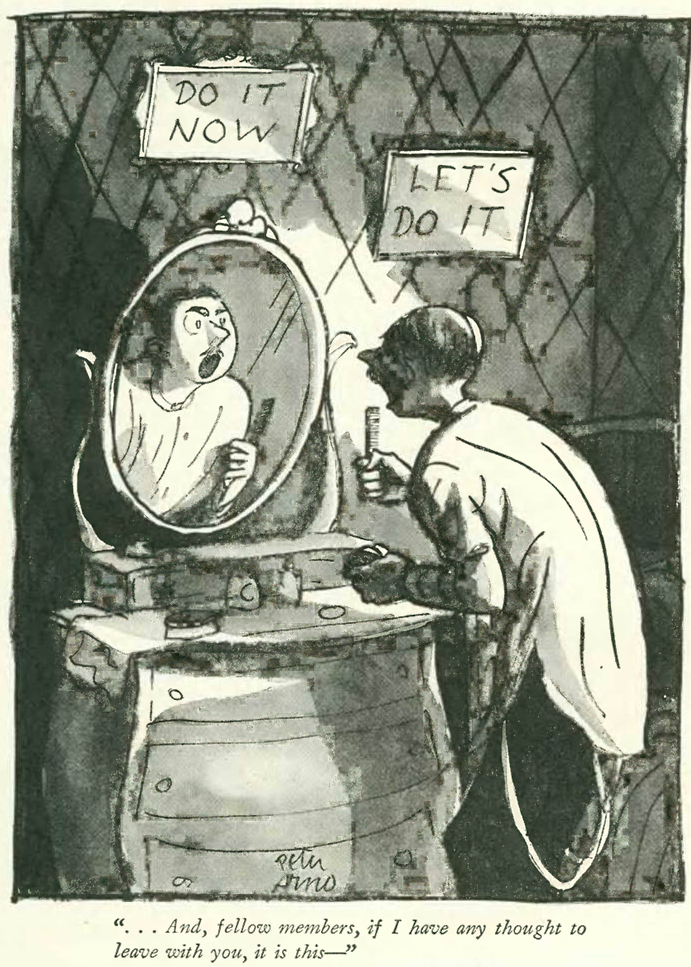
Sept. 8, 1928 cover by Julian de Miskey. Sept. 15, 1928 cover by Peter Arno. 

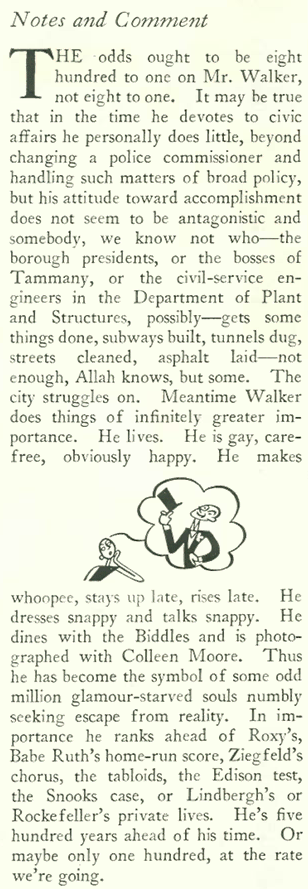
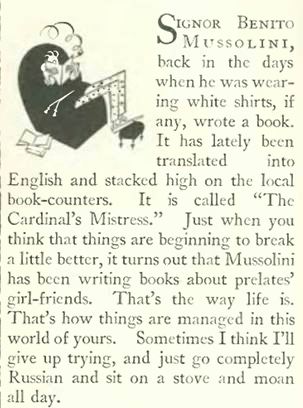
Although many perceived Mussolini as nothing more than a thug, or even a clown when he styled himself as Il Duce, Mussolini thought himself an intellectual, and as a younger man sometimes worked as a journalist and essayist. That was also when he wrote his one and only novel, The Cardinal’s Mistress (1909), serialized in the socialist newspaper Il Popolo under the original title Claudia Particella, l’Amante del Cardinale: Grande Romanzo dei Tempi del Cardinale Emanuel Madruzzo. When it was translated into English in 1928, the distasteful task of reviewing the book (in the Sept. 15, 1928 issue) fell to Dorothy Parker. She began thusly:

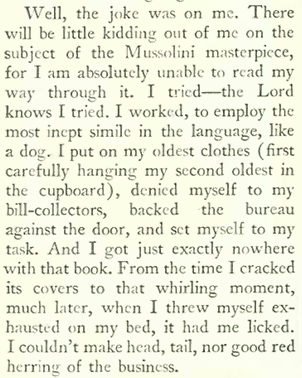
In all fairness, Parker did ask for it. She went on to write “On the memorable day that The Cardinal’s Mistress arrived in the office of this lucky magazine, I was the girl who pled, ‘Please, teacher, may I have it to take home with me? Honest, I don’t want a cent of money for reviewing it. I’ll do it free of charge; I’ll even pay handsomely for the privilege.’ Well, of course, they wouldn’t hear a word of that – or at least I hope to heaven they didn’t – but I got the book. I had all sorts of happy plans about it. I was going to have a lot of fun. I was going to kid what you Americans call the tripe (les tripes) out of it. At last, I thought, had come my big chance to show up this guy Mussolini. A regular Roman holiday, that’s what it was going to be.” But it didn’t quite turn out that way:

Alfred Armstrong, writing for Oddbooks (oddbooks.co.uk) describes The Cardinal’s Mistress as a story about a historical figure, Emanuel Madruzzo, Cardinal of Trent, his mistress Claudia Particella, “and the unhappy course of their love affair.” Armstrong notes that the book was written rather carelessly, with a wandering plot that suggests Mussolini’s only interest in the characters was to place them in a historical setting that provided “an excuse for lengthy anti-clerical rants, and to portray the lust, vengefulness and murderousness of their adversaries.”

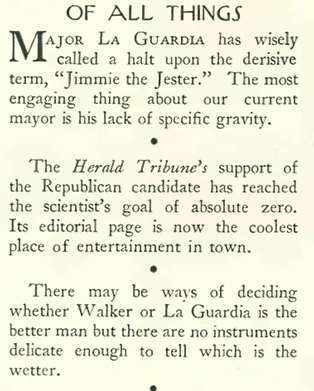
Although she could not make heads nor tails out of the book, it did stir Parker’s imagination enough to conjure up an insult for the “old Duce.”

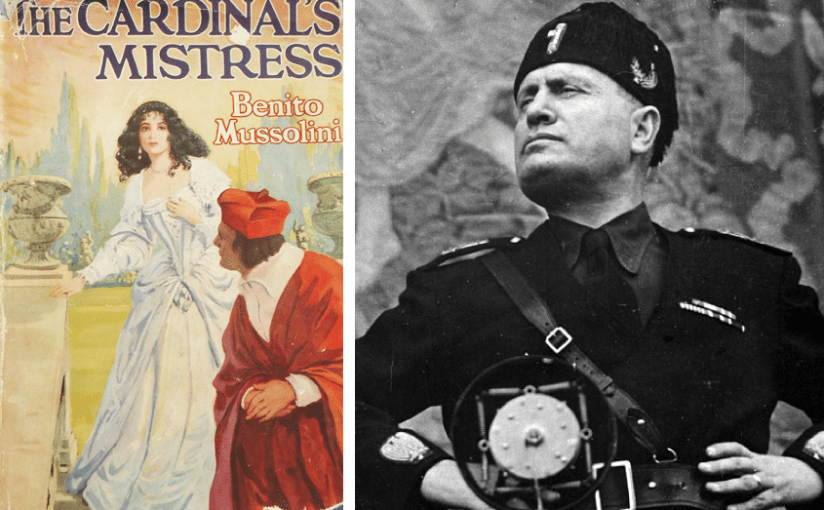
WHERE IS THE LOVE?…Cover of the 1928 translation of The Cardinal’s Mistress, an anti-clerical rant thinly disguised as a love story. At right, Benito Mussolini in 1928. (Amazon/waralbum.ru)

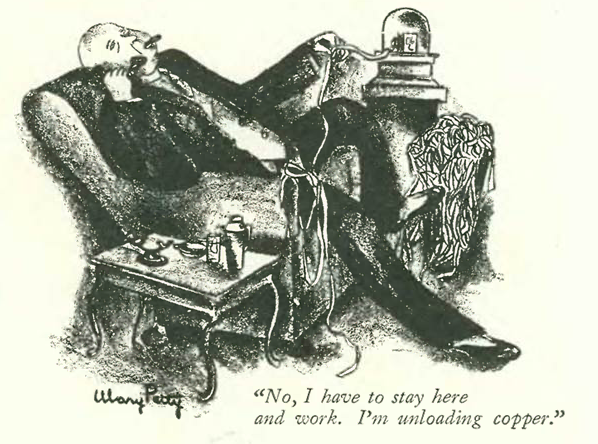
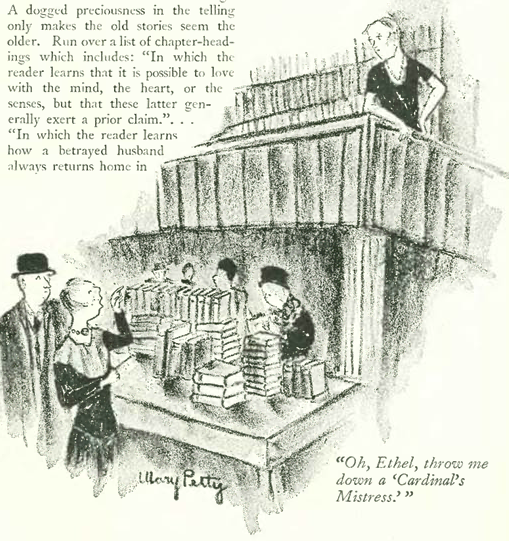
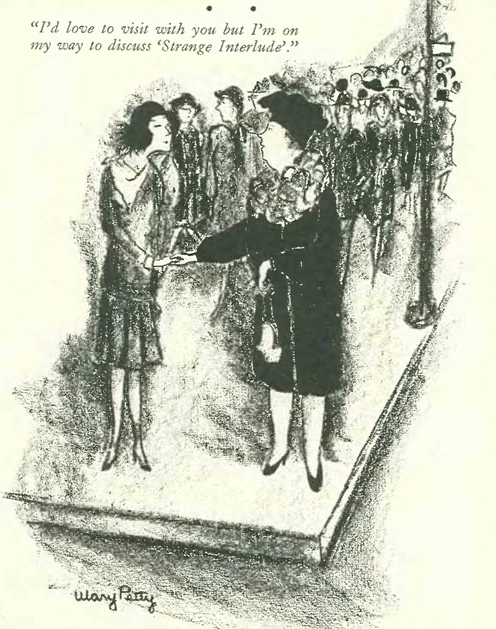
For good measure, I’ll toss in this New Yorker comic by Mary Petty that appeared a few weeks later in the Oct. 20, 1928 issue:

 *  *  *

The Sound Stays in the Picture

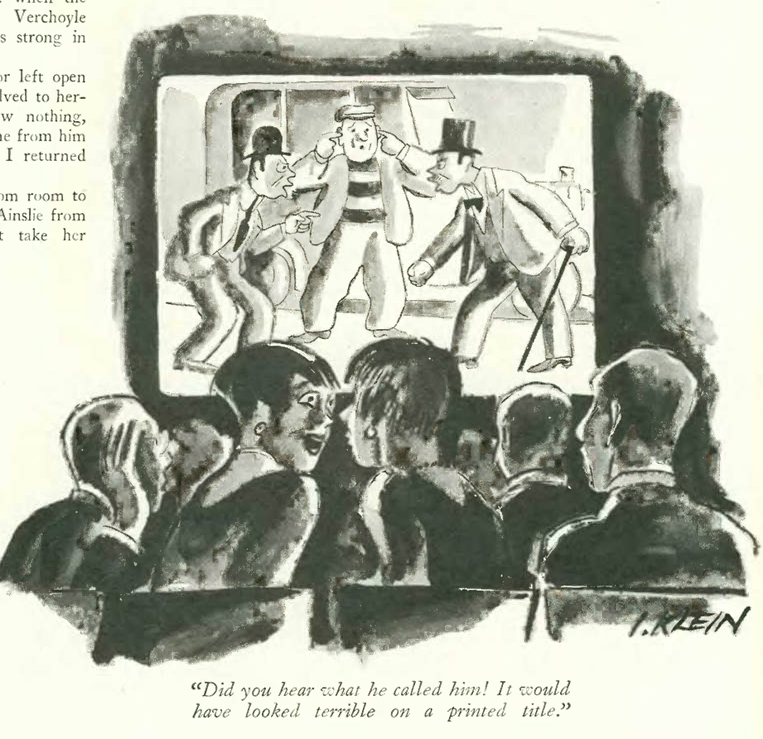
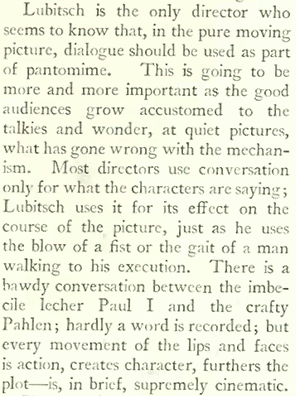
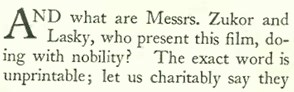
Gilbert Seldes joined the chorus of voices at The New Yorker who decried the advent of sound in motion pictures, particularly when sound was used as a gimmick rather than as an enhancement to the production. So when Paramount’s Jesse Lasky and Adolph Zukor put their hands (and their sounds) on Ernst Lubitsch’s masterpiece The Patriot, Seldes decided he’d had enough of this “talkie” nonsense, taking on the producers in a special feature in the Sept. 15 issue titled “The Old Believers:”

Hugo Gellert paid his own respects to The Patriot with this illustration in the theatre review section of the Sept. 15, 1928 issue.

Following his opening salvo, Seldes told readers why the film was important, how it revived his faith in movies and even in the possibility of intelligence and taste among the masses:

PERNICIOUS INTERFERENCE…Critic Gilbert Seldes took aim at Paramount execs Adolph Zukor, far left, and Jesse Lasky, center, for mucking up Ernst Lubitsch’s The Patriot with unnecessary sound effects. All photos circa 1922. (Wikipedia)

As for the taste and intelligence of producers, that was another matter. Seldes concluded his piece by laying into Zukor and Lasky for their “pernicious interference” with the masterpiece:

Seldes was so disheartened that he wondered if movies, as an imaginative and intelligent art form, would be dead in ten years.

Seldes was wrong about the death of good movies, but ironically his beloved Patriot would not live on, and would disappear into the land of lost films. There are fragments in a UCLA archive, but no negative or set of complete reels are known to exist.

WHY YOU NAUGHTY OLD CZAR…Florence Vidor as Countess Ostermann and Emil Jannings as Czar Paul I in The Patriot. Nominated for five Oscars, the film would win in the “Best Writing” category at the 1930 Academy Awards. (mubi.com)

 *  *  *

Before He Was Kooky and Ooky

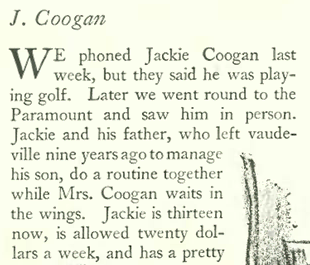
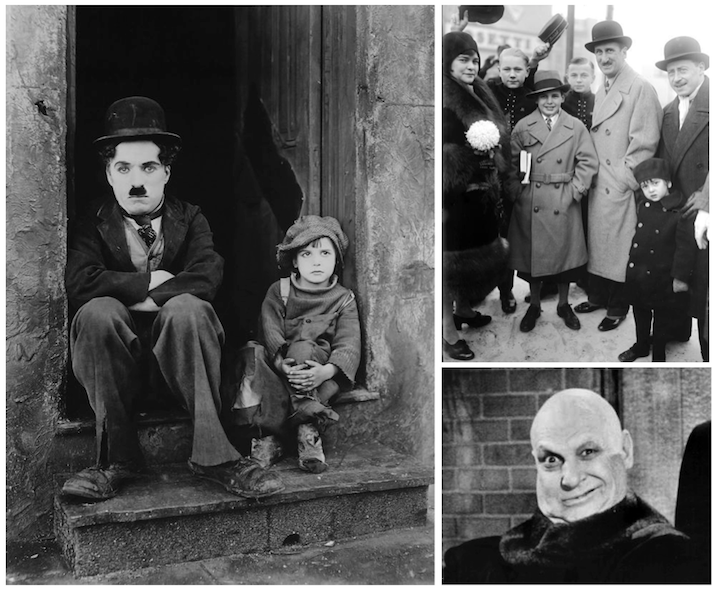
The child actor Jackie Coogan was the focus of a lengthy “Talk of the Town” piece that looked in on the life and habits of the young film star, best known for his role in Charlie Chaplin’s 1921 film classic The Kid.

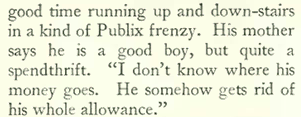
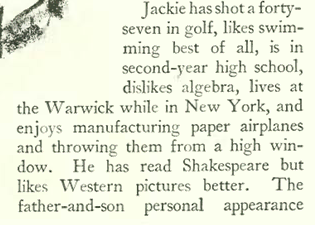
Coogan was one of the first child stars in film history, earning an estimated $3 to $4 million (roughly more than $50 million in today’s dollars). “Talk” found the 13-year-old star in his dressing room, reading a theatrical newspaper:

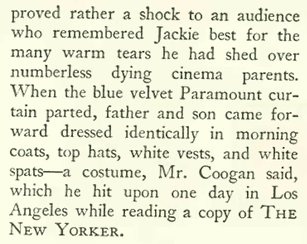
The New Yorker couldn’t resist mentioning that the magazine itself proved to be an inspiration to the boy and his father:

As one of the first child stars Coogan also broke some tough ground for other child actors to follow. In early 1935 Jackie’s father, John Henry Coogan, Jr., was killed in a car accident. John Henry conservatively managed Jackie’s assets, but after his death John Henry’s widow, Lillian and her new husband Arthur Bernstein (who was the family lawyer), squandered most of Jackie’s fortune on fur coats, diamonds and expensive cars. Jackie Coogan sued them in 1938, but after legal expenses was only able to recover a mere $126,000 of his earnings. One good outcome was California’s enactment in 1939 of the first known legal protection for the earnings of child performers. The California Child Actor’s Bill, sometimes called the “Coogan Act,” required employers of child actors to set aside 15 percent of their earnings in a trust.

Coogan would go on to perform in mostly supporting roles and would marry four times, most famously to actress Betty Grable from 1937 to 1939. He gained renewed fame in the 1960s by portraying Uncle Fester in the Addams Family TV series.

VARIETY ACT…Clockwise, from left: Publicity photo from Charlie Chaplin’s 1921 movie The Kid, featuring 6-year-old Jackie Coogan; Coogan on a 1928 visit to Berlin with his mother Lillian and father John Henry Coogan, Jr.; as Uncle Fester in TV’s The Addams Family, 1966. (Wikiwand/Wikimedia)

 *  *  *

From Our Advertisers

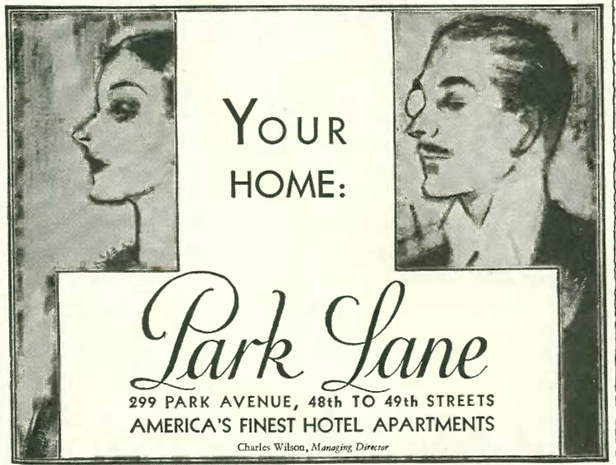
A mixed bag from the Sept. 15 issue, including this strip of ads near the back of the magazine that indicate not all New Yorker readers were as well-heeled as those who were targeted by the splashier, full-page ads in the magazine’s front section…

…and yet another endorsement for Old Gold cigarettes, this time from the Duchess of Sutherland, who joined fellow blue bloods in the blindfold test:

Nothing like profiting from the misery of others. In this ad, James McCreery & Company offered up rugs from “old Turkish families” who were “forced to sell their rare rugs and jewels in order to exist.” They weren’t cheap: the rug pictured was offered for $3,250, more than $45,000 in today’s buying power.

The “famous stage beauty” and early silent film star Billie Burke (who was married to Florenz Ziegfeld of “Follies” fame) shilled for Cutex nail polish…

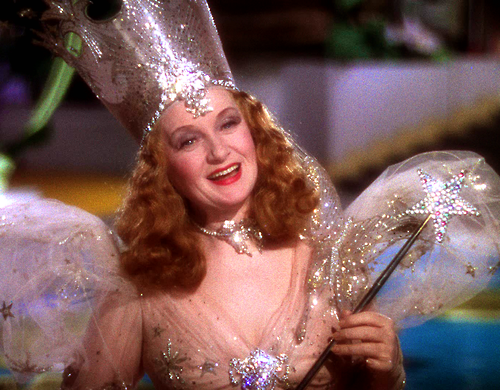
…and 11 years later would portray Glinda the Good Witch of the North in the movie musical The Wizard of Oz.

Billie Burke as Glinda the Good Witch (cinemagumbo)

Now for the cartoons, Peter Arno from the Sept. 8 issue…

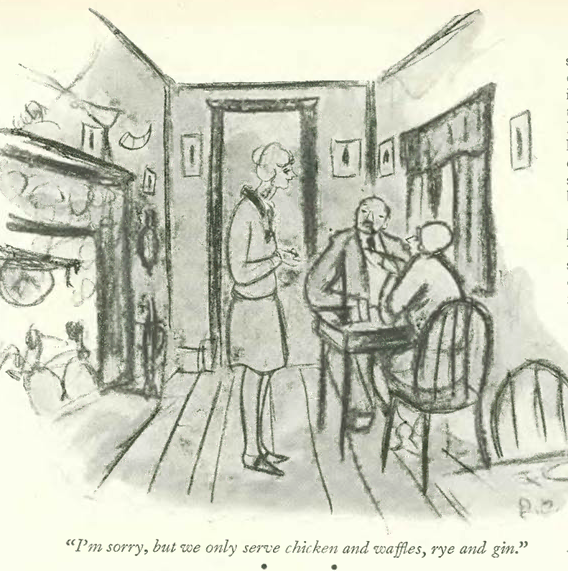
And in the Sept 15 issue, W.P. Trent looked in on a homey café that moonlights as a speakeasy…

…and back to Arno, who looked in on toffs slumming at Coney Island…
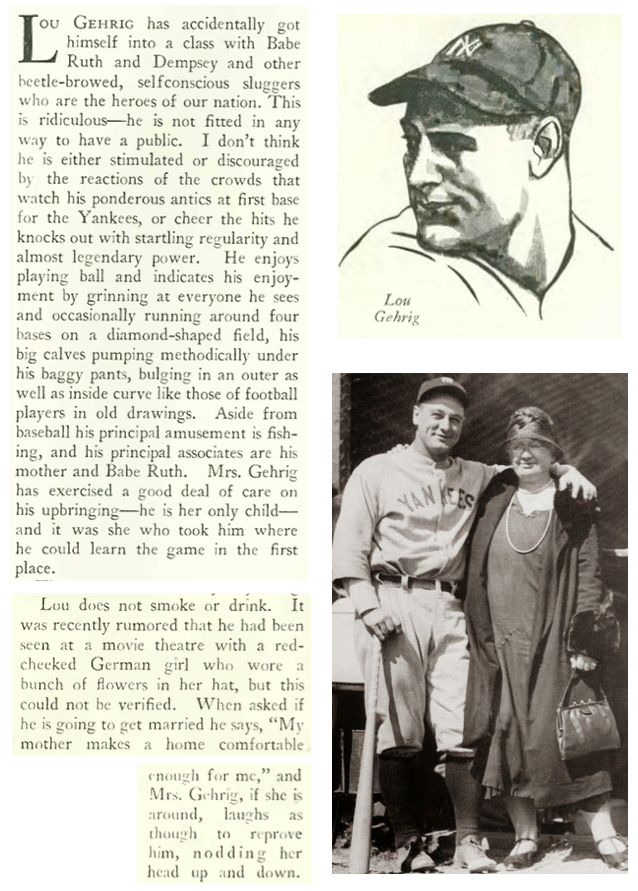
Next Time: This Thing Called Baseball…
 

After Hours

Broadway shows were a popular nightlife diversion for New York’s upper middle-class, but plays and musicals were only part of an evening’s entertainment. The city’s “after theatre” clubs beckoned those who enjoyed an evening of dance with the Astaires or a light comedy with Lunt and Fontanne, but believed the night was still young.

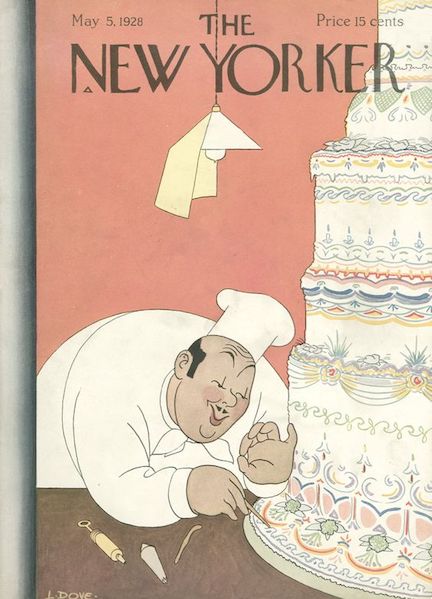
May 5, 1928 cover by Leonard Dove.

And who better to chronicle the late night revelry than Lois Long, who through her “Tables For Two” column was a leading voice of after hours Manhattan and a nightly presence in its various clubs and speakeasies. Longtime New Yorker writer Brendan Gill (Here at the New Yorker) observed that Long, who joined the magazine in 1925, “had plunged at once, joyously, into a New York that seemed always at play — a city of speakeasies, night clubs, tea dances, football weekends, and steamers sailing at midnight.”

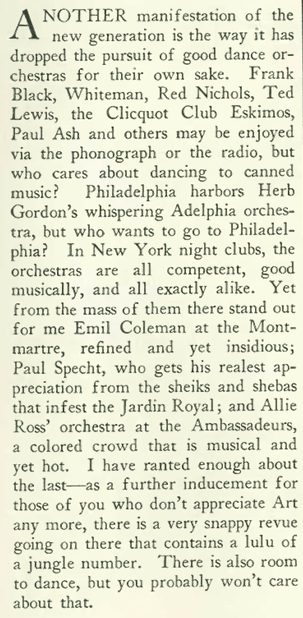
In May 1928 Long had been married for about nine months to colleague and cartoonist Peter Arno, who was also a regular fixture of the nightclub scene. But in Long’s column for May 5, 1928, one can detect a bit of weariness setting in, the 27-year-old sensing the next generation didn’t know how to have a good time.

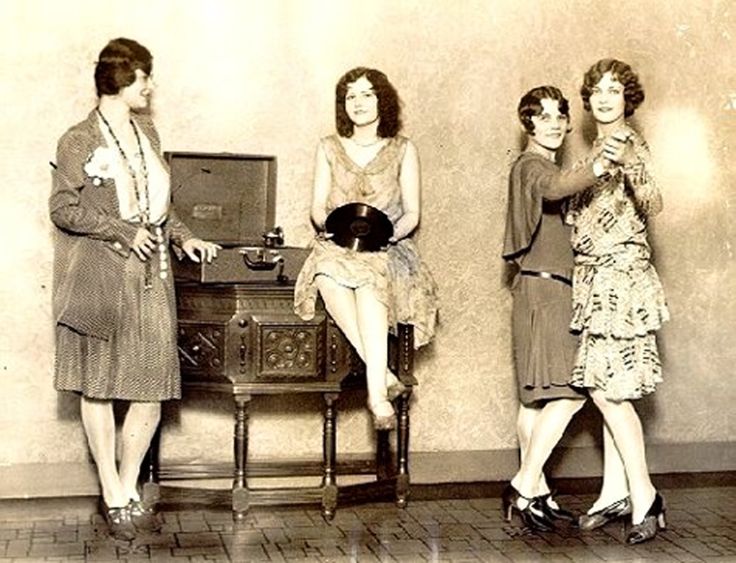
And it didn’t help that the younger people were dancing to “canned music,” what with the spread of broadcast radio and improvements in phonograph records…

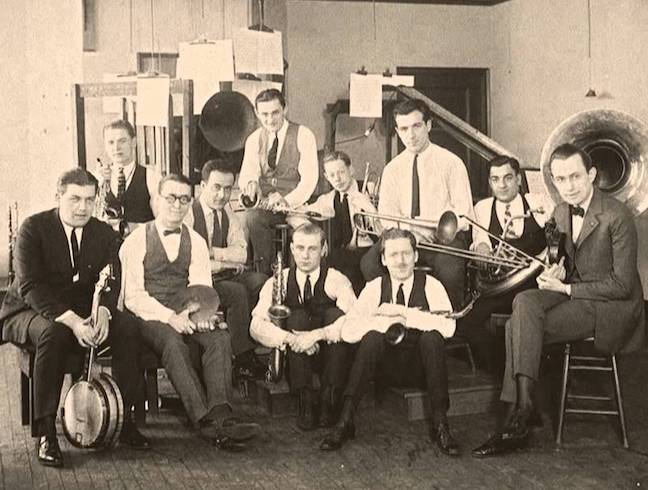
LIPSTICK WAS A FAN of the Paul Specht Orchestra, seen here in 1928. (YouTube)
BUT NOT A FAN of those darn kids who preferred records to live music, and didn’t know how to party at the clubs. (Pinterest)

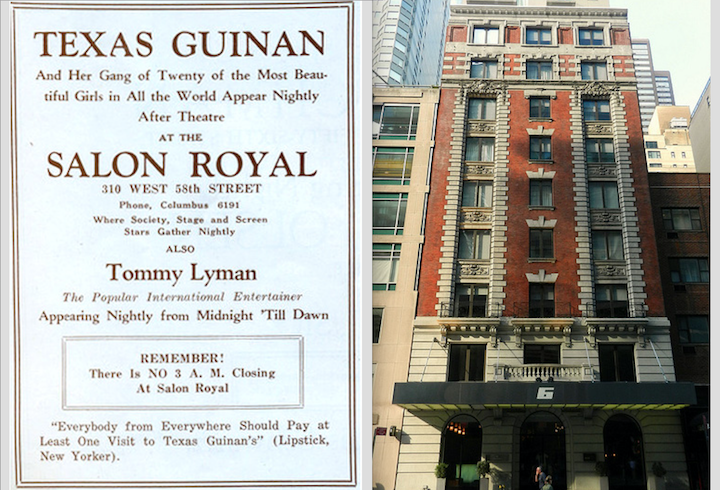
For those on the wilder side, Long recommended a number of after-hours entertainments, including Texas Guinan’s latest all-night club, Salon Royal, and its snake-charming hootch dancer.

WHOOPEE was the order of the day at Texas Guinan’s Salon Royal on West 58th Street, now refurbished as the 6 Columbus Hotel. Guinan was well known to New Yorker writers and editors and was a frequent guest of the numerous parties hosted by Harold Ross and Jane Grant in their Hell’s Kitchen brownstone. (texasguinan.blogspot)

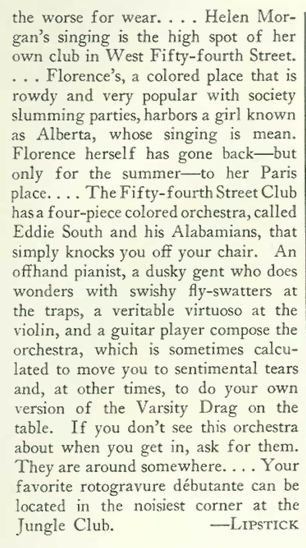
Because so many New Yorker readers were both theatre and after-theatre-goers, the magazine included some of the after-dinner destinations in its “Goings On About Town” section. Excerpts follow.

Rubberneckers

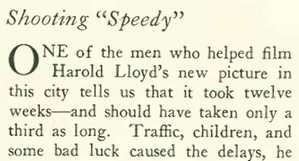
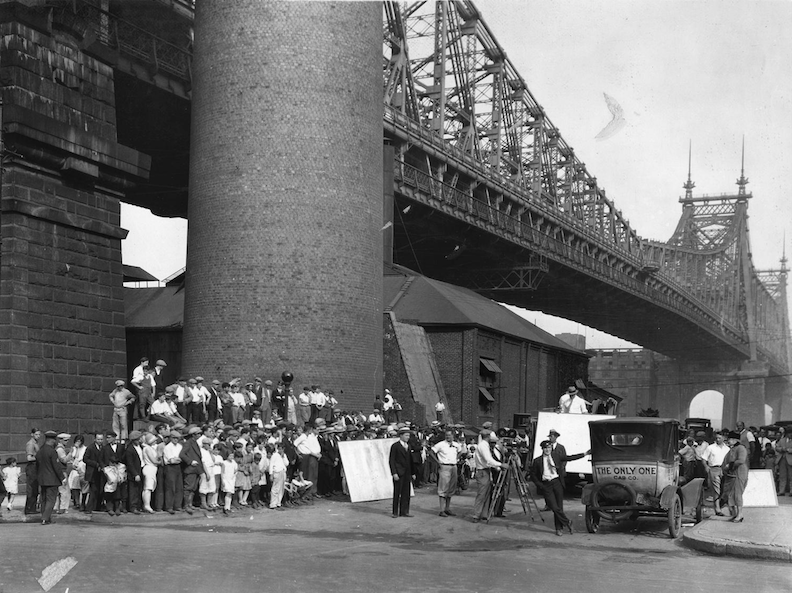
A May 5 “Talk of the Town” segment (written by James Thurber) commented on the challenges film crews faced when they shot on location in the city, in this case the production of Harold Lloyd’s latest comedy, Speedy:

LOCATION, LOCATION, LOCATION…Silent film star Harold Lloyd (leaning on car at right) and his crew draw a crowd under Queensboro Bridge during the filming of Speedy. (silentlocations.wordpress.com)
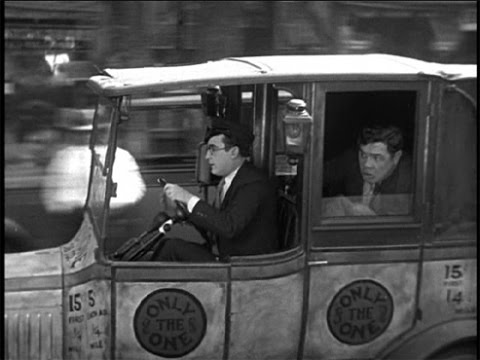
BABE IN THE CITY…Harold Lloyd takes baseball legend Babe Ruth for a wild spin in 1928’s Speedy. (YouTube)

 *  *  *

Before Mommie Dearest

The actress Joan Crawford is best known today as the subject of the 1981 biopic, Mommie Dearest, which portrayed Crawford as an insecure, abusive parent to her adopted daughter Christina (the film was based on a 1978 memoir and exposé of the same name written by Christina Crawford).

But in the 1920s and 30s the former dancer and chorus girl was better known for her sex appeal, attractive to men for her looks and to women for the roles in which she portrayed hard-working women who find both romance and success.

PRETTY PICTURE…Ramon Novarro and Joan Crawford in Across to Singapore, 1928. (Silent Hollywood)

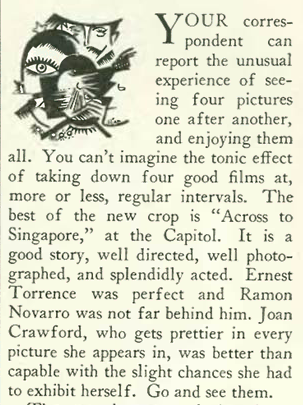
The New Yorker took notice of Crawford in its review of Across to Singapore, the critic O.C. noting that Crawford “gets prettier in every picture”…

Another film released later in 1928, Our Dancing Daughters, would make Crawford a star and a symbol of the liberated, 1920s flapper. Even the writer F. Scott Fitzgerald would observe that “Joan Crawford is doubtless the best example of the flapper, the girl you see in smart night clubs, gowned to the apex of sophistication, toying iced glasses with a remote, faintly bitter expression, dancing deliciously, laughing a great deal, with wide, hurt eyes. Young things with a talent for living.”

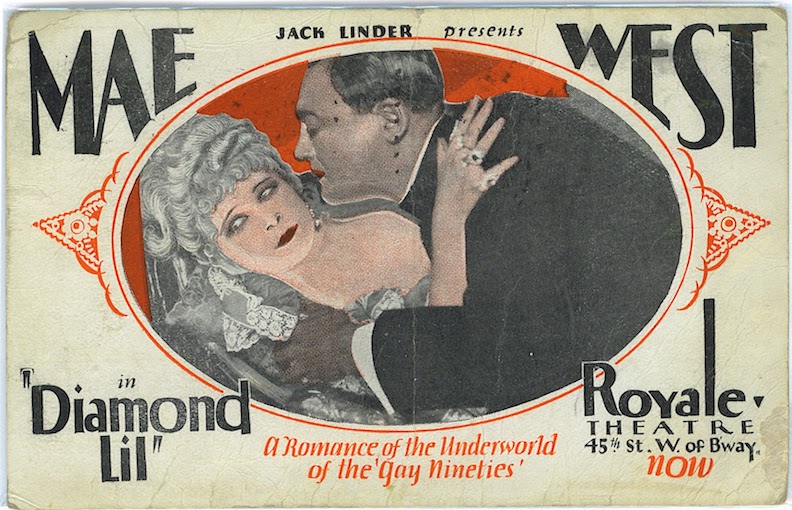
Another actress with a talent for living was 34-year-old Mae West, who was appearing on Broadway in Diamond Lil. Already a 21-year veteran of the stage (she began performing in vaudeville in 1907 at age 14), West was known for writing and performing in risqué plays beginning in 1926, when she appeared in Sex, which was panned by conservative critics but enjoyed hot ticket sales.

Subsequent plays aroused controversy and kept her name in the newspapers, but her play Diamond Lil would become the Broadway hit that would cement her image as a sex symbol, one she would maintain until her death at age 87 in 1980. In the May 5 issue artist Miguel Covarrubias offered his vision of the Queen of the Bowery:

THEATRE CARD for the Broadway production of Diamond Lil at the Royale Theatre. (maewest.blogspot.com)
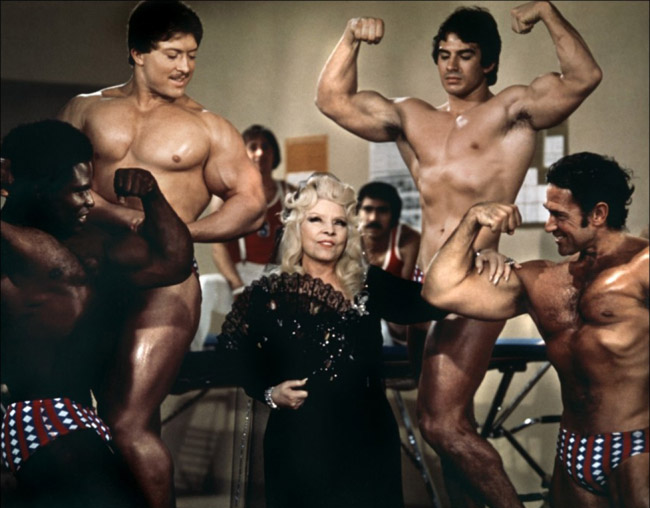
STILL AT IT 50 YEARS LATER…The 86-year-old Mae West in her last film, 1978’s Sextette. In a 1979 review, New York Times film critic Vincent Canby called the film “a disorienting freak show in which Mae West, now 87 years old, does a frail imitation of the personality that wasn’t all that interesting 45 years ago. The movie, which opens today at the Victoria and other theaters, is a poetic, terrifying reminder of how a virtually disembodied ego can survive total physical decay and loss of common sense.” (filmcomment.com)

From Our Advertisers

It’s interesting to see how 1920s advertisers made even the most mundane gadgets appear to be vital to one’s survival. The ad for the “Sesamee” auto switch lock is a case in point, appealing to upscale female readers with this odd scenario in which the gadget enables the driver to avoid the awkward and potentially hazardous situation depicted below, although it hard to see what the actual threat might be from a dandy in a tie and waistcoat. Perhaps death from boredom.

Our cartoon is courtesy of Mary Petty,  who would become a renowned illustrator for The New Yorker, best remembered for a series of covers featuring her gentle satirization of the upper class Peabody family.

Next Time: Dog’s Best Friend…


The Perfect Gift for 1927

We close out 1927 by looking at the final December issues, which grew fat with Christmas advertising catering to the tastes of New York’s smart set.

dec-10
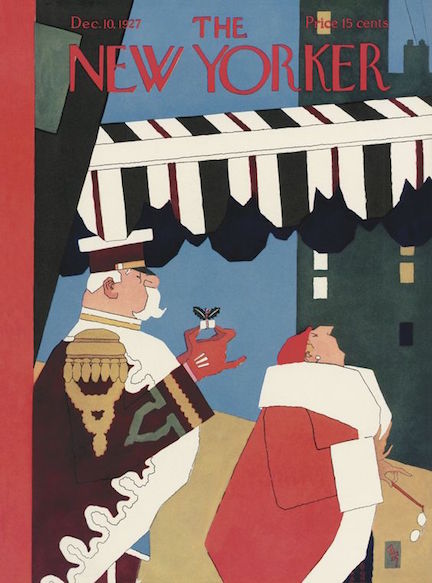
December 10, 1927 cover by Gardner Rea.

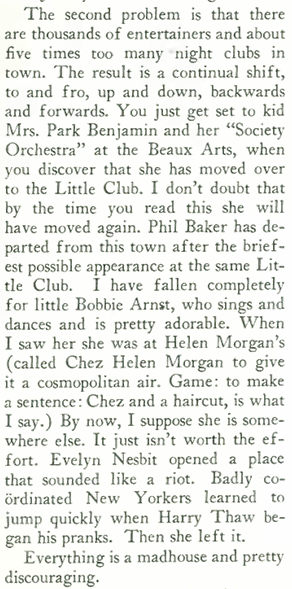
Before we jump to the ads, let’s look in on Lois Long, who in the Dec. 10 issue continued her lamentations regarding the quality of New York’s Prohibition-era night life and reminded readers that her job was far from a “soft snap”…

screen-shot-2017-02-06-at-10-03-06-am

The problem, as diagnosed by Long, was that there were not enough talented entertainers to fill the needs of an overabundance of nightclubs…

screen-shot-2017-02-06-at-10-04-09-am

vit-94-bobbe-arnst1
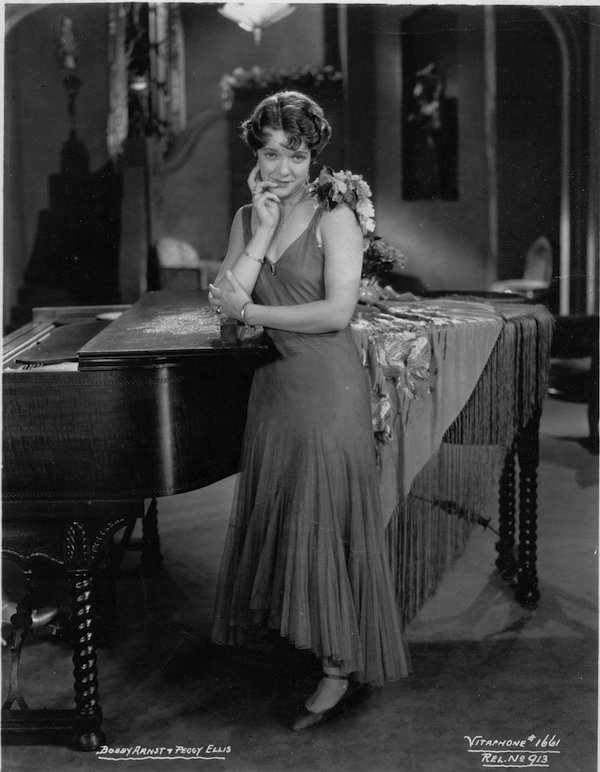
LOIS THOUGHT BOBBIE ARNST WAS PRETTY SWELL when she appeared at Helen Morgan’s nightclub. A noted broadway singer and dancer, Arnst is pictured above in a publicity photo from the 1929 film Rhythms in Blue. (picking.com)
screen-shot-2017-02-07-at-12-33-26-pm
ON THE OTHER HAND…Evelyn Nesbit’s tearoom (and later speakeasy) couldn’t survive on notoriety alone. In the early 20th century Nesbit’s face was everywhere—from advertisements to calendars—but in 1906 her fame took a nasty turn when her jealous husband, Harry Thaw, shot and killed suspected lover and famed architect Stanford White at Madison Square Garden’s rooftop theatre. At left, Nesbit in 1900. At right, Nesbit in her tea room on West 52nd Street, near Broadway, circa 1922. (Library of Congress / restaurant-ingthroughhistory.com)

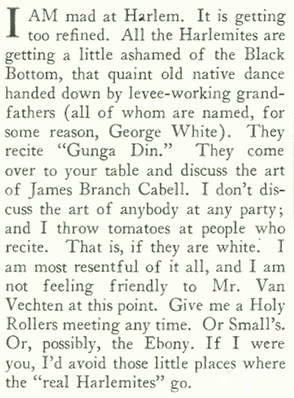
Long also railed against the white appropriation of Harlem entertainment, which she felt was draining the place of its soulfulness. In particular she called out writer and photographer Carl Van Vechten, who among white writers was the most prominent in intellectualizing the “Harlem Renaissance”…

screen-shot-2017-02-06-at-11-43-27-am

What to Buy in ’27

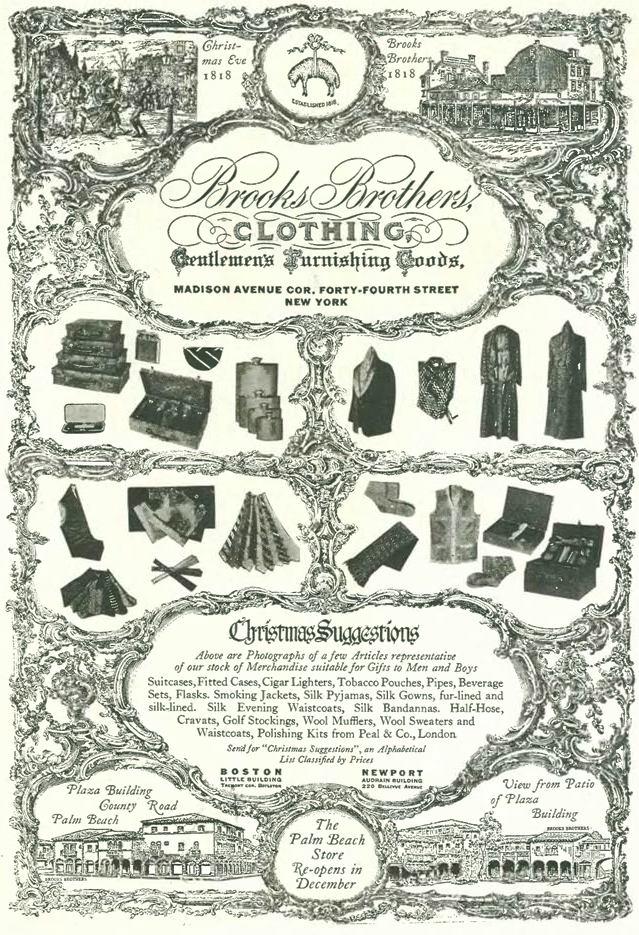
The Dec. 10 and Dec. 17 issues grew fat with holiday advertising, averaging 120+ pages as opposed to the usual 60 or so pages. The advertisements mostly appealed to upscale readers, ranging from this almost Victorian-style ad from the staid Brooks Brothers…

screen-shot-2017-02-06-at-9-46-21-am

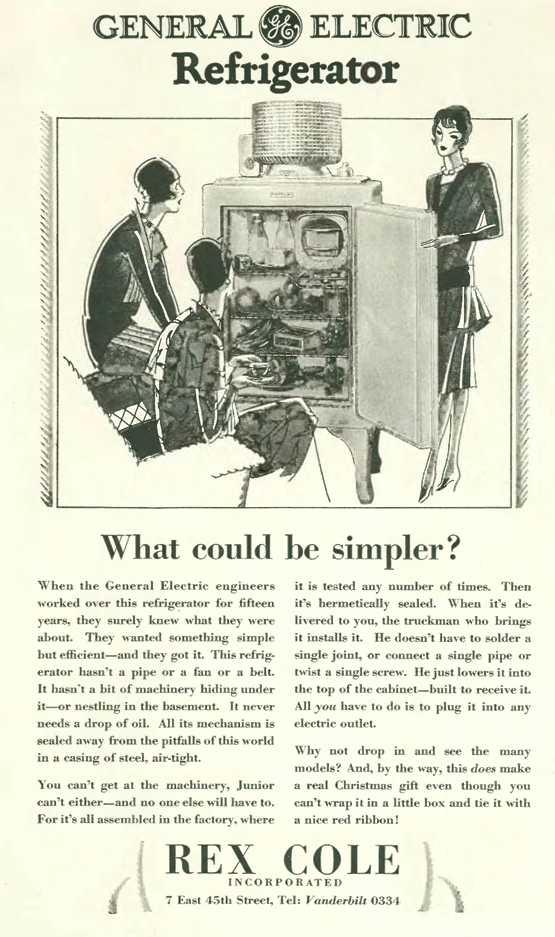
…to this ad from Rex Cole promoting the latest in modern conveniences…

screen-shot-2017-02-06-at-9-56-44-am

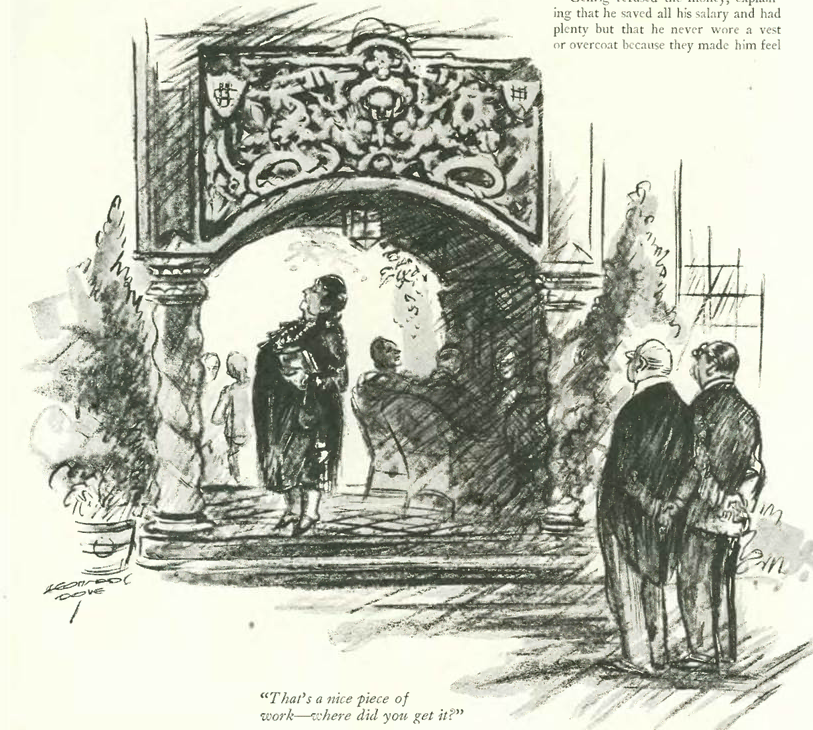
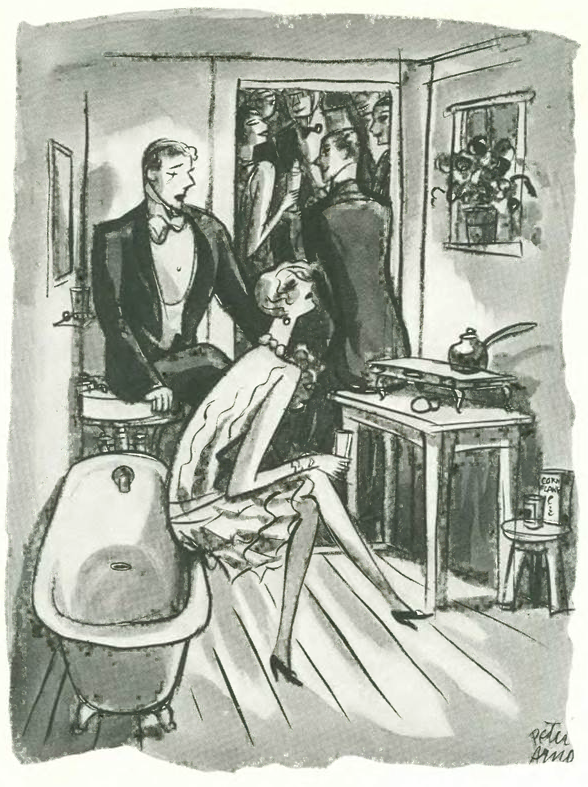
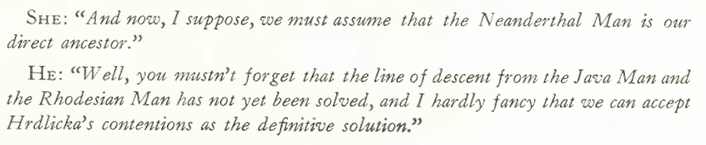
And I’ll toss in this cartoon from the Dec. 10 issue, in which Peter Arno allows us to listen in on an unlikely conversation between a couple of toffs…

screen-shot-2017-02-06-at-9-53-54-am

screen-shot-2017-02-06-at-9-54-11-am

Lois is Also Tired of the Holidays

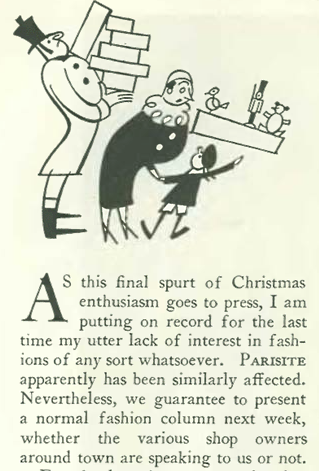
On to the Dec. 17 issue, in which Lois Long also shared with readers her weariness of Christmas shopping in her column, “On and Off the Avenue.”

dec-17
December 17, 1927 cover by Theodore G. Haupt.

The “Parisite” Long referred to in this excerpt was actually Elizabeth Hawes, who occasionally contributed to Long’s column (with cables sent from Paris) regarding the latest in French fashions. More on Hawes another time…

screen-shot-2017-02-06-at-12-11-30-pm

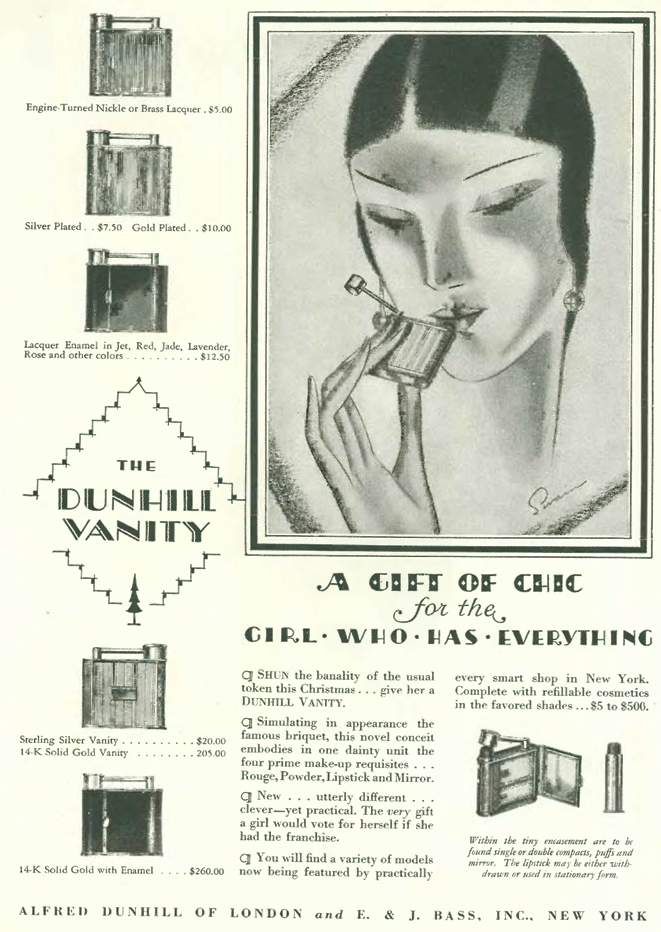
As for ads in the Dec. 17 issue, we get this one from Dunhill, maker of fine English cigarettes and accessories: a woman’s compact that resembles a lighter…

screen-shot-2017-02-06-at-12-07-21-pm

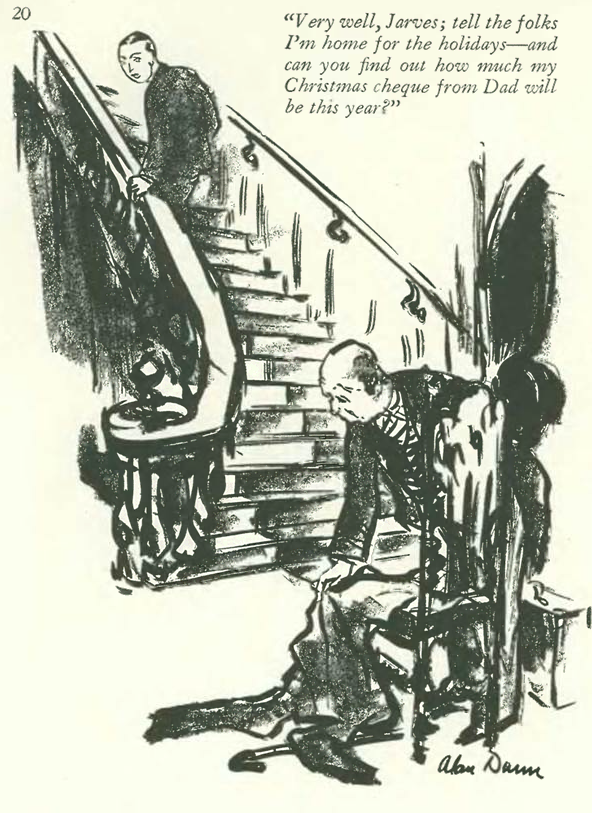
…and the same issue offers this glimpse into the life a spoiled rich kid, home from college for the holidays. The cartoon is by Alan Dunn, one of the most published New Yorker cartoonists (1,906 cartoons from 1926 to 1974)…

screen-shot-2017-02-06-at-11-52-12-am

With Christmas advertising over, the magazine’s page length dropped by half from the Dec. 17 to the Dec. 24 issue…

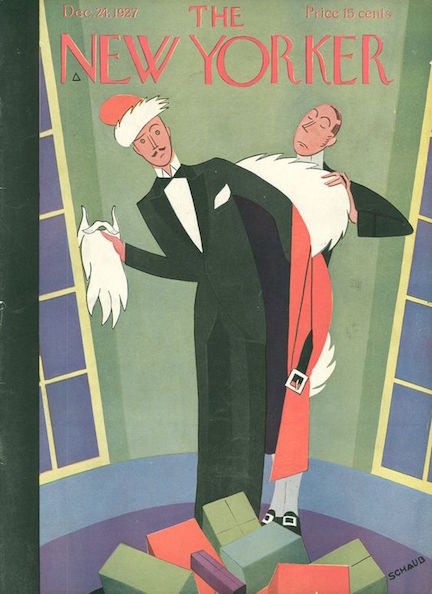
dec-24
December 24, 1927 cover by Andre De Schaub.

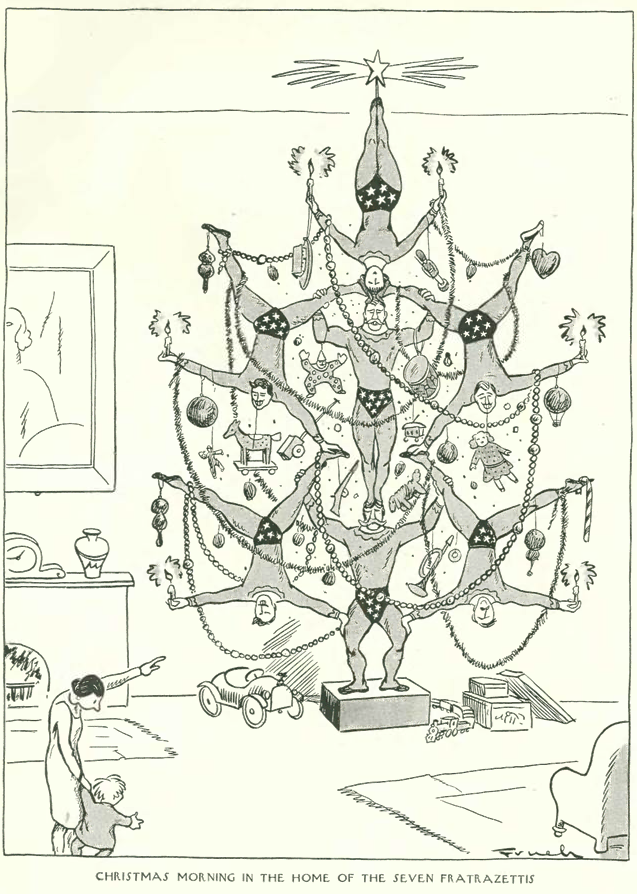
…in which we find this holiday-themed illustration by Al Frueh:

screen-shot-2017-02-06-at-12-26-56-pm

Why We Sing Auld Lang Syne

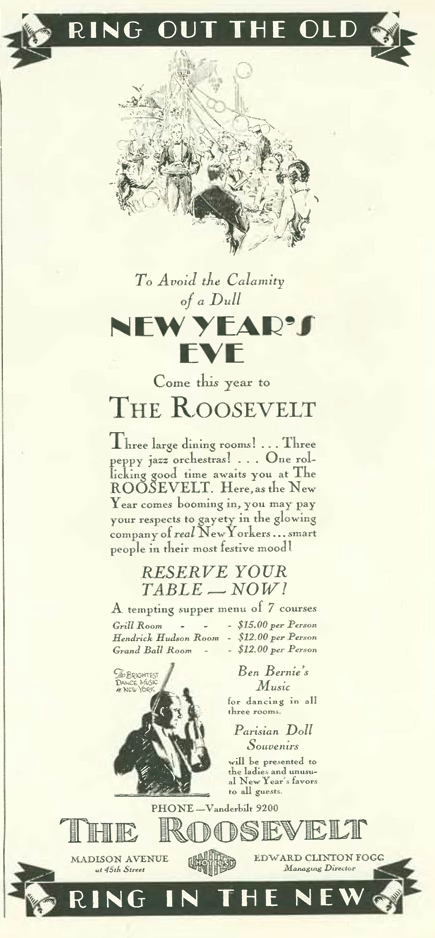
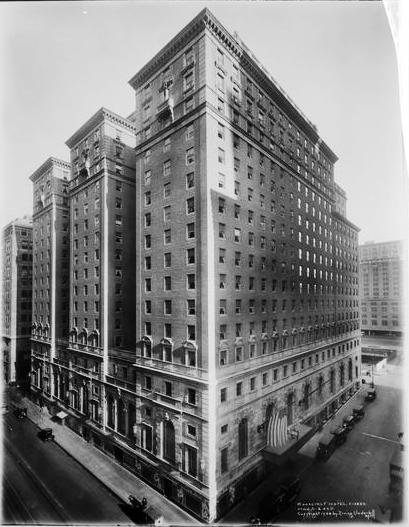
This advertisement in the Dec. 24 issue invited readers to celebrate the New Year at The Roosevelt Hotel…

screen-shot-2017-02-06-at-12-27-47-pm

roosevelt-hotel-1924
The Roosevelt Hotel after its completion in 1924 (Museum of the City of New York)
1387211957-0
AULD ACQUAINTANCE…If you want to know why we sing “Auld Lang Syne” on New Year’s Eve, you can thank Guy Lombardo and his Royal Canadian Band, which made the song a staple at his New Year’s performances beginning in 1929 at the Roosevelt Hotel. Their performance that night was broadcast on the radio before midnight Eastern time on CBS, then after midnight on NBC radio. (neatorama.com)

 *  *  *

Now Let’s Get Out of Here

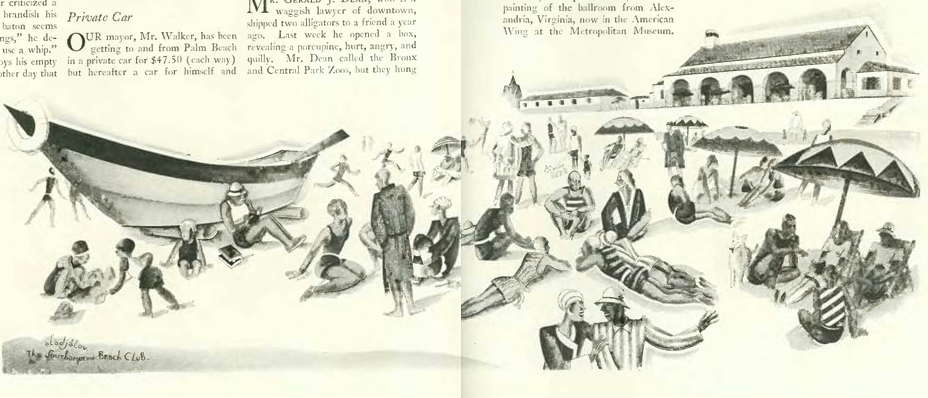
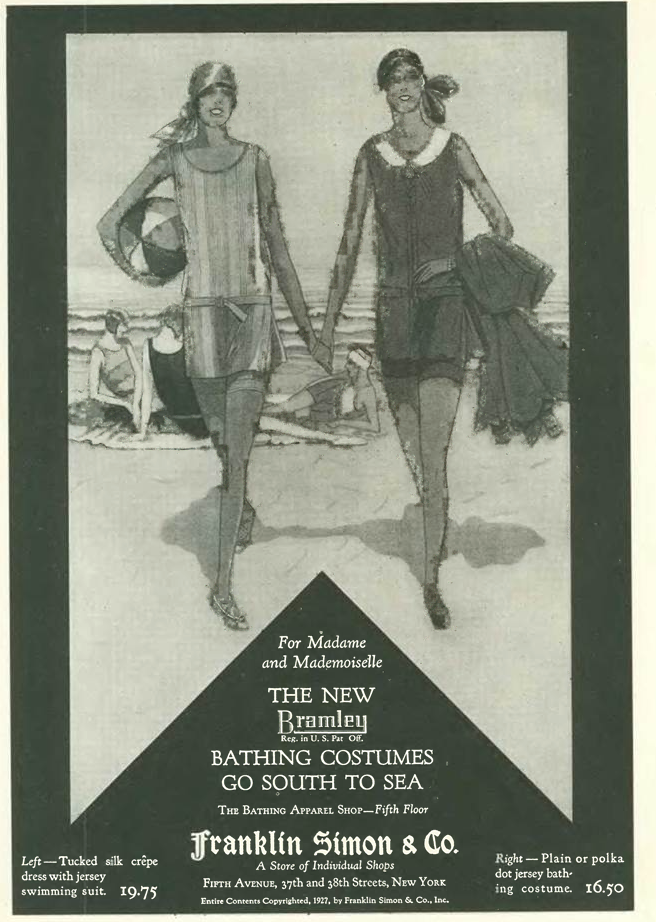
With the holidays out of the way, New Yorkers still faced a good three months of winter. That is, unless you were well-heeled enough to head south to Palm Beach. Considering the abundance of ads promoting travel to southern climes in the Dec. 24 and 31 issues, apparently many of the magazine’s readers possessed the means to do just that…

screen-shot-2017-02-06-at-12-29-05-pm

screen-shot-2017-02-06-at-12-29-15-pm

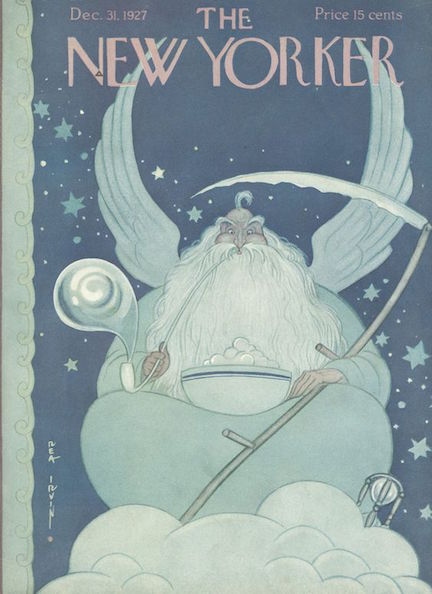
And we close this entry, and the year of 1927, with this cover…

dec-31
December 31, 1927 cover by Rea Irvin.

…and another tropical-themed advertisement, courtesy of Russeks…

screen-shot-2017-02-06-at-12-31-07-pm

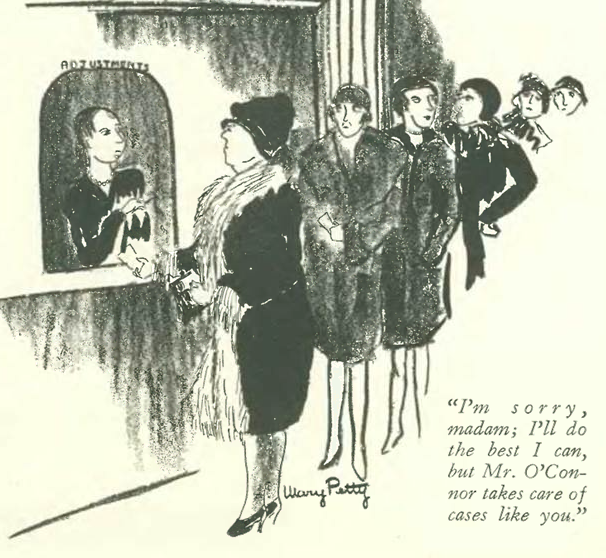
…and this cartoon by Mary Petty depicting those who were left behind, still returning their Christmas gifts…

screen-shot-2017-02-06-at-12-32-39-pm

Next Time: Odious Odes…

jan-7