A Letter From Berlin

Above: Nineteen-thirties dance class sponsored by Kraft durch Freude (Strength Through Joy), a sub-organization of the German Labour Front that sought to fulfill the totalitarian ambitions of the Nazi regime by "forming a genuine national and performance-based community of all Germans," in other words, keep them busy and distracted from reality. (bundesarchiv.de)

Paris correspondent Janet Flanner visited Berlin to check on that city’s preparations for the 1936 Olympic Games, an event Nazi leaders saw as a prime opportunity for some big-time propaganda.

August 1, 1936 cover by Constantin Alajalov with a wry twist on the upcoming Berlin Olympic games (note the strap along the left edge bearing some of flags of competing nations).

Flanner noted Propaganda Minister Joseph Goebbels’ charge to the German people, instructing them to show the world that the German Volk were “more charming than Parisians, more lively than the Romans, more worldly than the Londoners, and more efficient than the New Yorkers.”
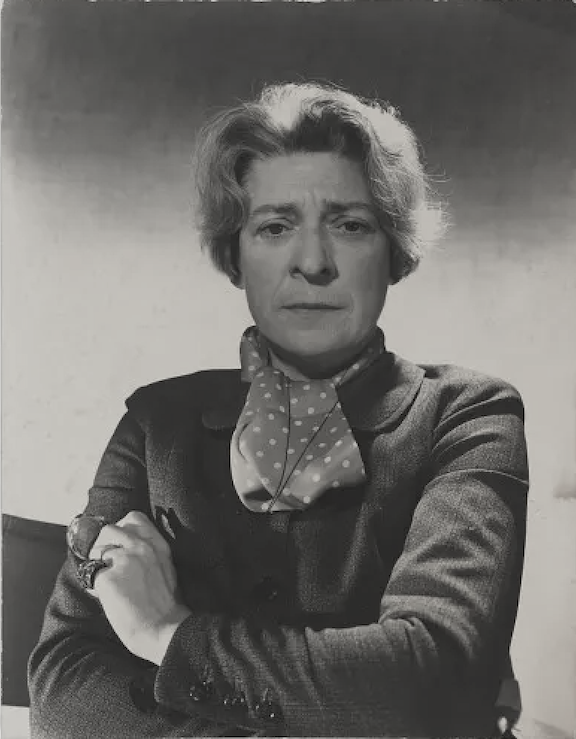
EYE ON BERLIN…Janet Flanner, who wrote under the pen name Genêt, in 1940. (National Portrait Gallery)

There was an ambiguous quality to Flanner’s early writings about Nazi Germany and Adolf Hitler in particular. As The New Yorker’s Andrew Marantz noted in “Takes” (Aug. 10, 2025) regarding Flanner’s 1936 profile of Hitler, “Instead of telling readers what they needed to know—that was what newspapers were for—she focused on what they might want to know…” Rather than taking sides, she reported in a cool and ironic tone. In her biography Genêt, Brenda Wineapple wrote that Flanner in her early writings “thought of herself as a high-class gossip columnist.”

Here are excerpts from the first part of Flanner’s “Berlin Letter.”

FASCIST FEVER DREAM…The Nazis spent large sums in preparation for the Olympic games, seeing them as the ultimate propaganda opportunity. Clockwise, from top left: Nazi officials show the extent of the Olympic village using a scale model in July 1936; a street scene with displays of the Olympic and swastika flags in Berlin, August 1936— the regime temporarily toned down public anti-Semitic displays and cleaned up the streets to impress international visitors; lively café scene on the Kurfürstendamm, known colloquially as the Ku’damm, in 1936. (Robert Hunt Library/Sueddeutscher Verlag Bilderdienst/tripadvisor.com)
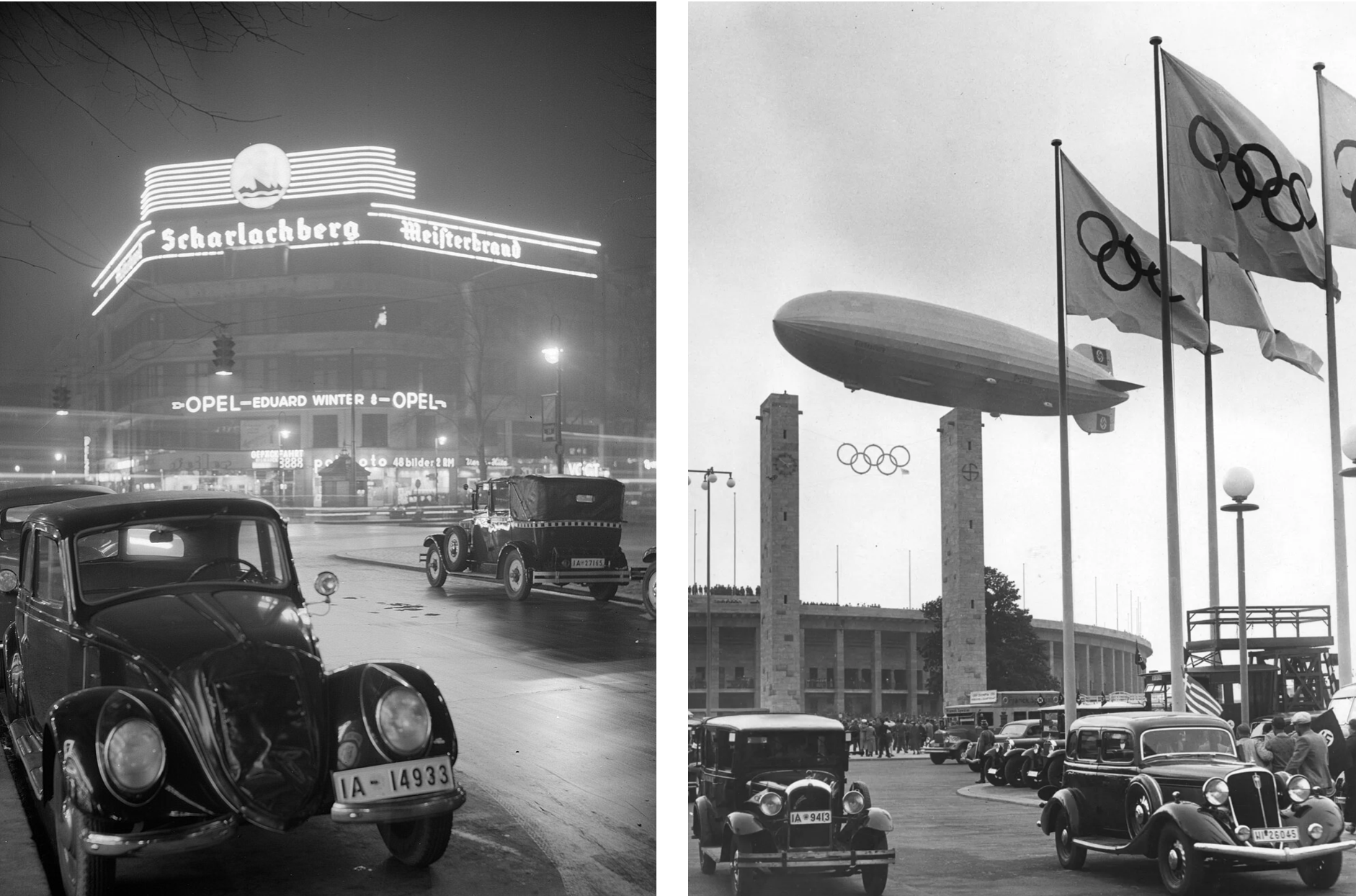
BEFORE IT ALL WENT DARK…In 1936 the Kurfürstendamm was a bustling Berlin boulevard, temporarily masking the oppressive Nazi regime with a veneer of normalcy for the 1936 Summer Olympics—shown at left is the Scharlachberg House at the corner of Kurfürstendamm/Uhlandstraße in Berlin, where the Maison de France stands today; at right, the Hindenburg flies over the Olympic Stadium in Berlin, August 1936. (Wikipedia/Encyclopædia Britannica)

In these excerpts, Flanner wrote that the arts were overseen by Joseph Goebbels and Hermann Göring (of all people). She also noted the absence from the opera (which she rated poor under Goebbels) of the world-renowned conductor Wilhelm Furtwängler, who was in seclusion “writing an opera,” but probably wanted to be out of the limelight due to his controversial decision to stay in the Reich rather than flee like other artists and musicians. Furtwängler detested Hitler, but believed his art would wither if he left his homeland.

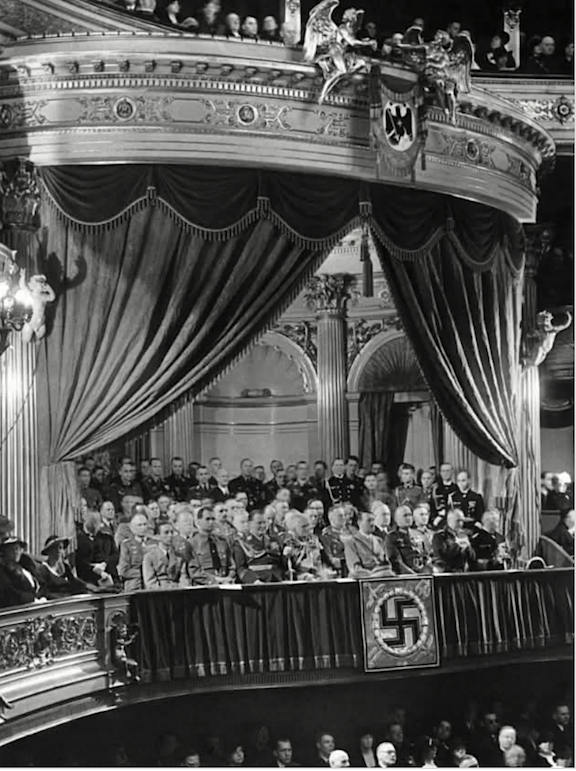
HORROR SHOW…Adolf Hitler and his Nazi thugs at the opera in Berlin in 1936. Hitler often appeared in carefully staged public settings like this one and the one in the photo below. (archaeohistories.via Facebook.com)
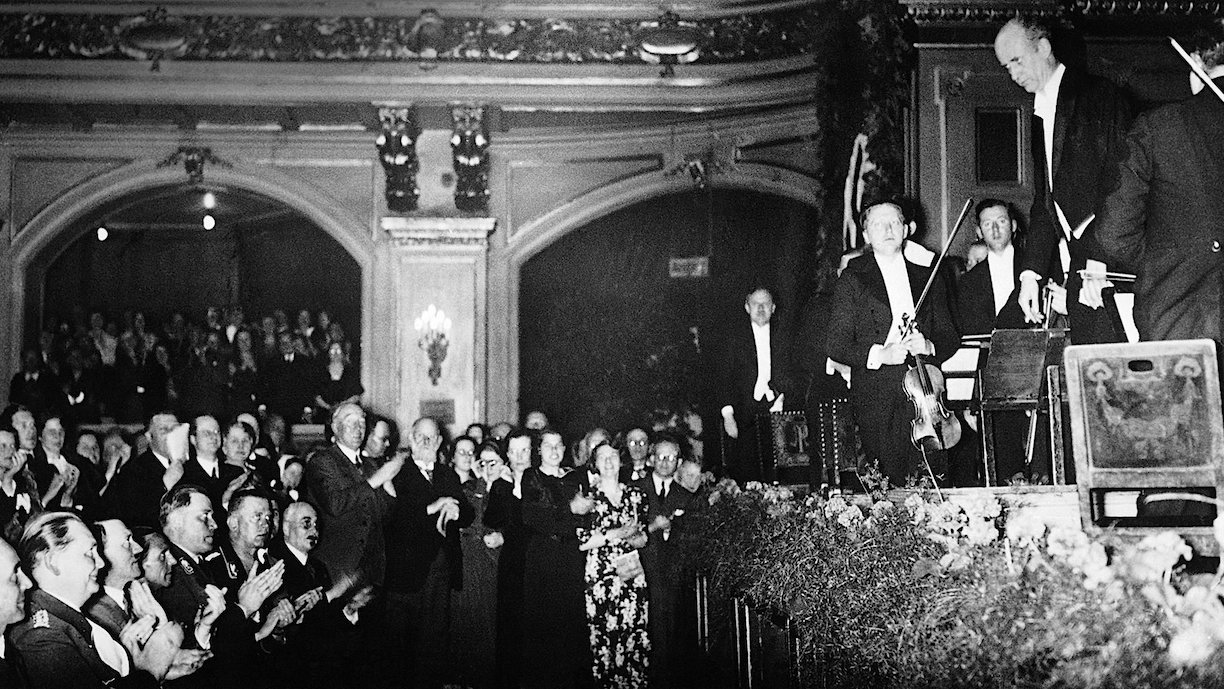
MUSICAL STRAIN…Conductor Wilhelm Furtwängler acknowledges the audience following a 1935 performance by the Berlin Philharmonic Orchestra—visible in the left corner of the photo are Hermann Göring, Adolf Hitler, and Joseph Goebbels, among other Nazi leaders. (Archiv Berliner Philharmoniker)
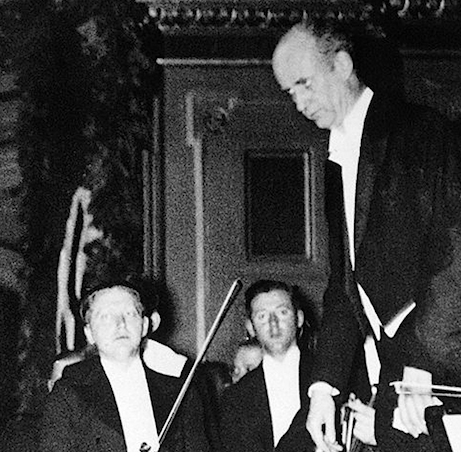
A closer look at the photo—a combination of hatred and fear in Furtwängler’s eyes? The first and second violinists don’t look too thrilled either.

In a related item, Howard Brubaker (in his “Of All Things” column), had this to say about Germany’s Olympics preparations.

 * * *

A Friendly Shakedown

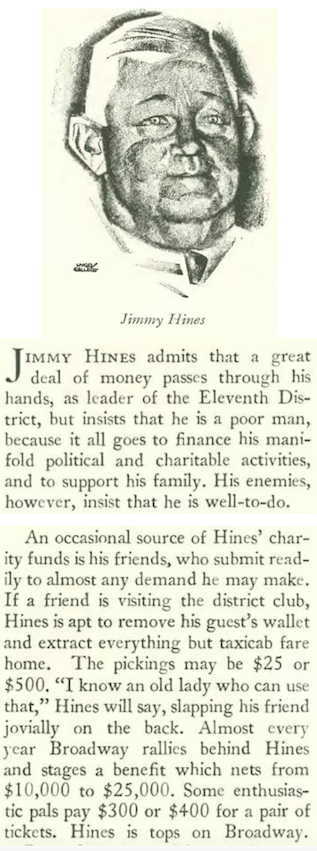
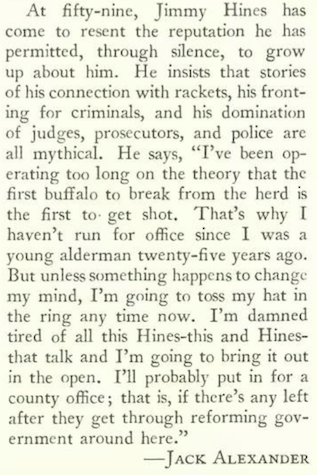
In Part Two of his profile on Tammany powerbroker Jimmy Hines, journalist Jack Alexander noted Hines’ unorthodox habit of soliciting contributions from his friends (illustration by Hugo Gellert). Excerpts:
 * * *

At the Movies

“In the dreadful summer of 1932, [The New Yorker] paid me ten dollars for an anecdote. I was ripe for seduction…,” Russell Maloney once recalled. “[Then] I sent in an account of a situation that I thought would make a good Helen Hokinson picture…and got paid for that: seven dollars.”

Maloney (1910–1948) proceeded to send more ideas to The New Yorker, and enough were accepted that in 1935 he packed his bags and moved to Manhattan for a job at The New Yorker. In his ten years at the magazine he would contribute thousands of anecdotes to “The Talk of Town” as well as casuals, profiles, and countless cartoon captions. His interest in theater as well as celebrity gossip suited him well when he substituted for John Mosher as the magazine’s film critic.

So let’s see what Maloney—who would later call 1939’s The Wizard of Oz a “stinkeroo,” had to say about the latest fare from Hollywood.

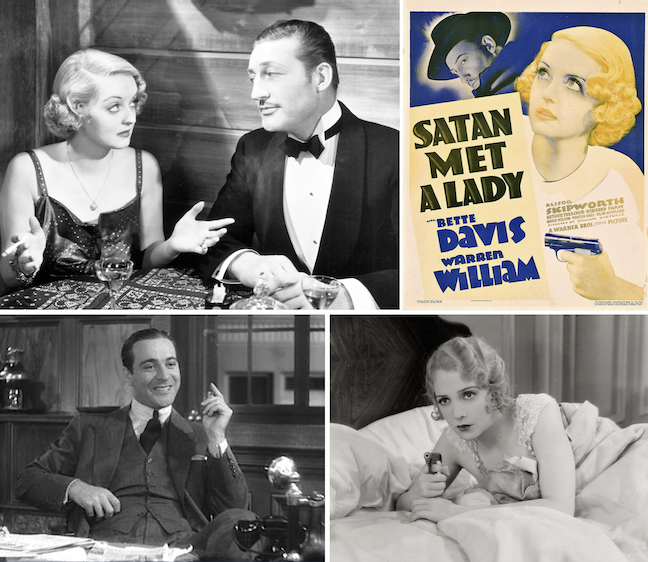
BUT THEY PAID ME THIS MUCH…Top: Russell Maloney wrote that both Bette Davis and Warren William seemed “embarrassed” to be appearing in Satan Met a Lady, which was a loose adaptation of Dashiell Hammet’s 1930 novel The Maltese Falcon—Maloney found Satan to be vastly inferior to the 1931 film The Maltese Falcon (below), which starred Ricardo Cortez and Bebe Daniels. In 1941 Humphrey Bogart and Mary Astor would appear in yet another adaptation of the Hammet novel. (imdb.com/facebook.com/jbkaufman.com)

Maloney “enjoyed” The Return of Sophie Lang, with actors “baffling one another  with the greatest suavity”…

IS THIS SUAVE ENOUGH FOR YOU?…Ray Milland and Gertrude Michael get close in The Return of Sophie Lang. (Pinterest.com)

…while Spendthrift, featuring actors speaking in various accents, was “perfectly dreadful.” Fortunately Suzy managed to lift the reviewer’s spirits, especially with the appearance of Jean Harlow.
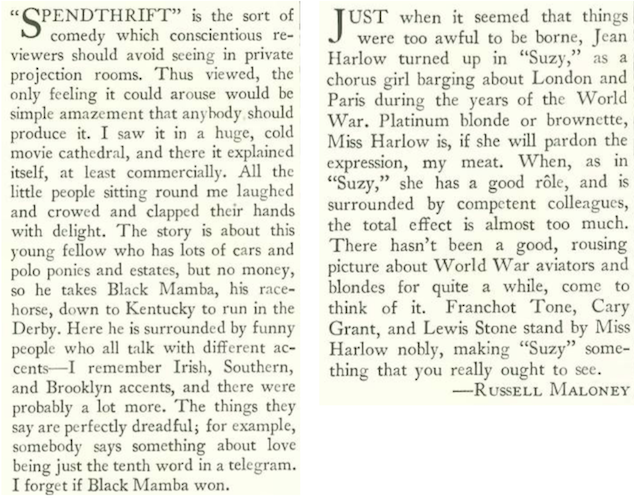
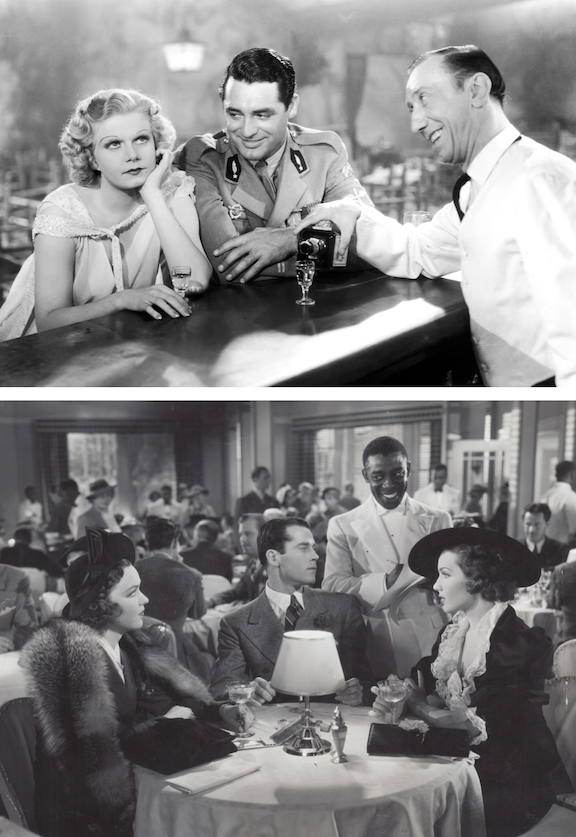
A WINNER AND A WIENER…Top, Jean Harlow, Cary Grant, and George Davis in Suzy; bottom: Henry Fonda is flanked by Pat Paterson (left) and Mary Brian in Spendthrift. (tcm.com/eBay.com)

See this post from Michael Maslin’s Inkspill about Maloney’s contributions to The New Yorker. Also, check out this photo below that includes Maloney (standing next to James Thurber):
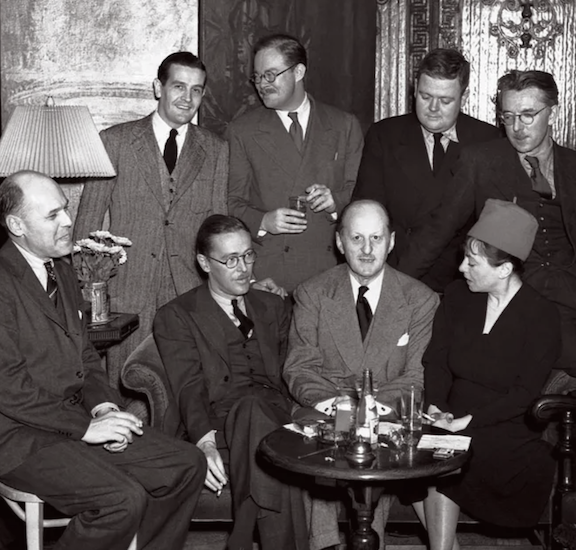
LITERARY CLUBHOUSE…Familiar New Yorker faces gathered for a cocktail party at the Hotel Algonquin to celebrate the success of Frank Case’s 1938 memoir, Tales Of a Wayward Inn. Seated, from left, are Fritz Foord, Wolcott Gibbs, Case and Dorothy Parker; standing, left to right, are Alan Campbell, St. Clair McKelway, Russell Maloney and James Thurber (untappedcities.com)

 * * *

From Our Advertisers

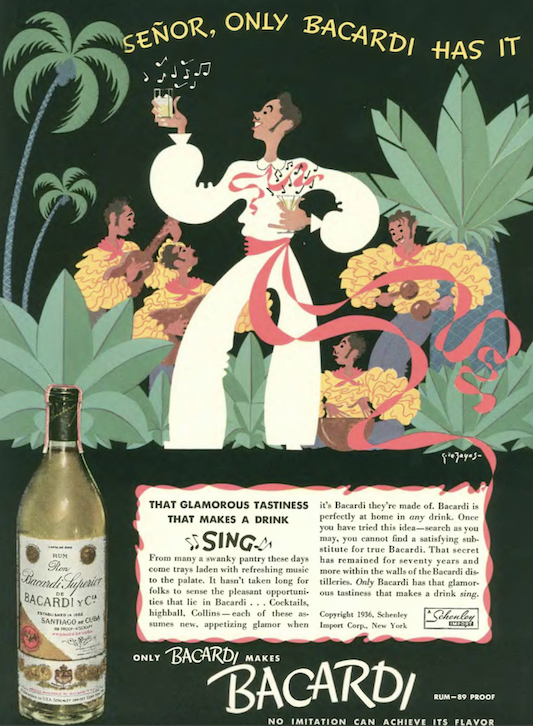
We begin with this colorful inside front cover advertisement for Bacardi rum, illustrated by George de Zayas, the younger brother of Marius de Zayas. Born in Mexico, these talented brothers took different artistic paths—Marius became a prominent avant-garde artist who collaborated with Alfred Stieglitz and others in New York, while George focused on commercial art and popular media…
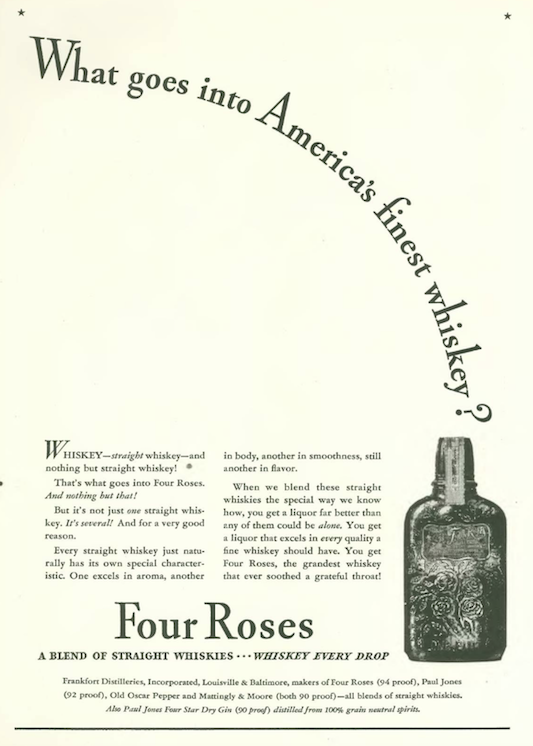
…this isn’t exactly avant-garde, but the makers of Four Roses added a modern twist to their usual traditional style…
…United Airlines offered overnight flights as well as “scenic” daylight flights from coast to coast (New York to San Francisco)…this flight typically took seventeen to nineteen hours, with refueling stops in Cleveland, Omaha, and Cheyenne/Salt Lake City…the planes were not pressurized, so they flew through the weather rather than above it…at least this plane (Boeing 247), according to the ad, had air-conditioning…

…for the more adventurous (and perhaps wealthier) traveler, you could hop aboard a Pan Am Clipper and head for Rio de Janeiro…in 1936, this flight from Miami to Rio took five days (flying in daylight only)…
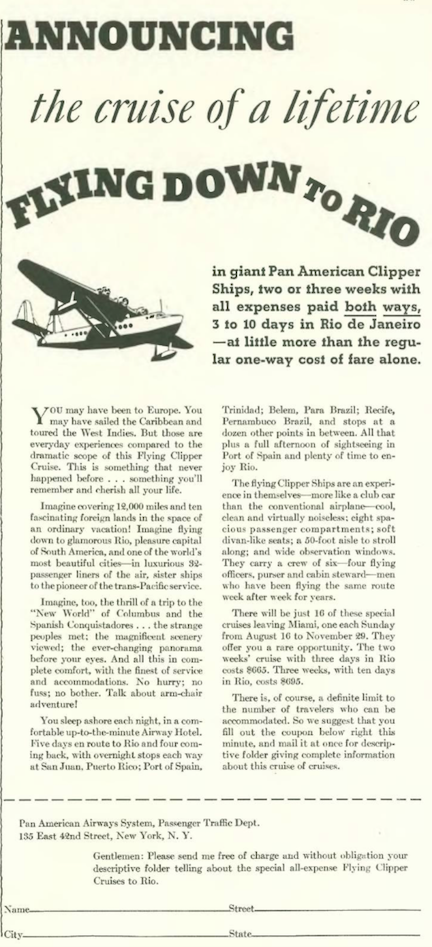
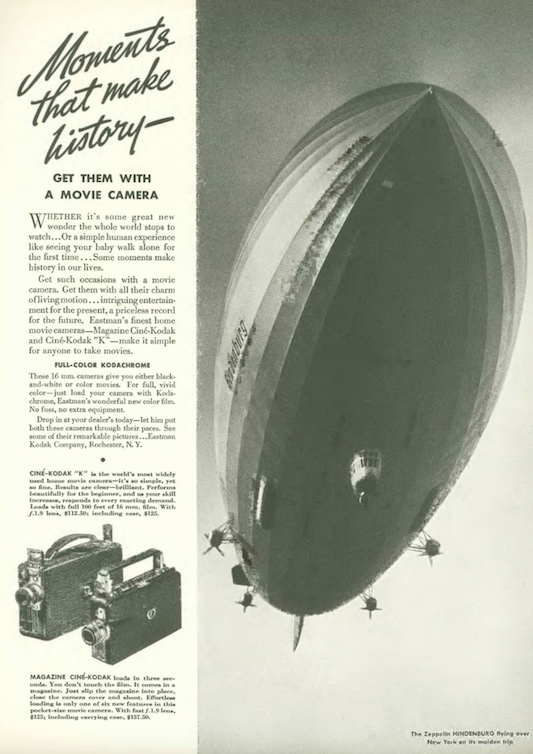
…a one-way ticket to Rio would have cost close to $11,000 in today’s dollars, while the equivalent $9,000 would get you a one-way ticket to Europe on the Hindenburg

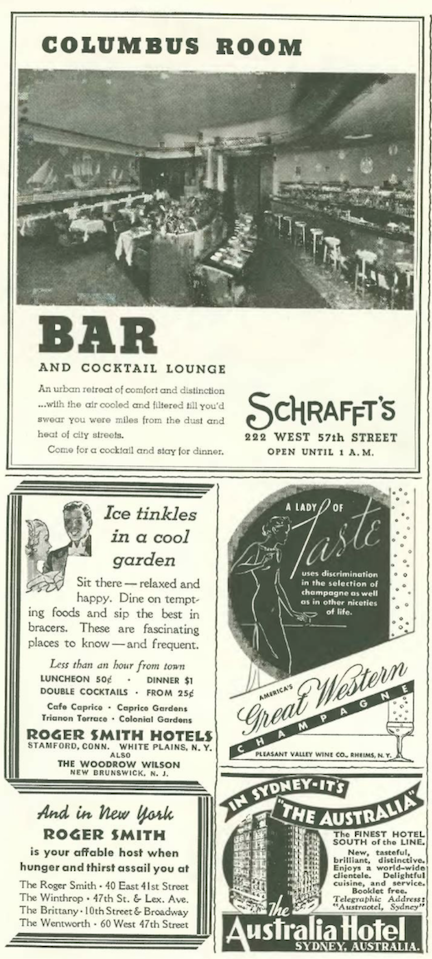
…in the back of the book we find various food and cocktail diversions…
…and some one-column tennis-themed ads…”Johnson’s Tennis Gut” referred to the material used in the Thirties to string rackets…the strings were almost exclusively made from natural animal gut—commonly called “catgut,” though they were actually made from processed and twisted sheep intestines…

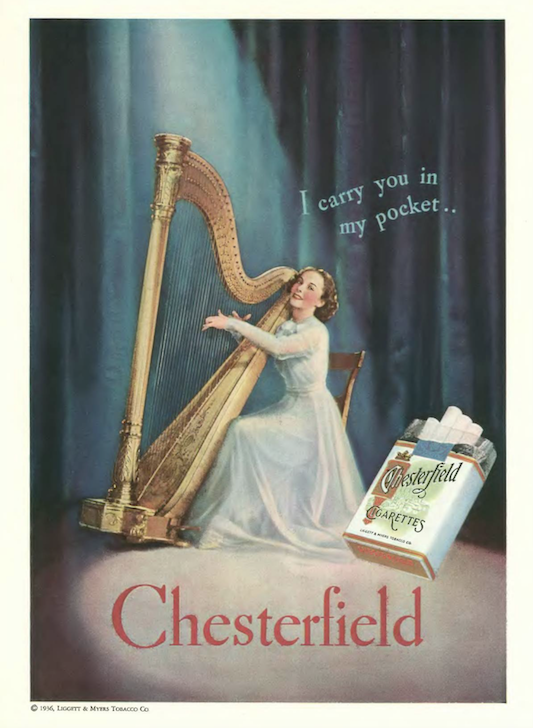
…Liggett & Myers claimed the back page to promote their Chesterfields to women smokers…one wonders if a racking cough interfered with her playing…
…on to our illustrators and cartoonists, we kick things off with spots by Adolph K. Kronengold

John Groth

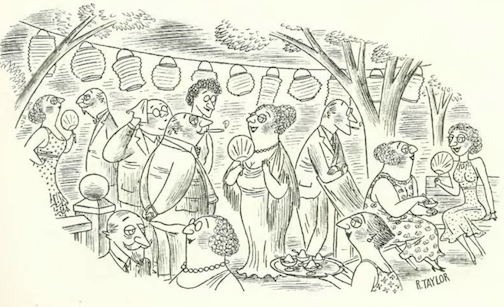
Richard Taylor

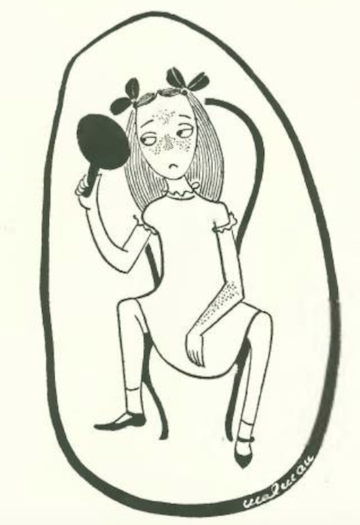
Christina Malman

…and Victor de Pauw

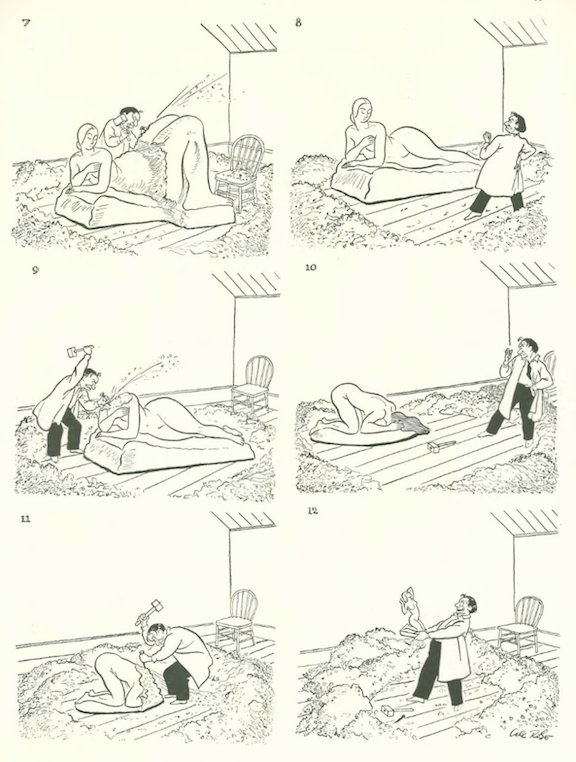
Carl Rose took us through a sculptor’s creative stages…

Helen Hokinson pondered a recipe for the day’s catch…

…and she checked out some summer reading (Warwick Deeping was a British writer of historical romances as well as books that defended the lifestyles of the bourgeoisie)…

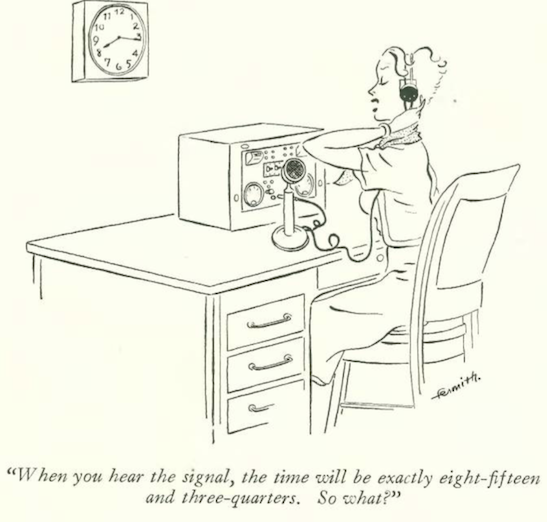
…this was F.E. Smith’s sole contribution to The New Yorker, and it’s pretty good…beyond that, I came up empty trying to find out more about the cartoonist…
…but we all know Leonard Dove (who contributed fifty-seven New Yorker covers and 717 cartoons)…here he’s keeping things quiet on the tennis court…

…and, of course, we have the great Charles Addams

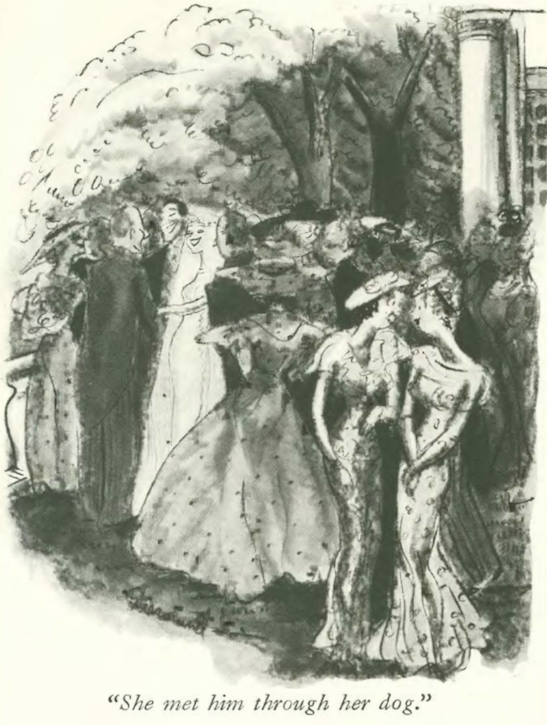
…we close with one of my favorite cartoonists, Barbara Shermund, keeping things light after the wedding…
Next Time: Men in Kilts…
Chaplin of the Jungle

In the 1920s and 30s the concept of the documentary film was still in its infancy, and beginning with the silent Nanook of the North (1922), the idea that a documentary and a drama were separate things was unknown to filmmakers.

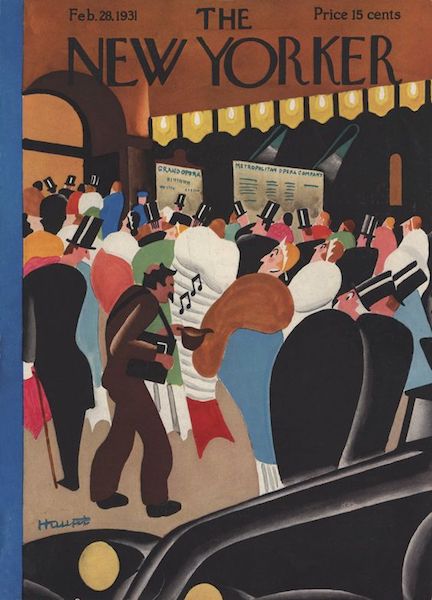
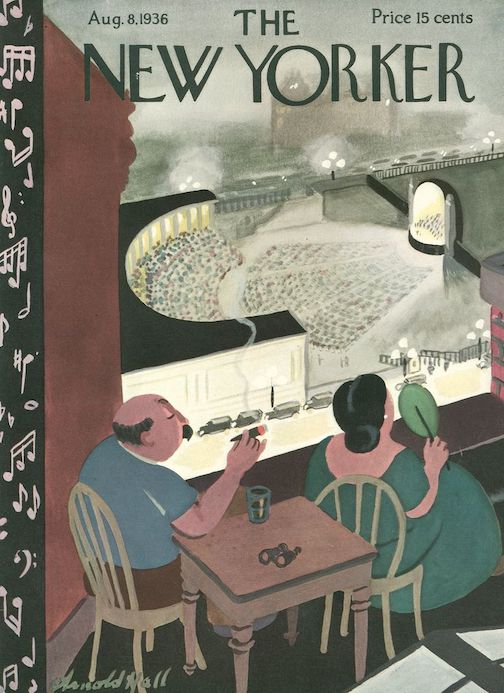
Feb. 28, 1930 cover by Theodore Haupt.

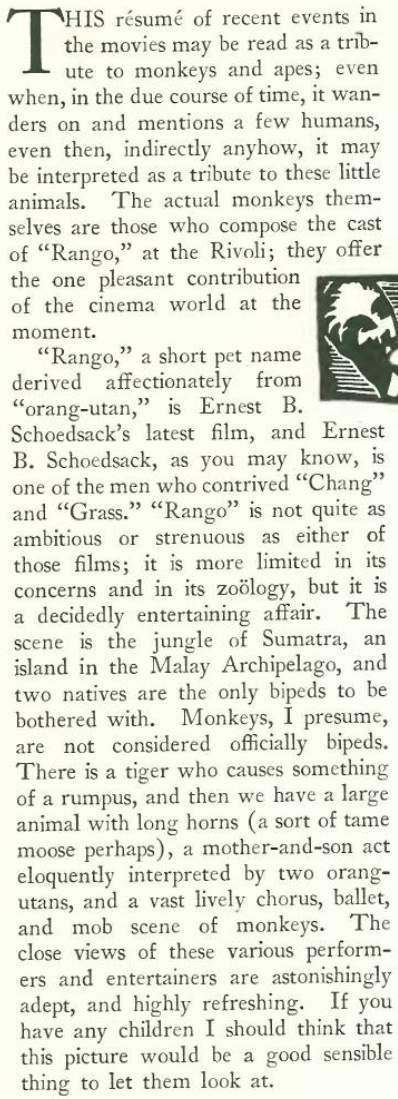
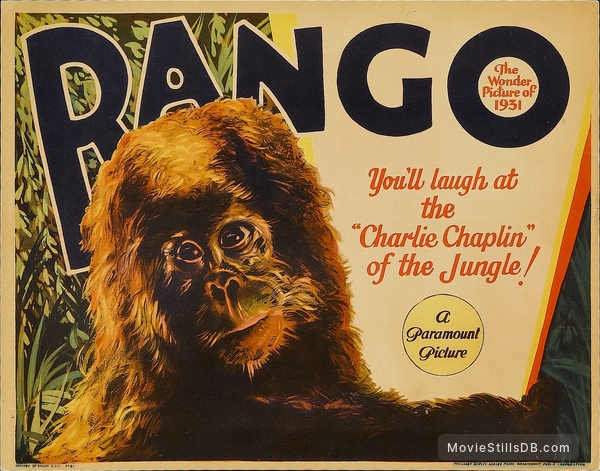
What was known, however, was the box office appeal of films that explored unknown and exotic lands, like Ernest B. Schoedsack’s 1927 blockbuster Chang, which featured a mix of staged events as well as the actual slaughter of wild animals. Audiences (and most critics) seemed little troubled that these films were a mix of fact and fiction. It was a movie, after all, and movies followed a story arc, and they had drama, and sometimes comedy. And so when Schoedsack (1893-1979) introduced audiences to an orangutan named Rango, publicists described the simian star as the “Charlie Chaplin of the Jungle.” The New Yorker’s John Mosher found the performances of the various apes “astonishingly adept”…

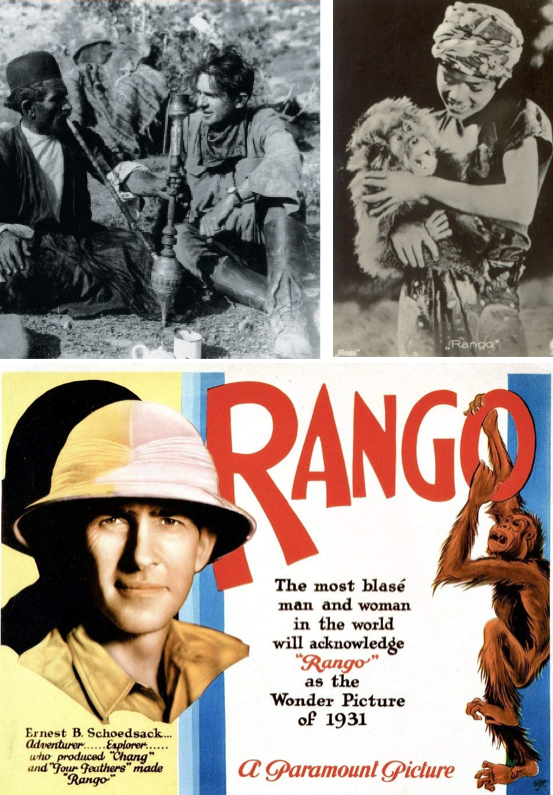
MONKEY BUSINESS…Clockwise, from top left, the Iowa-born Ernest B. Schoedsack cut his filmmaking teeth as a producer/director of quasi-documentaries, beginning with 1925’s Grass, which followed a caravan from Angora to Persia; a young Sumatran boy, Bin, bonds with the orangutan Rango; promotional theater card for the film. (filmaffinity.com)
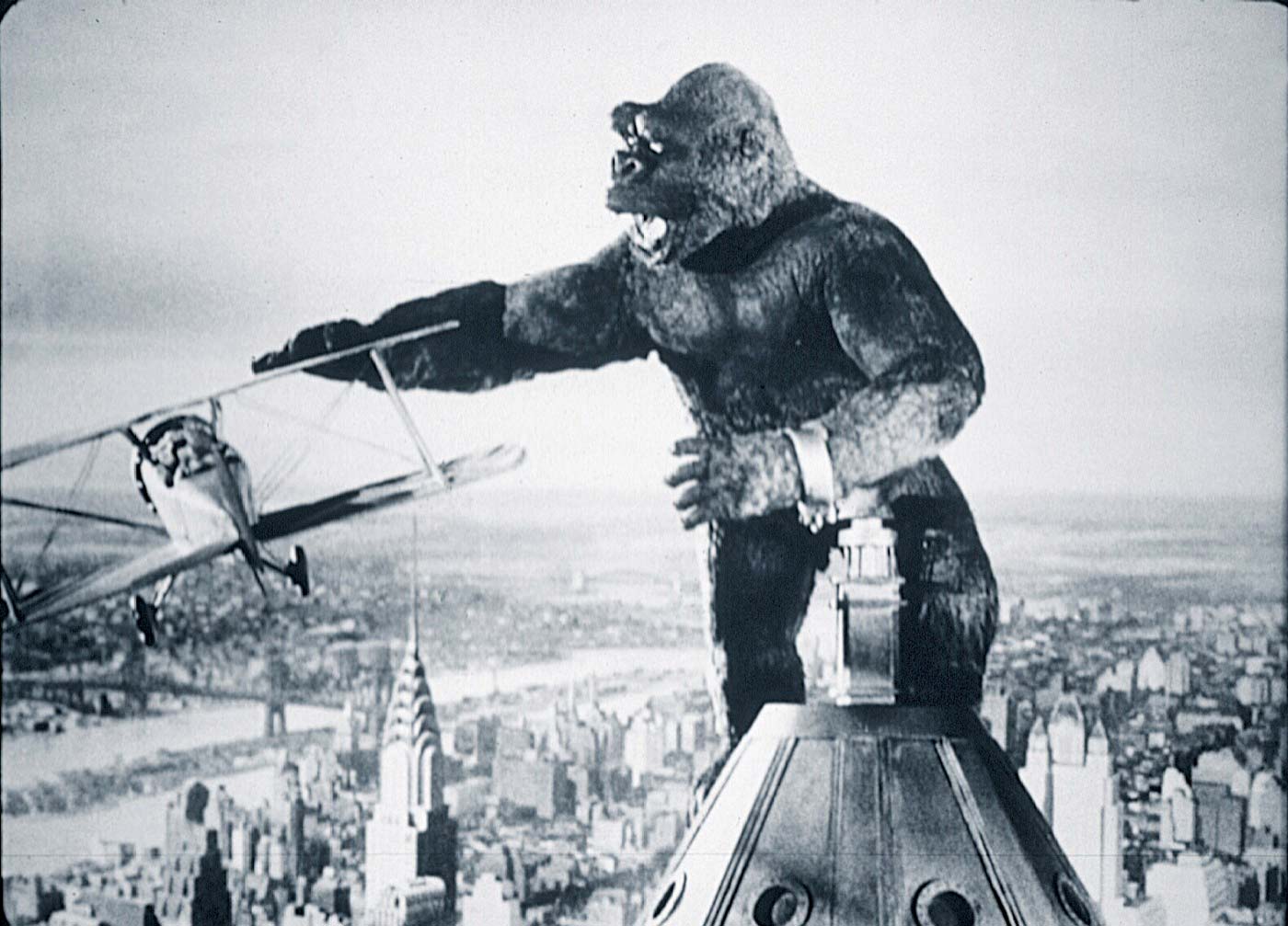
NOT SO CUDDLY…Two years after Rango, Ernest B. Schoedsack would co-produce and co-direct 1933’s King Kong, with Merian C. Cooper. (Britannica)

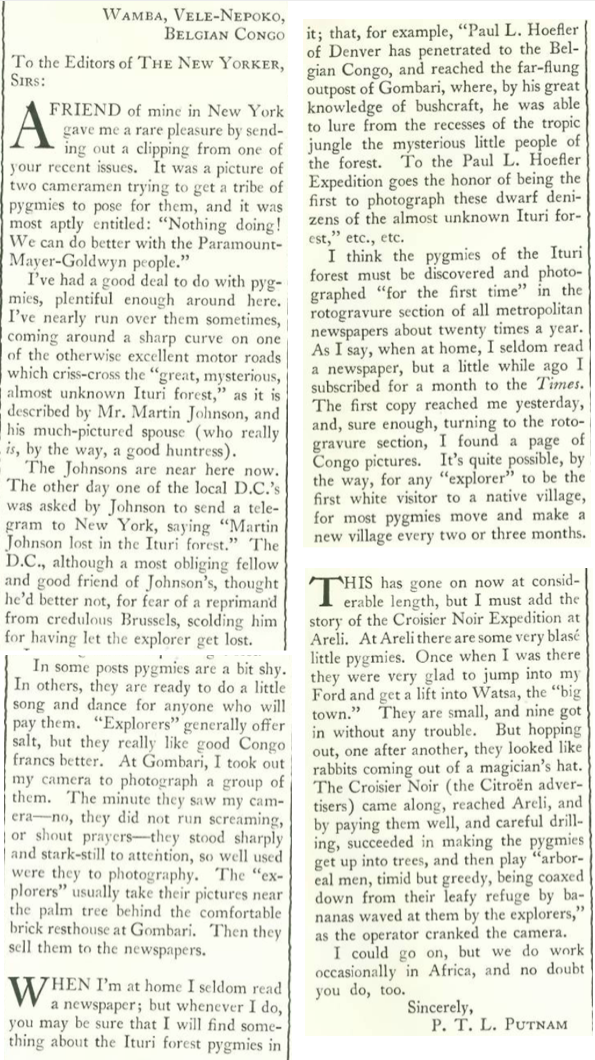
If interpretations of tropical life weren’t accurate in 1931, it wasn’t completely due to filmmakers taking dramatic license. Attitudes toward “exotic” lands and people commonly ranged from naively paternalistic to downright racist. In a letter to The New Yorker, Patrick T.L. Putnam (1904-1953) is decidedly of the former, portraying Congo pygmies as clever, amusing children who hoodwink unsuspecting “explorers”…

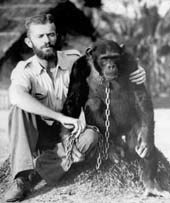
To Putnam’s credit, he showed a genuine interest (and respect for) in the lives of tribal peoples, and particularly the Mbuti of the Congo’s Ituri Forest. He remained in the Congo for the rest of his life. This thumbnail is the only photo I could find of Putnam:

(geni.com)

 *  *  *

Big Bill Turns Pro

In first decades of the 20th century it was still widely believed that athletic competition should be for its own sake rather than as a means for making money, so many top stars competed as amateurs. Professional golf wasn’t established until 1916, and professional leagues in basketball and football first formed in the 1920s. Amateur status was especially prized in tennis — before the “Open Era” began in 1968, only amateurs were allowed to compete in Grand Slam tournaments.

Sports promoter C. C. Pyle established the first professional tennis tour in 1926 with American and French stars playing exhibition matches in front of paying audiences. According to The New Yorker’s John Tunis, many in the crowd were finely dressed, with men in top hats and women turned out in the latest high fashion.

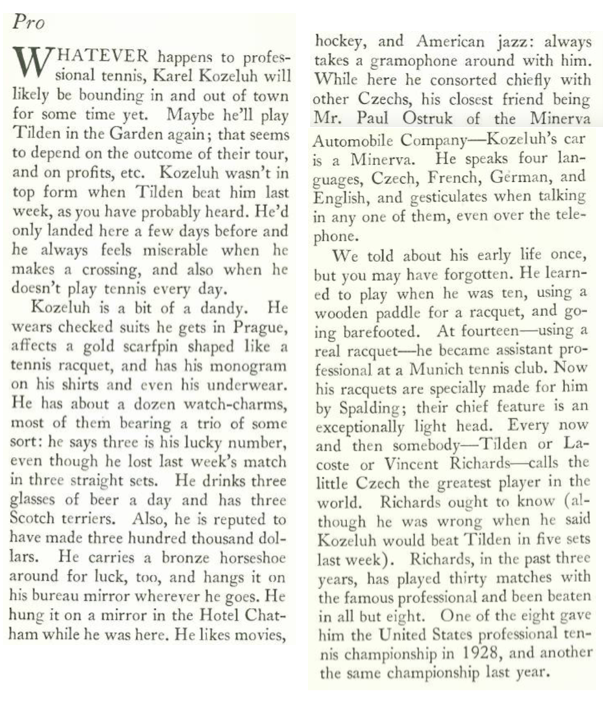
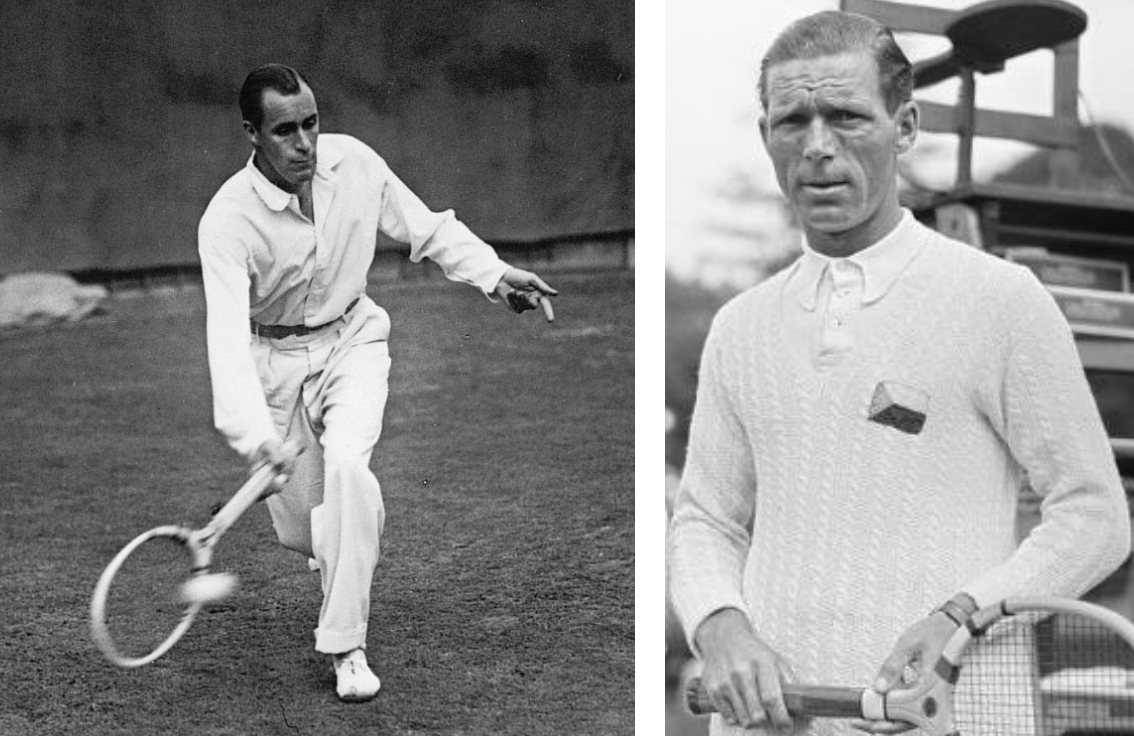
America’s top draw was “Big Bill” Tilden, the world’s number one player from 1920 to 1925 and the first American to win Wimbledon. It caused quite a stir when Tilden went pro on Dec. 31, 1930. He barnstormed across the country,  playing one-night stands with a small group of professionals including the top Czech player Karel Koželuh. “The Talk of the Town” had this to say about the fledging game of professional tennis:

BARNSTORMERS…Bill Tilden (left) and Karel Koželuh toured America and Europe with a handful of other players in a series of exhibition matches in the fledgling professional tennis circuit. (Britannica/cyranos.ch)

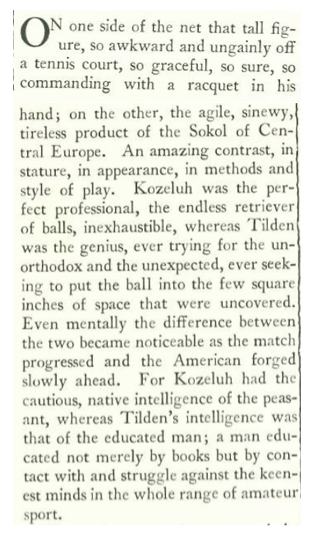
In his sports column, John Tunis offered this description of the competitors:

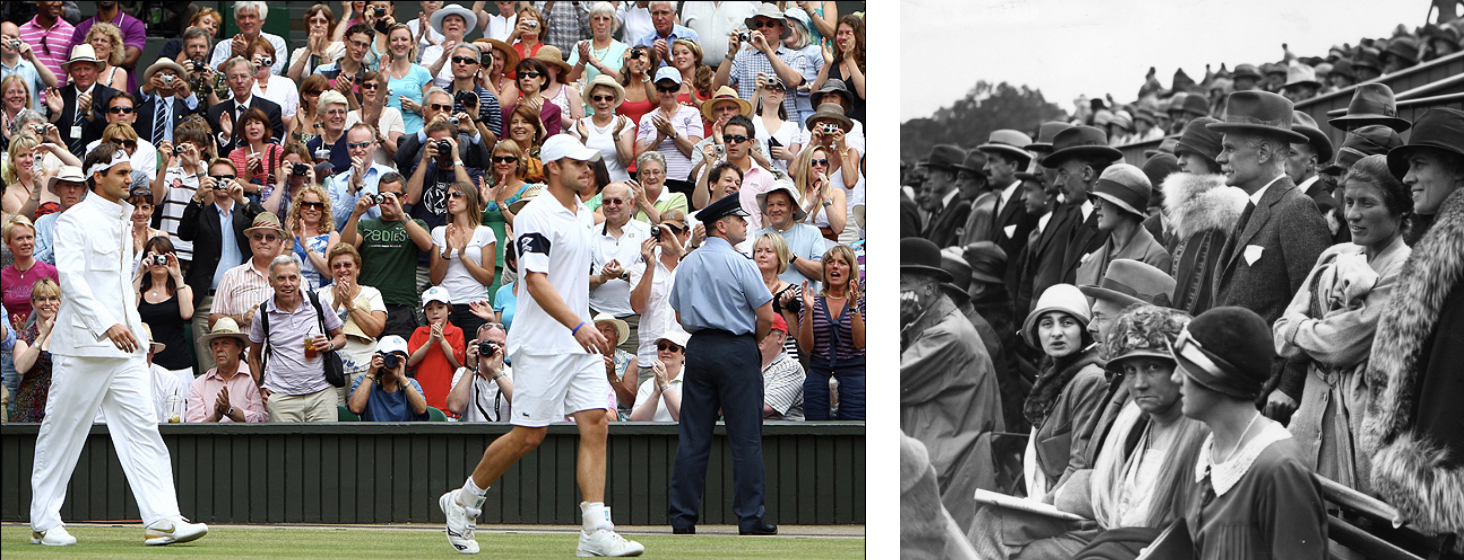
NOW AND THEN…At left, you can still spot a few neckties at Wimbledon as the audience watches Roger Federer and Andy Roddick enter Centre Court in 2009; at right, Wimbledon crowd in 1925. (BBC/Vintage Every Day)

 *  *  *

Triple Tripe

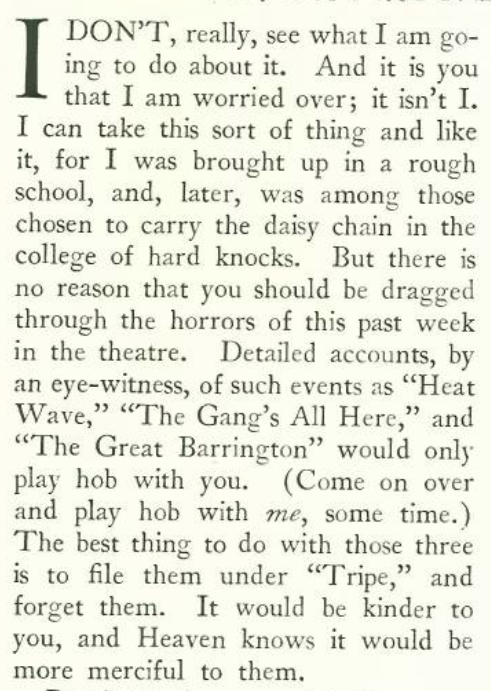
Dorothy Parker continued to sub in the theater column for her friend Robert Benchley, who was traveling abroad. She found little to like on the Great White Way, including three forgettable plays she reviewed in the Feb. 28 issue:

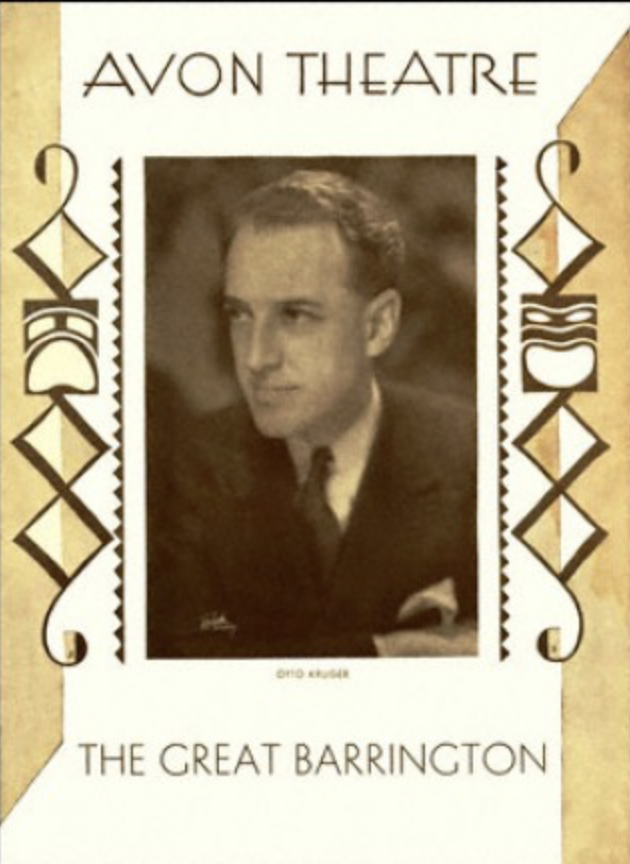
Apparently audiences agreed with Parker’s assessment. The Gang’s All Here closed after just 23 performances, The Great Barrington, after just 16. And Heat Wave was not so hot, closing after a mere 15 performances.

NOT SO GREAT…Program for 1931’s The Great Barrington. It lasted 16 performances. (IBDB)

Parker once again closed the column with a plea to her dear friend:

 *  *  *

To Swash No More

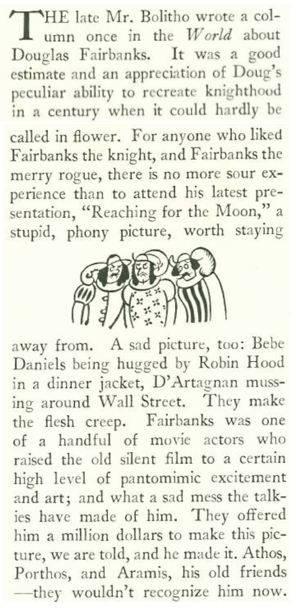
In his “Notes and Comment,” E.B. White lamented the end of Douglas Fairbanks as the swashbuckler of the silents, and rejected the talkie version of the actor in Reaching for the Moon, a film in which Fairbanks portrayed Larry Day, a Wall Street millionaire who later loses his fortune in the 1929 stock market crash.

KEEP YOUR SHIRT ON, DOUG…From left, Douglas Fairbanks in the silent era’s The Thief of Bagdad (1924); Fairbanks on an ocean cruise with Bebe Daniels in Reaching for the Moon. The 47-year-old Fairbanks was still fit enough to pose shirtless, but E.B. White wasn’t having any of it. Despite his fit appearance, Fairbanks would die of a heart attack at the end of the decade. (IMDB)

The film today is perhaps best known for its sumptuous Art Deco sets…

(IMDB)

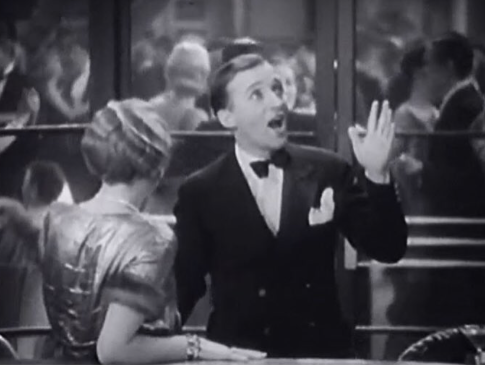
…and for one of Bing Crosby’s earliest film appearances. Reaching for the Moon was originally intended to be a musical featuring numbers by Irving Berlin, however Berlin found director Edmund Goulding difficult to work with, so only one of the original five songs recorded for the film was used, “When the Folks High Up Do the Mean Low Down,” sung by Crosby. It was filmed late at night after he had completed his gig at the Cocoanut Grove.

SINGING WITH BA-BA-BEBE…A young Bing Crosby sings “When the Folks High Up Do the Mean Low Down” with Bebe Daniels in Reaching for the Moon. (IMDB)

 *  *  *

Modern Living

E.B. White also commented on the modern world’s reliance on electric appliances, a habit a mere decade in the making since the gadgets he lists below did not exist before the 1920s:

ELECTRIC SURGE…Prior to the 1920s none of these electric appliances existed. By 1931 many homes were dependent upon them — although many country houses would have to wait for the Rural Electrification Administration (1935) and other New Deal programs get electrical service. (Pinterest)

*  *  *

From Our Advertisers

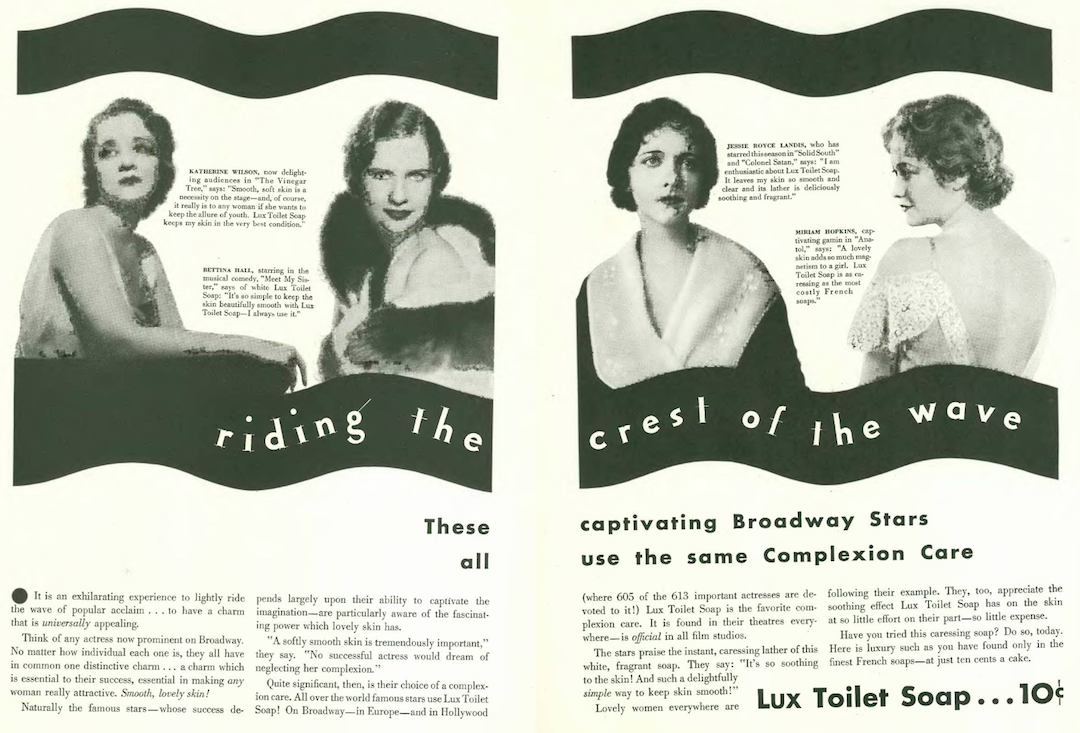
I’ve written before about Lux Toilet Soap’s celebrity-studded ad campaigns, but this two-page ad in the Feb. 28 issue caught my eye because it featured one of my favorite actresses, Jessie Royce Landis

…who appeared in two of my favorite films, both by Alfred Hitchcock: To Catch a Thief (1955) and North by Northwest (1959).

MATERNAL ROLES…Jessie Royce Landis usually played older than she was in real life. Clockwise, from top left, detail of Lux ad; Landis circa 1930; opposite Cary Grant in 1955’s To Catch a Thief; and again with Grant in 1959’s North by Northwest. In the latter film she played Grant’s mother, but in reality she was only seven years older than Grant. (IMDB)

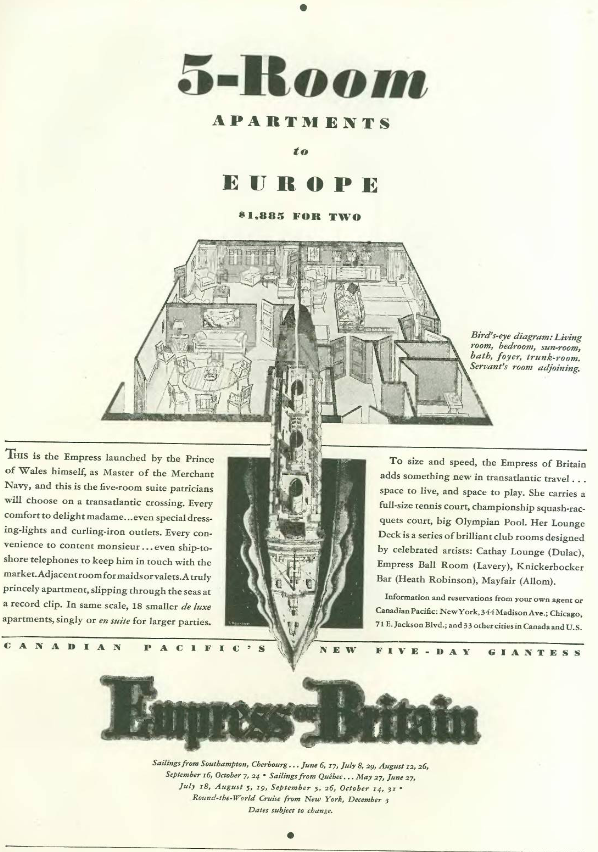
…much of the Douglas Fairbanks/Bebe Daniels film Reaching for the Moon was set on a luxury ocean liner…if the stock market didn’t get you down, you could also afford to travel in style with the Empress of Britain

…or on one of the fine ships of the French Line fleet…

…the Imperial was one of the luxury cars that could get you to the docks…

…among the stranger ads to appear in The New Yorker was this one by the maker of clay plumbing fixtures…

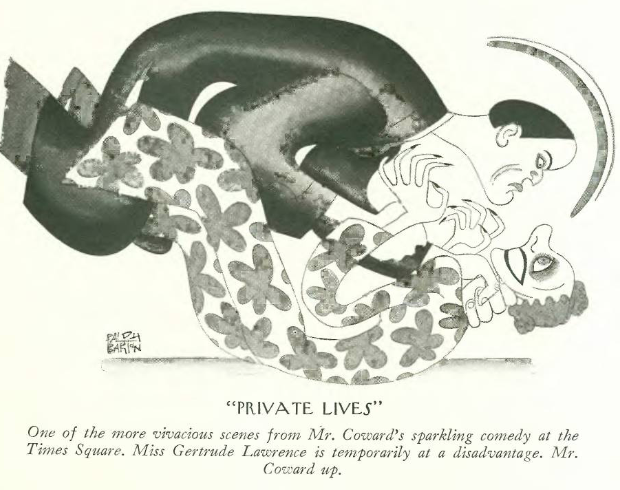
…on to our cartoonists, Ralph Barton returned with this illustration for the theater section…

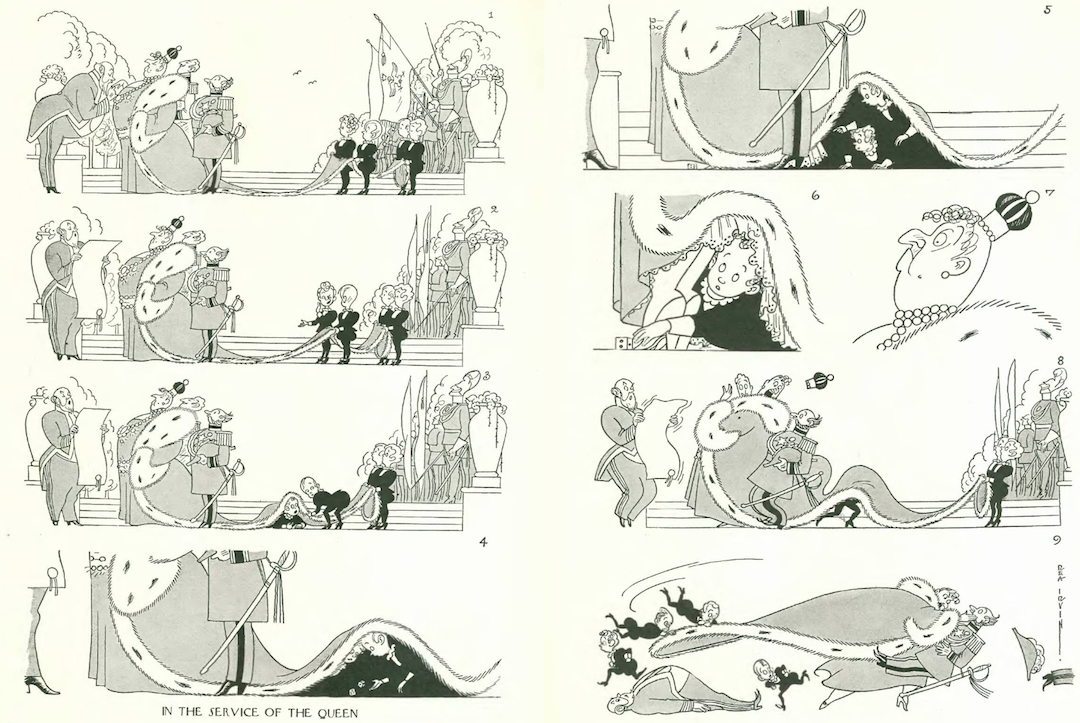
Rea Irvin brought us another of his two-page series cartoons…

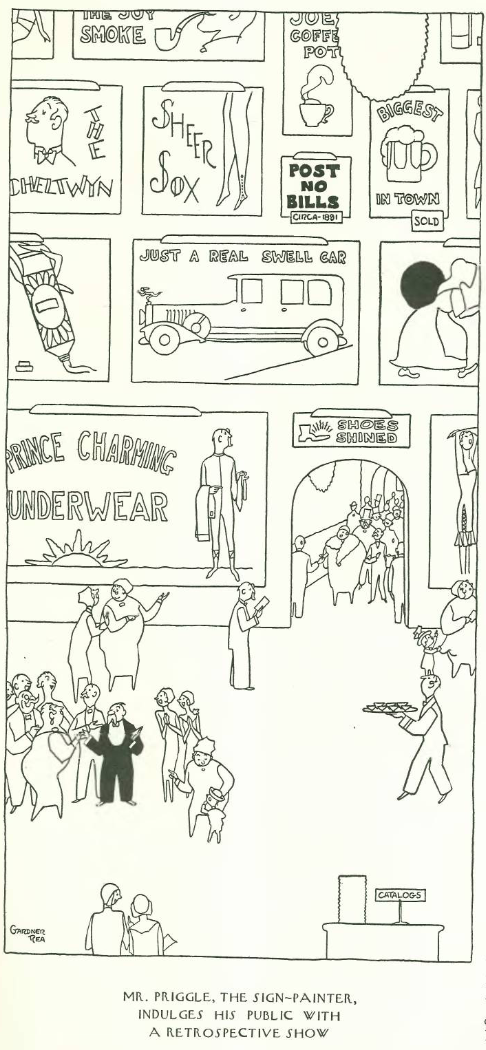
Gardner Rea commented on the state of the art world…

Peter Arno peered in on an unfortunate infant…

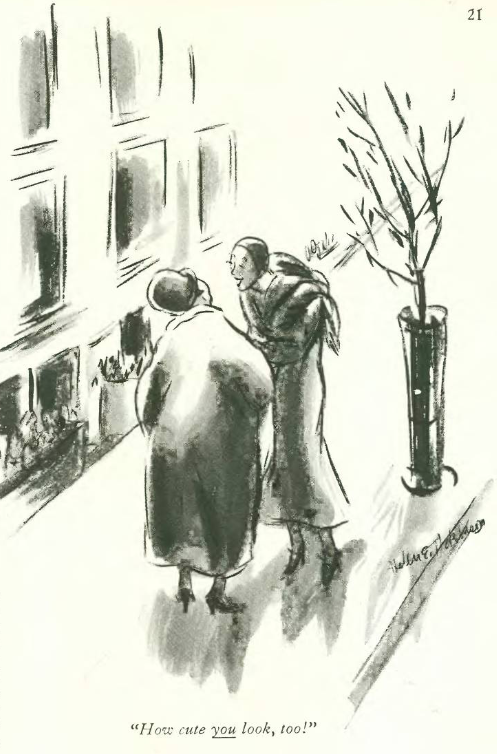
Helen Hokinson gave us this exchange along a city street…

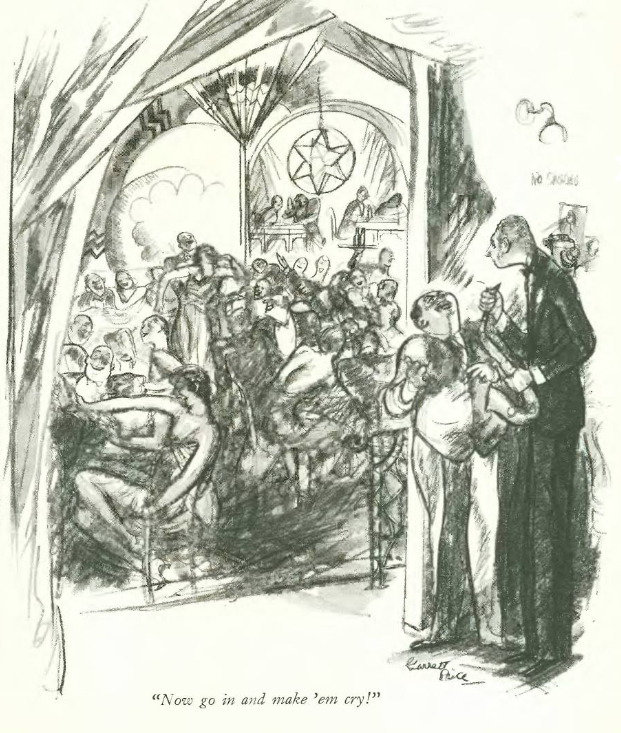
Garrett Price illustrated a tall order for a blues musician…

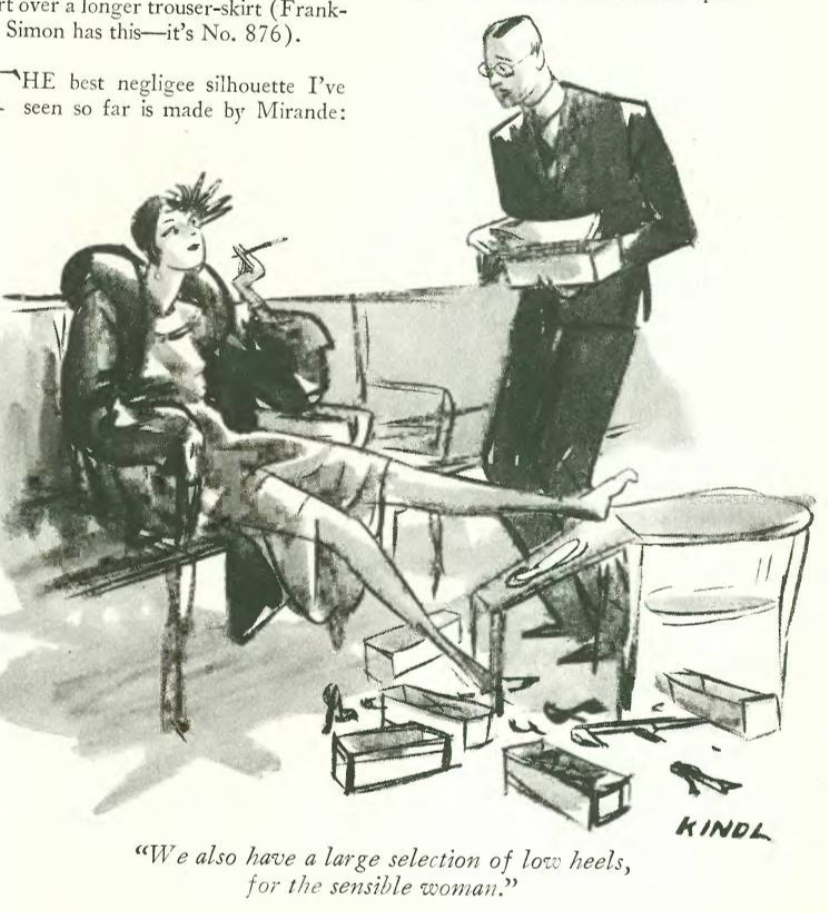
Carl Kindl found clashing styles in the shoe department…

…and James Thurber returned with a prelude to his battle of the sexes…

Next Time: The End of the World…