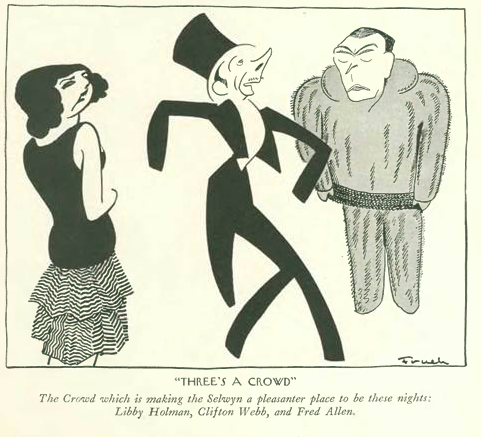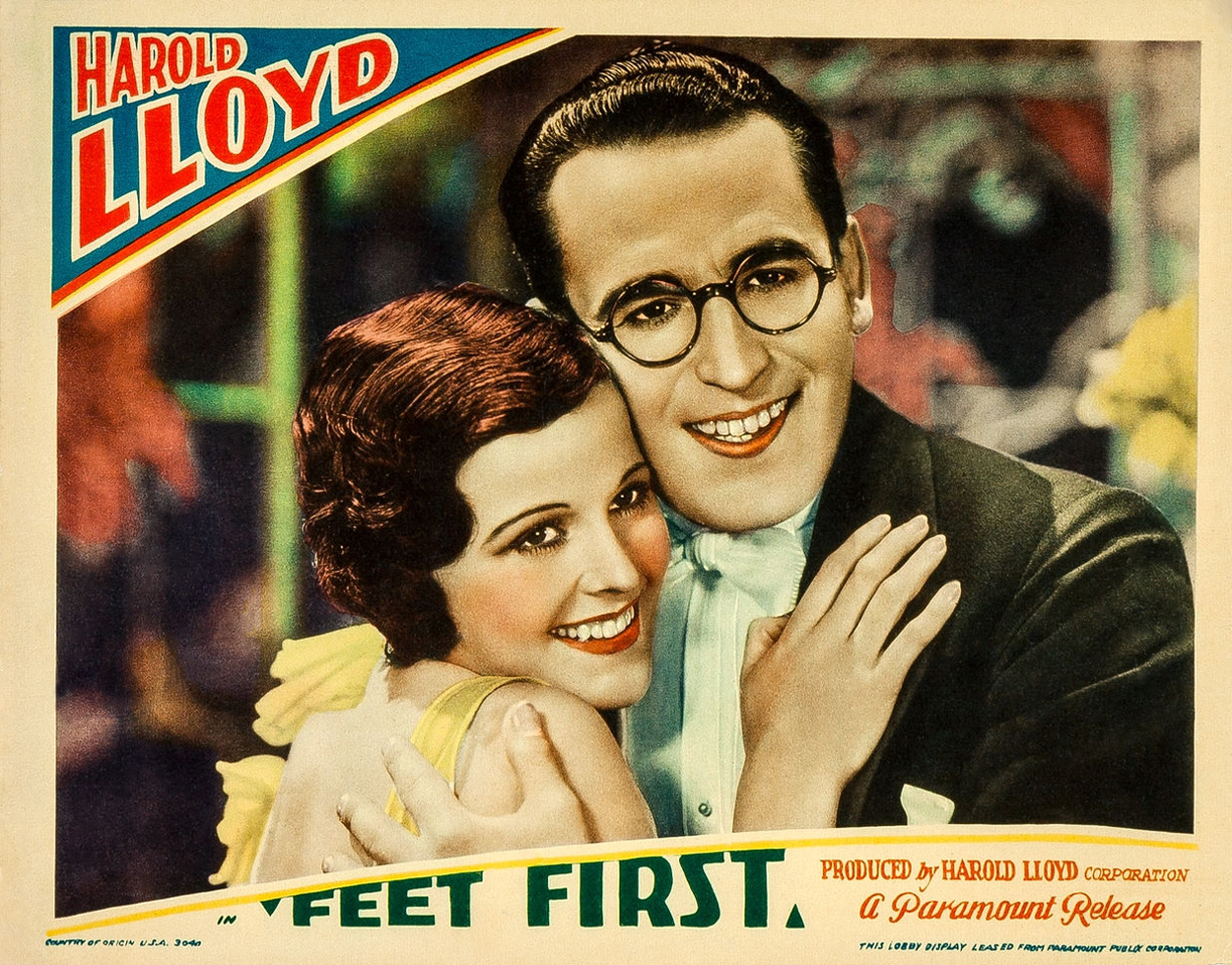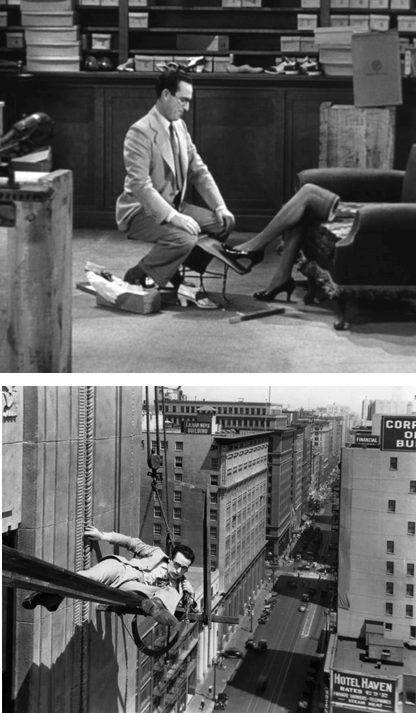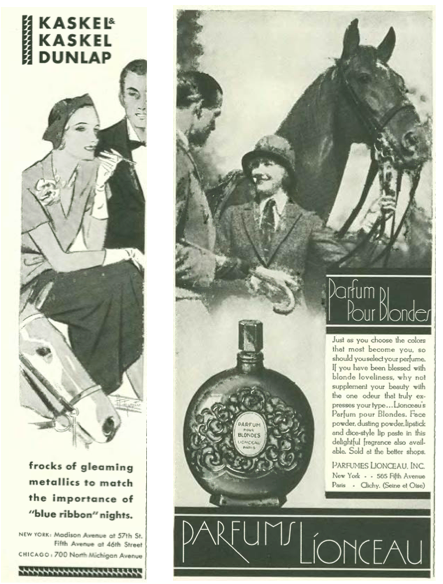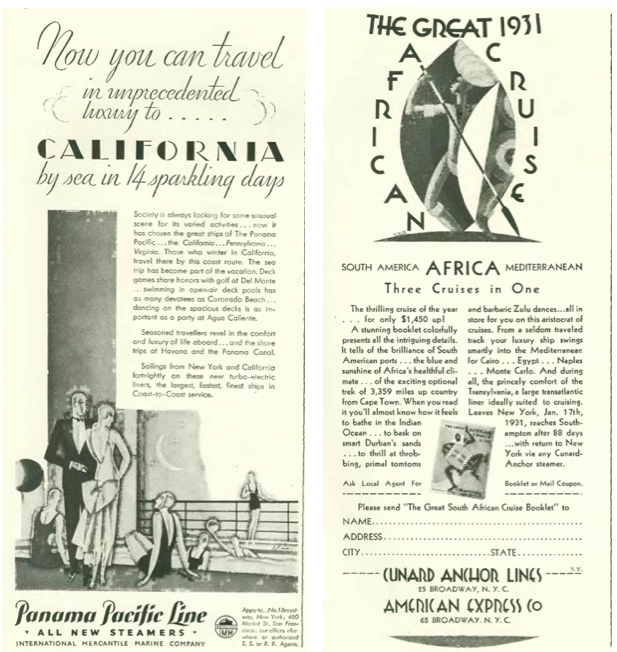
Lights, Camera, Action

Comedian Ed Wynn began his long acting career on a vaudeville stage in 1903, and beginning in 1914 his giggly voice would delight Broadway crowds flocking to the Ziegfeld Follies. So when he stepped in front of a movie camera for a talking picture, it was something of a sensation.

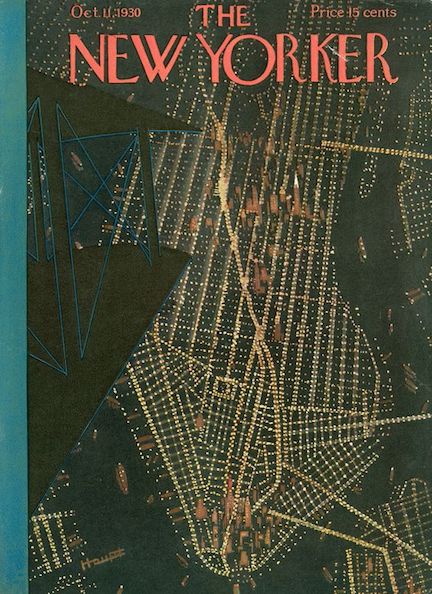
September 27, 1930 cover by Sue Williams.

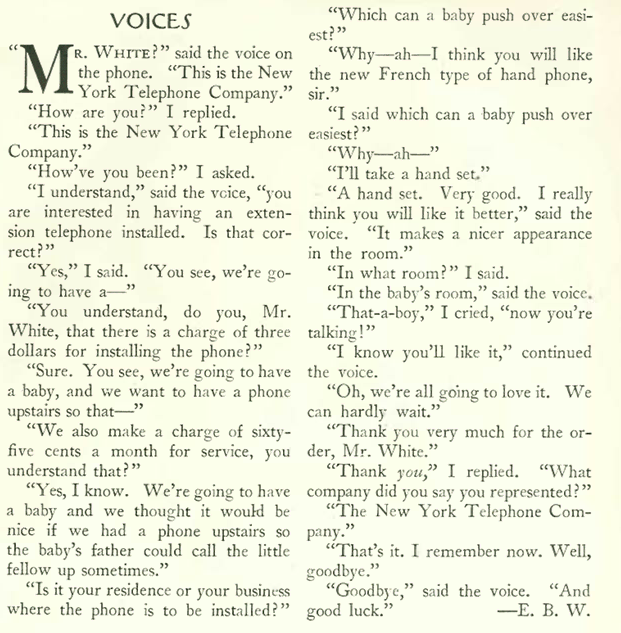
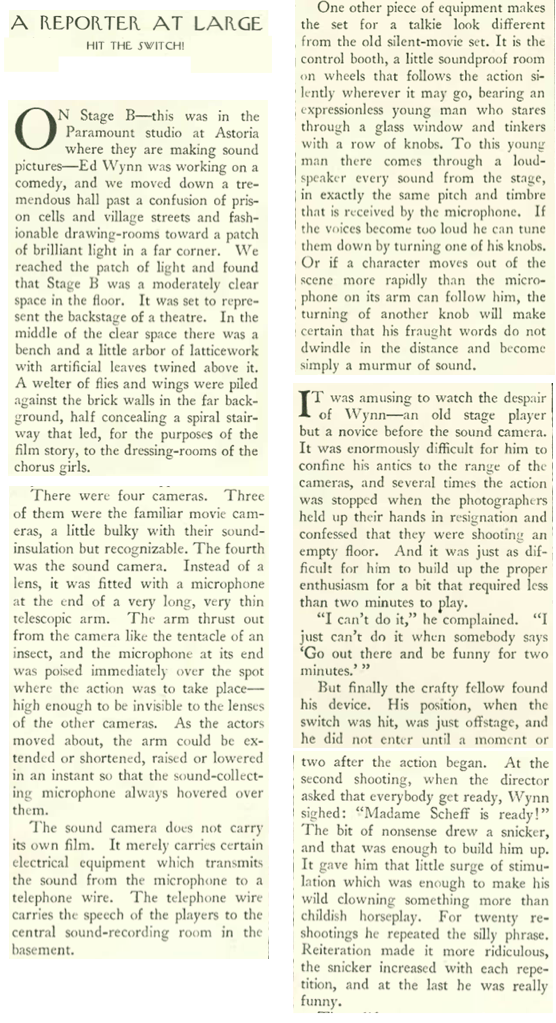
It was not an easy transition for the stage veteran. As you can see from Morris Markey’s account below in “A Reporter at Large,” the early talkies presented all manner of challenges and restrictions for stage actors accustomed to a bit more freedom of movement and expression.

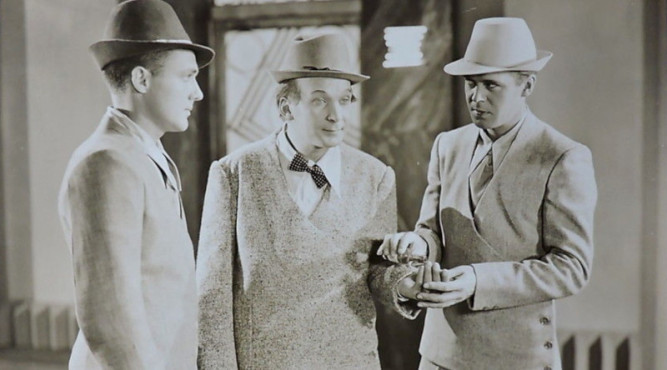
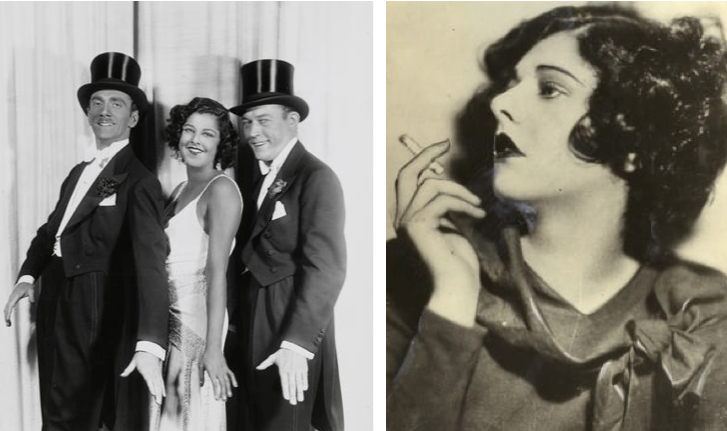
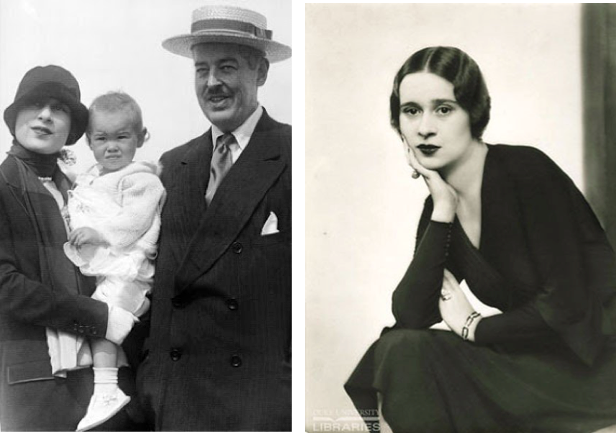
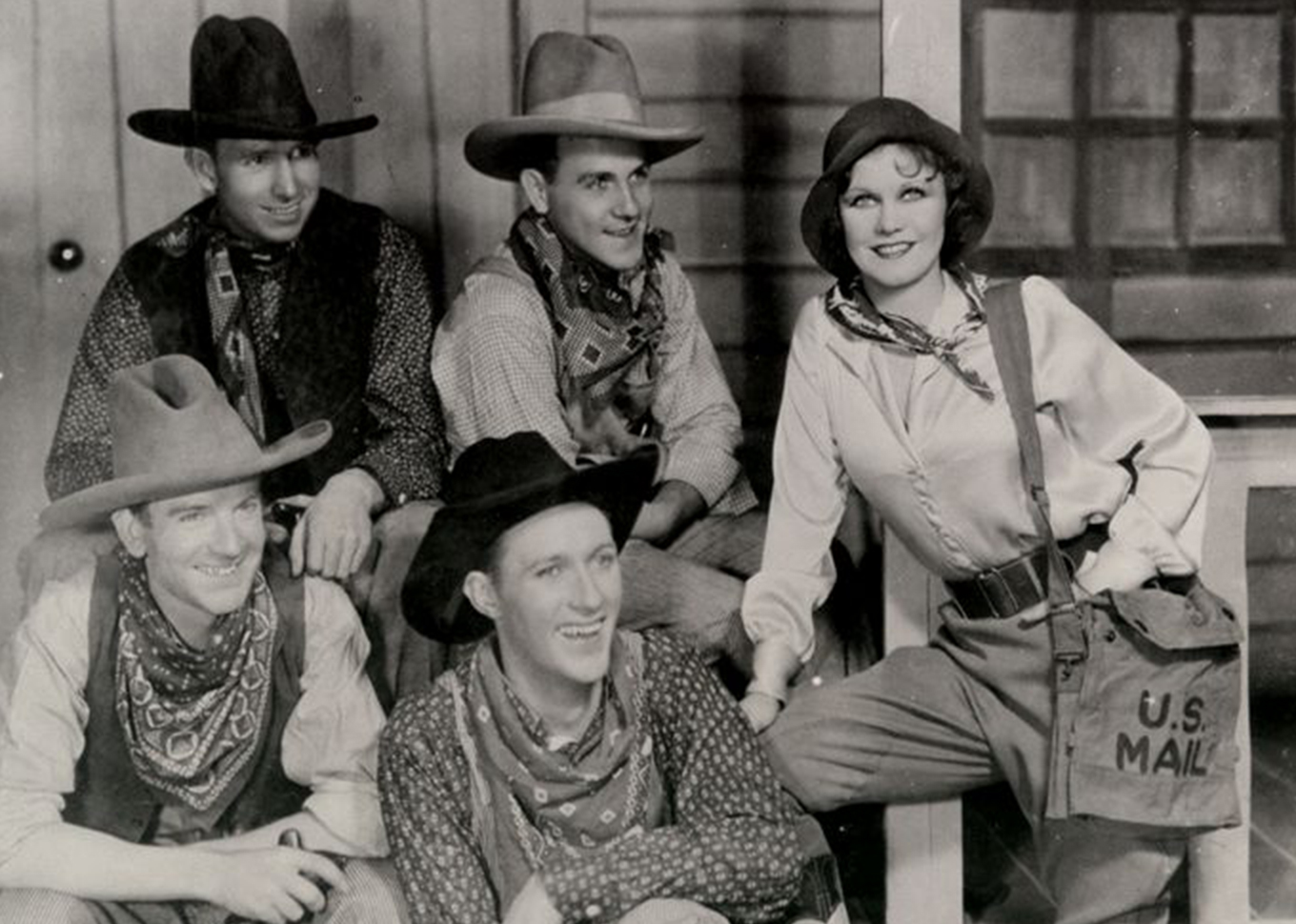
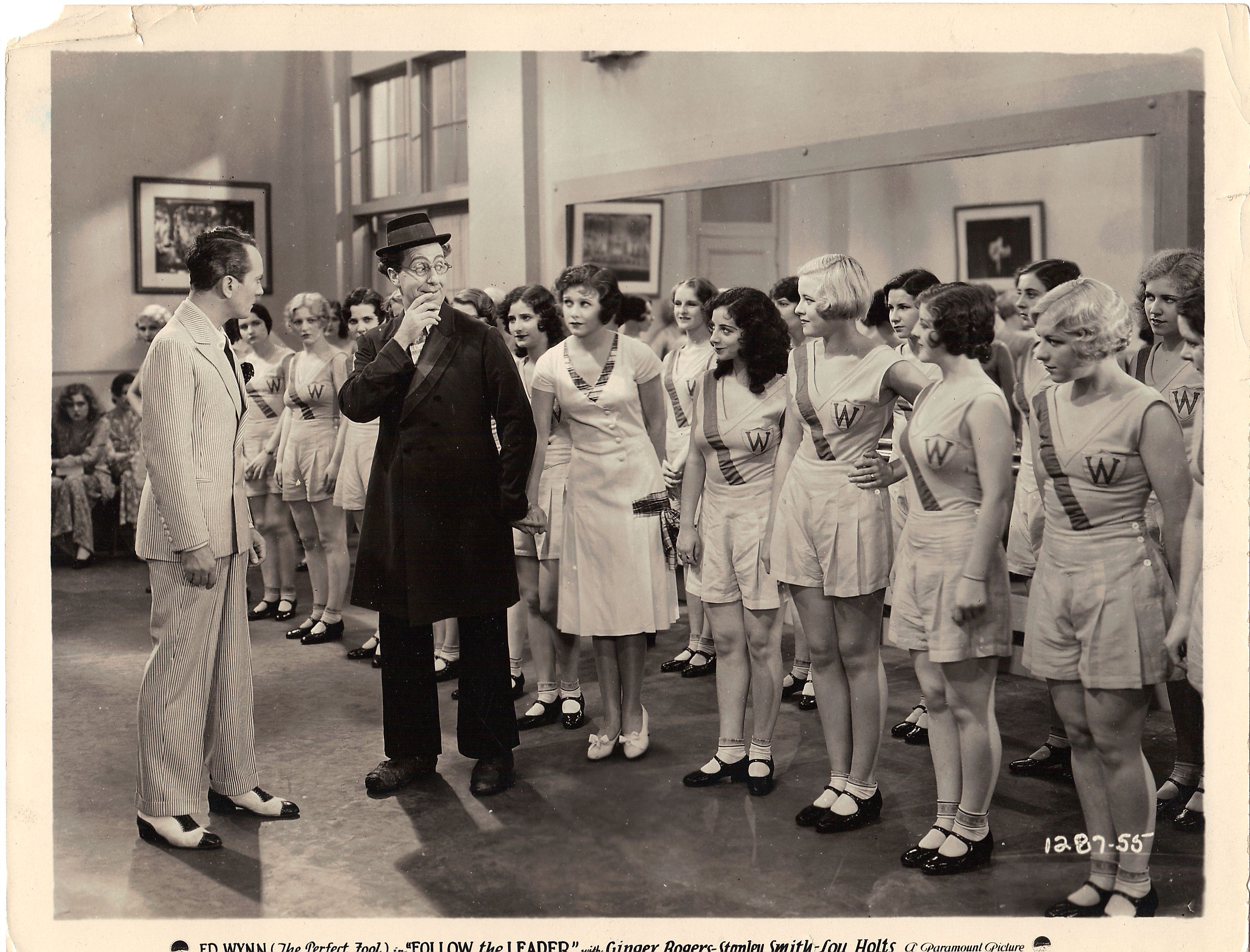
SCANDALOUS BUNCH…Ed Wynn (in hat) portrayed a character he developed on Broadway — “Crickets” — in his film debut Follow the Leader. At left is actor Stanley Smith, and at center, holding Wynn’s hand, is a brunette Ginger Rogers, with chorus girls from George White’s Scandals. (IMDB)

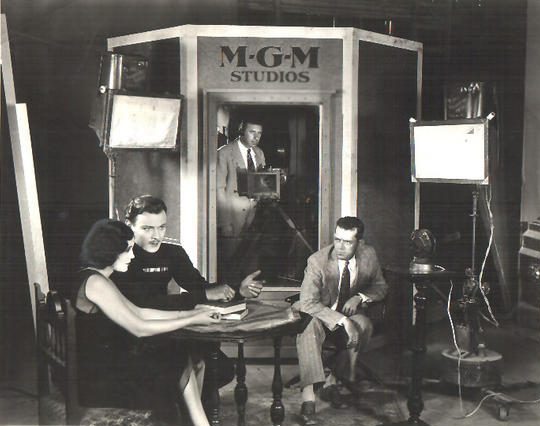
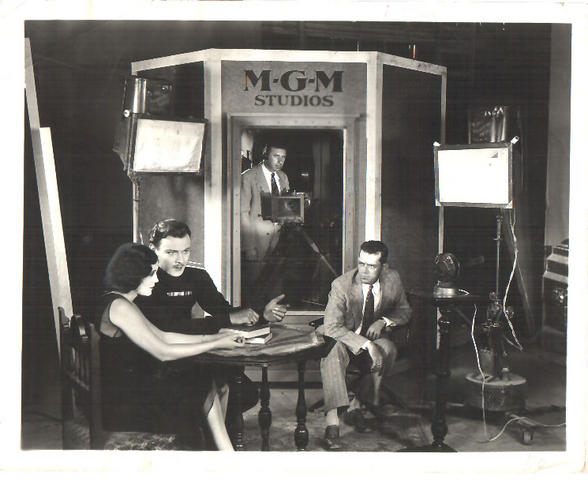
PAY NO ATTENTION TO THE MAN BEHIND THE WINDOW…Noisy cameras were enclosed in soundproof boxes in the early days of the talkies. Above, Woody Van Dyke directs Raquel Torres and Nils Asther in 1930’s The Sea Bat. (nilsasther.blogspot.com)
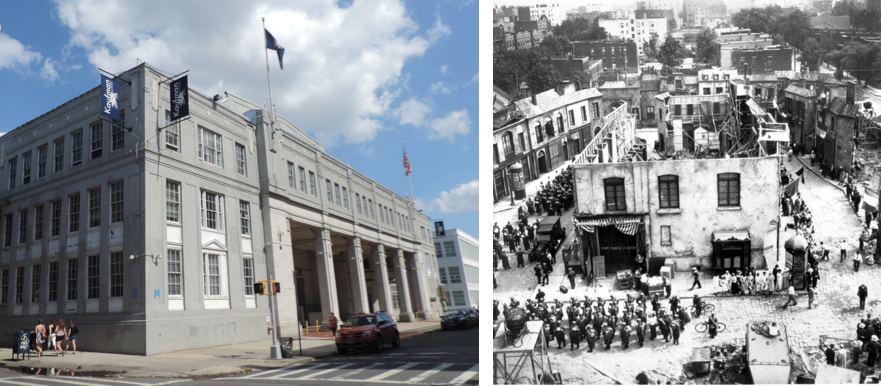
TINSELTOWN IN QUEENS…For his article, Morris Markey visited the set of Follow the Leader at Astoria Studios in Queens. The original studio building, at 35th Avenue, is on the National Register of Historic Places. Although Paramount moved its movie operations to Hollywood in the early 1930s, the studio continued to be used for both film and television productions. At right, a bit of Paris was erected in the midst of Queens for the filming of 1929’s The Gay Lady. (Wikipedia/Kaufman Astoria Studios)
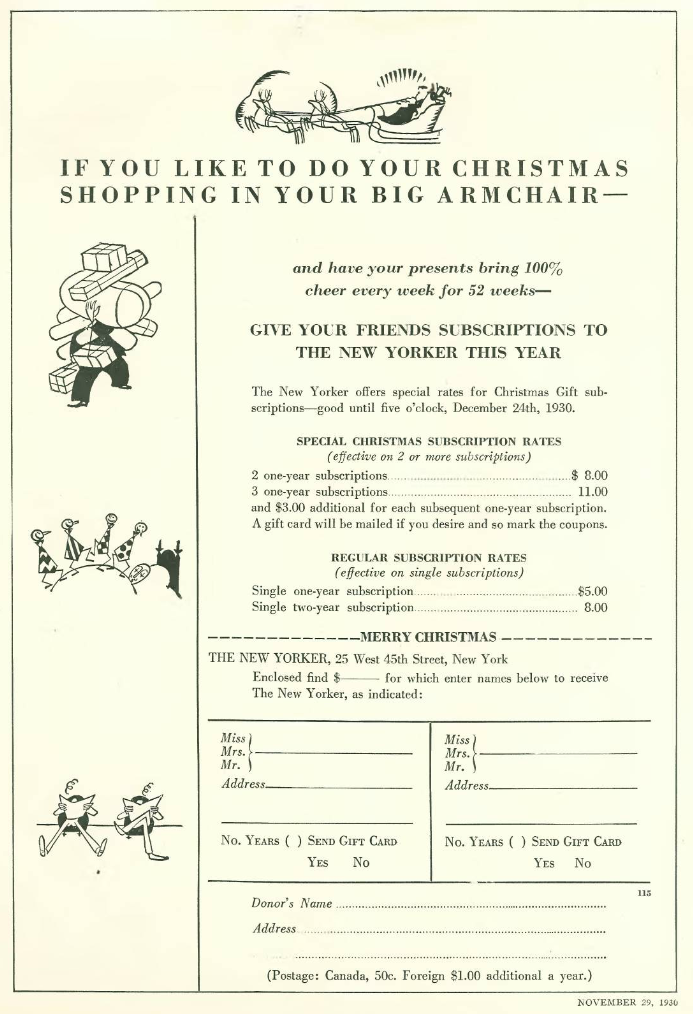
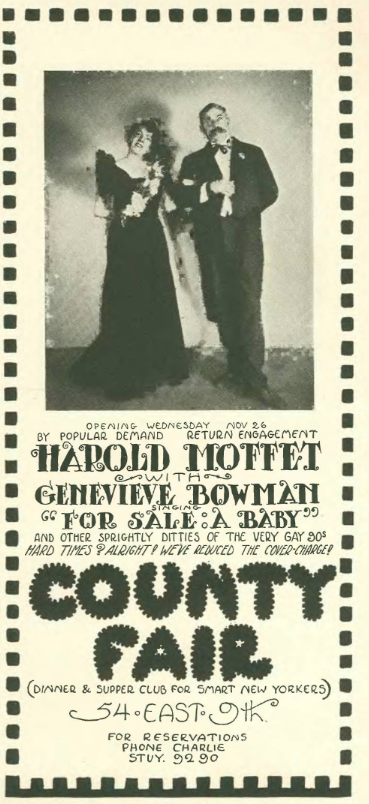
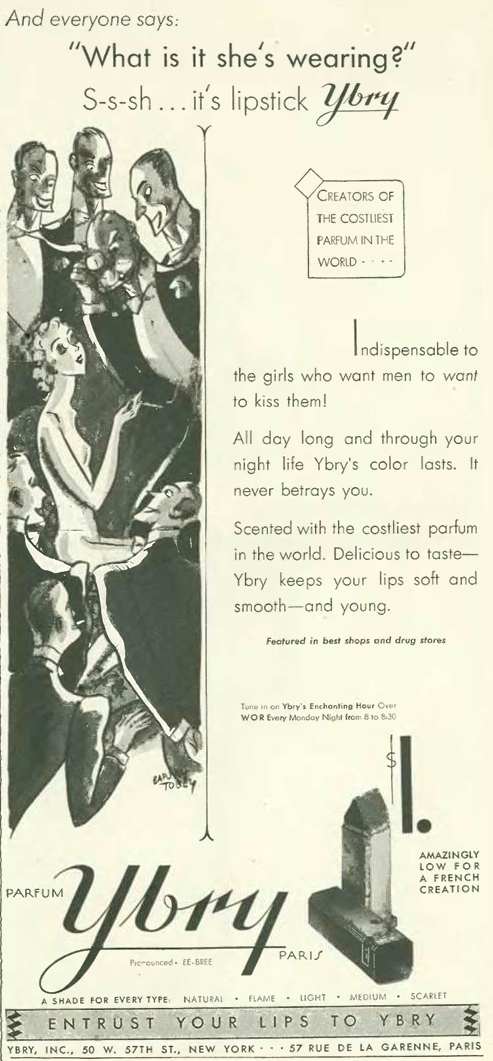
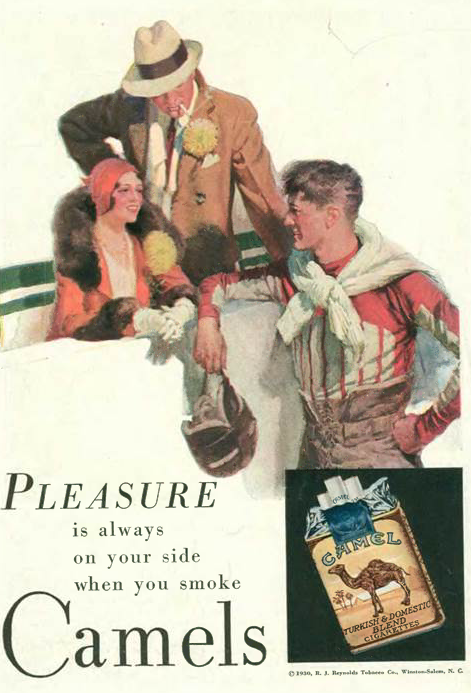
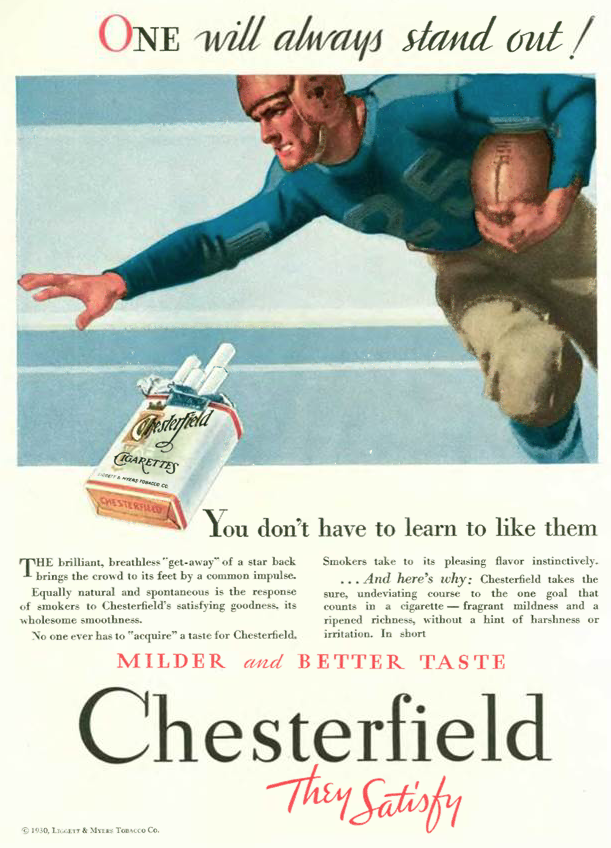
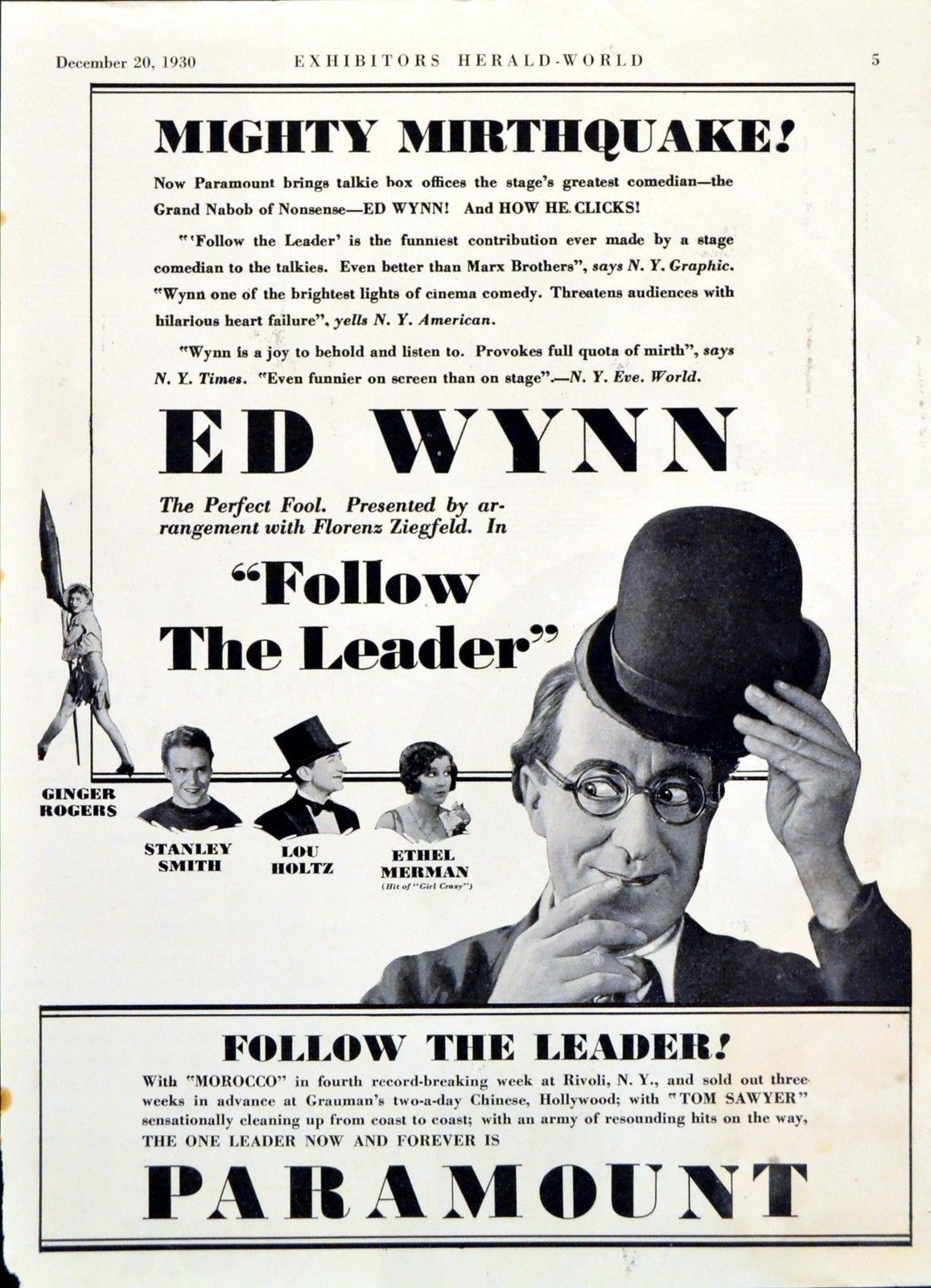
FILM DEBUT…A December 1930 magazine advertisement touting Ed Wynn’s first motion picture. (IMBD)

 *  *  *

False Modesty?

In Morris Markey’s second installment of his profile on Charles Lindbergh, Markey suggested that Lindbergh’s aversion to publicity might be a pose…

NO WI-FI, BUT YOU COULD SMOKE…Top, the posh set take wing with TWA circa 1930; below, passengers prepare to board an American Airways Curtiss Condor II in 1933. (historydaily.org/Sweezey Pictures/Ken Sweezey)

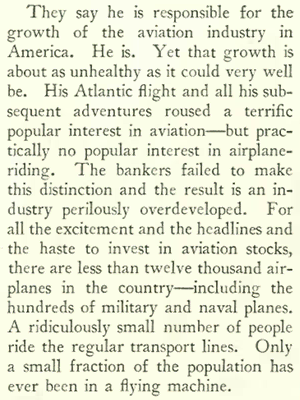
…and also wondered how much credit Lindbergh could take for sparking the aviation industry, given that flying was still an activity reserved for a very few…

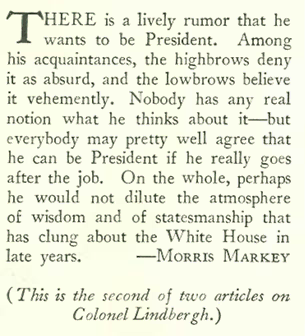
…Markey also noted a “lively rumor” that Lindbergh wanted to be President…

…fortunately Lindbergh did not give truth to the rumor, or fulfill the alternate history created by Philip Roth in his 2004 novel The Plot Against America

HANGIN’ WITH A BAD CROWD…Top, Charles Lindbergh accepts a ceremonial sword from Hermann Göring during a 1936 visit to Nazi Germany; below, right, Lindbergh in Germany, 1937. Philip Roth’s novel imagined Lindbergh’s election to the Presidency in 1940 and its chilling results. (Reddit/The New Yorker/Goodreads)

 *  *  *

Bad Moon Rising

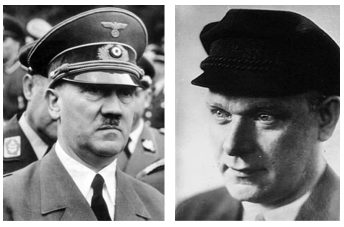
In 1930 few, if anyone, were aware of Lindbergh’s proclivities toward nationalism and antisemitism. And lacking a crystal ball, Markey’s New Yorker colleague, Howard Brubaker, had little reason to be alarmed by the federal elections in Germany, which gave the Nazis the second largest number of seats in the Reichstag. In his “Of All Things” column, Brubaker quipped:

INCOMPATIBLE…As Howard Brubaker noted in “Of All Things,” the fascists led by Adolf Hitler, left, and the communists led by Ernst Thälmann (right) made big gains in the 1930 German elections. After gaining power in 1933, Hitler would arrest Thälmann and later have him shot. (Wikipedia)

*  *  *

Gummed to Death

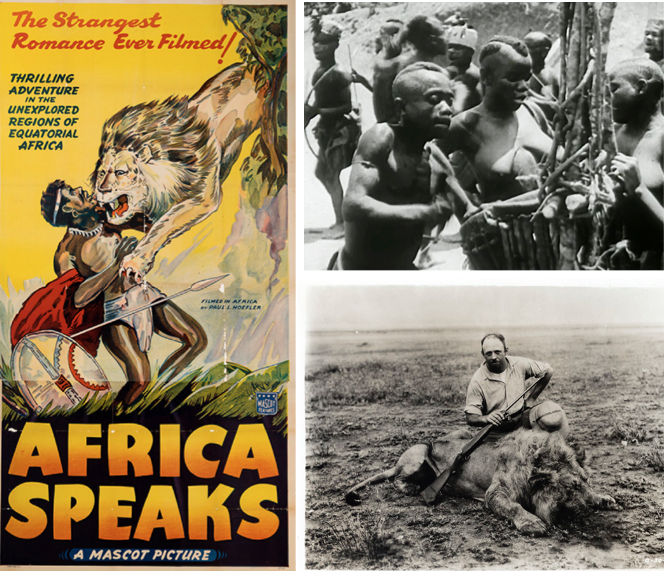
The New Yorker’s John Mosher took in the latest travelogue to exploit and misrepresent life on the African savannah. Africa Speaks included a scene depicting a fatal attack on a “native boy” by a lion —  an attack that was actually staged at a Los Angeles zoo and involved a toothless lion…

STRANGE INDEED…At left, movie poster for Africa Speaks; top right, Pygmy drummers in the film; bottom right, explorer Paul Hoefler getting closer to nature. (IMDB/Wikimedia)

*  *  *

From Our Advertisers

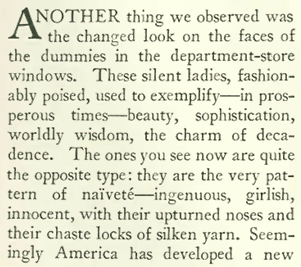
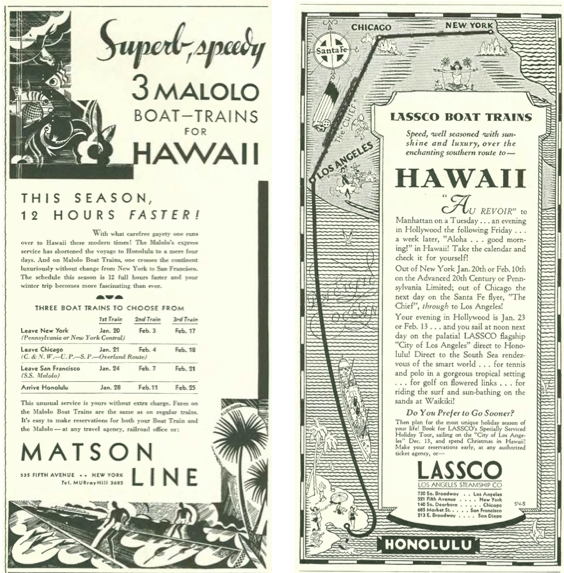
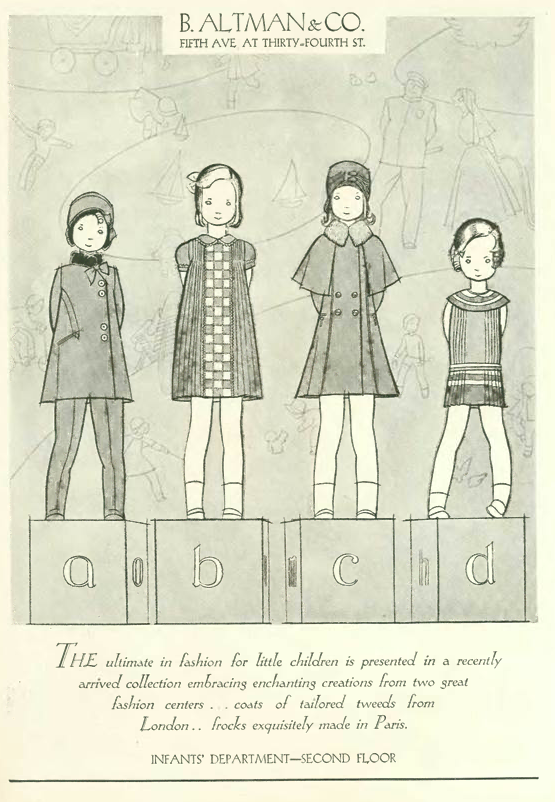
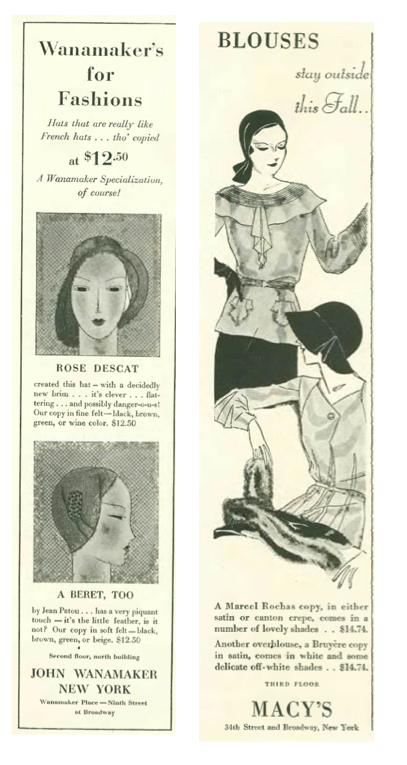
When Paris unveiled is spring and fall fashions, large department stores were always quick to respond with “copies”…

…while the higher end boutiques offered originals to “poor little rich girls”…

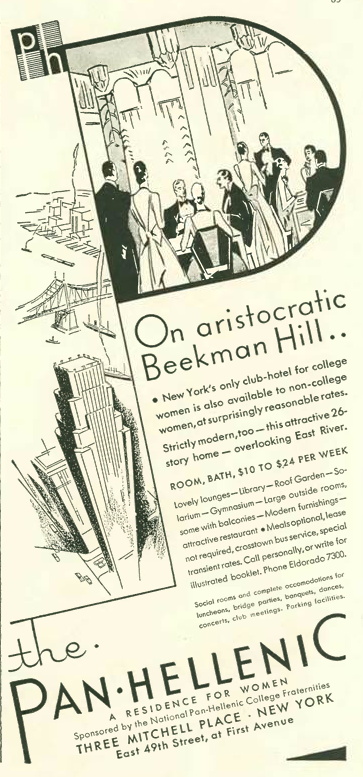
…perhaps some of these “poor little rich girls” socialized at the Panhellenic, a “club-hotel for college women”…

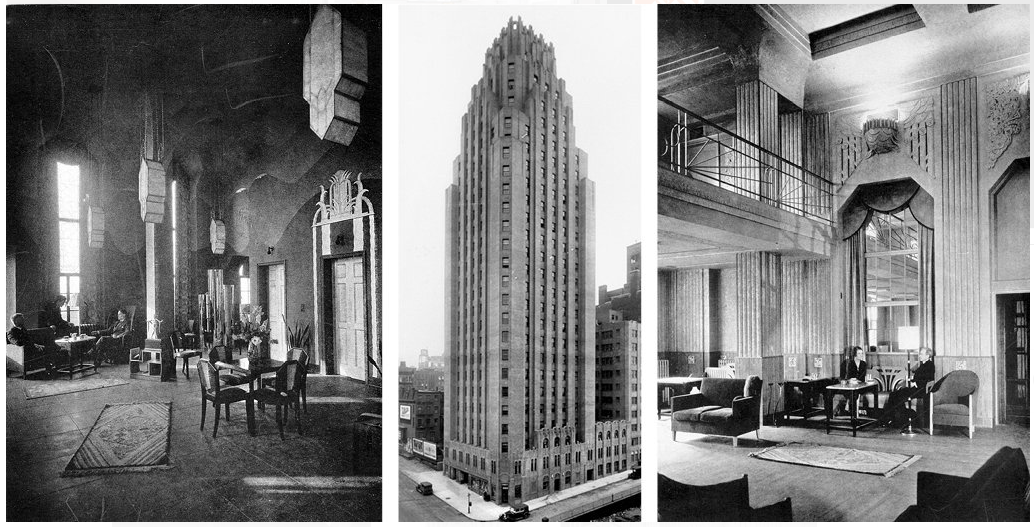
…and here are some views of the Panhellenic House, circa 1929…

Center, The Panhellenic House, at First Avenue and 49th Street; at left, the solarium; at right, a ballroom. (Avery Library/Museum of The City of New York)

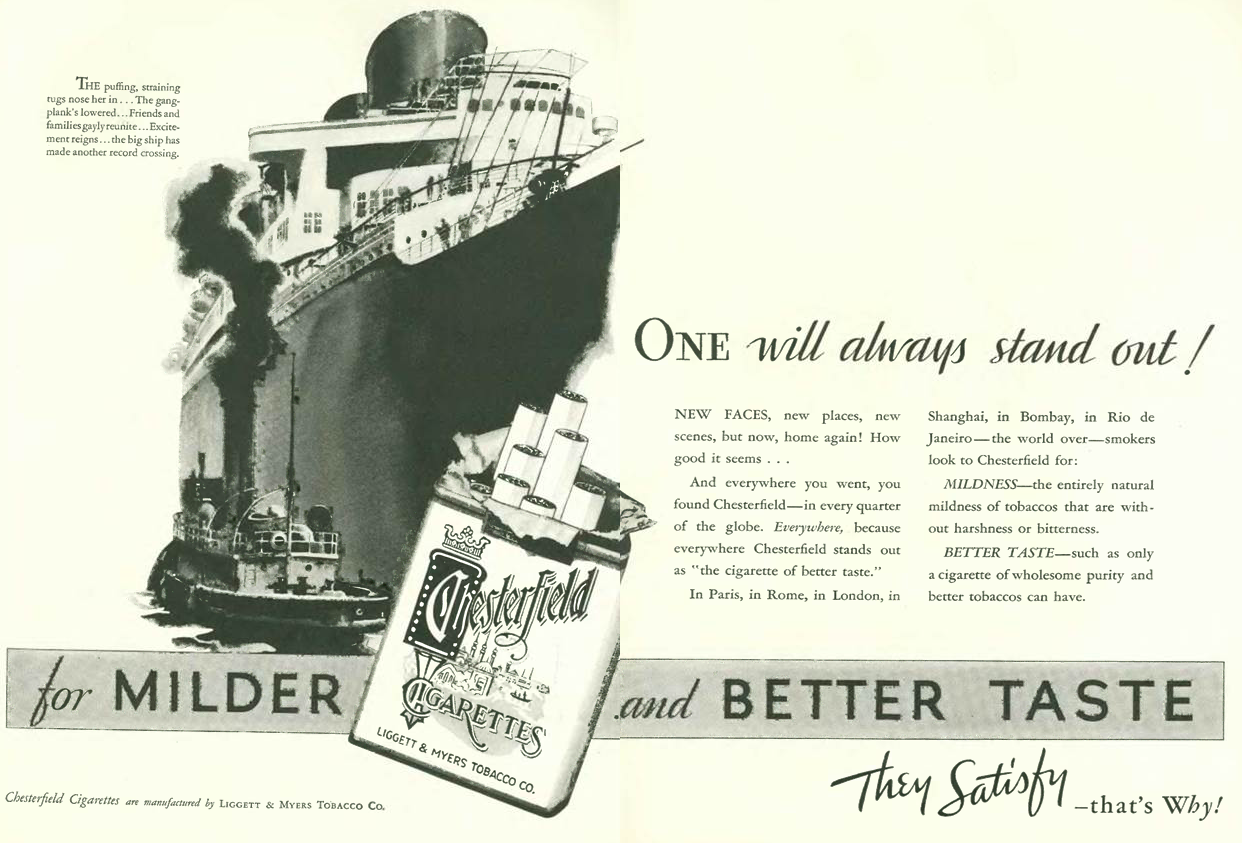
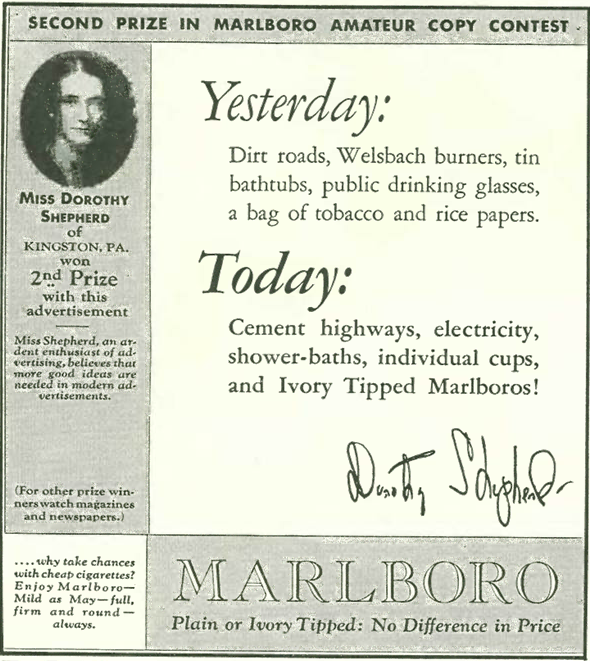
…the makers of Old Gold cigarettes had some of the weirdest ads to push their smokes, including this one…

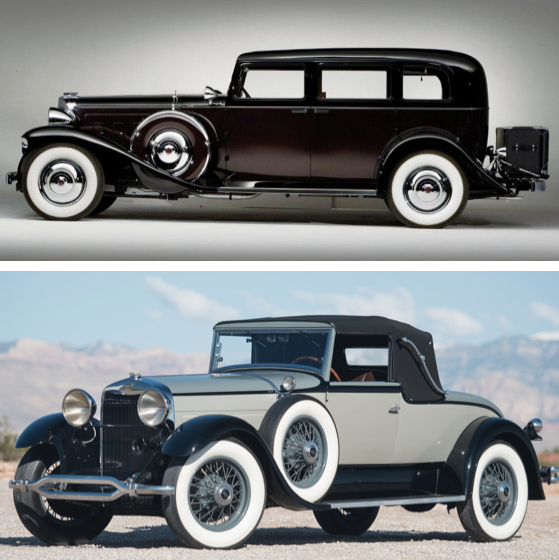
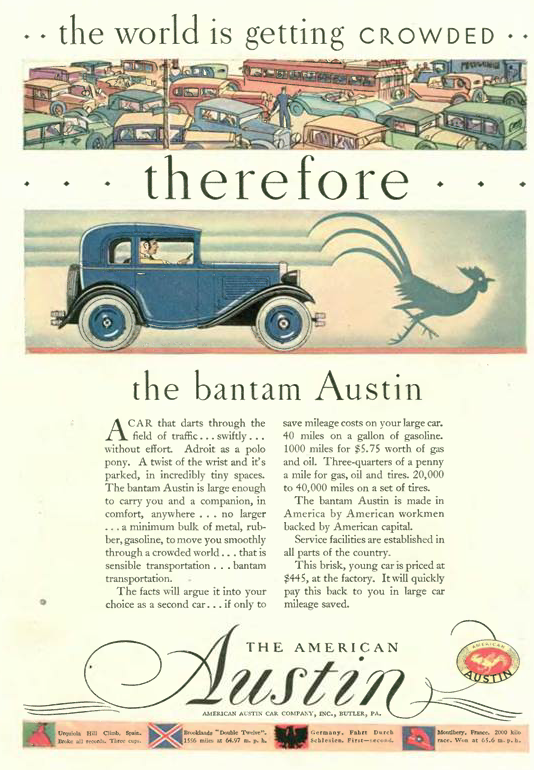
…and one wonders what the world would be like (and especially the U.S.) if car buyers would have favored a more compact version of the motorcar going forward…

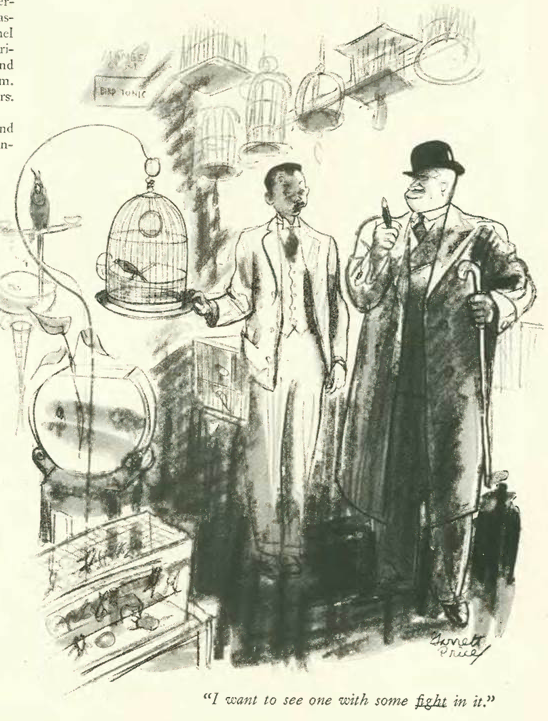
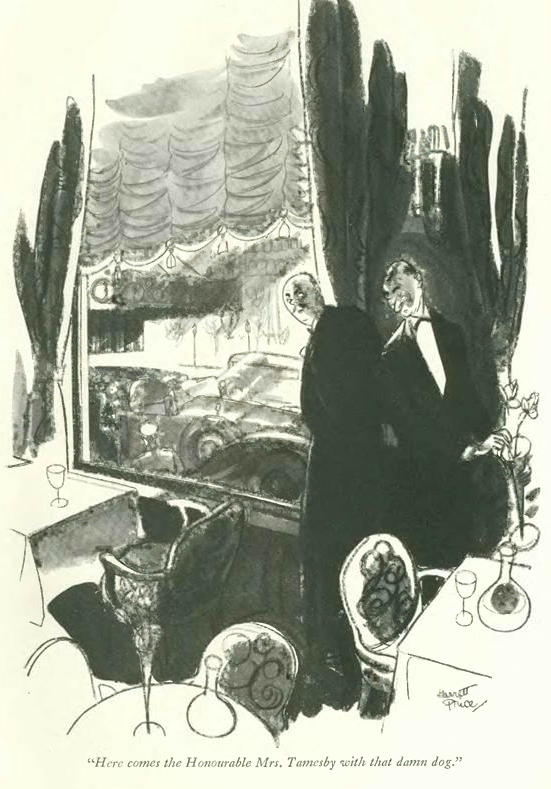
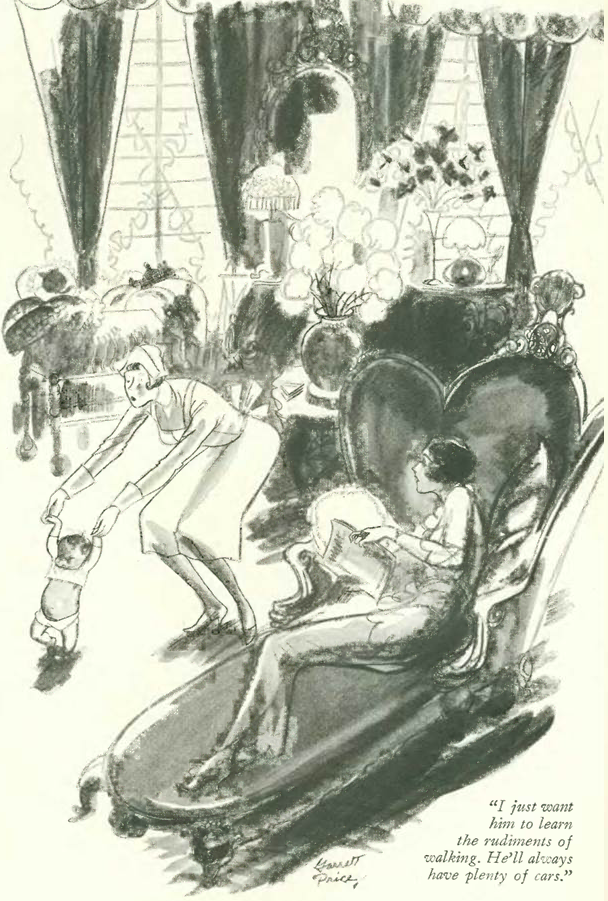
…on to our cartoons…we begin with parenting tips from the posh set, courtesy Garrett Price

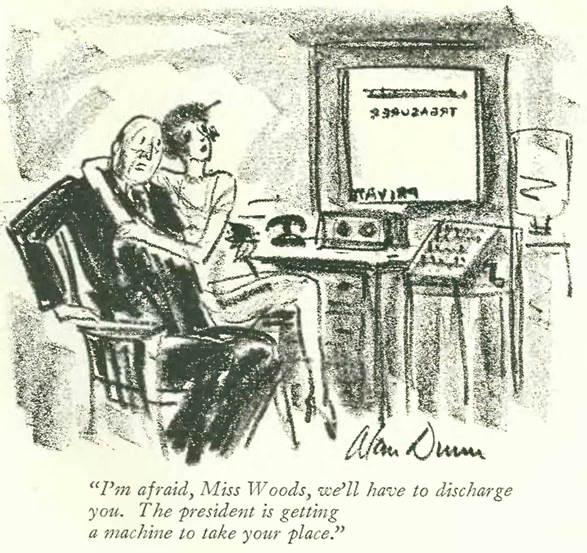
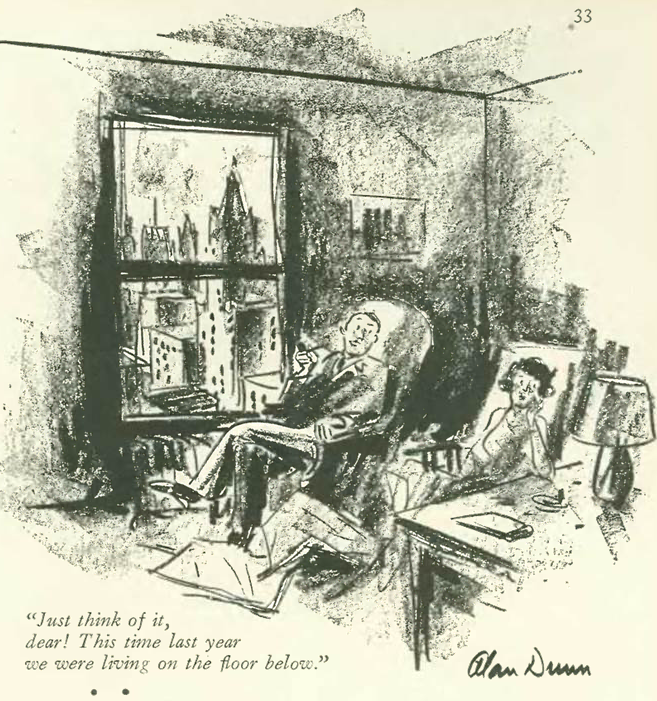
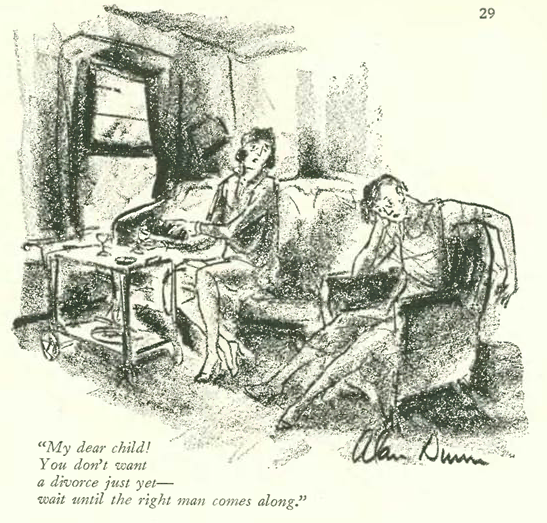
Alan Dunn explored modern matrimony…

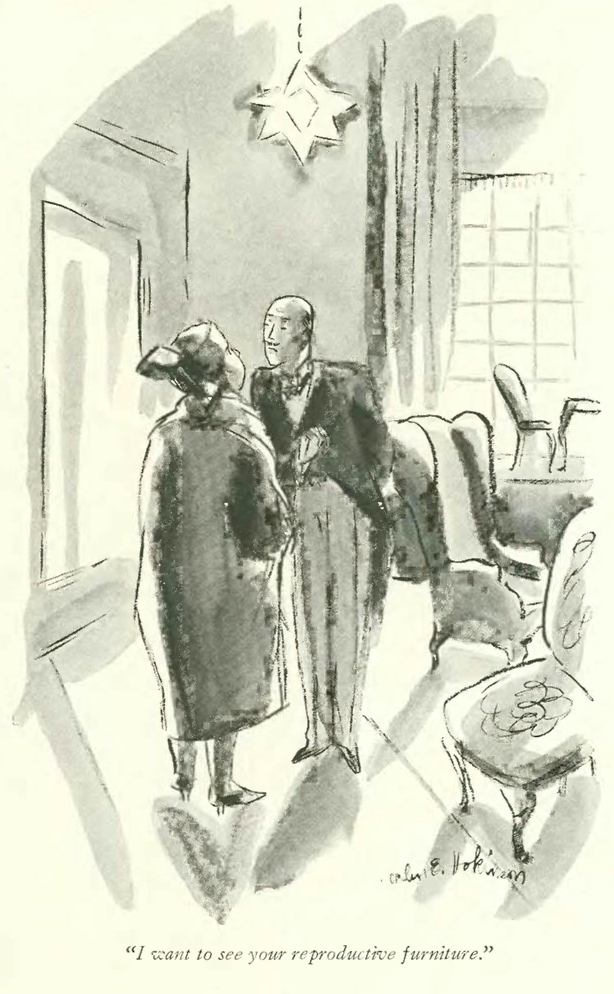
…one of Helen Hokinson’s ladies demonstrated a unique taste in furniture…

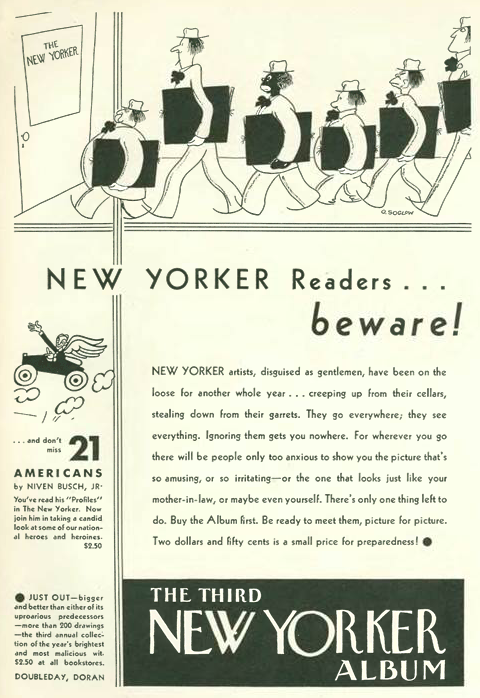
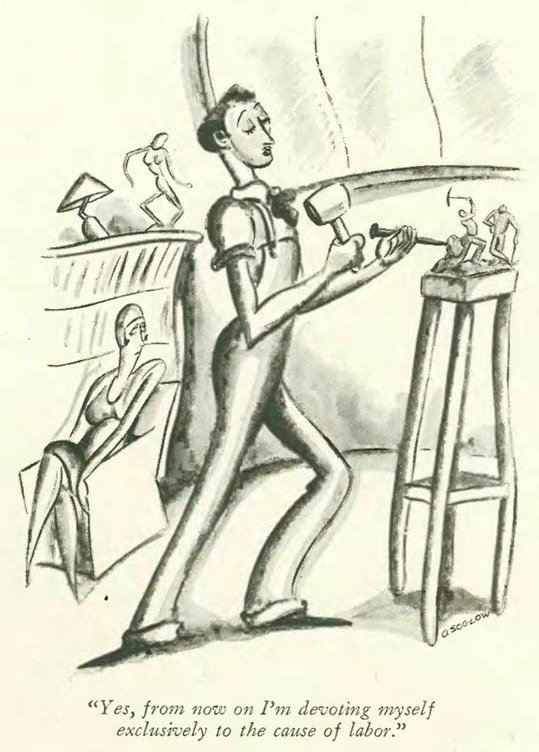
Otto Soglow continued to explore humor in a wavy fashion…

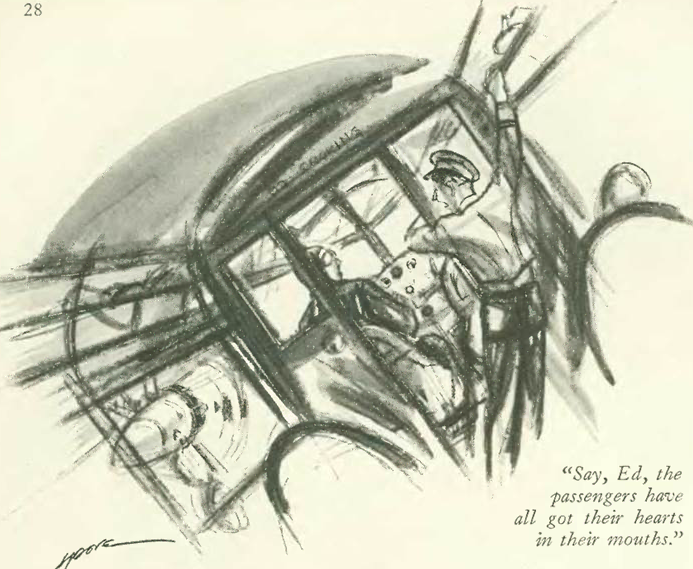
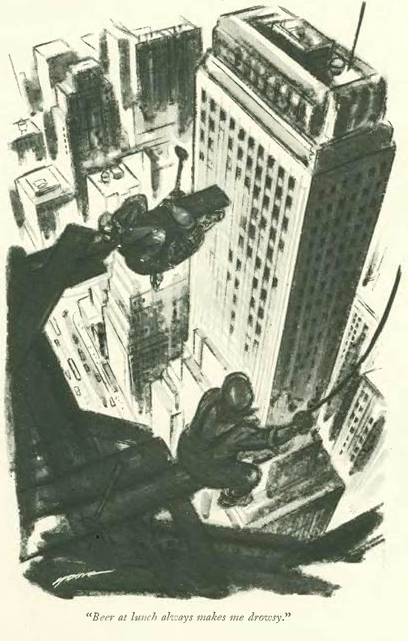
…and we close with this vertiginous view provided by Leonard Dove

Caption: “Beer at lunch always makes me drowsy.”

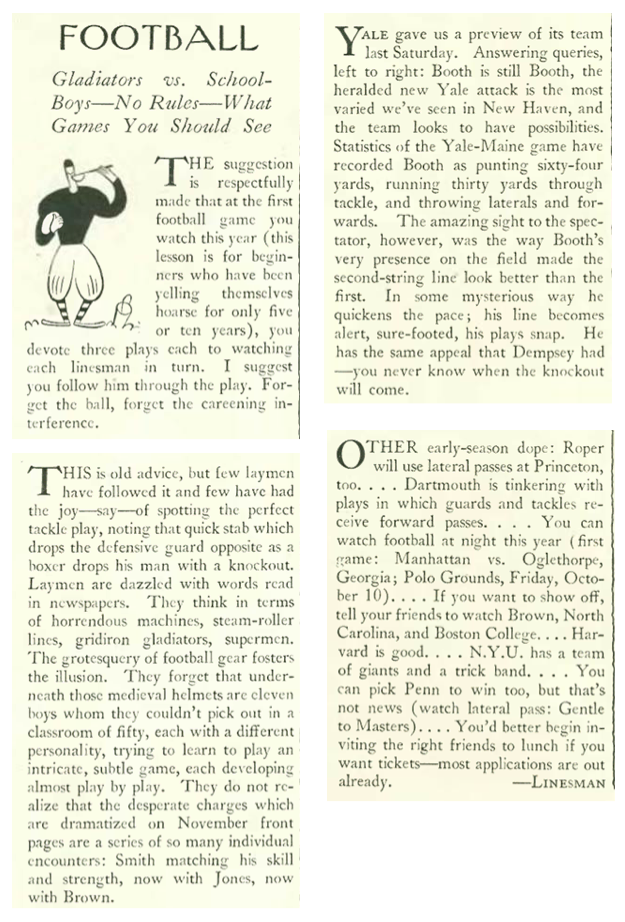
Next Time: Leatherheads…


The Flying Misanthrope

When Charles Lindbergh returned to New York after his solo, history-making transatlantic flight, he was mobbed by thousands of fans and adored by many millions more. The feeling was not mutual.

Sept. 20, 1930 cover by Theodore Haupt.

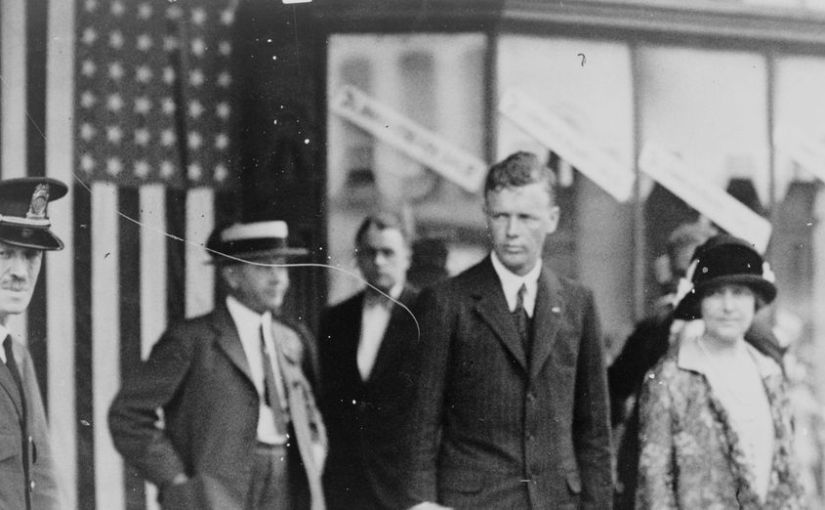
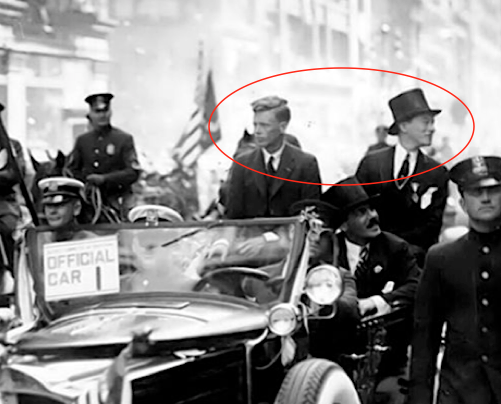
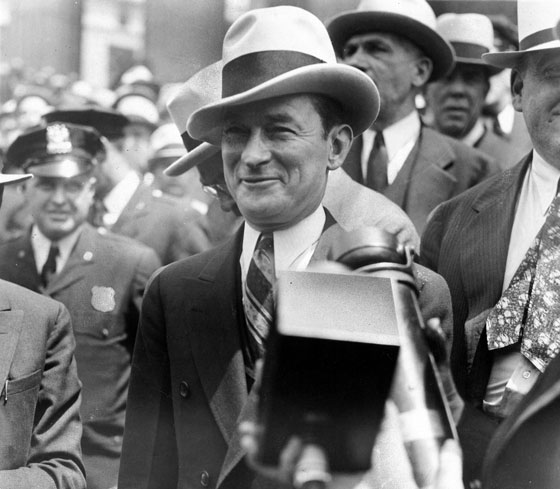
This image from his June 13, 1927 ticker-tape parade says it all, a disinterested, almost hostile-looking Lindbergh contrasted with that crowd-loving dandy, Mayor Jimmy Walker:

Detail of larger photograph. (Associated Press)

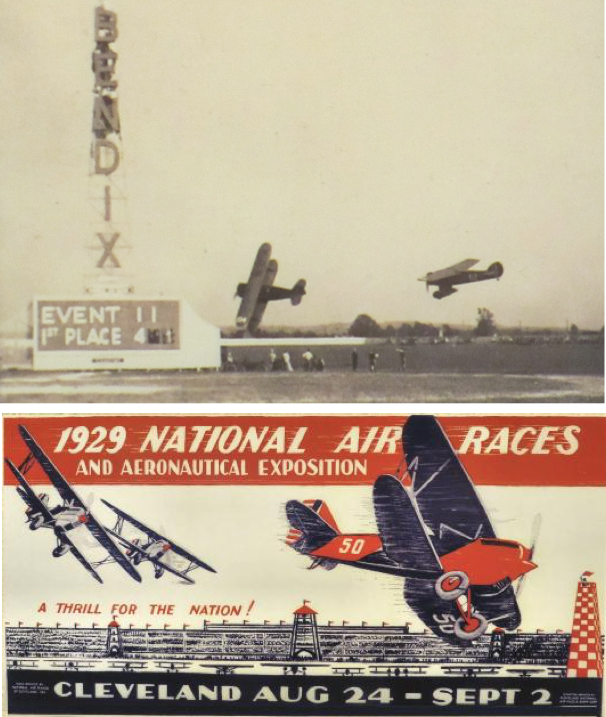
Morris Markey checked in on the famed flyboy three years later in a two-part profile for the New Yorker. Markey observed how Lindbergh had become “sucker-sour,” a phrase that described how someone could suddenly go wild “at the ceaseless procession of staring faces.” I encourage you to read the excerpt below about Lindbergh’s appearance at the 1929 Cleveland Air Races, where in a fit of temper he nearly forced a passenger plane to lose control and crash:

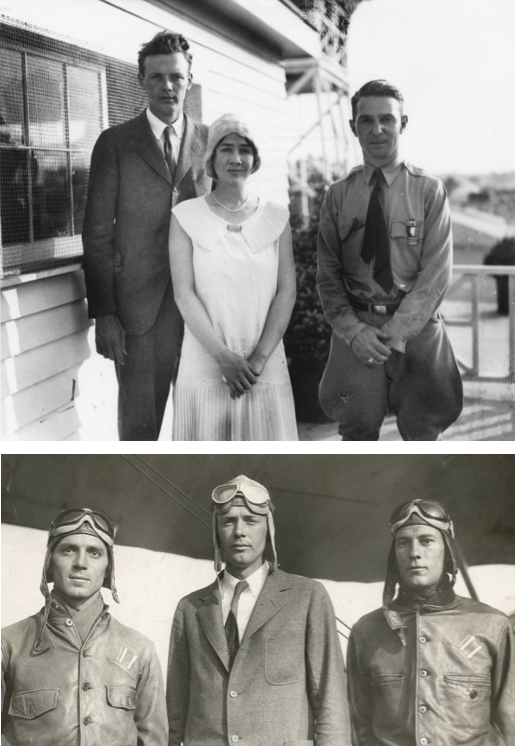
SAY CHEESE…Top photo, Charles and Anne Lindbergh pose with Cliff Henderson at the 1929 Cleveland National Air Races. Henderson was the managing director of the National Air Races and was often described as “the Barnum of aviation.” Below, Lindbergh flanked by Navy flyers Frederick Kivette and Frank O’Beirne at the 1929 air races. (Smithsonian)

Because he was a national hero of nearly saint-like dimensions, newspaper reporters did not dare to report on his antics at the Cleveland Air Races (so far, The New Yorker account is the only one I can find of the incident). Needless to say, he was not popular among members of the fourth estate:

WHAT COULD POSSIBLY GO WRONG?…Fliers raced around a closed course near a crowded grandstand at the 1929 National Air Races in Cleveland. (Western Reserve Historical Society)

 *  *  *

Innocents Abroad

It was a nice surprise to find Lois Long once again writing under her pen name “Lipstick” in this casual piece (excerpted below) on Parisian life. I was also surprised to find the term “Amurrican” in the headline — I always thought it was a more recent derivation of redneck-speak…

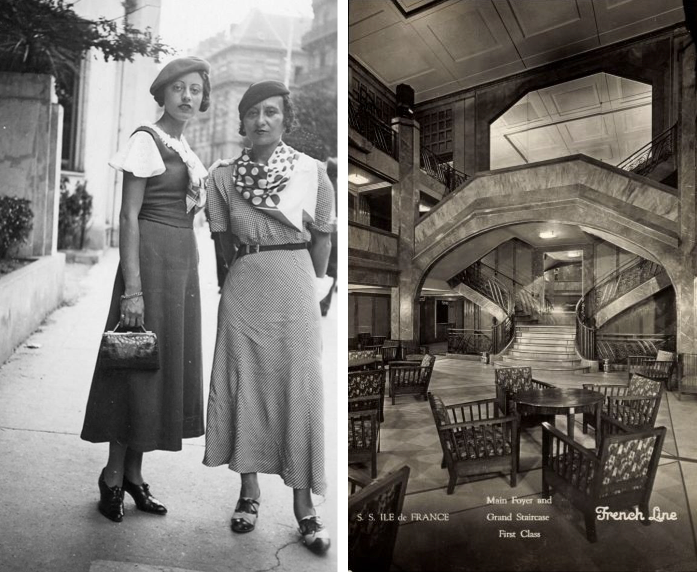
OVER THERE…Left, a fashionable pair on the streets of Paris circa 1930; right, main staircase and grand foyer of the Ile de France. (Pinterest/akpool.co.uk)

 *  *  *

Imbiber in Chief

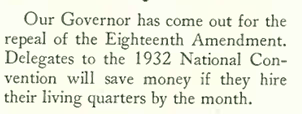
No doubt many a New Yorker enjoyed this bit of news from Howard Brubaker (in his column, “Of All Things”) regarding New York Governor Franklin D. Roosevelt, who later as president would preside over the end of Prohibition.

LEADING BY EXAMPLE…FDR and a gin martini. (Time/Life)

 *  *  *

From Our Advertisers 

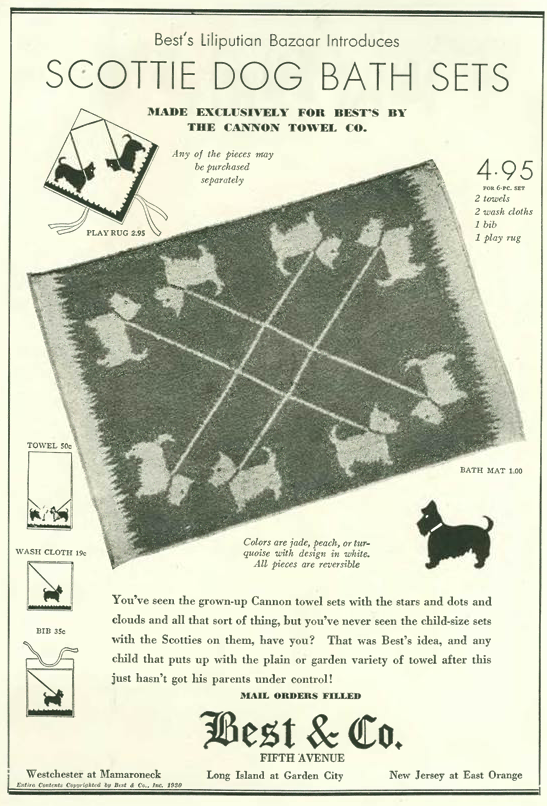
The Scottish Terrier was one of the most popular dog breeds in 1930s America (in addition to martinis, FDR was also fond of Scotties, including his loyal companion Fala), and you could show your love for the breed with bath sets from Best & Company…

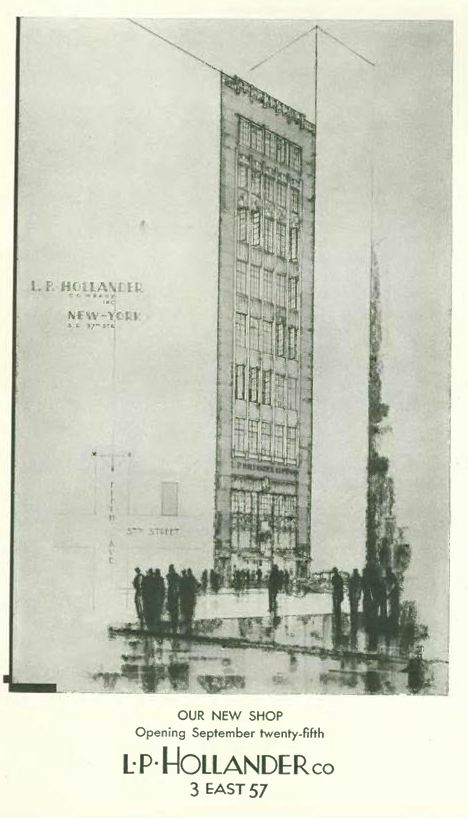
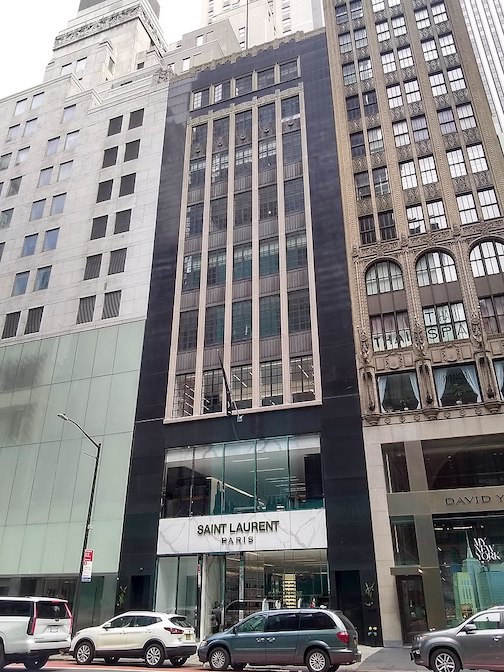
…the handsome L.P. Hollander Company Building (designed by William Lamb) at 3 East 57th began life in 1930 as a women’s fashion boutique…

…and today it serves as the Fifth Avenue home to Yves Saint Laurent…

(Wikipedia)


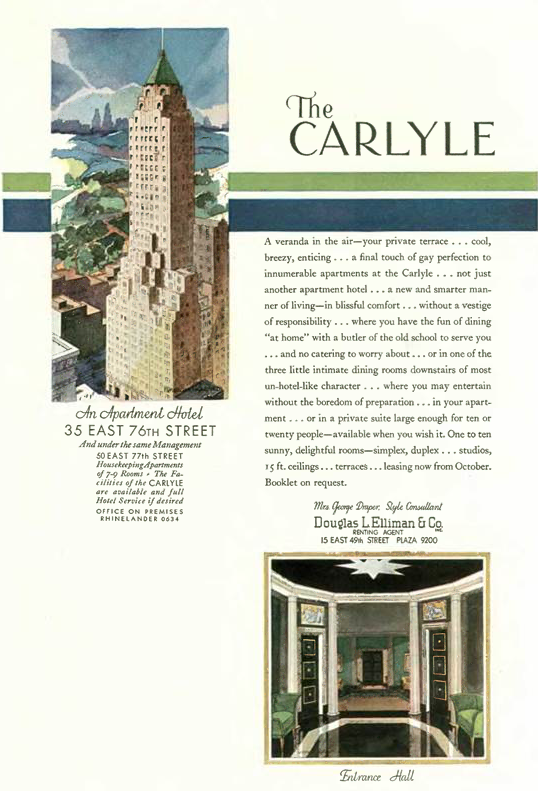
…another exclusive New York destination, the Carlyle, opened as a luxury residential hotel in 1930, only to go into receivership in 1931 thanks to the deepening Depression. In the postwar years it would rise to prominence and become a favorite haunt of the Kennedy family. The Carlyle is also home to the Bemelmans Bar, which is decorated with murals painted by Ludwig Bemelmans depicting his storybook character, Madeline, in Central Park…

…the Carlyle’s cozy Bemelmans Bar…

(TripAdvisor)

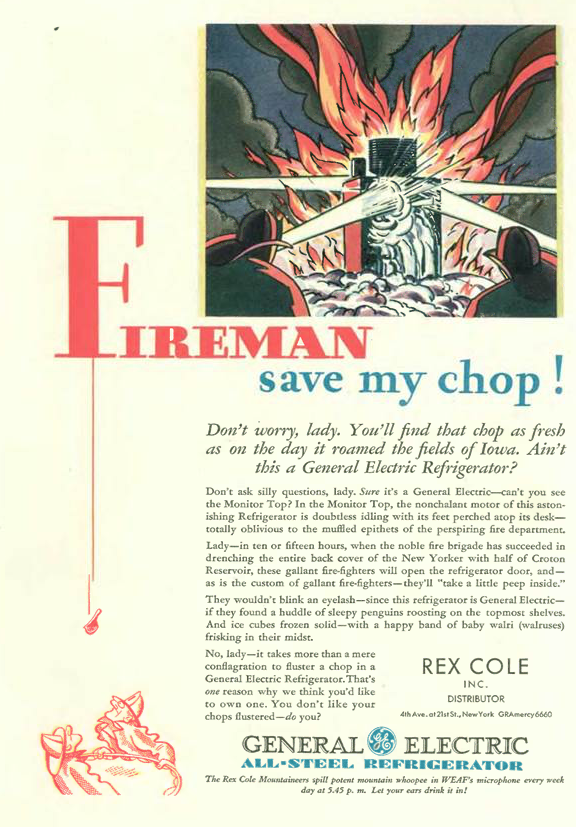
…this next one goes in my terrible ads file…did the makers of this GE refrigerator really want to depict it bursting into flames?…

…it is 1930, and we are at the dawn of the age of plastics, and in this case “Beetleware” tumblers made from an early type of plastic formed from a urea formaldehyde powder developed in England and licensed to American Cyanamid …so bottom’s up!…

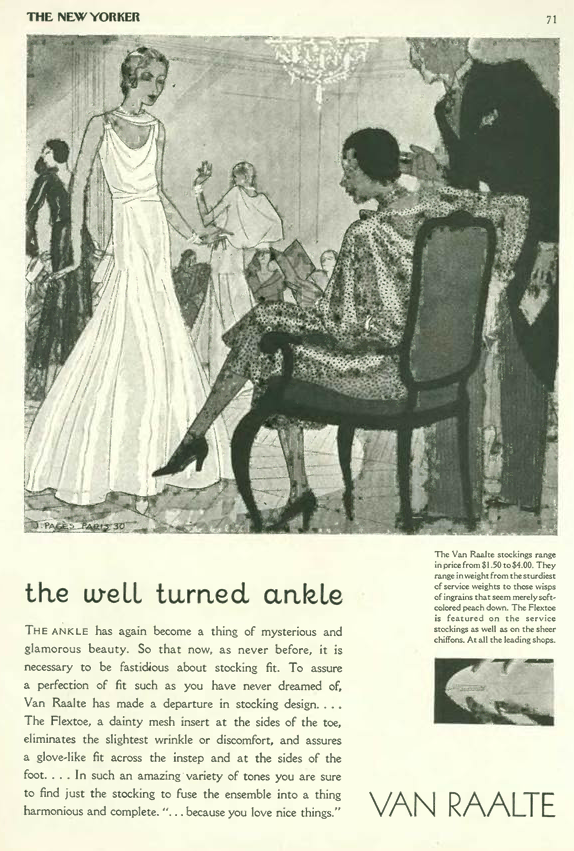
…the makers of Van Raalte stockings hoped to revive the sex appeal of the ankle…

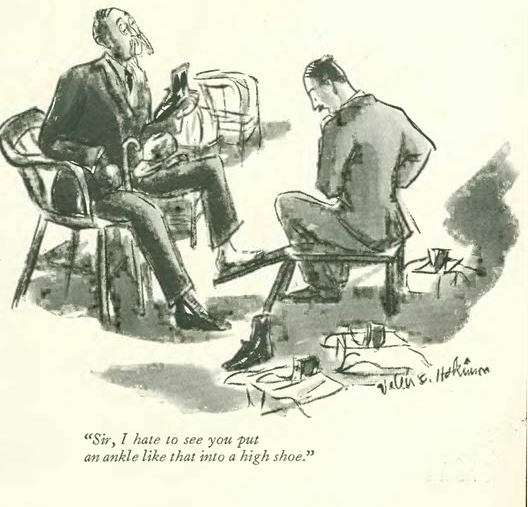
…which provides a good segue to our cartoons, this one by Helen Hokinson, which was actually featured on the page opposite the stocking ad…

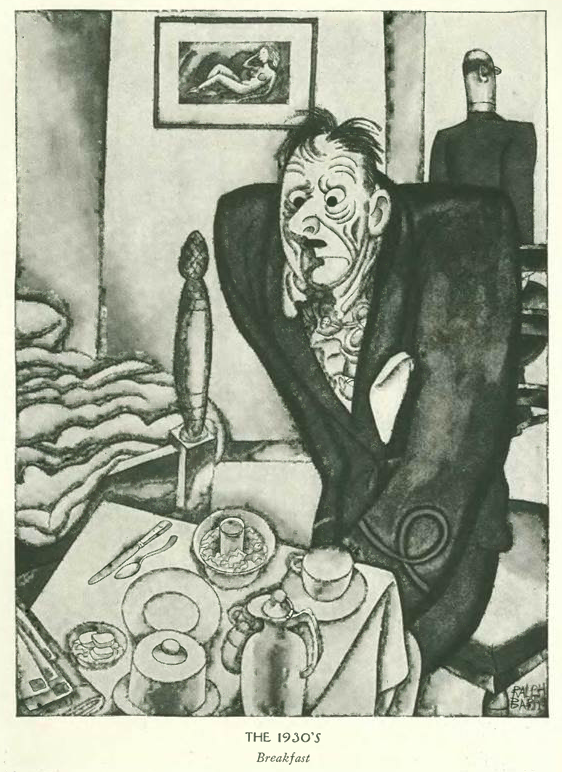
Ralph Barton continued his series on the 1930’s…

Alan Dunn took his work to new heights…

Gardner Rea had fun with the garden club set (English-American S. Parkes Cadman was a pioneer Christian radio broadcaster in the 1920s and 30s)…

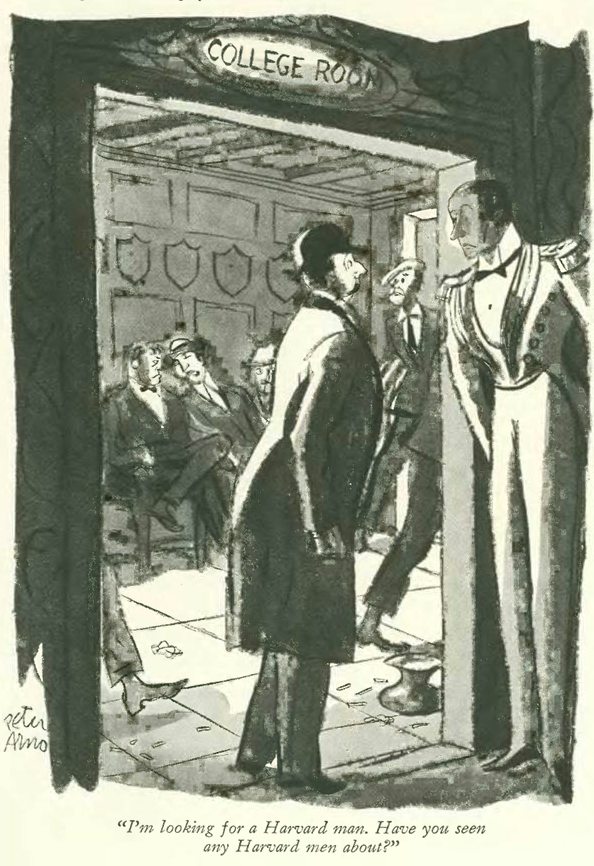
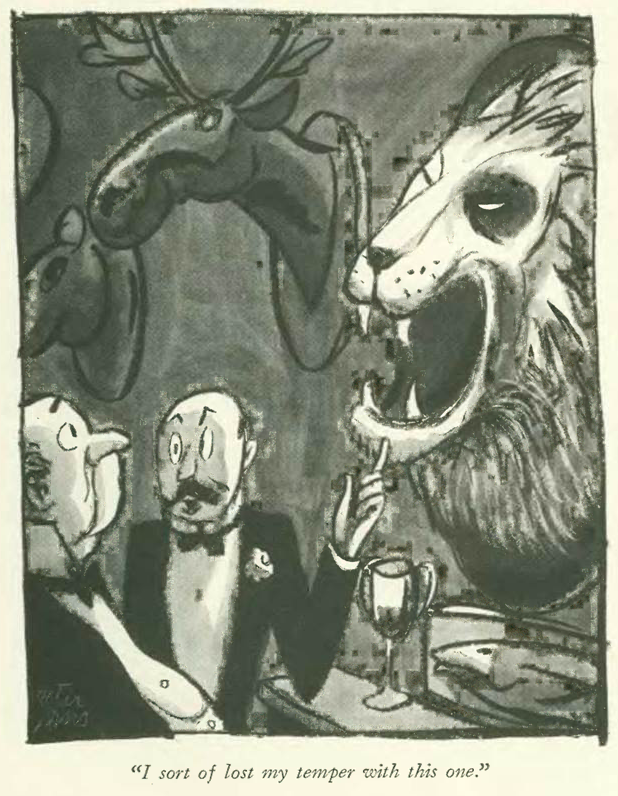
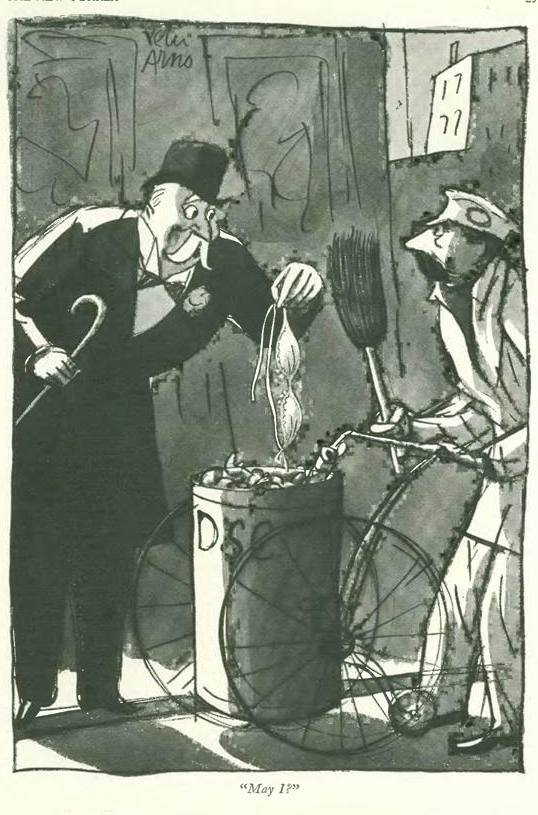
…while Peter Arno illustrated this cultural exchange on the streets of New York…

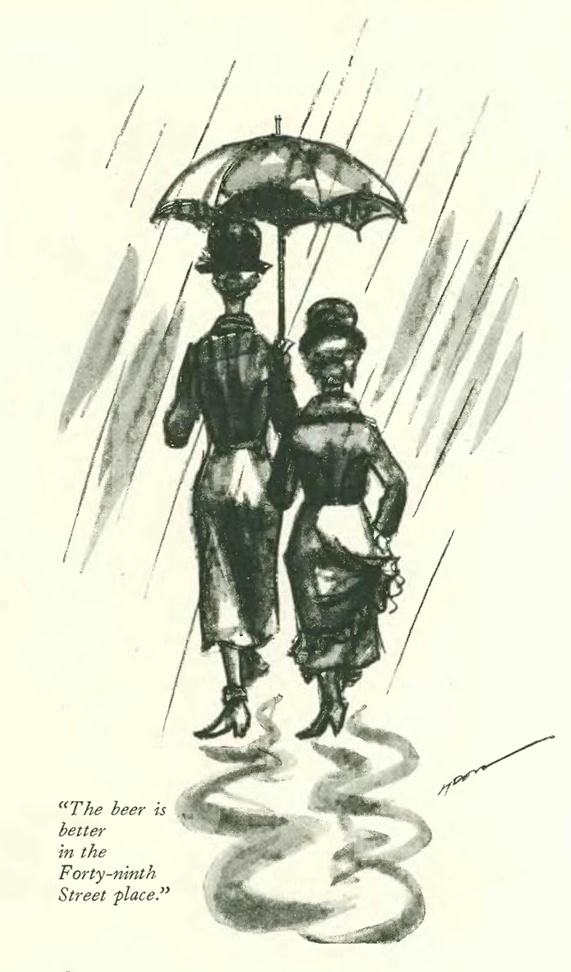
…and we end with Leonard Dove, and a walk in the rain…

Next Time: Lights, Camera, Action…


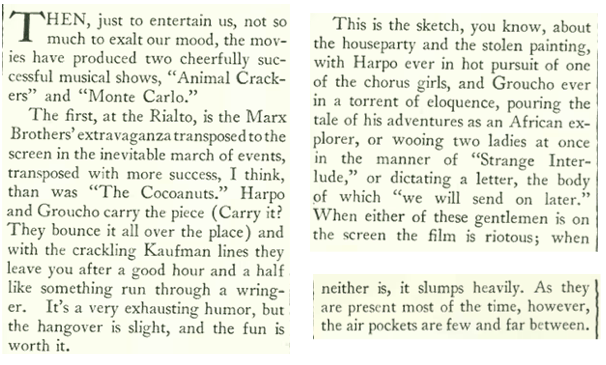
Animal Crackers

Above image: Groucho Marx, Margaret Dumont, and Lillian Roth in the Marx Brothers second film, Animal Crackers, 1930 (IMDB)

The Marx Brothers were famous for a string of hit films in the 1930s, but some of the comedy on which those films were based went all the way back to the days of vaudeville and 1920s Broadway.

Sept. 6, 1930 cover by Peter Arno.

Animal Crackers was their second film (the first was 1929’s The Cocoanuts), and the last to be adapted from one of their stage shows. It was also the last Marx Brothers movie to be filmed at Paramount’s Astoria Studio in Queens before the brothers headed for Hollywood.

MUSICAL CIRCUS…Animal Crackers began as a Broadway stage production in 1928 before moving to film in 1930; from left to right: Groucho, Harpo, Chico and Zeppo in a publicity photo for the stage version of Animal Crackers. (www.georgeskaufman.com)

The New Yorker’s John Mosher reviewed the film version, which was playing at the Rialto Theatre:

SO LONG, NEW YORK…Animal Crackers was the second and final Marx Brothers movie to be filmed at Astoria Studios in Queens; from left, Chico, Zeppo, Groucho and Harpo Marx pose for a 1930 publicity photo. (IMDB)

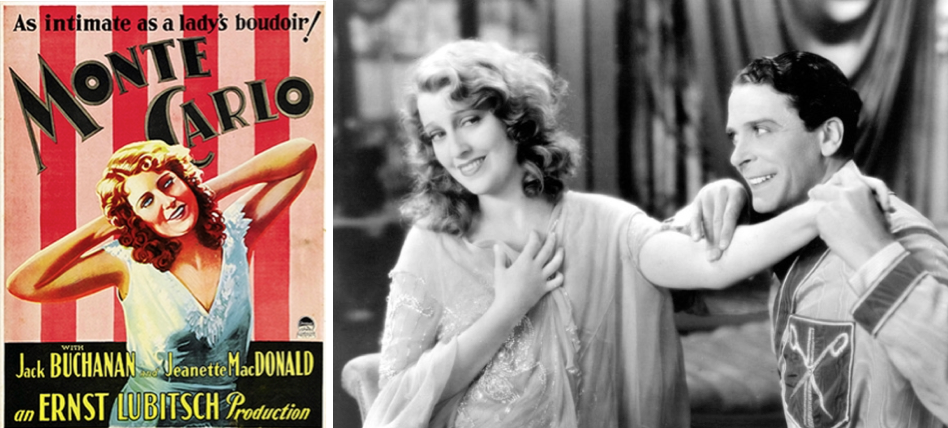
Always partial to European directors, Mosher found Ernst Lubitsch’s Monte Carlo among the better films playing in the late summer.

OH YOU CAD!…Jeanette MacDonald and Jack Buchanan in Monte Carlo. (IMDB)

 *  *  *

Fox in the Hen House

“The Talk of the Town” made light of Mayor Jimmy Walker’s plan to “rid the city of graft.” Ironically, Jimmy himself would be drummed out of office two years later for accepting bribes…

WHAT ME WORRY? Yes maybe. Mayor Jimmy Walker in 1930. (nymag.com)

 *  *  *

From Our Advertisers

We have another lovely illustration from Carl “Eric” Erickson promoting the joys of smoking unfiltered cigarettes…

…these small ads for apartments in the back pages of the magazine promoted the bucolic vistas in Westchester…

Images of Fleetwood Hills from The American Architect, June 1926.

…and European-style living on East 44th Street…

The Beaux-Arts Apartments (which still stand) consisted of buildings on both sides of E. 44th Street. (Museum of the City of New York)

…as for cartoons, Peter Arno continued this running gag…

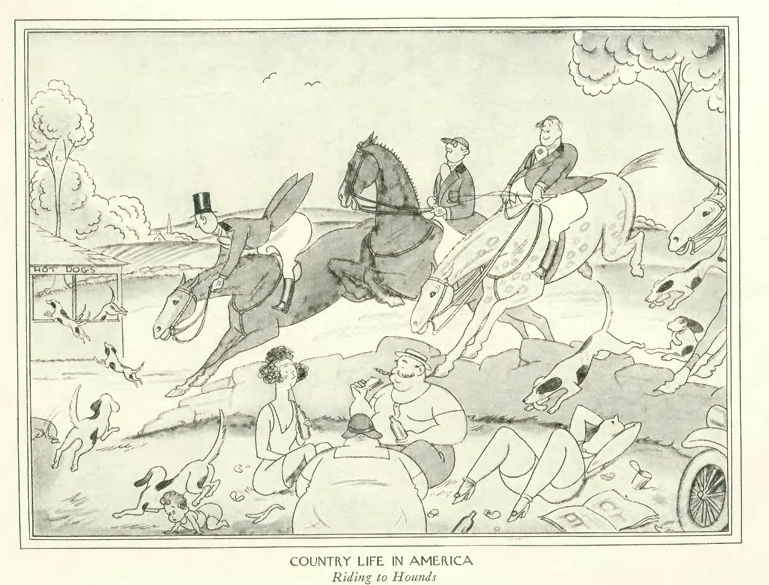
…as did Rea Irvin in another tableaux (originally running sideways, full page) featuring the clash of country bumpkins and city elites…

Garrett Price looked in on the burdens of the wealthy…

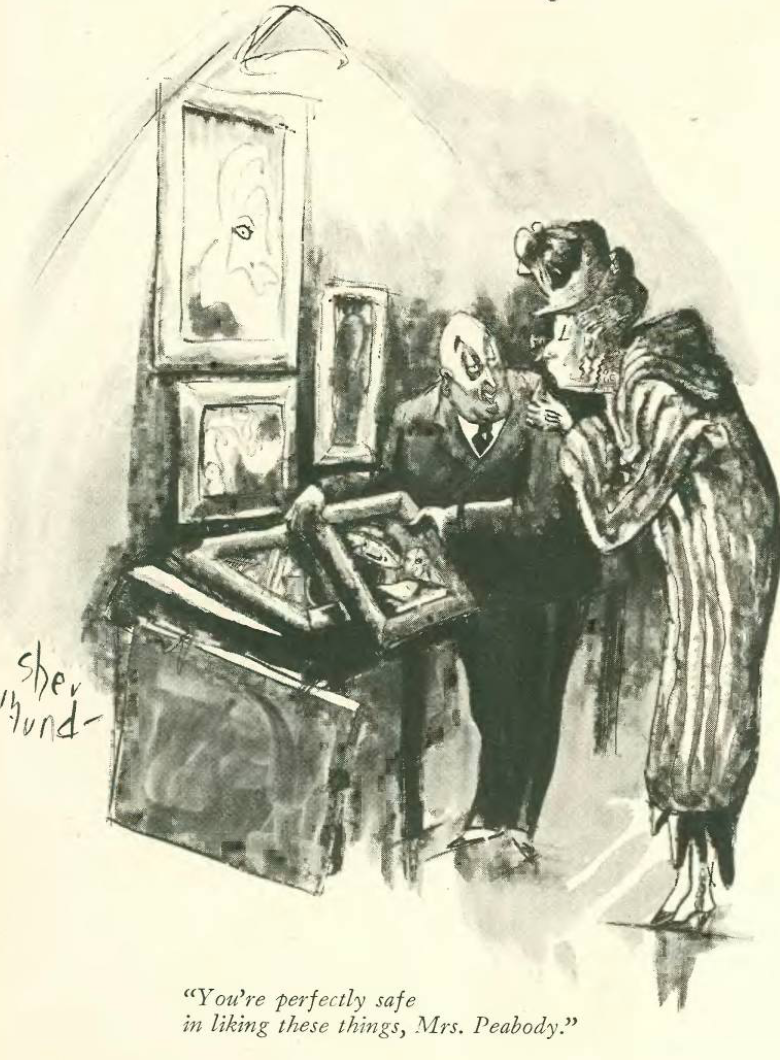
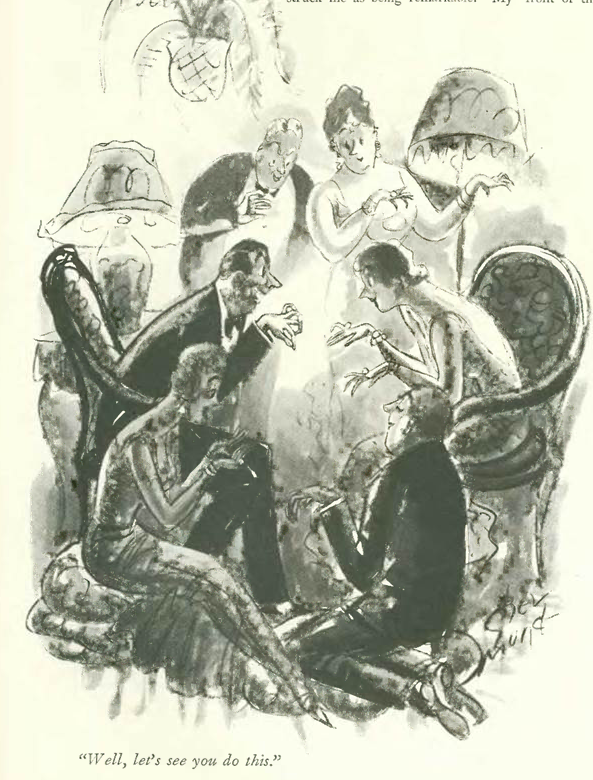
…and Barbara Shermund caught some small talk at a cafe…

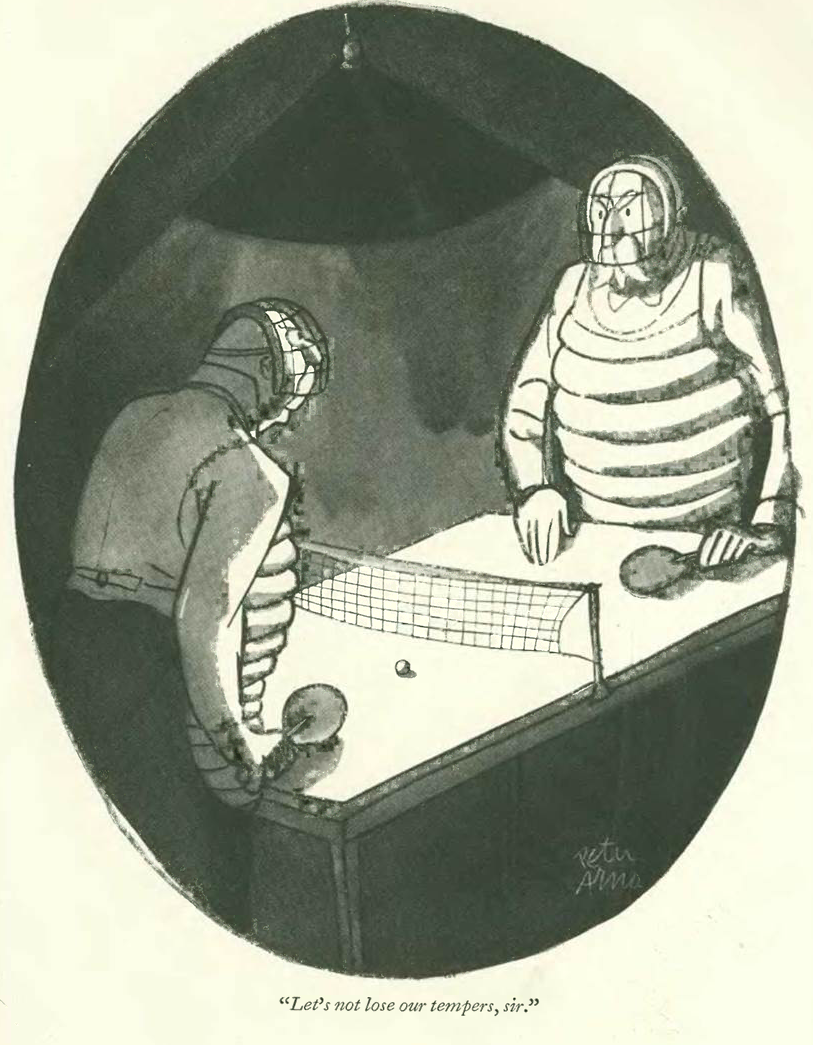
…back to Peter Arno, and a heated game of table tennis…

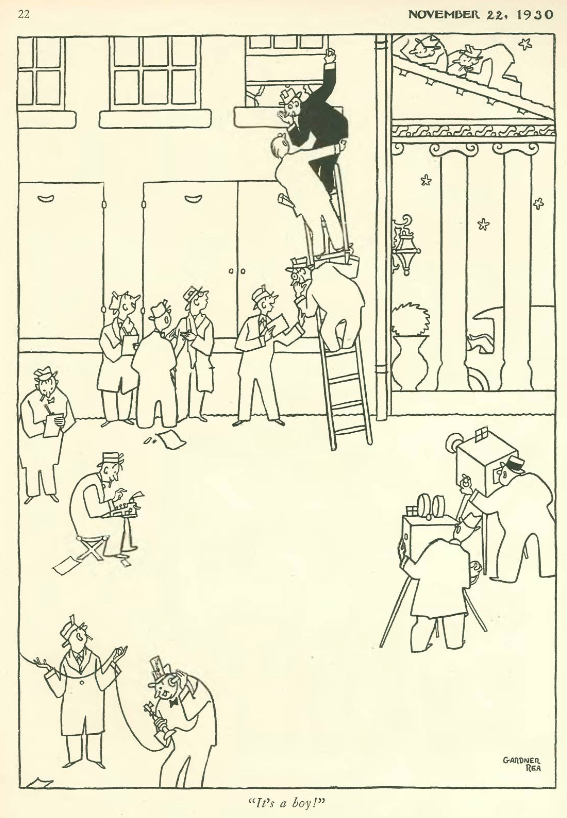
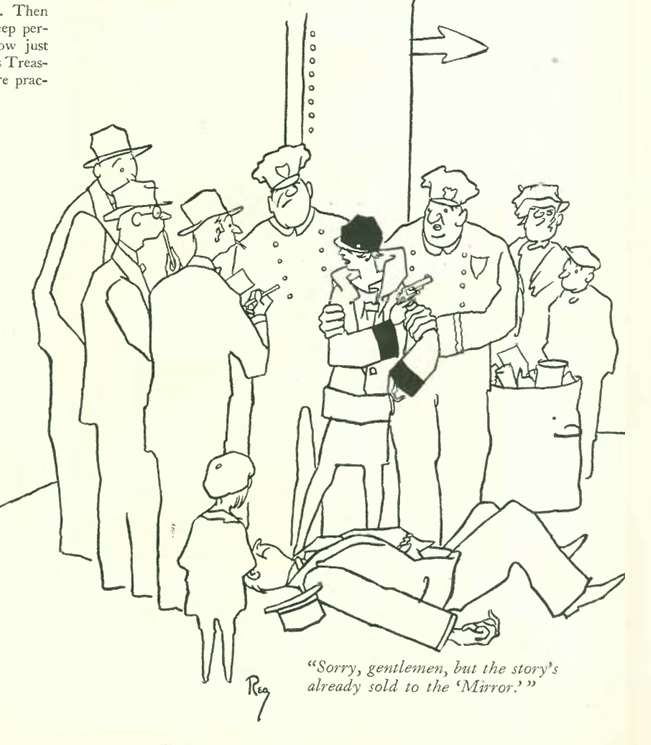
…and Gardner Rea, witness to modern-day crime reporting…

On to the Sept. 13, 1930 issue…

Sept. 13, 1930: yet another satirical kakemono cover by Rea Irvin.

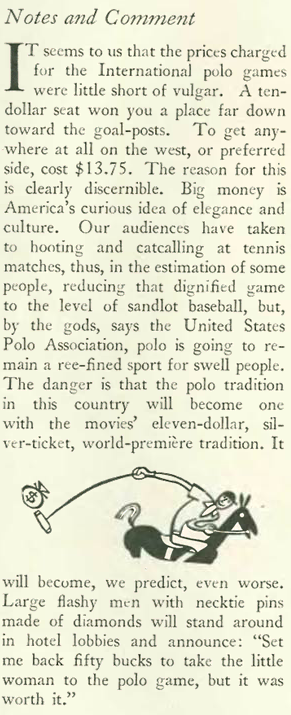
As I’ve noted many times before, the early New Yorker covered every sport under the sun (and especially elite sports such as yacht racing, tennis and badminton, golf and polo) but to my knowledge never covered a major league baseball game in its then five-year existence. Here, E.B. White, in his “Notes and Comment,” complains about the high price of tickets to polo matches…

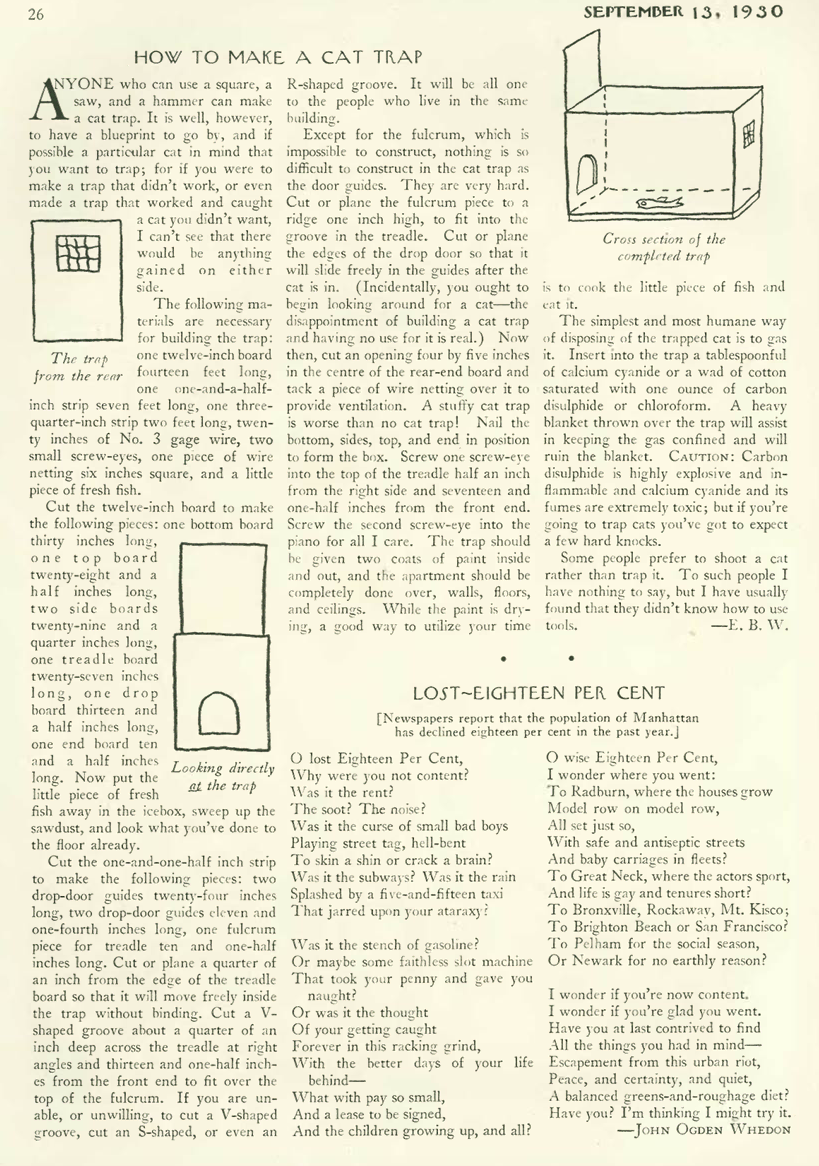
…White, a well-known dog lover, offered a rather cruel solution to a problem cat in this feature:

 *  *  *

Oh Never Mind

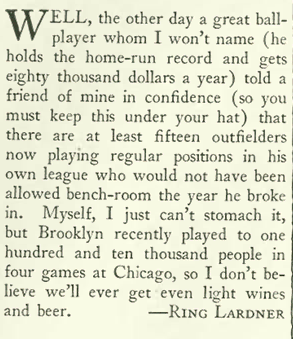
At first glance I thought this might actually be an article about a baseball game, but alas, it was a column by Ring Lardner (titled “Br’er Rabbit Ball”) that showed little enthusiasm for the game (the 1919 “Black Sox” scandal apparently soured his love for baseball). Excerpts:

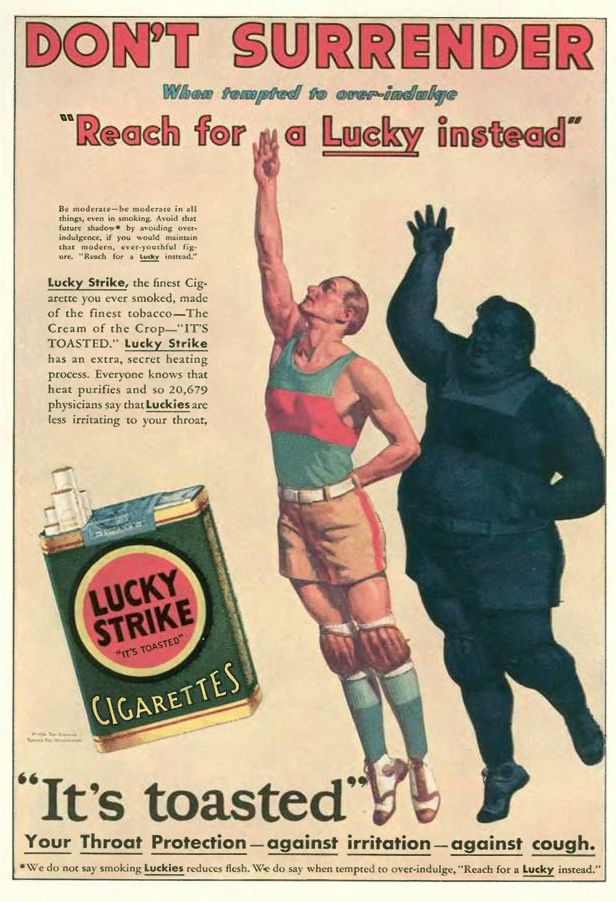
Speaking of sports, we move to the advertisements and the helpful folks from Lucky Strike, who wanted to help you get in shape with a smoke…

…and another ad for Flit insecticide by Dr. Seuss, featuring an elephant that looked a lot like the future Horton, and some unfortunate racist imagery…

…yet another Peter Arno repeat with a new caption…

…and another in a series of 1930’s images by Ralph Barton

…a maritime dilemma, courtesy Garrett Price

…and apartment shopping with Constantin Alajalov

Next Time: The Flying Misanthrope…

Marble Halls

We close out the boiling August of 1930 with Wolcott Gibbs and his fanciful musings regarding the future offices of The New Yorker, inspired by his recent visit to the glitzy new lobby of the New York Daily News Building.

August 30, 1930 cover by Julian De Miskey.

I include a brief excerpt of Gibb’s tongue-in-cheek fantasy of the future, which inadvertently foresees The New Yorker’s current offices (see contrast of old and new above) in the gleaming glass tower now known as One World Trade Center:

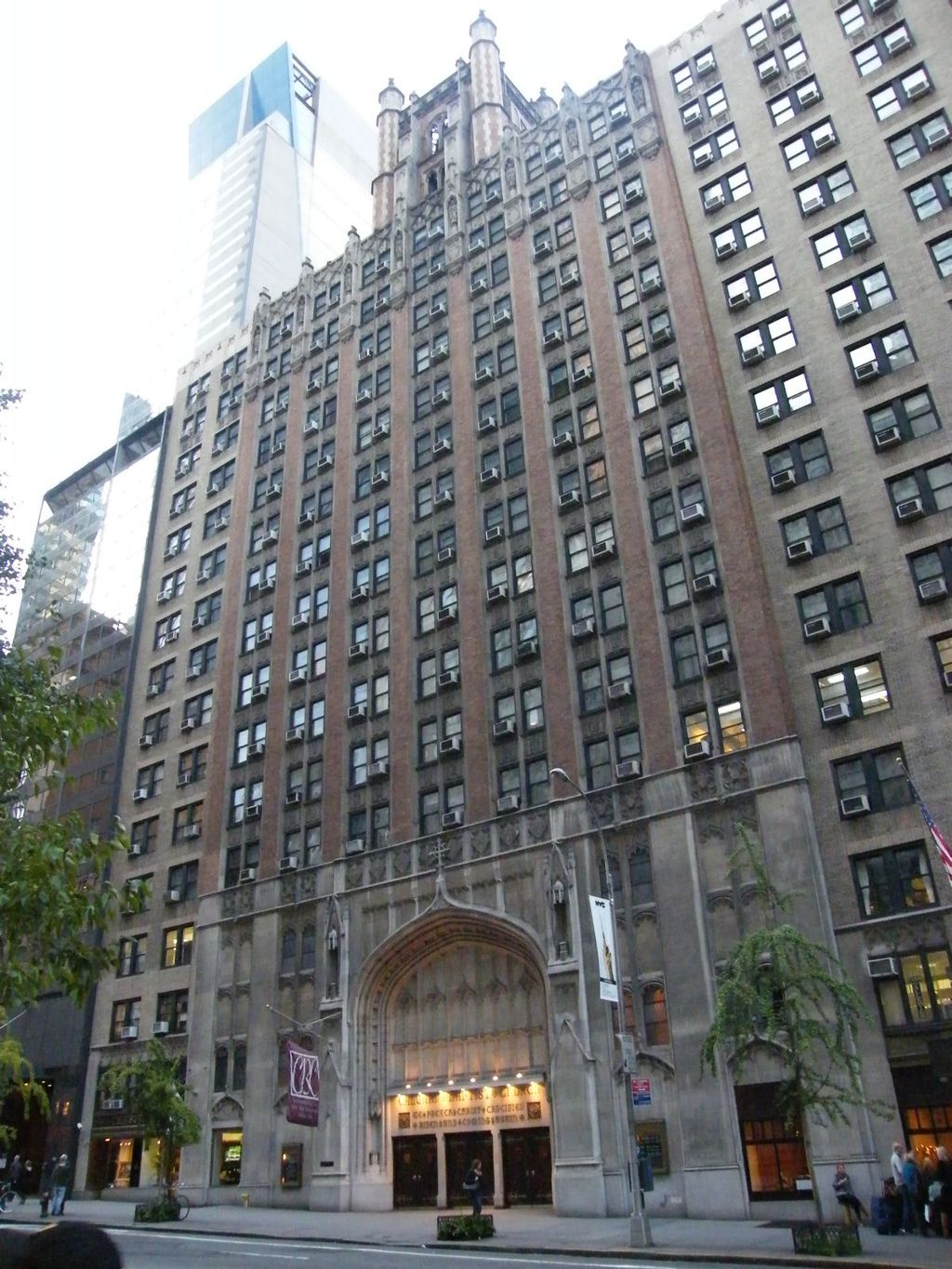
THAT WAS THEN…The New Yorker’s first offices were located at 25 West 45th Street, a 16-story building erected in 1913 (it still stands). It’s almost impossible to find images of The New Yorker’s early office spaces, but you can probably get some idea from these photos of another tenant of the building, the Y.M.C.A. Dental School. (Museum of the City of New York/New York Public Library)
THIS IS NOW…Almost in fulfillment of Wolcott Gibbs’ fantasy, The New Yorker today occupies offices in the Condé Nast section (images above) of the 104-story, 1,776 foot One World Trade Center (floors 20 to 44). When The New Yorker moved onto the building’s 38th floor in early 2015 (one floor above Wired), it marked the first time the magazine was located outside of a small area in Midtown. (New York Magazine/interiordesign.net)

 *  *  *

His Bit of Earth

“The Talk of the Town” noted an increasingly rare sight along Fifth Avenue, a private garden created by Thomas Fortune Ryan that in 1930 was occupied by his son Clendenin J Ryan:

DUST TO DUST…Thomas Fortune Ryan demolished the Charles T. Yerkes mansion and its art galleries (before and after photos, top, and image of a gallery, bottom right) to make way for his private flower garden, which is visible in the bottom left hand corner of the image at top right. An apartment building erected in 1937 (bottom left) occupies the site today. (Museum of the City of New York/Alice Lum)

 *  *  *

From Our Advertisers

Backgammon became all the rage in the 1930, so much so that one Grosvenor Nicholas, “a famous authority on backgammon,” commanded a fill-page ad from Saks…

…for reference, The New Yorker made note of Nicholas’s visit in the Sept. 6 “Talk of the Town”…

OR WATCH THE YOUTUBE VIDEO…Leila Hattersley, author of 1930s How to play the New Backgammon, teaching at a New York Club (bkgm.com)

…celebrity endorsements continued to grow in importance in the 1930s, here the famed Australian-born British actress Judith Anderson (1897-1992) marvels at the products manufactured by Angelus…

…Anderson would later be made a “Dame,” and would enjoy a long career and a long life, even appearing in 1984’s Star Trek III: The Search for Spock as the Vulcan High Priestess T’Lar…

VERSATILE…At left, Dame Judith Anderson in 1932. At right, Anderson on the set of 1984’s Star Trek III: The Search for Spock, with actor Leonard Nimoy. (Tumblr)

…this ad for Buick shows a rich gent dismissing his chauffeur, something he would probably have to do permanently as the Depression continued to ruin fortunes…

…and perhaps a lost fortune could lead to one being “difficult,” and in that case Dyers & Dyers could sooth the hurt with squab from a can…

…on to our cartoonists, we have Constantin Alajalov illustrating a scene at the Battery…

Ralph Barton continued his interpretations of a new decade…

…some unfortunate racial humor from Al Frueh

…an indelicate moment at the beach, courtesy Garrett Price

Perry Barlow looked at the challenges of city life…

…and Alan Dunn found a man with a case of the moderns…

Next Time: Animal Crackers…

Hell’s Angels

Among the films in 1930 that marked a new era in motion pictures was Howard Hughes’s epic war film Hell’s Angels. 

August 23 cover by Gardner Rea.

Originally shot as a silent, Hughes (1905-1976) retooled the film, and over a period of three years (1927-30) poured much of his own money into making what many consider to be Hollywood’s first sound action movie. The film also introduced audiences to 19-year-old Jean Harlow (1911-1937), handpicked by Hughes to replace Norwegian actress Greta Nissen in the lead role (Nissen’s accent posed a problem for the talkies). The film would make Harlow an instant star, propelling her to worldwide fame as the “Platinum Blonde” sex symbol of the 1930s.

Beset by delays due to Hughes’s incessant tinkering, the movie was famously expensive. For example, a total 137 pilots were used in just one flying scene at the end of the film. In addition to monetary costs, the filming also claimed the lives of three pilots and a mechanic, and Hughes himself would fracture his skull during a stunt flying attempt.

PRE-CODE…Before Will Hays imposed his moral code on Hollywood, films in the early thirties were frank with sexual references, as the image at left attests. When Howard Hughes switched the filming of Hell’s Angels to sound, he replaced Norwegian actress Greta Nissen with 19-year-old Jean Harlow (seen with co-star Ben Lyon). Harlow’s first major film appearance would make her an overnight star; at right, Frank Clarke and Roy Wilson flying an S.E.5A (front) and a Fokker D.VII (back, note camera) in the filming of Hell’s Angels. (Wikipedia)

The New Yorker’s John Mosher found the action scenes enticing, but the acting left something to be desired…

COSTLY VENTURE …This Sikorsky S-29A (left), repainted to represent a German Gotha bomber, would crash into the California hills during filming (right), killing mechanic Phil Jones, who failed to bail out along with the pilot. (Northrop Grumman)
GEE WHIZ…The media often reported on the progress of the film, such as in this May 1930 article in Modern Mechanics and Inventions that detailed a $1 million sequence in which a fighter dives his plane into the top of a Zeppelin, causing it to explode and crash to earth. (Modern Mechanix)

We skip ahead briefly to the Aug. 30 issue, in which “The Talk of Town” featured a mini profile of Howard Hughes and his film. Note how Hughes’s extravagance is described through his frequent use of long-distance telephone calls:

A STAR IS BORN…19-year-old Jean Harlow and Ben Lyon in 1930’s Hell’s Angels. (IMDB/Pinterest)

*  *  *

A Whale of a Movie

Critic John Mosher also took in a film adaptation of Herman Melville’s Moby Dick, a very loose adaptation that excluded the novel’s central character, Ishmael, and invented a love story for the maniacal Capt. Ahab…

A WHALE OF A STORY…From left, Noble Johnson as Queequeg, John Barrymore as Ahab, and Walter Long as Stubbs in 1930’s Moby Dick. At right, top, the whale puts the hurt on a boat; bottom, Joan Bennett as Faith, a contrived love interest for the old salt. (IMDB)

 *  *  *

Daily Dazzle

“The Talk of the Town” gushed over the lobby of the new Daily News Building, likening it to the glitz of a Broadway revue:

HOME FOR CLARK KENT…The Daily News Building served as the model for the headquarters of the fictional Daily Planet, the building where Superman worked as mild-mannered Clark Kent; at right, an image from 1941 of the lobby, dominated by the world’s largest indoor globe. (Wikipedia/Public Domain)
A LOBBY FOR LEARNING…The lobby includes an array of clocks, top left, that give the time in various global destinations. (Luke J. Spencer via atlasobscura.com)

 *  *  *

A Busboy’s Dream

Charles Pierre Casalasco left his life as a busboy in Corsica and studied haute cuisine in Paris before arriving at the shores of Manhattan in the early 1900s. He became a renowned headwaiter who by 1929 garnered enough financial backing from New York’s most powerful families to construct the exclusive Hotel Pierre. Writing under her pseudonym, “Penthouse,” New Yorker columnist Marcia Davenport described the building’s apartments to eager readers:

FUN WHILE IT LASTED…The 41-story, 714-room Hotel Pierre officially opened in October 1930 to great fanfare. The party would be short-lived, as the deepening Depression would force the hotel into bankruptcy just two years later. At right, photo of the Rotunda, before a 2017 remodeling. (New York Public Library)

 *  *  *

So Much For Title IX

Then as now, women athletes were held to a separate set of standards, not only judged for their athletic abilities, but also for their “sex appeal,” as John Tunis suggests more than a few times in his profile of English tennis champion Betty Nuthall (1911-1983). Excerpts:

HOW’S THAT BACKHAND?…Betty Nuthall greets American tennis star Bill Tilden in September 1930; on the cover of Time after winning the 1930 U.S. Open. (Digital Commonwealth/Time Inc.)

 *  *  *

Free Expression

Robert Myron Coates (1897–1973) was a writer of experimental, expressionistic novels who later became a longtime art critic for The New Yorker (he is credited with coining the term “abstract expressionism” in 1946). In the Aug. 23 issue he contributed the first installment of “Dada City,” here describing street life in Harlem. Excerpts:

STREET LIFE…Scenes around Harlem’s 125th Street, clockwise from top left: the Apollo Theatre marquee punctuates a busy street scene in 1935; NW corner of 125th and Broadway, 1930; Regal Shoes storefront, 1940s, photo by Weegee; 125th and St. Nicholas Avenue in 1934. (Skyscraper City/Museum of the City of New York)
AMERICAN ORIGINAL…Robert M. Coates’s The Eater of Darkness (1926) has been called the first surrealist novel in English. (Goodreads)

 *  *  *

From Our Advertisers

New Yorkers who were still enduring the brutal summer of 1930 could find relief, if they could afford it, on a New York Airways flight…

…or if you had the means, you could take your yacht out to sea, like this chap in a coat and tie who calmly steers with one hand while offering a box of chocolates to his guests with the other…

…our sailor wasn’t the only one dressed to nines…here are two ads offering suggestions to young folks returning to college or prep school…

…for comparison, this is how a group of college students at Columbia University dress today…

(Columbia University)

Dr. Seuss continued to crank out drawings on behalf of Flit insecticide…

…and on to cartoons, yet another rerun (the sixth) of this Peter Arno drawing with a new caption (Dorothy Dix was a popular advice columnist)…

…and another look at country life courtesy Rea Irvin (originally printed sideways on a full page)…

…and another country scene, this time among the toffs, thanks to Garrett Price

…back in the city, some parlor room chatter as depicted by Barbara Shermund

…downtown, Isadore Klein looked at the economic challenges of peep shows…

…and we close with this reflection on city life, by Reginald Marsh

Next Time: Marble Halls…

The Little King

Like his New Yorker colleague Reginald Marsh, Otto Soglow trained in the “Ashcan School” of American art, and his early illustrations favored its gritty urban realism. He had his own life experience to draw upon, being born to modest means in the Yorkville district of Manhattan.

We look at two issues this week. At left, cover of March 31 issue by Peter Arno; at right, June 7 cover by Constantin Alajalov.

But Soglow (1900-1975) would soon abandon the gritty style in the work he contributed to the New Yorker…

RAGS TO RICHES…At left, Otto Soglow’s first cartoon in The New Yorker, Nov. 14, 1925, was rendered in the Ashcan style ; at right, an example of the sparer style he later adopted, one of his manhole series cartoons from March 2, 1929.

…and in the June 7, 1930 issue, Soglow would publish his first Little King strip, which would launch the 29-year-old into fame and fortune…

Did Soglow know he was on to something big with that first Little King cartoon? Well Harold Ross (New Yorker founding editor) liked what he saw, and asked Soglow to produce more. After building up an inventory over nearly ten months, Ross finally published a second Little King strip on March 14, 1931. It soon became a hit, catching the attention of William Randolph Hearst, who wanted the strip for his King Features Syndicate.

KING OF COMEDY…Otto Soglow working on an illustration for The Ambassador, a short-lived comic strip he created in 1933 for King Features Syndicate. The strip was replaced by The Little King in 1934 after Soglow fulfilled his contractual obligation to The New Yorker. (comicartfans.com)

After Soglow fulfilled his contractural obligation to The New Yorker, The Little King made its move to King Features on Sept. 9, 1934, and the strip ran until Soglow’s death in 1975. After his move to King Features, Soglow continued to contribute cartoons to The New Yorker, but with other themes.

Left, Soglow cartoon from the book Wasn’t the Depression Terrible? (1934); at right, King Features strip from Nov. 19, 1967. (Wikipedia/tcj.com)

You can read more about Soglow and The Little King in The Comics Journal.

 *  *  *

The Party’s Definitely Over

During the summer of 1925, a young writer at Vanity Fair named Lois Long would take over The New Yorker’s nightlife column, “When Nights Are Bold,” rename it “Tables For Two,” and set about giving a voice to the fledgling magazine as well as chronicling the city’s Jazz Age nightlife. There were accounts of Broadway actors mingling with flappers and millionaires at nightclubs and speakeasies, but Long also spoke out on issues such as Prohibition, taking the city’s leaders to task for raids on speakeasies and other heavy-handed tactics contrary to the spirit of the times. “Tables For Two” would go on hiatus with the June 7, 1930 issue, and appropriately so, as the deepening Depression gave the the city a decidedly different vibe. In her “final” column Long would write about the Club Abbey, a gay speakeasy operated by mobster Dutch Schultz

PARTIED OUT…In her final nightlife column, Lois Long wrote about the new Club Abbey in the basement of the Hotel Harding (left), which was operated by mobster Dutch Schultz (inset). The club’s emcee was Gene Malin (right), Broadway’s first openly gay drag performer. The club was short-lived (as were Schultz and Malin), closing in January 1931 following a mob brawl. (infamousnewyork.com/Pinterest)

…and she would update her readers on “Queen of the Night Clubs” Texas Guinan, whose Club Intime was sold to Dutch Schultz and replaced by his Club Abbey…

FINAL ACT…Clockwise, from top left, Texas Guinan at Lynbrook, circa 1930; Joseph Urban murals on the rooftop of the St. Regis Hotel; Duke Ellington and his orchestra at the Cotton Club, circa 1930s.

Long’s column would signal a definitive end to whatever remained of the Roaring Twenties. It would also signal the end to some of those associated with those heady times. Texas Guinan’s Lynbrook plans would flop, and Gene Malin’s Club Abbey would close in less than a year. Both would both be dead by 1933—Malin would die in a car accident in 1933, and amoebic dysentery would claim Guinan that same year. Dutch Schultz would be gunned down by gangsters in 1935.

Lois Long, however, would continue to write for The New Yorker for another forty years, and would prove to be as innovative in her fashion column, “On and Off the Avenue,” as she was as a nightlife correspondent.

 *  *  *

Gone to the Dogs

In another installment of his pet advice column (June 7), James Thurber gave us one of his classic dogs…a disinterested bloodhound…

…while Thurber’s buddy and office mate E.B. White commented (in the March 31 issue) on a recent poll conducted among students at Princeton, discovering among other things that New Yorker cartoonist Peter Arno was preferred over the old masters…

FAN FAVORITES…The Princeton Class of 1930 named (from left) Rudyard Kipling, Lynn Fontanne and Peter Arno as favorite poet, actress and artist respectively in a student poll. (YouTube/Wikipedia/giam.typepad.com)

 *  *  *

We Like It Fine, Thank You

The New Yorker dedicated a full page of the March 31 issue to a tongue-in-cheek rebuttal directed at the New York Evening Journal, which had reprinted one of Peter Arno’s cartoons to illustrate the moral cost of Prohibition. I believe the author of the rebuttal is E.B. White (note how he refers to Arno as “Mr. Aloe”).

…also in the May 31 issue, Rea Irvin changed things up, at least temporarily, with some new artwork for the “Goings On About Town” section. The entries themselves were often clever, such as this listing for a radio broadcast: PRESIDENT HOOVER—Gettysburg speech. Similar to Lincoln’s but less timely…

*  *  *

From Our Advertisers

New Yorker cartoonists can be found throughout the advertisements — from left, Julian De Miskey, Rea Irvin and John Held, Jr

…and in the June 7 issue we find an unusual ad for a used car…a sign of the times, no doubt…

…before it was associated with Germany’s Nazi Party (especially after it seized power in 1933), for thousands of years the swastika had been widely used as a religious or good luck symbol…

…Actress Clara Bow was famously pictured sporting a “good luck” swastika as a fashion statement in this press photo from June 1928, unaware that in a few years the symbol would become universally associated with hate, death and war…

From an unidentified publication dated June 6, 1928. (@JoHedwig/Twitter)

…on to our cartoons, Isadore Klein illustrated a cultural exchange…

Garrett Price gauged the pain of a plutocrat…

Alan Dunn eavesdropped on some just desserts…

Helen Hokinson found humor in the mouths of babes…

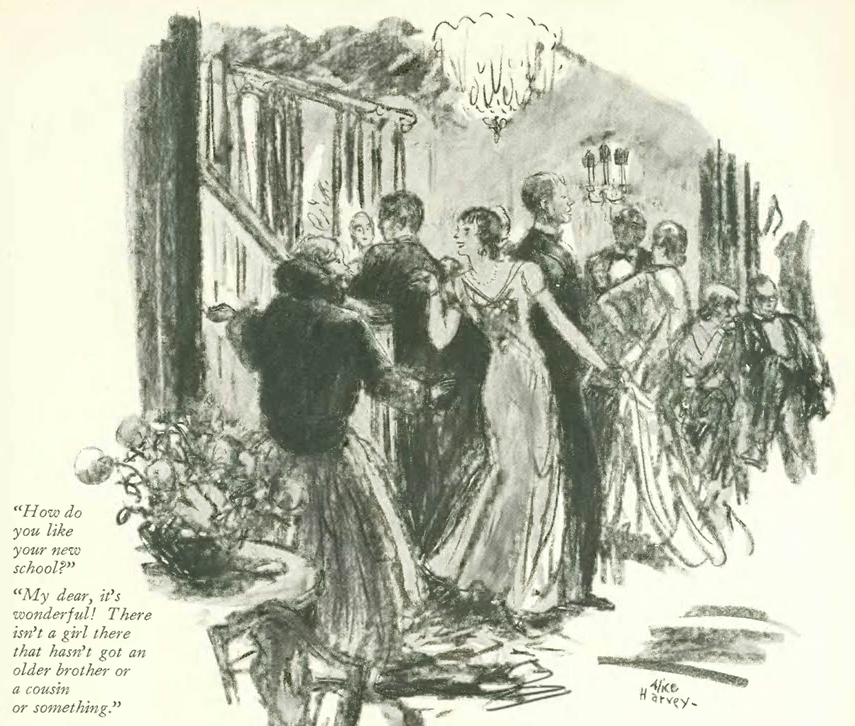
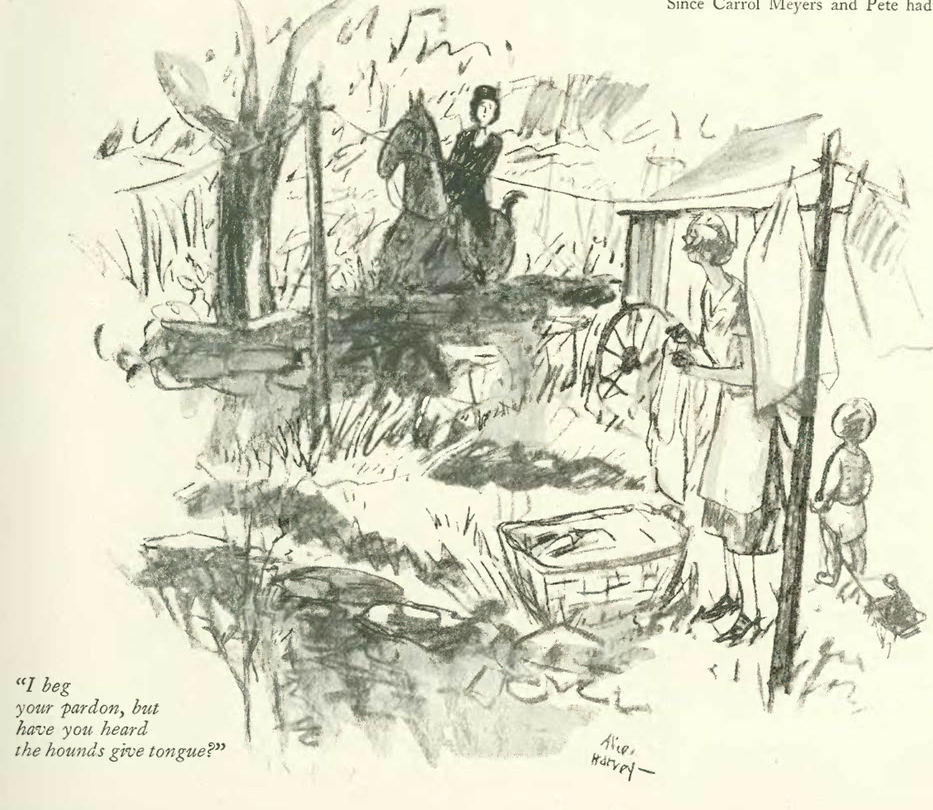
…as did Alice Harvey

Leonard Dove examined one woman’s dilemma at a passport office…

…and Peter Arno, who found some cattiness at ringside…

Next Time: Germany’s Anti-Decor…


Red Alert

The New Yorker had a number of favorite punching bags, among them Grover Whalen (1886–1962), a product of Tammany Hall politics who in 1928 was appointed New York City Police Commissioner by another Tammany alumnus, Mayor Jimmy Walker.

May 17, 1930 cover by Rea Irvin.

Ironically, a mayor known for openly flouting prohibition laws had placed into office a man who would become known as a ruthless enforcer of those laws (excepting Mayor Walker, of course). Whalen was also known for fighting crimes that didn’t necessarily exist, including those committed by “Reds” organizing protests by the city’s growing numbers of unemployed.

In the May 10, 1930 issue, New Yorker writer Alva Johnston penned a tongue-in-cheek assessment of America’s “Red Revolution” (see previous post). In the following issue (May 17), Morris Markey took a few swipes at Whalen’s “Crimson Menace” in his “A Reporter At Large” column:

FLYING HIGH…Mayor Jimmy Walker (second from left) and his new Police Commissioner Grover Whalen (far right) visit Mitchell Field on Long Island in 1928; portrait of Whalen circa 1930. (Amazon/WNYC)

Whalen’s career as police commissioner came to an end around the time Markey’s column appeared. Whalen was under fire for how his police responded to an International Unemployment Day demonstration, where 1,000 baton-wielding police went to work on a crowd of more than 35,000 demonstrators. The New York Times reported: “From all parts of the scene of battle came the screams of women and cries of men with bloody heads and faces.”

IDLE HANDS…The International Unemployment Day demonstration in Union Square on March 6, 1930, turned ugly when a thousand baton-wielding police went to work on the protestors, identified by the New York Times as “Reds.” (libcom.org/The New York Times)

And in the May 24 issue, E.B. White took his own swipe at Whalen in his “Notes and Comment”…

In ensuing years Whalen found more peaceful pursuits, serving as New York City’s official greeter of dignitaries and organizer of ticker tape parades. In 1935 he was named president of the New York World Fair Corporation and became the face of the forward-looking 1939 New York World’s Fair.

DAWN OF A NEW DAY was the opening slogan for the 1939 World’s Fair. At left, preparing to lower the fair’s time capsule into it’s 5,000-year resting place are A.W. Robertson, Westinghouse Electric Company’s chairman of the board (left) and Grover Whalen, president of the New York World’s Fair; at right, the fair’s iconic symbols, the Trylon and Perisphere. (heinzhistorycenter.org/Flickr-Ricksoloway)

 *  *  *

It’s In The Stars

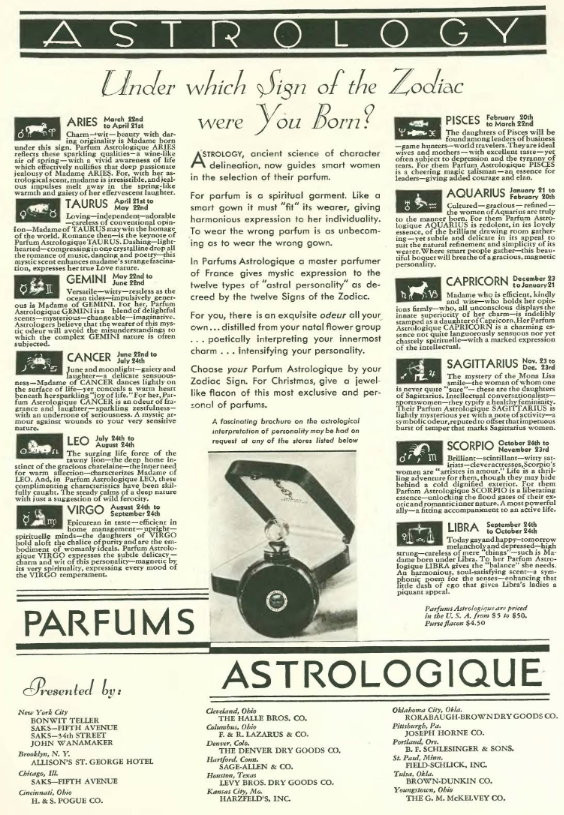
E.B. White led off his “Notes and Comment” with thoughts on the latest trends in product endorsement, including the use of astrology to boost the sales of toothpaste and perfume:

A FORTUNE IN TOOTHPASTE…The makers of Forhan’s Toothpaste promoted their Astrology Hour radio show in the Akron Beacon Journal, May 1931. At right, 1931 ad for Perfum Astrologique. (newspapers.com)
THAT WAS THEN…White actors Freeman Gosden and Charles Correll portrayed Amos ’n’ Andy on the radio from 1928 to 1960. Here they shill for Pepsodent toothpaste on circa 1930 stand-up cards. (thetimes.co.uk)

 *  *  *

More Advice on Troublesome Pets

The May 17 issue featured James Thurber’s latest advice on pet care:

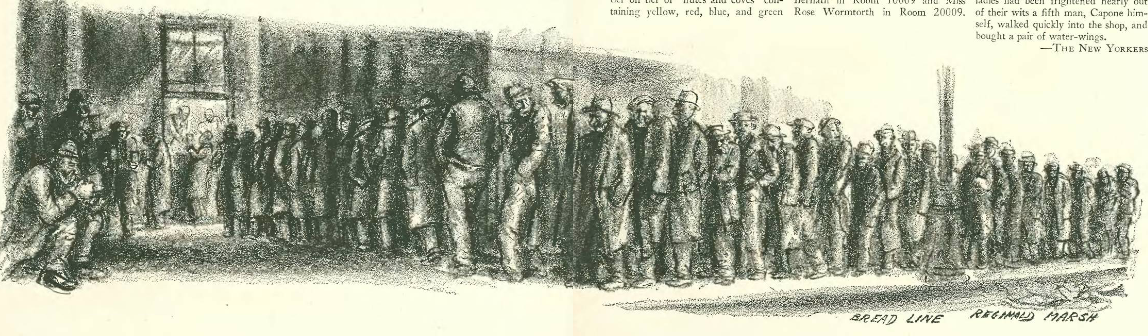
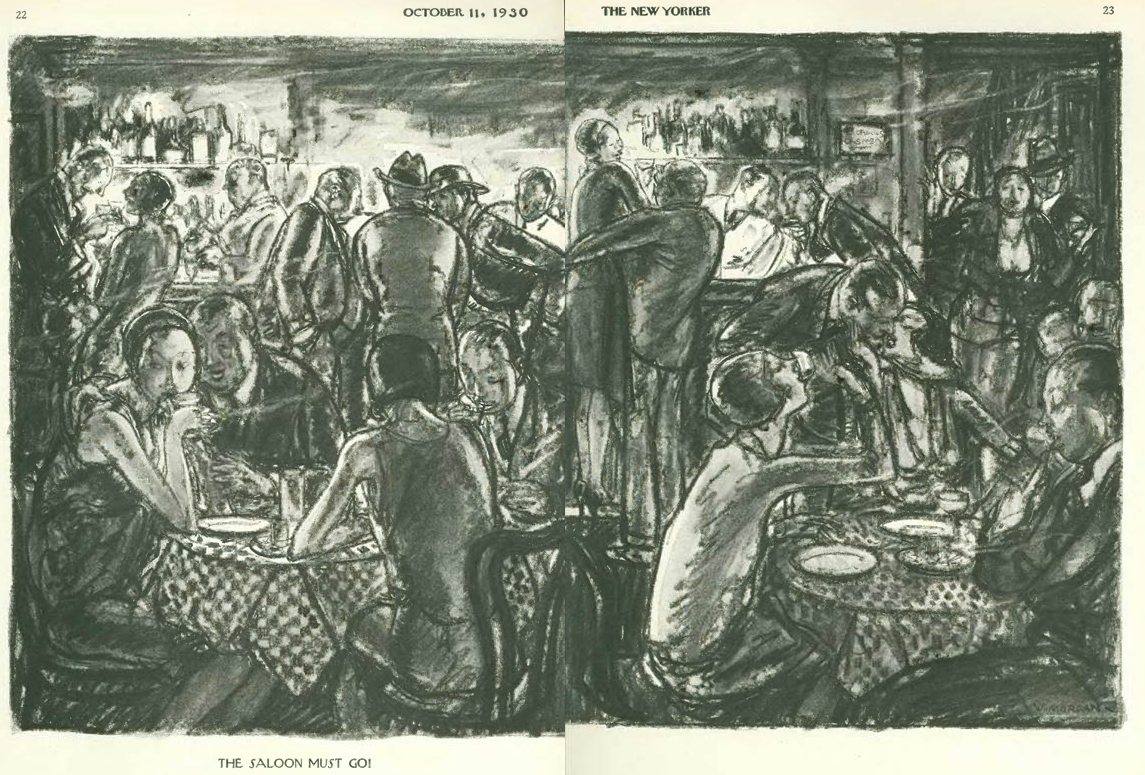
…and this two-page illustration by Reginald Marsh ran along the bottom of “Talk.”

 *  *  *

A Fighter for Rights

The May 17 issue featured the first installment of a two-part profile on social reformer Samuel Untermyer (1858-1940) titled “Little Giant.” The profile’s author, Alva Johnston, praised Untermyer’s legacy, and chided New Yorkers for not giving him his proper due. Known for defending the public trust against powerful corporations, he laid the groundwork in the U.S. for the Federal Reserve Law, the Clayton Anti-Trust Law, the Federal Trade Commission Bill and the Securities and Exchange Act. A fierce defender of Jewish rights, Untermyer served as attorney for Herman Bernstein, who filed suit against automaker Henry Ford for anti-semitic articles published in Ford’s Dearborn Independent. 

Johnston concluded his two-part profile with these words:

BRING IT ON…Samuel Untermyer was known as a fierce defender of the public trust. At right, illustration that accompanied the New Yorker profile. (findagrave.com)

 *  *  *

From Our Advertisers

Julian De Miskey picked up some extra work with this illustration for Macy’s…

…while in cartoons, Barbara Shermund discovered the challenges of exercise by radio…

Helen Hokinson looked at another challenge…city driving…

Gardner Rea explored the mysteries of street food…

…and Peter Arno greeted one Manhattan couple at sunrise…

 *  *  *

On to the May 24, 1930 issue, with a lovely cover by Madeline Pereny…

May 24, 1930 cover by Madeline Pereny.

As construction continued on the Museum of the City of New York, The New Yorker’s architecture critic George Chappell liked what was taking shape:

THE STORY OF A CITY…The Museum of the City of New York opened its doors at 104th Street and Fifth Avenue in early 1932. (nyctourist.com/www.ennead.com)

 *  *  *

From Our Advertisers

Travel by train in the States wasn’t always miserable as this ad attested…
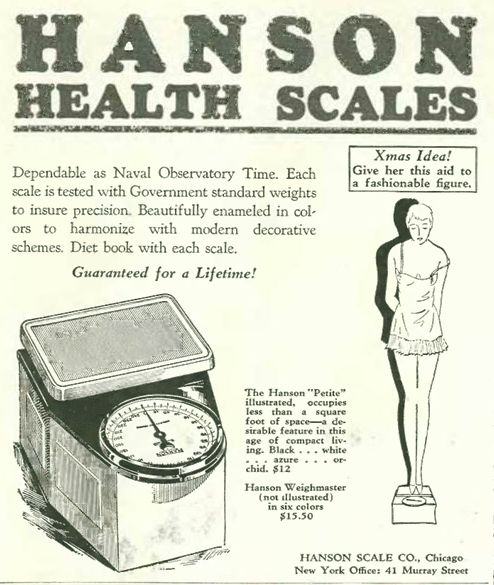
…a bit of color courtesy the Lenthéric salon…

Fontaine Fox, best known for his long-running Toonerville Folks comics, contributed this cartoon on behalf of Talon Slide Fasteners, or “zippers” as they came to be known in the late 1920s and early 30s, when they were still something of a novelty…

…I believe this is the first-ever image of the Empire State Building in The New Yorker, an artist’s rendering since the building wouldn’t be completed until the spring of 1931…note how this ad links the building’s site location to New York history and specifically the Astor family…
…here is how the Empire State Building looked in June 1930…

(New York Public Library)

…the old Waldorf-Astoria Hotel was torn down to make way for the Empire State Building, and that provides a nice segue to our cartoons…this one by Garrett Price featured a modest work crew contemplating the razing of a building that recalled the old hotel…

…across the pond, one of Helen Hokinson’s ladies was busy trying to procure a banned book…

…while William Crawford Galbraith gave us a young woman in search of a love song (with the help of a seriously timid man)…

Barbara Shermund found some bedside humor…

…and Peter Arno took us back to the nightlife, with our familiar gold-digger and sugar daddy…

…and finally, over the course of twelve issues (Feb. 8 to May 10, 1930) Abe Birnbaum provided illustrations of New York’s “Restaurant Royalty.” These usually ran in or near “The Talk of the Town” section. Please click to enlarge.

Next Time: The Little King…


All Quiet on the Western Front

Still considered one of the greatest anti-war films ever made, All Quiet on the Western Front opened in New York on April 29, 1930 to strong reviews. Based on Erich Maria Remarque’s novel of the same name, the film’s depictions of the horrors of war were so realistic and harrowing that it was banned in a number of countries outside of the U.S.

May 10, 1930 cover by Theodore Haupt.

Banned, that is, by nations gearing up for war. In Germany, Nazi brownshirts disrupted viewings during its brief run in that country, tossing smoke bombs into cinemas among other acts of mayhem. Back in the U.S., The New Yorker’s John Mosher attended a screening at a “packed” Central Theatre:

WAR IS HELL…Clockwise, from top left, movie poster for 1930’s All Quiet on the Western Front; German soldier Paul Bäumer (Lew Ayres), falls into a shell crater with a French soldier and draws his knife; in one of the most moving scenes in cinema, Bäumer is forced to spend the night in the crater, where he vainly tries to safe the life of the Frenchman he has mortally wounded; a German soldier crawls through the mud in a German training camp. (IMDB/Universal).

Mosher found the film’s adaption from the novel wanting in places, but overall praised the acting and the quality of the picture…

…and just in case some audiences were put off by the blood and guts, Universal promoted other themes on its lobby cards…

(IMDB)

 *  *  *

More Than a Stunt

In her profile of aviator Elinor Smith (1911-2010), writer Helena Huntington Smith took great pains to distinguish Elinor from other “lady fliers” who were little more than passengers in various flying exploits. Like Amelia Earhart, Smith had the bona fides of a true aviator: in 1927 she become the youngest licensed pilot in the world at age 16, learning stunt flying at an early age. When she was 17 she smashed the women’s flying endurance record by soloing 26½ hours, and in the following month set a woman’s world speed record of 190.8 miles per hour. In March 1930 she set a women’s world altitude record of 27,419 feet (8,357 m), breaking that record in 1931 with a flight reaching 32,576 feet. Smith would continue to fly well into old age. In 2000 she flew NASA’s Space Shuttle vertical motion simulator and became the oldest pilot to succeed in a simulated shuttle landing. In 2001 (at age 89) she would pilot an experimental flight at Langley AFB. An excerpt from the profile:

HEAD IN THE CLOUDS…Elinor Smith’s flying career would extend from age 16 and into her 90s. At left, Smith poses in Long Island with the Bellanca monoplane she used to beat the solo flight record in 1929. Right, portrait of Smith circa 1930s. (findagrave.com)

 *  *  *

I’d Rather Be in Philadelphia

Theatre critic Robert Benchley was over the moon regarding a performance of Lysistrata staged by the Philadelphia Theatre Association. Benchley suggested the Philadelphians had “put New York to shame” in staging such a “festival of beauty and bawdiness…never seen on an American stage before.”

NO MORE HANKY PANKY…Left, actress Miriam Hopkins in Aristophanes’ Lysistrata, as photographed by Edward Steichen; at right, Sydney Greenstreet with unidentified actress from the 1930 Philadelphia production of Lysistrata. (timeline.com)

Benchley praised the seemingly advanced tastes of Philadelphia audiences as he continued to the lament the fact that the City of Brotherly Love had beaten New York to the punch with the staging of the play. He needn’t have worried much longer; the play would open on Broadway on June 5, 1930, at the 44th Street Theatre.

LOVER COME BACK…Production photograph for Norman-Bel Geddes’s staging for Lysistrata, titled “the women of Greece return to their men.” (hrc.utexas.edu)

While we are on the subject of theater, Constantin Alajálov provided this lovely illustration of Anton Chekhov’s Uncle Vanya for The New Yorker’s theater review section…

 *  *  *

Make ‘Em Dance, Boys

The author Robert Wilder contributed this interesting casual about the appearance of gangster Al Capone at a Chicago nightclub. Excerpts:

LIGHT ON HIS FEET…Al Capone in 1930. (Wikipedia)

 *  *  *

You Say You Want a Revolution?

Alva Johnston offered his thoughts on how America could stage its own “Red Revolution,” given that Russia and several European countries had already experienced communist uprisings of their own, and also given that New York Police Commissioner Grover Whalen, always in search of problems that didn’t exist, had announced a new “Red Scare” in his fight against communism.

Tongue firmly in cheek, Johnston suggested how American know-how could be brought to bear in inciting a Red Terror. An excerpt:

YANKEE INGENUITY…Alva Johnston, left, offered some innovative ideas for a uniquely American “Red Revolution.” At right, soldiers stand behind a barricade during Germany’s communist Spartacist uprising of January 1919. (Wikipedia)

 *  *  *

Speaking of Revolutionaries

Thomas Jefferson’s home at Monticello is one of America’s most-visited historical sites, but in 1930 it was still something of a regional curiosity, having only been acquired in 1923 for the purposes of turning it into a public museum. Although Jefferson is well known today for his various inventions at Monticello, E.B. White was just learning about this side of the president in his weekly “Notes and Comment” dispatch:

THIS OLD HOUSE…Left, a combination of neglect and Civil War vandalism left Thomas Jefferson’s Monticello enmeshed in weeds and in a state of near collapse by the 1870s. At right, students of the University of Virginia pose outside Monticello in 1930. (UVA/Hulton Archive)

 *  *  *

Play Ball?

We are well into the spring of 1930, yet The New Yorker stood firm in its complete lack of baseball coverage. As I’ve noted before, the magazine covered virtually every sport from horse racing to rowing to badminton, and even lowered itself to regular features on college football and professional hockey, but not a line on baseball, save for an occasional note about the antics of Babe Ruth or the homespun goodness of Lou Gehrig. There were signs, however, that baseball was being played in a city blessed with three major league teams; we do find game times in the “Goings On About Town” section, as well as occasional baseball-themed filler art, and a comic panel in the May 10 issue by Leonard Dove:

From Our Advertisers

We begin with an endorsement for Chase & Sanborn coffee by the soprano Alma Gluck, wife of famed violinist and composer Efrem Zimbalist Sr. Originally I thought she was enjoying coffee with a sister in law named “Mrs. Zimbalist,” but as reader Frank Wilhoit astutely points out, the “Alma Gluck” (celebrity) and “Mrs. Zimbalist” (housewife) are alternate personae of the same individual. And now that I look at the ad again, the clothes and hair styles are identical. I will try to locate a clearer image of the ad…

…and from the makers of White Rock we have a group of swells and their airborne friends enjoying some bubbles that are doubtless mixed with illegal hootch…

Dr. Seuss continued to offer his artistry on behalf of Flit insecticide…

…and on to our cartoons, Peter Arno illustrated the hazards of the road…

…while Leonard Dove explored the hazards high above the streets of Manhattan…

Constantin Alajálov explored an odd encounter in a park…

Isadore Klein mused on the tricks of mass transit…

…and two from Barbara Shermund, who looked in on one tourist’s plans for a trip to Mussolini’s Italy…

…and some helpful advice at a perfume counter…

Next Time: Red Alert…


Paramount on Parade

Before we launch into the latest offering from Tinseltown, a note about the cover artist for the April 26, 1930 issue.

April 26, 1930 cover by Barney Tobey.

Barney Tobey (1906-1989) was known for gently humorous cartoons that appeared in The New Yorker for more than fifty years. He also contributed four covers, the first of which appears above. In the Sept. 21, 1998 issue, illustrator Richard Merkin offered this remembrance:

*  *  *

Star-spangled Banter

All-star musicals were all the rage in the early sound era, as they gave studios the opportunity to showcase contract players (who were virtually owned by the studios) doing things they usually didn’t do on screen. Following the success of MGM’s Hollywood Revue of 1929, Paramount Studios released Paramount on Parade in April 1930, much to the liking of New Yorker critic John Mosher, who also praised the film’s accompanying cartoon, 1929’s The Prisoner’s Song:

You can watch Max Fleischer’s The Prisoner’s Song here (and ponder how far animation has advanced)…

Mosher also praised a number of Paramount’s contract players, and especially actors Jack Oakie and Maurice Chevalier

MUCH ADO…A great crowd gathers for the premiere of “Paramount on Parade” at the New York’s Rialto Theatre in April 1930. (cinematreasures.org)
SEEING STARS…Clockwise, from top left, Helen Kane (possibly the inspiration for the cartoon character “Betty Boop”) and Jack Oakie do a little footwork; Clara Bow, Hollywood’s “It Girl,” pops through a Navy recruitment poster at the beginning of her song and dance number (with Stuart Erwin and Richard ‘Skeets’ Gallagher); one of Hollywood’s top actresses in 1930, Kay Francis, portrays “Carmen” in the revue; Ruth Chatterton entertains doughboys Stuart Erwin, Fredric March, Jack Oakie, and Stanley Smith in Paramount on Parade. (IMDB)
BOOP GIVES A BOP…Helen Kane (left) and child star Mitzi Green in a sketch from Paramount on Parade. (IMDB)

 *  *  *

Lost In the Crowd

In his “Notes and Comment,” E.B. White lamented the fact that the world’s tallest building appeared less than lofty, since neighboring skyscrapers were nullifying its grandeur:

DOWN IN FRONT…E.B. White found the streetview of the world’s tallest building wanting after it was completed in 1930; the iconic Flatiron Building, however, enjoys some elbow room even today. (spectator.co.uk/walksofnewyork.com)

 *  *  *

Full of Hot Air

That was another opinion shared by E.B. White, this time regarding the Empire State Building’s top promotor, former New York Governor Al Smith, who spoke of plans to attach a mooring mast to the top of his skyscraper (which would eclipse the Chrysler as the world’s tallest in 1931):

*  *  *

View From the Top

The New Yorker featured a profile of Aloysius Anthony Kelly (1893?-1952), better known as the Roaring Twenties most famous pole-sitter, “Shipwreck” Kelly. He achieved his greatest fame in the 1920s and 1930s, sitting for days at a time on elevated perches — often atop buildings — throughout the U.S.

Kelly’s fame was already on the wane when this profile appeared, and by 1934 he was reportedly working as a dance hall gigolo. Kelly’s last flagpole stunt was at a 1952 event sponsored by a Lion’s Club in Orange, Texas — he suffered two heart attacks while sitting atop their 65-foot flagpole. After climbing down he announced, “This is it. I’m through.” He died one week later after he was struck by car on West 51st Street in Manhattan.

LOFTY AMBITIONS…Alvin ‘Shipwreck’ Kelly atop a flagpole near College Park, Maryland, in October 1942. At right, undated photo circa 1940s. (CSU Archives/Digital Commonwealth)

 *  *  *

Brand X

Folks were still abuzz about the discovery of a ninth planet in the solar system, soon to be dubbed “Pluto” by an English schoolgirl. Howard Brubaker, in “Of All Things,” observed…

…and Carl Kindl illustrated the problem a new planet posed for astrologers…

 *  *  *

I Beg Your Pardon

Will Rogers was a beloved comedian with a few rope tricks up his sleeve, but I’ve never known him for working blue. However, one critic for The New Yorker (“A.S.”– not sure who this is) found Rogers’ new radio show both humorless and gauche…

CAN YOU TAKE A JOKE?…In photo above, Will Rogers debuts his new radio show in April 1930. It would become the most popular Sunday evening radio show, and Rogers would prove to be the second biggest motion picture box office draw in the U.S. before his death in 1935. (Will Rogers Memorial Museum)

 *  *  *

Before He Got Axed

Ten years before he was murdered by one of Stalin’s NKVD agents, Leon Trotsky published an autobiography that was written in his first year of exile in Turkey. The review is signed “G.H.” so I am assuming the author is Geoffrey Hellman, who contributed for decades to The New Yorker’s “Talk of the Town.” Excerpts from the review:

RED ALERT…Leon Trotsky wrote his autobiography, My Life, while exiled in Turkey. (Wikimedia)

 *  *  *

From Our Advertisers

The makers of Bozart rugs and fabrics invited New Yorker readers to “introduce a breath of summertime indoors”…

…while Macy’s urged the same by gracing a sunroom or terrace with one of their Marcel Breuer-inspired chairs…

…Colonial Airways touted an early form of radar — an “invisible pilot” — as the latest safety feature in its airplanes…

…the Douglas L. Elliman company promoted its yet unbuilt River House, which would feature a pier where residents could dock their yachts…

The 26-story River House in the 1930s. Originally, the Art Deco building featured a pier where residents could dock their yachts, but that feature was lost with the construction of FDR Drive in the early 1950s, effectively sealing the building off from the water. The building has been home to author Barbara Taylor Bradford, US Secretary of State Henry Kissinger, and actress Uma Thurman. (observer.com)

…and then we have our more unfortunate ads, such as this one from Macy’s that shows grandpa passing along his racist tendencies to a grandchild…

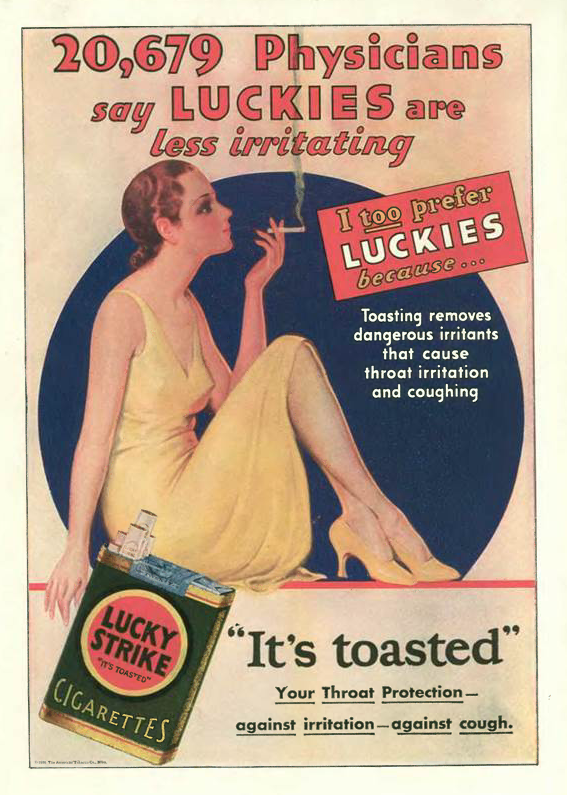
…and this sad appeal from the makers of Lucky Strike to keep puffing and avoid that hideous double chin…

…our cartoons include Garrett Price and thoughts of spring…

Barbara Shermund eavesdropped on tea time…

Alice Harvey found an awkward moment in a hosiery department…

Peter Arno revisits a familiar theme — chorus girls and sugar daddies…

…and Otto Soglow looked in on a fat cat’s moment of pride…

Next Time: Minding the Gap…


  • zeusdvds.com

The Circus Comes to Town

If you lived in small town America in the 20th century, it was a big deal when the circus came to town with its entourage of clowns, acrobats and exotic animals from distant lands.

April 19, 1930 cover by Gardner Rea.

Even New Yorkers, it seems — who could be quite blasé about such things — got a thrill when the Ringling Brothers and Barnum & Bailey Circus rolled into town for its annual spectacle at Madison Square Garden. The New Yorker marked the occasion with its April 12 cover by Theodore Haupt:

For the April 19 issue, E.B. White welcomed the circus on a cautionary note, airing concerns in his “Notes and Comment” column that this old-timey entertainment might be falling under the “base influences” of broadcast radio, Broadway, and Hollywood:

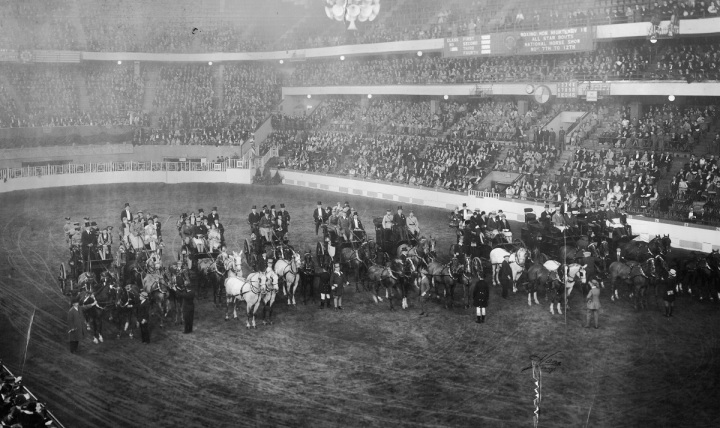
SEND IN THE…YOU KNOW…THOSE GUYS…Top, clowns in town for the 1931 Ringling Brothers and Barnum & Bailey Circus at Madison Square Garden. Below, circus poster announcing the arrival of “The Greatest Show on Earth.”  (potterauctions.com)

José Schorr, who wrote a number of humorous columns in The New Yorker from 1926 to 1930 on the subject of “how to the pass the time” in various situations, offered this advice on attending the spectacle at Madison Square Garden…

I’D RATHER BE FLYING…1930 poster advertising “The Human Projectile”; 1931 photo of the Ringling Brothers and Barnum & Bailey Circus at Madison Square Garden. (worthpoint.com/bidsquare.com)

…for example, Schorr advised circus-goers to pass the time by considering the inner lives of performers such as “The Human Projectile”…

 *  *  *

Funny Farm

Perhaps you’ve never heard of Joe Cook (1890-1950), but in the 1920s and 30s he was a household name and one of America’s most popular comedic performers. “Talk of the Town” looked in on his antics at his Lake Hopatcong farm, “Sleepless Hollow”…

BATTER UP…Comedian Joe Cook’s residence at Lake Hopatcong, NJ, was known for its celebrity-studded parties. At left, Babe Ruth takes a swing with a giant bat on Cook’s wacky three-hole golf course; at right, Cook relaxing on the steps of his farm. (lakehopatcongnews.com)

 *  *  *

Fun With Balloon Animals

One thing that distinguishes the 1930s from today is that era’s apparent lack of safety standards, or fear of liability. A case in point was Macy’s Thanksgiving Day Parade, which began a tradition in the late 1920s of releasing its giant balloons into the sky at the conclusion of the parade — a $50 reward was offered by Macy’s for their return. “The Talk of the Town” explained:

GOING, GOING, GONE…When Felix the Cat (left, in 1927) was released after the Macy’s Thanksgiving Day Parade, it floated into a power line and caught fire; in 1931 the parade’s Big Blue Hippo (right) was apparently spotted floating over the ocean, never to be seen again. (Macy’s/hatchingcatnyc.com)

Perhaps the craziest anecdote attached to the parade’s annual balloon release belonged to Annette Gipson. While flying a biplane at 5,000 feet with her instructor, she spotted the parade’s 60-foot “Tom Cat” balloon rising high above Queens. Looking to have a bit of fun, the 22-year-old Gipson flew the plane directly into the cat. According to the book Macy’s Thanksgiving Day Parade, “Upon impact, the balloon wrapped itself around the left wing. The plane went into a deep tailspin (nearly throwing Gipson from the cockpit) and sped toward the ground out of control.” Fearing the plane would catch fire when it hit the ground, the instructor killed the ignition, and somehow managed to pull the plane out of the spin and land it safely at Roosevelt Field.

KITTY LITTER…Annette Gipson, right, nearly killed herself and her flight instructor after she deliberately crashed her biplane into a Tom Cat balloon (left) that had been released following the 1932 Macy’s Thanksgiving Day Parade. Of her near-death experience, Gipson told reporters, “It was a sensation that I never felt before—the whirling housetops, rushing up to meet me—and the thoughts of a whole lifetime flashed through my mind.” (ephemeralnewyork.wordpress.com)

A footnote: Following Gipson’s brush with death, Macy’s announced it would not give prize money to those who tried to down the balloons with their airplanes. The incident also brought an end to the company’s tradition of releasing the balloons.

 *  *  *

Birth of the Soundtrack

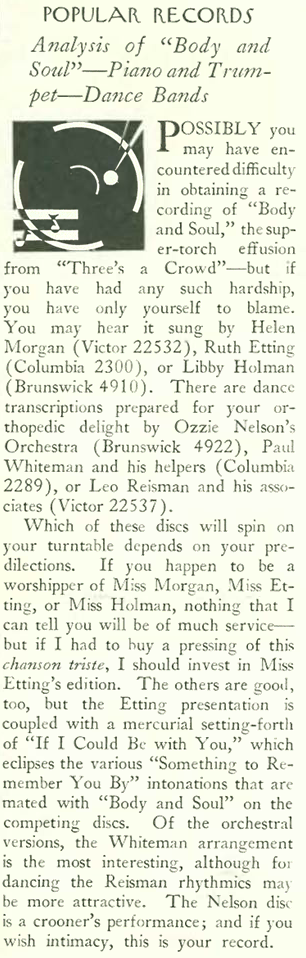
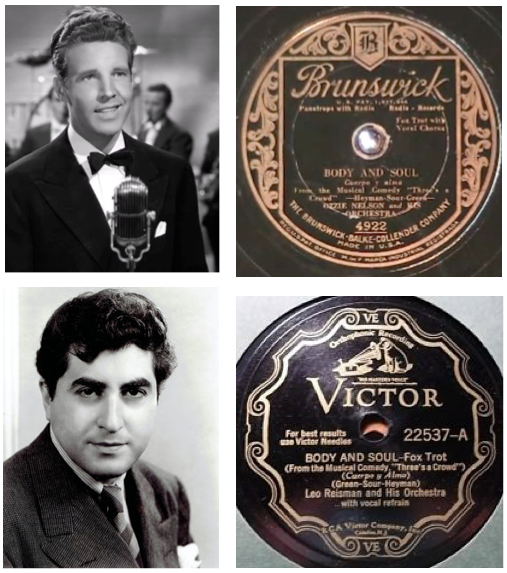
Songs from popular theater productions were first made available to the masses in the mid-19th century via printed sheet music and later through early recordings. Part of this lineage is the movie soundtrack, which has its origins in the early days of sound pictures. According to The New Yorker’s “Popular Records” column, these new recordings would bring the talkies into your home, albeit without the picture…

FROM MAMMY TO MAMMA MIA…Left, a 1930 Brunswick 78 RPM recording of Al Jolson’s “To My Mammy”; at right, soundtrack from the 2008 film Mamma Mia! (popsike.com/amazon.com)

 *  *  *

Cosmo Calvin

Before Helen Gurley Brown came along in the 1960s and sexed it up, Cosmopolitan was known as a somewhat bland literary magazine, and it was certainly bland enough in 1930 to welcome the scribblings of America’s blandest president to its pages. E.B. White mused in his “Notes”…

NOTHING COMES BETWEEN ME AND MY CALVIN…At left, the May 1930 issue of Cosmopolitan featuring columnist and former U.S. President Calvin Coolidge; at right, Kourtney Kardashian on the cover of the October 2016 issue. (Pinterest/Cosmopolitan)

 *  *  *

How Dry I Am

After a decade of living under Prohibition, John Ogden Whedon (1905-1991) put pen to paper and shared his sentiments in a poem for The New Yorker

…Whedon would go on to a successful career as a screenwriter, especially finding acclaim for his television writing on The Donna Reed Show, Leave It to Beaver, The Andy Griffith Show, and The Dick Van Dyke Show, among others. He was also the grandfather of screenwriter and director Joseph “Joss” Whedon and screenwriters Jed Whedon and Zack Whedon.

Another poem in the April 19 issue was contributed by John Held Jr., who was perhaps better known to New Yorker readers for his “woodcut” cartoons…

…example of Held’s work from the April 12 issue, featured in an Old Gold advertisement…

…and that provides a segue into our ads for the April 19 issue, beginning with this spot for an early electric dishwasher…

Here’s what that bad boy looks like in color. (automaticwasher.org)

…I couldn’t find a review in The New Yorker for Emily Hahn’s new book, Seductio Ad Absurdum, but her publisher did take out an ad to get the attention of readers. Many years later The New Yorker would call the journalist and author “a forgotten American literary treasure”…

Emily Hahn circa 1930; first edition of Seductio Ad Absurdum. Author of 52 books, her writings played a significant role in opening up Asia to the West. (shanghaitours.canalblog.com/swansfinebooks.com)

…and here we have another sumptuous ad from illustrator Carl “Eric” Erickson, a far cry from the “Joe Camel” ads that would come along decades later…

…on to our cartoons, Reginald Marsh offered a blue collar perspective on city fashions…

Alice Harvey captured a moment of reflection by an overworked housewife…

…and Isadore Klein looked in on a couple of working stiffs in need of a dictionary…

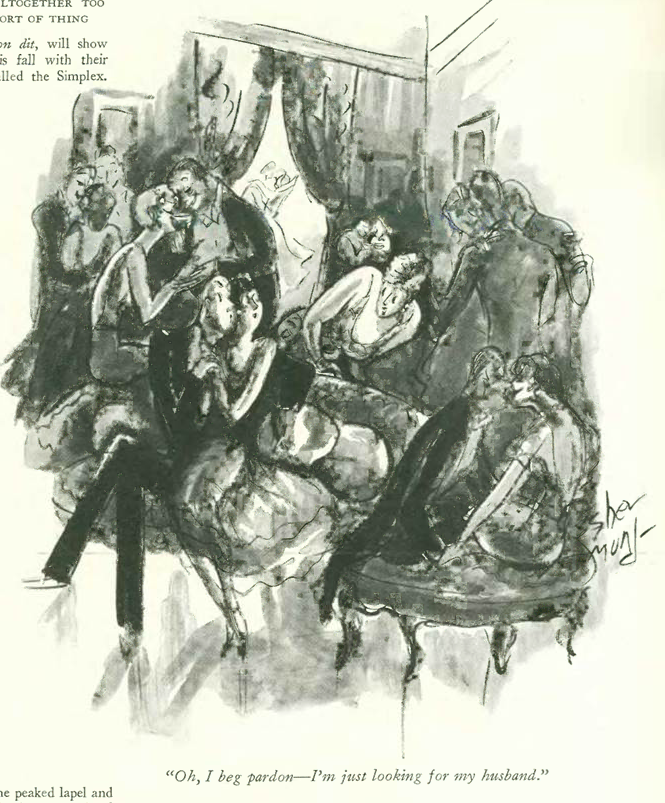
…now over to the posh set, with Barbara Shermund

Leonard Dove found humor on the chorus line…

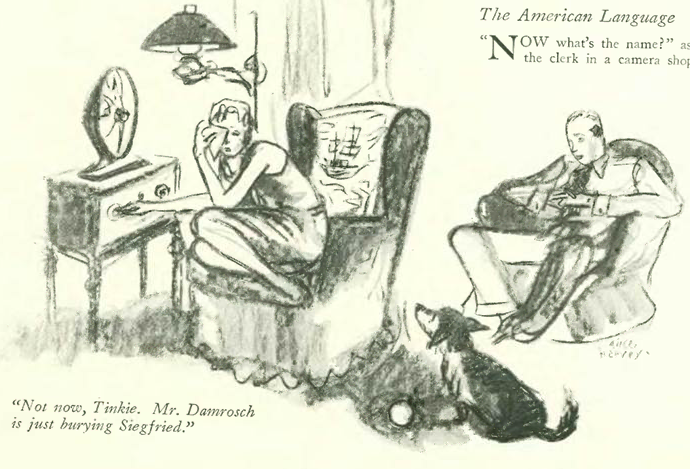
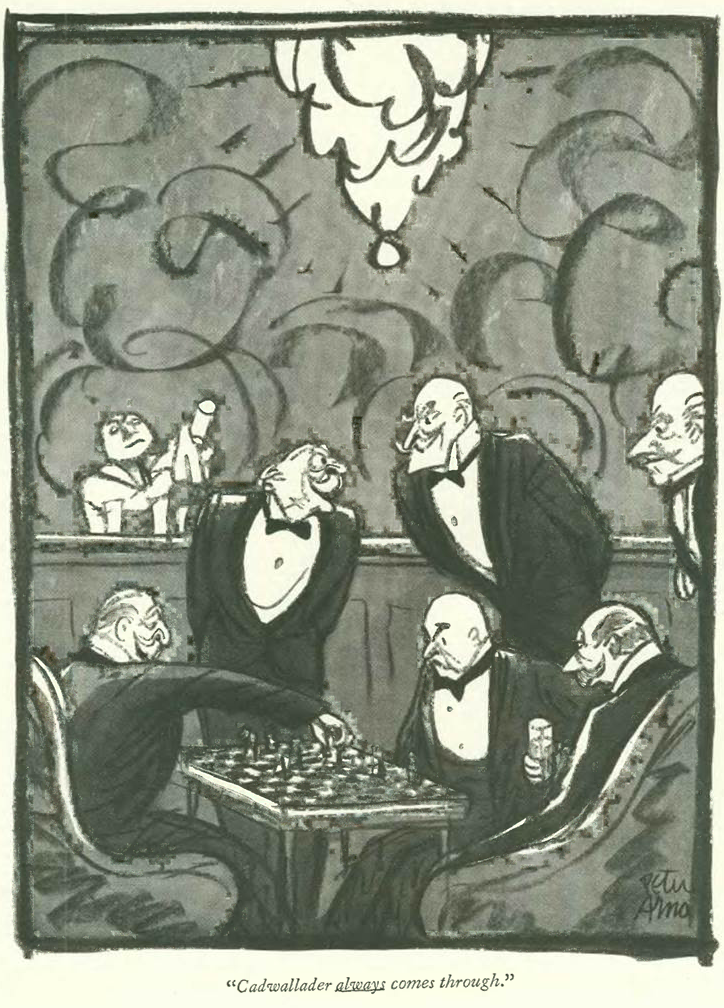
…and we end with this terrific cartoon by Peter Arno, and the perils of apartment life…

Next Time: Paramount on Parade…