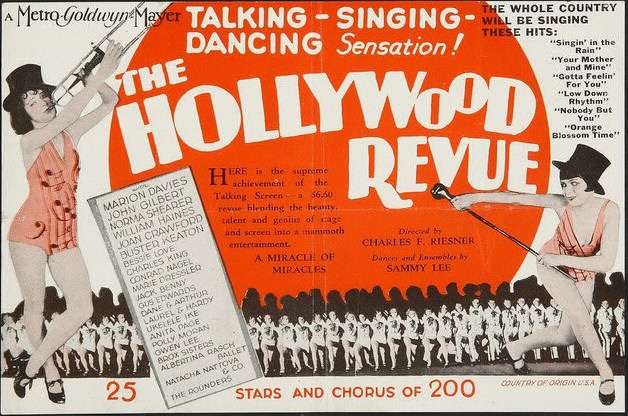
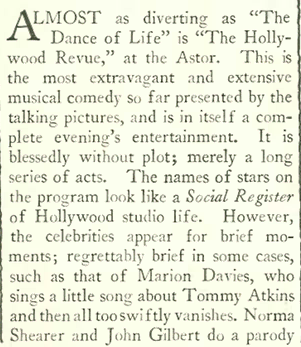
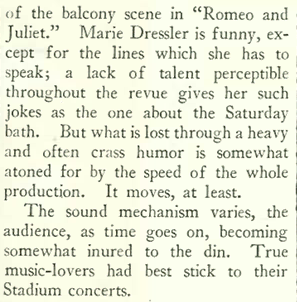
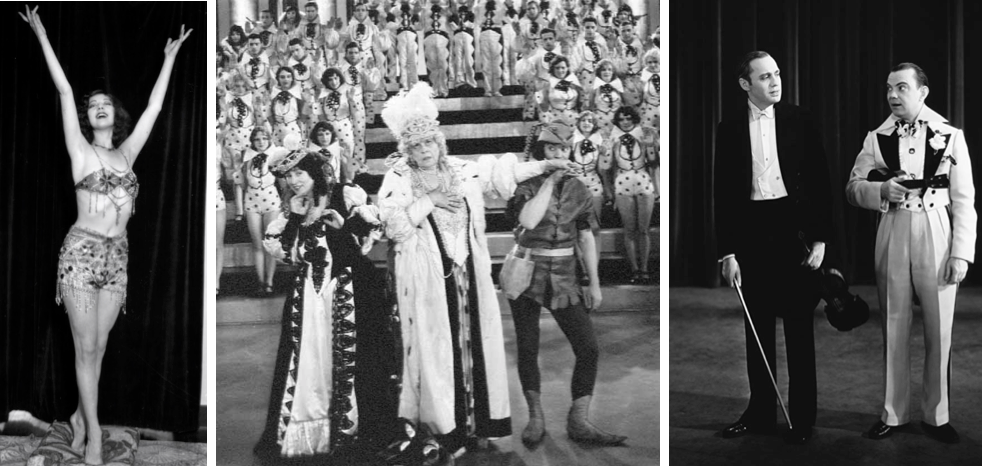
The Unspeakables

For all its embrace of the modern city and its technological wonders, The New Yorker mostly despaired of the changes wrought by the introduction of sound to motion pictures.

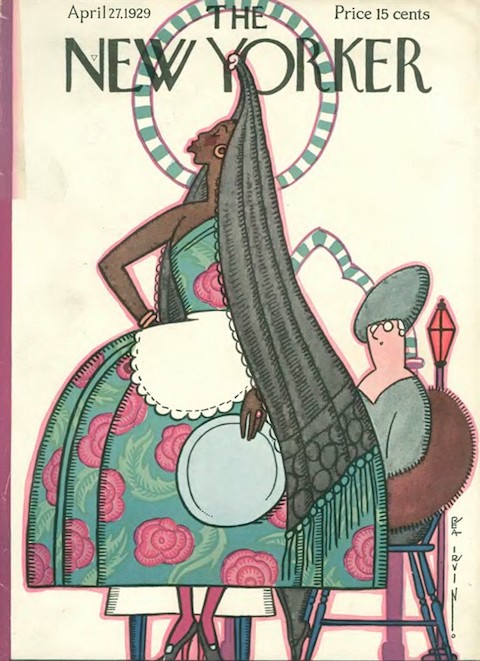
June 1, 1929 cover by Rea Irvin.

Granted, early sound technology was primitive, with directors, actors and crew members adapting on the fly to the demands of a new medium that required absolute silence on film sets and cumbersome microphones that severely limited the movements of actors. Screenwriters, accustomed to writing brief intertitles in silent films, now had to write expository dialogue, and actors had to rely less on exaggerated facial expressions and body movements and more on the spoken word. And it helped if you didn’t have a speech impediment or heavy accent.

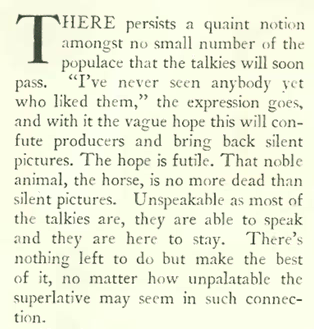
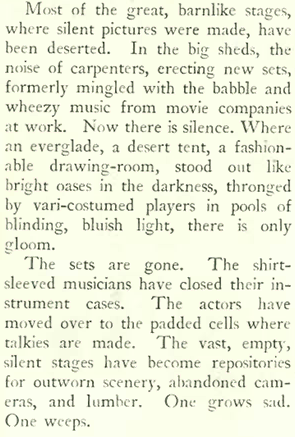
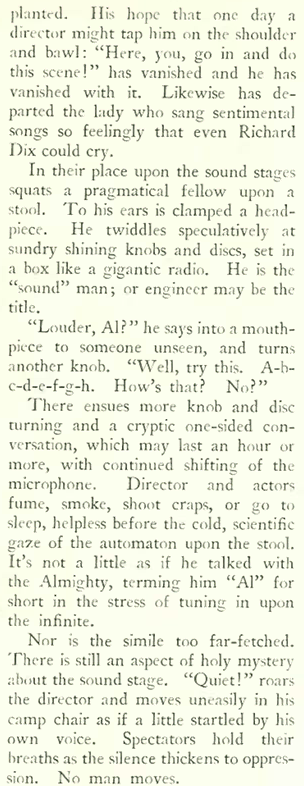
Writing for “The Reporter at Large” column (titled “The Unspeakables”), Hollywood correspondent Jean-Jacques lamented that the talkies were “here to stay”…

BARNLIKE STAGES were erected on both coasts to produce early silent films. Clockwise, from top left, Fox’s World Paragon Studios in Ft. Lee, NJ, circa 1917; interior of the studio; several films in production, side-by-side, at Edison’s Bronx studio, circa 1915; Fox studios in Los Angeles, 1920s. (moviemice.com/Wikipedia)

Jean-Jacques recalled the professions that would now be lost to the talkies, including the “mood musicians” who played their instruments on silent film sets in order to evoke emotions from the actors…

IN THE MOOD…During the silent era “mood musicians” were hired to play their instruments on film sets in order to evoke emotions from the actors. (Pinterest)
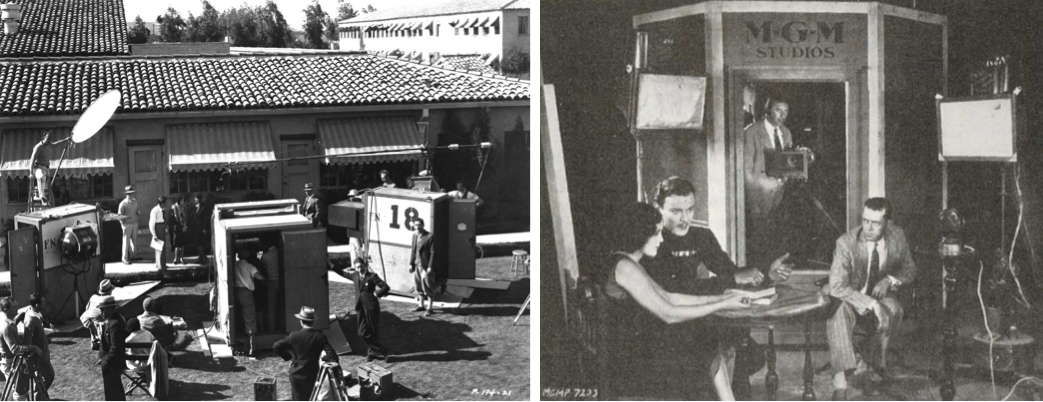
THE SILENCE OF SOUNDS…In the early days of the talkies the entire set had to be silent, and special care had to be taken to ensure loud cameras were housed in soundproof boxes such as those pictured above. Instead of the introduction of sound expanding the capabilities of filmmaking, it was often limited by the bulky gear used to capture that sound. Therefore, many films consisted of “stage” musical numbers that were static shots. (Caption and image at left courtesy Colorado College. Image at right from cinecollage.net)

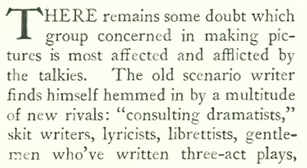
The writer also noted the challenges that faced “the old scenario writer…hemmed in by a multitude of new rivals…

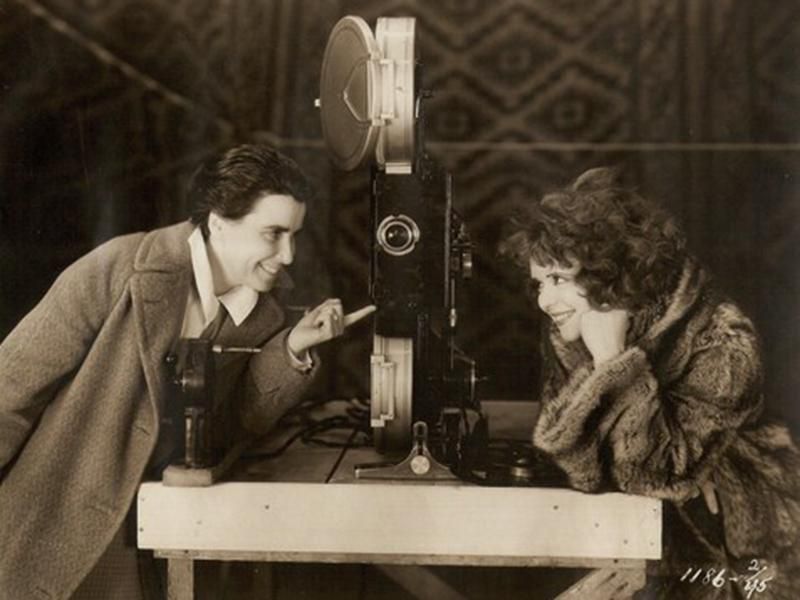
WE HAVE WAYS OF MAKING YOU TALK…Dorothy Arzner (left) poses with “It Girl” Clara Bow in a publicity shot for The Wild Party, Bow’s first talking picture. Bow is famously quoted as saying (in 1930) “I hate talkies. They’re stiff and limiting. You lose a lot of your cuteness, because there’s no chance for action.” Arzner tried to remedy that problem: she is credited with inventing the boom mike, which allowed for greater movement by the actor. (Paramount Pictures/Wikimedia Commons)

Jean-Jacques recounted the frustrations experienced by one old-time actor dealing with the limitations of bulky sound equipment…

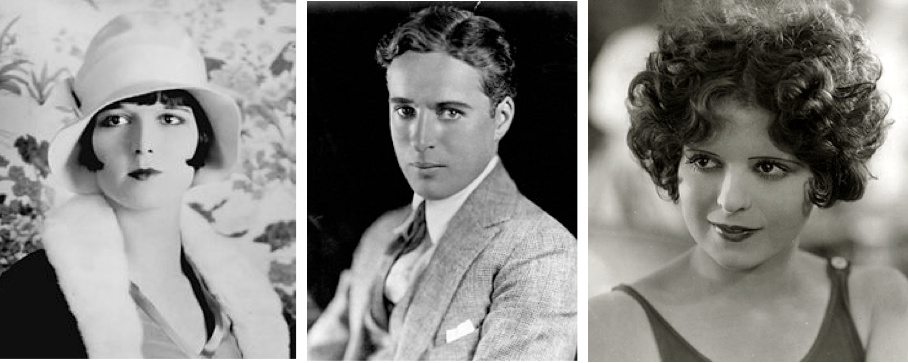
This actor was not alone. A number of major silent film stars including Charlie Chaplin, Louise Brooks, and Clara Bow did not embrace the novelty of sound pictures. Motion Picture Classic magazine (September 1930) quoted Bow as saying, “I hate talkies … they’re stiff and limiting. You lose a lot of your cuteness, because there’s no chance for action, and action is the most important thing to me.” According to the article, a visibly nervous Bow had to do a number of retakes in The Wild Party because her eyes kept wandering up to the microphone overhead.

SILENCE IS GOLDEN…A number of major silent film stars including (from left) Louise Brooks, Charlie Chaplin and Clara Bow did not embrace the novelty of sound pictures. (Wikipedia)

Jean-Jacques signed off his New Yorker piece with the hope that someday pictures and sound would be combined into a worthy new art form…

Perhaps he had to look no further than Manhattan’s Rialto Theatre to find that first glimmer of hope, for it was there that the Marx Brothers were tearing up the screen in their first talking picture, The Cocoanuts, reviewed in the magazine’s “The Current Cinema” column…

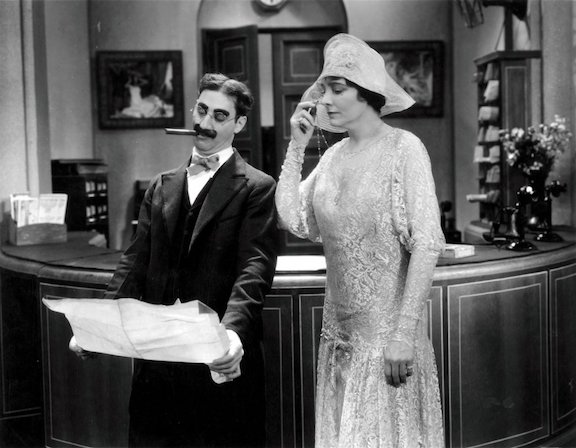
If The New Yorker was looking for snappy dialogue in motion pictures, there was plenty of it in The Cocoanuts, including this snippet between Groucho Marx, playing Mr. Hammer—an unscrupulous manager of a bankrupt Florida hotel—and wealthy hotel guest Mrs. Potter, played by Margaret Dumont…

Hammer: Do you know that property values have increased since 1929 one thousand per cent? Do you know that this is the biggest development since Sophie Tucker? Do you know that Florida is the show spot of America and Cocoanut Manor the black spot of Florida?

Mrs. Potter:  You told me that yesterday.

Hammer: I know but I left out a comma.

Or this gem…

Hammer, to Mrs. PotterJust think – tonight, tonight when the moon is sneaking around the clouds I’ll be sneaking around you. I’ll meet you tonight under the moon. Oh, I can see it now – you and the moon. Wear a neck-tie so I’ll know you.

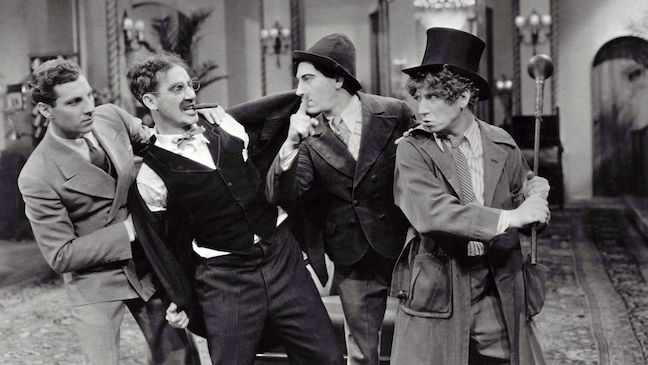
SHOW ‘EM HOW IT’S DONE…Zeppo, Groucho, Chico and Harpo Marx in their first sound movie, The Cocoanuts, 1929. (vitaphonedreamer.wordpress.com)
BAMBOOZLER… Mrs Potter (Margaret Dumont), inspects Mr Hammer’s (Groucho Marx) Florida property “deals” in The Cocoanuts. (British Film Institute)

 *  *  *

For Sentimental Reasons

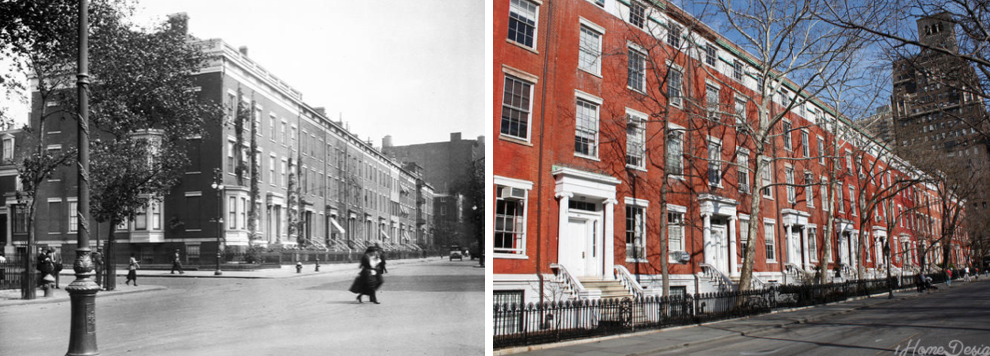
Additional evidence that The New Yorker was not always ready to embrace change came from its many articles, particularly in “The Talk of the Town,” that seemed to favor the preservation of buildings that defined the character of certain neighborhoods, including the early 19th century row houses that lined Washington Square North…

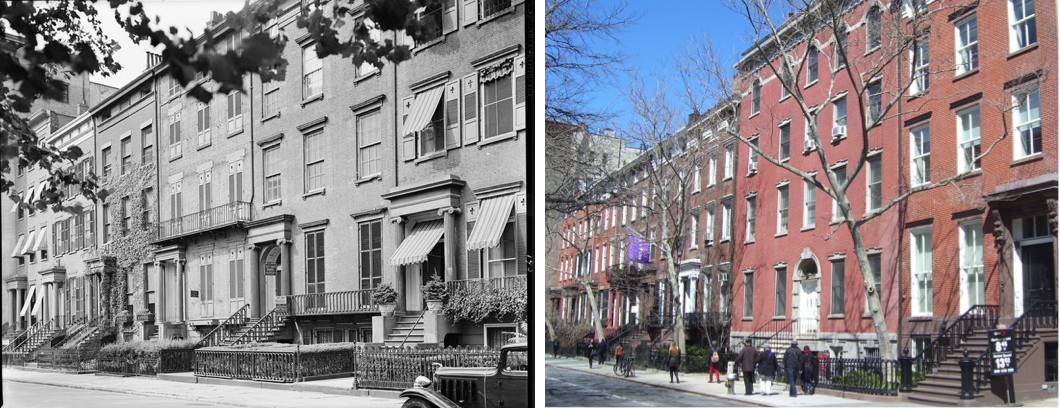
THEN AND NOW…At left, photo dated 1921 of Washington Square, north side of square looking east from 5th Avenue. Corner house in foreground is No. 12. The far end at right shows Nos. 3, 2, 1. At right, roughly the same block today. (Museum of the City of New York/1homedesigns.com)

At left, photo dated 1936 (by Berenice Abbott) of Washington Square North, nos. 21-25, between Fifth Avenue and MacDougal Street. At right, nos. 19-26 today. (Museum of the City of New York/Wikimedia Commons)

 *  *  *

The Wittier Kaufman

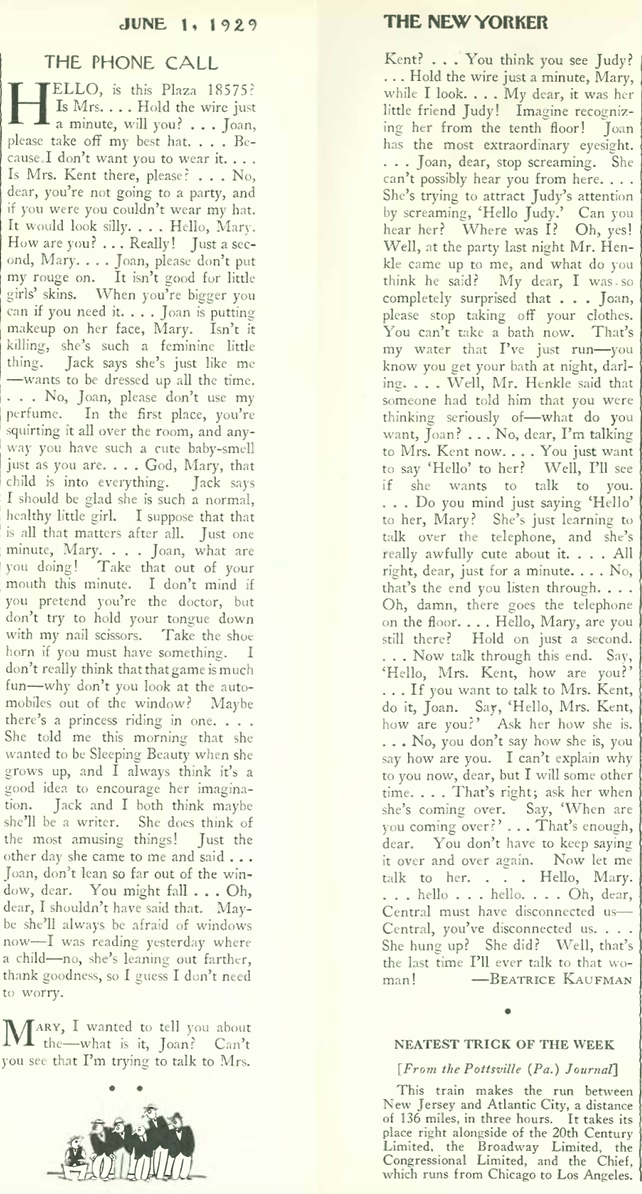
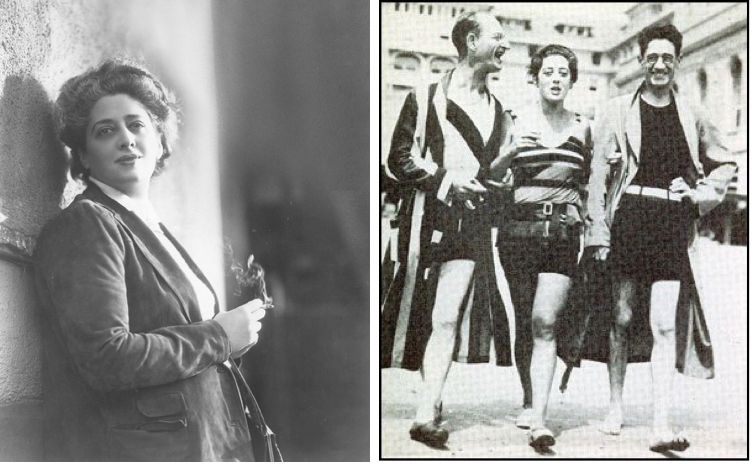
Editor and playwright Beatrice Kaufman worked and played within the orbit of the famed wits of the Algonquin Round Table, but was not a regular member like her husband, playwright and director George S. Kaufman. But Beatrice Kaufman didn’t the need the Algonquin to display her wit. Indeed, according to Michael Galchinsky (writing for the Jewish Women’s Archive), she was regarded as one of the wittiest women in New York in the 1930s and 40s. Here is an example of her work in the June 1 issue of The New Yorker:

THE WITTIEST OF THEM ALL…Editor, writer and playwright Beatrice Kaufman (left, in undated photo). At right, comedian Julius Tannen (left) frolics with Beatrice and her husband, Broadway playwright/producer George S. Kaufman in Atlantic City in the 1920s. (thepurplediaries.com/spartacus-educational.com)

 *  *  *

Rags to Riches

The life of Fred F. French was something out of dime novel; born in dire poverty, he became a self-made real estate tycoon and a shrewd builder of some of Manhattan’s biggest land developments. French was the subject of a profile written by Robert M. Coates, an art critic who would be a longtime contributor to The New Yorker. An excerpt, with illustration by Al Frueh:

MONUMENTS TO FRED…Fred French’s New York City buildings included, clockwise from left, the 38-story Fred F. French Building (1927) at 45th Street and 551 Fifth Avenue (designated a National Landmark); Knickerbocker Village (1934) on the Lower East Side; and the East Side’s Tudor City apartment complex (1927-1932). (Pinterest/thelodownny.com/Wikipedia)

 *  *  *

From Our Advertisers

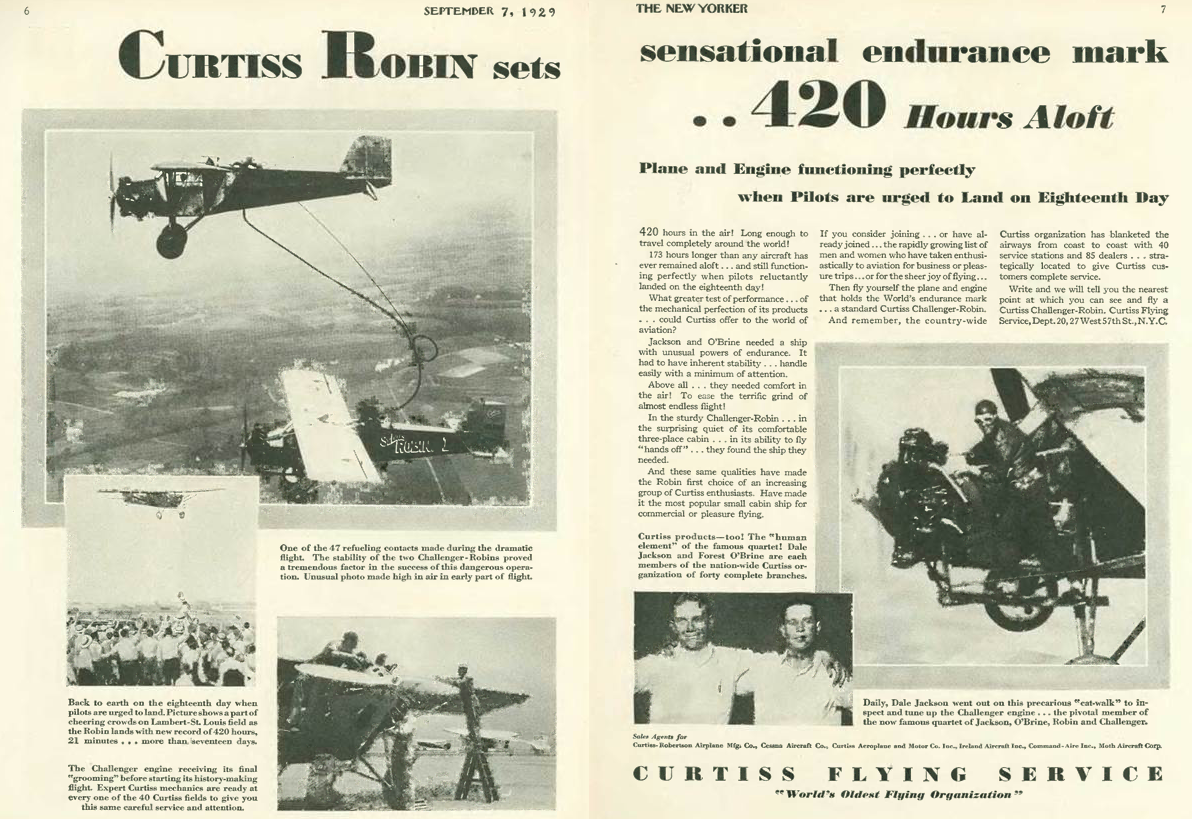
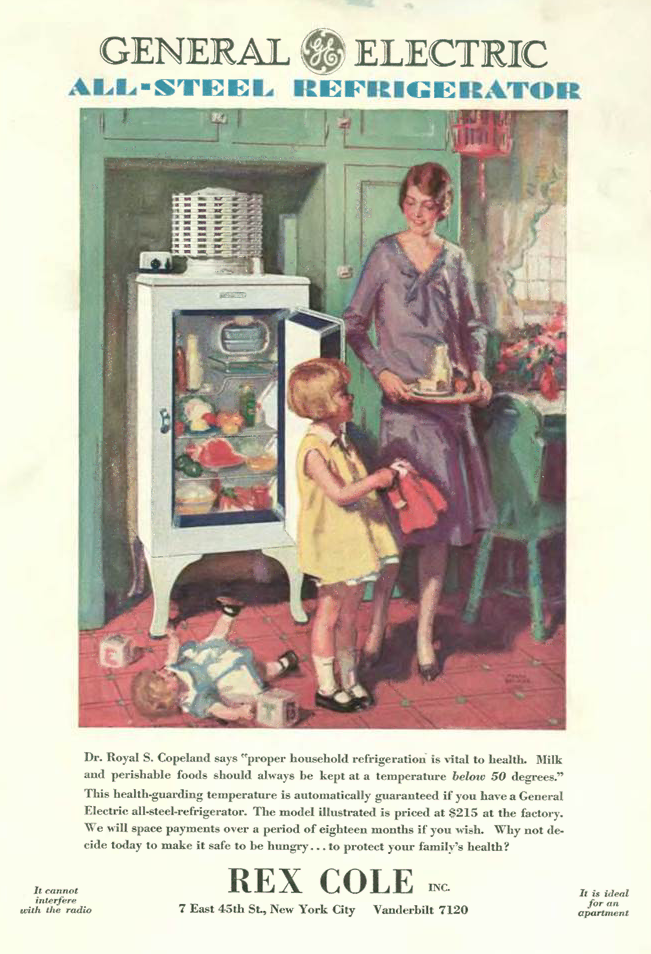
Let’s start with a couple of lovely color ads, which appeared with greater frequency in the magazine…here we have a snatch of the good life, courtesy General Electric…

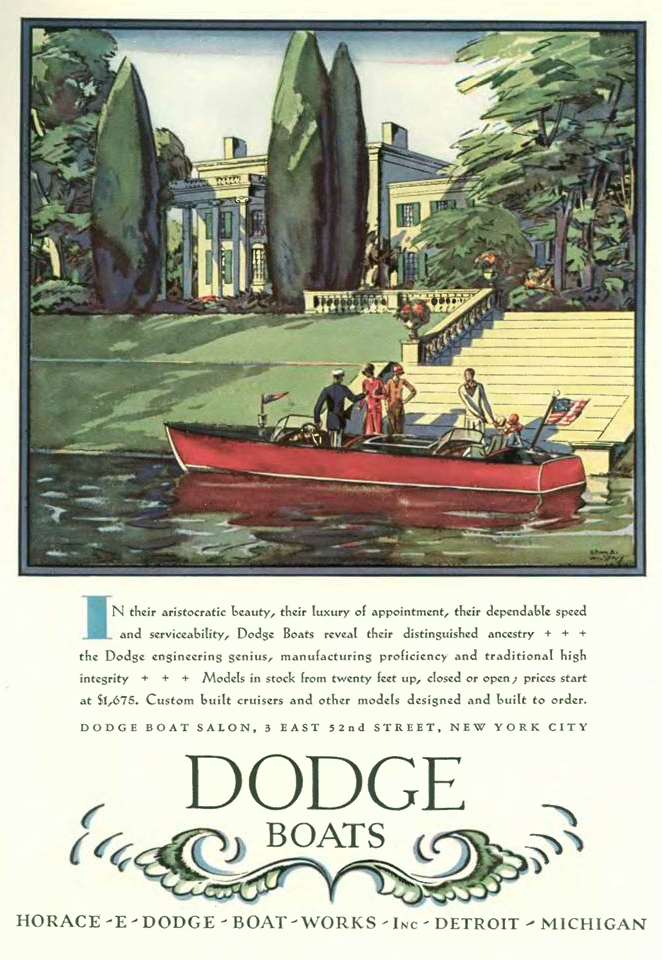
…and perhaps a less homespun image of the good life, from the makers of Dodge boats…

…and here we have another example of the modern world rushing in, this time in the form of instant coffee crystals…

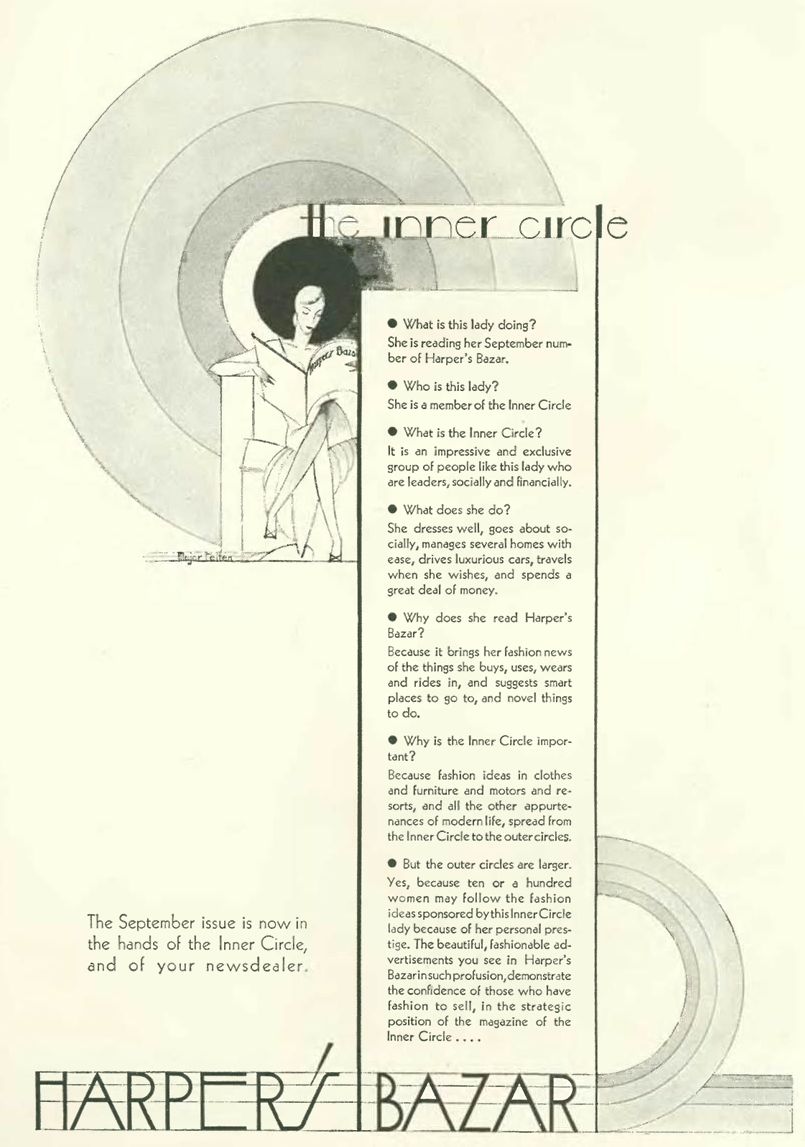
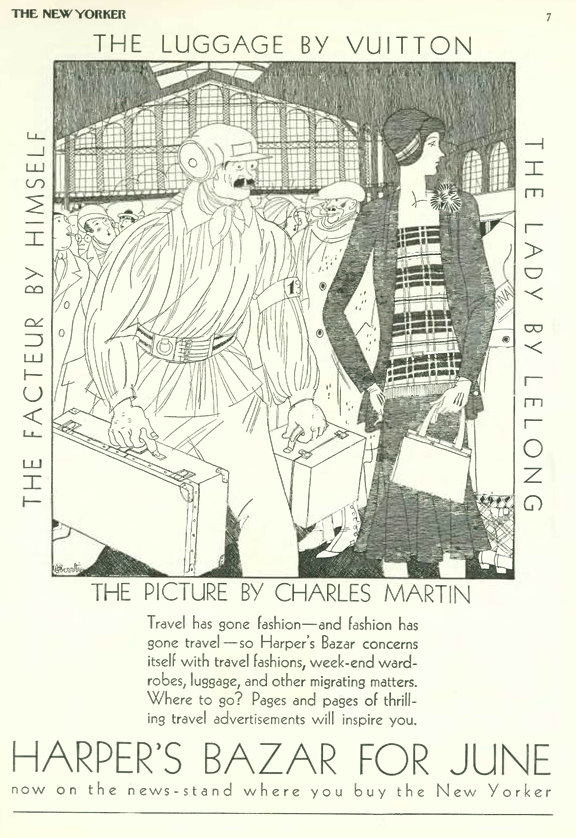
…and another taste of the modern from Harper’s Bazar magazine, featuring an illustration by French artist and illustrator Charles Martin

…and just for kicks, another example of Martin’s work from an earlier time…

Image from Sports et Divertissements by Charles Martin, 1914. (Wikipedia)

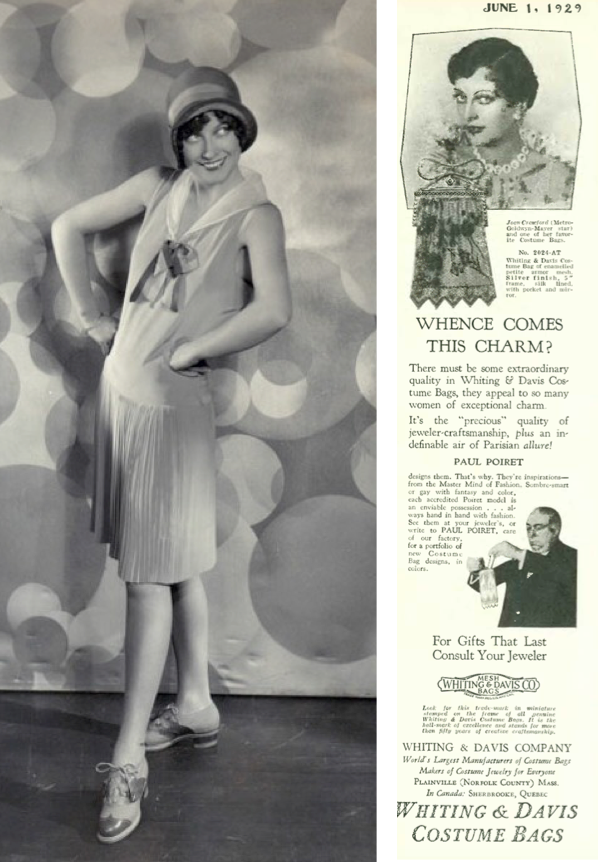
…and here is a back page ad for costume bag maker Whiting & Davis, with an endorsement by Joan Crawford, who was already a pretty big star by 1929. My guess is that Whiting & Davis paid more for the endorsement than they did for the ad…I included a photo of Crawford (at left) from 1929 just to show that she did have a lighter side…

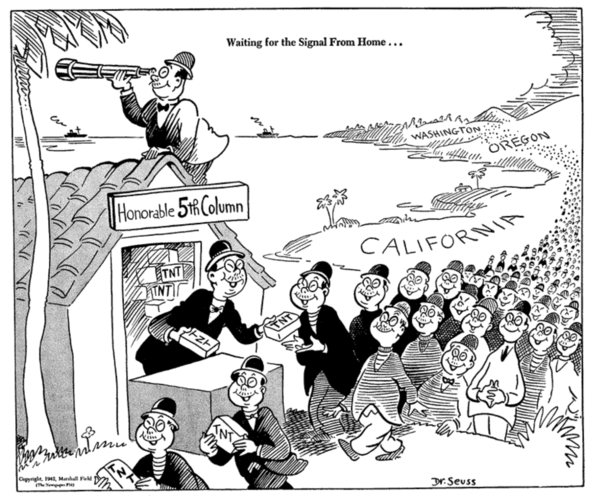
…this ad from the makers of Flit insecticide begs the question: was our beloved Dr. Seuss (aka Theodore Geisel) once a racist? Well…

…although Geisel was a liberal Democrat and a supporter of the New Deal, during World War II he also supported the internment of Japanese Americans, as is evident from this unfortunate 1942 cartoon…
Dr. Seuss 1942 cartoon with the caption ‘Waiting for the Signal from Home’ (slideshare.net)

…later in life Geisel became a staunch environmentalist and anti-war protestor. In 1961 he wrote The Sneetches, which promoted racial equality. Perhaps Geisel lived to regret those earlier drawings…
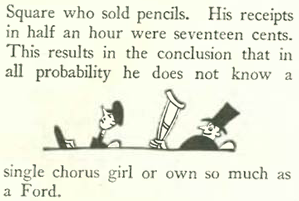
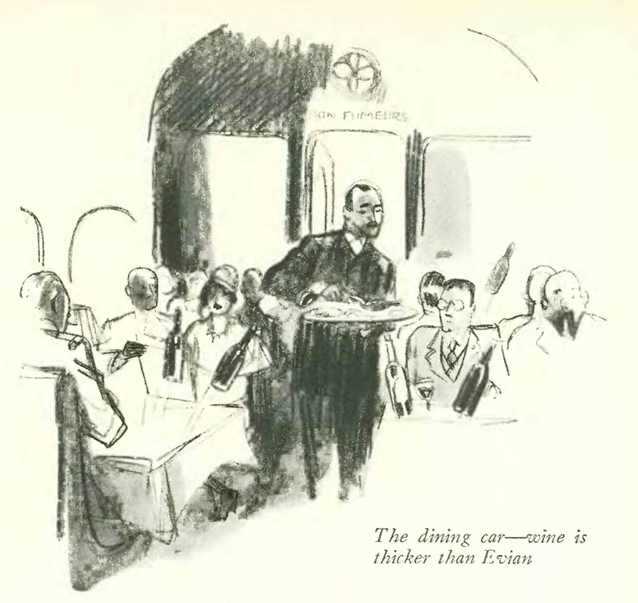
…and on to our illustrators and cartoonists, beginning with this sketch by Garrett Price, apparently inspired from a recent trip to France (it was featured along with several other small sketches in the “Profile” section)…

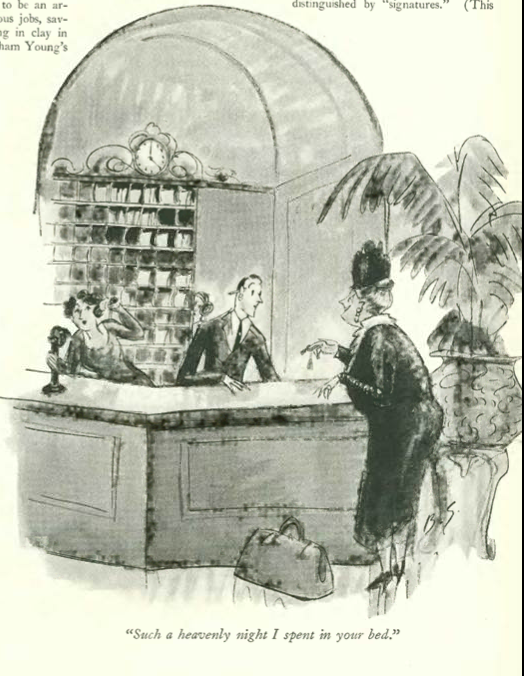
Barbara Shermund had some fun with a double entendre…

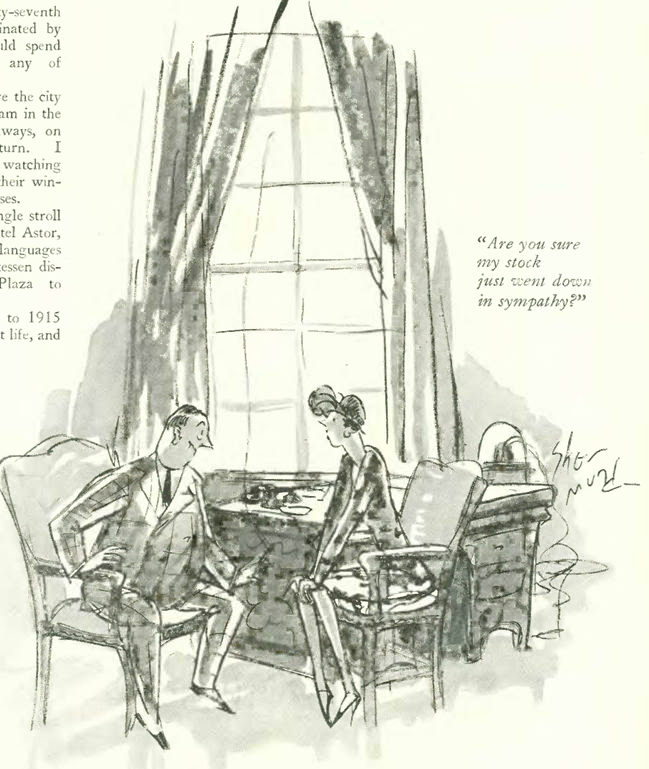
…and popped up again with this look at the stock market…

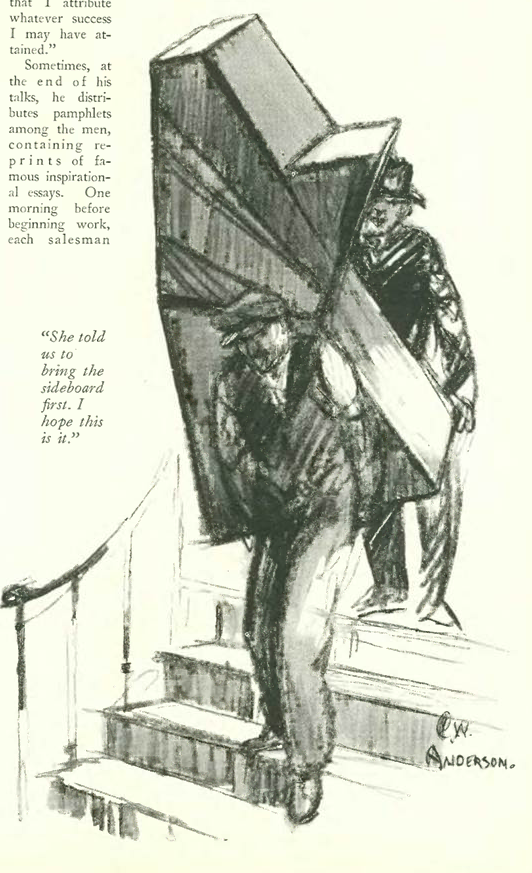
C.W. Anderson found humor in the strange shapes of modernist furniture…

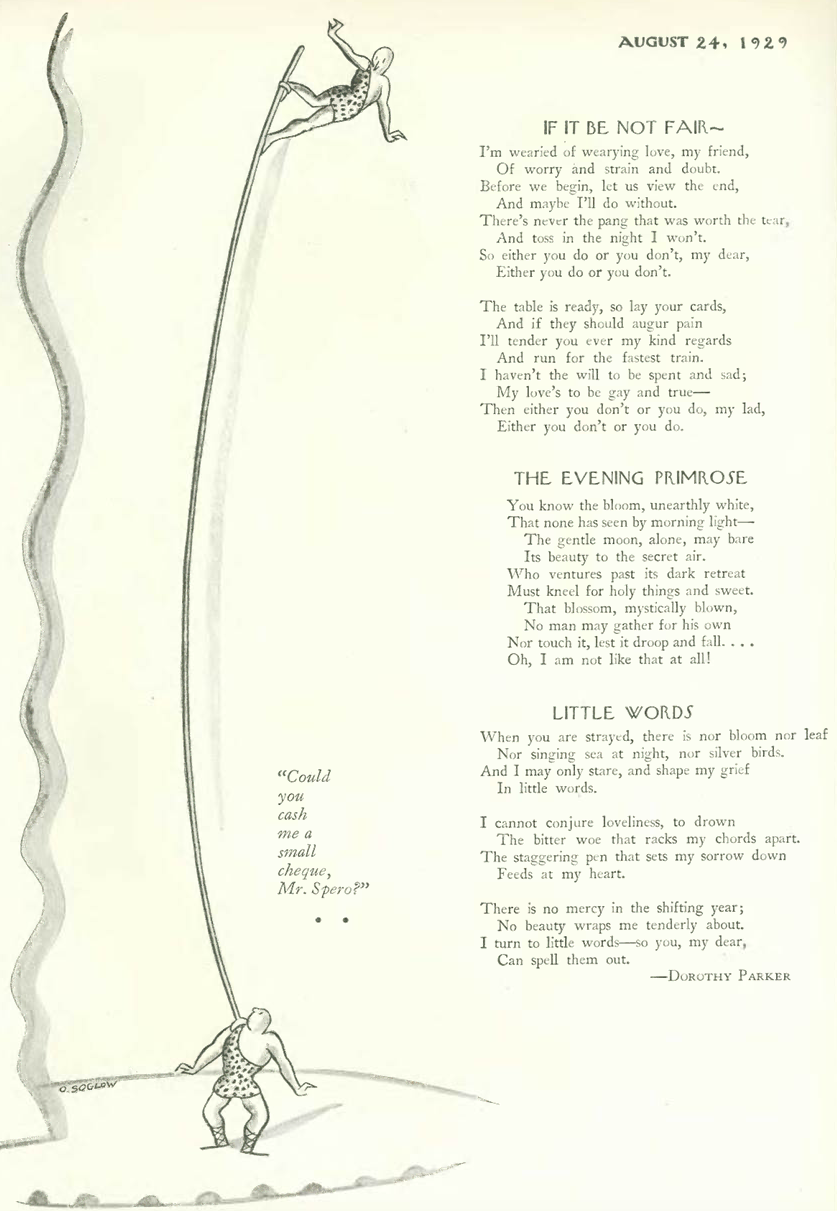
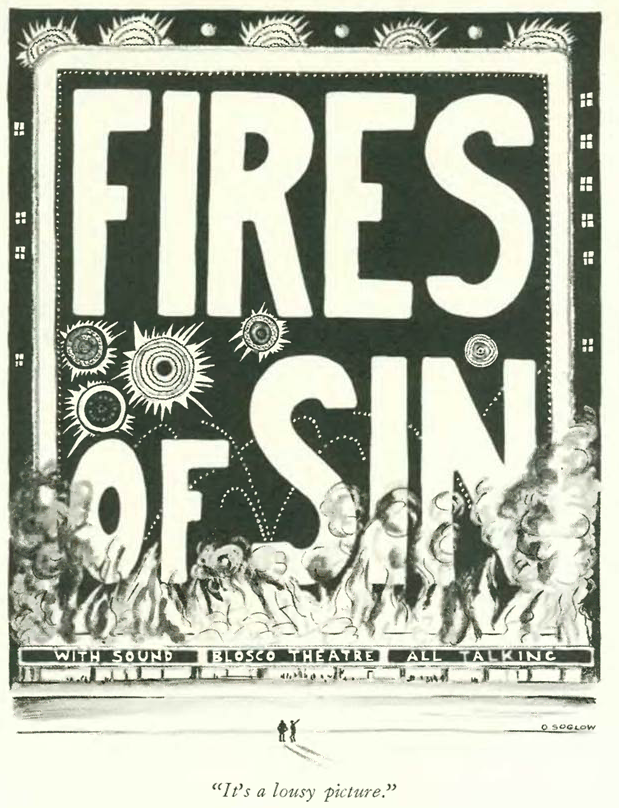
Otto Soglow commented on the glitzy hype of Broadway…

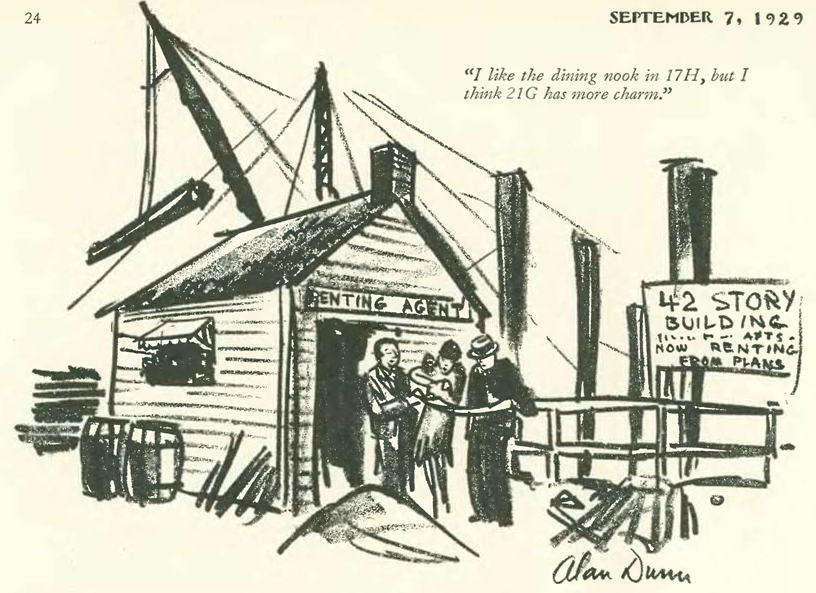
…and cartoonist/humorist Don Herold made his comics debut in The New Yorker with this entry…

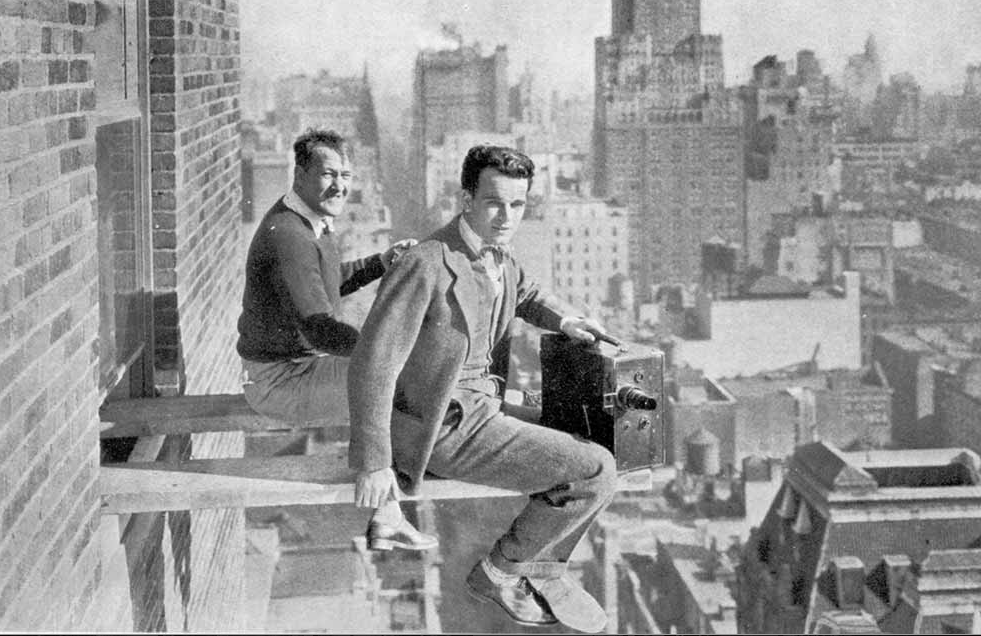
…and finally, a bonus image I came across while researching the advent of sound motion pictures. The photo, from the silent era, shows two cameramen shooting a parade, possibly for a newsreel. Note how their only support consists of two wooden planks wedged into an open window…

(moviemice.com)

Next Time: A Bridge Too Far…

From Broadway to Babylon

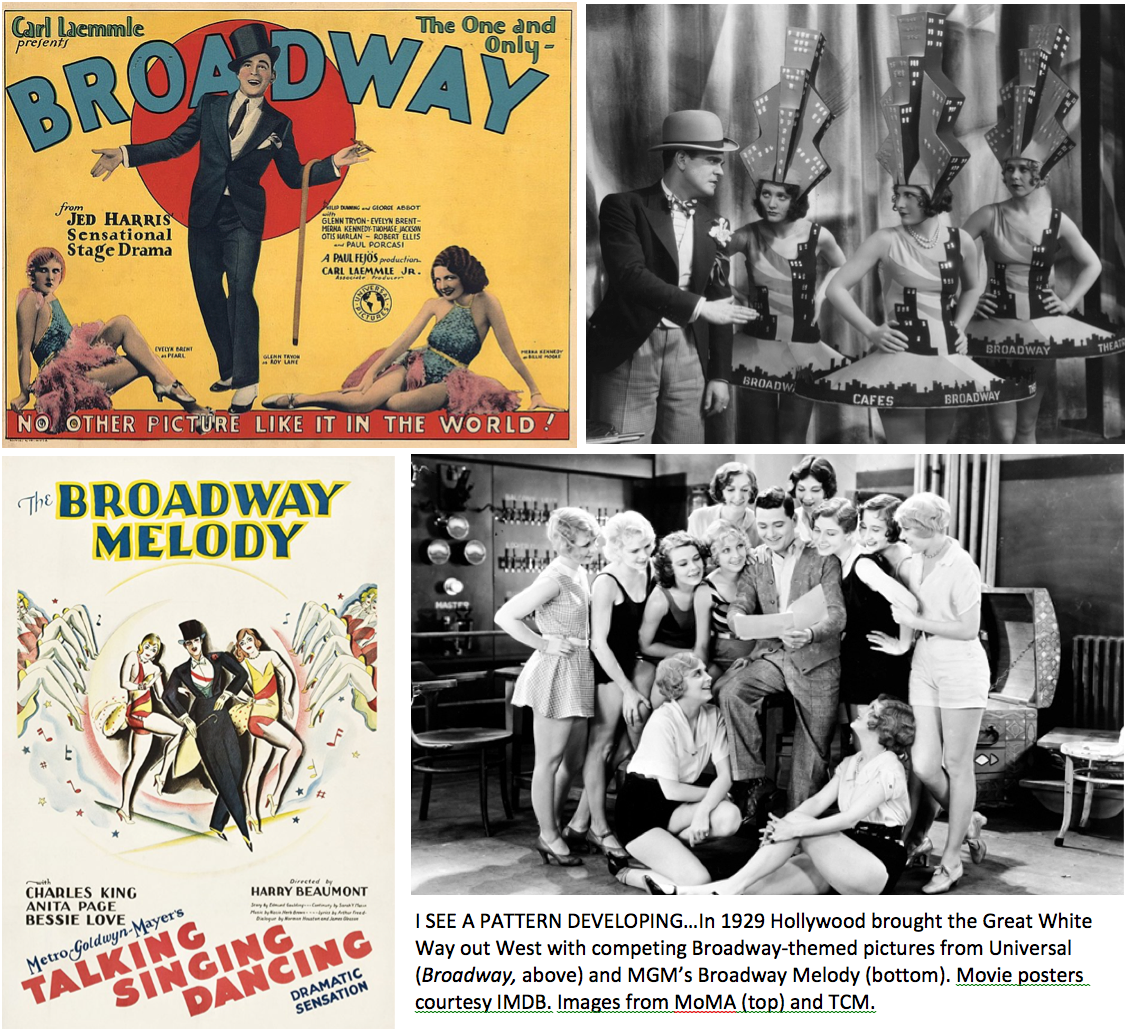
While the introduction of sound to motion pictures ended the careers of some silent film stars in the late 1920s, Hollywood’s “talkies” offered new opportunities for Broadway stage actors who could now take their vocal talents to the screen and to audiences nationwide.

May 4, 1929 cover by Ilonka Karasz.

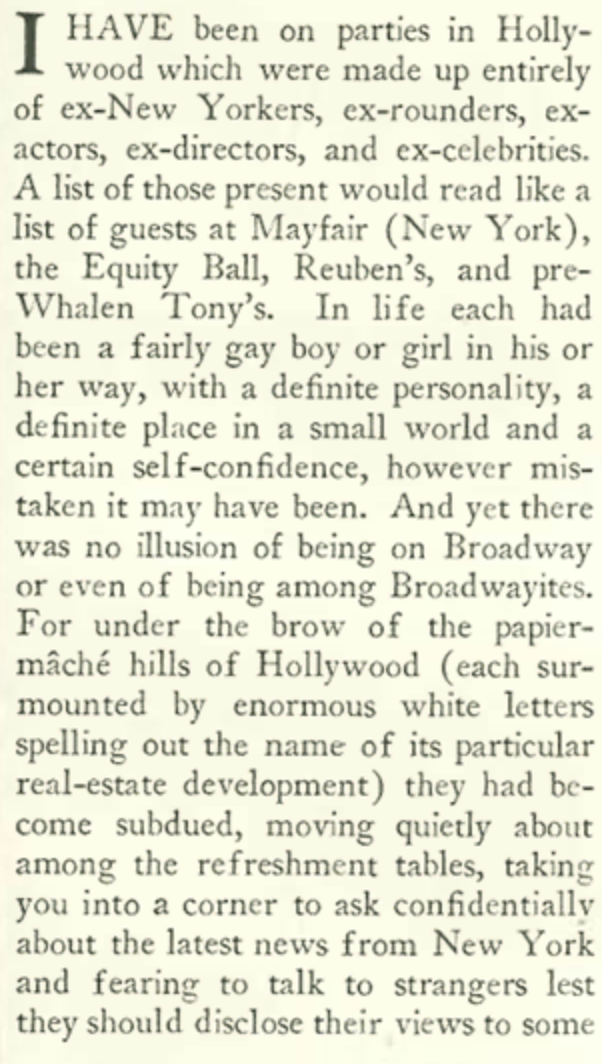
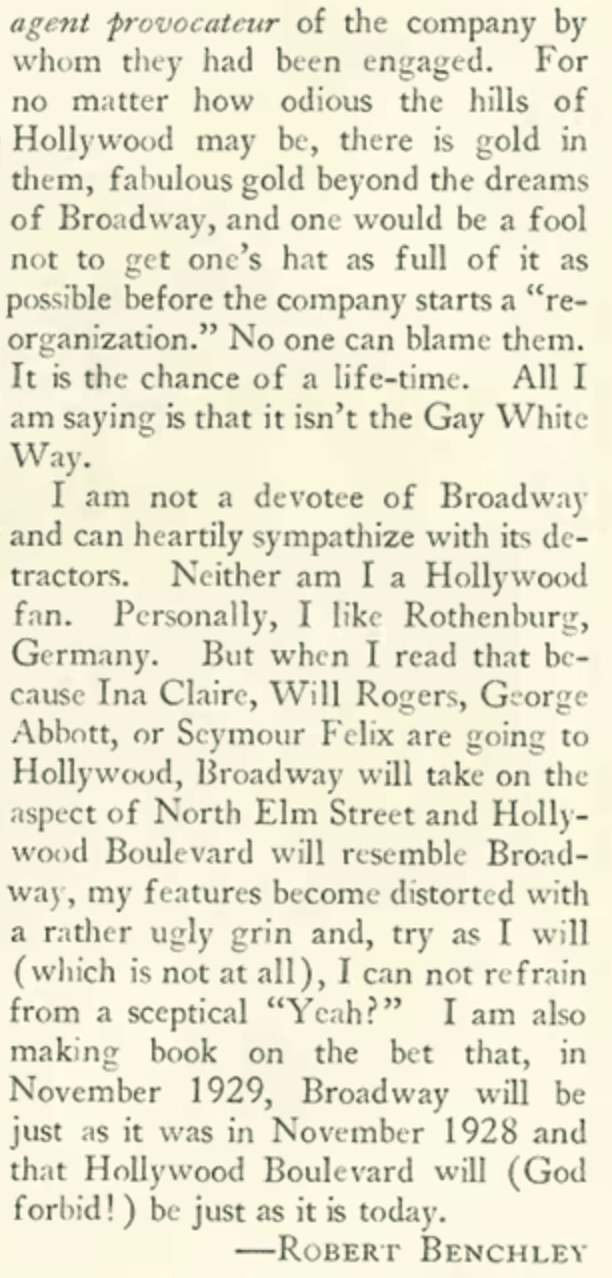
And so began the so-called “Broadway Exodus.” Robert Benchley offered his wry observations on the phenomenon in the May 4, 1929 “A Reporter at Large” column:

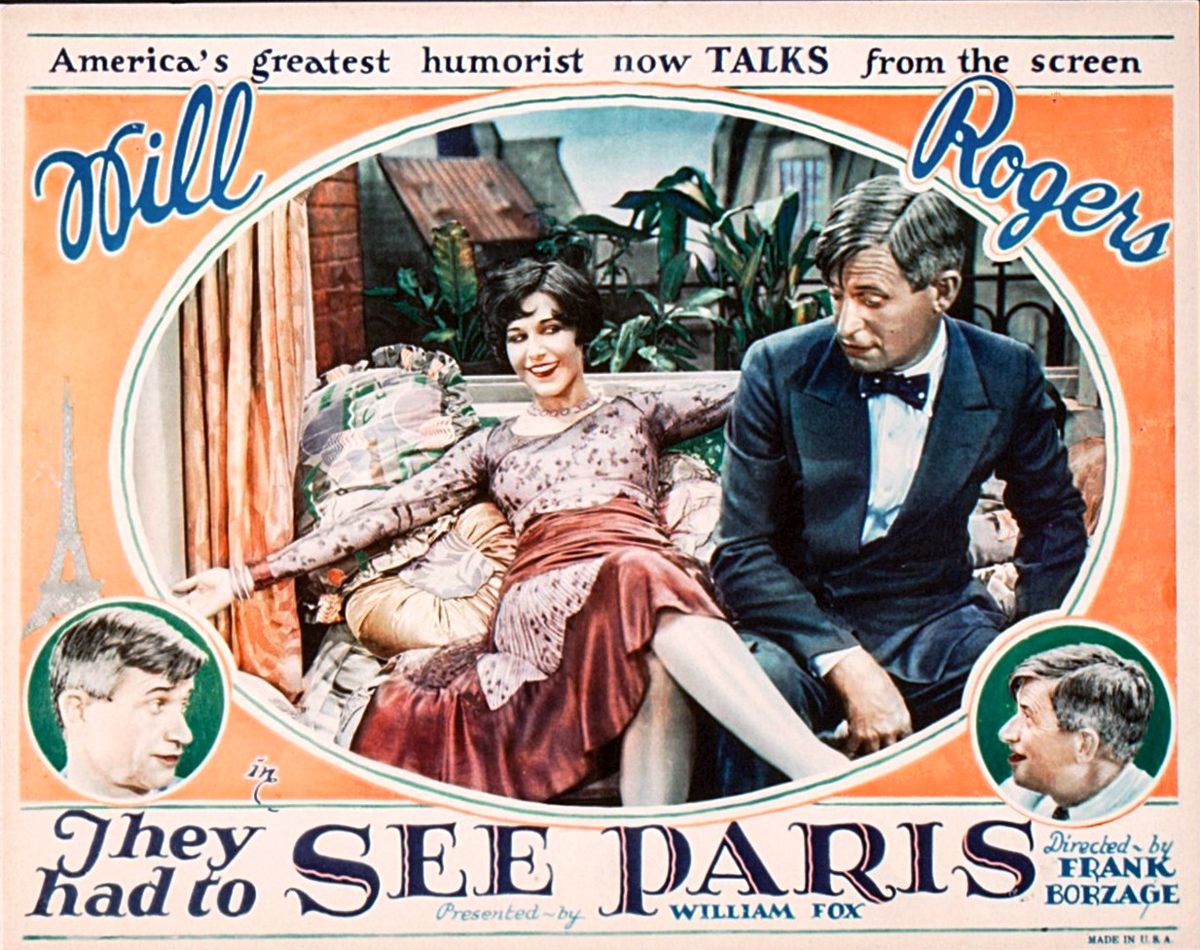
AW SHUCKS…Broadway mainstay and a perennial performer with the Ziegfeld Follies, humorist Will Rogers found his element in Hollywood’s new talkies, appearing here with Fifi D’Orsay in 1929’s They Had to See Paris. (Wikipedia)
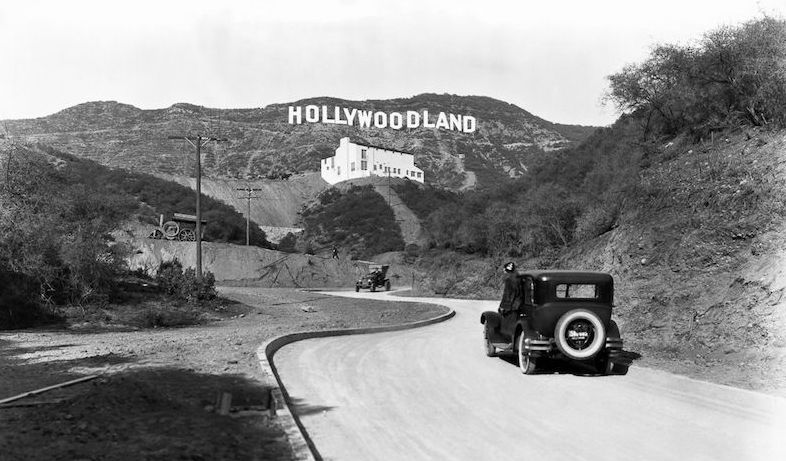
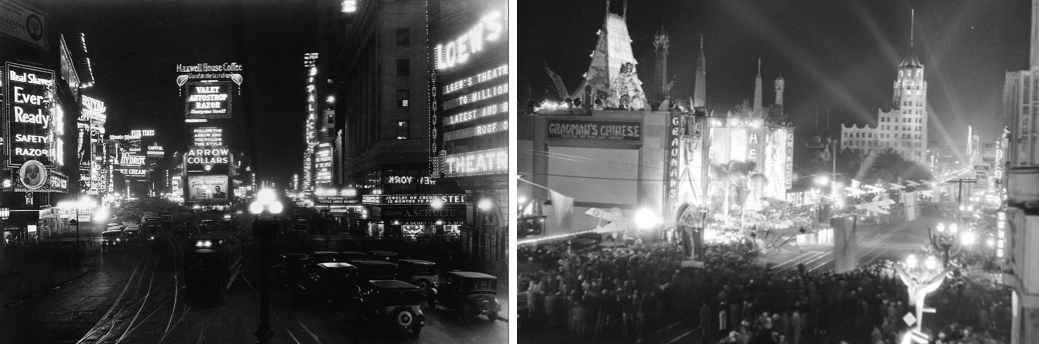
TALE OF TWO CITIES…Broadway in 1925 (left) and Hollywood Boulevard in 1929. (Daily Mail/USC Digital Library)

Benchley observed that regardless how many Broadway stars moved west, Hollywood Boulevard would never be mistaken for Broadway. However, Benchley himself would catch the bug and head to Tinseltown, appearing in dozens of feature films and shorts including How to Sleep, which would win an Academy Award for “Best Short Subject, Comedy,” in 1935.

NICE WORK IF YOU CAN GET IT…Robert Benchley in the 1935 Oscar-winning short, How to Sleep. (YouTube)

 *  *  *

One Who Stayed on Broadway

James Thurber reported in “The Talk of the Town” that famed boxing champion Jack Johnson was a common sight on the sidewalks of Broadway. Thurber noted that Johnson, the first African American world heavyweight boxing champion (1908–1915), had fallen on less glamorous days, but still appeared fit at age 51.

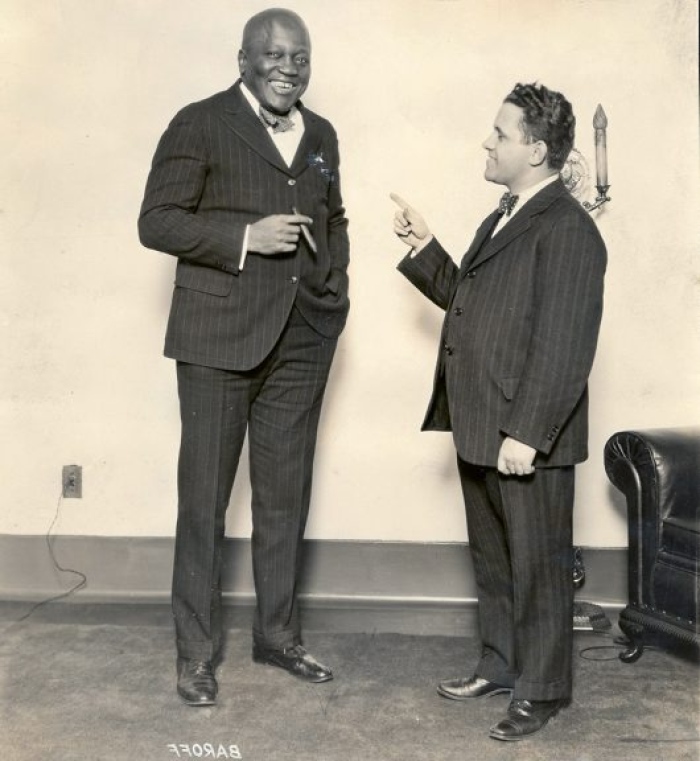
IN FIGHTING FORM…Jack Johnson visits with writer Joe Butler at the Scranton Times-Tribune offices on Nov. 30, 1929. (Scranton Times-Tribune)

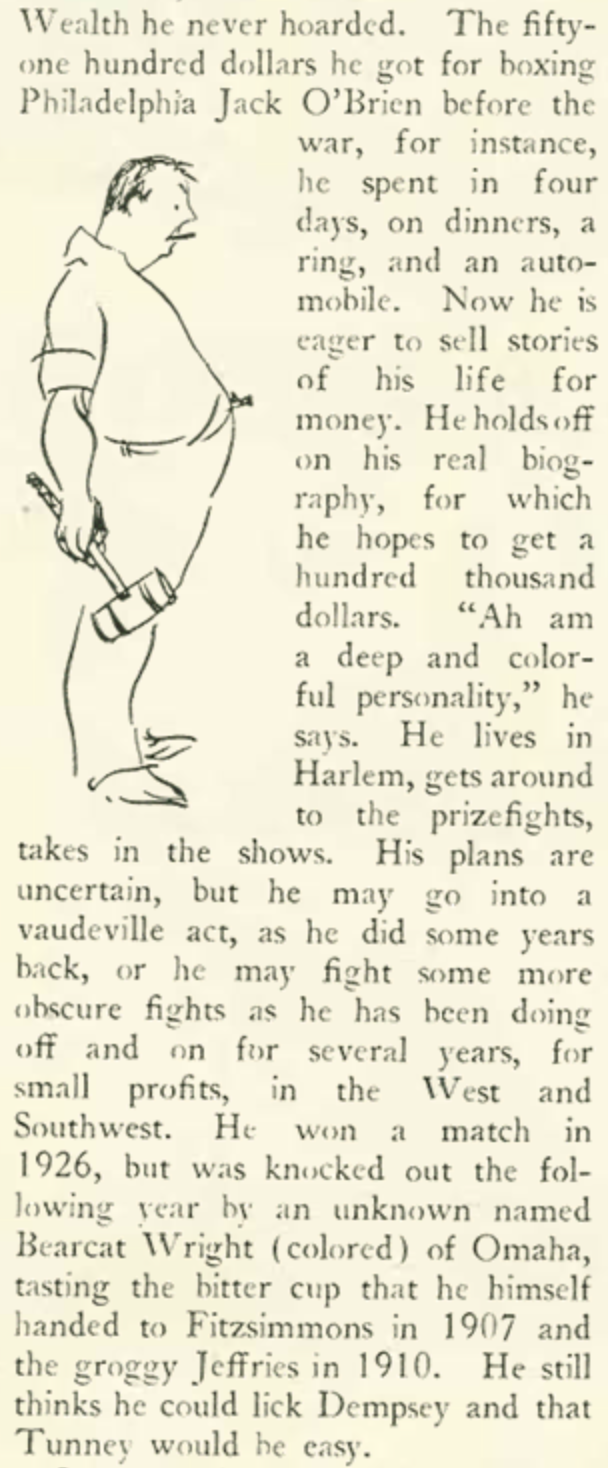
Thurber noted that Johnson was planning to sell stories of his life, and possibly get into vaudeville. The boxer also mused that who could lick either of the heavyweight champs of the 1920s, Gene Tunney and Jack Dempsey

CREAMPUFFS…The 51-year-old Jack Johnson claimed he could defeat either of the famed heavyweight champions of the 1920s, Gene Tunney (left) or Jack Dempsey. (Reemus Boxing)

…and Thurber shared a strange account regarding the thickness of Johnson’s skull, which apparently bested that of an ox…

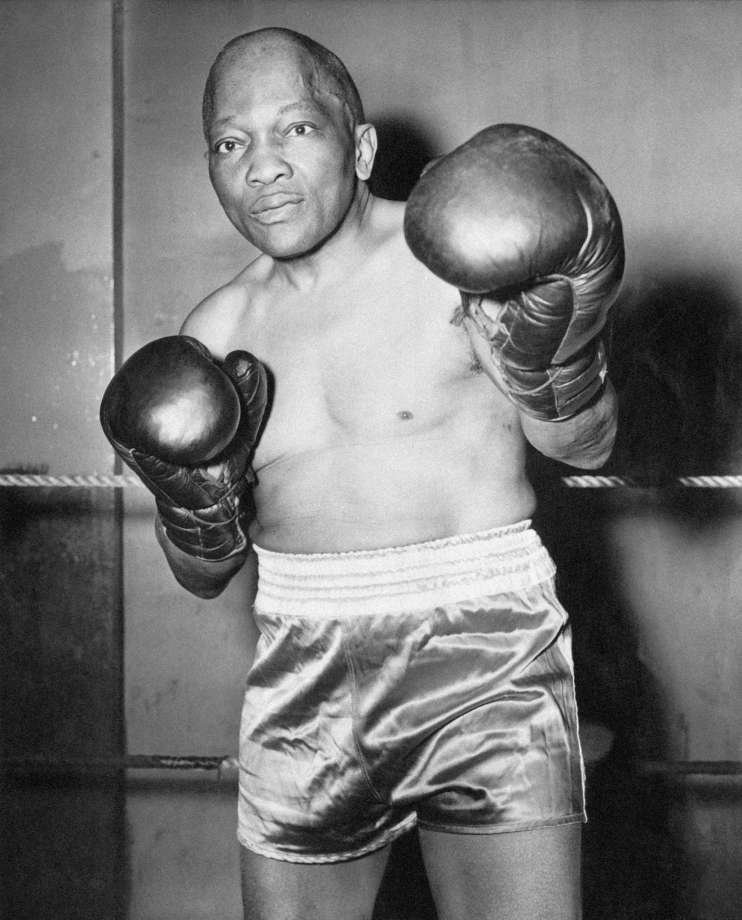
FIGHT TO THE LAST…The 67-year-old Jack Johnson prepares for an exhibition boxing match at a war bond show in New York City on May 1945. Along with making public appearances, Johnson also performed on Broadway during his retirement. (Houston Chronicle)

Johnson continued professional boxing until age 60, and thereafter participated in boxing exhibitions in various venues until his death at age 68 in a car crash near Raleigh, NC. It was reported that Johnson was racing angrily from a nearby diner that had refused to serve him when he lost control and hit a light pole.

 *  *  *

Don’t Ask, Don’t Tell

Anyone who thinks the recent squabbles over Planned Parenthood are anything new might do a little reading on the life of Margaret Sanger, who opened the first birth control clinic in the U.S. in 1916 (in Brooklyn) and was subsequently arrested for distributing information on contraception. In 1929 she was again arrested for operating a “secret” birth control clinic in the basement of a Manhattan brownstone. On March 22, 1929, the New York Police Department sent an undercover female detective, Anna McNamara, to Sanger’s clinic. Posing as a patient who wished to avoid another pregnancy, McNamara was advised on various forms of contraception. She later returned to the clinic as part of the police raid, during which she seized a number of confidential patient files. At Sanger’s subsequent court hearing, McNamara learned first-hand about the importance of patient confidentiality. From the May 4 “Talk of the Town”…

Recalling her arrest in a 1944 article, “Birth Control: Then and Now,” Sanger wrote that McNamara taunted her during the raid when she was told that she had no right to touch private medical files. Sanger wrote “I shall never forget the color of Mrs. McNamara’s face when she heard this medical testimony recited several days later in Magistrates’ Court at the hearing. She was totally unprepared for this embarrassing revelation of her own organs.” The New Yorker made note of this…

Sanger would continue to work for birth control until her death in 1966. Although her name is still invoked in debates over abortion, Sanger herself was generally opposed to abortion, maintaining that contraception was the only practical way to avoid it.

GAG ORDER…In April 1929 Margaret Sanger planned to speak at Boston’s Ford Hall Forum on Free Speech. Ironically, the topic of birth control was banned in Boston at the time, so Sanger appeared onstage with a gag over her mouth while historian Arthur M. Schlesinger read her remarks on free speech to the assembly. At right, the February 1926 issue of Birth Control Review. Founded by Sanger in 1917, she served as editor until 1928. It ceased publication in 1940. (womensstatus.weebly.com/sangerpapers.wordpress.com)

 *  *  *

Please Sit Still

The “Talk of the Town” also looked on American Impressionist painter Childe Hassam, who demonstrated the challenges of painting en plein air…

LOVELY SCENE…Childe Hassam’s Landscape at Newfields, New Hampshire, oil on canvas, 1909. Hassam in his studio circa 1920. (Wikimedia Commons/Wikipedia)

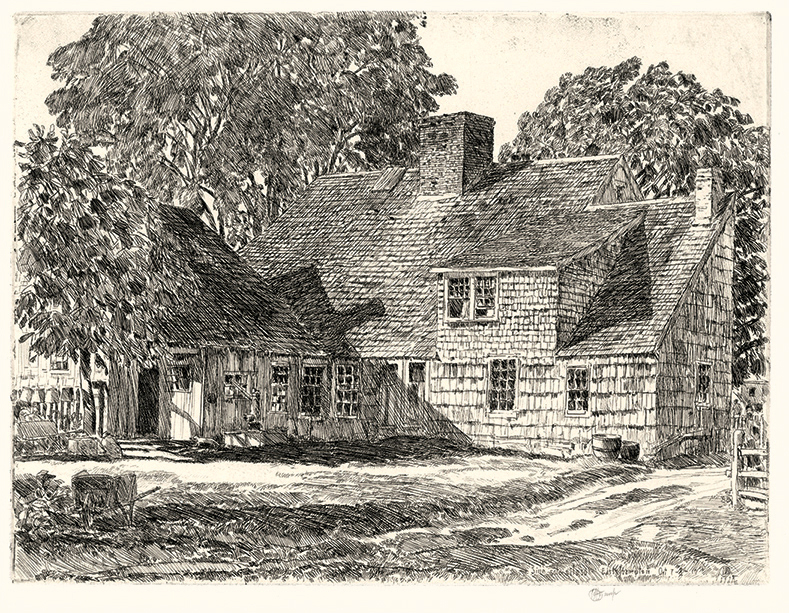
…and found it difficult to finish a farmhouse sketch when a door was unexpectedly closed on his subject…

THIS ONE HE FINISHED…Childe Hassam’s etching, The Old Dominy House (East Hampton), 1928. This work was probably created during Hassam’s visits to East Hampton described in “The Talk of the Town.”(Smithsonian)

 *  *  *

All That Jazz

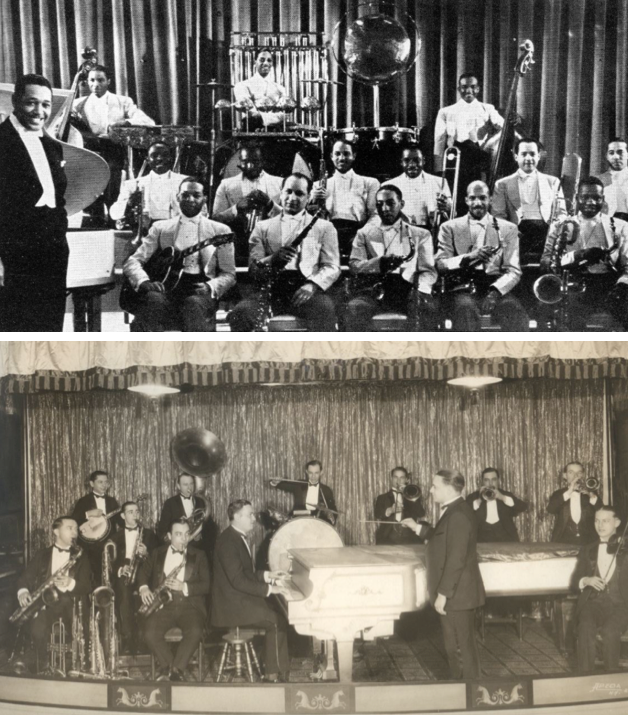
As Lois Long’s contributions to her “Tables for Two” column grew ever more infrequent, it was clear that she was wearying of the nightlife scene. Now 28 and a young mother, “Lipstick” was shedding her image as a fun-loving flapper and devoting more time and energy to her fashion column, “On and Off the Avenue.” Nevertheless, she still found the time to visit the Cotton Club and proclaim Duke Ellington’s jazz orchestra as “the greatest of all time”…

…although her other observations of the New York nightclub scene appear to have been hastily dashed off…

THE BEST…Duke Ellington and his orchestra (top), circa 1930. Below, Vincent Lopez conducts his orchestra in 1923. (oldtimeblues.net / www.jazzhound.net © Mark Berresford)

 *  *  *

Electric Wonders

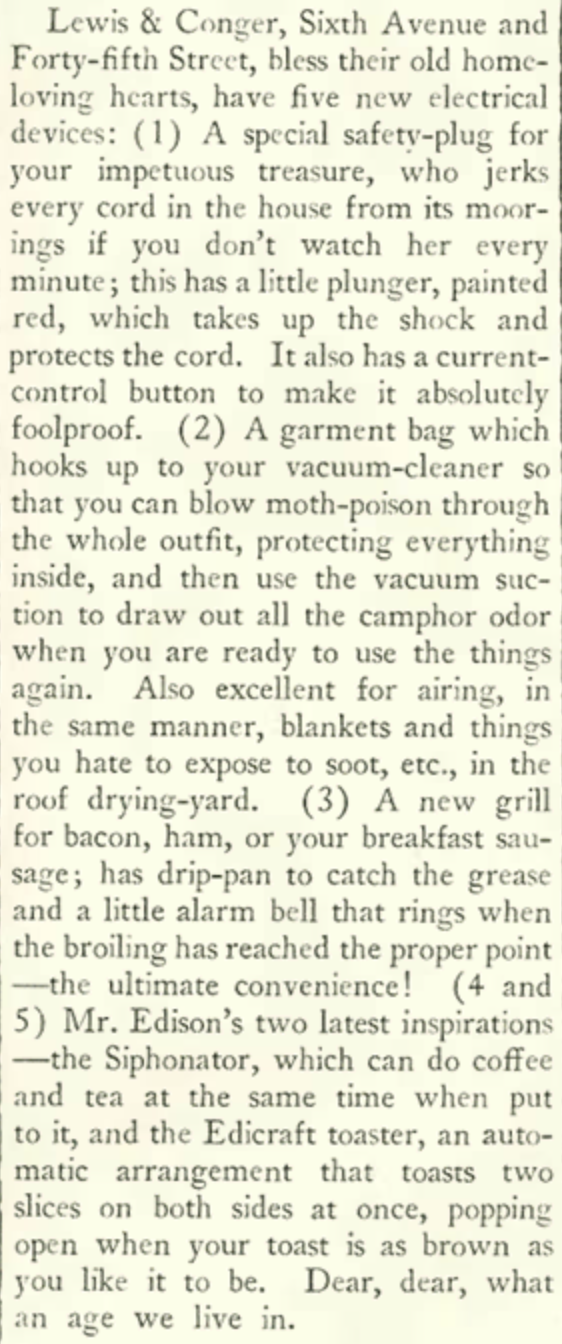
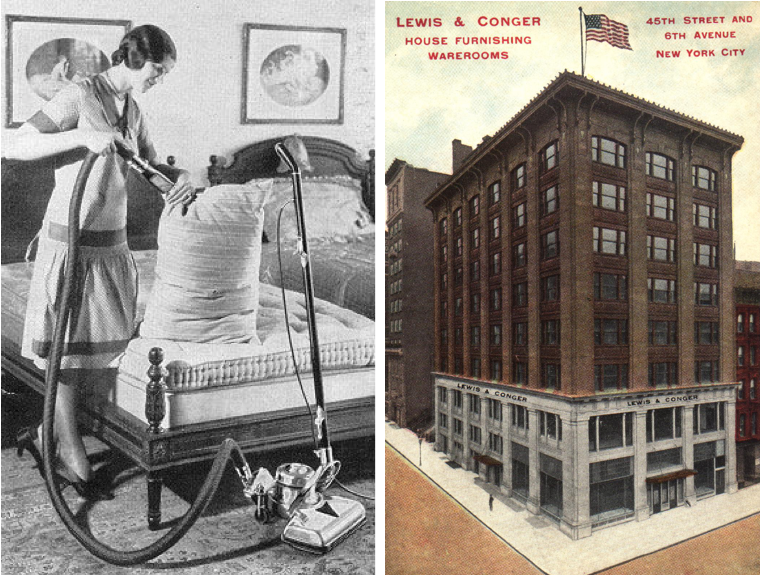
The May 4 issue updated readers on some of the latest gadgets available to modern households in 1929. I particularly like the device that allowed your vacuum to blow “moth poison” into your garments…

NOW THIS DOES NOT SUCK…Garments and other household items could be fumigated against moths using a new reverse vacuum attachment, available at Lewis & Conger. (Cyberspace Vacuum Cleaner Museum / Columbia University)

*  *  *

From Our Advertisers

One thing you notice about 1920s advertising is the amount of turgid copy they contain…I suppose without distractions such as TV and iPhones people actually took the time to read all of these bloated messages, such as this one from Whitman’s that suggested a box of candy is more than a box of candy…

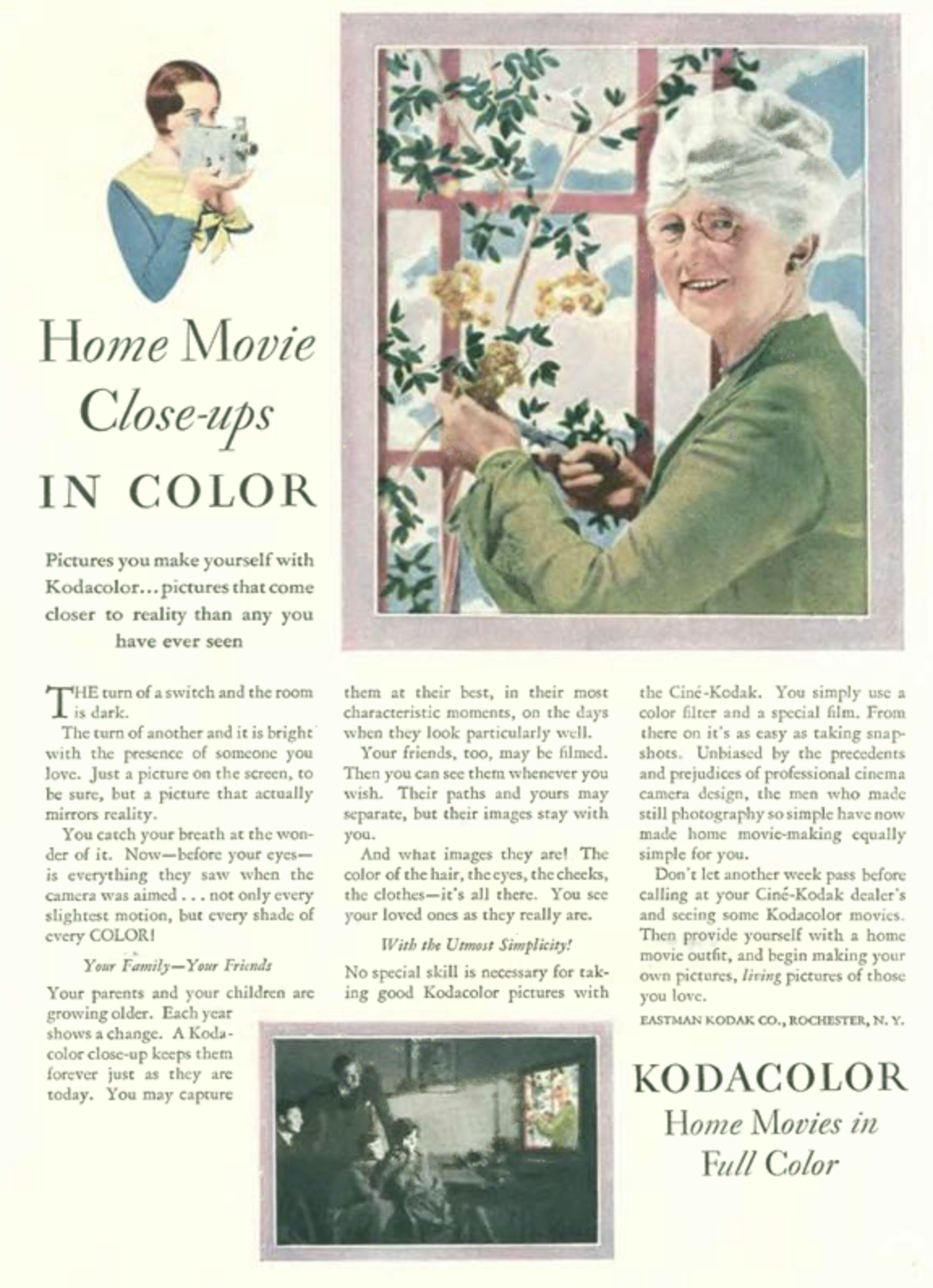
…or how about this lengthy appeal from Kodak, which used guilt to convince you to get some film of grandma while she was still “at her best…”

…the makers of Spud promised a “new freedom” and a “16% cooler smoke” to the users of its menthol-laced cigarettes. Spuds were the first menthol cigarettes, developed in 1924 by Ohioan Lloyd “Spud” Hughes, who sold them out of his car until the brand was acquired in 1926 by The Axton-Fisher Tobacco Company. By 1932 Spud was the fifth-most popular brand in the U.S., and had no competitors in the menthol market until Brown & Williamson launched their Kool brand in 1933. The Spud brand died out by 1963 (along with, presumably, many of its customers)…

…leveraging the popularity in the 1920s of knights and fairies, as well as the Anglo- and Francophila of New Yorker readers, “Mrs. Marie D. Kling” hoped to entice city dwellers up to the burbs in Scarsdale…

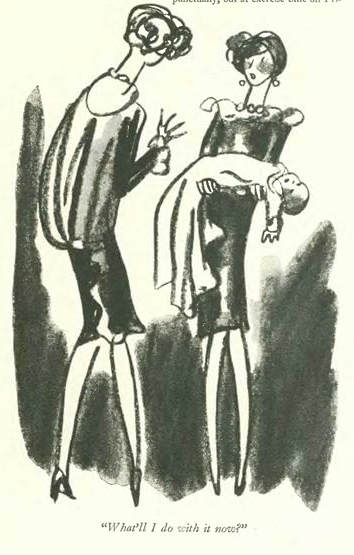
…our cartoons are courtesy of Barbara Shermund, who looked in on a couple of debs performing their daily exercises…

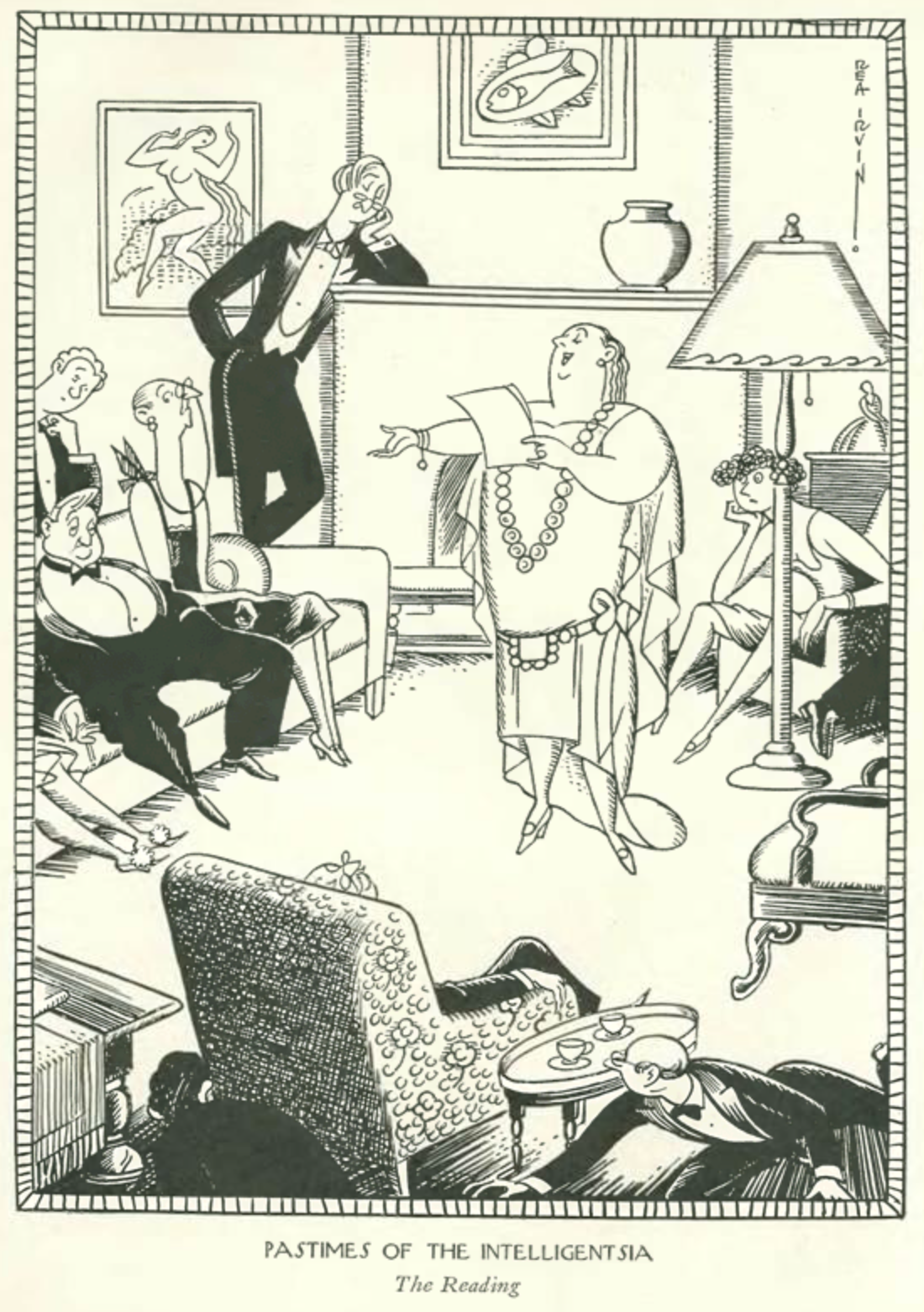
…while down in the parlor, Rea Irvin captured the horrors inflicted by an author’s tedious reading…

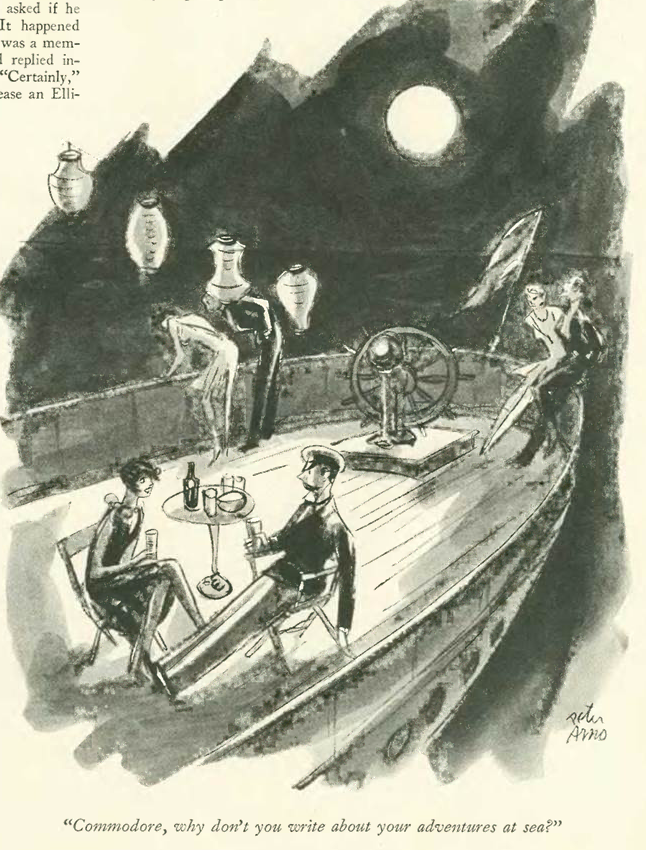
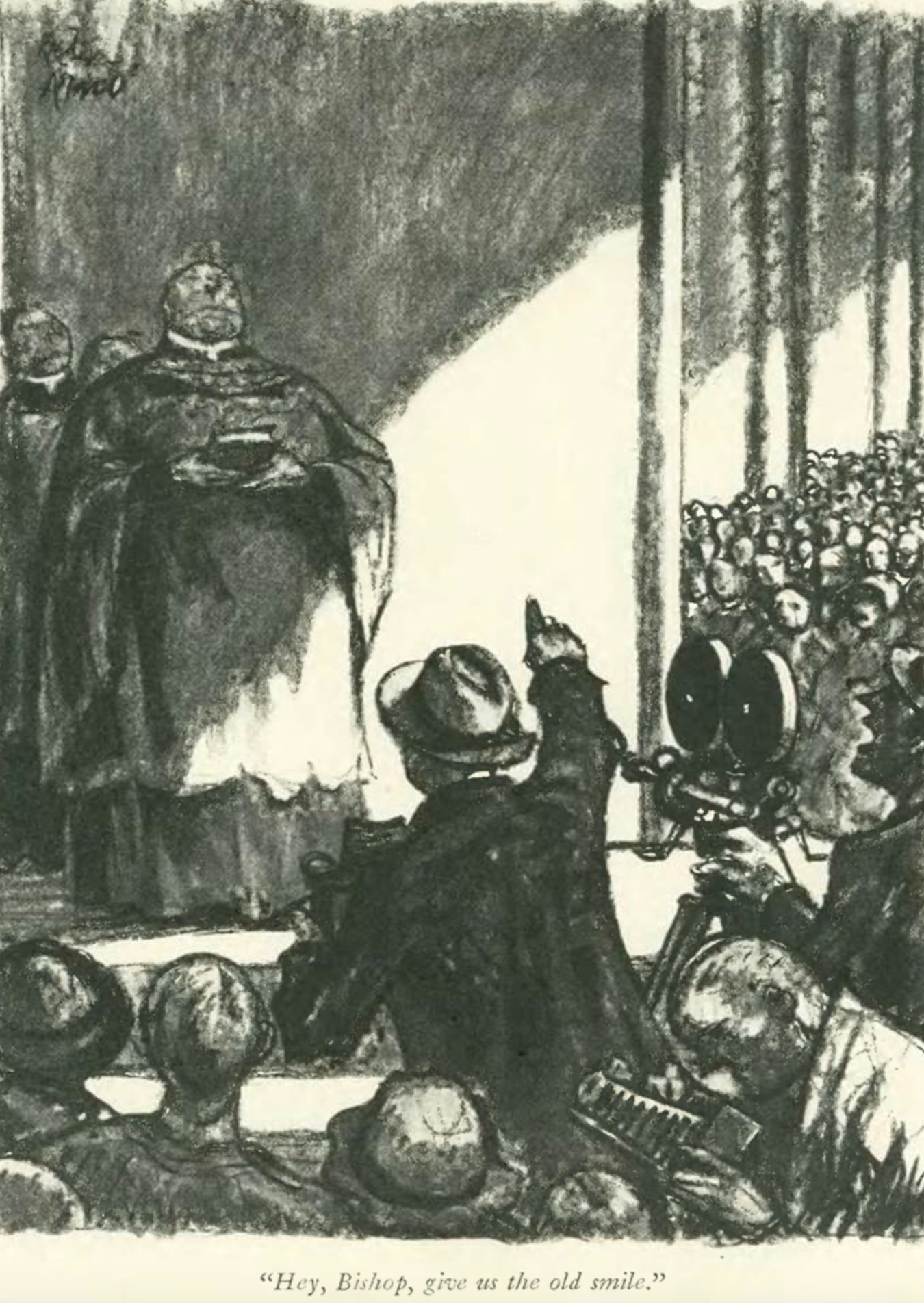
…and finally, Peter Arno probed the depths of sanctimony…

Next Time: Waldorf’s Salad Days…

The So-So Soprano

Although its founding editor, Harold Ross, was raised in the rude surroundings of a Colorado mining town and often displayed the manners of a backwoodsman, the New Yorker nevertheless looked down its sophisticated nose at most anything west of the Hudson, and the middle west was reserved for particular ridicule in its homespun piety and small city boosterism.

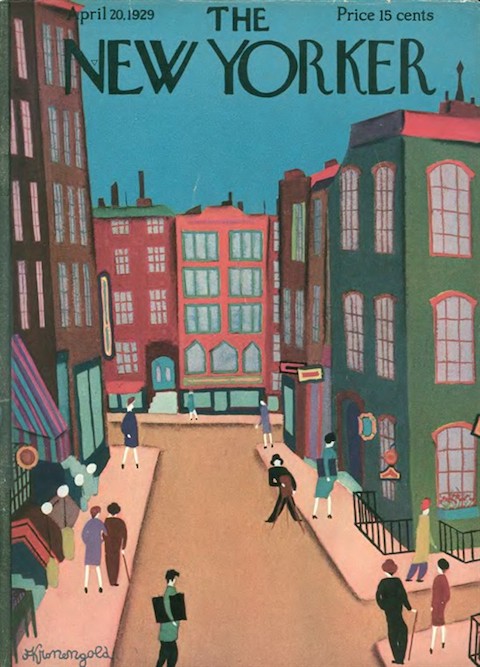
April 20, 1929 cover by Adolph K. Kronengold.

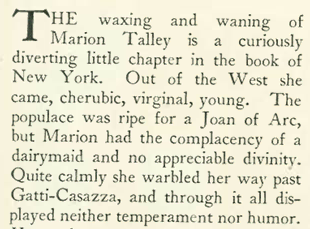
Enter one Marion Talley, a child prodigy from the tiny town of Nevada, Missouri. After appearing in a lead role at age 15 for the Kansas City Grand Opera, excited civic leaders raised enough money to send Talley to New York to study voice. Four years later (February 1926) she made her Metropolitan Opera debut as Gilda in Rigoletto — at that time the youngest prima donna to appear on the Met stage. A delegation of Kansas City’s two hundred leading citizens (including the mayor) travelled to New York via special train to attend the performance. Adding to the spectacle, a noisy telegraph machine was set up backstage so Talley’s father could send dispatches back home during the performance. Writing in his “A Reporter at Large” column for the New Yorker’s Feb. 27, 1926 issue, Morris Markey scoffed at the hype and Babbitry on display:

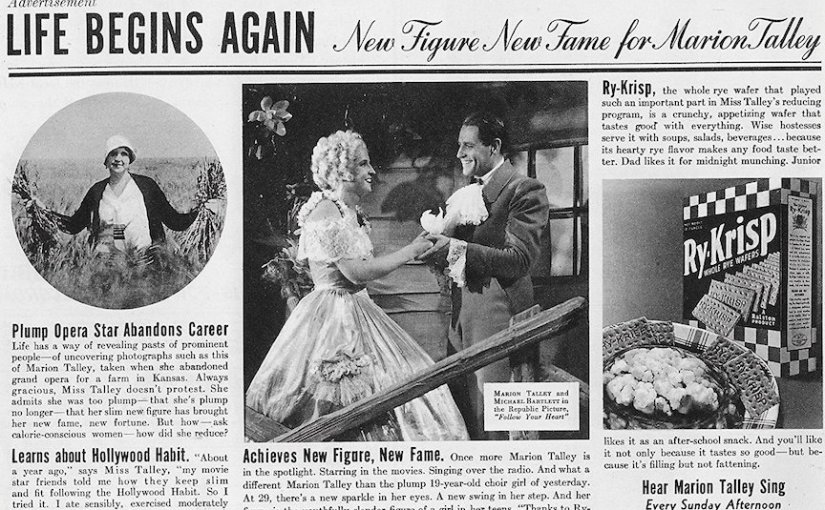
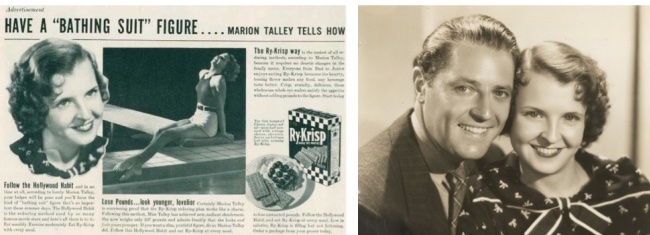
THE BIG TIME…at right, with co-star Michael Bartlett in her only movie, Follow Your Heart (1936); left, promoting Ry-Krisp crackers, sponsor of her NBC radio show, 1937. (imdb.com/mnopedia.org)

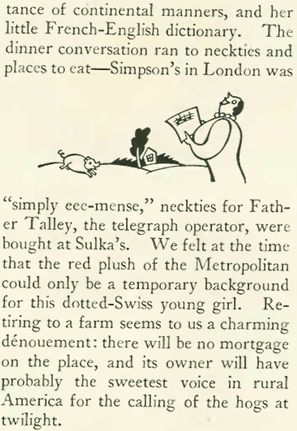
The New Yorker (via E.B. White in “Notes & Comment”) caught up with Talley more than three years later in the April 20, 1929 issue, her short career seemingly over, her voice perhaps destined for nothing more than “hog-calling”…

When Talley’s Met contract was not renewed for the 1929 season, she announced her plans to retire to a wheat farm in Kansas (hence the hog calling reference). She did, however, try to revive her career on concert tours and then on her own NBC Radio program (1936-1938), sponsored by Ry-Krisp. She made one film, the 1936 musical Follow Your Heart, but after its tepid reception the 30-year-old Talley decided to retire from show business.

ONE MORE TRY…Testimonial ads promoting weight reduction usually signal the end of a career, and for Marion Talley her Ry-Krisp diet endorsement was no exception. (imdb)

Talley married twice — to pianist Michael Rauchelsen (1932–1934) and to music critic Adolph Eckstein (1935–1942), the latter with whom she had a daughter, Susan. Talley died in 1983 in Beverly Hills, California.

*  *  *

Dark Clouds on the Horizon

The April 20, 1929 “Talk of the Town” made passing mention of a man who would be instrumental in the stock market crash later that year—National City Bank President Charles E. Mitchell:

The “Talk” item references a $25 million advance Mitchell offered to stock market traders who were getting the yips in an overheated market. This happened after a “mini crash” on March 25, 1929, when the Federal Reserve told its banks to withhold all loans to finance securities. Mitchell’s announcement apparently reassured the public enough to stop the panic, but in reality it only delayed the inevitable—a major market crash brought on in large part by the over-selling of securities by Mitchell’s bank.

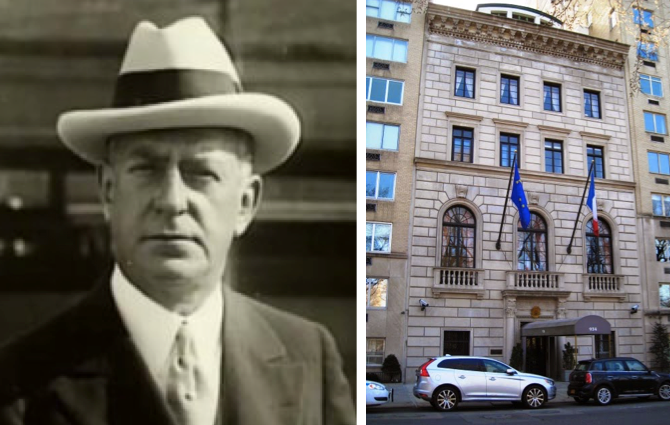
RUNAWAY BULL…Charles E. Mitchell’s reckless overselling of securities played a large role in the October 1929 stock market crash. Arrested and indicted for tax evasion in 1933, Mitchell would be acquitted of criminal charges but would end up paying a million dollars to the U.S. government in a civil settlement. At right, Walker’s stately townhouse on Fifth Avenue, now home to the French consulate. (geni.com/daytonian in manhattan)

The “Talk” item continued with this observation on the Panic of 1907, and how banker J.P. Morgan had also offered $25 million to bring the market back to earth:

PANIC ATTACK…banker J.P. Morgan (left) used a pile of money to calm the stock market during the Panic of 1907. His son, J.P. Morgan Jr., (right) would try to do the same following the October 1929 crash, when he and other bankers attempted to prevent a depression by purchasing some overpriced blue chip stock. As we know, their actions had little effect. (Library of Congress)

 *  *  *

Funny Girl

One of Broadway’s biggest stars in the 1920s, Fanny Brice (1891-1951) was profiled by Niven Busch Jr. in the April 20 issue. In addition to her work with the Ziegfeld Follies and other stage productions, by 1929 the comedian, singer and actress had recorded two-dozen songs and appeared in the 1928 film, My Man. Brice’s star would continue to rise in the 1930s and 40s, especially on the radio portraying the bratty toddler “Baby Snooks.” Here are the opening lines of the profile, which included a caricature of Brice by Miguel Covarrubias:

Top right, caricature of Fanny Brice that accompanied the New Yorker profile, drawn by Miguel Covarrubias. Below, publicity photo of Brice as Baby Snooks, 1938. (Photofest)

 *  *  *

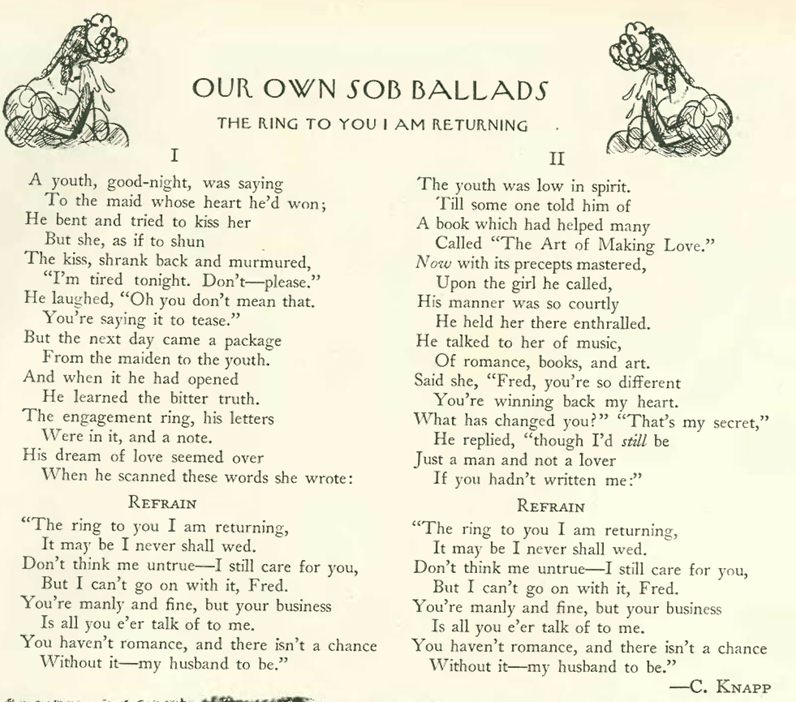
From its very beginnings comic verse played an important role in the pages of the New Yorker. The subjects of my previous blog post (Generation of Vipers), sisters Elinor Wylie and Nancy Hoyt, both contributed comic poems to the magazine, as did Clarence Knapp, a former mayor of Saratoga, New York, who also wrote prose pieces on that city’s famed horse racing scene. According to Judith Yaross Lee (Defining New Yorker Humor, p. 354), Knapp was a New Yorker insider who penned a total of 14 mock-melodramatic “sob ballads” between 1927 and 1930. Lee observes that Knapp’s ballads followed a fixed formula, two 16-line stanzas followed by eight-line refrains, that “joked about present social values by invoking past forms.”

*  *  *

They Loved a Parade

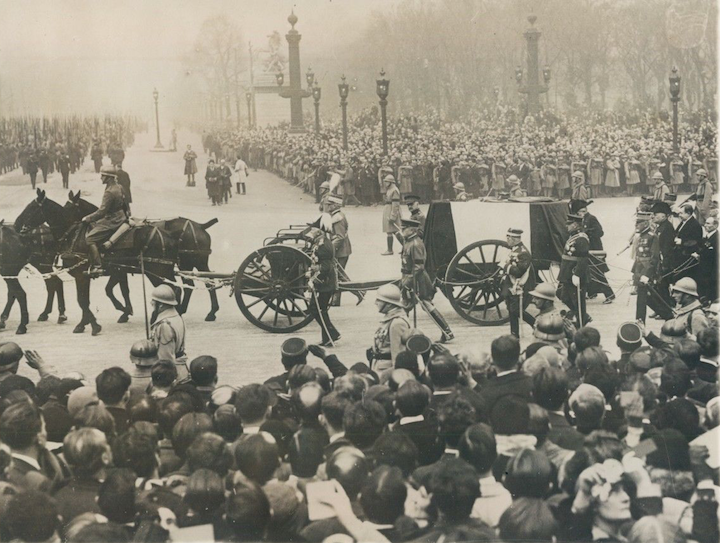
After the passing of literary giant Victor Hugo in 1885 (his funeral attracted two million mourners), Paris became known for its spectacular funeral processions. So when famed French general and (WWI) Supreme Allied Commander Marshal Ferdinand Foch died on March 20, 1929, the City of Light turned out in droves to say goodbye. On hand to report the scene was the New Yorker’s Paris correspondent, Janet Flanner, aka Genêt:

A PARIS FAREWELL…The Tricolor-draped coffin of Marshal Ferdinand Foch is escorted by the Allied Commanders from the Great War (WWI) during the funeral procession. The American General John J. Pershing can be seen marching alongside the catafalque in the center of the photo. (Associated Press)

By Flanner’s account, Foch’s send-off easily matched Hugo’s in terms of crowd size:

 *  *  *

The Art of Smoking

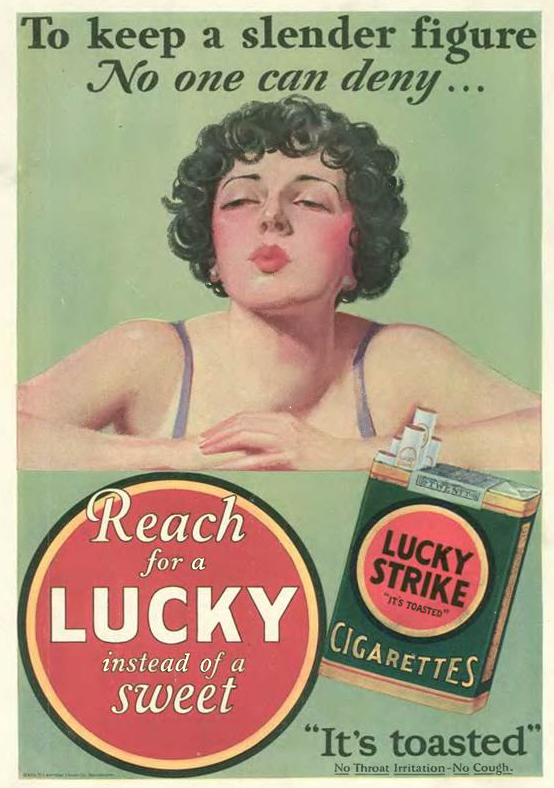
Cigarette manufacturers used a variety of marketing techniques to promote their tobacco products. During the late 1920s and early 30s R.J. Reynolds sought to attract more women smokers through a series of stylish ads for its Camel brand that evoked a softly elegant world. These ads were illustrated by Carl Erickson (1891–1958), a fashion artist whose work was widely seen in Vogue and in promotions for Coty cosmetics. This ad appeared in the April 20 issue of the New Yorker:

While studying at Chicago’s Academy of Fine Arts, Erickson was nicknamed “Eric,” a name he later used to sign his works. Also a successful portrait artist, Erickson lived part of his professional life in France (1920 to 1940) with his wife, the fashion illustrator Lee Creelman. Below are several examples of Erickson’s Camel work, including two back page illustrations from Delineator, a women’s fashion magazine that featured Butterick sewing patterns.

Clockwise from top, left, ad from Delineator, July 1930; 1929 ad from unknown source; unknown date and source; Carl “Eric” Erickson at work circa 1950; ad from the Delineator, July 1929. (Delineator/fashionising.com/periodpaper.com)

And From Our Other Advertisers…

With our Cuba relations once again eroding, let’s look back 89 years to a time when affordable, care-free living could be yours in sunny Havana…

…or in the days before foam rubber, “ozonized” animal hair gave bounce to your rugs…

…or the modestly well-off could contemplate an apartment on Park Avenue…

View from a 16th floor condo at 784 Park Avenue, yours today for a cool $8 million. (triumphproperty.com/stribling.com)

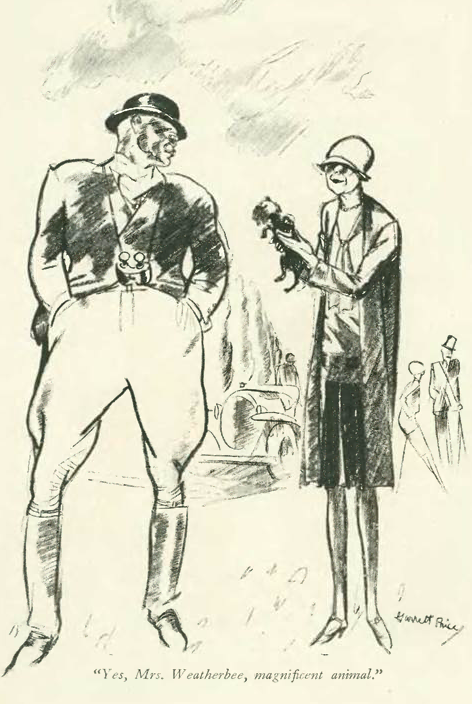
Our cartoons come courtesy of Garrett Price (1895-1979), who would contribute hundreds of cartoons as well as 100 covers during his more than 50 years with the New Yorker. An excellent look at Price’s life and work can be found in The Comics Journal

Garrett Price, circa 1918, and one of his New Yorker covers from May 21, 1949. (The Comics Journal)

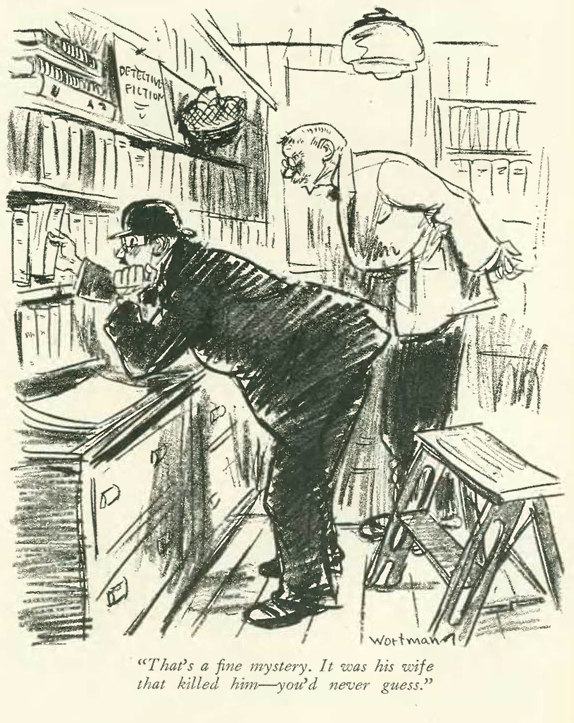
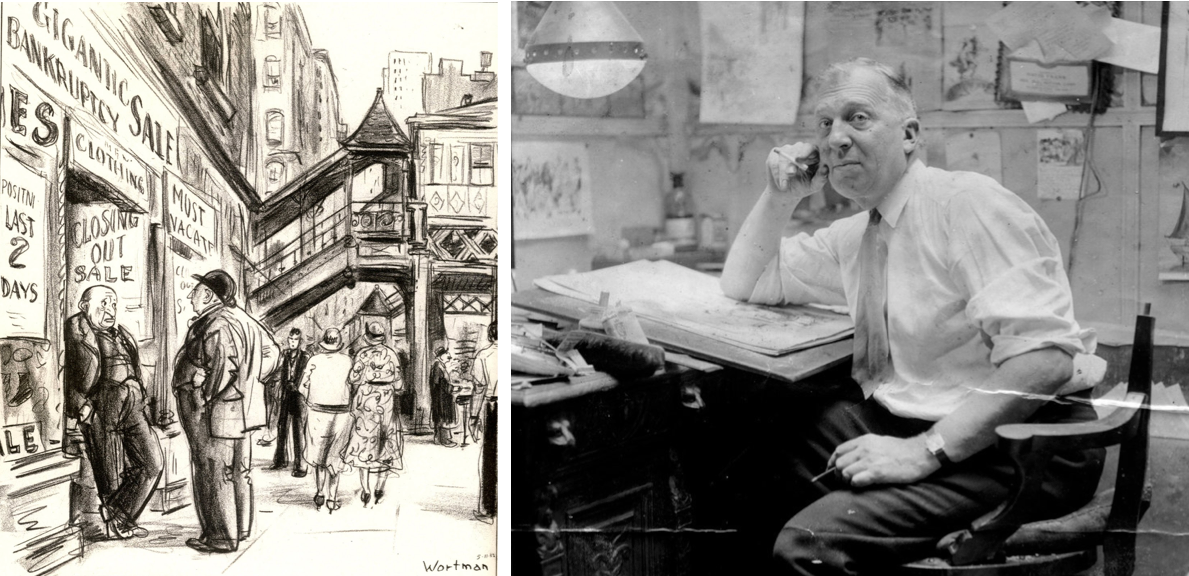
Denys Wortman (1887-1958) looked in on a bookseller with a “spoiler” problem. From 1924 to 1954 Wortman drew the nationally syndicated comic strip Metropolitan Movies for the New York World. The beautifully drawn strip offered a naturalistic portrayal of daily life in New York City…

Denys Wortman at work in an undated photo. At left, an example from his Metropolitan Movies comic strip, dated May 11, 1932. (New York World/New York Times)

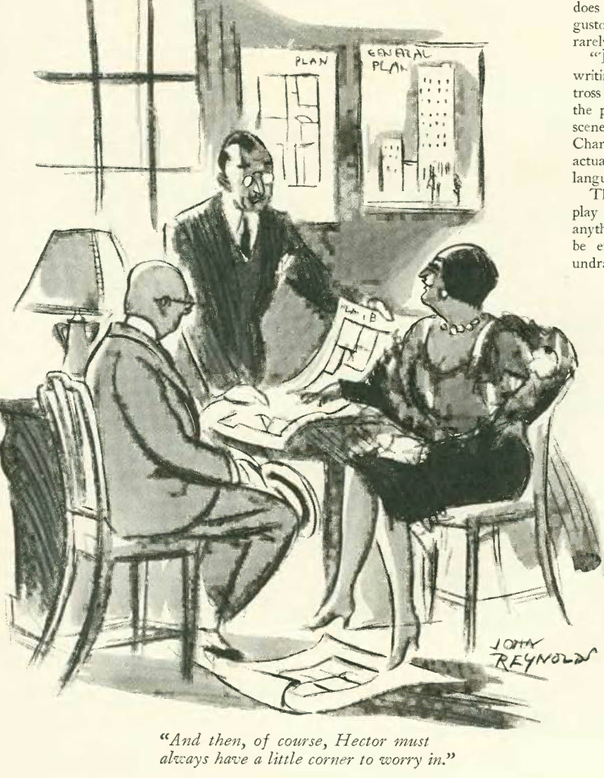
…and John Reynolds looked in on the challenges of the architecture profession. Reynolds contributed 34 drawings to the New Yorker from 1928 to 1930.

Next Time: Hello Molly…


Happy 1929!

I’ve been writing this blog for nearly three years, and during that stretch have managed to cover more than 200 issues of The New Yorker, or about the first four years of the magazine.

Dec. 22, 1928 and Dec. 29, 1928 covers by Rea Irvin.

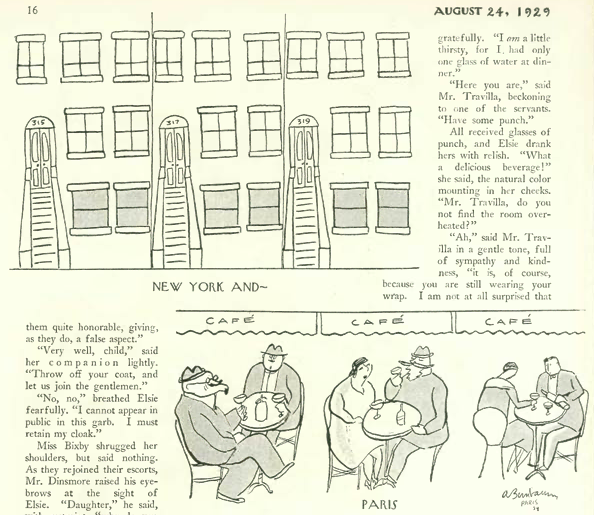
The amount of young talent on display in those early issues is truly astounding, from writers such as E.B. White, Dorothy Parker and James Thurber (writer and cartoonist) to illustrators and cartoonists including Peter Arno, Rea Irvin, Helen Hokinson, Miguel Covarrubias and Ilonka Karasz, to name just a few. Among the contributing artists was Abe Birnbaum, who illustrated more than 150 covers for The New Yorker from the 1940s to 1970s. One of his earliest contributions to the magazine was this illustration for the “Profile” section in the Dec. 22 issue:

Canadian artist Shelley Davies writes in her blog that Birnbaum “charmingly captured some of life’s quieter moments with a deft eye.” In addition to The New Yorker, Birnbaum illustrated numerous covers for Stage and Arts In America, and won a Caldecott Award in 1954 for his children’s book, Green Eyes.

ON THE QUIETER SIDE…Abe Birnbaum (pictured here circa 1960) created more than 150 covers for The New Yorker from the 1940s to the 1970s. At right, a cover from March 17, 1962. (google.com.br)

 * * *

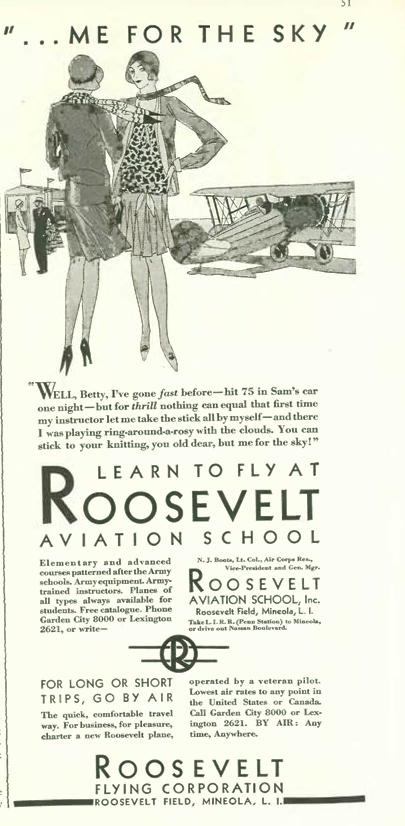
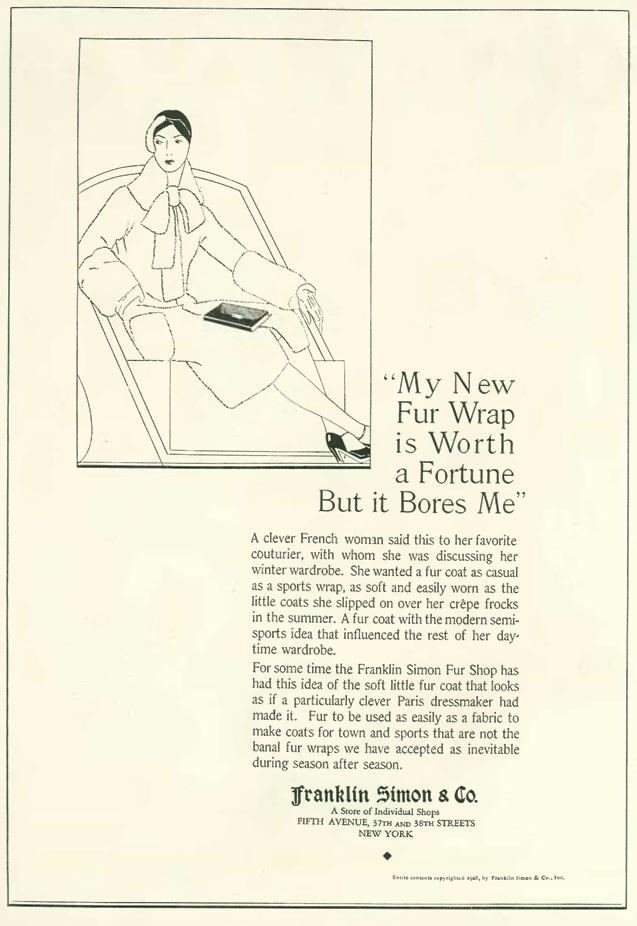
A couple of select advertisements from the Dec. 22 reveal what retailers knew, or thought they knew, about the magazine’s readership. Franklin & Simon, seeking perhaps to broaden their market for furs, suggested that even a stylish French woman might prefer a fur fashioned as a modest “sports wrap”…

…as for the guys, Saks appealed to the anglophilia that apparently was rife among New York’s smart set. Check out the ridiculous hat gracing the noggin of this young dandy…

Well-heeled readers who could afford to flee the New York winter were targeted by these various enticements in the Dec. 22 issue (this is a collage of select ads found in the back pages of the issue):

 * * *

Hello Down There

Writing about New Yorker humor derived from class distinctions, Ben Yagoda (About Town: The New Yorker and the World It Made, p. 63) noted a series of cartoons by Otto Soglow that began with this one in the Dec. 22, 1928 issue and continued through thirty installments that ran to early 1930, when the workers, Joe and Bill, finally emerged from the manhole:

This running gag, according to Yagoda, “came from the conceit that the laborers spoke with the same assumptions and in the same catchphrases as those with ‘higher’ places in society.”

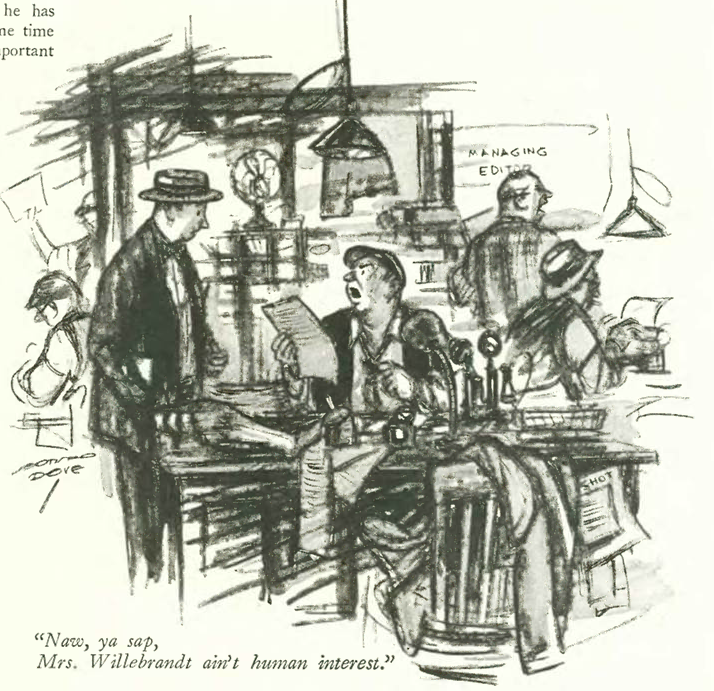
Also from the Dec. 22 issue, this terrific cartoon by Leonard Dove that showed a bookish man who had accidentally entered the wrong type of book-making establishment:

* * *

The Girl Who Wouldn’t Grow Up

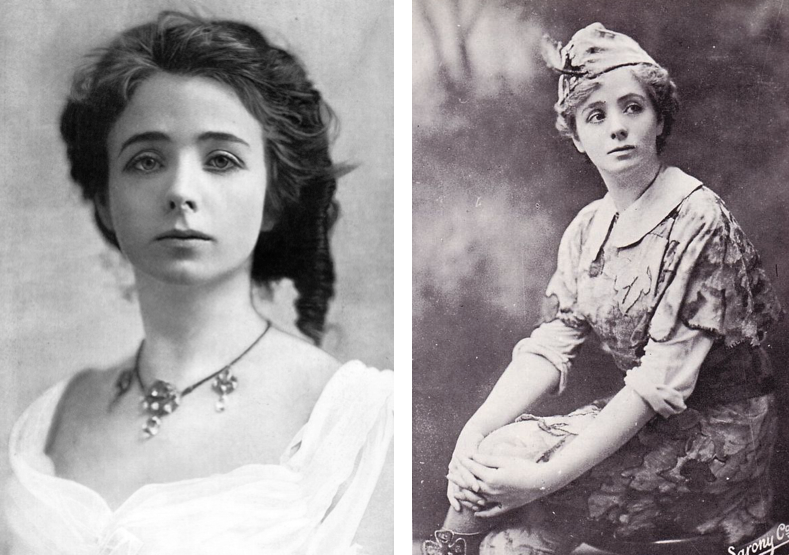
Maude Adams was a major Broadway star in the early years of the 20th century. Appearing in more than 25 productions from 1888 to 1916, she was most famous for her portrayal of Peter Pan in the Broadway production of Peter Pan; or, The Boy Who Wouldn’t Grow Up. She performed that role first in 1905-06 and again in 1912 and 1915. The highest-paid performer of her day, at her peak she earned more than $1 million a year, a staggering sum more than a century ago. James Thurber, writing in the Dec. 29 “Talk of the Town,” reported that after a decade-long absence from the stage, Adams was planning a comeback as a director:

STAR POWER…At left, American actress Maude Adams, circa 1900. At right, Adams as Peter Pan, her most famous stage role. Adams was the first American to portray Peter Pan on the stage. She played the role 1,500 times between 1905-1915. She retired from the stage in 1918 after a severe bout with the flu. She died at age 80 in 1953. (Wikipedia/Oakland Tribune)

Thurber also noted that Adams was working with General Electric in the development of color photography. According to the Trivia Library, it has been suggested that her motivation might have been a wish to appear in a color film version of Peter Pan. She eventually returned to acting in the 1930s, with occasional appearances in regional productions of Shakespeare plays.

 * * *

A Lukewarm Welcome to 1929

The Dec. 29 New Yorker opened with these lamentations for the last issue of 1928. At least it appears that one could obtain a decent bottle of French champagne to toast the New Year:

JAM SESSION…1929 photo of traffic on Fifth Avenue. (theoldmotor.com)

 * * *

The Passing of a Poet

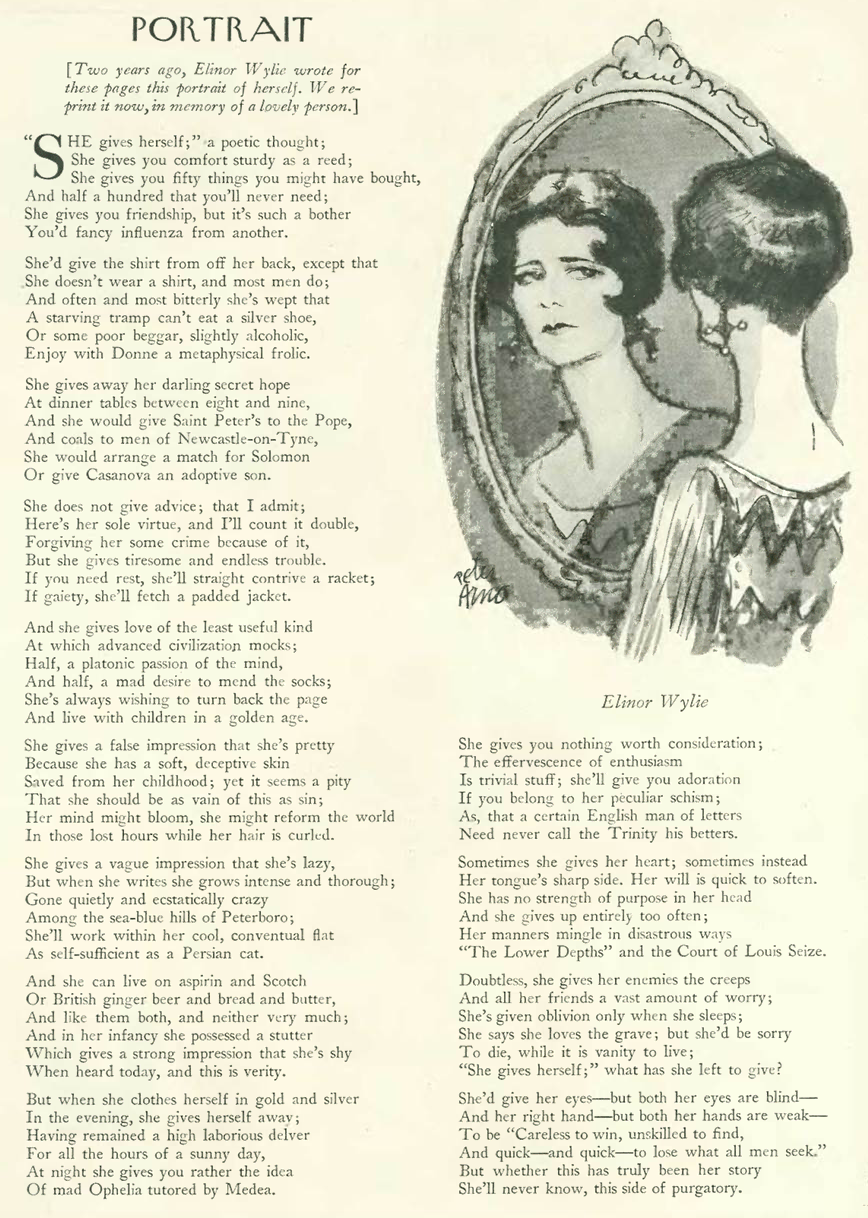
The Dec. 29 issue featured something unprecedented in The New Yorker up to that point: the reprinting of an entire piece previously featured in the magazine. In this case, it was in tribute to the sudden passing of poet and author Elinor Wylie:

PORTRAITS…Elinor Wylie posed for her friend Carl Van Vechten in this 1922 portrait (left). The photo at right, probably taken around 1926, was clearly the inspiration for the illustration by Peter Arno that accompanied “Portrait.” (Yale University/humorinamerica.wordpress.com)

It is no wonder that The New Yorker had such affection for Wylie, for she was as colorful a personality as could be found in 1920s literary circles. A Columbia University Press bio notes that “she was famous during her life almost as much for her ethereal beauty and personality as for her melodious, sensuous poetry.” Born to a socially prominent family and trained for a life in society, she instead became notorious for her multiple marriages and love affairs. She also suffered from extremely high blood pressure that gave her unbearable migraines.

Wylie died on Dec. 16, 1928, while going over a typescript of her poetry collection, Angels and Earthly Creatures, with her estranged third husband, William Rose Benét. According to Karen Stein (in the Dictionary of Literary Biography), Wylie, while picking up a volume of John Donne’s poems, asked Benét for a glass of water. When he returned with it, she reportedly walked toward him and murmured, “Is that all it is?,” and fell to the floor, dead of a stroke. She was 43.

* * *

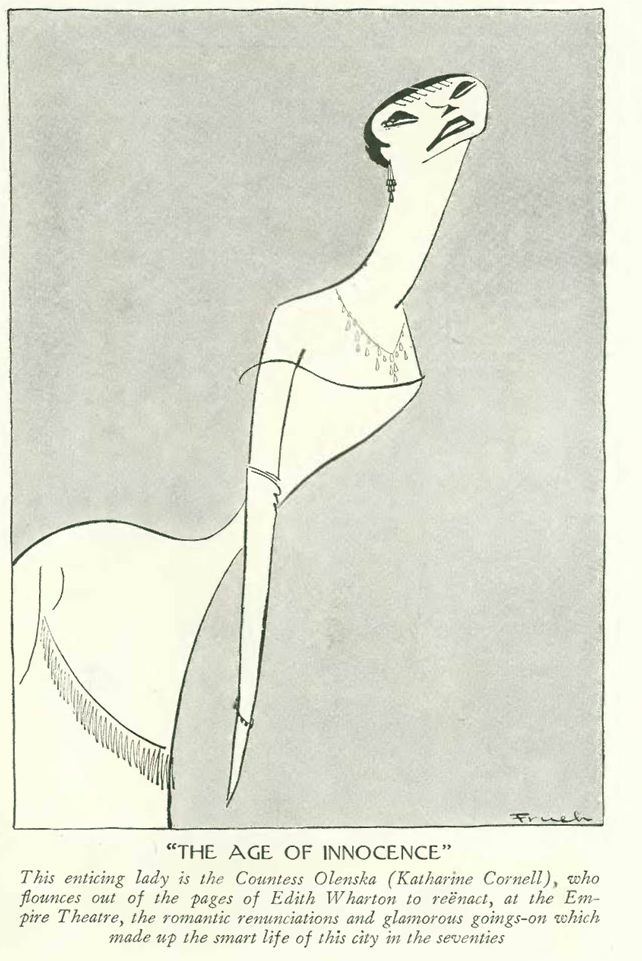
Age of Innocence

The Dec. 29 theatre review section featured this illustration by Al Frueh of Katharine Cornell in the Empire Theatre’s production of The Age of Innocence:

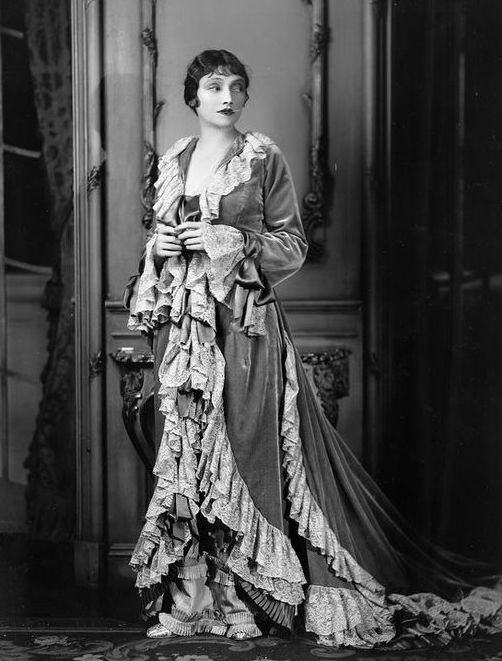
And below, a studio portrait of Cornell from the same play:

HOW SHE REALLY LOOKED…Katharine Cornell as ‘Countess Ellen Olenska’ in this Vandamm Studio portrait dated November 27, 1928. (Billy Rose Theatre Collection, The New York Public Library)

 * * *

Before Baby Snooks

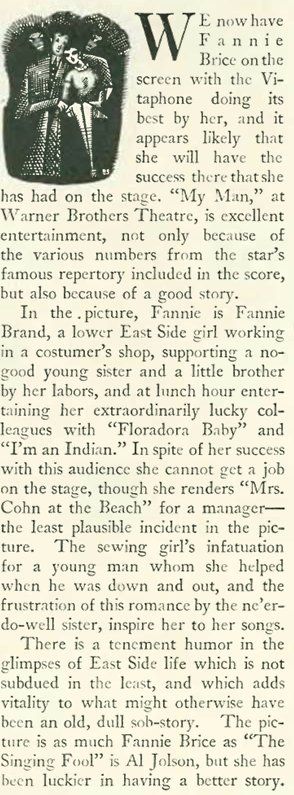
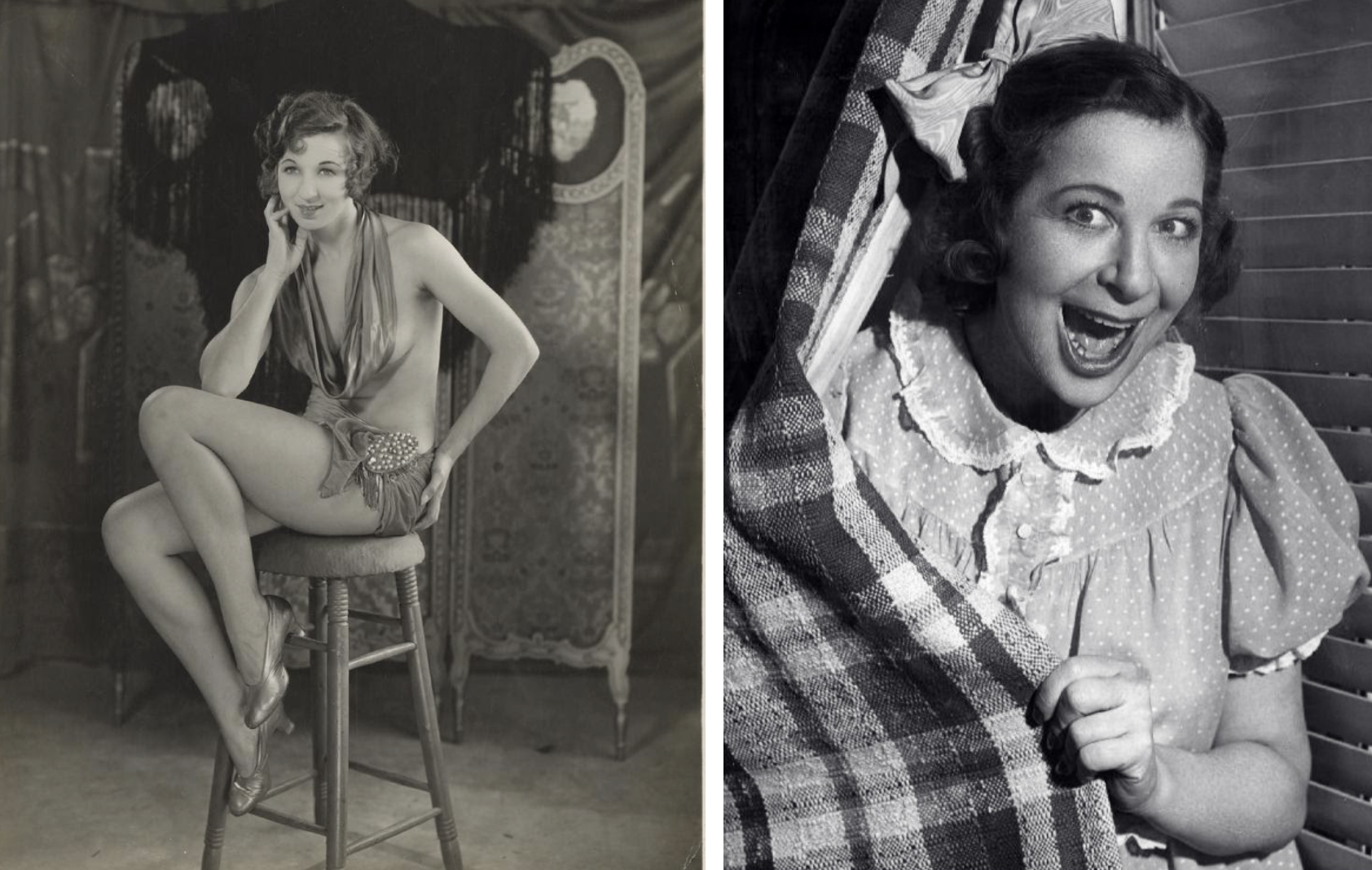
Although it was still a few years before singer and actress Fanny Brice would make her radio debut as the bratty toddler named “Snooks,” she was already well-known to New York audiences for her work in the Ziegfeld Follies (beginning in 1910). In its Dec. 29 issue The New Yorker favorably reviewed Brice’s first motion picture, My Man, which included musical scenes with Vitaphone sound:

MY MAN…Fanny Brice, Guinn Williams, and Edna Murphy on the set of the partially silent film My Man, 1928. Her first movie appearance, Brice played Fanny Brand, a poor girl who becomes a star. The film is now considered lost, since only an incomplete version survives. (brice.nl)
THROUGH THE YEARS…At left, singer and actress Fanny Brice from the time she was a Ziegfeld Follies girl, circa 1915. At right, Brice in the role of Baby Snooks, 1940. (Vintage Everyday/Wikipedia)

 * * *

Let’s Get Physical

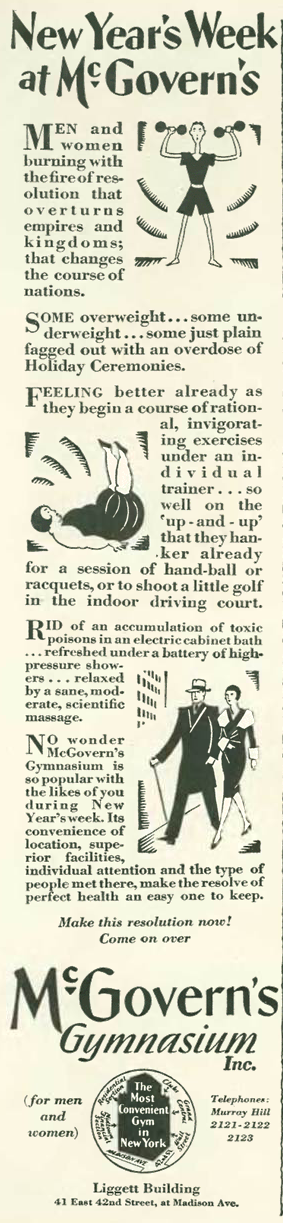
Even 90 years ago some folks (or at least some New Yorkers) resolved to get healthy and hit the gym in the New Year. In this ad, McGovern’s Gymnasium announced it was ready for them:

Babe Ruth trains at Artie McGovern’s Gym for the upcoming baseball season, February 9, 1928. (twitter.com/BSmile)

And to close out 1928, a cartoon from John Reehill

Next Time: Out With the Old…

Gentlemen Prefer Blondes?

Despite The New Yorker’s taste for the finer things–polo, opera, classical music–its editors couldn’t resist the pull of popular culture as both spectacle and fodder for mockery of the hoi polloi.

848d031119e0d470956ce963e6e7fb62
Oct. 9, 1926 cover by Julian de Miskey.

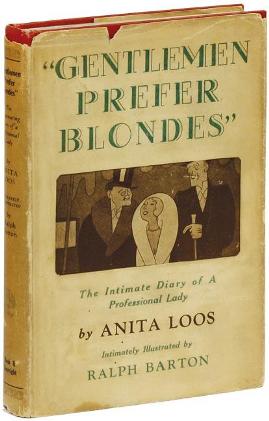
And so we have the Oct. 9, 1926 issue with a review of the much-anticipated Broadway play Gentlemen Prefer Blondes, which was based on a surprise bestselling novel by Anita Loos (and illustrated by The New Yorker’s own Ralph Barton). Despite garnering lukewarm reviews from critics, the public loved the adventures of gold-digging flapper Lorelei Lee.

GentlemenPreferBlondes
First edition of Gentlemen Prefer Blondes, by Anita Loos, illustrated by Ralph Barton (Wikipedia)
tumblr_l7eu7x4QVv1qcl8ymo1_500
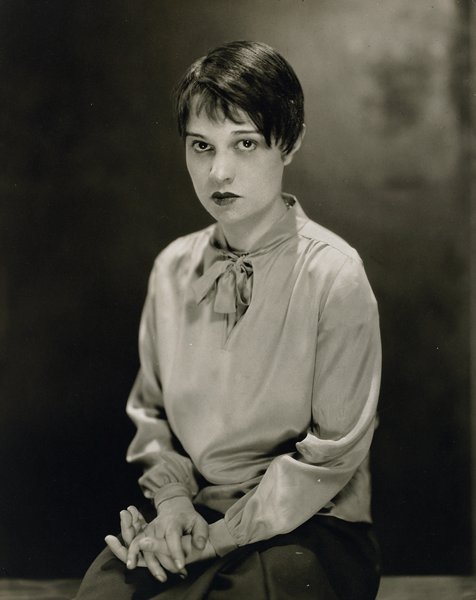
Edward Steichen portrait of Anita Loos, 1926. The New Yorker would feature a lengthy, admiring “Profile” of Loos in its Nov. 6, 1926 issue. (Minneapolis Institute of Art)

According to Wikipedia, the book was one of several famous novels published in 1925 to chronicle the Jazz Age, including F. Scott Fitzgerald’s The Great Gatsby (which ironically didn’t do so well) and Carl Van Vechten’s Firecrackers. Loos was inspired to write the book after watching a sexy blonde “turn intellectual H. L. Mencken into a lovestruck schoolboy.” Mencken, a close friend of Loos, actually enjoyed the work and saw to it that it was published.

nypl.digitalcollections.ab6c9cc0-81c6-da79-e040-e00a1806702e.001.w
Gold-digging flapper Lorelei Lee (June Walker, second from left), Henry Spofford (Frank Morgan, second from right), and the rest of the cast tussle in the stage production Gentlemen Prefer Blondes, Times Square Theatre, 1926. Another “blonde,” Marilyn Monroe, would famously portray Lorelei Lee in the 1953 Howard Hawks film. (New York Public Library)

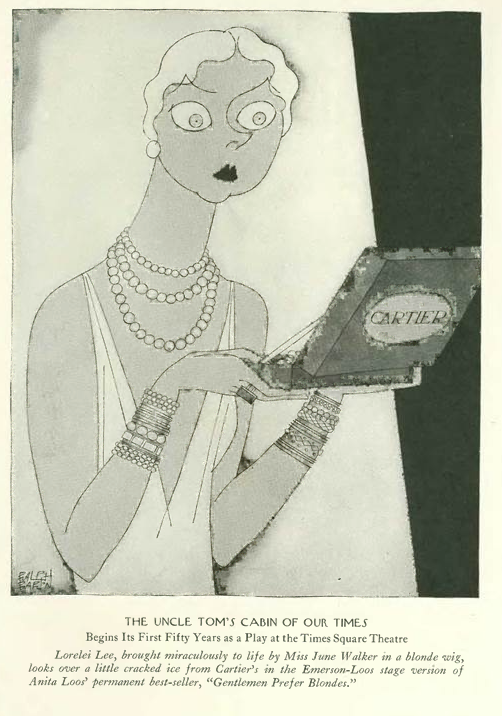
Ralph Barton contributed this drawing of June Walker for the magazine’s review:

Screen Shot 2016-02-29 at 9.26.56 AM

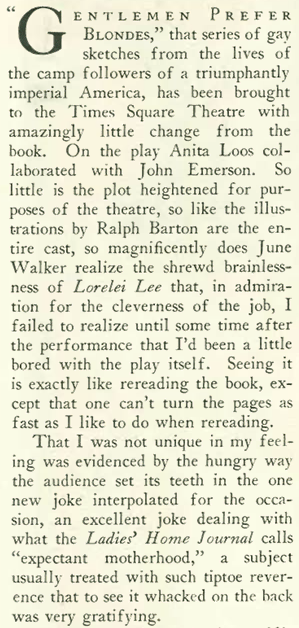
And a bit of the review itself…

Screen Shot 2016-02-29 at 9.28.33 AM

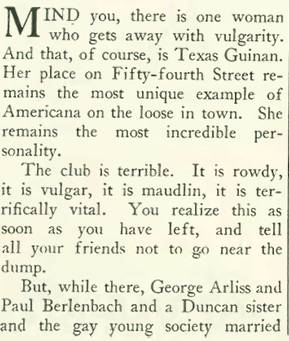
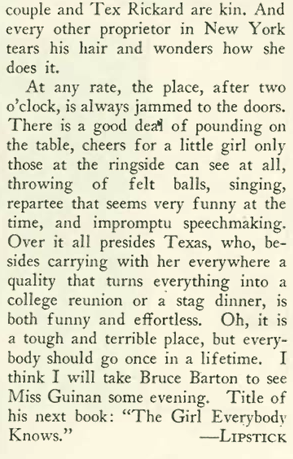
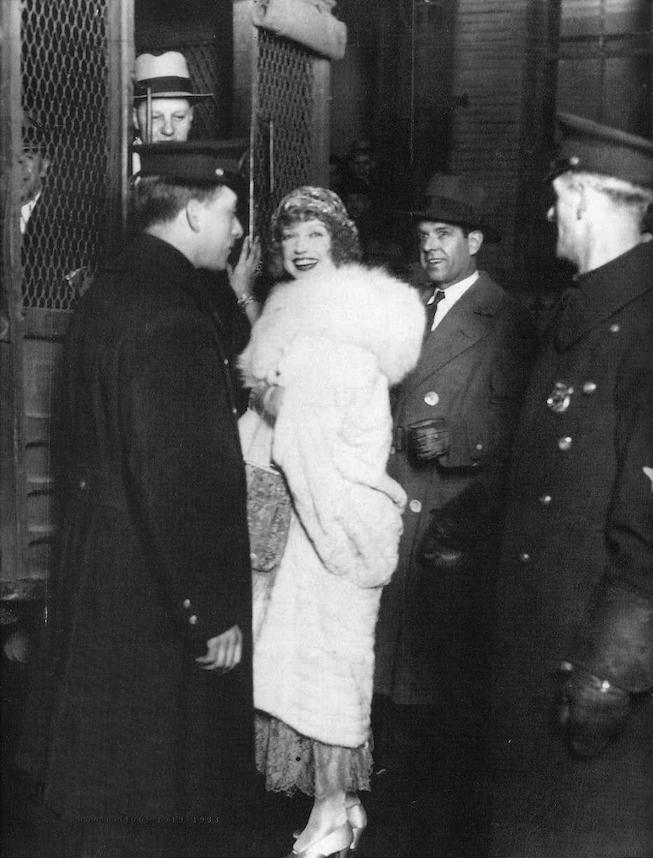
In other items, Lois Long paid a visit to Texas Guinan’s 300 Club on 54th Street, which apparently was still the place to go for a roaring good time:

Screen Shot 2016-02-29 at 9.30.16 AM

Screen Shot 2016-02-29 at 9.30.33 AM

texasguinanpolice
JUST HAVING FUN…According to the blog Ephemeral New York, Texas Guinan’s 300 Club at 151 West 54th Street hosted the likes of John Barrymore, George Gershwin, and Clara Bow. The club was targeted by prohibition officials, who were constantly padlocking the door and arresting Texas. Guinan’s clever rejoinder to the officials: The 300 Club’s patrons brought liquor with them, and because the place was so small, the showgirls were forced to dance close to customers. (Ephemeral New York)

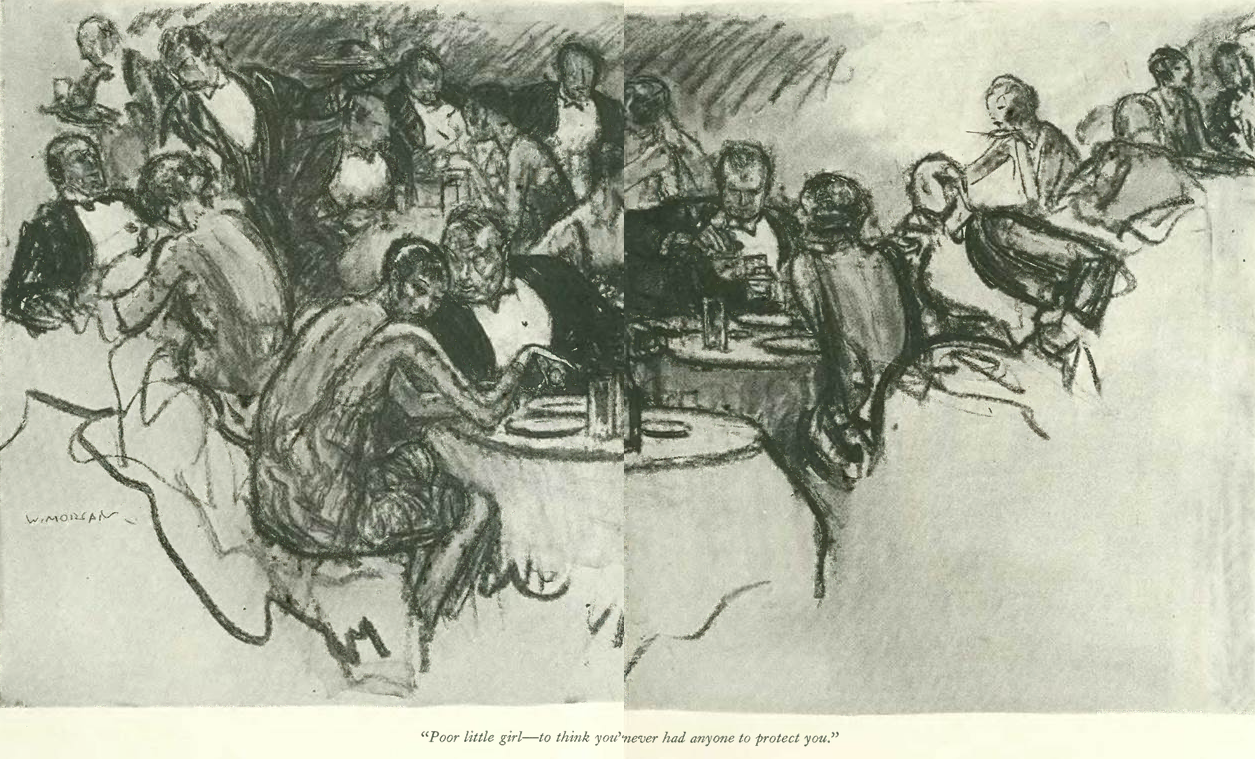
The magazine’s cartoons continued to mine the humor of rich old men out on the town with their young flapper mistresses. The one below was a center spread illustration by Wallace Morgan with the caption: “Poor little girl–to think you’ve never had anyone to protect you.”

Screen Shot 2016-02-29 at 9.21.32 AM

Finally, a look back at one of my earlier blog posts (Cuban Idyll) that featured Americans in Havana. I recently traveled to Cuba and visited some of the old haunts, including the famed Sloppy Joe’s:

IMG_1549
(Photo by David Ochsner)

Next Time: The Changing Skyline…

c37832e544c79a83494d91ea68c0329b


The Lights of Broadway

Above: Samuel Herman Gottscho photograph, New York City, Times Square South from 46th Street. General view of “Whiteway” toward Times Building, December 9, 1930. Museum of the City of New York

The lights of Broadway dazzled the editors of “The Talk of Town,” who commented on the changing displays that brightened The Great White Way.

Screen Shot 2016-01-25 at 5.31.10 PM
Cover of August 7, 1926 issue by Stanley W. Reynolds.

Broadway hit its prime in the 1920s, when many old buildings originally used for housing or commercial interests became more valuable as places to hang brightly lit signs.

NYC-at-Night131-600x323
Broadway in the 1920s (TimesSquareNYC.org)

The “Talk” editors were more or less impressed by the displays. Despite their garishness, the Broadway lights were also a symbol of the youthful exuberance of Roaring Twenties New York:

Screen Shot 2016-01-28 at 4.31.47 PM

Screen Shot 2016-01-28 at 4.32.03 PM

Samuel Herman Gottscho photo of Times Square from 41st Story [of the] Continental Building, at night, February 16, 1932. (Museum of the City of New York.)
tumblr_nw4uc5kmEh1ti90t5o1_500
Daytime view of Times Square in the 1920s (Tumblr)

The “Talk” editors sang the praises of the “aortic” Grand Central Station, which they dubbed a place of both dignity and efficiency that sorts a “surprisingly cheerful stream” of travelers with a certain rhythm, set in motion by an impassive gateman:

Screen Shot 2016-01-28 at 4.28.56 PM

gc
The main concourse at Grand Central Terminal, 1929. (New York Transit Museum)

The Talk writers also added this lyrical observation of the traveling masses:

Screen Shot 2016-01-28 at 4.30.39 PM

Talk also noted the recent travels of Cornelius Vanderbilt Jr., who was an apparent heir to the Vanderbilt fortune until he shunned high society and was disinherited by his parents for becoming a journalist and newspaper publisher. The Talk segment noted that Vanderbilt had returned from travels in Europe, where among other things until he rubbed elbows the Italian dictator Benito Mussolini and observed the curious habits of people under his fascist rule:

Screen Shot 2016-01-28 at 4.23.59 PM

Italian Premier Benito Mussolini (before he started wearing the fascist uniform) leaving for Tripoli on May 13, 1926. His nose was bandaged after an assassination attempt on April 26 by a British woman, Violet Gibson, who shot him with a revolver at close range. She was ruled insane and deported to England (strangehistory.net))

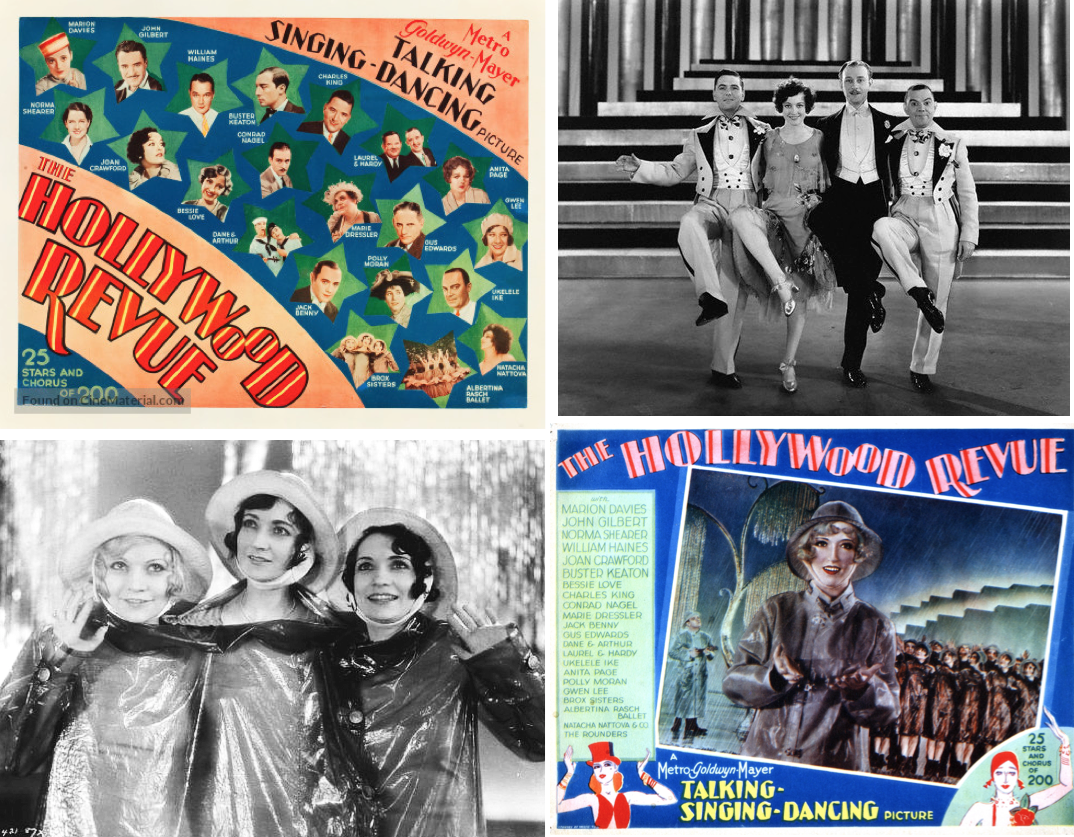
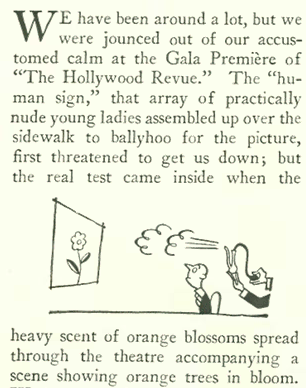
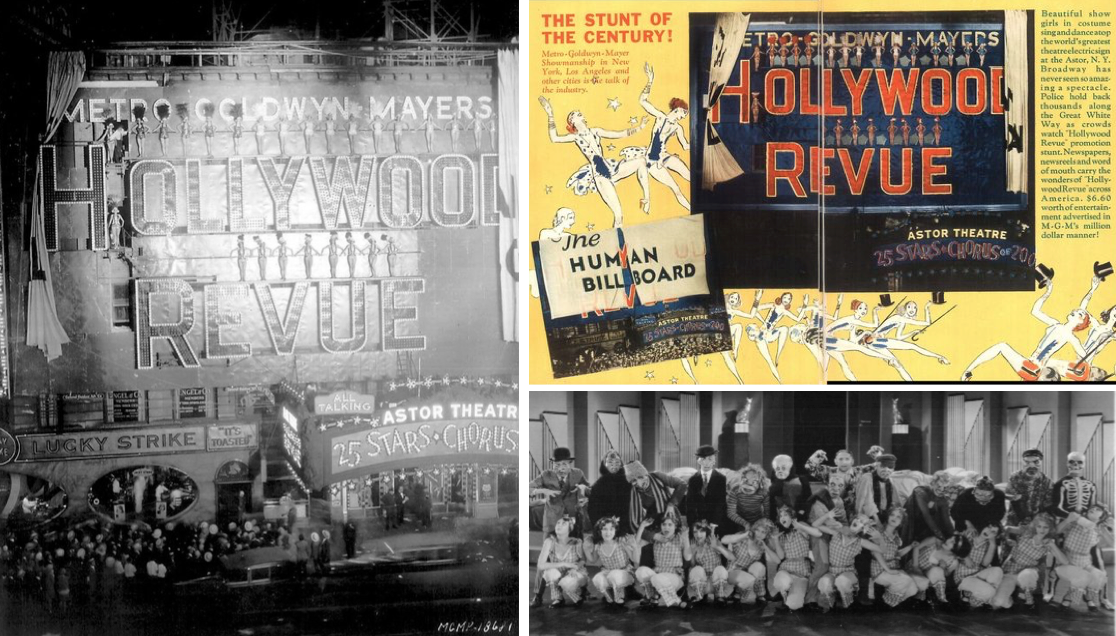
Next Time: Talking Pictures…

Screen Shot 2016-01-28 at 4.34.57 PM

Wild & Woolly

Eugene Gise threw a beach party on the July 3, 1926 cover of The New Yorker with an explosion of color that was a departure from the somewhat spare covers of previous issues. It had been an unseasonably cool June, so folks were ready to frolic in the sun.

Screen Shot 2016-01-12 at 11.17.43 AM
July 3, 1926 cover by Eugene Gise.

It should be noted that the woman in the foreground basking in the sun is most likely wearing a wool bathing suit. Although Jantzen was making suits you could actually swim in, these wool numbers were still the norm. As the website Vintage Dancer notes, “functionality in swimwear was not as important as fashion, so the prevailing theory was that wool would help keep you warm.” Check out this newspaper advertisement from 1926:

1926-CW-3_Page_19-mens-swimsuit
(Vintage Dancer)

In the previous issue (June 26, 1926) theatre critic Charles Brackett looked at all the fuss over the opening of George White’s Scandals revue, so in this issue he gave the Ziegfeld Follies—the revue show that inspired the Scandals—its proper due.

Screen Shot 2016-01-12 at 12.07.00 PM

Screen Shot 2016-01-12 at 12.07.12 PM

20130923214629-2288ec2c-me
Claire Luce was a star attraction at the Ziegfeld Follies. Here Clarence F. Busch paints her portrait in an ostrich costume she wore for the Follies (Historical Ziegfeld Group)

Needless to say, Brackett found the Ziegfeld Follies as pointless as its imitator:

Screen Shot 2016-01-12 at 12.07.30 PM

Moving on to other things, I found this tidbit in “The Talk of Town” interesting. Even 90 years ago city dwellers were complaining about having to sort their garbage:

Screen Shot 2016-01-12 at 12.02.07 PM

Screen Shot 2016-01-12 at 12.02.22 PM

A state-of-the-art garbage truck in 1920s NYC looked like this…

garbagenewtruck
(nyamcenterforhistory.org)

…and since the 1890s the city had employed street sweepers known as “White Wings” to keep things tidy, apparently even in the middle of traffic:

24-BOOK-articleLarge
(The New York Times)

After decades of petticoats, the Roaring Twenties marked the beginning of androgynous fashion in America, with actress Marlene Dietrich leading the way in defying standards of femininity. Cartoonist Raymond Thayer took a humorous look at the trend in the July 3 issue:

Screen Shot 2016-01-12 at 12.00.05 PM

Next Time: A Tarnished Tinseltown…

Screen Shot 2016-01-14 at 9.54.46 AM

Black Bottom & Other Scandals

The Roaring Twenties were all about fads and crazes, ranging from flagpole sitting to dances such as “The Shimmy,” “The Charleston,” or “The Black Bottom.” These dances were appropriated from Black culture, with many New Yorkers getting their first exposure in places such as Harlem’s famed Cotton Club.

Screen Shot 2016-01-08 at 1.35.03 PM
June 26, 1926 cover by Julian de Miskey.

The June 26, 1926 issue of The New Yorker was all abuzz over the Broadway debut of George White’s eighth annual Scandals. The Scandals were a long-running string of Broadway revues that ran from 1919-1939. Modelled after the Ziegfeld Follies, the Scandals launched the careers of many entertainers, including W.C. Fields, the Three Stooges, Rudy Vallée and Louise Brooks. Composer George Gershwin’s early work also appeared in the earliest editions of the show.

a257e06b8b87fdf0d0f851e9b7586642
Actress Louise Brooks got her start in the Scandals and later the Ziegfeld Follies. Here she portrays the “Duchess of Sidebottom” in George White’s Scandals of 1924. By 1925 Brooks would have a movie contract with Paramount, and go on to become a popular star of the late silent era and gain fame as the iconic symbol of the flapper. (Flickr)

Like Florenz Ziegfeld, White must have been a master at marketing, since tickets for the Scandals opening sold for $55, which today would be the equivalent of about $725:

Screen Shot 2016-01-11 at 4.42.50 PM

The editors of “The Talk of the Town” were a bit skeptical of all the hype:

Screen Shot 2016-01-11 at 4.44.15 PM

The 1926 Scandals show featured “The Black Bottom,” danced by Ziegfeld Follies star Ann Pennington and Tom Patricola. In this dance-crazed era, “The Black Bottom” became a national phenomenon and even surpassed “The Charleston” in popularity.

It_illustrates_the_Black_Bottom_dance_and_features_Ann_Pennington,_George_White_and_Tom_Patricola,_all_of_whom_are_Wiki,_as_is_GEORGE_WHITE%22S_SCANDALS
Tom Patricola and Ann Pennington dance “The Black Bottom” in 1926 as Scandals producer George White looks on (Wikipedia)
Ann-Pennington-and-Felix2
Ann Pennington “teaching” Felix the Cat how to dance “The Black Bottom.” Image scan from Photoplay magazine spread, January 1927.

“The Black Bottom” was popularized in New York by the 1924 Harlem stage show show Dinaah. Although the dance moves originated in New Orleans in the early 20th century, Jelly Roll Morton gave it a name when he wrote Black Bottom Stomp in 1925, referring to Detroit’s Black Bottom district.

In typical fashion, The New Yorker was less than impressed with the spectacle. In his theatre review column, Charles Brackett made this observation:

Screen Shot 2016-01-11 at 4.52.53 PM

Screen Shot 2016-01-11 at 4.53.12 PM

On to other things, “The Talk of the Town” also featured this curious note about George Custer’s widow, reminding us that 1926 was a very long time ago. Here are excerpts:

Screen Shot 2016-01-11 at 4.46.36 PM

Screen Shot 2016-01-11 at 4.46.54 PM

aow.img.RG3126-2-58
Elizabeth Bacon Custer in 1876, the year of the Battle at Little Bighorn (Nebraska State Historical Society)

The New Yorker editors continued to remark on the changing face of Fifth Avenue…

Screen Shot 2016-01-11 at 4.38.59 PM

…and on the progress of the city’s infrastructure improvements, as in this excerpt from a humorous piece by the Robert Benchley:

Screen Shot 2016-01-11 at 4.50.40 PM

holland-tunnel-1926
New York Governor Al Smith and New Jersey Governor A. Harry Moore shake hands at the state border inside the Holland Tunnel in 1926. (grayflannelsuit.net)

Next Time: Wild & Woolly…

Screen Shot 2016-01-12 at 11.17.43 AM