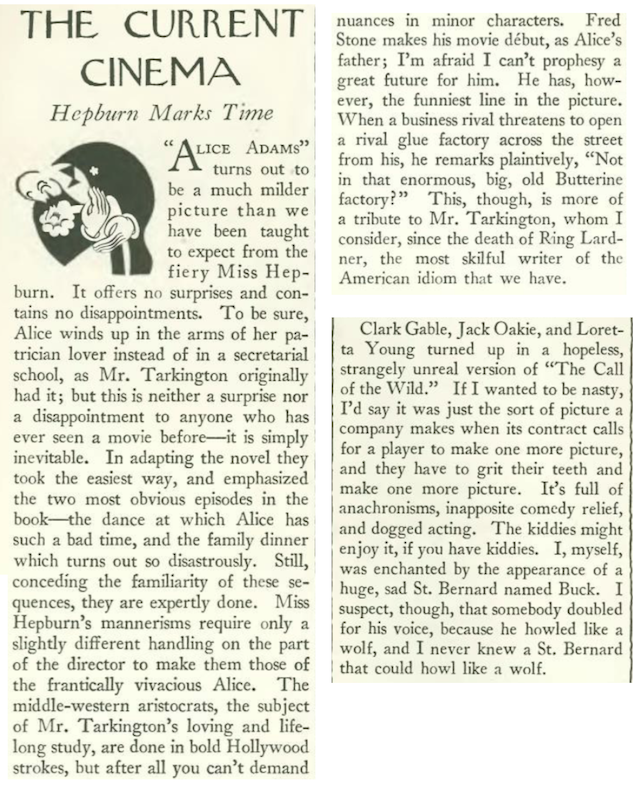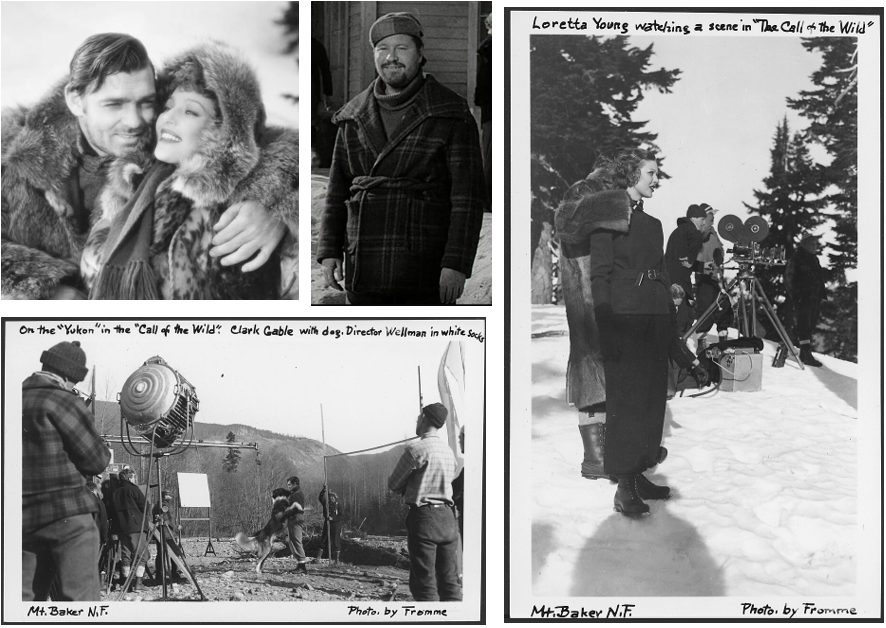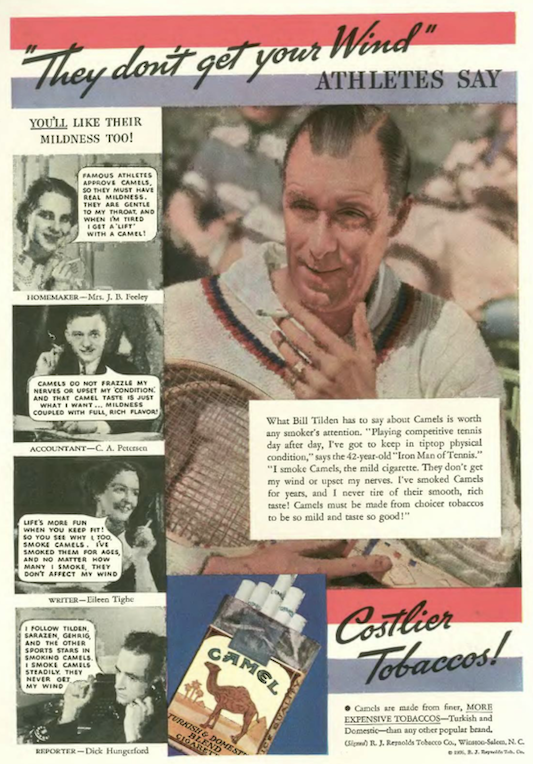
She Who Must Be Obeyed

The 1935 film She was one of those old movies you’d see on television during the 1970s when there were only three or four channels (plus UHF) and local stations would tap into the “B” movie vault to fill airtime. One of those films was She.

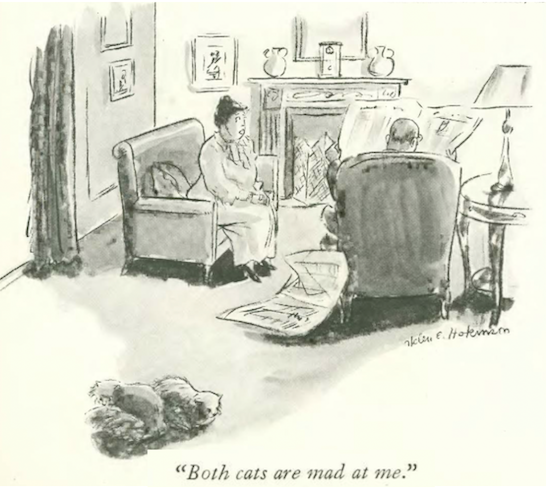
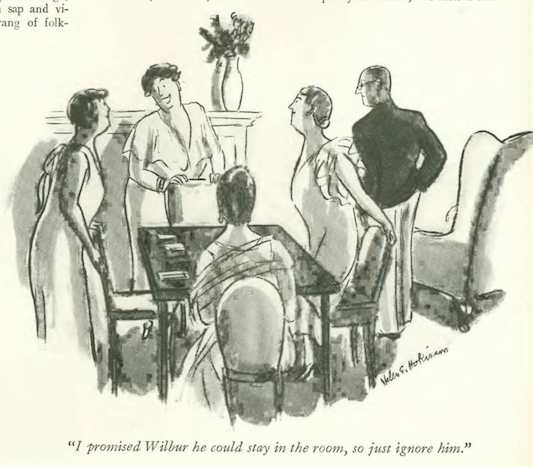
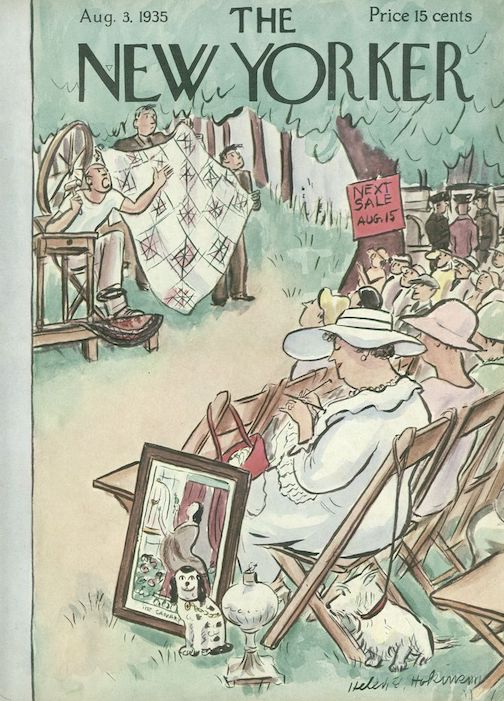
August 3, 1935 cover by Helen Hokinson.

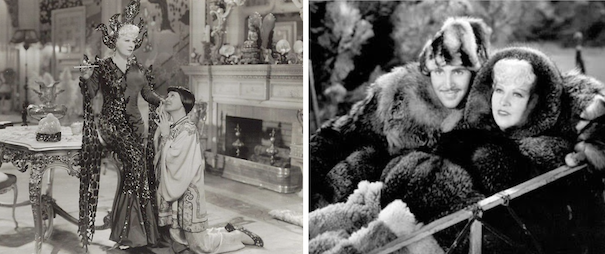
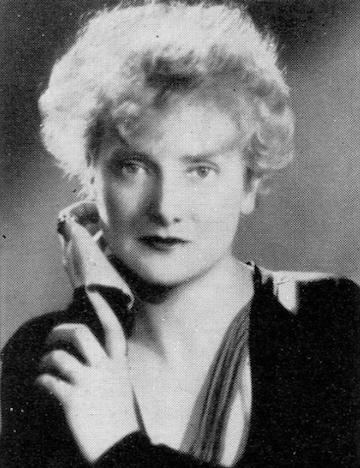
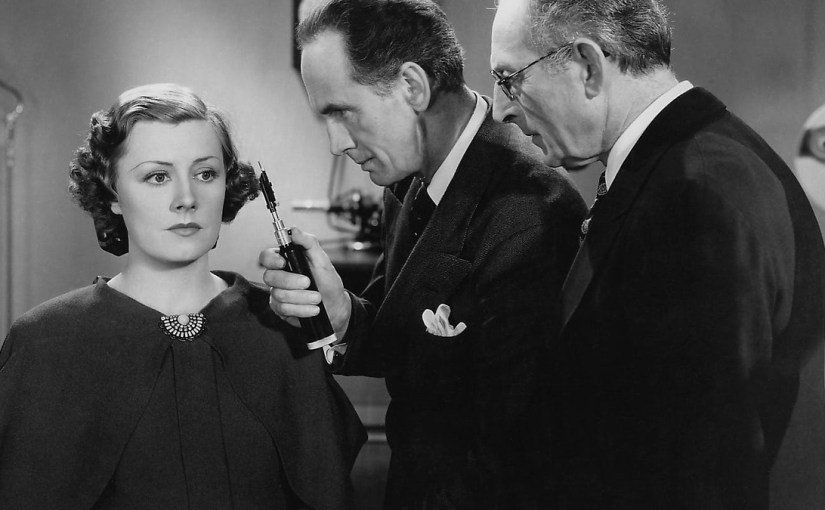
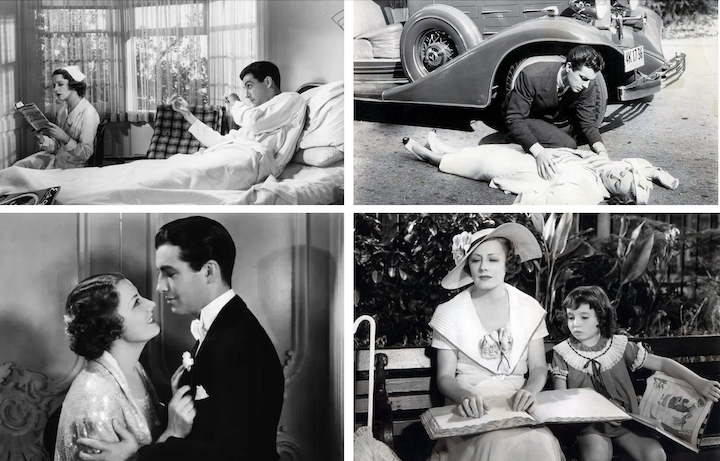
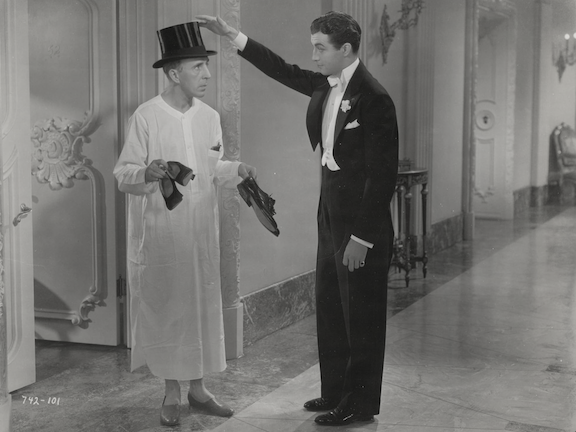
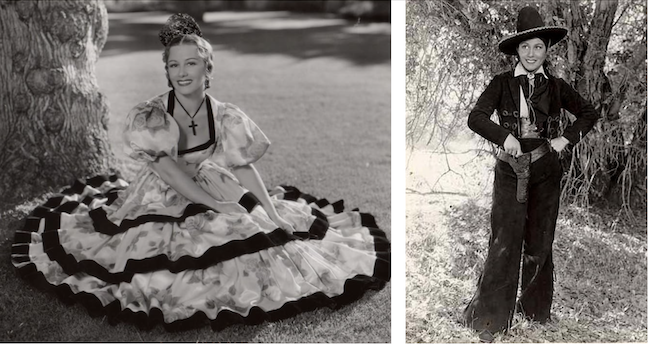
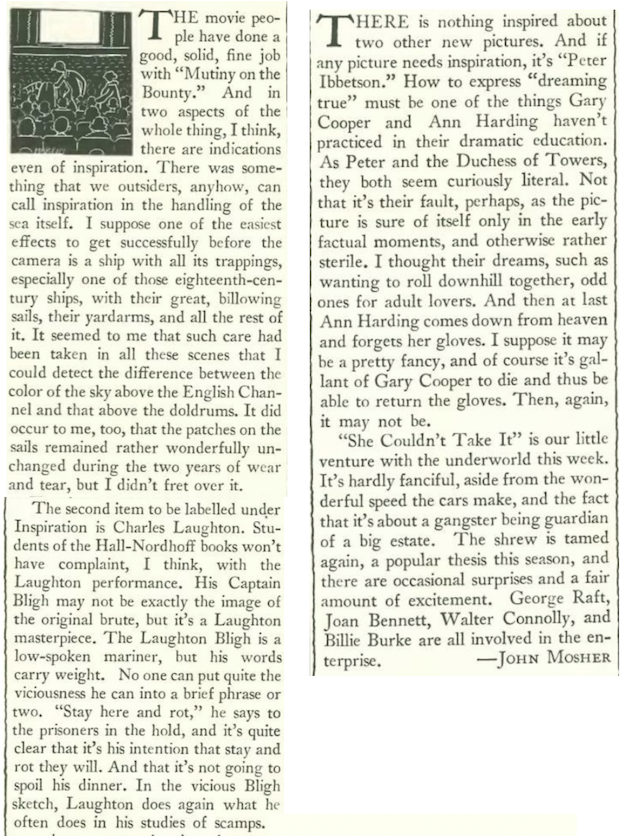
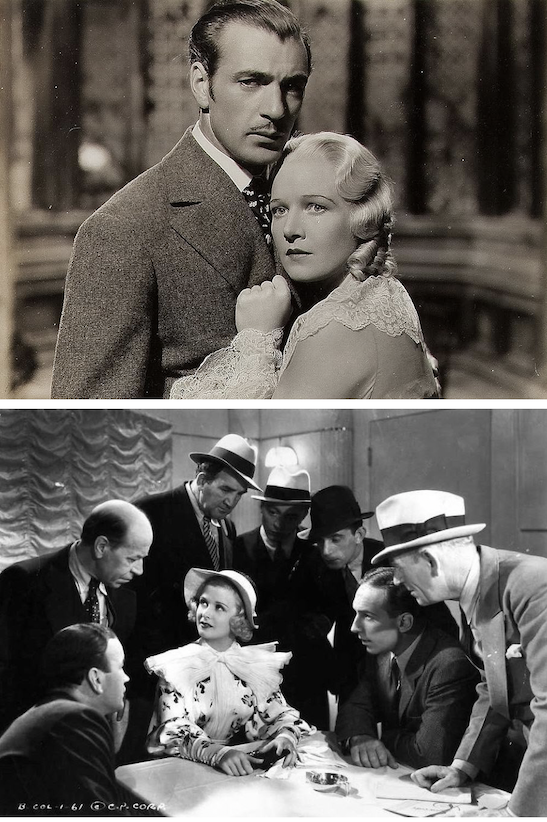
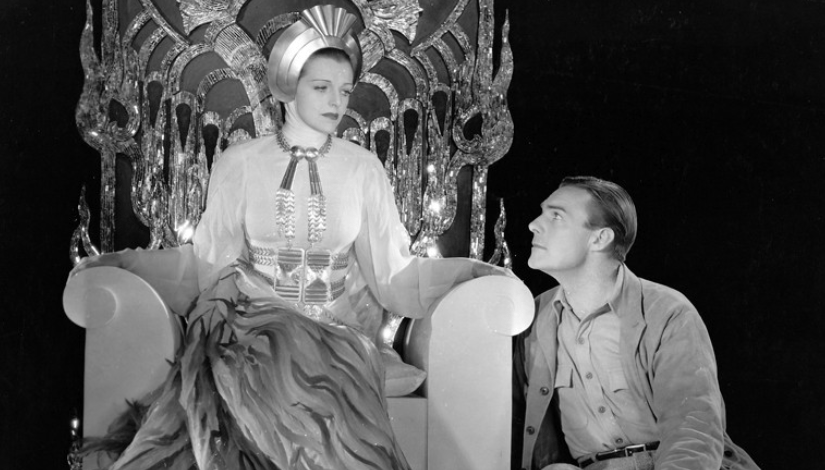
Film critic John Mosher felt a bit sorry for Helen Gahagan, who portrayed “She Who Must Be Obeyed” (aka “She”)—an immortal who ruled an exotic, lost civilization near the Arctic Circle. The challenge for Gahagan was to seem imperious before her co-stars Randolph Scott and Helen Mack, who seemed more suited to the high school hijinks of an Andy Hardy picture. The film was a pretty standard adventure tale, in the mold of producer Marian C. Cooper’s 1933 King Kong, with two explorers falling in love during a perilous journey.

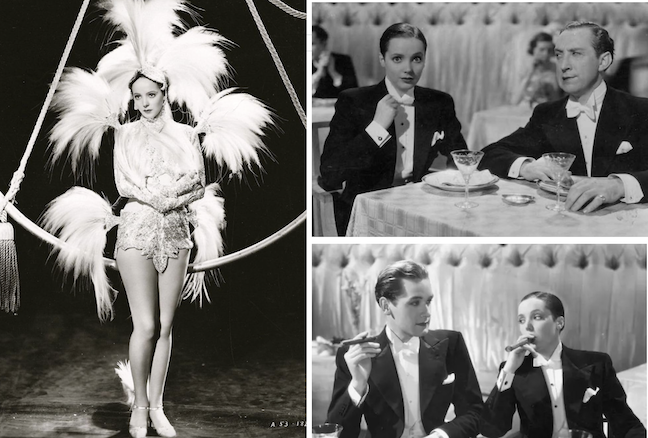
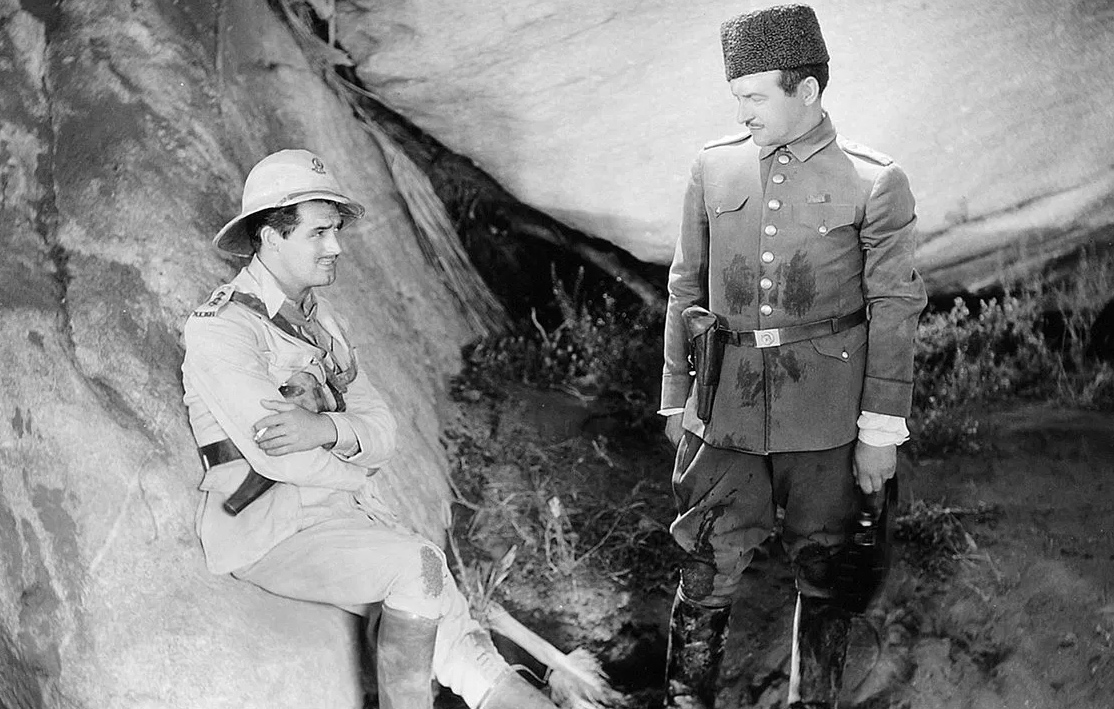
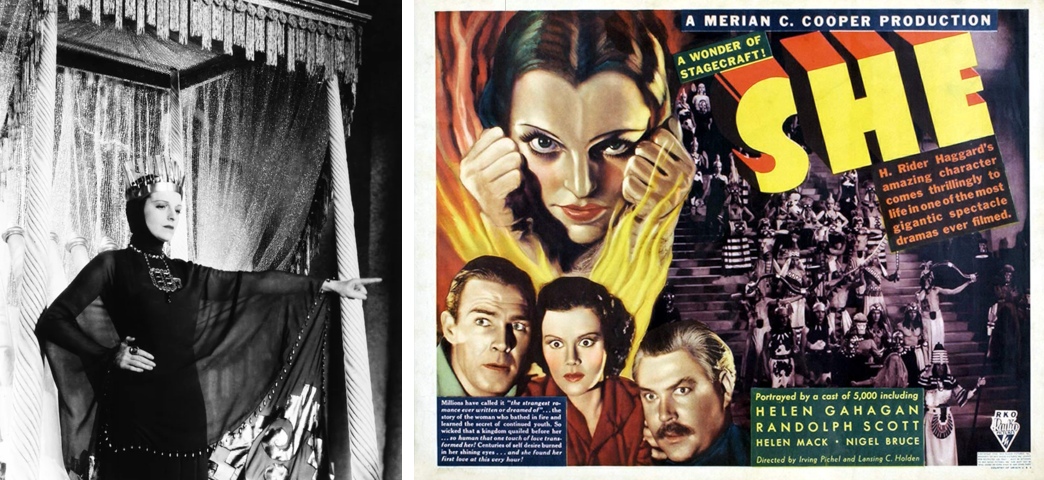
ARCHETYPE…At left, Helen Gahagan as “She” (Who Must Be Obeyed). Her costume possibly inspired the Evil Queen in Disney’s 1937 animated Snow White and the Seven Dwarfs. At right, lobby card that promoted the film. (Scifist.net/Reddit)
WHEN YOU PLAY WITH FIRE…She Who Must Be Obeyed (Helen Gahagan), believing that the explorer Leo Vincey (Randolph Scott) was a reincarnation of his ancestor (whom she loved), and jealous of his girlfriend Tanya (Helen Mack), invites Leo to join her in the eternal flame. Unfortunately, her re-entry into the flame that gave her immortality turned her into a dying, withered crone. (The Nitrate Diva/Scifist.net)

The 1887 H. Rider Haggard novel, She, inspired eponymous silent films in 1908, 1911, 1916, 1917, and 1925. The 1935 film reviewed here received tepid reviews and lost money on its first release, however in a 1949 re-release it fared much better. She was re-made in 1965 with Ursula Andress in the lead role, and again in 1984 in a post-apocalyptic film that had virtually nothing to do with Haggard’s novel.

SHE THROUGH THE YEARS…Clockwise, from top left, “She” (Marguerite Snow) offers a dagger to Leo Vincey (James Cruze) in a 1911 two-reel (24 min.) adaptation; Valeska Suratt as “She” in the 1917 film (now lost); Betty Blythe took the title role in the 1925 production, considered to be the most faithful to the 1887 H. Rider Haggard novel; Sandahl Bergman appeared dressed for a Jazzercise video in the 1984 post-apocalyptic She; and finally, Ursula Andress and John Richardson in the 1965 CinemaScope production of She. (Wikipedia / digitalcollections.lib.washington.edu / cultcelebrities.com / Reddit)

 * * *

Colonial Ambitions

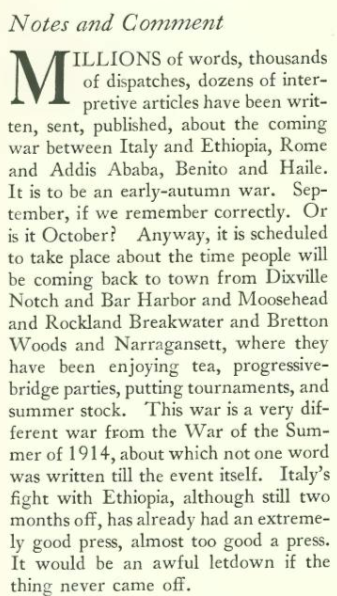
With most of Africa carved up by other European powers (Britain, France, Belgium etc.) in the 19th century, Italy set its sights on Ethiopia, which by the end of the 19th century was the only independent country left on the continent. Ethiopia fought off Italy’s first attempt at conquest in the Battle of Adwa (1896), but with the rise of fascist dictator Benito Mussolini, Italy paid a return visit, this time with heavy artillery and airstrikes that included chemical weapons. E.B. White tried to make sense of this latest invasion in his opening comments.

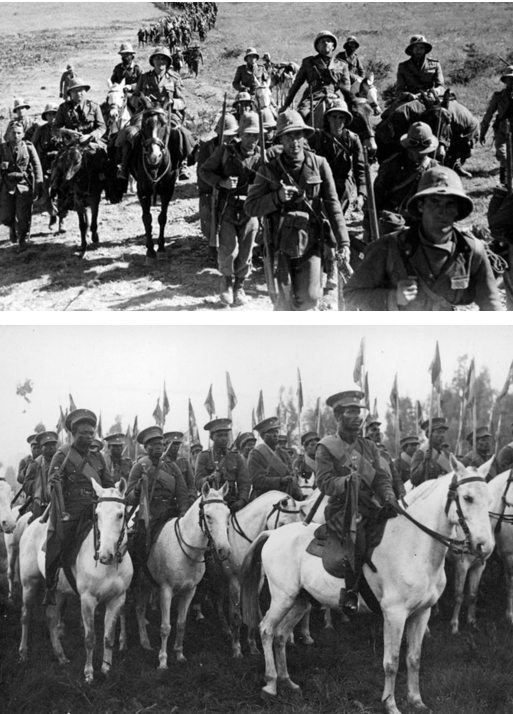
THOSE GUYS AGAIN…Italy invaded Ethiopia on October 3, 1935, a significant act of aggression in the lead up to World War II. Despite facing a technologically superior Italian army (top) equipped with modern weapons, including tanks, aircraft, and chemical weapons, the Ethiopian forces (bottom photo) mounted a strong resistance. (Wikipedia)

In his weekly column, Howard Brubaker mused on the Italian aggressions and other rumblings of the coming European war.

 * * *

Author, Author

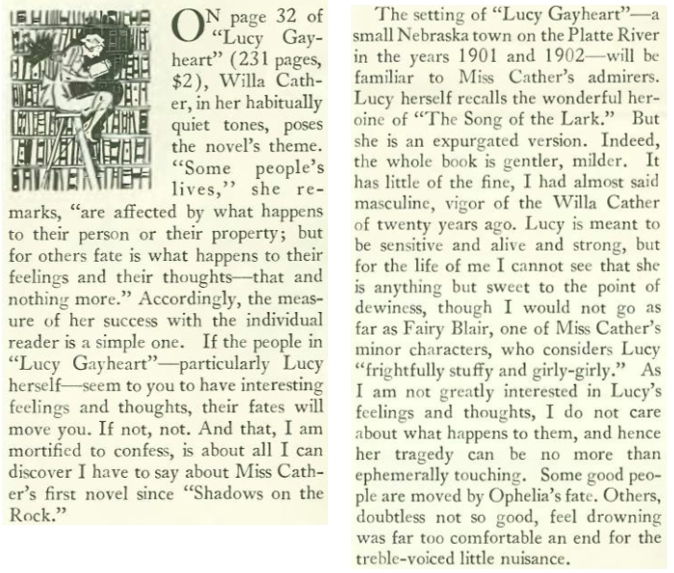
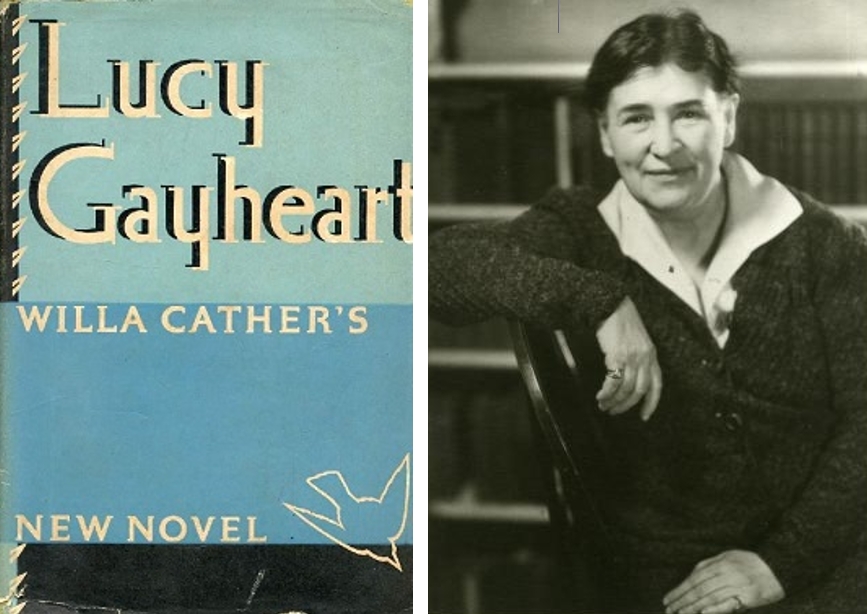
The writer Willa Cather was a favorite of New Yorker critics, including Clifton Fadiman, however her latest novel was a bit too mild for his tastes.

HERE’S LUCY…Clifton Fadiman confessed he was “mortified” to admit that he found Willa Cather’s latest novel a bit too gentle. At right, portrait of Cather on her birthday, December 7, 1936. (willacather.org)

 * * *

From Our Advertisers

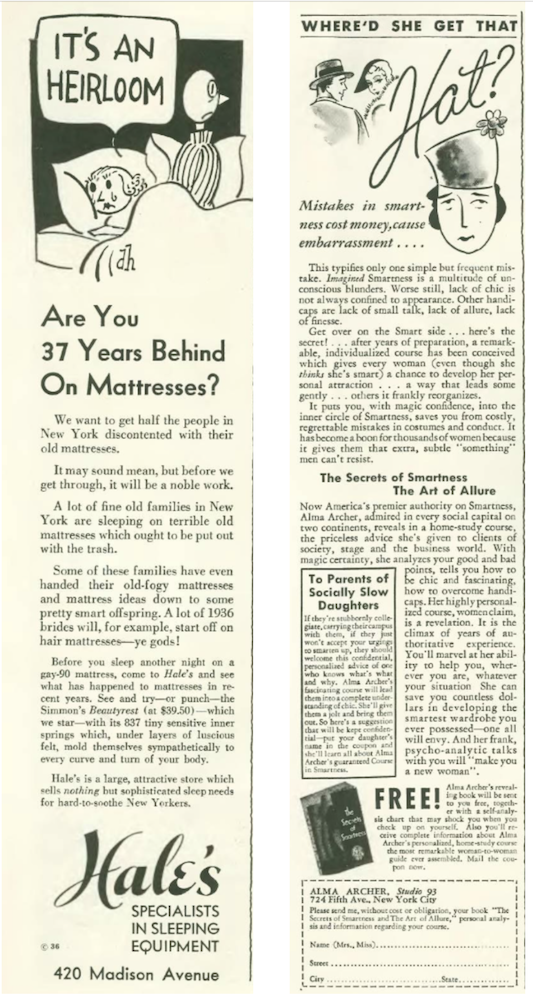
We begin with more fearmongering from the folks at Goodyear, who offered weekly reminders of the perils of not choosing their all-weather tires…

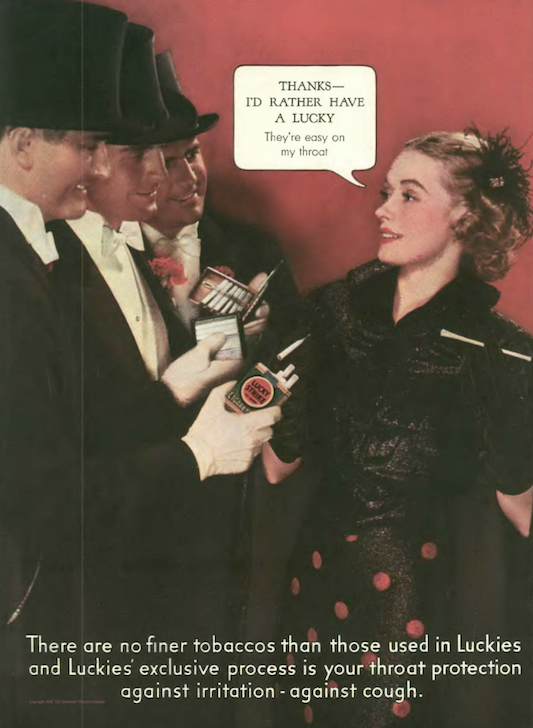
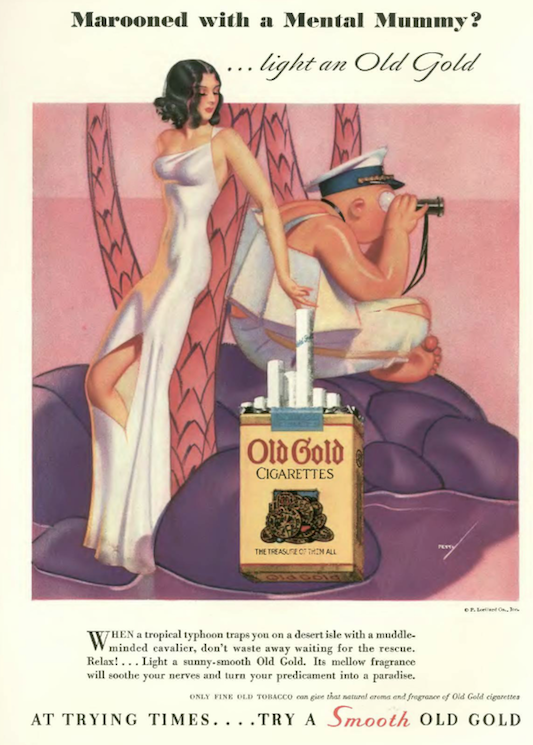
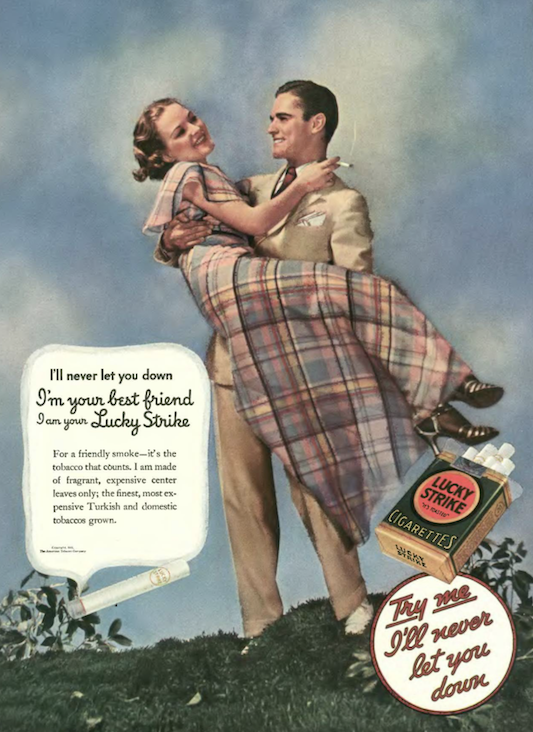
…the Liggett and Myers Tobacco Company conjured up this “naughty maiden” to encourage even timid souls to take up the habit…

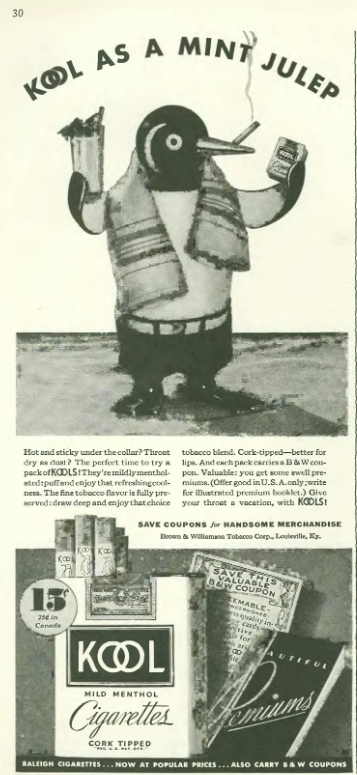
…on the other hand, the makers of the upstart KOOL brand kept it simple with their chain-smoking penguin, who was grabbing ever more market share from rival menthol pusher SPUD…

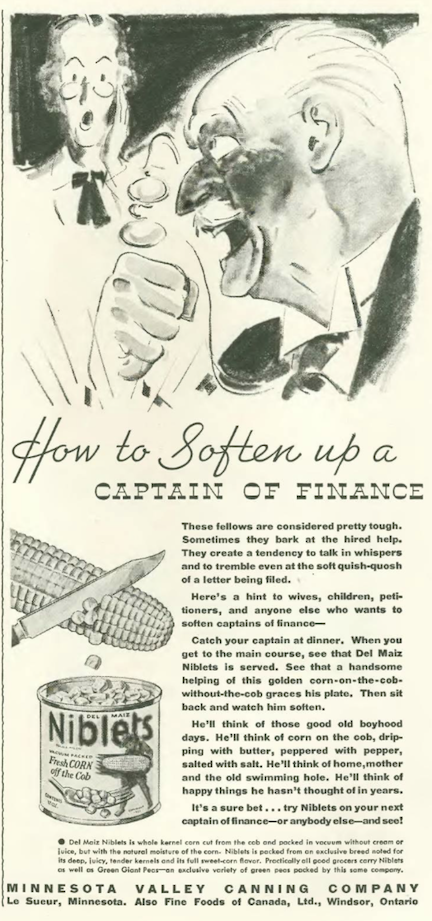
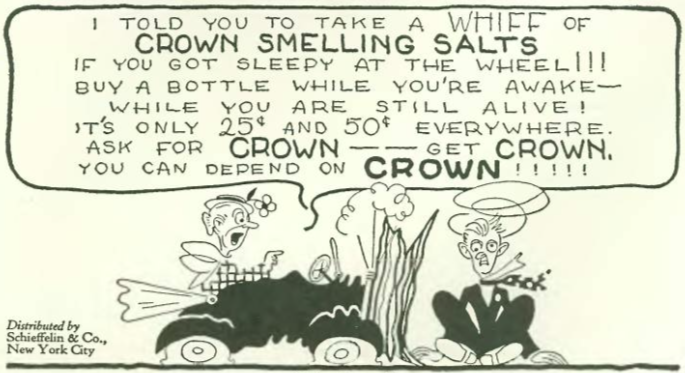
…ads in the back of the book offered up even less sophisticated products, such as Crown Smelling Salts…

…while Dr. Seuss and Norman Z. McLeod continued to make a living with their distinctive illustrations…

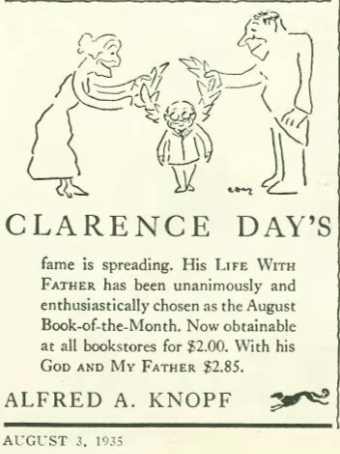
…at the very back of the magazine, this tiny ad from Knopf promoted Clarence Day’s Life With Father, published just months before Day’s death on Dec. 28…

…which brings us to our cartoonists…Constantin Alajalov kicked us off with this happy number…

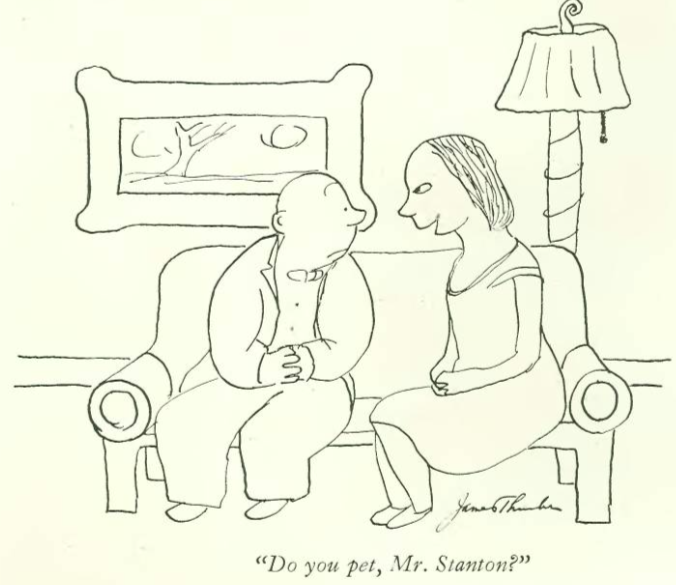
James Thurber found steamy goings on in the parlor…

Charles Addams came down to earth with this pair…

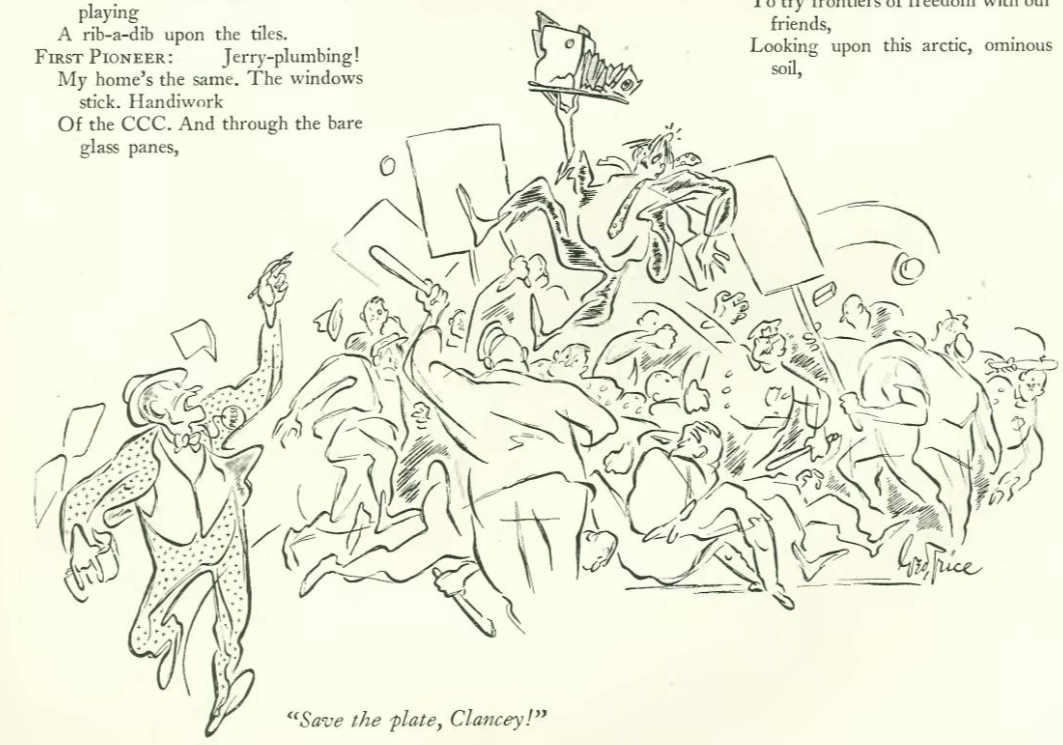
George Price showed us the rough and tumble of news reporting…

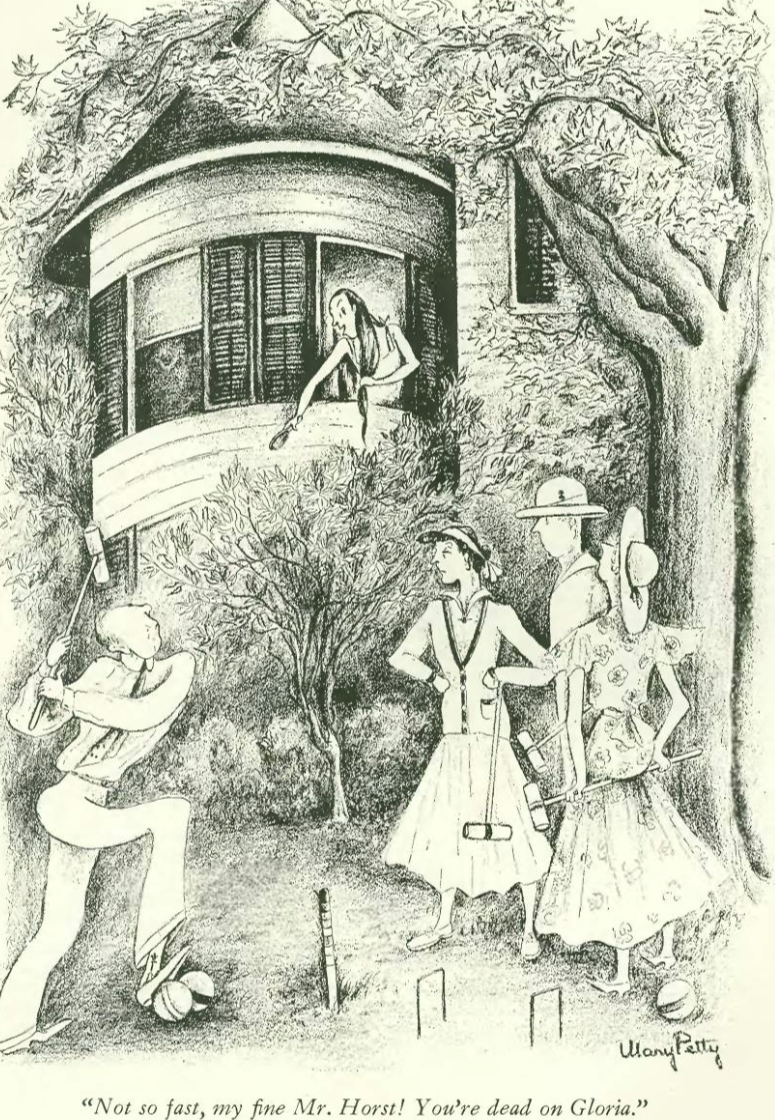
Mary Petty contributed this sumptuous drawing of a croquet match…

Helen Hokinson was in a transcendental mood…

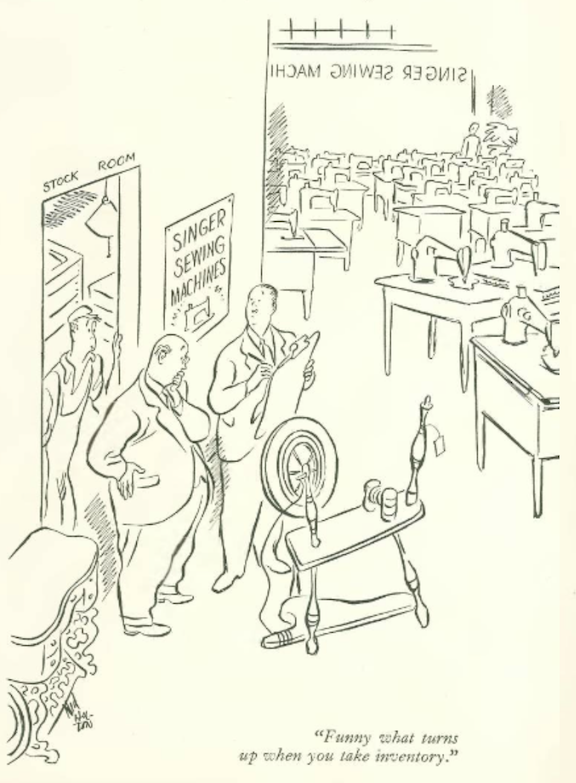
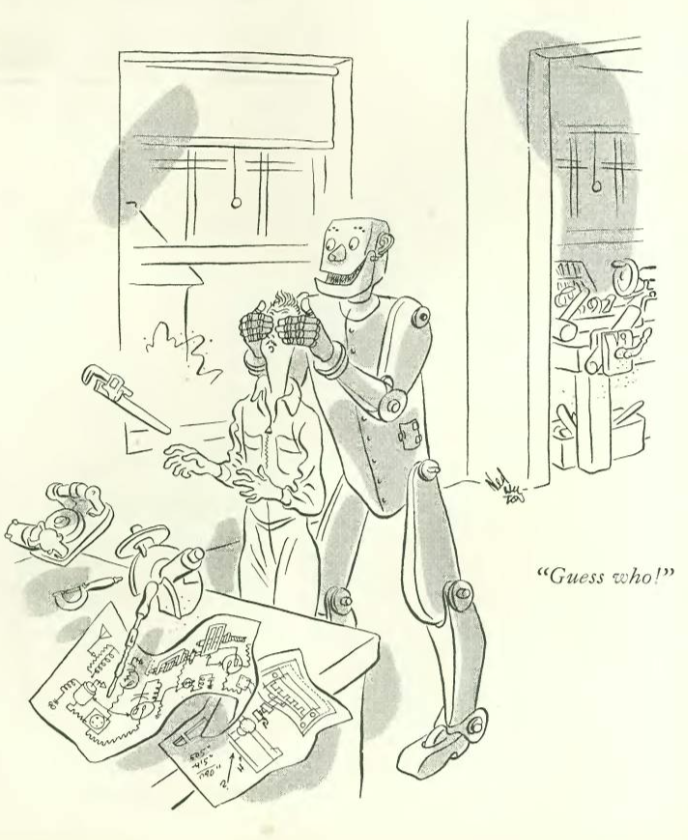
…and Ned Hilton had a big surprise for one garage tinkerer…

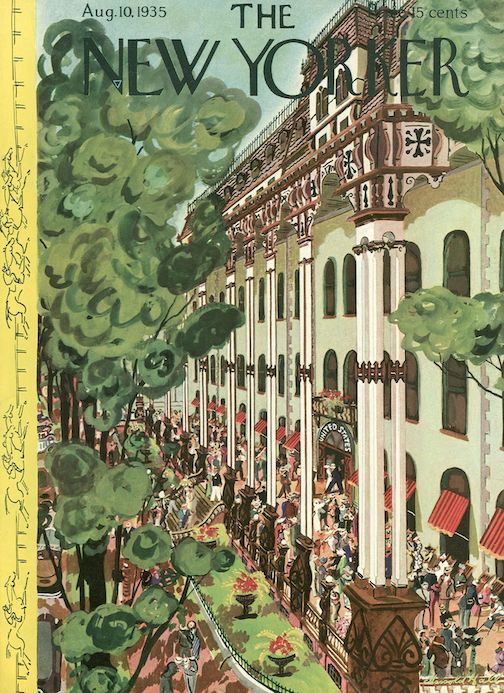
…on to August 10 and a rich summer scene by Arnold Hall:

August 10, 1935 cover by Arnold Hall.

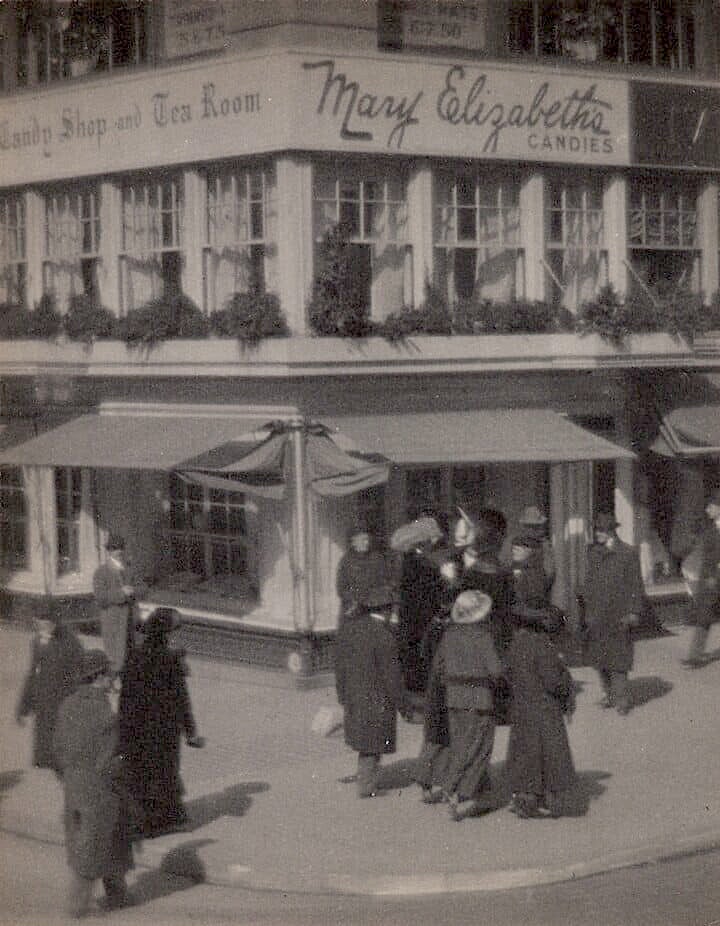
“The Talk of the Town” checked the lunch crowd at Mary Elizabeth’s Tea Room, where some preferred to drink their lunch.

TEA AND SWEETS (and cocktails) were among the offerings at Mary Elizabeth’s Tea Room at 36th and Fifth, seen here circa 1912. (Photo by Karl Struss via Facebook)

 * * *

Comic Relief

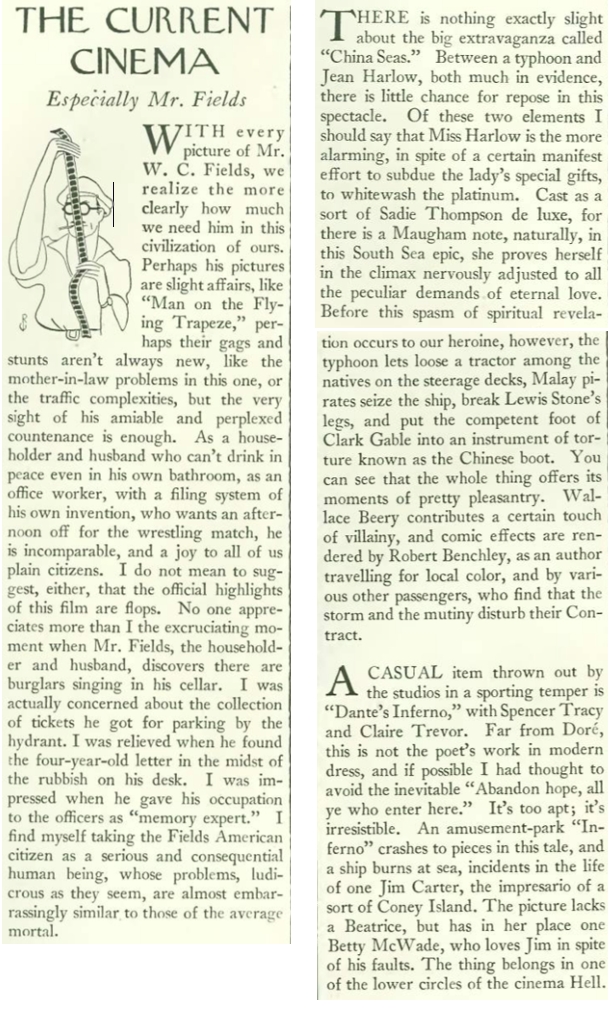
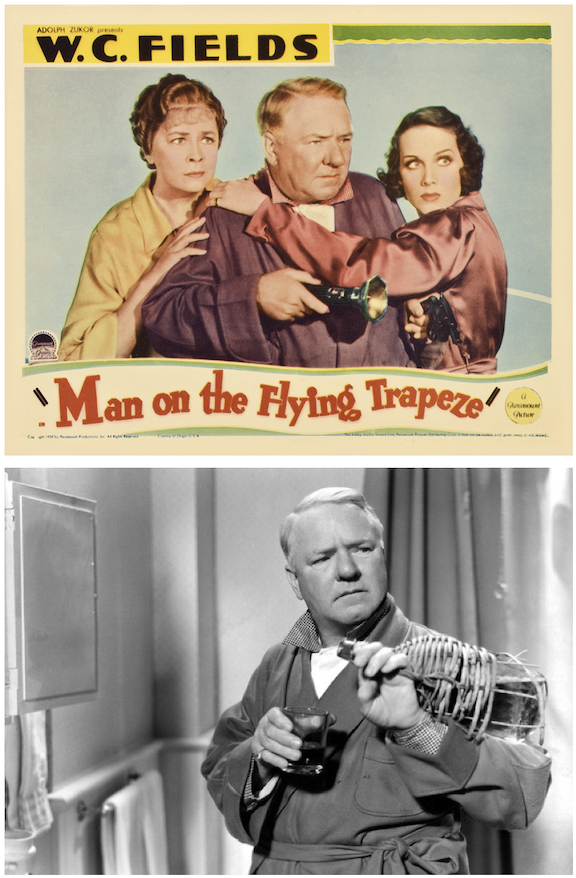
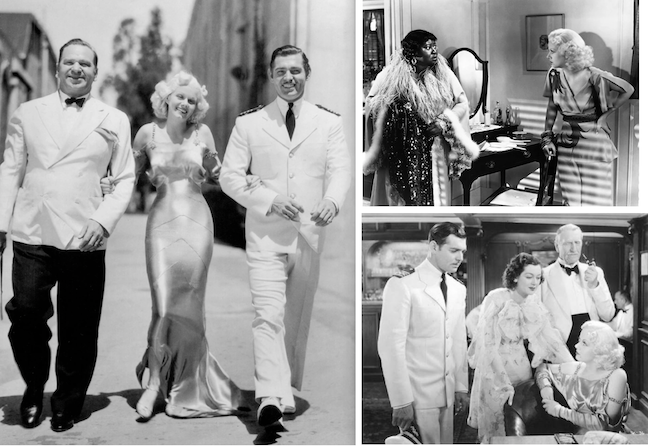
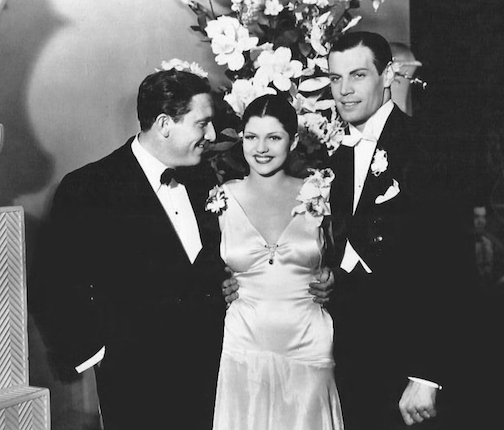
Film critic John Mosher offered an appreciation of W.C. Fields, noting that civilization needed films like Man on the Flying Trapeze during those hard years. Mosher also found some worthy distractions in the Jean Harlow vehicle China Seas, but was prepared to consign Spencer Tracey’s latest offering to the “lower circles of cinema hell.”

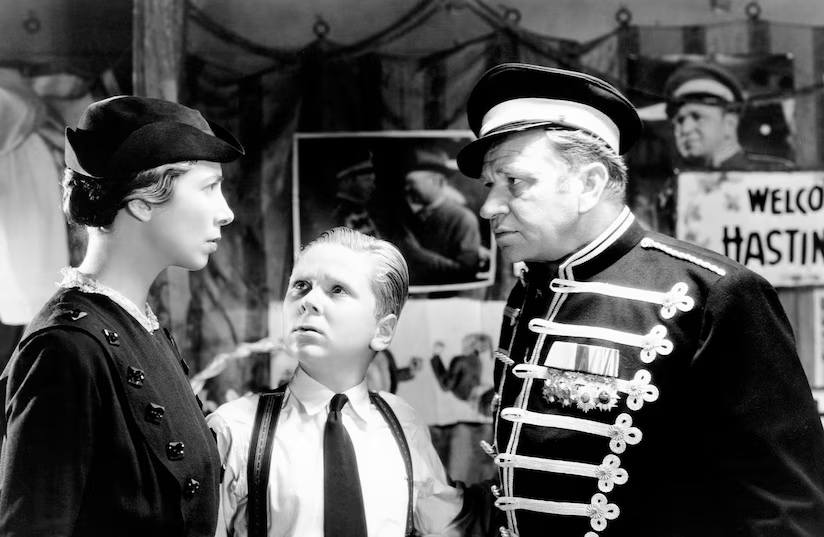
ANSWERING HIS NATION’S CALL…W.C. Fields brought joy to millions during the Depression in movies such as Man on the Flying Trapeze. Above, from left, Kathleen Howard, Fields, and Mary Brian. (IMDB/Rotten Tomatoes)
SHORE LEAVE…At left, Wallace Beery, Jean Harlow, and Clark Gable on the set of China Seas; top right, Hattie McDaniel with Harlow in a scene from the film; below, Gable, Rosalind Russell, and C. Aubrey Smith with Harlow in China Seas. (musingsofaclassicfilmaddict.wordpress.com / Pinterest)
FRESH FACE…Cinema newcomer Rita Hayworth was credited as Rita Cansino (she was born Margarita Carmen Cansino) in Dante’s Inferno. Here she is flanked by Spencer Tracy and Gary Leon. Dante’s Inferno was Spencer Tracy’s final film for 20th Century Fox. It was at MGM where his career really took off. (IMDB)

 * * *

All Wet

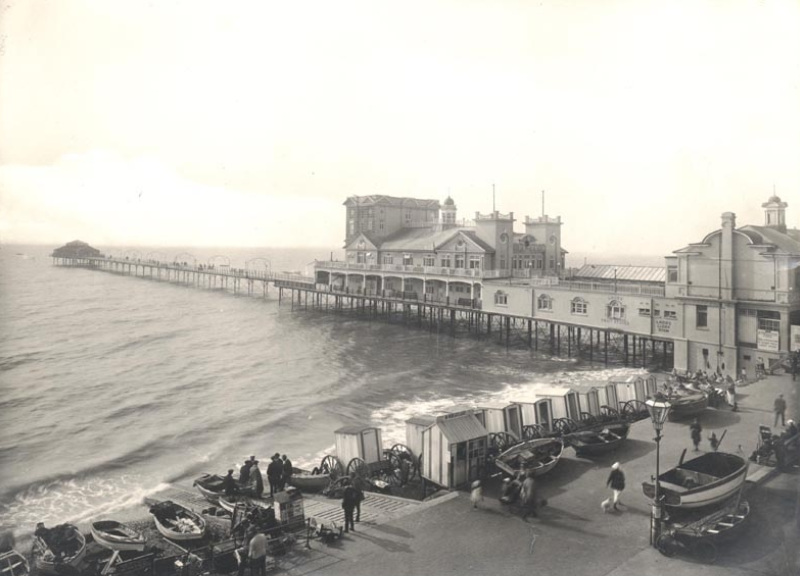
In his London Letter, Conrad Aiken (pen name Samuel Jeake Jr) examined the priggish ways of England’s seaside resorts.

SITE OF SCANDAL…Bathing huts at Bognor Regis, circa 1921. (bognorregistrails.co.uk)

 * * *

Beware the Bachelor

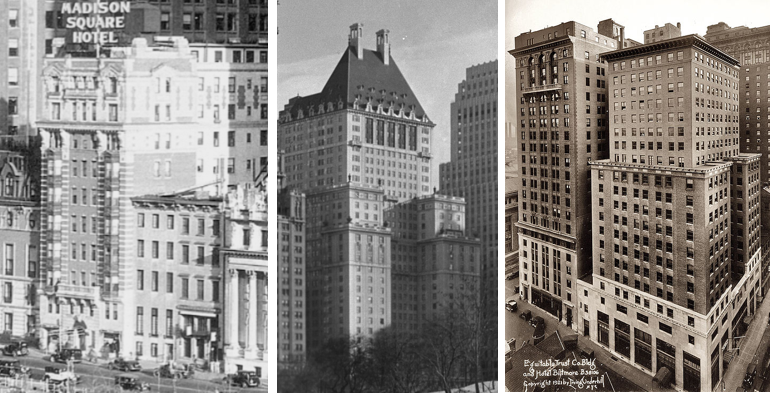
In her “Tables for Two” column, Lois Long examined some of the city’s seasonal escapes for “summer bachelors.”

GHOSTS OF THE PAST…Lois Long recommended the air-conditioned lounges of the Madison Square Hotel and the Savoy Plaza (center) or the cooling breezes of the Biltmore roof (right), which featured music by Morton Downey. Sadly, all three of these beautiful buildings have been demolished. (geographicguide.com/Wikipedia)

Other more casual venues recommended by Long included Nick’s Merry-Go-Round…

…a menu from Nick’s dated 1937…

(nypl.org)

…and its cryptic back cover…

From Our Advertisers

…speaking of the Biltmore and Morton Downey, we kick off our advertising section…

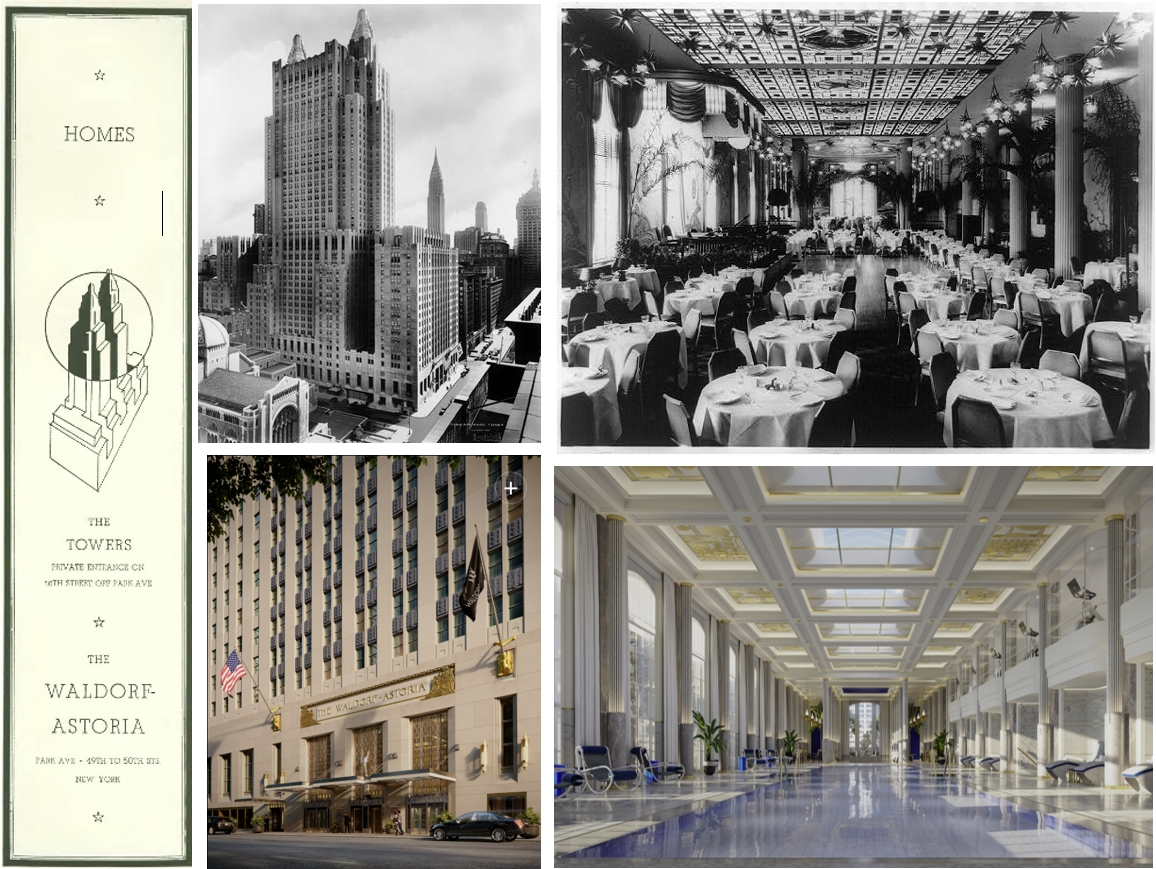
…the ad on the left announced the private residences at the Waldorf-Astoria…

Clockwise, from top left, the Waldorf Astoria circa 1930; the Waldorf’s Starlight Roof in the 1930s; after eight years and billions in restorations and renovations, the hotel has seen many changes including the transformation of the Starlight Roof into a swimming pool. Decades of grime were also cleaned from the building’s exterior. (mcny.org/loc.gov/som.com)

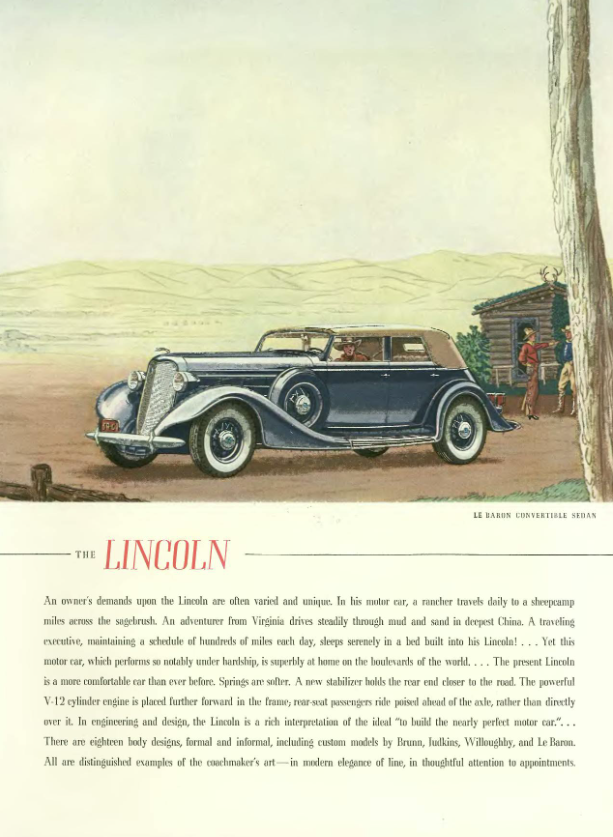
…another ad from the makers of Lincoln suggesting that the market for their luxury auto wasn’t confined to citified execs…

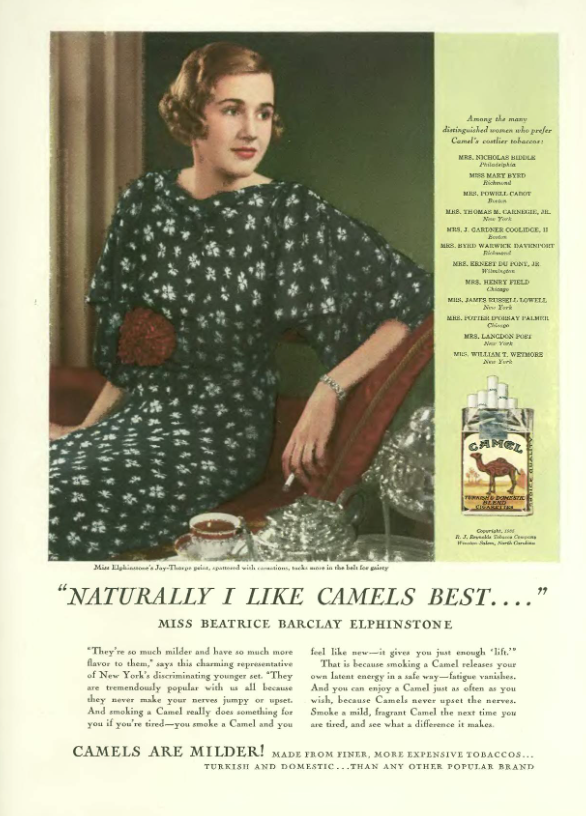
…the Camel folks introduced us to their latest society shill…

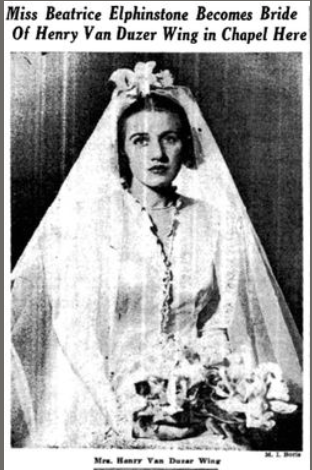
…I didn’t find much about Beatrice Barclay Elphinstone (1916-1977), described in the Camel ad as a “charming representative of New York’s discriminating younger set”…she did make the Times‘ Dec. 10, 1937 society wedding announcements, however…

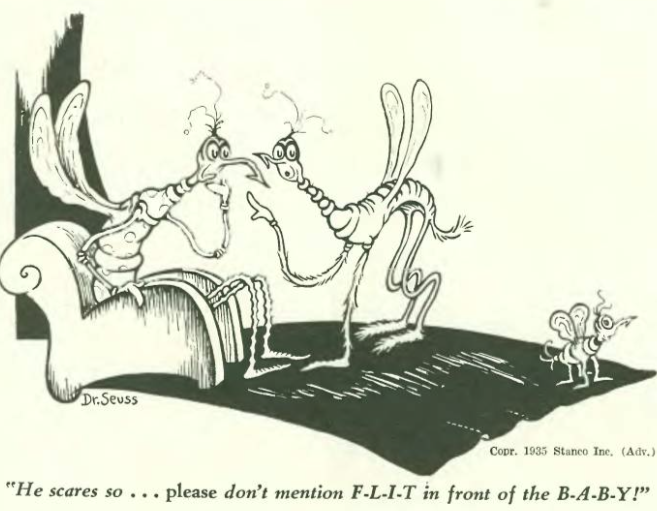
Dr. Seuss was back with another twist on Flit insecticide…

…on to our illustrators and cartoonists, a nice charcoal by Hugo Gellert for a profile titled “Yankee Horse Trader,” written by Arthur C. Bartlett…the harness horse racing legend Walter Cox (1868-1941) was known in New England as “the king of the half-milers”…

James Thurber contributed this cat and dog face-off to the opening pages…

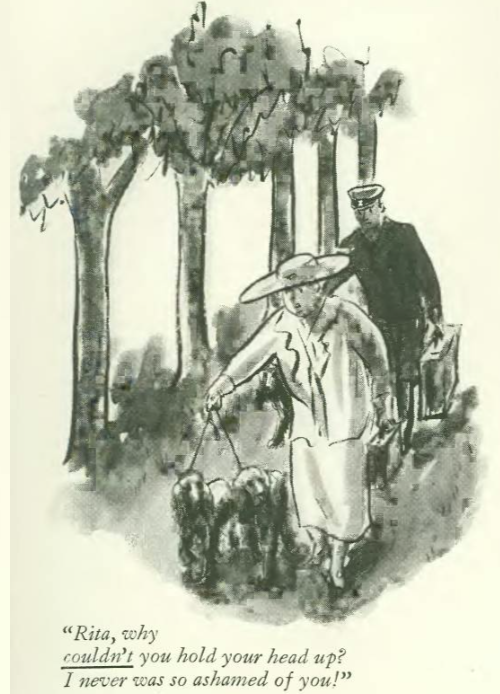
Helen Hokinson offered her perspectives on the summer dog show across pages 16-17…

…and for a closer look…

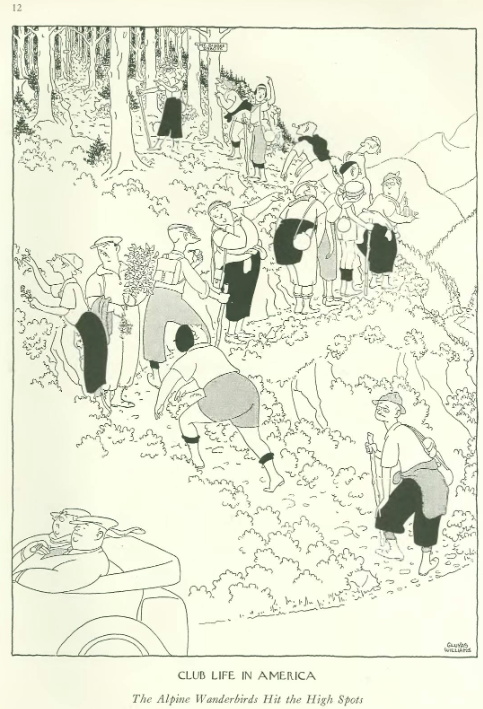
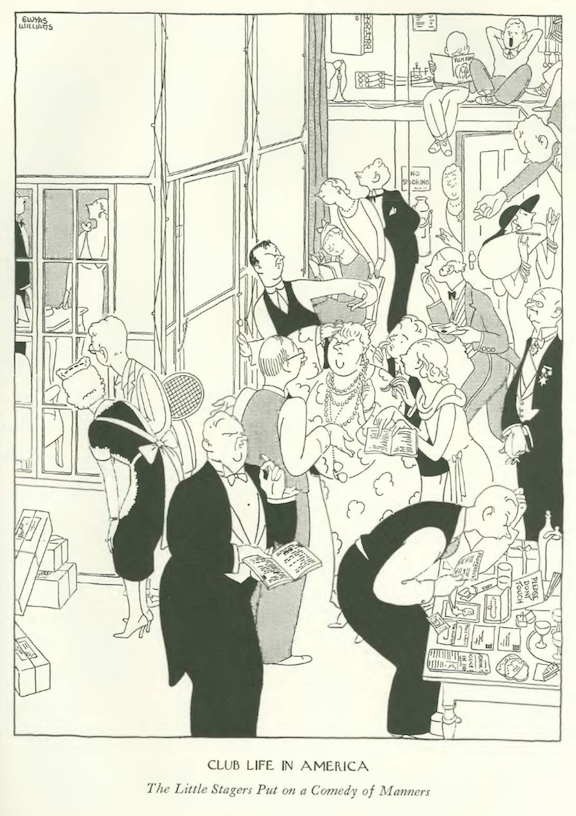
Gluyas Williams went back to nature in his “Club Life” series…

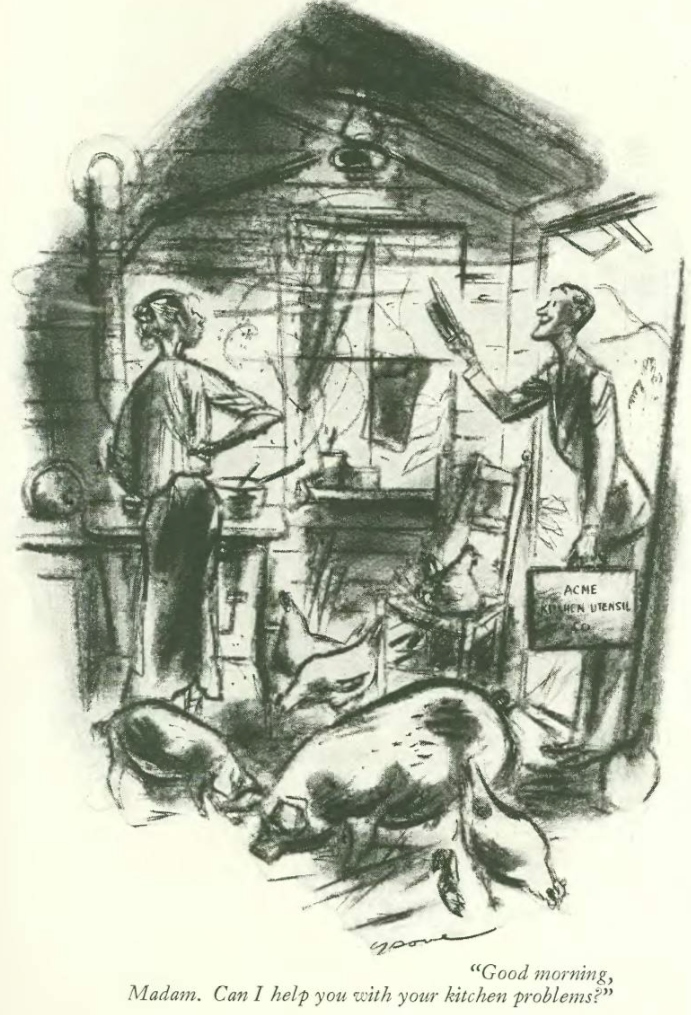
Leonard Dove introduced us to an undaunted salesman…

…in the world of George Price, crime didn’t pay…

Barbara Shermund gave us a rare glimpse into the secret lives of men…

…patronizing words were unwelcome at this chess match, per William Steig

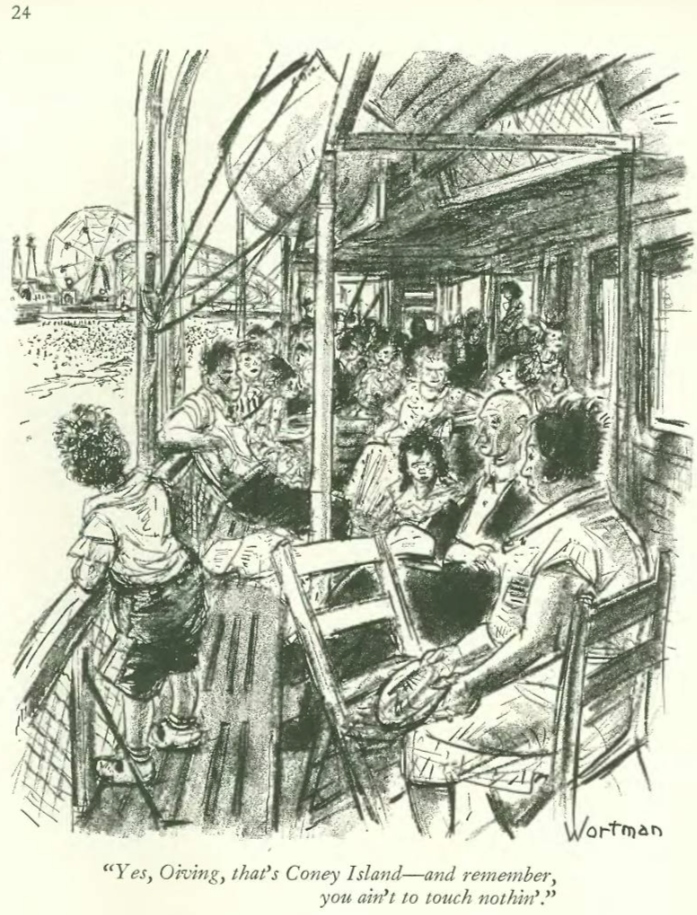
Denys Wortman took us on a family outing…

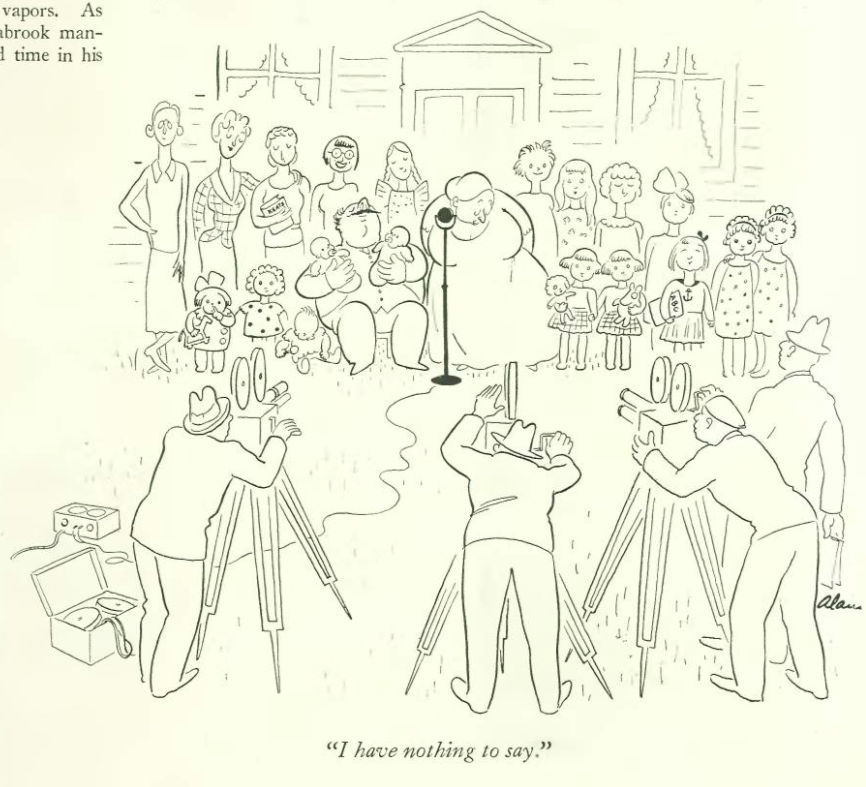
…and we close with Alain, and a mother of multiples…except words…

Next Time: Hays Hokum…

Settling Down

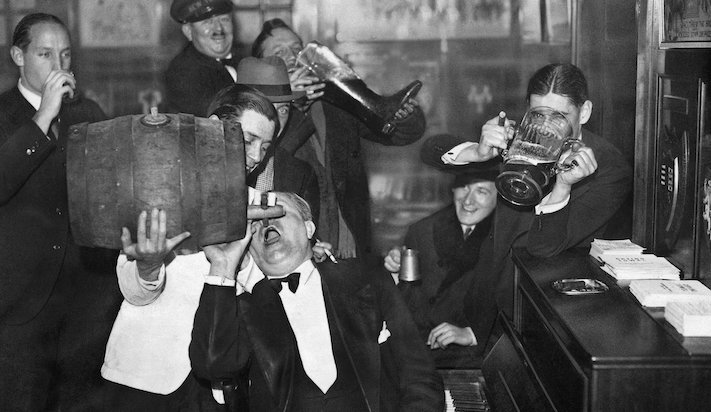
Above: Celebrating the repeal of the 18th Amendment, 1933. (New York Times)

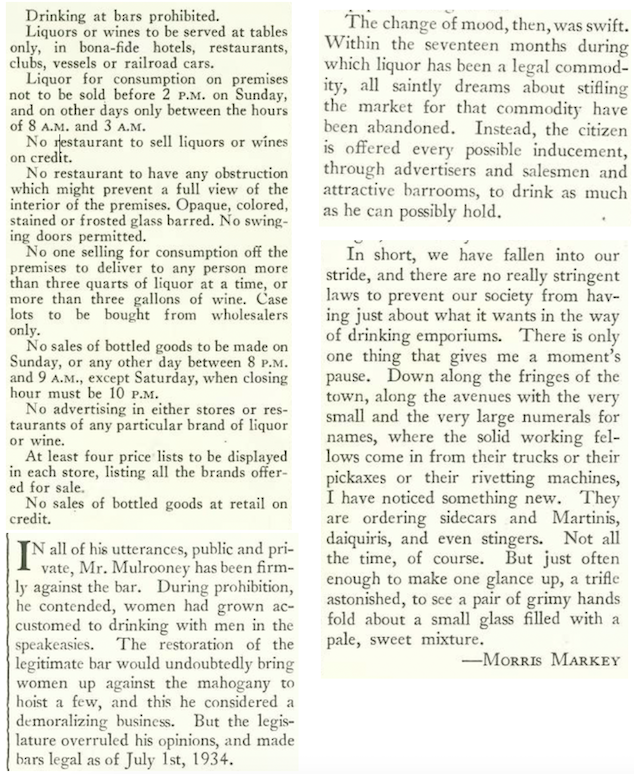
“Settling Down” was the title given to Morris Markey’s examination of the post-Prohibition world, which to no one’s surprise heartily embraced (and imbibed) everything this world had to offer.

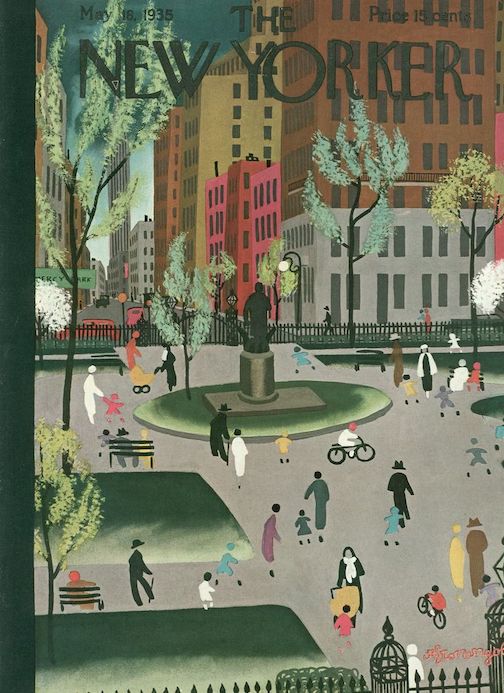
May 18, 1935 cover by Adolph K. Kronengold.

In his column, “A Reporter at Large,” Markey examined the challenges faced by local and federal governments in reestablishing old liquor control laws, in many cases creating new ones to address the technological, economic and social changes that transpired during the fourteen years of Prohibition. Facing this challenge in New York was Edward P. Mulrooney (1874-1960), a former police commissioner tapped in 1933 to head the State Alcoholic Beverage Control Board. Markey explained how Mulrooney and New York regulators tried to create new standards for alcohol consumption that would encourage moderation. Excerpts:

CAN’T HAVE A BELT IN THE BIBLE BELT…Published by The United States News on Nov. 11, 1933, this map shows how liquor laws varied by state following Prohibition. After Prohibition ended with the ratification of the 21st Amendment, states gained the authority to regulate alcohol sales, leading to a wide variety of state and local laws. Many states adopted local option laws, allowing cities and counties to decide whether to allow alcohol sales, resulting in “wet,” “dry,” and “moist” jurisdictions. (us news.com)

Seventeen chief provisions for moderating alcohol use were published in The New York Times on Nov. 10, 1933, but ten of those provisions were quickly abandoned. Less than a year and a half after repeal, Markey noted that “the citizen is offered every inducement…to drink as much as he can possibly hold.”

SO MUCH FOR RULES…Celebrations for the repeal of Prohibition in bars and former speakeasies began when Franklin Roosevelt signed the Cullen-Harrison Act on March 22, 1933; the president himself was known to enjoy a dry martini; former New York Police Commissioner Edward P. Mulrooney had the unlucky task of figuring out how to regulate the juice of the grape and the grain. In the end, people seemed to be drinking more than ever. (themobmuseum.org/thrillist.com/Condé Nast)

 * * *

Hordes From the Hinterland

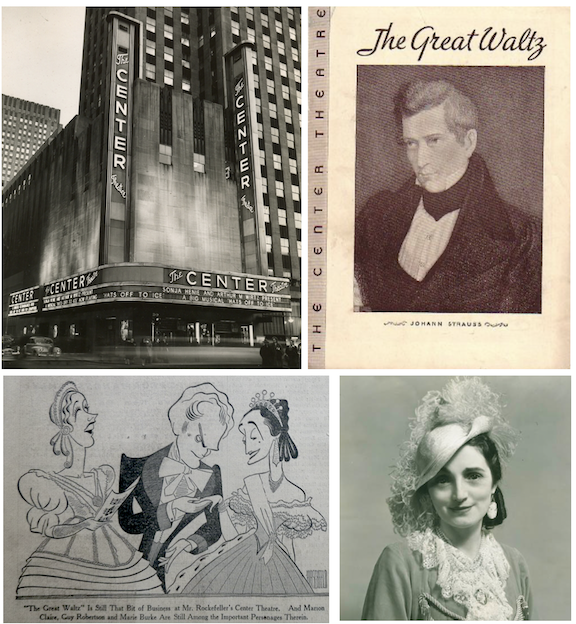
There was a time, long ago, when Broadway catered mostly to New Yorkers, but with the advent of mass media and better transportation options folks from the hinterlands (from beyond the Hudson) began to descend on the Great White Way. Then as now, certain shows attracted thousands, including The Great Waltz, a musical based on the works of Johann Strauss I and Johann Strauss II. It opened in September 1934 at the Center Theatre and ran for 289 performances. “The Talk of the Town” sniffed that “People who literally have never seen a play before in their lives turn up at Sixth Avenue and Forty-ninth Street, ready for anything.”

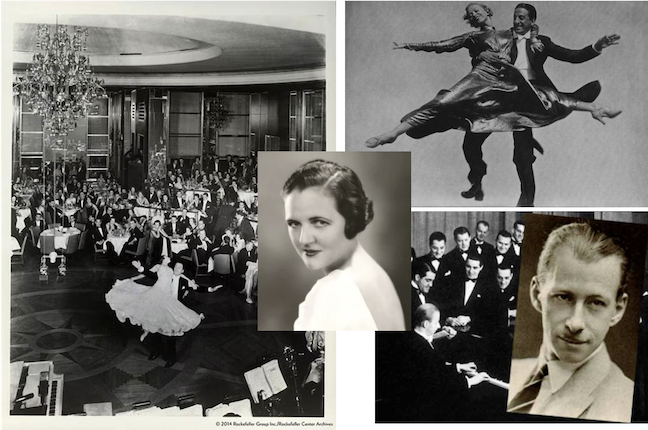
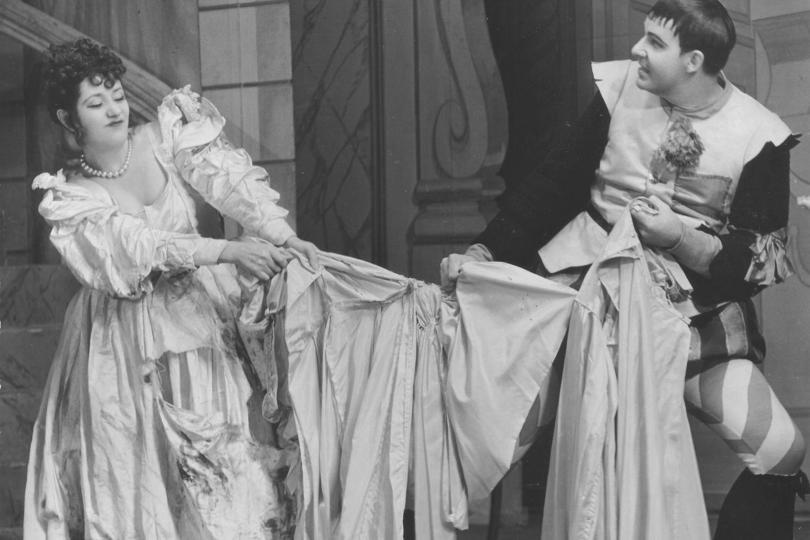
MANY AMERICANS WERE AGOG over the The Great Waltz…Clockwise, from top left, the play was performed at the Center Theatre (formerly the RKO Roxy Theatre) at 49th Street and 6th Avenue—sadly, it was demolished in 1954, the only building to ever be demolished from the original Rockefeller Center complex; cover of the Playbill; actress Marie Burke portrayed Countess Olga Baranskaja; Al Hirschfeld illustration of Burke and fellow actors Guy Robertson (as Johann Strauss) and Marion Claire as Therese. (cinematreasures.org/playbill.com/nyt.com)

 * * *

From Our Advertisers

Appropriately, this full-page advertisement for Gordon’s Gin appeared opposite the opening page of Morris Markey’s exploration of the post-Prohibition world…

…and business was booming in the liquor trades…most of the full-color ads in The New Yorker were placed by liquor companies, cigarette manufacturers, and automakers…the inside back cover shilled for Penn Maryland…

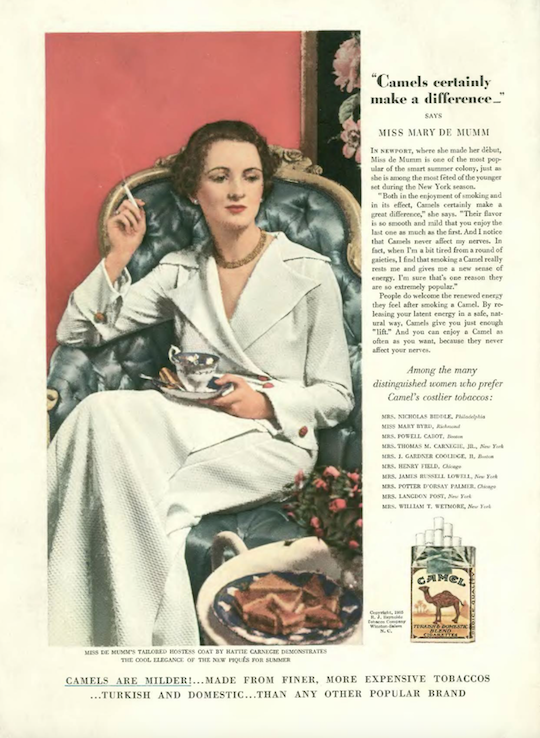
…while the back cover was once again claimed by big tobacco…here we have Newport deb Mary De Mumm expounding on wonders of Camel cigarettes, which somehow helped her feel both restful and energetic…

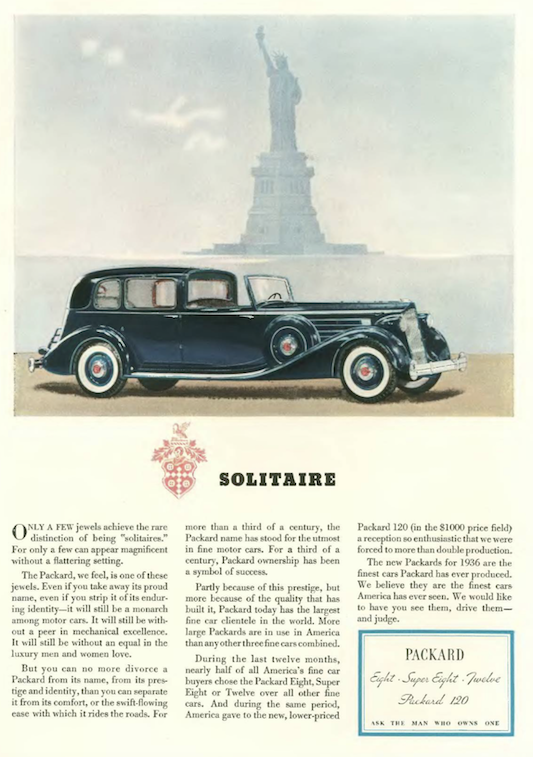
…those who enjoyed the finer things could buy this Packard for about $3,000 (nearly $90K today).

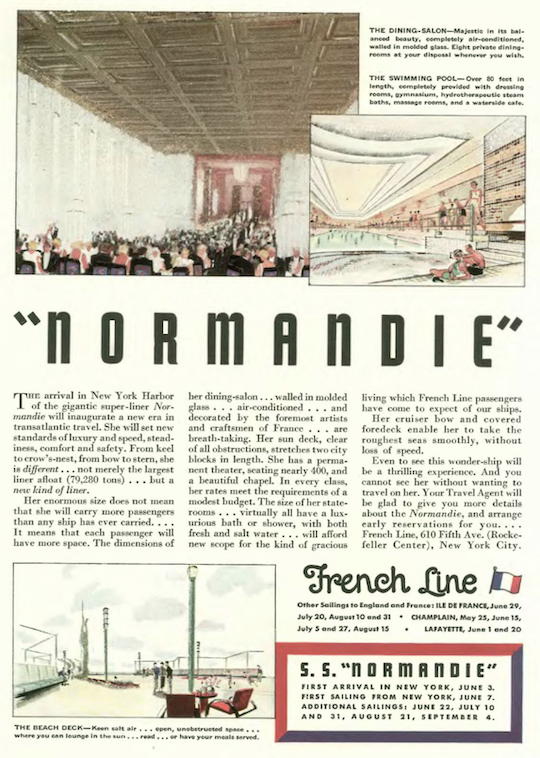
…anticipation was building for the June arrival of the new French liner S.S. Normandie, the largest and fastest passenger ship afloat…

S.S. Normandie on the high seas. (Wikipedia)

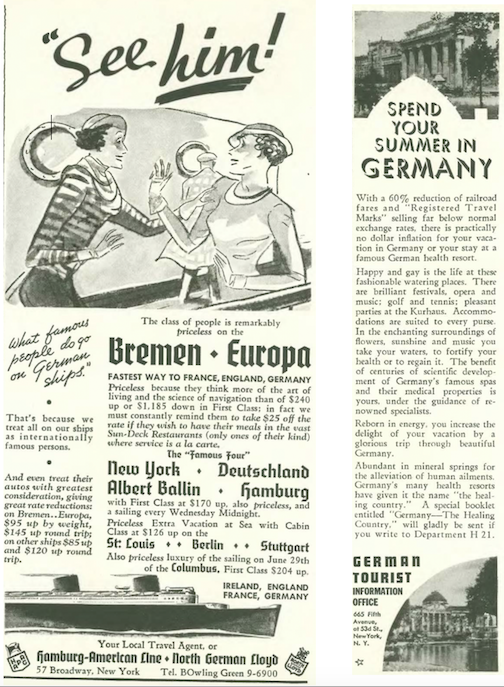
…the Hamburg-American Line was another way to get across the pond, and it promised a ship filled with famous and classy people (and likely more than a few Nazis)…the single-column ad on the right suggested you could spend your summer in Germany…the tourist bureau claimed that Germany was known as “the healing country,” and doubtless many needed healing after being beaten by Brownshirts…

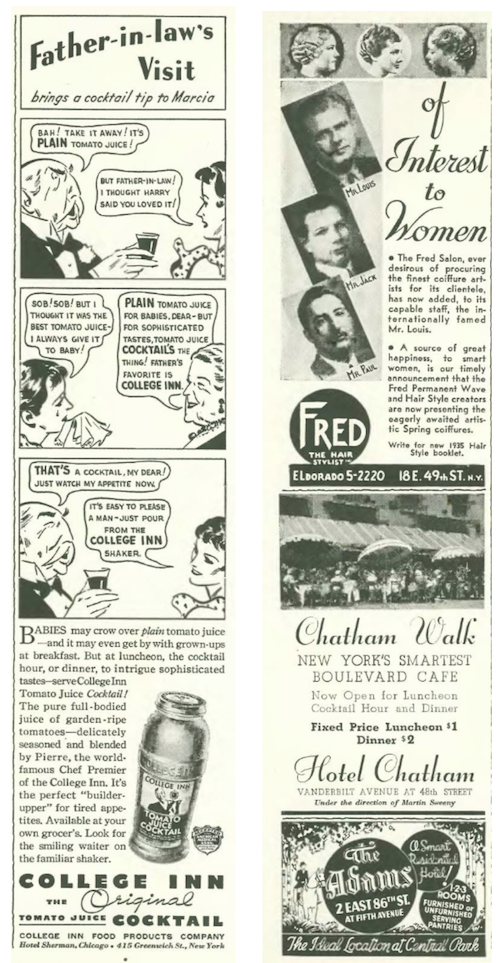
…a couple more single-column ads, first from our friends at College Inn, who dumped the furious Duchess in favor of a dyspeptic father-in-law who brings his daughter-in-law to tears over her choice of tomato juice…the ad at right advertised the services of Mr. Louis, Mr. Jack, and Mr. Paul at the hair stylist Fred, while a tiny ad at the bottom offered a luncheon for a buck at New York’s “Smartest Boulevard Cafe”…

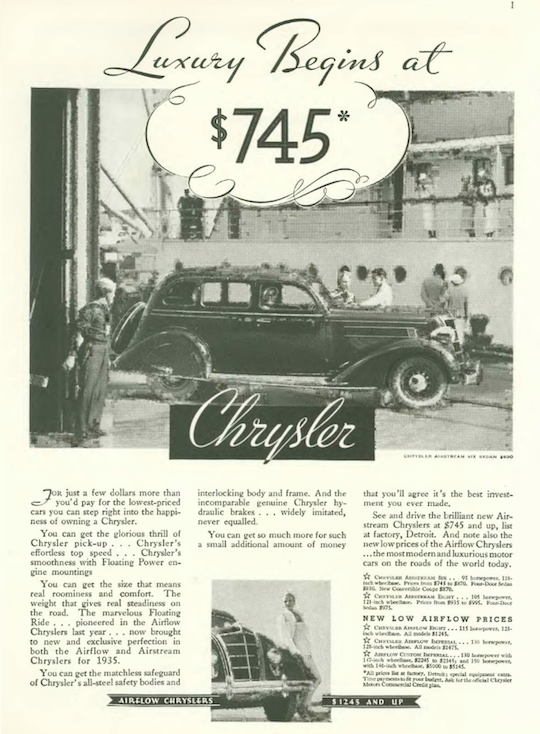
…the key word in many New Yorker advertisements was luxury, and for a fraction of what you would pay for a Packard, you could, apparently, experience luxury for as little as $745…

…or you could enjoy a bit of elegance by opening a some cans of Heinz soup, chili sauce, stuffed olives and other delectables…here a couple of shady-looking butlers are serving nothing but canned goods at a swanky party, much to the annoyance of the cook, who appears poised to take a cleaver to the scheming pair…

…and look what else you can get from a can, some soup with a “personality”…

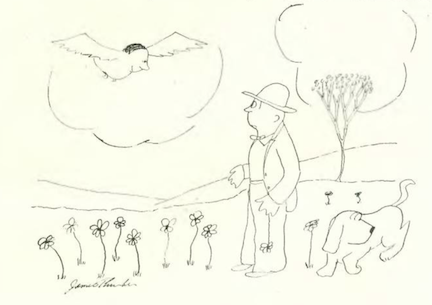
…enough of that nonsense, on to our cartoonists, with two spots from James Thurber

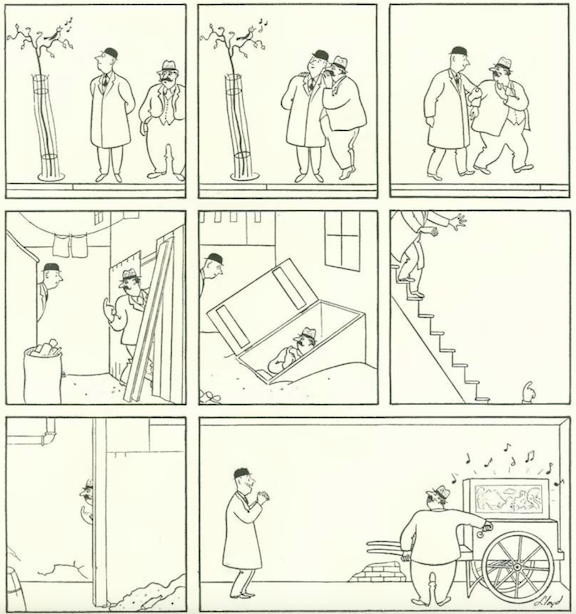
...Lloyd Coe gave us this musical multi-panel…

Leonard Dove looked in on the complex world of young love…

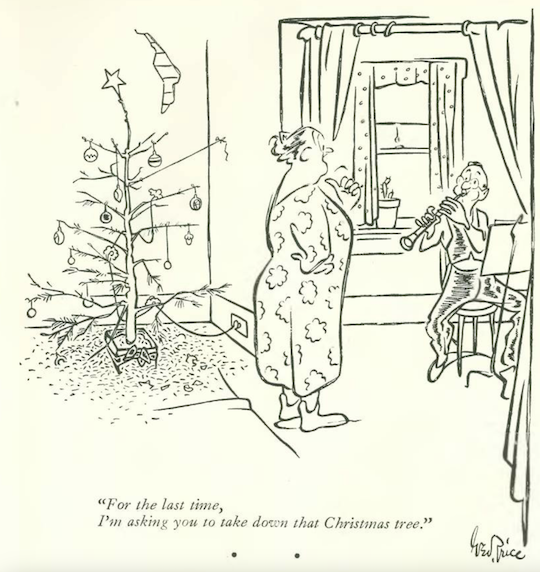
George Price found the Yuletide spirit still alive among procrastinators…

…and we close with Alan Dunn, and some earthy reading…

Next Time: Vive La Normandie…

Broadacre City

Above: Detail from Spanish architect David Romero's computer-generated model of Frank Lloyd Wright's Broadacre City, complete with an "aerotor" flying car.

To be sure, architect Frank Lloyd Wright was a visionary, creating a uniquely American vernacular that influences architecture and design to this day. That might also true for his Broadacre City concept, which demonstrated how four square miles (10.3 km2) of countryside might be settled by 1,400 families. Wright unveiled this escape to the countryside in the middle of Manhattan.

April 27, 1930 cover by Reginald Marsh.

On April 15, 1935, the Industrial Arts Exposition opened at Rockefeller Center, and Wright (1867-1959) was front and center with his audacious proposal to resettle the entire population of the United States onto individual homesteads. Critic Lewis Mumford observed that Wright “carries the tradition of romantic isolation and reunion with the soil” by putting every American family on a minimum of five acres of land.

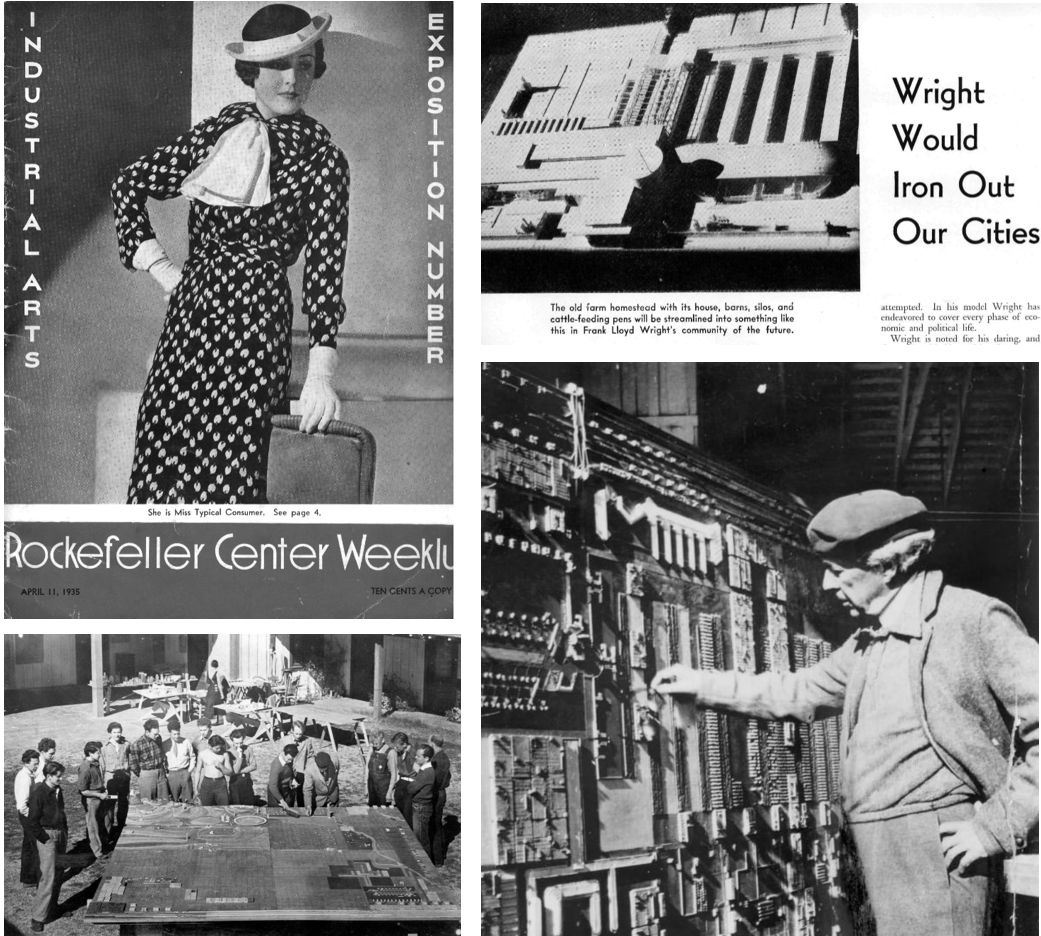
FLAT EARTH…Clockwise, from top left, cover of Rockefeller Center Weekly featuring the Industrial Arts Exposition—the model on the cover is identified as “Miss Typical Consumer”; detail from the magazine depicting a “streamlined farmstead” in Broadacre City; Frank Lloyd Wright examining the Broadacre City model, circa 1935; Wright students who crafted the 12×12-foot model, circa 1935. (digital.hagley.org/franklloydwright.org)

Wright first presented the idea of Broadacre City in his book The Disappearing City in 1932…

ROMANTIC ISOLATION…Broadacre City as depicted in Wright’s 1932 book The Disappearing City. (Wikipedia)

…note how the above drawing is reflected in one of Wright’s last designs, the Marin County Civic Center:

(visitmarin.org)

A detailed 12×12-foot scale model of Broadacre City—crafted by Wright’s student interns at Taliesin, was unveiled at the Industrial Arts Exposition:

GREEN ACRES…The 12×12-foot model (top images) crafted by student interns who worked for Wright at Taliesin is now housed at the Museum of Modern Art (MoMA); bottom right, Wright’s rendering of Broadacre City, and at left, detail from Spanish architect David Romero’s computer-generated model of Broadacre City (more images below). (MoMA/David Romero via Smithsonian)

For the most part Mumford reacted favorably to Wright’s vision, which is no surprise considering that Mumford derided the dehumanizing skyscrapers popping up all over his city (including Rockefeller Center).

Despite his patrician demeanor, Wright envisioned an egalitarian Broadacre City, with every family having access to cars, telephones and other appliances. Power would come from solar and electric energy, and any technological advances would be applied at a local level toward the common good.

VIRTUAL REALITY…In 2018 Spanish architect David Romero created computer-generated models to see what Wright’s unrealized structures might have looked like. At left, cars (based on Wright concepts) in Broadacre City, and an aerial view featuring a tower that bears a strong resemblance to Wright’s 1956 Price Tower in Bartlesville, Oklahoma. Modeling Broadacre took Romero more than eight months to complete—it contains more than one hundred detailed buildings, one hundred ships, two hundred “aerotors” (based on the autogyros of the day), 5,800 cars, and more than 250,000 trees. (David Romero via Smithsonian and openculture.com)

What Mumford (and perhaps Wright) didn’t fully anticipate was the urban sprawl such a vision would help inspire, the suburban and exurban landscape that would lead to a car-dominated world of congested, multi-lane highways and housing developments that continue to encroach on our woodlands and wetlands. And we didn’t get those groovy aerotors either.

(Christoph Gielen, webcolby.edu)

 * * *

Little House on the Avenue

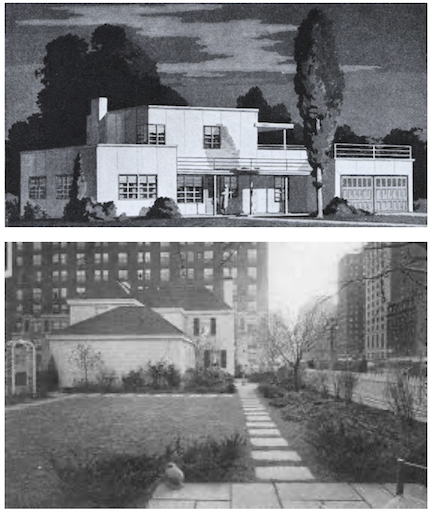
E.B. White, in his “Notes and Comment,” also offered some observations on housing trends, noting the manufactured “Motohome” displayed at Wanamaker’s as well as “America’s Little House,” plopped down at the corner of 39th and Park Avenue.

SETTING A STANDARD…Above, the factory-manufactured Motohome (above) was touted as the solution to the nation’s housing shortage. The federal Better Homes in America organization built a model house (“America’s Little House,” below) at 39th and Park Avenue to illustrate how standardized components and methods could make home improvement easier. (Google Books/Johns Hopkins)

* * *

Horsing Around

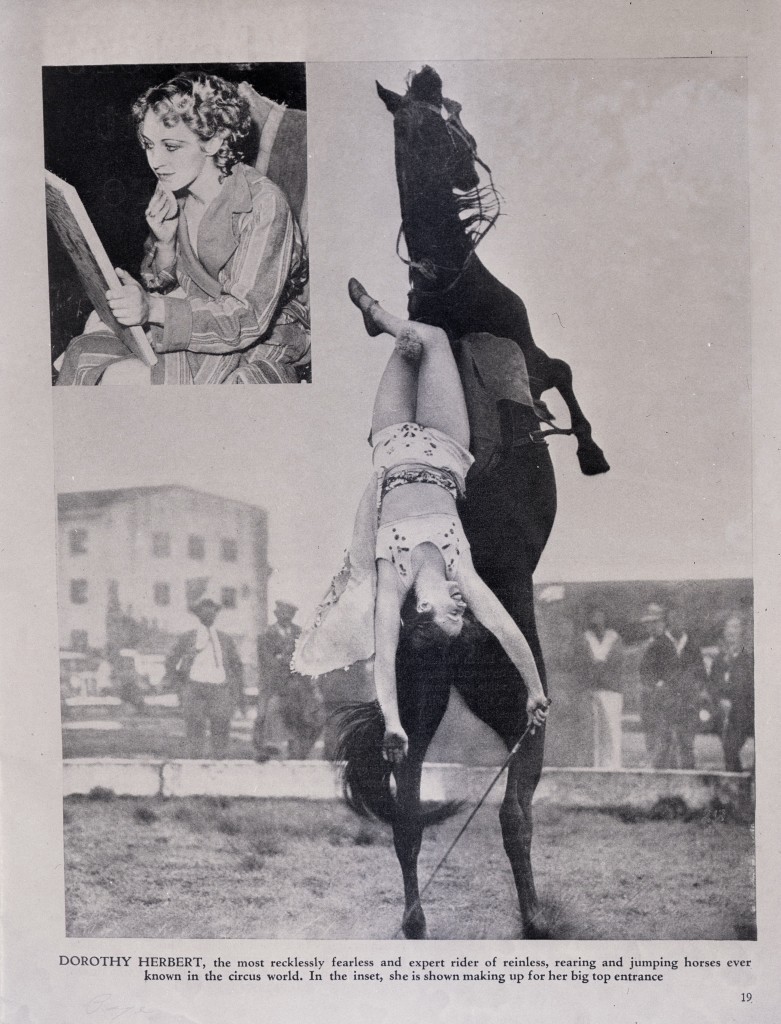
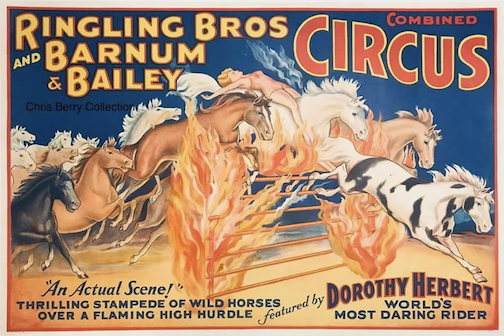
Although known for their nonchalance, New Yorkers could still find some enthusiasm when the circus came to town. “The Talk of the Town” looked in on the star of the circus, Dorothy Herbert (1910-1994), a trick rider with the Ringling Bros. and Barnum & Bailey Circus.

WHOA NELLY…One of Dorothy Herbert’s signature moves was her layback on a rearing horse. Here she demonstrates the move in 1939. (equineink.com)
HOT STUFF…Circus poster touts Herbert’s ride over flaming hurdles in the company of twelve riderless horses. (circushistory.org)

 * * *

Don’t Call Him ‘Tiny’

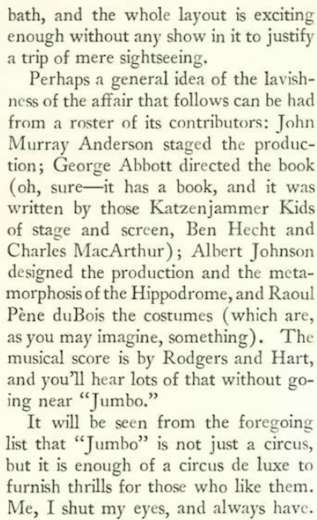
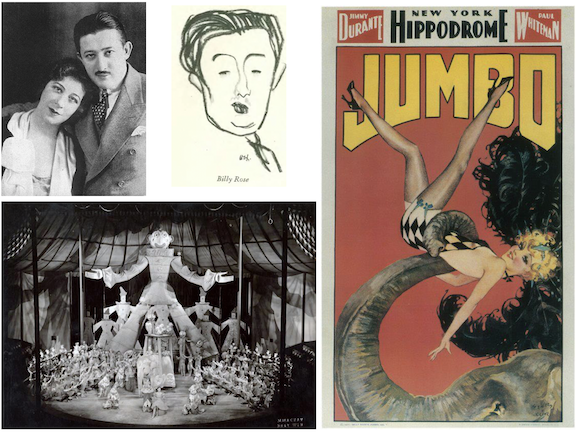
He was known as “The Little Napoleon of Showmanship,” but there was nothing small about Billy Rose’s accomplishments as an impresario, theatrical showman, composer, lyricist and columnist. Here are excerpts from Alva Johnston’s profile:

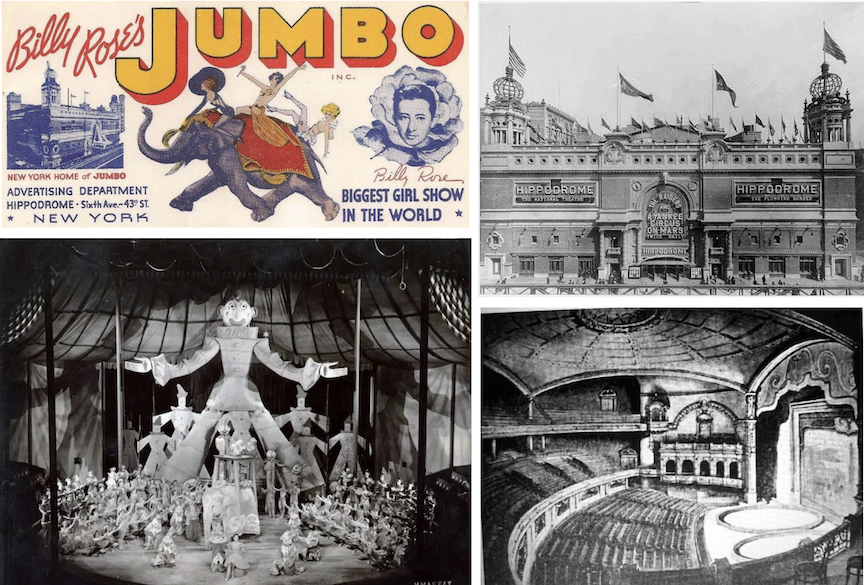
JUMBO-SIZED ENTERTAINMENT…Clockwise, from top left, Billy Rose and his first wife, comedian-actress Fanny Brice; illustration of Rose for the profile; poster announcing Rose’s 1935 stage spectacle Jumbo at the Hippodrome; described as more circus than musical comedy, Jumbo was one of the most expensive theatrical events of the first half of the 20th century. (jacksonupperco.com)

 * * *

On Guard

We shift gears and turn to more sobering events of the 1930s, namely the rise of fascism in Europe. In his column “Of All Things,” Howard Brubaker pondered the possibilities of fascism in his own country…

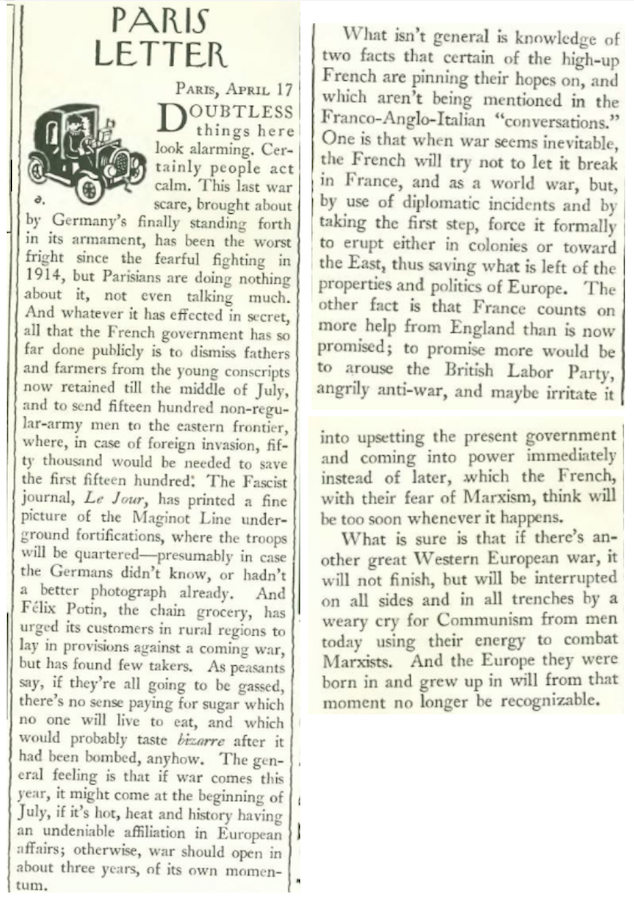
…meanwhile, Paris correspondent Janet Flanner was finding nothing funny about the uneasy calm among Parisians as war with Germany seemed likely.

C’EST LA VIE…Janet Flanner found Parisians resigned to whatever fate awaited them in 1935. (unjourdeplusaparis.com)

Flanner also remarked on Leni Riefenstahl’s Nazi propaganda film Triumph des Willens (Triumph of the Will). Flanner’s assessment of this “best recent European pageant” wryly underscored the horrors the film portends.

 * * *

News From An Old Friend

Longtime readers may recall one of my earliest entries on Queen Marie of Romania (1875-1938); the March 14, 1925 edition of The New Yorker (issue #4) found New Yorkers “agog” over her planned 1926 visit to the city. Her comings and goings were followed for a time (she also appeared in a Pond’s Cold Cream ad in the June 6, 1925 issue), but then she abruptly disappeared. Here she is again, courtesy of a glowing book review by Clifton Fadiman. An excerpt:

A PROGRESSIVE THINKER for her time, Marie of Romania was immensely popular in America. Born into the British royal family, she was the last queen of Romania from 1914 to 1927. At left, portrait from 1920; at right, during her 1926 visit to the States, Marie received a headdress from two American Indian tribes. They named her “Morning Star” and “Winyan Kipanpi Win”—“The Woman Who Was Waited For.” (Wikipedia/brilliantstarmagazine.org)

 * * *

From Our Advertisers

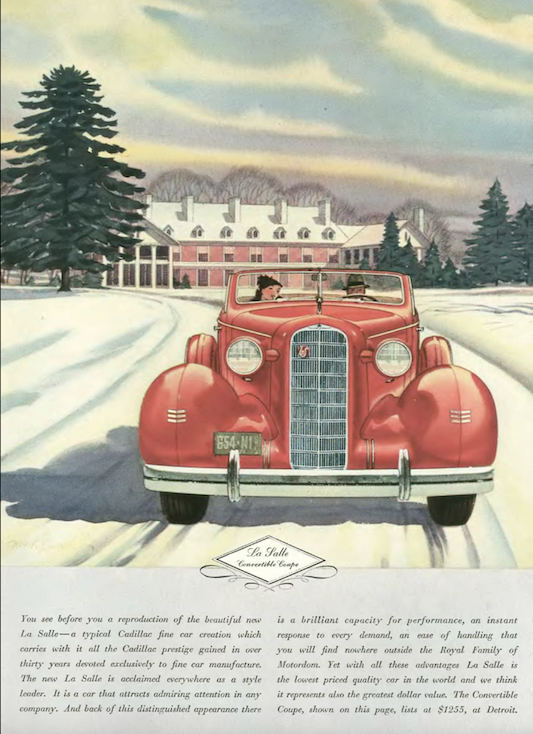
Although we’ve seen plenty of ads from prestige automakers such as Packard, it was clear that companies found their sweet spot in lower-priced models that still suggested “prestige”…here’s an example from Cadillac’s budget line LaSalle…

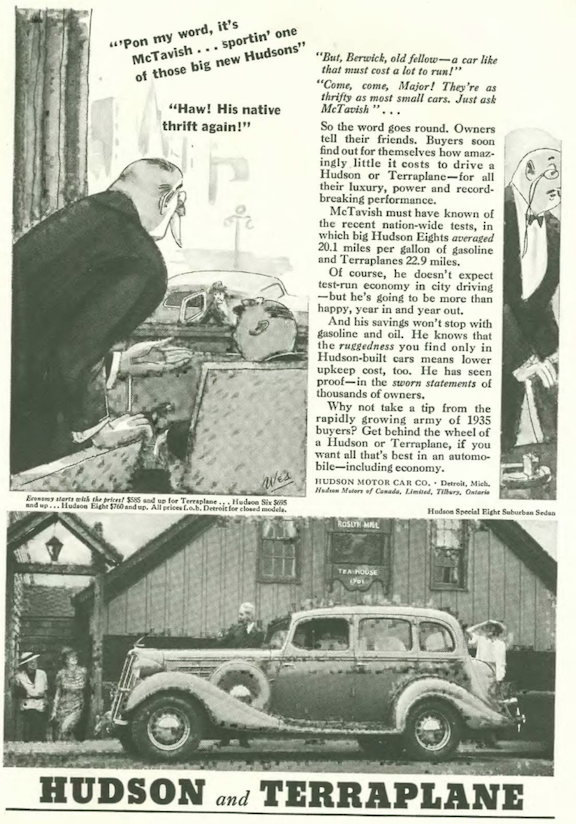
…for less than half the price of a LaSalle you could get behind the wheel of Hudson, its makers suggesting that prestige doesn’t preclude thrift…this ad seems to have been hastily produced–note the right side of ad, with just a slice of some toff squeezed next to the copy…

…this advertisement would only appeal to those who were among the tiny minority who could afford to fly…from 1924 to 1939 this early long-range airline served British Empire routes to South Africa, India, Australia and the Far East…

…for reference, detail below of a Scylla-class airliner used by Imperial Airways…

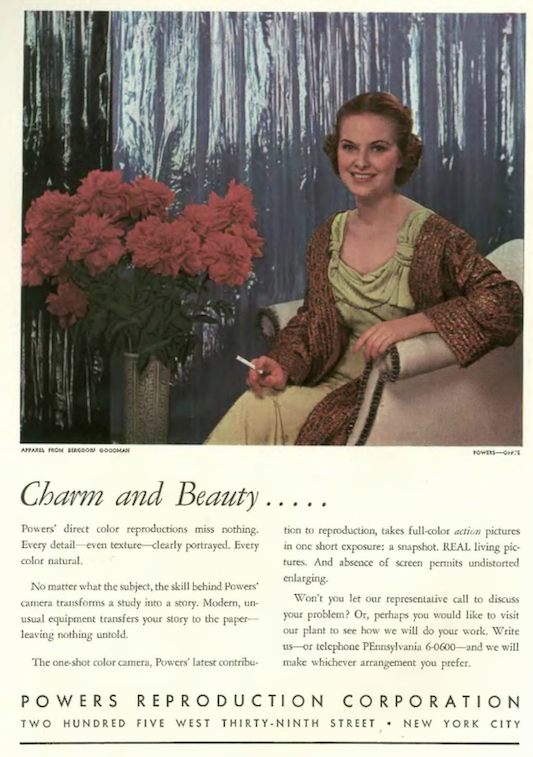
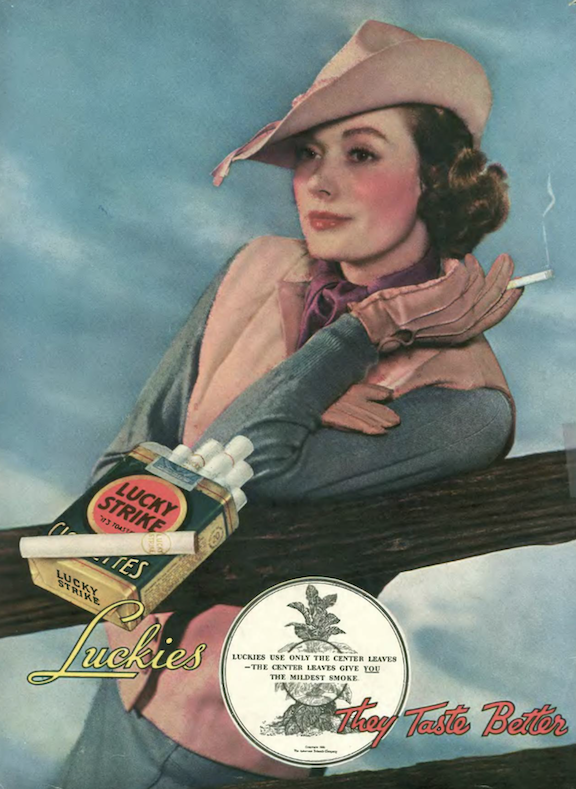
…and what would the back cover be without a photo of a stylish woman having a smoke?…

…a few advertisers referenced the circus in town to drum up business…

…and we segue to our cartoonists and illustrators, and this circus-themed spot from an illustrator signed “Geoffrey”…

…a more familiar name is found at the bottom of page 4…namely Charles Addams…the milk order outside the tomb hints at things to come…

…Addams again, going from Bacchus to beige…

George Price, and well, you know…

Robert Day was aloft with a speculative builder…

William Steig typecast his Small Fry…

Leonard Dove made a sudden exit…

Gilbert Bundy found one old boy unaffected by spring fever…

Alain channeled Barbara Shermund to give us this gem…

…and we close with a typical day in James Thurber’s world…

Next Time: The Royal Treatment…


Keep Calm and Carry On

If you lived in Germany in 1935, or in Italy or Spain for that matter, the world would have looked very different from the one most Americans were experiencing, clawing their way out of the Great Depression and hoping to improve their domestic lives. War was not big on their worry list.

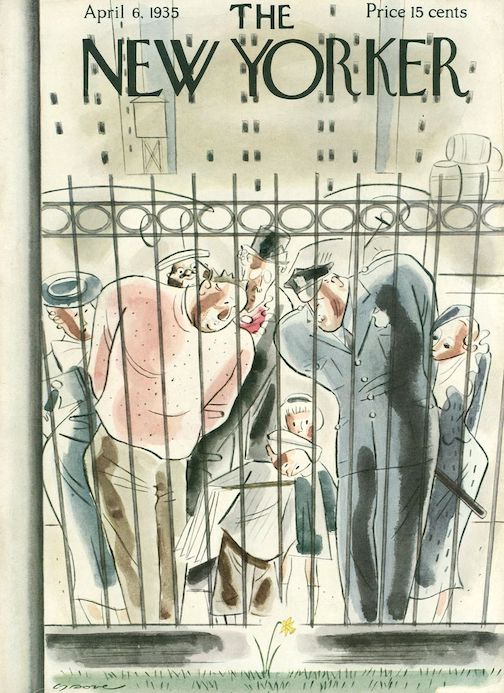
April 6, 1935 cover by Leonard Dove.

In his “Notes and Comment,” E.B. White satirized the talk about war that was filling more column inches in the nation’s newspapers. He was particularly scornful of journalists such as Arthur Brisbane—the influential editor of William Randolph Hearst’s media empire—who was fond of giant headlines warning of impending war.

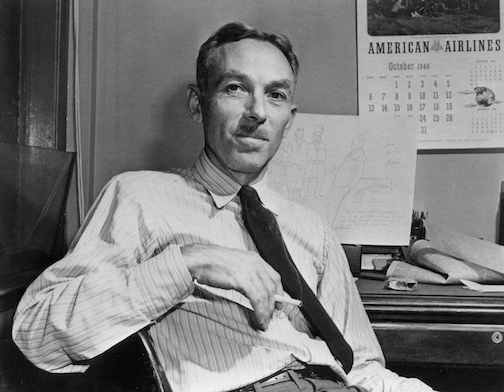
TEND YOUR OWN GARDEN...E.B. White in 1946. (Britannica)

White wasn’t naive about the possibilities of war; however, he believed obsessing about things over which we have little control did little to help the human condition. Helping one’s neighbor, on the other hand, would do the world more good. In 1939, just six months before Germany invaded Poland, White wrote a piece titled “Education” for his Harper’s Magazine column, One Man’s Meat. This excerpt helps define his worldview:

“I find that keeping abreast of my neighbors’ affairs has increased, not diminished, my human sympathies…in New York I rise and scan Europe in the Times; in the country I get up and look at the thermometer—a thoroughly set-contained point of view which, if it could infect everybody everywhere, would I am sure be the most salutary thing that could happen to the world.”

With that, here is a selection from the April 6 “Notes and Comment”…

TANKS A LOT…Clockwise, from top left, German war production in the 1930s—by increasing the size of the army by 500,000 and establishing the Luftwaffe in early 1935, Germany broke international law and the Treaty of Versailles; the 1935 Anglo-German Naval Agreement was the first sign of British and European appeasement—photo shows the launch of the Admiral Graf Spee; a display of force at Nuremberg, mid 1930s; cartoon by Bernard Partridge from Punch (September 1932) foresaw the inevitable. (parisology.net/theholocaustexplained.org/Punch Limited)

In March 1973, a “Mr. Nadeau” wrote a letter to E. B. White expressing fears about humanity’s bleak future. Here are the first and last lines of White’s reply:

As long as there is one upright man, as long as there is one compassionate woman, the contagion may spread and the scene is not desolate. Hope is the thing that is left to us, in a bad time. I shall get up Sunday morning and wind the clock, as a contribution to order and steadfastness…Hang on to your hat. Hang on to your hope. And wind the clock, for tomorrow is another day.

 * * *

Another Viewpoint

Ever the observer of the passing scene, Howard Brubaker made these relevant observations in “Of All Things”…

…and back to White’s “Notes,” and the imminent passing of the beloved organ grinder…

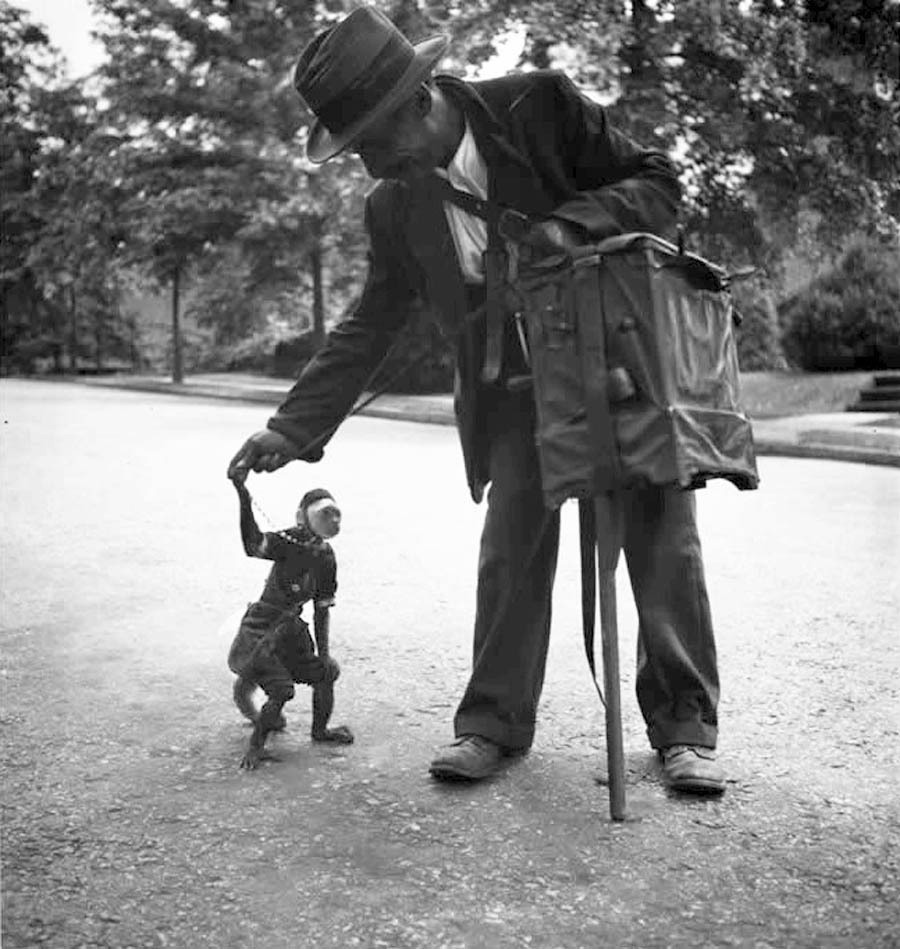
THE OLD GRIND…Above, one of New York City’s last organ grinders in Washington Heights, ca. 1935. Organ grinders had been fixtures in Manhattan since the 1850s, and by 1880 roughly five percent of Italian men living in Five Points were organ grinders, often accompanied by monkeys who entertained and collected coins. Organ grinders were outlawed in 1936 by Mayor Fiorello La Guardia. It is thought the mayor disliked the Italian immigrant stereotype. (Library of Congress)

 * * *

Give Him More Mickey Mouse

John Mosher expressed his displeasure with movies that failed to deliver some escape from life’s mundane realities or offered little more than tepid storylines.

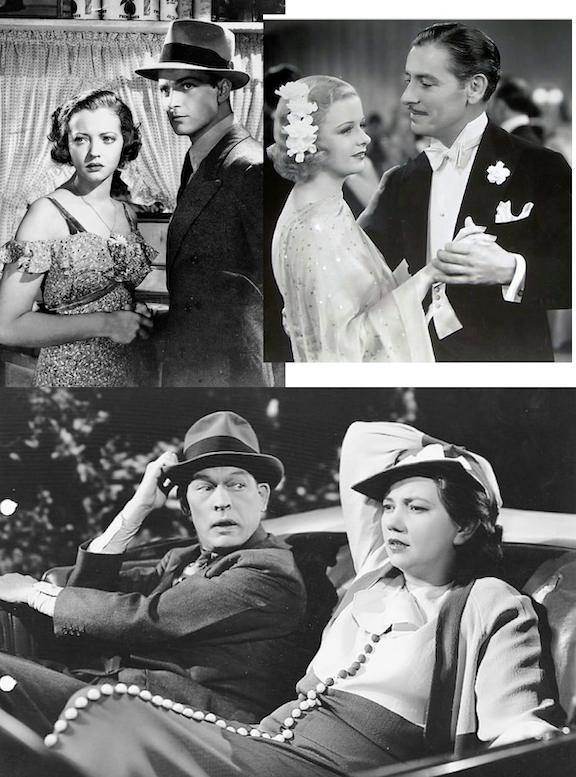
IN SEARCH OF A CREDIBLE PLOT…Critic John Mosher found Claudette Colbert (top left) both unbelievable and unqualified to be a psychiatrist in Private Worlds; at top right, Joan Blondell and Glenda Farrell offered some mindless distractions in Traveling Saleslady (from 1933 to 1936 Blondell and Farrell appeared together in seven films); bottom, Mosher called The Woman in Red an “anemic” tale. Barbara Stanwyck seems to be wondering why she took the part. (rottentomatoes.com/TCM)

 * * *

Odds and Ends

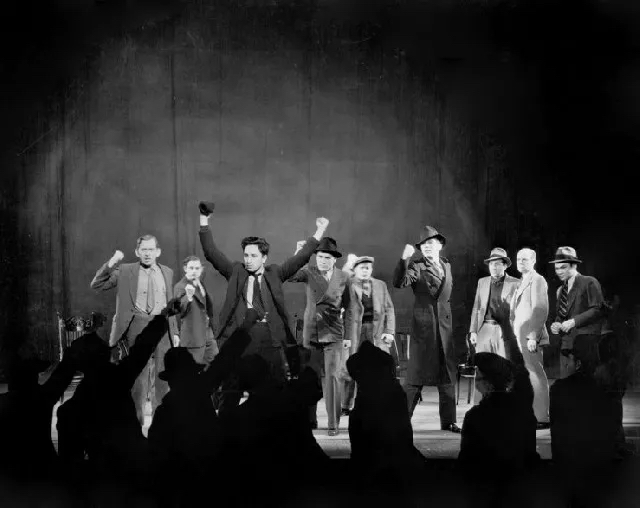
Also in the issue, John O’Hara kicked off the short fiction with “I Could Have Had A Yacht,” Margaret Case Harriman penned a profile of Elizabeth Arden (of cosmetics empire fame), and theatre critic Wolcott Gibbs enjoyed the “bitterly effective performances” in Clifford Odets’ Waiting For Lefty, which was being produced at the Longacre Theatre.

ENOUGH IS ENOUGH...Elia Kazan led the cast in the original production of Clifford Odets’ iconic 1935 play Waiting for Lefty. Centered around a taxi drivers’ strike, Lefty was produced by The Group Theatre, which sought to perform plays that functioned as social commentaries on the inequality and poverty of 1930s America. Some referred to Kazan as the “Proletarian Thunderbolt.” (Creative Commons)

 * * *

From Our Advertisers

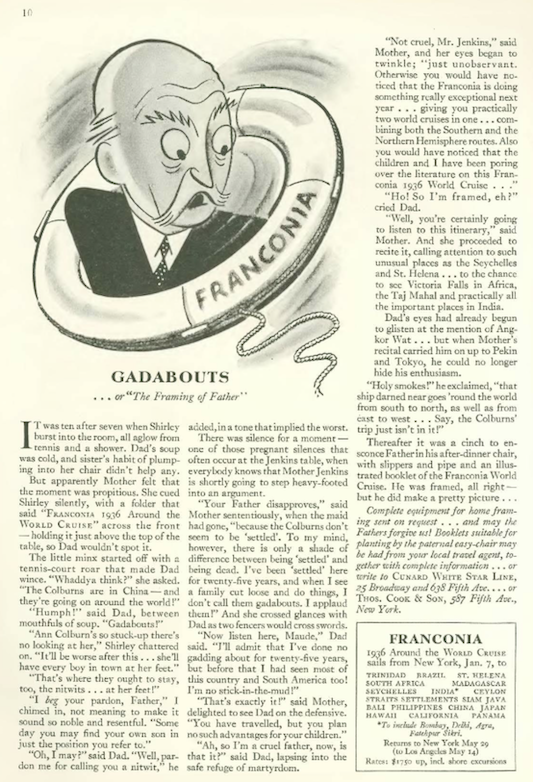
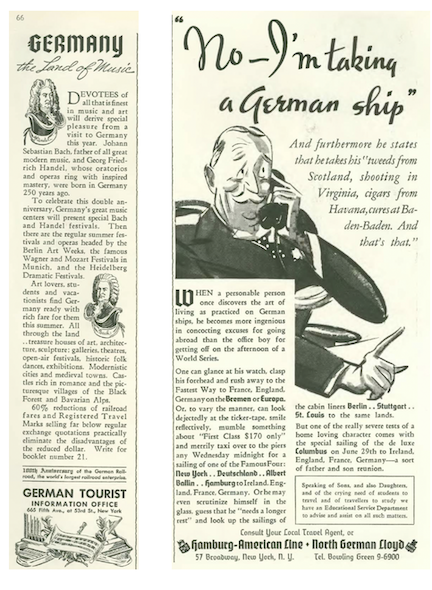
While Hitler ramped up weapons production and prepared to enact the Nuremberg Race Laws, the German Tourist Office touted their country as “The Land of Music” in this one-column advertisement on page 66 (left)…a couple of pages later we have an old chap looking forward to a German cruise and a quiet soak at Baden-Baden in the midst of madness…

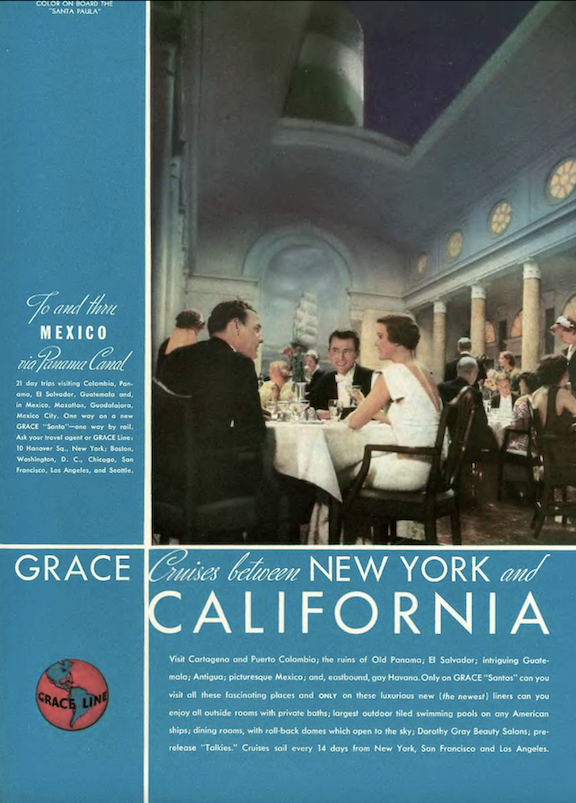
…now this is more like it, fine dining under the stars aboard the Santa Paula, far from the maddening crowds…

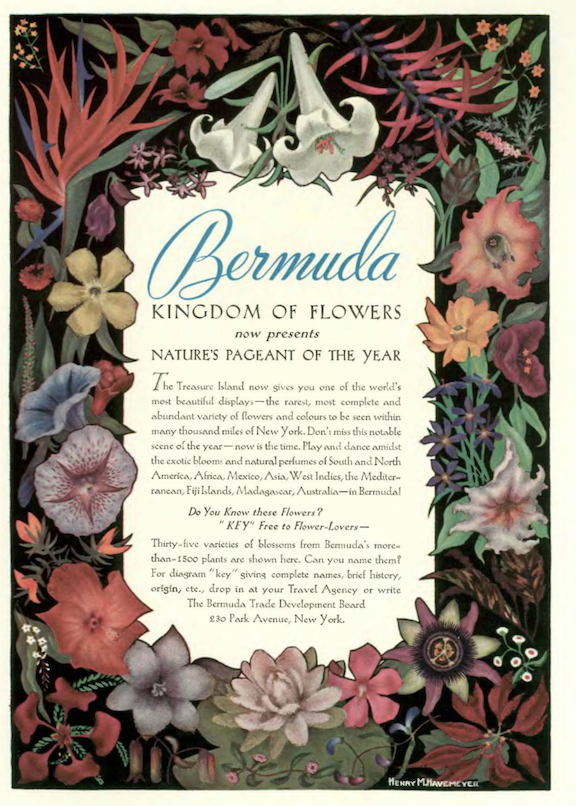
…there were several colorful full-page ads in the issue, including this splashy display from the very un-splashy-sounding Bermuda Trade Development Board…

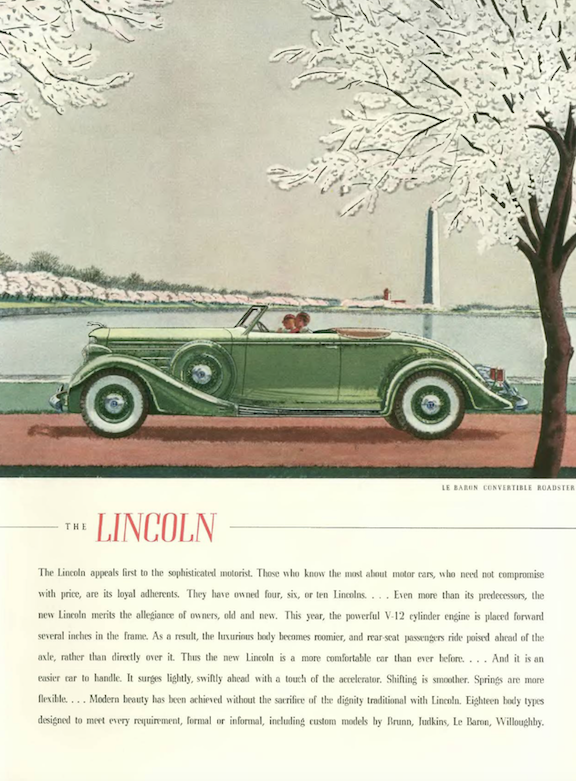
…cherry blossoms lined the path of Lincoln’s Le Baron Roadster…

…Camel played to a wide demographic, from ads featuring stylish young women to ads like this that roped in everyone from an “enthusiastic horsewoman” to an engineer working on the Boulder (now Hoover) Dam…

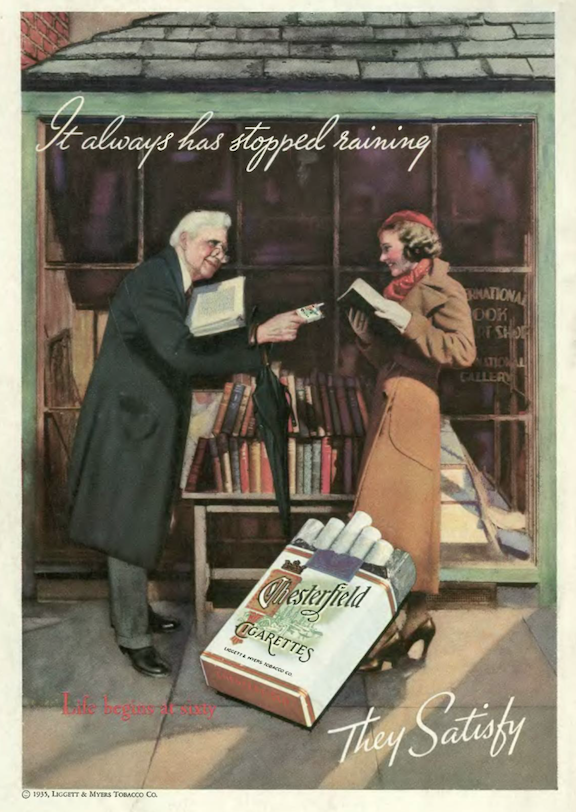
…I’m not sure what “Life begins at sixty” is supposed to mean, unless it’s about tempting young women with your bad habit…

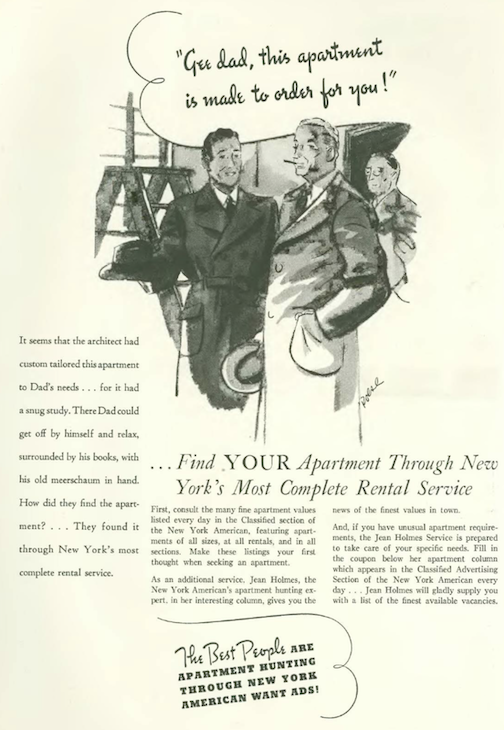
…the New York American was hoping that some of the “Best People” who read The New Yorker would also want to read their apartment rental want ads…

…spring was in the air at Richard Hudnut’s Fifth Avenue salon…if you had dry skin, it was recommended you try a product with the unfortunate name “Du Barry Special Skin Food”…

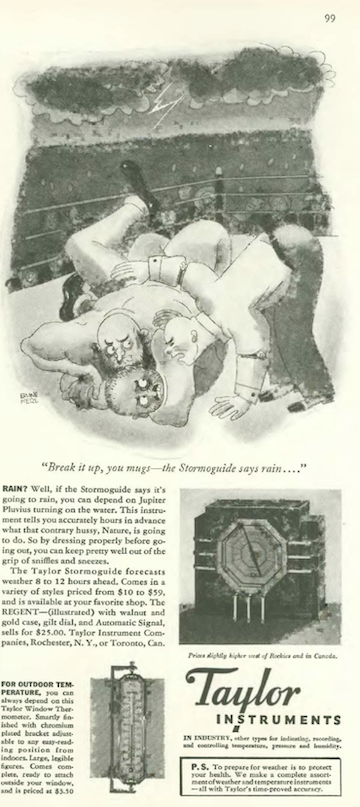
…Taylor Instruments hoped readers would monitor the spring weather with one of their stylish thermometers…American graphic artist and illustrator Ervine Metzl provided the artwork…he was best known for his posters and postage stamp designs…

…which brings us to our illustrators and cartoonists, beginning with this small woodcut on page 6 signed “Martin”…

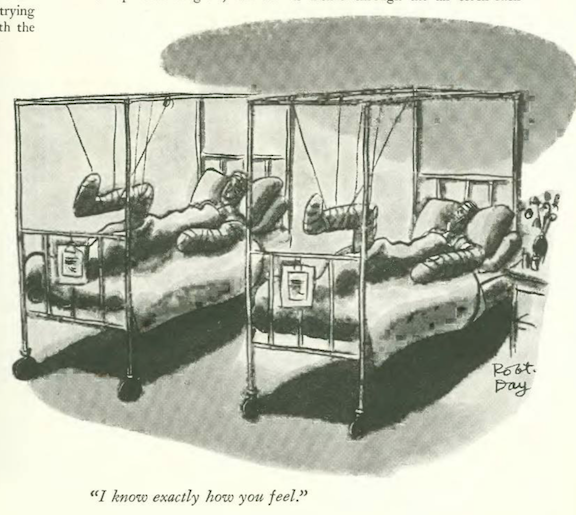
…empathy gained some traction in this Robert Day cartoon…

Alan Dunn demonstrated the effect of the Depression on the building trades…

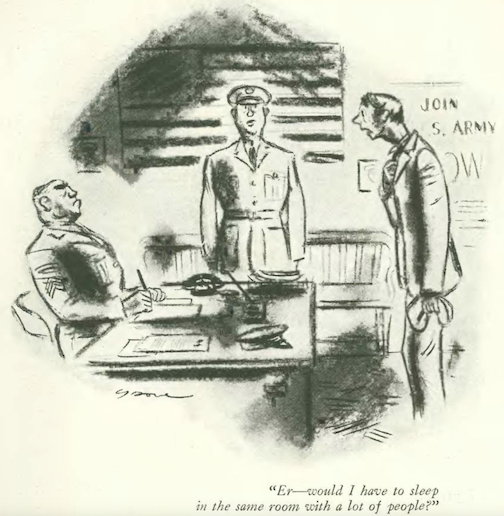
Leonard Dove found one enlistee not ready for basic training…

Syd Hoff showed us all the right moves…

Alain was up in the garret with an artist in need of some peace…

Gluyas Williams took a glimpse backstage…

William Crawford Galbraith was still exploring the world of sugar daddies and golddiggers…

Barbara Shermund introduced a few giggles…

…and we close with another James Thurber classic…

Next Time: The Cowboy Philosopher…

Quite a Month

ABOVE: E.B. White presented us with a mixed bag of February happenings, from the comings and goings of Neily Vanderbilt to the Macon disaster and the economic power of Mickey Mouse.

The title for this entry comes from E.B. White’s “Notes and Comment” column, which kicked off the Feb. 23, 1935, issue with a quick rundown of February events.

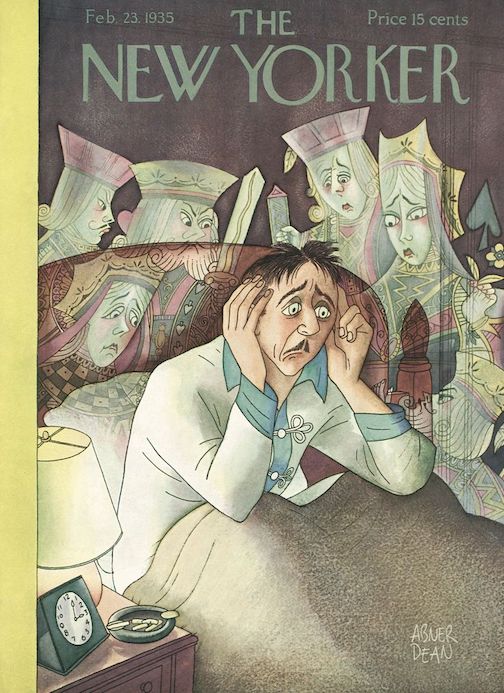
Feb. 23, 1935 cover by Abner Dean.

February notably marked the end of the Bruno Hauptmann trial. Convicted of the abduction and murder of the infant son of Charles and Anne Morrow Lindbergh, Hauptmann would go to the electric chair on April 3, 1936. White also noted the return of Admiral Richard Byrd from his second Antarctic expedition, the demise of the U.S. Navy airship U.S.S. Macon, and the economic miracle of the Mickey Mouse watch.

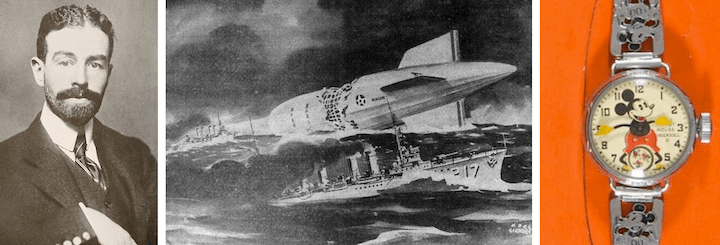
FLYING AIRCRAFT CARRIER…The US Navy’s 785-foot rigid airship USS Macon could launch and retrieve up to five airplanes in mid-flight. Known as “parasitic fighters, the Sparrowhawks were hung from a rail system inside the airship. On Feb. 12, 1935 the Macon crashed in a storm off the coast Point Sur, California. Only two of the 66 crew were lost. Photos above, clockwise from top left, show the deployment of a Sparrowhawk; the USS Macon over New York City in 1933; crew pose for a photo in the dirigible’s hanger; photo from the wreckage discovered in 2006—the pre-1941 pattern U.S. roundel emblem still recognizable. Sky-hook also visible. (sanctuaries.noaa.gov/macon/Sunnyvale Historical Society)
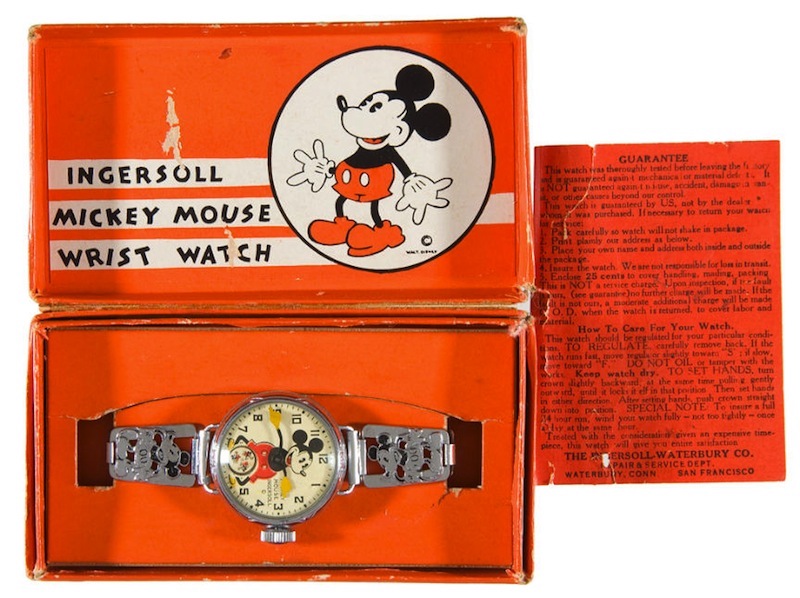
TIME WAS RUNNING OUT for the Ingersoll Waterbury Company (now known as Timex) during the Great Depression. It was saved from bankruptcy, in part, by the introduction of the Mickey Mouse watch. (connecticuthistory.org)

White also made note of the comings and goings of Cornelius “Neily” Vanderbilt III (1873–1942), who was saying farewell to Fifth Avenue (although he would return to live out his life there), while New Yorkers were apparently saying farewell to the Park Avenue Tunnel (aka Murray Hill Tunnel). After more than 190 years it is still there, now serving a single lane of northbound traffic from 33rd to 40th Street.

TUNNEL VISION…Park Avenue Tunnel in 1890 (top) and in 2013 during a Voice Tunnel art installation. The nearly two-century old tunnel was made open to pedestrians for the first time in coordination with the annual Summer Streets event which began in 2013. (viewing.nyc/Wikipedia)

 * * *

Getting An Earful

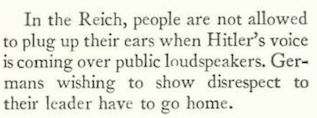
Howard Brubaker, in his column “Of All Things,” made this observation of deepening repression taking place in Nazi Germany…

 * * *

Try Our Knockout Cheesecake

Lois Long continued her chronicle of New York night life, in this excerpt making note of the celebrity gawkers at Jack Dempsey’s tavern/restaurant near Madison Square Garden. Apparently Dempsey’s place was renown for its cheesecake…

PLEASED AS PUNCH…Heavyweight boxing champ Jack Dempsey opened his restaurant at 50th Street and Eighth Avenue in 1935 (bottom photo) before moving to Broadway’s Brill Building in 1937 (top). According to Ephemeral New York, “In the restaurant’s early years, Dempsey was known to hold court at a table, a legendary figure greeting customers and glad-handling guests.” (Ephemeral New York)

 * * *

From Our Advertisers

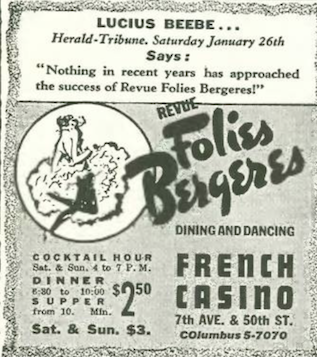
The refurbished Earl Carroll Theatre (7th Ave. and 50th St.) opened as the French Casino late in 1934. The art deco theatre’s first show was the Revue Folies Bergères, promoted here in this small ad on page 54 in the Feb. 23 issue…

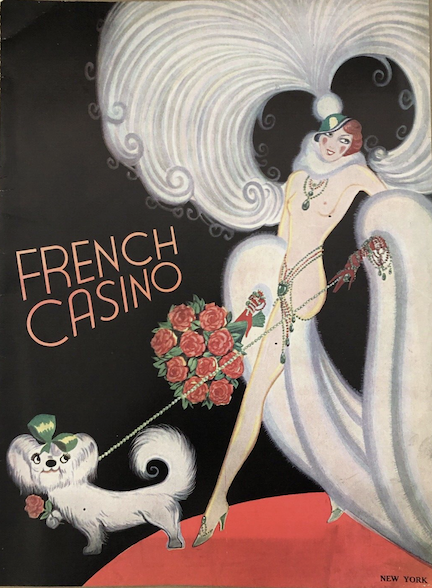
…the menu’s cover suggests patrons weren’t there for the cheesecake (yes, there is a pun, but I’m not touching it)…

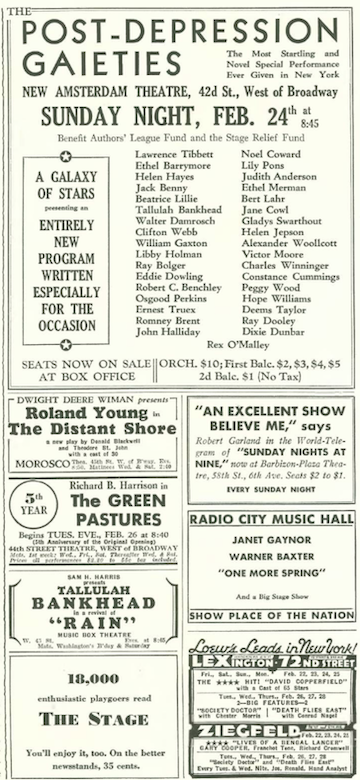
…another ad in the back pages touted the “Post-Depression Gaities” at the New Amsterdam Theatre with an impressive roster of stars including New Yorker notables Robert Benchley and Alexander Woollcott

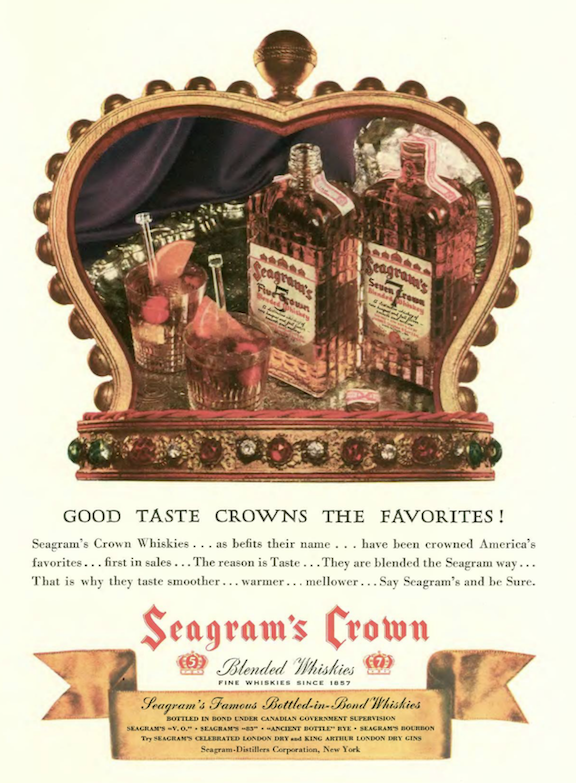
…following Prohibition, Seagram introduced two blended whiskies—5 Crown and 7 Crown. Seagram 5 Crown was discontinued in 1942, while Seagram 7 would go to become the first million case brand in U.S. history…

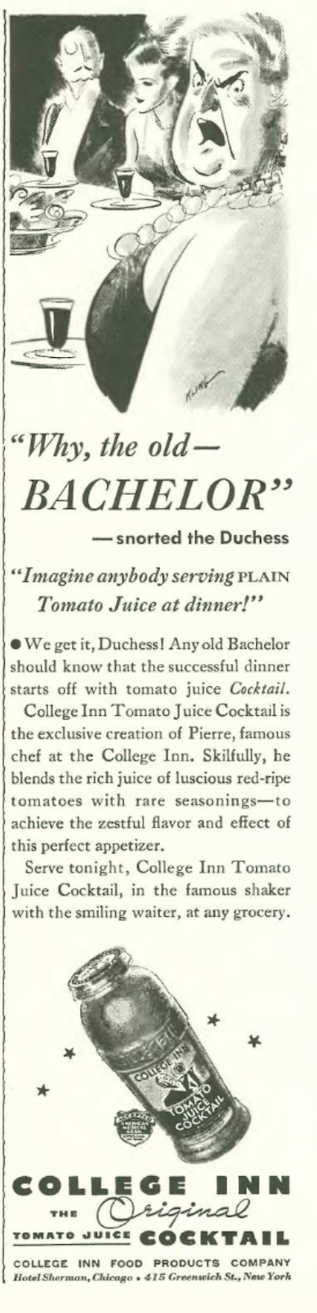
…this one-column ad caught my eye for the rendering of the stereotypic ill-tempered matron, here having a fit over tomato juice…

…coming from an old and influential New York family, it’s hard to believe Elizabeth West Post Van Rensselaer thought about Campbell’s soup when her daughter, Elizabeth, fell seriously ill…at any rate, something must have worked because her daughter lived until 2001…

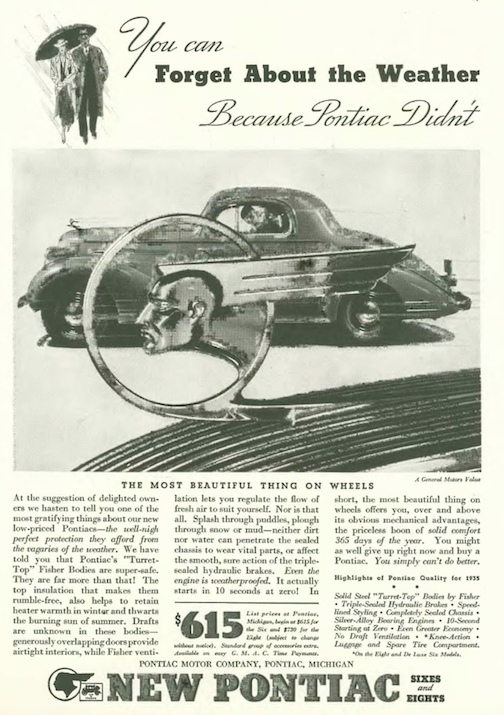
…For a time “Chief Pontiac” served as a logo for the Pontiac line of automobiles, discontinued by GM in 2010…

…many automobile advertisements of this era emphasized safety, none more prominent than the “Body by Fisher” ads that frequently featured happy little children…oddly, no one had yet considered seat belts, car seats or other safety measures we now take for granted…

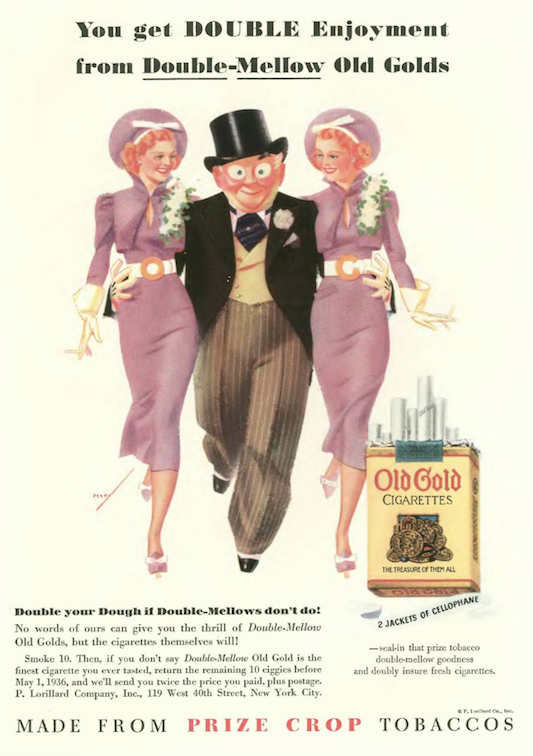
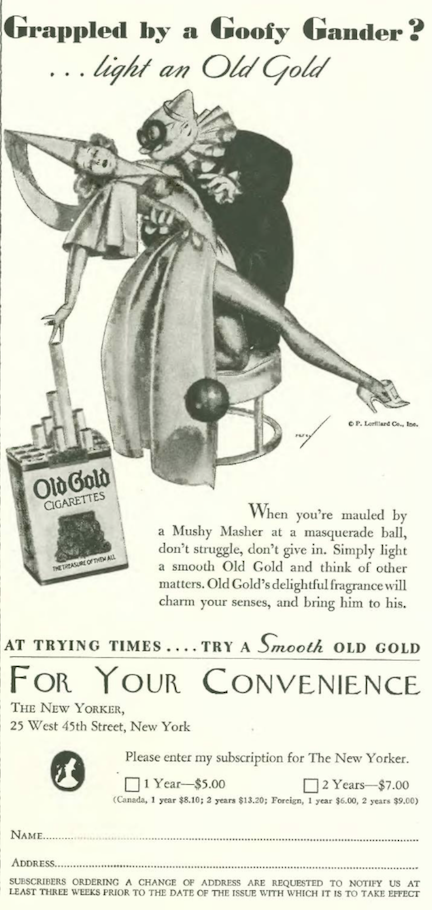
…the makers of Old Gold cigarettes (Lorillard) ran a series of ads featuring a sugar daddy and his leggy mistress…they were drawn by George Petty (1884–1975), famed for his “pin-up girls”…as an added bonus below the ad, you could renew your New Yorker subscription—two years for seven bucks…

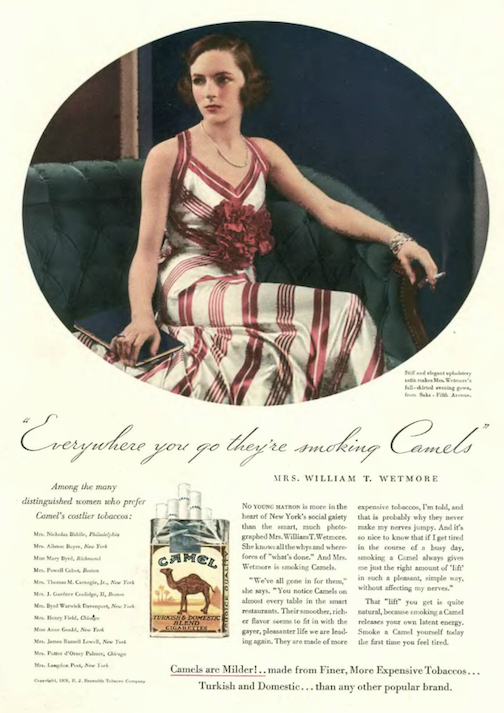
…the makers of Camels kept it classy with their continuing series of society women enjoying their unfiltered “Turkish & Domestic” blend…

…the “young matron” in the ad, the Sydney, Australia-born Joan (Deery) Wetmore (1911-1989), was indeed “much-photographed,” and was a favorite of Vogue photographer Edward Steichen:

Detail from a Steichen photo of Joan Wetmore, taken in Rockefeller Center’s Rainbow Room, 1934. (Condé Nast)

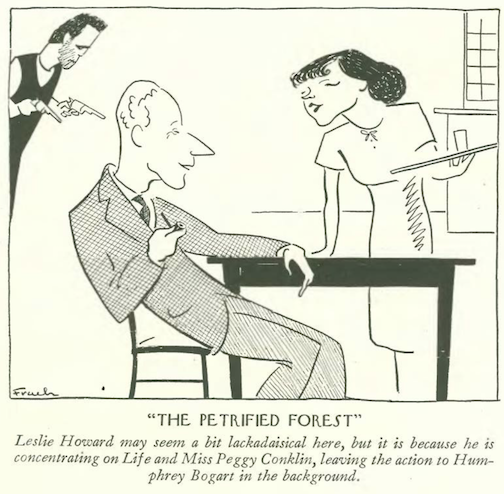
…on to our cartoonists, Al Frueh illustrated Humphrey Bogart as the coldblooded killer Duke Mantee in the 1935 play The Petrified Forest; the 1936 film adaptation would be Bogart’s breakout role in the movies…

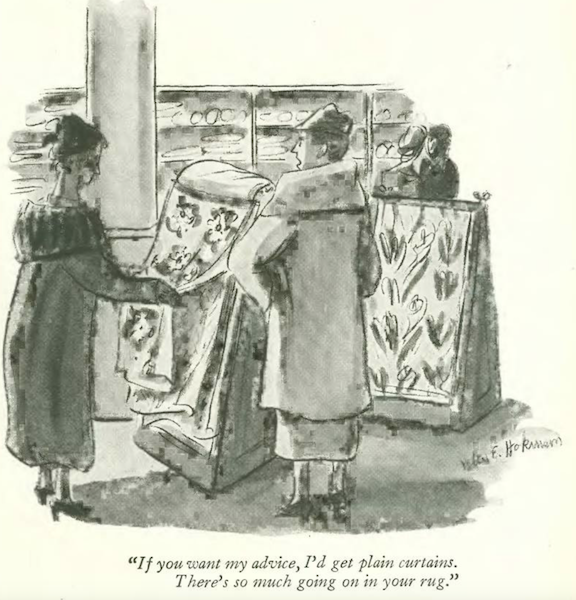
Helen Hokinson went shopping for drapes…

George Price was all tied in knots…

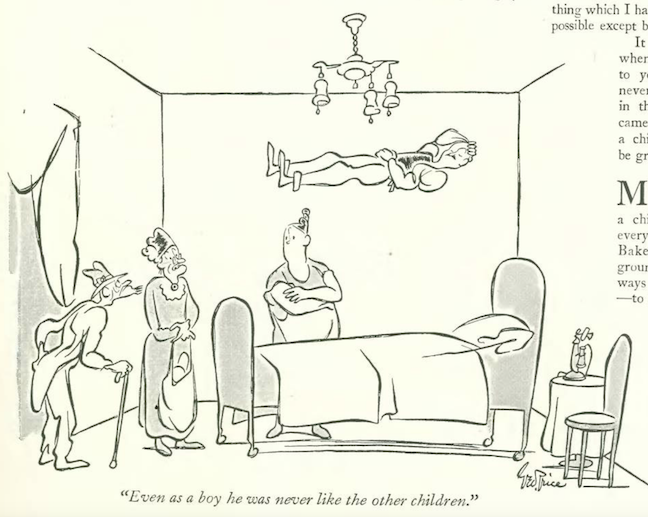
…and still up in the air…

Barbara Shermund dreamed of Venice…

James Thurber gave us the life of the party…

…and we close with Leonard Dove, and some unexpected party life…

Next Time: The Mouse Roars, In Color…

Al’s Menagerie

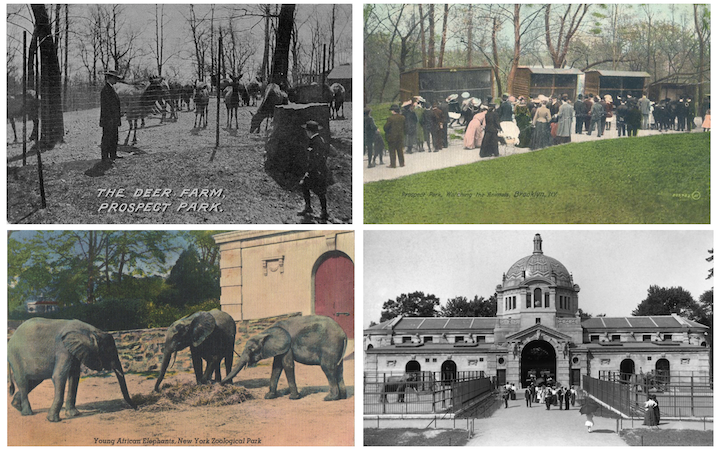
Above: The Dec. 2, 1934 opening of the reconstructed Central Park Menagerie drew such luminaries as Mayor Fiorello La Guardia, pictured at left with his family, and, at right, former New York Governor Al Smith, who was designated honorary zookeeper. Smith, who, lived across from the zoo at 820 Fifth Avenue, poses with two donkeys at the Menagerie in 1940. (New York Parks Archive)

The Central Park Zoo was not part of the original Olmstead-Vaux plan for the park, but beginning in 1859 it evolved spontaneously as a menagerie located near the Arsenal; its odd collection of animals included exotic pets donated as gifts, and other random creatures including a bear, a monkey, a peacock and some goldfish.

Dec. 1, 1934 cover by Leonard Dove.

The menagerie accepted animals of all kinds, even sick ones, and by the 1920s the quality of the animals as well as the hodgepodge of buildings had degraded significantly (the lion house had to be guarded to prevent the animals from escaping their rotting quarters). In early 1934 Parks Commissioner Robert Moses addressed the adverse conditions in the menagerie, putting a redesign on a fast track and insisting that only healthy animals, in more humane settings, would be displayed.

DUMBOS…According to a 1911 Department of Parks Annual Report, the menagerie at Central Park submitted animals to questionable treatment, as suggested by this photo of a trainer and a dog perched on top of an elephant. (nycgovparks.org)

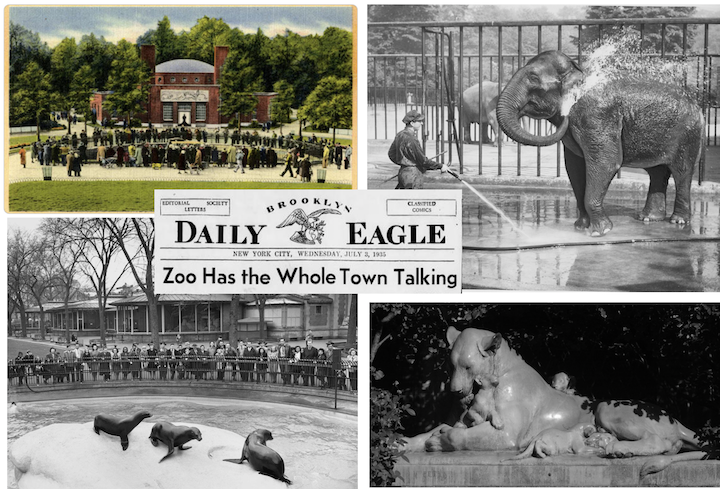
Built of brick and limestone, the new zoo was designed in just sixteen days by an in-house team led by architect Aymar Embury II. Construction on the roughly six-acre zoo took just eight months, employing federally financed Works Progress Administration (WPA) labor.

MOSES PARTS THE RED TAPE…Robert Moses wasted no time after his appointment as parks commissioner (in January 1934) to get rolling on the menagerie makeover—it took just eight months to complete the new zoo. Clockwise, from top left, invitation to the opening celebration of the Central Park Menagerie—12,000 invited guests attended the opening, while another 25,000 lined Fifth Avenue hoping to be admitted; the popular sea lion pool was a central attraction on opening day (it is one of several elements from the 1934 zoo that still exists); conditions had improved for elephants and other animals, but they were still far from ideal; aerial view of the zoo as it neared completion on Oct. 9, 1934. (nycma.lunaimaging.com/digitalcollections.nypl.org)

Much ado was made of Al Smith’s appointment as “Honorary Night Superintendent”—in these clips from the Dec. 3 New York Times, Smith gave a brief “lecture” about the zoo’s bison, to which he offered a slice of bread…

(Excerpts from The New York Times via the TimesMachine)

 * * *

From Our Advertisers

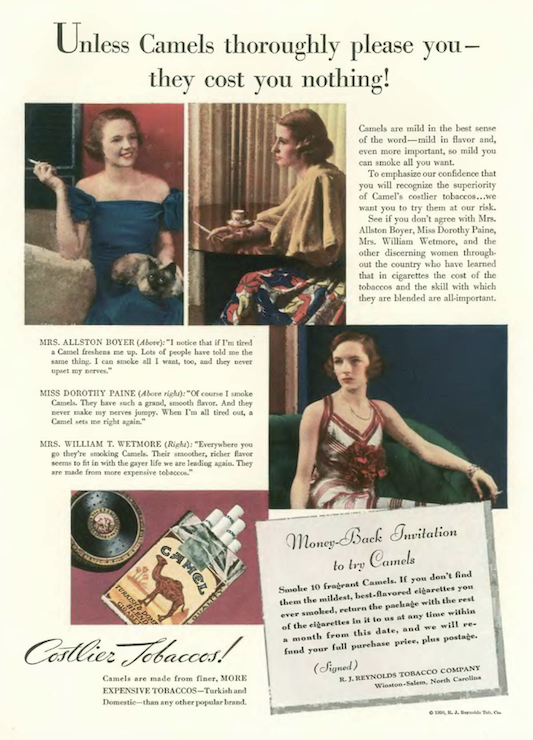
R.J. Reynolds continued to roll out its list of distinguished women who preferred their Camel cigarettes: “Mrs. Allston Boyer” nee Charlotte Young was a model with the John Robert Powers agency who was married to resorts planner Allston Boyer from 1934 to 1939. Young (1914–2012) would later marry New York Times Moscow correspondent Harrison Salisbury, and the two would embark on lengthy journeys throughout Asia, including a grueling 7,000-mile journey retracing the route of The Long March that Charlotte recounted in one of her seven travel books. Whether she continued her Camel habit is unknown, but she did live 98 years…

…a house ad from The New Yorker celebrated the holiday season with special Christmas rates (and Julian de Miskey embellishments)…

Rea Irvin continued to have fun with the federal government’s new food and drug labeling standards…

…while Richard Decker had these two castaways contemplating a simpler form of government…

…and James Thurber continued to stir up trouble among the sexes…

…on to Dec. 8, 1934…

Dec. 8, 1934 cover by Richard Decker.

…which featured (on page 135) a handwritten letter from Kewpie Doll inventor Rose O’Neill, who commented on her recent New Yorker profile…

…here is an excerpt from the Nov. 24 profile referenced by O’Neill:

…and on to our advertisements from the Dec. 8 issue, including another Julian de Miskey-illustrated house ad…

…the clever folks at Heinz enlisted the talents of Carl Rose for a play on his famous Dec. 8, 1928 New Yorker cartoon…

…a closer look at the illustration (note the mother’s softer, more conservative appearance, five years removed from her flapper days; the child hasn’t changed a bit, except now we can see her face)…

…and the 1928 original, with caption by E.B. White

Peter Arno also popped up in the advertising section on behalf of Libby’s…

…the magazine grew thicker with many Christmas-themed ads, including this one from Johnnie Walker…
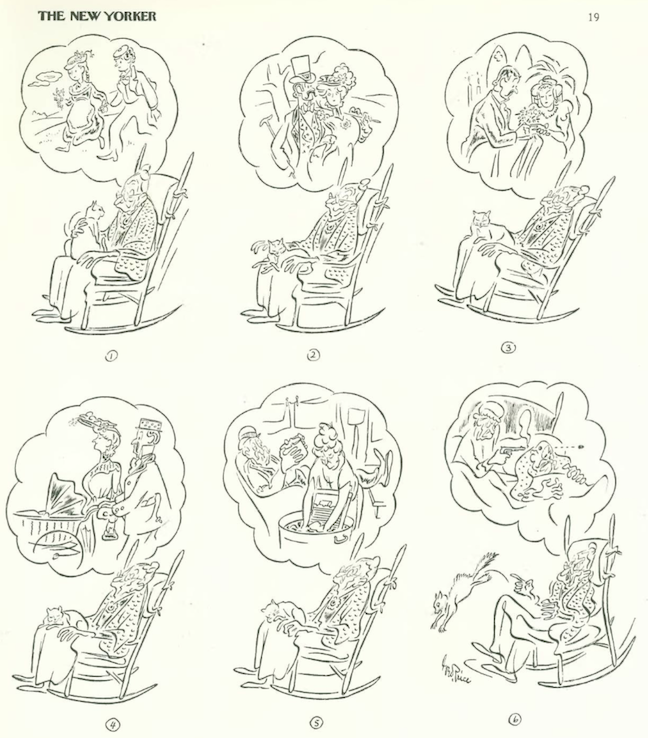
…Marlboro continued to take out these modest, back-page ads aimed at tobacco’s growth market—women smokers…

…the makers of Spud menthol cigarettes continued their campaign to encourage chain-smoking with this rather depressing image…

…while Spud’s new competitor in menthol cigs, KOOL, kept things simple with their smoking penguin mascot and valuable coupons for keen merchandise…

…the Citizens Family Welfare Committee offered this reminder that the Depression was still very much a challenge for 20,000 New York families…

…on to our cartoonists, beginning with Alan Dunn’s rather dim view of Robert Moses’s generously funded parks department…

George Price gave us the latest update on his floating man, who had been up in the air since the Sept. 22 issue…

Daniel ‘Alain’ Brustlein marked the season with dueling Santas from Macy’s and Gimbel’s…

…and we end with James Thurber, and some reverse psychology…

Next Time: An Industrial Classicist…

Portraits and Prayers

Above, left, a 1935 portrait of Gertrude Stein by Carl Van Vechten; right, Gertrude Stein and Alice B. Toklas arriving in New York aboard the French Line’s SS Champlain in 1934. (Library of Congress/AP)

Much of America’s literary world was abuzz about the arrival of Gertrude Stein in New York after her nearly three-decade absence from the States. Audiences were mostly receptive to Stein’s lectures, even if they were largely unintelligible, but The New Yorker would have none of it.

Nov. 17, 1934 cover by Rea Irvin.

Stein (1874–1946) visited the U.S. at the urging of friends who suggested that a lecture tour might help her gain an American audience for her work. She crisscrossed the country for 191 days, delivering seventy-four lectures in thirty-seven cities.

Writing for the Smithsonian Magazine (October 2011), Senior Editor Megan Gambino notes that publishing houses regarded Stein’s writing style as incomprehensible (Gambino writes that shortly after her arrival in the U.S., “psychiatrists speculated that Stein suffered from palilalia, a speech disorder that causes patients to stutter over words or phrases”), but in 1933 “she at last achieved the mass appeal she desired when she used a clearer, more direct voice” in The Autobiography of Alice B. Toklas. However, Stein was still best known in the U.S. for her “insane” writings, as one New York Times reporter described Stein’s work upon the writer’s arrival in New York. Excerpts from the Oct. 25, 1934 edition of the Times:

Stein had also achieved success in America via her libretto to Virgil Thomson’s opera Four Saints in Three Acts. Prior to her visit, Stein was featured in a newsreel reading the “pigeon” passage from the libretto, which James Thurber satirized in this piece titled “There’s An Owl In My Room.” Excerpts.

Here is a YouTube clip of the newsreel satirized by Thurber. Stein begins her “pigeon” reading at the 30-second mark:

If Thurber found the libretto ridiculous, it was an opinion not necessarily shared by audiences who attended Four Saints in Three Acts, which premiered in Hartford, Connecticut, before making a six-week run on Broadway.

SAINTS AND PIGEONS…The original cast of Four Saints in Three Acts, onstage at the Wadsworth Atheneum, Hartford, 1934; at right, Gertrude Stein reviews the libretto for Four Saints with American composer Virgil Thomson, 1934. (Harold Swahn/Bancroft Library, UC Berkeley)

Since Stein had never seen the opera performed, writer and photographer Carl Van Vechten convinced Stein and Toklas to fly on an airplane for the first time in order to be able to see the play in Chicago.

FLIGHT INSURANCE…Stein and Toklas were anxious about flying, so Van Vechten gave each a small Zuni fetish—a good luck charm as they prepared to board their plane at Newark. (Boatwright Memorial Library, The University of Richmond)

Thurber wasn’t the only New Yorker writer to throw shade on Stein’s visit. In his “Books” column, Clifton Fadiman described Stein as a “mamma of dada” and a “Keyserling in divided skirts” (Hermann Keyserling was a non-academic German philosopher known for his platitudinous, obscure writings). Excerpt:

Fadiman continued by excoriating Stein’s latest book, Portraits and Prayers, likening its “shrill, incantatory” quality to “the rituals of a small child at solitary play.”

 * * *

Over the Rainbow

We leave Gertrude Stein for the time being and check in with Lois Long, who was sampling the fall attractions of the New York nightclub scene in “Tables for Two.” In these excerpts, the 32-year-old Long continued her pose as a much older woman (“about to settle down with a gray shawl”) as she bemoaned the bourgeoisie excess of places like the Colony, once known for its boho, speakeasy atmosphere. And then there was the Rainbow Room, with its organ blaring full blast to the delight of gawking tourists.

LOST IN NEW YORK…Lois Long lamented the demise of cafe life in Manhattan; from left, the Colony, circa 1940, which went from boho to upscale; the 21 Club, a favorite Prohibition-era haunt of Long’s where she was suddenly a nobody; and high above the city, the Rockefeller Center’s Rainbow Room, and its interminable organ music. (Pinterest/Alice Lum via Daytonian in Manhattan/nycago.org)

 * * *

From Our Advertisers

Just one ad from the Nov. 17 issue (more to come below)…the latest athlete to attest to the energizing effects of Camel cigarettes…Cliff Montgomery (1910–2005) was famed for a hidden ball trick play that led one of the greatest athletic upsets—Columbia’s 7-0 win over Stanford in the 1934 Rose Bowl. Montgomery would play one year with the NFL Brooklyn Dodgers, and would later earn a Silver Star for his heroism during World War II…

…on to our cartoonists, we begin with Robert Day’s jolly illustration for the “Goings On About Town” section…

Rea Irvin looked into fair play among the fox hunting set…

Garrett Price gave us a tender moment among the bones at the American Museum of Natural History…

…and Peter Arno introduced two wrestlers to an unwelcoming hostess…

…on to Nov. 24, 1934 issue, and the perils of the Macy’s Thanksgiving Day Parade as illustrated on the cover by William Cotton

Nov. 24, 1934 cover by William Cotton.

…where we find still more scorn being heaped upon Gertrude Stein. “The Talk of the Town” offered this observation (excerpt):

…and E.B. White had the last word on Stein in his Dec. 1, 1934 “Notes and Comment” column:

* * *

There Goes the Neighborhood

Returning to the Nov. 24 issue, Alberta Williams penned a lengthy “A Reporter at Large” column, titled “White-Collar Neighbors,” about the new Knickerbocker Village development in the Lower East Side. Real estate developer Fred French razed roughly one hundred buildings to build what has since been criticized as an example of early gentrification in Manhattan. Williams assessed the development after more than a year of construction, finding that despite federal funding, the leasing company had yet to rent any apartments “to Negroes or Orientals.” Although the development was meant to serve some of the families it displaced, the vast majority were forced to move back into slums due to escalating rents.

BREATHING ROOMS…Knickerbocker Village in 2019. To make way for the development, one hundred buildings were razed in the “Lung Block,” so named because of its high tuberculosis mortality rate. The development continues to be designated as affordable housing. (Wikipedia)

 * * *

Dollmaker

Raised in rural Nebraska, at an early age Rose O’Neill (1874–1944) demonstrated an artistic bent, and was already a published illustrator and writer when she drew her first images of “Kewpie” around the year 1908. A German doll manufacturer began producing a doll version of Kewpie in 1913, and they became an immediate hit, making O’Neill a millionaire and for a time the highest-paid female illustrator in the world. When Alexander King penned a profile of O’Neill, Kewpies were no longer the rage, but O’Neill was nevertheless determined to find success in a new doll line. Excerpts:

QP QUEEN…Clockwise from top left, Rose O’Neill circa 1910, just before her Kewpie dolls made it big; Kewpie doll in original box, undated; as the Kewpie craze faded in the 1930s, O’Neill tried to launch a new line called Little Ho Ho, a laughing baby Buddha, but before production plans were finalized the doll factory burned to the ground; a 1935 ad for a Rose O’Neill-branded “Scootles” doll, another attempt at a comeback. (Wikipedia/Pinterest/museumobscura.com)

 * * *

Last Call

Lois Long was back with another installment of “Tables for Two” and in these excerpts she found the Central Park Casino a welcome place to hang out, apparently unaware that Parks Commissioner Robert Moses had already served an eviction notice to the Casino’s owners (Moses would tear down the Casino in 1936, mostly to settle a personal vendetta). Long also found respite at the Place Piquale, which featured the musical stylings of Eve Symington.

BYE BYE…The Central Park Casino was not long for the world when Lois Long paid an enjoyable visit in November 1934. Long also found a good time at the Place Piquale, which featured the “startling,” deep voice of cabaret singer Eve Symington. (centralpark.org/Pinterest)

At the Place Piquale, Long was “grateful” to see that silent film star Louise Brooks was also a good dancer. An icon of Jazz Age flapper culture, Brooks loathed the Hollywood scene and the mediocre roles it offered, and after a stint making films in Europe she returned to the States, appearing in three more films before declaring bankruptcy in 1932. A former dancer for the Ziegfeld Follies, Brooks had turned back to dancing in nightclubs to make a living.

IT’S A LIVING…Promotional photo for the Place Piquale featuring Louise Brooks (sans her familiar flapper bob) and Dario in “Spectacular Interpretive Dances,” April 17, 1934. (books0977.tumblr.com)

…and dance remains a theme with John Mosher’s film review of the Fred Astaire and Ginger Roger musical The Gay Divorcee, which was based on the 1932 Broadway musical Gay Divorce starring Astaire and Claire Luce.

YOU WILL HAVE TO DANCE BACKWARD, IN HEELS…Ginger Rogers and Fred Astaire trip the light fantastic in The Gay Divorcee. (precode.com)

 * * *

Using Her Heads

Clifton Fadiman praised Peggy Bacon’s collection of caricatures, Off With Their Heads!, which included drawings of fellow New Yorker contributors as well as various Algonquin Hotel acolytes. Excerpt:

HEAD HUNTER…Peggy Bacon offered up caricatures of forty celebrities in her new book, Off With Their Heads! Bacon (1895–1987) contributed cartoons as well as poetry and fiction to The New Yorker from 1927 to 1950. Clockwise, from top left, title page with Bacon’s self-portrait; undated photo of Bacon, likely circa 1930; caricatures of Dorothy Parker, Carl Sandburg and Heywood Broun. (villagepreservation.org/printmag.com/Wikipedia–Peter A. Juley & Son)

 * * *

More From Our Advertisers

“Beautiful Vanderbilts” Mrs. Reginald Vanderbilt and Miss Frederica Vanderbilt Webb wowed one unnamed dermatologist who discovered that both had 20-year-old skin even though they were seven years apart! “Mrs. Reginald” was Gloria Morgan Vanderbilt, who was thirty when this ad was produced (Miss Frederica was apparently twenty-three). We’ve met Gloria Morgan Vanderbilt before, shilling for Pond’s—she was the maternal grandmother of television journalist Anderson Cooper, and earned her “bad mom” rep from Vanderbilt vs. Whitney, one of America’s most sensational custody trials…

…we move from skin care to who cares…in this case how many Spud cigs you smoke…hell, smoke three packs a day if you like, the cooling menthol will always keep you feeling fresh even as your lungs gradually darken and shrivel up…

…and here’s a lesson from the makers of Inecto hair dye, no doubt a company solely run by men, who schooled wives with the advice that you’d better color that gray hair pronto or your hubby will kick you to the curb…

…the New York American was a Hearst broadsheet known for its sensationalism, however it did claim Damon Runyon, Alice Hughes, Robert Benchley and Frank Sullivan among its contributors…the morning American merged with the New York Evening Journal to form the American and Evening Journal in 1937. That paper folded in 1966…

…illustrator Stuart Hay drew up this full page ad for the makers of Beech-Nut candy and chewing gum…when I was a kid we used to call this “grandpa gum”…

…on to our cartoonists, we begin with a Thanksgiving spot by Alain (Daniel Brustlein)…

Barbara Shermund delivered another life of the party…

George Price was finally bringing his floating man back to earth…

Otto Soglow gave us an unlikely detour…

Gardner Rea signaled the end to the 1933-34 Chicago World’s Fair…with a boom…

Leonard Dove dialed up a familiar trope…

…and we close on a more pious note, with Mary Petty

Next Time: Al’s Menagerie…

A Tadpole on Wheels

Above: British architect Norman Foster's 2010 recreation of R. Buckminster Fuller's 1933 Dymaxion car. (Wikipedia)

Despite the limitations of 1930s technology, a few architects and designers were hell-bent on building a streamlined future that until then was mostly the stuff of movies and science fiction magazines.

May 5, 1934 cover by Rea Irvin.

One of them was R. Buckminster Fuller (1895–1983), architect, designer, and futurist probably best known today as the inventor of the geodesic dome (think Disney’s Epcot Center). In the 1930s Fuller was all about a concept he called Dymaxion. Derived from the words dynamic, maximum, and tension, when applied to architecture and design it would supposedly deliver maximum gain from minimal energy input. The writer of the New Yorker article (pseud. “Speed”) was fascinated by the Dymaxion’s motorboat-type steering, no coincidence since Fuller intended to adapt his futuristic car for use on and under the water, as well as in the air.

THE SHAPE OF THINGS TO COME…Clockwise, from top left: Workers at a Bridgeport, Conn., plant creating the first of three Dymaxion cars; the Dymaxion at Chicago’s 1933 Century of Progress exposition—the car was involved in a fatal accident at the fair; interior view of the Dymaxion; using the same engine and transmission as a Ford sedan (pictured), the Dymaxion offered three times the interior volume with half the fuel consumption and a 50 percent increase in top speed. (Buckminster Fuller Institute/Poet Architecture)
THINKING WITHOUT THE BOX…In 1927 R. Buckminster Fuller (pictured) developed a Dymaxion House, a “Dwelling Machine” that would be the last word in self-sufficiency. Although the aluminum house was intended to be mass-produced, flat-packaged and shipped throughout the world, the design never made it to market (however its ideas influenced other architects); at right, a Fuller geodesic dome at Disney’s Epcot Center in Florida. (archdaily.com/Wikipedia)

The 1933 Century of Progress exposition in Chicago was supposed to be a major showcase for Fuller, but when professional driver Francis Turner was killed while demonstrating the first prototype of the Dymaxion, the car’s prospects dimmed considerably. According to an article by Stephanie d’Arc Taylor (cnn.com Oct. 30, 2019), during the demonstration a local politician tried to drive his own car close to the Dymaxion—to get a better look—and ended up crashing into the unwieldy prototype, which rolled over, killing the driver and injuring its passengers. “The politician’s car was removed from the fracas before police arrived, so the Dymaxion was blamed for the accident,” writes Taylor, who notes that the rear wheel–powered car, though unconventional, was not necessarily the problem. However, “the thing that made the Fuller death-mobile singularly deadly was the fact it was also steered by the rear wheel, making it hard to control and prone to all kinds of terrifying issues.”

That history did not stop architect Norman Foster from building a replica of the Dymaxion in 2010. Foster worked with Fuller from 1971 to 1983, and considers Fuller a design hero.

GIVING IT ANOTHER GO…Architect Norman Foster with his 2010 recreation of the Dymaxion. To build a new Dymaxion, Foster sent a restorer to the National Automobile Museum in Reno, Nevada (home of the only surviving Dymaxion, Car No. 2), and after thousands of photos and measurements Foster had the car recreated using only materials available in 1933: Foster’s Dymaxion consists of an ash frame sheathed in hand-beaten aluminum, mounted on the chassis of an old 1934 Ford Tudor Sedan. (CNN/The Guardian)

According to Taylor, Foster cleaved so closely to Fuller’s original designs that he refers to his creation as a fourth genuine Dymaxion—not a replica. “The car is such a beautiful object that I very much wanted to own it, to be able to touch as well as contemplate the reality for its delight in the same spirit as a sculpture,” said Foster. “Everything in (the car) was either made in 1934, or recreated using techniques and materials that Bucky would have had access to in that period.”

 * * *

Meanwhile, At The Tracks…

If Fuller’s attempt at the streamlined future was a bit of bust, the Burlington railroad was making a splash with its gleaming new Zephyr. E.B. White reported:

ZOOM ZOOM…The Burlington Zephyr set a speed record for travel between Denver and Chicago when it made a 1,015.4-mile (1,633 km) non-stop “Dawn-to-Dusk” dash in 13 hours 5 minutes at an average speed of almost 78 mph (124 km/h). In one section of the run it reached a speed of 112.5 mph. Following a promotional tour that included New York, it was placed in regular service between Kansas City, Missouri, and Omaha and Lincoln, Nebraska, on November 11, 1934. Other routes would be added later in the Midwest and West. (BNSF)

…we continue with E.B. White, here with some observations regarding Mother’s Day and bank robber/murderer John Dillinger, who had escaped from prison in March 1934 and was on the FBI’s Most Wanted List…

I REMEMBER MAMA…John Dillinger posed with Lake County prosecutor Robert Estill, left, in the jail at Crown Point, Ind. while he awaited his trial for murder in January 1934. Dillinger would escape from the jail in March and would be on the lam until July, when FBI agents would gun him down outside a Chicago movie theatre. (NY Daily News)

…and a last word from White, about an important change at Radio City:

 * * *

Voice In The Wilderness

A combination of newsreel footage, documentary, and reenactment, Cornelius Vanderbilt Jr’s Hitler’s Reign of Terror played to capacity crowds for two weeks in New York City, despite the refusal of the state’s censor to license the film. Disinherited by his parents when he became a newspaper publisher, Vanderbilt was a determined journalist, covertly filming scenes in Nazi Germany and even briefly encountering Adolf Hitler outside the Reichstag, where Vanderbilt yelled to Der Führer, “And what about the Jews, Your Excellency?” (Hitler ignored the question and referred Vanderbilt to one of his lackeys). Unfortunately, Vanderbilt wasn’t much of a filmmaker, and although he warned Americans about the emerging threat in Germany, few took the film, or his warning, seriously, including John Mosher:

UNHEEDED…Audiences flocked to see Cornelius Vanderbilt Jr’s Hitler’s Reign of Terror, but critics dismissed the rather amateurish film—Film Daily scoffed at the film’s prediction that Hitler’s Germany was a future threat to world peace; at right, in the film Vanderbilt confronted “Hitler” in a recreation. (TMDB/Library of Congress)

 * * *

From Our Advertisers

It wouldn’t seat eleven people like a Dymaxion, but a Body by Fisher (coach builder to General Motors) certainly impressed this young woman…but better check with the hubby just in case…

…in this next ad, we find what looks like the same woman, perhaps celebrating her decision with a nice smoke…

…this spot seems out of place in the New Yorker, like it snuck over from Better Homes & Gardens...

…on to our cartoons…with James Thurber’s war of the sexes over, life returned to normal…

…and both sides shared in the gloom of a rainy afternoon…

…by contrast, Perry Barlow brightened things up with this life of the party…

…but a good time doesn’t always translate over the airwaves, per George Price

Alain illustrated the consequences of losing one’s nest egg…

Peter Arno didn’t leave any room for dessert…

…and Charles Addams returned, a macabre cast of characters still percolating in his brain…

…on to May 12, 1934…

May 12, 1934 cover by Leonard Dove.

…and back to the movies, this time critic John Mosher found more cheery fare in 20th Century, a pre-Code screwball comedy directed by Howard Hawks and starring John Barrymore and Carole Lombard. Battling alcohol abuse since age 14, Barrymore nevertheless managed to display his rare genius as a comedian and turned in what is considered to be his last great film performance.

GETTING HER KICKS…Top, Carole Lombard delivers a swift one to John Barrymore in the screwball comedy 20th Century. Below, director Howard Hawks with the cast. (greenbriarpictureshows.blogspot.com)

 * * *

Playing the Ponies

Horse racing correspondent George F. T. Ryall (pseud. “Audax Minor”) considered a losing wager at the Kentucky Derby in his column, “The Race Track.”

A HORSE OF COURSE…Jockey Mack Garner rode Cavalcade to victory at the 1934 Kentucky Derby. (Appanoose County Historical Society)

 * * *

More From Our Advertisers

We begin with Camel cigarette endorsers Alice and Mary Byrd, residents of Virginia’s famous Brandon plantation and cousins of Virginia Senator and Governor Harry F. Byrd, known for his fights against the New Deal and his “massive resistance” to federally mandated school desegregation...

…also to the manor born, Whitney Bourne, a New York deb who would go on to a brief stage and film career that would end when she married her first husband (diplomat Stanton Griffis) in 1939…

AN EYE FOR STYLE…Whitney Bourne in a scene with Solly Ward in 1937’s Flight From Glory. Named in 1933 as one of America’s best dressed women, Bourne was a noted New York socialite, skier, golfer and tennis player as well as an occasional actress.

…we move along from the effervescent Whitney Bourne to the sparkling waters of Perrier…
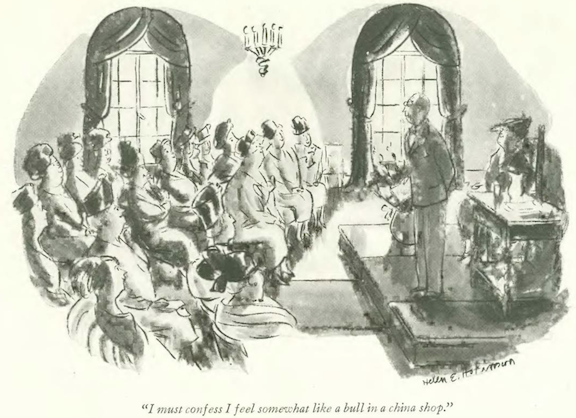
Gardner Rea followed other New Yorker cartoonists by illustrating an ad for Heinz…

…which brings is to more cartoons, where according to Richard Decker, the move to streamlined trains wasn’t welcomed by everyone…

Carl Rose illustrated this two-page spread with an imagined right-wing response to the recent left-wing May Day parades…

William Steig eavesdropped onto a saucy little conversation…

Barbara Shermund continued her explorations into the trials of the modern woman…

James Thurber was back to his old tricks…

…and we conclude our cartoons with Eli Garson, and a new perspective…

Before I close, a bit of housekeeping. The first issues in 1925 sometimes ended “The Talk of the Town” with…

…but on May 23, 1925, “Talk” signed off with —The New Yorkers. That continued until the March 31, 1934 issue (below), the last time the New Yorker signed off “The Talk of the Town” with —The New Yorkers:

Next Time: Moses Parts a Yacht Club…


America’s Sweetheart

Above: A scene from Mary Pickford’s 1922 film Tess of the Storm Country. (Library of Congress)

In today’s celebrity-saturated culture it is difficult to find a parallel to silent film star Mary Pickford, who was dubbed Queen of the Movies more than a century ago. Indeed, during the 1910s and 1920s Pickford was regarded as the most famous woman in the world.

April 7, 1934 cover by Rea Irvin.

Pickford was also known as “America’s Sweet” for her portrayal of gutsy but tenderhearted heroines. In real life she was also a gutsy and shrewd businesswoman who co-founded United Artists in 1919 with Charlie Chaplin, Douglas Fairbanks, and director D. W. Griffith. Commanding a salary only rivaled by Chaplin, her stardom only grew when she married Fairbanks in 1920, forming the first celebrity supercouple; together they ruled Hollywood from their Beverly Hills mansion, Pickfair (apparently staging dull affairs, per the “Profile” excerpt below).

The end of the silent era also put an end to Pickford’s stardom, as well as to her fairytale marriage to Fairbanks. Margaret Case Harriman’s profile of Pickford, simply titled “Sweetheart,” gave readers a glimpse into the decline of a silent superstar. Excerpts:

SINGULAR STAR…Clockwise, from top left, Mary Pickford in a publicity photo, circa 1910; Pickford visits close friend and screenwriter Frances Marion during filming of Straight is the Way (1921); Douglas Fairbanks and Pickford in the early 1920s; Pickford with a movie camera in 1916—in addition to being a shrewd businesswoman, she was also skilled behind the camera. (thehollywoodtimes.today/Time/Library of Congress)

Harriman concluded her profile with some thoughts on Pickford’s future:

THE SOUND BARRIER…With the advent of sound movies Mary Pickford turned to writing books and serving various charities. From left, sharing ice cream with rising star Bing Crosby in 1934; center, Al Frueh’s caricature of Pickford for the profile; Pickford in a 1934 promotional picture supporting The Salvation Army. (Pinterest/Library of Congress)

A note on the profile’s writer, Margaret Case Harriman (1904-1966), who doubtless sharpened her people-watching skills at the Hotel Algonquin (famed birthing ground of the New Yorker), which was owned by her father, Frank Case. Douglas Fairbanks was one of Case’s best friends, and Harriman knew both Fairbanks and Pickford well, since they often stayed at the hotel.

HOME SWEET HOME…Margaret Case Harriman, photographed May 31, 1937 by Carl Van Vechten. Harriman was born in 1904 in room 1206 of the Hotel Algonquin, which was owned by her father, Frank Case. (Philadelphia Museum of Art)

 * * *

Master of Masters

The founder of perhaps the world’s most prestigious golf tournament was an amateur and a working lawyer by profession. When Bobby Jones (1902–1971) co-founded the Masters Tournament in 1934 with investment dealer Clifford Robert, it was called the Augusta National Invitation Tournament (it was Robert’s idea to call it The Masters, a name Jones thought immodest). Jones dominated top-level amateur competition from the early 1920s through 1930—the year he achieved a Grand Slam by winning golf ’s four major tournaments in the same year. However, by the 1934 Jones’s skills began to wane. The New Yorker had little to say about the first Masters (it wasn’t a big deal yet), other than Howard Brubaker making this observation in “Of All Things”…

A SWING INTO HISTORY…Bobby Jones (center) drives during the first-ever Masters Tournament in Augusta, Georgia on March 22, 1934. (augusta.com)

 * * *

From Our Advertisers

Wanna get away? This colorful advertisement beckoned New Yorker readers to take the next boat to sunny Bermuda…

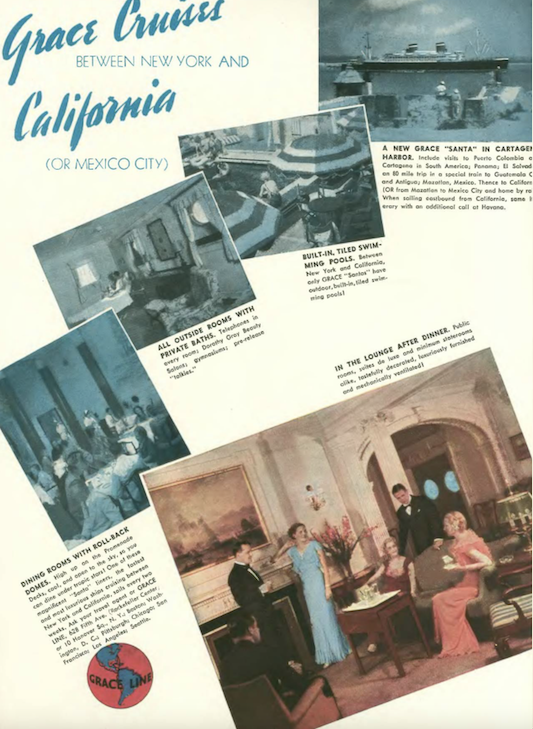
…while the Grace Line offered a southern cruise through the Panama Canal…

…but who needed to travel when you could enjoy a beer that was beloved the world over?…

Mrs. Potter d’Orsay Palmer nee Maria Eugenia Martinez de Hoz was content to stay home in Chicago and smoke a few Camels, apparently…

…we’ve encountered her before—she appeared in a Ponds ad (below) in the Aug. 8, 1931 issue of the New Yorker, where we learned she was wife No. 2 of Potter d’Orsay Palmer, son of the wealthy family of Chicago Palmer House fame…they would divorce in 1937, and the playboy Potter would marry two more times before dying of a cerebral hemorrhage in May 1939—following a drunken brawl in Sarasota, Florida with a meat cutter called Kenneth Nosworthy. Maria Eugenia would remarry and return to her homeland of Argentina to raise a family…

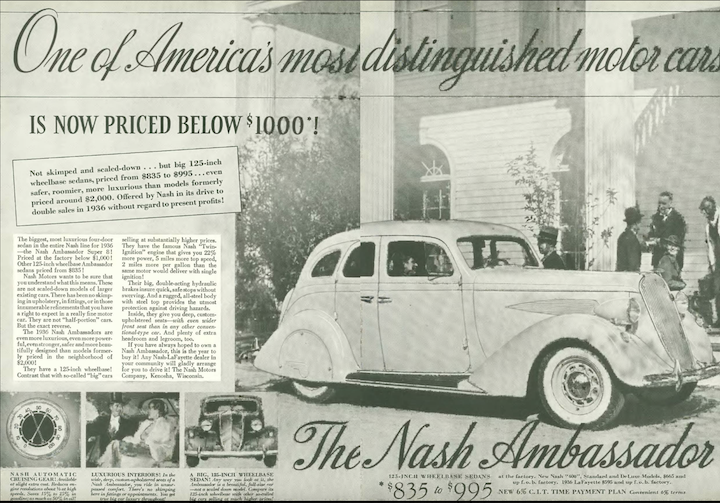
…this ad from Nash looks like a scene from Attack of the 50 Foot Woman, if she had a car to match, that is…

…the Cadillac V-16 was a truly massive automobile, but in contrast to the Nash ad, you can barely see the car as it approaches from the vanishing distance…

E. Simms Campbell got in on the advertising game with this spot that features contrasting images of storm and calm…

James Thurber offered this cartoon on behalf of Heinz soups…

…and Thurber again, as we kick off the cartoons with the ongoing battle…

Adolph Schus made a rare appearance in the New Yorker…according to Ink Spill, he also contributed a cartoon on March 19, 1938, and was editor of Pageant Magazine in 1945… 

Gluyas Williams looked in on the sorrows of moneyed classes…

Helen Hokinson’s “girls” were in search of lunch, and propriety…

…and Leonard Dove gave us a renter surprised by something not included in his lease…

…on to April 14, 1934…

April 14, 1934 cover by Harry Brown.

…and book reviewer Clifton Fadiman, who found F. Scott Fitzgerald’s literary gifts “bewilderingly varied”…

A NOT-SO-TENDER RECEPTION…F. Scott Fitzgerald’s status as a symbol of Jazz Age excess hurt his career during the Depression years. Tender Is the Night received mixed reviews, which didn’t help his alcoholism and deteriorating health. When Carl Van Vechten took this photo of Fitzgerald in June 1937, the author had a little over three years to live. (Wikipedia)

…speaking of F. Scott Fitzgerald, fellow author Ernest Hemingway defended Fitzgerald’s writing, arguing that criticism of his Jazz Age settings stemmed from superficial readings. One then wonders what Hemingway thought of E.B. White’s poetic “tribute” to his big game hunting excursions…

I ONLY SHOOT STRANGERS…Author Ernest Hemingway poses with a lion shot during a safari in Africa in 1934. (MPR News)

 * * *

From History’s Ash Heap

Various reference sources cite “freak shows” as a normal part of American culture in the late 19th to the early 20th centuries, but I have to admit I saw exhibits at state fairs of half-ton humans and conjoined twins when I was a kid in the 1970s (not to mention things in jars at a carnival in St. Louis that should have been given a decent burial).

When Alva Johnston penned the first installment of a three-part profile series titled “Sideshow People,” such attractions could be found across the U.S. and Europe—Coney Island featured “Zip the Pinhead,” who was actually William Henry Johnson (1842–1926), one of six children born to former slaves living in New Jersey. His desperately poor parents agreed to allow P.T. Barnum to display him at a museum and at circus performances billed as a missing link, a “What-Is-It” supposedly caught in Africa.

FOR THE SUCKERS…P.T. Barnum exhibited William Henry Johnson as a “wild man”, a “What-Is-It” that subsisted on raw meat, nuts, and fruit, but was learning to eat more civilized fare such as bread and cake. Note the difference between the poster depiction at left and the actual man. Civil War-era photo at right by Mathew Brady’s photography studio in New York City. (National Portrait Gallery)

 * * *

Floating and Sinking

As much as New Yorker cartoonists (and E.B. White) liked to take pokes at Chrysler’s futuristic Airflow, there was much to be admired by the innovations the car represented. Unfortunately, the car’s design was too advanced for the buying public, and despite a big manufacturing and sales push by Chrysler the car was shelved by late 1936.

Writing for Time, Dan Neil noted the Airflow’s spectacularly bad timing. “Twenty years later, the car’s many design and engineering innovations — the aerodynamic singlet-style fuselage, steel-spaceframe construction, near 50-50 front-rear weight distribution and light weight—would have been celebrated. As it was, in 1934, the car’s dramatic streamliner styling antagonized Americans on some deep level, almost as if it were designed by Bolsheviks.”

SEEMED LIKE A GOOD IDEA. A restored 1934 Airflow. (Hagerty Media)

* * *

More From Our Advertisers

Maybe the buying public wasn’t ready for a car with a sloping hood and embedded headlights, but the folks at Cadillac were eager to unveil concepts for the new streamlined La Salle, which retained the familiar bullet headlights so as not to alarm consumers too much…

…and here’s a lovely image from Goodyear…I assume this woman is merely resting in a rumble seat, since this pose would not be possible above 25 mph…

…full-bleed color ads were coming into their own, as demonstrated by this stylish entry from the purveyors of silk garments…

…on the other hand, our well-heeled friends at Ponds stuck with the tried and true copy-heavy approach…here they offer the flawless features of Anne Gould (1913–1962), granddaughter of Gilded Age robber baron Jay Gould

…R.J. Reynolds continued their campaign to convince us that Camels bring success to the average Joe and the champion athlete…

…the makers of Old Gold opted for the super creepy approach, asking entertainer Jimmy Durante to shove a pack of smokes into the face of what appears to be a teenager…
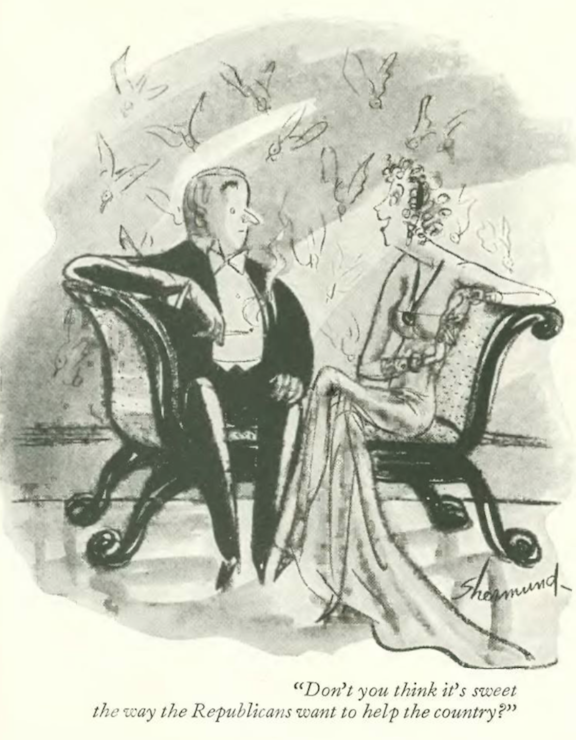
…here’s another ad from World Peaceways, reminding us of the futility of war…
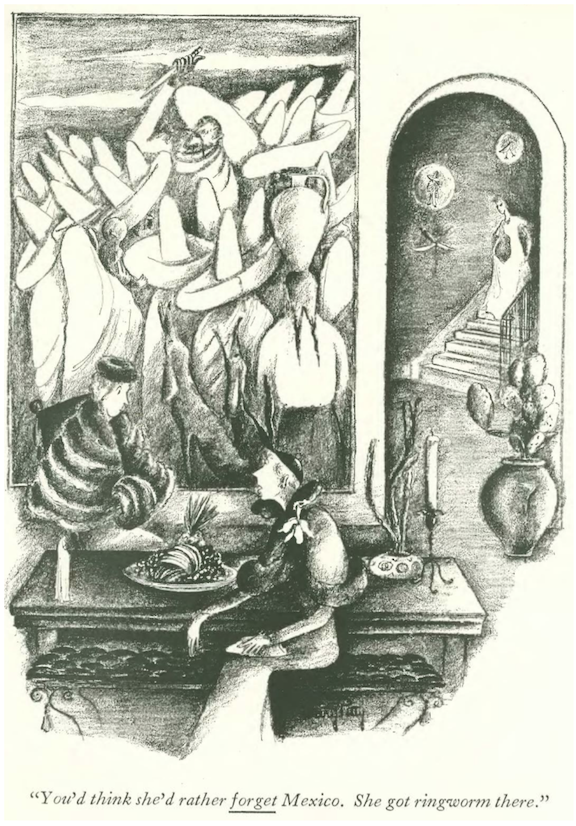
…speaking of futility, you could visit the USSR, which doubtless took great pains to steer tourists away from mass starvation in Ukraine and mass executions of Stalin’s many “enemies”…

…while folks in the USSR were worshiping Lenin and Stalin, Americans were rightly transfixed by the miracle of Kellogg’s Corn Flakes…a producer of industrial and advertising films, Castle Films would become a subsidiary of Universal and would go on to make a line of science-fiction and horror films including The Wolf Man, The Mummy, and Creature from the Black Lagoon.

…on to our cartoons, Alain took on the recent MoMA exhibition of “Machine Art”…

…and speaking of machine art, George Price was to latest cartoonist to take a crack at the Airflow…

James Thurber offered this bit of spot art for the opening pages…

…and returned to a somber scene on the battlefield of the sexes…

Next Time: Model Citizens…

Rocky’s Cover-Up

On April 28, 1933, just two days before the RCA Building was to open to new tenants, artist Diego Rivera added a portrait of Vladimir Lenin to the mural he was painting in the building’s lobby.

Feb. 24, 1934 cover by Garrett Price.

When Nelson Rockefeller asked Rivera to replace Lenin with a portrait of an “everyman,” Rivera refused, stating that he would prefer to see the whole mural destroyed than to alter it. Two weeks later Rivera was paid and dismissed from the job; carpenters immediately covered the mural in a white cloth. Fast forward to Saturday, February 10, 1934, when workers showed up late in the evening and began chipping away at the plaster bearing the mural, reducing Rivera’s artwork to dust. E.B. White, in his “Notes and Comment,” had this to say about that fateful night:

DUST TO DUST…Diego Rivera working on his mural, Man at the Crossroads, in the RCA Building lobby in 1933. At right, workers quickly covered up the mural after Rivera was dismissed from the job. One of Rivera’s artist assistants, Lucienne Bloch, clandestinely took the photo before she was escorted from the building. (Wikipedia/6sqft.com)
ARTEM INTERRUPTUS…Mexican artist Diego Rivera stands with a copy of the mural he painted at Rockefeller Center that was eventually destroyed. (A. Estrada /Courtesy of Museo Frida Kalho)

Rea Irvin shared his own thoughts on the issue with this illustration below, which referenced the hateful rhetoric of Charles Coughlin, a Canadian-American Catholic priest and populist leader and one of the first public figures to make effective use of the airwaves to spew his invective.

FAMILIAR RING…Charles Coughlin, a Catholic priest and populist leader, promoted antisemitic and pro-fascist views while also acting as a champion to the poor and a foe of big business. In the midst of the Depression he spoke to the hopes and fears of lower-middle class Americans throughout the U.S. One supporter recalled: “When he spoke it was a thrill like Hitler. And the magnetism was uncanny. It was so intoxicating, there’s no use saying what he talked about…” (BBC/NPR)

* * *

Dog Days

E.B. White also chimed in about boorish behavior he witnessed at the Westminster Kennel Club show at Madison Square Garden. Terriers had dominated Westminster; the fox terrier that ultimately won the 1934 competition represented the 21st terrier of any type to win Best of Show since that category was introduced in 1907.

YOU AGAIN? Ch Flornell Spicy Bit of Halleston, a Wire Fox Terrier, took Best of Show at Madison Square Garden in 1934. (westminsterkennelclub.org)

 * * *

Anybody Home?

After the wealthy owner of the New York World, Joseph Pulitzer, died in 1911, his family moved out of his lavish East 73rd Street mansion, which was designed by Stanford White to resemble an Italian palazzo. The building sat empty until 1930, when investors planned to knock it down and replace it with an apartment building. The Depression foiled their plans, and another attempt to raze the mansion in the 1950s also miraculously failed, and the building was eventually converted into a co-op with sixteen apartments. Writing in “The Talk of the Town,” James Thurber pondered the Pulitzer mansion’s expected fate. An excerpt:

THEN AND NOW…With so many buildings reduced to dust these days in NYC, it’s good to see the Pulitzer mansion still standing. You can buy one of its sixteen apartments for roughly $6 million, if and when they become available. (ephemeralnewyork.wordpress.com)

 * * *

From Our Advertisers

The makers of Camel cigarettes combined three previous ads into one, featuring endorsements from society matrons in Boston, Washington, D.C., and New York…

…while Fanny Brice and the cast of the 1934 Ziegfeld Follies offered a chorus of endorsements for Lux detergent in this two-page spread…

…the Graham-Paige Motors Corporation is long gone, but in the early 1930s the company was still going strong, introducing many innovations (described in the ad below) that would be copied by other carmakers…

…in the 1930s an exiled Russian noble, Count Alexis de Sakhnoffsky, was known for his streamlined automobile designs…he influenced the look of the 1934 Nash Ambassador Eight, which was touted here as the choice of the budget-minded toff…note how the illustrator exaggerated the car’s length in this ad…

…as compared to an actual model of a Nash Eight…

A restored 1934 Nash Ambassador Eight. (classiccars.com)

…on to our cartoonists, Alan Dunn floated above the “Goings On About Town” section…

William Steig gave us a tactless grocer…
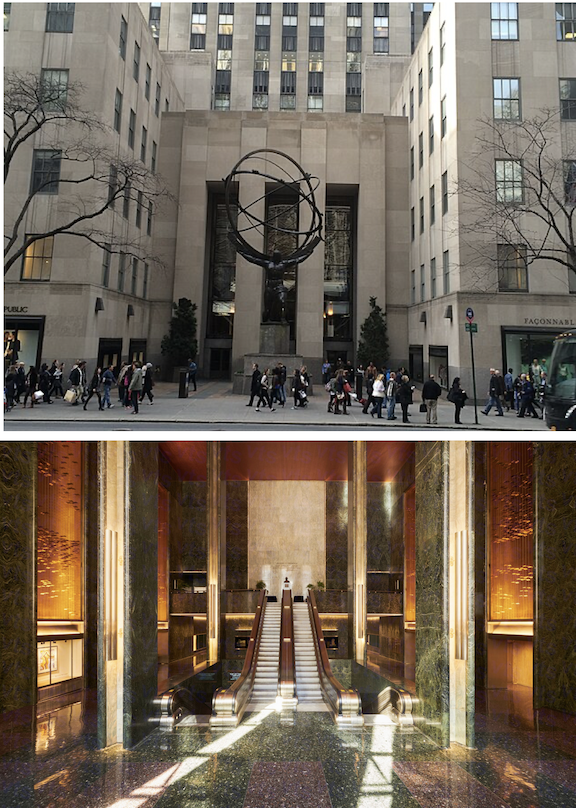
Howard Baer offered up some finer points from Madison Avenue…

Gardner Rea illustrated a very special delivery…

…and James Thurber’s war continued to be waged on a snowy battlefield…

…on to our March 3, 1934 issue…

March 3, 1934 cover by Harry Brown.

…which featured a profile of singer Kate Smith (1907–1986), written by none other than Joseph Mitchell (1908-1996), who began his career at The New Yorker in 1933. Smith was an American contralto often referred to as “The First Lady of Radio,” well known for her renditions of When the Moon Comes over the Mountain and Dream a Little Dream of Me. She was enormously popular during World War II for her rendition of God Bless America among other patriotic tunes.

Smith got her start in New York in 1926 when she appeared on Broadway in Honeymoon Lane. That year also saw the emergence of countless humiliating wisecracks about her weight that would dog her long career. A reviewer in The New York Times (Oct. 31, 1926) wrote, “A 19-year-old girl, weighing in the immediate neighborhood of 200 pounds, is one of the discoveries of the season…” In 1930, when Smith appeared in George White’s Flying High, she served as the butt of Bert Lahr’s often cruel jokes about her size.

An excerpt from the opening lines of Mitchell’s profile:

RISING STAR…At left, Kate Smith performing in the 1932 Paramount Pictures musical, Hello Everybody!; at right, on the cover of the October 1934 issue of Radio Mirror. (medium.com)

Toward the conclusion of the profile Mitchell suggested that Smith’s future was “doubtful.” She would prove that prediction wrong, however…
…23 years after her death her rendition of God Bless America would be discontinued pretty much everywhere when it was revealed that in the early 1930s she recorded such songs as That’s Why Darkies Were Born and Pickaninny Heaven (which was featured in Hello, Everybody!).

CANCELLED STAR…Since the late 1960s a rendition of God Bless America by Kate Smith served as a good luck charm for the Philadelphia Flyers hockey team. “The team began to win on nights the song was played,” The New York Times wrote in Smith’s 1986 obituary. Smith sang the tune live during game six of the 1974 Stanley Cup finals, which the Flyers went on to win against the Boston Bruins. When Smith’s racist songs were rediscovered in 2019, a statue of the singer that stood outside the Flyers’ arena was covered and ultimately removed. (Daily Mail)

A note on Joseph Mitchell, whose first credited piece in The New Yorker was a Nov. 11, 1933 “A Reporter at Large” column titled “They Got Married in Elkton.” The article described a small Maryland border town that became known for discrete “quicky” marriages. Mitchell would become known for his finely crafted character studies and expressive stories found in commonplace settings. His 1943 McSorley’s Wonderful Saloon is a prime example.

MAN ABOUT TOWN…At left, Joseph Mitchell circa 1930, wearing a brown fedora he was rarely seen without; at right, Mitchell in Lower Manhattan near the old Fulton Fish Market, as photographed by his wife, Therese Mitchell, circa 1950. (Estate of Joseph Mitchell)

 * * *

Acquired Taste

Occasionally New Yorker film critic John Mosher found himself at odds with other reviewers, and such was the case when Mosher sat down to watch Frank Capra’s It Happened One Night. While he described the 1934 pre-Code romantic comedy as “nonsense” and “dreary,” other critics found it generally enjoyable, and although it took audiences awhile to catch on, the film eventually became a smash hit.

In all fairness to Mosher, even the film’s co-star, Claudette Colbert, complained to a friend after the film wrapped, “I just finished the worst picture in the world.” As it turned out, It Happened One Night became the first of only three films to win all five major Academy Awards: Best Picture, Best Director, Best Actor, Best Actress, and Best Adapted Screenplay. It is now widely considered one of the best films ever made. Go figure.

Back to Mosher, who thought so little of the film he didn’t even lead his column with the picture’s review:

PRE-CODE AND TOPLESS…An heiress (Claudette Colbert) and a reporter (Clark Gable) find themselves hitchhiking (and sharing a motel room) after their bus breaks down in It Happened One Night. The film famously featured a scene in which co-star Gable undresses for bed and takes off his shirt to reveal that he is bare-chested. An urban legend claims that, as a result, sales of men’s undershirts declined noticeably. (IMDB)

 * * *

More From Our Advertisers

If you wanted luxury with the price, you could buy a Nash Ambassador Eight for $1,800 (about thousand less than other luxury models) or opt for Studebaker’s Berline Limousine, practically a steal at $1,295…
…or you could opt for this fancy-looking Buick with “Knee-Action wheels”…Knee Action was a GM marketing term for independent front suspension, which made for a smoother ride…

…always colorful, the makers of Cinzano vermouth made their splash in The New Yorker

…the folks at Lucky Strike continued their theme of colorful ads featuring attractive women enjoying their cigs…

…on to our cartoonists, Leonard Dove illustrated a domestic spat…

Mary Petty captured a romantic interlude on the dance floor…

…and James Thurber introduced a new twist—espionage—into his “war”…

Next Time: The Power Broker…