Million Dollar Mermaid

Our sense of what is old and what it is new becomes skewed during periods of rapid change, and such was the case in 1920s New York when large swaths of the old city were swept away and replaced by massive towers that seemingly rose overnight. Places like the Hippodrome Theatre, a 1905 Beaux-Arts confection barely 24 years old, seemed positively ancient in those heady times.

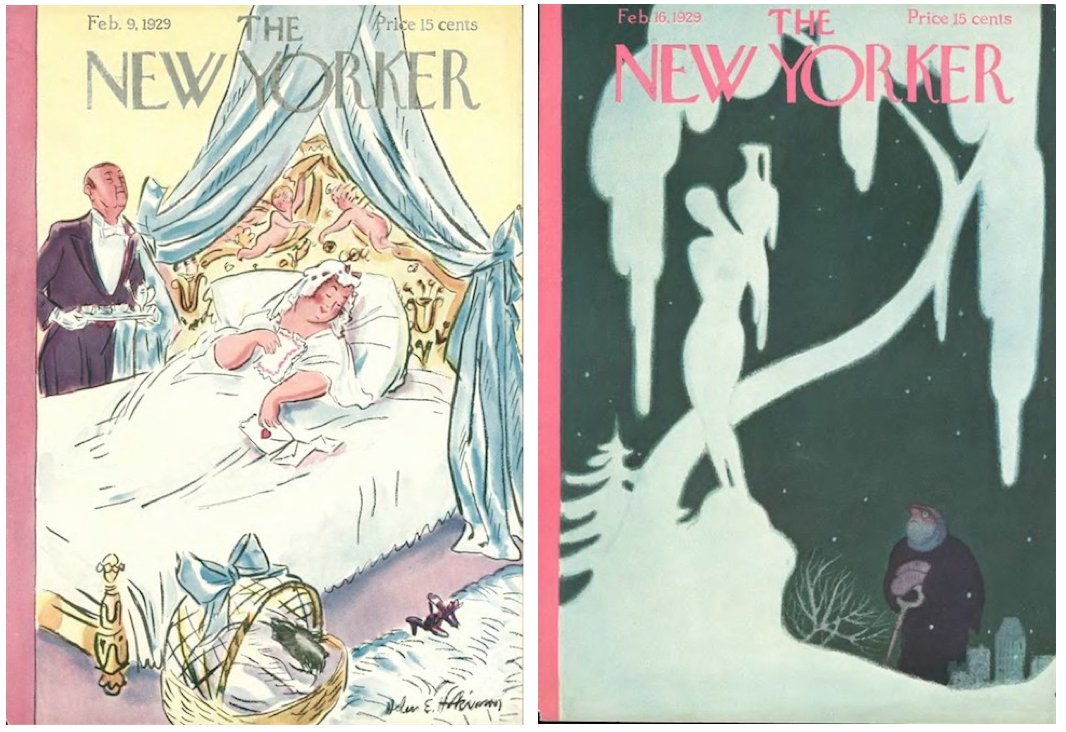
Feb. 9, 1929 cover by Helen Hokinson. Feb. 16, 1929 cover by Rea Irvin.

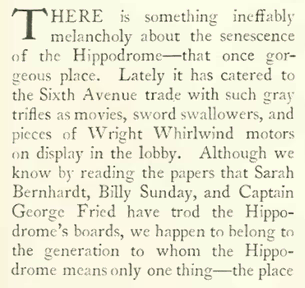
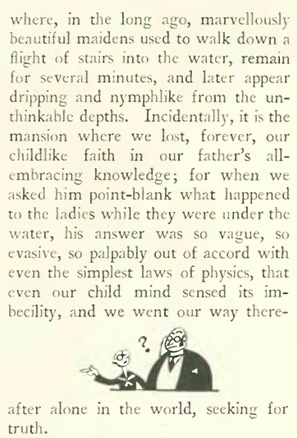
For the most part the New Yorker was enthusiastic about the changing skyline, as its namesake was claiming the crown as America’s premier city; but occasionally a melancholy note would be struck when a familiar institution appeared in decline or fated for the wrecking ball. In the Feb. 9, 1929 “Talk of the Town,” E.B. White wistfully recalled the old days of the Hippodrome, once the largest theatre in the world and the pride of turn-of-the-century New York:

FOR THE MASSES…The Hippodrome, built in 1905, provided entertainment to millions of New Yorkers who couldn’t afford a ticket to a Broadway play. The brainchild of Frederick Thompson and Elmer S. Dundy, entrepreneurs of Coney Island’s Luna Park, the Hippodrome was torn down in 1939 after more than a decade of decline. (1905 photo courtesy Library of Congress)
A REALLY BIG SHOOO…One of the first performances at the Hippodrome was a four-hour spectacle: A Yankee Circus on Mars (advertised on the theatre’s marquee in photo above). The 1905 production included 280 chorus girls, 480 soldiers, a parade of cars driven by elephants, an equestrienne ballet, acrobats, and a cavalry charge through a lake. (Image from Harper’s Weekly via daytoninmanhattan.blogspot.com)
The Hippodrome’s main theatre could accommodate 5,300 patrons in seats that were four inches wider than normal theatre seats. The dome over the “Roman style” auditorium encompassed an acre. (Broadway Magazine 1905 via daytoninmanhattan.blogspot.com)

The Hippodrome held such a place in the heart of the New Yorker that the magazine offered further reminiscences in the Feb. 16 issue, this time penned by managing editor Harold Ross:

For demonstrations of diving and “mermaid spectacles,” the Hippodrome stage featured an eight-foot high steel tank in four sections, with a front of plate glass. Manned diving bells were also used to raise and lower “mermaids” during performances.

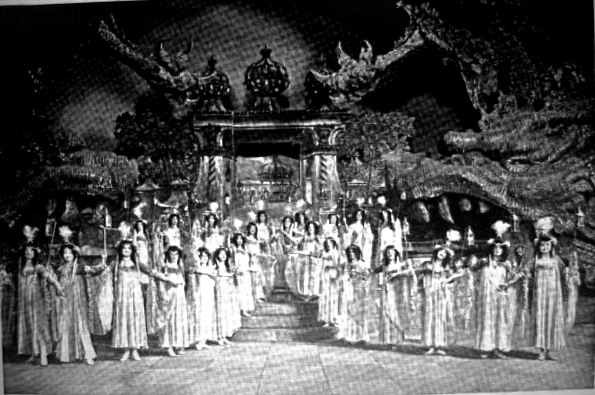
OLD TIMEY FX…Illustration from Nature magazine (left) depicts a diving bell used in the Hippodrome’s swimming and diving tank to raise and lower performers. At top, circa 1910 advertisement; at bottom, the “Court of the Golden Fountain” in the the theatre’s 1905-06 presentation of A Society Circus. (les-sources-du-nil.tumblr.com/flickr/NYC Architecture)

Ross wrote about the Hippodrome’s “diving girls,” who would dive into a tank of water from a height of 90 feet, sometimes at a serious cost to their health:

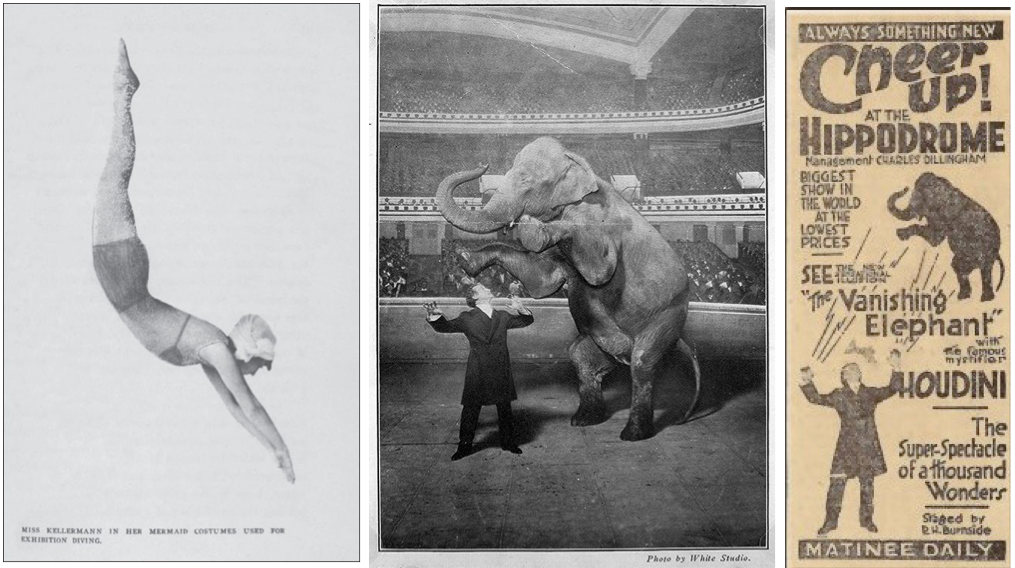
HIPPODROME’S HEYDAYS…In the early 1900s Australian swimmer and diver Annette Kellerman (left, in an image from her 1918 book, How to Swim) was a famed performer at the Hippodrome, as was illusionist and stunt performer Harry Houdini, shown here in 1918  with Jennie the Elephant in a performance of the vanishing elephant trick. (Monash University/americaslibrary.gov/wildabouthoudini.com)
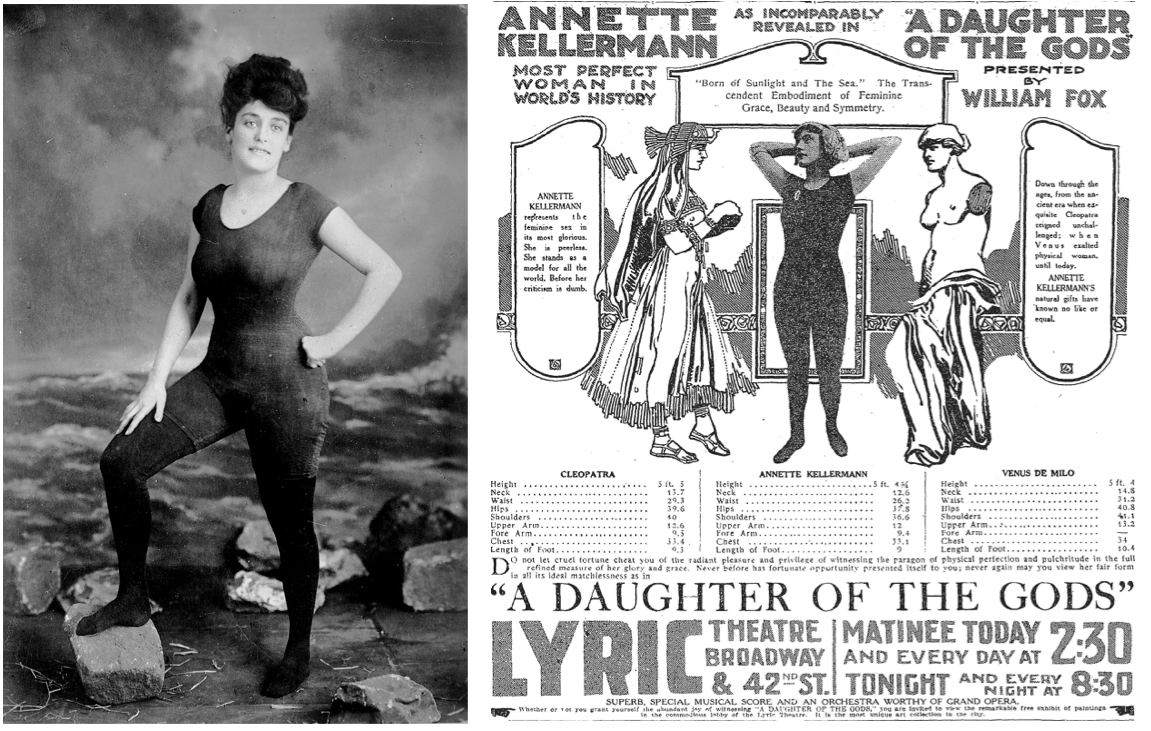
MILLION DOLLAR MERMAID…famed around the world by that moniker, swimmer and later actress Annette Kellerman is considered the originator of the one‐piece bathing suit, which she models at left in a photo taken around 1907. At right, advertisement for Kellerman’s 1916 film A Daughter of the Gods (now lost), in which Kellerman achieved another first: the first complete nude scene by a major star. The William Fox Studio made much of Kellerman’s figure, promoting her as the perfect woman by “comparing” her measurements to the likes of Cleopatra and Venus de Milo. (Wikipedia/consumingcultures.net)

Australian swimmer Annette Kellerman was a big draw at the Hippodrome, and helped popularize the sport of synchronised swimming after her 1907 performance of the first water ballet in theatre’s giant plate glass tank. In that same year she shocked Bostonians by appearing on a local beach in a “daring” one‐piece bathing suit (shown above), and was arrested for indecency. This was at a time when a woman’s standard bathing apparel consisted of a blouse, skirt, stockings and swimming shoes.

Unlike some of the unfortunate Hippodrome divers who later lost their eyesight due to cranial pressure from high dives, Kellerman went on to a long and active life (she died in 1975, at age 88). Known throughout the world as Australia’s “Million Dollar Mermaid” (and portrayed by Esther Williams in a 1952 movie by the same name), Kellerman appeared in more than a dozen films between 1909 and 1924. She also launched her own line of swimwear and wrote several books on swimming, beauty and fitness.

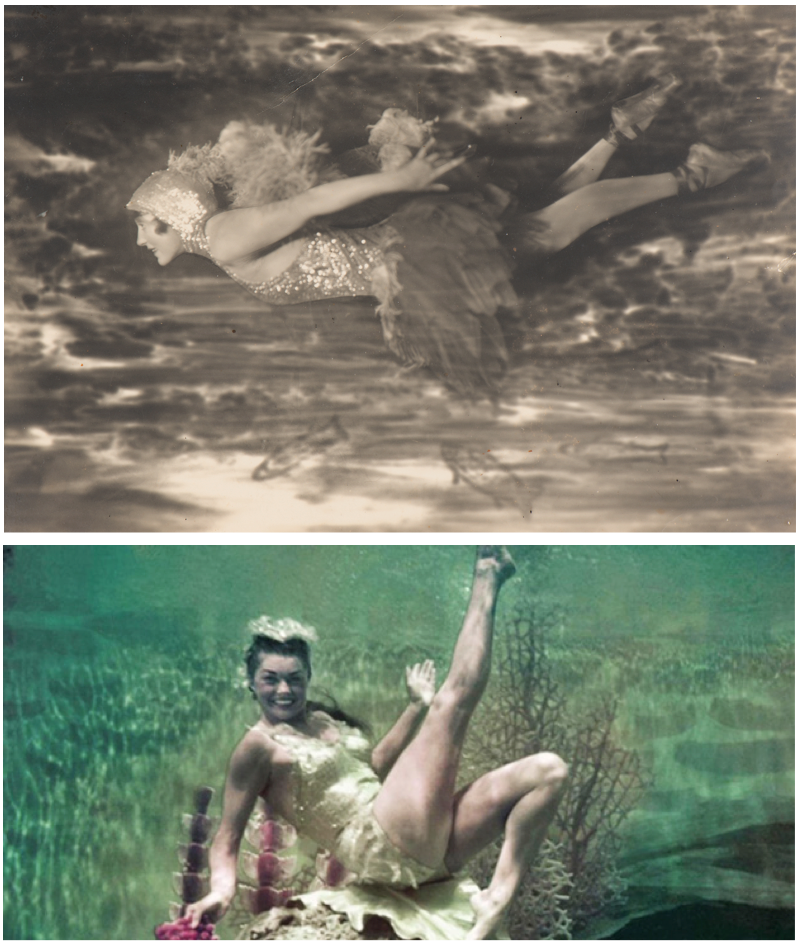
ALL WET…At top, Annette Kellerman swimming underwater in a gold sequined dress, possibly from  Queen of the Sea (1918, now lost). Thirty-four years later Esther Williams (below) would portray Kellerman in Million Dollar Mermaid. (historycouncilnsw.org.au/gsgs/movieactors.com)

*  *  *

City of Lights

While E.B. White got misty-eyed about the old Hippodrome in the Feb. 9 issue, his fellow New Yorker writer and friend James Thurber was thrilling on the new skyscrapers lighting the city’s skyline:

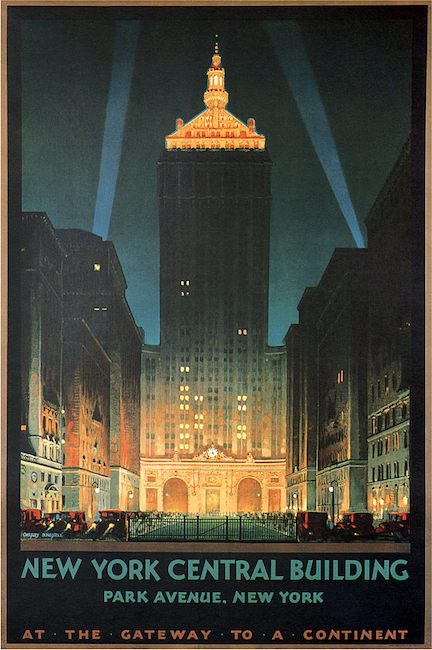
BEJEWELED CROWN…The New York Central Building depicted in a 1929 promotional painting by Chesley Bonestell. (albanyinstitute.org)

Thurber noted that “100,000 candlepower” would light the golden crown of the New York Central Building, the tallest structure in the Grand Central complex. Over at the new Chanin Building, a whopping 25 million candle-power would be trained on its art deco crown.

YOU CAN’T MISS IT…At left, the nearly 700-foot-tall Chanin Building joined the race for the sky in 1928-29. At right, a 1929 drypoint etching by Australian-born artist Martin Lewis depicted the magical glow of the Chanin Building from the viewpoint of a tenement dweller on a fire escape. (NYPL/ephemeralnewyork.wordpress.com)

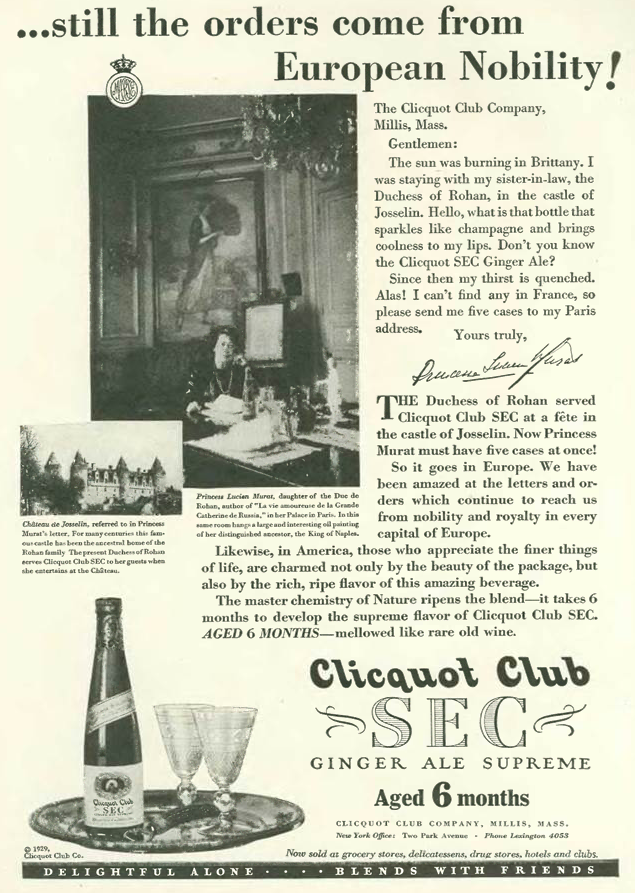
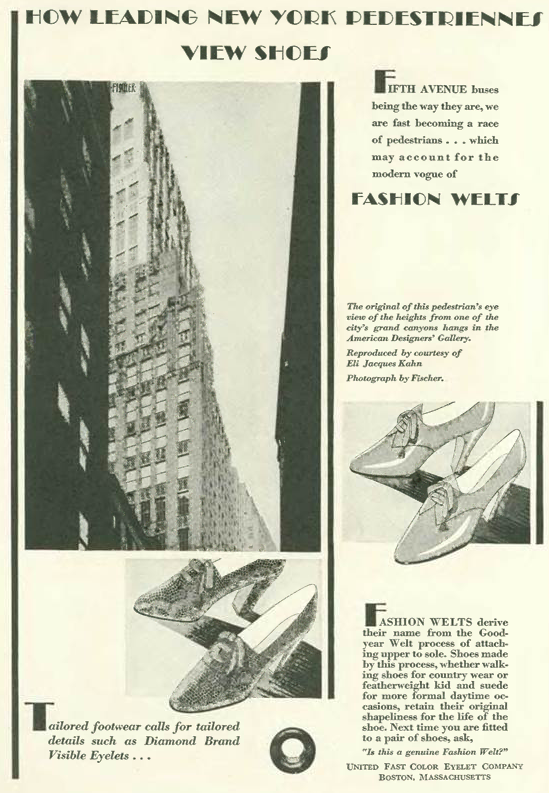
Advertisers in the New Yorker reflected the mood of this new city of skyscraper canyons. From the Feb. 16 issue:

Ralph Ingersoll and Thurber also wrote in the Feb. 16 “Talk” about plans for “Rockefeller City…”

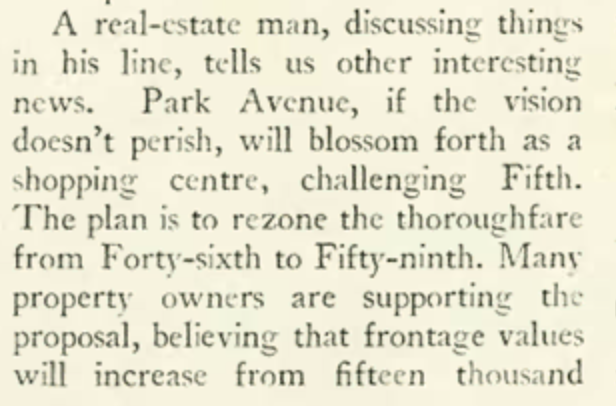
…and as we know, this was to become the famed Rockefeller Center, a complex of 19 buildings covering 22 acres between 48th and 51st streets. Led by by John D. Rockefeller Jr., the complex was conceived as an urban renewal project to revitalize Midtown (hard to imagine today). The land was originally envisioned as a site for a new Metropolitan Opera house, but when financing fell through the land’s owner, Columbia University, leased it to Rockefeller. Of the anticipated effect of the project, Ingersoll and Thurber wrote:

And for the record, the Feb. 9 issue featured another name that would shape the future of the city—J. Pierpont Morgan was the subject of a lengthy two-part profile penned by John K. Winkler.

 * * *

Shouts & Murmurs

The Feb. 16 marks a significant date on the New Yorker calendar—the first appearance of Alexander Woollcott’s famed “Shouts & Murmurs” column:

Writing in the “Double Take” section in the July 18, 2012 issue of the New Yorker, Jon Michaud notes that “Shouts & Murmurs” was Woollcott’s personal column, appearing weekly in the magazine for five years. Perhaps no person other Harold Ross himself could be more associated with the earliest origins of the magazine —  Woollcott was a colleague of Ross’s at Stars and Stripes during the First World War, and introduced Ross to his first wife, Jane Grant, who was also a considerable influence on the early magazine.

Michaud writes that Woollcott used the column “to opine on, lampoon, and attack the culture and society of the day. In his distinct and at times excessive style, he reviewed books, wrote spoofs, distributed gossip, and generally rankled as many people as he could.” Woollcott ended the column in December 1934, but it was revived in 1992 as a regular venue for many notable humorists, and continues to this day.

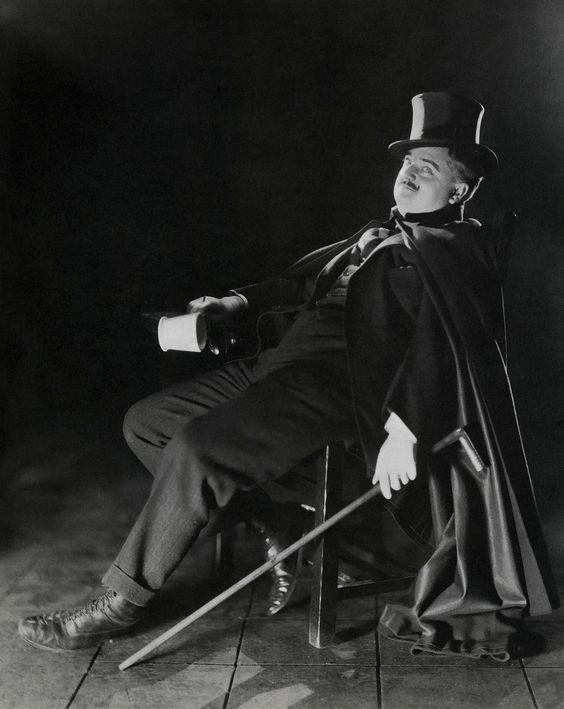
A REAL CHARACTER…Alexander Woollcott, in his idea of casual wear. He once informed his friend and New Yorker colleague Corey Ford: “Ford, I plan to spend three days at your house in New Hampshire next week.” Not overly pleased to be hosting such a demanding guest, Ford uttered a meek “That will be swell.” “I’ll be the judge of that,” Woolcott warned him. (From Elizabeth Olliff, “An Evening at the Algonquin.”)

* * *

Up In Smoke

Jumping back to the Feb. 9 “Talk of the Town,” we have this complaint from the magazine regarding celebrity cigarette endorsements. Although the magazine derived a lot of revenue from cigarette ads, Harold Ross insisted on a strict separation between editorial and advertising, allowing his writers free reign to bite the hands that fed them, if they so wished:

Here’s the offending ad, which was featured in the Feb. 23 issue:

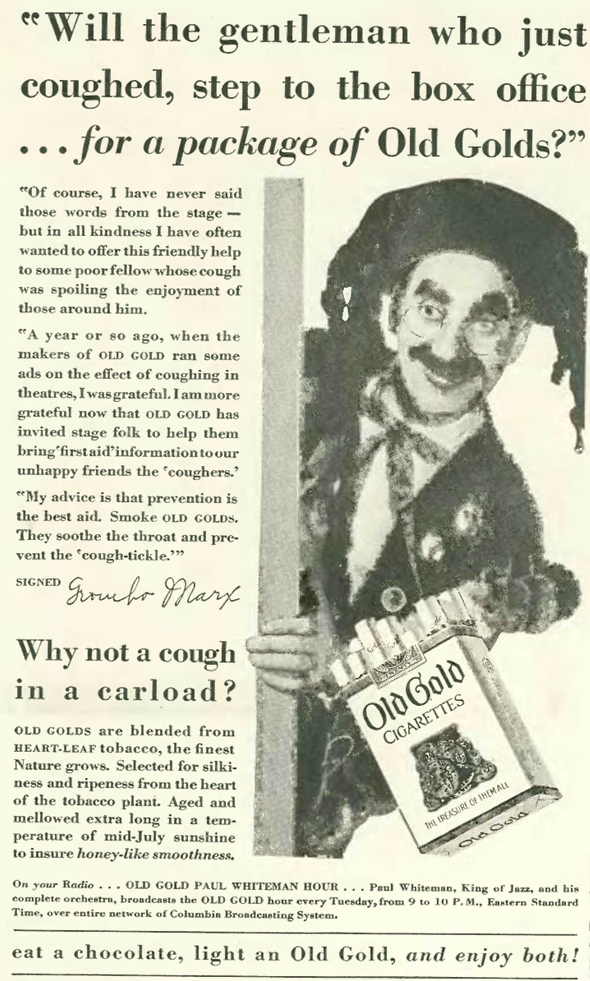
In the Feb. 9 issue, Groucho Marx couldn’t resist getting in on the endorsement action…

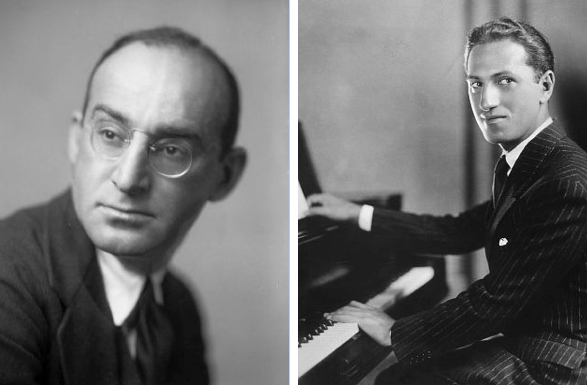
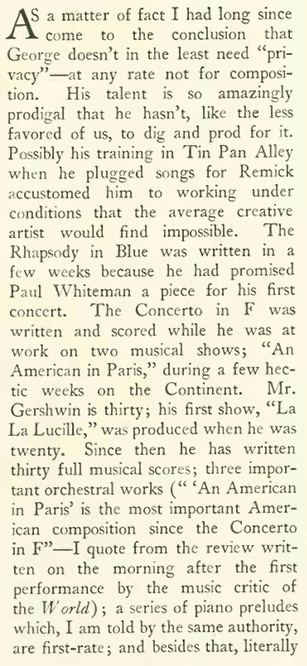
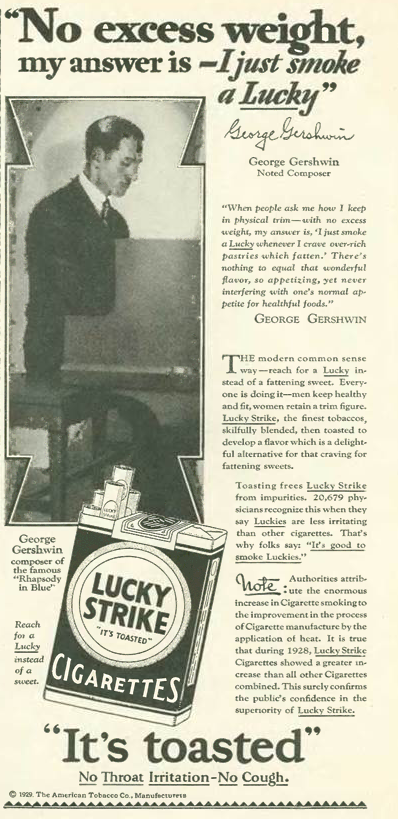
…nor could Ross’s old friend George Gershwin, who touted the health benefits of Lucky Strikes in the Feb. 16 issue…

In other ads from the Feb. 16 issue, we find that for all of the technological advances in the 1920s, a decent car heater still eluded automakers. Hence…

…on the other hand, we also have this very up-to-date product—the forerunner of today’s rolling airplane luggage…

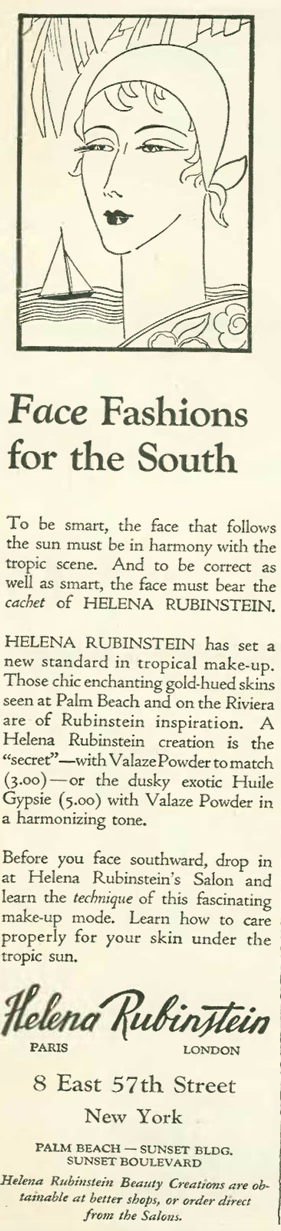
…and if you happened to be flying south, you might have first checked in with Helena Rubinstein to make sure you had the right “face fashions”…

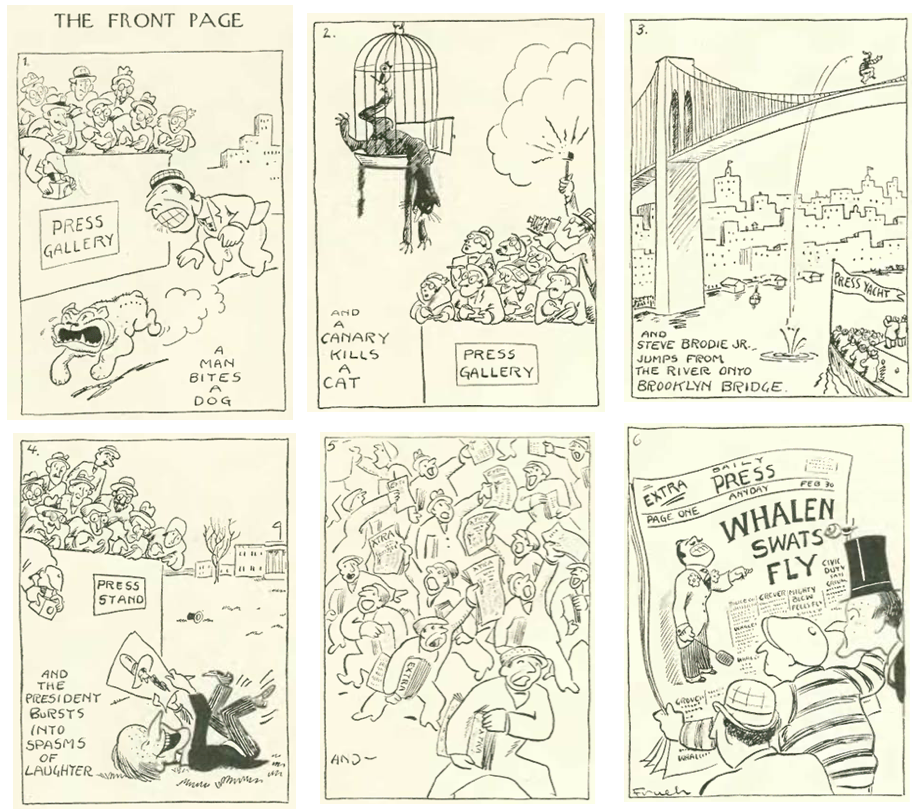
And finally our cartoons, all from the Feb. 9 issue. This first is a six-panel series by Al Frueh that originally ran diagonally, top to bottom, across a two-page spread. It took a shot at the self-promoting police commissioner, Grover Whalen, who was not a friend to the New Yorker due to his ham-fisted approach to Prohibition enforcement…

…and Leonard Dove took a shot at some posh folks outside of their urban element…

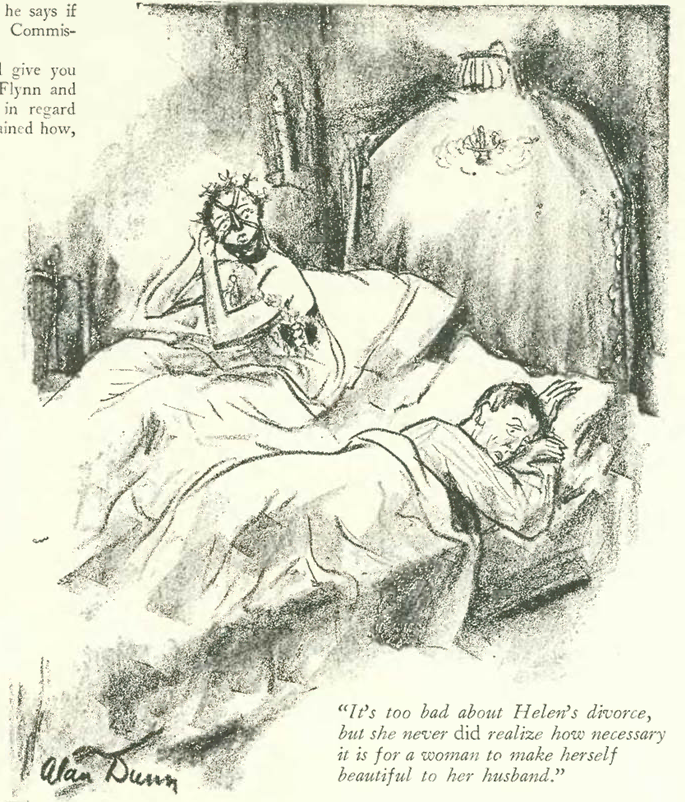
…and finally, Alan Dunn examined the wages of beauty…

Next Time: Modern English Usage…

Out With the Old

Perhaps no decade was more transformative to New York City than the 1920s. From the loosening of social mores to countless technological advances, the city was a very different place as it entered the last year of the Roaring Twenties.

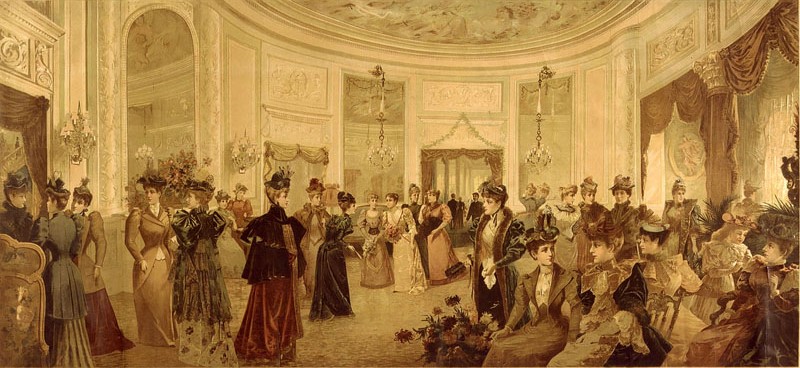
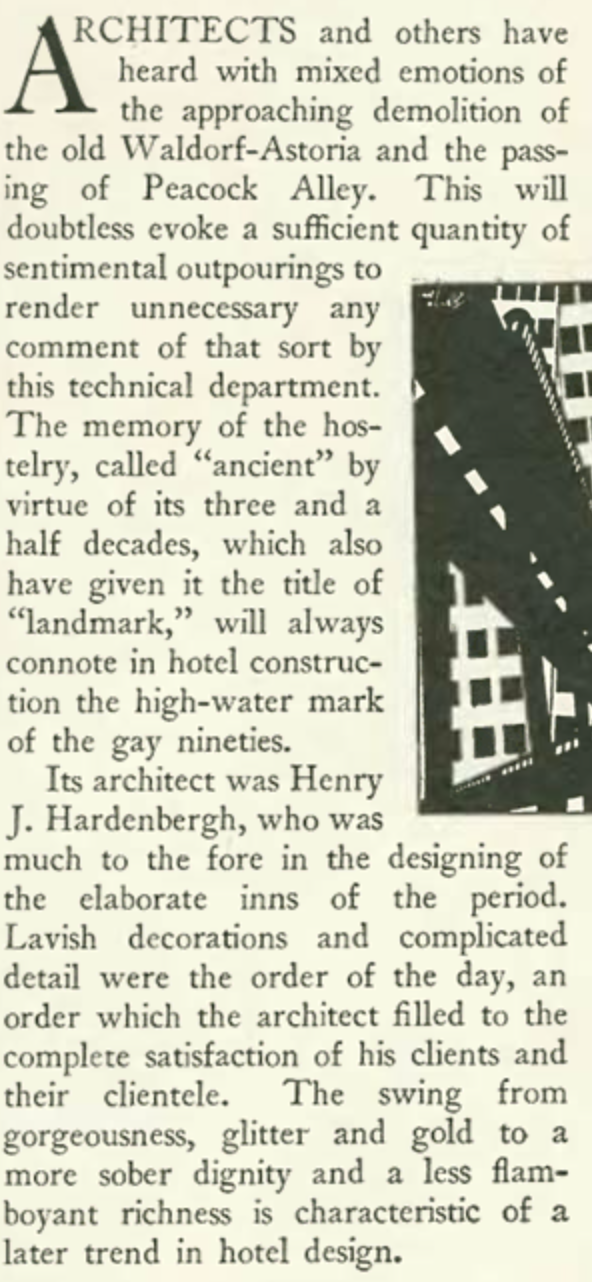
Jan. 5, 1929 cover by Sue Williams. Opening image depicts the original Waldorf Hotel’s Octagon Room in 1893.

Vestiges of the 19th century were quickly erased during the decade as old neighborhoods and stately mansions gave way to massive apartment blocks and towering skyscrapers. Such was the fate of the original Waldorf-Astoria Hotel, its Victorian lavishness out of style in a streamlined age. Writing under the pen name T-Square, New Yorker architecture critic George S. Chappell commented on the planned demolition of the old* Waldorf-Astoria Hotel:

*Although outdated in appearance, the hotel was little more than 30 years old in 1929.

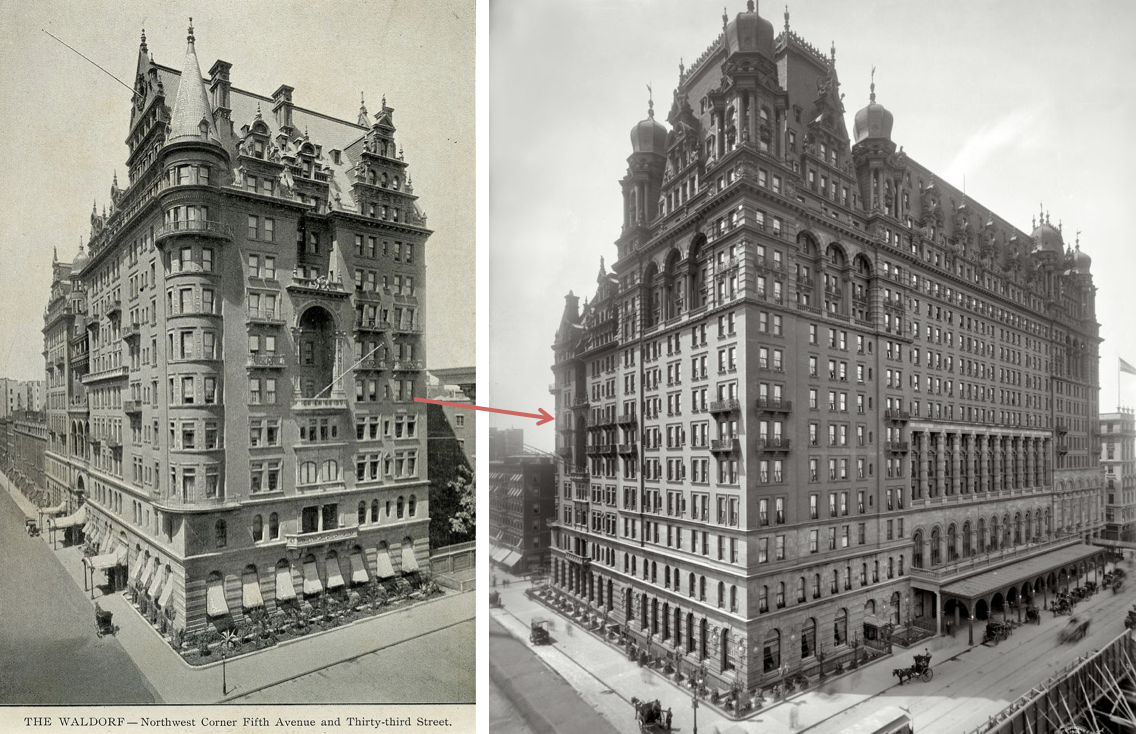
TALE OF TWO HOTELS…The Waldorf-Astoria was actually two hotels joined together. The Waldorf, at left, was built in 1893. The much larger Astoria (right) was constructed in 1897. Note the arrow indicating the original Waldorf in relation to the Astoria. (Wikipedia/Detroit Photography Archive)
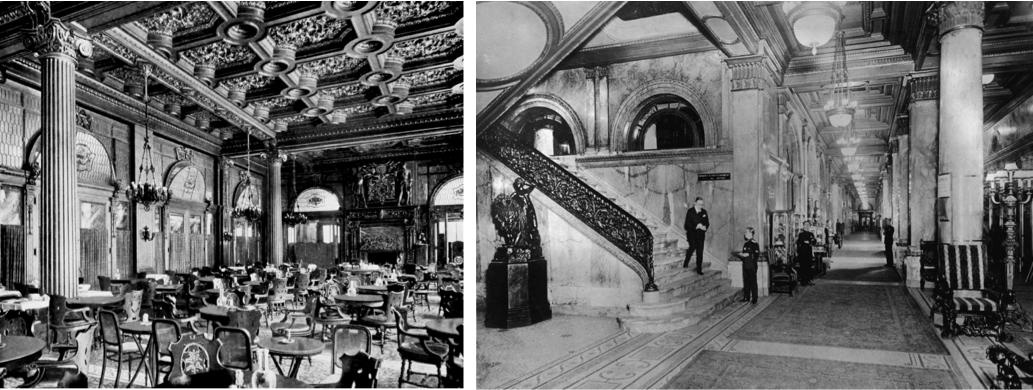
PLACES TO SEE AND BE SEEN…At left, the “Gentleman’s Cafe” in the Waldorf Hotel. At right, lobby entrance to the marble-lined “Peacock Alley” that connected the two hotels. (Wikipedia/justcocktails.com)
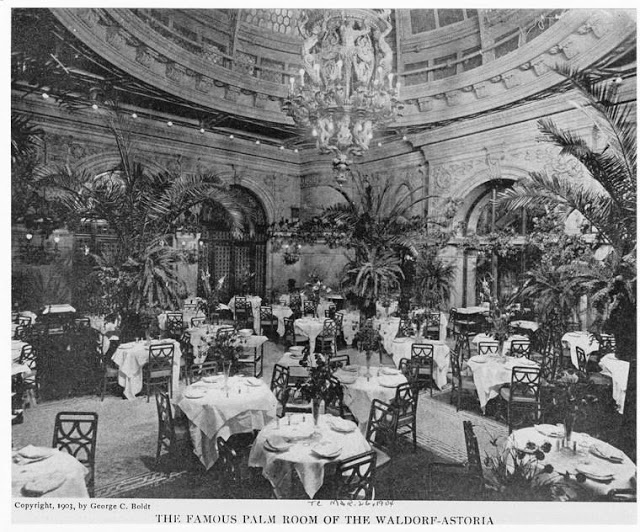
DINE IN STYLE…The Palm Room in the Astoria section of the original Waldorf-Astoria Hotel. (New York Public Library)

Chappell wrote that the prime building site was slated to be occupied by a 50-story office building…

…but as it turned out, Floyd Brown was unable to make the final payments on the property, so he sold his claim to the bank. John J. Raskob, a wealthy finance executive and chair of the National Democratic Committee, joined with entrepreneur Pierre du Pont and former New York Governor Al Smith (who lost his bid for the U.S. Presidency in 1928) to buy the property. They had much bigger plans than Floyd Brown: In August 1929 they announced their plan to build the tallest building in the world — what would become the Empire State Building.

TRY, TRY AGAIN…The architecture firm Shreve & Lamb developed this concept (left) for Floyd Brown’s proposed 50-story office building on the site of the old Waldorf-Astoria. At right, what occupies the site today: the Empire State Building, also designed by Shreve & Lamb. (Pinterest/oldstructures.com)

 * * *

Car Culture

The Jan. 5 issue featured a lengthy review of the 29th Annual National Automobile Show at Grand Central Palace, as well as numerous advertisements by auto manufacturers hoping to entice New Yorker readers with their latest models.

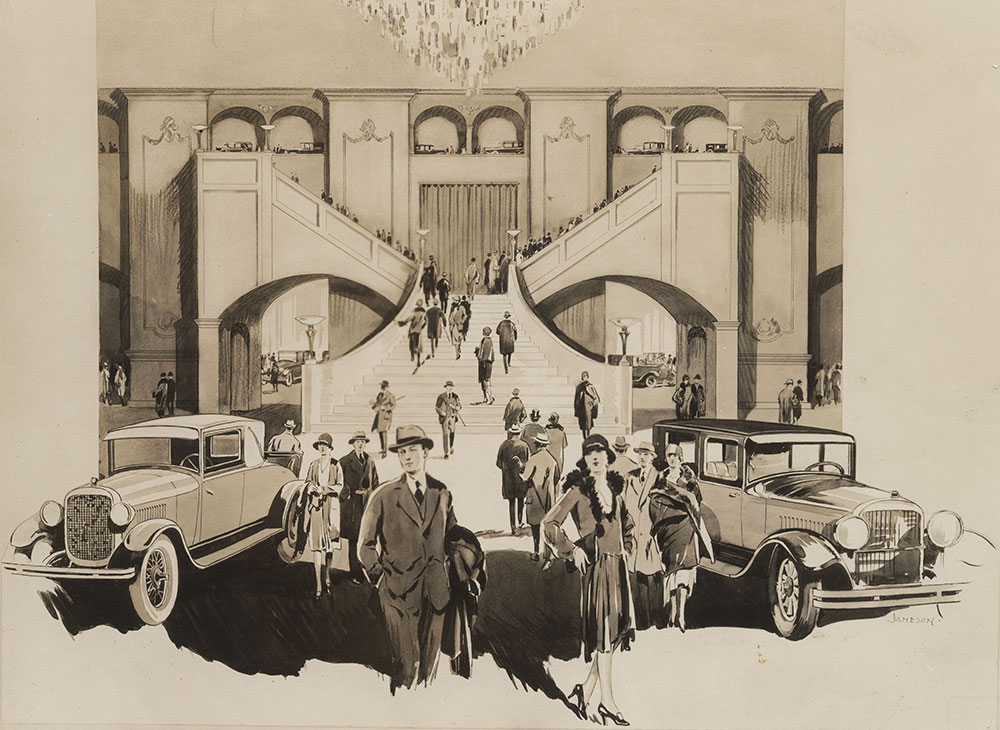
Promoters of the event touted the addition of a grand staircase to Grand Central’s mezzanine level that would ease access to both levels of the show:

AIN’T IT GRAND?…Design drawing created for the 1929 National Automobile Show at Grand Central Palace touting the addition of an equally grand new staircase. (Free Library of Philadelphia)
How the new staircase actually appeared at the 1929 show. Note the background where the movement of workmen on ladders lends a ghostly appearance. (Free Library of Philadelphia)
A view of the 1929 National Automobile Show from the mezzanine of the Grand Central Palace. (Free Library of Philadelphia)

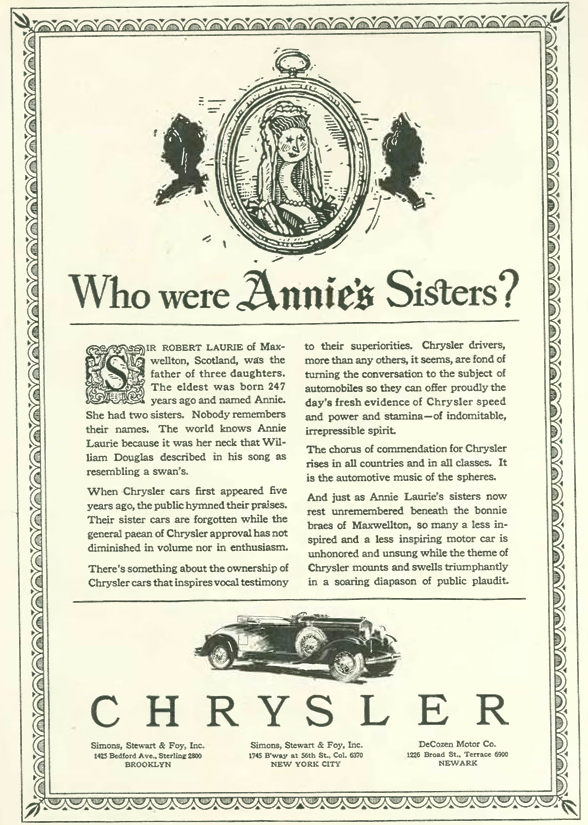
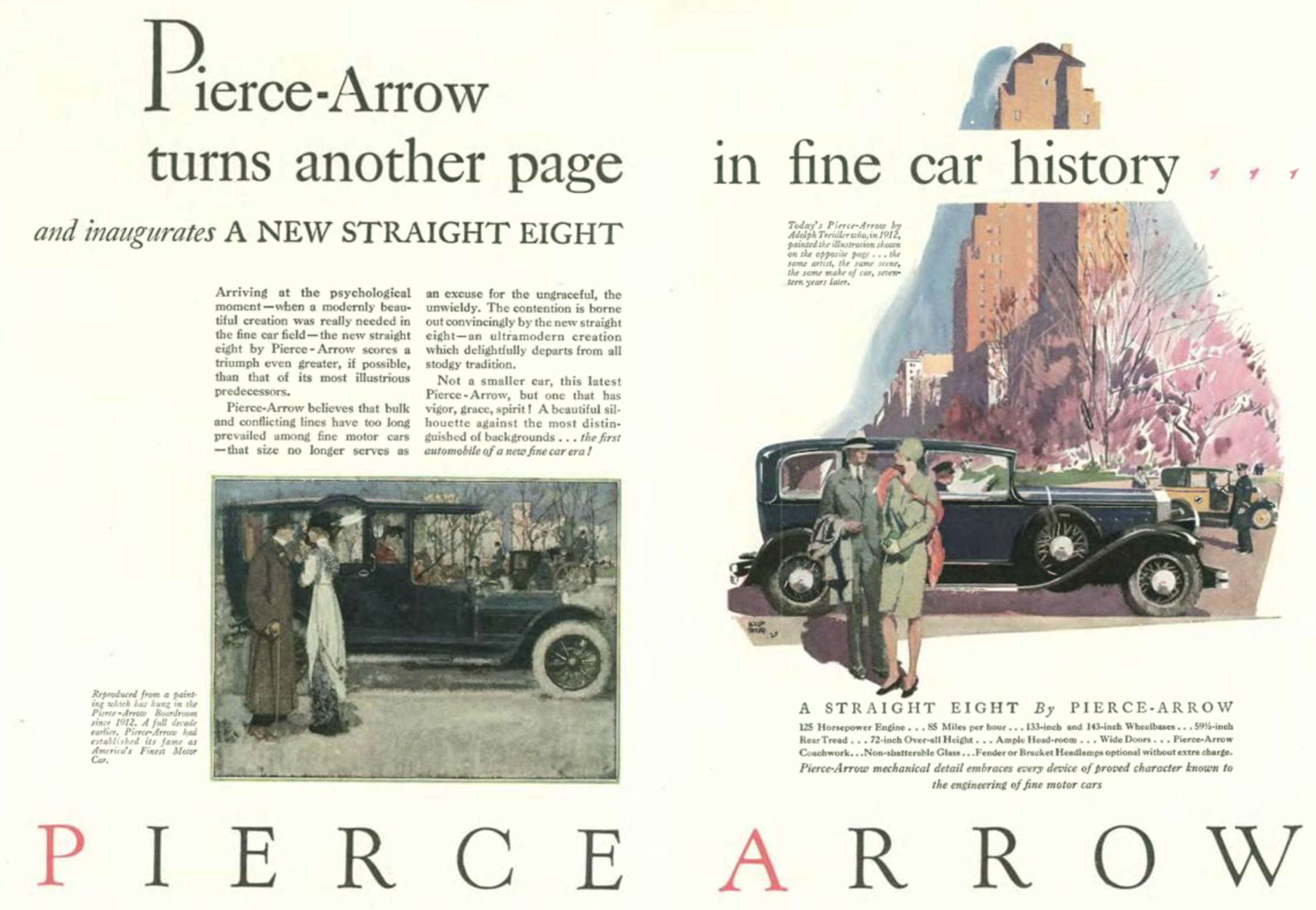
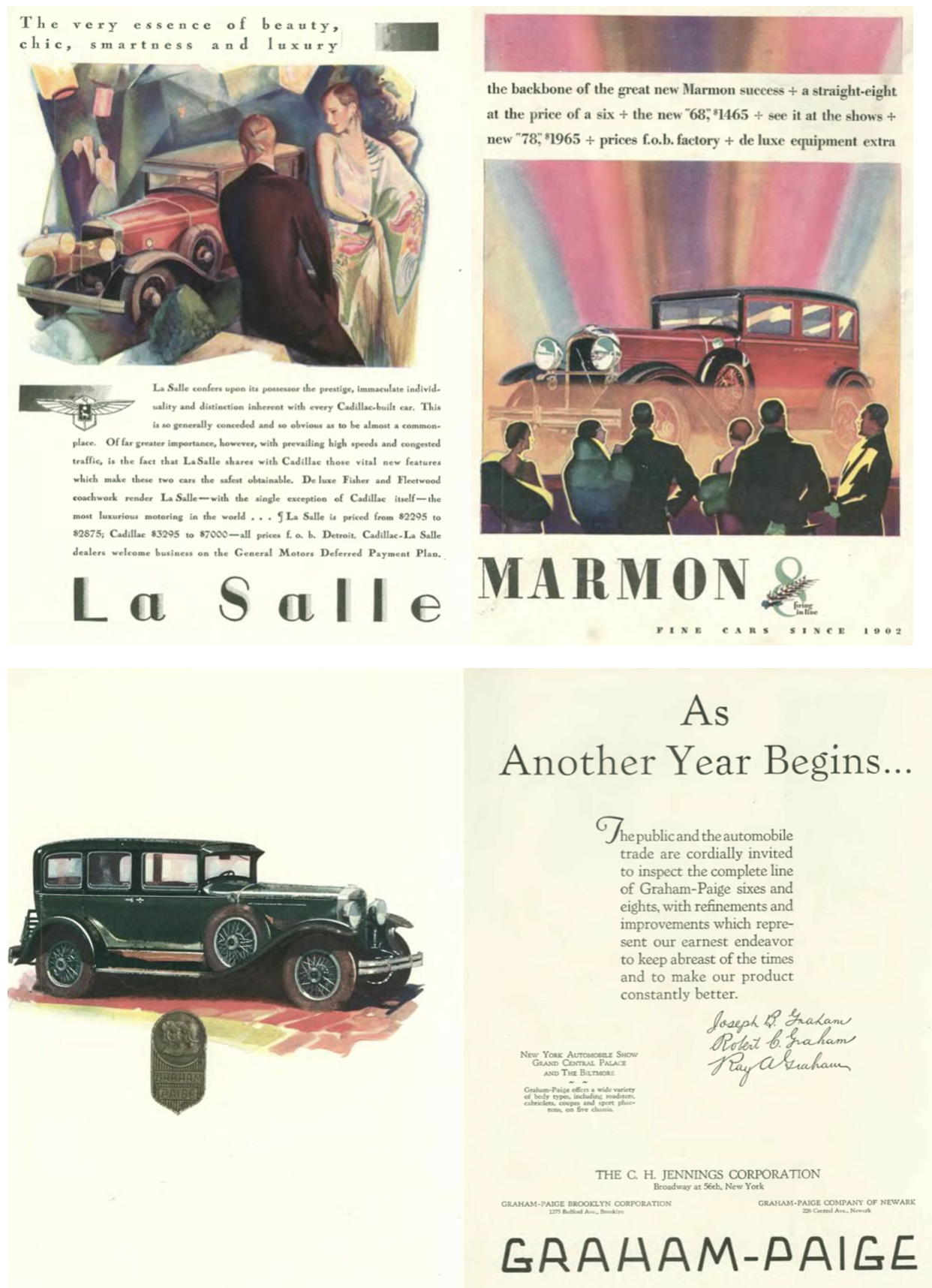
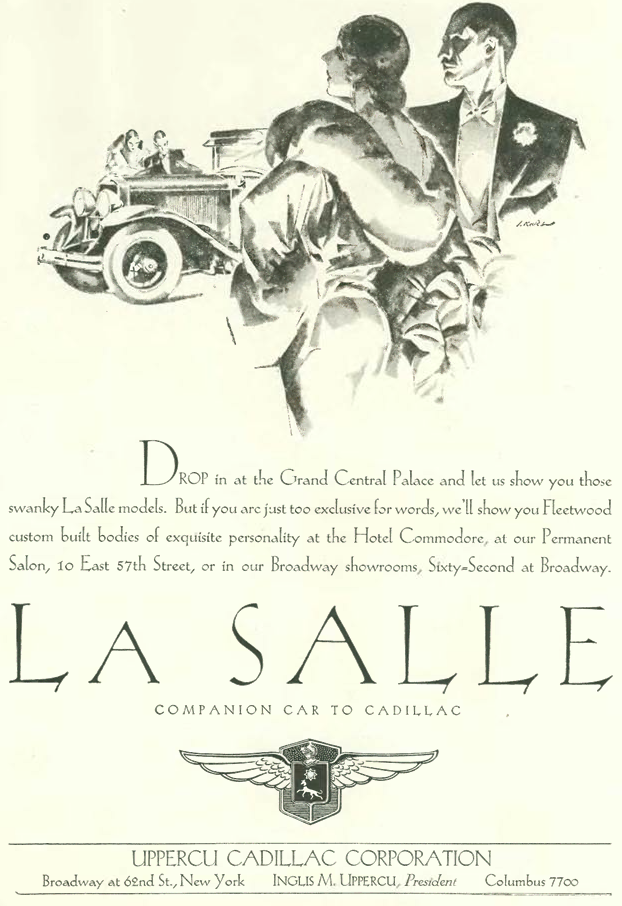
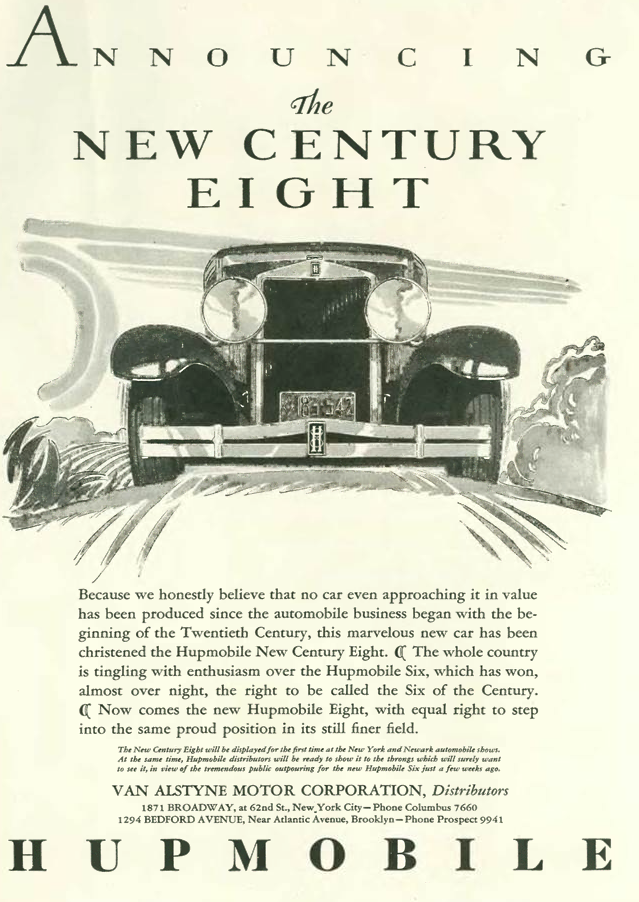
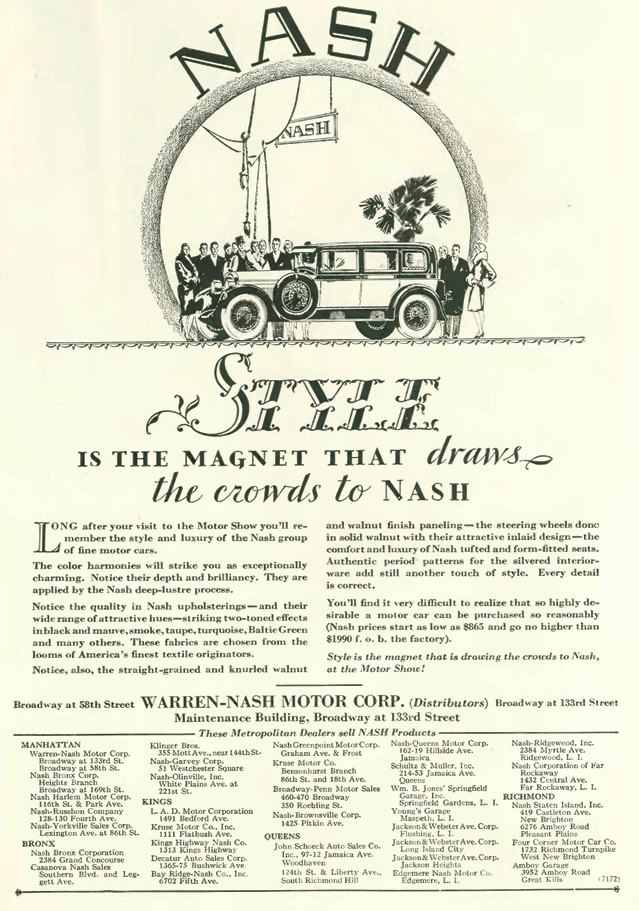
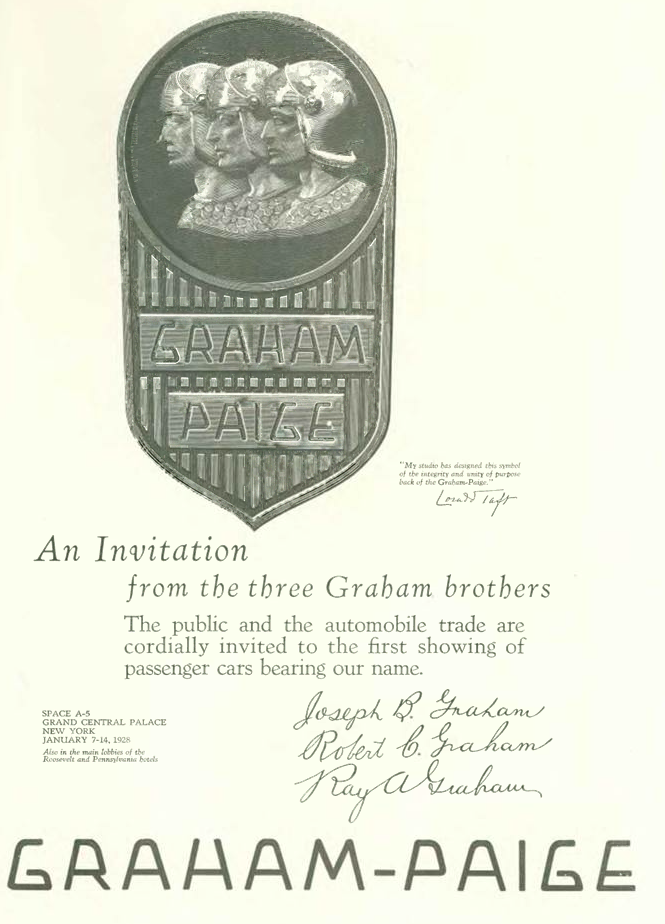
As I mentioned, the Jan. 5 issue was filled with car ads, mostly from long-gone automobile manufacturers. A constant in all of these ads is their appeal to New  York’s chic, smart set. Here’s a sampling of a few of them: (click ads to enlarge):

Hupmobile was a successful car company that began its decline in the late 1920s  precisely because it turned its back on buyers of medium-priced cars and went after what it perceived to be the more lucrative luxury buyer (see ad above). Hupmobile went out of business in 1939 (after briefly joining forces with Graham-Paige, which also went under that year).

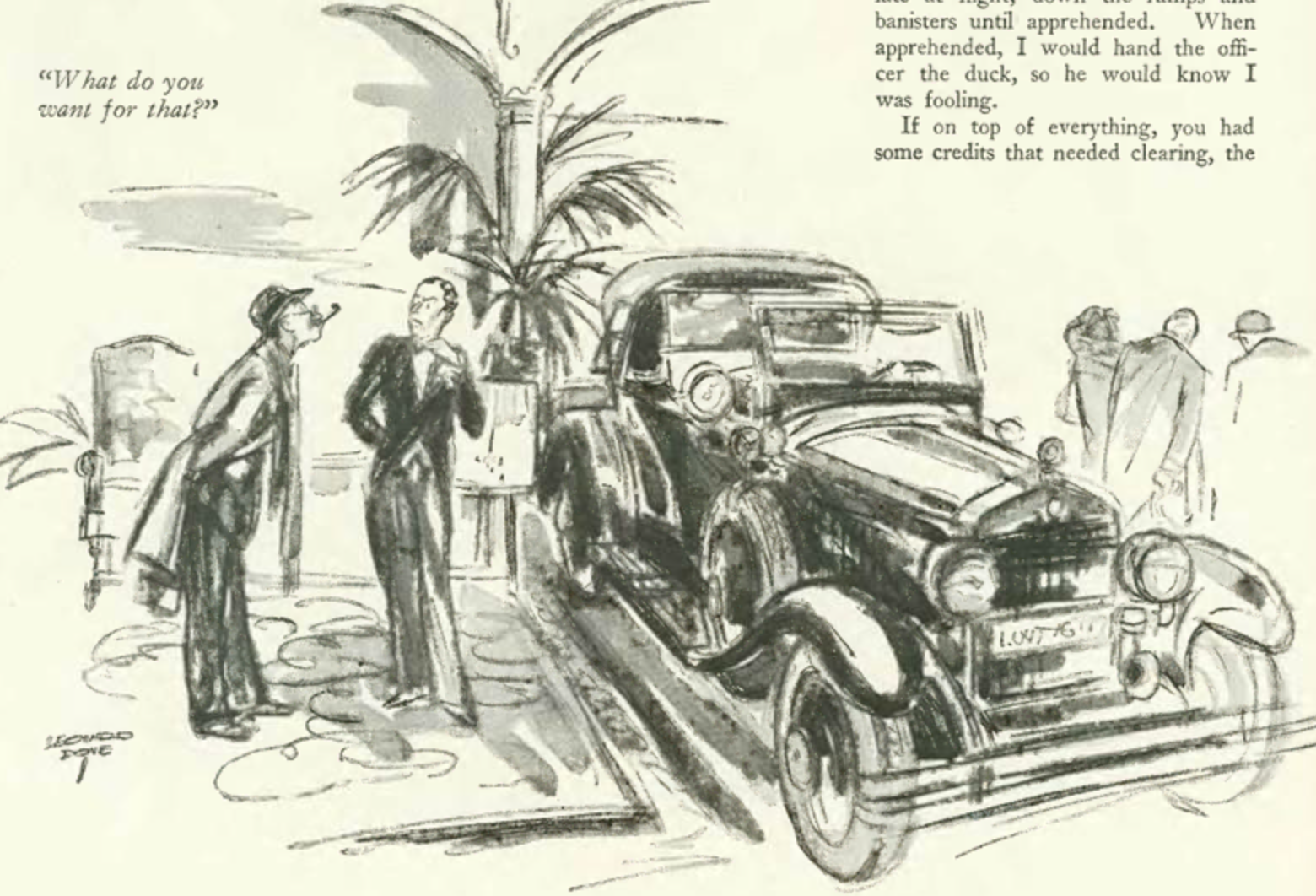
Cartoonist Leonard Dove found humor derived from these very class distinctions when he visited the auto show:

 * * *

The Game, Served Up Cold

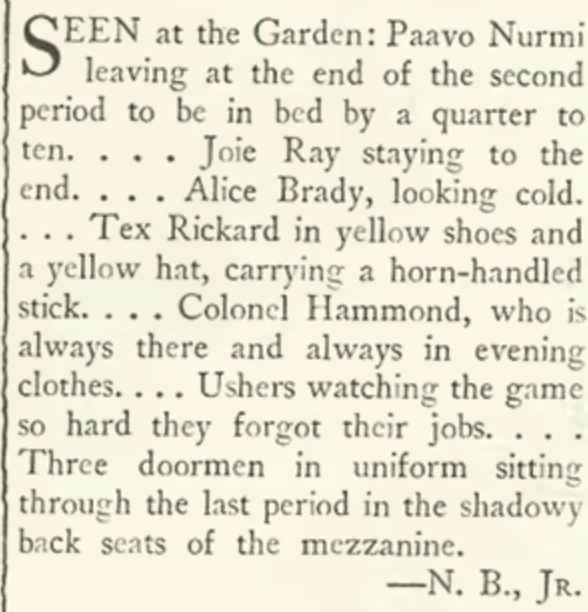
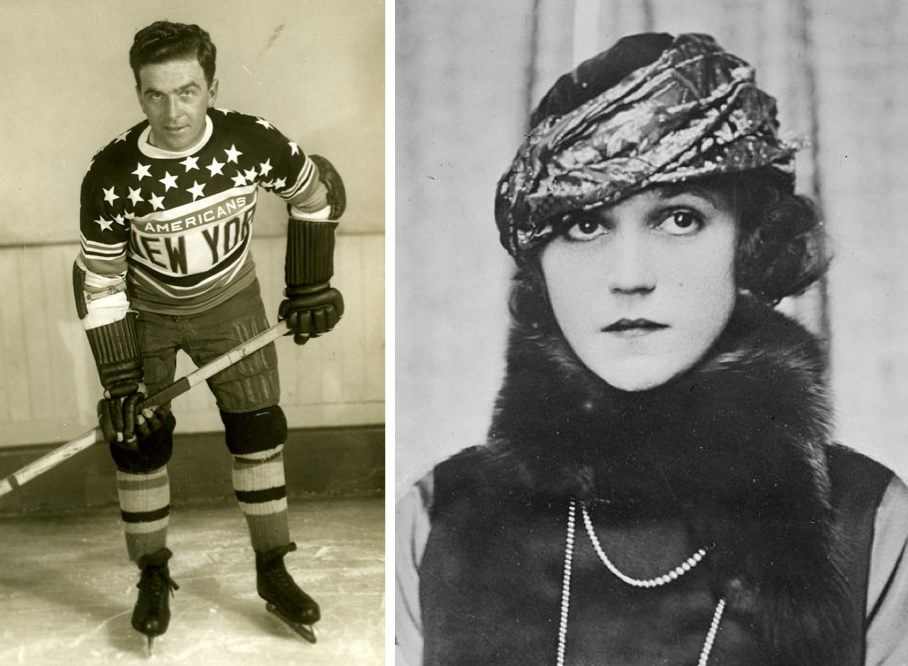
In other diversions from the Jan. 5 issue, Niven Busch Jr. attended the hockey game between the New York Rangers and the New York Americans at Madison Square Garden, noting famous faces in the crowd including Finnish track star Paavo Nurmi and American track star Joie Ray. Also noted were Tex Rickard, builder of Madison Square and founder of the Rangers, ex-football star and businessman Col. Harry Hammond, and film star Alice Brady.

AT THE GARDEN…Not even the exciting hockey play of Billy Boyd (left) and his fellow New York Americans could keep actress Alice Brady warm. (Pinterest/Alchetron)

 * * *

From our non-automobile advertisers, another installment of a Theodore Geisel (Dr. Seuss) ad for Flit insecticide (this is the first instance — at least in the Flit ads— in which Geisel signs his art as “Dr. S” instead of “Seuss”).

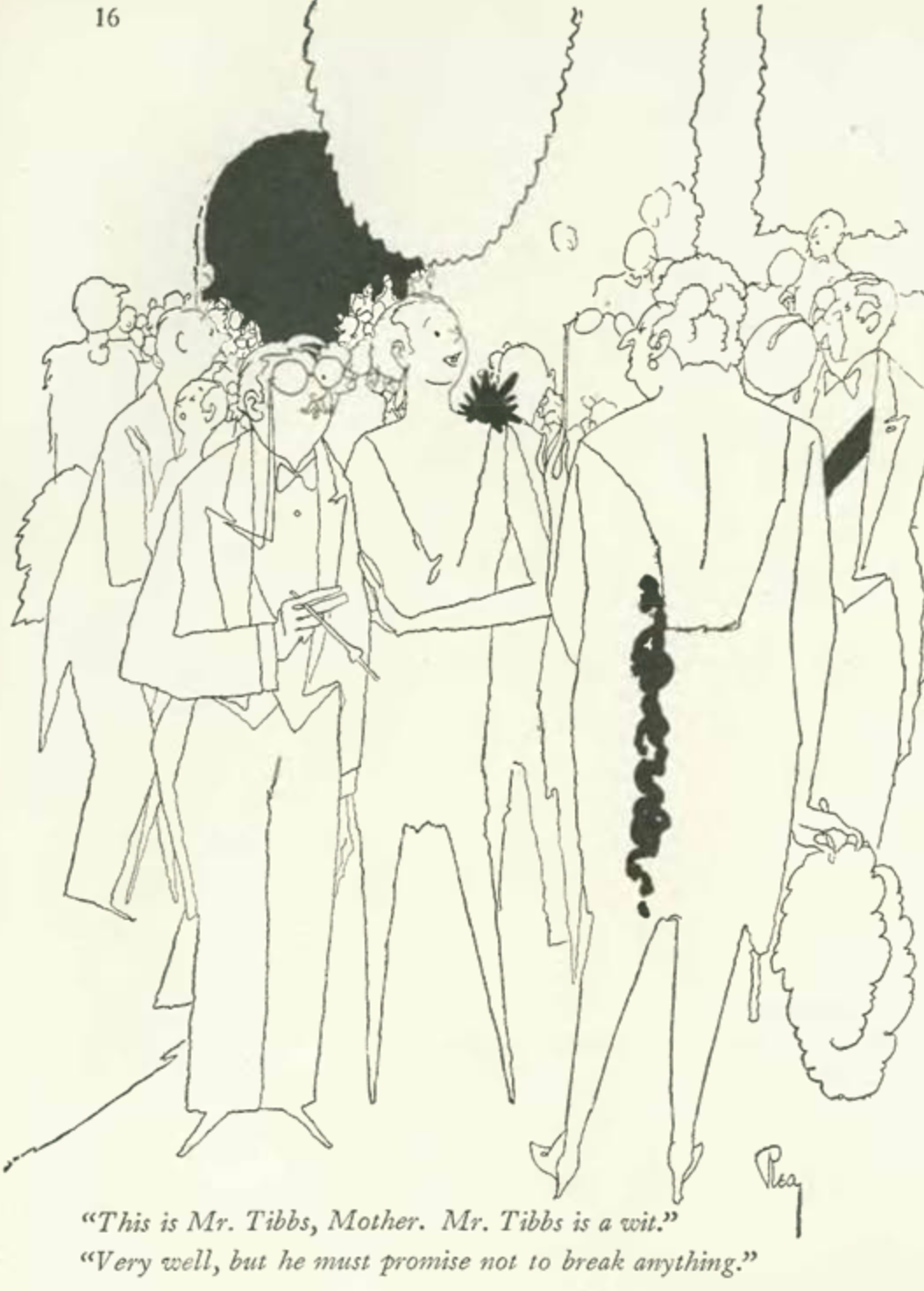
And another cartoon from the Jan. 5 issue, courtesy Gardner Rea:

 * * *

Arno Addendum

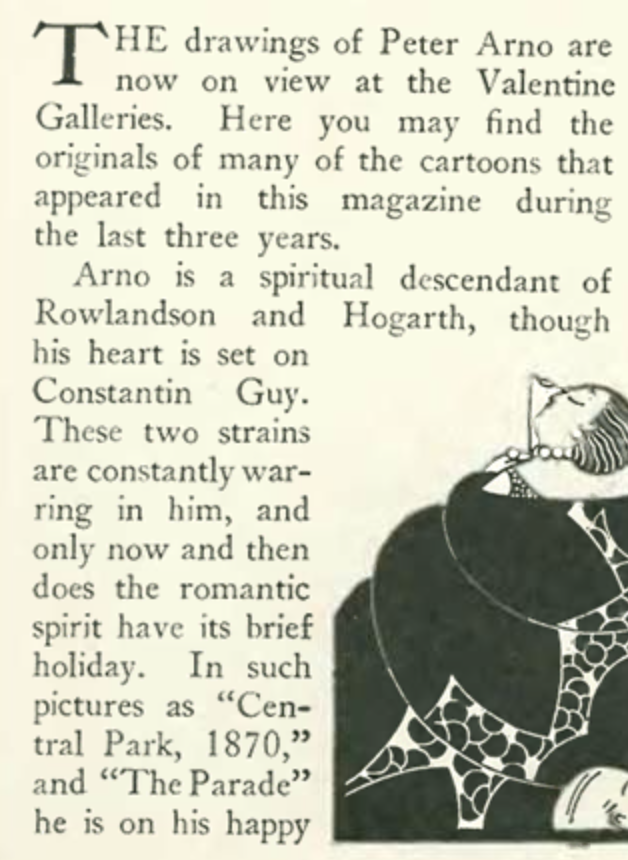
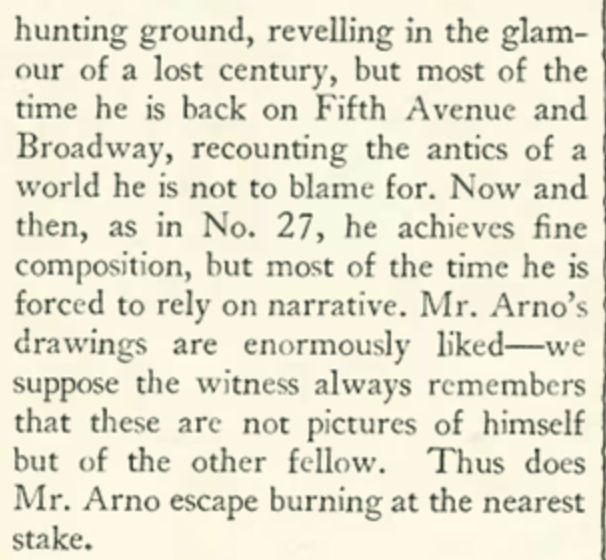
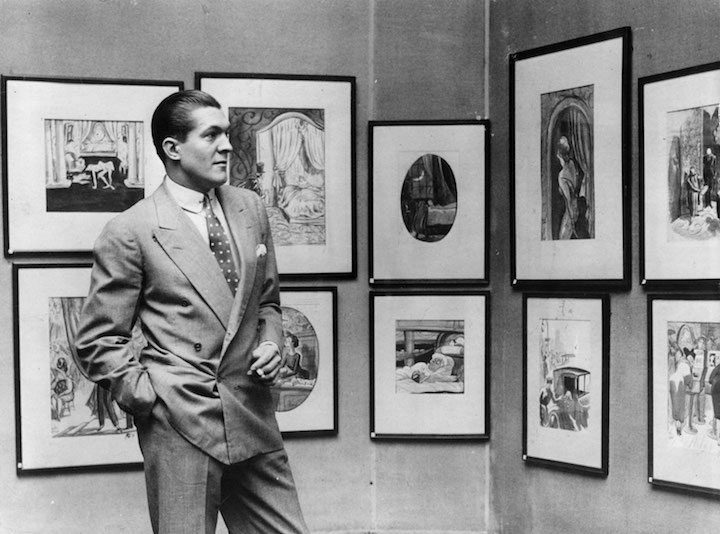
In the rush of the recent holidays I missed an item from the Dec. 22, 1928 issue — namely, art critic Murdock Pemberton’s tongue cheek review (in “The Art Galleries” column) of cartoonist Peter Arno’s December 1928 exhibition of drawings at the Valentine Gallery:

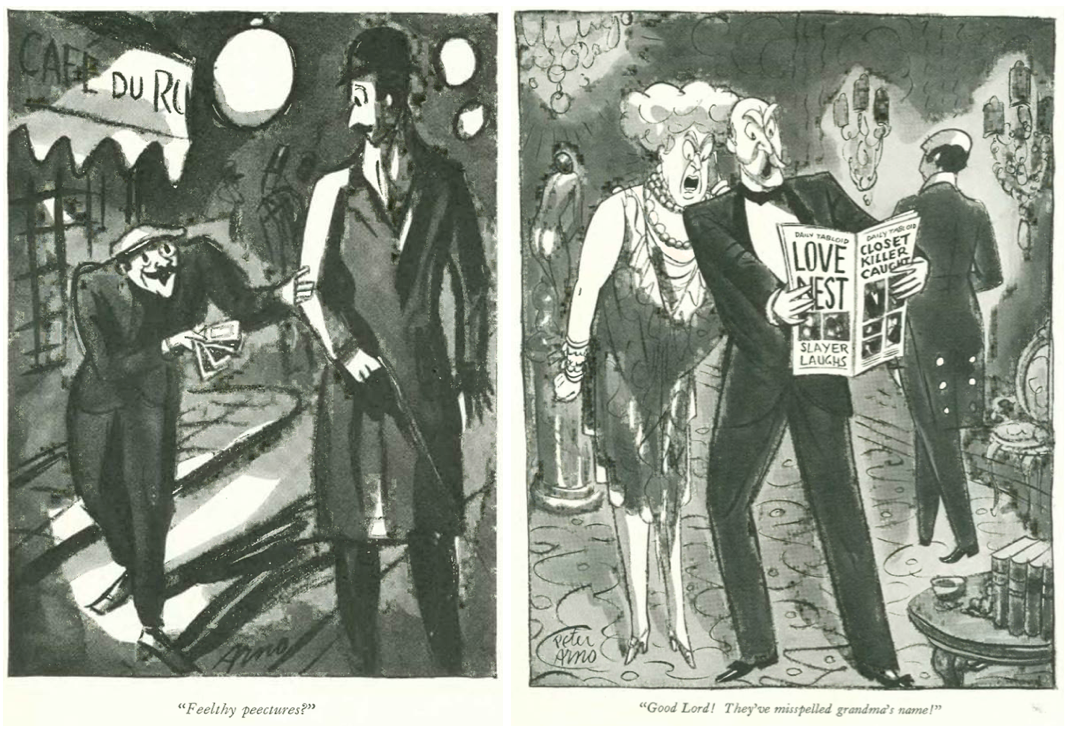
Here are two Arno drawings that were featured in the Valentine exhibition (click to enlarge):

INTERNATIONAL APPEAL…less than four years after his Valentine Galleries debut, Peter Arno exhibited his drawings to great acclaim at the Leicester Galleries in London, October 1932. (Encyclopædia Britannica)

Next Time: Midnight Frolic…

A Bird’s Eye View

The New Yorker’s E.B. White was an aviation enthusiast who rhapsodized about his flights into the clouds, but also had prescience to see the darker side of this modern thrill ride.

October 6, 1928 cover by Ilonka Karasz.

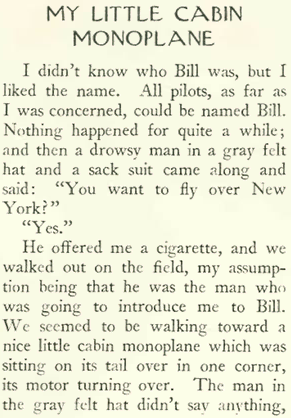
Writing in the “Reporter at Large” column for the Oct. 6, 1928 issue, White described his visit to Curtiss Field, where he inquired about a pilot who could fly him over New York City. He was told someone named Bill would take him up.

EARLY BIRD…This Fairchild FC-2 Cabin Monoplane, with strut-supported wing, was probably similar to the plane E.B. White rode in his flight over New York City. (Quora)

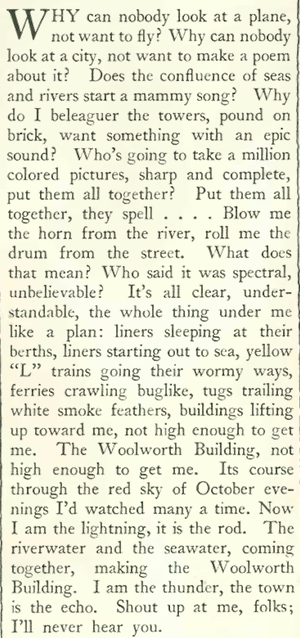
After a half hour wait, a man in a gray felt hat and sack suit offered White a cigarette and said, “You want to fly over New York?” Although the man didn’t look like a pilot, White followed him to a “little cabin monoplane.” Without saying another word the man took the plane up into the air, much to White’s surprise:

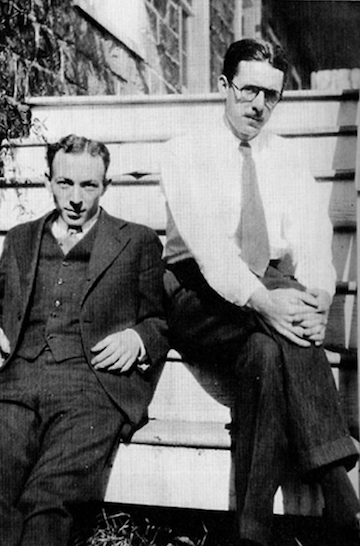
FLYBOY…E.B. White (left) with friend and New Yorker colleague James Thurber in 1929. (University of Virginia)

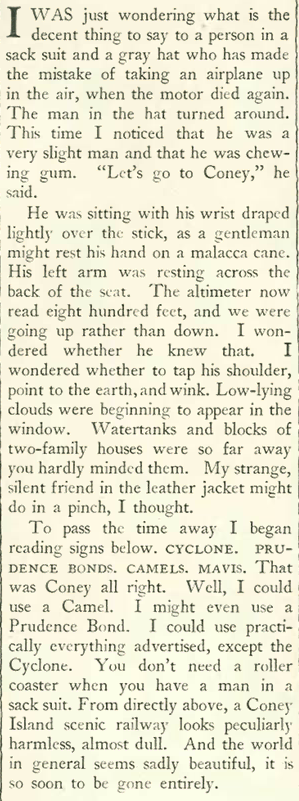
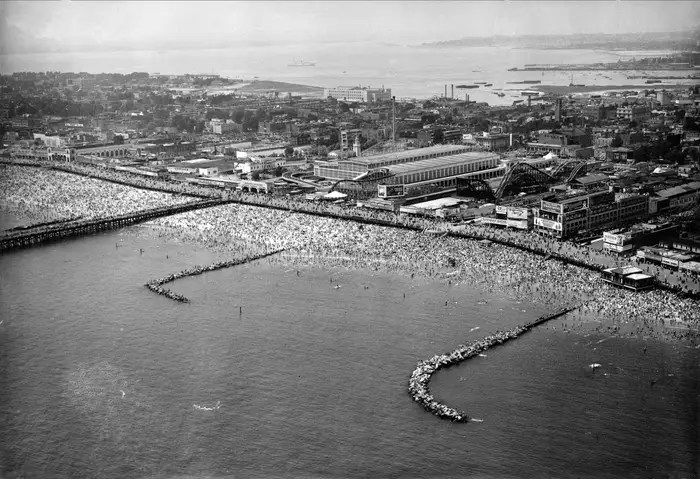
White described the various sites from 800 feet up, including Coney Island, a view at once beautiful and foreboding…

Aerial view of Coney Island, 1937. (AP/lunaparknyc.com)

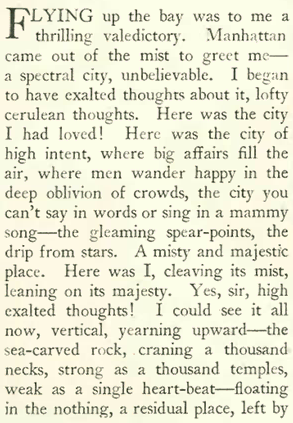
…and the thrill of the approaching city skyline as his plane soared up the Bay toward Manhattan:

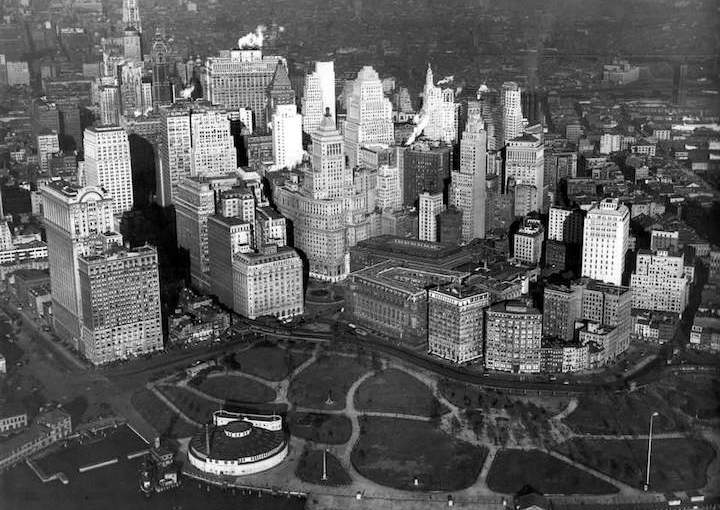
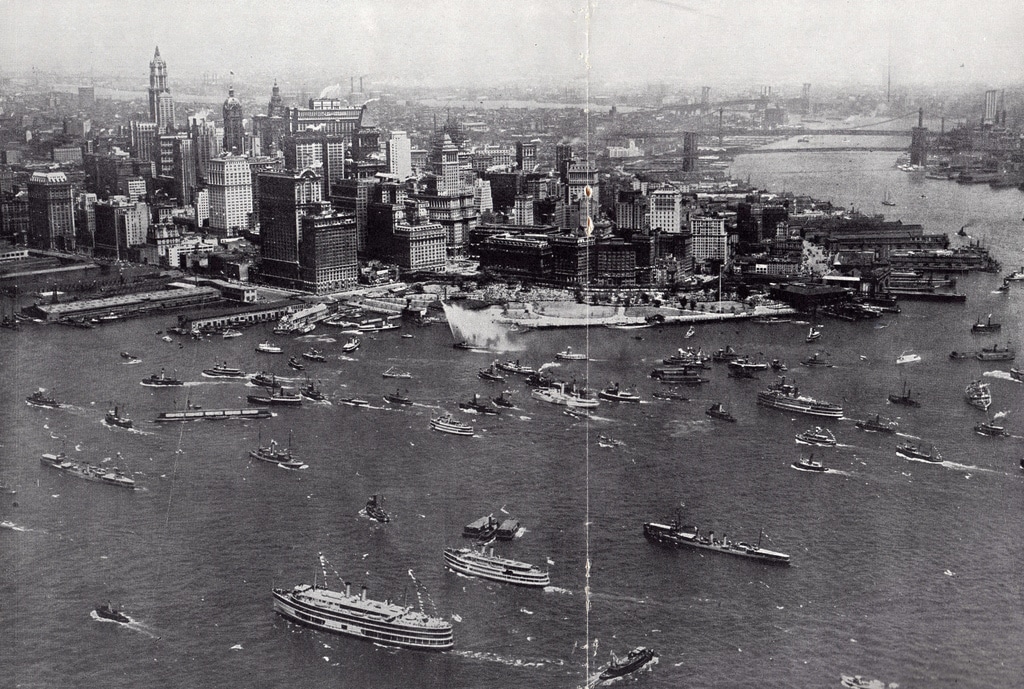
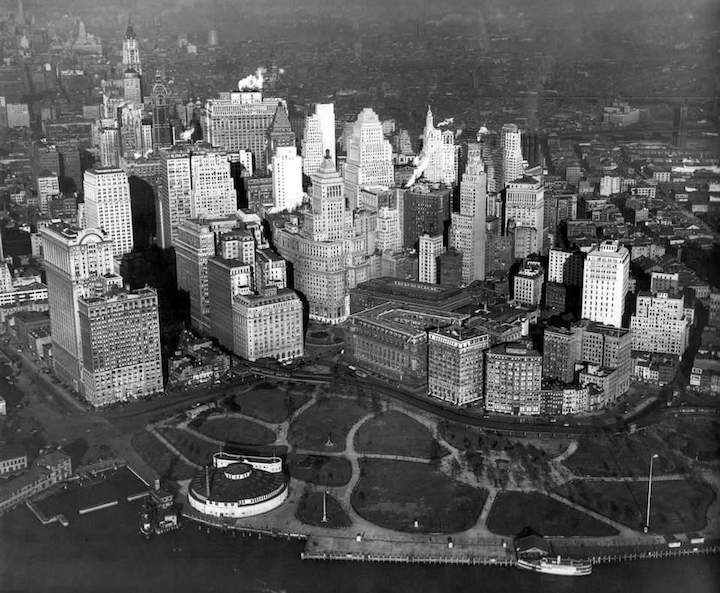
Lower Manhattan looking northeast from the Bay in July 1927. This is approximately the view described by E.B. White as his plane approached Manhattan. (Favrify.com)
A closer view of lower Manhattan as it would have appeared to E.B. White on his 1928 flight over New York City. (Fairchild Aerial Survey photo, 1928)

Once over the city, White could not help but contain his exuberance, soaring high above the towering spires and teeming crowds below:

And yet as I noted earlier, his observations were tinged with melancholy and foreboding. In describing his flight over Coney Island, for example, White concluded that “the world in general seems sadly beautiful, it is so soon to be gone entirely.”

Perhaps he referred to the rapid changes seen daily in the city during the 1920s, when nothing seemed permanent. Or did this bird’s eye view suggest something else to White? Twenty years later, in his 1948 essay “Here is New York,” White would write:

A single flight of planes no bigger than a wedge of geese can quickly end this island fantasy, burn the towers, crumble the bridges, turn the underground passages into lethal chambers. The intimation of mortality is part of New York now: in the sound of jets overhead, in the black headlines of the latest edition.

Unlike 1928, White had the hindsight of World War II, of entire cities leveled by waves of heavy bombers, or in the case of Hiroshima and Nagasaki, just a single bomb. The foreshadowing of 9/11 is contained in his words as well.

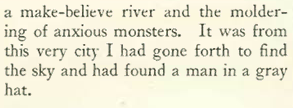
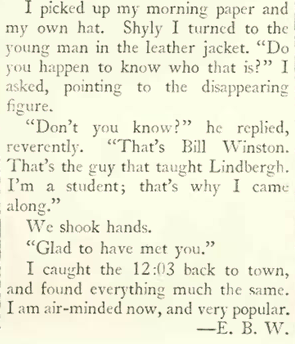
Back on the ground at Curtiss Field, White would finally learn the identity of the man who didn’t look like a pilot, but had just flown him over the city:

Another Vantage Point

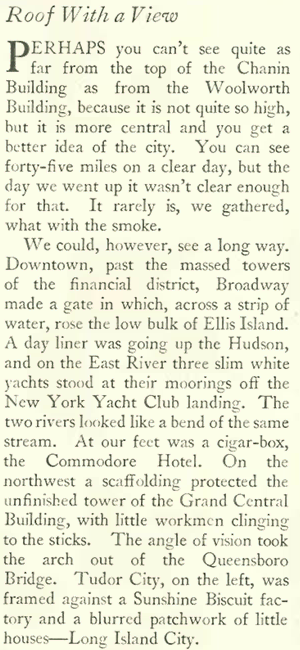
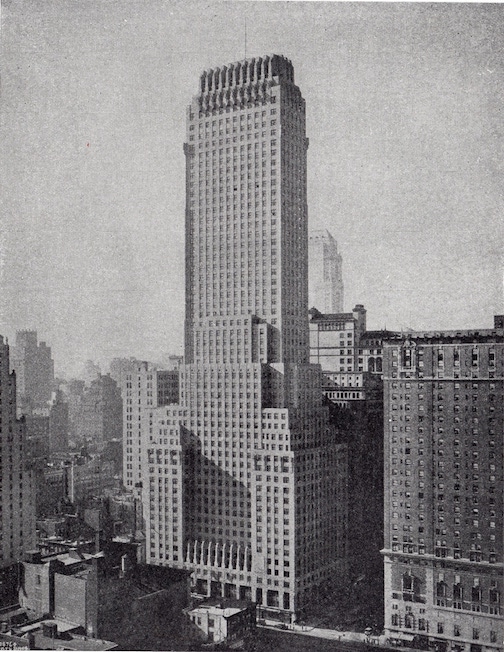
With buildings rising ever higher in Manhattan, you could get a pretty good view of the surrounding city by taking an elevator to the rooftop of the latest skyscraper. The Oct. 6 “Talk of the Town” found a good perch atop the 680-foot-tall Chanin building on the southwestern corner of Lexington Avenue and 42nd Street.

THINGS ARE LOOKING UP…The Chanin Building at Lexington and 42nd. Sloan & Robertson Architects, 1928. (New York Public Library)

 *  *  *

From Our Advertisers

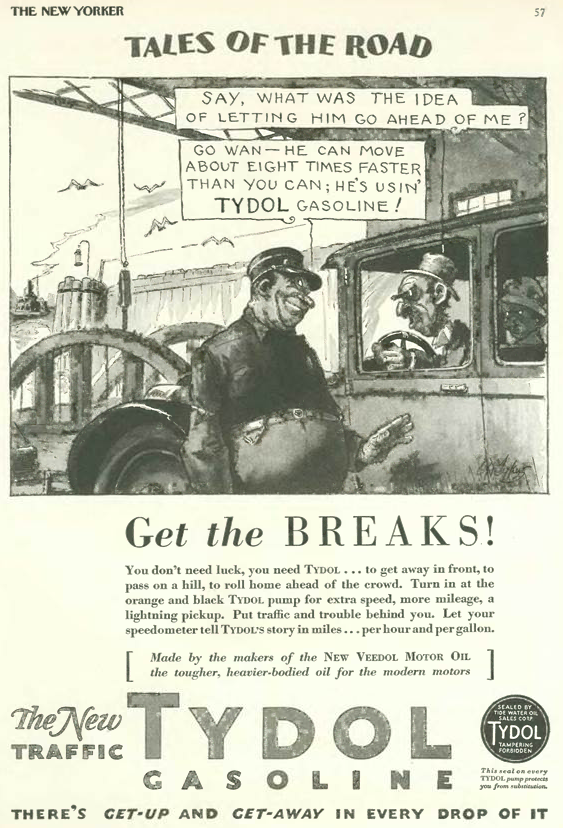
Something you never see in The New Yorker anymore, or in most magazines for that matter, are ads promoting various brands of gasoline. This one touts the benefits of Tydol, produced by the (now defunct) Tide Water Oil Company of New York:

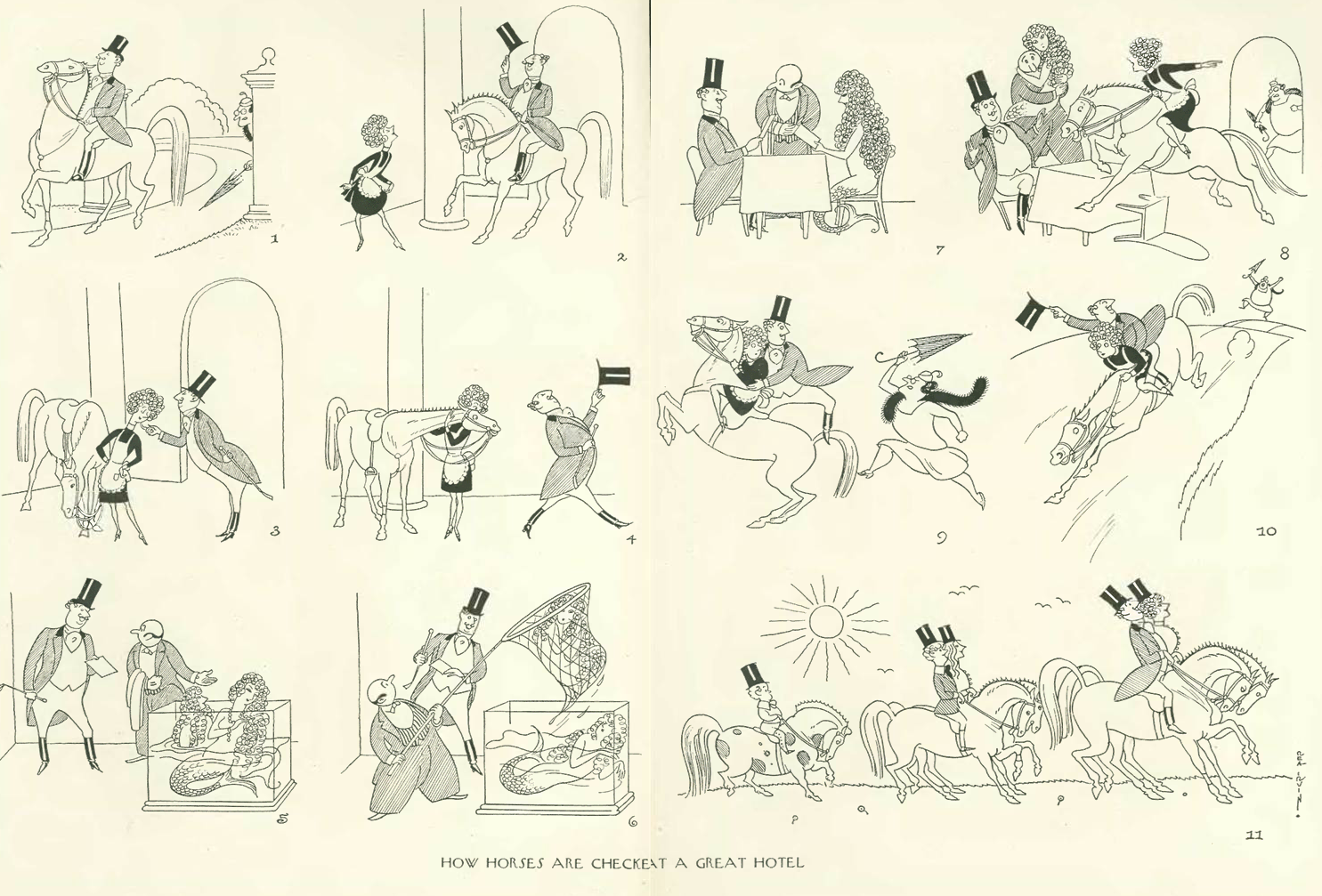
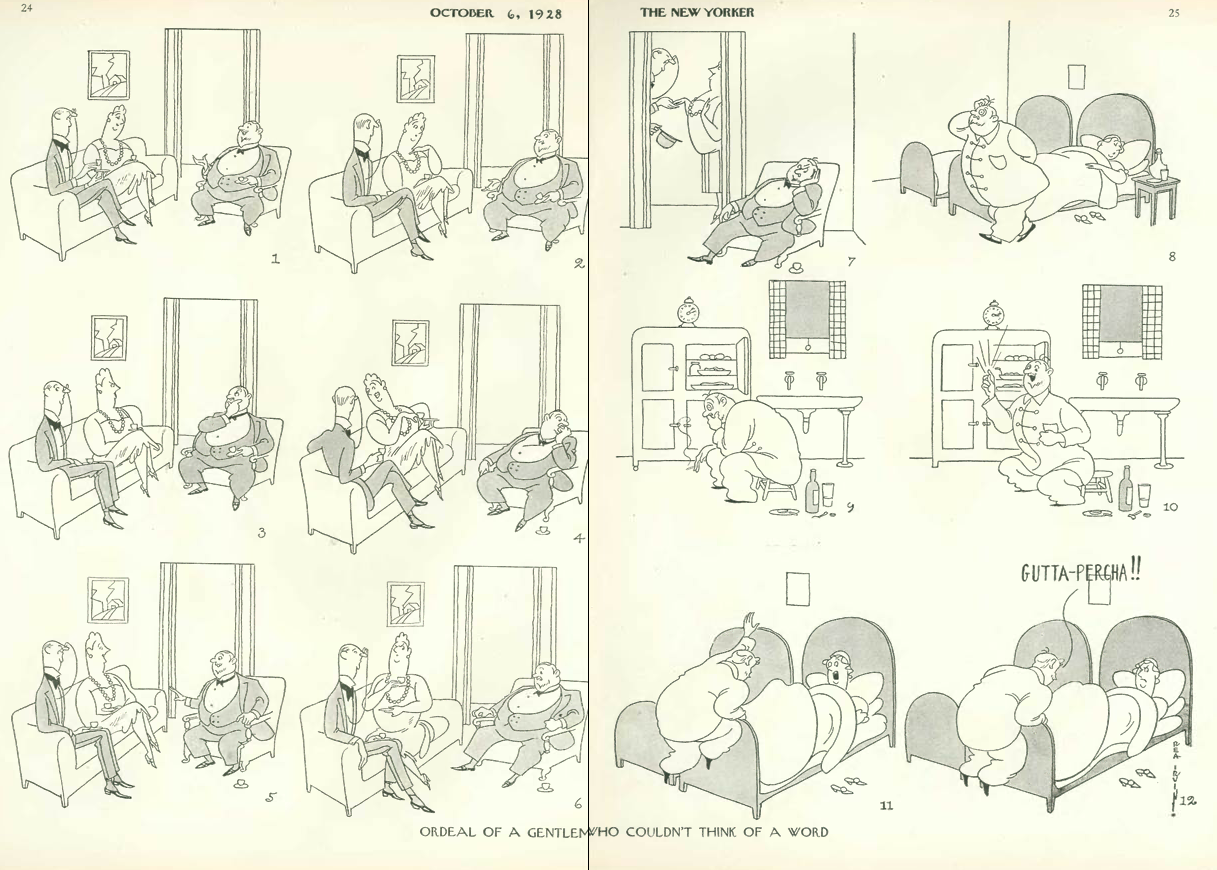
For our Oct. 6 cartoon, here is one of Rea Irvin’s occasional multi-panel, two-page comic spreads, this one exploring the ordeal of a man who couldn’t think of the word for a type of natural plastic used in the 1920s (click to enlarge image):

 *  *  *

The Oct. 13, 1928 issue featured a notable short story by Thyra Samter Winslow, a writer who contributed nearly a dozen pieces to The New Yorker in 1927 and 1928.

October 13, 1928 cover by Julian de Miskey.

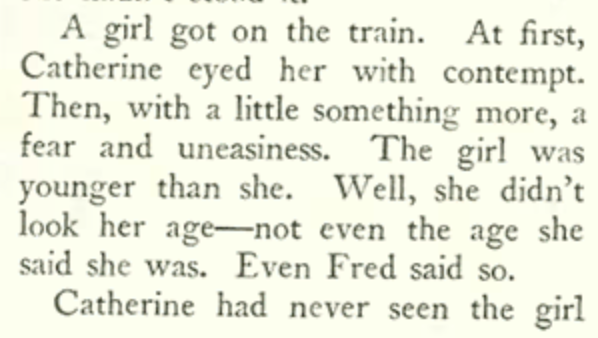
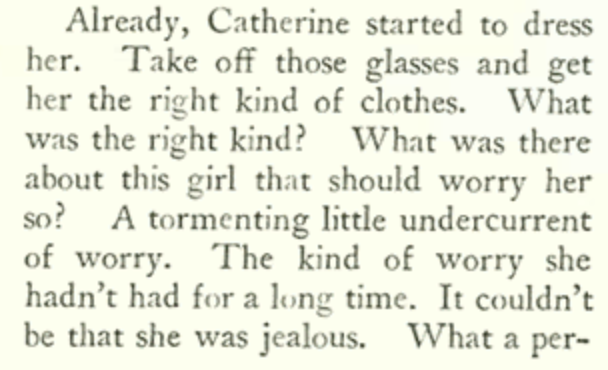
Her short story on page 25, “But for the Grace of God,” was a “key transitional work” for the magazine, according to Ben Yagoda in his book About Town: The New Yorker and the World It Made. He writes: “Realistic fiction thrives in periods of social ambiguity and flux, and the attention to class was on of the factors working to propel New Yorker writing from two-dimensional sketches to fleshed out short stories.” Yagoda observes that Winslow’s story, “in its carefully selected details, its mild epiphany, and its attention to the potency of class…is an accomplished and poignant piece of short fiction.” Excerpts:

Thyra Samter Winslow, in 1936. (findagrave.com)

* * *

The New Yorker continued its stubborn refusal to report on baseball in its sports section, even though the Yankees were in the process of taking their second consecutive World Series title with a 4-0 sweep over the favored St. Louis Cardinals. The magazine did, however, mention the game in the Oct. 13, 1928 “Talk of the Town” — not on how it was played, but rather on how the championship money was distributed among players and assistants:

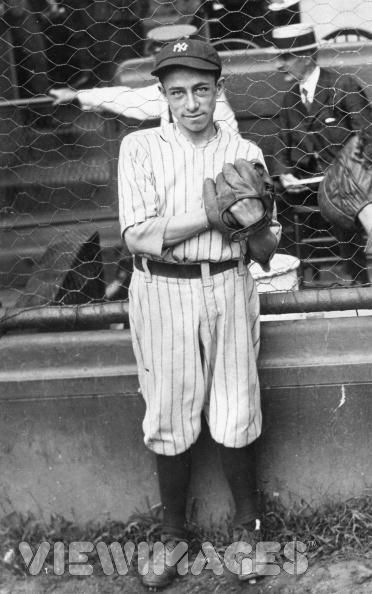
Money matters in the game of sport were more informal 90 years ago, with players themselves divvying up money to other players, trainers, mascots and batboys. For example, in 1927 Yankees batboy Eddie Bennett received $700 for the one-eighth World Series share voted him by the team. This sum earned over the four days of the series nearly equalled a batboy’s pay for a full year.

GOOD LUCK CHARM…Yankee batboy Eddie Bennett in the 1920s. Although a spinal injury as an infant left him hunchbacked, Bennett would serve as Yankee batboy for 12 years — a period that would include seven pennants and four World Series titles. (sabr.org)

 *  *  *

Although European-inspired modern furniture was all the rage among certain members of the New York smart set, writer Joseph Fulling Fishman (best known for his writing on contemporary prison conditions) offered a dissenting view in the Oct. 13 edition. An excerpt:

In the art review section, critic Murdock Pemberton also seemed a bit perplexed by modern design, in this case by the work of Ukrainian-born avant-garde artist Alexander Archipenko. His Archipentura was an electronic machine that displayed pre-loaded images of a female undressing by rolling painted canvas through a complex system of sprockets and belts. He intended the machine “to do for painting what the motion picture did for photography.” Pemberton observed:

THINK DIFFERENTLY…Alexander Archipenko (right, circa 1920), intended his intended his Archipentura machine (pictured in front and side views) “to do for painting what the motion picture did for photography.” (Wikipedia/Archipenko Foundation)

*  *  *

From Our Oct. 13 Advertisers

Yet another endorsement for cigarettes from the posh set. This time Melachrino Cigarettes got in on the action with this endorsement by Augusta Barney Harriman.

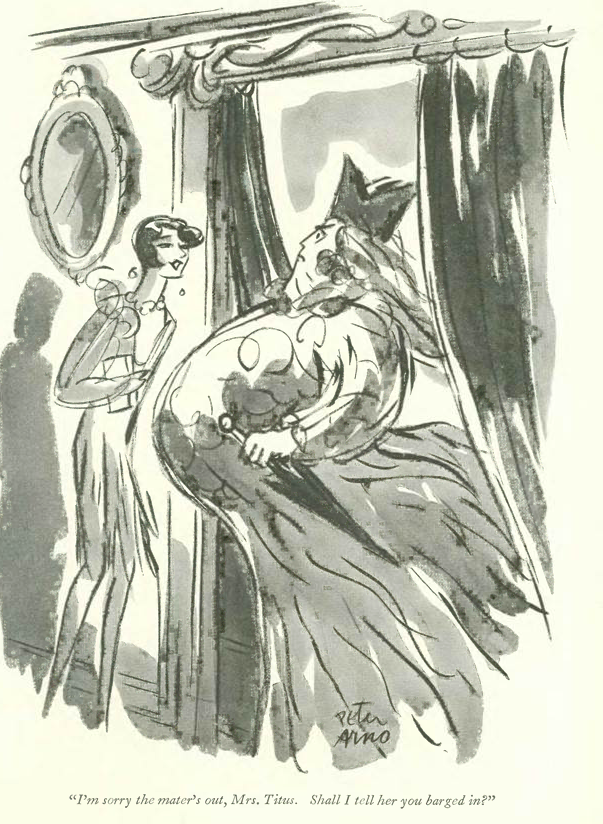
For our cartoon, Peter Arno once again looked in on the mannerisms of the upper class, contrasting a lithe young flapper with the imposing presence of a battle-axe. Note how the young woman uses the archaic British “mater” in reference to her mother…

Next Time: The Prohibition Portia…

To the Air

New Yorker writers in the 1920s by and large displayed a resistance to popular enthusiasms when they looked around at the changing the world, but when it came to advancements in aviation, they tended to drop the casual pose and get all dreamy-eyed.

June 2, 1928 cover by Sue Williams.

Such was the case with even a clear-headed writer like Morris Markey, who in his “A Reporter at Large” column looked at our progress in aviation. Public interest in air travel grew dramatically after Charles Lindbergh’s 1927 Atlantic crossing, as did the expansion of air mail and passenger service and the growth of private plane ownership. As Markey noted in this opening paragraph, for all the advances in American aviation, the Europeans were well ahead in establishing regular passenger service, as it had become “commonplace”:

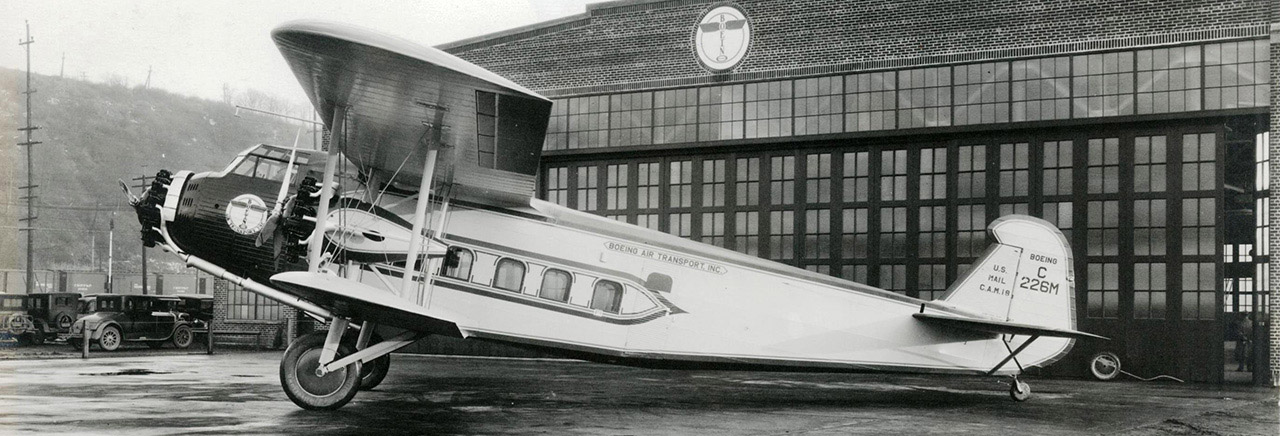
FORERUNNER…In 1920s the Boeing Model 40 served as a U.S. mail plane. The single-engined biplane was also the first aircraft built by the Boeing company to carry passengers. Note the pilot was still seated in the open air, behind the passenger compartment. Many early pilots were unhappy when the next generation of planes forced them into an enclosed cockpit. (Boeing)

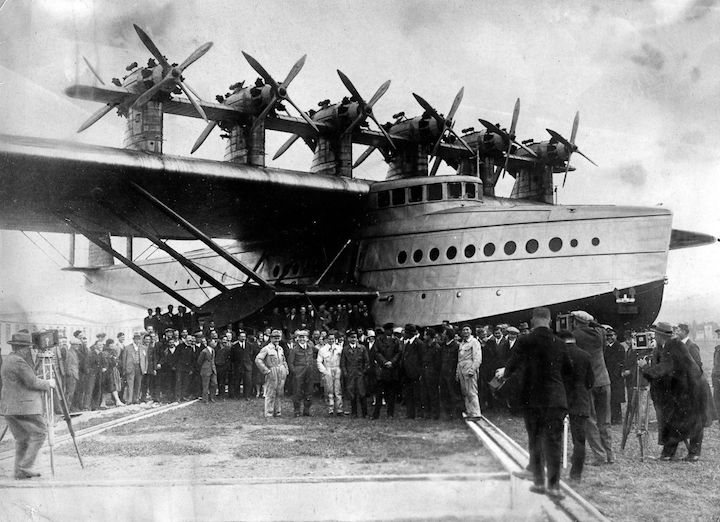
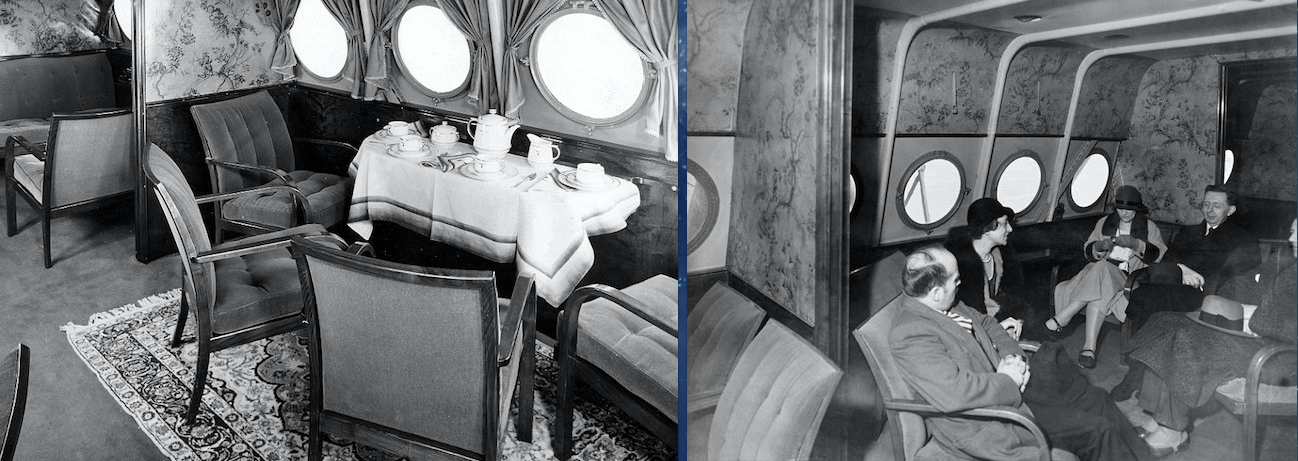
To get some sense of European (and specifically German) aviation superiority, look no further than the Dornier Do-X, a massive seaplane developed by the Germans in the mid-1920s that began regular passenger service in July 1929. While America’s biggest planes could carry 12 to 18 passengers, the spacious and luxurious Do-X could comfortably seat 70 to 100 passengers and included a dining salon, smoking lounge and wet bar. A few months after its first flight the Do-X broke a world record by carrying 169 passengers—astonishing when one considers only 25 years had passed since the Wright Brothers at Kitty Hawk.

BEHEMOTH…169 people flew aboard the Dornier Do-X on October 21, 1929. The plane’s hull was made of aluminum, but the sides were made of heavy duty linen cloth coated with aluminum paint. (Ullstein Bild)
MAKING HISTORY…Excited passengers—169 of them—await take-off on October 21, 1929. Powered by a dozen engines, take-off weight for the Do-X was more than 61 tons. Note the crew members atop the craft manually turning the propellers—all 12 of them—to circulate the oil in the engines prior to take-off. (Ullstein Bild)
LEGROOM NOT OPTIONAL…The dining salon (left) and a passenger compartment in the Dornier Do-X. (Ullstein Bild)
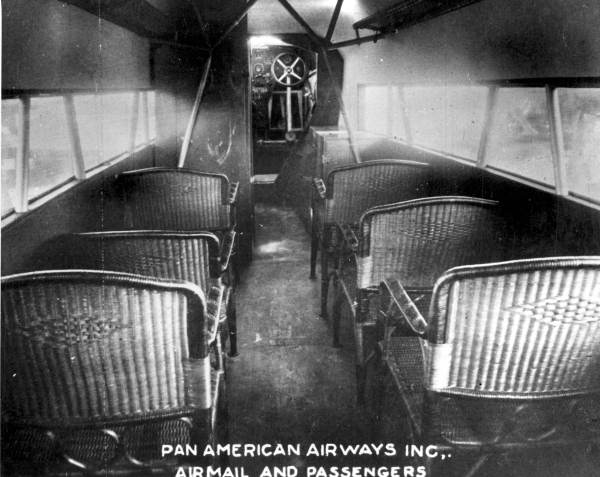
MODEST, BUT NICE…Over in America, the 1928 Boeing Model 80 carried passengers in a spacious cabin appointed with leather upholstery, reading lamps, forced-air ventilation, and hot and cold running water. The first version carried 12 people, and it was followed by a larger, 18-passenger Model 80A, which made its first flight on Sept. 12, 1929. The plane’s fuselage was made of welded-steel tubing covered with fabric, and its wooden wingtips were removable so the airplane could fit into the primitive hangars along its route. (Boeing)
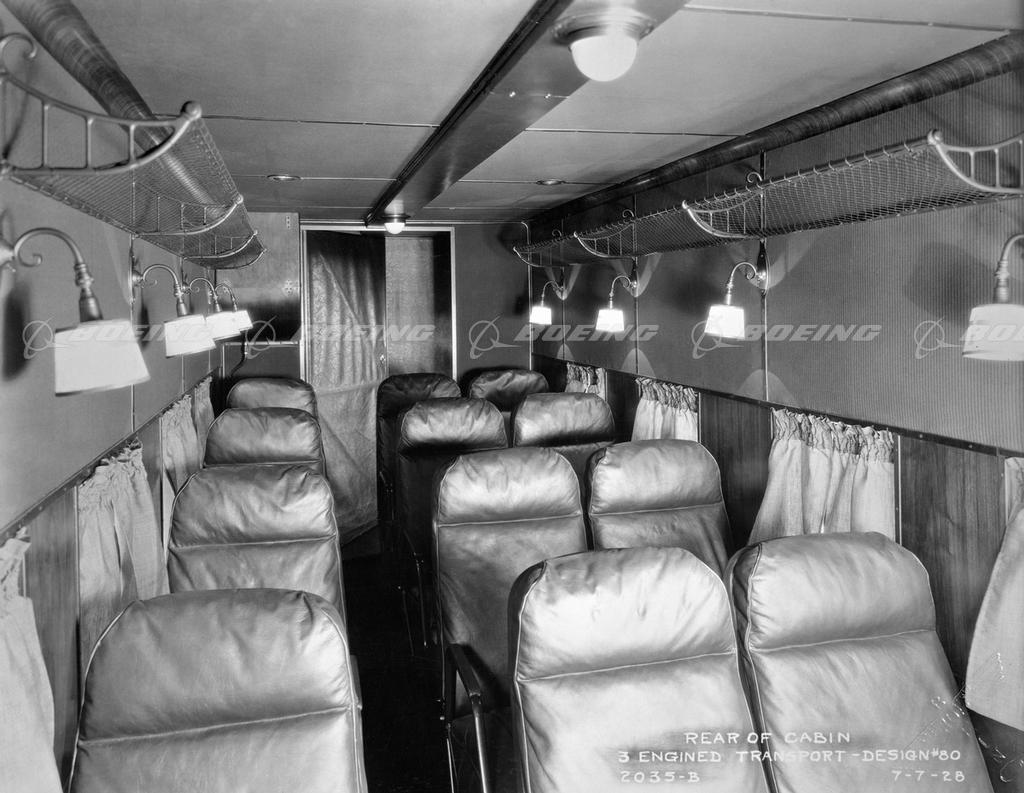
COZY…Interior of the Boeing Model 80. Ellen Church, a registered nurse, convinced Boeing managers that women could work as stewards, so nurses serving aboard the Model 80A became aviation’s first female flight attendants. (Boeing)

Markey noted the growing interest in commuter flights among business executives. What seemed like a high demand to Markey was an average of three commuter flights a day.

Markey also lamented New York’s lag in building up passenger service, especially when air travel was growing leaps and bounds in the Midwest and West, and especially in rival Chicago:

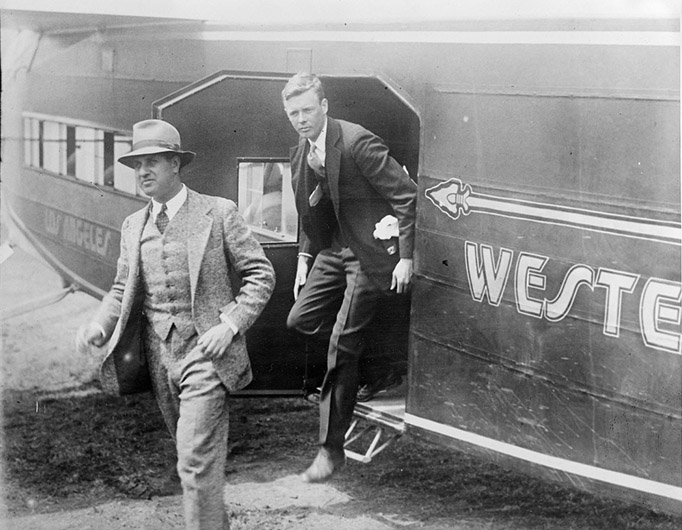
BIRTH OF TWA…Harry Guggenheim and Charles Lindbergh step off a Western Air Express Fokker F-10 in 1928. Diplomat, publisher and philanthropist, Guggenheim provided funding to mail carrier Western Air Express in 1927 in an effort to create a “model airline” that was safe, dependable and economically feasible. By 1930 Western was the nation’s largest airline. It was short-lived, however; in 1930 Postmaster General William Folger Brown forced it to merge with Transcontinental Air Transport, creating Transcontinental and Western Airlines, or TWA. (Boston Public Library)
NO TSA LINES HERE…Passengers board a Western Air Express Fokker F-10 in the late 1920s. The Fokker F-10 was called “The Queen of the Model Airline,” but it fell out of favor after a much-publicized March 31, 1931 crash in Kansas that killed eight people, including football coaching legend Knute Rockne. (birthofaviation.org)
NO FRILLS…Passenger compartment of a Fokker F-10. (birthofaviation.org)
HERE’S LUCY…Actress Lucille Ball was all smiles after a flight on a Western Air Express Fokker F-10. (birthofaviation.org)

Markey also noted the modest number of planes in private hands, but expected private ownership to increase dramatically in the coming months:

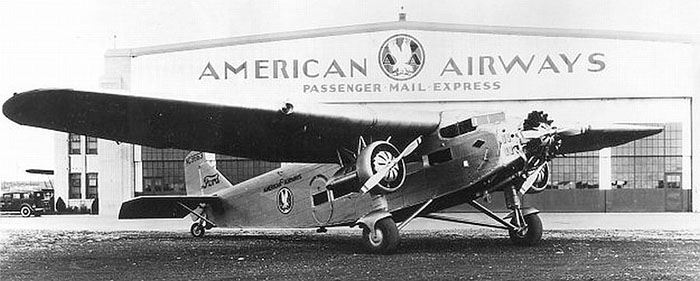
TIN GOOSE…Henry Ford briefly got into the aviation business with his company’s popular Ford Trimotor. Dubbed the “Tin Goose,” it was the first all-metal, multi-engine transport in the United States and the first plane designed primarily to carry passengers (12) rather than mail. It was the first plane to be used for transcontinental passenger service, as well as the first plane to fly over the South Pole. The Great Depression would end the plane’s short but successful run—a total of 199 were produced. (birthofaviation.org)
BE YOUR OWN LINDBERGH…Looking for your own set of wings? The 1929 Cessna Model AW was just around the corner. (airpigz.squarespace.com)

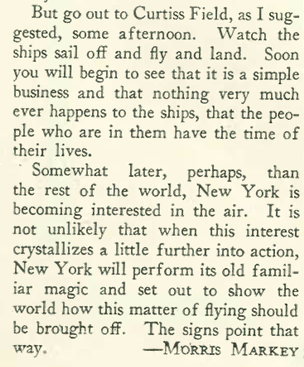
Although Markey lamented the slow growth of New York aviation, he was nevertheless dazzled by the “ships” taking to the skies at Curtiss Field.

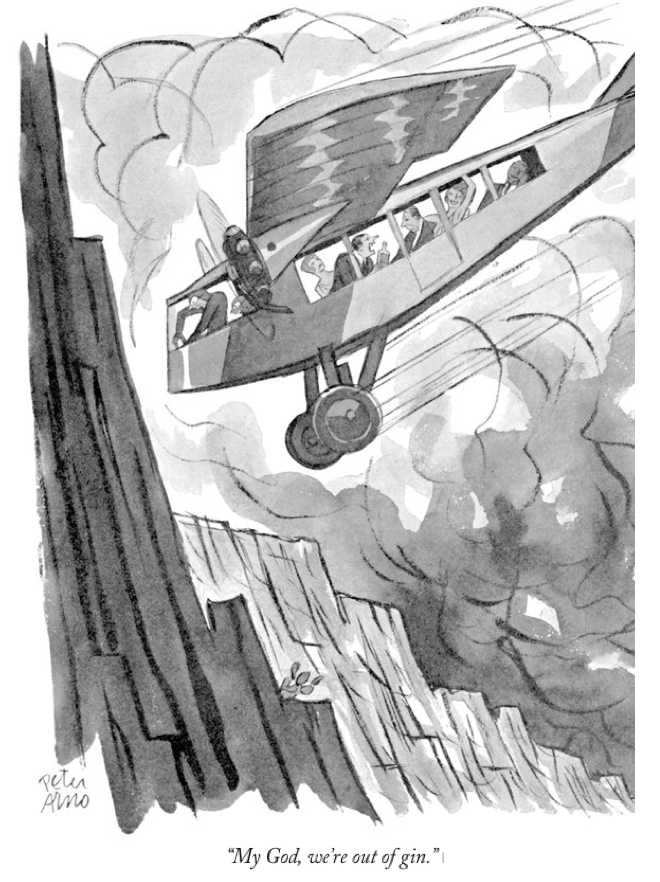
Jumping ahead a couple of years, New Yorker cartoonist Peter Arno offered this view of passenger flight (in a Fokker F-10), the passengers in this case a bunch of silly toffs (April 12, 1930).

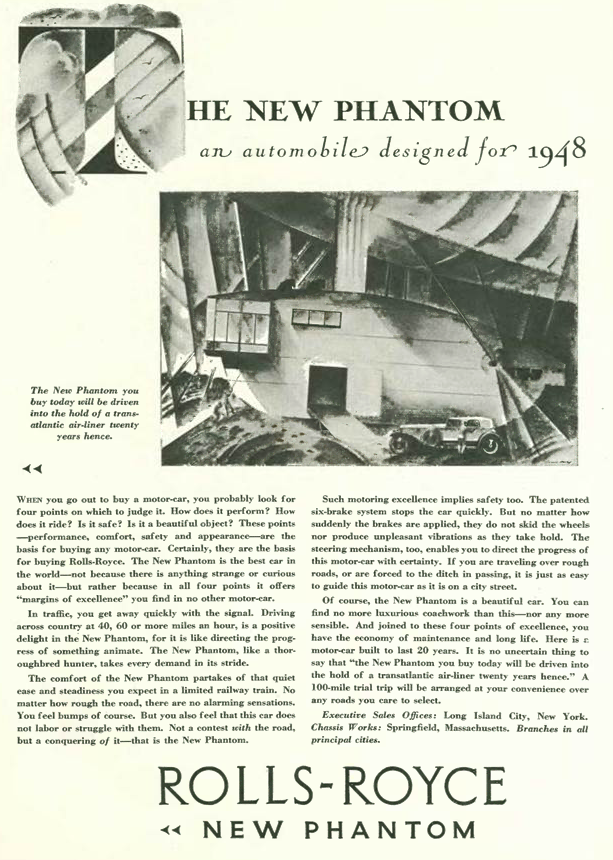
And back to the June 2, 1928 issue, we find this ad for Rolls Royce that offered a vision of a future airliner—in the year 1948. Since the artist had no clue what the future would hold, he conjured up this contraption that looked like a streamlined Noah’s Ark attached to a huge zeppelin.

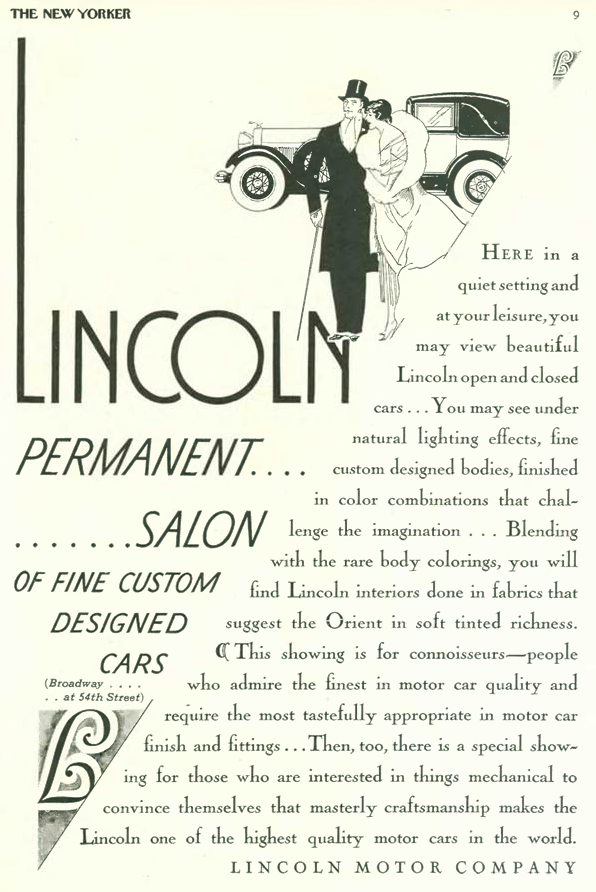
And just for kicks (and contrast), this ad for Lincoln was all about tradition, except for the nice typographical flourish on the letter “L” —a definite nod to modernism.

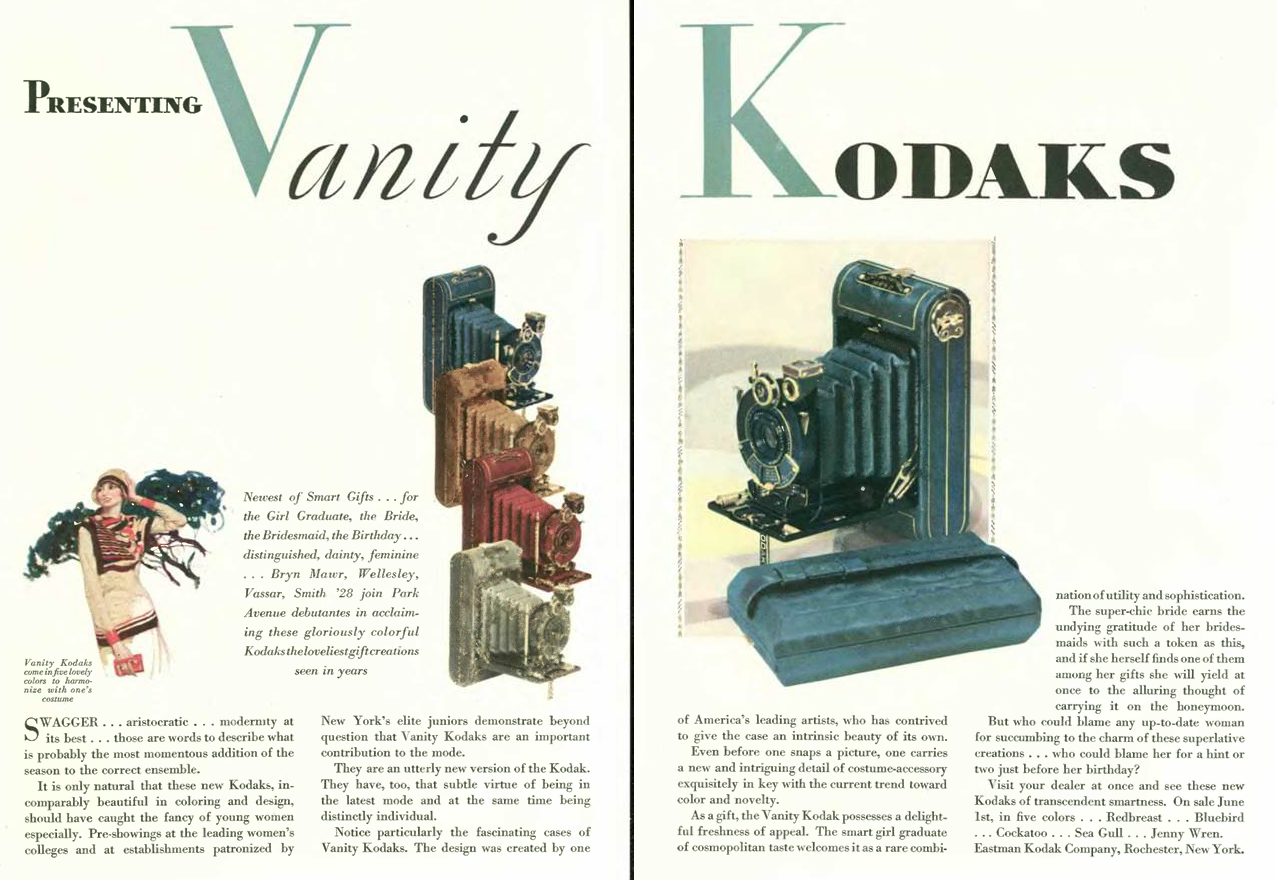
And if you thought novelty in our gadgets is a fairly recent thing, check out these portable Kodak cameras that were available in five colors. From automobiles to typewriters, manufacturers in the 1920s were discovering that color distinguished their products and even drove demand (click image to enlarge).

Advertisers could also create demand by appealing to readers’ cravings for status. The following ad for a Lord and Burnham greenhouse is an especially egregious example of the use of status shaming to sell a product. Note how the foursome in the illustration, presumably all greenhouse owners, look at the man without a greenhouse as though he’s a child molester or worse.

Before Green Eggs and Ham

In 1928 ads for Flit insecticide began to appear in the New Yorker, illustrated by none other than Theodore “Dr. Seuss” Geisel. This is the first Flit ad to appear in the magazine, in the June 2, 1928 issue:

In the 1920s people didn’t seem too concerned about the toxicity of the products they used (for example, we’ve seen Lysol used in feminine hygiene and as a birth control method). Although the Flit ads aimed to be humorous, it still seems odd to imply that one might gargle with the insecticide. As we shall see, subsequent Flit ads will show the product being sprayed indiscriminately over food, children, pets etc.

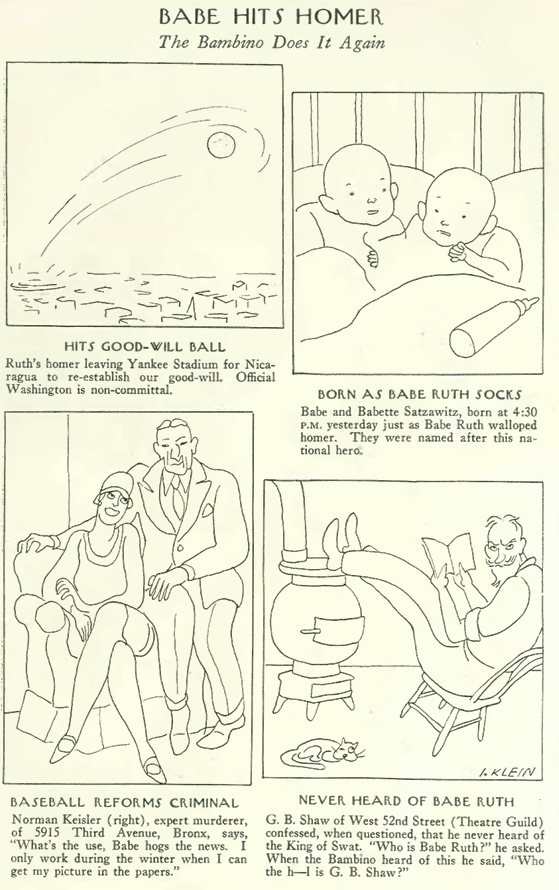
Taking a Shot at the Babe

The cartoonist Isadore Klein had some fun with the hyperbole often attached to the athletic feats of the Sultan of Swat:

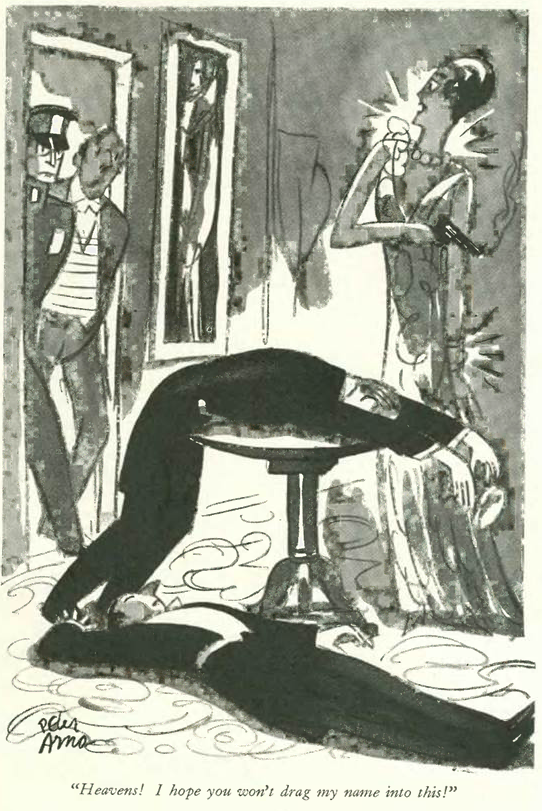
And finally, Peter Arno looked at murder among the upper classes:

Next Time: The Russians Are Coming…


After Hours

Broadway shows were a popular nightlife diversion for New York’s upper middle-class, but plays and musicals were only part of an evening’s entertainment. The city’s “after theatre” clubs beckoned those who enjoyed an evening of dance with the Astaires or a light comedy with Lunt and Fontanne, but believed the night was still young.

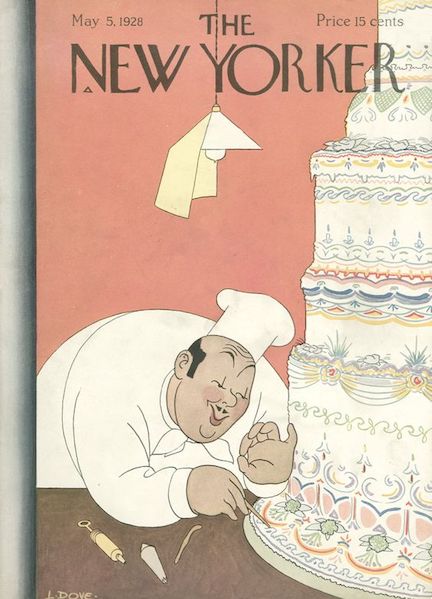
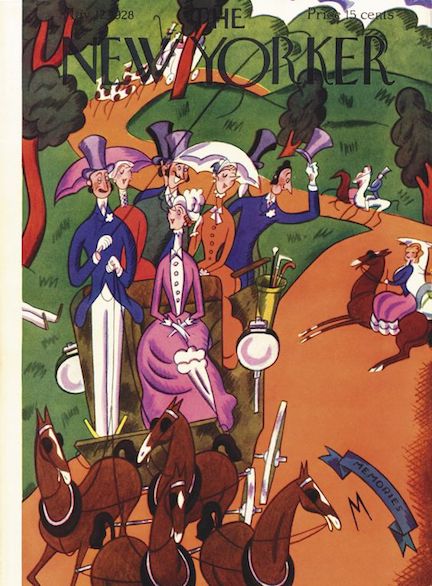
May 5, 1928 cover by Leonard Dove.

And who better to chronicle the late night revelry than Lois Long, who through her “Tables For Two” column was a leading voice of after hours Manhattan and a nightly presence in its various clubs and speakeasies. Longtime New Yorker writer Brendan Gill (Here at the New Yorker) observed that Long, who joined the magazine in 1925, “had plunged at once, joyously, into a New York that seemed always at play — a city of speakeasies, night clubs, tea dances, football weekends, and steamers sailing at midnight.”

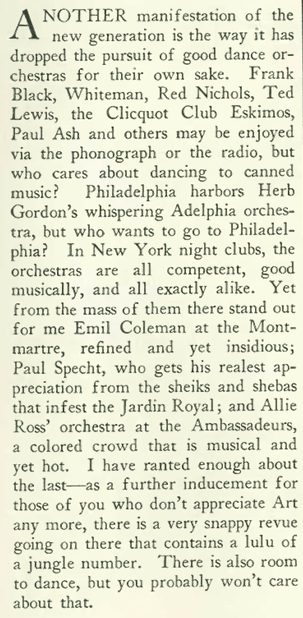
In May 1928 Long had been married for about nine months to colleague and cartoonist Peter Arno, who was also a regular fixture of the nightclub scene. But in Long’s column for May 5, 1928, one can detect a bit of weariness setting in, the 27-year-old sensing the next generation didn’t know how to have a good time.

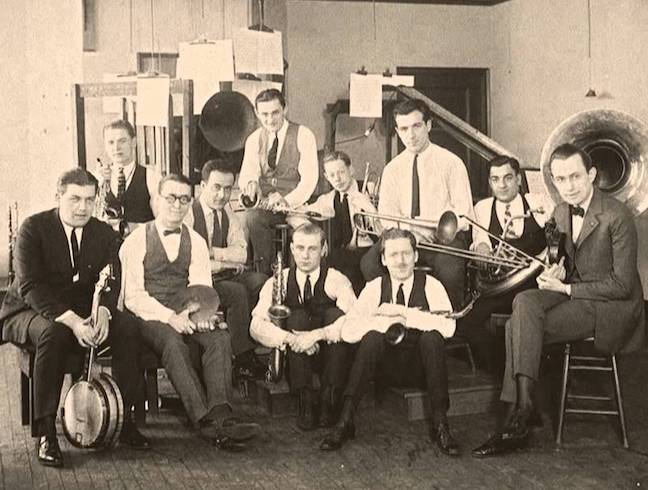
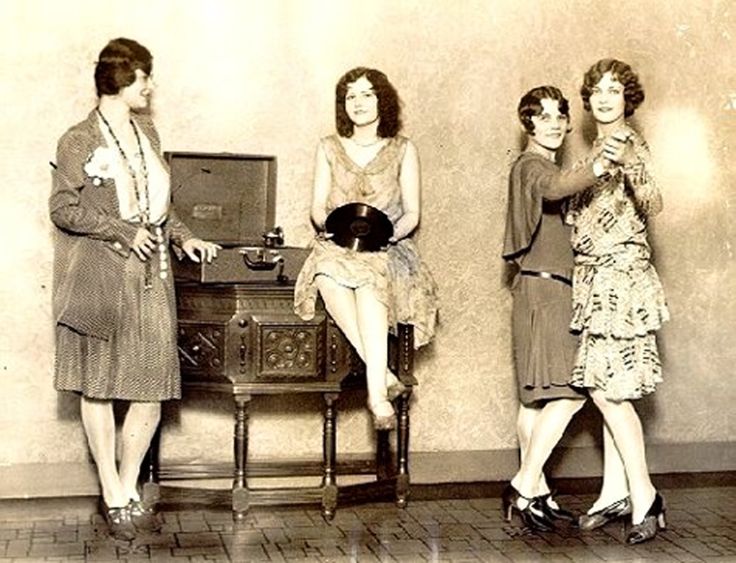
And it didn’t help that the younger people were dancing to “canned music,” what with the spread of broadcast radio and improvements in phonograph records…

LIPSTICK WAS A FAN of the Paul Specht Orchestra, seen here in 1928. (YouTube)
BUT NOT A FAN of those darn kids who preferred records to live music, and didn’t know how to party at the clubs. (Pinterest)

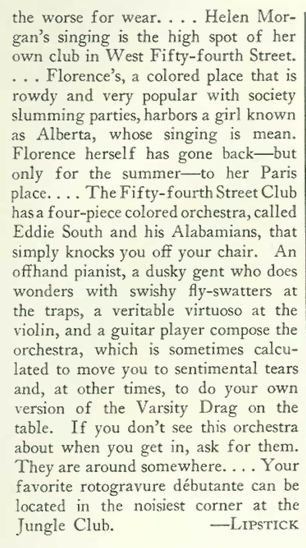
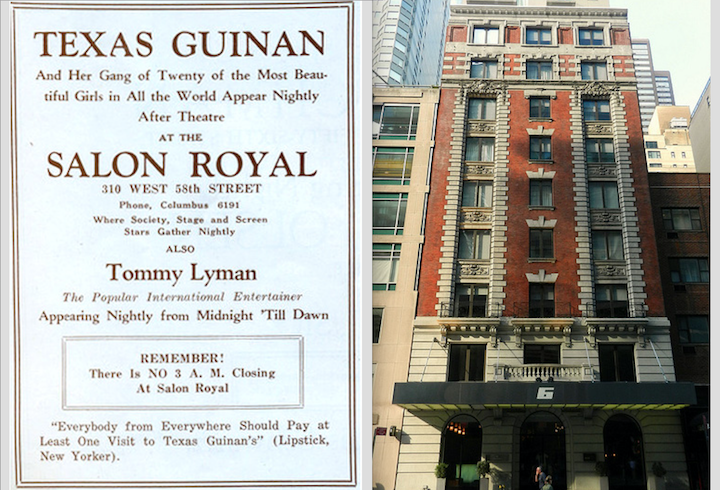
For those on the wilder side, Long recommended a number of after-hours entertainments, including Texas Guinan’s latest all-night club, Salon Royal, and its snake-charming hootch dancer.

WHOOPEE was the order of the day at Texas Guinan’s Salon Royal on West 58th Street, now refurbished as the 6 Columbus Hotel. Guinan was well known to New Yorker writers and editors and was a frequent guest of the numerous parties hosted by Harold Ross and Jane Grant in their Hell’s Kitchen brownstone. (texasguinan.blogspot)

Because so many New Yorker readers were both theatre and after-theatre-goers, the magazine included some of the after-dinner destinations in its “Goings On About Town” section. Excerpts follow.

Rubberneckers

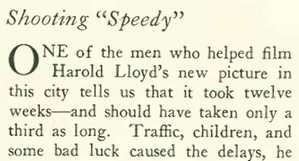
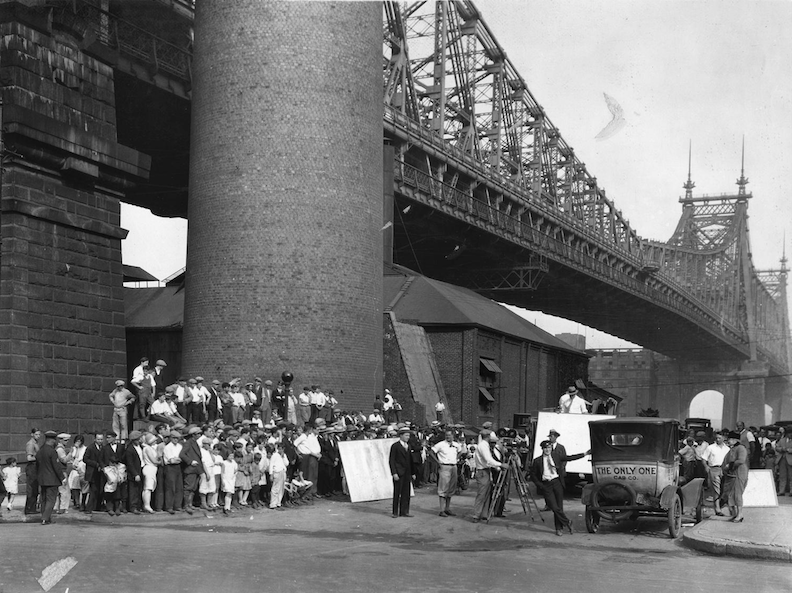
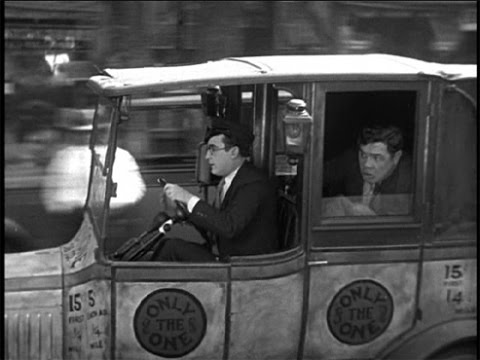
A May 5 “Talk of the Town” segment (written by James Thurber) commented on the challenges film crews faced when they shot on location in the city, in this case the production of Harold Lloyd’s latest comedy, Speedy:

LOCATION, LOCATION, LOCATION…Silent film star Harold Lloyd (leaning on car at right) and his crew draw a crowd under Queensboro Bridge during the filming of Speedy. (silentlocations.wordpress.com)
BABE IN THE CITY…Harold Lloyd takes baseball legend Babe Ruth for a wild spin in 1928’s Speedy. (YouTube)

 *  *  *

Before Mommie Dearest

The actress Joan Crawford is best known today as the subject of the 1981 biopic, Mommie Dearest, which portrayed Crawford as an insecure, abusive parent to her adopted daughter Christina (the film was based on a 1978 memoir and exposé of the same name written by Christina Crawford).

But in the 1920s and 30s the former dancer and chorus girl was better known for her sex appeal, attractive to men for her looks and to women for the roles in which she portrayed hard-working women who find both romance and success.

PRETTY PICTURE…Ramon Novarro and Joan Crawford in Across to Singapore, 1928. (Silent Hollywood)

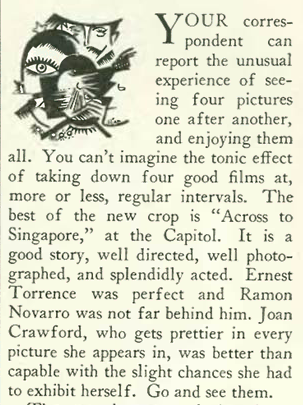
The New Yorker took notice of Crawford in its review of Across to Singapore, the critic O.C. noting that Crawford “gets prettier in every picture”…

Another film released later in 1928, Our Dancing Daughters, would make Crawford a star and a symbol of the liberated, 1920s flapper. Even the writer F. Scott Fitzgerald would observe that “Joan Crawford is doubtless the best example of the flapper, the girl you see in smart night clubs, gowned to the apex of sophistication, toying iced glasses with a remote, faintly bitter expression, dancing deliciously, laughing a great deal, with wide, hurt eyes. Young things with a talent for living.”

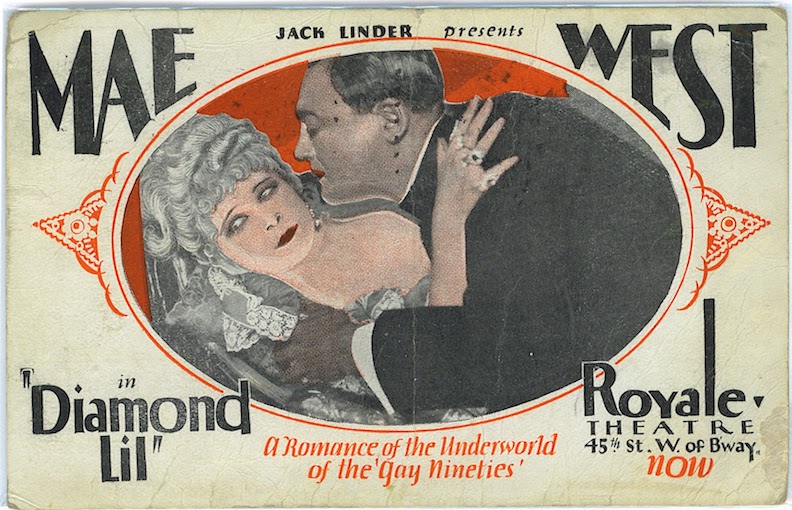
Another actress with a talent for living was 34-year-old Mae West, who was appearing on Broadway in Diamond Lil. Already a 21-year veteran of the stage (she began performing in vaudeville in 1907 at age 14), West was known for writing and performing in risqué plays beginning in 1926, when she appeared in Sex, which was panned by conservative critics but enjoyed hot ticket sales.

Subsequent plays aroused controversy and kept her name in the newspapers, but her play Diamond Lil would become the Broadway hit that would cement her image as a sex symbol, one she would maintain until her death at age 87 in 1980. In the May 5 issue artist Miguel Covarrubias offered his vision of the Queen of the Bowery:

THEATRE CARD for the Broadway production of Diamond Lil at the Royale Theatre. (maewest.blogspot.com)
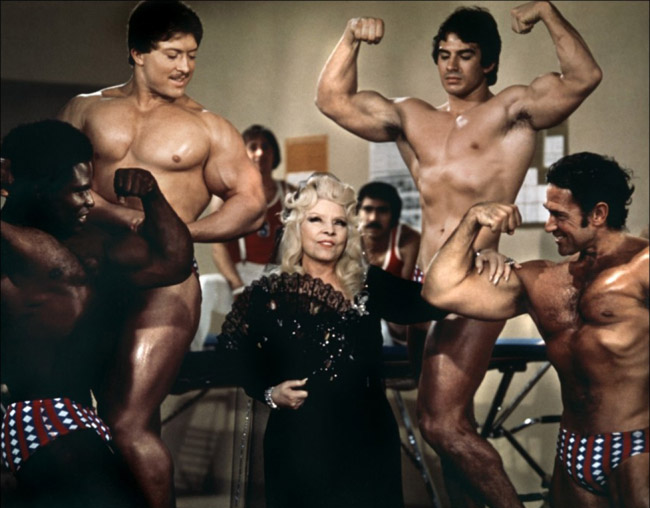
STILL AT IT 50 YEARS LATER…The 86-year-old Mae West in her last film, 1978’s Sextette. In a 1979 review, New York Times film critic Vincent Canby called the film “a disorienting freak show in which Mae West, now 87 years old, does a frail imitation of the personality that wasn’t all that interesting 45 years ago. The movie, which opens today at the Victoria and other theaters, is a poetic, terrifying reminder of how a virtually disembodied ego can survive total physical decay and loss of common sense.” (filmcomment.com)

From Our Advertisers

It’s interesting to see how 1920s advertisers made even the most mundane gadgets appear to be vital to one’s survival. The ad for the “Sesamee” auto switch lock is a case in point, appealing to upscale female readers with this odd scenario in which the gadget enables the driver to avoid the awkward and potentially hazardous situation depicted below, although it hard to see what the actual threat might be from a dandy in a tie and waistcoat. Perhaps death from boredom.

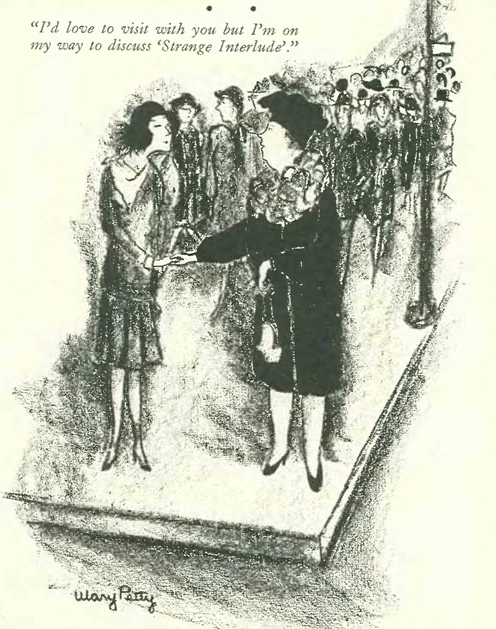
Our cartoon is courtesy of Mary Petty,  who would become a renowned illustrator for The New Yorker, best remembered for a series of covers featuring her gentle satirization of the upper class Peabody family.

Next Time: Dog’s Best Friend…


Good Vibrations

A decidedly new sound reverberated in the ears of New Yorkers who attended a Feb. 1928 performance of the New York Philharmonic that featured guest artist Leon Theremin, a Russian inventor who played music by moving his hands through the air, or more accurately, a magnetic field.

February 4, 1928 cover by Gardner Rea.

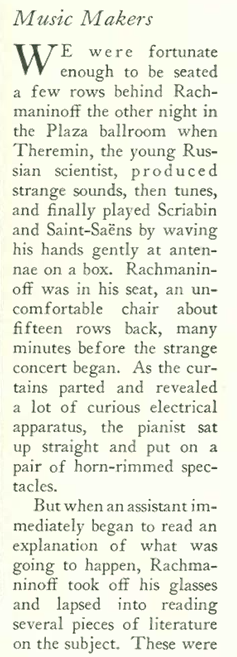
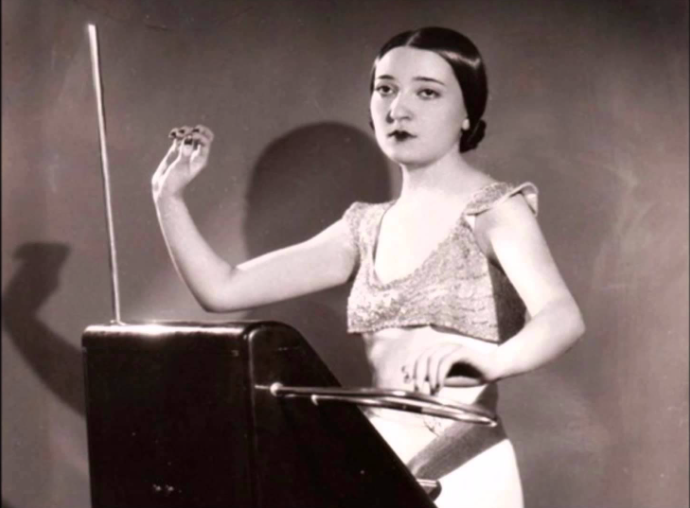
Theremin’s eponymous instrument had neither keys nor strings, but rather two metal antennas attached to an electronic oscillator. Music was produced by moving one’s hands between the antennas, which sensed the relative position of the players hands—one antenna controlled for pitch while the other adjusted the instrument’s volume. The sound produced is best described as “otherworldly.” James Thurber, writing for the “Talk of the Town” (in a piece titled “Music Makers”), found Theremin’s performance intriguing, but of even greater interest was the great Russian pianist and composer Sergei Rachmaninoff—who was in attendance—and his reaction to the strange instrument:

HMMMM…At left, Sergei Rachmaninoff in 1921, as photographed by Kubey Rembrandt. At right, Leon Theremin plays his eponymous instrument at a demonstration concert in Paris on December 8, 1927. (Wikimedia)

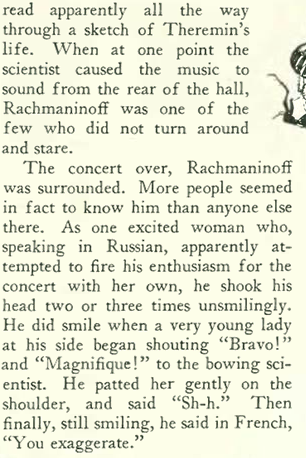
The New Yorker’s voyeuristic account of Rachmaninoff continued, with the great man now becoming more engaged in the performance…

The Theremin would grow in popularity, however more as a novelty than a serious instrument:

ON THE AIR…Alexandra Stepanoff playing the Theremin on NBC Radio in 1930. A Russian immigrant to the U.S., the former concert singer was Theremin’s first student in the United States. (Wikimedia)
VIRTUOSO…The Russian-born Clara (Reisenberg) Rockmore holds a unique place in music history as the virtuoso performer of the Theremin. Leon Theremin built a custom version of his instrument for Rockmore, which added greater range and sensitivity. Rockmore would sometimes perform concerts with her sister, accomplished pianist Nadia Reisenberg. Photo circa 1930. (PHOTO BY RENATO TOPPO, COURTESY OF THE NADIA REISENBERG – CLARA ROCKMORE FOUNDATION)

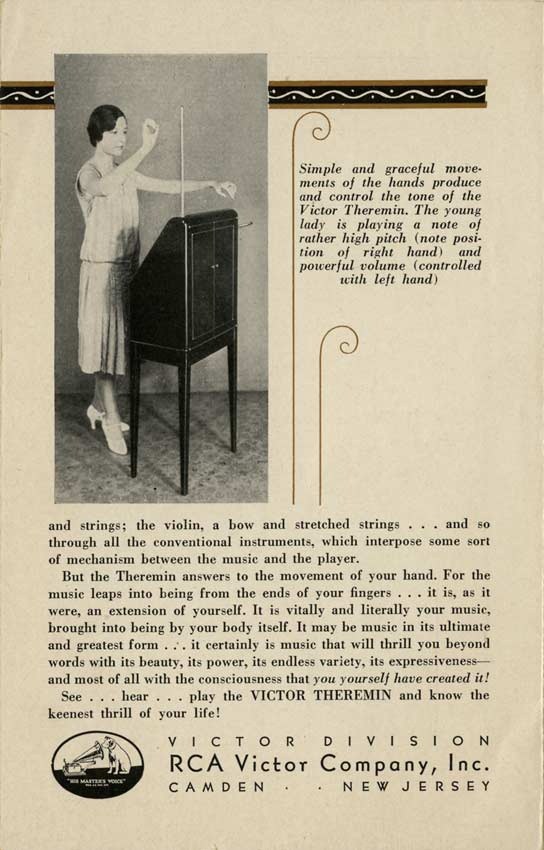
Theremin would be granted a U.S. patent for the instrument in 1928, which was marketed and distributed in the U.S. by RCA during the 1930’s in either DIY kit form or as a finished instrument:

(120years.net)

Interest in the instrument as a novelty continued into the 40’s and 50’s in the DIY market…

(120years.net)

Robert Moog, pioneer of modern electronic music and inventor of the Moog synthesizer, made and sold a transistorized version of the Theremin in the 1950s.

The Theremin would become best known to mass culture through its use in producing “eerie” sound effects in 1940s and 50s films, including Bernard Herrmann’s use of the instrument for the soundtrack to the 1951 sci-fi thriller, The Day The Earth Stood Still. And nearly everyone on the planet has heard the Theremin-inspired sound of the Beach Boy’s song Good Vibrations, created by an electro-Theremin that was developed in the late 1950s to mimic the sound of the original Theremin.

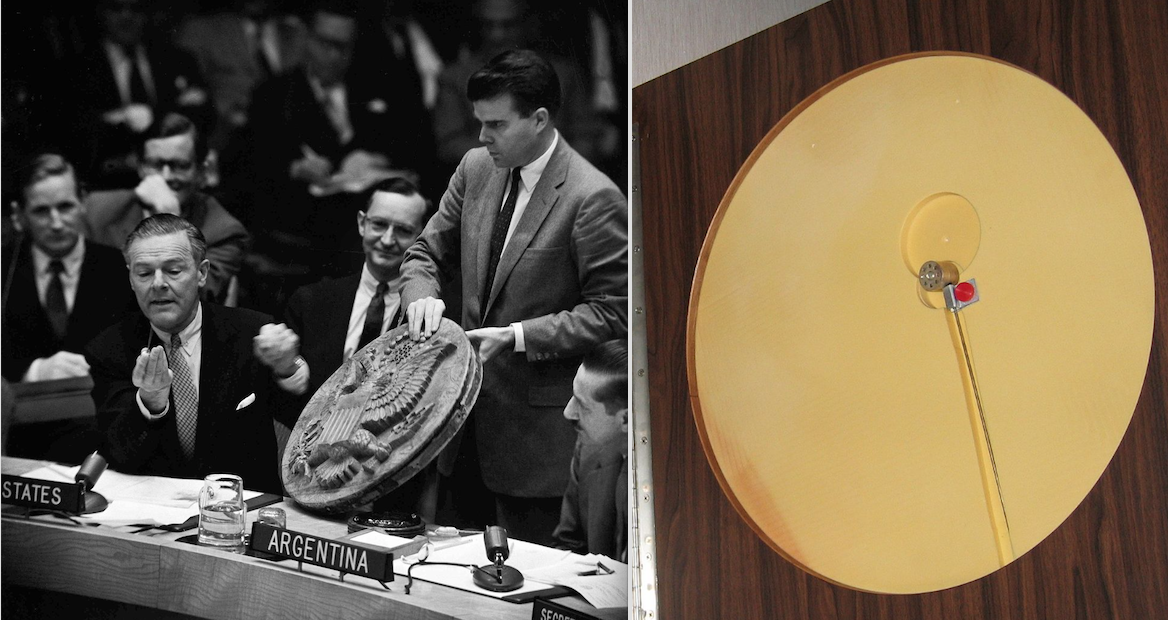
As for Leon Theremin himself, he would also gain notoriety as the inventor of The Thing, a listening device most famously used by the Soviets to bug the U.S. Embassy in Moscow. The device was hidden behind a wood carving of the U.S. Great Seal, which in 1945 was presented by Soviet schoolchildren to the U.S. ambassador, who subsequently hung it in his office.

GOTCHA…American Ambassador to the UN Henry Cabot Lodge displays The Thing before the UN Security Council in 1960. At right, the device which was hidden behind the seal. The Americans discovered the bug in 1952, but didn’t reveal its existence until 1960 in the wake of the U-2 spy plane incident. The Soviet Union had convened the meeting of the United Nations Security Council to accuse the Americans of spying with the U2; in response Cabot displayed The Thing as proof spying between the two countries was a mutual endeavor. (crytomuseum.com/Wikimedia)

The reasons why Theremin developed The Thing for the KGB are a mystery. When he suddenly disappeared from New York in 1938 it was rumored that he had been kidnapped and possibly executed by the KGB. What we do know is that Soviet spooks put him to work in a secret laboratory in the Gulag camp system, where he developed The Thing.

In 1991, filmmaker Steven Martin brought Leon Theremin back to New York to film a documentary about his life. Theremin gave one last performance in 1993, and died that year at age 97.

Wild Kingdom

The New Yorker’s review of the hit film Simba revealed a very different approach to the natural world 89 years ago, when the wilds of Africa were exploited purely for adventure and thrills rather than for any real understanding of natural systems and the animals and humans that inhabited them. Martin and Osa Johnson were celebrated for their filmed exploits in the wilds, including Simba; they touted their movie—shot in Kenya—as being made under the auspices of the American Museum of Natural History, although much of the film was staged or edited in ways to maximize the thrills.

The New Yorker found the film to be “darn good fun”…

Despite its flaws, the film does offer us a glimpse of Africa when wildlife hadn’t been hunted to near extinction, although the Johnsons didn’t hesitate to gun down animals left and right in the course of their movie-making.

According to a 2011 review from Wild Film History, “in stark contrast to the conservation-themed wildlife films of today, the Johnsons approached their subjects armed with both camera and rifle, with the production including provoked behavior, staged confrontations and animals shot to death on film. Relying heavily on cutting in kills from professional marksmen, numerous hunting scenes culminate in a heart-stopping sequence where, with the use of clever editing, the adventurous Mrs Johnson appears to bring down a charging rhinoceros with one well-aimed shot.

A FUN-LOVING NATURE…Osa Johnson saddles up a hapless zebra. (Daily Mail)

 *  *  *

From the Advertising Department

There were three automobile ads in the Feb. 4 issue, all from long-gone companies—Pierce-Arrow, Hudson-Essex, and Nash, which featured this endorsement by the brother-sister dancing duo Fred and Adele Astaire:

This ad for Dynamique showcased the art deco stylings of its furniture line…

And finally, a Peter Arno cartoon of an upper class faux pas

Next Time: Literary Rotarians…

Machine Age Bromance

American inventor Thomas Edison was a hero to the young Henry Ford, who grew up to become something of a tinkerer himself with his pioneering development of the assembly line and mass production techniques. Over a matter of decades in the late 19th and early 20th century these two men would play outsized roles in transforming the American landscape and our way of life.

986198649aa5ada2614b8158443db596
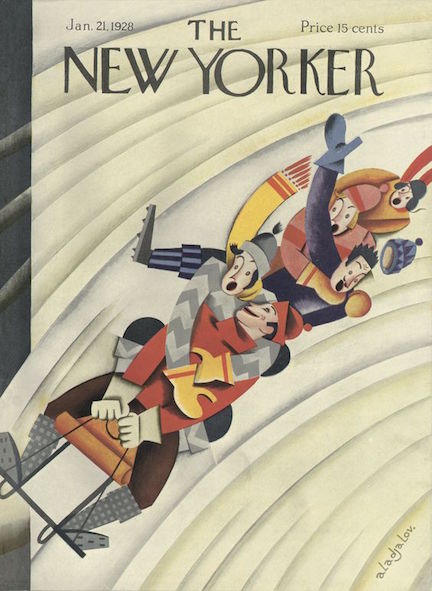
January 21, 1928 cover by Constantin Alajalov.

Ford would first meet Edison in August 1896, at a convention of the Association of Edison Illuminating Companies held at the Oriental Hotel in Brooklyn—it was just two months after the 33-year-old Ford had finished work on his first car—a “quadricycle”—consisting of a simple frame, an ethanol-powered engine and four bicycle wheels. In contrast, by 1896 the 49-year-old Edison was a worldwide celebrity, having already invented the phonograph (1877), the incandescent lamp (1879), public electricity (1883) and motion pictures (1888).

screen-shot-2017-02-21-at-5-05-35-pm
WHAT NEXT, A CAR STEREO?…Thomas Edison (left) with his second phonograph, photographed by Mathew Brady in Washington, D.C., April 1878. At right, Henry Ford sits in his first automobile, the Ford Quadricycle, in 1896. (Wikimedia Commons)
By 1907 the two had forged a close friendship that would endure the rest of their lives. So it was no surprise that these two giants of the machine age would show up together at the New York Auto Show at Madison Square Garden and take a gander at the latest technical marvels, including Ford’s new “Model A.” The New Yorker’s “Talk of the Town” was on hand as witness:

screen-shot-2017-02-15-at-1-26-25-pm

screen-shot-2017-02-15-at-1-27-28-pm

screen-shot-2017-02-15-at-1-27-51-pm

NEAT-O…Thomas Edison and Henry Ford at the 1928 New York Auto Show. (Associated Press)
screen-shot-2017-02-20-at-11-49-56-am
IT SOLD LIKE HOTCAKES…Henry Ford and son Edsel introducing the 1928 Ford Model A at the Ford Industrial Exposition in New York City, January 1928. (thehenryford.org)

*  *  *

E.B. Drives the ‘A’

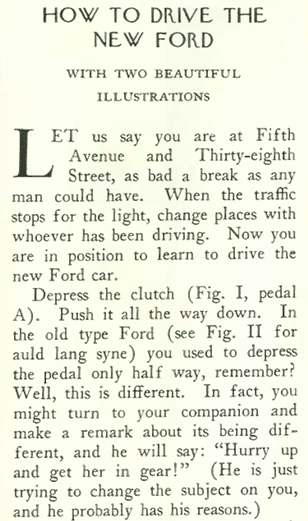
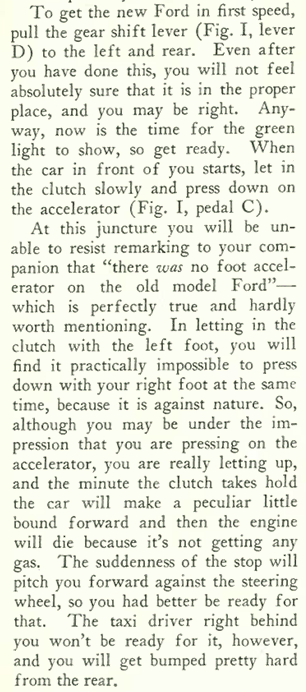
In the same issue (Jan. 21, 1928) E.B. White told readers how to drive the new Model A—in his roundabout way. Some excerpts:

screen-shot-2017-02-15-at-1-44-00-pm

screen-shot-2017-02-15-at-1-44-27-pm

No doubt White was feeling a bit wistful with the arrival of the Model A, which supplanted its predecessor, the ubiquitous Model T. White even penned a farewell to the old automobile under a pseudonym that conflated White’s name with Richard Lee Strout’s, whose original submission to The New Yorker inspired White’s book (illustrated by New Yorker cartoonist Daniel ‘Alain’ Brustlein).

wrclit64451

farewellmodelt_lg_1024x1024
FAREWELL TIN LIZZIE…E.B. and Katharine White driving his beloved Model T.

In Farewell to Model T White recalled his days after graduating from college, when in 1922 he set off across America with his typewriter and his Model T.  White wrote that “(his) own vision of the land—my own discovery of it—was shaped, more than by any other instrument, by a Model T Ford…a slow-motion roadster of miraculous design—strong, tremulous, and tireless, from sea to shining sea.”

The Eternal Debate

In his “Reporter at Large” column, Morris Markey commented on the execution of former lovers and convicted murderers Ruth Snyder and Judd Gray, noting that once again the debate over the death penalty had been stirred, but as usual there was no resolution in sight. Little could Markey know that we would still be holding the debate 89 years later, with no resolution in sight.

screen-shot-2017-02-17-at-4-48-50-pm

screen-shot-2017-02-22-at-9-17-54-am

snyder-and-gray
END OF THE LINE…Mugshots of Ruth Snyder and Henry Judd Gray taken at Sing Sing Prison following their conviction for the murder of Snyder’s husband. They were executed Jan. 12, 1928. (Lloyd Sealy Library, CUNY)

 *  *  *

Ahoy there

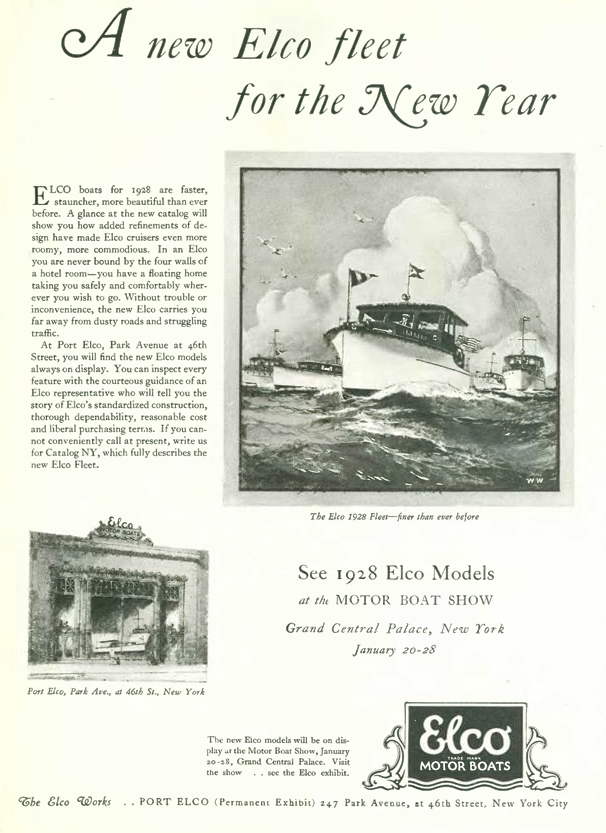
The New York Boat Show was back in town at the Grand Central Palace, enticing both the rich and the not-so-rich to answer the call of the sea. Correspondent Nicholas Trott observed:

screen-shot-2017-02-17-at-4-42-25-pm

An advertisement in the same issue touted Elco’s “floating home”…

screen-shot-2017-02-17-at-4-40-05-pm

But if you aspired to something larger than a modest cruiser, the Boat Show also featured an 85-foot yacht…

screen-shot-2017-02-17-at-4-42-31-pm

But for the rest of the grasping orders, Chris-Craft offered the Cadet, an affordable 22′ runabout sold on an installment plan. Another ad from the issue asking those of modest means to answer “the call of freedom!”

screen-shot-2017-02-17-at-4-37-35-pm

For an affordable boat, the Chris-Craft was really quite beautiful—its mahogany construction puts today’s fiberglass tubs to shame…

1024px-1928_chris_craft_cadet
PRETTY SWEET…A 1928 Chris-Craft Cadet. (Click to enlarge)

 *  *  *

Odds & Ends

The boat show was one indication that spring was already in the air. The various ads for clothing in the Jan. 21 issue had also thrown off the woolens, such as this one from Dobbs on Fifth Avenue, which featured a woman with all the lines of a skyscraper.

screen-shot-2017-02-17-at-4-36-55-pm

And to achieve those lines, another advertisement advised young women to visit Marjorie Dork…

screen-shot-2017-02-17-at-4-38-18-pm

…who seemed to do quite well for herself in the early days of fitness training…

screen-shot-2017-02-20-at-12-38-54-pm
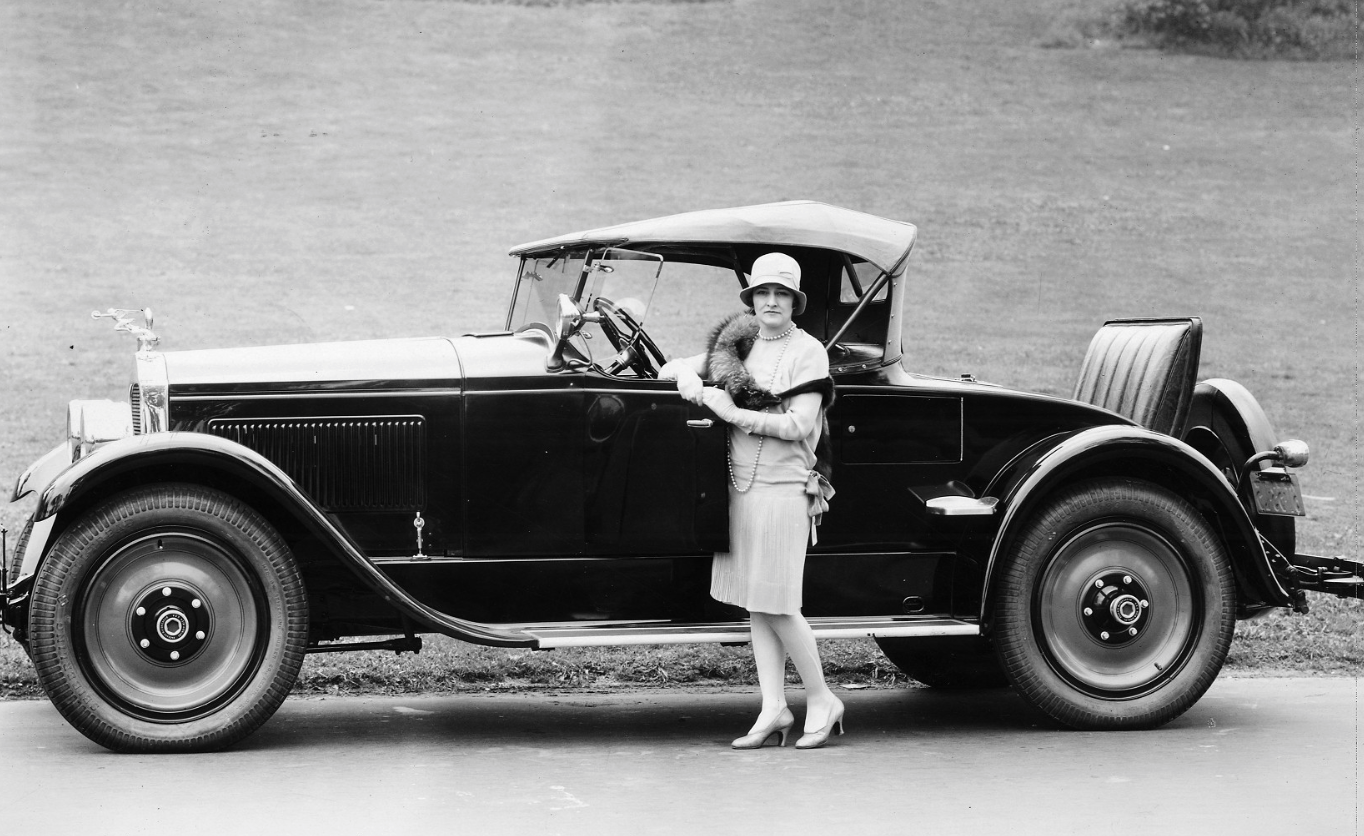
THOROUGHLY MODERN MARJORIE…New York beauty specialist Marjorie Dork, with her Packard, in New York’s Central Park, 1927. Original photo by John Adams Davis, New York. (Detroit Public Library)

And then there was a back page ad that said to hell with healthy living…

screen-shot-2017-02-17-at-4-46-49-pm

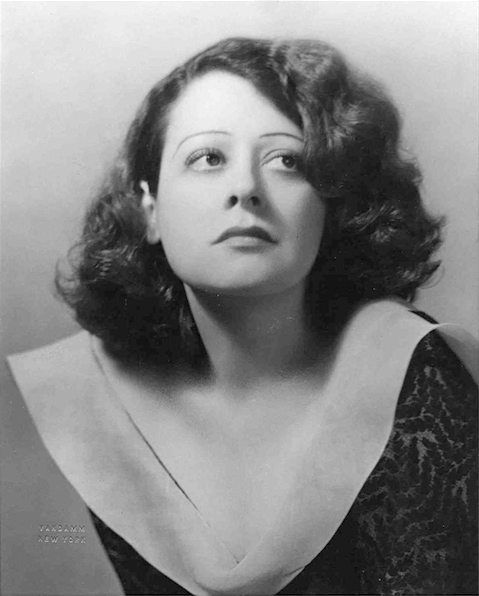
The actress featured in the advertisement, Lenore Ulric, was considered one of the American theater’s top stars. Born in 1892 as Lenore Ulrich in New Ulm, Minnesota, she got her start on stage when she was still a teen, a protégé of the famed David Belasco. Though she primarily became a stage actress, she also made the occasional film appearance, portraying fiery, hot-blooded women of the femme fatale variety.

screen-shot-2017-02-23-at-1-44-41-pm
Portrait of Lenore Ulric by New York’s Vandamm Studio. (broadway.cas.sc.edu)

 *  *  *

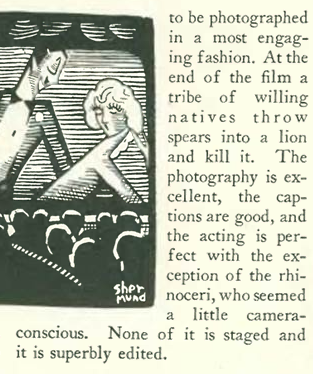
And we close with this post with a peek into the into upper class social scene, courtesy of Barbara Shermund

screen-shot-2017-02-15-at-1-46-26-pm

Next Time: Distant Rumblings…

db7671e6282218c0e4285522e188b05f

Odious Odes

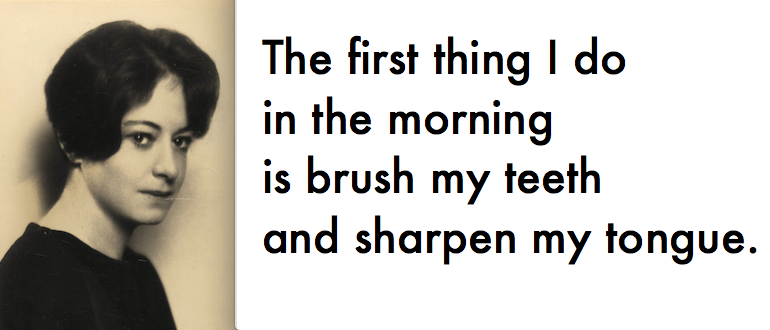
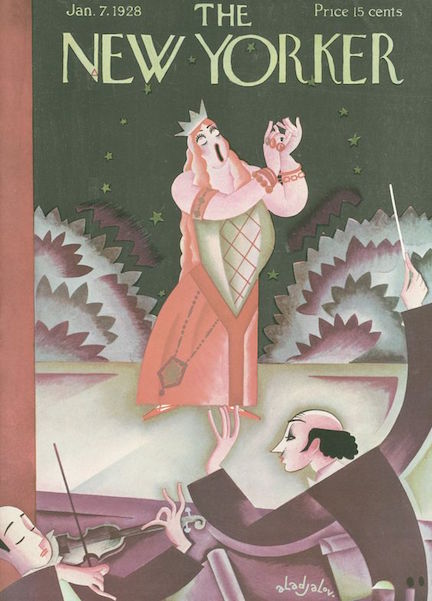
After his famous transatlantic flight, not only did Charles Lindbergh have to endure endless banquets and the sweaty crush of adoring crowds, but he also inspired a lot of kitsch, including some spectacularly bad poetry that Dorothy Parker could’t help but eviscerate in the Jan. 7, 1928 issue.

jan-7
January 7, 1928 cover by Constantin Alajalov.

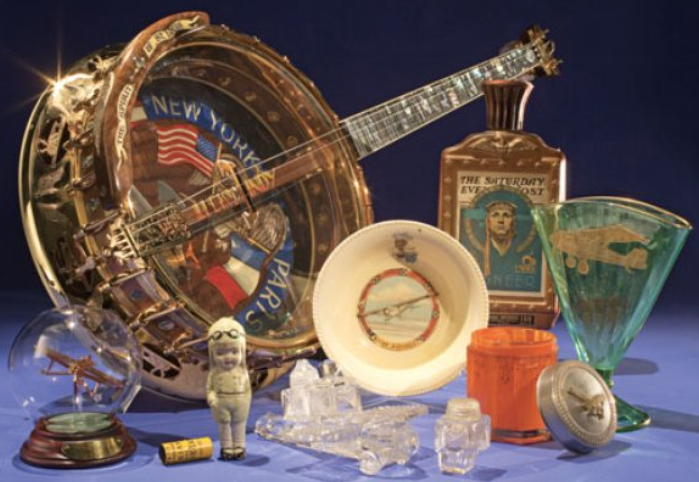
Before we tackle the poetry, here is a sampling of various Lindbergh memorabilia:

screen-shot-2017-02-10-at-3-47-31-pm
THEY’RE SELLING YOU…Assortment of Lindbergh souvenirs on display at the Smithsonian’s Air & Space Museum. (Eric Long/Smithsonian)
screen-shot-2017-02-10-at-1-48-58-pm
SHARPENED TONGUE…Dorothy Parker in 1928. (literaryladiesguide.com)

Parker led off her “Reading & Writing” column with this observation about the collapse of grammar and civilization in general…

screen-shot-2017-02-10-at-12-40-01-pm

…and offered two examples—chocolate-covered olives and a new book of poems dedicated to Charles Lindbergh’s heroic solo crossing of the Atlantic…

screen-shot-2017-02-10-at-12-41-54-pm

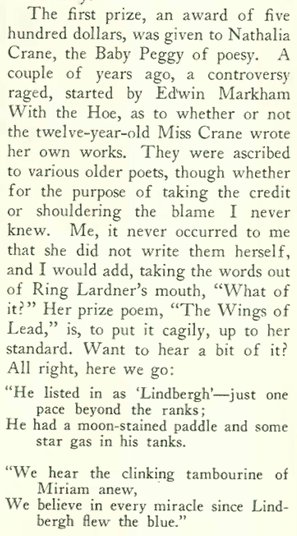
Parker’s comment about guiding a razor across her throat is a bit unnerving, considering she was chronically depressed and occasionally suicidal throughout her life. But then again, Parker didn’t like ugly things, including bad poetry, and especially bad poetry written by a twelve-year-old “prodigy,” in this case a one Nathalia Crane, who claimed the top prize in the Lindbergh collection. Parker observed:

screen-shot-2017-02-10-at-12-43-30-pm

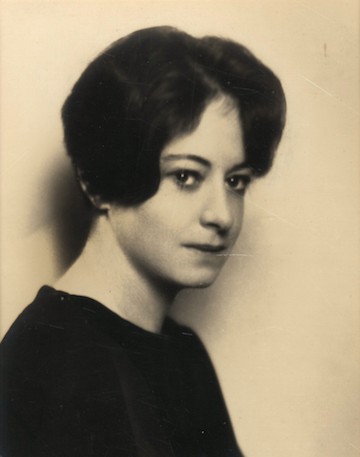
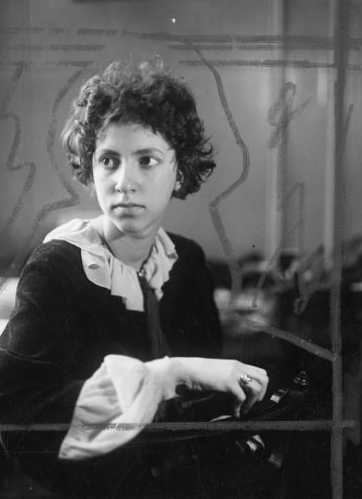
Little Nathalia Crane (1913–1998) gained fame after the publication of her first book of poetry, The Janitor’s Boy, which she wrote at age ten. After her second book of poetry was published in 1925, American poet Edwin Markham suggested the poems were part of a hoax because they exhibited a maturity of thought beyond the reach of a mere child. (A sidebar: Parker referred to Nathalia as a “Baby Peggy of poesy.” Baby Peggy, whose real name was Diana Serra Cary, was a beloved child silent film star. Still alive at this writing, she is 99 years old–the last living film star of the silent era). Update: Diana Serra Cary, considered the last surviving person with a substantial career in silent films, died February 24, 2020, at age 101.

90-105, 5, "Crane, Nathalia"; "Famous as a child prodigy, Nathalia Clara Ruth Crane (1913-1998) published her first book at age ten and later became a professor of literature. This photograph was used to illustrate a news story about ""The four ages of behavior,"" declaring that Crane, "
BAD POET’S SOCIETY?…Nathalia Crane in 1925. She would publish ten volumes of poetry and three novels, and would go on to a long career as a professor of English at San Diego State University. (Wikipedia)

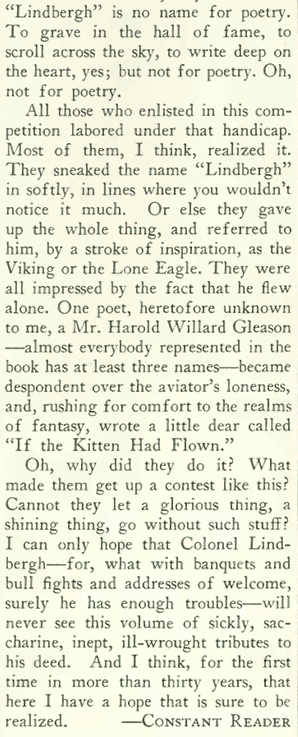
Parker observed that “Lindbergh” was not a name well suited to poetry, and concluded with the hope that the aviator would be spared from having to read the “sickly, saccharine, inept, ill-wrought tributes”…

screen-shot-2017-02-10-at-12-44-31-pm

Tilt Your Vote to Al

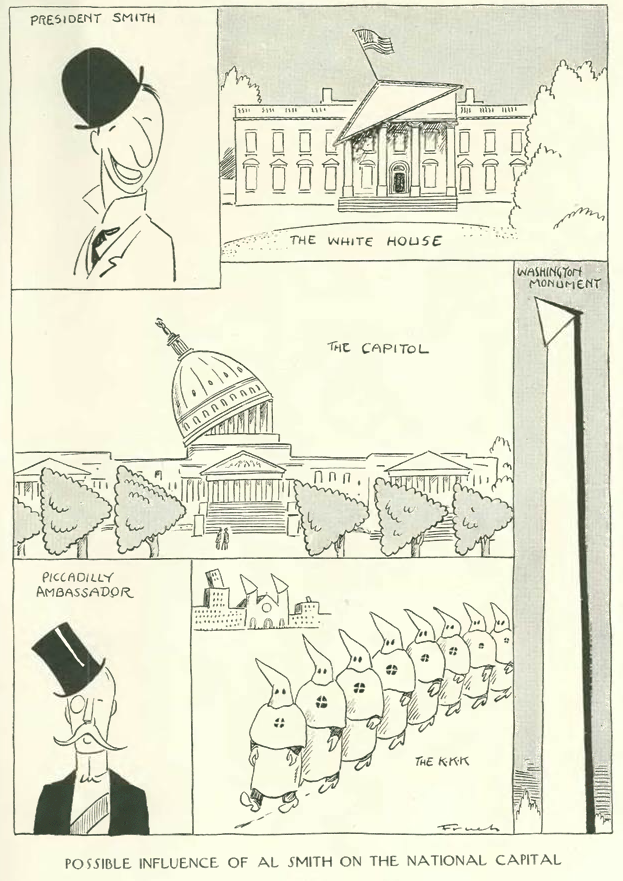
When New York Governor Al Smith announced his candidacy for U.S. President, New Yorker cartoonist Al Frueh had some fun with the governor’s habit of wearing his ever-present bowler hat at a tilt:

screen-shot-2017-02-10-at-12-15-51-pm

They Dropped Like Flies

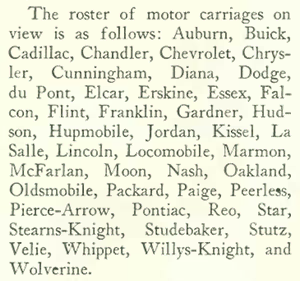
Nicholas Trott visited the 1928 New York Automobile Salon and rattled off this list of 43 car companies that would be displaying their shiny wares:

screen-shot-2017-02-10-at-12-29-32-pm

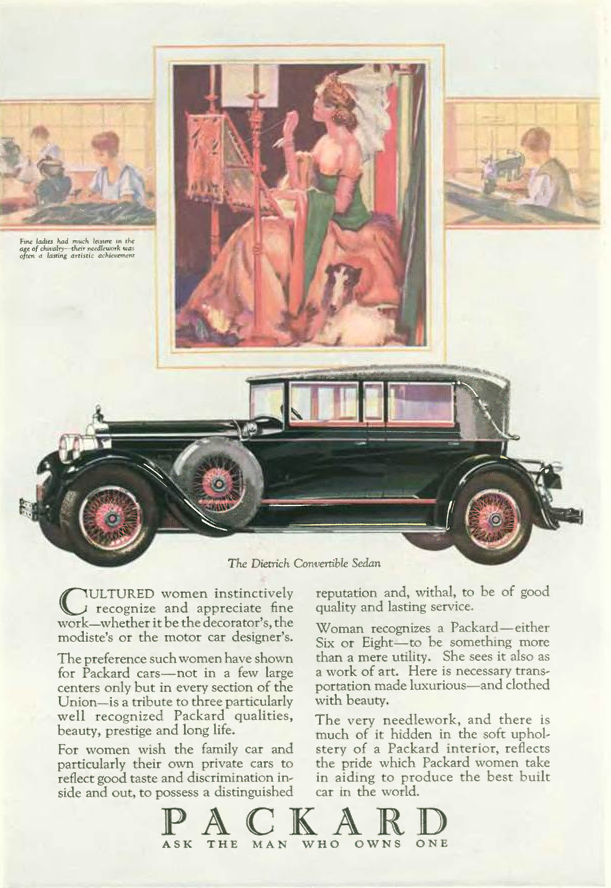
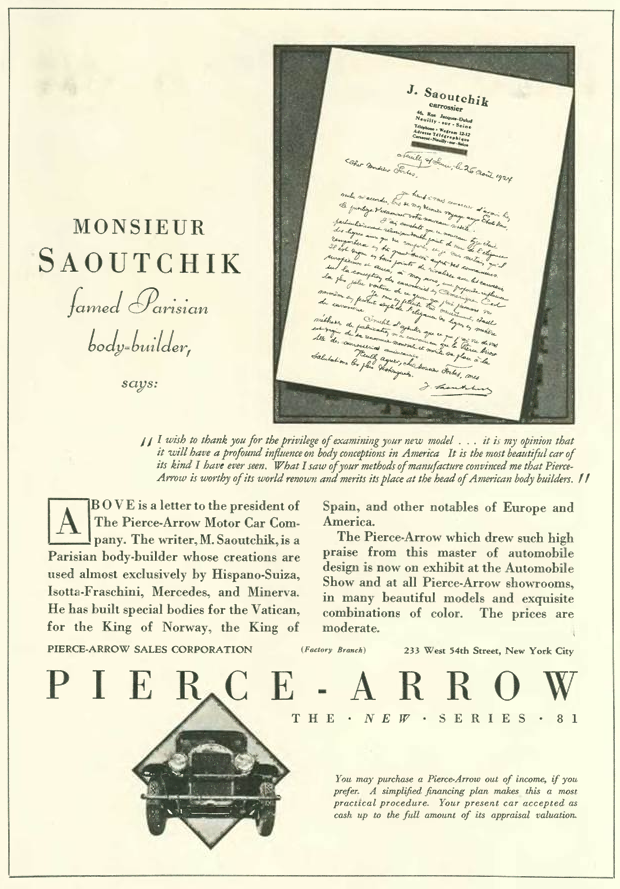
Of those 43 companies, only six are in operation today. Interestingly, the car ads that appeared in the Jan. 7 issue were mostly from companies that are long gone. Here is a sampling:

screen-shot-2017-02-10-at-12-31-07-pm

screen-shot-2017-02-10-at-12-31-24-pm

screen-shot-2017-02-10-at-12-32-00-pm

screen-shot-2017-02-10-at-12-30-41-pm

screen-shot-2017-02-10-at-12-32-24-pm

screen-shot-2017-02-10-at-12-32-45-pm

screen-shot-2017-02-10-at-12-33-28-pm

screen-shot-2017-02-10-at-12-46-47-pm

screen-shot-2017-02-10-at-12-47-05-pm

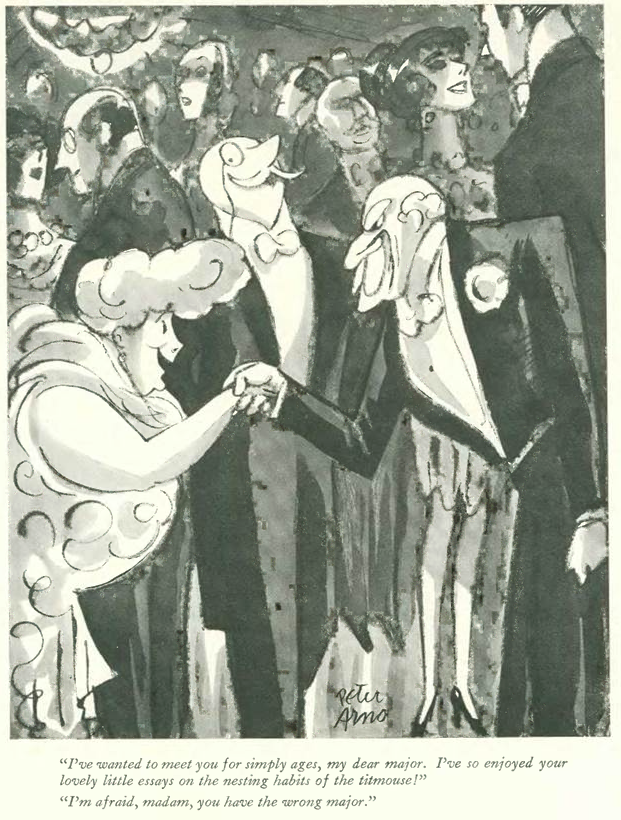
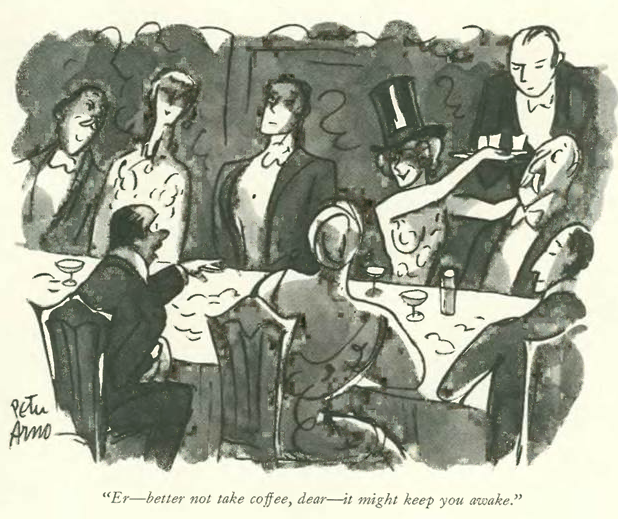
And finally, we close with Peter Arno and some dinner party hijinks…

screen-shot-2017-02-10-at-12-17-30-pm

Next Time: Guess Who’s Coming to Dinner…

d30ba2edfc3289f6c04c8dfd337ef06c

More Funny Business

My last entry featured cartoonist Bud Fisher, inventor of the comic “strip” (Mutt & Jeff) and the subject of The New Yorker’s Nov. 26, 1927 “Profile.” It was something of a surprise, then, to open the next issue, Dec. 3, and find literary critic Dorothy Parker offering her observations on the funny papers, including Sidney Smith’s comic strip, The Gumps.

dec-3
December 3, 1927 cover by Constantin Alajalov.

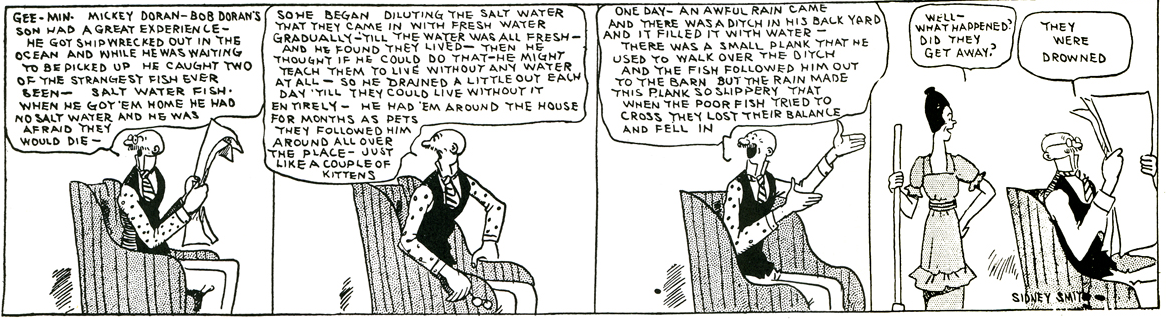
Before we get to Dorothy Parker, let’s have a look at The Gumps, created by Sidney Smith in 1917. Although that strip had plenty of slapstick, it was wordier than Mutt & Jeff and somewhat more realistic (Smith was the first cartoonist to kill off a regular character, in 1929–it caused a national outcry). An example of the strip from around 1920:

screen-shot-2017-01-31-at-12-37-37-pm
(michaelspornanimation.com) Click image to enlarge

Like Bud Fisher, Smith would become wealthy from the merchandising of Gump toys, games, songs, food products, etc…

9eef3c685e113a5712ce4c353729044a
The image of Andy Gump even graced cigar boxes. (kenlevine.blog)

The Gumps were also featured in nearly 50 animated shorts, and between 1923 and 1928 Universal produced dozens of two-reel comedies starring Joe Murphy (one of the original Keystone Cops) as Andy Gump, Fay Tincher as Min and Jack Morgan as Chester (two-reelers were usually comedies, about 20 minutes in length). The director of these short films, Norman Taurog, would go on to become the youngest director to win an Academy Award (Skippy 1931). He would also direct such films as Boy’s Town (1938) and nine Elvis Presley movies from 1960 to 1968.

His comic strip barely five years old, in 1922 Smith famously signed a 10-year, one million-dollar contract. In 1935 he would sign an even more lucrative contract, but on his way home from the signing he would die in a car accident.

574451a661b35824488062388d2a1939
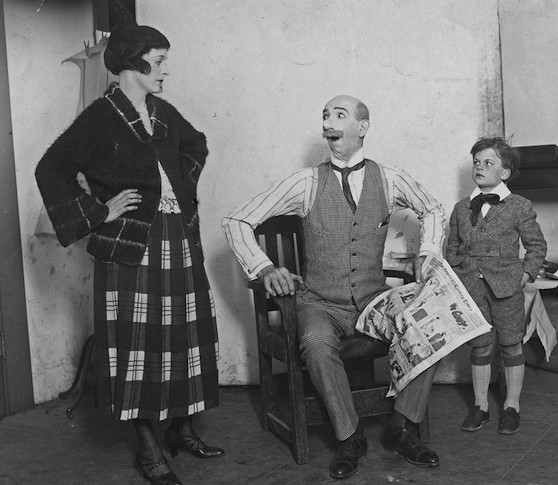
OH MIN!…A publicity still from Universal’s two-reel comedy series featuring The Gumps. From left, Fay Tincher (Min), Joe Murphy (Andy Gump) and Jackie Morgan (Chester). The actress Fay Tincher is a bit of a mystery…an enterprising young comedienne who started her own production company in 1918, she dropped from public view by 1930, and little is known of her life since that time, even though she lived to see the year 1983, and died at age 99. (younghollywoodhof.com)
screen-shot-2017-02-01-at-9-26-09-am
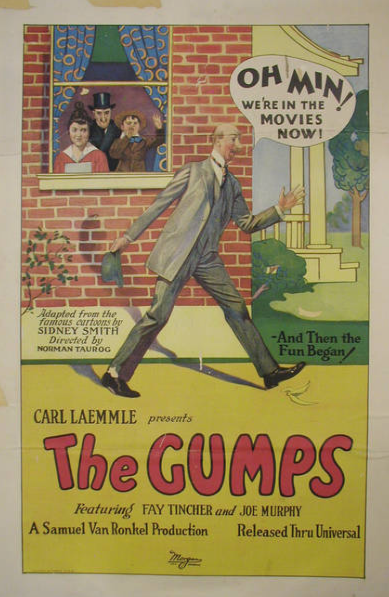
Theatre poster announced the coming of what would be dozens of two-reelers produced by Universal between 1923 and 1928 featuring The Gumps. (imdb.com)

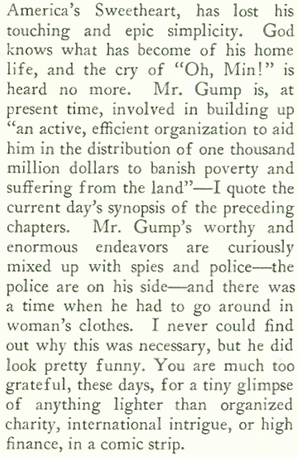
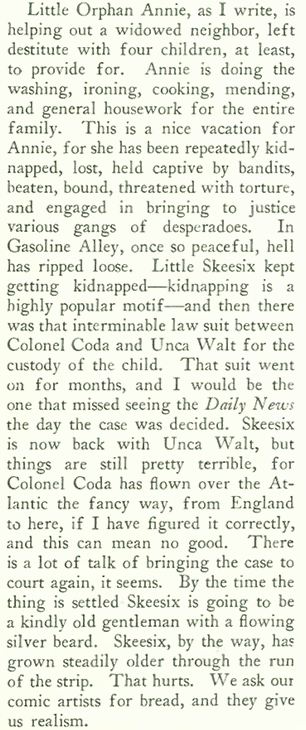
In her column, “Reading and Writing,” Dorothy Parker (writing under the pen name “Constant Reader”) lamented the fact that the comic strips were abandoning simple, light horseplay in favor of “melodramas.” Apparently even Andy Gump wasn’t exempt:

screen-shot-2017-01-30-at-10-06-30-am

screen-shot-2017-01-30-at-10-06-42-am

thegumpsintro21217

screen-shot-2017-01-31-at-9-55-35-am
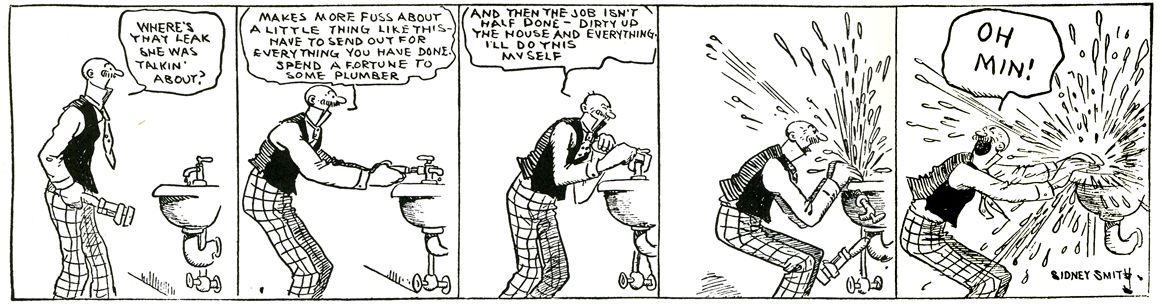
GUMPS IN THE DUMPS…in late 1927 Dorothy Parker longed for the antics of the old, dimwitted Andy Gump and his much-brainier wife, Minerva. Above, the first strip from 1917 that introduced The Gumps. Below, a circa 1920 strip featuring a typical Andy Gump mishap and his trademark “Oh Min!” (newspapers.com) Click images to enlarge.

Parker also bemoaned the likes of Little Orphan Annie and the gang from Gasoline Alley, where everyday hijinks were replaced by melodrama:

screen-shot-2017-01-30-at-10-07-07-am

screen-shot-2017-01-31-at-1-02-47-pm
I LOVE YA, TOMORROW…but I’m gonna kick your ass today! Annie gets rough in this 1927 strip. Hugely popular, the strip (begun in 1924) inspired a ton of merchandise, films, a radio show and the musical Annie. The strip Little Orphan Annie made creator Harold Gray a very rich man. (ha.comics.com) Click image to enlarge.
ga23nov1927
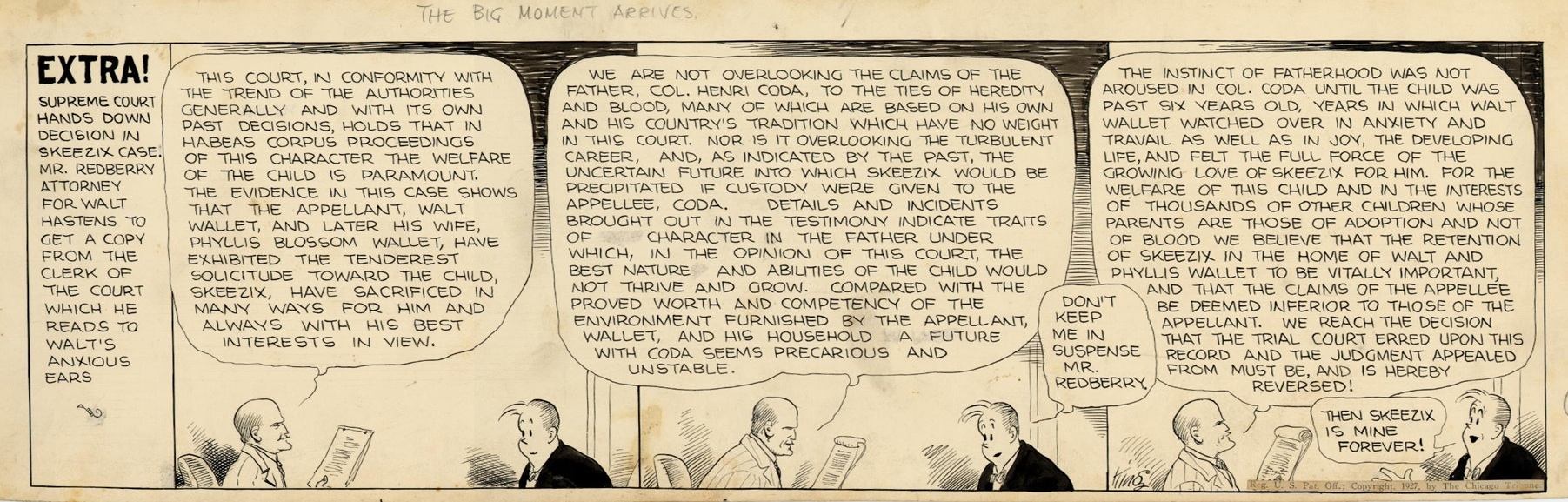
SORRY, NO PIE IN THE FACE HERE…In this series of turgid word balloons, Walt gets full custody of the orphan Skeezix in this Gasoline Alley strip from 1927, ending what Dorothy Parker called “an interminable law suit.” First published November 24, 1918 by Frank King (who drew the strip until 1959), Gasoline Alley is still going and is the second-longest-running comic strip in the U.S. As Parker noted in her column, the characters in Gasoline Alley were allowed to age naturally. Skeezix is currently 97 years old. (hoodedutilitarian.com) Click image to enlarge.

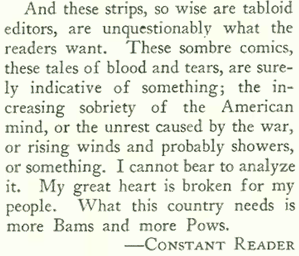
Parker suffered throughout her life from depression, and no doubt turned to the funnies for respite. However, she wrote that she hadn’t “seen a Pow or a Bam in an egg’s age,” and sadly concluded that melodrama was what the readers wanted.

screen-shot-2017-01-31-at-9-27-56-am

When Minerva Was a Car

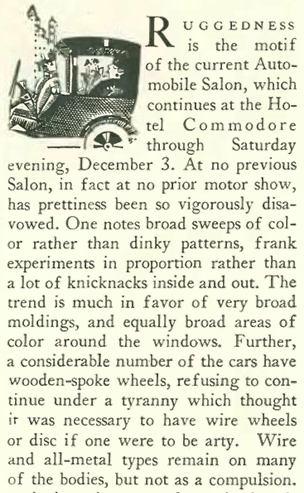
The New Yorker’s Nicholas Trott visited the Automobile Salon at the Hotel Commodore and noted that the latest trend favored an automobile’s “ruggedness” over its “prettiness.” Given the condition of roads in the 1920s, that probably wasn’t a bad thing…

the-automobile-salon

In the early days of the auto industry there were thousands of different manufacturers that eventually went broke or merged with other companies. Trott’s article mentioned new offerings from Chrysler, Mercedes, and Cadillac as well as from such makes as Erskine, Sterns-Knight, Minerva, Holbrook Franklin, Stutz, and Brewster.

In “The Talk of the Town,” however, the editors wrote about another car with a far less colorful name: The Ford Model A. After 18 years of the ubiquitous black Model T, Ford buyers were ready for something different…

screen-shot-2017-01-30-at-9-38-36-am

1928_model_a_ford
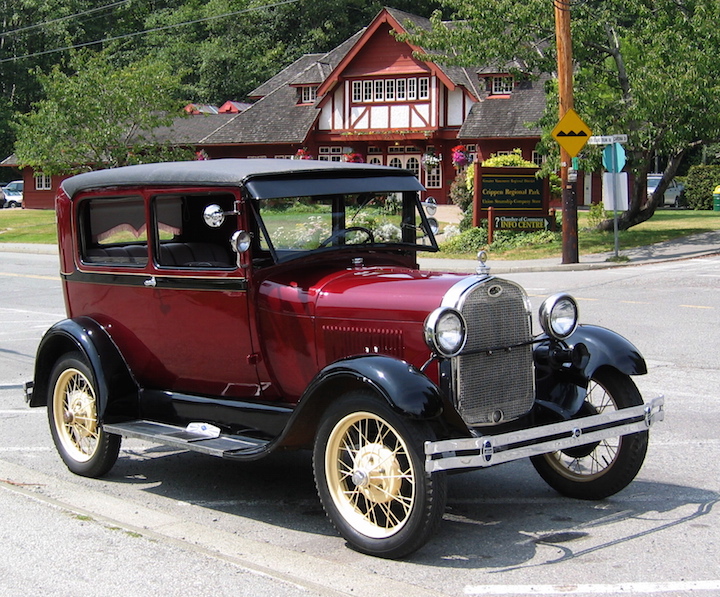
GOOD ENOUGH…The 1928 Ford Model A Tudor Sedan (Wikipedia)

New Yorker editors cautioned, however, that buyers of the Model A should “not expect too much” from a car aimed at more modest pocketbooks. In a little more than a year Ford would sell one million of the things, and by the summer of 1929, more than two million.

screen-shot-2017-01-30-at-9-39-30-am

When Model A production ended in early 1932, nearly five million of the cars had been produced.

German Atrocities?

It’s seemed a bit of an “about face” for New Yorker architecture critic George S. Chappell to write of the “horrific style of modern Germany” after previously writing admiringly of the Bauhaus movement and “International Style” promulgated by Le Corbusier. Chappell’s column “The Sky Line” included this subhead, “German Atrocities Neatly Escaped.” In a few years “German Atrocities” would refer to something very different…

screen-shot-2017-01-30-at-10-02-36-am

screen-shot-2017-01-30-at-10-03-44-am

mny325559
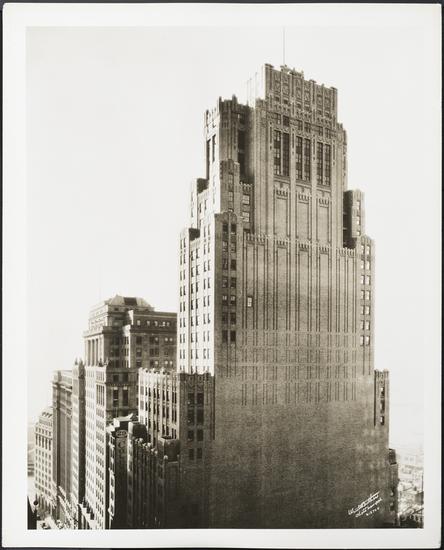
TEN-HUT!…The New Yorker’s George Chappell liked the Harriman Building at 39 Broadway despite its “militant aspect.” Designed by Cross & Cross, it opened in 1928. (Museum of the City of New York)

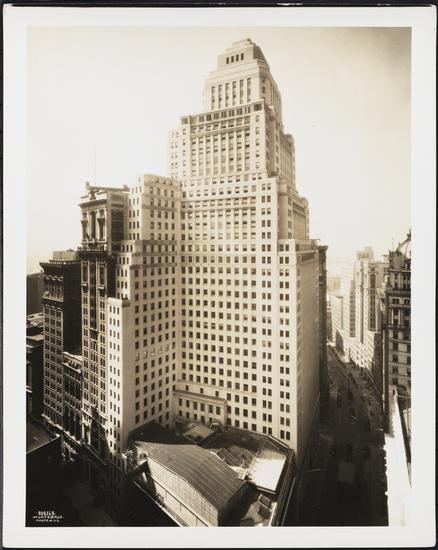
Another monstrous building of note in Chappell’s column was the “huge” Equitable Trust Building at 15 Broad Street…

screen-shot-2017-01-30-at-10-03-56-am

mny323767
Equitable Trust Building at 15 Broad Street. Designed by Trowbridge & Livingston, completed in 1928. (Museum of the City of New York)

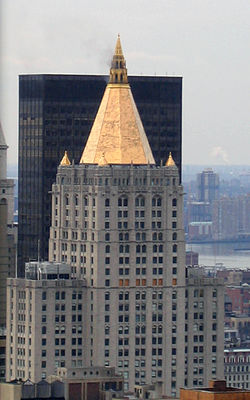
To save the best for last, Chappell also wrote of Cass Gilbert’s landmark New York Life Building, rising on the site of the old Madison Square Garden…

screen-shot-2017-01-30-at-10-04-22-am

screen-shot-2017-01-30-at-10-04-42-am

The distinctive pyramidal gilded roof of the New York Life Insurance Building, (Wikipedia)

 *  *  *

She Nearly Made It

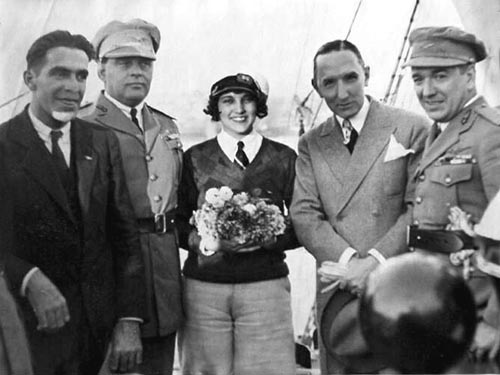
Morris Markey wrote about the exploits of pilot and actress Ruth Elder (1902–1977) in his “Reporter at Large” column. Known as the “Miss America of Aviation,” on Oct. 11, 1927, Elder and her co-pilot, George Haldeman, took off from New York in her attempt to become the first woman to make a transatlantic crossing to Paris. Mechanical problems in their airplane (a Stinson Detroiter dubbed American Girl) caused them to ditch into the ocean 350 miles northeast of the Azores. Fortunately they were rescued by a Dutch oil tanker in the vicinity.

elder_trip_4_500
NO WORSE FOR WEAR…Ruth Elder, center, and George Haldeman, far left, on board their rescue ship, the Barendrecht, Oct. 25, 1927. (ctie.monash.edu)
wt81_hootandlady
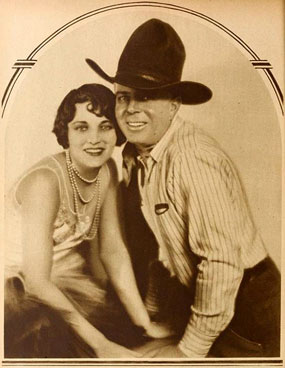
WHAT A HOOT…Ruth Elder and Hoot Gibson in a promotional pose for the 1929 film Winged Horseman (usc.edu).

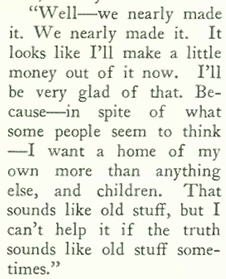
Although they were unable to duplicate Charles Lindbergh’s feat, Elder and Haldeman nevertheless established a new over-water endurance flight record of 2,623 miles–the longest flight ever made by a woman. They were honored with a ticker-tape parade upon their return to New York. Despite her derring-do, Elder suggested that she longed for a simpler, more domestic life…

morris-markey-a-reporter-at-large-ruth-elder

Whether or not she found the simple life it is hard to say. She married six times, perhaps looking for the right “old stuff” and not quite finding it.

 *  *  *

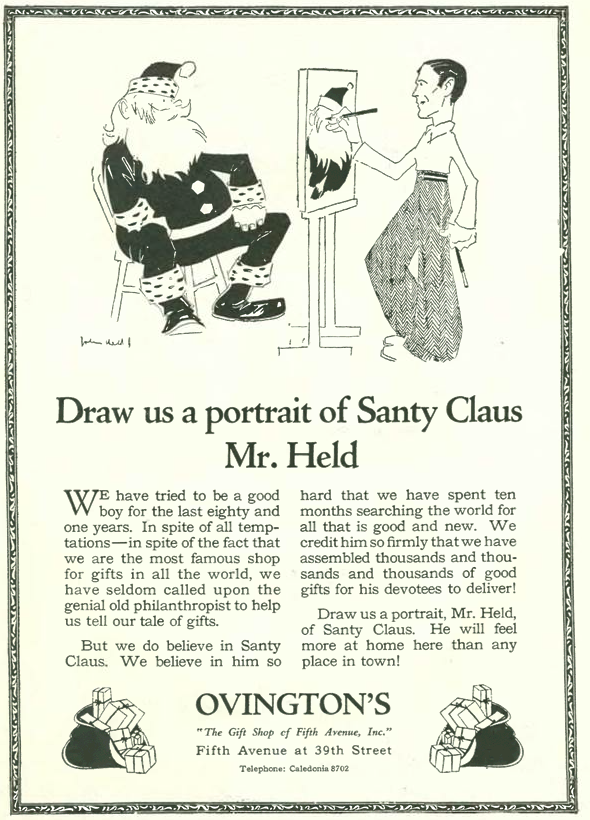
And finally, this ad from the Dec. 3 issue featuring the art of New Yorker contributor John Held Jr…

screen-shot-2017-01-30-at-9-37-40-am

…and this cartoon by Otto Soglow, depicting how one toff bags his “trophy”…

screen-shot-2017-01-30-at-9-51-46-am

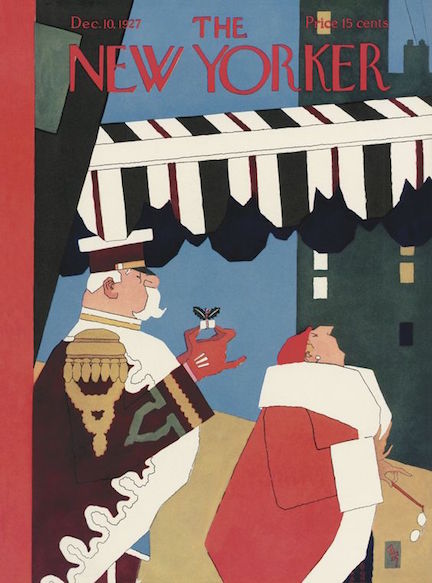
Next Time: The Perfect Gift for 1927…

dec-10

Mutt & Jeff

We close out November 1927 by looking at a hugely popular comic strip—Mutt & Jeff—that made cartoonist Bud Fisher both famous and wealthy.

screen-shot-2017-01-26-at-10-05-52-am
Nov. 19 and Nov. 26, 1927 covers by Rea Irvin.

The editors of the Nov. 26, 1927 issue of The New Yorker thought Fisher interesting enough to feature in a lengthy “Profile,” written by Kelly Coombs. A brief excerpt:

screen-shot-2017-01-24-at-1-50-02-pm

screen-shot-2017-01-24-at-1-50-10-pm

According to John Adcock’s terrific Yesterday’s Papers blog, by 1916 Bud Fisher was the highest paid cartoonist on earth. The New Yorker suggested his annual income was $300,000 (roughly equivalent to more than $4 million today). In addition to the strips, created by Fisher and a team of ghost illustrators/writers, Mutt & Jeff were featured in vaudeville engagements, theatrical shows, animated cartoons, comic books and toys.

muttmagicdark1380
DIE LAUGHING…Mutt & Jeff themed toys included this joke kit from Mysto Manufacturing. I don’t quite get the joke featured on the cover, depicting Jeff’s casually twisted approach to murdering poor Mutt. (Copyright MEL BIRNKRANT via melbirnkrant.com—a truly amazing collection)
m902d5g
IT’S A LIVING…Harry Conway (Bud) Fisher, drawing a likeness of the character “Jeff” at a Chicago Daily News event in 1915. (Chicago History Museum)

Fisher began his career as a sports cartoonist for the San Francisco Chronicle and started his strip about “two mismatched tinhorns” in 1907. It went into syndication the following year. Mutt and Jeff, originally titled A. Mutt, is regarded as the first American newspaper cartoon published as a strip of panels, making it the first “comic strip.”

There was obviously a time when American readers thought Mutt & Jeff hilarious, but I don’t quite get its appeal. In this strip from 1926, Jeff gets a pie in the face. The giant question mark was frequently employed by Fisher, as were the dotted eye lines and explanatory arrows like the one in the last panel. No, Jeff didn’t get his brains blown out by Mutt. It is only a pie! Hah!

muttjeff052326b
Click on image to enlarge

Another visual cliché from comics of yore was the angry wife wielding a rolling pin. Apparently Jeff refers to Mutt’s wife as an “Old Buzzard” and assumes she is already in bed (sorry about the poor quality of the reproduction). Jeff subsequently gets whacked with the rolling pin, and Mutt takes it on the bean with a flatiron. That is quite a feat, throwing a grown man through a window while simultaneously hitting him on the head with a flatiron…

muttjeff112429a
Click on image to enlarge (Both strips courtesy University of Michigan)

The duo were also featured in more than 300 animated “half-reelers” produced between 1913 and 1926, including Mutt and Jeff: On Strike from 1920. The short film (which can be viewed here) even includes rare footage of Bud Fisher himself, since the story–sort of a film within a film–involves the penniless Mutt and Jeff going on strike after they see a movie featuring Fisher’s lavish home.

screen-shot-2017-01-26-at-12-50-34-pm
STRIKEBREAKER…Still images from the silent half-reeler, Mutt and Jeff: On Strike. Bud Fisher is shown at home discussing terms over the phone with his striking characters. They lose. (www.filmpreservation.org)

Coombs concluded the profile with these observations concerning Fisher’s personal habits:

screen-shot-2017-01-24-at-1-50-19-pm

screen-shot-2017-01-24-at-1-50-30-pm

Fisher employed a number of assistants on the strip, including George Herriman (Krazy Kat) and a high-school boy named Maurice Sendak (Where the Wild Things Are). When Fisher appeared to lose interest in the strip in the 1930s, assistant Al Smith took over and drew the strip for nearly fifty years (but Smith didn’t sign his own name on the strip until after Fisher’s death in 1954).

In Yesterday’s Papers, Adcock notes that Fisher “was the unlikeliest person you could think of to draw Mutt and Jeff…along with most of his contemporary cartoonist-journalists pals, (he) enjoyed fights, chorus girls, gambling, and saloons. Fisher liked to shoot up hotel rooms with his pistols, one of which was a gift from Pancho Villa, indoors when he was drunk.”

Heads in the Clouds

Thanks to the race to fly across the Atlantic, toy models of Charles Lindbergh’s Spirit of St. Louis and other planes were in high demand for the Christmas season, according to this item in the Nov. 26, 1927, “Talk of the Town:”

screen-shot-2017-01-24-at-1-42-51-pm

screen-shot-2017-01-24-at-1-42-56-pm

screen-shot-2017-01-27-at-9-48-40-am
BUILT TO LAST…A Metalcraft model kit (box, upper image, contents below) from the late 1920s. It was all metal in the days before plastic model kits. (eBay)

 *  *  *

At a Loss For Words

Jumping back to the Nov. 19, 1927 issue, we go from the low art of Bud Fisher to the high art of John Marin featured in “The Art Galleries” section. Art critic Murdock Pemberton wrote:

the-art-galleries-marin-1

screen-shot-2017-01-27-at-10-01-51-am
SAVAGE WORK…John Marin, White Horses – Sea Movement off Deer Isle, Maine, 1926. (Whitney Museum of American Art)

But perhaps “high art” is not an accurate description of Marin’s paintings, since Marin himself wasn’t into “highfalutin words” to describe his work…

marin-2-signed-mp

12032401444_4bb042eb04_b
HAUNTING BEAUTY…John Marin, Echo Lake Franconia Range White Mountain Country, 1927 (National Gallery of Art, Washington DC.)

 *  *  *

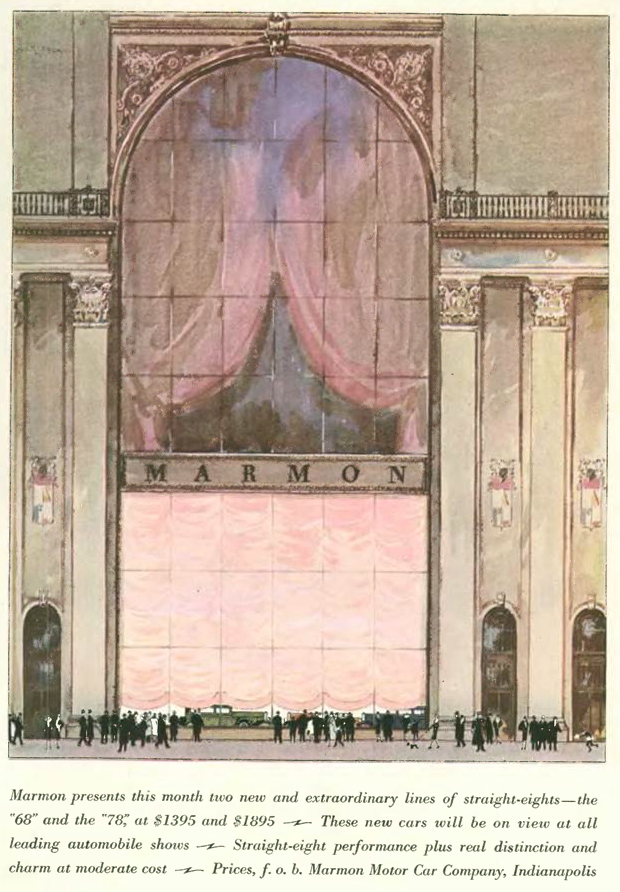
In the previous week’s issue (Nov. 12) the Marmon 8 was advertised as an ideal car for women. Not to be outdone, the folks at Buick shot back with this colorful ad in the Nov. 19 issue:

screen-shot-2017-01-24-at-1-19-18-pm

The Nov. 19 issue also featured this strange advertisement from the famed Wanamaker department store. Strange mainly because of the illustration, which features a fashionable woman departing a fanciful aircraft studded with mullioned windows(!) and a stairway that stretches to improbable depths…oh, and in case the reader might miss the snob appeal associated with French furs, the words Paris, Parisian or French are featured ten times…
screen-shot-2017-01-24-at-1-20-53-pm

And finally, the ubiquitous New Yorker cartoon featuring the humorous mismatch of rich old sugar daddy and ditzy young mistress, courtesy of Julian de Miskey

screen-shot-2017-01-24-at-1-25-20-pm

Next Time: More Funny Business…
dec-3