Above: Nightlife correspondent Lois Long checked out the latest clubs as well as old-time favorites in her column "Tables for Two." From left, advertisement for Restaurant Larue; Josephine Baker in 1937; and the entrance to Monte Proser's Beachcomber, an early iteration of the tiki bar that would become ubiquitous in midcentury America. (eBay.com/Wikipedia/mytiki.life)
Part three of Janet Flanner’s profile of Adolf Hitler can be found below, but it’s time to lead with something more pleasant, namely Manhattan nightlife through the eyes of Lois Long.
March 14, 1936 cover by Rea Irvin.
In her “Tables for Two” column headlined “Nostalgic Notes,” Long checked out the new Chez Josephine Baker, the garden-like delights of Restauarnt Larue, and the French-themed Le Coq Rouge.
NEW NIGHTLIFE…Clockwise from top left, ad for Restaurant Larue; 1930s postcard showing interior of Larue; Josephine Baker, proprietor of Chez Josephine Baker; ad for Le Coq Rouge; interior of Le Coq Rouge, 1930s. (eBay/Wikipedia)
Long also noted the Beachcomber Bar, which originated in the basement of an old church, and actor Dan Healy’sBroadway Room.
MAN ABOUT TOWN…Dan Healy was a well-known master of ceremonies in the Manhattan nightlife scene. He married the famed “boop-boop-a-doop” singer (and possible Betty Boop inspiration) Helen Kane in 1939—they later opened a New York restaurant together called Healy’s Grill. (whosdatedwho.com/Facebook)
* * *
Bummed Out
E.B. White (in “Notes and Comment”) referred to confessional essays published in Esquire magazine by F. Scott Fitzgerald that frankly described his struggles with alcoholism and the decline of his literary reputation. The confessional tone of the essays (three in all, published in February, March and April 1936) proved controversial at the time.
In his first essay, “The Crack-Up,” Fitzgerald famously observed that “the test of a first-rate intelligence is the ability to hold two opposed ideas in the mind at the same time, and still retain the ability to function.”
A CRY FOR HELP?…At left, F. Scott Fitzgerald in the 1930s (top), and, apparently during happier days (below, with wife Zelda); at right, the opening page of “The Crack-Up.” (esquire.com/pbs.org)
* * *
Say What?
New Yorker writers rarely missed an opportunity to poke fun of Time magazine’s unique ways with the English language. E.B. White again, in an excerpt:
TIMEWORDS…The March 16, 1936 issue of Time, and E.B. White. (time.com/imdb.com)
* * *
Dying to Know
“The Talk of the Town” made brief mention of a rumor regarding Woolworth heiress Barbara Hutton’s health. Reports of her demise were premature; she died in 1979.
HANGING IN THERE…Barbara Hutton with husband no. 2, Count Kurt von Haugwitz-Reventlow, circa 1936. Hutton married seven times, including a brief marriage to actor Cary Grant, who was husband no. 3. (whosdatedwho.com)
* * *
Part Three
Janet Flanner completed her three-part profile of Adolf Hitler by looking into the man’s mind, if that was even possible.
OBEDIENT MASSES…Nazi dictator Adolf Hitler addresses soldiers at a rally in Dortmund, Germany, 1933. (encyclopedia.ushmm.org)
Flanner also noted the Führer’s early days as an unsuccessful painter, and an odd wedding gift to his buddy Hermann Göring:
GOOSED…Top, Adolf Hitler presented a specially painted copy of Correggio’s Leda with the Swan as a wedding gift to Hermann Göring and actress Emmy Sonnemann on April 10, 1935; below, Hitler painted this watercolor during his pre-WWI time in Munich, from May 1913 to August 1914. (Wikipedia)
* * *
China Syndrome
Supporting herself as a writer for The New Yorker, Emily Hahn’s years in Shanghai, China (1935 to 1941) were tumultuous. Living in the city’s red light district, she became romantically involved with the Chinese poet and publisher Shao Xunmei (aka Sinmay Zau) and became addicted to opium. In this excerpted short essay, Hahn described her literary encounters with Shao Xunmei (here referred to as “Pan Heh-ven”) and a passel of translators.
ENOUGH OF THAT…Emily Hahn became romantically involved with the Chinese poet and publisher Shao Xunmei (aka Sinmay Zau), but ultimately left him in order to break her opium addiction. (Wikipedia)
* * *
At the Movies
Critic John Mosher did his best to stay awake during the latest fare from Hollywood…
SPECIOUS SPECTACLE…Top, from left, Louise Fazenda, Paul Draper, Ruby Keeler, Dick Powell and Hugh Herbert in Colleen; below, Wendy Barrie and Gene Raymond in Love on a Bet. (cometoverhollywood.com/imdb.com)
Mosher also commented on a film he walked out on (The Farmer in the Dell), and considered the twentieth anniversary of Intolerance, a 1916 drama that had become a “cheap amusement.”
HO HUM…Critic John Mosher walked out of The Farmer in the Dell, mostly due to boredom—above, Frank Albertson, Jean Parker, Fred Stone and Esther Dale in the romcom The Farmer in the Dell; below, scene from D.W. Griffith’s epic silent film from 1916, Intolerance. (imdb.com/cinemafromthespectrum.com)
* * *
From Our Advertisers
The folks at Hormel once again claimed the inside front cover with this array of soups featured sideways, in full color…
…the illustrator of this Lord & Taylor advertisement hoped to superimpose a pair of shoes over a woman’s face, with less than convincing results…
…the makers of Packard automobiles sent a condescending message “To The Ladies,” promising not to “bore them” with talk of mechanical features…
…a sampling of one-column ads featured, from left, the renowned Russian Eagle cafe-bar at the Sherry-Netherland, the Modernage furniture store on East 33rd, and the Milwaukee Road railroad, which offered adventure at such places as a Montana dude ranch…
…the inside back cover featured this drawing of actress/dancer/singer June Knight by Abe Birnbaum…
…Birnbaum was a terrific artist, but his portrait of Knight was not terribly flattering…this is what she looked like in the 1930s…
June Knight (1913–1987) circa 1930s. (reddit.com)
…on to the cartoons, we kick off the issue with Canadian cartoonist Richard Taylor…
…and Taylor again, striking a pose…
…Arnold Hall contributed an example of floral marketing…
…Al Frueh contributed to “The Theatre” section…
…Jack Markow did some rubbernecking…
…Howard Baer welcomed a new tax deduction to the world…
…Perry Barlow drew up impressions of a field trip to the Hayden Planetarium…
…Barlow again…
…one of Helen Hokinson’s “girls” explained herself…
…Barbara Shermund interpreted modern dance…
…Alain sought some dish over tea with the vicar…
…and we close with James Thurber, and a penny for her thoughts…
Above: At left, the Nazi Party sought to remake Christian holidays such as Christmas into Nazi-themed, pagan events, even trying to redefine St. Nicholas as Wotan, the ancient Germanic deity; at right, Adolf Hitler rejected Christianity, calling it a Jewish plot to undermine the heroic ideals of the Aryan-dominated Roman Empire. Here he is seen meeting the nuncio to Germany, Cesare Orsenigo, on January 1, 1935. (reddit.com/Wikipedia)
For the March 7 issue we look at the second part of Janet Flanner’s profile of German dictator Adolf Hitler, in which she attempted to identify the social and political influences that led to his peculiar vision of the world.
March 7, 1936 cover by Constantin Alajalov.
Flanner noted that Hitler’s ancestors were intermarrying, pious Roman Catholic peasants, including his parents, second cousins Klara Pölzl and Alois Hitler. While Klara was a doting parent, Alois was often abusive and distant. And so it began.
MOM AND DAD…Adolf Hitler’s parents were second cousins Klara Pölzl (1860–1907) and Alois Hitler (1837–1903). Pölzl was the third wife of the much older Hitler, who was a stern, mid-level Austrian customs official. (Wikipedia)
Flanner described Hitler’s struggles as an artist (rejected twice by the Vienna Academy of Fine Arts), however his real disappointment was nationalistic; serving as a courier (and wounded) in World War I, he blamed internal traitors for Germany’s defeat. To bolster his patriotic ideals, Hitler turned to books, and particularly to poet and dramatist Friedrich Schiller (1759–1805)—the Nazis would later manipulate Schiller’s works to fit the Party’s themes of nationalism, struggle, and obedience. Hitler would further hone his world view through the works of white supremacist Count de Gobineau (1816–1882), nihilist philosopher Friedrich Nietzsche (1844–1900), and philologist Max Müller (1823–1900), whose work inadvertently contributed to the idea of a superior “Aryan” race.
REWRITING HISTORY…Clockwise, from top, a 1940 Nazi propaganda film, Friedrich Schiller— Der Triumph eines Genies, portrayed Schiller (played by actor Horst Caspar) as an idealistic Übermensch; Hitler and the Nazis were also influenced by white supremacist Count de Gobineau; philologist Max Müller; and the nihilist philosopher Friedrich Nietzsche. (film portal.de/Wikipedia)
In her conclusion, Flanner noted Hitler’s dislike of jokes at his own expense, and she was surprised that German comedian Weiss Ferdl, known for his “Führer gibes,” wasn’t in a concentration camp with cabaret singer Claire Waldorff (somehow both survived the regime and the war). Flanner also touched on Hitler’s antipathy toward Christianity.
SURVIVORS…At left, Weiss Ferdl (1883-1949) was a German actor, humorous folksinger known for his jibes at Hitler; at right, Claire Waldorff (1884-1957) was a famous cabaret singer and entertainer in Berlin, known for performing ironic songs with lesbian undertones. (Wikimedia Commons)I’LL TRY TO KILL YOU LATER…German Chancellor Adolf Hitler greets (l to r) Roman Catholic Abbot Albanus Schachleiter and Protestant Reichsbischof Ludwig Müller, outside the Frauenkirche in Nuremberg, September 1934. (Wikipedia)
* * *
Thrill Ride
In his “Notes and Comment,” E.B. White described “one of the strangest nightmares of motordom”…
THE GREAT WALL…E.B. White feared whatever might pop out of the dark tunnels on the northern stretches of Park Avenue. Clockwise, from top, an 1876 illustration of the new viaduct through the Harlem Flats; E. 108th Street pedestrian tunnel between Lexington and Park; Park Avenue Viaduct–La Marqueta. (Wikipedia/manhattanwalkblog.com/6tocelebrate.org)
* * *
Ding-dong
Robert Benchley filed a brief review of The Postman Always Rings Twice, a stage adaptation at the Lyceum Theatre of James M. Cain’s acclaimed novel. Although the play was well received by audiences, many reviewers found the subject matter distasteful. Cain would later describe the 1936 production as “a dreadful experience from beginning to end.”
SCHEMERS AND DREAMERS…Richard Barthelmess and Mary Philips portrayed star-crossed lovers in the 1936 stage production of The Postman Always Rings Twice. Philips was a noted Broadway performer and Humphey Bogart’s first wife. (Wikipedia/imdb.com)
* * *
At the Movies
Critic John Mosher commented on familiar Hollywood tropes (doctors chasing nurses, execs pursuing secretaries etc.) and offered up the “tepid” example of Wife vs. Secretary, which featured three of Tinseltown’s top stars.
MILD HIJINKS…At left, Clark Gable and Jean Harlow in a scene from Wife vs. Secretary; at right, Gable with Myrna Loy.(faintlyfamiliar.com/facebook.com)
Mosher didn’t find much excitement in the dog-themed picture The Voice of Bugle Ann, and was left flat after seeing Road Gang and the German film Liebelei.
SWEET AND SOUR…Lionel Barrymore and Spring Byington were on one side of a feud over a special dog in The Voice of Bugle Ann. (tcm.com)WELL THIS SUCKS…At left, Donald Woods and Carlyle Moore Jr. find themselves behind bars in Road Gang; at right, Paul Hörbiger and Olga Tschechowa in 1933’s Liebelei (aka Playing at Love). (rotten tomatoes.com/screenslate.com)
* * *
Language Arts
H.L. Mencken continued his exploration of American English by taking a look at past attempts to simplify spelling—most of them unsuccessful. Excerpts:
NOT ONE FOR GIMMICKS…H.L. Mencken at his desk at the Baltimore Sun.(Paris Review)
Mencken noted the Chicago Tribune’s radical approach to simplified spelling in 1934, and the lasting effects of Noah Webster’s American dictionary.
“PEDAGOGUE” was one of the milder insults cast at Noah Webster by his peers. (National Portrait Gallery)
* * *
First World Problem
Food critic Sheila Hibben looked into the complexities of tea-drinking during the cocktail hour, and vice-versa.
CHOOSE YOUR MOOD…The Plaza Hotel offered the ideal setting for whatever libation one chose at tea time. At left, the Plaza’s Persian Room, 1934, and the Palm Court, undated photo. (cooperhewitt.org/mcny.org)
* * *
Finer Things
Rebecca West was a brilliant journalist and gifted prose writer, and when she published something people took notice, including critic Clifton Fadiman, who noted her return with The Thinking Reed. A brief excerpt:
A MIGHTY PEN…Rebecca West (1892-1983) was considered one of the finest prose writers of twentieth-century England. This 1934 photograph was produced by Howard Coster. (National Portrait Gallery)
* * *
From Our Advertisers
The March 7 issue opened to this sumptuous image of luxury travel aboard the Normandie…
…the salons of Dorothy Gray returned with another tale of a magical transformation, here the plain “Miss Adams” suddenly becomes lovely and exciting thanks to the illusion of cosmetics…
…the makers of Packard automobiles took out this full page ad to gently chastise Time magazine for questioning the carmaker’s adherence to a timeless, “basic design”…
…although in Time’s defense the Packard didn’t look much different from this Lincoln…
…what did look different was the Chrysler/DeSoto Airflow, which had disappointing sales due to a streamlined design that was a bit too radical for consumers…
…actress and costume designer Kate Lawson (1894-1977) made her image available to promote washable wallpaper…
…in addition to calming nerves and boosting energy, Camels apparently aided one’s digestion, or so this ad claimed…
…Liggett & Myers stuck with the homespun approach, here three generations light up Chesterfields in the warm glow of the parlor…
…did you spot the cigarettes in the ad?…
…on to the cartoons, we have Al Frueh’s take on the Ziegfeld Follies…
…James Thurber contributed this to the calendar section…
…and Thurber again with his beloved dogs…
…George Price found a glitch at the weather bureau…
…Californians circled their wagons in the hostile Midwest, per Carl Rose…
…Alain saw a trip to the dentist in this man’s future…
…Helen Hokinson lost us in the peculiarities of needlepoint…
…Barbara Shermund found a bargain in portraiture…
…and Shermund again, in the dress department…
…and we close with Whitney Darrow Jr, and something to write about…
Above, left, Janet Flanner regards the cover of the Sept. 13, 1931 issue of The New Yorker; at right, Adolf Hitler's chosen filmmaker Leni Riefenstahl at Nuremberg's "Shovel Day" parade, 1936. (Library of Congress/Sueddeutscher Verlag)
The February 29, 1936 issue stands out from pack not only for its cover—James Thurber’s first—but also for the magazine’s first in-depth look at a man who would spark the deadliest conflict in human history.
February 29, 1936 cover by James Thurber. This was the first of six covers Thurber contributed to The New Yorker. You can see all six covers at Michael Maslin’s Ink Spill, the go-to site for all things Thurber and so much more. UPDATE: Also check Maslin’s post regarding the repeat of this cover on Sept. 4, 2023. Fascinating read!
Before we jump in…Thurber’s close friend E.B. White noted another unusual fact about this issue…
…twenty-eight years later, and a dime extra (cover by Garrett Price)…
* * *
Inside the Feb. 29 issue, The New Yorker’s Paris correspondent Janet Flanner published the first part of a three-part profile on German dictator Adolf Hitler. In this first excerpt she described the Führer’s ascetic diet and personality (caricature by William Cotton).
NAZI NUM NUMS….Adolf Hitler with one of his official food tasters, Margot Woelk, during World War II. Woelk later claimed she was the sole survivor from a group of food tasters who were summarily executed by the Red Army after the fall of Berlin. (warfarehistorynetwork.com)
Flanner described Hitler’s relationships with influential women, particularly filmmaker Leni Riefenstahl.
FRIENDS WITH BENEFITS…Adolf Hitler had influential admirers both in and outside of Germany, including, clockwise, from top left, filmmaker Leni Riefenstahl (in the white skirt described by Flanner) at the 1936 “Shovel Day” in Nuremburg; Winifred Wagner, daughter-in-law of composer Richard Wagner, in 1925; Hitler with Unity Mitford, one of six aristocratic Mitford sisters and a fanatical Nazi; Ernst Franz Sedgwick Hanfstaengl with another Mitford sister, Diana Mitford, at a 1934 Nuremberg rally. Diana as married to Oswald Mosley, leader of the British Union of Fascists, and Hanfstaengl was the son of Katharina Wilhelmina Hanfstaengl, a prominent Munich art publisher who helped finance Hitler’s rise to power. (Sueddeutscher Verlag/Wikipedia/historyreader.com)
Flanner concluded the piece with a look at Hitler’s sexuality, which seemed non-existent, and drew an ominous conclusion about his personality type.
EXPENDABLE…Ernst Röhm with Adolf Hitler in 1933. Although Hitler knew Röhm was gay, he also valued Röhm’s leadership and organizational skills, that is until his presence proved a liability. Röhm was murdered by the SS in 1934 during the “Night of the Long Knives.” (Wikipedia)
As part of a centenary series, The New Yorker’s Andrew Marantz recently looked at Flanner’s profile of Hitler, noting that she was “neither an antifascist, like her friend Dorothy Parker, nor a Fascist, like her friend Ezra Pound; she was against crude bigotry, but she was not the world’s greatest philo-Semite.”
* * *
Lamour Amour
In his “Notes and Comment,” E.B. White pointed out the challenges of expressing physical beauty over a non-visual medium like radio:
TELEGENIC…Hopefully E.B. White managed to see Dorothy Lamour on the “television waves… bumping along over the Alleghenies.” At left, publicity photo of Lamour from 1937; at right, Lamour appeared as a mystery guest on What’s My Line?, Feb. 20, 1955, seen here with host John Daly. In later years Lamour was a guest on a number of television shows, ranging from Marcus Welby, M.D. to Remington Steele. (Wikipedia/YouTube.com)
* * *
Shadow Plays
Morris Bishop (1893-1973), a noted scholar of the Middle Ages as well as a writer of light verse, offered up these lines after screening early silent films at the Museum of Modern Art. The screenings were curated by Iris Barry to showcase MoMA’s new film library and to advance the study of film as a serious art form.
TIME CAPSULES…The Museum of Modern Art was a pioneer in the study of film as a modern art form. Among the films screened at MoMA in 1936 (clockwise, from top left): famed stage actress Sarah Bernhardt as Queen Elizabeth in the Les Amours de la reine Élisabeth (The Loves of Queen Elizabeth) with Lou Tellegen, 1912; Bernhardt in the film Camille (La Dame aux camélias) with André Calmettes, 1911; Theda Bara’s 1917 take on Camille, in a scene with Alan Roscoe; Gloria Swanson in Zaza, 1923. (Wikipedia/imdb.com/YouTube.com)
* * *
A Reporter’s Chops
With so much attention given to James Thurber as a humorist, it is easy to forget that he was an experienced journalist, and that he could apply his considerable gifts as a writer to narrative non-fiction. For the Feb. 29 “A Reporter at Large” column, Thurber penned “Crime in the Cumberlands.”I can’t do it justice through excerpts, but I highly recommend giving it a read as a prime example of Thurber’s skills as a reporter.
SERIOUSLY SERIOUS WRITER…You can find both humorous and not-so-humorous crime stories (and drawings, of course) in 1991’s Thurber on Crime, edited by Robert Lopresti. “Crime in the Cumberlands” is included in the collection. (jamesthurber.org/barnesandnoble.com)
* * *
At the Movies
Not so serious were the films being churned out by Hollywood, including the Fred Astaire/Ginger Rogers toe-tapper Follow the Fleet, set to an Irving Berlin score that featured the hit “Let’s Face the Music and Dance.” Critic John Mosher was on board for the ride.
GOOD CLEAN FUN…Dance partners “Bake” Baker (Fred Astaire) and Sherry Martin (Ginger Rogers) find love during shore leave in Follow the Fleet.(Toronto Film Society)
Bandleader Harry Richman, well known in the New York nightlife scene of the 1920s and 30s, showed his acting chops in The Music Goes ‘Round…
I CAN SING TOO…Rochelle Hudson and Harry Richman in The Music Goes ‘Round. (imdb.com)
…Fred MacMurray, Sylvia Sydney, Henry Fonda and Fred Stone appeared in living color in The Trail of the Lonesome Pine–it was just the second full-length feature to be shot in three-strip Technicolor and the first to be shot outdoors in Technicolor…
LIFELIKE…Clockwise, from top left: Fred MacMurray; Sylvia Sydney; a Paramount movie poster; Henry Fonda and Fred Stone.(moviesalamark.com/imdb.com)
…the 1936 film Rhodes (aka Rhodes of Africa) featured the massive acting talents of Walter Huston and Peggy Ashcroft; not surprisingly, the subject matter of the film has not aged well…a 2015 review in The Guardianis headlined: “Rhodes of Africa: only slightly less offensive than the man himself”…
COLONIAL KLINK…Walter Huston and Peggy Ashcroft in Rhodes.(imdb.com)
* * *
From Our Advertisers
We begin with a Stage magazine ad from the inside front cover, featuring an illustration by Alexander King…
…only new-money swells would be seen doing this…old money wouldn’t dare enter the kitchen, unless they needed to sack the cook…
…on the back cover of the Feb. 29 issue you would find this elegant woman taking a break from her vanity to enjoy a “toasted” Lucky…
…we join our cartoonists, starting with this spot by Richard Taylor…
…Garrett Price got stuck over the frozen falls…
…George Price drew up a sandwich board competition…
…Al Frueh continued to illuminate “The Theatre” section…
…James Thurber posed a loaded question…
…Denys Wortman got down to some debugging…
…Carl Rose offered up another example of rugged individualism…
…Charles Addams came down to earth…
…Alain illustrated a case of jury tampering…
…Helen Hokinson demonstrated the allure of a netted hat…
…and Hokinson again, doing some early spring cleaning…
…and Barbara Shermund explored the idyll of wanderlust…
…and before we go, here is the New Yorker cover—by Helen Hokinson, Sept. 12, 1931—that was the object of Janet Flanner’s attention…
Above: A mechanic (Chester Conklin) gets caught up in his work with the help of the Tramp (Charlie Chaplin) in Modern Times. (festival-entrevues.com)
The film Modern Times was Charlie Chaplin’s last performance as “The Tramp” (or, “The Little Tramp”), a character he created more than twenty years earlier to represent a simple person’s struggle to survive in the modern world. That struggle was no more apparent than in Modern Times, a film in which the Tramp faced the dehumanizing industrial age in all its kooky complexity.
A sweet Valentine’s Day-themed cover by William Steig, February 15, 1936.
The film is notable for being Chaplin’s first picture to feature sound, and the first in which Chaplin’s voice is heard—singing Léo Daniderff’s comical song “Je cherche après Titine” (although Chaplin replaced the lyrics with gibberish). Modern Times was nevertheless filmed as a silent, with synchronized sound effects and a small amount of dialogue. Critic John Mosher appreciated the movie as being “of the old era,” not anticipating that it would become one of cinema’s most iconic and beloved films.
JUST A COG IN THE MACHINE…Clockwise, from top left: Repetitive assembly line work drives the Tramp (Charlie Chaplin) to a nervous breakdown; the steel factory is an Orwellian world where the president (Allan Ernest Garcia) constantly monitors his workers—even in the bathroom where the Tramp is caught taking a break; the company tries out a new lunch efficiency machine on the Tramp, with mixed results; iconic image of the Tramp at work. (medium.com/YouTube.com)(thetwingeeks.com)
One of the film’s best stunts involved the blindfolded Tramp rollerskating on the fourth floor of an under-construction department store; Chaplin employed a matte painting, perfectly applied on a glass pane in front of a camera, to create the illusion of a sheer drop-off. Even as an illusion, Chaplin’s skating skills were remarkable.
HIGH ANXIETY…The blindfolded Tramp (Charlie Chaplin) skates precariously close to a sheer drop-off on the fourth floor of a department store while his companion, an orphan girl known as “The Gamin” (Paulette Goddard) puts on her skates, unaware of his peril. (YouTube.com)
The model below shows how the effect was achieved, filming next to a glass-mounted matte painting to create the illusion of a sheer drop off…
(reddit.com)
In his conclusion, Mosher found the film to be “secure in its rich, old-fashioned funniness.”
Chaplin gave a happy send-off to the Tramp, who at the end of earlier films walked down the road alone. Modern Times closed with the Tramp and the Gamin walking hand in hand, dreaming of a life together.
FOND FAREWALL…Paulette Goddard joined Charlie Chaplin on the road at the end of Modern Times. Goddard became Chaplin’s third wife in 1936. (the-cinematograph.com)THE TRAMP RETURNS…World premiere of Modern Times, Feb. 5, 1936, at the Rivoli Theatre in New York City. The film was one of the top-grossing films of 1936. (Wikipedia)
A final note: The website The Twin Geeks offers an excellent synopsis and analysis of Modern Times.
* * *
Bachelor King
In his “Notes and Comment,” E.B. White wrote about the ascension to the British throne by Edward VIII following the death of his father, George V. In this excerpt, White considered a question raised by the Daily News regarding the king’s plans to marry (a question answered a few months later when Edward announced his plan to wed American divorcee Wallis Simpson, which led to a constitutional crisis and Edward’s subsequent abdication).
BUT I DON’T WANNA BE KING…The reluctant king Edward VIII would choose love over the crown when he abdicated the throne in December 1936 to marry Wallis Simpson (bottom left); E.B. White noted one woman’s suggestion that the king should marry actress Greta Garbo, since “Both have had a rough time at love.” (highland titles.com/George Eastman Museum)
* * *
By Any Other Name
“The Talk of Town” featured a profile of Arthur J. Burks, a prolific writer of pulp fiction who published everything from detective stories to science fiction under a half-dozen pseudonyms. A brief excerpt:
A CURIOUS MIND…Arthur J. Burks (1898–1974) and the cover of Astounding Stories, January 1932, which featured the first part of his two-part tale, “The Mind Master.” Burks produced around eight hundred stories for the pulps, twenty-nine of which appeared in the magazine Weird Tales. (findagrave.com/gutenberg.org)
* * *
A Day in the Life
From 1935 to 1962 Eleanor Roosevelt published a daily syndicated newspaper column titled “My Day”—through the column millions of Americans learned her views on politics, society, and events of the day as well as details about her private and public life. James Thurber couldn’t resist writing a parody—here’s an excerpt:
THE REAL DEAL…At left, sample of one of Eleanor Roosevelt’s syndicated “My Day” columns from 1938; photo of the First Lady from 1932. (arthurdaleheritage.org/Library of Congress)
* * *
At the Movies
Besides Modern Times, there were other movies of note that were given rather scant attention in Mosher’s column, including the film adaptation of The Petrified Forest starring Humphrey Bogart, Bette Davis and Leslie Howard.
Robert E. Sherwood wrote the 1934 Broadway play of the same name, which was co-produced by Howard and featured both Howard and Bogart. When it was adapted to film, Howard insisted that Bogart appear in the movie, and it made Bogart a star (he remained grateful to Howard for the rest of his life).
DANGEROUS DINER…An odd mix of patrons at a gas station cafe are taken hostage by desparate criminals in The Petrified Forest. From left are Leslie Howard, Dick Foran, Bette Davis and Humphrey Bogart. Playwright Robert Sherwood based Bogart’s character, Duke Mantee, on the the real-life criminal John Dillinger, the FBI’s first “Public Enemy #1.” (moma.org)
Other cinema diversions included the musical Anything Goes, which included songs by Cole Porter; the comedy Soak the Rich, which featured a radical who falls in love with a rich man’s daughter; and a detective film, Muss ‘Em Up, with the usual movie gangsters.
TAKE YOUR PICK…Clockwise, from top left: Ida Lupino and Arthur Treacher in the musical Anything Goes; Bing Crosby (in disguise) and Ethel Merman in Anything Goes; John Howard, Mary Taylor and Walter Connolly in the comedy Soak the Rich; Preston Foster, Maxine Jennings and Guinn “Big Boy” Williams in the detective film Muss ‘Em Up. (imdb.com/torontofilmsociety.com/zeusdvds.com)
* * *
The Amazing Race
The New Yorker periodically featured “That Was New York,” which took a detailed look at significant events in the city’s history. In this installment, Donald Moffat recalled the 1908 New York to Paris automobile race, which commenced in Times Square on February 12 with six cars representing the U.S., France, Germany and Italy. It was an extraordinary event given that motorcars were a recent invention, and roads were nonexistent in many parts of the world. A brief excerpt:
ON YOUR MARK…Cars lined up in Times Square on Feb 12, 1908 for the start of what would become a 169-day race. American George Schuster was declared the winner when he arrived in Paris on July 30, 1908, after covering approximately 10,377 miles (16,700 km). (Library of Congress)
* * *
Miscellany
Another regular feature in the early New Yorker was coverage of the New York Rangers, a team founded in 1926 by Tex Rickard after he completed construction of the third incarnation of Madison Square Garden. The Rangers were one of the Original Six NHL teams before the 1967 expansion, the others being the Boston Bruins, Chicago Blackhawks, Detroit Red Wings, Montreal Canadiens and Toronto Maple Leafs.
In this excerpt, the writer “K.B.” described the rough play against rival Detroit, which would win back-to-back Stanley Cups in 1936 and 1937.
ZESTY…The excerpt above noted that the Rangers’ Phil Watson cuffed the Red Wings’ Syd Howe “with a zest richly appreciated by the balcony.” At left, team photo of the 1935-36 New York Rangers, with star and fight instigator Phil Watson identified with arrow; at right, Syd Howe won three Stanley Cups with Detroit, winning back-to-back in 1936 and 1937, and then again in 1943. (hockeygods.com)
* * *
From Our Advertisers
General Motors’ luxury car line offered three price points (and this lovely image) to weather the Depression years, ranging from the relatively affordable La Salle to the Cadillac Fleetwood…
…the Chrysler corporation took a different approach, deploying a very wordy full-page ad that referenced history (a Madame Curie analogy) and something called “Unseen Value” to move its line of autos…
…the makers of College Inn Tomato Juice Cocktail brought back the “Duchess” with this shocking scene at the opera…
…recall last summer when College Inn featured the Duchess in a series of ads that illustrated her increasing fury over plain tomato juice…one wonders what sort of sadistic torment she had in mind for her hostess, “the old WITCH”…
…on to our cartoonists, beginning with this spot by James Thurber…
…and Thurber again, with an unwanted call to solidarity…
…William Steig explored marital bliss…
…George Price gave us a Three Stooges moment…
…I do not have the identity of this cartoonist…I will keep looking, but would love suggestions in the meantime…*update*…thanks to Frank Wilhoit for identifying the cartoonist below as John Kreuttner, also confirmed through Michael Maslin’s Ink Spill…
…Charles Addams added some frills to an executive suite…
…Otto Soglow illustrated the hazards of sleepwalking…
…Alain revealed a challenge to the publishing industry…
…Peter Arno possibly craved some sauerkraut and corned beef…
…William Crawford Galbraith was in familiar sugar daddy territory…
…Whitney Darrow Jr gave a nod to some homey surrealism…
…Barbara Shermund offered some well-weathered advice…
…and we close with Garrett Price, and a visitor more suited to Charles Addams…
Above: The 1936 Ziegfeld Follies premiered on Broadway at the Winter Garden Theatre on January 30, 1936 and closed on May 9, 1936 after 115 performances. (Hulton Archive)
Broadway impresario Florenz Ziegfeld Jr died in 1932, but his famous theatrical revue lived on for years with revivals including one in 1936 that Robert Benchley praised for being better than the originals.
February 8, 1936 cover by Helen Hokinson, marking the opening of the Westminster Kennel Club Dog Show at Madison Square Garden. According to Michael Maslin’s always enlightening Ink Spill, the first dog-themed New Yorker cover was Feb. 8, 1930, by Theodore Haupt (below).
Now on with the show. Brought back to life by Ziegfeld’s widow Billie Burke and theatre operators Lee and J. J. Shubert,The Ziegfeld Follies of 1936 was loaded with talent, with lyrics by Ira Gershwin, choreography by George Balanchine, and sets and costumes by Vincente Minnelli. What really brought people in was the star of the show, Fannie Brice, who was supported by cast members Bob Hope, Eve Arden, Josephine Baker, and the Nicholas Brothers, among others. Benchley wrote:
FANNIE AND THE REST…Clockwise, from top left: Bob Hope and Eve Arden performed the popular tune “I Can’t Get Started With You”; Hope with Fannie Brice in the sketch “Baby Snooks Goes Hollywood”; Josephine Baker premiered “The Conga” at the Follies, and Harriet Hoctor performed her “Night Flight.” (gershwin.com/uneicone-josephinebaker.webador.fr/libraryofcongress,org)
This ad for the 1936 Follies prominently featured Benchley’s endorsement:
(uneicone-josephinebaker.webador.fr)
Billie Burke (1884–1970) authorized Follies revivals with the Shuberts in 1934, 1936 and 1943, with the Shubert family producing a final revival in 1957. In 1936 MGM also filmed a Ziegfeld biopic, The Great Ziegfeld (which won two Academy Awards), casting William Powell as Ziegfeld and Myrna Loy as Burke. Burke wanted to play herself in the film, but at age 51 she was deemed too old for the part.
ZIEGFELD MAGIC…Florenz Ziegfeld’s widow Billie Burke kept the Follies going after her husband’s death in 1932. She is best known today for her portrayal of Glinda the Good Witch of the North in 1939’s The Wizard of Oz. (oscars.org/Wikipedia)
Fannie Brice (1891–1951) was the biggest star of the Follies and so dominated the show that when she became ill in May 1936 the production closed. Brice returned to the Winter Garden that September for 112 more performances.
Benchley also praised Call it a Day, a 1935 play by British writer Dodie Smith that ran for 194 performances at the Morosco Theatre. Benchley thought it was so good he saw it twice.
SPRING FEVER drove the action in Dodie Smith’s (right) hit comedy Call it a Day. The play chronicles a single spring day in the lives of the Hilton family, during which each member encounters unexpected romantic temptations and complications. Gladys Cooper, left, starred as Dorothy Hilton. The play was adapted to a Hollywood film in 1937. (vocal.media/Wikipedia)
* * *
At the Movies
We go from the stage to the screen, where John Mosher took in Rose Marie, a musical comedy based on a popular 1924 Broadway play. The film “repolished” the old play and used it as a framework for a series of duets between Jeanette MacDonald and Nelson Eddy.
MELODIOUS MOUNTIE…Lobby card for Rose Marie, a musical romcom about a singing Mountie and a world-renowned prima donna, joined in love by a haunting “Indian mating call.” (Wikipedia)
Mosher reviewed three other films that could have used some of Rose Marie’s cheer:
CHEERLESS FARE…Clockwise, from top: Gloria Stuart, Freddie Bartholomew, and Michael Whalen in Professional Soldier; James Stewart, Margaret Sullavan and Ray Milland in Next Time We Love; Helen Vinson and Conrad Veidt in King of the Damned. (Wikipedia/imdb.com/letterboxd.com/silversirens.co.uk)
* * *
Miscellany
I strive to keep these posts at a readable length, and (hopefully) lively and enjoyable to read, which means that I cannot include absolutely everything that appears in each issue. For example, there are a number of regular features from the sports world—ranging from major attractions like hockey and college football (no coverage yet of baseball—which for some reason Harold Ross hated—or basketball) to more niche pursuits, such as squash (below) or indoor polo. From time to time I will include these under “Miscellany” as a way to give readers a more complete picture, and to assuage my fear that I am leaving something important out. Here is a very brief snippet of a regular feature, “Court Games,” by staff writer Geoffrey T. Hellman.
RACKETEERS…At left, Beekman Pool of the Harvard Club was the 1936 singles champion of the Metropolitan Squash Racquets Association; at right, Edwin Bigelow of the U.S. Squash Racquets Association presents the National Trophy to Germain Glidden. To the far right is runner-up Andrew Ingraham, who looks a bit miffed about getting a plate rather than a trophy cup. (thecarycollection.com)
* * *
From Our Advertisers
Let’s start with the inside front cover…advertisements from Dorothy Gray salons were all about the restoration of youth in older women…apparently the treatments were so successful that “Mrs. M” was a bigger attraction at a Ritz-Carlton debutante party than her society-bound daughter…note the young gents at right checking out mom, and not the deb…
…opposite Dorothy Gray was this elegant appeal from Bergdorf Goodman…ads aimed at more refined tastes almost always featured these attenuated figures (whether they were people or luxury automobiles)…I guess I would hold onto something too with stilts like those…
…here’s a Steinway grand for less than a grand…$885 in 1936 is roughly equivalent to $20,000 or so today, but that’s still a bargain—Steinway grand pianos currently start at around $85,000…
…speaking of bargains, you could own “The Most Beautiful Thing on Wheels” (according to this ad) for a mere $615…
…and for an extra twenty-five bucks you could own a durable Dodge like the one endorsed by Roy Chapman Andrews (1884–1960), a globetrotting explorer who discovered fossilized dinosaur eggs in the Gobi Desert in the 1920s…
THE REAL INDY…Roy Chapman Andrews gained national fame as an explorer for New York’s American Museum of Natural History (AMNH). The discovery of a nest of complete dinosaur eggs in Mongolia in 1923 (above) provided the first proof that the critters hatched out of eggs. Named AMNH’s director in 1934, Andrews is thought to be an inspiration for the film hero Indiana Jones. (amnh.org/roychapmanandrewssociety.org)
…the folks at Chrysler were doing everything they could to get people interested in buying their Airflows—despite its technological advances, the car’s streamlined design (toned down in later models) was just too radical for mass market tastes…note how the ad draws attention to the work of “Artist Floyd Davis”…
…here’s a photo of Floyd Davis…
CHEERS…Illustrator Floyd Davis (1896–1966) poses in an ad for Lord Calvert whiskey, 1946. In 1943 Life magazine called him the “#1 Illustrator in America.” (Wikipedia)
…the Fisher company, makers of car bodies for General Motors, liked to emphasize the safety of their “Turret Top,” although it didn’t seem to occur to anyone that a child dangling from a car window was problematic…
…actress Lupe Vélez made the unlikely claim that flying on a 1930s airliner was “as comfortable as a private yacht”…
…ads for White Rock were among the more colorful found in the early New Yorker…
…on the back cover, Liggett & Myers tobacco company shifted gears from elegant to homespun with an ad that emphasized the high quality of Turkish leaf tobacco…
…the folks at Coty hired two New Yorker contributors, poet Arthur Guiterman and illustrator Constantin Alajalov, to promote their line of lipsticks…
…which brings us to the cartoonists, beginning with Al Frueh…
…Richard Taylor opened things up in “Goings On”…
…and George Price added this bit of action to the calendar section…
…Abe Birnbaum contributed this delightful spot drawing…
…the Westminster dog show was the talk of the town, and at Grand Central, per Perry Barlow…
…Robert Day had a fight on his hands…
…Helen Hokinson’s “girls” were out to snub the sanitation department…
…Rea Irvin drew up the literal downfall of one business…
…Eli Garson had us seeing spots…
…Charles Addams found the Pied Piper in a Salvation Army band…
…Alan Dunn gave new meaning to “taking a detour”…
…Barbara Shermund illustrated one of the perils of cocktail parties…
…and we close with Peter Arno, and the sinister world of taxi dancers…
Above: Beginning in 1934, the President’s Birthday Balls became annual fundraisers for polio research. The Waldorf-Astoria's 1936 event (left) featured dance bands, celebrities, and formal dress. At right, a 1934 "Toga Party" birthday with FDR's Cuff Link Gang, Washington D.C. (fdrlibrary.org)
President Franklin D. Roosevelt’s birthday was a cause for annual celebration throughout the country, where cities and towns both large and small used the occasion to raise money for polio research.
February 1, 1936 cover by Roger Duvoisin.
The Jan. 30, 1936 President’s Birthday Ball marked FDR’s 54th year, featuring celebrities, dances, and a national radio address. The Waldorf-Astoria hosted an event, as did the Central Park Casino, where E.B. White found the one-hundred-dollar price tag and the dress code a bit too rich for his tastes, but not too rich for Lucy Cotton Thomas Magraw, a Manhattan social climber who represented the “Spirit of Golden Prosperity” at the Casino event.
LIKE MOTHS TO FLAME…At left, debutantes mark FDR’s birthday fundraiser at the Waldorf-Astoria in the 1930s; at right, Lucy Cotton Thomas Magraw (1891–1948) was a chorus girl from Houston who appeared in several silent films, but was best known as a Manhattan social climber and for her marriages to a series of prominent men. (wwd.com/davidkfrasier.com)
FDR himself was diagnosed with polio in 1921, which left him paralyzed from the waist down. To counter the effects of the disease, Roosevelt explored the potential benefits of hydrotherapy, establishing a rehabilitation center at Warm Springs, Georgia. Proceeds from the charity balls went to Warm Springs until Roosevelt founded the National Foundation for Infantile Paralysis in 1938. Funds raised by the foundation supported the development of a vaccine by the 1950s.
A NIGHT OF MERRIMENT…Celebrations in CCC camps in honor of FDR’s birthday became annual events, such as the one at left (illustrated by Marshall Davis) that depicted various happenings at the 1936 President’s Birthday Dance in Biloxi, Mississippi; at right, actress Jean Harlow cutting FDR’s birthday cake at the Eastbay Birthday Ball in Oakland, CA, in 1934. (newdealstories.com/facebook.com)
“The Talk of the Town” noted the role of Carl M. Byoir, a pioneering publicist, in creating the buzz around the yearly birthday balls.
CAN YOU SPARE A DIME?…Clockwise, from top left, Carl Byoir created and organized one of the world’s largest public relations firms in 1930, and was a force behind making the FDR Birthday Balls a major national event; Eleanor Roosevelt cuts the cake at a Birthday Ball, Washington, D.C., Jan. 30, 1936; Margaret Lehand, personal secretary to President Roosevelt, holds up one of the 30,000 dimes received on the morning of Jan. 28, 1938 for FDR’s National Foundation for Infantile Paralysis, which would later become the March of Dimes. (Wikipedia)COIN FOR A CAUSE…As we saw in the previous post, it was comedian Eddie Cantor who coined the phrase “March of Dimes” for the annual fundraiser for polio research. The phrase later became the official name of the National Foundation for Infantile Paralysis. (Facebook)
The Roosevelt Dime went into circulation in 1946, commemorating FDR’s role in inspiring the March of Dimes.
* * *
Rap on Scrap
Poet and author Phyllis McGinley apparently had her fill of social occasions that included interminable, tedious viewings of the hosts’ scrapbooks, photo albums, and various tchotchkes.
SPARE ME YOUR VACATION SLIDES…Phyllis McKinley would have hated Facebook. (Wikipedia)
* * *
Wise Guy
Henry F. Pringle published the first part of a three-part profile on Elihu Root, making much of the fact that Root (1845–1937) was still kicking at ninety after a lifetime of public service including two stints as Secretary of War and serving as Secretary of State under President Theodore Roosevelt. Unofficially, he advised a number of presidents and other leaders on foreign and domestic issues, giving him the imprimatur of a political “wise man.” A brief excerpt (with caricature by William Cotton):
WAR BUDDIES…U.S. Secretary of War Elihu Root (right) and his successor, William Howard Taft, c. 1904. Taft was elected U.S. President in 1908, and in 1912 Root would receive the Nobel Peace Prize. (Wikipedia)
* * *
Devastating Irony
According to critic Robert Benchley, the adaptation of Edith Wharton’s novel Ethan Frome to the stage required a precise hand, and apparently director Max Gordon delivered when it opened at the National Theatre. Excerpt:
EDITH WHARTON WOULD HAVE BEEN PROUD, according to Robert Benchley, of the stage adaptation of Ethan Frome. The cast, from left, included Pauline Lord, Raymond Massey, and Ruth Gordon. Benchley would have been well acquainted with Gordon, who was a familiar face at the Algonquin Round Table. (Facebook)
Benchley praised the performances of the principal actors Pauline Lord, Raymond Massey, and Ruth Gordon.
IN FINE FORM…Pauline Lord, Raymond Massey, and Ruth Gordon in a publicity still for Ethan Frome. (witness2fashion.com)
* * *
At the Movies
We take to the air with Howard Hawks’ Ceiling Zero, which featured an odd mix of screwball dialogue and nerve-wracking flight scenes. Critic John Mosher found the film to be well done, even though most of its action took place on the ground.
GROUNDED…Shot a shoestring budget, Warner Brothers’ Ceiling Zero, directed by Howard Hawks, staged most of the action at an airline’s headquarters rather than up in the air. From left are Pat O’Brien, James Cagney, and June Travis. (Harvard Film Archive)
Mosher was also happy to welcome Myrna Loy back to the silver screen in the “agreeable” Whipsaw.
HUSTLE AND BUSTLE…Myrna Loy and Spencer Tracy starred in action-packed crime drama Whipsaw. (Letterboxd.com)
Mosher was at a loss to explain the popularity of comedian Joe Penner, whose presence in the film Collegiate inspired impatient “mobs” to crash the windows and doors of the Paramount Theatre.
INCONSEQUENTIAL was the word John Mosher used to describe Collegiate. Clockwise, from top left, Frances Langford and Jack Oakie in a scene from Collegiate—Oakie played a man who inherits an all-girls school from his aunt; Betty Grable with Joe Penner; Grable shows off her school spirit and her famous legs in a publicity photo. (rottentomatoes.com/imdb.com)
About Joe Penner (1904–1941): Broadcast historian Elizabeth McLeod sums up Penner’s popularity as “the ultimate Depression-era zany.” Mostly forgotten today, Penner was a national craze in the mid-1930s. “There is no deep social meaning in his comedy, no shades of subtlety,” writes McLeod, “just utter slapstick foolishness, delivered in an endearingly simpering style that’s the closest thing the 1930s had to Pee-wee Herman.”
WANNA BUY A DUCK? was Joe Penner’s catchphrase. Born József Pintér in what is now Serbia, he is shown here with his ubiquitous duck, Goo Goo. According to historian Elizabeth McLeod, Penner was doomed to an early decline by the sheer repetitiveness of his format. He died in his sleep, of a heart attack, at age 36. (imdb.com)
* * *
Something Completely Different
We go from Joe Penner to George Santayana, who finished the six-hundred-page The Last Puritan after laboring on the novel for fifteen years. A brief excerpt from a Clifton Fadiman review:
WHEN WRITERS MADE THE COVER…George Santayana on the cover of Time, Feb. 3, 1936. (Time.com)
* * *
From Our Advertisers
The folks at Hormel continued their ad series pairing Hormel French Style onion soup with notable historic figures…apparently Mary, Queen of Scots was honored with some onion soup when she married the Dauphin in 1558…nearly three decades later she would lose her head under the reign of Elizabeth I…
…the opening spread of the magazine sometimes offered odd juxtapositions…
…and what was this obsession with peas?…last week (and previous weeks) the makers of Green Giant canned foods featured a “Major” obsessed with fresh peas…
…in this issue, the folks at Birds Eye presented frozen peas as a fresher alternative to canned…the ad featured their own version of a “Major,” here sharing the wonderful news about frozen peas with his cronies…
…Capitol Theatre predicted that their latest feature, Rose Marie, would be even better than Naughty Marietta…
…and apparently it was…
WHEN I’M CALLING YOOOOUUUU…The Capitol Theatre’s prediction came true—Rose Marie was a big hit, as was the duet “Indian Love Call” (it remained a signature song for both actors); at left, Nelson Eddy and Jeanette MacDonald in Rose Marie; at right, Eddy and MacDonald in 1935’s Naughty Marietta. “America’s Singing Sweethearts” made eight films together. (MGM)
…only forty hours to paradise, claimed this ad on the inside back cover…
…and on the back cover, readers were greeted by a smug, almost withering look—a fashionable woman striking a pose, one that was doubtless imitated by many in the smart set who would soon realize they were hopelessly addicted to nicotine…
…on to our cartoonists, we begin with Al Frueh and his topless tribute to George White’sScandals…
…Gregory d’Alessio drew up this trio—endomorph, mesomorph, ectomorph—for the opening pages…
…here’s a spot by Robert Day, dreaming of warmer climes…
…we join Charles Addams at the Louvre…
…and on a desert island…
…a rather strange entry by Alice Harvey, with the longest caption I’ve come across so far…
…we join William Steig’s “Small Fry” during a school day, beginning on page 24…
…and continuing onto page 25…
…here is how it originally appeared…
…In 1935, Saks Fifth Avenue installed an indoor ski slope on the men’s floor of its New York City flagship store, here illustrated by Perry Barlow…
IT WAS A THING…Ski slope inside Saks Fifth Avenue, New York, 1935. (CNN.com)
…department stores such as Macy’s often featured model homes in their household departments…Alan Dunn added a bit of color, or rather, soot, to this one…
…Helen Hokinson looked for answers at a book shop…
and Hokinson again, doing a bit of home decorating…
…it appears Morton was displaying a copy of Constantin Brancusi’s Princess X…
(sheldonartmuseum.org)
…Barbara Shermund engaged in some light banter at a cocktail party…
…and we close with a surprise visit from William Crawford Galbraith…
Above: Irene Dunn gets her head examined by Parisian doctors during a scene from the 1935 melodrama Magnificent Obsession. (letterboxd.com)
I can’t think of a better time to escape the world for a few moments and indulge in a bit of frivolity. In this case we take a brief look at a popular film that pushed the envelope of plausibility in true Hollywood style.
January 11, 1936 cover by Helen Hokinson.
Magnificent Obsession featured two of Tinseltown’s leading stars, Irene Dunn and Robert Taylor. Although many critics have called the film’s plot preposterous, it was a fan favorite—at the Radio City Music Hall premiere on Dec. 30, 1935, capacity crowds braved sub-zero weather to see it.
For a film that has been debated and discussed for decades (and remade to some acclaim in 1954 by director Douglas Sirk with Jane Wyman and Rock Hudson in the leads), critic John Mosher barely gave it a glance, feeling sorry for Dunne in her role as a tragically blinded widow.
MAGNIFICENT HAPPENSTANCE…In Magnificent Obsession,Robert Taylor played a spoiled playboy, Robert Merrick, who survives a boating accident at the expense of kindly doctor. Clockwise from top left, Taylor in a scene with Margaret Brayton; Taylor and Irene Dunn in the scene where Dunne’s character, Helen Hudson, is struck by a car and blinded; Dunn with child actor Cora Susan Collins (who incidentally passed away in April 2025 at age 98); the end of the film emphasized Merrick’s transformation from a selfish playboy into a selfless, Nobel Prize-winning man of faith and science. (roberttayloractor.blog/mubi.com/rottentomatoes.com/Facebook)
A brief synopsis: Wealthy playboy Robert Merrick (Robert Taylor) drunkenly capsizes his boat. A hospital’s only pulmotor saves his life at the expense of a beloved surgeon who dies without it. Merrick falls in love with the surgeon’s widow, Helen (Irene Dunn). While driving Helen home he makes a pass at her; she exits the car and is struck by another, losing her eyesight. Merrick conceals his identity while watching over Helen; he then follows her to Paris, where she learns her sight is gone forever. Merrick reveals his identity and proposes. Helen flees. Six years later Merrick, now a Nobel Prize-winning brain surgeon, restores Helen’s sight.
In the film’s defense, plots that stretch credibility have been around since the Greeks and deus ex machina, and consider how many films today employ “portals” of various types to get heroes out of sticky situations. Unless you’re talking about a Werner Herzog film, it’s all make believe.
HANDS OFF…John Mosher had particular scorn for the way beloved character actor Charles Butterworth (left) was used in the film. Along with Dunn, Butterworth was another “victim” of Magnificent Obsession, according to Mosher. (IMDB)
* * *
A Lot On His Mind
E.B. White had a lot to say in his Jan. 11 “Notes and Comment,” beginning with a paragraph about the impending merger of two Condé Nast publications, Vanity Fair and Vogue. The old Vanity Fair magazine, published from 1913 to 1936, was a casualty of the Great Depression, and it essentially disappeared with the merger (Condé Nast revived the title in 1983).
FADE OUT…At left, Bali Beauty by Miguel Covarrubias, on the cover of the final issue of the old Vanity Fair magazine, February 1936. Publisher Condé Nast merged VF with Vogue beginning with its March 1, 1936 issue (at right). The New Yorker, once considered a competitor of the old Vanity Fair, was itself acquired by Condé Nast in 1985. (vanity fair.com/vogue.com)
White also commented on a new book, The Ruling Clawss, which criticized The New Yorker for its “bourgeois attitude.” Interestingly, the book was produced by none other than New Yorker cartoonist Syd Hoff, who wrote and illustrated The Ruling Clawss as “A. Redfield,” a pseudonym he used in the 1930s for his contributions to The Daily Worker and other leftist causes.
HOFF IN A HUFF…Cover of the 1935 edition of The Ruling Clawss; frontispiece from a 2023 reprint of the book by The New York Review of Books. Syd Hoff (1912–2004) contributed 571 cartoons to The New Yorker between 1931 and 1975. Hoff also drew cartoons for The Daily Worker under the pseudonym “A. Redfield.” (abebooks.com/nyrb.com)
In The Ruling Clawss, Hoff (as Redfield) criticized “bourgeois humor” as an opiate of the masses, citing The New Yorker, Esquire, Judge, and Life as publications that take “the banker boys and politicians, who are the rapers of liberty and democracy,” and present them between perfume ads in whimsical situations. The bourgeoisie makes itself look human, wrote Hoff, “By exposing itself in the boudoir, or the night club, doing foolish things or saying something ‘funny’…In other words, the fascists and warmongers are little lambs who do their parts in contributing to the merriment of a nation.”
Referring to his fellow cartoonists, Hoff concluded: “the Arnos, Soglows, Benchleys and Cantors…are all talented and funny, but…and here, I believe, is the point…their comedy is all too often a whitewash for people and conditions that, in reality, are not funny.”
NO LAUGHING MATTER…Examples of Syd Hoff’s cartoons in The Ruling Clawss. (nyrb.com)
Today Hoff is probably best remembered for his children’s books, especially Danny and the Dinosaur. You can read all about his work at this website.
* * *
A Different Kind of Hoff
We move on to another Hoff, namely Mardee Hoff, who was “ungrammatically selected” by the American Society of Illustrators as the possessor of the “most perfect figure in America.” Here is an excerpt from “The Talk of the Town.”
HER BODY OF WORK…Mardee Hoff (1914–2004) possessed the best body shape in America, according to the American Society of Illustrators following a contest involving 2,600 women at New York’s Commodore Hotel. At left, Hoff on the cover of Life, Oct. 21, 1940. At right, circa 1936. (findagrave.com/Reddit)
* * *
Life With Clarence
“The Talk of the Town” noted the passing of beloved author and cartoonist Clarence Day in a lengthy tribute that highlighted his remarkable output despite crippling arthritis. Excerpts:
GOOD OLD DAYS…Clarence Day (1874–1935) developed crippling arthritis as a young adult, and spent the remainder of his life as a semi-invalid. Nevertheless, he churned out more than a dozen books, most famously Life With Father, a collection of stories from The New Yorker that were published in book form shortly after Day’s death. The New Yorker continued to publish Day’s stories through August 1937. Above, Day, circa 1920, and a first edition of Life With Father. Below, scene from the 1947 comedy film by the same name featuring William Powell, Irene Dunn, and Elizabeth Taylor. (Wikipedia/abebooks.com/IMDB)
* * *
At the Movies
In addition to Magnificent Obsession, John Mosher endured screenings of several other pictures he could not recommend, despite featuring “talented and delightful people”…
…Mosher thought the best thing about mezzo-soprano Gladys Swarthout in Rose of the Rancho was her, um, feet…
SINGING BANDIT…Gladys Swarthout, a popular Metropolitan Opera mezzo-soprano, portrayed the daughter of landowner besieged by outlaws in Rose of the Rancho. In the film she disguises herself as a man (right) and organizes a band of vigilantes to fight the outlaws. The film was one of five produced by Paramount in the 1930s featuring Swarthout. (IMDB/swarthoutfamily.org)
…and he was frankly mystified by the Soviet Russian film Frontier, featuring lots of beards, collective farms, and a big display of airplanes at the finale…
FOR THE FATHERLAND…At left, Aleksandr Dovzhenko directs the Soviet film Frontier (aka Aerograd), about a remote Siberian outpost that comes under threat of attack by the Japanese. At right, Sergey Stolyarov portrayed the pilot Vladimir Glushak, who was filled with wondrous tales about the new city of Aerograd. The film was commissioned by Joseph Stalin. (IMDB/kinorium.com)
…English actress, dancer and singer Jessie Matthews (1907–1981) also wore the pants in First a Girl, a comedy adapted from the 1933 German film Viktor und Viktoria (which was remade as Victor/Victoria in 1982 with Julie Andrews)…
SHE/HE…At left, Jessie Matthews in First a Girl, a comedy adapted from the 1933 German film Viktor und Viktoria; right top, Matthews with Sonny Hale; and, at bottom, with Griffith Jones. Mosher called the film a “dreary affair.” (IMDB/interwarlondon.com)
* * *
All Aboard
During the 1930s “Snow Trains” carried skiers from Manhattan to the Catskills, the Berkshires and other destinations. Railroads offered travel packages that helped popularize downhill skiing before World War II. Excerpts:
POLAR EXPRESS…A Snow Train arrives at Thendara Station full of skiers headed for the slopes and winter activities in Old Forge. Circa late 1930s. (northcountryatwork.org)
* * *
From Our Advertisers
We take wing with Bergdorf Goodman’s stylish “Trinidad Clipper suit…
…the folks at Nash took out the center spread to tout their inexpensive yet distinguished Ambassador…
…apparently it was distinguished enough for these toffs…
…by contrast, a more spare, minimal style is seen in this ad for Schaefer beer…
…and in this ad for Bloomingdale’s…this was tricky to reproduce, the lightness of the compass against all that black ink…
…here’s a new marketing ploy from R.J. Reynolds…smoke a half a pack of their Camels, and then send back the rest if you don’t like them…I’m guessing most folks finished them off…
…Liggett & Myers kept it simple, equating smoke in your lungs with clean, crisp winter air…
…on to our cartoonists, we begin with spots by Gregory d’Alessio…
…Daniel “Alain” Brustlein…
and Christina Malman…
…Leonard Dove looked in on an owly patient…
…Alain again, seeking an elusive promotion…
…the stages of love and marriage, per George Price…
…Helen Hokinson reconvened her ladies club…
…Barbara Shermund discussed politics…
…Mary Petty considered the price of great art…
…and Petty again, at the dress shop…
…Robert Day illustrated the benefits of “how to” books…
Above: Photo of the Hoboken Four as they appeared on the "Amateur Hour with Major Bowes" in 1935. At center is "Major" Edward Bowes, and at right is Frank Sinatra. The other three members of the Hoboken Four were Frank Tamburro, Patty Prince and Jimmy Petro. (knkx.org)
Nearly seventy years before American Idol appeared on our TV screens, a hugely successful and influential talent show filled the airwaves from NBC’s radio studios at Rockefeller Center.
January 4, 1936 cover by Constantin Alajalov.
Millions tuned in each week to the Major Bowes Amateur Hour, which got its start in 1934 at radio station WHN before moving to NBC the following year. Created and hosted by “Major” Edward Bowes (1874–1946), Bowes would chat with contestants before listening to their performances, which could be cut short by the Major’s gong (see below). For his “A Reporter at Large” column, Morris Markey paid a visit to Bowes during evening auditions at the NBC studios. Excerpts:
THE GONG SHOW…At bottom right, Edward Bowes with the gong he used to abruptly end acts he deemed poor or inept—he abandoned the prop in 1936 after receiving thousands of letters from listeners who objected to the premature termination of acts (apparently the concept was a direct inspiration for Chuck Barris’s 1970s TV program, The Gong Show). At left, a July 1936 Women’s Home Companion advertisement from the show’s sponsor, Chase & Sanborn. The ads highlighted the rags-to-riches stories of the more successful contestants. (eBay.com/Wikipedia)
Markey ended his piece noting the reality of the many contestants who, unlike Frank Sinatra, would not go on to successful entertainment careers.
STARMAKER…Clockwise, from left: Major Edward Bowes and returning Amateur Hour performer Frank Sinatra in 1943; in 1935 eleven-year-old Maria Callas performed the Madama Butterfly aria “Un bel dì vedremo,” on the Amateur Hour; actor/baritone Robert Merrill performed on the show in 1936. (winnetoba.com/mariacallasestate.com/Wikipedia)
* * *
Fleeing the Limelight
In December 1935 Charles and Anne Morrow Lindbergh secretly boarded a ship in New York and headed to England, seeking to escape the media frenzy that followed their son’s kidnapping and the subsequent trial. Thanks to connections through Anne’s family, they were able to move into a secluded estate in the Kent countryside. In his “Notes and Comment,” E.B. White explained:
HIDEOUT…From 1936 to 1938 Charles and Anne Morrow Lindbergh lived in a secluded English estate called “Long Barn.” The estate in County Kent was owned by a friend of Anne’s family. (waverlyhs.weebly.com)NOT HIS FINEST HOUR…In July 1936 Luftwaffe commander Hermann Goering (right) presented the Sword of Honor of the German Air Force to Charles Lindbergh during a visit to Berlin. Anne Morrow Lindbergh is to the far left. Goering would also present Lindbergh with a high-ranking Nazi-era civilian medal, the Service Cross of the German Eagle, during a 1938 visit. Anne presciently referred to the medal as “the albatross.” (Library of Congress)
According to White, Mayor Fiorello La Guardia cited lax police control of the media in the case of the fleeing Lindberghs. In turn, White attempted to explain the unique temperaments of Irish police officers.
GIVE US A BREAK…E.B. White noted the courage and wisdom of Irish cops, but also found their lassitude “almost theatrical.” Pictured above is Irish immigrant Patrick Leddy, who joined the NYPD in 1910 and remained on the force for more than thirty-five years. (Courtesy of Margaret Fitzpatrick Leddy via nyirishhistory.us)
A final note on the Lindberghs from Howard Brubaker, a snippet from his “Of All Things” column.
* * *
Italian Swashbuckler
The Italian fencer Aldo Naldi (1899-1965) won three gold medals and one silver at the 1920 Olympics before turning professional. According to West Coast Fencing, Aldo traveled Europe like a prizefighter, “competing in well-attended matches for cash purses…in a world of travel, glamour, drinking, womanizing, gambling and fencing, Aldo Nadi reigned supreme, going nearly eight years without a defeat.” “The Talk of the Town” was on hand for his American debut. Excerpts:
EN GARDE!…During the interwar years Aldo Nadi reigned supreme, going nearly eight years without a defeat. (dennishollingsworth.us)
“Talk” also examined the fuss being made over the Great Chalice of Antioch, which was on display at the Brooklyn Museum. Excerpts:
COULD IT BE?…Claimed to have been found in Antioch around 1900, this chalice’s plain silver bowl was ambitiously identified by some as the Holy Grail, the cup used by Christ at the Last Supper. It is displayed with the Metropolitan Museum’s Byzantium collection. (metmuseum.org)
* * *
Year, Schmear
To mark the New Year, Arthur Guiterman offered up one his humorous poems…
…Guiterman (1871–1943) was an early contributor to The New Yorker—the magazine’s very first issue, Feb. 21, 1925, featured the first installment of Guiterman’s recurring “Lyrics from the Pekinese,” which ran through the first eleven issues.
MEOW…Arthur Guiterman’s “Lyrics from the Pekinese,” featured in the first issue of The New Yorker. At right, Guiterman in an undated photo. (Library of Congress)
* * *
Before He Was Spooky
Robert Benchley’s review of the stage began on a bright note with Victoria Regina, which starred Vincent Price as Prince Albert and Helen Hayes as Queen Victoria. Benchley praised the realism Price and Hayes lent to the production. Excerpts:
A MATCH MADE ON BROADWAY…The 24-year-old Vincent Price and the 35-year-old Helen Hayes portrayed Prince Albert and Queen Victoria in Victoria Regina, which ran for 203 performances at the Broadhurst Theatre. Robert Benchley thought their casting was ideal. (Pinterest)
Benchley also sat through George White’s latest Scandals revue, finding it similar to White’s older shows—beautiful showgirls, various singers and dancers, and assorted comedians—with Bert Lahr shining above it all.
IT SEEMED LIKE OLD TIMES to Robert Benchley as he took in the latest edition of George White’sScandals. Bert Lahr (left) was among the headliners for the 1936 revue, which ran for 110 performances at the New Amsterdam Theatre before taking to the road. (Wikipedia/Playbill.com)
* * *
At the Movies
John Mosher had a busy week at the movies, finding “considerable pleasure” in the screen adaptation of Eugene O’Neill’sAh Wilderness!…
MILLER TIME…The Miller family attends a commencement ceremony that helps kick off the action in Ah Wilderness! From left, Aline MacMahon, Mickey Rooney, Spring Byington, and Bonita Granville. (IMDB)
Mosher also looked at films featuring leading actresses of the day—Barbara Stanwyck in Annie Oakley, Bette Davis in Dangerous, and Claudette Colbert in The Bride Comes Home.
A TRIO OF TALENTS…Clockwise, from top left, Claudette Colbert had her hands full with Robert Young and Fred MacMurray in The Bride Comes Home; Barbara Stanwyck took aim in Annie Oakley; and Bette Davis portrayed a down-and-out actress with trouble on her mind in Dangerous. For her performance, Davis won the Academy Award for Best Actress. (laurasmiscmusings.blogspot.com/girlswithguns.org/vanguardofhollywood.com )
* * *
Gaming the Games
In her “Paris Letter,” Janet Flanner noted the preparations for the Fourth Olympic Winter games to be held in Garmisch-Partenkirchen, Germany.
WINTER HAS ARRIVED…Adolf Hitler and his fellow Nazi thugs brought a certain chill to the 1936 Winter Games in Garmisch-Partenkirchen. Garmisch and Partenkirchen were separate communities until Hitlerforced them to merge in anticipation of the games. (arolsen-archives.org)
* * *
From Our Advertisers
From 1933 to 1939, Macy’s hosted a series of unique design exhibitions under the title “Forward House” that showcased contemporary furniture, decor, and architectural ideas…
…for reference, here is another “Forward House” advertisement from the February 1936 House & Garden magazine…
…the folks at Robbins Island Oysters employed the legend of Giacomo Casanova to market their tasty little rocks…apparently Casanova claimed that he consumed more than fifty oysters each morning to sustain his amorous adventures…
…with the holidays over, the number of ads decreased significantly, leaving readers with a mere sixty pages—less than the half the length of the fat pre-Christmas editions…the theme in the Jan. 4 issue was travel to warmer climes, these examples culled from several back of the book pages…
…the end of the holiday season did not stop tobacco companies from taking out lavish full-page advertisements targeting women smokers, this one gracing the back cover…note the implied medical endorsement at the bottom…
…we clear the air and move on to our cartoonists, beginning with spot drawings by D. Krán…
…and Christina Malman…
…one of Helen Hokinson’s girls sought an impromptu parking lesson…
…while another welcomed winter with her furry charges…
…Whitney Darrow Jr gave us a full-service information booth…
…Mary Petty illustrated a dowager with simple tastes…
…Gardner Rea was confounded at the hat check…
…Carl Rose offered up another example of rugged individualism…
…Alan Dunn served up a unique language challenge…
…Robert Day stood tall at a basketball game…
…William Crawford Galbraith was horsing around…
…Alain looked crosseyed at a store closing…
…and we close with Barbara Shermund, who sized up things at a hat shop…
Above: New Year’s Eve at the “El Morocco” Night Club at 154 E. 54th Street, New York, 1935. (Posted on Reddit)
Lois Long took her nightlife seriously, and when it didn’t live up to her standards—defined by the wild speakeasy nights she wrote about after joining The New Yorker in 1925 —she was crestfallen, to say the least.
November 16, 1935 cover by Leonard Dove. This is one of Dove’s fifty-seven New Yorker covers; he also contributed 717 cartoons to the magazine.Above: Leonard Dove’s self portrait, 1941; photo: 1947. Born 1906, Great Yarmouth, England. Died, Gramercy Hotel, New York City, 1972. (Thanks to Michael Maslin’s indispensable Ink Spill)
*
When Long joined The New Yorker she was a 23-year-old Vassar graduate, and at age 34 she was not expecting to re-live those heady days; but nightlife in 1935 made her wonder where all the interesting people had gone. Instead of the smart and beautiful speakeasy set, she found people who couldn’t hold a conversation, who cared more about being mentioned in the newspapers by “Cholly Knickerbocker” (a pseudonym used by society columnists)—they simply lacked the “sparkle” she so craved. In this excerpt from her column, “Tables for Two,” she explained:
ALL SHOW, NO GO…Lois Long recalled the heady days of the original torch singer Helen Morgan, but her new club, The House of Morgan, offered up tired vaudeville instead of the singer herself. Above, images of the club from Christopher Connelly’sThe Helen Morgan Page. Top, center, detail of Morgan from the 1935 film Sweet Music. Next to Morgan is a photo of Long from the PBS documentary Prohibition. (helen-morgan.net/PBS.org)
* * *
At the Movies
Our film critic John Mosher was in good spirits after taking in MGM’s Mutiny on the Bounty, and especially the inspired performance by Charles Laughton as the cruel, tyrannical Captain Bligh…
LET’S HAVE A STARING CONTEST…Clark Gable (left) portrayed Fletcher Christian, the Bounty’s executive officer, who disapproved of the cruel leadership of Captain Bligh, portrayed by Charles Laughton (right) in Mutiny on the Bounty. (theoscarbuzz.com)
…two other pictures reviewed by Mosher were less than inspired, but at least the George Raft/Joan Bennett gangster film, She Couldn’t Take It, offered a car chase, and the occasional surprise.
STERILITY ISSUES…Top, Gary Cooper and Ann Harding needed a bit more life in Peter Ibbetson; at least Joan Bennett (bottom photo) found some action in She Couldn’t Take It. (IMDB)
* * *
From Our Advertisers
Not all fashion advertisements in The New Yorker were aimed at the posh set…Macy’s offered some thrifty selections, including a French-inspired “Theatre Curtain Blouse” that could be opened in the back “so as to reveal your own lily-white vertebrae”…
…I am puzzled by the “Duchess” types that appeared in food and beverage ads in the back of the magazine…we’ve seen some angry duchesses in ads for tomato and pineapple juice, and here we have one who has stooped so low as to shell her own peas…
…a side note, the Duchess’s peas came in a can bearing the old Green Giant logo, a savage, bearskin-clad figure…he was redesigned by ad executive Leo Burnett in 1935 to become the friendlier “Jolly Green Giant”…
…the makers of Camels presented football coach Chick Meehan in cartoon form to extol the wonders of football and smoking to a young woman…Meehan coached football at Syracuse, NYU and Manhattan College…
…the football theme segues to our cartoon section, beginning with this spot art by James Thurber…
…Christina Malman’s spot drawings could now be found in every issue, and usually more than one…
…this one by Robert Day also caught my eye, maybe because I like chickens, and dogs too…
…Day again, on the streets of Manhattan…
…Barbara Shermund showed us a wolf in wolf’s clothing…
…Alan Dunn seemed to be channelling Barbara Shermund here…or maybe Dunn’s wife Mary Petty had some influence…
…William Crawford Galbraith eavesdropped on some wagering waiters…
…Carl Rose found an outlier at the modern Walker-Gordon Dairy Farm…
…The Rotolactor featured in Rose’s cartoon was a mostly automatic machine used for milking a large number of cows successively on a rotating platform…first used at the Walker-Gordon Laboratories and Dairy in Plainsboro, New Jersey (pictured below), the Rotolactor held fifty cows at a time, and hosted about 250,000 visitors annually…
(rawmilkinstitute.org)
…and we go from cows to cats, courtesy Helen Hokinson…
…and Charles Addams booked an unusual perp…
…on to the November 23 issue…
November 23, 1935 cover by Antonio Petruccelli. Petruccelli (1907-1994) began his career as a textile designer, becoming a freelance illustrator in 1932 after winning several House Beautiful cover contests. This is one of four covers he produced for The New Yorker.Antonio Petruccelli. Here are samples of Petruccelli’s remarkable work.(Helicline Fine Art)
*
Worth the Wait
The highly-anticipated circus-themed spectacle Jumbo finally opened at the Hippodrome. In his That’s Entertainment! blog, Jackson Upperco observes that Billy’s Rose’sJumbo was “more circus than musical comedy,” a production that “was largely an excuse for Mr. Rose to present a circus.” It was headlined by comedian Jimmy Durante and bandleader Paul Whiteman, with a score by Rodgers & Hart. Here are excerpts from a review by Wolcott Gibbs:
JUMB0-SIZED ENTERTAINMENT…Clockwise, from top left, Hippodrome billboard promoting Jumbo; built in 1905, the Hippodrome provided entertainment to thousands who couldn’t afford a Broadway ticket; a circus tent was erected inside the 5,300-seat theatre for the spectacle; Jumbo was one of the most expensive theatrical events of the first half of the 20th century. (Facebook/Library of Congress/Broadway Magazine/jacksonupperco.com)
* * *
At the Movies
Fyodor Dostoevsky’s 1866 novel Crime and Punishment was adapted to film by both French and American producers in 1935, but critics including The New Yorker’sJohn Mosher mostly preferred the French version, titled Crime et châtiment.
DOUBLE FEATURE…American and French producers each turned out a film adaption of Fyodor Dostoevsky’s novel Crime and Punishment. Top photo, Marian Marsh as Sonya and Peter Lorre as Roderick Raskolnikov in Columbia’s Crime and Punishment; bottom photo, Madeleine Ozeray as Sonia and Pierre Blanchar as Rodion Raskolnikov in Crime et châtiment.(silverscreenmodes.com/SensCritique.com)
…Mosher reviewed another crime thriller, Mary Burns, Fugitive, but found some comic relief in two other films…
BAD CHOICE IN BOYFRIENDS was the theme of Mary Burns, Fugitive, starring (top left) Sylvia Sidney and Alan Baxter; top right, Joan Bennett and Ronald Colman in the romcom The Man Who Broke the Bank at Monte Carlo; bottom, Fred Allen and Patsy Kelly provided some laughs in musical comedy Thanks a Million. (IMDB)
* * *
From Our Advertisers
Readers of the Nov. 23 issue opened to this lovely image…
…which sharply contrasted with the clunky Plymouth ad on the opposite page…
…not so clunky was this colorful illustration promoting Cadillac’s economy model, the La Salle…
…the back cover was no surprise, with yet another glamorous cigarette ad…
…our cartoonists included Richard Decker, and a fashion faux pas to open a boxing match…
…George Price eavesdropped into some football strategy…
…Carl Rose spotted a canine unbeliever…
…Richard Taylor was back with his distinctive style…
…Al Frueh continued to illustrate the latest fare on Broadway…
…Otto Soglow crept in for a snooze…
…and we close with James Thurber, and some literary cosplay…
Above: Left image: Todd Duncan (Porgy) and Anne Brown (Bess), in the 1935 Broadway production of Porgy and Bess. Right image: John Bubbles (Sportin’ Life) and Brown. (Photos courtesy the Ira & Leonore Gershwin Trusts)
The 1935 Broadway production of Porgy and Bess is widely regarded as one of the most successful American operas of the twentieth century, but when it opened at the Alvin Theatre on Oct. 10, 1935, reviews were mixed, including the one penned by Wolcott Gibbs.
October 19, 1935 cover by William Crawford Galbraith. The New York Times (Oct. 9, 1935) made this observation about the rodeo at Madison Square Garden: “New York, which for several days has been vaguely aware of an impending rodeo because of a profusion of ten-gallon hats along Eighth Avenue and a sign in a beauty parlor, ‘Welcome, Cowgirls,’ will see the real thing this morning.”
Now you would think a work by composer George Gershwin, with a libretto written by DuBose Heyward (author of the 1925 novel Porgy) and lyricist Ira Gershwin, would be a sure hit. Some critics did praise the production, which ran for 124 performances, but others criticized themes and characterizations of Black Americans that were created by white artists.
MIXED REVIEWS…The original Catfish Row set for Porgy and Bess as seen at Broadway’s Alvin Theatre (now the Neil Simon Theatre) in 1935. (Billy Rose Theatre Collection, New York Public Library Digital Gallery)
This wasn’t the first time Porgy was adapted to the stage. It was originally produced in 1927 by Heyward and his wife, Dorothy, at the Guild Theatre in New York. The Heywards insisted on an African-American cast—an unusual decision at the time—and enlisted newcomer Rouben Mamoulian to direct. The play ran a total of fifty-five weeks.
ORIGIN STORY: Porgy: A Play in Four Acts, was a 1927 play by Dorothy Heyward and DuBose Heyward, adapted from the short novel by DuBose. (Wikiwand)
Gibbs preferred the original Porgy to the Gershwin–Heyward production, admitting that he simply did not care for “the operatic form of singing a story.”
continued…
TAKING THEIR BOWS…George Gershwin greets an audience after a performance of Porgy and Bess. Behind Gershwin are his brother, Ira Gershwin (left), and librettist and Porgy author DuBose Heyward (partially hidden, at right). (umich.edu)
The Moss Hart/Cole Porter musical comedy Jubilee! premiered at Broadway’s Imperial Theatre on Oct. 12, 1935, just two days after the Porgy and Bess premiere. Gibbs dubbed this show “heat-warming and beautiful.”
THE BEGUINE BEGINS…Inspired by the Silver Jubilee of Britain’s George V, the musical comedy Jubilee! told the story of a fictional royal family. The play featured such hit songs as “Begin the Beguine” and “Just One of Those Things,” which have become part of the American Songbook. (ovrtur.com)ROYAL HIJINKS…At left, June Knight as Karen O’Kane and Charles Walters as Prince James in Jubilee!; at right, Mary Roland (the Queen) encounters “Mowgli” (Mark Plant) in Act I. (ovrtur.com)
Note: In the last issue (Oct. 12) we saw an ad for an around-the-world luxury cruise on the Franconia.Cole Porter and Moss Hart—with their families, friends, and assistants—sailed on a previous Franconia cruise, possibly in 1934, with the intention to write a new musical while on the trip. Apparently some of the songs and scenes in Jubilee! were inspired by their ports of call.
* * *
Steering Clear
“The Talk of the Town” commented on the “steer-wrestlers” that were featured at the Madison Square Garden rodeo. Since steer-wrestling was also called “bulldogging,” it caused considerable consternation among New York animal lovers.
A BIG HOWDY…Cowgirls From the Madison Square Garden Rodeo With Millicent Hearst, 1932. (texashistory.unt.edu)
* * *
Much Ado About FDR
The Conference on Port Development of the City of New York took issue with President Franklin D. Roosevelt’s foreign trade policies, particularly his strict stance on neutrality, which the Conference believed was detrimental to foreign trade. This was likely related to the October 1935 Italian invasion of Ethiopia. E.B. White offered this satirical poem in reaction to the trade spat.
Howard Brubaker also chimed in on the trade issue, and on other unsettling developments in Europe:
* * *
Puppy Love
Critic and poet Cuthbert Wright (1892–1948) was moved to write poetry after visiting a dog cemetery that also welcomed animals of all stripes. Here are excerpts of the opening and closing lines:
PET PROJECT…Cuthbert Wright was moved to verse after his visit to a pet cemetery, possibly the Hartsdale Pet Cemetery in Westchester. (Wikipedia/parenthetically.blogspot.com)
* * *
Man and Machine
Art and culture critic Lewis Mumford is back this week, this time taking a look at the work of French artist Fernand Léger (1881–1955), who created a form of cubism known as “tubism,” regarded today as a forerunner of the pop art movement of the mid-1950s and the 1960s.
It is no surprise that the humanist Mumford, who sought an “organic balance” in everyday design, found Léger’s machine-like works alienating and sterile, representing an “aesthetic poverty.”
TOTALLY TUBULAR…Clockwise, from top left, works of Fernand Léger cited by Lewis Mumford: The City, 1919; photo of Léger, circa 1930s; from the 1918–1923 series Mechanical Elements, 1920; Composition in Blue, 1920–27. (Philadelphia Museum of Art/The Met Collection/Art Institute of Chicago, Charles H. and Mary F. S. Worcester Collection)
* * *
Disappointment in O’Hara
That is how Clifton Fadiman titled his “Books” column after reviewing John O’Hara’s latest novel, Butterfield 8.
O’Hara (1905–1970) wasn’t just any old scribbler. A prolific short-story writer, he has often been credited with helping to invent The New Yorker’s short story style. Praised by the likes of F. Scott Fitzgerald and Ernest Hemingway, O’Hara cranked out two bestsellers before the age of thirty. One was the acclaimed Appointment in Samarra (which was praised by Fadiman). The other was BUtterfield 8, the novel Fadiman found disappointing (Hemingway, on the other hand, blurbed, “John O’Hara writes better all the time.”). Here are a couple of brief excerpts from Fadiman’s review:
Fadiman concluded his review with a note to the author: “Why not let Jean Harlow have it, Mr. O’Hara, and start a fresh page?”
Well, Harlow didn’t get it, but twenty-five years later Elizabeth Taylor would reluctantly take on the role of Gloria Wandrous, and win the Academy Award for Best Actress.
YOU AGAIN?…Laurence Harvey and Elizabeth Taylor played on and off lovers in 1960’s Butterfield 8.John O’Hara did not participate in writing the adaptation, and the film’s plot bore only a slight resemblance to his novel. However, after the film’s release more than one million paperback copies of the novel were sold. (aiptcomics.com)
* * *
At The Movies
We begin this section with an excerpt from “The Talk of the Town,” which covered the “International World Première” of the Warner Brother’s adaptation of A Midsummer Night’s Dream. The film opened worldwide on October 9, 1935 in London, Sydney, Vienna and at New York’s Hollywood Theatre, where crowds turned out to get a glimpse of the stars.
RUBBERNECKERS…A Midsummer Night’s Dream premiere at the Hollywood Theatre in New York City on October 9, 1935. (britannica.com)
Film critic John Mosher praised Joe E. Brown’s performance as Flute, as well James Cagney’s portrayal of Bottom, and lauded the “magnificent group of clowns” that formed the remainder of The Players. Here are excerpts from his review (note I included the entirety of Otto Slogow’s delightful spot drawing):
THE LOVERS…Left to right: Ross Alexander (Demetrius), Olivia de Havilland (Hermia), Dick Powell (Lysander) and Jean Muir (Helena) meet cute and confused in A Midsummer Night’s Dream. (TCM.COM)THE SEVEN STOOGES…Bottom (James Cagney) and his fellow Players prepare to perform a stage play about the death of Pyramus and Thisbe which turns into a farce. From left, in front, Joe E. Brown (Flute), Cagney, and Otis Harlan (Starveling); in the back are, from left, Hugh Herbert (Snout), Arthur Treacher (Epilogue) and Dewey Robinson (Snug) as The Players in A Midsummer Night’s Dream. Frank McHugh (Quince) can be seen behind the wall in back. (IMDB)DANCING THE NIGHT AWAY…Fairie scene from A Midsummer Night’s Dream. (Facebook)
Mosher also reviewed the romantic comedy I Live My Life, which he found to be a satisfying satire on the lives of the rich.
MATCHING WITS…Bored socialite Kay Bentley (Joan Crawford) has a tempestuous romance with idealistic archaeologist Terry O’Neill (Brian Aherne) in I Live My Life. (IMDB)
* * *
From Our Advertisers
Readers ninety years ago opened the Oct. 19 issue to this two-page spread featuring the latest in fall/winter fashions…the ad on the right from Bergdorf Goodman featured stage and screen actress Gladys George donning a full-length silver fox fur…
…George (1904–1954) was appearing at Henry Miller’s Theatre in the play Personal Appearance…she was featured in this testimonial ad for Schrafft’s in the theatre’s Playbill…
(playbill.com)
…the folks at Packard took out this colorful two-page spread to promote their more affordable model, the 120…the move to more affordable models helped the luxury carmaker weather the lean years of the Depression…
…there is a strange quality to these Arrow Shirt advertisements…what are the they looking at?…apparently something amusing as the man applies mustard to a hotdog, but it isn’t the vendor, who looks down at his cart…
…R.J. Reynolds continued its Camel campaign featuring accomplished athletes who got a “lift” from smoking…the ad also included a couple of regular folks at the bottom, who claimed the cigarettes were so mild “You can smoke all you want”…
…Old Gold continued to enlist the talents of George Petty to illustrate their full-page ads…
…here’s a couple of back of the book ads touting Irish whisky and Ken-L-Ration dog food…note how the Scottish terriers speak in “dialect”…Ken-L-Ration was a leading dog food brand in the 1930s, thanks to their use of horse meat rather than “waste meat”…
…on to our cartoonists, we start with Al Frueh enhancing the “Theatre” page…
…James Thurber showed us a man at odds with the times…
…Barbara Shermund kept us up to date on the modern woman…
…Whitney Darrow Jr offered a challenge to Helena Rubinstein (note the woman on the right—she could have been drawn by Helen Hokinson)…
…Gluyas Williams checked in on the lively proceedings of a book club…
…Helen Hokinson went looking for a good winter read…
…Gilbert Bundy offered an alarming scenario on the top of p. 31…
…and we close with Peter Arno, and an eye-raising encounter…
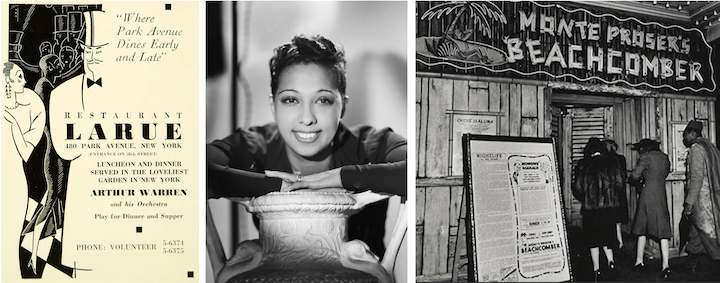
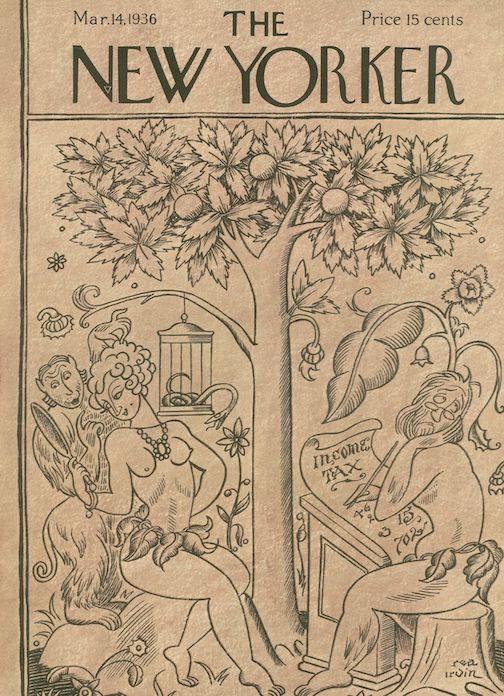
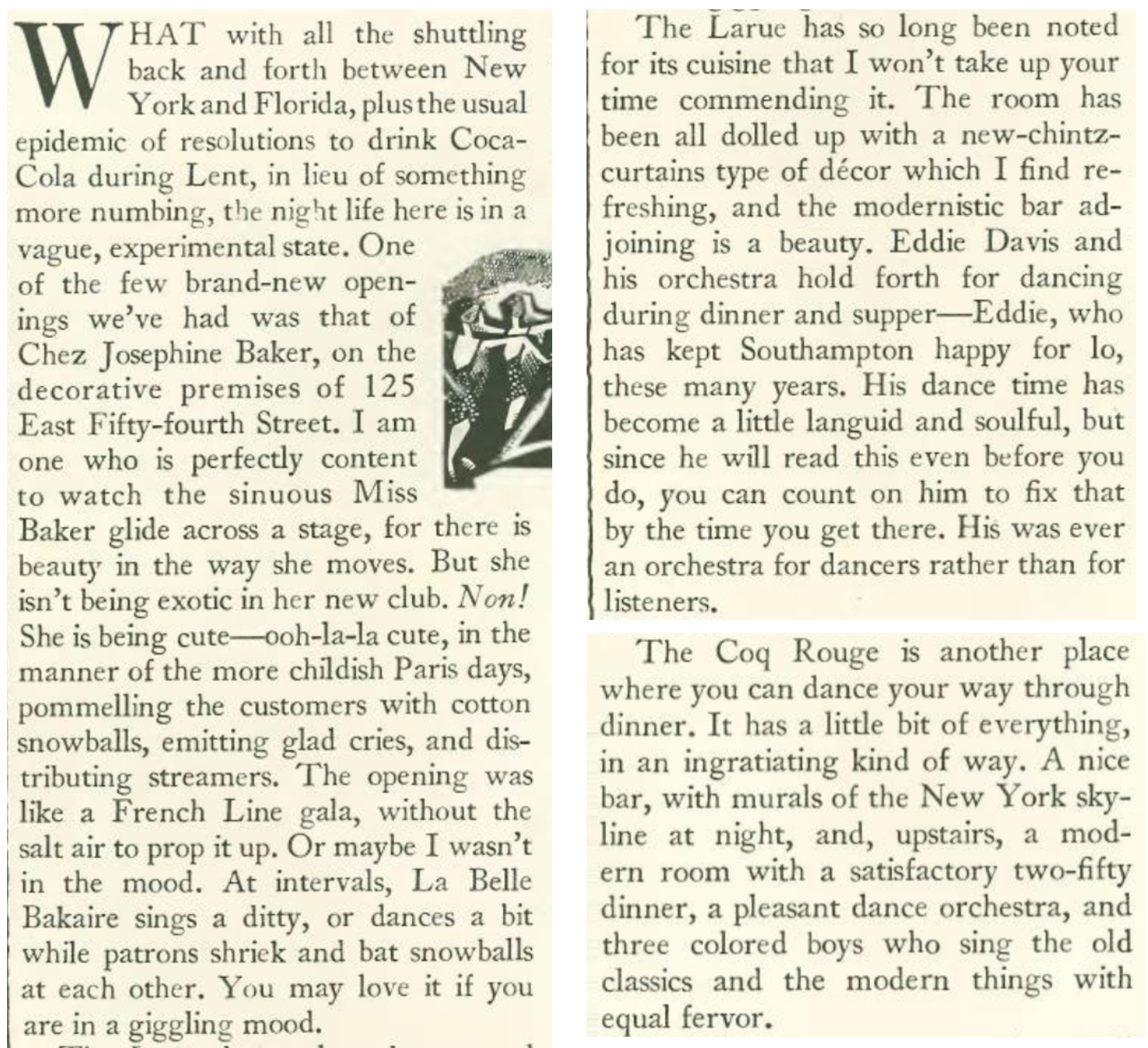
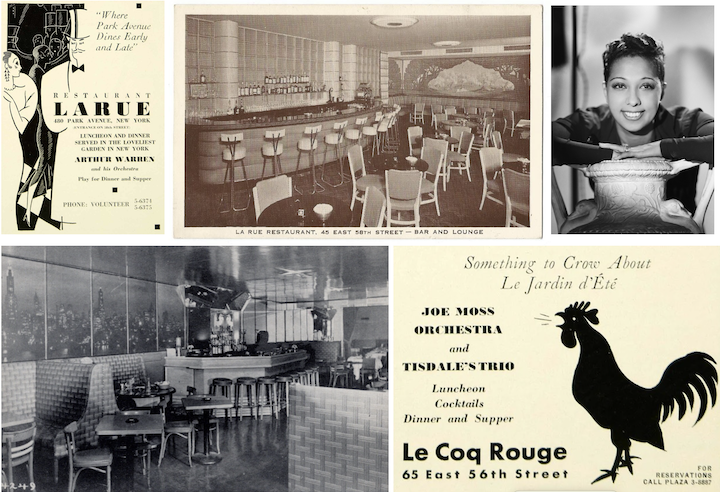
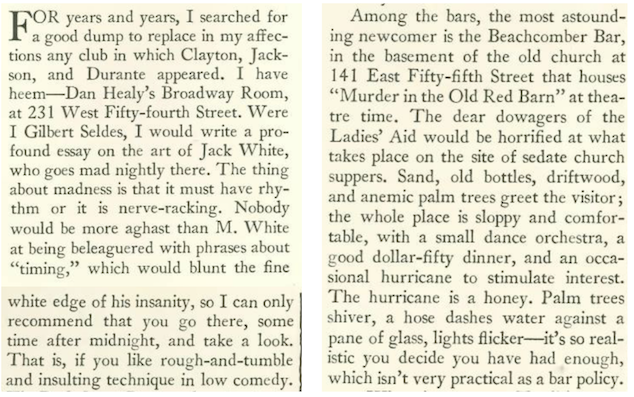
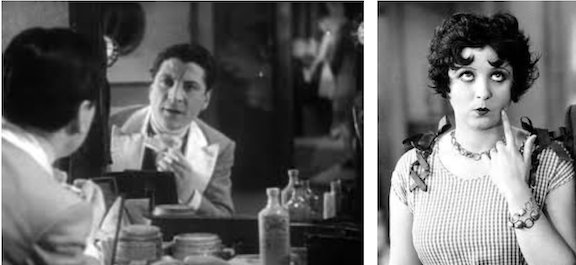
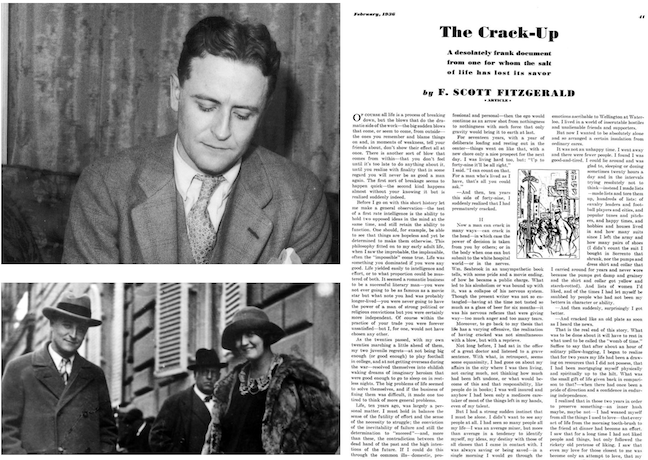
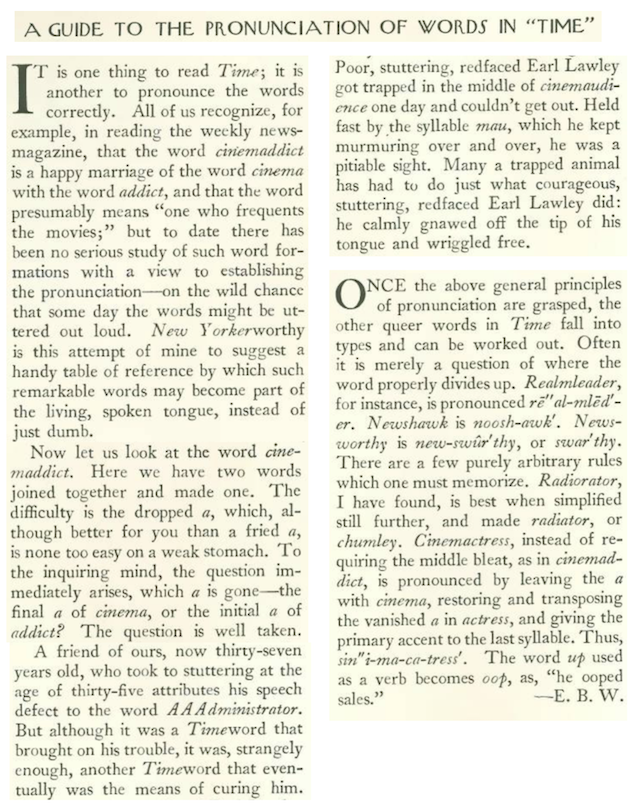
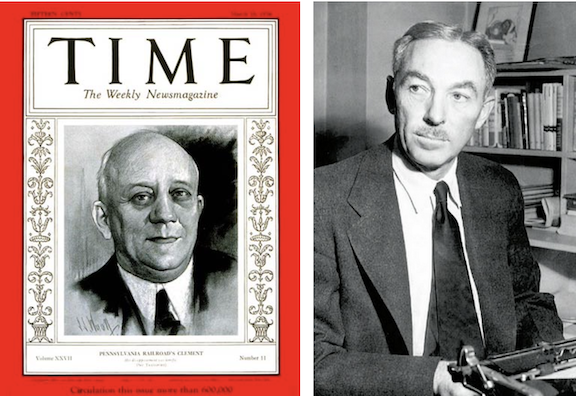
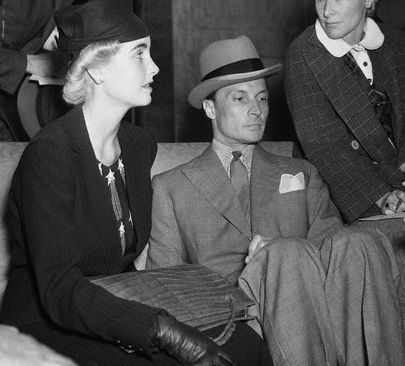
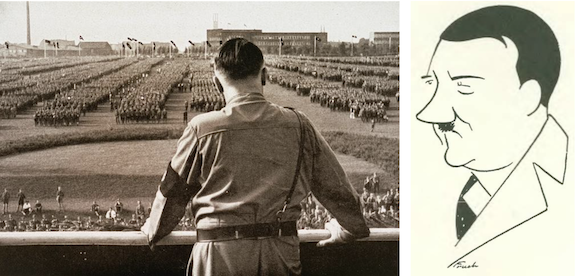
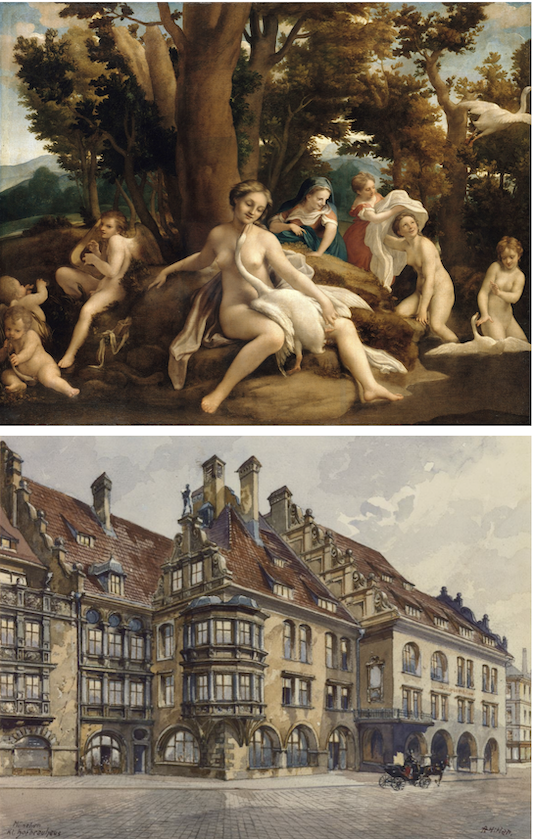
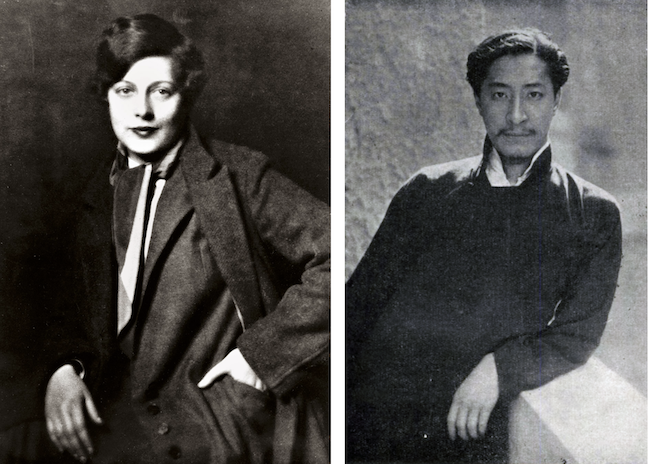
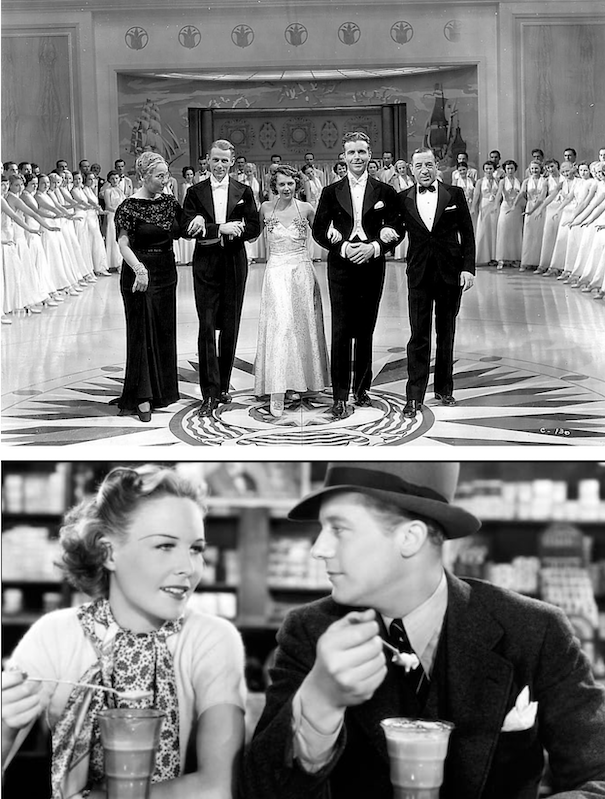
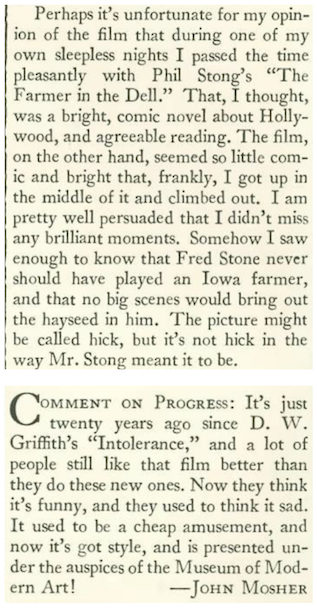
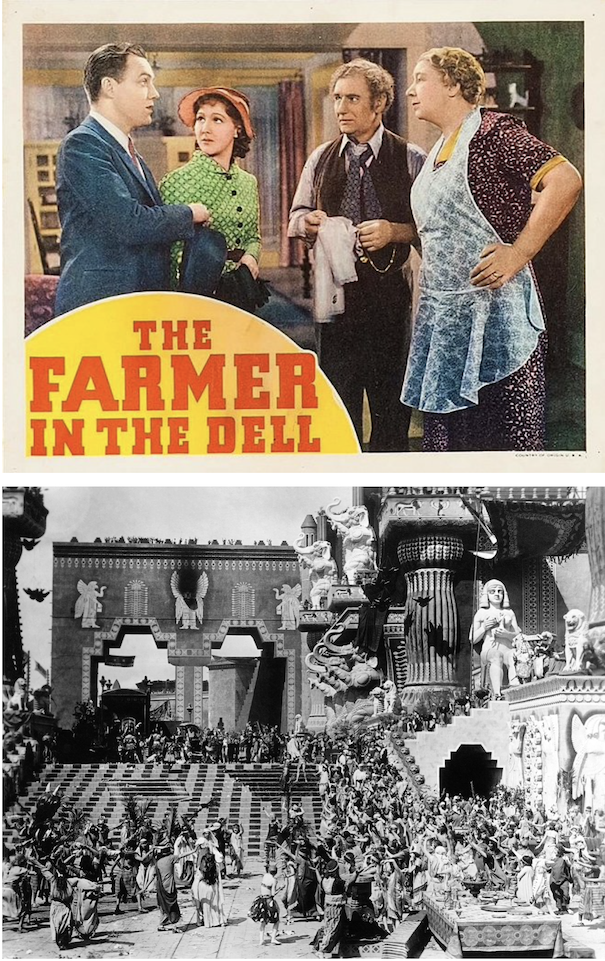
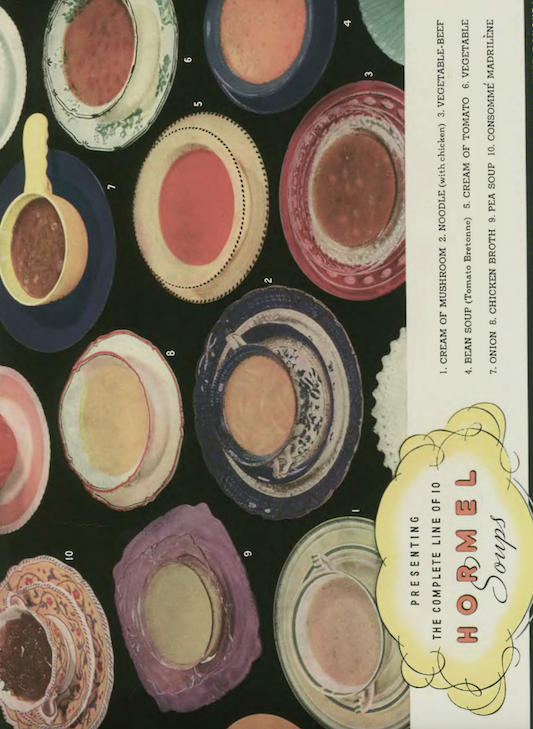
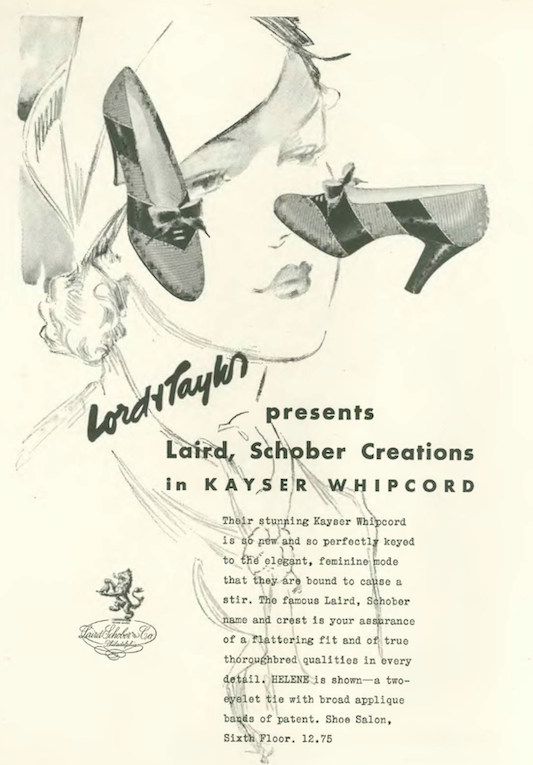
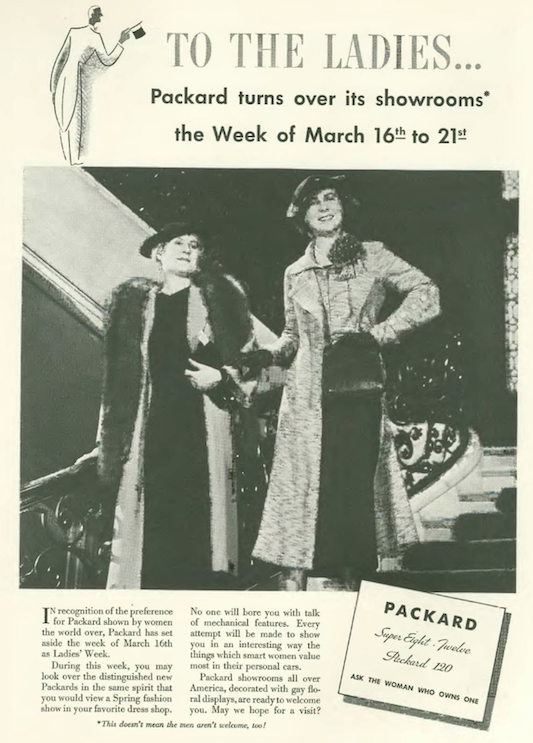
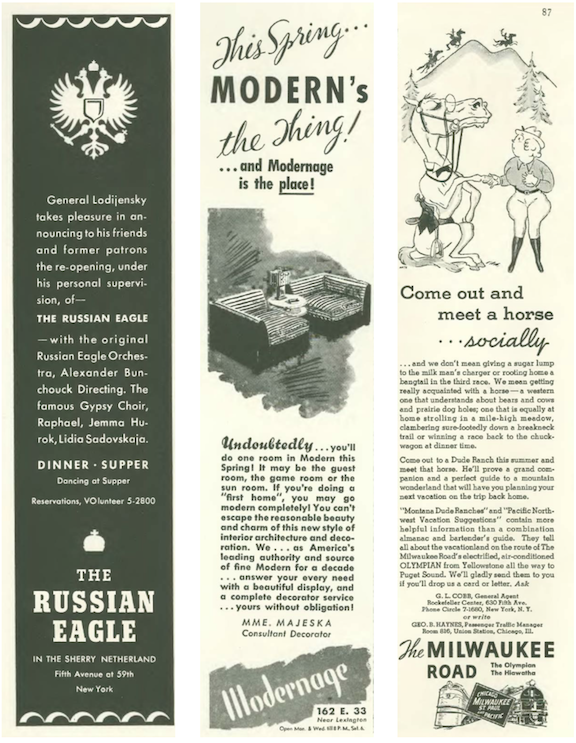
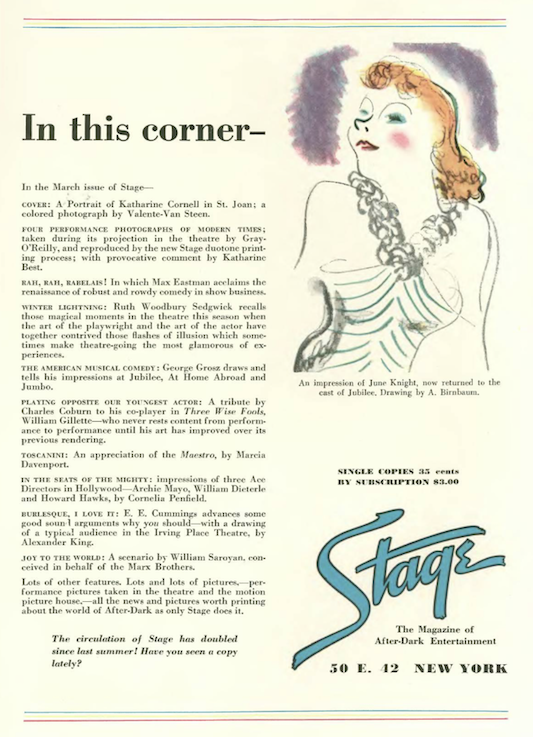

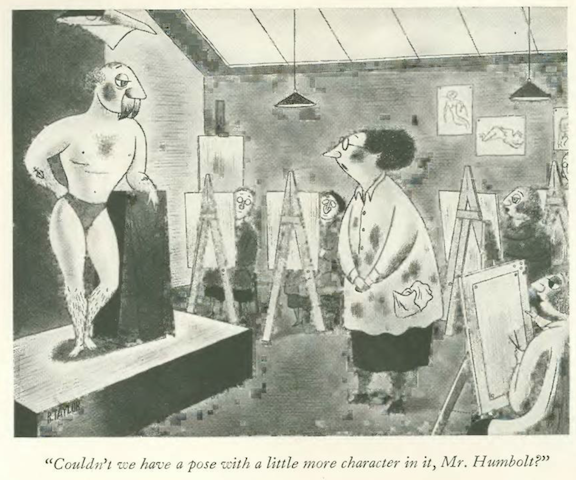
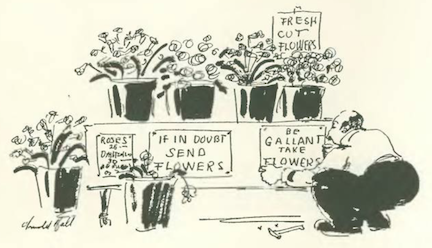
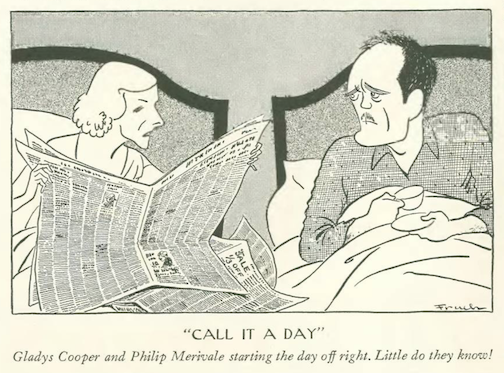
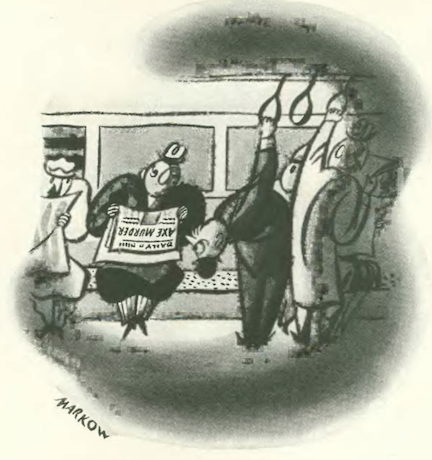
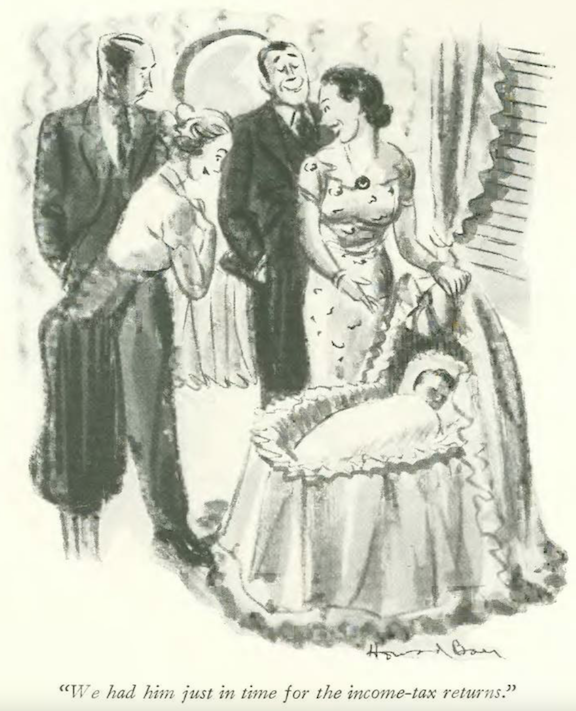
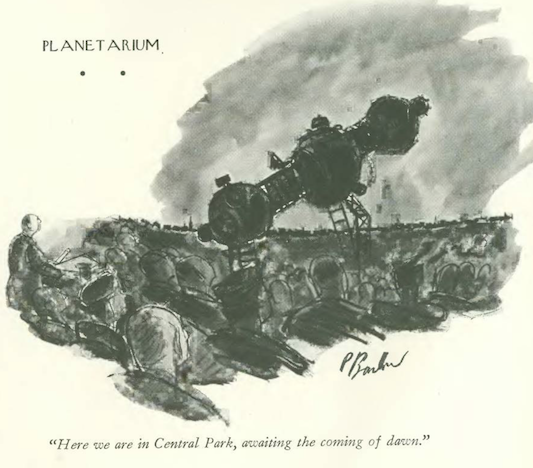
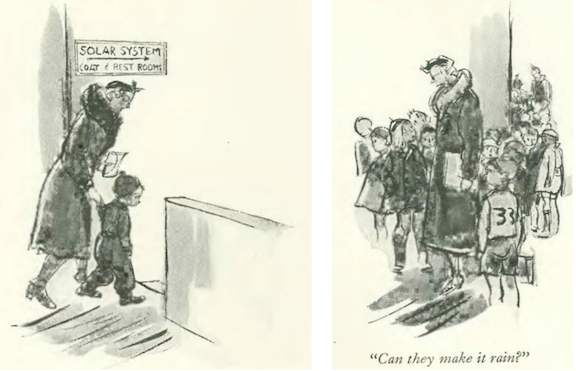
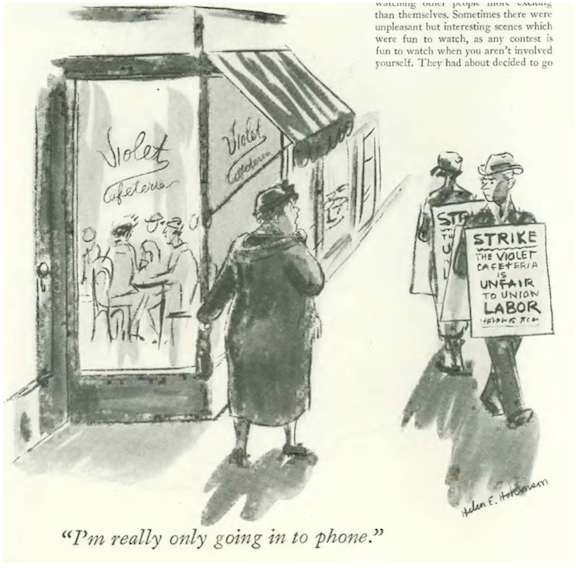
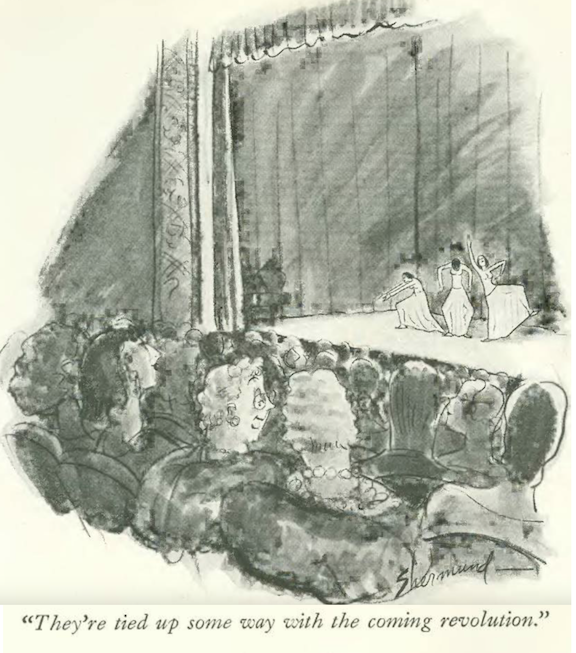
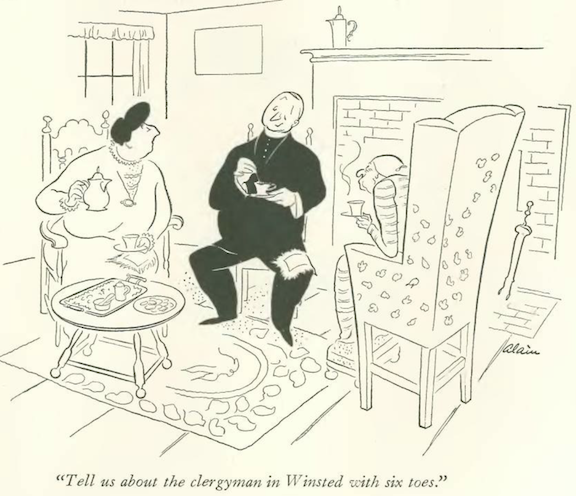
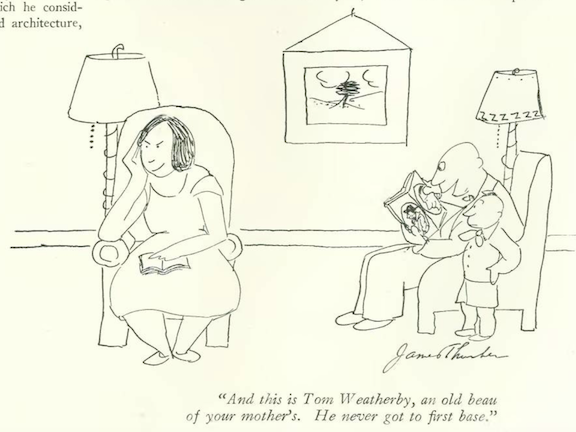
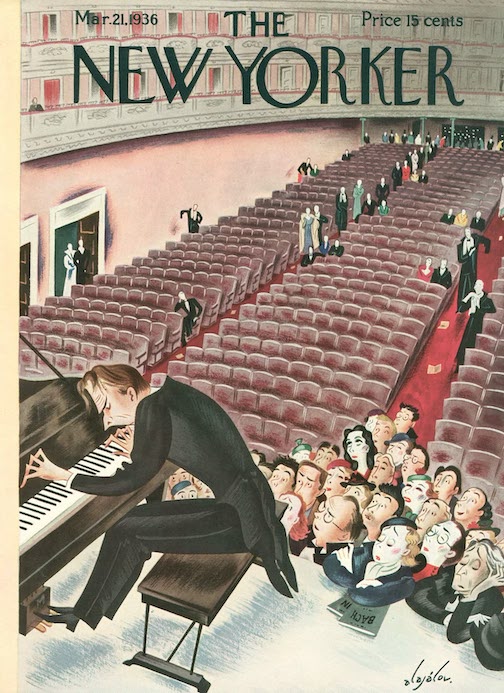
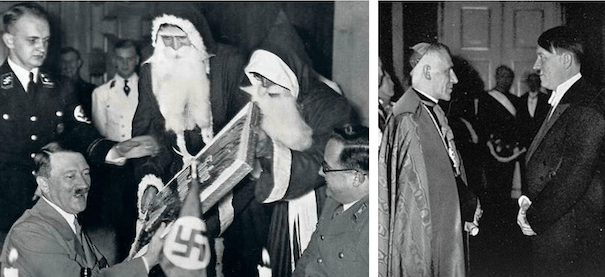
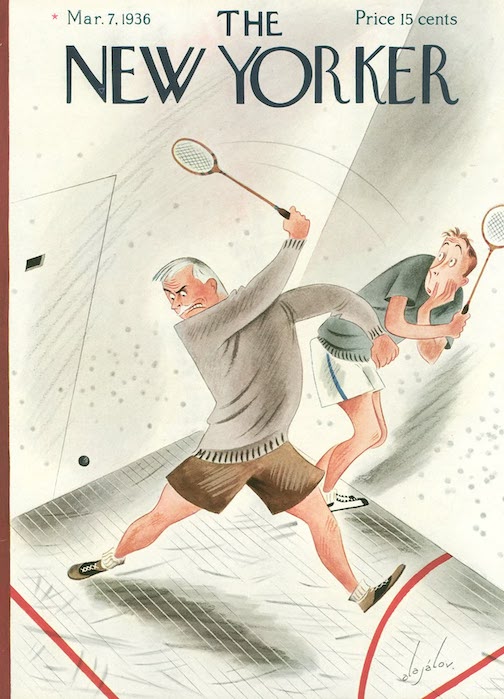
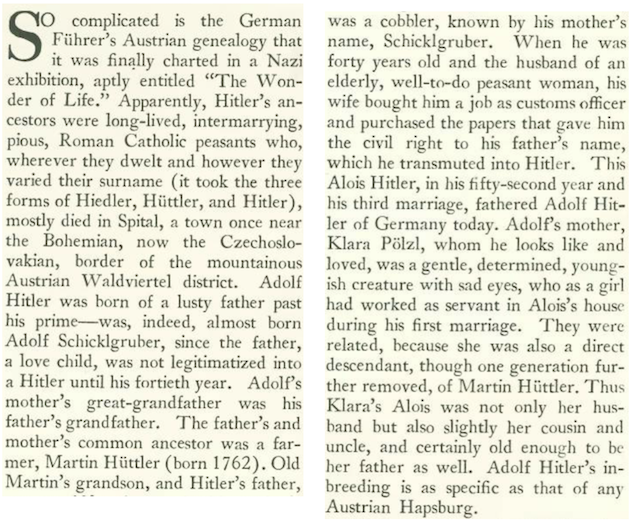
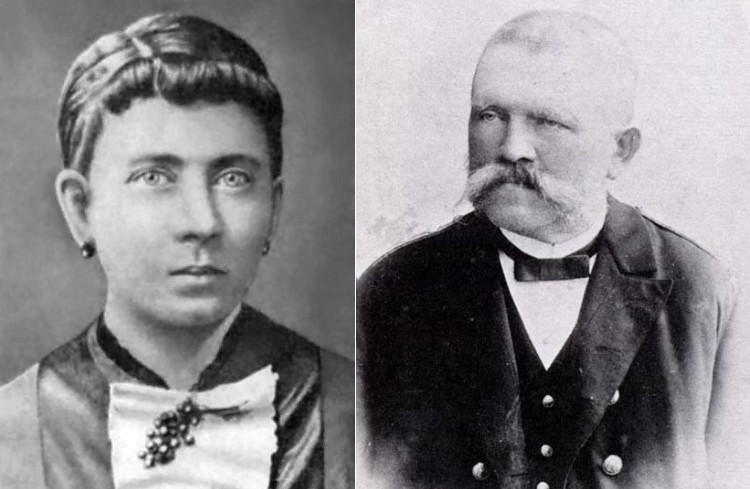
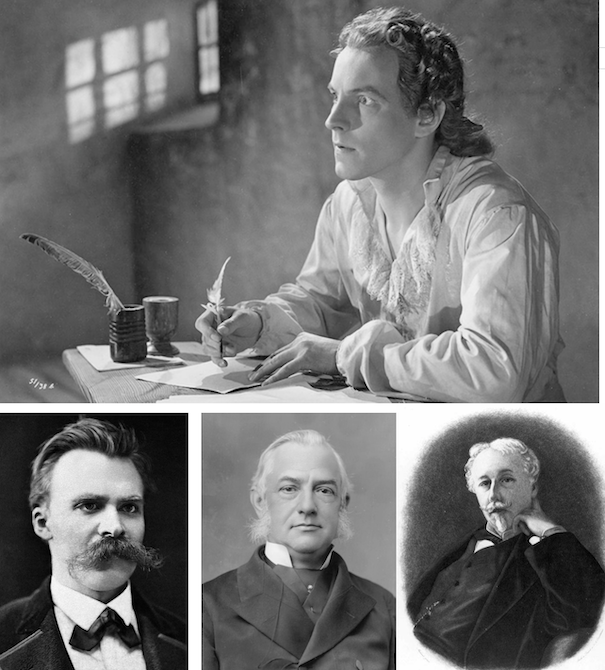
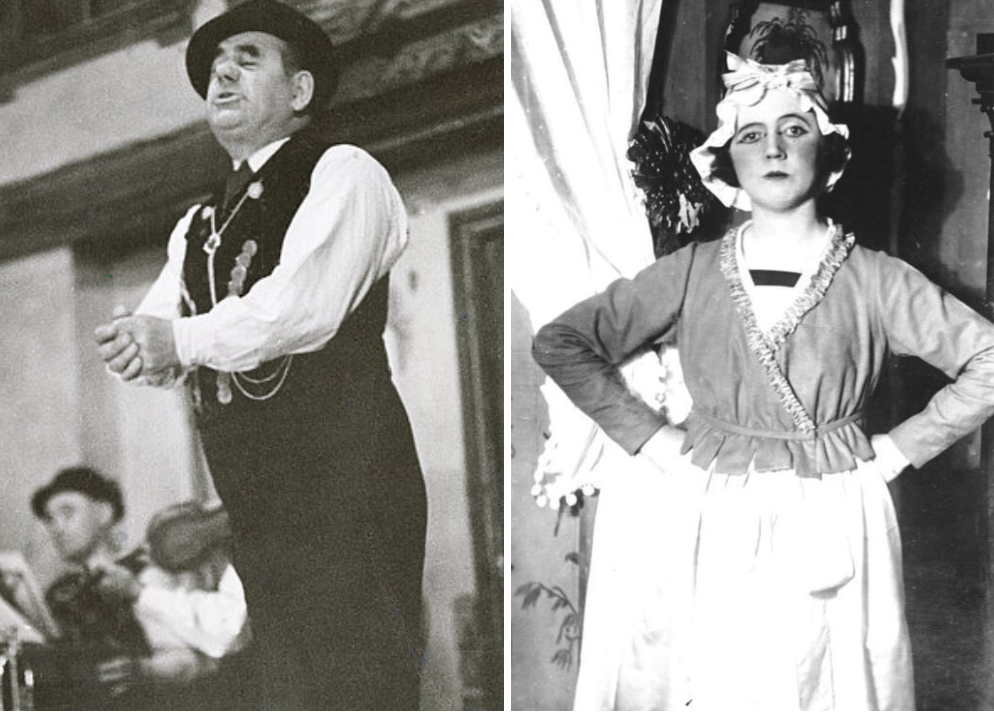

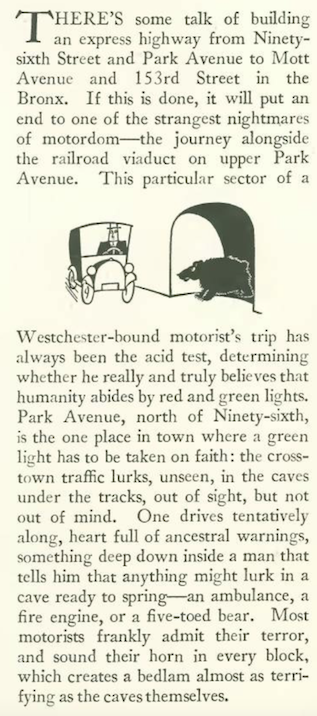
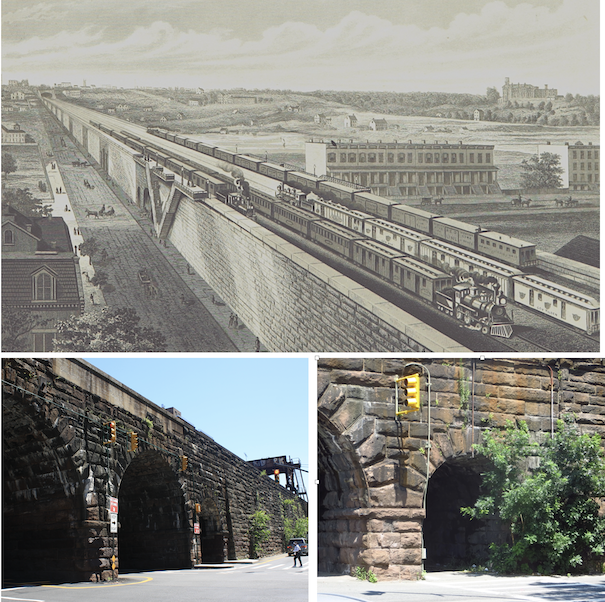
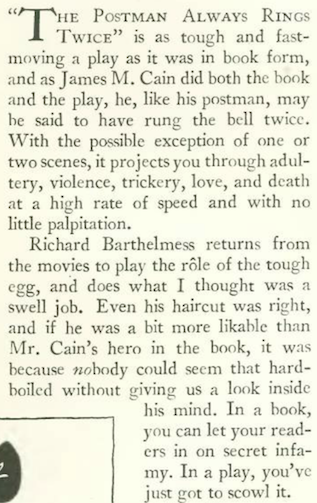
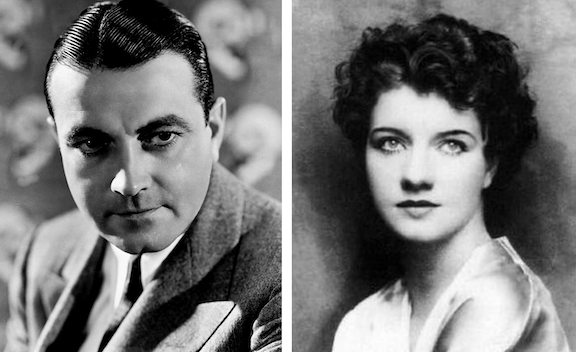
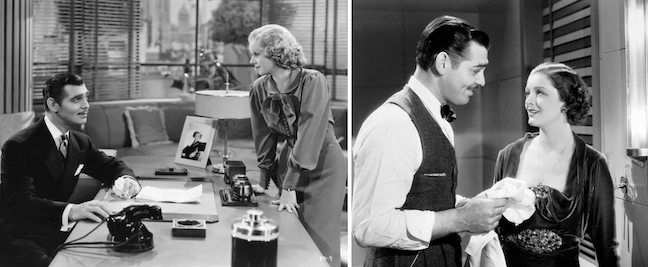
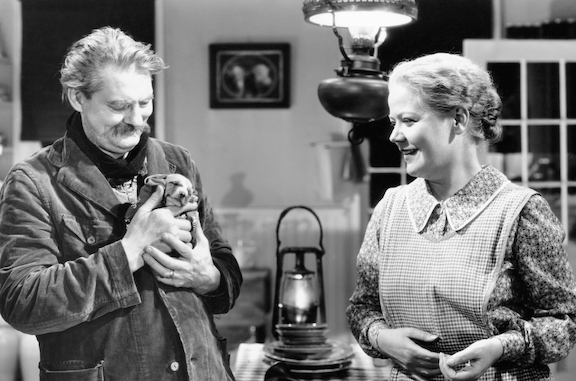
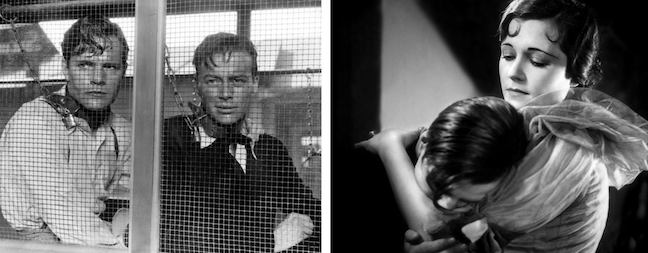
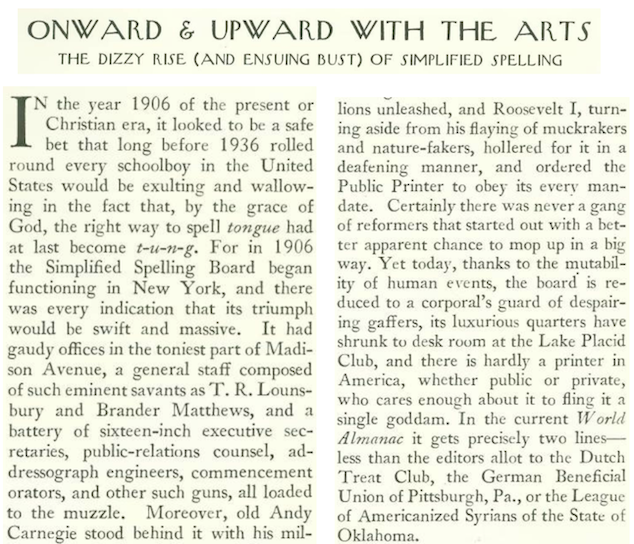
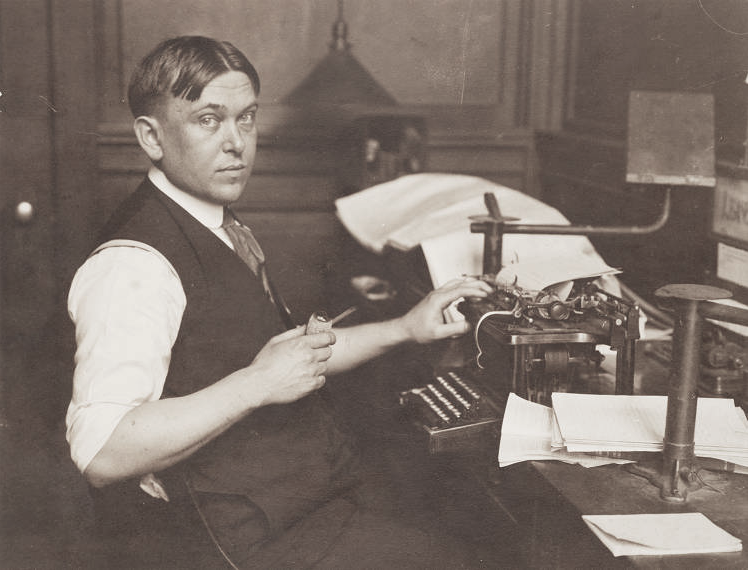
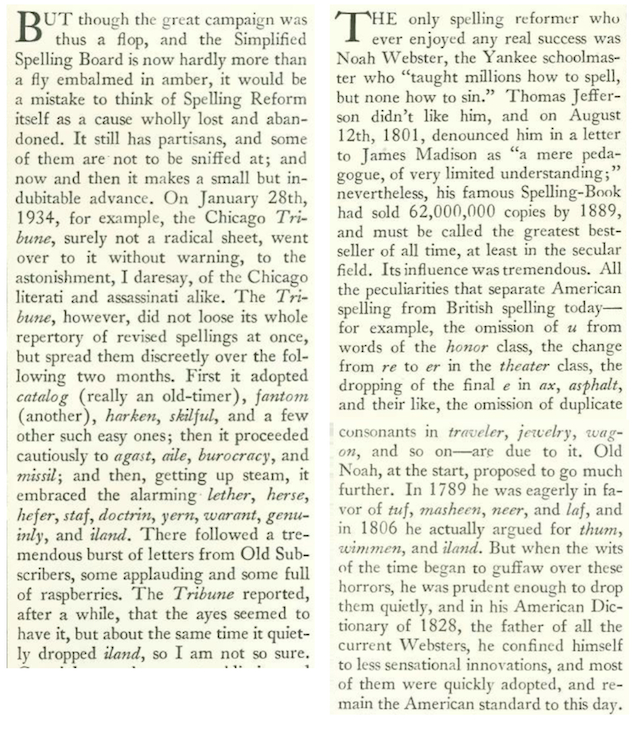

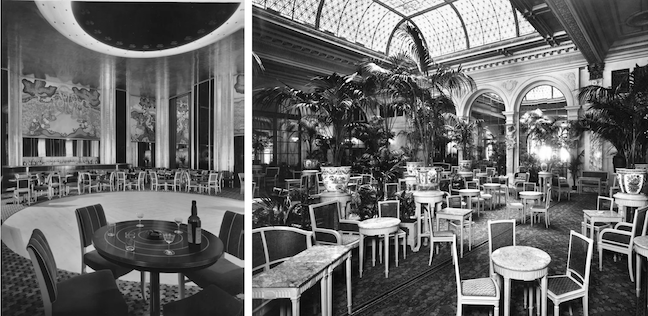
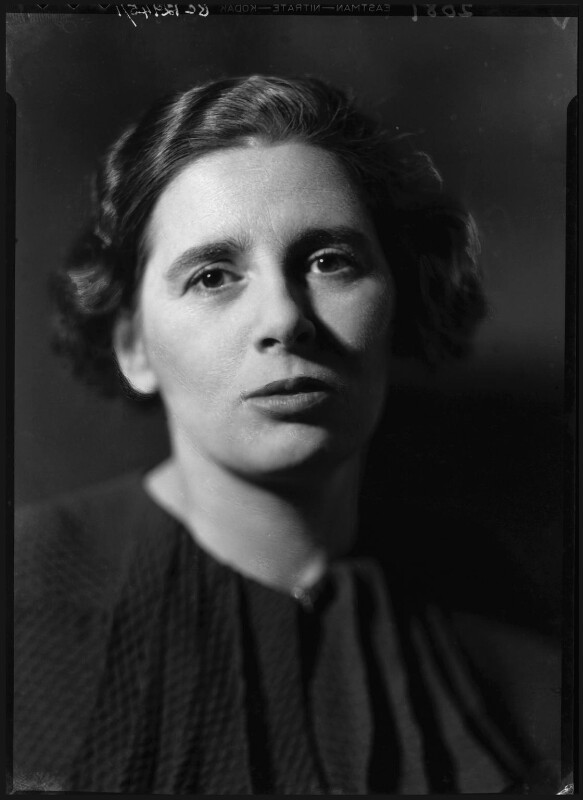
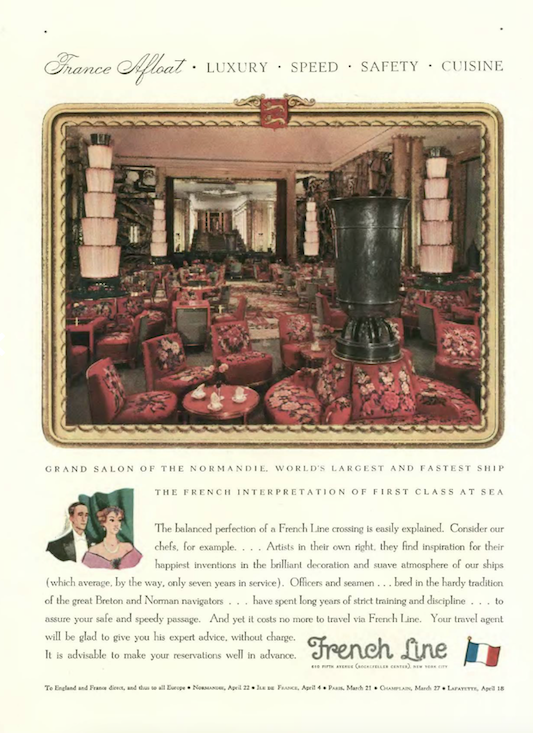
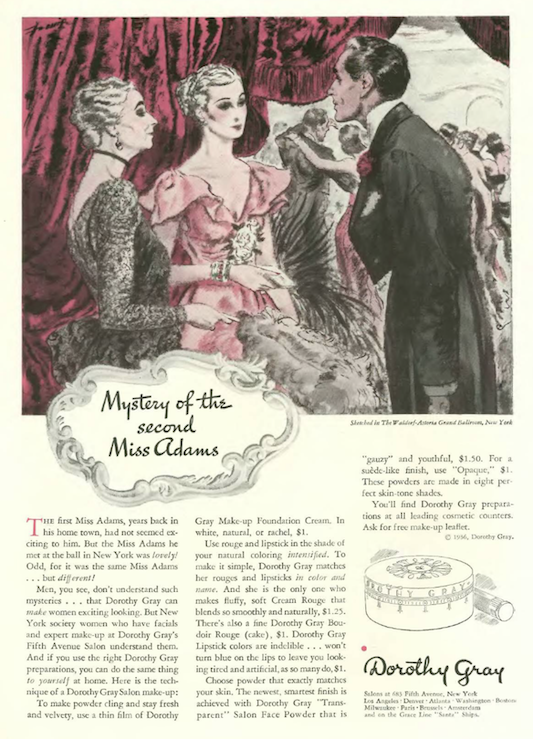
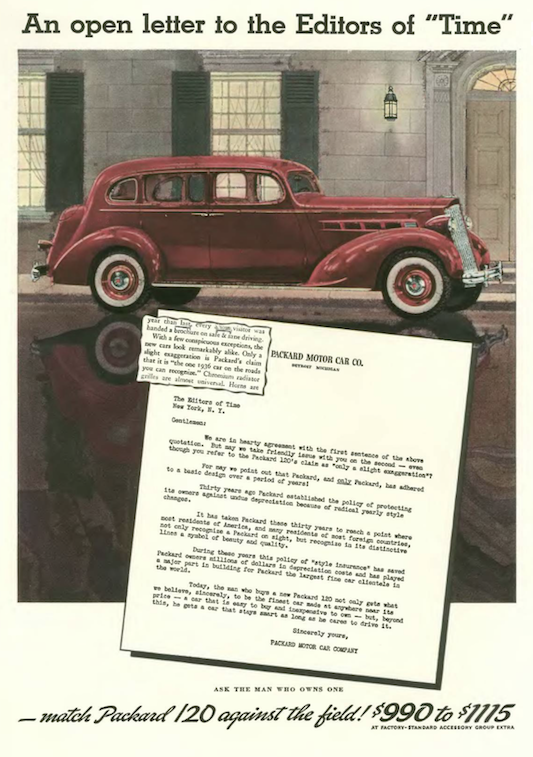
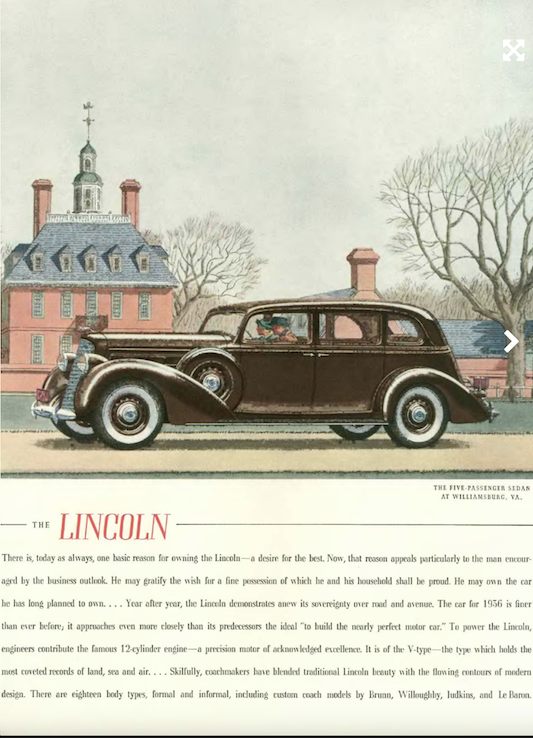
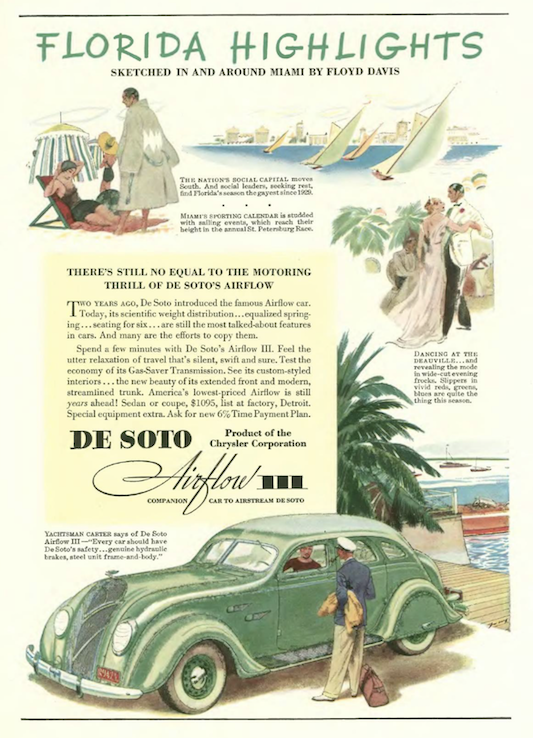
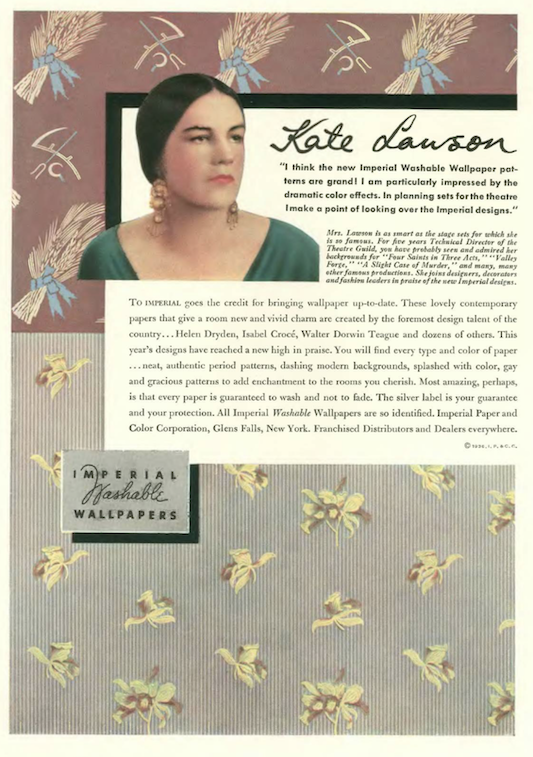
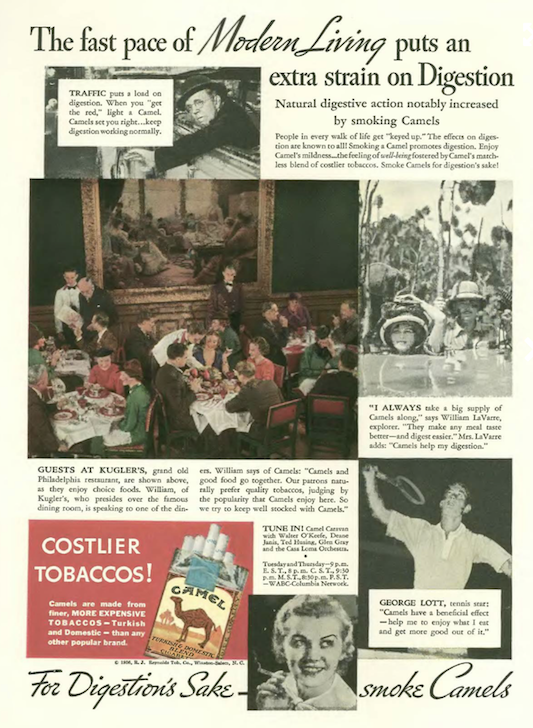
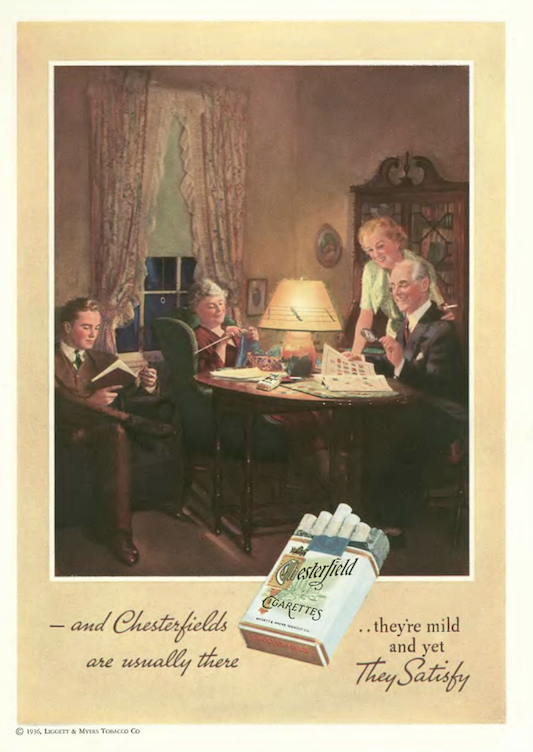
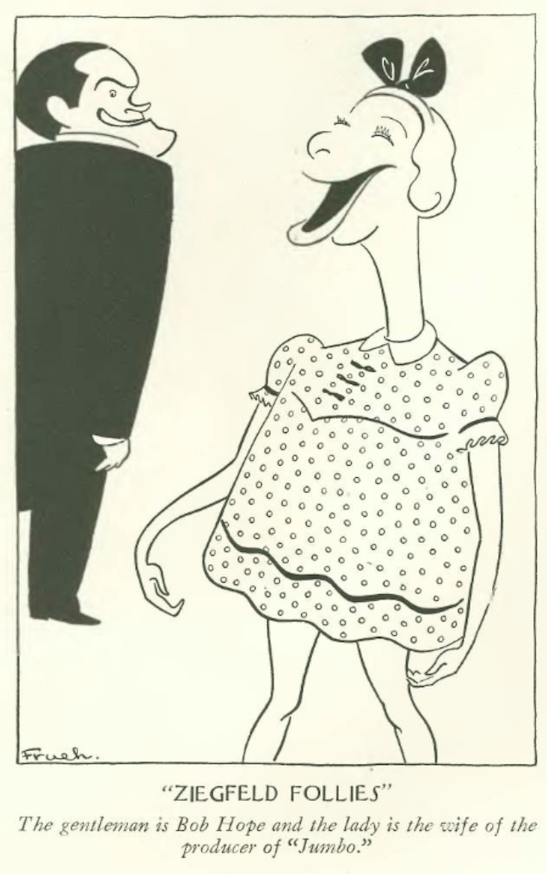
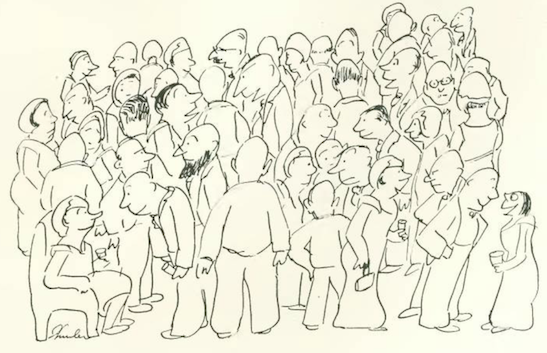
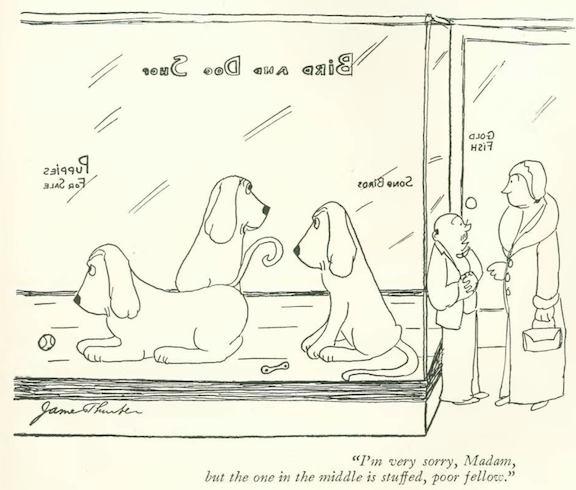
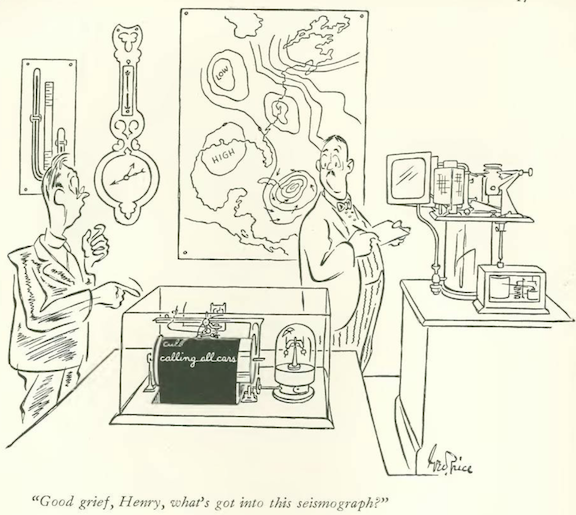
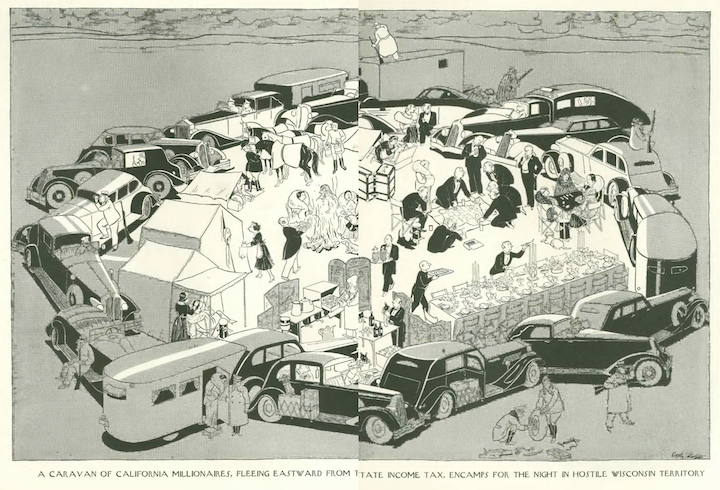
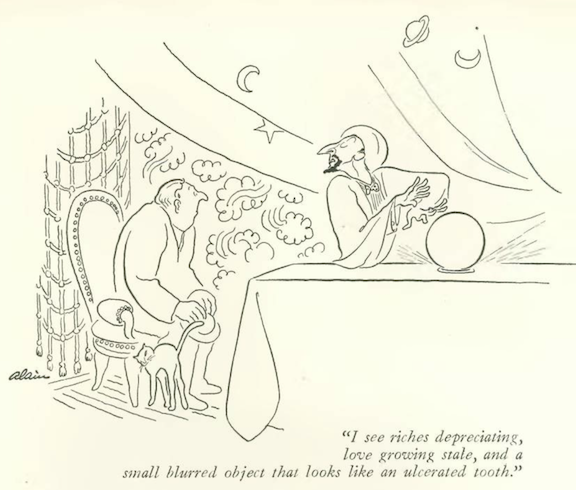
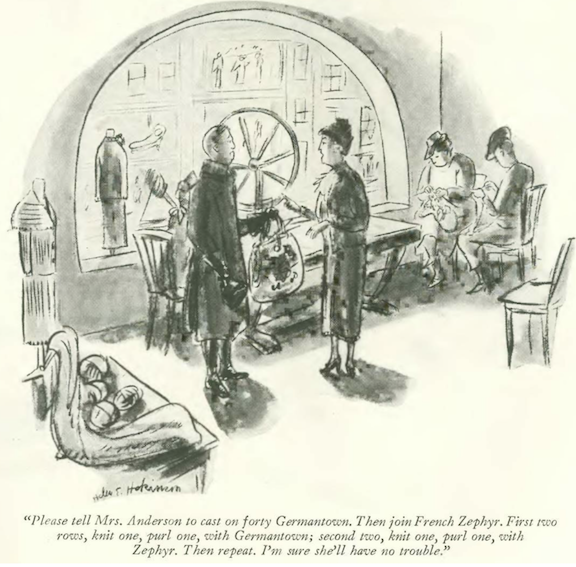
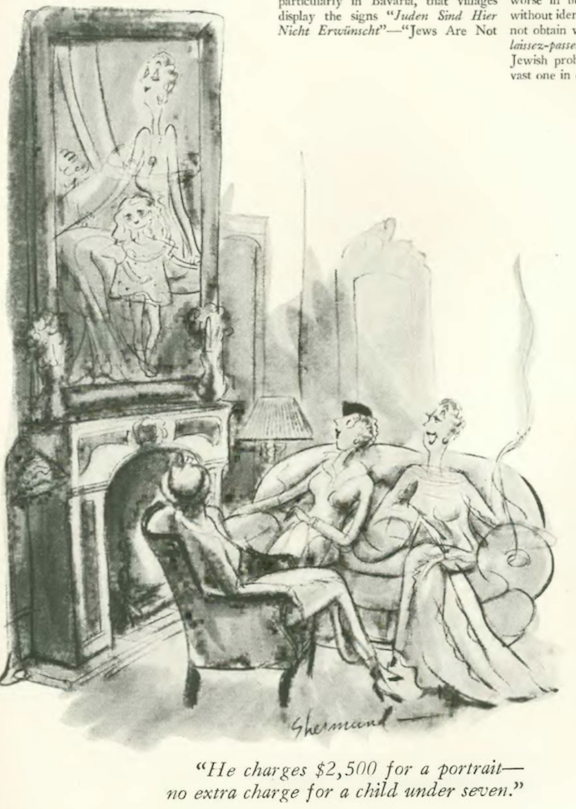
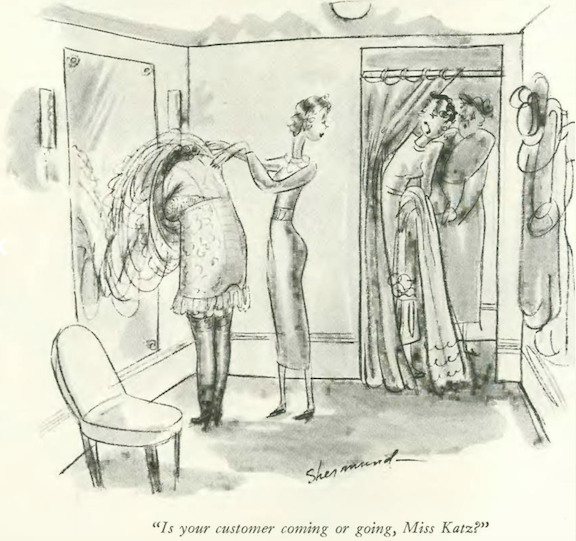
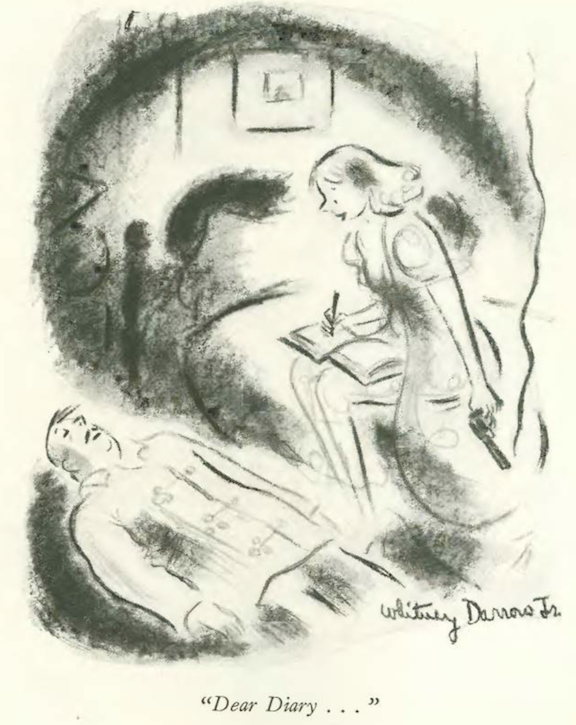
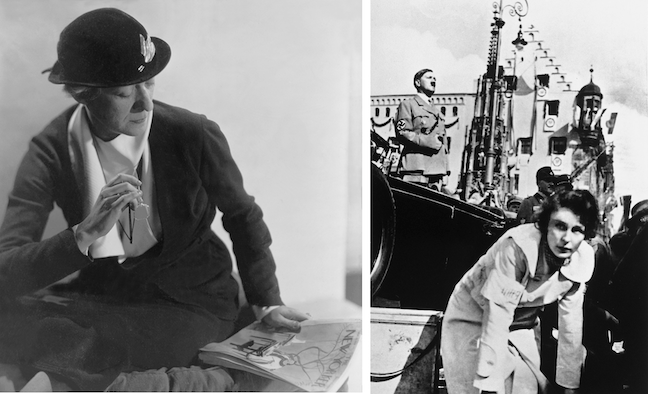
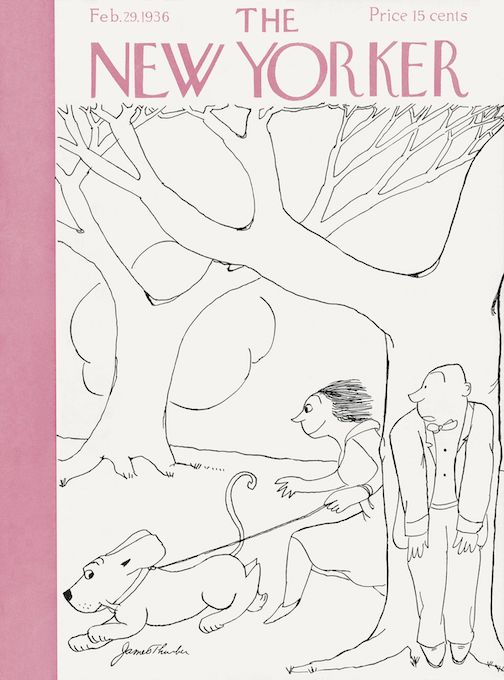
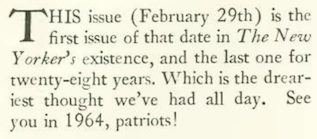
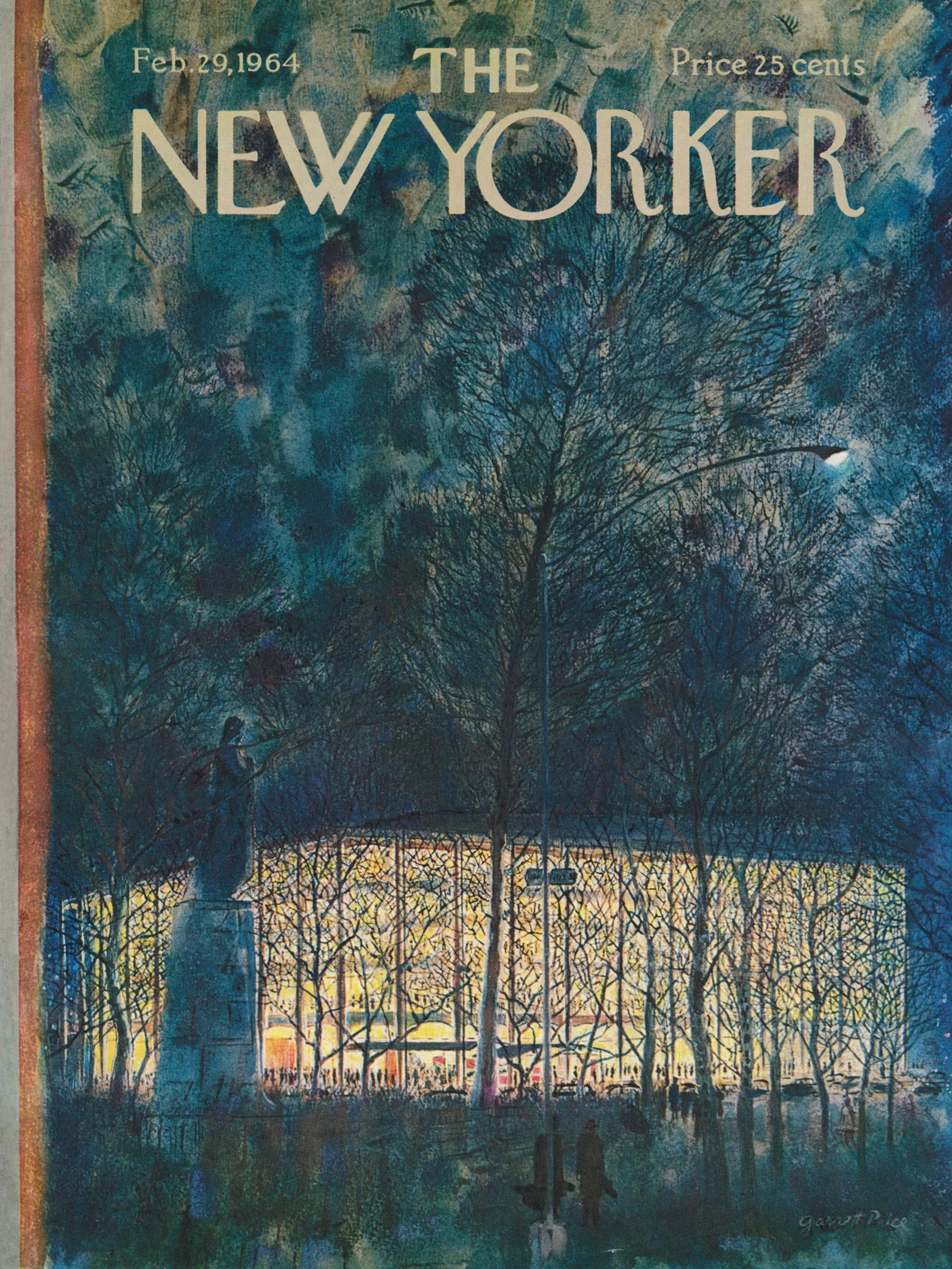
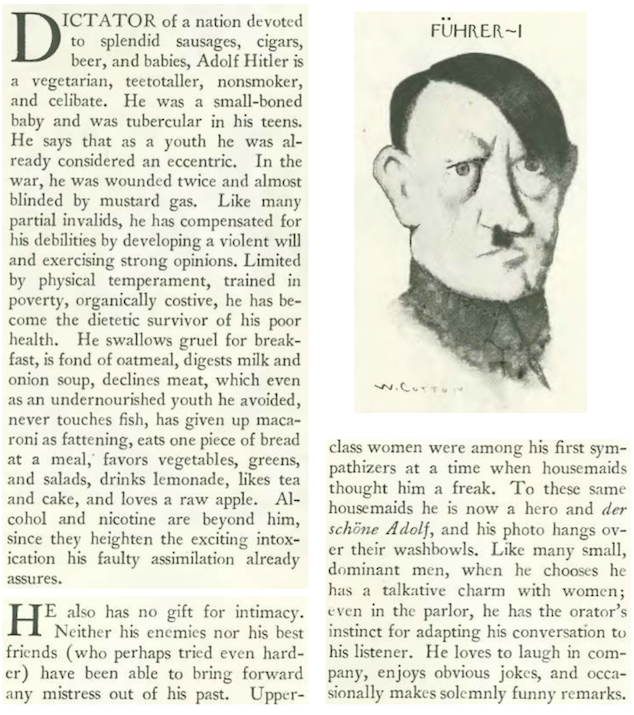
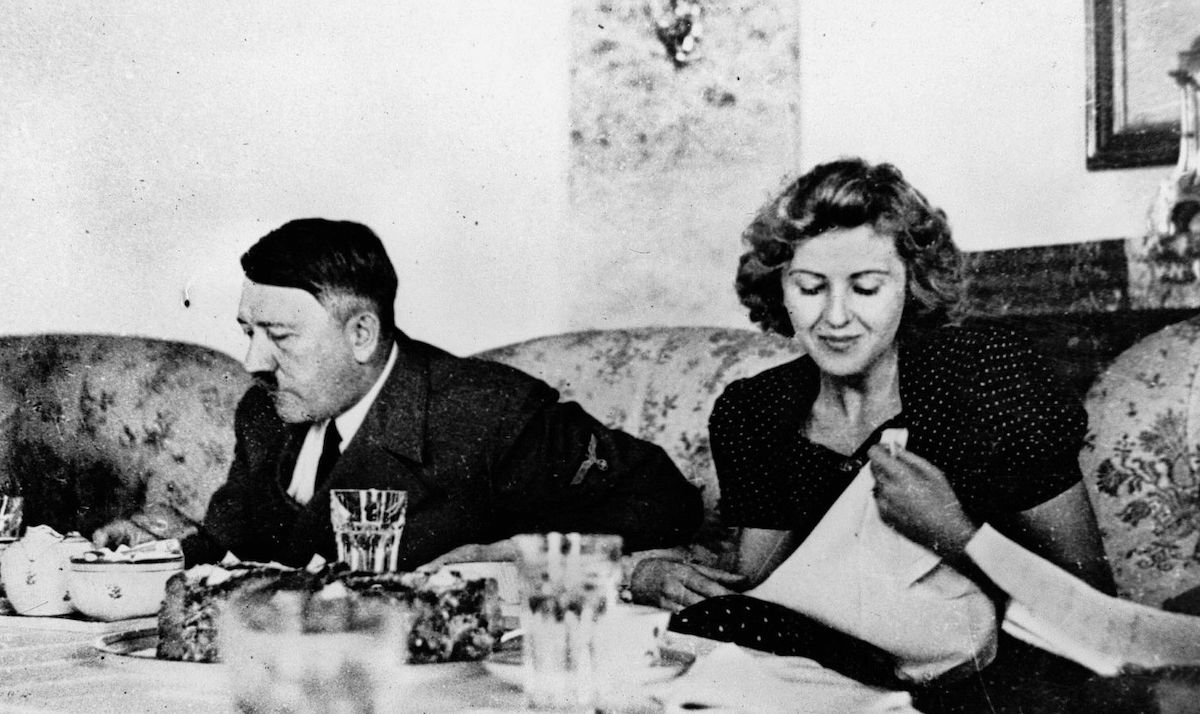
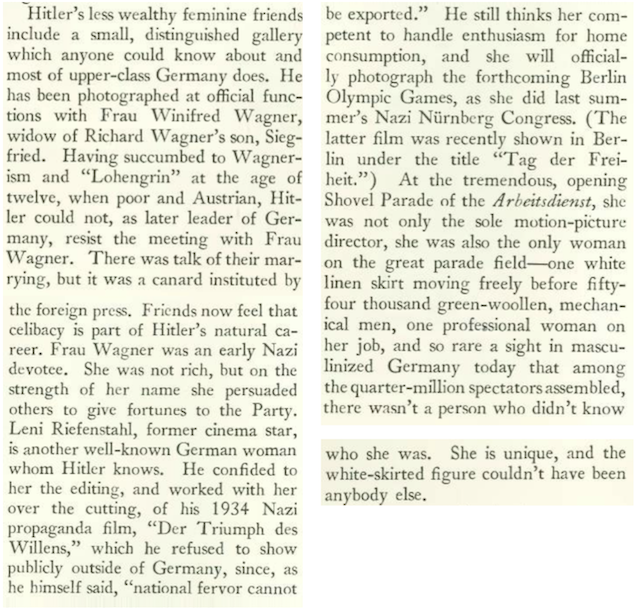
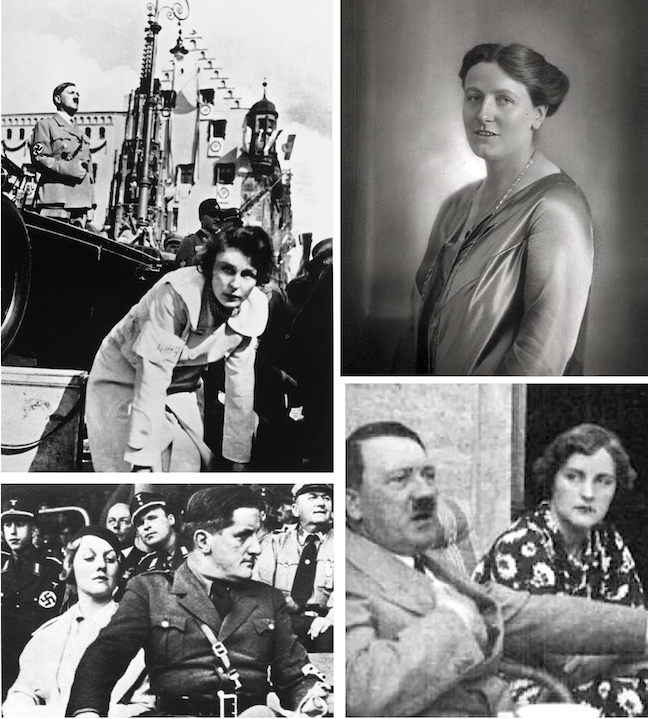

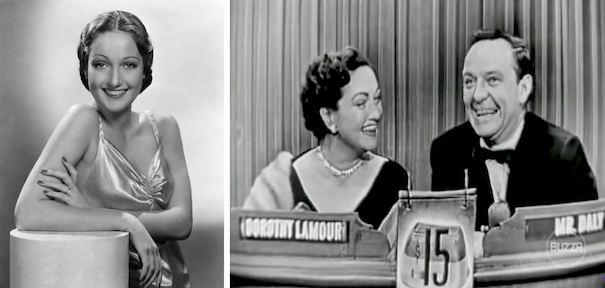
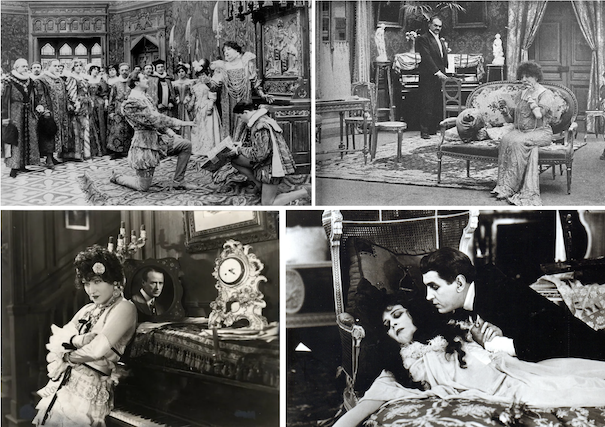

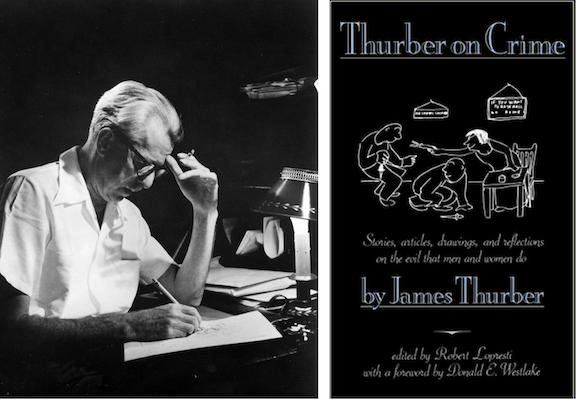
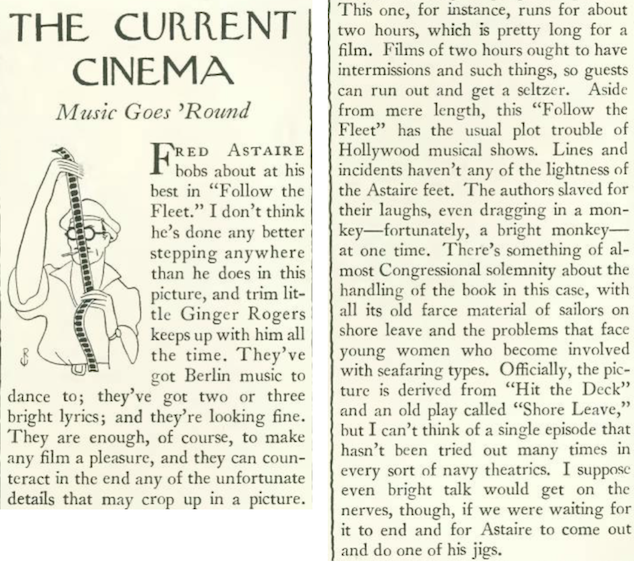
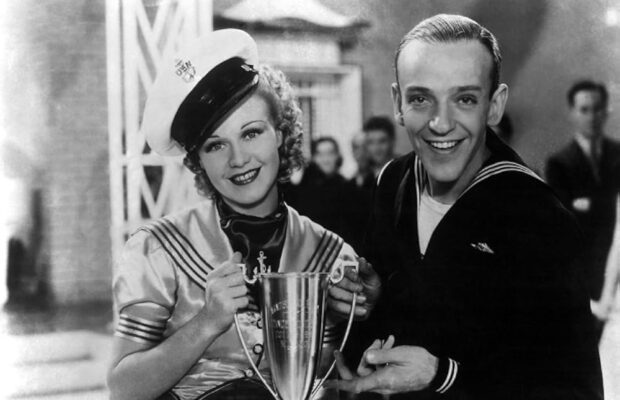
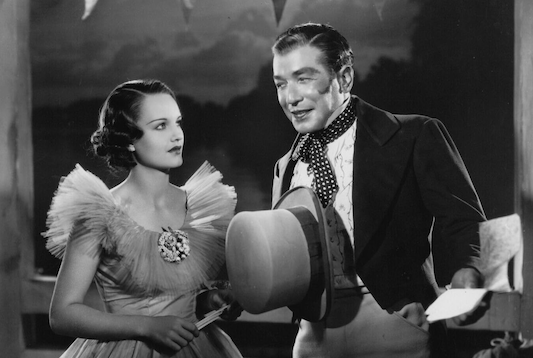
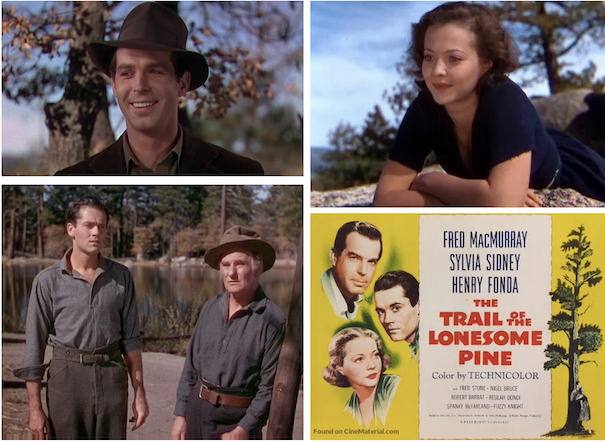
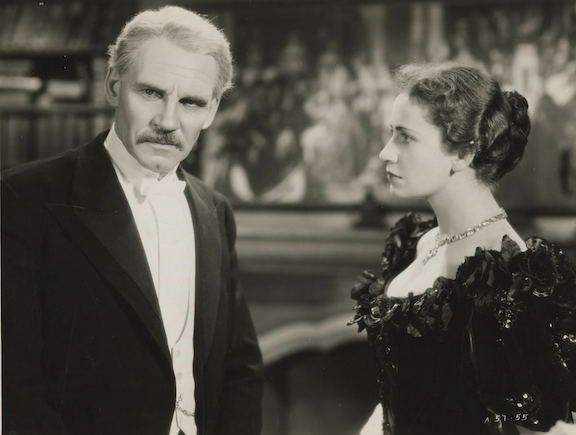
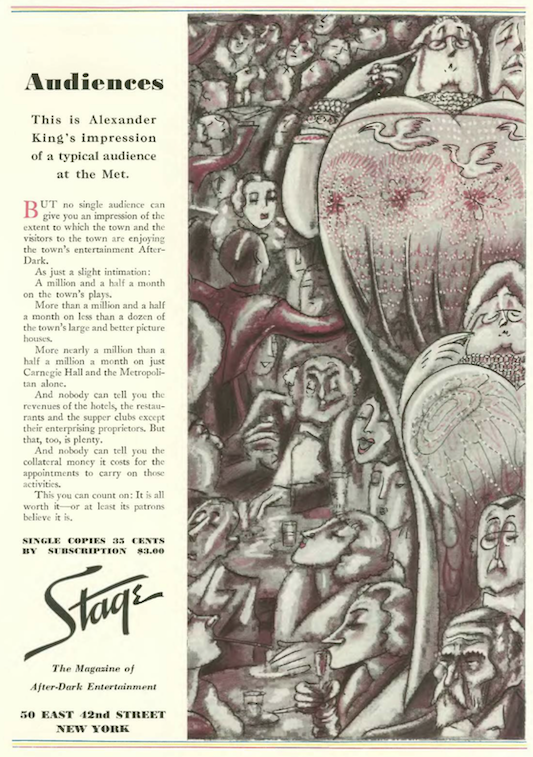
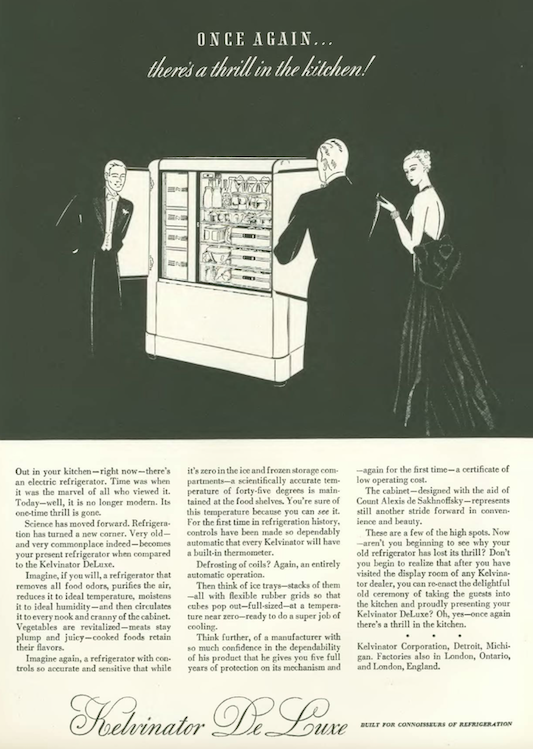
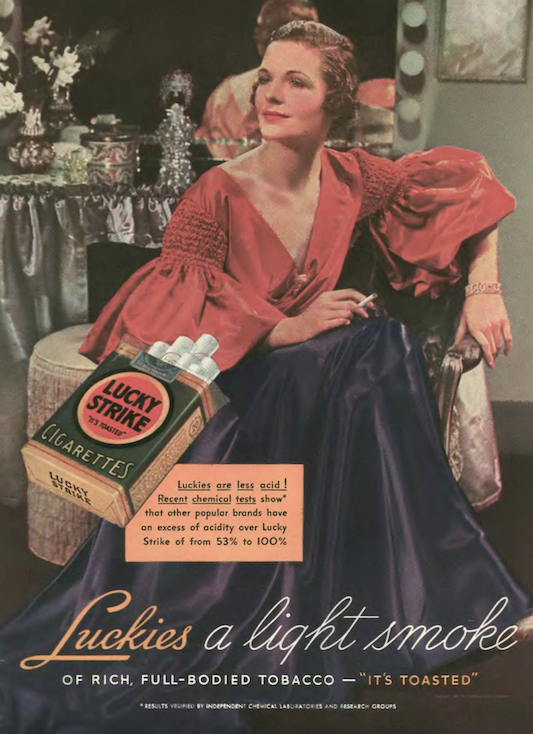
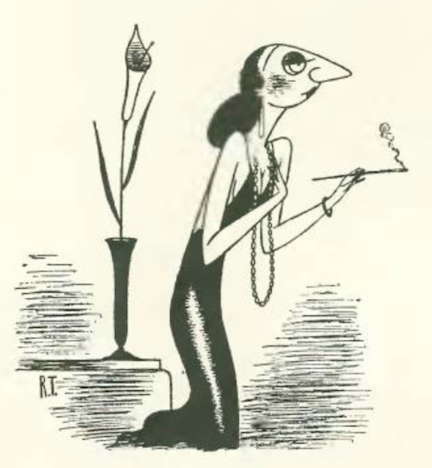
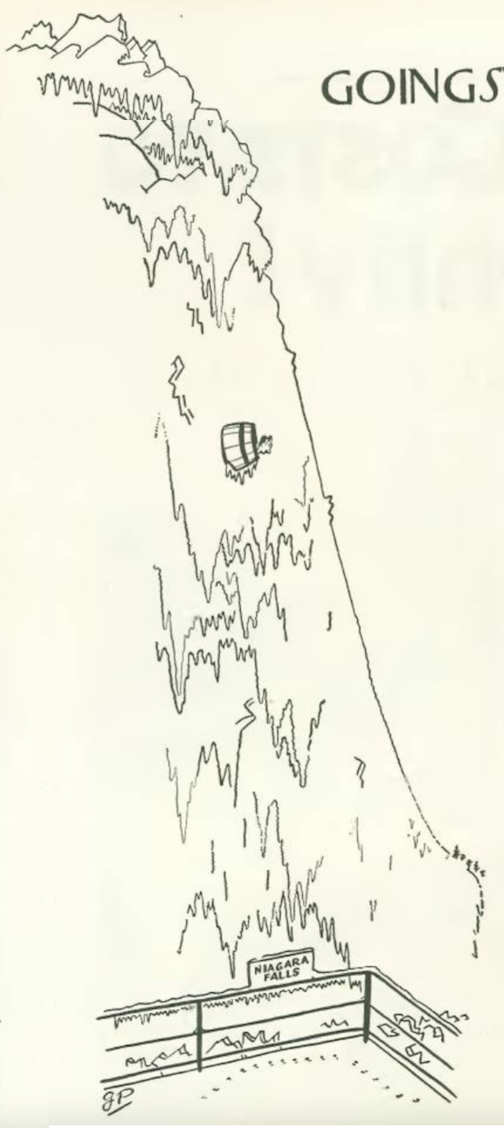
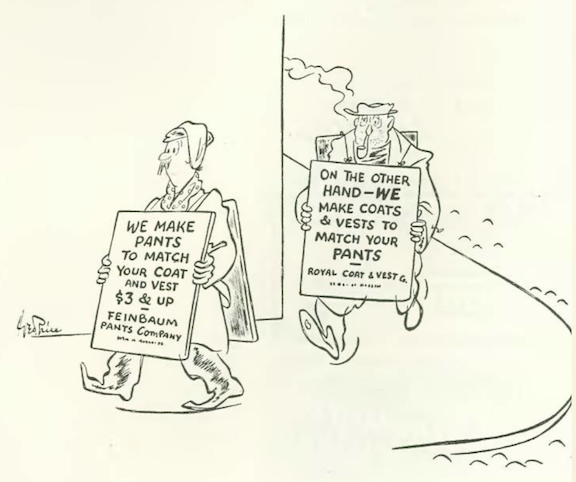
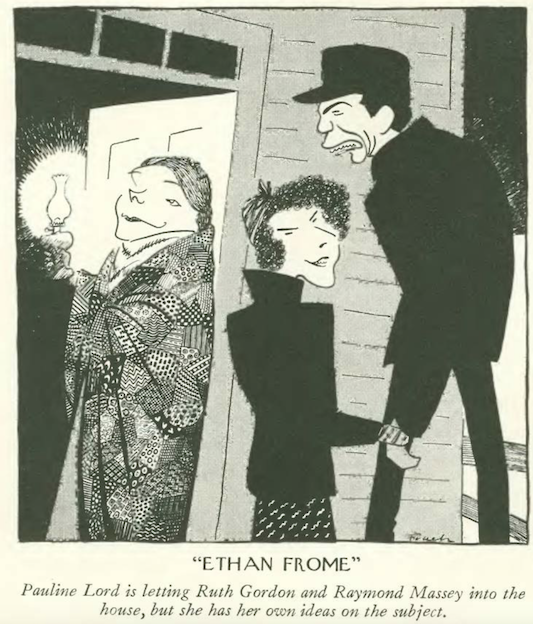
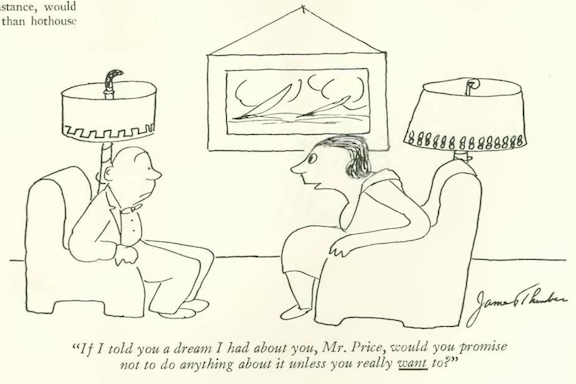
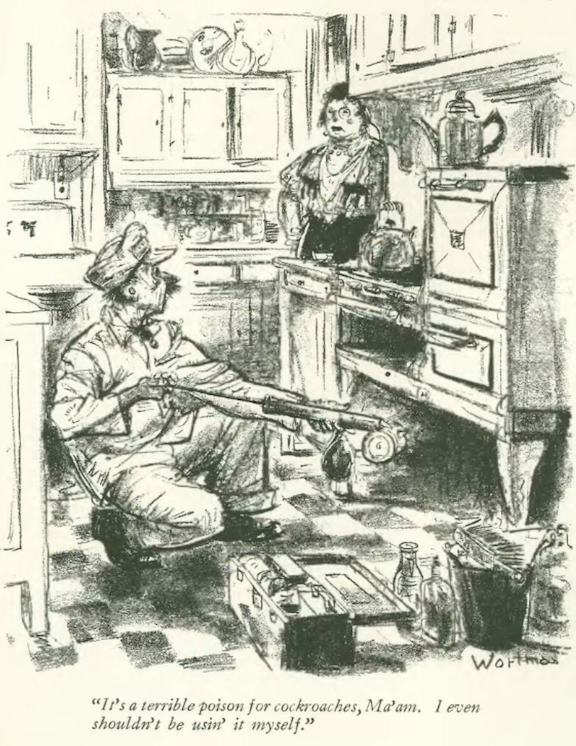
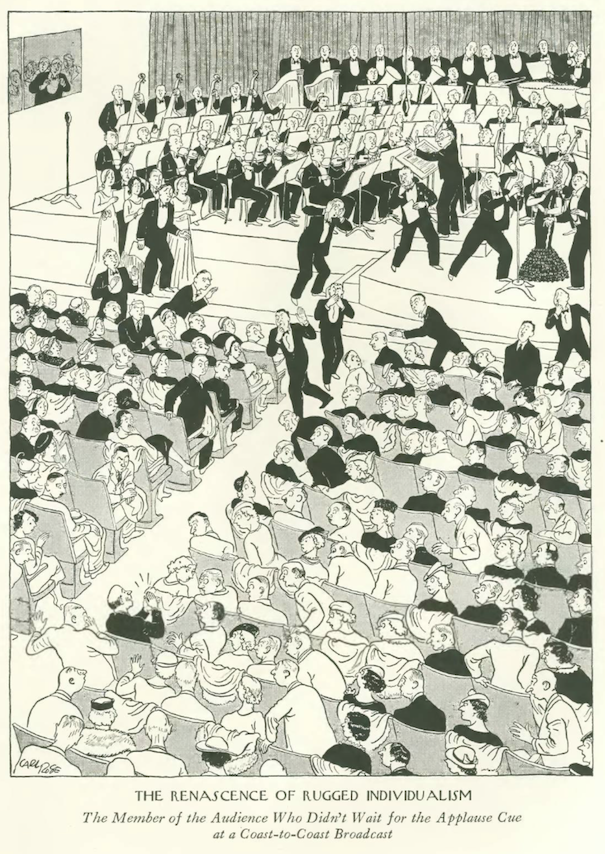
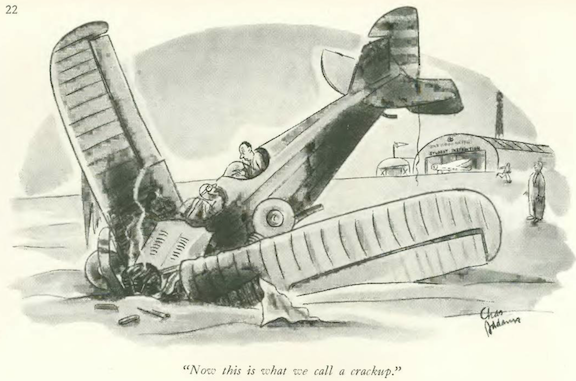
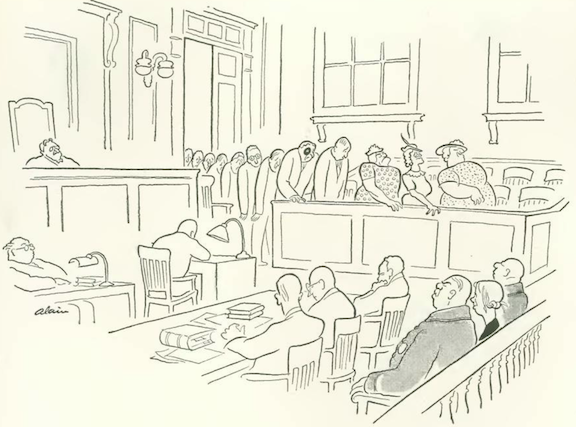
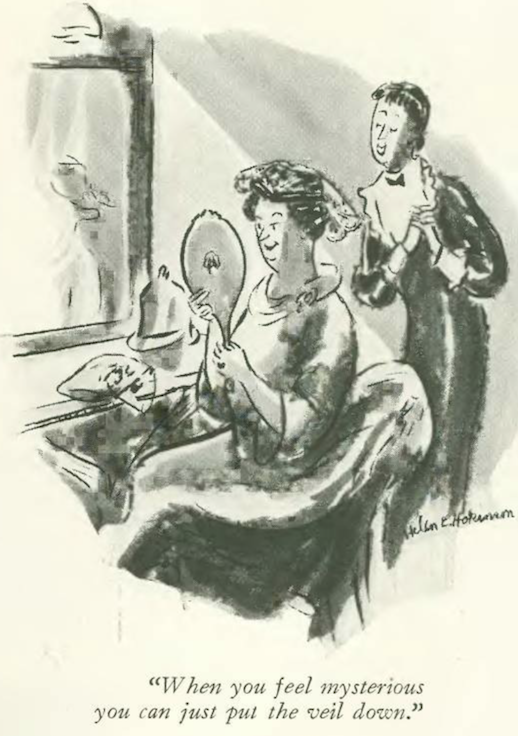
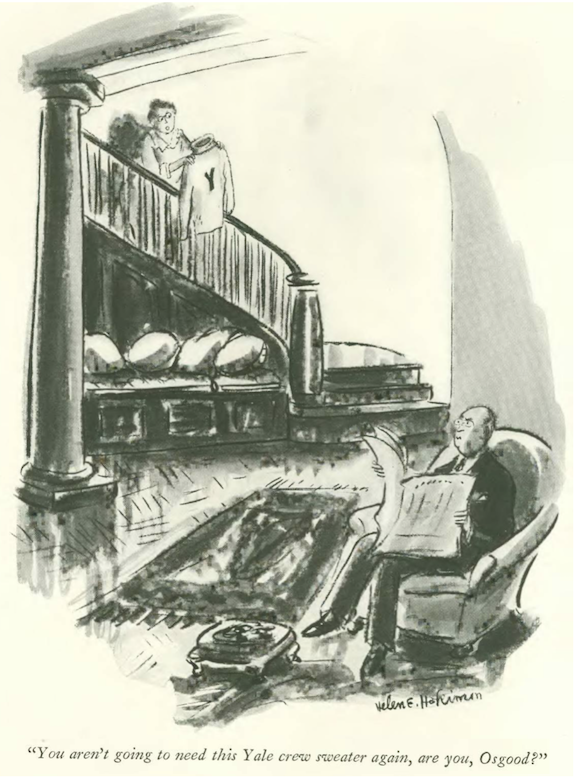
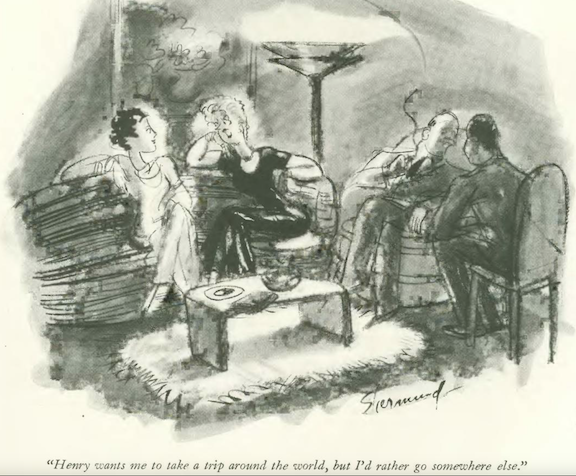
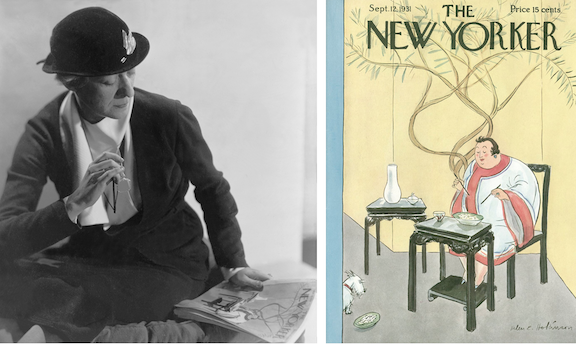
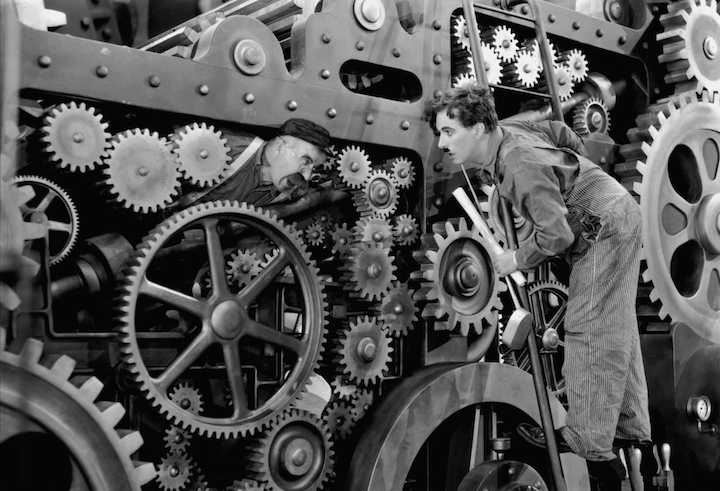
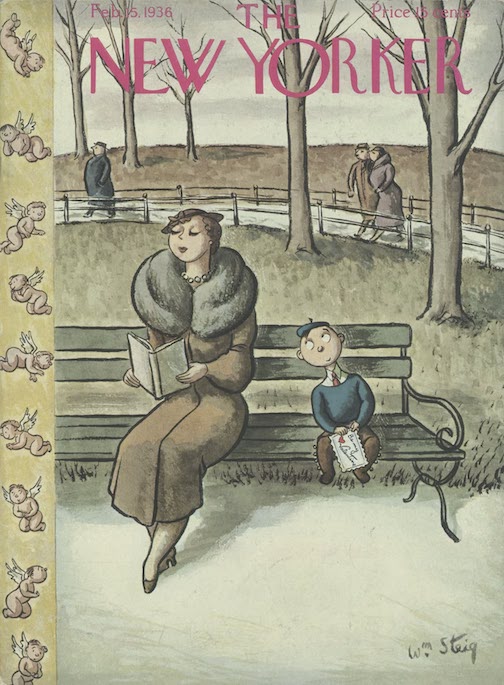
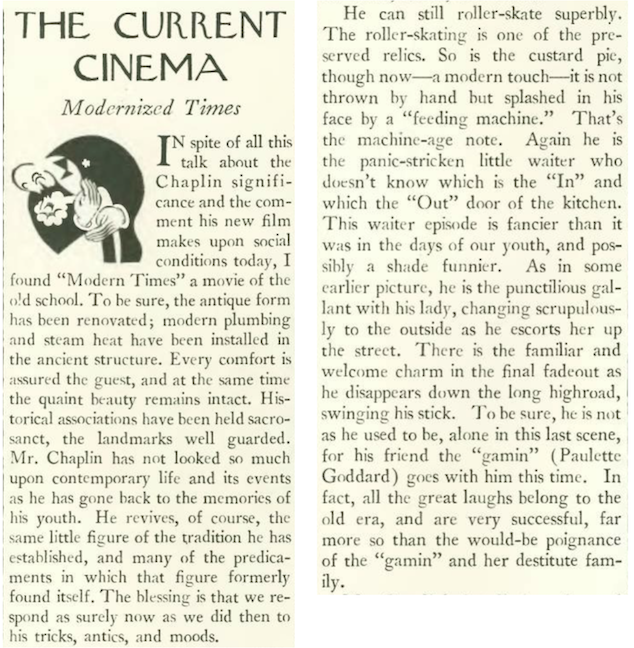
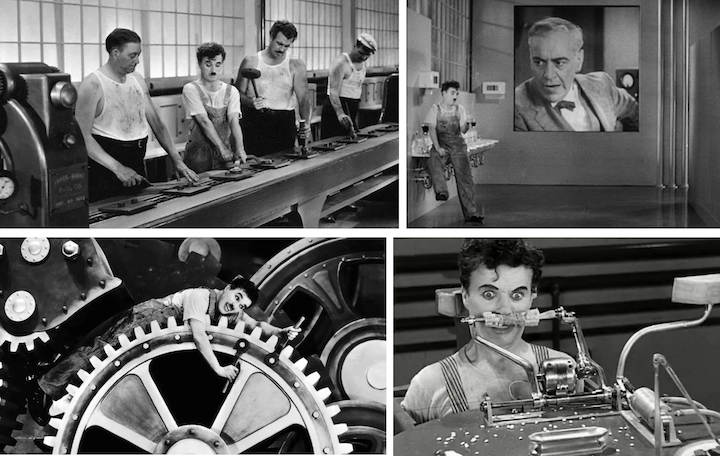
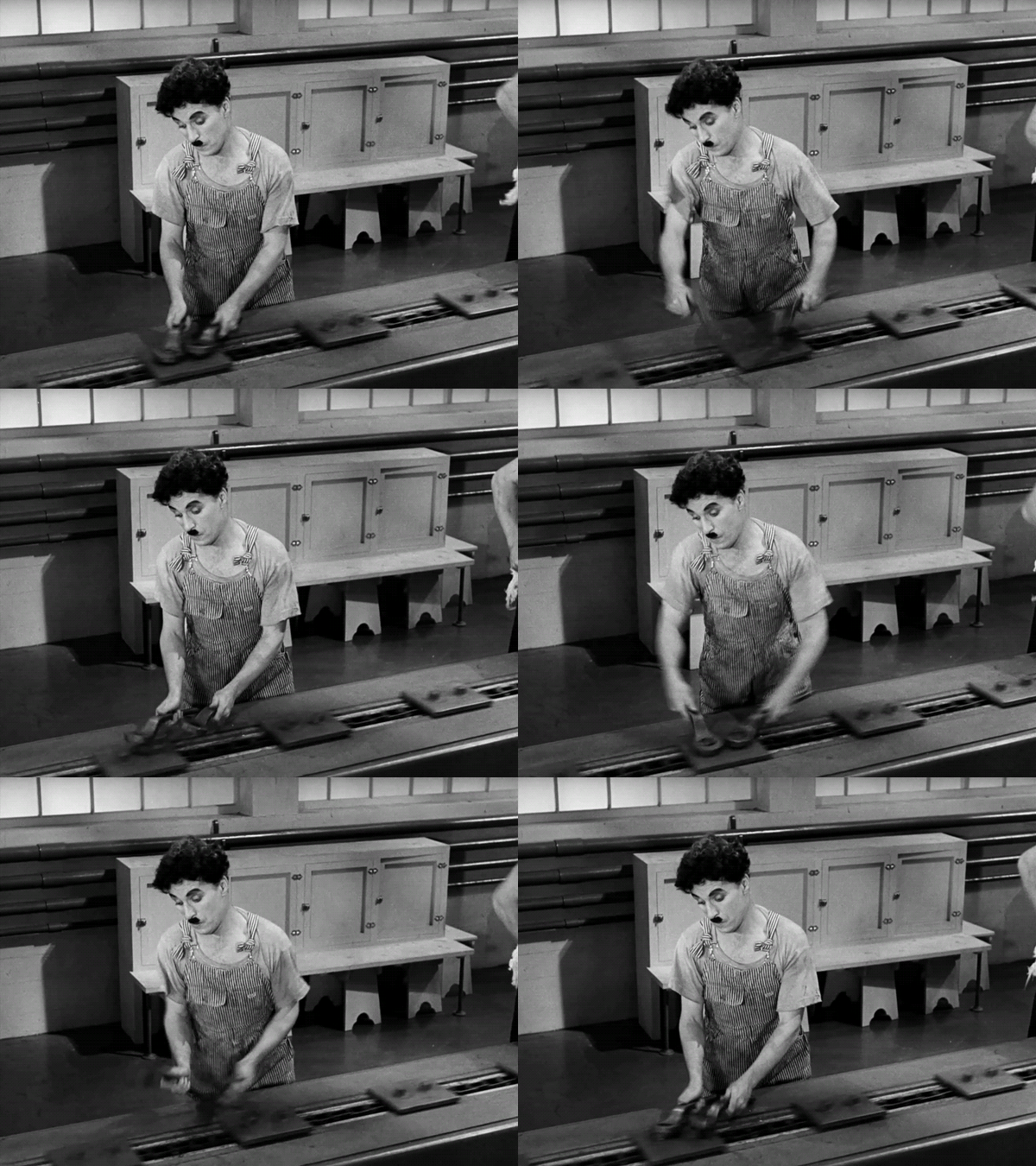
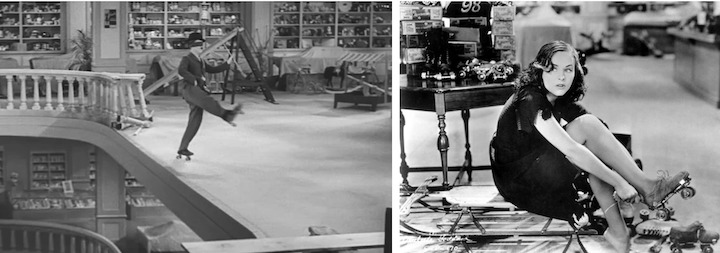
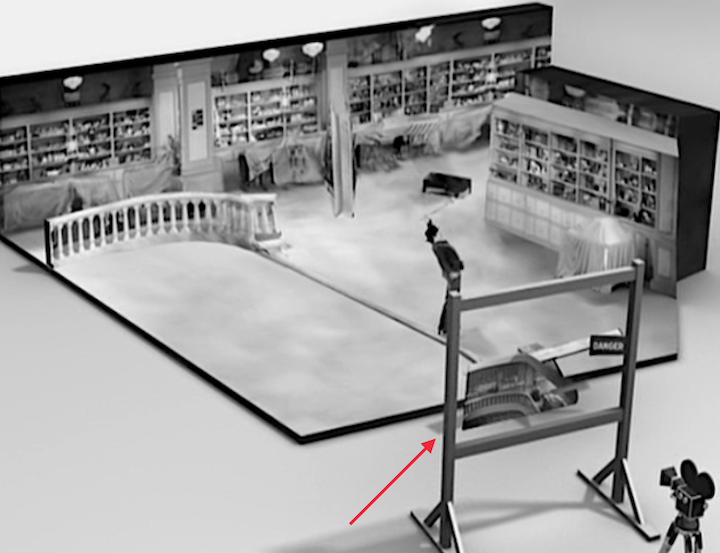
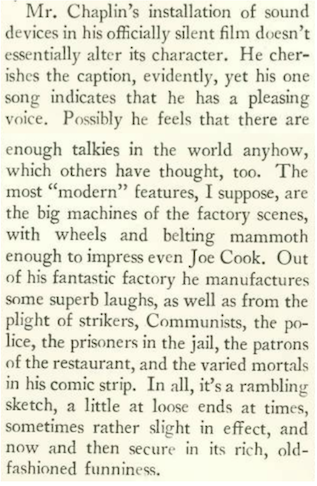
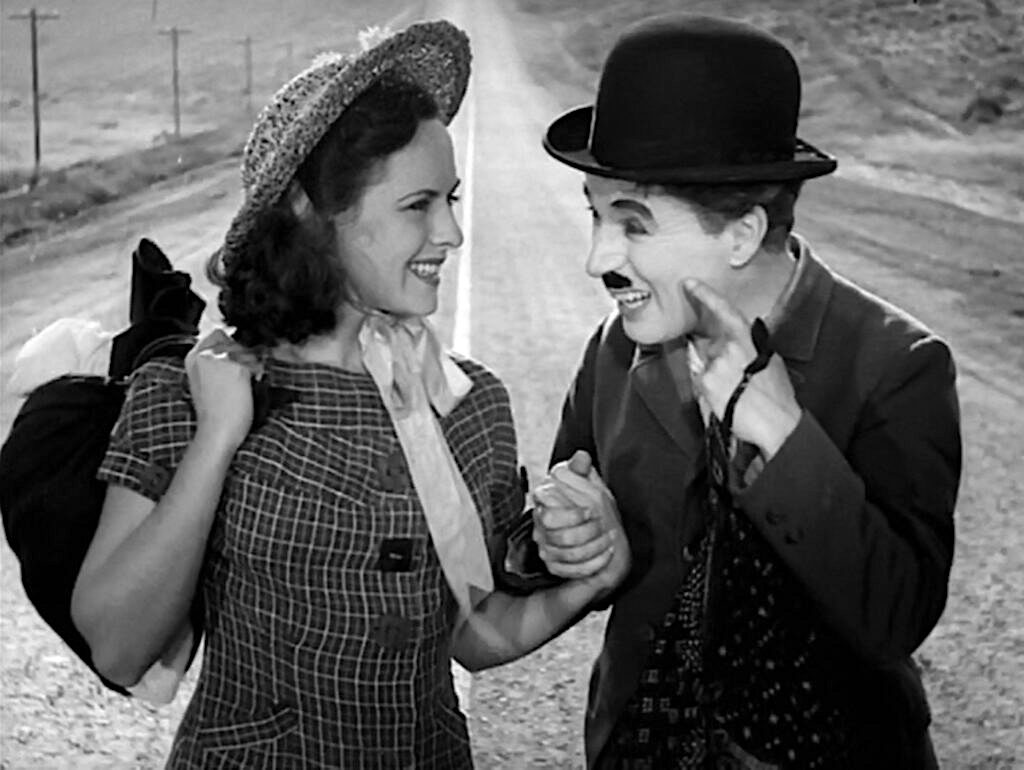
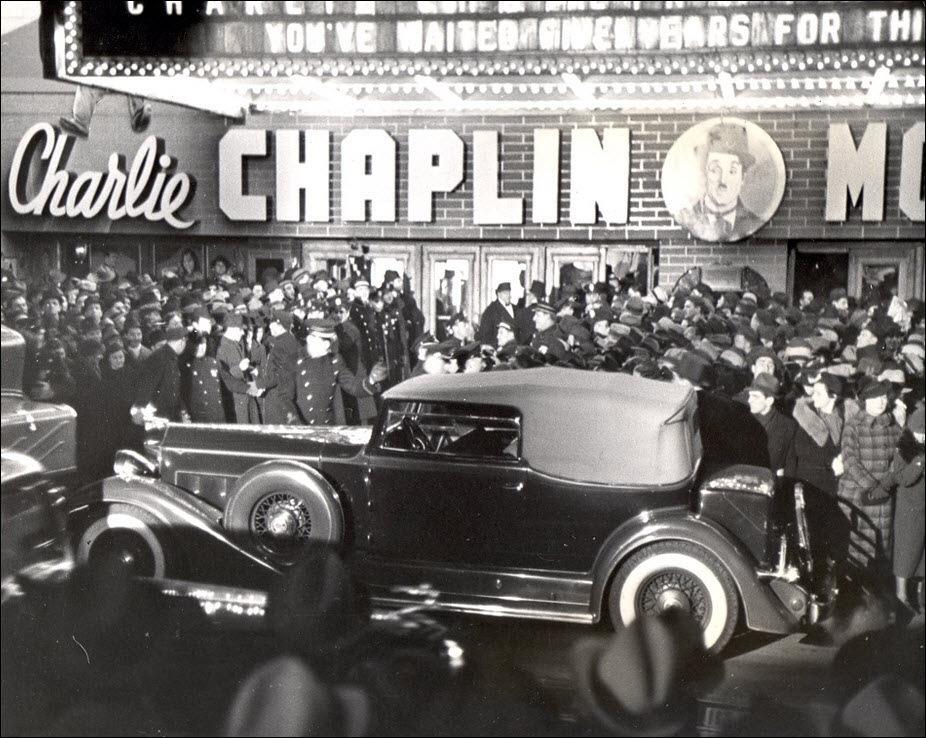
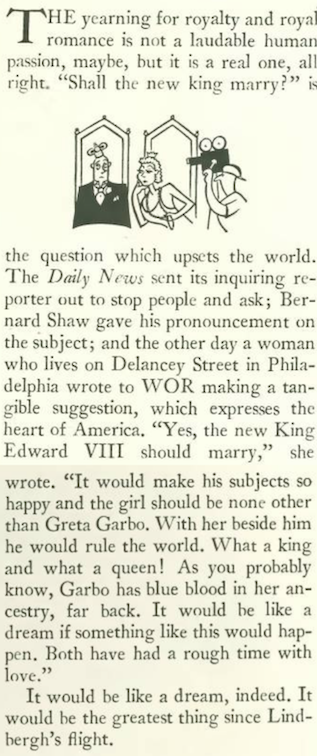
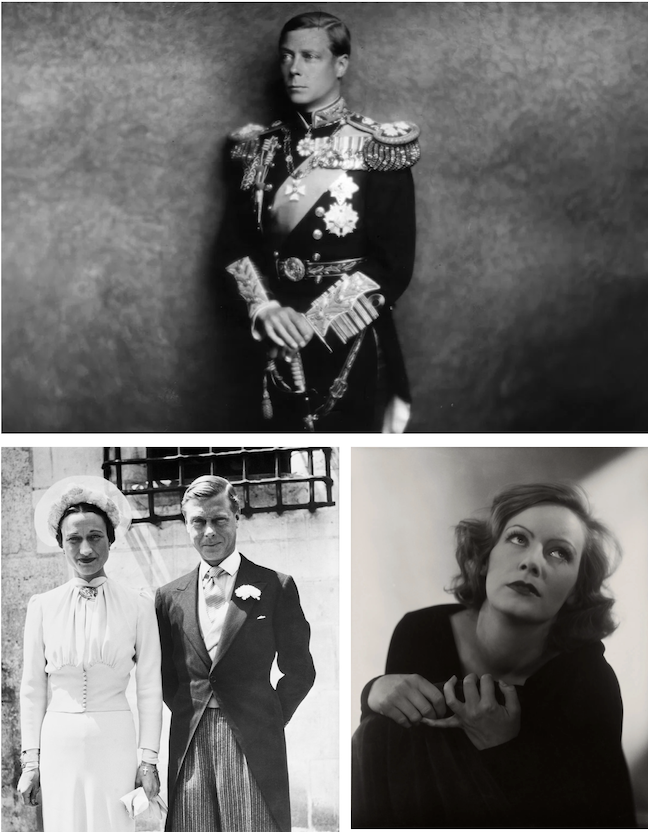
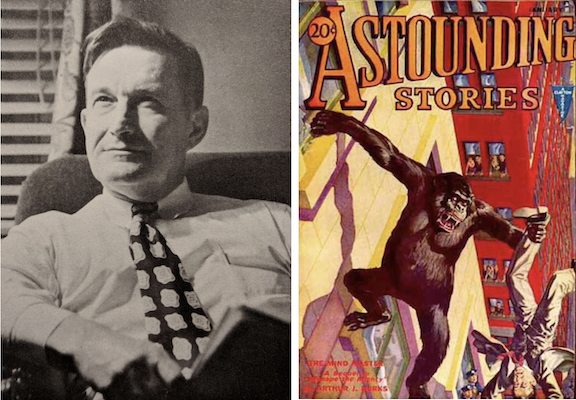
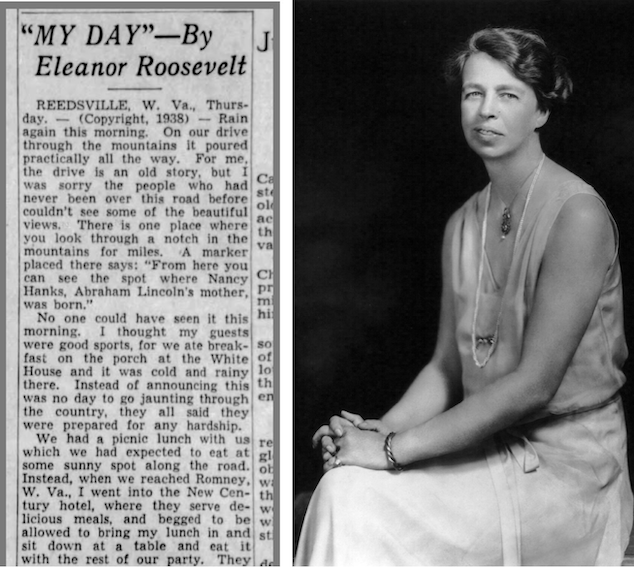
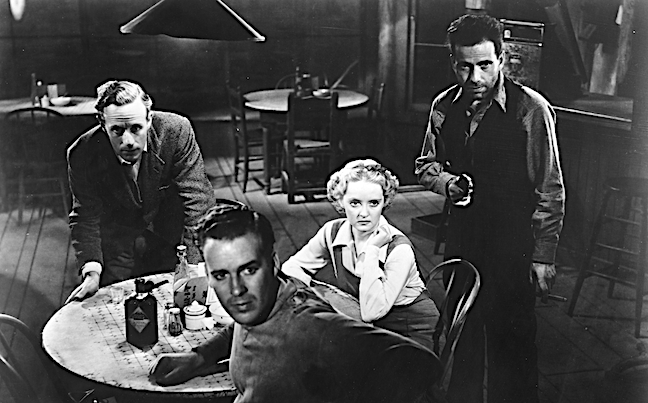
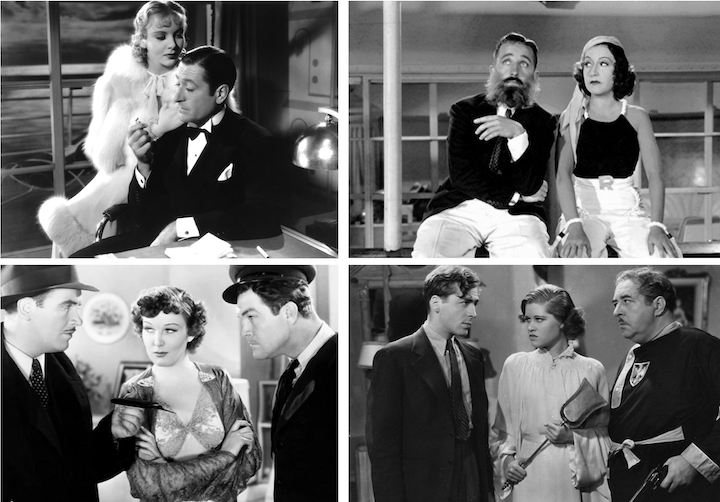
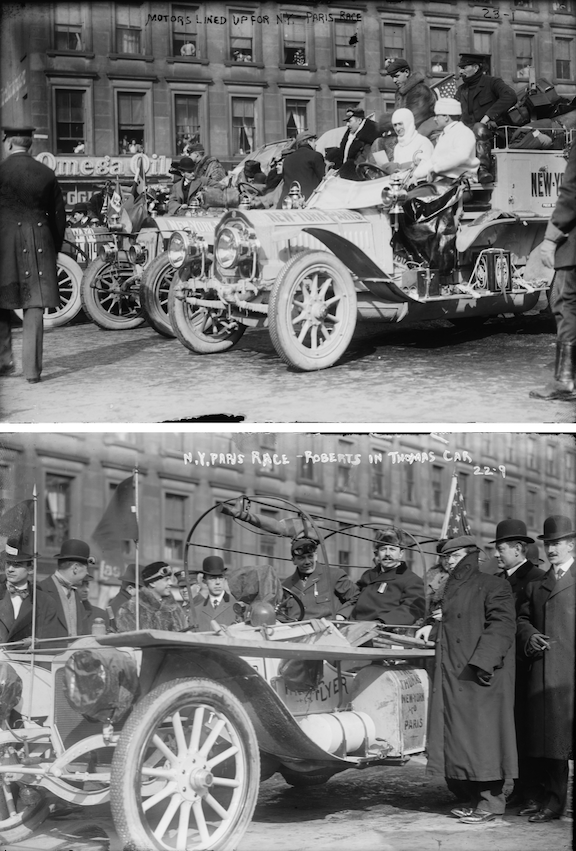
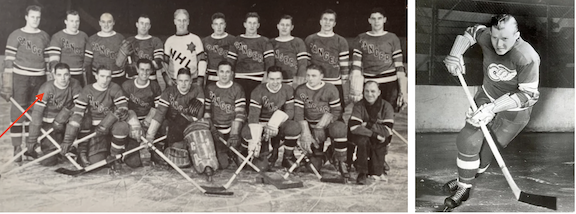
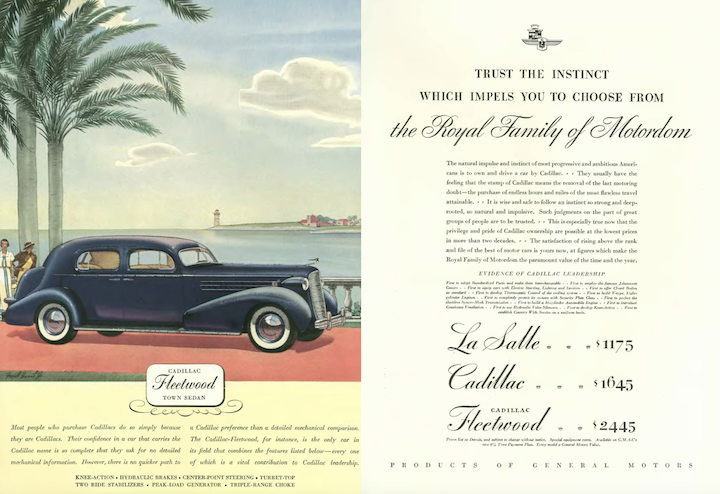
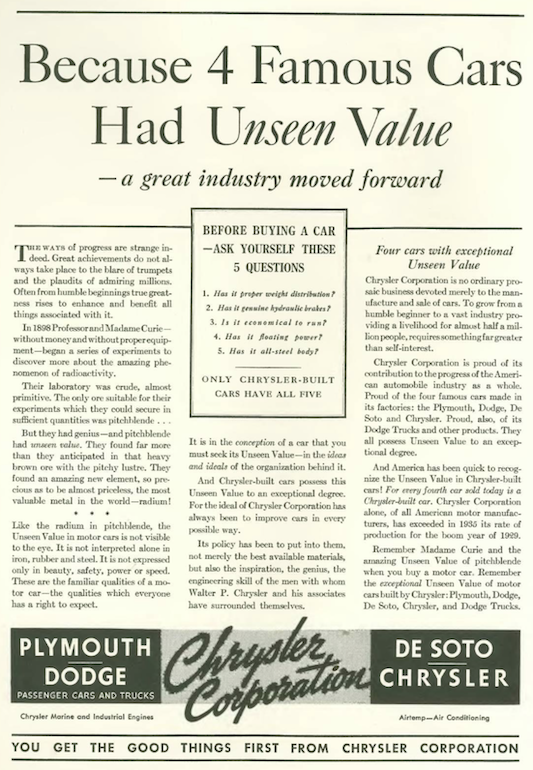
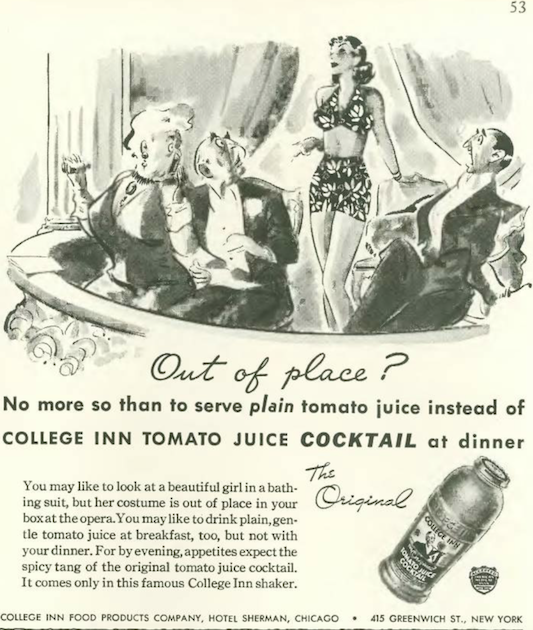
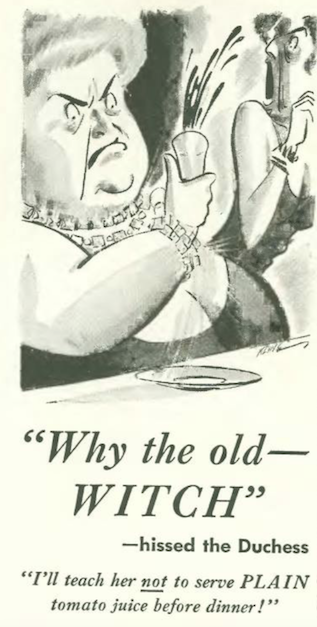
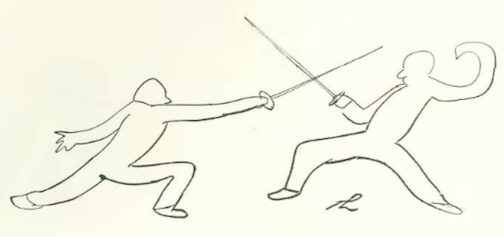
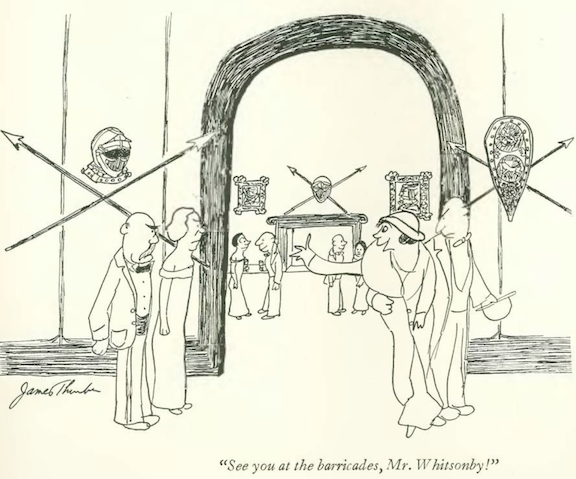
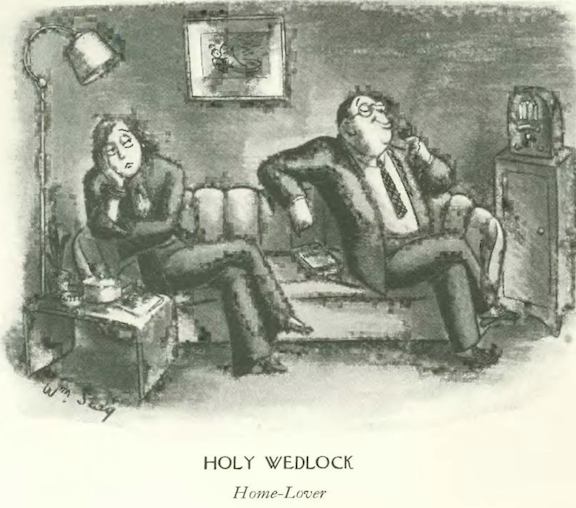
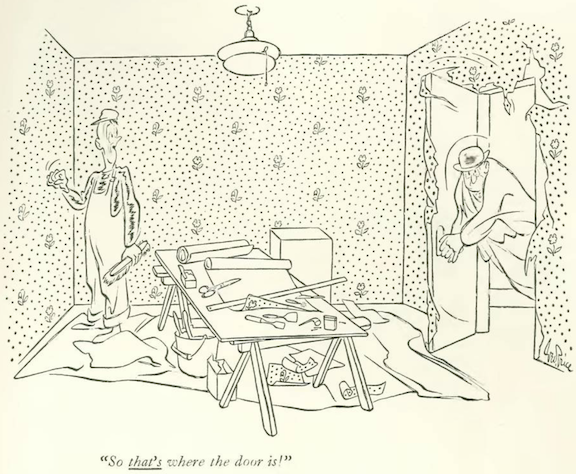
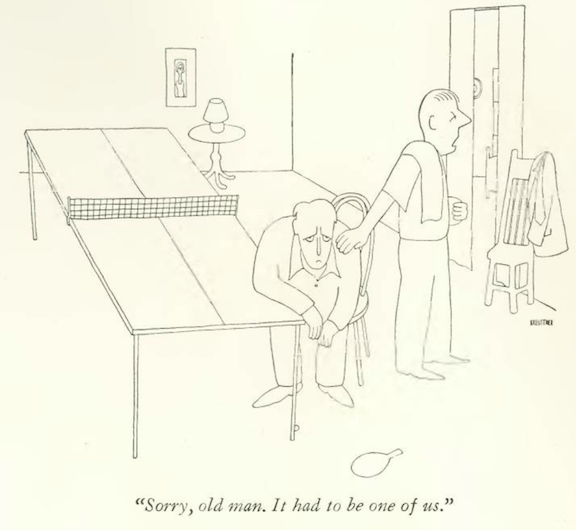
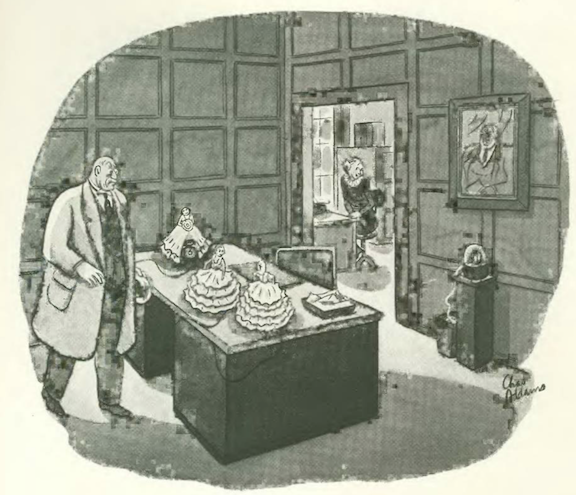
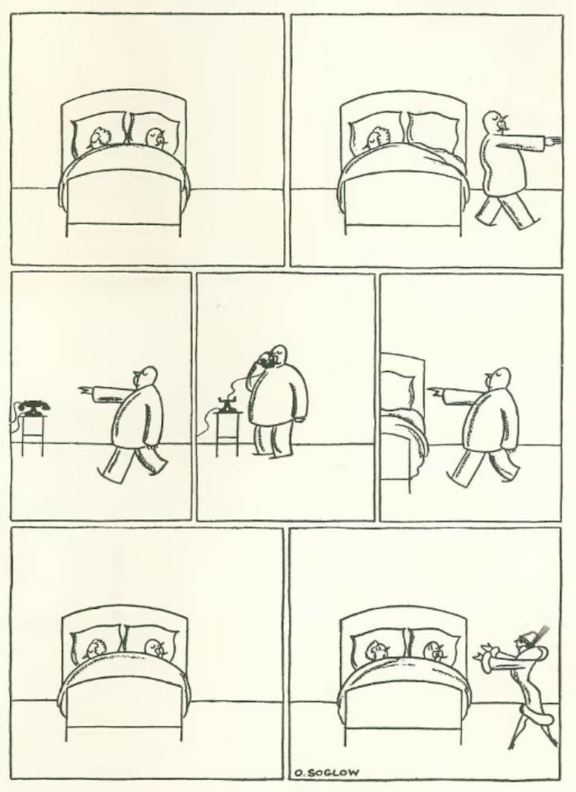
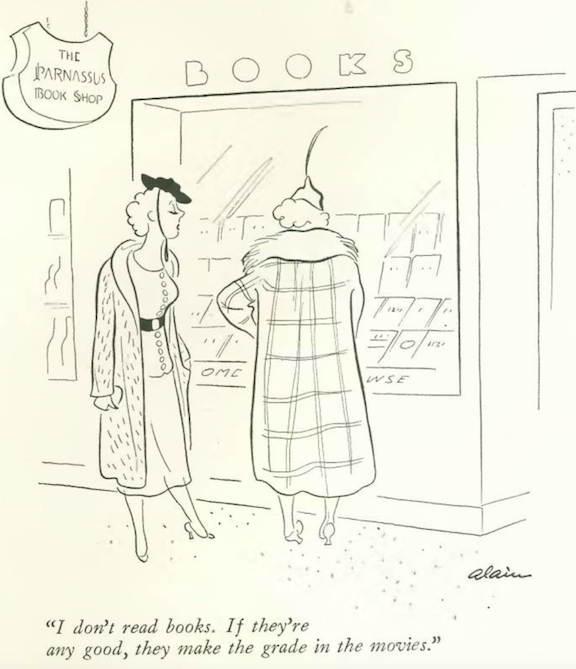
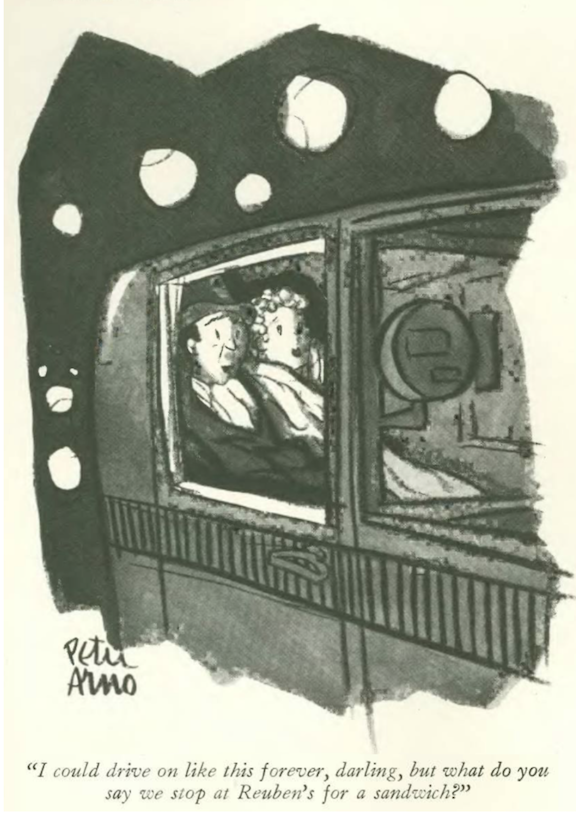
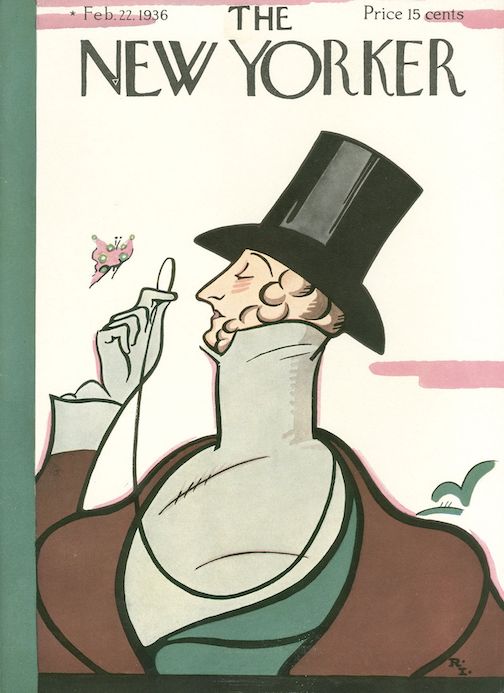
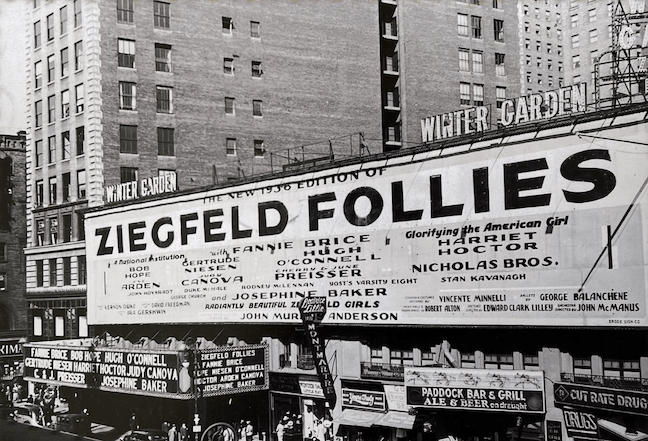
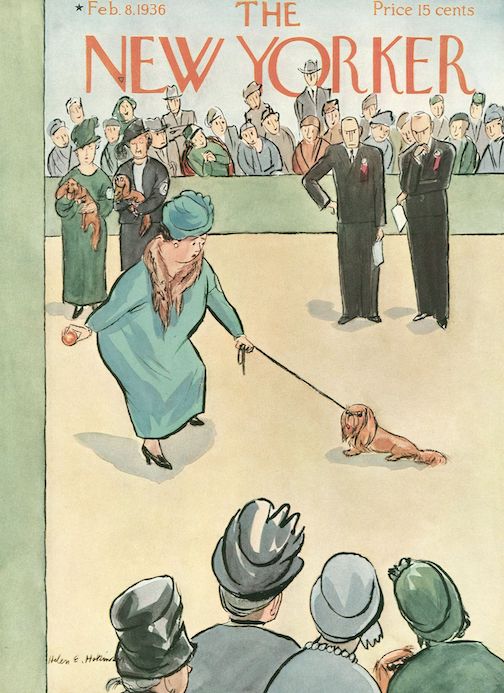
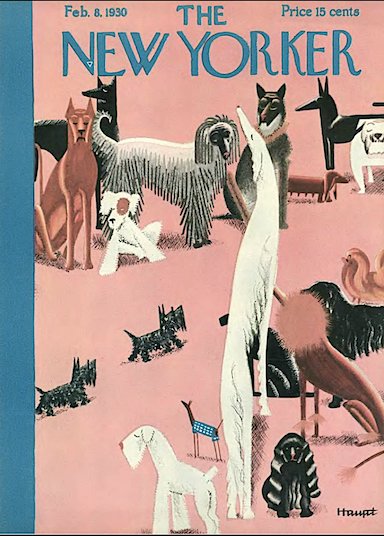
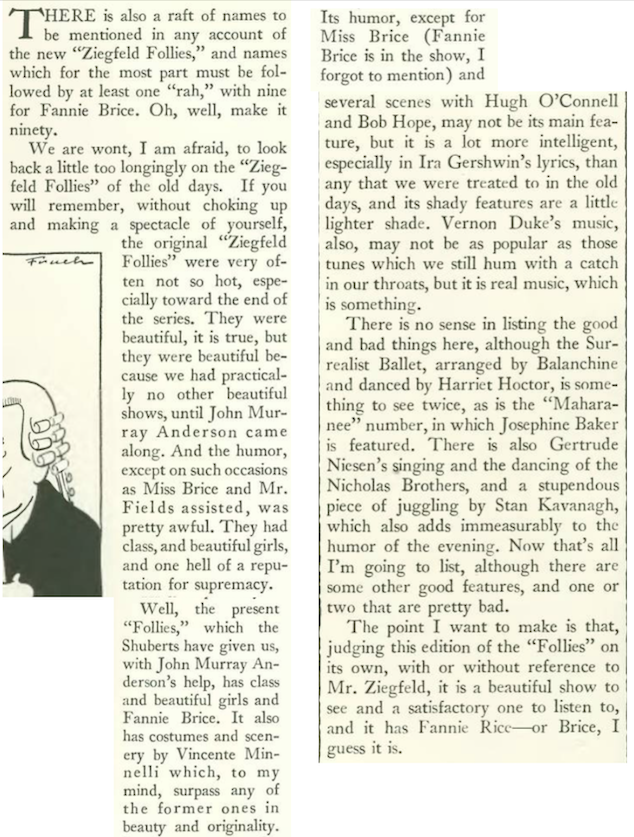
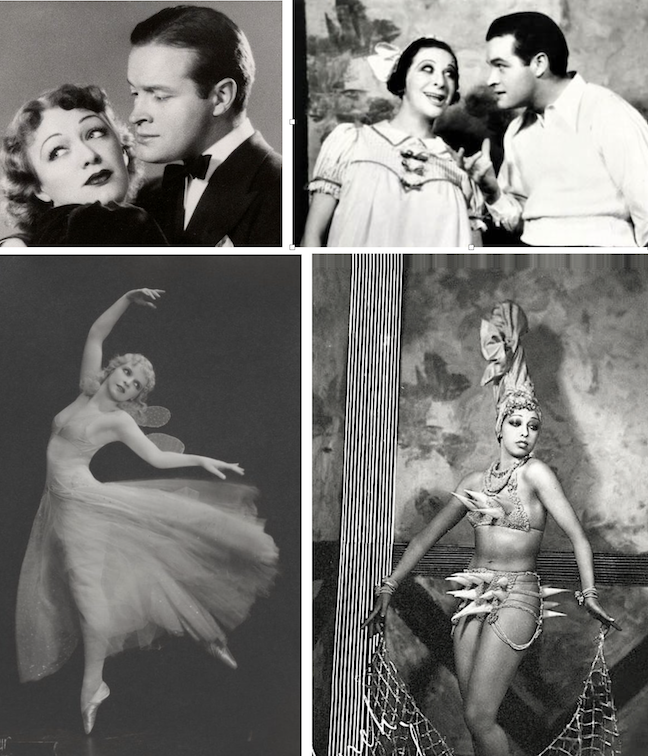
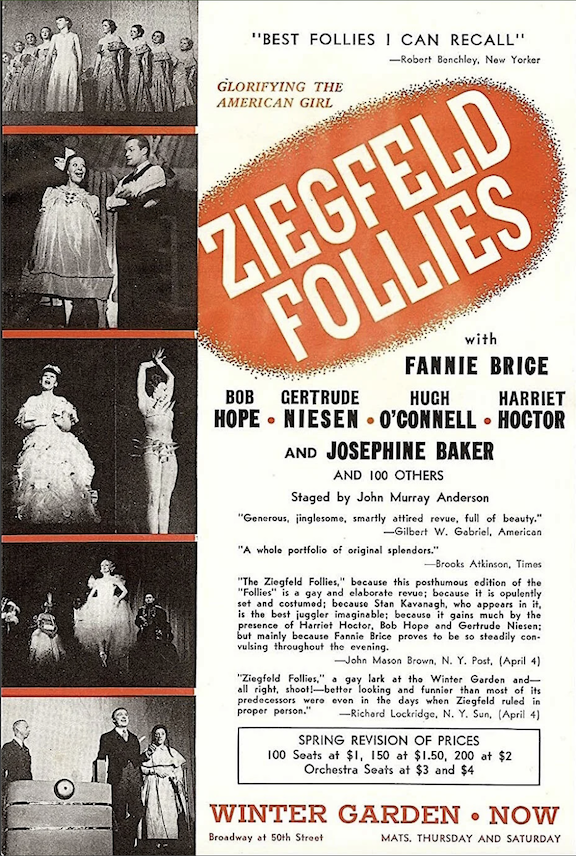
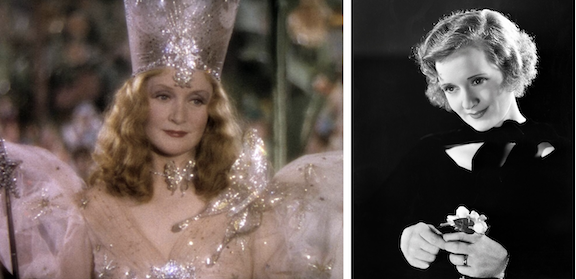
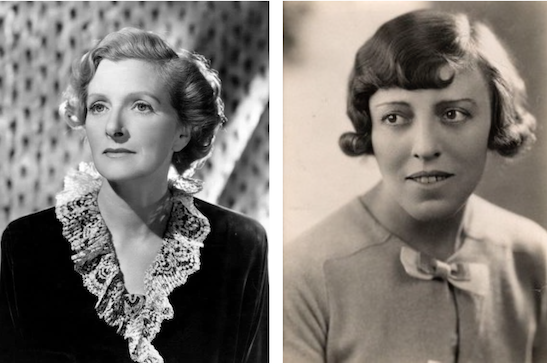
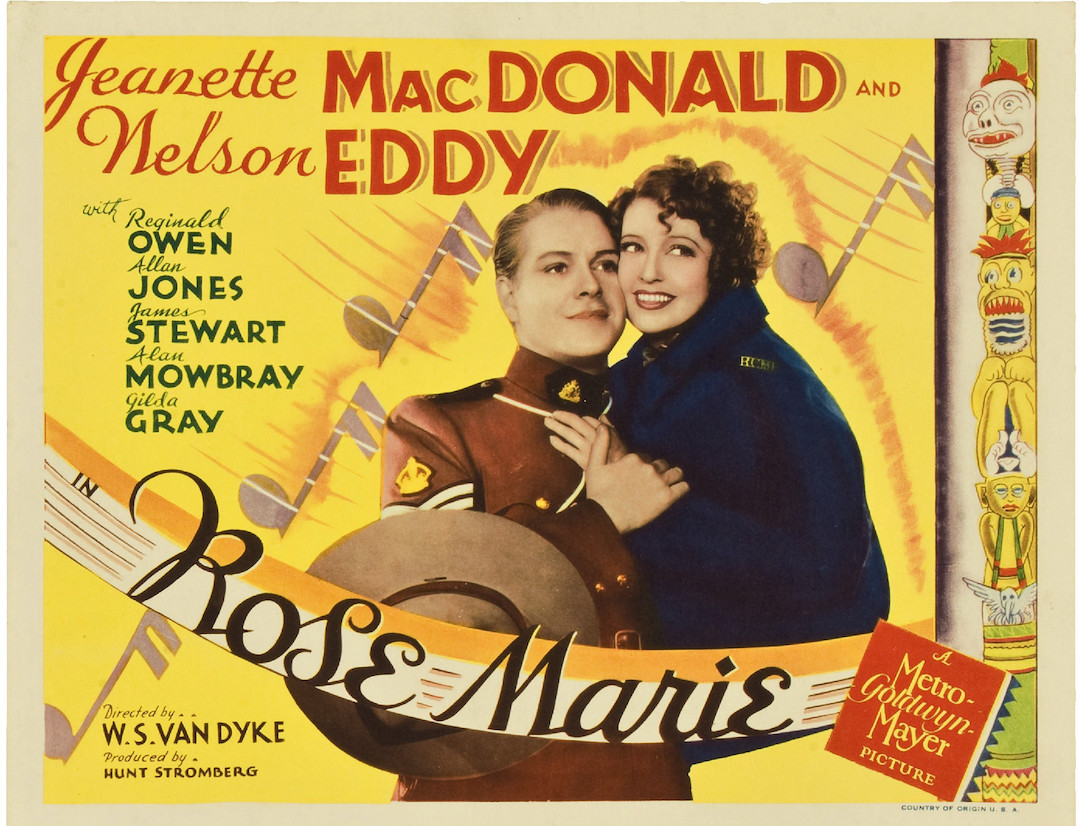
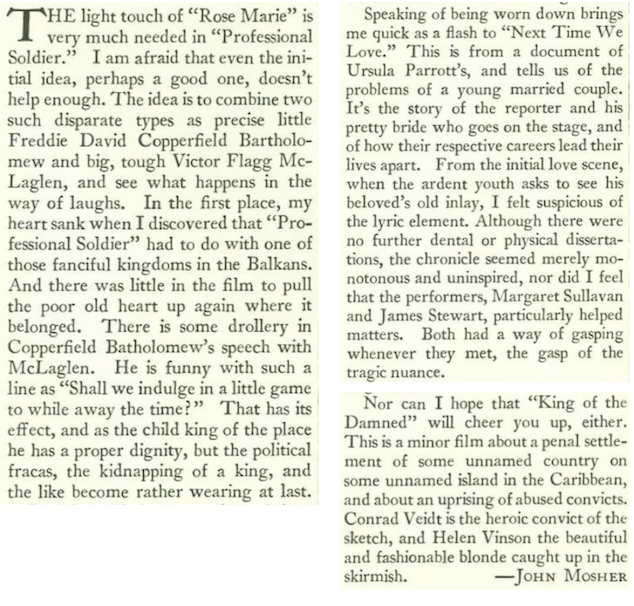
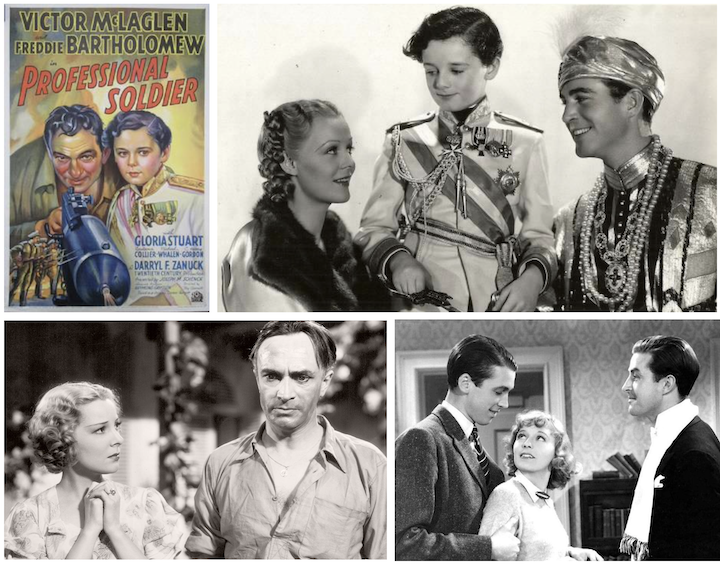
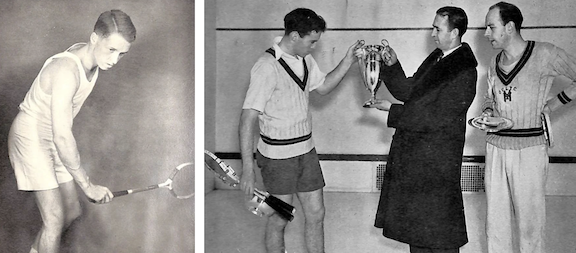
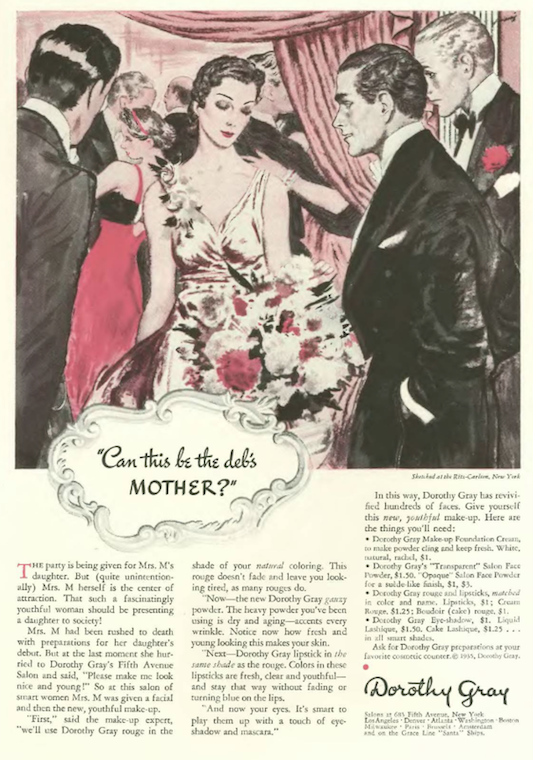
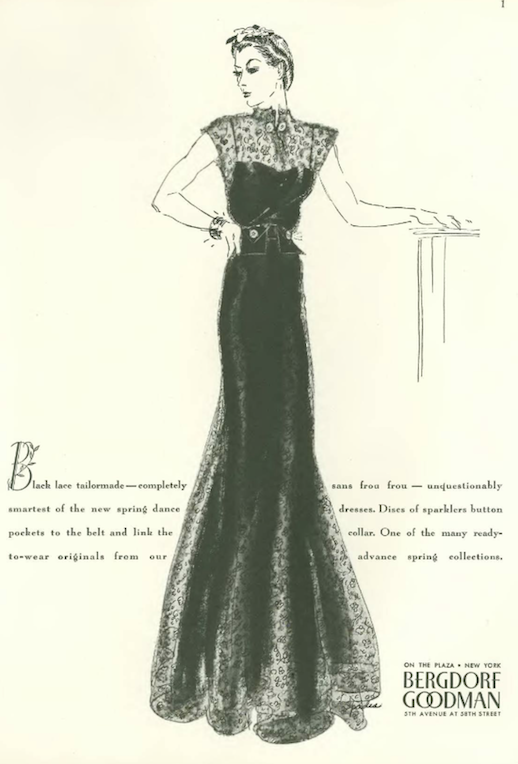
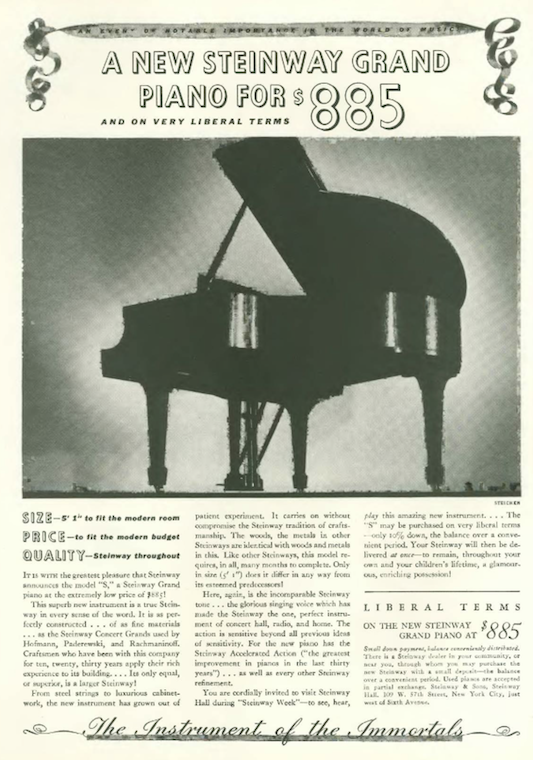
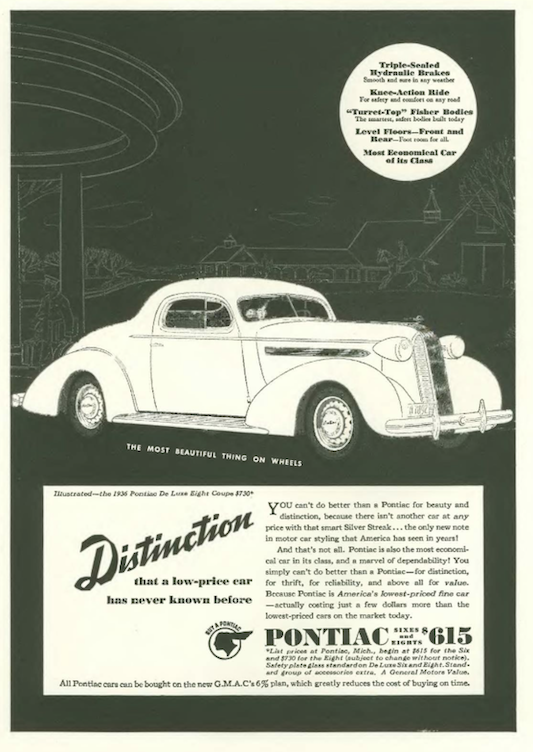
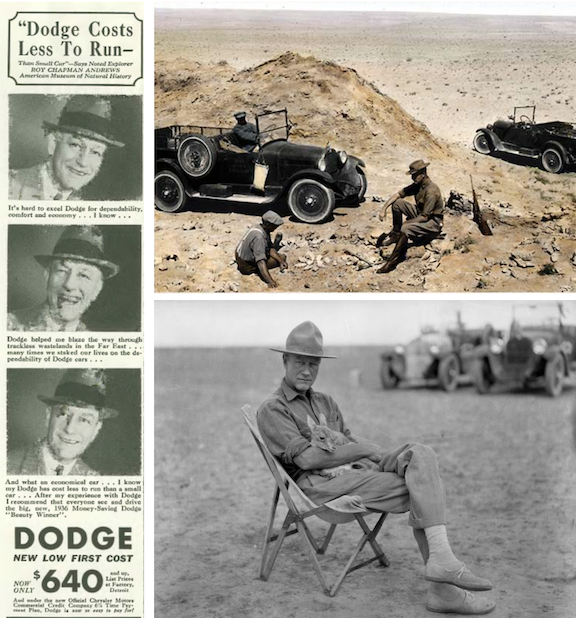
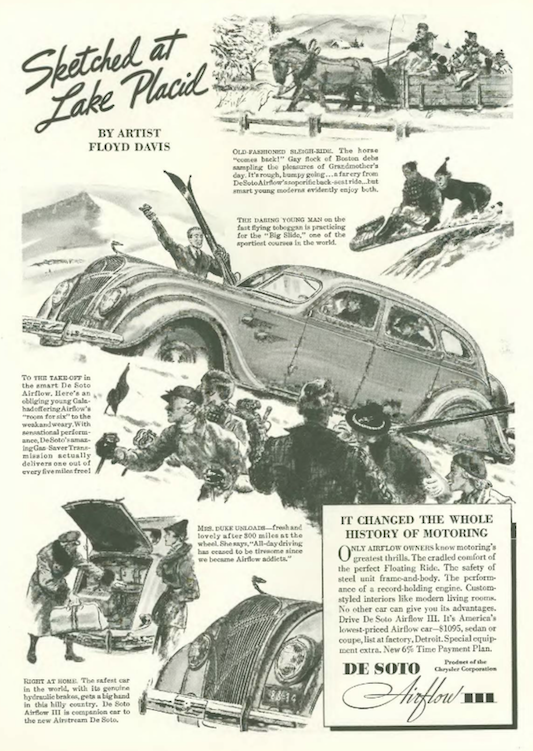
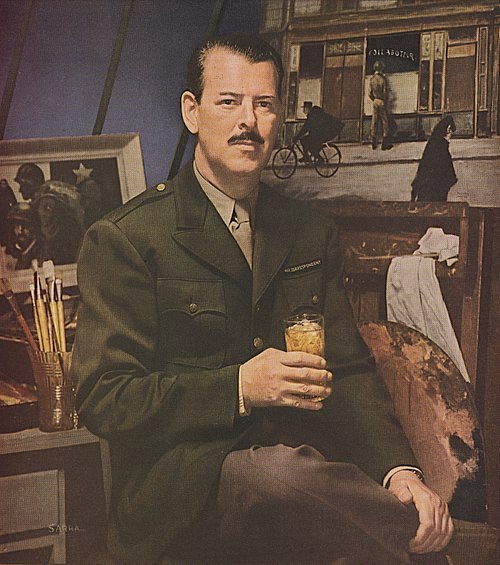
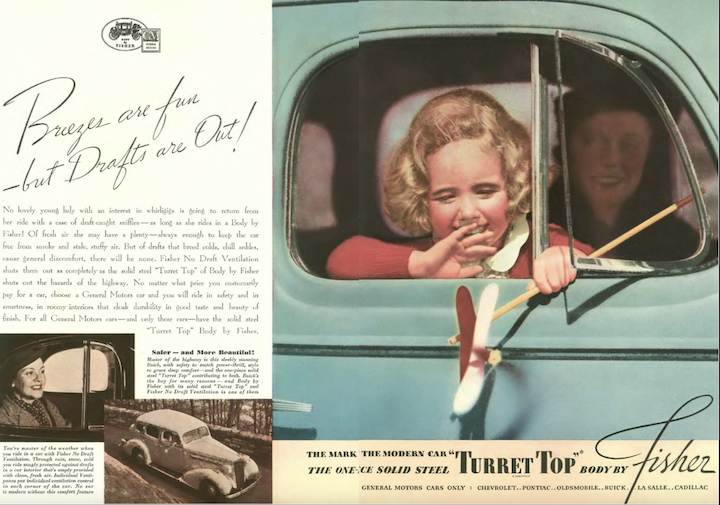
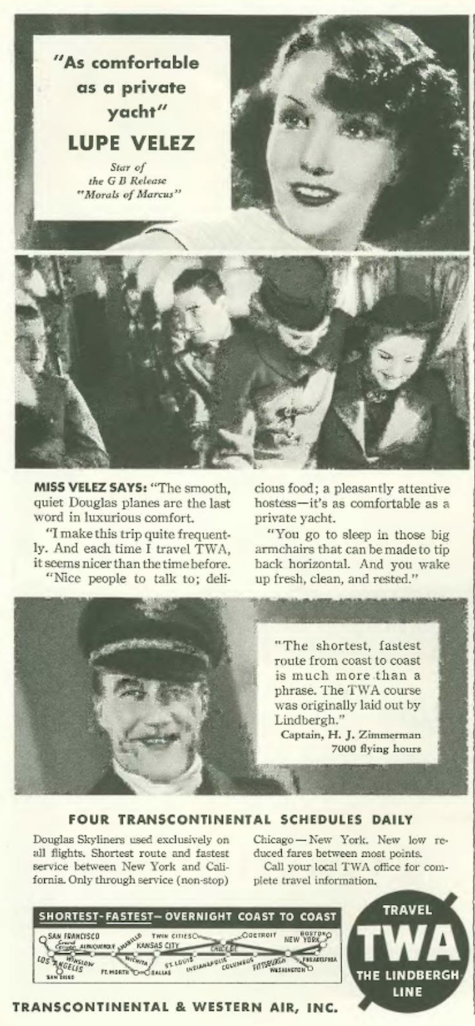
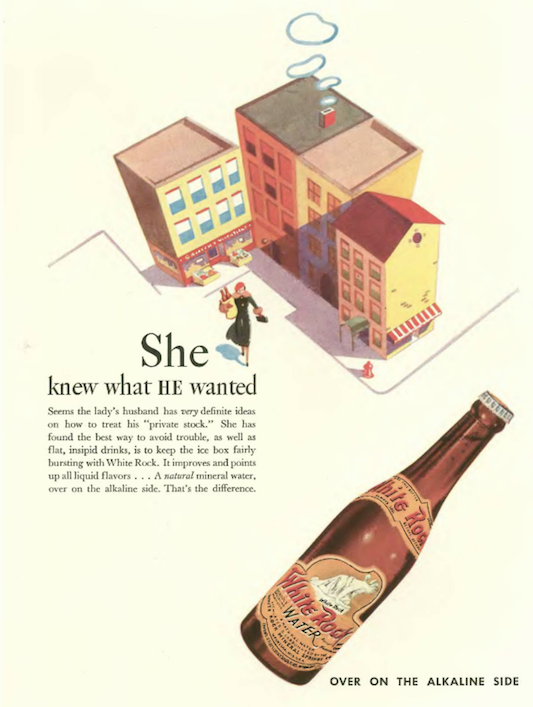
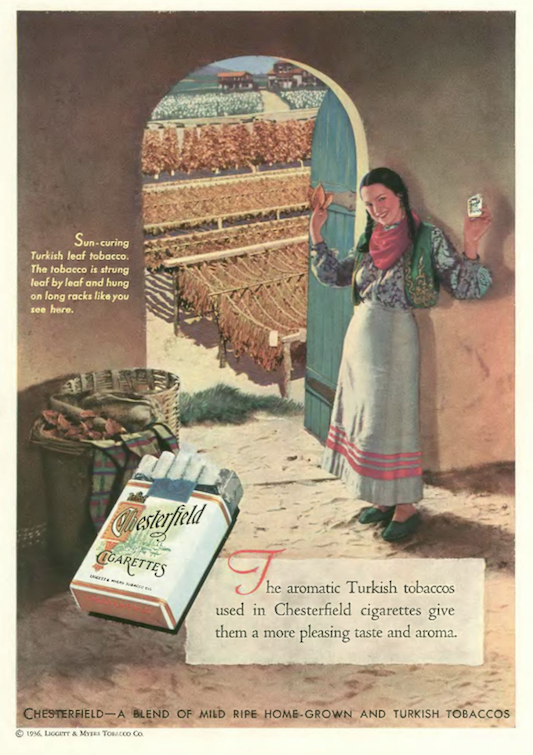
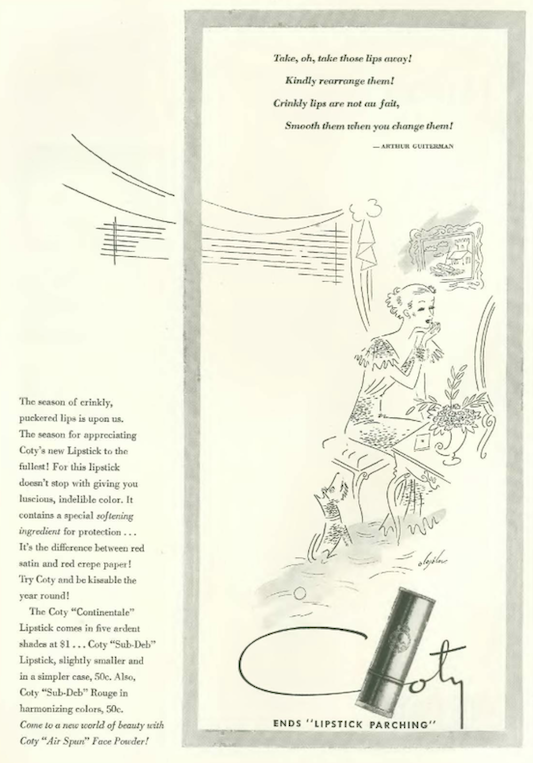
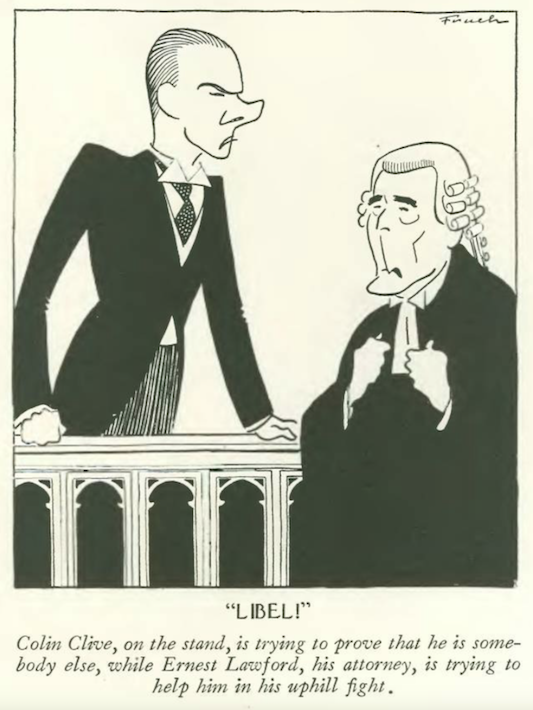
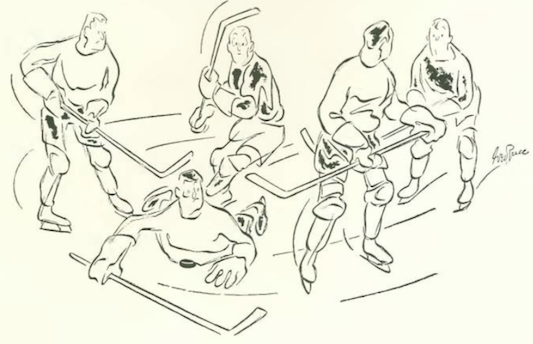
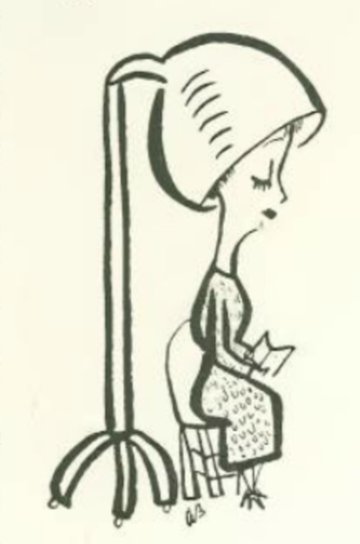
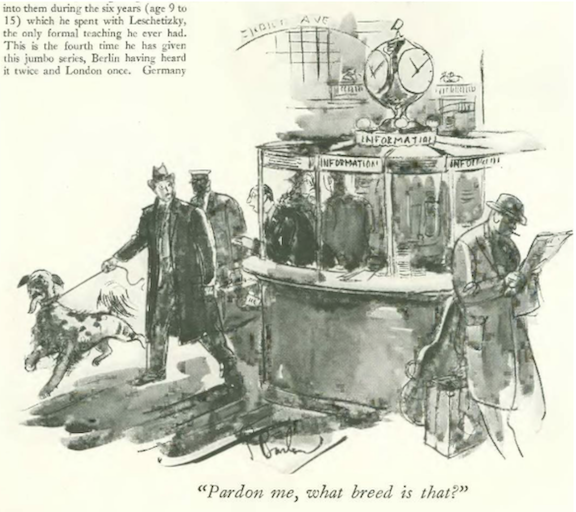
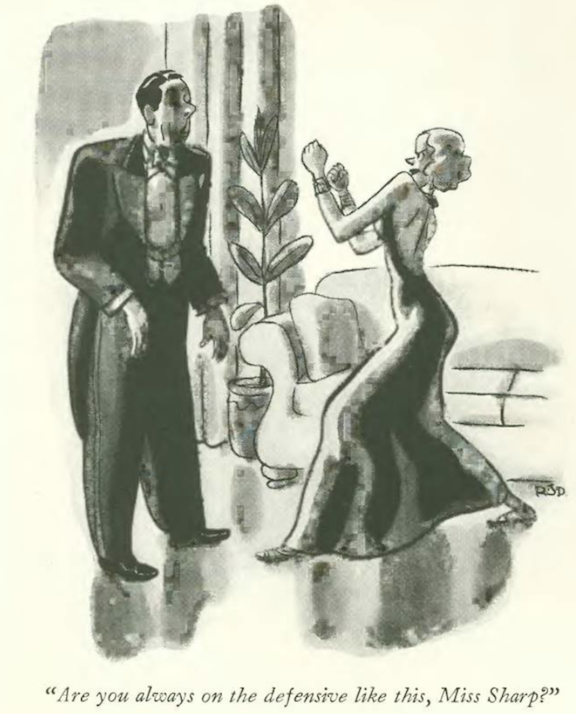
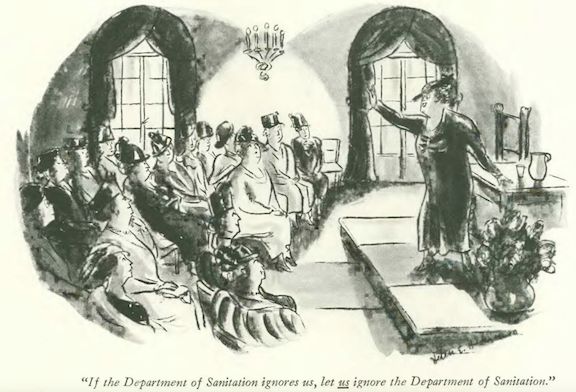
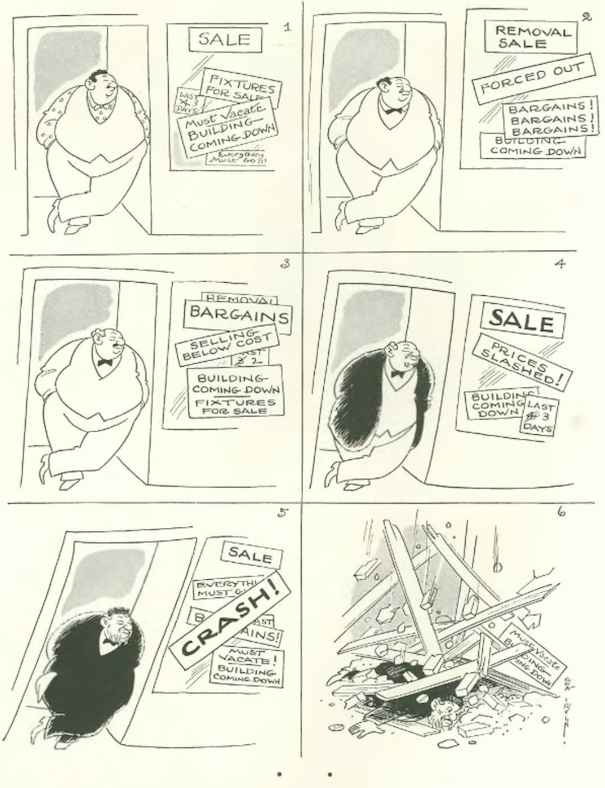
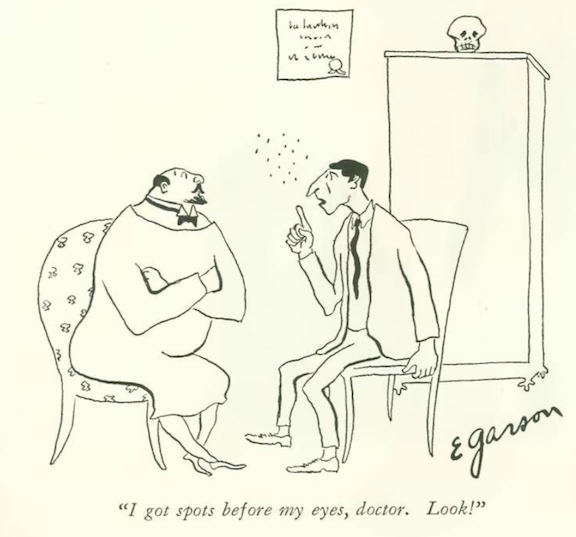
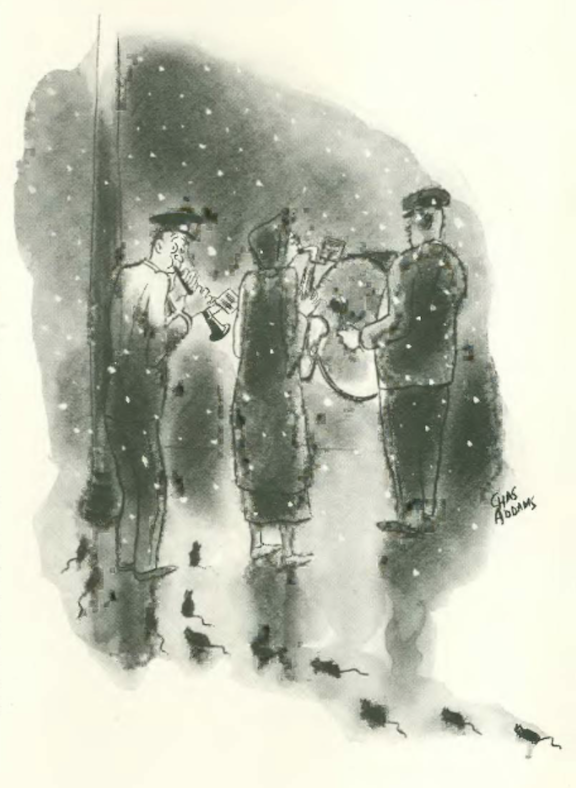
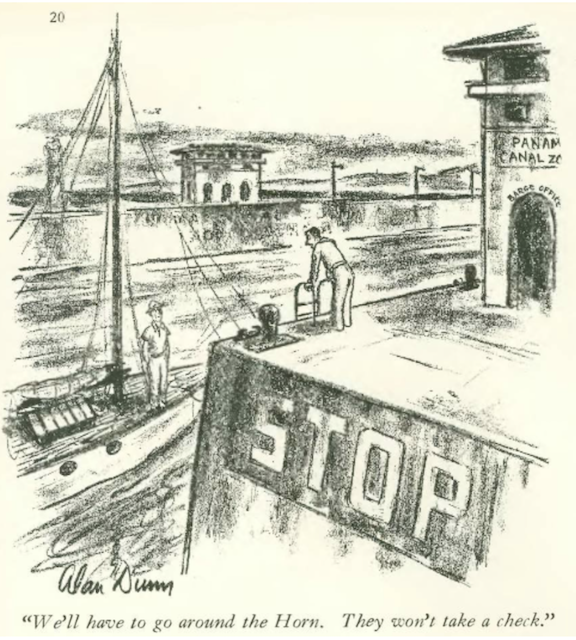
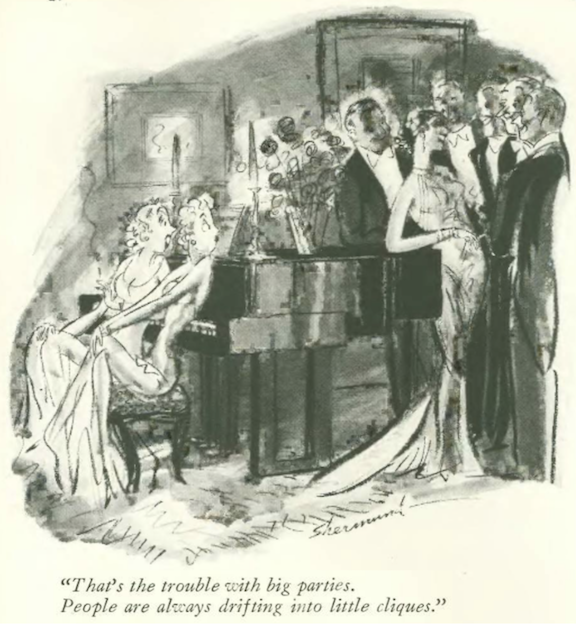
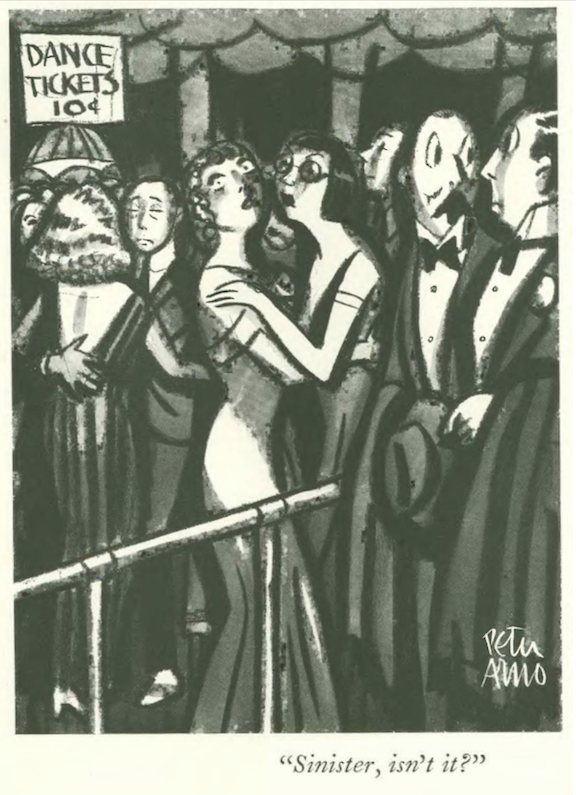
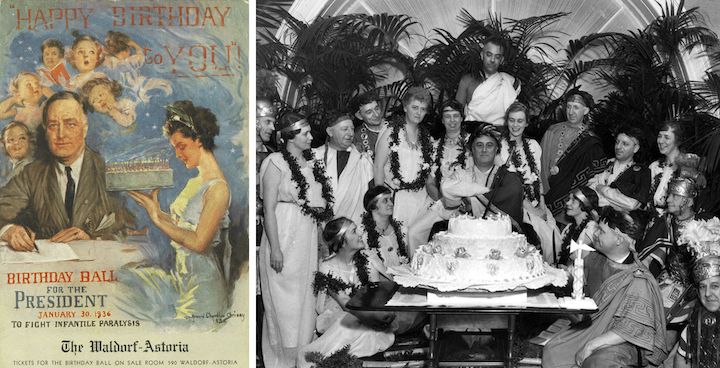

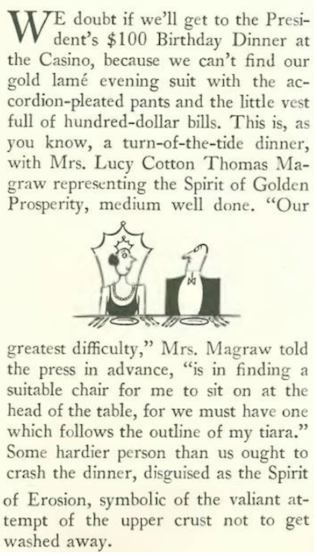
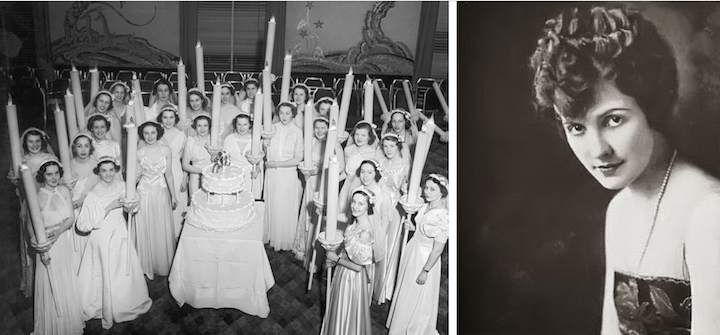
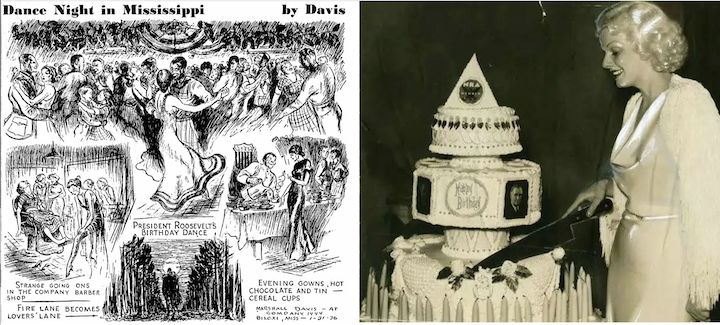
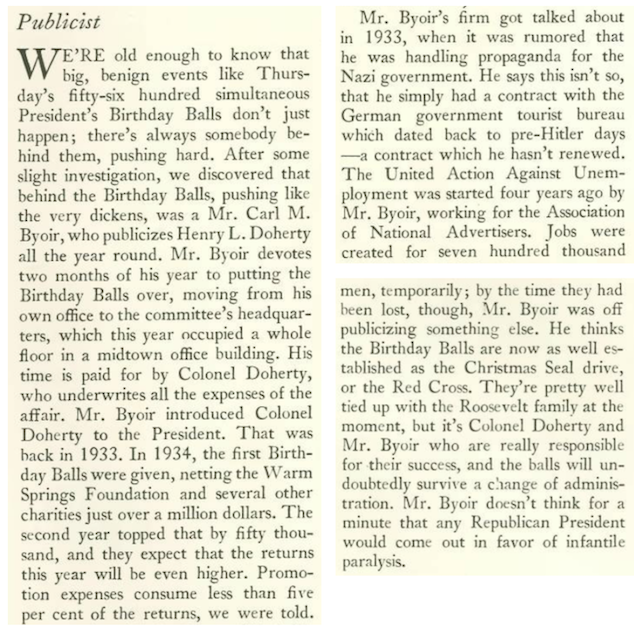
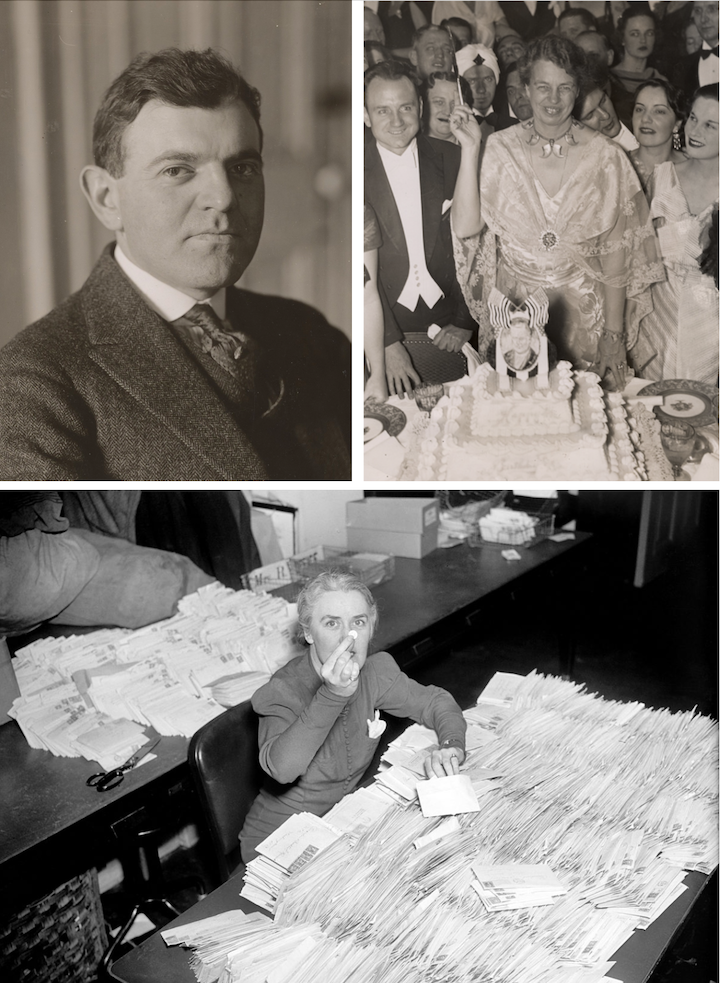
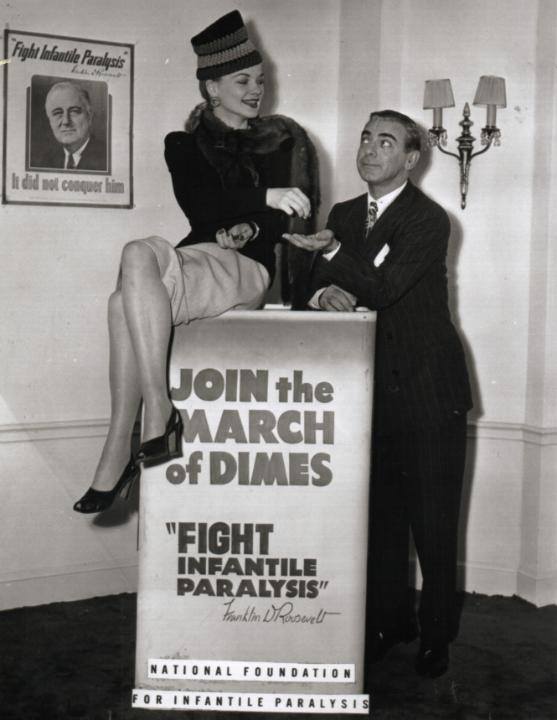
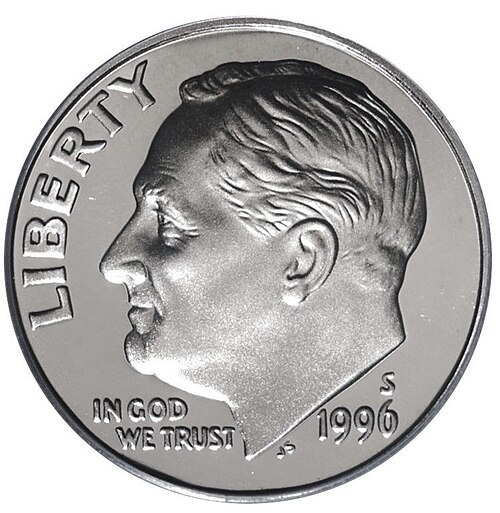
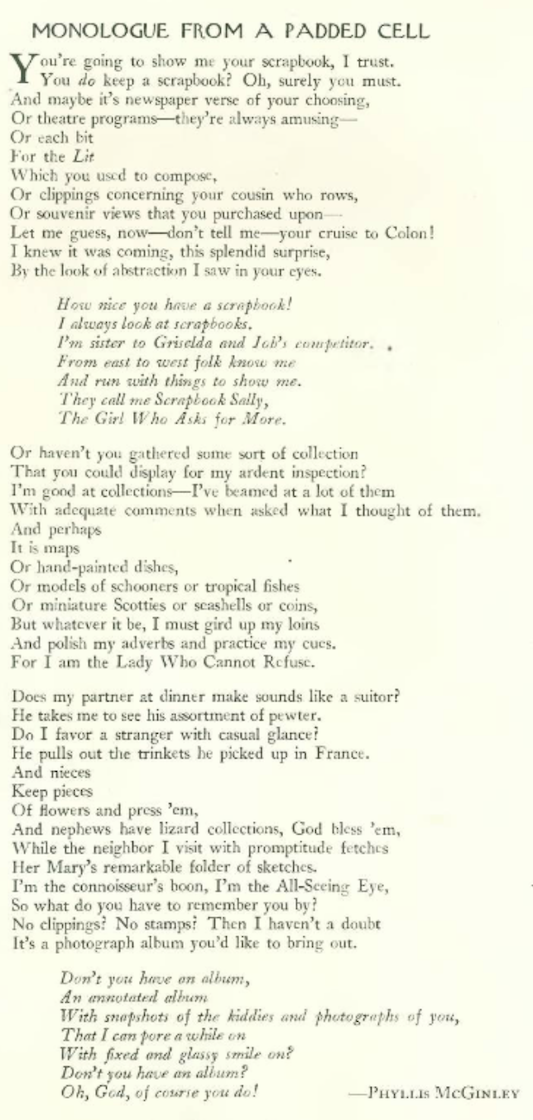
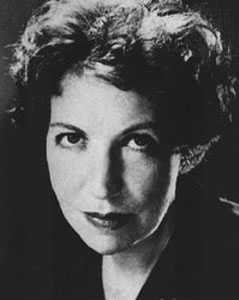
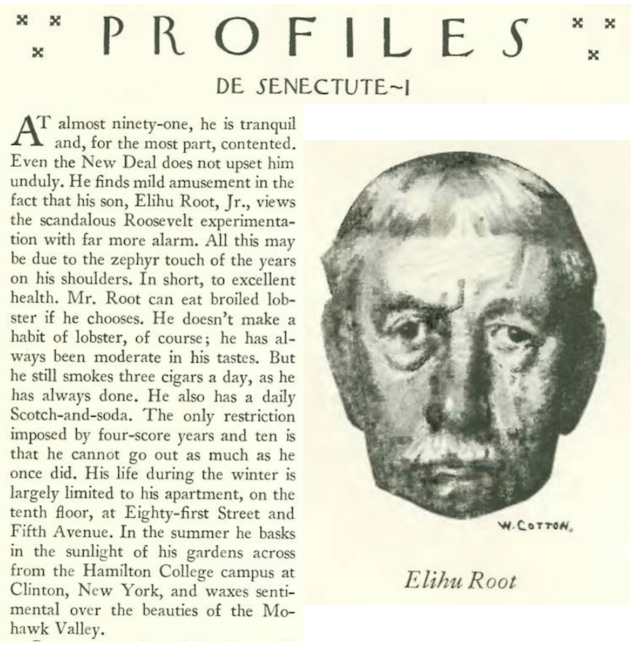
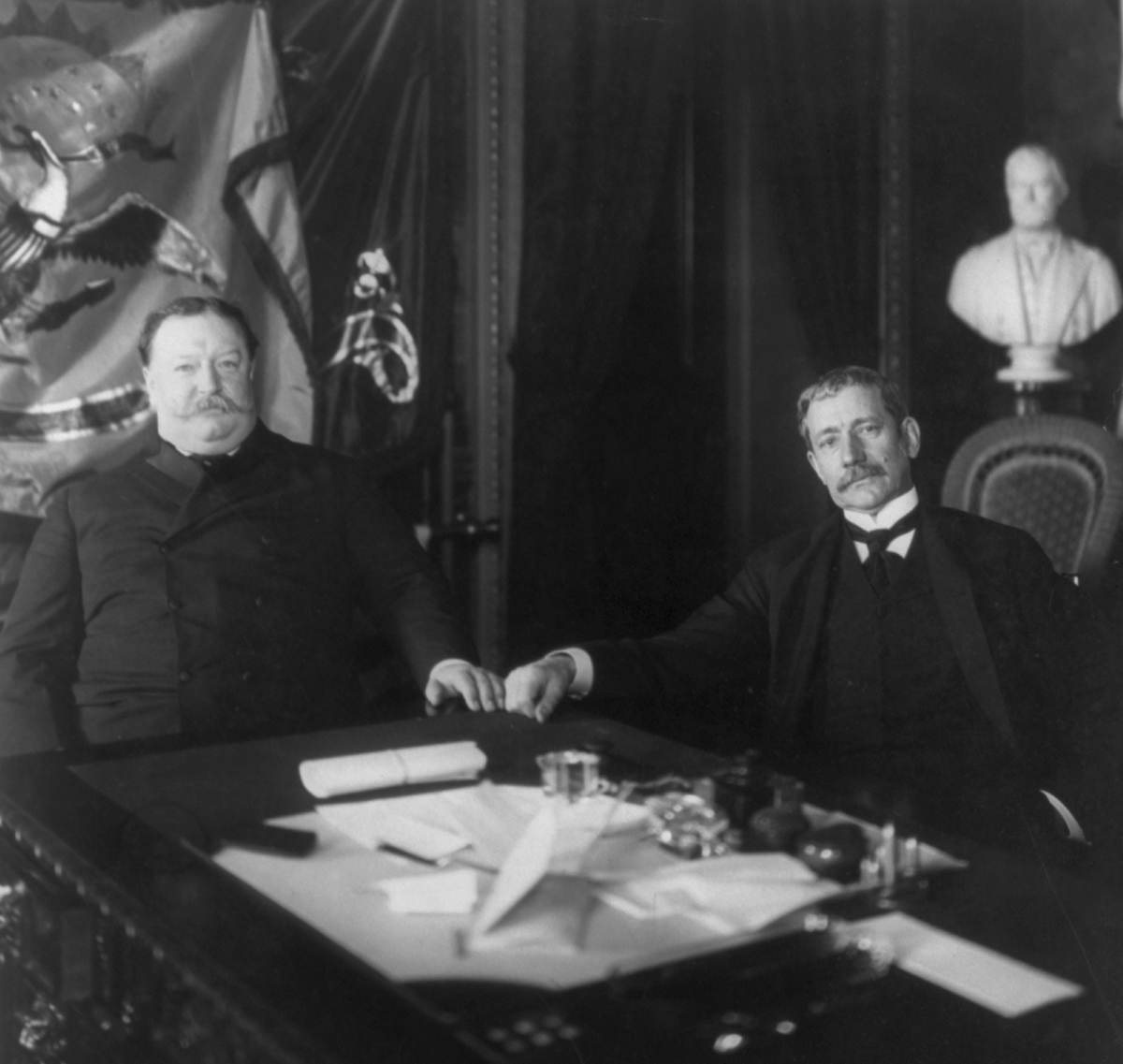
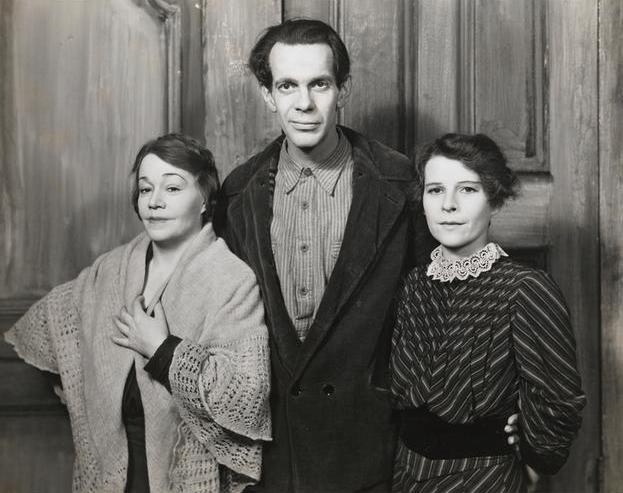
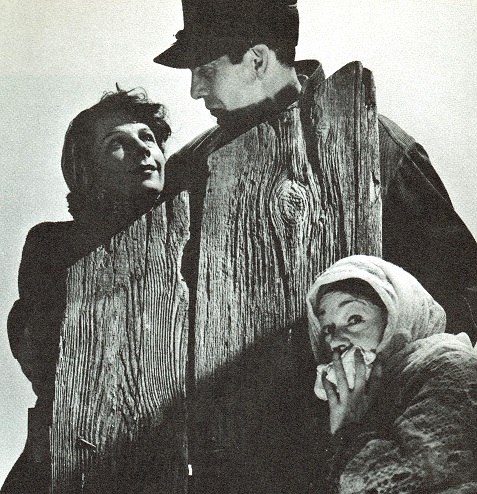
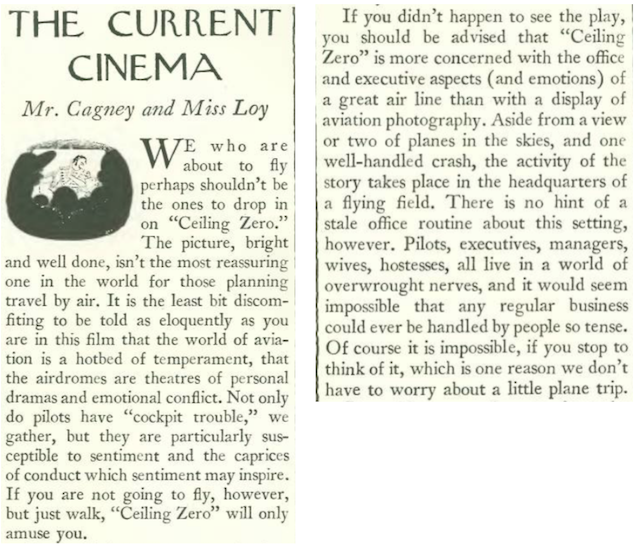
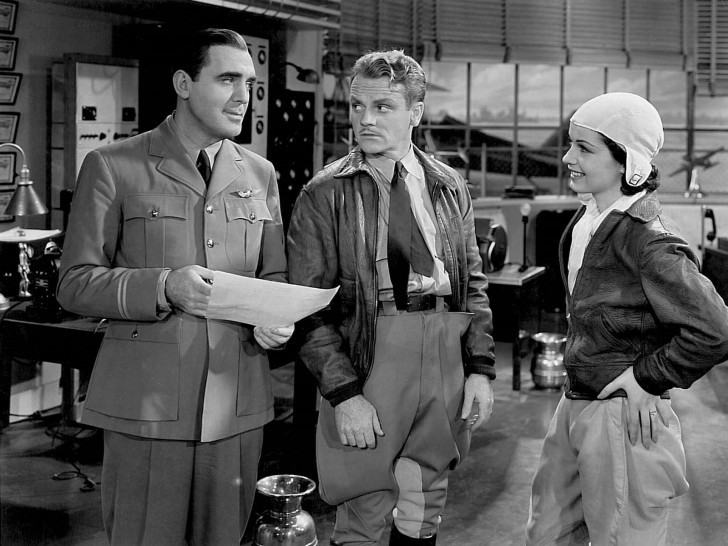
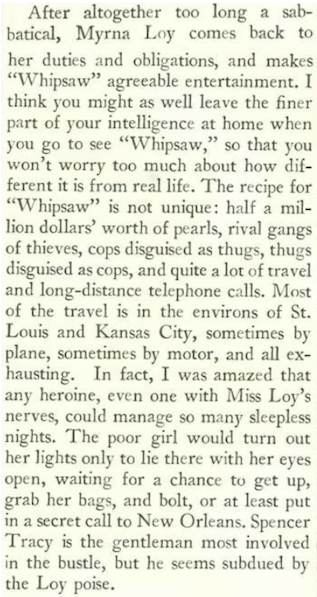
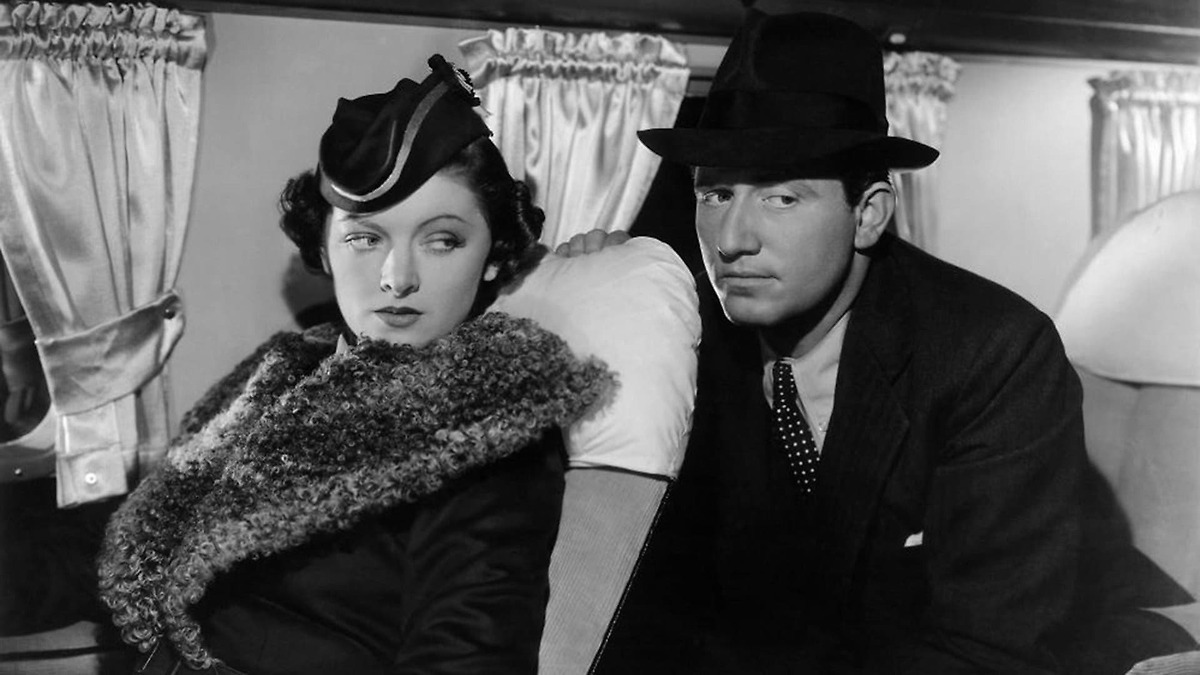
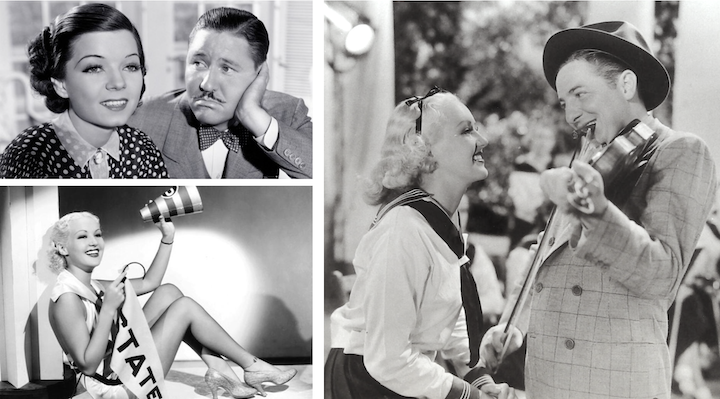
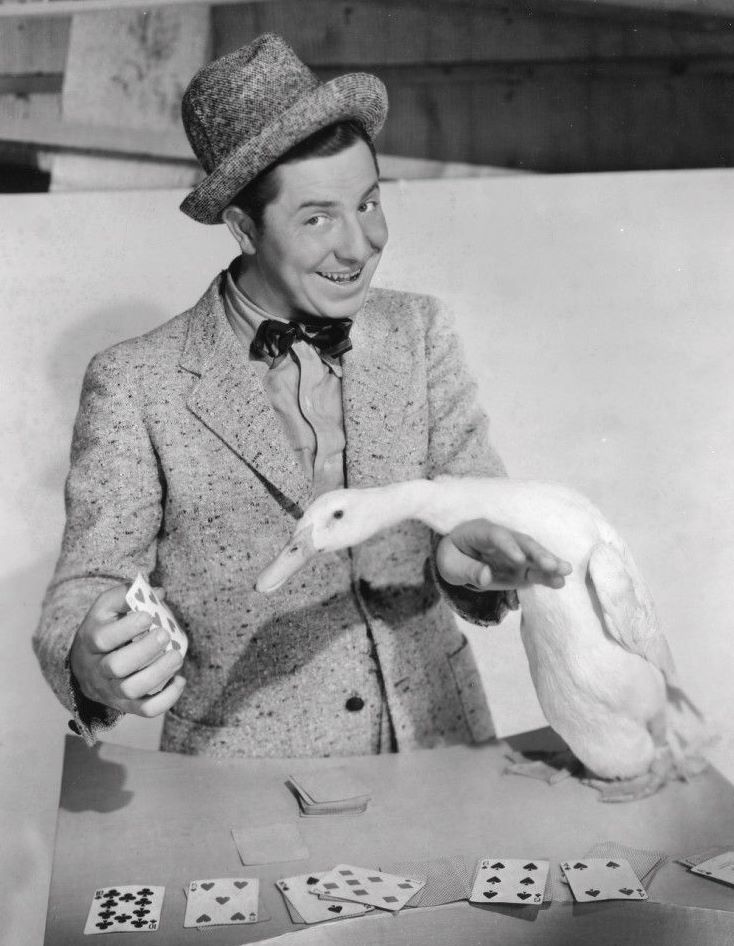
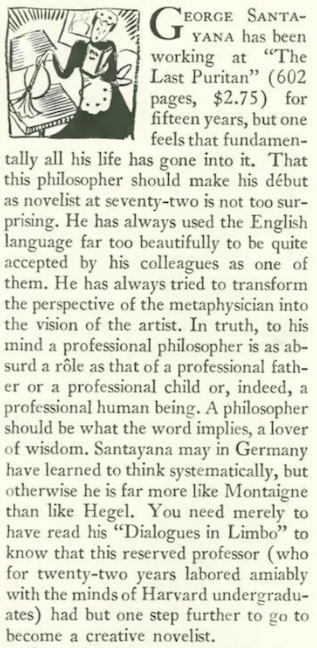
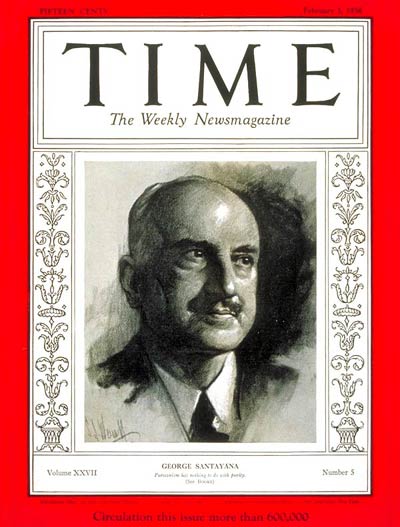
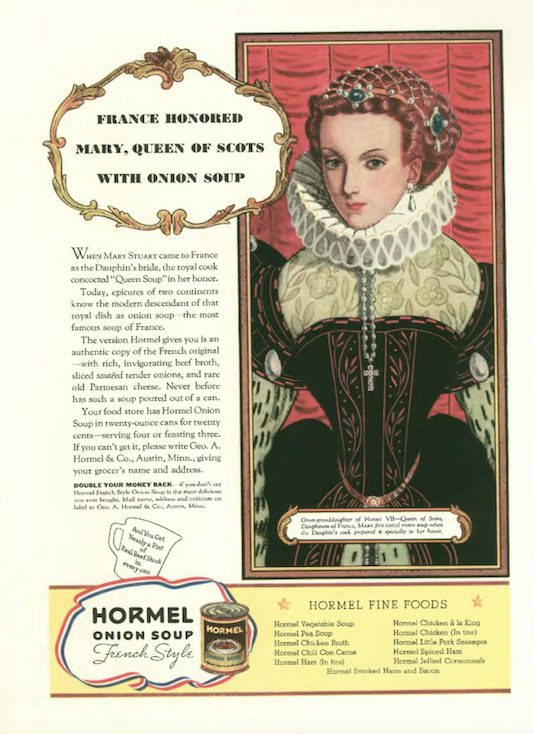
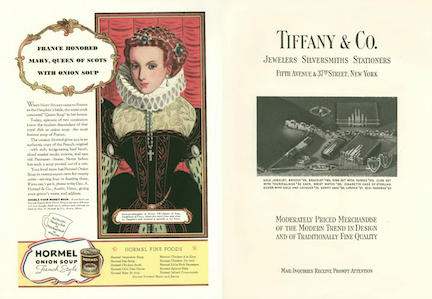
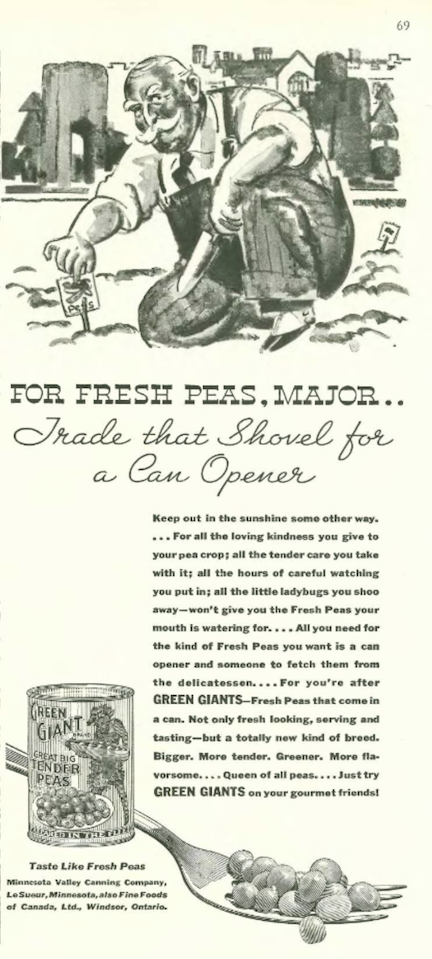
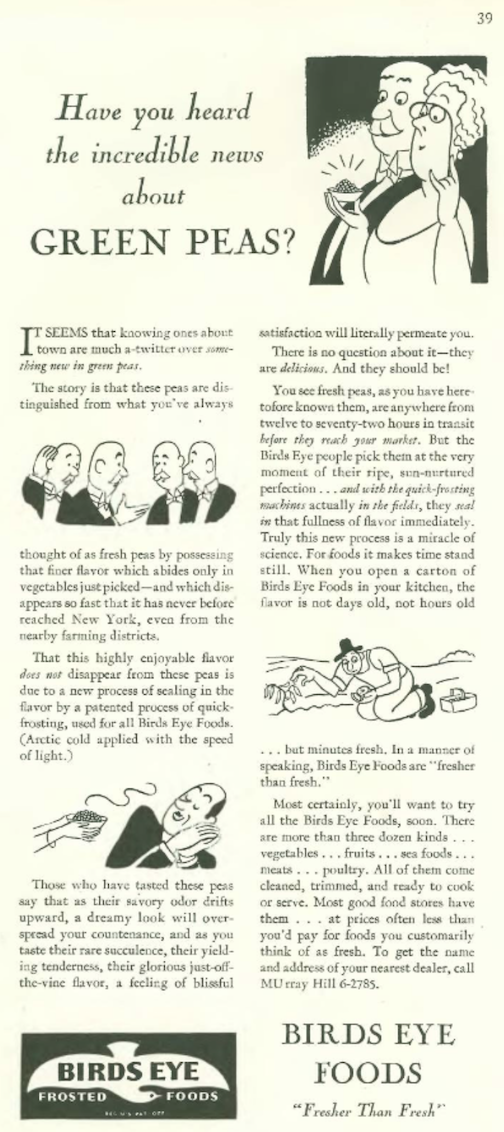
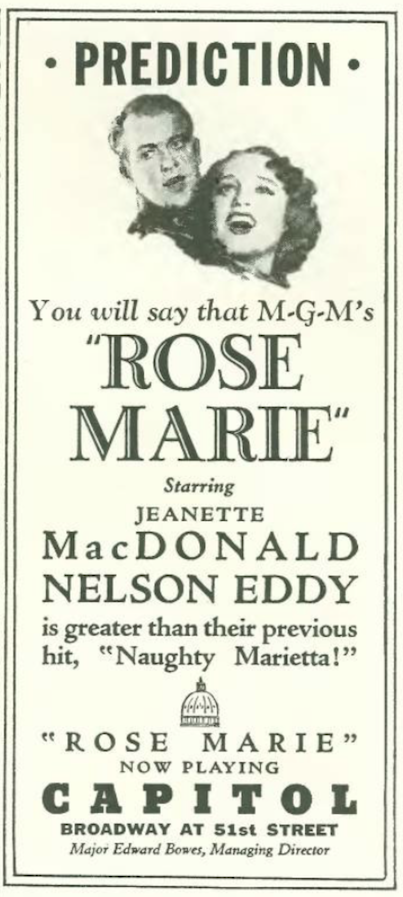
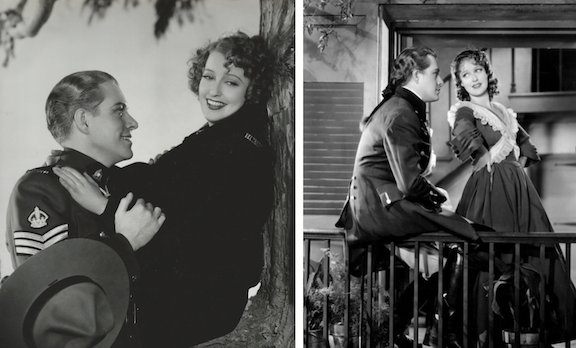
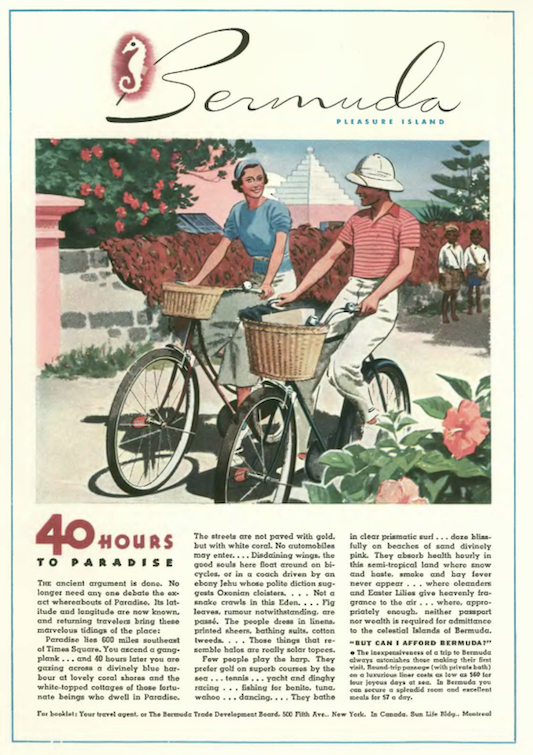
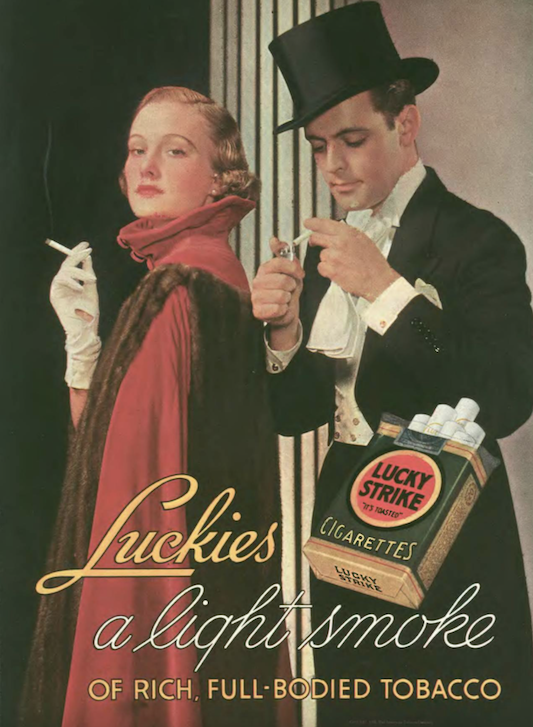
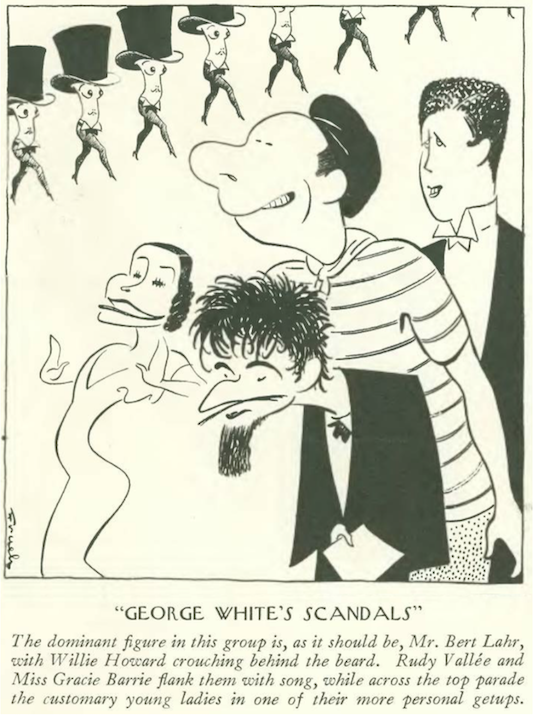
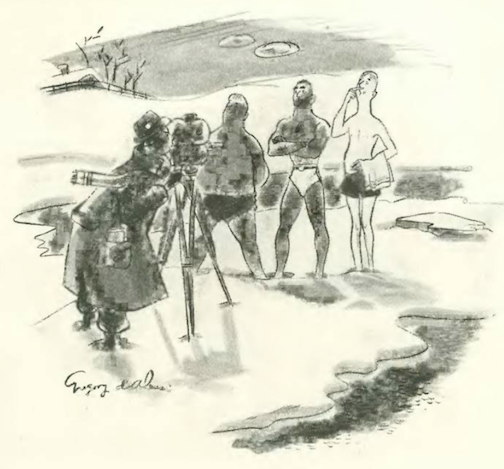
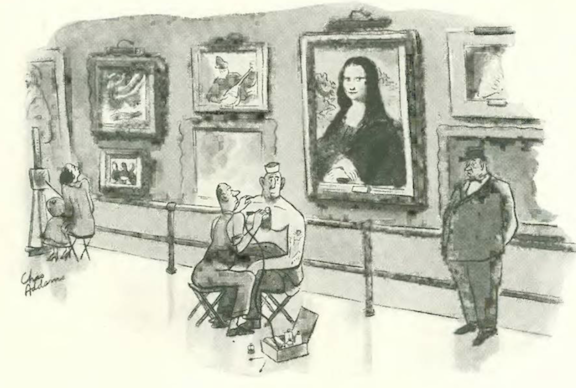
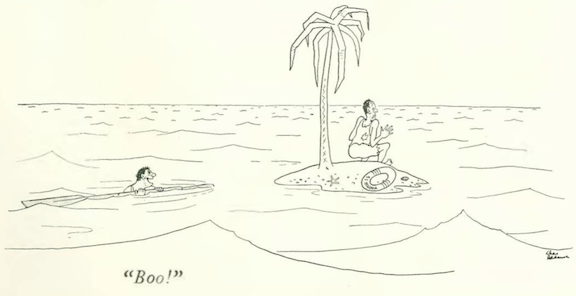
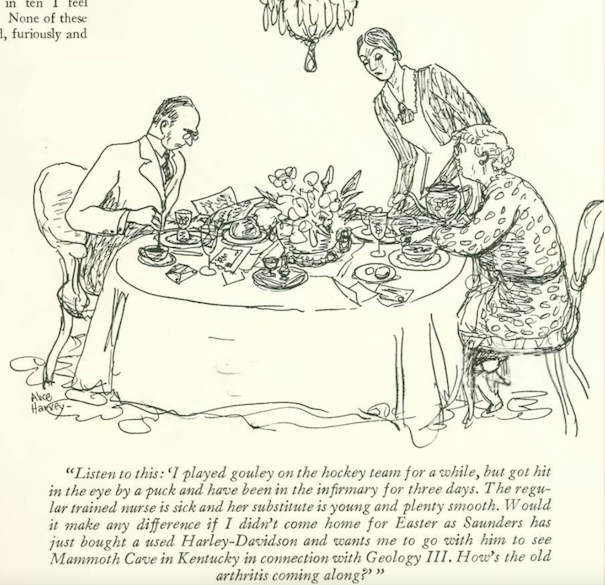
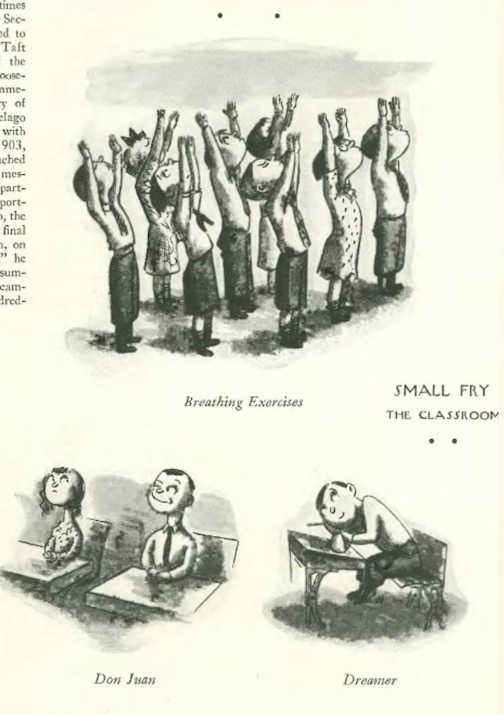
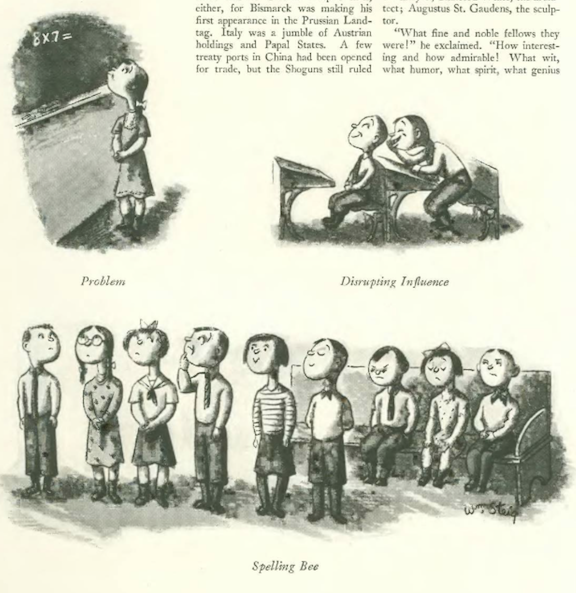
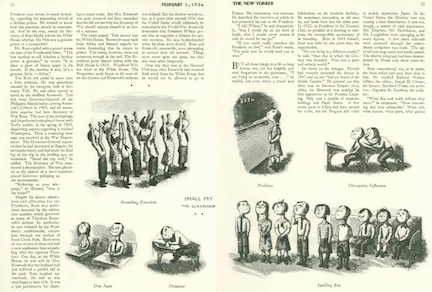
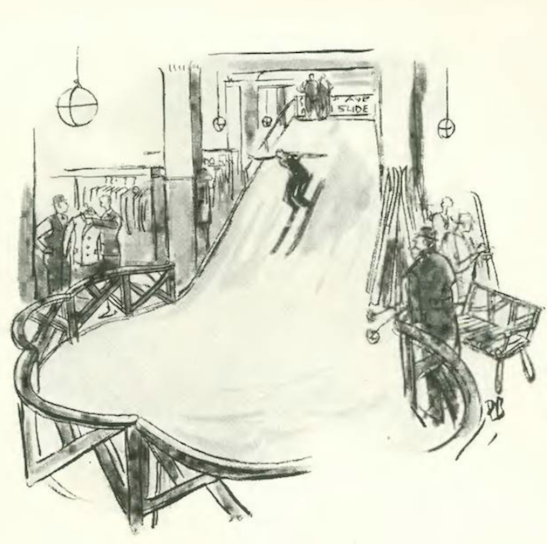
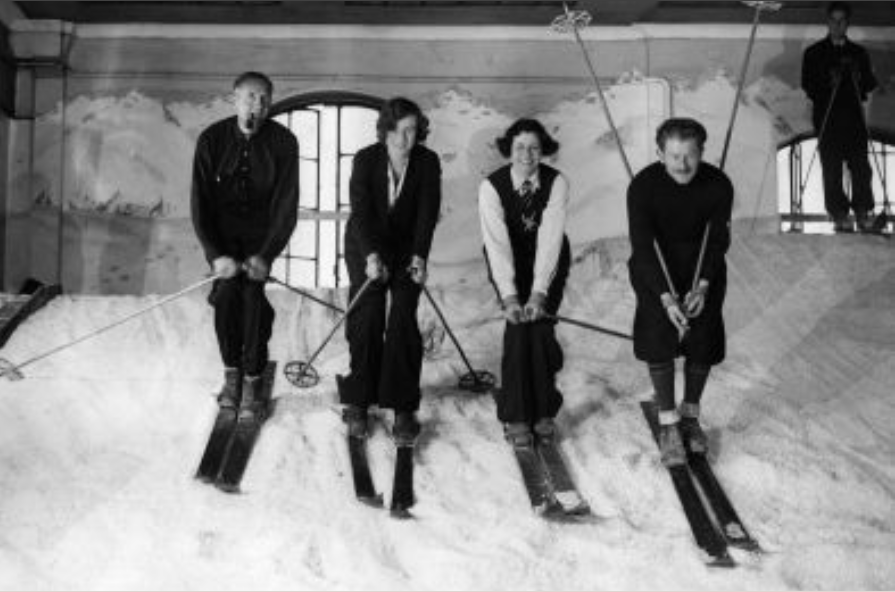
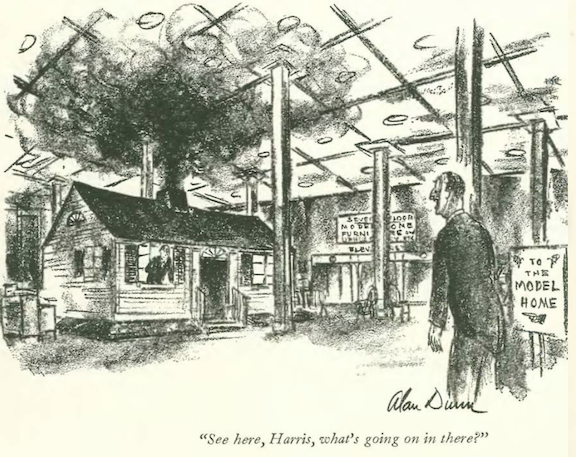
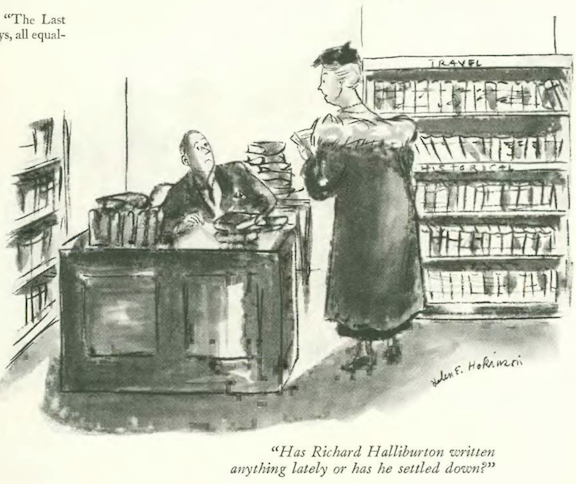
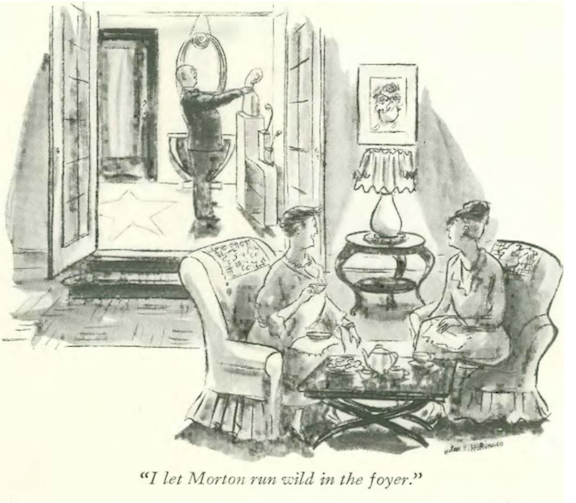
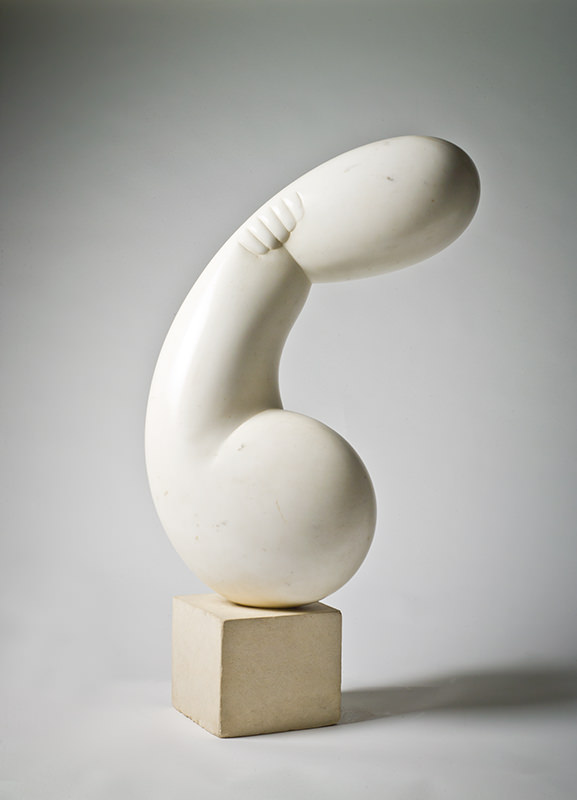
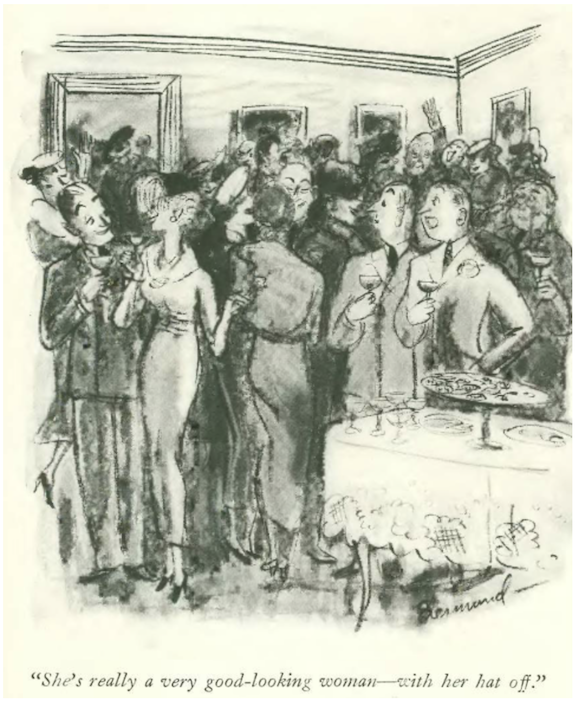
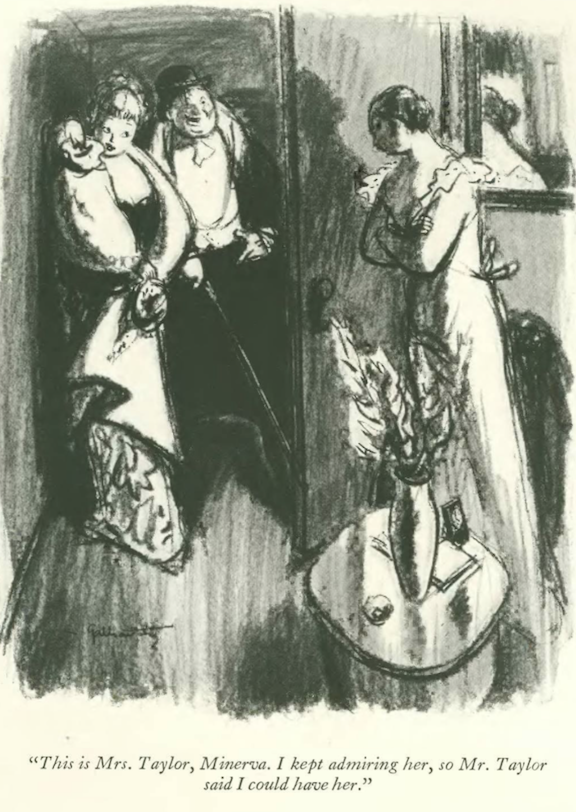
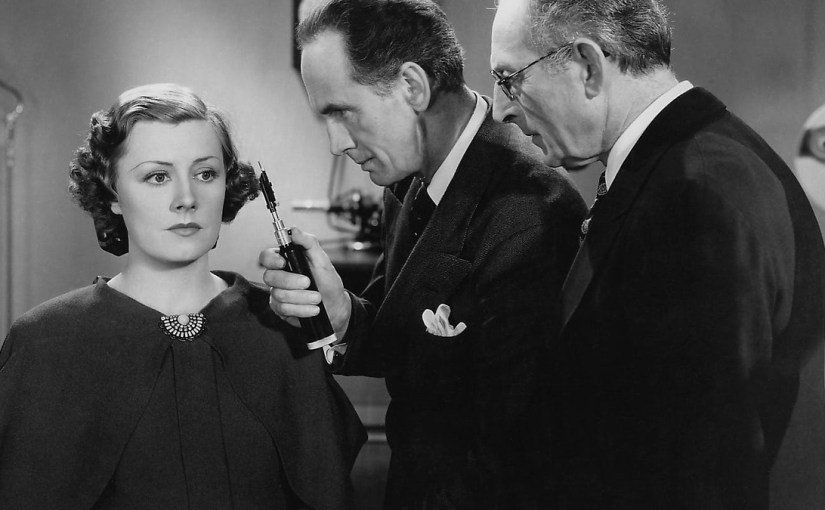

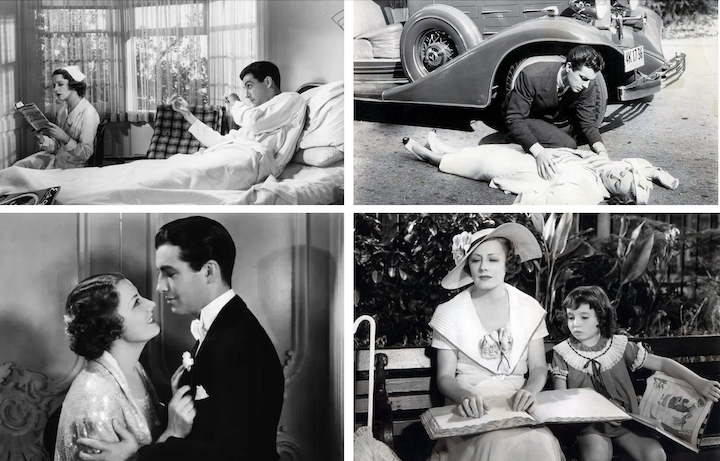
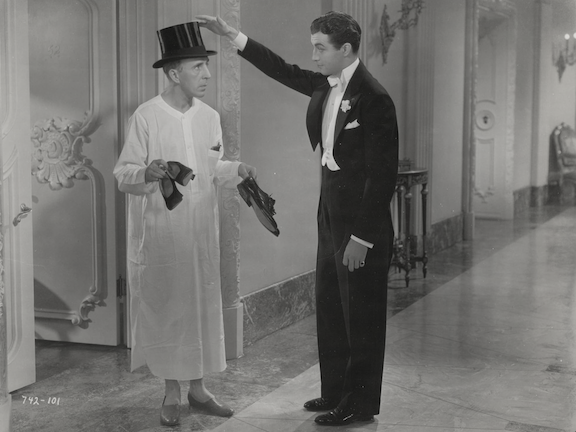
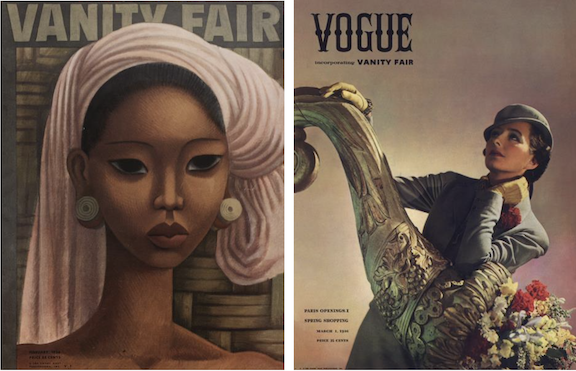
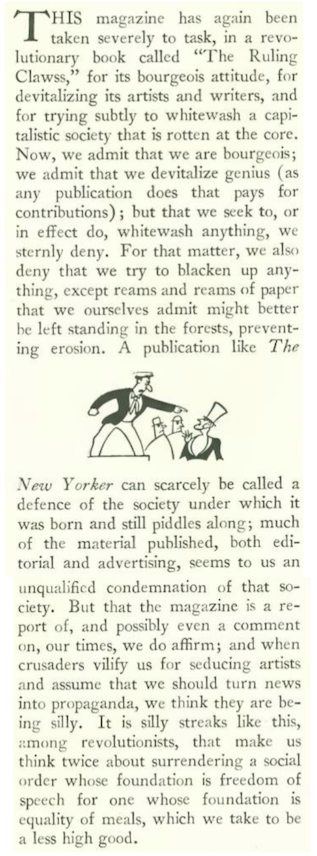
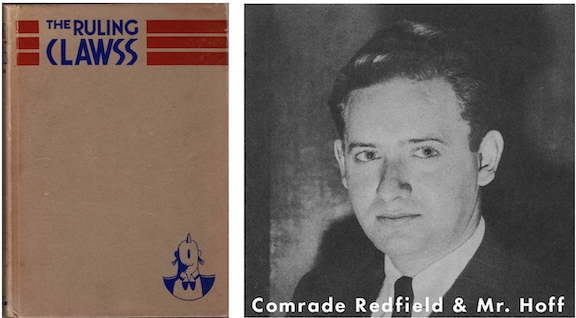
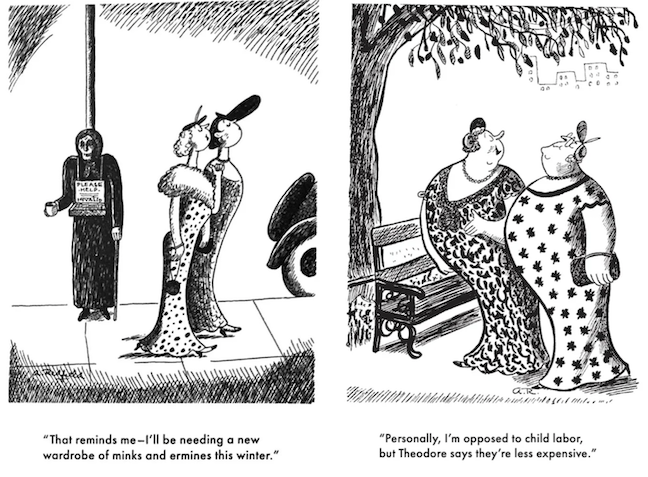
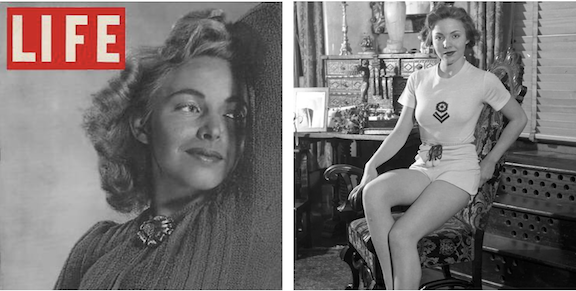
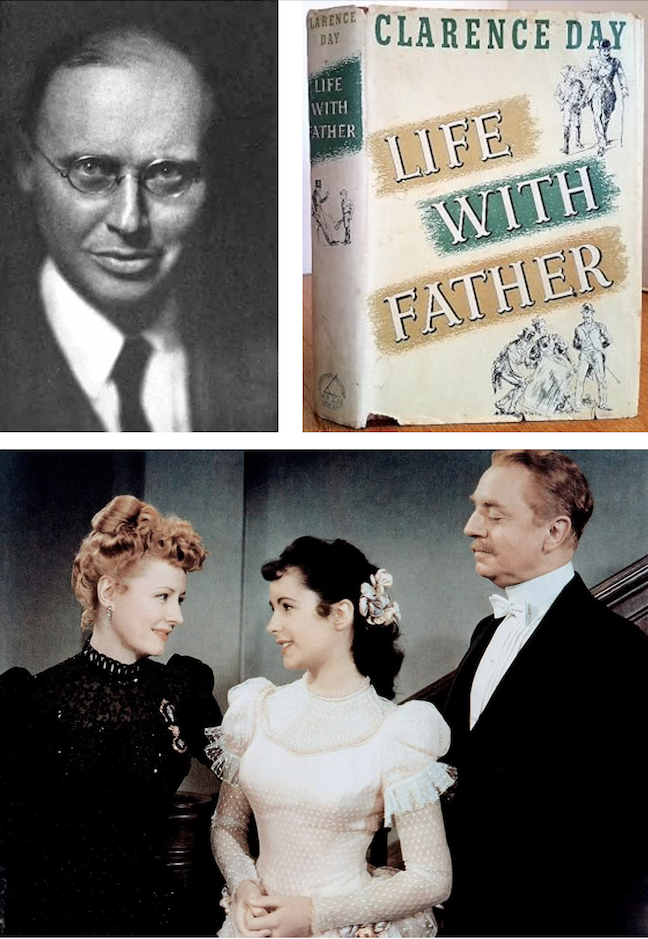
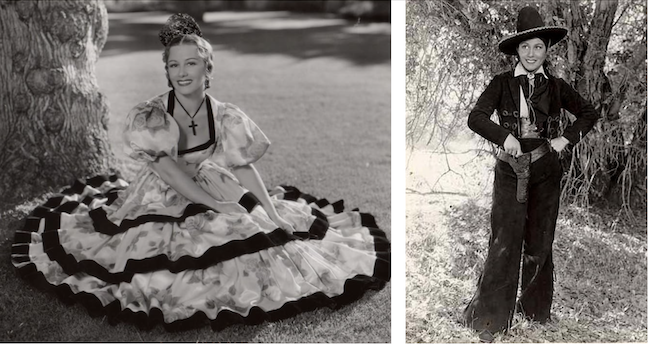
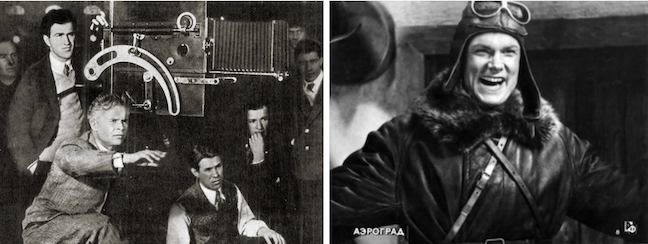
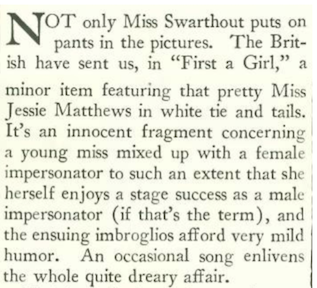
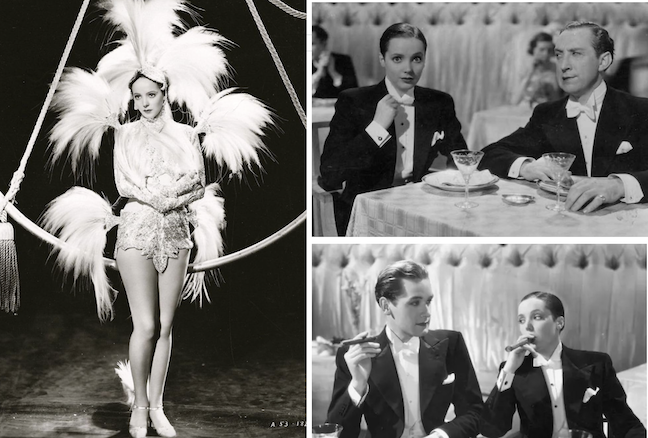
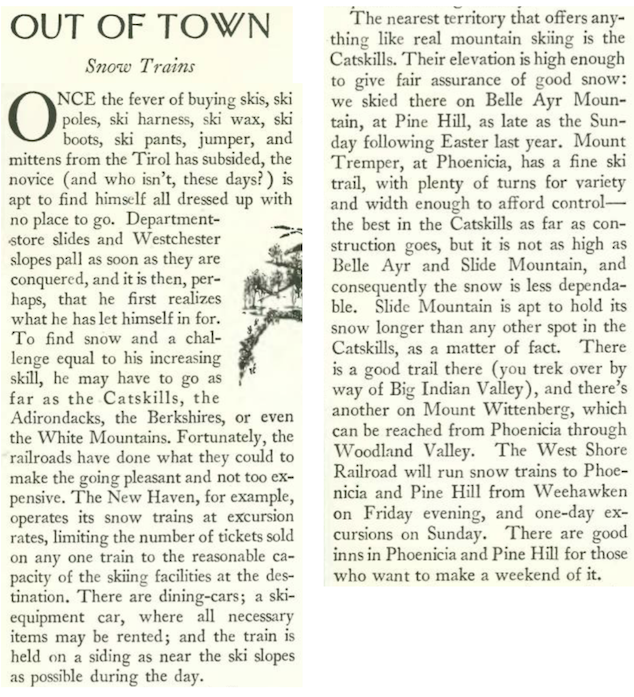
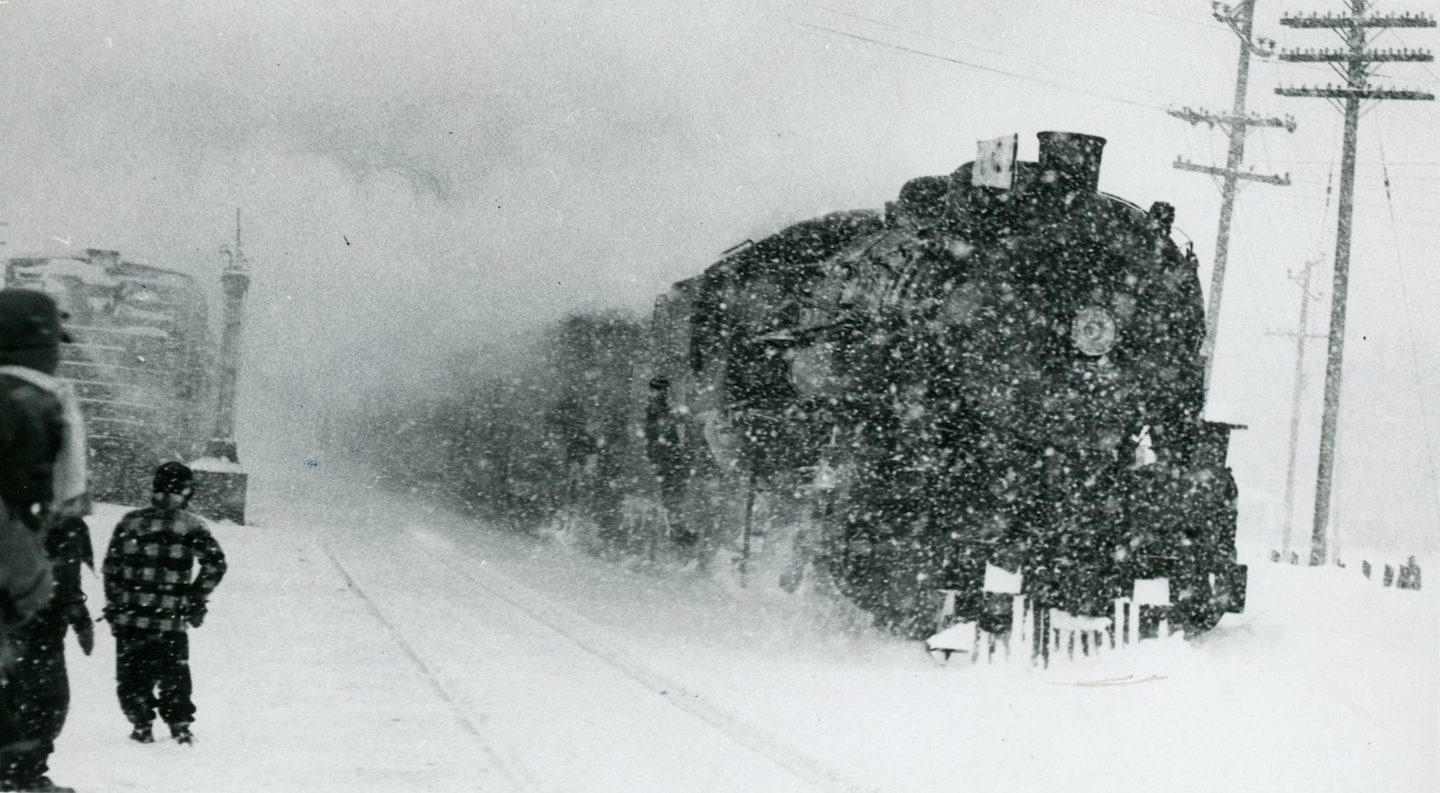
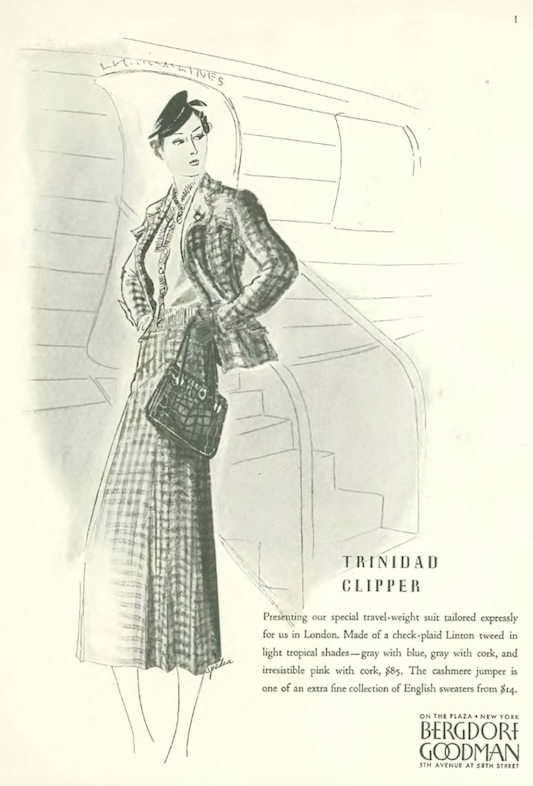
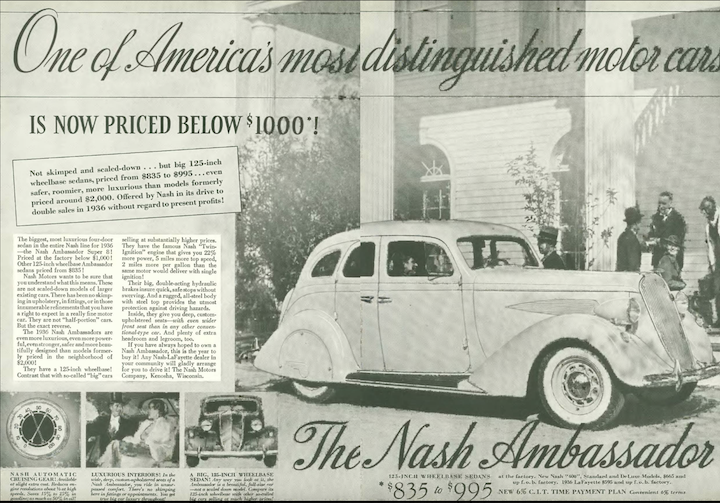
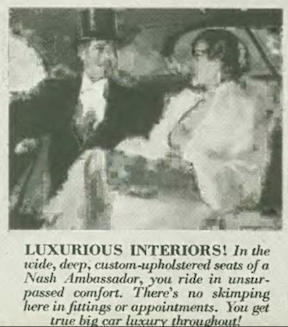
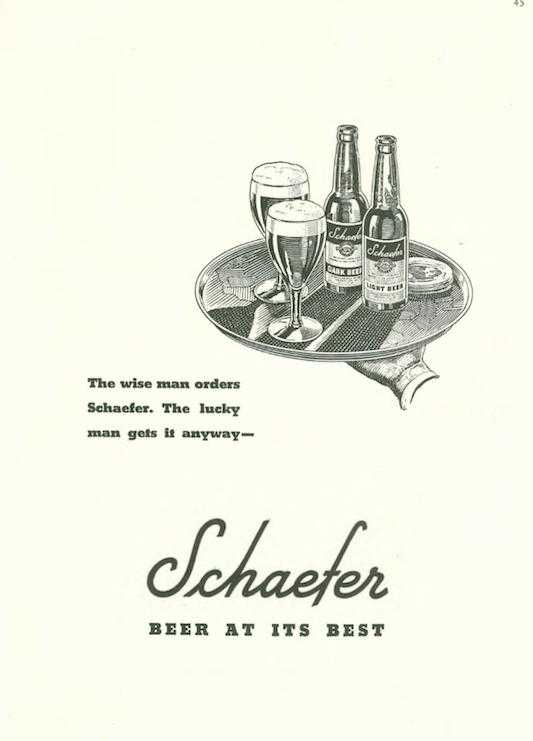
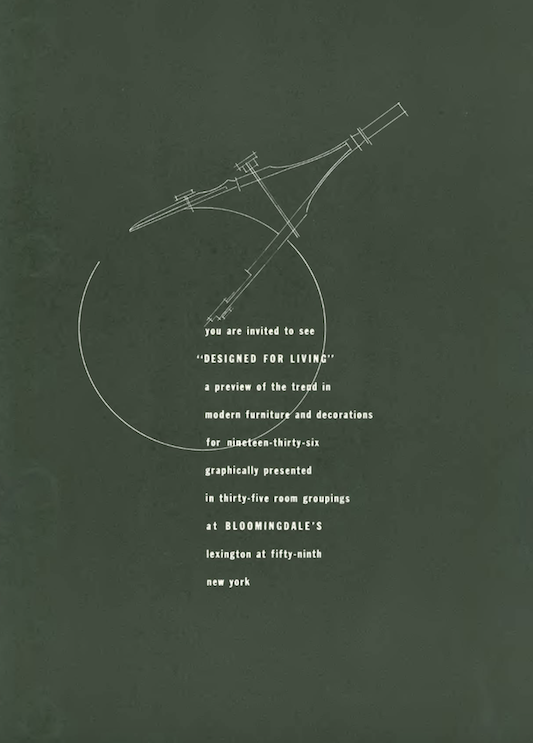

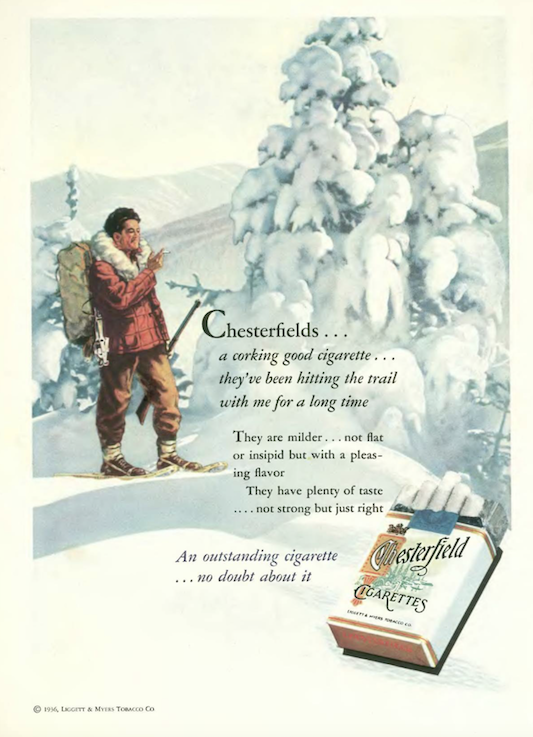
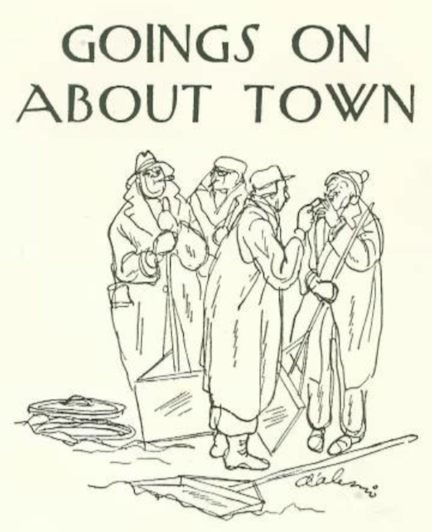
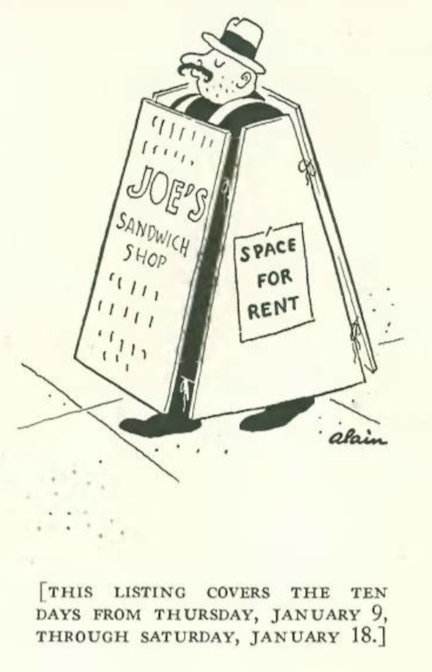
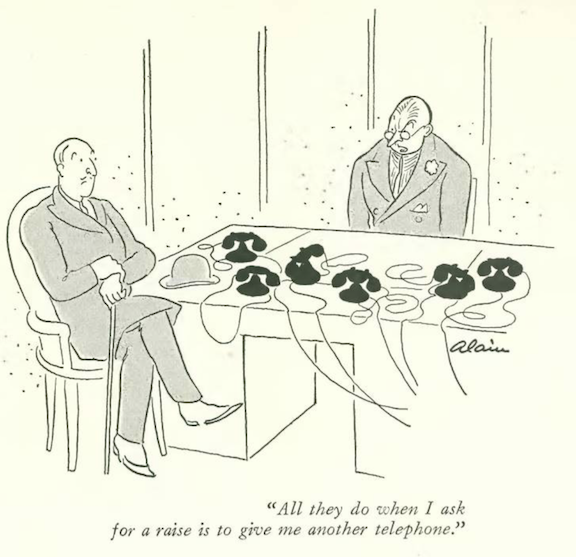
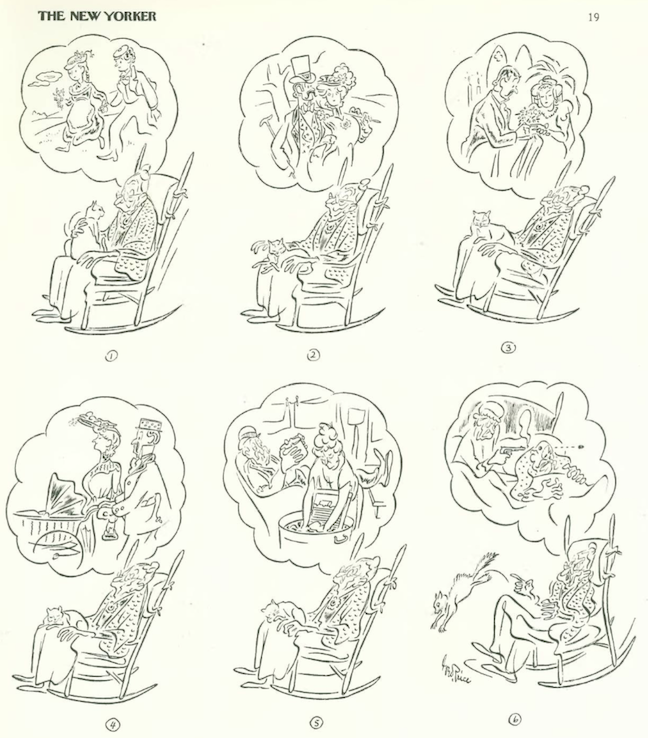
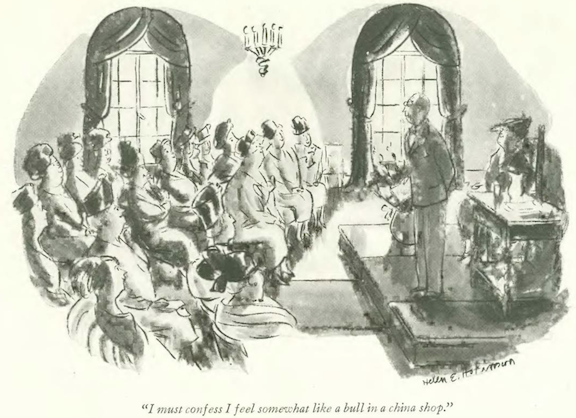
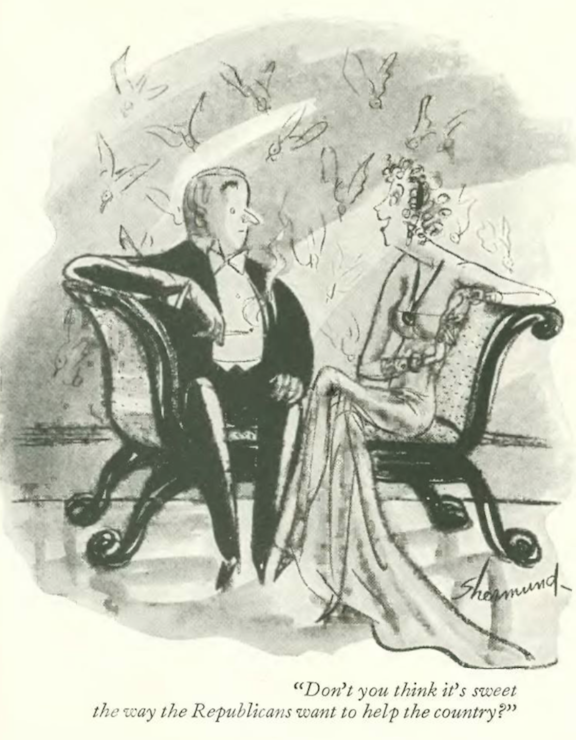
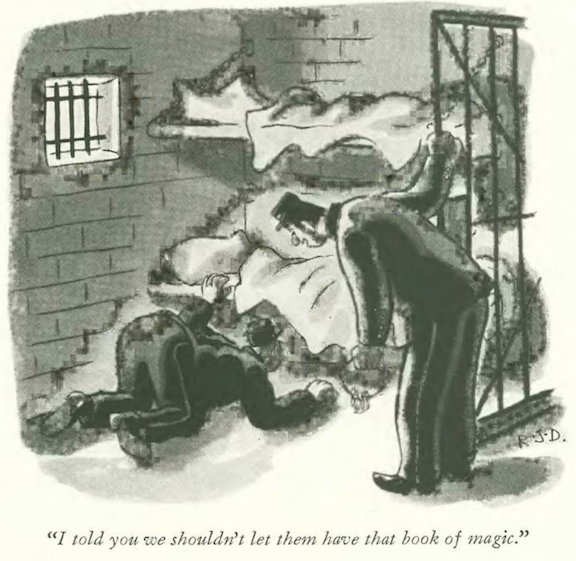
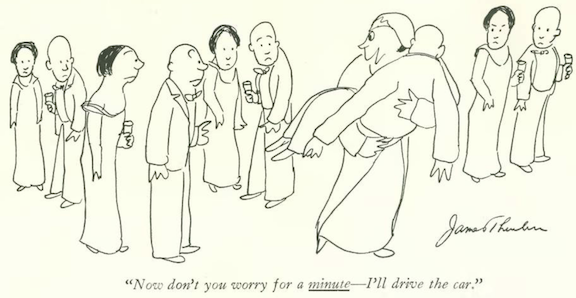

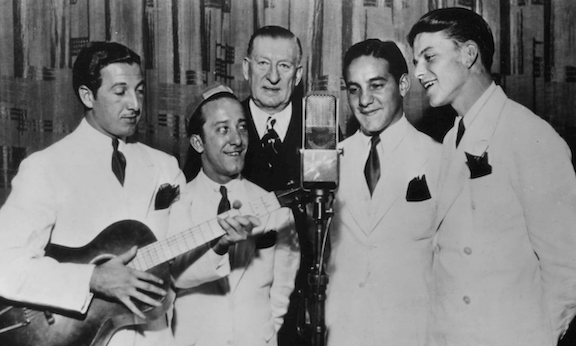
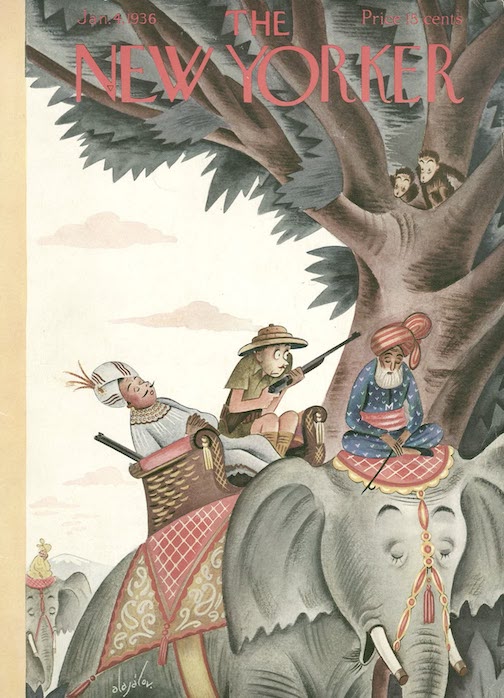
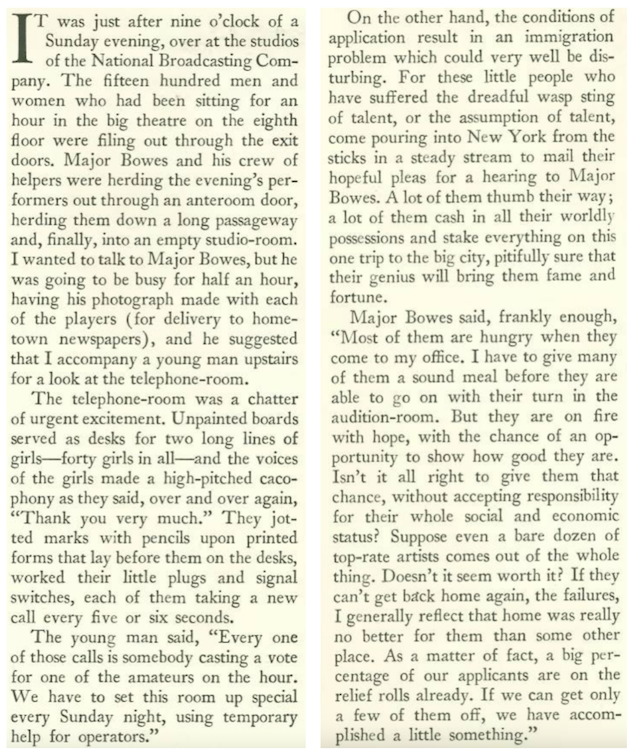
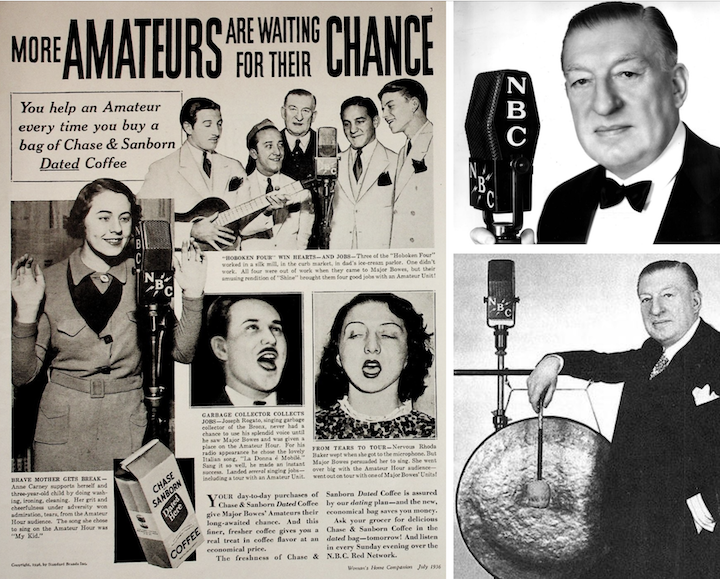
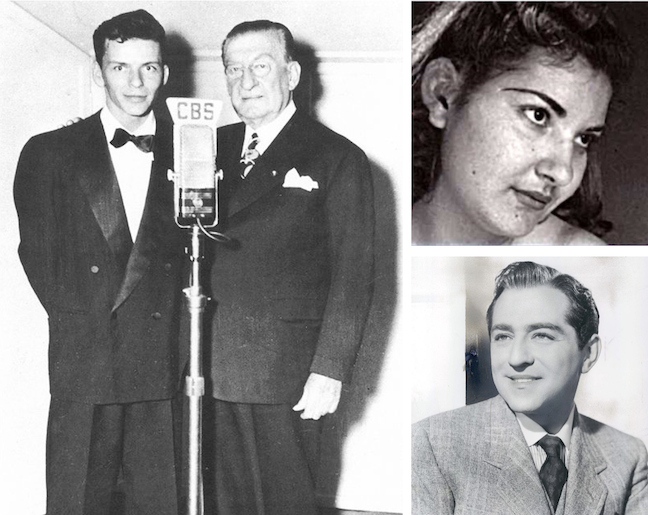
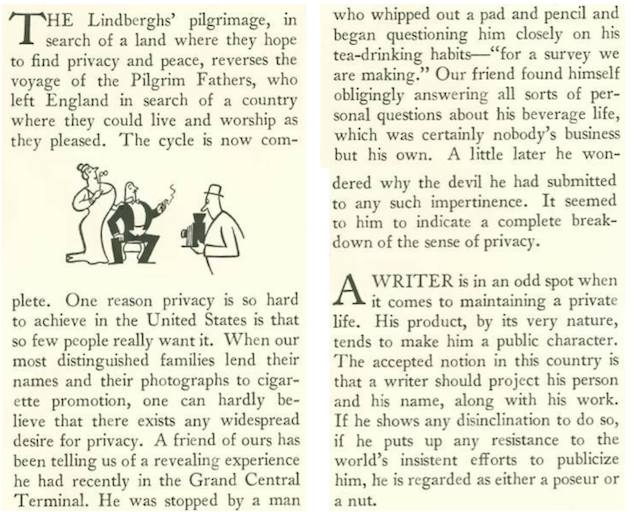

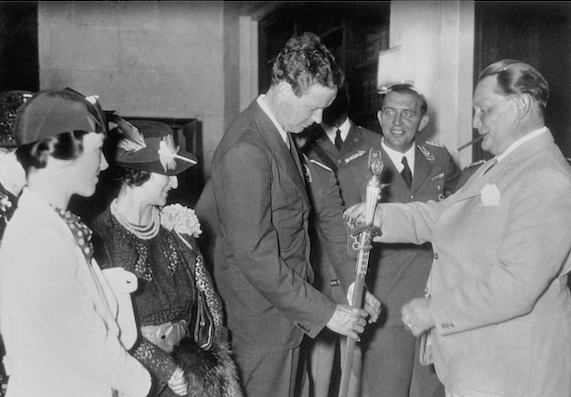

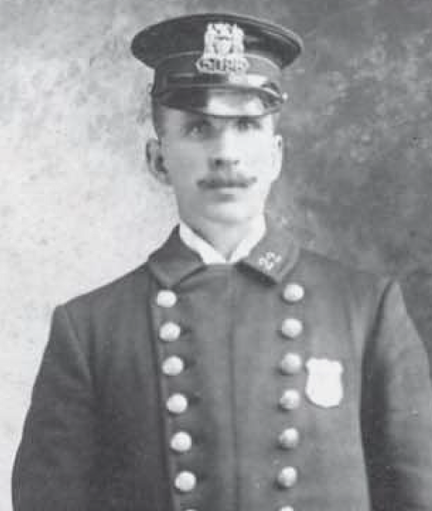
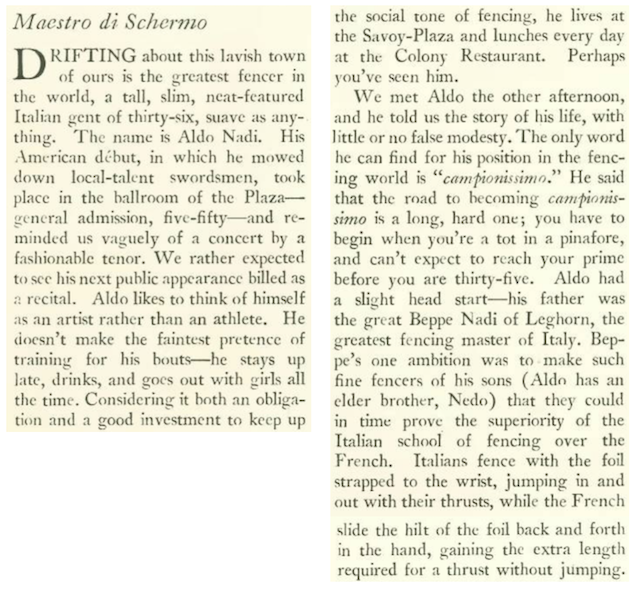
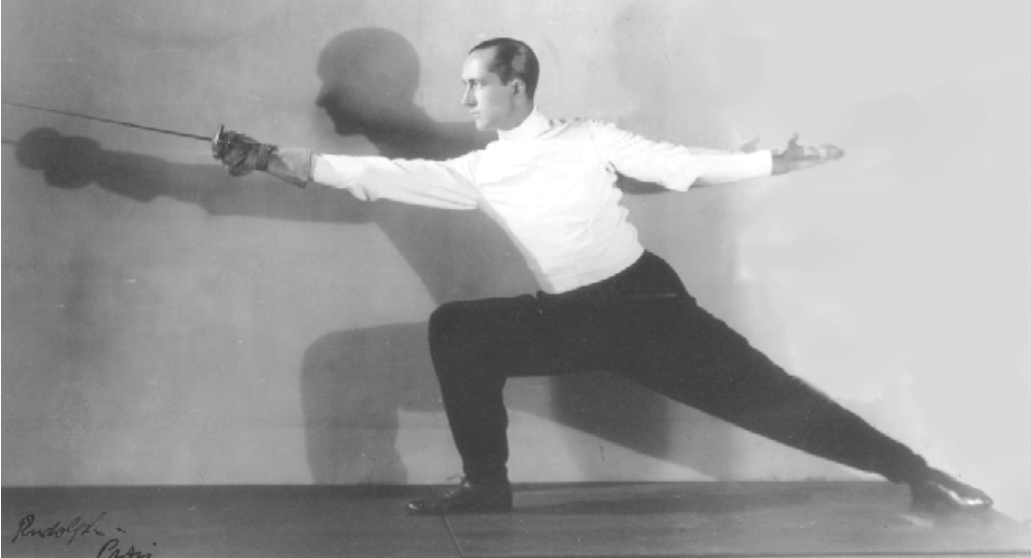
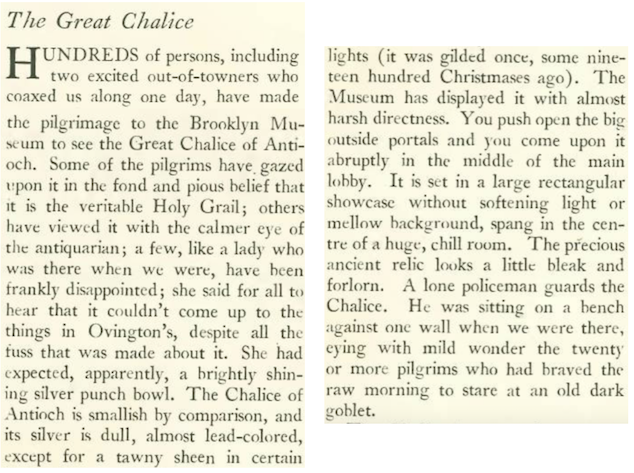
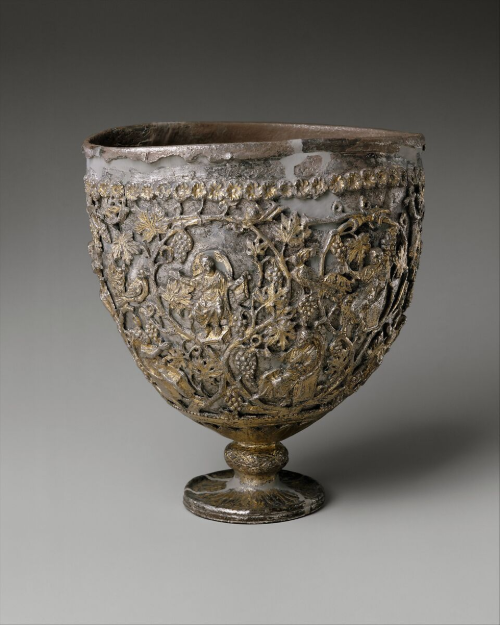
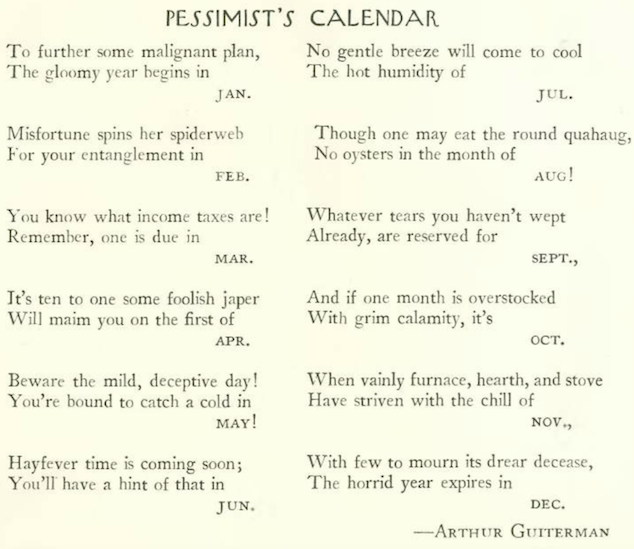
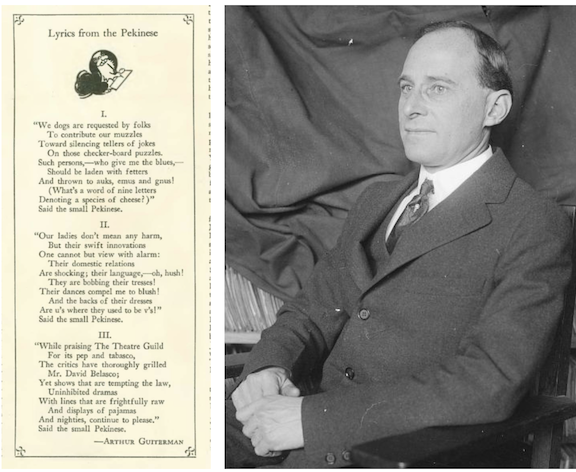
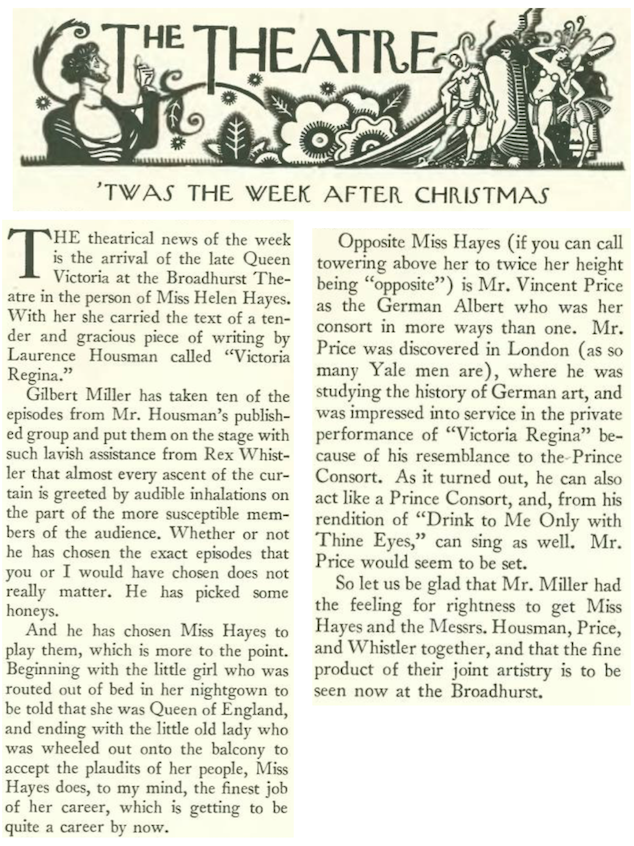

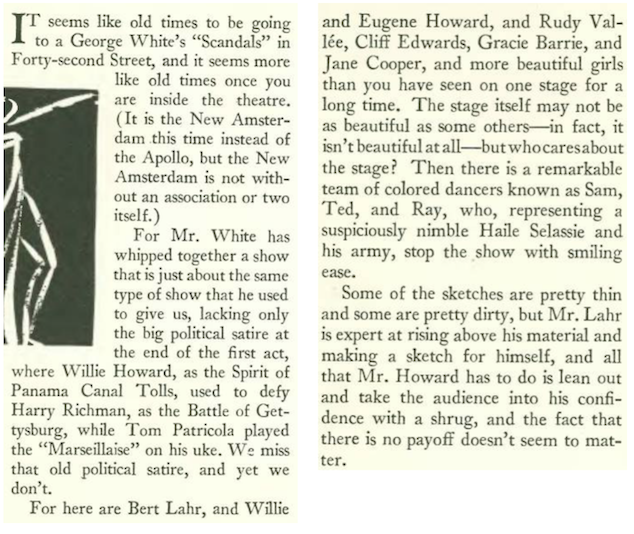
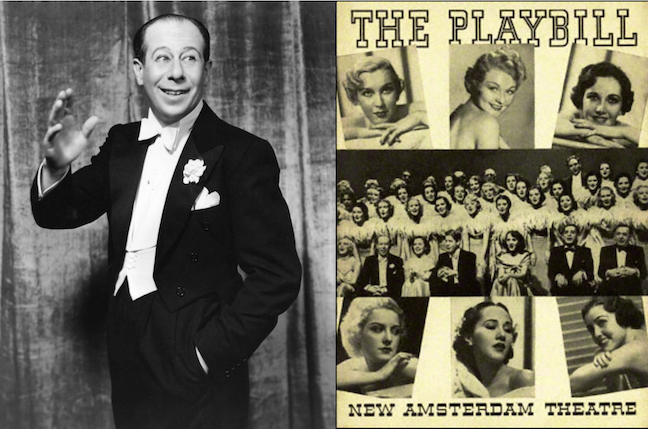
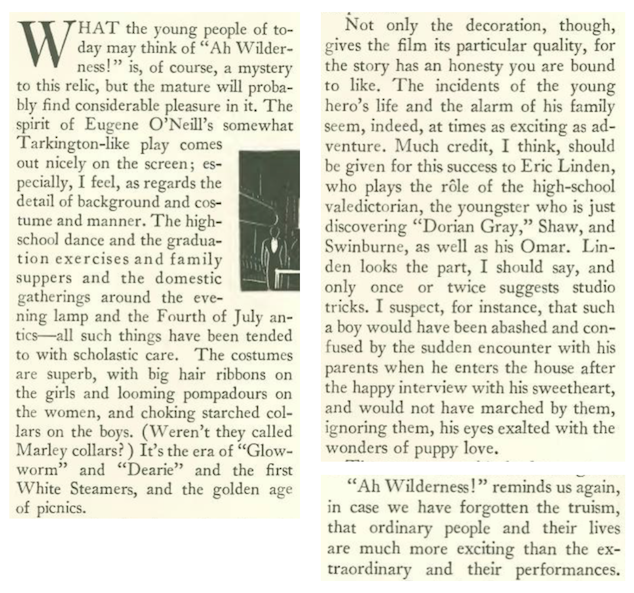

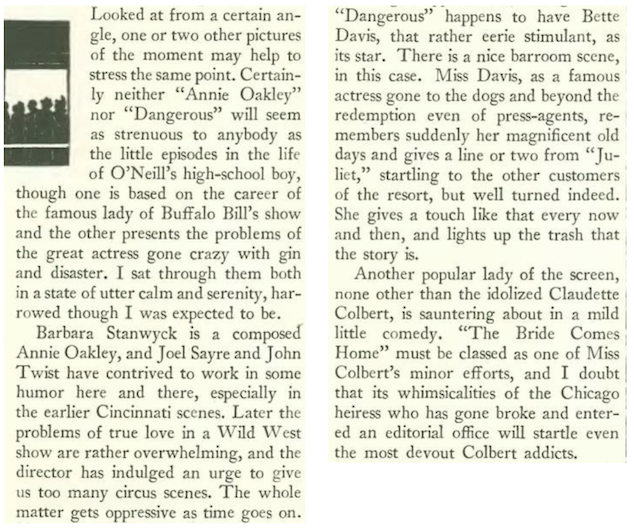

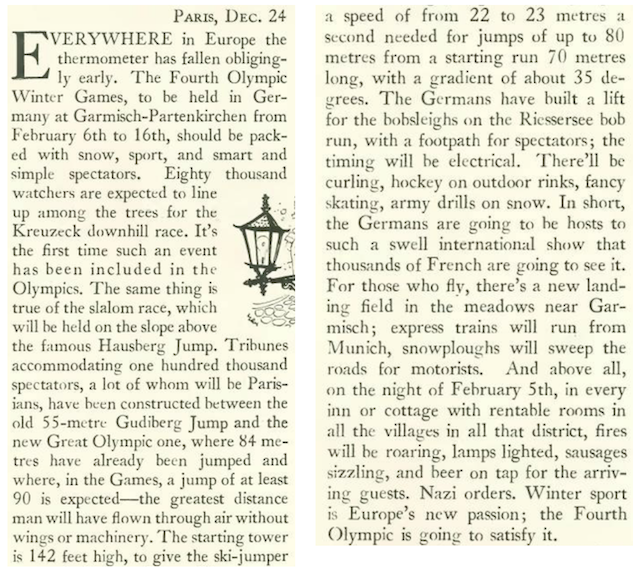
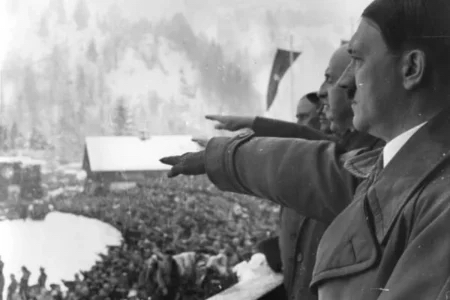

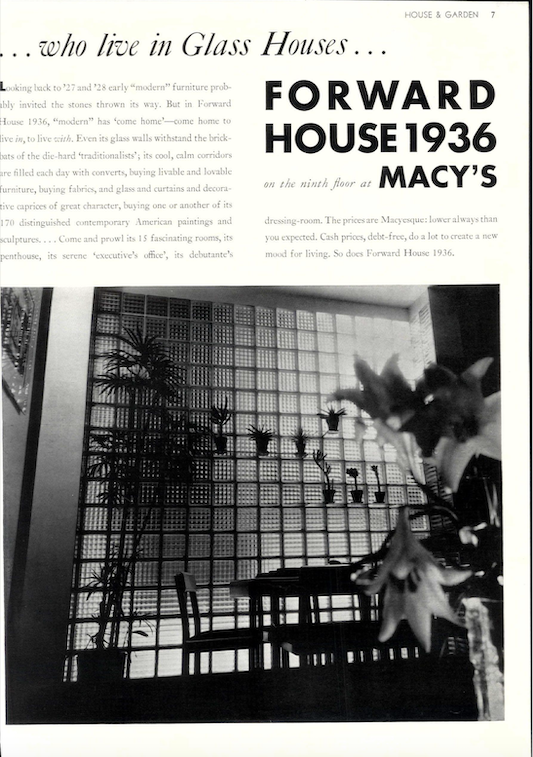

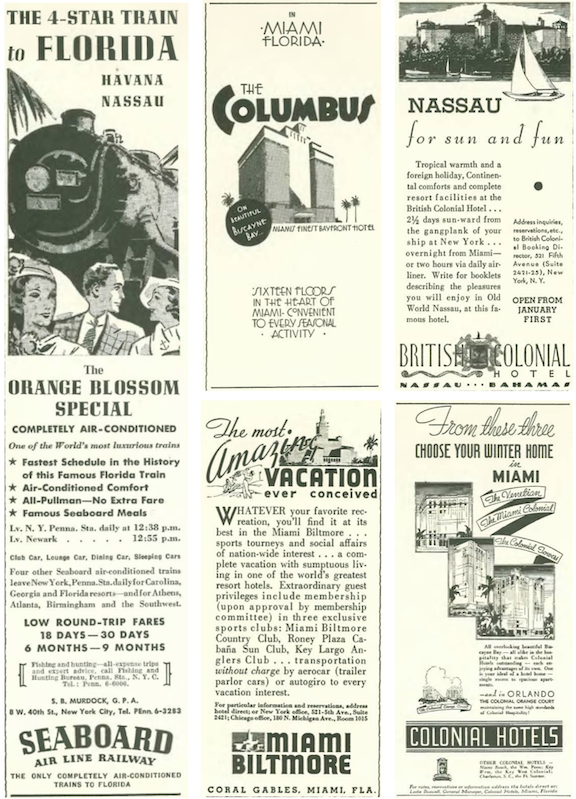
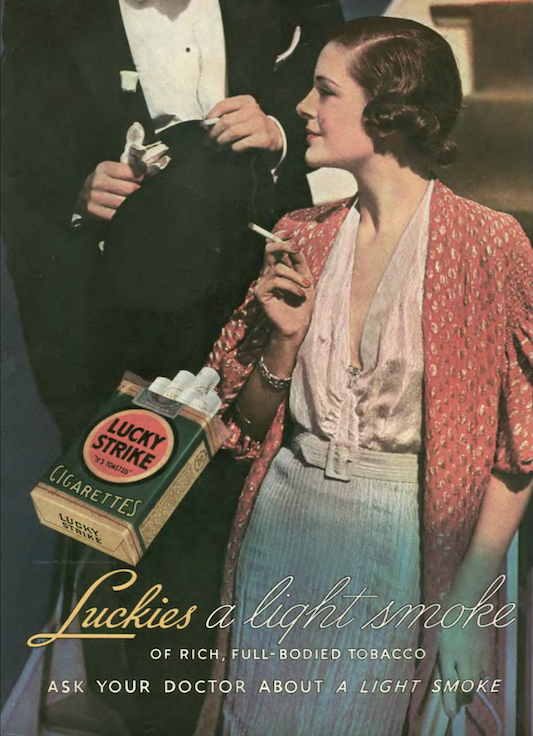

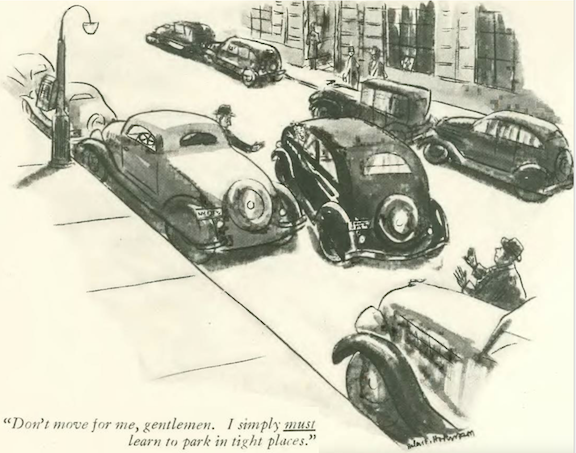
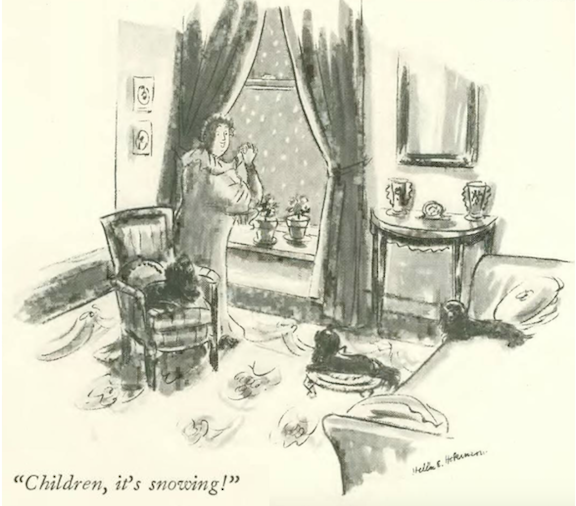


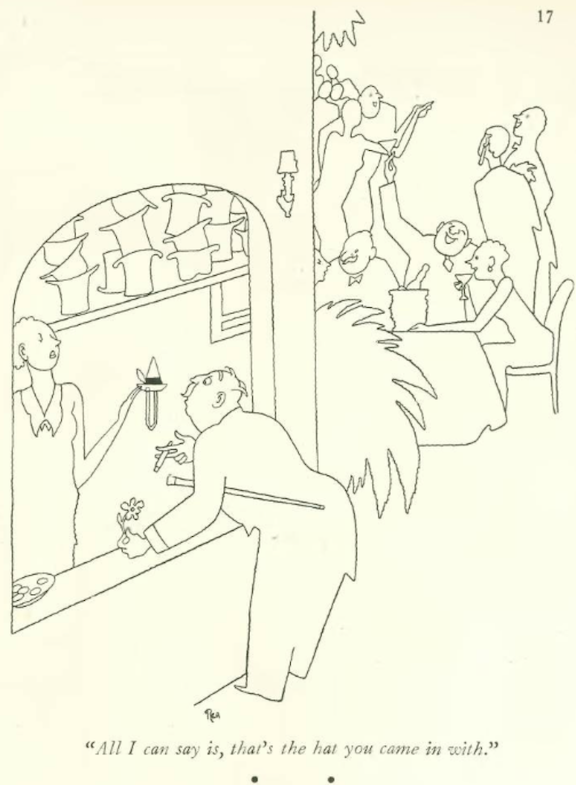
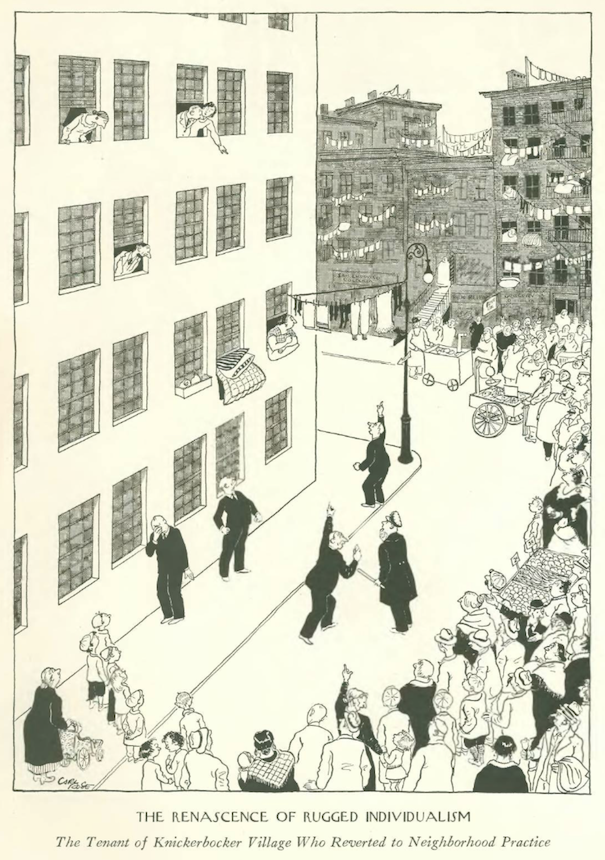
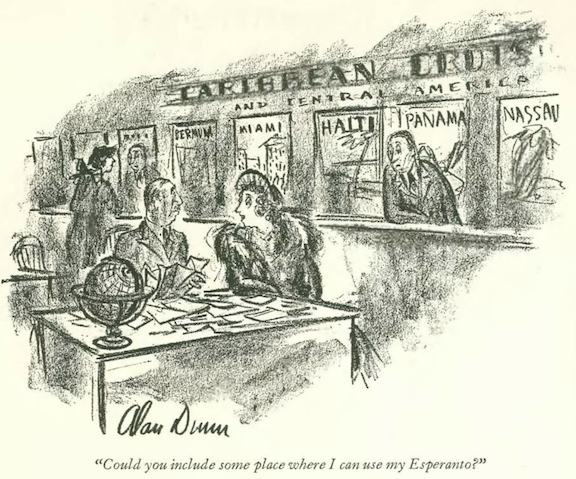
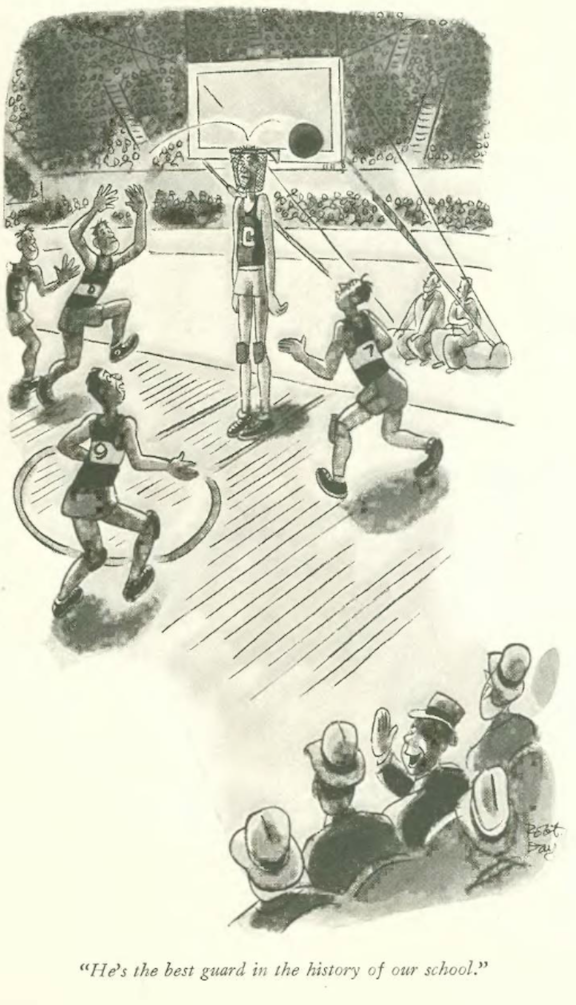

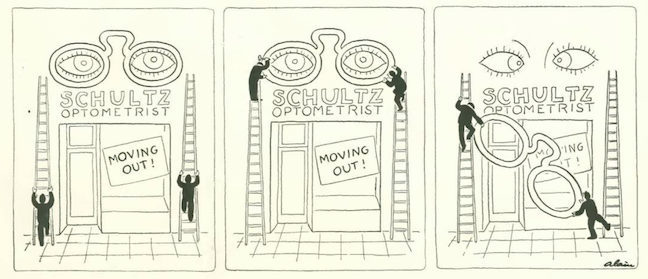
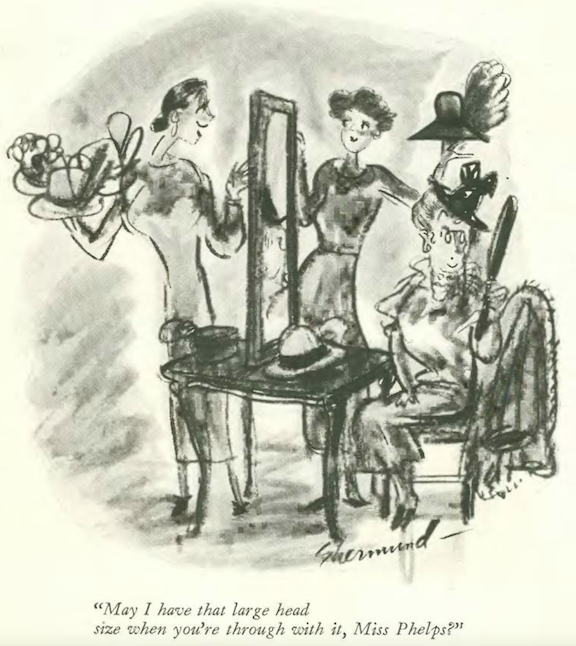

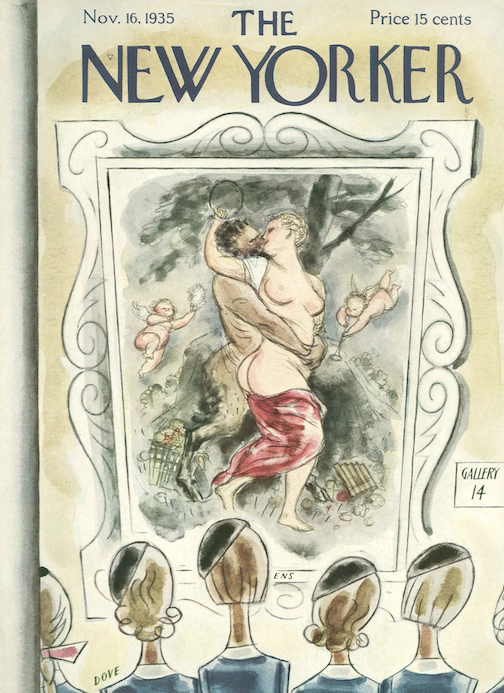
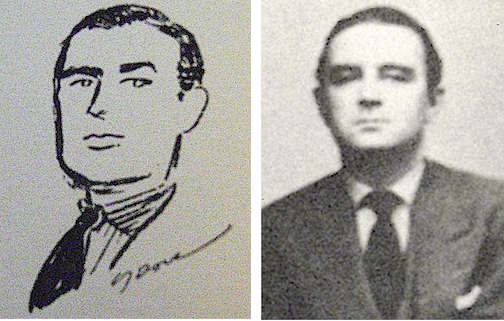

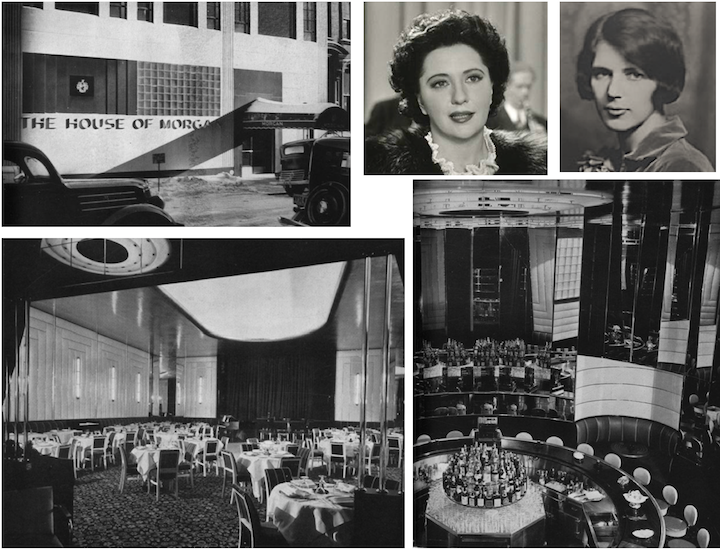

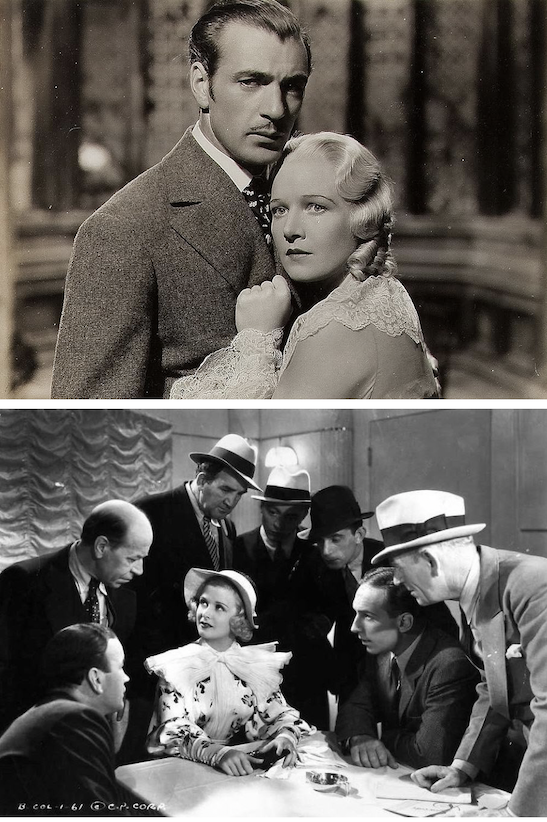
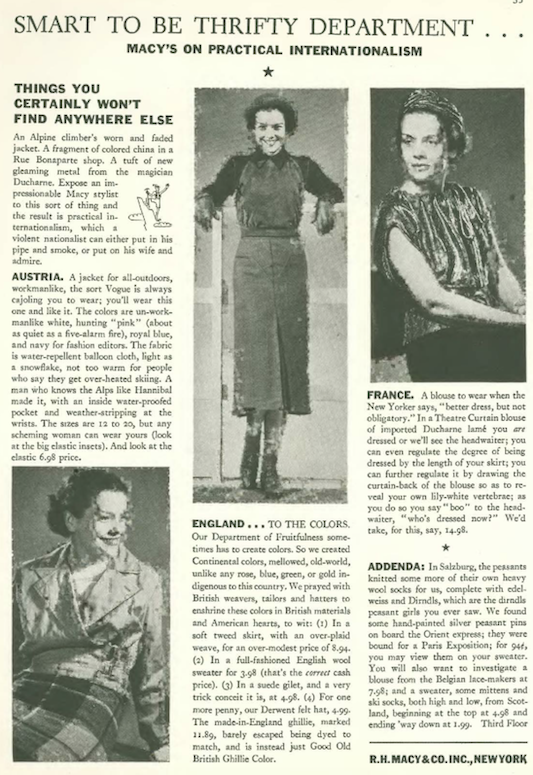


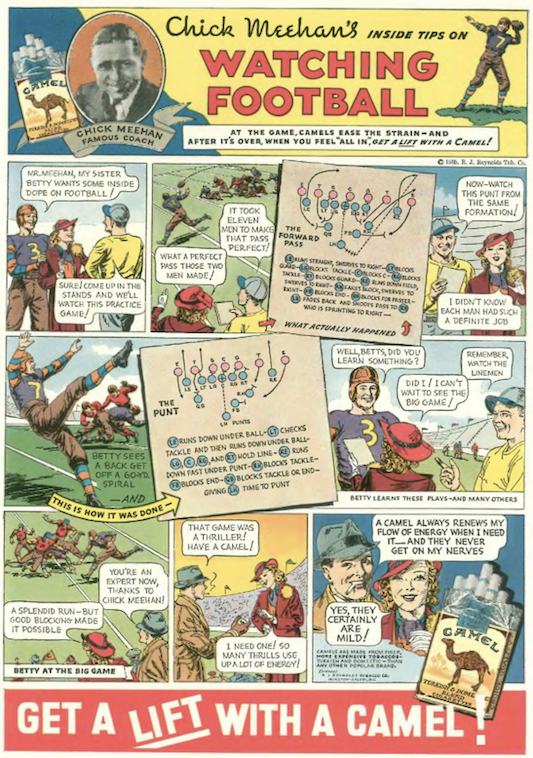

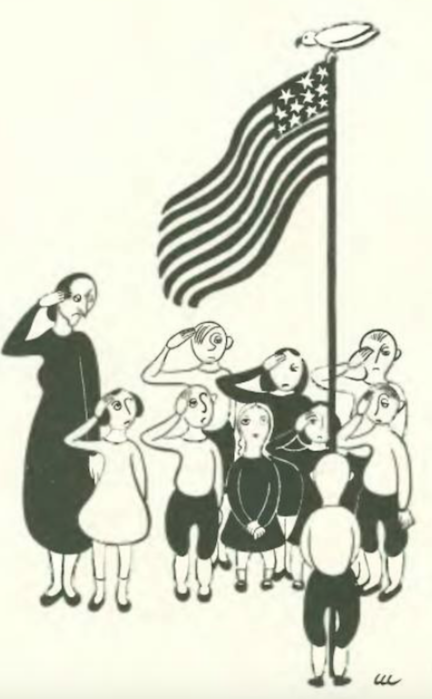
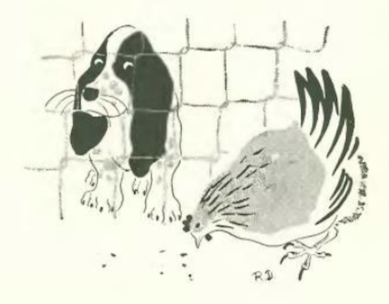


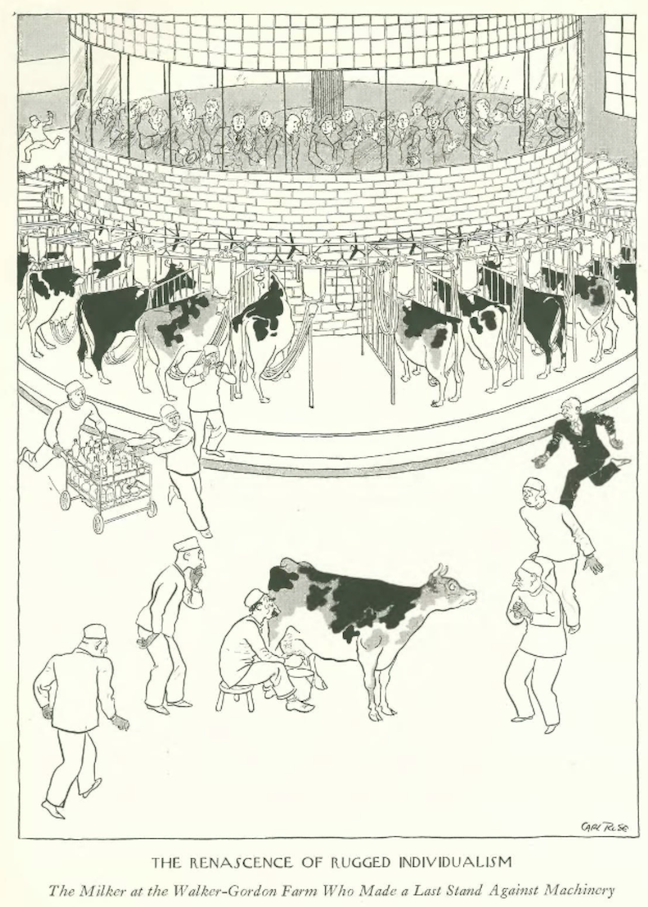
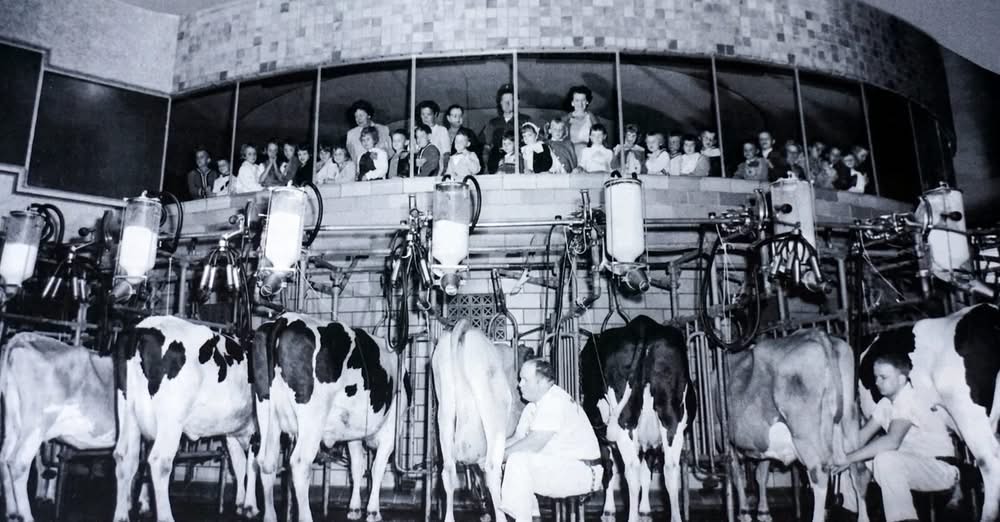
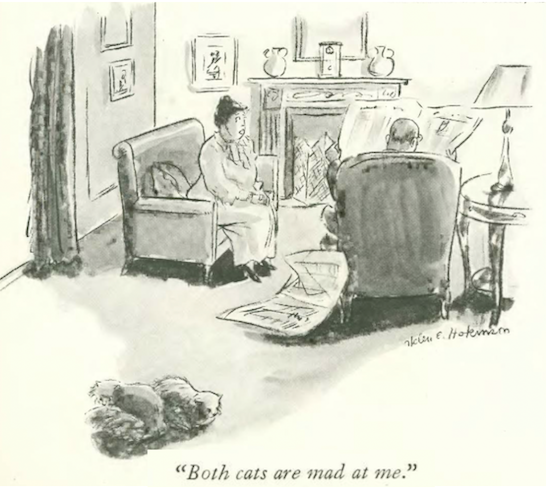


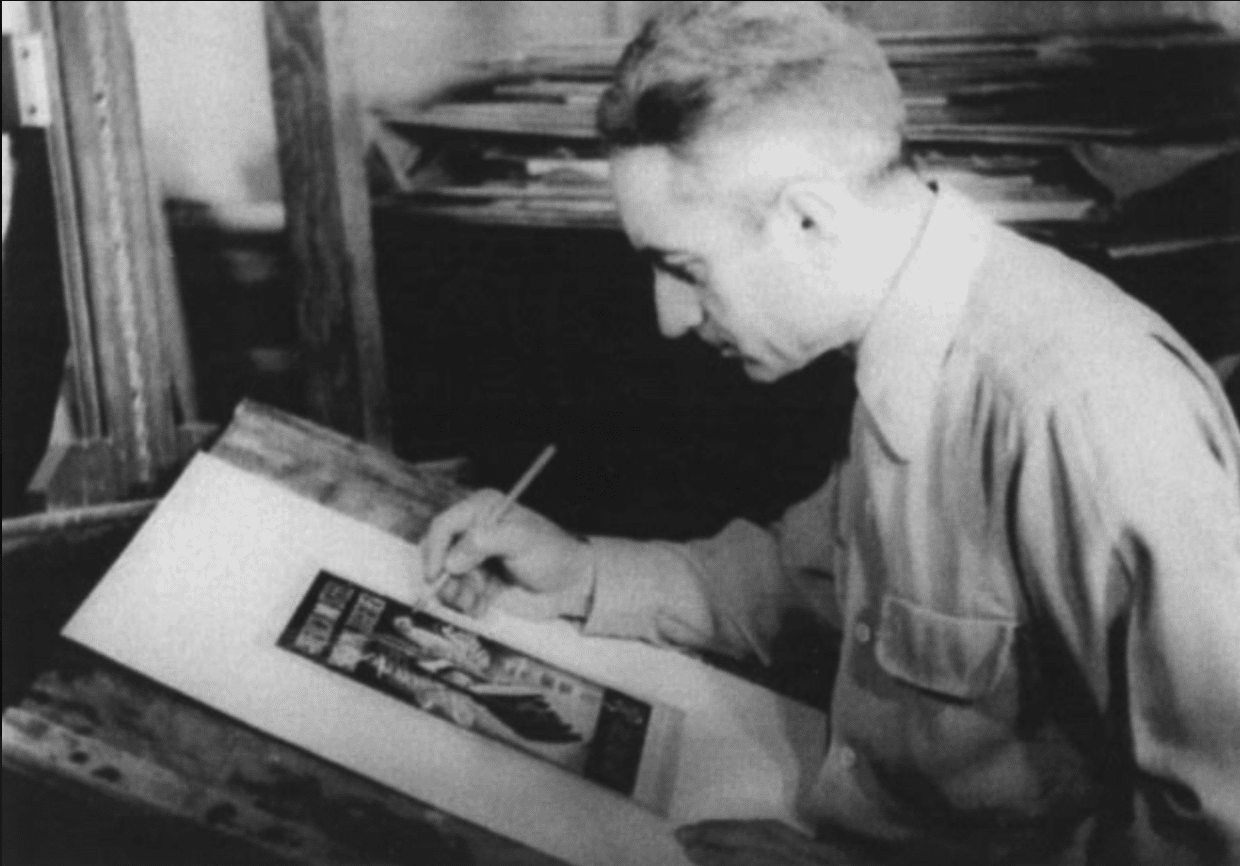

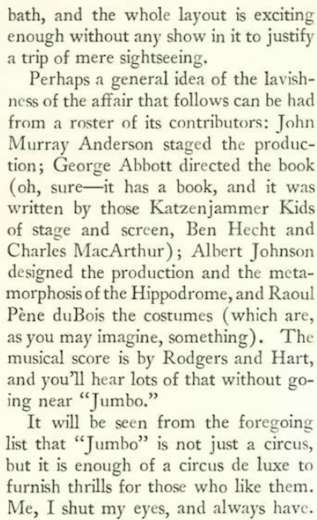
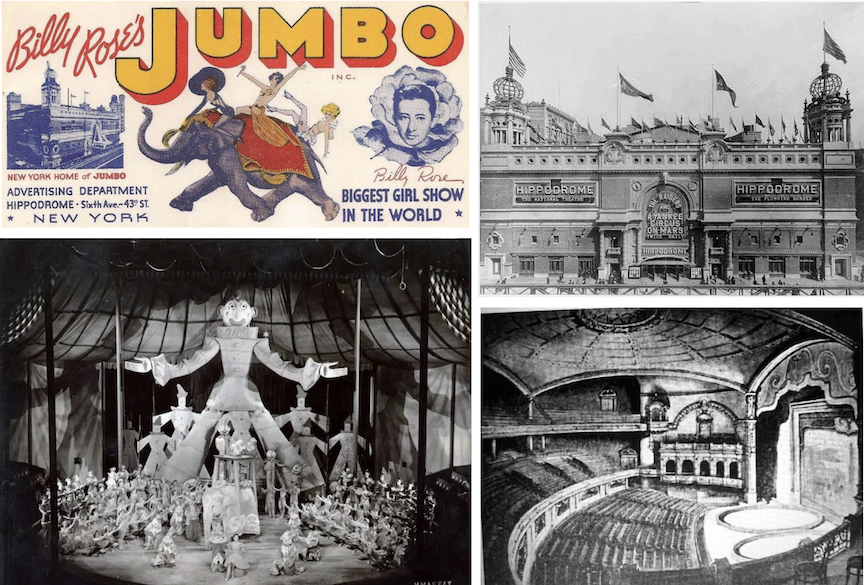
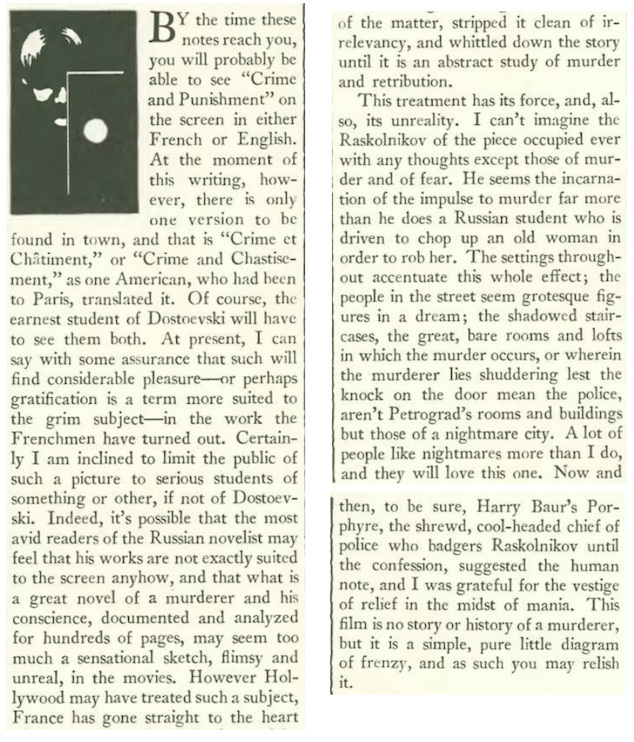
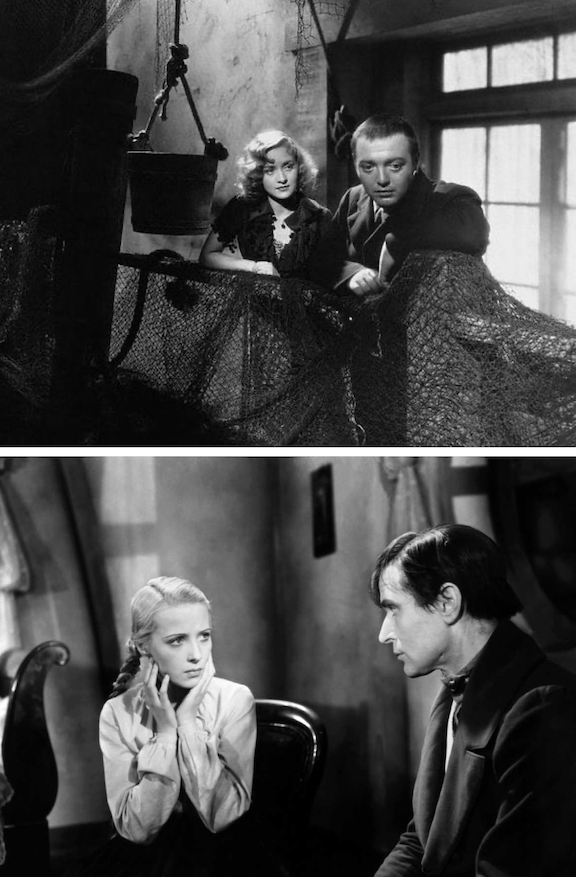
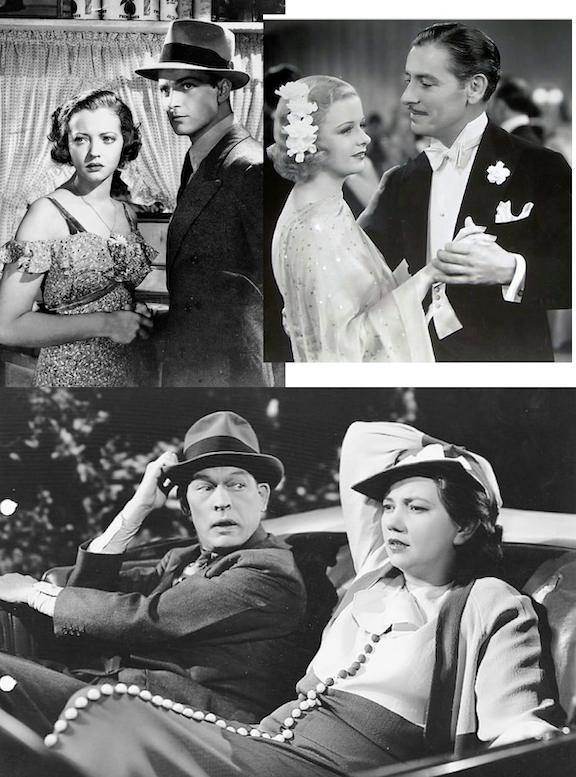


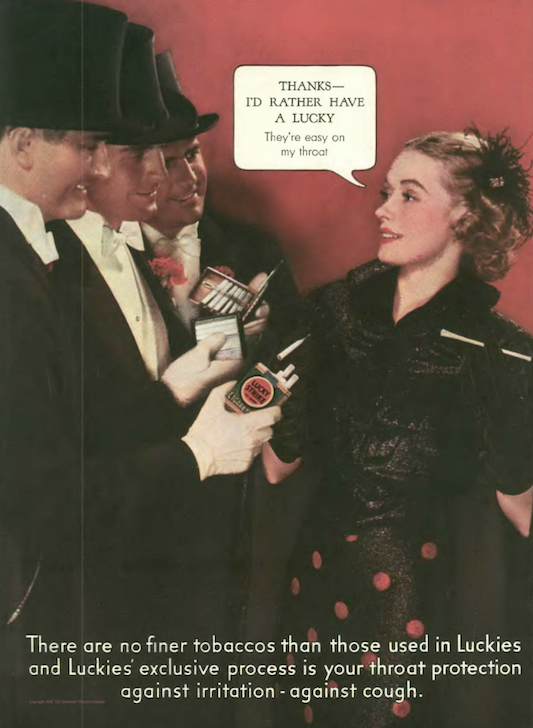
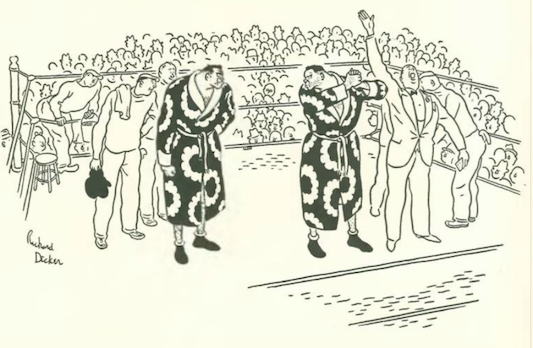
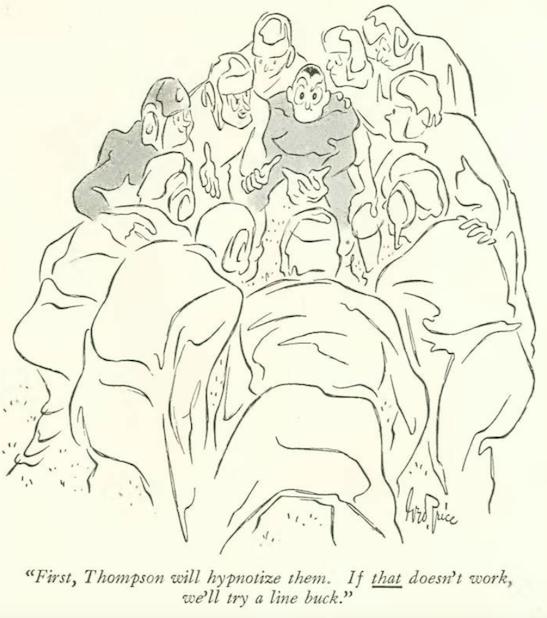

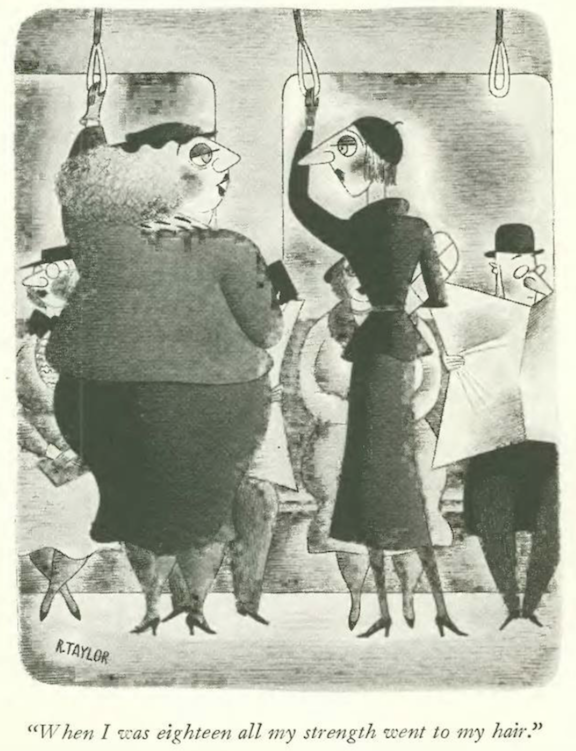

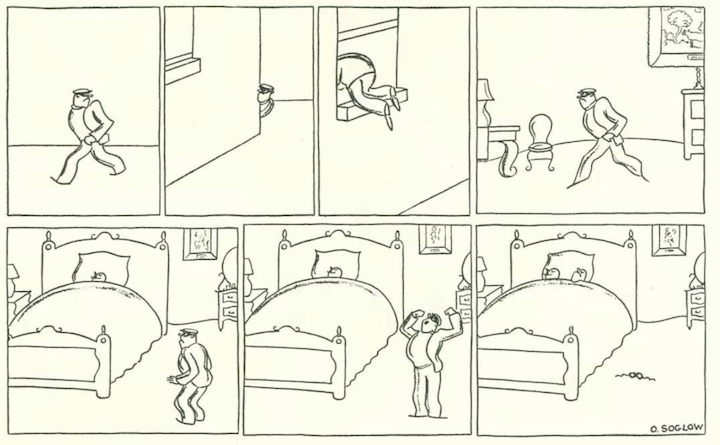
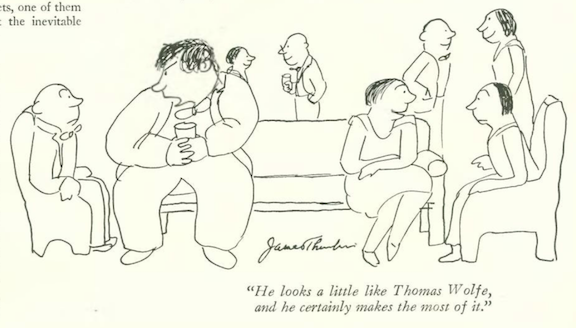
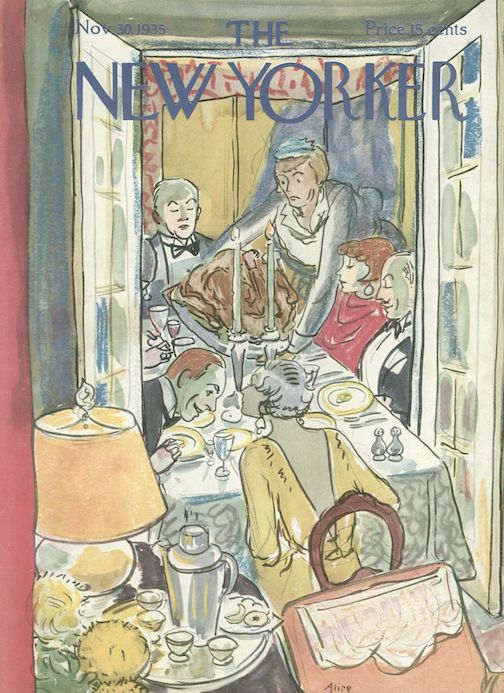
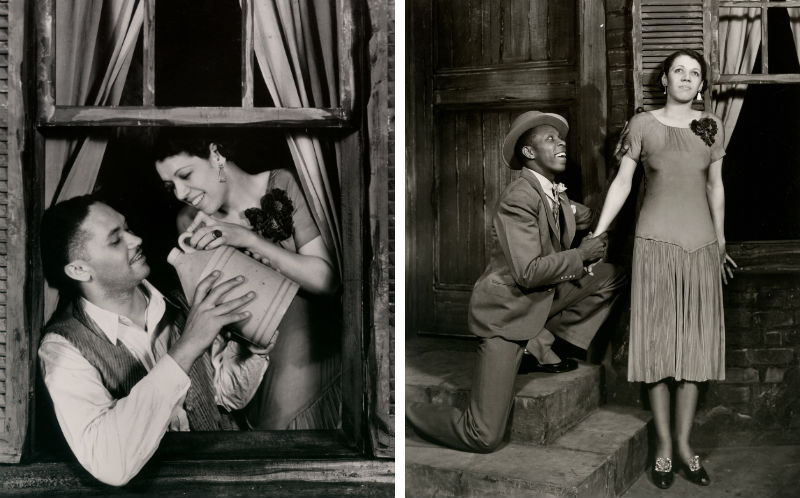
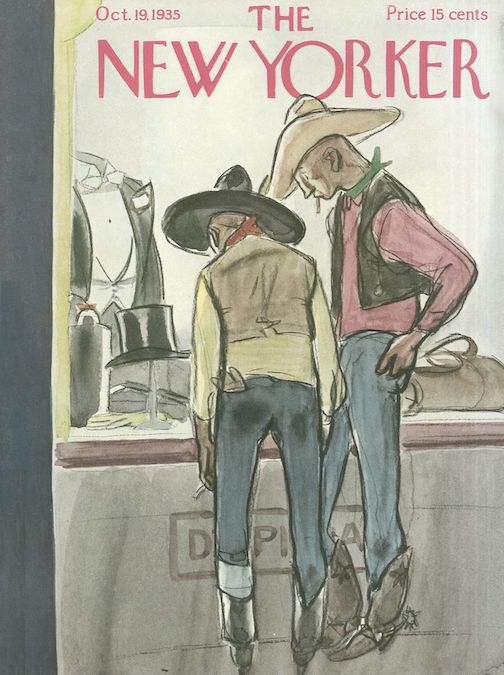
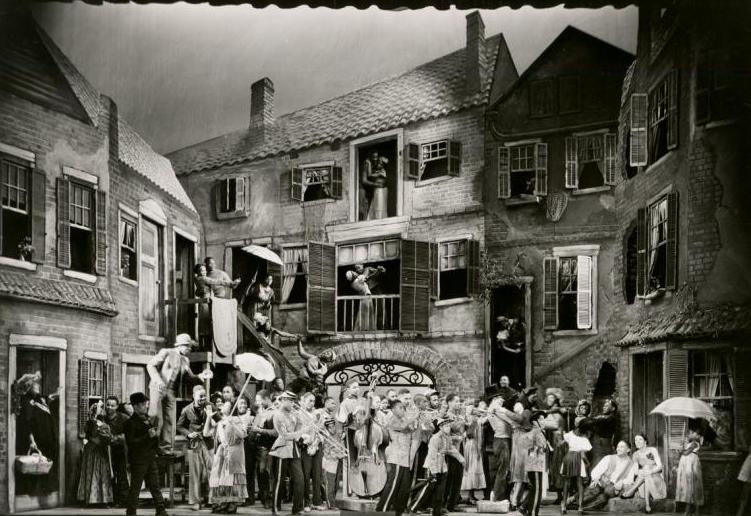
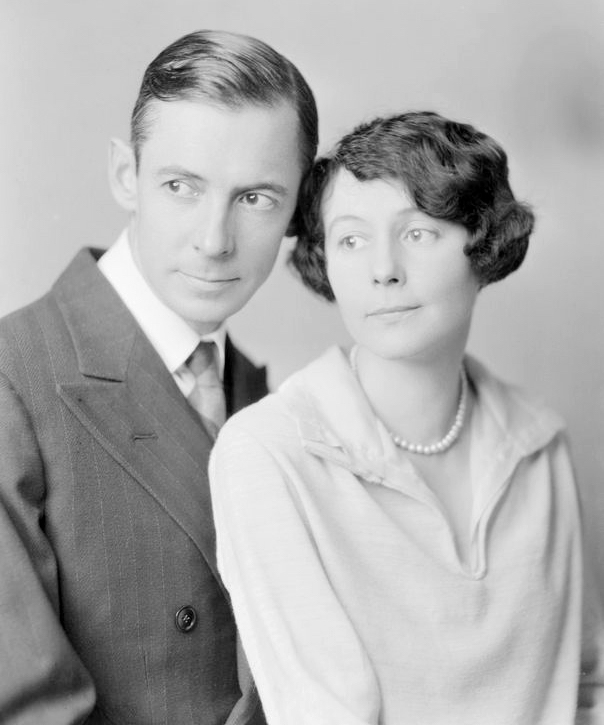
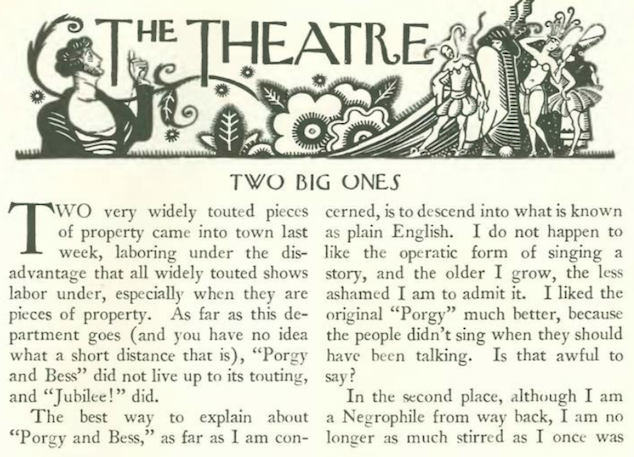



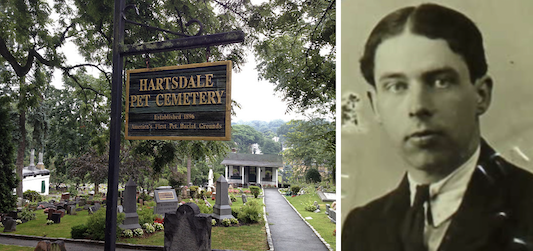

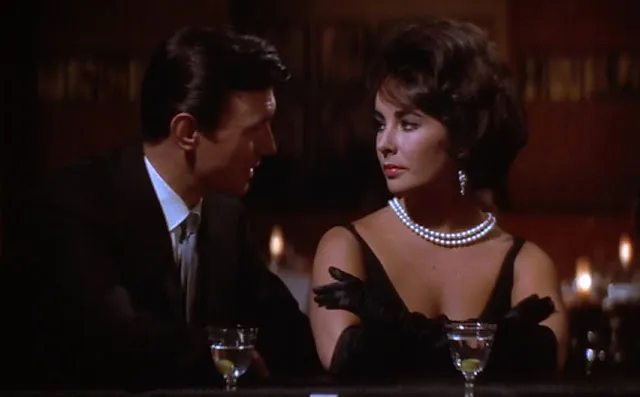


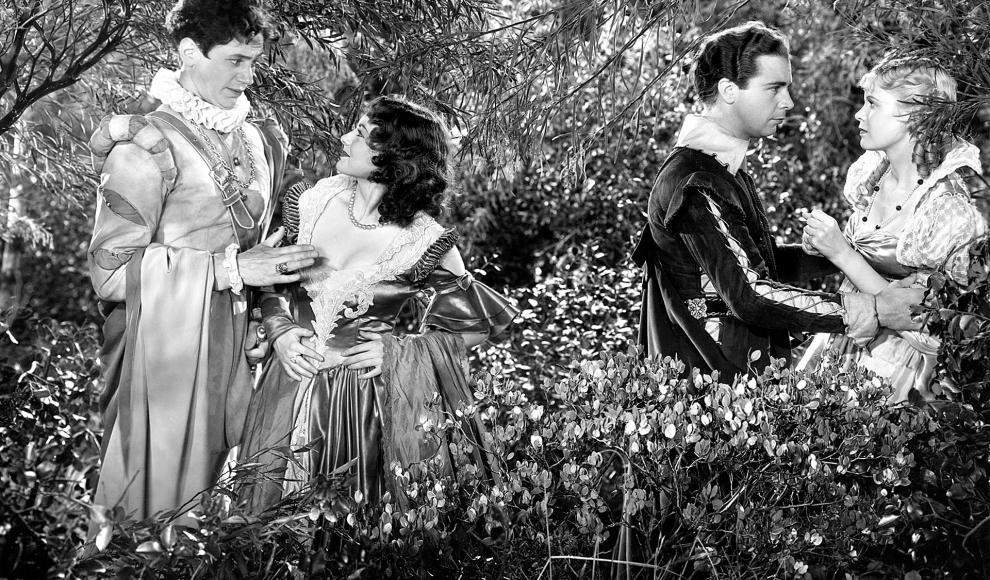

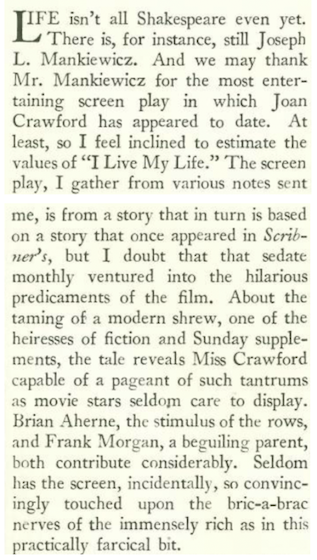
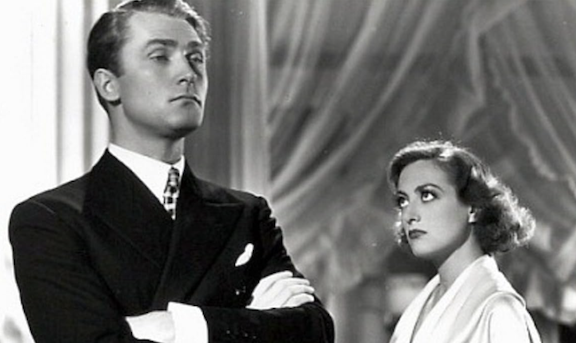
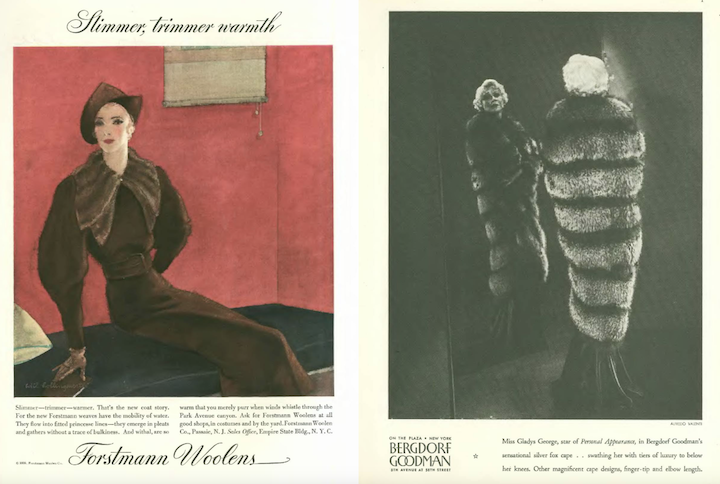


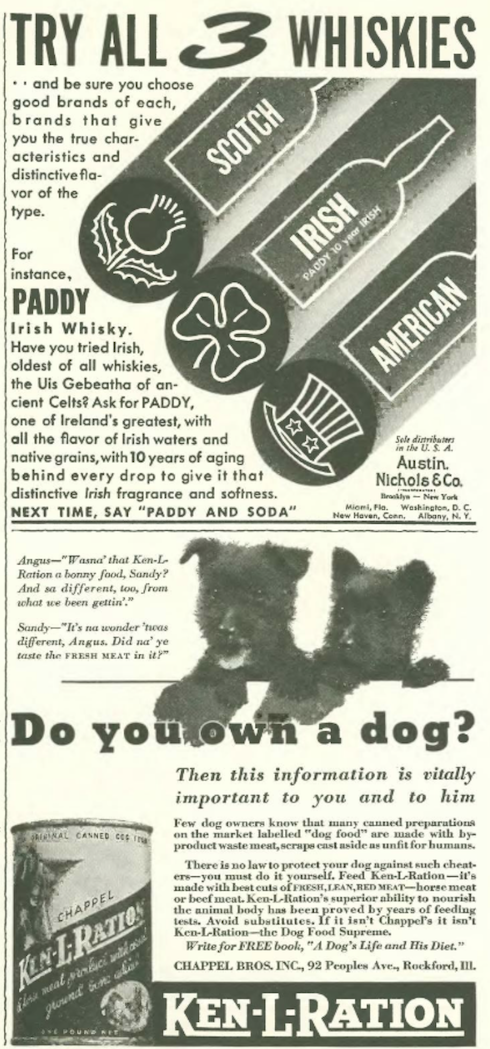
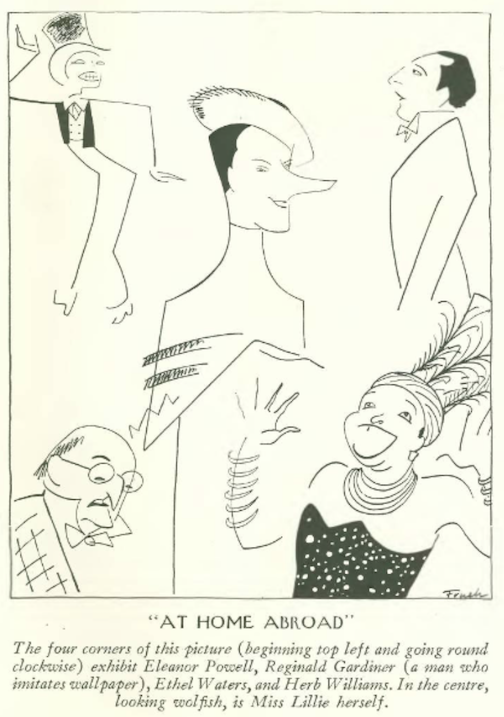
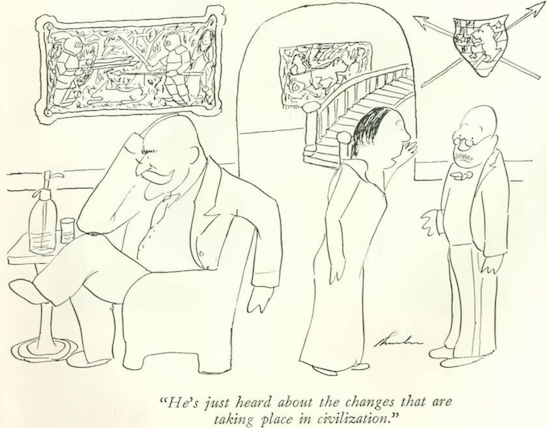

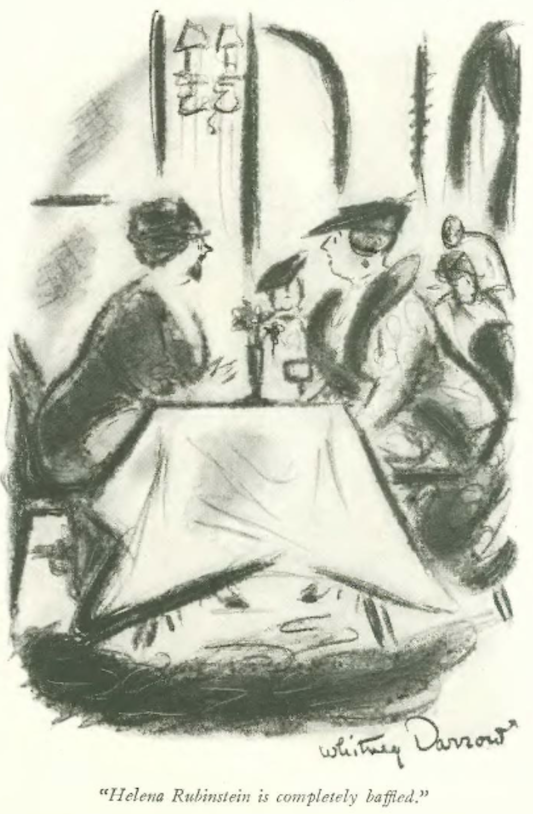
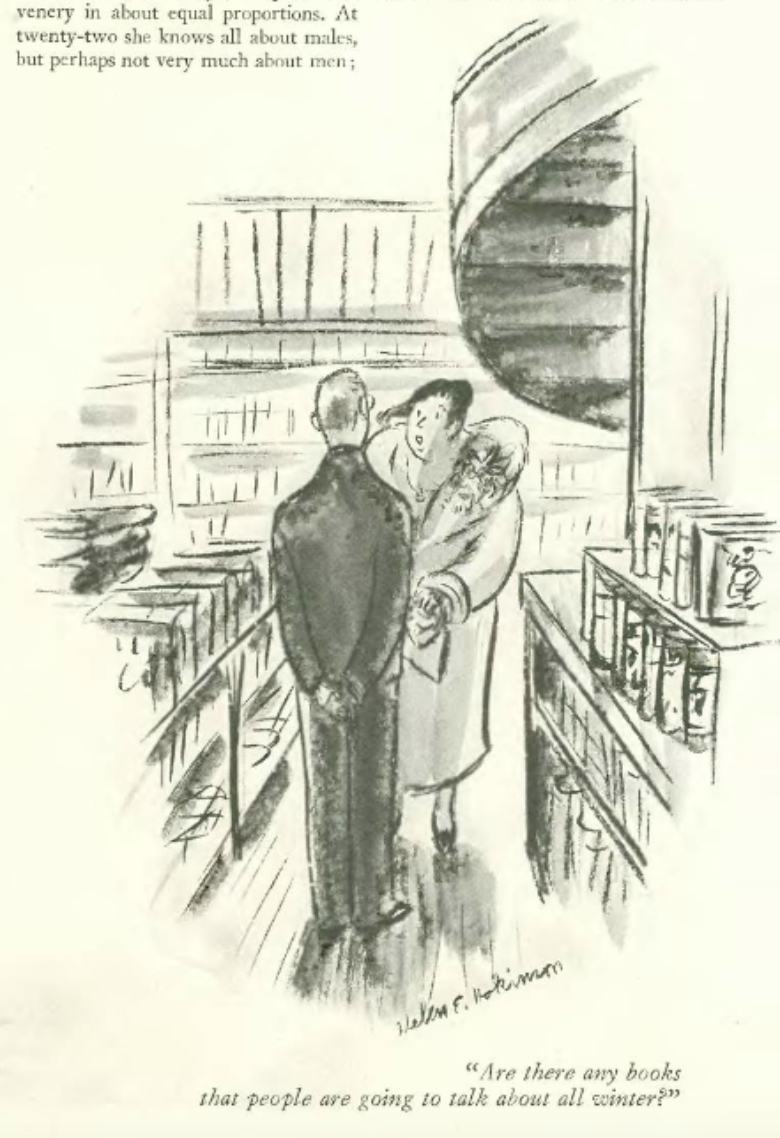
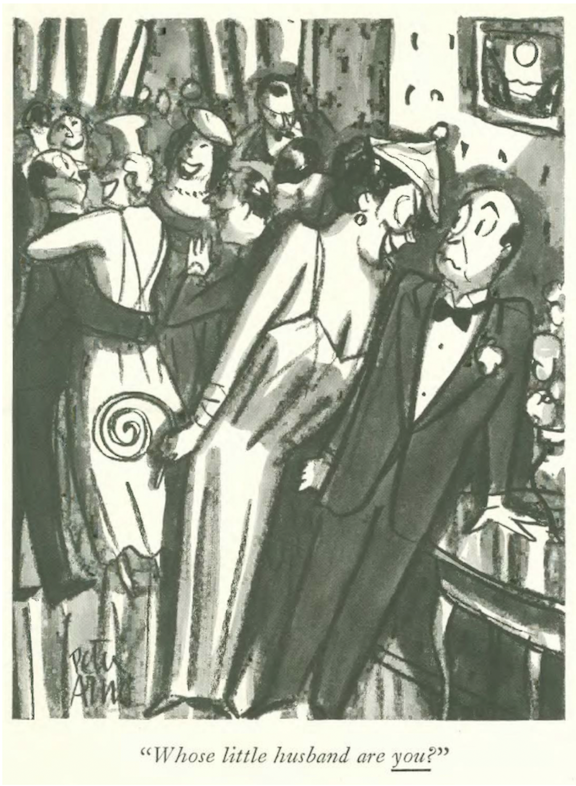
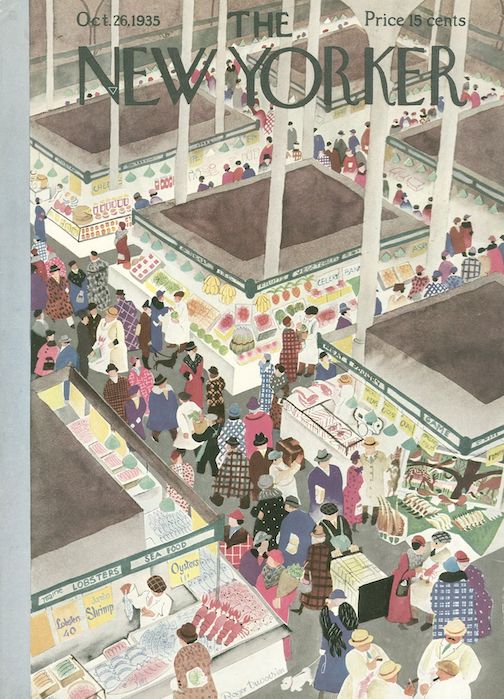
 A New Yorker State of Mind