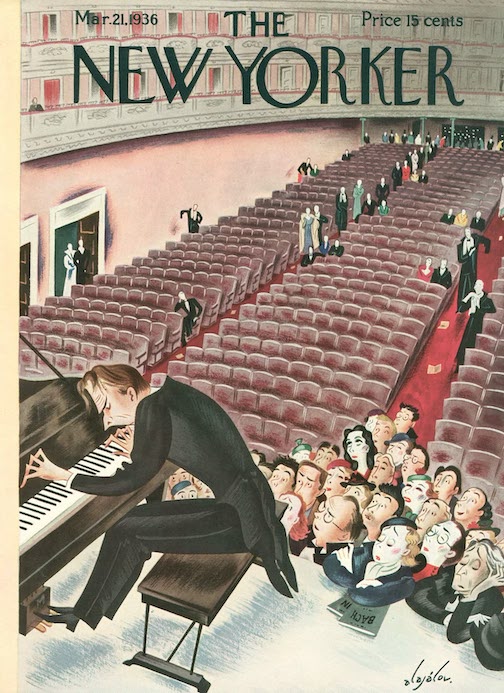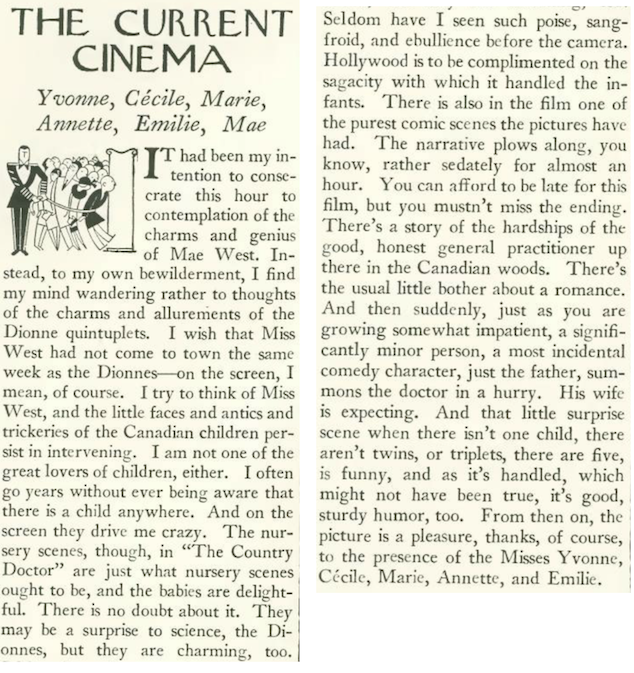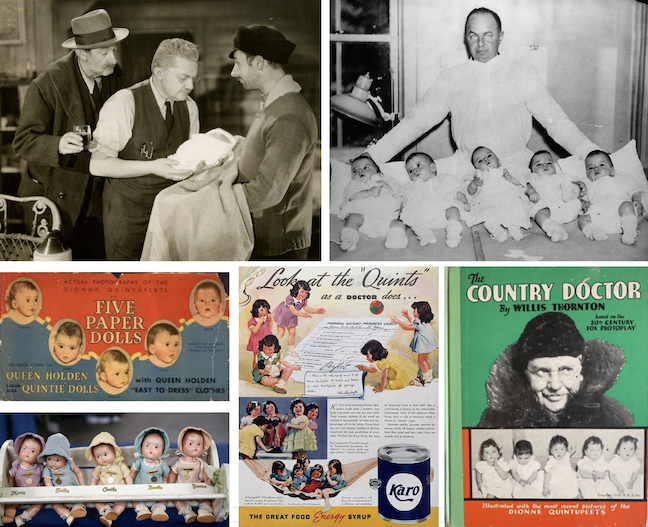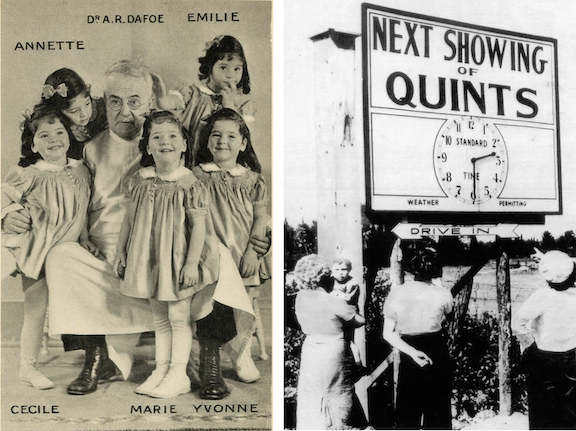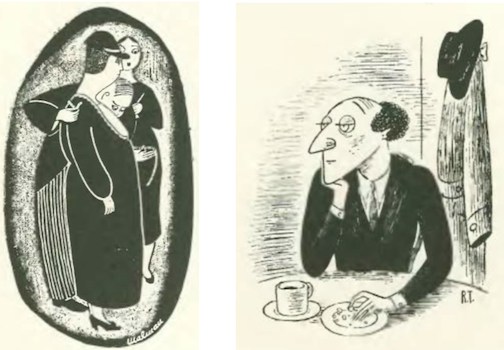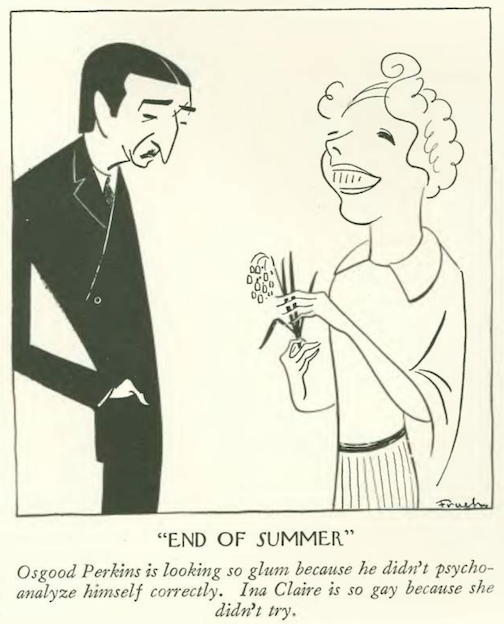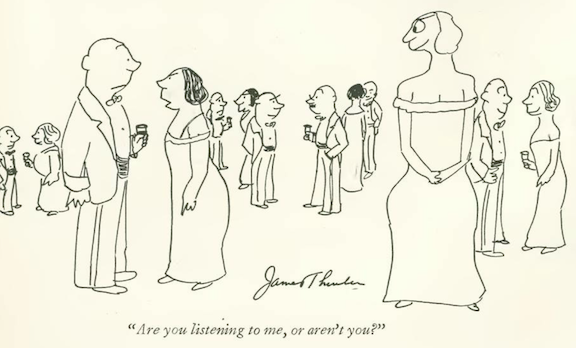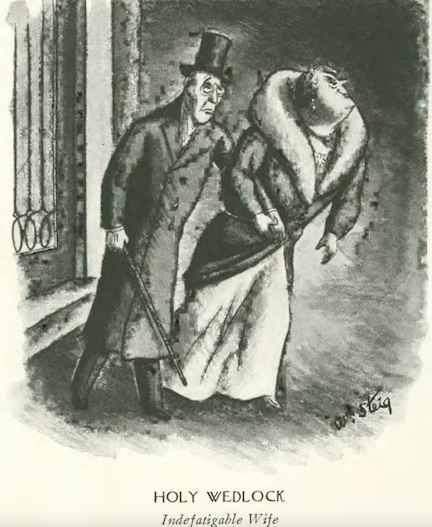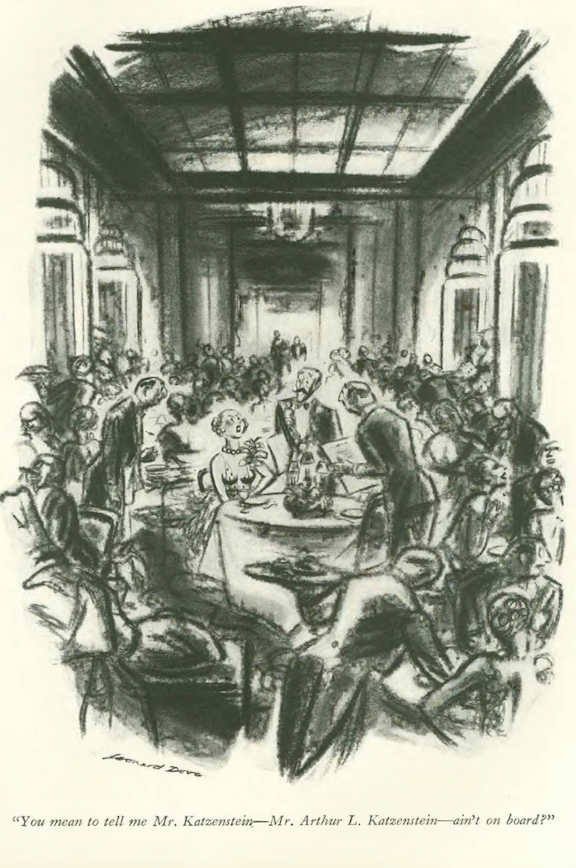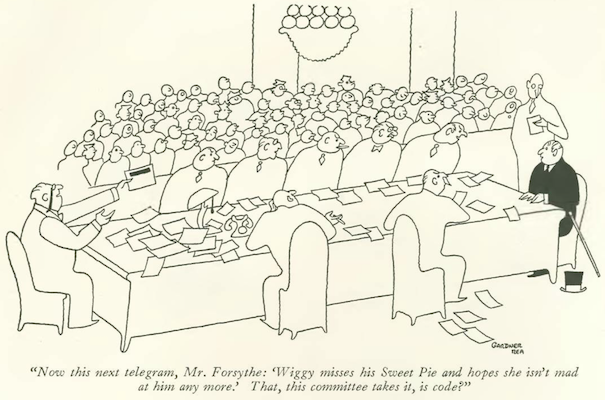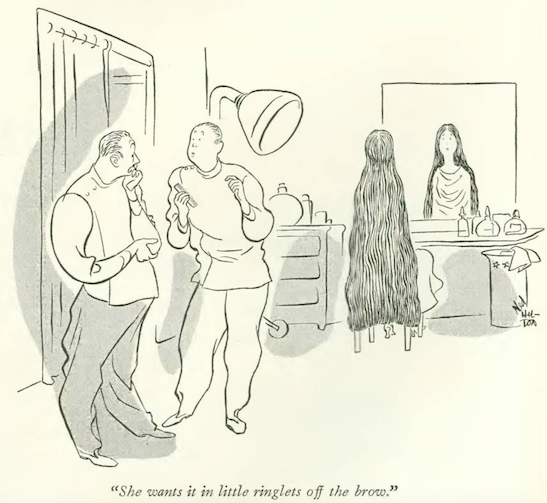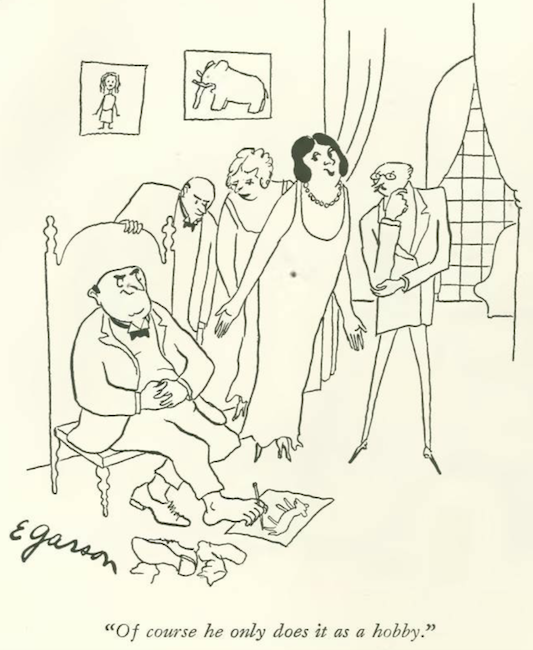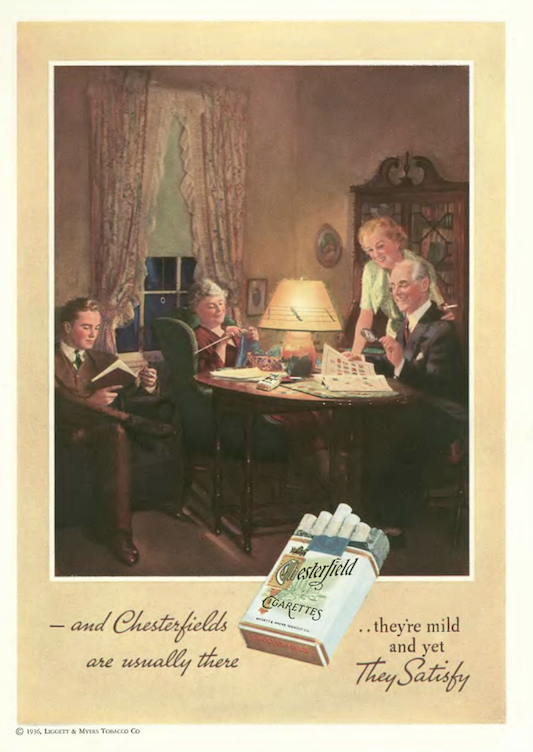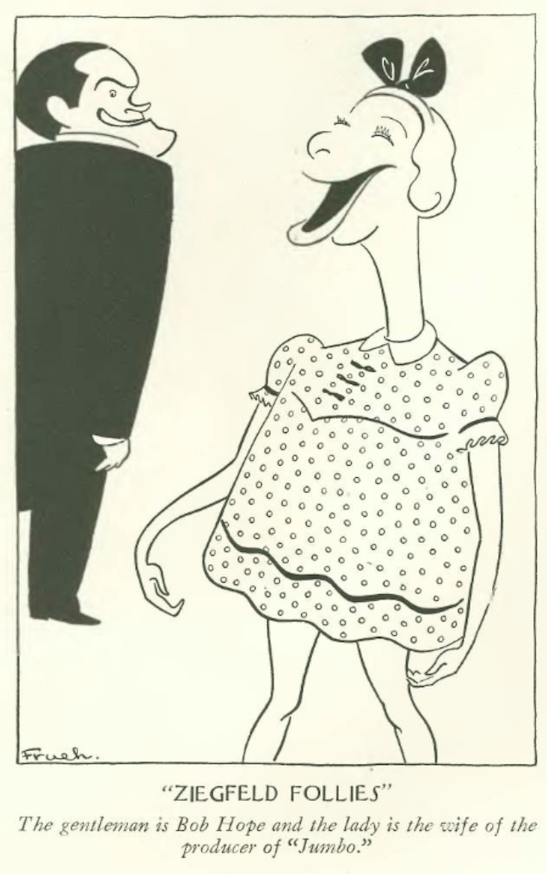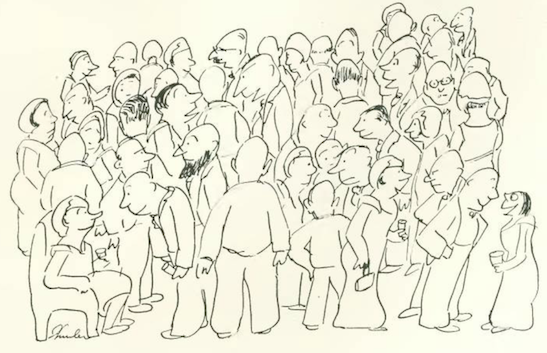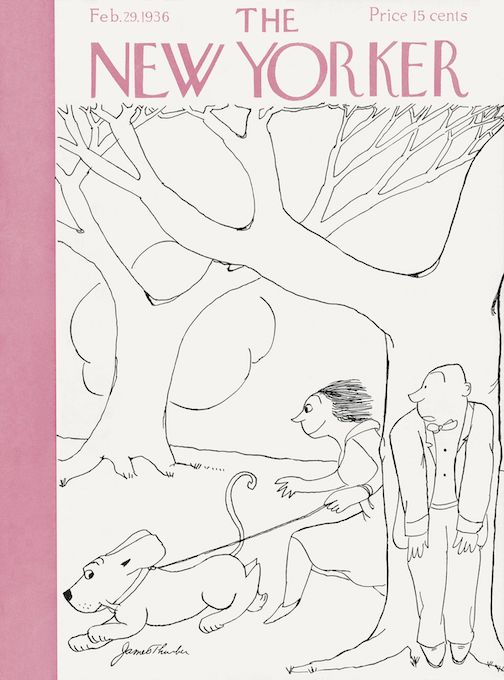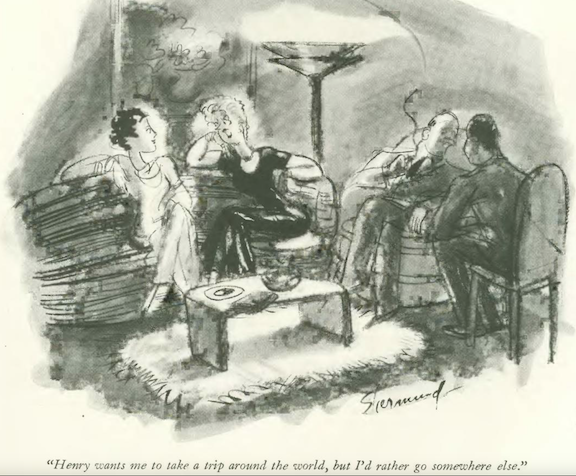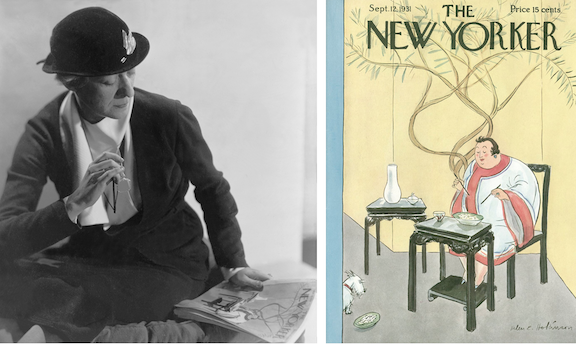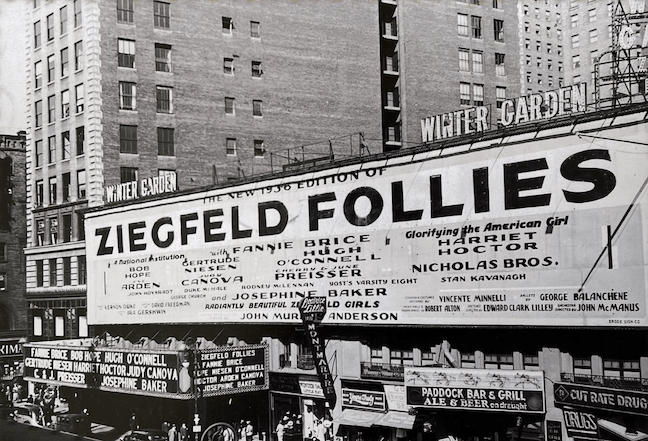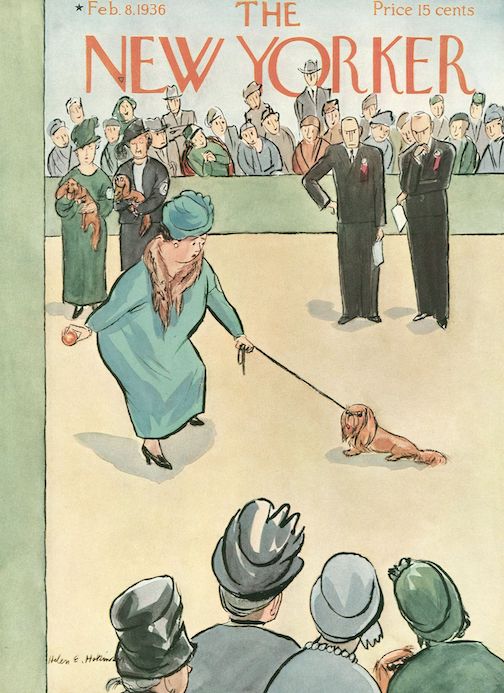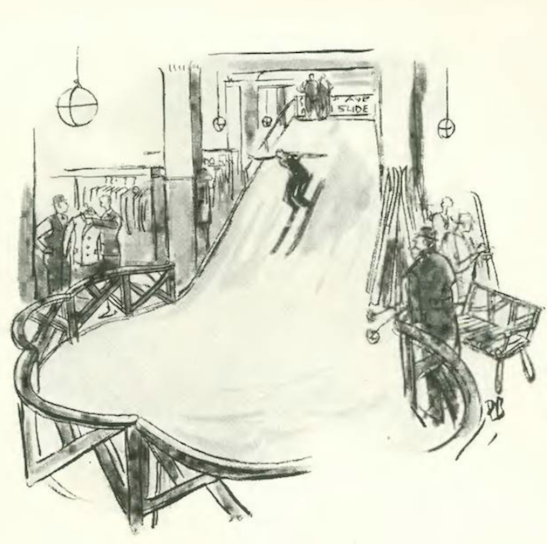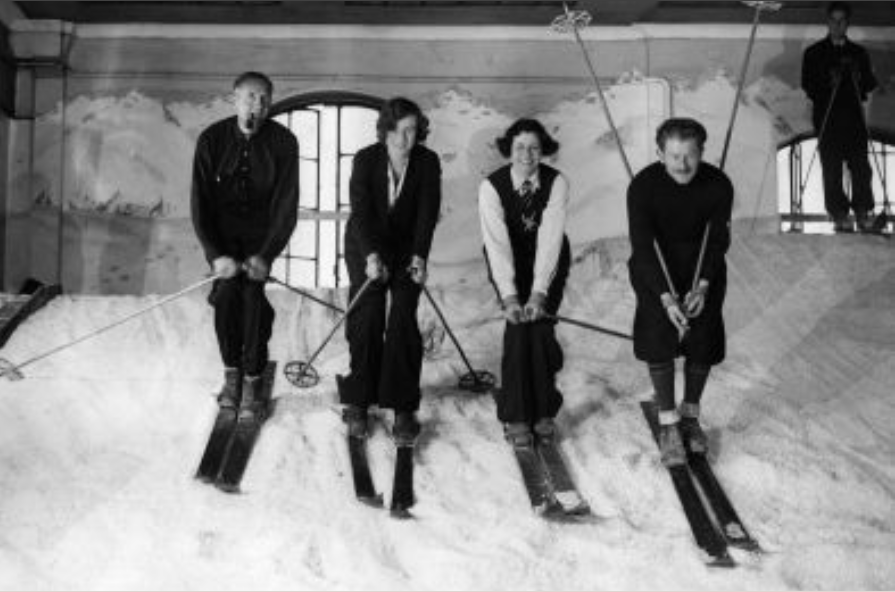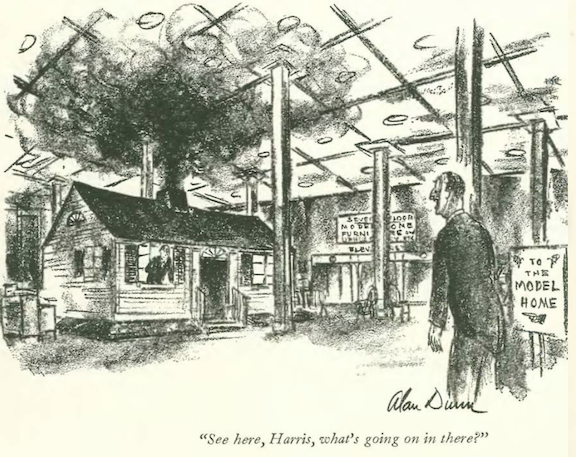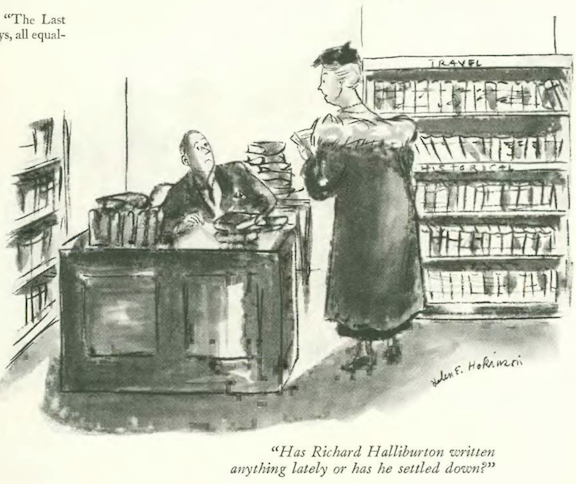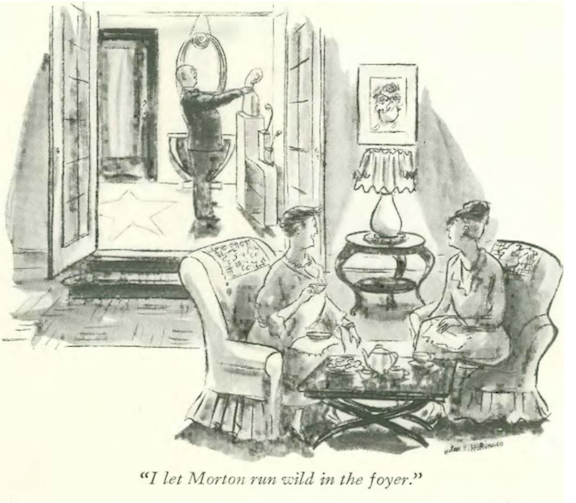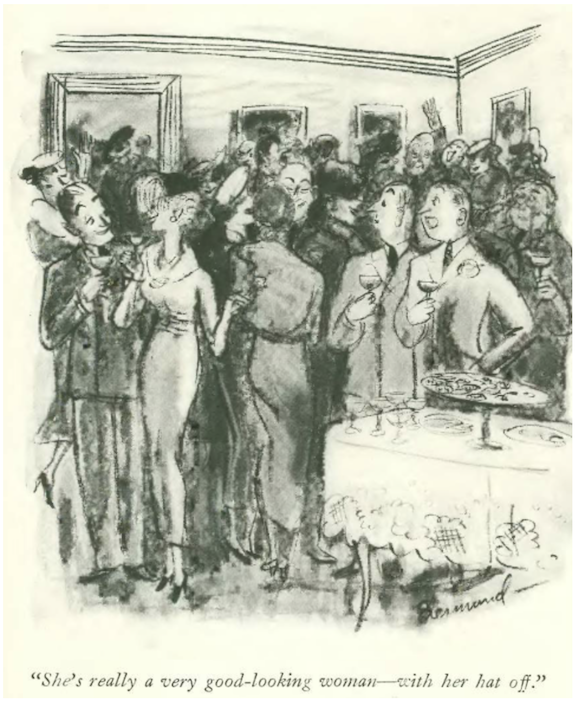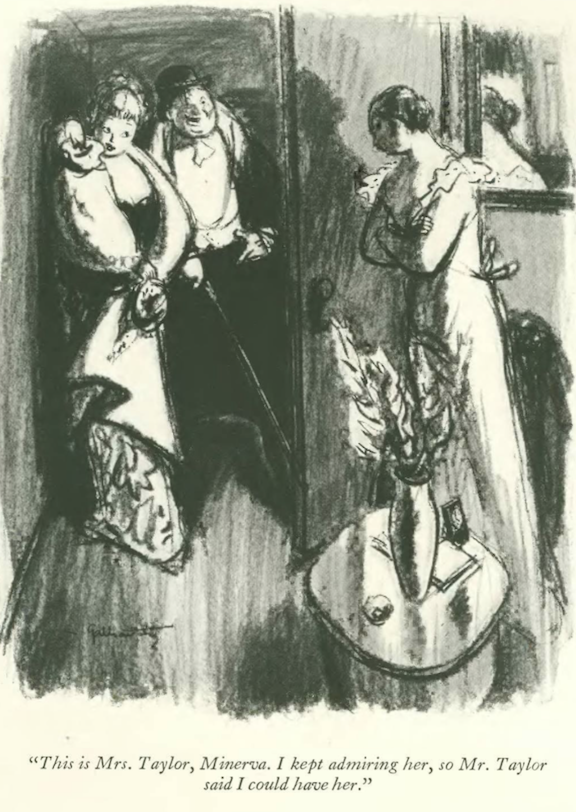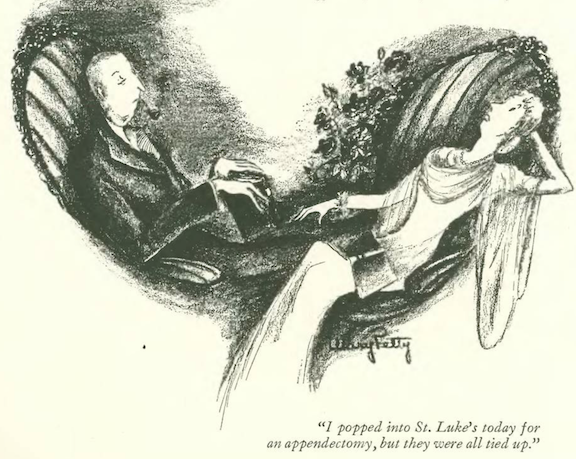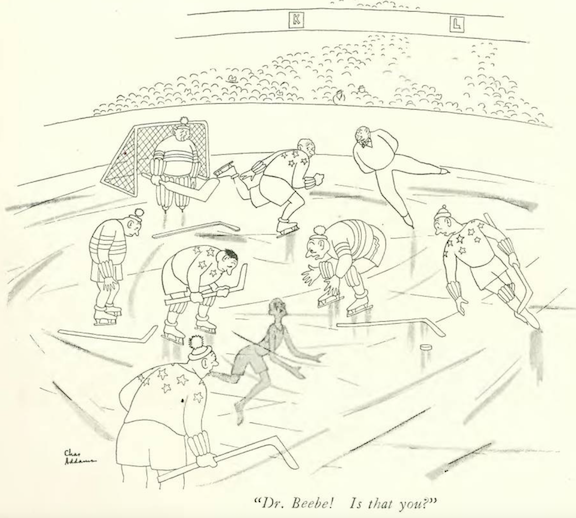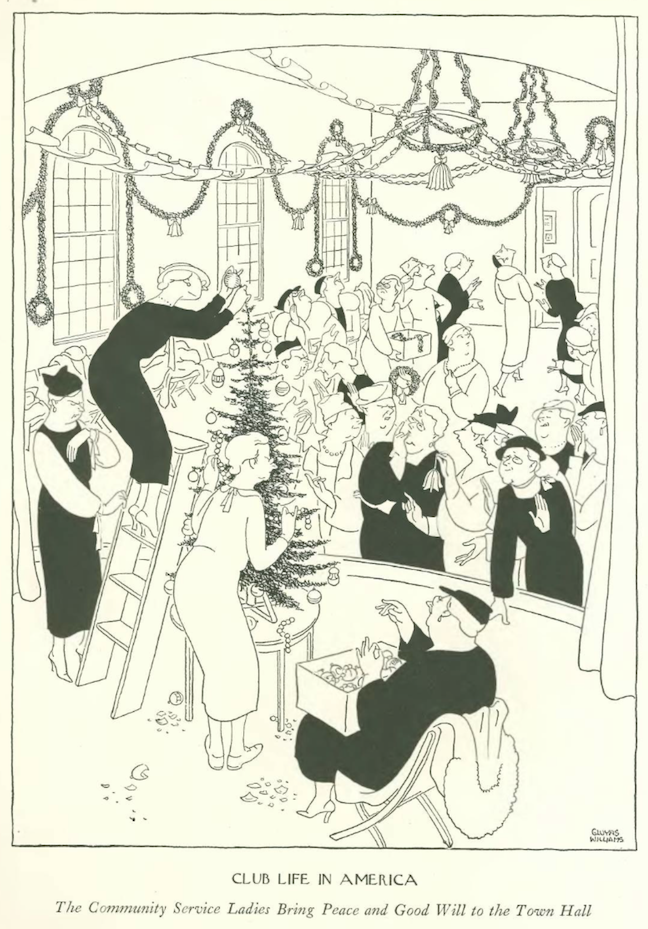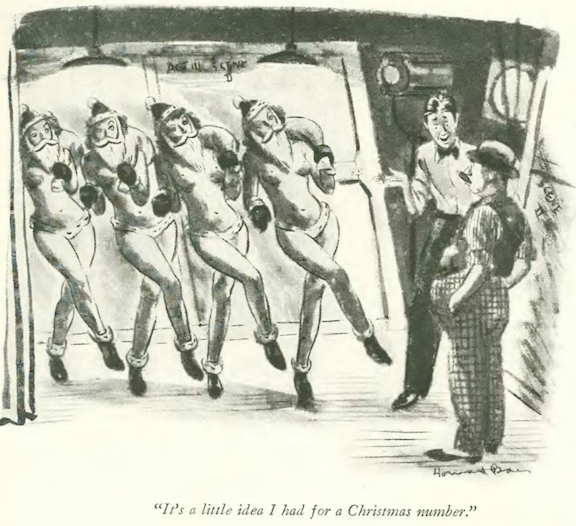
Seeking Decorative People

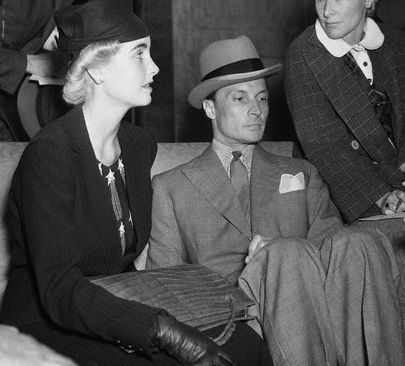
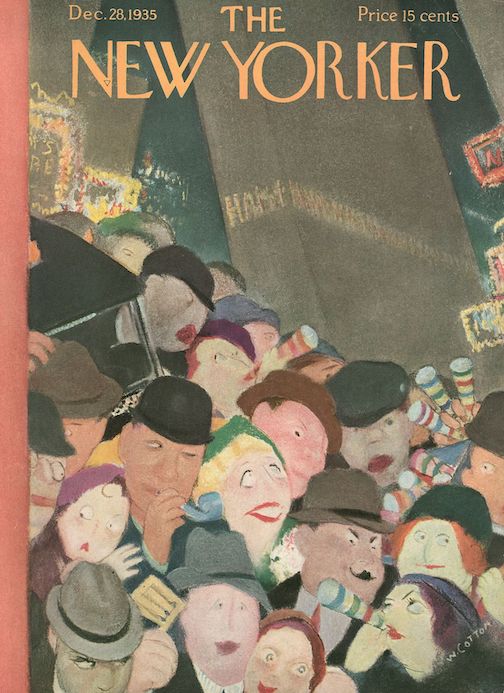
Above: New Year’s Eve at the “El Morocco” Night Club at 154 E. 54th Street, New York, 1935. (Posted on Reddit)

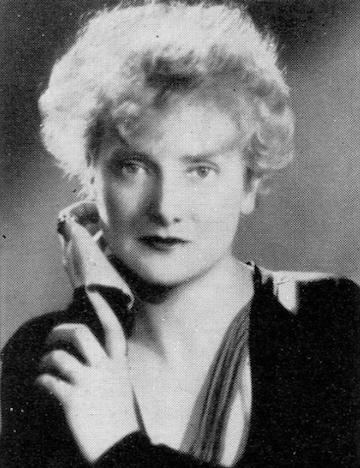
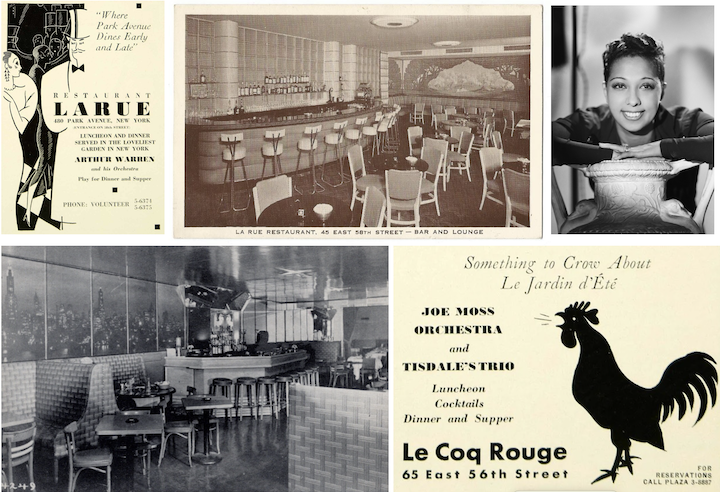
Lois Long took her nightlife seriously, and when it didn’t live up to her standards—defined by the wild speakeasy nights she wrote about after joining The New Yorker in 1925 —she was crestfallen, to say the least.

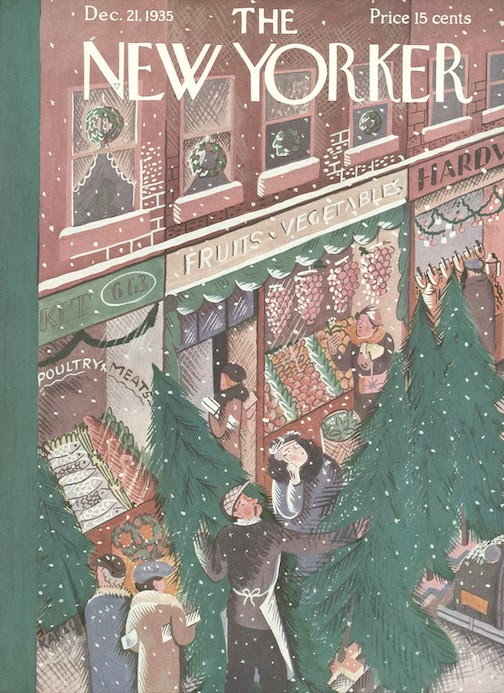
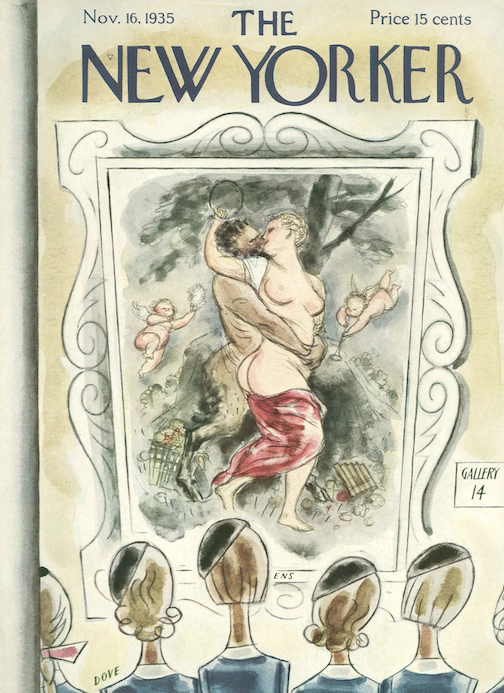
November 16, 1935 cover by Leonard Dove. This is one of Dove’s fifty-seven New Yorker covers; he also contributed 717 cartoons to the magazine.
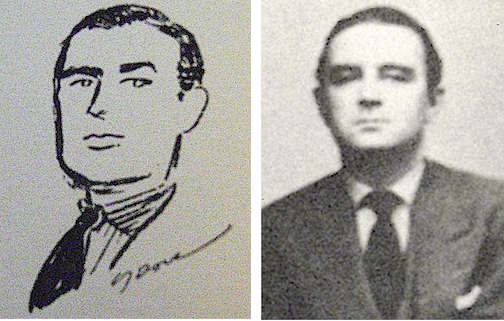
Above: Leonard Dove’s self portrait, 1941; photo: 1947. Born 1906, Great Yarmouth, England. Died, Gramercy Hotel, New York City, 1972. (Thanks to Michael Maslin’s indispensable Ink Spill)

 *

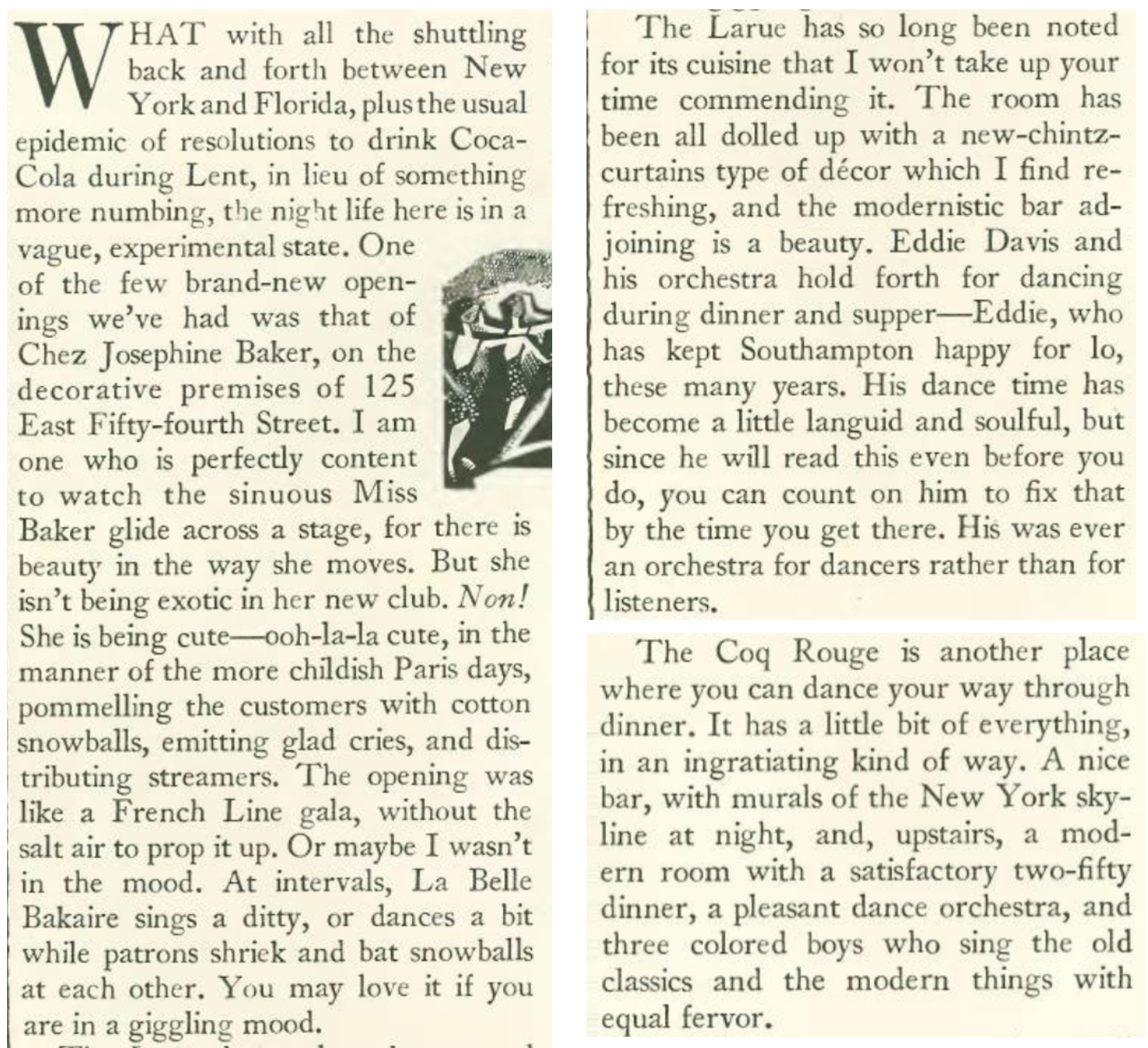
When Long joined The New Yorker she was a 23-year-old Vassar graduate, and at age 34 she was not expecting to re-live those heady days; but nightlife in 1935 made her wonder where all the interesting people had gone. Instead of the smart and beautiful speakeasy set, she found people who couldn’t hold a conversation, who cared more about being mentioned in the newspapers by “Cholly Knickerbocker” (a pseudonym used by society columnists)—they simply lacked the “sparkle” she so craved. In this excerpt from her column, “Tables for Two,” she explained:

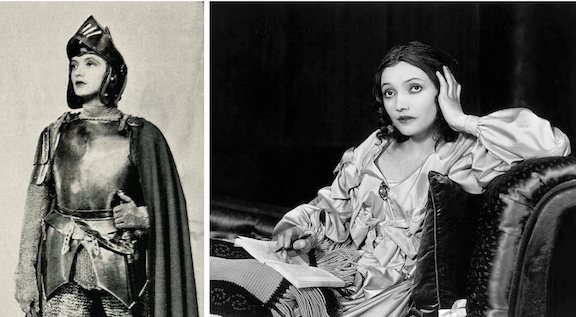
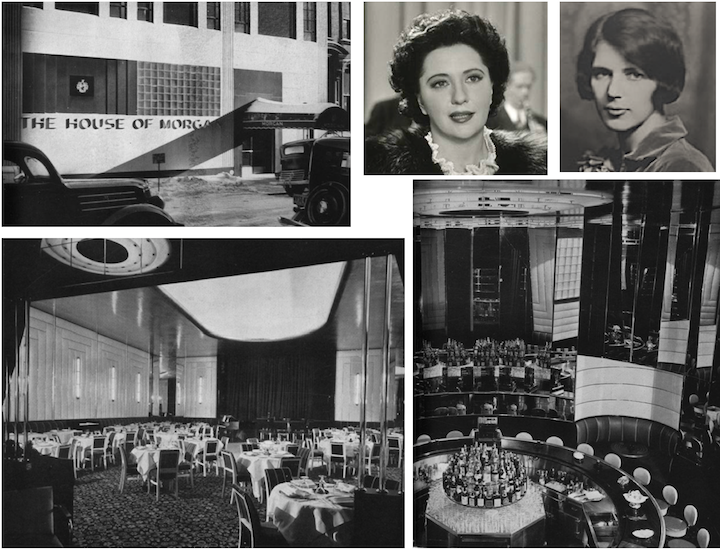
ALL SHOW, NO GO…Lois Long recalled the heady days of the original torch singer Helen Morgan, but her new club, The House of Morgan, offered up tired vaudeville instead of the singer herself. Above, images of the club from Christopher Connelly’s The Helen Morgan Page. Top, center, detail of Morgan from the 1935 film Sweet Music. Next to Morgan is a photo of Long from the PBS documentary Prohibition. (helen-morgan.net/PBS.org)

 * * *

At the Movies

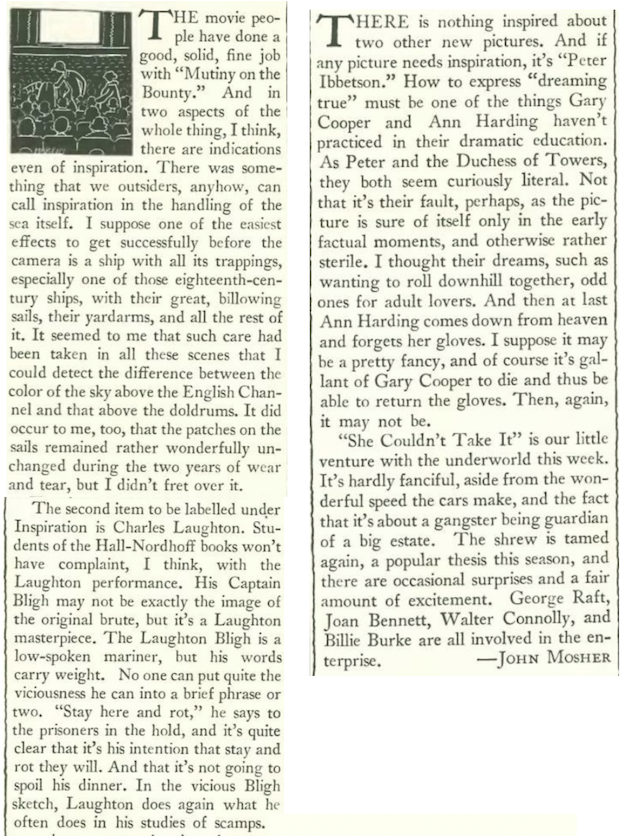
Our film critic John Mosher was in good spirits after taking in MGM’s Mutiny on the Bounty, and especially the inspired performance by Charles Laughton as the cruel, tyrannical Captain Bligh…

LET’S HAVE A STARING CONTEST…Clark Gable (left) portrayed Fletcher Christian, the Bounty’s executive officer, who disapproved of the cruel leadership of Captain Bligh, portrayed by Charles Laughton (right) in Mutiny on the Bounty. (theoscarbuzz.com)

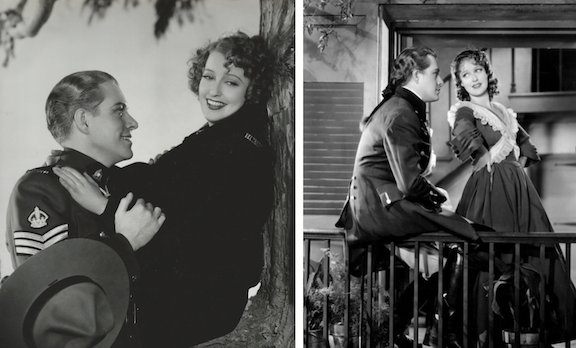
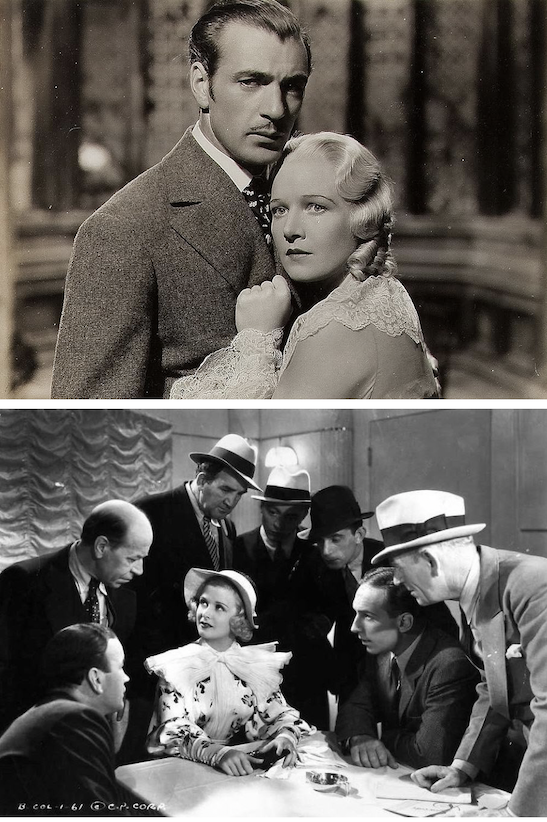
…two other pictures reviewed by Mosher were less than inspired, but at least the George Raft/Joan Bennett gangster film, She Couldn’t Take It, offered a car chase, and the occasional surprise.

STERILITY ISSUES…Top, Gary Cooper and Ann Harding needed a bit more life in Peter Ibbetson; at least Joan Bennett (bottom photo) found some action in She Couldn’t Take It. (IMDB)

 * * *

From Our Advertisers

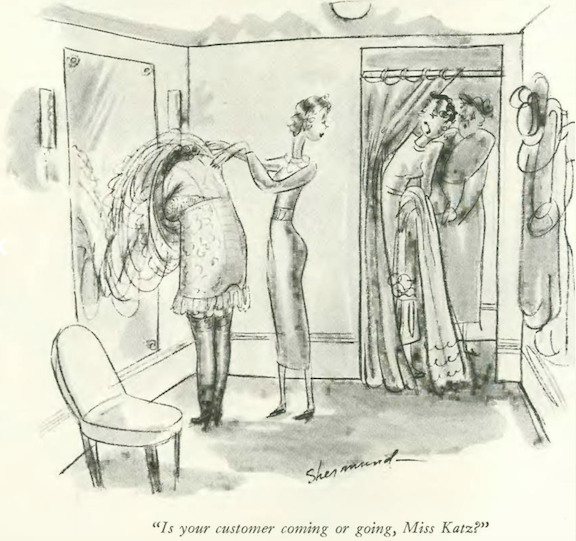
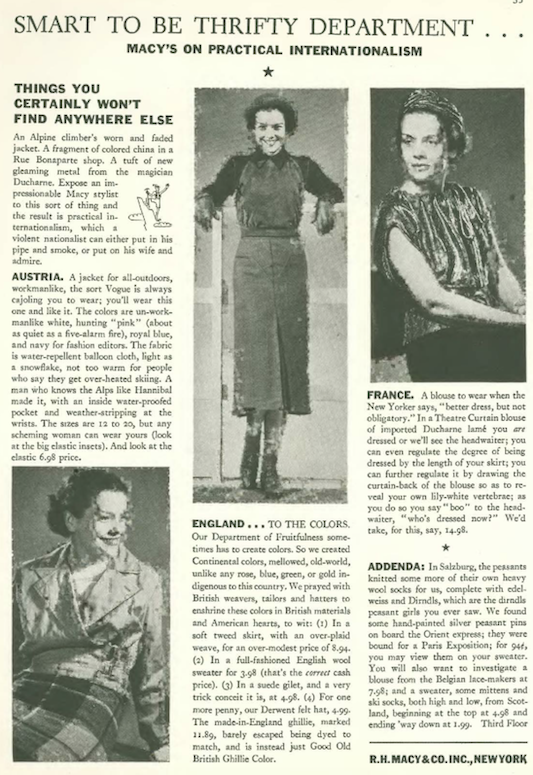
Not all fashion advertisements in The New Yorker were aimed at the posh set…Macy’s offered some thrifty selections, including a French-inspired “Theatre Curtain Blouse” that could be opened in the back “so as to reveal your own lily-white vertebrae”…

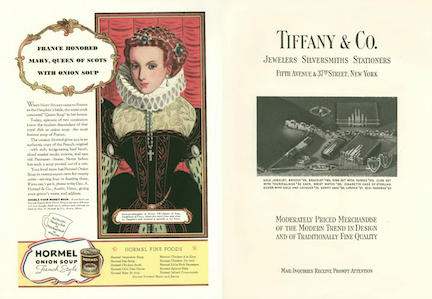
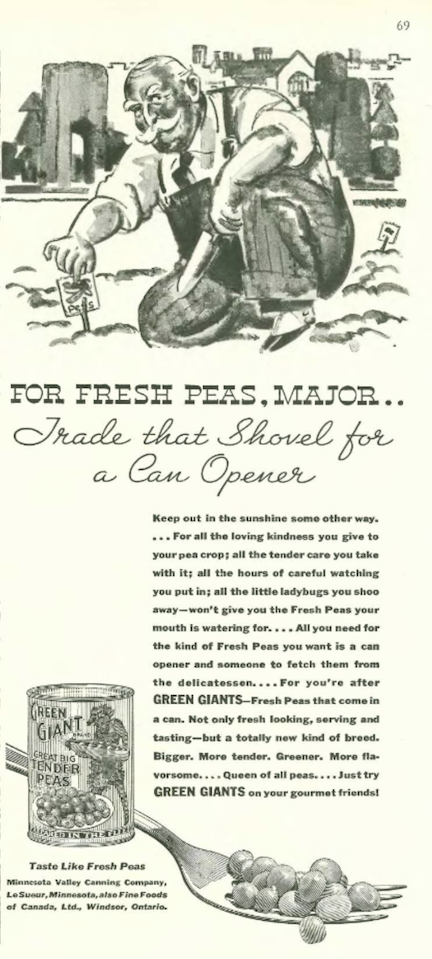
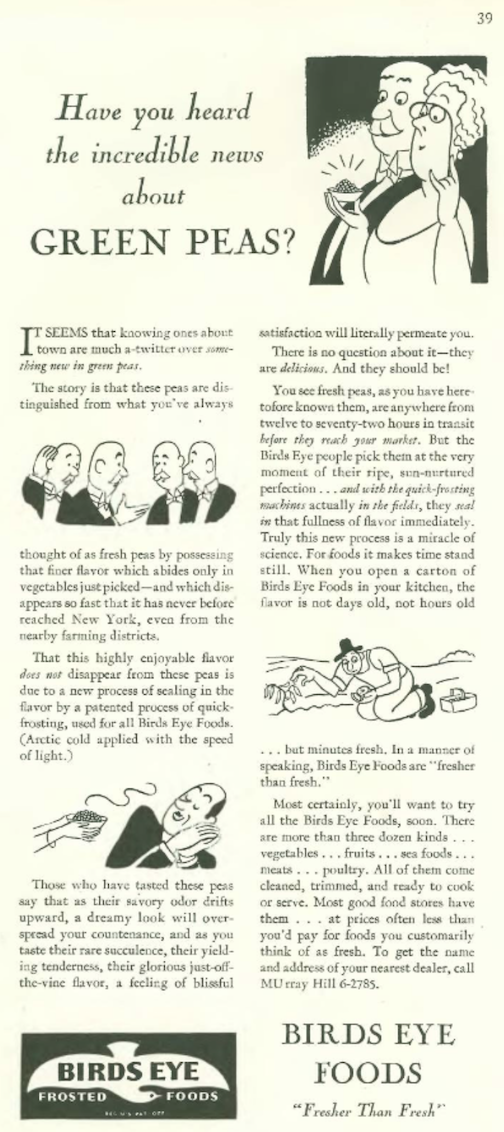
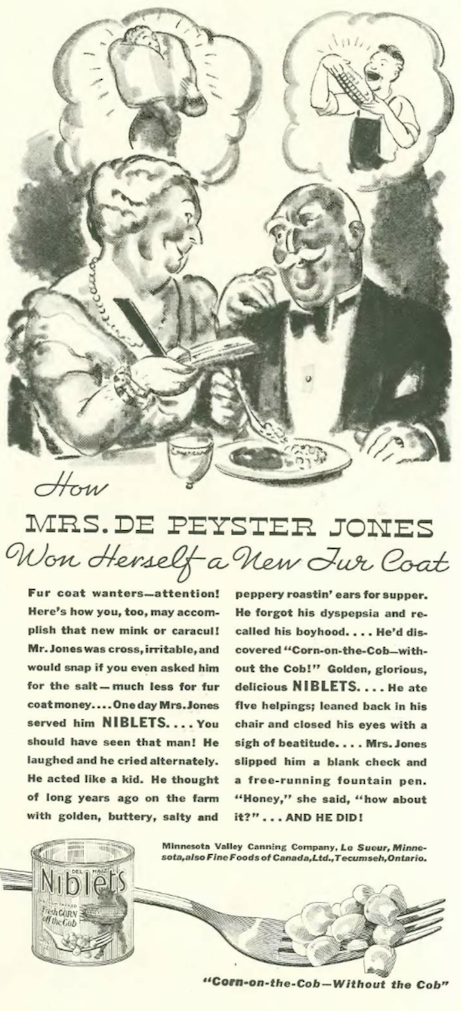
…I am puzzled by the “Duchess” types that appeared in food and beverage ads in the back of the magazine…we’ve seen some angry duchesses in ads for tomato and pineapple juice, and here we have one who has stooped so low as to shell her own peas…

…a side note, the Duchess’s peas came in a can bearing the old Green Giant logo, a savage, bearskin-clad figure…he was redesigned by ad executive Leo Burnett in 1935 to become the friendlier “Jolly Green Giant”…

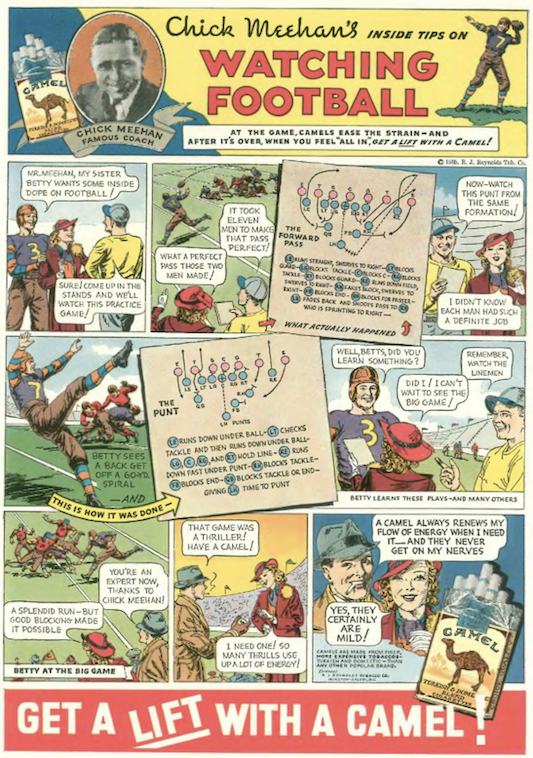
…the makers of Camels presented football coach Chick Meehan in cartoon form to extol the wonders of football and smoking to a young woman…Meehan coached football at Syracuse, NYU and Manhattan College…

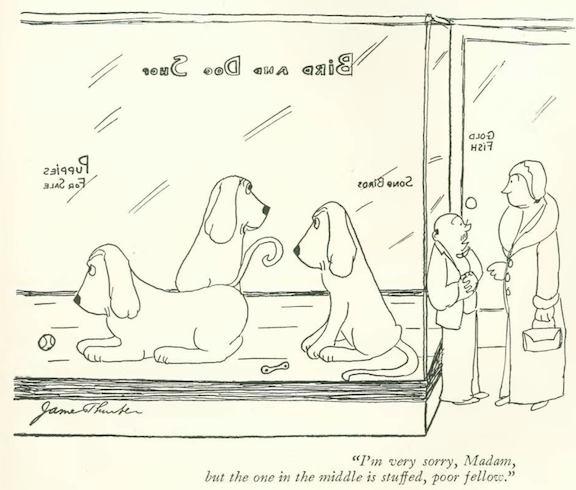
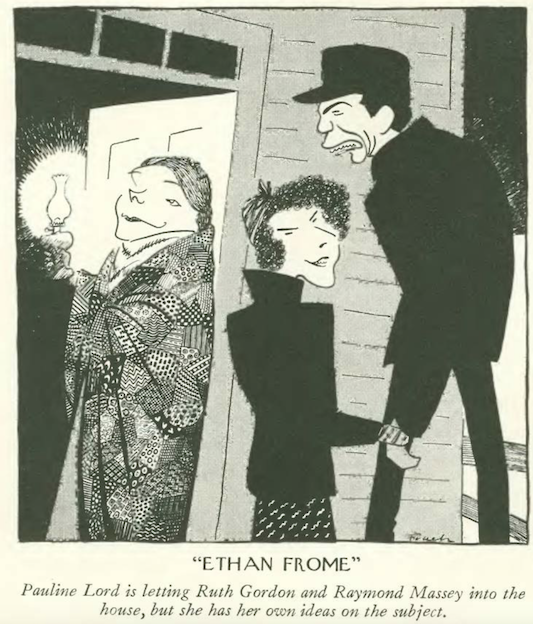
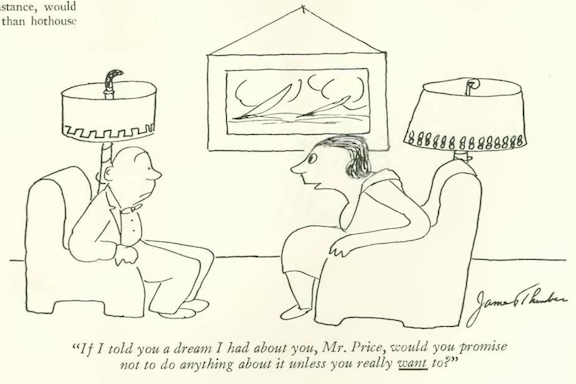
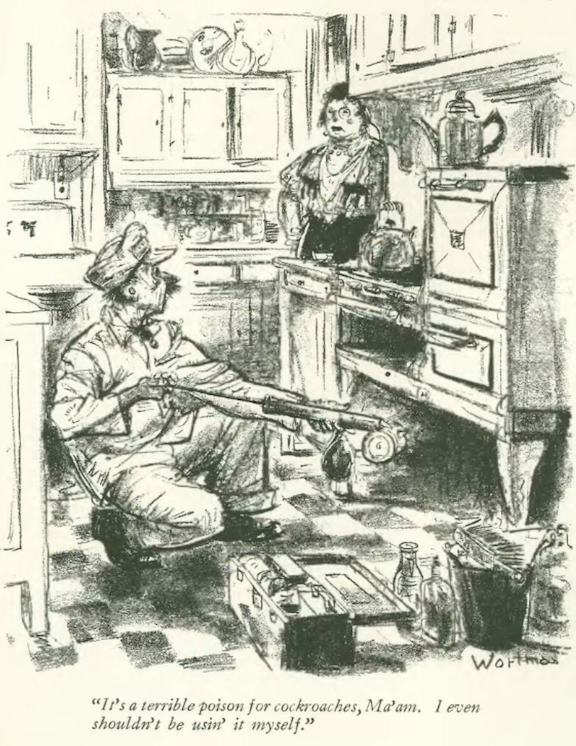
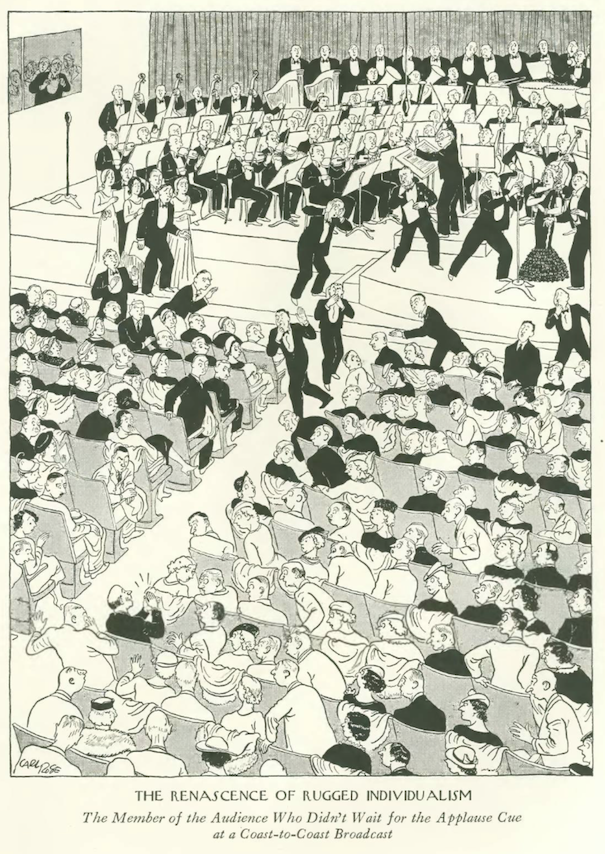
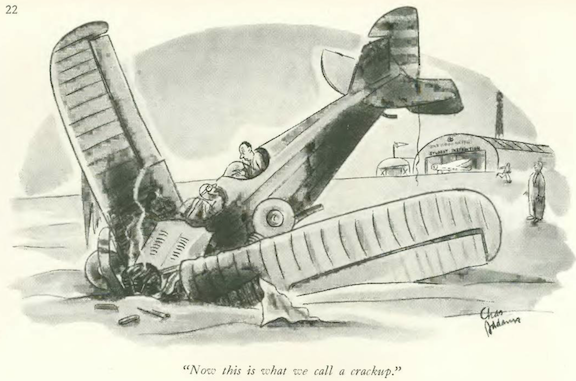
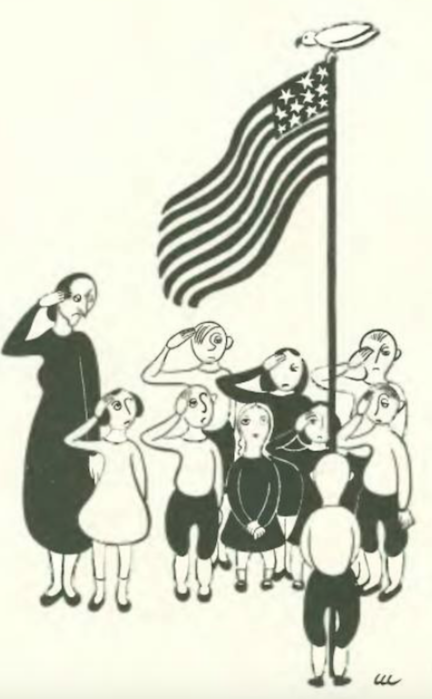
…the football theme segues to our cartoon section, beginning with this spot art by James Thurber

Christina Malman’s spot drawings could now be found in every issue, and usually more than one…

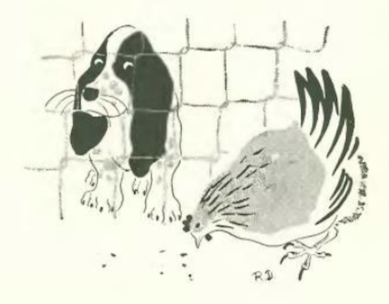
…this one by Robert Day also caught my eye, maybe because I like chickens, and dogs too…

…Day again, on the streets of Manhattan…

Barbara Shermund showed us a wolf in wolf’s clothing…

Alan Dunn seemed to be channelling Barbara Shermund here…or maybe Dunn’s wife Mary Petty had some influence…

William Crawford Galbraith eavesdropped on some wagering waiters…

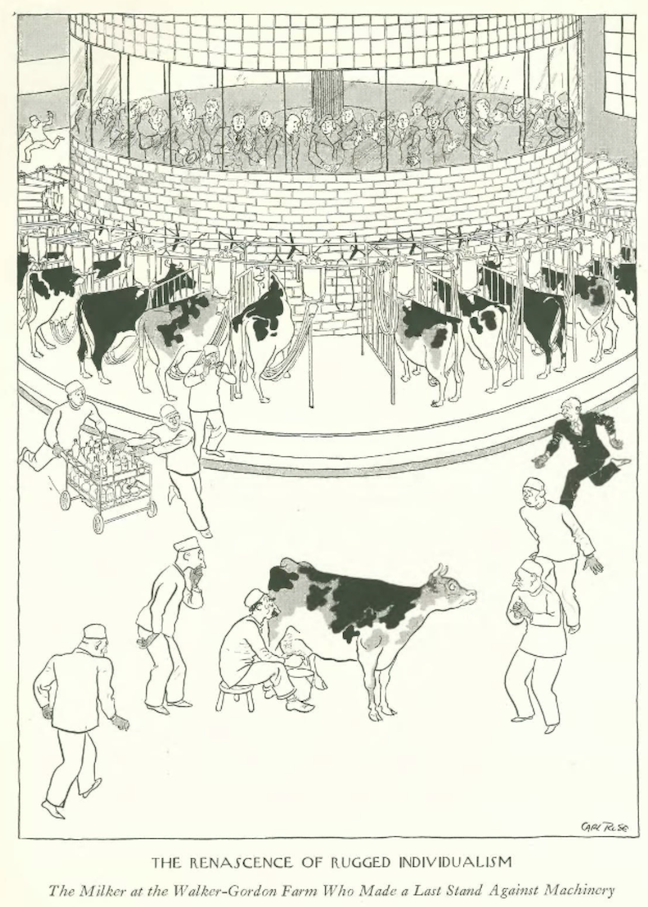
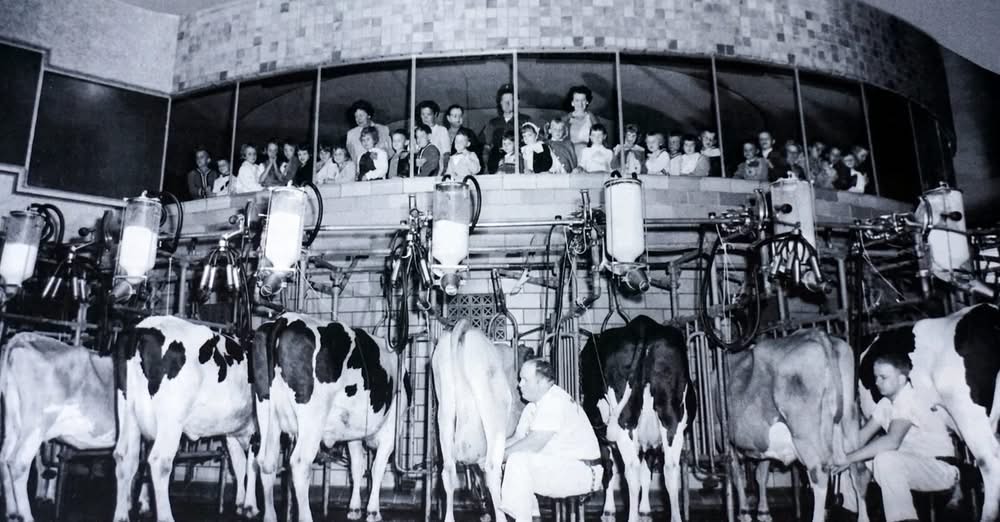
Carl Rose found an outlier at the modern Walker-Gordon Dairy Farm…

…The Rotolactor featured in Rose’s cartoon was a mostly automatic machine used for milking a large number of cows successively on a rotating platform…first used at the Walker-Gordon Laboratories and Dairy in Plainsboro, New Jersey (pictured below), the Rotolactor held fifty cows at a time, and hosted about 250,000 visitors annually…

(rawmilkinstitute.org)

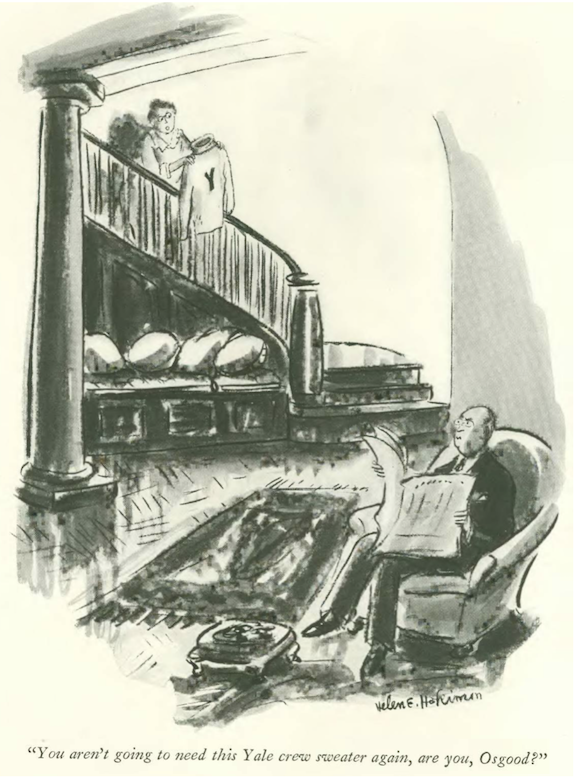
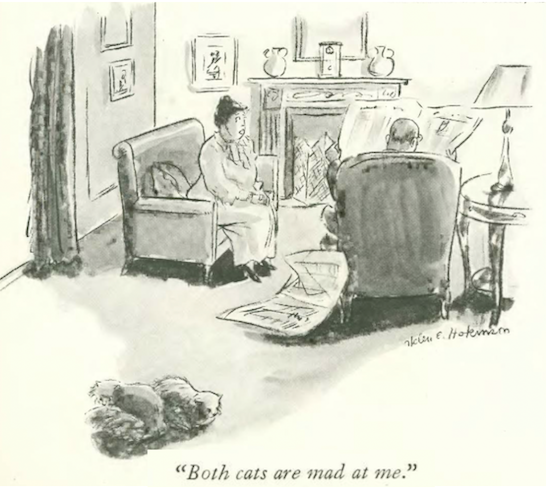
…and we go from cows to cats, courtesy Helen Hokinson

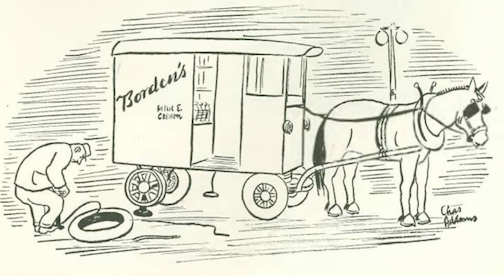
…and Charles Addams booked an unusual perp…

…on to the November 23 issue…

November 23, 1935 cover by Antonio Petruccelli. Petruccelli (1907-1994) began his career as a textile designer, becoming a freelance illustrator in 1932 after winning several House Beautiful cover contests. This is one of four covers he produced for The New Yorker.
Antonio Petruccelli. Here are samples of Petruccelli’s remarkable work. (Helicline Fine Art)

 *

Worth the Wait

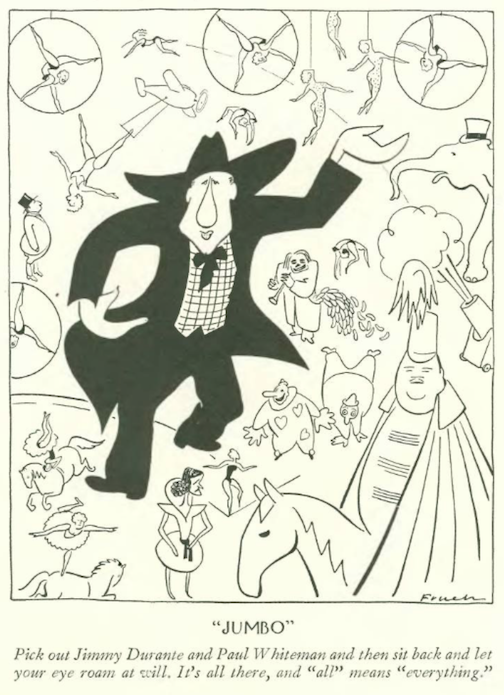
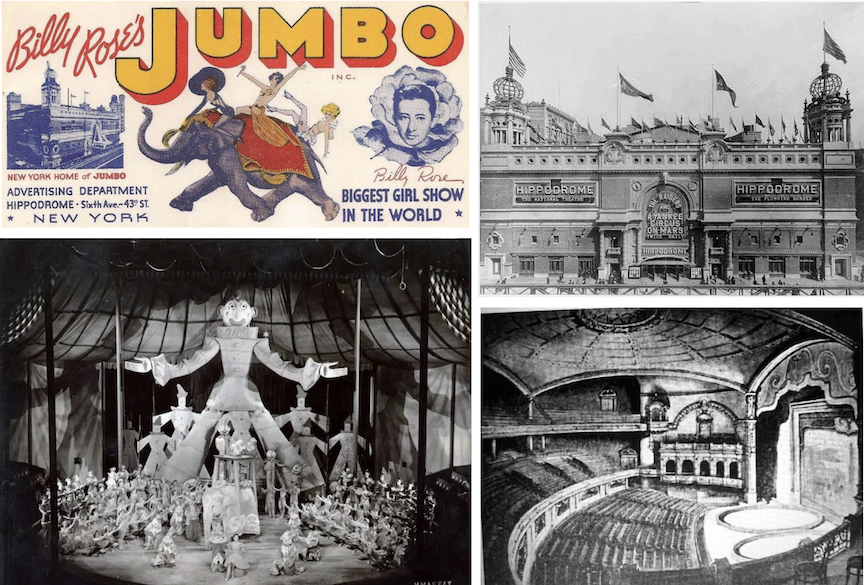
The highly-anticipated circus-themed spectacle Jumbo finally opened at the Hippodrome. In his That’s Entertainment! blog, Jackson Upperco observes that Billy’s Rose’s Jumbo was “more circus than musical comedy,” a production that “was largely an excuse for Mr. Rose to present a circus.” It was headlined by comedian Jimmy Durante and bandleader Paul Whiteman, with a score by Rodgers & Hart. Here are excerpts from a review by Wolcott Gibbs:

JUMB0-SIZED ENTERTAINMENT…Clockwise, from top left, Hippodrome billboard promoting Jumbo; built in 1905, the Hippodrome provided entertainment to thousands who couldn’t afford a Broadway ticket; a circus tent was erected inside the 5,300-seat theatre for the spectacle; Jumbo was one of the most expensive theatrical events of the first half of the 20th century. (Facebook/Library of Congress/Broadway Magazine/jacksonupperco.com)

 * * *

At the Movies

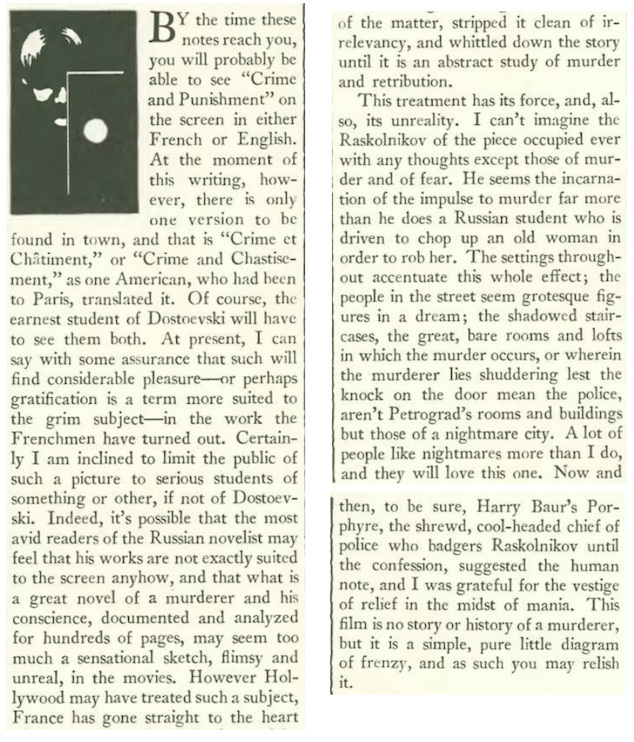
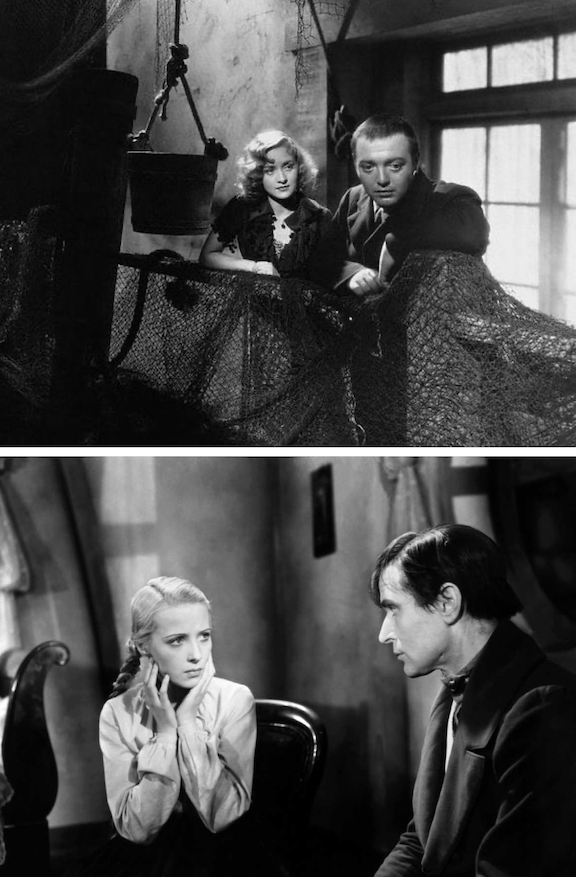
Fyodor Dostoevsky’s 1866 novel Crime and Punishment was adapted to film by both French and American producers in 1935, but critics including The New Yorker’s John Mosher mostly preferred the French version, titled Crime et châtiment.

DOUBLE FEATURE…American and French producers each turned out a film adaption of Fyodor Dostoevsky’s novel Crime and Punishment. Top photo, Marian Marsh as Sonya and Peter Lorre as Roderick Raskolnikov in Columbia’s Crime and Punishment; bottom photo, Madeleine Ozeray as Sonia and Pierre Blanchar as Rodion Raskolnikov in Crime et châtiment. (silverscreenmodes.com/SensCritique.com)

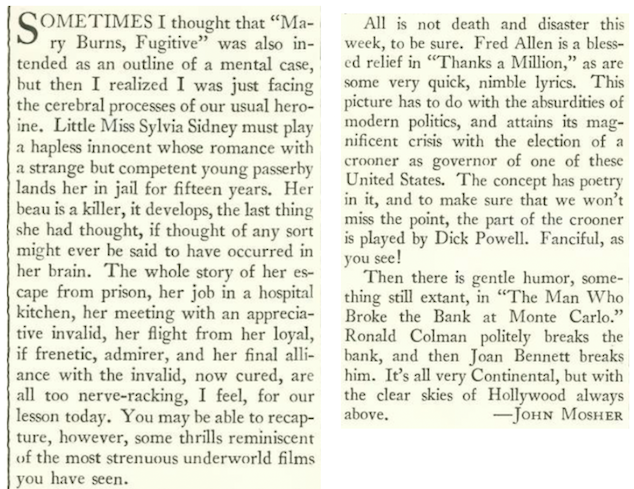
…Mosher reviewed another crime thriller, Mary Burns, Fugitive, but found some comic relief in two other films…

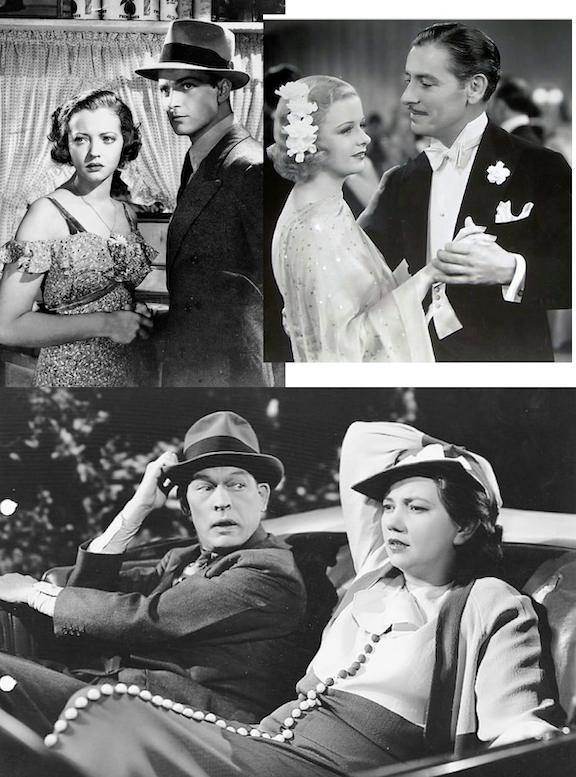
BAD CHOICE IN BOYFRIENDS was the theme of Mary Burns, Fugitive, starring (top left) Sylvia Sidney and Alan Baxter; top right, Joan Bennett and Ronald Colman in the romcom The Man Who Broke the Bank at Monte Carlo; bottom, Fred Allen and Patsy Kelly provided some laughs in musical comedy Thanks a Million. (IMDB)

* * *

From Our Advertisers

Readers of the Nov. 23 issue opened to this lovely image…

…which sharply contrasted with the clunky Plymouth ad on the opposite page…

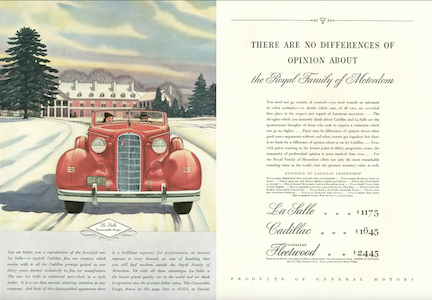
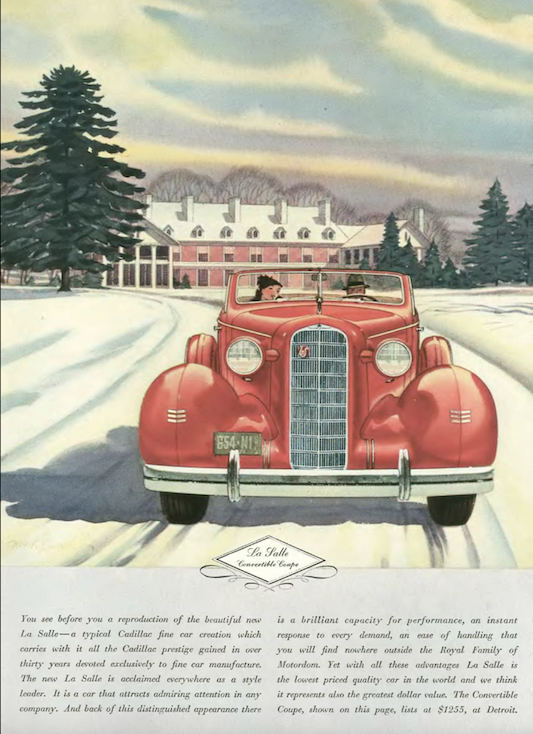
…not so clunky was this colorful illustration promoting Cadillac’s economy model, the La Salle…

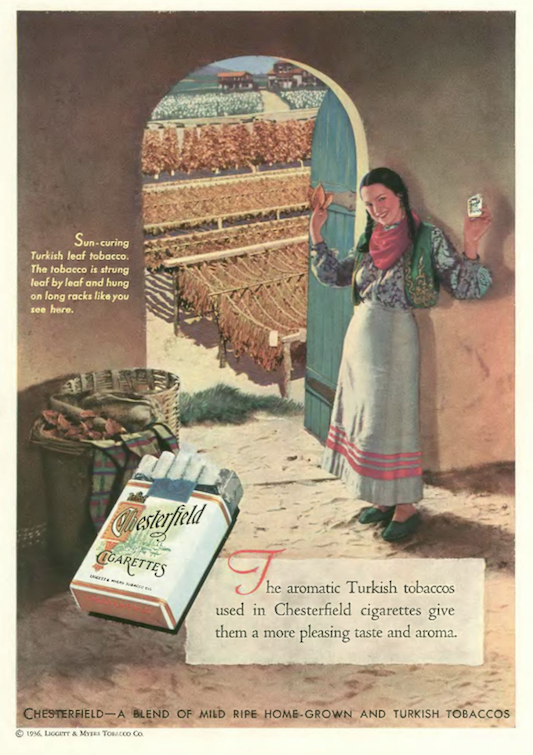
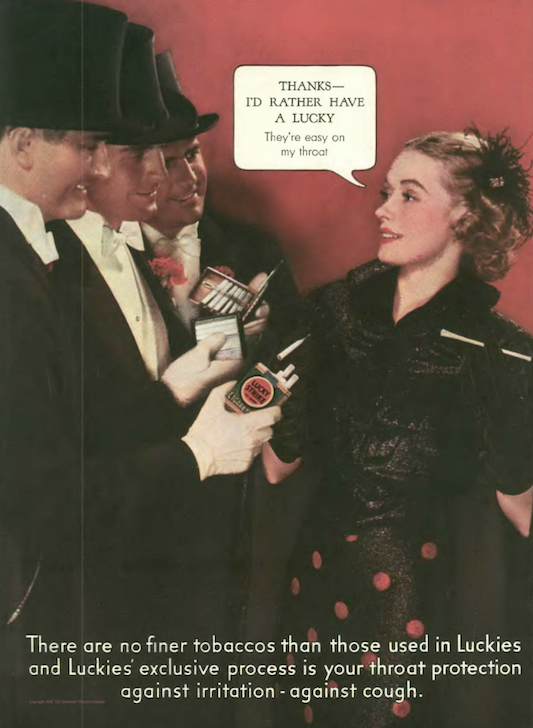
…the back cover was no surprise, with yet another glamorous cigarette ad…

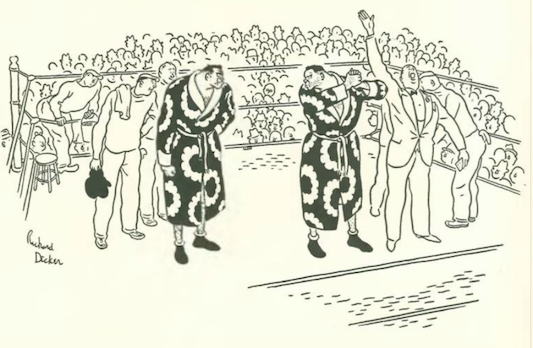
…our cartoonists included Richard Decker, and a fashion faux pas to open a boxing match…

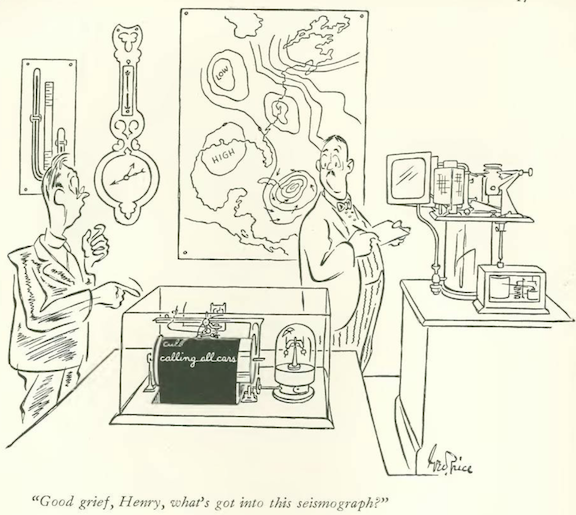
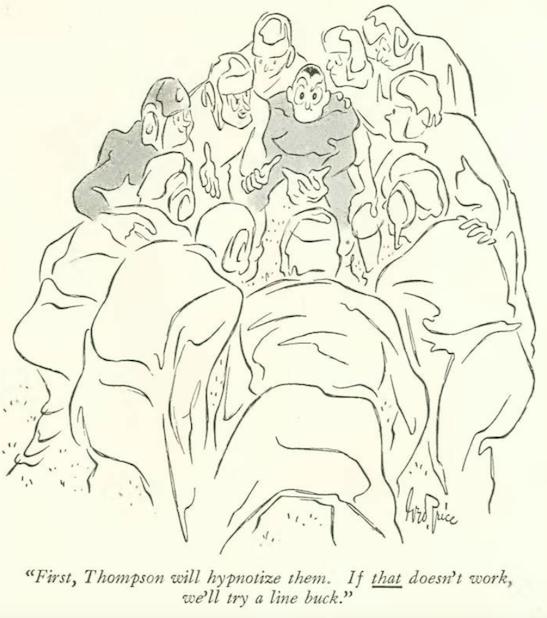
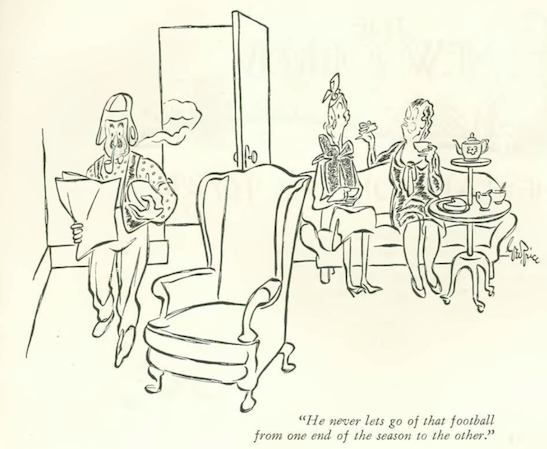
George Price eavesdropped into some football strategy…

Carl Rose spotted a canine unbeliever…
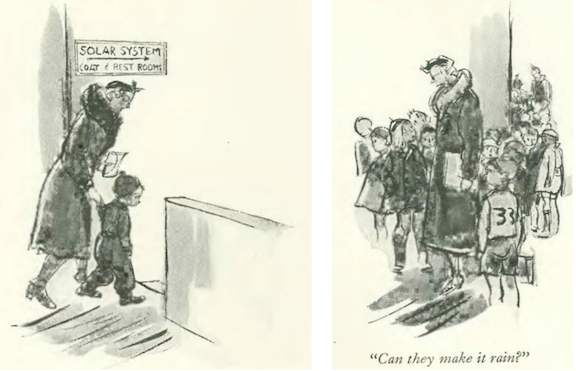
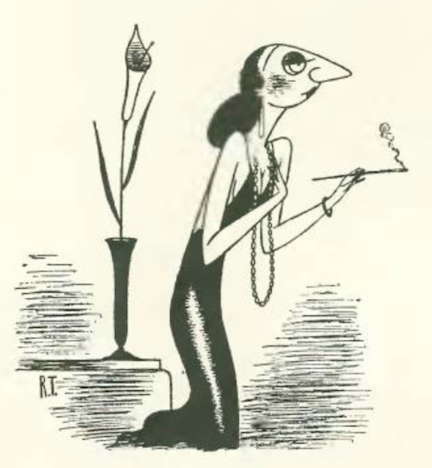
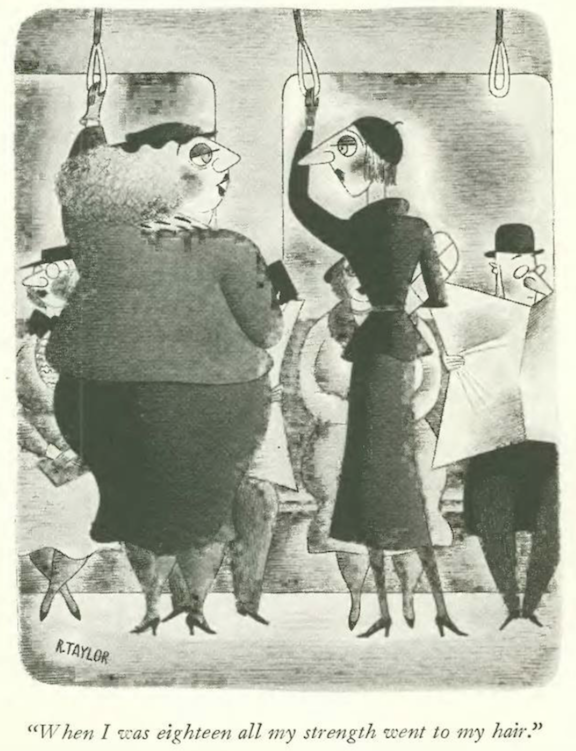
Richard Taylor was back with his distinctive style…

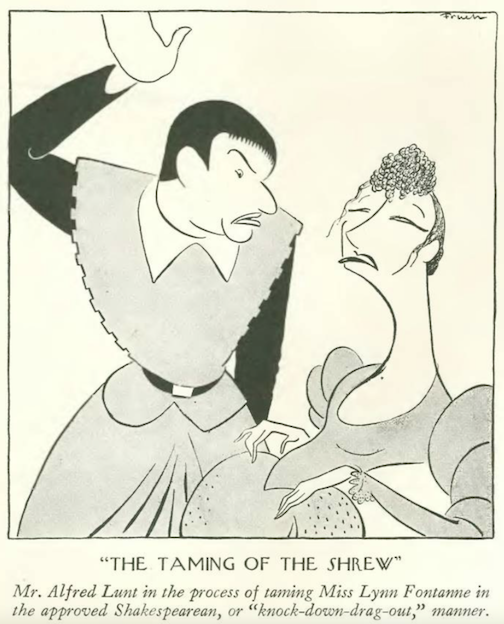
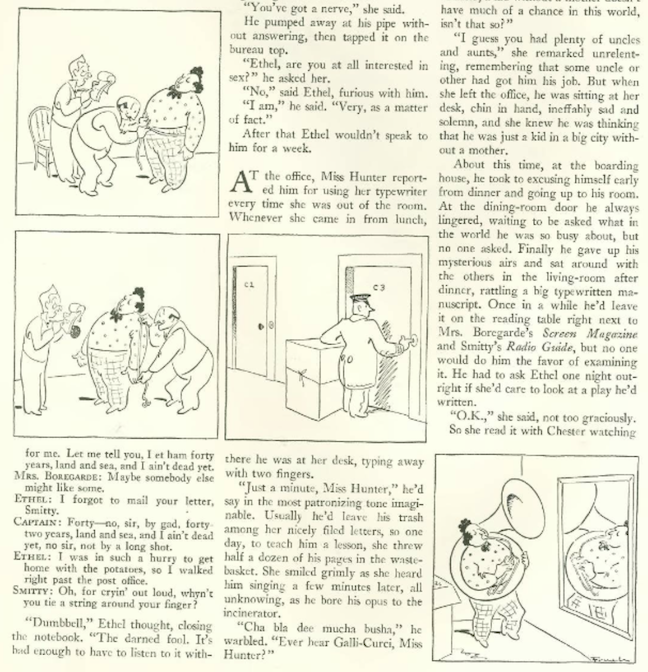
Al Frueh continued to illustrate the latest fare on Broadway…

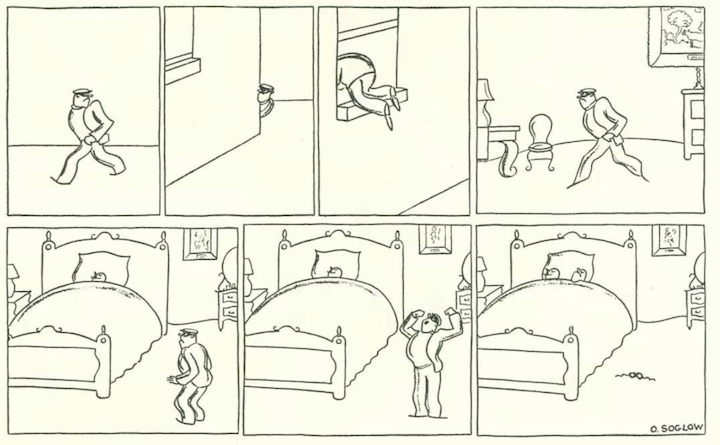
Otto Soglow crept in for a snooze…

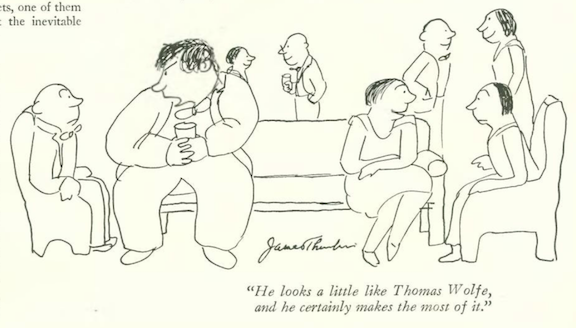
…and we close with James Thurber, and some literary cosplay…

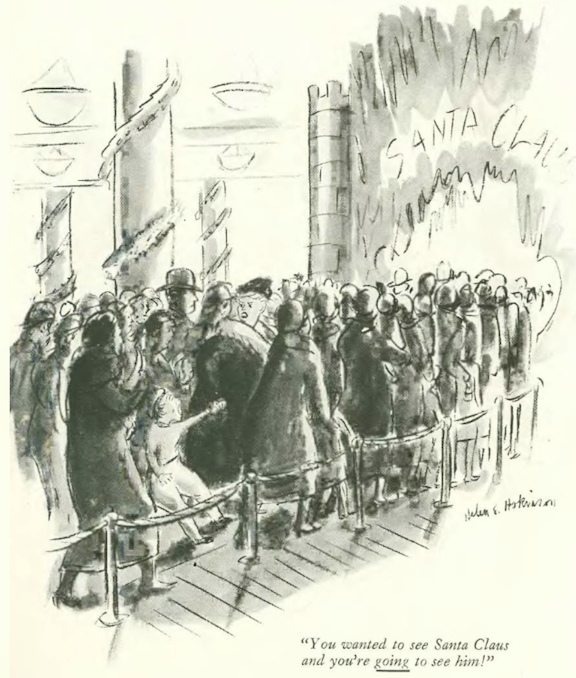
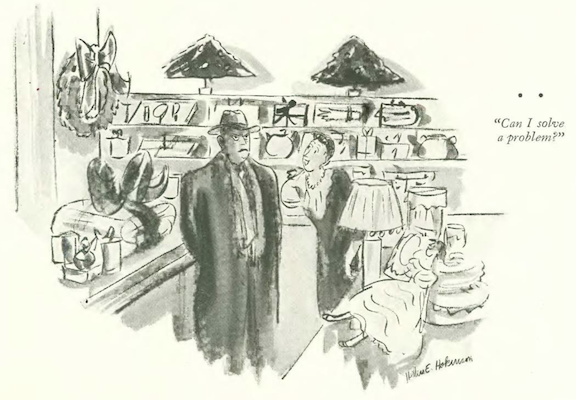
Next Time: Some Holiday Shopping…

Jimmy Comes Home

Above: Former New York Mayor Jimmy Walker and wife Betty Compton, aboard the S.S. Manhattan in 1935. (New York Daily News Archive)

The Roaring Twenties and Jimmy Walker seemed made for each other. A dandy with a taste for fine clothes, late-night parties, and Broadway showgirls, the 97th mayor of New York was a darling of the media…until the market crashed; as nest eggs evaporated along with jobs, folks quickly lost their taste for such frivolity.

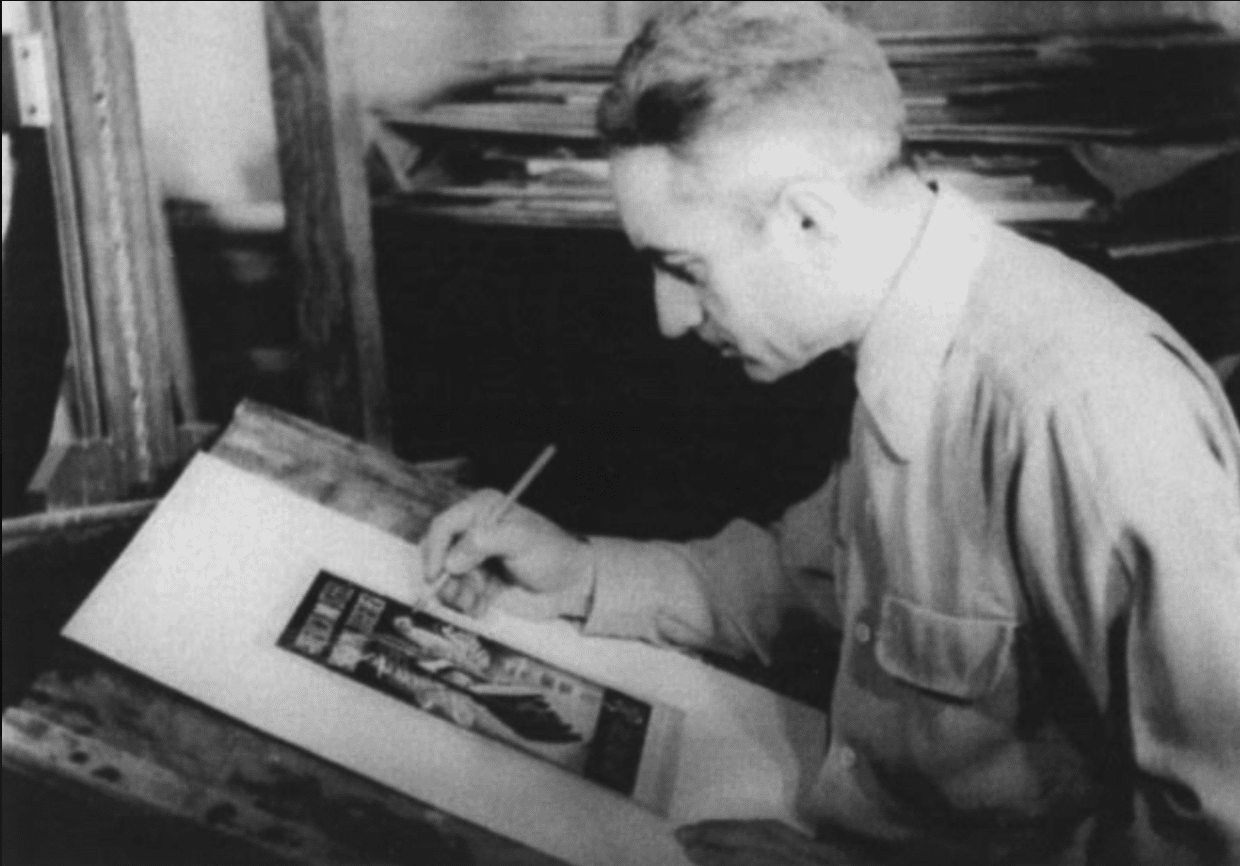
November 9, 1935 cover by Daniel “Alain” Brustlein. This was the first of nine covers Brustlein created for the magazine. An Alsatian-born American artist, cartoonist, illustrator, and author of children’s books, Brustlein (1904–1996) contributed to The New Yorker under the pen name “Alain” from the 1930s through the 1950s.
Daniel “Alain” Brustlein, in an undated photo. During the height of Abstract Expressionism Brustlein became a reputable painter, exhibiting his work in New York and Paris. (derfner.org)

 *

The fall of 1935 marked three years since Walker had left office, and for nearly two of those years the city had been governed by the reformist Mayor Fiorello La Guardia. New Yorkers, it seemed, were ready for a dose of Jimmy when he returned from his European exile, hailed by a throng of media and well-wishers.

Writing for Airmail, longtime New York journalist Sam Roberts observes that the city loved Walker, “a charming hellion, a witty, self-effacing, glib humanist, far more flawed, too, and compassionate than pictured previously, a man elevated and condemned by his own character, created and ultimately consumed by his times. He conjures up the anti-Trump—a dodgy philanderer who governed by making people feel good rather than angry.”

WHERE’S THE PARTY?…Former Mayor Jimmy Walker and his wife, Betty Compton, returned to New York in the fall of 1935 amid tremendous fanfare. The New Yorker’s Morris Markey noted that at least 160 media representatives were on hand for the couple’s arrival. (YouTube)

Walker (1881-1946) fled to Europe in November 1932 amid a bribery scandal that had prompted his resignation. Accompanied by Ziegfeld Follies singer Betty Compton (1906–1944)—whom he would marry in Cannes the following April—they would bounce around the continent until Walker determined that the danger of criminal prosecution had passed.

In his “A Reporter at Large” column, Morris Markey wrote about the media’s reception of the exiled mayor, “an army of reporters and photographers, sound engineers and announcers and contact men”…all assembled to inform the world of the return of a “discredited politician.”

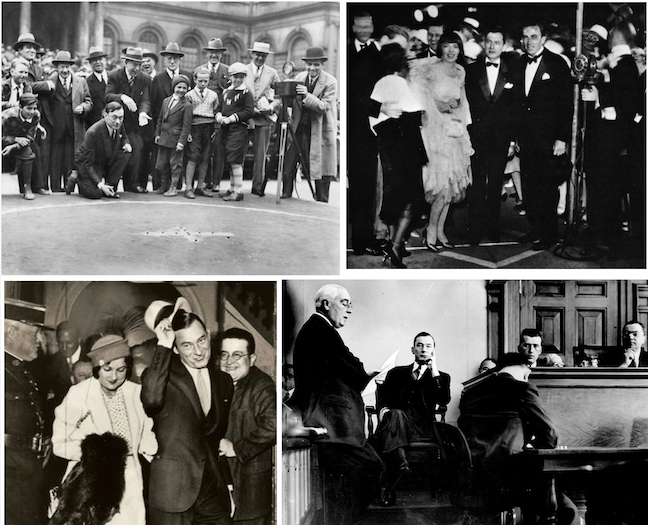
HE GOT AROUND…During his time in office from 1926 to 1932, Mayor Jimmy Walker never seemed to miss a moment in the spotlight. Clockwise, from top left, Walker presided over the first shot in the city’s annual marble tournament on June 3, 1928; with actress Colleen Moore at the 1928 premiere of her latest film, Lilac Time;  testifying on bribery charges before the investigative committee of Judge Samuel Seabury, 1932; with Betty Compton following their 1933 wedding in Cannes. (New York Times/konreioldnewyork.blogspot.com/villagepreservation.org)

Markey continued to convey his astonishment at “the monstrous complexity, the fabulous opulence, of the machinery put in motion to inform the universe of Mr. Walker’s arrival upon his native shore.” This included a massive cocktail party—hosted by The United States Lines—for more than two hundred press representatives and other officials.

After all the commotion, Walker would settle into a job as head of Majestic Records, adopt two children with Compton, and host his own radio series on WHN, Jimmy Walker’s Opportunity Hour.

Compton would divorce Walker in 1941 and remarry. Becoming ill after the birth of a son, she would die at age 38 in 1944. Walker would die two years later at age 65 of a brain hemorrhage.

CALLING ON THE ROOSEVELTS…Jimmy Walker and Betty Compton at the White House in 1937. It was pressure from FDR that led to Walker’s resignation in 1932. (Wikipedia)

 * * *

High-flying Hooplah

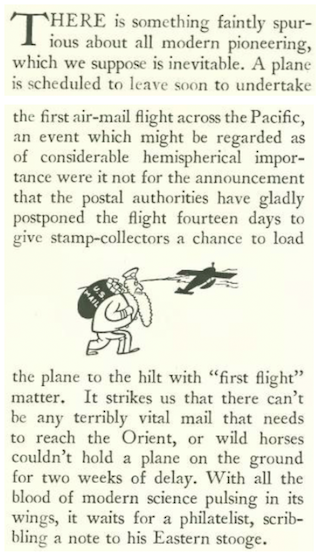
While New Yorkers were going gaga over Walker, folks in the Bay Area were all atwitter over the first air-mail flight across the Pacific, loading a Pan Am Clipper to the gills with all manner of collectables. E.B. White noted:

BELLYFUL…On Nov. 22, 1935, Pan American Airways made aviation history as the China Clipper lifted off from Alameda, beginning the world’s first trans-Pacific airmail service. Captained by Edwin Musick and crewed by famed navigator Fred Noonan, the Martin M-130 opened a new era of long-distance flight across the Pacific. Noonan, who charted many commercial routes across the Pacific, would go missing along with Amelia Earhart during their ill-fated flight in July 1937. (Library of Congress)

* * *

Wise Men From the East

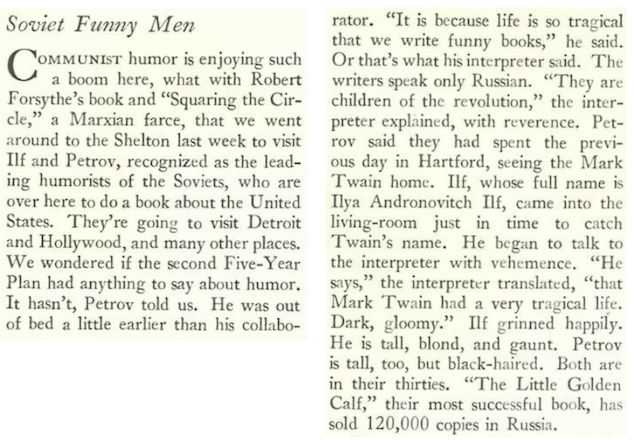
“The Talk of the Town” visited with Soviet satirists Ilya Ilf (1897–1937) and Evgeny Petrov (1903–1942), who were in New York preparing for a ten-week road trip to California and back. On assignment as special correspondents for the newspaper Pravda, they later published a series of illustrated articles, “American Photographs,” as well as a book titled Single-Storied America (the summer 2004 issue of Cabinet Magazine features an account of their journey as well as a number of their photographs).

AMERICA WAS A GAS…Soviet satirists Ilya Ilf (left) and Yevgeni Petrov check out New York before heading into the American heartland on a ten-week road trip, a highlight being the countless full-service gas stations they encountered along the way. After seeing skyscrapers and mountains and other wonders, the pair agreed that the most enduring image was the one at right: “an intersection of two roads and a gasoline station against a (back)ground of wires and advertising signs.” Sadly, Ilf died two years later from tuberculosis; Petrov died in a plane crash in 1942 while working as a war correspondent. (Aleksandra Ilf archive/Cabinet Magazine)

 * * *

A Jumbo Career

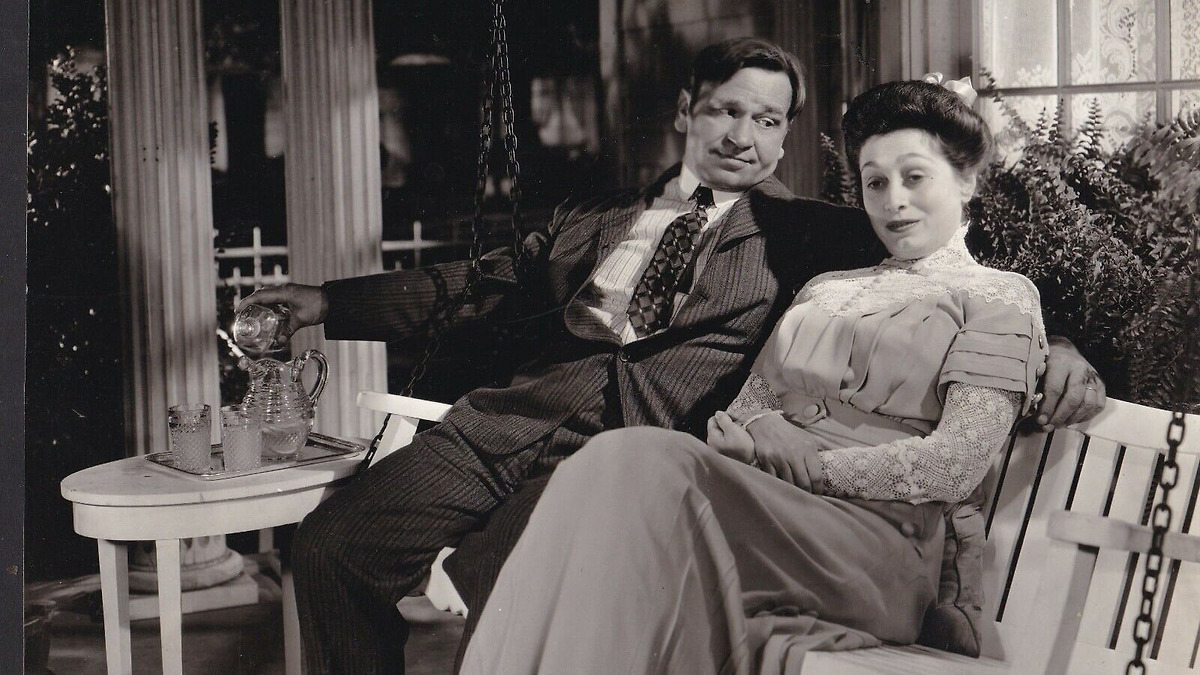
Wallace Beery (1885–1949) got his start in the comedy silents of the 1910s and became a star before the sound era made him an even bigger one; by 1932 he was the world’s highest-paid actor. Alva Johnston’s profile (titled “Jumbo”) took a look at Beery’s life and career (illustration by Al Frueh). Excerpts:

COURTING AND SPARKING…Sid Miller (Wallace Beery) spikes the lemonade as he woos Lily Davis (Aline MacMahon) in a scene from the 1935 film, Ah Wilderness! (letterboxd.com)

 * * *

A View and Corbu

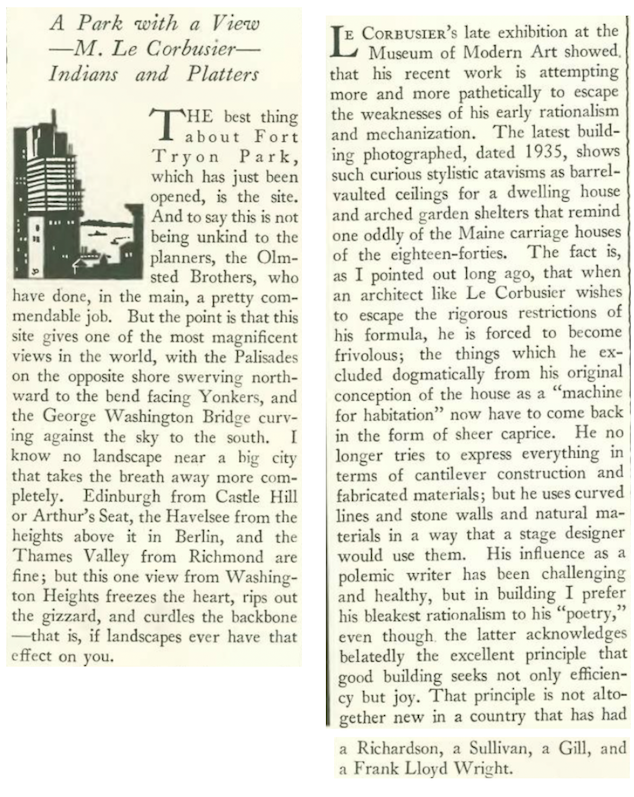
Art and design critic Lewis Mumford was well-known for his hypercritical eye, but occasionally he could be moved to rhapsodize, in this case about the opening of Fort Tryon Park, and particularly about the view it afforded visitors. He reserved his criticism for one of the latest works by Le Corbusier (aka Charles-Édouard Jeanneret), on exhibit at MoMA.

MAGNIFICENT is the word Lewis Mumford used to describe the view from Fort Tryon Park. This scene is taken from Linden Terrace to the west: a barge on the Hudson River and the Hudson Palisades beyond, with the Englewood Cliffs campus of Saint Peter’s University on the top. (Wikipedia)
IRRATIONAL?…Mumford was not pleased with Le Corbusier’s latest work, Le Petite Maison de Weekend (Villa Henfel), which was featured on the cover of the MoMA exhibition catalogue (upper left). Mumford saw the design as a pathetic escape from the architect’s renown rationalism. (MoMA/Fondation Le Corbusier)

* * *

At the Movies

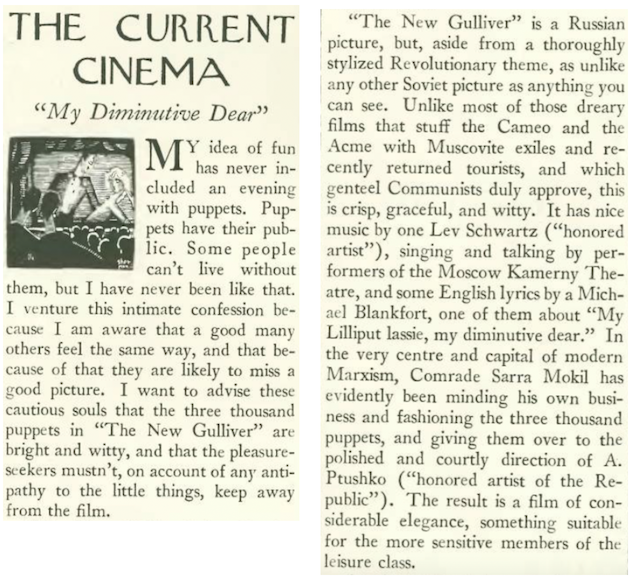
It was a mixed bag at the movies for critic John Mosher, who was delighted by a Soviet take on Gulliver’s Travels, rendered with puppets engaged in a proletarian struggle…

KOMRADE GULLIVER…The Soviet stop motion-animated fantasy film, The New Gulliver, was a communist re-telling of Jonathan Swift’s 1726 novel. The film depicted Lilliput suffering under capitalist inequality and exploitation, with Gulliver enabling a proletarian revolution against the Lilliputian monarchy. (revolutionsnewstand.com)

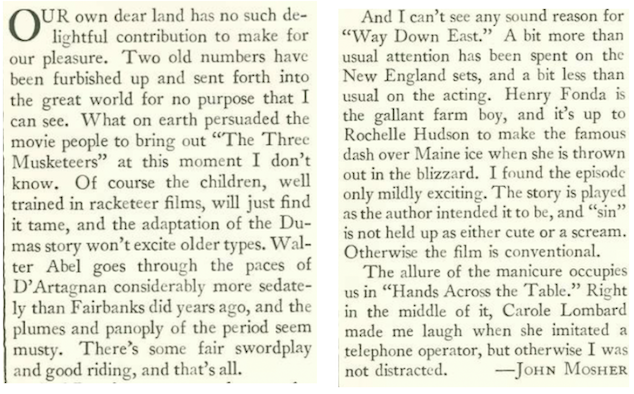
…but Mosher was less than delighted with the latest from Hollywood, including a sedate The Three Musketeers, a “conventional” remake of D.W. Grifffith’s 1920 melodrama Way Down East, and the romcom Hands Across the Table, which the Times called “uproariously funny” but Mosher deemed barely worth a chuckle.

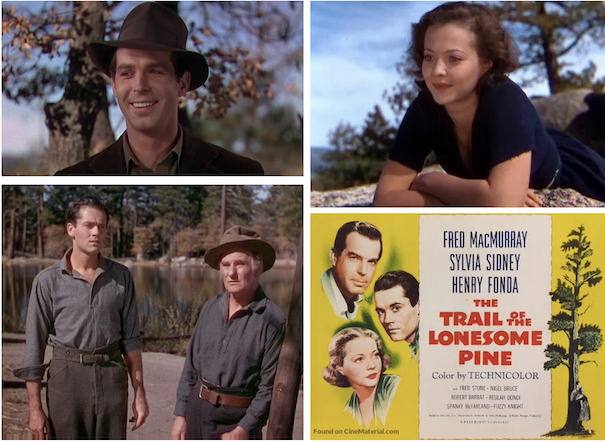
OUTCLASSED BY PUPPETS…John Mosher found the latest from Hollywood underwhelming. Clockwise, from top, Onslow Stevens, Moroni Olsen, and Paul Lukas in The Three Musketeers; Rochelle Hudson and Henry Fonda in Way Down East; Fred MacMurray and Carole Lombard in Hands Across the Table. (mabumbe.com/zeusdvds.com/Wikipedia)

 * * *

From Our Advertisers

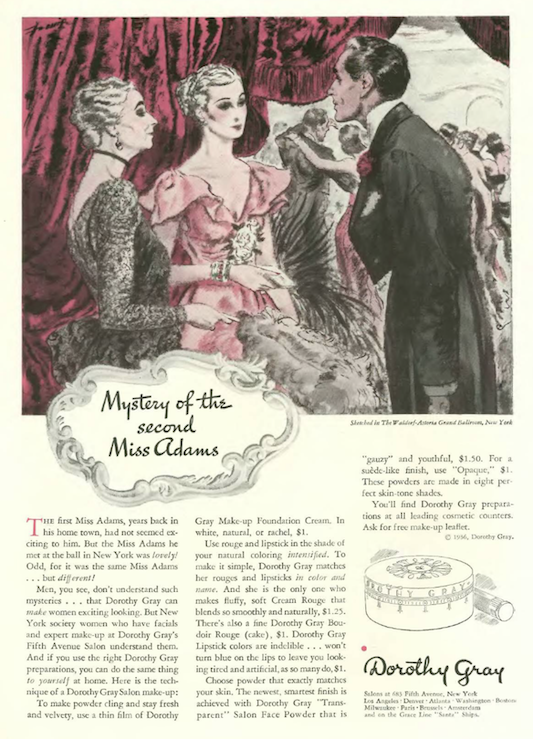
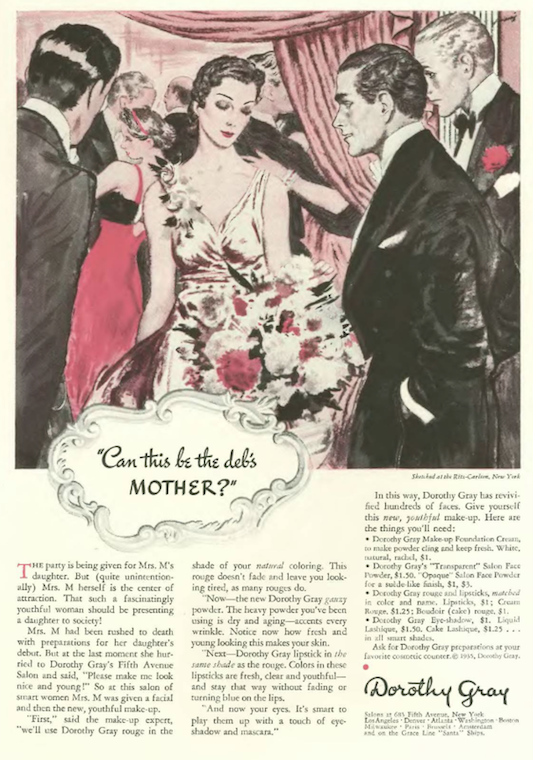
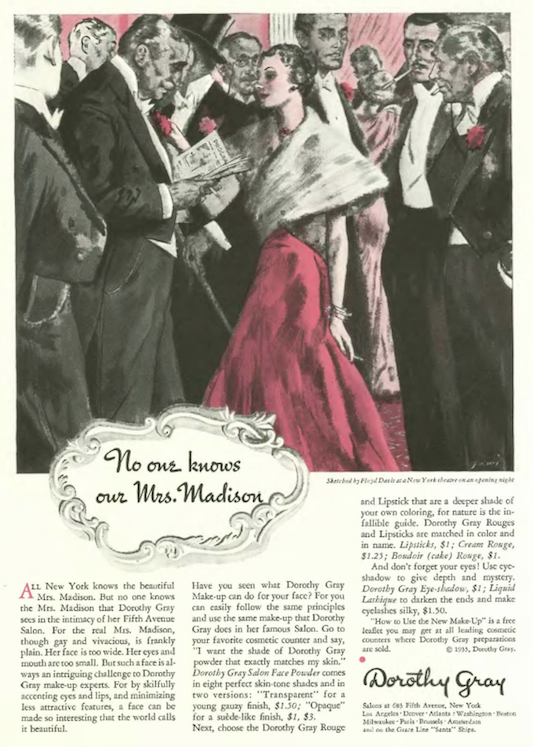
The Dorothy Gray salons didn’t mince words when it came to a woman’s beauty regimen…without their help, claimed this ad, the poor “Mrs. Madison” would be “frankly plain,” with a face too wide and eyes and mouth too small…

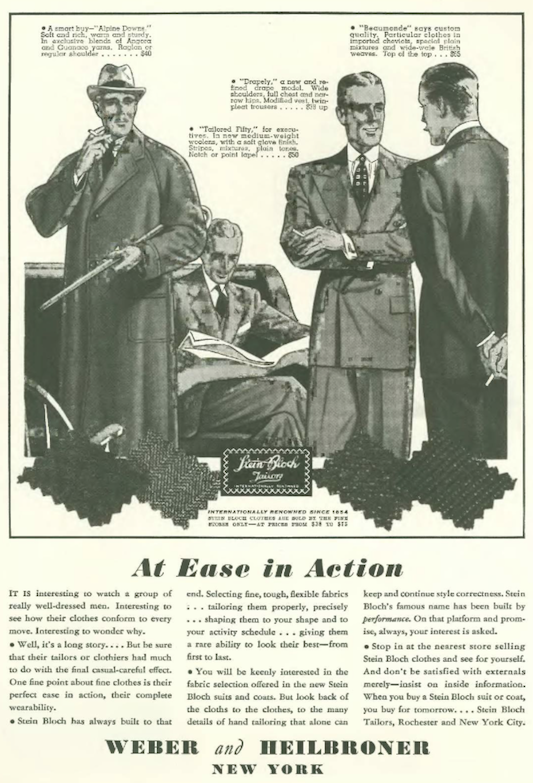
…notable in ads for men’s and women’s clothes were the presence of cigarettes…all three of the men in this spot are having a smoke in their smart attire…

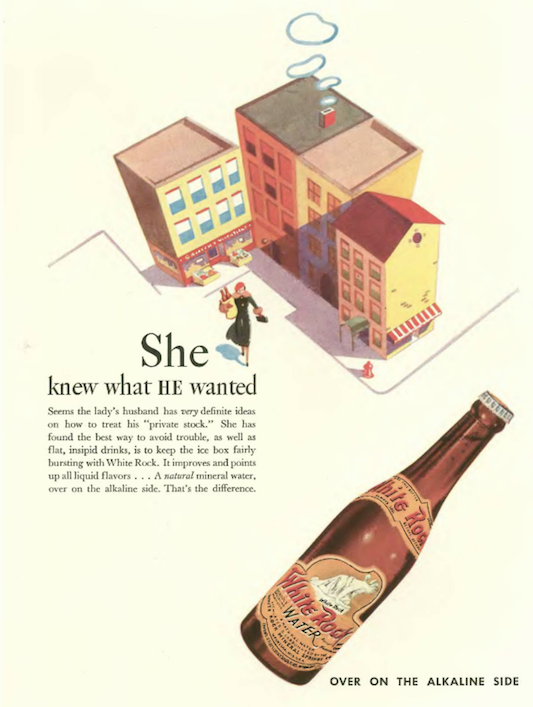
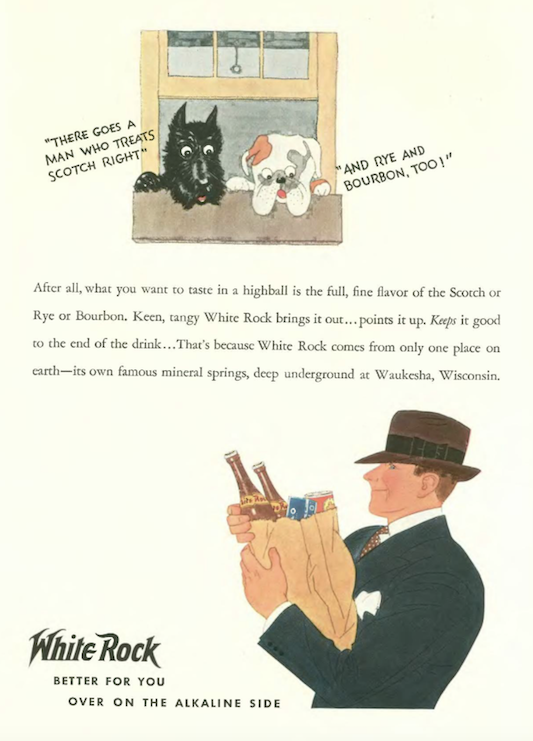
…White Rock gave their logo-bearer Psyche a rest in 1935 with a variety of ads including this one…

…the makers of Bisquit assumed their customers could read the French dialogue, or at least pretend to…

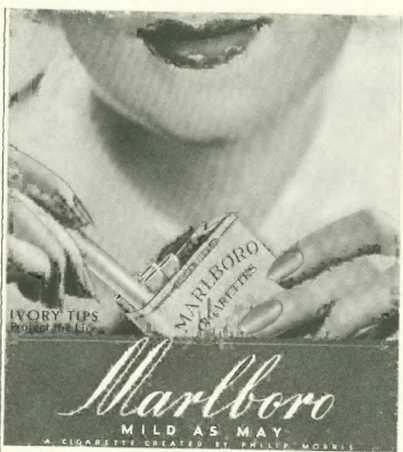
…when we (of a certain age) think of Marlboro we think of the rugged Marlboro Man, but in 1935 the brand was exclusively marketed to women…

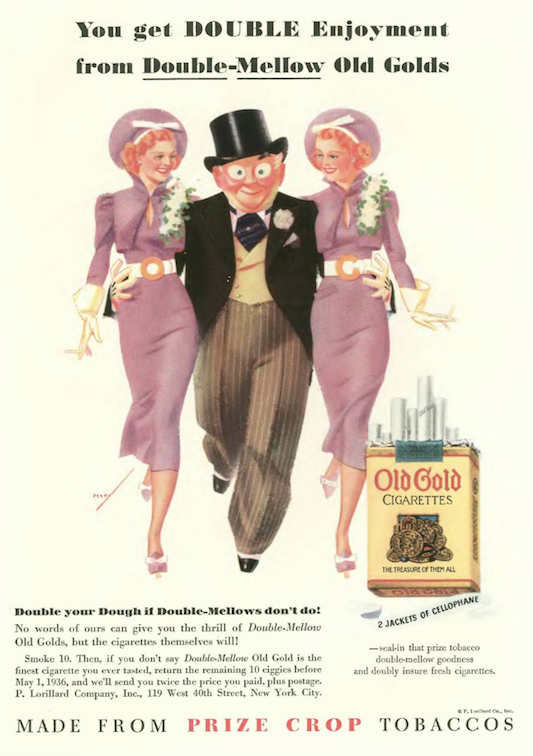
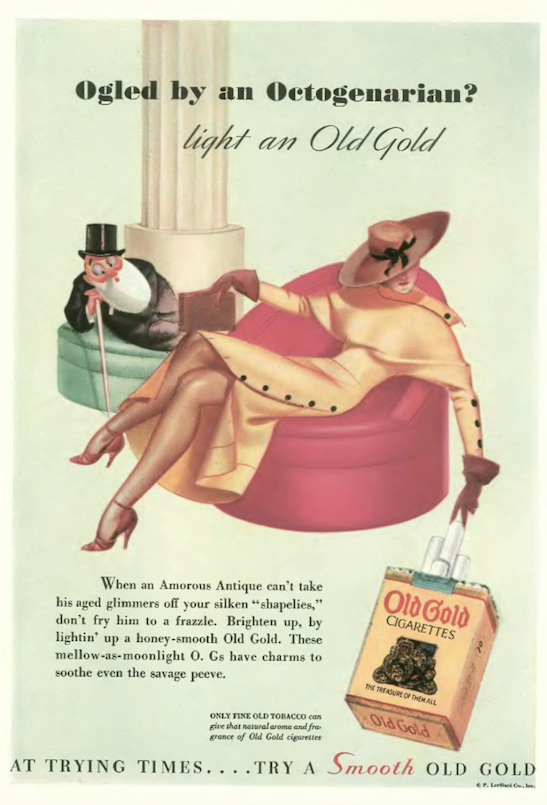
…and who knows what Old Gold’s target was here…definitely women smokers, who were the growth market, but men would take notice of the George Petty pin-up…

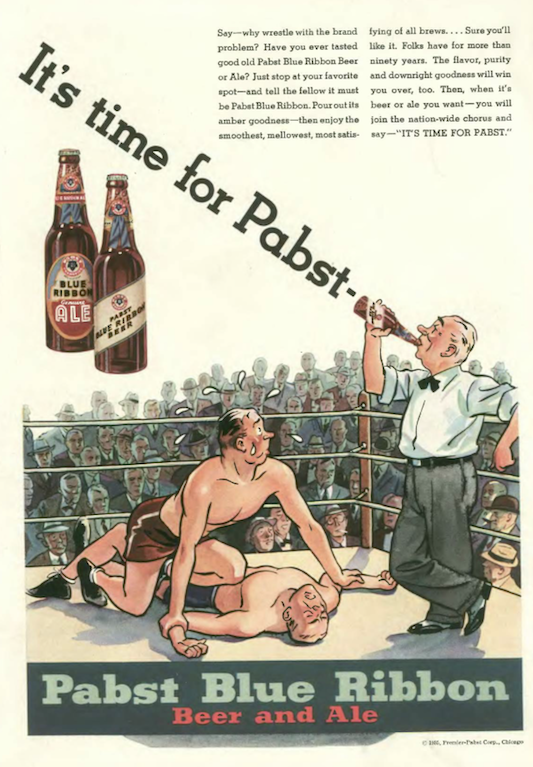
…the makers of Pabst Blue Ribbon Beer, who endured Prohibition by offering products like Pabst-ett cheese spread, were ready to grab a big market share after Repeal…

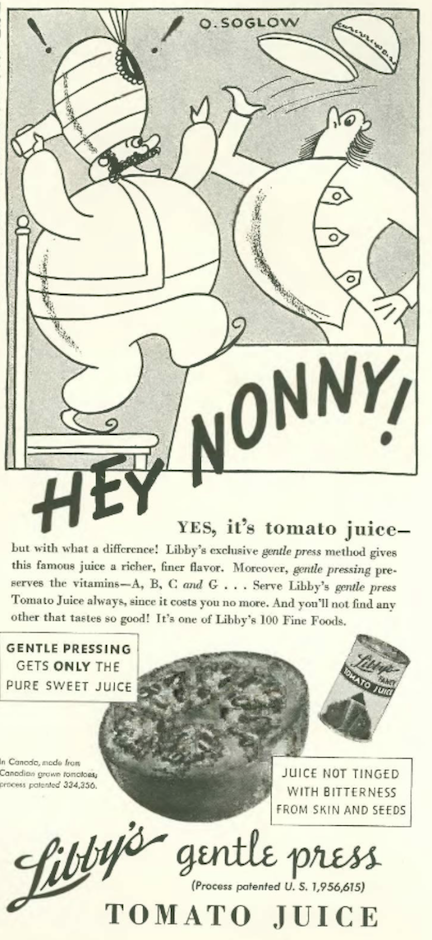
Otto Soglow, still contributing to The New Yorker despite taking his Little King to Hearst, drew up this potentate for a tomato juice spot…

…which segues to our other cartoonists, beginning with Al Frueh and his take on the latest  Broadway hit, Jubilee!

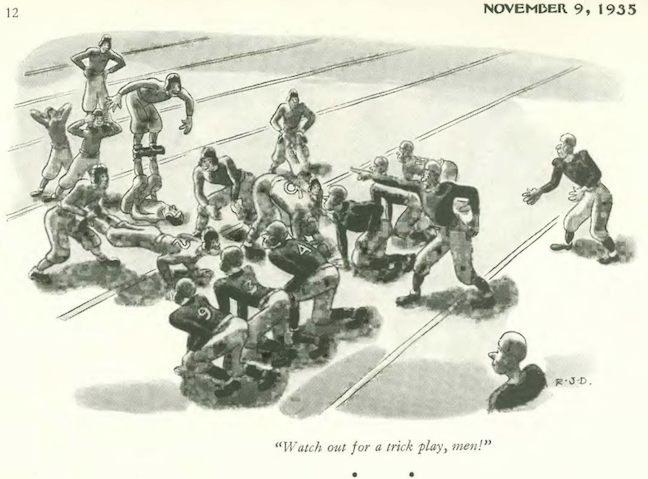
Robert Day saw action on the gridiron…

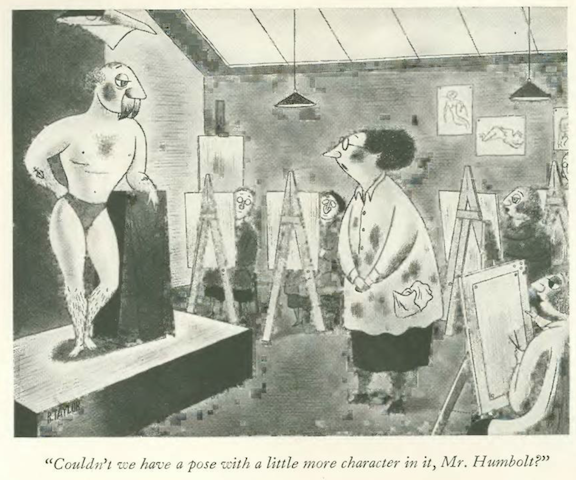
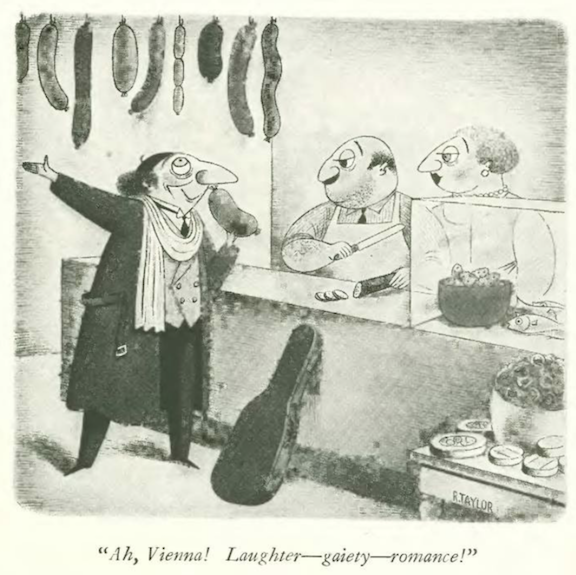
…unless I missed something, this might be Richard Taylor’s first New Yorker cartoon…

James Thurber put a unique spin on a bowling ball…

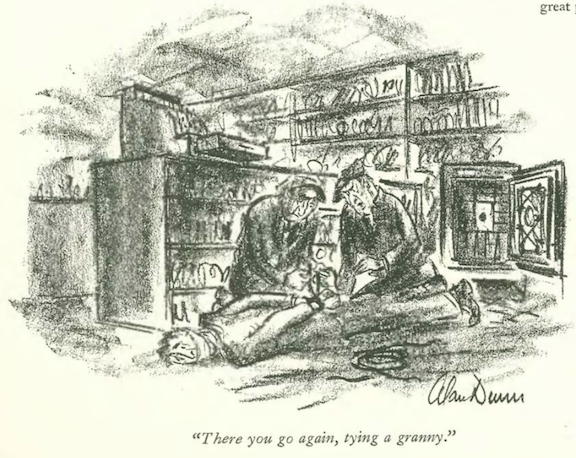
Alan Dunn was all in knots at a crime scene…

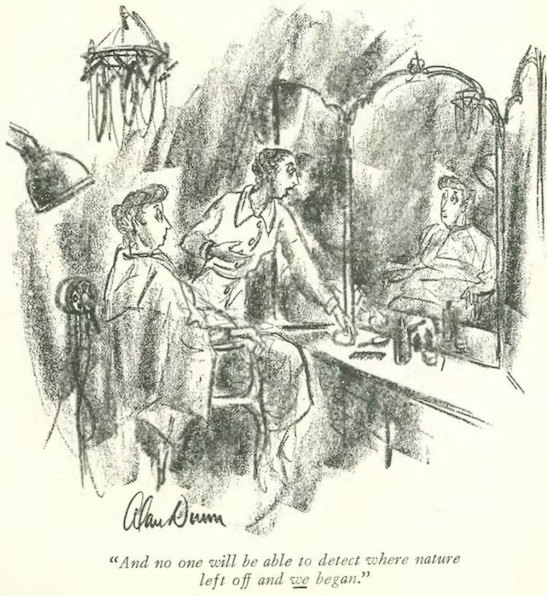
…Dunn again, pondering the wonders of a makeover…
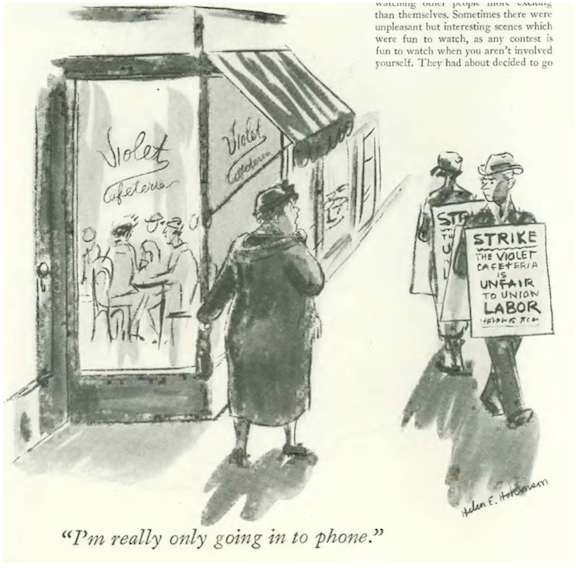
Barney Tobey eavesdropped on a Downtown subway…
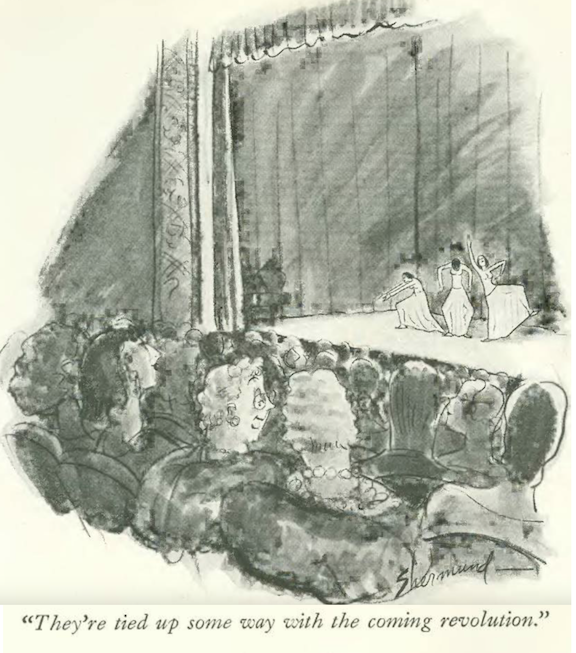
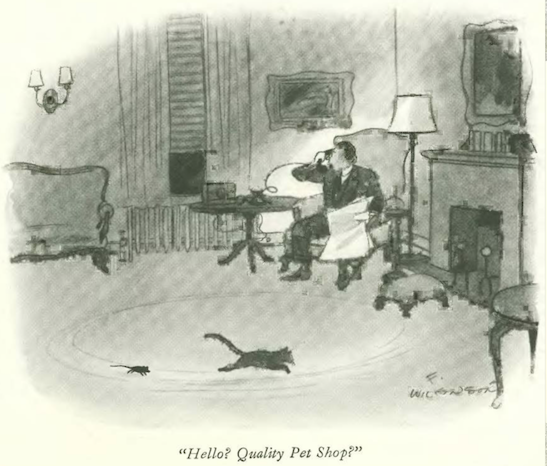
Fritz Wilkinson looked to return a defective pet…

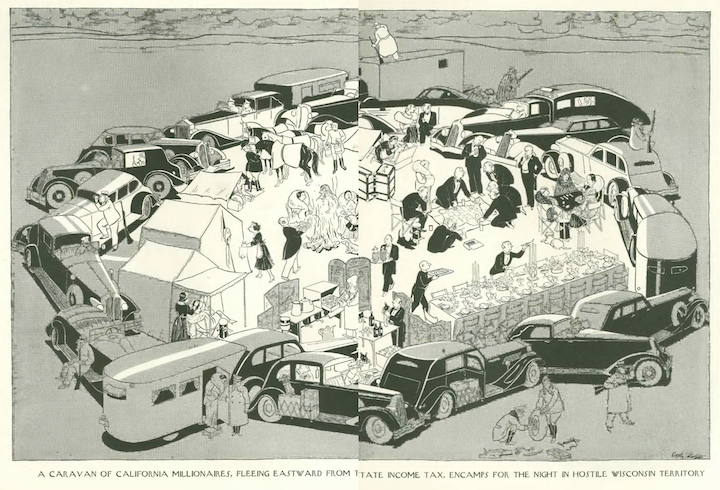
Carl Rose needed two pages to illustrate his epic cartoon (caption added at the bottom for readability)…

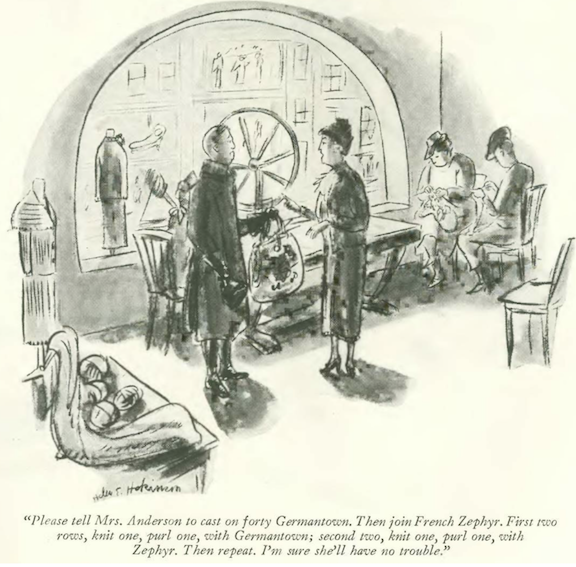
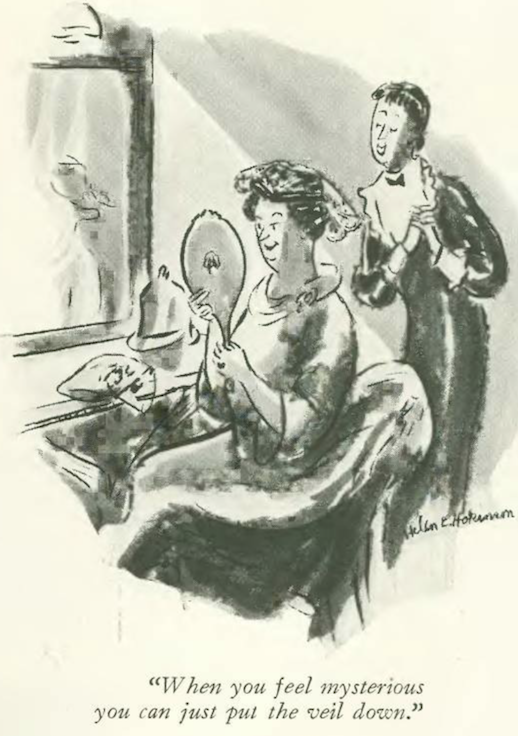
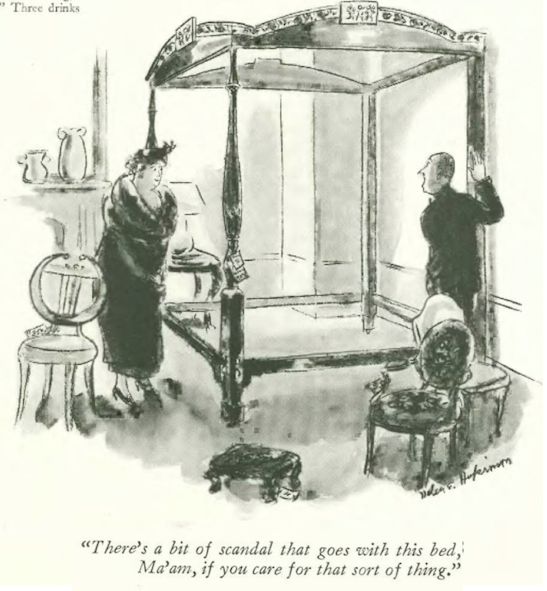
…and we close with Helen Hokinson, and a whiff of scandal…

Next Time: Seeking Decorative People…


It Can’t Happen Here

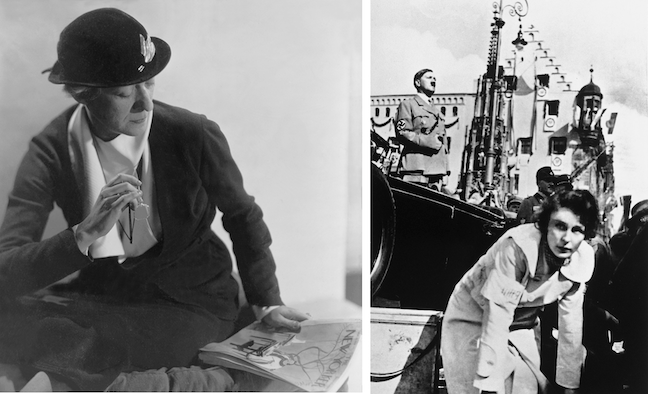
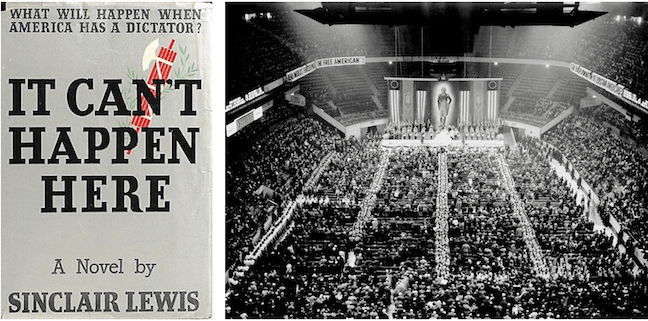
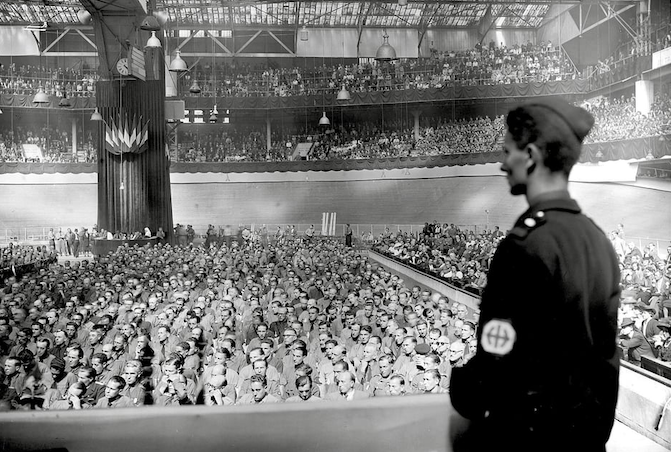
Above: Cover of Sinclair Lewis's 1935 novel about a fascist takeover of America, It Can't Happen Here. At right, 22,000 people attended a Nazi rally at Madison Square Garden on February 20, 1939. (Wikipedia/Reddit)

Ninety years ago Sinclair Lewis published It Can’t Happen Here, a dystopian novel that responded to the rise of fascism in Europe as well as to American demagogues like Louisiana Senator Huey Long.

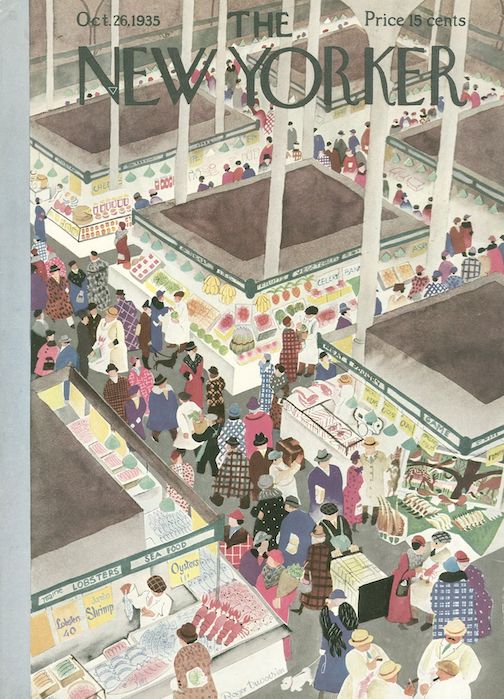
October 26, 1935 cover by Roger Duvoisin. Duvoisin (1900–1980) was a Swiss-born American writer and illustrator best known for children’s picture books. He illustrated 32 covers for The New Yorker, along with five cartoons. Duvoisin won the Caldecott Medal in 1948 (along with author Alvin Tresselt) for White Snow, Bright Snow.

In his 2016 New Yorker article, “Getting Close to Fascism with Sinclair Lewis’s ‘It Can’t Happen Here,'” journalist Alexander Nazaryan notes how Lewis was arguing for journalism and civic education as essential pillars of democracy. The title of Lewis’s book, Nazaryan observes, suggests that ‘It’ was something more subtle: “a collective apathy, born of ignorance, and a populace that can no longer make the kind of judgments that participatory democracy requires.”

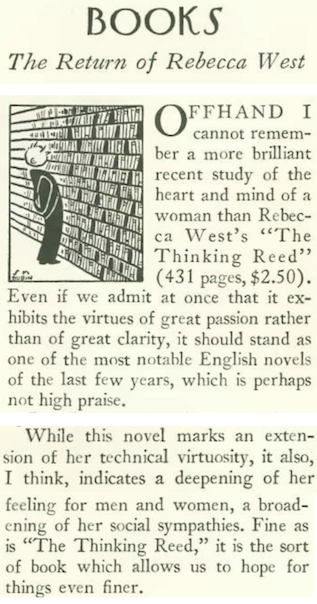
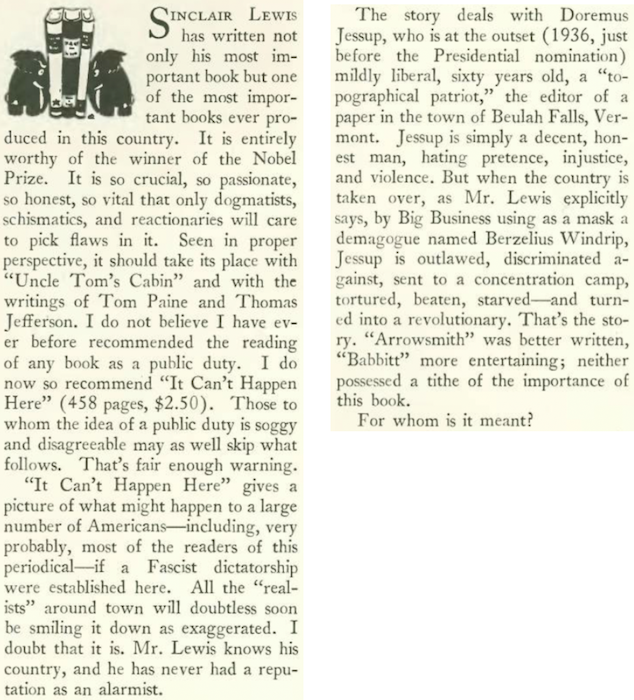
Lewis’s novel also made book critic Clifton Fadiman sit up and take notice. Here are excerpts from the first part of his review:

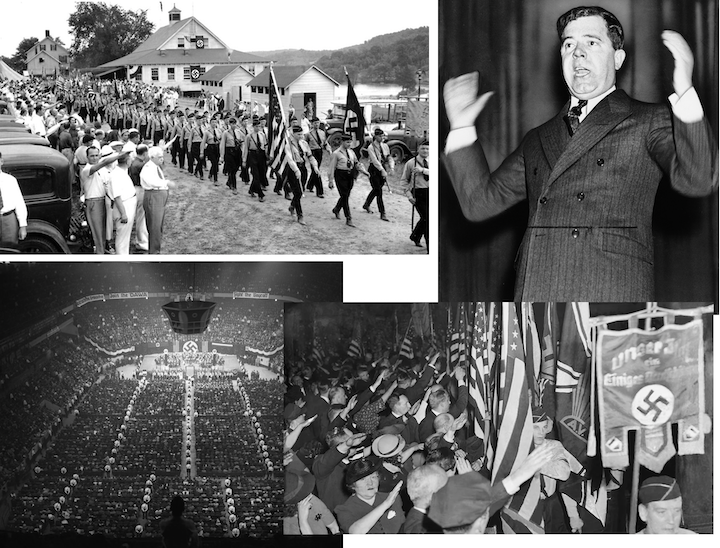
HOME-GROWN…American fascism was represented by organizations such as the German American Bund, the Silver Legion of America, and radio host Charles Coughlin, who opposed the New Deal and promoted conspiracy theories and antisemitic views. Clockwise, from top left: Nearly a thousand uniformed men wearing swastika arm bands and carrying Nazi banners parade past a reviewing stand in New Jersey on July 18, 1937. The New Jersey division of the German-American Bund had opened the 100-acre Camp Nordland at Sussex Hills; Huey Long in 1935, the same year he was assassinated; Nazi rally at Madison Square Garden in 1939. (AP/Wikipedia)

If you zoom in on the photo at bottom right, you can’t help but notice the woman in the black hat, who seems a little unsure about what she is doing, especially in front of a camera…the woman to her right appears to be hiding her face.

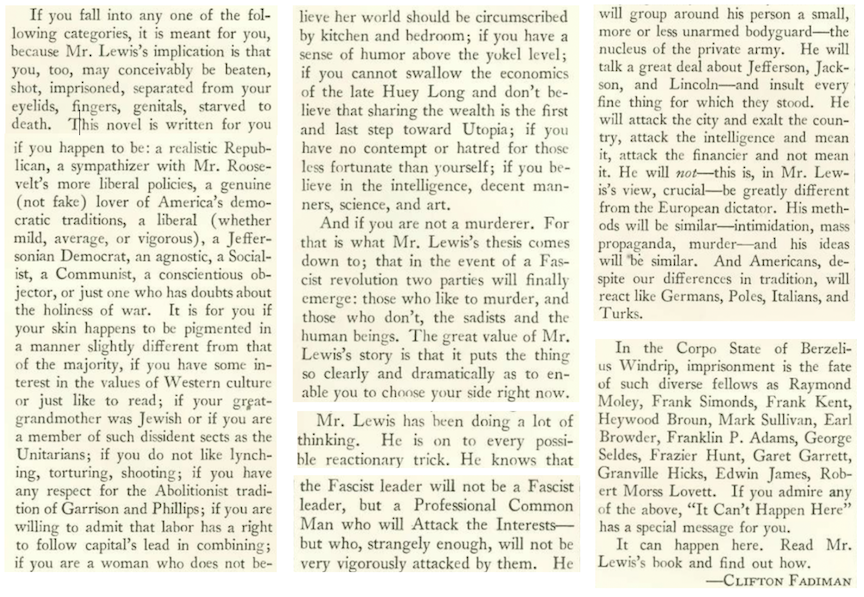
Here is more of Fadiman’s review (click to enlarge). It’s worth a read.

WE’VE BEEN WARNED…Published nearly seventy years apart, Sinclair Lewis’s It Can’t Happen Here (1935) and Philip Roth’s The Plot Against America (2004) both explored the dangers of fascism in the United States. (pulitzer.org/Wikipedia/Nancy Crampton via stanford.edu)

 * * *

It Was Happening There

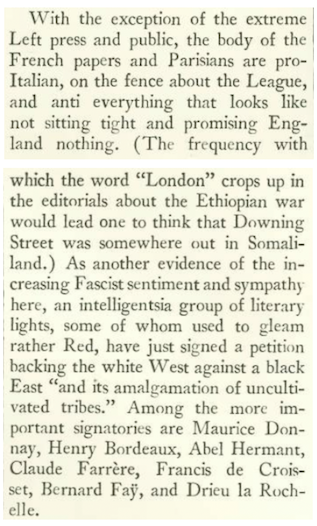
In her “Letter from Paris,” Janet Flanner was noting “increasing Fascist sentiment and  sympathy” in her adopted city:

OVER THERE…The French Popular Party (Parti populaire français, PPF) was a French fascist and anti-semitic political party led by Jacques Doriot before and during World War II. Formed in June 1936, with an estimated 120,000 members by 1937, it is generally regarded as the most collaborationist party of France. (thefrenchhistorypodcast.com)

 * * *

All Talk

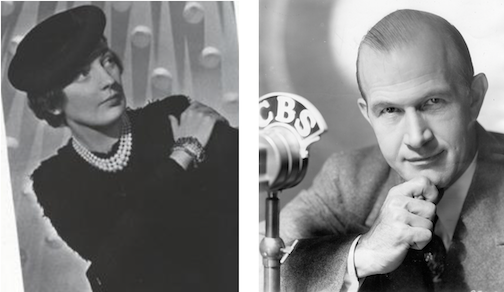
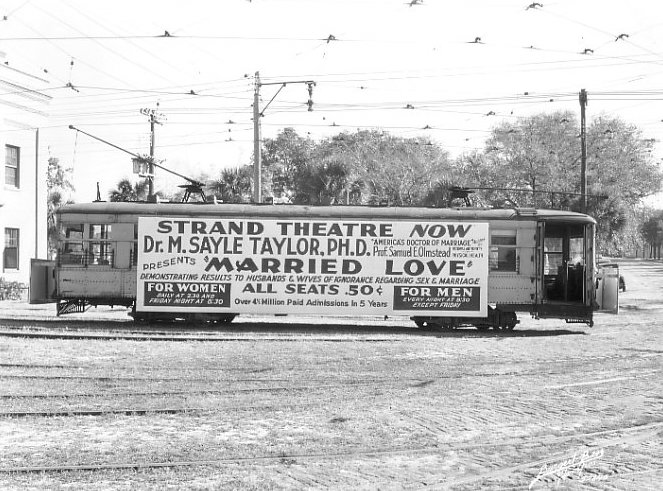
Marion Sayle Taylor (1889–1942) was the popular host of a radio advice show, The Voice of Experience. Margaret Case Harriman (1901–1966) penned a two-part profile of Taylor titled “The Voice.” I’ve included the opening lines to Part One here:

IF ONLY SHE KNEW…Margaret Case Harriman, left, circa 1936, profiled Marion Sayle Taylor before his misdeeds were revealed. (Vogue Archive/eleanorbritton.blogspot.com/Oregon Encyclopedia)

After reading both parts of Harriman’s profile piece, it appears she wasn’t yet aware that Taylor was more than a radio personality; he was also dishonest, manipulative, and opportunistic, according to a biography by Dick and Judy Wagner featured in the Oregon Encyclopedia. For example, Harriman reported (likely from Taylor’s official bio) that Taylor’s first wife, Pauline, had died in childbirth, when in fact she was quite alive and suing him for divorce that same year. Taylor also divorced his second wife, Jessie, who sued him in 1936 after he deceived her about another woman. Not surprisingly, his radio image as a reliable marriage counselor was damaged irretrievably.

FALSE ADVERTISING…A streetcar, possibly in Newark, N.J., advertising a lecture by Taylor, circa 1931. In addition to hiding a previous prison record, Taylor also falsely reported that he had studied at several universities (he did not earn a Ph.D, as the redundant title claims in the above photo). It appears Taylor also kept much of the money he solicited for charitable causes. (Oregon Encyclopedia)

 * * *

Selling Pooh

Commercial cross-marketing of children’s books with toys and other products had its origins in the late nineteenth century with Alice’s Adventures in Wonderland, and in the first years of the 20th century Beatrix Potter’s Peter Rabbit series inspired everything from dishes and wallpaper to board games and dolls—in 1903 Peter Rabbit was the first fictional character to be made into a patented stuffed toy.

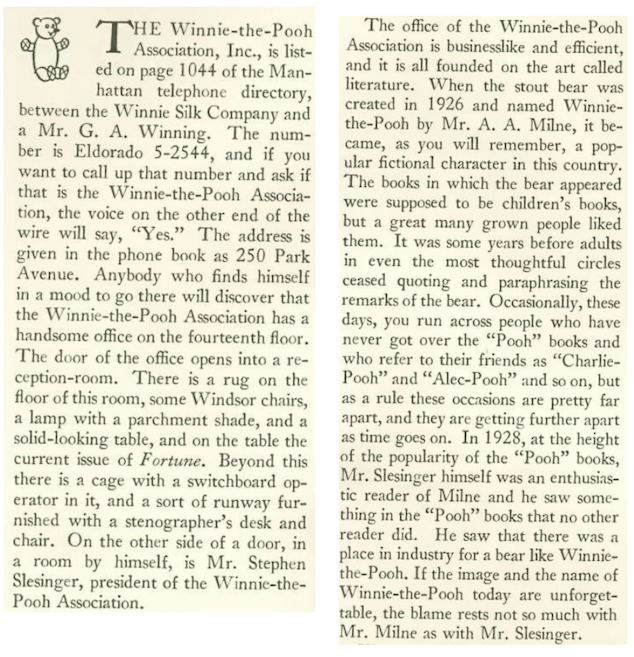
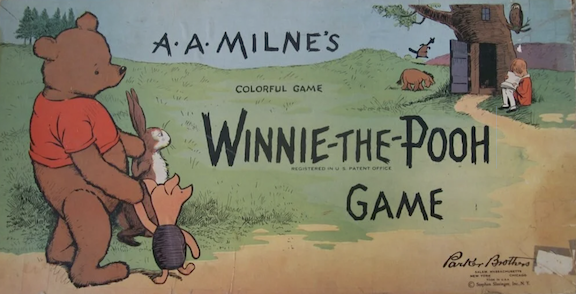
Then came another character from British children’s literature, A.A. Milne’s Winnie-the-Pooh. In January 1930, Stephen Slesinger (1901–1953) purchased U.S. and Canadian merchandising, television, recording, and other trade rights to the Winnie-the-Pooh works from Milne (for $1,000, plus royalties), marketing a wide range of products. For the column “Onward & Upward With the Arts,” St. Clair McKelway paid a visit to Slesinger at the Park Avenue offices of Winnie-the-Pooh Association, Inc. Excerpts:

KEEP YER SHIRT ON…The Parker Brothers were the first to feature Winnie-the-Pooh in color for a 1932 board game. Stephan Slesinger added the iconic red t-shirt to Pooh for the game and a children’s record, a look that was later adopted by the Disney Corporation when it acquired the rights from Slesinger’s widow and daughter in 1961. (thedisneyclassics.com)
FUNNIES MAN…At left, Stephan Slesinger in an undated photo. Slesinger was a radio, television and film producer, and a curator of comic strip characters including Alley Cop, Captain Easy, Buck Rogers and Blondie, among others; at center, a record of “Winnie-the-Pooh Songs,” 1932; an ad for the Red Ryder BB gun—in 1938 Slesinger created the comic strip Red Ryder along with artist Fred Harmon. (alchetron/yesterdaysgallery.com/Port Isabel Press)

In another excerpt, McKelway gave us an idea of the scope of Slesinger’s Pooh empire:

 * * *

At the Movies

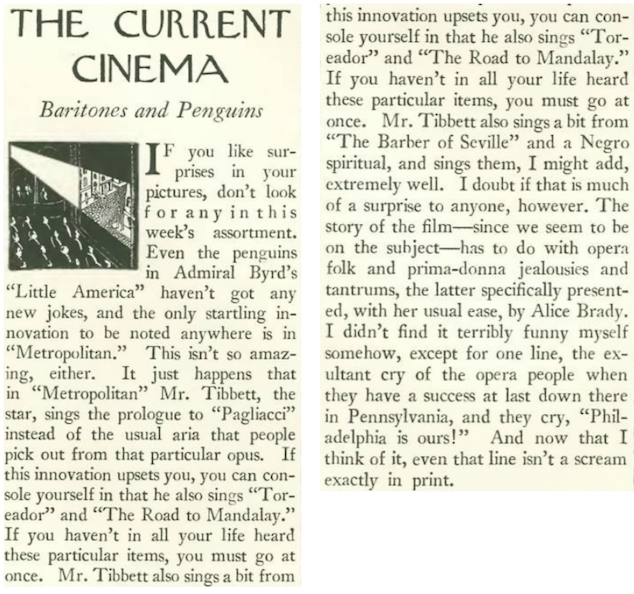
Critic John Mosher found few thrills in the latest fare from Hollywood, offering his views of Admiral Richard Byrd’s Into Little America and the musical Metropolitan, featuring famed baritone Lawrence Tibbett. 

FOR THE BYRDS…At left, lobby card for Into Little America; at right, Alice Brady and Lawrence Tibbett in Metropolitan. (eBay.uk/rottentomatoes.com)

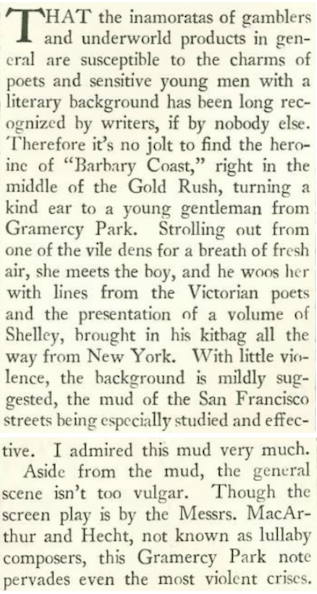
With a screenplay by Ben Hecht and Charles MacArthur and direction by Howard Hawks, one would hope for some rough and tumble in a film about Gold Rush San Francisco. Instead, Mosher found the trappings of Barbary Coast rather mild. This was doubtless due in part to the Hays Code that curtailed the sex and violence portrayed in films of the 1920s and early 1930s.

TAKING A SPIN…Miriam Hopkins runs the roulette wheel as Edward G. Robinson looks on in Barbary Coast. A brief 2019 review in the Harvard Film Archive praised the film’s Gothic feel created by the “evocative portrayal of early San Francisco as a foggy labyrinth of rickety boardwalks and ominous, sky-high ship masts…” (harvardfimarchive.org)

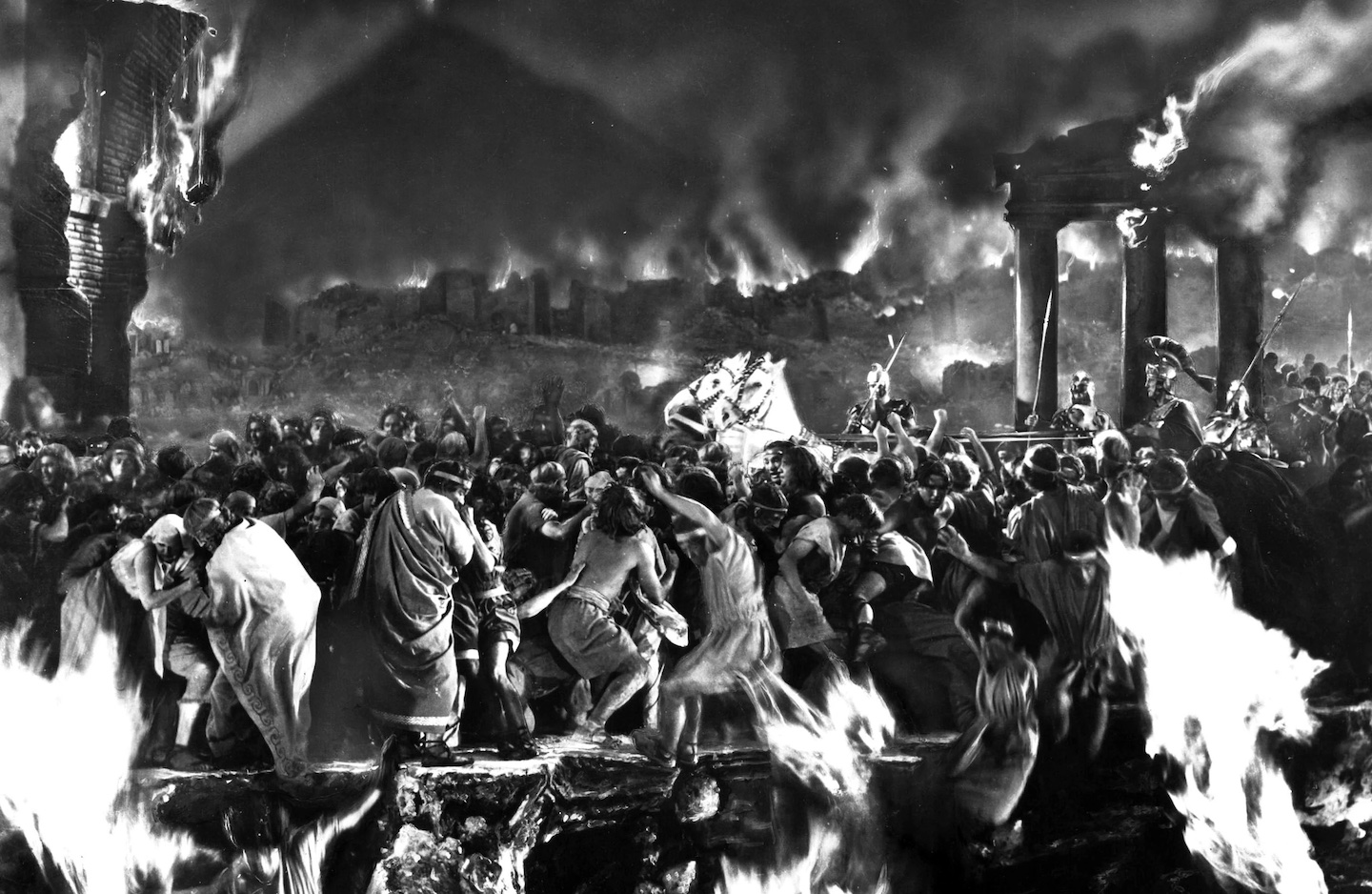
One might think that a film featuring the destruction of Pompeii would have some thrills, however RKO’s The Last Days of Pompeii proved to be a “temperate affair” in Mosher’s eyes, “one of the great bores of the moment.” The Dick Powell/U.S. Navy vehicle Shipmates Forever didn’t prove to be any better.

HOT TIMES IN POMPEII?…John Mosher called The Last Days of Pompeii “one of the great bores of the moment,” including the “drearily enacted” eruption of Vesuvius in which “Paper temples fall and there is a bit of bustle, and that is all there is to that.” Mosher did single out Basil Rathbone’s performance as an urbane Pontius Pilate, “a Pontius Pilate with a Long Island manner.” (tcm.com)
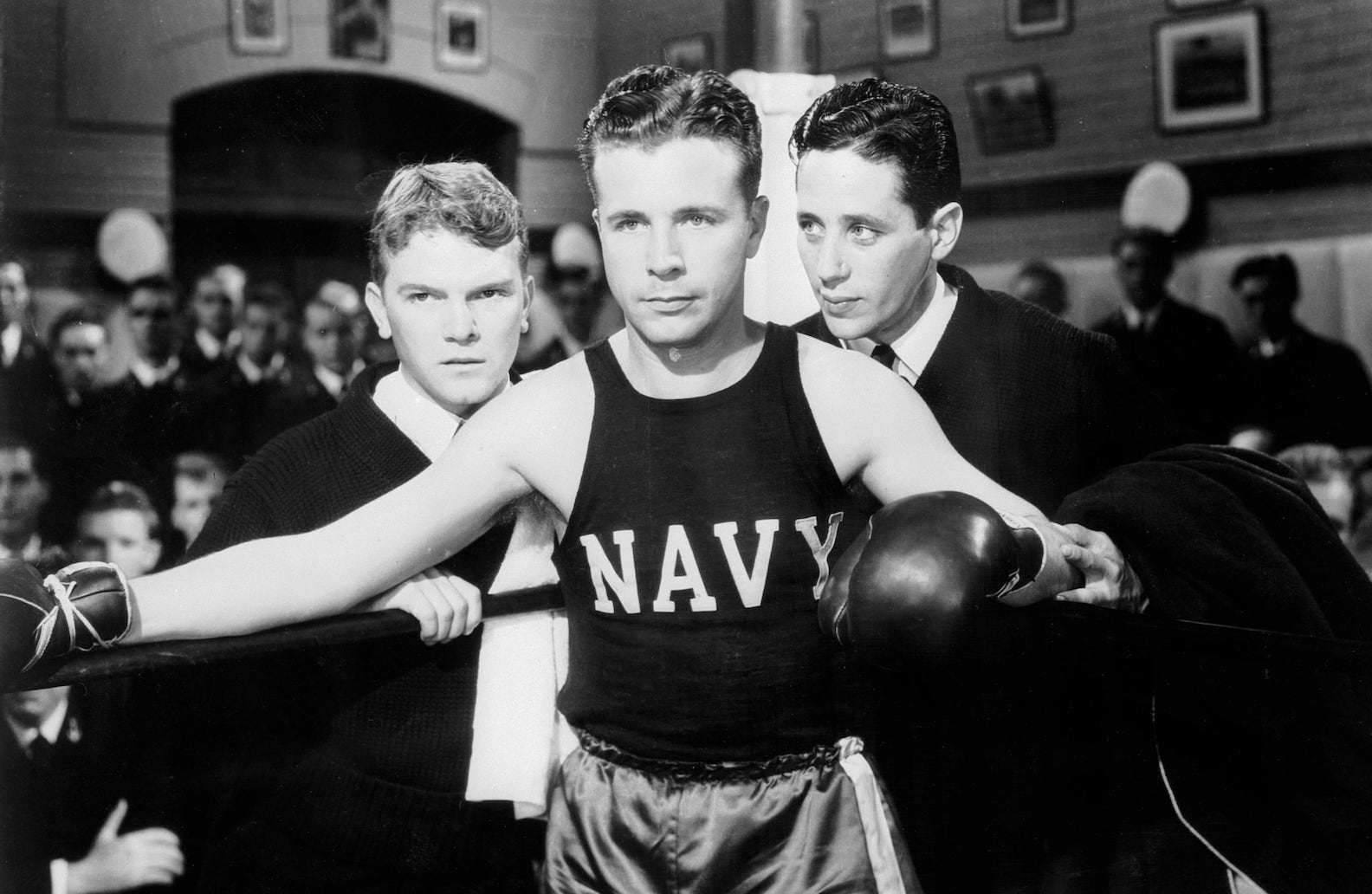
GO GET ‘EM DICK…The U.S. Naval Academy provided the setting for the musical Shipmates Forever, featuring Dick Powell as a crooner who ultimately chooses the Navy over a singing career. (tcm.com)

* * *

From Our Advertisers

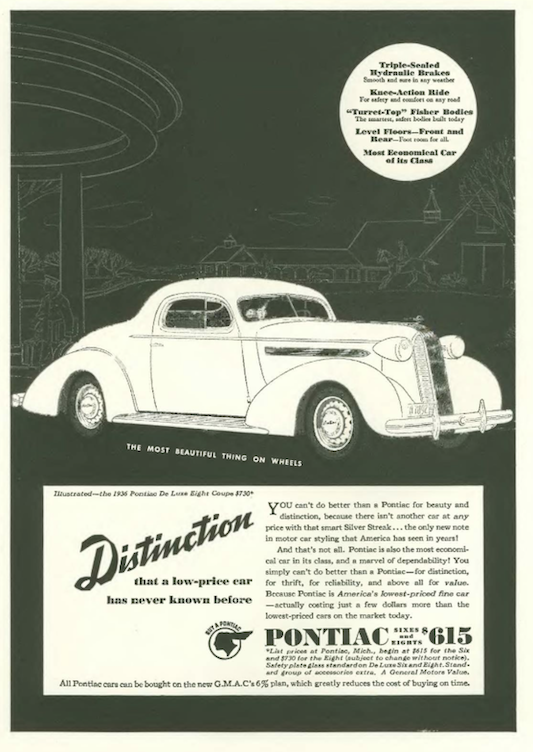
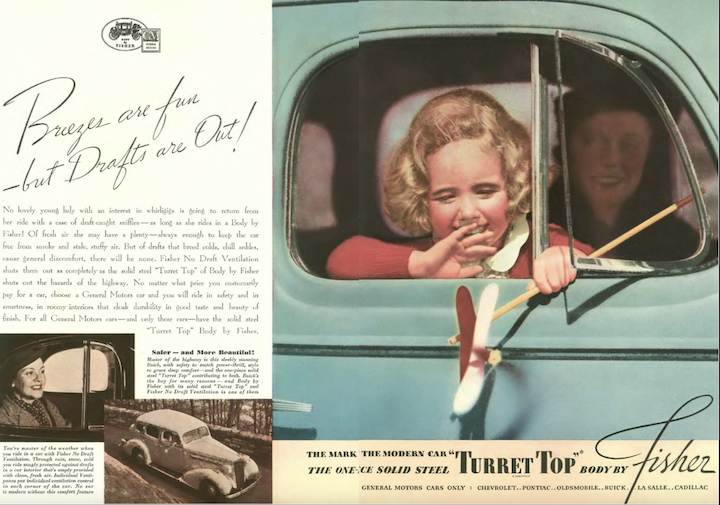
We begin with the inside front cover, where the folks at Fisher touted their innovative “Turret Top” design…Body by Fisher began as a separate company in 1908, specializing as an automobile coach builder…although acquired by General Motors in 1926, the Fisher brand was promoted until the 1980s…

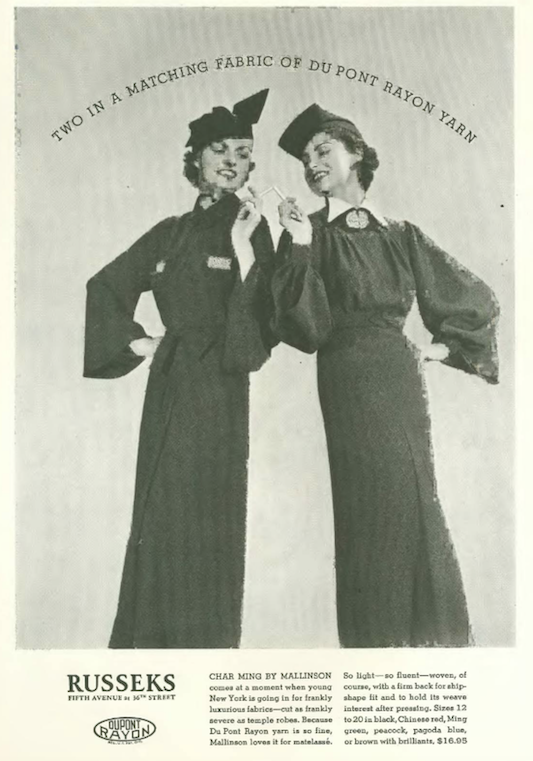
…there were many fall and winter fashion ads in this issue, including this continuing series by Russeks promoting Rayon fabrics…and women smoking, no doubt considered a sign of sophistication…

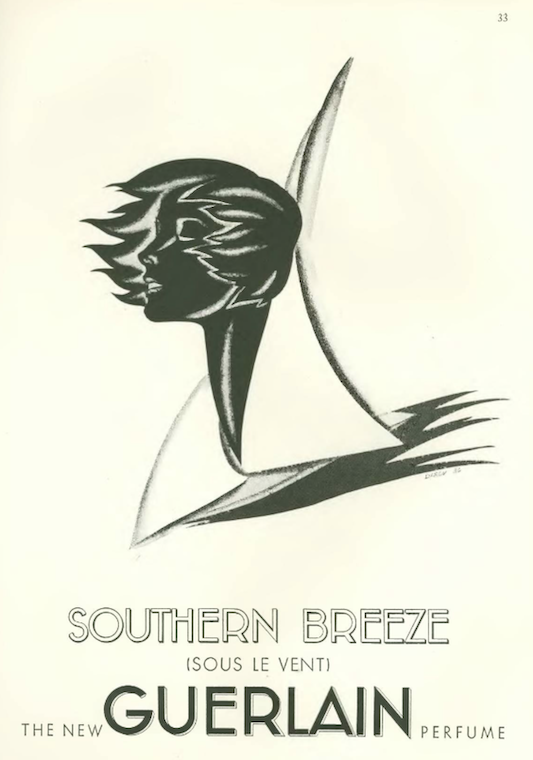
…Guerlain perfume ads featured the unmistakable style of illustrator Lyse Darcy

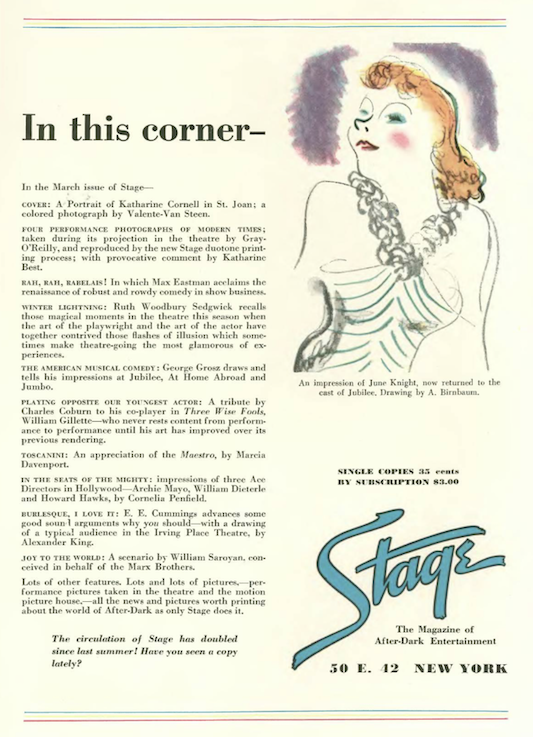
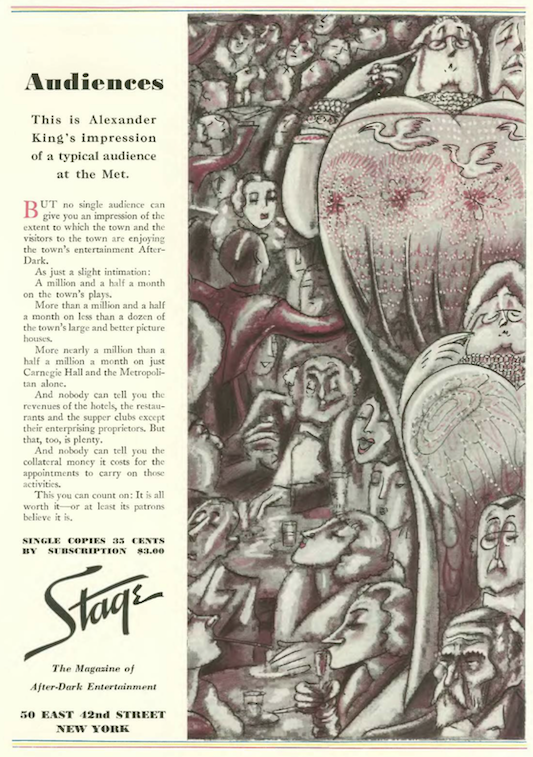
…the Heyward/Gershwin production of Porgy and Bess made a splash in this ad for Stage magazine…

…World Peaceways often used terrifying imagery to promote their anti-war messages…this ad was on the inside back cover…

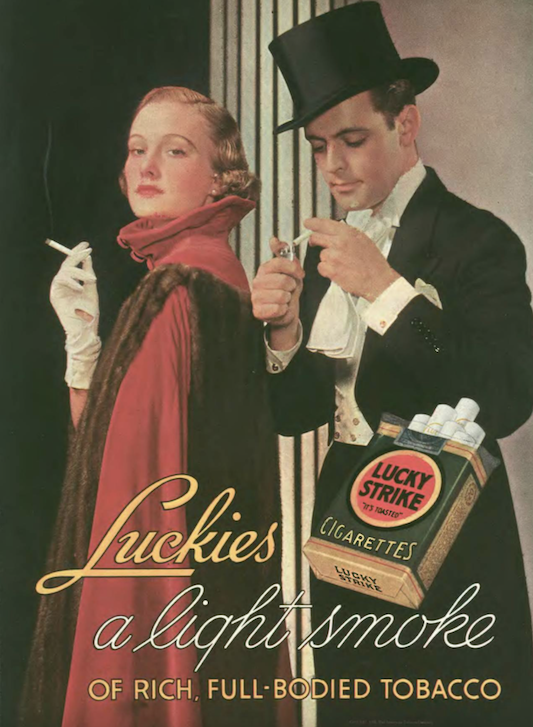
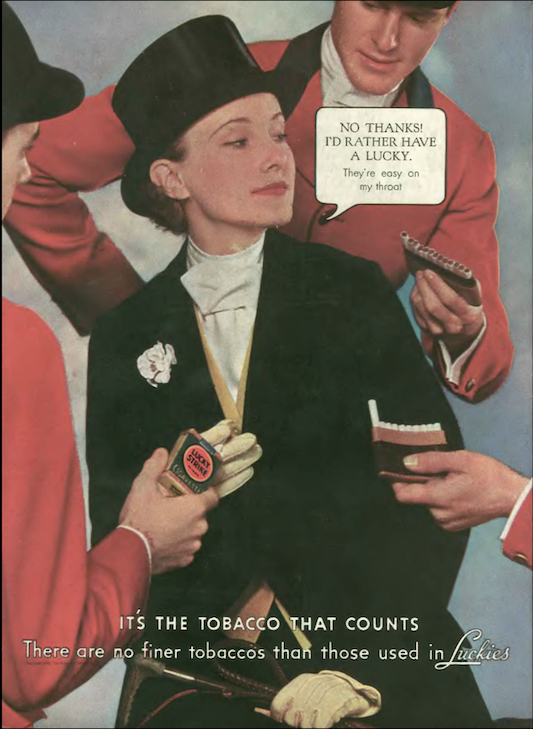
…and as you closed the magazine, the back cover greeted you with this stylish appeal to smoke Luckies…

…on to our cartoonists, starting with Al Frueh in the Theatre section…

…and Frueh again, in this interesting arrangement…

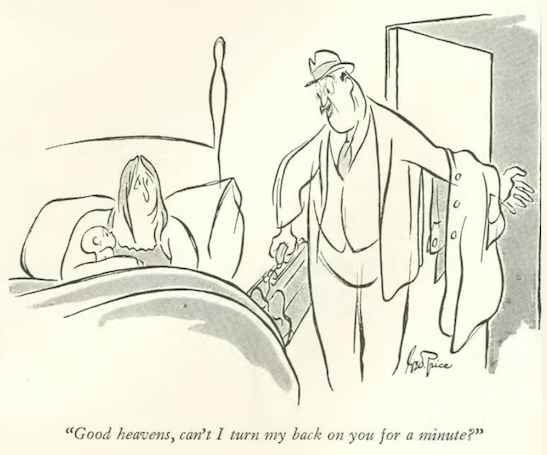
George Price was featured twice…

…with scenes of domestic life as only Price could render…
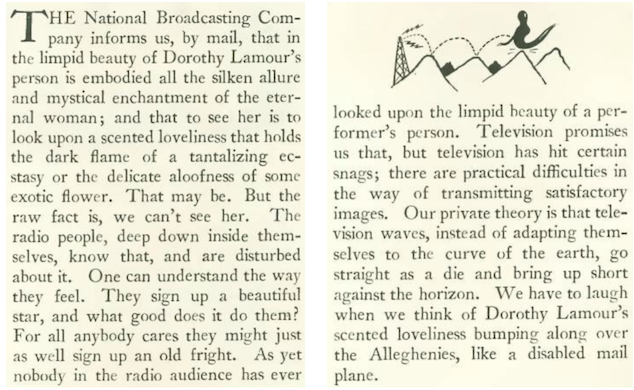
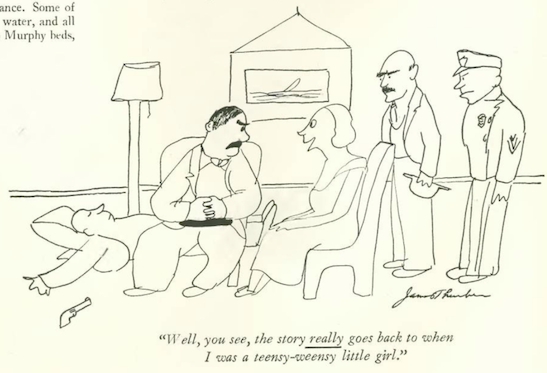
…and speaking of distinctive, no one did it quite like the great James Thurber

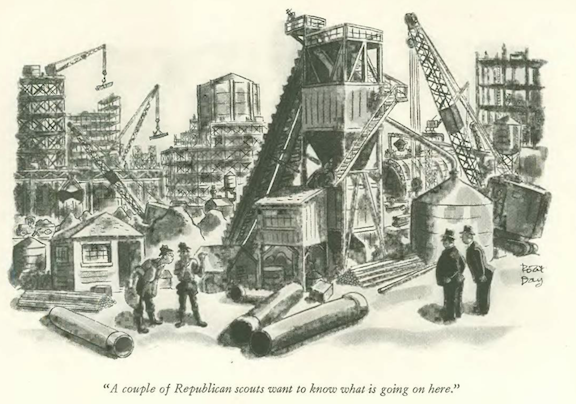
Robert Day gave us two Republicans looking in on the progress of the New Deal…
Carl Rose bid farewell to a writer sick of his peace and quiet…

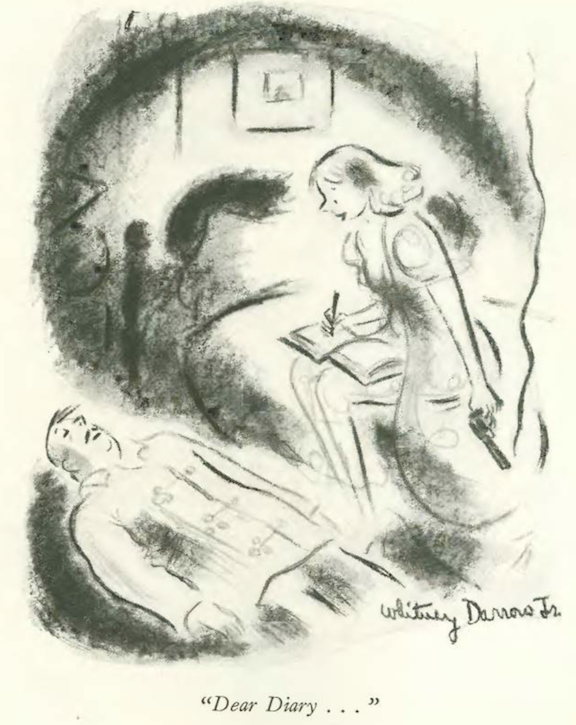
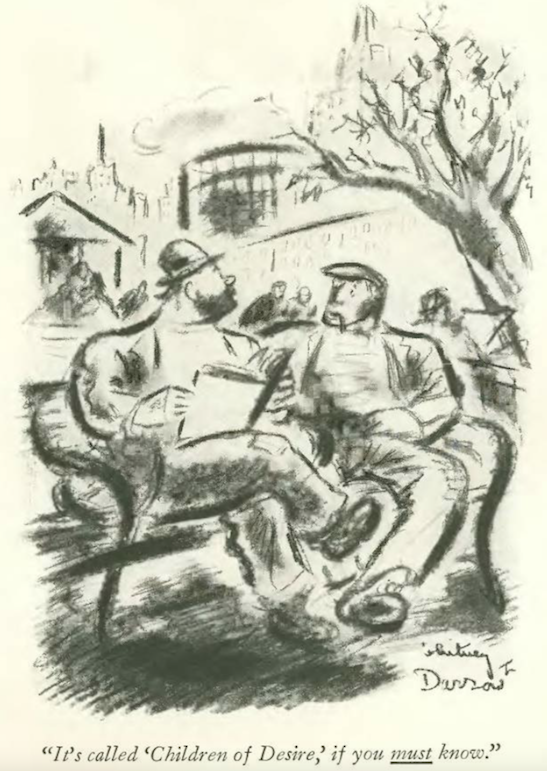
Whitney Darrow Jr illustrated a literary exchange on a park bench…

…and I close with today’s New Yorker cover artist, Roger Duvoisin—here is his cover for White Snow, Bright Snow, which won the Caldecott Medal in 1948.

Next Time: Planes, Trains and Automobiles…

On Catfish Row

Above: Left image: Todd Duncan (Porgy) and Anne Brown (Bess), in the 1935 Broadway production of Porgy and Bess. Right image: John Bubbles (Sportin’ Life) and Brown. (Photos courtesy the Ira & Leonore Gershwin Trusts)

The 1935 Broadway production of Porgy and Bess is widely regarded as one of the most successful American operas of the twentieth century, but when it opened at the Alvin Theatre on Oct. 10, 1935, reviews were mixed, including the one penned by Wolcott Gibbs.

October 19, 1935 cover by William Crawford Galbraith. The New York Times (Oct. 9, 1935) made this observation about the rodeo at Madison Square Garden: “New York, which for several days has been vaguely aware of an impending rodeo because of a profusion of ten-gallon hats along Eighth Avenue and a sign in a beauty parlor, ‘Welcome, Cowgirls,’ will see the real thing this morning.”

Now you would think a work by composer George Gershwin, with a libretto written by DuBose Heyward (author of the 1925 novel Porgy) and lyricist Ira Gershwin, would be a sure hit. Some critics did praise the production, which ran for 124 performances, but others criticized themes and characterizations of Black Americans that were created by white artists.

MIXED REVIEWS…The original Catfish Row set for Porgy and Bess as seen at Broadway’s Alvin Theatre (now the Neil Simon Theatre) in 1935. (Billy Rose Theatre Collection, New York Public Library Digital Gallery)

This wasn’t the first time Porgy was adapted to the stage. It was originally produced in 1927 by Heyward and his wife, Dorothy, at the Guild Theatre in New York. The Heywards insisted on an African-American cast—an unusual decision at the time—and enlisted newcomer Rouben Mamoulian to direct. The play ran a total of fifty-five weeks.

ORIGIN STORY: Porgy: A Play in Four Acts, was a 1927 play by Dorothy Heyward and DuBose Heyward, adapted from the short novel by DuBose. (Wikiwand)

Gibbs preferred the original Porgy to the Gershwin–Heyward production, admitting that he simply did not care for “the operatic form of singing a story.”

continued…

TAKING THEIR BOWS…George Gershwin greets an audience after a performance of Porgy and Bess. Behind Gershwin are his brother, Ira Gershwin (left), and librettist and Porgy author DuBose Heyward (partially hidden, at right). (umich.edu)

The Moss Hart/Cole Porter musical comedy Jubilee! premiered at Broadway’s Imperial Theatre on Oct. 12, 1935, just two days after the Porgy and Bess premiere. Gibbs dubbed this show “heat-warming and beautiful.”

THE BEGUINE BEGINS…Inspired by the Silver Jubilee of Britain’s George V, the musical comedy Jubilee! told the story of a fictional royal family. The play featured such hit songs as “Begin the Beguine” and “Just One of Those Things,” which have become part of the American Songbook. (ovrtur.com)
ROYAL HIJINKS…At left, June Knight as Karen O’Kane and Charles Walters as Prince James in Jubilee!; at right, Mary Roland (the Queen) encounters “Mowgli” (Mark Plant) in Act I. (ovrtur.com)

Note: In the last issue (Oct. 12) we saw an ad for an around-the-world luxury cruise on the Franconia. Cole Porter and Moss Hart—with their families, friends, and assistants—sailed on a previous Franconia cruise, possibly in 1934, with the intention to write a new musical while on the trip. Apparently some of the songs and scenes in Jubilee! were inspired by their ports of call.

 * * *

Steering Clear

“The Talk of the Town” commented on the “steer-wrestlers” that were featured at the Madison Square Garden rodeo. Since steer-wrestling was also called “bulldogging,” it caused considerable consternation among New York animal lovers.

A BIG HOWDY…Cowgirls From the Madison Square Garden Rodeo With Millicent Hearst, 1932. (texashistory.unt.edu)

 * * *

Much Ado About FDR

The Conference on Port Development of the City of New York took issue with President Franklin D. Roosevelt’s foreign trade policies, particularly his strict stance on neutrality, which the Conference believed was detrimental to foreign trade. This was likely related to the October 1935 Italian invasion of Ethiopia. E.B. White offered this satirical poem in reaction to the trade spat.

Howard Brubaker also chimed in on the trade issue, and on other unsettling developments in Europe:

 * * *

Puppy Love

Critic and poet Cuthbert Wright (1892–1948) was moved to write poetry after visiting a dog cemetery that also welcomed animals of all stripes. Here are excerpts of the opening and closing lines:

PET PROJECT…Cuthbert Wright was moved to verse after his visit to a pet cemetery, possibly the Hartsdale Pet Cemetery in Westchester. (Wikipedia/parenthetically.blogspot.com)

 * * *

Man and Machine

Art and culture critic Lewis Mumford is back this week, this time taking a look at the work of French artist Fernand Léger (1881–1955), who created a form of cubism known as “tubism,” regarded today as a forerunner of the pop art movement of the mid-1950s and the 1960s.

It is no surprise that the humanist Mumford, who sought an “organic balance” in everyday design, found Léger’s machine-like works alienating and sterile, representing an “aesthetic poverty.”

TOTALLY TUBULAR…Clockwise, from top left, works of Fernand Léger cited by Lewis Mumford: The City, 1919; photo of Léger, circa 1930s; from the 1918–1923 series Mechanical Elements, 1920; Composition in Blue, 1920–27. (Philadelphia Museum of Art/The Met Collection/Art Institute of Chicago, Charles H. and Mary F. S. Worcester Collection)

 * * *

Disappointment in O’Hara

That is how Clifton Fadiman titled his “Books” column after reviewing John O’Hara’s latest novel, Butterfield 8.

O’Hara (1905–1970) wasn’t just any old scribbler. A prolific short-story writer, he has often been credited with helping to invent The New Yorker’s short story style. Praised by the likes of F. Scott Fitzgerald and Ernest Hemingway, O’Hara cranked out two bestsellers before the age of thirty. One was the acclaimed Appointment in Samarra (which was praised by Fadiman). The other was BUtterfield 8, the novel Fadiman found disappointing (Hemingway, on the other hand, blurbed, “John O’Hara writes better all the time.”). Here are a couple of brief excerpts from Fadiman’s review:

Fadiman concluded his review with a note to the author: “Why not let Jean Harlow have it, Mr. O’Hara, and start a fresh page?”

Well, Harlow didn’t get it, but twenty-five years later Elizabeth Taylor would reluctantly take on the role of Gloria Wandrous, and win the Academy Award for Best Actress.

YOU AGAIN?…Laurence Harvey and Elizabeth Taylor played on and off lovers in 1960’s Butterfield 8. John O’Hara did not participate in writing the adaptation, and the film’s plot bore only a slight resemblance to his novel. However, after the film’s release more than one million paperback copies of the novel were sold. (aiptcomics.com)

 * * *

At The Movies

We begin this section with an excerpt from “The Talk of the Town,” which covered the “International World Première” of the Warner Brother’s adaptation of A Midsummer Night’s Dream. The film opened worldwide on October 9, 1935 in London, Sydney, Vienna and at New York’s Hollywood Theatre, where crowds turned out to get a glimpse of the stars.

RUBBERNECKERS…A Midsummer Night’s Dream premiere at the Hollywood Theatre in New York City on October 9, 1935. (britannica.com)

Film critic John Mosher praised Joe E. Brown’s performance as Flute, as well James Cagney’s portrayal of Bottom, and lauded the “magnificent group of clowns” that formed the remainder of The Players. Here are excerpts from his review (note I included the entirety of Otto Slogow’s delightful spot drawing):

THE LOVERS…Left to right: Ross Alexander (Demetrius), Olivia de Havilland (Hermia), Dick Powell (Lysander) and Jean Muir (Helena) meet cute and confused in A Midsummer Night’s Dream. (TCM.COM)
THE SEVEN STOOGES…Bottom (James Cagney) and his fellow Players prepare to perform a stage play about the death of Pyramus and Thisbe which turns into a farce. From left, in front, Joe E. Brown (Flute), Cagney, and Otis Harlan (Starveling); in the back are, from left, Hugh Herbert (Snout), Arthur Treacher (Epilogue) and Dewey Robinson (Snug) as The Players in A Midsummer Night’s Dream. Frank McHugh (Quince) can be seen behind the wall in back. (IMDB)
DANCING THE NIGHT AWAY…Fairie scene from A Midsummer Night’s Dream. (Facebook)

Mosher also reviewed the romantic comedy I Live My Life, which he found to be a satisfying satire on the lives of the rich.

MATCHING WITS…Bored socialite Kay Bentley (Joan Crawford) has a tempestuous romance with idealistic archaeologist Terry O’Neill (Brian Aherne) in I Live My Life. (IMDB)

 * * *

From Our Advertisers

Readers ninety years ago opened the Oct. 19 issue to this two-page spread featuring the latest in fall/winter fashions…the ad on the right from Bergdorf Goodman featured stage and screen actress Gladys George donning a full-length silver fox fur…

…George (1904–1954) was appearing at Henry Miller’s Theatre in the play Personal Appearance…she was featured in this testimonial ad for Schrafft’s in the theatre’s Playbill…

(playbill.com)

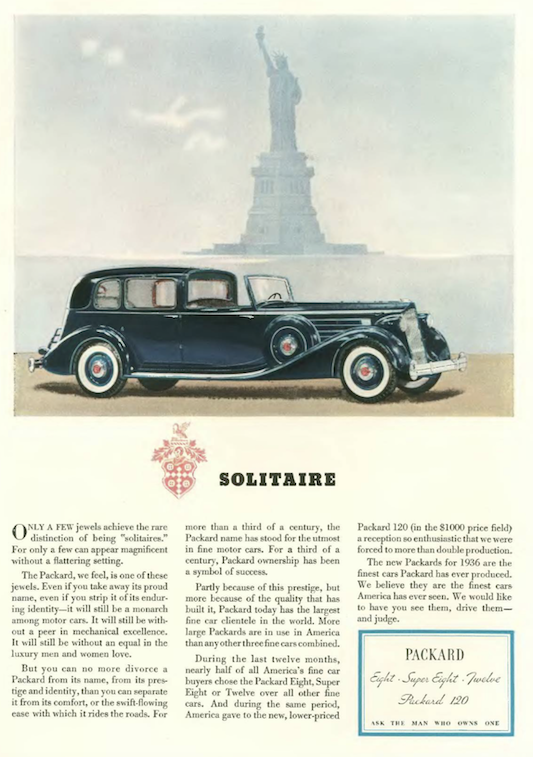
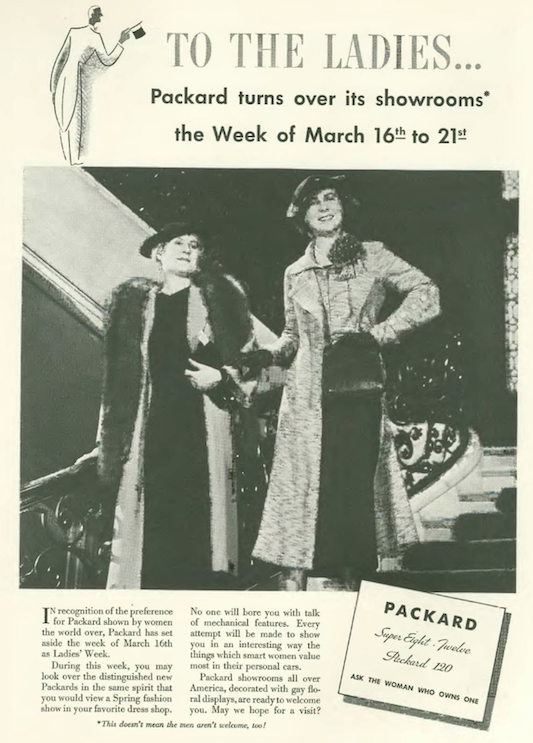
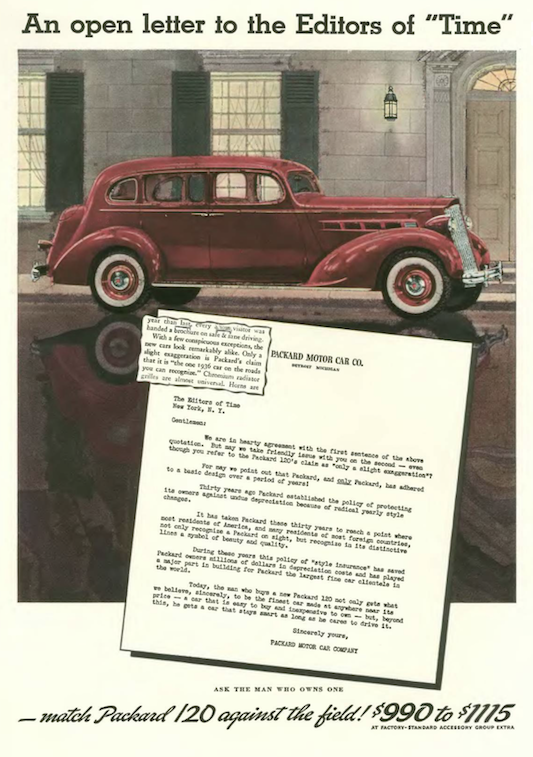
…the folks at Packard took out this colorful two-page spread to promote their more affordable model, the 120…the move to more affordable models helped the luxury carmaker weather the lean years of the Depression…

…there is a strange quality to these Arrow Shirt advertisements…what are the they looking at?…apparently something amusing as the man applies mustard to a hotdog, but it isn’t the vendor, who looks down at his cart…

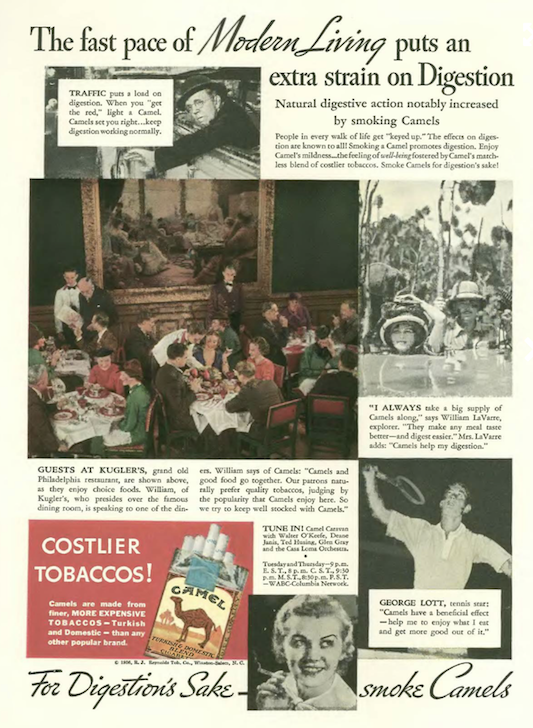
…R.J. Reynolds continued its Camel campaign featuring accomplished athletes who got a “lift” from smoking…the ad also included a couple of regular folks at the bottom, who claimed the cigarettes were so mild “You can smoke all you want”…

…Old Gold continued to enlist the talents of George Petty to illustrate their full-page ads…

…here’s a couple of back of the book ads touting Irish whisky and Ken-L-Ration dog food…note how the Scottish terriers speak in “dialect”…Ken-L-Ration was a leading dog food brand in the 1930s, thanks to their use of horse meat rather than “waste meat”…

…on to our cartoonists, we start with Al Frueh enhancing the “Theatre” page…

James Thurber showed us a man at odds with the times…

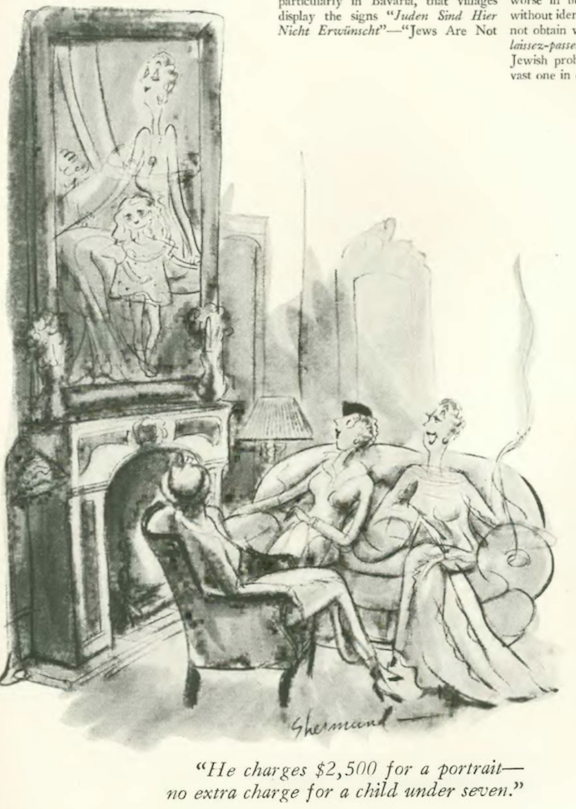
Barbara Shermund kept us up to date on the modern woman…

Whitney Darrow Jr offered a challenge to Helena Rubinstein (note the woman on the right—she could have been drawn by Helen Hokinson)…

Gluyas Williams checked in on the lively proceedings of a book club…

Helen Hokinson went looking for a good winter read…

Gilbert Bundy offered an alarming scenario on the top of p. 31…

…and we close with Peter Arno, and an eye-raising encounter…

New Time: It Can’t Happen Here…

Down to Earth

Above: Will Rogers (with hat) visits with pilot Wiley Post near Fairbanks, Alaska, hours before their fatal crash on August 15, 1935. (okhistory.org)

It would be a challenge to find a place for a multi-talented, mega-star like Will Rogers in today’s over-saturated and segmented media landscapehe was a trick roper, vaudevillian, social commentator, comedian, journalist, author, and radio and film celebrity. His early fame on the vaudeville circuit, including the Ziegfeld Follies, would spark a film career in 1918 (he would appear in 71 films), and a 1922 town hall speech would lead to a nationally syndicated newspaper column. When radio became a nationwide phenomenon his voice could heard coast-to-coast. He was seemingly everywhere.

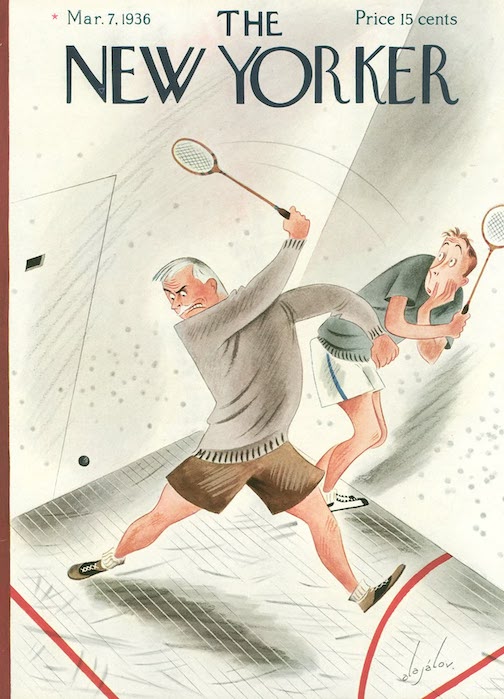
August 31, 1935 cover by Harry Brown. Brown illustrated eighteen covers for The New Yorker.

Rogers (1879-1935) was also a big promoter of aviation, and he gave his audiences many entertaining accounts of his world travels. In the summer of 1935 he announced plans to join famed aviator Wiley Post (1898-1935) on a flight to Alaska and beyond. It appeared to be routine, making the trip’s tragic ending all the more poignant.

Although E.B. White often seemed stuck in the past—he preferred Model Ts and rattily omnibuses to more more modern conveyances—he was a flying enthusiast, never missing a chance to hop aboard an airplane and marvel at the scene far below. However, when tragedy struck, White would become circumspect. When Notre Dame coach Knute Rockne’s Fokker Trimotor crashed into a Kansas wheatfield, White expressed doubts about air safety and pondered “safer” alternatives such as autogiros (a kind of early helicopter that wasn’t so safe or practical). Such doubts returned in his “Notes and Comment” for August 31, 1935:

The fated aircraft, a Lockheed Orion, was heavily modified by Post into a floatplane; one wing was even salvaged from a wrecked Explorer (an older Lockheed model). The pontoon floats he attached were also designed for a larger aircraft, which made the nose-heavy Orion even more unwieldy.

BUILT FOR SPEED…A Lockheed Model 9 Orion parked at Boeing Field, Seattle, in May 1935. With 200-mph speed, the single-engine passenger aircraft (5 to 6 passengers) was faster than any American military aircraft of the time. It was Lockheed’s last aircraft to use wood construction in the frame, which was lightweight but not designed for longevity on major airlines. (James Borden Photography Collection)
TIGHT QUARTERS….Interior view of a Lockheed Orion 9. No doubt much of the passenger space was loaded with gear for the trip to Alaska. (James Borden Photography Collection)

When Post and Rogers arrived in Juneau, local bush pilots doubtfully regarded the Orion and asked Rogers about the flight plan. “Wiley and I are like a couple of country boys in an old Ford—don’t know where we’re going and don’t care,” he said. They were actually headed to Point Barrow, and from there planned to hop over to Siberia.

After stopping in Fairbanks they set off for Point Barrow in bad weather. Lost in the murk, they landed short of their destination in the shallow waters of Walakpa Lagoon, fifteen or so miles southwest of Point Barrow. Post and Rogers then took off—despite warnings from locals about the conditions. But the weather wasn’t the worst problem: Post had a bad habit of taking to the air in an abrupt, steep climb, which likely caused the engine to stall. Powerless, the ungainly aircraft plunged into the lagoon and landed on its top. Post and Rogers were killed instantly.

JUST A COUPLE OF COUNTRY BOYS…Top photo, Will Rogers on the wing of the Lockheed floatplane belonging to famed aviation pioneer Wiley Post, hours before their fatal crash on August 15, 1935. Below photo, inverted wreckage of the float plane in Walakpa Lagoon.  (Wikipedia/vintageaviationnews.com)

Rather than eulogize the fallen Rogers, “The Talk of Town” offered up an anecdote about his rise as a newspaper columnist, which was sparked by a backhanded endorsement speech:

A HUMAN FACE…Top left, Will Rogers backstage with the 1924 Ziegfeld Follies cast. At right, Rogers made his film debut in the now lost silent film Laughing Bill Hyde (1918) with co-star Anna Lehr. The magazine ad at right quoted producer Rex Beach, who called Rogers “the most human player who ever faced a camera.” (Will Rogers Memorial Museum/Wikipedia/IMDB)
FINAL CURTAIN…Top photo, Will Rogers with co-star Anne Shirley in Steamboat Round the Bend. Rogers wrapped filming just before heading to Alaska. The film was released posthumously on September 6,1935. Bottom image is a detail from a full-page ad in the October 1935 issue of Picture Play Magazine. Oddly, the ad makes no mention of Rogers’ death, proclaiming that “Will blazes a new path in his screen career as he scores his greatest triumph!”  (theretrorocket.blogspot.com/IMDB)

 * * *

Putting it Mildly

In “Onward & Upward With the Arts,” H.L. Mencken continued to explore the quirks of American language, this time looking at the pervasive (and evasive) use of euphemisms by “professional uplifters.” Excerpts:

INTELLIGENCE TEST was suggested by “professional uplifters” as a polite replacement for giving someone “The Third Degree.” Image is from the 1941 noir thriller I Wake Up Screaming, starring Victor Mature, pictured here getting his “intelligence test.” (cinematography.com)

 * * *

At the Movies

We join film critic John Mosher to take a look at the latest epic from Cecil B. DeMille, The Crusades, which to Mosher’s disappointment was a rather mild epic, with little to astonish. However, our critic did find something to admire in a more recent historical drama, Diamond Jim.

ANTISEPTIC EPIC?…Clockwise, from top left, movie poster for The Crusades offered up an image one typically does not associate with religious warfare, but you had to bring ’em in somehow; Henry Wilcoxon and Ian Keith in a scene from the film; co-stars Loretta Young as Berengaria of Navarre and Wilcoxon as Richard the Lionheart; the film also featured Joseph Schildkraut as Conrad of Montferrat and Katherine DeMille as Princess Alice of France (bottom left). A talented actress, Katherine reportedly landed the role as a Christmas gift from her adoptive father, Cecil B. DeMille. (cecilbdemille.com)
HEY BIG SPENDER…At right, Edward Arnold in the title role (here with Eric Blore) in Diamond Jim. At left, Cesar Romero moves in on Diamond Jim’s love interest, portrayed by Jean Arthur. (Rotten Tomatoes/IMDB)

 * * *

From Our Advertisers

We begin with this advertisement from Lord & Taylor, featuring the latest fall fashions for young women heading to college…notable here is the inclusion of Mickey Mouse in the illustration…the animated rodent was in vogue as much the latest fashions…


John Hanrahan, whose advertising savvy helped guide The New Yorker through its lean early years, was publisher of the richly designed Stage magazine, promoted here on the inside front cover…

…soft drink giant Coca-Cola recalled its soda fountain origins in this ad that promoted its 6.5-ounce bottled product…

…on the inside back cover Goodyear continued its series of perilous ads illustrating the dangers of tire blowouts (but not the obvious hazard of children riding untethered in a rumble seat, where they doubtless inhaled all manner of noxious fumes)…

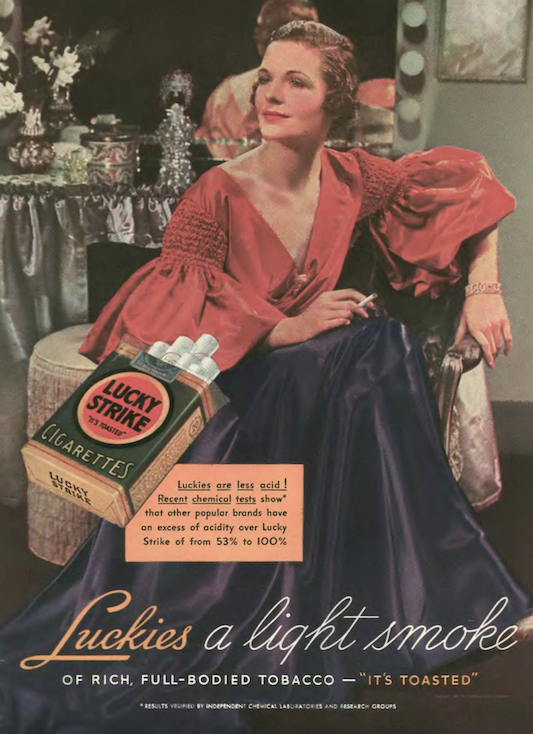
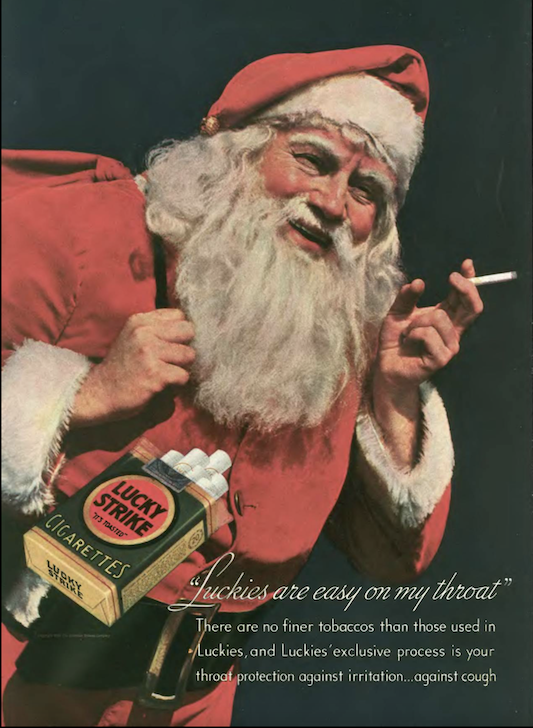
…the majority of back covers in 1935 featured tobacco companies…here we learn that Lucky Strikes were more than cigarette; they were your “best friend”…

…on to our cartoonists, we start with this “Profile” illustration by William Steig…the profile was a two-parter featuring a clever summons server…

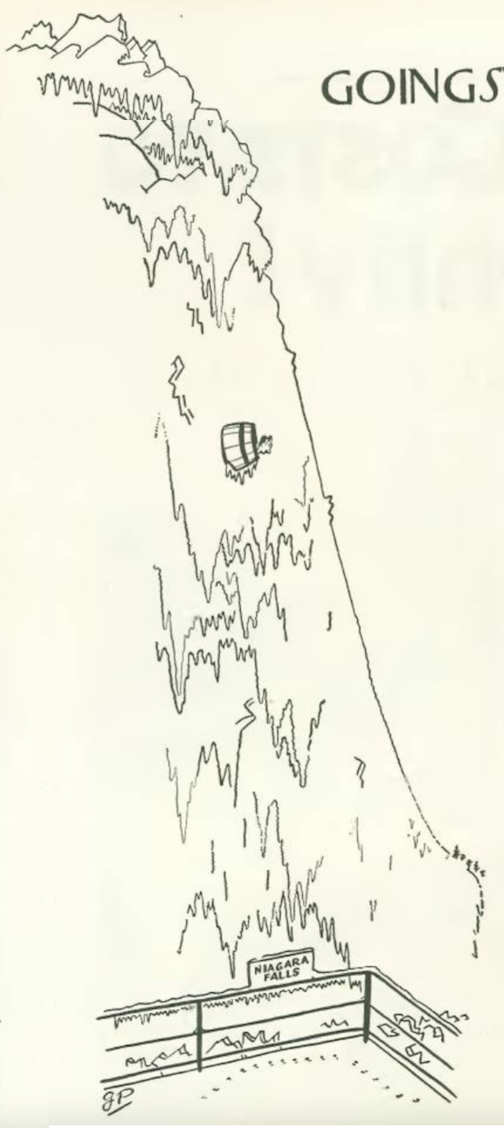
Adolph Dehn adorned the “Goings On” section with this illustration…

…unsigned, but I’m pretty sure this is H.O. Hofman

…here we get a lift from Robert Day

Al Frueh conjured up a nightmare of leaping sheep…

Helen Hokinson gave us some famous footwear…

…Hokinson again, with Romulus and Remus providing a convenient metaphor…

Kemp Starrett was bogged down in the rules of a game…

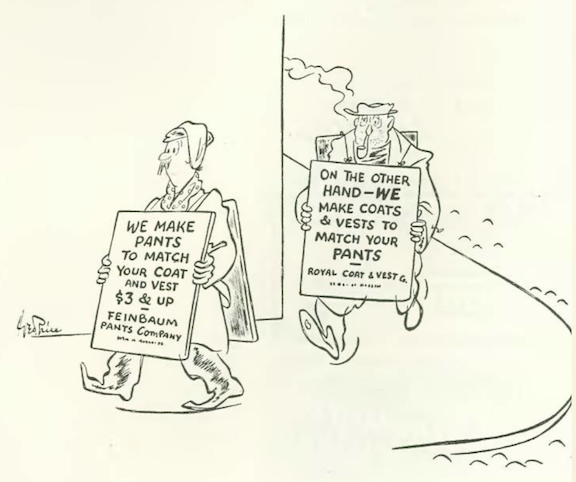
George Price discovered a budding talent…

Richard Decker took to the back roads…(reminds me of a scene from The Long, Long Trailer with Lucy and Desi)…

James Thurber raised a glass to a dry do-gooder…

Alan Dunn brought an unexpected windfall to Westchester…

…and to close we Dunn again, and a bit of flattery…

Next Time: A Summer Night…

Hays Hokum

Above: Will Hays (center, top) was the enforcer and Fr. Daniel A. Lord was the author of the Production Code that was rigidly enforced beginning in 1934. They and others were responding to the sex, violence and other forms of "immorality" in such films as 1932's "Scarface" (with Paul Muni, pictured at left) and 1931's "Blonde Crazy" with James Cagney and Joan Blondell. (Wikipedia/cinemasojourns.com)

With the Production Code fully enforced, New Yorker film critic John Mosher found even less to get excited about during his visits to Manhattan’s cinemas.

August 17, 1935 cover by Julian de Miskey. He contributed 62 covers to the magazine, as well as 82 cartoons from 1925 to 1962.

The Motion Picture Production Code—a set of industry guidelines for the self-censorship of content—had been around for awhile, but it was mostly ignored until June 13, 1934, when an amendment to the Code required all films released  to obtain a certificate of approval. Hoping to avoid government censorship and preferring self-regulation, studios adopted the Code.

The Code’s effects were felt in such films as The Farmer Takes a Wife, a romantic comedy about a Erie Canal boatman, portrayed by Henry Fonda, who dreams of becoming a farmer (a role reprised by Fonda from the Broadway production of the same name; it was Fonda’s first break in films). Mosher was pleased by Fonda’s performance, but found the film adaptation to be corny and phony, filled with “bastard” dialect and schmaltzy musical numbers. “It is the sort of thing which is okayed by Purity Leagues…” Mosher concluded.

SILVER SCREEN DEBUT…Boatman Dan Harrow (Henry Fonda) woos barge cook Molly Larkins (Janet Gaynor) in a scene from A Farmer Takes a Wife. While it was Fonda’s film debut, Gaynor was an established star known for playing sweet, wholesome characters. One of the few actresses who made a successful transition to sound movies in the late 1920s, Gaynor was the number-one draw at the box office in 1935. (IMDB)
STILL KEEPING IT CLEAN…The Code was still in force when The Farmer Takes a Wife was remade in 1953; however, nineteen years after the Code took effect there was a notable easing of restrictions, as can be seen in the generous display of Betty Grable’s famous gams (seen here with Thelma Ritter). (IMDB/Wikipedia)

To get a clearer idea of what the Code did to the pictures, compare the scene from 1934’s Tarzan and His Mate (left), which was released two months before the Code went into effect, and Tarzan Escapes (right), from 1936.

CLOTHED IN THE CODE…Johnny Weissmuller and Maureen O’Sullivan appeared together in six Tarzan films. In their second outing, 1934’s Tarzan and His Mate, O’Sullivan wore a skimpy halter-top and loincloth (left) and was shown sleeping and swimming in the nude. In their next film, 1936’s Tarzan Escapes (right); Jane is more chastely clad. (mikestakeonthemovies.com/rottentomatoes.com)

 * * *

Noted and Notorious

In his weekly column “Of All Things,” Howard Brubaker offered wry observations on the passing scene, including this latest brief that described the rise and fall of a very unlikely quartet of celebrities.

DEMOGOGUES, DUTCH & DIMPLES…(Left to right) Support appeared to be on the wane for radio priest and demagogue Father Charles Coughlin and fellow-fascist Louisiana Sen. Huey Long, while stock was on the rise for mobster Dutch Schultz, who successfully swayed public opinion (while under indictment for tax evasion) by generously donating to various charities. Shirley Temple continued to charm audiences, her films ranking number-one at the box office in 1935 (as well as in 1936, 1937, and 1938). The year 1935 would also be the last for Long and Schultz–both would be assassinated. (Wikipedia)

 * * *

Titlemania

Lacking the strictures of Old World caste systems, Americans have had an anxious relationship with class signifiers. In a land where trade schools become universities overnight and their faculty members refer to one another as “doctor,” there is much confusion and hand-wringing in the honorifics trade. H.L. Mencken examined the proliferation of titles in his country, freely handed out without regard to merit. Excerpts:

 * * *

From Our Advertisers

The back of the book was where one could find advertisements for upscale urban living, including these two touting the advantages of the Hotel Pierre and The Barbizon…

…In a joint venture with a group of Wall Street financiers, the former busboy-turned restauranteur Charles Pierre opened the Hotel Pierre in 1930—not the most auspicious time to open a luxury hotel as markets continued to collapse…the Pierre went into bankruptcy in 1932 and was later purchased by oilman J. Paul Getty…the legendary Barbizon Hotel for Women, completed in 1927, was designed as a safe and respectable haven for women seeking to pursue careers in New York, especially in the arts, and would host numerous famous women through the 1970s…

At left, the Barbizon in 1927; right, the Hotel Pierre circa 1930. (loc.gov)

…like the tobacco companies, brewers targeted women as a growth market for a product mostly associated with men…

…the makers of juices, meanwhile, created comic strips to promote their products…College Inn still went negative with their ads—recall the violent outbursts of the Duchess…

…here a spiteful husband blames his wife’s choice of tomato juice for his lack of success with the boss…Libby’s, on the other hand, promoted their pineapple juice as a surefire cure for a young woman’s ennui…

…notable in these somewhat thin, late summer issues is the lack of full-color ads…this was on the back inside cover…

…Flit and Dr. Seuss continued to be a weekly presence…

…which brings us to our cartoonists, and a spot drawing by Constantin Alajalov

…also a modest spot by Robert Day, keeping us cool with this polar bear…

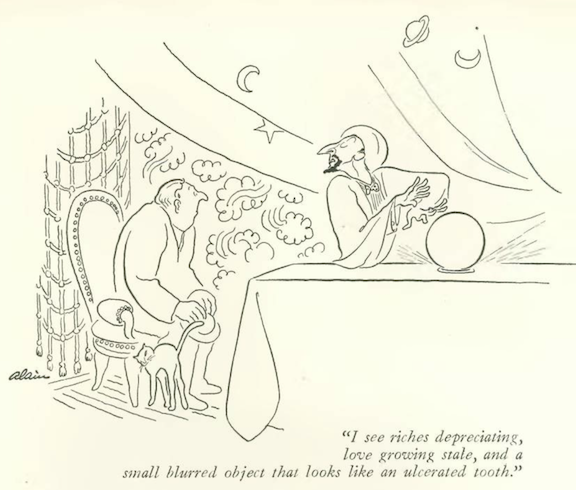
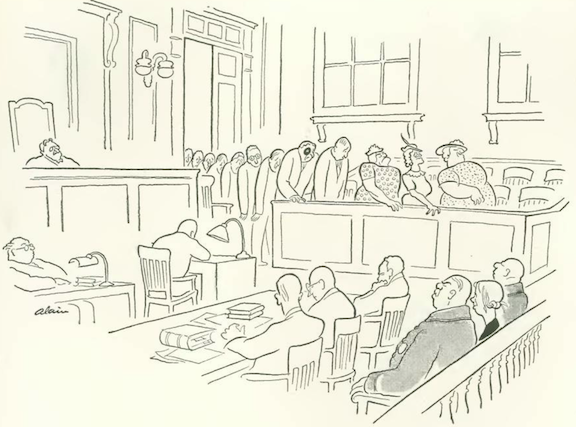
Alain offered a short course in art appreciation…

George Price ran afoul of the fire code…

Carl Rose ran his tracks across this two-page spread…

William Steig gave us the small fry’s perspective on the world’s wonders…

…a rare appearance of baseball in the magazine, thanks to Robert Day...

Richard Decker brought a modern world challenge to one filling station…

…A sailor’s return to bachelorhood required a new paint job, per Alan Dunn

…and who else but Charles Addams would circle vultures over an amusement park?…

…and we close with Al Frueh, and a Union Club member not concerned with a dress code…

Next Time: The Din and Bustle…


A Double-Header

Heading into the dog days of summer we take a look at the last two issues of July 1935, both somewhat scant in editorial content but still offering up fascinating glimpses of Manhattan life ninety years ago.

July 20, 1935 cover by William Crawford Galbraith. He contributed seven covers and 151 cartoons to the magazine.

That includes the observations of theatre critic Wolcott Gibbs and film critic John Mosher, both escaping the summer heat to take in some very different forms of entertainment.

Gibbs found himself “fifty dizzy stories above Forty-second Street” in the Chanin Building’s auditorium, where he experienced New York’s take on Le Théâtre du Grand-Guignol. Founded in Paris by Oscar Méténier in 1897, Grand Guignol featured realistic shows that enacted, in gory detail, the horrific existence of the disadvantaged and working classes. It seems audiences were drawn to the shows more out of prurient interest (or sadistic pleasure) than for any desire to help the underclasses.

NOT FOR THE FAINT OF HEART…Wolcott Gibbs recommended the Grand-Guignol only for those who “admire a frank, uncomplicated approach to the slaughterhouse and the operating table.” (Image: Wikipedia)
PRETTY HORRORS…Clockwise from top left, the original Théâtre du Grand-Guignol, in the Pigalle district of Paris–it operated from 1897 until 1962, specializing in horror theatre; a poster from one of its productions; New York’s Chanin building, circa 1930s; the Chanin’s auditorium “fifty dizzy stories above 42nd Street”; fake blood applied to an actress’ neck before a scene from The Hussy; Wolcott Gibbs described a madhouse scene from André de Lorde’s The Old Women, which depicted the fury of ancient inmates performing “optical surgery” on a young woman. (thegrandguignol.com/Wikipedia/NYPL/props.eric-hart.com)

 * * *

Popeye to the Rescue

With the Hays Code in effect you wouldn’t see anything like the Grand-Guignol on the silver screen. Indeed, with the exception of a Popeye cartoon, critic John Mosher found little to get excited about at the movies. He did, however, enjoy the air conditioning that offered a break from the hot city streets.

THEY ALL COULD HAVE USED SOME SPINACH…Clockwise, from top left, Popeye and Bluto strike an unlikely partnership in Dizzy Divers; Bette Davis and George Brent in Front Page Woman; Will Rogers and Billie Burke in Doubting Thomas; James Blakeley and Ida Lupino in Paris in Spring. (brothersink.com / rottentomatoes.com / cometoverhollywood.com / classiccartooncorner.substack.com)

 * * *

From Our Advertisers

Just a few ads from this issue, first, a jolly appeal from one of the magazine’s newer advertisers, the makers of the French apertif Dubonnet…

…by contrast, this quaint slice of Americana from Nash…

…and a shot of pesticide from Dr. Seuss

…our cartoonists include Constantin Alajalov, contributing this bit of spot art to the opening pages…

Barbara Shermund explored the world of hypnotic suggestion…

Peter Arno prepared to address the nation…

William Steig checked the weather forecast…

Helen Hokinson’s girls questioned the burden of a lei…

Carl Rose found himself on opposite sides of the page in this unusual layout

Richard Decker joined the crowd in a lighthouse rendering…

Ned Hilton reminds us that it was unusual for women to wear trousers ninety years ago…

Mary Petty examined the complications of marital discord…

…and Charles Addams shone a blue light on a YMCA lecture…

…on to July 27, 1935, with a terrific summertime cover by William Steig

July 27, 1935 cover by William Steig, one of his 117 covers for the magazine.

E.B. White (in “Notes and Comment”) was ahead of his time in suggesting that the city needed to build “bicycle paths paralleling motor highways” and invest in more pedestrian pathways.

NEW YORK’S FINEST…Doris Kopsky, who trained in Central Park, won the first Amateur Bicycle League of America Women’s Championship in 1937. Bicycle races were a big draw in the 1930s. (crca.net)

 * * *

Breaking News

“The Talk of the Town” checked in on the New York Times’ “electric bulletin,” commonly known as “The Zipper.” Excerpt:

NIGHT CRAWLER…Launched in 1928, the Times Square “Zipper” kept New Yorkers apprised of breaking news. (cityguideny.com)

 * * *

Dog Knots

“Talk” also took a look backstage at the Winter Garden, where burlesque performers shared the stage with a contortionist dog called “Red Dust.” Excerpt:

WOOF…Famed animal trainer Robert “Bob” Williams with one of his pupils. The dog in the photo is misidentified as Red Dust (he was actually a Malemute/chow mix).

 * * *

Suddenly Famous

Charles Butterworth (1896-1946) earned a law degree from Notre Dame before becoming a newspaper reporter. But his life would take on a new twist in 1926 when he delivered his comical “Rotary Club Talk” at J.P. McEvoy’s Americana revue in 1926. Hollywood would come calling in the 1930s, and his doleful-looking, deadpan characters would become familiar to movie audiences through a string of films in the thirties and forties. Alva Johnston profiled Butterworth in the July 27 issue. Here are brief excerpts:

Charles Butterworth (left) and Jimmy Durante in Student Tour (1934). A bit of trivia: Butterworth’s distinctive voice was the inspiration for the Cap’n Crunch commercials voiced by Daws Butler beginning in the early 1960s. Butterworth’s life was cut short in 1946 when he crashed his imported roadster into a lamppost on Sunset Boulevard. (Detail from film still via IMDB)

 * * *

Noisy Neighborhood

The “Vienna Letter” (written by “F.S.”–possibly Frank Sullivan) noted the rumblings of fascism in a grand old European city known for its many cultural delights as well as its many factions that included Nazis, Socialists and Communists (and no doubt a few Royalists). An excerpt:

CALM BEFORE THE STORM…Vienna in 1935, less than three years before the Anschluss, when Nazi Germany annexed Austria. (meisterdrucke.us)

 * * *

Ex Machina

The Pulitzer Prize-winning poet and author Stephen Vincent Benét (1898-1943) penned this poem for The New Yorker that is somewhat appropriate to our own age and our fears of the rise of A.I. In “Nightmare Number Three,” Benét described a dystopian world where machines have revolted against humans.

BOTH CLASSY AND FOLKSY is how some today describe Stephen Vincent Benét, who in 1928 wrote a book-length narrative poem of the American Civil War, John Brown’s Body, for which he received the Pulitzer Prize for Poetry. He was also know for such short stories as The Devil and Daniel Webster, published in 1936. (mypoeticside.com)

 * * *

From Our Advertisers

We begin with more extraordinary claims from R.J. Reynolds, who convinced a lot of folks that drawing smoke into your lungs actually improved your athletic stamina…

…the makers of Lucky Strike, on the other hand, stuck with images of nature and romance to suggest the joys of inhaling tar and nicotine…

…General Tire took a cue from Goodyear, suggesting that an investment in their “Blowout-Proof Tires” was an investment in the very lives of a person’s loved ones (even though they apparently drove to the beach without seatbelts or even a windshield)…

…another colorful advertisement from the makers of White Rock, who wisely tied their product to ardent spirits as liquor consumption continued to rebound from Prohibition…

…I toss this in for the lovely rendering on behalf of Saks…it looks like the work of illustrator Carl “Eric” Erickson, but he had many imitators…

…we do, however, know the identity of this artist, and his drawings on behalf of the pesticide Flit, which apparently in those days of innocence was thought appropriate for use around infants…

…great spot drawing in the opening pages…I should know the signature but it escapes me at the moment…

James Thurber quoted Blaise Pascal for this tender moment ( “The heart has its reasons, of which reason knows nothing”)…

Peter Arno illustrated the horrors of finding one’s grandmother out of context…

Helen Hokinson’s girls employed a malaprop to besmirch the good name of an innocent mountain…

Richard Decker discovered the missing link(s) with two archeologists…

Alan Dunn narrowly averted a surprise greeting…

George Price added a new twist to a billiards match…

…Price again, at the corner newstand…

Al Frueh bit off more than he could chew…

…and we close with Barbara Shermund, and a prattling mooch…

Next Time: La Marseillaise…

Wining & Dining

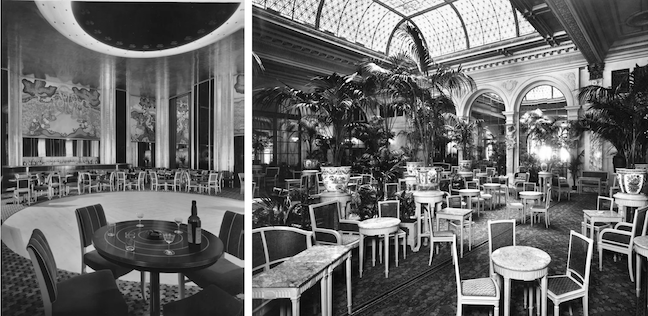
Above: The Waldorf-Astoria's Starlight Roof, and a 1930s menu cover. (Facebook/Pinterest)

With summer approaching, the rooftop restaurants were in full swing, and Lois Long continued her exploration of favorite haunts, including one nightclub that drew many Manhattanites across the Hudson to the cliffs of the New Jersey Palisades.

June 1, 1935 Cover by Rea Irvin.

Ben Marden couldn’t wait for the official end of Prohibition when he opened his Riviera Night Club in Fort Lee in 1931. The frequent site of raids until the repeal of the 18th Amendment, the Riviera continued to be a place well known to Bergen County police thanks to clientele that included racketeers and other unsavory types. But to New Yorkers like Long, it was a break from the din of the city to the relative green of the Garden State. Long wrote:

The Riviera closed during the first years of World War II, but it reopened in 1945 after Bill Miller bought it from Marden and apparently cleaned it up. It then attracted the likes of Frank Sinatra, Dean Martin, Jerry Lewis, Martha Rae, Sammy Davis, Jr., and Pearl Bailey until it closed in 1953. It was demolished the following year.

THEY HAD FOOD, TOO…Clockwise, from left, the1936 spring menu cover of Ben Marden’s Riviera featured an illustration of the original Riviera (ringed by nude showgirls), which burned to the ground on Thanksgiving night, 1936; the building that replaced it was called an architectural wonder with its retractable roof, rotating stage, and glass windows that slid down to the floor; Earl Carroll and his “Beauties” performed at the Riviera in 1935–they are pictured here at a train station in Los Angeles, 1934. (ebay.com/patch.com/lapl.org)

Long also stayed in town to visit the Waldorf-Astoria’s Starlight Roof.

WITH THE STARS, UNDER THE STARS…Clockwise, from left, cocktail menu from the Waldorf’s Starlight Roof, 1935; outdoor seating on the Starlight Roof Terrace; special menu for the Gala Opening Dinner and Supper Dance on the Starlight Roof, May 14, 1935. It was a favorite destination of Frank Sinatra, Cole Porter, Katharine Hepburn, and Ella Fitzgerald, among others. (Pinterest)

Long also mentioned the appearance of Ray Noble in the Rockefeller Center’s Rainbow Room. This full-page ad appeared in the June 1 issue:

Other summer season attractions were advertised in numerous back-of-the-book, one-column advertisements:

…and at the bottom of page 64…

Wining and dining were also the topic of the profile, a two-parter penned by Margaret Case Harriman, who took a look at New York’s famed Colony Restaurant.

ORIGINAL TRIO…Al Frueh’s caricatures of the Colony’s owners/headwaiters Gene Cavallero and Ernest Cerutti, who flank chef Alfred Hartmann, who was also part owner until he sold his interest to the other two in 1927 and retired to a farm in France. Harriman wrote that Cavallero and Cerutti were “born headwaiters—suave, solicitous, infallible.”
A PLACE TO BE SEEN…From the 1920s to the 1960s New York’s café society dined at the Colony. Rian James, in Dining In New York (1930) wrote “the Colony is the restaurant of the cosmopolite and the connoisseur; the rendezvous of the social register; the retreat of the Four Hundred.” Critic George Jean Nathan said the Colony was one of “civilization’s last strongholds in the department of cuisine.” Photo at left of the dining room around 1940; at right, co-owner Eugene Cavallero consults with a chef. (lostpastremembered.blogspot.com)

 * * *

The Business of News

In his “Notes and Comment,” E.B. White contemplated the meaning of a free press, noting that nearly all media was at the mercy of advertisers. That included The New Yorker, which owed allegiance “to the makers of toilet articles, cigarettes, whiskey, and foundation garments.”

* * *

Cat Lady

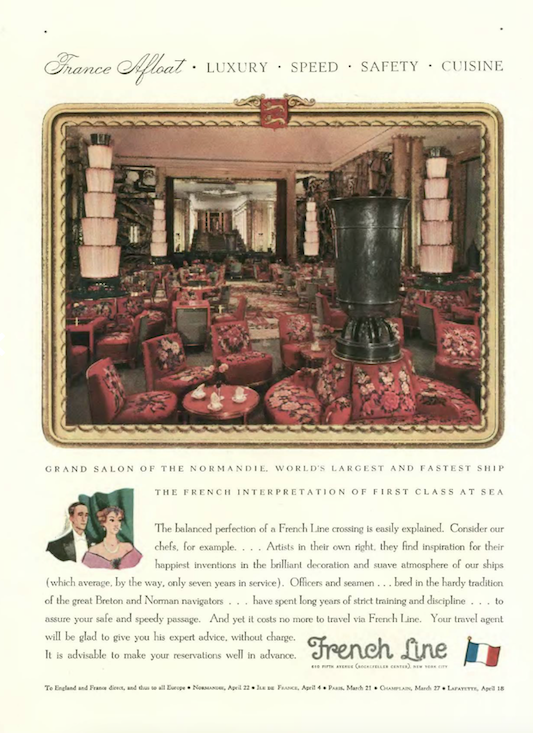
“The Talk of the Town” anticipated the arrival of French writer Colette (1873-1954) aboard the S.S. Normandie. This excerpt makes note of her high standing in society as well as her love of cats.

SHE ONCE OWNED AN OCELOT….Colette with her cats in an undated photo; at right, entering New York Harbor on the S.S. Normandie, 1935. (Pinterest)


 * * *

Public Artists

“The Talk of the Town” noted the latest Washington Square Outdoor Art Exhibition…

LENDING THEIR TALENTS…New Yorker cartoonists who helped promote the Outdoor Art Exhibition in Washington Square included James Thurber, Otto Soglow, and William Steig.

 * * *

Cutting Remarks

S.J. Perelman offered his thoughts on the decline of the tonsorial arts. In this excerpt, he sees his beloved Italian barber give way to a “knifelike individual in a surgical apron.” Excerpts:

IT’S A SCIENCE NOW, SIDNEY…S.J. Perelman worried about the displacement of Italian barbershops by cosmetologists in “surgical aprons,” such as the one modeled by Helena Rubinstein at right. (Pinterest)

* * *

Even Those Eyes Couldn’t Help

Film critic John Mosher was sad to report that disappointment was in store for moviegoers who enjoyed seeing Bette Davis in Of Human Bondage. Her latest flick, The Girl from 10th Avenue, featured Davis murmuring “gentle nothings of a vaguely noble monotony.”

GET ME OUT OF THIS PICTURE…Left, Bette Davis with Ian Hunter in the uninspired The Girl from 10th Avenue; at right, screen shot of Davis in 1934’s Of Human Bondage, the film that made Davis a star.  (thefilmexperience.net)

Other items in the editorial section included a casual by Dorothy Parker’s husband Alan Campbell (titled “Loyalty at Pool-Wah-Met”), and Morris Markey examined the Christian Science movement inspired of Mary Baker Eddy, in “A Reporter at Large” piece titled “But Thinking Makes It So.”

 * * *

From Our Advertisers

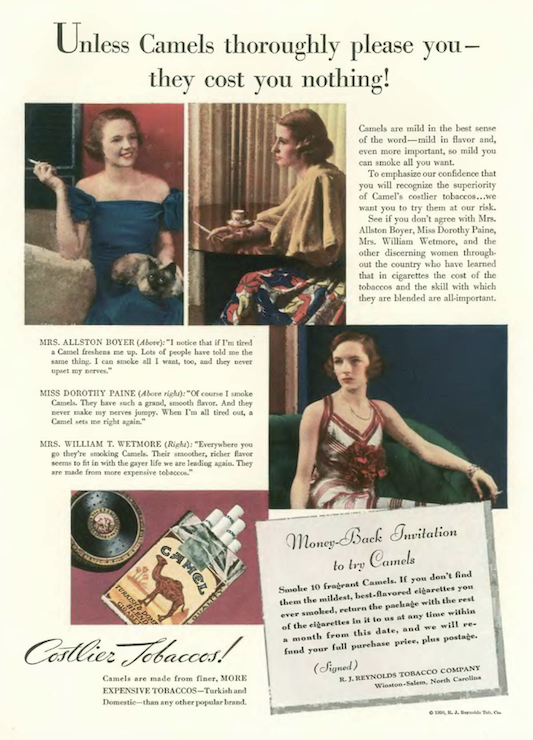
We begin with an advertising theme common through midcentury, namely, that you could smoke certain brands as much as you liked and still be a star athlete (as opposed to a wheezing husk of a human being)…

…not only did these cigarettes “steady your nerves” and preserve your “wind,” they also made for sweet, romantic moments…

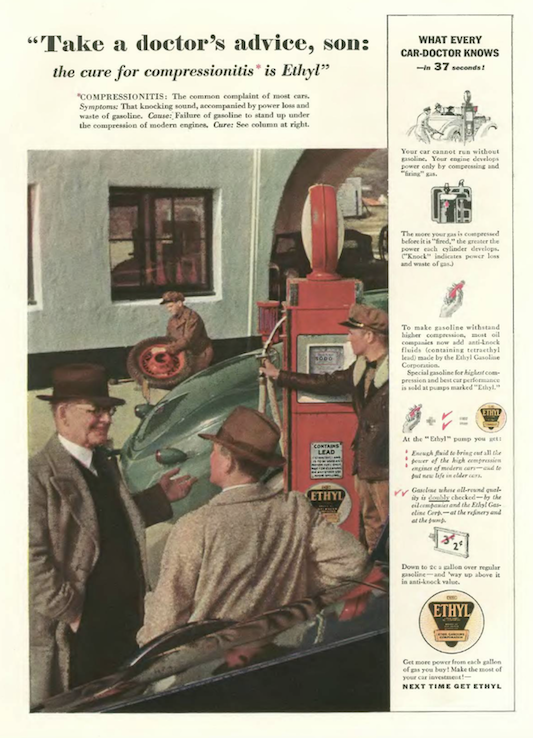
…in between puffs you could also enjoy breathing in fumes from leaded gasoline…lead pollution increased by more than 625 times previous levels after leaded fuels were introduced in 1924…

…although they were being outlawed by New York Mayor Fiorello Henry La Guardia, an organ grinder nevertheless made an appearance in an Arrow Shirt ad that offered a lighthearted moment for all involved (except for the dude on ketamine)…

…when jeans were called “dungarees” they were reserved for gardening or fishing…at right you could land a pair of “Crazy Shoes” woven with “garish Mexican colours” for five-and-a-half bucks…

…the makers of White Rock kept it cool with this minimalist ad…

…luxury automaker Packard continued to hang on through the Depression by offering a downscale version…it appears their demographic was middle-aged men and women who still preferred the finer things even if they couldn’t afford them…

…now the property of Hearst, Otto Soglow’s Little King could still appear in The New Yorker via the advertising sections…

…and Soglow continued his contribution to the magazine’s cartoons with other multi-panel subjects…

James Thurber kicked off the cartoonists with this tender spot…

…and contributed this cartoon…

Alain found competition in the portrait trade…

George Price was still afloat…

Charles Addams was tied up with the sculptural arts…

Denys Wortman shopped for DIY projects…

Peter Arno found a sensitive side in one member of the NYPD…

Mary Petty made some alterations…

…and we close with this terrific cartoon by Richard Decker

Next Time: Not a Square Deal…


What’s in a Name?

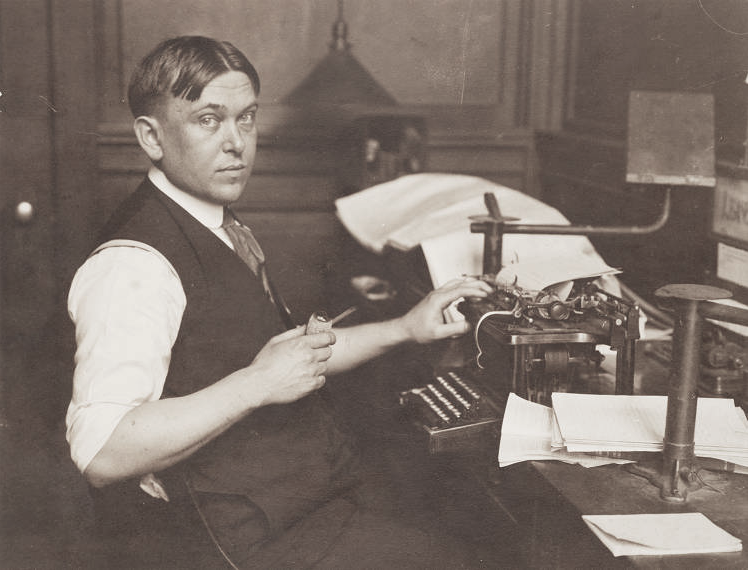
Above: H.L. Mencken at the Baltimore Sun, circa 1930. From April 1934 to September 1949, Mencken contributed more than fifty articles to The New Yorker.

The American journalist Henry Louis Mencken (1880–1956) was well-known as a biting satirist and cultural critic, but he was also a noted scholar of the English language and its various quirks.

May 11, 1935, Mother’s Day cover by William Cotton.

One of those quirks was explored in Mencken’s essay, “The Advance of Nomenclatural Eugenics In the Republic,” for the column “Onward & Upward With The Arts.” Broadly defined, eugenics refers to the discredited belief that selective breeding could be used to improve the human race. Mencken used the term satirically to describe the anglicization of immigrant names, either to conform to English spellings or, in many cases, to avoid racial and ethnic discrimination. An excerpt:

A PERFECT PAIRING, for H. L. Mencken, was a beer and a cigar. Here he is accepting “his first public glass of post-Prohibition beer” at the Rennert Hotel in Baltimore on April 7, 1933. In 1924 Mencken wrote: “Five years of Prohibition have had, at least, this one benign effect: they have completely disposed of all the favorite arguments of the Prohibitionists.” (digitalmaryland.org)

Many Jewish immigrants also abandoned their surnames, seeking to blend in and avoid discrimination. Historian and author Kirsten Fermaglich (A Rosenberg by Any Other Name, 2016) found that persons with Jewish-sounding last names made up 65 percent of all name change requests in New York in the first quarter of the 20th century. Mencken observed:

MEET BERNARD, BETTY, ISSUR AND MARGARITA…Some more famous examples of name changes in the first half of the 20th century. From left, actors (and New Yorkers) Tony Curtis (Bernard Schwartz), Lauren Bacall (Betty Joan Perske), Kirk Douglas (Issur Danielovitch Demsky), and Rita Hayworth (Margarita Carmen Cansino). (Wikipedia)

 * * *

Canada Dry

In his column, “Of All Things,” Howard Brubaker noted the “well-merited spanking” FDR gave to military leaders who were talking about fortifying the border with Canada. Brubaker agreed with FDR’s action, observing how Canadians came to the aid of thirsty Americans during Prohibition.

 * * *

Air France

Paris correspondent Janet Flanner considered the state of French aviation as well as signs of war preparation. She also noted the birthday of German dictator Adolf Hitler, the birth of French television, and the streamlined taxis that had suddenly appeared on the streets of Paris. Excerpts:

SOME ICE CREAM WITH YOUR SLICE OF HATE?…Clockwise, from top left, bakers carefully carry Adolf Hitler’s birthday cake in April 1935; the French, meanwhile, were ramping up war production including the manufacture of the M210 bomber; airplane factory workers fashion sheet metal in a factory in Châteauroux-Déols; streamlined Peugeot 401 taxis hit the Paris streets in 1935. (reddit.com/dassault-aviation.com/imcdc.org)

 * * *

Vamps and Vampires

John Mosher offered mixed reviews of Hollywood’s latest fare, finding Marlene Dietrich’s latest vehicle “fun,” and the singing and dancing of husband/wife Al Jolson and Ruby Keeler “uninspired,” a term he also applied to Bela Lugosi’s latest vampire flick.

TAKE YOUR PICK…Critic John Mosher sampled some very different films including, left, Marlene Dietrich and Lionel Atwill in The Devil Is a Woman; top, Ruby Keeler with her then-husband Al Jolson in Go Into Your Dance; and Bela Lugosi did his vampire schtick with the help of Carroll Borland (who played Dracula’s daughter) in Mark of the Vampire. (MoMA/Pinterest/Instagram)

 * * *

From Our Advertisers

We start off with a bang from Goodyear…tire blowouts were common in the 1930s as tire technology could not keep pace with the increasing speed of automobiles, nor the poor condition of many roads…

…after many weeks, the back cover went to something other than cigarette manufacturers…

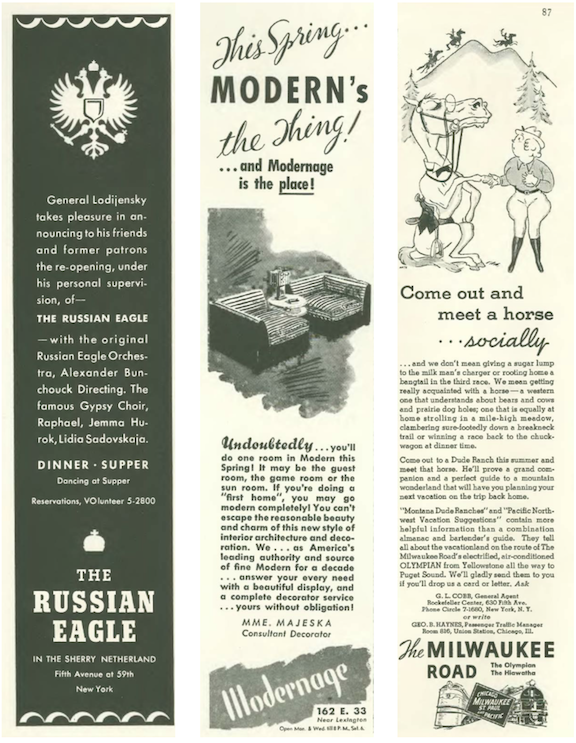
…let’s take a look at some of the one-column ads from the back pages…many of them highlighted the various nighttime entertainments, from the rooftop of Hotel Pierre to the air-conditioned lounge at the Savoy-Plaza (plus that weird ad that suggested Corn Flakes as a nightcap)…

…interior designer Elsie de Wolfe rolled out “Iron with Tape” chairs, which might be the first example of what would become the ubiquitous webbed lawn chair…also advertised were apartments in the former Pulitzer mansion…

…the Pulitzer apartments were one happy outcome of the Great Depression, which foiled the plans of investors to demolish the house in 1934 and erect an apartment building…

The Pulitzer mansion still stands today, now divided into high-class coops. (daytoninmanhattan.blogspot.com)

…here’s something new from the Jay Thorpe shop, “noted for unusual sportswear”…

…perhaps inspired by Hollywood…

Ruby Keeler in 1935’s Shipmates Forever. (Reddit)

…illustrator Lyse Darcy created many of these distinctive ads for Guerlain products from the 1930s through the 1950s…

…on to our cartoonists, we begin with spot art from James Thurber

…and Thurber again…

…and we have two from George Price

Otto Soglow continued with his multi-panel tricks…

Howard Baer did some eavesdropping on the rails…

…while Barbara Shermund checked in on her modern women…

Alan Dunn gave us a mother who took care of herself on Mother’s Day…

Peter Arno found some kindly advice in the crowded city…

Al Frueh put the “tennis” back into table tennis…

…and we close with Charles Addams, who had become a regular contributor but was still more than three years away from launching his “Addams Family” cartoons…

Next Time: Settling Down, In a Way…


Something Frivolous

And what can be more frivolous than a Busby Berkeley musical, with scores of leggy showgirls tap-dancing in perfect rhythm, or dressed in identical white gowns while playing flying pianos. Make sense? No, and that was the whole point.

March 23, 1935 cover by Peter Arno. The color, contrast and composition are striking; it looks more like a cover from the 50s or 60s.

“In an era of breadlines, depression and wars, I tried to help people get away from all the misery…” Berkeley once remarked. “I wanted to make people happy, if only for an hour.” Gold Diggers of 1935 was Berkeley’s second “Gold Digger” picture (he choreographed or directed four; there were six in all, including one silent), and it was the first in which he served as sole director. Critic John Mosher didn’t know what to make of the film, likening it more to an earthquake than an entertainment.

SOMEONE HAS TO DO IT…Busby Berkeley (1895-1976) works with dancers (left) during the production of 1933’s 42nd Street; right, at work on one of his lavish sets, circa 1930s. (IMDB)

The “harmless jingle” Mosher referred to, Harry Warren and Al Dubin’s “Lullaby of Broadway,” received an Oscar for Best Original Song (it also gave me an earworm for a week).

GOLDEN GIRLS…Clockwise, from top left, Alice Brady as the parsimonious Matilda Prentiss and Adolphe Menjou as the conniving Russian dance director Nicolai Nicoleff in Gold Diggers of 1935; a scene from the dancing pianos sequence; Dick Powell and Gloria Stuart as the film’s sweethearts. (Wikipedia/YouTube/IMDB)

Amid the frivolity, Mosher noted the juxtaposition of the jingly “Lullaby of Broadway” with the haunting, two-minute sequence of Wini Shaw singing “Lullaby” as her disembodied face emerges from the blackness toward the viewer.

The scene continues as the woman (Shaw) turns onto her back, her head slowly dissolving into the nighttime city…after a raucous, mass tap-dancing scene, she falls to her death, and the sequence is reversed, her face disappearing into the blackness. The blog Acidemic gives an interesting take on this part of the film, which is more reminiscent of a German avant-garde film than Berkeley’s usual fare…

(YouTube)

…Mosher found the scene “terrifying.” Perhaps Shirley Temple helped calm his nerves with her precocious antics in The Little Colonel

NO FLOATING HEADS HERE…Shirley Temple and Bill Robinson doing the famous staircase dance in The Little Colonel (1935). (TCM)

 * * *

Up In Smoke

In “Notes and Comment” E.B. White considered the possibility that cigarette smoking might be harmful to unborn babies, and wryly suggested that embryos could replace grandmothers as a new growth market for big tobacco:

…White referred to the advertisement below, which appeared in the Feb. 9, 1935 issue of The New Yorker:

…White also commented on his recent visit to Madison Square Garden’s winter skating carnival…

THE DOUBLE AXEL was still thirteen years in the future when Swedish skaters Gillis Emanuel Grafström (left) and Vivi-Anne Hultén delighted E.B. White at Madison Square Garden. Photos are from 1924 and 1932, respectively. (Wikipedia)

 * * *

Prescience of Mind

We have more from E.B. White, this time in a humorous piece titled “The Dove’s Nest,” in which White took a poke at the most influential newspaper editor in the country, Arthur Brisbane. A close friend of William Randolph Hearst, Brisbane essentially ran Hearst’s newspaper empire. The New Yorker often ridiculed Hearst’s (and Brisbane’s) jingoistic approach to the news that included giant headlines warning of war. Excerpts:

William A. Swanberg, author of the 1961 biography Citizen Hearst, described Brisbane as “a one-time socialist who had drifted pleasantly into the profit system…in some respects a vest-pocket Hearst–a personal enigma, a workhorse, a madman for circulation, a liberal who had grown conservative, an investor.”

DAMN THOSE TORPEDOES…Arthur Brisbane in 1933. His grandson, Arthur S. Brisbane, now retired, served as public editor of The New York Times from 2010 to 2012. (credo.library.umass.edu)

The New Yorker continued to take jabs at Brisbane in the following issue (March 30). Brisbane owned a large estate (including a horse farm) in New Jersey that he made available to New Deal work programs during the Depression. I suppose this Al Frueh cartoon was some kind of reference to that…

…also in the March 30 issue was this ad from World Peaceways, which raised alarms about possible war and bombs raining down from the sky…

…back to the March 23 issue, where we find the calming strains of a Brahms concerto at Carnegie Hall, conducted by Arturo Toscanini with some support from his son-in-law, Vladimir Horowitz

MAY I CALL YOU DAD?…Not likely something said by young Vladimir Horowitz, left, to father-in-law Arturo Toscanini. (WQXR/Britannica)

 * * *

From Our Advertisers

Beginning in 1934 the makers of Old Gold cigarettes hired pin-up artist George Petty to create a series of ads featuring a homely, clueless sugar daddy and his leggy mistress…here he turns the tables, introducing a “Pudgy Wudgy” matron putting the moves on a handsome hosiery salesman…

…this Petty ad appeared in the Feb. 9, 1935 issue of The New Yorker

…the makers of Camels continued their campaign of “distinguished women” who enjoyed their product…here we have a former debutante, Dorothy Paine, an “alert young member of New York’s inner circle.” Not much of a record of Dorothy, who married a man named Walter H. Sterling in 1935…apparently they moved to Phoenix and bought up property in the Southwest…

…the makers of General Tire offered this grim assessment of tire safety…the lad seems to be a mere investment of time…

…although prestige brands suffered mightily during the Depression, the folks at Packard were doubling down on the elite status of their automobile…

…we’ve seen the work of fashion illustrator Ruth Sigrid Grafstrom before in ads for Spud cigarettes…here she contributes some elegant lines to a spot for Bergdorf Goodman (is the woman on the right smoking a Spud?)…

…here’s the Duchess again, still blowing her top over College Inn tomato juice…just look at her clenched fists…that fop with a monocle looks like he just took a left hook to the chops…

…on to our illustrators, William Cotton created this caricature of Rexford Guy Tugwell for Russell Lord’s two-part profile…Tugwell and President Franklin D. Roosevelt created the Resettlement Administration, which relocated rural unemployed to “Greenbelt Cities” near urban job markets. Critics called him “Rex the Red” for his social engineering experiments, and after he was forced out of federal government, Tugwell was appointed in 1938 as the first director of the NYC Planning Commission. Naturally, he would butt heads with Robert Moses…

…illustrator and painter Maurice Freed kicked off the calendar section…

…bookended on the bottom of page 4 by one of James Thurber’s most recognized drawings…

…Thurber again, and more woes between the sexes…

…we continue with our cartoonists by looking in on Barbara Shermund

George Price found a new wrinkle for his recurring floating man cartoon…

Helen Hokinson graced page 19 with scenes from the opera…

…leaving an extra drawing stranded on page 18…

Alain offered a new twist on the promotion of physical fitness…

Gluyas Williams brought us to the stuffy confines of club life (the cartoon was originally featured vertically)…

…and we close with Richard Decker, and a lucky draw at the IRS…

Next Time: The Lighter Side of George Grosz…