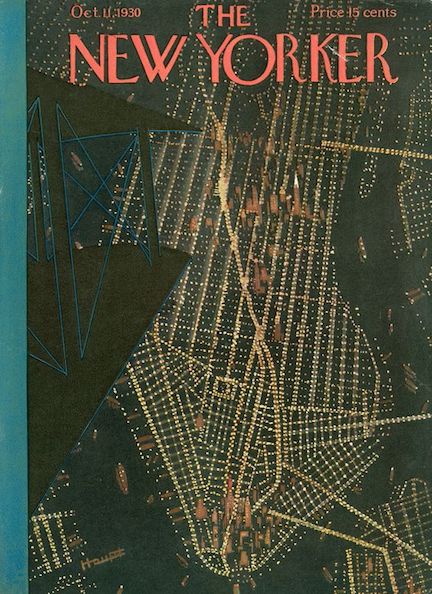
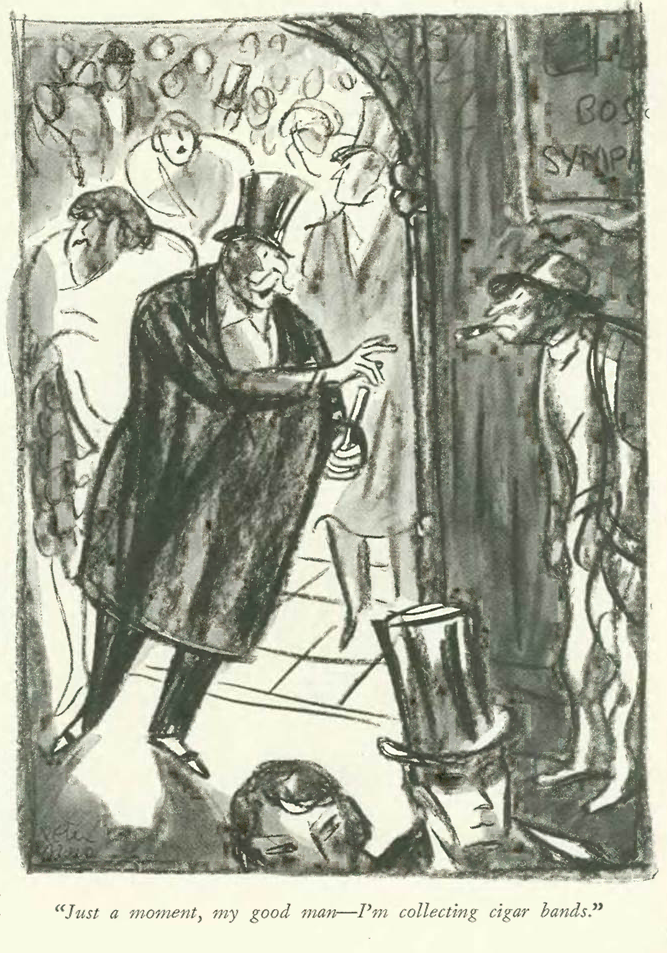
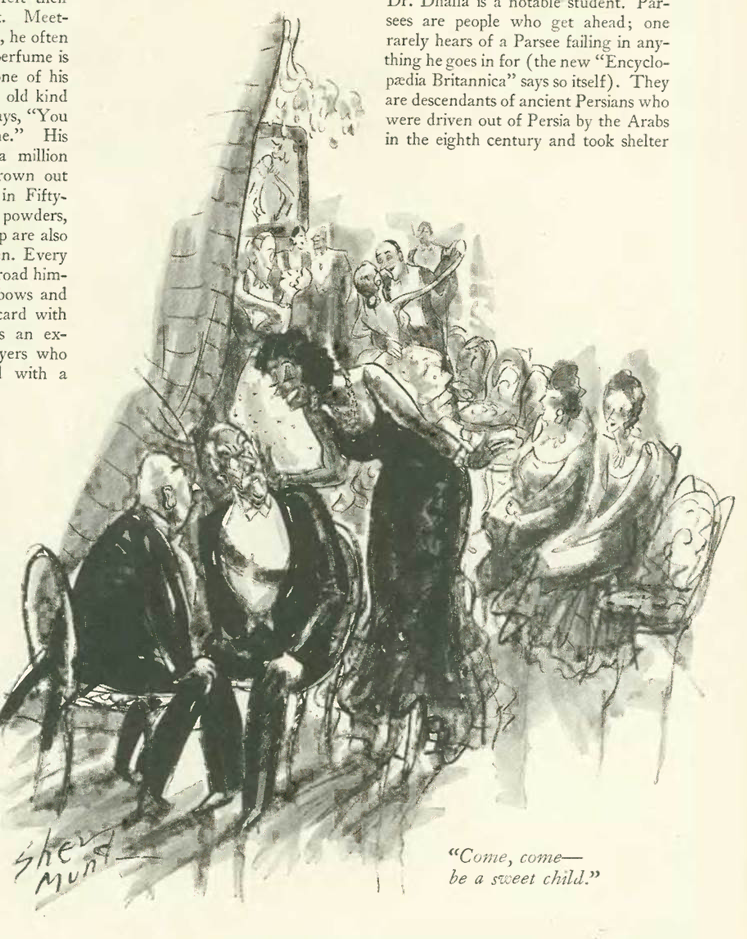
A Blue Angel

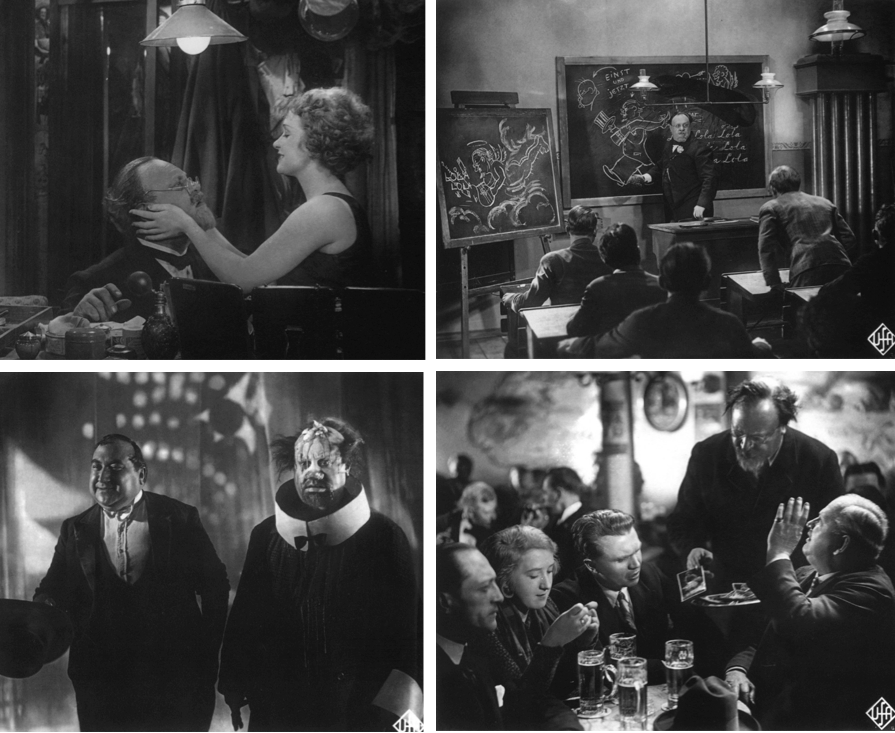
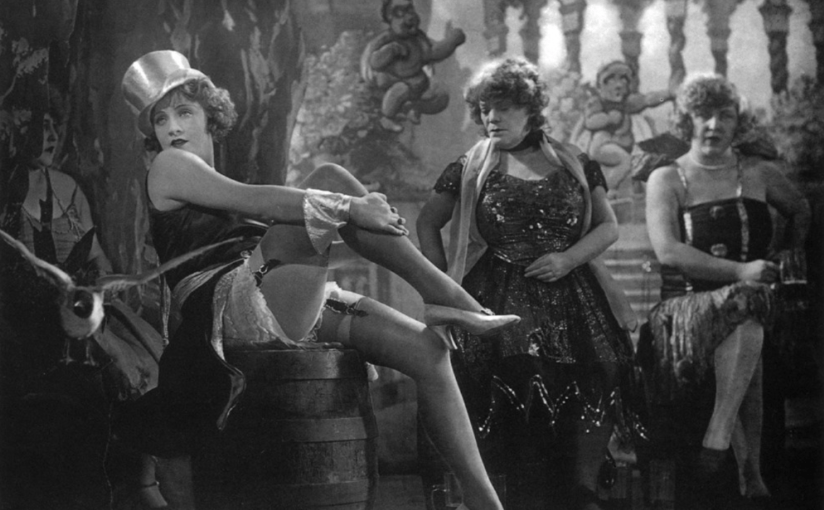
The German actor Emil Jannings was well-known to American audiences when The Blue Angel (Der blaue Engel) premiered at New York’s Rialto Theatre. Although the film was created as a vehicle for the Academy Award-winning Jannings (he won the Academy’s first-ever best actor award in 1929), it was the little-known Marlene Dietrich who stole the show and made it her ticket to international stardom.

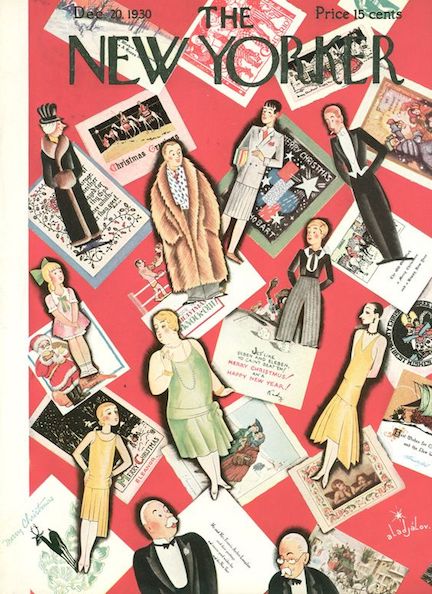
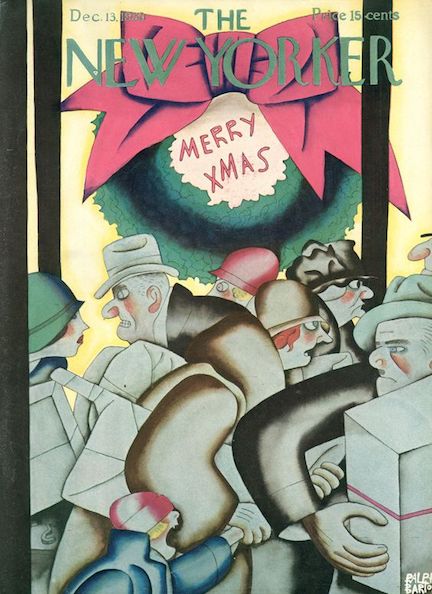
Dec. 13, 1930 cover by Ralph Barton, surprisingly his only cover for The New Yorker. The illustration sadly belies Barton’s state of mind at the time; he would take his own life the following spring.

New Yorker film critics, including John Mosher, generally found foreign films, particularly those of German or Russian origin, to be superior to the treacle produced in Hollywood, and Jannings was a particular favorite, delivering often heart-wrenching performances in such silent dramas as The Last Laugh (1924) and The Way of All Flesh (1927). In those films he depicted once-proud men who fell on hard times, and such was the storyline for The Blue Angel, in which a respectable professor falls for a cabaret singer and descends into madness.

NO CONTEST…Emil Jannings had star billing for the English language version of Josef von Sternberg’s The Blue Angel, but it was Marlene Dietrich’s portrayal of cabaret singer Lola Lola that stole the show. (IMDB)

I was surprised by Mosher’s somewhat tepid review of this landmark film, which was shot simultaneously in German and English (with different supporting casts in each version). He referenced “bum dialogue,” which was doubtless the result of German actors struggling with English pronunciations. Filmed in 1929, it is considered to be Germany’s first “talkie.”

PRIDE BEFORE THE FALL…A proud and stern schoolmaster named Immanuel Rath (Emil Jannings) falls for cabaret singer Lola Lola (Marlene Dietrich), and from there his life unravels; he loses the respect of his pupils, then resigns his post to marry Lola. To make ends meet, Rath tries to sell racy photos of his wife, and then becomes a clown in her troupe and is regularly humiliated on stage. Destitute, he dies at the end of the film. (IMDB)

 *  *  *

All Wet

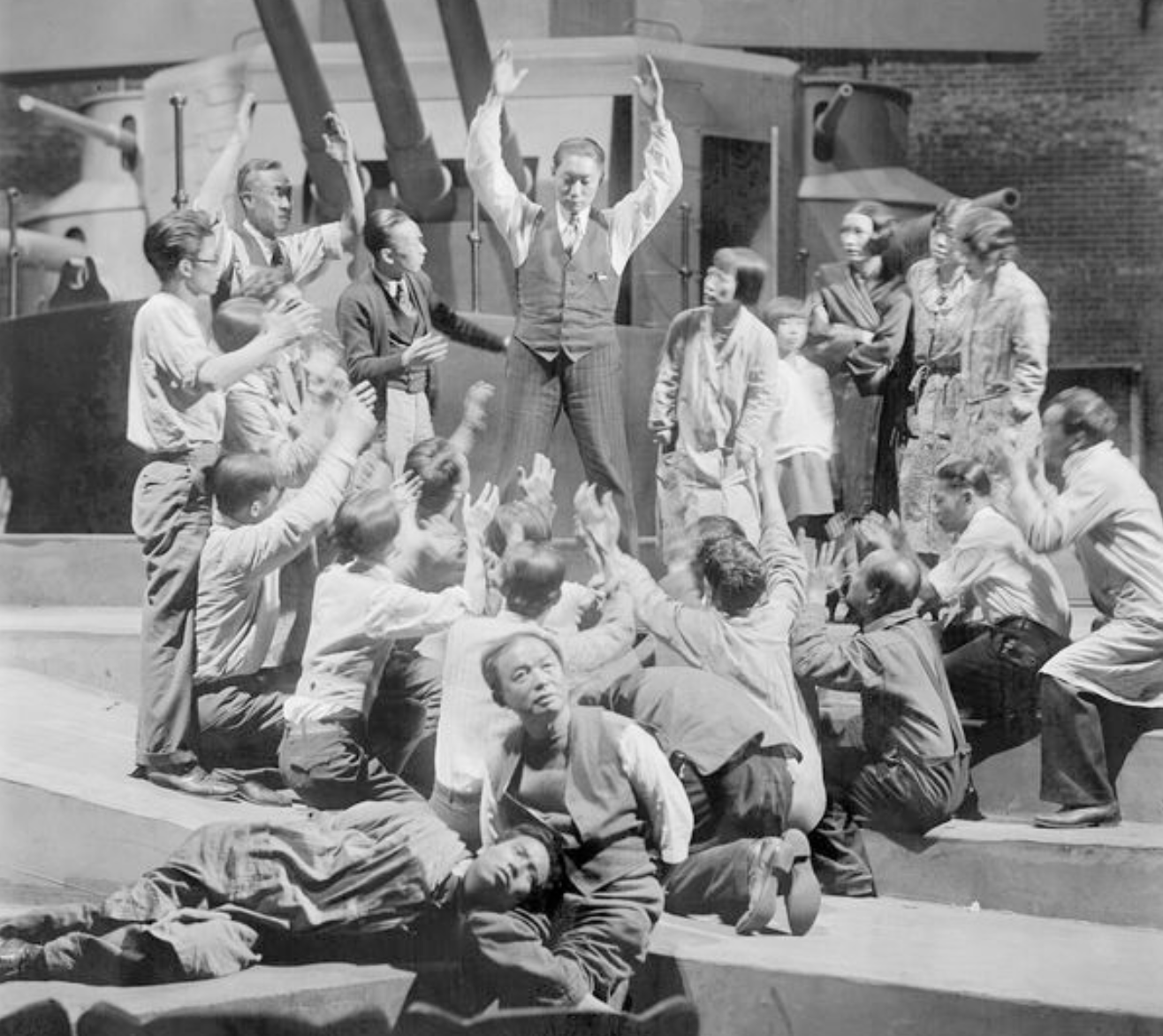
Sergei Tretyakov’s avant-garde play Roar China made an impression on The New Yorker for the striking realism of its set, which featured an 18,000-gallon tank of water onstage at the Martin Beck Theatre. “The Talk of the Town” described some of the demands of the production:

STAYING AFLOAT…The elaborate set for Roar China featured a model battleship in 18,000 gallons of water.
ROAR CHINA! was an anti-imperialist play depicting the Wanhsien Incident during the Chinese Civil War. Many in the Chinese cast members were non-professional actors. (New York Public Library)

  *  *  *

By Any Other Name

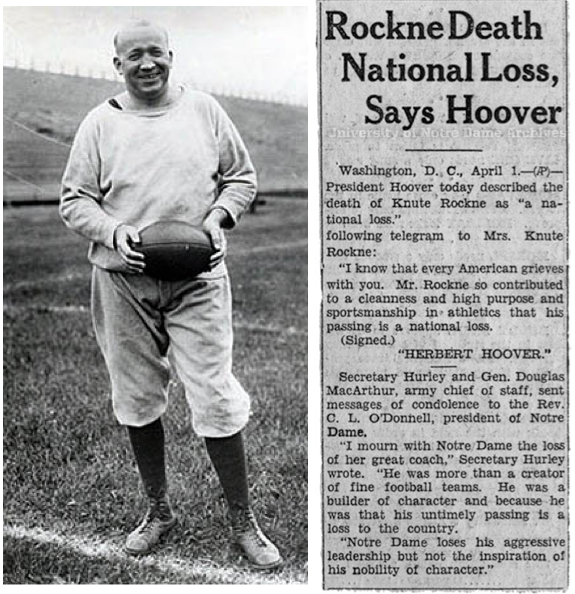
Like many college football teams in first decades of the 20th century, Notre Dame was referred to by a number of nicknames, including the “Fighting Irish.” In this “Talk of the Town” item, however, the team was known as the “Ramblers.” According to the University of Notre Dame, this nickname (along with “The Rovers”) was considered something of an insult: “(Knute) Rockne’s teams were often called the Rovers or the Ramblers because they traveled far and wide, an uncommon practice before the advent of commercial airplanes. These names were also an insult to the school, meant to suggest it was more focused on football than academics.”

RAMBLERS NO MORE…The 1930 National Champion Notre Dame football team. (nd.edu)

 *  *  *

The Wright Stuff

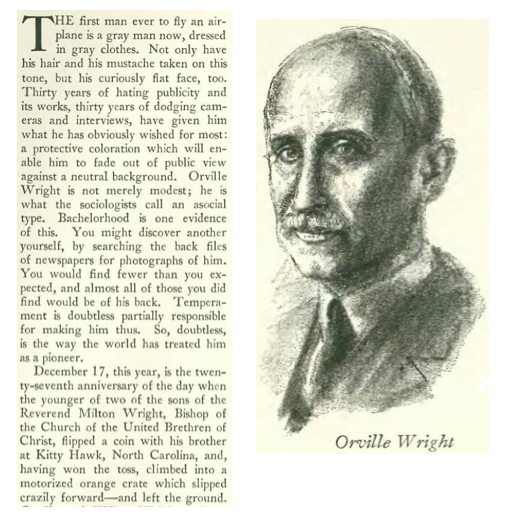
Eric Hodgins penned a profile of aviation pioneer Orville Wright, who just 27 years earlier made a historic “first flight” with his brother, Wilbur, at Kitty Hawk, North Carolina. An excerpt:

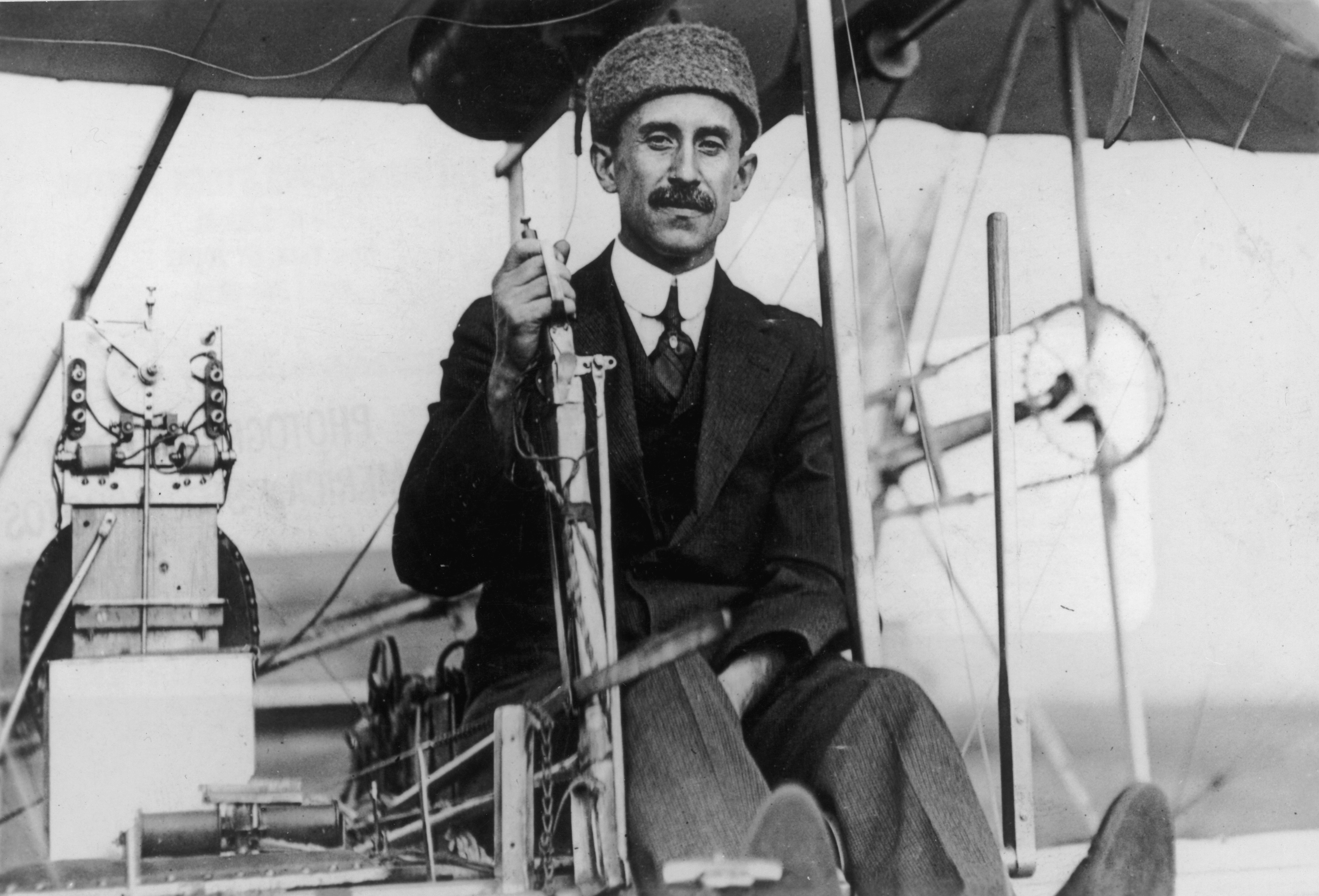
DRESSED FOR SUCCESS: Aviation pioneer Orville Wright (1871 – 1958) sits in one of his biplanes dressed in a three-piece suit and a cap, Dayton, Ohio, 1909. (ge.com)

 *  *  *

No Love Parade, This

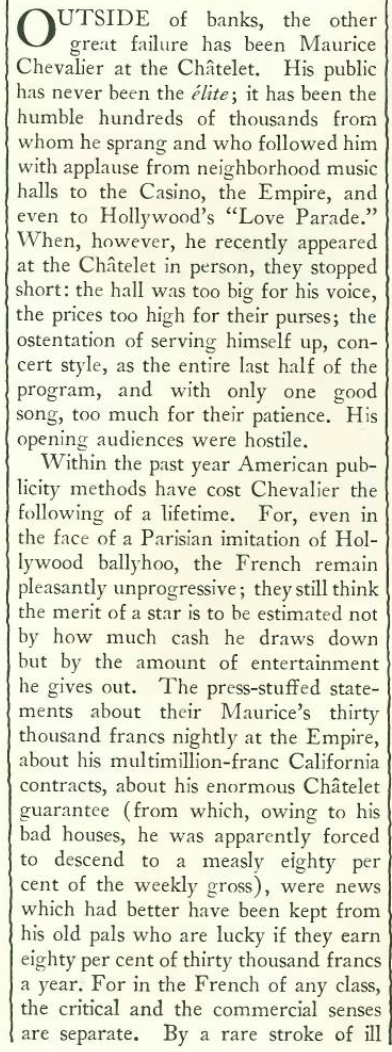
French singer and actor Maurice Chevalier made his Hollywood debut in 1928 and quickly soared to stardom in America. French audiences, however, were not so easily swayed, especially the elite patrons Chevalier faced, alone on the stage, at the cavernous Théâtre du Châtelet. Janet Flanner explained in this dispatch from Paris:

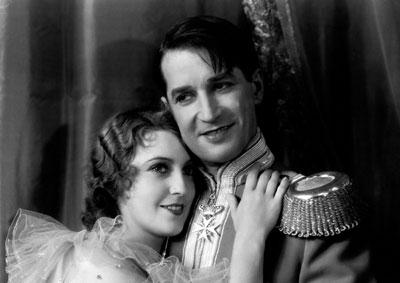
THEY LIKE ME IN TINSELTOWN…Jeanette MacDonald and Maurice Chevalier in The Love Parade (1929). (IMDB)
GULP…Maurice Chevalier faced a tough crowd — his compatriots — at Paris’s Théâtre du Châtelet. (en.parisinfo.com)

 *  *  *

Man’s Best Friend

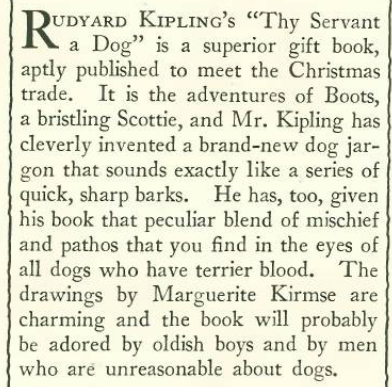
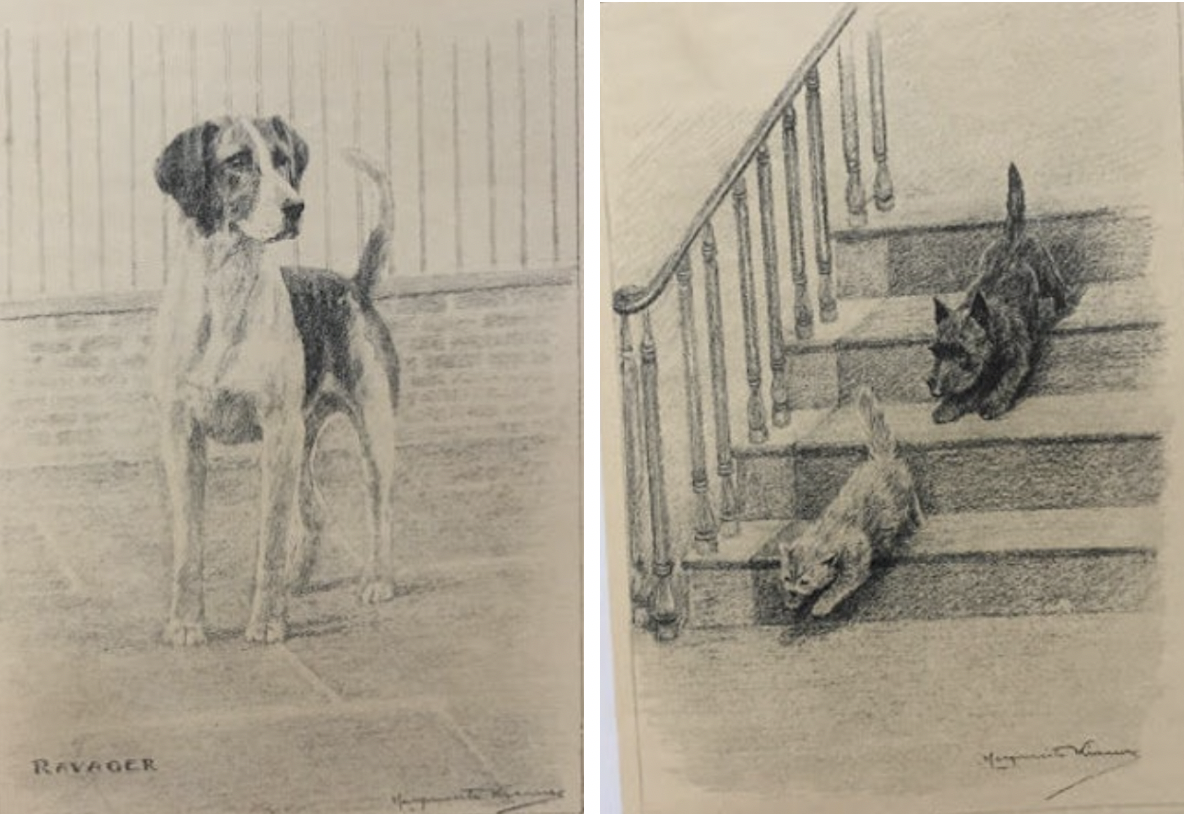
The New Yorker’s book section recommended the latest from Rudyard Kipling, Thy Servant a Dog…

WOOF…Illustrations for Rudyard Kipling’s Thy Servant a Dog, by Marguerite Kirmse. (Etsy)

 *  *  *

Fun and Games

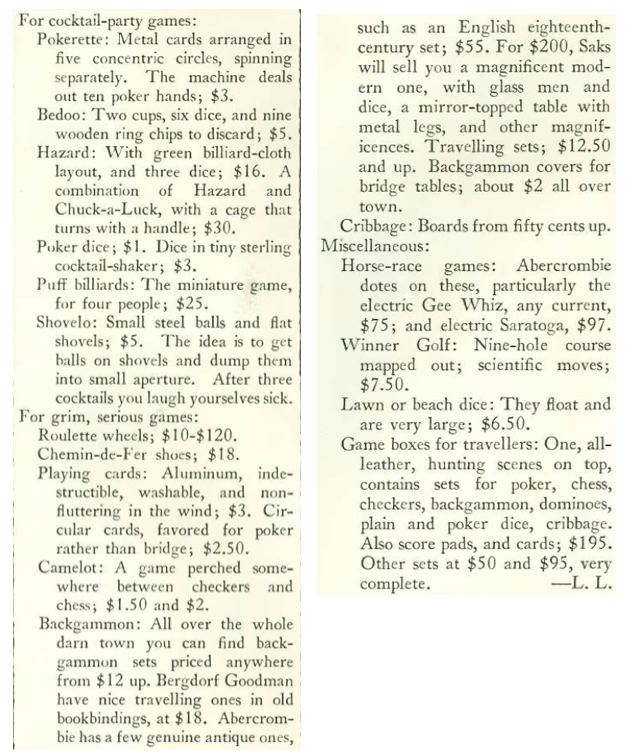
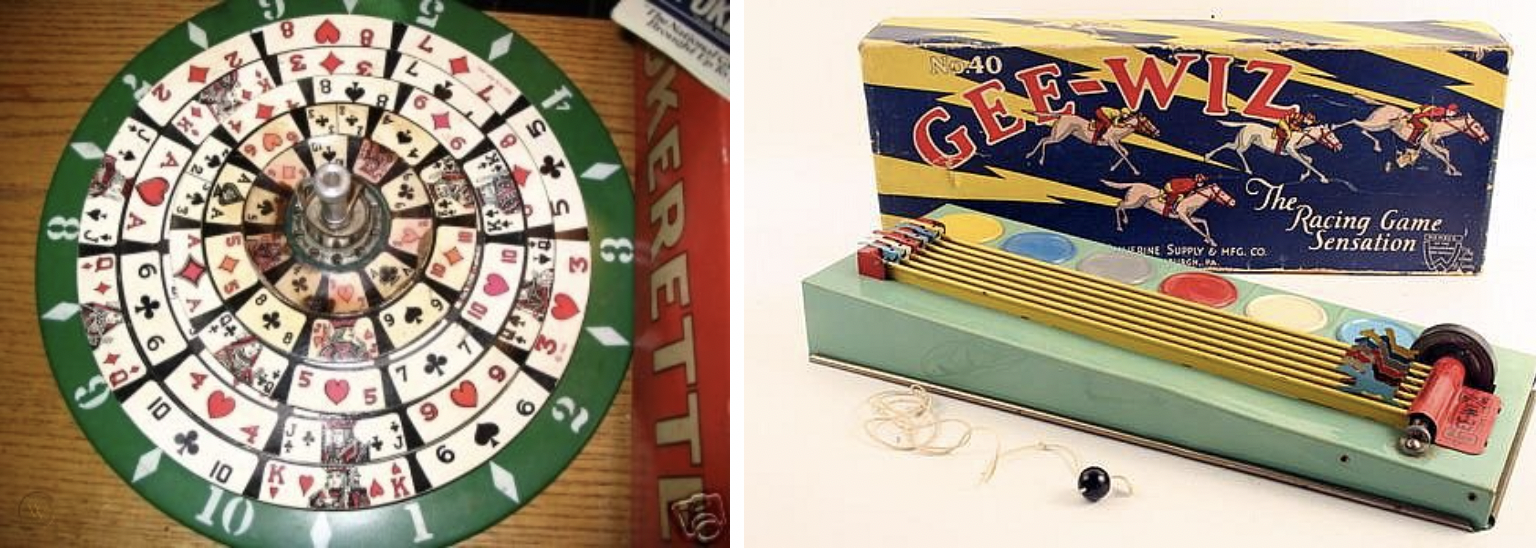
As an extension to her fashion column, Lois Long shared some recommendations for holiday cocktail-party games:

KEEPING THINGS MERRY…Pokerette and Gee-Wiz were popular cocktail party diversions during the Christmas season of 1930. (Worthpoint/Invaluable)

*  *  *

From Our Advertisers

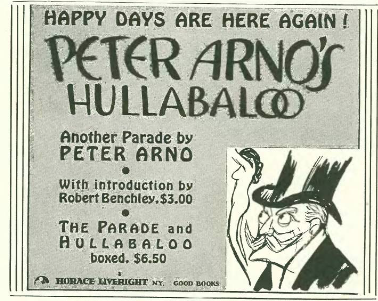
We start with this ad from Horace Liveright promoting Peter Arno’s third cartoon collection, Hullaballoo, featuring one of Arno’s leering old “Walruses”…

…Doubleday Doran offered a few selections for last-minute Christmas shoppers, led by the Third New Yorker Album

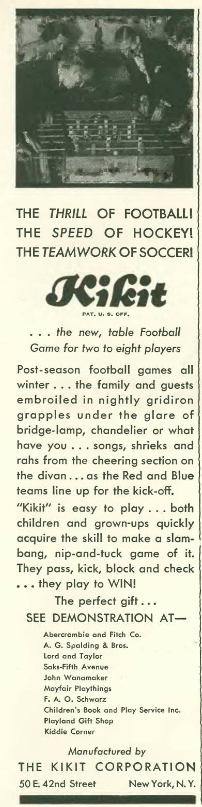
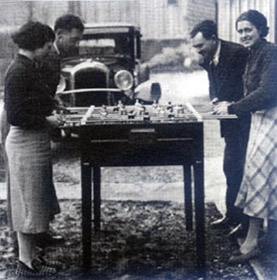
…The UK’s Harold Searles Thorton invented the table top game we now call “foosball” in 1921 and had it patented in 1923. Below is possibly the game’s first appearance in the U.S. — an ad for a “new” game called “Kikit.” Foosball would be slow to catch on, but would rapidly gain popularity in Europe in the 1950s and in the U.S. in the 1970s…

Early foosball players circa 1930. (foosball.org)

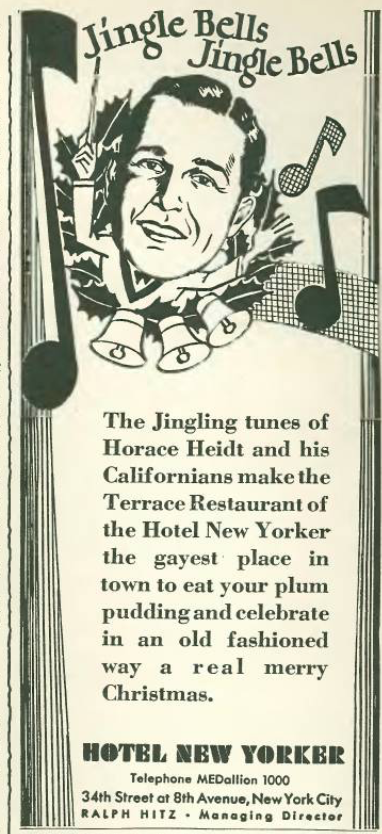
Horace Heidt and his Californians were doing their best to make the season bright at the Hotel New Yorker…

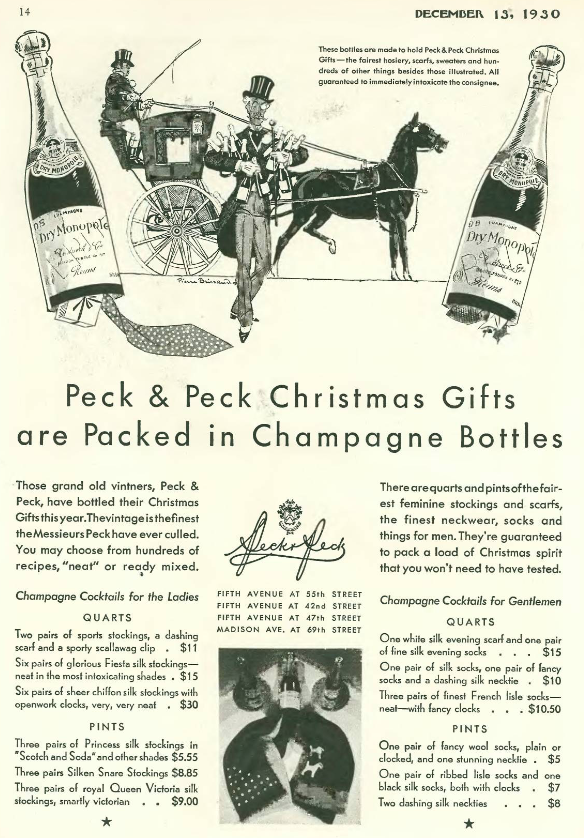
…Peck & Peck tried to make the most of Prohibition by stuffing scarves and other wares into empty Champagne bottles…

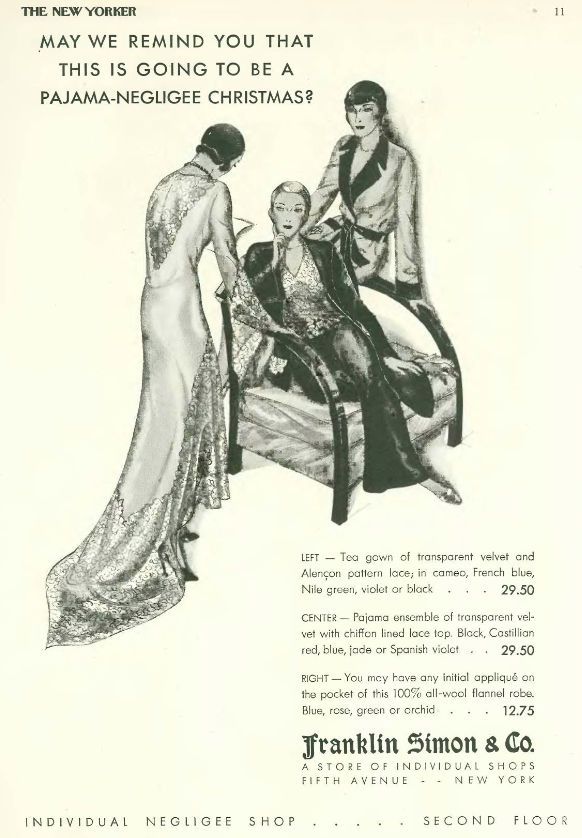
…and Franklin Simon reminded readers that it would be a “Pajama-Negligee Christmas,” whatever that meant…

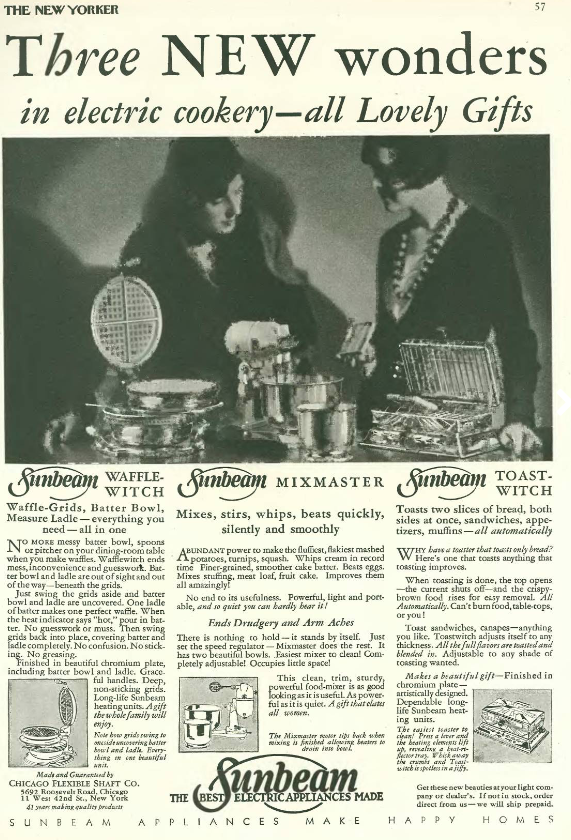
…pajamas and negligees were doubtless preferable, and more romantic, than this array of kitchen appliances…

…whatever the holiday revelry, the makers of Milk of Magnesia had our backs…

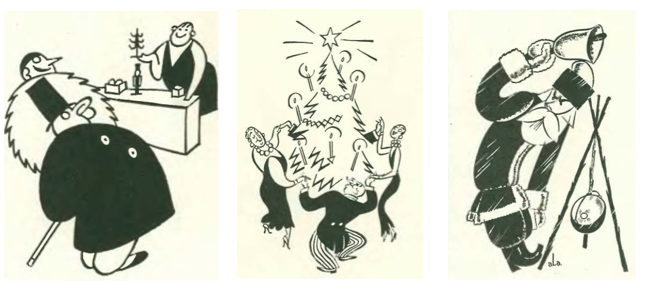
…on to our cartoonists, Julian De Miskey and Constantin Alajalov contributed spot drawings to mark the season…

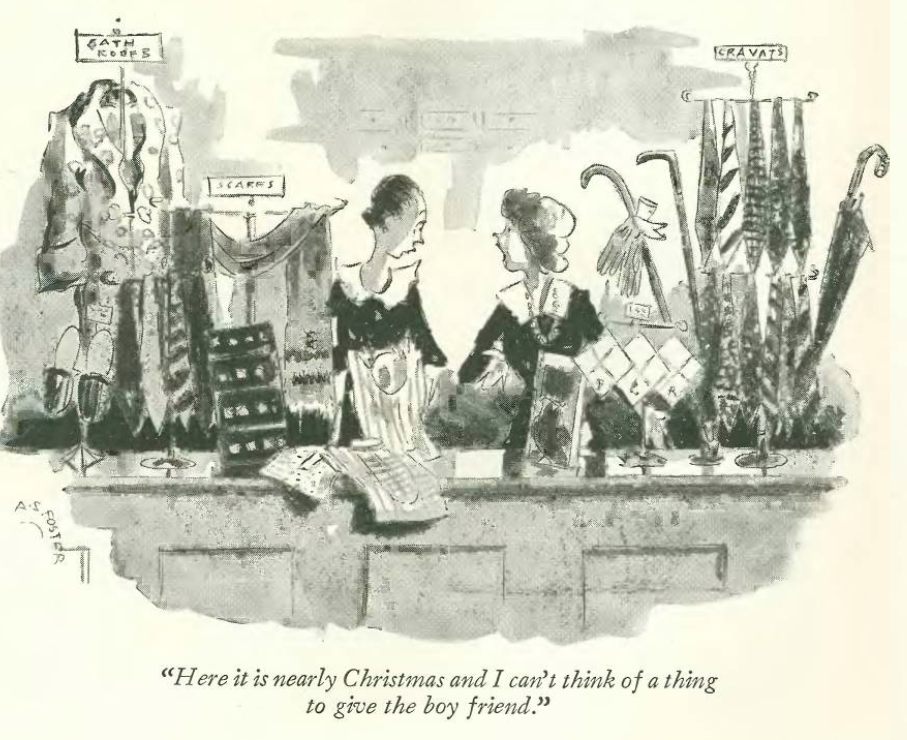
A.S. Foster contributed two cartoons to the issue…

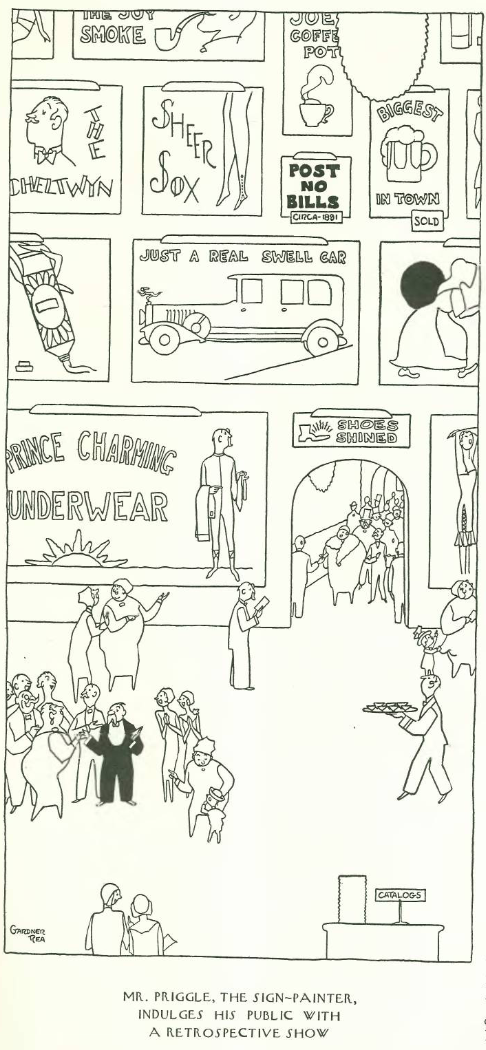
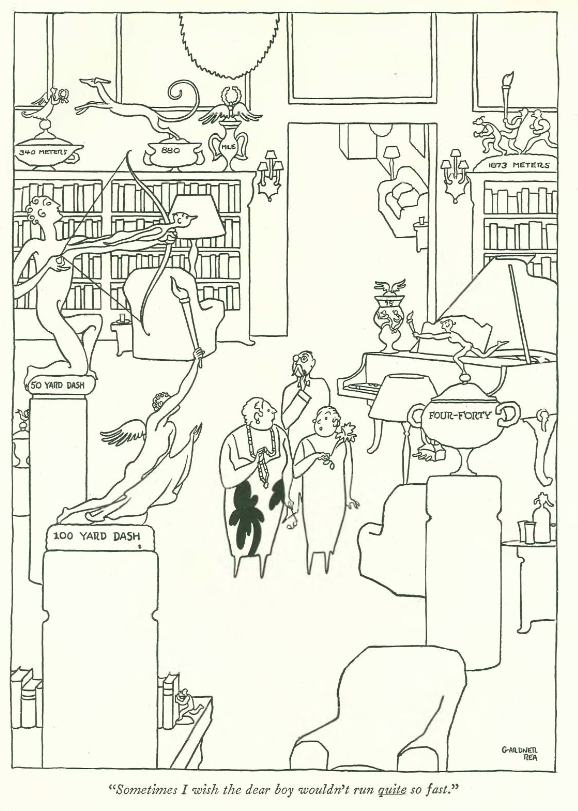
Gardner Rea, a full-pager…

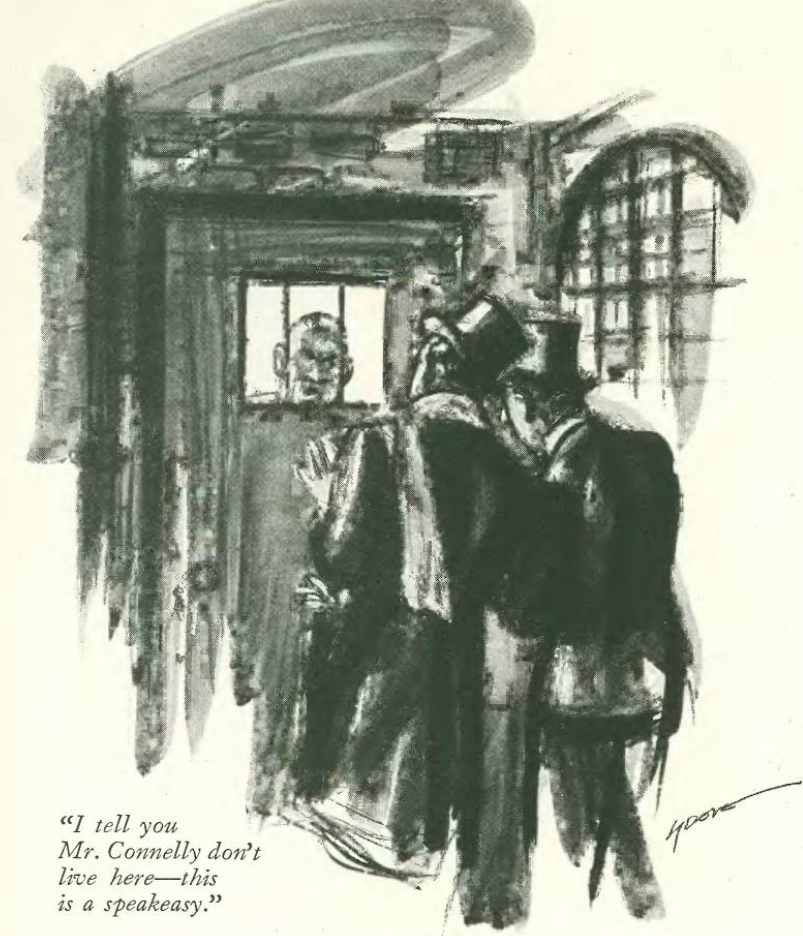
Leonard Dove, possibly having some fun with playwright Marc Connelly

Isadore Klein demonstrated the fun to be had with a kiddie scooter, before they had motors…

…and we close with John Reynolds, and some bad table manners…

Next Time: Happy Holidays…


Body and Soul

After completing a major in French in just three years, 19-year-old Libby Holman became the youngest woman to graduate from the University of Cincinnati in 1923. But it was her unique style of torch-singing—a trademark throaty mumble—that would launch a career on Broadway and a life of seemingly endless scandal.

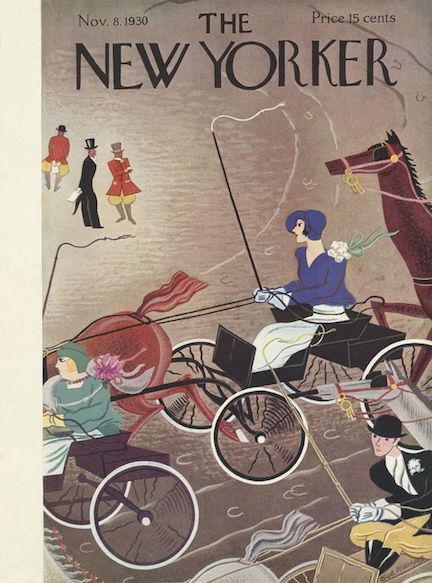
Nov. 8, 1930 cover by Sue Williams.

After performing in the The Greenwich Village Follies, Holman (1904–1971) landed her first big role in 1925 in the Rodgers and Hart production of Garrick Gaieties. But it was a signature song, “Moanin’ Low,” from Clifton Webb’s The Little Show that would make her a star. When Three’s a Crowd (by Howard Dietz and Arthur Schwartz) opened at the Selwyn Theater on October 15, 1930, Holman was well-known to audiences not only for her voice but also for her unconventional lifestyle.

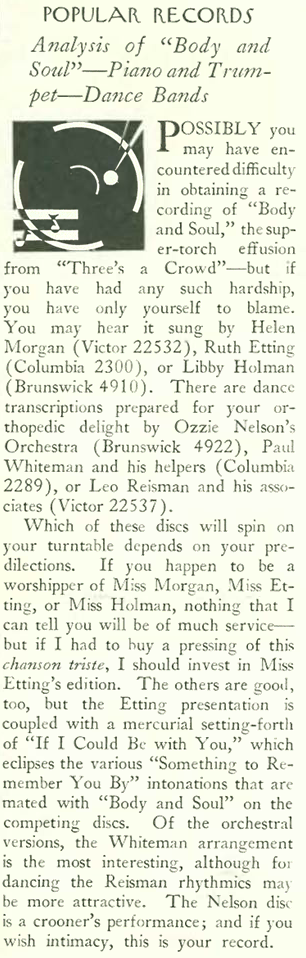
Three’s a Crowd proved to be a hit for Holman, and it gave her another hit song, “Body and Soul,” which was banned from the radio for “obscenity” but nevertheless became one of the year’s most popular songs. So popular, in fact, that it was recorded by Holman as well as by fellow torch singer Helen Morgan and Ziegfeld star Ruth Etting. This was the age of the Great American Songbook, when the song itself, and not necessarily its performer, reigned supreme. So when sheet music was distributed from a popular stage show, any number of entertainers would record it.

NAME THAT TUNE…From top to bottom, Helen Morgan, Ruth Etting and Libby Holman all recorded versions of “Body and Soul,” but Holman would make it one of her signature numbers. (YouTube/ruthetting.com/Wikipedia)

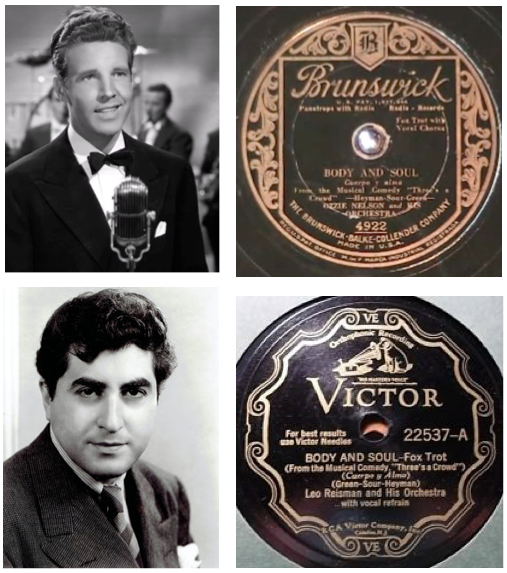
…for the hoofers, there were also a couple of dance versions of “Body and Soul” created by bandleaders Ozzie Nelson and Leo Reisman

GOOD BEAT, EASY TO DANCE TO…Bandleaders Ozzie Nelson and Leo Reisman recorded dance versions of “Body and Soul.” (YouTube)

Openly bisexual, Holman partied hard and swore like a sailor, and during her life she would lose one husband in a suspected murder (Holman herself was briefly a suspect) and another to suicide. She would take her own life in 1971. You can read more about Holman’s colorful, tragic life in the Jewish Women’s Archive.

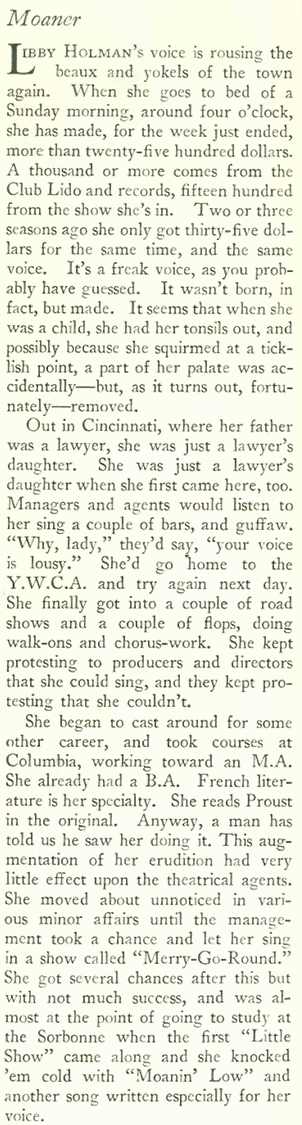
We temporarily skip to the next issue of The New Yorker (Nov. 15, 1930), which featured Holman in a “Talk of the Town” brief, and some insight into her unique singing style. An excerpt:

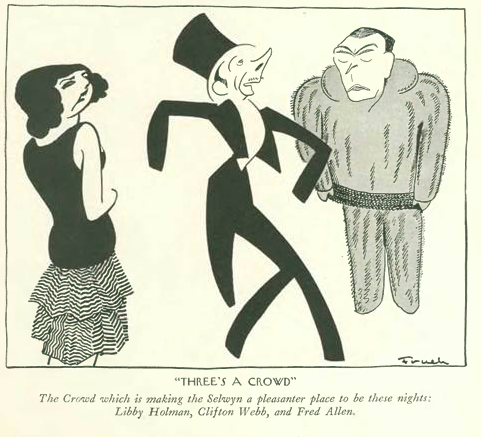
The same issue also featured this drawing of the “Three’s a Crowd” cast by Al Frueh in the theater review section:

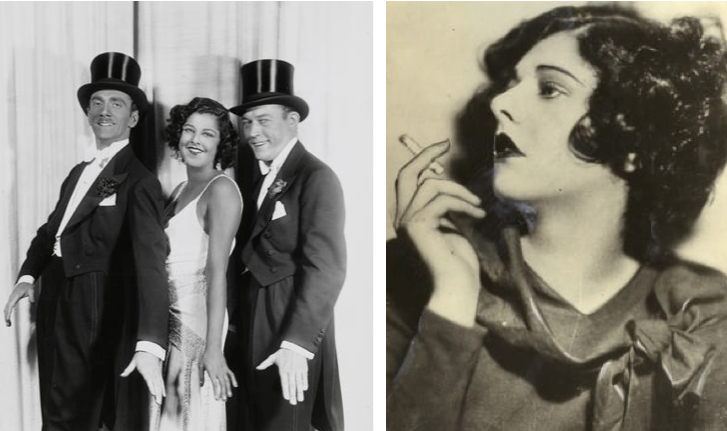
and finally, a publicity photo of the cast from 1930-31:

A FUN CROWD…Clifton Webb, Libby Holman and Fred Allen in Three’s a Crowd. At right, undated publicity photo of Holman. (performerstuff.com)

*  *  *

Horsin’ Around

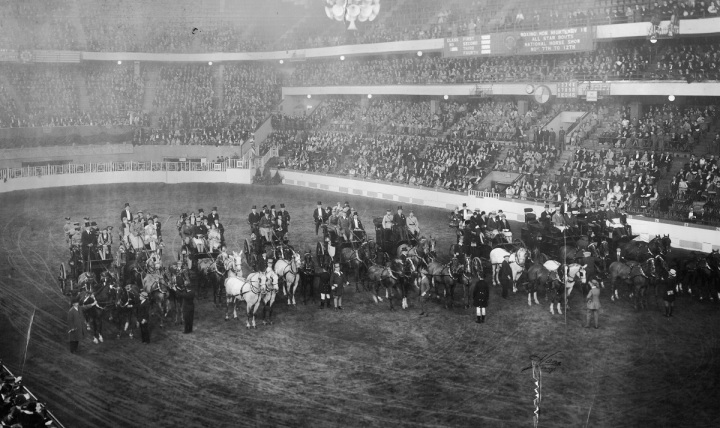
The National Horse Show was a major event on New York’s social calendar, first held at the original Madison Square Garden in 1883 before moving to the second Madison Square Garden in 1890 and again to the third Madison Square Garden in 1926. This account in the Nov. 8, 1930 New Yorker noted how the horse show’s patrician air contrasted with the rodeo held at MSG the previous week.

NOT FOR GOAT-ROPERS, THIS…The coaching parade on display at the 1927 National Horse Show in Madison Square Garden. (National Sporting Library & Museum)
SOON WE’LL BE FIGHTING EACH OTHER…The National Horse Show began including a military competition in 1925. This photo from the Nov. 6, 1930 New York Times featured some international guests at the 1930 show. (NY TIMES)

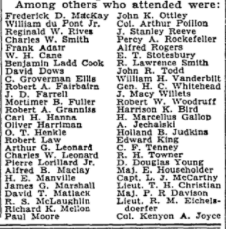
Along with the above photo, the Times included this partial lists of guests to the Horse Show Luncheon, a who’s who of New York society. Indeed, the National Horse Show’s 1887 directory provided the basis for the first New York Social Register.

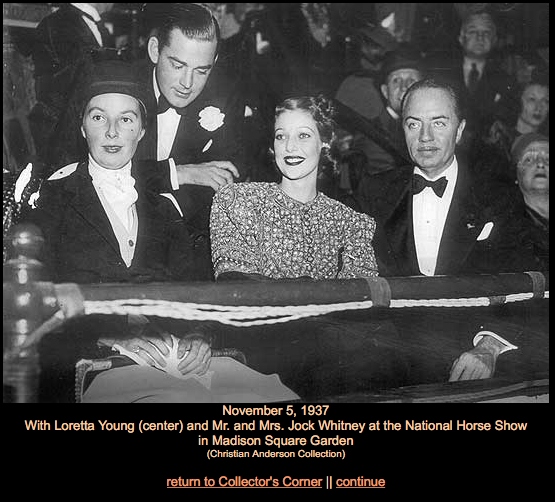
DRESSING UP FOR THE HORSES…Champion horsewoman Mary Elizabeth Whitney (left) with actors Loretta Young and William Powell at the National Horse Show in Madison Square Garden, Nov. 5, 1937. Standing behind Mary Elizabeth is her husband, Jock Whitney, a noted ambassador, art collector, philanthropist and investor. (Christian Anderson Collection)
HIGH STEPPIN’…After a brief stint in Florida, the National Horse Show moved to Kentucky in 2011. Perhaps a tad less formal, it nevertheless remains an important society event. Above, noted horsewoman Misdee Wrigley Miller rides World Grand Champion Grande Gil at the 2012 National Horse Show. (Doug Shiflet)

 *  *  *

A Lesson in Poetry 

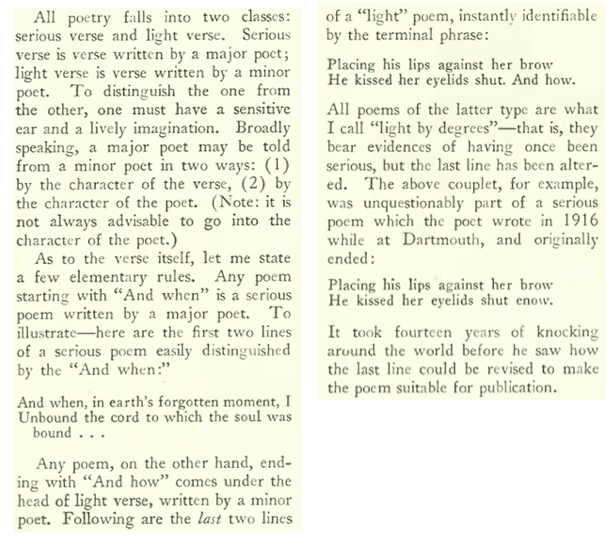
In a casual for the Nov. 8 issue, E.B. White instructed readers on how to “Tell a Major Poet From a Minor Poet.” An excerpt.

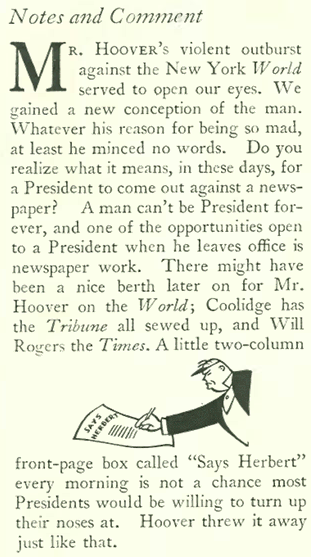
And in his “Notes and Comment,” White suggested that criticism of the press was a major no-no for a sitting U.S. President:

Christmas shopping suggestions began to trickle into Lois Long’s section on fashion, house and home, including this bit of advice that reminds us just how distant 1930 is from our own time:

 *  *  *

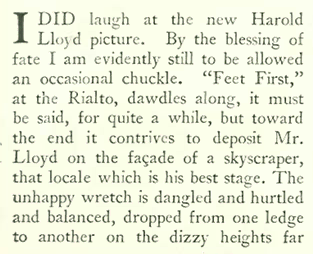
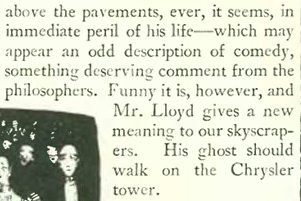
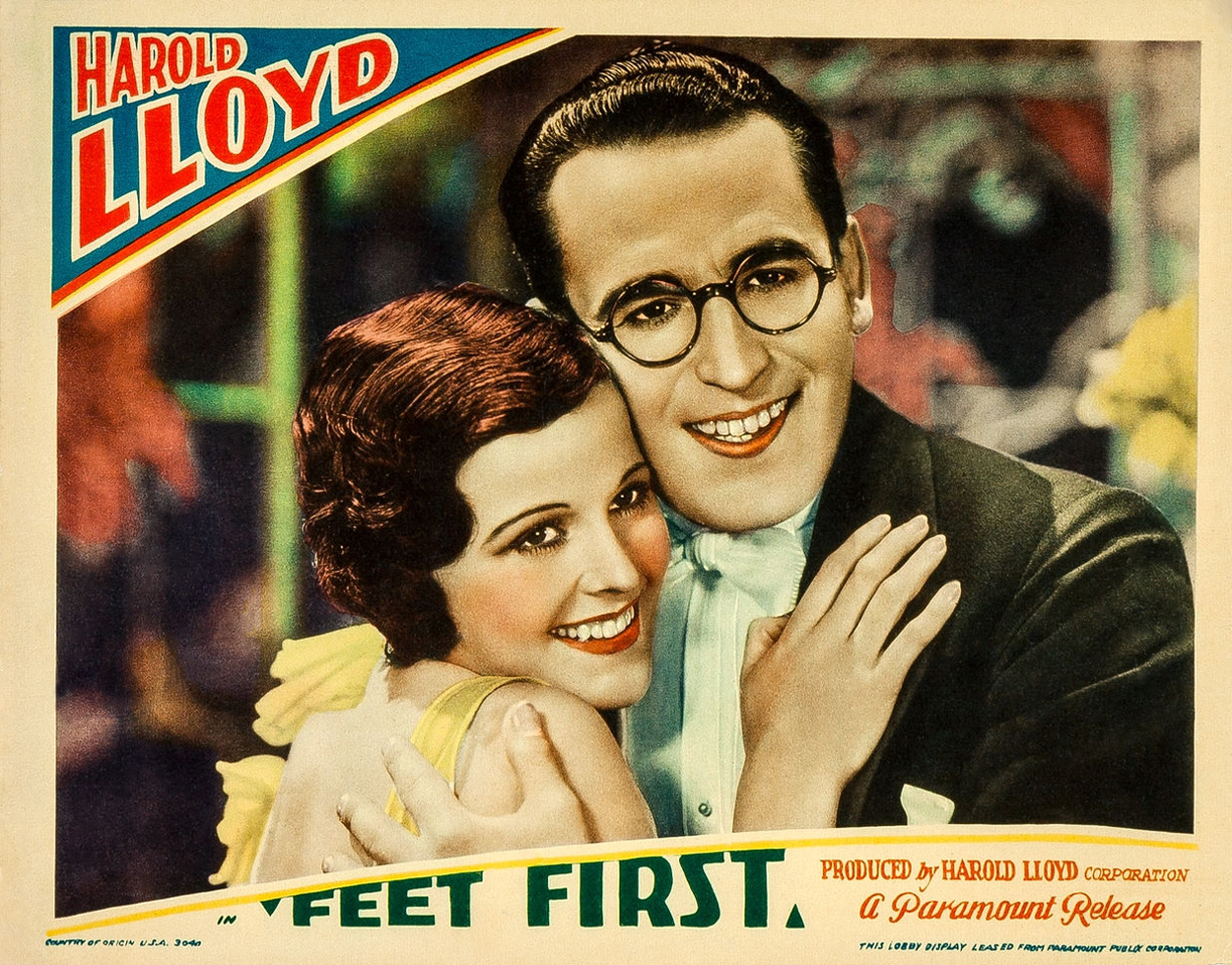
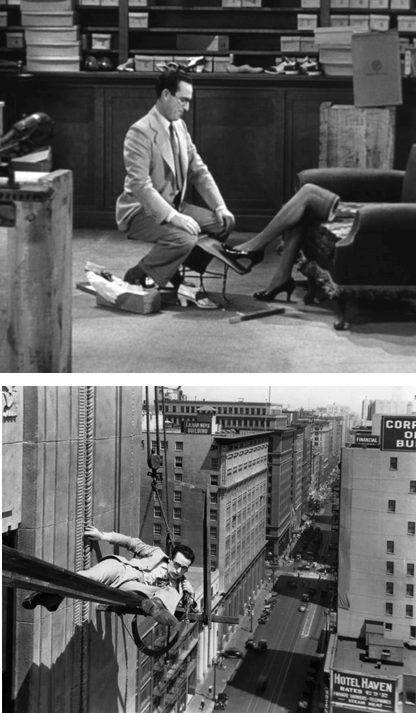
Film critic John Mosher took in the latest offering from silent film star Harold Lloyd, who was making his second foray into the talkies with his portrayal of a hapless shoe salesman in Feet First

TEETH FIRST…Theater card for 1930’s Feet First featuring Barbara Kent and Harold Lloyd. (IMDB)
GETTING A LEG UP…Top, Harold Lloyd practices the art of shoe salesmanship with a pair of dummy legs in Feet First; below, Lloyd once again finds himself in a precarious situation high above a city street. (IMDB)

 *  *  *

From Our Advertisers

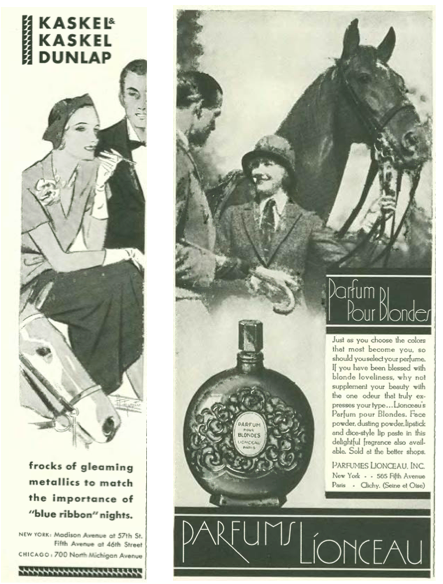
The National Horse Show was on the minds of several advertisers in The New Yorker, including these fashion merchants targeting the patrician set…

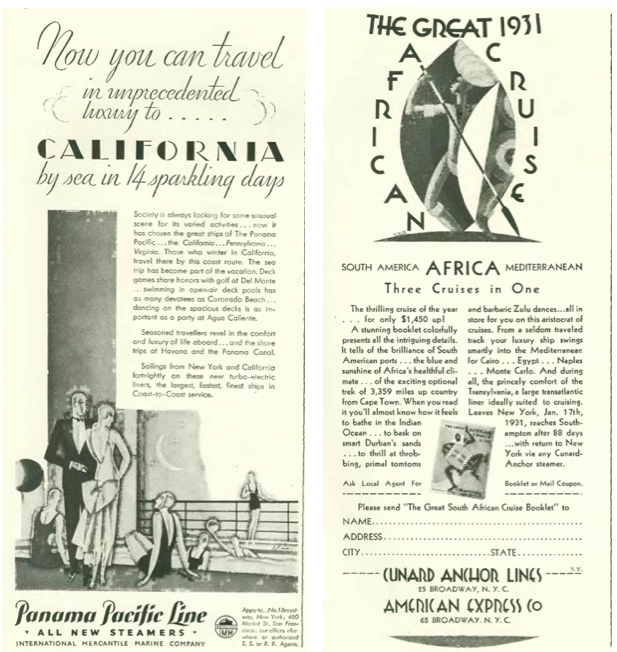
…speaking of the well-heeled, with winter approaching travel agencies enticed those with means to take a steamer through the Panama Canal to California, or for the more adventurous, a three-continent tour package…

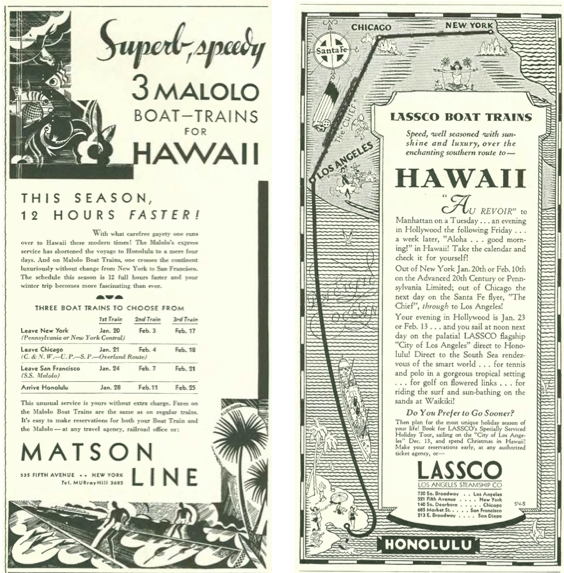
…and of course Hawaii beckoned snowbirds, who could make their way across the Lower 48 by train and then hop a boat to the islands…

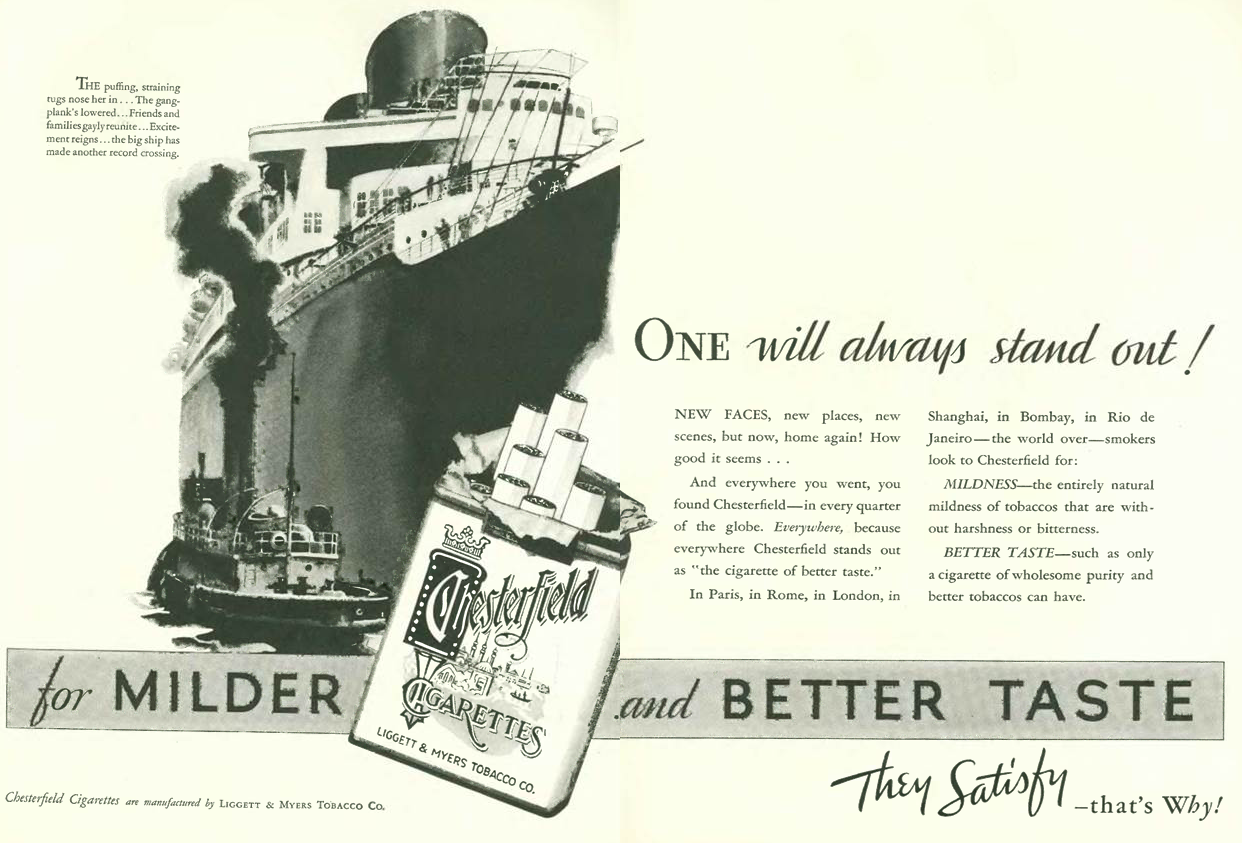
…the makers of Chesterfield cigarettes were on board with the travel theme…

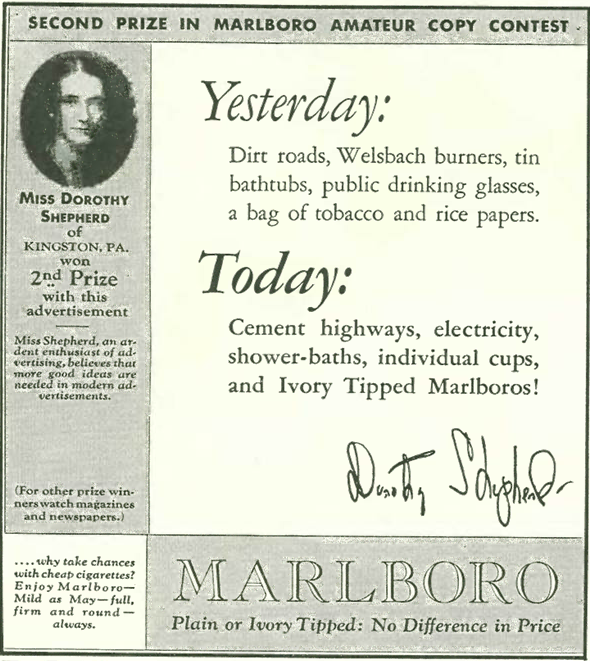
…while the folks at Marlboro stuck with their dopey handwriting and jingle contests to push their smokes…

…as the luxury market grew ever tighter in the Depression, the sellers of finer things sought to distinguish their wares from competitors. L.P. Hollander kicked off a series of wordy ads regarding the provenance of their hats, gloves and other accessories (in short, they ain’t cheap copies)…

…no doubt the folks at L.P. Hollander were looking down their noses at the likes of Russeks, which offered copies of Lucien Lelong gowns. Apparently old Lucien was okay with this, as this “Radiogram” purportedly attests…

…Lucien pops again in another ad, this one for his perfume line…

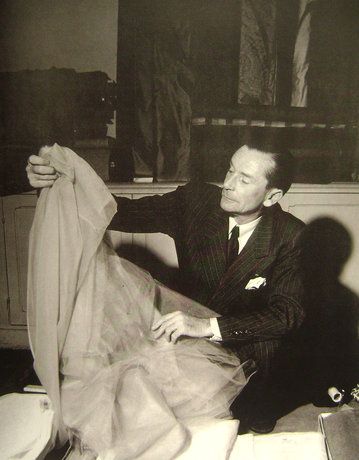
…and for reference, here’s a photo of Monsieur Lelong, circa 1940…

(comm396-s16.ascjclass.org)

…on to our cartoonists, the Nov. 8 issue featured these great spot illustrations by Constantin Alajalov, the first, running along the bottom of “The Talk of the Town,” referenced the horse show at Madison Square Garden…

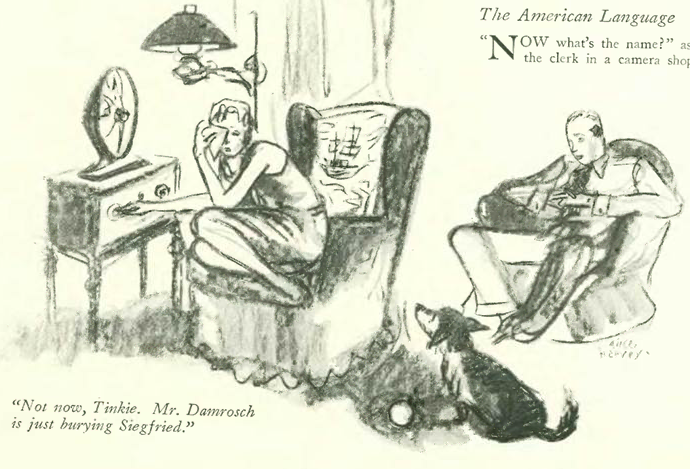
Alice Harvey listened in on a radio soap…

William Crawford Galbraith found some admirers of art…

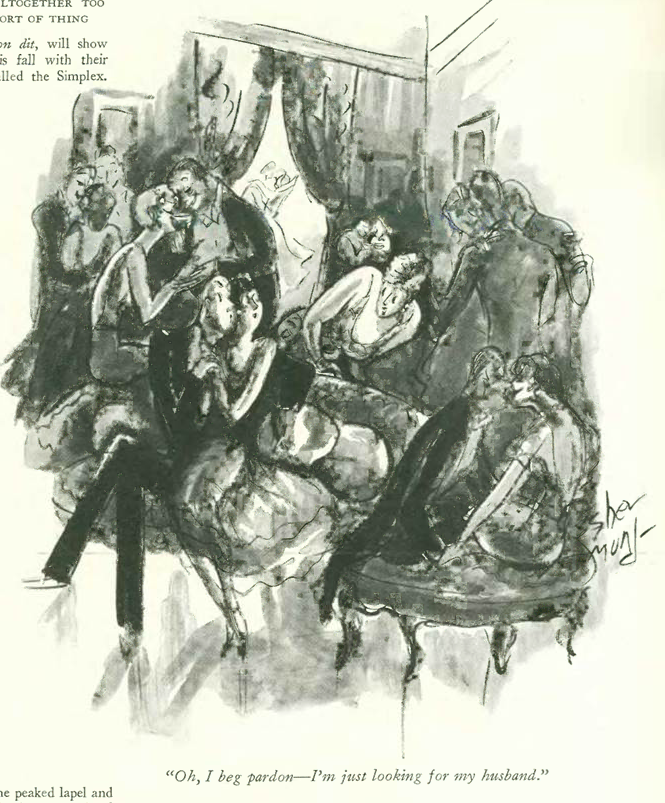
Barbara Shermund continued to share her sharp observations of parlor hijinks…

Garrett Price illustrated the challenges of modern design…

…and we end with Peter Arno, and a stomach-turning moment…

Next Time: The High Place…

Leatherheads

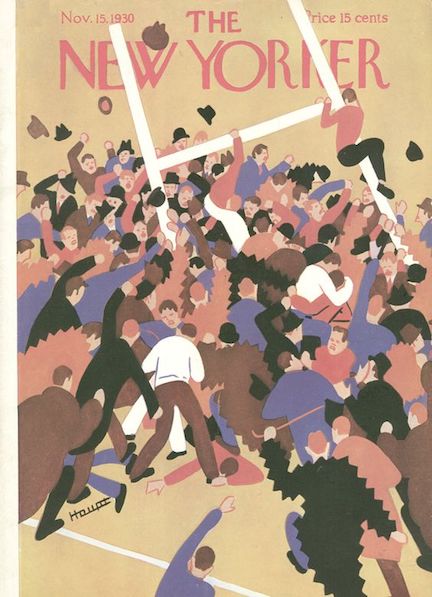
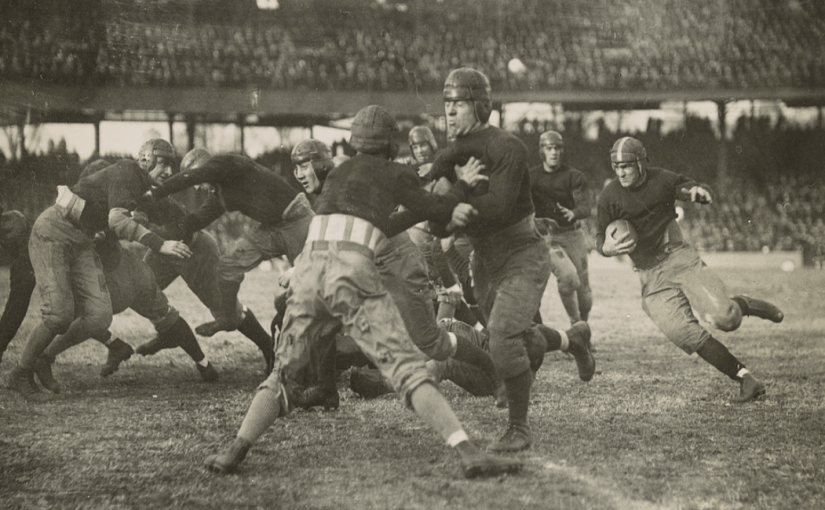
One thing you won’t see in today’s New Yorker magazine is extensive coverage of college football (more likely you’ll see an indictment of the game). In the magazine’s first years, however, that sport was enthusiastically embraced.

Oct. 4, 1930 cover by Rea Irvin.

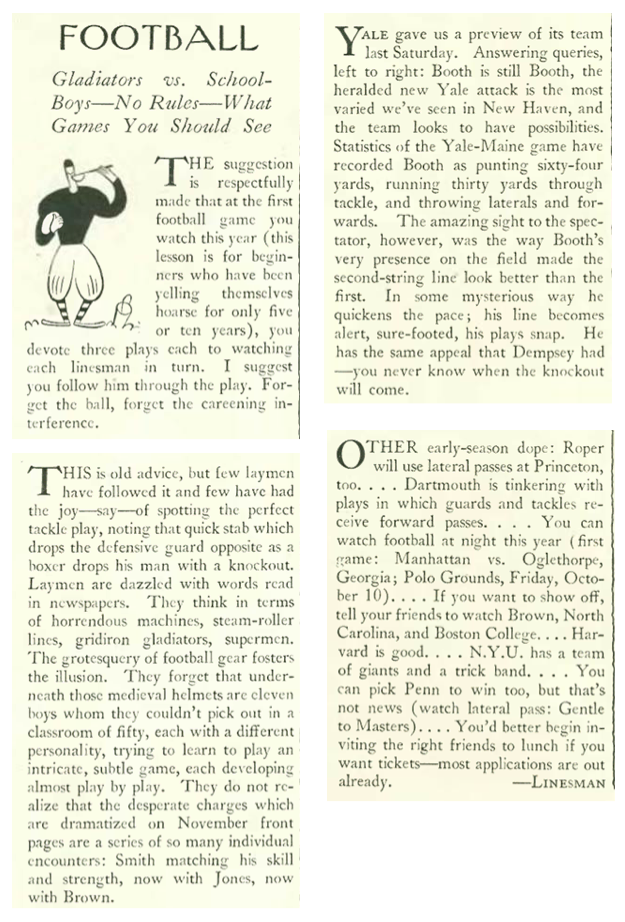
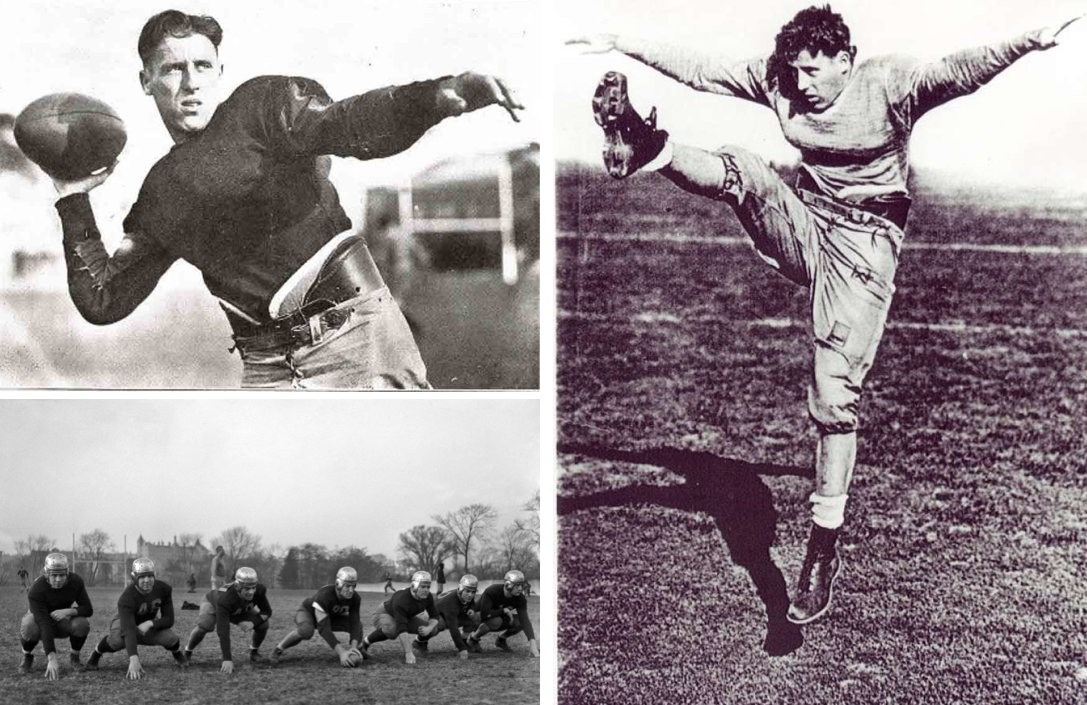
A writer identified by the alias “Linesman” assessed the early season’s prospects, and noted the return of Yale’s Albie Booth (1908–1959) to the field. Booth became famous during the previous season for his spectacular play against Army: Booth led Yale to an upset victory by scoring all of the team’s points (two rushing touchdowns, a 65-yard punt return for a touchdown, and three extra point kicks). Newsreels featuring the game sported the caption, “Booth 21, Army 13.”

GOOD THINGS COME IN SMALL PACKAGES…Top and left, only 5 feet 6 inches tall and 144 pounds, Albie Booth nevertheless could do it all on offense – running, passing, kicking. He was elected to the College Football Hall of Fame in 1966. Bottom, left, Fordham’s famed “Seven Blocks of Granite,” in 1936. In the days before he became a legendary coach, Vince Lombardi  served as one of those seven blocks (he is third from the left). (footballfoundation.org/yaledailynews.com/Associated Press)

 *  *  *

Foul Ball

While The New Yorker geared up to cover the college football season (as well as everything from Badminton to yacht racing), it continued to ignore professional baseball, mentioning its existence only in passing, such as this observation shared by Howard Brubaker in “Of All Things”…

Footnote: Simeon Fess (1861-1936) was a Republican Senator from Ohio known as an apologist for a very unpopular Republican Party.

  *  *  *

Not For The Kiddies

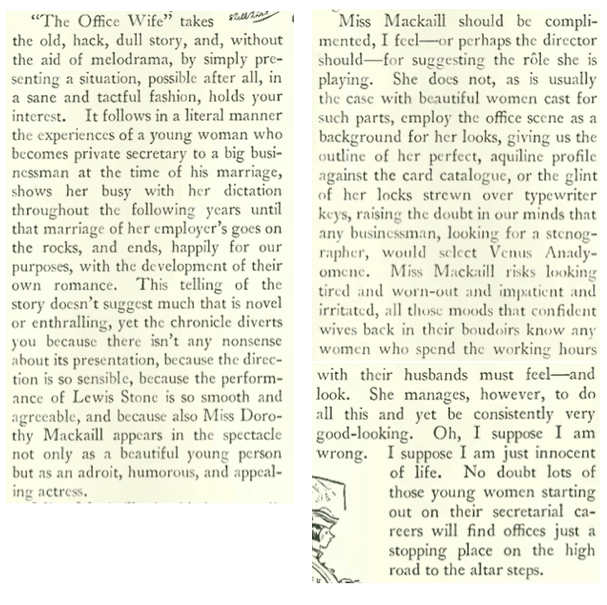
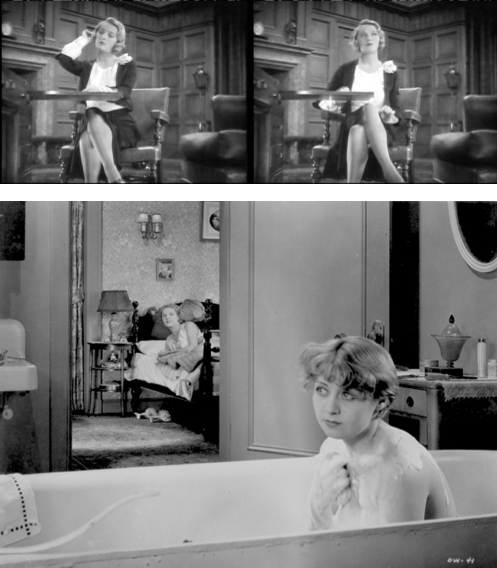
The Office Wife was a romantic drama featuring such “pre-Code” themes as infidelity and workplace hanky-panky. The film was the talking picture debut of Joan Blondell, who would become a big star in the 1930s and enjoy a long career that would include numerous appearances on television through the 1970s. Here are excerpts from John Mosher’s review of the film:

SHE TALKS! SHE BATHES! At top, Anne Murdock (Dorothy Mackaill) practices her charms in The Office Wife. Below, Anne’s younger sister Katherine (Joan Blondell) has a soak in the tub. It would be Blondell’s talking picture debut. (11east14thstreet.com/classicmoviefavorites.com)
SEX SELLS…Warner Brothers played up the salacious aspects of The Office Wife to generate interest among movie theater operators. (Pinterest)

While Joan Blondell was on the verge of a meteoric rise, one of the silent era’s biggest stars and sex symbols, Clara Bow (known as the “It Girl,”) was seeing her popularity wane in the sound era. After Her Wedding Night (reviewed here by Mosher) she would make just four more films before she would retire from the pictures at the ripe age of 28.

DOWN BUT NOT OUT…From left, Richard ‘Skeets’ Gallagher, Ralph Forbes and Clara Bow observe the hijinks of Charles Ruggles in 1930’s Her Wedding Night. Bow’s enormous popularity would quickly wane in the era of talking pictures. (IMDB)

*   *   *

Twin Peaks

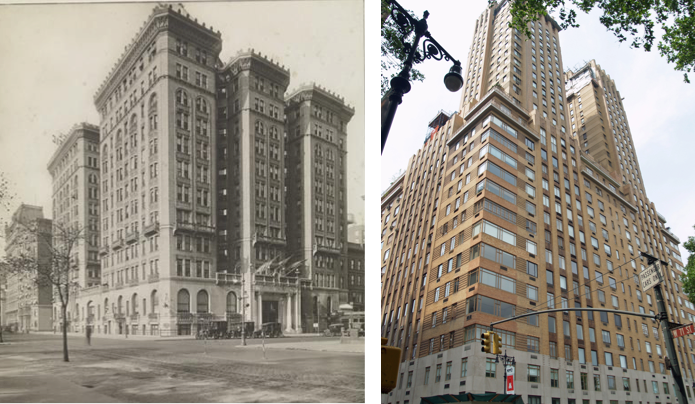
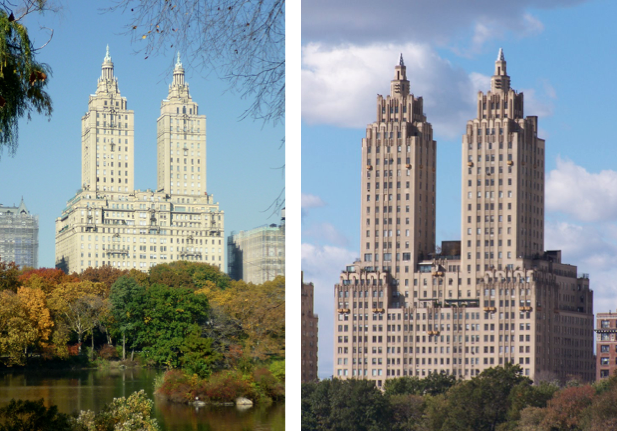
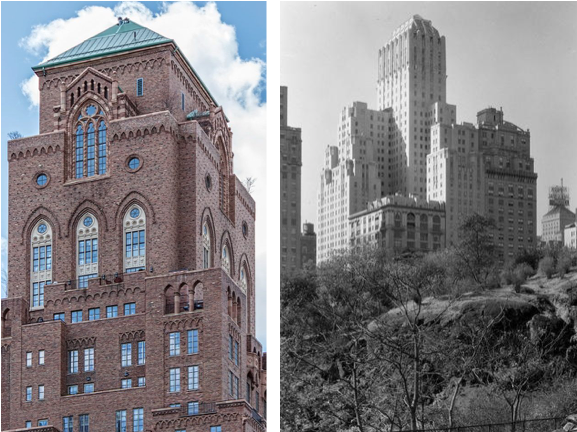
Architecture critic George Chappell chronicled the latest changes to the skyline surrounding Central Park, most notably Emery Roth’s landmark San Remo and El Dorado.

THIS TOWN AIN’T BIG ENOUGH FOR THE TWO OF US…New York’s original Hotel Majestic (left) stood for just 35 years before it was razed to make way for its bigger Art Deco successor, at right. (Pinterest/Wikipedia)
FRATERNAL TWINS…Architect Emery Roth designed both the San Remo at 145 Central Park West (left) and the El Dorado at 300 Central Park West. (Wikipedia/mapio.net)

 *  *  *

From Our Advertisers

“Cultural hotels” of the 1920s and 30s catered to college students as well as young professionals engaged in music or the visual arts. Two of these hotels shared the Barbizon name, and one in particular on East 63rd Street served as a combination charm school and dorm for young women who wanted a safe New York retreat while they pursued school or professional opportunities. For decades it would be home to many celebrities including Candice Bergen, Joan Crawford, Cybill Shepherd, Joan Didion, and Grace Kelly…

CULTURAL SIBLINGS…Opened in 1927, The Barbizon at 140 East 63rd Street (left) served for many decades as a female-only residential hotel, housing many celebrities before they became famous including Candice Bergen, Joan Crawford, Cybill Shepherd, Joan Didion, and Grace Kelly. At right, the Barbizon-Plaza, which opened in May 1930, was noted as the first music-art residence center in the U.S. (newyorkitecture.com/Museum of the City of New York)

…of course not everyone could afford the excitement of life among the rich and famous…some had to settle for lesser thrills…

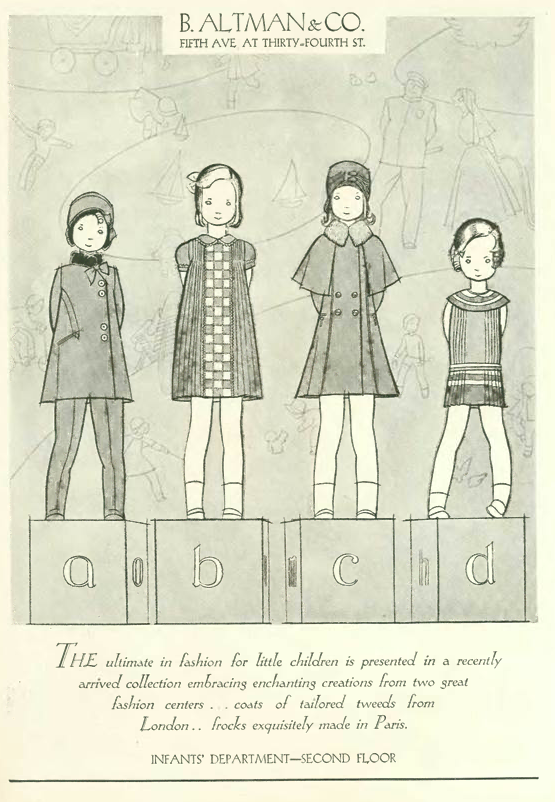
…on the other hand, these posh tots appeared to be destined for the Barbizon crowd…you can even sense that feeling of entitlement in their vacant little eyes…

…and for something completely different, another weird Flit ad, with Dr. Seuss

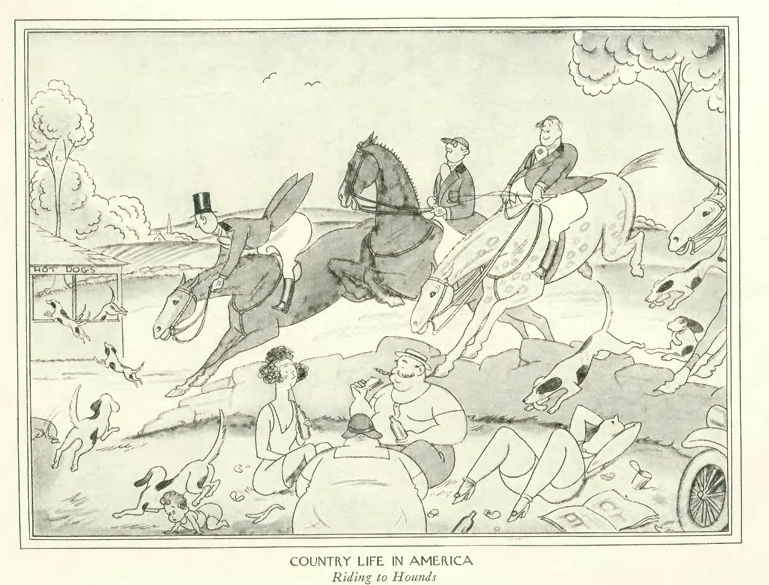
…on to our cartoons, another day in the country with Rea Irvin

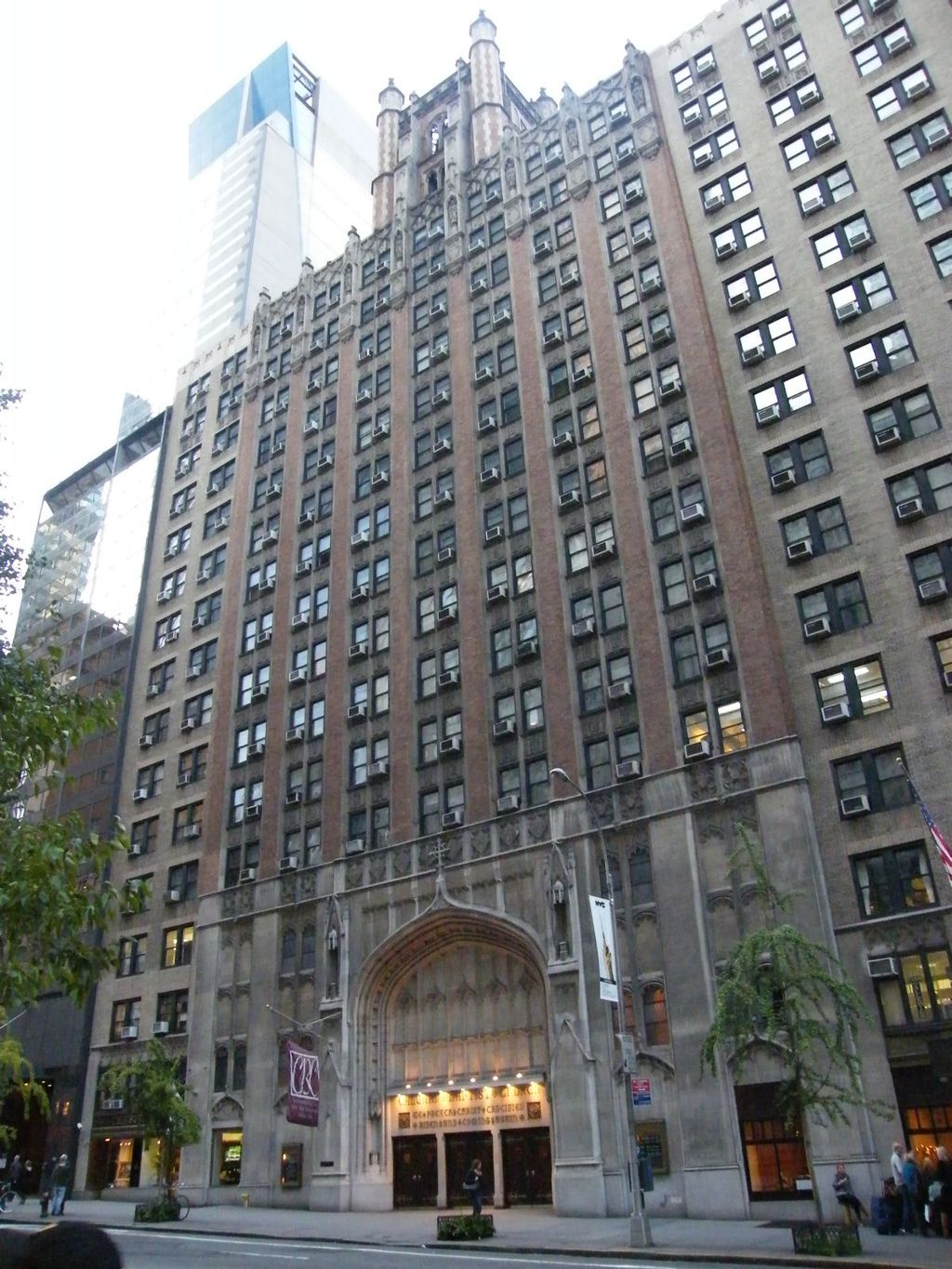
Alan Dunn found a young couple living above one of the city’s “skyscraper churches,” the result of valuable Manhattan church property being developed into a combinations of churches and hi-rise apartments…

…an example of a “skyscraper church” is Calvary Baptist Church at 123 West 57th…

(Wikipedia)

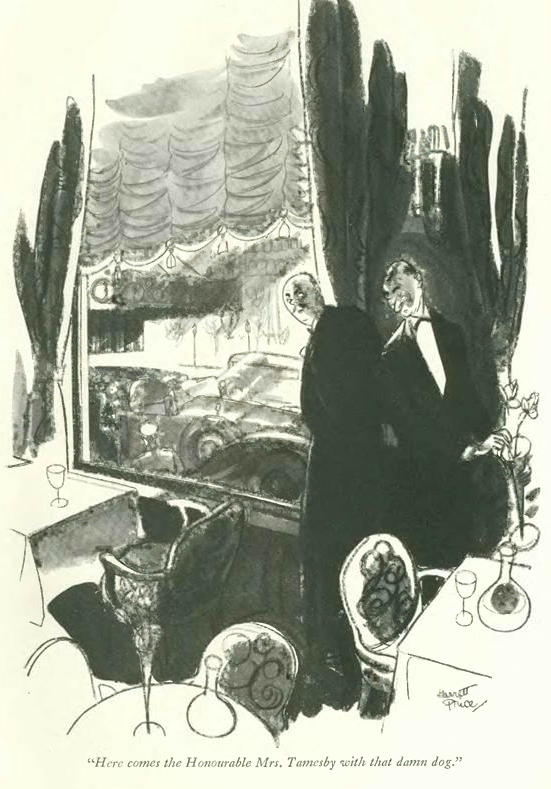
…closer to the street, we have a couple of high society waiters with low opinions of man’s best friend, courtesy Garrett Price

Barbara Shermund looked in on some gossip (paying special attention to the smoking habits of the smart set)…

…and we end with Robert Love’s sole contribution to The New Yorker

Next Time: Will It Play In Peoria?…

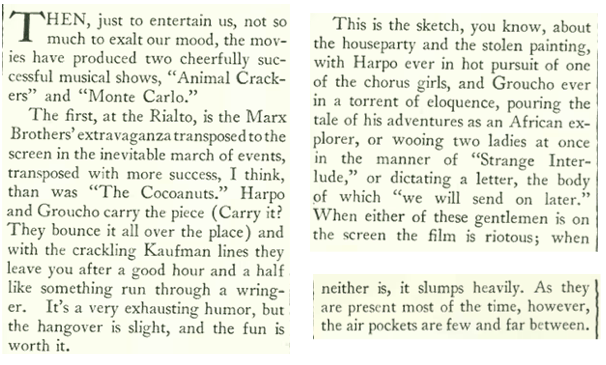
Animal Crackers

Above image: Groucho Marx, Margaret Dumont, and Lillian Roth in the Marx Brothers second film, Animal Crackers, 1930 (IMDB)

The Marx Brothers were famous for a string of hit films in the 1930s, but some of the comedy on which those films were based went all the way back to the days of vaudeville and 1920s Broadway.

Sept. 6, 1930 cover by Peter Arno.

Animal Crackers was their second film (the first was 1929’s The Cocoanuts), and the last to be adapted from one of their stage shows. It was also the last Marx Brothers movie to be filmed at Paramount’s Astoria Studio in Queens before the brothers headed for Hollywood.

MUSICAL CIRCUS…Animal Crackers began as a Broadway stage production in 1928 before moving to film in 1930; from left to right: Groucho, Harpo, Chico and Zeppo in a publicity photo for the stage version of Animal Crackers. (www.georgeskaufman.com)

The New Yorker’s John Mosher reviewed the film version, which was playing at the Rialto Theatre:

SO LONG, NEW YORK…Animal Crackers was the second and final Marx Brothers movie to be filmed at Astoria Studios in Queens; from left, Chico, Zeppo, Groucho and Harpo Marx pose for a 1930 publicity photo. (IMDB)

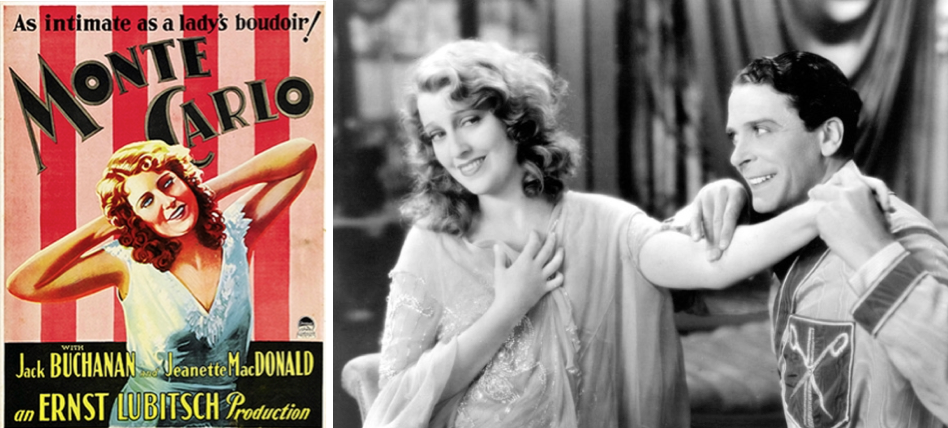
Always partial to European directors, Mosher found Ernst Lubitsch’s Monte Carlo among the better films playing in the late summer.

OH YOU CAD!…Jeanette MacDonald and Jack Buchanan in Monte Carlo. (IMDB)

 *  *  *

Fox in the Hen House

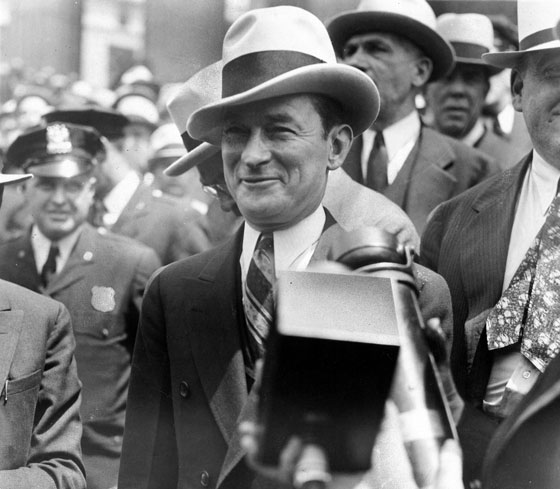
“The Talk of the Town” made light of Mayor Jimmy Walker’s plan to “rid the city of graft.” Ironically, Jimmy himself would be drummed out of office two years later for accepting bribes…

WHAT ME WORRY? Yes maybe. Mayor Jimmy Walker in 1930. (nymag.com)

 *  *  *

From Our Advertisers

We have another lovely illustration from Carl “Eric” Erickson promoting the joys of smoking unfiltered cigarettes…

…these small ads for apartments in the back pages of the magazine promoted the bucolic vistas in Westchester…

Images of Fleetwood Hills from The American Architect, June 1926.

…and European-style living on East 44th Street…

The Beaux-Arts Apartments (which still stand) consisted of buildings on both sides of E. 44th Street. (Museum of the City of New York)

…as for cartoons, Peter Arno continued this running gag…

…as did Rea Irvin in another tableaux (originally running sideways, full page) featuring the clash of country bumpkins and city elites…

Garrett Price looked in on the burdens of the wealthy…

…and Barbara Shermund caught some small talk at a cafe…

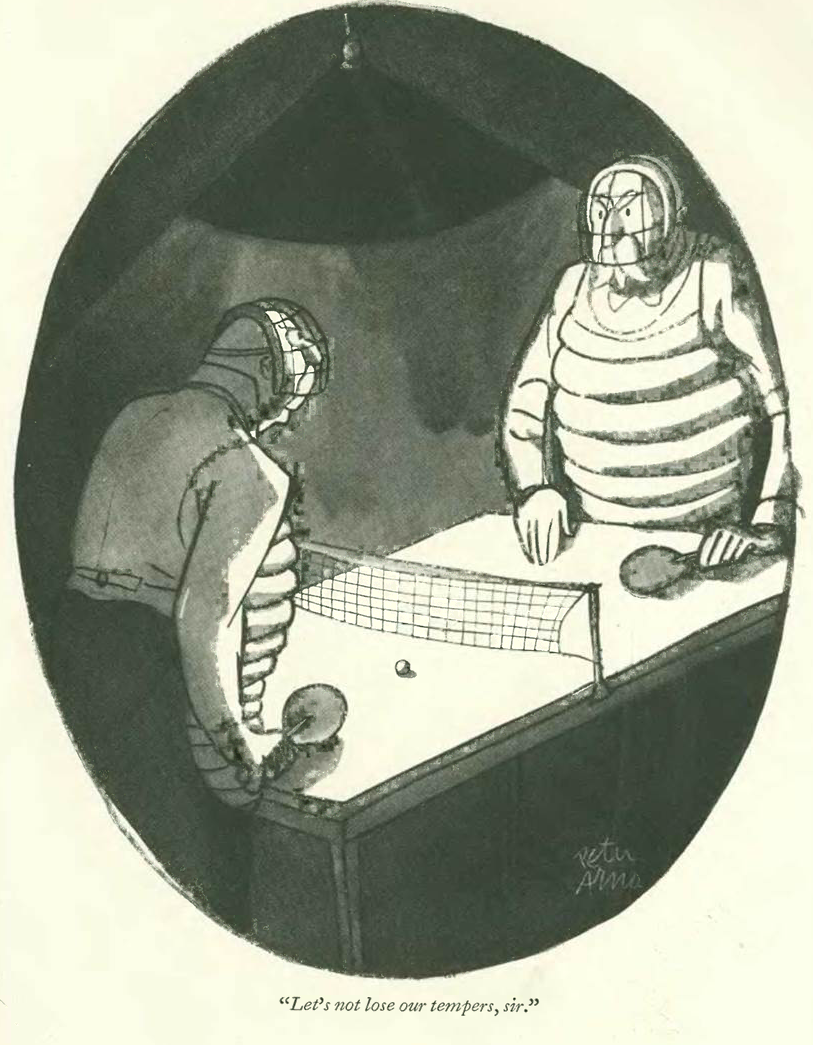
…back to Peter Arno, and a heated game of table tennis…

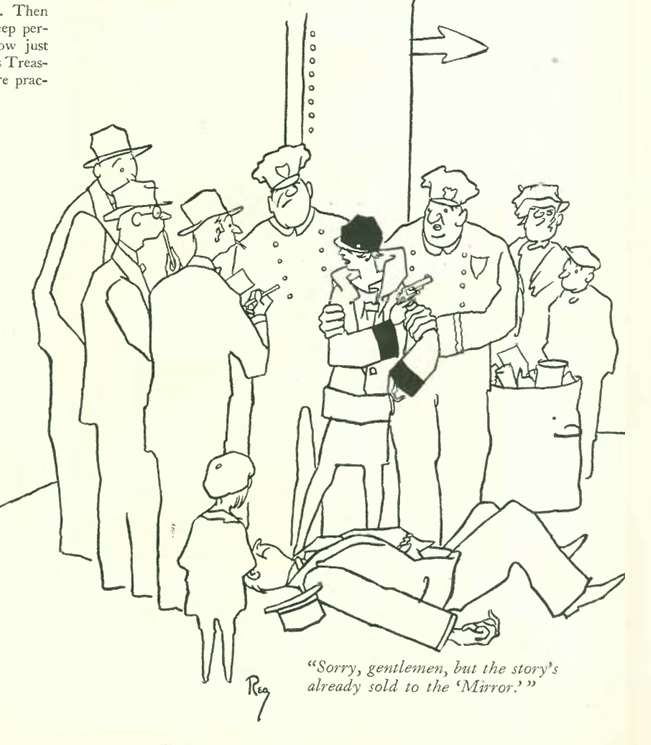
…and Gardner Rea, witness to modern-day crime reporting…

On to the Sept. 13, 1930 issue…

Sept. 13, 1930: yet another satirical kakemono cover by Rea Irvin.

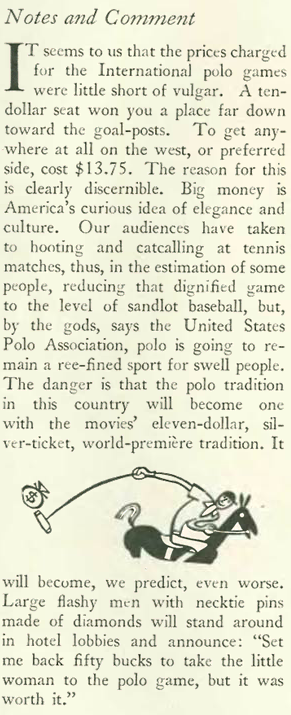
As I’ve noted many times before, the early New Yorker covered every sport under the sun (and especially elite sports such as yacht racing, tennis and badminton, golf and polo) but to my knowledge never covered a major league baseball game in its then five-year existence. Here, E.B. White, in his “Notes and Comment,” complains about the high price of tickets to polo matches…

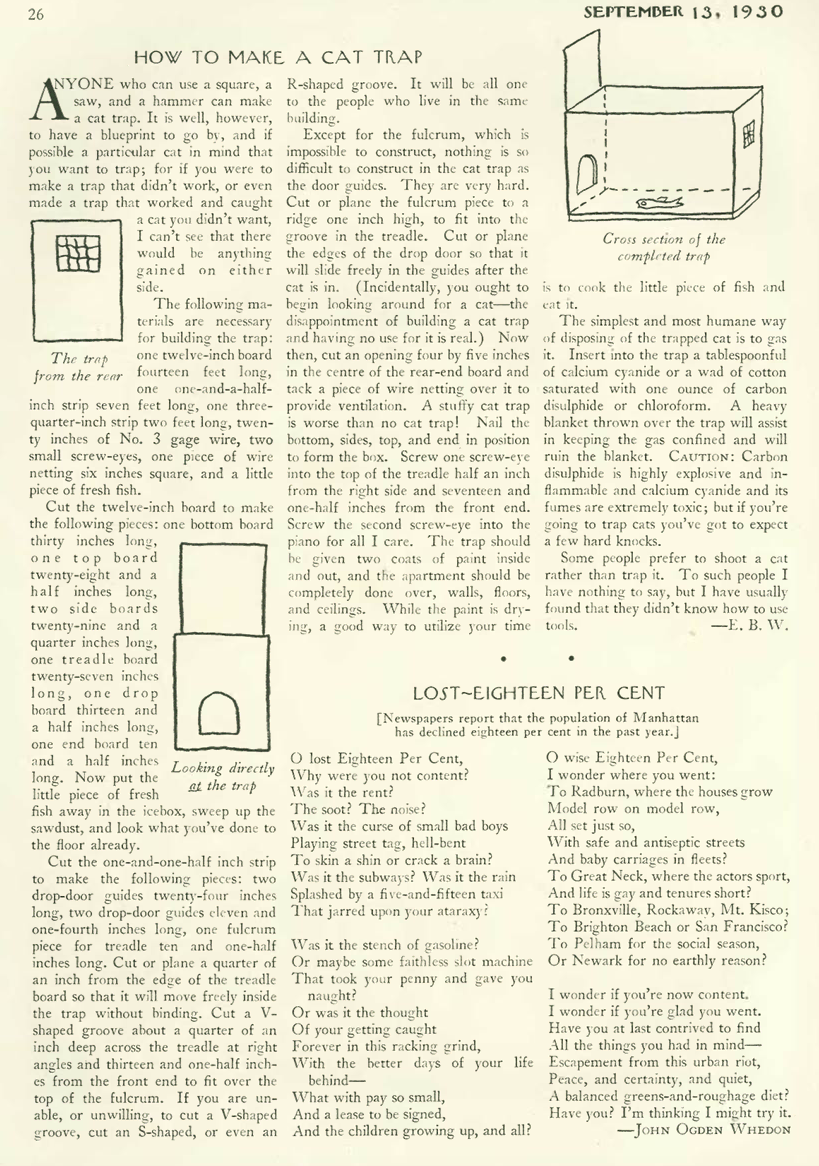
…White, a well-known dog lover, offered a rather cruel solution to a problem cat in this feature:

 *  *  *

Oh Never Mind

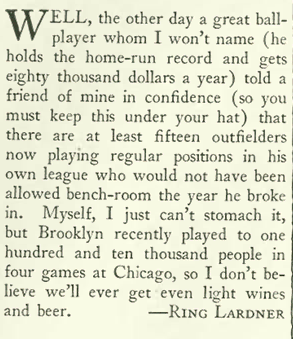
At first glance I thought this might actually be an article about a baseball game, but alas, it was a column by Ring Lardner (titled “Br’er Rabbit Ball”) that showed little enthusiasm for the game (the 1919 “Black Sox” scandal apparently soured his love for baseball). Excerpts:

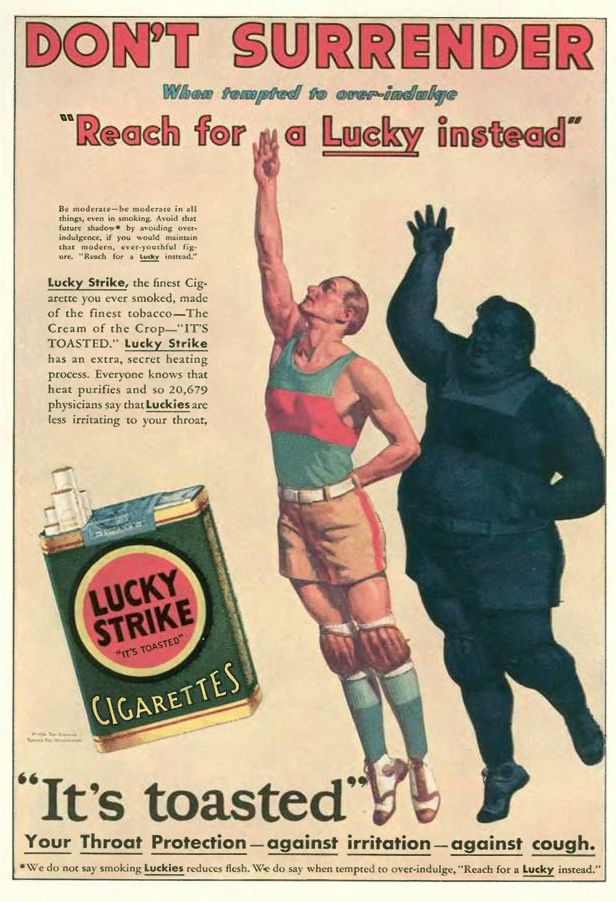
Speaking of sports, we move to the advertisements and the helpful folks from Lucky Strike, who wanted to help you get in shape with a smoke…

…and another ad for Flit insecticide by Dr. Seuss, featuring an elephant that looked a lot like the future Horton, and some unfortunate racist imagery…

…yet another Peter Arno repeat with a new caption…

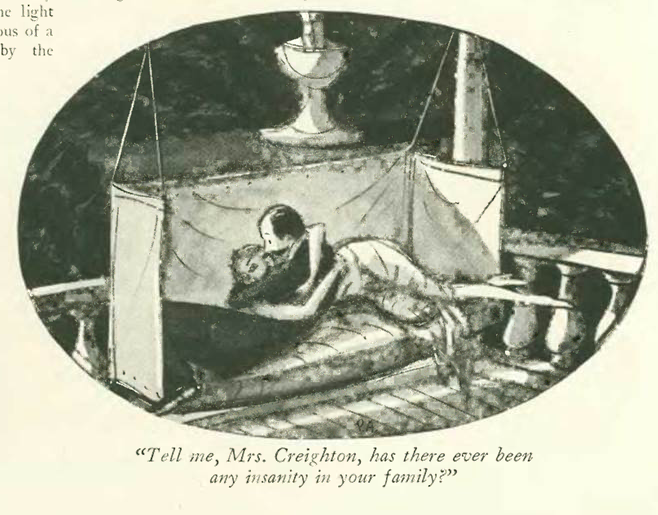
…and another in a series of 1930’s images by Ralph Barton

…a maritime dilemma, courtesy Garrett Price

…and apartment shopping with Constantin Alajalov

Next Time: The Flying Misanthrope…

Hell’s Angels

Among the films in 1930 that marked a new era in motion pictures was Howard Hughes’s epic war film Hell’s Angels. 

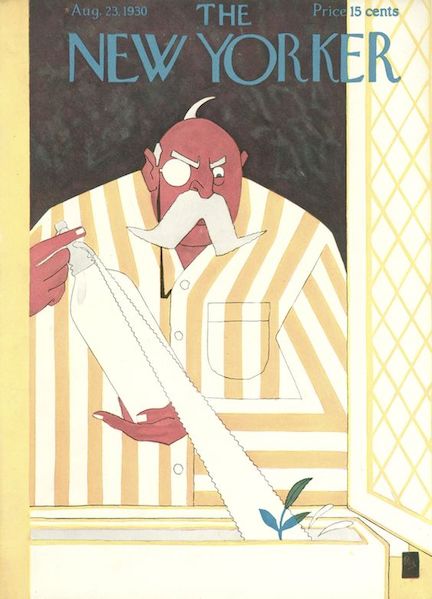
August 23 cover by Gardner Rea.

Originally shot as a silent, Hughes (1905-1976) retooled the film, and over a period of three years (1927-30) poured much of his own money into making what many consider to be Hollywood’s first sound action movie. The film also introduced audiences to 19-year-old Jean Harlow (1911-1937), handpicked by Hughes to replace Norwegian actress Greta Nissen in the lead role (Nissen’s accent posed a problem for the talkies). The film would make Harlow an instant star, propelling her to worldwide fame as the “Platinum Blonde” sex symbol of the 1930s.

Beset by delays due to Hughes’s incessant tinkering, the movie was famously expensive. For example, a total 137 pilots were used in just one flying scene at the end of the film. In addition to monetary costs, the filming also claimed the lives of three pilots and a mechanic, and Hughes himself would fracture his skull during a stunt flying attempt.

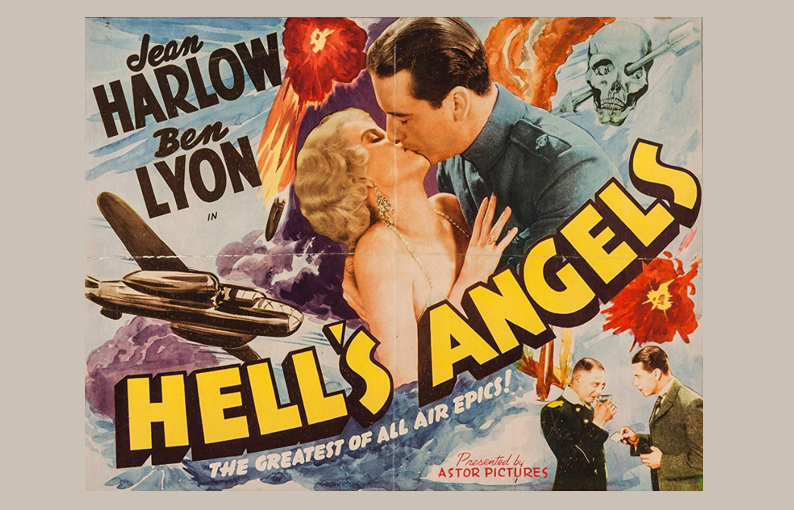
PRE-CODE…Before Will Hays imposed his moral code on Hollywood, films in the early thirties were frank with sexual references, as the image at left attests. When Howard Hughes switched the filming of Hell’s Angels to sound, he replaced Norwegian actress Greta Nissen with 19-year-old Jean Harlow (seen with co-star Ben Lyon). Harlow’s first major film appearance would make her an overnight star; at right, Frank Clarke and Roy Wilson flying an S.E.5A (front) and a Fokker D.VII (back, note camera) in the filming of Hell’s Angels. (Wikipedia)

The New Yorker’s John Mosher found the action scenes enticing, but the acting left something to be desired…

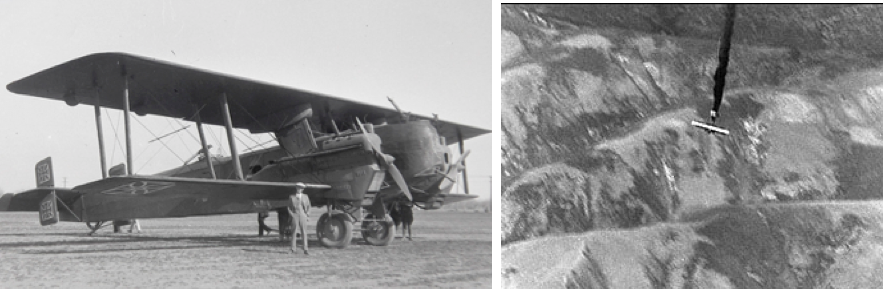
COSTLY VENTURE …This Sikorsky S-29A (left), repainted to represent a German Gotha bomber, would crash into the California hills during filming (right), killing mechanic Phil Jones, who failed to bail out along with the pilot. (Northrop Grumman)
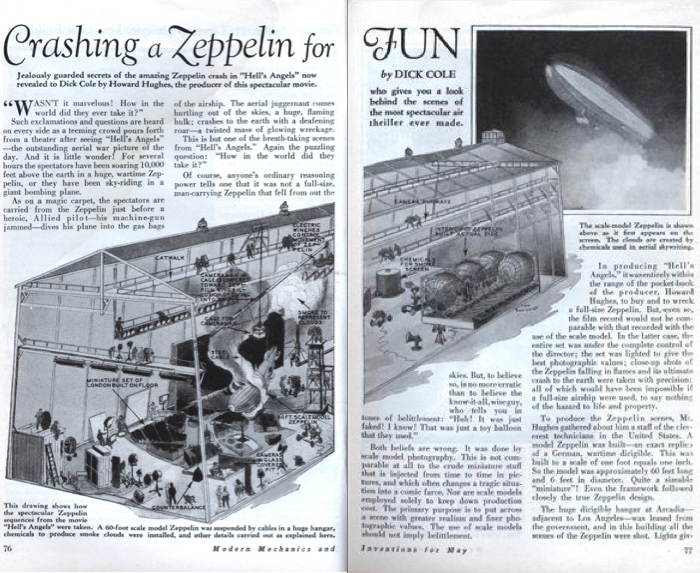
GEE WHIZ…The media often reported on the progress of the film, such as in this May 1930 article in Modern Mechanics and Inventions that detailed a $1 million sequence in which a fighter dives his plane into the top of a Zeppelin, causing it to explode and crash to earth. (Modern Mechanix)

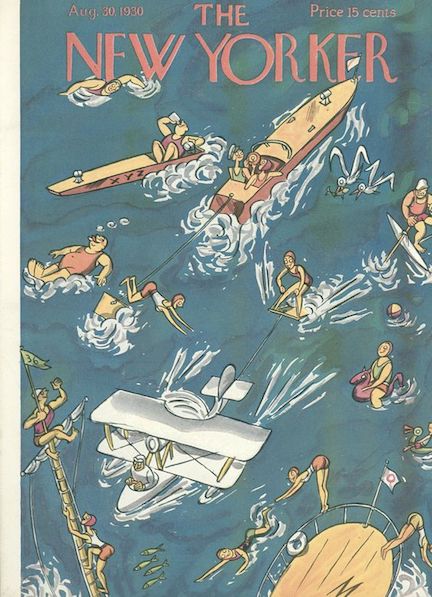
We skip ahead briefly to the Aug. 30 issue, in which “The Talk of Town” featured a mini profile of Howard Hughes and his film. Note how Hughes’s extravagance is described through his frequent use of long-distance telephone calls:

A STAR IS BORN…19-year-old Jean Harlow and Ben Lyon in 1930’s Hell’s Angels. (IMDB/Pinterest)

*  *  *

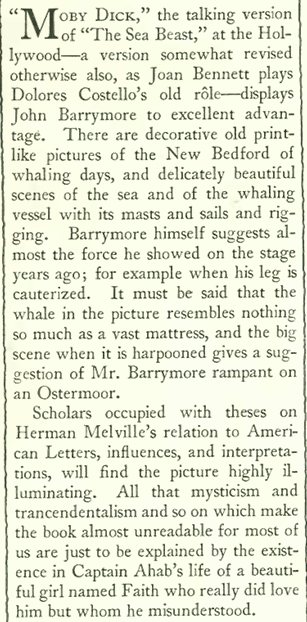
A Whale of a Movie

Critic John Mosher also took in a film adaptation of Herman Melville’s Moby Dick, a very loose adaptation that excluded the novel’s central character, Ishmael, and invented a love story for the maniacal Capt. Ahab…

A WHALE OF A STORY…From left, Noble Johnson as Queequeg, John Barrymore as Ahab, and Walter Long as Stubbs in 1930’s Moby Dick. At right, top, the whale puts the hurt on a boat; bottom, Joan Bennett as Faith, a contrived love interest for the old salt. (IMDB)

 *  *  *

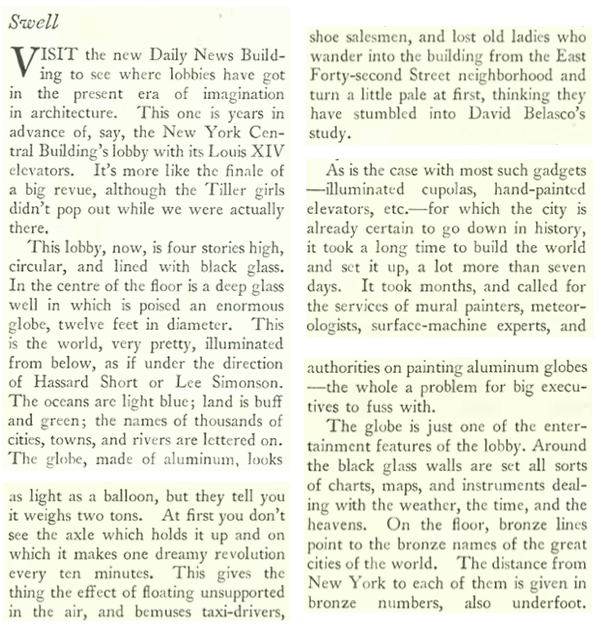
Daily Dazzle

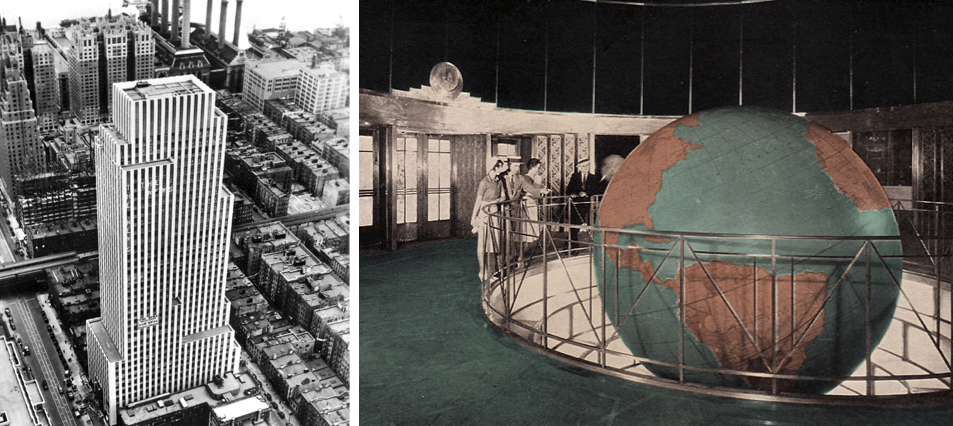
“The Talk of the Town” gushed over the lobby of the new Daily News Building, likening it to the glitz of a Broadway revue:

HOME FOR CLARK KENT…The Daily News Building served as the model for the headquarters of the fictional Daily Planet, the building where Superman worked as mild-mannered Clark Kent; at right, an image from 1941 of the lobby, dominated by the world’s largest indoor globe. (Wikipedia/Public Domain)
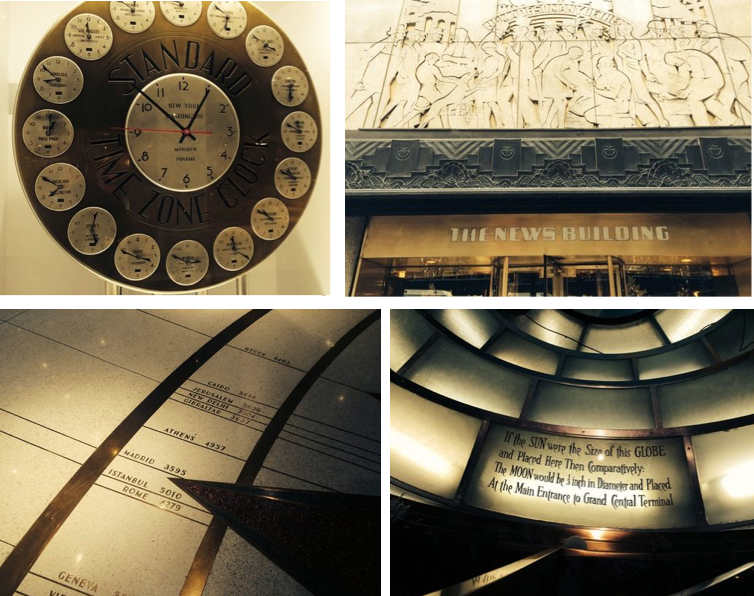
A LOBBY FOR LEARNING…The lobby includes an array of clocks, top left, that give the time in various global destinations. (Luke J. Spencer via atlasobscura.com)

 *  *  *

A Busboy’s Dream

Charles Pierre Casalasco left his life as a busboy in Corsica and studied haute cuisine in Paris before arriving at the shores of Manhattan in the early 1900s. He became a renowned headwaiter who by 1929 garnered enough financial backing from New York’s most powerful families to construct the exclusive Hotel Pierre. Writing under her pseudonym, “Penthouse,” New Yorker columnist Marcia Davenport described the building’s apartments to eager readers:

FUN WHILE IT LASTED…The 41-story, 714-room Hotel Pierre officially opened in October 1930 to great fanfare. The party would be short-lived, as the deepening Depression would force the hotel into bankruptcy just two years later. At right, photo of the Rotunda, before a 2017 remodeling. (New York Public Library)

 *  *  *

So Much For Title IX

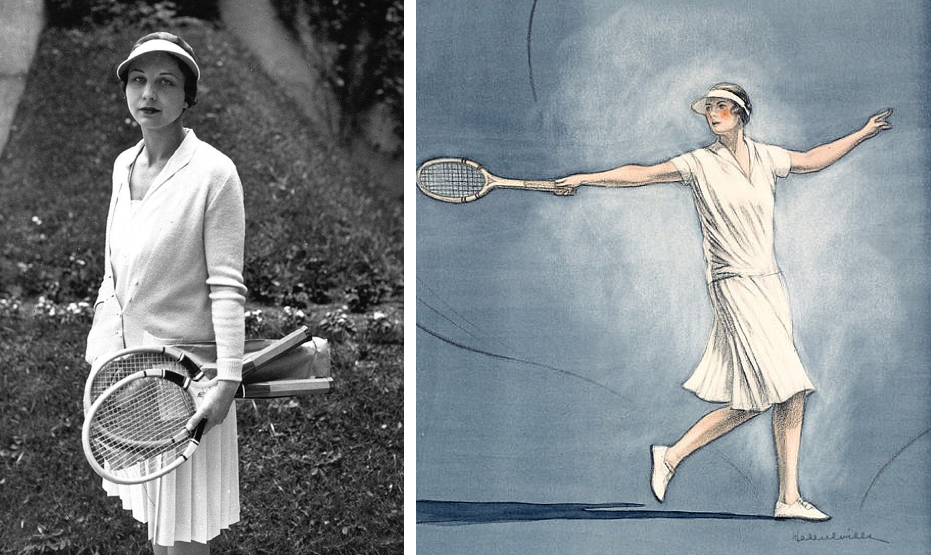
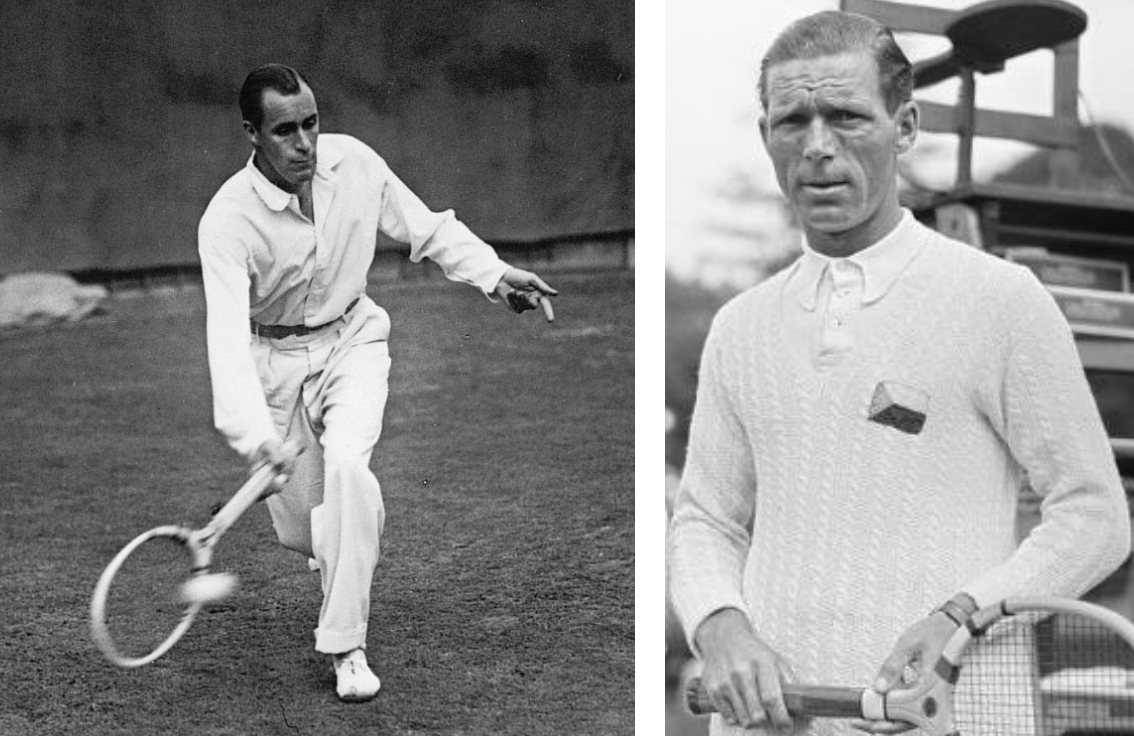
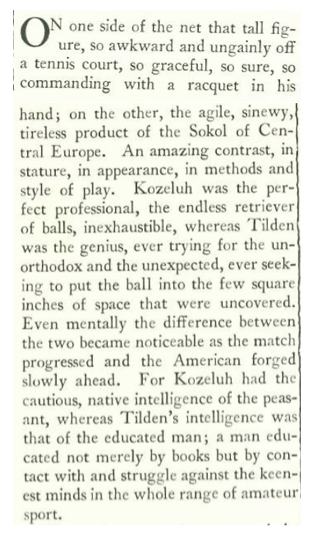
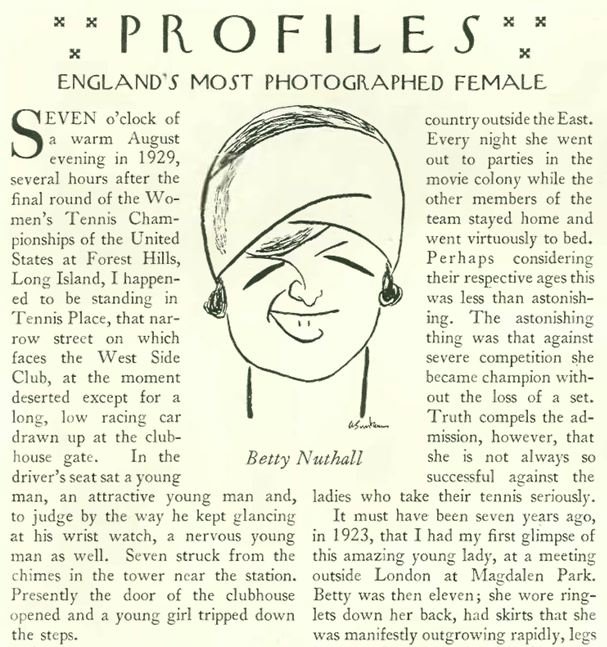
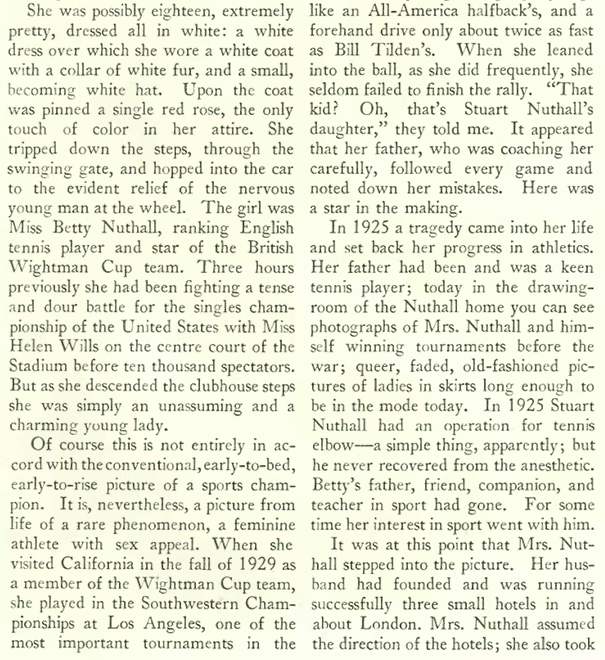
Then as now, women athletes were held to a separate set of standards, not only judged for their athletic abilities, but also for their “sex appeal,” as John Tunis suggests more than a few times in his profile of English tennis champion Betty Nuthall (1911-1983). Excerpts:

HOW’S THAT BACKHAND?…Betty Nuthall greets American tennis star Bill Tilden in September 1930; on the cover of Time after winning the 1930 U.S. Open. (Digital Commonwealth/Time Inc.)

 *  *  *

Free Expression

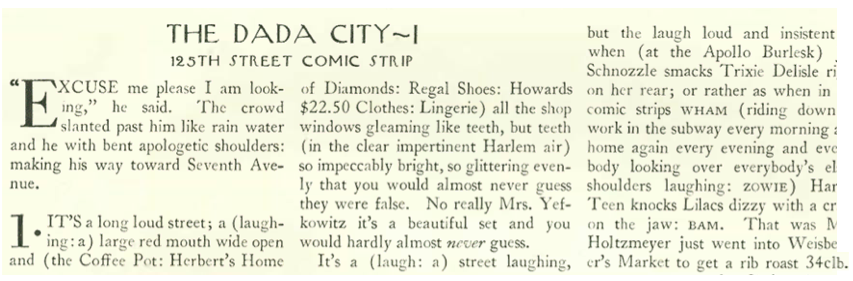
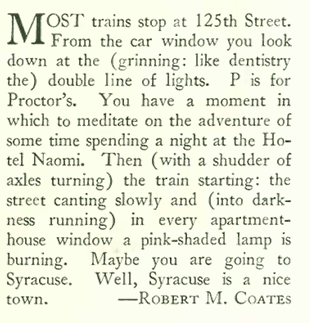
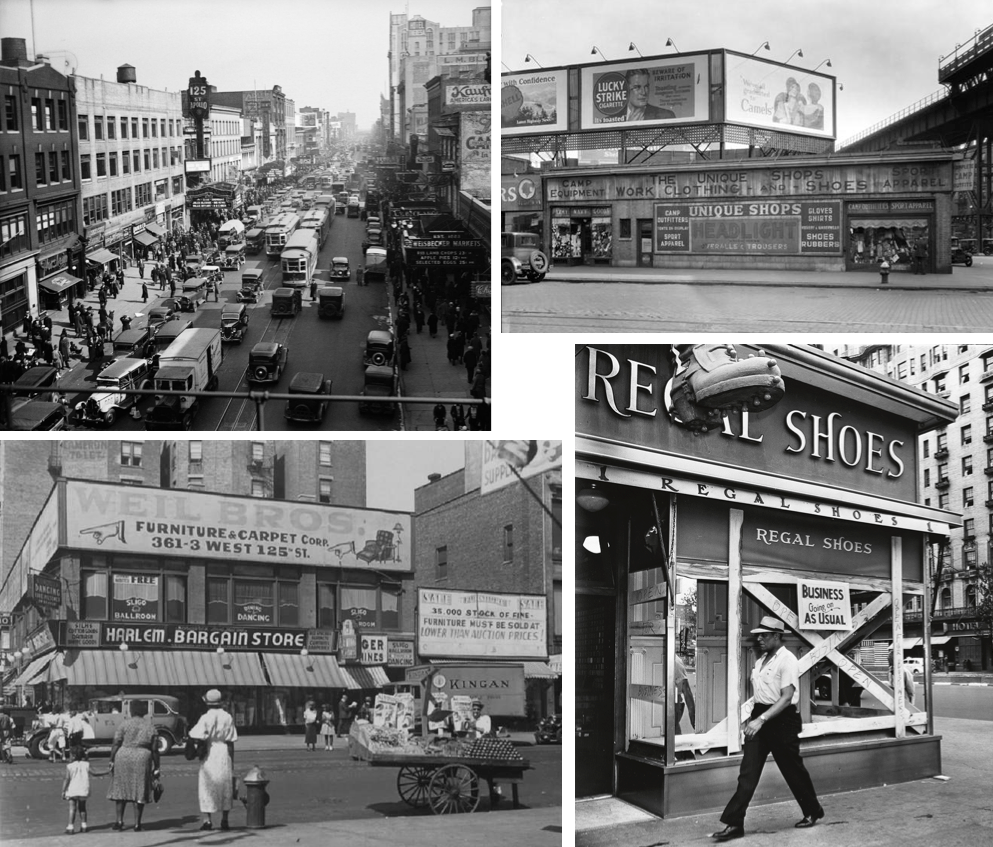
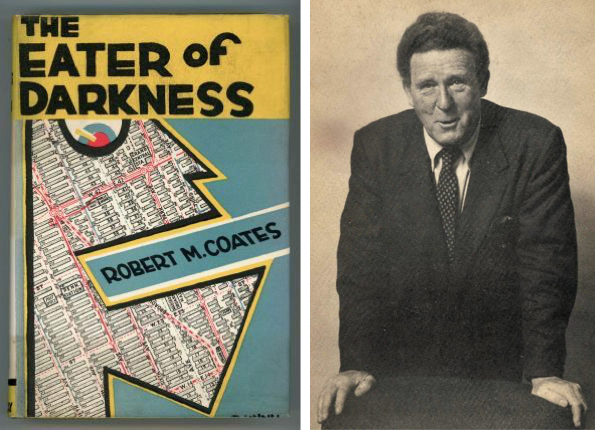
Robert Myron Coates (1897–1973) was a writer of experimental, expressionistic novels who later became a longtime art critic for The New Yorker (he is credited with coining the term “abstract expressionism” in 1946). In the Aug. 23 issue he contributed the first installment of “Dada City,” here describing street life in Harlem. Excerpts:

STREET LIFE…Scenes around Harlem’s 125th Street, clockwise from top left: the Apollo Theatre marquee punctuates a busy street scene in 1935; NW corner of 125th and Broadway, 1930; Regal Shoes storefront, 1940s, photo by Weegee; 125th and St. Nicholas Avenue in 1934. (Skyscraper City/Museum of the City of New York)
AMERICAN ORIGINAL…Robert M. Coates’s The Eater of Darkness (1926) has been called the first surrealist novel in English. (Goodreads)

 *  *  *

From Our Advertisers

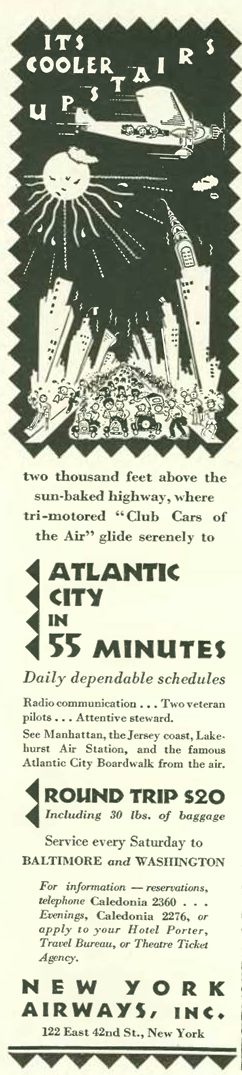
New Yorkers who were still enduring the brutal summer of 1930 could find relief, if they could afford it, on a New York Airways flight…

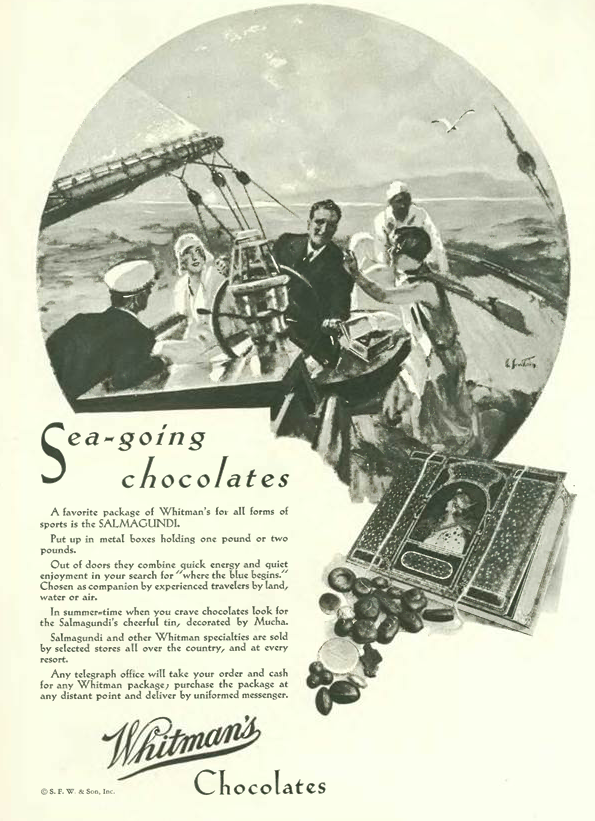
…or if you had the means, you could take your yacht out to sea, like this chap in a coat and tie who calmly steers with one hand while offering a box of chocolates to his guests with the other…

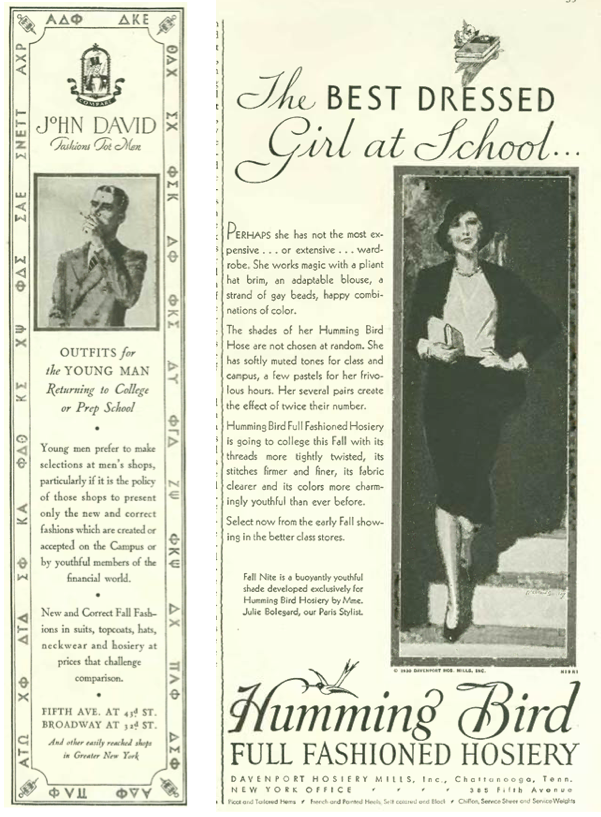
…our sailor wasn’t the only one dressed to nines…here are two ads offering suggestions to young folks returning to college or prep school…

…for comparison, this is how a group of college students at Columbia University dress today…

(Columbia University)

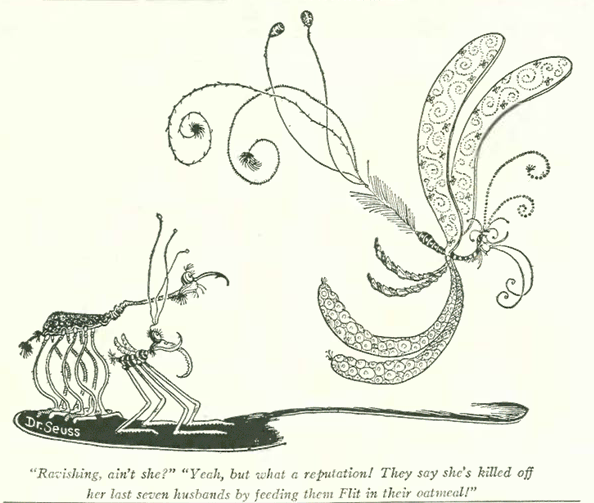
Dr. Seuss continued to crank out drawings on behalf of Flit insecticide…

…and on to cartoons, yet another rerun (the sixth) of this Peter Arno drawing with a new caption (Dorothy Dix was a popular advice columnist)…

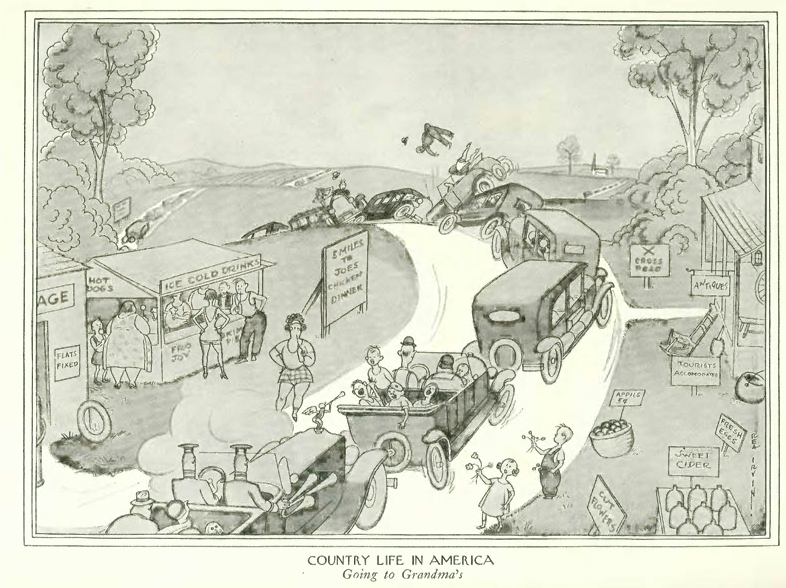
…and another look at country life courtesy Rea Irvin (originally printed sideways on a full page)…

…and another country scene, this time among the toffs, thanks to Garrett Price

…back in the city, some parlor room chatter as depicted by Barbara Shermund

…downtown, Isadore Klein looked at the economic challenges of peep shows…

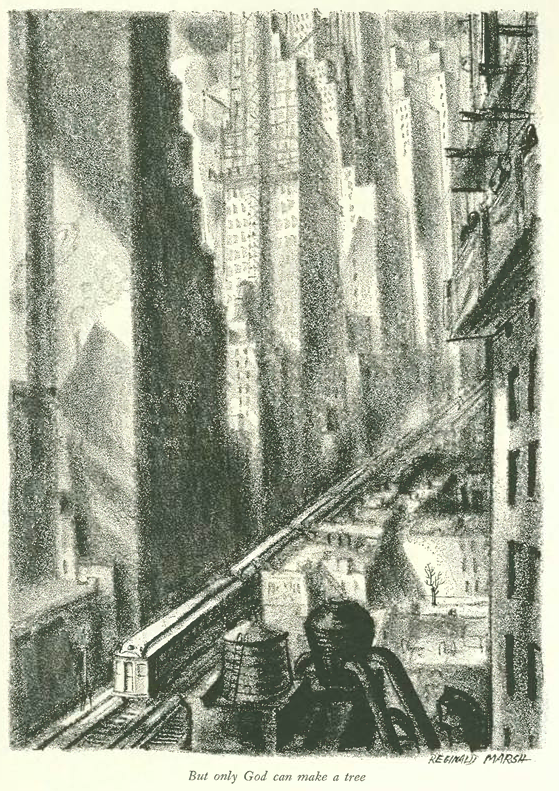
…and we close with this reflection on city life, by Reginald Marsh

Next Time: Marble Halls…

Robeson’s Othello

In 1930s America there were few if any opportunities for black actors to perform in mainstream stage or screen productions unless they conformed to racial stereotypes. An exception was Paul Robeson.

June 21, 1930 cover by Gardner Rea.

In 1930 Robeson (1898-1976) won rave reviews for his performance in Shakespeare’s Othello. That performance, however, took place in London, not New York, which London correspondent Anthony Gibbs took pains to point out in his dispatch for the June 21, 1930 New Yorker.

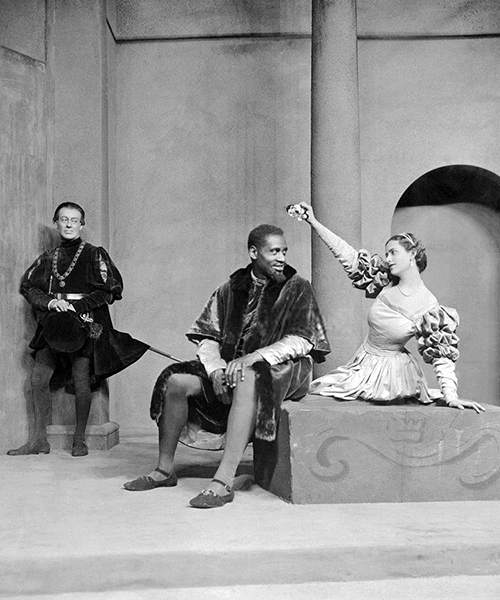
English actress Peggy Ashcroft as Desdemona and Paul Robeson as Othello in London’s Savoy Theatre production of Othello in 1930. Although only 22 at the time, Ashcroft was an established Shakespearean actress. The 32-year-old Robeson was already famous as both an athlete and actor. He was twice named a consensus All-American in football (Rutgers) and was the class valedictorian. He also received a law degree from Columbia while playing in the NFL. In 1930 he was already known to London audiences, having previously appeared in a 1928  London production of the American musical Show Boat. (theshakespeareblog.com)
CENTER STAGE…Left to right: Maurice Browne (Iago), Paul Robeson (Othello) and Peggy Ashcroft (Desdemona) in Othello at the Savoy Theatre, 1930. Maurice Browne was also the play’s producer; his over-the-top portrayal of Iago and his wife’s incompetent stage direction hurt the production, but Robeson nevertheless received high praise for his performance. (britishstageandscreen.tumblr.com)

Although the performance was a triumph for Robeson, the production itself was a mess. The play’s producer, Maurice Browne, enlisted his wife, Ellen van Volkenburg, to direct (Peggy Ashcroft later called her “a pretentious dud”). Writing in The Guardian (Sept. 3, 2003), Samantha Ellis observes: “Recognising that his Othello transcended the ropey production, the audience gave Robeson 20 curtain calls. He reprised the role all over the world and never lost his pleasure in it. For Robeson, it was more than just a part: it was, as he once said, “killing two birds with one stone. I’m acting and I’m talking for the negroes in the way only Shakespeare can.”

Robeson’s Othello would not make it to New York until 1943. It would run for almost 300 performances, setting an all-time record run for a Shakespearean play on Broadway.

 *  *  *

Restoring Order

In the aftermath of Grover Whalen’s disastrous (and sometimes violent) run as New York City Police Commissioner, E.B. White and his fellow New Yorkers welcomed the steady hand of Edward P. Mulrooney (1874-1960) to the helm:

THE COMMISH…Edward P. Mulrooney in a 1930s portrait by Edward Steichen. (Conde Nast)

 *  *  *

The Commander

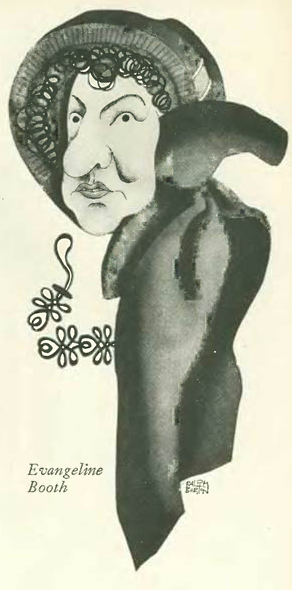
American author and lecturer Virgilia Peterson Ross profiled Evangeline Cory Booth (1865 – 1950), who would become the fourth General of the Salvation Army in 1934. She was the first woman to hold that post. An excerpt:

Ralph Barton returned to provide this caricature for the profile, one of the last works he would create for The New Yorker before his untimely death…

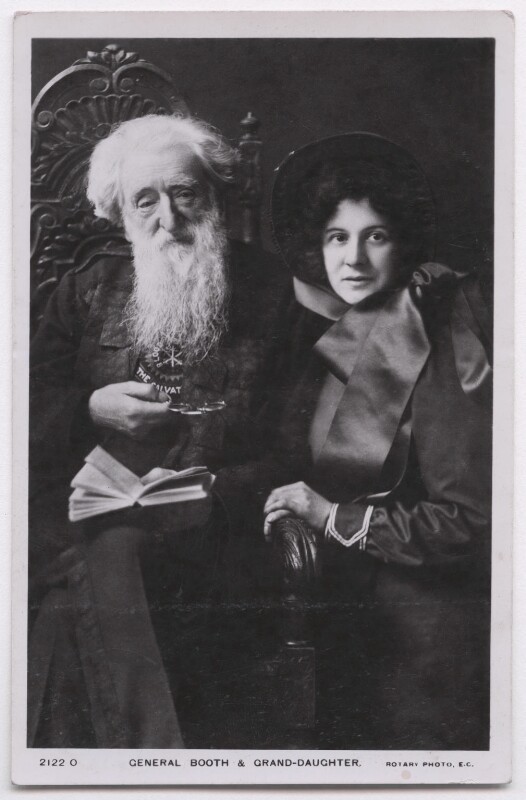
HEIRESS TO A LEGACY…William Booth, an English Methodist preacher who founded The Salvation Army and became its first General, poses with his grand-daughter Evangeline Cory Booth in this 1908 postcard image. (National Portrait Gallery)

 *  *  *

Home of the Dome

Architecture critic George “T-Square” Chappell was gladdened by the sight of scaffolding atop St. Bartholomew’s Church, which would finally get its dome to complete architect Bertram Goodhue’s vision…

NOW YOU SEE IT…Clockwise, from top left, St. Bartholomew’s Church at 325 Park Avenue, sans dome, in 1928; the church with dome in the 1950s; interior and exterior views of dome. (nyago.com/bostonvalley.com)

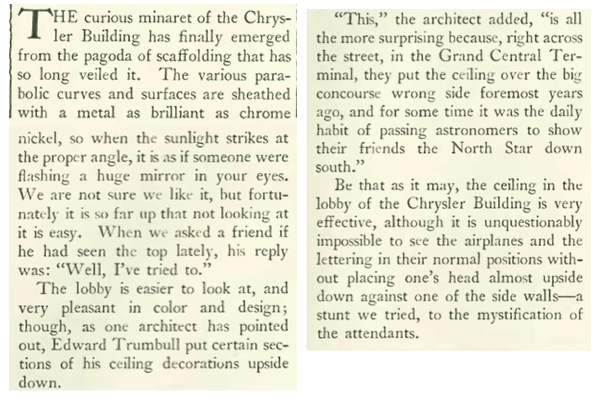
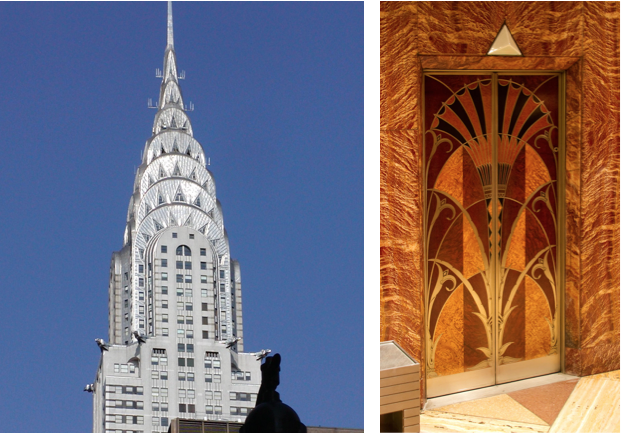
…Chappell also commented on the emergence of the Chrysler Building’s blindingly shiny dome and interior appointments…

BLINDED BY THE LIGHT…The Chrysler Building’s gleaming spire emerged in all its glory in June 1930. At right, an elevator in the building’s lobby. (Wikipedia)

 *  *  *

Below the Belt

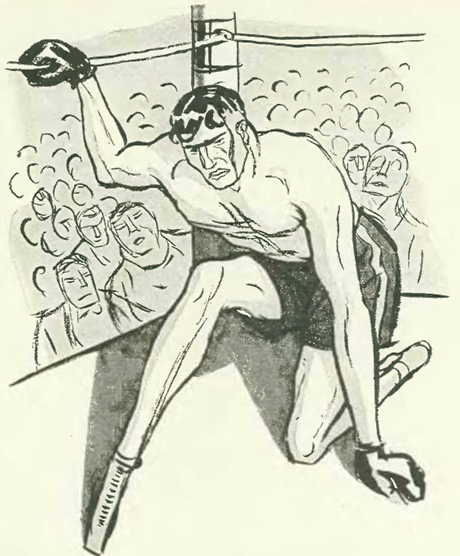
It wasn’t Dempsey-Tunney, but the bout between Max Schmeling (1905-2005) and Jack Sharkey (1902-1994) was the next best thing for boxing fans. The World Heavyweight Championship had been vacant since Gene Tunney’s retirement in 1928, and Sharkey and Schmeling had emerged as the sport’s No. 1 and 2 contenders.

The bout ended in a controversial decision: Although Sharkey won the first three rounds, he was disqualified after he landed a punch below the belt late in the fourth round. Schmeling became the first boxer to win the World Heavyweight Championship on a foul. The New Yorker’s Niven Busch Jr. (with illustration by Johan Bull) offered these thoughts on the fight’s disappointing outcome:

LOW BLOW…Although Jack Sharkey (far right) led after three rounds, a low blow in the fourth delivered the World Heavyweight Championship to German boxer Max Schmeling (left). Sharkey would claim the title two years later in a rematch with Schmeling. Although boxing isn’t the healthiest pursuit, both men lived into their 90s; Schmeling died in 2005 just shy of his 100th birthday. (Wikipedia/boxrec.com/thefightcity.com)

 *  *  *

One Of Ours

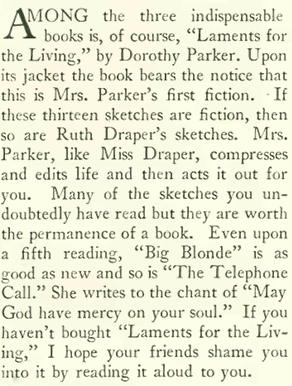
The New Yorker included this brief review of a collection of short fiction pieces by Dorothy Parker, herself a literary critic of some renown at the magazine…

DOROTHY’S LAMENTATIONS…The New Yorker’s Dorothy Parker published this collection of short fiction in 1930.

…and on to our advertisers, this ad appeared on the opposite page of the review…

…speaking of ads, the makers of Marlboro cigarettes continued to sponsor gimmicky penmanship and writing contests to promote their deadly product…

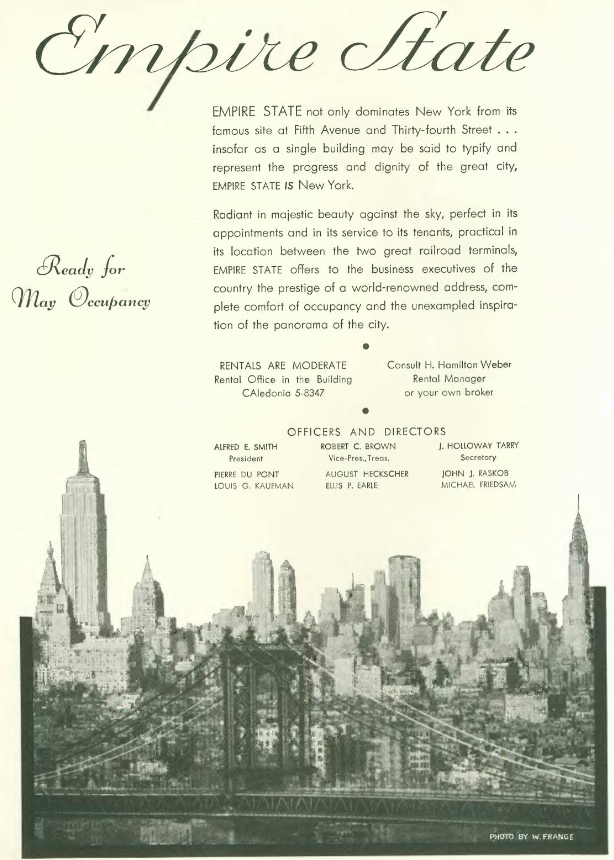
…while promoters of the Empire State Building (still under construction) continued to draw on the historical significance of the building’s Midtown location…

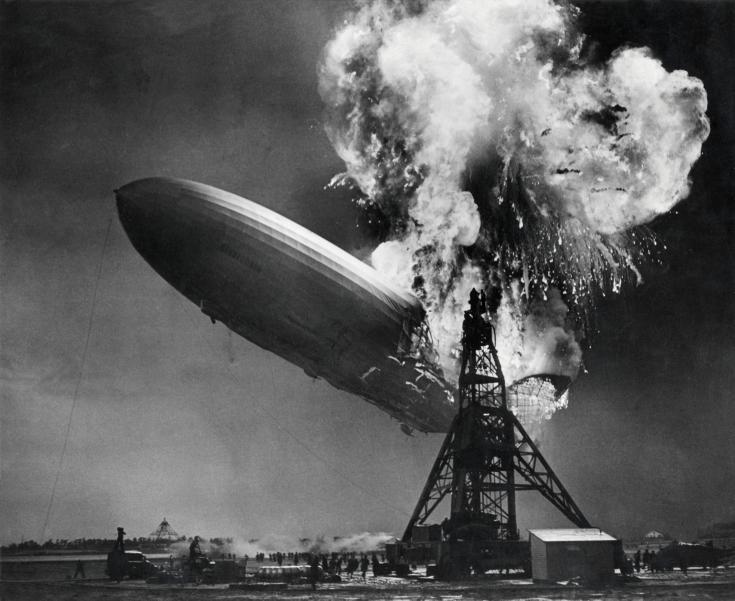
…on to our cartoons, Garrett Price pondered the very real challenge of guiding a massive Zeppelin to the planned mooring mast atop the Empire State…

…a portent of what would happen to the Hindenburg just seven years later…

The New Yorker’s typesetter Popsy Whitaker made clever use of his columns for this Isadore Klein entry…

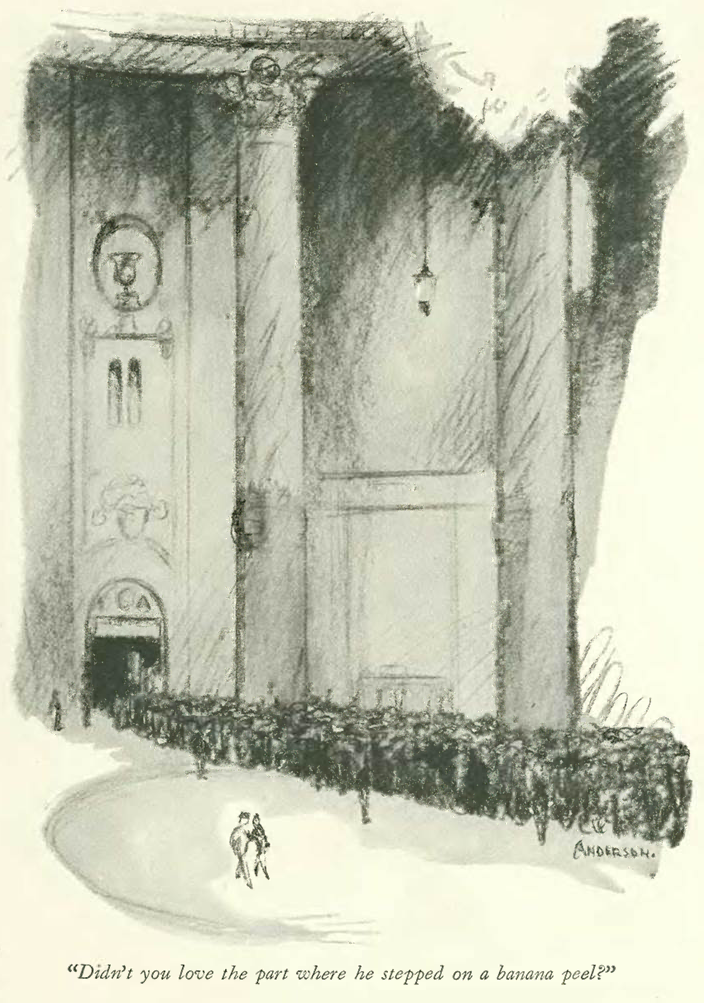
John Murray Anderson found humor in contrasting the grand with the mundane…

Carl Kindl eavesdropped on the small talk of a couple of ash haulers…

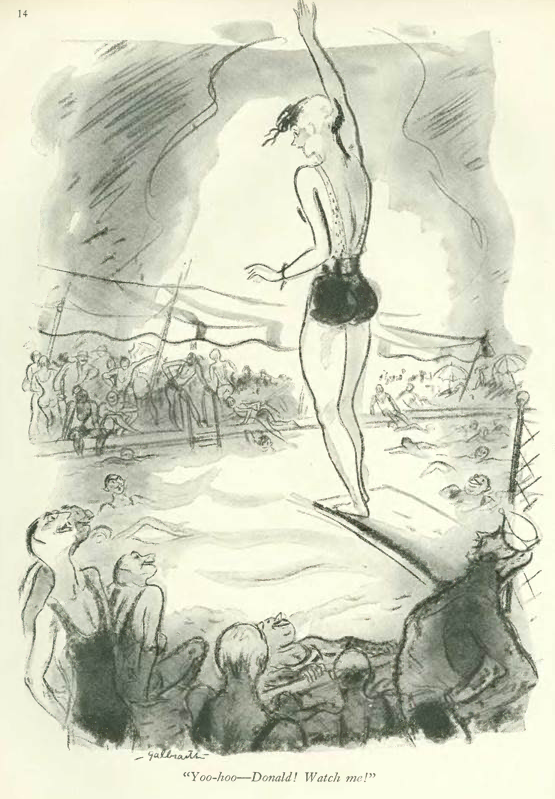
…and William Crawford Galbraith found humor at the public pool…

 *  *  *

On to the June 28 issue, with a cover featuring a satirical kakemono-style illustration by Rea Irvin, who was fond of Japanese scroll art…

June 28, 1930 cover by Rea Irvin.

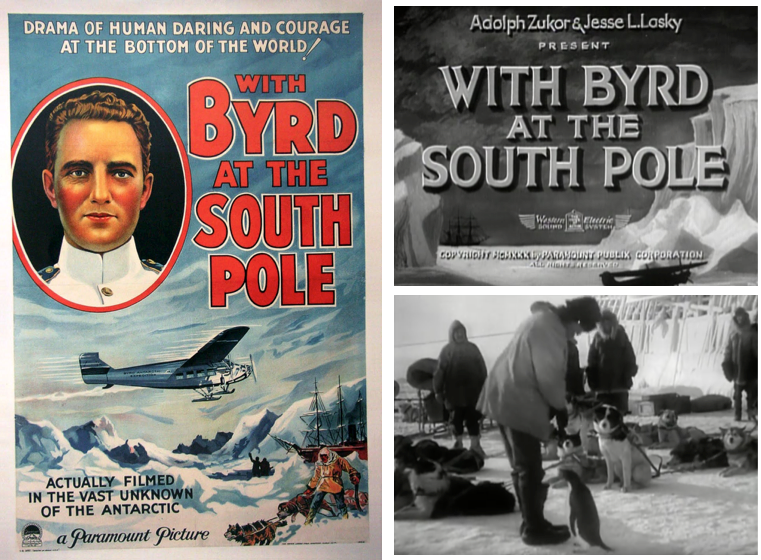
Film critic John Mosher checked out the new documentary on Admiral Richard Byrd’s expedition to the South Pole…

A BYRD WITH WINGS…A Paramount Pictures movie poster promoting the 1930 documentary With Byrd at the South Pole; still images from the film at right. (Wikipedia/YouTube)

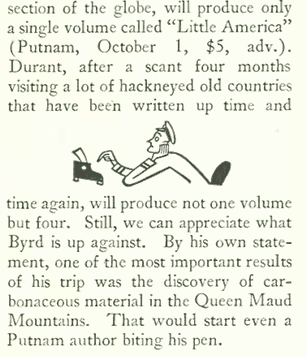
“The Talk of the Town” also made note of Byrd’s expedition and homecoming, contrasting his upcoming book, Little America, with the four-volume historical work planned by popular historian Will Durant.

In collaboration with his wife, Ariel, Durant would end up publishing an eleven-volume history of civilization (four million words across nearly 10,000 pages), written between 1935 and 1975. Will Durant was at work on a twelfth volume when he died in 1981 at age 96.

Admiral Richard Byrd’s Little America, left, and the 11-volume The Story of Civilization, by Will and Ariel Durant.

 *  *  *

American Lenin

The June 28 profile, written by Alva Johnston, featured radical American labor organizer and Marxist politician William Z. Foster. Despite Johnston’s portrayal of Foster as something of a genial pinko, in reality Foster was a strong supporter of Joseph Stalin and a dedicated and loyal ally of the Soviet Union’s Communist Party until his death in 1961. The Soviets even gave him a state funeral, with Nikita Khrushchev personally heading an honor guard in Red Square. An excerpt of Johnston’s profile:

RED AS A ROSE…Left, a campaign photo of William Z. Foster when he headed the Communist Party ticket in the 1928 U.S. presidential election; at right, illustration of Foster for the profile, by Abe Birnbaum.

 *  *  *

And to close…a colorful advertisement in the June 28 issue from Rex Cole…from the signature it appears to be the work of Mario Cooper, but this doesn’t look at all like his other work…

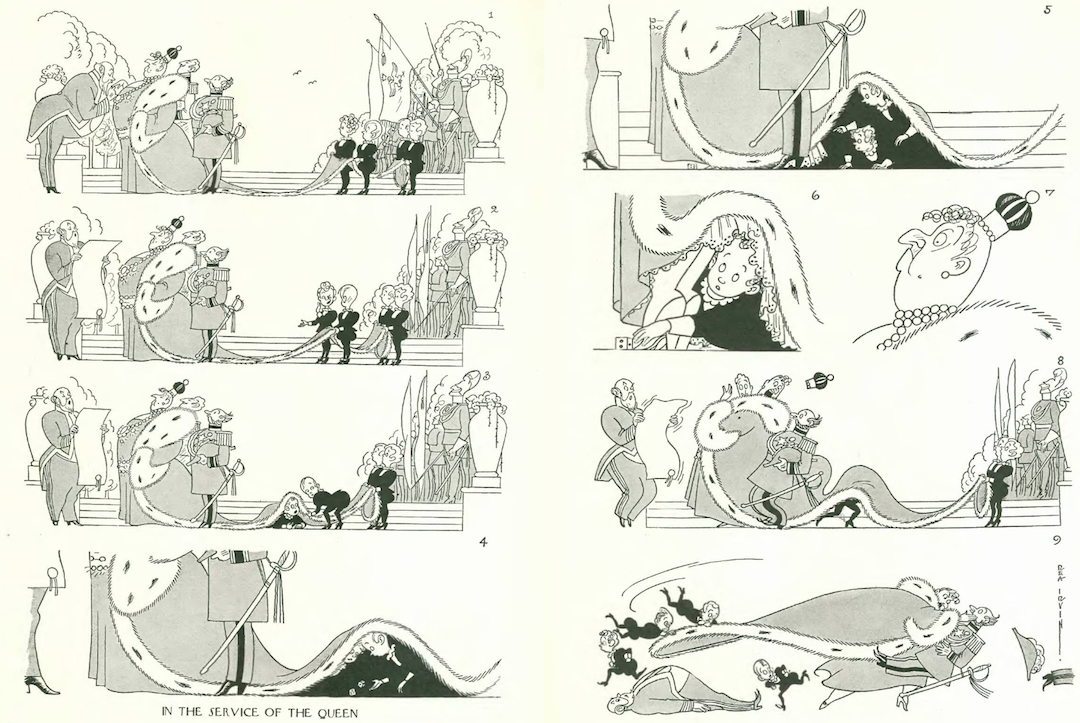
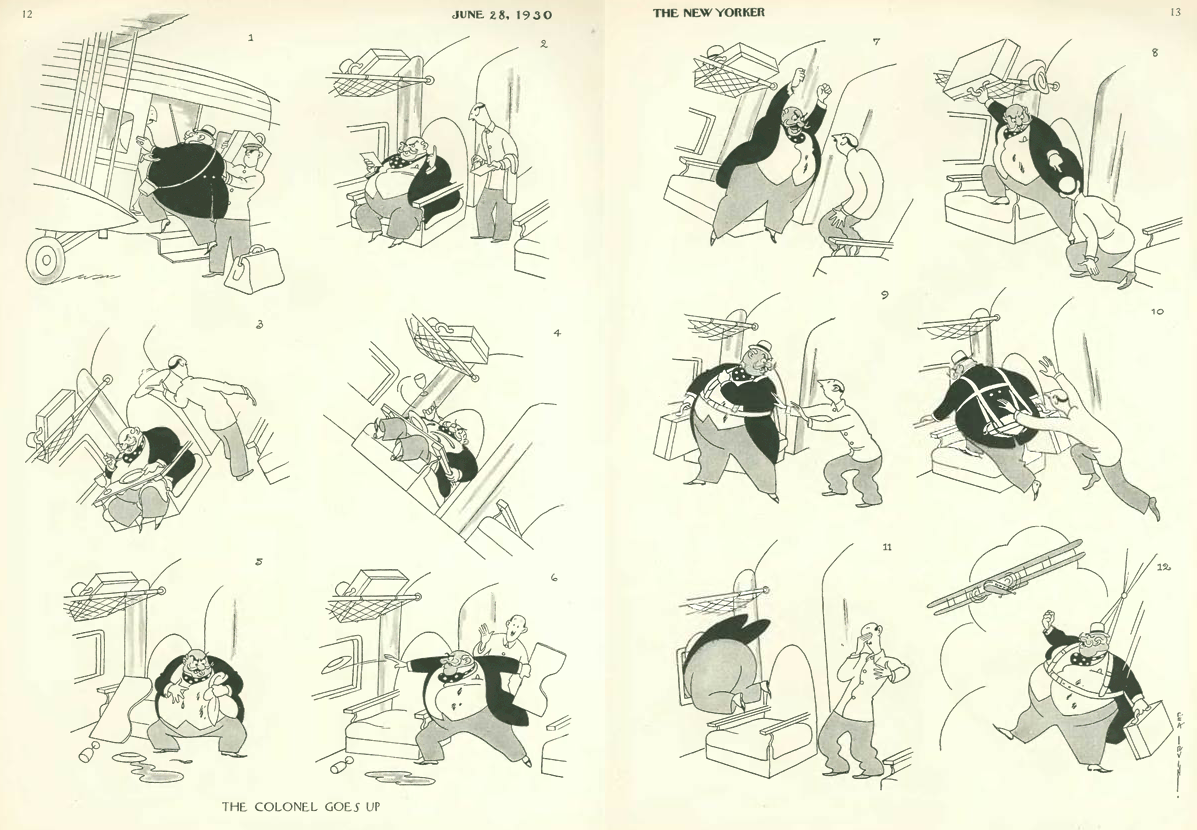
…and a two-page Rea Irvin cartoon, which demonstrates his visual storytelling skills…

Next Time…Happy Fourth!


All Quiet on the Western Front

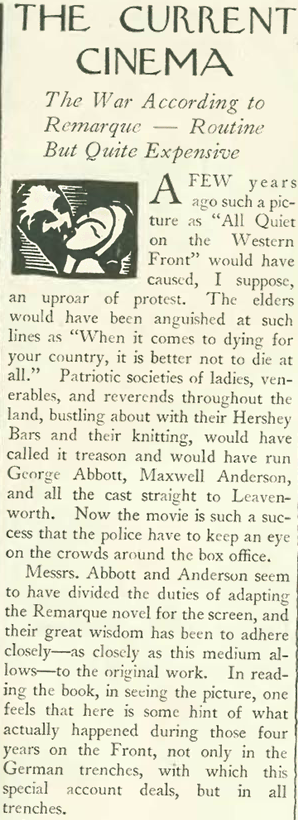
Still considered one of the greatest anti-war films ever made, All Quiet on the Western Front opened in New York on April 29, 1930 to strong reviews. Based on Erich Maria Remarque’s novel of the same name, the film’s depictions of the horrors of war were so realistic and harrowing that it was banned in a number of countries outside of the U.S.

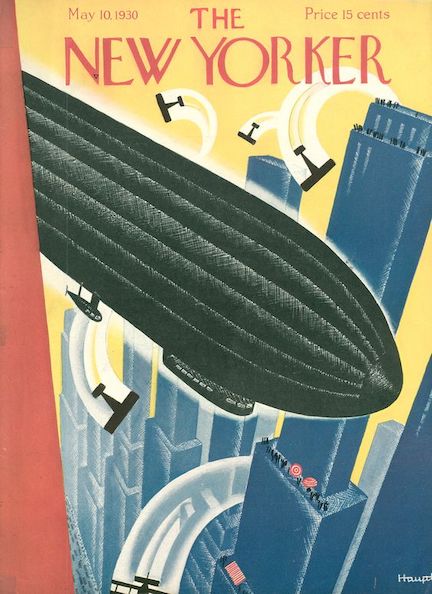
May 10, 1930 cover by Theodore Haupt.

Banned, that is, by nations gearing up for war. In Germany, Nazi brownshirts disrupted viewings during its brief run in that country, tossing smoke bombs into cinemas among other acts of mayhem. Back in the U.S., The New Yorker’s John Mosher attended a screening at a “packed” Central Theatre:

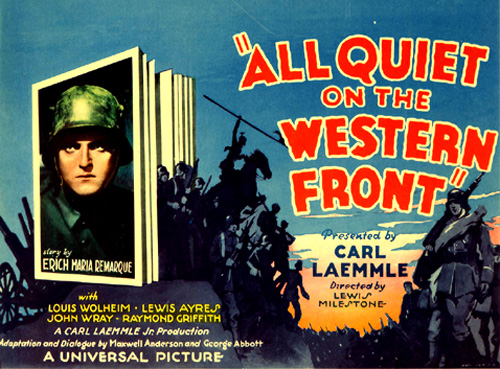
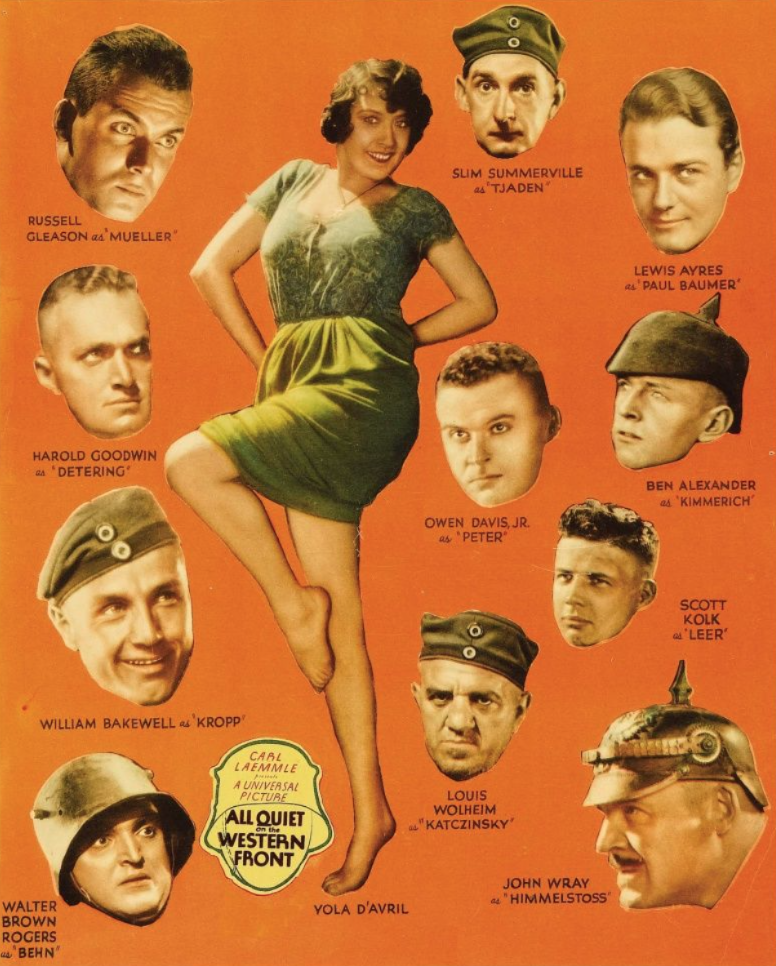
WAR IS HELL…Clockwise, from top left, movie poster for 1930’s All Quiet on the Western Front; German soldier Paul Bäumer (Lew Ayres), falls into a shell crater with a French soldier and draws his knife; in one of the most moving scenes in cinema, Bäumer is forced to spend the night in the crater, where he vainly tries to safe the life of the Frenchman he has mortally wounded; a German soldier crawls through the mud in a German training camp. (IMDB/Universal).

Mosher found the film’s adaption from the novel wanting in places, but overall praised the acting and the quality of the picture…

…and just in case some audiences were put off by the blood and guts, Universal promoted other themes on its lobby cards…

(IMDB)

 *  *  *

More Than a Stunt

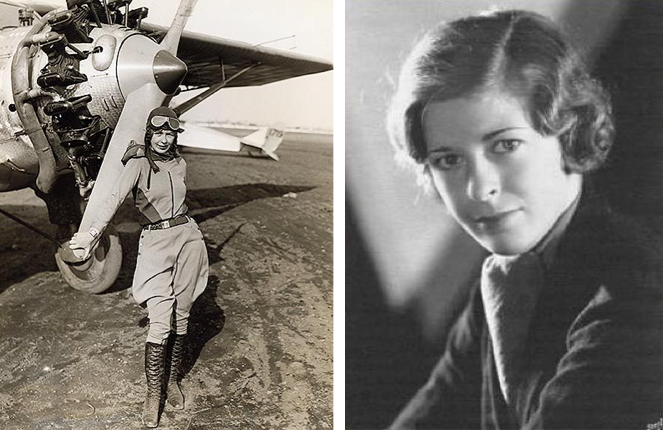
In her profile of aviator Elinor Smith (1911-2010), writer Helena Huntington Smith took great pains to distinguish Elinor from other “lady fliers” who were little more than passengers in various flying exploits. Like Amelia Earhart, Smith had the bona fides of a true aviator: in 1927 she become the youngest licensed pilot in the world at age 16, learning stunt flying at an early age. When she was 17 she smashed the women’s flying endurance record by soloing 26½ hours, and in the following month set a woman’s world speed record of 190.8 miles per hour. In March 1930 she set a women’s world altitude record of 27,419 feet (8,357 m), breaking that record in 1931 with a flight reaching 32,576 feet. Smith would continue to fly well into old age. In 2000 she flew NASA’s Space Shuttle vertical motion simulator and became the oldest pilot to succeed in a simulated shuttle landing. In 2001 (at age 89) she would pilot an experimental flight at Langley AFB. An excerpt from the profile:

HEAD IN THE CLOUDS…Elinor Smith’s flying career would extend from age 16 and into her 90s. At left, Smith poses in Long Island with the Bellanca monoplane she used to beat the solo flight record in 1929. Right, portrait of Smith circa 1930s. (findagrave.com)

 *  *  *

I’d Rather Be in Philadelphia

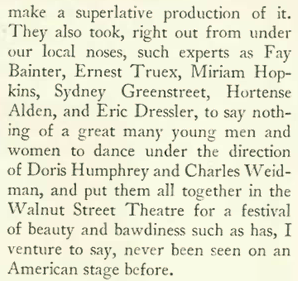
Theatre critic Robert Benchley was over the moon regarding a performance of Lysistrata staged by the Philadelphia Theatre Association. Benchley suggested the Philadelphians had “put New York to shame” in staging such a “festival of beauty and bawdiness…never seen on an American stage before.”

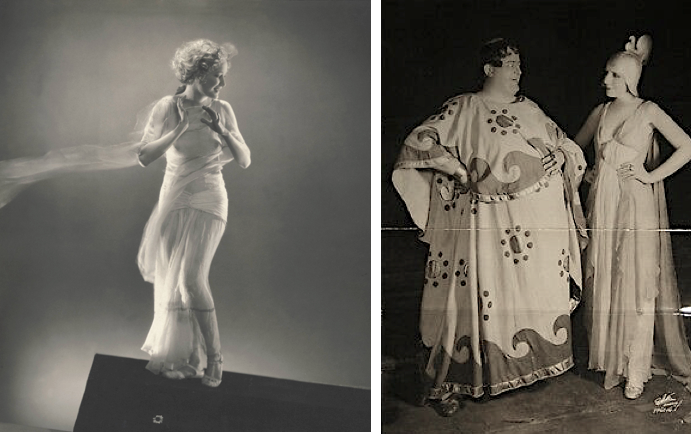
NO MORE HANKY PANKY…Left, actress Miriam Hopkins in Aristophanes’ Lysistrata, as photographed by Edward Steichen; at right, Sydney Greenstreet with unidentified actress from the 1930 Philadelphia production of Lysistrata. (timeline.com)

Benchley praised the seemingly advanced tastes of Philadelphia audiences as he continued to the lament the fact that the City of Brotherly Love had beaten New York to the punch with the staging of the play. He needn’t have worried much longer; the play would open on Broadway on June 5, 1930, at the 44th Street Theatre.

LOVER COME BACK…Production photograph for Norman-Bel Geddes’s staging for Lysistrata, titled “the women of Greece return to their men.” (hrc.utexas.edu)

While we are on the subject of theater, Constantin Alajálov provided this lovely illustration of Anton Chekhov’s Uncle Vanya for The New Yorker’s theater review section…

 *  *  *

Make ‘Em Dance, Boys

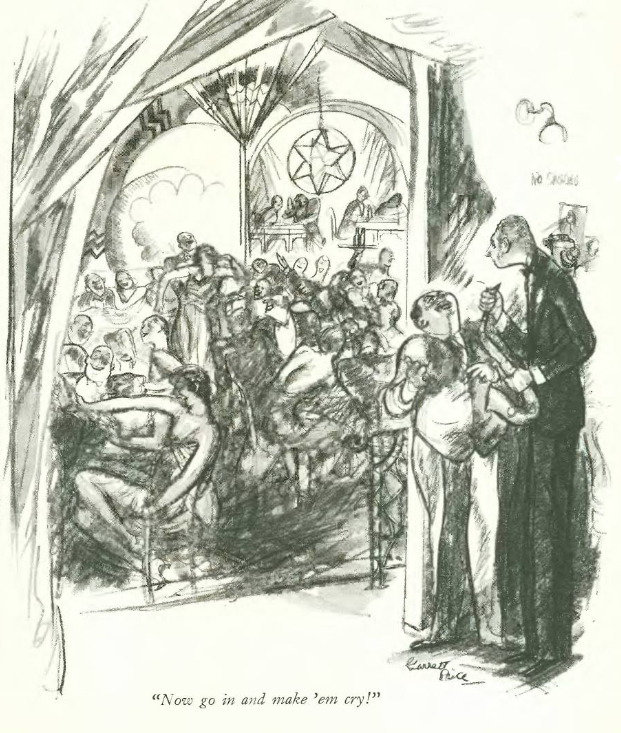
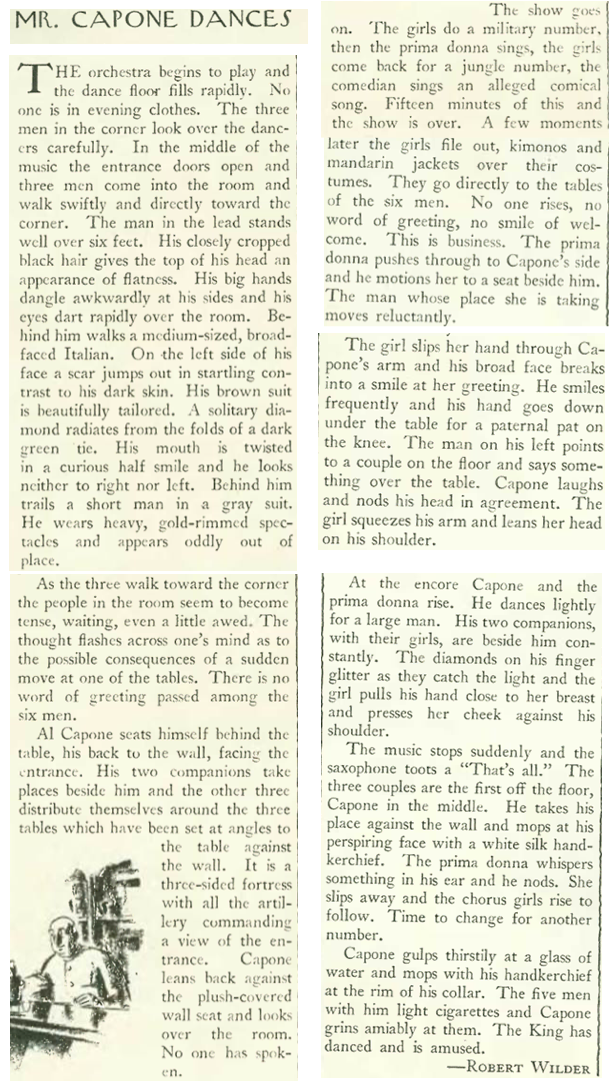
The author Robert Wilder contributed this interesting casual about the appearance of gangster Al Capone at a Chicago nightclub. Excerpts:

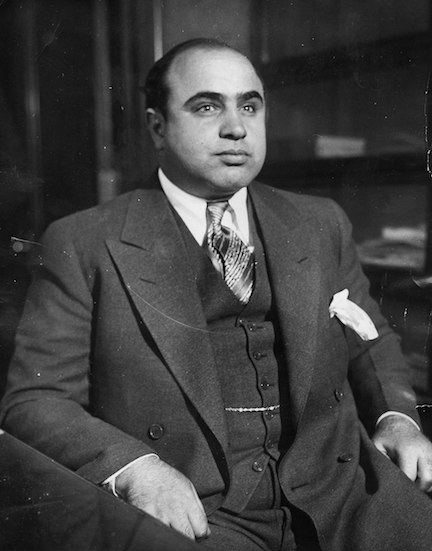
LIGHT ON HIS FEET…Al Capone in 1930. (Wikipedia)

 *  *  *

You Say You Want a Revolution?

Alva Johnston offered his thoughts on how America could stage its own “Red Revolution,” given that Russia and several European countries had already experienced communist uprisings of their own, and also given that New York Police Commissioner Grover Whalen, always in search of problems that didn’t exist, had announced a new “Red Scare” in his fight against communism.

Tongue firmly in cheek, Johnston suggested how American know-how could be brought to bear in inciting a Red Terror. An excerpt:

YANKEE INGENUITY…Alva Johnston, left, offered some innovative ideas for a uniquely American “Red Revolution.” At right, soldiers stand behind a barricade during Germany’s communist Spartacist uprising of January 1919. (Wikipedia)

 *  *  *

Speaking of Revolutionaries

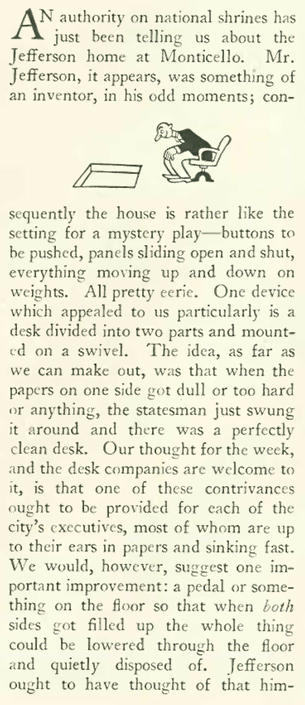
Thomas Jefferson’s home at Monticello is one of America’s most-visited historical sites, but in 1930 it was still something of a regional curiosity, having only been acquired in 1923 for the purposes of turning it into a public museum. Although Jefferson is well known today for his various inventions at Monticello, E.B. White was just learning about this side of the president in his weekly “Notes and Comment” dispatch:

THIS OLD HOUSE…Left, a combination of neglect and Civil War vandalism left Thomas Jefferson’s Monticello enmeshed in weeds and in a state of near collapse by the 1870s. At right, students of the University of Virginia pose outside Monticello in 1930. (UVA/Hulton Archive)

 *  *  *

Play Ball?

We are well into the spring of 1930, yet The New Yorker stood firm in its complete lack of baseball coverage. As I’ve noted before, the magazine covered virtually every sport from horse racing to rowing to badminton, and even lowered itself to regular features on college football and professional hockey, but not a line on baseball, save for an occasional note about the antics of Babe Ruth or the homespun goodness of Lou Gehrig. There were signs, however, that baseball was being played in a city blessed with three major league teams; we do find game times in the “Goings On About Town” section, as well as occasional baseball-themed filler art, and a comic panel in the May 10 issue by Leonard Dove:

From Our Advertisers

We begin with an endorsement for Chase & Sanborn coffee by the soprano Alma Gluck, wife of famed violinist and composer Efrem Zimbalist Sr. Originally I thought she was enjoying coffee with a sister in law named “Mrs. Zimbalist,” but as reader Frank Wilhoit astutely points out, the “Alma Gluck” (celebrity) and “Mrs. Zimbalist” (housewife) are alternate personae of the same individual. And now that I look at the ad again, the clothes and hair styles are identical. I will try to locate a clearer image of the ad…

…and from the makers of White Rock we have a group of swells and their airborne friends enjoying some bubbles that are doubtless mixed with illegal hootch…

Dr. Seuss continued to offer his artistry on behalf of Flit insecticide…

…and on to our cartoons, Peter Arno illustrated the hazards of the road…

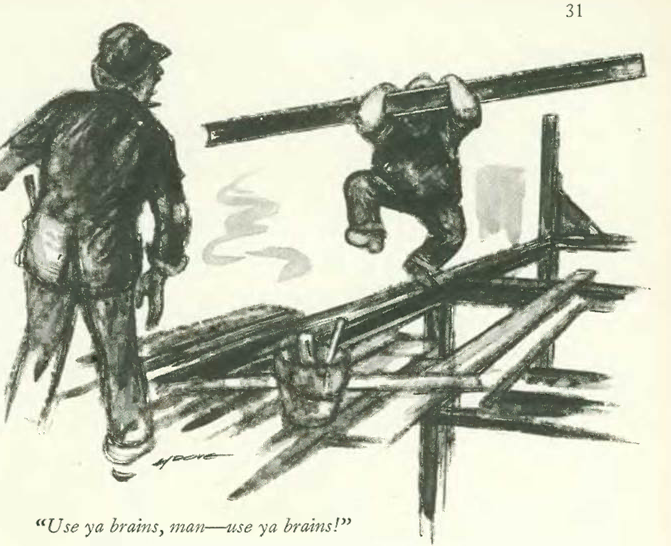
…while Leonard Dove explored the hazards high above the streets of Manhattan…
Constantin Alajálov explored an odd encounter in a park…

Isadore Klein mused on the tricks of mass transit…

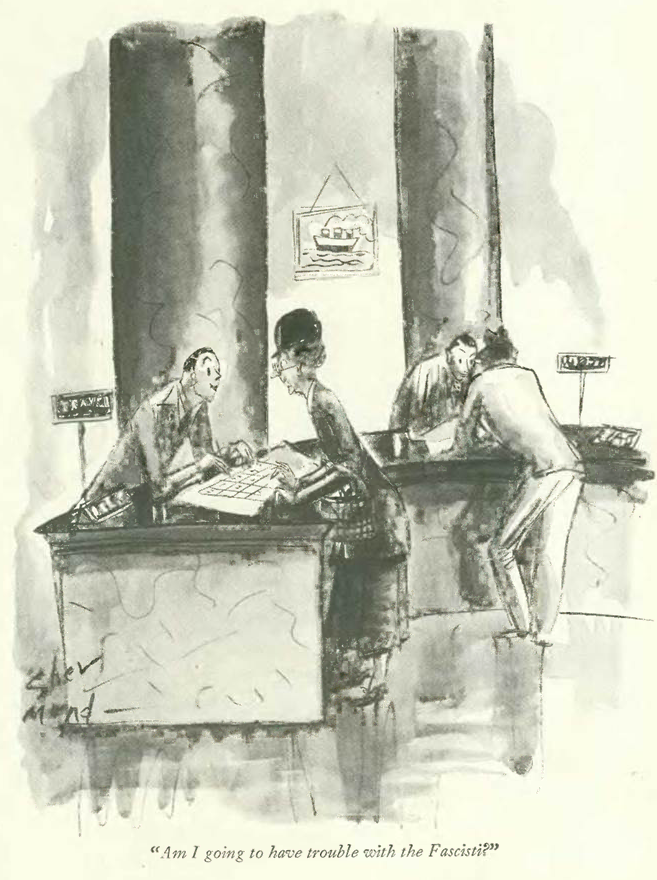
…and two from Barbara Shermund, who looked in on one tourist’s plans for a trip to Mussolini’s Italy…

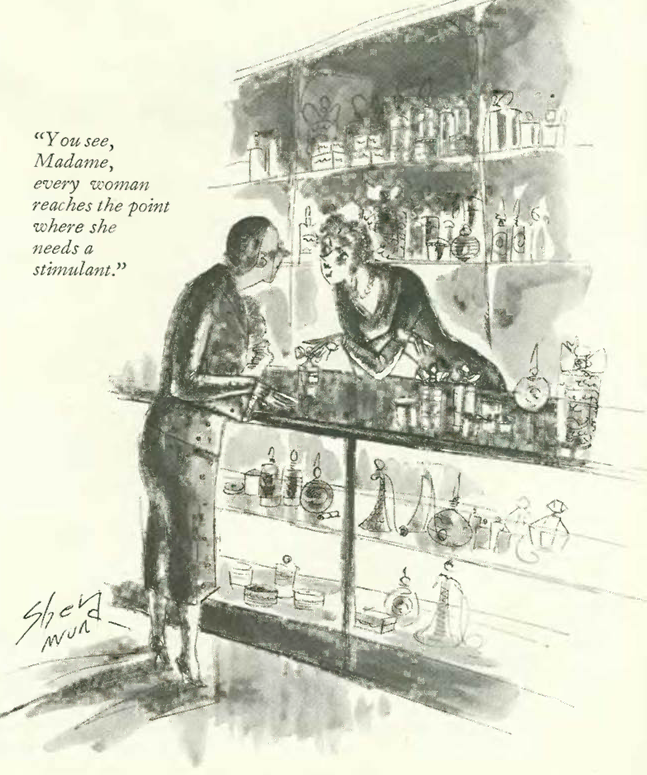
…and some helpful advice at a perfume counter…

Next Time: Red Alert…


Learning To Be Modern

On March 1, 1930, the Empire State Building was still just a bunch of sketches and blueprints, as was much of the yet-to-be-built modern cityscape of Manhattan. But as the Depression slowly worked its gnarled fingers into the American landscape, some still dreamed of the sleek, streamlined world to come.

March 1, 1930 cover by Rea Irvin.

The New Yorker’s architecture critic, George S. Chappell, kept readers apprised of changes on the city’s skyline, as well as of the trends in modern design that were being displayed at various exhibitions including one held annually by the city’s Architectural League. Chappell observed:

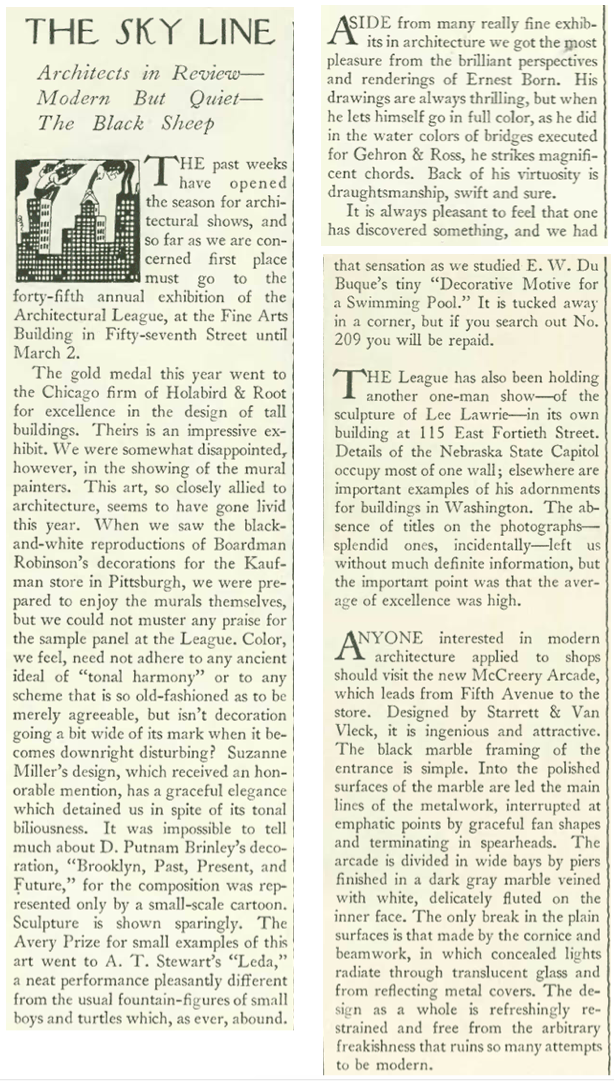
A GLIMPSE INTO THE FUTURE…Opening pages of the Architectural League’s 45th Annual Exhibition, featuring an image of the Empire State Building. Construction had just begun on the iconic building at the site of the old Waldorf-Astoria Hotel. (mullenbooks.com)

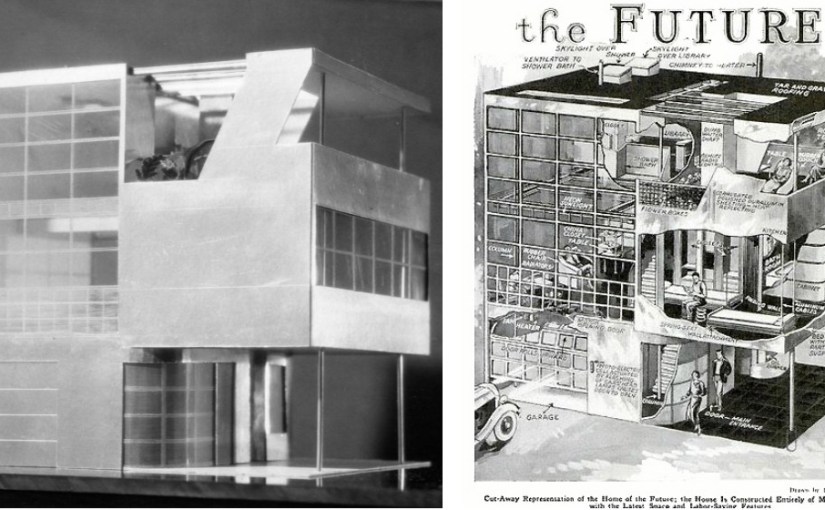
The exhibition featured a variety of projects, from the Aluminaire House in Long Island to Boardman Robinson’s murals in Pittsburgh to Bertram Goodhue’s Nebraska State Capitol featuring Lee Lawrie’s sculptures and friezes…

ECLECTIC…Model of the Aluminaire House erected in full scale for the 45th Annual Exhibition of the Architectural League of New York; Boardman Robinson’s The History of Trade murals in Kaufmann’s Department Store, Pittsburgh; detail of one of Boardman’s 10 murals displayed at Kaufmann’s; Lee Lawrie’s “The Sower,” a 19-foot-tall bronze statue mounted on top of Bertram Goodhue’s Nebraska State Capitol in Lincoln. In 1937 Lawrie would install his “Atlas” sculpture in front of Rockefeller Center. (archleague.org/archive.triblive.com/capitol.nebraska.gov)

 *  *  *

And Now For Something Old

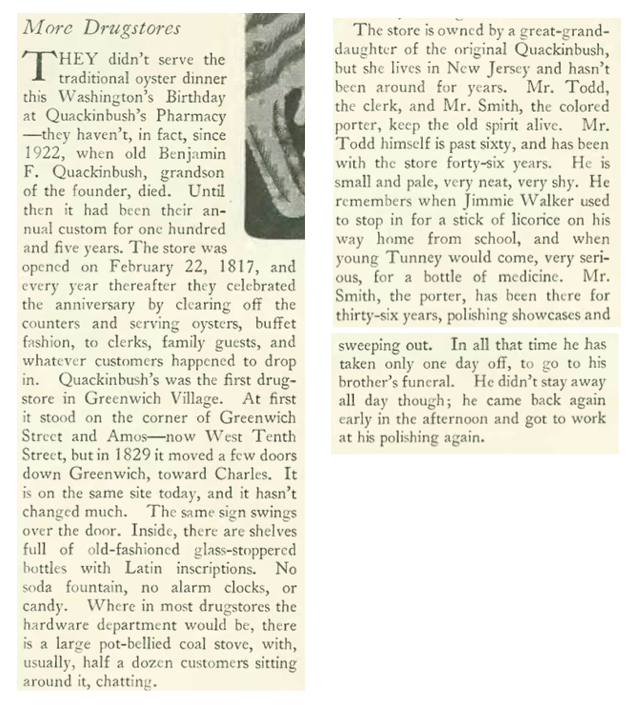
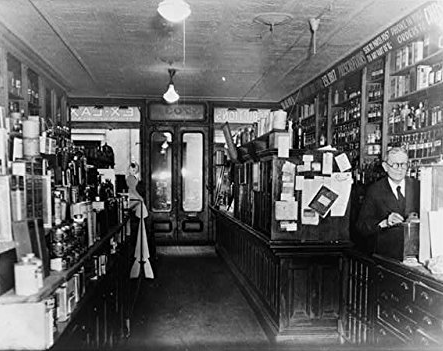
While George Chappell contemplated the world to come, “The Talk of Town” looked back in time to Greenwich Village’s oldest drugstore…

FORM FOLLOWED FUNCTION…Quackenbush Pharmacy in 1930. Manager James Todd at right. (Library of Congress)

 *  *  *

Pet Project

The March 1 issue featured James Thurber’s second installment of “Our Pet Department”…

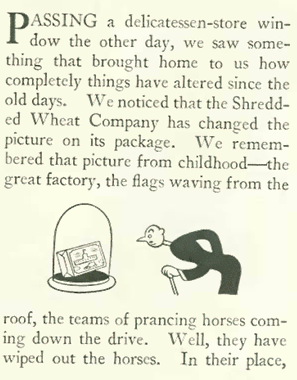
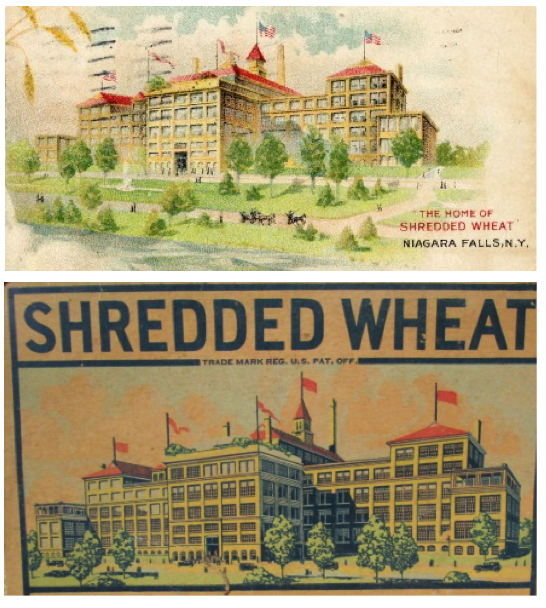
And while Thurber was doling out pet advice, his pal E.B. White was worrying over changes to the design of the Shredded Wheat box…

HORSELESS CARRIAGES replaced animal power on the packages of Shredded Wheat, much to the dismay of E.B. White. (oldshopstuff.com)

 *  *  *

A Prince of a Guy

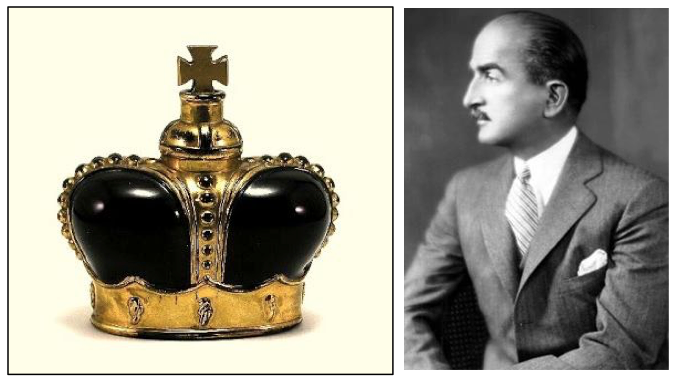
A refugee from the Bolshevik Revolution, the Georgian Prince Matchabelli (Guéorgui Vassilievitch Matchabelli) was penniless when he landed on American shores in 1924. Two years later he launched a perfume business with three scents  — Ave Maria, Princess Norina, and Queen of Georgia — sold in bottles that were said to be small replicas of the Prince’s lost Georgian crown. “The Talk of the Town” paid the royal perfumer a visit for the March 1 issue:

HIS CROWNING ACHIEVEMENT…A bottle of Princess Norina perfume from 1926, and its creator, Prince Matchabelli. (Pinterest/Wikipedia)

Those who were around the late 1970s and 1980s no doubt recall the Prince Matchabelli Windsong Perfume commercials and the catchy tune that kind of stuck in your head (for better or worse)…

 *  *  *

Low Life Revue

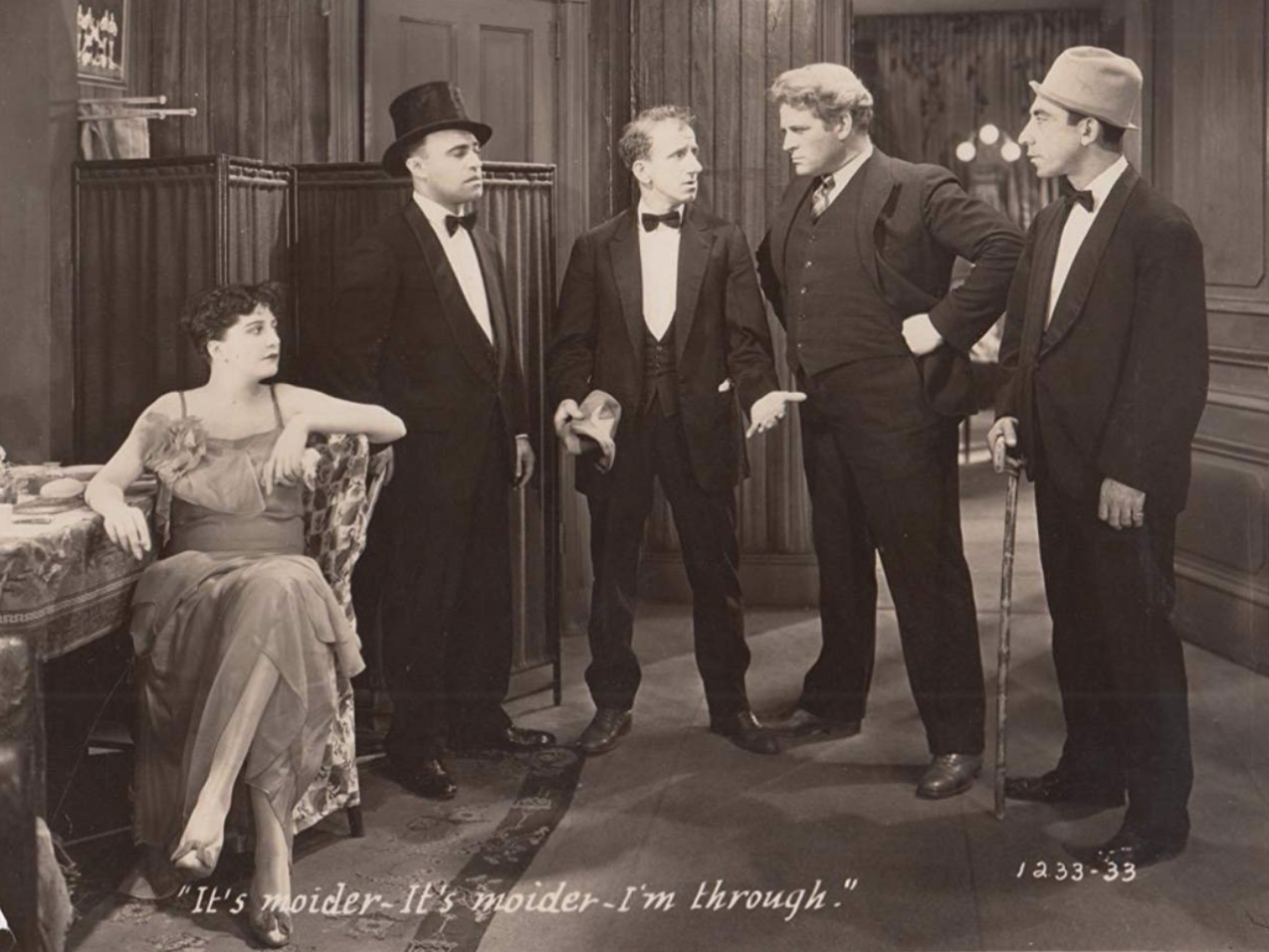
Ben Hecht continued his exploration of the hardboiled world of journalists, bootleggers, nightclub singers and other lowlifes in his screenplay for Roadhouse Nights, a film that was apparently enjoyed by New Yorker film critic John Mosher. As for Hecht, an erstwhile member of the Algonquin Round Table and occasional contributor to The New Yorker in the 1920s, the film was just one of many to follow in a Hollywood career that the former Chicago journalist held in some disdain (see recent New Yorker article by David Denby)…

IT’S MOIDER, I SAY…Helen Morgan, Eddie Jackson Jimmy Durante, Fred Kohler, and Lou Clayton in 1930’s Roadhouse Nights. (IMDB)

 *  *  *

The Winds of Wynn

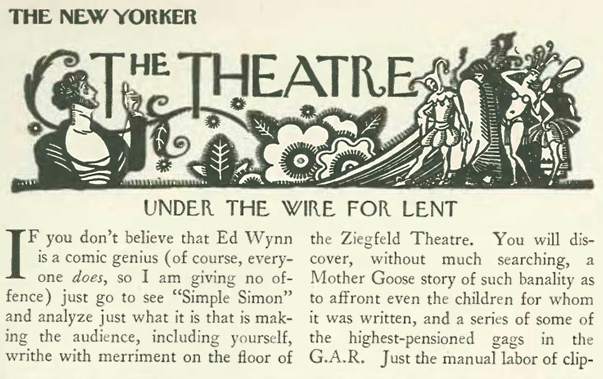
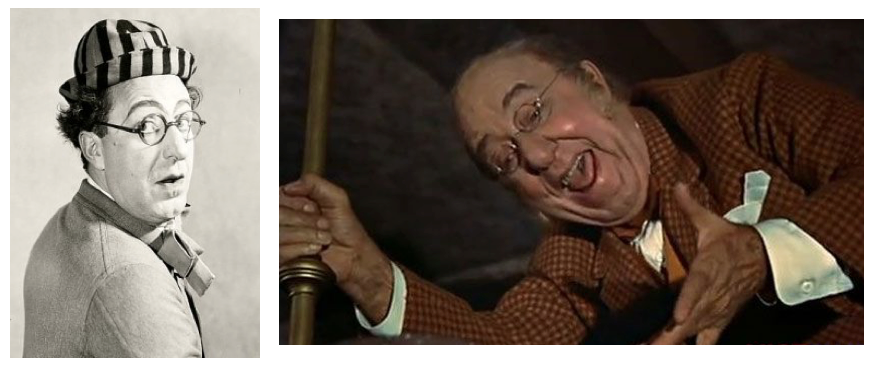
Ed Wynn wowed theater critic Robert Benchley in his portrayal of “Simple Simon” at the Ziegfeld Theatre. Wynn was one of the most popular comedians of his time, but is best known today for his portrayal of “Uncle Albert” in the 1964 Disney film Mary Poppins

AGELESS…Ed Wynn in Simple Simon, 1930; at right as Uncle Albert in 1964’s Mary Poppins. (secondhandsongs.com/Pinterest)

 *  *  *

He Was No Palooka

The March 1 and 9 issues of The New Yorker gave considerable ink to Niven Busch Jr’s success story of a middleweight prizefighter. Titled “K.O. Middleweight,” the two-part article was about Stanislas Kalnins, who went by the name K.O. Keenen because it would go over better with the large majority of Irishmen at the fights. Peter Arno provided the art for the piece:

From Our Advertisers

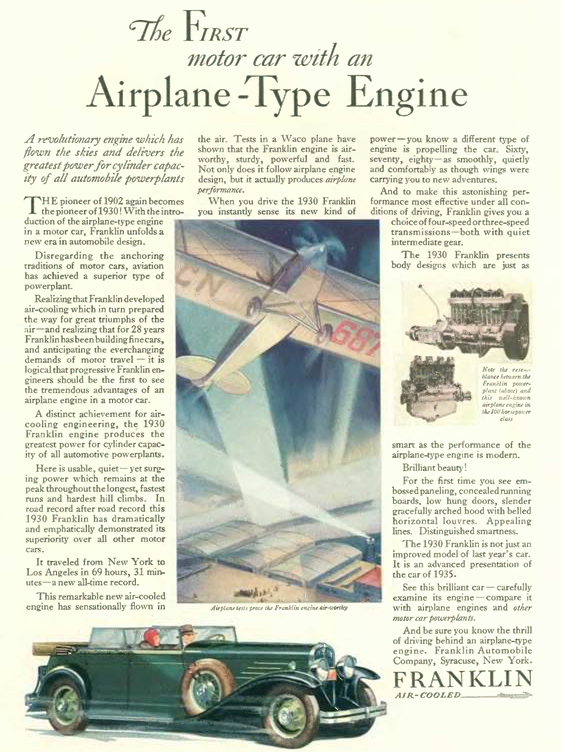
We have another ad from the Franklin motorcar company touting its air-cooled engines, which thanks to the Depression were not long for the world…

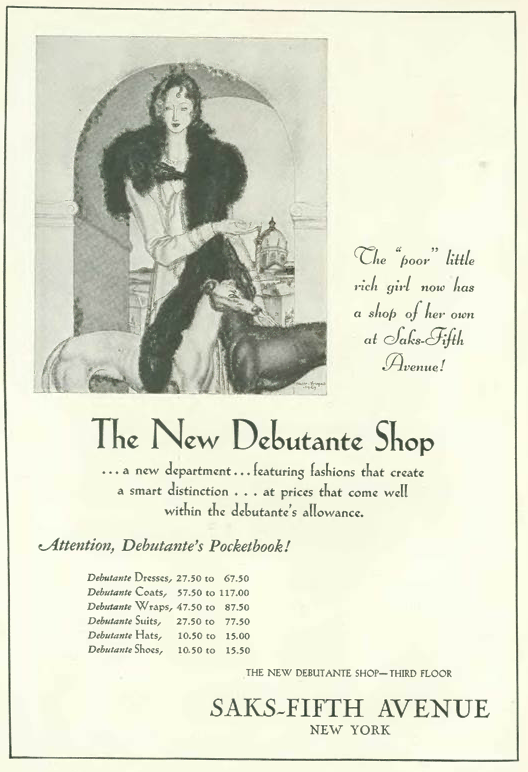
…Saks shamelessly appealed to the “poor” little rich girl in this ad aimed at aspiring debutantes…

…Lenthric perfumes offered this all-French ad to those seeking Continental refinement…

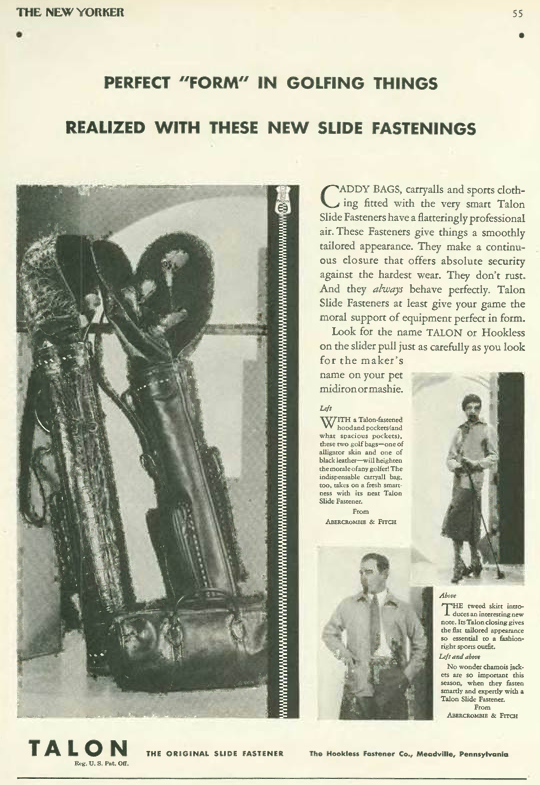
…and this ad from Talon, advertising “Slide Fasteners” before the word “zipper” came into common use…

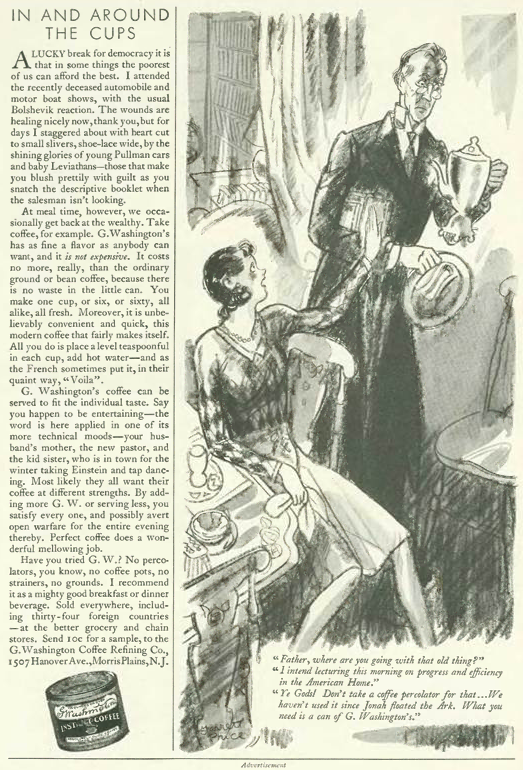
Garrett Price was the latest New Yorker cartoonist to pick up some extra cash from G. Washington instant coffee…

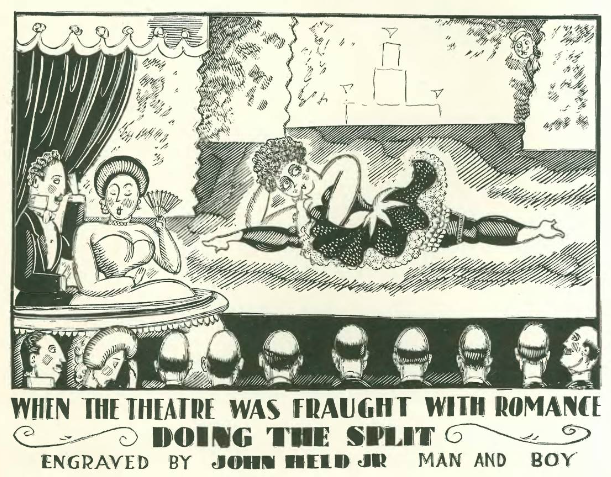
…while John Held Jr. even lent his image (along with some drawings) to promote Chase and Sanborn’s coffee…

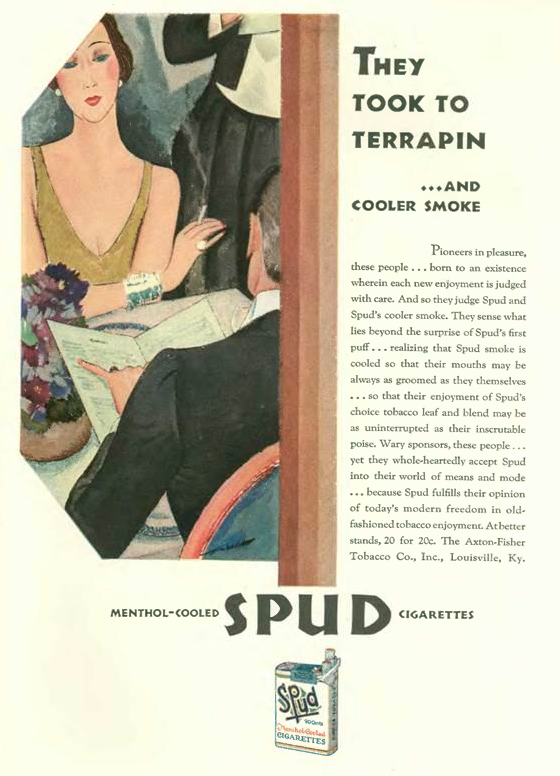
…this artist for Spud cigarettes borrowed Carl Erickson’s style from his famed Camel ads (see examples below)…

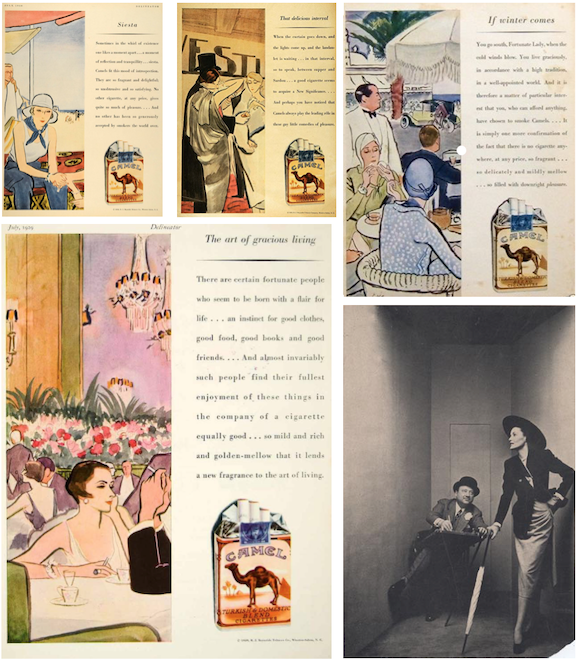
…examples of Carl “Eric” Erickson’s Camel ads from the late 1920s…

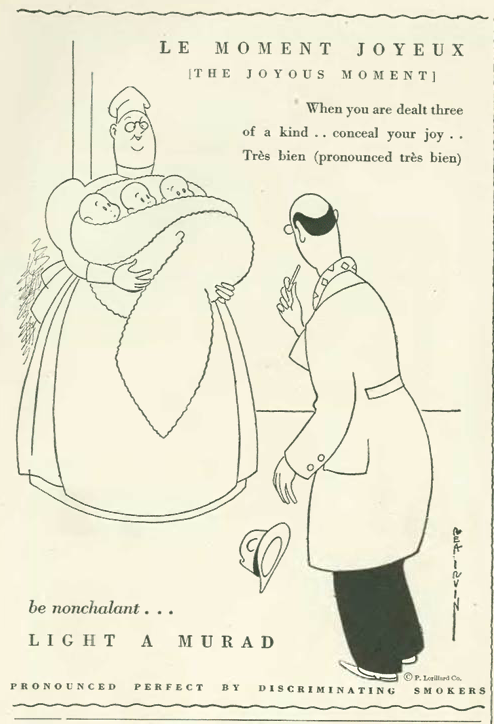
…and here we have another New Yorker cartoonist, Rea Irvin, helping the makers of Murad cigarettes move their product…

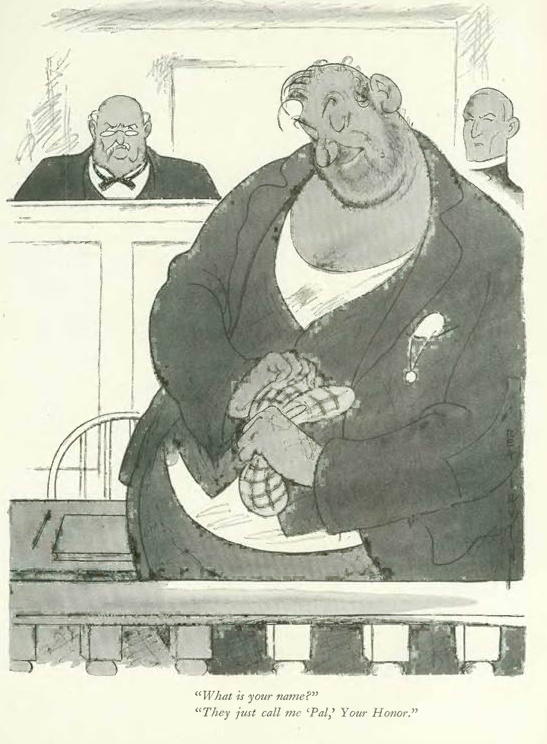
…Irvin also illustrated this cartoon for the March 1 issue…

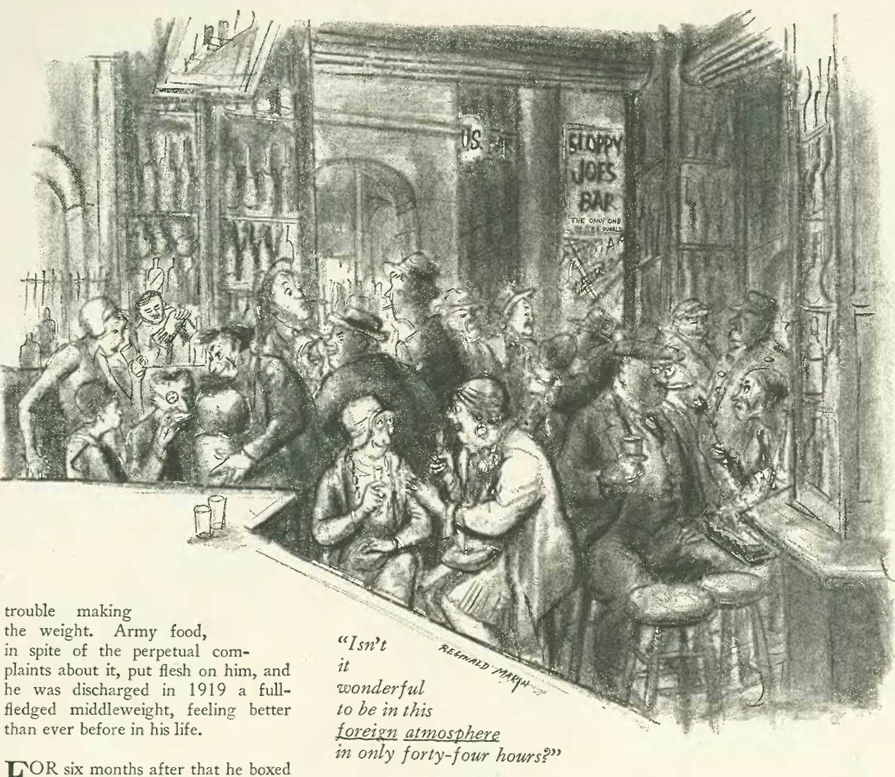
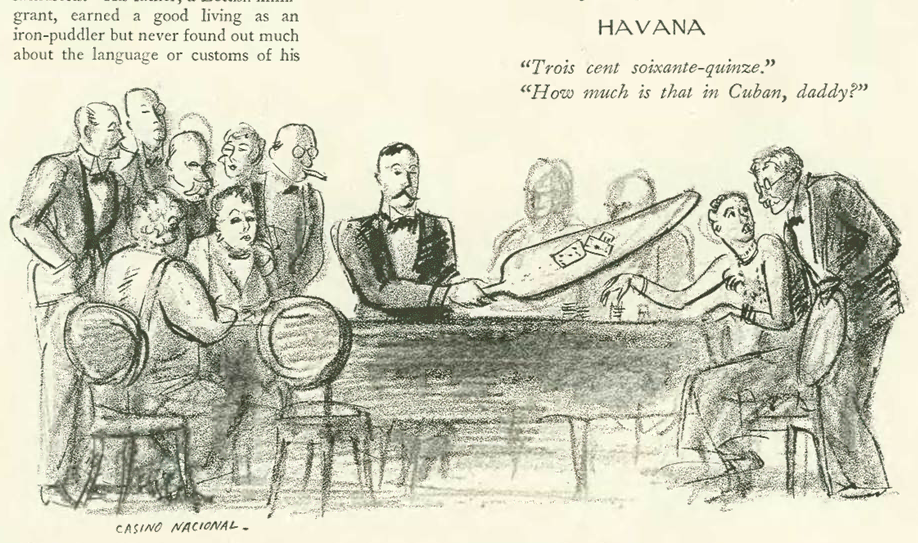
Reginald Marsh contributed these cartoons, no doubt based on a recent winter stay in sunny Havana (I’ve been to Sloppy Joe’s, and still looks pretty much like this)…

…back stateside, Peter Arno looked in on a cultural exchange…

…and we close with two from the issue by Barbara Shermund

Next Time: The Non-linear Man…
American Royalty

Although the United States declared its independence from British Empire nearly 250 years ago, the royal family and all of its requisite trappings persist in the American imagination like a phantom limb.

Oct. 5, 1929 cover by Theodore G. Haupt.

E.B. White observed as much in the “Notes and Comment” section of the Oct. 5 issue, in which he offered his views regarding the “pother” over the wedding of Calvin Coolidge’s son, John, to Florence Trumbull, the daughter of Connecticut Governor John Harper Trumbull

White could have looked no further than the pages of The New Yorker for further evidence to his claims. The bourgeois yearnings of its readers were reflected in countless advertisements laced with anglophilic pretensions. Here are examples from 1929 issues we have previously examined:

LIVE LIKE A BARON…Ads from The New Yorker of the 1920s often featured illustrations of regal, priggish types such as the couple above, deployed to sell everything from apartments and ginger ale…
…to no-frills automobiles and menthol cigarettes. No product was too pedestrian for the royal treatment.

Writing under the pseudonym “Guy Fawkes,” Robert Benchley commented further on the Coolidge-Trumbull nuptials in the “Wayward Press” column:

HEY CAL, IT’S A WEDDING, NOT A FUNERAL…The former U.S. President Calvin Coolidge was known as “Silent Cal” for good reason, given his reserved demeanor that rarely produced a smile (although he apparently had a dry wit). He poses here at the wedding of his son, John. Left to right are Grace Goodhue Coolidge, President Coolidge, Florence Trumbull Coolidge, John Coolidge; Maud Pierce Usher Trumbull, and Gov. John Trumbull. (patch.com)
NOT EXACTLY KING’S ROAD…Onlookers line the street near the Congregational church in Plainview, Conn., hoping for a glimpse of the bride and groom, who were united in a simple ceremony. (Associated Press)
CUTE COUPLE…Florence Trumbull and John Coolidge during their engagement, 1928. (crackerpilgrim.com)

 *  *  *

Modest Mussolini

We go from famous faces to infamous ones, namely the Italian dictator Benito Mussolini, aka Il Duce, who received the adoration of his public while trying to remain inconspicuous at the cinema. “Talk” recounted…

NOW PICTURE HIM UPSIDE DOWN…A 1929 postcard image of the once-revered Italian dictator Benito Mussolini. Sixteen years later he would be shot by his own people and strung up by his feet from the roof of a Milan gas station. (worthpoint.com)

 *  *  *

Going Down

“Talk” also commented on the growing trend for high-rise apartments to provide swimming pools and other amenities below street level:

TAKING THE PLUNGE DOWN UNDER…Few indoor swimming pools were available to New Yorkers during the 1920s. Two of the nicer ones were found underground at the Shelton Hotel (above) and the Park Central. Sadly, both pools no longer exist. In 2007 the Shelton’s pool was removed and the cavernous space was divided into three levels. I’m not sure when Park Central’s disappeared, but it’s fate was doubtless similar to the Shelton’s.(daytoninmanhattan.blogspot.com/hippostcard.com)

 *  *  *

How About a Catch?

As I’ve noted on previous occasions, The New Yorker of the 1920s all but ignored major league baseball. The magazine gave regular coverage to seemingly every sport, from hockey and college football to polo and yacht racing, but regular coverage of baseball was nonexistent, even when the Yankee’s Murderers’ Row (Ruth, Gehrig among others) won back-to-back World Series titles in 1927-28.

Still no coverage in the Oct. 5 issue, but the sport did get a brief mention in Howard Brubaker’s “Of All Things” column…

…and the issue was filled with baseball imagery, including the cover…

The Oct. 5 issue was filled with baseball-related items, but no actual coverage of the games. Images from the issue included, from left, the cover by Theodore Haupt; a filler sketch by Constantin Alajalov; and a Johan Bull illustration of umpire Bill Klem for the issue’s “Profile” section.

 *  *  *

In a Sentimental Mood

Robert Benchley checked out George White’s latest version of his Scandals revue at the Apollo Theatre, and found the sometimes risqué show to be in a sentimental mood…

BETTER SENTIMENTAL THAN DEPRESSED…The chanteuse Frances Williams (pictured on the show’s sheet music and at right) likely provided the only spark to the 1929 edition of George White’s Scandals. (amazon/psychotronicpaul.blogspot.com)

Benchley also looked in on Elmer Rice’s latest, See Naples and Die, featuring veteran English actress Beatrice Herford and the up-and-coming Claudette Colbert

VETERAN AND ROOKIE…Veteran English actress Beatrice Herford and the up-and-coming Claudette Colbert headlined Elmer Rice’s See Naples and Die. Colbert (pictured at right in a 1928 Broadway publicity photo) would go on to massive stardom in the 1930s. (Alchetron/Wikipeda)

Benchley applauded the veteran Herford’s performance, but found the otherwise reliable Colbert miscast as a wisecracking, Dorothy Parker type (Benchley, as we know, was close friends with Parker, so he knew what he was talking about)…

*  *  *

An (Ugly) American in Paris

Off to Paris, we find correspondent Janet Flanner joining with Parisians in deriding the behavior of American tourists, who were on a course to drain every last drop from the ÎledeFrance before departing for the bone-dry USA:

DRINKING IN THE SIGHTS…American tourists at a Parisian café, circa 1920s. (tavbooks.com)

*  *  *

Party Pooper

With her infant child (Patricia Arno) at home, it is doubtful Lois Long was seeing as much nightlife as she did during her first weeks at The New Yorker, when “nights were bold.” And indeed, her nightlife column “Tables for Two” would end in June 1930…for awhile anyway. Her Oct. 5 column took a cursory spin through the various nighttime offerings, ending on this note regarding a fan letter and a message from comedian Jimmy Durante:

THE GREAT SCHNOZZOLA Jimmy Durante brought a smile to the face of Lois “Lipstick” Long. 

 * * *

From Our Advertisers

With the latest Paris fashions splattered across newstands all over Manhattan, retailers scrambled to get “replicas” to consumers…Macy’s had “couturier bags”…

…the Hollander Dressmaking Department was ready to make a perfect copy of Patou’s “Quiproquo”…

…and this Chanel frock could be had in misses’ sizes for $145 (roughly equivalent to about $2K today)…

…Philip Morris hadn’t yet discovered the “Marlboro Man,” and were still hawking their cigarettes through a “distinguished handwriting contest.” The latest winner was Edmund Froese

…who would go on to become a popular mid-century landscape painter…

Port of New York, by Edmund Froese (undated)

…another artist in the midst of our ads is Carl “Eric” Erickson, who created these lovely images for R.J. Reynolds that would induce people to take up the habit with a Camel…

…and then we have some rather unlovely ads from the back pages, including these two that would not go over well with today’s readers…

…or this from Dr. Seuss, still sharpening his skills with Flit insecticide…

…or this ad from Abercrombie & Fitch, wrong on so many levels…

…on to happier things, here’s an illustration by Reginald Marsh that ran along the bottom of “Talk of the Town”…(click to enlarge)

Alan Dunn found love in the air above the streets of Manhattan…
…and Leonard Dove revealed the hazards of apartment rentals…
Next Time: Race to the Sky…

Not Your Grandpa’s Tammany Hall

For more than a century, a political organization known as the Tammany Society ruled New York City politics with an iron fist. Founded in 1786 (and named for Tamanend, a chief in the Lenni-Lenape nation), by the mid 19th century it rapidly expanded its political control by earning the loyalty of the city’s fast-growing immigrant population, particularly the Irish.

July 13, 1929 cover by Rea Irvin.

The Tammany Society proved an efficient machine for controlling state Democratic politics as well as New York City elections. Through its use of patronage to reward loyal precinct leaders, it also became a center for big-time graft. Most of us know a bit about Tammany thanks to school history books that focused on the deep corruption of William “Boss” Tweed, who was brought down by the press and by Harper’s Weekly cartoonist Thomas Nast in the 1870s. Tammany Hall would survive the scandal, and in the 1920s would still pull the strings of politicians including Gov. Al Smith and New York City Mayor Jimmy Walker.

Tammany had several homes, but during its most notorious years it was located in a circa 1812 hall (then called a “wigwam”) and later in an 1868 building on 14th Street, between Third and Fourth avenues. The July 13, 1929 “The Talk of the Town” noted the recent demolition of that old hall and the opening of a new headquarters on 17th Street:

POLITICAL BAGGAGE…Top, a stereoscope card featuring the 1868 Tammany Hall; below, Thomas Nast cartoons depicting the corruption of Tammany Hall and the downfall of Boss Tweed. (Wikimedia Commons/Smithsonian)

“Talk” found the new building unimpressive; it seemed to signal that the old political machine was losing some of its luster:

EVOLUTION OF THE WIGWAM, as depicted on a poster circa 1920. (nypdhistory.com)
Top left: The old Tammany Hall, decorated for the 1868 Democratic National Convention. Bottom left, the old hall was located at 141 E 14th Street, between 3rd and 4th Avenues. It was demolished in 1927 to make way for expansion of the Consolidated Edison building (right). (NYPL Digital Gallery/mediahistoryny.files.wordpress.com/Wikipedia)

Indeed, “Talk” found the building to be a somewhat austere, hosed-down affair, far removed from its grander past:

I LIKE YOUR NEW HAT…The 1929 Tammany Hall (top left) is currently undergoing a major renovation. Although the interior is being dramatically altered, including the addition of a glass dome, the landmarked exterior will mostly be preserved. When completed, the building—a mix of office and retail—will be known as 44 Union Square. (bkskarch.com)

For further evidence that the more austere Tammany Hall was nevertheless alive and well in 1929, another “Talk” item noted the organization’s continued influence behind the scenes in local politics:

The 1930s marked the beginning of the end for Tammany Hall, when reform-minded Democrats such as President Franklin Roosevelt and New York’s Republican Mayor Fiorello La Guardia (supported by Roosevelt on a “Fusion” ticket) dismantled Tammany’s system of patronage. The Tammany Society abandoned its headquarters in 1943 when it found it no longer had the funds to maintain the hall. Bought by a local affiliate of the International Ladies Garment Workers Union, it later housed the New York Film Academy and the Union Square Theatre until 2016, when it underwent extensive remodeling to make way for new office and retail space.

 *  *  *

Your Two Cents Worth

“Talk” also commented on the introduction of a new two-cent stamp that featured an image of Thomas Edison’s Mazda lamp, marking the celebration of fifty years of electric light. The magazine cheekily suggested that in the world of technological progress, there was nothing new under the sun:

(eBay)

 * * *

Americans in Paris

The New Yorker featured this humorous bit by a writer identified as “Guido” (I assume it is one of E.B. White’s many pseudonyms), who looked in on the chatter of various Parisian cafés and bars:

VOLSTEAD CAN’T GET US HERE…Enjoying the good life at a Parisian brasserie, circa 1920s. (National Geographic)

*  *  *

Hit and Miss

The New Yorker generally reveled in the good times Florenz Ziegfeld brought to the stage, but his latest effort, Show Girl, proved a bit of a disappointment (more evidence, in my view, that folks were tiring of the decade-long party known as the Roaring Twenties):

TAP-DANCING ON THE GRAVE OF THE ROARING TWENTIES…Although The New Yorker seemed less than enthused by Flo Ziegfeld’s latest effort, Show Girl, Ruby Keeler (top left) brought her tap shoes and her ‘A’ game to the performance. Clockwise, from top right, Keeler has some fun with the comedy trio Clayton, Jackson and Durante; program cover for Show Girl; the popular Albertina Rasch Girls with Harriet Hoctor in the “An American in Paris” scene of Show Girl, 1929. (Pinterest/jacksonupperco.com/eBay/songbook1.wordpress.com)

*  *  *

One of a Kind

New Yorker sportswriter Niven Busch, Jr. provided a nice write-up on golfer Bobby Jones, the most successful amateur ever to compete in the sport. An attorney by trade, the unassuming Jones had just won his third U.S. Open (he would win again in 1930). In all he would play in 31 majors, winning 13 of them and finishing in the top 10 an incredible 27 times. After retiring at age 28 in 1930 he helped design the Augusta National Golf Club and co-founded the Masters Tournament. An excerpt:

AND HE DID IT WEARING A NECKTIE…Although a lawyer by trade, the amateur golfer Bobby Jones was one of golf’s greatest champions. He pictured here after winning the 1929 U.S.Open in Mamaroneck, New York. (golf digest.com)

 *  *  *

An Odd Bit

Looking around the July 13 issue, let’s see what nighttime diversions were being touted by The New Yorker in their “Going on About Town” section (note the warning on the last item):

*  *  *

From Our Advertisers

The makers of Pond’s cold cream continued to roll out endorsements from high society with this testimonial from Jane Kendall Mason (1909-1980), the newlywed wife of George Grant Mason, an executive with Pan American Airways in Cuba.

In 1925, the 17-year-old Jane made her formal debut in Washington society. After a visit with Grace Goodhue Coolidge, the first lady famously declared that Jane was “the most beautiful girl ever to enter the White House.”

After their marriage, the Masons became friends with Ernest and Pauline Hemingway, and introduced the Hemingways into Cuban society. Jane could hunt, fish, and hold her liquor, and, according to Ernest Hemingway, she was the most uninhibited person he’d ever met. So naturally they had a torrid, tempestuous, two-month affair that ended with Jane’s attempted suicide (she leapt from a balcony that was not high enough to do the job).

Hemingway supposedly used Jane as a model for the cruel-hearted Margot Macomber in The Short, Happy Life of Francis Macomber, in which the title character—trapped in a sad marriage to a wealthy but spineless American (George?)—accidentally shoots her husband in the head while on safari. She is also considered to be the model for the sex-obsessed Helene Bradley in Hemingway’s novel To Have and Have Not— a character also married to a rich but spineless husband.

Carlos Gutierrez (who served as a boat guide for Ernest Hemingway) and Jane Mason aboard “Sloppy” Joe Russell’s boat Anita in 1933. (Ernest Hemingway Photograph Collection, JFK Presidential Library and Museum, Boston)

…and we segue into our cartoons, featuring a mother and child (drawn by Carl Kindl) probably flying on one of those Sikorskys…

Rollin Kirby looked in on a tailor’s shop (this is one of only two drawings published by Kirby in The New Yorker)…

…a note on Kirby, a three-time Pulitzer winner: outraged by the passage of Prohibition laws, Kirby created one of his most famous characters, “Mr. Dry,” which he introduced to readers of the New York World in January 1920…

Rollin Kirby’s miserly, foreboding “Mr. Dry” made his first appearance in the pages of the New York World on Jan. 17, 1920, shortly after Prohibition laws went into effect in the United States. Mr. Dry also made an appearance at the end of 1920, to throw some water on America’s Christmas cheer. (bottlesboozeandbackstories.blogspot.com)

You can read more about Rollin Kirby and Mr. Dry here.

Roland Baum peeked in on a reluctant stargazer…

…and to close, this little filler drawing of a hot dog vendor by Constantin Alajalov…

Next Time: On the Flatfoot Beat…