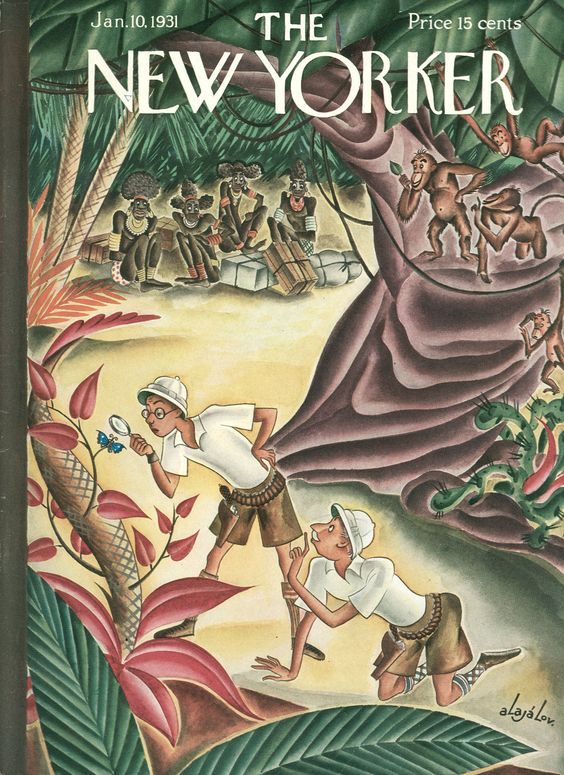
Chaplin of the Jungle

In the 1920s and 30s the concept of the documentary film was still in its infancy, and beginning with the silent Nanook of the North (1922), the idea that a documentary and a drama were separate things was unknown to filmmakers.

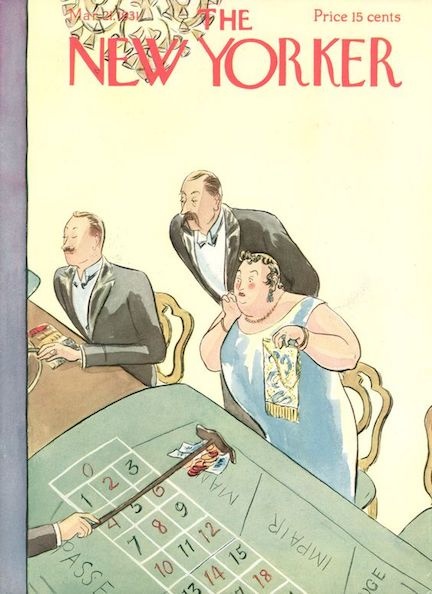
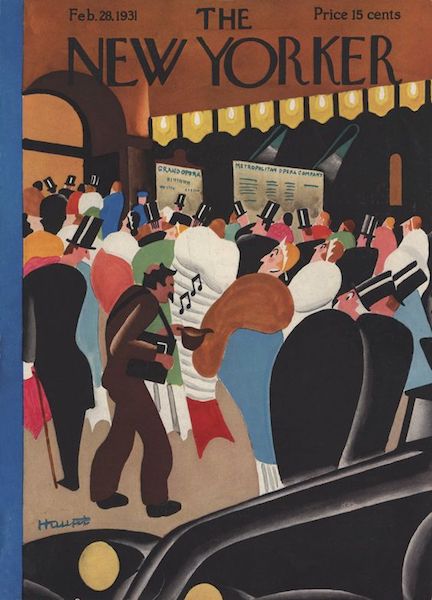
Feb. 28, 1930 cover by Theodore Haupt.

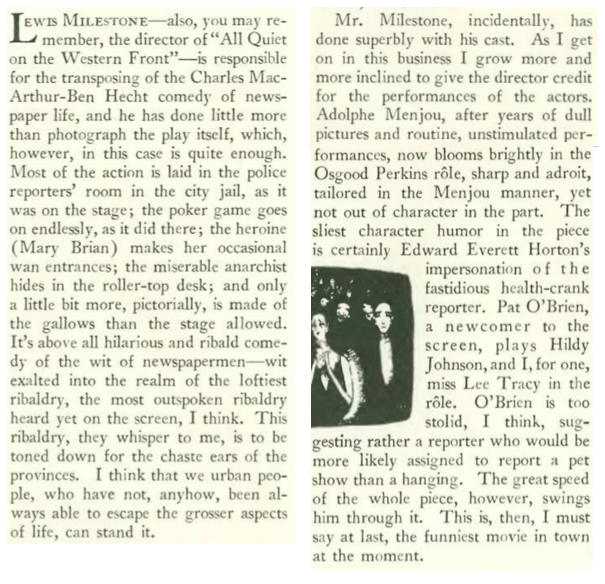
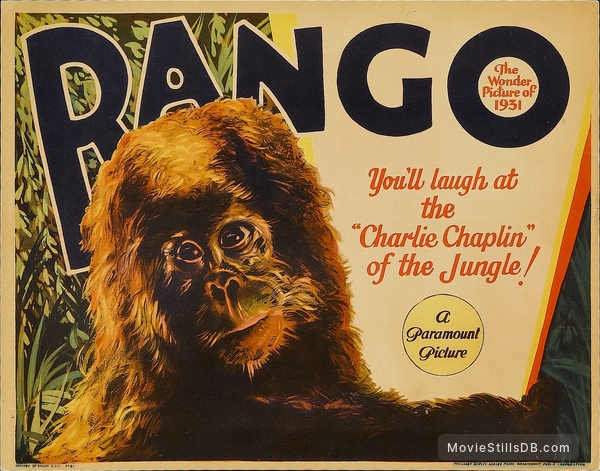
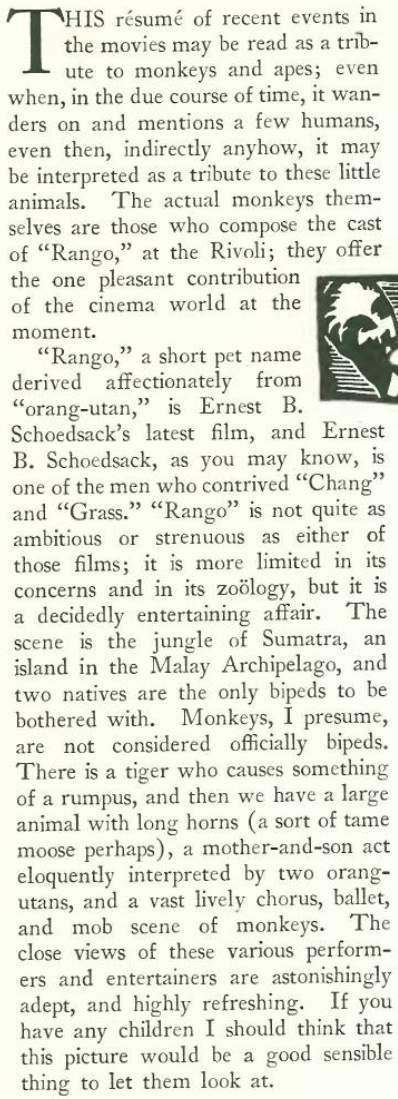
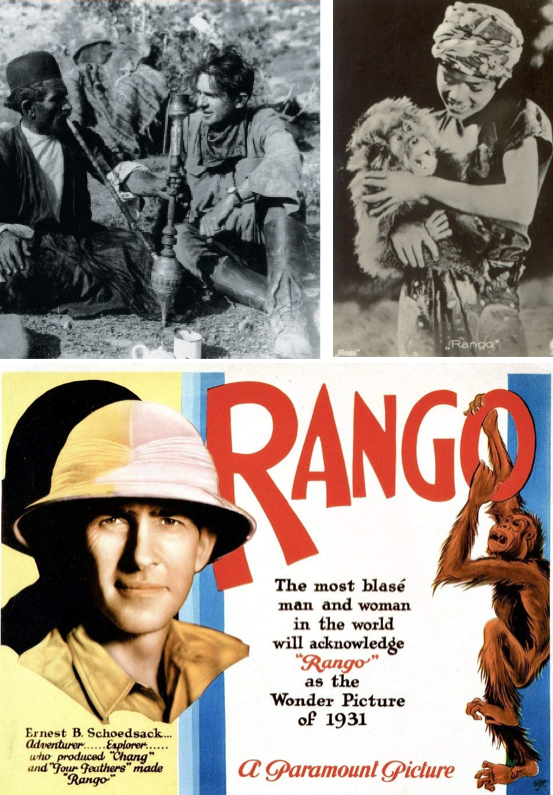
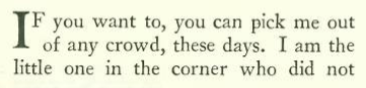
What was known, however, was the box office appeal of films that explored unknown and exotic lands, like Ernest B. Schoedsack’s 1927 blockbuster Chang, which featured a mix of staged events as well as the actual slaughter of wild animals. Audiences (and most critics) seemed little troubled that these films were a mix of fact and fiction. It was a movie, after all, and movies followed a story arc, and they had drama, and sometimes comedy. And so when Schoedsack (1893-1979) introduced audiences to an orangutan named Rango, publicists described the simian star as the “Charlie Chaplin of the Jungle.” The New Yorker’s John Mosher found the performances of the various apes “astonishingly adept”…

MONKEY BUSINESS…Clockwise, from top left, the Iowa-born Ernest B. Schoedsack cut his filmmaking teeth as a producer/director of quasi-documentaries, beginning with 1925’s Grass, which followed a caravan from Angora to Persia; a young Sumatran boy, Bin, bonds with the orangutan Rango; promotional theater card for the film. (filmaffinity.com)
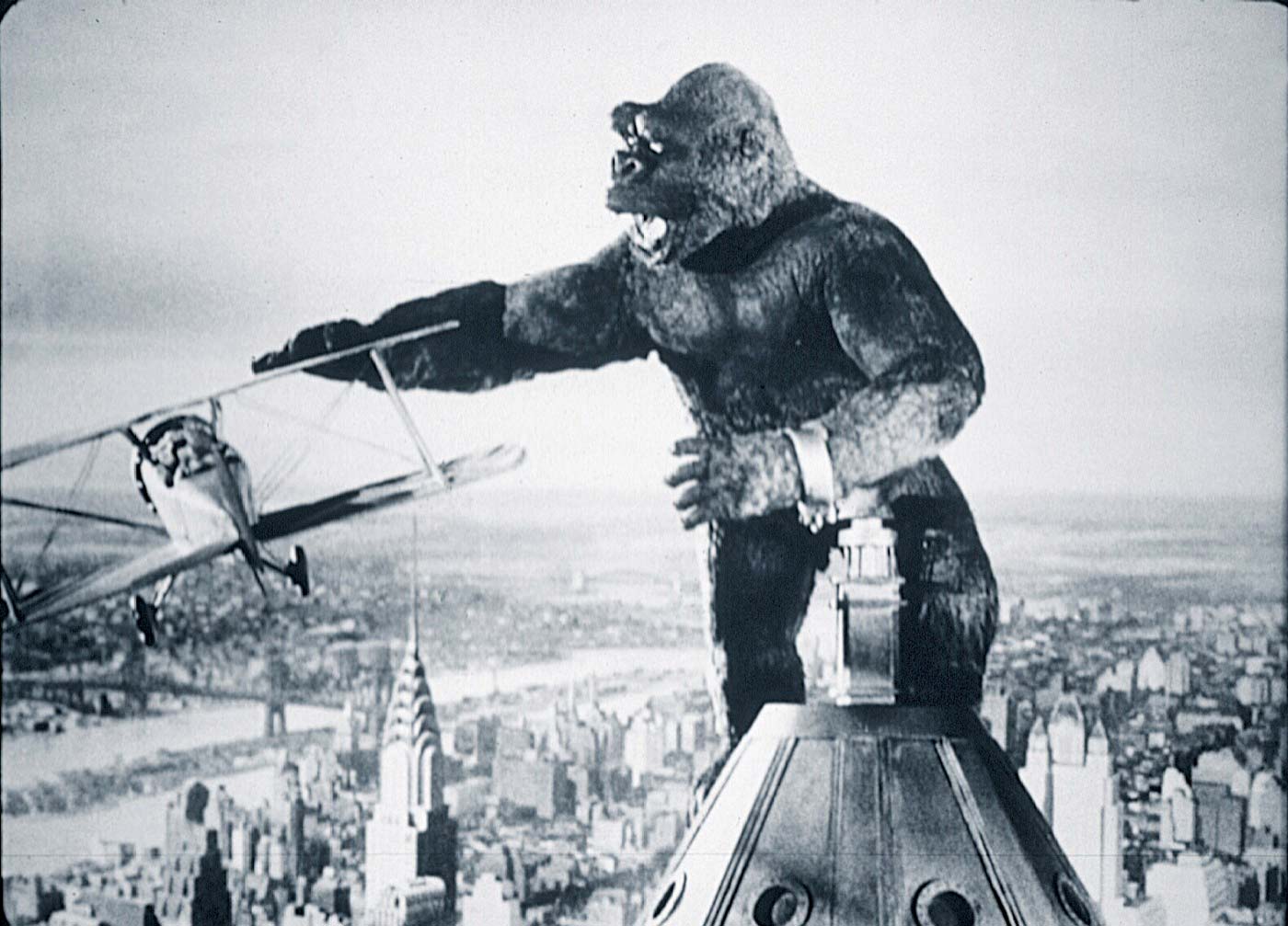
NOT SO CUDDLY…Two years after Rango, Ernest B. Schoedsack would co-produce and co-direct 1933’s King Kong, with Merian C. Cooper. (Britannica)

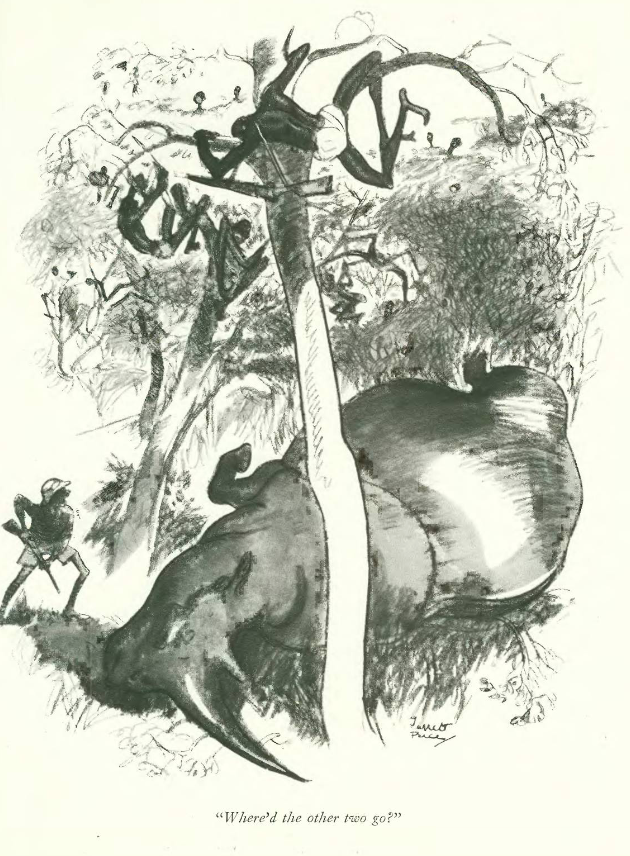
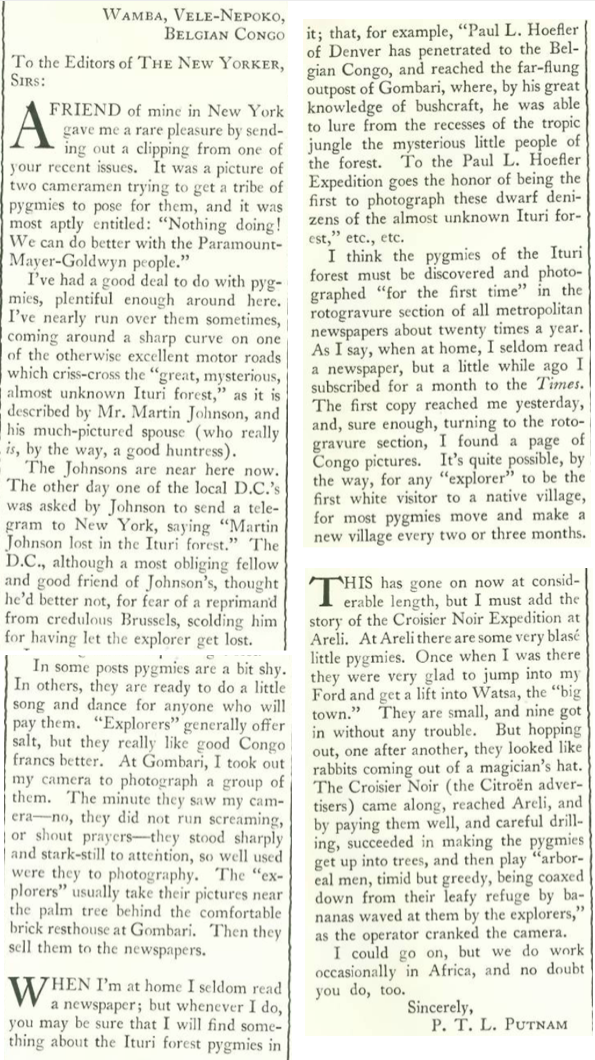
If interpretations of tropical life weren’t accurate in 1931, it wasn’t completely due to filmmakers taking dramatic license. Attitudes toward “exotic” lands and people commonly ranged from naively paternalistic to downright racist. In a letter to The New Yorker, Patrick T.L. Putnam (1904-1953) is decidedly of the former, portraying Congo pygmies as clever, amusing children who hoodwink unsuspecting “explorers”…

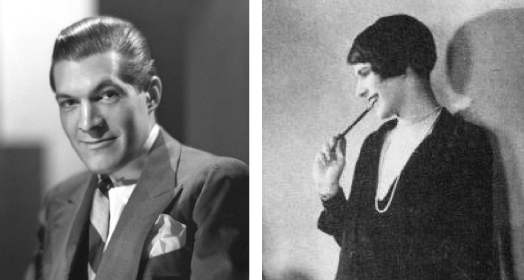
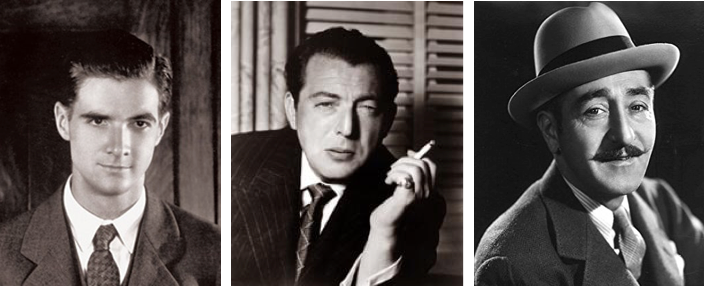
To Putnam’s credit, he showed a genuine interest (and respect for) in the lives of tribal peoples, and particularly the Mbuti of the Congo’s Ituri Forest. He remained in the Congo for the rest of his life. This thumbnail is the only photo I could find of Putnam:

(geni.com)

 *  *  *

Big Bill Turns Pro

In first decades of the 20th century it was still widely believed that athletic competition should be for its own sake rather than as a means for making money, so many top stars competed as amateurs. Professional golf wasn’t established until 1916, and professional leagues in basketball and football first formed in the 1920s. Amateur status was especially prized in tennis — before the “Open Era” began in 1968, only amateurs were allowed to compete in Grand Slam tournaments.

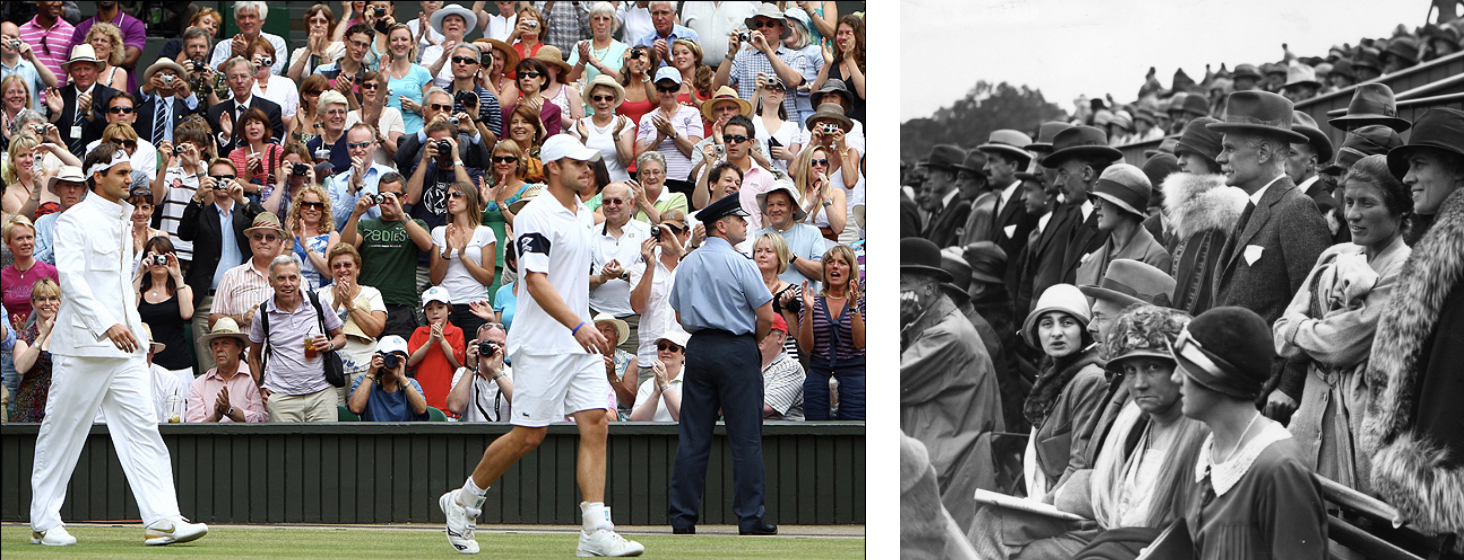
Sports promoter C. C. Pyle established the first professional tennis tour in 1926 with American and French stars playing exhibition matches in front of paying audiences. According to The New Yorker’s John Tunis, many in the crowd were finely dressed, with men in top hats and women turned out in the latest high fashion.

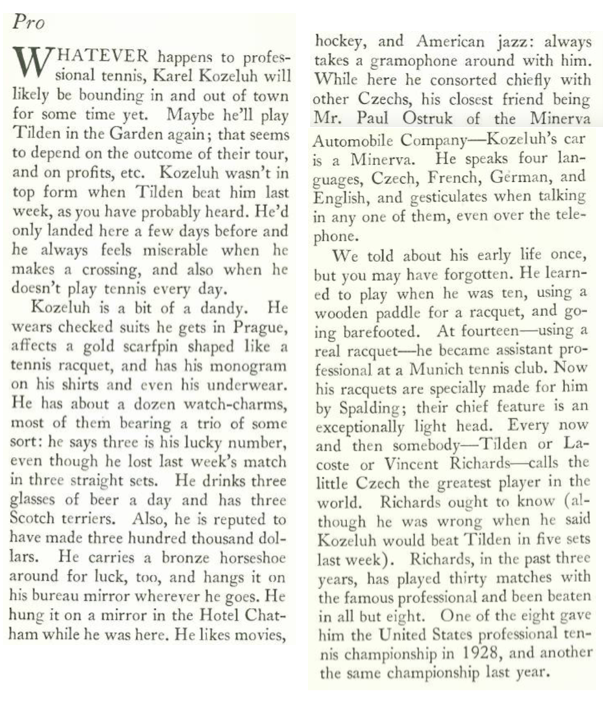
America’s top draw was “Big Bill” Tilden, the world’s number one player from 1920 to 1925 and the first American to win Wimbledon. It caused quite a stir when Tilden went pro on Dec. 31, 1930. He barnstormed across the country,  playing one-night stands with a small group of professionals including the top Czech player Karel Koželuh. “The Talk of the Town” had this to say about the fledging game of professional tennis:

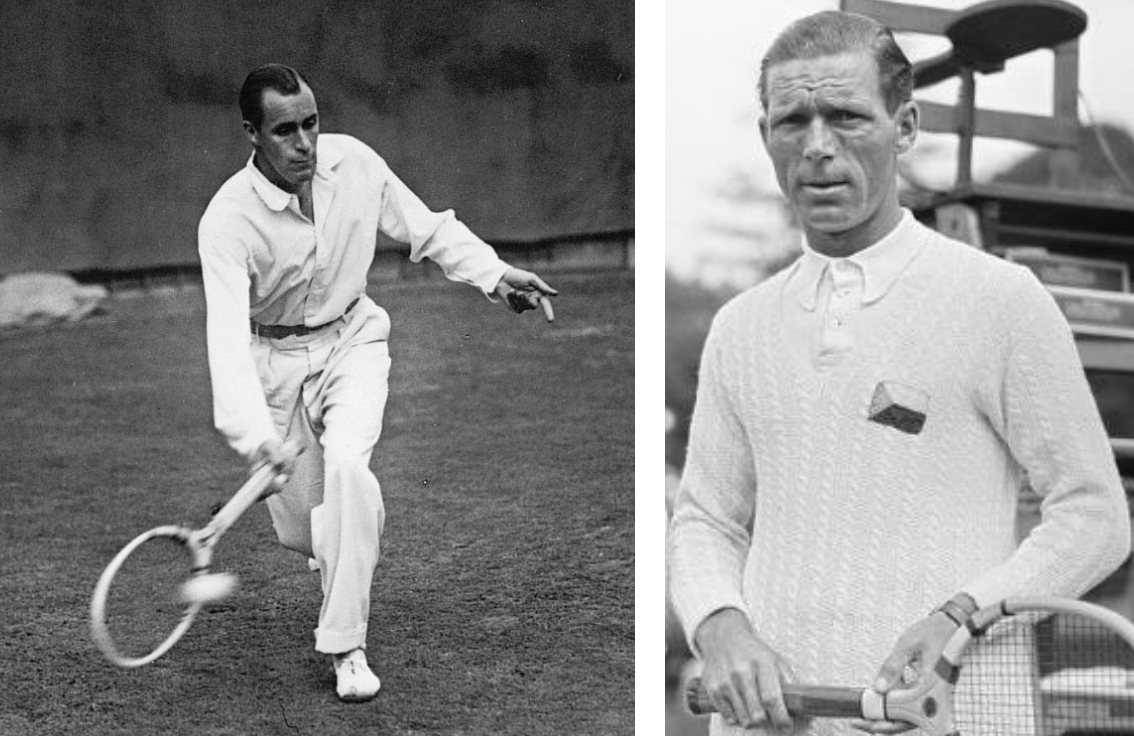
BARNSTORMERS…Bill Tilden (left) and Karel Koželuh toured America and Europe with a handful of other players in a series of exhibition matches in the fledgling professional tennis circuit. (Britannica/cyranos.ch)

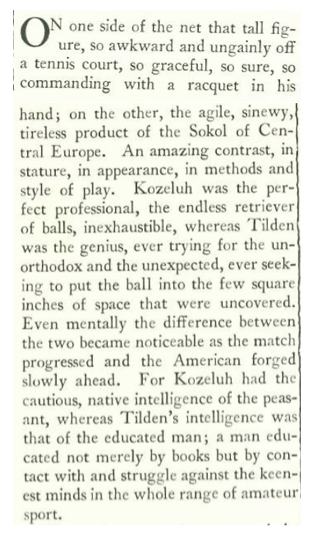
In his sports column, John Tunis offered this description of the competitors:

NOW AND THEN…At left, you can still spot a few neckties at Wimbledon as the audience watches Roger Federer and Andy Roddick enter Centre Court in 2009; at right, Wimbledon crowd in 1925. (BBC/Vintage Every Day)

 *  *  *

Triple Tripe

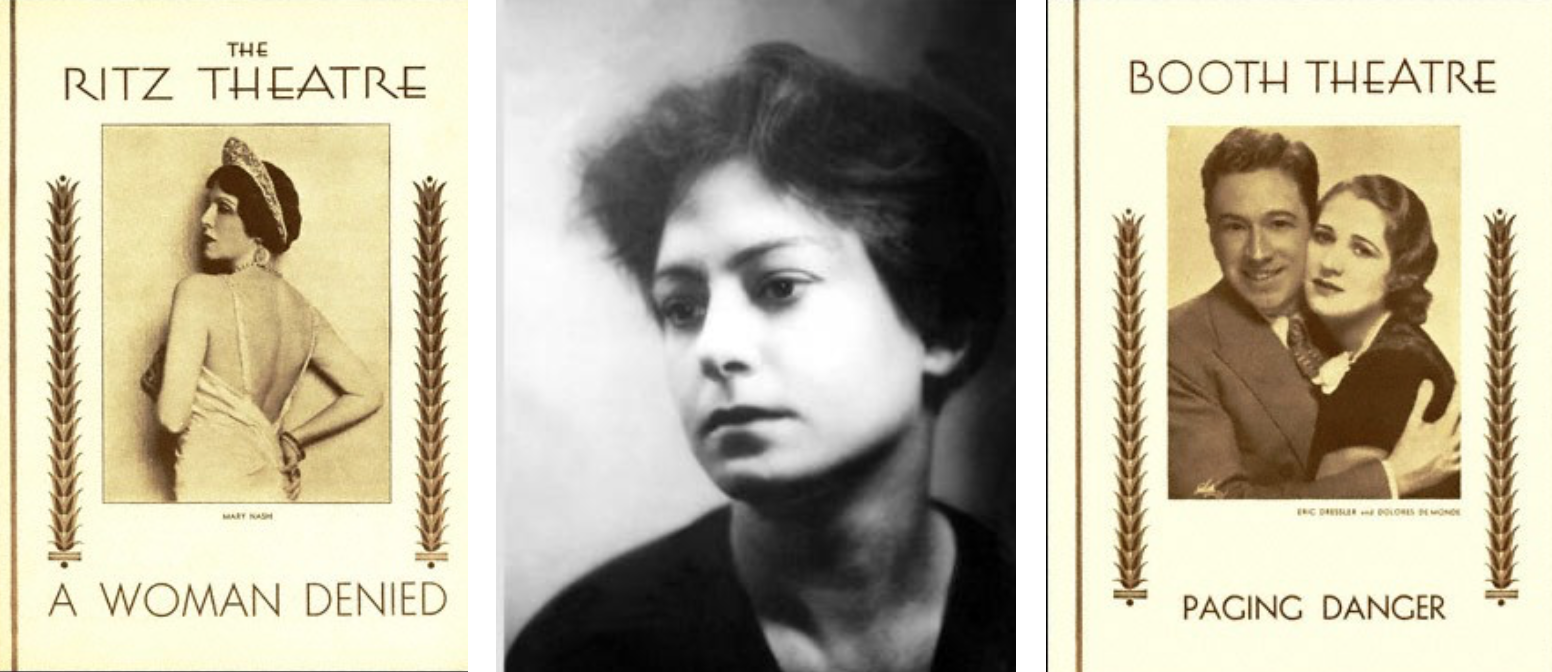
Dorothy Parker continued to sub in the theater column for her friend Robert Benchley, who was traveling abroad. She found little to like on the Great White Way, including three forgettable plays she reviewed in the Feb. 28 issue:

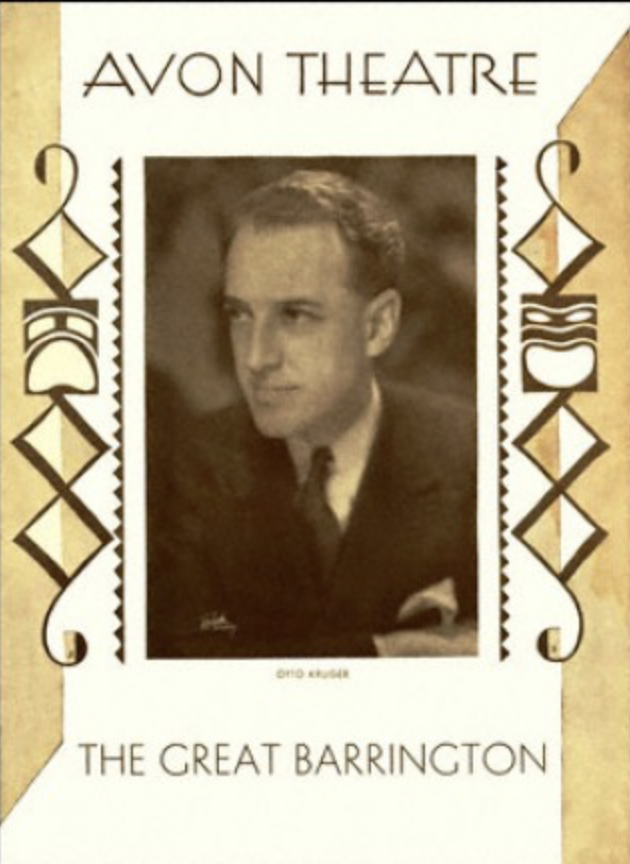
Apparently audiences agreed with Parker’s assessment. The Gang’s All Here closed after just 23 performances, The Great Barrington, after just 16. And Heat Wave was not so hot, closing after a mere 15 performances.

NOT SO GREAT…Program for 1931’s The Great Barrington. It lasted 16 performances. (IBDB)

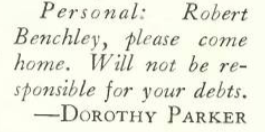
Parker once again closed the column with a plea to her dear friend:

 *  *  *

To Swash No More

In his “Notes and Comment,” E.B. White lamented the end of Douglas Fairbanks as the swashbuckler of the silents, and rejected the talkie version of the actor in Reaching for the Moon, a film in which Fairbanks portrayed Larry Day, a Wall Street millionaire who later loses his fortune in the 1929 stock market crash.

KEEP YOUR SHIRT ON, DOUG…From left, Douglas Fairbanks in the silent era’s The Thief of Bagdad (1924); Fairbanks on an ocean cruise with Bebe Daniels in Reaching for the Moon. The 47-year-old Fairbanks was still fit enough to pose shirtless, but E.B. White wasn’t having any of it. Despite his fit appearance, Fairbanks would die of a heart attack at the end of the decade. (IMDB)

The film today is perhaps best known for its sumptuous Art Deco sets…

(IMDB)

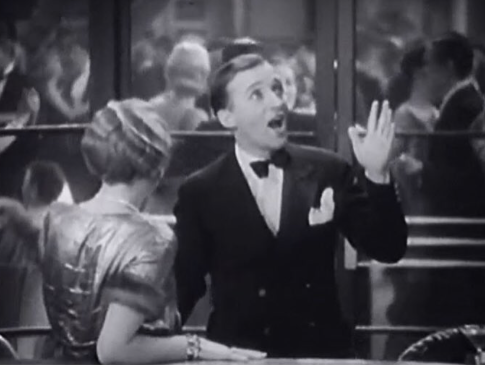
…and for one of Bing Crosby’s earliest film appearances. Reaching for the Moon was originally intended to be a musical featuring numbers by Irving Berlin, however Berlin found director Edmund Goulding difficult to work with, so only one of the original five songs recorded for the film was used, “When the Folks High Up Do the Mean Low Down,” sung by Crosby. It was filmed late at night after he had completed his gig at the Cocoanut Grove.

SINGING WITH BA-BA-BEBE…A young Bing Crosby sings “When the Folks High Up Do the Mean Low Down” with Bebe Daniels in Reaching for the Moon. (IMDB)

 *  *  *

Modern Living

E.B. White also commented on the modern world’s reliance on electric appliances, a habit a mere decade in the making since the gadgets he lists below did not exist before the 1920s:

ELECTRIC SURGE…Prior to the 1920s none of these electric appliances existed. By 1931 many homes were dependent upon them — although many country houses would have to wait for the Rural Electrification Administration (1935) and other New Deal programs get electrical service. (Pinterest)

*  *  *

From Our Advertisers

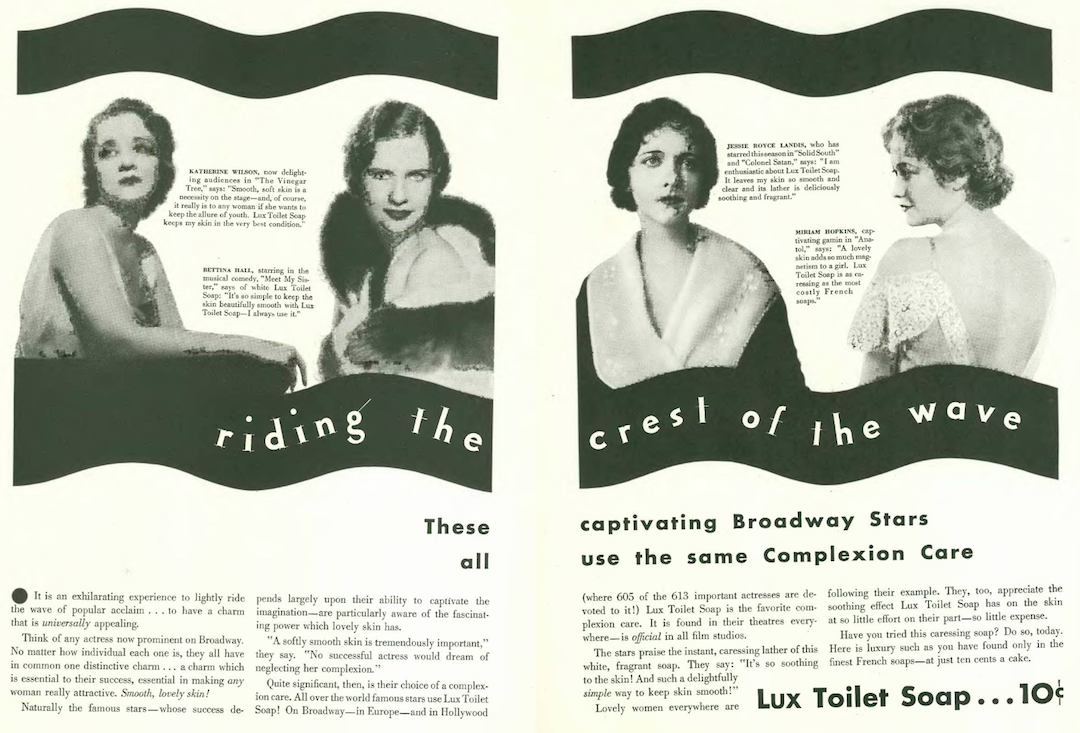
I’ve written before about Lux Toilet Soap’s celebrity-studded ad campaigns, but this two-page ad in the Feb. 28 issue caught my eye because it featured one of my favorite actresses, Jessie Royce Landis

…who appeared in two of my favorite films, both by Alfred Hitchcock: To Catch a Thief (1955) and North by Northwest (1959).

MATERNAL ROLES…Jessie Royce Landis usually played older than she was in real life. Clockwise, from top left, detail of Lux ad; Landis circa 1930; opposite Cary Grant in 1955’s To Catch a Thief; and again with Grant in 1959’s North by Northwest. In the latter film she played Grant’s mother, but in reality she was only seven years older than Grant. (IMDB)

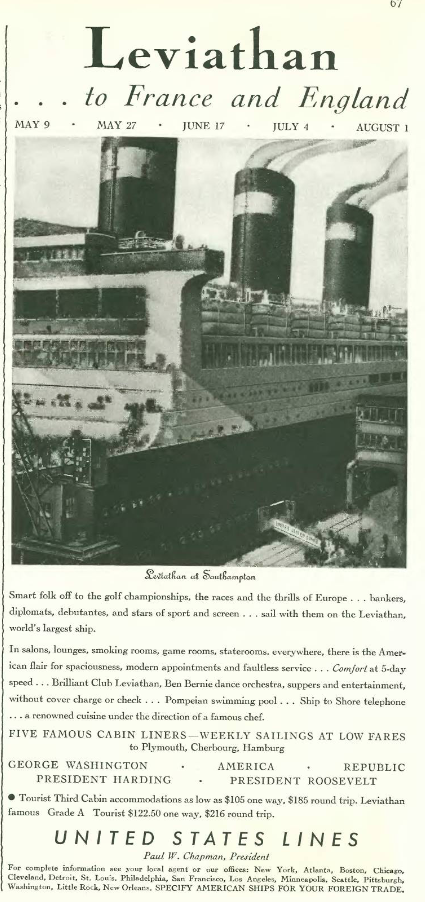
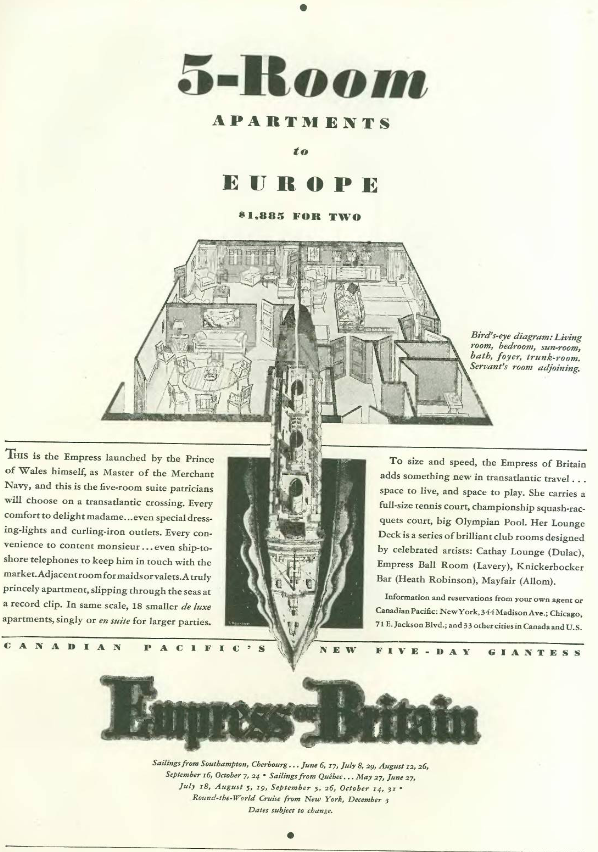
…much of the Douglas Fairbanks/Bebe Daniels film Reaching for the Moon was set on a luxury ocean liner…if the stock market didn’t get you down, you could also afford to travel in style with the Empress of Britain

…or on one of the fine ships of the French Line fleet…

…the Imperial was one of the luxury cars that could get you to the docks…

…among the stranger ads to appear in The New Yorker was this one by the maker of clay plumbing fixtures…

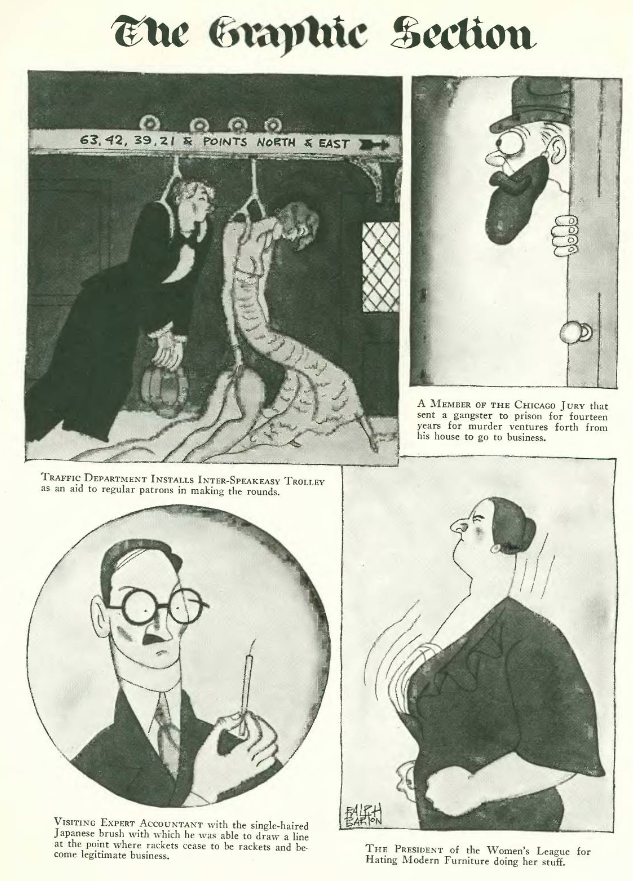
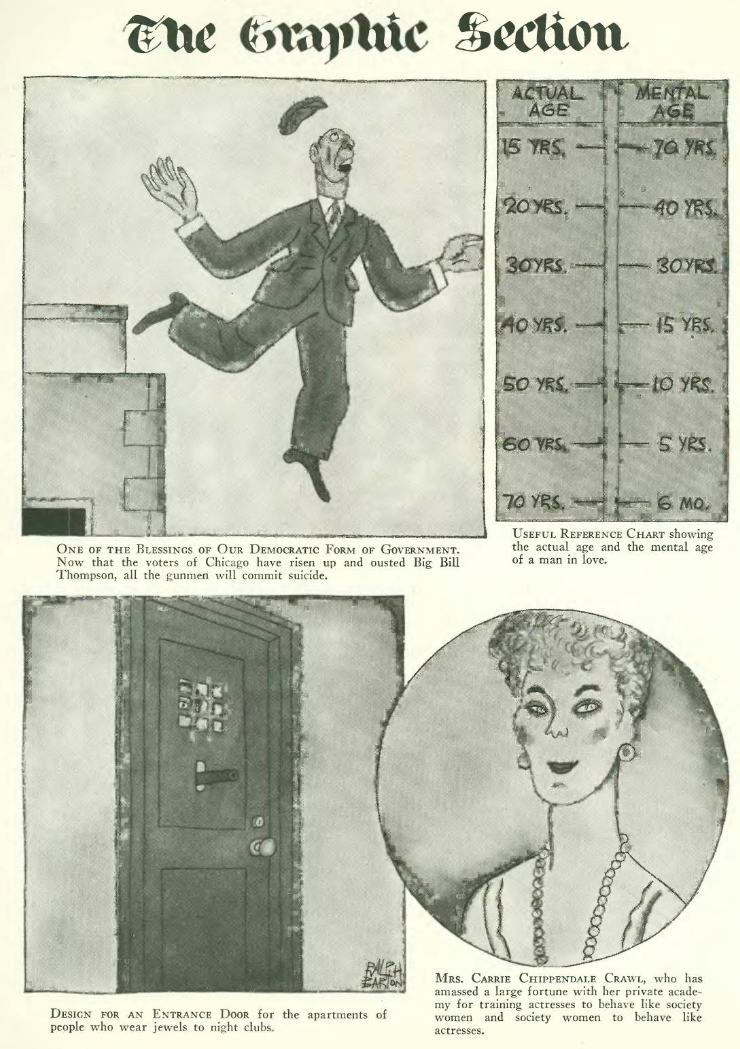
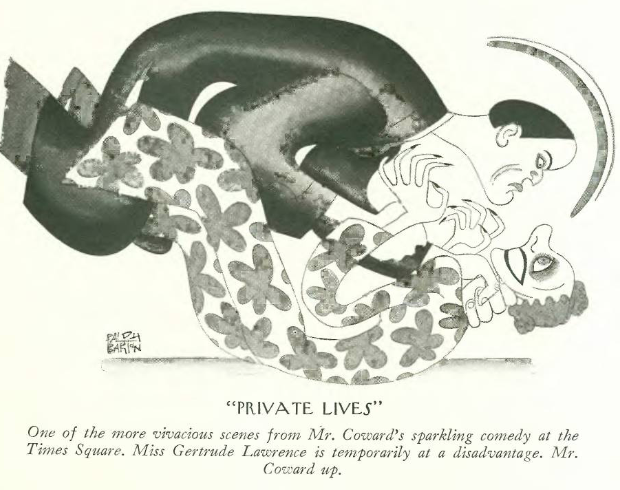
…on to our cartoonists, Ralph Barton returned with this illustration for the theater section…

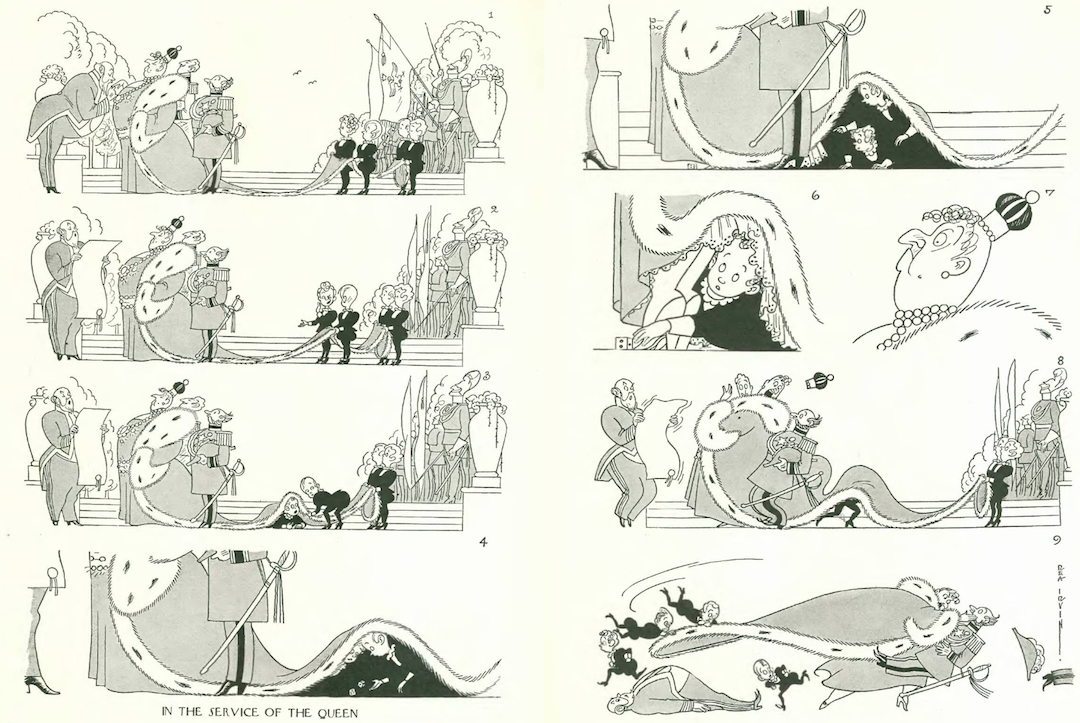
Rea Irvin brought us another of his two-page series cartoons…

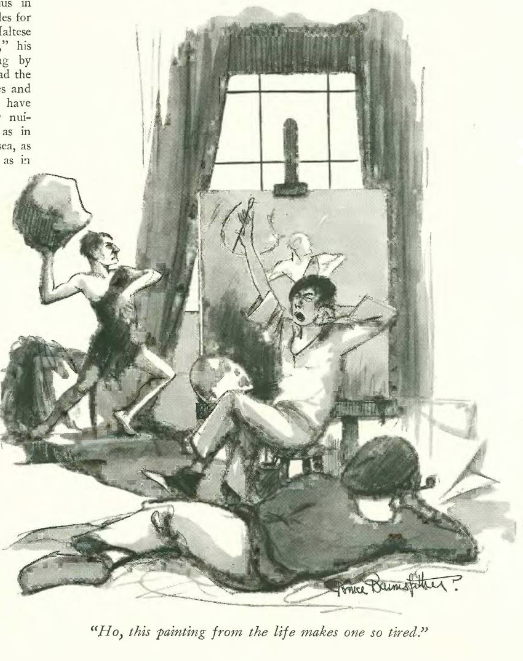
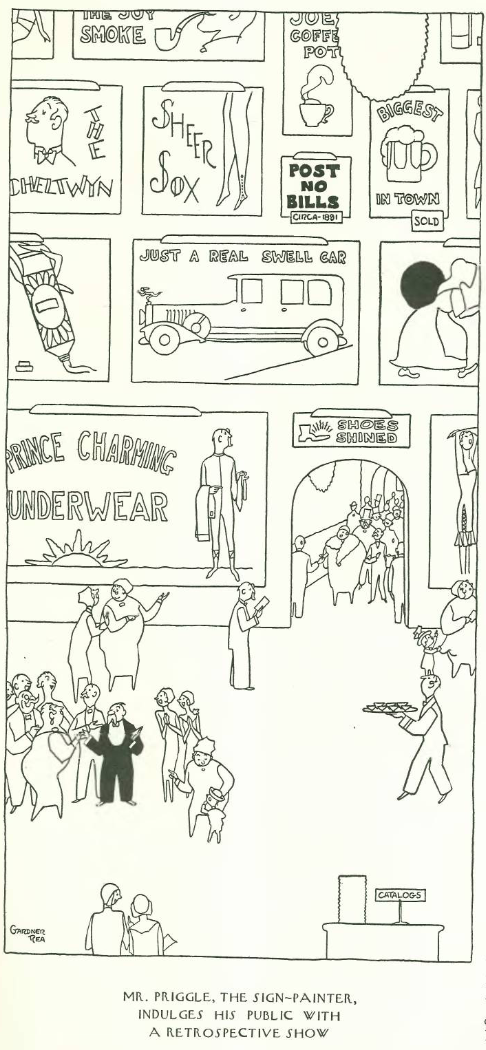
Gardner Rea commented on the state of the art world…

Peter Arno peered in on an unfortunate infant…

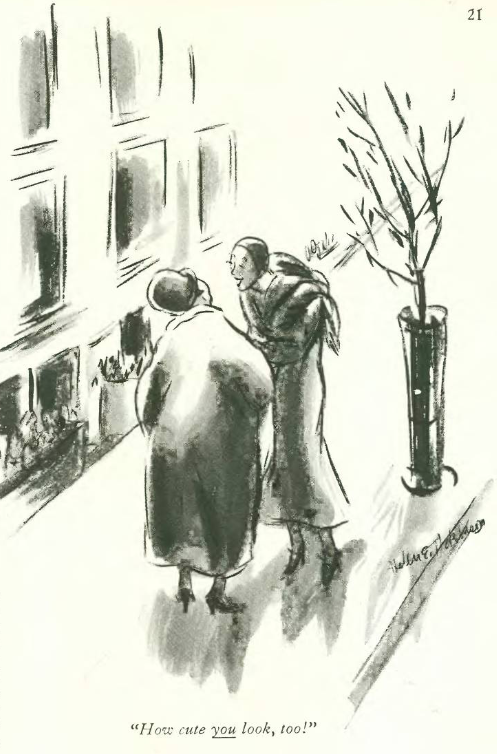
Helen Hokinson gave us this exchange along a city street…

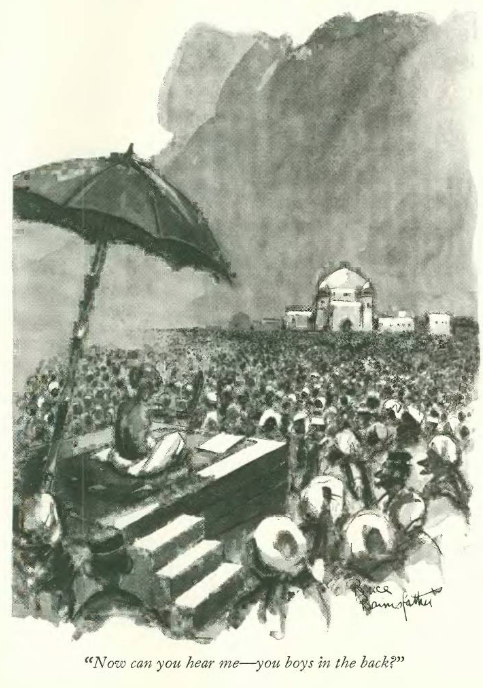
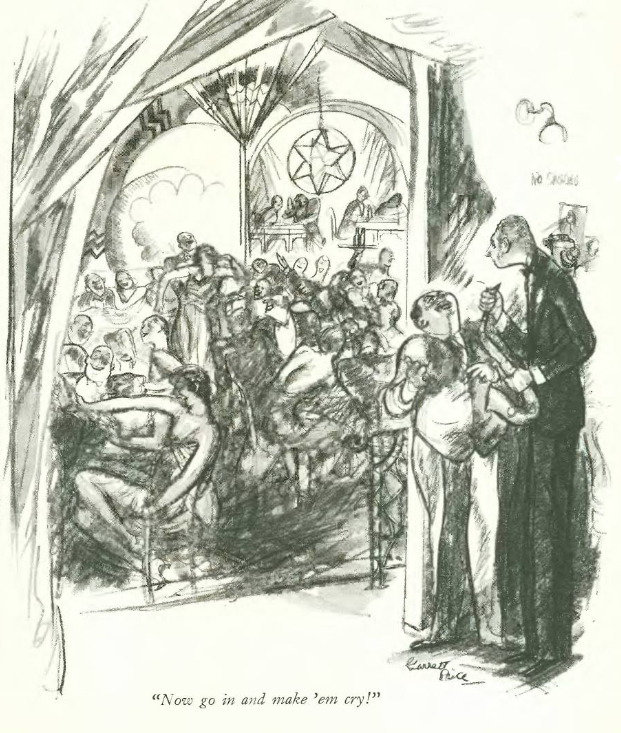
Garrett Price illustrated a tall order for a blues musician…

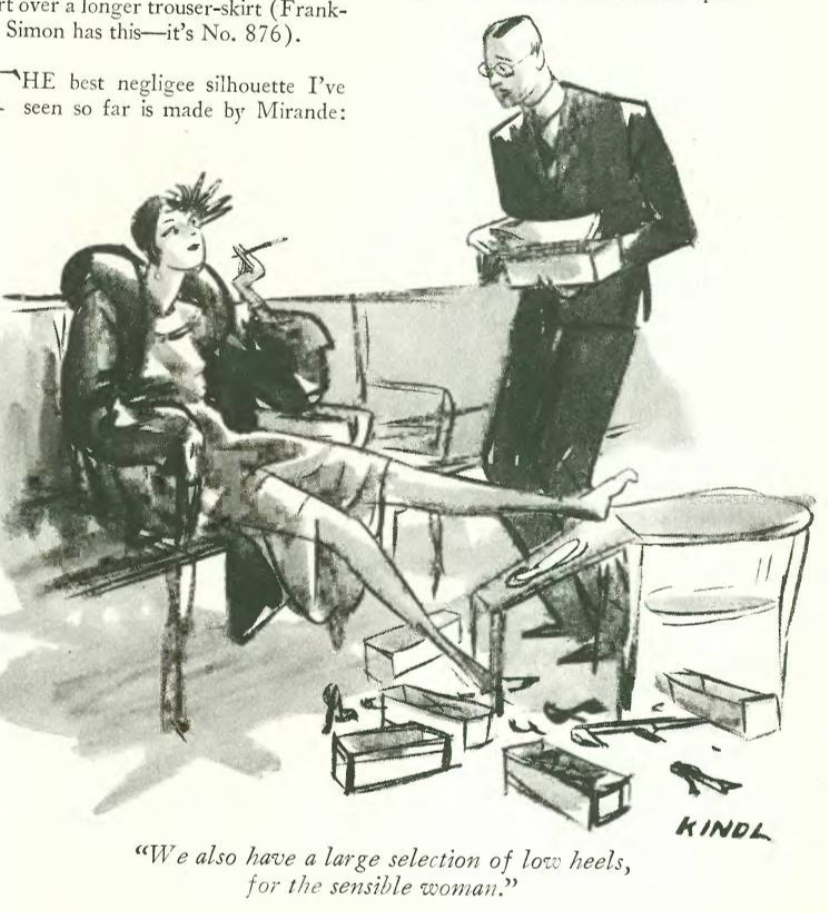
Carl Kindl found clashing styles in the shoe department…

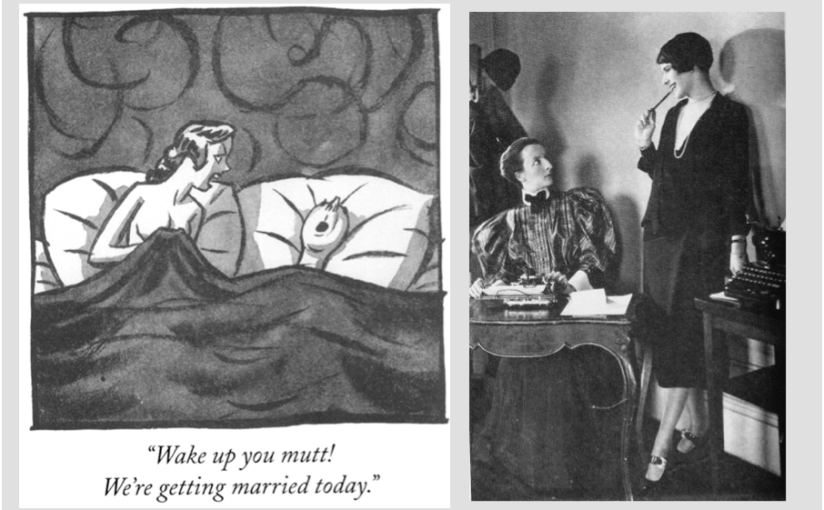
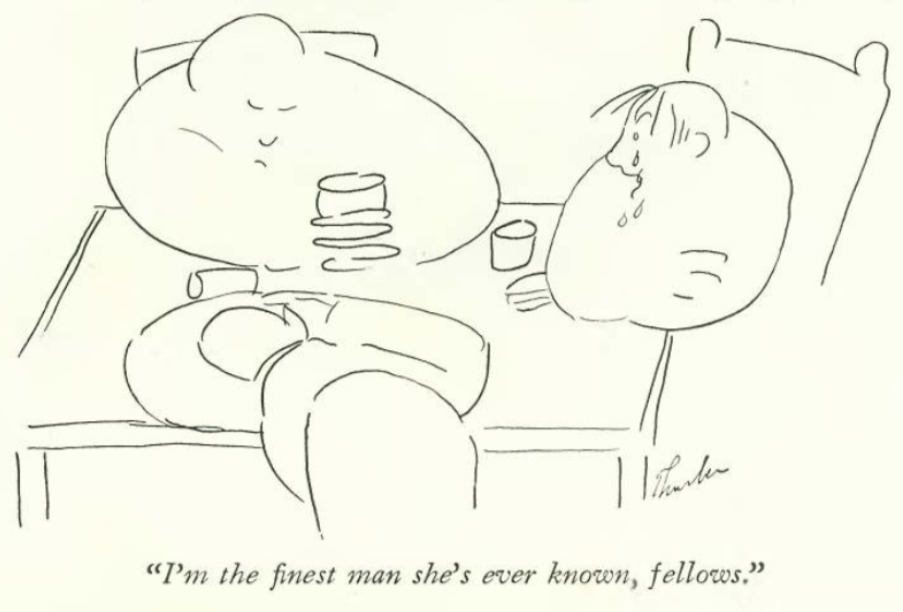
…and James Thurber returned with a prelude to his battle of the sexes…

Next Time: The End of the World…

Super Tramp

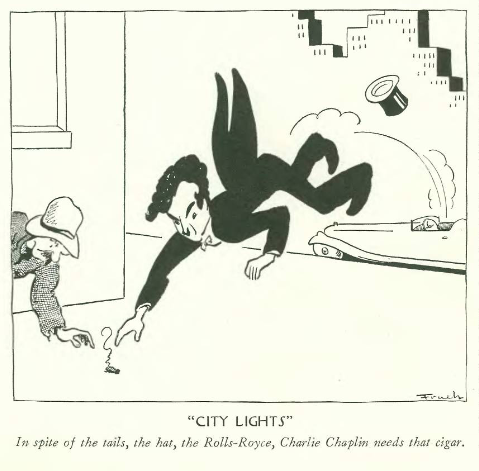
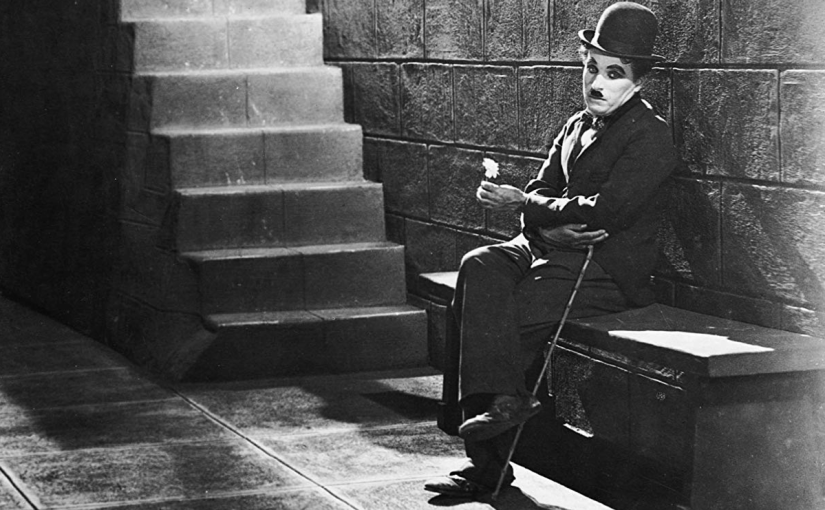
The late film critic Roger Ebert once observed that “if only one of Charles Chaplin’s films could be preserved, City Lights would come the closest to representing all the different notes of his genius.”

Feb. 21, 1931 cover by Rea Irvin, marking the New Yorker’s sixth anniversary.

The New Yorker’s film critic in 1931, John Mosher, would have agreed. Before he previewed the picture, however, Mosher feared (along with others) that the great actor and director had seen his best days…

…instead, the film proved a hit with both audiences and critics, and today is regarded as one of the greatest films ever made. It was no doubt a relief to Ebert when the film was selected by the Library of Congress for preservation in the National Film Registry.

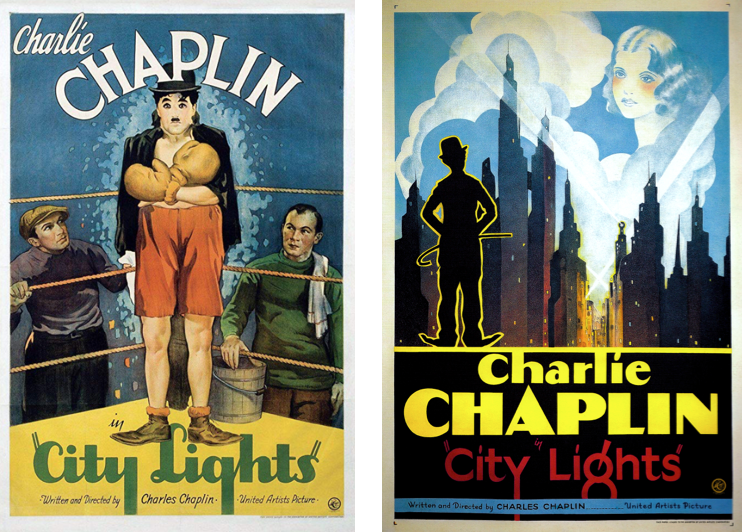
HE DOES IT ALL…United Artists issued several different types of posters to promote the film, including these two. (IMDB)
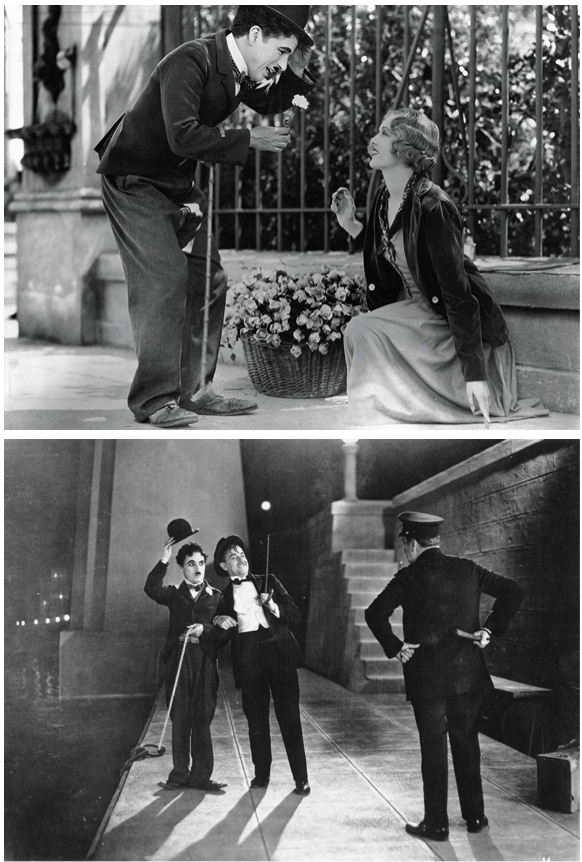
A TENDER FELLOW…The Tramp (Charlie Chaplin) encounters a blind flower girl (Virginia Cherrill) on a street corner and is instantly smitten; later that evening the Tramp saves a drunken millionaire (Harry Myers) from suicide. (IMDB)

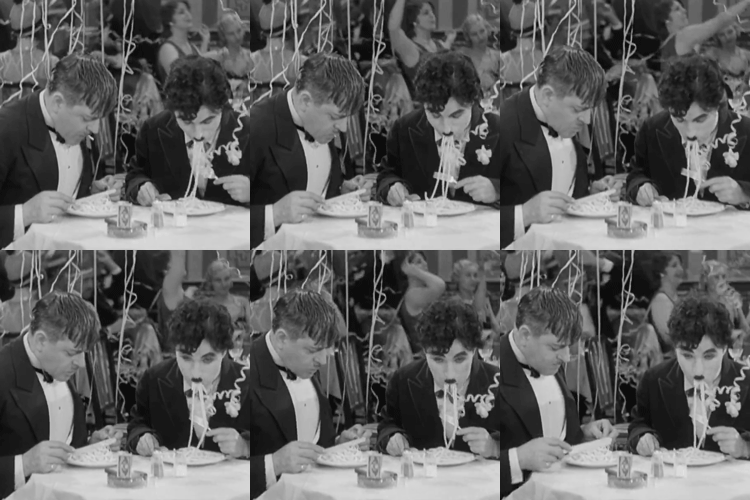
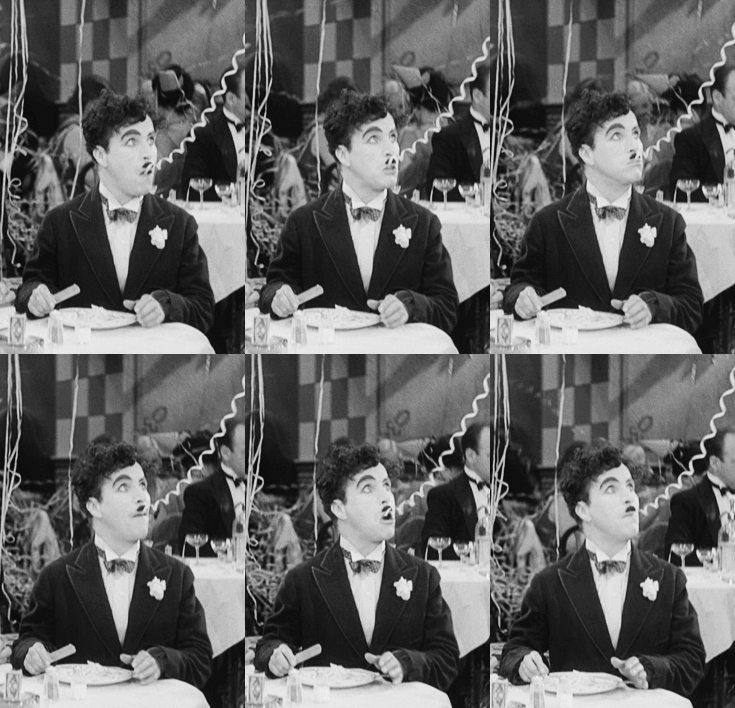
The film has its tender moments, but being a Chaplin production it also had plenty of slapstick, including this famous scene in which the Tramp and his millionaire friend go out on the town and dig into plates of spaghetti…and in the Tramp’s case, some confetti…

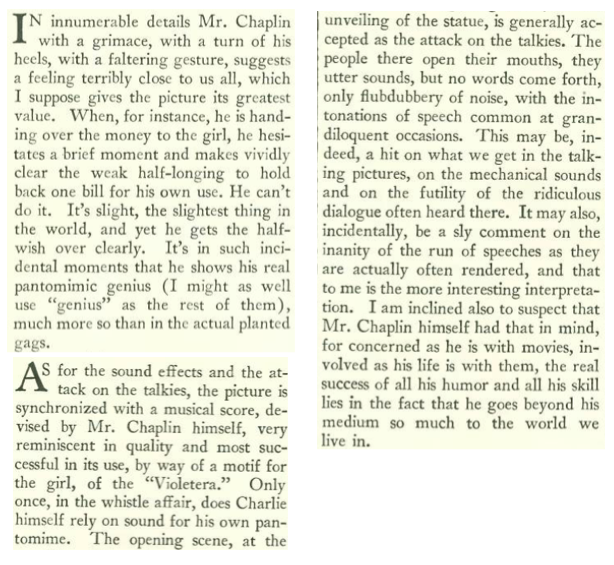
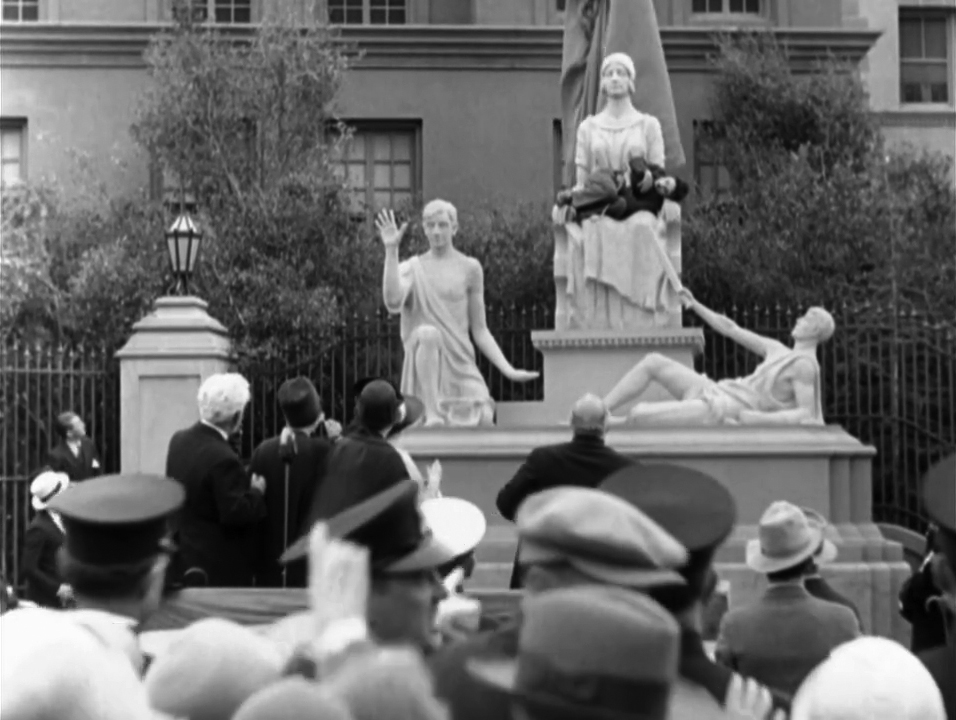
Mosher (and many other critics since) believe the opening scene of the film—in which a statue is unveiled to reveal a sleeping Tramp—was Chaplin’s attack on sound movies:

CAUGHT NAPPING…The Tramp is unveiled along with a statue in the opening scene of City Lights. (IMDB)

Although the film had a full musical score and sound effects, there was no spoken dialogue. Rather, Chaplin poked fun of the tinny-sounding talkies of the day by putting not words, but the sounds of a kazoo, into the mouths of speechifying politicians gathered at the statue’s unveiling…

For all its humor, City Lights was a serious work by a serious actor and director who sought something close to perfection. The scene in which the Tramp encounters a blind flower girl on a street corner required three hundred and forty-two takes with actress Virginia Cherrill, who was a newcomer to film.

Writing in The New Yorker, critic Richard Brody (“Chaplin’s Three Hundred and Forty-Two Takes,” Nov. 19, 2013) noted that “Chaplin didn’t have a mental template that he wanted Cherrill to match; he approaches the scene not quite knowing what he wanted.” Brody observed that the perfection Chaplin sought was one of results, and not of conformity to a preconceived schema. “He sought what provoked, in him, the perfect emotion, the perfect aesthetic response — but he wouldn’t know it until he saw it. He started to shoot in the confidence that the thing — whatever it was — would happen.” Chaplin’s technique can be seen in this clip from the Criterion Collection’s 2013 DVD release of the film. Note that this footage was shot by The New Yorker’s Ralph Barton, a close friend of Chaplin’s:

 *  *  *

Chaplin, Part Two

The Chaplin buzz was not confined to the movie section of the magazine, which featured more insights on the star in “The Talk of the Town.”

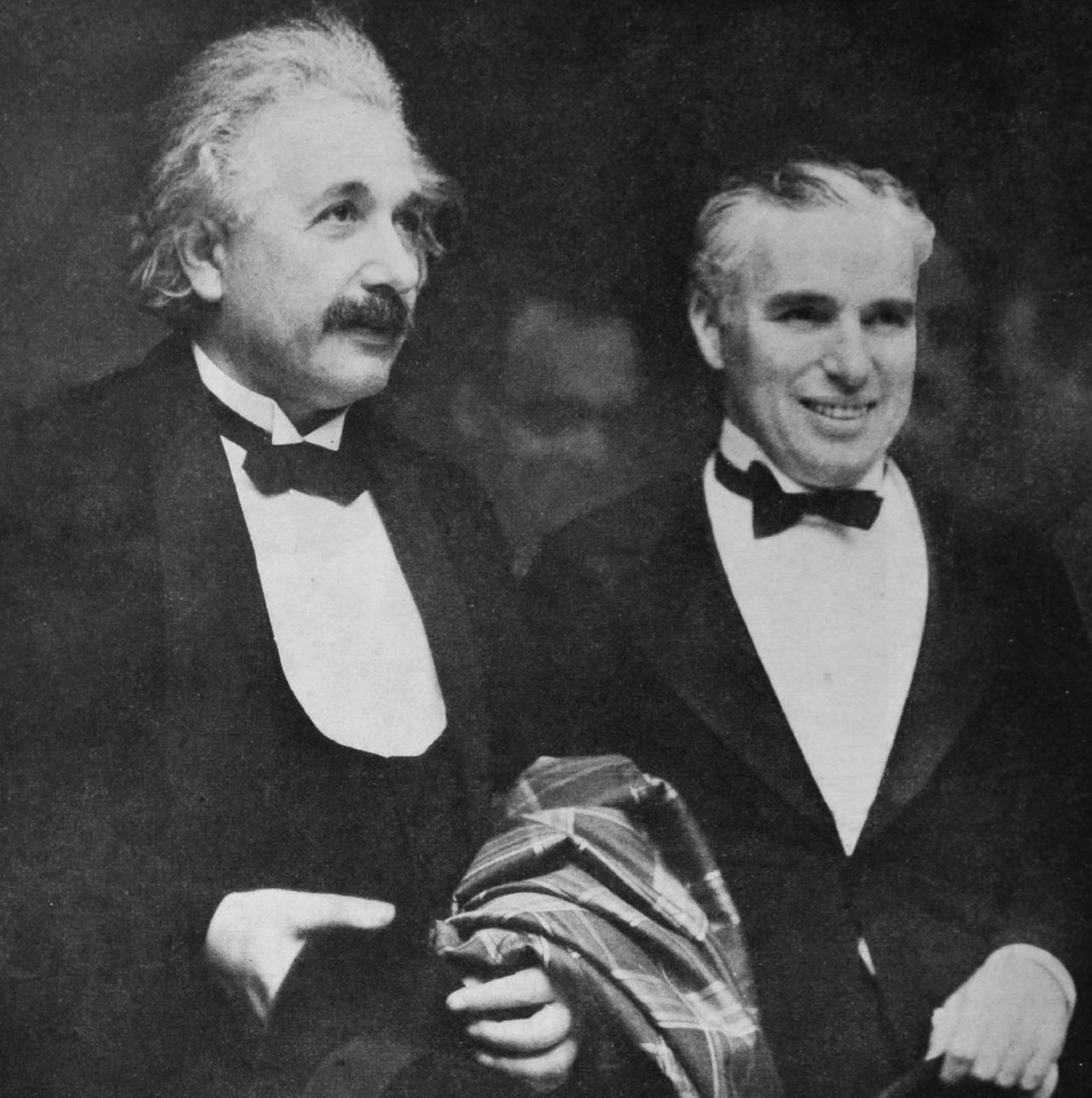
GENIUS LOVES COMPANY…Photo of Albert Einstein and Charlie Chaplin at the Los Angeles premiere of City Lights. Einstein said Chaplin was the only person in Hollywood he wanted to meet. (Wikipedia)

 *  *  *

Funny In a Different Way

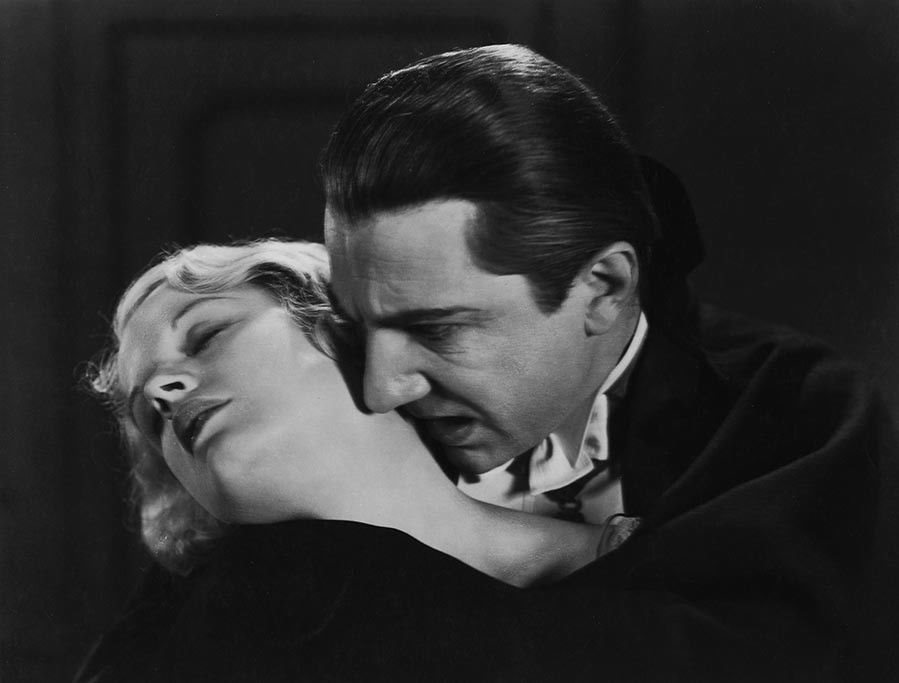
Like City Lights, Tod Browning’s Dracula is today considered a classic film. Indeed, Bela Lugosi’s timeless portrayal of the old bloodsucker set a standard for vampire flicks and horror films in general. The New Yorker’s John Mosher, however, would have none of it, dismissing the film in a single paragraph.

PAIN INTHE NECK…Count Dracula (Bela Lugosi) goes for a nibble on the fragile Mina (Helen Chandler) in 1931’s Dracula. (IMDB)

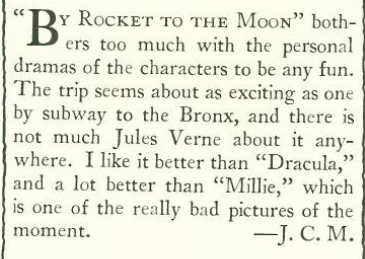
Mosher was also dismissive of Fritz Lang’s By Rocket to the Moon, originally released in German as Frau Im Mond (Woman in the Moon). The 1929 production is considered one of the first “serious” science fiction movies, anticipating a number of technologies that would actually be used in space travel decades later.

RETRO ROCKET…Fritz Lang’s Woman in the Moon would predict a number of technologies used decades later in actual space flight, including multi-stage rockets. Lang also anticipated the future in the much-acclaimed Metropolis (1927).

 *  *  *

Bored on Broadway

Robert Benchley was visiting friends abroad, so Dorothy Parker did what any pal would do and subbed for his theater column. As it turned out, it was not a happy task, even if she did receive complementary tickets to one of the hottest shows on Broadway:

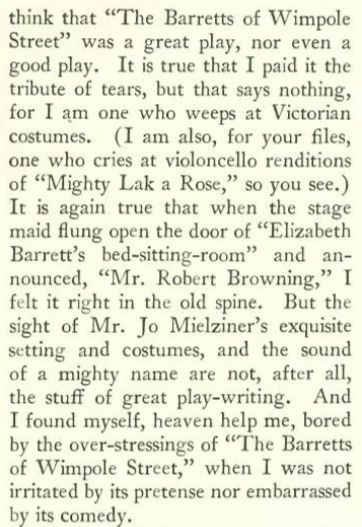
Having dispatched Katharine Cornell’s Barretts of Wimpole Street, Parker took aim at America’s Sweetheart, based on a book by Herbert Fields with music and lyrics by Richard Rodgers and Lorenz Hart. Parker ended the savaging with a plea to her dear friend and colleague to return home soon:

THEY LAUGHED, THEY CRIED…Katharine Cornell (left) portrayed Elizabeth Barrett in Barretts of Wimpole Street. Dorothy Parker thought Cornell was a first-rate actress, but didn’t think much of her play. As for Inez Courtney (right) in America’s Sweetheart, Parker believed she did what she could, whatever that meant. (Pinterest)

*  *  *

Lest We Forget

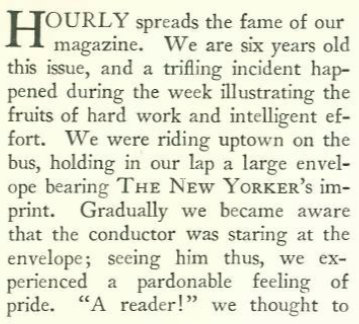
The New Yorker turned six with this issue, and in the life of any magazine, that is something to be celebrated, and especially in hindsight as our beloved publication closes in on its centenary in 2025. Some thoughts from E.B. White:

*  *  *

From Our Advertisers

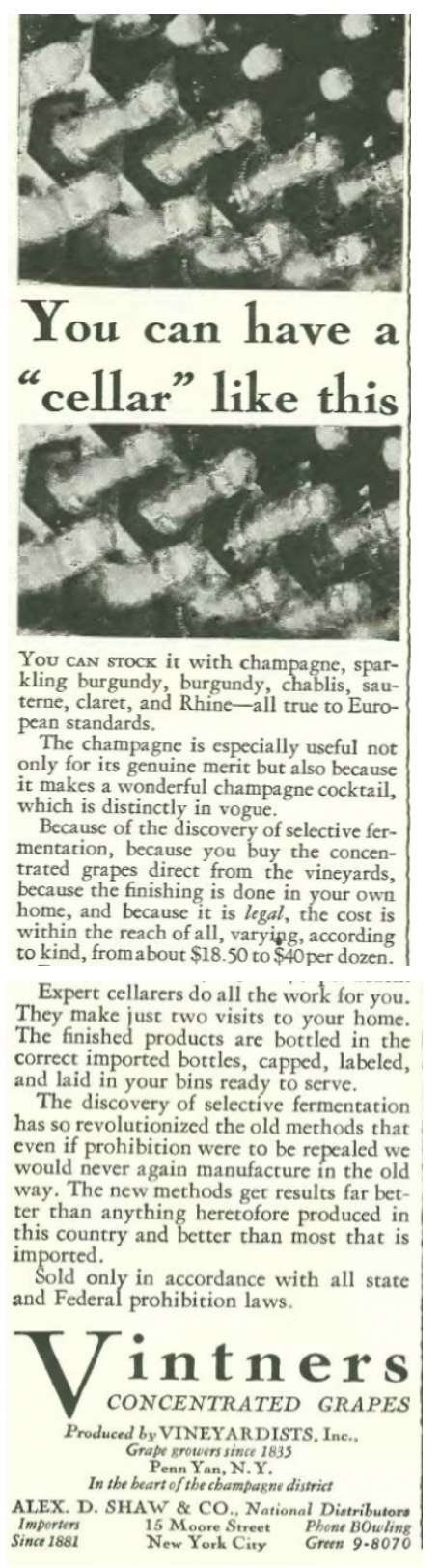
We’ve seen in past ads how Prohibition-era vintners marketed grape juice bricks that could be dissolved in water and fermented in the home. In this ad they took it a step further, sending expert cellarers direct to customers’ homes to help them create their own, perfectly legal, wine cellar…

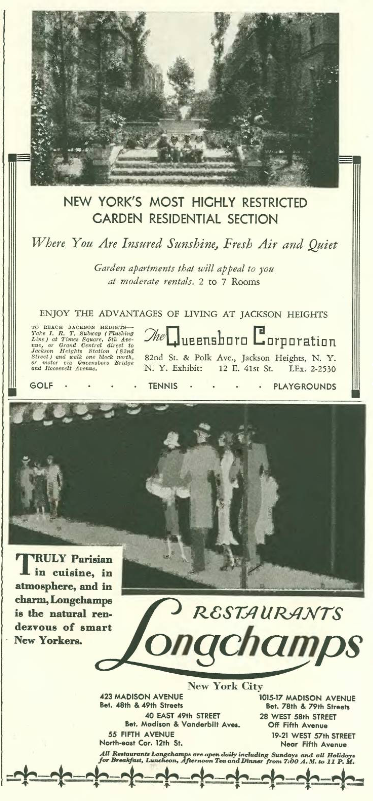
…those with wine cellars might have preferred to live in a “highly restricted” community in Jackson Heights…

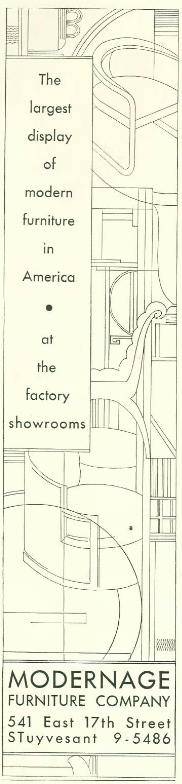
…and furnish their homes with the latest in modern furniture design…

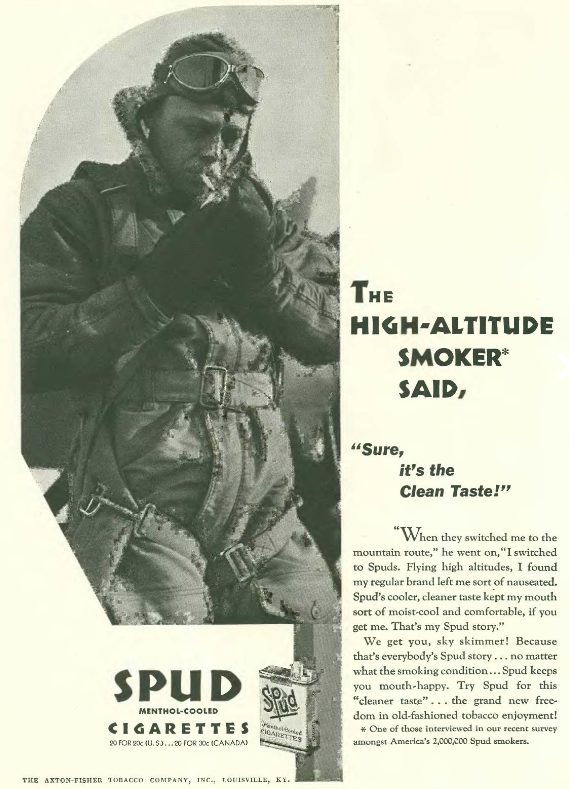
…and here we have an early example of the “macho” smoker, anticipating the arrival of his buddy, the Marlboro Man…

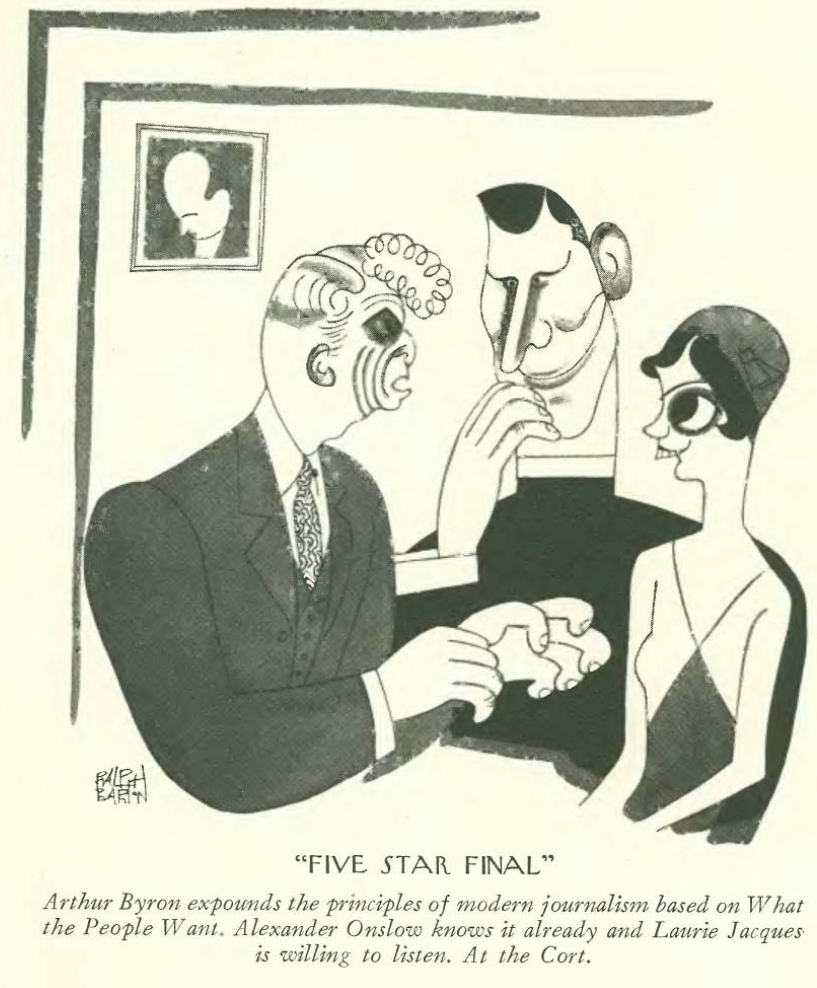
…on to our cartoonists, another theater section entry by one of Charlie Chaplin’s closest friends, Ralph Barton

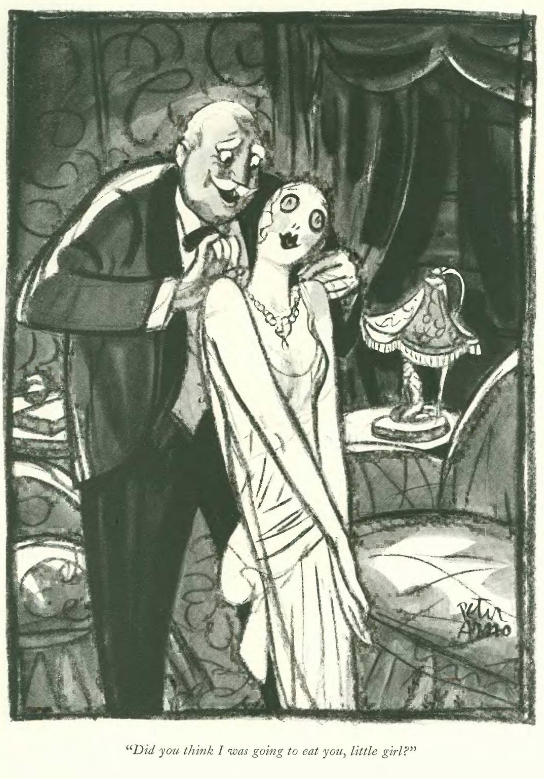
…and cartoons by Peter Arno, who channelled Dracula via his Sugar Daddy…

Garrett Price, and the burdens of the rich…

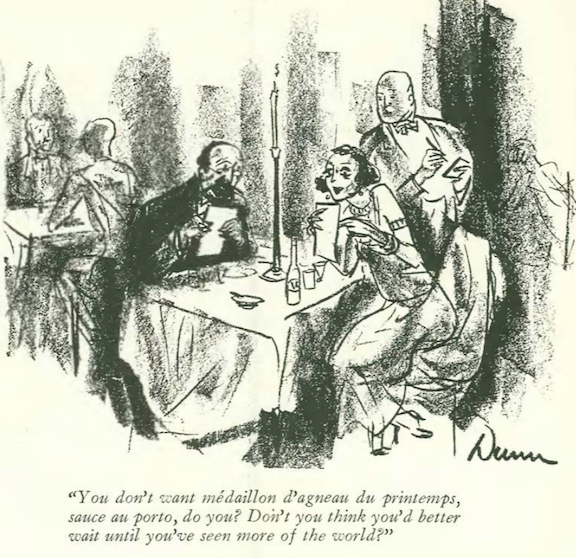
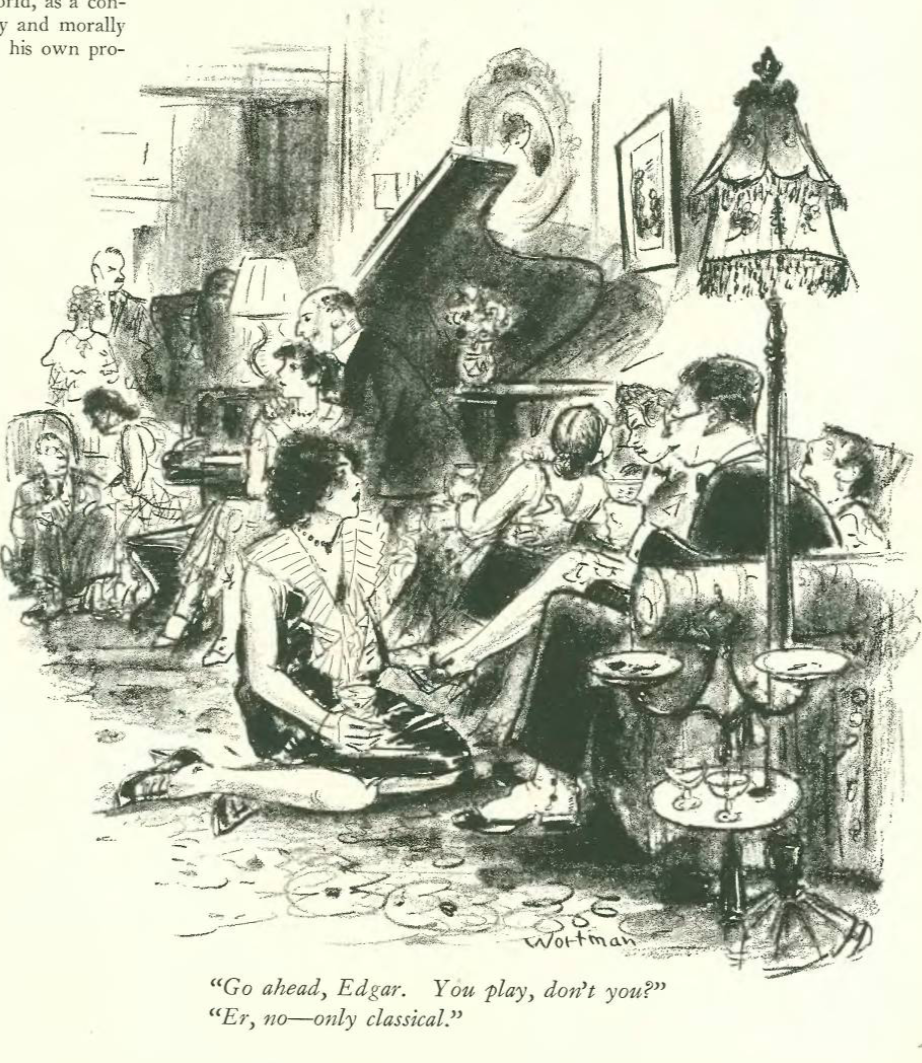
Denys Wortman examined the follies of youth…

…and we end with dear Helen Hokinson, and the miracle of birth…

Next Time: Chaplin of the Jungle…

Rise of the Gangster Film

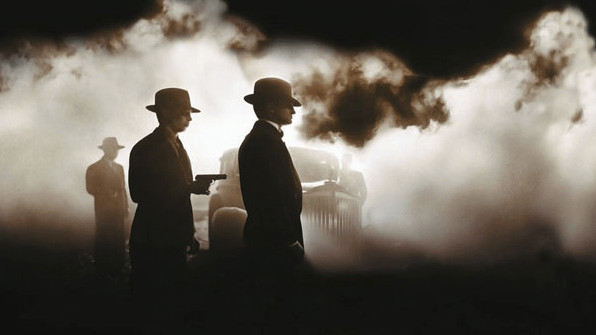
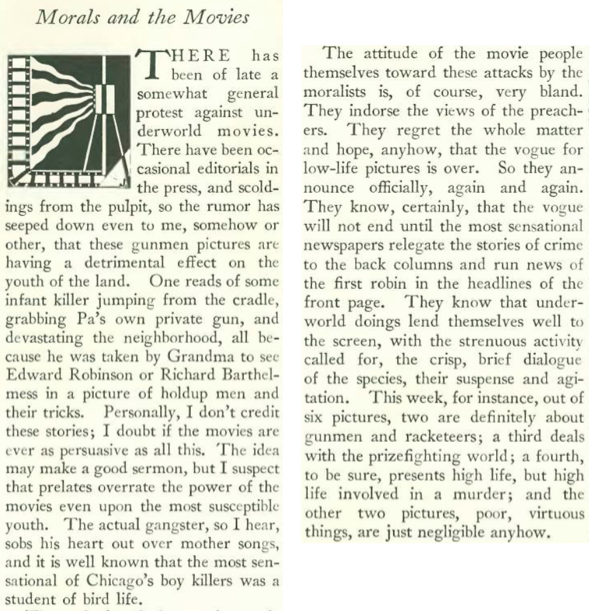
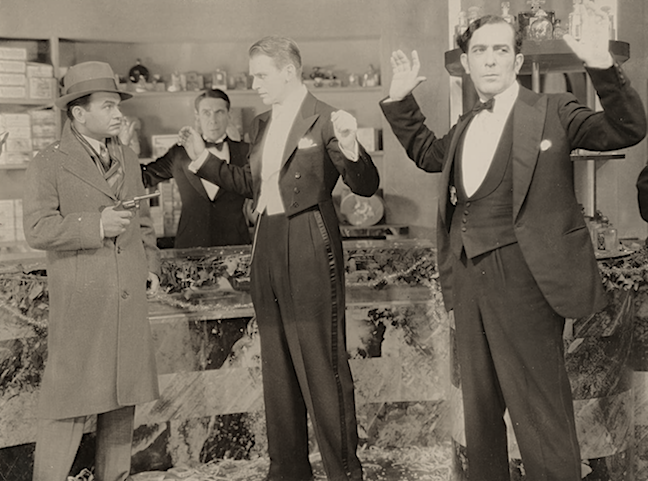
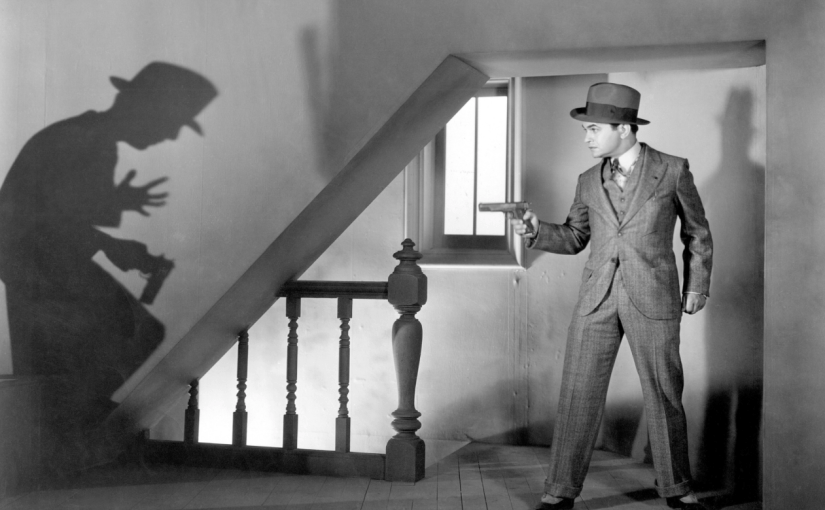
During the early years of the Depression and before censorship guidelines were imposed by the Hays Code, Hollywood cranked out a slew of “Pre-Code” films filled with sex and violence, including 1931’s Little Caesar, the first “talkie” gangster film that defined the genre for decades to come.

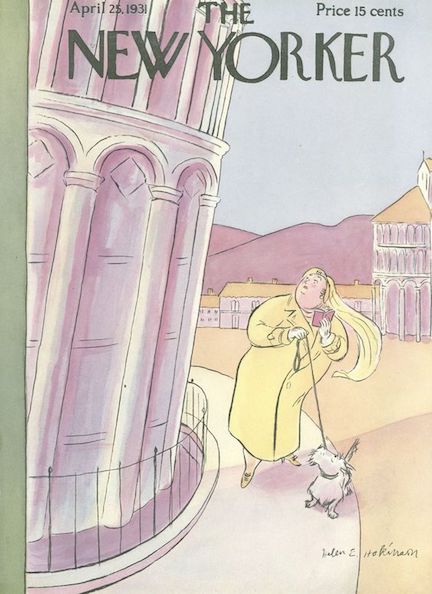
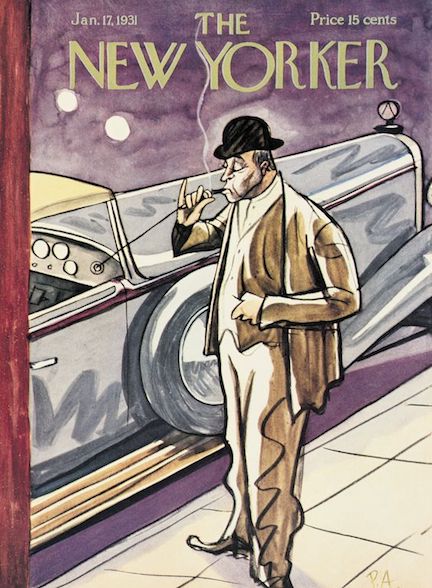
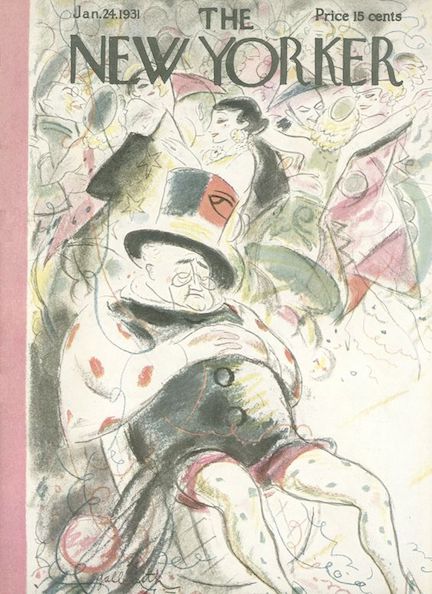
Jan. 17, 1931 cover by Peter Arno.

The Road to 1931

The New Yorker entered its sixth year in 1931, and despite the deepening Depression managed to stay afloat and even gain new subscribers. Perhaps more than ever folks needed that weekly dose of levity the magazine ably supplied.

Rea Irvin rang out the old and welcomed the new with back-to-back covers for the Dec. 27, 1930 and Jan. 3, 1931 issues. The second cover commemorated the New York Auto Salon, mentioned later in this blog entry.

That isn’t to say the magazine’s contributors donned rose-colored glasses. Rather, they commiserated with their fellow Americans:

CRANKY COUPLETS…Ogden Nash lent his droll verse to the nation’s economic woes. In 1931, while working as an editor at Doubleday, Nash submitted a number of poems to the New Yorker and spent three months working on the magazine’s editorial staff. (poeticous.com)

Over the course of 1930 many Americans, including Ogden Nash, woke to the fact that their business and political leaders were ill-suited to lift them out of the economic mess, and were likely responsible for it in the first place. At the top of the list was President Herbert Hoover, who was profiled in The New Yorker in three installments beginning with the Dec. 27 issue. This brief excerpt gives you a glimpse into a very different White House 89 years ago:

The first installment of the profile was accompanied by a Cyrus Baldridge portrait of the president (left), but the final two installments featured a less-than-flattering Abe Birnbaum rendering that first appeared in The New Yorker in the March 2, 1929 issue:

*  *  *

Vorse Was a Force

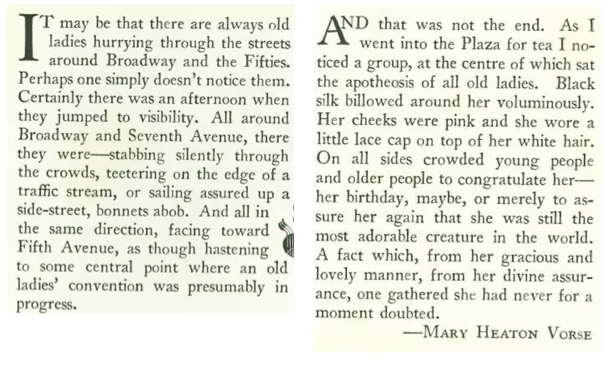
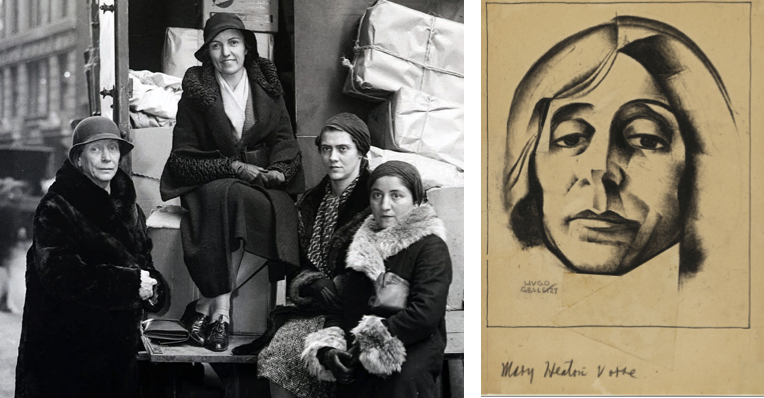
Social critic, labor activist and novelist Mary Heaton Vorse (1874–1966) was no fan of Herbert Hoover or wealthy business tycoons, and in the first decades of the 20th century joined with Lincoln Steffens and other muckraking journalists in advocating for social reform. Vorse, however, also had a background in fiction writing and in observational pieces like the one below (excerpts) in which she commented on the rustic old ladies she found everywhere in the city:

FOR THE CAUSE…Mary Heaton Vorse (left) with fellow activists preparing to leave on a relief expedition to aid striking Kentucky miners, 1932. At right, a 1925 drawing of Vorse by Hugo Gellert. (nysut.org/Smithsonian)

 *  *  *

The Mystic

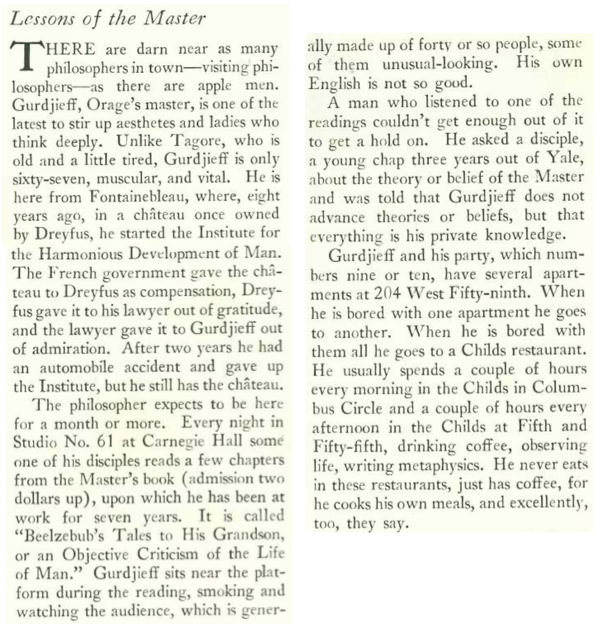
Before the Beatles made the Maharishi Mahesh Yogi a famed Transcendental Meditation guru in the 1960s, there was George Ivanovich Gurdjieff, a Russian/Greek/Armenian spiritual teacher of the “Fourth Way,” which promised a path to a higher state of consciousness and full human potential. Gurdjieff also enjoyed living in a French chateau and taking trips to New York to share his wisdom with eager Americans, including famed architect Frank Lloyd Wright. “The Talk of the Town” had these observations on the visiting mystic:

HE COULD SEE THINGS…George Ivanovich Gurdjieff, in an undated photo.

 *  *  *

Sunny Days

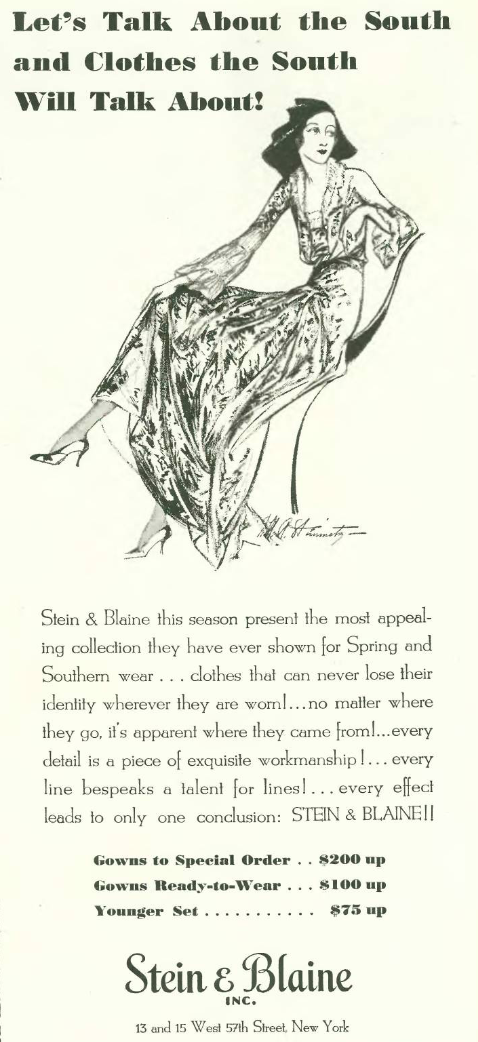
Forget about financial woes or spiritual dilemmas. What are you going to wear next summer? Fashion writer Lois Long (“On and Off the Avenue”) asked the question and looked to the south for some answers:

…numerous ads peppered the Dec. 27 issue urging Manhattan’s snowbirds to dress appropriately for the warmer climes…

…and operators of “PlaneTrains” promised to get them there as quickly as possible…

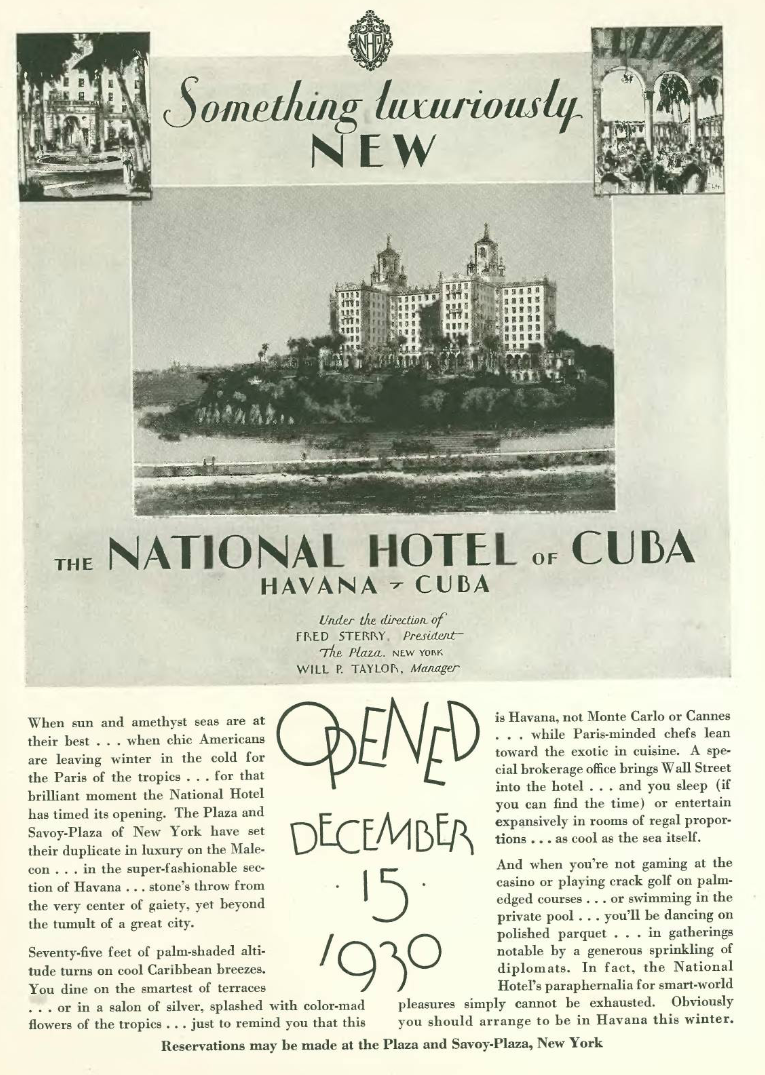
…and if you were headed to Cuba you could stay at the brand new National Hotel…

…here’s what it looked like three years ago when I was in Havana…I can guarantee you the hotel service was WAY better in 1931…

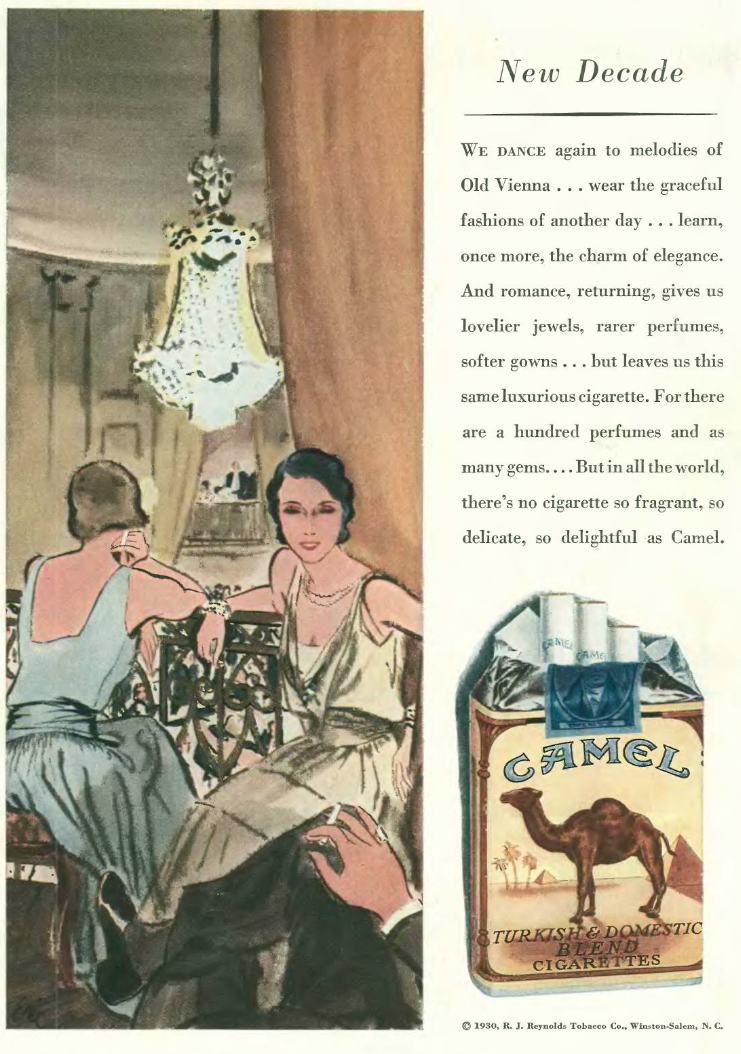
…whether home or abroad, New Yorkers were celebrating the New Year by “dancing to the melodies of Old Vienna” and smoking like chimneys…

…a popular New Year’s Eve destination was the The Roosevelt Hotel, where Guy Lombardo’s orchestra helped ring in the New Year from 1929 (radio’s first nationwide New Year’s Eve broadcast) to 1959…

I stayed at the Roosevelt Hotel in late December, and found Lombardo still presiding over the bar…

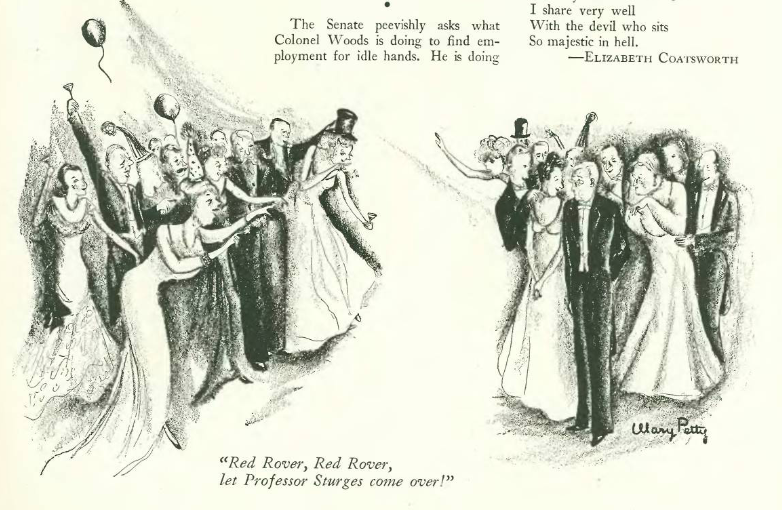
…we also find New Year’s revelry in the cartoons, with Mary Petty

Isadore Klein

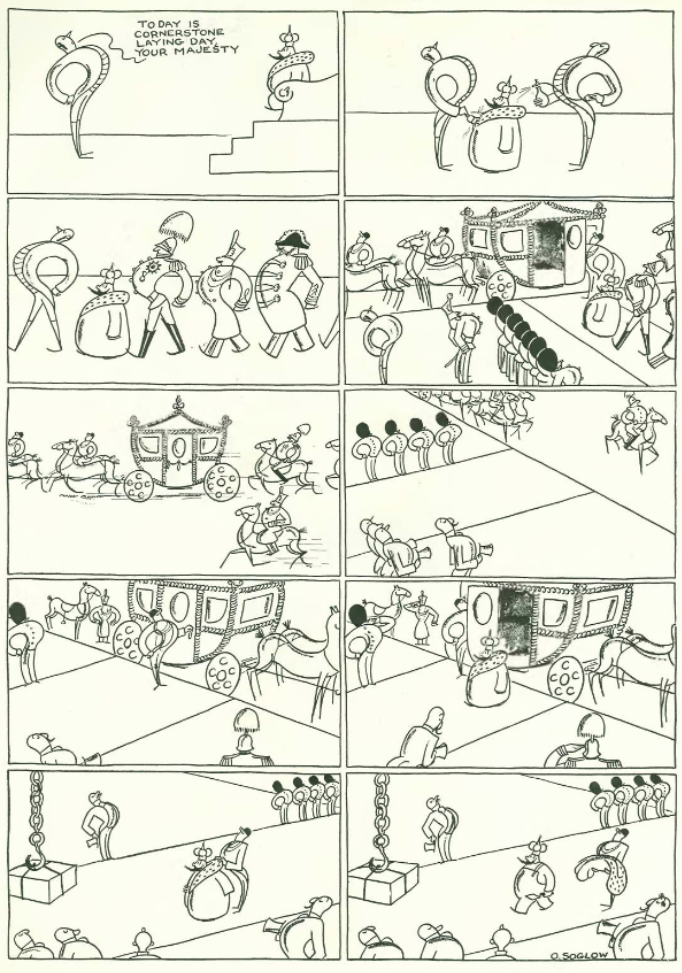
Otto Soglow...

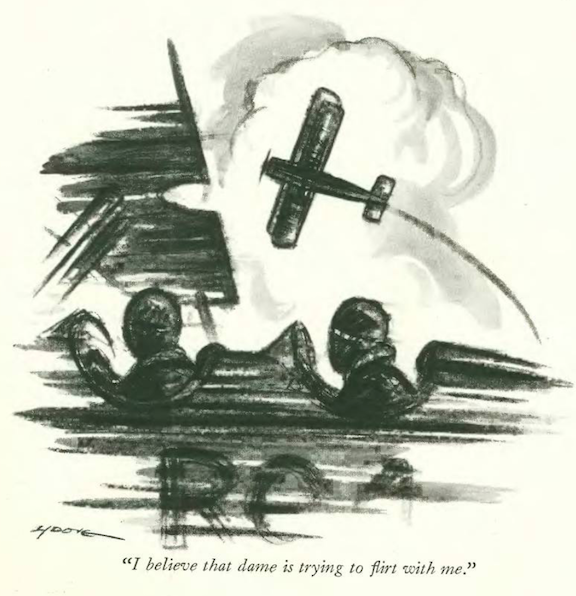
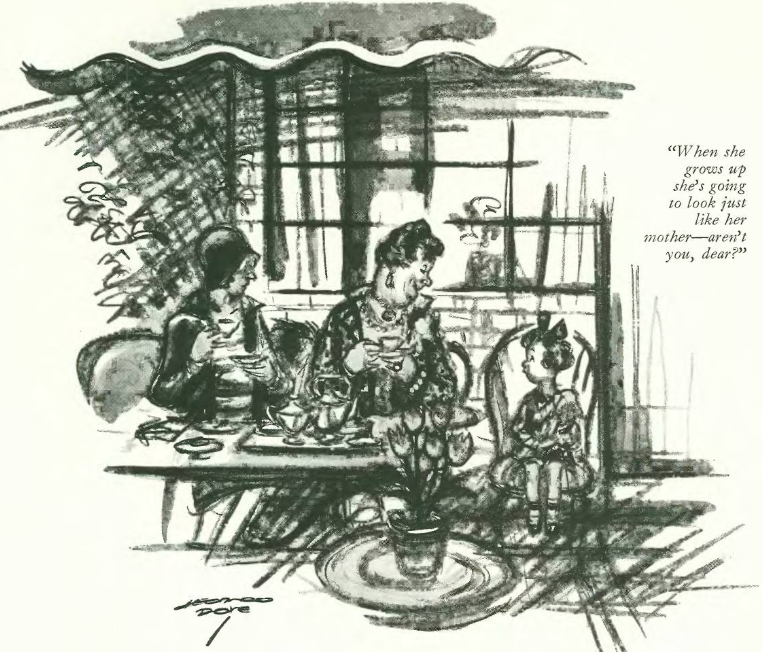
…and Leonard Dove

…and for those who stayed home, we have this scene of domestic bliss from Don Herold

 *  *  *

On to the Jan. 3, 1931 issue, we have Howard Brubaker (“Of All Things”) waxing sour on the state of the economy…

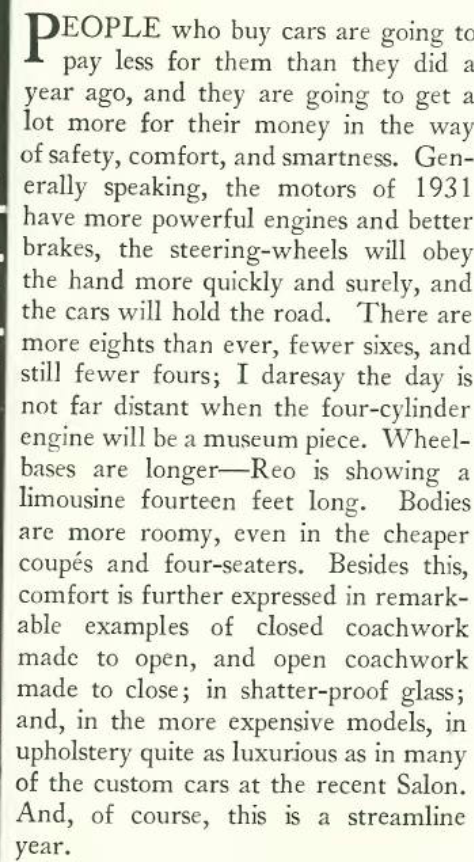
…so what a better way to cheer up than to look at shiny new cars, especially the ones almost no one could afford? The New Yorker paid another visit to the New York Automobile Salon at the Grand Central Palace…

…according to the article, 1931 was “a streamline year,” and leading the way was the REO motor car company, which despite its innovative ways would drop its car line altogether in 1936 — a casualty of the Depression…

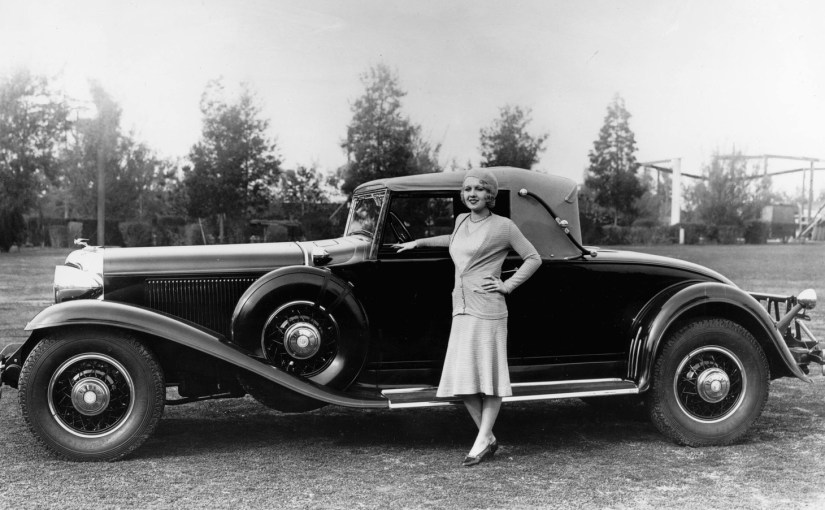
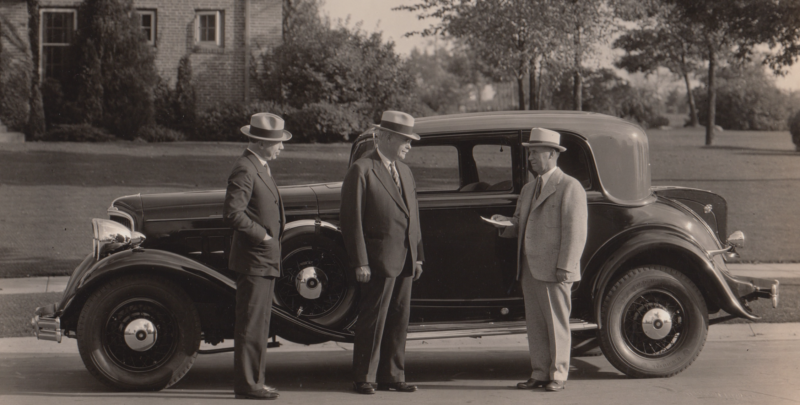
FLOWING FENDERS…The 1931 REO Royale was a trendsetter, introducing streamlining designs. The Great Depression would cause REO to abandon the manufacture of automobiles in 1936. (historicvehicle.org)

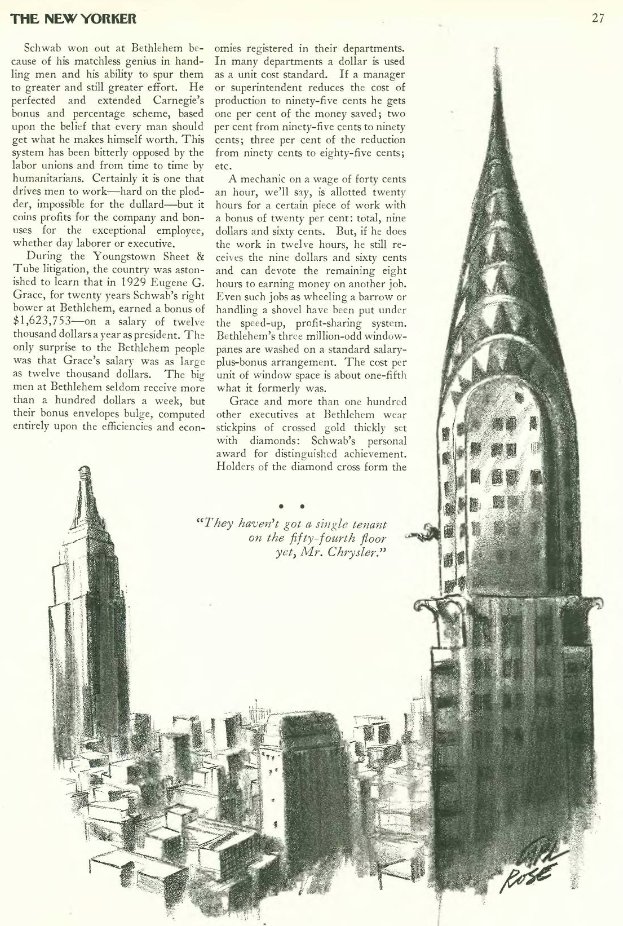
…over at the Chrysler Building, which served as that corporation’s headquarters from 1930 until the mid-1950s, new cars were on display on the building’s first two floors…

CATHEDRAL OF CARS…The first two floors of the Chrysler Building served as an auto showroom during the building’s first decade. (Wikipedia/thewelcomeblog.com)

…we segue to our advertisements, many from car companies touting their displays at the New York Automobile Salon. Like REO, Marmon was noted for various innovations, including the introduction of the rear-view mirror. It also manufactured a stunning 16-cylinder automobile that was on display at the 1931 Salon. But also like REO, the Depression proved too much for Marmon, and it was defunct by 1933…

SLEEK…The 1931 Marmon Sixteen. (RM Auctions)

…another car company that would fall to the Depression was the luxury brand Pierce Arrow. Without a lower-priced car in its lineup to provide cash flow, the company ceased operation by 1938…

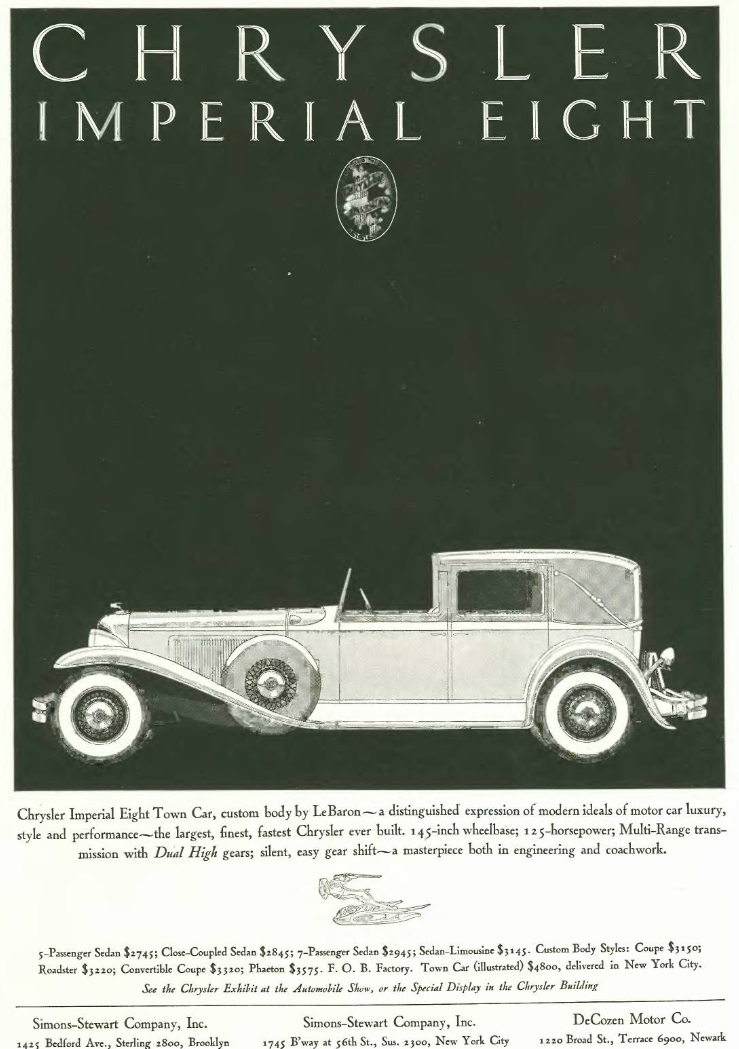
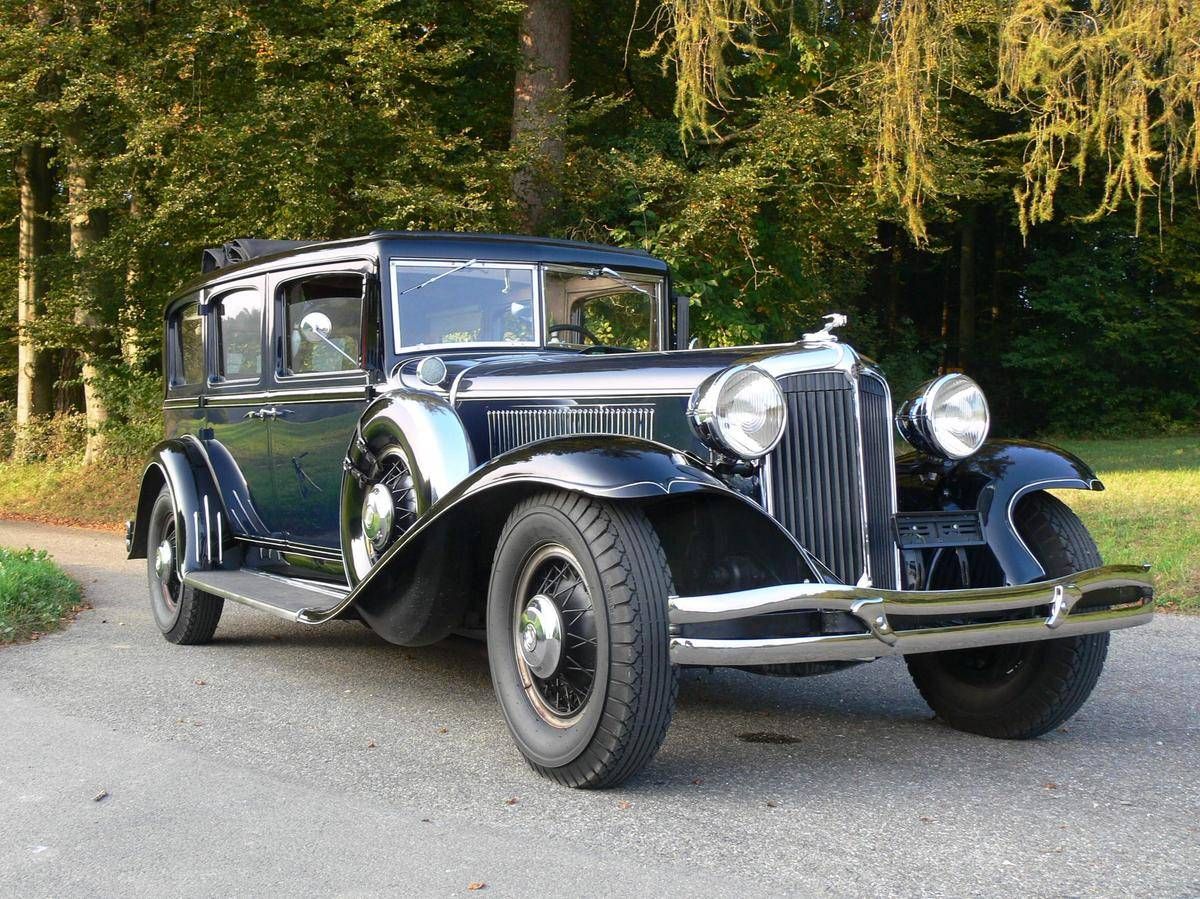
…by contrast, the Chrysler Corporation had several low-priced models to help it survive the lean years and enable it to produce its luxury model, the Imperial…

ANOTHER FIRST…Chrysler was also known for its innovative ways. A custom version of the Chrysler Imperial Eight included a dictaphone. (hemmings.com)

…the Hudson Motor Car Company is long gone, but in 1930 it was the third largest carmaker after Ford and Chevrolet, and instead of luxury it touted the affordability of its cars, especially its low-priced Essex line, priced $1,000 less than its predecessor from ten years earlier. The $595 Essex would be comparable to a $9,000 to $10,000 car today (by comparison, the 1931 Marmon or Imperial would set you back somewhere between $3,000 and $5,000, roughly equivalent to a $46,000 – $78,000 range today)…

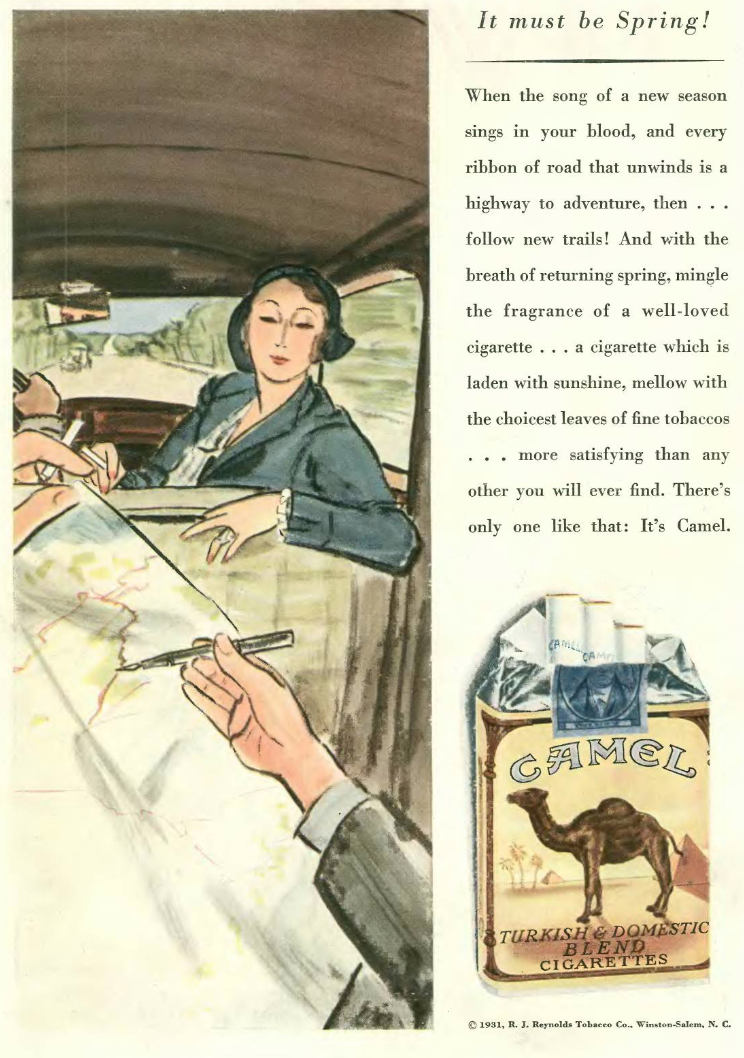
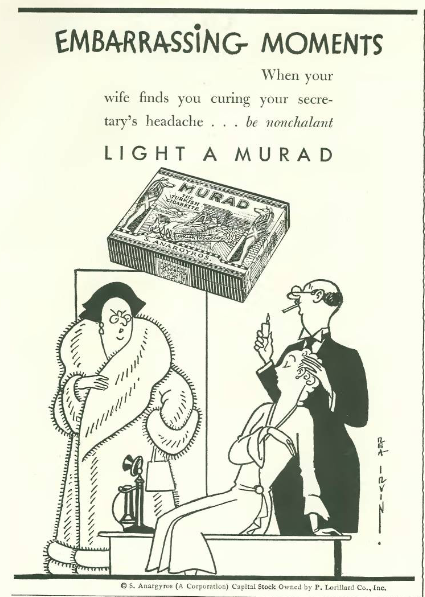
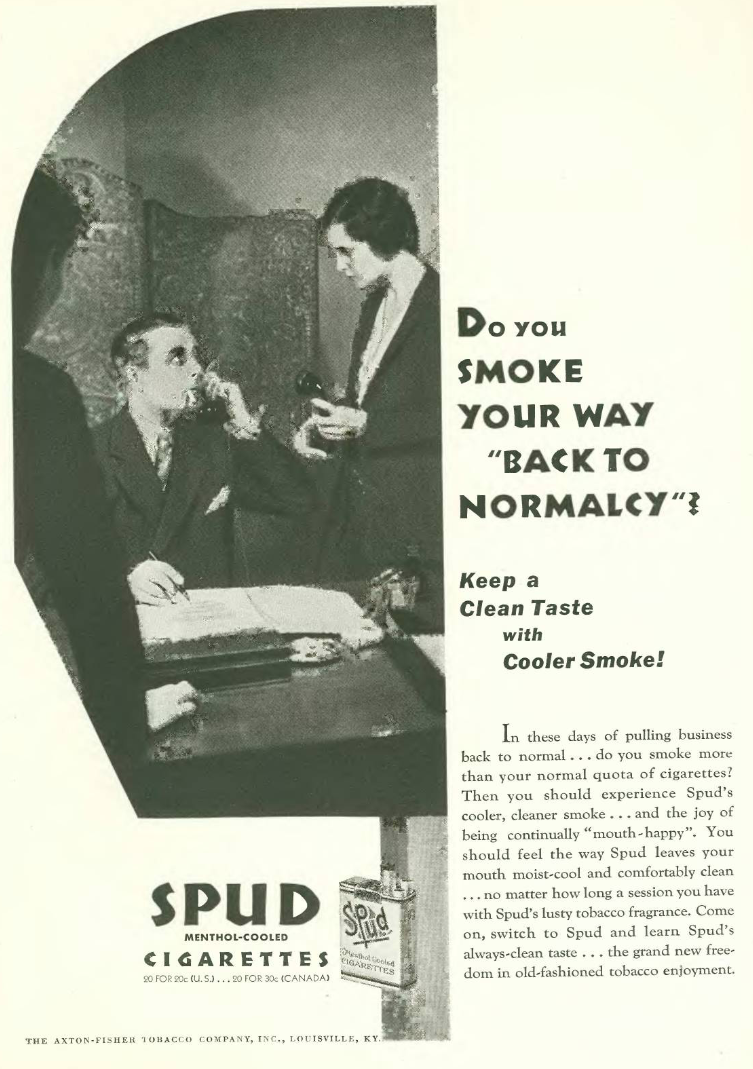
…so let’s say the Depression has wiped you out and you can’t even afford an Essex…well you could try to “smoke your way back to normalcy”…

…or be like this pair, who seem content with their Chesterfields…

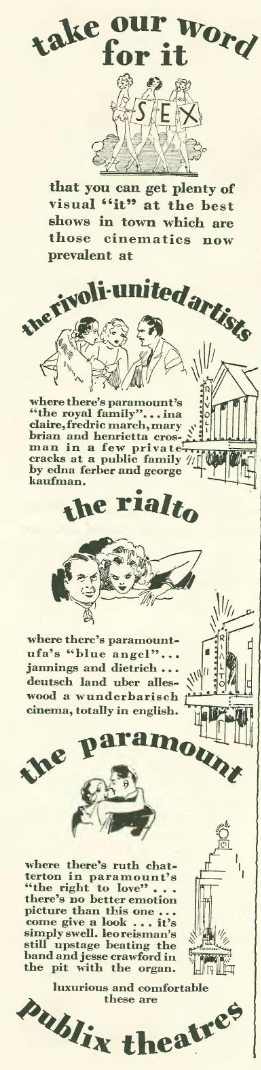
…of course the movies were another means of escape from the cruel world, and Paramount’s Publix Theatres promised plenty of sex to ease troubled minds…

PRE-CODE WORLD…During a brief period of the early sound era, many films used both sex and violence to attract audiences to theaters. The Publix Theatres ad above implied that these three films had plenty of sex, or “it” — clockwise, from top left, Fredric March ran around in his skivvies in The Royal Family of Broadway (1930); Mary Brian and Ina Claire portrayed acting sisters Gwen and Julie Cavendish in The Royal Family of Broadway; David Manners and Ruth Chatterton shared an embrace in The Right to Love (1930); and Marlene Dietrich lured a schoolmaster into a life of madness and despair in The Blue Angel (1929-30).

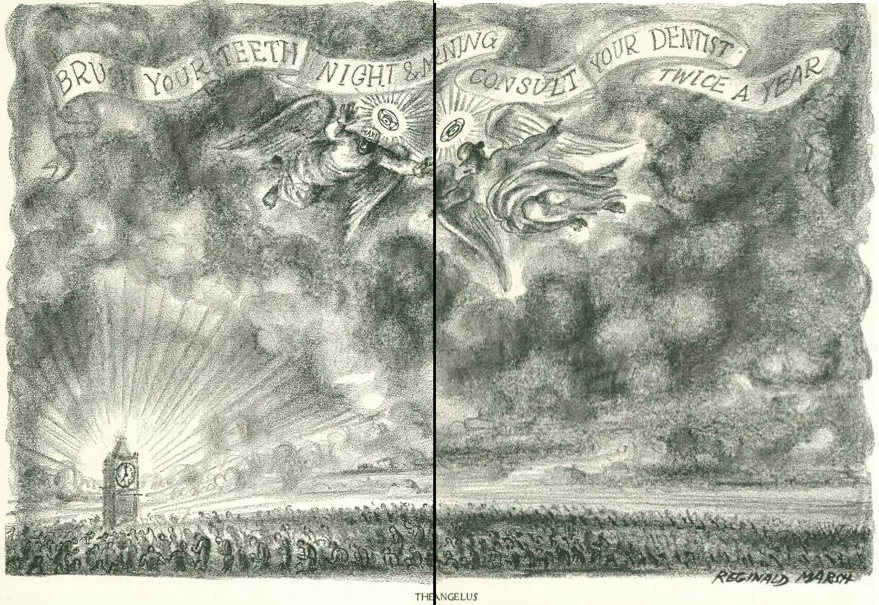
…and we close with our cartoonists…Reginald Marsh heralded the new year with this two-page spread depicting the heavens glorifying dental hygiene…

Leonard Dove inked two cartoons featuring table talk…

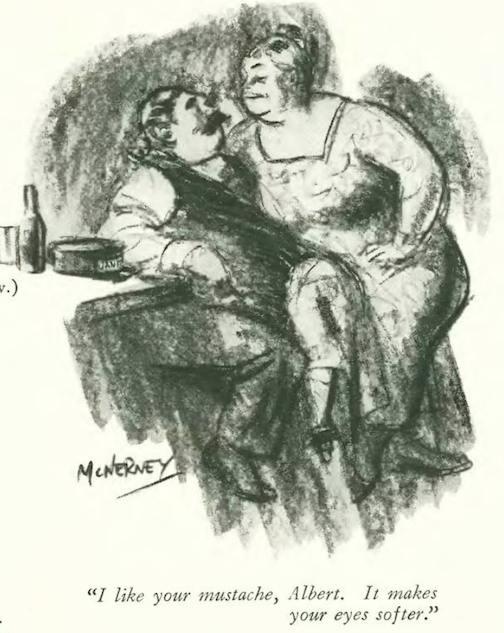
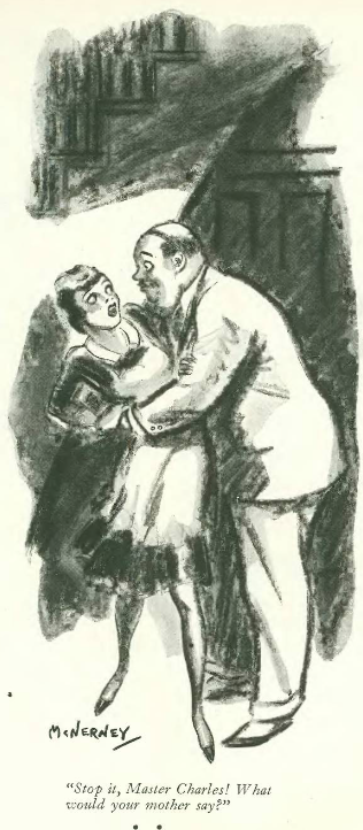
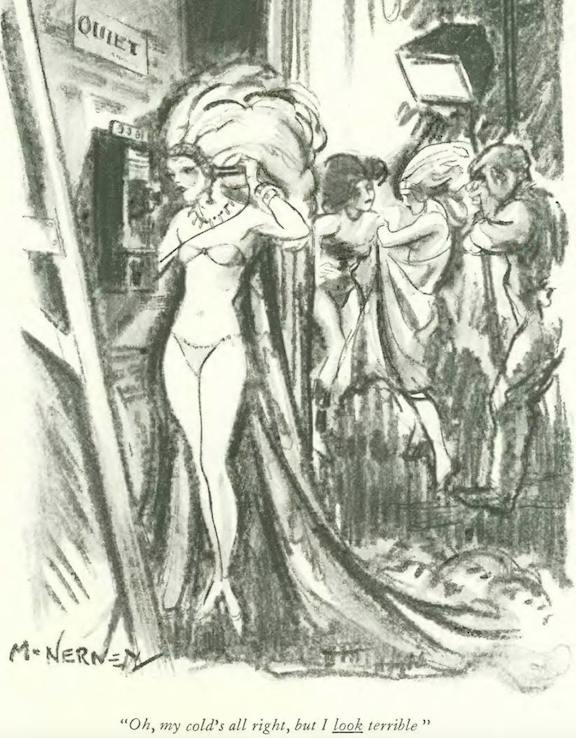
E. McNerney continued The New Yorker tradition of cartoons featuring sugar daddies and gold diggers…

Gardner Rea pondered the value of kitsch in a regal setting…

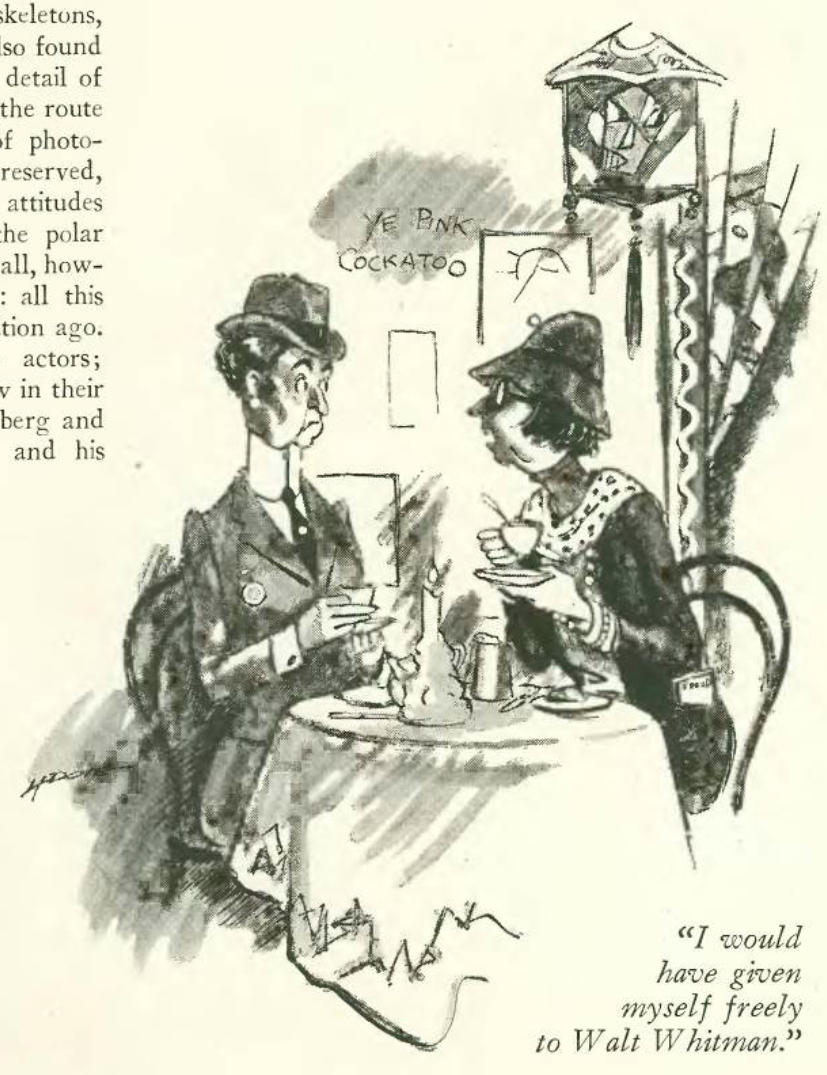
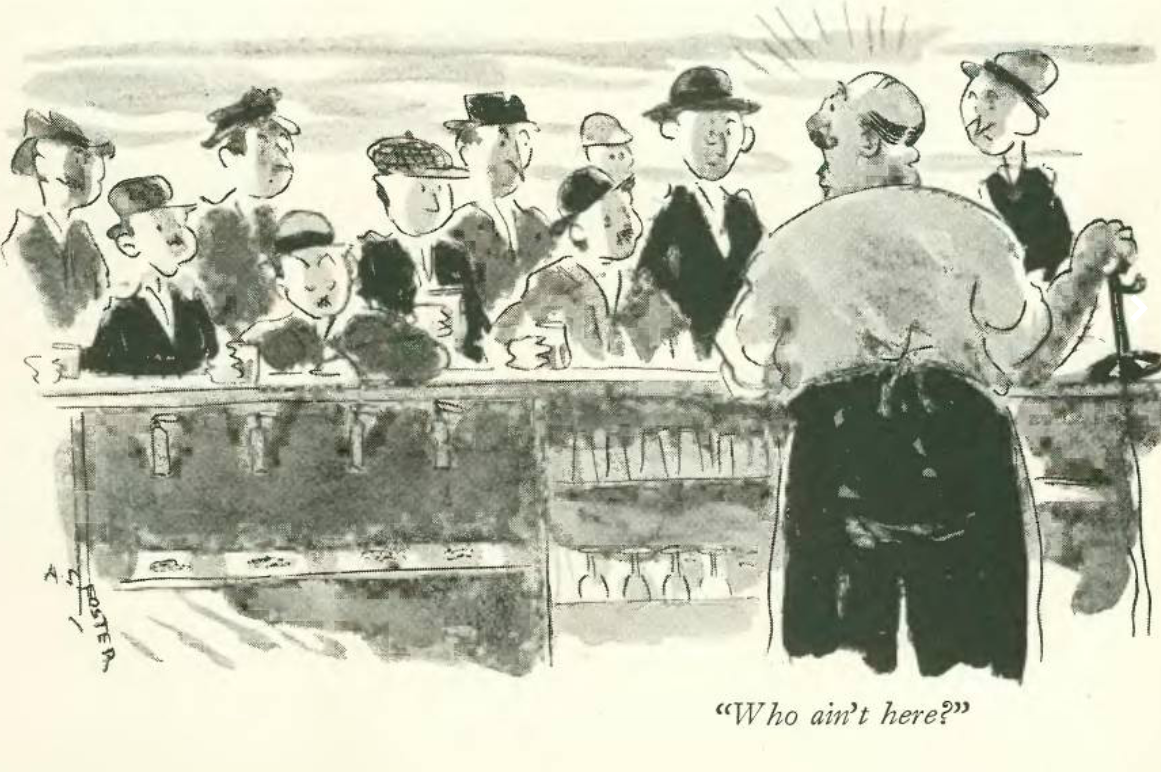
A.S. Foster looked in on a crowd of John Does at a speakeasy…

…and Lillian Reed took us shopping with a very specific request…

Next Time: Requiem For the Flapper…


Happy Holidays 1930

Happy Holidays to readers of A New Yorker State of Mind! We open with an image of Christmas shoppers at 34th and Broadway, circa 1930, and peruse the Dec. 20, 1930 issue of the world’s greatest magazine.

Dec. 20, 1930 cover by Constantin Alajalov.

“Notes and Comment” began with a Christmas message of sorts from E.B. White, his holiday cheer tempered by the Great Depression and the lingering effects of Prohibition…

Howard Brubaker seconded White’s mood in his “Of All Things” column…

…keeping things on the lighter side was Margaret Fishback, who turned her talents as a poet into a successful career as an ad writer for Macy’s. By the 1930s she was one of the world’s highest-paid female advertising copywriters. For the Dec. 20 issue she offered this holiday ditty:

THANKS MARG...Margaret Fishback, circa 1930s. (Wikipedia)

 *  *  *

More Marlene

Last week we looked at Marlene Dietrich’s breakout performance in The Blue Angel (reviewed by John Mosher in the Dec. 13, 1930 issue) that launched her into international stardom. Although Mosher had some gripes about the film’s dialogue, Dietrich’s performance nevertheless created enough of an impression to warrant a lengthy note on the German star in the Dec. 20 “Talk of the Town”…

I’LL BE BACK…Marlene Dietrich in a still from Shanghai Express, 1932. (Wikipedia)

Even though John Mosher gave a rather tepid review of The Blue Angel in the Dec. 13 issue, he obviously couldn’t shake it (or Dietrich) from his head, returning to the film and its star in the opening paragraphs of his Dec. 20 cinema column.:

Mosher also observed that new Hollywood version of Dietrich (in 1930’s Morocco) was “far prettier” than the German version. You decide:

The German Marlene Dietrich in Ufa’s The Blue Angel

…and the Hollywood Dietrich in Paramount’s Morocco (with Gary Cooper)…

(both images IMDB)

…on to our advertising…Dietrich pops up again in this ad for Publix Theatres (which were owned by Paramount)…

…the same ad block also featured light fare, such as 1930’s Tom Sawyer

AIN’T THEY CUTE?...Mitzi Green as Becky Thatcher and Jackie Coogan as Tom Sawyer in 1930’s Tom Sawyer. Jackie was a famous star by 1930, thanks to his co-starring performance with Charlie Chaplin in 1921’s The Kid. In adult life Coogan would play Uncle Fester in TV’s The Addams Family. Green would have less success, and retire from films in the 1950s. (IMDB)

…not all advertisers were thinking about Christmas, but rather were turning their sights to the southern climes and the fashions they would require…here’s an appeal from Burdine’s of Miami…

…and Fifth Avenue’s Bonwit Teller…

…travel agencies created enticing scenes such as this to lure snowbirds to places like Bermuda…

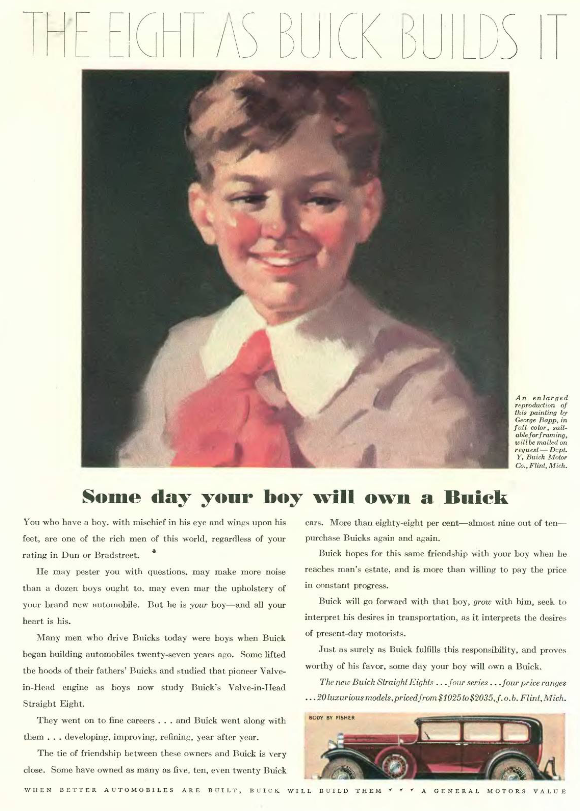
…of course in those depressed times you had to be a person of means to spend your winters in the Caribbean, or to surprise your family with a new Buick for the holidays…

…and for those stuck at home, they had to console themselves with bootleg liquor, perhaps jazzed up with one of these “flavors”…

…but if you were in the holiday spirit, you might head to the Roosevelt for New Years Eve with Guy Lombardo

…once again, the issue was sprinkled with spot drawings on the holiday theme…

…and our cartoonists, Garrett Price at the doctor…

E. McNerney in Atlantic City during off-season…

Al Frueh, and the clash of modern aesthetics with Christmas traditions…

…and for those in that last, desperate holiday crush, we close with Alan Foster

Next Time: The Road to 1931…

A Blue Angel

The German actor Emil Jannings was well-known to American audiences when The Blue Angel (Der blaue Engel) premiered at New York’s Rialto Theatre. Although the film was created as a vehicle for the Academy Award-winning Jannings (he won the Academy’s first-ever best actor award in 1929), it was the little-known Marlene Dietrich who stole the show and made it her ticket to international stardom.

Dec. 13, 1930 cover by Ralph Barton, surprisingly his only cover for The New Yorker. The illustration sadly belies Barton’s state of mind at the time; he would take his own life the following spring.

New Yorker film critics, including John Mosher, generally found foreign films, particularly those of German or Russian origin, to be superior to the treacle produced in Hollywood, and Jannings was a particular favorite, delivering often heart-wrenching performances in such silent dramas as The Last Laugh (1924) and The Way of All Flesh (1927). In those films he depicted once-proud men who fell on hard times, and such was the storyline for The Blue Angel, in which a respectable professor falls for a cabaret singer and descends into madness.

NO CONTEST…Emil Jannings had star billing for the English language version of Josef von Sternberg’s The Blue Angel, but it was Marlene Dietrich’s portrayal of cabaret singer Lola Lola that stole the show. (IMDB)

I was surprised by Mosher’s somewhat tepid review of this landmark film, which was shot simultaneously in German and English (with different supporting casts in each version). He referenced “bum dialogue,” which was doubtless the result of German actors struggling with English pronunciations. Filmed in 1929, it is considered to be Germany’s first “talkie.”

PRIDE BEFORE THE FALL…A proud and stern schoolmaster named Immanuel Rath (Emil Jannings) falls for cabaret singer Lola Lola (Marlene Dietrich), and from there his life unravels; he loses the respect of his pupils, then resigns his post to marry Lola. To make ends meet, Rath tries to sell racy photos of his wife, and then becomes a clown in her troupe and is regularly humiliated on stage. Destitute, he dies at the end of the film. (IMDB)

 *  *  *

All Wet

Sergei Tretyakov’s avant-garde play Roar China made an impression on The New Yorker for the striking realism of its set, which featured an 18,000-gallon tank of water onstage at the Martin Beck Theatre. “The Talk of the Town” described some of the demands of the production:

STAYING AFLOAT…The elaborate set for Roar China featured a model battleship in 18,000 gallons of water.
ROAR CHINA! was an anti-imperialist play depicting the Wanhsien Incident during the Chinese Civil War. Many in the Chinese cast members were non-professional actors. (New York Public Library)

  *  *  *

By Any Other Name

Like many college football teams in first decades of the 20th century, Notre Dame was referred to by a number of nicknames, including the “Fighting Irish.” In this “Talk of the Town” item, however, the team was known as the “Ramblers.” According to the University of Notre Dame, this nickname (along with “The Rovers”) was considered something of an insult: “(Knute) Rockne’s teams were often called the Rovers or the Ramblers because they traveled far and wide, an uncommon practice before the advent of commercial airplanes. These names were also an insult to the school, meant to suggest it was more focused on football than academics.”

RAMBLERS NO MORE…The 1930 National Champion Notre Dame football team. (nd.edu)

 *  *  *

The Wright Stuff

Eric Hodgins penned a profile of aviation pioneer Orville Wright, who just 27 years earlier made a historic “first flight” with his brother, Wilbur, at Kitty Hawk, North Carolina. An excerpt:

DRESSED FOR SUCCESS: Aviation pioneer Orville Wright (1871 – 1958) sits in one of his biplanes dressed in a three-piece suit and a cap, Dayton, Ohio, 1909. (ge.com)

 *  *  *

No Love Parade, This

French singer and actor Maurice Chevalier made his Hollywood debut in 1928 and quickly soared to stardom in America. French audiences, however, were not so easily swayed, especially the elite patrons Chevalier faced, alone on the stage, at the cavernous Théâtre du Châtelet. Janet Flanner explained in this dispatch from Paris:

THEY LIKE ME IN TINSELTOWN…Jeanette MacDonald and Maurice Chevalier in The Love Parade (1929). (IMDB)
GULP…Maurice Chevalier faced a tough crowd — his compatriots — at Paris’s Théâtre du Châtelet. (en.parisinfo.com)

 *  *  *

Man’s Best Friend

The New Yorker’s book section recommended the latest from Rudyard Kipling, Thy Servant a Dog…

WOOF…Illustrations for Rudyard Kipling’s Thy Servant a Dog, by Marguerite Kirmse. (Etsy)

 *  *  *

Fun and Games

As an extension to her fashion column, Lois Long shared some recommendations for holiday cocktail-party games:

KEEPING THINGS MERRY…Pokerette and Gee-Wiz were popular cocktail party diversions during the Christmas season of 1930. (Worthpoint/Invaluable)

*  *  *

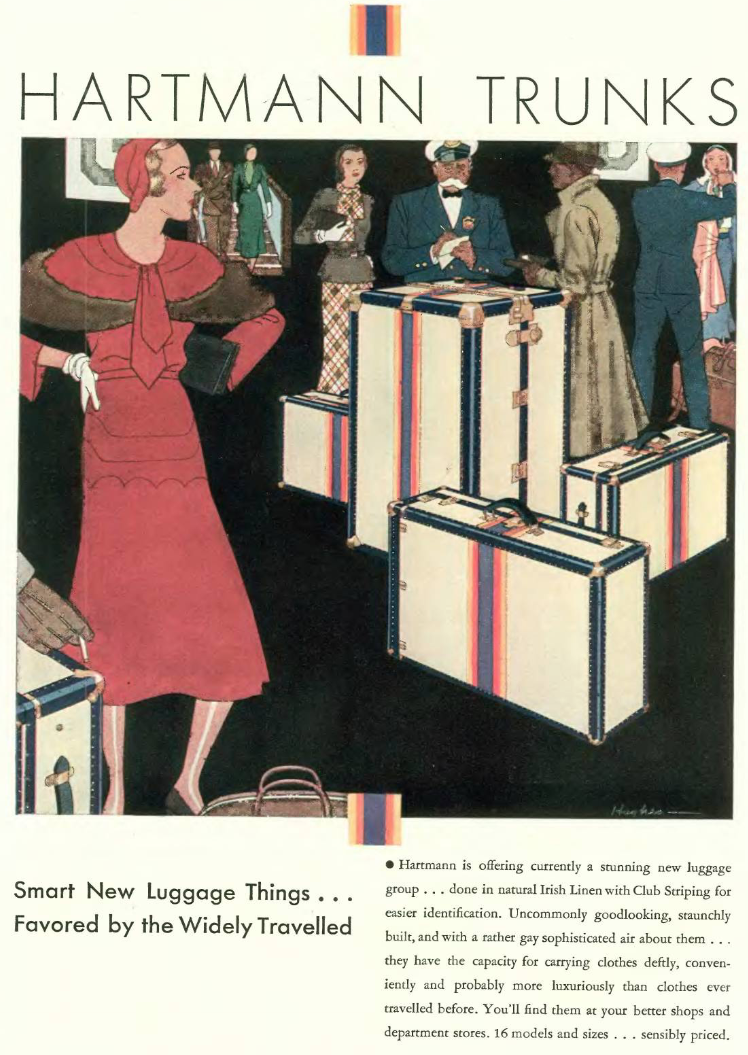
From Our Advertisers

We start with this ad from Horace Liveright promoting Peter Arno’s third cartoon collection, Hullaballoo, featuring one of Arno’s leering old “Walruses”…

…Doubleday Doran offered a few selections for last-minute Christmas shoppers, led by the Third New Yorker Album

…The UK’s Harold Searles Thorton invented the table top game we now call “foosball” in 1921 and had it patented in 1923. Below is possibly the game’s first appearance in the U.S. — an ad for a “new” game called “Kikit.” Foosball would be slow to catch on, but would rapidly gain popularity in Europe in the 1950s and in the U.S. in the 1970s…

Early foosball players circa 1930. (foosball.org)

Horace Heidt and his Californians were doing their best to make the season bright at the Hotel New Yorker…

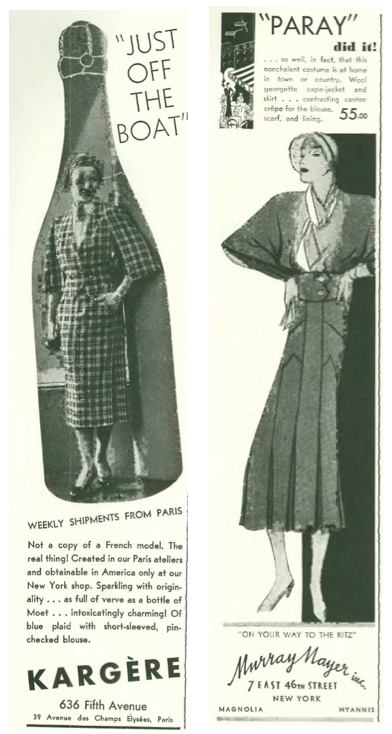
…Peck & Peck tried to make the most of Prohibition by stuffing scarves and other wares into empty Champagne bottles…

…and Franklin Simon reminded readers that it would be a “Pajama-Negligee Christmas,” whatever that meant…

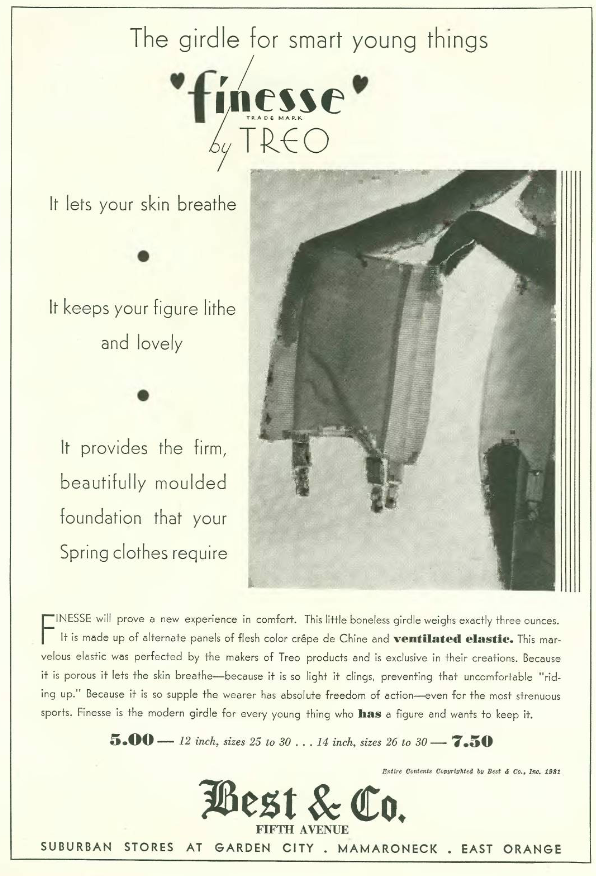
…pajamas and negligees were doubtless preferable, and more romantic, than this array of kitchen appliances…

…whatever the holiday revelry, the makers of Milk of Magnesia had our backs…

…on to our cartoonists, Julian De Miskey and Constantin Alajalov contributed spot drawings to mark the season…

A.S. Foster contributed two cartoons to the issue…

Gardner Rea, a full-pager…

Leonard Dove, possibly having some fun with playwright Marc Connelly

Isadore Klein demonstrated the fun to be had with a kiddie scooter, before they had motors…

…and we close with John Reynolds, and some bad table manners…

Next Time: Happy Holidays…


Ziegfeld’s Folly

Broadway impresario Florenz Ziegfeld Jr knew how to pack a Broadway theater, and from 1907 to 1932 he staged a number of revues and plays (most notably Showboat) that featured lavish costumes and a bevy of chorus girls.

Dec. 6, 1930 cover by Rea Irvin, depicting a peephole view of a speakeasy during the holidays.

When his latest show, Smiles, hit the stage of the Ziegfeld Theatre on Nov. 18, 1930, it was greeted by an audience that had endured the first year of the Great Depression. Ziegfeld’s entertainments, on the other hand, were more associated with the high times of the Roaring Twenties. So even the popular brother-sister dance team from Omaha — Fred and Adele Astaire — seemed a bit old hat.

GO WITH THE FLO…Broadway impresario Florenz “Flo” Ziegfeld Jr with his Follies cast, 1931. (Wall Street Journal)

Or so it seemed to Robert Benchley, who observed in “The Wayward Press” that most of his readers could draw pictures of the Astaires from memory. But what really irked Benchley was the way William Randolph Hearst manipulated his mighty newspaper empire to promote Ziegfeld’s Smiles in a way that made the show appear to be the biggest hit of the year.

Ziegfeld Theatre was built with Hearst’s financial backing, so the media mogul was determined that the show would be a success, commanding his editors and writers to lavish praise on the tepid production, which would close in less than two months as a box office failure.

SAY CHEESE…Program for Smiles featuring Fred Astaire, Marilyn Miller and Adele Astaire. At right, publicity photo for Smiles featuring Fred and Marilyn. (Playbill/Pinterest)

For the Astaires, they were nearing the end of their 27-year collaboration — Adele would retire from the stage in 1932 to marry Lord Charles Cavendish, and in 1934 Fred would pair up with Ginger Rogers for the first of nine films they would make together for RKO. Marilyn Miller, one of the most popular Broadway stars of the 1920s and early 1930s, would also seek her fortune in films, but would only make three. Alcoholism and persistent sinus infections would cut her life short in 1936 — she would die at age 37 from complications following nasal surgery.

BRIEF CAREER…Marilyn Miller in 1931’s Her Majesty, Love, one of just three films she would make before her death in 1936. (IMDB)

Benchley revealed how some of Hearst’s reporters responded to the edict from their boss:

TWEAKING HIS NOSE…Walter Winchell, left, registered his protest against his boss, William Randolph Hearst, by laying it on thick in his column. (IMDB/BBC)
THE FOLLY OF FOLLIES…Robert Benchley (left) cried foul regarding Hearst’s attempt to prop up a lousy show; Ogden Nash (right) found humor in the “immorality” of Ziegfeld’s productions.  (Wikipedia/Notable Biographies)

On a related note, Ogden Nash also zeroed in on Ziegfeld’s latest show, turning the tables on religious zealots who found the Follies immoral. An excerpt:

And finally, one more theater-related item: a drawing by Al Frueh highlighting the melodrama On The Spot, which ran from Oct. 29, 1930 through March 1931 at the Forrest Theatre.

BETTER THAN ZIEGFELD, THIS…At right, Crane Wilbur and Anna May Wong in the melodrama On The Spot, which opened Oct. 29, 1930 at the Forrest Theatre. (New Yorker/Pinterest)

 *  *  *

In the Dec. 6, 1930 “Notes and Comment,” E.B. White shared his observations on a new type of chair that doubled as a dog house…

…and he wasn’t making it up, because the chair he described was featured in this ad from the same issue…

 *  *  *

Drunk History

In the fall of 1930 Scribner’s magazine published a series of three articles titled “If Booth Had Missed Lincoln,” If Lee Had Not Won the Battle of Gettysburg,” and “If Napoleon Had Escaped to America.” The New Yorker’s James Thurber claimed to be the author of a fourth article, “If Grant Had Been Drinking At Appomattox.” An excerpt:

REVISIONIST…James Thurber circa 1930. (thurberhouse.org)

   *  *  *

From Our Advertisers

The rolling pin was often deployed as a prop — especially in the comics — to illustrate marital discord; the makers of Hoffman ginger ale used the common trope to sell their fizzy drink…

…for reference, Maggie gives it to Jiggs in this comic book cover from 1953…

(Good Girl Comics)

…the issue was stuffed with ads for Christmas shoppers, ranging from colorful plastic tumblers…

…to “unforgettable” appliances…

…to a variety of accessories at Wanamaker’s…

…Macy’s offered this pajama and robe combination for (insufferable) little boys who “strive for sartorial effect”…

…while Burdine’s of Miami urged snowbirds to purchase multiple wardrobes to remain fashionable throughout the winter season…

…and in stark contrast, this ad appealed for donations to help the jobless…

…our cartoons are supplied by Art Young

…the ever reliable Barbara Shermund

…and equally reliable Peter Arno

…and Helen Hokinson

…and we close with this gem by Garrett Price

Next Time: A Blue Angel…

The Future Was a Silly Place

One of the most expensive movies of 1930 was a sci-fi musical comedy titled Just Imagine, a silly mash-up of great sets, terrible acting, and a vision of the future fifty years hence that was way off the mark.

Nov. 29, 1930 cover by Victor Bobritsky.

Not that the film ever set out to be an accurate prediction of the future. Nevertheless, it is instructive (or, at the least, amusing) to look back on “yesterday’s tomorrows” to understand the American mind in the first year of the Great Depression.

COME FLY WITH ME…Clandestine lovers LN-18 (Maureen O’Sullivan) and J-21 (John Garrick) share a romantic moment high above the streets of 1980 New York City. (scifist.net)

Just Imagine borrowed some of its look from Fritz Lang’s Metropolis (1927), a dystopian vision of the future that reflected the contentious years of Germany’s Weimar Republic. Just Imagine similarly reflected its time and place — the early years of the Depression — Hollywood responding not with gloom and doom but rather with uplifting fare — comedies, musicals, and escapist fantasies (Flash Gordon came along in 1936). The producers of Just Imagine rolled all of it into one film, and The New Yorker’s John Mosher tried to make sense of the mess:

EYE IN THE SKY…In Just Imagine, technology is advanced enough to have a traffic cop floating in the sky, but he still must rely on his arms and mechanical signals to keep the skyways in order. (YouTube clip)

The floating traffic cop is just one example of the film’s attention to set design. The New York skyline, featured in the opening scene, was constructed in a giant hangar at enormous cost…

(IMDB)

In one of the films weirder twists, vaudeville comedian El Brendel is brought back to life with an electric beam…

SMOKED HAM…Vaudeville comedian El Brendel is zapped back to life to provide the world of 1980 with comic relief. Some of the electrical equipment assembled by set designer Kenneth Strickfaden would be seen again in 1931’s Frankenstein. (scifist.net)

…and Brendel (below, center), proceeds to get drunk on booze pills and spew a series of really bad jokes throughout the duration of the film…

WE SHOULD HAVE LEFT HIM DEAD…Frank Albertson, El Brendel and John Garrick in Just Imagine. (scifist.net)
MARS ATTACKS…The film also took audiences to the surface of Mars via a phallus-shaped spaceship that would later be used in Flash Gordon serials. Clockwise, top left, the spaceship blasts off surrounded by a crowd of men in fedoras; aboard the spaceship; landing site on Mars; J-21 (John Garrick) encounters the Martian Queen (Joyzelle Joyner). (YouTube/scifist.net)

The movie flopped at the box office, but producers were able to recoup some of the costs by farming out clips of the futuristic sets, and some of the props, to other sci-fi films of the 1930s including the Flash Gordon and Buck Rogers serials.

 *  *  *

Toys For Tots

By mid-November The New Yorker’s “On and Off the Avenue” column had lengthened to include ideas for Christmas shoppers. The Nov. 29 issue offered these ideas for children’s toys from Macy’s…
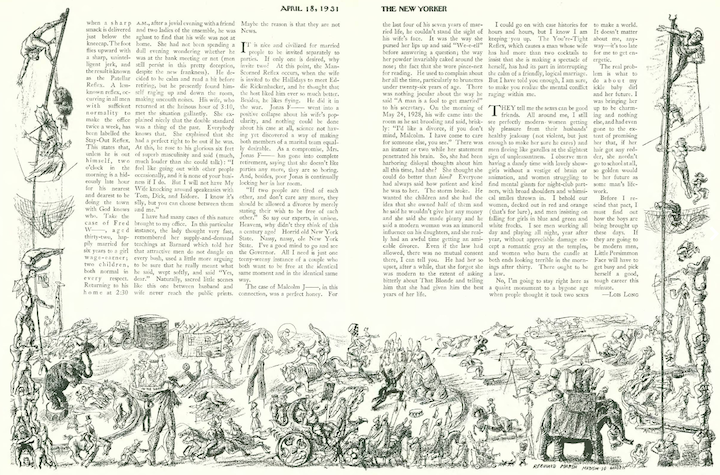
XMAS IS COMING…Patsy Ann dolls in smart berets, and dollhouses in various styles (a 1930 Tudor dollhouse at right) could be had at Macy’s Herald Square flagship store. (Pinterest)

GRRRR…First introduced in 1922, the revival of “Radio Rex” proved popular to the kiddies in 1930. It was the “high tech” toy of its day, the first to respond to voice commands. Rex the dog would spring out of his doghouse at the sound of the word “Rex,” thanks to a sound-sensitive electromagnet. (ctinventor.wordpress.com)

 *  *  *

A Century-old-Problem

Traffic woes have been around almost as long as there have been cars. In an excerpt from “A Reporter at Large,” Morris Markey explained the challenges facing the city’s police department:

IF YOU BUILD IT, THEY WILL COME…Traffic clogs Fifth Avenue near 42nd Street in 1930. (digitalcollections.archives.nysed.gov)

 *  *  *

Speaking of cars, this ad in The New Yorker announced the opening of the annual Automobile Salon at the Commodore Hotel…

…and the magazine was on hand to describe its various wonders. Some excerpts:

POETRY IN MOTION…Top, the Walter Dorwin Teague-designed Marmon 16-cylinder wowed crowds at the Salon, even if few could afford it. The Great Depression limited the production of the luxury Marmon, and less than 400 were produced. The company abandoned the car business altogether in 1933. Below, the sporty Ford Model L Roadster, designed by Raymond Dietrich. (supercars.net/Sotheby’s)

 *  *  *

Maestro Politician 

The New Yorker profiled pianist, composer and statesman Ignacy Jan Paderewski (1860-1941). Paderewski served as Poland’s prime minister in 1919, negotiated on behalf of his country at the Treaty of Versailles, and had a 60-year career as a virtuoso pianist. A brief excerpt:

 *  *  *

Not For the Moneychangers

Architecture critic George S. Chappell checked in on the progress of three prominent Manhattan cathedrals in his “Sky Line” column:

LANDMARKS ALL…From left, Riverside Church, the still yet-to-be completed St. John the Divine, and St. Bartholomew’s. (MCNY/masonrymagazine.com/dtjoyce.com)

 *  *  *

The theater review section included this illustration of a new play, Roar China, that opened Oct. 27, 1930 at the Beck Theatre.

The staging of Roar China included this reconstruction of the bow of the H.M.S. Europa on the Beck Theatre stage…

(messynessychic.com)

 *  *  *

From Our Advertisers

The holiday season was in the air, and retailers were taking various approaches to entice Depression-era shoppers to consider their wares. The ads have a more conservative bent, when compared to late 1920s, and in the case of Wanamaker’s and B. Altman’s, an appeal to simpler times…

…Macy’s, on the other hand, looked to sell rather expensive lighters “to arouse the youthful enthusiasm among veteran smokers”…

…despite the Depression, New Yorker subscriptions continued to steadily increase — the magazine had nearly 45,000 subscribers in 1930, and by the end of the decade the number would approach 100,000 — below, a house ad designed to entice new subscribers…

…our cartoons include this holiday spot illustration by Barbara Shermund

…and another by Shermund of her parlor room crowd…

Otto Soglow amused us with a couple of tots…

Gardner Rea imagined a confrontation between a Macy’s Thanksgiving Day Parade balloon and Italy’s Fascist dictator Benito Mussolini

…the balloon Rea illustrated was “The Captain” from the popular Katzenjammer Kids comic strip. Along with his “family,” the Captain appeared in the parade in 1929 and 1930 (and possibly 1931). They were the first licensed character balloons in the parade’s history…

(The New York Times)

…back to cartoons, book shopping with William Crawford Galbraith

…and some holiday cheer from A.S. Foster

Next Time: Ziegfeld’s Folly…


Body and Soul

After completing a major in French in just three years, 19-year-old Libby Holman became the youngest woman to graduate from the University of Cincinnati in 1923. But it was her unique style of torch-singing—a trademark throaty mumble—that would launch a career on Broadway and a life of seemingly endless scandal.

Nov. 8, 1930 cover by Sue Williams.

After performing in the The Greenwich Village Follies, Holman (1904–1971) landed her first big role in 1925 in the Rodgers and Hart production of Garrick Gaieties. But it was a signature song, “Moanin’ Low,” from Clifton Webb’s The Little Show that would make her a star. When Three’s a Crowd (by Howard Dietz and Arthur Schwartz) opened at the Selwyn Theater on October 15, 1930, Holman was well-known to audiences not only for her voice but also for her unconventional lifestyle.

Three’s a Crowd proved to be a hit for Holman, and it gave her another hit song, “Body and Soul,” which was banned from the radio for “obscenity” but nevertheless became one of the year’s most popular songs. So popular, in fact, that it was recorded by Holman as well as by fellow torch singer Helen Morgan and Ziegfeld star Ruth Etting. This was the age of the Great American Songbook, when the song itself, and not necessarily its performer, reigned supreme. So when sheet music was distributed from a popular stage show, any number of entertainers would record it.

NAME THAT TUNE…From top to bottom, Helen Morgan, Ruth Etting and Libby Holman all recorded versions of “Body and Soul,” but Holman would make it one of her signature numbers. (YouTube/ruthetting.com/Wikipedia)

…for the hoofers, there were also a couple of dance versions of “Body and Soul” created by bandleaders Ozzie Nelson and Leo Reisman

GOOD BEAT, EASY TO DANCE TO…Bandleaders Ozzie Nelson and Leo Reisman recorded dance versions of “Body and Soul.” (YouTube)

Openly bisexual, Holman partied hard and swore like a sailor, and during her life she would lose one husband in a suspected murder (Holman herself was briefly a suspect) and another to suicide. She would take her own life in 1971. You can read more about Holman’s colorful, tragic life in the Jewish Women’s Archive.

We temporarily skip to the next issue of The New Yorker (Nov. 15, 1930), which featured Holman in a “Talk of the Town” brief, and some insight into her unique singing style. An excerpt:

The same issue also featured this drawing of the “Three’s a Crowd” cast by Al Frueh in the theater review section:

and finally, a publicity photo of the cast from 1930-31:

A FUN CROWD…Clifton Webb, Libby Holman and Fred Allen in Three’s a Crowd. At right, undated publicity photo of Holman. (performerstuff.com)

*  *  *

Horsin’ Around

The National Horse Show was a major event on New York’s social calendar, first held at the original Madison Square Garden in 1883 before moving to the second Madison Square Garden in 1890 and again to the third Madison Square Garden in 1926. This account in the Nov. 8, 1930 New Yorker noted how the horse show’s patrician air contrasted with the rodeo held at MSG the previous week.

NOT FOR GOAT-ROPERS, THIS…The coaching parade on display at the 1927 National Horse Show in Madison Square Garden. (National Sporting Library & Museum)
SOON WE’LL BE FIGHTING EACH OTHER…The National Horse Show began including a military competition in 1925. This photo from the Nov. 6, 1930 New York Times featured some international guests at the 1930 show. (NY TIMES)

Along with the above photo, the Times included this partial lists of guests to the Horse Show Luncheon, a who’s who of New York society. Indeed, the National Horse Show’s 1887 directory provided the basis for the first New York Social Register.

DRESSING UP FOR THE HORSES…Champion horsewoman Mary Elizabeth Whitney (left) with actors Loretta Young and William Powell at the National Horse Show in Madison Square Garden, Nov. 5, 1937. Standing behind Mary Elizabeth is her husband, Jock Whitney, a noted ambassador, art collector, philanthropist and investor. (Christian Anderson Collection)
HIGH STEPPIN’…After a brief stint in Florida, the National Horse Show moved to Kentucky in 2011. Perhaps a tad less formal, it nevertheless remains an important society event. Above, noted horsewoman Misdee Wrigley Miller rides World Grand Champion Grande Gil at the 2012 National Horse Show. (Doug Shiflet)

 *  *  *

A Lesson in Poetry 

In a casual for the Nov. 8 issue, E.B. White instructed readers on how to “Tell a Major Poet From a Minor Poet.” An excerpt.

And in his “Notes and Comment,” White suggested that criticism of the press was a major no-no for a sitting U.S. President:

Christmas shopping suggestions began to trickle into Lois Long’s section on fashion, house and home, including this bit of advice that reminds us just how distant 1930 is from our own time:

 *  *  *

Film critic John Mosher took in the latest offering from silent film star Harold Lloyd, who was making his second foray into the talkies with his portrayal of a hapless shoe salesman in Feet First

TEETH FIRST…Theater card for 1930’s Feet First featuring Barbara Kent and Harold Lloyd. (IMDB)
GETTING A LEG UP…Top, Harold Lloyd practices the art of shoe salesmanship with a pair of dummy legs in Feet First; below, Lloyd once again finds himself in a precarious situation high above a city street. (IMDB)

 *  *  *

From Our Advertisers

The National Horse Show was on the minds of several advertisers in The New Yorker, including these fashion merchants targeting the patrician set…

…speaking of the well-heeled, with winter approaching travel agencies enticed those with means to take a steamer through the Panama Canal to California, or for the more adventurous, a three-continent tour package…

…and of course Hawaii beckoned snowbirds, who could make their way across the Lower 48 by train and then hop a boat to the islands…

…the makers of Chesterfield cigarettes were on board with the travel theme…

…while the folks at Marlboro stuck with their dopey handwriting and jingle contests to push their smokes…

…as the luxury market grew ever tighter in the Depression, the sellers of finer things sought to distinguish their wares from competitors. L.P. Hollander kicked off a series of wordy ads regarding the provenance of their hats, gloves and other accessories (in short, they ain’t cheap copies)…

…no doubt the folks at L.P. Hollander were looking down their noses at the likes of Russeks, which offered copies of Lucien Lelong gowns. Apparently old Lucien was okay with this, as this “Radiogram” purportedly attests…

…Lucien pops again in another ad, this one for his perfume line…

…and for reference, here’s a photo of Monsieur Lelong, circa 1940…

(comm396-s16.ascjclass.org)

…on to our cartoonists, the Nov. 8 issue featured these great spot illustrations by Constantin Alajalov, the first, running along the bottom of “The Talk of the Town,” referenced the horse show at Madison Square Garden…

Alice Harvey listened in on a radio soap…

William Crawford Galbraith found some admirers of art…

Barbara Shermund continued to share her sharp observations of parlor hijinks…

Garrett Price illustrated the challenges of modern design…

…and we end with Peter Arno, and a stomach-turning moment…

Next Time: The High Place…

Ghosts of Gotham

Since I am posting this on the night before All Hallow’s Eve, let’s take a quick look back 89 years at Halloween 1930 through the pages of the Oct. 25, 1930 issue of The New Yorker

…which featured a short story (excerpted below) by Sally Benson, who would write a series of shorts for The New Yorker in 1941-42 that were later published in her book, Meet Me in St. Louis. Note how Prohibition laws seemed to pose no obstacle to the Bixbys’ party plans:

Benson’s Meet Me in St. Louis would be adapted into a popular 1944 film starring Judy Garland. One of the film’s highlights featured the Halloween hijinks of Tootie and Agnes Smith (Margaret O’Brien and Joan Carroll).

BOO!…Margaret O’Brien and Joan Carroll go trick-or-treating in 1944’s Meet Me in St. Louis. (Comet Over Hollywood)

…Halloween revels were also popular with the college kids…

(Vintage Everyday)

…and of course Hollywood got in on the act, each studio issuing pinup-style images of major female stars to newspapers and magazines …

Clockwise, from top left, Bessie Love (ca. 1920s), a still from a 1933 Betty Boop cartoon, Anita Page, Joan Crawford, Clara Bow, and Myrna Loy. (Vintage Everyday/YouTube)

…the pages of the Oct. 25 issue contained other references to the holiday, including these Julian de Miskey spot drawings…

…and there were also ads offering both parties and party treats to those seeking some Halloween fun…

 *  *  *

Not Exactly Whale Watching

On to our issues, the Oct. 15, 1930 edition featured a strange account (in “The Talk of the Town”) of a man who travelled the country with an embalmed whale carcass, which apparently drew large crowds wherever it was displayed.

Oct. 15, 1930 cover by Peter Arno. As I noted in my previous post, it seemed everyone was lighting up in the 1930s.

The account is disgusting on a number of levels (the last line: “People simply love whales”). During my research I learned that these “whale tours” continued into the 1970s.

SAVE THE WHALES…in this case, by pumping the animal with gallons of formaldehyde.

For further reading, author Lydia Pyne offers some history on this strange phenomenon at Not Even Past.

 *  *  *

From Our Advertisers

The owners of the new Barbizon-Plaza Hotel at 106 Central Park South tried their best to lure the smart set (especially artists and musicians) to this “habitat” designed especially for them. Unfortunately, artists and musicians were as broke as everyone else, and the property was foreclosed on in 1933…

…and we have another appeal to the smart set, this one from the publishers of Vogue magazine (now a sister publication to the New Yorker, as both are now owned by Condé Nast)…

…and one more appeal to fashionable sorts, this time perfume in a bottle shaped like an art deco skyscraper…

…here is what one version of the bottle looked like in 1928, similar to ad above. According to the blog Cleopatra’s Boudoir, the We Moderns perfume was sold from 1928 to 1936 in bottles made in Czechoslovakia. The bottle below was made from glass, enamel (label), and the early plastic Bakelite (cover and base)…

(Perfume Bottles Auction)

…on to our color ads, I like this one because RCA induced the inventor of wireless radio, Guglielmo Marconi, to endorse their “Radiola”…

…and we have a beautiful illustration by Ellis Wilson for Dodge Boats…

…on to our cartoons, we begin with Denys Wortman

…here’s the art of Rea Irvin on a full page…

Helen Hokinson kept up the tradition of New Yorkers looking down on those backward Bostonians…

Alan Dunn, illustrating the sunlamp fad of the 20s and 30s…

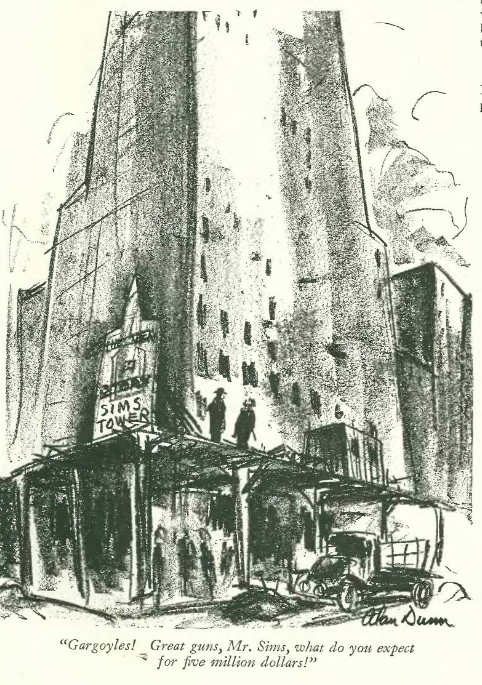
…and Jack Markow, checking on the progress of the Empire State Building…

On to the Oct. 25 issue, and the Broadway opening of the comedy Girl Crazy…

Oct. 25, 1930 cover by Rea Irvin.

…which featured Ginger Rogers and Ethel Merman introducing the many hits from George Gershwin’s score including “I Got Rhythm” and ‘Embraceable You.” The plot was simple: a young New York playboy is banished by his family to a dude ranch in Arizona to keep him out of trouble…where of course he finds trouble. The orchestra for the Broadway performance included such talents as Benny Goodman, Glenn Miller, Jimmy Dorsey, Jack Teagarden, and Gene Krupa.

THEY SEEM SANE ENOUGH…Above, poster for the Broadway musical Girl Crazy. Below, Ginger Rogers poses with fellow stage actors. (gershwin.com)

 *  *  *

More from Our Advertisers

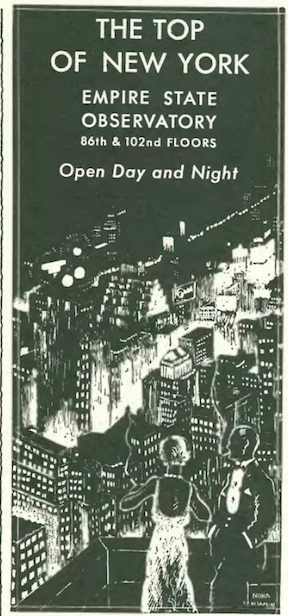
Ads from the Oct. 25 issue included this recurring one from the promoters of the Empire State Building, marking progress through various historical vignettes…

…the ad accurately depicted the building’s progress, measured against these images below…

…and we have more radio ads…no endorsement from Marconi here, but the makers of Fada claimed their receiver was far less annoying than their rivals…

…while Atwater Kent touted the convenience of its new “Quick-Vision Dial”…

…as I’ve previously noted, backgammon was all the rage in 1930, so much so that this clothier even advertised a special frock for the game…

…and what would the 1930s be without smoking tied to athletic prowess…

…and remembering friends and family in California in 2019 as they battle wildfires across that great state…

…on to our cartoons, Garrett Price introduced us to a man with a peculiar taste in pet canaries…
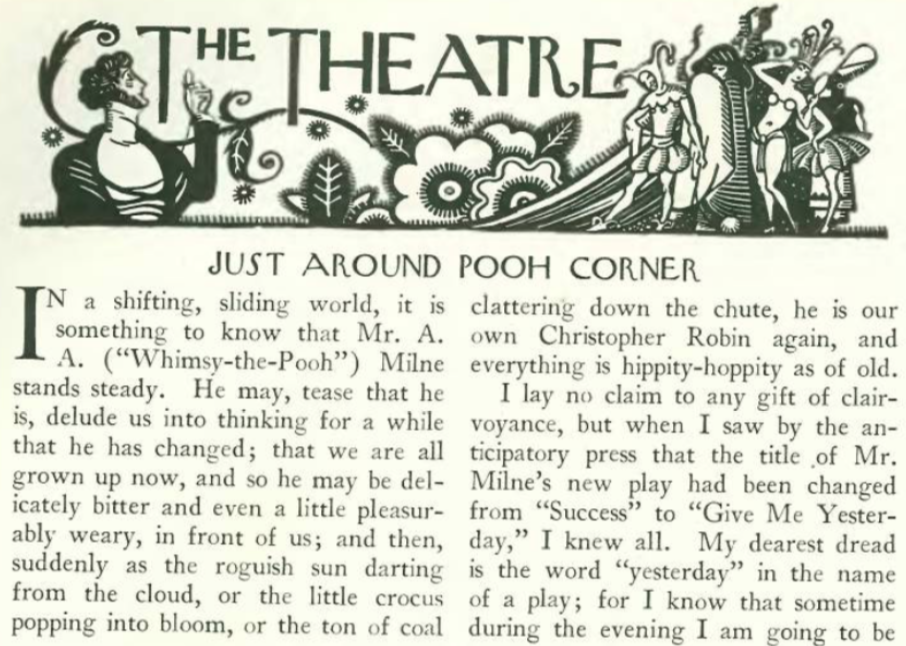
Barbara Shermund illustrated the startling views afforded by rail travel…
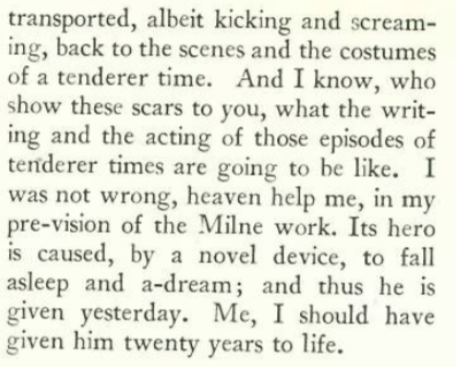
…and Peter Arno leaves us in a moment of religious ecstasy…

Next Time: Risky Business…