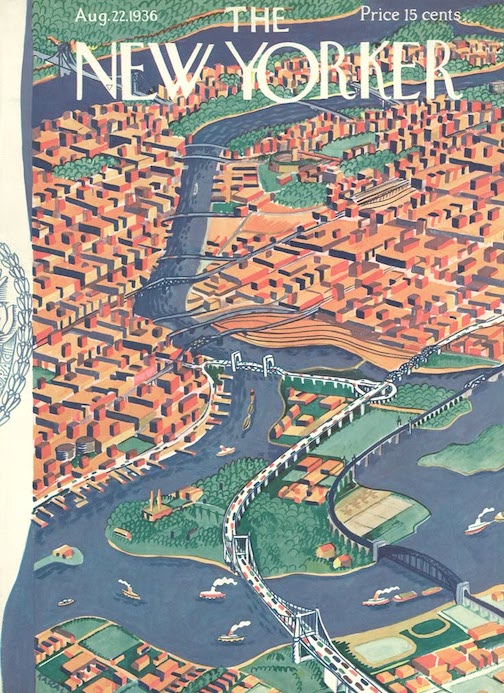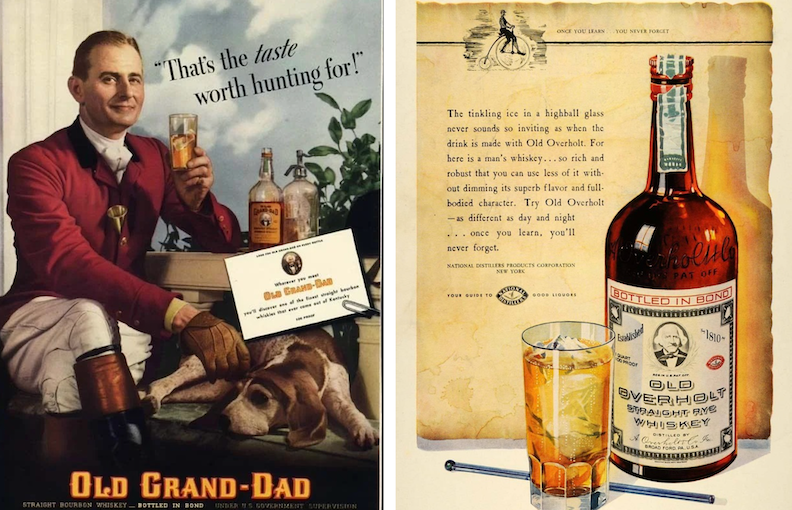
Above: E.B. White had a bone to pick with whiskey distillers who tried to establish "quick antiquity" by naming their products "Old Something-or-Other." That was not true for these two brands—Old Grand-Dad was introduced in Kentucky in 1840, while Old Overholt debuted in Pennsylvania in 1810, making it America's oldest continually maintained whiskey brand. Both are now subsidiaries of Japan's Suntory Global Spirits. (alcohol professor.com/pinterest)
With the official end of Prohibition on December 5, 1933, brewers and distillers raced to ramp up production and revive brands that had lain dormant for more than a decade. Distillers of aged spirits like rye and whiskey were especially keen to invoke history and tradition when marketing their tipple.
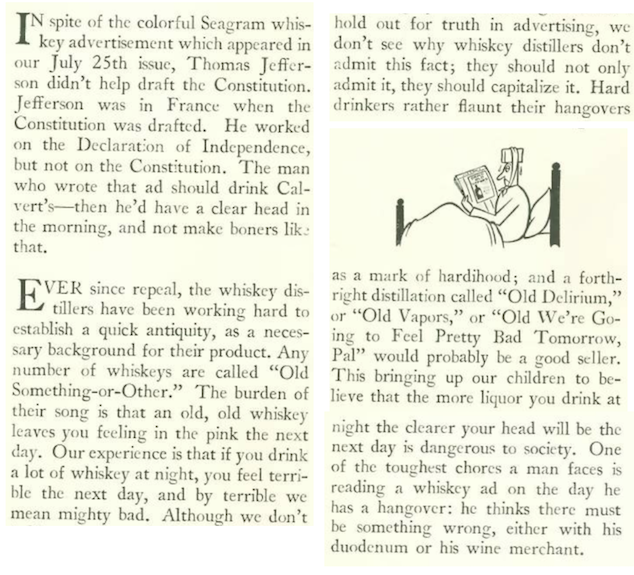
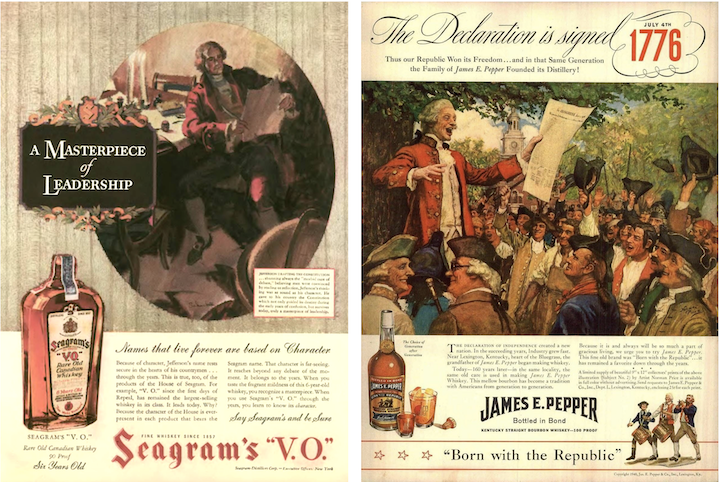
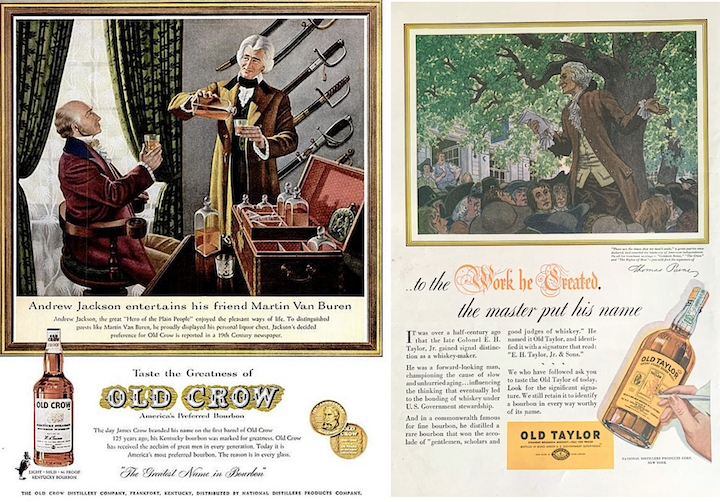
In some cases newer distilleries made generous use of the word “Old” in their branding, according to E.B. White in his “Notes and Comment.” White also called out the folks at Seagram’s, who compared the character of Thomas Jefferson to that of their “V.O.” whisky (no “e” in spirits tied to British distilling traditions—Scotland, Canada, Japan, Wales, India). Most egregious, however, was the ad’s claim that Jefferson helped to draft the Constitution. White explained:
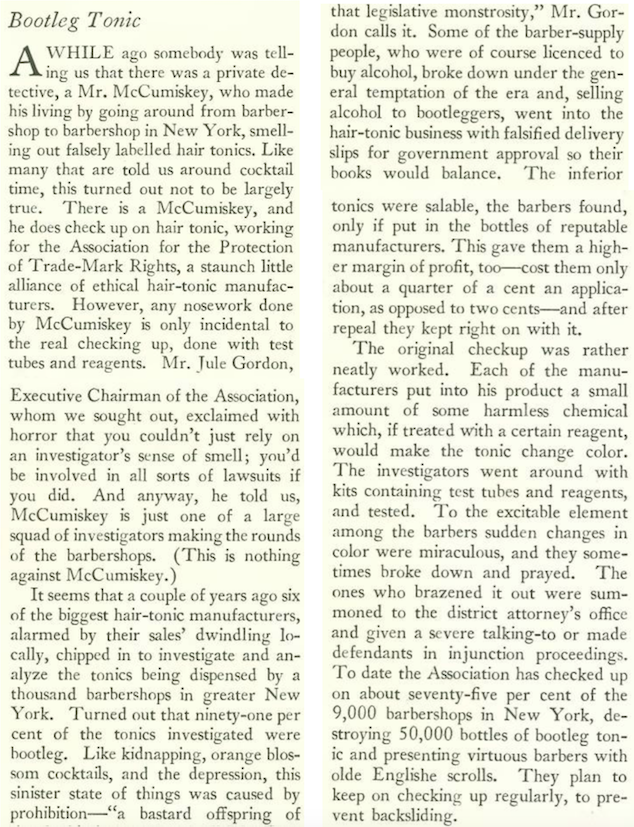
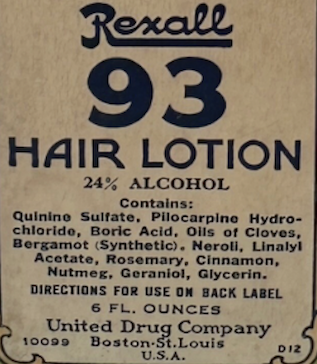
While we are on the subject of ardent spirits, let’s take a look at these excerpts from “The Talk of the Town” (attributed to Eugene Kinkead and Russell Maloney), which told the story of a private detective who had a nose for liquor— disguised as hair tonic.
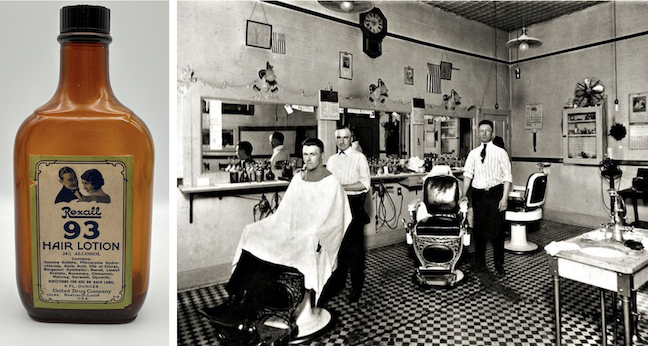
A closer look at the Rexall label—the makers made sure “24% Alcohol” was clearly visible. Folks known as “strainers” would run hair tonics like these through bread, cloth, or charcoal to filter out poisonous additives, obviously a dangerous practice.
* * *
Doggy Downer
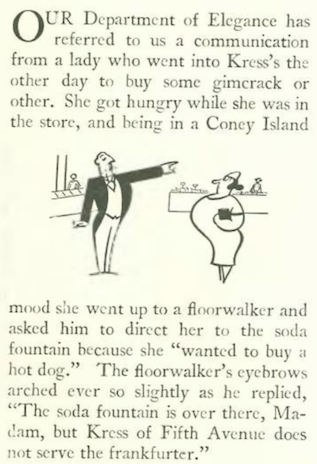
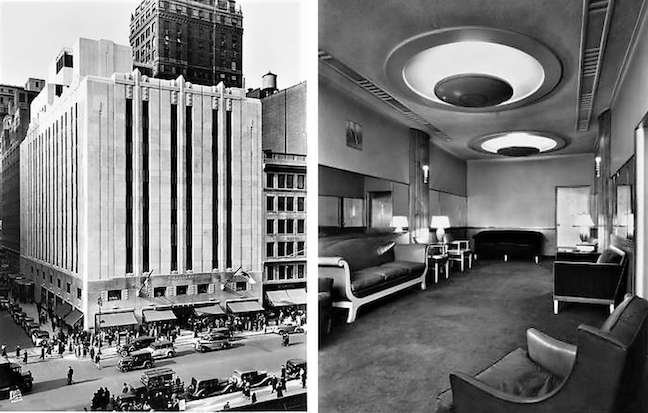
The legendary Kress “five-and-dime” stores, with more than 250 locations across twenty-nine states, served the needs of regular folks, but the designs of its stores were anything but pedestrian. This was especially true of its Fifth Avenue location, a 1935 Art Deco masterpiece. Given its lofty address, it was no place for one to order a lowly hot dog. E.B. White explained:
* * *
Merely Mortal
Janet Flanner filed her second report from the Berlin Olympics, where America’s Black athletes dominated the track and field events (ESPN’s Larry Schwartz credits Jesse Owens for “single-handedly crushing Hitler’s myth of Aryan supremacy”). Flanner noted attempts by propagandists to make sense of the beating they received, including likening the American athletes to wild animals “living in a state of innocence.” Excerpts:
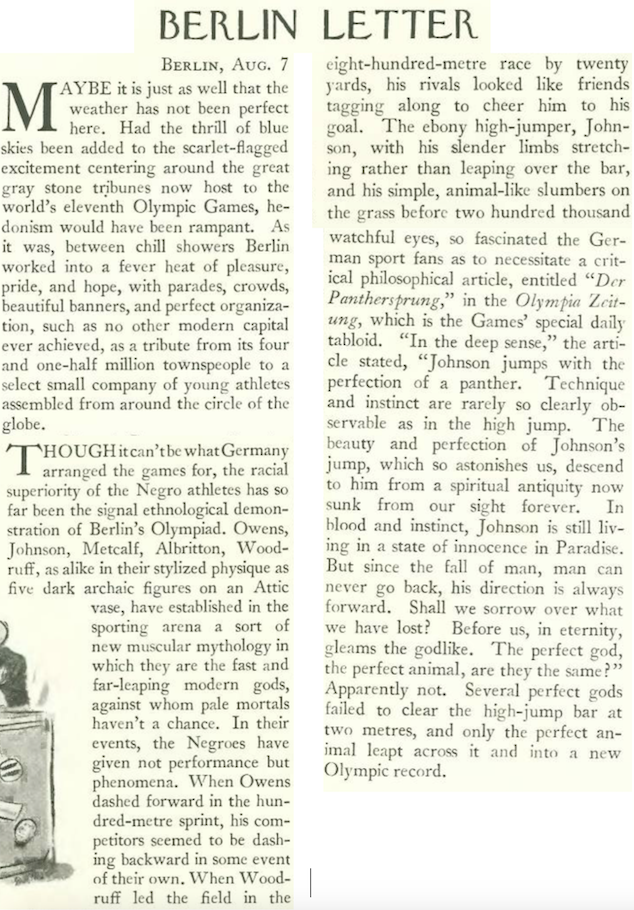
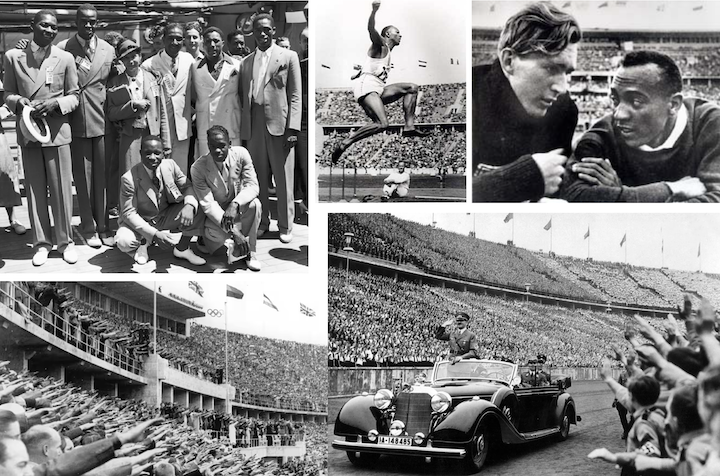
Flanner also reported on the great fanfare at the opening of the games, including “seventeen searchlights, from far outside the arena…a lofty birdcage of streaming light beams.” One wonders if those same searchlights were deployed during the war four years later, when RAF Lancaster bombers began their night bombing campaign of Berlin.
* * *
At the Movies
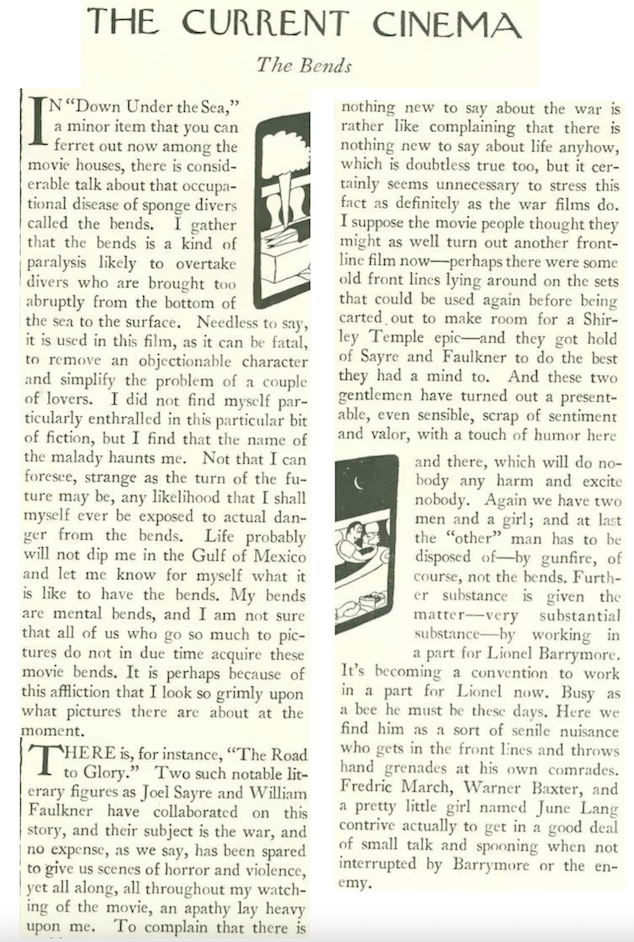
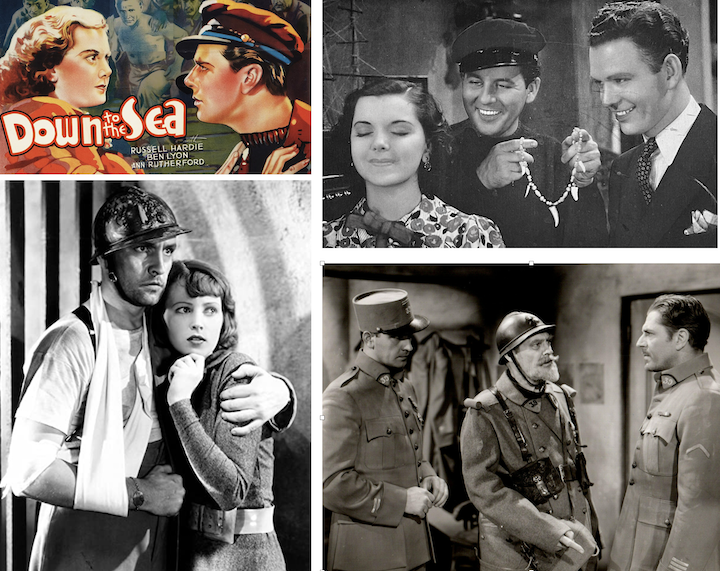
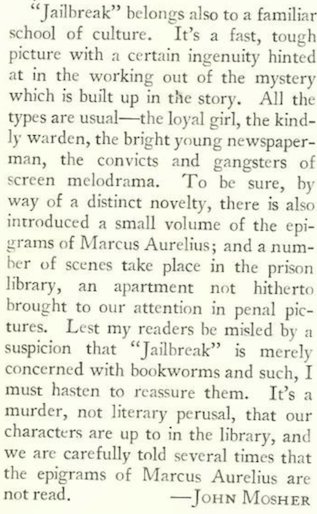
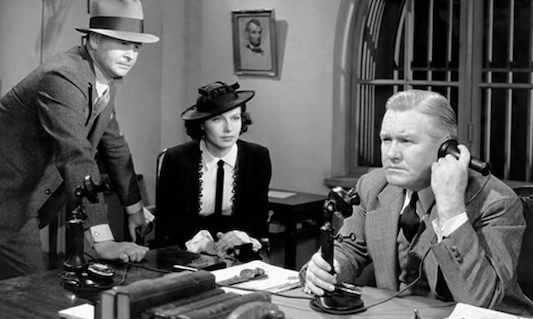
Mosher also took in Jailbreak, a minor noir picture about racketeers, cops and newspaper reporters.
* * *
From Our Advertisers
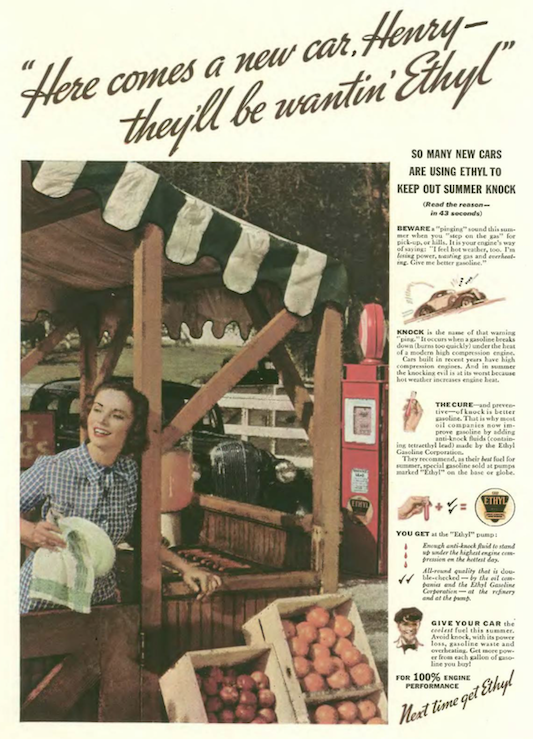
The inside front cover featured a wholesome image of a roadside stand on behalf of leaded gasoline…the makers of Ethyl, which boosted octane ratings and stopped engine knocking, deliberately hid or omitted the word “lead” in their advertising…I don’t miss the Ethyl, but I do miss those roadside stands…
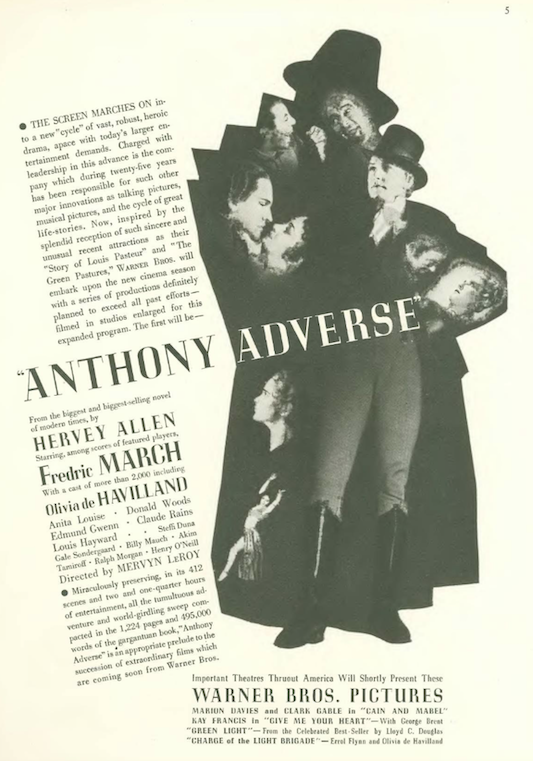
…Warner Brothers took out a full-page ad to trumpet the East Coast release of their epic drama Anthony Adverse, which would go on to win four Academy Awards…
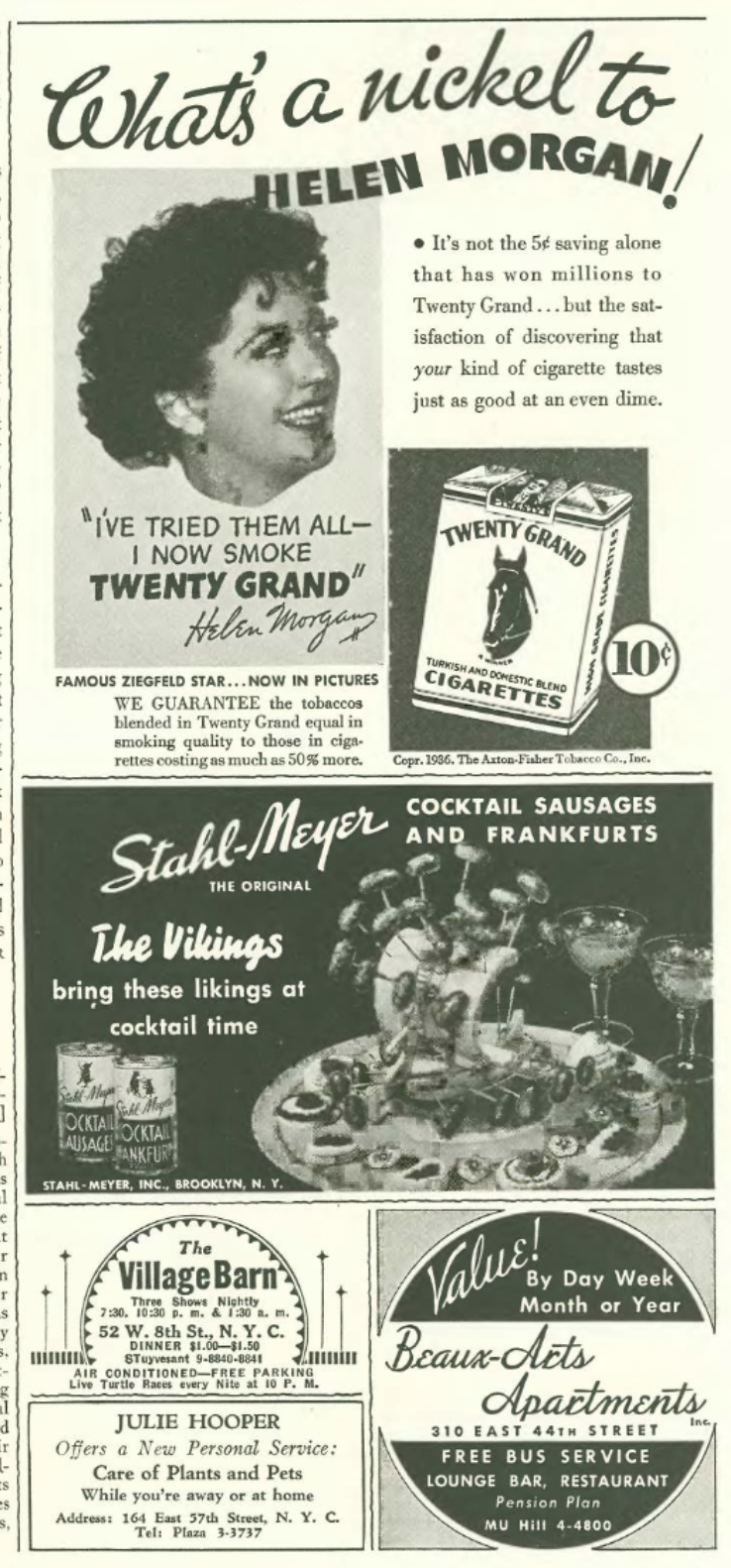
…the original torch singer Helen Morgan lent her endorsement to a budget cigarette brand in this back of the book ad…at this point her career would be headed on a downward spiral, ending with her death in 1941…
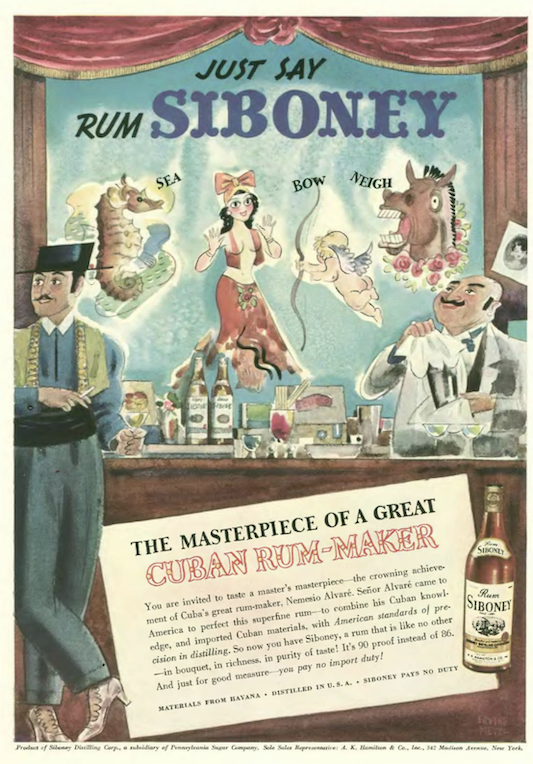
…the makers of the Dominican rum Siboney competed with Cuban rival Barcardi with this colorful full-page ad illustrated by American graphic artist Ervine Metzl…
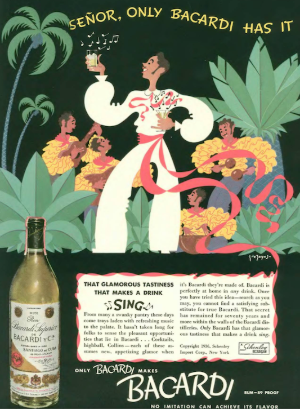
…Barcardi placed this front cover advertisement in Aug. 1, 1936 New Yorker (illustrated by George de Zayas)…
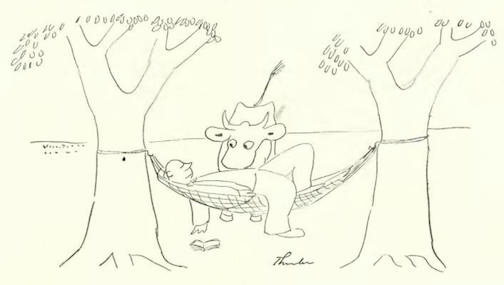
…James Thurber kicks off the cartoons with two terrific spot drawings…
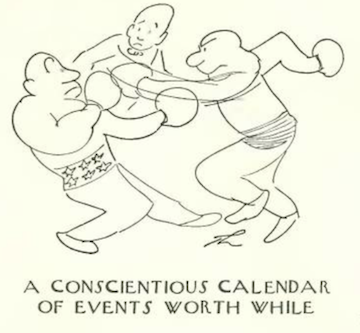
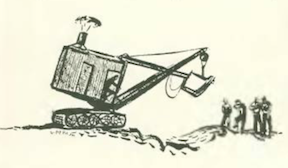
…this spot drawing by Victor de Pauw recalls my favorite childhood book, Mike Mulligan and His Steam Shovel (1939), by Virginia Lee Burton…
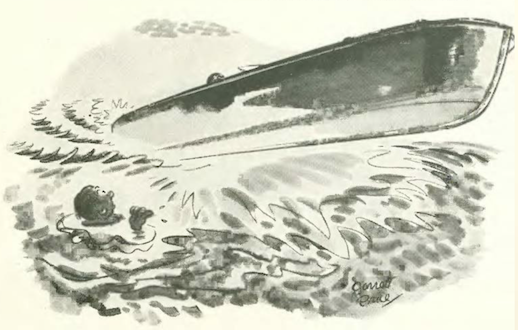
…I’m not sure if one would call this a spot drawing or a caption-less cartoon, at any rate, Garrett Price aptly illustrated the dangers of swimming beyond the bouys…
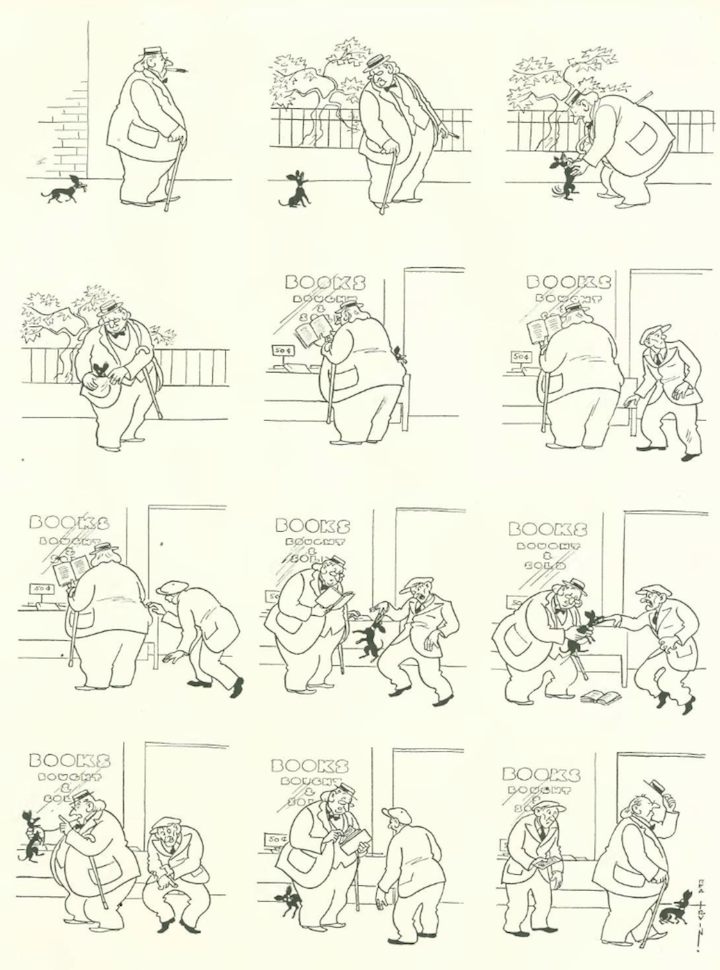
…Rea Irvin demonstrated the perils of dognapping in this multi-panel entry…
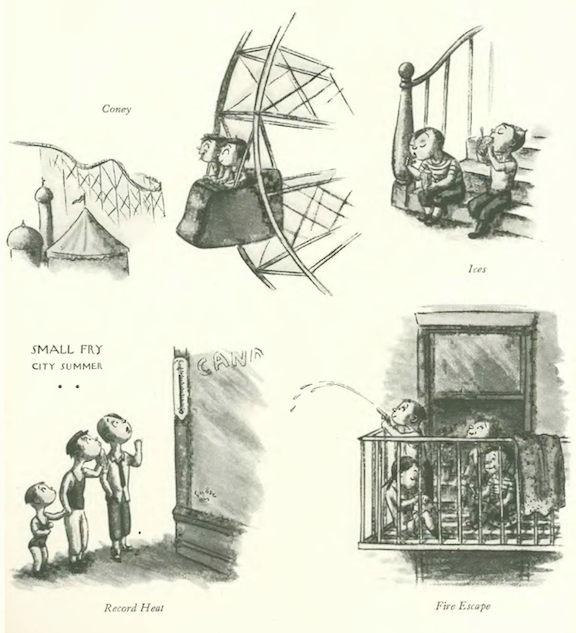
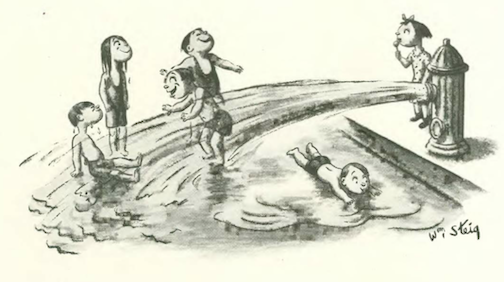
…William Steig celebrated summer in the city…
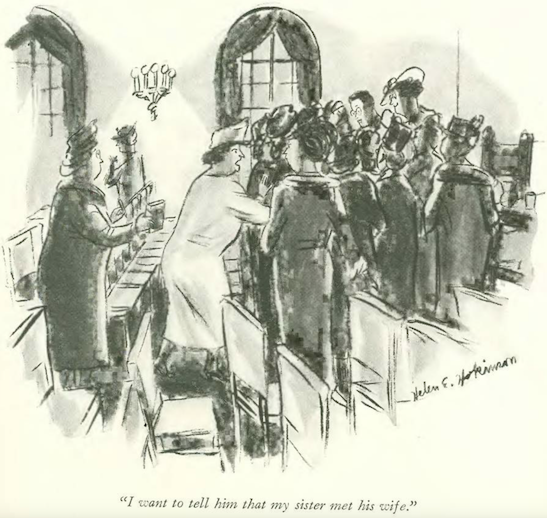
…Helen Hokinson drew up an urgent social connection…
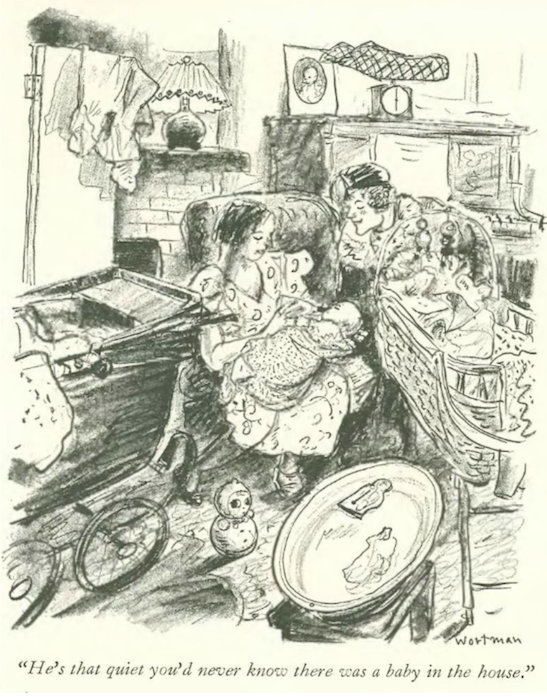
…Denys Wortman looked in on the trappings of motherhood…
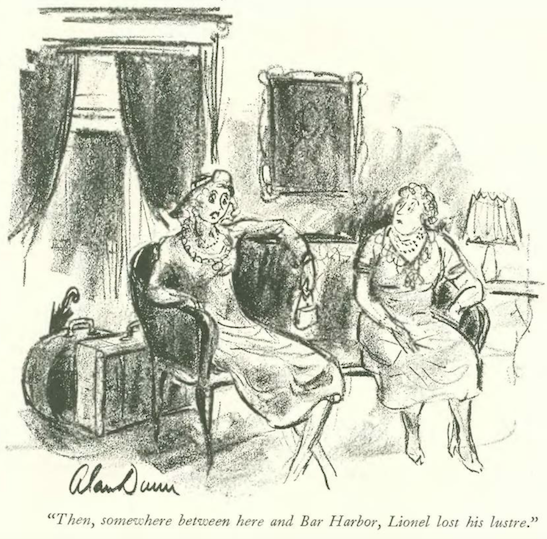
…Alan Dunn showed us one effect of long-distance travel…
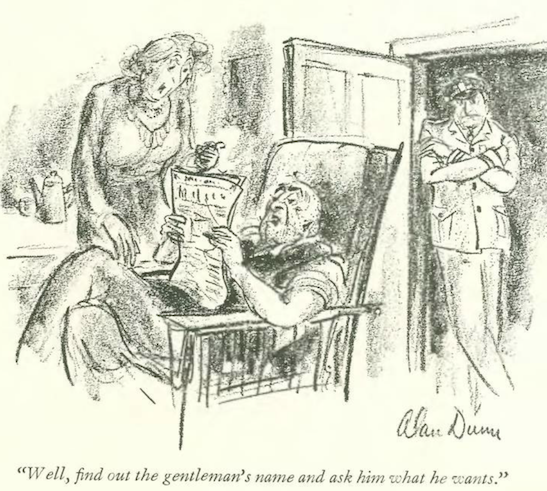
…and Dunn again, with a man who’d rather not ask questions…
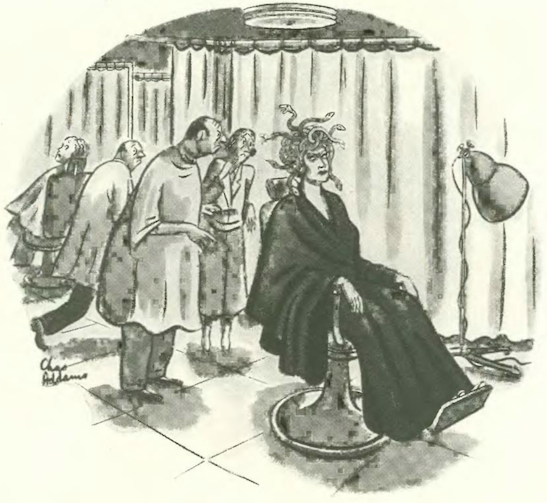
…and leave it to Charles Addams to draw up The New Yorker’s first Medusa-themed cartoon…
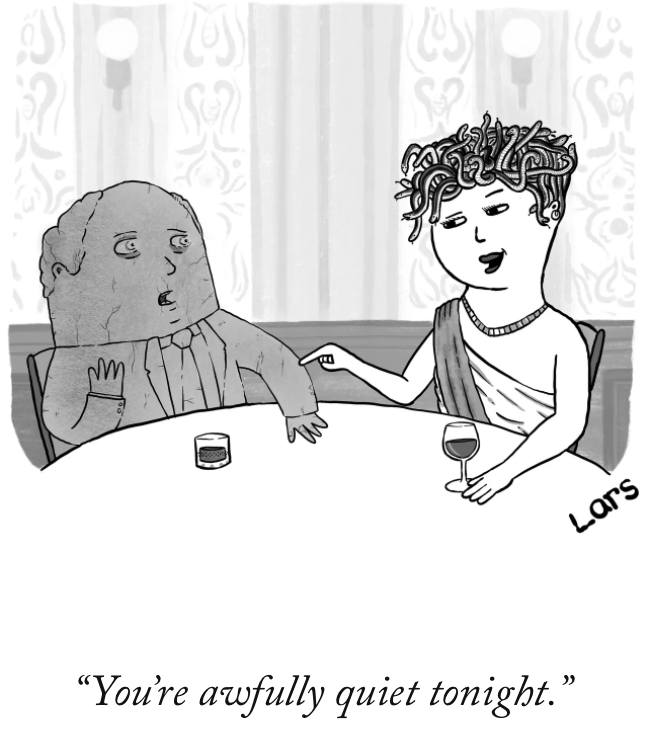
…before we continue, here are other interpretations of the mythic Gorgon from The New Yorker…this one by Lars Kenseth is from Jan. 21, 2019…
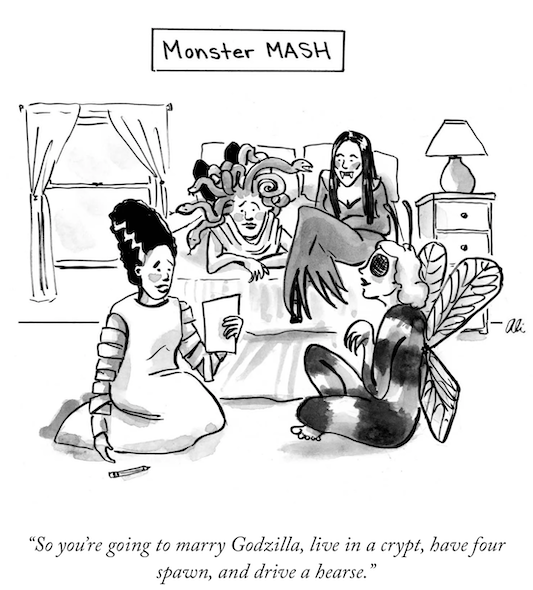
…this is by Ali Solomon (Oct. 29, 2025)…
…and from May 3, 2025, this terrific caption contest cartoon by Jason Adam Katzenstein (and the winning caption by Peter Sergison, Durham, NC)…


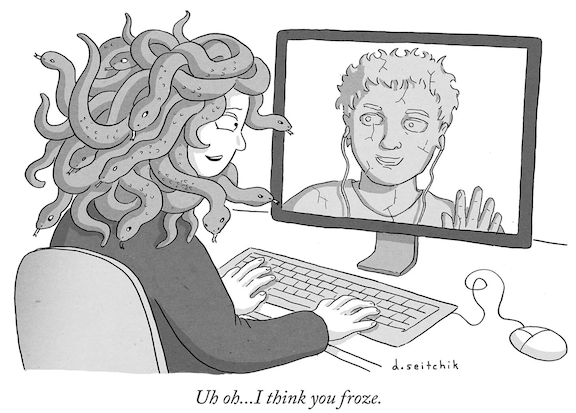
…and here’s a timely cartoon by Daryl Seitchik that was rejected by the magazine…
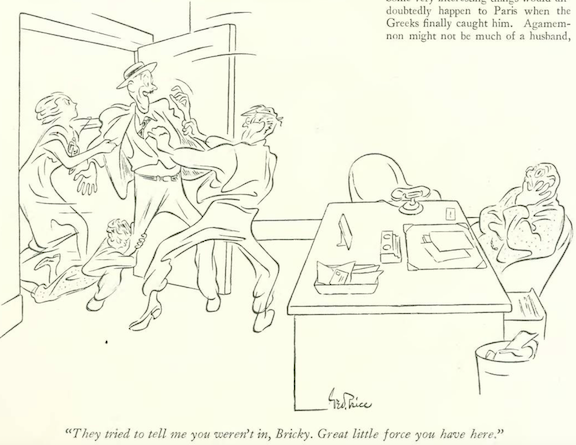
…we go back to 1936 with George Price and a plucky salesman…
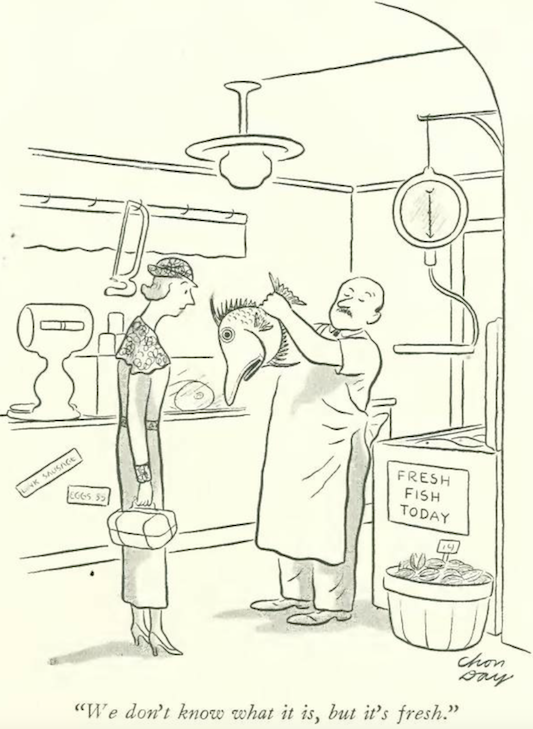
…Chon Day made an unappetizing find at the fish market…
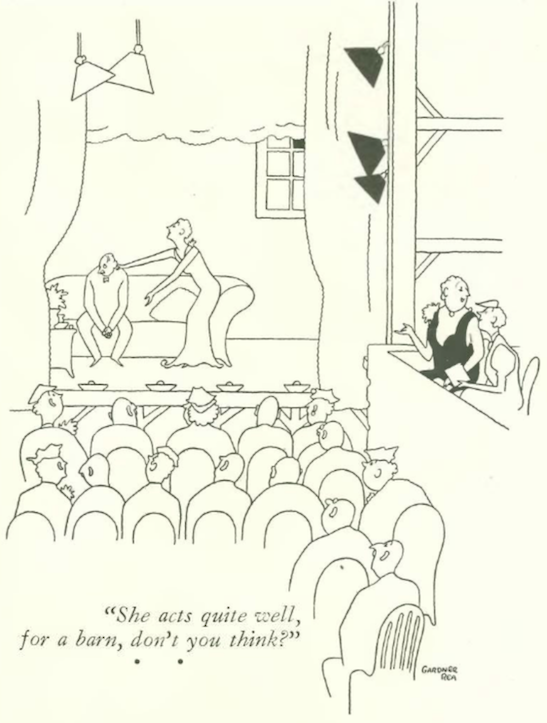
…Gardner Rea looked in on a summer stock performance…
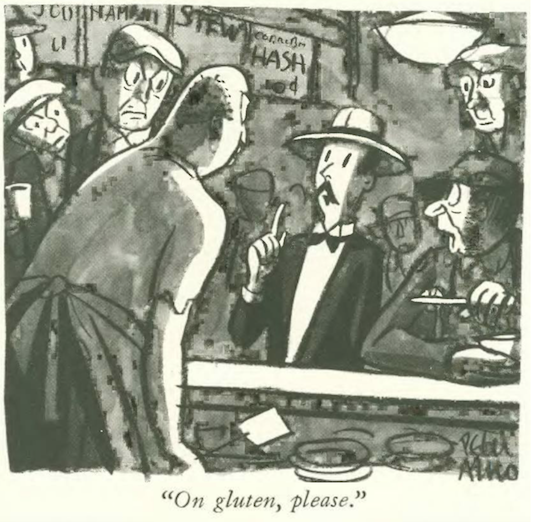
…Peter Arno drew up a Milquetoast unwittingly ordering a knuckle sandwich…
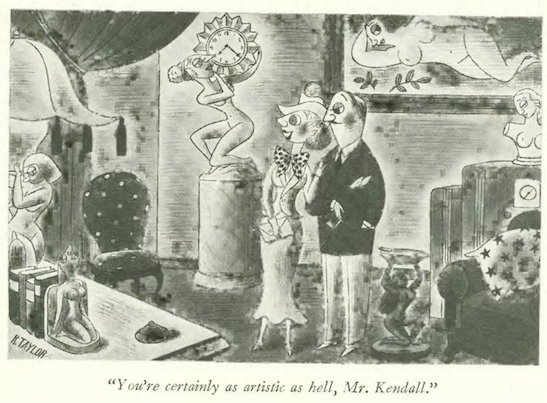
…and we close with some racy decor, courtesy Richard Taylor…
Next Time: Wherefore, Old Romeo?…