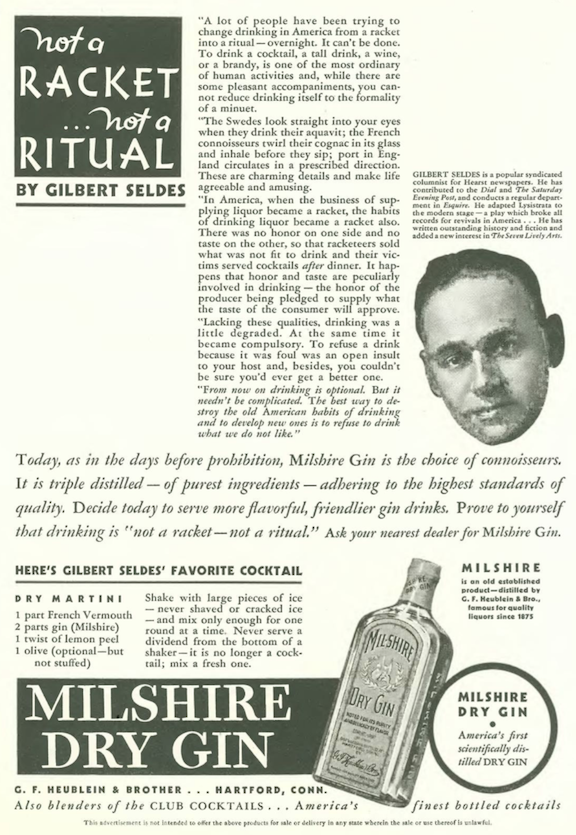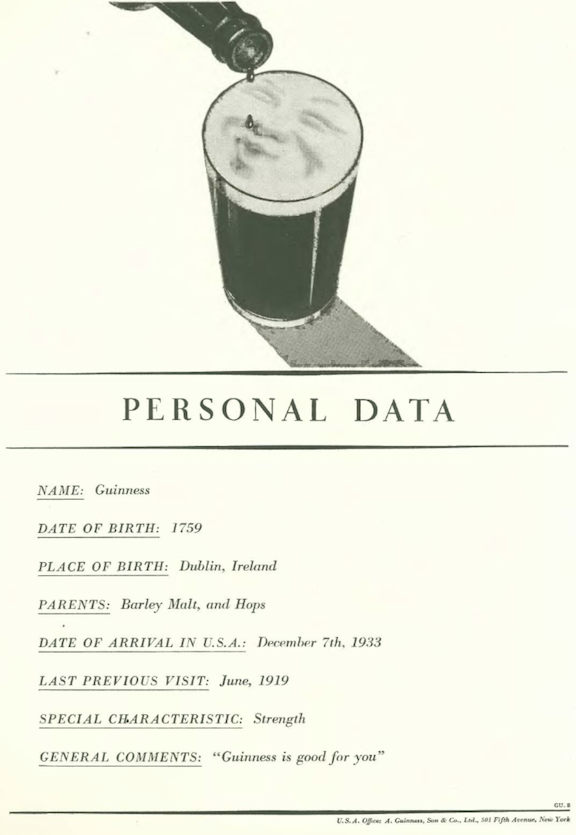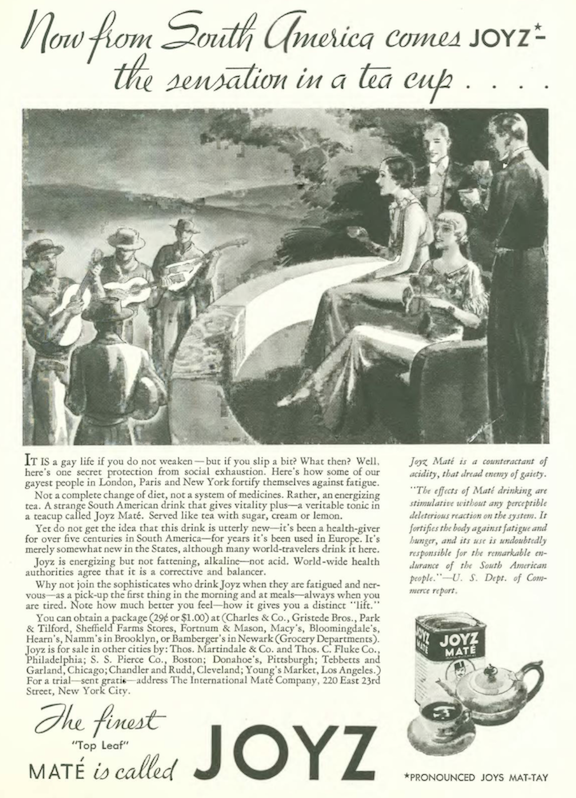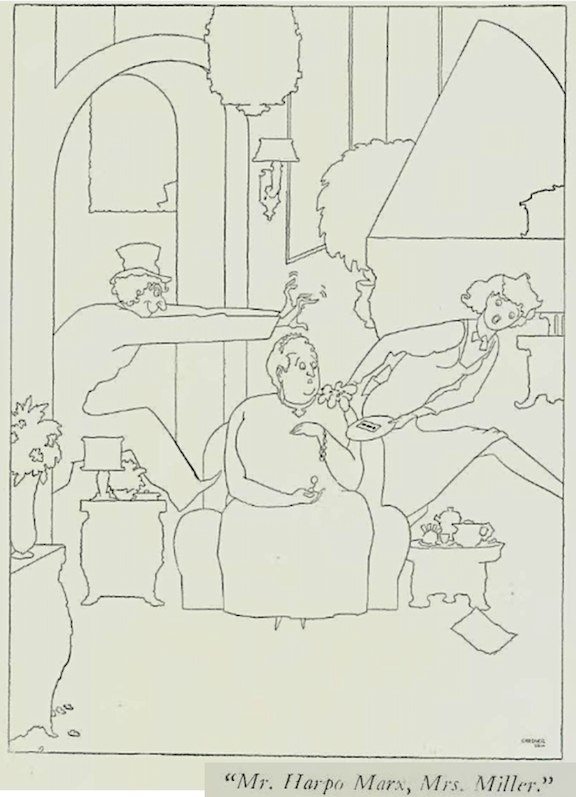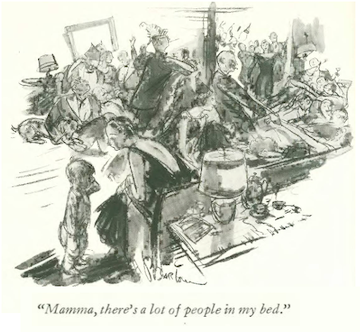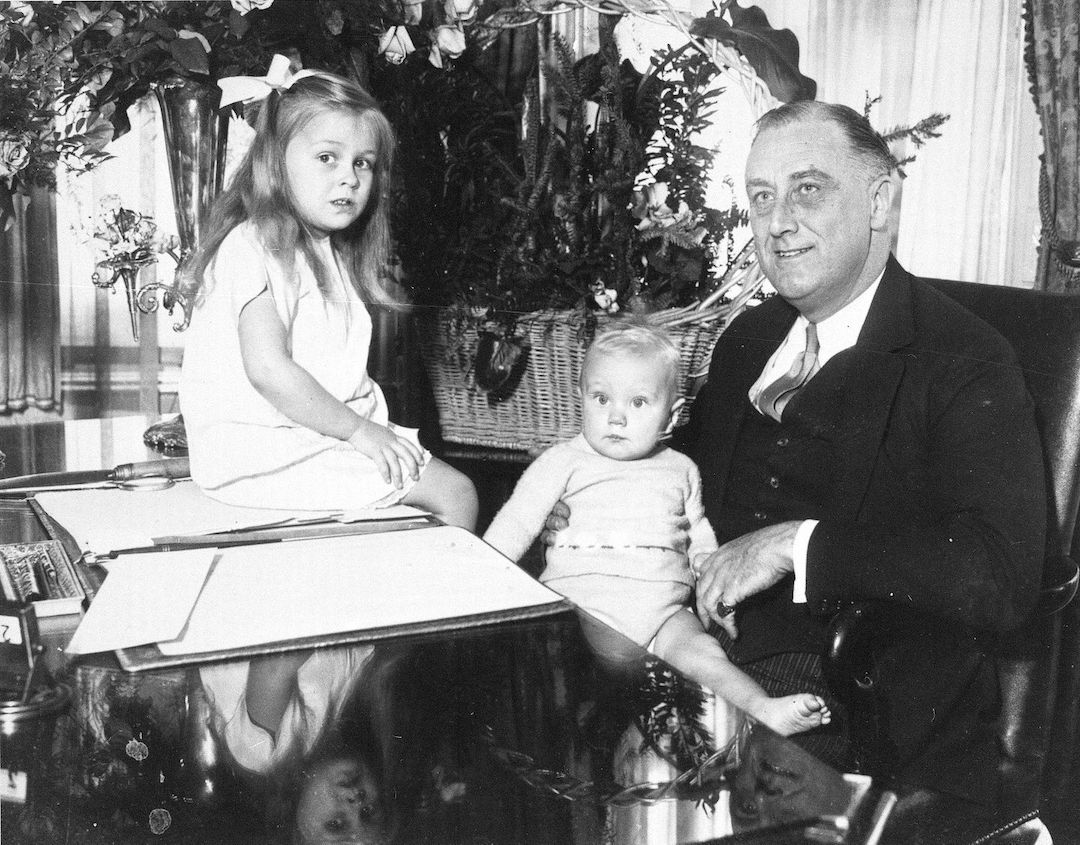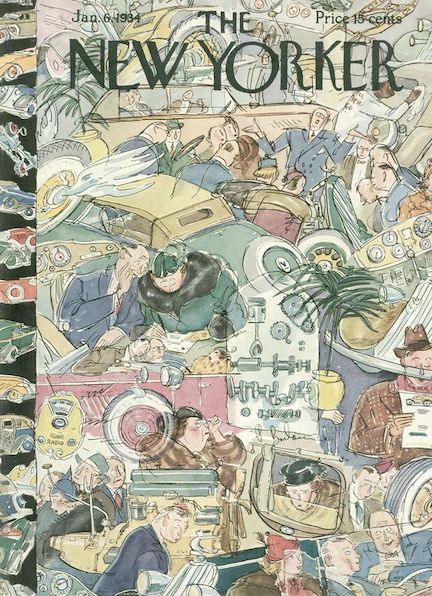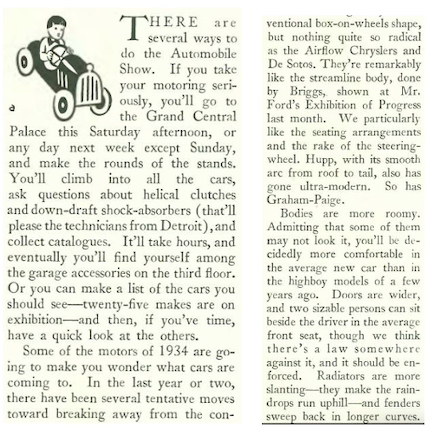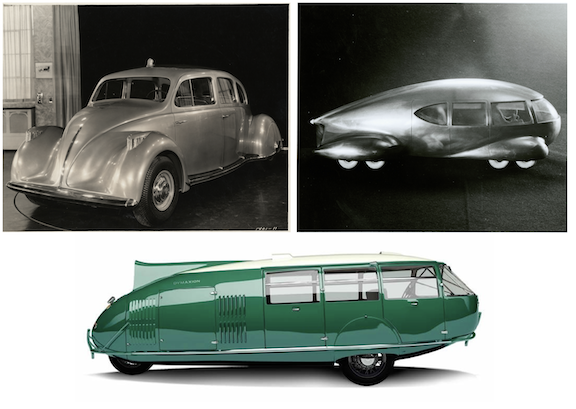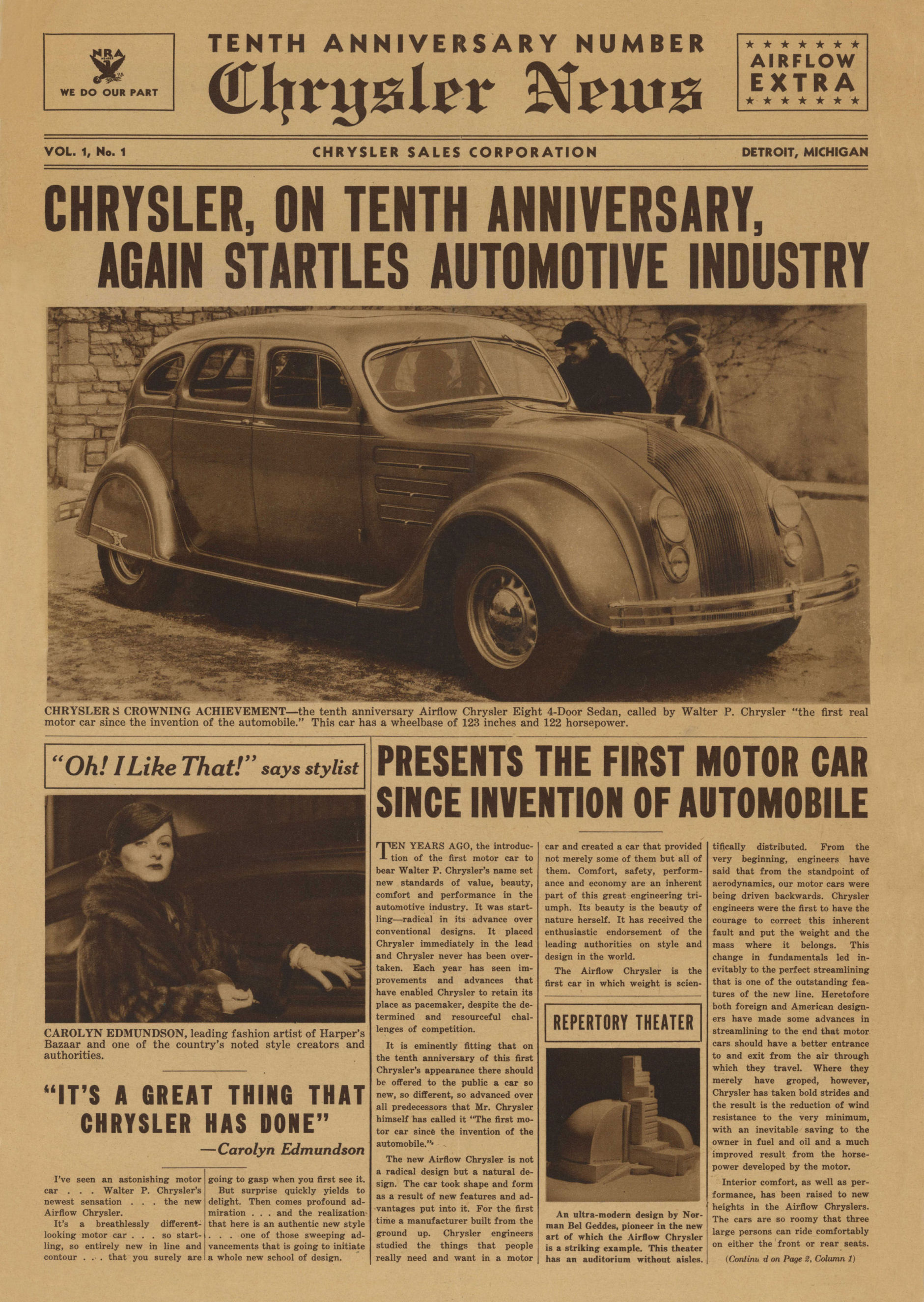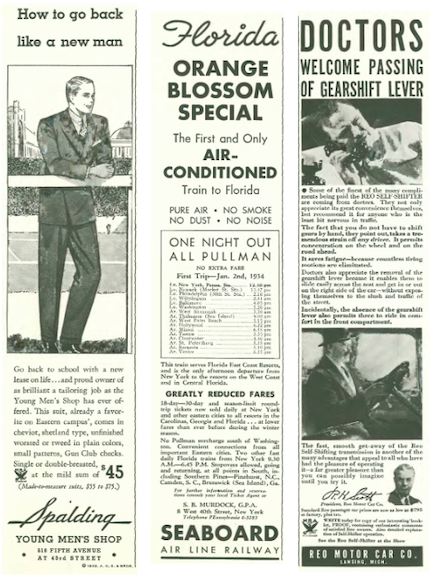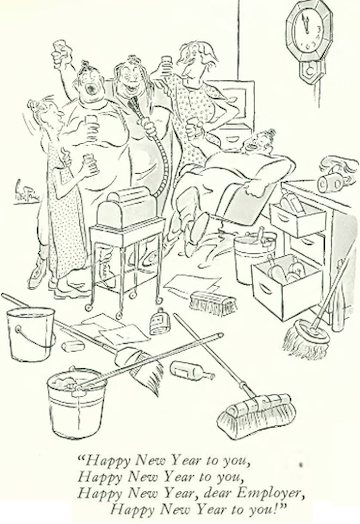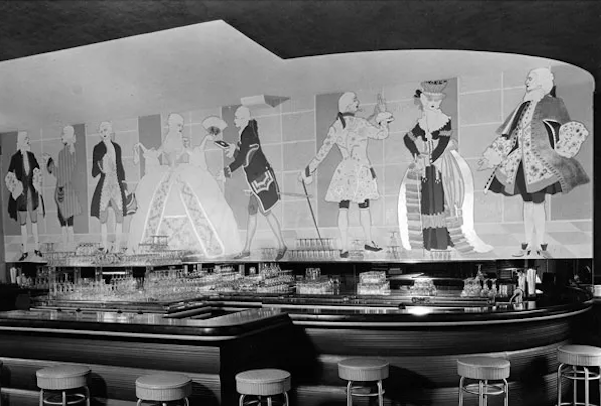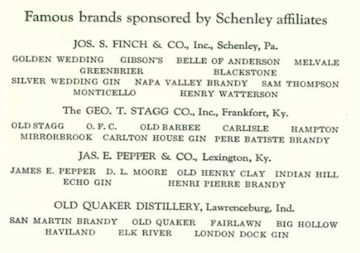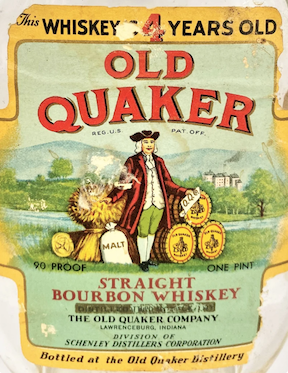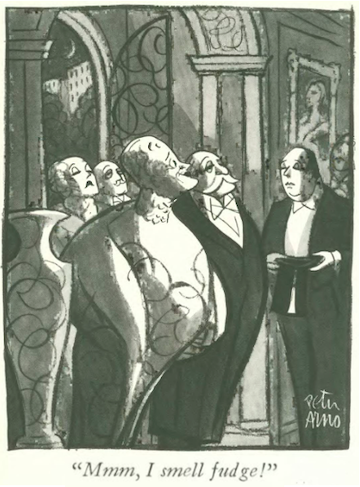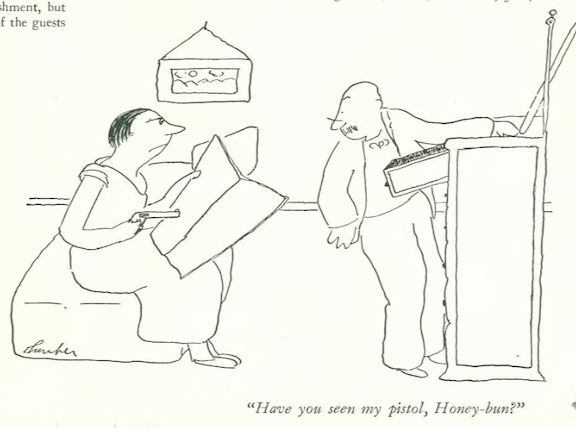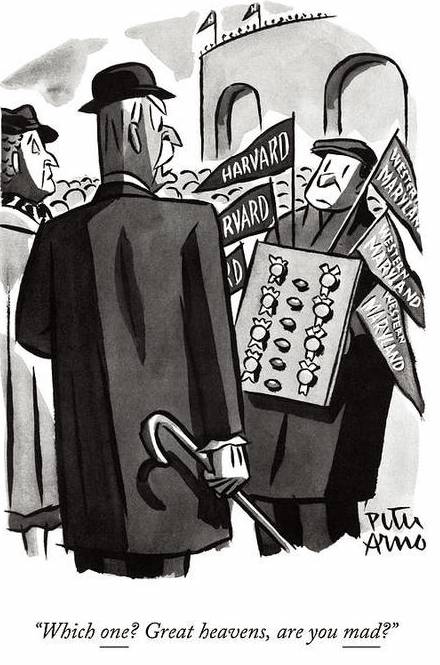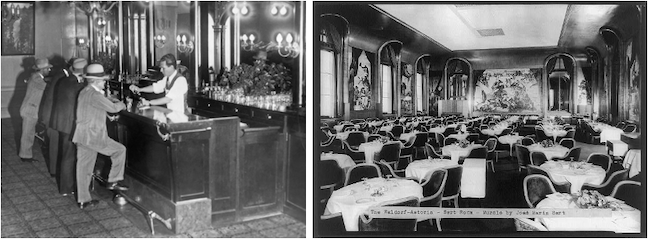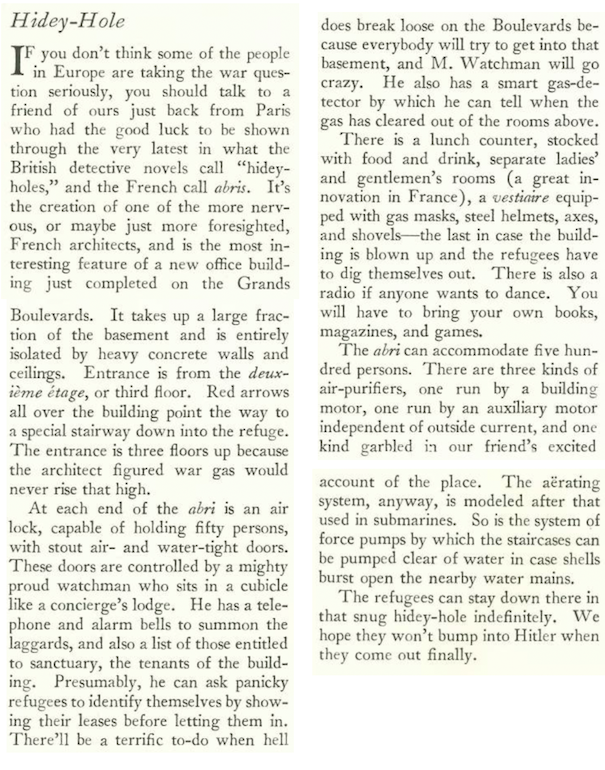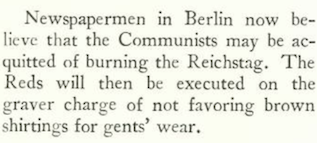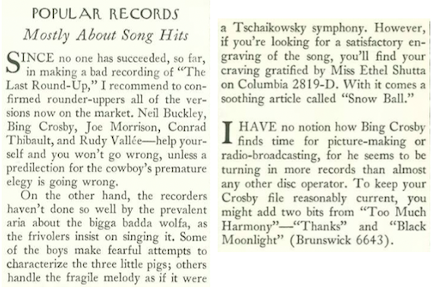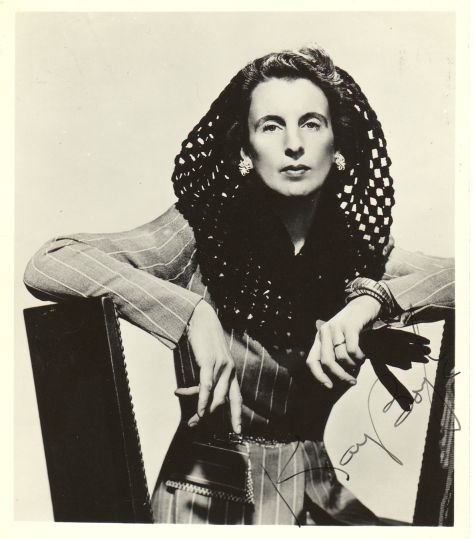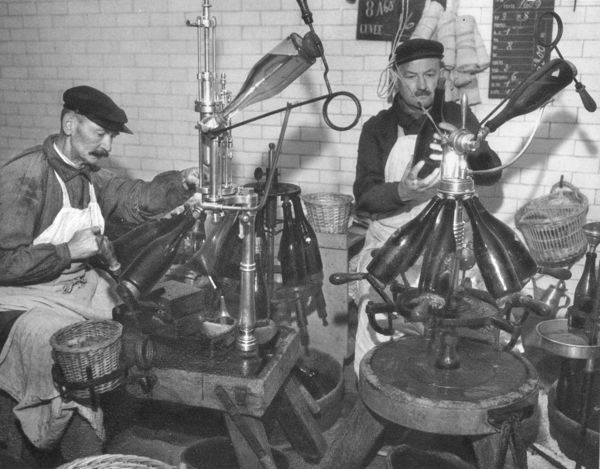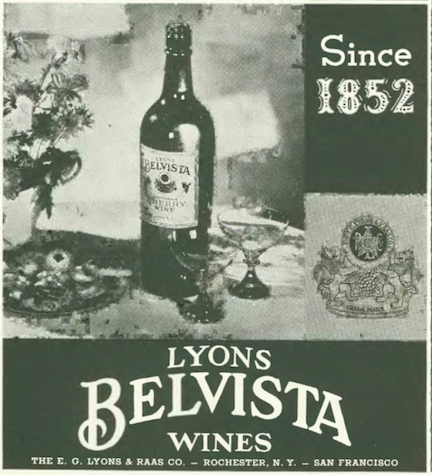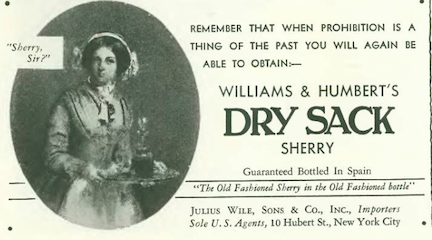
Proposed by the 72nd Congress on February 20, 1933, the 21st Amendment to end national prohibition needed ratification from at least thirty-six states—by the end of October twenty-nine had ratified the amendment, and with passage seeming imminent…
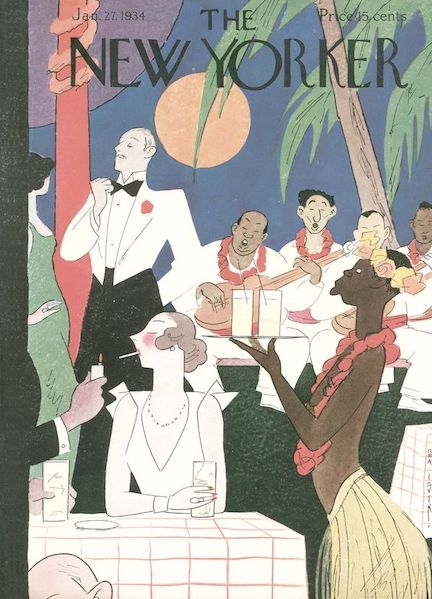
Oct. 21, 1933 cover by Harry Brown.
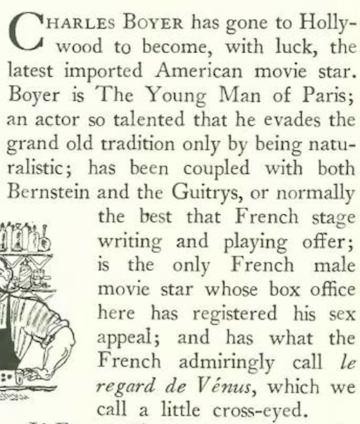
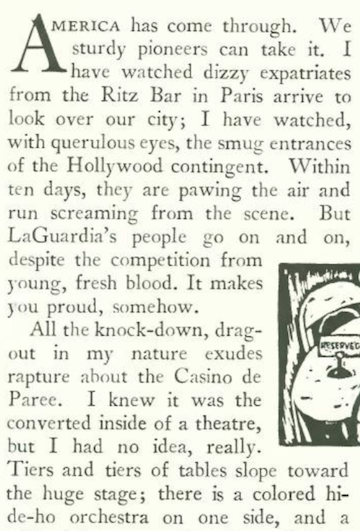
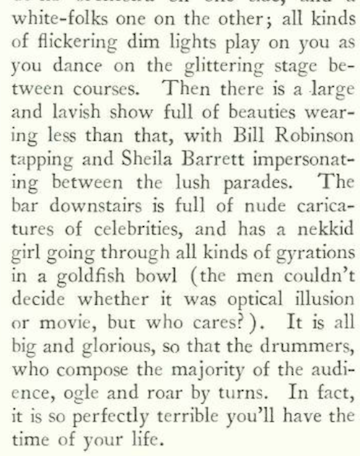
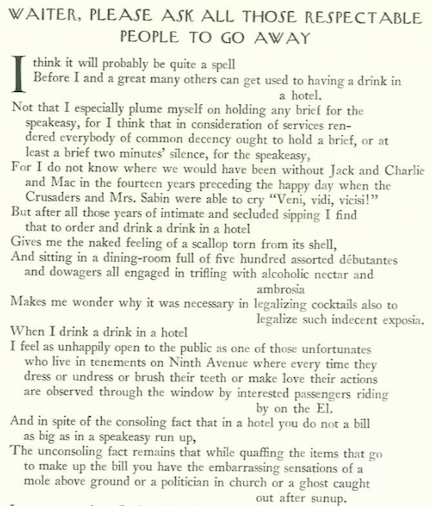
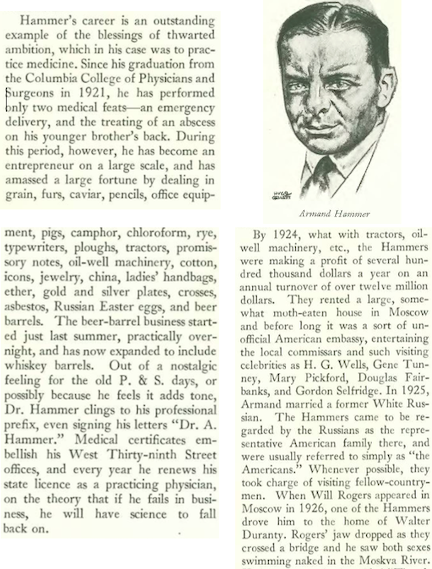
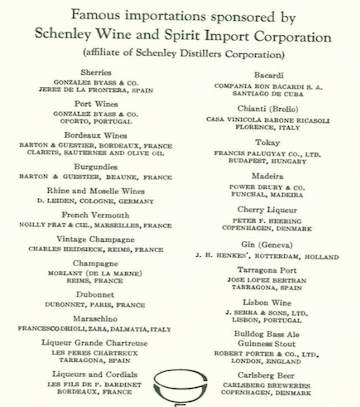
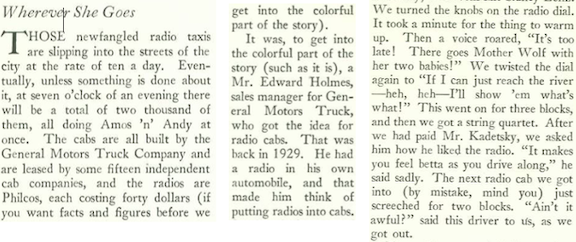
…Manhattan’s venerable grocer turned national wine and spirits distributor Park & Tilford began shipping tens of thousands of cases of “potables” to New York, according to “The Talk of the Town.” Excerpt:
ON THE OFF WAGON…Parched, jubilant Americans ride on carts loaded with liquor prepared for distribution at the end of Prohibition. (Still from Universal News)
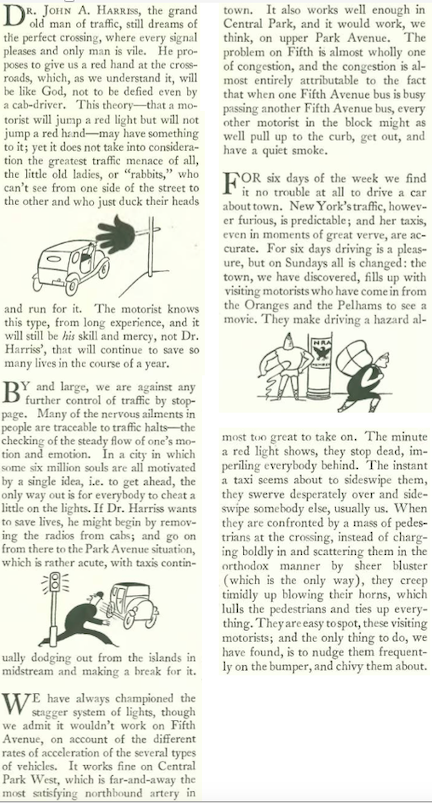
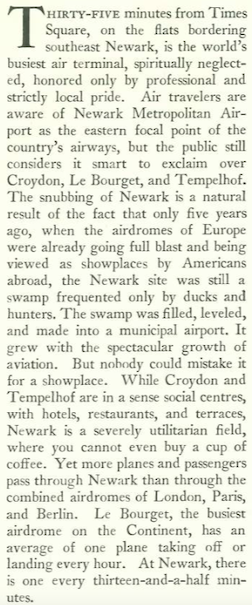
Edward Angly, who at the time was a journalist at the Herald-Tribune, tempered the celebratory mood in “A Reporter at Large” by considering the supply and demand issues (and higher prices) consumers would likely face upon ratification.
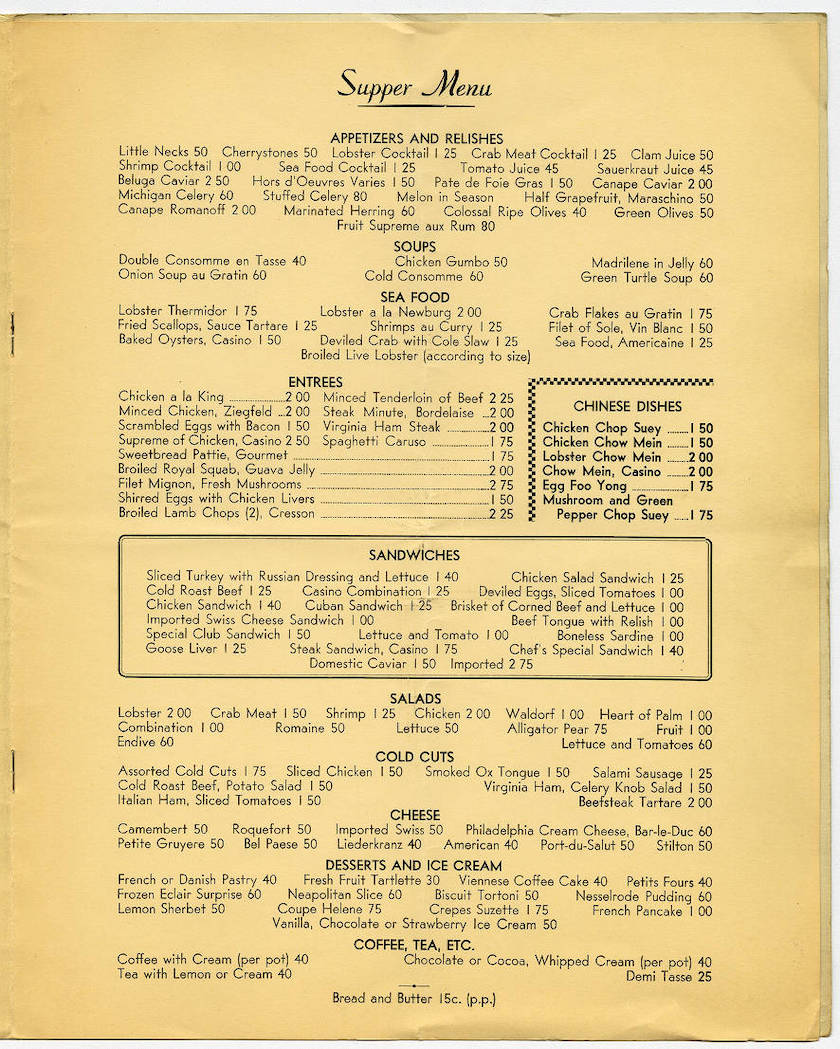
In early 1934 the Washington Post reported cocktail prices ranged from twenty-five cents (roughly $5.50 today) to forty cents. Whisky by the drink was selling from fifteen cents for blends to twenty-five cents for bonded varieties. One of the “higher priced” stores quoted a price of $3.80 for a quart of Four Roses (roughly eighty bucks today) while you could grab a quart of Crab Orchard straight Bourbon whisky for $1.40.
Until supplies could satisfy demand, distillers were encouraged to perform a “modern loaves-and-fishes miracle” and rectify their small stocks by cutting them with colored and flavored straight alcohol.
YOU CAN COME OUT NOW…With the end of Prohibition, bootleggers considered other career options. (floridamemory.com)
Who else would feel the pinch? In addition to the thousands of speakeasies that would close shop, legions of bootleggers would have to go legit or find another line of vice to keep themselves fed and occupied.
…before I close out this lead story, I came across this obituary for Edward Angly in the Dec. 8, 1951 edition of The New York Times. Note that this clip also features the funeral notice for New Yorker founding editor Harold Ross.
* * *
Name Your Fears
Irish writer and critic Ernest Boyd was for a time connected to the consular service and probably had a pretty good sense of what was to come in Europe. Turning to verse he pondered the origin of the Hitler curse.
* * *
Fat and Happy
Premiered to record-breaking crowds at New York’s Radio City Music Hall, The Private Life of Henry VIII was a smash hit in both the UK and the US and established Charles Laughton as a box office star. Although the film played fast and loose with the historical record, it was a critical success for director/producer Alexander Korda. The New Yorker’s John Mosher was among those praising the British film.
SINKING HIS TEETH INTO A ROLE…Charles Laughton’s portrayal of Henry VIII in The Private Life of Henry VIII is credited with creating the popular image of the king as a fat, lecherous glutton. Top photo features Wendy Barrie as Jane Seymour (wife #3); below, Binnie Barnes as Katherine Howard (wife #5). (moma.org/tcm.com)HAIL TO THE KING…Opening night in London for The Private Life of Henry VIII, Oct. 24, 1933. From left are Elsa Lanchester, who portrayed wife #4 Anne of Cleves; Merle Oberon (who portrayed wife #2 Anne Boleyn), producer/director Alexander Korda, and Charles Laughton. (Science & Society Picture Library / National Portrait Gallery, London)
* * *
Kid’s Stuff
In her latest “Tables for Two” column, Lois Long bemoaned the state of ballroom dancing, which seemed to be appealing more to juvenile tastes.
SUITABLE FOR ADULT AUDIENCES…Lois Long recalled the cool allure of dancers Leonora Hughes (at left, with dance partner Maurice Mouvet in 1924) and Irene Castle (in a 1929 photo). Both photographs by Edward Steichen for Vanity Fair. (Conde Nast)
* * *
From Our Advertisers
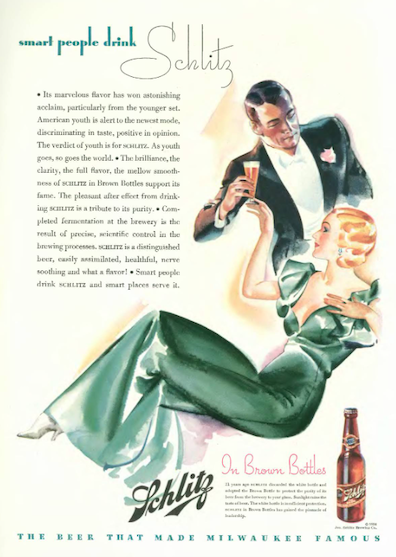
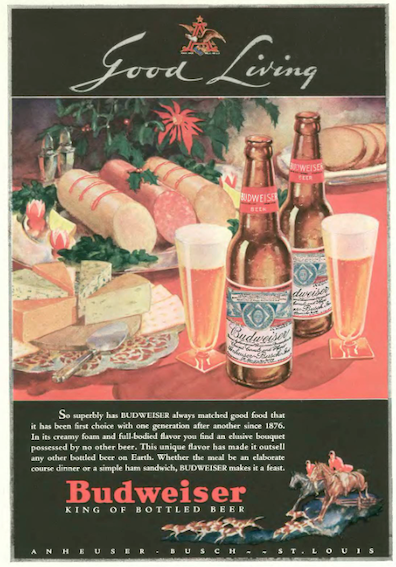
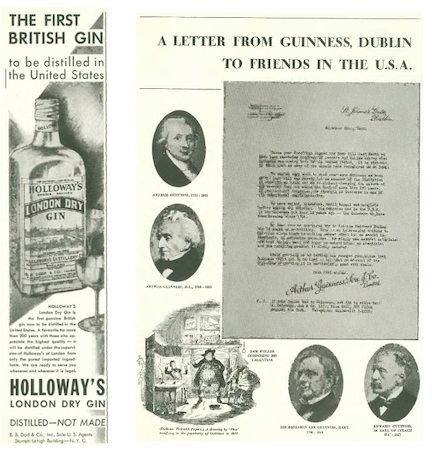
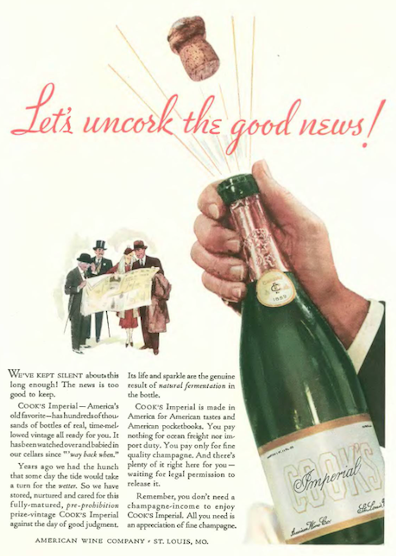
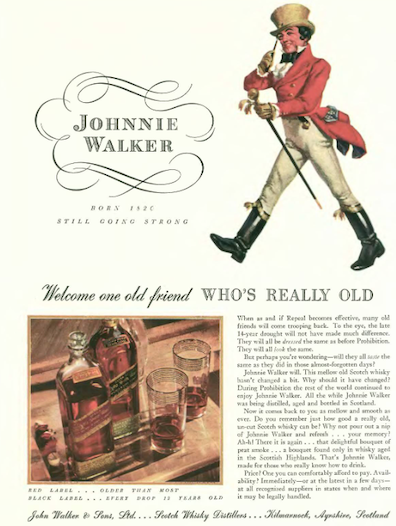
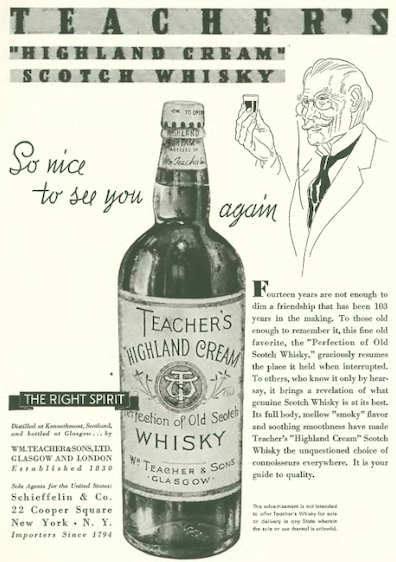
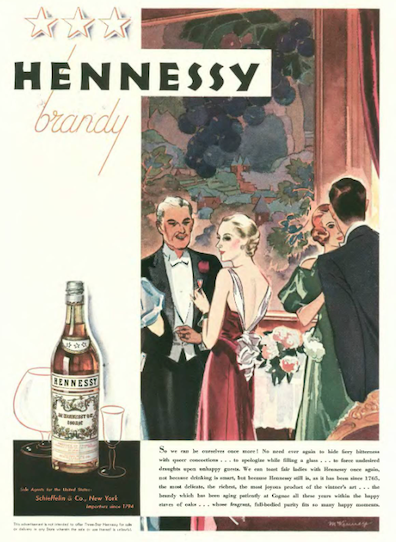
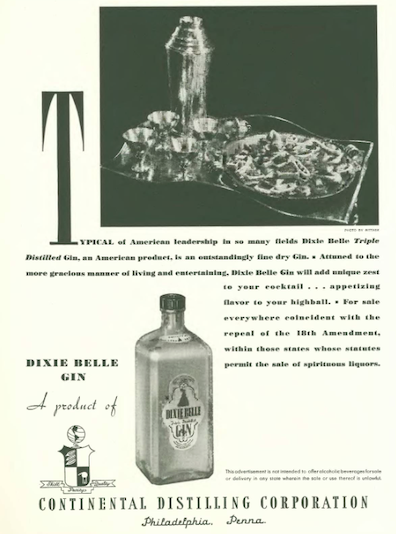
Let it pour indeed, as advertisers anticipated the end of Prohibition…
…Brooklyn-based Piel’s joined other brewers in targeting women as a new growth market, and as in previous New Yorker ads also appealed to those who fancied themselves among the smart set…
…looking for signs of optimism after four years of economic depression? Look no further than luxury shoemaker Nettleton…
…while Nettleton held steady on its prices, the makers of Steinway pianos posted this gentle reminder about rising material costs, but what can you expect if you are purchasing “The Instrument of the Immortals”…
…the Architect’s Emergency Committee continued its campaign to promote the hiring of unemployed architects…in this ad the committee went back to the profession’s ancient origins, Marcus Vitruvius’Virtues of an Architect…
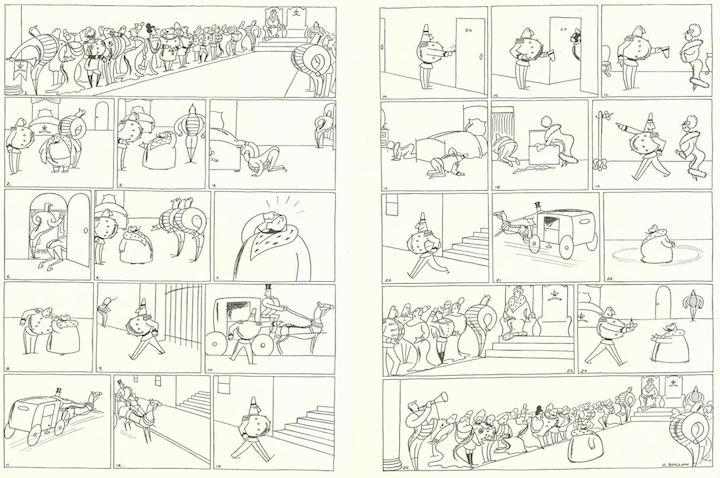
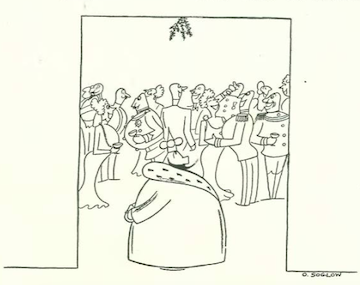
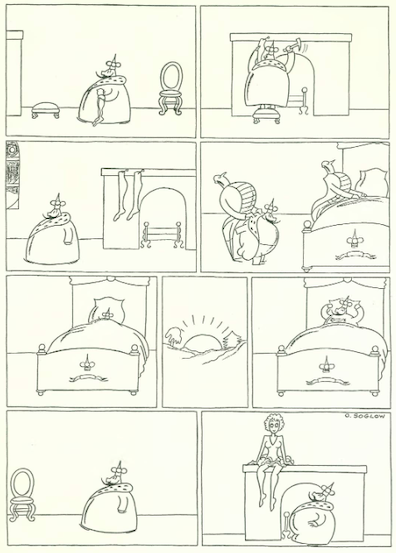
…on to our cartoonists, we begin with more adventures of The Little King, courtesy Otto Soglow…
…William Crawford Galbraith was still stuck on his theme of seductive women either paired with sugar daddies or clueless suitors…
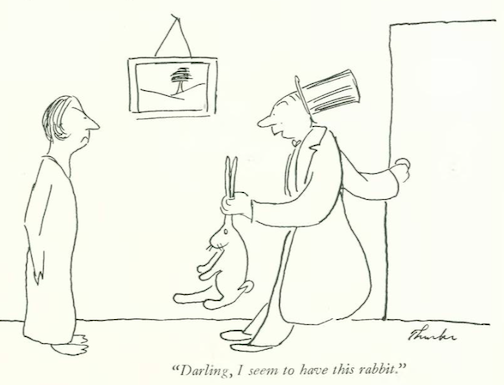
…speaking of clueless, James Thurber gave us this party pooper…
…Gardner Rea checked the economic temperature of the upper crust…
…and we close with William Steig, and an enterprising paperboy…
As in her other films, Mae West’s character in I’m No Angel was sexually independent and unapologetically so. (Kino Lorber)
We first encountered Mae West back in 1926 when The New Yorker commented on her risqué Broadway play, Sex. Although the play was the biggest ticket in town, it eventually attracted a police raid that landed West in jail on morals charges. Sentenced to ten days for “corrupting the morals of youth,” she could have paid a fine, but for West a short stint on Welfare Island was worth its weight in publicity gold.
Oct. 14, 1933 cover by Rea Irvin.
Fast forward seven years, and West is one of the nation’s biggest box office attractions and starring in her third film, I’m No Angel. Depression-era audiences responded enthusiastically to West’s portrayals of a woman from the wrong side of the tracks who in the end gains both fortune and social acceptance. Although puritanical forces continued to be outraged by West’s antics, New Yorker film critic John Mosher found her act to be “a safe parody on indecency.”
SHIMMY TO SUCCESS…Clockwise, from top left: At the beginning of I’m No Angel, Tira (Mae West) shimmies and sings in a circus sideshow; studio poster for the film— In the early 1930s, West’s films were key in saving Paramount Pictures from bankruptcy; a wealthy sideshow customer (William B. Davidson) arranges a private rendezvous; Tira has her day in court despite attempts by her ex-boyfriend, Slick Wiley (Ralf Harolde), to discredit her. (IMDB)SHE GETS HER MAN…Cary Grant starred opposite Mae West for the second and final time in I’m No Angel. Eleven years junior to West, Grant portrayed Tira’s fiancé, Jack Clayton. (TCM)
And finally, a much-talked about scene from the movie featured West putting her head (rather sensually) into the mouth of a lion. In reality it appears to be a camera trick: West was actually placing her head to the side of the lion’s mouth. Still, a gutsy move by West. As for the lion, it was no picnic either.
* * *
Comic Relief
Eugene O’Neill surprised critics and audiences alike when he premiered Ah, Wilderness! at Broadway’s Guild Theatre on October 2, 1933. Among the critics was Wolcott Gibbs, who concluded that O’Neill should stick to his usual themes of disillusion and despair. An excerpt:
PASS THE CORN, PLEASE…Around the table in the original 1933 Broadway production of Ah, Wilderness! are (from left) George M. Cohan (Nat Miller), Eda Heinemann (Lily), Elisha Cook, Jr. (Richard), Gene Lockhart (Sid), Marjorie Marquis (Mrs. Nat Miller), Walter Vonnegut, Jr. (Tommy) and Adelaide Bean (Mildred). (Photograph by Vandamm for Stage magazine, November 1933)ERRORS OF COMEDY…Wolcott Gibbs (left) found Eugene O’Neill’s attempt at comedy to be nothing more than a recycling of corny old saws. However, Ah, Wilderness! proved successful in its first Broadway production and in the touring company that followed. It remains to this day a staple of community repertory. (The New Yorker/Playbill/Encyclopedia Britannica)
* * *
Hell in a Handbasket
If Eugene O’Neill couldn’t offer up some woe, then leave it to E.B. White of all people to supply reason for despair. In his 1982 review of a collection of White’s poems and sketches, Timothy Foote observed that White occasionally assumed the guise of Pessimist, “a desperate fellow who served as a one-man distant-early-warning system…”
For the Oct. 14 issue White bemoaned the loss of the American elm (of the 77 million elms in North America in 1930, more than 75 percent were lost to Dutch elm disease by 1989), the dangers of pesticide use, and other maladies. Excerpts:
APPLE OF HIS EYE…E.B. White had reason to be concerned about the widespread practice of spraying lead arsenic on fruit trees. This 1930 photograph shows an Oregon orchardist and his child spraying apple trees with the stuff. (oregonhistoryproject.org)
White’s New Yorker colleague John O’Hara raised some concerns of his own, namely the likelihood of another world war in this prescient piece titled “Dynamite is Like a Mill Pond.” Excerpts:
FROM RUSSIA WITH LOVE…John O’Hara pondered the likelihood of another world war and an unlikely bedfellow: Soviet Russia. Photo circa 1938. (AP via loa.org)
* * *
Pooh-Poohing Mr. Milne
In his review of A.A. Milne’s latest novel, The Red House Mystery, Clifton Fadiman seemed to recall Dorothy Parker’s own revulsion to Milne’s juvenile style (“Tonstant Weader Fwowed Up” Parker once wrote of The House at Pooh Corner). Excerpts:
* * *
From Our Advertisers
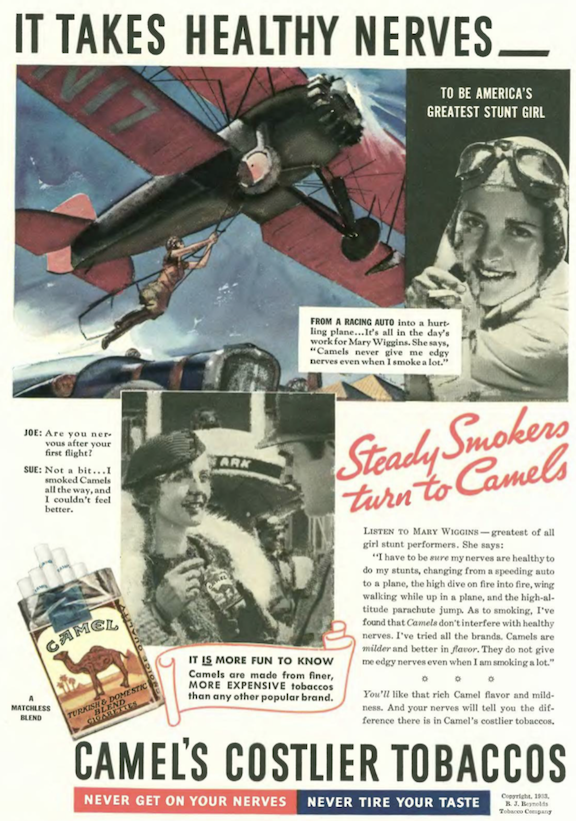
The makers of Camels took to the water to prove how their cigarettes supported “healthy nerves,” whether in the deep sea or on the high dive…
…with a name like “Spud” you really had to stretch to prove you were a choice of the smart set…here they claimed their product was “quite at home among royalty”…
…here’s another great example of class appropriation, a white-tie dinner featuring a couple of toffs eating canned soup…
…and we give our eyes a break with a bit of elegance from Lord & Taylor, featuring the art of modern living…
…on to our cartoons, we begin with James Thurber…
…curious to know Thurber’s favorite songs?—then check out this Thurber Thursday post from Michael Maslin’sInkspill...
…we continue with William Steig’s look at a “Lady With Mirror”…
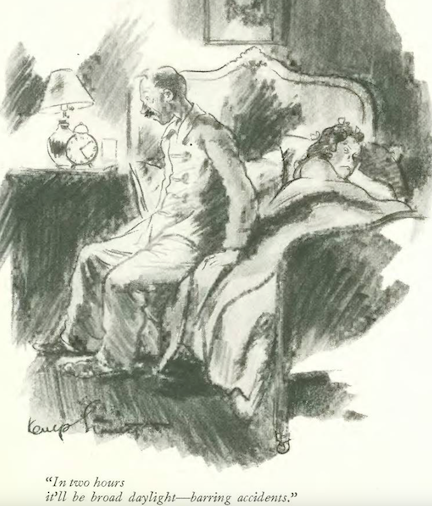
…and discover the calm after a storm in this domestic scene by Kemp Starrett…
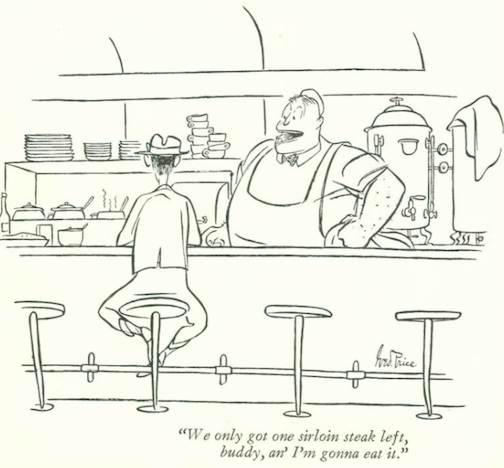
…visit the Century of Progress World’s Fair in Chicago, with George Price…
…for reference, Price’s cartoon depicted the Federal Building at the Century of Progress…
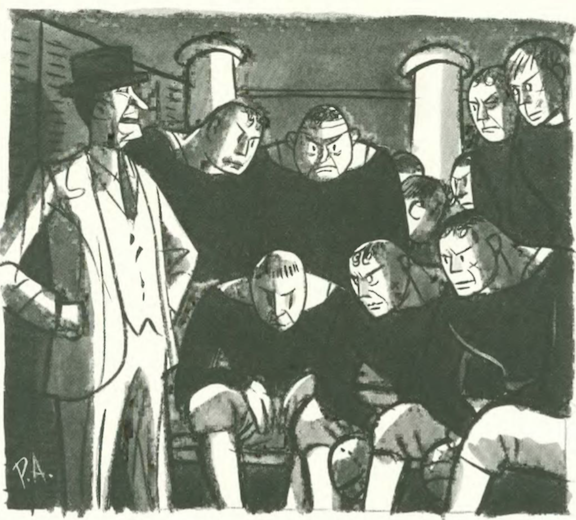
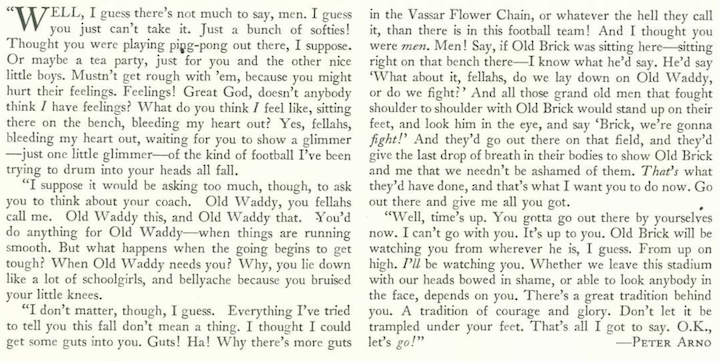
…and is often the case with this blog, we give Peter Arno the last word…
ABOVE: Broadway's As Thousands Cheer (1933) featured evangelist Aimee Semple McPherson (Helen Broderick) trying to persuade Mahatma Gandhi (Clifton Webb) to end his hunger strike and join her act. (NYPL)
Broadway gave Depression audiences a lift with As Thousands Cheer, a revue featuring satirical sketches that skewered the lives and affairs of the rich and famous and served as a precursor to sketch shows like Saturday Night Live.
Oct. 7, 1933 cover by Peter Arno.
With a book by Moss Hart and music and lyrics by Irving Berlin, the revue was a big hit, playing for nearly a year on Broadway in its initial run.
TOON TIME…Marilyn Miller led a chorus of cartoon characters in a sketch titled “The Funnies” in As Thousands Cheer; leading the revue were Miller, Clifton Webb and Helen Broderick, here featured on the cover of the Playbill. The production would be Marilyn Miller’s last—one of Broadway’s biggest stars known for playing sunny characters, her personal life was filled with illness and tragedy, and she would go to an early death in 1936. (playbill.com)
Wolcott Gibbs took his turn as Broadway reviewer, and pronounced As Thousands Cheer “the funniest thing in town.”
Not everything was roses in As Thousands Cheer: In a poignant star turn, Ethel Waters sang—at Irving Berlin’s request—his famous tune “Supper Time,” a Black woman’s lament for her lynched husband. The revue was the first Broadway show to give an African-American star (Waters) equal billing with whites, however she was segregated from her co-stars and did not appear in any sketches with them. Her co-stars even refused to bow with her at the curtain call until Berlin intervened. According to the James Kaplan biography Irving Berlin, “The show had a successful tryout at Philadelphia’s Forrest Theatre in early September, although opening night was marred by an ugly incident all too in tune with the times: the stars Clifton Webb, Marilyn Miller, and Helen Broderick refused to take a bow with Ethel Waters. To his everlasting credit, Berlin told the three that of course he would respect their feelings—only in that case there needn’t be any bows at all.
“They took their bows with Waters at the next show.”
NEWSMAKERS…Each sketch in As Thousands Cheer was preceded with a newspaper headline. Clockwise, from top left, in the sketch headlined JOAN CRAWFORD TO DIVORCE DOUGLAS FAIRBANKS, JR, Marilyn Miller and Clifton Webb portrayed the stars arguing over publicity rights to their divorce; Webb as 94-year-old John D. Rockefeller; the headline FRANKLIN D. ROOSEVELT INAUGURATED TOMORROW featured Mr. and Mrs. Herbert Hoover on their last day in the White House, portrayed by Leslie Adams and Helen Broderick; Ethel Waters singing Irving Berlin’s “Supper Time.” (New York Public Library)
* * *
A Final Byline
E.B. White opened his column with a tribute to Ring Lardner, who died at age 48 of a heart attack and other complications. In the months before his death Lardner had contributed a number of comical “Over the Waves” radio reviews.
JOURNALIST AT HEART…Ring Lardner (1885-1933) worked for several newspapers before settling at the Chicago Tribune in 1913—it became the home newspaper for his syndicated column, In the Wake of the News. (Chicago Tribune)
Lardner’s first contribution to The New Yorker came shortly after the magazine’s founding. “The Constant Jay” was published in the April 18, 1925 issue: Readers appreciated his subtle wit, including this oft-quoted gem:
“The race is not always to the swift nor the battle to the strong—but that’s the way to bet.”
Lardner also liked to poke fun at himself and his aw-shucks view of things. Here are the opening and closing paragraphs of his final New Yorker contribution, “Odd’s Bodkins:”
* * *
Macy Modernism
As Lewis Mumford observed in his “Skyline” column, Macy’s was the first department store to embrace a modern approach to interior design, but as Marilyn Friedman notes in her book, Making America Modern: Interior Design in the 1930s, Macy’s modernism was a bit toned down to blend into more traditional settings. A case in point was Macy’s 1933 Forward House exhibition, which Mumford described as “a brilliant piece of modern showmanship.”
EASY ON THE EYES…”Living room in the Suburban House of Forward House” at R.H. Macy & Co., New York, 1933, from The Upholsterer and Interior Decorator, October 15, 1933. (artdeco.org)
* * *
Fishing for Commies
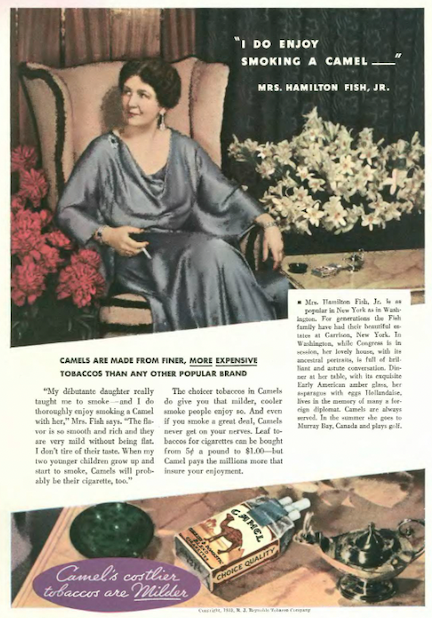
Geoffrey Hellman profiled New York House Rep. Hamilton Fish Jr (1888–1991), a staunch anti-communist perhaps best known for establishing the Tomb of the Unknown Soldier at Arlington National Cemetery. I feature this brief excerpt mainly for the great caricature by Abe Birnbaum.
MINDING THE HOME FRONT…Hamilton Fish, Jr making a speech in Los Angeles, 1935. Fish served in the U.S. House of Representatives from 1920 to 1945 and during that time was a prominent opponent of intervention into foreign affairs. (UCLA Special Collections)
* * *
All Wet
Eleven years before Esther Williams made her first aqua-musical, Ruby Keeler took the dive under Busby Berkeley’s direction in Footlight Parade. E.B. White served as film critic for the Oct. 7 issue, and found Footlight to be a feast for the male gaze, as well as mindless entertainment.
TAKING THE PLUNGE…Clockwise, from top left: According to E.B. White, there was no gainsaying “the general aahhhhh” of the semi-nude waterfall scene in Footlight Parade; promotional poster left no doubt as to what audiences might expect from the film; Busby Berkeley displayed his craft in water-based choreography; Ruby Keeler portrayed a dancer turned secretary who is transformed back into a dancer—just add water. (IMDB)
* * *
A Dog’s Life
Doubtless drained from writing The Waves, Virginia Woolf followed up with some historical fiction, namely Flush: A Biography, a book about Elizabeth Barrett Browning’s cocker spaniel. Clifton Fadiman had this to say about the unusual biography:
VIRGINIA WOOF…Frontispiece for Flush: A Biography. Virginia Woolf used the tale of a dog to explore social themes ranging from feminism to class conflict. (Heritage Auctions)
* * *
From Our Advertisers
When you market a car for only $445 you aren’t going after the luxury market, but hey, drop a ten-truck truck on this baby and you can live to tell about it…
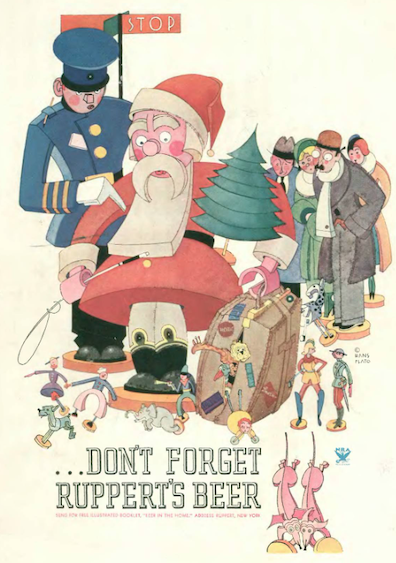
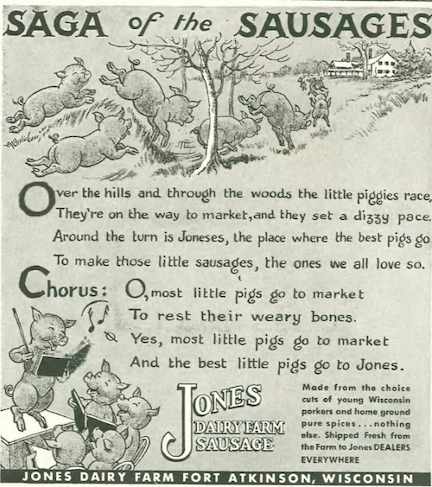
…with legal beer flooding the market brewers were particularly keen to attract female drinkers of all ages…and apparently social classes…
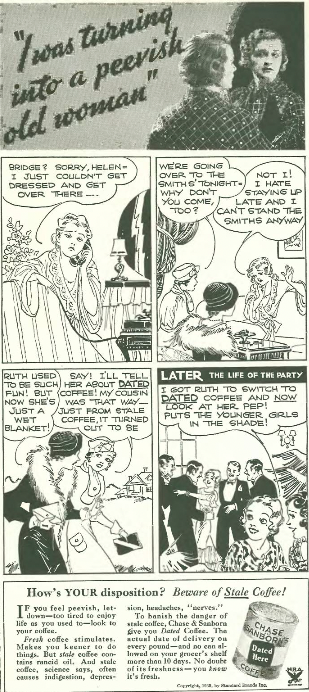
…a couple of ads from the back pages, the first touting the smart-set writing of columnist and foreign correspondent Alice Hughes for the New York American, and the second an advertisement for Chase & Sanborn coffee, which relayed the story of a marriage on the brink due to stale coffee…
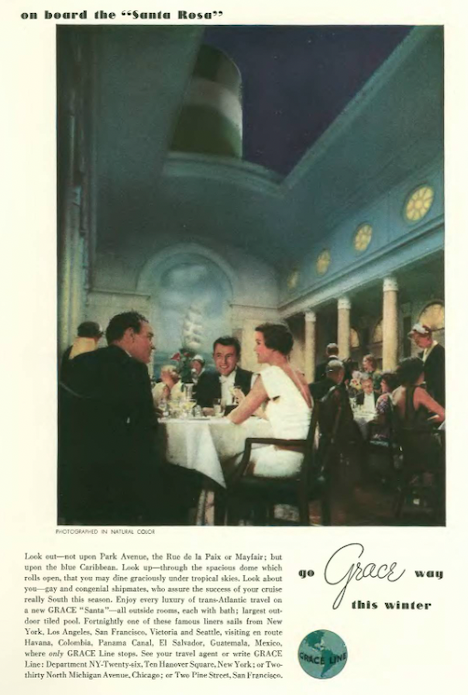
…I include this ad for the heroic scale of the ocean liner, particularly as depicted by the people in the background…
…we bounce on to our cartoons with Otto Soglow’s Little King…
…James Thurber continued to explore the unrest among our domestic youth…
…speaking of America’s youth, this gathering (courtesy Gardner Rea) appeared to have trouble finding some…
…Helen Hokinson found fun with flounder…
…Rea Irvin turned the tables on a life-drawing class…
…and we close with Richard Decker, over the moon with a stranded chorine…
…and in a nod to the approaching holiday, imagery from a 1933 Fleischer Studios animated short film, Betty Boop’s Hallowe’en Party…
For its Sept. 23, 1933 issue The New Yorker continued its serialization of James Thurber’s autobiography, My Life and Hard Times…
Sept. 23, 1933 cover by Abner Dean.
Part Seven, titled “College Days,” included Thurber’s reminiscences of an economics class and the challenges one “Professor Bassum” faced in keeping a star football tackle academically eligible:
DEAR OLD ALMA MATER…James Thurber attended The Ohio State University from 1913 to 1918. Clockwise, from top left, the football team during Thurber’s time featured some smart players as well, including All-American quarterback/halfback Gaylor “Pete” Stinchcomb (left) and All-American halfback Chic Harley (right); Thurber’s drawing of the dim-witted tackle Bolenciecwez from My Life and Hard Times; OSU University Hall circa 1910; Thurber drawing of an OSU botany professor who “quivered with frustration” over Thurber’s inability to see through a microscope. (Ohio State/Wikipedia)
* * *
From Our Advertisers
We begin with the makers of White Rock, who touted the international appeal of their home-grown product, here enjoyed by an old warrior and his much-younger mistress who were busy keeping the colonies in line in Southeast Asia…
…speaking of colonial exploitation, here’s Frank Buck keeping his nerves steady smoking Camels as he lugs “tons of rhinos, tigers, and gorillas across the Pacific” to live out their lives in cramped, fetid cages…
…hey there New York sophisticates of 1933!…we have just the place for you, where only the BEST PEOPLE are apartment hunting, far from the din of immigrants, the unemployed, and other undesirables…
…if you wanted to hang out with the best people, you could get yourself exact copies of the latest Paris fashions from Saks Fifth Avenue…
…or if you were on a tighter budget, you could check out the wares at Wanamaker’s, who trumpeted their “fashion-firsts” on this ad on page 41 followed by a double-spread on the following pages…
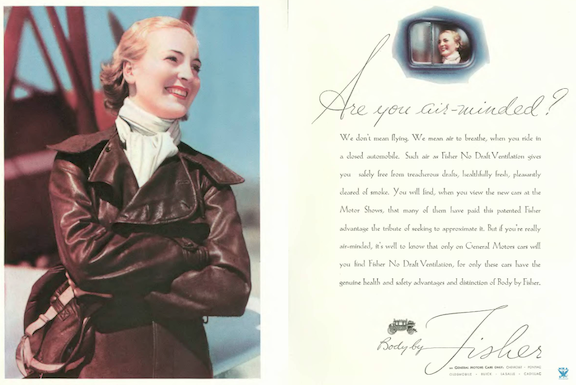
…James Thurber lent his talents to the makers of Fisher car bodies…in the early days of automobile production Fisher made car bodies for a number of GM cars as well as for Packard, Studebaker, Hudson and other manufacturers…in 1926 it was absorbed by GM as an in-house coach-building division…
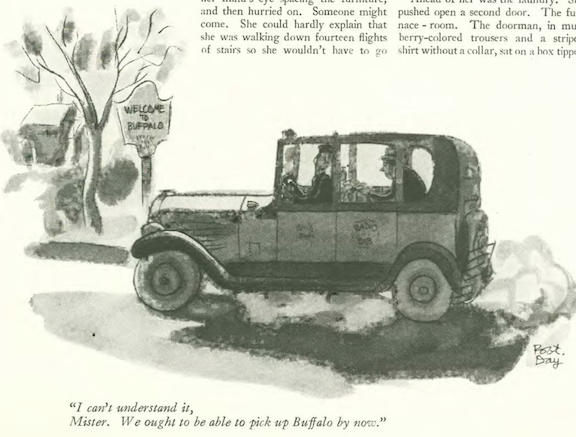
…on to our cartoons, we take a boat ride with Robert Day…
…discover the perils of historical research with Barbara Shermund…
…Daniel ‘Alain’ Brustlein offered a new perspective on portrait painting…
…Helen Hokinson found a Red among the blue bloods…
…and a wee conundrum in the hat department…
…Gardner Rea pulled out all stops in this patriotic tableau…
…on to the Sept. 30, 1933 issue…
Sept. 30, 1933 cover by William Cotton.
…in which journalist Robert Wohlforth contributed a profile on poet and writer James Weldon Johnson (1871–1938), a key figure of the Harlem Renaissance most widely known today for the lyrics of the Negro National Anthem, “Lift Every Voice and Sing.” A brief excerpt with illustration by Hugo Gellert:
LIFT EVERY VOICE...James Weldon Johnson, photographed by Carl Van Vechten, 1932. (Library of Congress)
* * *
Mexican Morass
E.B. White took on the movie review duties and landed himself a doozy—Sergei Eisenstein’sThunder Over Mexico. The famed Soviet filmmaker had come to the U.S. in 1930 to make a film for Paramount, but when the deal fell through American socialist author Upton Sinclair and others invited Eisenstein to make an artistic travelogue exploring the themes of life and death in Mexico. More than thirty hours of film was shot before the project was abandoned and Eisenstein returned to the USSR. The footage was later cut into three films, including Thunder Over Mexico. White was less than pleased with the film’s “butchered” edits.
LIFE AND DEATH IN MEXICO…Avant-garde Soviet filmmaker Sergei Eisenstein shot more than 30 hours of film in Mexico without producing a final product. An independent Hollywood producer, Sol Lesser, later produced two short features and a short subject culled from the footage—Thunder Over Mexico, Eisenstein in Mexico, and Death Day; these were released in 1933-34. Clockwise, from top left, poster for the film, the film featured scenes of cinematic beauty as well as brutal violence; Eisenstein visiting Mexican artists Diego Rivera and Frida Kahlo; Eisenstein directing a scene from the film. (IMDB/www.otago.ac.nz)
* * *
Dreaming in Color
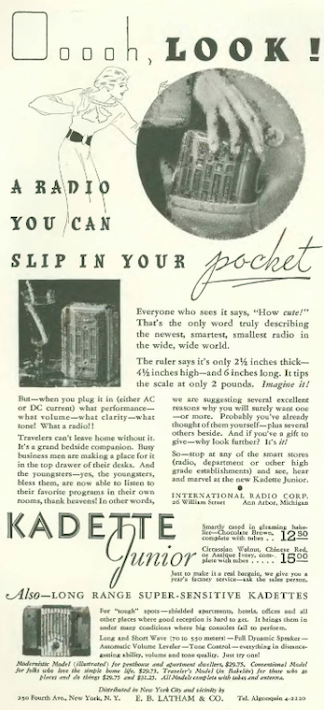
In this “Talk of the Town” entry, attributed to James Thurber, we learn of various wonders at the National Electrical Exposition at Madison Square Garden, including a “Clavilux Color Organ” designed for home use. Excerpts:
EINE KLEINE LICHT MUSIK…Danish musician Thomas Wilfred (top) constructed his first Clavilux in 1919. Sitting at a large console, Wilfred could control infinite color projections. His first public performance was in New York in 1922 (top right), featuring an abstract light show audiences compared to an aurora borealis. Bottom right, the Clavilux Junior was developed for home use, operated with special glass records, each hand-painted with a distinct composition that would create the projected image. (cdm.link/Yale University Art Gallery)
This YouTube video offers some idea of the effect:
* * *
More From Our Advertisers
Warm, idealized images of American life, in the vein of Norman Rockwell, were popular among advertisers seeking to reassure Depression-era consumers…here we have the avuncular scientist working to ensure that your Packard is not only reliable as transportation, but also a place of solace…
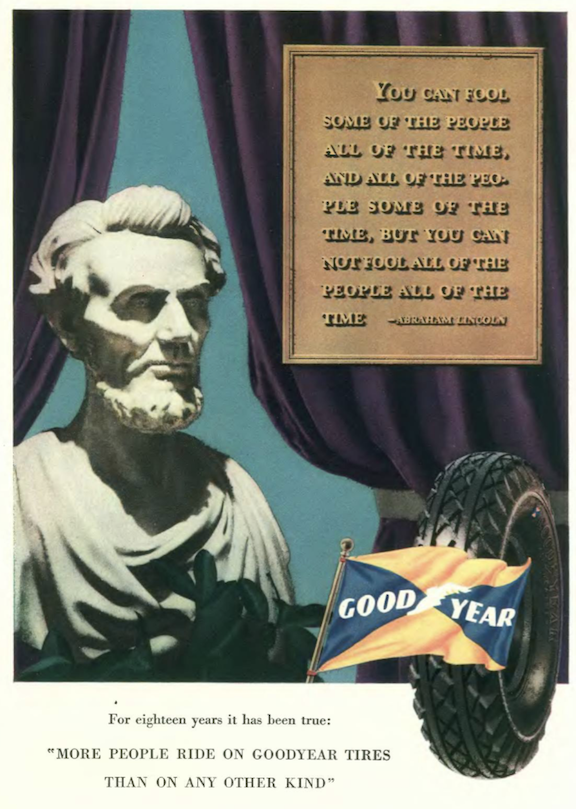
…this same idea was conveyed by the makers of Goodyear tires…
…this ad on page 55 for Guerlain’s Shalimar Powder somewhat recalls the art deco style of Tamara de Lempicka…
…but flip the page and you are brought back to reality with Shefford’s “Snappy Cheese”…
…you needed to lay off the cheese, however, if you wanted to take up a Ry-Krisp diet, endorsed here by Sylvia Ulback, better known at the time as “Sylvia of Hollywood” — in 1933 she was one of the most famous voices on radio…
STRETCH FOR SUCCESS…Norwegian-born Sylvia Ulback (1881–1975) was a Hollywood fitness guru from 1926 until 1932. Known as Sylvia of Hollywood, she abandoned the Tinseltown scene after publishing a “tell all” book about her clients titled Hollywood Undressed (1931). From 1933 to 1936 she appeared on the radio show, Mme. Sylvia, a 15-minute beauty and celebrity broadcast sponsored by Ry-Krisp, and she also published three health and fitness books, including 1939’s Streamline Your Figure. (youmustrememberthispodcast.com)
…on to our cartoons, Alan Dunn discovered a budding Picasso…
…another cryptic cartoon by James Thurber was featured in the “Talk of the Town” section…
…Whitney Darrow Jr gave this dowager an off-stage surprise…
…E. Simms Campbell put a snag in an old yarn…
…and we end with Peter Arno, and an old walrus feeling his oats…
Above: German Panzer tanks on parade in the early 1930s. (alternativefinland.com)
The year 1933 marked a shift in the political winds, starting with Adolf Hitler’s rise to the chancellorship of Germany in 1933. By October he withdrew from the League of Nations and the Geneva Peace Conference, all the while clandestinely building up his war machine.
Sept. 16, 1933 cover by Harry Brown. The scene depicts the West Side’s infamous “Death Avenue,” where New York Central Railroad freight trains mixed with a jumble of automobiles, wagons and pedestrians amid factories and warehouses. Beginning in the 1850s “West Side Cowboys” rode in front of trains as a safety precaution. Still, there were hundreds of casualties until the rail was elevated in 1934—today’s High Line.
While some sounded alarms, most people, along with their nations, turned inward, focusing on domestic issues—FDR was busy with his New Deal agenda, Britain was dealing with its own economic woes, and Germany, Italy and Japan were keeping their populations in line by stoking the flames of nationalism. Few paid much attention to a 420-page book titled What Would Be the Character of a New War?, which accurately predicted the nature of the war to come. New Yorker critic Clifton Fadiman offered this sobering assessment (wryly titled “To the Gentler Reader”) of the work:
The book’s prescient warnings could be attributed in part to the experiences of the Inter-Parliamentary Union’s 19 authors—nearly half of them soldiers from Great Britain, Sweden, Germany and France, the others mostly scientists along with a statesman or two. In her Oct. 22, 1933, New York Times Book Review article, Florence Finch Kelly noted the authors’ general agreement as to the “utter uselessness” of international peace agreements. “This book is a sign-post that blazons in unmistakable language the distance the world has traveled—backward—during the last dozen years,” she wrote, concluding “the world very greatly needs this book…For it is the most ghastly, the most horrifying book about war that has ever been written.”
In my previous post we saw how H.G. Wells envisioned the next war, with destruction raining from the sky. So too was the conclusion of Inter-Parliamentary Union. Fadiman observed:
THEY LOVE A PARADE…Clockwise from top left: Adolf Hitler is cheered as he rides through the streets of Munich on Nov. 9, 1933; Hideki Tojo would be promoted to major general in 1933 and would go on to become minister of war and prime minister of Japan; the technologically advanced Heinkel He 111 was secretly produced as part of the clandestine German rearmament in the early 1930s; when he wasn’t busy murdering his own people, Josef Stalin (pictured here on Nov. 7, 1933) was implementing his Five-Year Plan. (The Atlantic via AP/Wikipedia)
The rumblings heard in Germany were also on the mind of Howard Brubaker, who made these observations in his column, “Of All Things.”
* * *
Dining For Success
The Society for the Advancement of Better Living offered its own New Deal for Depression America—you could eat your way to better life. E.B. White noted the non-ideological nature of this new movement, where commies and capitalists could break bread together…
GUESS WHO’S COMING TO DINNER?…Hearty appetites make strange bedfellows, according to E.B. White. Clockwise, from top left, Helena Rubinstein, Dr. Royal Copeland, Robert Morss Lovett, C. Hartley Grattan, Suzanne La Follette, and Henry Goddard Leach. (Vanity Fair/Wikipedia/U of Nebraska)
* * *
Bread & Circuses
“The Talk of the Town” looked in on the game of college football, which some college presidents annually decried for becoming a “great spectacle.” If they could have only known what was to come…
THE HOME TEAM…Clockwise, from top left: Columbia University’s Baker Stadium in the 1920s; Columbia’s president in 1933, Nicholas Murray Butler, considered something of a blowhard in his day; Columbia’s Hall of Fame coach Lou Little in 1930; Columbia taking on archival Cornell in 1930. The Columbia Lions were a power in the 1930s—in 1933 the Lions won the Rose Bowl, beating Stanford 7–0. (Columbia University)
* * *
From Our Advertisers
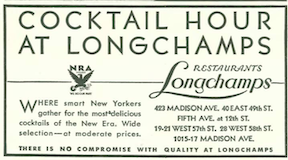
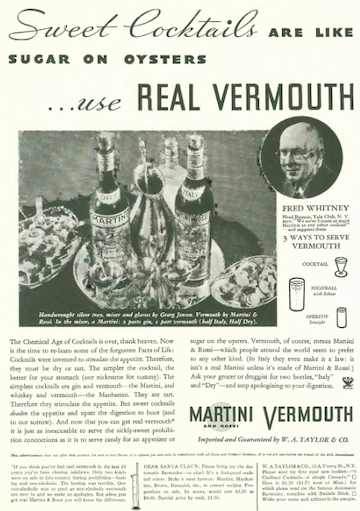
The fine folks at Martini & Rossi were doing their part to get Americans ready for the end of Prohibition…
…meanwhile, the makers of Her Majesty’s perfume summoned the old and the new while also showing support for the New Deal (the NRA logo)…this image, however, doesn’t conjure up visions of “Tomorrow’s World”…
…and frankly neither does this tire, here linked to the wonders on display at Chicago’s Century of Progress…
…on to our cartoons, we have two by James Thurber, beginning with this cryptic drawing…
…and later in the issue, a more familiar Thurber at play…
…Helen Hokinson’s “girls” surmised a scandal aboard an incoming liner…
…Henry Anton gave us a kindly pawn shop owner with a money back guarantee…on a pair of brass knuckles…
…Isadore Klein conjured up a ghost who’d found a use for an executive’s wire recorder…
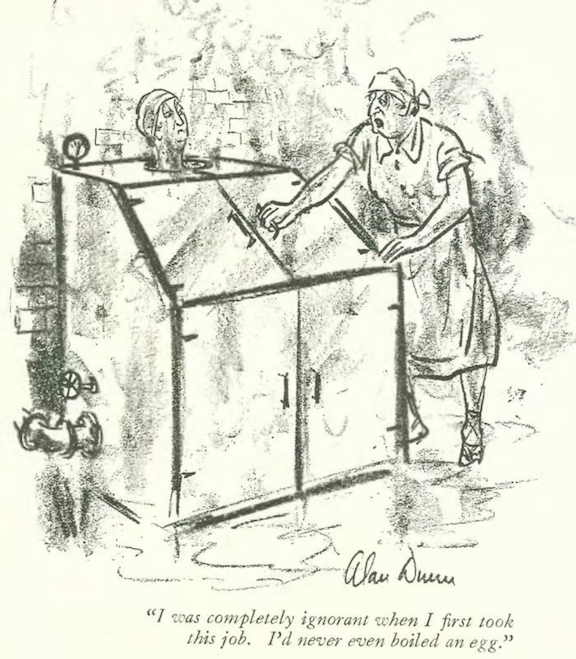
…and we close with Alan Dunn, and the perils of interior design…
New Yorkers witnessed flying milestones and mishaps in the summer of 1933—after Wiley Post landed at Bennett Field, he became the first person to fly solo around the world, and famed Italian aviator Italo Balbo would bring a squadron of 24 Savoia-Marchetti S.55 flying boats across the Atlantic and triumphantly land them on the Hudson River. So before we get to the Aug. 5 issue…
Aug. 5, 1933 cover by Julian de Miskey.
…let’s look in on Morris Markey, who described all of the skyward thrills in his “A Reporter at Large” column in the August 12 issue. Markey also offered a “bold prophecy” that the ticker-tape parades and “hysterical cheers” could not go on forever.
ROUND AND ROUND HE GOES…Clockwise, from top left, Wiley Post under the wing of the famed Lockheed Vega monoplane Winnie Mae in 1933; Post next to the Winnie Mae in Bartlesville, Oklahoma in 1934, his achievements recorded on the fuselage; miners from Flat, Alaska, bring the Winnie Mae upright for repairs—the plane nosed over after hitting a patch of mining tailings; Post climbs out of the Winnie Mae at Floyd Bennett Field, Long Island, after completing the first solo flight around the world. Post set a new record of 15,596 miles (25,099 kilometers) in 7 days, 18 hours, 49 minutes. (NASM/Oklahoma Historical Society/U of Alaska-Fairbanks/Associated Press)
Markey wrote admiringly of the Italians and their oddly beautiful flying boats as they descended, 24 in all, on the Hudson River. Things did not go so well for Scottish aviator James Mollison and his wife, Amy Johnson, who had set many flying records in the 1930s.
DESCENDED LIKE FLIES…Twenty-four Savoia-Marchetti flying boats left Italy in 1933 to fly in formation to the 1933 Chicago World’s Fair and back, with stops along the way including New York. The squadron was led by Italo Balbo, who has featured on the cover of Time, 26 June 1933. (Wikipedia/Time Inc.))GOING IN STYLE, Clockwise, from top left, twenty-four Italian Savoia-Marchetti S.55X flying boats left the west coast of Italy to fly in formation to the Chicago World’s Fair, with a stop on the Hudson River (top right). The Italians were famed for sleek designs, including the Macchi-Castoldi 72, pictured here circa 1931. It was then the fastest plane in the world; James Mollison and his wife, Amy Johnson recover from their injuries after a nonstop flight from Wales to the U.S. Unable to locate the Bridgeport (Conn.) Municipal Airport—which he circled five times— he ultimately crash- landed into a field. Both were thrown from the aircraft but survived—they were later congratulated by New York society with a parade on Wall Street. (warbirdsnews.com/Wikimedia)
Markey’s “bold prophecy” would sadly come to pass; after all of the parades and hoopla, these wonderful airplanes would soon take on more sinister roles as machines of death. Italo Balbo, seen as a possible successor to Italian dictator Benito Mussolini, would die in 1940, shot down by Italian anti-aircraft batteries that mistook his plane for a British fighter. Amy Johnson would die months later in a crash near the mouth of the Thames (possibly by friendly fire). Two years after his record-breaking flight, Wiley Post and American humorist Will Rogers would perish in a 1935 crash near Point Barrow, Alaska.
* * *
Depression Diversions
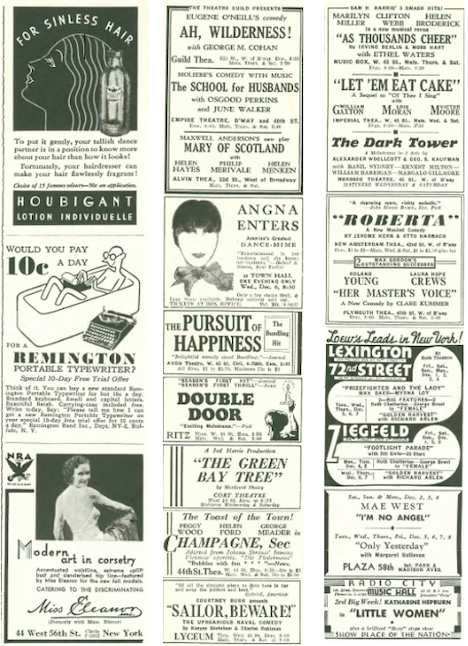
New Yorkers could escape Depression woes and the summer heat with a visit to the cinema. These listings in the Aug. 5 issue were headed by the Busby Berkeley musical extravaganza Gold Diggers of 1933…
DEPRESSION’S FEVER DREAM…Choreographer Busby Berkeley chased those Depression blues away with his lavish musicals, including Gold Diggers of 1933, featuring Ginger Rogers among a bevy of stars. (IMDB)
* * *
From Our Advertisers
Fledgling airlines including Eastern Air Transport and American Airways (forerunners of Eastern Air Lines and American Airlines) were giving passenger trains a bit of competition with relatively quick flights to destinations including Washington D.C. and Atlantic City—the D.C. round trip cost $20, roughly equivalent to $455 today…
…introduced in 1933, the Curtiss YC-30, called the Condor in civilian use, could seat 15. It could also be fitted out as 12-passenger luxury night sleeper…
YOU COULD REST EASY on the Curtiss Condor in 1933. (U.S. Air Force)
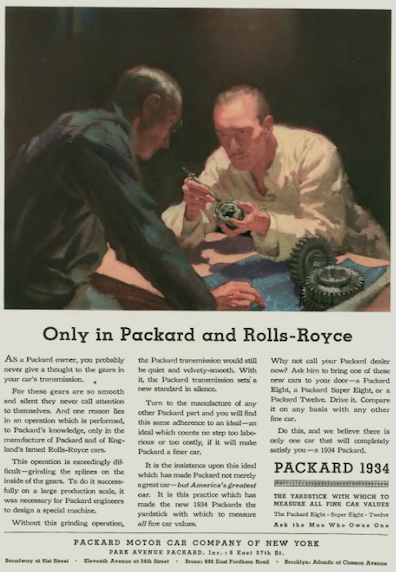
…Packard and Cadillac both produced premium automobiles, but where Packard emphasized durability and longevity…
…the folks at Cadillac went for pure sob appeal…
…I wonder how many people still wore pince-nez in 1933, especially while drinking beer…
…the makers of Hoffman ginger ale weren’t waiting for the official end of Prohibition to tout their popular mixer…
…with the launch of FDR’s New Deal, advertisers were quick to jump on the bandwagon…
…as did one of our cartoonists, Otto Soglow…
…and now on to the Aug 12 issue…
Aug. 12, 1933 cover by Helen Hokinson.
…which featured another installment of James Thurber’sMy Life and Hard Times—”The Night the Ghost Got In”…
James Thurber’s illustration for “The Night the Ghost Got In” that appeared in his book My Life and Hard Times. The scene depicts his brother Herman, and his fear of ghosts. The caption read: “He always half suspected that something would get him.”
Meanwhile, Thurber’s colleague, film critic John Mosher, was finding joy through Walt Disney’sSilly Symphonies…
DELIGHTFUL DIVERSION…Critic John Mosher was “one exalted” over Walt Disney’s latest Silly Symphony, titled Old King Cole.
* * *
More From Our Advertisers
This giant two-page spread from the makers of Dodge sought to prove you could have both durability and affordability in their six-cylinder model (the cheapest Packard listed at $2,150—you could almost buy four Dodges for that price)…
…another Chrysler corporation product, the family-friendly Plymouth, could be had for even less—$445—it was apparently just the kind of car a penny-pinching ingenue needed for getting to her casting calls…
…Ann Lee Doran (1911–2000) went on to a long career as a character actress, perhaps best known for portraying James Dean’s mother in Rebel Without a Cause…
Anne Lee Doran (at far right) in 1941’s Penny Serenade. Also pictured, from left, are Edmund Elton, Edgar Buchanan, Cary Grant and Irene Dunne. (IMDB)
…when you finished brushing your teeth, you could put this other Pepsodent product on your face…
…on to our cartoons, we begin with this two-page spread by Gardner Rea…
…Gluyas Williams referenced the Camel cigarette ads from 1933 that revealed the secrets of popular magic tricks…
…an example from the June 3, 1933 issue of The New Yorker…
…Eli Garson paid a visit to the optometrist…
…in the wake of the scandal-ridden mess left behind by deposed Mayor Jimmy Walker, the upcoming November election was bound up by three candidates, none of whom seemed poised to get a majority vote…Robert Day offered up this scenario…
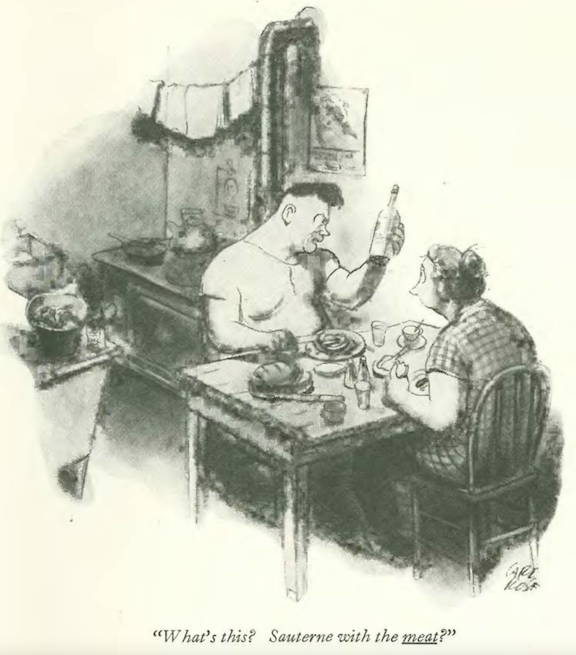
…Carl Rose discovered that even in the boonies, everyone’s a critic…
…and we close with Peter Arno, and another classic…
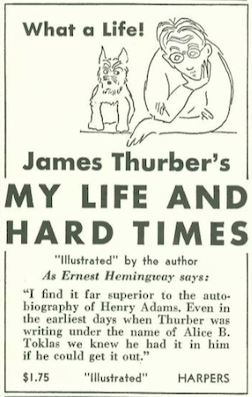
James Thurber was well established as a New Yorker writer and cartoonist by 1933, but his fame would grow with the publication of the autobiographical My Life and Hard Times, serialized in The New Yorker beginning with the July 8 issue.
July 8, 1933 cover by William Cotton.
And what a beginning. “The Night the Bed Fell In” recounts the comically absurd events that took place in the wee hours at the Thurber family home in Columbus, Ohio. Beginning with his father’s decision to sleep in the attic, the story introduces a cast of characters including cousin Briggs Beall and his mother, Clarissa. Excerpts:
Briggs’ mother also had fears of impeding calamity…
ALL IN THE FAMILY…Clockwise, from top left, James Thurber (center, back row) with his family circa 1915; the Thurber house that provided the setting for “The Night the Bed Fell In”; Thurber’s illustration of cousin Briggs Beall; cover of the 1933 first edition of My Life and Hard Times. (thurberhouse.org)
Need more Thurber? Longtime New Yorker cartoonist and author Michael Maslin recounts a 1986 pilgrimage to the Thurber house in this Ink Spill entry from 2018. You should also check out Maslin’s regular Thurber Thursday feature for more insights into the world of this beloved humorist.
* * *
The Naked Truth
Once upon a time a Baptist and a Presbyterian got together and created a magazine promoting nudism. The Baptist, IlsleySilias Boone (1879–1968), was founding father of the American Sunbathing Association—later reorganized as the American Association for Nude Recreation. His ally in advancing the cause of nudism, Presbyterian minister Henry Strong Huntington Jr (1882-1981), was the first president of the International Nudist Conference. “The Talk of the Town” laid bare the world of these randy clergymen.
DON’T GET UP…Baptist minister Ilsley Silias Boone (top, left) partnered with Presbyterian minister Henry Strong Huntington Jr on The Nudist (right). The magazine was published from 1933 to 1963. Later issues were published under the title Sunshine & Health. (flickr.com)
* * *
His Kind of Town
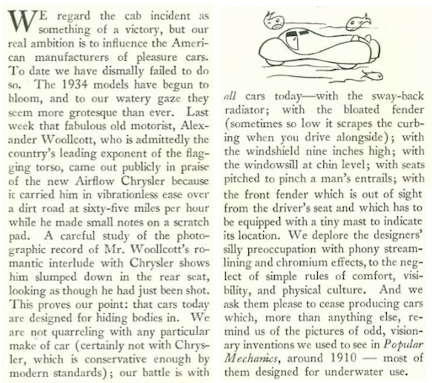
In his “Shouts & Murmurs” column, Alexander Woollcott recounted his trip to Chicago, ostensibly to see the Century of Progress (the 1933 World’s Fair) but was sidelined along the way by various diversions, including a visit with poet Edna St. Vincent Millay. An excerpt:
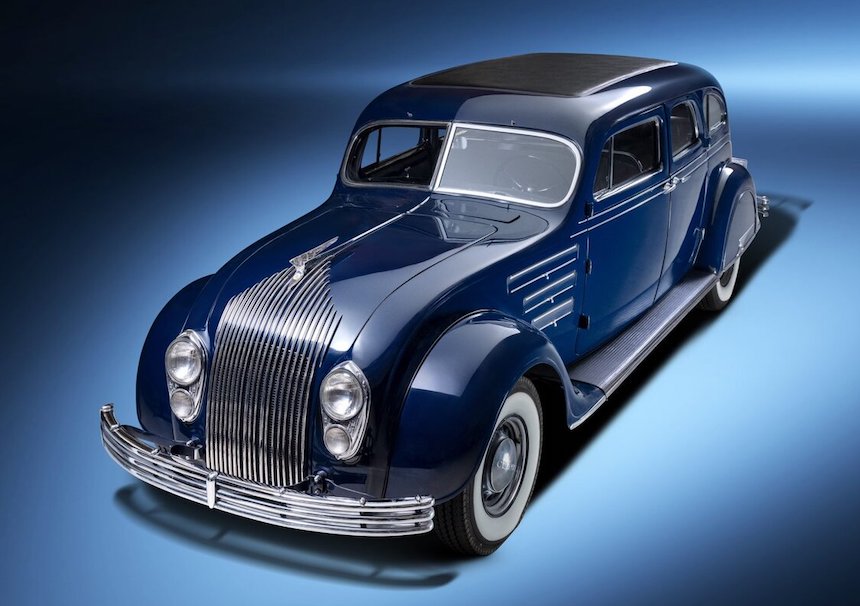
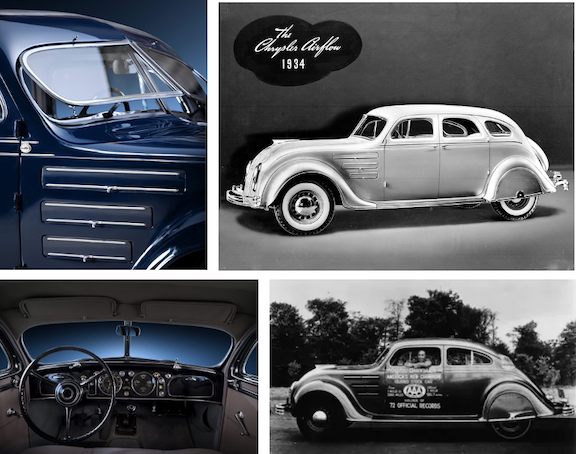
WAYLAID…Alexander Woollcott stopped by to see the poet Edna St. Vincent Millay before finally making his way to Chicago’s Century of Progress, which featured such spectacles as this Chrysler exhibition. Photo of Woollcott was taken upon his return from Europe in January 1933. Photo of Millay is by Carl Van Vechten, 1933. (Wikipedia/eBay/chicagology.com)
* * *
From Our Advertisers
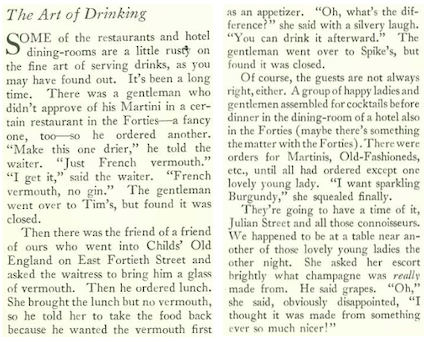
Prohibition wouldn’t be officially repealed until Dec. 5, 1933, but that didn’t stop New Yorkers from enjoying their favorite adult beverage, including this pair. What on earth is that man on the left doing? It appears he’s opening a bottle of White Rock (glimpsed between his legs), but why with his back turned?…
…the folks at Packard were consistent in promoting the durability and longevity of their premium automobiles…
…and it’s no coincidence that the makers of Goodyear tires featured a 1933 Packard to tout the durability of their product…
…speaking of durability, the ever-reliable Gardner Rea kicks off our cartoons…
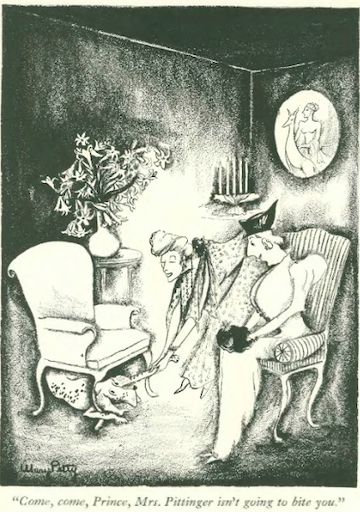
…Mary Petty eavesdropped on the latest social event…
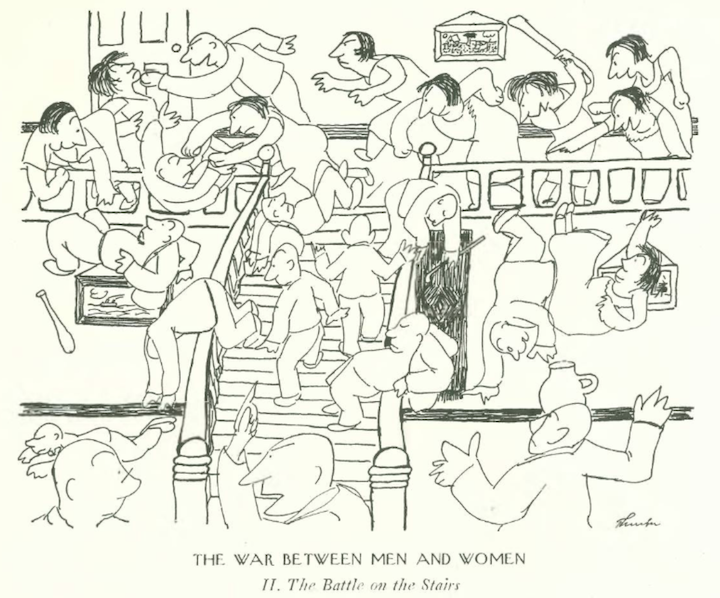
…the battle of the sexes continued in James Thurber’s world…
…Barbara Shermund shared the lamentations of a modern woman…
…and Garrett Price, likely inspired by a recent trip abroad, gave us this homesick tourist…
…and the cover of the July 15, 1933 issue…
July 15, 1933 cover by Garrett Price.
…in which Thurber continued his tales from My Life and Hard Times with “The Car We Had to Push”…also in the issue was a profile of “Bolshevik Businessman” Peter Bogdanov, written by foreign correspondent William C. White. An excerpt:
From 1930 to 1934 Bogdanov (1882–1939) headed the Amtorg Corporation, which helped the struggling Soviet economy establish valuable business and diplomatic relations with the United States. It is no surprise that like many who helped the Soviet cause, Bogdanov was eventually arrested on trumped-up charges and executed by Stalin’s henchmen. In March 1956 he was posthumously “rehabilitated.”
WORKING TOWARD AN EARLY RETIREMENT…Peter Bogdanov, circa 1920s. (Wikipedia)
* * *
On the Lighter Side
While millions in the Soviet Union were dying of famine and other Stalin-inspired atrocities, Americans were keeping their Depression-era spirits up at the movies, including critic John Mosher, who called the latest Mickey Mouse cartoon “a beautiful thing”…
THE MOUSE THAT ROARED…Mickey Mouse hobnobs with celebrities of the day including Harold Lloyd, Charlie Chaplin and Greta Garbo in his latest picture, Gala Premiere. (IMDB)
* * *
More From Our Advertisers
I once had a relative in New Jersey who drank a tall can of Schaefers every day, on orders from his doctor…
…the makers of Coca-Cola continued to tout their product in full-page New Yorker ads…
…recalling the Packard ad from the previous issue, the cheapest Packard model would set you back $2,150…you could instead get this swell Plymouth Six for just $455 and head down to the waterfront, where, according to this salesman, “men are men”…
…and while on the waterfront you might be able to bum a smoke and maybe some caviar from a sailor named Hugh…
…and now we take a stroll in the park with Otto Soglow’s “Little King”…
…and find romance along with other hot dishes at the automat, courtesy Whitney Darrow Jr…
…adrift with Carl Rose, and a man unlucky in love…
…Peter Arno played hide and seek with an escaped con…
…and we end where we began, with James Thurber at his best…
The heat came early to New York in June 1933, so folks flocked to air-conditioned cinemas or sought the cooling breezes of rooftop cafes and dance floors. And thanks to FDR, there was legal beer to be quaffed at various beer gardens popping up all over town.
June 24, 1933 cover by Rea Irvin. Providing a bookend to Constantin Alajalov’s June bride cover (May 27), Irvin gave us the newlyweds now contemplating a fixer-upper.
Lois Long kept her cool on the beach or at home with a cold Planters’ Punch, but one gets restless, and Ethel Waters was at the Cotton Club, so Long headed out into the night; an excerpt from her column “Tables for Two”…
STORMY WEATHER AHEAD…Ethel Waters was “tops” during a June 1933 performance at the Cotton Club, according to nightlife correspondent Lois Long. Left, Waters circa 1930. At right, the Cotton Club in the early 1930s. (IMDB/Britannica)SHOWER THE PEOPLE…Children gather around a center stand sprinkler (connected to a fire hydrant) on a Harlem street in 1933. (stuffnobodycaresabout.com)POP-UP PLAYGROUND…Play street and street shower alongside the Queensboro Bridge, June 22, 1934. (NYC Municipal Archives)
* * *
From Our Advertisers
Legal beer and hot summer days combined to bring some much-needed advertising revenue to The New Yorker…
…here we have dear old dad telling the young ‘uns (all in formal wear, mind you) about the good old days before Prohibition took away his favorite tipple…
…notable about the magazine’s first beer ads was the target market…this is akin to the cigarette manufacturers, who were also targeting women as a new growth market for their products…curious how this PBR ad is illustrated…is she getting ready to drink the beer, or serve it?…
…also joining the party were the folks who made mixers like White Rock mineral water…note the reference at bottom right to the anticipated repeal of the 18th Amendment…
…the purveyors of Hoffman’s ginger ale were less subtle, encouraging drinkers to mix those highballs right now…
…you could enjoy that cool one while sitting in front of a Klenzair electric fan, which was probably nothing like riding a dolphin—a strange visual metaphor, but then again perhaps something else is being suggested here besides electric fans…
…no doubt Lois Long took in one of these breezy performances on the rooftop of the Hotel Pennsylvania…
…an evening with Rudy Vallée would have been a lot cheaper than one of these “compact” air conditioners, available to only the very wealthy…
…but you didn’t need to be J.P. Morgan to own a Lektrolite lighter, which was kind of clever…this flameless lighter contained a platinum filament that would glow hot after being lowered into reactive chemicals in the lighter’s base…
…another ad from the Architects’ Emergency Committee, which looked like something an architect would design…
…our final June 24 ad told readers about the miracle of Sanforizing, which was basically a pre-shrinking technique, like pre-washed jeans…
…we kick off our cartoons with George Price at the ball game…
…Alan Dunn was in William Steig’s “Small Fry” territory with this precocious pair…
…James Thurber brought us back to his delightfully strange world…
…and Whitney Darrow Jr gave us a trio at a nudist colony dressing a man with their eyes…
…we move along to July 1, 1933…
July 1, 1933 cover by Helen Hokinson.
Where in this issue we find the Nazis not keeping their cool. In an article titled “Unter Dem Hakenkreuz” (“Under the Swastika”) American journalist and activist Mary Heaton Vorse commented on the changes taking place in Berlin, where the vice, decadence and other freedoms of the Weimar years had been swept away, including women’s rights…an excerpt:
SIT UP STRAIGHT AND PROCREATE…Swastika flags hang from a Berlin building in the 1930s. In Hitler’s Germany, women of child-bearing age were expected to produce lots of babies and not much else. (collections.ushmm.org)
* * *
Some Strings Attached
Back in the states, Alvin Johnston published the first installment of a two-part profile on John P. O’Brien (1873–1951) who served as mayor of New York from January to December 1933, the second of two short-term mayors to serve between the disgraced and deposed Jimmy Walker and the reformer Fiorello LaGuardia. Considered the last of the mayoral puppets of Tammany Hall, he was known for his brief, heartless, and clueless reign during one of the worst years of the Depression; while unemployment was at 25 percent, O’Brien was doling out relief funds to Tammany cronies. A brief excerpt (with Abe Birnbaum illustration):
A PIOUS, LABORIOUS DULLARD and “a hack given to malapropisms” is how writer George Lankevich describes John P. O’Brien. According to Lankevich, to a crowd in Harlem O’Brien proudly proclaimed, “I may be white but my heart is as black as yours.” (TIME)
* * *
That Pepsodent Smile
The author James Norman Hall (1887–1951), known for the trilogy of novels that included Mutiny on the Bounty, offered these sobering thoughts about a famed actor he spotted on a South Pacific holiday:
IT ISN’T EASY BEING ME…Fifty-year-old Douglas Fairbanks Sr, teeth and all, was apparently looking worse for the wear when he was spotted by writer James Norman Hall in Tahiti. His glory days of the Silent Era behind him, Fairbanks would die in 1939 at age 56. (fineartamerica.com)
* * *
More From Our Advertisers
More cool ones for those hot summer days courtesy of Schaefer…
…and Rheingold, here served by a sheepish-looking woman who doubtless wished that the tray supported champagne or cocktail glasses…and leave it to the Dutch to be one of the first countries to get their foot into the import market…when I was in college this was as good as it got, beer-wise…
…Dr. Seuss again for Flit, and even though this is a cartoon, it demonstrates how in those days no one really cared if you sprayed pesticides near your breakfast, or pets, or kids…
…here’s one of just four cartoons contributed to The New Yorker in the early 1930s by Walter Schmidt…
…Otto Soglow’s Little King found an opportunity to stop and smell the flowers…
…Mary Petty gave us two examples of fashion-conscious women…
…James Thurber explored the nuances of parenting…
…and we close with George Price, master of oddities…
As we enter the summer months we find the recurring themes of June brides…and German Nazis…
May 27, 1933 cover by Constantin Alajalov.
Those Nazis were on the mind of U.S. President Franklin D. Roosevelt when he wrote to the sixty participating nations at the Geneva Disarmament Conference, imploring them to eliminate all weapons of offensive warfare. As we now know, it was a plea that mostly fell on deaf ears, notably those of the leaders of Japan and Germany. E.B. White offered this observation:
GIVE PEACE A CHANCE?…Sixty countries sent delegates to the Geneva Disarmament Conference in 1932–33. Germany was represented by Nazi Minister of Public Enlightenment and Propaganda Joseph Goebbels (front row, center), that is until his country pulled out of the conference and continued its massive arms buildup. (Library of Congress)
Howard Brubaker was also keeping an eye on FDR’s efforts to hold off the rising powers in Europe and Asia…
WAR AND PEACE…On May 16, 1933, Franklin D. Roosevelt pleaded with the world’s nations to consider total disarmament of all offensive weapons. In the meantime, Adolf Hitler led the rapid rearmament of Germany (right) while Chinese soldiers (below) did what they could to counter the latest Japanese offensive—the invasion of Jehol Province. (Wikimedia/Pinterest)
* * *
Writer of Lost Causes
The short story “Pop” would be Sherwood Anderson’s first contribution to The New Yorker. Anderson was known for his stories about loners and losers in American life, including Pop Porter, whose sad, drunken death is described in the closing lines:
NO EXIT…Best known for his 1919 novel Winesburg, Ohio,Sherwood Anderson (1876–1941) took an unsentimental view of American life. He would contribute six short stories to The New Yorker from 1933 to 1936. Photo above by Edward Steichen, circa 1926. (The New York Times)
* * *
From Our Advertisers
The German Tourist Information Office welcomed visitors to “witness the rebirth of a nation,” promising a land of “new ideas and broader visions” that would bestow on travelers “undying memories endlessly renewed”…
…Those “undying memories” might have included massive, country-wide book burnings that took place on May 10, 1933, when students in 34 university towns across Germany burned more than 25,000 “un-German” books…
FANNING FLAMES OF HATE…On May 10, 1933, student supporters of the Nazi Party burned thousands of volumes of “un-German” books in the square in front of the Berlin State Opera. (Bundesarchiv)
…knowing where all of this would lead, it is hard to look at this next ad and not think of the Luftwaffe raining death from the skies later in that decade…
…so for the time being we’ll turn to something less menacing, like checkered stockings, here resembling one of John Held Jr’s woodcuts…
…and this crudely illustrated ad (which originally appeared in one column)…call your buddy a fatso and the next thing you know he’s moving to Tudor City…
…and from the makers of Lucky Strikes, a back cover ad that provided a thematic bookend to Constantin Alajalov’s cover art…
…James Thurber kicks off the cartoons with this sad clown…
…atop the Empire State Building, Daniel ‘Alain’ Brustlein found more than just a view of the city (it’s former governor Al Smith!)…
…Otto Soglow’s Little King got his vision checked, in his own way…
…a loose button threatened to bring down a nation…per Gardner Rea…
…and we take a leisurely Sunday drive, Peter Arno style…
…on to the June 3, 1933 issue…
June 3, 1933 cover by Adolph K. Kronengold.
…where we appropriately look to the skyline, which was giving Lewis Mumford a crick in the neck…
THAT’LL DO…Lewis Mumford was not a fan of giant skyscrapers, but when the architects of the Empire State Building turned their attention to the Insurance Company of North America building at 99 John Street, Mumford found a design that could serve as a model for future business buildings. (Museum of the City of New York)CONVERSION THERAPY…the Insurance Company of North America building now houses modern loft condominiums known as 99 John Deco Lofts. (nest seekers.com).
Later in the column Mumford called skyscrapers “insupportable” luxuries, arguing instead for long, shallow buildings rising no more than ten stories.
* * *
The Stars Align
Film critic John Mosher was delightfully surprised by International House, a film loaded with some of the era’s top comedic stars along with other entertainers.
CLUTCH THOSE PEARLS…The risqué subject matter of International House had the Legion of Decency up in arms, but it left critic John Mosher in stitches thanks to the antics of Edmund Breese, Peggy Hopkins and W.C. Fields (top photo). Below, a publicity photo for International House with George Burns, Gracie Allen, Franklin Pangborn and W.C. Fields. (IMDB)
The film featured an array of entertainers including Peggy Hopkins (more famous as a real-life golddigger than an actress), the comedy duo Burns and Allen, W.C. Fields, Bela Lugosi, Cab Calloway, Rudy Valley and Baby Rose Marie.
ALL THE WORLD’S A STAGE…Ten-year-old Rose Marie Mazzetta, known in 1933 as the child performer Baby Rose Marie, sings a number atop a piano in a scene from International House. Thirty years later Rose Marie would appear on The Dick Van Dyke Show as television comedy writer Sally Rogers, pictured here with co-stars Dick Van Dyke and Morey Amsterdam. (WSJ/LA Times)
* * *
The New Germany, Part II
The June 3 “Out of Town” column took a look at life in Berlin as well as the 1933 Chicago World’s Fair. The piece is signed “A.L.”, leading me to believe it might be A.J. Liebling (author of the terrific Between Meals), but he didn’t start at The New Yorker until 1935. At any rate the article seems to dismiss the crackdown on Berlin’s cultural life as a mere inconvenience.
NEW THEME, NEW OWNERSHIP…The article mentions the closing of the Eldorado night club in Berlin, famed for its drag shows and other naughty diversions. Images above show the before and after the Nazis redecorated. (lonesomereader.com)
* * *
From Our Advertisers
More propaganda from Germany, where everything is sweet and bright away from the din of the city and the sound of marching jackboots and the crash of broken glass…
…an unusual ad from Cadillac, which barely mentions the automobile but goes full bore on the June bride theme…
…the folks at Camel went full color in their latest installment of “It’s Fun to be Fooled”…in this strip Jack gets his friend Ellie hooked on his cigarette brand…
…looking for fresher air, well you could get a window air conditioner from the folks at Campbell Metal Window Corporation…however, these units were only available to the very wealthy, roughly costing more than $25,000 apiece (more than half a million today)…
…better to take a drive a catch the breeze with this smart pair…
…and fight off those pesky bugs with a blast of Flit, as illustrated by Dr. Seuss before he became a children’s author…
…Richard Decker picked up some extra cash illustrating this ad for Arrow shirts…
…which segues to our other New Yorker cartoonists, such as H.O. Hoffman…
…and yet another bride, with sugar daddy, courtesy of Whitney Darrow Jr…
…William Crawford Galbraith continued his exploration into the lives of showgirls…
…Gardner Rea gave us this helpful switchboard operator…
…Carl Rose showed us how the posh set got into the spirit of the Depression-era farm program…
…George Price was getting into familiar domestic territory…
…and on this Father’s Day, we close with some fatherly advice from James Thurber…
The news of the day in May 1933 included a visit to the U.S. by Irish playwright George Bernard Shaw, a controversial Diego Rivera mural at Rockefeller Center, the abandonment of the Gold Standard, and the continuing saga of legal beer.
May 13, 1933 cover by Adolph K. Kronengold.
Writing under the pseudonym “Guy Fawkes,” Robert Benchley opined on the state of the print media in “The Wayward Press”…an excerpt:
NEWSMAKERS CIRCA 1933 included George Bernard Shaw (left), here being escorted by actors Charlie Chaplin and Marion Davies from a Hollywood luncheon hosted by Davies in March 1933; other headlines touted the return of legal beer and the suspension of the gold standard by the Roosevelt administration—everyone was required to deliver all gold coin, gold bullion and gold certificates owned by them to the Federal Reserve by May 1 for the set price of $20.67 per ounce. Pictured are guards stocking returned gold in New Jersey bank vaults, 1933. (Pinterest/history.com)
* * *
Selling the Pitch
Babe Ruth was something of a freak of nature, becoming the “Sultan of Swat” despite a life of heavy drinking, poor eating habits and erratic attention to training regimens. Nevertheless, as Ruth neared the end of his career at age 38 he could still put on a show. In his “Notes and Comment,” E.B. White was hoping for just that sort of thing:
STILL GOT IT…E.B. White would get his wish for some “real showmanship” at the end of the 1933 season, when famed Yankee slugger Babe Ruth—in his 20th year in the majors—volunteered to pitch against the Red Sox in the final game of the season at Yankee Stadium. Not only did Ruth pitch a complete game, he also hit his 34th homer of the season in the Yankees’ 6–5 victory. (ballnine.com)
* * *
From Our Advertisers
I wonder what it was like to cruise on the Dnieper River for fourteen days through “Colorful Ukrainia” during the Great Famine that Stalin imposed on that land, killing as many as five million people…
…more ads from the back pages touting various libations including Trommer’s “White Label” beer, a drink made from conch juice called “Konktail,” and an ad illustrated by William Steig promoting “imitation gin and other flavors” made by Red Lion…none of these products exist today…
…however you can still buy canned spaghetti, if that is your thing, but not “Force” breakfast cereal…
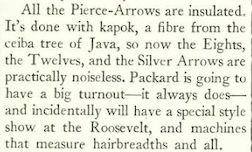
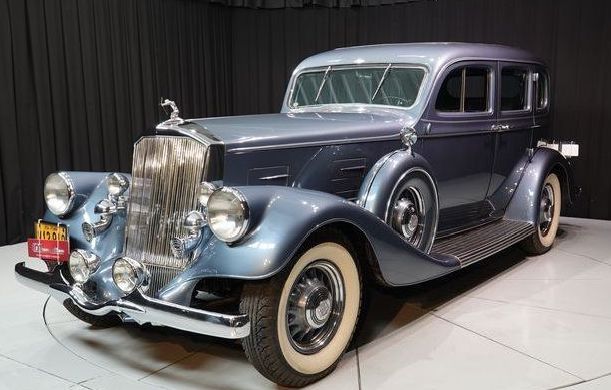
…still more selections from the back pages…on the left, an ad for Pear’s Soap that introduced us to “wise parents” whose children “are well-bred—the ‘nice people’ of tomorrow”…on the right, the lifeless gaze of a woman who pondered how life could be better in Tudor City…and in the middle, an unlikely one-column ad from luxury car maker Pierce Arrow…the automaker was America’s answer to Rolls Royce, but the Depression would take it down by 1938…
…I’m guessing the Velveeta is the mild one…
…technology was transforming beachwear, including this “Swagger Boy” outfit spun from Dupont’s latest synthetic, Acele…
…B. Altman, on the other hand, went full-color to promote their exclusive, imported fabric under the trade name Meadowbrook…
…and who ever thought a tire could look so posh, here dominating a gathering of the smart set…
…and look at this swell, sporting top hat and walking stick, but he also knows a good value when it comes to his tires…
…we move on to our cartoons with James Thurber and a lot of people apparently going nowhere…
…Helen Hokinson’s girls were all ears at the latest club gathering…
…Otto Soglow’s Little King got in on the excitement of legal beer…
…and we continue to the issue of May 20, 1933, with a cover by Arnold Hall, who did at least eight covers for The New Yorker during the 1930s…
May 20, 1933 cover by Arnold Hall.
The big news in this issue was Mexican artist Diego Rivera and his controversial mural at Rockefeller Center. Rivera’s New Yorker profile was written by Geoffrey Hellman (1907–1977), who beginning in 1929 served as the magazine’s principal writer for “The Talk of the Town.” Here’s an excerpt, with illustration by Al Frueh:
What got Rivera in hot water with John D. Rockefeller Jr. and family was a mural that departed somewhat from the artist’s earlier study sketches—Rivera had been hired to depict “man at the crossroads,” looking to the future with uncertainty but also with hope for a better world.
According to a 2014 story by NPR’s Allison Keyes, leftist organizations and various communist groups in New York criticized Rivera for agreeing to work with capitalist paragons like the Rockefellers. In response, Rivera sent assistants to find a picture of Bolshevik leader Vladimir Lenin. “If you want communism, I will paint communism,” he apparently said.
The subsequent inclusion of Lenin in the mural led to protests by the Rockefeller family, the press and the public. Rivera was ultimately asked to leave the country, losing yet another commission for the Chicago World’s Fair. Rivera got paid for his Rockefeller Center mural, but the work itself was demolished.
After returning to Mexico Rivera recreated the mural, adding some vengeful references (see below) to his 1934 work, Man, Controller of the Universe.
Rivera’s wife, Frida Kahlo, had accompanied him to New York, and during their time in the states (1930-34) she produced a number of now-famous paintings. However in 1933 she was not recognized as a serious artist. Indeed when she visited with the Detroit News in 1932, the headline read, “Wife of the Master Mural Painter Gleefully Dabbles in Works of Art.” In the same vein, Hellman perceived Kahlo as nothing more than a pretty helpmeet.
MORE THAN A PRETTY FACE…At left, Diego Rivera and Frida Kahlo attending an art exhibition in New York, 1933; at right, Kahlo and Rivera before the controversial mural at Rockefeller Center. Although an unknown in the art world in 1933, Kahlo would one day eclipse her husband’s fame. (SFGate/Pinterest)MISCONCEPTION…Clockwise, from top, an early sketch of the Diego Rivera’s mural differed from what he ultimately painted in Rockefeller Center. After the mural was destroyed in 1934, Rivera recreated the work under the title Man, Controller of the Universe, now on display at the Palacio de Bellas Artes in Mexico City. A detail of that work shows Vladimir Lenin holding hands with workers of different races. Below, juxtaposed with the image of Lenin in that painting was another famous face, that of John D. Rockefeller Jr., depicted drinking martinis with a prostitute. Touché!(Museo Frida Kahlo)
Rivera’s Rockefeller Center mural was eventually replaced in 1937 by American Progress, painted by the Spanish artist José Maria Sert:
(Flickr)
The irony of the Rivera controversy was not lost on E.B. White, who offered this ballad in response:
* * *
Keep it in Your Pocket
E.B. White again, this time opening his column with thoughts on the anti-Hitler parade that was held in New York.
White refers to his “swastika watchfob”…before the Nazis came to power, the swastika was known to many cultures as a symbol of prosperity and good luck.
IT’S THE REAL THING…In 1925 Coca Cola made a lucky brass watch fob in the shape of a swastika. At that time the swastika was still a symbol of good luck. (Reddit)SHOW OF UNITY…Anti-Hitler parade in New York protested the May 10, 1933 book burnings across Nazi Germany. (encyclopedia.ushmm.org)
In his weekly column Howard Brubaker added this observation regarding life in Nazi Germany…
Back home, folks could still enjoy a taste of Germany that wasn’t associated with violence and hate…an excerpt from “The Talk of the Town”…
GEMÜTLICH…Lüchow’s opened in 1882 when Union Square was still New York’s theater and music hall district, and featured seven dining rooms and a beer garden. The restaurant closed in 1982 and was demolished in 1995 to make way for an NYU dormitory. (Pinterest/MCNY)
* * *
From Our Advertisers
The architecture profession fell on hard times during the Depression. In 1931 the Architects’ Emergency Committee began promoting the talents of unemployed architects who were willing to work for less than half their ordinary fee, limiting charges to materials, a small amount of cash, and a place to sleep…this is an example of a series of ads that ran in The New Yorker in the spring of 1933…
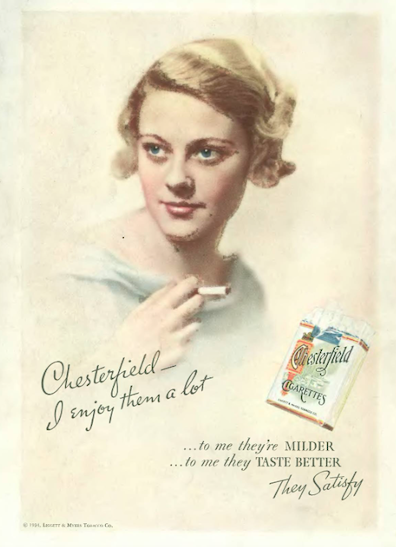
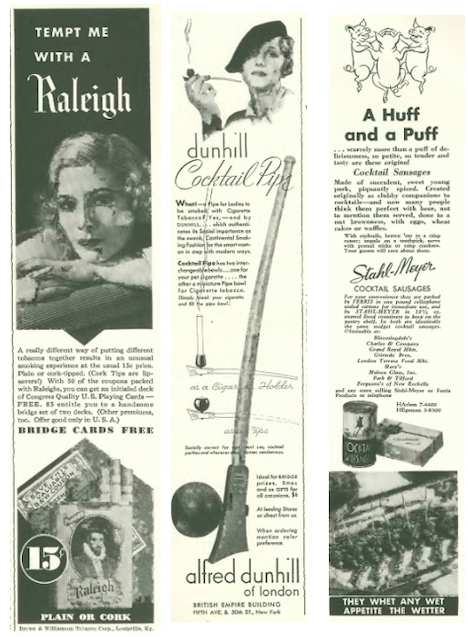
…one profession not feeling the hard times?—the makers of tobacco products, and specifically cigarettes…
…speaking of hard times, we turn to our cartoons and Gardner Rea…
…and we close on a bright note, otherwise known as Peter Arno…