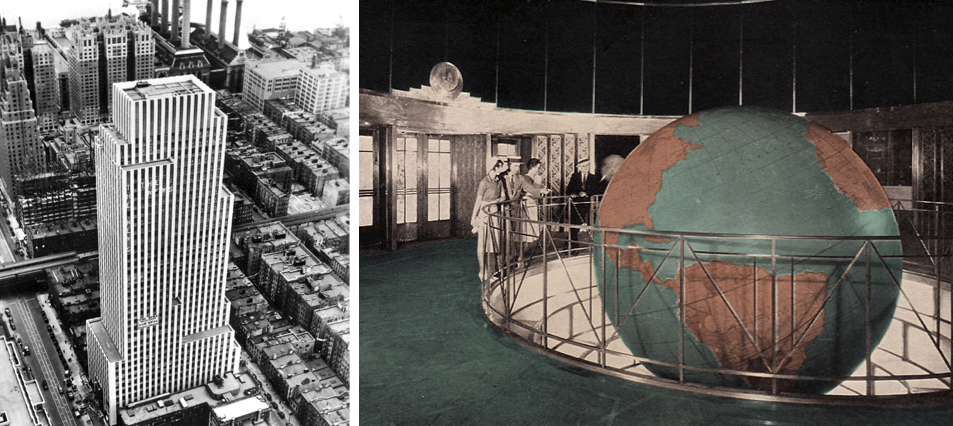
We close out the boiling August of 1930 with Wolcott Gibbs and his fanciful musings regarding the future offices of The New Yorker, inspired by his recent visit to the glitzy new lobby of the New York Daily News Building.
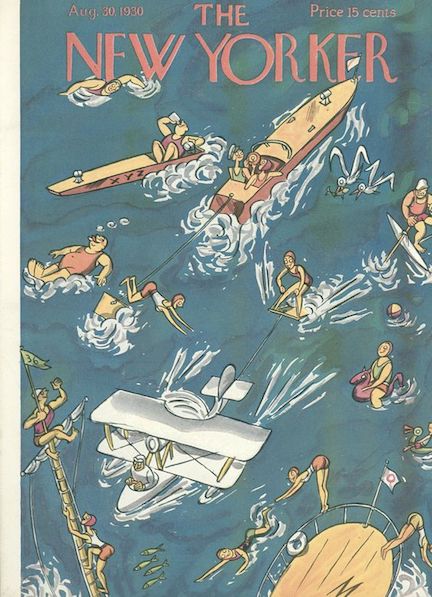
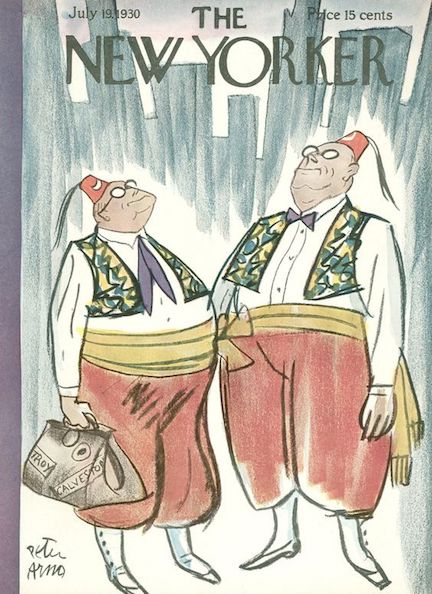
August 30, 1930 cover by Julian De Miskey.
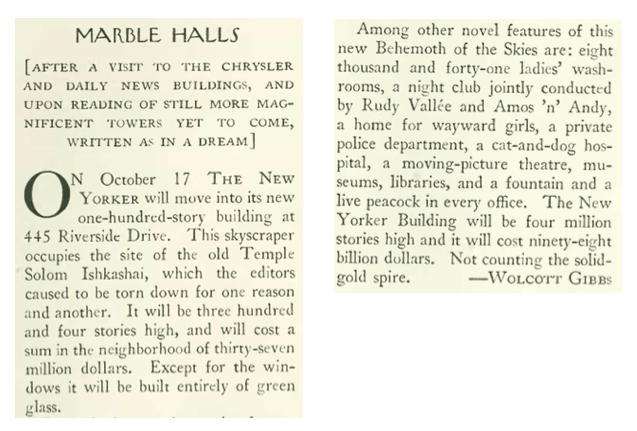
I include a brief excerpt of Gibb’s tongue-in-cheek fantasy of the future, which inadvertently foresees The New Yorker’s current offices (see contrast of old and new above) in the gleaming glass tower now known as One World Trade Center:
THAT WAS THEN…The New Yorker’s first offices were located at 25 West 45th Street, a 16-story building erected in 1913 (it still stands). It’s almost impossible to find images of The New Yorker’s early office spaces, but you can probably get some idea from these photos of another tenant of the building, the Y.M.C.A. Dental School. (Museum of the City of New York/New York Public Library)THIS IS NOW…Almost in fulfillment of Wolcott Gibbs’ fantasy, The New Yorker today occupies offices in the Condé Nast section (images above) of the 104-story, 1,776 foot One World Trade Center (floors 20 to 44). When The New Yorker moved onto the building’s 38th floor in early 2015 (one floor above Wired), it marked the first time the magazine was located outside of a small area in Midtown. (New York Magazine/interiordesign.net)
* * *
His Bit of Earth
“The Talk of the Town” noted an increasingly rare sight along Fifth Avenue, a private garden created by Thomas Fortune Ryan that in 1930 was occupied by his son Clendenin J Ryan:
DUST TO DUST…Thomas Fortune Ryan demolished the Charles T. Yerkes mansion and its art galleries (before and after photos, top, and image of a gallery, bottom right) to make way for his private flower garden, which is visible in the bottom left hand corner of the image at top right. An apartment building erected in 1937 (bottom left) occupies the site today. (Museum of the City of New York/Alice Lum)
* * *
From Our Advertisers
Backgammon became all the rage in the 1930, so much so that one Grosvenor Nicholas, “a famous authority on backgammon,” commanded a fill-page ad from Saks…
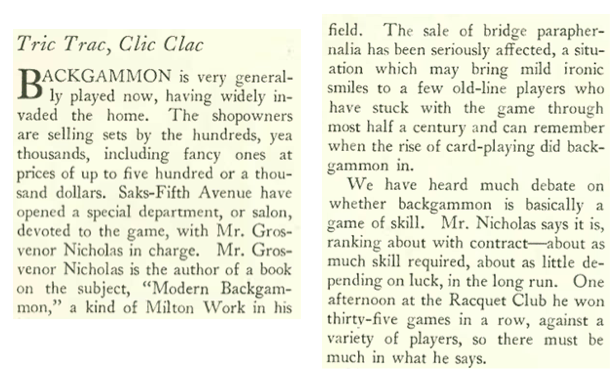
…for reference, The New Yorker made note of Nicholas’s visit in the Sept. 6 “Talk of the Town”…
OR WATCH THE YOUTUBE VIDEO…Leila Hattersley, author of 1930s How to play the New Backgammon, teaching at a New York Club (bkgm.com)
…celebrity endorsements continued to grow in importance in the 1930s, here the famed Australian-born British actress Judith Anderson (1897-1992) marvels at the products manufactured by Angelus…
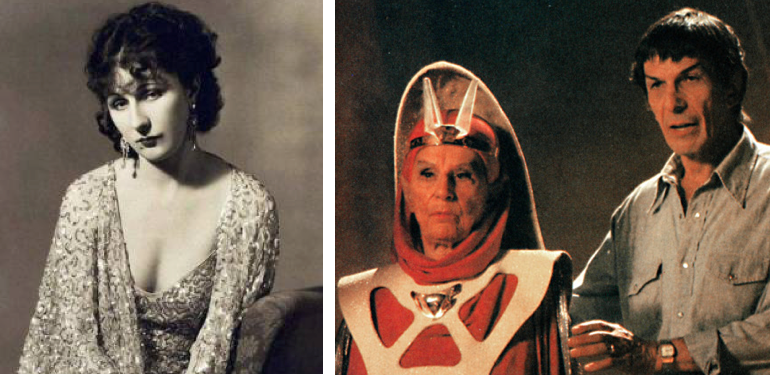
…Anderson would later be made a “Dame,” and would enjoy a long career and a long life, even appearing in 1984’s Star Trek III: The Search for Spock as the Vulcan High Priestess T’Lar…
VERSATILE…At left, Dame Judith Anderson in 1932. At right, Anderson on the set of 1984’s Star Trek III: The Search for Spock, with actor Leonard Nimoy. (Tumblr)
…this ad for Buick shows a rich gent dismissing his chauffeur, something he would probably have to do permanently as the Depression continued to ruin fortunes…
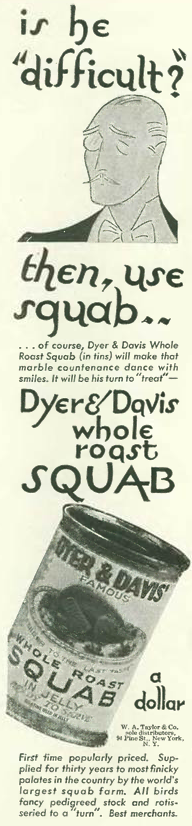
…and perhaps a lost fortune could lead to one being “difficult,” and in that case Dyers & Dyers could sooth the hurt with squab from a can…
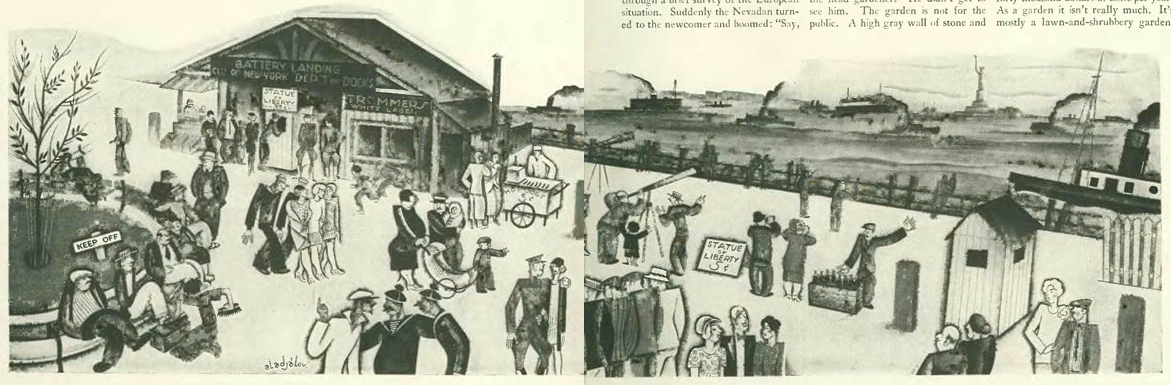
…on to our cartoonists, we have Constantin Alajalov illustrating a scene at the Battery…
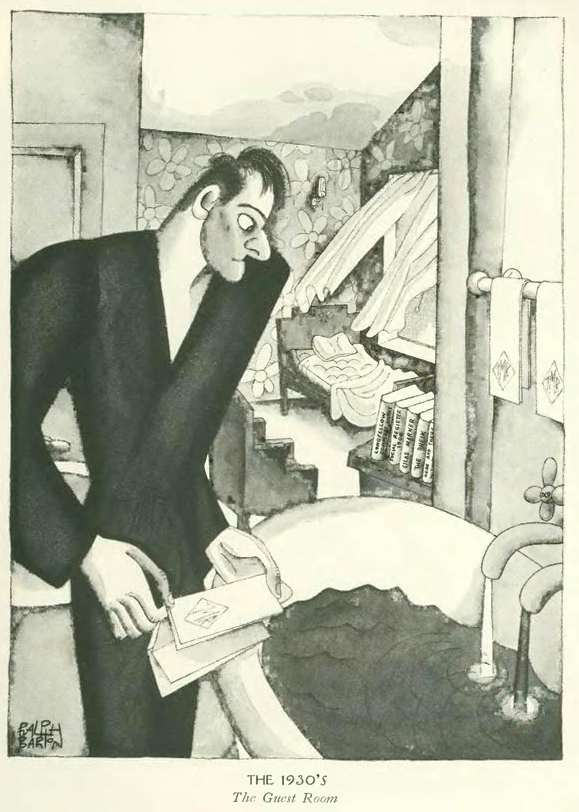
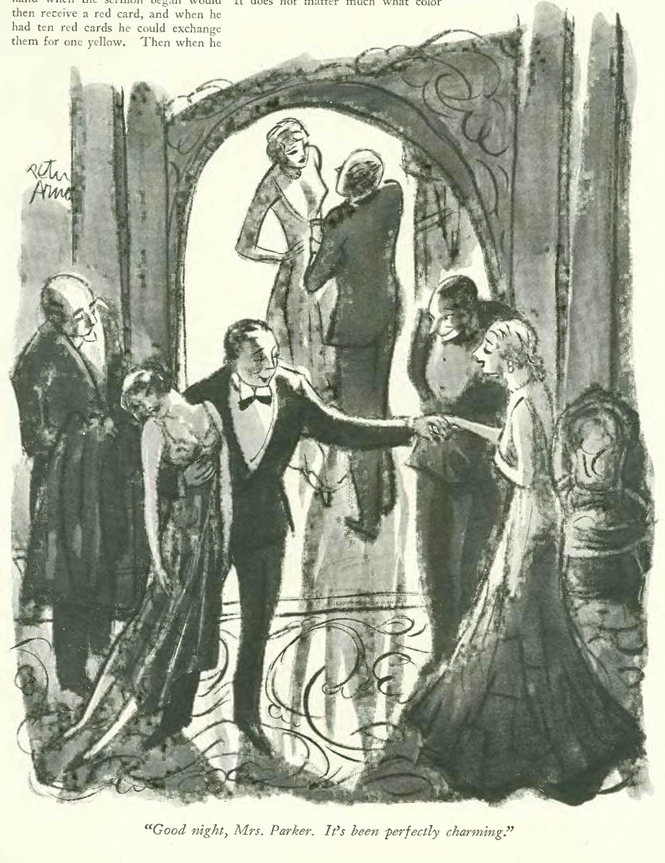
…Ralph Barton continued his interpretations of a new decade…
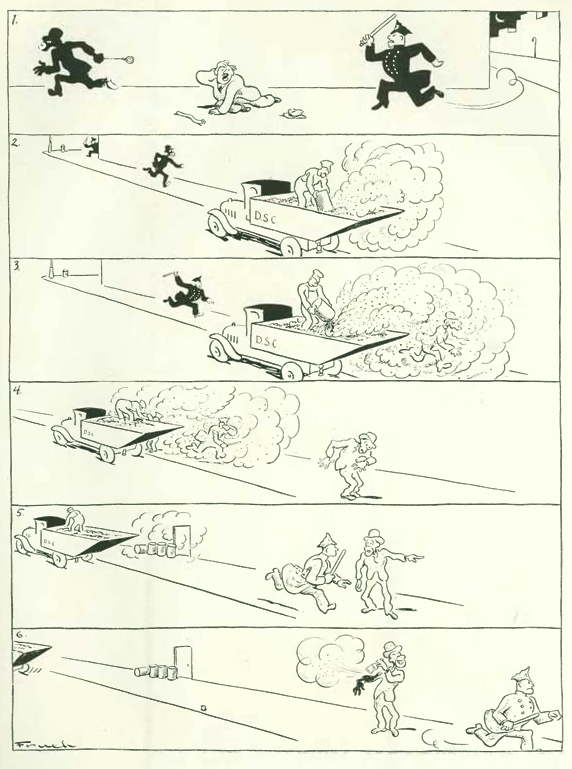
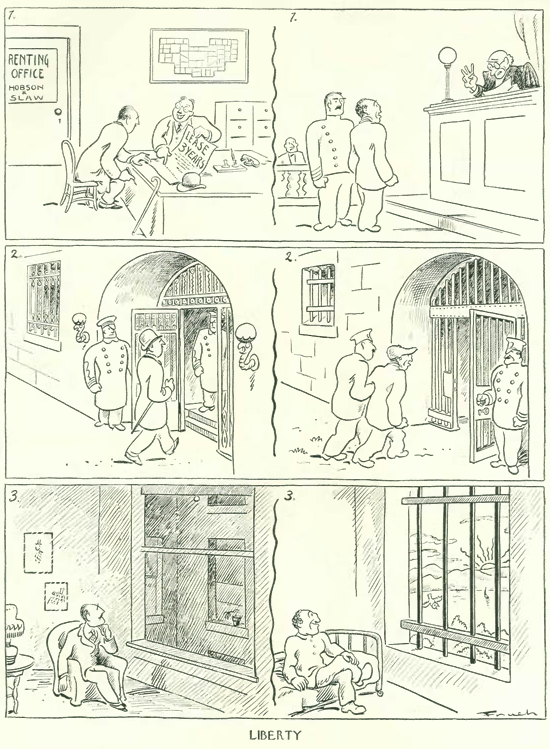
…some unfortunate racial humor from Al Frueh…
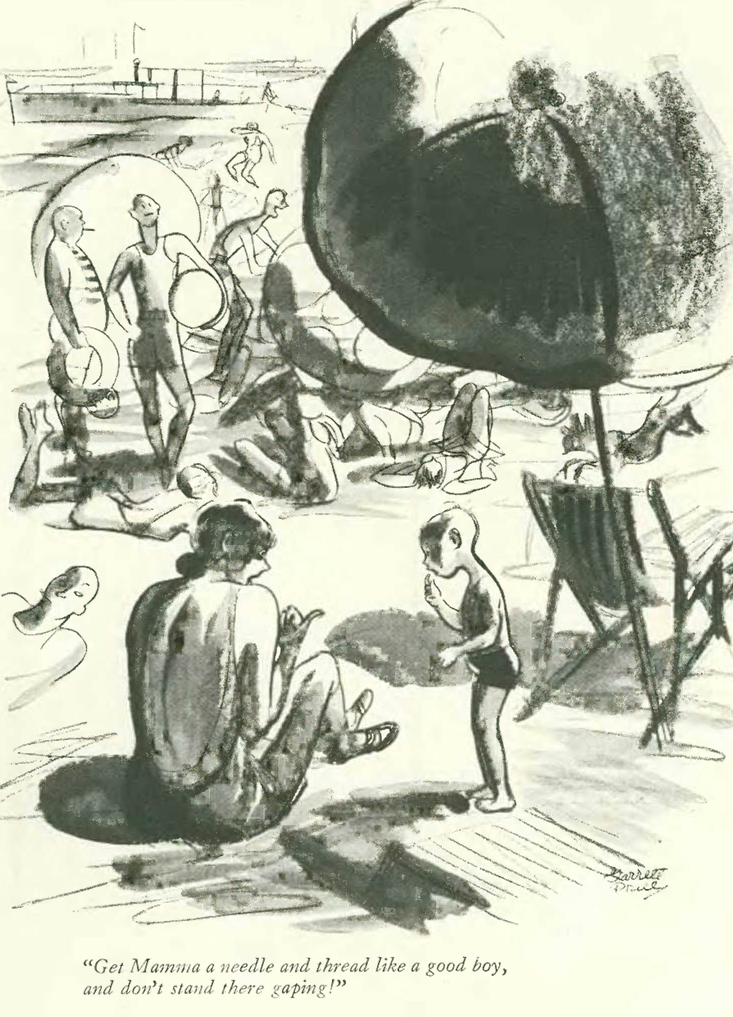
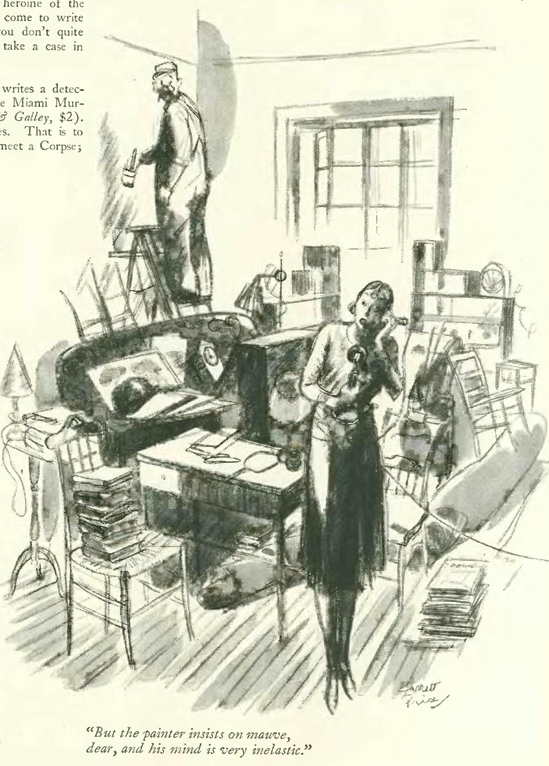
…an indelicate moment at the beach, courtesy Garrett Price…
…Perry Barlow looked at the challenges of city life…
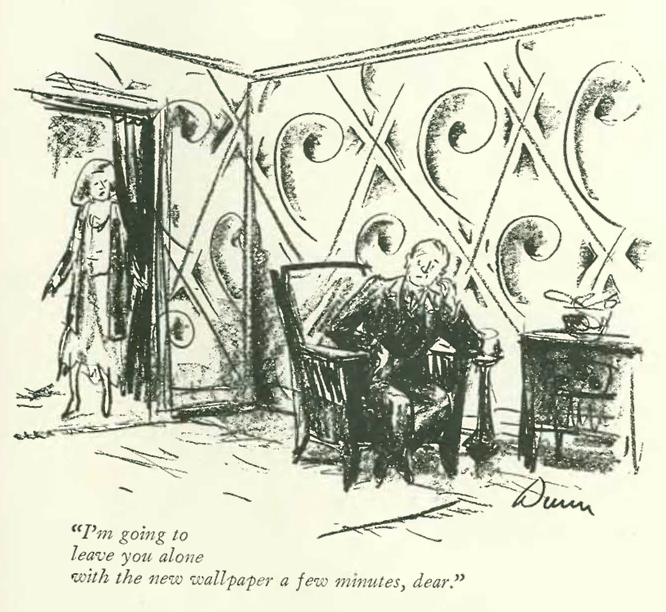
…and Alan Dunn found a man with a case of the moderns…
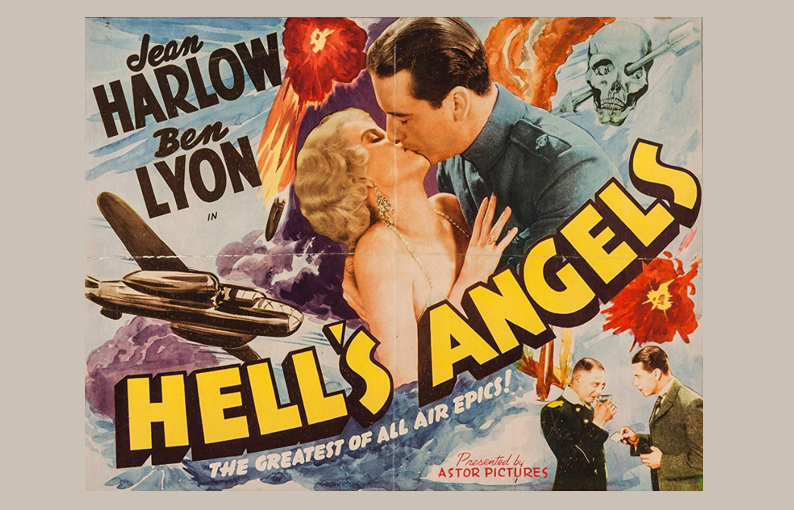
Among the films in 1930 that marked a new era in motion pictures was Howard Hughes’s epic war film Hell’s Angels.
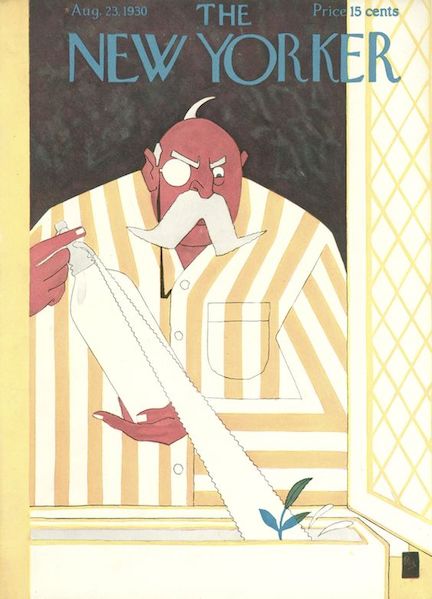
August 23 cover by Gardner Rea.
Originally shot as a silent, Hughes (1905-1976) retooled the film, and over a period of three years (1927-30) poured much of his own money into making what many consider to be Hollywood’s first sound action movie. The film also introduced audiences to 19-year-old Jean Harlow (1911-1937), handpicked by Hughes to replace Norwegian actress Greta Nissen in the lead role (Nissen’s accent posed a problem for the talkies). The film would make Harlow an instant star, propelling her to worldwide fame as the “Platinum Blonde” sex symbol of the 1930s.
Beset by delays due to Hughes’s incessant tinkering, the movie was famously expensive. For example, a total 137 pilots were used in just one flying scene at the end of the film. In addition to monetary costs, the filming also claimed the lives of three pilots and a mechanic, and Hughes himself would fracture his skull during a stunt flying attempt.
PRE-CODE…Before Will Hays imposed his moral code on Hollywood, films in the early thirties were frank with sexual references, as the image at left attests. When Howard Hughes switched the filming of Hell’s Angels to sound, he replaced Norwegian actress Greta Nissen with 19-year-old Jean Harlow (seen with co-star Ben Lyon). Harlow’s first major film appearance would make her an overnight star; at right, Frank Clarke and Roy Wilson flying an S.E.5A (front) and a Fokker D.VII (back, note camera) in the filming of Hell’s Angels. (Wikipedia)
The New Yorker’sJohn Mosher found the action scenes enticing, but the acting left something to be desired…
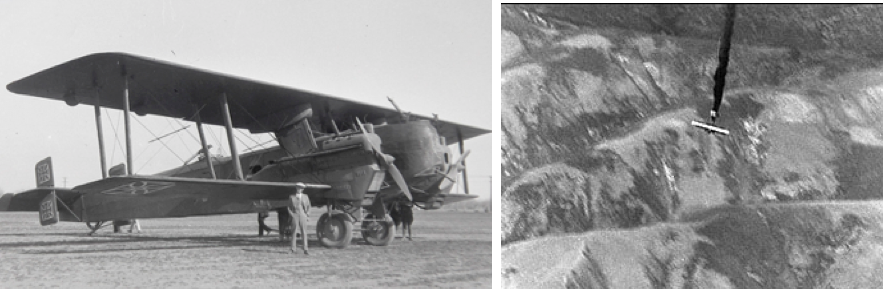
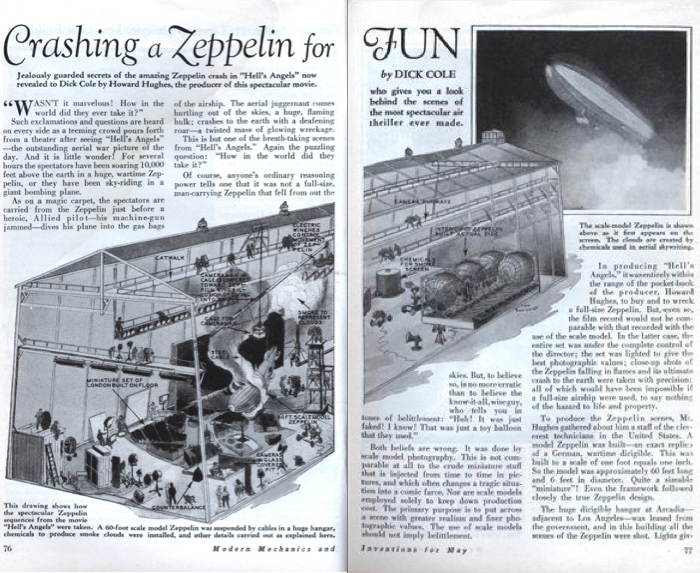
COSTLY VENTURE …This Sikorsky S-29A (left), repainted to represent a German Gotha bomber, would crash into the California hills during filming (right), killing mechanic Phil Jones, who failed to bail out along with the pilot. (Northrop Grumman)GEE WHIZ…The media often reported on the progress of the film, such as in this May 1930 article in Modern Mechanics and Inventions that detailed a $1 million sequence in which a fighter dives his plane into the top of a Zeppelin, causing it to explode and crash to earth. (Modern Mechanix)
We skip ahead briefly to the Aug. 30 issue, in which “The Talk of Town” featured a mini profile of Howard Hughes and his film. Note how Hughes’s extravagance is described through his frequent use of long-distance telephone calls:
A STAR IS BORN…19-year-old Jean Harlow and Ben Lyon in 1930’s Hell’s Angels. (IMDB/Pinterest)
* * *
A Whale of a Movie
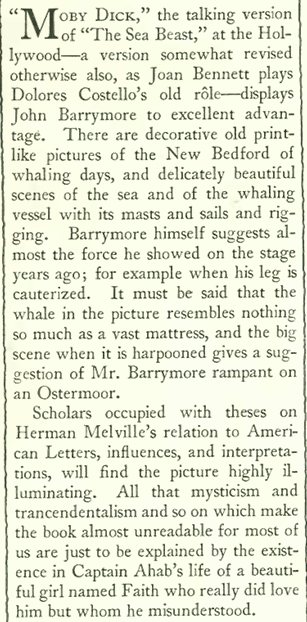
Critic John Mosher also took in a film adaptation of Herman Melville’sMoby Dick, a very loose adaptation that excluded the novel’s central character, Ishmael, and invented a love story for the maniacal Capt. Ahab…
A WHALE OF A STORY…From left, Noble Johnson as Queequeg, John Barrymore as Ahab, and Walter Long as Stubbs in 1930’s Moby Dick. At right, top, the whale puts the hurt on a boat; bottom, Joan Bennett as Faith, a contrived love interest for the old salt. (IMDB)
* * *
Daily Dazzle
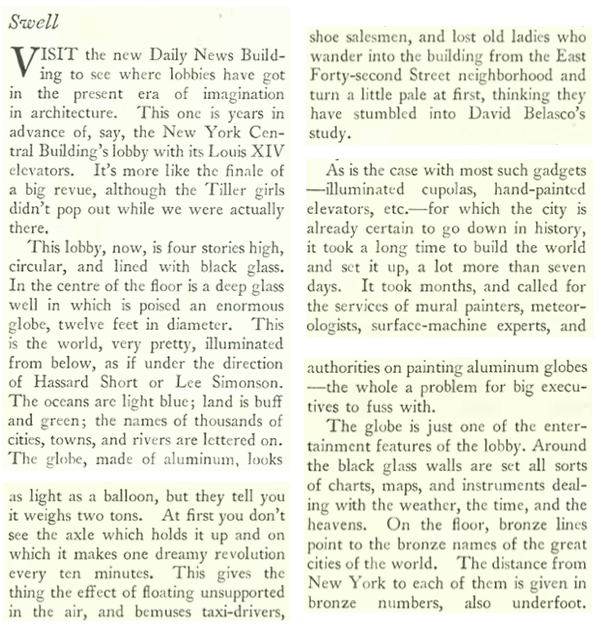
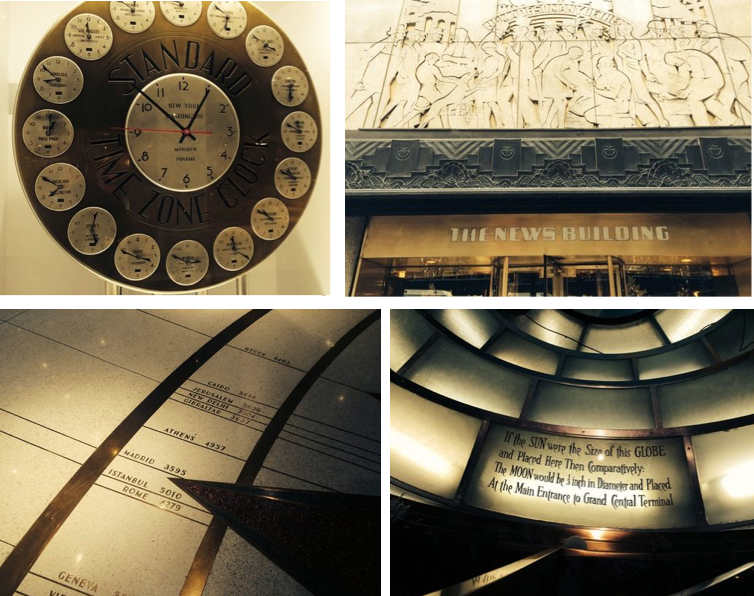
“The Talk of the Town” gushed over the lobby of the new Daily News Building, likening it to the glitz of a Broadway revue:
HOME FOR CLARK KENT…The Daily News Building served as the model for the headquarters of the fictional Daily Planet, the building where Superman worked as mild-mannered Clark Kent; at right, an image from 1941 of the lobby, dominated by the world’s largest indoor globe. (Wikipedia/Public Domain)A LOBBY FOR LEARNING…The lobby includes an array of clocks, top left, that give the time in various global destinations. (Luke J. Spencer via atlasobscura.com)
* * *
A Busboy’s Dream
Charles Pierre Casalasco left his life as a busboy in Corsica and studied haute cuisine in Paris before arriving at the shores of Manhattan in the early 1900s. He became a renowned headwaiter who by 1929 garnered enough financial backing from New York’s most powerful families to construct the exclusive Hotel Pierre. Writing under her pseudonym, “Penthouse,” New Yorker columnist Marcia Davenport described the building’s apartments to eager readers:
FUN WHILE IT LASTED…The 41-story, 714-room Hotel Pierre officially opened in October 1930 to great fanfare. The party would be short-lived, as the deepening Depression would force the hotel into bankruptcy just two years later. At right, photo of the Rotunda, before a 2017 remodeling. (New York Public Library)
* * *
So Much For Title IX
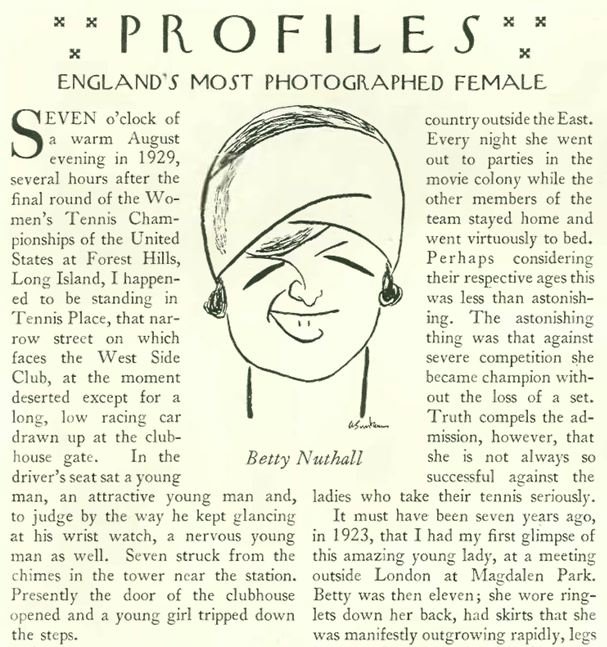
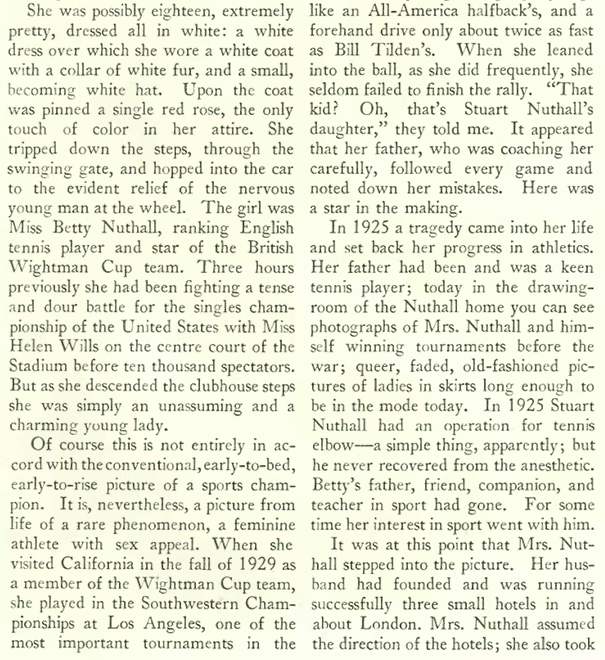
Then as now, women athletes were held to a separate set of standards, not only judged for their athletic abilities, but also for their “sex appeal,” as John Tunis suggests more than a few times in his profile of English tennis champion Betty Nuthall (1911-1983). Excerpts:
HOW’S THAT BACKHAND?…Betty Nuthall greets American tennis star Bill Tilden in September 1930; on the cover of Time after winning the 1930 U.S. Open. (Digital Commonwealth/Time Inc.)
* * *
Free Expression
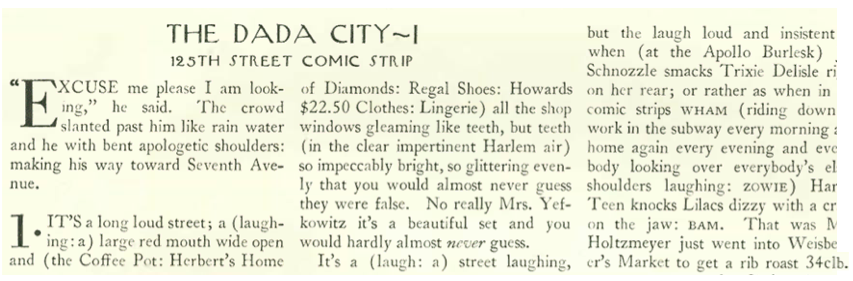
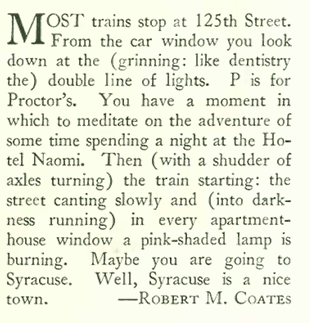
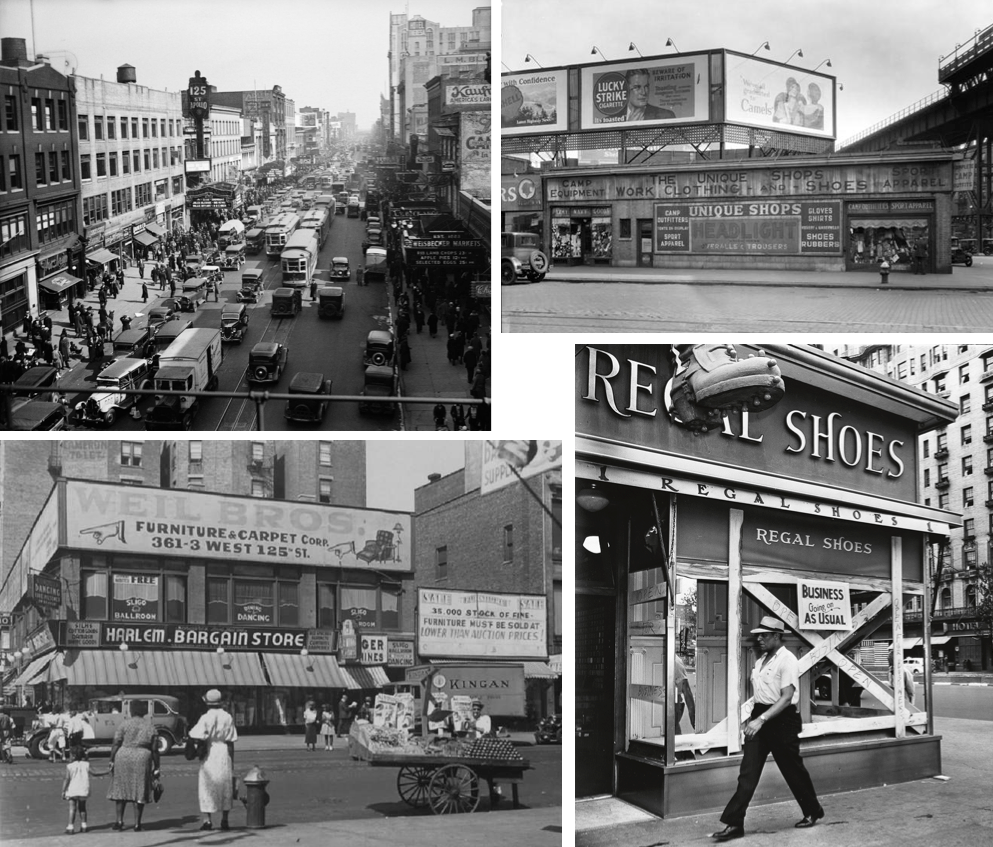
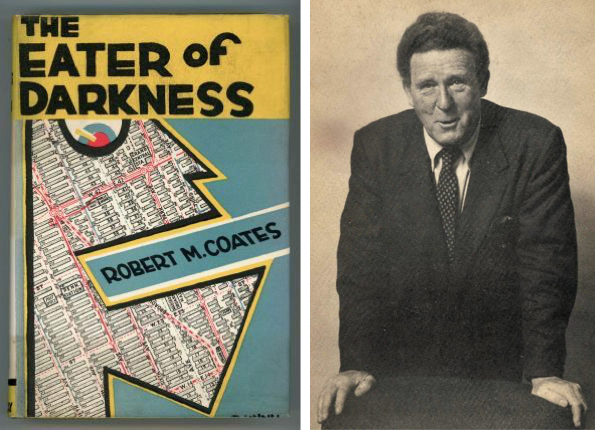
Robert Myron Coates (1897–1973) was a writer of experimental, expressionistic novels who later became a longtime art critic for The New Yorker (he is credited with coining the term “abstract expressionism” in 1946). In the Aug. 23 issue he contributed the first installment of “Dada City,” here describing street life in Harlem. Excerpts:
STREET LIFE…Scenes around Harlem’s 125th Street, clockwise from top left: the Apollo Theatre marquee punctuates a busy street scene in 1935; NW corner of 125th and Broadway, 1930; Regal Shoes storefront, 1940s, photo by Weegee; 125th and St. Nicholas Avenue in 1934. (Skyscraper City/Museum of the City of New York)AMERICAN ORIGINAL…Robert M. Coates’sThe Eater of Darkness (1926) has been called the first surrealist novel in English. (Goodreads)
* * *
From Our Advertisers
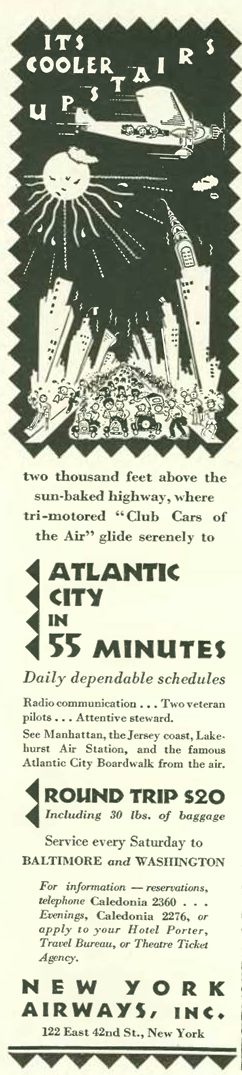
New Yorkers who were still enduring the brutal summer of 1930 could find relief, if they could afford it, on a New York Airways flight…
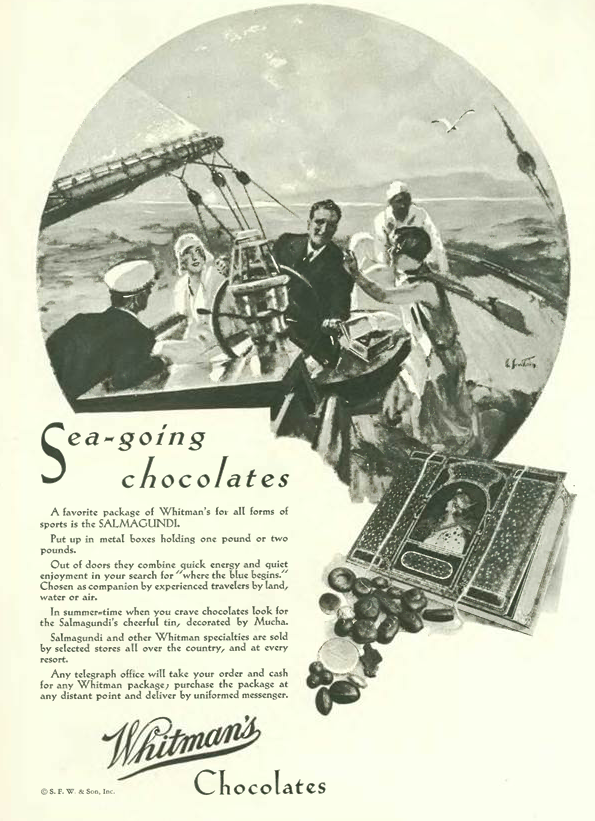
…or if you had the means, you could take your yacht out to sea, like this chap in a coat and tie who calmly steers with one hand while offering a box of chocolates to his guests with the other…
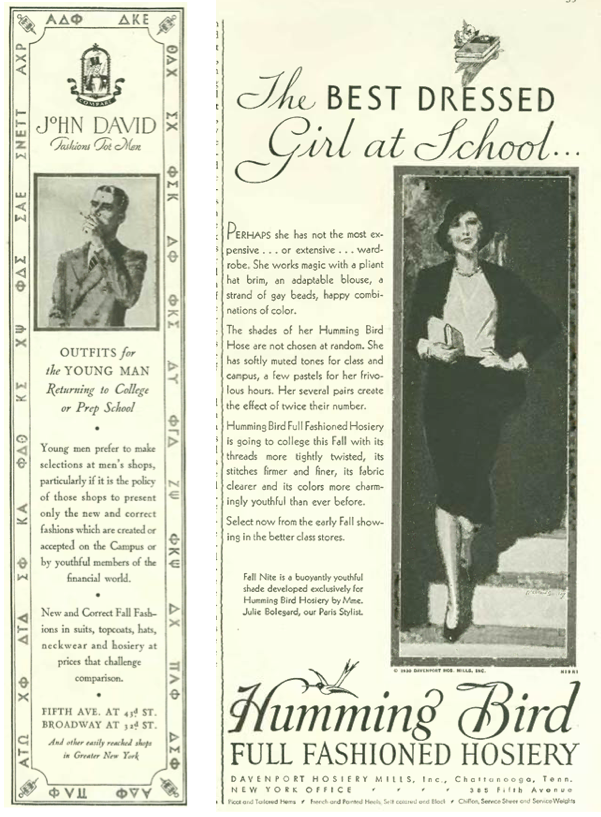
…our sailor wasn’t the only one dressed to nines…here are two ads offering suggestions to young folks returning to college or prep school…
…for comparison, this is how a group of college students at Columbia University dress today…
(Columbia University)
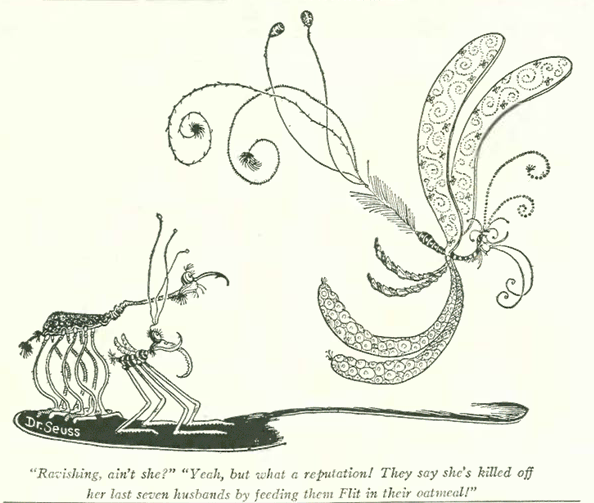
…Dr. Seuss continued to crank out drawings on behalf of Flit insecticide…
…and on to cartoons, yet another rerun (the sixth) of this Peter Arno drawing with a new caption (Dorothy Dix was a popular advice columnist)…
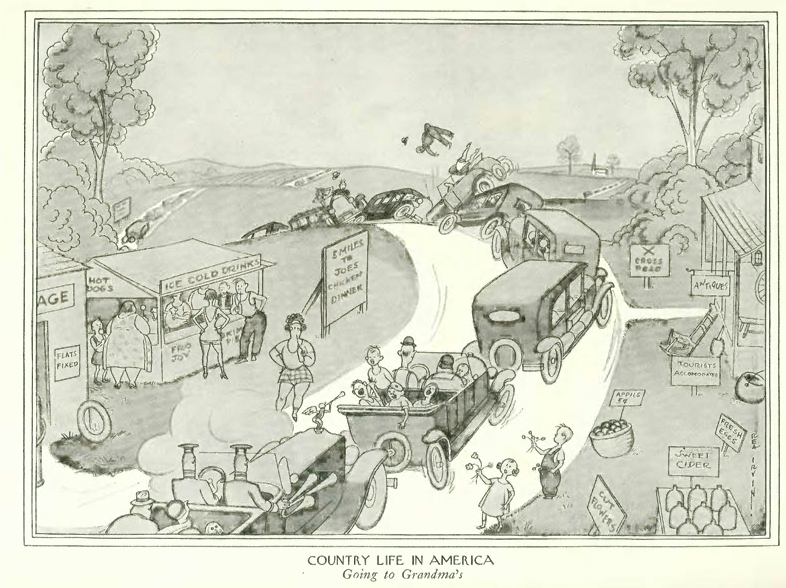
…and another look at country life courtesy Rea Irvin (originally printed sideways on a full page)…
…and another country scene, this time among the toffs, thanks to Garrett Price…
…back in the city, some parlor room chatter as depicted by Barbara Shermund…
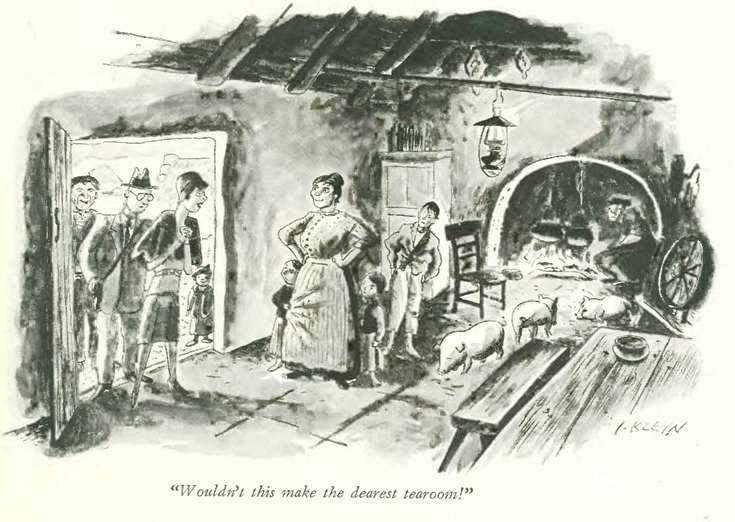
…downtown, Isadore Klein looked at the economic challenges of peep shows…
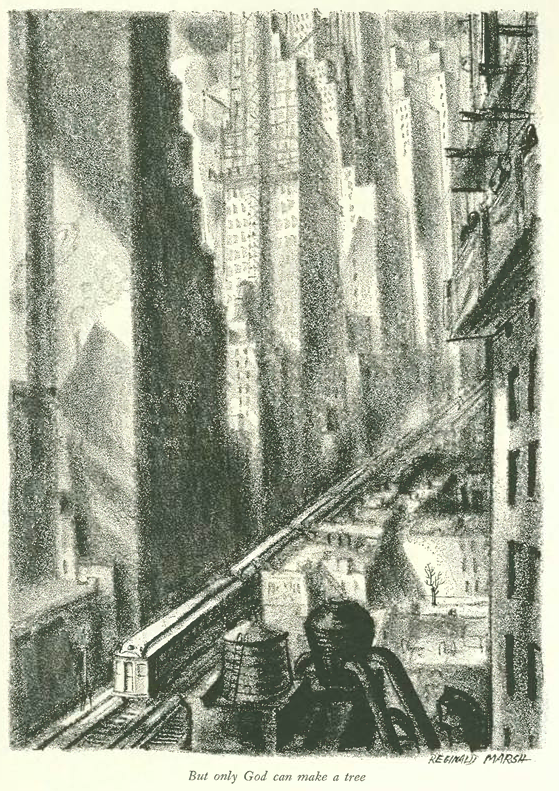
…and we close with this reflection on city life, by Reginald Marsh…
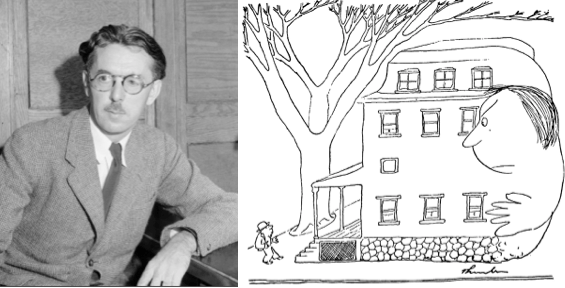
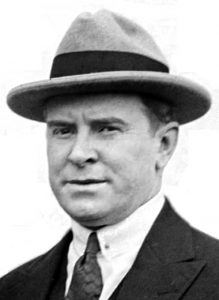
Whether probing the battle of sexes or exposing the secret lives of daydreamers like Walter Mitty, James Thurber (pictured above) had a knack for revealing the frustrations and various tics that plagued ordinary people.
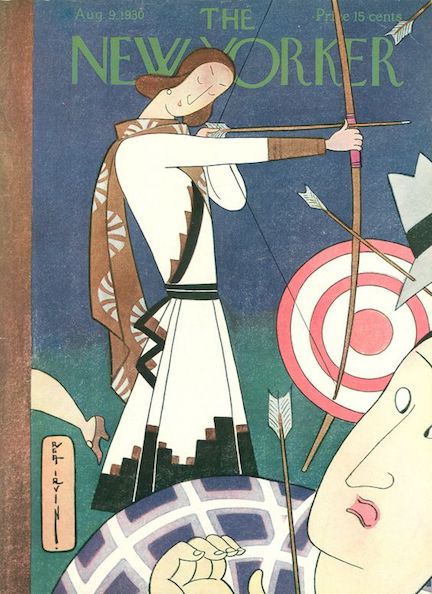
Aug. 9, 1930 cover by Rea Irvin.
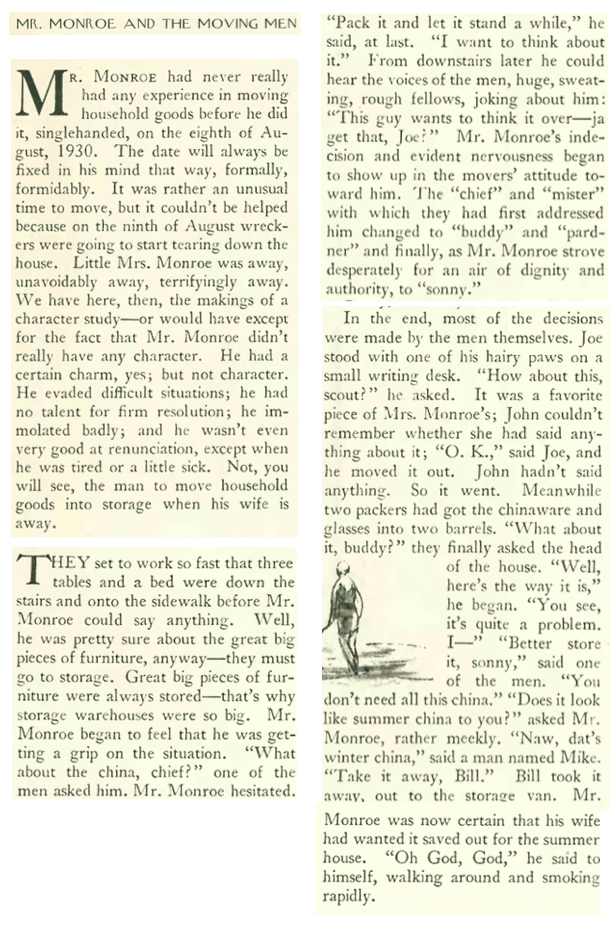
That included the fictional John Monroe, whom Thurber placed in various awkward situations in a series of humorous stories, including this encounter with some moving men that required the rather inept Monroe to make a series of decisions usually left to his wife, Ellen. Some excerpts from the Aug. 9 issue:
ODD COUPLES…Sue Randall and Orson Bean portrayed Ellen and John Monroe on a 1961 episode of The DuPont Show with June Allyson. (findagrave.com/Wikipedia)…a decade later, William Windom, left, and Joan Hotchkis portrayed John and Ellen Monroe on the Thurber-inspired (and award-winning) NBC comedy My World and Welcome to It (1969-70). (TV Guide)
* * *
Beats the Heat
In the hot August of 1930, film critic John Mosher probably found the air-conditioned theaters to be the best feature of the cinema, given the generally mediocre quality of the summer movies. Mosher also noted the new trend of adapting Broadway plays to the screen, a practice that continues to this day.
THE SOUND OF 1930…Joan Crawford (left) examines a boom microphone on the set of Our Blushing Brides. Although most films were produced with sound in 1930, it was still something of a novelty to actors who began their careers in the silent era; at right, Douglas Fairbanks Jr. and Anita Page in Little Accident. (IMDB)
* * *
From Our Advertisers
Well, who doesn’t love a whole chicken in jar, ready to “fry or cream” in just 20 minutes? This was actually a big deal in 1930, given that chicken dinners were not as common back in the days before factory farms and Chick-fil-A…
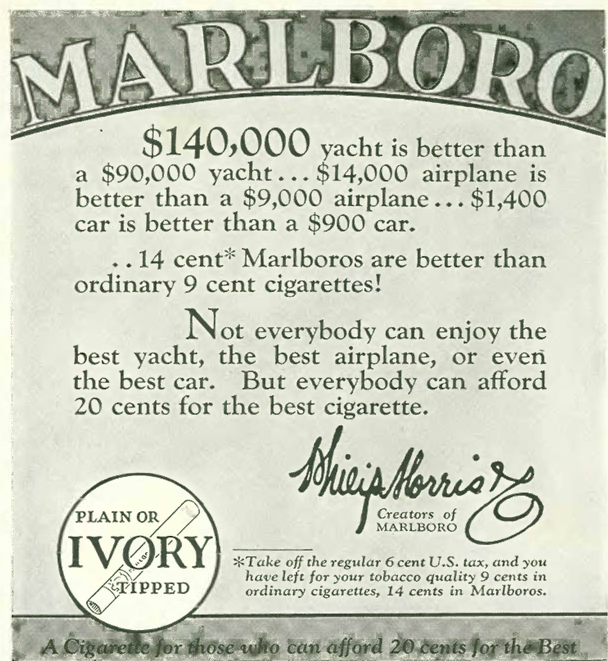
…the makers of Marlboro cigarettes abandoned their essay and penmanship contests and took another direction with their drab, back-page ads, appealing to a vague sense of status in the prospective smoker…
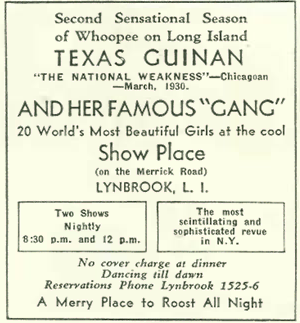
…this sad little bottom-of-the-page ad enticed readers to take a drive in the country to see Texas Guinan and her “Famous Gang” still whooping it up like it was 1925. The venture was short-lived…
…on to our cartoons, Peter Arno looked in on nightlife in the city…
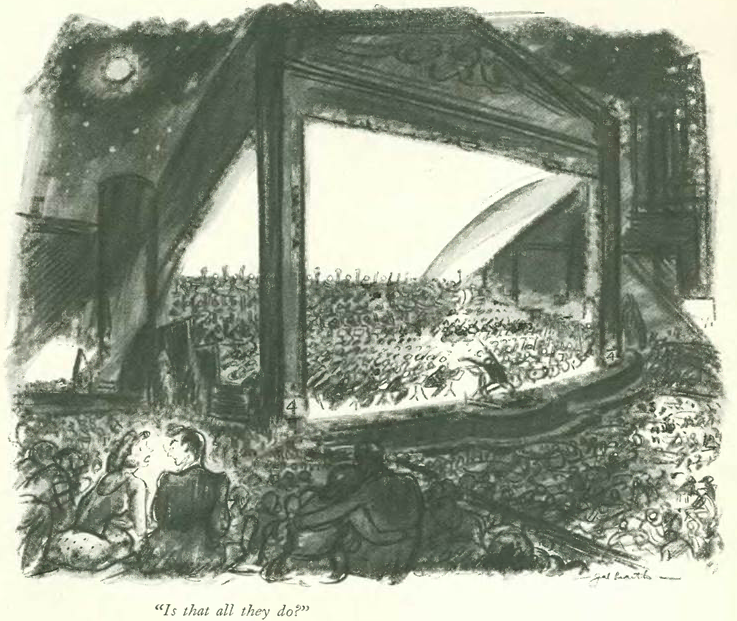
…William Crawford Galbraith took in an outdoor concert…
…Ralph Barton offered his comic skills to a glimpse of domestic life…
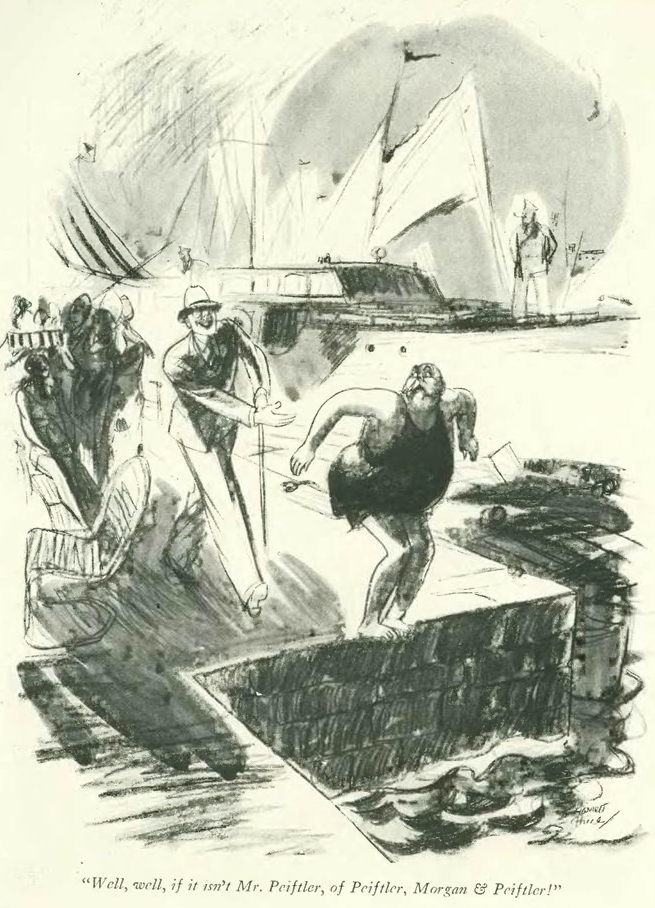
…Garrett Price observed some boaters on an outing that would be frowned upon today (or at least I hope so)…
…and Constantin Alajalov examined the pitfalls of modern art…
* * *
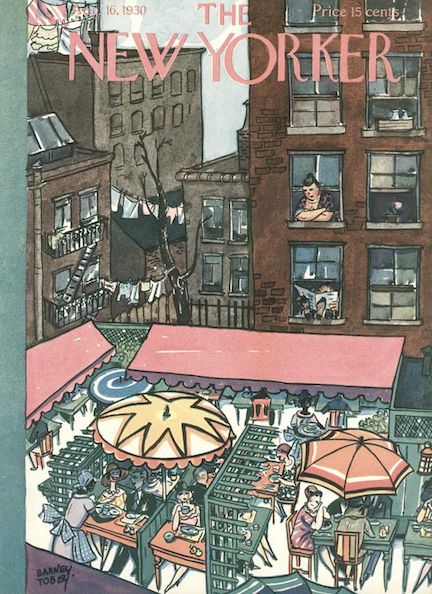
Speaking of art, we move on the Aug. 16, 1930 issue…
Aug. 16, 1930 cover by Barney Tobey.
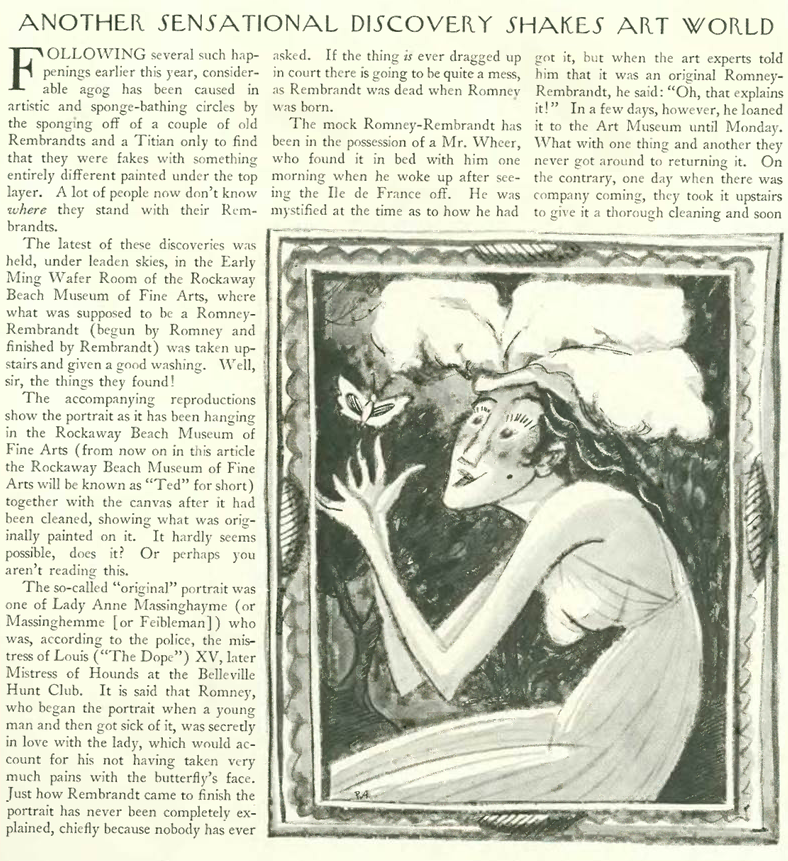
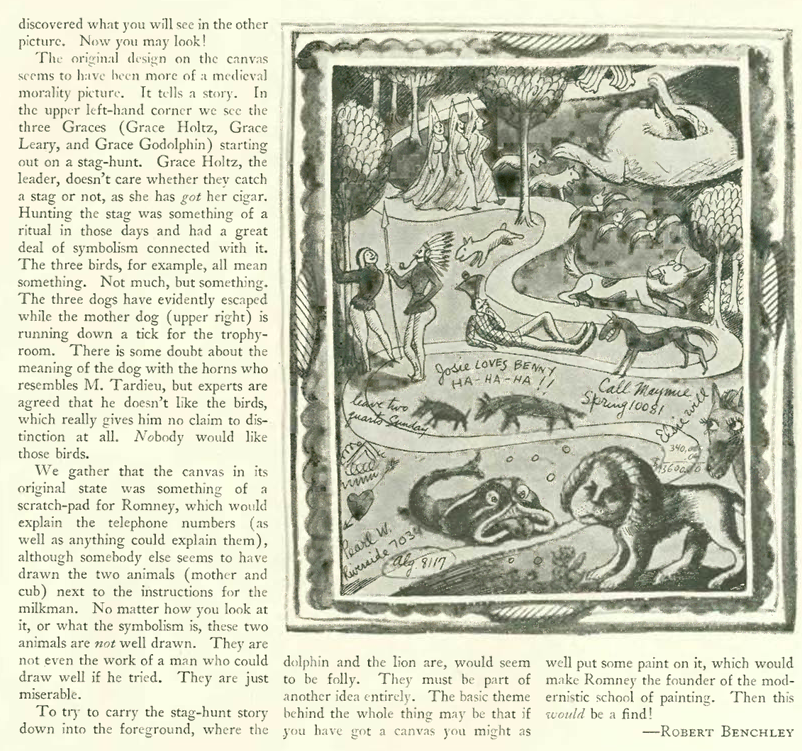
…in which Robert Benchley has fun with the foibles of the art world…
* * *
Rough Riders
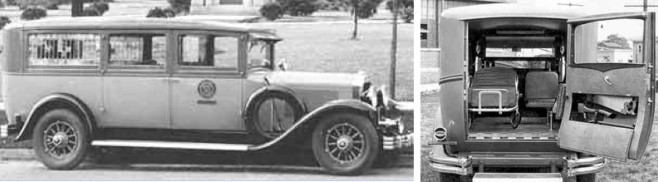
In his “Reporter at Large” column, Morris Markey looked in on the working world of one chain-smoking ambulance driver…some excerpts…
SLIDE ‘EM IN…1930s Flexible ambulance and its rather cramped interior. (coachbuilt.com)
* * *
From Our Advertisers
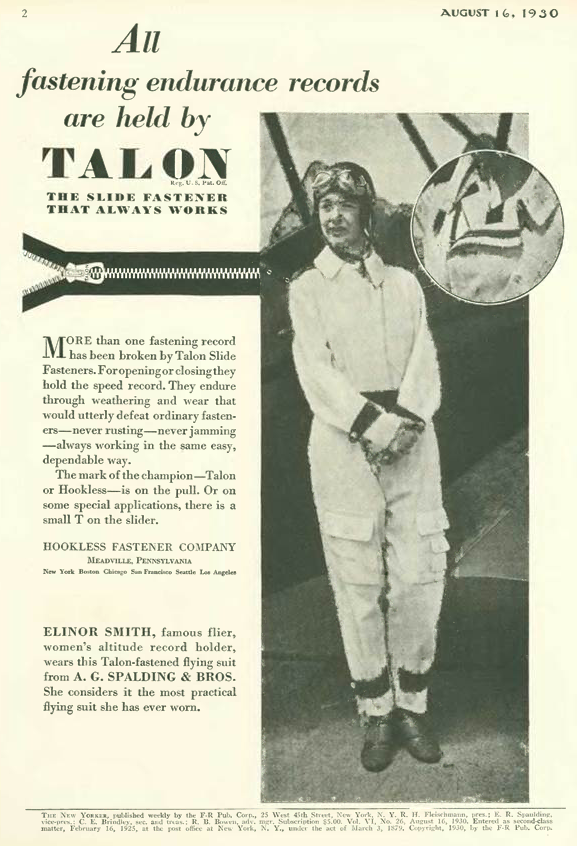
Hard to believe that zippers were a novel invention just 90 years ago…in this ad from the leading manufacturer, Talon, this “hookless” wonder was still referred to as a “slide fastener”…
…the Chrysler Corporation was never the biggest car company in America, but it was always known as a leader in both technology and design, as in these graceful lines that flowed over its new “Straight Eight” models…
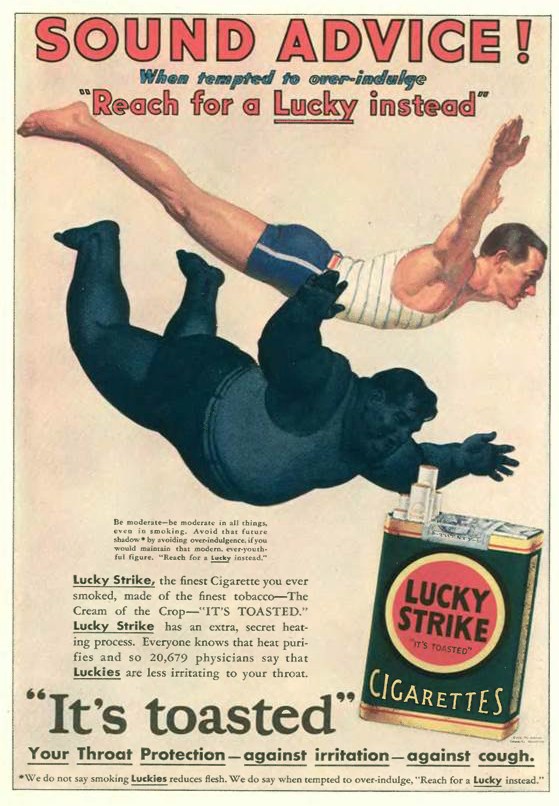
…the makers of Camel cigarettes continued to push their product as a sound way to stay fit and trim…
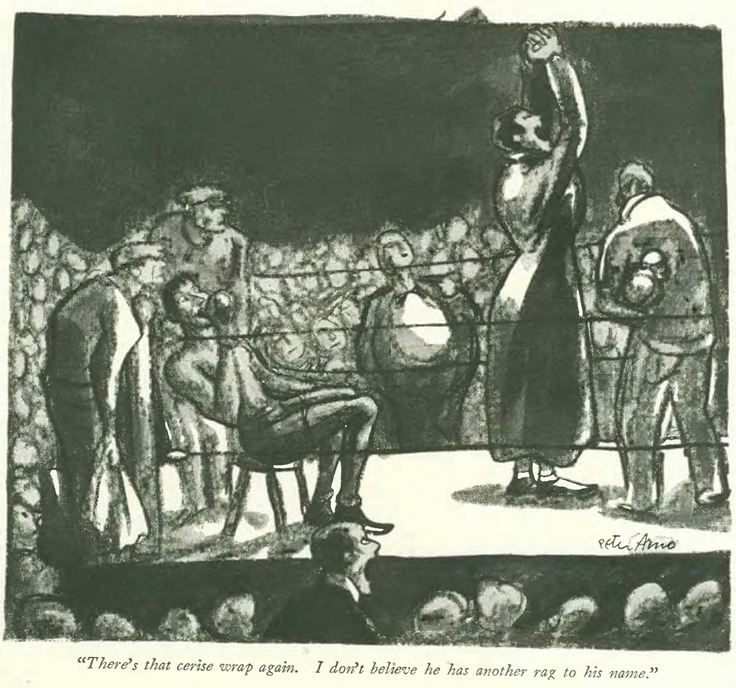
…in the cartoons for Aug. 16, this drawing by Peter Arno appeared for the fifth time in the magazine, always with a different caption (the others appeared in three consecutive issues — June 5, 12 and 19, and on Aug. 2, 1930)…
…William Crawford Galbraith detected some wet vs. dry tension at the country club…
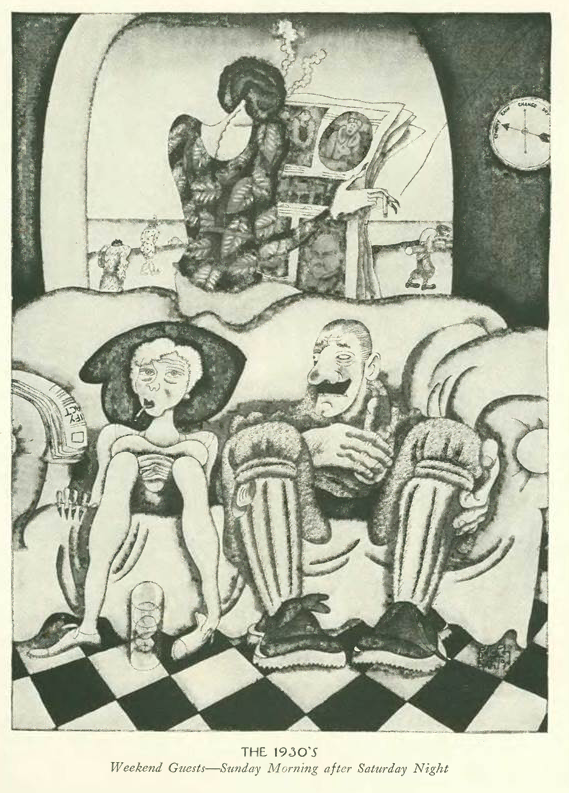
…Ralph Barton returned with another full-page illustration of a weekend domestic scene…
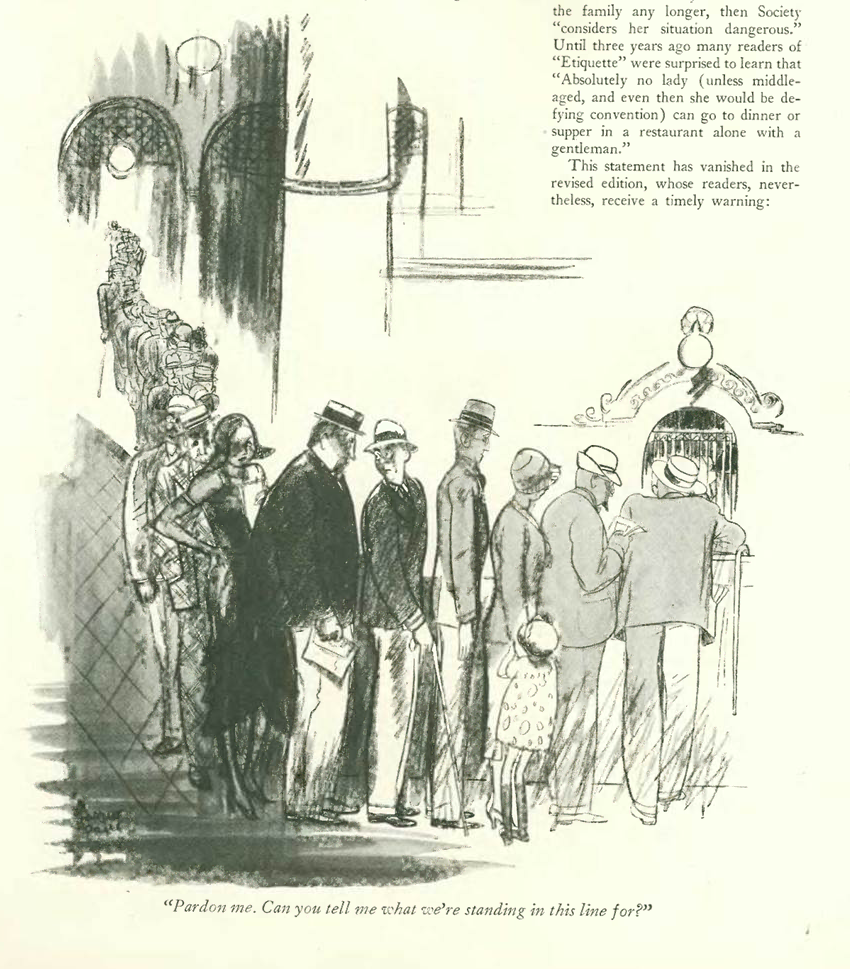
…Garrett Price found confusion in a lengthy queue…
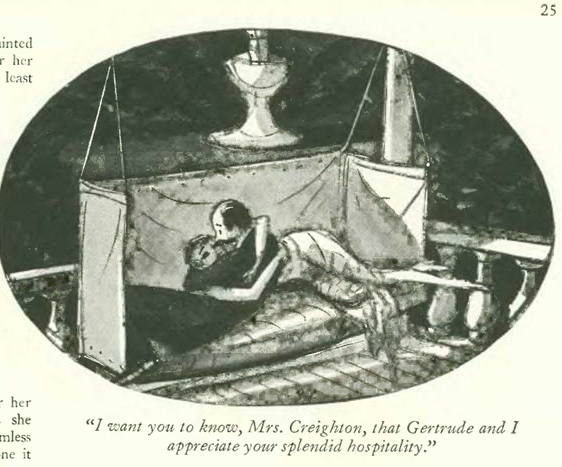
…and Kemp Starrett gave us a bird’s eye view of a future New Yorker…
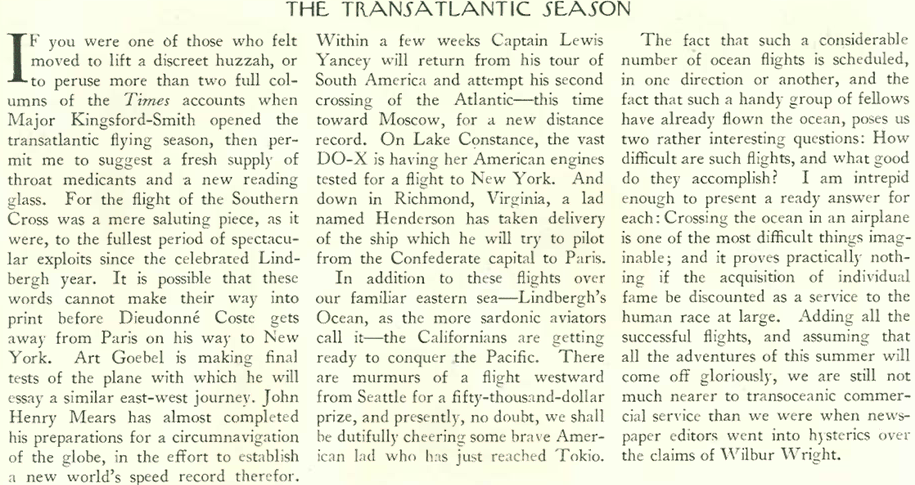
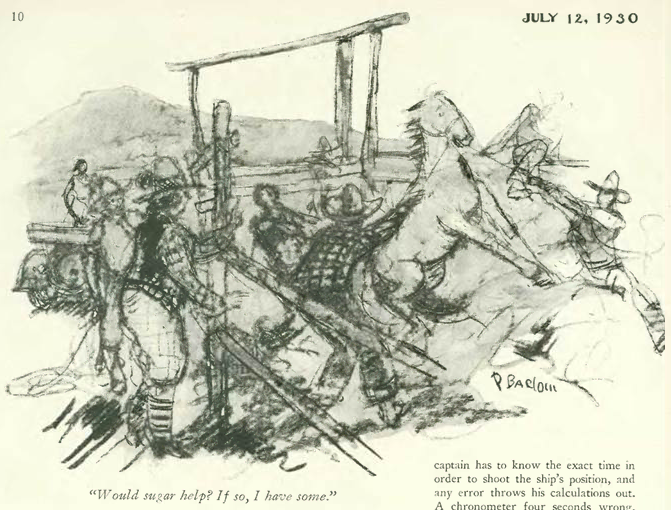
When Apollo astronauts landed on the moon fifty years ago, many skeptics asked the question, “What good does this accomplish?”
July 12, 1930 cover by Constantin Alajálov.
New Yorker writer Morris Markey posed the same question 89 years ago about transatlantic flights, then limited to a handful of daredevils chasing various speed and distance records. Crossing the ocean in an airplane, Markey observed, was “one of the most difficult things imaginable.” He concluded that despite the heroics of a few pilots, “we are still not much nearer to transoceanic commercial service…”
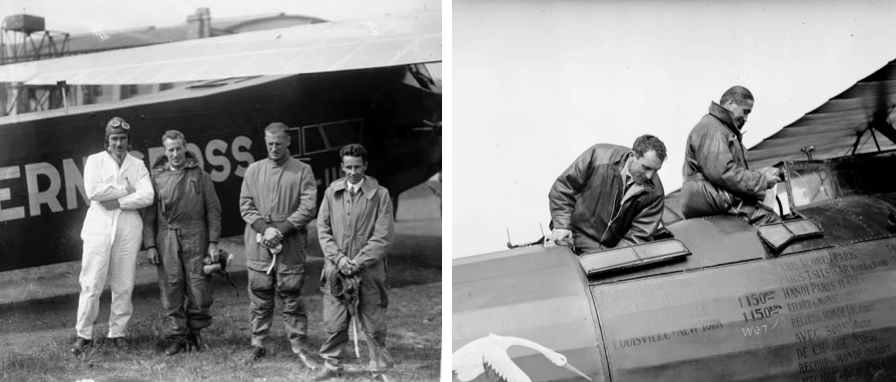
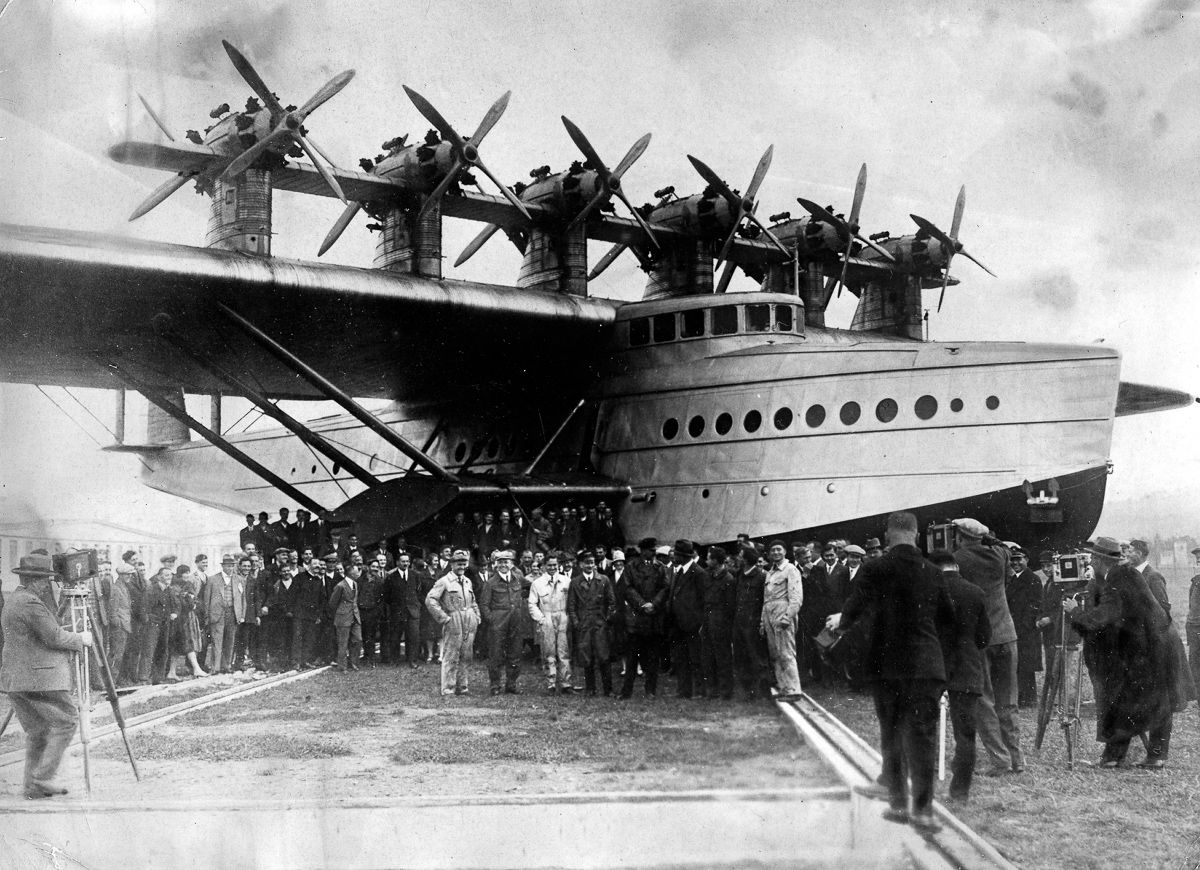
TESTING THE LIMITS…In photo at left, Charles Kingsford Smith (second from left) and the crew of his airplane, Southern Cross, pause before embarking on their east-west crossing of the Atlantic in June 1930; photo at right: Dieudonné Costes (right) with Maurice Bellonte in Boston in 1930. On September 1-2, 1930, they flew the “Point d’Interrogation” from Paris to New York, the first heavier-than-air aircraft to reach New York in the more difficult westbound direction between the North American and European mainlands. (National Library of Ireland/Wikipedia)BIG THINKERS…Germany’s massive Dornier Do-X made its first test flight on July 12, 1929. A few months later, it carried a world-record 169 passengers on a 40-minute flight, an astonishing number given that the largest planes at that time rarely carried more than 20 passengers. In 1930, the Do-X took off on an international publicity tour through Europe, down the west coast of Africa, across the Atlantic to Brazil and up to New York before returning to Berlin. (Mashable)
Markey went on to detail the various obstacles facing transatlantic fliers, including fairly good odds that a plane, laden with fuel and supplies for such a journey, would crash on takeoff. He noted that a little over half of the attempts succeeded, while the others seemed doomed from the start.
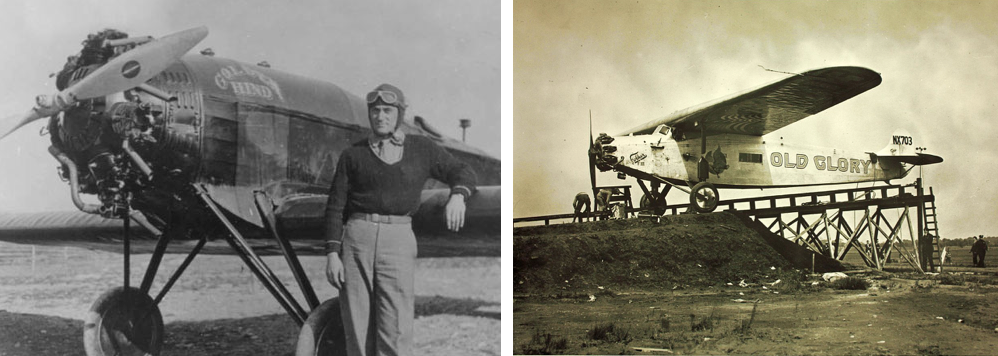
ILL-ADVISED…With only 70 hours of flying experience, Montana rancher Urban F. Diteman (left, with his airplane “Golden Hind”) took off from Harbour Grace, Newfoundland, bound for London. He was never seen again; at right, the William Randolph Hearst-sponsored “Old Glory,” a Fokker F.VIIa single-engined monoplane that was used in 1927 on an attempted transatlantic flight from Old Orchard Beach, Maine to Rome, Italy. The overloaded plane and its crew were lost approximately 700 miles east of Newfoundland, where only a section of wing was recovered. (dailymontana.com/Wikipedia)
* * *
Glare of the New
Architecture critic George Chappell enthusiastically followed the construction of the world’s tallest building, but in its completion he found the Chrysler Building’s now-iconic spire to be little more than a stunt, and suggested that a covering of masonry might be in order:
MAYBE SOME VINYL SIDING?…George Chappell wasn’t too crazy about the Chrysler’s chrome dome, and also worried about the amount of steel that would clad the exterior of the Empire State Building, right, which is composed of limestone, chrome bars and aluminum panels. (Wikipedia)
* * *
Bottoms Up
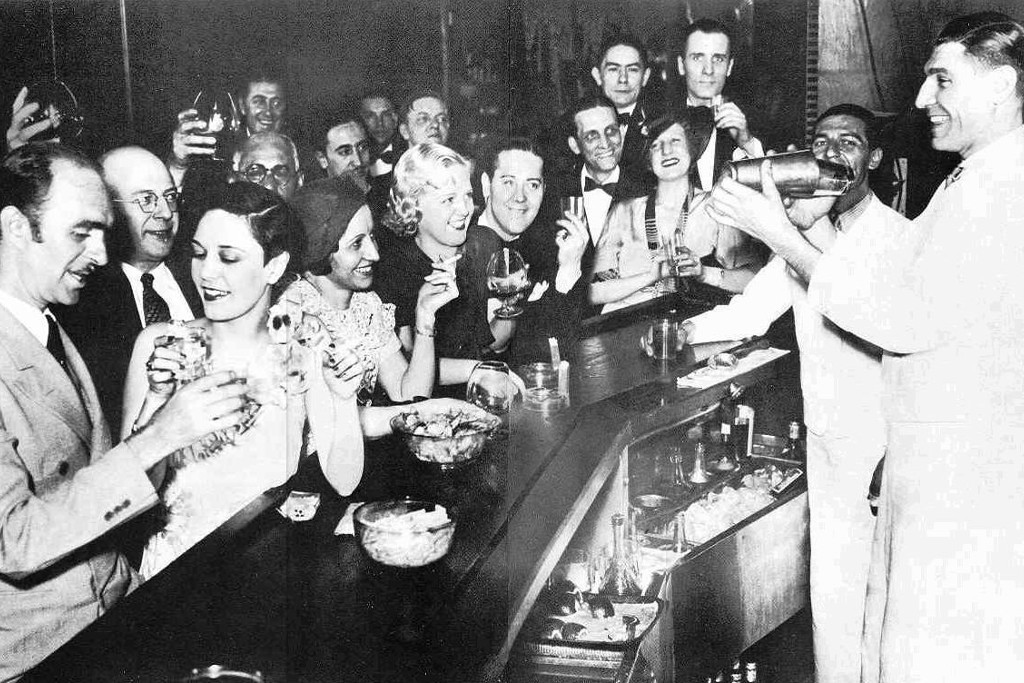
In his “Notes and Comment,” E.B. White pondered the drinking habits of his fellow citizens in the tenth year of Prohibition:
MAKE THAT A DOUBLE…Finding refreshment in the dark days of Prohibition. (junkee.com)
* * *
Good Old Summertime
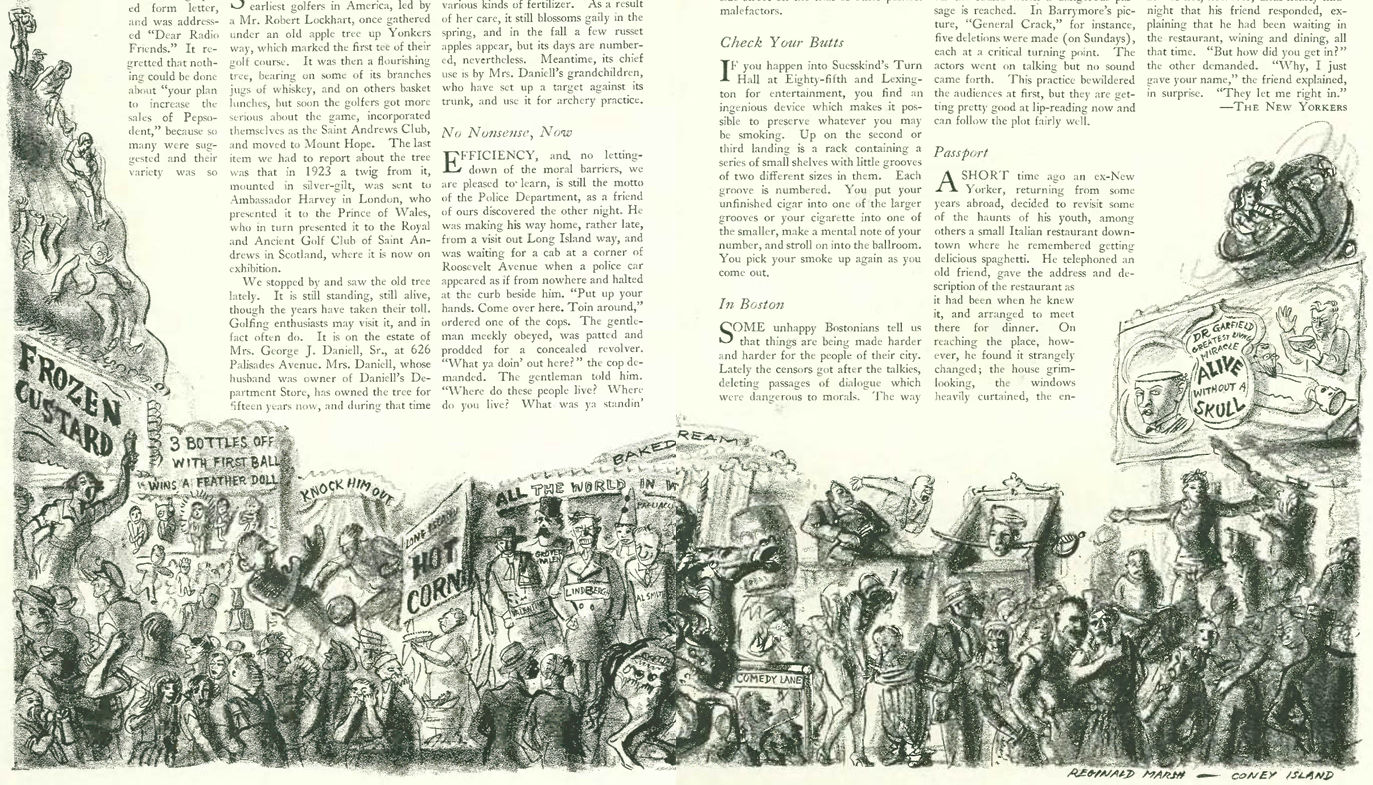
Along the bottom of “The Talk of the Town,” a Reginald Marsh interpretation of Coney Island fun and games…
* * *
Still the Same
Lois Long, who painted a picture of Jazz Age nightlife like no other in her “Tables for Two” column, teased her readers by disguising her identity, often claiming she was a frumpy old lady. With her “Tables” column now on hiatus, the fashionable and young Long maintained her pose, referring to herself as an “old war horse” in her fashion column “On and Off the Avenue.”
Problems of the Rich
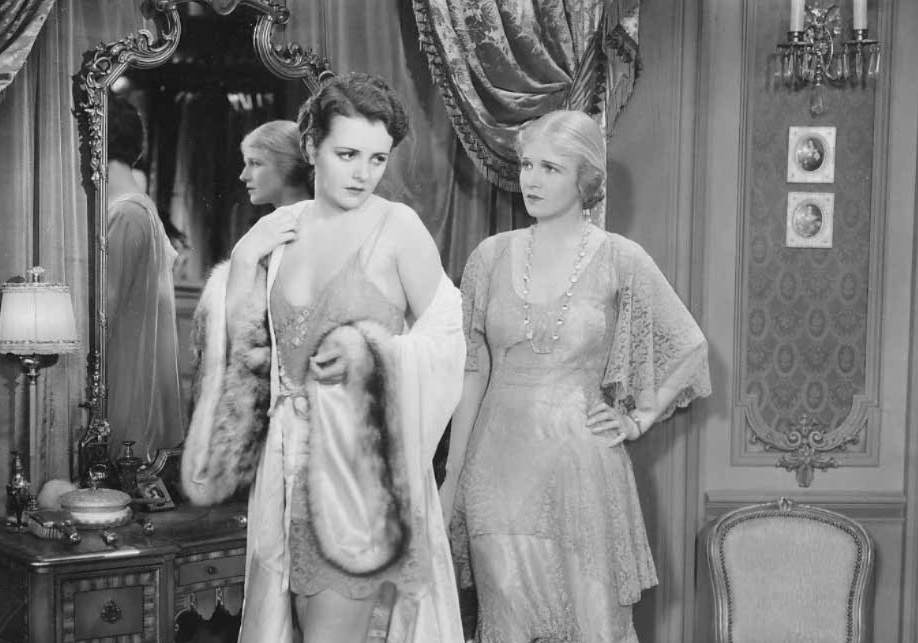
John Mosher reviewed the 1930 American Pre-Code comedy Holiday, which told the story of a young man torn between his wild lifestyle and the tradition of his wealthy fiancée’s family. Films that explored the “problems” of the rich seemed particularly popular in the Depression years…
POOR LITTLE RICH GIRLS…Mary Astor and Ann Harding in Holiday. (IMDB)
* * *
From Our Advertisers
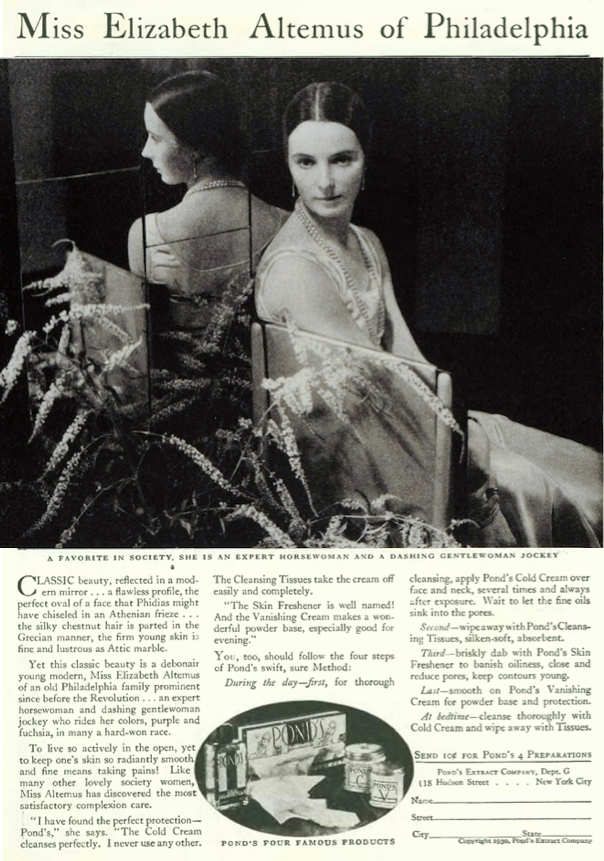
The makers of Pond’s Cold Cream continued its campaign of endorsements by society women, including Philadelphia socialite, philanthropist and champion horsewoman Elizabeth Altemus…
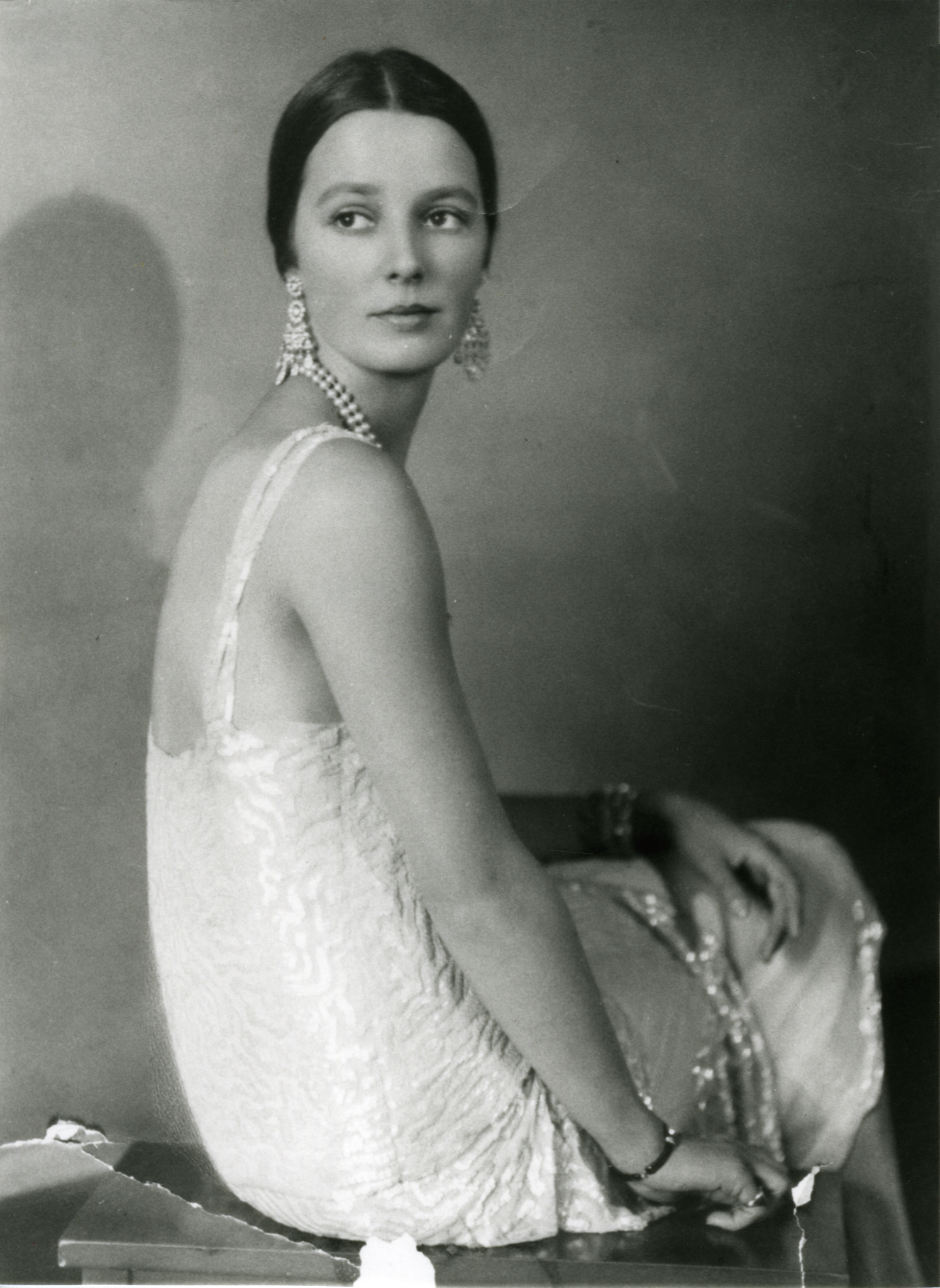
Altemus (1906-1988) was a prominent owner/breeder of Thoroughbred racehorses for more than 50 years. Her first marriage was to Jock Whitney, U.S. Ambassador to the United Kingdom, publisher of the New York Herald Tribune, and president of the Museum of Modern Art. By the looks of this 1937 portrait of Altemus, the cold cream certainly didn’t do her any harm…
Mary Elizabeth Altemus Whitney in 1937. (geni.com)
…speaking of cold cream, when Kleenex was introduced in the early 1920s, it was marketed solely as a hygienic way to remove cold cream. It wasn’t until the 1930s that the makers of Kleenex began to suggest it could also be used as a tissue in place of a handkerchief. Of course it was also a great way to dramatically expand consumption of its brand, and help usher in a new age of disposable products…
…as the Depression deepened, ads for automobiles began to change with the times, most manufacturers emphasizing the affordability of their cars over performance or prestige, as this sad little ad from Packard attested….
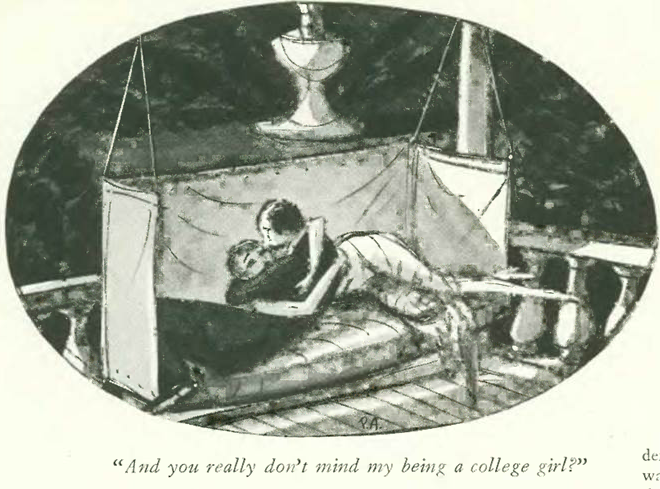
…in three consecutive issues (June 5, 12 and 19) Peter Arno featured the same drawing with a different caption that gave readers a very brief courtship story…
…Alan Dunn offered a glimpse of life among the newsboys…
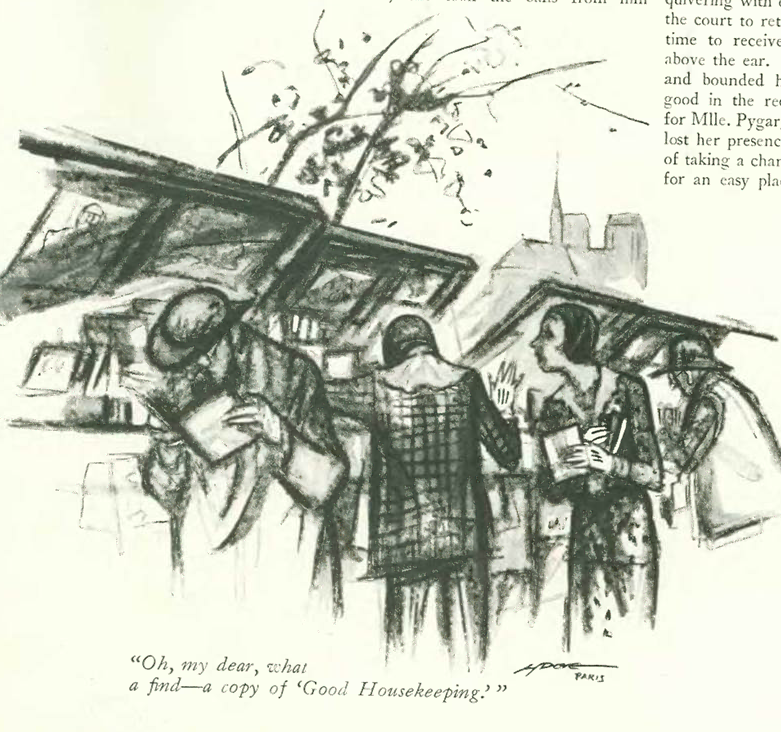
…Leonard Dove found Americans browsing newsstands along the Seine…
…Helen Hokinson looked in on an existential crisis…
…Perry Barlow was Out West at a dude ranch…
…Barbara Shermund eavesdropped on a couple of debs…
…Garrett Price gave us an awkward encounter among the yachting crowd…
…and finally William Crawford Galbraith, and a case of domesticus interruptus…
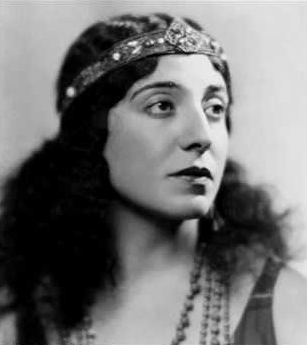
The July 5, 1930 New Yorker made a subtle nod to the Fourth of July holiday with this cover by Julian De Miskey. The title images above are of actress Alice White and child actor Jackie Coogan getting into the Independence Day spirit in the 1930s.
July 5, 1930 cover by Julian De Miskey.
On Solid Ground
With massive skyscrapers going up all over the city, some New Yorkers apparently feared that the weight of those buildings would cause the earth’s surface to crack. “The Talk of the Town” offered some factual information to allay those fears:
Not guaranteeing the science on this, but here’s an image I gleaned from Reddit…
Dark gray lines are fault lines (why the brown soil drops in those places). The gray areas are bedrock known as Manhattan Schist, which one can see above ground in Central Park. The reddish brown at lower right is marble. The green area is either gneiss or sill rock.
* * *
War and Apple Pie
E.B. White had some fun at the expense of “Major” Frank Pease, president of the Hollywood Technical Directors Institute, an anti-communist activist organization. Despite the title of his organization, no film director had ever heard of Pease until he began issuing press statements labeling the 1930 film All Quiet on the Western Front as anti-American and anti-military. White responded:
MINOR MAJOR…”Major” Frank Pease, left, thought the depiction of the horrors of war in All Quiet on the Western Front was anti-American. Pease himself never rose above the rank of private, but claimed he was a retired major in the U.S. Army. (Wikipedia/IMDB).
In one of my recent posts, The New Yorker’sJohn Mosher reviewed the film, All Quiet on the Western Front.
* * *
Speaking of Un-American
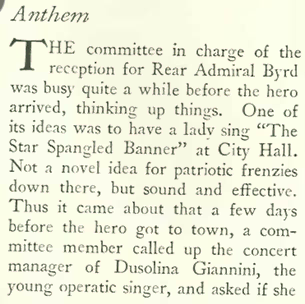
City Hall organizers of a welcome home ceremony for Admiral Richard Byrd — back from his South Pole adventures — arranged to have a woman sing The Star Spangled Banner, but according to “The Talk of the Town,” not just any woman would do…
DISSED…Italian-American soprano Dusolina Giannini was born in Philadelphia, but deemed not American enough to sing at New York’s City Hall for Admiral Richard Byrd. (YouTube)
* * *
Five Alarm Fireworks
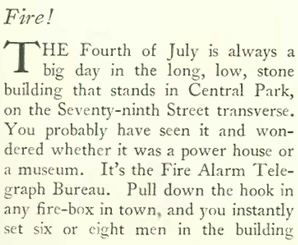
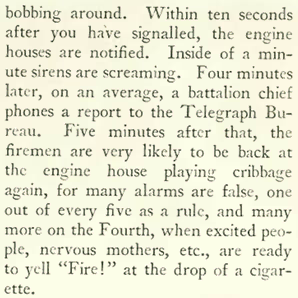
“The Talk of the Town” discussed at some length the challenges July 4 posed to New York’s firefighters. An excerpt:
Also in the “Talk” section, some spot illustrations by Abe Birnbaum, who apparently had returned from a trip to Paris. The first image appeared in the June 28 issue, the second the July 5 issue:
* * *
Just Say No
Helena Huntington Smith turned in a profile on American birth control activist Margaret Sanger (1879-1966). Sanger popularized the term “birth control” and opened the first family planning clinic in the United States. She established several organizations that eventually evolved into the Planned Parenthood Federation of America. The opening paragraphs of Smith’s profile:
Margaret Sanger circa 1930. At right, portrait for the profile by Ralph Barton.
Controversial 89 years ago as well as today, Sanger remains a target of both the right and left, labeled variously as a baby killer and a racist. Sanger was vocal in her opposition to abortion, maintaining that birth control would not only prevent abortions, but would give many women the ability to control family size and end their cycle of poverty. Sanger also spoke out against racism, but the case is more muddled here: She became involved in the eugenics movement through her belief that society needed to limit births by those least able to afford children, including those deemed “unfit” to raise them.
* * *
From Our Advertisers
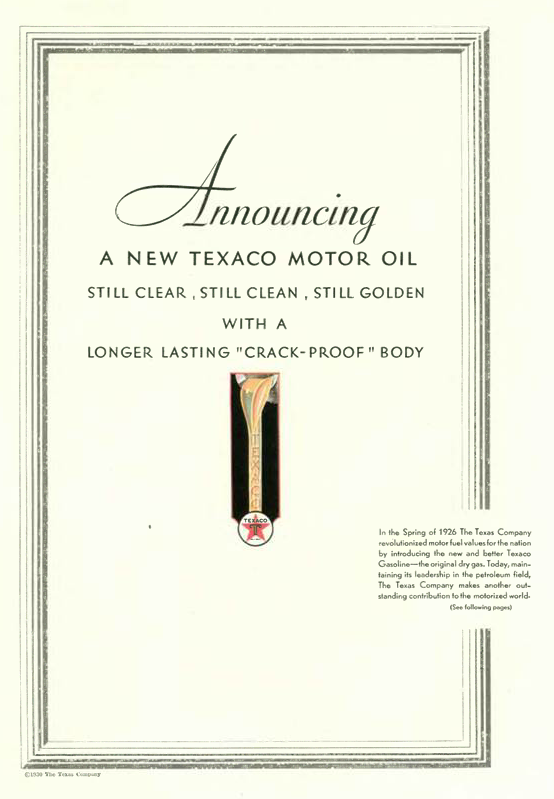
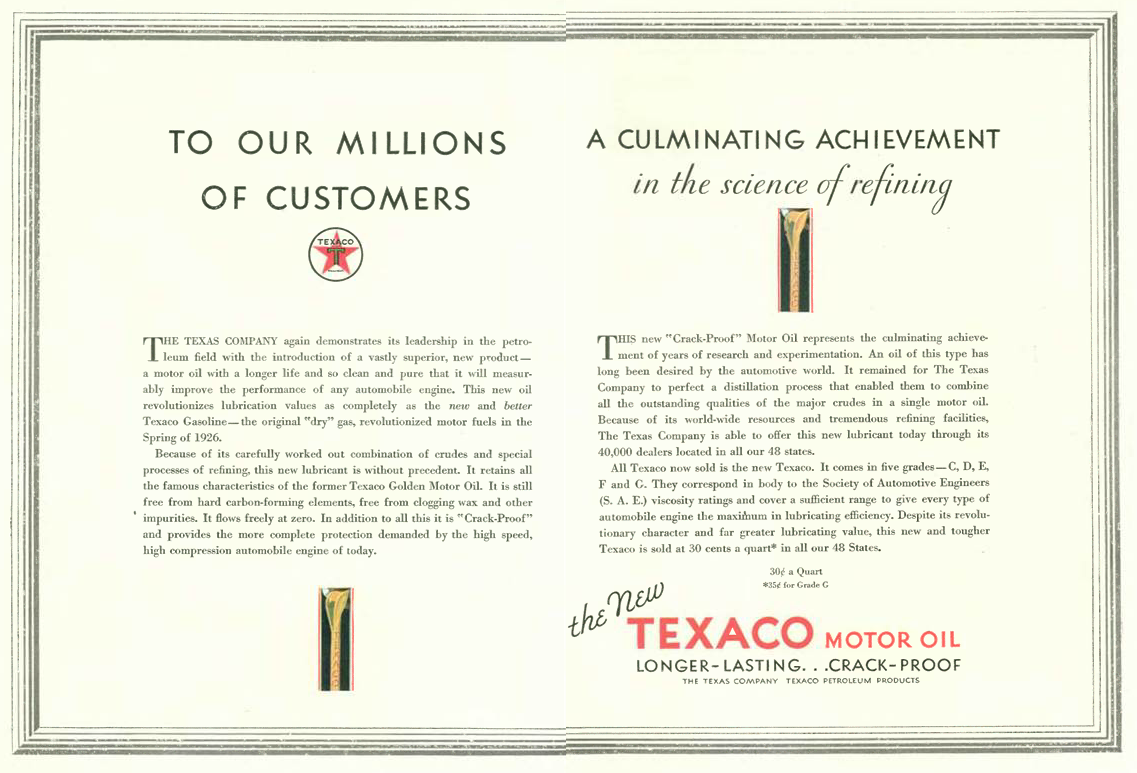
From 1920 to 1930, automobile ownership in America nearly tripled from eight million to 23 million. Along with that growth came the rise of oil giants such as Texaco, which in 1928 became the first U.S. oil company to sell its gasoline nationwide under one single brand name. So they had no problem taking out a three-page ad in the July 5 New Yorker…
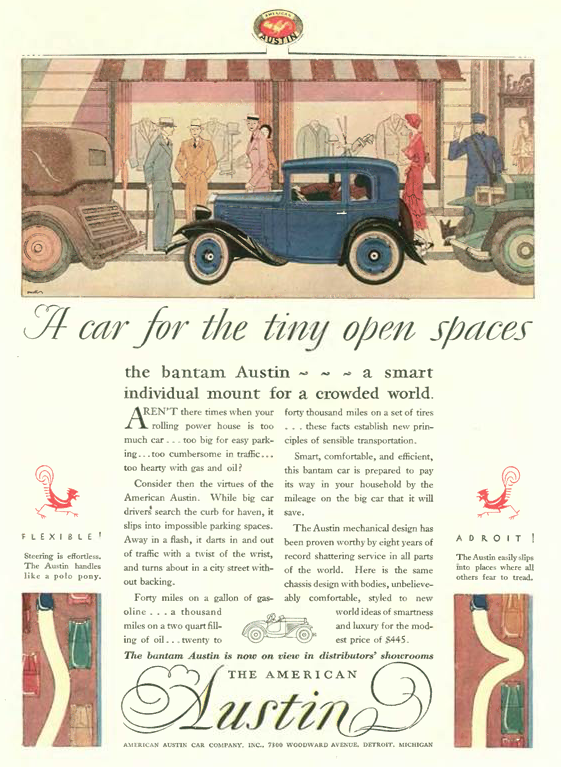
…while Americans were ready to guzzle gas, British automaker Austin touted both fuel economy and compactness in its American entry…
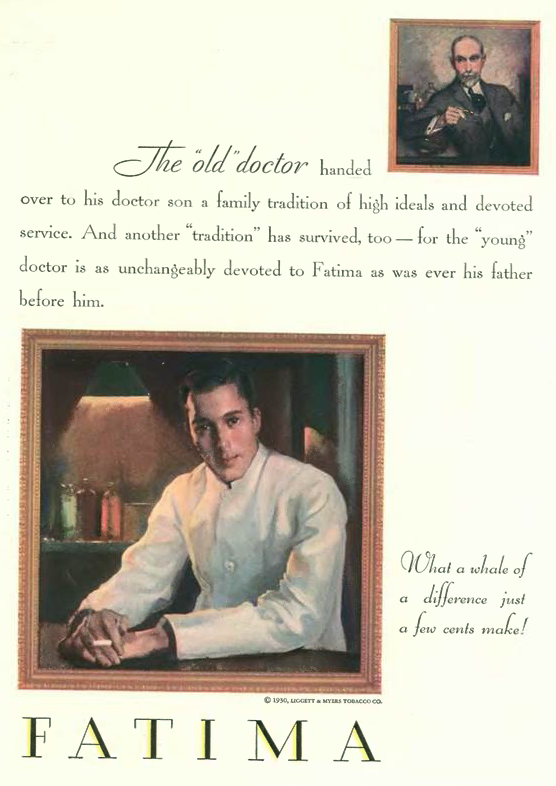
…for several decades in the 20th century tobacco companies employed physicians to promote their deadly products…Fatima was among the first…
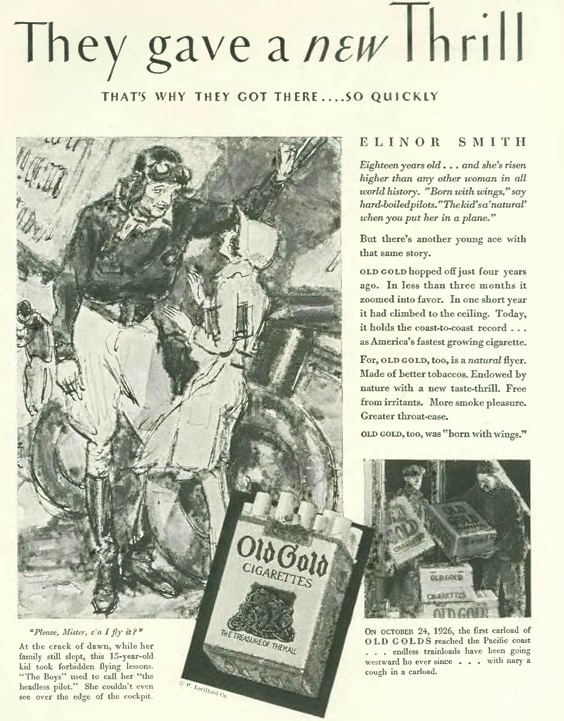
…the makers of Old Gold, however, were pioneers in associating cigarette smoking with sporting activities and tales of derring-do…here the rapid spread of the Old Gold brand across the country is equated to the record-breaking feats of a young female pilot, Elinor Smith…
…I don’t know if Smith herself smoked, but she almost lived 100 years, and flew well into her her 90s…we looked at Smith’s feats in a recent post…
Elinor Smith’s flying career would extend from age 16 to her 90s. In March 1930 she set the women’s world altitude record.
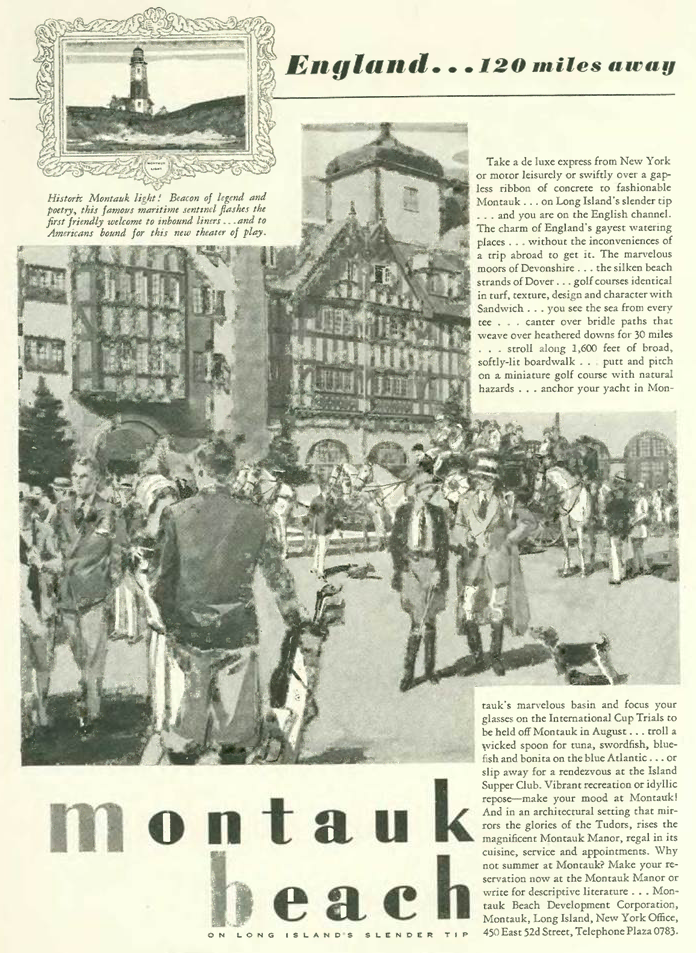
…Carl G. Fisher bought a big chunk of the East End of Long Island in 1926 with the intent of turning it into the “Miami Beach of the North.” Fisher would build more than two dozen Tudor-style buildings at Montauk before losing his fortune in the 1929 market crash. This ad appears to be an attempt to draw renewed interest in the development, appealing to Anglophilic pretensions that sometimes afflicted New Yorker readers…
…speaking of Anglophilia, a cartoon by Denys Wortman offered an example…
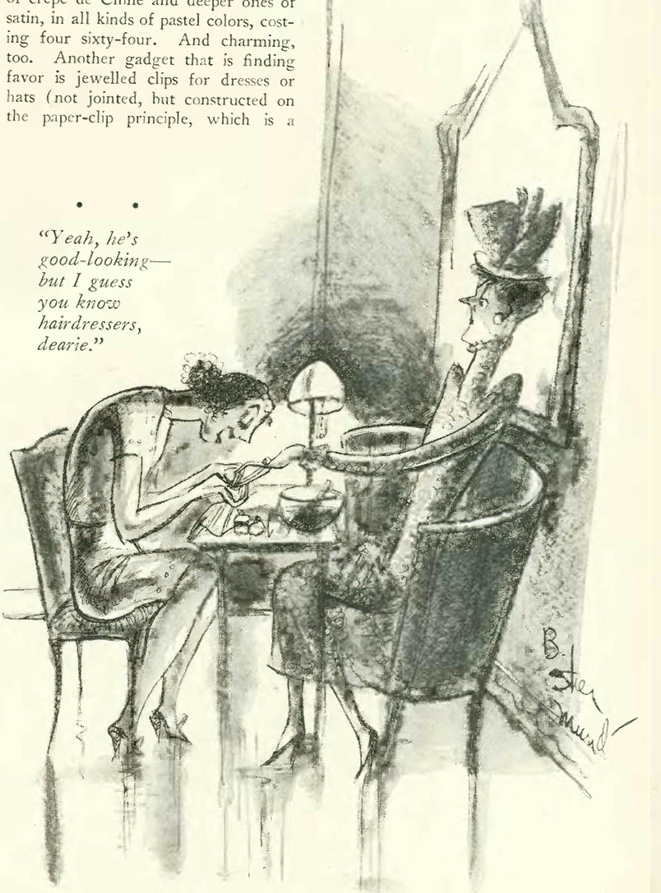
…Barbara Shermund examined an aspect of society’s pecking order…
…and referenced a gay stereotype…
…Garrett Price looked in on a misunderstanding at the museum…
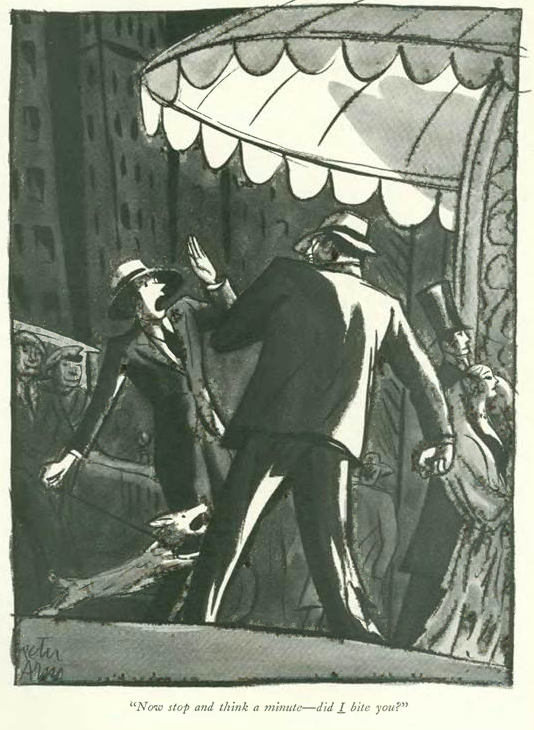
…Peter Arno discovered that a bite is worse than a bark in this case…
…and Leonard Dove gave us a double entendre courtesy of a mild-mannered building supervisor seeking to remove a draft block (or bung) from a chimney flue…
In 1930s America there were few if any opportunities for black actors to perform in mainstream stage or screen productions unless they conformed to racial stereotypes. An exception was Paul Robeson.
June 21, 1930 cover by Gardner Rea.
In 1930 Robeson (1898-1976) won rave reviews for his performance in Shakespeare’s Othello. That performance, however, took place in London, not New York, which London correspondent Anthony Gibbs took pains to point out in his dispatch for the June 21, 1930 New Yorker.
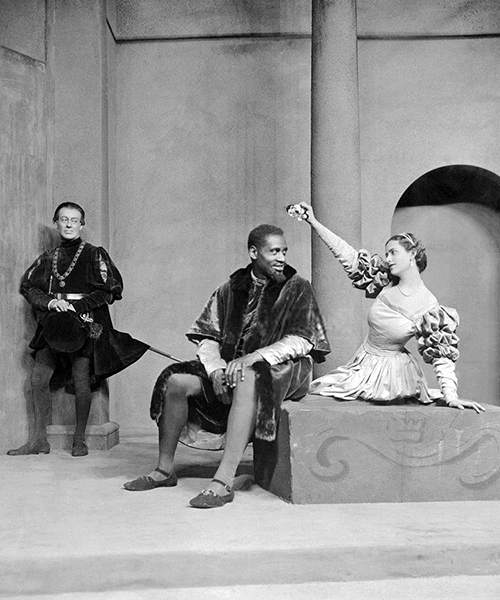
English actress Peggy Ashcroft as Desdemona and Paul Robeson as Othello in London’s Savoy Theatre production of Othello in 1930. Although only 22 at the time, Ashcroft was an established Shakespearean actress. The 32-year-old Robeson was already famous as both an athlete and actor. He was twice named a consensus All-American in football (Rutgers) and was the class valedictorian. He also received a law degree from Columbia while playing in the NFL. In 1930 he was already known to London audiences, having previously appeared in a 1928 London production of the American musical Show Boat. (theshakespeareblog.com)CENTER STAGE…Left to right: Maurice Browne (Iago), Paul Robeson (Othello) and Peggy Ashcroft (Desdemona) in Othello at the Savoy Theatre, 1930. Maurice Browne was also the play’s producer; his over-the-top portrayal of Iago and his wife’s incompetent stage direction hurt the production, but Robeson nevertheless received high praise for his performance. (britishstageandscreen.tumblr.com)
Although the performance was a triumph for Robeson, the production itself was a mess. The play’s producer, Maurice Browne, enlisted his wife, Ellen van Volkenburg, to direct (Peggy Ashcroft later called her “a pretentious dud”). Writing in The Guardian (Sept. 3, 2003), Samantha Ellis observes: “Recognising that his Othello transcended the ropey production, the audience gave Robeson 20 curtain calls. He reprised the role all over the world and never lost his pleasure in it. For Robeson, it was more than just a part: it was, as he once said, “killing two birds with one stone. I’m acting and I’m talking for the negroes in the way only Shakespeare can.”
Robeson’s Othello would not make it to New York until 1943. It would run for almost 300 performances, setting an all-time record run for a Shakespearean play on Broadway.
* * *
Restoring Order
In the aftermath of Grover Whalen’s disastrous (and sometimes violent) run as New York City Police Commissioner, E.B. White and his fellow New Yorkers welcomed the steady hand of Edward P. Mulrooney (1874-1960) to the helm:
THE COMMISH…Edward P. Mulrooney in a 1930s portrait by Edward Steichen. (Conde Nast)
* * *
The Commander
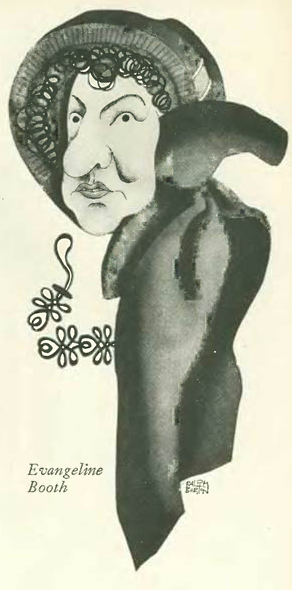
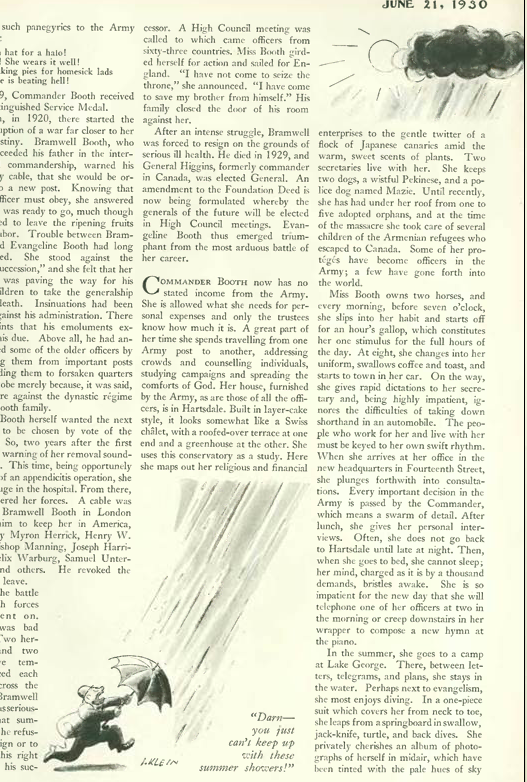
American author and lecturer Virgilia Peterson Ross profiled Evangeline Cory Booth (1865 – 1950), who would become the fourth General of the Salvation Army in 1934. She was the first woman to hold that post. An excerpt:
…Ralph Barton returned to provide this caricature for the profile, one of the last works he would create for The New Yorker before his untimely death…
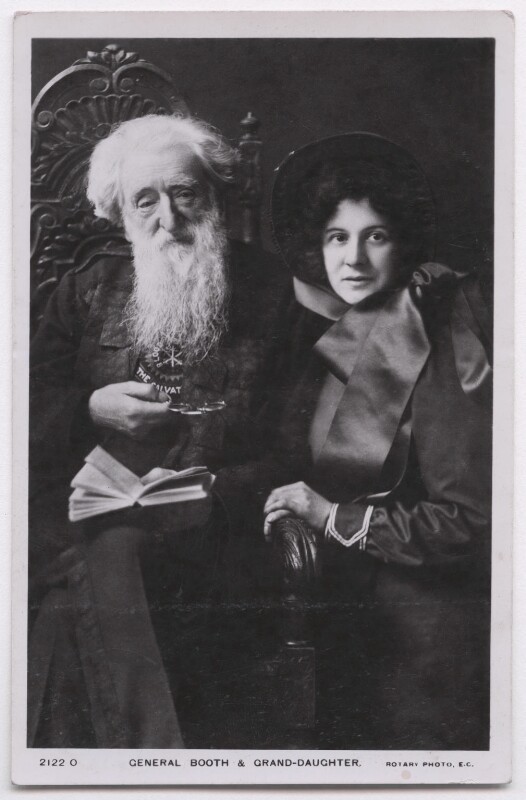
HEIRESS TO A LEGACY…William Booth, an English Methodist preacher who founded The Salvation Army and became its first General, poses with his grand-daughter Evangeline Cory Booth in this 1908 postcard image. (National Portrait Gallery)
* * *
Home of the Dome
Architecture critic George “T-Square” Chappell was gladdened by the sight of scaffolding atop St. Bartholomew’s Church, which would finally get its dome to complete architect Bertram Goodhue’s vision…
NOW YOU SEE IT…Clockwise, from top left, St. Bartholomew’s Church at 325 Park Avenue, sans dome, in 1928; the church with dome in the 1950s; interior and exterior views of dome. (nyago.com/bostonvalley.com)
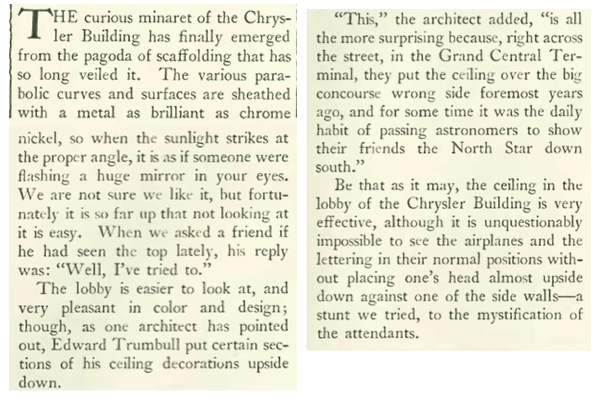
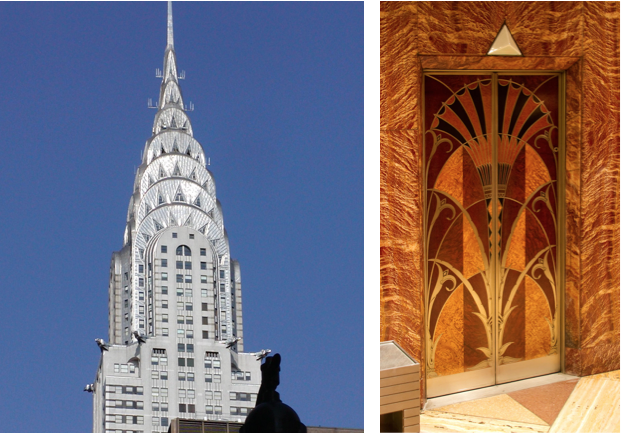
…Chappell also commented on the emergence of the Chrysler Building’s blindingly shiny dome and interior appointments…
BLINDED BY THE LIGHT…The Chrysler Building’s gleaming spire emerged in all its glory in June 1930. At right, an elevator in the building’s lobby. (Wikipedia)
* * *
Below the Belt
It wasn’t Dempsey-Tunney, but the bout between Max Schmeling (1905-2005) and Jack Sharkey (1902-1994) was the next best thing for boxing fans. The World Heavyweight Championship had been vacant since Gene Tunney’s retirement in 1928, and Sharkey and Schmeling had emerged as the sport’s No. 1 and 2 contenders.
The bout ended in a controversial decision: Although Sharkey won the first three rounds, he was disqualified after he landed a punch below the belt late in the fourth round. Schmeling became the first boxer to win the World Heavyweight Championship on a foul. The New Yorker’sNiven Busch Jr. (with illustration by Johan Bull) offered these thoughts on the fight’s disappointing outcome:
LOW BLOW…Although Jack Sharkey (far right) led after three rounds, a low blow in the fourth delivered the World Heavyweight Championship to German boxer Max Schmeling (left). Sharkey would claim the title two years later in a rematch with Schmeling. Although boxing isn’t the healthiest pursuit, both men lived into their 90s; Schmeling died in 2005 just shy of his 100th birthday. (Wikipedia/boxrec.com/thefightcity.com)
* * *
One Of Ours
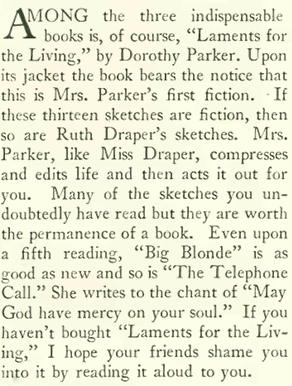
The New Yorker included this brief review of a collection of short fiction pieces by Dorothy Parker, herself a literary critic of some renown at the magazine…
DOROTHY’S LAMENTATIONS…The New Yorker’sDorothy Parker published this collection of short fiction in 1930.
…and on to our advertisers, this ad appeared on the opposite page of the review…
…speaking of ads, the makers of Marlboro cigarettes continued to sponsor gimmicky penmanship and writing contests to promote their deadly product…
…while promoters of the Empire State Building (still under construction) continued to draw on the historical significance of the building’s Midtown location…
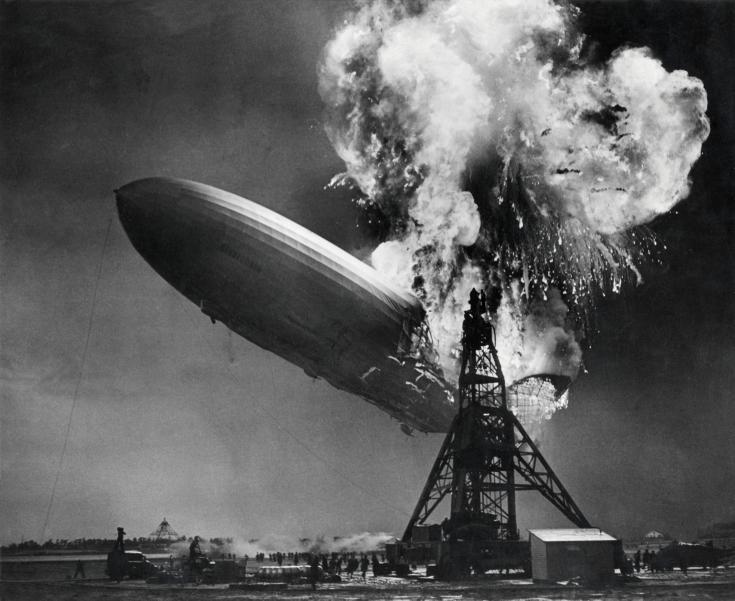
…on to our cartoons, Garrett Price pondered the very real challenge of guiding a massive Zeppelin to the planned mooring mast atop the Empire State…
…a portent of what would happen to the Hindenburg just seven years later…
…The New Yorker’s typesetter Popsy Whitaker made clever use of his columns for this Isadore Klein entry…
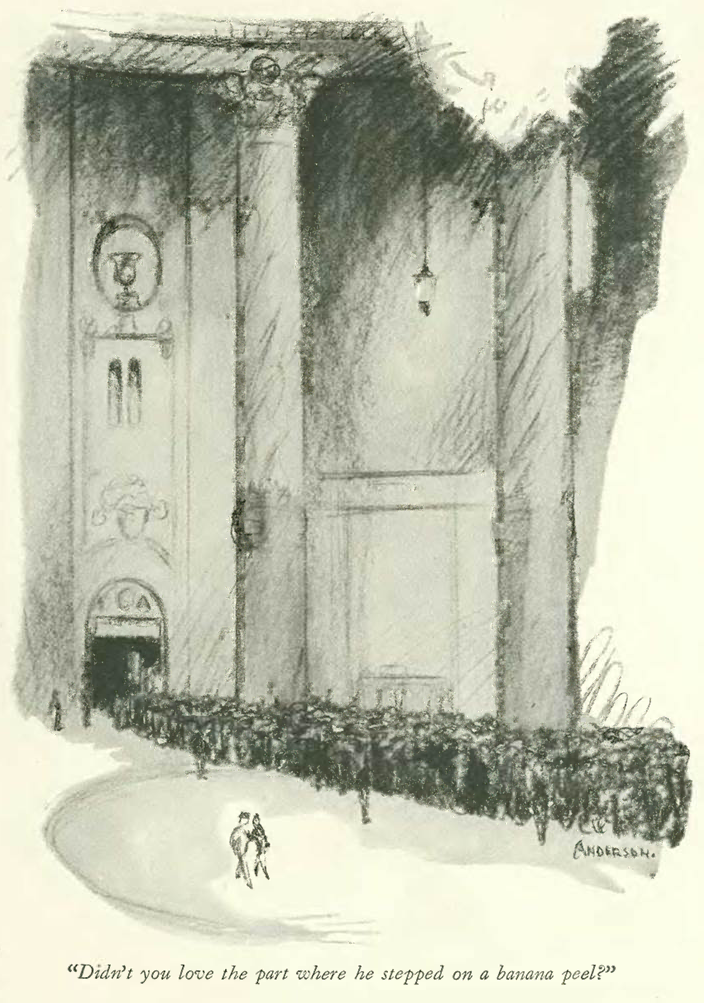
…John Murray Anderson found humor in contrasting the grand with the mundane…
…Carl Kindl eavesdropped on the small talk of a couple of ash haulers…
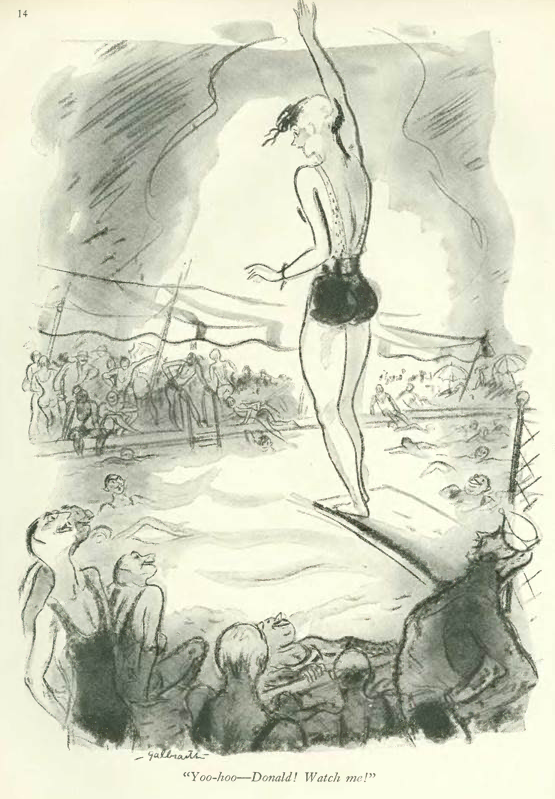
…and William Crawford Galbraith found humor at the public pool…
* * *
On to the June 28 issue, with a cover featuring a satirical kakemono-style illustration by Rea Irvin, who was fond of Japanese scroll art…
June 28, 1930 cover by Rea Irvin.
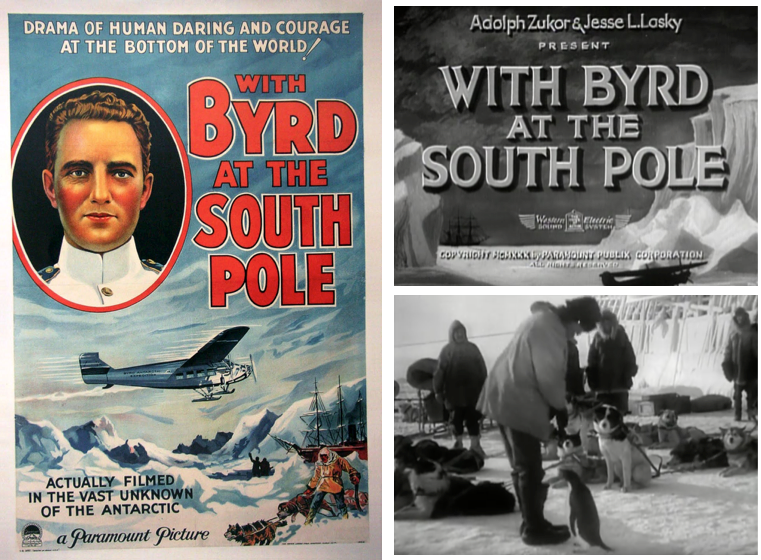
Film critic John Mosher checked out the new documentary on Admiral Richard Byrd’s expedition to the South Pole…
A BYRD WITH WINGS…A Paramount Pictures movie poster promoting the 1930 documentary With Byrd at the South Pole; still images from the film at right. (Wikipedia/YouTube)
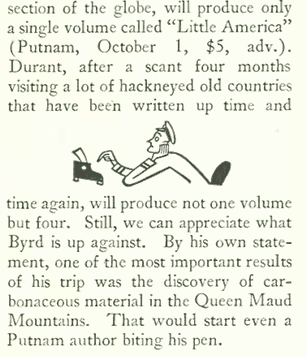
“The Talk of the Town” also made note of Byrd’s expedition and homecoming, contrasting his upcoming book, Little America, with the four-volume historical work planned by popular historian Will Durant.
In collaboration with his wife, Ariel, Durant would end up publishing an eleven-volume history of civilization (four million words across nearly 10,000 pages), written between 1935 and 1975. Will Durant was at work on a twelfth volume when he died in 1981 at age 96.
Admiral Richard Byrd’s Little America, left, and the 11-volume The Story of Civilization, by Will and Ariel Durant.
* * *
American Lenin
The June 28 profile, written by Alva Johnston, featured radical American labor organizer and Marxist politician William Z. Foster. Despite Johnston’s portrayal of Foster as something of a genial pinko, in reality Foster was a strong supporter of Joseph Stalin and a dedicated and loyal ally of the Soviet Union’s Communist Party until his death in 1961. The Soviets even gave him a state funeral, with Nikita Khrushchev personally heading an honor guard in Red Square. An excerpt of Johnston’s profile:
RED AS A ROSE…Left, a campaign photo of William Z. Foster when he headed the Communist Party ticket in the 1928 U.S. presidential election; at right, illustration of Foster for the profile, by Abe Birnbaum.
* * *
And to close…a colorful advertisement in the June 28 issue from Rex Cole…from the signature it appears to be the work of Mario Cooper, but this doesn’t look at all like his other work…
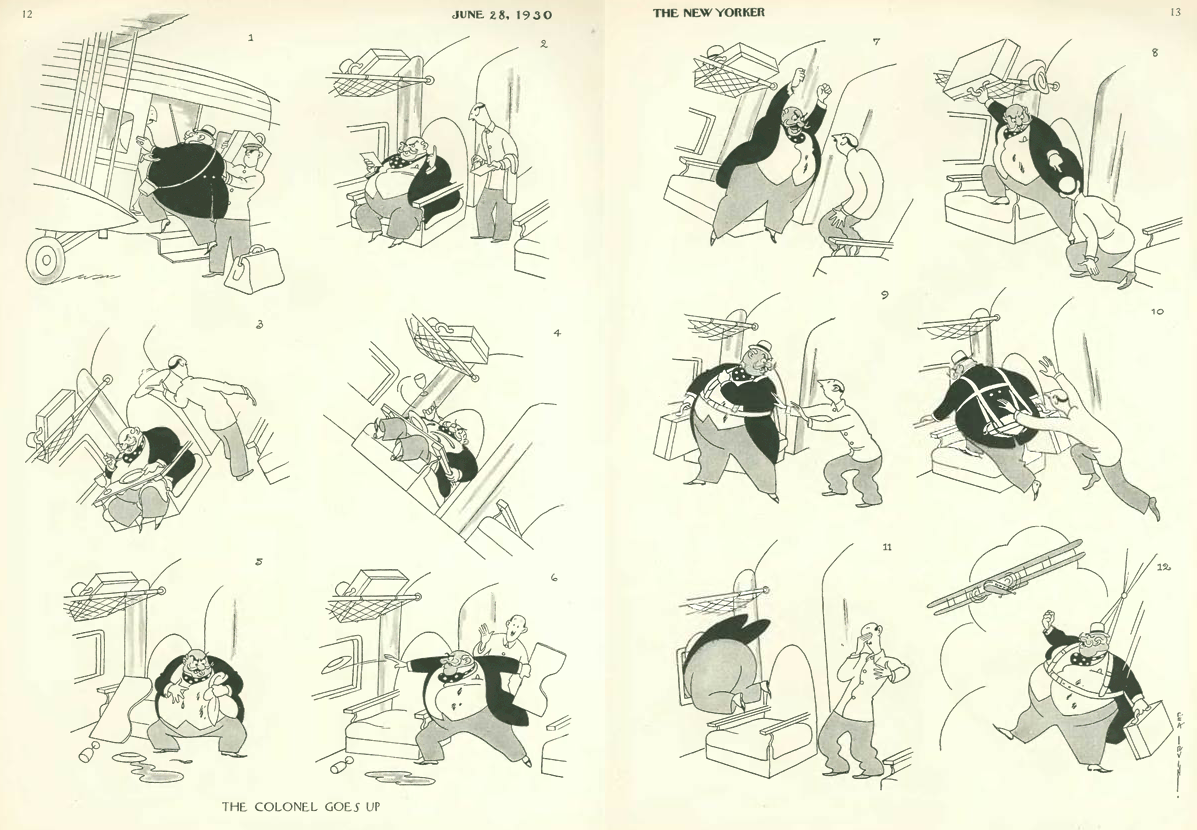
…and a two-page Rea Irvin cartoon, which demonstrates his visual storytelling skills…
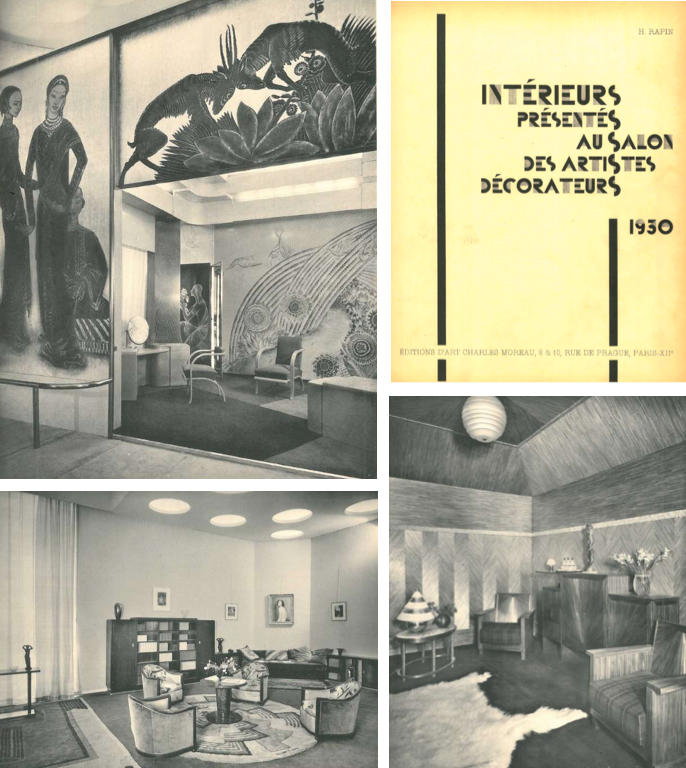
The annual Salon of the Société des Artistes Décorateurs in Paris reflected the growing importance of design as a profession, although it was primarily attuned to an affluent urban elite. Then along came the Germans.
June 14, 1930 cover by Helen Hokinson.
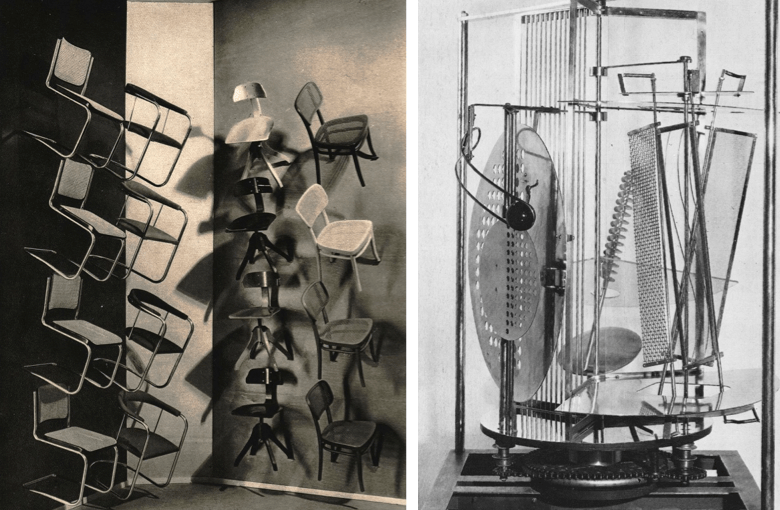
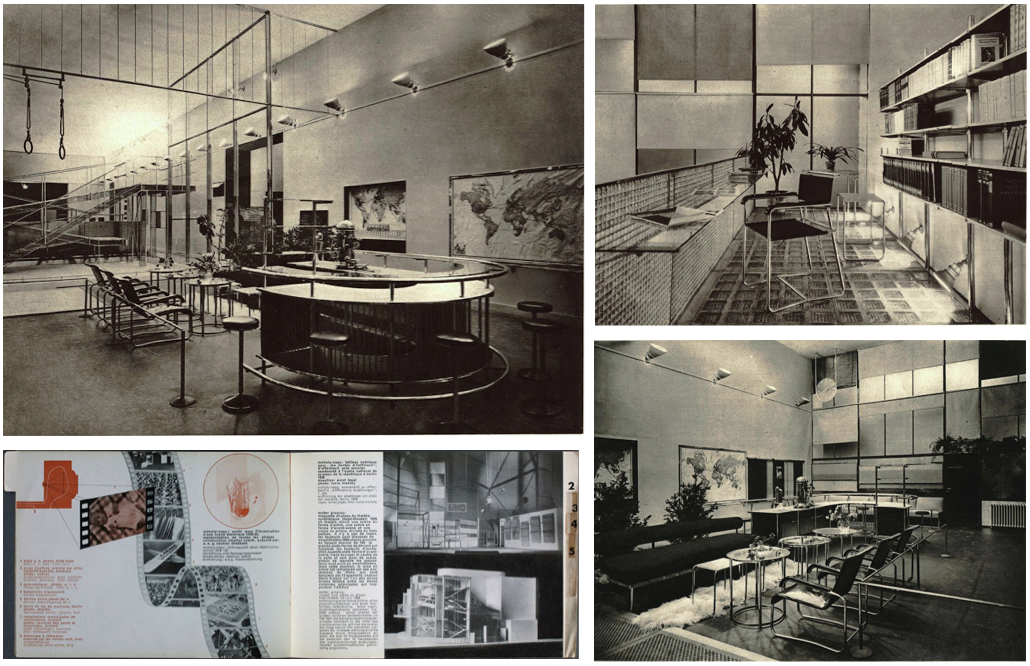
A radical new wind blew through Paris in 1930 when Bauhaus designers were invited to exhibit in their own special section at the Salon. According to The New Yorker’s Paris correspondent Janet Flanner, the Germans put on a display in their Section Allemande that left some French designers scratching their heads.
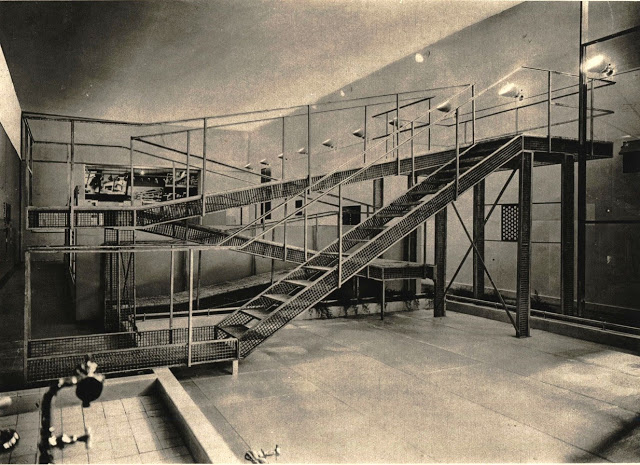
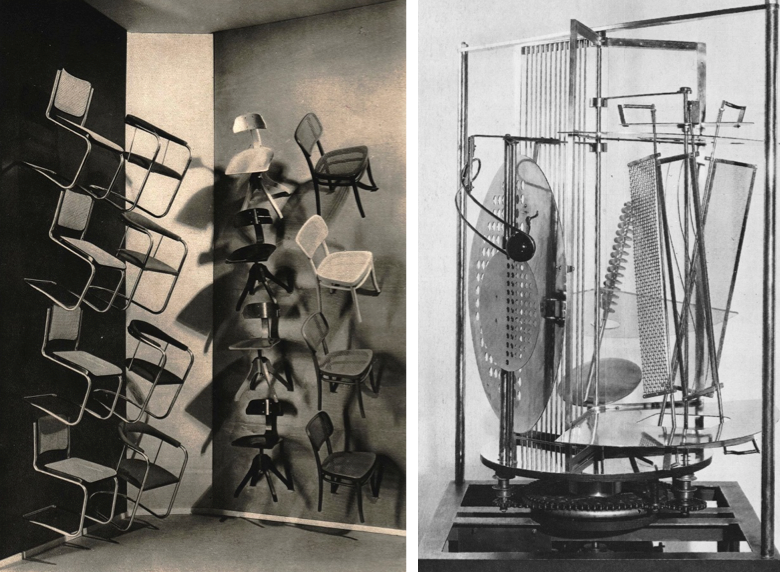
KEEPING IT CLEAN…Members of the Bauhaus Werkbund displayed their wares in the Section Allemande (German section) of the annual Salon of the Société des Artistes Décorateurs in Paris. Clockwise, from top left, examples of reception areas and workspaces by Walter Gropius; bottom left, inside pages of the exhibition catalogue for the Section Allemande. (journal.eahn.org)STAIRWAY TO THE FUTURE…A staircase fashioned from galvanized chicken wire, by Walter Gropius, on display in Section Allemande of the 1930 Salon of the Société des Artistes Décorateurs. (journal.eahn.org)UNKNOWN THEN, COMMON NOW…The Section Allemande also featured building models, including this multi-story apartment with communal facilities, designed by Walter Gropius. (Journal of Design History, 2004)HOW IT STACKED UP…Rather than dazzle audiences with the latest in posh decor, the Germans confronted Salon audiences with their radical approaches to furniture and interior spaces. At left, chairs by Marcel Breuer and others; at right, Light Prop for an Electric Stage by László Moholy-Nagy. (journal.eahn.org/Artists Rights Society)
Many critics and commentators at the time characterized the Salon as a nationalistic showdown between French luxury decor and German efficiency and standardization. Flanner suggested that while the Germans seemed to be throwing out the rule book, the French were accepting modernity at a much slower pace:
MODE DE VIE…Salon entries by French designers had a more art deco bent. Clockwise, from top left, vestibule of a boudoir by Jean Dunand; cover of the Salon’s catalogue; Petit Salon by André Groult; a living room by Jules Leleu. (art-utile.blogspot.com)
Of course we know how this story in turns out. In just three years the Nazis would shut down the Bauhaus, scattering its faculty and students abroad, including many to America, where they would find fertile soil to continue their work and eventually spread their design philosophy and aesthetic (for better or worse) across the U.S. and to every corner of the world.
* * *
A Gay Old Time
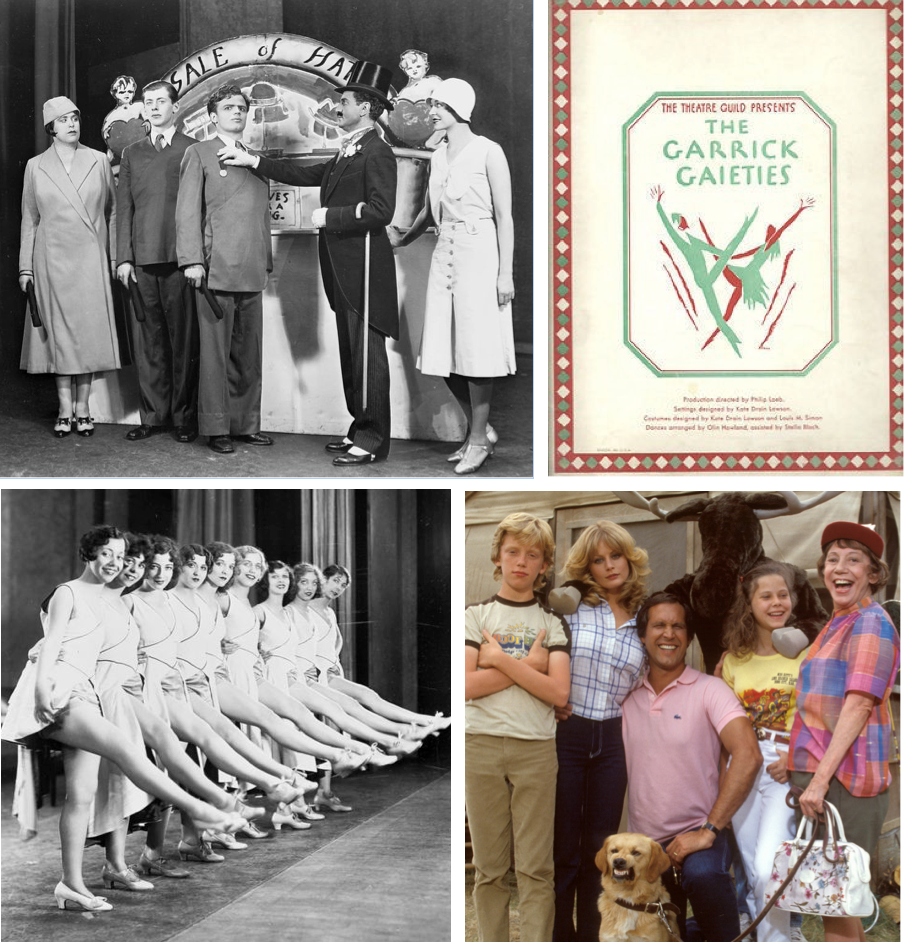
New Yorkers could escape the summer heat by taking in the latest incarnation of the Garrick Gaities at Broadway’s Guild Theatre. Character and voice actor Sterling Holloway Jr., (1905-1992) best known today as the voice of Disney’s Winnie the Pooh, appeared in all three Garrick Gaiety revues (1925, 1926, 1930), which were staged as benefits for New York’s Theatre Guild. Robert Benchley offered this review:
Sterling Holloway, left, with June Cochran in Garrick Gaieties.
Another familiar face in the Garrick Gaieties was Imogene Coca (1908-2001), a pioneer of early television (with Sid Caesar on Your Show of Shows) who is best known today for her role as Aunt Edna in National Lampoon’s Vacation (1983).
KEEP ‘EM LAUGHING…Clockwise, from top left, Scene from the 1930 Garrick Gaieties revue, with Philip Loeb in the high hat and Thelma Tipson standing behind him. Also from left are Ruth Chorpenning, Donald Stewart and Ted Fetter; cover of the program for the 1930 revue; publicity photo from 1983’s National Lampoon’s Vacation, with Imogene Coca as Aunt Edna; Coca, far left, in the chorus line for the 1930 Garrick Gaieties. (New York Public Library/IBDB/ifccenter.com)
* * *
Ahh-Choo
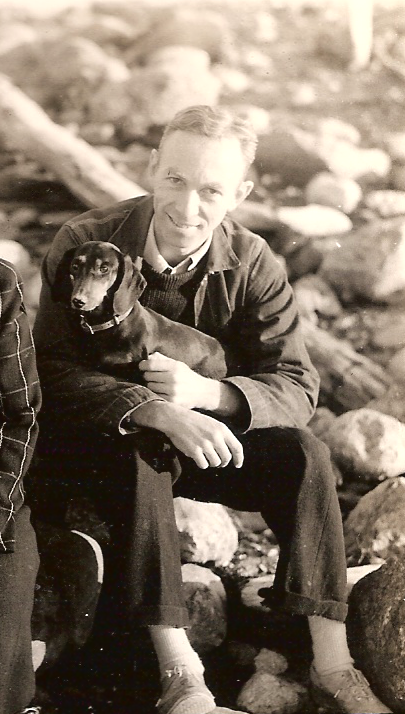
A child of New York City’s suburbs, E.B. White developed a love of the natural world thanks to a severe bout of hay fever he had as a child — on the advice of a doctor, he was sent to Maine for the summer. White’s allergies, and his love of country living, would prompt him to buy a summer residence on the Maine Coast in 1933. He and his wife, New Yorker writer and fiction editor Katherine Angell White, would make it their permanent home four years later. In 1930, however, White was still putting up with the bad summer air of the city:
THANK GOD I’M A COUNTRY BOY…E.B. White on the beach with his dog Minnie, circa 1940s. (Wikipedia)
* * *
It Didn’t Work Then, Either
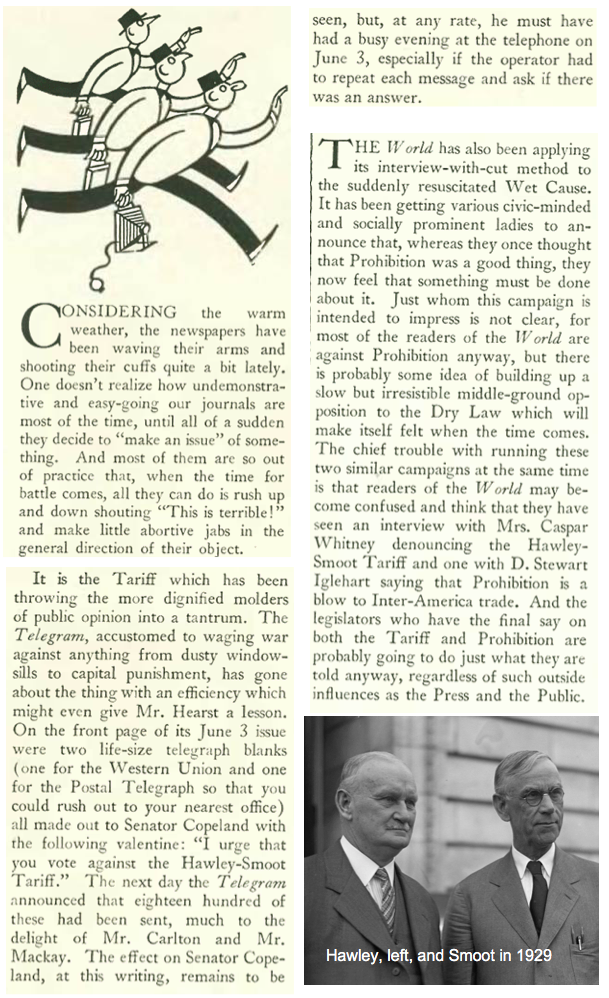
Some things never change. The Hawley–Smoot Tariff Act, sponsored by Representative Willis C. Hawley and Senator Reed Smoot and approved June 17, 1930, raised tariffs on more than 20,000 imported goods. Promoted as a way to protect American businesses and farmers, it put additional strain on international markets already reeling from the effects of the Depression. A resulting trade war severely reduced imports and exports. Writing for “The Wayward Press,” Robert Benchley (under the pen name Guy Fawkes) shared these observations:
* * *
How Dry I Ain’t
Despite his sober demeanor, Henry Hastings Curran (1877-1966) was a champion for those seeking the repeal of Prohibition laws. A longtime city manager in several roles, in 1930 he was president of the Association Against Prohibition Amendment. According to profile writer Henry Pringle, Curran predicted the end of Prohibition in five years. Happily for the wet side, they would get their wish in just three. A brief excerpt from the profile, titled “The Wet Hope.”
Henry H. Curran (Underwood and Underwood)
* * *
From Our Advertisers
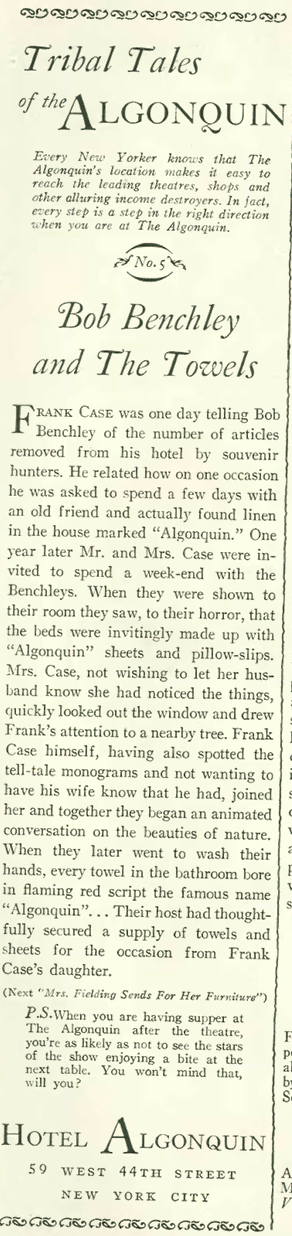
The Hotel Algonquin ran a series of ads in the back pages of The New Yorker that capitalized on its reputation as a place where stars and other notables gather. And although the Algonquin Round Table was a thing of the past, the hotel made sure to showcase names forever associated with the famed table, including Robert Benchley and the hotel’s manager, Frank Case…
…hoping for some crossover interest from New Yorker readers, William Randolph Hearst’sCosmopolitan (then a publisher of fiction, not sex tips) promoted this fictionalized autobiography of a famous tap dancer in this full page ad…
…introduced in 1924, Kleenex was originally marketed as a cold cream remover, and not as something you would blow your nose into, for goodness sake…
…however, after 1930 Kleenex was being marketed with the slogan “Don’t Carry a Cold in Your Pocket”…
DON’T BLOW IT…Kleenex boxes circa 1925. (Kleenex.com)
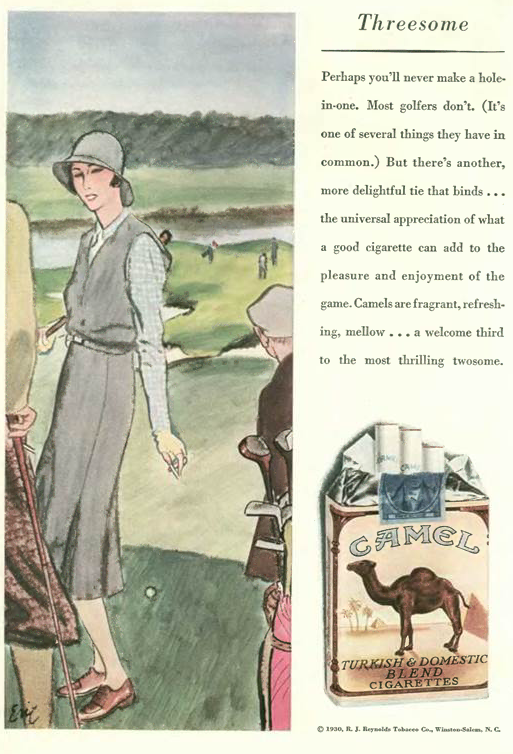
…and artist Carl Erickson remained busy making Camel cigarettes look so darn appealing…
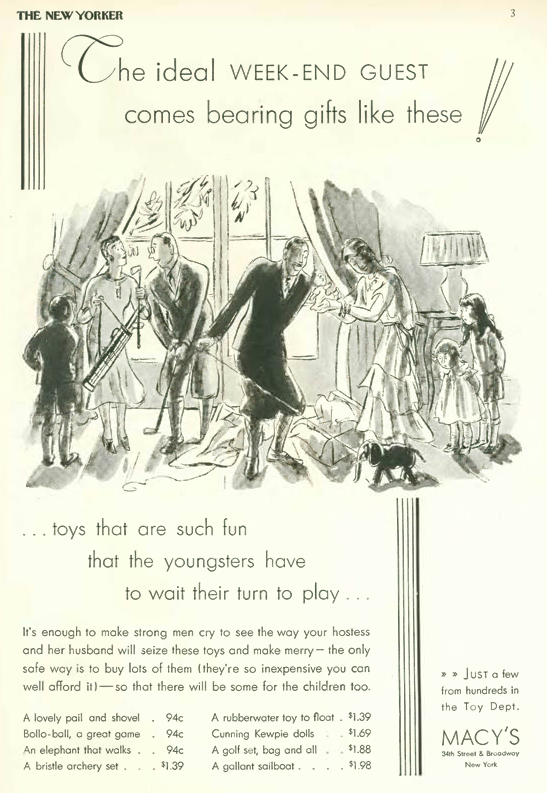
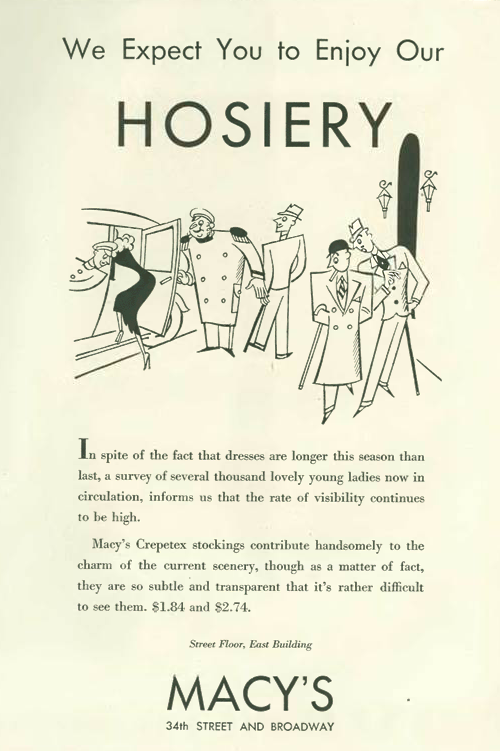
…from Macy’s we have a jolly ad illustrated by Helen Hokinson…
…and for our cartoons, Peter Arno, and an awkward moment in a parking lot…
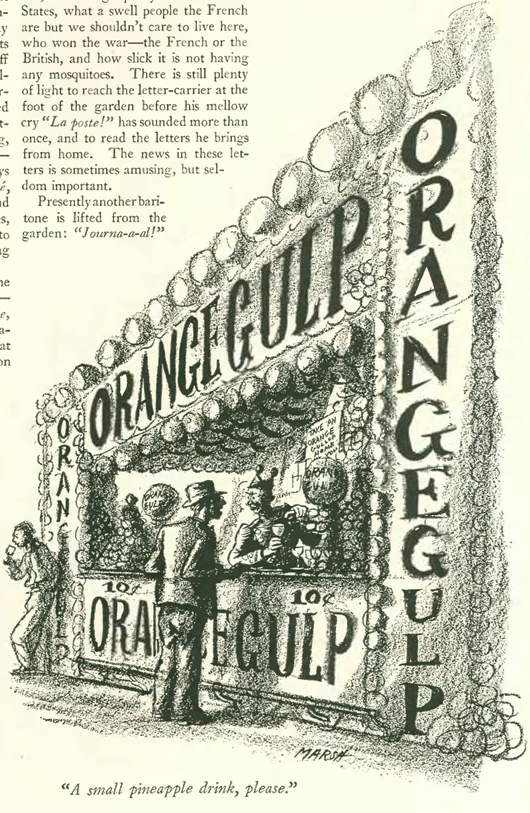
…Reginald Marsh visited Coney Island…
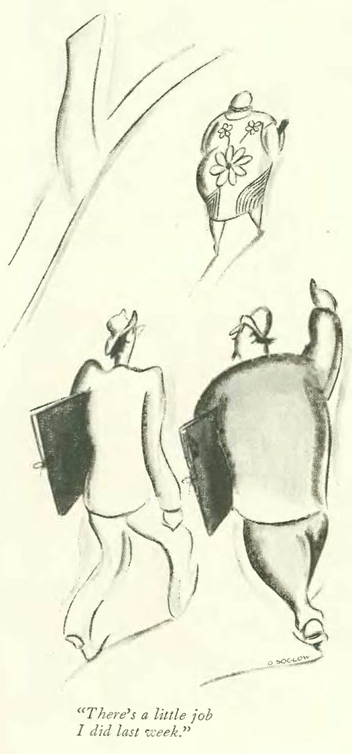
…fresh off his first “Little King” strip for The New Yorker, Otto Soglow returned with this wry observation…
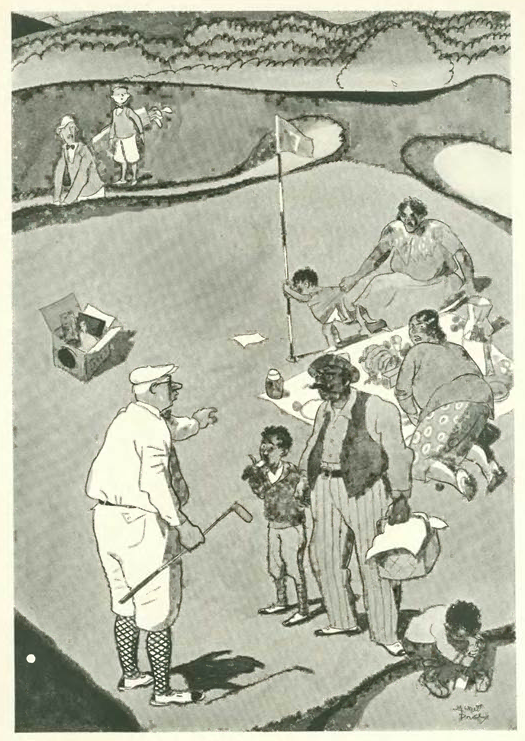
...Garrett Price looked in on a clash of cultures at a golf course…
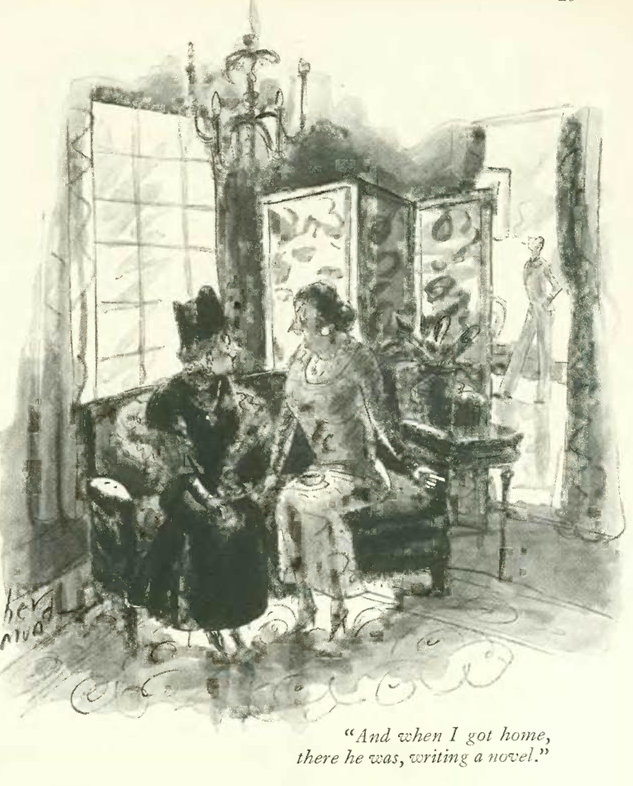
…Barbara Shermund found a bit of trouble at home…
…while Art Young offered this woman a choice of her daily mayhem…
Like his New Yorker colleague Reginald Marsh, Otto Soglow trained in the “Ashcan School” of American art, and his early illustrations favored its gritty urban realism. He had his own life experience to draw upon, being born to modest means in the Yorkville district of Manhattan.
We look at two issues this week. At left, cover of March 31 issue by Peter Arno; at right, June 7 cover by Constantin Alajalov.
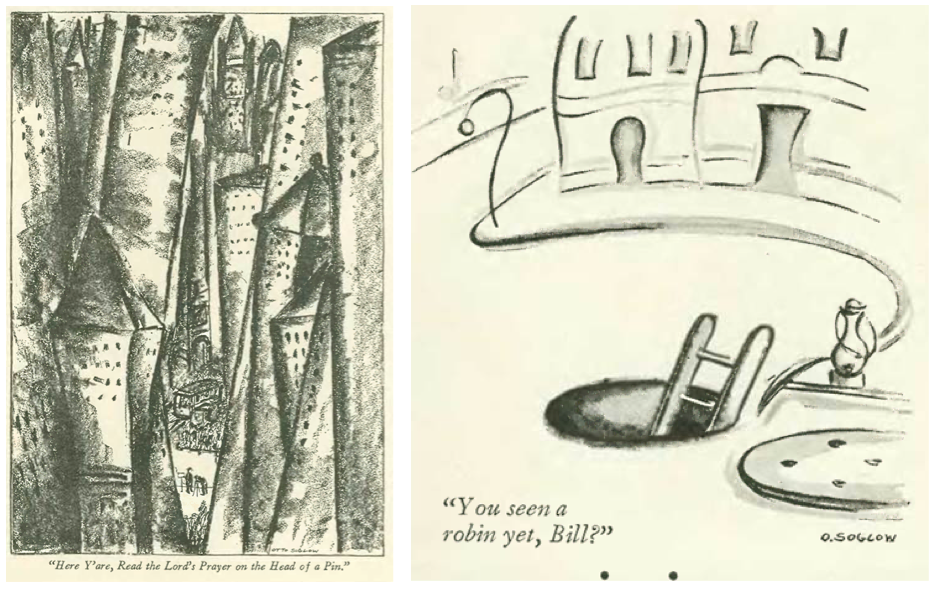
But Soglow (1900-1975) would soon abandon the gritty style in the work he contributed to the New Yorker…
RAGS TO RICHES…At left, Otto Soglow’s first cartoon in The New Yorker, Nov. 14, 1925, was rendered in the Ashcan style ; at right, an example of the sparer style he later adopted, one of his manhole series cartoons from March 2, 1929.
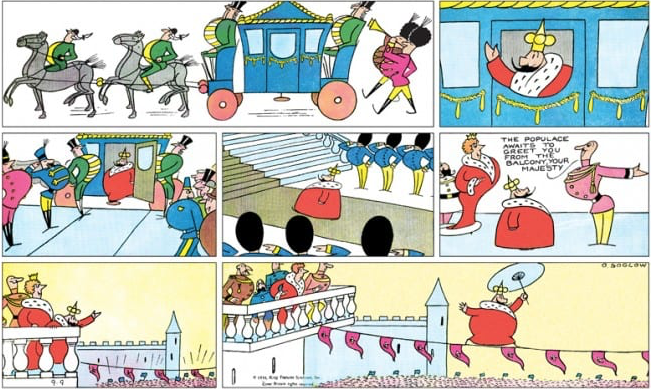
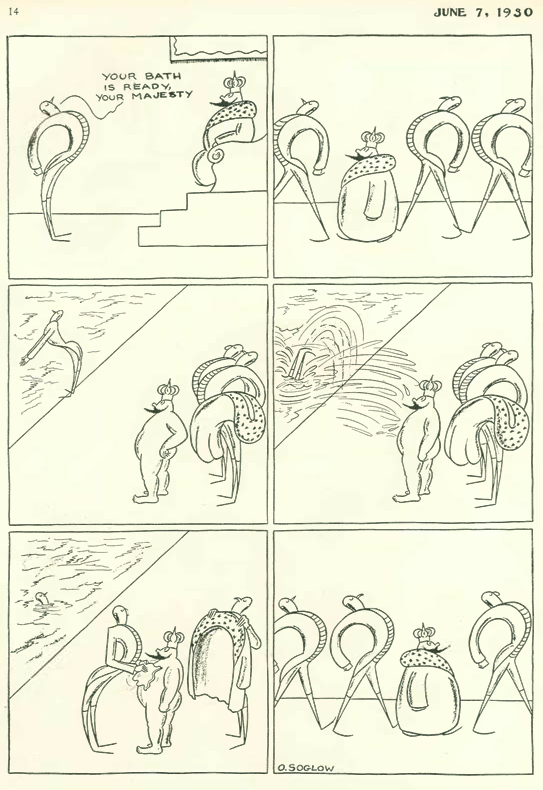
…and in the June 7, 1930 issue, Soglow would publish his first Little King strip, which would launch the 29-year-old into fame and fortune…
Did Soglow know he was on to something big with that first Little King cartoon? Well Harold Ross (New Yorker founding editor) liked what he saw, and asked Soglow to produce more. After building up an inventory over nearly ten months, Ross finally published a second Little King strip on March 14, 1931. It soon became a hit, catching the attention of William Randolph Hearst, who wanted the strip for his King Features Syndicate.
KING OF COMEDY…Otto Soglow working on an illustration for The Ambassador, a short-lived comic strip he created in 1933 for King Features Syndicate. The strip was replaced by The Little King in 1934 after Soglow fulfilled his contractual obligation to The New Yorker. (comicartfans.com)
After Soglow fulfilled his contractural obligation to The New Yorker, The Little King made its move to King Features on Sept. 9, 1934, and the strip ran until Soglow’s death in 1975. After his move to King Features, Soglow continued to contribute cartoons to The New Yorker, but with other themes.
Left, Soglow cartoon from the book Wasn’t the Depression Terrible? (1934); at right, King Features strip from Nov. 19, 1967. (Wikipedia/tcj.com)
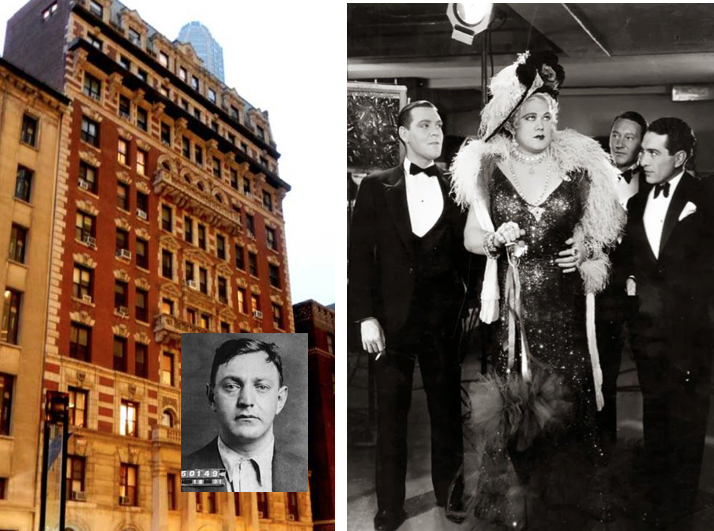
During the summer of 1925, a young writer at Vanity Fair named Lois Long would take over The New Yorker’s nightlife column, “When Nights Are Bold,” rename it “Tables For Two,” and set about giving a voice to the fledgling magazine as well as chronicling the city’s Jazz Age nightlife. There were accounts of Broadway actors mingling with flappers and millionaires at nightclubs and speakeasies, but Long also spoke out on issues such as Prohibition, taking the city’s leaders to task for raids on speakeasies and other heavy-handed tactics contrary to the spirit of the times. “Tables For Two” would go on hiatus with the June 7, 1930 issue, and appropriately so, as the deepening Depression gave the the city a decidedly different vibe. In her “final” column Long would write about the Club Abbey, a gay speakeasy operated by mobster Dutch Schultz…
PARTIED OUT…In her final nightlife column, Lois Long wrote about the new Club Abbey in the basement of the Hotel Harding (left), which was operated by mobster Dutch Schultz (inset). The club’s emcee was Gene Malin (right), Broadway’s first openly gay drag performer. The club was short-lived (as were Schultz and Malin), closing in January 1931 following a mob brawl. (infamousnewyork.com/Pinterest)
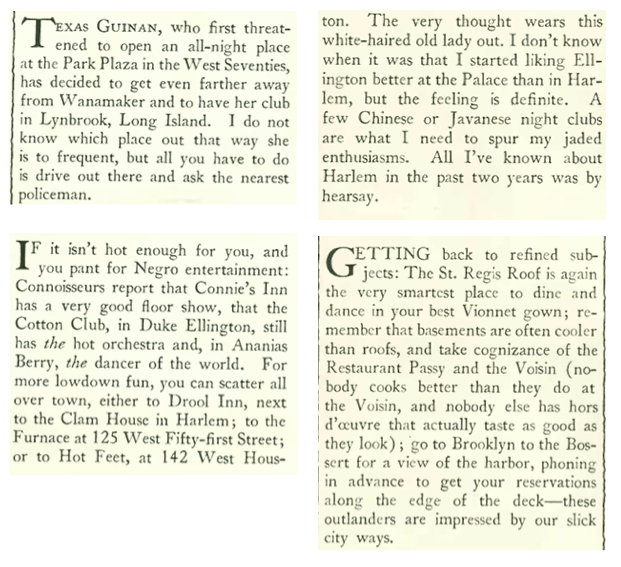
…and she would update her readers on “Queen of the Night Clubs” Texas Guinan, whose Club Intime was sold to Dutch Schultz and replaced by his Club Abbey…
FINAL ACT…Clockwise, from top left, Texas Guinan at Lynbrook, circa 1930; Joseph Urban murals on the rooftop of the St. Regis Hotel; Duke Ellington and his orchestra at the Cotton Club, circa 1930s.
Long’s column would signal a definitive end to whatever remained of the Roaring Twenties. It would also signal the end to some of those associated with those heady times. Texas Guinan’s Lynbrook plans would flop, and Gene Malin’s Club Abbey would close in less than a year. Both would both be dead by 1933—Malin would die in a car accident in 1933, and amoebic dysentery would claim Guinan that same year. Dutch Schultz would be gunned down by gangsters in 1935.
Lois Long, however, would continue to write for The New Yorker for another forty years, and would prove to be as innovative in her fashion column, “On and Off the Avenue,” as she was as a nightlife correspondent.
* * *
Gone to the Dogs
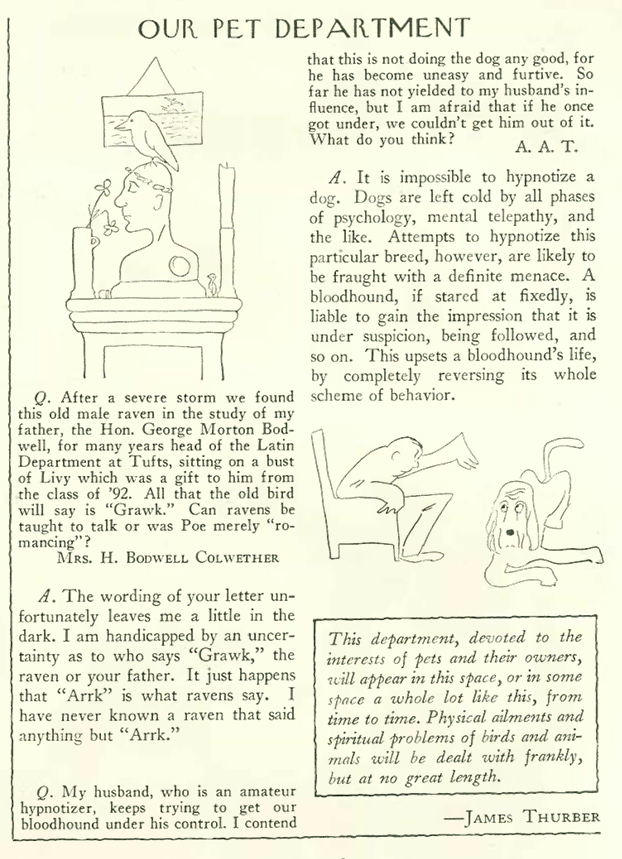
In another installment of his pet advice column (June 7), James Thurber gave us one of his classic dogs…a disinterested bloodhound…
…while Thurber’s buddy and office mate E.B. White commented (in the March 31 issue) on a recent poll conducted among students at Princeton, discovering among other things that New Yorker cartoonist Peter Arno was preferred over the old masters…
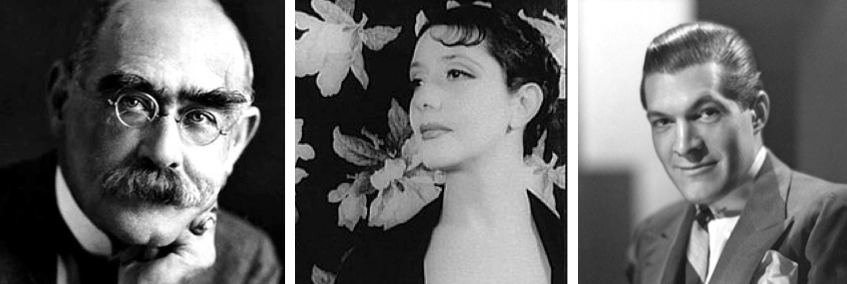
FAN FAVORITES…The Princeton Class of 1930 named (from left) Rudyard Kipling, Lynn Fontanne and Peter Arno as favorite poet, actress and artist respectively in a student poll. (YouTube/Wikipedia/giam.typepad.com)
* * *
We Like It Fine, Thank You
The New Yorker dedicated a full page of the March 31 issue to a tongue-in-cheek rebuttal directed at the New York Evening Journal, which had reprinted one of Peter Arno’s cartoons to illustrate the moral cost of Prohibition. I believe the author of the rebuttal is E.B. White (note how he refers to Arno as “Mr. Aloe”).
…also in the May 31 issue, Rea Irvin changed things up, at least temporarily, with some new artwork for the “Goings On About Town” section. The entries themselves were often clever, such as this listing for a radio broadcast: PRESIDENT HOOVER—Gettysburg speech. Similar to Lincoln’s but less timely…
* * *
From Our Advertisers
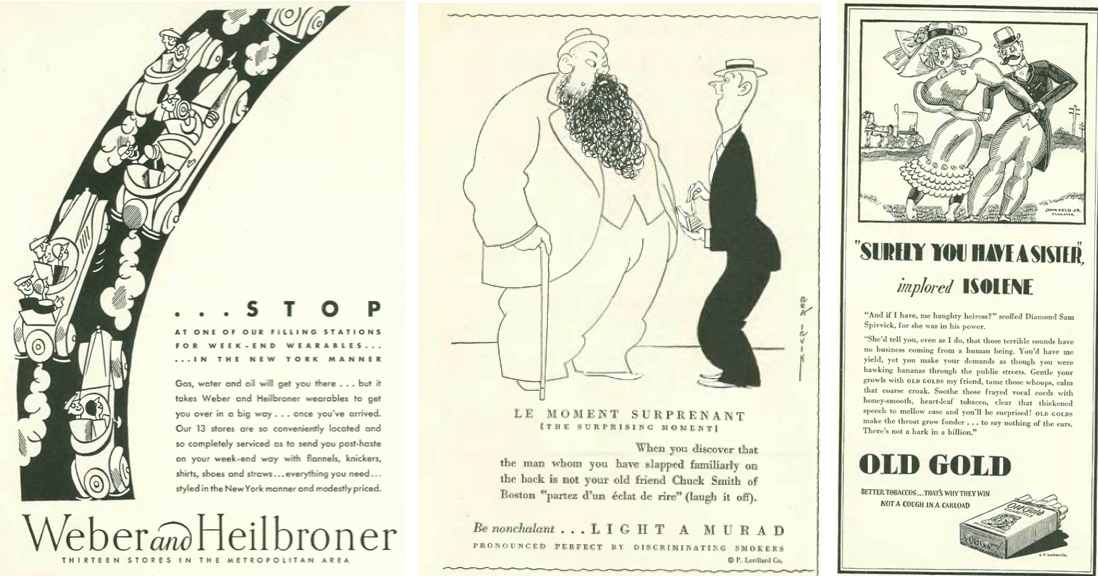
New Yorker cartoonists can be found throughout the advertisements — from left, Julian De Miskey, Rea Irvin and John Held, Jr…
…and in the June 7 issue we find an unusual ad for a used car…a sign of the times, no doubt…
…before it was associated with Germany’s Nazi Party (especially after it seized power in 1933), for thousands of years the swastika had been widely used as a religious or good luck symbol…
…Actress Clara Bow was famously pictured sporting a “good luck” swastika as a fashion statement in this press photo from June 1928, unaware that in a few years the symbol would become universally associated with hate, death and war…
From an unidentified publication dated June 6, 1928. (@JoHedwig/Twitter)
…on to our cartoons, Isadore Klein illustrated a cultural exchange…
…Garrett Price gauged the pain of a plutocrat…
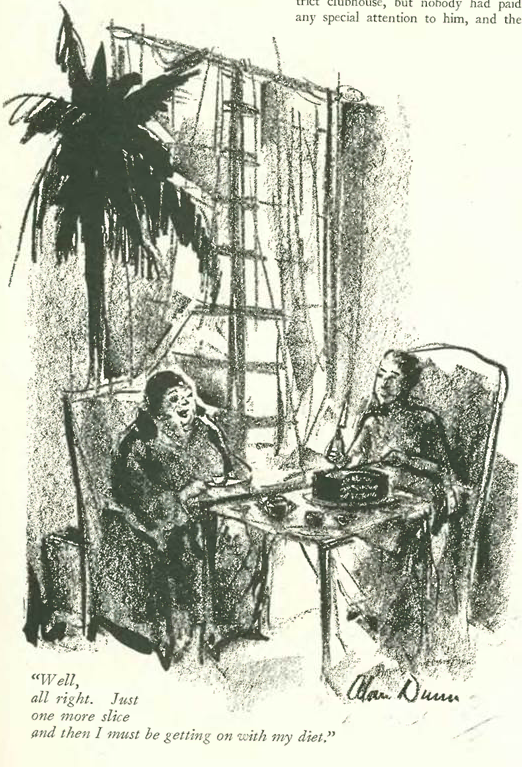
…Alan Dunn eavesdropped on some just desserts…
…Helen Hokinson found humor in the mouths of babes…
…as did Alice Harvey…
…Leonard Dove examined one woman’s dilemma at a passport office…
…and Peter Arno, who found some cattiness at ringside…
The New Yorker had a number of favorite punching bags, among them Grover Whalen (1886–1962), a product of Tammany Hall politics who in 1928 was appointed New York City Police Commissioner by another Tammany alumnus, Mayor Jimmy Walker.
May 17, 1930 cover by Rea Irvin.
Ironically, a mayor known for openly flouting prohibition laws had placed into office a man who would become known as a ruthless enforcer of those laws (excepting Mayor Walker, of course). Whalen was also known for fighting crimes that didn’t necessarily exist, including those committed by “Reds” organizing protests by the city’s growing numbers of unemployed.
In the May 10, 1930 issue, New Yorker writer Alva Johnston penned a tongue-in-cheek assessment of America’s “Red Revolution” (see previous post). In the following issue (May 17), Morris Markey took a few swipes at Whalen’s “Crimson Menace” in his “A Reporter At Large” column:
FLYING HIGH…Mayor Jimmy Walker (second from left) and his new Police Commissioner Grover Whalen (far right) visit Mitchell Field on Long Island in 1928; portrait of Whalen circa 1930. (Amazon/WNYC)
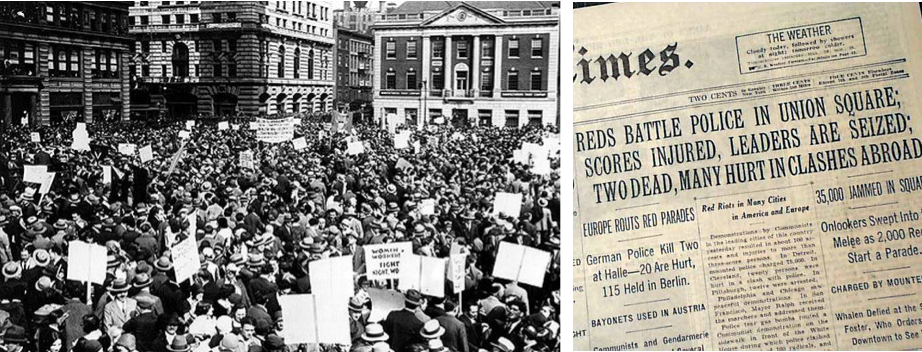
Whalen’s career as police commissioner came to an end around the time Markey’s column appeared. Whalen was under fire for how his police responded to an International Unemployment Day demonstration, where 1,000 baton-wielding police went to work on a crowd of more than 35,000 demonstrators. The New York Times reported: “From all parts of the scene of battle came the screams of women and cries of men with bloody heads and faces.”
IDLE HANDS…The International Unemployment Day demonstration in Union Square on March 6, 1930, turned ugly when a thousand baton-wielding police went to work on the protestors, identified by the New York Times as “Reds.” (libcom.org/The New York Times)
And in the May 24 issue, E.B. White took his own swipe at Whalen in his “Notes and Comment”…
In ensuing years Whalen found more peaceful pursuits, serving as New York City’s official greeter of dignitaries and organizer of ticker tape parades. In 1935 he was named president of the New York World Fair Corporation and became the face of the forward-looking 1939 New York World’s Fair.
DAWN OF A NEW DAY was the opening slogan for the 1939 World’s Fair. At left, preparing to lower the fair’s time capsule into it’s 5,000-year resting place are A.W. Robertson, Westinghouse Electric Company’s chairman of the board (left) and Grover Whalen, president of the New York World’s Fair; at right, the fair’s iconic symbols, the Trylon and Perisphere. (heinzhistorycenter.org/Flickr-Ricksoloway)
* * *
It’s In The Stars
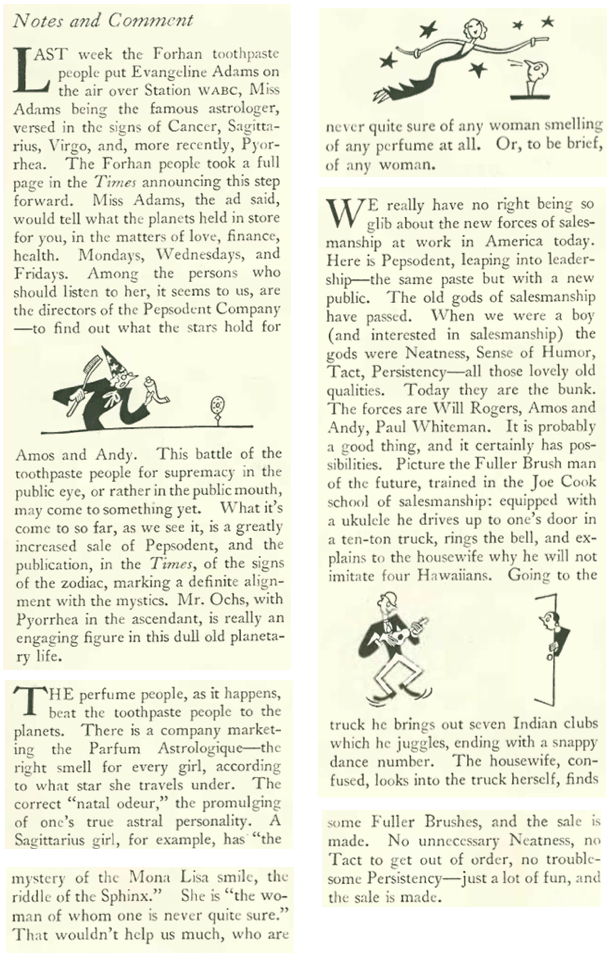
E.B. White led off his “Notes and Comment” with thoughts on the latest trends in product endorsement, including the use of astrology to boost the sales of toothpaste and perfume:
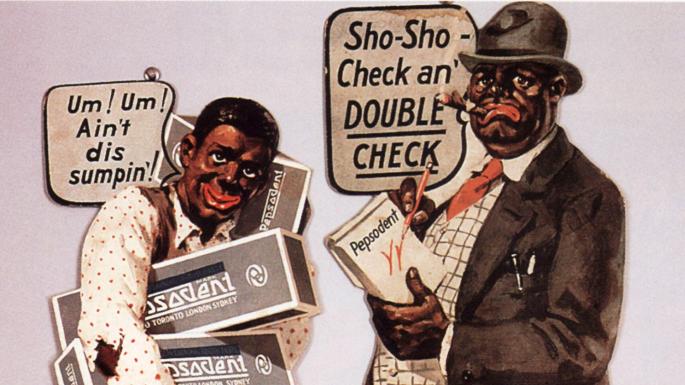
A FORTUNE IN TOOTHPASTE…The makers of Forhan’s Toothpaste promoted their Astrology Hour radio show in the Akron Beacon Journal, May 1931. At right, 1931 ad for Perfum Astrologique. (newspapers.com)THAT WAS THEN…White actors Freeman Gosden and Charles Correll portrayed Amos ’n’ Andy on the radio from 1928 to 1960. Here they shill for Pepsodent toothpaste on circa 1930 stand-up cards. (thetimes.co.uk)
* * *
More Advice on Troublesome Pets
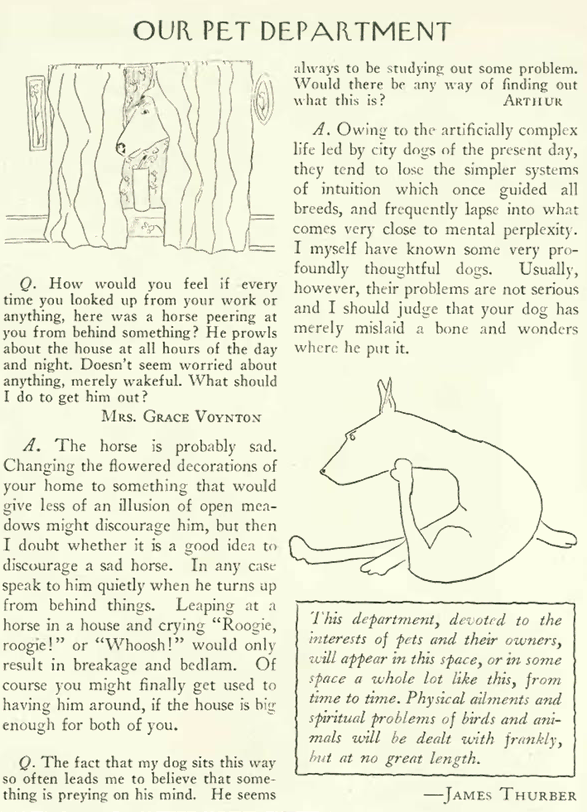
The May 17 issue featured James Thurber’s latest advice on pet care:
…and this two-page illustration by Reginald Marsh ran along the bottom of “Talk.”
* * *
A Fighter for Rights
The May 17 issue featured the first installment of a two-part profile on social reformer Samuel Untermyer (1858-1940) titled “Little Giant.” The profile’s author, Alva Johnston, praised Untermyer’s legacy, and chided New Yorkers for not giving him his proper due. Known for defending the public trust against powerful corporations, he laid the groundwork in the U.S. for the Federal Reserve Law, the Clayton Anti-Trust Law, the Federal Trade Commission Bill and the Securities and Exchange Act. A fierce defender of Jewish rights, Untermyer served as attorney for Herman Bernstein, who filed suit against automaker Henry Ford for anti-semitic articles published in Ford’s Dearborn Independent.
Johnston concluded his two-part profile with these words:
BRING IT ON…Samuel Untermyer was known as a fierce defender of the public trust. At right, illustration that accompanied the New Yorker profile. (findagrave.com)
* * *
From Our Advertisers
Julian De Miskey picked up some extra work with this illustration for Macy’s…
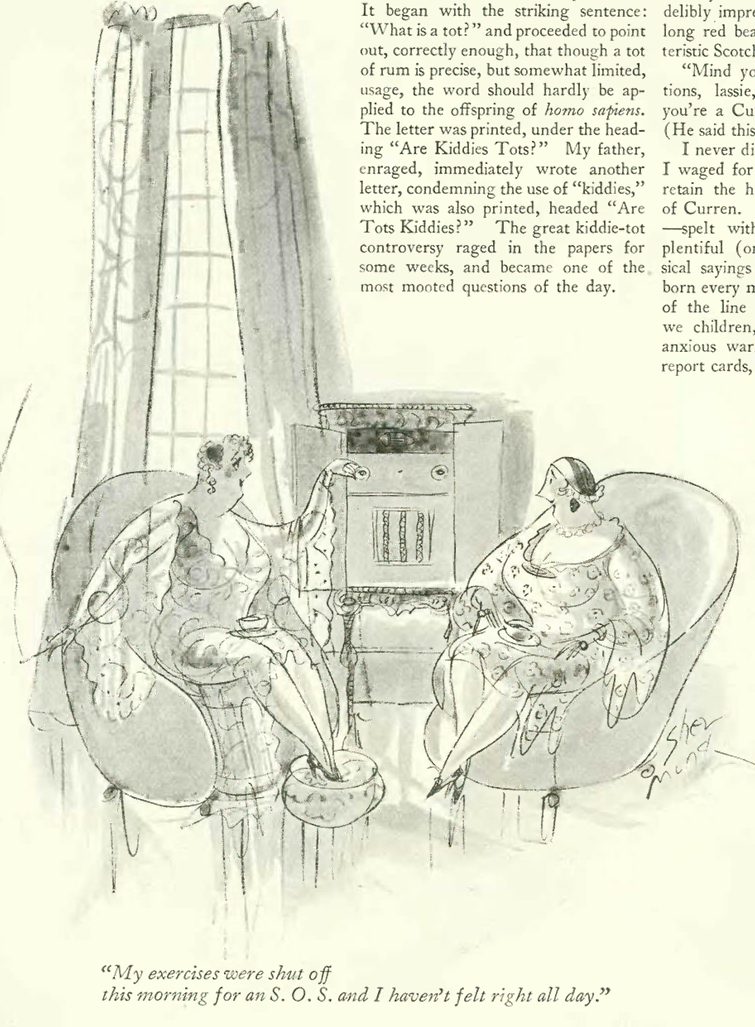
…while in cartoons, Barbara Shermund discovered the challenges of exercise by radio…
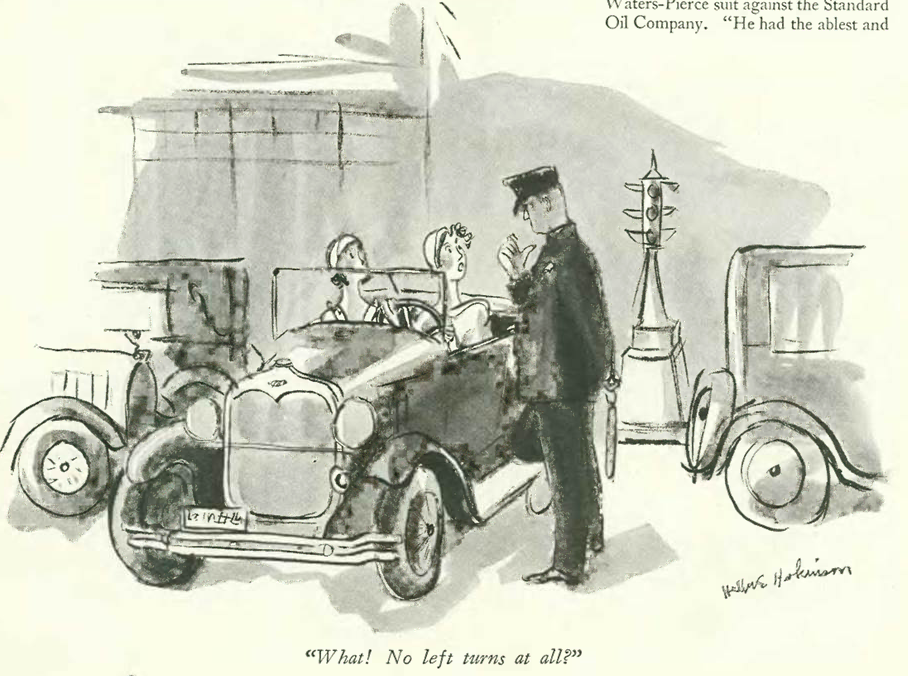
…Helen Hokinson looked at another challenge…city driving…
…Gardner Rea explored the mysteries of street food…
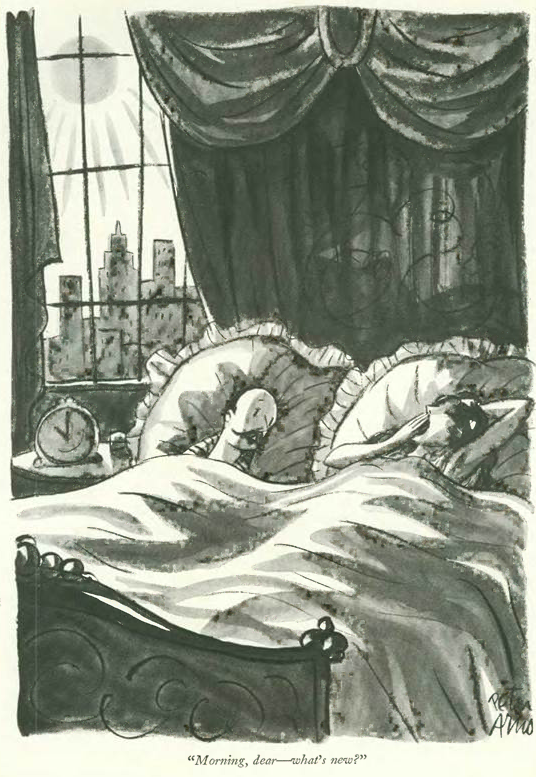
…and Peter Arno greeted one Manhattan couple at sunrise…
* * *
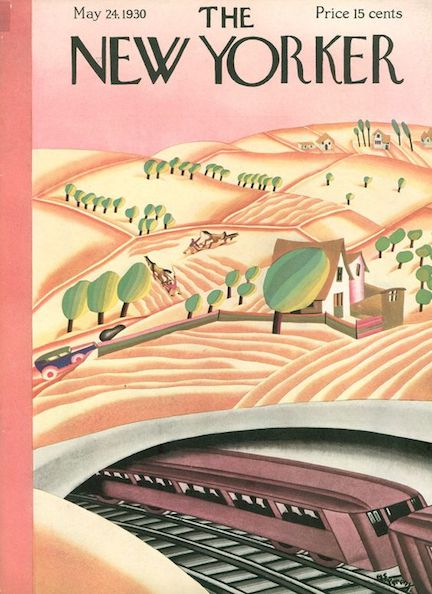
On to the May 24, 1930 issue, with a lovely cover by Madeline Pereny…
May 24, 1930 cover by Madeline Pereny.
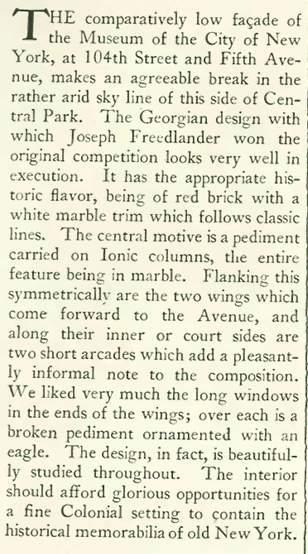
As construction continued on the Museum of the City of New York, The New Yorker’s architecture critic George Chappell liked what was taking shape:
THE STORY OF A CITY…The Museum of the City of New York opened its doors at 104th Street and Fifth Avenue in early 1932. (nyctourist.com/www.ennead.com)
* * *
From Our Advertisers
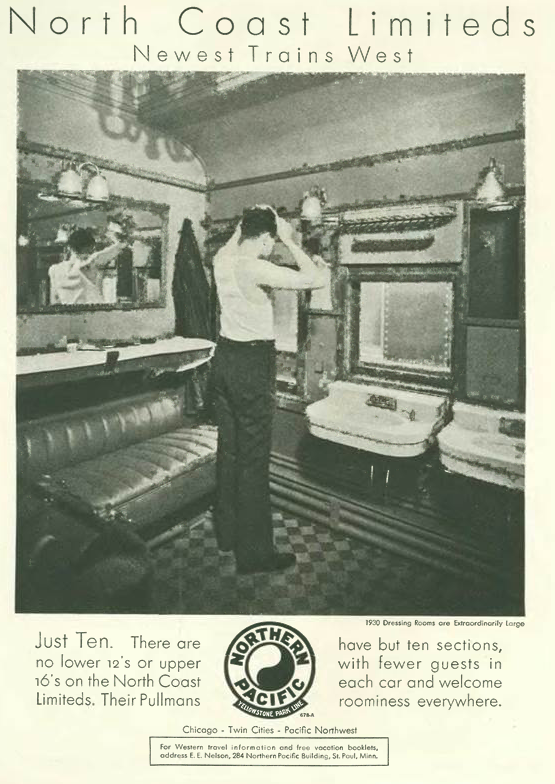
Travel by train in the States wasn’t always miserable as this ad attested…
…a bit of color courtesy the Lenthéric salon…
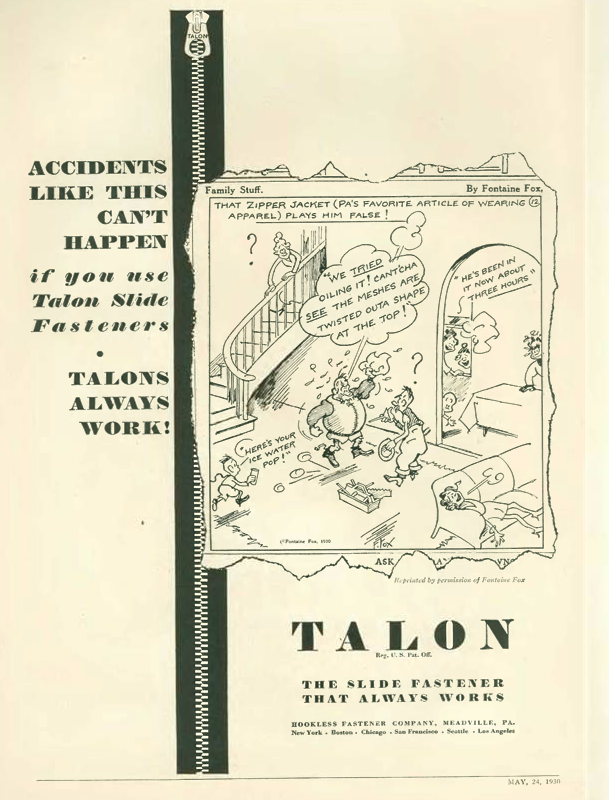
…Fontaine Fox, best known for his long-running Toonerville Folks comics, contributed this cartoon on behalf of Talon Slide Fasteners, or “zippers” as they came to be known in the late 1920s and early 30s, when they were still something of a novelty…
…I believe this is the first-ever image of the Empire State Building in The New Yorker, an artist’s rendering since the building wouldn’t be completed until the spring of 1931…note how this ad links the building’s site location to New York history and specifically the Astor family…
…here is how the Empire State Building looked in June 1930…
(New York Public Library)
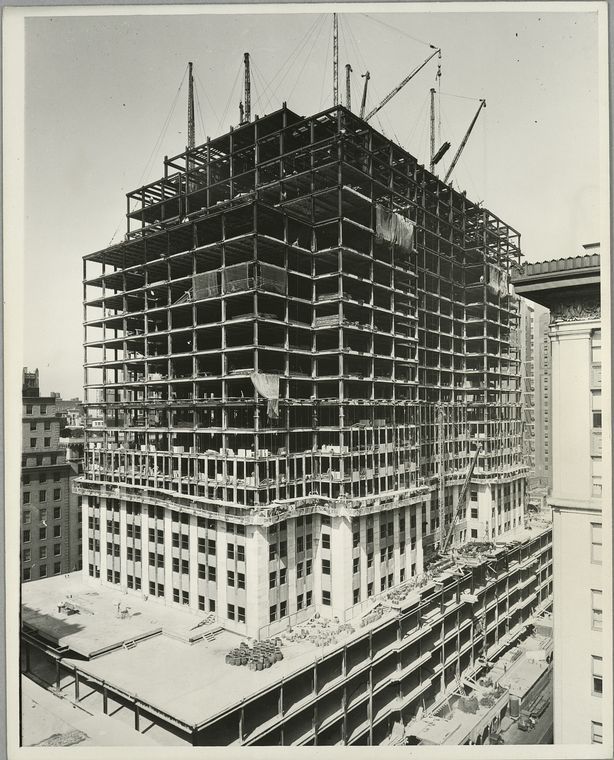
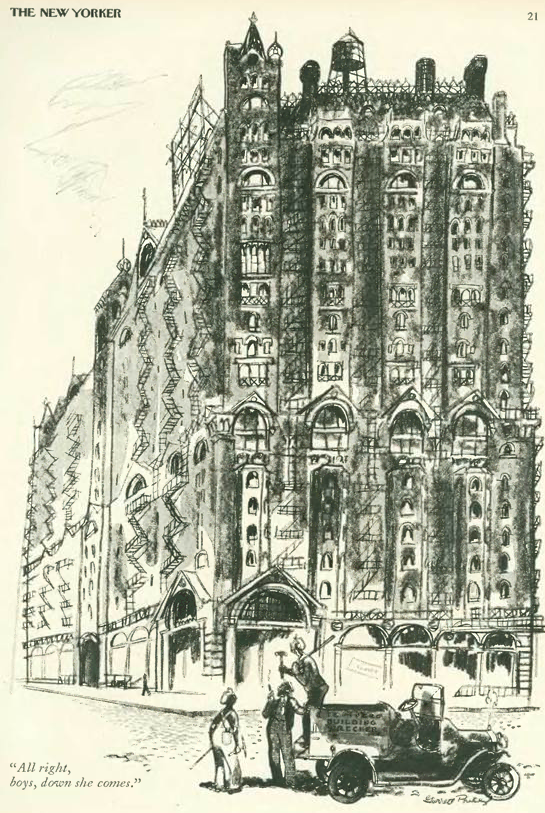
…the old Waldorf-Astoria Hotel was torn down to make way for the Empire State Building, and that provides a nice segue to our cartoons…this one by Garrett Price featured a modest work crew contemplating the razing of a building that recalled the old hotel…
…across the pond, one of Helen Hokinson’s ladies was busy trying to procure a banned book…
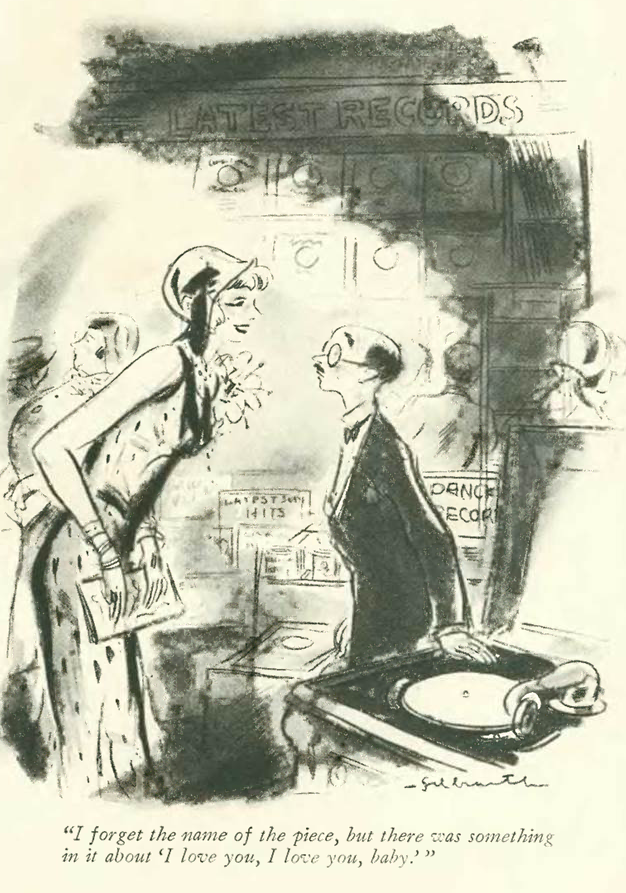
…while William Crawford Galbraith gave us a young woman in search of a love song (with the help of a seriously timid man)…
…Barbara Shermund found some bedside humor…
…and Peter Arno took us back to the nightlife, with our familiar gold-digger and sugar daddy…
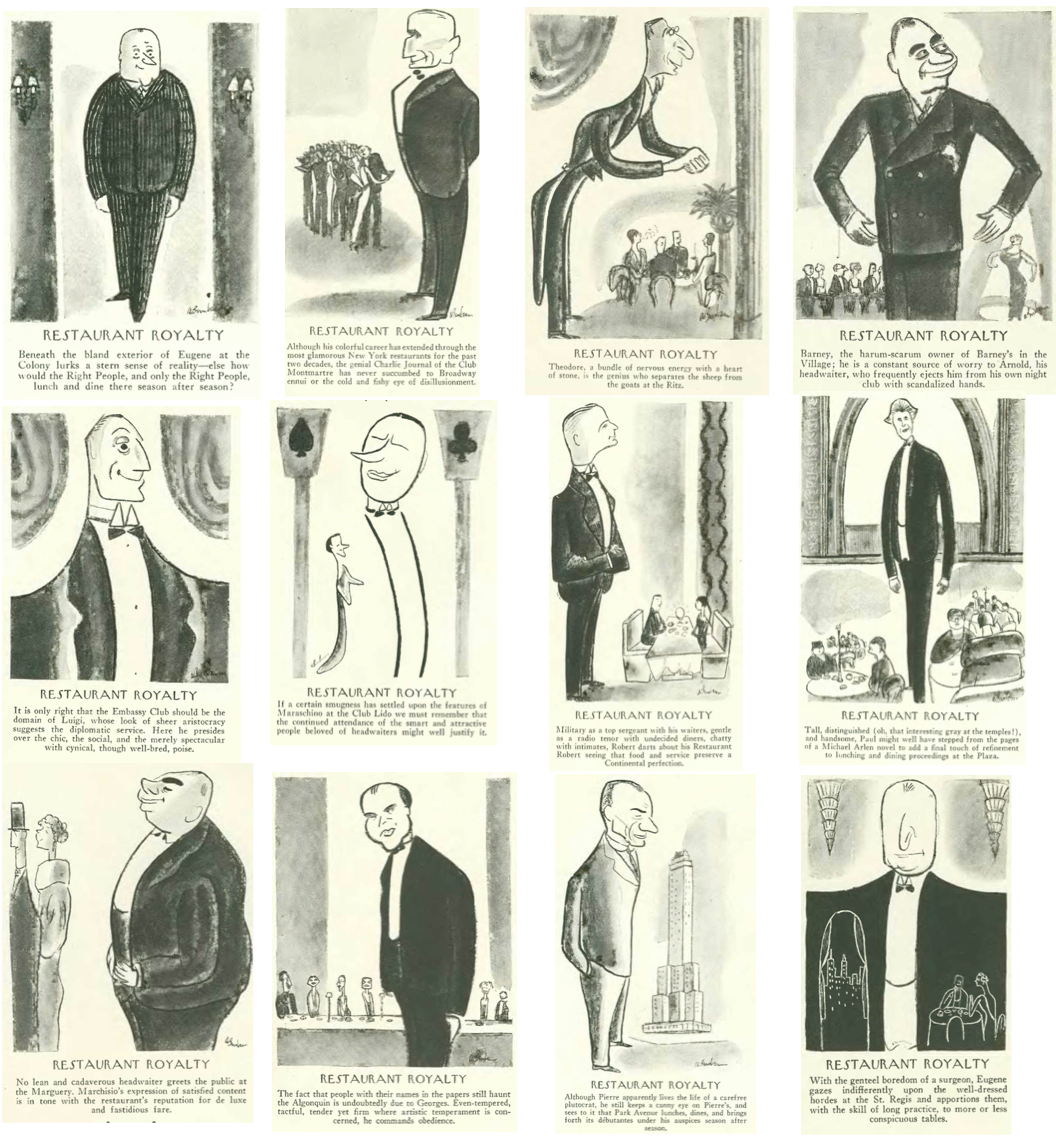
…and finally, over the course of twelve issues (Feb. 8 to May 10, 1930) Abe Birnbaum provided illustrations of New York’s “Restaurant Royalty.” These usually ran in or near “The Talk of the Town” section. Please click to enlarge.
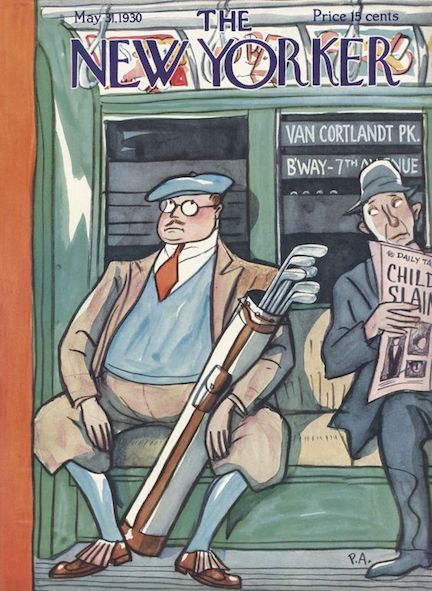
Tens of thousands of commuters daily cross the George Washington Bridge, but in the din of modern commuting few give nary a thought to a span that was once considered a modern marvel.
May 3, 1930 cover by Rose Silver.
Twice as long as any previous suspension bridge when it opened in 1931, the George Washington Bridge’s main span of 3,500 feet (1,100 m) would be the world’s longest until it was surpassed by San Francisco’s Golden Gate Bridge in 1937. The New Yorker’s “Talk of the Town” (entry most likely by E.B. White) checked on the bridge’s progress for the May 3 issue:
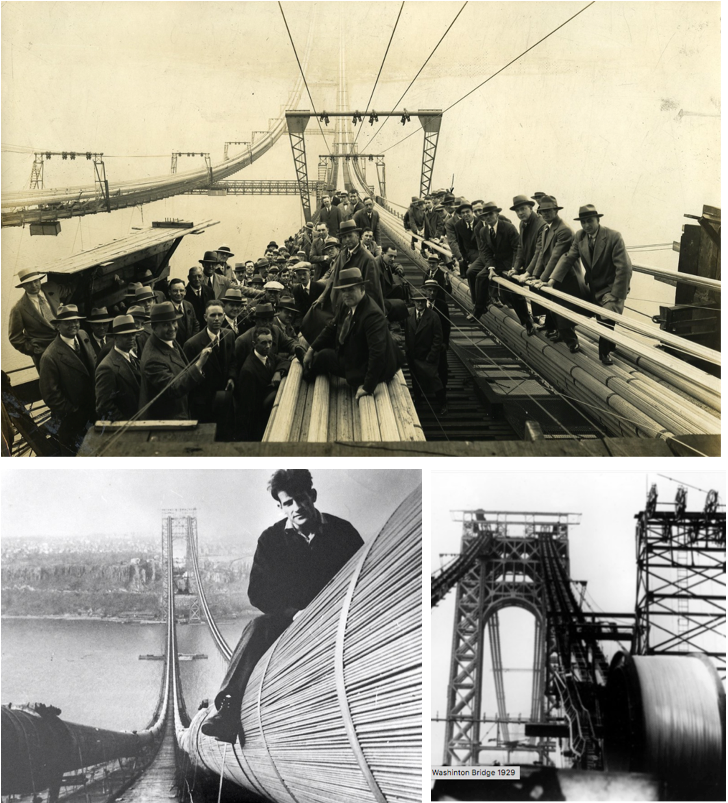
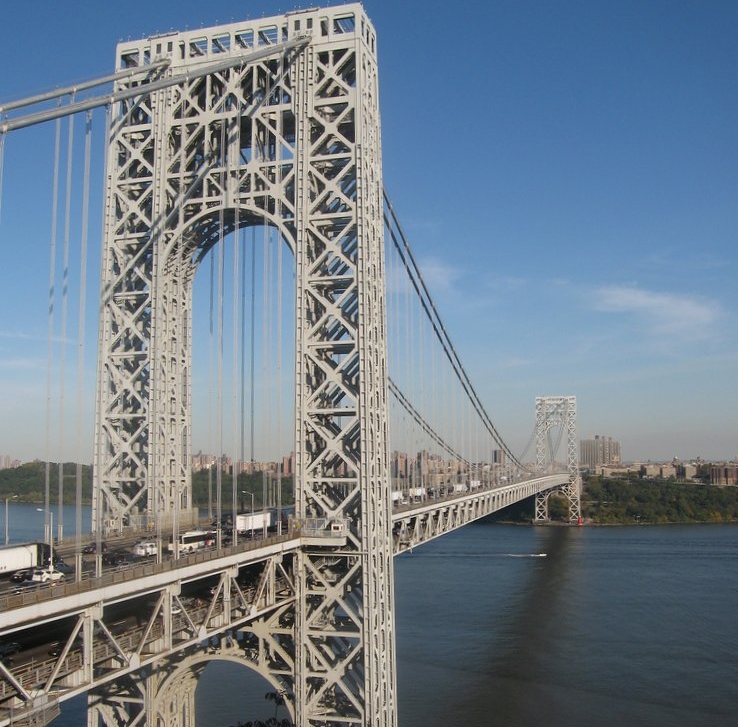
MEN OF STEEL…Some 107,000 miles of wire were used in cables made by John A. Roebling’s Sons Company for the George Washington Bridge — the same firm also supplied wire for the Brooklyn Bridge 60 years earlier (John Roebling and his son, Washington, also designed and built the Brooklyn Bridge). Clockwise, from top, employees of John A. Roebling’s Sons pose atop cable bundles; bottom right, the bridge’s four main cables were each composed of a single strand carried back and forth across the river 61 times. Each strand itself is a bundle of 434 individual wires; bottom left, worker poses atop completed cable. (Flickr/Pinterest)BY ANY OTHER NAME…Known as the Hudson River Bridge during its construction, the George Washington Bridge opened to traffic in 1931. During the first full year of operation in 1932 more than 5.5 million vehicles used the original six-lane roadway — today it is the world’s busiest motor vehicle bridge, carrying more than 100 million vehicles per year. Although the steel towers are iconic today, the original plan called for them to be clad in stone. (Wikipedia)
* * *
A Cabin in the Sky
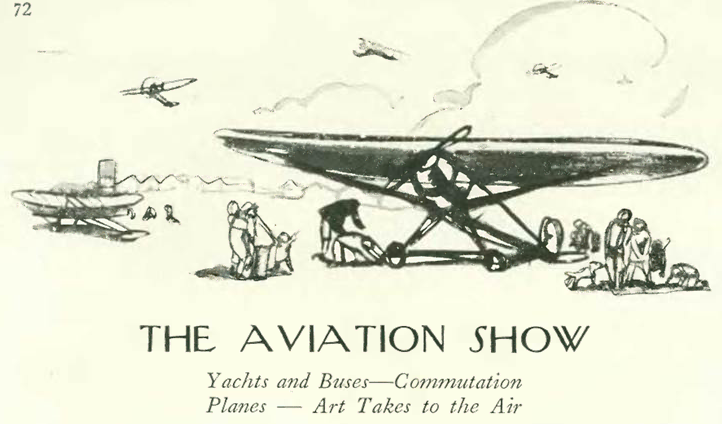
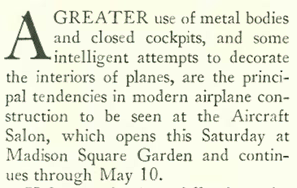
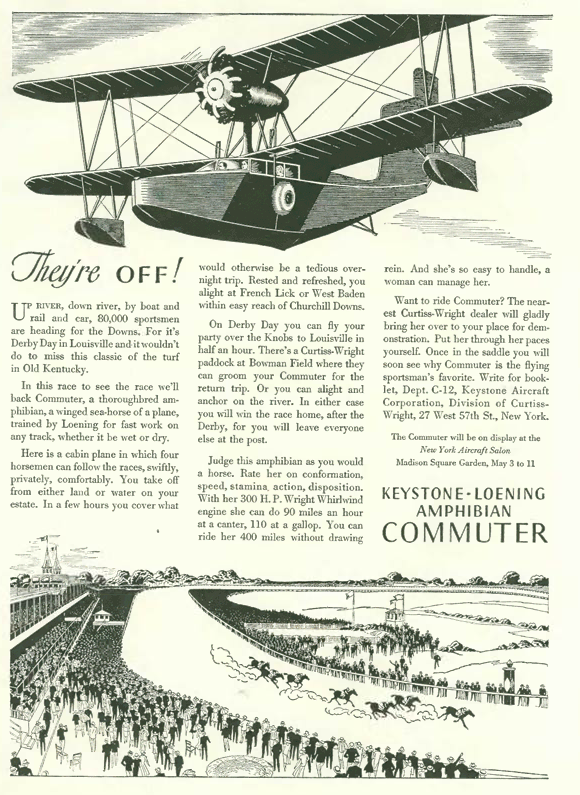
Other signs of modern life were being seen in Midtown, where an “Aircraft Salon” hosted by the Aeronautical Chamber of Commerce was taking place at Madison Square Garden.
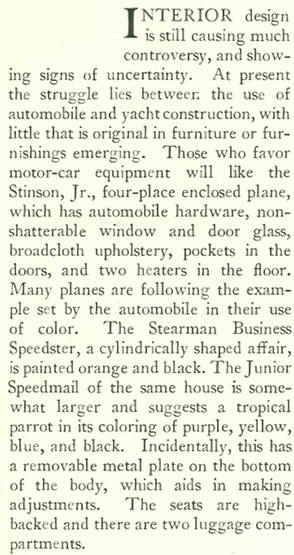
Nicholas Trott was on hand to take in the exhibits, noting that advances in aviation included the use of metal bodies (instead of fortified cloth) and greater attention to interior decoration:
SIGNED, SEALED, DELIVERED…An attendee of the New York Aircraft Salon received a special postal stamp, and an autograph from aviator Cy Caldwell, at the Madison Square Garden show. (Joe Krantz)
Trott noted that designs of passenger compartments, still in their infancy, suggested something between automobile and nautical motifs:
SORRY, NO HEADPHONES…Clockwise, from top left, a Curtiss Condor 18 and its interior appointments; a Fokker Trimotor featured dining in its cabin. As peaceful as the scene appears, the noise from the motors must have been unbearable. (Wikipedia/dutch-aviation.nl)
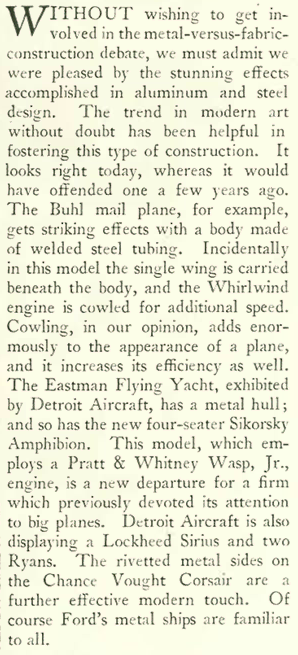
Trott also commented on the debate surrounding metal vs. fabric in the construction of airplanes. Before 1930 most planes were constructed of wood covered with fabric (which were much lighter than metal craft). Although as early as 1920 the National Advisory Committee for Aeronautics declared metal to be superior to wood, only five percent of aircraft in 1930 were of all-metal construction.
DON’T CALL ME WOODY…This eight-passenger Consolidated Fleetster was a rare example of metal construction in early 1930. The wings, however, were still fashioned from wood. (Aeronautical Chamber of Commerce 1931 Aircraft Yearbook)
* * *
Road to Nowhere
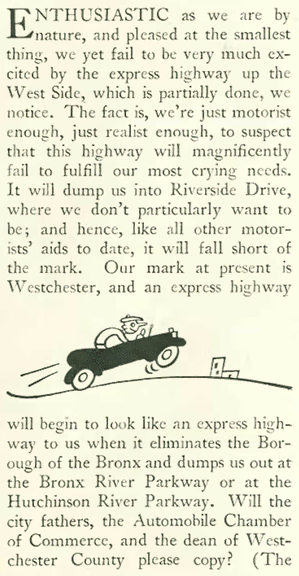
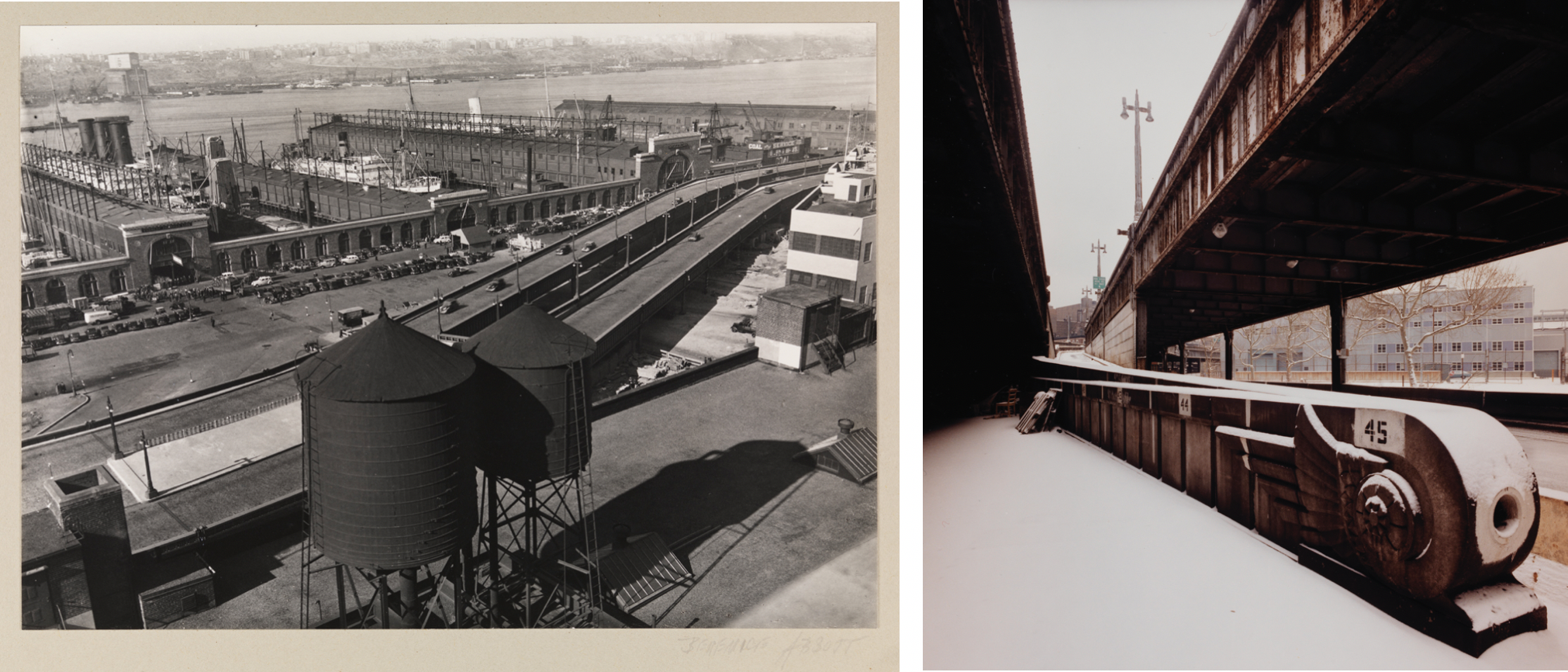
The New Yorker’s enthusiasm for modern marvels did not extend to the West Side Highway, a project that would extend from the late 1920s to the early 1950s. Here is E.B. White’s take on the opening of the highway’s first section:
White’s observations were somewhat prescient — constructed in tight confines, the road’s on-ramps proved too narrow and the turns too tight for use by large trucks. The roadway also lacked proper maintenance, and just two decades after it was completed a section of the highway collapsed under the weight of an asphalt-laden truck. The roadway was demolished between 1977 and 1989. Read more here about the West Side Highway’s surprising history at the Museum of the City of New York.
THE ROAD NOT TAKEN, TAKEN…Left, West Side Express Highway and Piers 95-98, photographed by Berenice Abbott from 619 West 54th Street on Nov. 10, 1977; West Side Highway Ramp at 23rd Street reveals Art Deco ornamentation. Detail of photo by Jan Staller, 1978. (Museum of the City of New York)
* * *
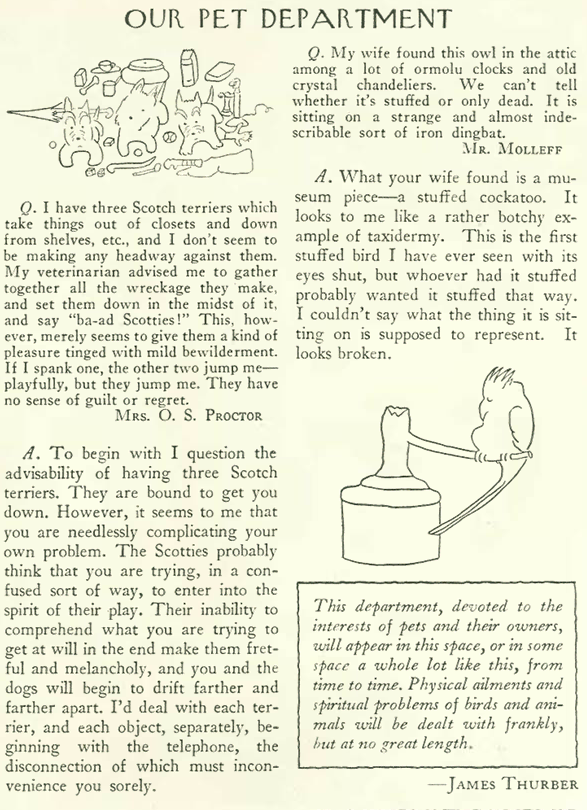
For Pet Lovers
Our latest installment of James Thurber’s “Our Pet Department” column…
* * *
Hate Couture
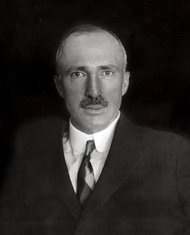
The New Yorker’s Paris correspondent, Janet Flanner, using the pen name “Hippolyta,” contributed this profile of François Coty (1874-1934), a French perfumer and businessman. Flanner’s profile (the introduction included below) described Coty’s rags-to-riches rise in the perfume industry, and touched on his life as a sometime journalist and politician.
What doesn’t come across in the profile is Coty’s extreme right-wing stance on politics and his virulent anti-Semitism, which was often expressed in his newspaper, Figaro. Three years after Flanner’s profile Coty would co-found Solidarité Française, a fascist, paramilitary organization, and a year after that he would be dead of an aneurysm.
François Coty circa 1930. (aperfumeblog.com)
* * *
From Our Advertisers
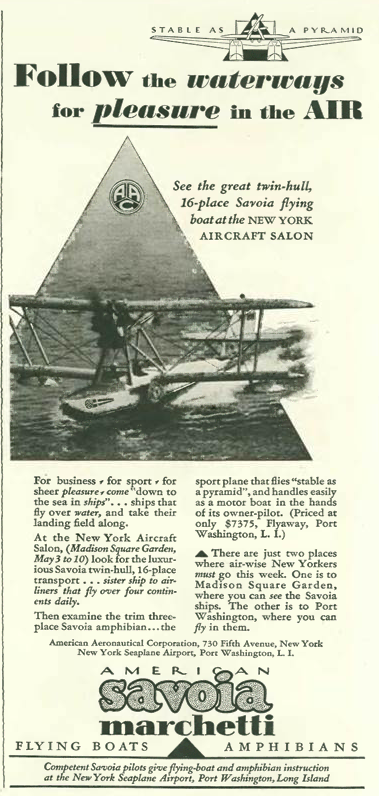
The New Yorker’s bottom line reaped benefits from the big aviation show at Madison Square Garden…
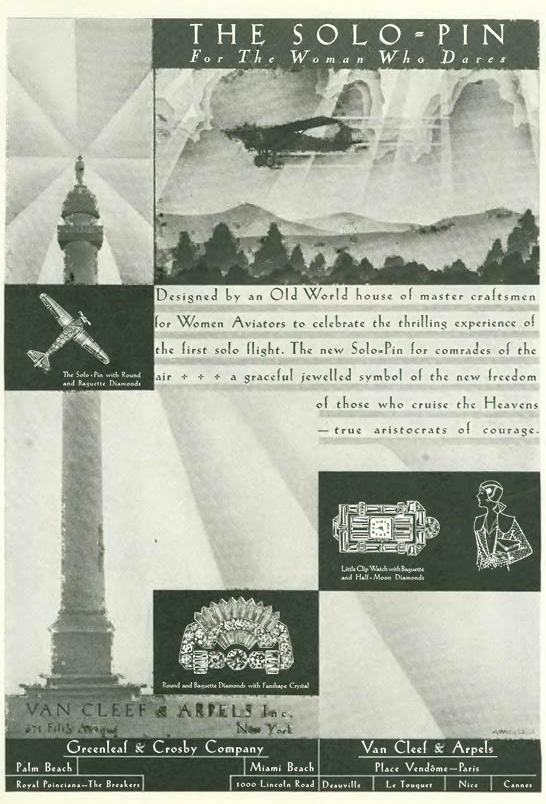
…and even if you weren’t selling airplanes or flying lessons, you could still get in on the action…
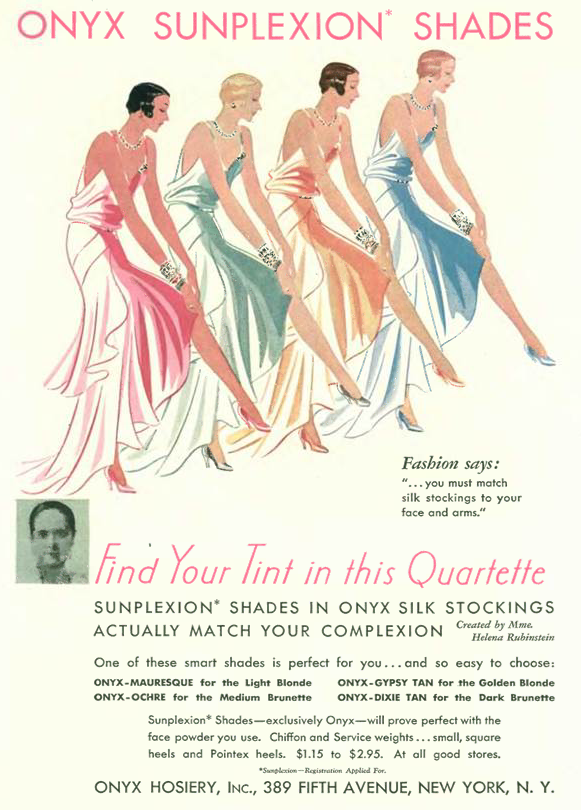
…also from the fashion world, this colorful entry from Onyx Hosiery…
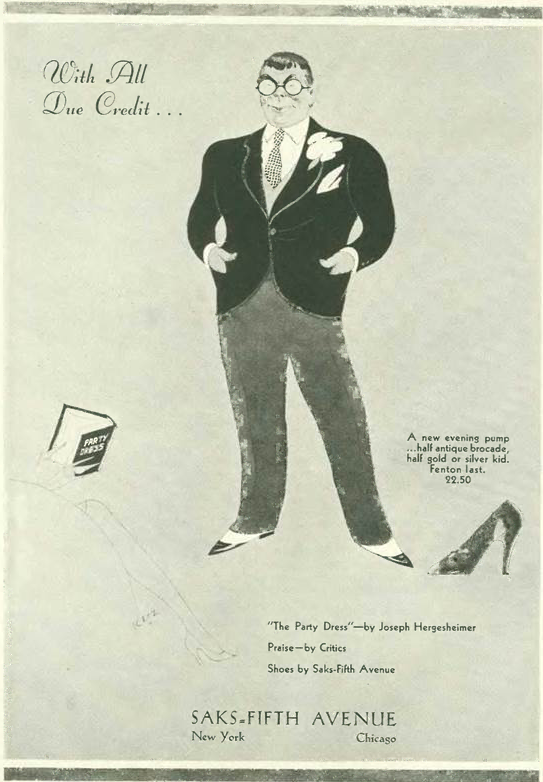
…and this weird ad from Saks, advertising shoes and a party dress but dominated by a caricature of designer Joseph Hergesheimer…
…on to our cartoons…Helen Hokinson paid a visit to the aviation show…
…on the domestic front, Garrett Price examined the challenges of home decor…
…Al Frueh offered an ironic twist on a room with a view…
…Peter Arno once again found humor in the partying life…