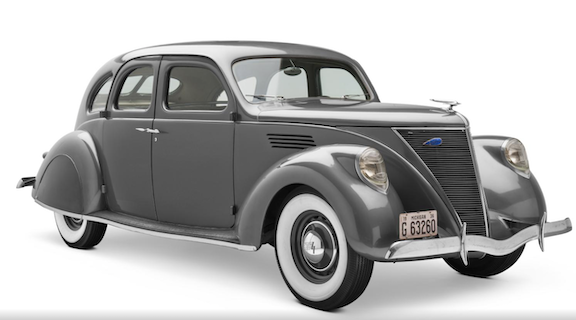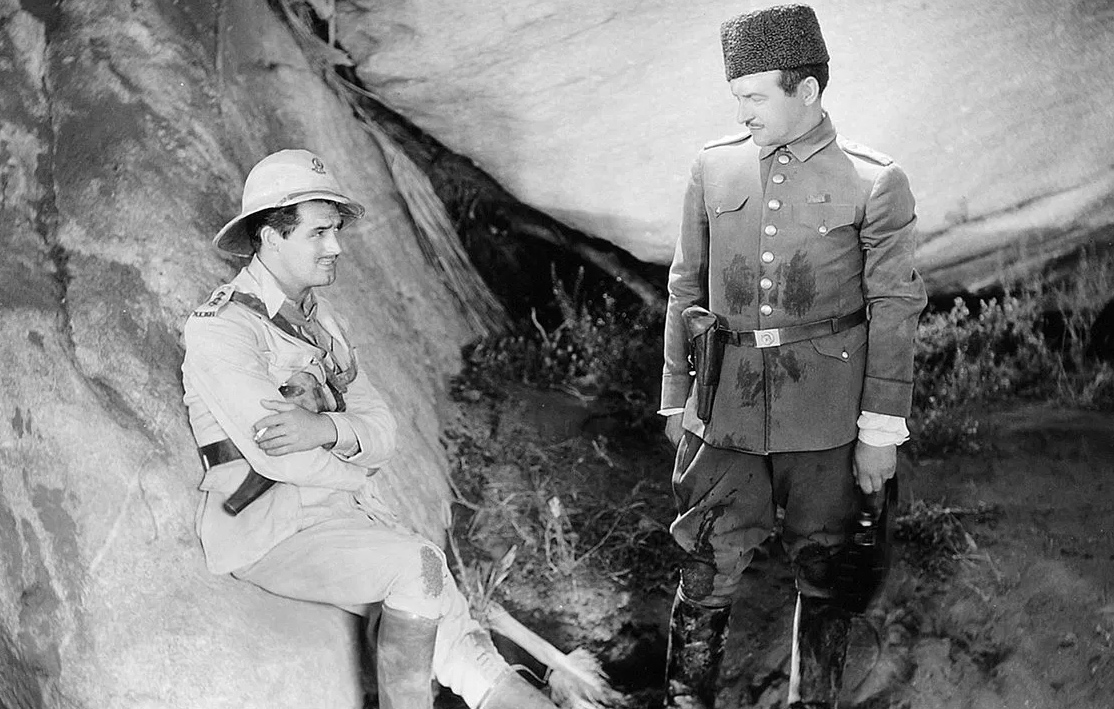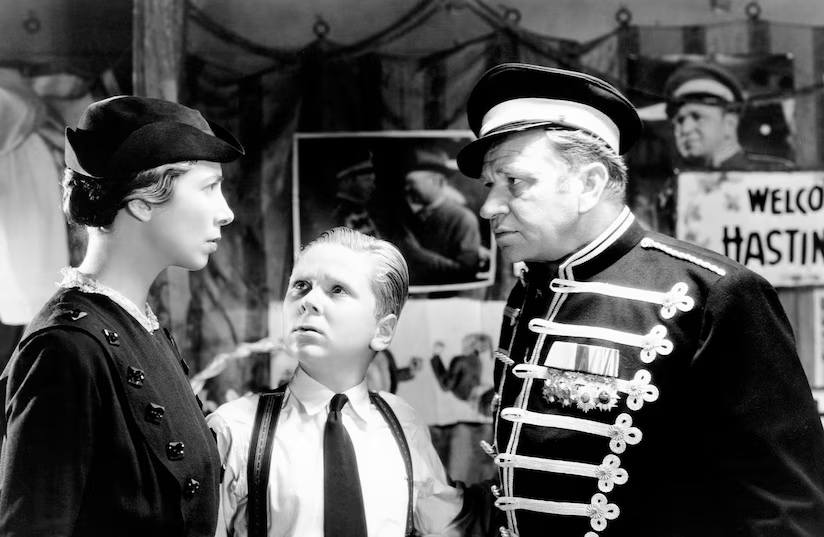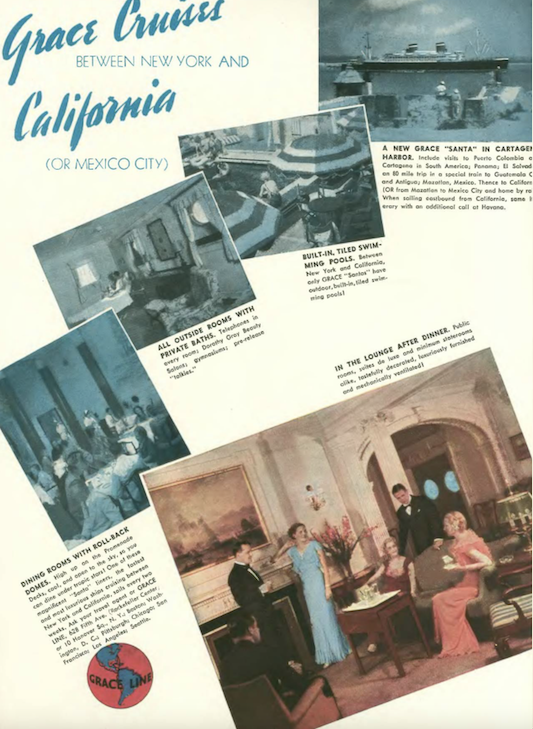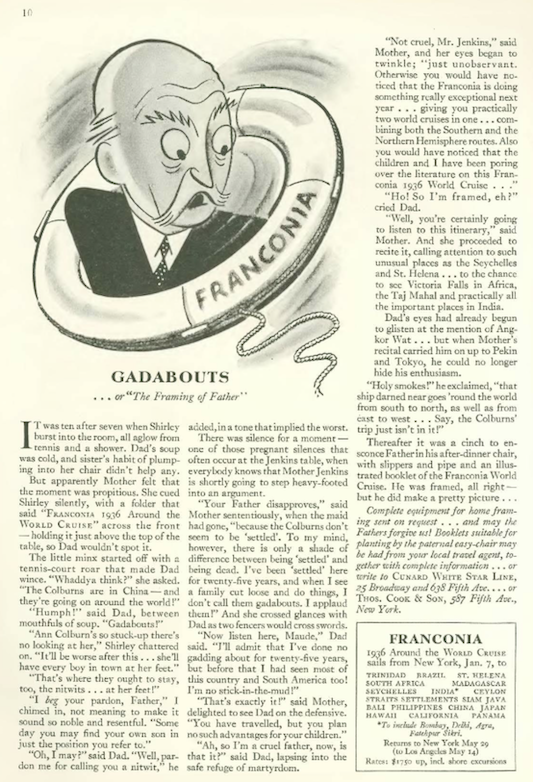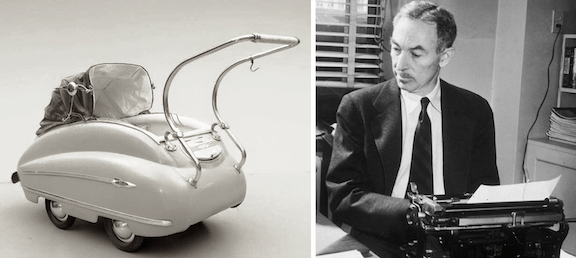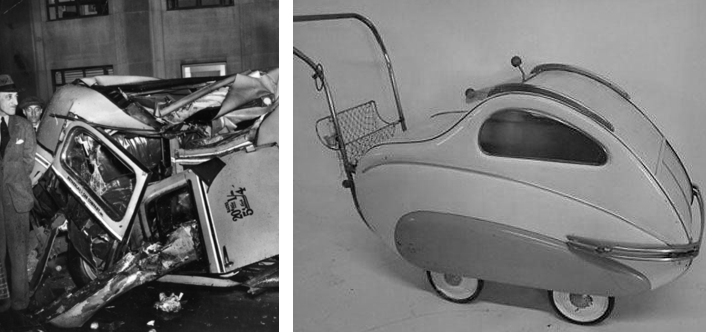
Above: Among E.B. White's notable happenings in the fall of 1935 was a streamlined baby carriage for the toddler of tomorrow. (Pinterest)
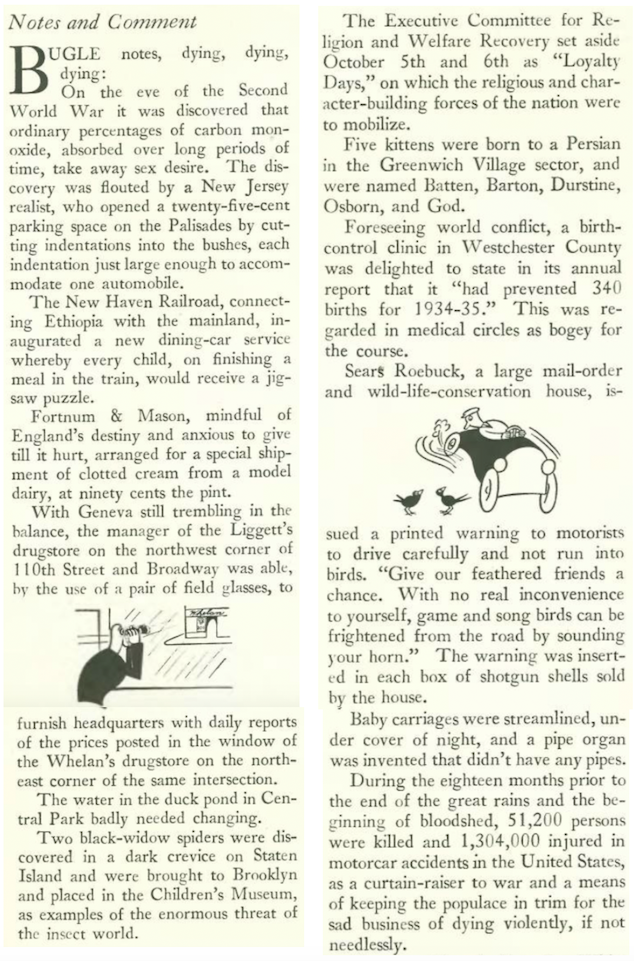
Occasionally, E.B. White would allow his seemingly random thoughts to fill out his “Notes and Comment” column, observing in no particular order various happenings of the day.
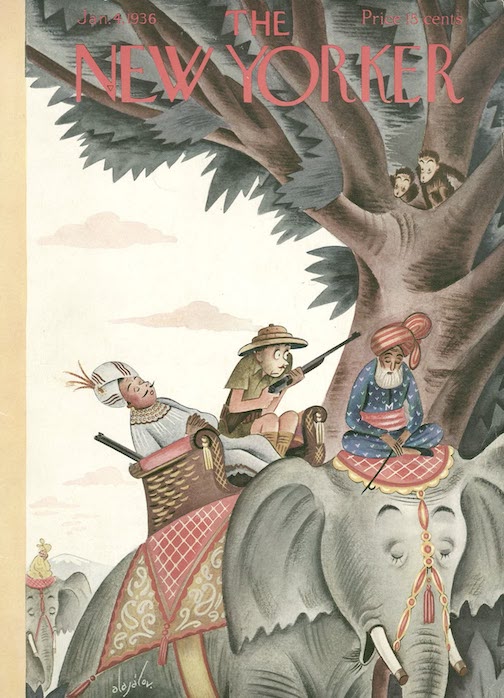
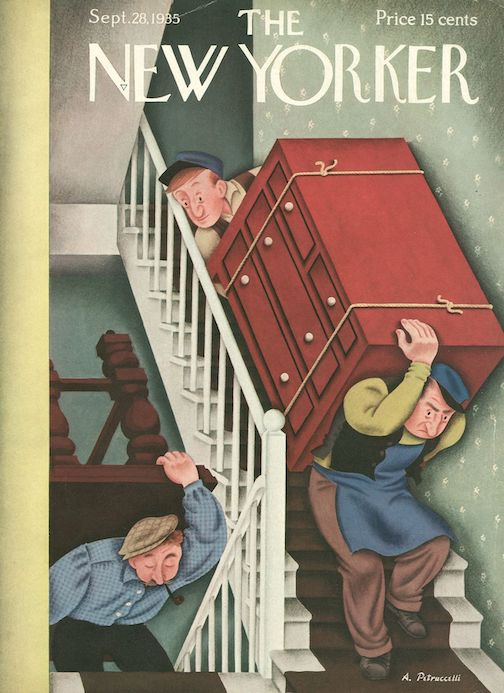
Sept. 28, 1935 cover by Antonio Petruccelli, who began his career as a textile designer. In addition to four New Yorker covers, Petruccelli (1907-1994) illustrated twenty-four Fortune magazine covers as well as several covers for House Beautiful, Collier’s, Life and other magazines.
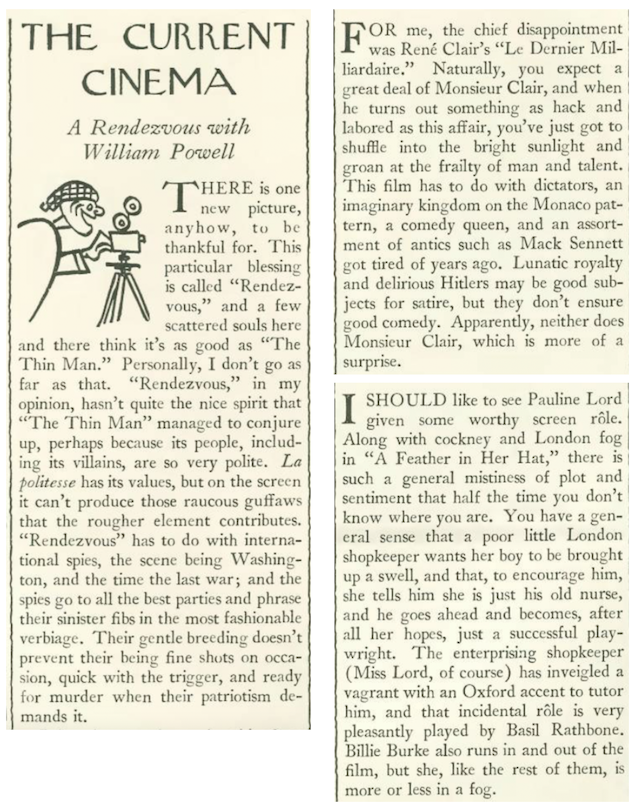
What he accomplished, however, was a collection of snapshots of life in Manhattan and abroad. Here is the first part of E.B. White’s “Notes and Comment” for Sept. 28…
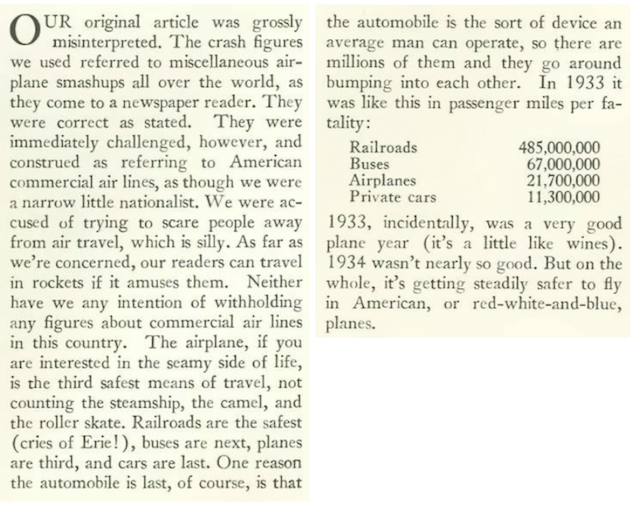
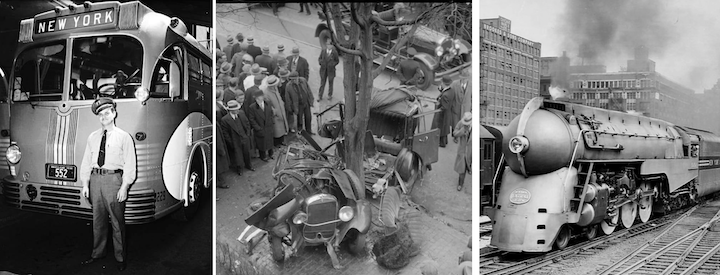
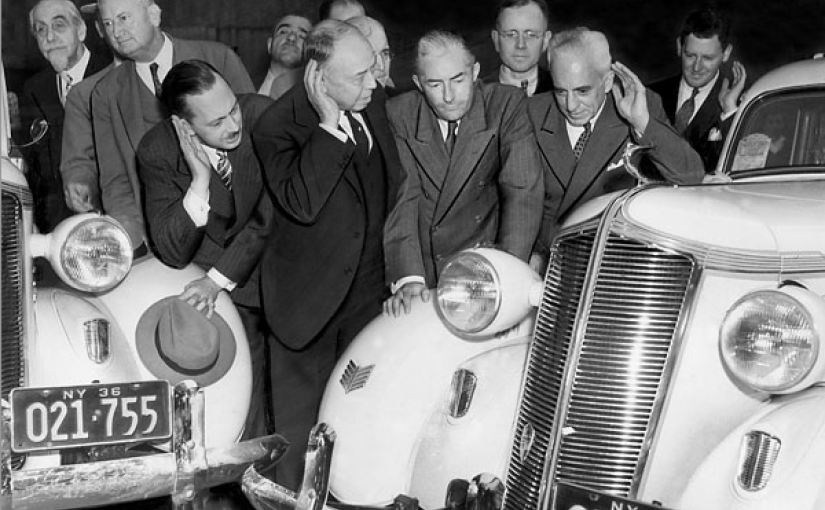
PERENNIAL PROBLEM…E.B. White noted that more than 51,000 Americans died in car accidents in an 18-month span, a number that is oddly similar to today’s statistics (although the U.S. has more than double the population today). At left, photo by Weegee (aka Arthur Fellig) of a wrecked taxicab in New York City, circa 1930s; at right, a streamlined baby buggy, 1930s. (Instagram/Pinterest)
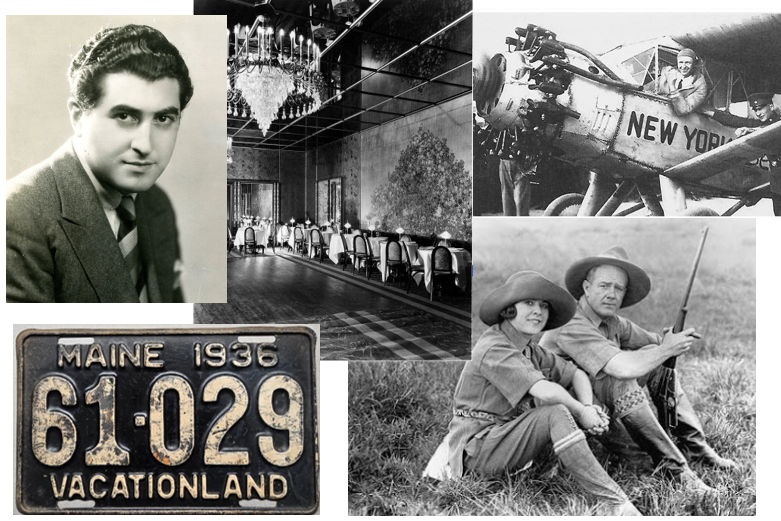
…White also noted a number of cultural events, from airmailed lobsters to a new slogan for the State of Maine…
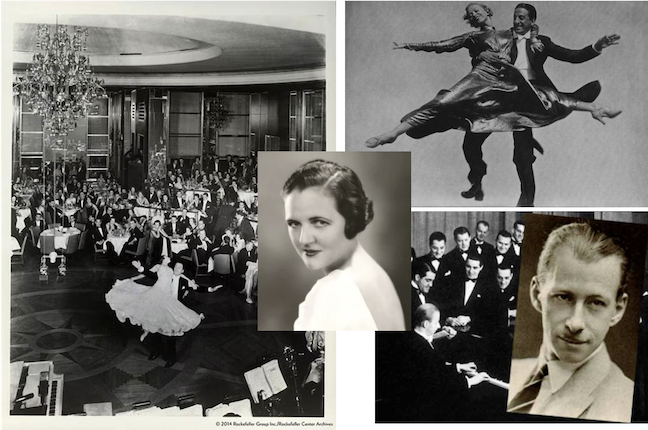
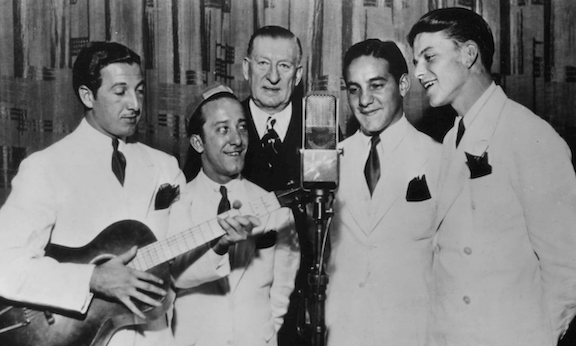
HODGEPODGE…Clockwise, from top left, Leo Reisman brought the sound of music to the beautiful Central Park Casino ballroom (adjoining photo), which was designed by Joseph Urban; in 1927 Clarence Chamberlain became the second man to pilot a fixed-wing aircraft across the Atlantic and the first to carry a transatlantic passenger—in 1935 he accepted a contract from boxer/restauranteur Jack Dempsey to fly two-hundred Maine lobsters to NYC; safari film celebrities Osa and Martin Johnson bought a picnic basket at Abercrombie & Fitch; the state of Maine announced plans to add “Vacationland” to license plates—a slogan still in use today. (IMDB/centralpark.org/alchetron.com/ebay)
* * *
Class Acts
Lois Long continued to chronicle the nightlife scene in her “Tables For Two” column, observing the efforts of nightclub impresarios to promote their establishments as epitomes of sophistication.
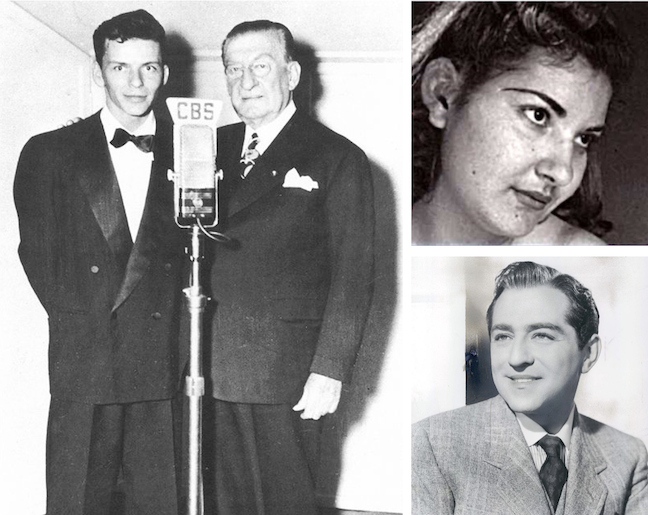
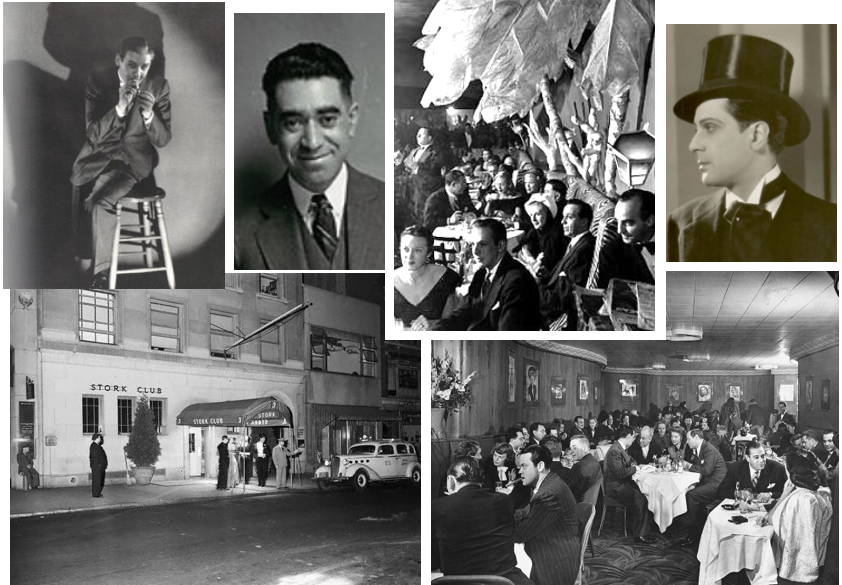
WHY GO HOME?…Lois Long noted the many reasons why New Yorkers might stay out into the wee hours. Clockwise, from top left: Gossip columnist Walter Winchell as photographed by Edward Steichen in 1930; nightclub impersario and former Village speakeasy king Barney Gallant; the exclusive confines of El Morocco; Romanian-born American crooner and actor Georges Metaxa made the society ladies swoon at the Stork Club; the Stork Club’s Cub Room in 1944 occupied by Orson Welles (left) among other notables; entrance to the club, 1930s. (CondeNast/boweryboyshistory.com/Pinterest/Wikipedia/NYPL)
* * *
From Rough to Refined
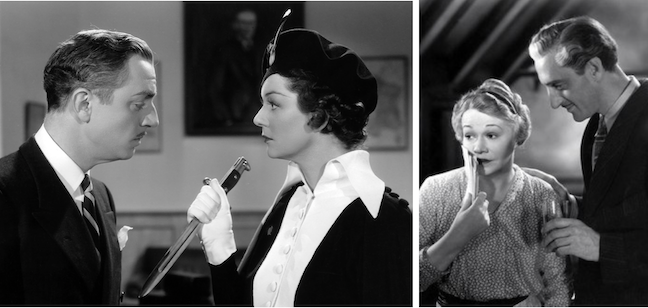
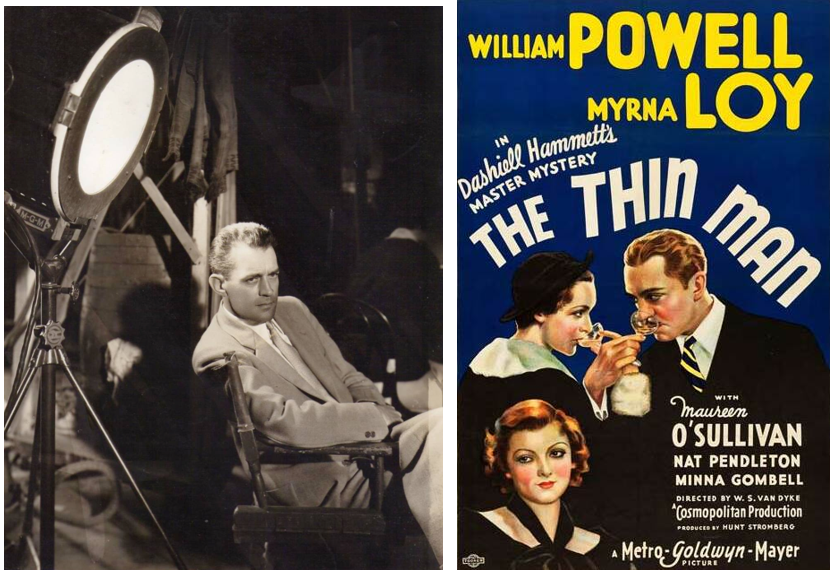
Alva Johnston profiled acclaimed film director W.S. Van Dyke (1889–1943), whom Johnston portrayed as a tough guy who slipped effortlessly from the rough and tumble world of Westerns to the sophisticated heights of high society films such as 1934’s The Thin Man.
LOW TO HIGH…W.S. Van Dyke moved from making Westerns to more sophisticated fare including 1934’s The Thin Man. (Facebook/Wikipedia)
* * *
Silly Mystification
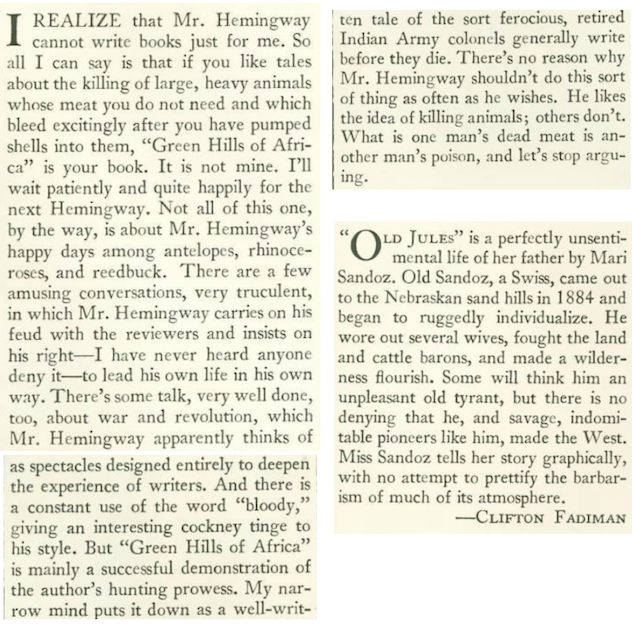
Book reviewer Clifton Fadiman began his review of T.E. Lawrence’sSeven Pillars of Wisdom by first clearing the air about the enigmatic writer and diplomat who had recently died in a motorcycle accident. “Wittingly or unwittingly, willingly or unwillingly, he exhaled during his lifetime a vapor of silly mystification,” Fadiman wrote about Lawrence, who was known to embellish accounts of his adventures in the Arab world. Here is an excerpt of the review:
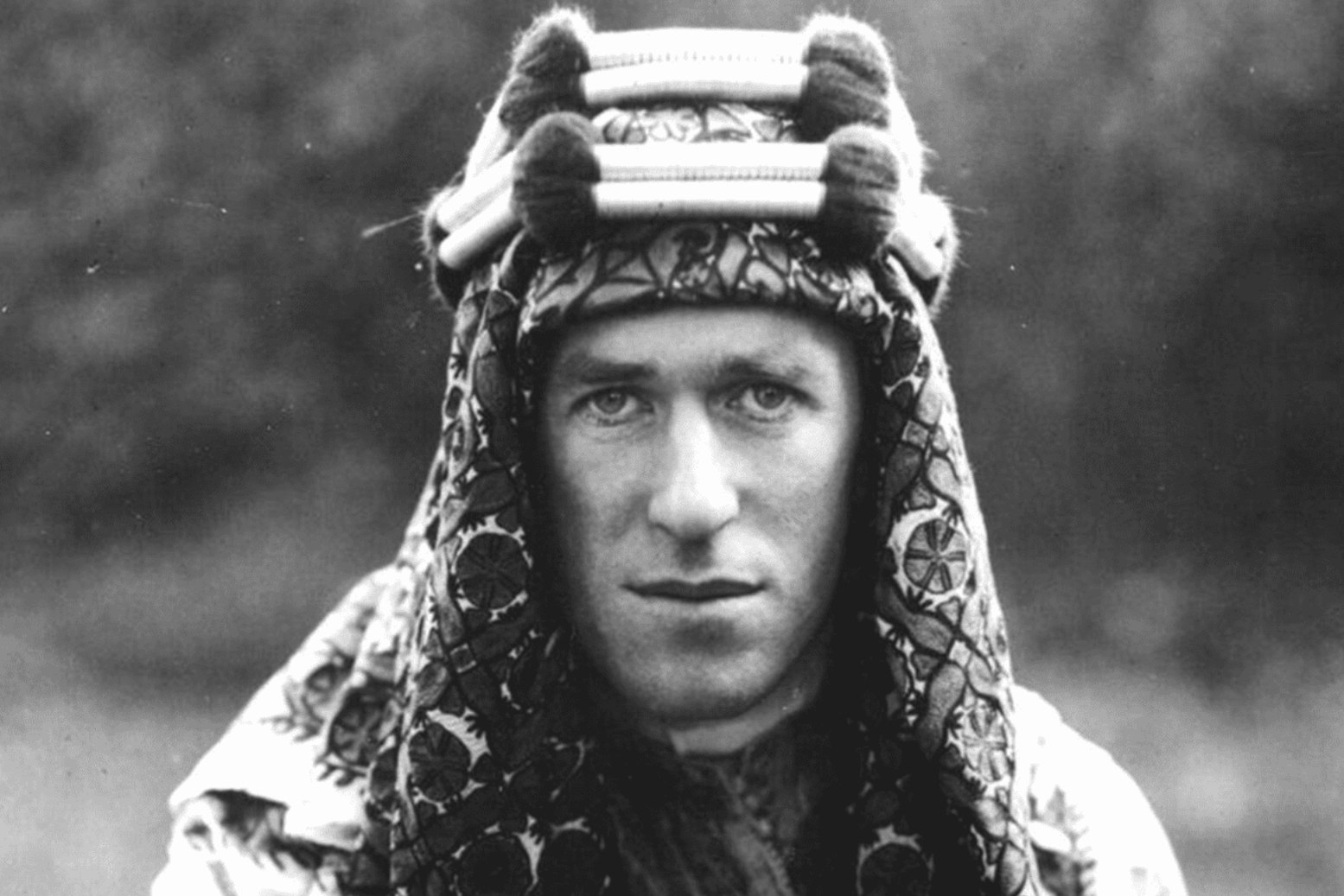
LITERARY COSPLAY…T.E. Lawrence (1888-1935) in an undated photo. Writing for the New Criterion,David Fromkin noted the importance of Lawrence’s prestige to the British Empire. “T. E…was of his time and ours. Of all the public figures of the twentieth century, across a wide range of interests, issues, and attitudes, he best expresses the century. ” (The New Criterion)
* * *
At the Movies
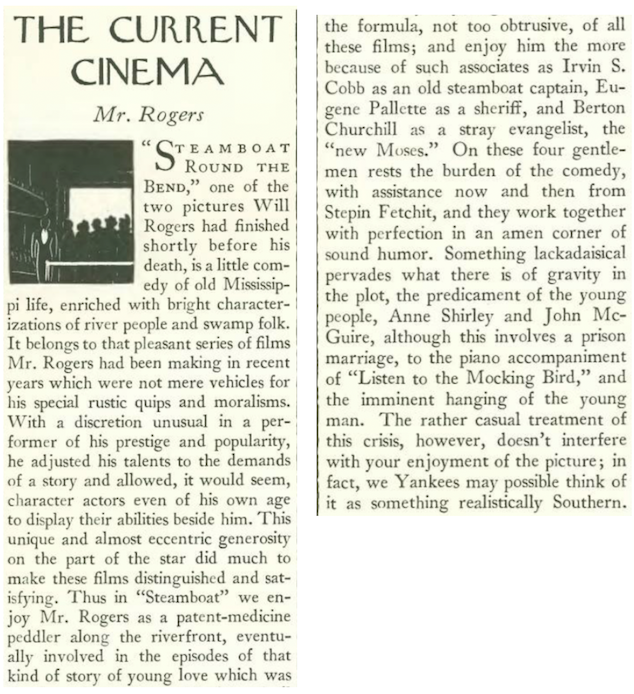
Critic John Mosher reviewed one of Will Rogers’ final films, Steamboat Round the Bend, released just weeks after Rogers’ death in an Alaska plane crash. Mosher found the film “satisfying.”
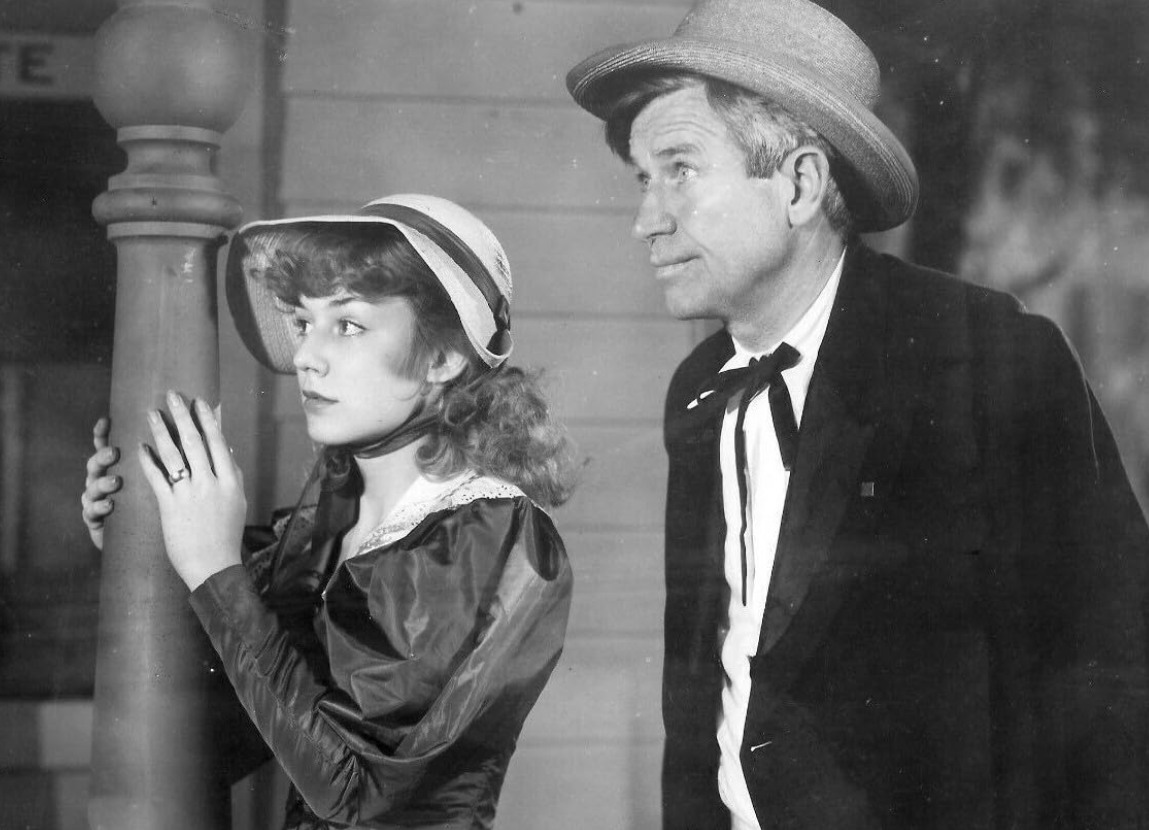
SOUTHERN CHARM was laid on thick in Steamboat Round the Bend, which featured Anne Shirley and Will Rogers in one of his final film roles (Rogers filmed In Old Kentucky before Steamboat, but In Old Kentucky wasn’t released until Nov. 22, 1935).
Mosher also took in another “revue” film, Broadway Melody of 1936, which served as a showcase of MGM’s star power.
THE MGM STABLE OF STARS showcased in Broadway Melody of 1936 included, at top, the elegant Eleanor Powell; below, Powell (left) joins brother-sister dancing team Buddy and Vilma Ebsen in a down-home skit. Buddy Ebsen’s “carefully preserved homeliness” (quoting John Mosher) served him well 27 years later when he was cast as Jed Clampett in TV’s The Beverly Hillbillies. (IMDB)
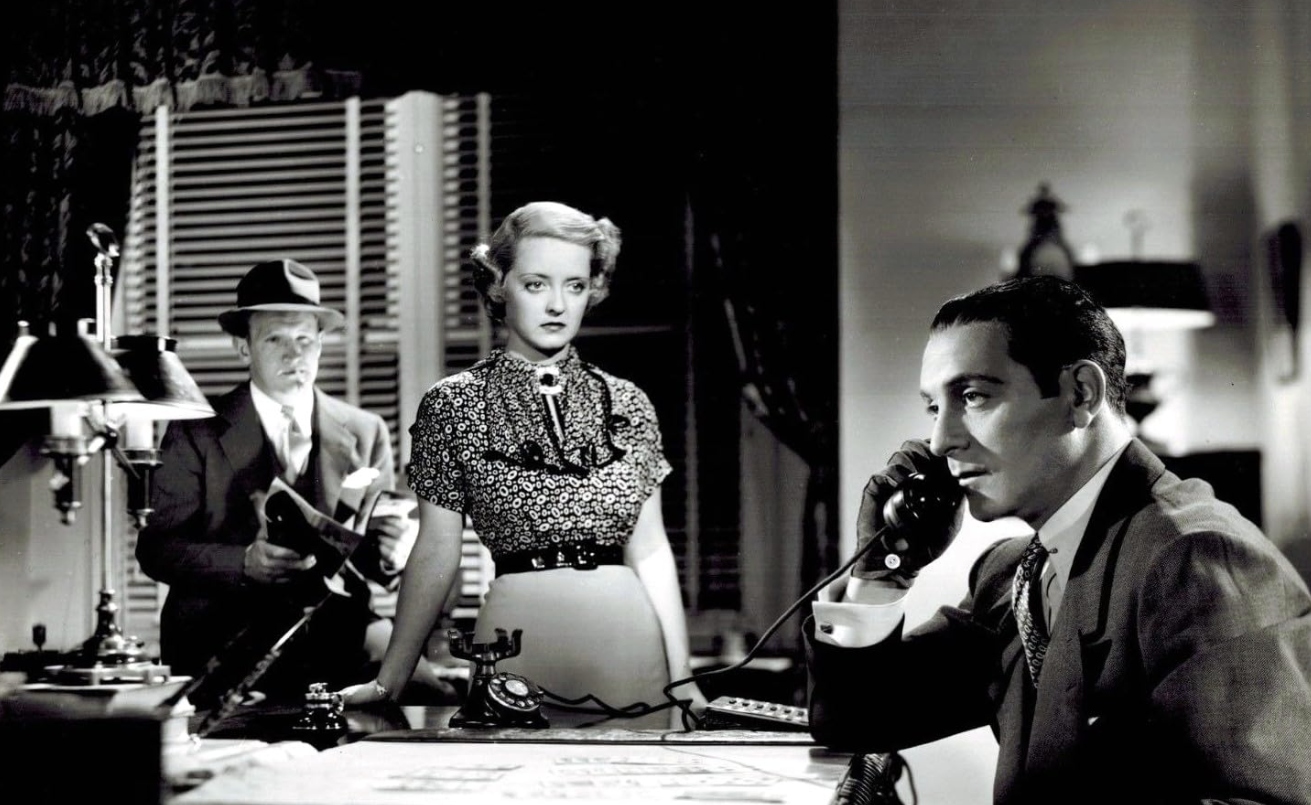
Mosher also endured a “perfunctory” performance by Bette Davis in Special Agent, and a “mousy” Madeleine Renaud in Maria Chapdelaine.
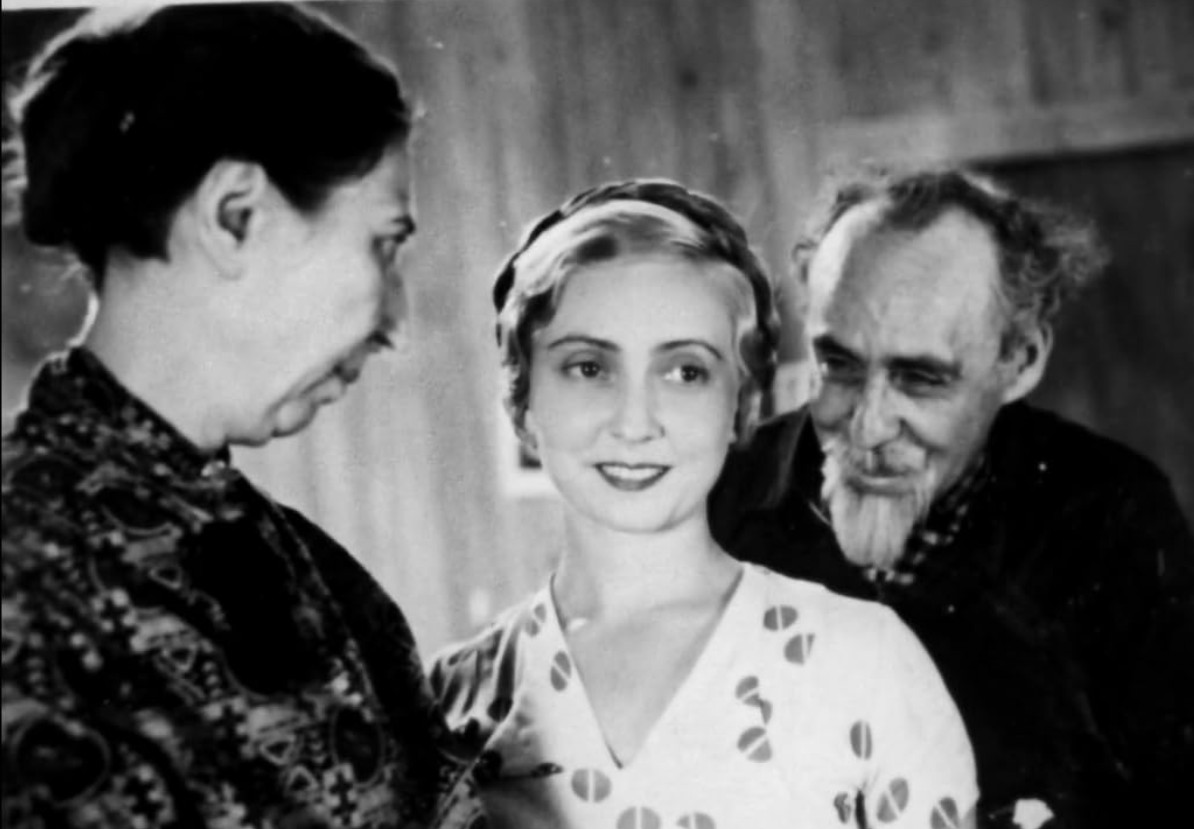
PHONING IT IN…Joe Sawyer, Bette Davis and Ricardo Cortez in Special Agent. (IMDB)NOT GAGA-WORTHY…Critic John Mosher thought French actress Madeleine Renaud (center) was too “mousy” to be cast against the rugged beauty of the Canadian frontier in 1934’s Maria Chapdelaine. Based on a romance novel written in 1913 by the French writer Louis Hémon, the film cast Renaud as a young woman enduring the hardships of rural Quebec while she is pursued by three suitors. An IMDB reviewer writes that this early Julien Duvivier film “is mostly of pictorial interest: the location shooting in Quebec is impressive, but the story is thin-to-nonexistent. Madeleine Renaud is cute but not magnetic enough to have three men going absolutely gaga over her.” (IMDB)
* * *
From Our Advertisers
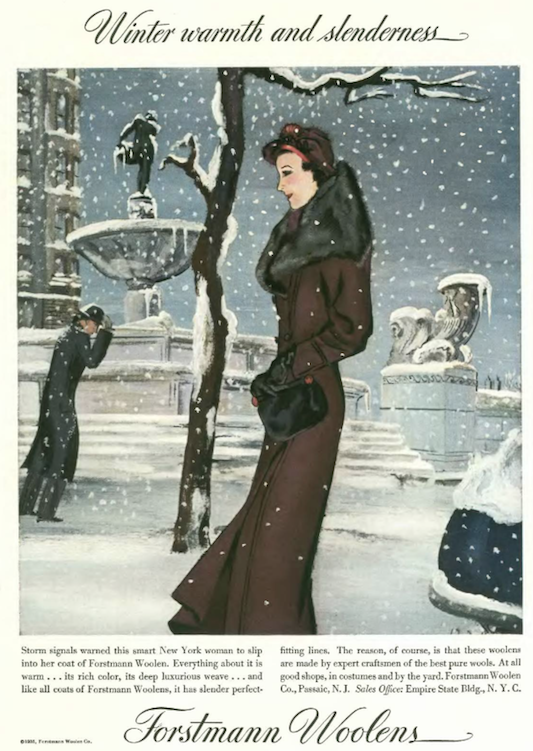
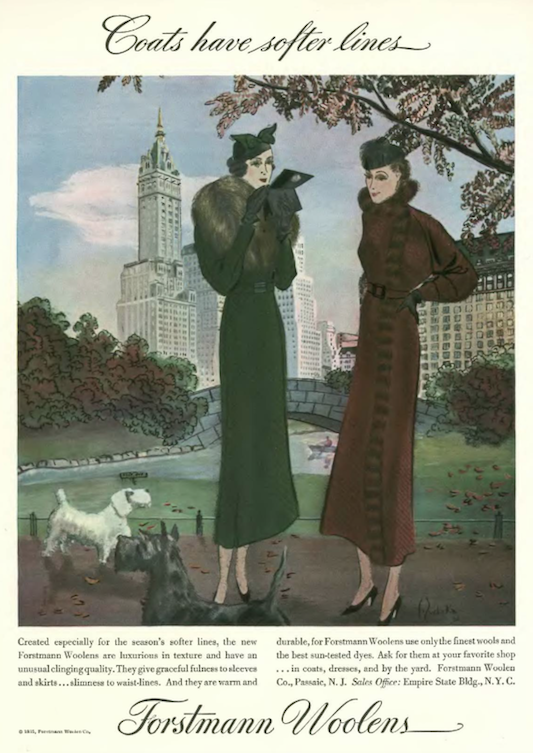
Forstmann Woolens kicks off our advertisements with this image of attenuated women posed in the autumnal landscape of Central Park…
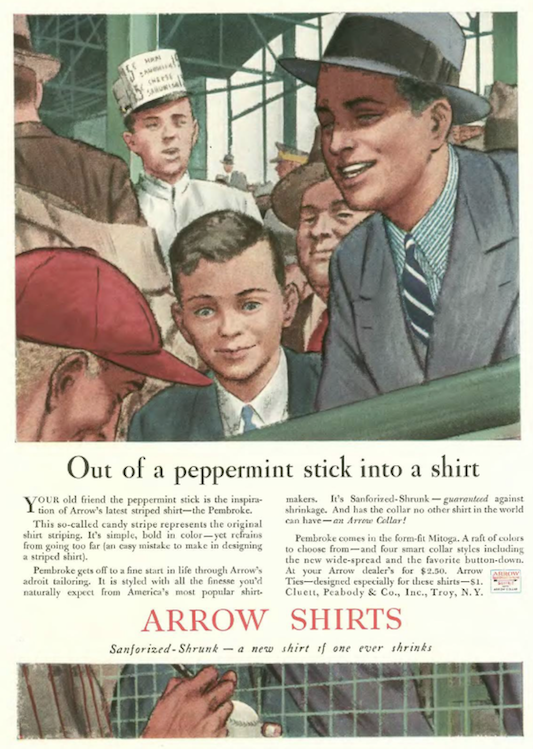
…what is notable about this Arrow Shirts ad is the formal attire of father and son at a baseball game, not at all unusual in 1935…
…Seagram’s continued its aggressive campaign to promote its lineup of seven “masterpieces”…
…Coca-Cola also had a substantial war chest, marketing its product for home consumption, which still seemed to be somewhat novel…
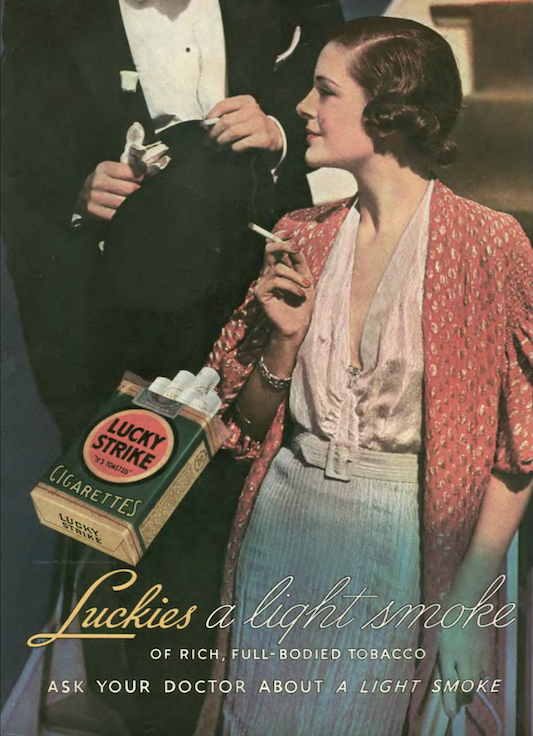
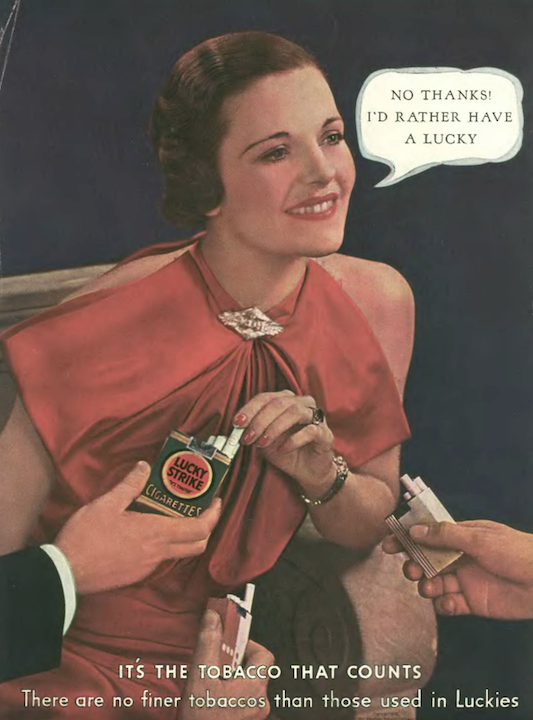
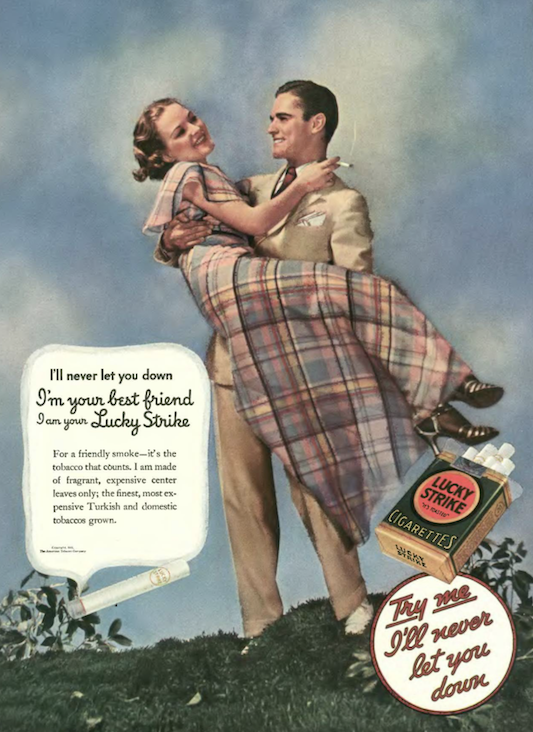
…the back page ad went to the makers of Lucky Strike, pursuing that growing market of women smokers…
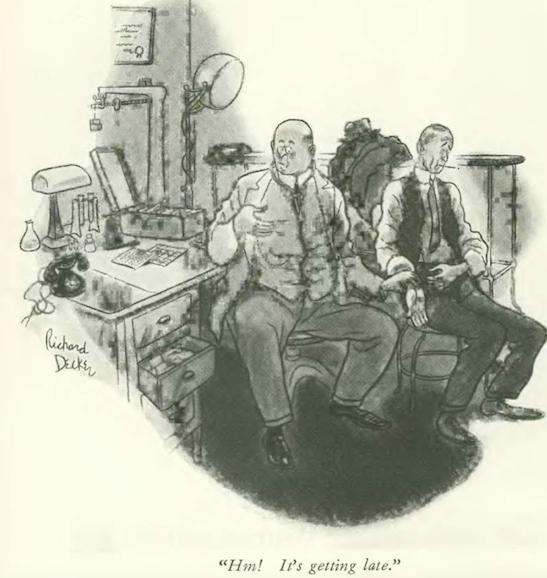
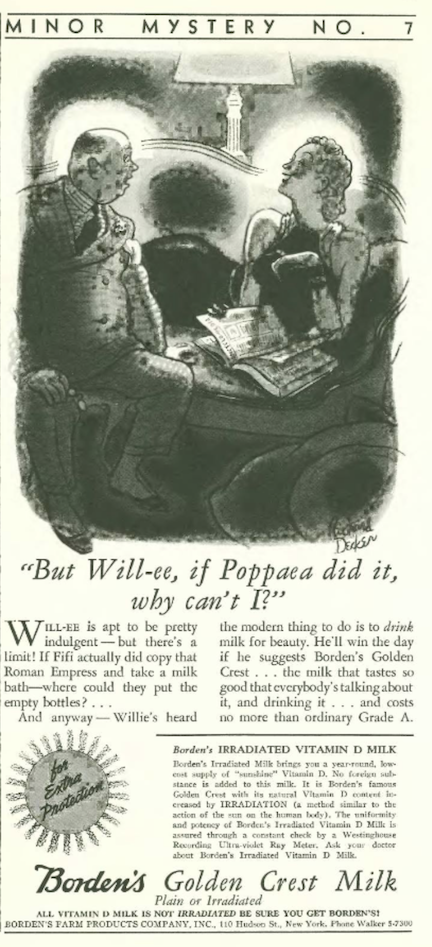
…Richard Decker drew up an ad for a more wholesome product…
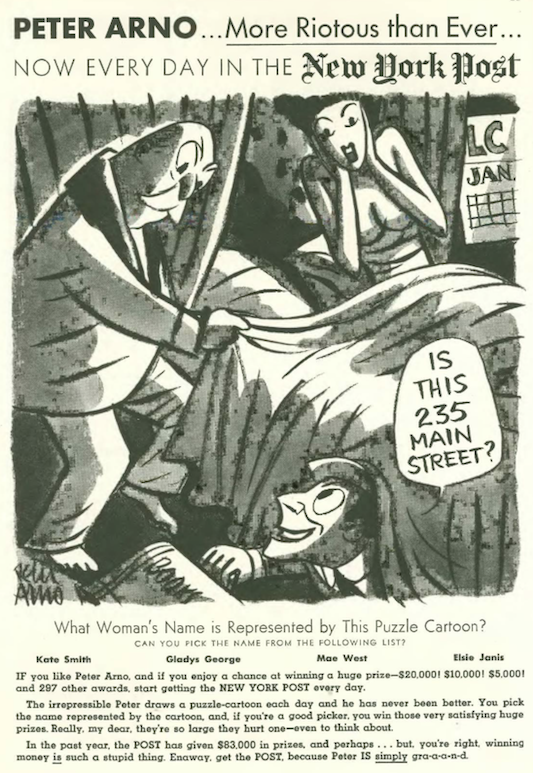
…while Peter Arno put pen to paper to promote his “puzzle-cartoons” in the New York Post…
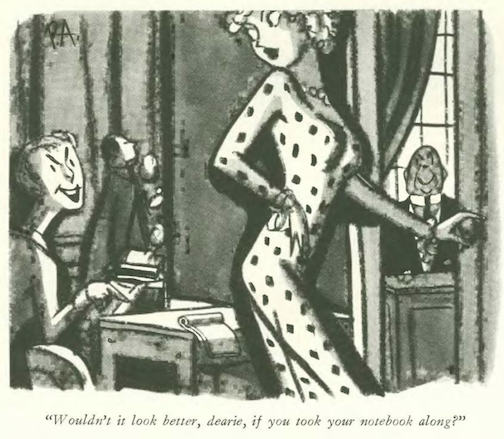
…which segues to our cartoon section, and Arno again with some office hijinks…
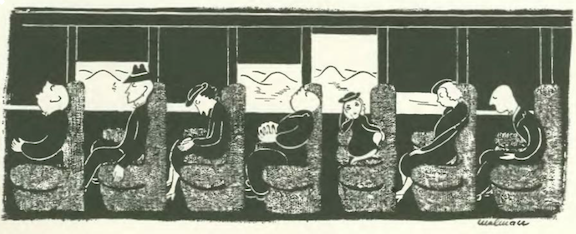
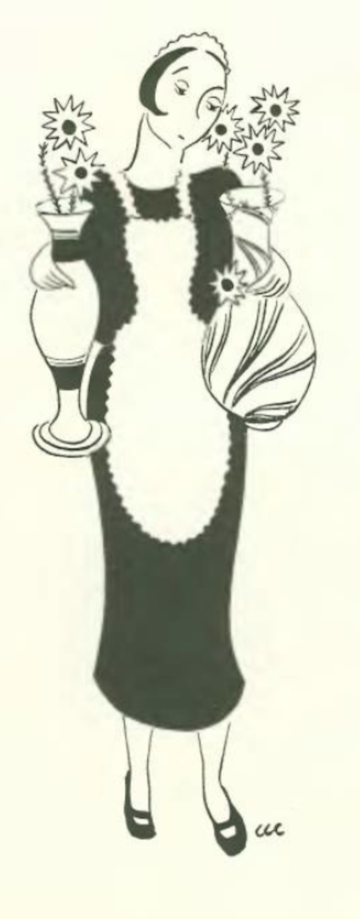
…Christina Malman’s wonderfully unique spot art was making regular appearances in the magazine’s pages…
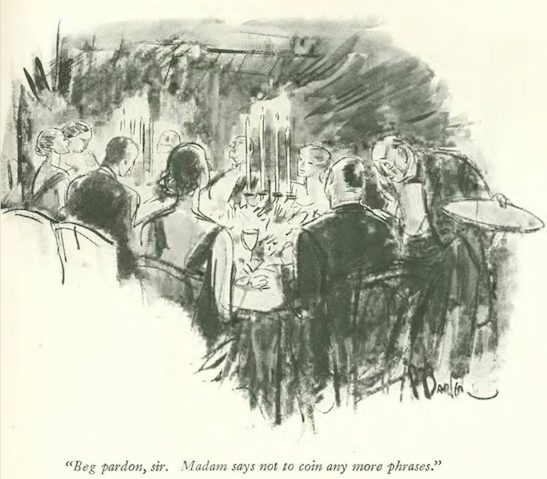
…Perry Barlow served up some dinnertime etiquette…
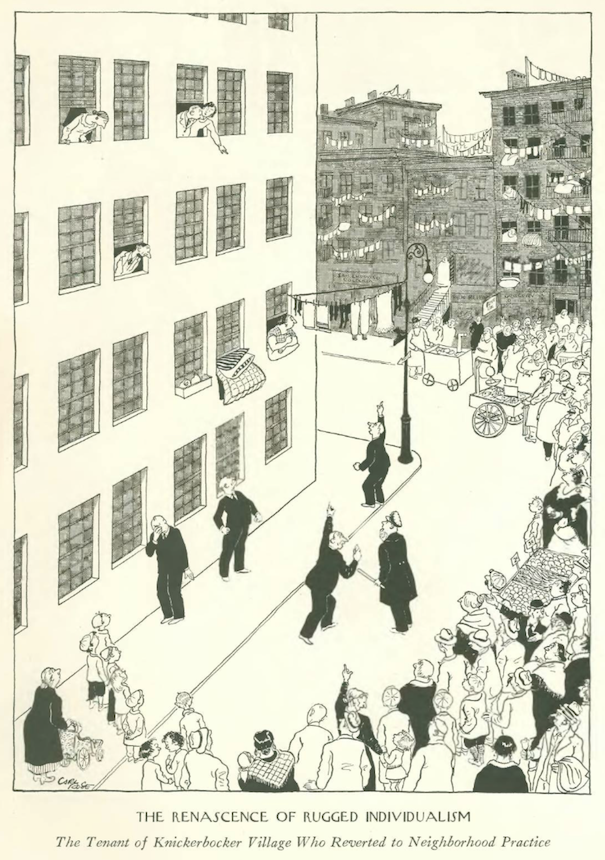
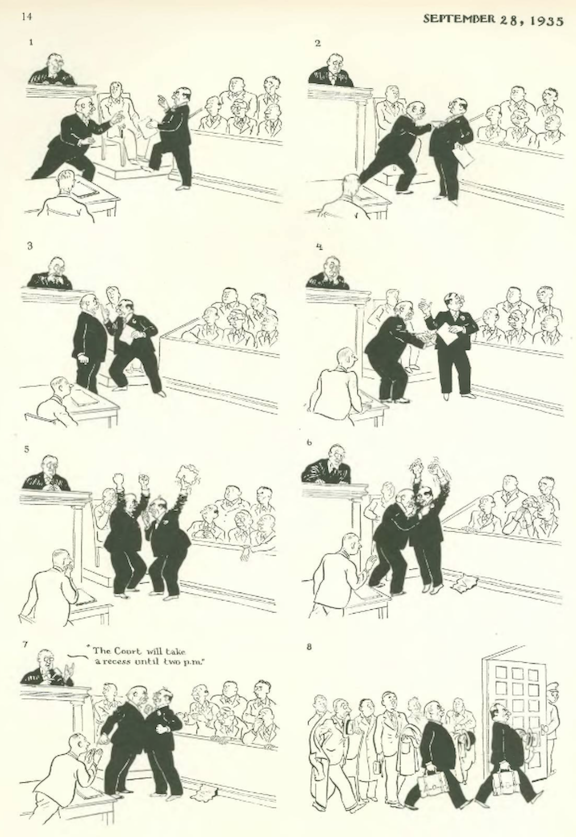
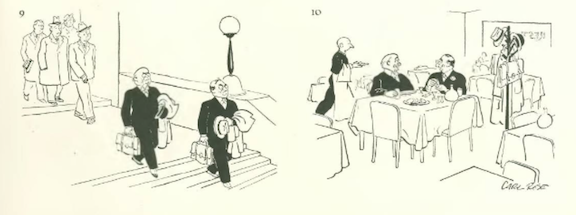
…Carl Rose found order in the court…
…James Thurber continued to mesmerize…
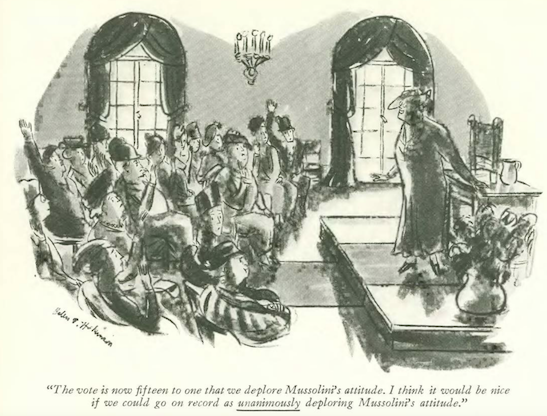
…Helen Hokinson’s Ladies Club took a stand against fascism…
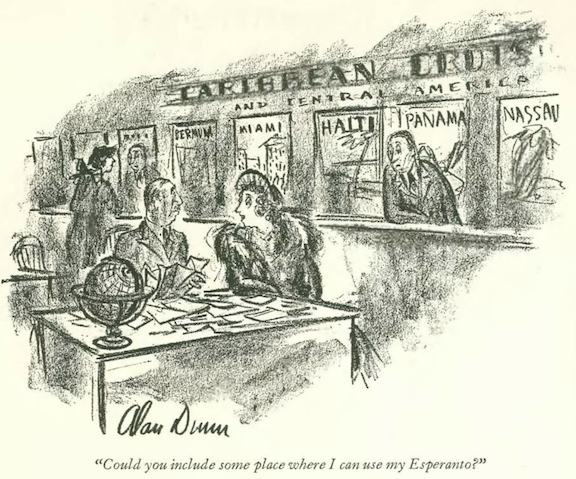
…Alan Dunn looked in on a polite perp…
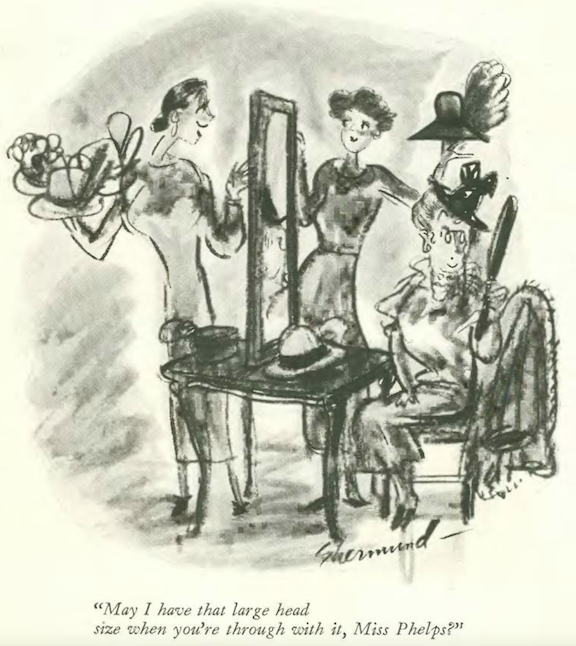
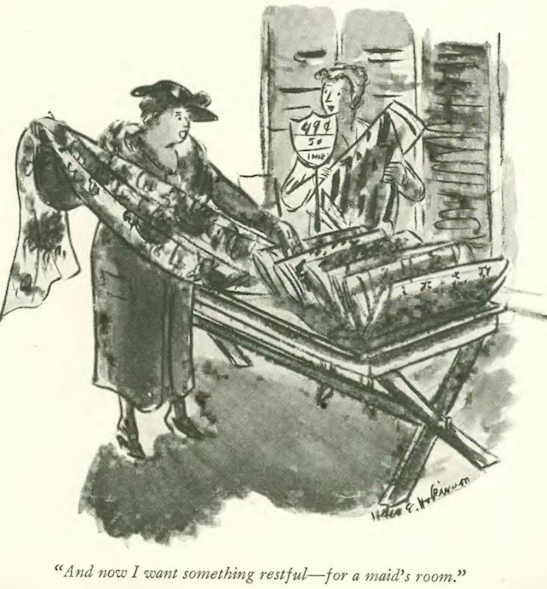
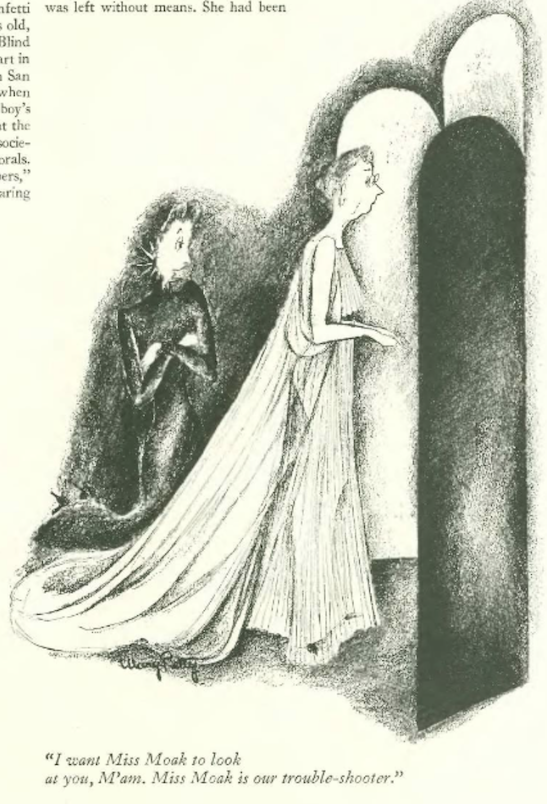
…Mary Petty encountered a challenge in a dress shop…
…Gilbert Bundy revealed an odd duck among the fox hunters…
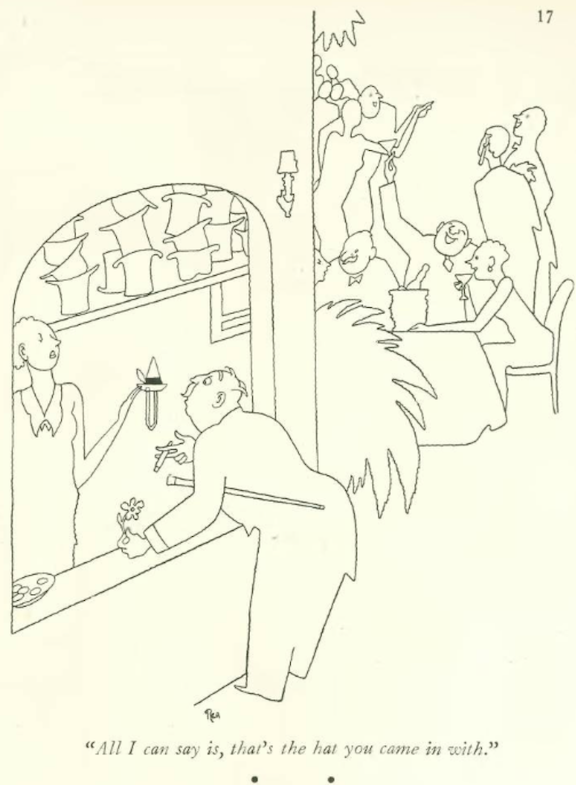
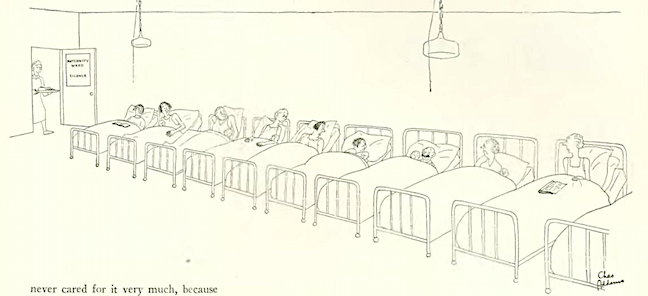
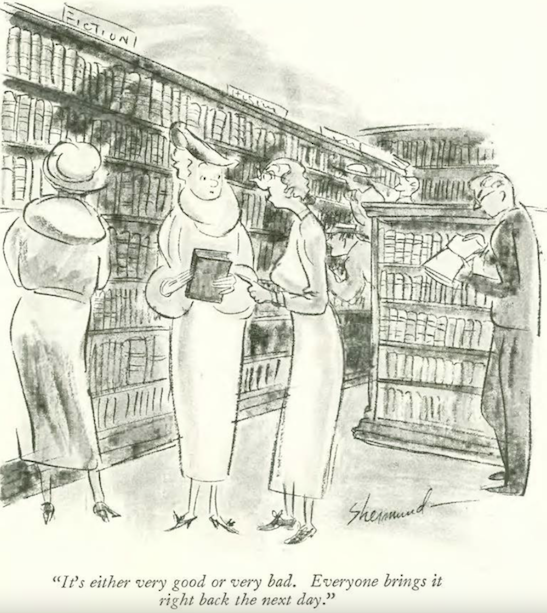
…and we close with Barbara Shermund, ready to curl up with a good (or bad) book…
City life is a noisy life, especially in places like Manhattan, one of the most densely populated places in the world.
August 24, 1935 cover by Rea Irvin.
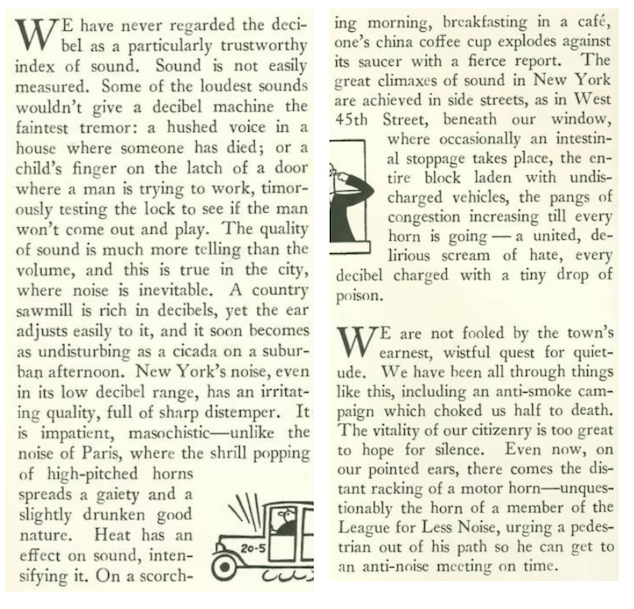
In his “Notes and Comment” column, E.B. White described the occasional “intestinal stoppage” of traffic outside The New Yorker’s offices at West 45th Street, an entire block “laden with undischarged vehicles, the pangs of congestion increasing till every horn is going—a united, delirious scream of hate, every decibel charged with a tiny drop of poison.”
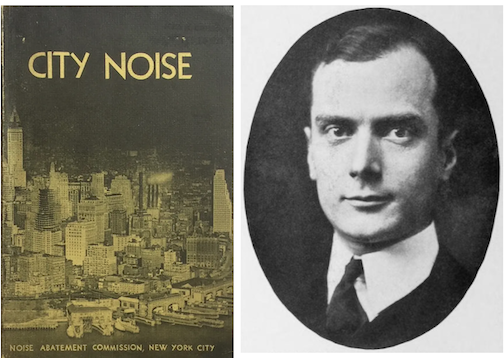
ABOVE THE FRAY…E.B. White with his pet dachshund Minnie at the West 45th Street offices of The New Yorker. (New York Times)AND DON’T CALL ME SHIRLEY…New York City’s Commissioner of Health, Shirley Wynne (right), created a Noise Abatement Commission in 1929. After eight months of research the Commission published City Noise, which included recommendations for a quieter city. (Wikipedia/trevianbooks.com)
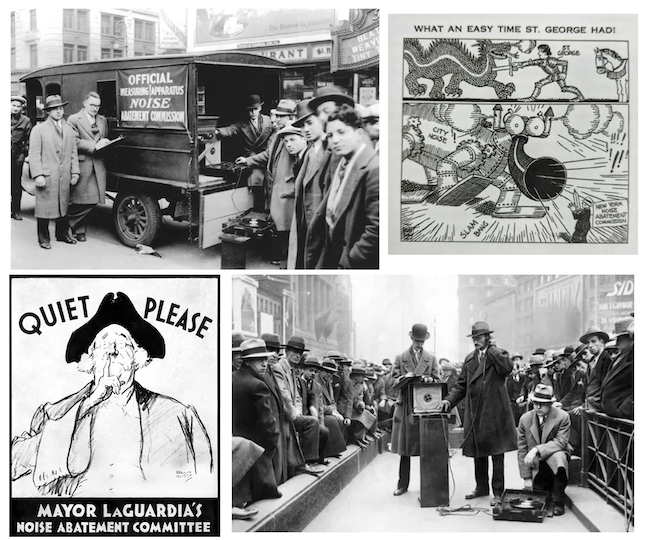
The city began addressing the problem in 1929, when New York City’s Commissioner of Health, Shirley Wynne (1882-1942), created a Noise Abatement Commission, likely the first such commission in the U.S. The Commission cited the “mounting roar and crash of traffic, building, manufacture and sundry other noises which have accompanied the growth of the city.” After eight months of research the Commission published City Noise, which included recommendations for a quieter city.
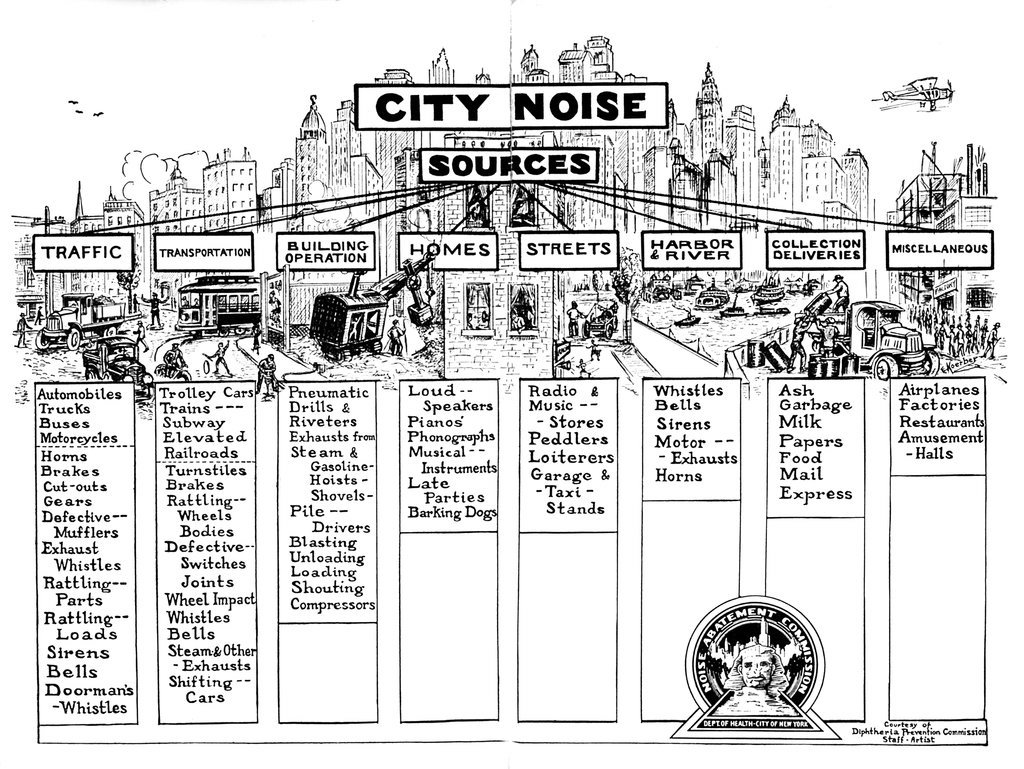
URBAN CHORUS…A chart featured in City Noise depicted some of sources of noise in New York City.PIPE DOWN!…Clockwise, from top left: The Noise Abatement Commission took to the streets with a municipal acoustics-measuring truck in 1930; cartoon in the New York Herald Tribune illustrated the challenge ahead; Commission officials conducting noise tests in Times Square, circa 1930; poster circa 1936 promoted Mayor Fiorello La Guardia’s anti-noise drives. A 1936 noise code put sound restrictions on everything from radios to the “prolonged and unreasonable blowing of a horn.” A first offense cost $1; the second, if committed within the next year, $2. (hii-mag.com/Bloomberg.com/NYTimes.com)
Not one to leave a stone unturned, White also added this note about the noisy doors on Pullman train car toilets…
Here are the Otto Soglow spot drawings that accompanied the “Talk” piece:
Final note: A colorful exploration of sound can be found on the One Thousand Birds site,Hii Magazine.Check it out!
* * *
Puff Pushers
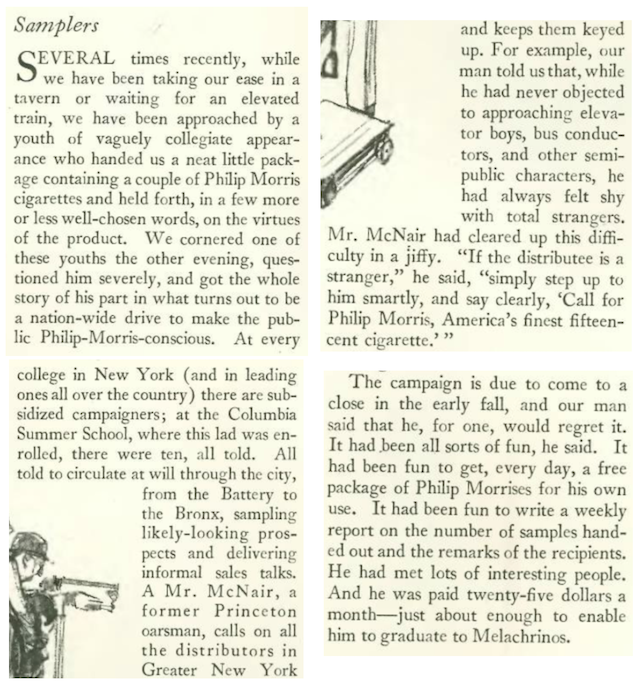
Tobacco companies like Philip Morris have long been savvy in finding ways to expand their market, including taking their product directly to the consumer, as “The Talk of the Town” explained in this entry:
SMOKE FREE…Sample pack of Philip Morris cigarettes, circa 1930s. (Ebay)
* * *
A Rare Glimpse
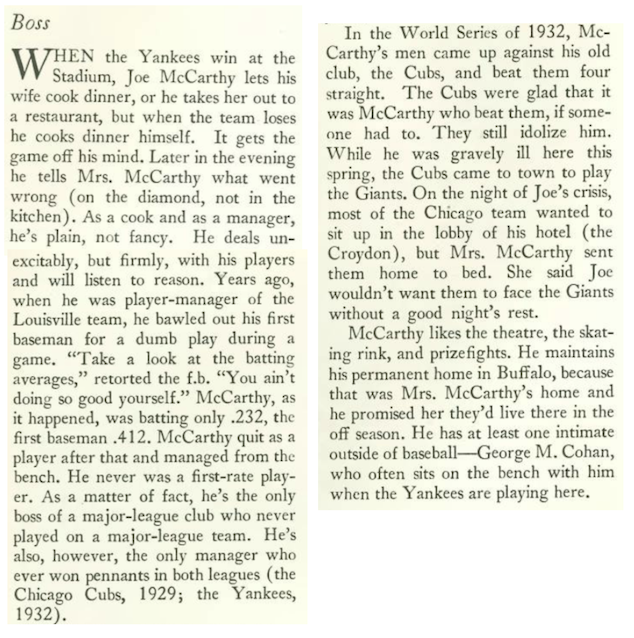
Before Roger Angell started writing about baseball in 1962, there wasn’t a whole lot written about the sport in the pages of The New Yorker. In the magazine’s early years, the game was probably perceived as too low-brow, while other athletic pursuits such as golf, tennis, and polo were more in line with the desired or perceived readership. Early contributors such as Ring Lardner had also soured on the sport, thanks to the Black Sox Scandal of 1919 and the greed of team owners. So here is a rare look at baseball, and Yankee coach Joe McCarthy (1887-1978), in “The Talk of the Town.” Excerpts:
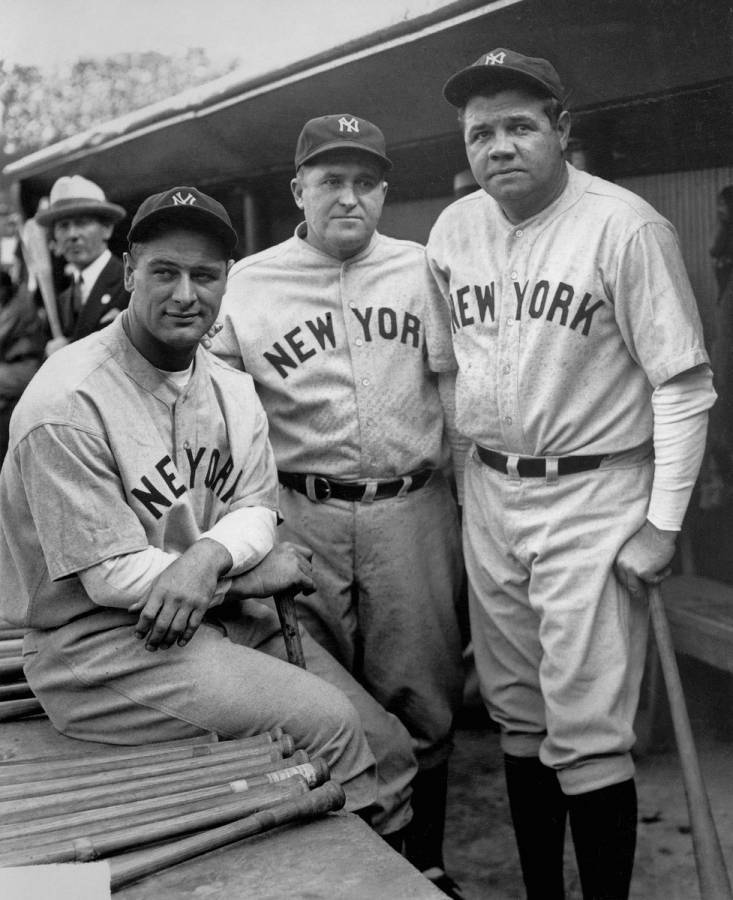
BRONX BOMBERS…Coach Joe McCarthy (center) with sluggers Lou Gehrig, left, and Babe Ruth during the 1932 World Series. The first manager to win pennants in both the National and American leagues, McCarthy’s teams would win a total nine league pennants and seven World Series championships. (CARLI Digital Collections)
* * *
Music Under the Stars
The monumental Lewisohn Stadium was a popular classical music venue on the City College of New York campus until its unfortunate demolition in 1973. According to BBC Music Magazine, “for nearly half a century, Lewisohn Stadium gave people from all walks of life the chance to hear performances by the likes of violinist Fritz Kreisler, soprano Leontyne Price and clarinettist Benny Goodman for as little as 25 cents admission. The New Yorker paid a visit during eighteenth season of the Stadium Concerts. Excerpts:
CLASSICAL MASSES…At left, cover of the 1935 Stadium Concerts Review; at right, Andre Kostelanetz conducts before a crowd of thousands at Lewisohn Stadium in 1939. The stadium was demolished in 1973 to make way for City College of New York’s North Academic Center. SeeThe New York Philharmonic Archive for the complete digital version of the 1935 Stadium Concerts Review. (NY Philharmonic Archive/PressReader.com)
* * *
At the Movies
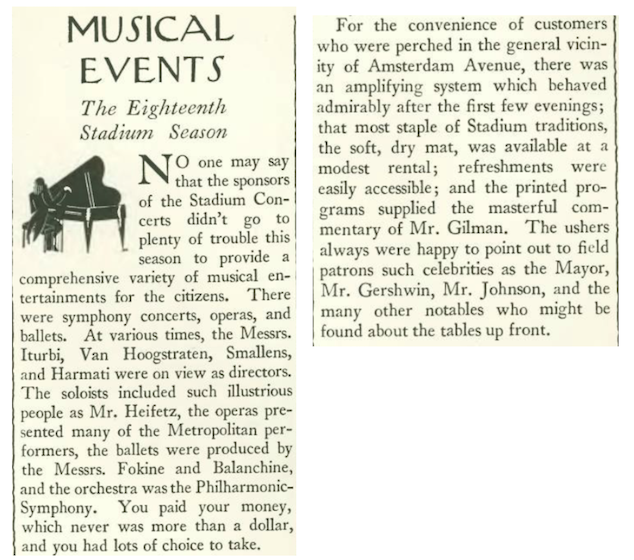
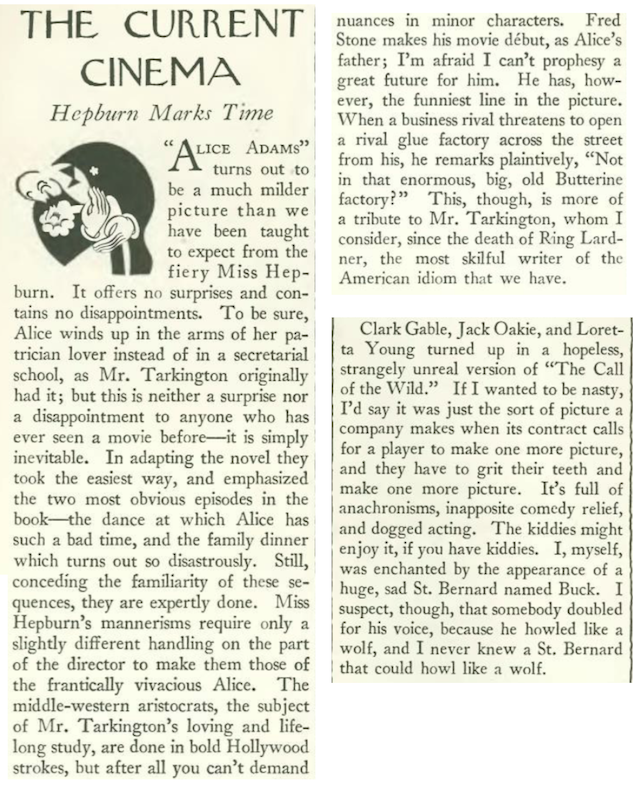
Film critic John Mosher continued to search in vain for a film he could endorse, but he came away empty-handed after screening a star-studded screen adaptation of Jack London’s novel The Call of the Wild. Star power also fell short for Mosher in the screen version of Booth Tarkington’sAlice Adams.
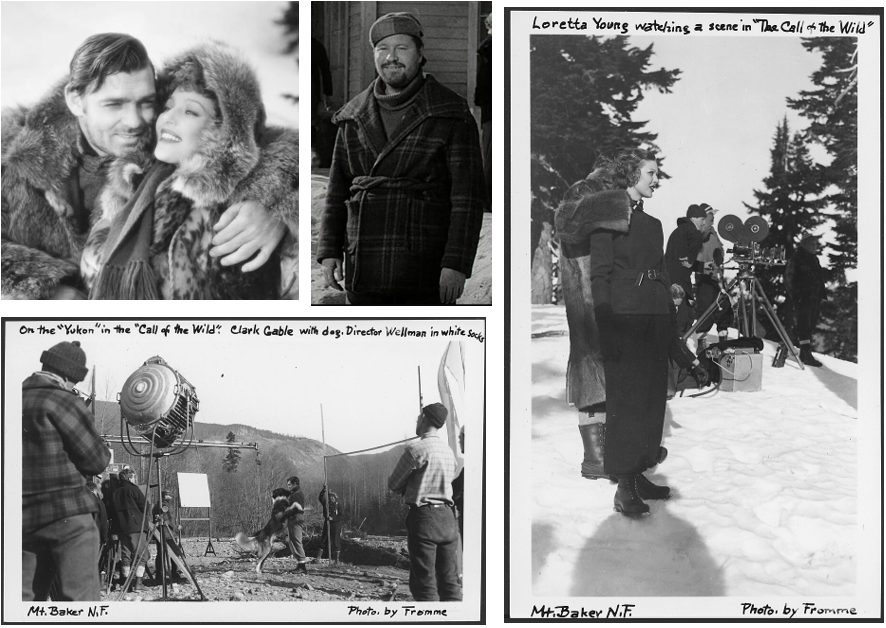
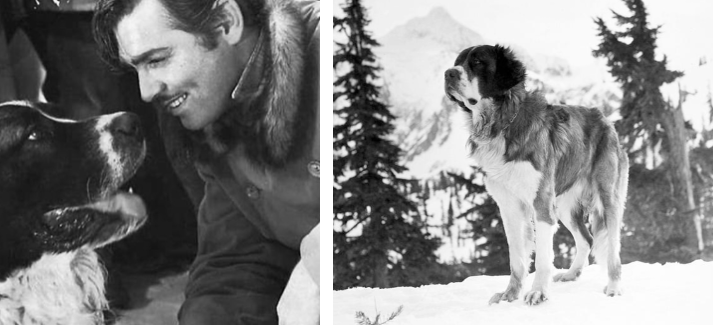
SMALL TALK…The film adaption of Booth Tarkington’sAlice Adams seemed to have all of the right elements in place, including director George Stevens and stars Katharine Hepburn and Fred MacMurray (left), but critic John Mosher found it somewhat average. In a 1991 retrospective review, however, The New Yorker’sPauline Kael deemed the romantic comedy “a classic” and stated that “Hepburn gives one of her two or three finest performances.” At right, the character of Alice Adams was first portrayed on the silver screen by Florence Vidor in a 1923 silent film. (Toronto Film Society/Wikipedia)THE BIG CHILL…Clockwise, from top left, Clark Gable and Loretta Young brave the Yukon wilds (actually Washington State) in The Call of the Wild; Jack Oakie provided comic relief as Gable’s sidekick Shorty Hoolihan; Young watches the filming of a scene on location at Mt. Baker National Forest; Gable shoots a scene with the St. Bernard Buck. (IMDB/Wikimedia)CLARK’S BEST FRIEND…Dog lover Clark Gable became very close with Buck during the filming of The Call of the Wild. Buck appeared in seven more films from 1935 to 1940, even receiving star billing as “Buck the Wonder Dog.” (Facebook/Pinterest)
* * *
From Our Advertisers
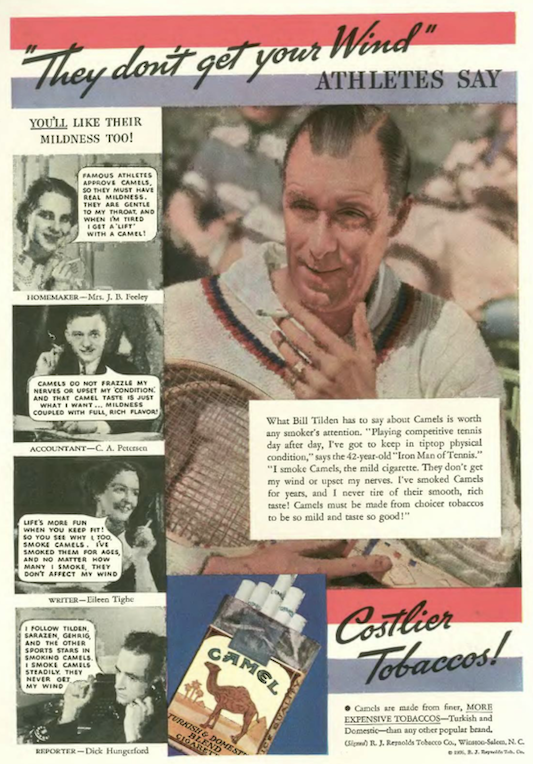
Colorful ads returned to the August 24 issue, featuring familiar sponsors who could afford full-page, full-color spots, namely tobacco and liquor producers…Camel was back with their athletic theme, however they might have chosen someone other than Bill Tilden, who looked perfectly ancient…
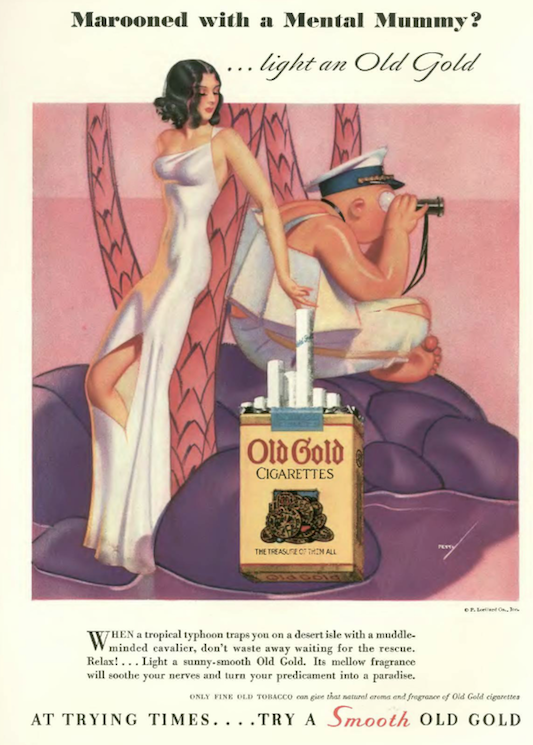
…Old Gold returned with another George Petty-illustrated ad…
…Courvoisier cognac took the back page spot…
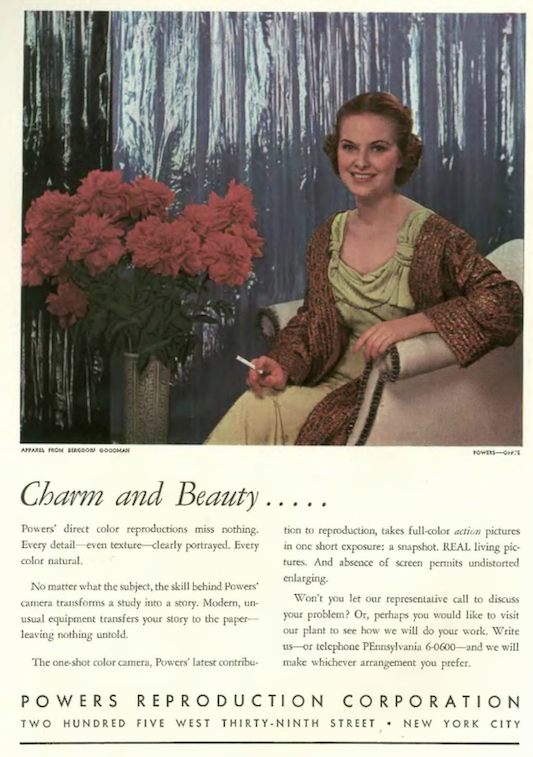
…Powers Reproduction showed off their color printing expertise…I wonder if that is a Lucky she is smoking…
…because I believe she is the same woman who appeared in this ad from the July 27 issue:
…back to August 24, where we were encouraged to enjoy a Johnny Walker highball to stave off the late summer heat…
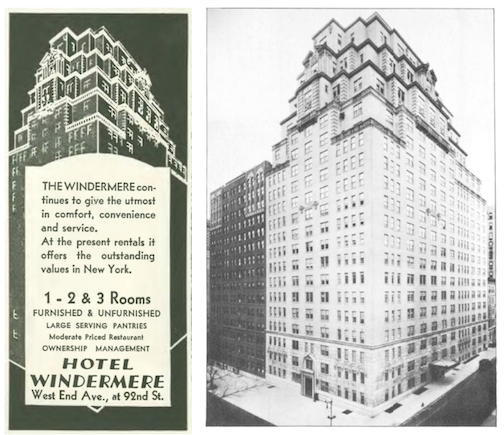
…the distinctive crown of Hotel Windemere on the Upper West Side was an eye-catcher even in this one-column ad from the back of the book…photo at right from around the time it was completed, 1927…
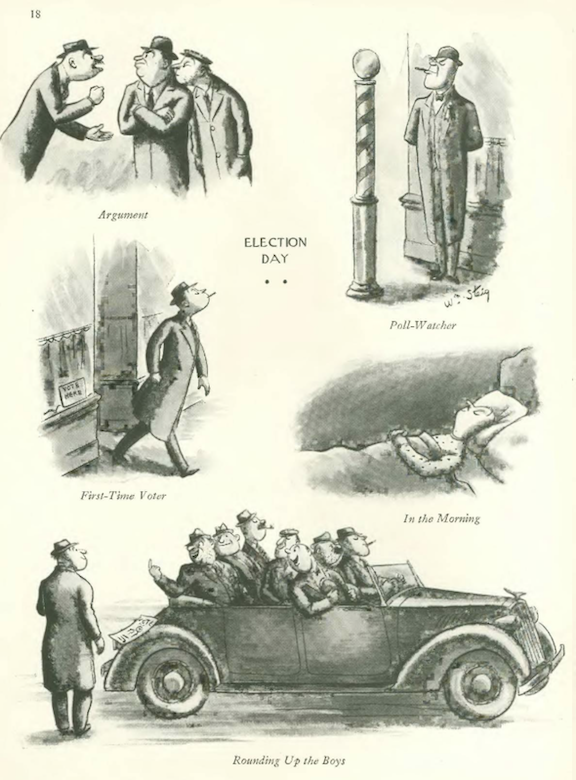
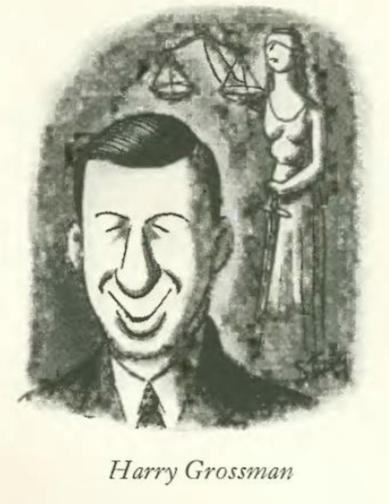
…on to our cartoonists, an unexpected profile caricature by William Steig (this two-part profile featured process-server Harry Grossman)…
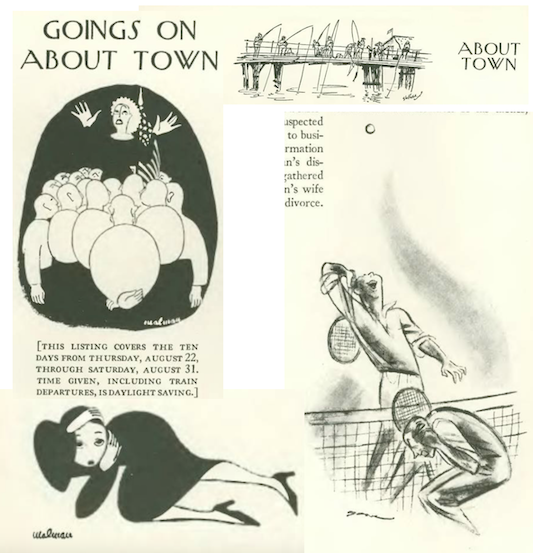
…interesting spot drawings by George Shellhase (top) and Leonard Dove (bottom right), and at left, two by Christina Malman…
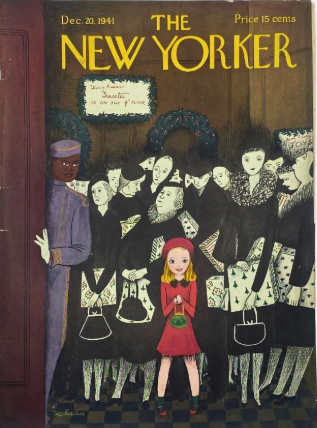
…Malman (1912-1959) produced at least two-dozen covers for The New Yorker between 1937 and 1956, including this gem from 1941:
…some baby names have real meaning, according to Alan Dunn…
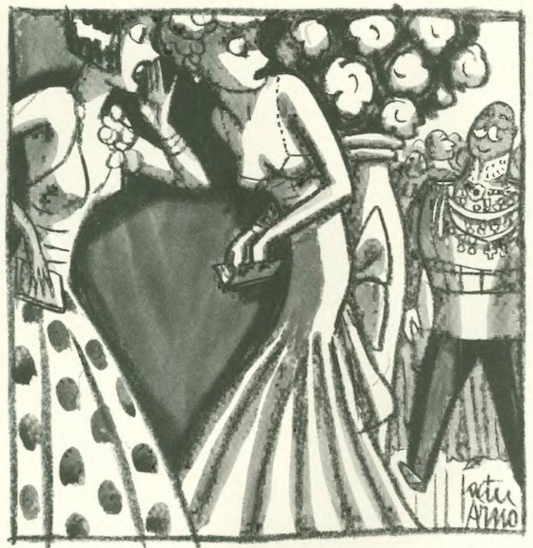
…Peter Arno offered caution about dancing with a prickly Colonel…
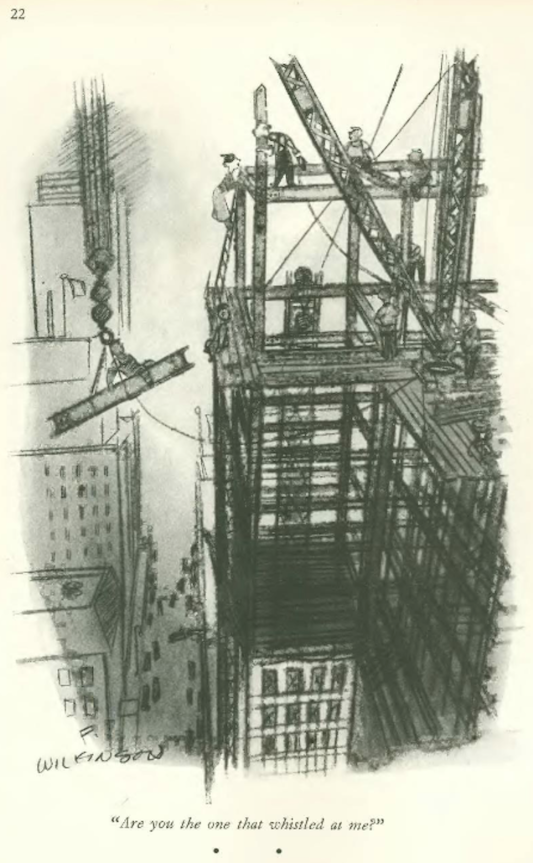
…Fritz Wilkinson answered one cat call high above the city…
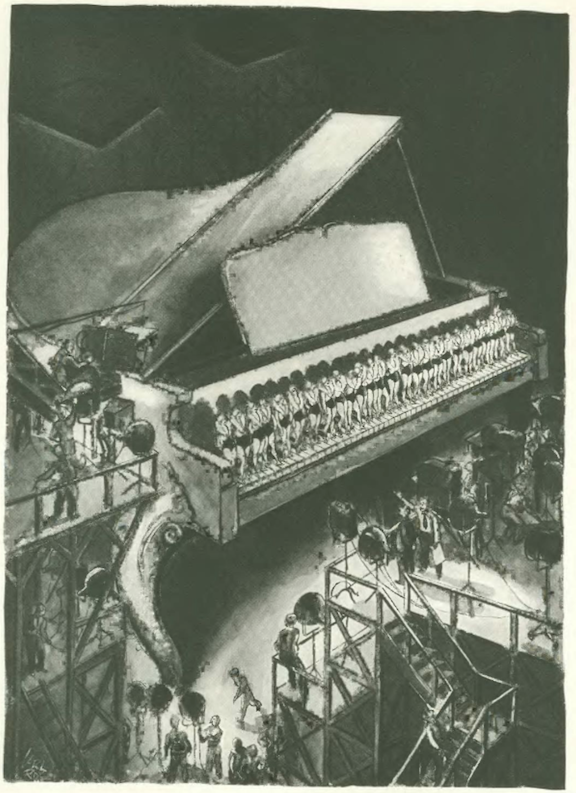
…Franz Shubert met Busby Berkeley, via Carl Rose…
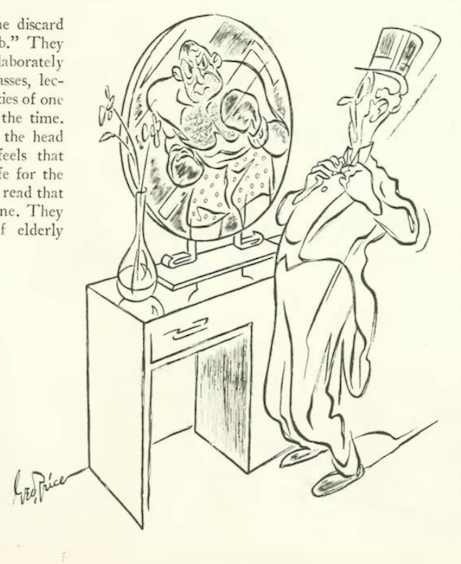
…George Price persisted in threading a needle…
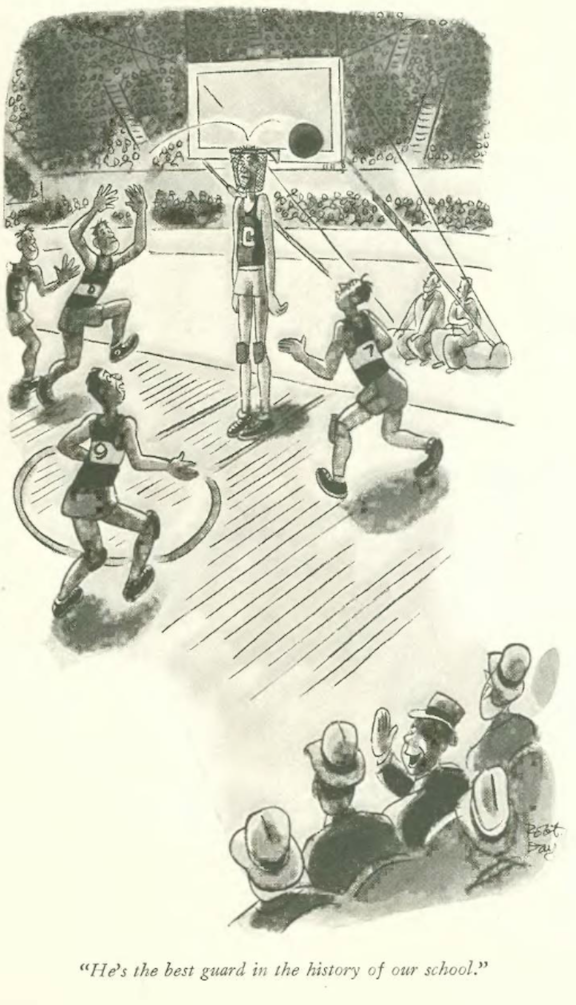
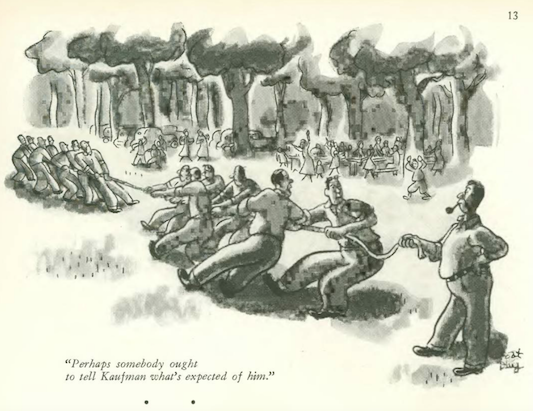
…Robert Day gave us a pacifist of sorts in a game of tug-of-war…
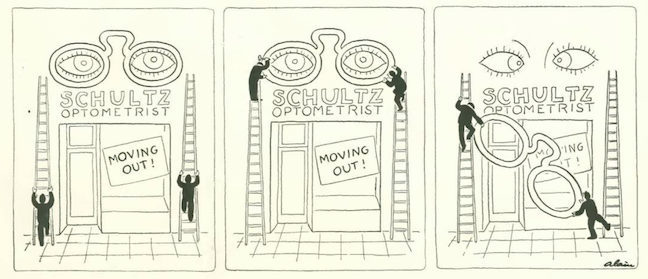
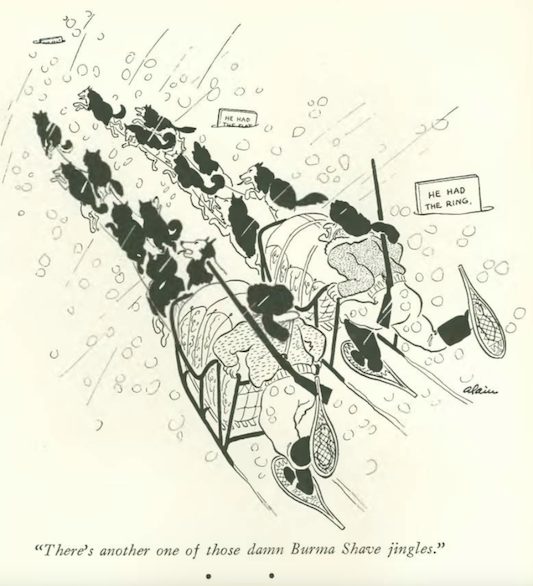
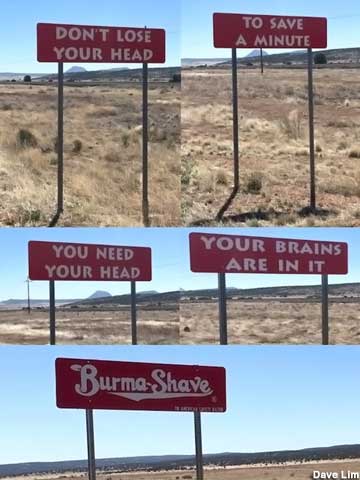
…Burma Shave jingles seemed to be everywhere in the 1930s, per Alain…
…An example of replica Burma Shave signs along Route 66:
(roadsideamerica.com)
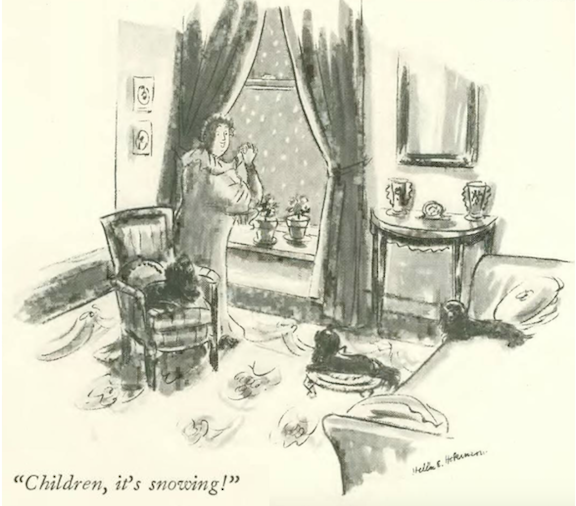
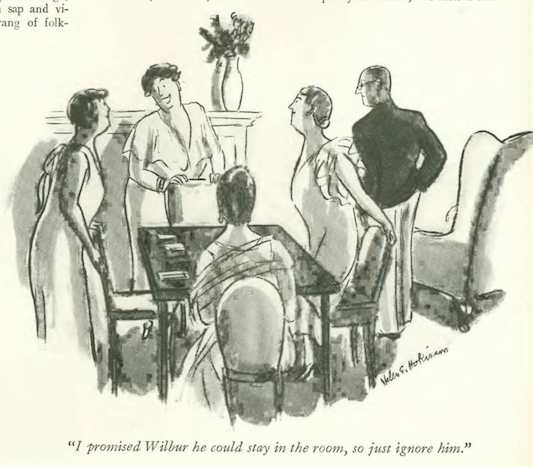
…some parenting tips came our way via Helen Hokinson…