One of the most expensive movies of 1930 was a sci-fi musical comedy titled Just Imagine, a silly mash-up of great sets, terrible acting, and a vision of the future fifty years hence that was way off the mark.
Nov. 29, 1930 cover by Victor Bobritsky.
Not that the film ever set out to be an accurate prediction of the future. Nevertheless, it is instructive (or, at the least, amusing) to look back on “yesterday’s tomorrows” to understand the American mind in the first year of the Great Depression.
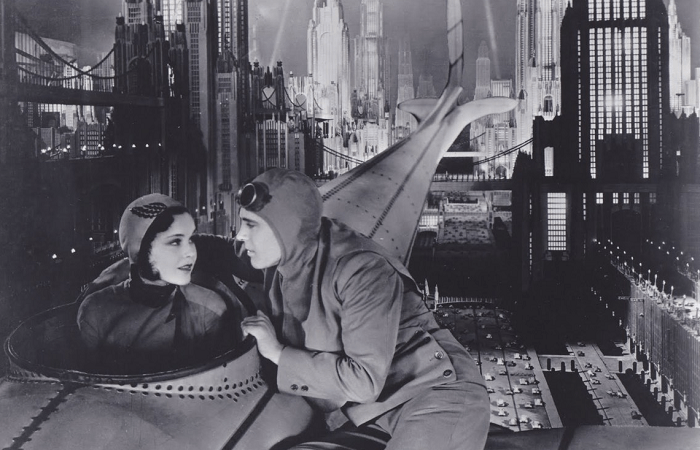
COME FLY WITH ME…Clandestine lovers LN-18 (Maureen O’Sullivan) and J-21 (John Garrick) share a romantic moment high above the streets of 1980 New York City. (scifist.net)
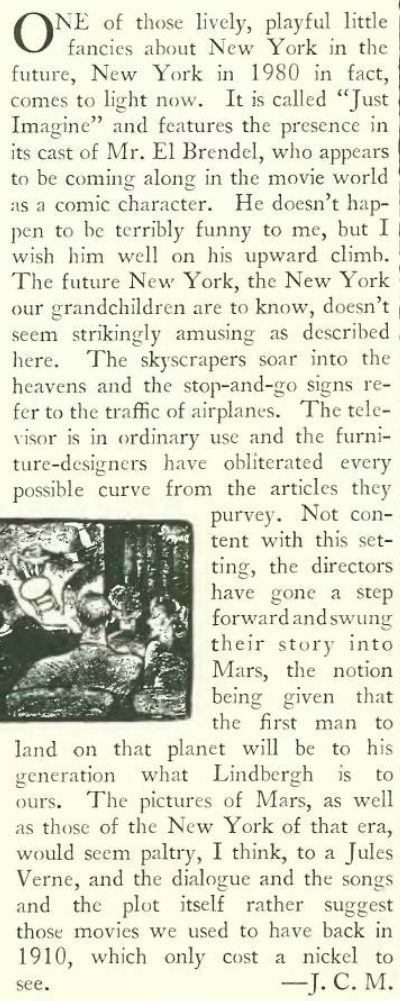
Just Imagine borrowed some of its look from Fritz Lang’sMetropolis (1927), a dystopian vision of the future that reflected the contentious years of Germany’s Weimar Republic. Just Imagine similarly reflected its time and place — the early years of the Depression — Hollywood responding not with gloom and doom but rather with uplifting fare — comedies, musicals, and escapist fantasies (Flash Gordon came along in 1936). The producers of Just Imagine rolled all of it into one film, and The New Yorker’sJohn Mosher tried to make sense of the mess:
EYE IN THE SKY…In Just Imagine, technology is advanced enough to have a traffic cop floating in the sky, but he still must rely on his arms and mechanical signals to keep the skyways in order. (YouTube clip)
The floating traffic cop is just one example of the film’s attention to set design. The New York skyline, featured in the opening scene, was constructed in a giant hangar at enormous cost…
(IMDB)
In one of the films weirder twists, vaudeville comedian El Brendel is brought back to life with an electric beam…
SMOKED HAM…Vaudeville comedian El Brendel is zapped back to life to provide the world of 1980 with comic relief. Some of the electrical equipment assembled by set designer Kenneth Strickfaden would be seen again in 1931’s Frankenstein. (scifist.net)
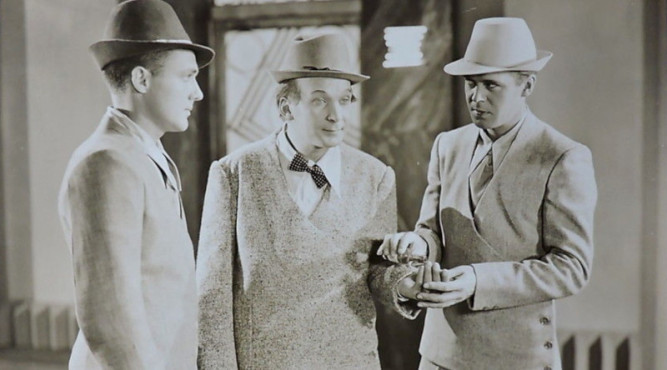
…and Brendel (below, center), proceeds to get drunk on booze pills and spew a series of really bad jokes throughout the duration of the film…
WE SHOULD HAVE LEFT HIM DEAD…Frank Albertson, El Brendel and John Garrick in Just Imagine. (scifist.net)MARS ATTACKS…The film also took audiences to the surface of Mars via a phallus-shaped spaceship that would later be used in Flash Gordon serials. Clockwise, top left, the spaceship blasts off surrounded by a crowd of men in fedoras; aboard the spaceship; landing site on Mars; J-21 (John Garrick) encounters the Martian Queen (Joyzelle Joyner). (YouTube/scifist.net)
The movie flopped at the box office, but producers were able to recoup some of the costs by farming out clips of the futuristic sets, and some of the props, to other sci-fi films of the 1930s including the Flash Gordon and Buck Rogers serials.
* * *
Toys For Tots
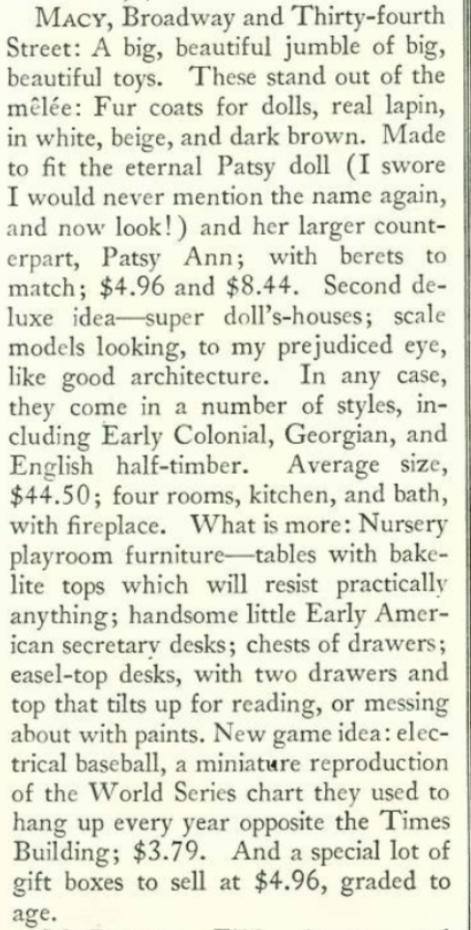
By mid-November The New Yorker’s “On and Off the Avenue” column had lengthened to include ideas for Christmas shoppers. The Nov. 29 issue offered these ideas for children’s toys from Macy’s…
XMAS IS COMING…Patsy Ann dolls in smart berets, and dollhouses in various styles (a 1930 Tudor dollhouse at right) could be had at Macy’s Herald Square flagship store. (Pinterest)
GRRRR…First introduced in 1922, the revival of “Radio Rex” proved popular to the kiddies in 1930. It was the “high tech” toy of its day, the first to respond to voice commands. Rex the dog would spring out of his doghouse at the sound of the word “Rex,” thanks to a sound-sensitive electromagnet. (ctinventor.wordpress.com)
* * *
A Century-old-Problem
Traffic woes have been around almost as long as there have been cars. In an excerpt from “A Reporter at Large,” Morris Markey explained the challenges facing the city’s police department:
IF YOU BUILD IT, THEY WILL COME…Traffic clogs Fifth Avenue near 42nd Street in 1930. (digitalcollections.archives.nysed.gov)
* * *
Speaking of cars, this ad in The New Yorker announced the opening of the annual Automobile Salon at the Commodore Hotel…
…and the magazine was on hand to describe its various wonders. Some excerpts:
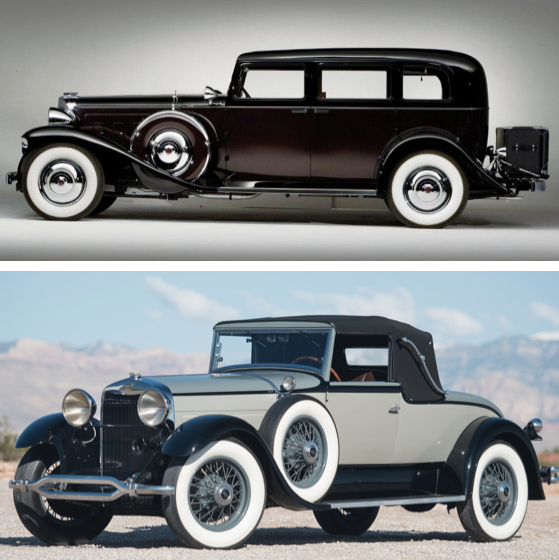
POETRY IN MOTION…Top, the Walter Dorwin Teague-designed Marmon 16-cylinder wowed crowds at the Salon, even if few could afford it. The Great Depression limited the production of the luxury Marmon, and less than 400 were produced. The company abandoned the car business altogether in 1933. Below, the sporty Ford Model L Roadster, designed by Raymond Dietrich. (supercars.net/Sotheby’s)
* * *
Maestro Politician
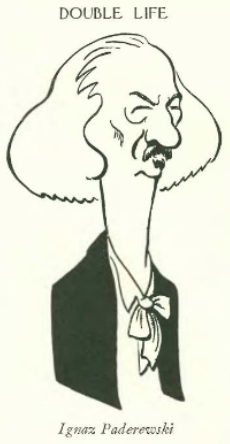
TheNew Yorker profiled pianist, composer and statesman Ignacy Jan Paderewski (1860-1941). Paderewski served as Poland’s prime minister in 1919, negotiated on behalf of his country at the Treaty of Versailles, and had a 60-year career as a virtuoso pianist. A brief excerpt:
* * *
Not For the Moneychangers
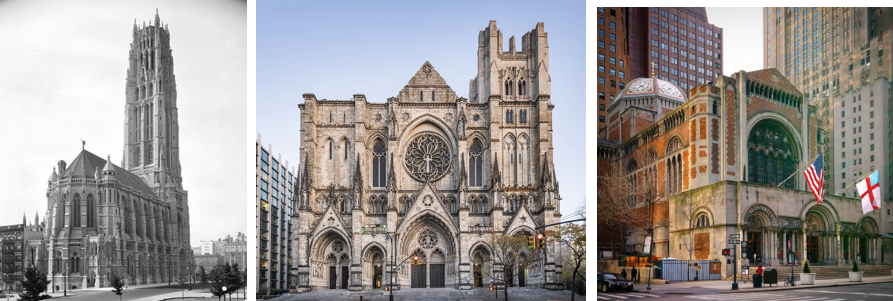
Architecture critic George S. Chappell checked in on the progress of three prominent Manhattan cathedrals in his “Sky Line” column:
LANDMARKS ALL…From left, Riverside Church, the still yet-to-be completed St. John the Divine, and St. Bartholomew’s. (MCNY/masonrymagazine.com/dtjoyce.com)
* * *
The theater review section included this illustration of a new play, Roar China, that opened Oct. 27, 1930 at the Beck Theatre.
The staging of Roar China included this reconstruction of the bow of the H.M.S. Europa on the Beck Theatre stage…
(messynessychic.com)
* * *
From Our Advertisers
The holiday season was in the air, and retailers were taking various approaches to entice Depression-era shoppers to consider their wares. The ads have a more conservative bent, when compared to late 1920s, and in the case of Wanamaker’s and B. Altman’s, an appeal to simpler times…
…Macy’s, on the other hand, looked to sell rather expensive lighters “to arouse the youthful enthusiasm among veteran smokers”…
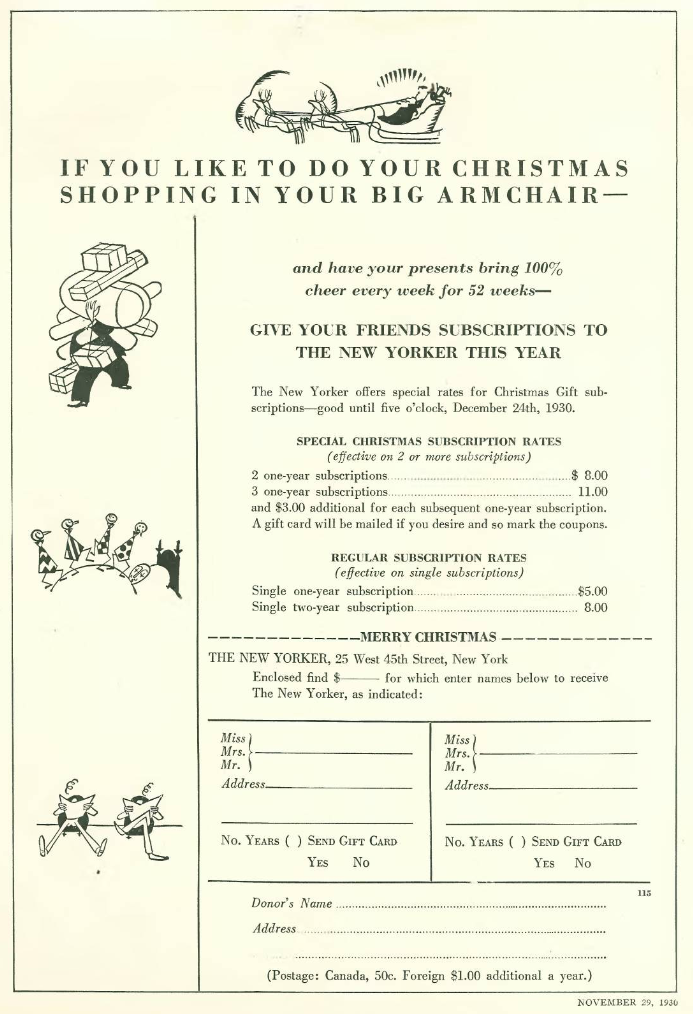
…despite the Depression, New Yorker subscriptions continued to steadily increase — the magazine had nearly 45,000 subscribers in 1930, and by the end of the decade the number would approach 100,000 — below, a house ad designed to entice new subscribers…
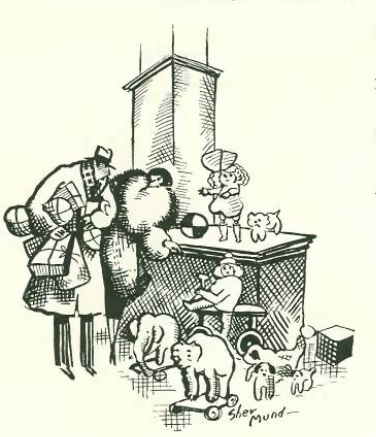
…our cartoons include this holiday spot illustration by Barbara Shermund…
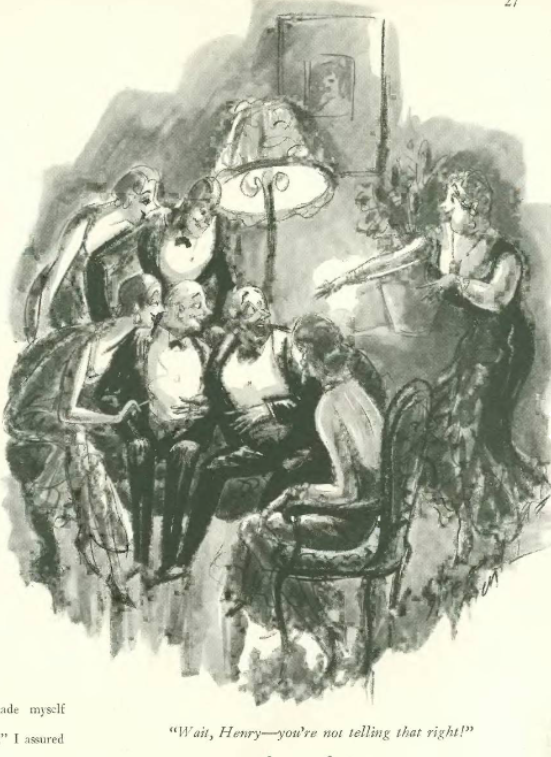
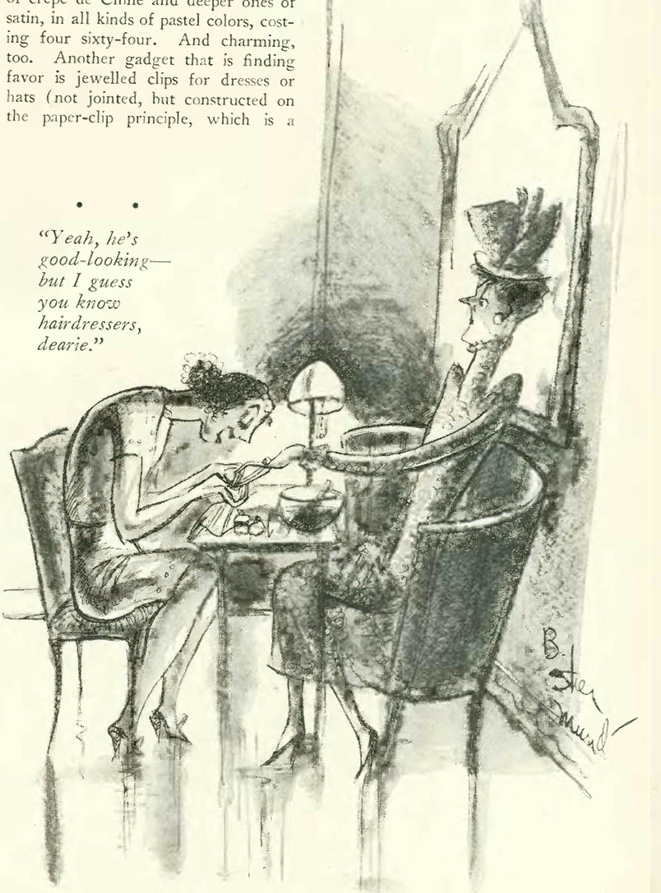
…and another by Shermund of her parlor room crowd…
…Otto Soglow amused us with a couple of tots…
…Gardner Rea imagined a confrontation between a Macy’s Thanksgiving Day Parade balloon and Italy’s Fascist dictator Benito Mussolini…
…the balloon Rea illustrated was “The Captain” from the popular Katzenjammer Kids comic strip. Along with his “family,” the Captain appeared in the parade in 1929 and 1930 (and possibly 1931). They were the first licensed character balloons in the parade’s history…
(The New York Times)
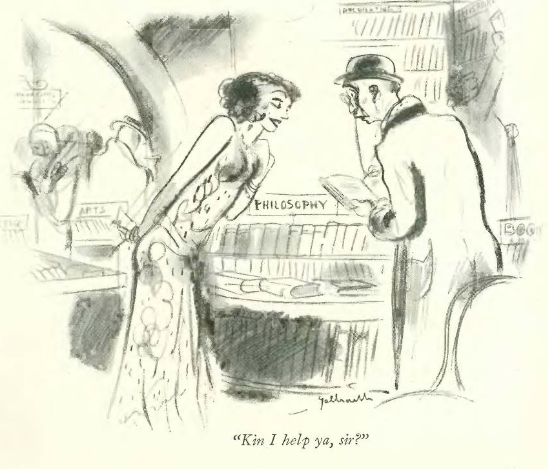
…back to cartoons, book shopping with William Crawford Galbraith…
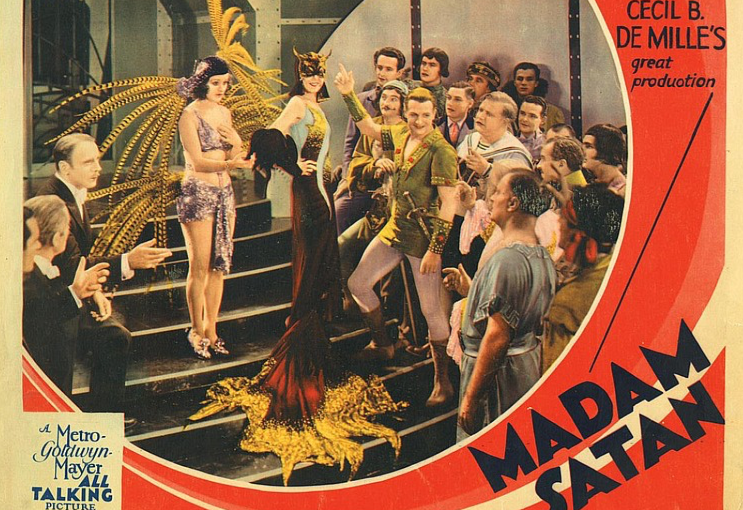
Cecil B. DeMille was known for his epic films (e.g. The Ten Commandments, 1923 and 1956) and cinematic showmanship, but in 1930 he puzzled his audiences with a very weird pre-Code musical, Madam Satan.
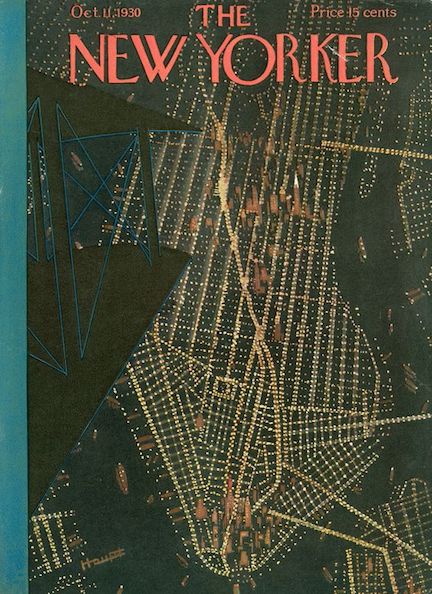
Oct. 11, 1930 cover by Theodore Haupt.
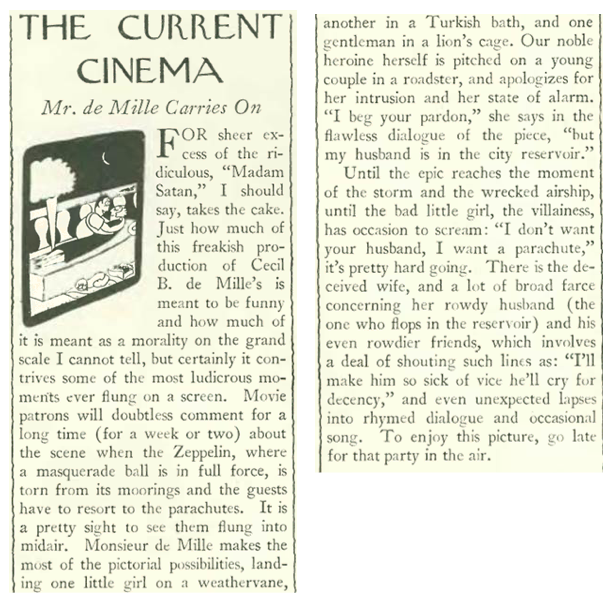
The film centered on a wealthy couple, Angela and Bob Brooks (played by Kay Johnson and Reginald Denny). Bob is unfaithful to his wife (a common pre-Code theme), and she attempts to lure him back by disguising herself as a mysterious devil woman at a masquerade ball held aboard a dirigible. Quite a plot indeed. Here’s what The New Yorker’sJohn Mosher had to say about it.
(IMDB)
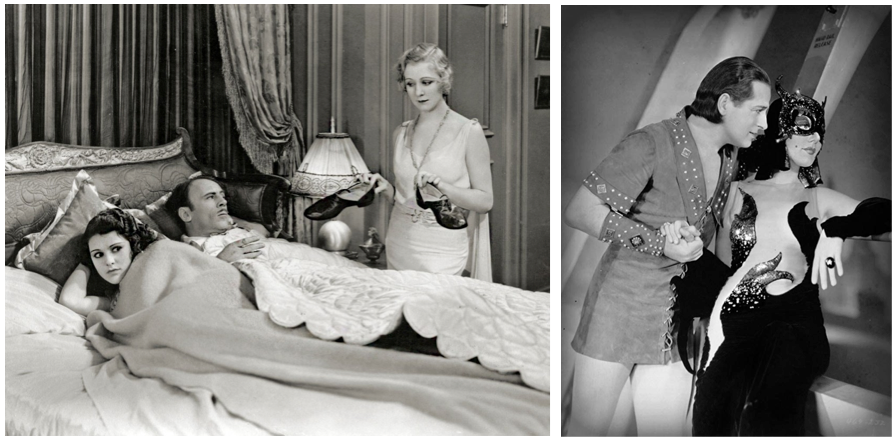
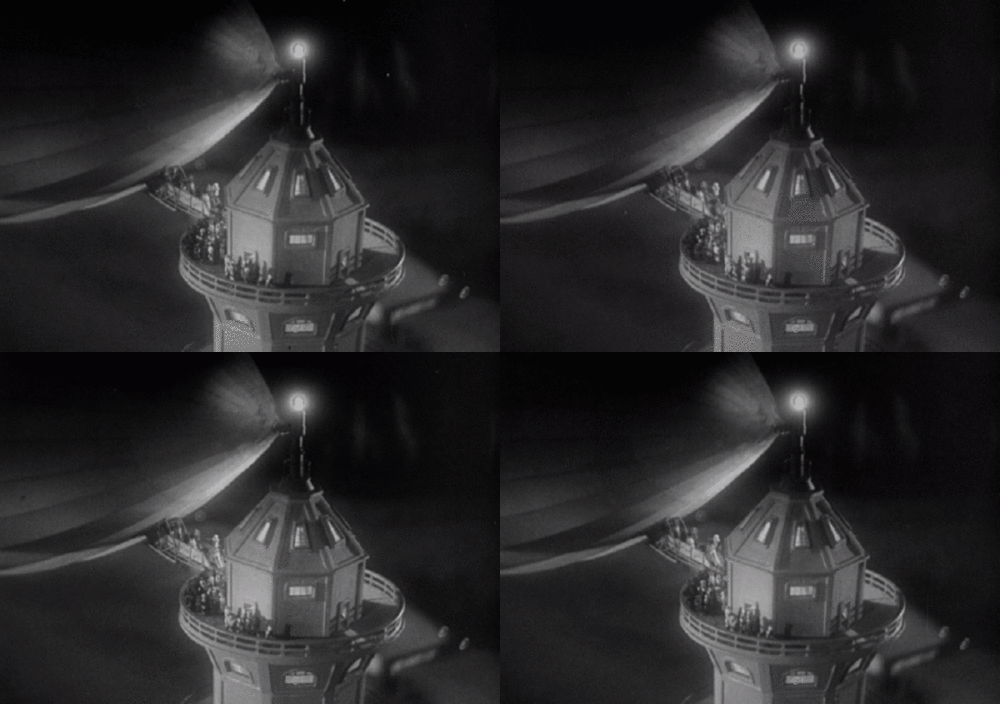
PAJAMA GAMES…Lillian Roth, Roland Young, and Kay Johnson in Madam Satan. At right, Reginald Denny falls for the charms of his wife (Kay Johnson), disguised as a devil woman at a masked ball held aboard a giant dirigible. (IMDB/cecilbdemille.com)AIRHEADS…Via a giant mooring mast, partygoers board a dirigible for the masquerade ball in Madam Satan. Curiously, developers of the Empire State Building (which was under construction) envisioned a similar use for the mast that would top out their tower. In reality, winds that whipped around high towers would have prevented this type of boarding. (twitter.com)SOMEONE CALL THE FAA…At right, the lavish masquerade ball aboard a giant dirigible in Madam Satan. At right, the dirigible is damaged by lightning in a scene that foreshadowed the Hindenberg disaster of 1937. (cecilbdemille.com/precode.com)SEEMS PLAUSIBLE…In a silly ending to a silly film, partygoers float on parachutes away from the damaged dirigible. (twitter.com)
* * *
Let Them Eat Cake
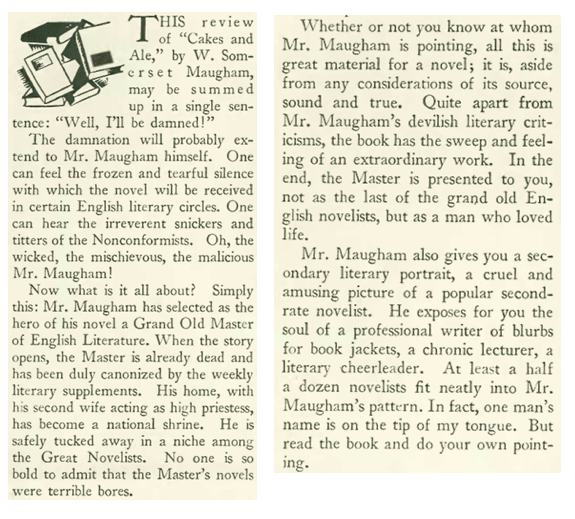
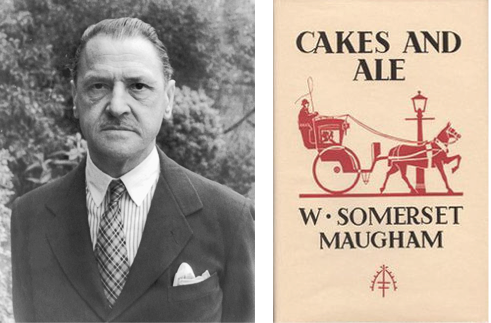
Somerset Maugham regarded his comic novel, Cakes and Ale, to be his favorite. The book took aim at snobs as well as at the legacy of one overrated, late-Victorian writer—a character many believe was based on the recently departed Thomas Hardy (Maugham denied the inspiration). The New Yorker had this to say about Cakes and Ale:
THROW HARDY INTO THE DUSTBIN…Somerset Maugham as photographed by Carl Van Vechten in 1934. (Wikipedia)
* * *
He Meant What He Said
Howard Brubaker, in his “Of All Things” column, found humor in the words of a rising figure in German politics, you know who…
* * *
Throw Him a Softball
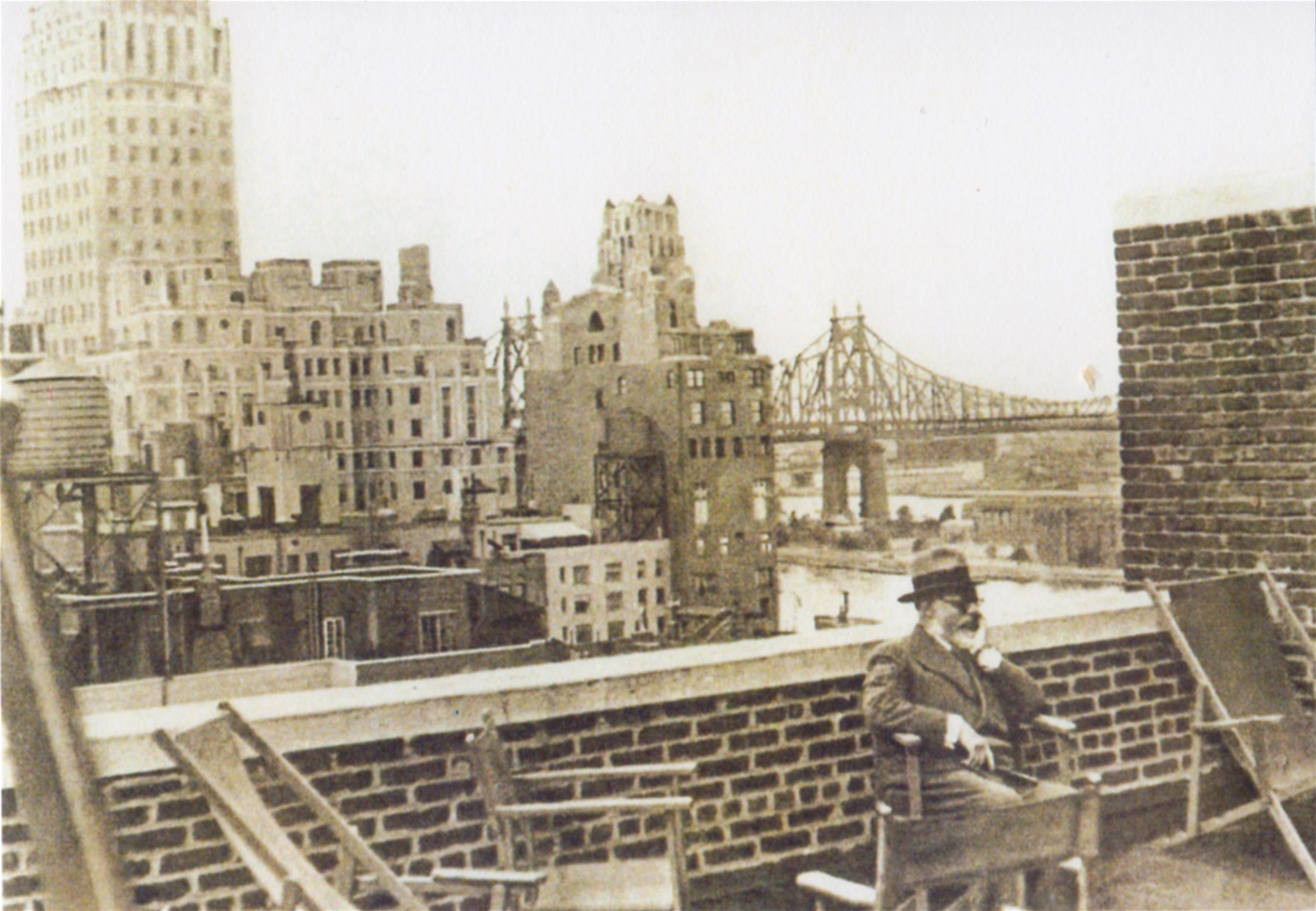
The famed French artist Henri Matisse paid a visit to New York City, and according to this account in “The Talk of Town,” seemed to be seeking some peace of mind…
AN OPPOSITE VIEW…Henri Matisse struck a thoughtful pose atop a Manhattan apartment at 10 Mitchell Place in 1930. The Queensboro Bridge can be glimpsed in the background. (ephemeralnewyork.wordpress.com)
* * *
Still Barred From the Bar
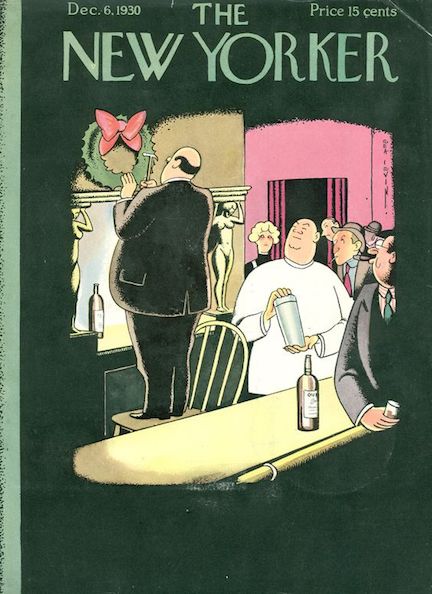
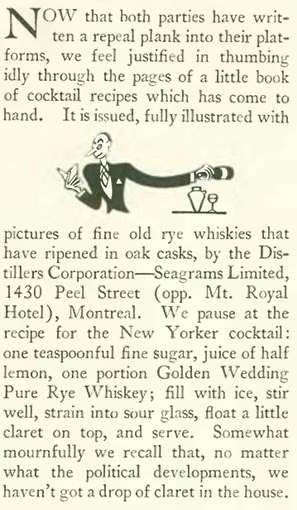
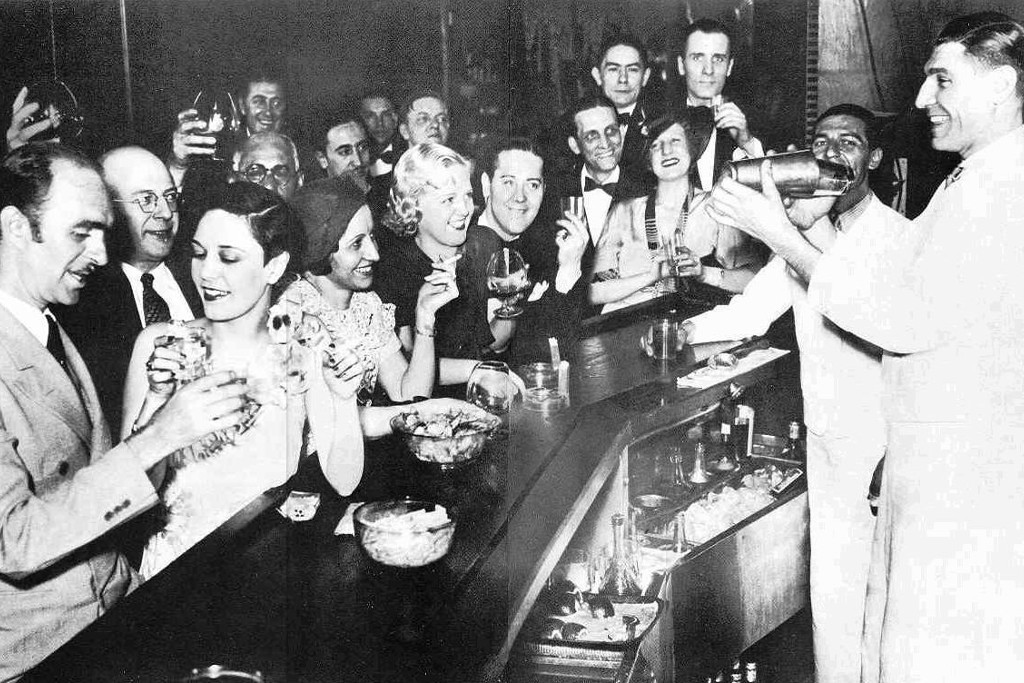
We are still about three years away from the official repeal of the 18th Amendment, but as we know the partying continued in houses and speakeasies across the great city. E.B. White, in his “Notes and Comment,” wistfully recalled the days when good booze was legal:
White did find some cheer in the pro-wet platforms of the two major parties…
A GIMLET IN EVERY POT…The major political parties in 1932’s U.S. presidential race were represented by incumbent Herbert Hoover (Republican) and Franklin D. Roosevelt (Democratic). Both favored repeal of the 18th Amendment. Pictured at the center, a New Yorker cocktail, the object of E.B. White’s longing. (Wikipedia)
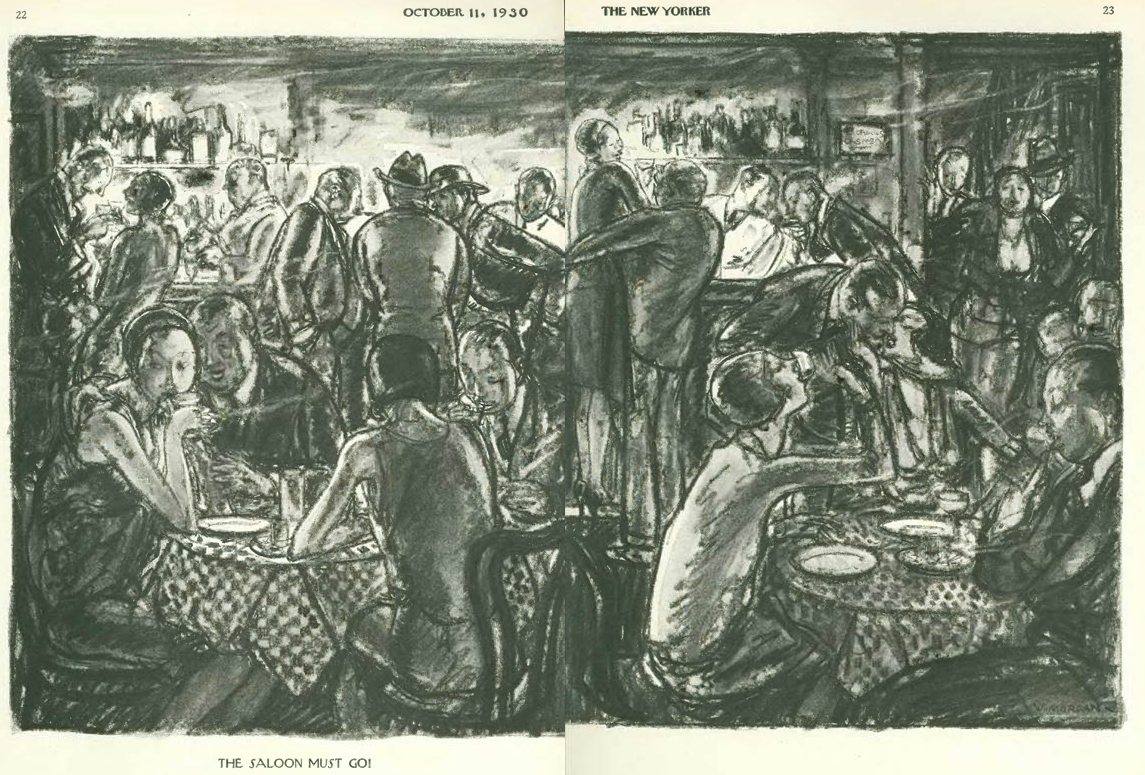
And while we are on the subject, we have this Wallace Morgan illustration of a lively speakeasy with the ironic caption, “The Saloon Must Go!” — referencing an old Anti-Saloon League Slogan.
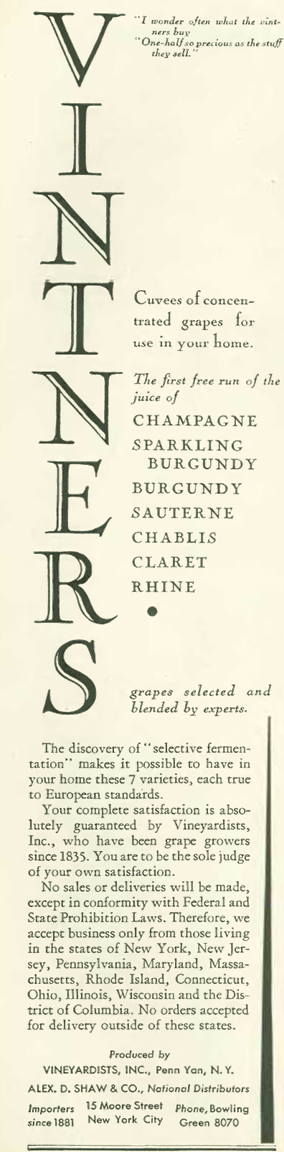
You didn’t have to go to a speakeasy if you wanted a glass of wine. During Prohibition American winemakers found a lucrative loophole by selling perfectly legal concentrated grape juice (called “wine bricks”) to home brewers and bootleggers alike.
According to an article in the Smithsonian, winemakers marked the wine bricks with warnings that they were “for non-alcoholic consumption only.” However, the package would also bear a note explaining how to dissolve the brick in a gallon of water, and yet another “warning” instructing the buyer not to leave the jug in a cool cupboard for 21 days, lest it turn into wine.
Here’s an ad in the Oct. 11, 1930 New Yorker that not-so-subtly offered a selection of varietals…
Here’s what a wine brick looked like:
A wine brick from San Francisco’s Vino Sano company. The label reads: “Each Brick dissolve in one gallon of water. To prevent fermentation, add 1-10% Benzoate of Soda.” Yeah right. (vinepair.com)
* * *
From Our Advertisers
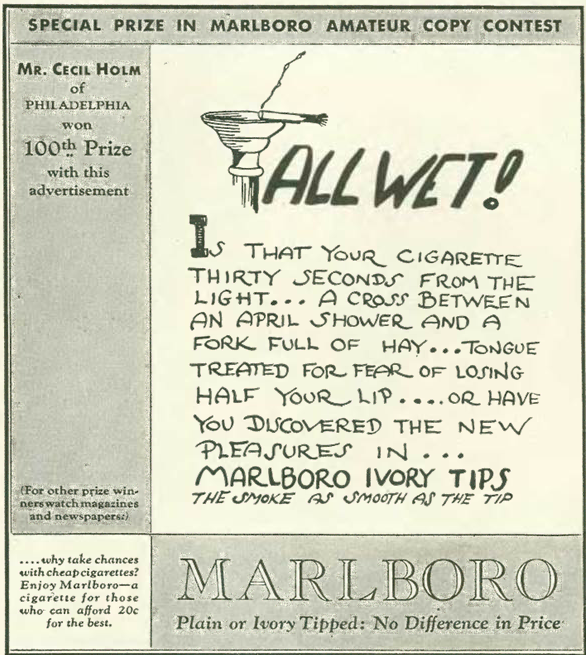
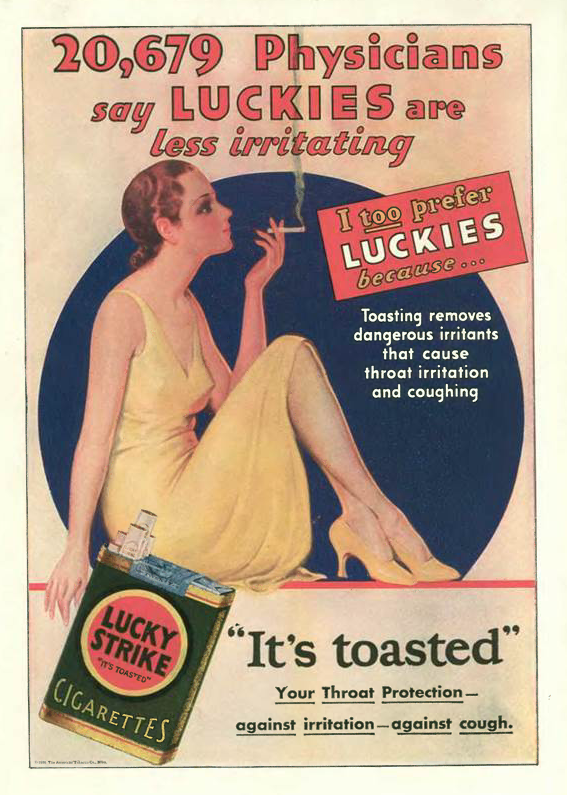
No doubt Prohibition caused more than a few people to take up smoking. Women adopted the habit in droves during the Roaring Twenties, and by the Depression it seemed everyone was lighting up. Advertisers explored various ways to market cigarettes, and long before the Marlboro Man made the scene, that brand pushed its product through a series of dopey handwriting and essay contests,,,
…the makers of Luckies used a combination of sex and bogus health claims to sell their products…
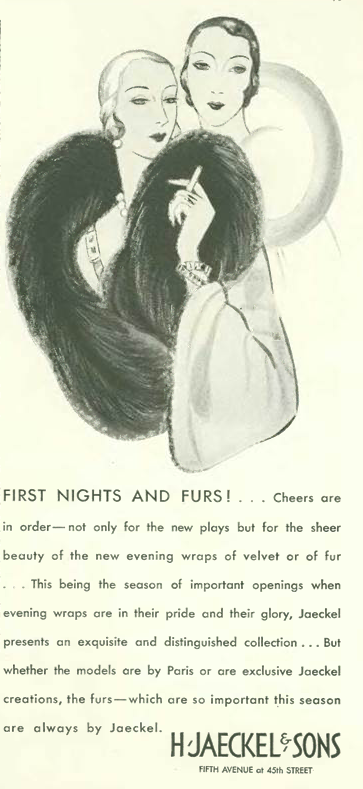
…cigarettes were not confined to ads by tobacco companies; here they are accessories to fine furs…
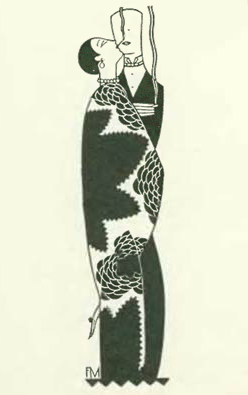
…even The New Yorker’s spot illustrations (this by Frank McIntosh) featured smokers…
…as did cartoons, such as this one by Barbara Shermund in the Oct. 4 issue…
…and we have one more ad, this one from Chrysler, which acknowledged the new world of the Great Depression, but only through use of careful euphemisms (The New Yorker editorial side practiced much of the same)…
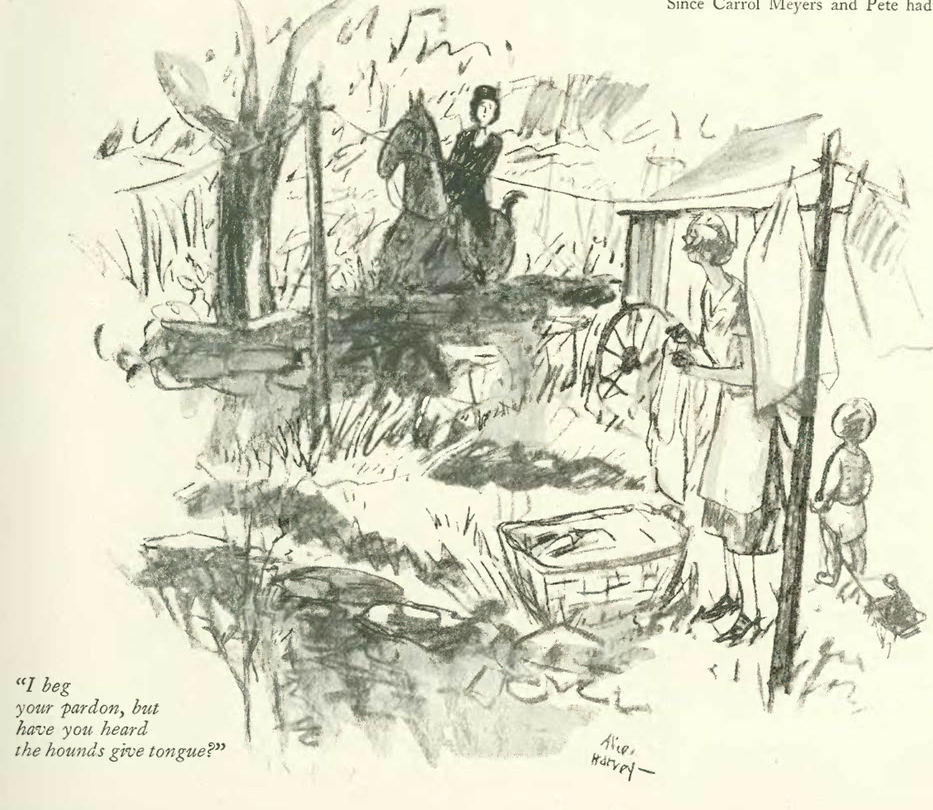
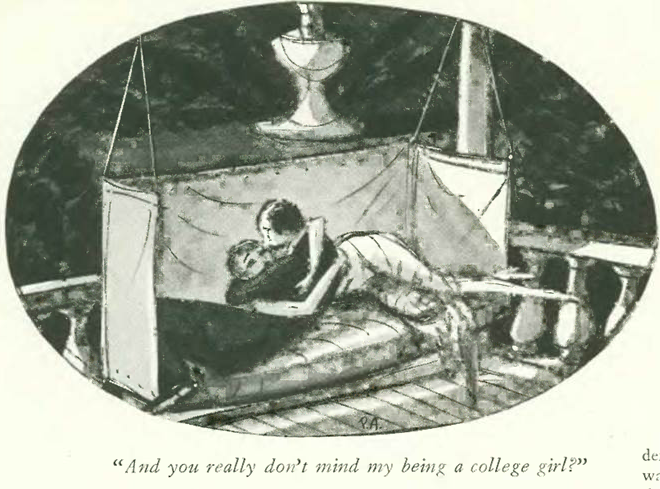
…on to our cartoons, beginning with an exploration of city vs. country life, by Alice Harvey…
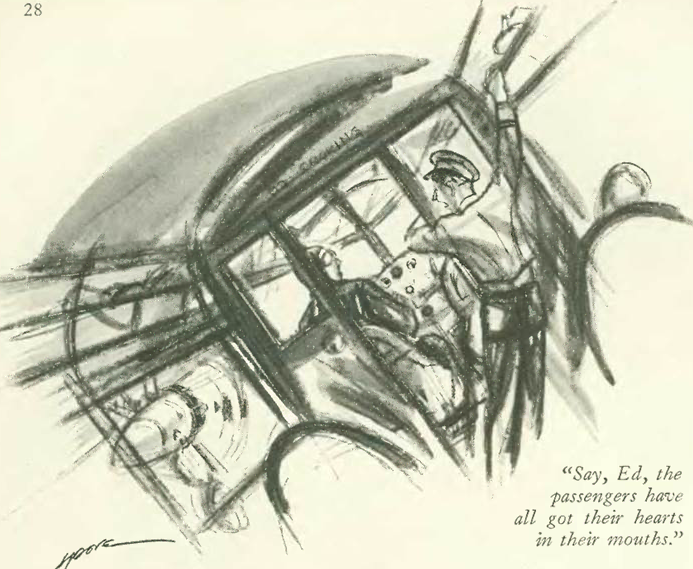
…a depiction of what commuter flying was actually like in 1930, thanks to Leonard Dove…
…a glimpse at modern parenting, with Helen Hokinson…
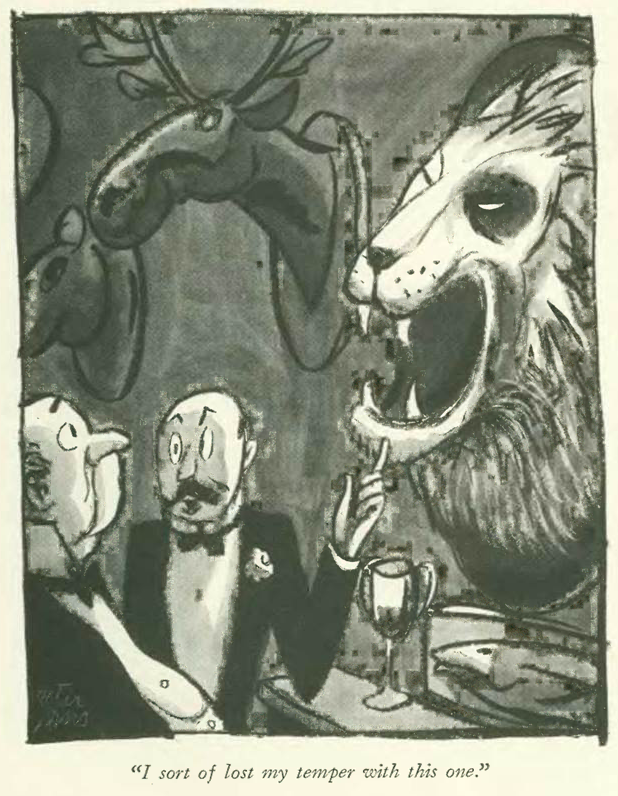
…humor in a gentleman’s drawing room, courtesy Peter Arno…
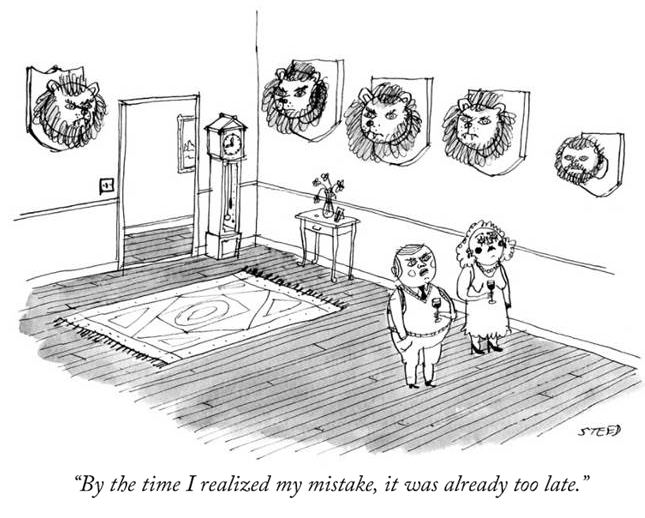
…and 89 years later, a hilarious update on the subject by Edward Steed in the Sept. 9, 2019 issue…
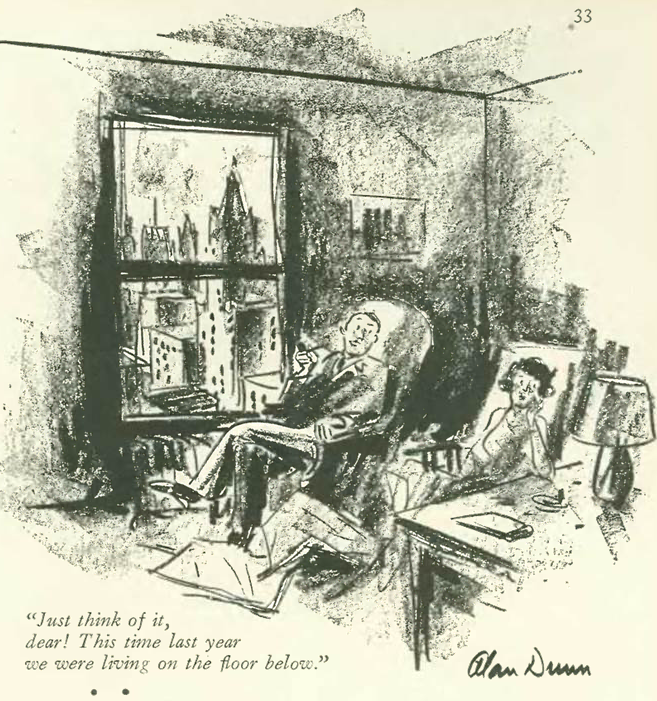
…and finally, the joys of urban life brought to us by Alan Dunn…
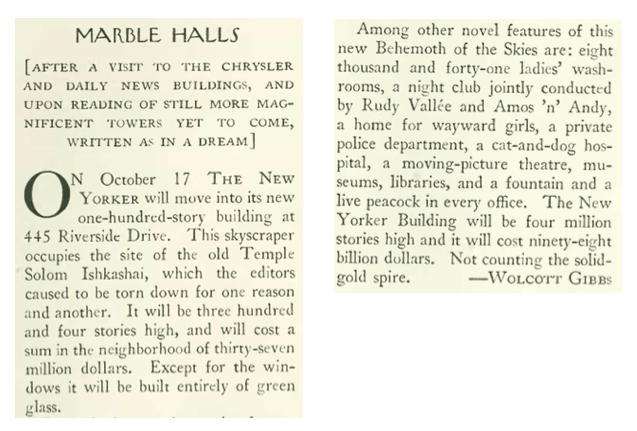
We close out the boiling August of 1930 with Wolcott Gibbs and his fanciful musings regarding the future offices of The New Yorker, inspired by his recent visit to the glitzy new lobby of the New York Daily News Building.
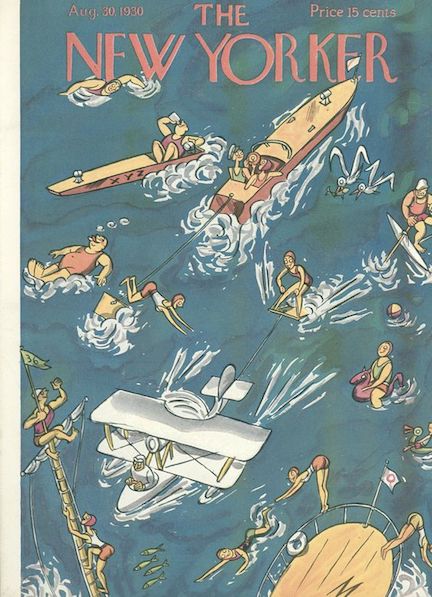
August 30, 1930 cover by Julian De Miskey.
I include a brief excerpt of Gibb’s tongue-in-cheek fantasy of the future, which inadvertently foresees The New Yorker’s current offices (see contrast of old and new above) in the gleaming glass tower now known as One World Trade Center:
THAT WAS THEN…The New Yorker’s first offices were located at 25 West 45th Street, a 16-story building erected in 1913 (it still stands). It’s almost impossible to find images of The New Yorker’s early office spaces, but you can probably get some idea from these photos of another tenant of the building, the Y.M.C.A. Dental School. (Museum of the City of New York/New York Public Library)THIS IS NOW…Almost in fulfillment of Wolcott Gibbs’ fantasy, The New Yorker today occupies offices in the Condé Nast section (images above) of the 104-story, 1,776 foot One World Trade Center (floors 20 to 44). When The New Yorker moved onto the building’s 38th floor in early 2015 (one floor above Wired), it marked the first time the magazine was located outside of a small area in Midtown. (New York Magazine/interiordesign.net)
* * *
His Bit of Earth
“The Talk of the Town” noted an increasingly rare sight along Fifth Avenue, a private garden created by Thomas Fortune Ryan that in 1930 was occupied by his son Clendenin J Ryan:
DUST TO DUST…Thomas Fortune Ryan demolished the Charles T. Yerkes mansion and its art galleries (before and after photos, top, and image of a gallery, bottom right) to make way for his private flower garden, which is visible in the bottom left hand corner of the image at top right. An apartment building erected in 1937 (bottom left) occupies the site today. (Museum of the City of New York/Alice Lum)
* * *
From Our Advertisers
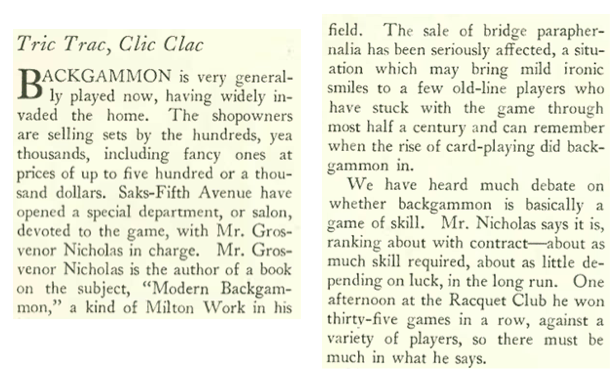
Backgammon became all the rage in the 1930, so much so that one Grosvenor Nicholas, “a famous authority on backgammon,” commanded a fill-page ad from Saks…
…for reference, The New Yorker made note of Nicholas’s visit in the Sept. 6 “Talk of the Town”…
OR WATCH THE YOUTUBE VIDEO…Leila Hattersley, author of 1930s How to play the New Backgammon, teaching at a New York Club (bkgm.com)
…celebrity endorsements continued to grow in importance in the 1930s, here the famed Australian-born British actress Judith Anderson (1897-1992) marvels at the products manufactured by Angelus…
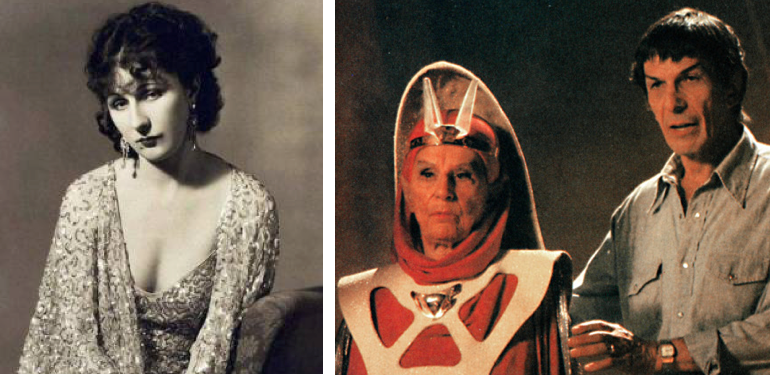
…Anderson would later be made a “Dame,” and would enjoy a long career and a long life, even appearing in 1984’s Star Trek III: The Search for Spock as the Vulcan High Priestess T’Lar…
VERSATILE…At left, Dame Judith Anderson in 1932. At right, Anderson on the set of 1984’s Star Trek III: The Search for Spock, with actor Leonard Nimoy. (Tumblr)
…this ad for Buick shows a rich gent dismissing his chauffeur, something he would probably have to do permanently as the Depression continued to ruin fortunes…
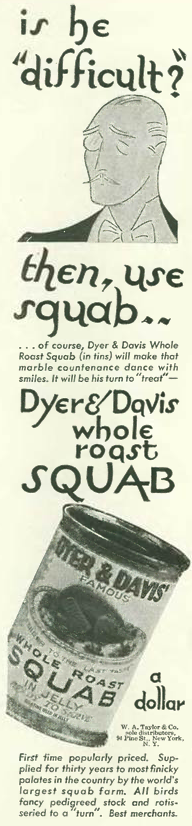
…and perhaps a lost fortune could lead to one being “difficult,” and in that case Dyers & Dyers could sooth the hurt with squab from a can…
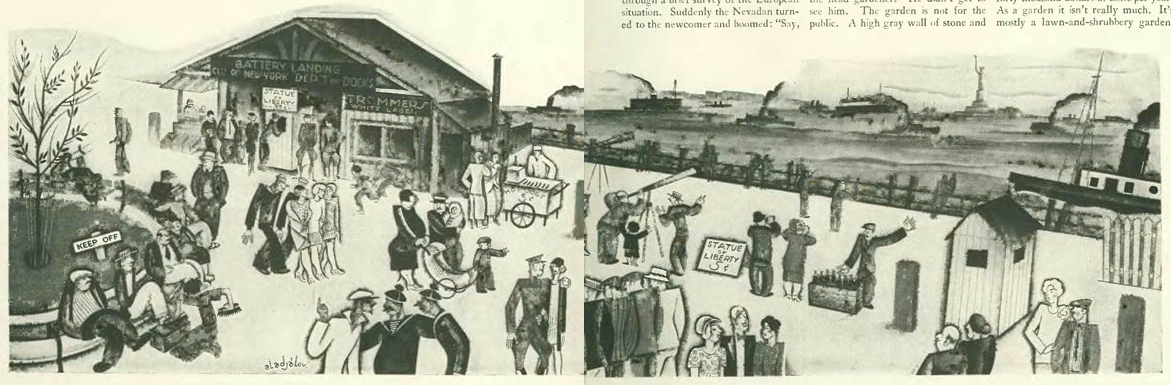
…on to our cartoonists, we have Constantin Alajalov illustrating a scene at the Battery…
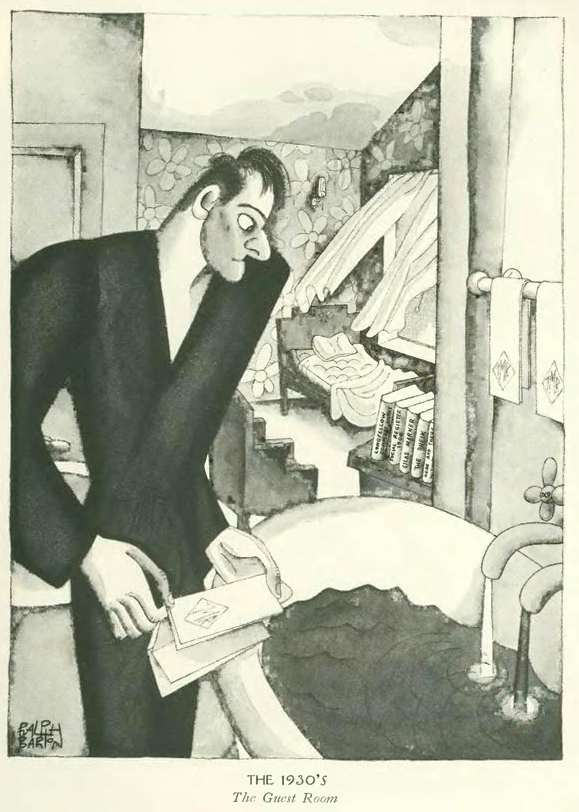
…Ralph Barton continued his interpretations of a new decade…
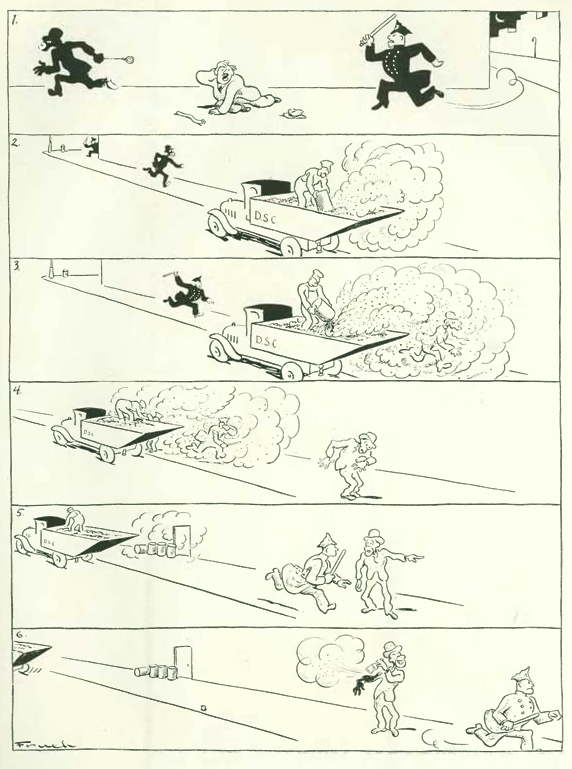
…some unfortunate racial humor from Al Frueh…
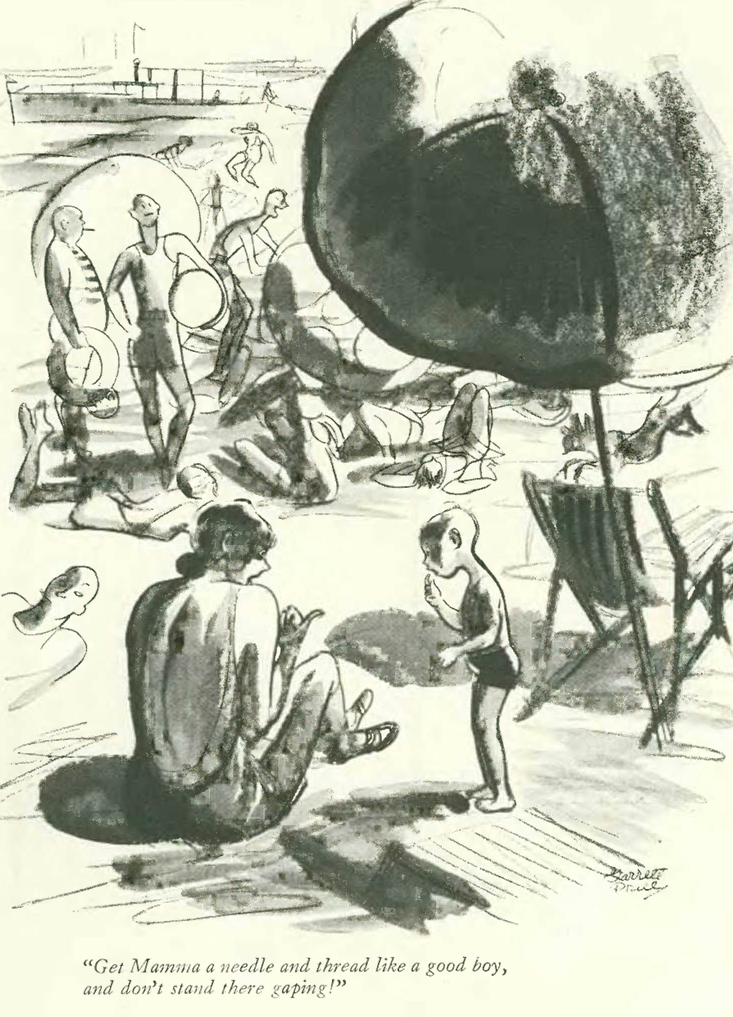
…an indelicate moment at the beach, courtesy Garrett Price…
…Perry Barlow looked at the challenges of city life…
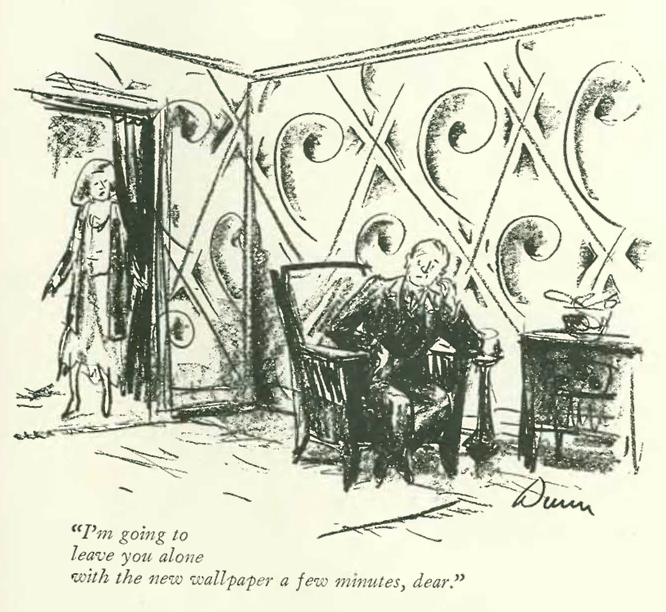
…and Alan Dunn found a man with a case of the moderns…
Since time immemorial human beings have clung to the idea that unknown lands must surely contain vast mineral treasures.
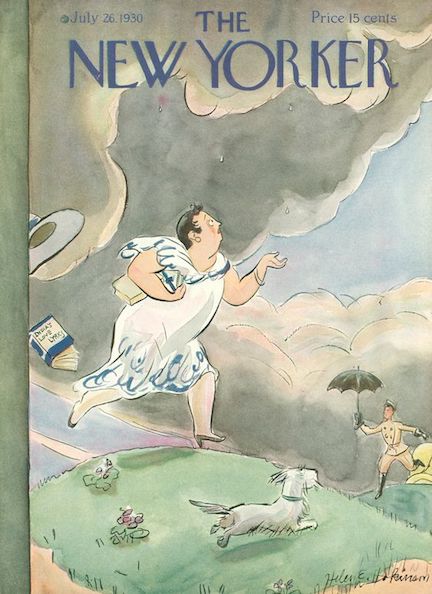
July 26, 1930 cover by Helen Hokinson.
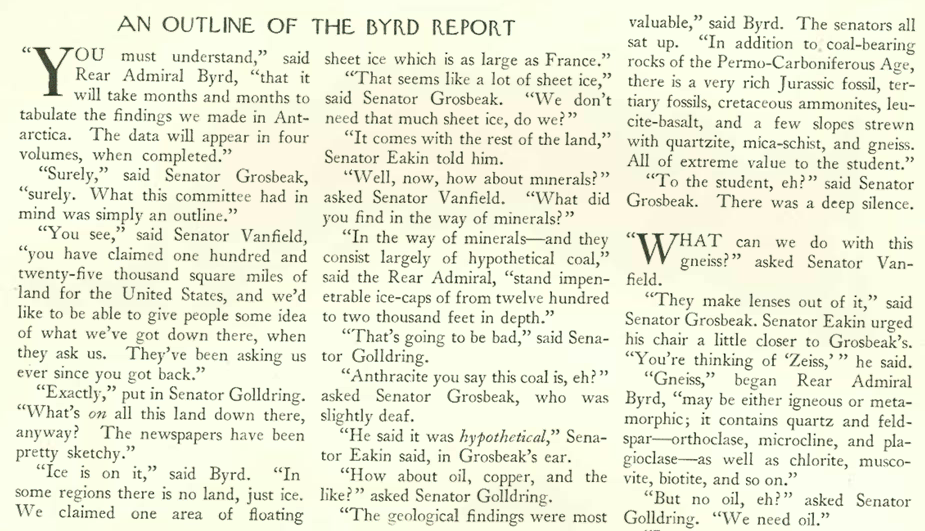
Such was the case when Admiral Richard Byrd returned from his Antarctic expedition, during which he conducted a number of geological studies. Ever ready to tweak a senator’s nose, TheNew Yorker’sJames Thurber imagined an exchange between Byrd and a U.S. Senate subcommittee that was more interested in exploitable commodities than in scientific discoveries:
HMMM, NO OIL HERE…Richard Byrd’s expedition building their “Little America” encampment at the South Pole in 1928. (osu.edu)
One passage of particular interest in this imagined exchange dealt with the speed of climate change in relation to potential mineral extraction…
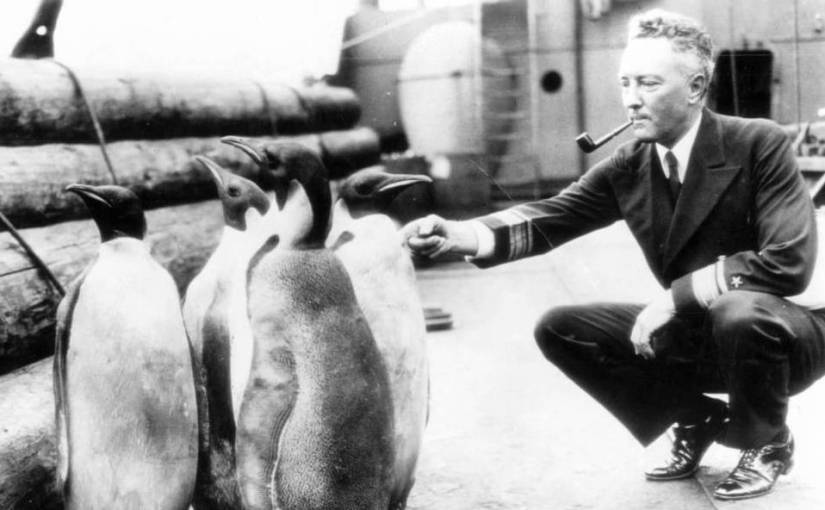
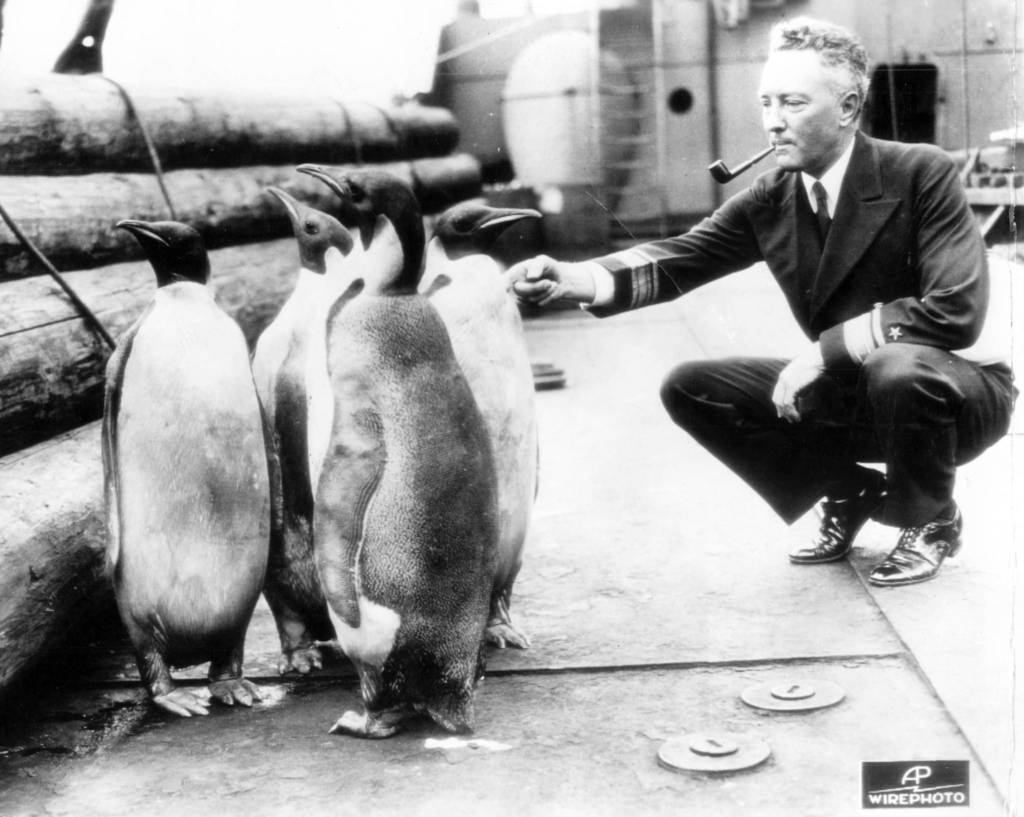
BIRDS MEET BYRD…Admiral Richard Byrd onboard the USS Bear during his second expedition to the South Pole. (Wikipedia)
* * *
Before CNN
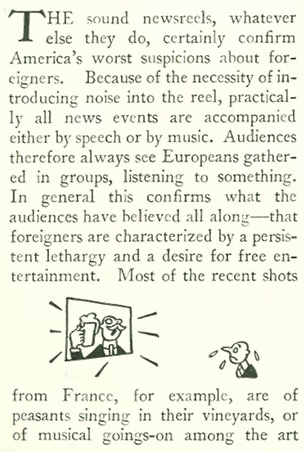
Newsreels came into their own with the advent of sound, offering moviegoers a selection of news stories from the around the world. In his “Notes and Comment,” E.B. White observed that newsreels depicted foreigners as people who just liked to hang out (note the racial slur directed at Latin Americans). White’s characterization of Germans as an indolent lot is also noteworthy, given the country was just two and half years away from Nazi takeover.
TANZEN UND TRINKEN…Kroll’s Biergarten in Berlin in September 1928; English visitors raise a glass at a beer hall in Hesse, 1929. (YouTube)
* * *
Speaking of Slurs
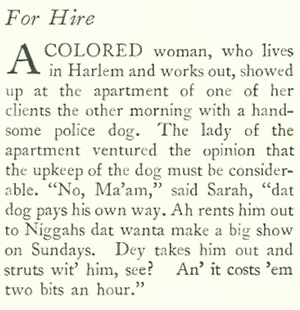
Here is what passed for a humorous anecdote in the July 26, 1930 “Talk of the Town”…
* * *
Star Power
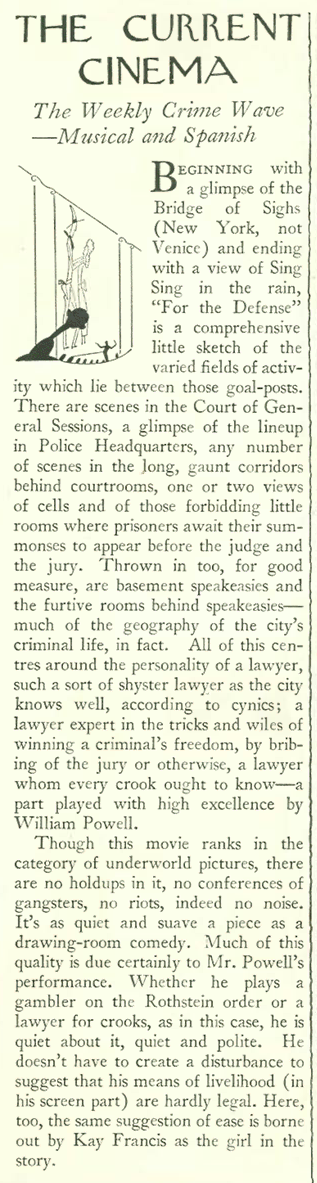
William Powell and Kay Francis were frequent co-stars, and would team up for the 1930 courtroom drama For the Defense. Powell and Francis would be two of Hollywood’s biggest stars in the 1930s.
LET’S MAKE A PICTURE…Frequent co-stars William Powell and Kay Francis in a publicity photo for 1930’s For the Defense. Francis was a longtime friend of The New Yorker’sLois Long. (IMDB)
* * *
From Our Advertisers
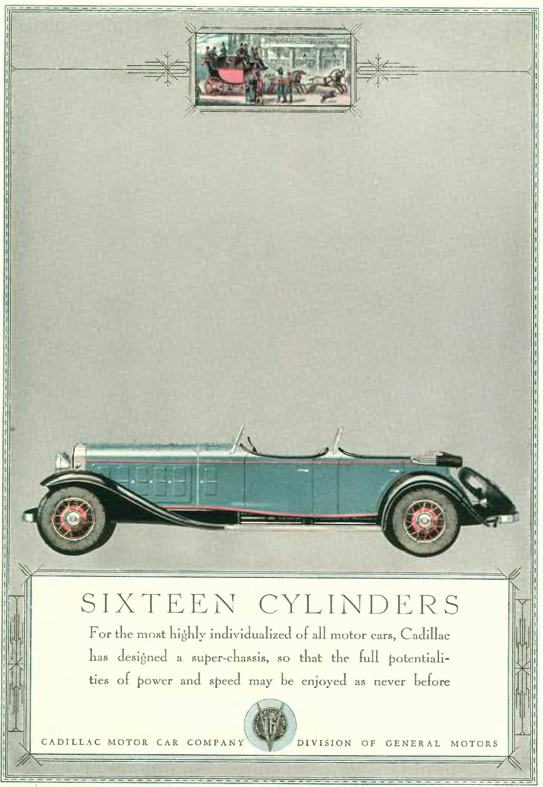
What Depression? As bread lines lengthened so did the “super-chassis” of this monster Cadillac…
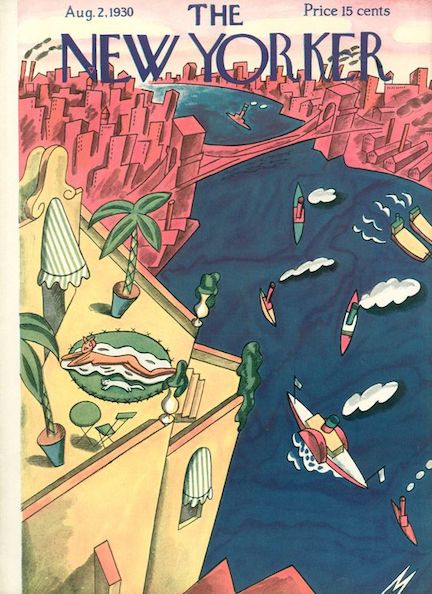
…in contrast, this ad in the Aug. 2 issue questioned the necessity of a 4,000-pound car (or in the case of the 16-cylinder Cadillac, 6,500 pounds), and touted this “common sense” British import…imagine the America of today if this idea would have taken hold in the 1930s…
…we return to the June 26 issue to find an ad that would likely not appear in today’s New Yorker…
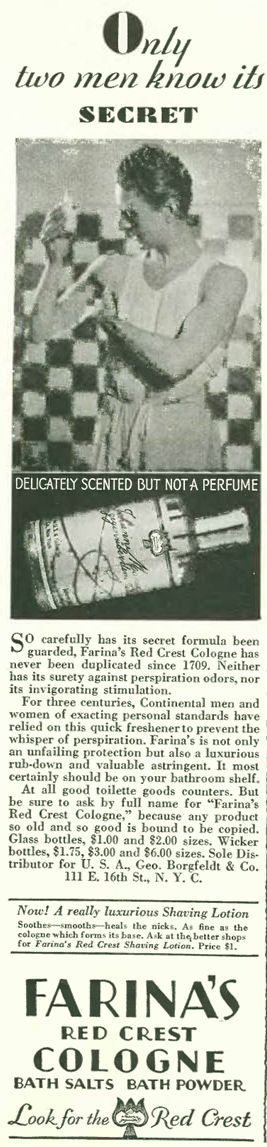
…another unlikely ad is this spot from the makers of Farina cologne featuring a skinflint applying the stuff to his armpit…yeah, I’ll take a bottle…
…and Rea Irvin continued his series of illustrations for Murad cigarettes…
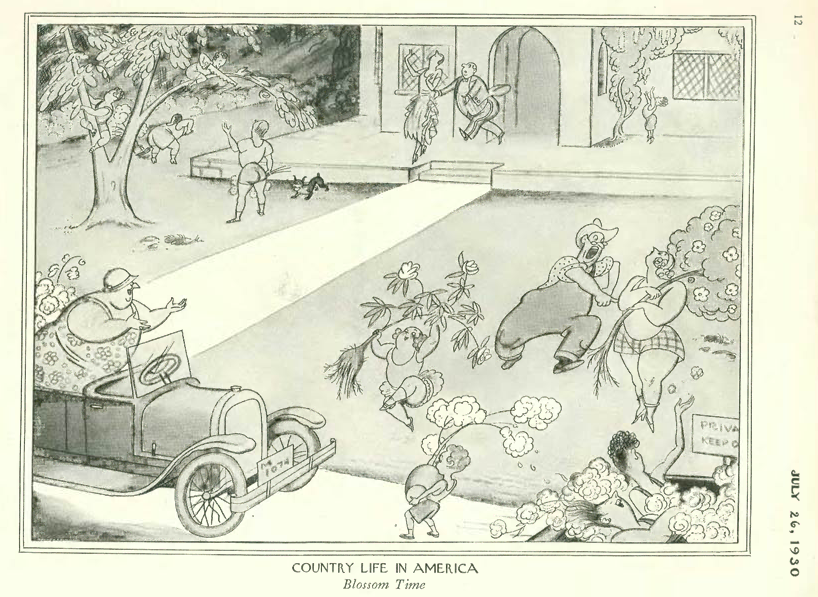
…in cartoons, Irvin gave us this interpretation of country life in a full-page panel originally featured sideways…these “Country Life in America,” scenes depicted common folks enjoying the outdoors at the expense of country squires…
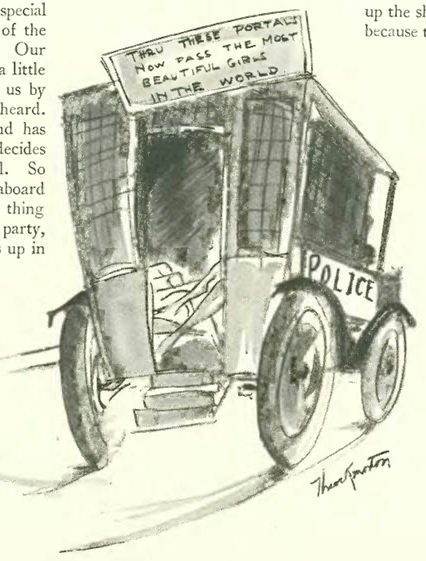
…and then we have the bohemian artist and set designer Cleon Throckmorton (1897-1965), with his one and only contribution to The New Yorker…
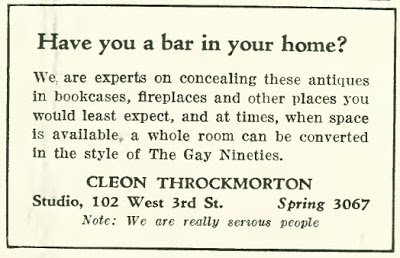
…in a previous issue (May 31, 1930) Throckmorton had placed this tiny, curious ad in a corner on page 46…
…and in the June 7, 1930 issue, he placed another ad in the bottom corner of page 94…
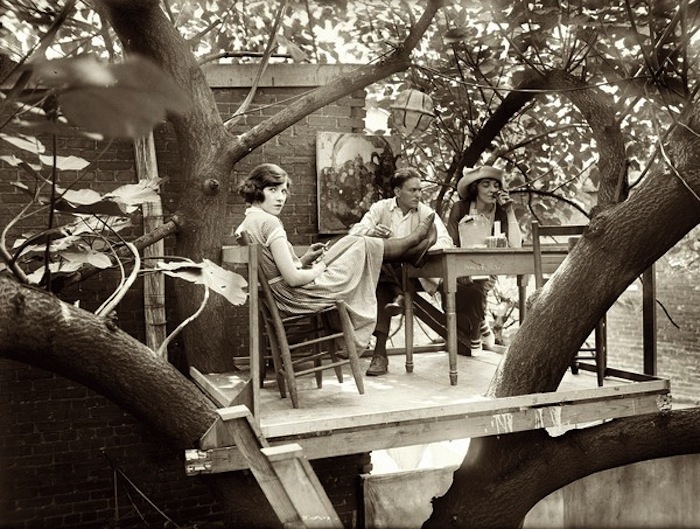
Cleon Throckmorton, well-known for his bohemian lifestyle, operated a backyard speakeasy called the Krazy Kat Club in Washington DC. He is pictured here (center) with a couple of “Klub” members in 1921. He was no slouch, however, designing 149 New York theatrical productions between 1920 and 1934. (messynessychic.com)
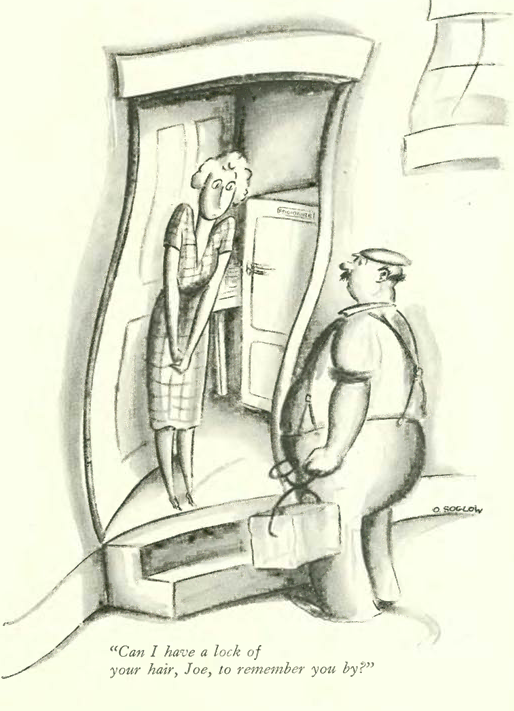
…back to our cartoons, we have Otto Soglow, who was going through a wavy period in his illustrations…
…Soglow would soon become famous for his Little King strip, but for now we’ll leave the king jokes to Peter Arno…
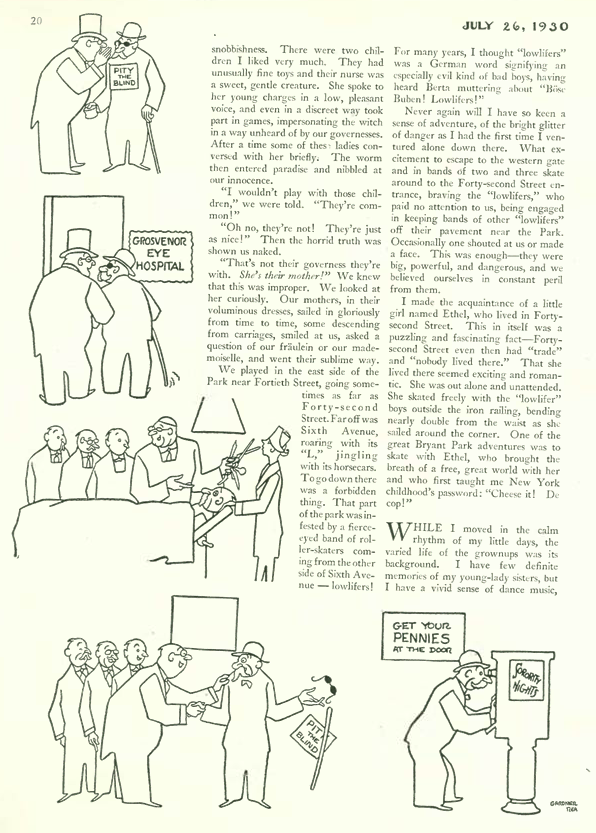
…Gardner Rea contributed this series cartoon that slid around page 20…
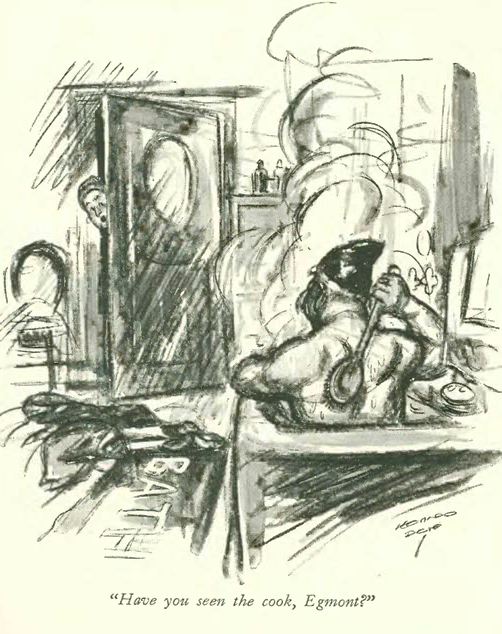
…Leonard Dove looked in on a domestic scene…
…and John Reehill contributed this weird little cartoon that reminded me a bit of the humor of Gahan Wilson…
When Apollo astronauts landed on the moon fifty years ago, many skeptics asked the question, “What good does this accomplish?”
July 12, 1930 cover by Constantin Alajálov.
New Yorker writer Morris Markey posed the same question 89 years ago about transatlantic flights, then limited to a handful of daredevils chasing various speed and distance records. Crossing the ocean in an airplane, Markey observed, was “one of the most difficult things imaginable.” He concluded that despite the heroics of a few pilots, “we are still not much nearer to transoceanic commercial service…”
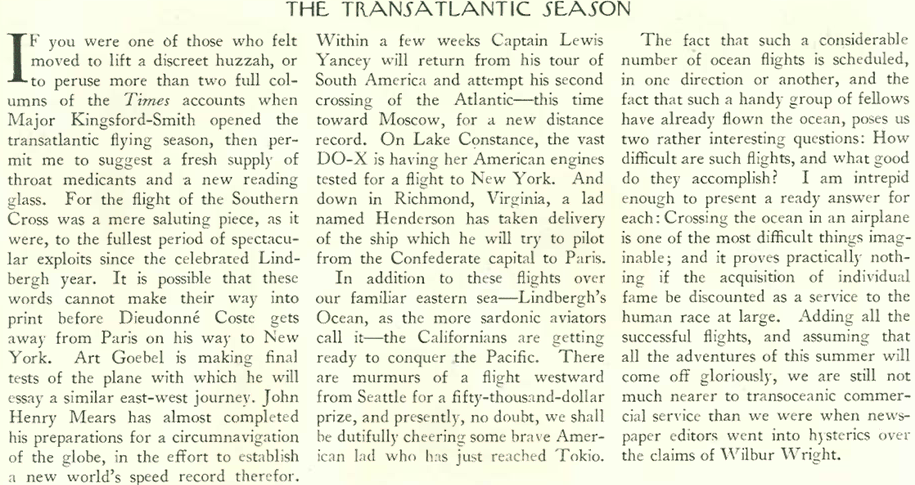
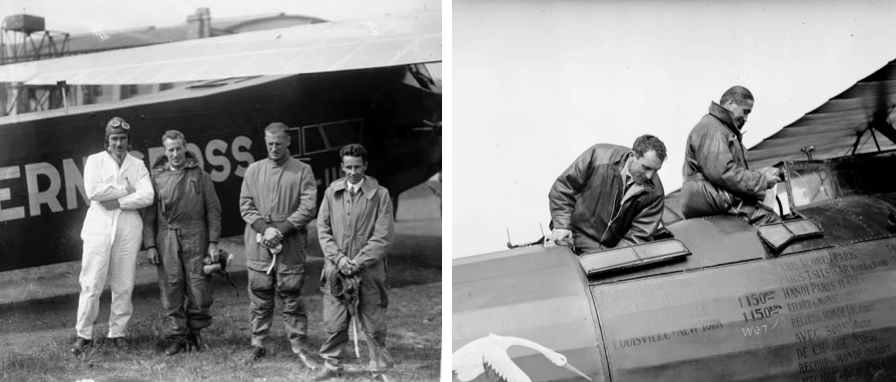
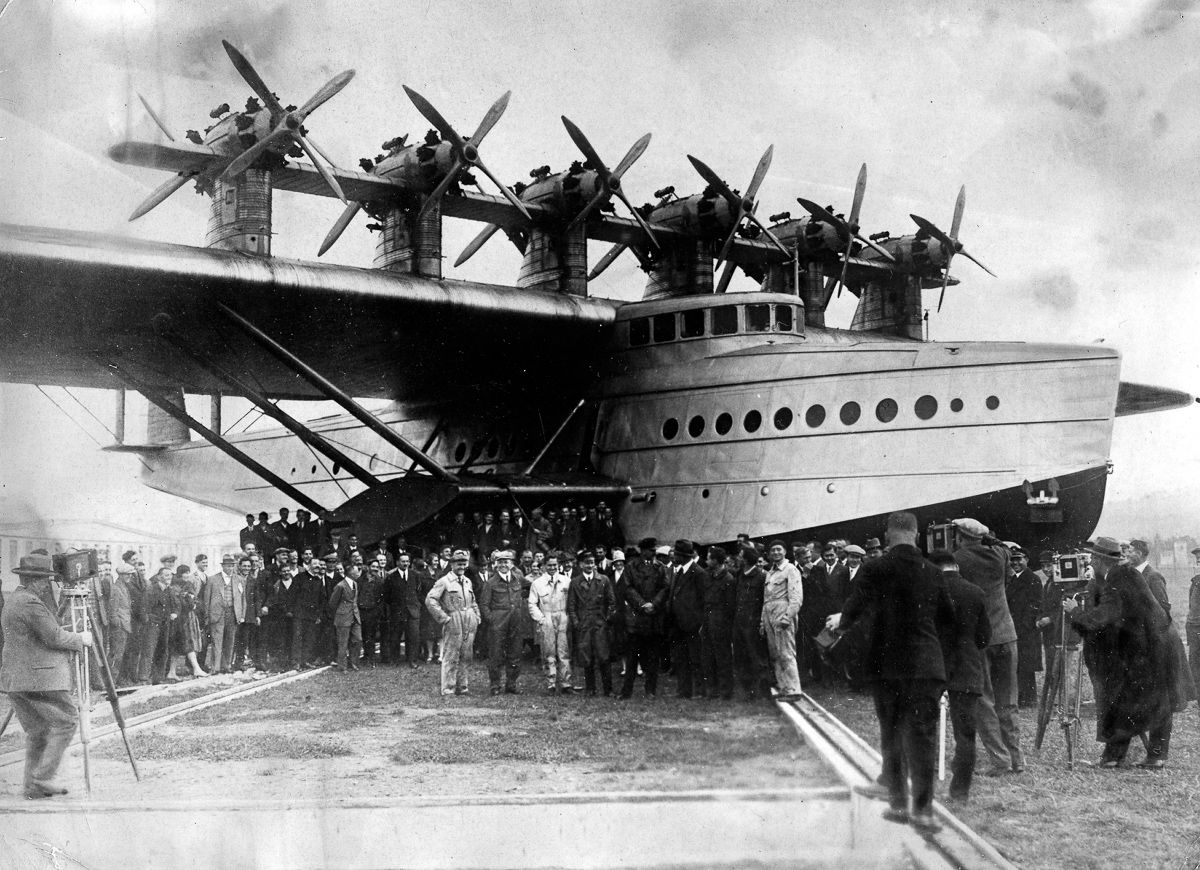
TESTING THE LIMITS…In photo at left, Charles Kingsford Smith (second from left) and the crew of his airplane, Southern Cross, pause before embarking on their east-west crossing of the Atlantic in June 1930; photo at right: Dieudonné Costes (right) with Maurice Bellonte in Boston in 1930. On September 1-2, 1930, they flew the “Point d’Interrogation” from Paris to New York, the first heavier-than-air aircraft to reach New York in the more difficult westbound direction between the North American and European mainlands. (National Library of Ireland/Wikipedia)BIG THINKERS…Germany’s massive Dornier Do-X made its first test flight on July 12, 1929. A few months later, it carried a world-record 169 passengers on a 40-minute flight, an astonishing number given that the largest planes at that time rarely carried more than 20 passengers. In 1930, the Do-X took off on an international publicity tour through Europe, down the west coast of Africa, across the Atlantic to Brazil and up to New York before returning to Berlin. (Mashable)
Markey went on to detail the various obstacles facing transatlantic fliers, including fairly good odds that a plane, laden with fuel and supplies for such a journey, would crash on takeoff. He noted that a little over half of the attempts succeeded, while the others seemed doomed from the start.
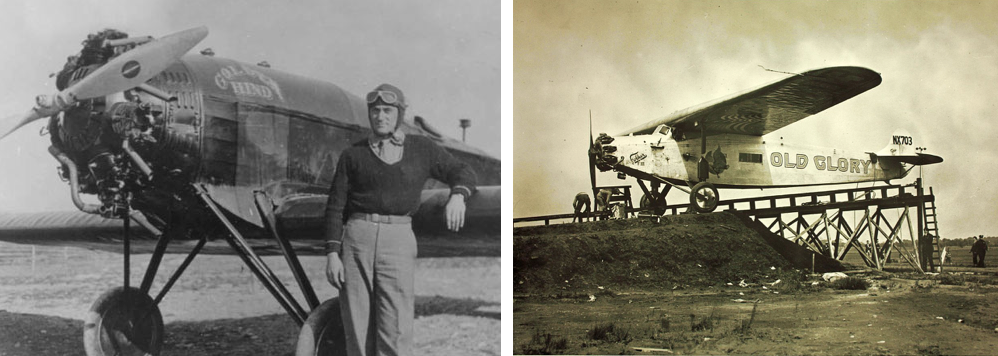
ILL-ADVISED…With only 70 hours of flying experience, Montana rancher Urban F. Diteman (left, with his airplane “Golden Hind”) took off from Harbour Grace, Newfoundland, bound for London. He was never seen again; at right, the William Randolph Hearst-sponsored “Old Glory,” a Fokker F.VIIa single-engined monoplane that was used in 1927 on an attempted transatlantic flight from Old Orchard Beach, Maine to Rome, Italy. The overloaded plane and its crew were lost approximately 700 miles east of Newfoundland, where only a section of wing was recovered. (dailymontana.com/Wikipedia)
* * *
Glare of the New
Architecture critic George Chappell enthusiastically followed the construction of the world’s tallest building, but in its completion he found the Chrysler Building’s now-iconic spire to be little more than a stunt, and suggested that a covering of masonry might be in order:
MAYBE SOME VINYL SIDING?…George Chappell wasn’t too crazy about the Chrysler’s chrome dome, and also worried about the amount of steel that would clad the exterior of the Empire State Building, right, which is composed of limestone, chrome bars and aluminum panels. (Wikipedia)
* * *
Bottoms Up
In his “Notes and Comment,” E.B. White pondered the drinking habits of his fellow citizens in the tenth year of Prohibition:
MAKE THAT A DOUBLE…Finding refreshment in the dark days of Prohibition. (junkee.com)
* * *
Good Old Summertime
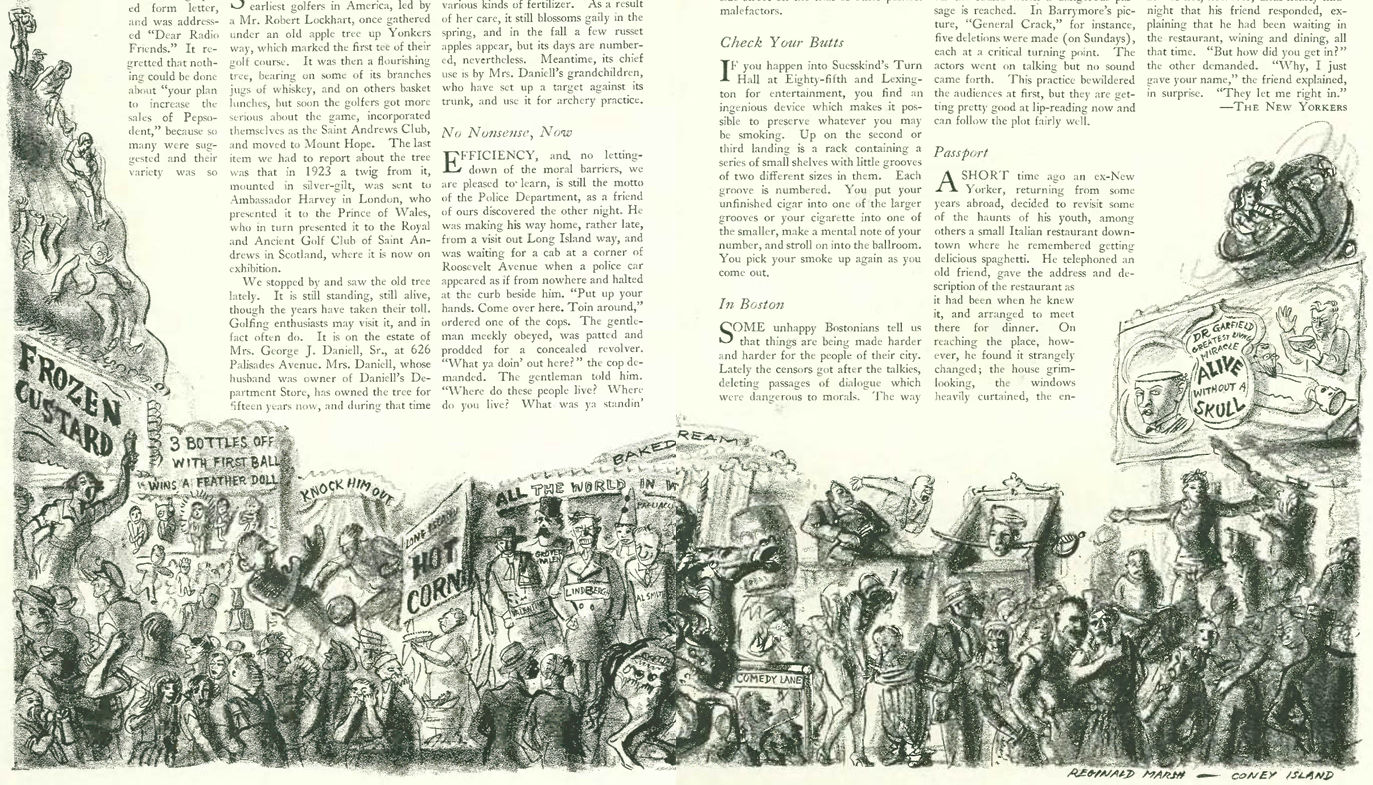
Along the bottom of “The Talk of the Town,” a Reginald Marsh interpretation of Coney Island fun and games…
* * *
Still the Same
Lois Long, who painted a picture of Jazz Age nightlife like no other in her “Tables for Two” column, teased her readers by disguising her identity, often claiming she was a frumpy old lady. With her “Tables” column now on hiatus, the fashionable and young Long maintained her pose, referring to herself as an “old war horse” in her fashion column “On and Off the Avenue.”
Problems of the Rich
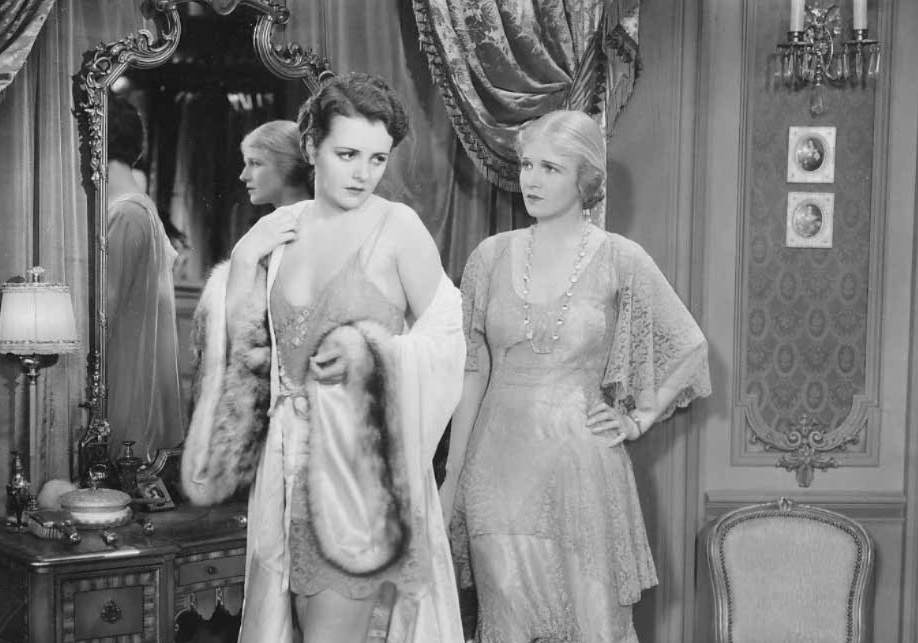
John Mosher reviewed the 1930 American Pre-Code comedy Holiday, which told the story of a young man torn between his wild lifestyle and the tradition of his wealthy fiancée’s family. Films that explored the “problems” of the rich seemed particularly popular in the Depression years…
POOR LITTLE RICH GIRLS…Mary Astor and Ann Harding in Holiday. (IMDB)
* * *
From Our Advertisers
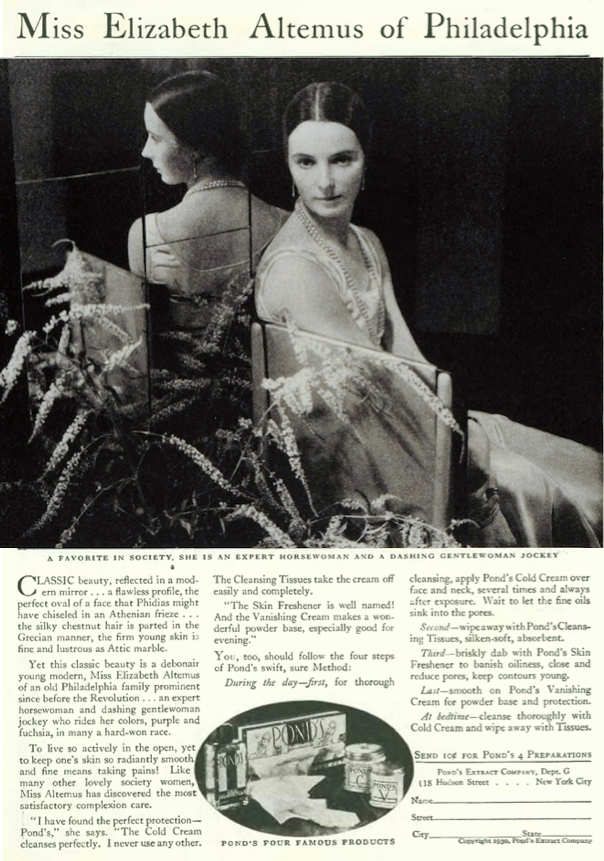
The makers of Pond’s Cold Cream continued its campaign of endorsements by society women, including Philadelphia socialite, philanthropist and champion horsewoman Elizabeth Altemus…
Altemus (1906-1988) was a prominent owner/breeder of Thoroughbred racehorses for more than 50 years. Her first marriage was to Jock Whitney, U.S. Ambassador to the United Kingdom, publisher of the New York Herald Tribune, and president of the Museum of Modern Art. By the looks of this 1937 portrait of Altemus, the cold cream certainly didn’t do her any harm…
Mary Elizabeth Altemus Whitney in 1937. (geni.com)
…speaking of cold cream, when Kleenex was introduced in the early 1920s, it was marketed solely as a hygienic way to remove cold cream. It wasn’t until the 1930s that the makers of Kleenex began to suggest it could also be used as a tissue in place of a handkerchief. Of course it was also a great way to dramatically expand consumption of its brand, and help usher in a new age of disposable products…
…as the Depression deepened, ads for automobiles began to change with the times, most manufacturers emphasizing the affordability of their cars over performance or prestige, as this sad little ad from Packard attested….
…in three consecutive issues (June 5, 12 and 19) Peter Arno featured the same drawing with a different caption that gave readers a very brief courtship story…
…Alan Dunn offered a glimpse of life among the newsboys…
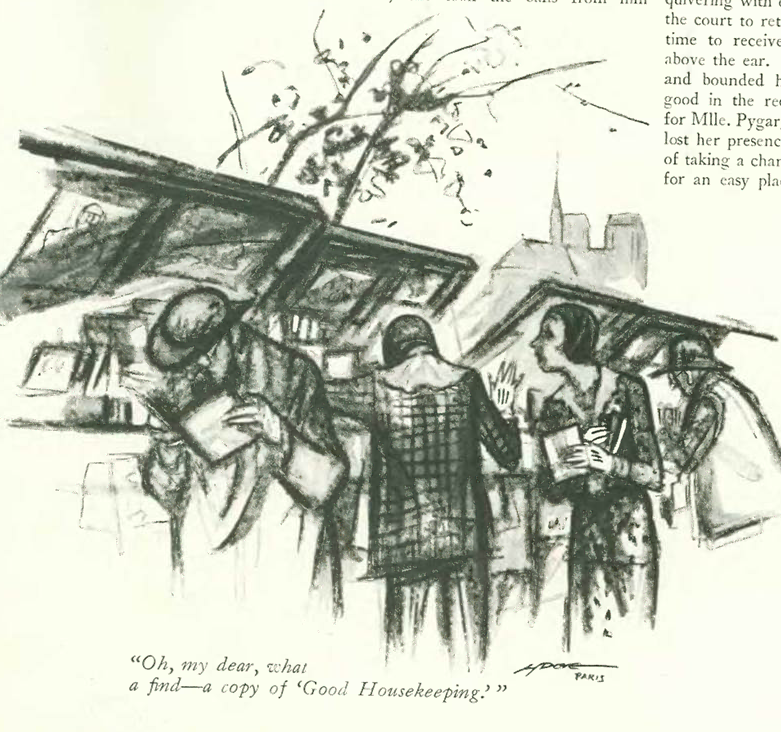
…Leonard Dove found Americans browsing newsstands along the Seine…
…Helen Hokinson looked in on an existential crisis…
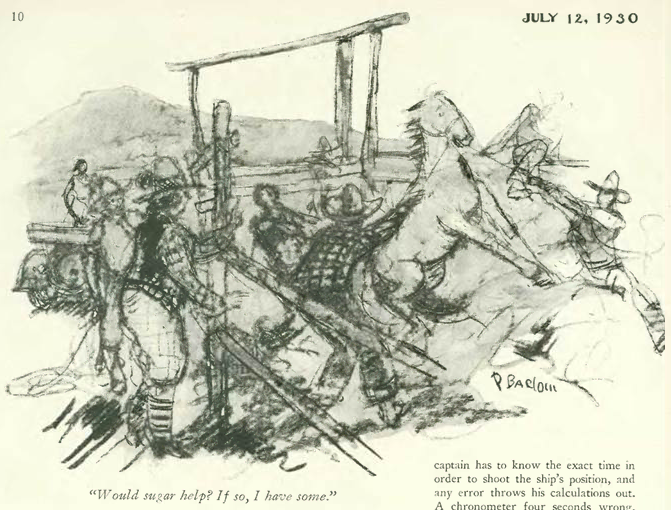
…Perry Barlow was Out West at a dude ranch…
…Barbara Shermund eavesdropped on a couple of debs…
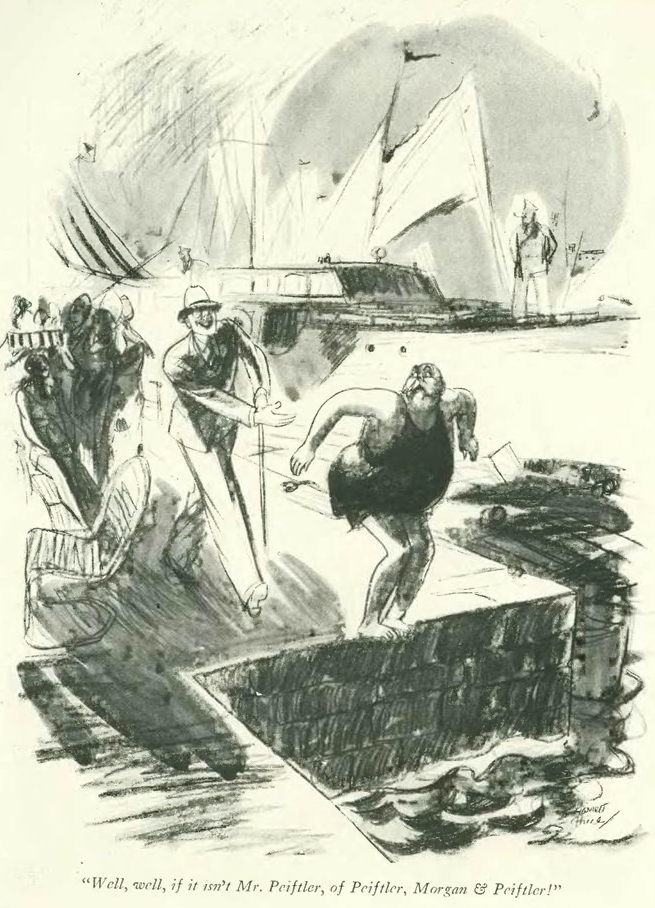
…Garrett Price gave us an awkward encounter among the yachting crowd…
…and finally William Crawford Galbraith, and a case of domesticus interruptus…
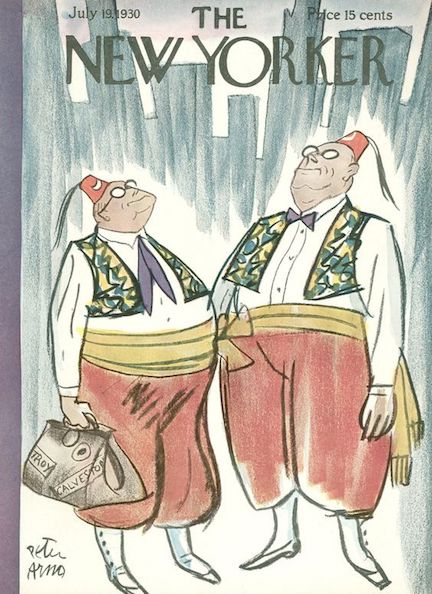
The July 5, 1930 New Yorker made a subtle nod to the Fourth of July holiday with this cover by Julian De Miskey. The title images above are of actress Alice White and child actor Jackie Coogan getting into the Independence Day spirit in the 1930s.
July 5, 1930 cover by Julian De Miskey.
On Solid Ground
With massive skyscrapers going up all over the city, some New Yorkers apparently feared that the weight of those buildings would cause the earth’s surface to crack. “The Talk of the Town” offered some factual information to allay those fears:
Not guaranteeing the science on this, but here’s an image I gleaned from Reddit…
Dark gray lines are fault lines (why the brown soil drops in those places). The gray areas are bedrock known as Manhattan Schist, which one can see above ground in Central Park. The reddish brown at lower right is marble. The green area is either gneiss or sill rock.
* * *
War and Apple Pie
E.B. White had some fun at the expense of “Major” Frank Pease, president of the Hollywood Technical Directors Institute, an anti-communist activist organization. Despite the title of his organization, no film director had ever heard of Pease until he began issuing press statements labeling the 1930 film All Quiet on the Western Front as anti-American and anti-military. White responded:
MINOR MAJOR…”Major” Frank Pease, left, thought the depiction of the horrors of war in All Quiet on the Western Front was anti-American. Pease himself never rose above the rank of private, but claimed he was a retired major in the U.S. Army. (Wikipedia/IMDB).
In one of my recent posts, The New Yorker’sJohn Mosher reviewed the film, All Quiet on the Western Front.
* * *
Speaking of Un-American
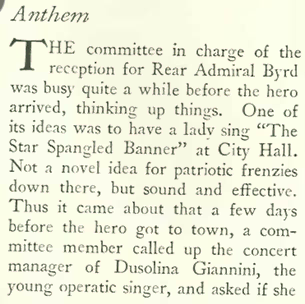
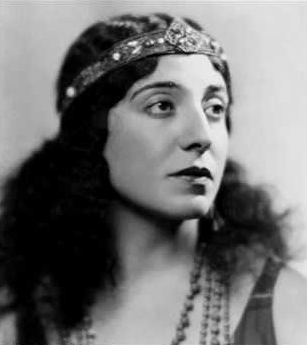
City Hall organizers of a welcome home ceremony for Admiral Richard Byrd — back from his South Pole adventures — arranged to have a woman sing The Star Spangled Banner, but according to “The Talk of the Town,” not just any woman would do…
DISSED…Italian-American soprano Dusolina Giannini was born in Philadelphia, but deemed not American enough to sing at New York’s City Hall for Admiral Richard Byrd. (YouTube)
* * *
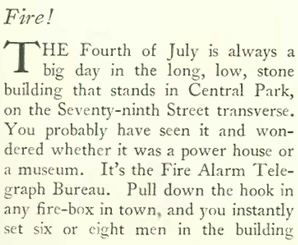
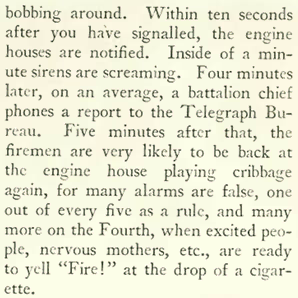
Five Alarm Fireworks
“The Talk of the Town” discussed at some length the challenges July 4 posed to New York’s firefighters. An excerpt:
Also in the “Talk” section, some spot illustrations by Abe Birnbaum, who apparently had returned from a trip to Paris. The first image appeared in the June 28 issue, the second the July 5 issue:
* * *
Just Say No
Helena Huntington Smith turned in a profile on American birth control activist Margaret Sanger (1879-1966). Sanger popularized the term “birth control” and opened the first family planning clinic in the United States. She established several organizations that eventually evolved into the Planned Parenthood Federation of America. The opening paragraphs of Smith’s profile:
Margaret Sanger circa 1930. At right, portrait for the profile by Ralph Barton.
Controversial 89 years ago as well as today, Sanger remains a target of both the right and left, labeled variously as a baby killer and a racist. Sanger was vocal in her opposition to abortion, maintaining that birth control would not only prevent abortions, but would give many women the ability to control family size and end their cycle of poverty. Sanger also spoke out against racism, but the case is more muddled here: She became involved in the eugenics movement through her belief that society needed to limit births by those least able to afford children, including those deemed “unfit” to raise them.
* * *
From Our Advertisers
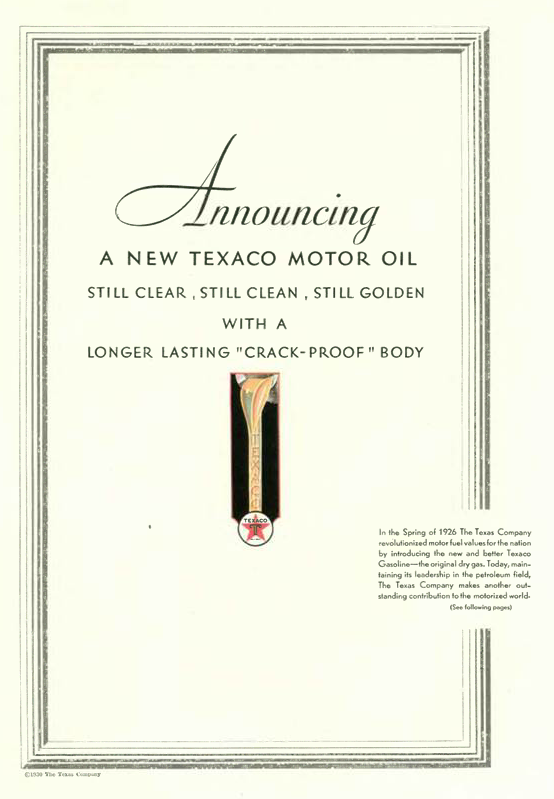
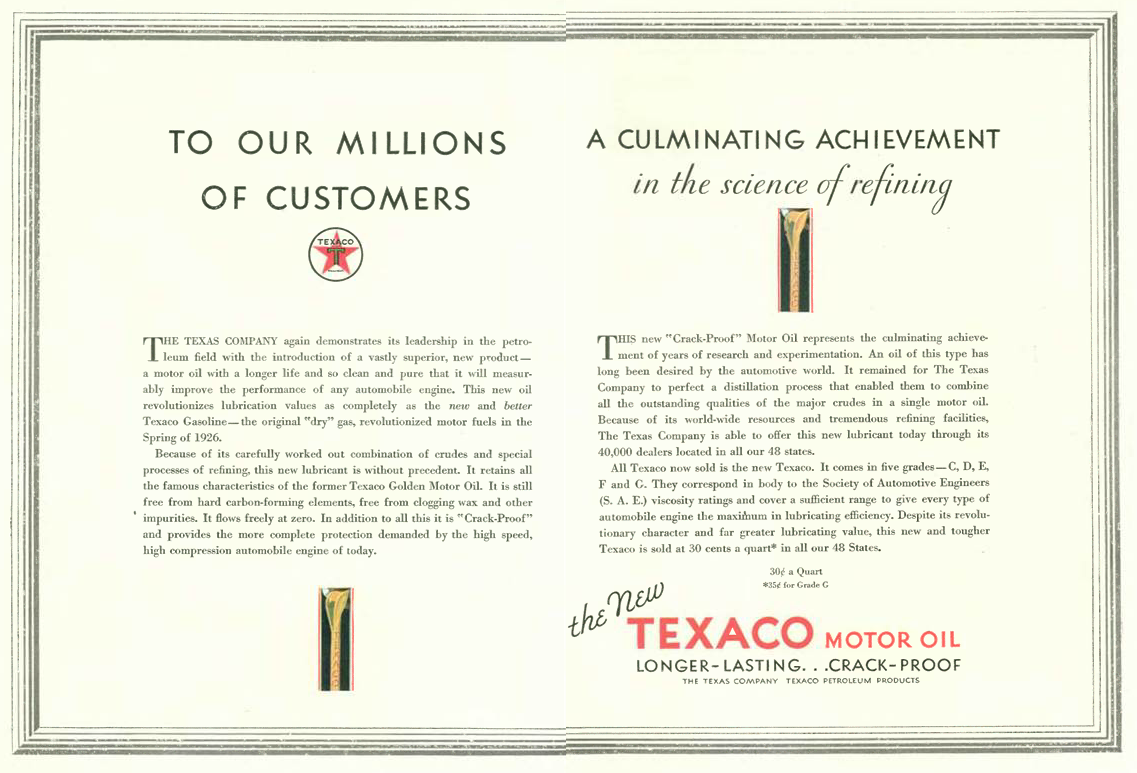
From 1920 to 1930, automobile ownership in America nearly tripled from eight million to 23 million. Along with that growth came the rise of oil giants such as Texaco, which in 1928 became the first U.S. oil company to sell its gasoline nationwide under one single brand name. So they had no problem taking out a three-page ad in the July 5 New Yorker…
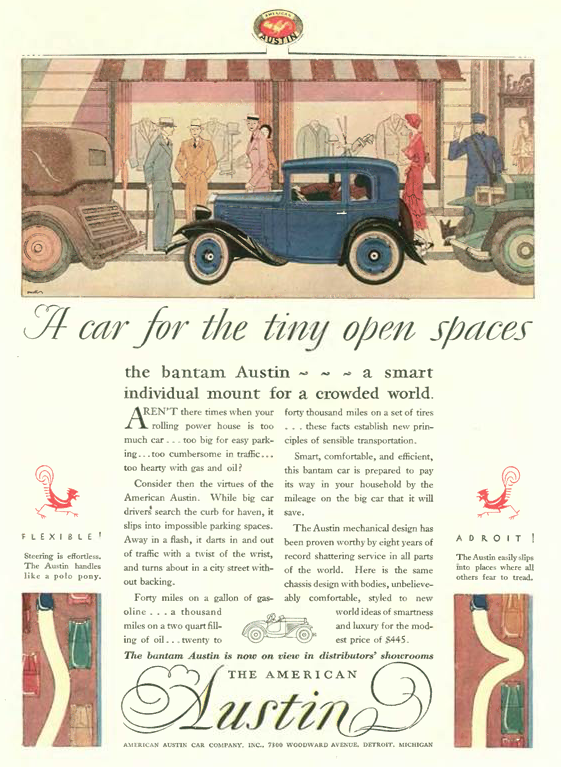
…while Americans were ready to guzzle gas, British automaker Austin touted both fuel economy and compactness in its American entry…
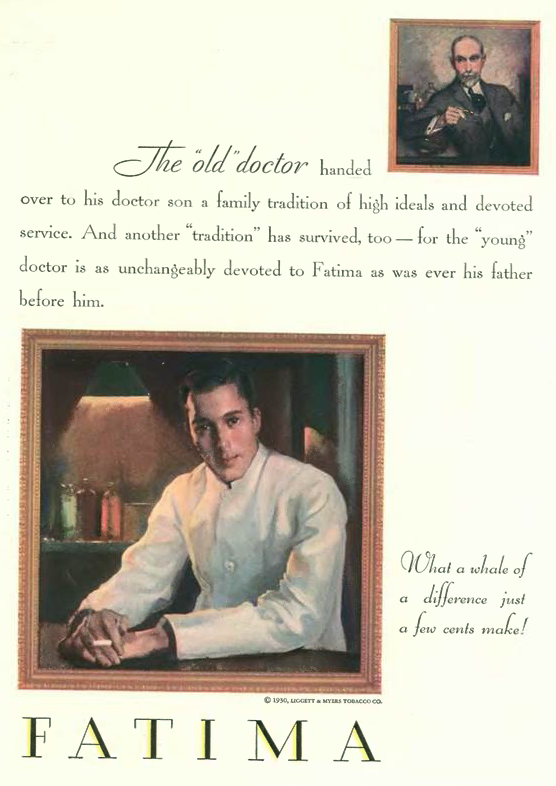
…for several decades in the 20th century tobacco companies employed physicians to promote their deadly products…Fatima was among the first…
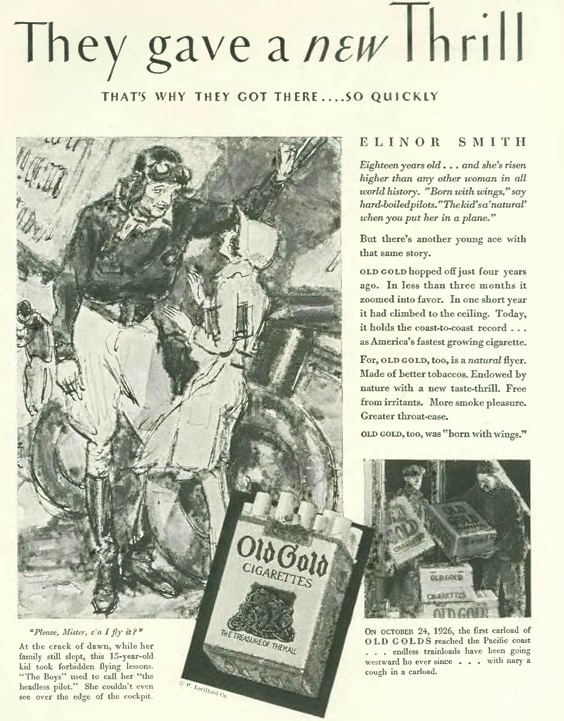
…the makers of Old Gold, however, were pioneers in associating cigarette smoking with sporting activities and tales of derring-do…here the rapid spread of the Old Gold brand across the country is equated to the record-breaking feats of a young female pilot, Elinor Smith…
…I don’t know if Smith herself smoked, but she almost lived 100 years, and flew well into her her 90s…we looked at Smith’s feats in a recent post…
Elinor Smith’s flying career would extend from age 16 to her 90s. In March 1930 she set the women’s world altitude record.
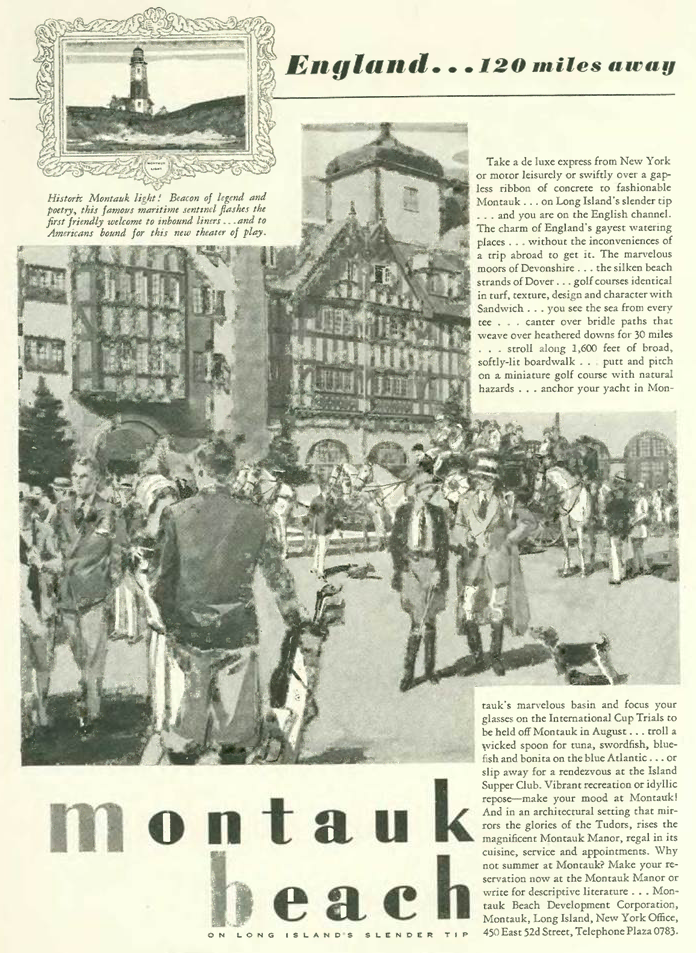
…Carl G. Fisher bought a big chunk of the East End of Long Island in 1926 with the intent of turning it into the “Miami Beach of the North.” Fisher would build more than two dozen Tudor-style buildings at Montauk before losing his fortune in the 1929 market crash. This ad appears to be an attempt to draw renewed interest in the development, appealing to Anglophilic pretensions that sometimes afflicted New Yorker readers…
…speaking of Anglophilia, a cartoon by Denys Wortman offered an example…
…Barbara Shermund examined an aspect of society’s pecking order…
…and referenced a gay stereotype…
…Garrett Price looked in on a misunderstanding at the museum…
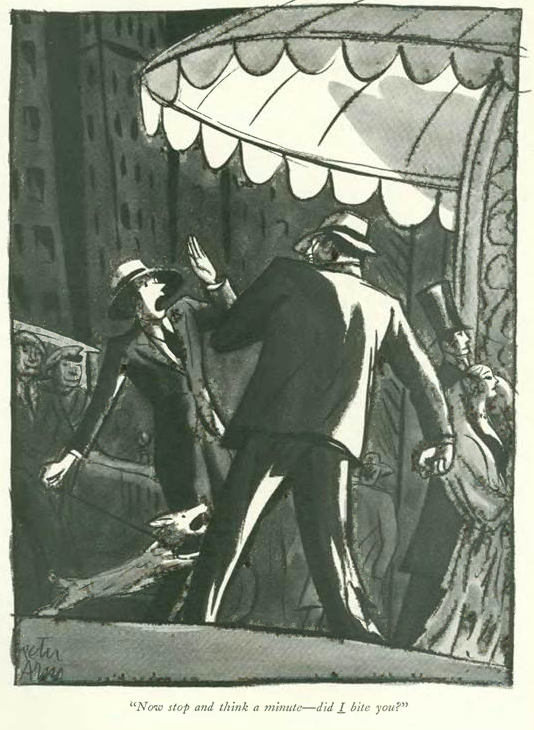
…Peter Arno discovered that a bite is worse than a bark in this case…
…and Leonard Dove gave us a double entendre courtesy of a mild-mannered building supervisor seeking to remove a draft block (or bung) from a chimney flue…
Tens of thousands of commuters daily cross the George Washington Bridge, but in the din of modern commuting few give nary a thought to a span that was once considered a modern marvel.
May 3, 1930 cover by Rose Silver.
Twice as long as any previous suspension bridge when it opened in 1931, the George Washington Bridge’s main span of 3,500 feet (1,100 m) would be the world’s longest until it was surpassed by San Francisco’s Golden Gate Bridge in 1937. The New Yorker’s “Talk of the Town” (entry most likely by E.B. White) checked on the bridge’s progress for the May 3 issue:
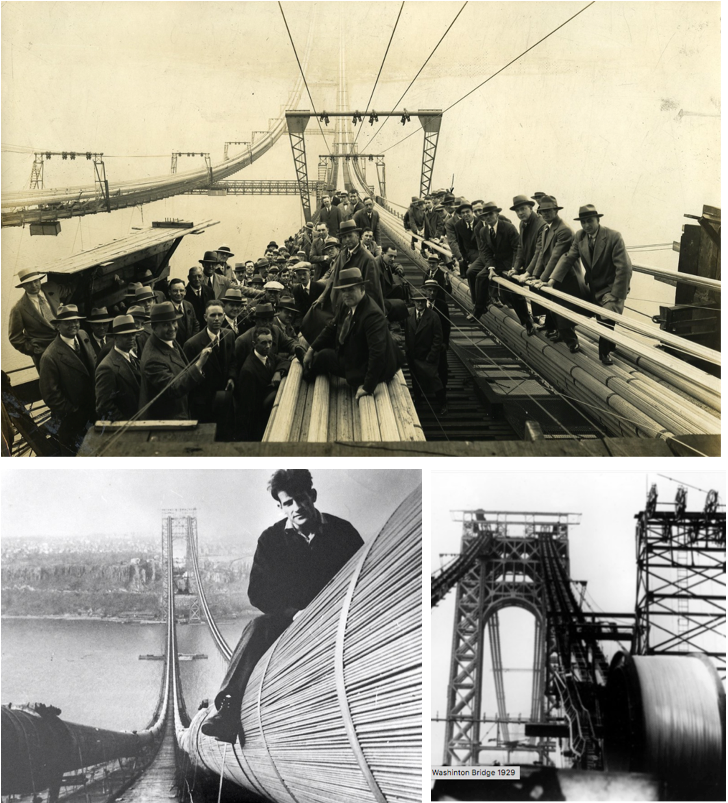
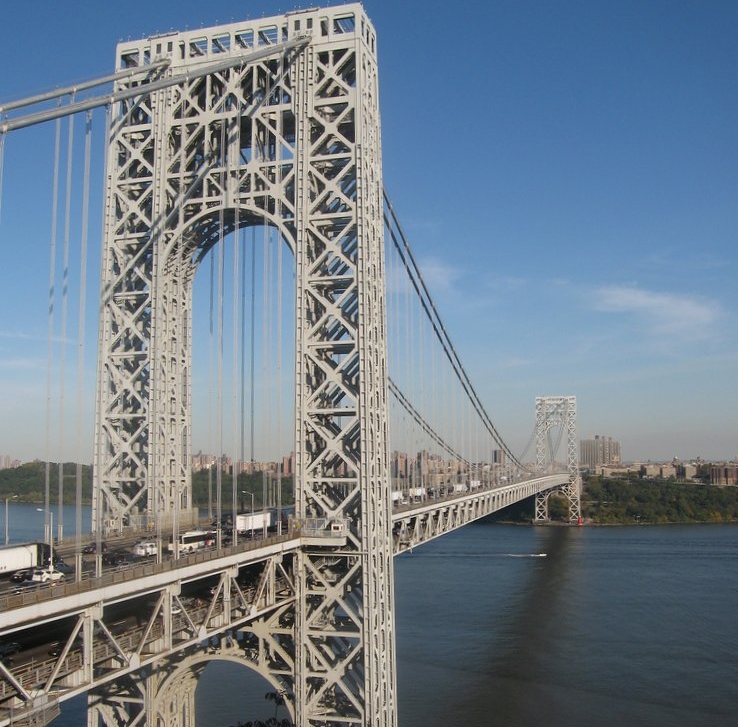
MEN OF STEEL…Some 107,000 miles of wire were used in cables made by John A. Roebling’s Sons Company for the George Washington Bridge — the same firm also supplied wire for the Brooklyn Bridge 60 years earlier (John Roebling and his son, Washington, also designed and built the Brooklyn Bridge). Clockwise, from top, employees of John A. Roebling’s Sons pose atop cable bundles; bottom right, the bridge’s four main cables were each composed of a single strand carried back and forth across the river 61 times. Each strand itself is a bundle of 434 individual wires; bottom left, worker poses atop completed cable. (Flickr/Pinterest)BY ANY OTHER NAME…Known as the Hudson River Bridge during its construction, the George Washington Bridge opened to traffic in 1931. During the first full year of operation in 1932 more than 5.5 million vehicles used the original six-lane roadway — today it is the world’s busiest motor vehicle bridge, carrying more than 100 million vehicles per year. Although the steel towers are iconic today, the original plan called for them to be clad in stone. (Wikipedia)
* * *
A Cabin in the Sky
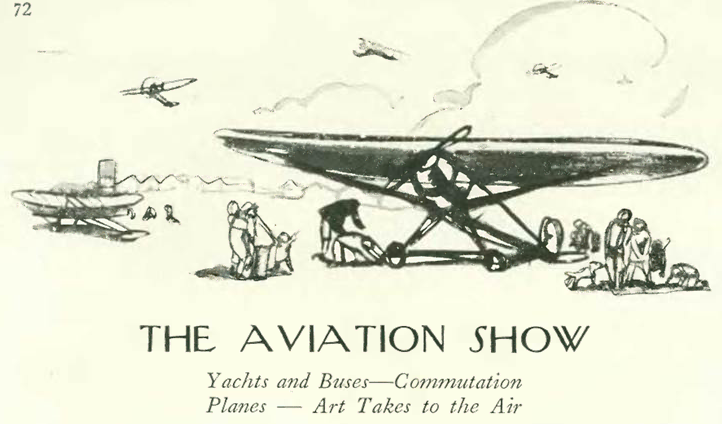
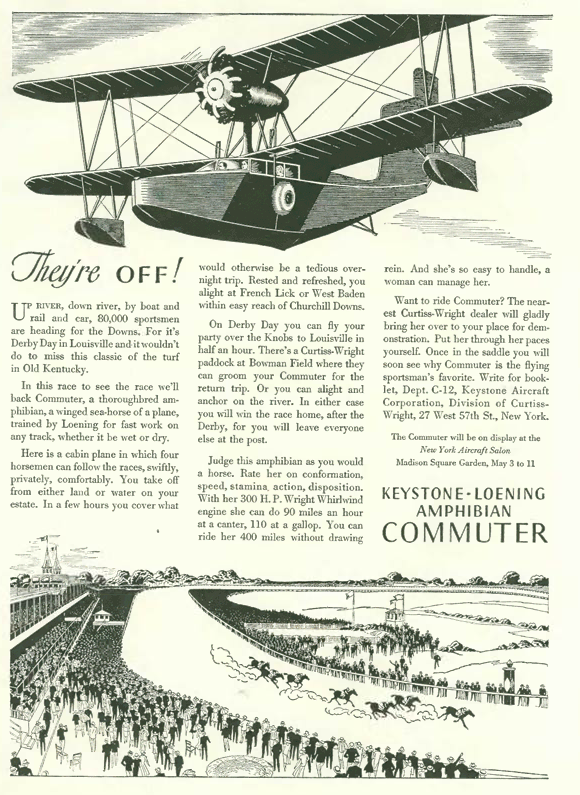
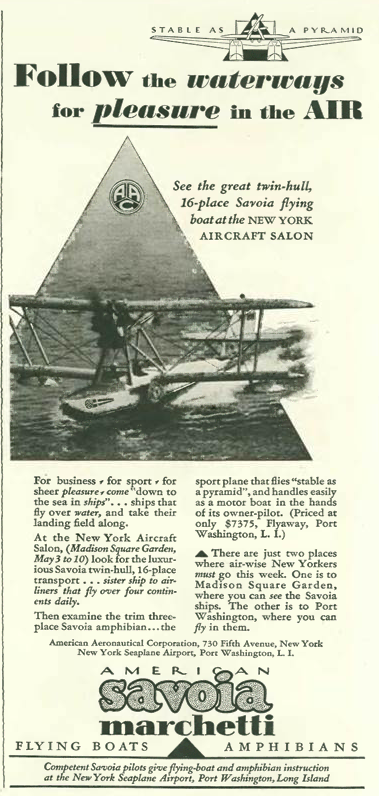
Other signs of modern life were being seen in Midtown, where an “Aircraft Salon” hosted by the Aeronautical Chamber of Commerce was taking place at Madison Square Garden.
Nicholas Trott was on hand to take in the exhibits, noting that advances in aviation included the use of metal bodies (instead of fortified cloth) and greater attention to interior decoration:
SIGNED, SEALED, DELIVERED…An attendee of the New York Aircraft Salon received a special postal stamp, and an autograph from aviator Cy Caldwell, at the Madison Square Garden show. (Joe Krantz)
Trott noted that designs of passenger compartments, still in their infancy, suggested something between automobile and nautical motifs:
SORRY, NO HEADPHONES…Clockwise, from top left, a Curtiss Condor 18 and its interior appointments; a Fokker Trimotor featured dining in its cabin. As peaceful as the scene appears, the noise from the motors must have been unbearable. (Wikipedia/dutch-aviation.nl)
Trott also commented on the debate surrounding metal vs. fabric in the construction of airplanes. Before 1930 most planes were constructed of wood covered with fabric (which were much lighter than metal craft). Although as early as 1920 the National Advisory Committee for Aeronautics declared metal to be superior to wood, only five percent of aircraft in 1930 were of all-metal construction.
DON’T CALL ME WOODY…This eight-passenger Consolidated Fleetster was a rare example of metal construction in early 1930. The wings, however, were still fashioned from wood. (Aeronautical Chamber of Commerce 1931 Aircraft Yearbook)
* * *
Road to Nowhere
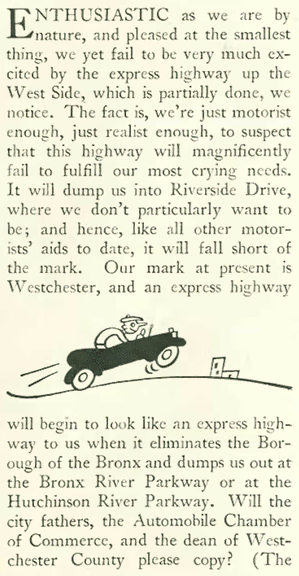
The New Yorker’s enthusiasm for modern marvels did not extend to the West Side Highway, a project that would extend from the late 1920s to the early 1950s. Here is E.B. White’s take on the opening of the highway’s first section:
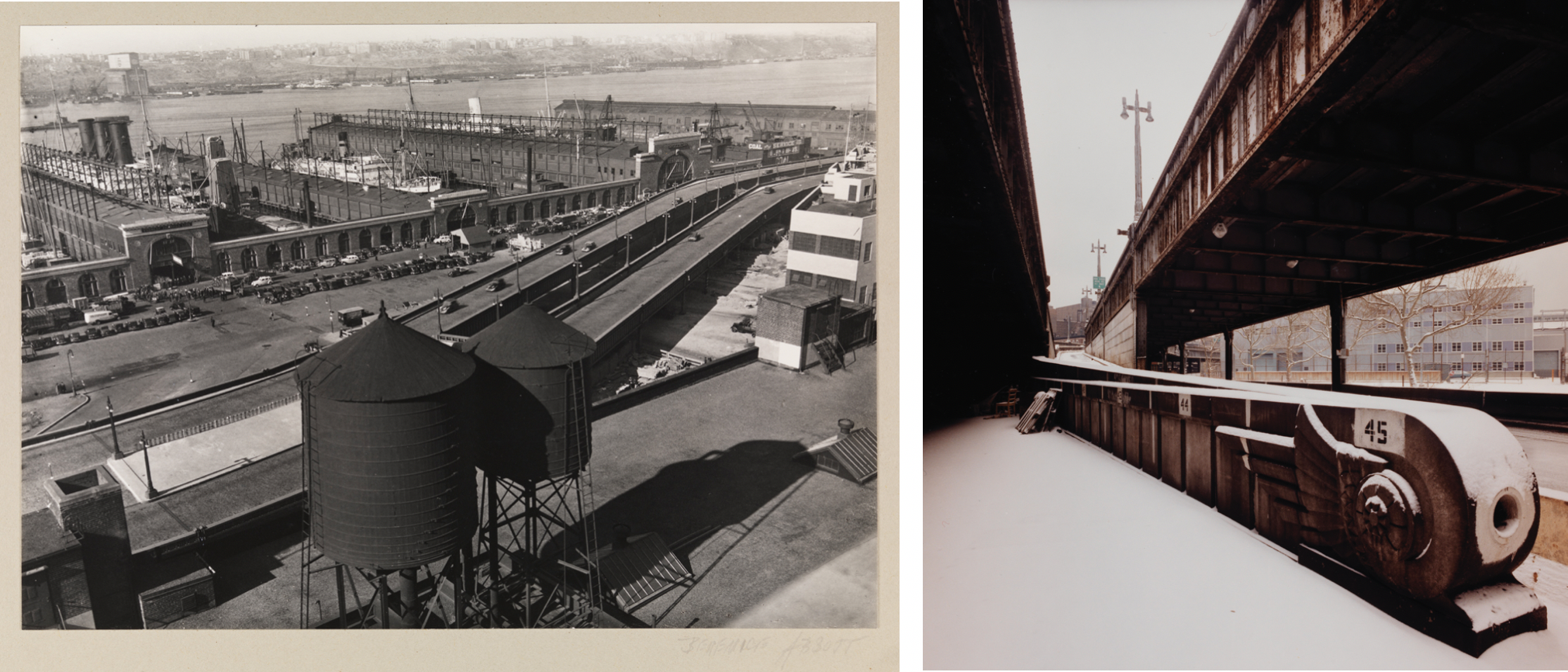
White’s observations were somewhat prescient — constructed in tight confines, the road’s on-ramps proved too narrow and the turns too tight for use by large trucks. The roadway also lacked proper maintenance, and just two decades after it was completed a section of the highway collapsed under the weight of an asphalt-laden truck. The roadway was demolished between 1977 and 1989. Read more here about the West Side Highway’s surprising history at the Museum of the City of New York.
THE ROAD NOT TAKEN, TAKEN…Left, West Side Express Highway and Piers 95-98, photographed by Berenice Abbott from 619 West 54th Street on Nov. 10, 1977; West Side Highway Ramp at 23rd Street reveals Art Deco ornamentation. Detail of photo by Jan Staller, 1978. (Museum of the City of New York)
* * *
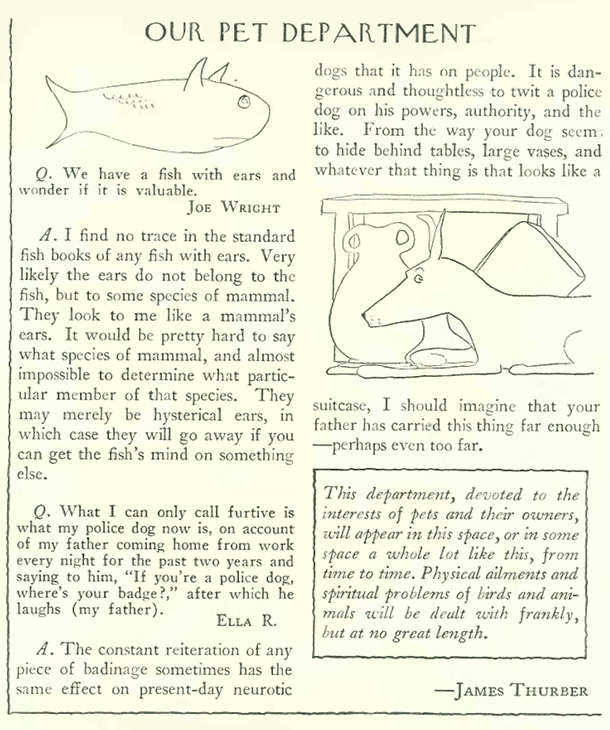
For Pet Lovers
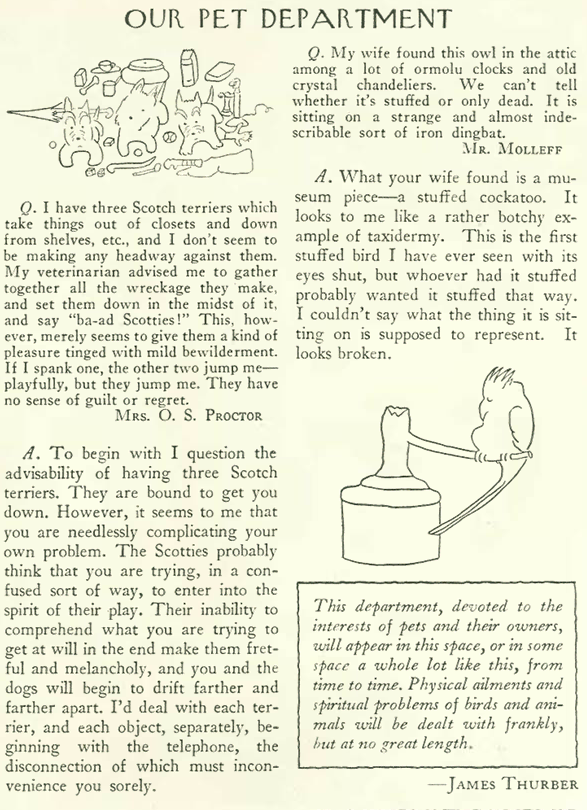
Our latest installment of James Thurber’s “Our Pet Department” column…
* * *
Hate Couture
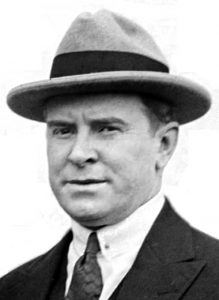
The New Yorker’s Paris correspondent, Janet Flanner, using the pen name “Hippolyta,” contributed this profile of François Coty (1874-1934), a French perfumer and businessman. Flanner’s profile (the introduction included below) described Coty’s rags-to-riches rise in the perfume industry, and touched on his life as a sometime journalist and politician.
What doesn’t come across in the profile is Coty’s extreme right-wing stance on politics and his virulent anti-Semitism, which was often expressed in his newspaper, Figaro. Three years after Flanner’s profile Coty would co-found Solidarité Française, a fascist, paramilitary organization, and a year after that he would be dead of an aneurysm.
François Coty circa 1930. (aperfumeblog.com)
* * *
From Our Advertisers
The New Yorker’s bottom line reaped benefits from the big aviation show at Madison Square Garden…
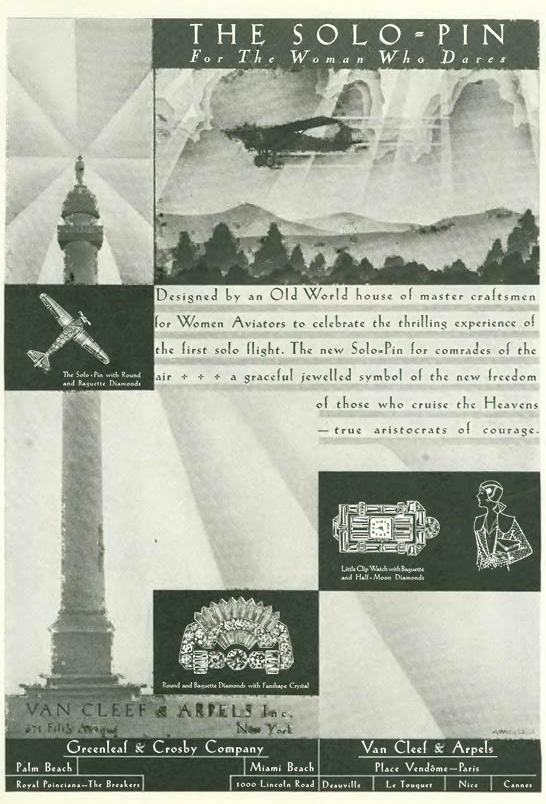
…and even if you weren’t selling airplanes or flying lessons, you could still get in on the action…
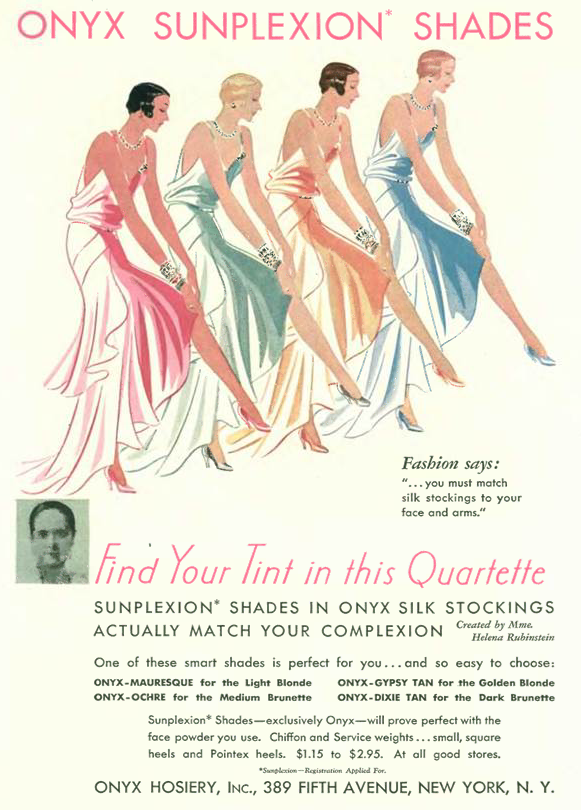
…also from the fashion world, this colorful entry from Onyx Hosiery…
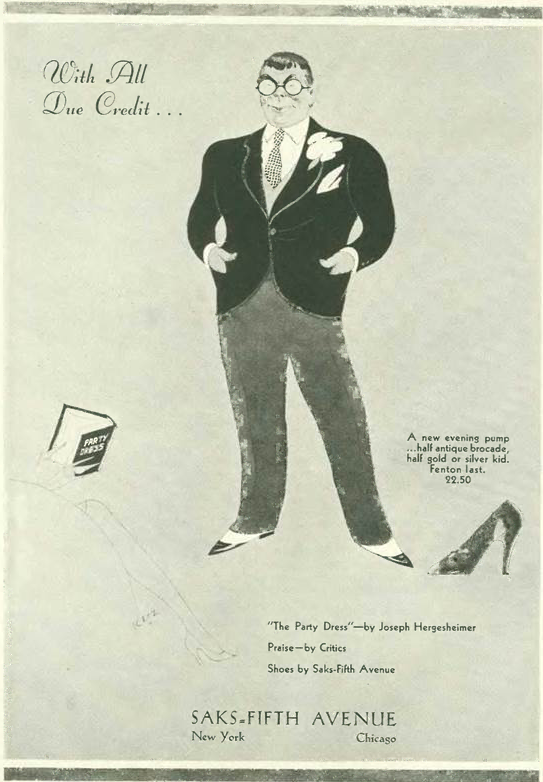
…and this weird ad from Saks, advertising shoes and a party dress but dominated by a caricature of designer Joseph Hergesheimer…
…on to our cartoons…Helen Hokinson paid a visit to the aviation show…
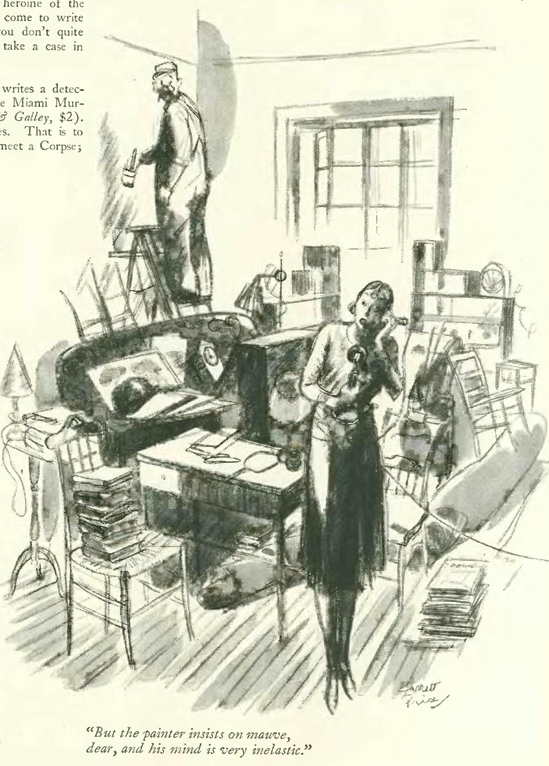
…on the domestic front, Garrett Price examined the challenges of home decor…
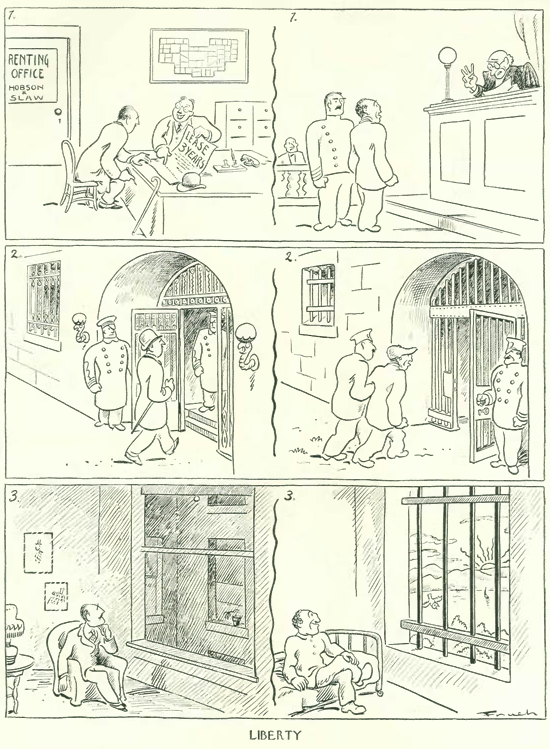
…Al Frueh offered an ironic twist on a room with a view…
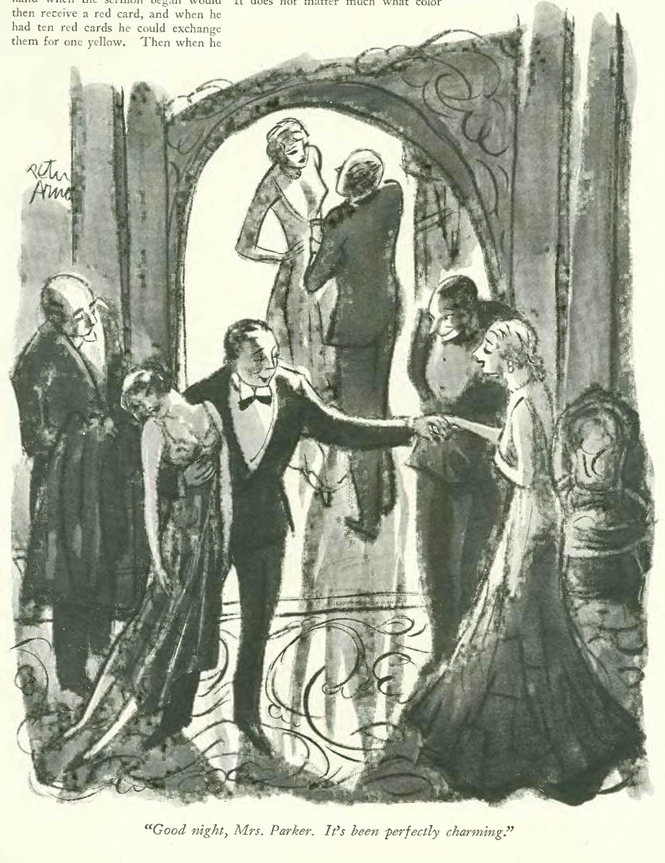
…Peter Arno once again found humor in the partying life…
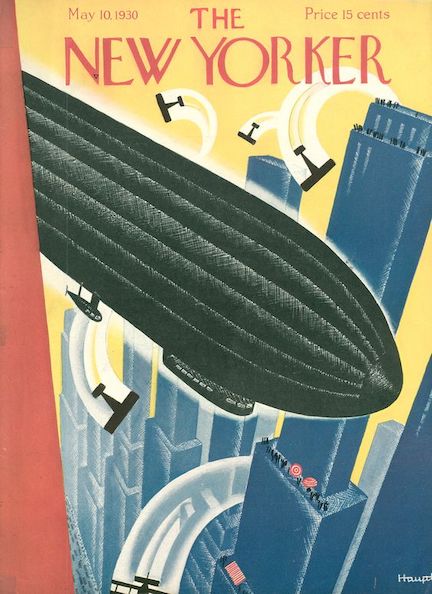
It’s easy to get into the weeds while digging through The New Yorker archives, as it is filled with a richly interconnected cast of characters whose lives and work still resonate with us today.
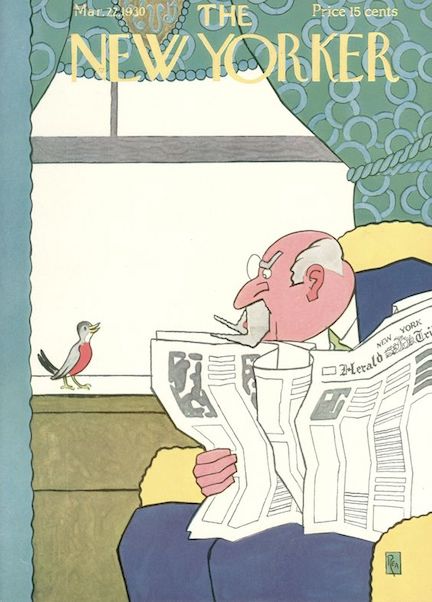
March 15, 1930 cover by Rose Silver. (Please see note on this artist at the end of this blog entry)
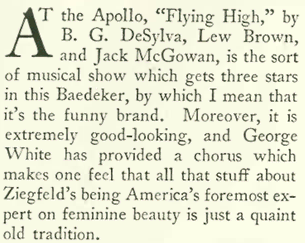
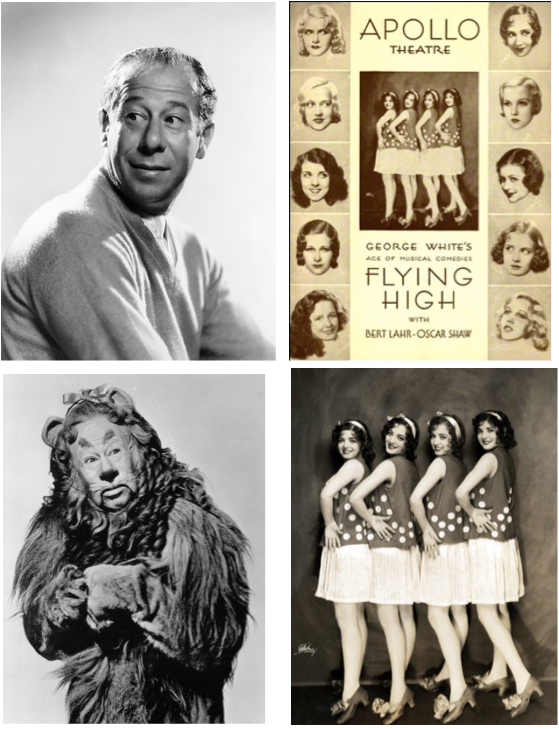
A case in point is Bert Lahr (1895-1967), who at age 15 dropped out of high school and joined the vaudeville circuit, working his way up to top billing in Broadway musical comedies including 1930’s Flying High, which received an enthusiastic welcome from New Yorker critic Charles Brackett…
…Brackett enjoyed the “feminine beauty” offered by a George White chorus that included the “Gale Quadruplets,” described in the Playbill as “The only Quadruplets in the world appearing on the stage”…
…although in fact the Gale Quadruplets were actually two sets of twins: June and Jane, and Jean and Joan (real names were Doris, Lenore, Helen and Lorraine Gilmartin). But I digress.
What really caught Brackett’s eye were the antics of Bert Lahr:
ONLY ONE BERT…Clockwise, from top left, publicity photo of Bert Lahr from the 1931 film version of Flying High; cover of the Apollo Theatre Playbill; the Gale Quadruplets, circa 1930; Lahr as the Cowardly Lion in the 1939 film The Wizard of Oz. (Everett/Playbill/Pinterest/Wikiwand)
The Gale Quadruplets are long forgotten, but the work of Bert Lahr still lives on thanks to his role as the Cowardly Lion in The Wizard of Oz (a film, incidentally, that was panned in 1939 by New Yorker critic Russell Maloney, who called it “a stinkeroo” that showed “no trace of imagination, good taste, or ingenuity”).
Lahr also connects us to today’s New Yorker magazine, where his son, John Lahr, has been a staff writer and critic since 1992. Lahr has written a number of stage adaptions (he won a Tony award in 2002, the first drama critic to do so) as well as nearly twenty books, including a 2017 biography of his father, Notes on a Cowardly Lion: The Biography of Bert Lahr.
DRAMATIC DUO…John Lahr with his father, Bert, backstage at the Belasco Theatre in the late 1940s; John Lahr today. (NY Times/Amazon)
* * *
Greener Pastures
We remain on Broadway with another writer who was deeply connected to The New Yorker’s origins. Marc Connelly (1890-1980) was a playwright, director, producer and performer who collaborated with George S. Kaufman on five Broadway comedies in the 1920s. Connelly was also a founding member of the Algonquin Round Table, around which orbited a number of writers, critics and assorted wits who would help bring The New Yorker to life in 1925. Connelly was listed as an advisory editor on the masthead of the very first issue:
Connelly’s play, The Green Pastures (based on stories from the Old Testament), had just opened on Broadway, drawing much acclaim for both Connelly and actor Richard B. Harrison (1864-1935). “The Talk of the Town” looked in on the playwright and the actor:
DID YOU HEAR SOMETHING?...Richard B. Harrison (left) and unidentified actor in 1930’s The Green Pastures. At right, Wesley Hill as the Angel Gabriel. (blackarchives.org/ngv.vic.gov.au)FINAL BOW…Richard B. Harrison in a 1930 publicity photo for the Broadway play, The Green Pastures. At right, Harrison on the cover of the March 4, 1935, Time magazine. He died of heart failure ten days after appearing on the cover. (Henrietta Alice Metcalf Collection/Time)
Connelly would receive the 1930 Pulitzer Prize for Drama for The Green Pastures. And nearly 60 years later he would be featured in a 1987 documentary about the Algonquin Round Table (The Ten-Year Lunch) as the Table’s last survivor. It would win an Academy Award for Best Documentary Feature. During his long career Connelly would act in 21 movies, including the 1960 romantic comedy Tall Story with Jane Fonda and Anthony Perkins. He also did some TV, included a stint from 1962 to 1964 as Judge Rampell in The Defenders.
HE COULD ACT TOO…Clockwise, from top left, Marc Connelly in a 1937 photo by Carl Van Vechten; a page from the Playbill for The Green Pastures; college student June Ryder (Jane Fonda) collides on campus with Professor Charles Osmond (Marc Connelly) in the 1960 romantic comedy Tall Story. (Wikipedia/Playbill/ridesabike.com)
Also in the “Talk of the Town” section of the March 15 issue was James Thurber’s latest installment of pet advice:
* * *
Lipstick’s Lamentations
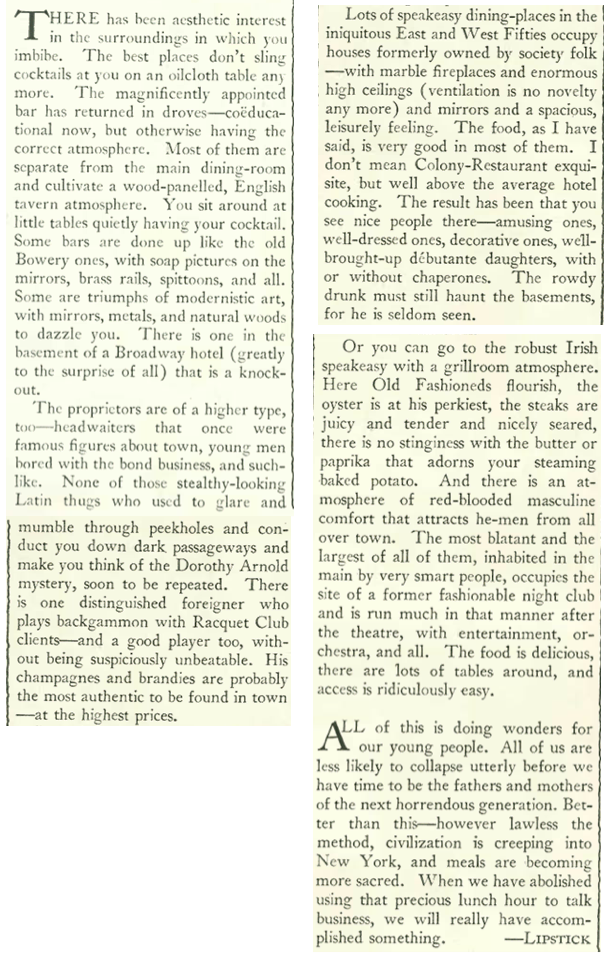
Once the place to read about wild speakeasies and other nighttime diversions of the Roaring Twenties, Lois Long’s “Tables for Two” column had quickly become anachronistic in the Depression years. Although the decade was still young, Long reminisced about her column’s “golden days” as if they had existed in some distant time, and lamented the state of the speakeasy; once a place for cheap and sordid frivolity, it had become staid and even snobbish…
THAT WAS THEN…Lois Long lamented the state of the speakeasy in 1930. Once sordid and given to frivolity, it had become a rather staid institution. (prohibition.themobmuseum.org/Time-Life)
…and Long described some of these new upscale speakeasies, where the oilcloth had been replaced with fine linen…
* * *
Ozark Oeuvre
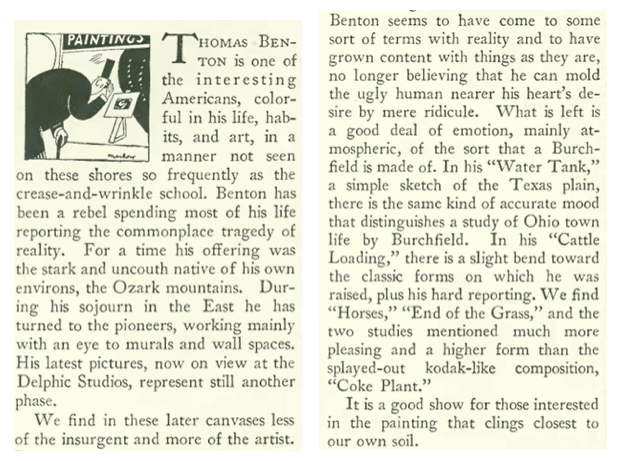
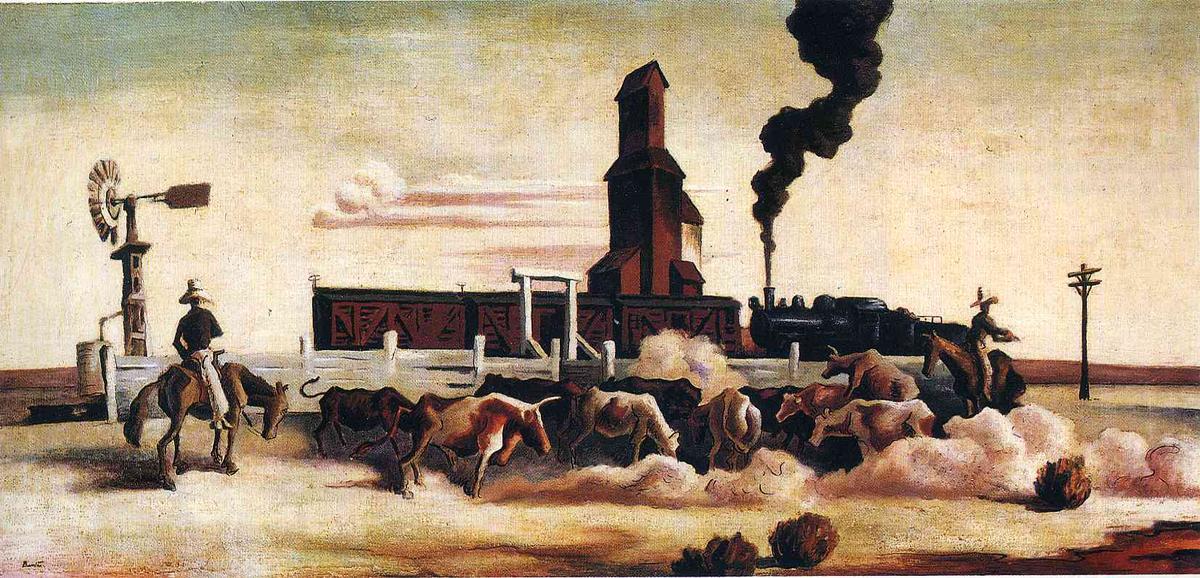
New Yorker art critic Murdock Pemberton, in his ongoing search for America’s best artists, took another look at that once “uncouth native” from the Ozarks, Thomas Hart Benton…
PAINTING FROM THE SOIL…Cattle Loading, oil on canvas, by Thomas Hart Benton, 1930. It was one of the works viewed by critic Murdock Pemberton at the Delphic Studios in New York. (wahooart.com)
* * *
From Our Advertisers
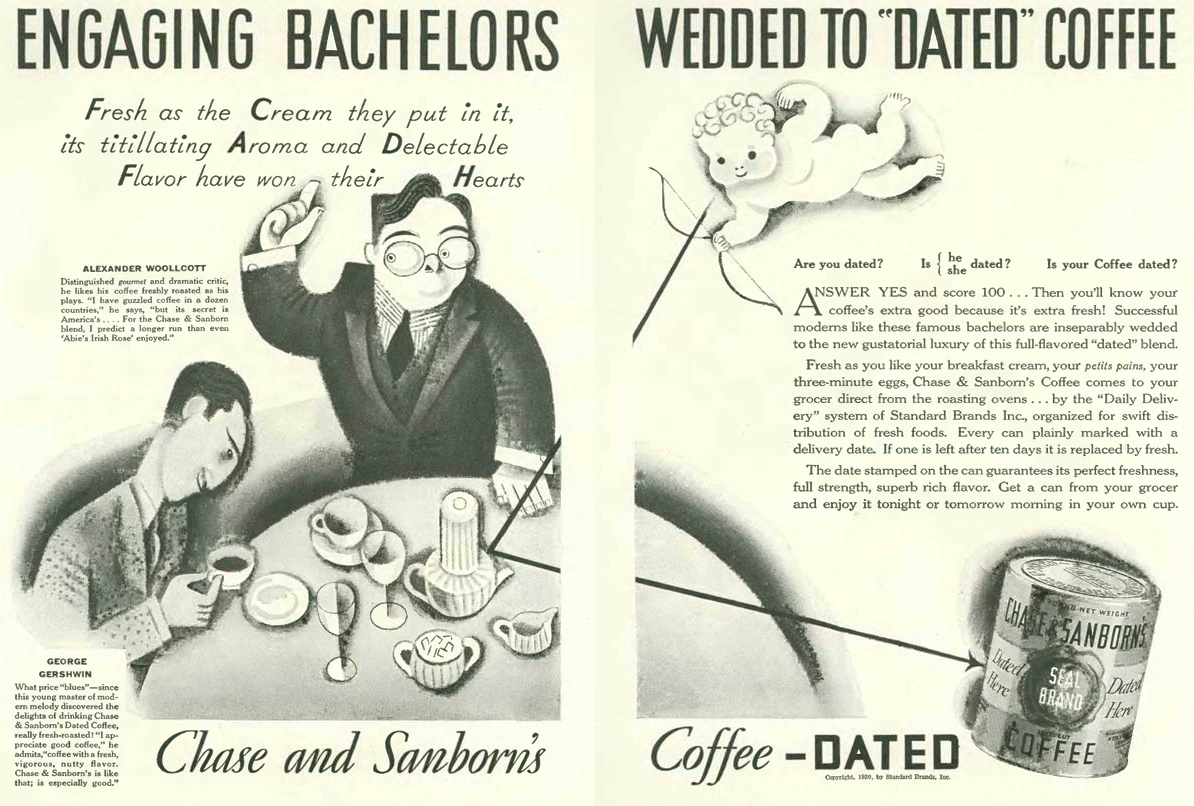
We start off with a couple of two-page ads, the first featuring caricatures of George Gershwin and Alexander Woollcott as rendered by the great Miguel Covarrubias…
click image to enlarge
…and then we have this ad from the makers of Lux Toilet Soap, who must have had a bottomless advertising budget given all the splashy ads and celebrity endorsements…
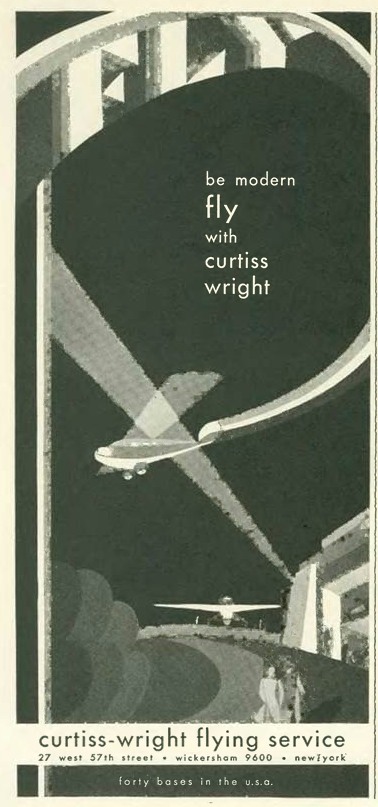
…in the ads we also find clashes between the old and new…the new being this art deco-styled appeal for the newest form of transportation…
…and the old, the makers of the luxury car Pierce-Arrow, still harking back to its patrician origins (“The Tyranny of Tradition”)…the firm would not survive the lean years of the 1930s…
…and once again a colorful ad from Church using snob appeal to sell something as pedestrian as a toilet seat…”Toilet Seats For Better Bathrooms”…
…on to our cartoons, we have a voyeur’s perspective courtesy Helen Hokinson…
…an exploration of the generation gap by Alice Harvey…
…and this terrifically quaint encounter, rendered by Perry Barlow…
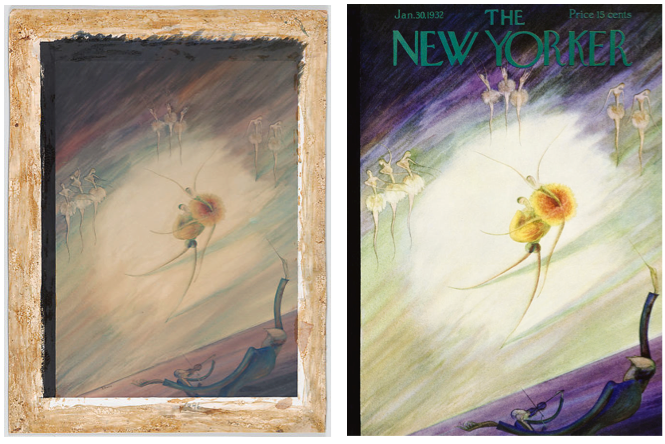
…and before we go, a note about this week’s cover artist, Lisa Rhana, a.k.a. Rose Silver (1902-1985) who illustrated several New Yorker covers in the 1920s and early 30s. Her work is included in the permanent collections at the Whitney Museum, the Museum of the City of New York, and The Metropolitan Museum of Art, which holds this watercolor (left) that graced the cover of the Jan. 30, 1932 issue:
On March 1, 1930, the Empire State Building was still just a bunch of sketches and blueprints, as was much of the yet-to-be-built modern cityscape of Manhattan. But as the Depression slowly worked its gnarled fingers into the American landscape, some still dreamed of the sleek, streamlined world to come.
March 1, 1930 cover by Rea Irvin.
The New Yorker’s architecture critic, George S. Chappell, kept readers apprised of changes on the city’s skyline, as well as of the trends in modern design that were being displayed at various exhibitions including one held annually by the city’s Architectural League. Chappell observed:
A GLIMPSE INTO THE FUTURE…Opening pages of the Architectural League’s 45th Annual Exhibition, featuring an image of the Empire State Building. Construction had just begun on the iconic building at the site of the old Waldorf-Astoria Hotel. (mullenbooks.com)
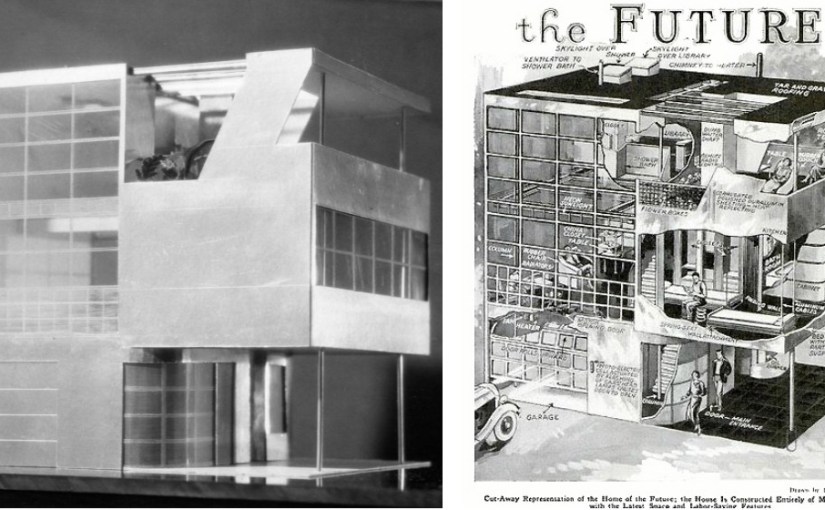
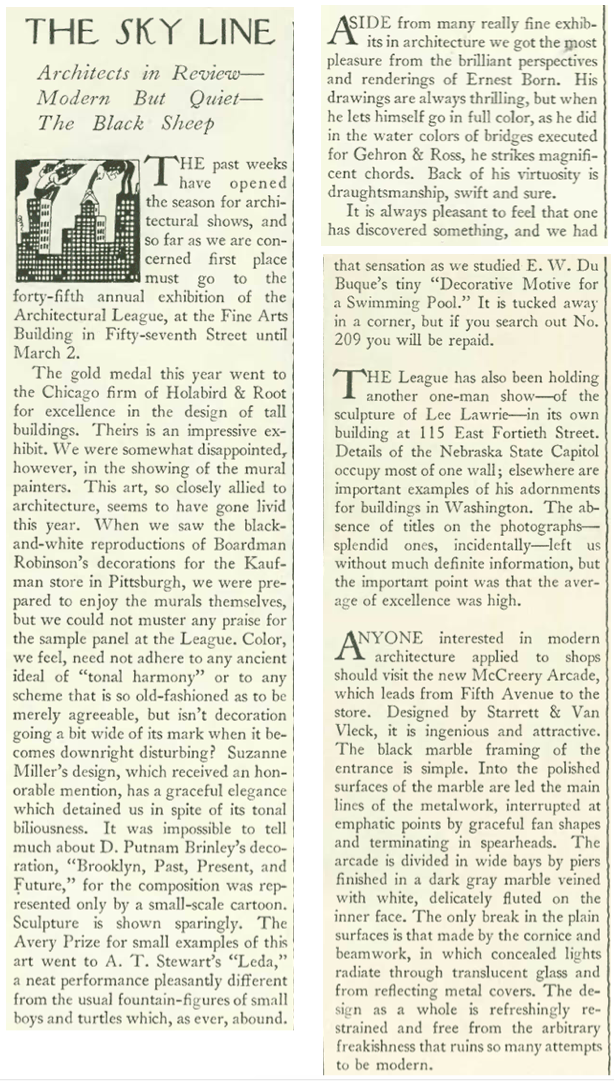
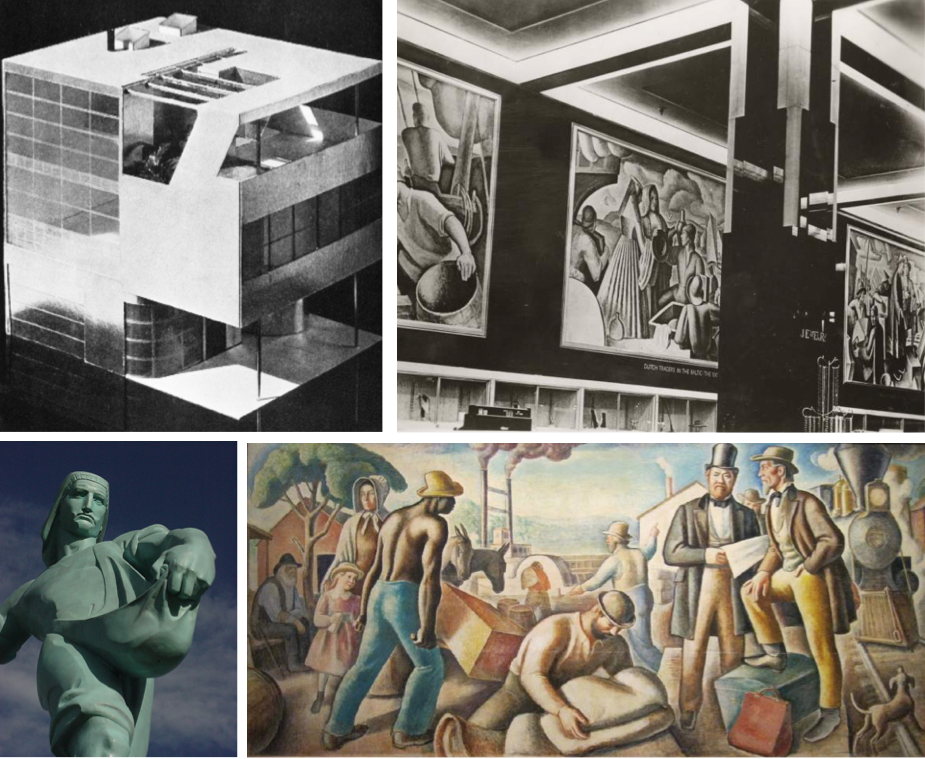
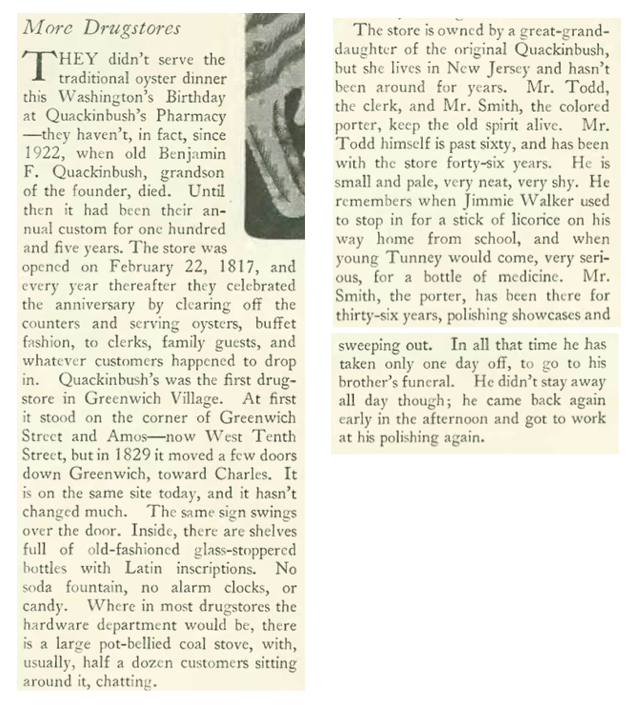
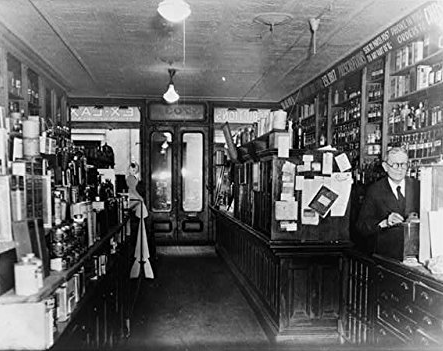
The exhibition featured a variety of projects, from the Aluminaire House in Long Island to Boardman Robinson’s murals in Pittsburgh to Bertram Goodhue’s Nebraska State Capitol featuring Lee Lawrie’s sculptures and friezes…
ECLECTIC…Model of the Aluminaire House erected in full scale for the 45th Annual Exhibition of the Architectural League of New York; Boardman Robinson’sThe History of Trade murals in Kaufmann’s Department Store, Pittsburgh; detail of one of Boardman’s 10 murals displayed at Kaufmann’s; Lee Lawrie’s “The Sower,” a 19-foot-tall bronze statue mounted on top of Bertram Goodhue’s Nebraska State Capitol in Lincoln. In 1937 Lawrie would install his “Atlas” sculpture in front of Rockefeller Center. (archleague.org/archive.triblive.com/capitol.nebraska.gov)
* * *
And Now For Something Old
While George Chappell contemplated the world to come, “The Talk of Town” looked back in time to Greenwich Village’s oldest drugstore…
FORM FOLLOWED FUNCTION…Quackenbush Pharmacy in 1930. Manager James Todd at right. (Library of Congress)
* * *
Pet Project
The March 1 issue featured James Thurber’s second installment of “Our Pet Department”…
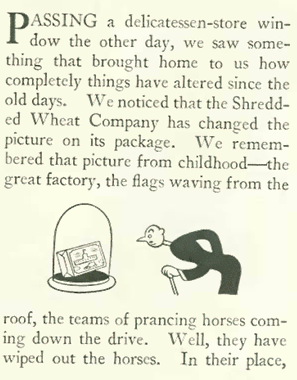
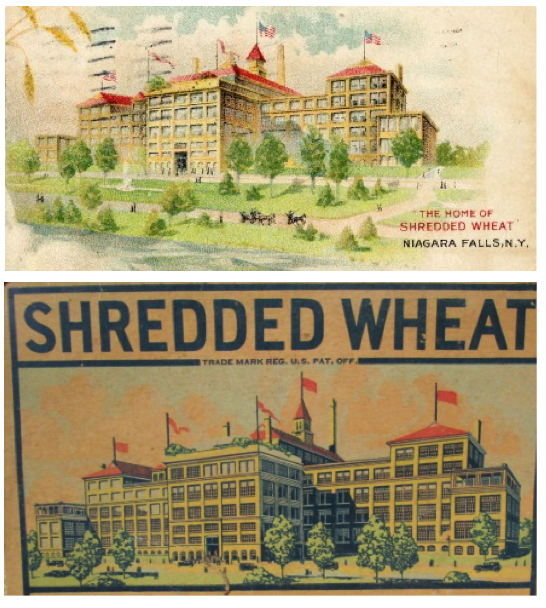
And while Thurber was doling out pet advice, his pal E.B. White was worrying over changes to the design of the Shredded Wheat box…
HORSELESS CARRIAGES replaced animal power on the packages of Shredded Wheat, much to the dismay of E.B. White. (oldshopstuff.com)
* * *
A Prince of a Guy
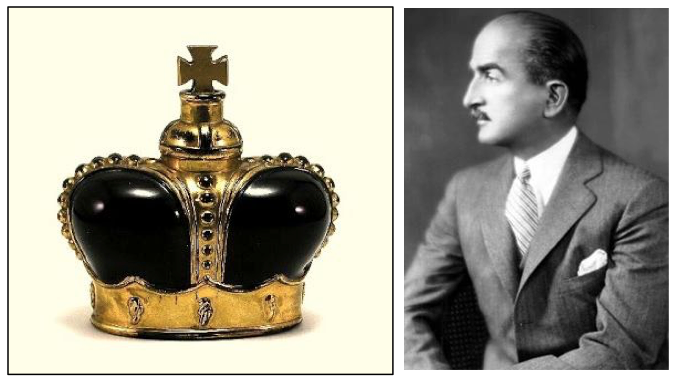
A refugee from the Bolshevik Revolution, the Georgian Prince Matchabelli (Guéorgui Vassilievitch Matchabelli) was penniless when he landed on American shores in 1924. Two years later he launched a perfume business with three scents — Ave Maria, Princess Norina, and Queen of Georgia — sold in bottles that were said to be small replicas of the Prince’s lost Georgian crown. “The Talk of the Town” paid the royal perfumer a visit for the March 1 issue:
HIS CROWNING ACHIEVEMENT…A bottle of Princess Norina perfume from 1926, and its creator, Prince Matchabelli. (Pinterest/Wikipedia)
Those who were around the late 1970s and 1980s no doubt recall the Prince Matchabelli Windsong Perfume commercials and the catchy tune that kind of stuck in your head (for better or worse)…
* * *
Low Life Revue
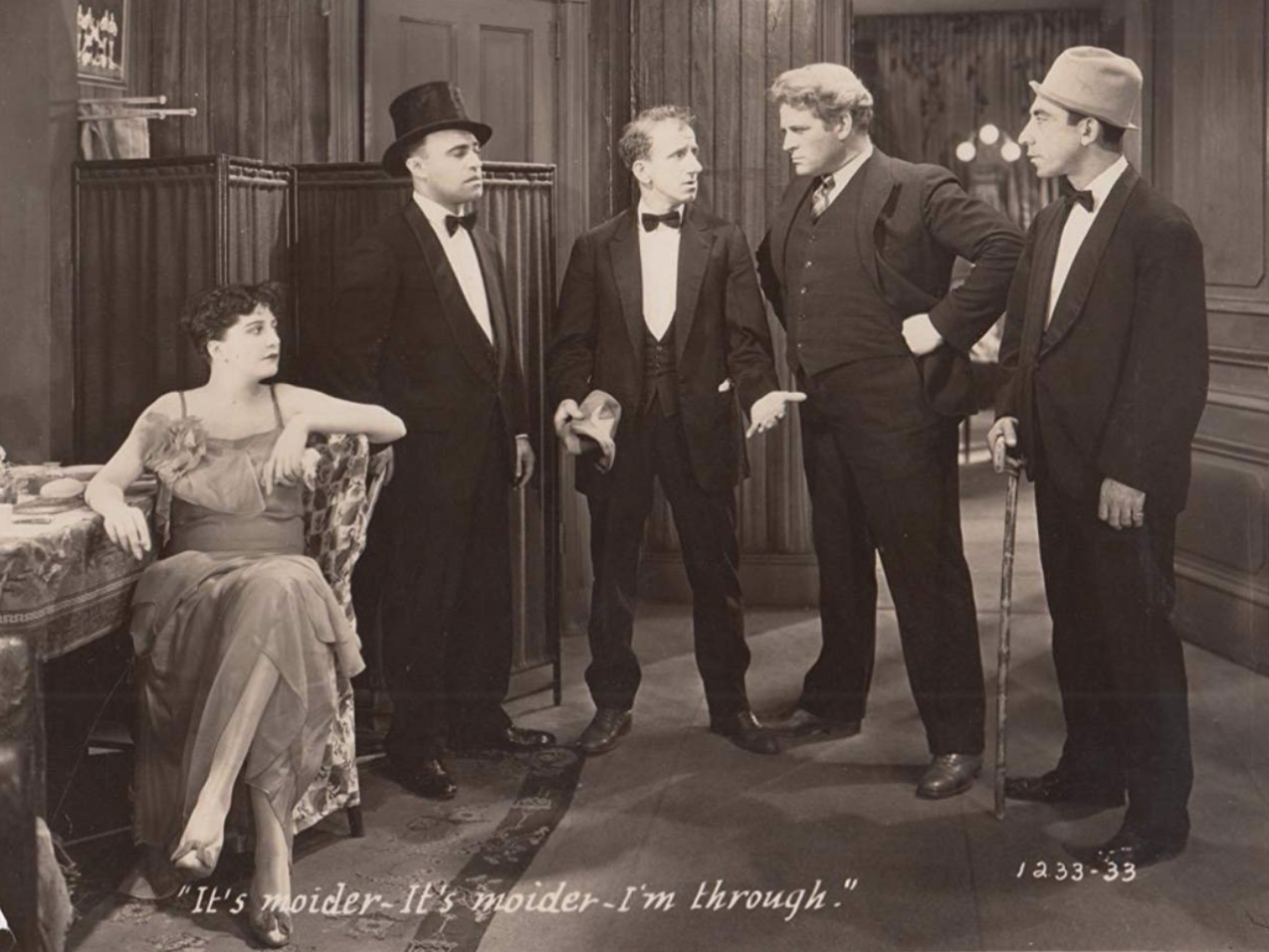
Ben Hecht continued his exploration of the hardboiled world of journalists, bootleggers, nightclub singers and other lowlifes in his screenplay for Roadhouse Nights, a film that was apparently enjoyed by New Yorker film critic John Mosher. As for Hecht, an erstwhile member of the Algonquin Round Table and occasional contributor to The New Yorker in the 1920s, the film was just one of many to follow in a Hollywood career that the former Chicago journalist held in some disdain (see recent New Yorker article by David Denby)…
IT’S MOIDER, I SAY…Helen Morgan, Eddie Jackson Jimmy Durante, Fred Kohler, and Lou Clayton in 1930’s Roadhouse Nights. (IMDB)
* * *
The Winds of Wynn
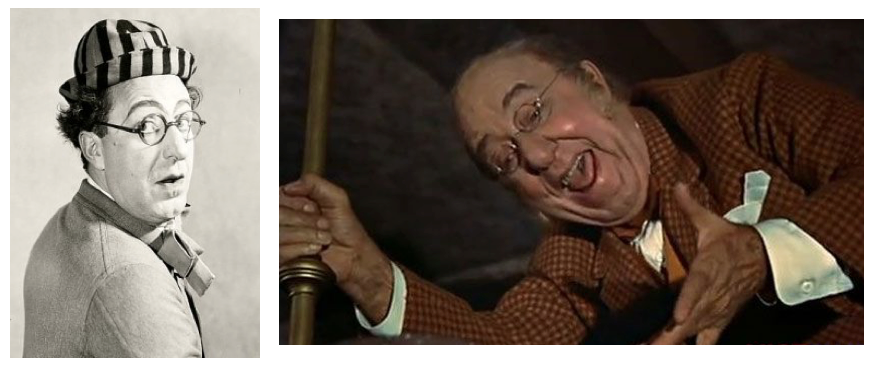
Ed Wynn wowed theater critic Robert Benchley in his portrayal of “Simple Simon” at the Ziegfeld Theatre. Wynn was one of the most popular comedians of his time, but is best known today for his portrayal of “Uncle Albert” in the 1964 Disney film Mary Poppins…
AGELESS…Ed Wynn in Simple Simon, 1930; at right as Uncle Albert in 1964’s Mary Poppins. (secondhandsongs.com/Pinterest)
* * *
He Was No Palooka
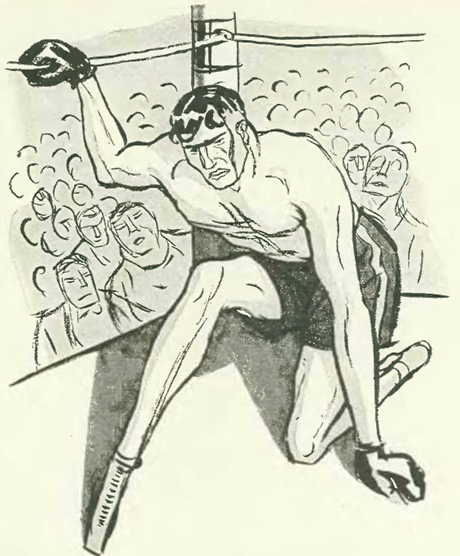
The March 1 and 9 issues of The New Yorker gave considerable ink to Niven Busch Jr’s success story of a middleweight prizefighter. Titled “K.O. Middleweight,” the two-part article was about Stanislas Kalnins, who went by the name K.O. Keenen because it would go over better with the large majority of Irishmen at the fights. Peter Arno provided the art for the piece:
From Our Advertisers
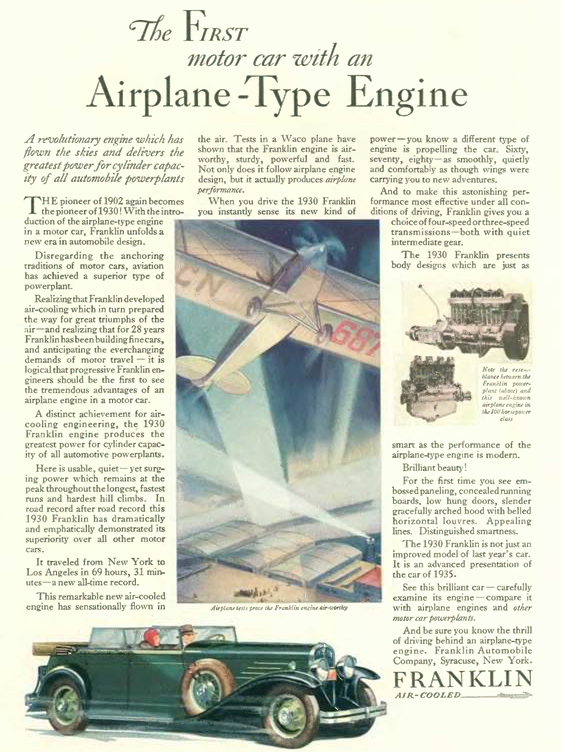
We have another ad from the Franklin motorcar company touting its air-cooled engines, which thanks to the Depression were not long for the world…
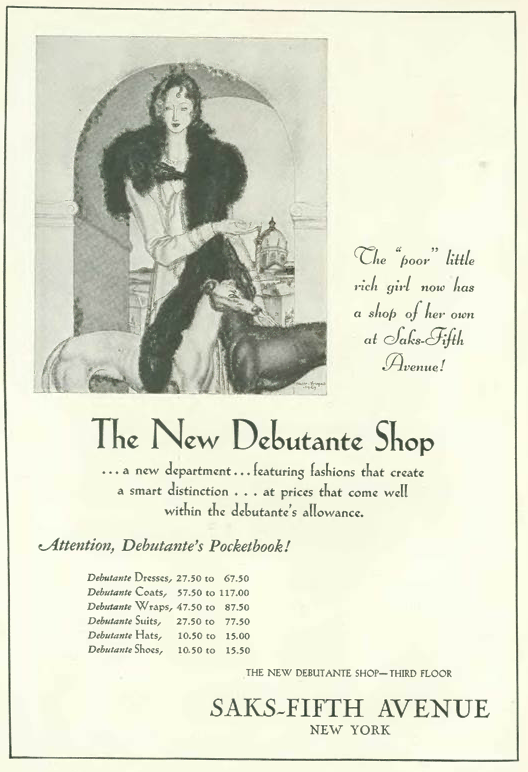
…Saks shamelessly appealed to the “poor” little rich girl in this ad aimed at aspiring debutantes…
…Lenthric perfumes offered this all-French ad to those seeking Continental refinement…
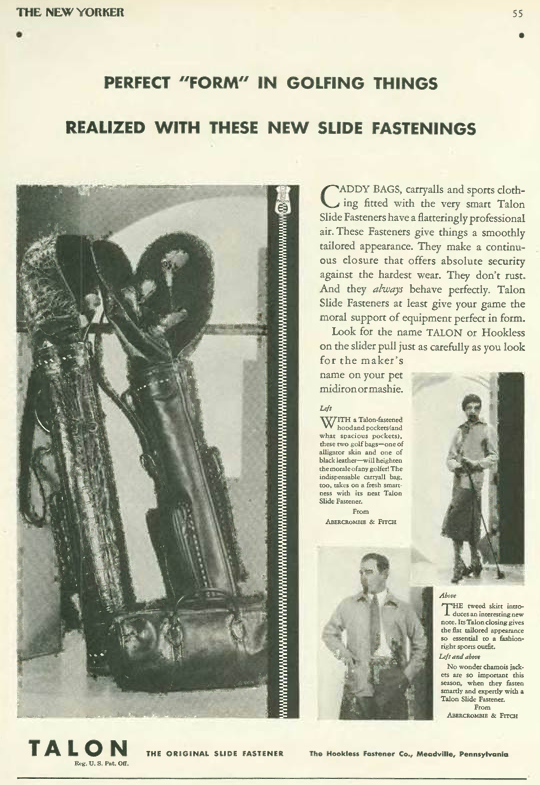
…and this ad from Talon, advertising “Slide Fasteners” before the word “zipper” came into common use…
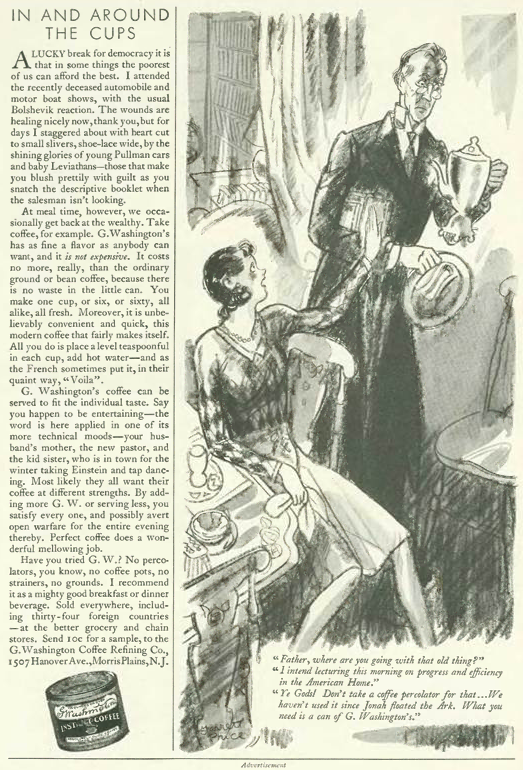
…Garrett Price was the latest New Yorker cartoonist to pick up some extra cash from G. Washington instant coffee…
…while John Held Jr. even lent his image (along with some drawings) to promote Chase and Sanborn’s coffee…
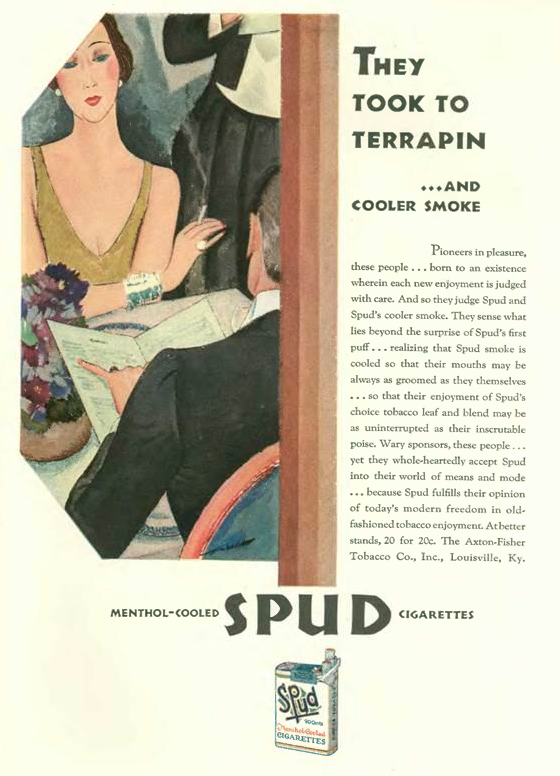
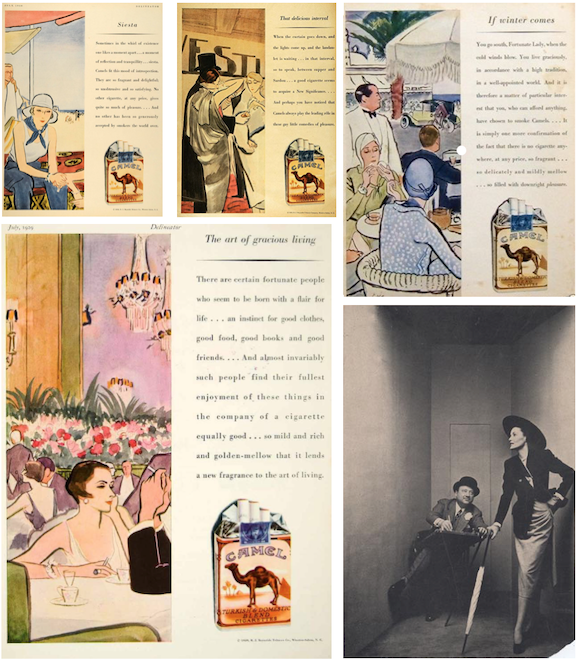
…this artist for Spud cigarettes borrowed Carl Erickson’s style from his famed Camel ads (see examples below)…
…examples of Carl “Eric” Erickson’s Camel ads from the late 1920s…
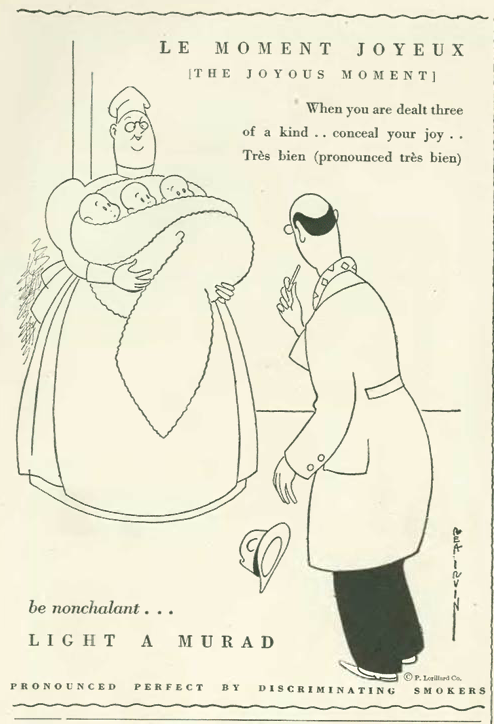
…and here we have another New Yorker cartoonist, Rea Irvin, helping the makers of Murad cigarettes move their product…
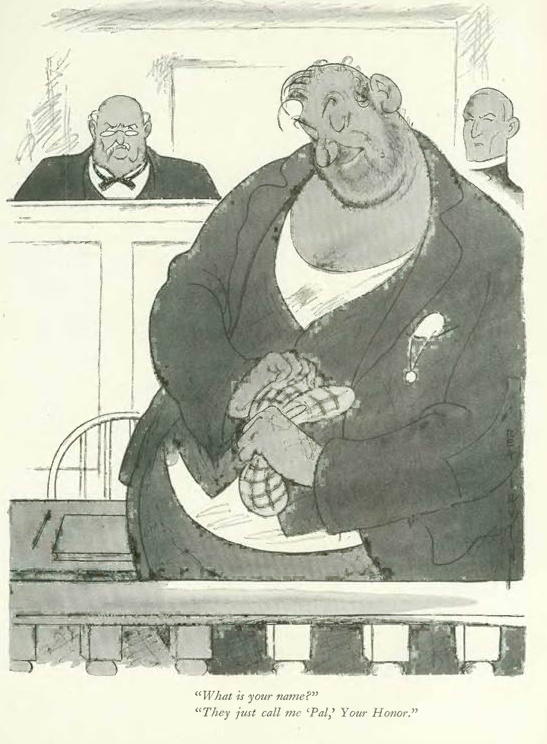
…Irvin also illustrated this cartoon for the March 1 issue…
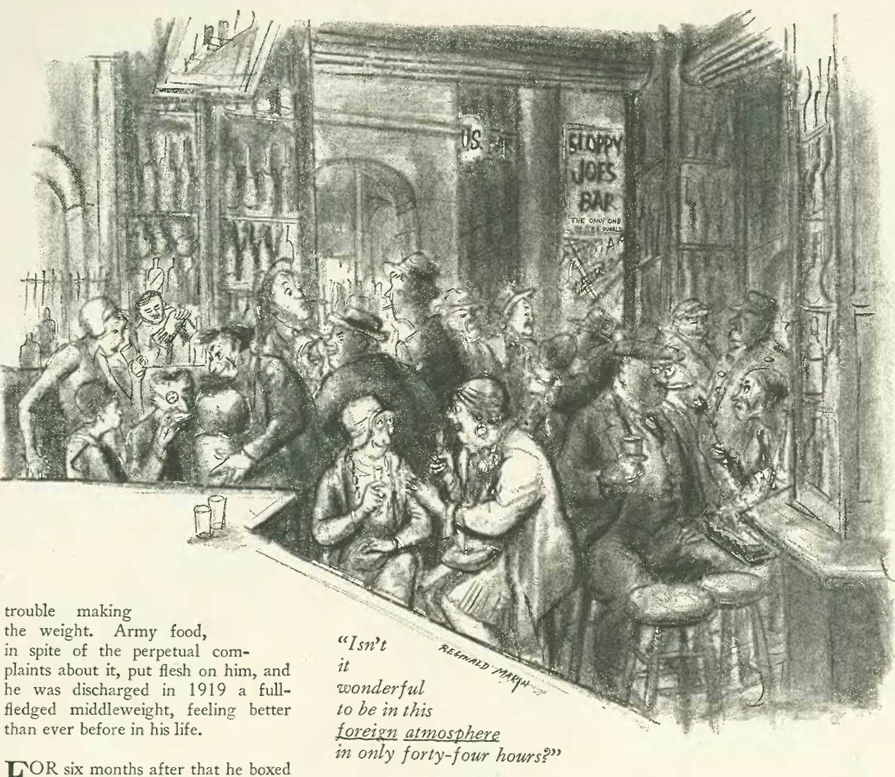
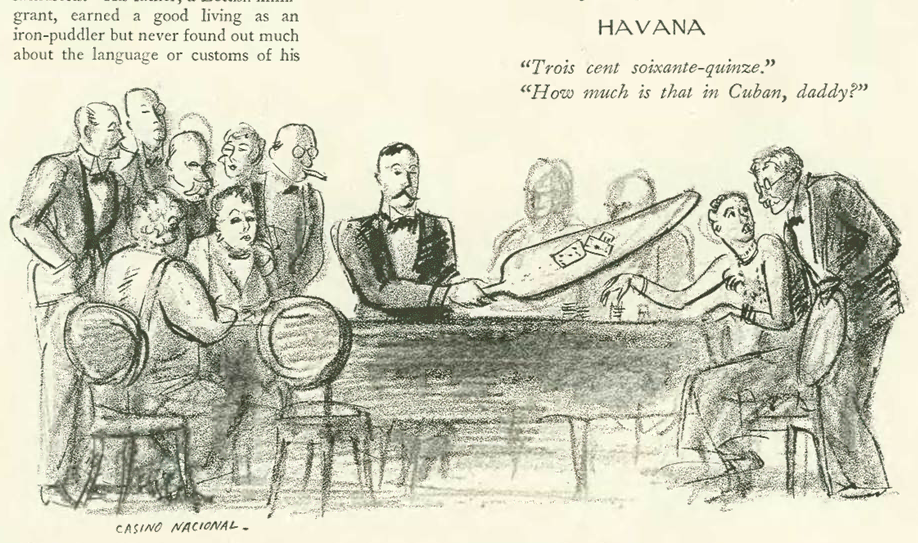
…Reginald Marsh contributed these cartoons, no doubt based on a recent winter stay in sunny Havana (I’ve been to Sloppy Joe’s, and still looks pretty much like this)…
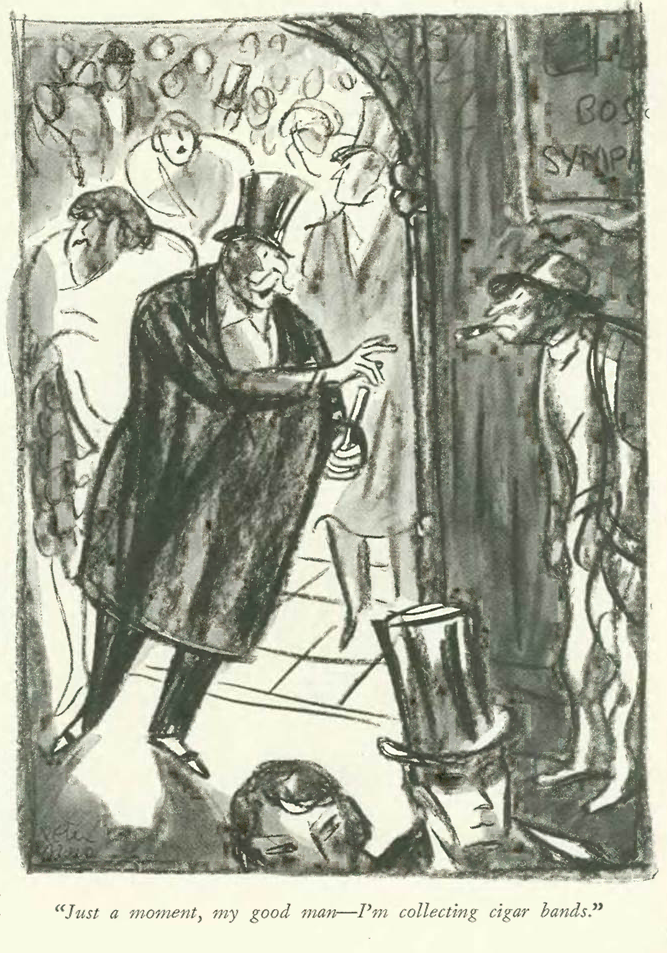
…back stateside, Peter Arno looked in on a cultural exchange…
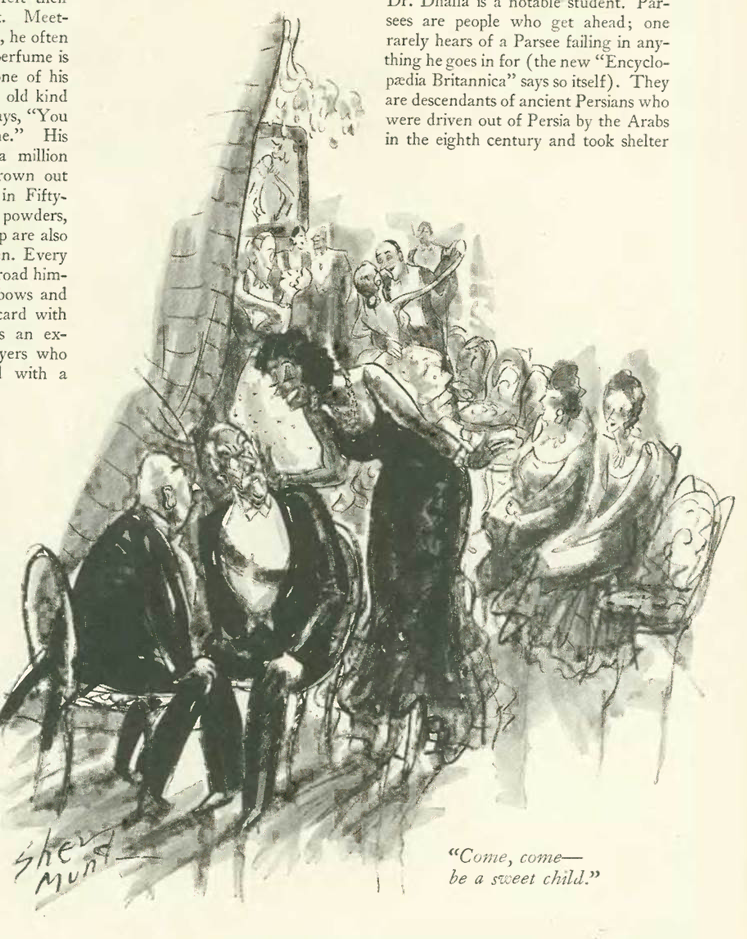
…and we close with two from the issue by Barbara Shermund…
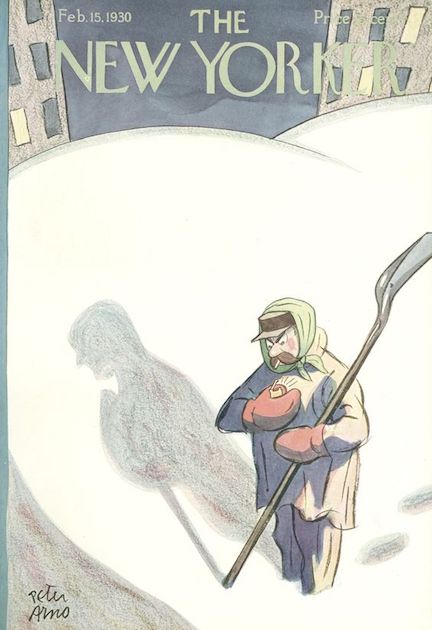
The October 1929 stock market crash took most people by surprise, but one man, Roger Babson, knew all along it was coming…thanks to Sir Isaac Newton…
Feb. 15, 1930 cover by Peter Arno.
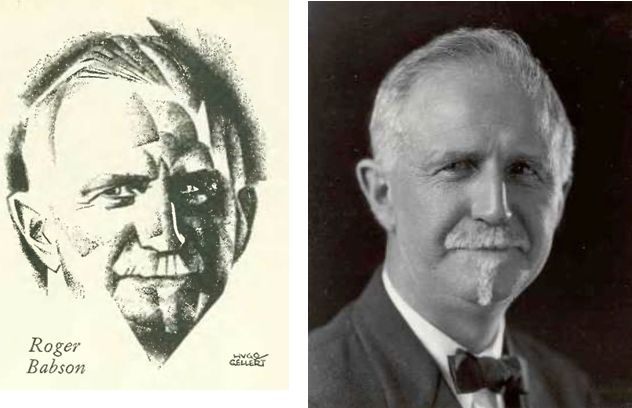
Babson (1875-1967) is perhaps best known today as the man who predicted the market crash and the Great Depression that followed. He employed an economic assessment tool called the “Babsonchart” that was based on Newton’s Third Law: For every action, there is an equal and opposite reaction. In the Feb. 15, 1929 “Profile” (titled “Prophet of Doom”) Henry Pringle tried to make sense of this eccentric businessman, who would go on to wage war against gravity itself:
TOLD YOU SO…Illustration by Hugo Gellert for the profile on Roger Babson, who famously predicted the stock market crash; at right, Babson circa 1930. (Gravity Research Foundation)BIG THINKER…Roger Babson dedicates the world’s largest spinning globe at Babson College in 1955; at right, the globe as it appears today. Founded by Babson in 1919, Babson College is often ranked as the most prestigious entrepreneurship college in the U.S. (babson.edu/Wikipedia)
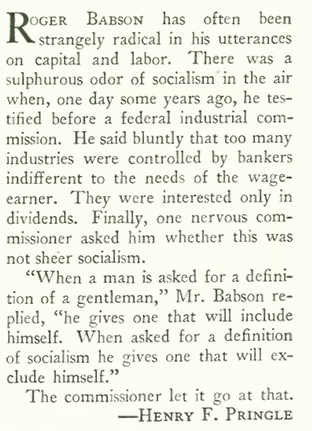
Pringle concluded his profile on a confused note, wondering if his subject — a product of sober New England stock — could possibly be a socialist in disguise…
In any case, it is difficult to assign Babson to any one category. Some considered him a genius and visionary, while others thought him a crackpot, particularly in the late 1940s when, following the death of a grandson by drowning, he began to wage war against gravity itself. In 1948 essay “Gravity – Our Enemy Number One,” he wrote: “Broken hips and other broken bones as well as numerous circulatory, intestinal and other internal troubles are directly due to the people’s inability to counteract Gravity at a critical moment.”
That same year Babson founded the Gravity Research Foundation to expedite the discovery of a “gravity shield.” The foundation is still in operation, but rather than seeking to block gravity it works to better understand it. It continues to hold an annual essay prize contest — remarkably, five of its winners have gone on to win the Nobel Prize in physics. The essay contest’s 1971 winner was none other than physicist Stephen Hawking.
ROCK STAR…Clockwise, from top left: Roger Babson at home with a portrait of Sir Isaac Newton; Babson was the Prohibition Party’s candidate for President of the United States in 1940; Babson provided charitable assistance to unemployed stonecutters in Gloucester, Mass., during the Great Depression, commissioning them to carve inspirational inscriptions on more than 20 boulders near the abandoned settlement of Dogtown. (centennial.babson.edu/Wikipedia)
* * *
An Imperfect Romance
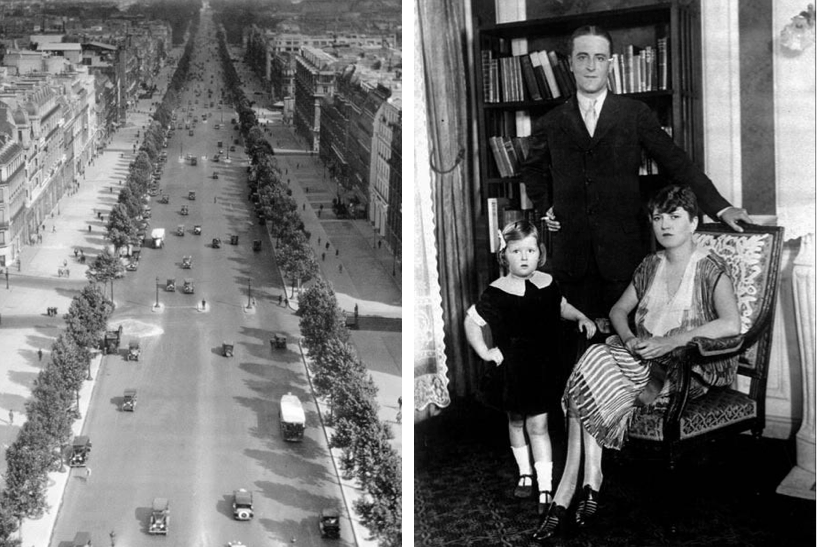
Born in the midst of the Jazz Age, it would seem that The New Yorker would have been a perfect fit for the most prominent chronicler of that era, F. Scott Fitzgerald. But it was mostly not to be: Fitzgerald would publish just two poems and three humorous shorts in The New Yorker between 1929 and 1937, including “Salesmanship in the Champs-Élysées” in Feb. 15 issue.
In all fairness, The New Yorker wasn’t exactly enamored of the young author. In its book review section for the May 23, 1925 issue, the magazine singled out three books for review, the first (and longest) review was devoted to James Boyd’s historical novel Drums. This was followed by a brief review of Fitzgerald’s The Great Gatsby, the reviewer writing that the book revived his interest in the author but “not in a Byronic promise he probably never had,” and referred to the character of Jay Gatsby as “a good deal of a nut.”
The following year Fitzgerald was the subject of a New Yorker profile titled “That Sad Young Man.” In the magazine’s March 12, 2017 issue, Erin Overbey and Joshua Rothman note that the profile (by John Mosher) would be called “snarky” in today’s lingo. They also point out that “Fitzgerald, for his part, appeared to take a rather snobbish view of Harold Ross’s new publication, referring to the short stories he published in it as “hors d’oeuvres.”
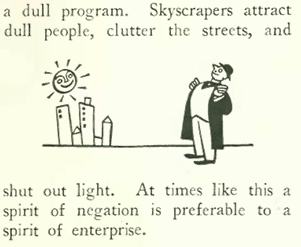
With that, here is one of F. Scott Fitzgerald’s “hors d’oeuvres” … “Salesmanship in the Champs-Élysées.”
SOUR GRAPES…The Champs-Elysées in 1929; F. Scott Fitzgerald with his daughter, Scottie, and wife Zelda in Paris in 1925. Despite being products of the Jazz Age, the author and The New Yorker were mostly at odds. In a letter to his daughter, Scottie, Fitzgerald advised that she expand her knowledge of literature “instead of skimming Life + The New Yorker.” (fr.wikibooks.org/Associated Press)
* * *
The Empire-less State
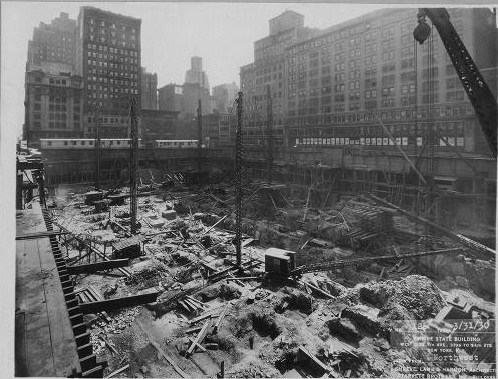
In his “Notes and Comment,” E.B. White pondered the possibilities of a large lot at the corner of Fifth Avenue and 34th Street previously occupied by the Waldorf-Astoria hotel. Although construction of the Empire State Building would soon commence at the site, White mused about other possibilities…
LIGHT THERE BE LIGHT…E.B. White found the newly excavated space at Fifth Avenue and 34th Street (former site of the Waldorf-Astoria) to be a refreshing change. It would be short-lived, as the first beams of the Empire State Building would begin to rise from the site in March 1930. (NYPL Digital Gallery)
* * *
Westminster People Show
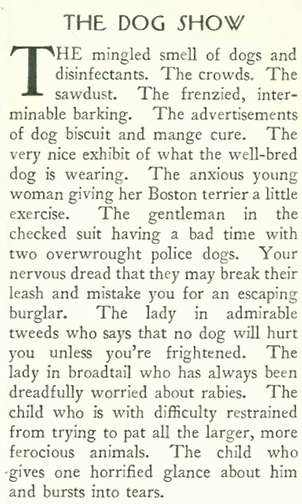
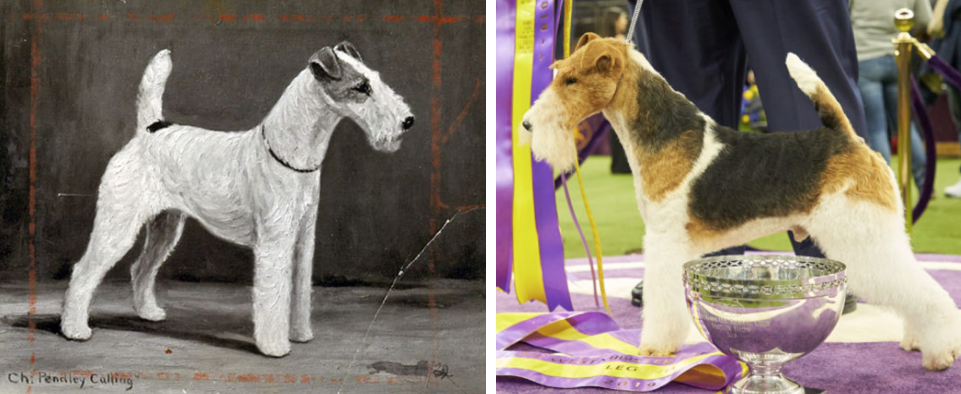
Although it’s now customary to retire Westminster Kennel Club Dog Show winners, back in 1930 a wire terrier called Pendley Calling of Blarney won Best of Show in 1930 and won the title again the following year. Alice Frankforter was on hand for the event, but found the people at the show every bit as diverting as the animals. Some excerpts…
DOGGONE FUN…The 1932 Westminster Kennel Club Dog Show at Madison Square Garden. (westminsterkennelclub.org)
REIGN OF TERRIER…Wire Fox Terrier Pendley Calling of Blarney, left, won back-to-back Westminster Kennel Club Best of Show titles in 1930-31. At right, King’s Best of Show win in February 2019 made him the 15th Wire Fox Terrier in Westminster history to earn the top prize. Terriers are by far the winningest breed at Westminster. (aka.org)
* * *
Why Can’t We Be Friends?
Robert Benchley struck a pre-emptive pose in his review of a new Broadway play titled Rebound — written by his good friend (and fellow Algonquin Round Table alumnus) Donald Ogden Stewart (1894-1980) — and responded to “a chorus of yawps” that accused him of log-rolling…
A FRIEND INDEED…Robert Benchley (right) said his friendship with playwright and screenwriter Donald Ogden Stewart (left) had no influence over his review of Stewart’s latest play, Rebound. It seems Benchley was in safe territory here, since Stewart’s output was generally high in quality. Indeed, in 1940 Stewart would win an Academy Award for Best Adapted Screenplay for the The Philadelphia Story. (IMDB/theattic.space)
* * *
Georgia On His Mind
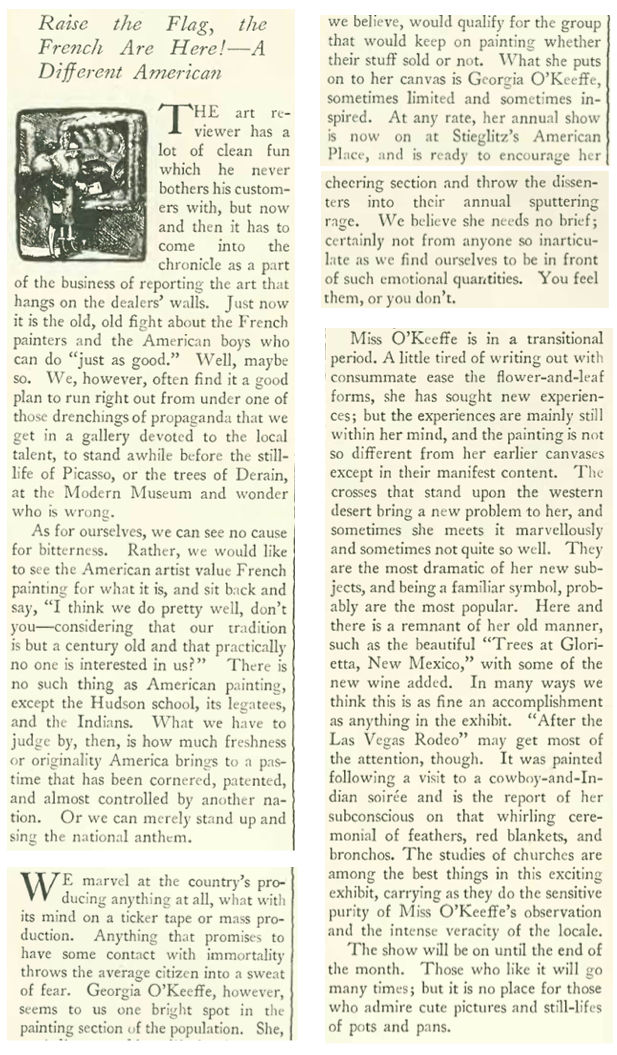
The opening of the Museum of Modern Art in late 1929 had a profound effect on The New Yorker’s art critic MurdockPemberton. In the beginning he dismissed the museum as just another place for the old money crowd to throw parties, but with the opening of its third exhibition, “Painting in Paris” — which featured an extensive display of the works of French modernists — Pemberton began to come around to the idea that this new MoMA was a place to see groundbreaking works of art. In his Feb. 15 column Pemberton looked beyond France for signs of talented modernists in the States, and found only one who stood out — GeorgiaO’Keeffe.
MOD COUPLE…Clockwise, from left, Alfred Stieglitz attached this photograph to a letter for Georgia O’Keeffe, dated July 10, 1929; Georgia O’Keeffe Exhibition of Paintings (1919-1934), at Stieglitz’s An American Place gallery, 1935; O’Keeffe’s Trees at Glorieta, New Mexico, 1929. (Beinecke Library, Yale/Georgia O’Keeffe Foundation)
* * *
From Our Advertisers
Just as hemlines were dropping after the stock market crash, so were the brims of women’s hats — the flapper caps of the 1920s now sprouted droopy ears…
…this ad for Chase and Sanborn coffee featured a weirdly distended image of the writer and humorist Irvin Cobb…
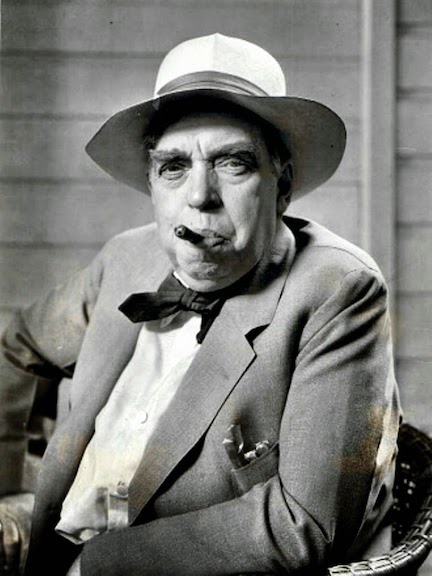
…Cobb as he actually appeared, circa 1930…
(talesofmytery.blogspot.com)
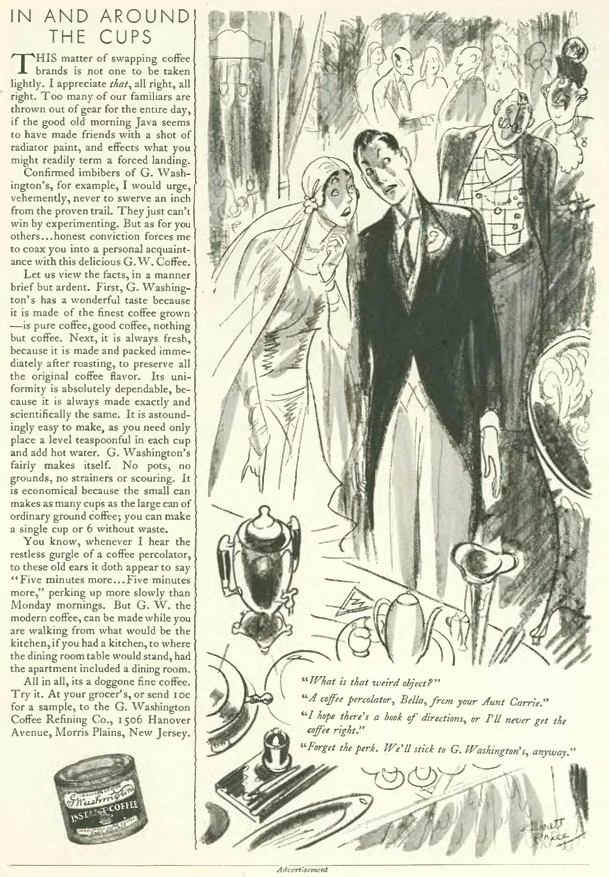
…G. Washington coffee, on the other hand, continued to draw from The New Yorker’s stable of cartoonists, including Garrett Price, for its illustrated ads…
…I was surprised to see this ad for two reasons: I wasn’t aware floss was in common use 90 years ago, or that it once came in the handle of a toothbrush…
…and then we have this sad little back page ad (just above a tiny ad for piano lessons) promoting Peggy Joyce’s ghostwritten “tell all” — Men, Marriage and Me. A former Ziegfeld girl and occasional actress who cultivated fame for fame’s sake, Joyce (1893-1957) was mostly known for her six marriages and extravagant lifestyle. By feeding the media a steady stream of scandals and other adventures (she often received reporters in her bedroom, dressed in a see-through negligee) she remained in the celebrity spotlight throughout the 1920s…
Peggy Joyce in 1923; cover of the first edition of her “tell all” — Men, Marriage and Me. Celebrated in the 1920’s as a swinging golddigger, her fame quickly evaporated into the mists of the Great Depression. (Wikipedia/Abe Books)
…speaking of celebrity, advertisers were so eager for endorsements of the famous that even “Mrs. Ring Lardner” (Ellis Abbott) got a piece of the action…
…as travel by airplane became more fashionable, automobile manufacturers increasingly paired their products with flying machines…
…for those who wished to stay on the ground, the Pickwick-Greyhound bus system featured “Nite Coaches” with 14 sleeping compartments (for 28 passengers), hot and cold water in each compartment, and hot meals served by stewards…
…on to our comics, IsadoreKlein illustrated the excitement of heavyweight boxing…
…PerryBarlow paid a visit to a writer and his dimwitted visitor…
…HelenHokinson looked in on a prep school dance…
…BarbaraShermund demonstrated the finer points of beauty…
…and we end with PeterArno, and one woman’s plan for a costume party…

























































































































 A New Yorker State of Mind