Above: Ringing in the New Year at Times Square, 1934.
We bid adieu to 1934 with some odds and ends, beginning with E.B. White’s observations for the upcoming year, which if anyone had noticed the uptick in Ascot tie purchases, just might be a bit rosier than previous years of the decade.
Dec. 29, 1934 cover by S. Liam Dunn.
White was also hopeful for a new year with a less dreadful press, particularly the pandering type promulgated by William Randolph Hearst.
GOOD RIDDANCE…E.B. White wryly noted the positive signs heading into 1935. While actresses Billie Seward and Lucille Ball rang in the New Year, Erroll Flynn was sporting an ascot tie and Henry Ford was proclaiming that the Depression was over. (Pinterest)
* * *
Dr. Peeper
“The Talk of the Town” noted that Dr. Allan Dafoe, the country doctor who gained fame for delivering the Dionne Quintuplets, expressed a desire to see Sally Rand perform her bubble dance during his visit to Gotham. “Talk” also looked in on the some of the technical aspects of the burlesque dancer’s signature act:
DON’T BURST MY BUBBLE…Dr. Allan Dafoe of Dionne Quintuplet fame looked forward to taking in the sights of New York, including Sally Rand’s famed bubble dance. (Image from the 1936 book The Country Doctor/Sally Rand via stuffnobodycaresabout.com)
* * *
Leading Ladies
Film Critic John Mosher noted the continued rise of two leading female stars, twenty-seven-year-old Katharine Hepburn and six-year-old Shirley Temple. Mosher recalled Hepburn’s recent performance in Little Women, and proclaimed that she “succeeds again” in The Little Minister.
OPPORTUNITY KNOCKS...Katharine Hepburn and John Beal in The Little Minister. Hepburn portrayed Babbie, a member of the nobility who disguises herself as a gypsy to protect villagers from a tyrannical lord. In the process she falls in love with the good Rev. Gavin Dishart (Beal). (IMDB)
Although Mosher admitted he was a “disagreeable adult” who doesn’t enjoy seeing children on the screen “more than necessary,” he acknowledged Shirley Temple’s talents as well as those of child actor Jane Withers in Bright Eyes.
BRIGHT EYES, BRIGHT STARS…Jane Withers, Shirley Temple, and Terry in Bright Eyes. (IMDB)
* * *
That Youthful Feeling
Given that William Shakespeare’s star-crossed lovers Romeo and Juliet were mere teenagers (the ages 13 and 16 were given to Juliet and Romeo, respectively), many productions featured actors more than twice that age. That was the case in 1933 when the play was revived by actress Katharine Cornell and her director husband Guthrie McClintic, who took the play on a seven-month nationwide tour before it was revised and opened on Broadway in December 1934. Critics dubbed the 41-year-old Cornell “the greatest Juliet of her time,” and it seems Robert Benchley heartily agreed in this excerpt from his stage review:
AGE IS JUST A NUMBER…The 41-year-old Katharine Cornell and 42-year-old Basil Rathbone in a promotional photo for Romeo and Juliet. Cornell was the first performer to receive the Drama League’s Distinguished Performance Award, which became the oldest and most exclusive theatrical honor in North America. (Vandamm photo, Museum of the City of New York)
* * *
The New Yorkiest Place
In 1930 gossip columnist Walter Winchell called the new Stork Club “New York’s New Yorkiest place on W. 58th,” and when it relocated to 3 East 53rd Street in 1934 it further defined itself as the ultimate New York night club. In her “Tables for Two” column, Lois Long found the new location much to her liking. An excerpt:
THE STORK DELIVERS…The Stork Club truly became the New Yorkiest nightclub when it relocated to 3 East 53rd Street in 1934. Clockwise, from top left: the club entrance in the 1930s; Cary Grant was one of the many celebrities who favored the nightclub, circa 1935; a 1930’s club menu; Lita Grey, the former teen bride of actor Charlie Chaplin, was a featured singer at the club during Lois Long’s visit. (Gibbes Museum of Art/Pinterest/vintagemenuart.com/IMDB)
* * *
So Long?
Clarence Day, best known for his Life with Father stories, also contributed a number of cartoons to the magazine, accompanied by satirical poems and humorous shorts. Day would die at the tender age of 61—after a bout with pneumonia—in December 1935, about a year after this cartoon was published in The New Yorker. I assume he was signing off from the magazine in order to arrange publication of his Life with Father book, which was published shortly after his death.
* * *
From Our Advertisers
Sunny California beckoned those who had the means and leisure to head to warmer climes during the New York winter…
…for those who stayed behind, they could wrap themselves in a chic winter coat such as this one sported by Camel endorser Mrs. Langdon Post (Janet Kirby)…
…another colorful ad with a not-so-colorful message from World Peaceways, a 1930s anti-war organization that characterized soldiers (and future soldiers, seen here) as pawns in the corrupt games of the rich and powerful…
…the distributors of French champagne rang in the New Year by suggesting that Doyen was worth your very last cent…
…we kick off our cartoons by welcoming the New Year with George Price…
…Robert Day contributed a spot drawing that offered a new twist to ice hockey…
…I should know this artist, but it escapes me for the moment…nevertheless, a great illustration to stretch across the bottom of an opening page…
…a closeup of the signature…
…another from George Price, still up in the air in the final issue of 1934…
…Garner Rea introduced us to the life of the party…
…”Miss Otis Regrets” is a 1934 Cole Porter song about the lynching of a society woman after she murders her unfaithful lover. Porter wrote the song as a parody of a sad cowboy song he heard on the radio. The song was further workshopped for fun at “smart set” cocktail parties…on to our next cartoon, and a moment of keen insight from James Thurber…
…Garrett Price went on the town with some students of anatomy…
…and we say Happy New Year with the help of Helen Hokinson…
Above, left, a 1935 portrait of Gertrude Stein by Carl Van Vechten; right, Gertrude Stein and Alice B. Toklas arriving in New York aboard the French Line’s SS Champlain in 1934. (Library of Congress/AP)
Much of America’s literary world was abuzz about the arrival of Gertrude Stein in New York after her nearly three-decade absence from the States. Audiences were mostly receptive to Stein’s lectures, even if they were largely unintelligible, but The New Yorker would have none of it.
Nov. 17, 1934 cover by Rea Irvin.
Stein (1874–1946) visited the U.S. at the urging of friends who suggested that a lecture tour might help her gain an American audience for her work. She crisscrossed the country for 191 days, delivering seventy-four lectures in thirty-seven cities.
Writing for the Smithsonian Magazine (October 2011), Senior Editor Megan Gambino notes that publishing houses regarded Stein’s writing style as incomprehensible (Gambino writes that shortly after her arrival in the U.S., “psychiatrists speculated that Stein suffered from palilalia, a speech disorder that causes patients to stutter over words or phrases”), but in 1933 “she at last achieved the mass appeal she desired when she used a clearer, more direct voice” in The Autobiography of Alice B. Toklas. However, Stein was still best known in the U.S. for her “insane” writings, as one New York Times reporter described Stein’s work upon the writer’s arrival in New York. Excerpts from the Oct. 25, 1934 edition of the Times:
Stein had also achieved success in America via her libretto to Virgil Thomson’s opera Four Saints in Three Acts. Prior to her visit, Stein was featured in a newsreel reading the “pigeon” passage from the libretto, which James Thurber satirized in this piece titled “There’s An Owl In My Room.” Excerpts.
Here is a YouTube clip of the newsreel satirized by Thurber. Stein begins her “pigeon” reading at the 30-second mark:
If Thurber found the libretto ridiculous, it was an opinion not necessarily shared by audiences who attended Four Saints in Three Acts, which premiered in Hartford, Connecticut, before making a six-week run on Broadway.
SAINTS AND PIGEONS…The original cast of Four Saints in Three Acts, onstage at the Wadsworth Atheneum, Hartford, 1934; at right, Gertrude Stein reviews the libretto for Four Saints with American composer Virgil Thomson, 1934. (Harold Swahn/Bancroft Library, UC Berkeley)
Since Stein had never seen the opera performed, writer and photographer Carl Van Vechten convinced Stein and Toklas to fly on an airplane for the first time in order to be able to see the play in Chicago.
FLIGHT INSURANCE…Stein and Toklas were anxious about flying, so Van Vechten gave each a small Zuni fetish—a good luck charm as they prepared to board their plane at Newark. (Boatwright Memorial Library, The University of Richmond)
Thurber wasn’t the only New Yorker writer to throw shade on Stein’s visit. In his “Books” column, Clifton Fadiman described Stein as a “mamma of dada” and a “Keyserling in divided skirts” (Hermann Keyserling was a non-academic German philosopher known for his platitudinous, obscure writings). Excerpt:
Fadiman continued by excoriating Stein’s latest book, Portraits and Prayers, likening its “shrill, incantatory” quality to “the rituals of a small child at solitary play.”
* * *
Over the Rainbow
We leave Gertrude Stein for the time being and check in with Lois Long, who was sampling the fall attractions of the New York nightclub scene in “Tables for Two.” In these excerpts, the 32-year-old Long continued her pose as a much older woman (“about to settle down with a gray shawl”) as she bemoaned the bourgeoisie excess of places like the Colony, once known for its boho, speakeasy atmosphere. And then there was the Rainbow Room, with its organ blaring full blast to the delight of gawking tourists.
LOST IN NEW YORK…Lois Long lamented the demise of cafe life in Manhattan; from left, the Colony, circa 1940, which went from boho to upscale; the 21 Club, a favorite Prohibition-era haunt of Long’s where she was suddenly a nobody; and high above the city, the Rockefeller Center’s Rainbow Room, and its interminable organ music. (Pinterest/Alice Lum via Daytonian in Manhattan/nycago.org)
* * *
From Our Advertisers
Just one ad from the Nov. 17 issue (more to come below)…the latest athlete to attest to the energizing effects of Camel cigarettes…Cliff Montgomery (1910–2005) was famed for a hidden ball trick play that led one of the greatest athletic upsets—Columbia’s 7-0 win over Stanford in the 1934 Rose Bowl. Montgomery would play one year with the NFL Brooklyn Dodgers, and would later earn a Silver Star for his heroism during World War II…
…on to our cartoonists, we begin with Robert Day’s jolly illustration for the “Goings On About Town” section…
…Rea Irvin looked into fair play among the fox hunting set…
…Garrett Price gave us a tender moment among the bones at the American Museum of Natural History…
…and Peter Arno introduced two wrestlers to an unwelcoming hostess…
…on to Nov. 24, 1934 issue, and the perils of the Macy’s Thanksgiving Day Parade as illustrated on the cover by William Cotton…
Nov. 24, 1934 cover by William Cotton.
…where we find still more scorn being heaped upon Gertrude Stein. “The Talk of the Town” offered this observation (excerpt):
…and E.B. White had the last word on Stein in his Dec. 1, 1934 “Notes and Comment” column:
* * *
There Goes the Neighborhood
Returning to the Nov. 24 issue, Alberta Williams penned a lengthy “A Reporter at Large” column, titled “White-Collar Neighbors,” about the new Knickerbocker Village development in the Lower East Side. Real estate developer Fred French razed roughly one hundred buildings to build what has since been criticized as an example of early gentrification in Manhattan. Williams assessed the development after more than a year of construction, finding that despite federal funding, the leasing company had yet to rent any apartments “to Negroes or Orientals.” Although the development was meant to serve some of the families it displaced, the vast majority were forced to move back into slums due to escalating rents.
BREATHING ROOMS…Knickerbocker Village in 2019. To make way for the development, one hundred buildings were razed in the “Lung Block,” so named because of its high tuberculosis mortality rate. The development continues to be designated as affordable housing. (Wikipedia)
* * *
Dollmaker
Raised in rural Nebraska, at an early age Rose O’Neill (1874–1944) demonstrated an artistic bent, and was already a published illustrator and writer when she drew her first images of “Kewpie” around the year 1908. A German doll manufacturer began producing a doll version of Kewpie in 1913, and they became an immediate hit, making O’Neill a millionaire and for a time the highest-paid female illustrator in the world. When Alexander King penned a profile of O’Neill, Kewpies were no longer the rage, but O’Neill was nevertheless determined to find success in a new doll line. Excerpts:
QP QUEEN…Clockwise from top left, Rose O’Neill circa 1910, just before her Kewpie dolls made it big; Kewpie doll in original box, undated; as the Kewpie craze faded in the 1930s, O’Neill tried to launch a new line called Little Ho Ho, a laughing baby Buddha, but before production plans were finalized the doll factory burned to the ground; a 1935 ad for a Rose O’Neill-branded “Scootles” doll, another attempt at a comeback. (Wikipedia/Pinterest/museumobscura.com)
* * *
Last Call
Lois Long was back with another installment of “Tables for Two” and in these excerpts she found the Central Park Casino a welcome place to hang out, apparently unaware that Parks Commissioner Robert Moses had already served an eviction notice to the Casino’s owners (Moses would tear down the Casino in 1936, mostly to settle a personal vendetta). Long also found respite at the Place Piquale, which featured the musical stylings of Eve Symington.
BYE BYE…The Central Park Casino was not long for the world when Lois Long paid an enjoyable visit in November 1934. Long also found a good time at the Place Piquale, which featured the “startling,” deep voice of cabaret singer Eve Symington. (centralpark.org/Pinterest)
At the Place Piquale, Long was “grateful” to see that silent film star Louise Brooks was also a good dancer. An icon of Jazz Age flapper culture, Brooks loathed the Hollywood scene and the mediocre roles it offered, and after a stint making films in Europe she returned to the States, appearing in three more films before declaring bankruptcy in 1932. A former dancer for the Ziegfeld Follies, Brooks had turned back to dancing in nightclubs to make a living.
IT’S A LIVING…Promotional photo for the Place Piquale featuring Louise Brooks (sans her familiar flapper bob) and Dario in “Spectacular Interpretive Dances,” April 17, 1934. (books0977.tumblr.com)
…and dance remains a theme with John Mosher’s film review of the Fred Astaire and Ginger Roger musical The Gay Divorcee, which was based on the 1932 Broadway musical Gay Divorce starring Astaire and Claire Luce.
YOU WILL HAVE TO DANCE BACKWARD, IN HEELS…Ginger Rogers and Fred Astaire trip the light fantastic in The Gay Divorcee. (precode.com)
* * *
Using Her Heads
Clifton Fadiman praised Peggy Bacon’s collection of caricatures, Off With Their Heads!, which included drawings of fellow New Yorker contributors as well as various Algonquin Hotel acolytes. Excerpt:
HEAD HUNTER…Peggy Bacon offered up caricatures of forty celebrities in her new book, Off With Their Heads! Bacon (1895–1987) contributed cartoons as well as poetry and fiction to The New Yorker from 1927 to 1950. Clockwise, from top left, title page with Bacon’s self-portrait; undated photo of Bacon, likely circa 1930; caricatures of Dorothy Parker, Carl Sandburg and Heywood Broun. (villagepreservation.org/printmag.com/Wikipedia–Peter A. Juley & Son)
* * *
More From Our Advertisers
“Beautiful Vanderbilts” Mrs. Reginald Vanderbilt and Miss Frederica Vanderbilt Webb wowed one unnamed dermatologist who discovered that both had 20-year-old skin even though they were seven years apart! “Mrs. Reginald” was Gloria Morgan Vanderbilt, who was thirty when this ad was produced (Miss Frederica was apparently twenty-three). We’ve met Gloria Morgan Vanderbilt before, shilling for Pond’s—she was the maternal grandmother of television journalist Anderson Cooper, and earned her “bad mom” rep from Vanderbilt vs. Whitney, one of America’s most sensational custody trials…
…we move from skin care to who cares…in this case how many Spud cigs you smoke…hell, smoke three packs a day if you like, the cooling menthol will always keep you feeling fresh even as your lungs gradually darken and shrivel up…
…and here’s a lesson from the makers of Inecto hair dye, no doubt a company solely run by men, who schooled wives with the advice that you’d better color that gray hair pronto or your hubby will kick you to the curb…
…the New York American was a Hearst broadsheet known for its sensationalism, however it did claim Damon Runyon, Alice Hughes, Robert Benchley and Frank Sullivan among its contributors…the morning American merged with the New York Evening Journal to form the American and Evening Journal in 1937. That paper folded in 1966…
…illustrator Stuart Hay drew up this full page ad for the makers of Beech-Nut candy and chewing gum…when I was a kid we used to call this “grandpa gum”…
…on to our cartoonists, we begin with a Thanksgiving spot by Alain (Daniel Brustlein)…
…Barbara Shermund delivered another life of the party…
…George Price was finally bringing his floating man back to earth…
…Otto Soglow gave us an unlikely detour…
…Gardner Rea signaled the end to the 1933-34 Chicago World’s Fair…with a boom…
…Leonard Dove dialed up a familiar trope…
…and we close on a more pious note, with Mary Petty…
Otto Klemperer rehearsing at the Hollywood Bowl in September 1937. (Los Angeles Philharmonic)
The 20th century was an age of big personalities in classical music, among them Otto Klemperer (1885-1973), a German-born protégé of the composer and conductor Gustav Mahler. Klemperer was already an established conductor in opera houses around Germany when the rise of the Nazis prompted the maestro to emigrate with his family in 1933. He was soon appointed chief conductor of the Los Angeles Philharmonic.
Oct. 13, 1934 cover by Rea Irvin.
Klemperer also guest conducted a number of orchestras in the U.S., including the New York Philharmonic, where his larger than life presence caught the attention of “The Talk of the Town.” Excerpts:
MAESTRO…Top left, Otto Klemperer with Czech composer Leoš Janáček in 1927; at right, with Austrian-American classical pianist and composer Artur Schnabel in 1933; bottom photo, with wife Johanna Geisler, son Werner and daughter Lotte in Los Angeles, 1936. (operaplus.cz/Otto Klemperer Film Foundation/ottoklemperer.nl)
Lauded internationally as a great orchestral commander, in 1939 Klemperer would begin experiencing balance issues. After a tumor the size of a small orange was removed from his brain, he would be left partially paralyzed on his right side; bouts of depression and a manic phase would later land him in a mental hospital. However, by 1946 he would recover his health enough to return to conducting in a career that would last until 1971.
The conductor’s daughter, Lotte Klemperer (1923–2003), would serve as her father’s secretary, negotiator and administrator until his death in 1973. Otto’s son, Werner Klemperer (1920–2000), would become a stage, screen and television actor, most notably portraying Colonel Klink in the 1960s comedy Hogan’s Heroes. Although the role would garner Werner two Emmys, his father never fully understood the series or even the concept of a sitcom. Reluctant to pursue a musical career while his father was alive, Werner would later join the Metropolitan Opera Company in the 1970s, appear in Broadway musicals, and serve as a narrator with a number of American symphony orchestras.
TO THEM HE WAS DAD…At left, daughter Lotte Klemperer with her famous father in 1954. She would serve as his caretaker and business partner after her mother’s death in 1956. At right, son Werner Klemperer acted on Broadway and in films before taking on the role of the bumbling Colonel Klink in the 1960s comedy Hogan’s Heroes, which garnered the actor two Emmys. Although Werner Klemperer was musically inclined, he avoided work in music until the death of his father in 1973. (Otto Klemperer Film Foundation/CBS)
* * *
Vanished in the Haze
In his “Notes and Comment,” E.B. White lamented what appeared to be the transformation of the familiar night club; high above Manhattan in the Rockefeller Center’s Rainbow Room, the comforting haze of “cigarette smoke, talc, waiter’s venom” had been displaced by air conditioning, and to add to the horror, an organ had been installed that tinged the fox trot “with an odd piety.”
NOWHERE TO HIDE…E.B. White found the lack of haze in the new Rainbow Room disconcerting, not to mention the addition of a Wurlitzer organ, its wonders demonstrated here by organist Ray Bohr in 1934. (Library of Congress/nycago.org)
* * *
There Oughta Be a Law
While E.B. White was mourning the demise of the smoky nightclub, art and design critic Lewis Mumford continued his tirade against the pretentious and mediocre buildings that were popping up all over the city, including the new Federal Court Building on Centre Street that was, in Mumford’s words, a supreme example of bad design and fake grandeur.
A CRIMINAL CASE…Cass Gilbert’s Federal Courthouse building (United States courthouse) was completed in 1936, two years after Gilbert’s death. In 2001 it was designated as the Thurgood Marshall United States Courthouse. Critic Lewis Mumford called the design, which combined “two unlovely and unrelated forms”…”nothing short of a major crime.” (Wurts Brothers Photography Collection, National Building Museum)
* * *
Crime of the Century
That is what the press called the kidnap and murder of the infant son of Charles Lindbergh and Anne Morrow. In September 1934 a German immigrant carpenter named Bruno Hauptmann was arrested for the crime, and a trial date was set for the following January. In his “A Reporter at Large” column, Morris Markey examined the ransom money trail that led to Hauptmann’s ultimate arrest. Excerpts:
DON’T SAY “CHEESE”…Bruno Hauptmann sits for a mug shot following his arrest for the abduction and murder of the 20-month-old son of Charles Lindbergh and Anne Morrow Lindbergh. (Leslie Jones, Boston Public Library)
* * *
Should Have Stayed Lost
A film version of Willa Cather’s 1923 novel A Lost Lady was first made as a silent by Warner Brothers in 1924 (the film itself is lost) but in 1934 Warner had another go at the novel with a sound version starring starring Barbara Stanwyck, who was emerging as a major star. But Stanwyck’s talents could not overcome a script that critic John Mosher described as bleak, blank nonsense. Cather was so dismayed by the film that she refused to permit another adaptation of any of her novels during her lifetime.
LOST IN TRANSLATION…Barbara Stanwyck and Ricardo Cortez in A Lost Lady (1934). (IMDB)
* * *
From Our Advertisers
We kick off our sponsors with this two-page center spread from Hiram Walker & Sons, who introduced their new line of playing card-inspired whiskies…
…the New Yorker’s Janet Flanner wrote in 1938 that Elsie de Wolfe invented interior design as a profession, so who was to argue with de Wolfe’s suggestion that the leisure class should linger in bed with the aid of a Wamsutta bed-rest…the small print beneath the logo indicated that the bed-rest was “hair-filled,” which I assume was horse hair, still used today in some luxury brands…
…if de Wolfe was queen of interior designers, then Hattie Carnegie was the “First Lady of Fashion,” or so this ad claimed…
…here are images of the two titans of fashion and good taste…
TASTEMAKERS…At left, Hattie Carnegie aka Henrietta Kanengeiser (1880-1956), and Elsie de Wolfe, aka Lady Mendl (1859–1950). (americacomesalive.com/bureauofinteriors.com)
…and speaking of fashion, here is a llama cloth coat from B. Altman, trimmed in silver raccoon, suitable for Yale football games…based on inflation, that coat today would set you back at least $2,000…
…this condescending ad offered merchants a way to reach the “hitherto strange and aloof women of New York” through daytime advertising…
…Plymouth enlisted the talents of Alan Dunn to tout their car’s ride and durability…
…and on to our cartoonists, another from Dunn, a bit of spot art featuring a not so subtle commentary on Lawrence Lee Bazley Angas’s book The Coming American Boom…
…and some spot art from Isadore Klein…
…Miguel Covarrubias contributed to the theater review section…
…James Thurber entertained a house guest…
…George Price was still up in the air…
…Helen Hokinson took a spin with a celebrity look-alike…
…and Barbara Shermund offered another glimpse into the life of a modern woman…
…on to Oct. 20, 1934…
Oct. 20, 1934 cover by Helen Hokinson.
…in which E.B. White offered up a new lament, namely the pervasiveness of nostalgia and sentiment in contemporary literature…
HARKING BACK TO THOSE DAYS OF YORE…E.B. White simply had no stomach for the nostalgic stylings of Mary Ellen Chase (left) or Henry Seidel Canby, seen here on the cover of the May 19, 1924 issue of Time. (U of Maine/Time Inc)
* * *
Fifty Years Young
“The Talk of the Town” marked the Dakota’s 50th year at Central Park West, and made note of its loyal and prominent clientele…back in the day it served as a residence for actors such as Lillian Gish, Boris Karloff, and Teresa Wright, and in later years such luminaries as Lauren Bacall, Judy Garland, Rudolf Nureyev, and, of course, John Lennon and Yoko Ono.
THE STORIES IT COULD TELL…At left, the facade and main entrance of the Dakota in the 1960s; at right, inside the main entrance. (Pinterest/Wikipedia)
* * *
More From Our Advertisers
The Matson-Oceanic Line offered a “millionaire’s idea of a vacation” at an affordable price, and offered this sumptuous image as proof…
…E.B. White wasn’t crazy about the smokeless dazzle of the Rainbow Room, but it proved to be popular among the city’s elite…
…in case one was concerned about the provenance of one’s mink coat, Saks posted this helpful ad. Their high-end, natural-skin minks were priced at $8,000 (roughly $180,000 today); there was, however, a caveat regarding the cheaper models…
…Bergdorf Goodman offered up another ad featuring an impossibly attenuated model posed with a cigarette, her defiant gaze suggesting her modernity and individualism…
…Plymouth went back to the stable of New Yorker cartoonists, this time featuring the adventures of Helen Hokinson’s “girls”…
…and we segue to the rest of our cartoonists, including this spot by Constantin Alajalov…
…and this by George Price…
…who also gave us another update on the trials and tribulations of his floating man…
… James Thurber occasionally ignored scale in rendering his characters, which didn’t really matter in his strange world…
…Jack Markow had some bad news for two sign painters (the caption size is increased for readability)…
…and we close with Peter Arno, and the winner of most original Halloween costume…
…and before I go…this is being posted on Halloween, 2023, so here are a few images from 1934 to get you in the spirit, including a Saturday Evening Post cover, a 1934 party ideas magazine, and a page from Popular Mechanics featuring a smoking robot costume you could make yourself…in the 1930s, Popular Mechanics often featured Halloween party ideas that were downright lethal, usually involving electric shocks, pistols loaded with blanks, that sort of thing.
Above: Illustration of the Dorchester Hotel’s ballroom in the 1930s. (dorchestercollection.com)
Lois Long took her nightlife column, “Tables for Two,” to London and its famed nightclub scene, where everyone from British royalty to gangsters reveled in a boozy, bohemian scene.
July 7, 1934 cover by Ilonka Karasz.
Prince Edward, a well-known party animal (who would serve as king for less than a year and abdicate in 1936) was known to get up on the stage of the Embassy Club and perform drum solos, while at the Savoy his fellow toffs would sip Champagne and glide in elegant dress across the dance floor. London nightlife included a lively jazz scene in edgy Soho basement clubs, featuring such greats as Duke Ellington, Louis Armstrong and Dizzy Gillespie.
Long hoped that the visit to London, her first in eight years, would give her some much-needed rest and a change of scene. What she found instead was a red-hot, all-night party, where the smart set took dinner near midnight and danced until dawn.
SAVVY SAVOY….Clockwise from top left, the famed Savoy bartender Harry Craddock, credited with inventing the White Lady and the Corpse Reviver, at the Savoy’s American Bar in the 1930s; a Savoy elevator operator in 1926; diners at the Savoy circa 1930s; Savoy entrance. (madamgenevaandgent.co.uk/The Savoy/YouTube)LONDON SWINGS…More Lois Long haunts in London included, clockwise from top left, the Dorchester Hotel; the crowded dance floor at the Monseigneur with Roy Fox and his Orchestra (photo from 1932); patrons kicking up their heels at the Embassy Club on Old Bond Street; the Café de Paris, where American actress Louise Brooks demonstrated a new dance craze, The Charleston, in 1924. (dorchestercollection.com/albowlly.club/lucyjanesantos.com/Wikipedia)
* * *
Misery Loves Company
In his “Notes and Comment,” E.B. White observed that almost everyone was “made miserable” by the Depression, but if one looked around there were signs that things weren’t so bad after all.
REASON FOR CHEER…For those still feeling blue about the Depression, E.B. White suggested watching kids cool off at a pier, such as these lads seen diving into the East River on the Lower East Side on July 3, 1935. (Jack Gordon/New York Daily News)
* * *
He Came Up a Bit Short
Howard Brubaker, in his column “Of All Things,” made this observation about Adolf Hitler’s prediction that Nazism would endure a thousand years.
And now a retreat into the cool darkness of the cinema, where John Mosher singled out Bette Davis’s performance in Of Human Bondage…Mosher’s instincts were correct—the film proved to be Davis’s breakout role on her road to major stardom.
ROAD TO RUIN…Bette Davis wowed the critics with her portrayal of a tearoom waitress who seduces a young medical student (Leslie Howard) and leads him down a path of self-destruction. The film was based on the 1915 novel by W. Somerset Maugham. (IMDB)
Mosher also took in the “bright” performances of William Powell and Myrna Loy in The Thin Man, a pre-Code comedy-mystery based on the Dashiell Hammett novel by the same name. Powell and Loy portrayed Nick and Nora Charles, who added spice to their leisurely lives through numerous cocktails, flirtatious banter, and crime-solving. Critics loved the film, as did audiences, spawning five sequels from 1936 to 1947.
CHEERS…Top photo: Nick and Nora Charles (William Powell and Myrna Loy) enjoy a drink with their client’s fiancee (Henry Wadsworth) in The Thin Man (1934); Bottom photo: Charles takes aim at a Christmas ornament (with a BB gun) while Nora enjoys the comforts of her new fur coat in a scene from The Thin Man. (Daily Beast/Austin Chronicle)
Another star of the show was Asta, the Charles’s wire fox terrier. Asta was portrayed by Skippy, a dog actor who not only appeared in The Thin Man films but also acted alongside Cary Grant in 1937’s The Awful Truth and in 1938’s Bringing Up Baby. Skippy appeared in three Thin Man movies and in more than twenty films altogether between 1932 and 1941. Being an actor in the film must have been good for one’s health: Powell lived 91 years, Loy 88 years, and Skippy, 20 years—a good long life for any pooch.
ROUGH NIGHT…Nick (William Powell) and Asta (Skippy) tend to Nora (Myrna Loy), who nurses a hangover in The Thin Man. (Wikipedia)
* * *
From Our Advertisers
While Chrysler’s styling of their streamlined Airflow proved to be too far advanced for the buying public (the Depression didn’t help), Studebaker’s own foray into the streamlined future caused a sensation…
…thanks to Studebaker’s brief merger with Pierce-Arrow (1928–33), Studebaker’s designers took cues from Pierce’s streamlined 1933 Silver Arrow and created more than 800 cars with “Year-Ahead” design features—the positive reception convinced the company to continue the style in 1935…here is a top-of-the-line 1934 President Land Cruiser…
1934 Studebaker President Land Cruiser with “Year-Ahead” design features, yet not as radical as Chrysler’s Airflow. (hemmings.com)
…we continue with those round rubber things that held the cars up…a lot of tire ads in the 1930s emphasized safety—blowouts were common back then…funny how it took nearly four decades to add seat belts to cars…those tires wouldn’t help much in a head-on collision, especially with your kid standing on the from seat…
…now let’s cool off with crisp Canadian Ale, thanks to Carling’s entry into the American market…
…Carling’s Black Label beer was popular in the states…my parents had a set of these coasters with the Black Label tagline…
…Budweiser continued its artful series of ads featuring the well-heeled enjoying its product…here it appears old dad (wearing some kind of medal) is getting to know his daughter-in-law over some cold chicken…”hey boy, she’s one of us!”…
…and we move on to three very different approaches to selling cigarettes, beginning with Spud, continuing its message that menthol cigarettes are as refreshing as a shower on a July afternoon…
…a close up of the message…
…Camel, on the other hand, continued its campaign against irritability…it apparently did wonders for this woman, who seems to be on something more than nicotine…
…and from the people who brought us the tagline “blow some my way” in 1928 (as a way to encourage women to take up the habit), by 1934 she is owning that cigarette, and apparently setting some ground rules with the gentleman…
…contrast with the more submissive pose in the Chesterfield ad from the late 1920s…
…on to our cartoons, we begin with spot art by Alan Dunn, which appears to have originated as a captioned cartoon…
…William Steig offered up this bit of art for a profile of an “insurance man” by St. Clair McKelway…
…Helen Hokinson drew up a full page of cartoons along the theme of outdoor dining…
…we continue Rea Irvin’s series on native birds…
…George Price found a way to save on the cost of light bulbs…
…and we close with James Thurber, and a welcome to the family…
Back in the days before we had a zillion different entertainment options, almost anyone with a pair of ears would tune in to hear the radio broadcast of a heavyweight title fight.
June 23, 1934 cover by Rea Irvin.
Jack Dempsey and Gene Tunney dominated the late 1920s, while Joe Louis, Max Schmeling and Jack Sharkey were marquee names in the 1930s along with Max Baer and Primo Carnera, who met on June 14, 1934 at the outdoor Madison Square Garden Bowl in Long Island City. The reigning champ Carnera (1906–1967), who stood six-and-a-half feet tall and weighed in at 260 pounds, had won more fights by knockout than any other heavyweight champion. But Baer (1909–1959) was known as a knockout puncher who beat one opponent so savagely that he died the following day.
DEADLY DUEL…Max Baer (right) fought Frankie Campbell on Aug. 25, 1930, in San Francisco for the unofficial title of Pacific Coast champion. In the fifth round Baer got Campbell against the ropes and hammered him senseless. Campbell died the next day. An autopsy revealed that Campbell’s brain was “knocked completely loose from his skull.” Baer was profoundly affected by Campbell’s death, and donated purses from succeeding bouts to Campbell’s family. (thefightcity.com)
Baer was also something of a showboater, a quality Morris Markey found distasteful when he wrote about the Baer–Carnera bout in “A Reporter at Large.”
ALL SMILES…A year before their championship bout Max Baer (left) and Primo Carnera starred with Myrna Loy in The Prizefighter and the Lady. (theusaboxingnews.com)
GIANT SLAYER…The Italian prizefighter and wrestler Primo Carnera, nicknamed the “Ambling Alp,” was the reigning heavyweight champion when he faced Max Baer on June 14, 1934 at the Madison Square Garden Bowl. Baer felled the champion eleven times before the fight was stopped in the eleventh round. Baer would only hold the title for a year, losing to James J. Braddock on June 13, 1935, in what has been called one of the greatest upsets in boxing history. (theusaboxingnews.com)
Markey further explained why Baer’s behavior in the ring was so bothersome, and how it differed from the comic antics of other famous athletes:
RETIRING TYPES…Both Primo Carnera and Max Baer acted in films during their boxing careers, and continued acting after their retirements (Carnera in 1944, Baer in 1941). At left, Carnera with Bob Hope in the 1954 American comedy Casanova’s Big Night (Carnera appeared in eleven Italian films and in a half-dozen American films); at right, Max Baer and brother Buddy Baer (also a boxer) with Lou Costello in the 1949 comedy Africa Screams. Baer would appear in more than 20 films.(theusaboxingnews.com/monstermoviemusic.blogspot.com)
Complications from diabetes would take Carnera down for good at age 60. Baer would die even younger, from a heart attack, at age 50. His last words reportedly were, “Oh God, here I go.” Baer’s son, actor and director Max Baer Jr. (best known as Jethro Bodine from TV’s The Beverly Hillbillies) is still with us, at age 85.
We aren’t quite finished with the Baer–Carnera fight…E.B. White led his “Notes and Comment” with this observation regarding the fight’s mass appeal and seeming universality:
* * *
Apologies to Ms. Winslow
I seem to have given short shrift to author Thyra Samter Winslow (1886–1961) who published more than 200 stories during her career in magazines such as The Smart Set and The American Mercury. She published more than thirty in TheNew Yorker, from 1927 to 1942, including the serialization of her short story collection, My Own, My Native Land. The story “Poodles” was featured in the June 23 issue.
According to the Encyclopedia of Arkansas, Winslow’s early life in Fort Smith (Ark.) “provided background for her view of small towns as prejudiced, hypocritical, and suffocating places…many stories expose the hypocrisy, prejudice, and carefully maintained social structures of both small town and urban life. She was particularly adept at portraying women of every social class, often in an unfavorable light. Money, especially the pursuit of it as a means to happiness or status, is an important theme throughout her work.”
THE PURSUIT OF HAPPINESS…Thyra Samter Winslow with friend, 1937. (findagrave.com)
* * *
Hot Enough For Ya?
So what did New Yorkers do when the summer heat set in? The next few items offer some clues, beginning with this poem by E.B. White:
SUMMER STOCK…Theatergoers fled to shady villages in New York, New Jersey and New England in the 1920s and 30s when summer stock theater was at its height. The above photo shows theatergoers leaving a performance at the Lakewood Theatre near Skowhegan, Maine. The theater was claimed to be the oldest and finest summer stock company in America with a Broadway cast. Nearby Lakewood Inn provided recreation, camping, and tourist bungalows. (mainememory.net)
You could also take in some entertainment while enjoying the cooling breezes of the Hudson River. Robert Benchley hopped aboard the Alexander Hamilton to enjoy Bobby Sanford’s showboat revue:
SOME REAL SHOWBOATING…Clockwise, from top left, the steamboat Alexander Hamilton hosted Bobby Sanford’s showboat revue; comedian Lester Allen served as emcee for the show; the Meyer Davis Orchestra supplied the music; the revue featured the “exotic” DuVal sisters (image from program) among other diversions. (Hudson River Maritime Museum/IMDB/vintagebandstand.blogspot.com/Worthpoint)
“Tables for Two” took a look at summer dining options, from sidewalk cafes to hotel rooftops featuring dinner and dancing—this “Tables” was not written by Lois Long, but by Margaret Case Harriman, who knew a thing or two about nightlife (she was the daughter of the Hotel Algonquin’s owner, Frank Case)…
DANCING WITH THE STARS…The Waldorf-Astoria’s “Starlight Roof” was a popular summer restaurant for dining and dancing. Image from a 1935 publication The Waldorf-Astoria by Richard Averill Smith. (The Waldorf-Astoria)
* * *
Doing Swimmingly
Historian Henry F. Pringle published part two of his series on President Franklin D. Roosevelt, here marveling at the president’s health despite his serious bout with polio (drawing by William Cotton).
TAKING THE WATERS…President Franklin D. Roosevelt took to swimming for therapy and exercise. (FDR Presidential Library and Museum)
* * *
Get Yourself to Chi-Town
The Chicago World’s Fair (The Century of Progress) was in its second and final year, and The New Yorker found everything “terrific.” Excerpt:
MAKING A SPECTACLE OF ITSELF…The 11-acre Ford Motor Company exhibit at Chicago’s Century of Progress became the most talked-about exhibit of 1934, featuring a central rotunda designed to simulate graduated clusters of gears. At right, Proof of Safety Exhibit in the Ford Building. (chicagology.com)
* * *
From Our Advertisers
Just a couple of entries this week…You could take a plane to the Chicago World’s Fair on a United Airlines Boeing 247…
…the lower section of the ad claimed you could fly to Chicago in about five hours in planes featuring “Two pilots…stewardess…two-way radio…directive radio beam”…
TSA? WHAT’S A TSA?…United Airlines Boeing 247-D at an airport terminal with passengers and crew. (digitalcollections.lib.washington.edu)COZY CONFINES…Passengers enjoy a game of checkers aboard a Boeing 247 in 1933. (digitalcollections.lib.washington.edu)
…and what would our advertising section be without two fashionable people lighting up?…
…on to our cartoonists, we begin with Reginald Marsh’s illustration of a Rep Theatre production…
…Otto Soglow’s Little King found his artistic side…
…Rea Irvin continued his examination of native fauna…
…Gardner Rea correctly predicted the global domination of Mickey Mouse…
…Peter Arno showed the dizzying effects of a Coney Island ride…
…however at the altar the thrill was gone, per Garrett Price…
…another take on the ways of love, with Barbara Shermund...
…the newfangled diagonal bathtub continued to dazzle, with George Price…
…Gardner Rea offered up some subtle irony on the farm…
…and we close with James Thurber, in a poetic moment…
Above, Stewart's Cafeteria in Greenwich Village, May 1933. (New York Public Library)
Although Sherwood Anderson is mostly known for his short story collections and novels, in the 1930s he also worked as a journalist, and for the June 9, 1934 issue of the New Yorker he explored the “centre of proletarian high life,” Stewart’s Cafeteria in Greenwich Village.
June 9, 1934 cover by Helen Hokinson.
What is particularly interesting about Anderson’s page 77 article for the “A Reporter at Large” column is what it doesn’t report, namely, that Stewart’s Cafeteria (later the Life Cafeteria) was known as a popular gay and lesbian hangout in addition to being a place for gawkers, assorted bohemians, and bohemian wannabes.
Anderson was a man of the world, so he knew exactly what Stewart’s was all about. But even the New Yorker wasn’t in the business of outing anyone, and editor Harold Ross, whose eccentricities included a puritanical strain, would not have allowed anything associated with “sexual deviance” to be printed in his magazine. Here is an excerpt from Anderson’s article, “Stewart’s, On the Square,” in which he subtly hints at the cafeteria’s “third life.”
NIGHT LIFE…Paul Cadmus depicted Stewart’s in this sexually charged painting, Greenwich Village Cafeteria, 1934, oil on canvas,Museum of Modern Art. (All archival images for this entry were obtained via nyclgbtsites.org/site/stewarts-cafeteria)
While Anderson tiptoed around the topic of homosexuality, gossip rags such as Stephen Clow’sBroadway Brevities put it front and center. Described as one of the most vicious show business gossip magazines ever published, Brevities also provided Clow with some side income: Clow and his collaborators often threatened to blackmail wealthy businesspeople and show business figures who frequented places like Stewart’s—outing them in his tabloid unless payment was made.
(McGill Institute via HuffPost.com)
Naturally such reporting helped attract gawkers to Stewart’s and its successor, Life Cafeteria. According to the NYC LGBT Historic Sites Project, “Stewart’s closed in the mid-1930s and was subsequently reopened as the equally popular Life Cafeteria. Regulars included a young Tennessee Williams and Marlon Brando (though they didn’t meet each other until years later on a beach in Provincetown). Of the space, Brando later recalled, ‘The rednecks [on the street] were pointing at the diners like animals in a zoo. I was immediately intrigued and ventured in. Before I left that afternoon, I discovered that many of the homosexual men were actually putting on a show for the jam .'”
ON DISPLAY...According to the NYC LGBT Historic Sites Project, the large plate glass windows at Stewart's (later renamed Life Cafeteria) put gay life on full display to the late-night crowds who frequented the busy intersection. Artist Vincent La Gambina depicted one scene that gawkers might have taken in: Life Cafeteria, Greenwich Village, 1936. (Museum of the City of New York)TODAY, the building still stands, although it is a bit less lively as a home for a CVS store and a Bank of America branch. Just around the corner is the famed Stonewall Inn. (Google Maps Image)
According to the NYC LGBT Historic Sites Project:
...in 1935 the manager of Stewart’s was convicted of operating a “public nuisance” and “disorderly house” and “openly outraging public decency” by allowing objectionable behavior in the interior and large crowds to gather outside. Specifically, the district attorney’s complaint cited “certain persons of the homosexual type and certain persons of the Lesbian type, to remain therein and engage in acts of sapphism and divers [sic] other lewd, obscene, indecent and disgusting acts” and that the cafeteria was “used as a rendezvous for perverts, degenerates, homosexuals and other evil-disposed persons.” Much of the testimony centered on the gender non-conforming dress and behavior of the patrons.
Here is another excerpt from Anderson's article, where he delves into the nighttime scene at Stewart's:
* * *
Nightlife, Part II
In my previous post E.B. White pondered the fate of the Central Park Casino, a favorite haunt of deposed Mayor Jimmy Walker and other members of the smart set who openly flouted Prohibition laws. In "Tables for Two," Lois Long made this observation (below) at the conclusion of her nightlife column, believing that Parks Commissioner Robert Moses would give the management a chance to lower food prices and allow common folks to enjoy its sumptuous atmosphere. Little did she know that Moses was feasting on a diet of revenge rather than food, and had plans to tear the place down, regardless of its lower prices.
* * *
From Our Advertisers
We kick off the ads with another Ponds celebrity endorsement from dancer and actress Francesca Braggiotti (1902-1998), who was married to actor, politician, and diplomat John Davis Lodge...
POWER COUPLE...John Davis Lodge and Francesca Braggiotti in 1932. They were married for 56 years. (Pinterest)
...Dr. Seuss was back with more ads for Flit insecticide...he was still two years away from his first children's book: And to Think That I Saw It on Mulberry Street...
...and with a splash of color, Bermuda beckoned New Yorkers to a "Real Vacation"...
...however, before you headed to Bermuda, you'd needed to do something with the kids...
...on to our cartoonists, we start with spot art from Abe Birnbaum...
...Birnbaum again with an illustration of boxer Max Baer for the profile section...
...more spot art from James Thurber in the "Goings On About Town" section...
...and Thurber again with some alarming news for a potential suitor...
...Rea Irvin kicked off his series, "Our Native Birds"...
...a famed advertising agency launched a new door-to-door survey, per Perry Barlow...
...Helen Hokinson gave us a hopeful gardener...
...Barbara Shermund looked in on the "modern girl" scene...
...and Peter Arno examined a sad medical case...
...and we close the June 9 issue with this item from E.B. White, who commented on a recent rally of American Nazis and some fighting Irish...
...the Nazi rally was also alluded to in the June 2 issue (I have the issues reversed this time to support the narrative)...
June 2, 1934 cover by Harry Brown.
...where Howard Brubaker was keeping things light in his column "Of All Things." I was surprised how little was mentioned in either issue about the meeting of 20,000 Nazi sympathizers on May 17, 1934, at Madison Square Garden.
Let's explore further: According to the Jewish Virtual Library, America's first established anti-Nazi boycott group was the Jewish War Veterans (March 19, 1933), followed by the American League for the Defense of Jewish Rights (ALDJR), which was founded by the Yiddish journalist Abraham Coralnik in May 1933. By 1934 the ALDJR was led by Samuel Untermyer, who changed the organization's name to the "Non-Sectarian Anti-Nazi League to Champion Human Rights." Nazi sympathizers targeted Untermyer as the face of boycott efforts, and at the May 17 rally the mere mention of his name prompted shouts of "Hang him!"
AMERIKA...The site for hockey games and dog shows became a site for ugliness on May 17, 1934, when 20,000 Nazi sympathizers gathered in Madison Square Garden to denounce boycotts against Adolf Hitler's regime. (The Archive Project)
This excerpt from the May 18, 1934 edition of The New York Times gives some idea of what transpired at the rally:
REALLY? Americans gathered at Madison Square Garden on May 17, 1934 to show their support for Nazi Germany and denounce American boycotts. (The Archive Project)
* * *
Dueling Muses
Film critic John Mosher always seemed upbeat about anything involving Disney, but given that animation was still in its infancy (its plastic trickery still rather novel), it didn't take much to outshine the otherwise drab fare (the "Grim") being coughed up by Tinseltown.
MAN OR MOUSE? The star-studded cast of Hollywood Party included Jimmy Durante, seen here duking it out with Mickey Mouse. (IMDB)
The grim included the Pre-Code drama, Upper World, about a rich, married man who falls to his ruin via a romance with a stripper (don't they always?), and Now I'll Tell, another Pre-Code drama, this one loosely based on the doings of racketeer and crime boss Arnold Rothstein.
SHAKE IT WHILE YOU CAN...Ginger Rogers performs “Shake Your Powder Puff” in a burlesque show in the film Upper World, one of the last of the Pre-Code dramas. It featured Warren William as a wealthy married railroad tycoon whose friendship with a showgirl (Rogers) leads to blackmail and murder; at right, five-year-old future child star Shirley Temple with Spencer Tracy in Now I'll Tell, which was loosely based on the autobiography of Carolyn Green Rothstein, wife of New York gambler Arnold Rothstein. Temple's role was a minor one, however her appearance in the musical Stand Up and Cheer!, which was released a month earlier, would make her a star. (IMDB)
* * *
More From Our Advertisers
We cool off by a taking a dip in the pool...er, rather by enjoying the "No Draft Ventilation" of a car body by Fisher...the model might want to stay in the pool, since air-conditioning in cars was still a good twenty years away...
...and yes, this is also a car-related ad, if you can believe it, the bride looking forward not to years of wedded bliss but rather her new La Salle (a Cadillac product)...
...another bride, and a car...is that a car body by Fisher? Who cares, the wedding is over and its time to fire one up...
...this woman seems to have it all thanks to Daggett & Ramsdell of Park Avenue, who are prepared to coat her in a "complete range of all the essential creams, lotions, face powder...cold cream soap, dusting powder" etc. etc....
...Dr. Seuss again for Flit, with baby in tow...
...on to our cartoons, we have Robert Day checking on the progress at Mt. Rushmore...
...Alan Dunn reveals pandemic worries of a different nature...
...and we close with Helen Hokinson, and a sudden change of mood...
Above, James Joyce and his longtime partner Nora Barnacle, in Zurich, 1930. They would marry the following year when Joyce established residency in the UK. (SUNY Buffalo)
It began 103 years ago when the American literary magazine The Little Review published its latest installment of James Joyce’s landmark novel Ulysses—a chapter that featured an account of a wanker on a beach.
Jan. 20, 1934 cover by Adolph K. Kronengold.
More specifically, the passage described the novel’s main character, Leopold Bloom, pleasuring himself while gazing at a teenage girl. It didn’t take long for the pearl-clutchers at the New York Society for the Suppression of Vice to go after the editors of The Little Review, who were ultimately fined for obscenity and banned from publishing the remainder of the novel, which, by the way, Joyce had structured along the lines of Homer’s epic poem, the Odyssey.
Scenes in the novel that frankly described sexual acts and mocked rituals of the Catholic Church kept the book off American shelves until 1934, when District Judge John M. Woolsey ruled that the book was neither pornographic nor obscene. One wonders if Judge Woolsey took a cue from the end of Prohibition.
Lovers of literature, including New Yorker book reviewer Clifton Fadiman, rejoiced at the judge’s decision. We skip ahead to the Jan. 27 issue for Fadiman’s thoughts on the matter:
DUBLINER…James Joyce in 1928, as photographed by Berenice Abbott; announcement by Shakespeare & Company (Paris) of the first publication of Ulysses, 1921; cover of the American first edition, 1934, with Ernst Reichl’s “calmly audacious” jacket design. (Wikipedia/Abe Books)
* * *
Pleasurable Diversion
We now turn to the Jan. 20 issue, in which Robert Benchley concluded his stage reviews with a generous nod to his dear friend and colleague, Dorothy Parker, whose short stories were being performed as sketches at the Barbizon-Plaza Hotel, the first fully-equipped music and arts residential center in the U.S.
INCIDENTAL ATTRACTION…Stories from Dorothy Parker’s 1933 collection After Such Pleasures were performed as sketches at the Barbizon-Plaza Hotel; at left, Parker with her husband, actor/author Alan Campbell. (Pinterest/Biblio)
* * *
Une Séduction Américaine
Janet Flanner began writing her weekly New Yorker column “Letter from Paris” in September 1925, keeping readers informed on a variety of subjects ranging from arts and culture to politics and crime. In the Jan. 20 issue she introduced readers to French actor Charles Boyer (1899–1978), who was preparing to try his luck in Hollywood. Actually, Boyer made his first trip to Tinseltown in 1930, but his return would mark the beginning of a successful run in American cinema, including the 1944 mystery-thriller Gaslight and the 1967 romantic-comedy Barefoot in the Park.
MAKING BEAUTIFUL MUSIC…Charles Boyer as the ” gypsy” vagabond Latzi, with Jean Parker (center) and Loretta Young in 1934’s Caravan. (MoMA)
* * *
The Way Of All Flesh
Lois Long continued to chronicle New York nightlife in her “Tables for Two” column, exuding “rapture” over the new theatre/restaurant Casino de Paree, which featured ample nudity as well as top performers dancer Bill “Bojangles” Robinson and comedienne Sheila Barrett.
The Casino de Paree featured revues, dancing, and side shows such as fire-eaters and animal acts. It closed in 1937, and the building later became home to the trendy 80s–90’s hot spot Studio 54.
CLOTHES OPTIONAL…A 1934 brochure offered glimpses of the entertainment to be had at the new theatre/restaurant Casino de Paree.
The Casino de Paree’s menu gave patrons some idea of what could be expected on the stage…
(The Culinary Institute of America Menu Collection)
…but if food and drink was the only thing on your mind, you could enjoy lobster thermidor for a buck seventy-five…
(The Culinary Institute of America Menu Collection; Craig Claiborne Menu Collection)
* * *
From Our Advertisers
How reliable were Goodyear’s tires? Hopefully more reliable than this adage, which Abraham Lincoln apparently never uttered…
…major exhibitions at the Grand Central Palace changed like the seasons, the National Automobile Show ceding to the National Motor Boat & Engine Show…
…if you’d rather have someone else do the sailing, the Bermuda line could take you on a round-trip cruise for as little as $60…
…with the end of Prohibition, the folks at White Rock were doubtless pleased to overtly advertise their product as a cocktail mixer…
…on to our cartoonists, Al Frueh contributed this rendering for the theatre review section…
…Daniel ‘Alain’ Brustlein found this salon conversation a bit Mickey Mouse…
…Helen Hokinson explored the results of family planning…
…E. Simms Campbell gave us an unlikely den of thieves…
…Gilbert Bundy had us wondering what ensued at this gentlemen’s club…
…and James Thurber fired the first shot in The War Between Men And Women…
…on to Jan. 27, 1934…
Jan. 27, 1934 cover by Rea Irvin.
…where writer W.E. Woodward profiled Sinclair Lewis (1885-1951), whose manner had changed noticeably after receiving the Nobel Prize. An excerpt (with caricature by Al Frueh):
I’M SOMEBODY NOW…Sinclair Lewis (far right) with his 1930 Nobel Prize for literature. Other 1930 prize winners were, from left, Venkata Raman (physics), Hans Fischer (chemistry), and Karl Landsteiner (medicine).
* * *
More From Our Advertisers
We begin with this lovely color illustration by Helen Hokinson, which also graced the cover of the January 1934 issue of The Stage…
…the vintners at Moët & Chandon let New Yorkers know that their fine Champagne could be had from sole distributors Labourdette and Company…
…cultural critic Gilbert Seldes advised drinkers to abandon their degraded ways and return to the civilized consumption of an old favorite…
…while the folks at Guinness reminded us of their product’s deep history as well as its health benefits…
…and for the teetotalers the purveyors of Joyz Maté encouraged Yankees to take up this “strange” South American drink…the ad claimed it “fortifies the body against fatigue” (thanks to the generous amount of caffeine) and acts as a “corrective and a balancer” (it helped stimulate bowel movements)…
…on to our cartoons, we begin with Gardner Rea, borrowing from a running gag in the Marx Brothers’ 1930 film Animal Crackers, which featured Harpo chasing a sexy blonde around a mansion (apologies for the poor reproduction quality—the archival image was quite faint)…
…Gilbert Bundy gave us a couple confronting the subtleties of Times Square…
…Robert Day commented on the latest trend in taxicab conveniences: coin-operated radios for passengers…
…this two-page Little King cartoon by Otto Soglow revealed another side to our diminutive potentate…
…and the war between the sexes raged on, with James Thurber…
New York’s first big event of the new year was the annual National Auto Show centered at the Grand Central Palace.
Jan. 6, 1934 cover by Perry Barlow.
The year 1934 was all about aerodynamic design, with Chrysler leading the way with its ill-fated Airflow, a bit too ahead of its time. Other companies followed suit in more subtle ways, especially smaller manufacturers looking for novel ways to grab a cut of market share.
The trend in streamlining was inspired by such designers as Norman Bel Geddes, R. Buckminster Fuller and John Tjaarda…
SLIPPERY SEDANS…Top left, a 1933 Briggs concept car, designed by John Tjaarda, on display at the Ford Exposition of Progress in Detroit; right, a 1932 concept model of Motorcar No. 9 by Norman Bel Geddes; below, a reproduction of R. Buckminster Fuller’s 1933 Dymaxion car. (detroitpubliclibrary.org/Harry Ransom Center/Wikipedia)
Chrysler pulled out all stops to promote its radical new design at the National Auto Show, even producing a special seven-page newspaper, Chrysler News, to promote the car’s many wonders…
…the inside pages featured TheNew Yorker’sAlexander Woollcott marveling over the Airflow’s design (at the time Woollcott was a Chrysler pitchman).
Although other manufacturers didn’t go as far as Chrysler, the streamlining trend was seen in slanting radiators and sweeping fenders.
LAIDBACK DESIGN…Clockwise, from top left, 1934 Hudson Terraplane K-coupe; 1934 Studebaker President Land Cruiser; 1934 Graham-Paige; 1934 Hupmobile. (hemmings.com/auto.howstuffworks.com/YouTube)
The review also noted the novel way Pierce-Arrow sound-insulated their motorcars:
IT’S STUFFY IN HERE…For sound insulation, luxury carmaker Pierce Arrow used kapok, a fine, fibrous, cotton-like substance that grows around the seeds of the tropical ceiba tree. (Pinterest)
* * *
Wearing the Pants
In 1934 it was still something of a scandal for a woman to wear trousers. Like Marlene Dietrich, Greta Garbo was an actress who could and would defy gender boundaries, and in Queen Christina she effortlessly portrayed the Swedish queen, who in real life was given an education and responsibilities expected of a male heir and often dressed as a man. The film was a critical success, although John Mosher felt Garbo overwhelmed the movie.
READY FOR HER CLOSEUP…Clockwise, from top left, in one of cinema’s most iconic scenes, Queen Christina (Greta Garbo) stands as a silent figurehead at the bow of a ship as the camera moves in for a tight close-up; Garbo with co-star and real-life romantic partner John Gilbert—it was the last of the four films the two would make together; Christina kisses her handmaiden Ebba (Elizabeth Young)—some have suggested Garbo was portraying the queen as bisexual, however the kisses with Ebba were quite chaste; MGM film poster. (moviemaker.com/pre-code.com/IMDB)
* * *
She Also Wore Pants
Katharine Hepburn quickly took Hollywood by storm, earning her first Oscar at age 26 for her performance in 1933’s Morning Glory. However, New Yorker drama critic Robert Benchley didn’t see that talent necessarily translating to the Broadway stage, at least not in The Lake:
A RARE FLOP…Robert Benchley thought it was “almost cruel” to foist Katharine Hepburn’s stardom onto the stage in a flop like The Lake. At left, cover of the Playbill; at right, Hepburn in one of the costumes for the production. (Playbill/Facebook)
Benchley correctly surmised that the play’s producer, Jed Harris, was trading on the young star’s “meteoric” film success, but Hepburn’s beauty and intelligence were not enough to save this critical flop, which closed after 55 performances.
* * *
On the Town
The chronicler of New York fashion and nightlife, Lois Long, detested Prohibition but after repeal also missed the intimacy of speakeasy life. In her latest “Tables for Two” column Long seemed to be settling into a routine and finding new favorites, like the Waldorf’s Sert Room and Peppy de Albrew’s Chapeau Rouge.
THIS WILL DO NICELY…Lois Long sipped Casanova ’21 champagne while enjoying the music of Catalonian violinist Enric R. Madriguera (bottom left) amid the murals of Madriguera’s countryman Josep Maria Sert (right images) in the Waldorf-Astoria’s Sert Room. (waldorfnewyorkcity.com/Wikipedia)FAMILIAR FACES…No doubt Lois Long knew Argentine dancer Abraham “Peppy” de Albrew (left) from his days at Texas Guinan’s notorious 300 Club; Long found de Albrew’s new club, Chapeau Rouge, to be a welcoming slice of Paris, enlivened by the dancing of Antonio and Renee de Marco, pictured at right with their dogs in front of San Francisco’s Fairmont Hotel, circa 1937. (Wikipedia/digicoll.lib.berkeley.edu)
* * *
From Our Advertisers
Thanks to the auto show The New Yorker was raking in a lot of advertising dollars on top of the steady income from tobacco companies and the new infusion of revenue from purveyors of adult beverages…Lucky Strike grabbed the back cover for this striking ad…
…and contrary to the wisdom of the ages, American speed skater Irving Jaffee (who won two gold medals at the 1932 Winter Olympics) credited his athletic prowess in part to smoking unfiltered cigarettes…
…finally, real French Champagne was arriving on American shores…
…as was authentic Scotch whisky…
…John Hanrahan was The New Yorker’s policy counsel from 1925 to 1938 and is credited with putting the magazine on firm financial footing during its infancy…in 1931 Hanrahan rebranded the Theatre Guild’s magazine, renaming it The Stage and filling it with the same splashy ads he was also able to bring to The New Yorker…the Depression was a tough time to launch a magazine, and even though Hanrahan added articles on motion pictures and other forms of entertainment in 1935, the magazine folded in 1939…
…and with the National Auto Show in town, car manufacturers filled The New Yorker’s pages with expensive ads…we’ll start with Walter Chrysler’s long-winded appeal on behalf of the Airflow…
…the folks at the usually staid Packard tossed in some unexpected color…
…Pierce-Arrow, at the time America’s top luxury car, offered this sneak peak of its 1934 Silver Arrow…
…Cadillac bought this spread to announce both its luxury and down-market brands…
…Hudson Motor Car Company invested in three color pages to announce the rollout of their 1934 Hudson 8…
…and their low-priced yet powerful Terraplane…
…Fisher, which made car bodies for General Motors, offered up this color photo of a pretty aviatrix to suggest their interiors were as fresh and clean as the clear skies above…
…Studebaker also paired flying with their latest models…
…Nash employed cartoonist Wayne Colvin for a series of six ads sprinkled across the back pages…here are two examples…
…on to our cartoonists, Perry Barlow used the auto show as inspiration for this cartoon, which appeared along with the review…
…Al Frueh drew up these images for the theatre section…I believe this is the first appearance of Bob Hope in the magazine…
…some housekeeping…I accidentally included this James Thurber cartoon and…
…this Rea Irvin cartoon in my post for the Dec. 30, 1933 issue…they belong with the Jan. 6 issue…
…Robert Day offered up a roving reporter…
…Carl Rose looked in on a wine connoisseur…
…and we close with a steamy image, courtesy Alan Dunn…
It’s hard to believe in this day and age that a theoretical physicist could enjoy rock star status, but then Albert Einstein wasn’t your everyday theoretical physicist.
Dec. 2, 1933 cover by Helen Hokinson.
A two-part profile of Einstein (1879–1955) by Alva Johnston (with terrific caricature by Al Frueh) examined the life and “idol” status of a man who would define the idea of genius in the 20th century. Although Einstein desired to live an almost reclusive existence at Princeton University, Johnston noted that he had become “fairly reconciled to the occupation of popular idol.”
Einstein was at Princeton thanks to the rise of Adolf Hitler, who came to power in Germany in early 1933 while Einstein was visiting the United States. Returning to Europe that March, Einstein knew he could not return to his home country (indeed, the Gestapo had raided his Berlin apartment and eventually seized all of his property), so when Einstein landed in Antwerp, Belgium on March 28, 1933, he immediately went to the German consulate and surrendered his passport, formally renouncing his German citizenship.
I’M OUTTA HERE…Albert Einstein with a Zionist delegation from France, Belgium, and England upon leaving the SS Belgenland in Antwerp, Belgium, 1933. (United States Holocaust Memorial Museum)
After some time in Europe and Great Britain, in October 1933 Einstein accepted an offer made earlier by from the Institute for Advanced Study in Princeton, New Jersey to serve as a resident scholar. When he arrived with his wife, Elsa, he said he would seclude himself at the Institute and focus on his teaching and research.
(NY Times, Oct. 18, 1933)EINSTEIN WASN’T FIDDLIN’ AROUND when he played his cherished violin—he once said that if he hadn’t been a scientist, he would have been a musician. This photo was taken at Einstein’s Princeton home in November 1933—he and fellow members of a string quartet were practicing for a December concert at the Waldorf-Astoria to raise money for German-Jewish refugees. From left to right, sitting: Arthur (Ossip) Giskin, Toscha Seidel, Albert Einstein, and Bernard Ocko; standing: Estelle Manheim (Seidel’s wife), Elsa Einstein and unidentified man. (Leo Baeck Institute)
* * *
Stop and Go
E.B. White devoted his “Notes and Comment” to Manhattan’s traffic situation, which he found manageable as long as tourists stayed out of the way…
White also noted the perils of Park Avenue, especially the taxi drivers (distracted by those newfangled radios) darting between the islands…
Park Avenue in the 1930s. (geographicguide.com)
…and then there was Fifth Avenue, notorious for traffic jams, made worse on weekends by the tourist traffic…
Fifth Avenue in 1932. (New York State Archives)
…later in “The Talk of the Town” White continued his thoughts on New York taxis, namely the introduction of coin-operated radios installed for use by passengers…
* * *
Fly Newark
Albert L. Furth took us off the mean streets and into the air when he filed this account about the Newark Metropolitan Airport for “A Reporter at Large.” Furth seemed put off by the cachet of European airports and their many amenities, given that the Newark airport—although admittedly utilitarian—was the busiest in the world. An excerpt:
FREQUENT FLIER…Albert Furth noted that Newark Municipal Airport logged a landing or departure every thirteen-and-a-half minutes. Above, passengers boarding a Boston-bound American Airlines Condor at Newark Airport in 1930. In those simpler times, passengers just walked to the runway and climbed on board. The airport had opened two years earlier on 68 acres of reclaimed swampland along the Passaic River. It was the first major commercial airport in the New York metro area and the first anywhere with a paved runway. (njmonthly.com)
* * *
Goodnight, Speakeasy
Lois Long was an 17-year-old Vassar student when Prohibition went into effect in 1919, so when she started her career in New York in 1922 the only nightlife she knew revolved around speakeasies. Although she held Prohibition officers in disdain, she also believed that the repeal of the 18th Amendment would lower the quality of New York nightlife—the food, the “adroit service,” and the “genial din” of the speakeasy. Excerpts:
FROM LOUCHE TO LEGAL…Lois Long was saying a sad goodbye to her beloved speakeasies; perhaps the Algonquin Hotel (here, circa 1930) would offer some cheer. (Pinterest)
* * *
From Our Advertisers
Abercrombie & Fitch (then an outfitter for the elite outdoorsman) was offering holiday shoppers everything from multi-tool knives to cocktail shakers…
…while the folks at Clerevu telescopes found a growing market for folks who used their product for anything but stargazing…
…with Repeal just days away, the Pleasant Valley Wine Company of New York hoped folks would pop a few of their corks before the good stuff arrived from France…
…the British were coming to the rescue via the Berry Brothers, who were overseeing the importation of liquor from their offices at Rockefeller Center’s British Empire Building…
…let’s look at an assortment of one-column ads…the center strip features an ad promoting Angna Enters’ appearance for “one evening only” at The Town Hall (123 West 43rd Street)…Enters (1897–1989) was an American dancer, mime, painter and writer who likely performed her piece Moyen Age…
FEEL THAT STRETCH…Angna Enters performing Moyen Age, circa early 1930s. (NYPL)
…we begin our cartoons with Gardner Rea, and a dedicated bell ringer…
…Otto Soglow showed us a softer side of The Little King…
…Peter Arno revealed the human side of the posh set…
…and we close the Dec. 2 issue with this classic from James Thurber…
…on to Dec. 9, 1933, and a cover by an artist we haven’t seen in awhile, Ilonka Karasz…
Dec. 9, 1933 cover by Ilonka Karasz.
…and we open with this comment by E.B. White, who along with critic Lewis Mumford had once voiced displeasure over the massive Rockefeller Center project. However, while viewing the floodlit tower by night, he decided that he would have to eat his words, observing how “the whole thing swims up tremendously into the blue roxyspheres of the sky”…
MEA CULPA…E.B. White gained a new perspective on Rockefeller Center, pictured here in December 1933. (Wikipedia)
…we continue with White, who also offered his thoughts on something heretofore unthinkable—a proposal to start putting beer in cans…
…it would happen about a year later…on Jan. 24, 1935, the Gottfried Krueger Brewing Company, in partnership with the American Can Company, delivered 2,000 cans of Krueger’s Finest Beer and Krueger’s Cream Ale to drinkers in Richmond, Virginia…
(seletyn.com)
…and despite White’s doubts, apparently ninety-one percent of the first drinkers of the product approved of the canned beer, although when Krueger’s launched their ad blitz they had to include instructions (and a new tool) to open the darn things…
(seletyn.com)
* * *
Dreamscapes
Critic Lewis Mumford offered his thoughts on a recent exhibit by a young surrealist named Salvador Dali…
MIDDLEBROW SURREALIST…The Triangular Hour by Salvador Dali, 1933. (wikiart.org)
…and we move along to moving pictures, where John Mosher was showing some appreciation for Joan Crawford (1906–1977) in the pre-Code film Dancing Lady…
SHE HAD IT ALL…Audiences and critics alike were wowed by Joan Crawford’s performance in Dancing Lady, which featured a star-studded and eclectic cast. Clockwise from top left, Clark Gable plays a Broadway director who becomes Crawford’s love interest; Crawford displays her dancing talent in a Broadway rehearsal; Dancing Lady featured an early film appearance by The Three Stooges, pictured here with Gable and the Stooges’ leader at the time, Ted Healy; Crawford with Stooge Larry Fine—in the original film, Fine completes his jigsaw puzzle only to discover (to his disgust) that it’s a picture of Adolf Hitler. The Hitler scene was removed by the Production Code; its enforcers claimed it insulted a foreign head of state. (IMDB)
In addition to Crawford, the star-studded cast included Clark Gable, Fred Astaire (in his film debut), Franchot Tone (who was married to Crawford from 1935-39 and made seven movies with her), The Three Stooges, Nelson Eddy, and Robert Benchley, who played a reporter in the film.
Dancing Lady was the film debut of Astaire, making Crawford the first on-screen dance partner of the famed hoofer…
(IMDB)
* * *
More From Our Advertisers
We begin with this full-page advertisement from Heinz, which went to great lengths and expense to make their ad appear to part of The New Yorker’s editorial content, even featuring a Perry Barlow cartoon of a boy making a mess with their product…
…another New Yorker contributor who occasionally went over to the advertising side was Alexander Woollcott, here shilling for Chrysler…
…Kayser, purveyor of women’s hosiery and underthings, was going for some humorous holiday cheer, but the effect is a bit unsettling…
…liquor-related ads began to proliferate with the end of the Prohibition…this one from Martini & Rossi…
…Continental Distilling was hoping to grab its share of gin sales with its Dixie Belle American gin…
…from the same folks who brought us Fleishmann’s yeast (and kept The New Yorker afloat in its early lean years) came this American dry gin…
…Ruppert’s Beer was back with another full-page color ad by Hans Flato…
…on to our cartoons, and Santa again, this time besieged by an aggressive tot as rendered by Helen Hokinson…
…Carl Rose found an unlikely customer at a newsstand…
…here is the last of four cartoons Walter Schmidt published in the New Yorker between 1931 and 1933…
…Peter Arno left his glamorous world of nightclubs and high society parties to look in on life at a boarding house…
…and we close with the delightful Barbara Shermund…
The heat came early to New York in June 1933, so folks flocked to air-conditioned cinemas or sought the cooling breezes of rooftop cafes and dance floors. And thanks to FDR, there was legal beer to be quaffed at various beer gardens popping up all over town.
June 24, 1933 cover by Rea Irvin. Providing a bookend to Constantin Alajalov’s June bride cover (May 27), Irvin gave us the newlyweds now contemplating a fixer-upper.
Lois Long kept her cool on the beach or at home with a cold Planters’ Punch, but one gets restless, and Ethel Waters was at the Cotton Club, so Long headed out into the night; an excerpt from her column “Tables for Two”…
STORMY WEATHER AHEAD…Ethel Waters was “tops” during a June 1933 performance at the Cotton Club, according to nightlife correspondent Lois Long. Left, Waters circa 1930. At right, the Cotton Club in the early 1930s. (IMDB/Britannica)
SHOWER THE PEOPLE…Children gather around a center stand sprinkler (connected to a fire hydrant) on a Harlem street in 1933. (stuffnobodycaresabout.com)
POP-UP PLAYGROUND…Play street and street shower alongside the Queensboro Bridge, June 22, 1934. (NYC Municipal Archives)
* * *
From Our Advertisers
Legal beer and hot summer days combined to bring some much-needed advertising revenue to The New Yorker…
…here we have dear old dad telling the young ‘uns (all in formal wear, mind you) about the good old days before Prohibition took away his favorite tipple…
…notable about the magazine’s first beer ads was the target market…this is akin to the cigarette manufacturers, who were also targeting women as a new growth market for their products…curious how this PBR ad is illustrated…is she getting ready to drink the beer, or serve it?…
…also joining the party were the folks who made mixers like White Rock mineral water…note the reference at bottom right to the anticipated repeal of the 18th Amendment…
…the purveyors of Hoffman’s ginger ale were less subtle, encouraging drinkers to mix those highballs right now…
…you could enjoy that cool one while sitting in front of a Klenzair electric fan, which was probably nothing like riding a dolphin—a strange visual metaphor, but then again perhaps something else is being suggested here besides electric fans…
…no doubt Lois Long took in one of these breezy performances on the rooftop of the Hotel Pennsylvania…
…an evening with Rudy Vallée would have been a lot cheaper than one of these “compact” air conditioners, available to only the very wealthy…
…but you didn’t need to be J.P. Morgan to own a Lektrolite lighter, which was kind of clever…this flameless lighter contained a platinum filament that would glow hot after being lowered into reactive chemicals in the lighter’s base…
…another ad from the Architects’ Emergency Committee, which looked like something an architect would design…
…our final June 24 ad told readers about the miracle of Sanforizing, which was basically a pre-shrinking technique, like pre-washed jeans…
…we kick off our cartoons with George Price at the ball game…
…Alan Dunn was in William Steig’s “Small Fry” territory with this precocious pair…
…James Thurber brought us back to his delightfully strange world…
…and Whitney Darrow Jr gave us a trio at a nudist colony dressing a man with their eyes…
…we move along to July 1, 1933…
July 1, 1933 cover by Helen Hokinson.
Where in this issue we find the Nazis not keeping their cool. In an article titled “Unter Dem Hakenkreuz” (“Under the Swastika”) American journalist and activist Mary Heaton Vorse commented on the changes taking place in Berlin, where the vice, decadence and other freedoms of the Weimar years had been swept away, including women’s rights…an excerpt:
SIT UP STRAIGHT AND PROCREATE…Swastika flags hang from a Berlin building in the 1930s. In Hitler’s Germany, women of child-bearing age were expected to produce lots of babies and not much else. (collections.ushmm.org)
* * *
Some Strings Attached
Back in the states, Alvin Johnston published the first installment of a two-part profile on John P. O’Brien (1873–1951) who served as mayor of New York from January to December 1933, the second of two short-term mayors to serve between the disgraced and deposed Jimmy Walker and the reformer Fiorello LaGuardia. Considered the last of the mayoral puppets of Tammany Hall, he was known for his brief, heartless, and clueless reign during one of the worst years of the Depression; while unemployment was at 25 percent, O’Brien was doling out relief funds to Tammany cronies. A brief excerpt (with Abe Birnbaum illustration):
A PIOUS, LABORIOUS DULLARD and “a hack given to malapropisms” is how writer George Lankevich describes John P. O’Brien. According to Lankevich, to a crowd in Harlem O’Brien proudly proclaimed, “I may be white but my heart is as black as yours.” (TIME)
* * *
That Pepsodent Smile
The author James Norman Hall (1887–1951), known for the trilogy of novels that included Mutiny on the Bounty, offered these sobering thoughts about a famed actor he spotted on a South Pacific holiday:
IT ISN’T EASY BEING ME…Fifty-year-old Douglas Fairbanks Sr, teeth and all, was apparently looking worse for the wear when he was spotted by writer James Norman Hall in Tahiti. His glory days of the Silent Era behind him, Fairbanks would die in 1939 at age 56. (fineartamerica.com)
* * *
More From Our Advertisers
More cool ones for those hot summer days courtesy of Schaefer…
…and Rheingold, here served by a sheepish-looking woman who doubtless wished that the tray supported champagne or cocktail glasses…and leave it to the Dutch to be one of the first countries to get their foot into the import market…when I was in college this was as good as it got, beer-wise…
…Dr. Seuss again for Flit, and even though this is a cartoon, it demonstrates how in those days no one really cared if you sprayed pesticides near your breakfast, or pets, or kids…
…here’s one of just four cartoons contributed to The New Yorker in the early 1930s by Walter Schmidt…
…Otto Soglow’s Little King found an opportunity to stop and smell the flowers…
…Mary Petty gave us two examples of fashion-conscious women…
…James Thurber explored the nuances of parenting…
…and we close with George Price, master of oddities…
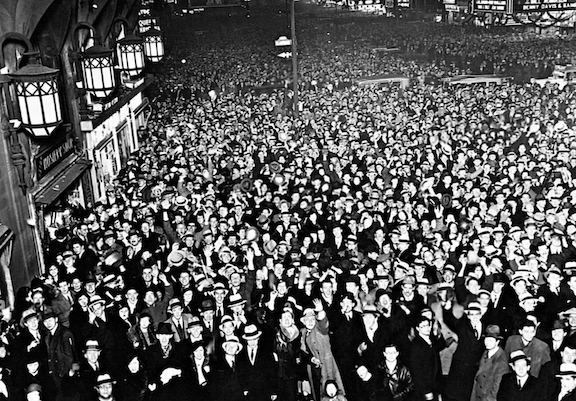

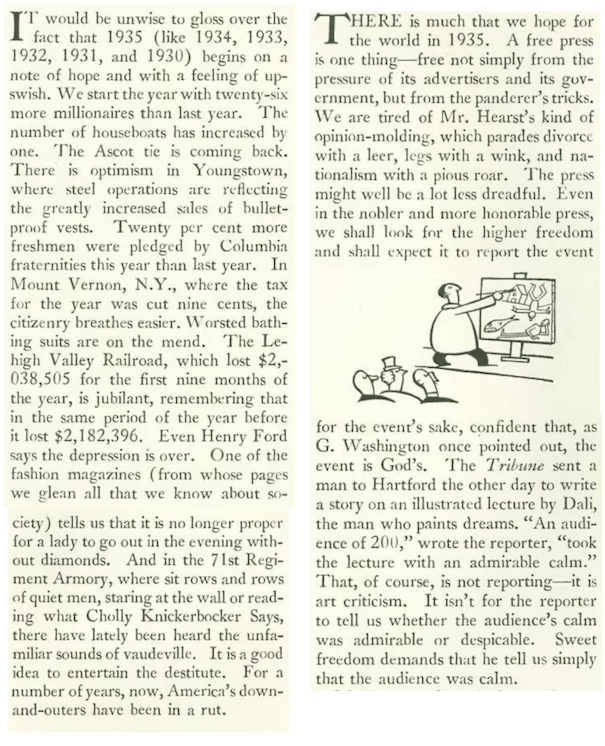
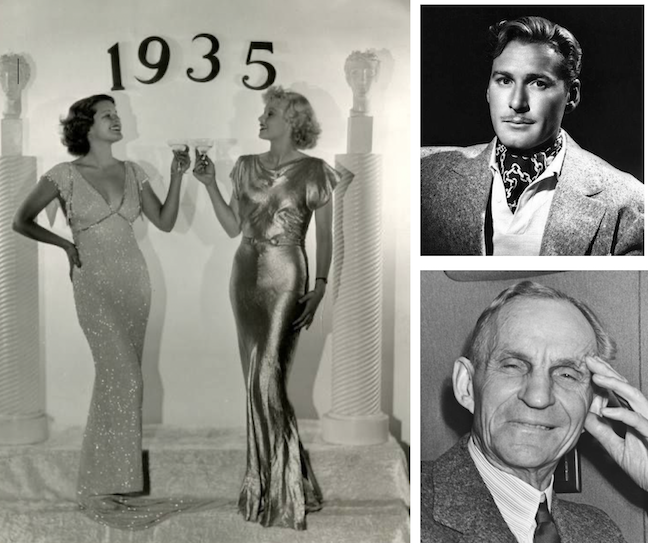




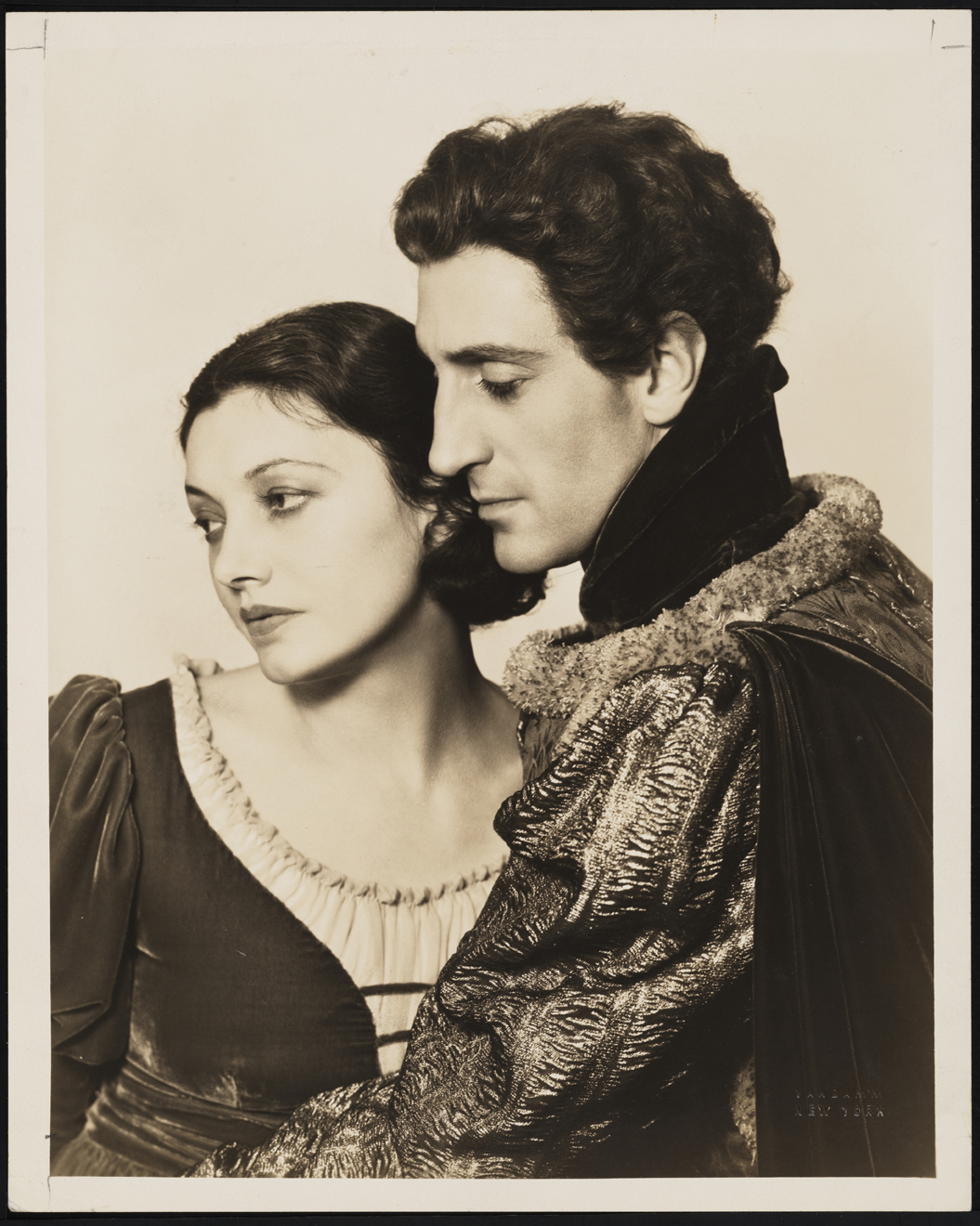


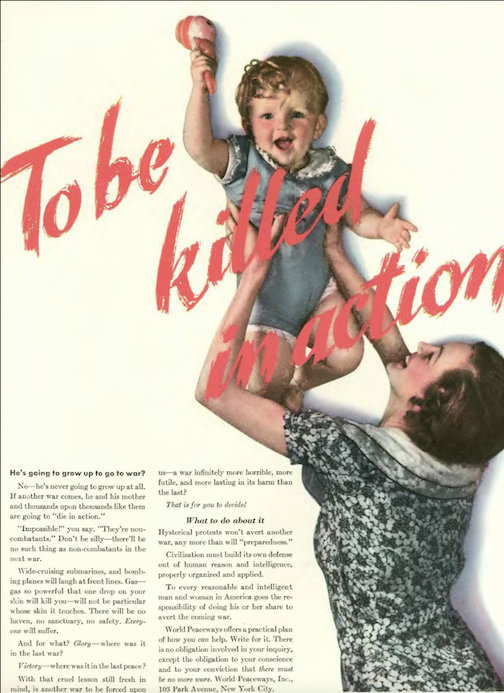

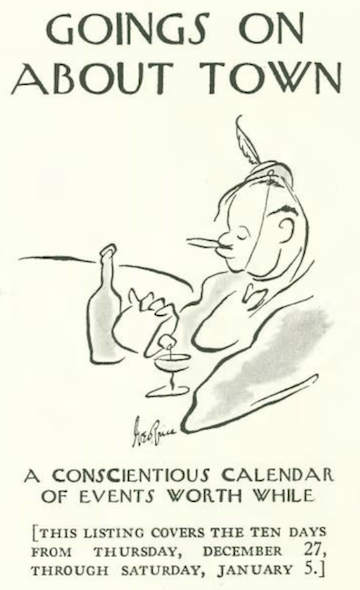
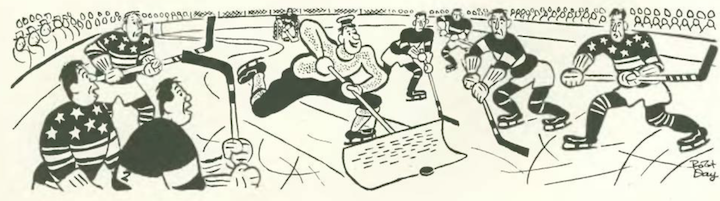


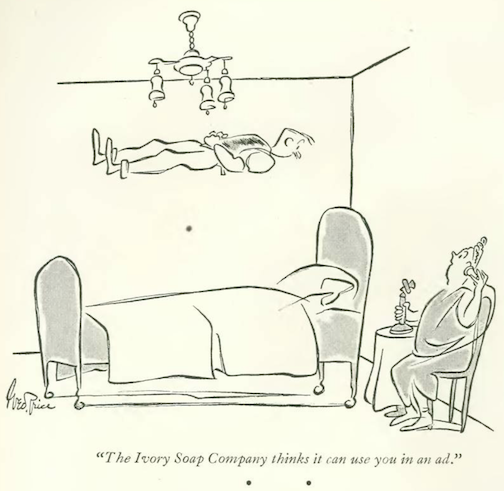


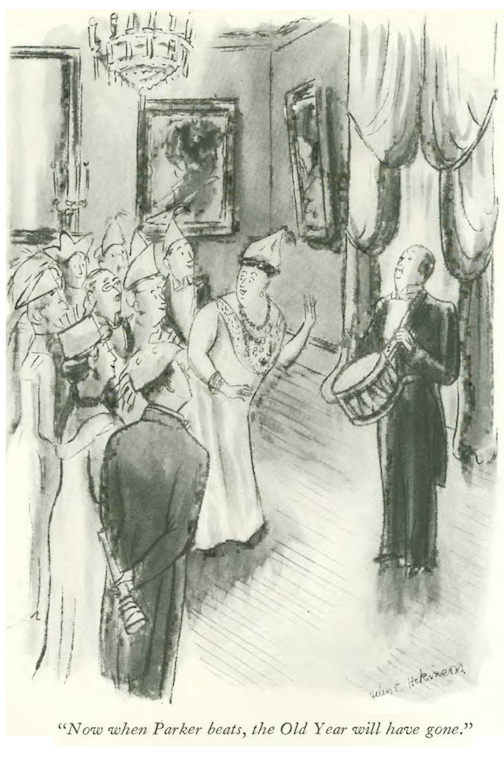


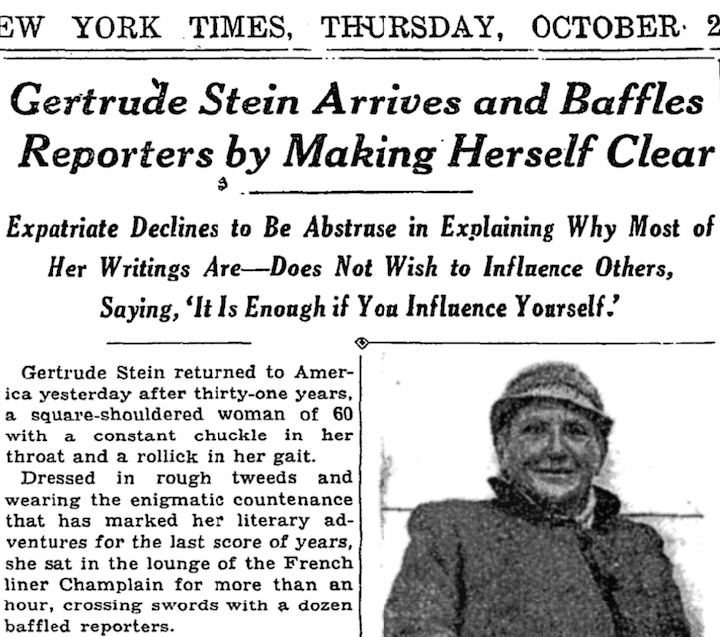

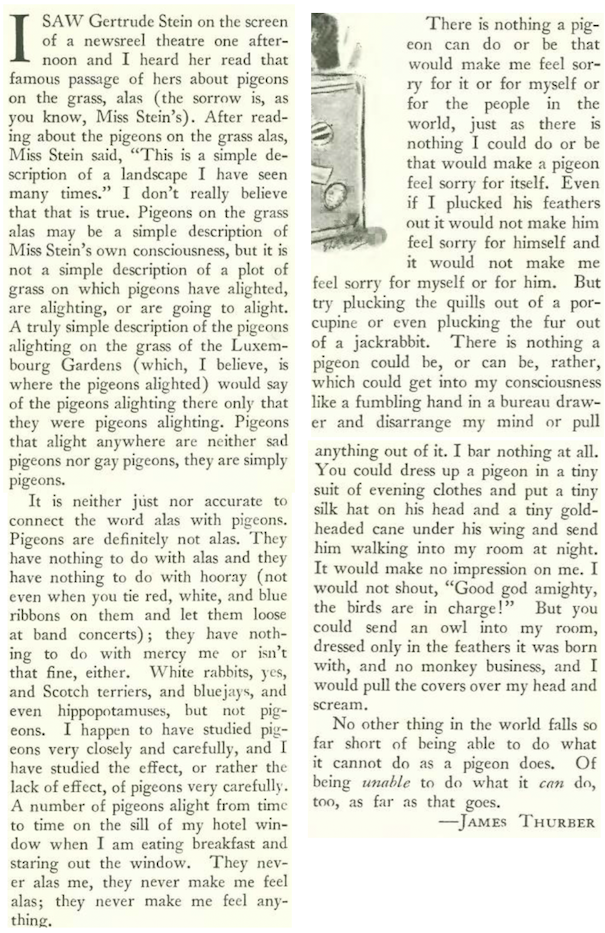
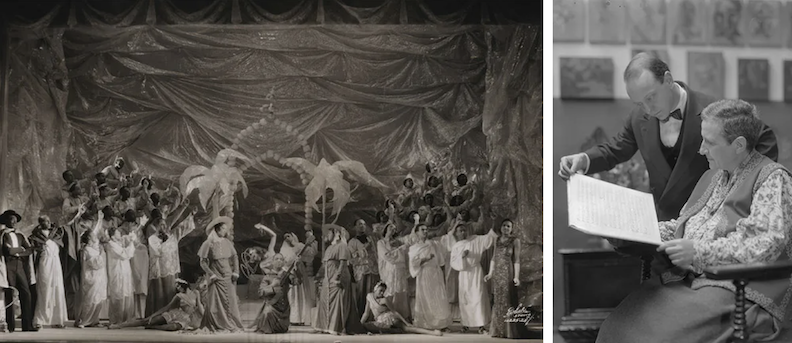
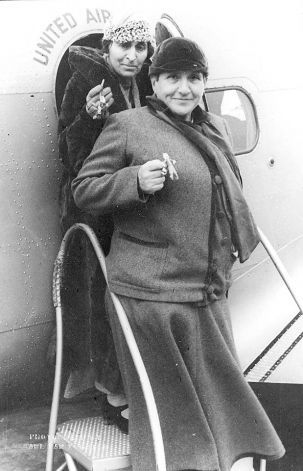

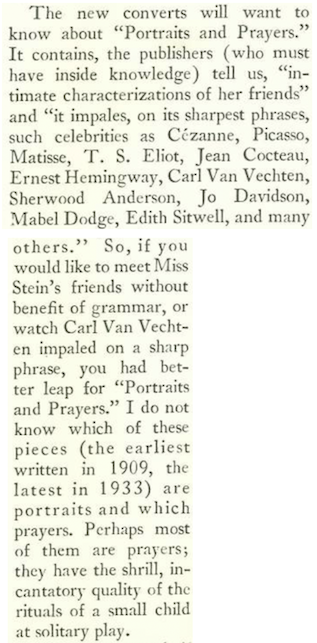


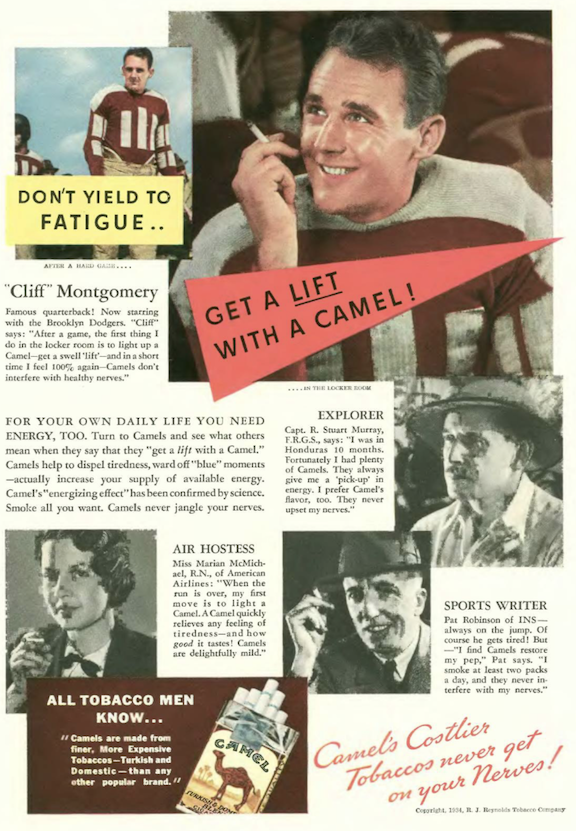
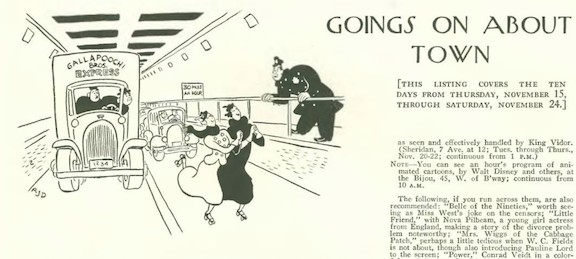
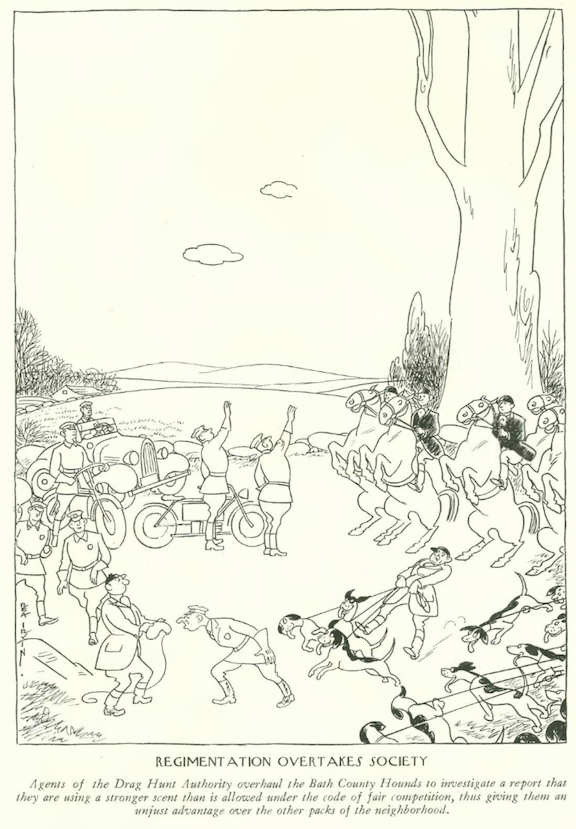


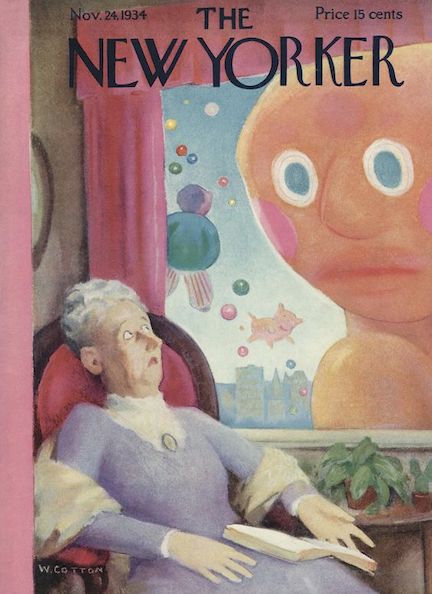
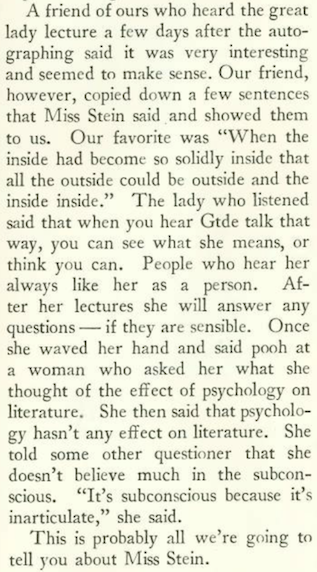


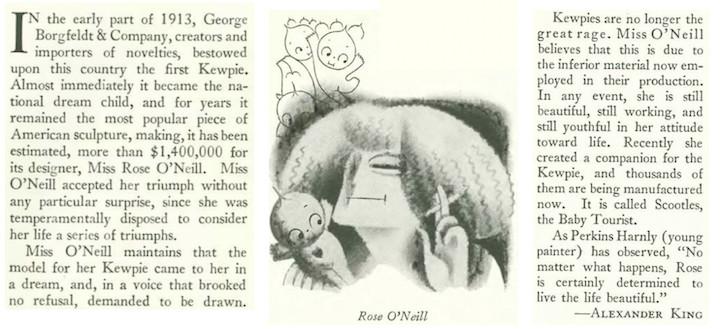


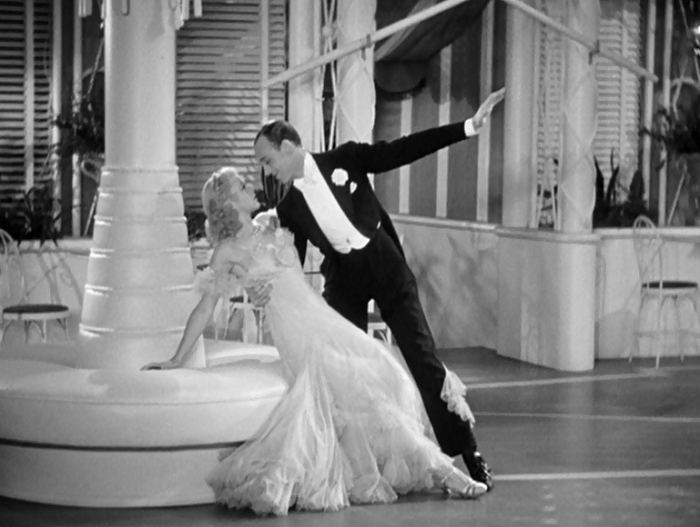


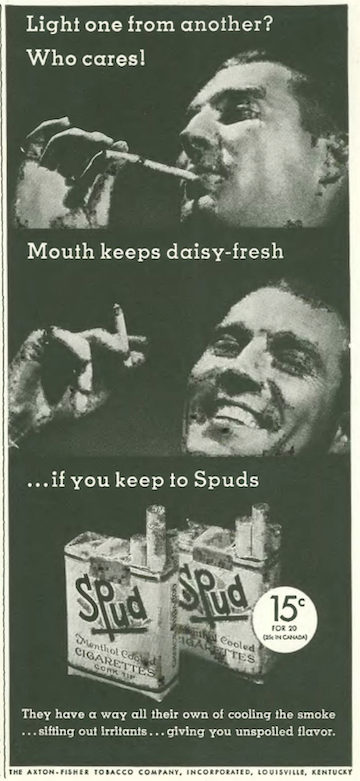

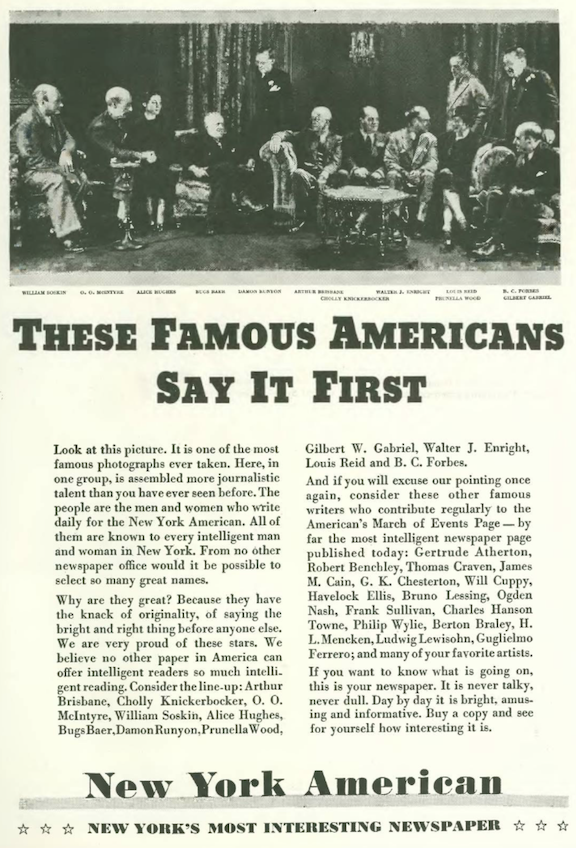
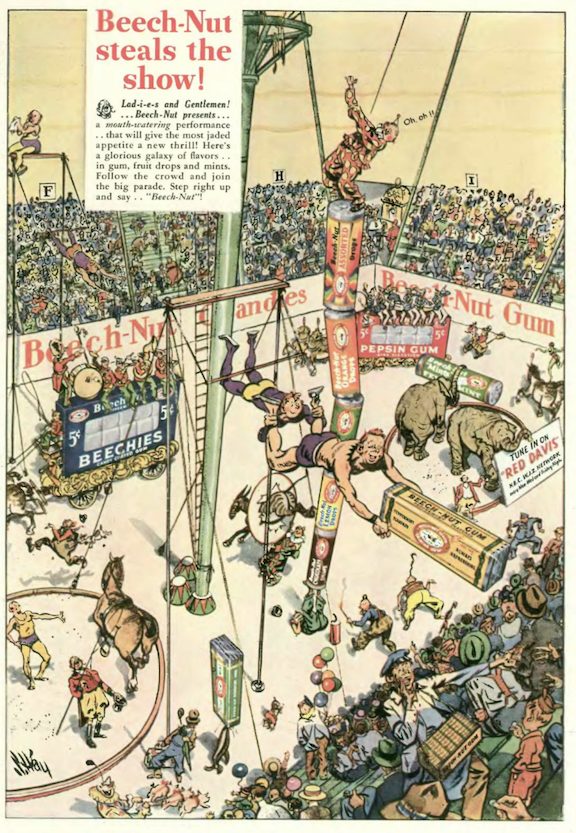
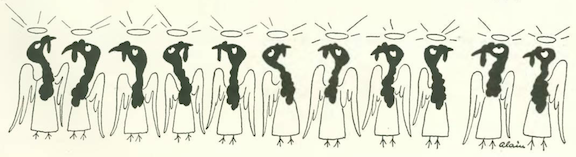


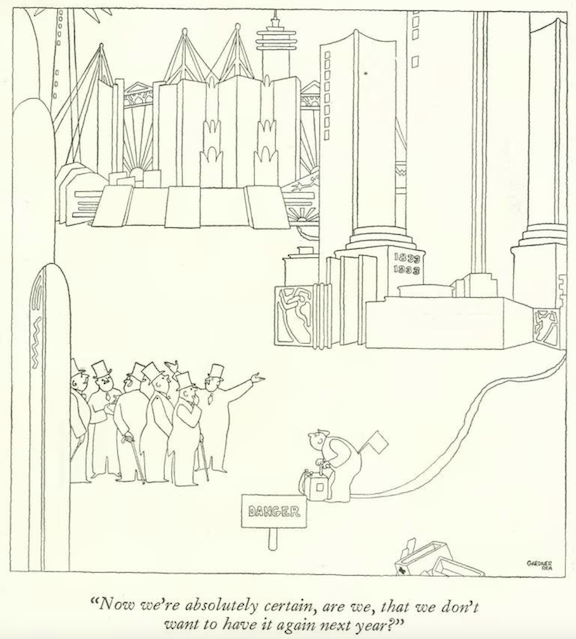
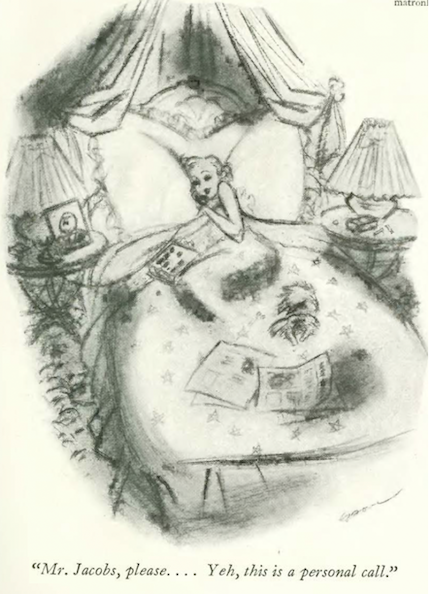
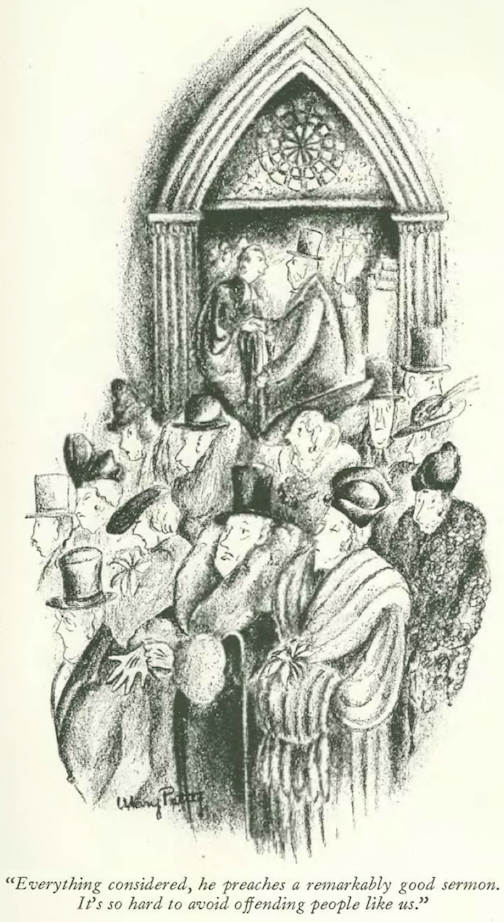


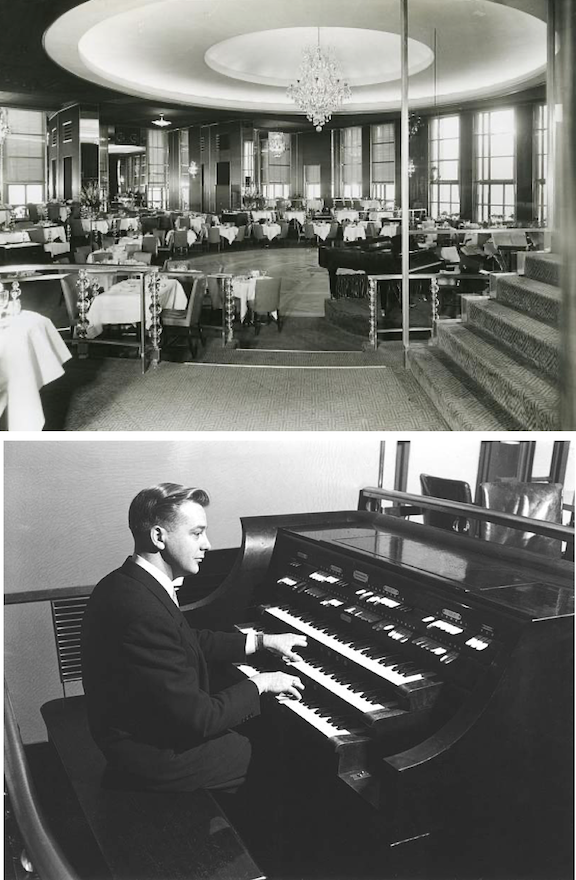


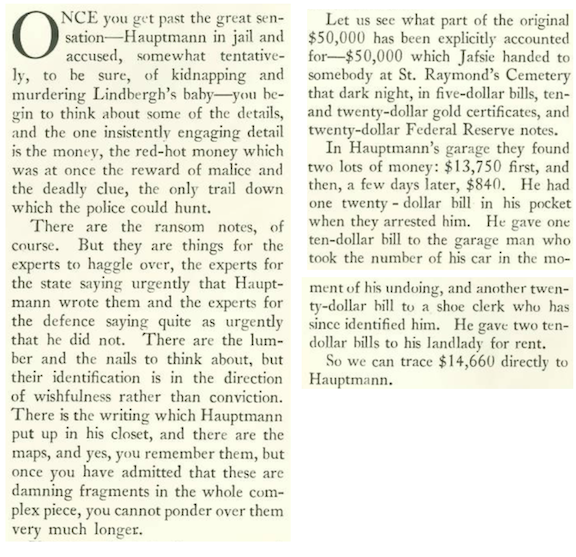

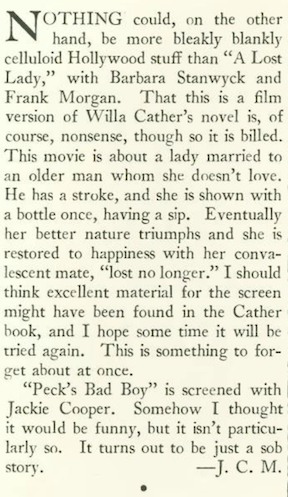

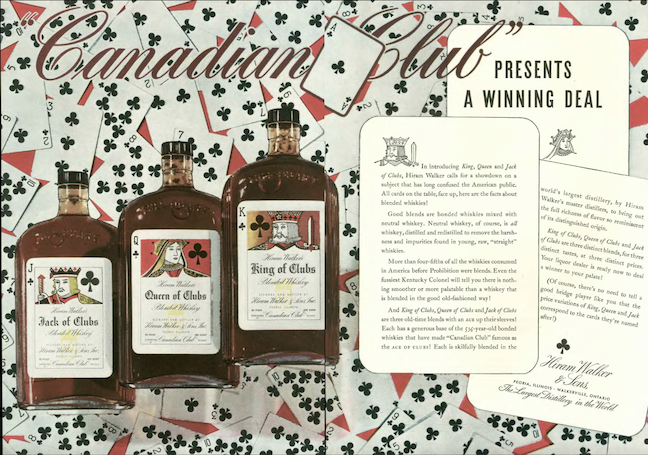
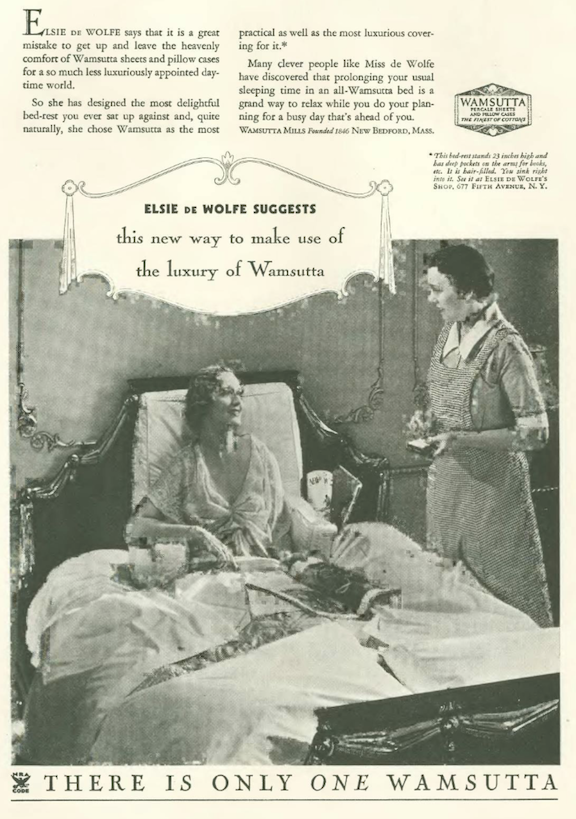

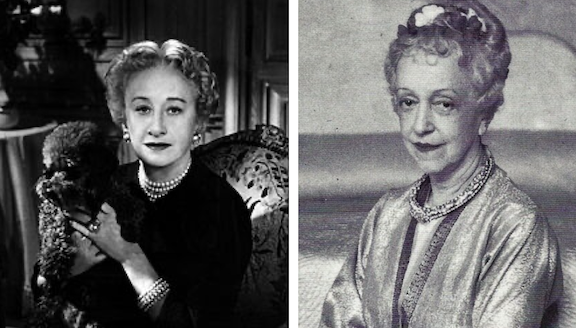

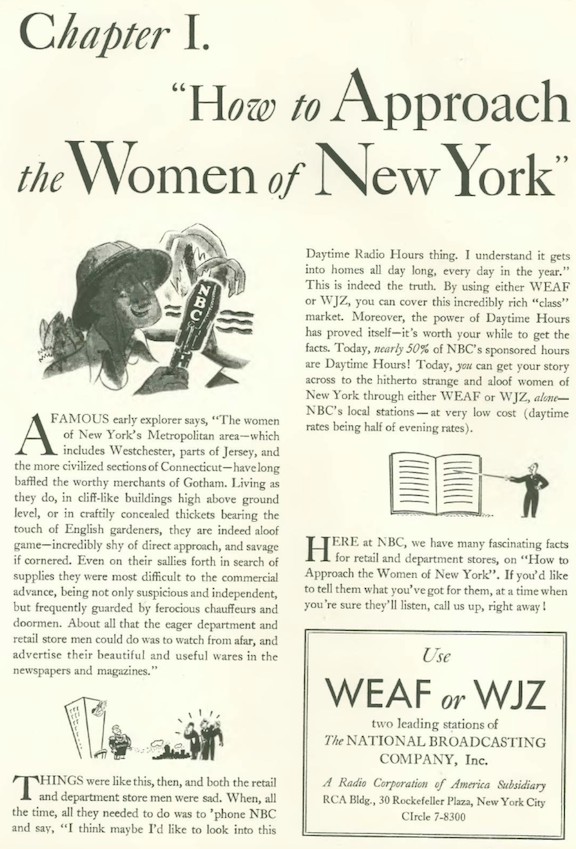
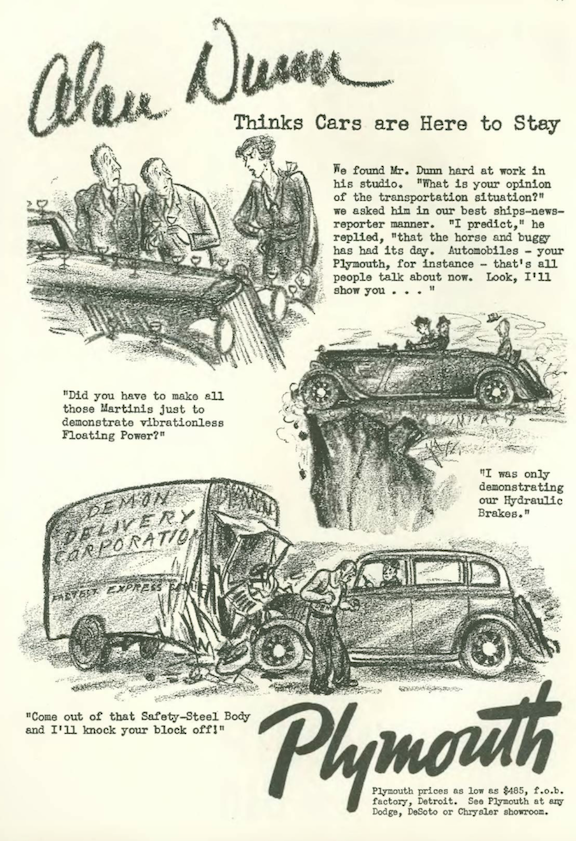


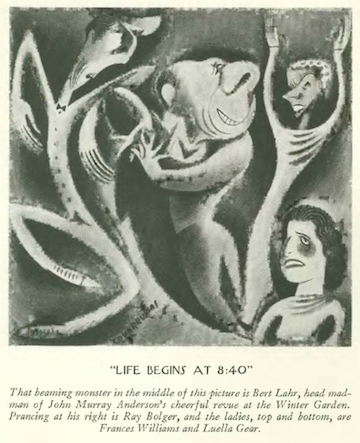

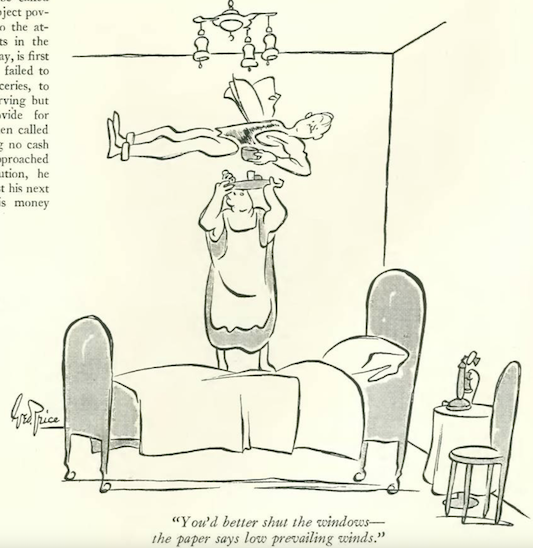


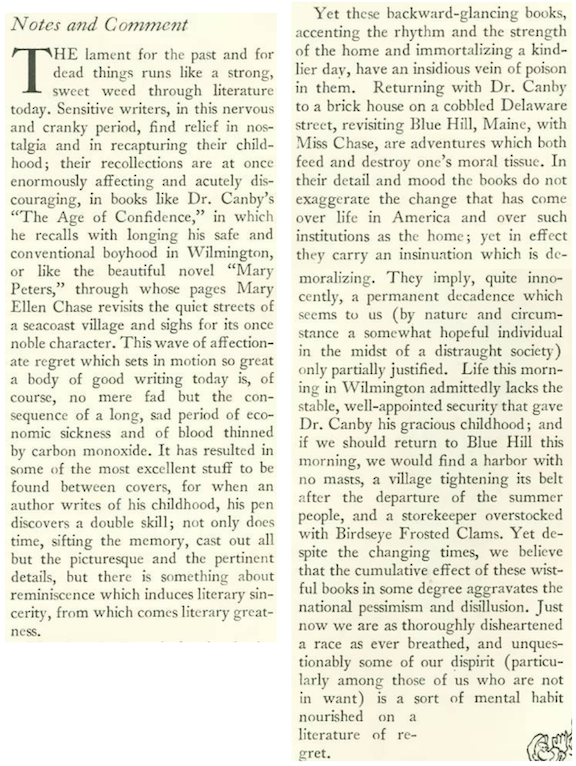


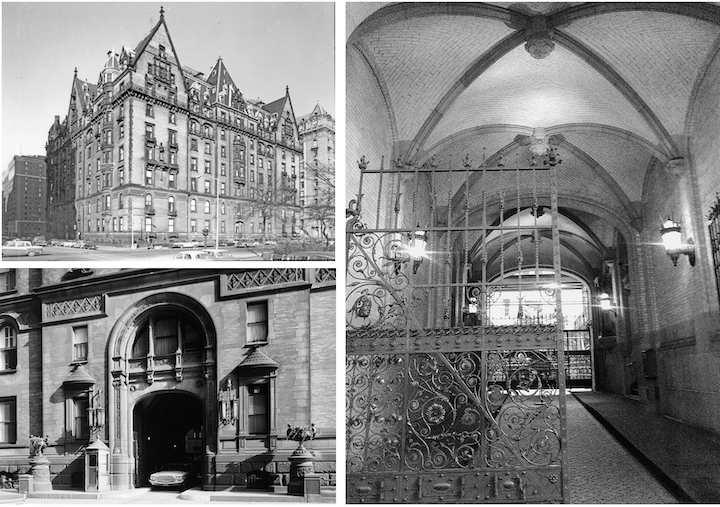

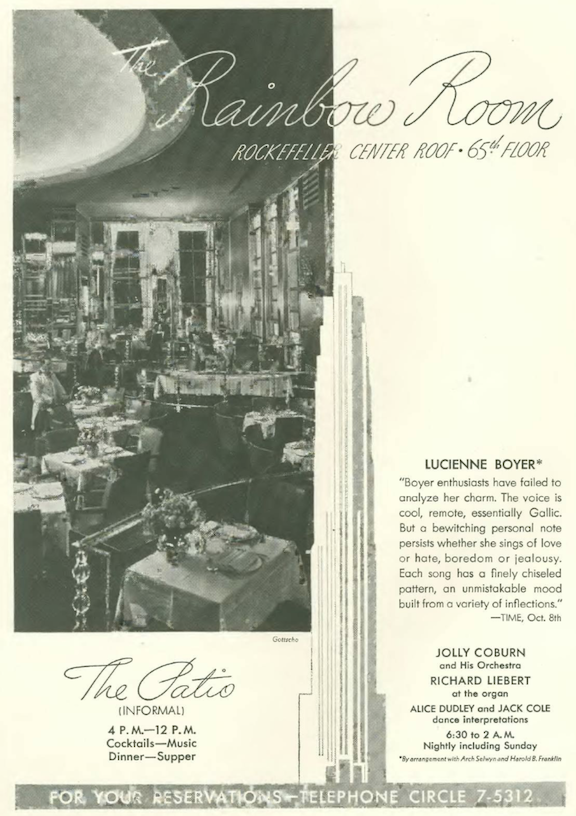

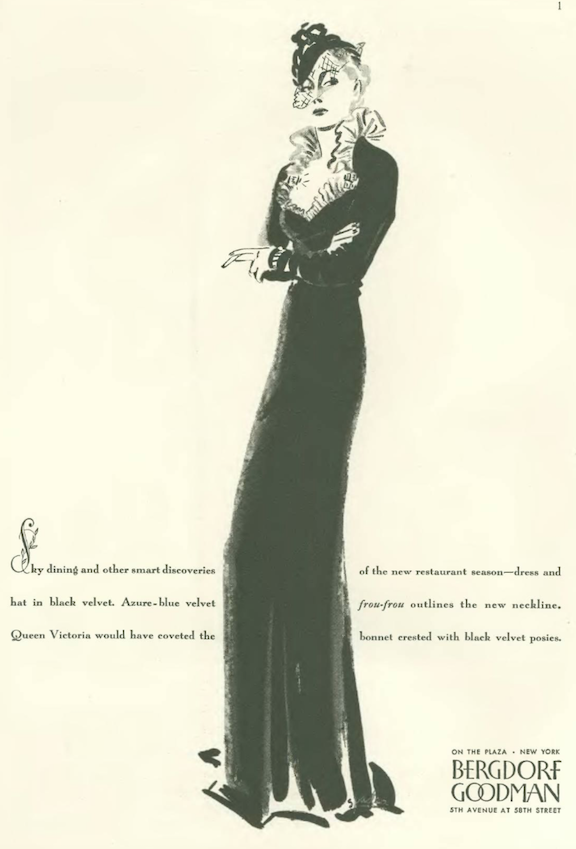



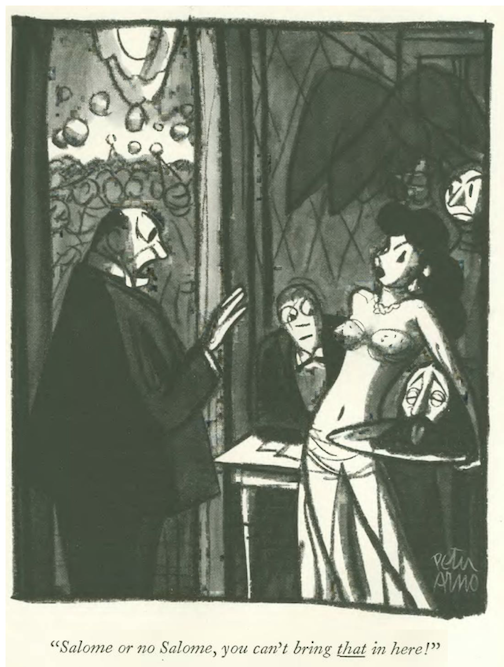

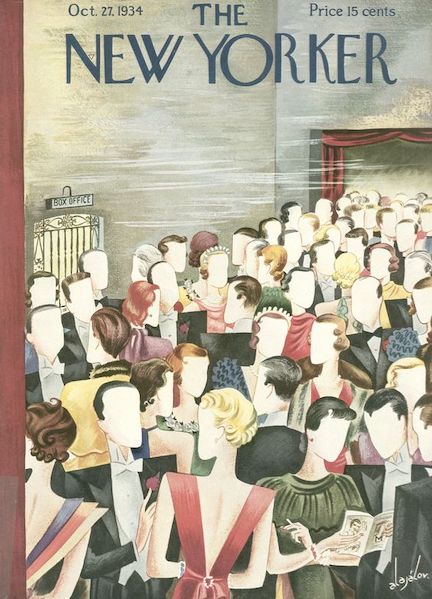




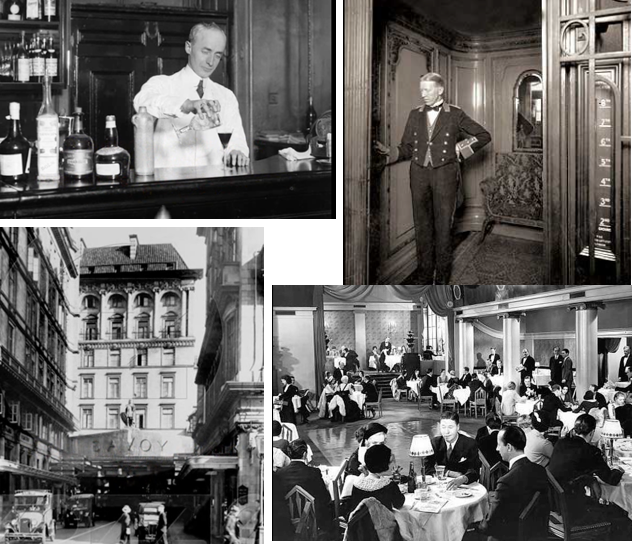

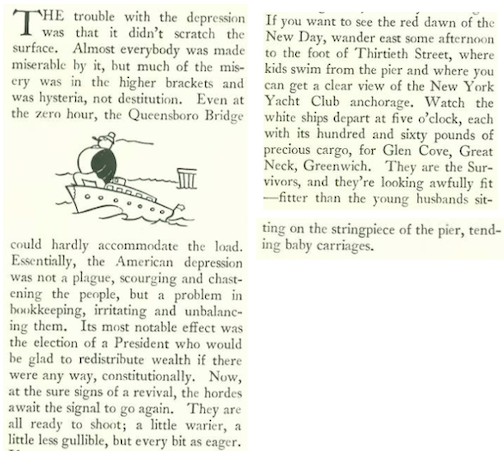
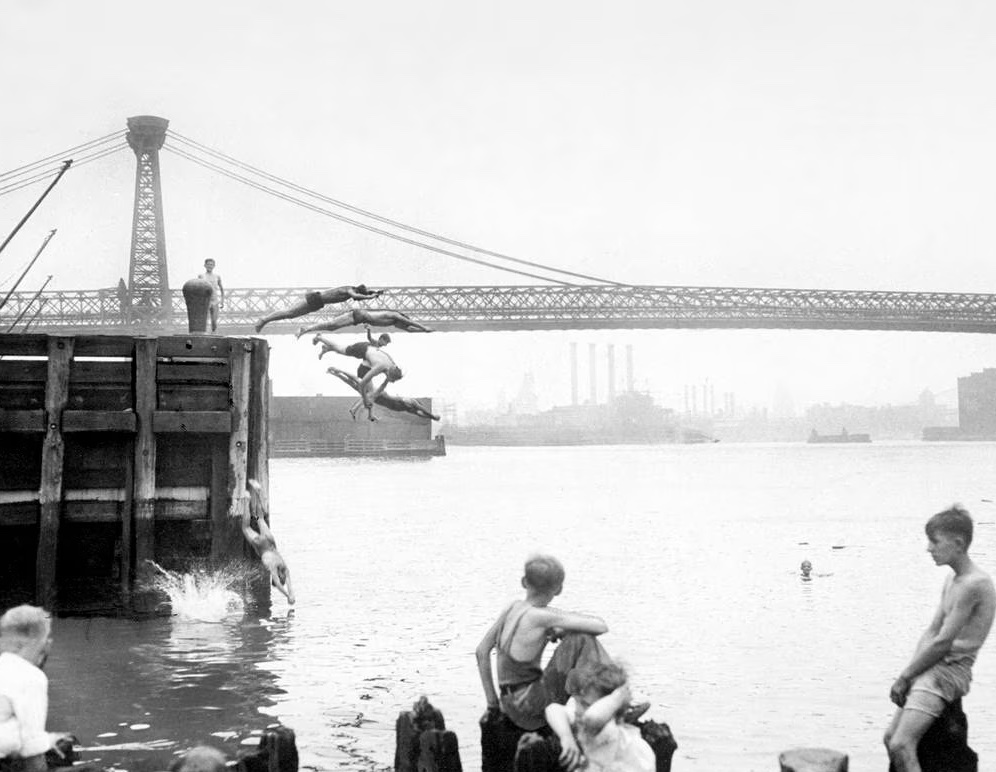


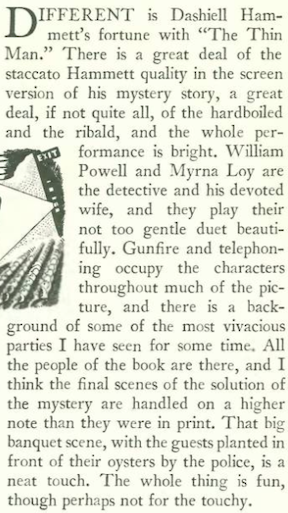
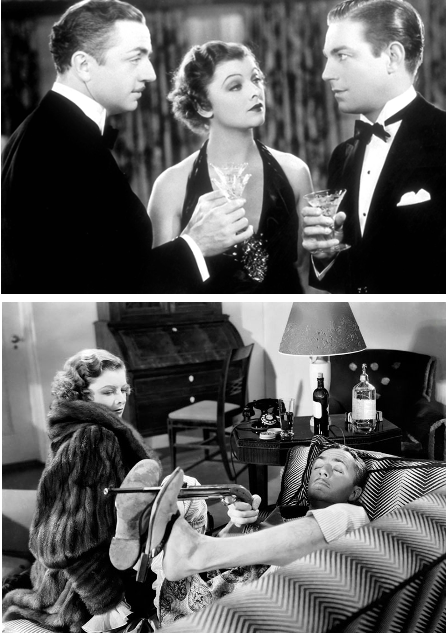
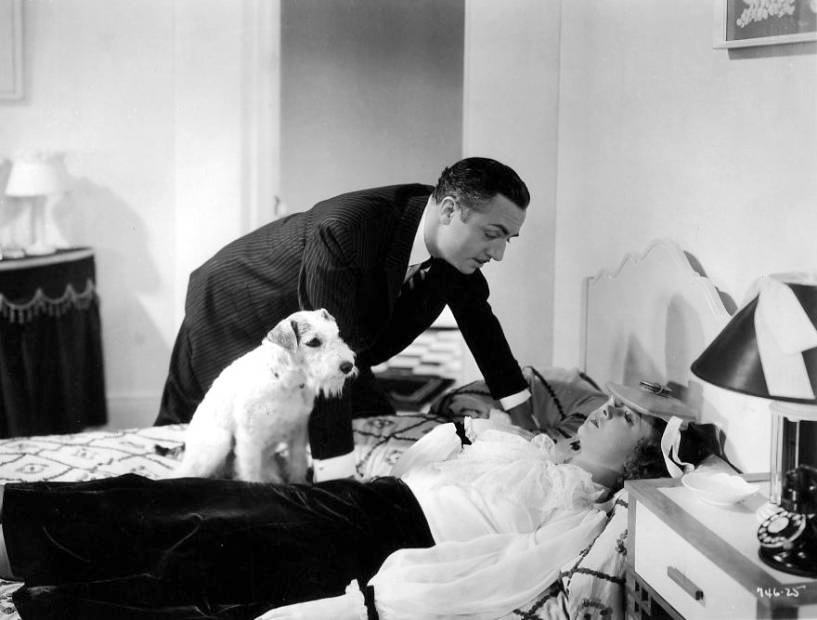



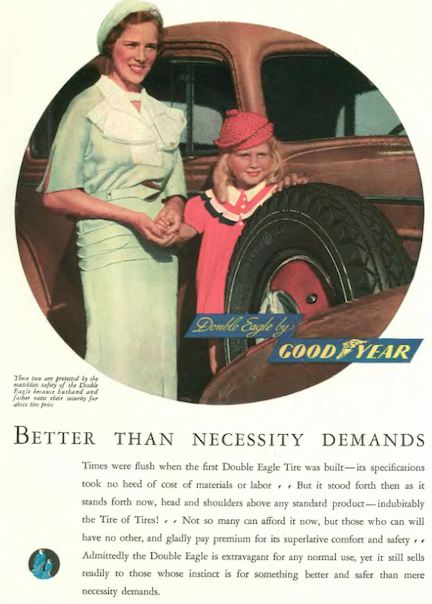
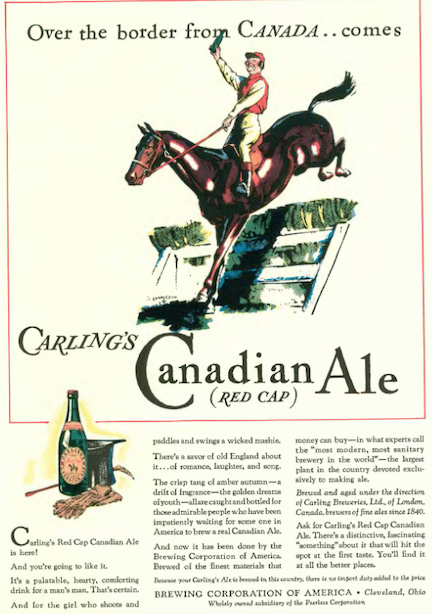
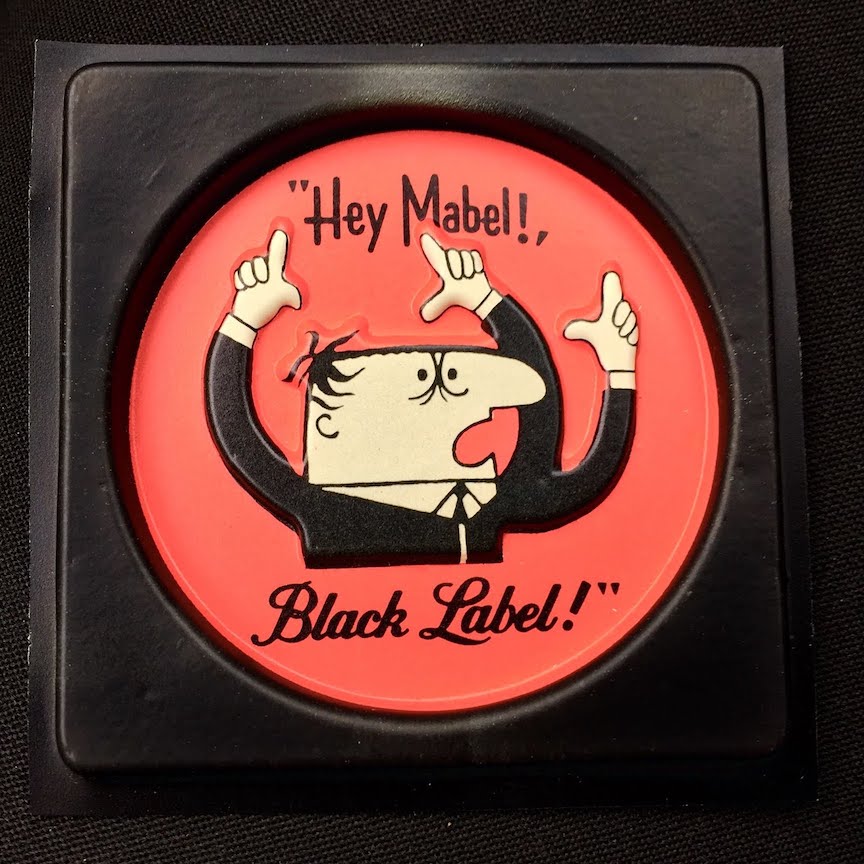
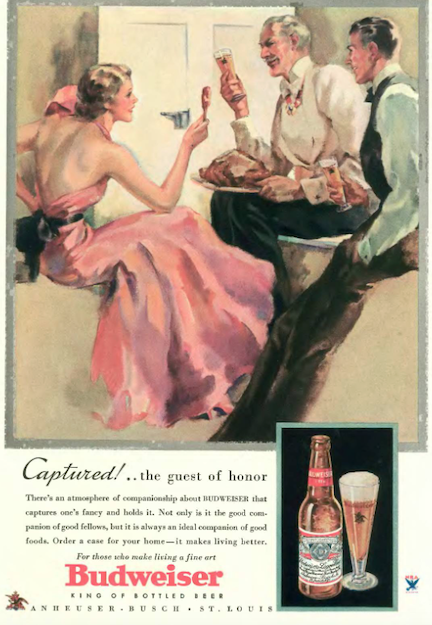
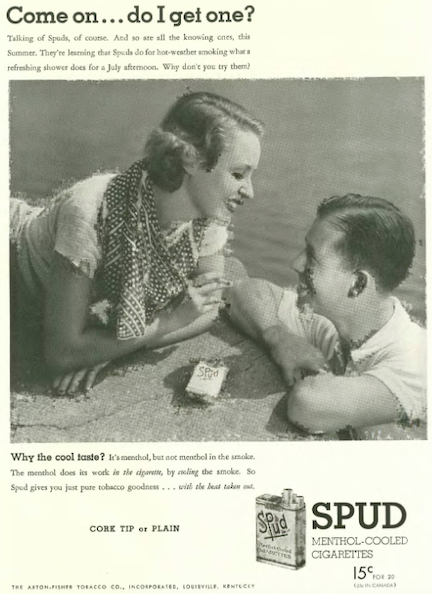
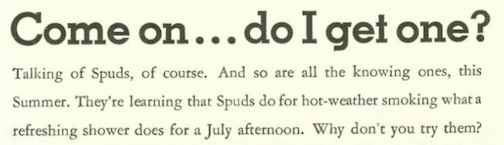

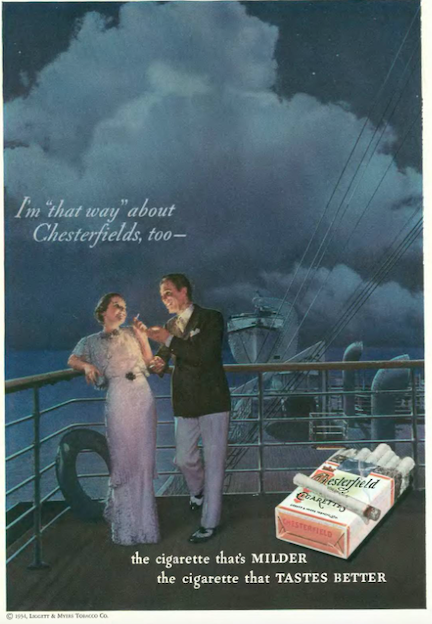
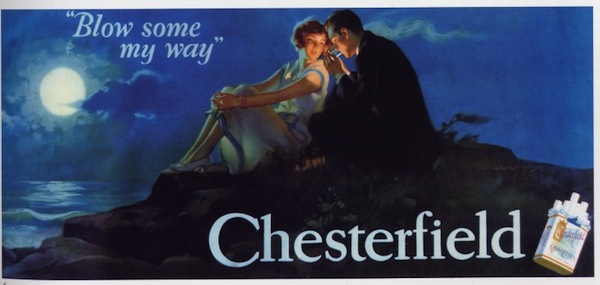


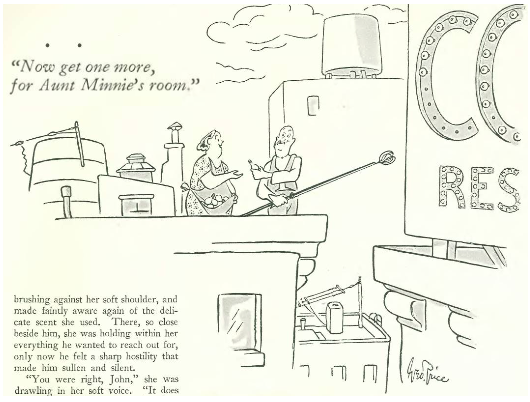
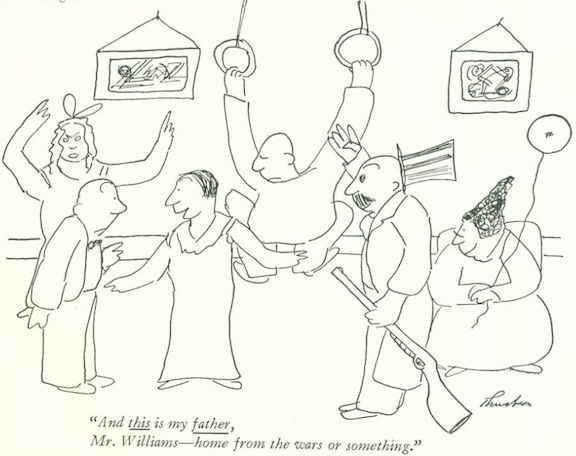

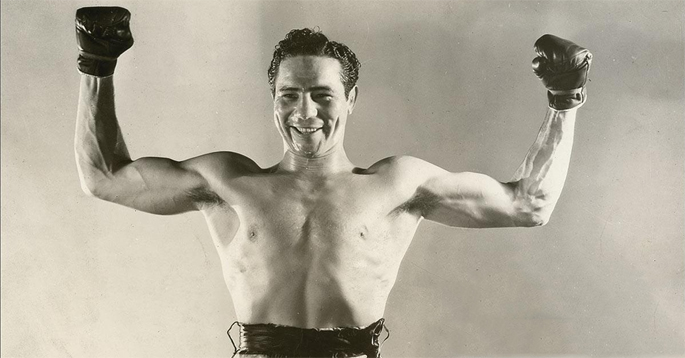

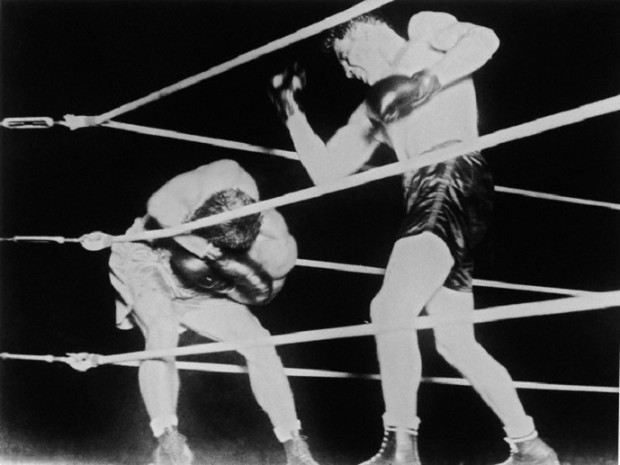
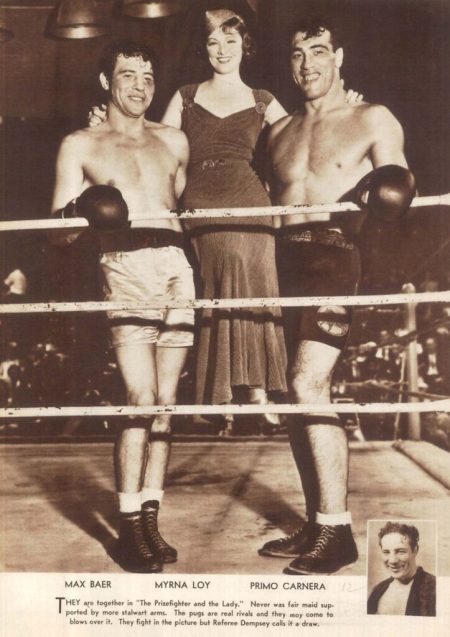
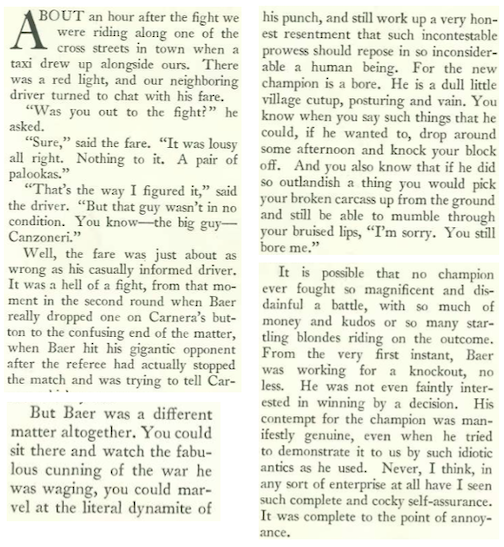
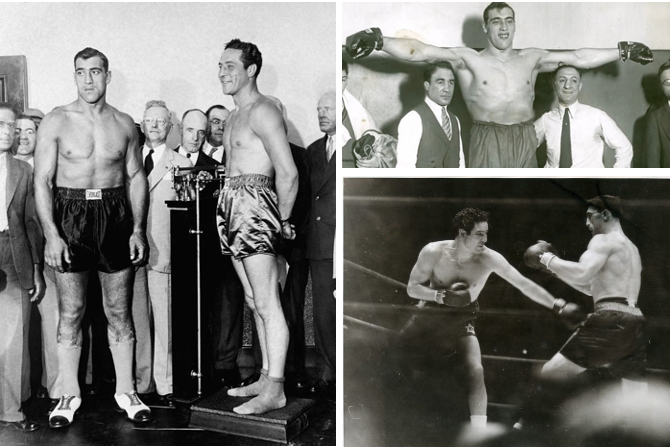


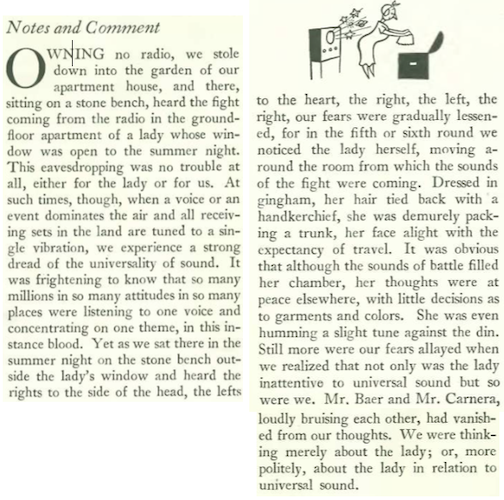


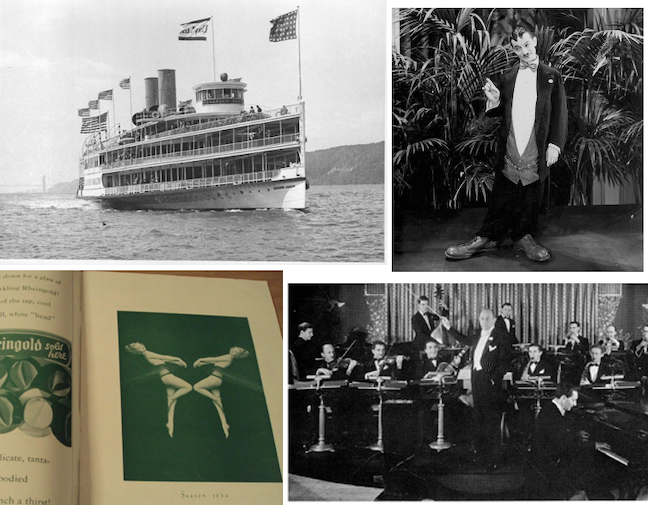


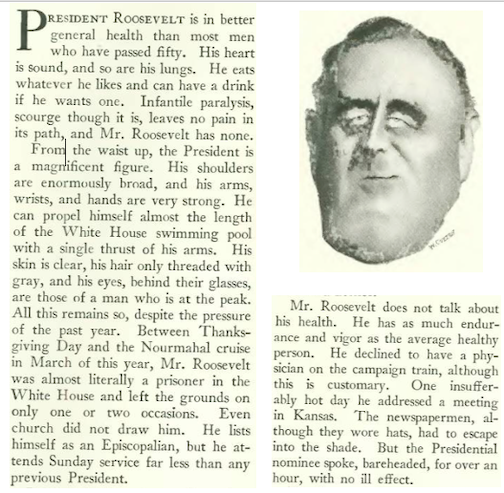
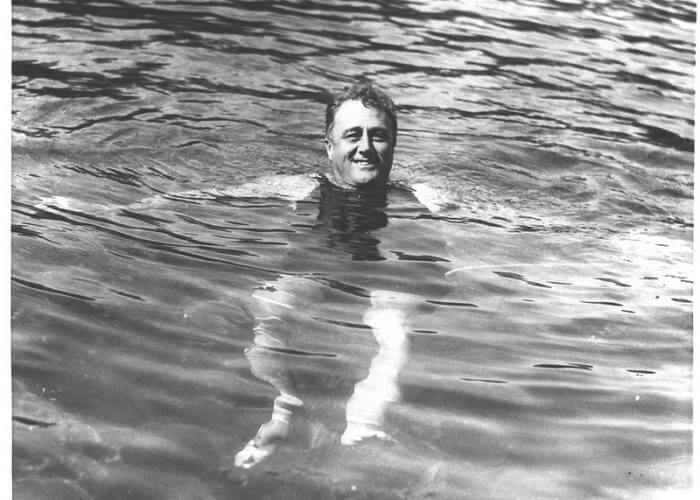
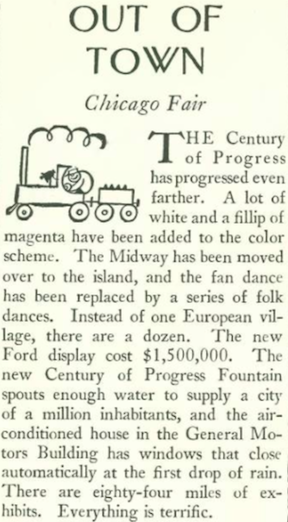
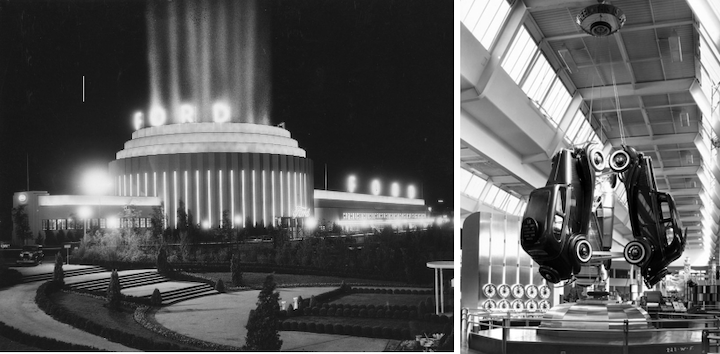
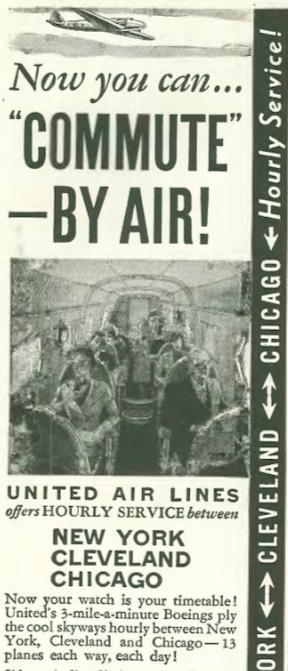
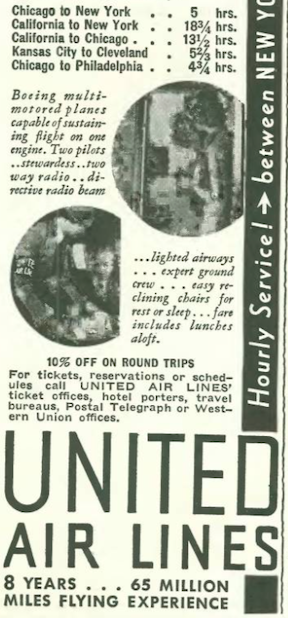


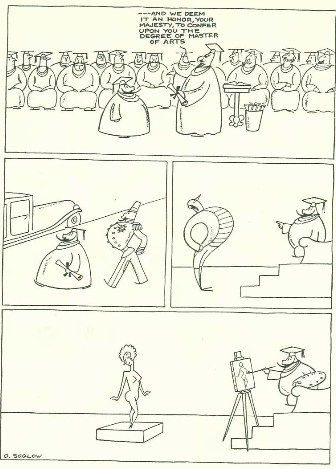

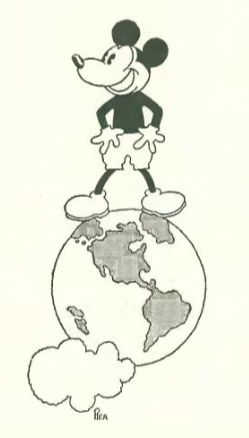


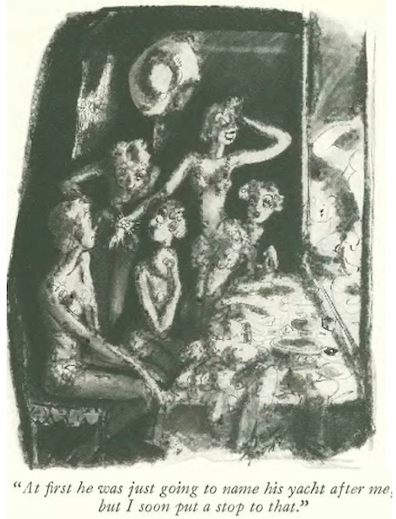


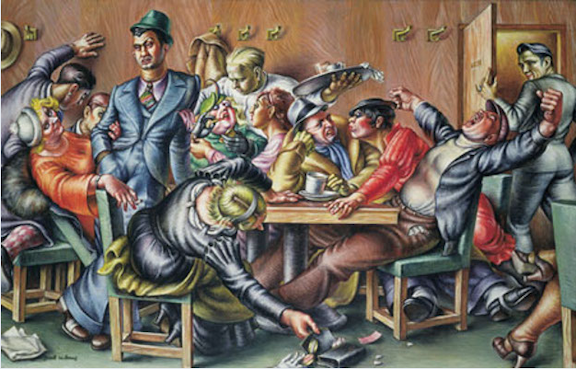


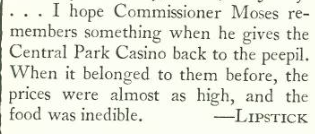
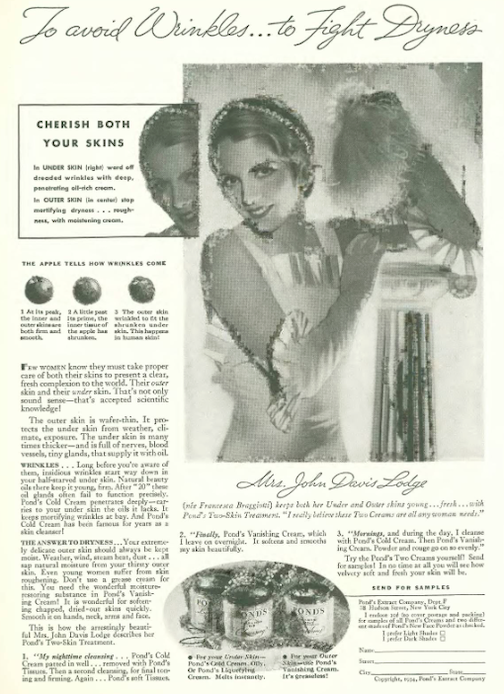
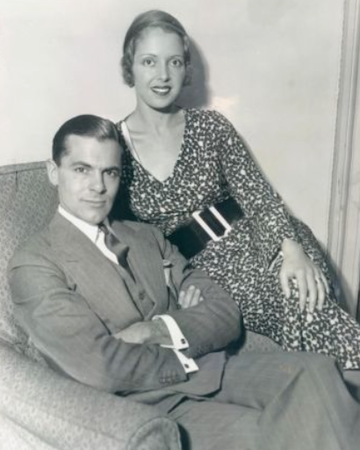
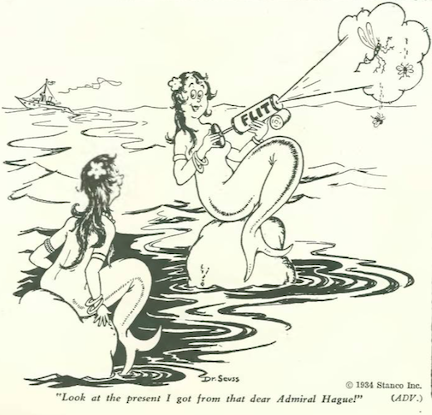
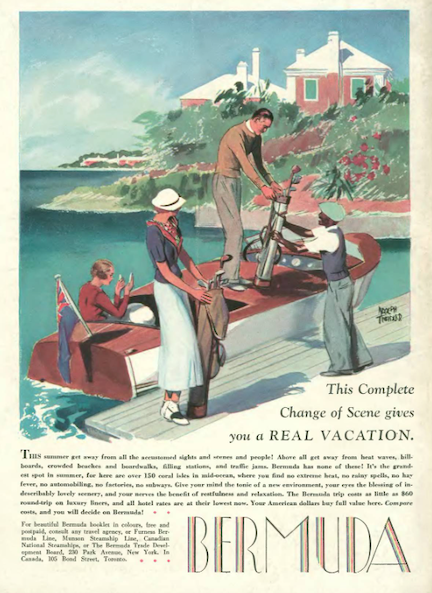
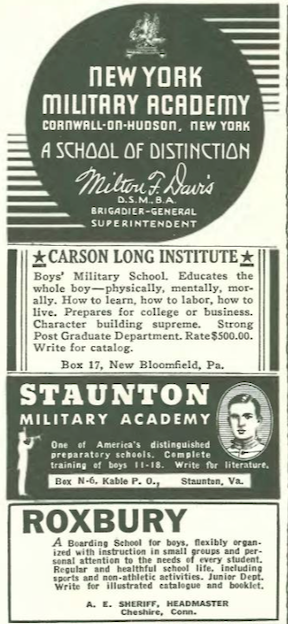
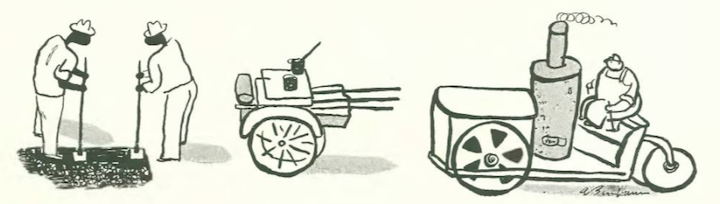
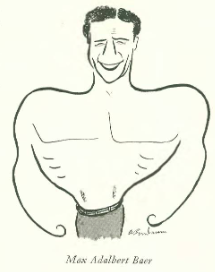
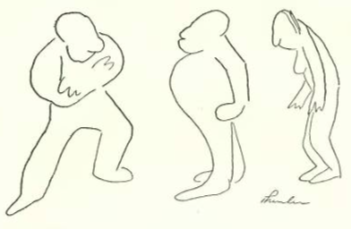


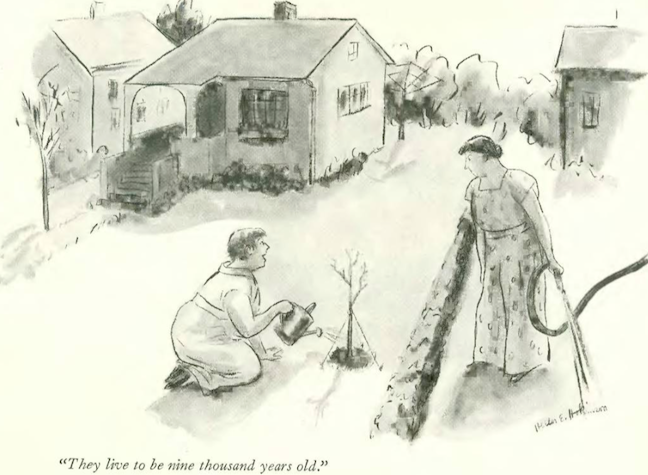
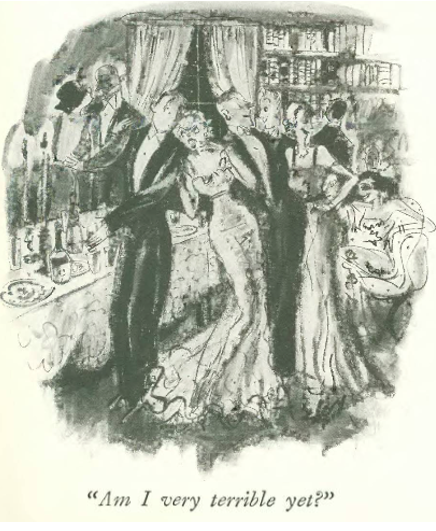


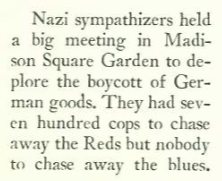
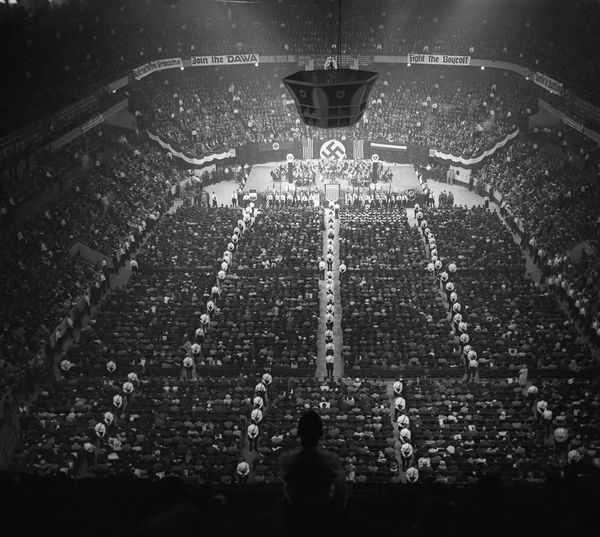
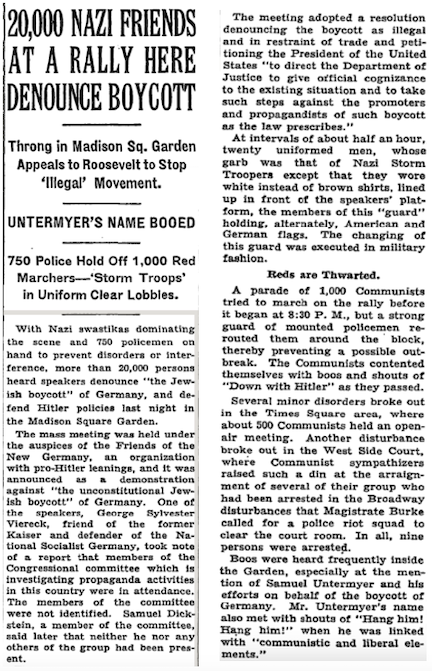


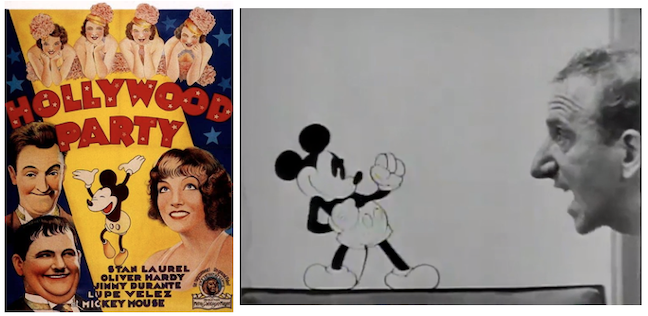

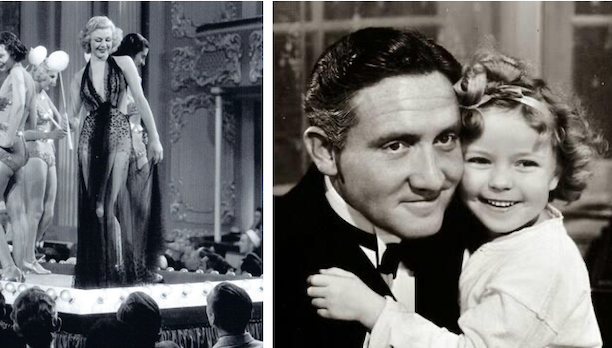
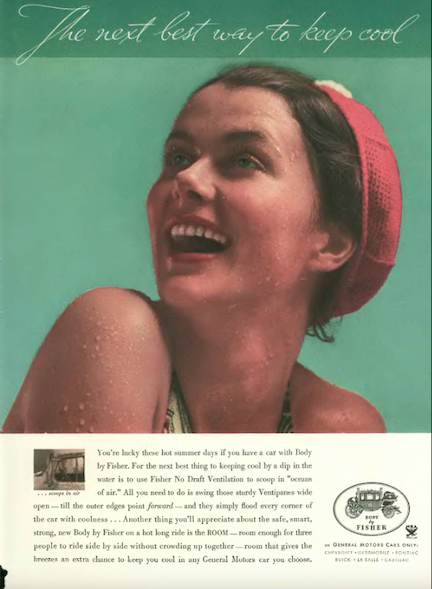


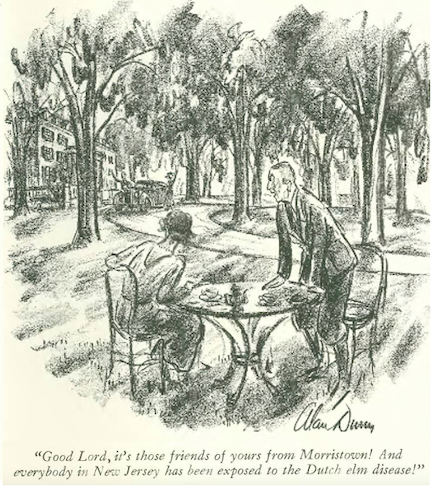
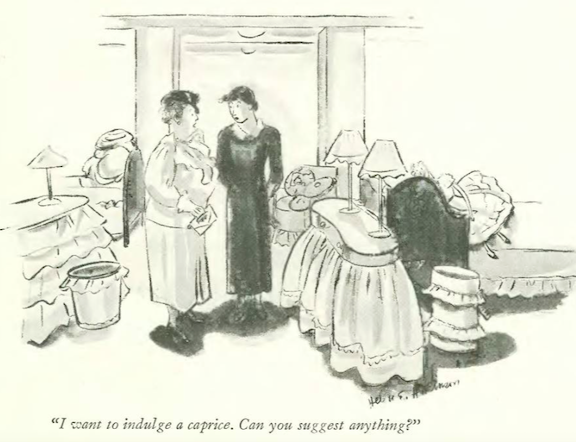

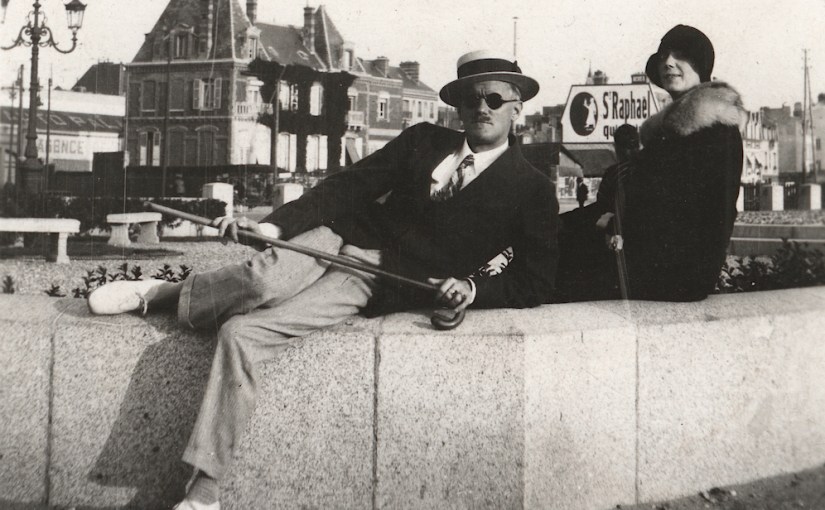
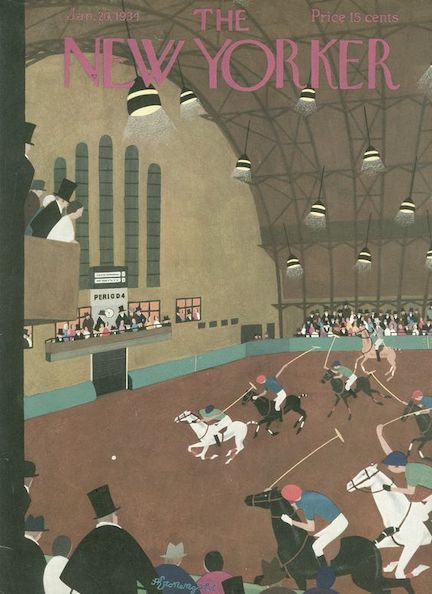
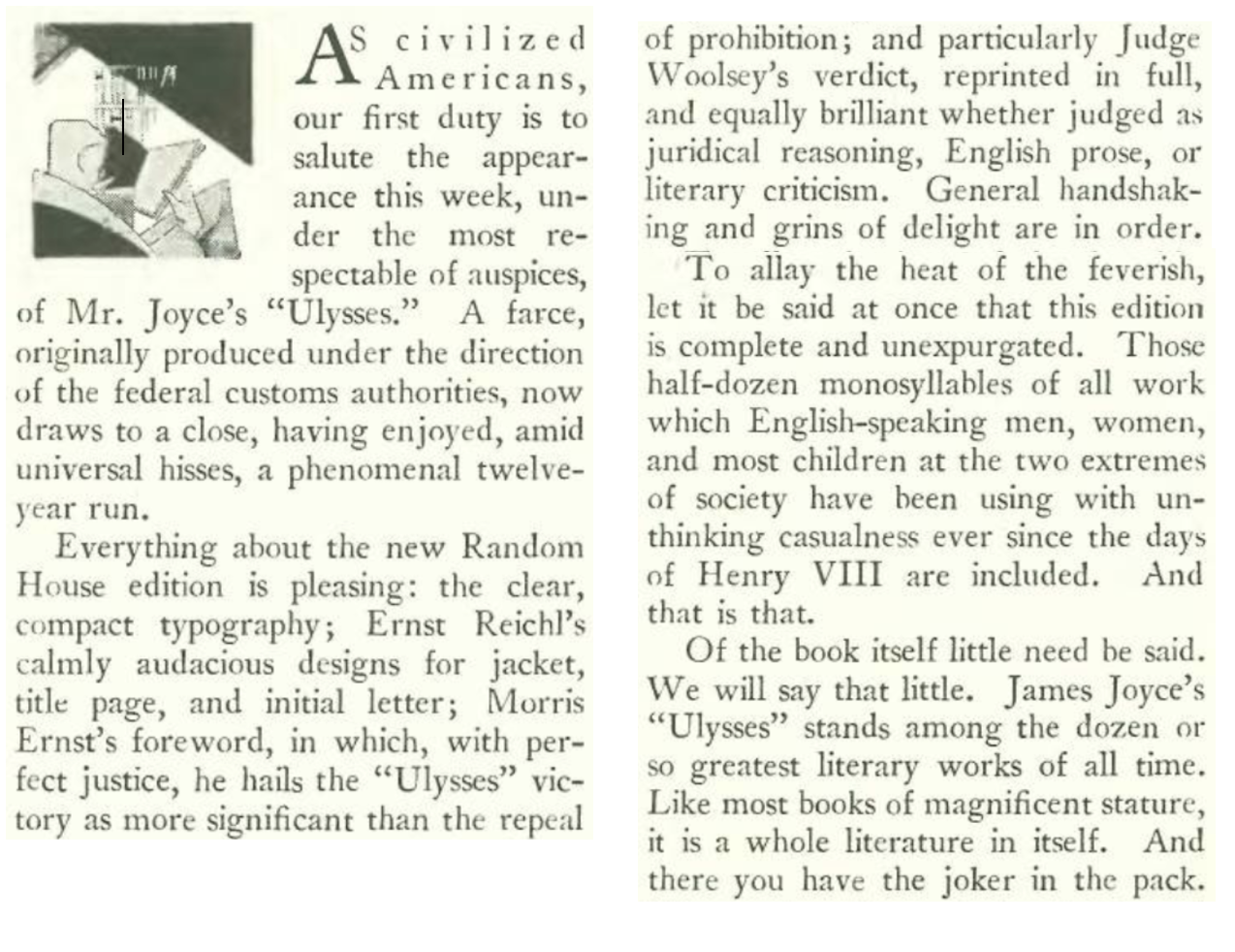
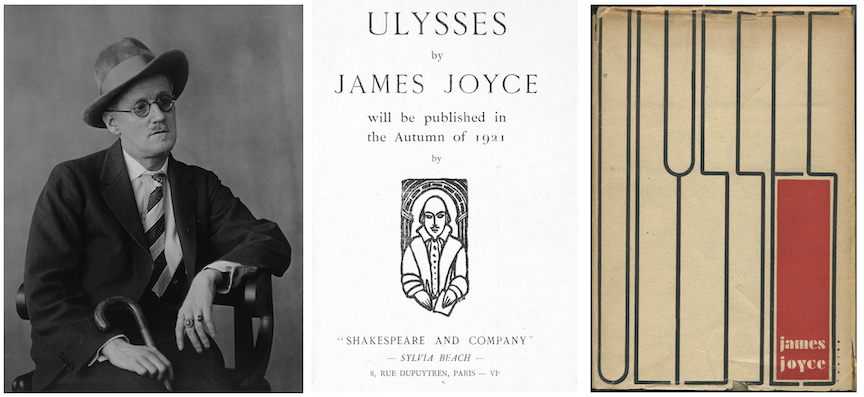

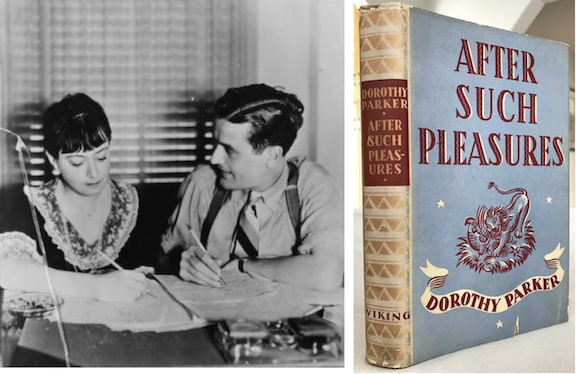
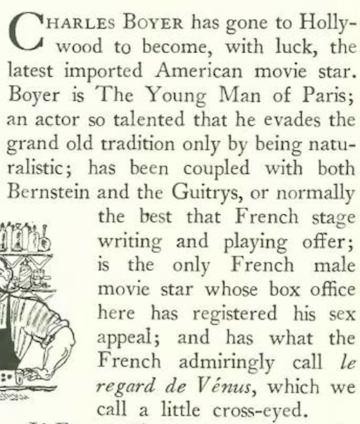

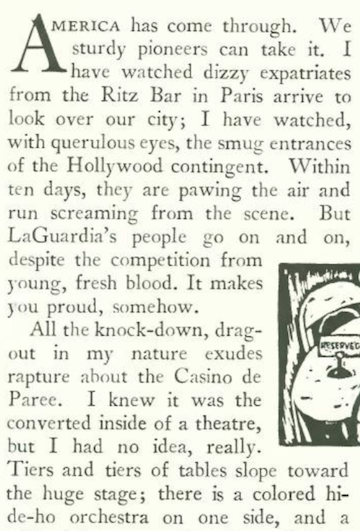
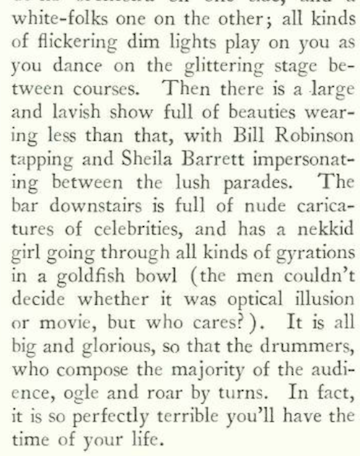


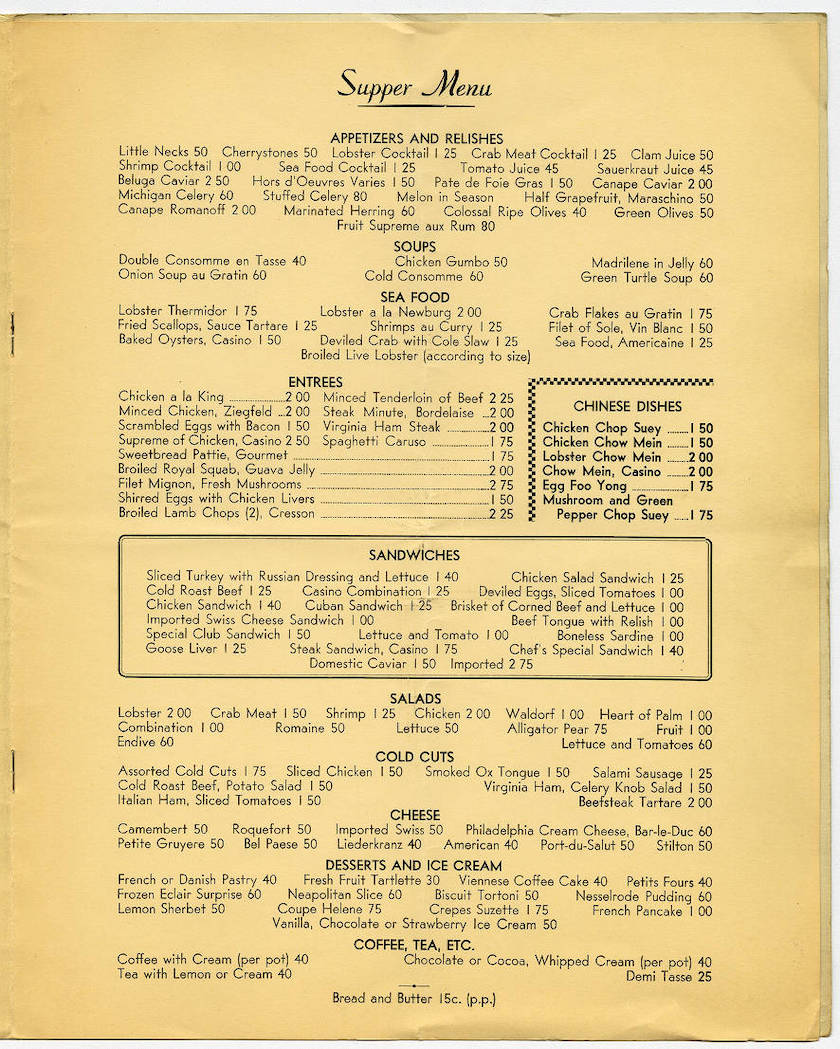
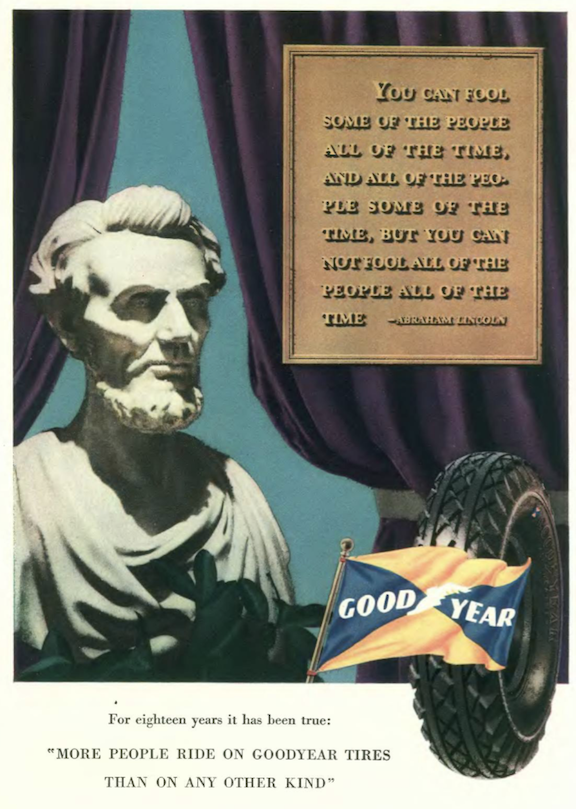
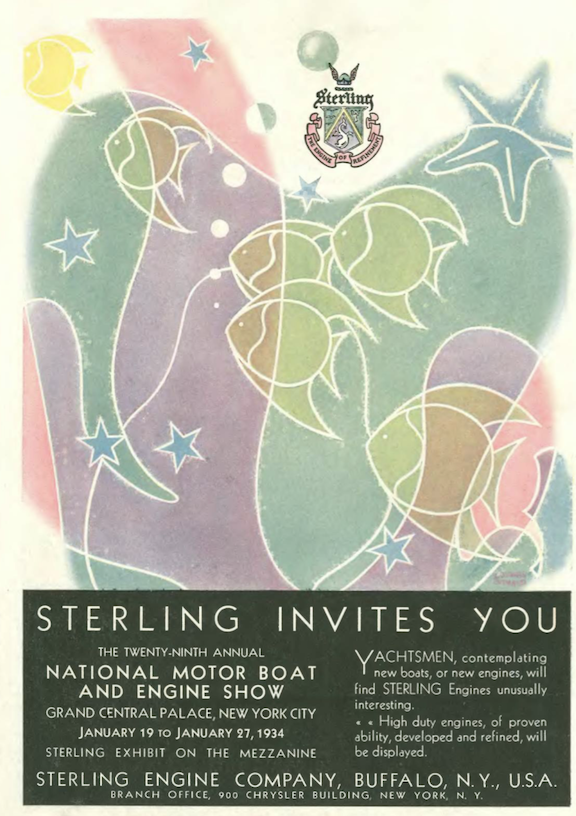
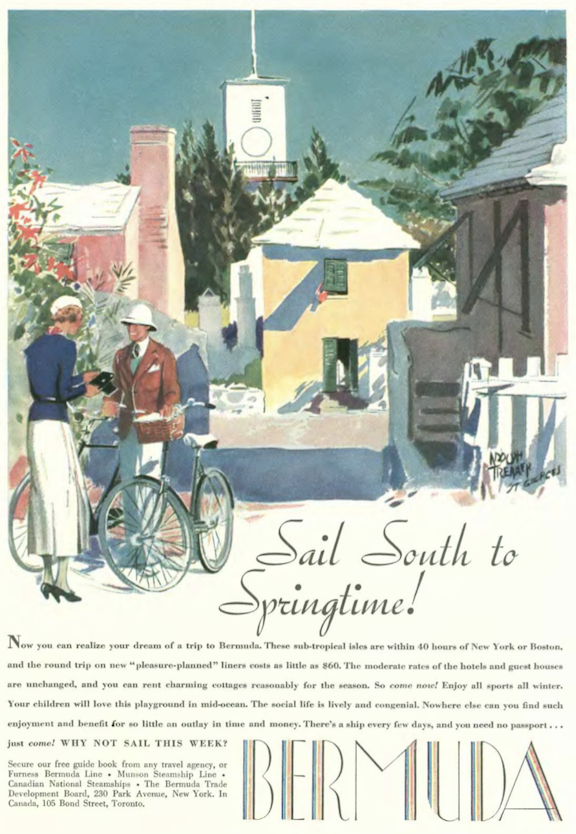

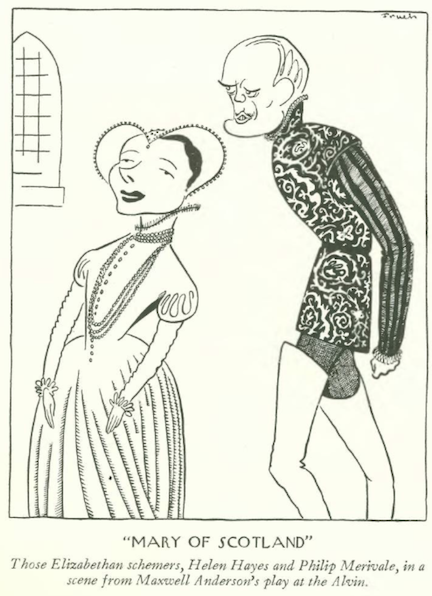
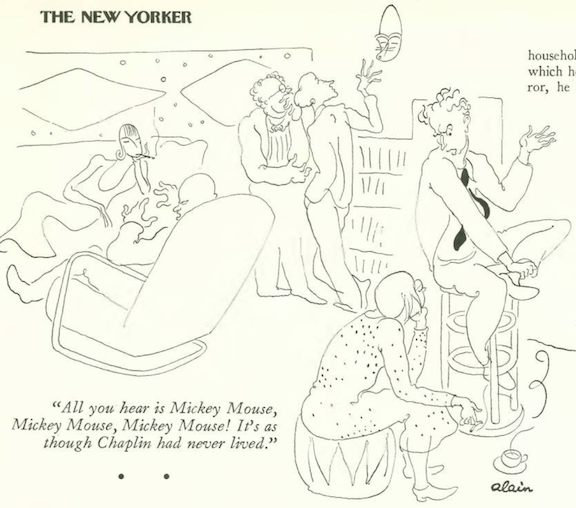

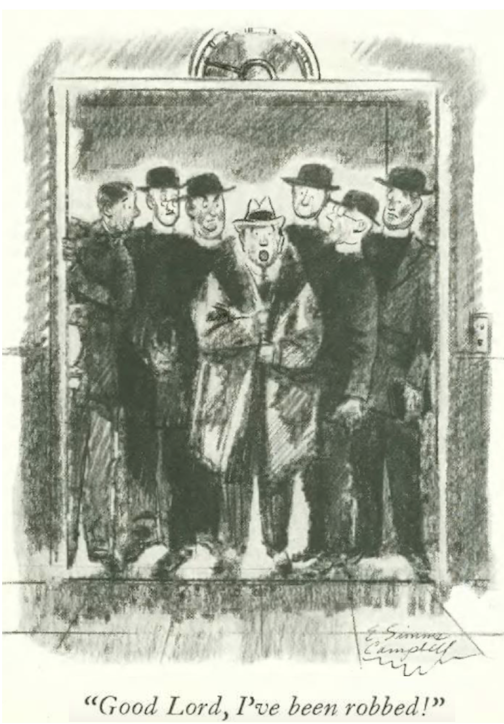
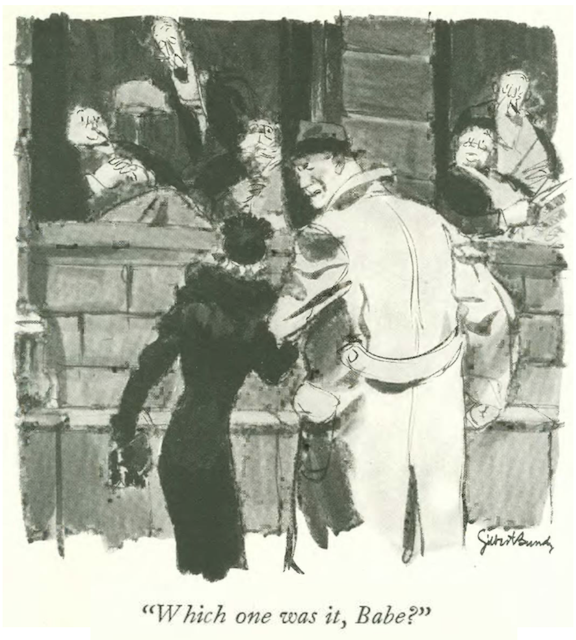
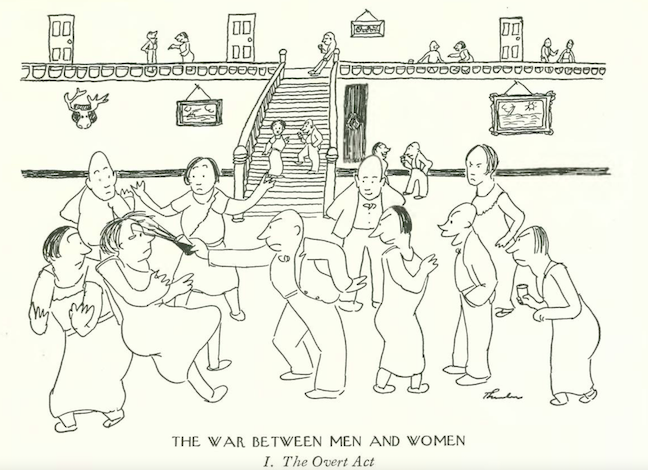
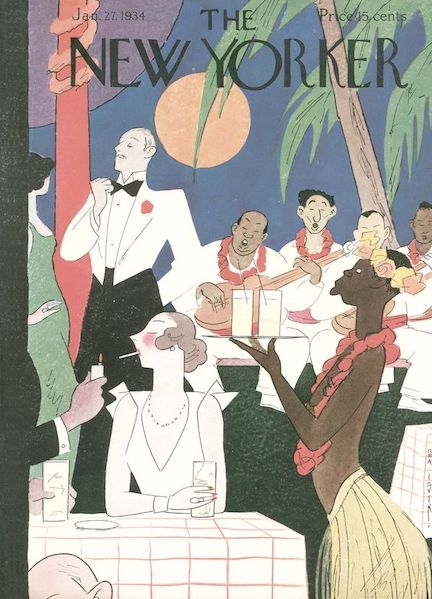
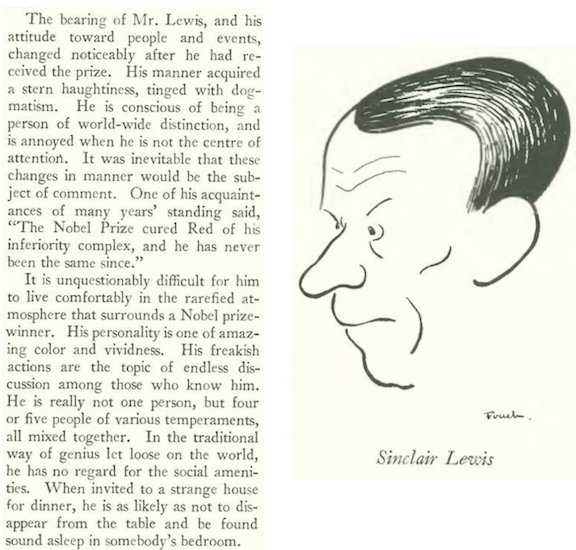
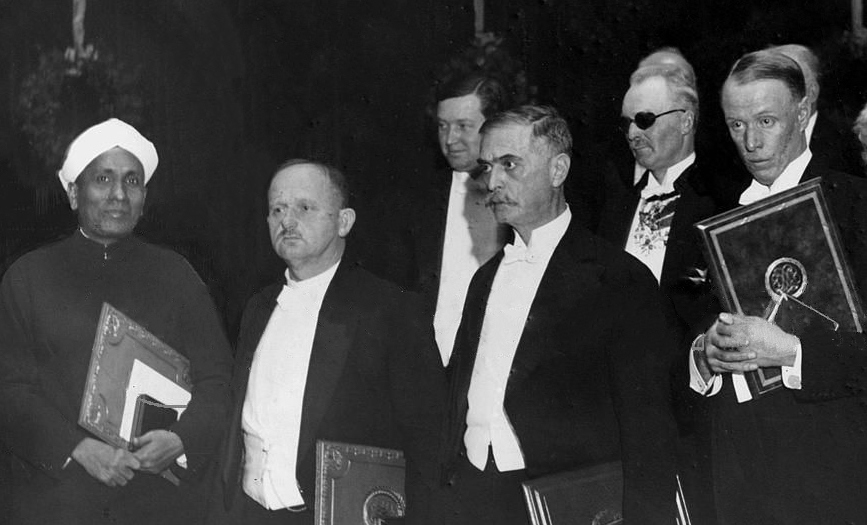
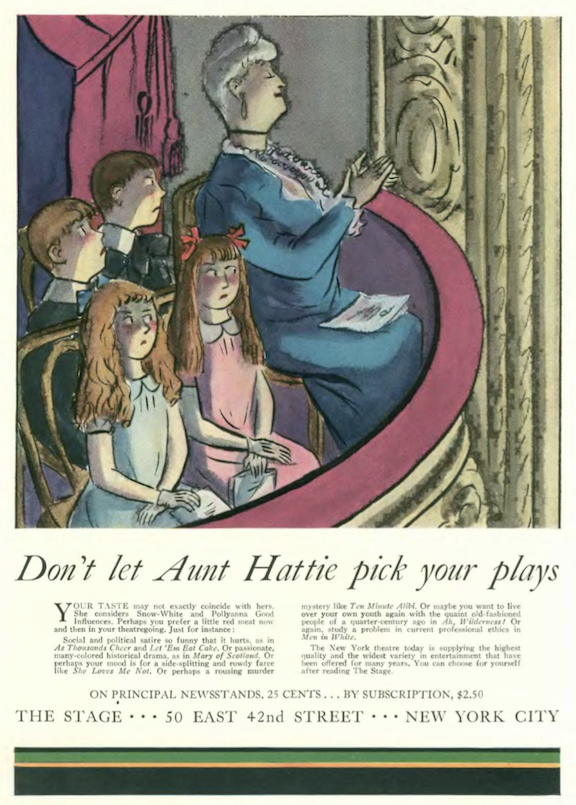

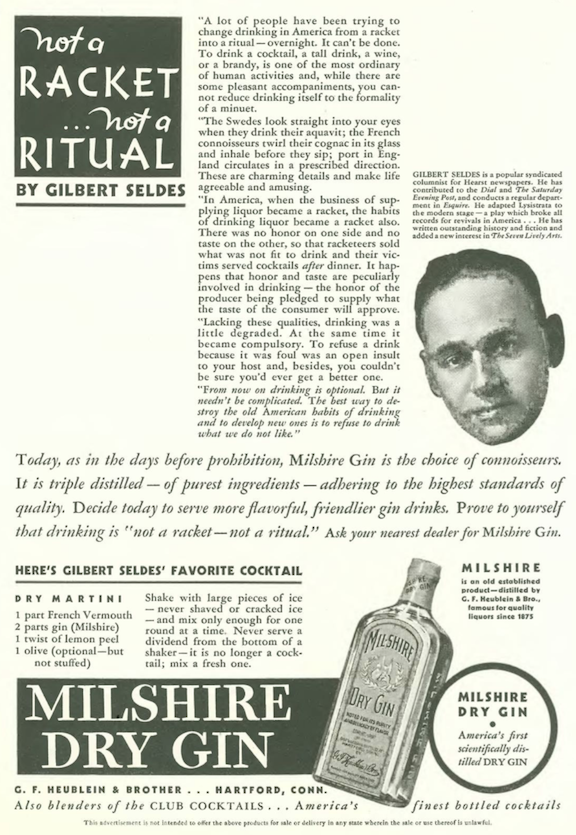
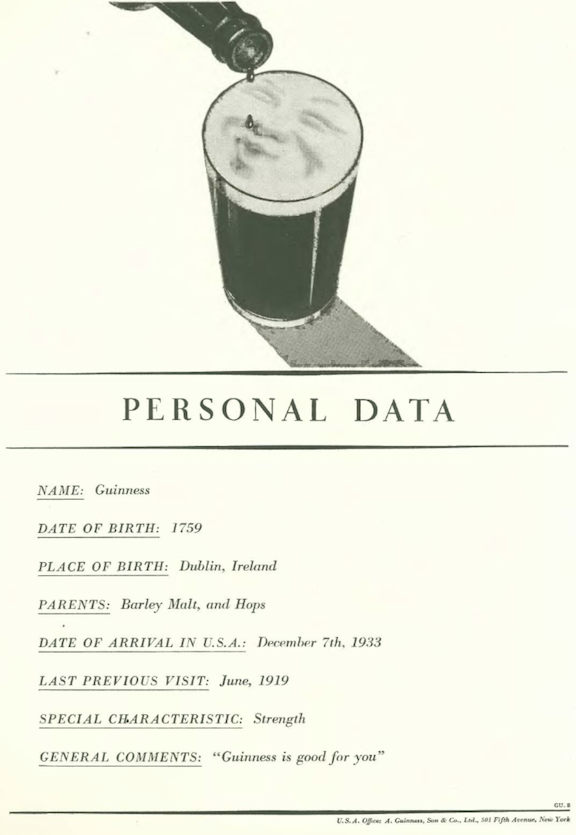
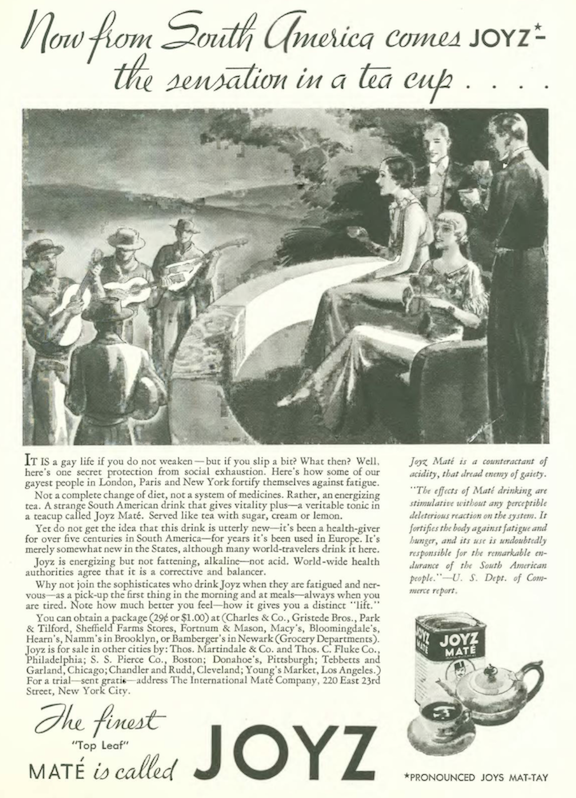
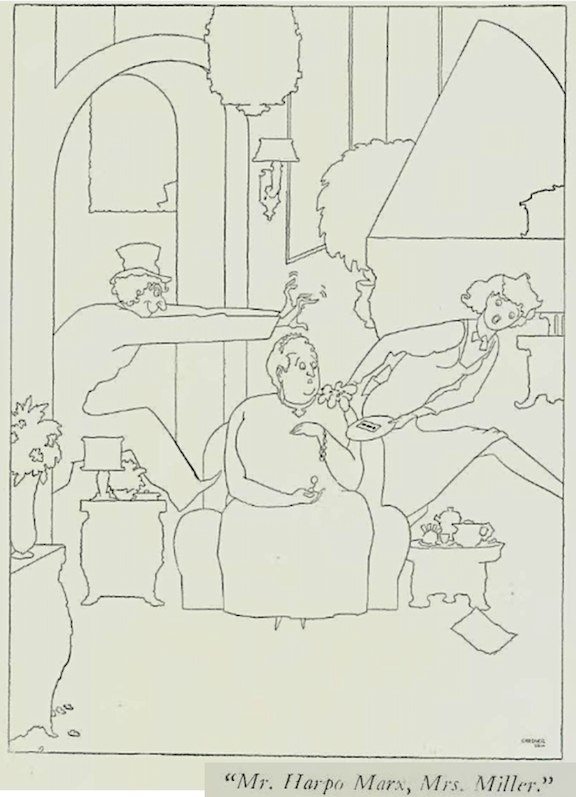

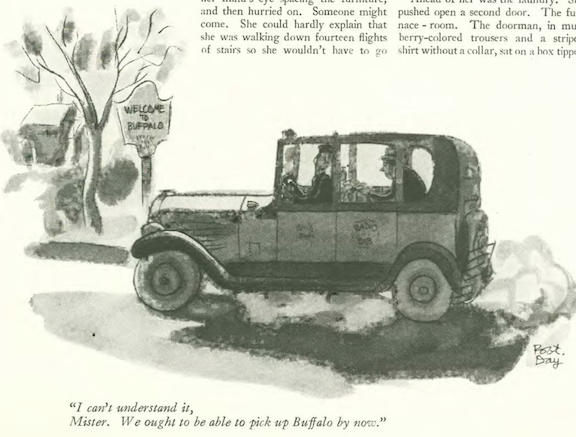
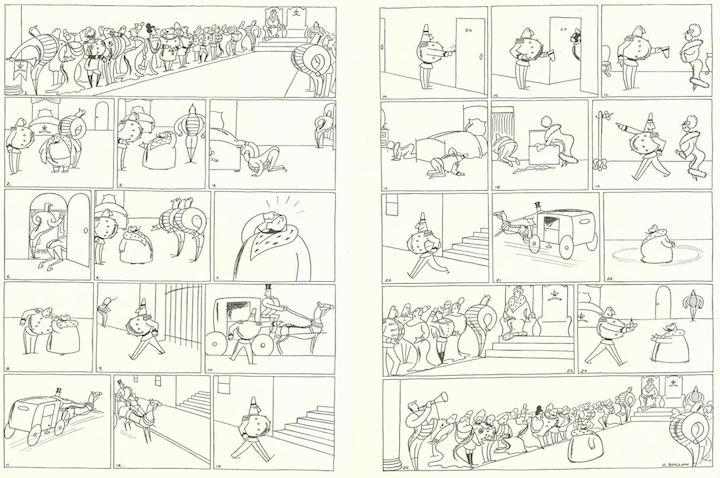
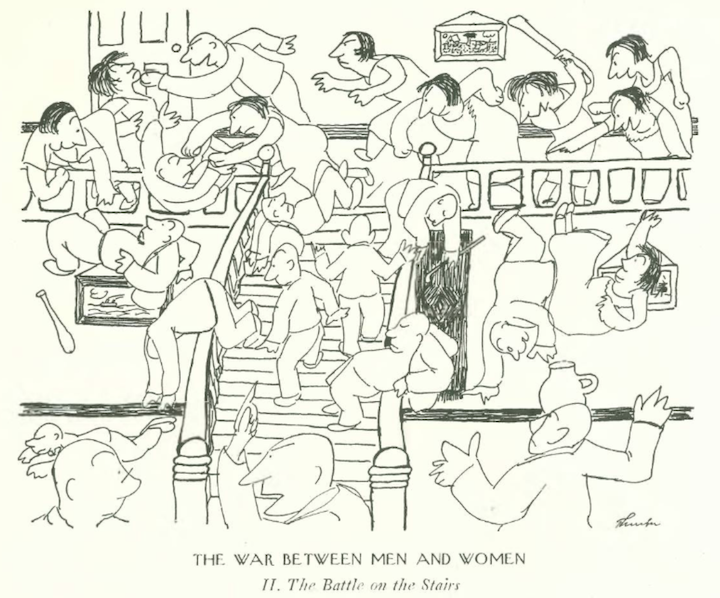


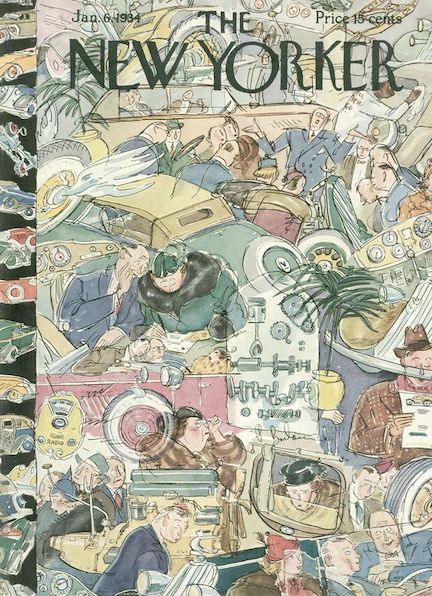
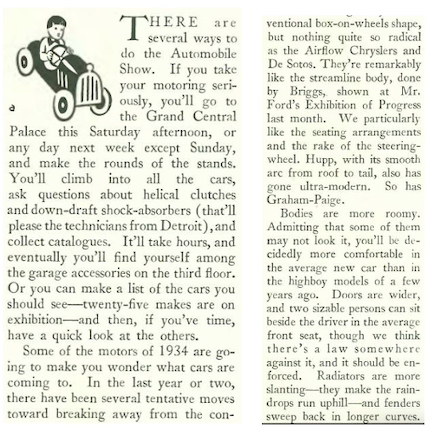
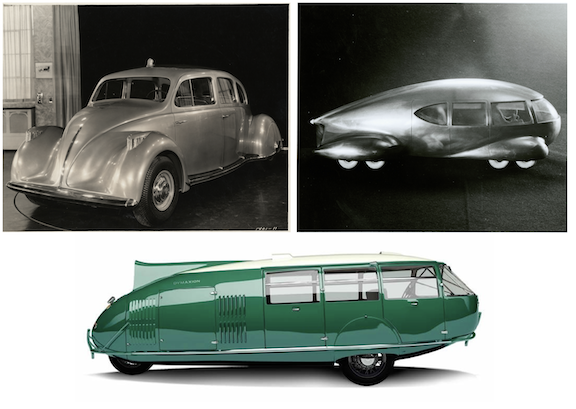
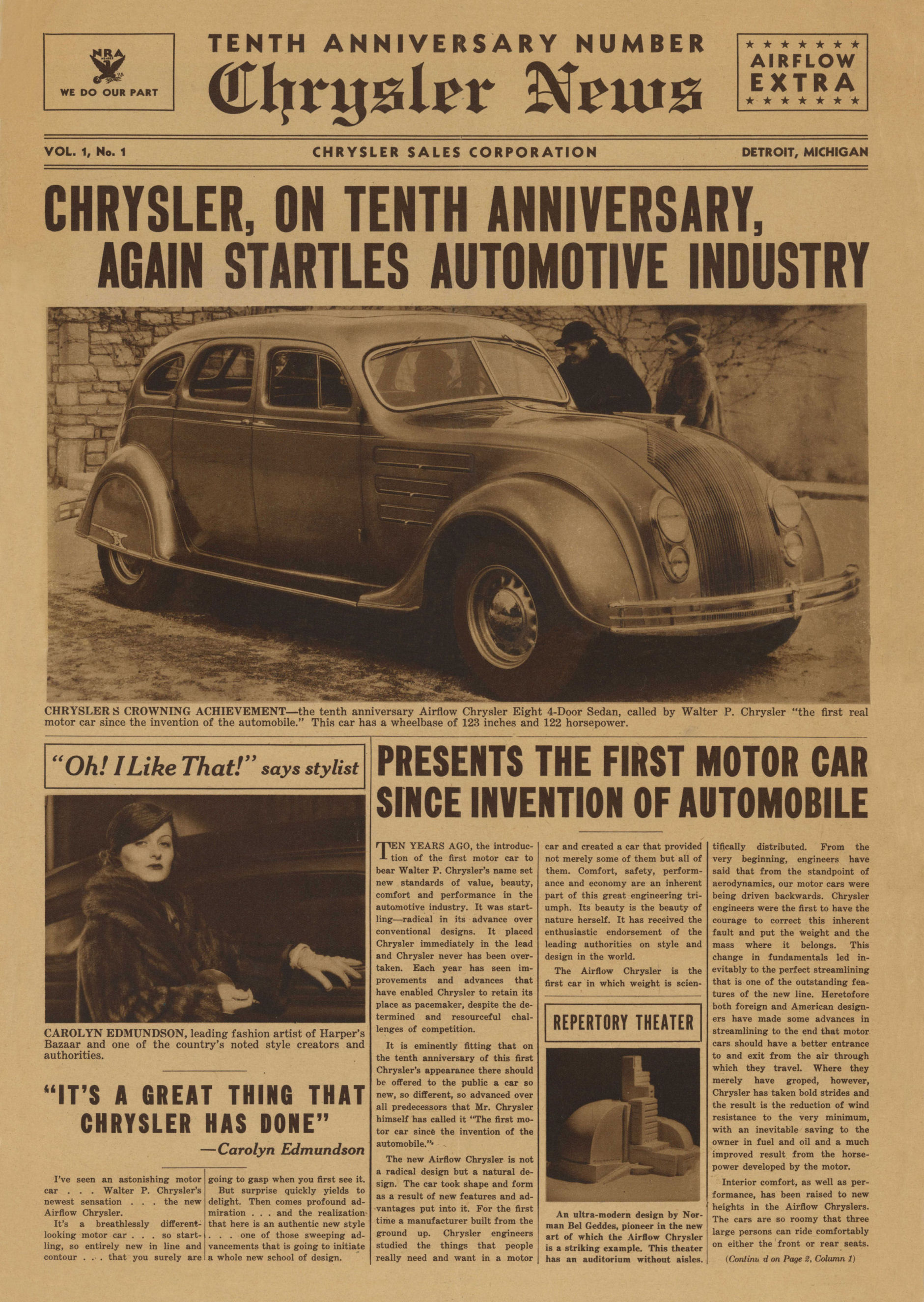


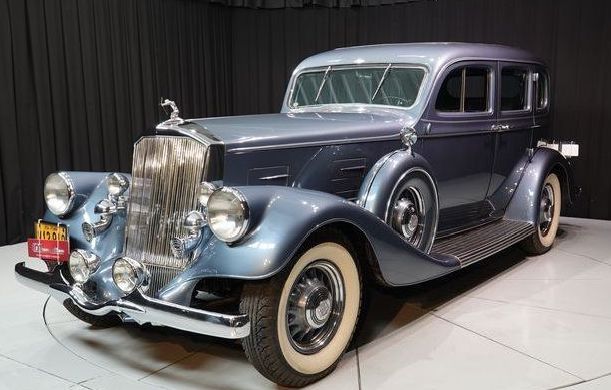


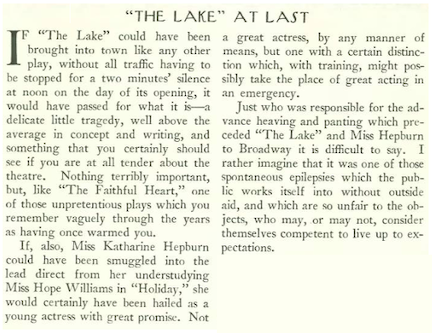
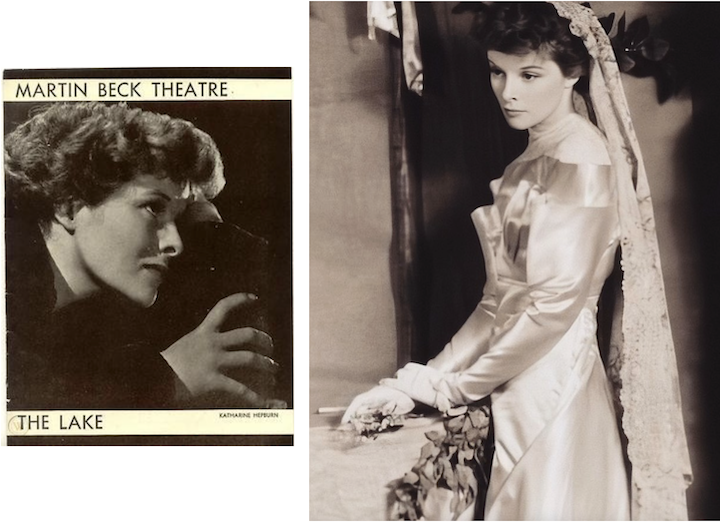
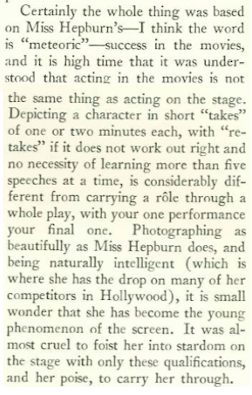
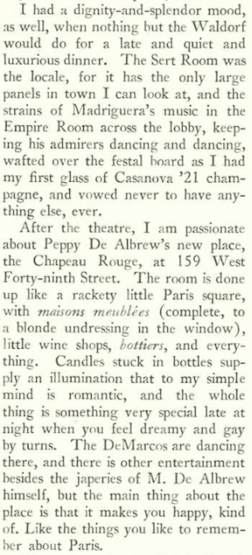


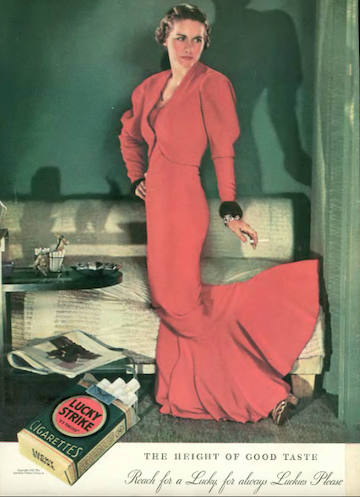


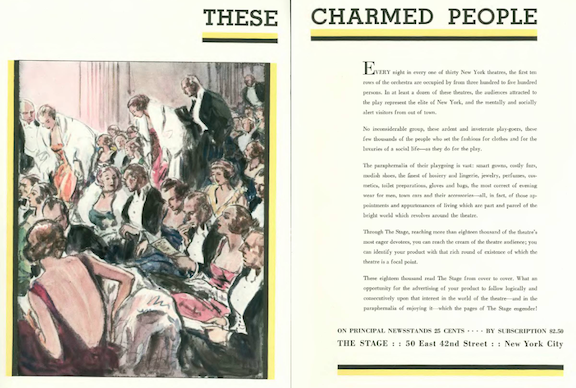


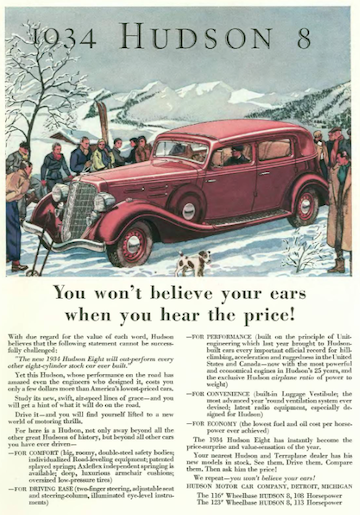
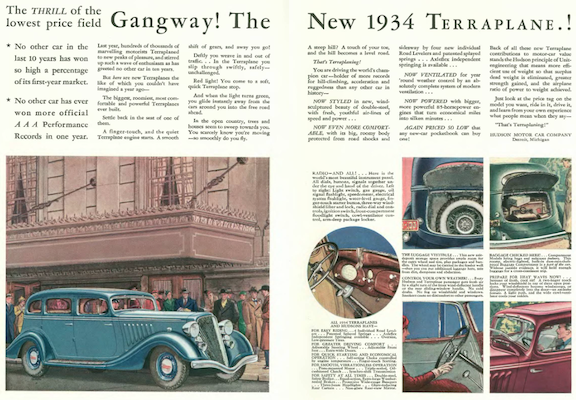
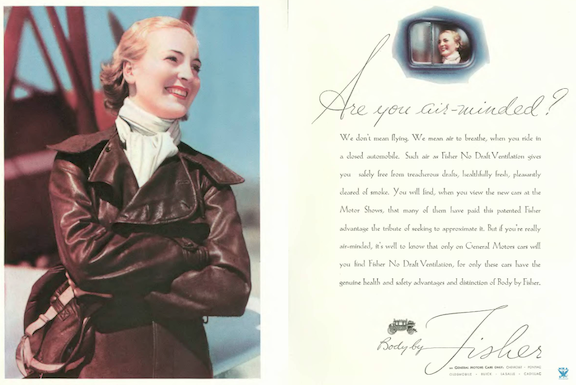


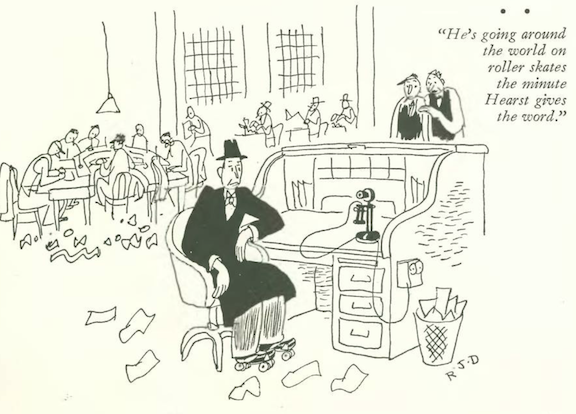
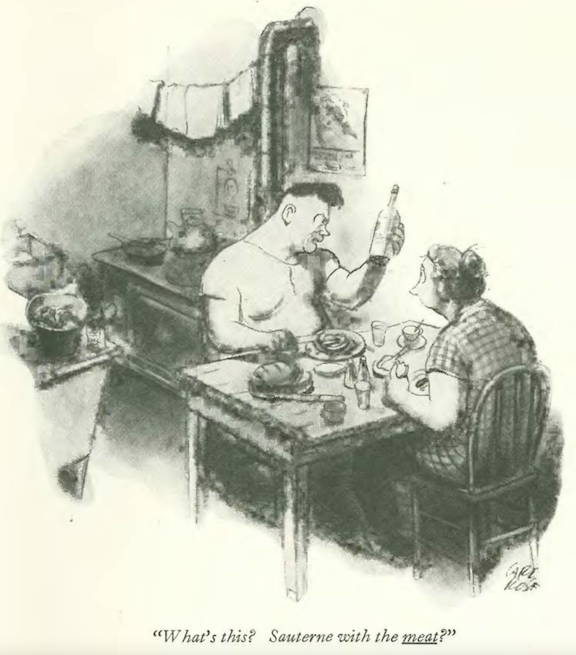
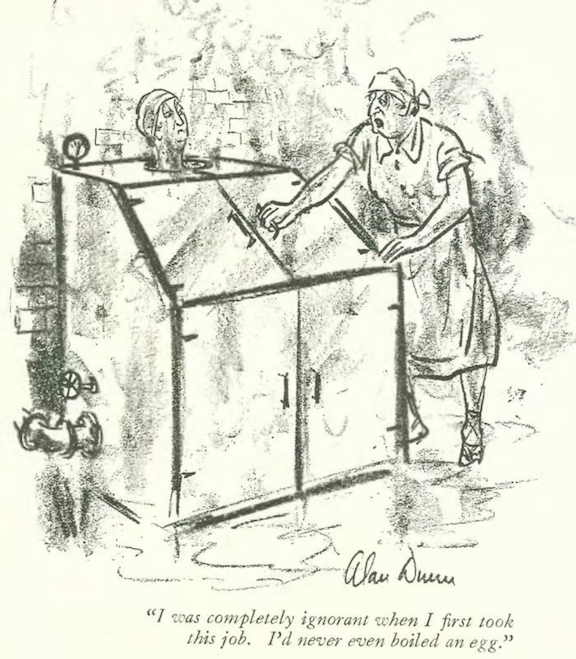
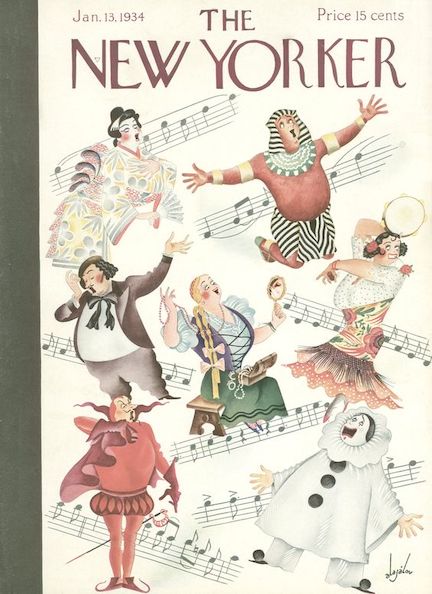


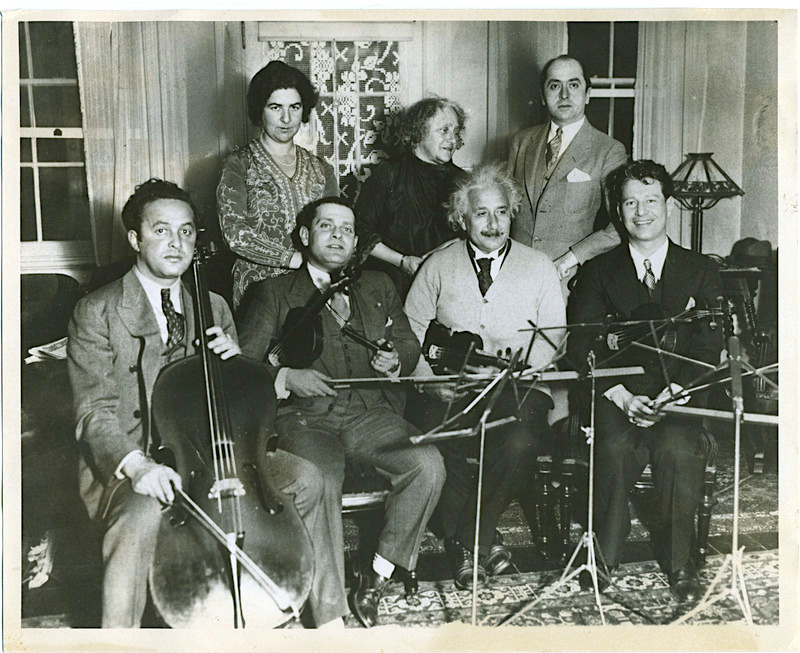
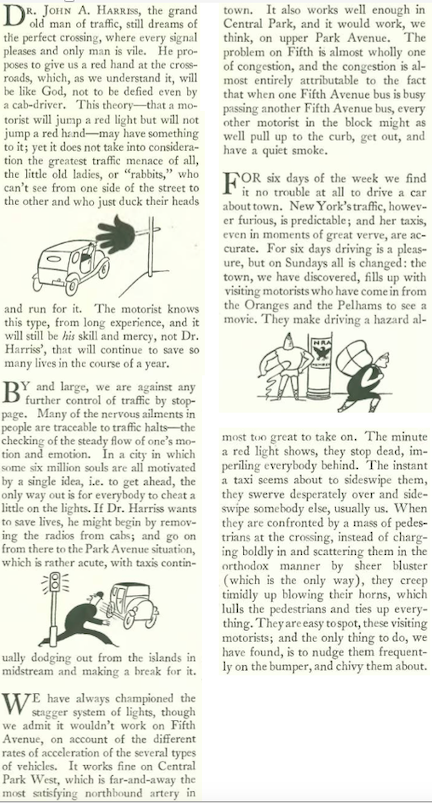


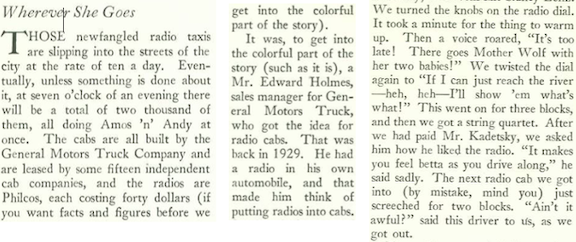
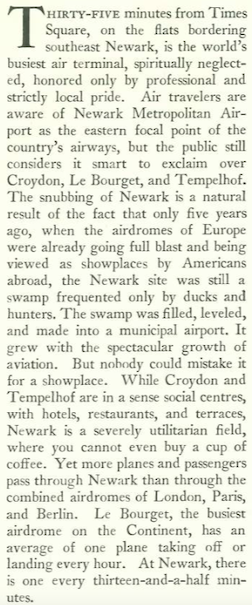


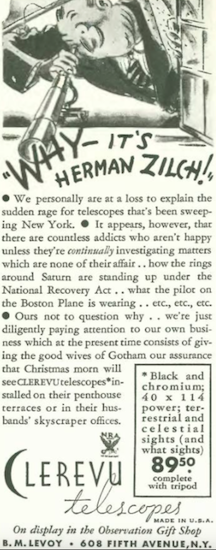


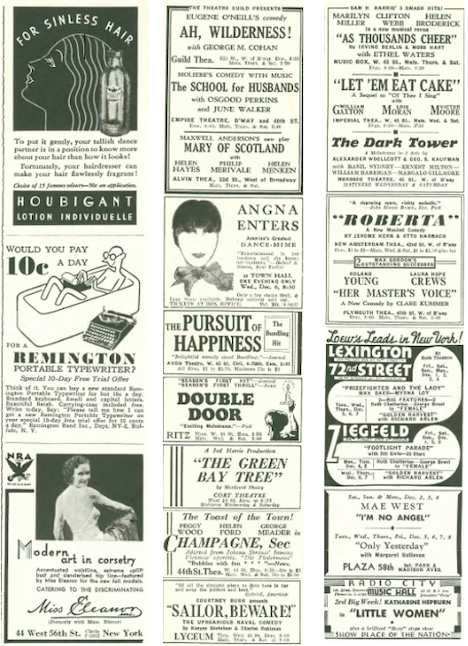
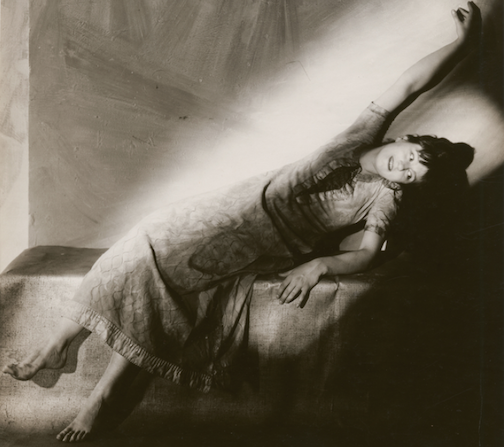


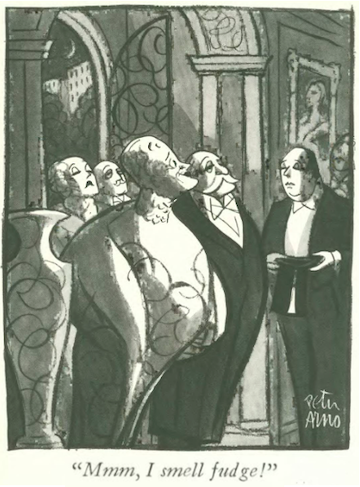
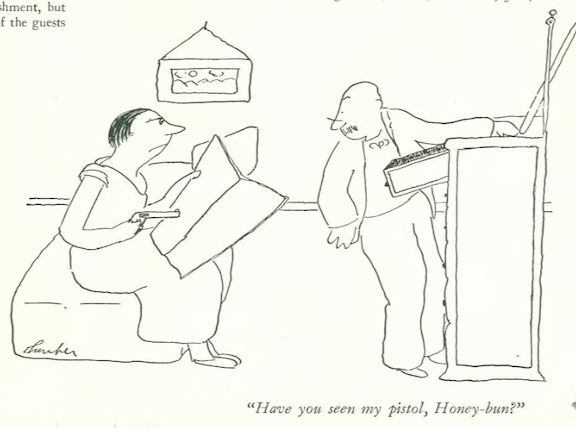


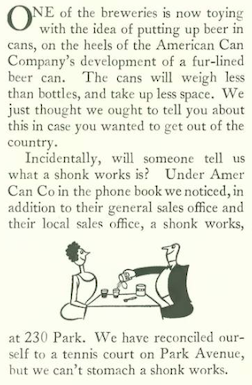
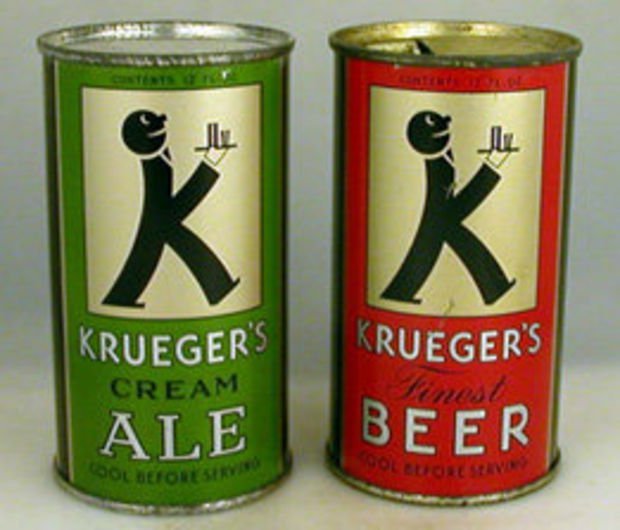


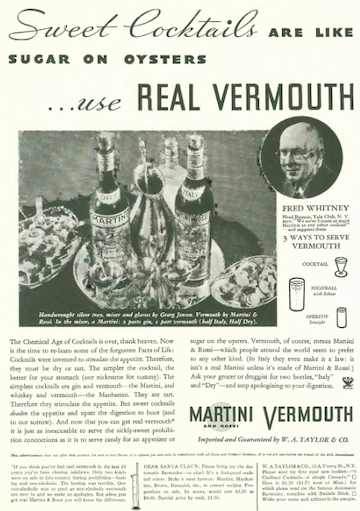
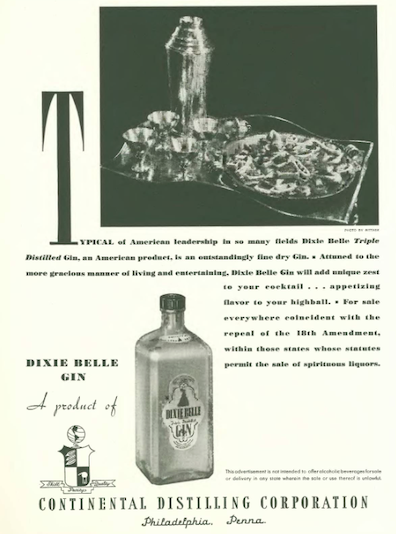

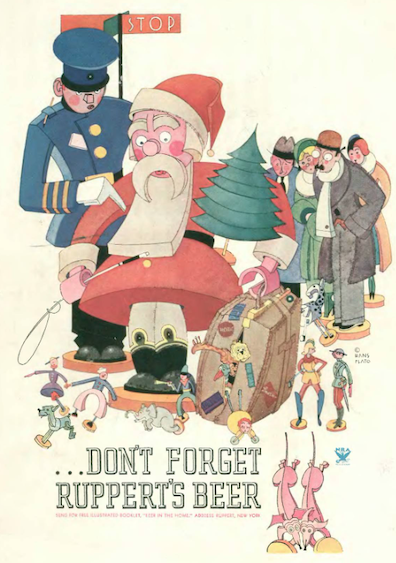


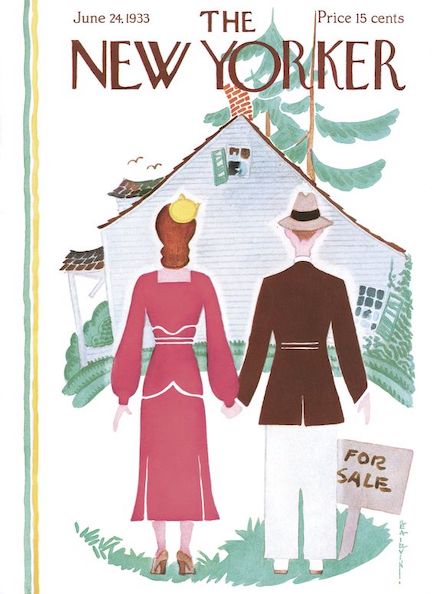


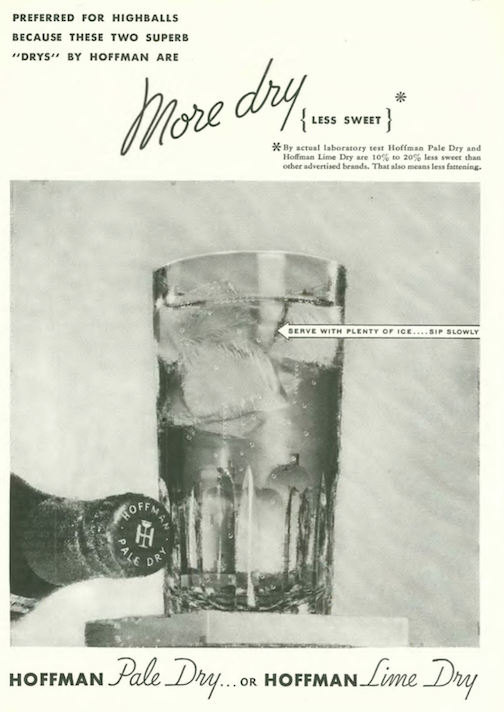

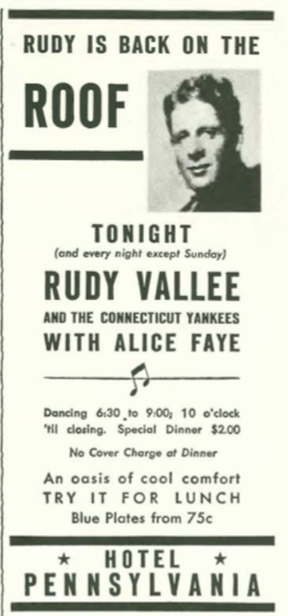
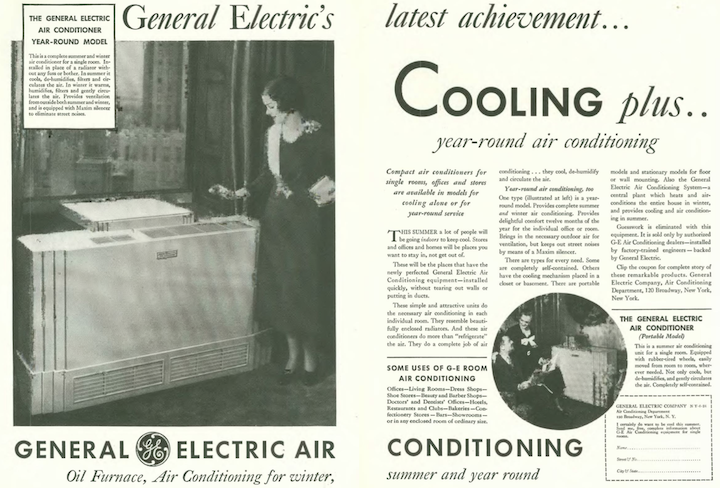

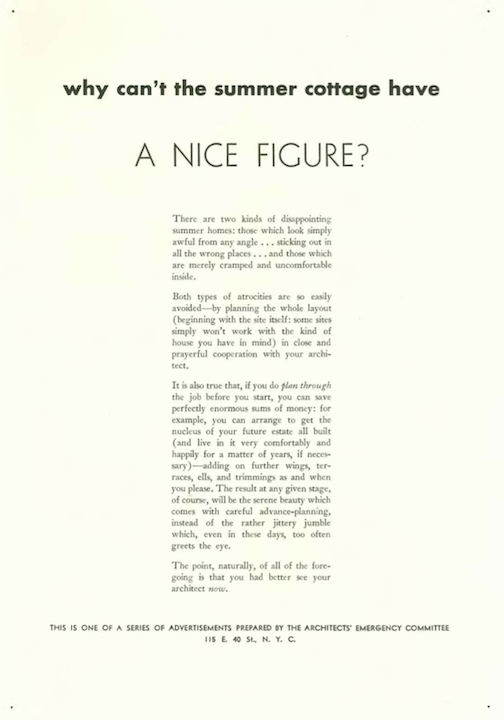

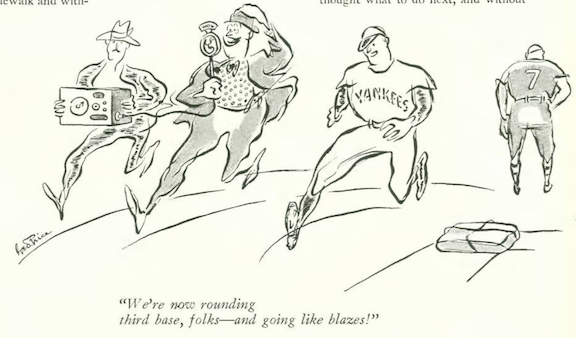
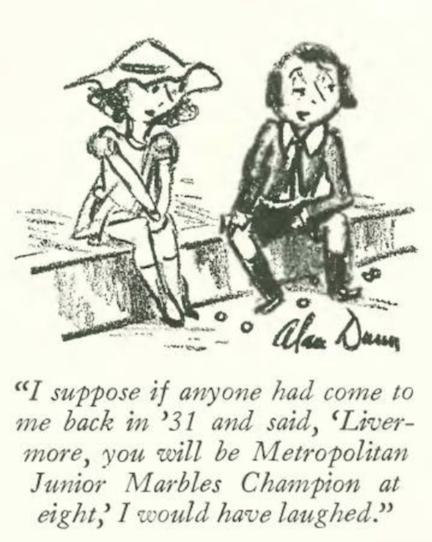

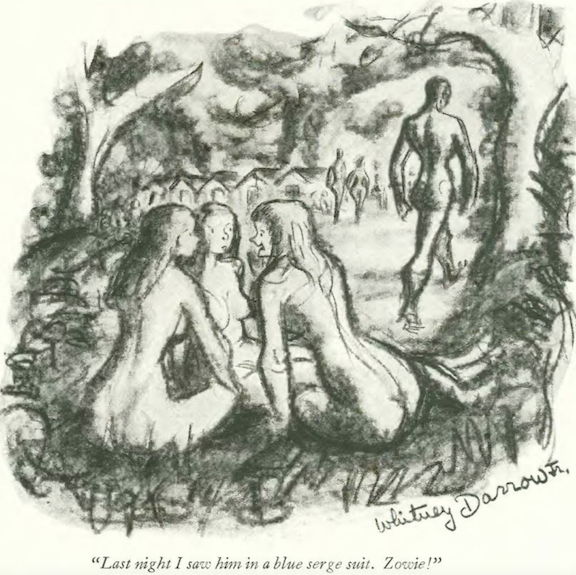

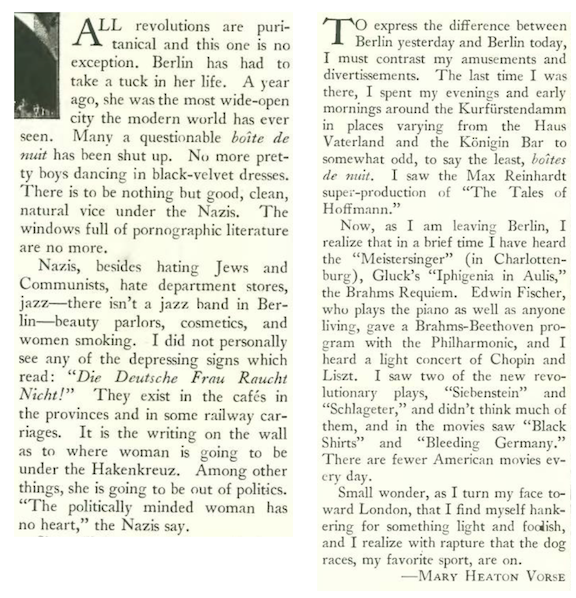
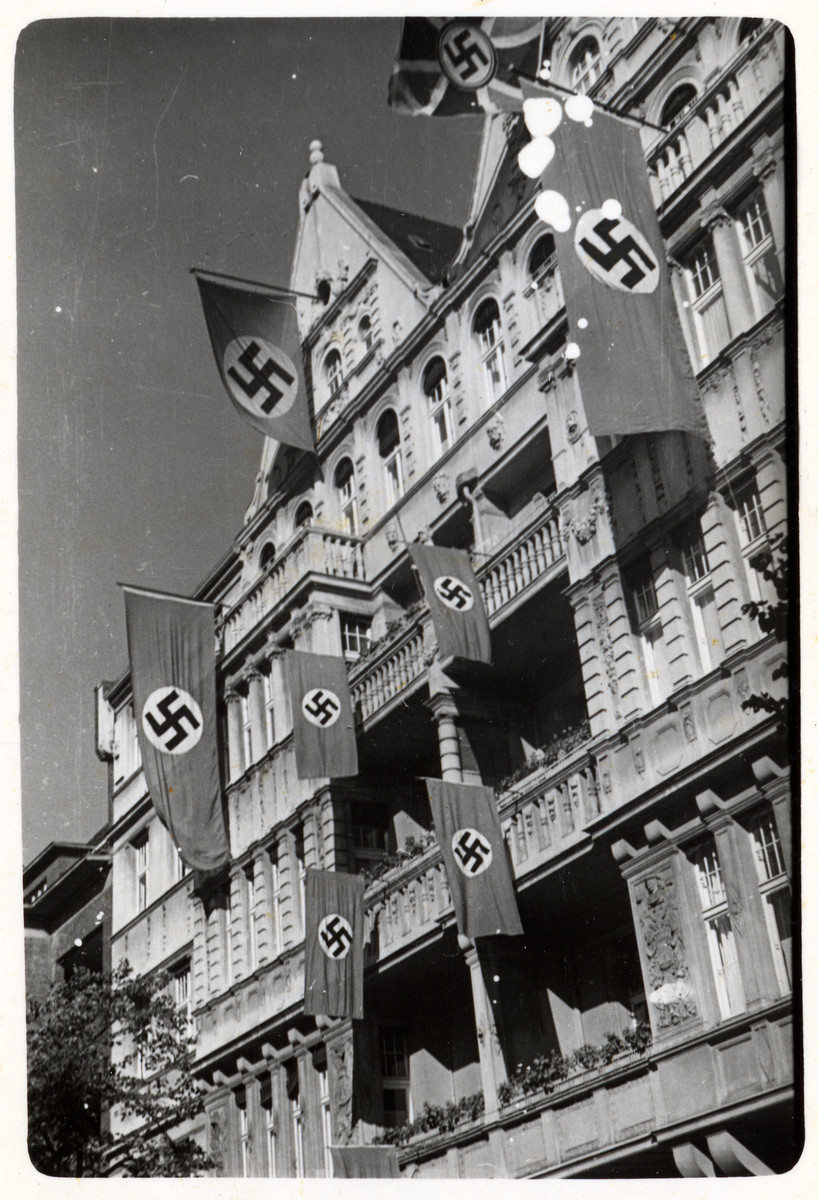

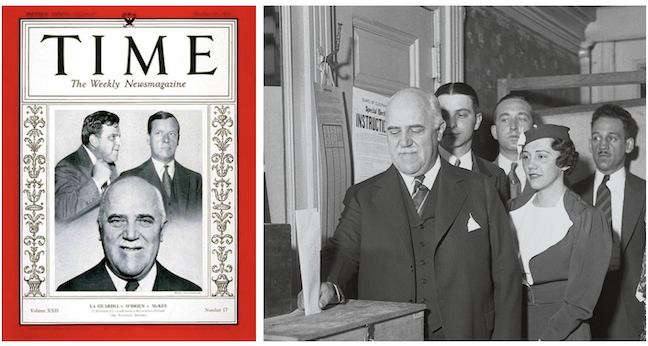
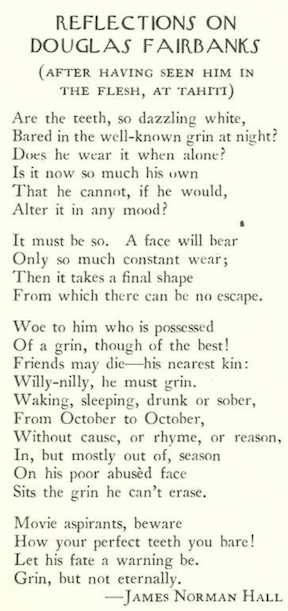
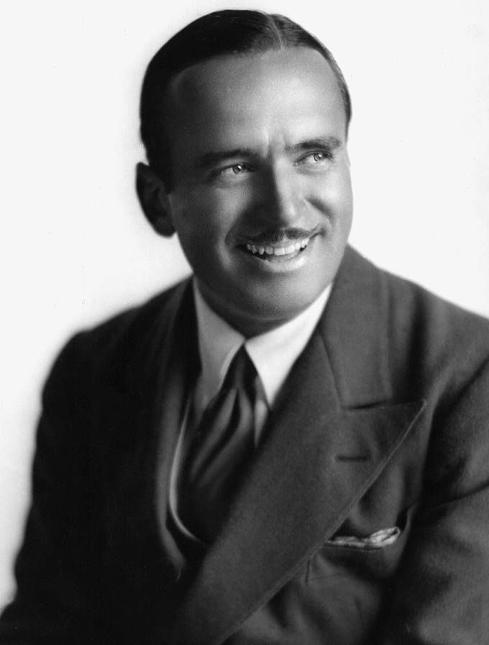
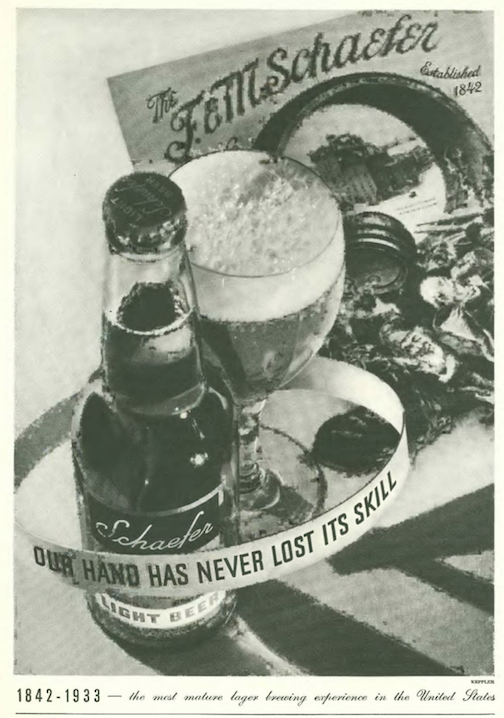

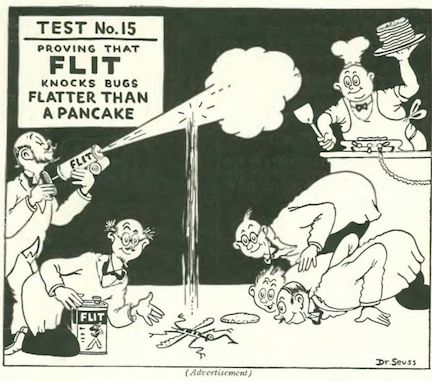


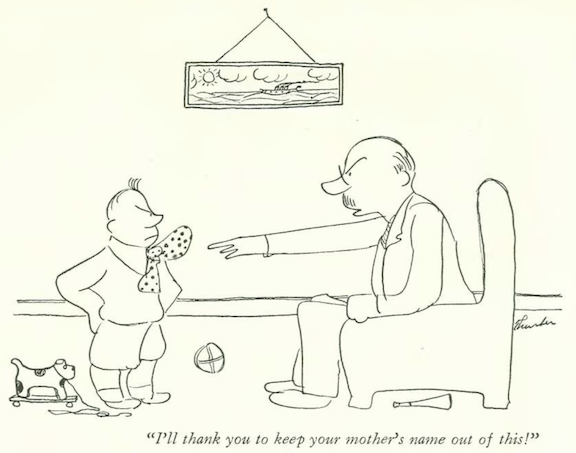
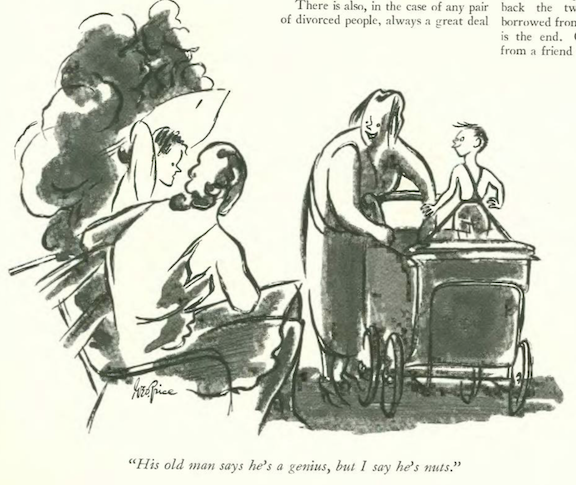
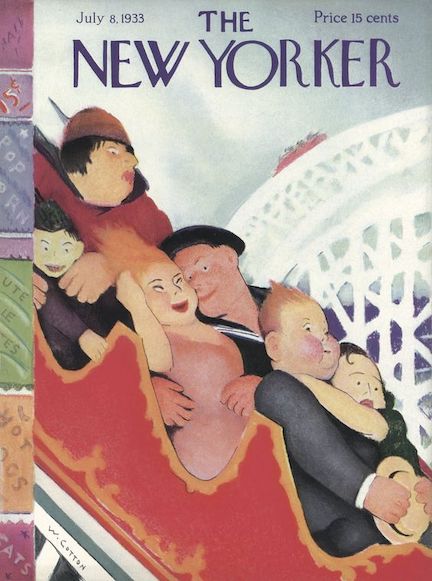
 A New Yorker State of Mind