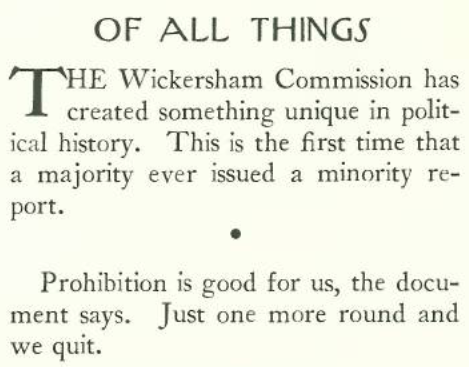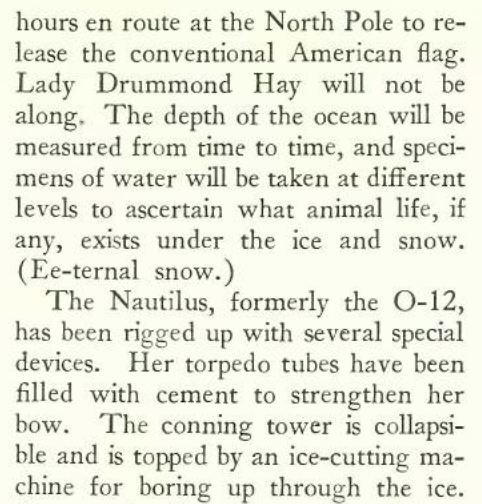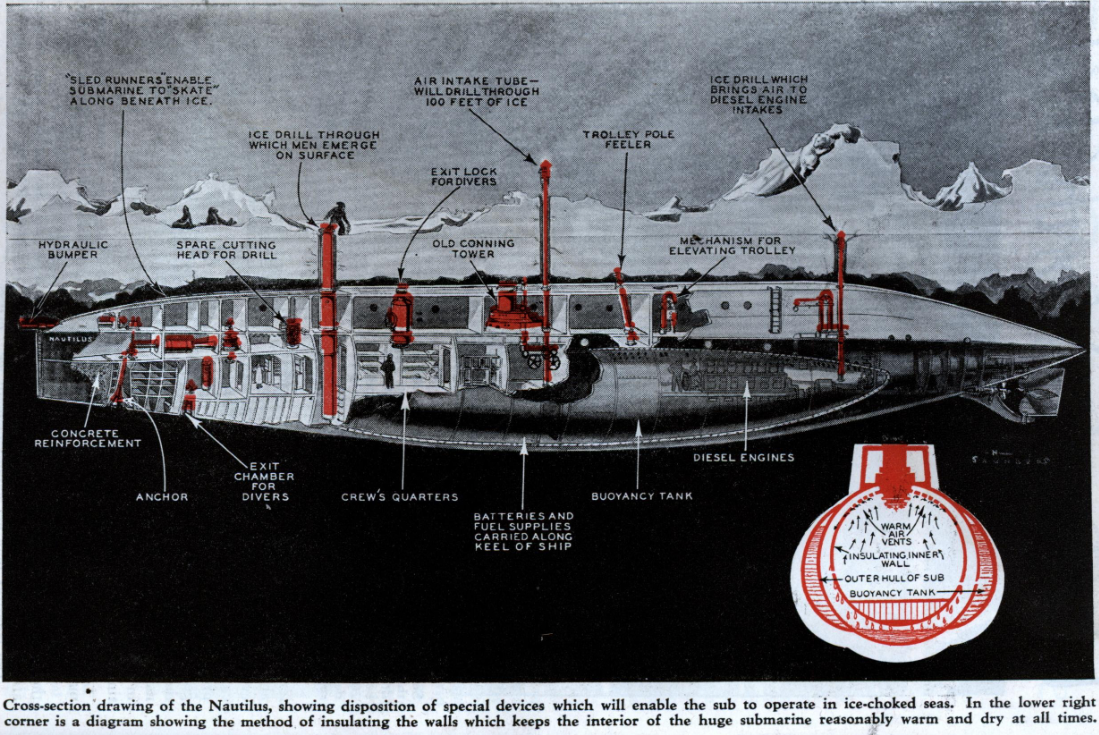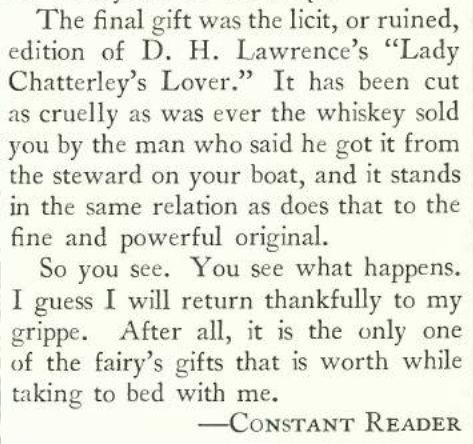
During the early years of the Depression and before censorship guidelines were imposed by the Hays Code, Hollywood cranked out a slew of “Pre-Code” films filled with sex and violence, including 1931’s Little Caesar, the first “talkie” gangster film that defined the genre for decades to come.
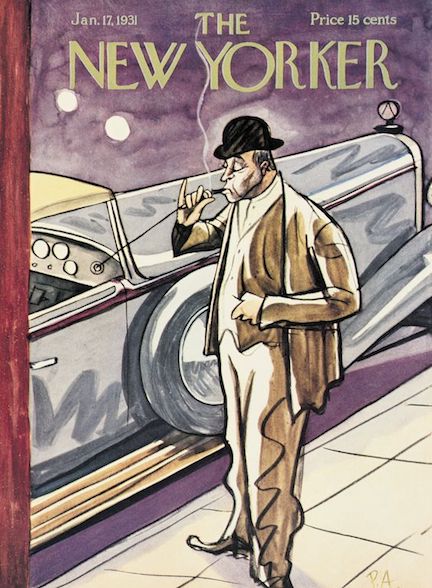
Jan. 17, 1931 cover by Peter Arno.
It also propelled the career of Edward G. Robinson (1893-1973), who portrayed “Little Caesar” Rico Bandello—it was a breakout role for the actor, leading to a 50-year career of playing tough guys among other roles. Although the film today is considered a classic and well-regarded by critics, The New Yorker’sJohn Mosher was not entirely bowled over; he did, however, see the talent potential of the 33-year-old Robinson:
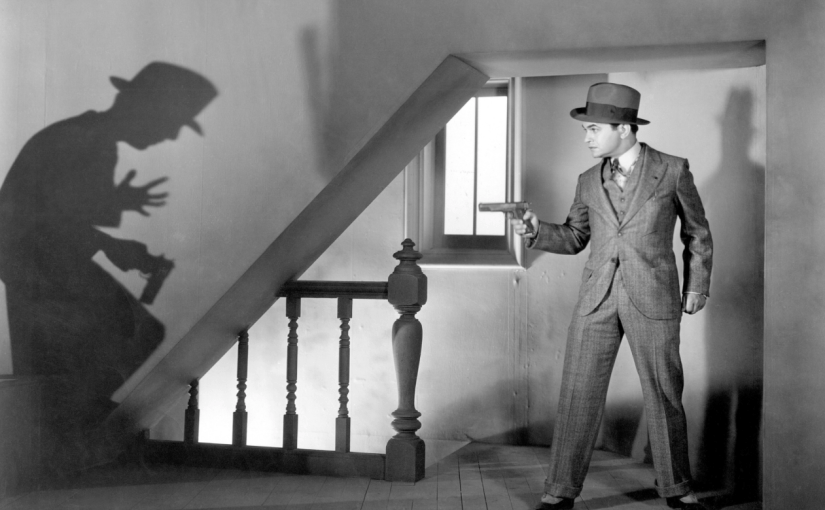
OUCH…Clockwise, from top left, Rico Bandello (Edward G. Robinson) catches some lead from a rival gangster in Little Caesar; Rico has little patience for his partner Joe (Douglas Fairbanks Jr.) and his love interest Olga (Glenda Farrell); Rico and his boys doing a little banking business; Rico up to no good with his sidekick Otero (George E. Stone). (Britannica/moviestillsdb.com/MoMA/IMDB)
Mervyn LeRoy’sLittle Caesar would kick off a series of Warner Brothers gangster films that would help launch the careers of other actors including James Cagney (The Public Enemy, Angels With Dirty Faces) and Humphrey Bogart (The Petrified Forest). Here’s Warner’s trailer for Little Caesar:
* * *
You Dirty Rat
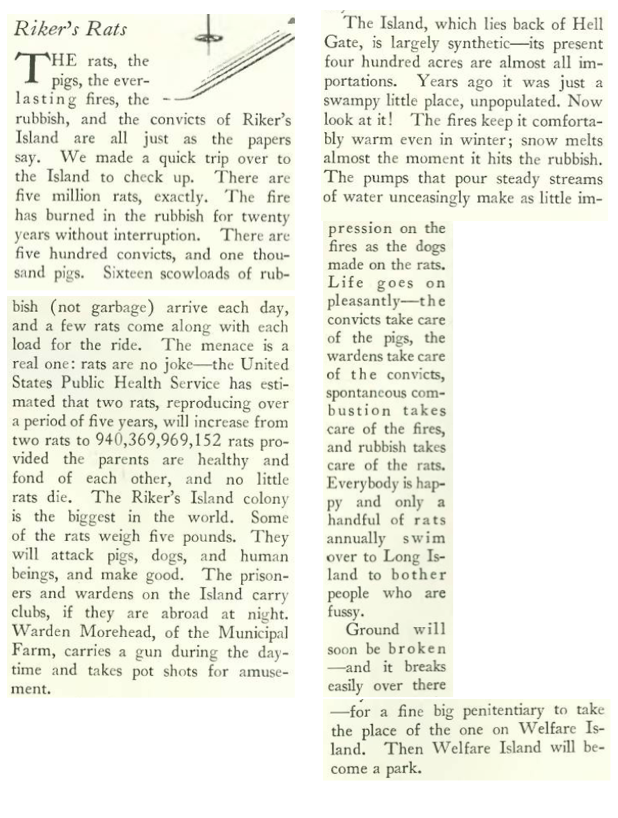
The Jan. 17 “Talk of the Town” looked in on the growing rat infestation at Riker’s Island, a swampy little island that expanded more than four times its original size thanks to the mountains of garbage dumped there in the early 20th century. Much of it was coal ash, which caused the spontaneous fires referred to in the following “Talk” article. Of course the garbage also attracted legions of rats, which officials tried to counter by releasing vicious dogs and pigs on the island. It only seems fitting that such a place would become home to one of America’s most hellish prisons:
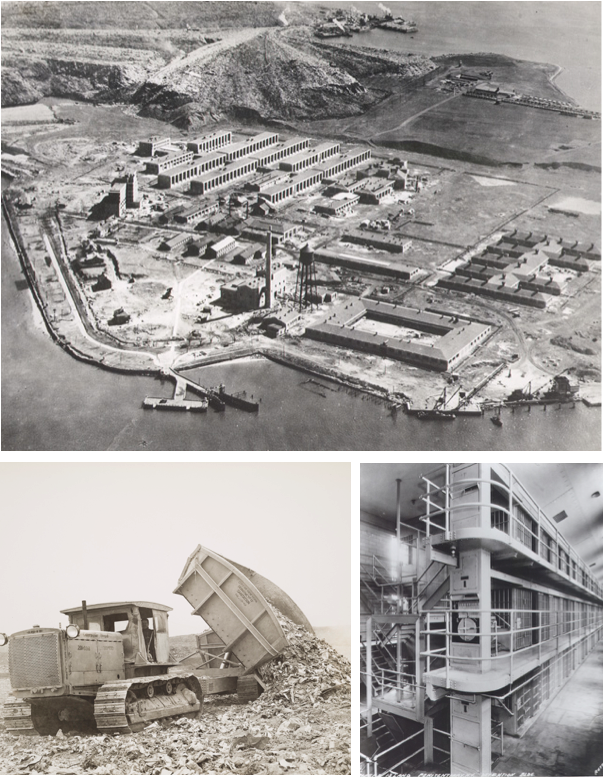
RAT TRAP…Clockwise, from top, aerial view of the Riker’s Island Penitentiary, which opened in 1932. Mountains of garbage, some 130 feet high, are visible in the background. The garbage heaps were prone to spontaneous combustion. In 1934 a prison warden described his nighttime view as a “whole hillside lit up with little fires. … It was beautiful”; view of a cellblock; adding to the mountain of garbage in 1937. (correction history.org)
* * *
Sign of the Times
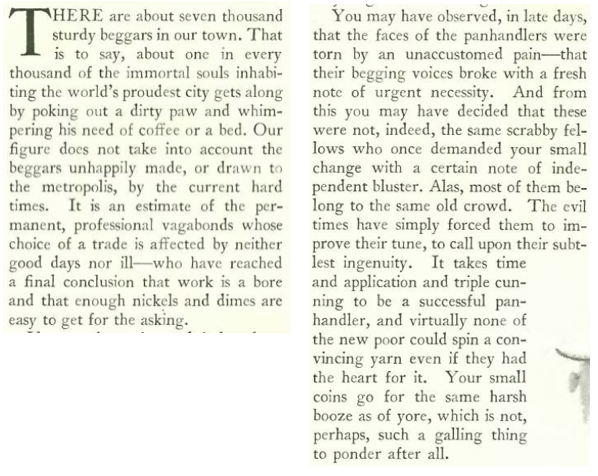
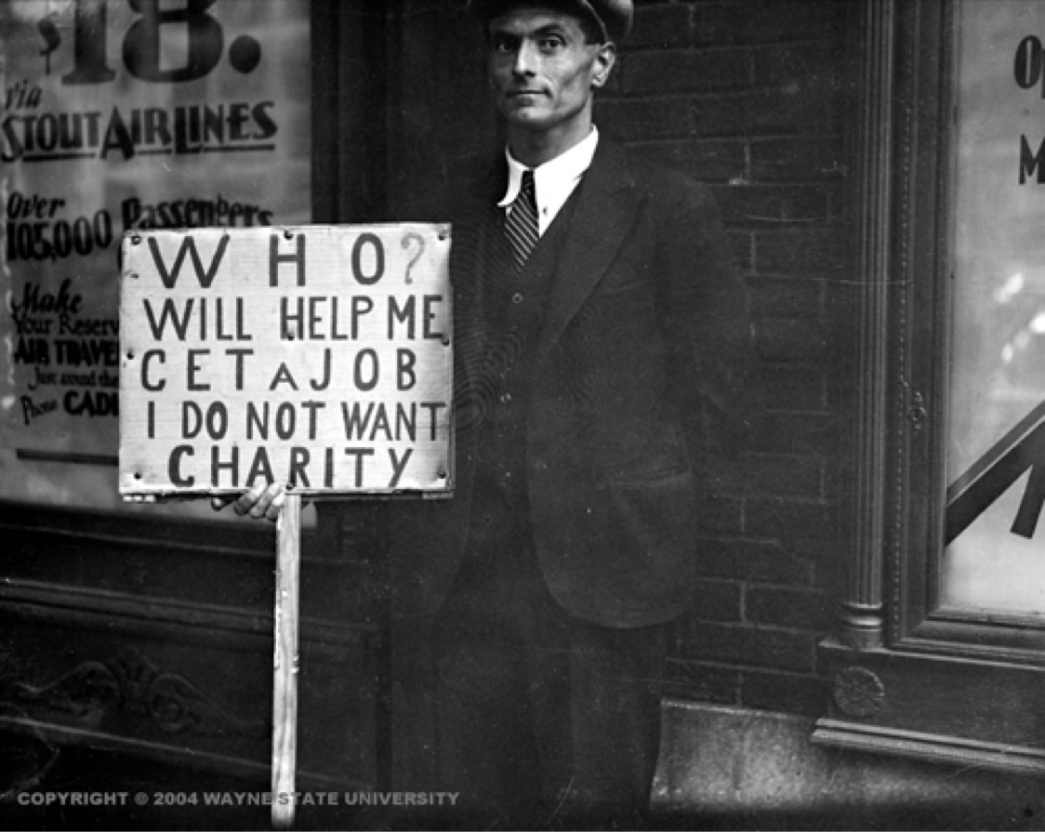
No doubt some of the folks who ended up at Riker’s were desperate souls who were reduced to begging on the streets of Manhattan. Morris Markey, in his “A Reporter at Large” column, looked in on some of the city’s “Vagabonds,” noting that the Depression had added some new faces among the panhandlers, faces “torn by an unaccustomed pain.” An excerpt:
HARD TIMES…An unemployed man seeks work in the 1930s. (Wayne State University)
* * *
Grim for the Reaper
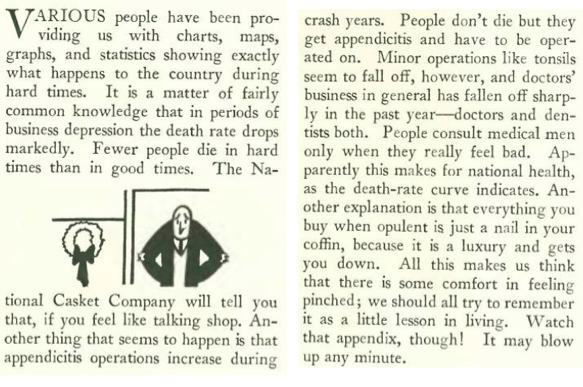
The Depression, it seems, was even hard on the nation’s undertakers, according to E.B. White in “Notes and Comment”…
NEED A LIFT?…A hearse and undertaker in 1930. Business was surprisingly slow in hard times. (my101years.com)
* * *
Work is Fun When You Don’t Need It
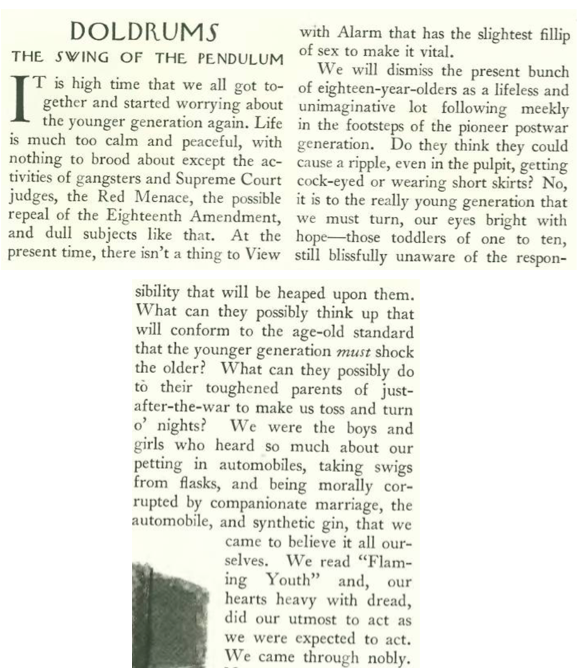
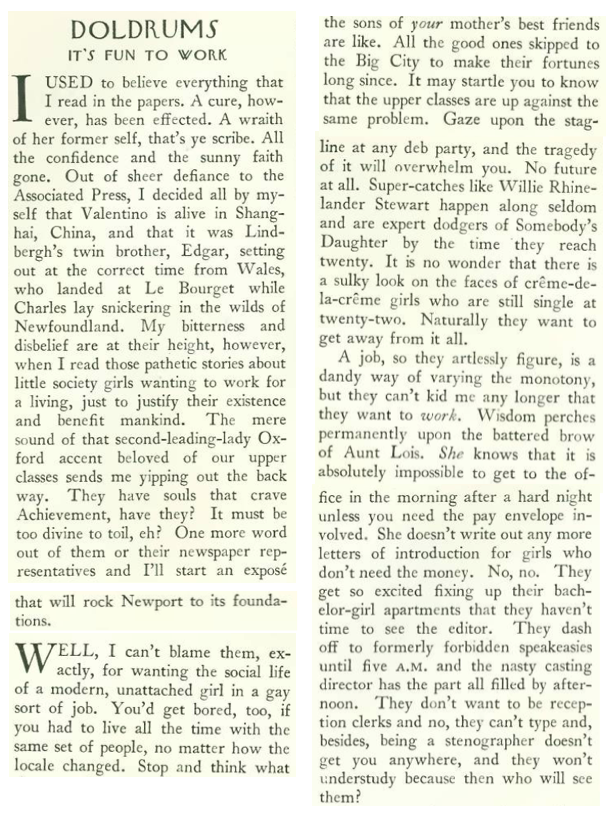
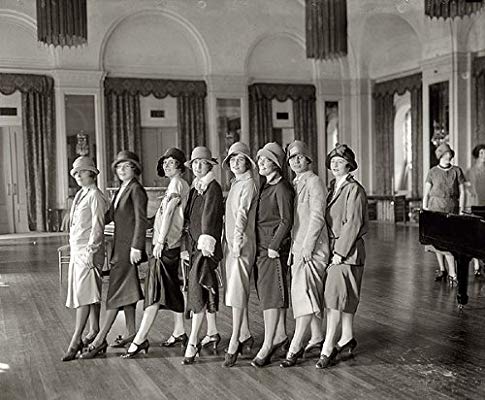
Lois Long filed another installment in her “Doldrums” series, in which she commented on the desires of the city’s debutantes to find some purpose in life…
PUTTING THEIR BEST FEET FORWARD…Debutantes pose in Washington, D.C., circa 1930. (Pinterest)
* * *
Pablo Who?
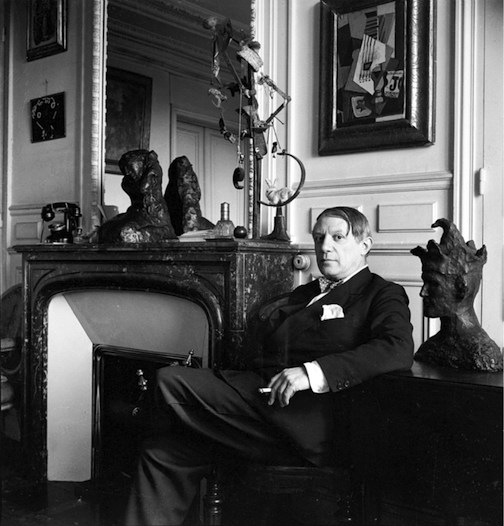
New York’s Valentine Gallery was offering a showing of works by Pablo Picasso, who was famous enough to create as he wished, but not quite ready for canonical consideration…
I’LL DO AS I PLEASE…Pablo Picasso in 1931, in a portrait by Cecil Beaton. (oscarenfotos.com)
* * *
Order Restored
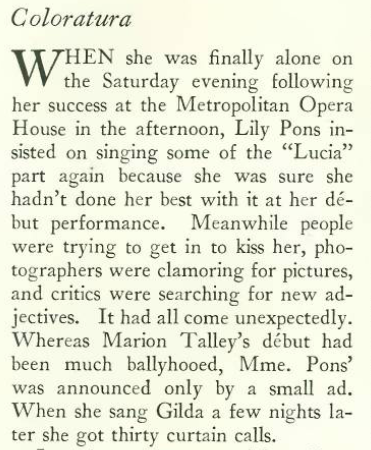
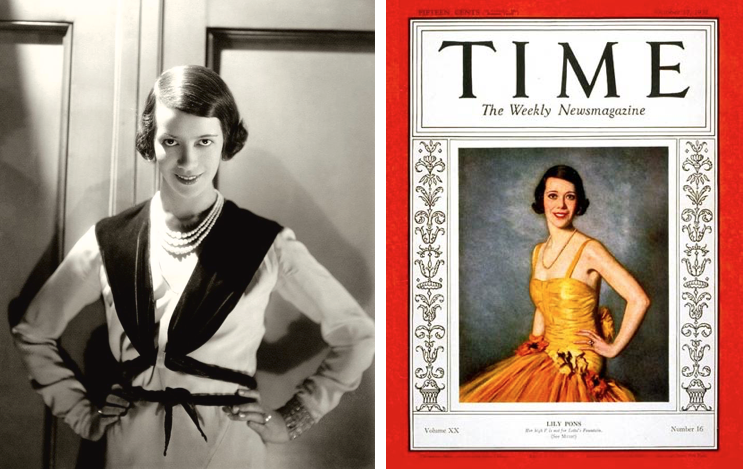
After its Marion Talley debacle, the Metropolitan Opera stage welcomed French soprano Lily Pons (1898-1976) to its stage. “The Talk of Town” noted that although Pons’ debut was far less hyped than Talley’s, her reception by New York audiences was far more enthusiastic. While Talley’s career would sputter and fade, Pons would enjoy a long association with the Metropolitan Opera, where she performed nearly 300 times between 1931 and 1960.
A BREATH OF FRESH AIR…One of the most popular prima donnas of her time, French soprano Lily Pons would grace the Metropolitan Opera stage for 30 years. From right, a 1931 portrait of Pons by Cecil Beaton; on the cover of Time, Oct. 17, 1932. (CondeNast/Time)
* * *
From Our Advertisers
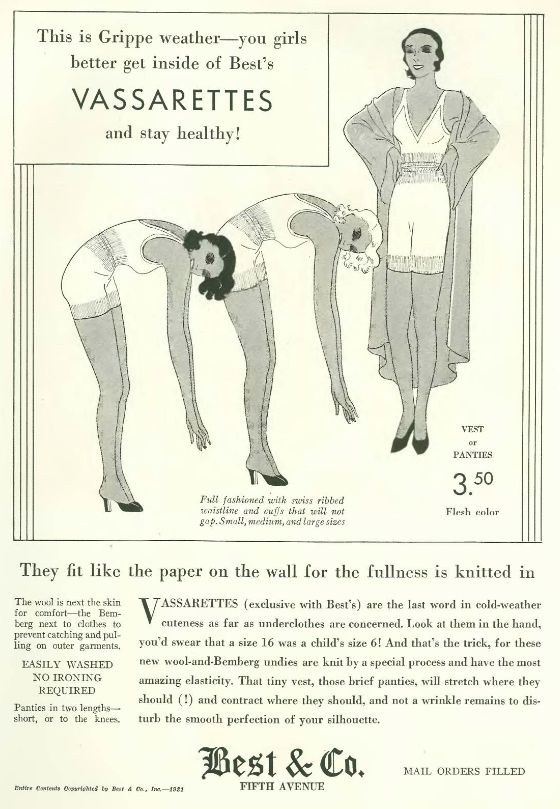
Best & Company looked out for the welfare of New York’s young women by offering a selection of wool “Vassarettes” to stave off the “Grippe” weather…
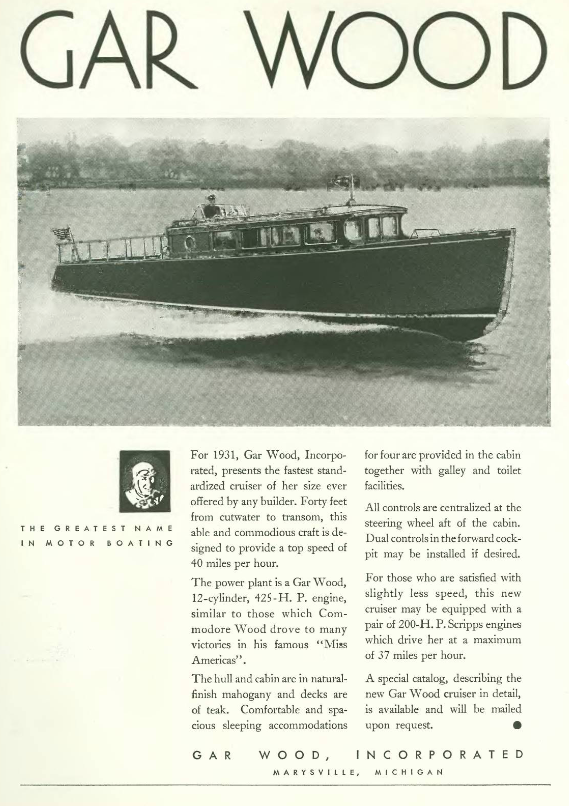
…with the annual Motor Boat Show at the Grand National Palace, several ads called readers’ attention to expensive toys fewer and fewer could afford to own…
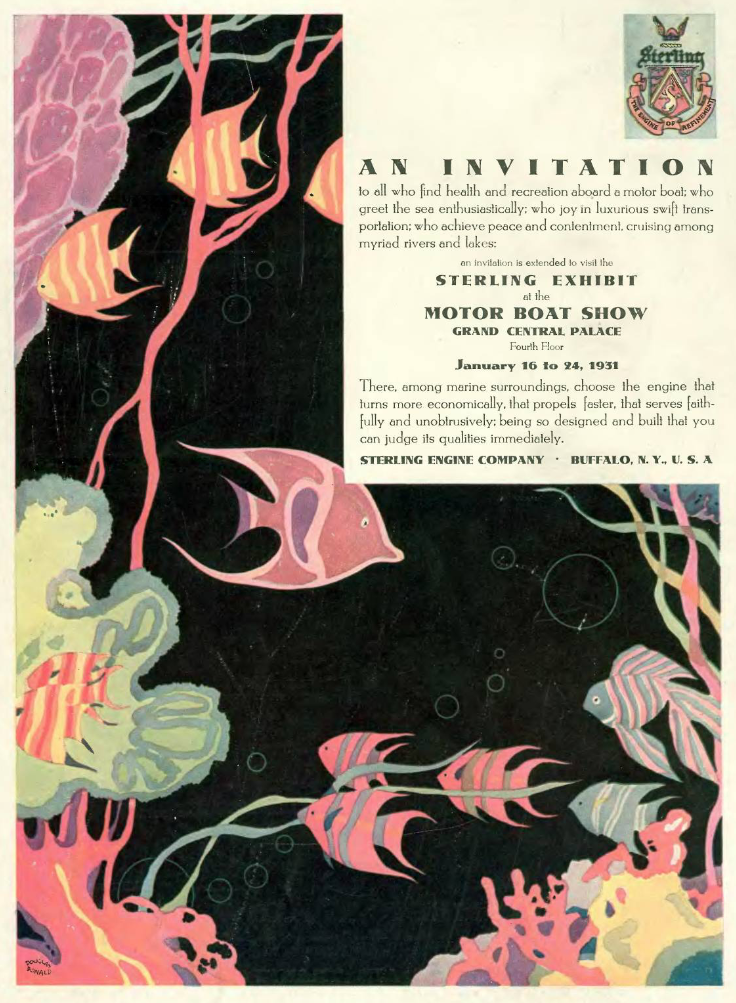
…the makers of Sterling boat motors shelled out the big bucks for this full-color, back-page ad…overall, the number of boat ads were down from previous years…
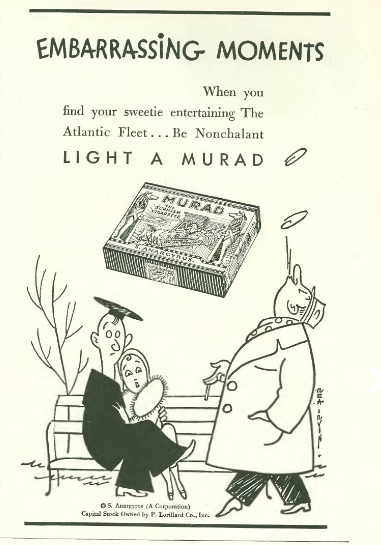
…Rea Irvin continued to pick up some extra income with an ongoing series of cartoons promoting Murad cigarettes…
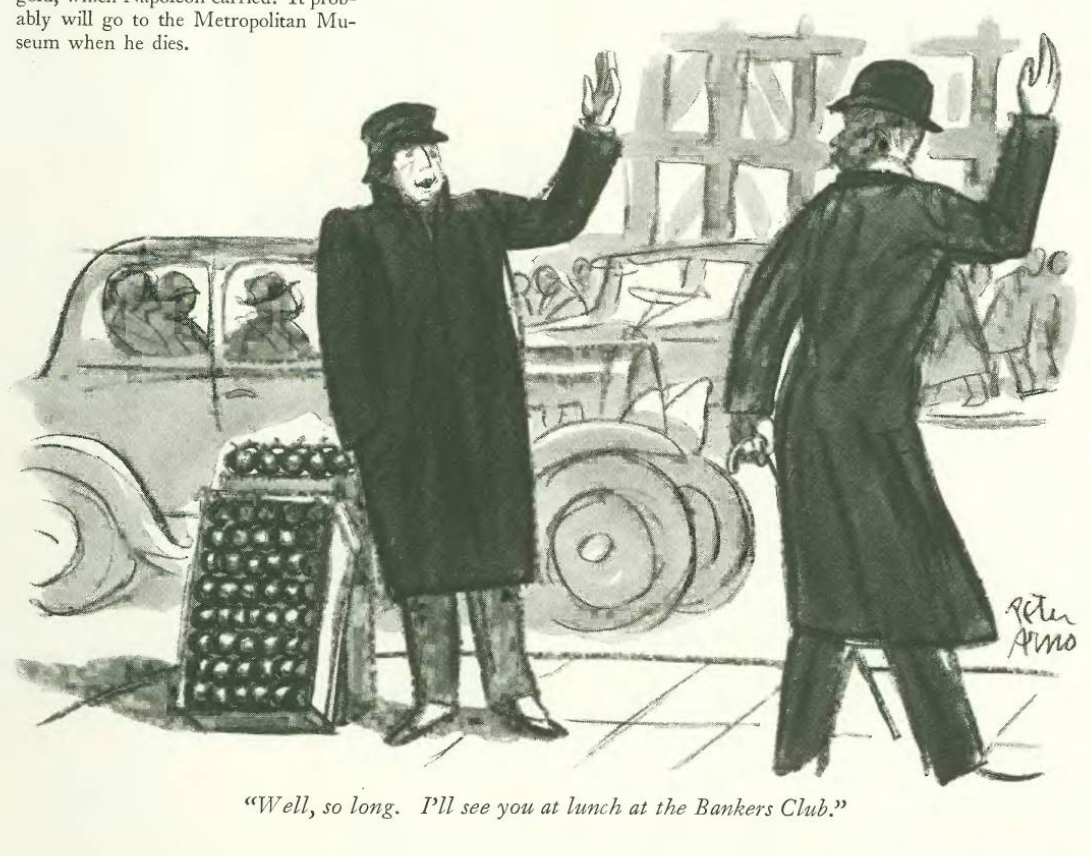
…on to Irvin’s fellow cartoonists, we have Peter Arno’s look at the new economy…
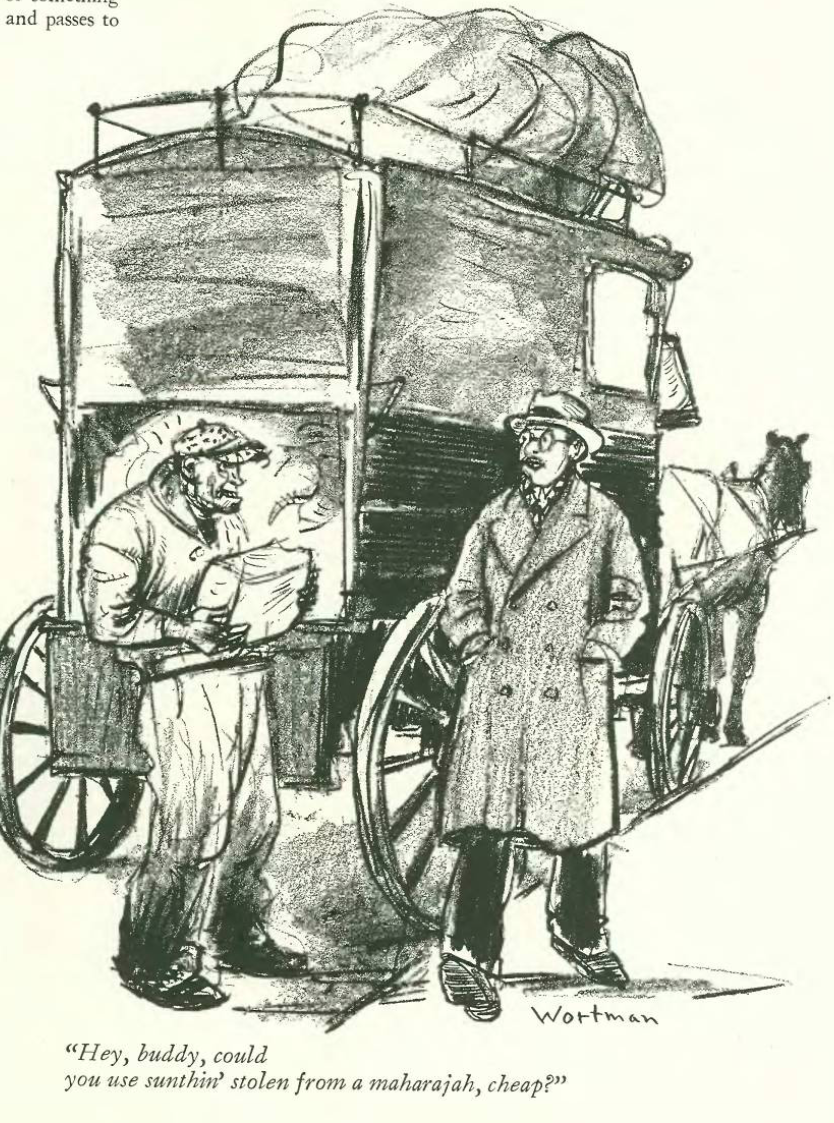
…likewise Denys Wortman…
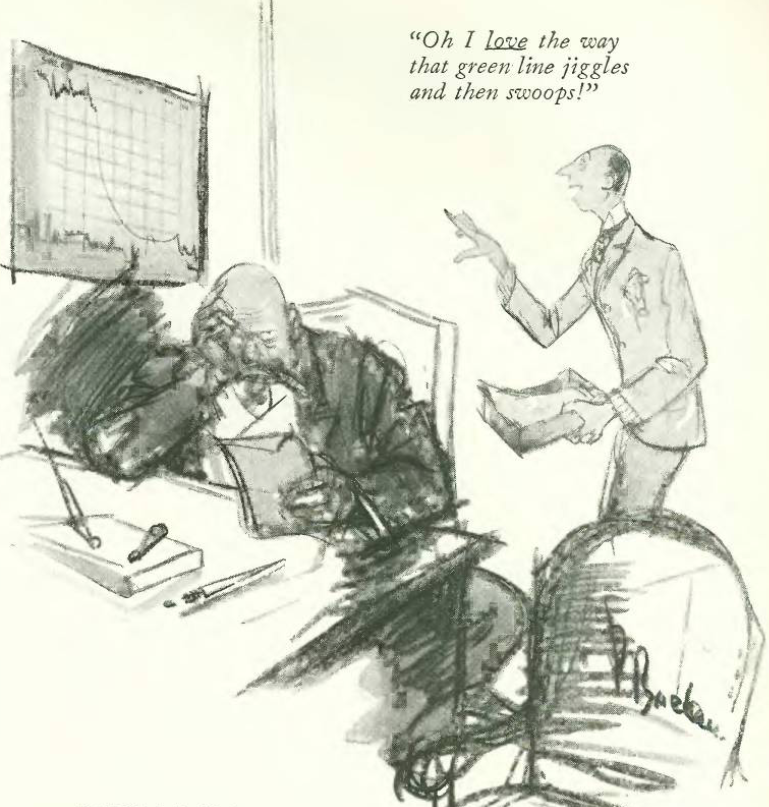
…and Perry Barlow…
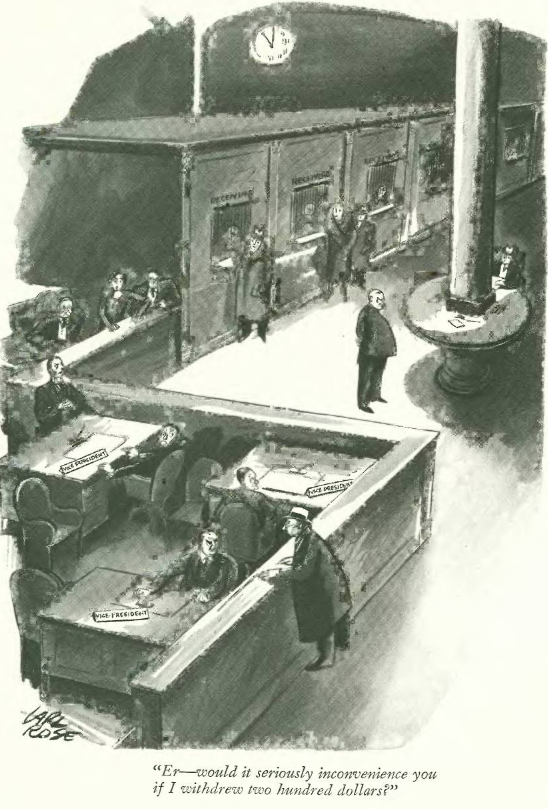
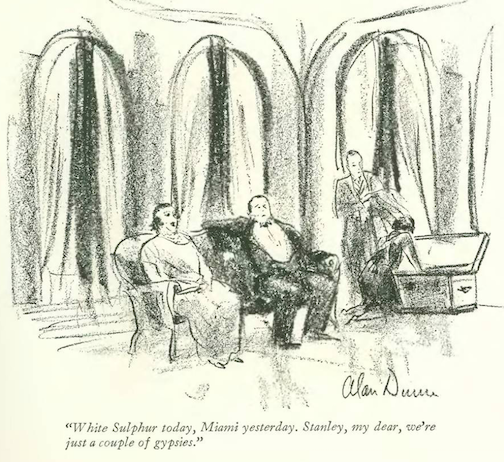
…while Alan Dunn checked in on the challenges of those who still had means…
…Barbara Shermund was still the life of the party…
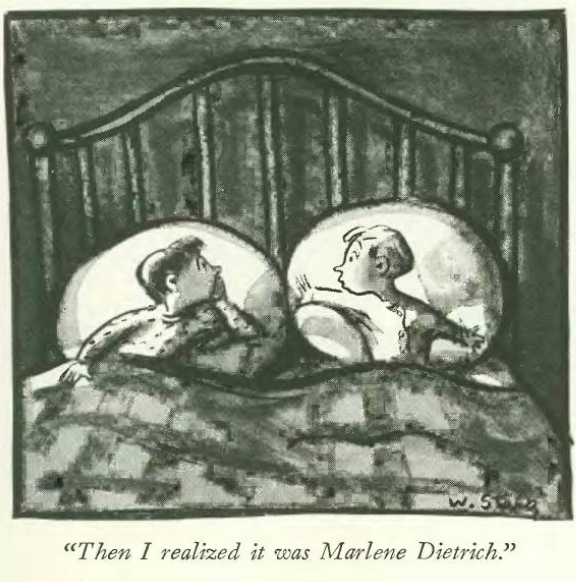
…and William Steig was beginning to establish himself in the stable of cartoon regulars (and offer a preview of his famed “Small Fry”)…
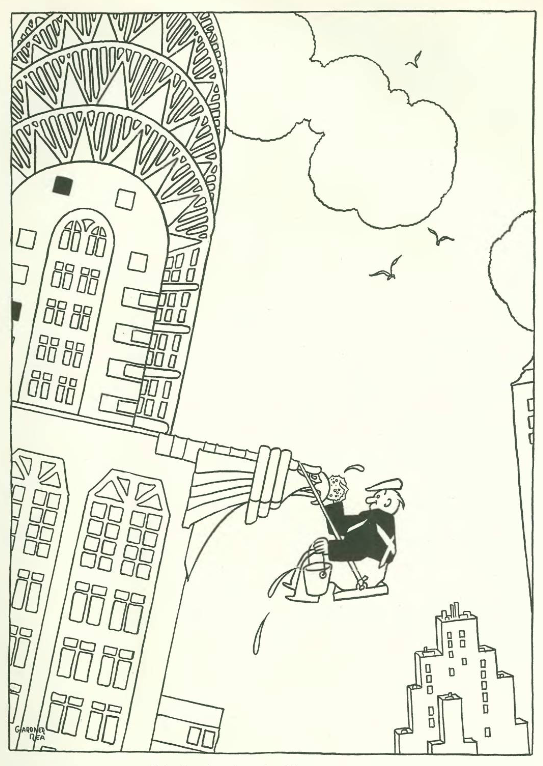
…and finally, a new perspective on the Chrysler Building, from Gardner Rea…
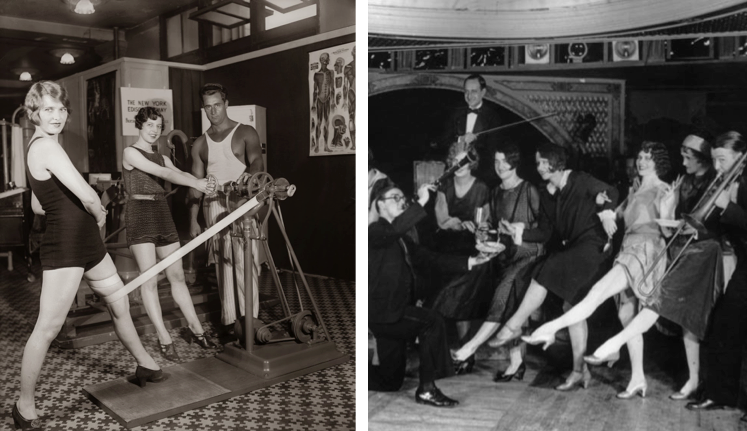
The Vassar-educated Lois Long was an icon of the flapper generation and a reigning voice—witty and smart—of New York nightlife in the Roaring Twenties.
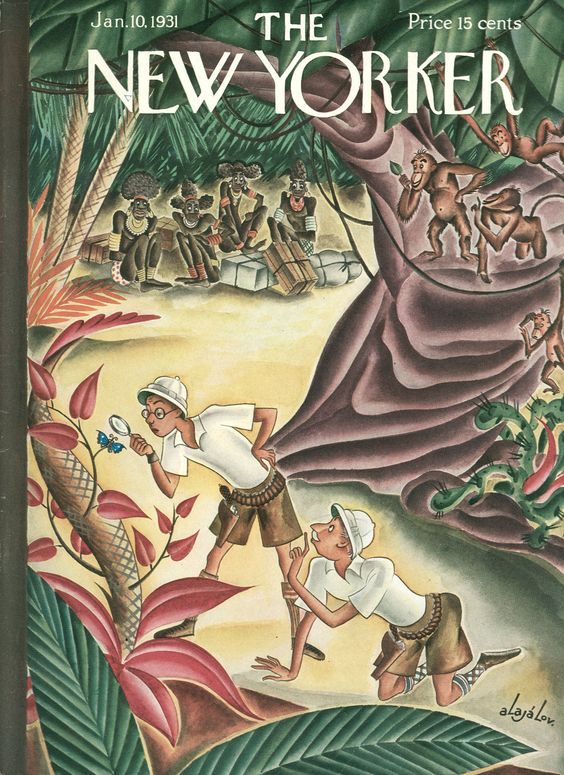
Jan. 10, 1931 cover by Constantin Alajalov.
In one of her early “Tables for Two” columns, the famously hard-partying Long made this request of her New Yorker readers: “Will someone do me a favor a get me home by eleven sometime? And see that nobody gives a party while I am catching up? I do so hate to miss anything.”
DONT START THE PARTY WITHOUT ME…Carefree days at your neighborhood speakeasy. (Manchester’s Finest)
By the dawn of 1931 few were in the mood for a party, including the 29-year-old Long, who was mother to a toddler and would soon divorce husband and New Yorker cartoonist Peter Arno.
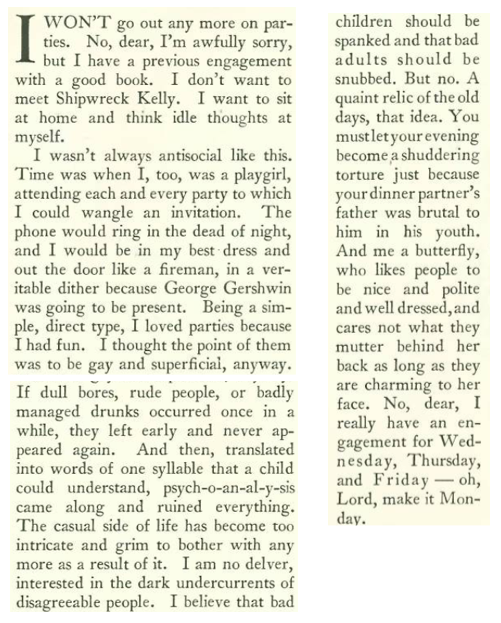
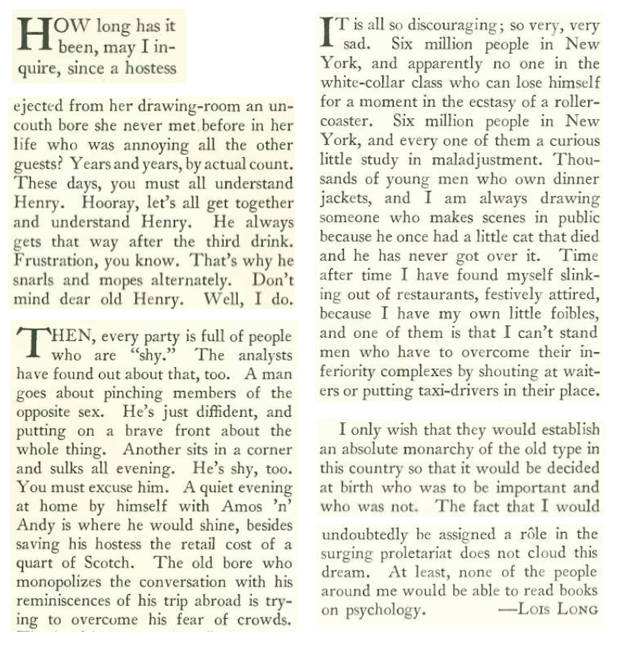
But it wasn’t motherhood or a tempestuous marriage that soured Long on the party scene. Rather, blame fell to the whiny, self-absorbed crowd that had displaced her fun-loving Jazz Age revelers. In the Jan. 10, 1931 issue Long began to assess the decade ahead in a six-part series titled “Doldrums.” The first installment, “Bed of Neuroses,” suggests Long missed the joie de vivre that characterized the previous decade:
“It is all so discouraging; so very, very, sad. Six million people in New York, and apparently no one in the white-collar class who can lose himself for a moment in the ecstasy of a roller-coaster. Six million people in New York, and every one of them a curious little study in maladjustment. Thousands of young men who own dinner jackets, and I am always drawing someone who makes scenes in public because he once had a little cat that died and he has never got over it.”
With that, Long’s partying days were officially over. Some excerpts from “Bed of Neuroses”…
SALAD DAYS…Clockwise, from top left, Lois Long relaxing on the beach in a image captured from a 1920s home movie; silent film star Charlie Chaplin,Vanity Fair editor Frank Crowninshield, sculptor Helen Sardeau, Lois Long and screenwriter Harry D’Arrast pose in a Coney Island photo booth, 1925; Long with husband Peter Arno and daughter Patricia, 1929; Long at the office in a classic flapper pose, circa 1925. (PBS/Joshua Zeitz/Patricia Long/Wikipedia)
Long recalled the days when one could hold his or her liquor…
There has been a trend among the bright young drinkers toward a glass of sherry before meals instead of cocktails, a bottle of wine during dinner, port with the cheese, a liqueur with the coffee — instead of one highball after another.
…and when one’s personal hang-ups remained personal, and were not subject to tedious public display:
Long’s nightlife column, “Tables for Two” folded a few months after the 1929 stock market crash, but she would continue to make unsigned contributions to the “Comments” and “The Talk of the Town” sections into the 1950s. Her main focus at the magazine, however, would be her fashion column, “On and Off the Avenue,” which she would write until 1968. Upon her death in 1974, New Yorker editor William Shawn remarked that Long “was the first American fashion critic to approach fashion as an art and to criticize women’s clothes with independence, intelligence, humor and literary style.”
* * *
The Age of Giants
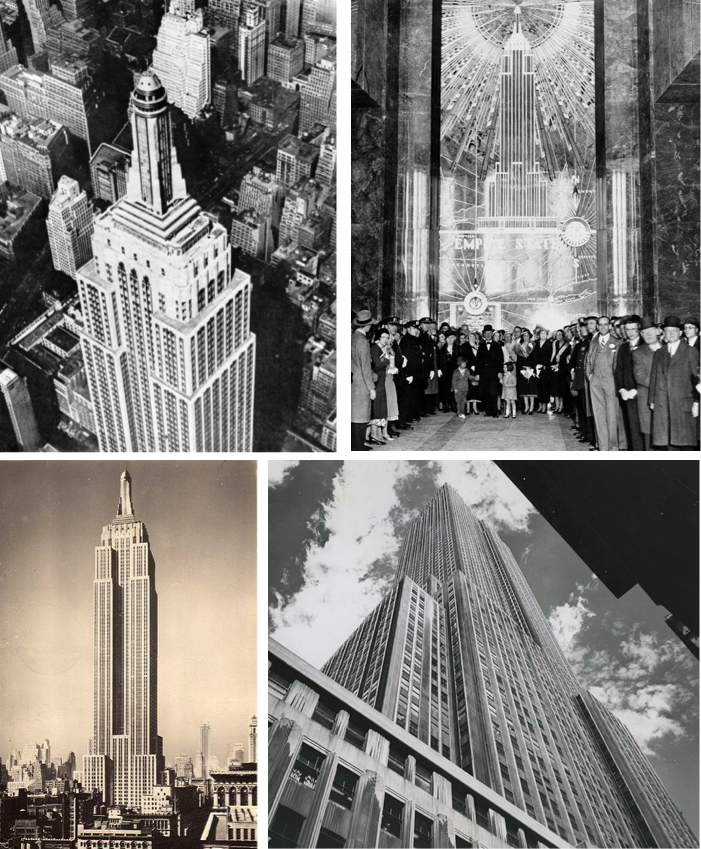
Architecture critic George S. Chappell took in the grandeur of the nearly completed Empire State Building, which rose from the rubble of the old Waldorf-Astoria hotel and perhaps more than any building served as a giant exclamation point for the 20th century metropolis. Chappell did not buy developers’ claims regarding the building’s “mooring mast,” calling it a “silly gesture” that the building would have been better served without. Looking back from our time, however, it is hard to imagine the building without its distinctive spire:
DIZZY HEIGHTS…Completed in 1931, the Empire State Building stood as the world’s tallest until 1970. Clockwise, from top left, New Yorker critic George Chappell viewed the “mooring mast” as a publicity stunt, and believed the building would have been better without it; interior of the building at its grand opening in May 1931; ground-level view of the setbacks Chappell admired; the completed tower in 1931. (lajulak.org/Associated Press/Acme/Pinterest)
Chappell also made note of a neo-Georgian style building designed by Joseph Freedlander for the Museum of the City of New York:
HISTORY’S HOME…The main facade of the Museum of the City of New York facing Fifth Avenue. (Wikipedia)
* * *
Ignoble Deeds
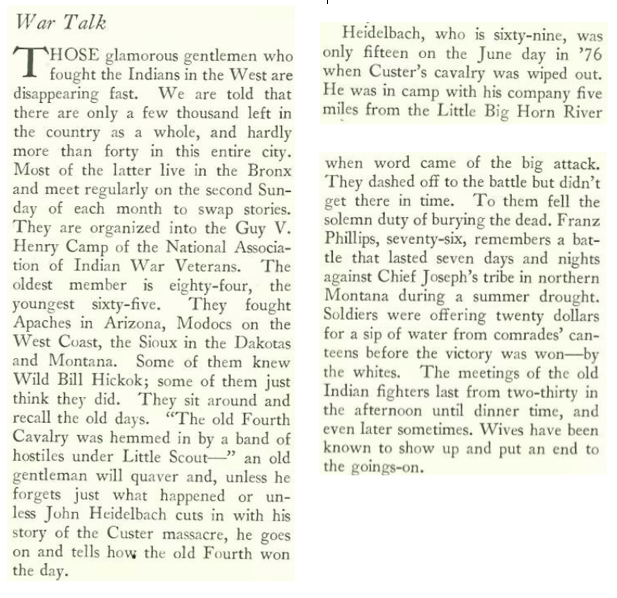
“The Talk of the Town” looked in on some aging veterans of the 19th century “Indian Wars” and found the old coots reminiscing about the massacre of various North American tribes…
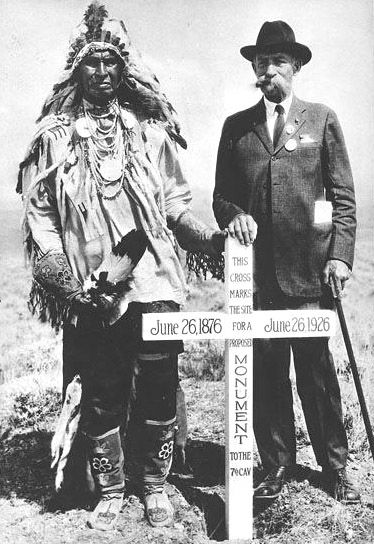
NO HARD FEELINGS?…Crow warrior White Man Runs Him poses with 82-year-old Gen. Edward Settle Godfrey, a survivor of the Battle of Little Bighorn, at the 50th Anniversary of the battle in 1926. (Wikipedia)
* * *
Cheeky
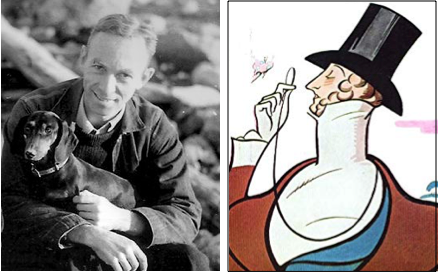
E.B. White assumed the nom de plume “Eustace Tilley” to answer an earnest query letter from Leslie Fulenwider of Famous Features Syndicate. Fulenwider probably didn’t know what he was in for…
ALTER EGO…E.B. White periodically assumed the role of New Yorker mascot Eustace Tilley in handling magazine correspondence.
* * *
Too Cool for School
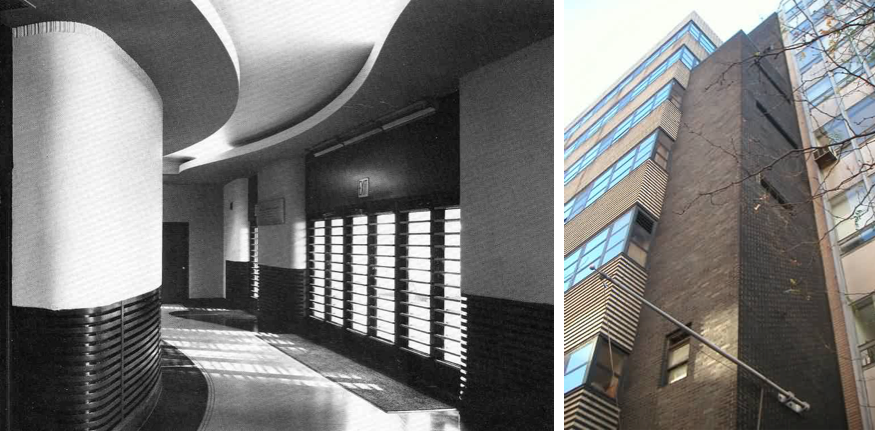
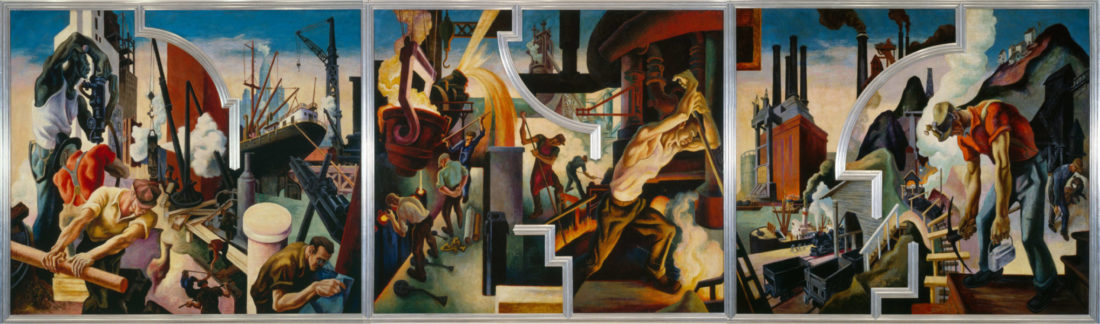
In his weekly art gallery column, Murdock Pemberton noted the New Year’s Day opening of the New School for Social Research in a “timid landmark” designed by Joseph Urban of theatrical design fame. The school’s boardroom featured a series of murals by realist painter Thomas Hart Benton.
NEW LOOK FOR NEW SCHOOL…Joseph Urban’s interpretation of the International Style for the New School for Social Research at 66 West 12th Street.AMERICAN TABLEAU…Three panels from Thomas Hart Benton’s ten-panel mural, America Today. Originally installed in the New School’s boardroom, it is now housed at the Metropolitan Museum of Art. (charlesmcquillen.com)
* * *
From Our Advertisers
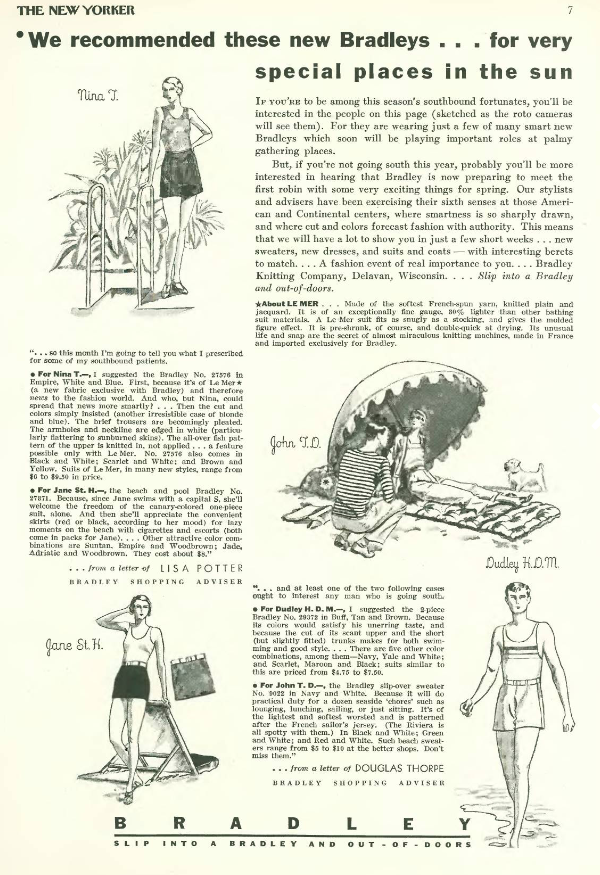
“If you’re to be among this season’s southbound fortunates,” as this ad begins, you’ll want to check out these Bradley bathing suits designed for a variety of privileged personalities…
…but before you hit the beach, you might consider an “Ardena Bath” to take away some of that winter fat…
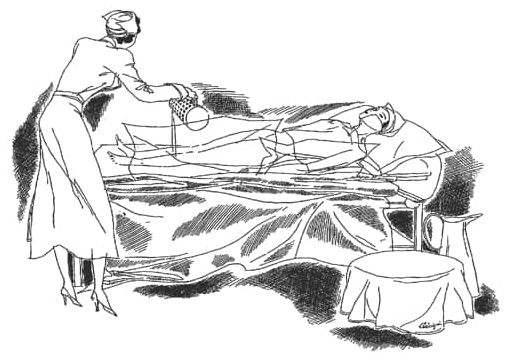
…this 1932 illustration (below) demonstrates how a full-body, Ardena paraffin wax bath works. An Elizabeth Arden advertisement described the procedure thus: You step into a tub lined with waxed paper. Over you they pour a warm liquid paraffin which slowly hardens until you are encased in a paraffin shell. Your face becomes pink. You are permeated in a sense of well-being. Suddenly, the perspirations bursts from you, for the shell forms a vacuum which causes the pores to open and, consequently, impurities are drawn away…
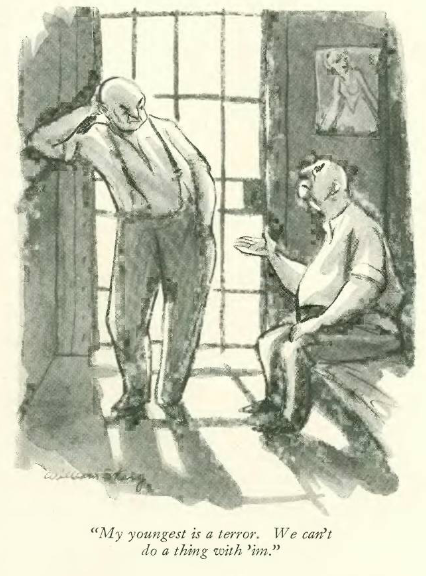
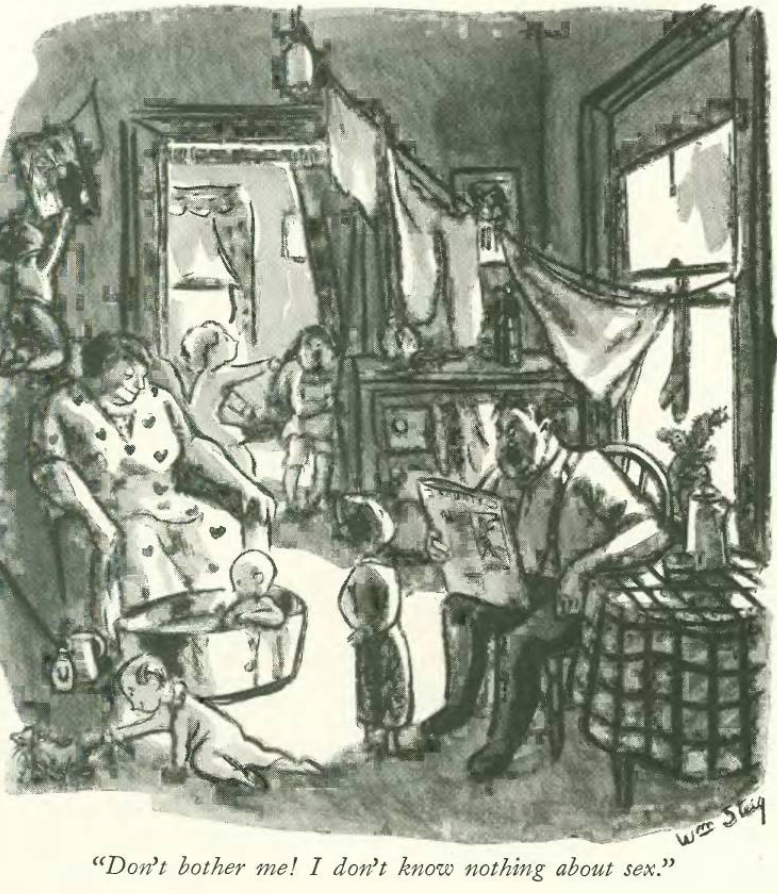
…on to our cartoons, we have two from William Steig, who produced 2,600 drawings and 117 covers for The New Yorker and whose work would span two centuries, delighting both adults and children alike, most notably the picture book Shrek! that would lead to a hugely successful movie series. According to The Numbers: Where Data and the Movie Business Meet, “after the release of Shrek 2 in 2004, Steig became the first sole-creator of an animated movie franchise that went on to generate over $1 billion from theatrical and ancillary markets after only one sequel.”
Here is Steig’s first New Yorker cartoon, from the Aug. 9, 1930 issue:
…and back to the Jan. 10, 1931 issue, in which Steig offered these glimpses into city life…
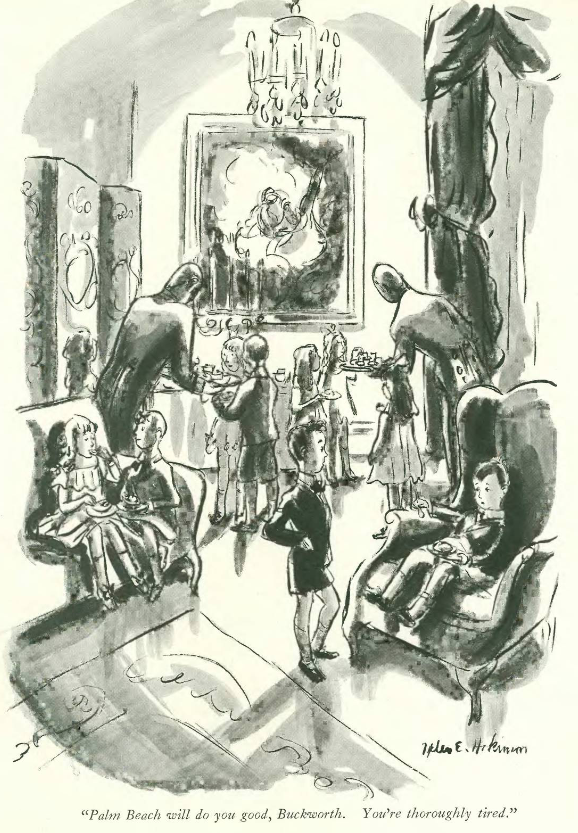
…and then have a look into the posh set from New Yorker stalwart Helen Hokinson…
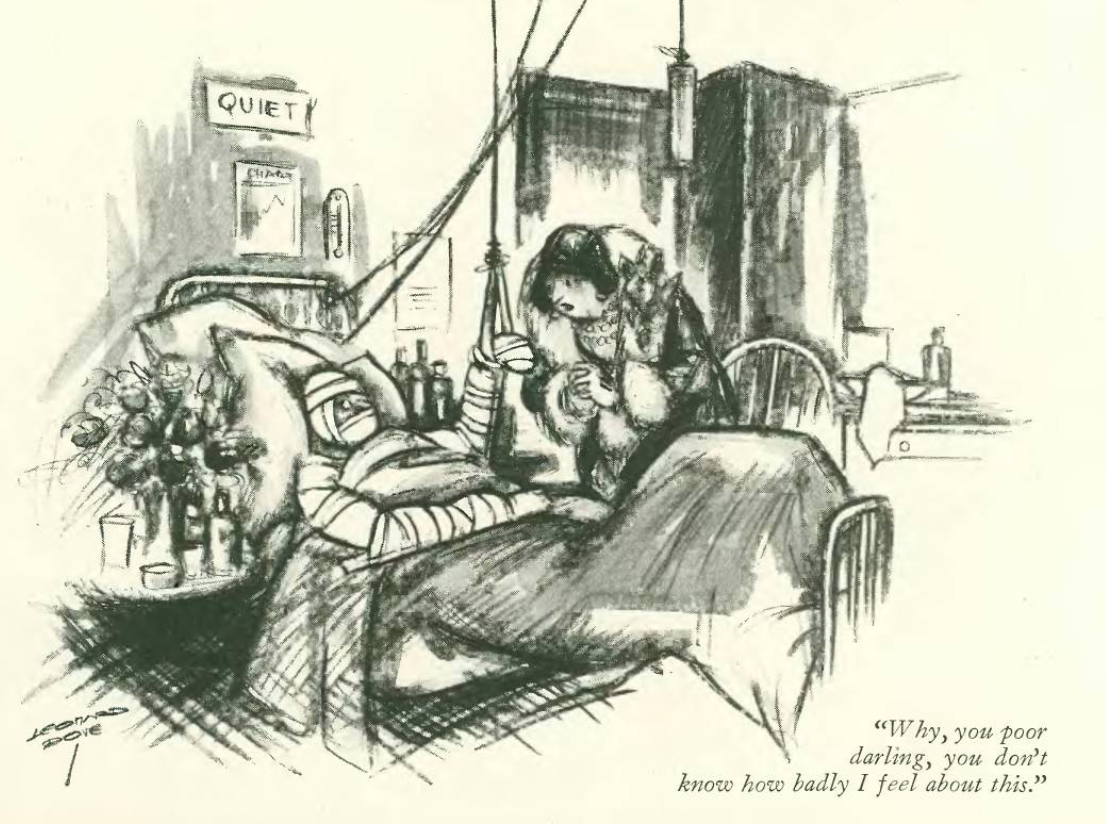
…some bedside manner with Leonard Dove…
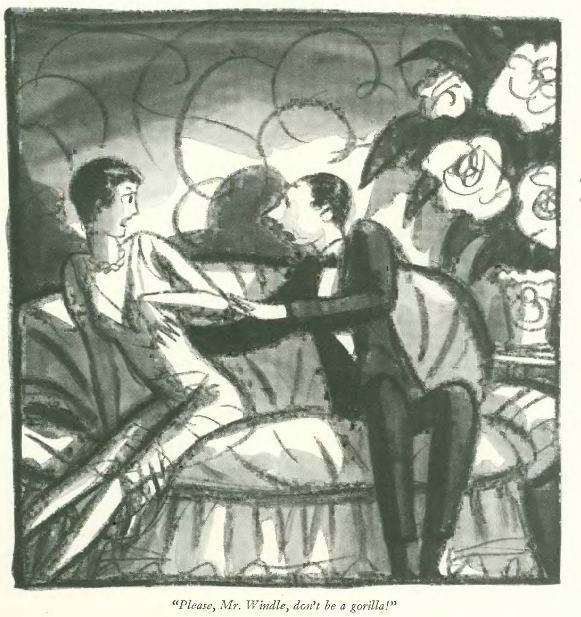
…Peter Arno continued to explore the complexities of love…
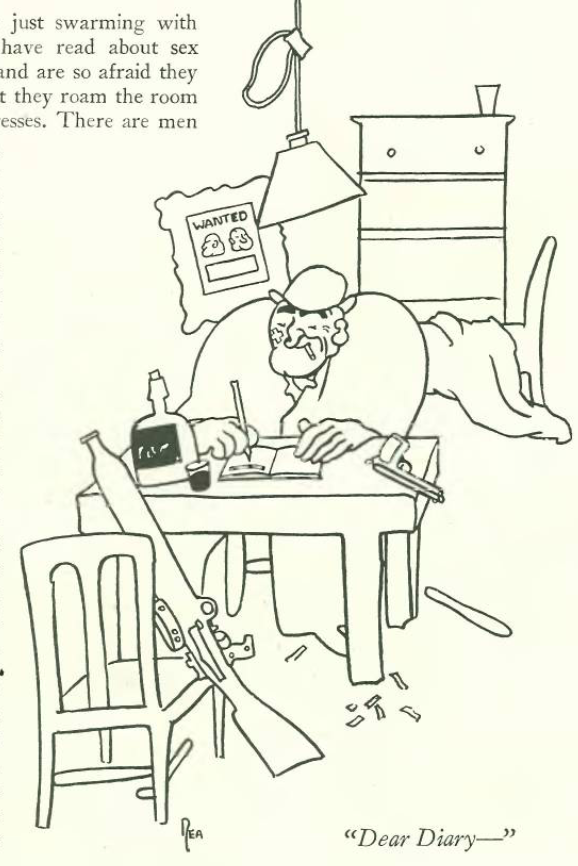
…and Gardner Rea showed us the softer side of a hardened criminal…
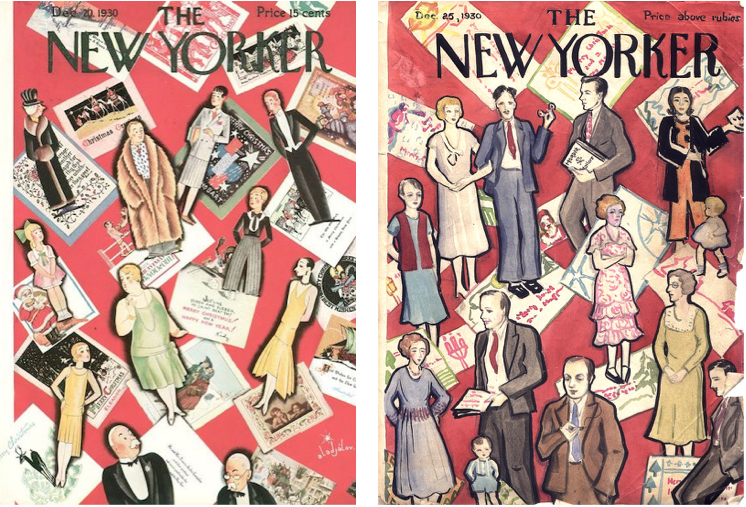
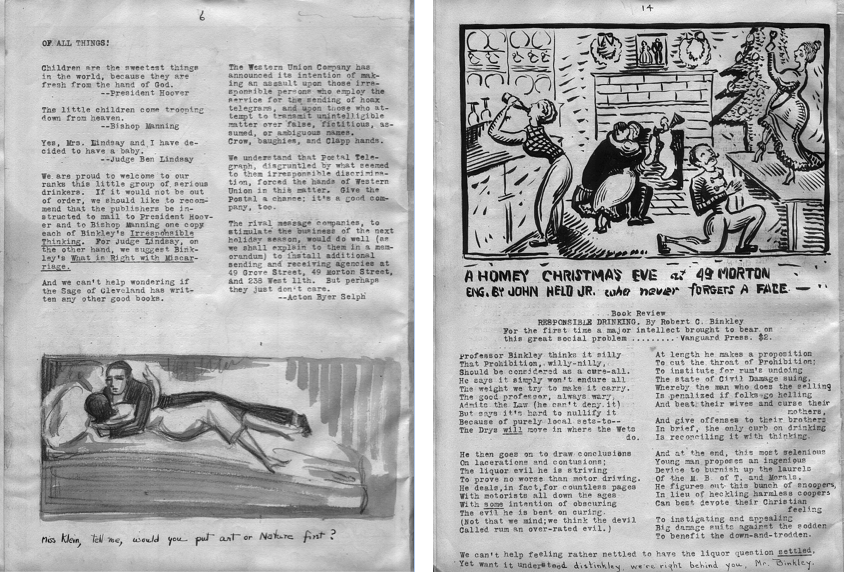
…and before we close I want to bring to your attention to this wonderful New Yorker parody that Peter Binkley recently shared with me. Binkley writes that the Dec. 20, 1930 cover “was the model for a parody issue that friends of my grandparents in the Village made for them when they visited for the holidays. My grandparents had lived in New York for a couple of years but moved away in 1929. They and this group of friends lived in the same building on Morton St., and were fervent New Yorker readers. The parody is interesting, I think, for giving a glimpse of what New Yorker fans below the top-hat-wearing class enjoyed about it at the time.”
Below, left, is the cover of the Dec. 30 issue by Constantin Alajalov, and next to it the terrific parody cover.
…and a couple of the interior pages, with parodies of cartoons by Peter Arno and John Held Jr….