Above: Bill "Bojangles" Robinson demonstrating his famous stair dance, which involved a different rhythm and pitch for each step. At left, Robinson in Broadway's Blackbirds of 1928; at right, publicity photo circa 1920s. (Vandamm collection, New York Public Library/bet.com)
Bill “Bojangles” Robinson (1878–1949) is considered one of the greatest tap dancers of all time, introducing a style of remarkable lightness and complexity that was perhaps best represented by his famous stair dance.
Oct. 6, 1934 cover by Charles Alston. This was Alston’s only New Yorker cover. Active in the Harlem Renaissance, Alston was also a painter, sculptor and muralist (see more on Alston at the conclusion of this post).
St. Clair McElway wrote about the 57-year-old Robinson in a two-part profile that examined his personal life and habits, including his propensity for getting shot. Two brief excerpts:
The New Yorker profile coincided with Robinson’s rising career in films, including four he made with Shirley Temple. For the 1935 film The Little Colonel, Robinson taught the stair dance to the child star, modifying his routine to mimic her movements. Robinson and Temple became the first interracial dance partners in Hollywood history (however, the step dance scene was cut from the film shown to Southern audiences). Temple and Robinson, who became lifelong friends, also appeared together in 1935’s The Littlest Rebel, 1938’s Rebecca of Sunnybrook Farm and 1938’s Just Around the Corner.
DANCING WITH THE STAIRS…Bill Robinson was also known as Bojangles, a nickname from his childhood in Richmond, Virginia. Clockwise, from top left, with his second wife Fannie Clay in 1933; performing the stair dance with Shirley Temple in The Little Colonel (1935); profile illustration by Peggy Bacon; Robinson with Temple in 1938’s Rebecca of Sunnybrook Farm. (blackpast.org/Wikipedia)
Robinson is remembered for his generous support of fellow dancers including Fred Astaire, Eleanor Powell, Lena Horne, Sammy Davis Jr and Ann Miller, as well as his support for the career of 1936 Olympics star Jesse Owens.
FAST IN BOTH DIRECTIONS…Robinson befriended Jesse Owens (left) after the track & field great returned from the 1936 Olympics (where Owens won four golds). Known for his generosity to his friends, Robinson helped Owens establish a successful post-Olympics career. Robinson himself was also something of a runner, having set the world record for running backward in 1922 (100 yards in 13.5 seconds). (Public domain image)
Although Robinson was the highest paid black performer of his time, his generosity with friends as well as his gambling habits left him penniless at his death from heart failure in 1949. Longtime friend Ed Sullivan paid for Robinson’s funeral, and more than 30,000 filed past his casket to pay their respects.
I’VE STILL GOT IT…Bill Robinson with Lena Horne in 1943’s Stormy Weather, a film loosely based on Robinson’s own life. (MoMA)
* * *
In a Romantic Mood
That is how St. Clair McKelway found Hollywood in two of its latest offerings, The Barretts of Wimple Street and Caravan. To his relief, he found the Hollywood version of Barretts quite “sensible”…
LET’S BE SENSIBLE…The Barretts of Wimpole Street (1934) starred Fredric March and Norma Shearer in the lead roles. (TCM)
…as for Caravan, McKelway wrote that he’d “never seen a picture with so much grinning in it.” He found the “peculiar, unreal gleam” of the actors’ teeth a real distraction in closeup shots.
THAT PEPSODENT SMILE…Charles Boyer and Loretta Young showed off their pearly whites in 1934’s Caravan. (IMDB/TCM)
* * *
From Our Advertisers
The Oct. 6 issue opened with a study in contrasts: an image of two Civil War veterans swapping stories over whiskey on the inside front cover, paired with an illustration of a lithe model sheathed in the latest fashion from Bergdorf…
…the folks at Campbell’s continued to suggest that their canned soup was a delight of the elite…
…Heinz took a similar tack, showing the smart set having fun with their sandwich spreads…
…Lord & Taylor touted its “tomorrow look” in furniture…
…R.J. Reynolds continued its series of “distinguished women who preferred Camel’s “costlier tobaccos,” adding to their growing list a the “charming debutante” Evelyn Cameron Watts, who later became Evelyn Watts Fiske (1915–1976)…
…in contrast to Camel’s fashionable ads, the upstart menthol brand Kool offered a series of cheap, back-page ads featuring a smoking penguin, here in the Halloween spirit (detail)…
…another recurring back page ad was this weird spot from Satinmesh, a product that apparently helped close a woman’s “gaping pores”…those pores apparently prompted one man to ponder the eternal why…
…on to our cartoonists, we begin with a two-page spot by Carl Rose…
…James Thurber spiced up a game of ping-pong…
…Mary Petty explored the miracle of birth…
…Peter Arno discovered you’re never too old to play with toys…
…Garrett Price offered a young man’s perspective on a father’s avocation…
…Alain (Daniel Brustlein) gave us a disappointed plutocrat on vacation in Mexico…
…George Price continued to mine the humor of his “floating man” series…
…and contributed a second cartoon that featured some office hijinks…
…and Otto Soglow returned without The Little King, offering in its stead the closest thing to royalty in America…
Before we sign off, a note on the Oct. 6 cover artist, Charles Henry Alston (1907–1977). A Harlem-based painter, sculptor, illustrator, muralist and teacher, Alston was active in the Harlem Renaissance and was the first Black supervisor for the Works Progress Administration’s Federal Art Project. In 1990, Alston’s bust of Martin Luther King Jr. became the first image of an African American displayed at the White House.
Clockwise, from top left, Charles Henry Alston’s 1970 bust of Martin Luther King Jr; Walking 1958; Andrew Herman photo of Alston, 1939; Midnight Vigil, 1936. (Smithsonian/Wikipedia/Columbia.edu)
Above: Newsreel cameramen perch on boards resting on a windowsill to get a birds-eye view of a passing parade, circa 1930. (Public Domain Image)
We marvel at, and sometimes decry, today’s instantaneous news coverage of wars, disasters and the like, but ninety years ago newsreel crews did a remarkable job of filming and delivering the latest news to thousands of theaters across the U.S. and around the world.
Sept. 22, 1934 cover by Harry Brown.
In his “A Reporter at Large” column, Morris Markey penned a lengthy account of Fox Movietone’s coverage of the SS Morro Castle disaster. En route from Havana to New York City on Sept. 8, 1934, the luxury liner caught fire near the New Jersey coast. Due to the ship’s design and the ineptitude of the crew, the blaze claimed 137 lives. Markey described how newsreel crews—with their bulky cameras and sound equipment—went into action, including a cameraman who “goaded” a pilot into taking him aloft through vicious weather conditions.
GUTS AND INGENUITY took newsreel reporters to places high and low. Clockwise, from top left, title card from a 1935 Fox Movietone newsreel; Jack Lieb goes aloft to get capture newsreel footage in an undated photo—Lieb was a cameraman for Hearst’s News of the Day; a 1930s Fox Movietone camera; the SS Morro Castle ablaze off the New Jersey Coast on Sept. 8, 1934. (Wikipedia/Lieb photo Courtesy of Bette Marshall via unwritten-record.blogs.archives.gov)
Somehow the cameraman aboard the airplane (which was forced down by weather three times) was able to get his footage to the Movietone office by noon, less than seven hours after the office first received word of the disaster. By three o’clock, five thousand feet of film from all sources was being developed.
UP NORTH AND DOWN UNDER…Movietone news had crews stationed around the world, including field staff in Sydney (top, from 1938), and in Toronto, circa 1930. (Nat’l Library of Australia/City of Toronto Archives)
Markey concluded with this observation about the “rugged” and persistent newsreel cameramen:
In the aftermath of the Morro Castle disaster, a scene of enormous tragedy was turned into a tourist attraction…
GAWKERS AND HAWKERS…The charred hulk of the SS Morro Castle came to rest on the shore near the Asbury Park boardwalk, which became a popular spot for souvenir salesmen and photo-ops. Tourists flocked to the site from September 1934 to March 1935, when the ship was finally towed away. Note the postcard (bottom) advertising homemade candy over an image of the charred ship. (ripleys.com/side-o-lamb.com)
Fox Movietone News produced sound newsreels from 1928 to 1963, and in the UK as British Movietone News…here is Movietone footage of the Morro Castle disaster, as presented by British Movietone in 1934:
* * *
Up In The Old Hotels
Last week “The Talk of the Town” looked in on one of Manhattan’s oldest saloons, McSorley’s. For the Sept. 22 “Talk” the subject was “Oldest Hotels,” two of which, The Cosmopolitan and The Grand, remarkably survive to this day.
HANGING IN THERE…The 1845 Brevoort House hotel at 15 Fifth Avenue (top left) was torn down in 1952, however the 1868 Grand Hotel (right) at 1232–1238 Broadway and the 1845 Cosmopolitan Hotel (below, left) at Chambers Street and West Broadway still stand today. (Museum of the City of New York / Chester Higgins Jr. for The New York Times)
* * *
The Six-Million Dollar Road
The first roadway designed exclusively for automobile use was likely the Long Island Motor Parkway, privately built by William Kissam Vanderbilt II because he wanted a road suitable for auto racing. He established the Vanderbilt Cup races on local roads in 1904, but after two spectators were killed and many others injured, in 1908 he began building what would become a 45-mile (72 km) toll road from Queens to Lake Ronkonkoma. After two mechanics were killed in a 1910 race, the New York Legislature banned racing on the road, which the state took over in 1938.
ROAD WARRIOR…William Kissam Vanderbilt II (top right) staged his Vanderbilt Cup Races on his private road until a fatal accident put a stop to the fun in 1910; At bottom right, a surviving section of the road today. Most of the road in Queens is a bicycle trail, and other segments still serve as parts of a county road. (nyheritage.org/Wikipedia-Steve Nowotarski/ny1.com)
* * *
From Our Advertisers
I have nothing against accordion music, despite years of exposure to Lawrence Welk during my youth, but I find it hard to believe that a Park Avenue socialite (identified here as Mrs. René Du Champ Bellinger) would contemplate tormenting her posh friends with a Hohner squeezebox…
…Esquire magazine was barely a year old when it posted this ad in The New Yorker…its appeal to men (and their anxieties) keeps it going today…
…it’s interesting how companies in the 19th century and on through the 1950s featured idealized, bird’s eye images of their factories in advertising, doubtless believing that consumers associated size (and smokestacks) with prosperity, and therefore a quality product…
…White Rock, however, has used the image of the Greek goddess Psyche for more than a century to promote the purity of its spring water…
…purity was also the main point of this ad from Daggett & Ramsdell, who hawked their wares to the Park Avenue set…after more than 130 years D&G is still in the beauty business…
…this next ad is almost unbelievable…single rooms starting at $5, double rooms $7, and a whole suite for $10…at the Plaza…okay, $10 is roughly equivalent to $225 today, but half of that could get you a single…
…and yet another unlikely claim from R.J. Reynolds regarding the energizing qualities of their Camel cigarettes…it seems the last thing you would need while climbing a mountain is smoke in your already over-taxed lungs…
…however, let’s give proper due to Georgia Engelhard (1906–1986), who scandalized the mountaineering world by ditching the Victorian climbing skirt in favor of a pair of climbing pants. Engelhard was the first female climber to ascend many of the peaks in the Rockies…
Georgia Engelhard in a 1922 photo attributed to her friend Alfred Stieglitz. (nga.gov)
…it seemed like nearly everyone smoked in the 1930s, even in ads that had nothing to do with tobacco companies (detail)…
…on to our cartoons, we begin with Richard Decker and some retail competition…
…George Price drew up a curiosity even Robert Ripley couldn’t believe…
…Robert Day examined advances in evolutionary science…
…E. Simms Campbell offered up this abbreviated love story…
…Peter Arno gave us a director with a god complex…
…and one from Ned Hilton, and a new perspective on flying…
…on to Sept. 29, 1934, with a cover by Arnold Hall, who produced at least twelve covers for The New Yorker between 1933 and 1939…
Sept. 29, 1934 cover by Arnold Hall.
…and we go straight to ads, beginning with this alarming image that greeted readers on the inside cover…why would this prompt anyone to purchase a can of onion soup?…
…the Rainbow Room on the 65th floor of Rockefeller Center opened in 1934, and it quickly became a focal point for the city’s elite…
Above, the dining room at the Rainbow Room, 1934, and below, in 2004. (Library of Congress/Wikipedia)
…Lucky Strike continued its series of ads featuring fashionable women looking smart with their product…
…our cartoons include this spot illustration by Otto Soglow, who did spots for The New Yorker for many years…although Soglow’s Little King moved to the Hearst newspapers, he continued to contribute cartoons to The New Yorker until 1974…
…George Price continued to explore life as a levitating man…
…the enforcement of the Hays Code had this teen in a “fix,” per James Thurber…
…Gluyas Williams continued his exploration of various crises, this time in the music world…
…Alan Dunn gave us a glimpse of civilization via the pharaonic sculptures that were emerging on the face of Mt. Rushmore…
…and we close with the wonderful wit of Barbara Shermund…
McSorley’s Old Ale House is probably best known to New Yorker readers through the work of Joseph Mitchell, who was noted for his distinctive character studies in The New Yorker and who in 1943 published McSorley’s Wonderful Saloon, which was later included in a 1992 collection of Mitchell’s works, Up In the Old Hotel.
Sept. 15, 1934 cover by Rea Irvin.
Among New York’s oldest saloons, McSorley’s was one of the last of the “Men Only” pubs, finally admitting women in 1970 after the state required the saloon to comply with the U.S. Constitution’s Equal Protection Clause. McSorley’s was visited by many famous patrons in its long history, a mixed bunch that included Abraham Lincoln, Teddy Roosevelt, Harry Houdini and John Lennon. Nine years before Mitchell would pen his account of the saloon, “The Talk of the Town” took a look.
MORE THAN A BAR…Folks were (and still are) drawn to McSorley’s Old Ale House for its rustic atmosphere—apparently no piece of memorabilia has been removed from its the walls since 1910. Clockwise, from top left, McSorley’s in 1942; 1937 Berenice Abbott photo of the interior; and two paintings by John Sloan—McSorley’s Bar, 1912; and Cats in McSorley’s, 1928. Sloan was among the Ashcan School of artists that included Stuart Davis and John Luks—all regulars at McSorley’s. (keithyorkcity.wordpress.com)
* * *
Of the People
The Italian-American labor organizer Carlo Tresca was a gifted orator and outspoken critic of anyone who stood in his way in his quest for workers’ rights. As political activist and writer Max Eastman pointed out in the lead paragraph of a two-part profile, speaking truth to power also prompted a number of deadly assaults on Tresca (1879–1943), whose campaign for justice was ultimately cut short by an assassin’s bullet in 1943. A brief excerpt:
STANDING FIRM…Leaders of the International Workers of the World who led the 1913 Paterson (N.J.) mill strike included, left to right, Carlo Tresca, Elizabeth Gurley Flynn and William D. Haywood. (Photo: News Dept. American Press Association)UP TO THE FINAL CURTAIN…Clockwise, from top left: Carlos Tresca with an unidentified worker in the 1910s; labor activists often staged theatrical works to get their point across—in 1913 The International Socialist Review covered a play at Madison Square Garden about the Paterson N. J. mill strike, which featured more than a thousand amateur actors; cover of a 1926 theatrical work, L’attentato a Mussolini, that attacked the fascist dictatorship of Benito Mussolini; police officer guards Tresca’s body after his 1943 assassination. Tresca was crossing Fifth Avenue at 15th Street when an unidentified assailant jumped out of a black Ford and shot him in the back of the head, killing him instantly. (Wikipedia/weneverforget.org/wetheitalians.com)
* * *
Up In Smoke
Lewis Mumford sniffed at much of the new architecture popping up around his city, but he took an especially big whiff of the new incinerator that rose above the neighborhoods at 215th Street and Ninth Avenue. When the incinerator opened in 1934 the city stopped dumping its garbage into the sea (it was fouling the beaches) and began burning the stuff around the clock in Harlem, where residents had put up with the smoke and cinders that were emitted from the supposedly “odorless” plant. Cole Thompson’s website My Inwood is a great place to read more about it.
ASHES TO ASHES…New York’s municipal incinerator, located in Harlem, as seen in 1937. The plant closed in 1970 when the city’s rubbish was re-directed to the Fresh Kills landfill on Staten Island. The smokestacks, which had become something of a landmark, were demolished in 2022. (Museum of the City of New York)
Mumford brightened, however, at another development in the Turtle Bay neighborhood, where architect William Lescaze (1896–1969) had slipped a bright, modernist house in between two dusky brownstones on East 48th Street. The house featured extensive use of glass block in its construction, an architectural first in the city.
RADICAL CHIC…William Lescaze’s four-story house, inserted between the brownstones on East 48th Street, is considered to be the first modernist house in city; at right, the Swiss-born American architect, city planner and industrial designer endorses highballs mixed with Lord Calvert Whiskey in a 1948 advertisement. (Wikipedia)ALL AGLOW…The Lescaze house at night, and two interior views. (From the 1936 issue of Decorative Art, the Annual Issue of the Studio Yearbook via djhuppatz.blogspot.com)GLASSY EYED…The Lescaze House’s glass block facade, the first to be used on a building in New York City, were installed to provide insulation and privacy while also allowing extensive illumination. At right, the front entrance to the lower level, which contained Lescaze’s office. (6sqft.com)THINK PAD…Lescaze situated the most important rooms to the back of the house (dining, master bedroom and living) to isolate them from street noise and bathe them in northern light. His basement office extended under the back terrace. (hiddenarchitecture.net)
Mumford noted that the recent invention of home air-conditioning systems made it possible for Lescaze to bring light deep into the central core of the building…
HIGH AND LOW…Lescaze’s works in the early 1930s included the 1932 PSFS Building in Philadelphia (today: Loews Philadelphia Hotel); at top, PSFS interior view showing board room conference table; below, the 1930-31 Fredrick Vanderbilt Field House in Connecticut. (Hagley Museum and Library/Wikipedia/djhuppatz.blogspot.com)
* * *
Poser
The novelist and poet Raymond Holden (1894–1972) was a regular contributor to The New Yorker from 1929 to 1943. For the Sept.15 issue he assumed the guise of an economist to pen this cheeky letter to the editors:
* * *
Head in the Clouds
Film critic John Mosher thought Bing Crosby was a fine singer, but he couldn’t quite fathom why the movie-makers at Paramount thought the singer would be even more attractive if he was sent aloft using various camera tricks.
COME FLY WITH ME…Lobby card advertising 1934’s She Loves Me Not starring, from left, Bing Crosby, Maude Turner Gordon, Miriam Hopkins and Kitty Carlisle. (IMDB)
* * *
From Our Advertisers
The advertising department must have been thrilled with the flurry of ads that announced the fall and winter fashions…here are three examples, the first two focused on styles supposedly designed attract the opposite sex…the International Silk Guild promised that the “swish” of silk would turn any man’s head…
…while B. Altman’s “Young Colony Shop” claimed you could get your man with the “swish and billow” of taffeta…
…B. Altman ran a second full-page ad to catch a bit older demographic, less concerned with landing a man and more concerned with sending the proper signals to fellow Anglophiles…
…the folks at Matrix shoes were looking for a way to associate their “Countess” model with modern living, but what they got was an image of people waving farewell to some flying footwear…
…and here is another in a continuing series of ads from R.J. Reynolds that claimed “science” had confirmed the refreshing, energizing effect of its Camel cigarettes…
…we clear the air with this attractive ad beckoning New Yorkers to sun-kissed Bermuda…
…Budweiser continued its series of Rockwellesque portraits of old men enjoying its product…
…and this two-page spread from Fisher—maker of car bodies for General Motors—shows us how young tots travelled in the days before plastic car seats and other restraining devices…
…on to our cartoonists we begin with a couple examples of spot illustrations from the opening pages…
…on to Peter Arno…the caption reads, “I adore driving at night. Once I caught my foot in a bear trap, though”…the humor is lost on me…I suppose she is referring to a speed trap, perhaps set by an amorous cop…
…speaking of amorous, William Steig explored the subject amongst his “Small Fry”…
…Gardner Rea sat in on an unlikely boast…
…Perry Barlow illustrated the doldrums associated with waitressing…
…Garrett Price checked in on the latest developments in deep sea exploration…
…the cartoon refers to the explorations of William Beebe, who along with engineer Otis Barton descended in a bathysphere to a record 3,028 feet (923 m) on Aug. 15, 1934…
SIT TIGHT…Naturalist William Beebe poses inside the bathysphere in the early 1930s. (msmocean.com/)
…and we close with Gilbert Bundy, and a couple of horse wranglers…
Sigmund Gottfried Spaeth (1885–1965) sought to popularize classical music and improve the musical tastes of the masses by meeting the public wherever he could find them, from vaudeville halls to national radio broadcasts.
September 1, 1934 cover by William Steig.
Born in a line of three generations of Lutheran clergymen, Spaeth chose a different path and became a musicologist who sought to de-mystify classical music, often demonstrating how popular melodies had origins in earlier music. He also had strong opinions about lyrics in popular music, demonstrating his distaste for “the lyric school of self-pity” in this “Onward and Upward” column. Excerpts:
BRINGING MUSIC AND LIGHT…Sigmund Spaeth found much to dislike in the world of popular music, but he was never stuffy in his approach to music appreciation. At right, Spaeth appeared in vaudeville-style shows (and for many years on the radio) as “The Tune Detective,” wearing a deerstalker cap, cape, and checked tweeds in imitation of Sherlock Holmes. He hoped to demonstrate to a wide audience that all music was essentially based on a set of simple principles. (sinfonia.org/wnyc.org)HAVE NO FEAR…Spaeth wrote a popular syndicated newspaper column, “Music for Everybody,” and contributed articles to many periodicals during his career. With his first book in 1925, The Common Sense of Music, and others that followed, Spaeth sought to de-mystify music for a general audience. (Wikimedia Commons)OH LIGHTEN UP…Spaeth detected a cynical note in Bing Crosby’s (left) sob song, “I Cried for You,” and noted Irving Berlin’s latest contribution to the “sob symposium,” “I Never Had a Chance.” (Wikipedia/digitalcommons.library.umaine.edu/britannica.com)
Spaeth noted that not all sad songs were dripping in artificial self-pity, citing Helen Morgan’s “Why Was I Born?” as an example of a song modeled on “the legitimate blues,” marked by “a sincerity of expression in everyday language”…
RIGHT AND WRONG…Spaeth acknowledged the “sincerity of expression” in Helen Morgan’s (left) torch songs, while at the other extreme he suggested that the authors of “Was That the Human Thing to Do?” (Sammy Fain and Joe Young) be boiled alive in their own tears. The song was popularized by The Boswell Sisters, a beloved New Orleans trio in the early 1930s. (findagrave.com/amazon.com/genius.com)
* * *
Off to the Races
In his column, “Of All Things,” Howard Brubaker commented on the apparent competition and contrast between Alexander Woollcott’s book, While Rome Burns, and another with a rosier title, The Coming of the American Boom. It appears Woollcott’s book won out, at least in the long run, as I can find no trace of the Boom book, or its author.*
* One of our kind readers has identified the author: “The Coming American Boom” was written by Lawrence Lee Bazley Angas and published by Simon and Schuster in 1934. In 1939, Time noted that “Major Lawrence Lee Bazley (‘Boom’) Angas is a pink & white Britisher with a reputation for making daring predictions which have sometimes come true…. He won his nickname with a much-publicized booklet, The Coming American Boom, which heralded his arrival in the U.S. in 1934.”
Speaking of rosy outlooks, E.B. White offered some parting thoughts on Chicago’s World’s Fair, called “A Century of Progress.” Rather than focus on the grandiose exhibits, White wryly noted other signs of progress at the fair, as recounted from a letter he received from his nephew.
The Chicago World’s Fair featured all sorts of modern wonders “dedicated to the ideal of scientific advance”…
…but as with any World’s Fair, it also catered to the baser interests of the masses, with attractions such as Robert Ripley’sBelieve It Or Not “Odditorium,” which was essentially a P.T. Barnum-style freak show…
…Ripley’s syndicated newspaper feature included these Odditorium attractions…
…White made light of exhibitions displaying such signs of progress as how to brush your teeth, and more examples of human freakdom…
…White’s nephew wrote of a man who could pull a wagon (containing his wife) with his eyelids, an apparently arthritic fellow who was “turning to stone,” and a man who could support heavy weights with his pierced breasts…
(all images courtesy postcardy.blogspot.com)
* * *
Letter From Paris
Paris correspondent Janet Flanner wrote that August 1934 was a “month of memories” as it marked the twentieth anniversary of the outbreak of the Great War, which we now call World War I. Flanner wrote about a new attitude that had arisen in those two decades, “a new attitude not only toward the last war but toward the next (which, ironically enough, seems increasingly inevitable to France since the death of the enemy warrior, von Hindenburg).” She continued with these observations made by French journalist and historian Emmanuel Berl (1892–1976), who wrote that as a result of the Great War, the youth in both France and Germany held few heroic illusions about war, seeing it not as a sacrifice but rather “as a means of being annihilated.”
SO MUCH FOR THE HEROICS…A refugee family returning to Amiens, France, looking at the ruins of a house on Sept. 17, 1918. Top right, Janet Flanner in 1940; below, Emmanuel Berl. (iwm.org.uk/Flanner photo copyright Estate of George Platt Lynes/Berl photo courtesy Joël Chirol)
* * *
From Our Advertisers
Clothing company Rogers Peet used the threat of humiliation to encourage young men to stock up on “authentic university fashions” before returning to campus…
…the Wanamaker department store took a different approach, offering up new styles with a heavy English accent (I say, didn’t we play tennis once at the Hon. Toppy Crew’s?)…
…the makers of Goodyear tires offered up this disturbing image to boost sales…
…this ad told us that “Mrs. Henry Field” collected fine art, loved to go to parties, and “always smoked Camel cigarettes”…I am unaware of the fate of Mrs. Henry Field, married to the grandnephew of Marshall Field, but this unseemly image suggests she was replaced by a wax figure before the photo was taken…
…on to our cartoons, we begin with spot illustrations from (clockwise, from top) Victor De Pauw, Abe Birnbaum, and an unidentified illustrator who offered this suggestion for beating the late summer heat…
…we move along to Alan Dunn and a record-seeking pooch…
…Peter Arno with a very Arno-esque take on the stranded island trope…
…James Thurber gave us a man who was done making decisions…
…Richard Decker offered up this living history demonstration…
…George Price gave us two tropes for the price of one…
…Barbara Shermund gave us another glimpse into the lives of modern women…
…Rea Irvin continued his exploration of Manhattan’s fauna…
…our next cartoon is by Henry Steig, who used the pseudonym Henry Anton to avoid being confused with his brother, William Steig (featured on this issue’s cover)…unlike his brother, Henry was also a jazz musician, a sculptor and painter, a photographer, and a novelist…that is before he became a noted jeweler…
…Henry Steig’s jewelry shop at 590 Lexington Avenue can be glimpsed in the background of the famous subway vent scene from 1955’s The Seven Year Itch featuring Marilyn Monroe…
…and we close with Otto Soglow, and the last appearance his “Little King” in The New Yorker...William Randolph Hearst had lured Soglow away for his King Features Syndicate, debuting The Little King in his newspapers on September 9, 1934, where it would run until Soglow’s death in 1975…Soglow, however, would continue contributing cartoons of other themes to The New Yorker until 1974…
During the roughly thirteen years of Prohibition, many Americans had forgotten how to mix a decent cocktail; the concoctions they devised during those dry years were often created to mask the taste of bootleg liquor—sales of Coca-Cola steadily increased throughout the 1920s in part because it made ardent spirits such as rum and whisky a bit more palatable.
August 18, 1934 cover by Ilonka Karasz.
Donald Barr Chidsey examined the phenomenon in “The Talk of the Town,” visiting with traumatized bartenders around Manhattan:
LOST ART…Donald Barr Chidsey relayed the horror of a customer at Sherry’s (top left, photo of the 300 Park Avenue entrance, c. 1925) who asked for ice cream in his rum punch; directly across the street from Sherry’s was the Waldorf Astoria (top right), where a customer asked for a drink of half ice cream, half Coca-Cola; bottom images are from Albert Crockett’sThe Old Waldorf-Astoria Bar Book—as to what one gathers from Chidsey’s account, more than a few people needed to check the “Glossarial” to get reacquainted with the spirit world. (Museum of the City of New York/kitchenartsandletters.com)CUBA LIBRE…According to Chidsey, the go-to for women patrons at the Hotel Weylin was a Barcardi and Coke; at left, Hotel Weylin in 1935; at right, lobby card featuring entertainment at the Weylin Bar, circa 1930s. (Museum of the City of New York/ebay)THE LAST STRAW…Chidsey wrote of an alarming trend among patrons at Schrafft’s who demanded straws in their Tom Collinses. The sleek, art moderne Schrafft’s at 61 Fifth Avenue was among more than two-dozen Schrafft’s locations in New York City in the 1930s. Known for cleanliness and home-style cooking, target clientele were middle-class women. (Architectural Record photos via daytoninmanhattan.blogspot.com)
* * *
From Our Advertisers
Speaking of Schrafft’s, here is their advertisement from the Aug. 18 issue, offering breakfasts ranging from 35 to 75 cents that apparently were the stuff of O. Henry’s dreams…
…what is a woman to do with a restless husband?…drawing on the wisdom of the ages, she hands him a beer and coaxes him into his easy chair…this ad encouraged women to “always keep a few bottles in your refrigerator”…in other words, keep ’em coming until he settles into a manageable stupor…
…and see just how easily he slips away, leaving you with a few moments to yourself…
…if highballs were more to your taste, the folks at Poland Water stood ready to help…
…R.J. Reynolds claimed their Camels could solve all sorts of life challenges…we’ve seen ads claiming that Camels soothed “jangled nerves” and helped one relax, but apparently they also could give you energy and pep, at least that is what tennis star Ellsworth Vines, Jr claimed…
…lots of color in the ads for the Aug. 18 issue…here the folks at Buick featured a woman in a red dress serving as an exclamation point to their automobile, which was no ordinary motorcar, but rather a “congenial companion, alive with good-natured personality”…
…the folks at General Tire went one better, making their tires the star attraction…those tires look so attractive it seems almost a shame to dirty them on the road…
…on to our cartoons, we cool off with this spot in the opening pages by Alan Dunn…
…William Cotton contributed this caricature of New Deal Administrator Hugh Samuel Johnson that accompanied a three-part profile…
…Rea Irvin offered up a bird of a different feather…
…Robert Day gave us this master of understatement…
…Alan Dunn again, examining the trials and tribulations of the leisure classes…
…Peter Arno offered this take on the Hays Code (after politician Will Hays), which was going into effect after the brief “Pre-Code” period (roughly 1930 to 1934) during which filmmakers felt freer to explore themes featuring sex and violence…
…George Price gave us a man have trouble hitting his mark…
…Alain (Daniel Brustlein) contributed a cartoon with a talking animal, common today but rare in the early New Yorker…
…Raeburn Van Buren was also down on the farm…I think we know the answer to this woman’s query…
…and we close with James Thurber, where mixed doubles were naturally fraught with peril…
Back in the days before we had a zillion different entertainment options, almost anyone with a pair of ears would tune in to hear the radio broadcast of a heavyweight title fight.
June 23, 1934 cover by Rea Irvin.
Jack Dempsey and Gene Tunney dominated the late 1920s, while Joe Louis, Max Schmeling and Jack Sharkey were marquee names in the 1930s along with Max Baer and Primo Carnera, who met on June 14, 1934 at the outdoor Madison Square Garden Bowl in Long Island City. The reigning champ Carnera (1906–1967), who stood six-and-a-half feet tall and weighed in at 260 pounds, had won more fights by knockout than any other heavyweight champion. But Baer (1909–1959) was known as a knockout puncher who beat one opponent so savagely that he died the following day.
DEADLY DUEL…Max Baer (right) fought Frankie Campbell on Aug. 25, 1930, in San Francisco for the unofficial title of Pacific Coast champion. In the fifth round Baer got Campbell against the ropes and hammered him senseless. Campbell died the next day. An autopsy revealed that Campbell’s brain was “knocked completely loose from his skull.” Baer was profoundly affected by Campbell’s death, and donated purses from succeeding bouts to Campbell’s family. (thefightcity.com)
Baer was also something of a showboater, a quality Morris Markey found distasteful when he wrote about the Baer–Carnera bout in “A Reporter at Large.”
ALL SMILES…A year before their championship bout Max Baer (left) and Primo Carnera starred with Myrna Loy in The Prizefighter and the Lady. (theusaboxingnews.com)
GIANT SLAYER…The Italian prizefighter and wrestler Primo Carnera, nicknamed the “Ambling Alp,” was the reigning heavyweight champion when he faced Max Baer on June 14, 1934 at the Madison Square Garden Bowl. Baer felled the champion eleven times before the fight was stopped in the eleventh round. Baer would only hold the title for a year, losing to James J. Braddock on June 13, 1935, in what has been called one of the greatest upsets in boxing history. (theusaboxingnews.com)
Markey further explained why Baer’s behavior in the ring was so bothersome, and how it differed from the comic antics of other famous athletes:
RETIRING TYPES…Both Primo Carnera and Max Baer acted in films during their boxing careers, and continued acting after their retirements (Carnera in 1944, Baer in 1941). At left, Carnera with Bob Hope in the 1954 American comedy Casanova’s Big Night (Carnera appeared in eleven Italian films and in a half-dozen American films); at right, Max Baer and brother Buddy Baer (also a boxer) with Lou Costello in the 1949 comedy Africa Screams. Baer would appear in more than 20 films.(theusaboxingnews.com/monstermoviemusic.blogspot.com)
Complications from diabetes would take Carnera down for good at age 60. Baer would die even younger, from a heart attack, at age 50. His last words reportedly were, “Oh God, here I go.” Baer’s son, actor and director Max Baer Jr. (best known as Jethro Bodine from TV’s The Beverly Hillbillies) is still with us, at age 85.
We aren’t quite finished with the Baer–Carnera fight…E.B. White led his “Notes and Comment” with this observation regarding the fight’s mass appeal and seeming universality:
* * *
Apologies to Ms. Winslow
I seem to have given short shrift to author Thyra Samter Winslow (1886–1961) who published more than 200 stories during her career in magazines such as The Smart Set and The American Mercury. She published more than thirty in TheNew Yorker, from 1927 to 1942, including the serialization of her short story collection, My Own, My Native Land. The story “Poodles” was featured in the June 23 issue.
According to the Encyclopedia of Arkansas, Winslow’s early life in Fort Smith (Ark.) “provided background for her view of small towns as prejudiced, hypocritical, and suffocating places…many stories expose the hypocrisy, prejudice, and carefully maintained social structures of both small town and urban life. She was particularly adept at portraying women of every social class, often in an unfavorable light. Money, especially the pursuit of it as a means to happiness or status, is an important theme throughout her work.”
THE PURSUIT OF HAPPINESS…Thyra Samter Winslow with friend, 1937. (findagrave.com)
* * *
Hot Enough For Ya?
So what did New Yorkers do when the summer heat set in? The next few items offer some clues, beginning with this poem by E.B. White:
SUMMER STOCK…Theatergoers fled to shady villages in New York, New Jersey and New England in the 1920s and 30s when summer stock theater was at its height. The above photo shows theatergoers leaving a performance at the Lakewood Theatre near Skowhegan, Maine. The theater was claimed to be the oldest and finest summer stock company in America with a Broadway cast. Nearby Lakewood Inn provided recreation, camping, and tourist bungalows. (mainememory.net)
You could also take in some entertainment while enjoying the cooling breezes of the Hudson River. Robert Benchley hopped aboard the Alexander Hamilton to enjoy Bobby Sanford’s showboat revue:
SOME REAL SHOWBOATING…Clockwise, from top left, the steamboat Alexander Hamilton hosted Bobby Sanford’s showboat revue; comedian Lester Allen served as emcee for the show; the Meyer Davis Orchestra supplied the music; the revue featured the “exotic” DuVal sisters (image from program) among other diversions. (Hudson River Maritime Museum/IMDB/vintagebandstand.blogspot.com/Worthpoint)
“Tables for Two” took a look at summer dining options, from sidewalk cafes to hotel rooftops featuring dinner and dancing—this “Tables” was not written by Lois Long, but by Margaret Case Harriman, who knew a thing or two about nightlife (she was the daughter of the Hotel Algonquin’s owner, Frank Case)…
DANCING WITH THE STARS…The Waldorf-Astoria’s “Starlight Roof” was a popular summer restaurant for dining and dancing. Image from a 1935 publication The Waldorf-Astoria by Richard Averill Smith. (The Waldorf-Astoria)
* * *
Doing Swimmingly
Historian Henry F. Pringle published part two of his series on President Franklin D. Roosevelt, here marveling at the president’s health despite his serious bout with polio (drawing by William Cotton).
TAKING THE WATERS…President Franklin D. Roosevelt took to swimming for therapy and exercise. (FDR Presidential Library and Museum)
* * *
Get Yourself to Chi-Town
The Chicago World’s Fair (The Century of Progress) was in its second and final year, and The New Yorker found everything “terrific.” Excerpt:
MAKING A SPECTACLE OF ITSELF…The 11-acre Ford Motor Company exhibit at Chicago’s Century of Progress became the most talked-about exhibit of 1934, featuring a central rotunda designed to simulate graduated clusters of gears. At right, Proof of Safety Exhibit in the Ford Building. (chicagology.com)
* * *
From Our Advertisers
Just a couple of entries this week…You could take a plane to the Chicago World’s Fair on a United Airlines Boeing 247…
…the lower section of the ad claimed you could fly to Chicago in about five hours in planes featuring “Two pilots…stewardess…two-way radio…directive radio beam”…
TSA? WHAT’S A TSA?…United Airlines Boeing 247-D at an airport terminal with passengers and crew. (digitalcollections.lib.washington.edu)COZY CONFINES…Passengers enjoy a game of checkers aboard a Boeing 247 in 1933. (digitalcollections.lib.washington.edu)
…and what would our advertising section be without two fashionable people lighting up?…
…on to our cartoonists, we begin with Reginald Marsh’s illustration of a Rep Theatre production…
…Otto Soglow’s Little King found his artistic side…
…Rea Irvin continued his examination of native fauna…
…Gardner Rea correctly predicted the global domination of Mickey Mouse…
…Peter Arno showed the dizzying effects of a Coney Island ride…
…however at the altar the thrill was gone, per Garrett Price…
…another take on the ways of love, with Barbara Shermund...
…the newfangled diagonal bathtub continued to dazzle, with George Price…
…Gardner Rea offered up some subtle irony on the farm…
…and we close with James Thurber, in a poetic moment…
Above, Stewart's Cafeteria in Greenwich Village, May 1933. (New York Public Library)
Although Sherwood Anderson is mostly known for his short story collections and novels, in the 1930s he also worked as a journalist, and for the June 9, 1934 issue of the New Yorker he explored the “centre of proletarian high life,” Stewart’s Cafeteria in Greenwich Village.
June 9, 1934 cover by Helen Hokinson.
What is particularly interesting about Anderson’s page 77 article for the “A Reporter at Large” column is what it doesn’t report, namely, that Stewart’s Cafeteria (later the Life Cafeteria) was known as a popular gay and lesbian hangout in addition to being a place for gawkers, assorted bohemians, and bohemian wannabes.
Anderson was a man of the world, so he knew exactly what Stewart’s was all about. But even the New Yorker wasn’t in the business of outing anyone, and editor Harold Ross, whose eccentricities included a puritanical strain, would not have allowed anything associated with “sexual deviance” to be printed in his magazine. Here is an excerpt from Anderson’s article, “Stewart’s, On the Square,” in which he subtly hints at the cafeteria’s “third life.”
NIGHT LIFE…Paul Cadmus depicted Stewart’s in this sexually charged painting, Greenwich Village Cafeteria, 1934, oil on canvas,Museum of Modern Art. (All archival images for this entry were obtained via nyclgbtsites.org/site/stewarts-cafeteria)
While Anderson tiptoed around the topic of homosexuality, gossip rags such as Stephen Clow’sBroadway Brevities put it front and center. Described as one of the most vicious show business gossip magazines ever published, Brevities also provided Clow with some side income: Clow and his collaborators often threatened to blackmail wealthy businesspeople and show business figures who frequented places like Stewart’s—outing them in his tabloid unless payment was made.
(McGill Institute via HuffPost.com)
Naturally such reporting helped attract gawkers to Stewart’s and its successor, Life Cafeteria. According to the NYC LGBT Historic Sites Project, “Stewart’s closed in the mid-1930s and was subsequently reopened as the equally popular Life Cafeteria. Regulars included a young Tennessee Williams and Marlon Brando (though they didn’t meet each other until years later on a beach in Provincetown). Of the space, Brando later recalled, ‘The rednecks [on the street] were pointing at the diners like animals in a zoo. I was immediately intrigued and ventured in. Before I left that afternoon, I discovered that many of the homosexual men were actually putting on a show for the jam .'”
ON DISPLAY...According to the NYC LGBT Historic Sites Project, the large plate glass windows at Stewart's (later renamed Life Cafeteria) put gay life on full display to the late-night crowds who frequented the busy intersection. Artist Vincent La Gambina depicted one scene that gawkers might have taken in: Life Cafeteria, Greenwich Village, 1936. (Museum of the City of New York)TODAY, the building still stands, although it is a bit less lively as a home for a CVS store and a Bank of America branch. Just around the corner is the famed Stonewall Inn. (Google Maps Image)
According to the NYC LGBT Historic Sites Project:
...in 1935 the manager of Stewart’s was convicted of operating a “public nuisance” and “disorderly house” and “openly outraging public decency” by allowing objectionable behavior in the interior and large crowds to gather outside. Specifically, the district attorney’s complaint cited “certain persons of the homosexual type and certain persons of the Lesbian type, to remain therein and engage in acts of sapphism and divers [sic] other lewd, obscene, indecent and disgusting acts” and that the cafeteria was “used as a rendezvous for perverts, degenerates, homosexuals and other evil-disposed persons.” Much of the testimony centered on the gender non-conforming dress and behavior of the patrons.
Here is another excerpt from Anderson's article, where he delves into the nighttime scene at Stewart's:
* * *
Nightlife, Part II
In my previous post E.B. White pondered the fate of the Central Park Casino, a favorite haunt of deposed Mayor Jimmy Walker and other members of the smart set who openly flouted Prohibition laws. In "Tables for Two," Lois Long made this observation (below) at the conclusion of her nightlife column, believing that Parks Commissioner Robert Moses would give the management a chance to lower food prices and allow common folks to enjoy its sumptuous atmosphere. Little did she know that Moses was feasting on a diet of revenge rather than food, and had plans to tear the place down, regardless of its lower prices.
* * *
From Our Advertisers
We kick off the ads with another Ponds celebrity endorsement from dancer and actress Francesca Braggiotti (1902-1998), who was married to actor, politician, and diplomat John Davis Lodge...
POWER COUPLE...John Davis Lodge and Francesca Braggiotti in 1932. They were married for 56 years. (Pinterest)
...Dr. Seuss was back with more ads for Flit insecticide...he was still two years away from his first children's book: And to Think That I Saw It on Mulberry Street...
...and with a splash of color, Bermuda beckoned New Yorkers to a "Real Vacation"...
...however, before you headed to Bermuda, you'd needed to do something with the kids...
...on to our cartoonists, we start with spot art from Abe Birnbaum...
...Birnbaum again with an illustration of boxer Max Baer for the profile section...
...more spot art from James Thurber in the "Goings On About Town" section...
...and Thurber again with some alarming news for a potential suitor...
...Rea Irvin kicked off his series, "Our Native Birds"...
...a famed advertising agency launched a new door-to-door survey, per Perry Barlow...
...Helen Hokinson gave us a hopeful gardener...
...Barbara Shermund looked in on the "modern girl" scene...
...and Peter Arno examined a sad medical case...
...and we close the June 9 issue with this item from E.B. White, who commented on a recent rally of American Nazis and some fighting Irish...
...the Nazi rally was also alluded to in the June 2 issue (I have the issues reversed this time to support the narrative)...
June 2, 1934 cover by Harry Brown.
...where Howard Brubaker was keeping things light in his column "Of All Things." I was surprised how little was mentioned in either issue about the meeting of 20,000 Nazi sympathizers on May 17, 1934, at Madison Square Garden.
Let's explore further: According to the Jewish Virtual Library, America's first established anti-Nazi boycott group was the Jewish War Veterans (March 19, 1933), followed by the American League for the Defense of Jewish Rights (ALDJR), which was founded by the Yiddish journalist Abraham Coralnik in May 1933. By 1934 the ALDJR was led by Samuel Untermyer, who changed the organization's name to the "Non-Sectarian Anti-Nazi League to Champion Human Rights." Nazi sympathizers targeted Untermyer as the face of boycott efforts, and at the May 17 rally the mere mention of his name prompted shouts of "Hang him!"
AMERIKA...The site for hockey games and dog shows became a site for ugliness on May 17, 1934, when 20,000 Nazi sympathizers gathered in Madison Square Garden to denounce boycotts against Adolf Hitler's regime. (The Archive Project)
This excerpt from the May 18, 1934 edition of The New York Times gives some idea of what transpired at the rally:
REALLY? Americans gathered at Madison Square Garden on May 17, 1934 to show their support for Nazi Germany and denounce American boycotts. (The Archive Project)
* * *
Dueling Muses
Film critic John Mosher always seemed upbeat about anything involving Disney, but given that animation was still in its infancy (its plastic trickery still rather novel), it didn't take much to outshine the otherwise drab fare (the "Grim") being coughed up by Tinseltown.
MAN OR MOUSE? The star-studded cast of Hollywood Party included Jimmy Durante, seen here duking it out with Mickey Mouse. (IMDB)
The grim included the Pre-Code drama, Upper World, about a rich, married man who falls to his ruin via a romance with a stripper (don't they always?), and Now I'll Tell, another Pre-Code drama, this one loosely based on the doings of racketeer and crime boss Arnold Rothstein.
SHAKE IT WHILE YOU CAN...Ginger Rogers performs “Shake Your Powder Puff” in a burlesque show in the film Upper World, one of the last of the Pre-Code dramas. It featured Warren William as a wealthy married railroad tycoon whose friendship with a showgirl (Rogers) leads to blackmail and murder; at right, five-year-old future child star Shirley Temple with Spencer Tracy in Now I'll Tell, which was loosely based on the autobiography of Carolyn Green Rothstein, wife of New York gambler Arnold Rothstein. Temple's role was a minor one, however her appearance in the musical Stand Up and Cheer!, which was released a month earlier, would make her a star. (IMDB)
* * *
More From Our Advertisers
We cool off by a taking a dip in the pool...er, rather by enjoying the "No Draft Ventilation" of a car body by Fisher...the model might want to stay in the pool, since air-conditioning in cars was still a good twenty years away...
...and yes, this is also a car-related ad, if you can believe it, the bride looking forward not to years of wedded bliss but rather her new La Salle (a Cadillac product)...
...another bride, and a car...is that a car body by Fisher? Who cares, the wedding is over and its time to fire one up...
...this woman seems to have it all thanks to Daggett & Ramsdell of Park Avenue, who are prepared to coat her in a "complete range of all the essential creams, lotions, face powder...cold cream soap, dusting powder" etc. etc....
...Dr. Seuss again for Flit, with baby in tow...
...on to our cartoons, we have Robert Day checking on the progress at Mt. Rushmore...
...Alan Dunn reveals pandemic worries of a different nature...
...and we close with Helen Hokinson, and a sudden change of mood...
Above: British architect Norman Foster's 2010 recreation of R. Buckminster Fuller's 1933 Dymaxion car. (Wikipedia)
Despite the limitations of 1930s technology, a few architects and designers were hell-bent on building a streamlined future that until then was mostly the stuff of movies and science fiction magazines.
May 5, 1934 cover by Rea Irvin.
One of them was R. Buckminster Fuller (1895–1983), architect, designer, and futurist probably best known today as the inventor of the geodesic dome (think Disney’s Epcot Center). In the 1930s Fuller was all about a concept he called Dymaxion. Derived from the words dynamic, maximum, and tension, when applied to architecture and design it would supposedly deliver maximum gain from minimal energy input. The writer of the New Yorker article (pseud. “Speed”) was fascinated by the Dymaxion’s motorboat-type steering, no coincidence since Fuller intended to adapt his futuristic car for use on and under the water, as well as in the air.
THE SHAPE OF THINGS TO COME…Clockwise, from top left: Workers at a Bridgeport, Conn., plant creating the first of three Dymaxion cars; the Dymaxion at Chicago’s 1933 Century of Progress exposition—the car was involved in a fatal accident at the fair; interior view of the Dymaxion; using the same engine and transmission as a Ford sedan (pictured), the Dymaxion offered three times the interior volume with half the fuel consumption and a 50 percent increase in top speed. (Buckminster Fuller Institute/Poet Architecture)THINKING WITHOUT THE BOX…In 1927 R. Buckminster Fuller (pictured) developed a Dymaxion House, a “Dwelling Machine” that would be the last word in self-sufficiency. Although the aluminum house was intended to be mass-produced, flat-packaged and shipped throughout the world, the design never made it to market (however its ideas influenced other architects); at right, a Fuller geodesic dome at Disney’s Epcot Center in Florida. (archdaily.com/Wikipedia)
The 1933 Century of Progress exposition in Chicago was supposed to be a major showcase for Fuller, but when professional driver Francis Turner was killed while demonstrating the first prototype of the Dymaxion, the car’s prospects dimmed considerably. According to an article by Stephanie d’Arc Taylor (cnn.com Oct. 30, 2019), during the demonstration a local politician tried to drive his own car close to the Dymaxion—to get a better look—and ended up crashing into the unwieldy prototype, which rolled over, killing the driver and injuring its passengers. “The politician’s car was removed from the fracas before police arrived, so the Dymaxion was blamed for the accident,” writes Taylor, who notes that the rear wheel–powered car, though unconventional, was not necessarily the problem. However, “the thing that made the Fuller death-mobile singularly deadly was the fact it was also steered by the rear wheel, making it hard to control and prone to all kinds of terrifying issues.”
That history did not stop architect Norman Foster from building a replica of the Dymaxion in 2010. Foster worked with Fuller from 1971 to 1983, and considers Fuller a design hero.
GIVING IT ANOTHER GO…Architect Norman Foster with his 2010 recreation of the Dymaxion. To build a new Dymaxion, Foster sent a restorer to the National Automobile Museum in Reno, Nevada (home of the only surviving Dymaxion, Car No. 2), and after thousands of photos and measurements Foster had the car recreated using only materials available in 1933: Foster’s Dymaxion consists of an ash frame sheathed in hand-beaten aluminum, mounted on the chassis of an old 1934 Ford Tudor Sedan. (CNN/The Guardian)
According to Taylor, Foster cleaved so closely to Fuller’s original designs that he refers to his creation as a fourth genuine Dymaxion—not a replica. “The car is such a beautiful object that I very much wanted to own it, to be able to touch as well as contemplate the reality for its delight in the same spirit as a sculpture,” said Foster. “Everything in (the car) was either made in 1934, or recreated using techniques and materials that Bucky would have had access to in that period.”
* * *
Meanwhile, At The Tracks…
If Fuller’s attempt at the streamlined future was a bit of bust, the Burlington railroad was making a splash with its gleaming new Zephyr. E.B. White reported:
ZOOM ZOOM…The Burlington Zephyr set a speed record for travel between Denver and Chicago when it made a 1,015.4-mile (1,633 km) non-stop “Dawn-to-Dusk” dash in 13 hours 5 minutes at an average speed of almost 78 mph (124 km/h). In one section of the run it reached a speed of 112.5 mph. Following a promotional tour that included New York, it was placed in regular service between Kansas City, Missouri, and Omaha and Lincoln, Nebraska, on November 11, 1934. Other routes would be added later in the Midwest and West. (BNSF)
…we continue with E.B. White, here with some observations regarding Mother’s Day and bank robber/murderer John Dillinger, who had escaped from prison in March 1934 and was on the FBI’s Most Wanted List…
I REMEMBER MAMA…John Dillinger posed with Lake County prosecutor Robert Estill, left, in the jail at Crown Point, Ind. while he awaited his trial for murder in January 1934. Dillinger would escape from the jail in March and would be on the lam until July, when FBI agents would gun him down outside a Chicago movie theatre. (NY Daily News)
…and a last word from White, about an important change at Radio City:
* * *
Voice In The Wilderness
A combination of newsreel footage, documentary, and reenactment, Cornelius Vanderbilt Jr’sHitler’s Reign of Terror played to capacity crowds for two weeks in New York City, despite the refusal of the state’s censor to license the film. Disinherited by his parents when he became a newspaper publisher, Vanderbilt was a determined journalist, covertly filming scenes in Nazi Germany and even briefly encountering Adolf Hitler outside the Reichstag, where Vanderbilt yelled to Der Führer, “And what about the Jews, Your Excellency?” (Hitler ignored the question and referred Vanderbilt to one of his lackeys). Unfortunately, Vanderbilt wasn’t much of a filmmaker, and although he warned Americans about the emerging threat in Germany, few took the film, or his warning, seriously, including John Mosher:
UNHEEDED…Audiences flocked to see Cornelius Vanderbilt Jr’sHitler’s Reign of Terror, but critics dismissed the rather amateurish film—Film Daily scoffed at the film’s prediction that Hitler’s Germany was a future threat to world peace; at right, in the film Vanderbilt confronted “Hitler” in a recreation. (TMDB/Library of Congress)
* * *
From Our Advertisers
It wouldn’t seat eleven people like a Dymaxion, but a Body by Fisher (coach builder to General Motors) certainly impressed this young woman…but better check with the hubby just in case…
…in this next ad, we find what looks like the same woman, perhaps celebrating her decision with a nice smoke…
…this spot seems out of place in the New Yorker, like it snuck over from Better Homes & Gardens...
…on to our cartoons…with James Thurber’s war of the sexes over, life returned to normal…
…and both sides shared in the gloom of a rainy afternoon…
…by contrast, Perry Barlow brightened things up with this life of the party…
…but a good time doesn’t always translate over the airwaves, per George Price…
…Alain illustrated the consequences of losing one’s nest egg…
…Peter Arno didn’t leave any room for dessert…
…and Charles Addams returned, a macabre cast of characters still percolating in his brain…
…on to May 12, 1934…
May 12, 1934 cover by Leonard Dove.
…and back to the movies, this time critic John Mosher found more cheery fare in 20th Century, a pre-Code screwball comedy directed by Howard Hawks and starring John Barrymore and Carole Lombard. Battling alcohol abuse since age 14, Barrymore nevertheless managed to display his rare genius as a comedian and turned in what is considered to be his last great film performance.
GETTING HER KICKS…Top, Carole Lombard delivers a swift one to John Barrymore in the screwball comedy 20th Century. Below, director Howard Hawks with the cast. (greenbriarpictureshows.blogspot.com)
* * *
Playing the Ponies
Horse racing correspondent George F. T. Ryall (pseud. “Audax Minor”) considered a losing wager at the Kentucky Derby in his column, “The Race Track.”
A HORSE OF COURSE…Jockey Mack Garner rode Cavalcade to victory at the 1934 Kentucky Derby. (Appanoose County Historical Society)
* * *
More From Our Advertisers
We begin with Camel cigarette endorsers Alice and Mary Byrd, residents of Virginia’s famous Brandon plantation and cousins of Virginia Senator and Governor Harry F. Byrd, known for his fights against the New Deal and his “massive resistance” to federally mandated school desegregation...
…also to the manor born, Whitney Bourne, a New York deb who would go on to a brief stage and film career that would end when she married her first husband (diplomat Stanton Griffis) in 1939…
AN EYE FOR STYLE…Whitney Bourne in a scene with Solly Ward in 1937’s Flight From Glory. Named in 1933 as one of America’s best dressed women, Bourne was a noted New York socialite, skier, golfer and tennis player as well as an occasional actress.
…we move along from the effervescent Whitney Bourne to the sparkling waters of Perrier…
…Gardner Rea followed other New Yorker cartoonists by illustrating an ad for Heinz…
…which brings is to more cartoons, where according to Richard Decker, the move to streamlined trains wasn’t welcomed by everyone…
…Carl Rose illustrated this two-page spread with an imagined right-wing response to the recent left-wing May Day parades…
…William Steig eavesdropped onto a saucy little conversation…
…Barbara Shermund continued her explorations into the trials of the modern woman…
…James Thurber was back to his old tricks…
…and we conclude our cartoons with Eli Garson, and a new perspective…
Before I close, a bit of housekeeping. The first issues in 1925 sometimes ended “The Talk of the Town” with…
…but on May 23, 1925, “Talk” signed off with —The New Yorkers. That continued until the March 31, 1934 issue (below), the last time the New Yorker signed off “The Talk of the Town” with —The New Yorkers:
Above, from left: When Teddy Roosevelt announced in 1912 that he would run for president against his former VP, William Howard Taft, Brown Brothers sent photographer Charles Duprez to Oyster Bay to take this famous photo; President Taft and his wife, Helen “Nellie” Taft, in 1909; famed New York Giants pitcher Christy Mathewson warms up before a game, circa 1912. (liveauctioneers.com/cabinetcardgallery.com/psacard.com)
Before there were photo agencies like Magnum or archives such as Getty Images there was a company named Brown Brothers, the world’s first stock photo agency founded by Arthur and Charles Brown in New York City in 1904.
March 24, 1934 cover by Garrett Price.
“The Talk of the Town” looked in on Brown Brothers, “the largest collection of photographs in the world—more than a million,” including a famous image of Teddy Roosevelt and the first photographic portrait of a woman’s face.
Brown Brothers photos could be seen everywhere in the early 20th century—their staff of twelve photographers provided images to New York newspapers at a time when the technology for publishing photos in the dailies was in its infancy and most papers didn’t employ staff photographers. Even the venerable New York Times hired the Browns to cover news events until they established their own team of photographers.
LITTLE DID DOROTHY DRAPER KNOW that she would become world famous when she sat for this photo (left) taken by her brother Dr. John W. Draper in his Washington Square studio at NYU in 1839 or 1840. Dorothy had to sit unblinking for the 65-second exposure—apparently her brother dusted her face with white flour to enhance the contrast. The Drapers still go down in history as creators of the oldest photo of a woman; at right, Dorothy Draper in the 1890s, in a photograph taken by her nephew. (boweryboyshistory.com/MCNY)ONE IN A MILLION…The early 20th century image at left is just one of as many as three million images amassed in the Brown Brothers archive; at right, a Brown Brothers archivist at work. (Pinterest/sportscollectorsdigest.com)
Note: The Brown Brothers’ archive of photos and negatives went up for sale in 2014, and was ultimately acquired by Leland’s in 2020.
* * *
De Terraplane!
E.B. White (in “Notes and Comment”) was also looking at a photo, or rather scrutinizing one that was featured in a Saturday Evening Post advertisement for Hudson’s Terraplane:
…here is the ad from the Post…
…and a closer look at the image, which had White seeing double.
(Both images courtesy The Saturday Evening Post)
* * *
Escape Artist
In his “Of All Things” column, Howard Brubaker included the following item about a new telescope, ostensibly to set up a quip about John Dillinger’s recent prison break (his second):
YOUR DAYS ARE NUMBERED…The FBI issued this “Wanted” poster of gangster John Dillinger— “Public Enemy No. 1″—in June 1934. The Feds gunned him down a month later. (AP Photo)
* * *
Playing Nice
The New Yorker commented on the trend toward fewer fights in the world of hockey, and although fighting in general ebbed a bit through mid-century, it nevertheless remained a staple of the game. Indeed the New York Rangers founder, Tex Rickard, who also promoted boxing at Madison Square Garden, knew quite well that hockey fights were one reason folks attended the games.
FACE OFF?…At left, goaltender Andy Aitkenhead of the New York Rangers padded his legs and arms but put his clean-shaven mug on the line in December 1934— it wasn’t until 1959, 42 years into the NHL’s existence, that a league goalie wore a mask on the ice. At right, New York Rangers captain Bill Cook (right) flanks coach and manager Lester Patrick alongside Frank Boucher on the ice at the Chicago Stadium in November of 1934. (Pinterest)
* * *
From Our Advertisers
We begin with this sumptuous ad from Packard, appealing to those who could afford to own this luxury brand…
…if you couldn’t afford a Packard, you could rest assured that even a well-heeled deb could be happy with a Chevy…
…the folks at Powers Reproduction continued to tout the wonders of their color photography, even if their cake looked less than appetizing…
…Fanny Brice was appearing with the 1934 Ziegfeld Follies on Broadway, so the folks at Spud jumped on her celebrity bandwagon…
…while R.J. Reynolds was suggesting we replace our chewed up pencils with a nice Camel cigarette…now, don’t you feel better?…
…the Canadian distillery giant Gooderham & Worts offered all sorts of options to calm our jangled nerves in this two-page spread…
…while the Germans continued to entice us onto their cruise ships perfected by science and featuring “the strapping sons of sailor families”…hmmm…
…in 1934 the New Yorker began featuring mostly wordless cartoons on the opening page of “The Talk of the Town,” including this one by Robert Day featuring Mayor Fiorello LaGuardia checking up on city employees…
…Richard Decker gave us an Irish Sweepstakes winner from Brooklyn who displayed some modesty and media savvy…
…Decker again, with the latest in perambulators…
…Otto Soglow’s Little King put his back into a ceremonial groundbreaking…
…Peter Arno’s sugar daddy received some not-so-happy returns…
…one of William Steig’s “Small Fry” was doing some serious reading…
…and James Thurber’s war continued from the rooftops…
…on to March 31, 1934…
March 31, 1934 cover by Rea Irvin.
…where we find Alice Frankforter covering an exhibition dubbed “A Mile of Art.” I’m guessing critic Lewis Mumford passed on this opportunity to offer some blistering commentary. As for Frankforter, she found the spectacle puzzling, if not irritating. An excerpt:
Constantin Alajalov offered his perspective on the art world stunt with this bit of spot art…
…and more from Frankforter, now reaching a state of exhaustion and near-delirium as she approached the end of the exhibit:
* * *
Biblical Babbitts
Frank Buchman’s First Century Christian Fellowship (aka the Oxford Group) meeting in New York featured a lot of people chuckling and bubbling, but all that forced conviviality left critic Edmund Wilson feeling “quite morose.” Writing for the “A Reporter at Large” column, Wilson looked in on the group as they awaited Buchman’s arrival at a preliminary rally. The column was subtitled, “Saving the Better Classes and Their Butlers.” An excerpt:
Like other critics at the time, Wilson saw “Buchmanism” as bourgeois optimism and boosterism, interested more in converting the souls of the wealthy and celebrated rather than serving the needs of poor.
ODD COUPLE…Frank Buchman liked to be seen with the rich and famous. In 1939 he asked for a half hour of Mae West’s time, ostensibly to get this photo of him sharing some wisdom from his “Moral Re-assessment” booklet. West seems less than enamored by the encounter, regarding Buchman as some sort of alien creature; right, Buchman on the cover of April 20, 1936 edition of Time, which identified him as “Cultist Buchman.” (maewest.blogspot.com/Time)
* * *
Carnegie’s Couture
Vogue magazine fashion editor Nancy Hardin and the New Yorker’s fashion editor Lois Long teamed up on a profile about Hattie Carnegie (1889 -1956) titled “Luxury, Inc.” Born Henrietta Kanengeiser in Vienna, Carnegie immigrated with her family to New York in 1900; nine years later she adopted the name “Carnegie” after Andrew Carnegie, the richest person in America. Through hard work and an inherent instinct for what American women desired, she built a fashion design business that thrived in Depression and catered to stars and celebrities including Tallulah Bankhead, Joan Fontaine, Lucille Ball, and Joan Crawford. An excerpt, with illustration by Hugo Gellert:
FUR SURE…Hattie Carnegie posing for a 1951 Vogue magazine photo. (Vogue)
* * *
Steampunk Dream
In my previous entry I featured Robert Coates’s observations on the new Machine Art exhibition at the Museum of Modern Art. For the March 31 issue critic Lewis Mumford, celebrant of the simple and unpretentious, waxed nostalgic over the novel exhibit:
I’M A LITTLE TEAPOT that made a big advance in the design world, according to critic Lewis Mumford. (MoMA)
Alan Dunn was also inspired by the exhibit, as evidenced in this cartoon from the April 7 issue…
* * *
More From Our Advertisers
Founded in October 1933, the men’s magazine Esquire took off with a bang, and the publishers were not shy about boasting of its early success…
…cover of the April 1934 issue, featuring the mustachioed mascot Esky…based on a drawing by cartoonist E. Simms Campbell, Esky was featured on the cover in various situations until 1961…
…Peter Arno’s “Whoops Sisters” appeared sixty-three times in the New Yorker between 1926 and 1927 before Arno retired them (they occasionally popped up in other publications, and in a 1931 Cunard ad)…it seems odd that they would make an appearance in a cheap thermometer ad in 1934…at any rate, it is difficult to tell if this is by Arno or by a clever forger…
…there’s no mistaking the cartoonist behind this ad…
…and this one by Otto Soglow…
…and we close our advertising section by raising a glass to Frankfort Distilleries…
…on to our March 31 cartoons, and a lineup of New Yorker regulars Abe Birnbaum…
Above, at left, self-aligning ball bearing from SKF Industries, featured in MoMA's 1934 Exhibition of Machine Art; at right, judges for the exhibit were aviator Amelia Earhart and professors John Dewey and Charles R. Richards, holding first, second and third prizes, respectively. (MoMA)
The notion that machine-made objects have aesthetic value has been with us for some time, dating back to avant-garde movements of the early 20th century such as Futurism, which influenced other schools, including the Bauhaus and De Stijl. However, the idea that a museum would display a propeller or a vacuum cleaner as a work of art was startling to many in 1934.
March 17, 1934 cover by Rea Irvin.
It had been a little over twenty years since New York art patrons experienced their first shock of the new at the 1913 Armory Show. By 1929 the city had established the Museum of Modern Art, which opened the exhibition Machine Art on March 5, 1934, at MoMA’s second location—the old Barbour mansion at 11 West 53rd Street (razed in the late 1930s and replaced by today’s museum).
Novelist and art critic Robert M. Coates (1897–1973) paid a visit to the Machine Art exhibition and wrote of the experience in “The Talk of the Town.” Coates was no stranger to the avant garde, having himself embraced literary innovation and experimentation as a novelist. James Thurber is credited with bringing Coates to TheNew Yorker in 1927—the two became close friends—and Coates would stay forty years with the magazine. Excerpts:
EXTRAORDINARY ORDINARY…Clockwise, from top left: According to MoMA director Alfred H. Barr, Jr, the 1934 Machine Art exhibition celebrated the machine’s abstract and geometric beauty; MoMA found its second home—the Barbour mansion at 11 West 53rd Street—in 1932; sign on West 53rd advertising the exhibition; outboard propeller by Aluminum Company of America (Alcoa); collection of scientific beakers and flasks from Corning Glass Works. (MoMA)KA-CHING!…Machine Art featured Model 1934 from National Cash Register; at right, Electrochef range, model B-2, designed by Emil Piron for Electromaster Inc. Objects featured in the exhibition were selected by noted architect Phillip Johnson, who was the founding chairman (1932-34) of the museum’s Department of Architecture. (MoMA)IN A NEW LIGHT…Springs and wires took on new perspectives at the Machine Art exhibition. From left, the apparent first-prize winner (based on the photo of Earhart at the top of this entry)—a section of a large spring; cross-section of wire rope; and typewriter carriage and motor springs, all produced by American Steel & Wire Company, a subsidiary of US Steel. (MoMA)
* * *
Salad Days
Swiss-American restaurateur Oscar Tschirky (1866-1943), who was known throughout the world as Oscar of the Waldorf, worked as maître d’hôtel of the Waldorf Astoria in New York City from 1893 to 1943. He is credited with having created the Waldorf salad, along with any number of cocktail recipes. “The Talk of the Town” noted his latest concoction:
WINNING OSCAR…From 1893 to 1943 Oscar Tschirky was the Waldorf-Astoria’s public face and a gracious host who made both the great and the not-so-great feel welcome. At left, in 1923; at right, Tschirky samples the first shipment of beer to arrive at the Waldorf-Astoria when the brew became legal again in April 1933. (Library of Congress/Karl Schriftgiesser)
* * *
Unburdened
In the March 17 issue, writer and poet Langston Hughes (1901–1967) published the first of three fiction pieces that would appear in The New Yorker (one posthumously in 2016). In the short story “Why, You Reckon,” Hughes tells the tale of two hungry Black men who rob a rich white man by pushing him into a basement coal bin—one of the Black men takes the white man’s money, jewelry, shoes and overcoat, then rushes off, leaving his companion without any of the loot. To the companion’s surprise and befuddlement, the white man is left excited by the incident, because it is the first real thing that has happened to him. Here are the final lines of the story:
HARLEM RENAISSANCE LEADER Langston Hughes in a 1936 photo by Carl Van Vechten. A prolific writer and poet, Hughes published three short stories and three poems in The New Yorker. (Wikipedia)
* * *
From Our Advertisers
New Yorker ad sales were booming, and blooming with color…we kick it off with this ad from Coty touting “3 New Boxes for Face Powder!”…so why are there four boxes in the ad?…
…the obvious answer to the question posed below would be “wealth and privilege…and youth”…the “Eleanor Roosevelt” featured in this Pond’s ad is obviously not the wife of FDR, but rather Eleanor Katherine Roosevelt, the teenaged daughter of Assistant Secretary of the Navy Henry Latrobe Roosevelt…
…speaking of the high seas, I have to admit I sigh a little when I see ads like this, obviously staged, but suggest a style of travel that is as extinct as the T. Rex…
…perhaps those folks on the boat were enjoying a splash of Perrier in their evening cocktails…
…or maybe the domestic White Rock was on ice…why is the rich old coot so much shorter than his wife?…I guess it emphasizes her relative youthfulness and her maternal obligations to a child-like older man…
…their proportions are similar to Jiggs and Maggie, but that’s another story…
…R.J. Reynolds was back with their “jangled nerves” theme on behalf of Camel cigarettes…
…maybe your tires will hold, but have you checked your brakes lately?…
…in the 1930s the anti-war organization World Peaceways ran a series of provoking ads on the artificial glories of war…some magazines, including The New Yorker, ran these ads free of charge or at reduced rates…
…a closer view of the explanatory copy at the bottom of the ad…
…speaking of war, James Thurber opens our cartoons on a Connecticut battlefield…
…Al Frueh contributed this illustration for a two-part profile of entertainer and theatrical producer George M. Cohan…
…Alain (Daniel Brustlein) offered this spot art for the opening calendar section…
…Peter Arno gave us two fellows on thin ice…
…cartoonist Gregory d’Alessio made his first appearance in The New Yorker…
…Barbara Shermund was back with some tax advice…
…which this gentleman (by Alain) might have found useful…
…and we close with Mary Petty, and a little brown-noser with a taste for greens…

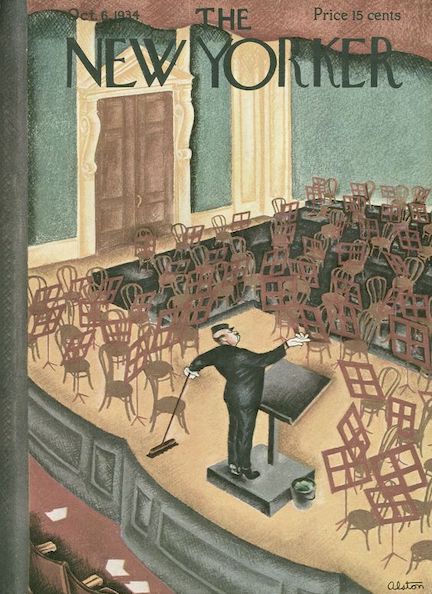

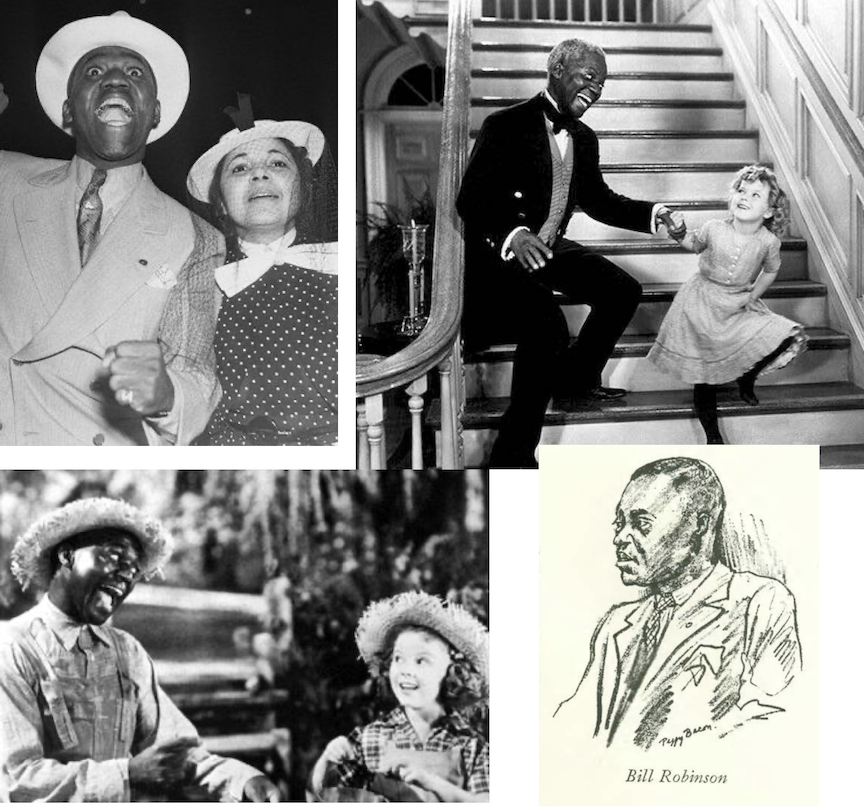




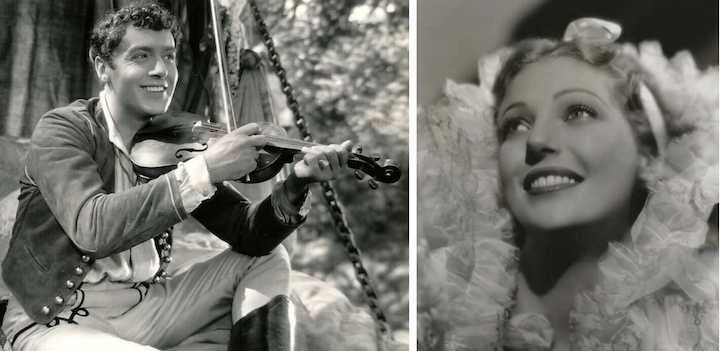


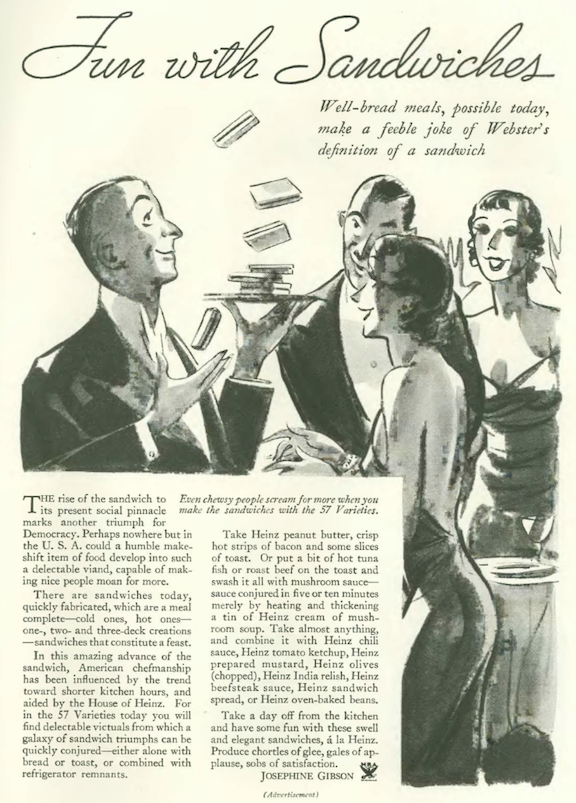


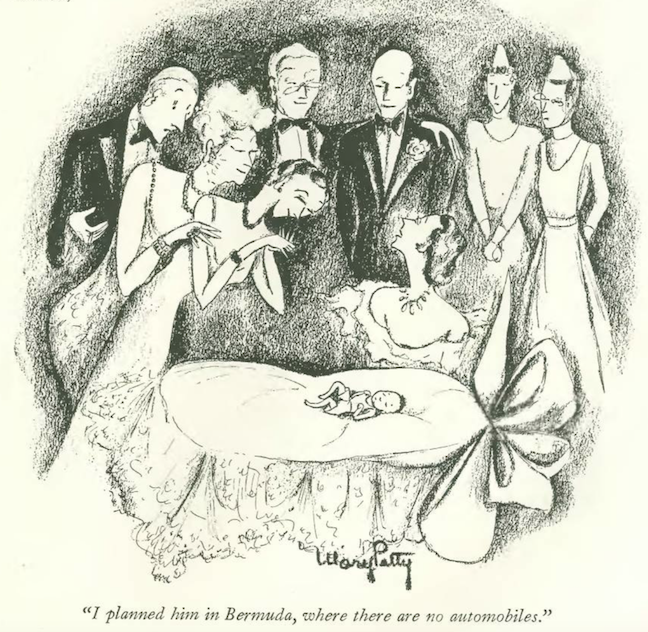
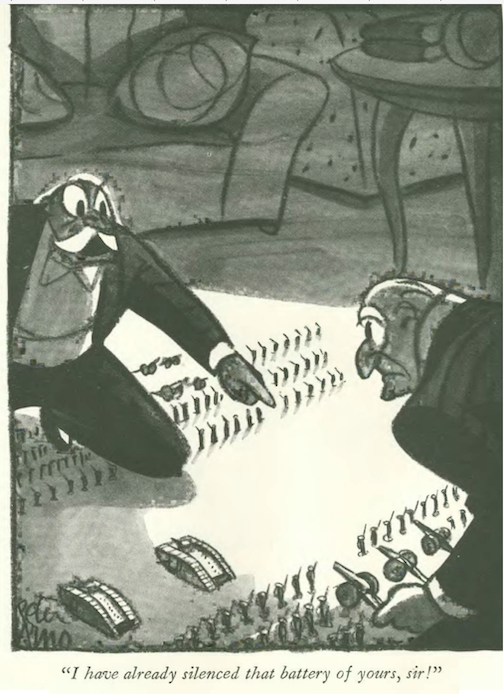


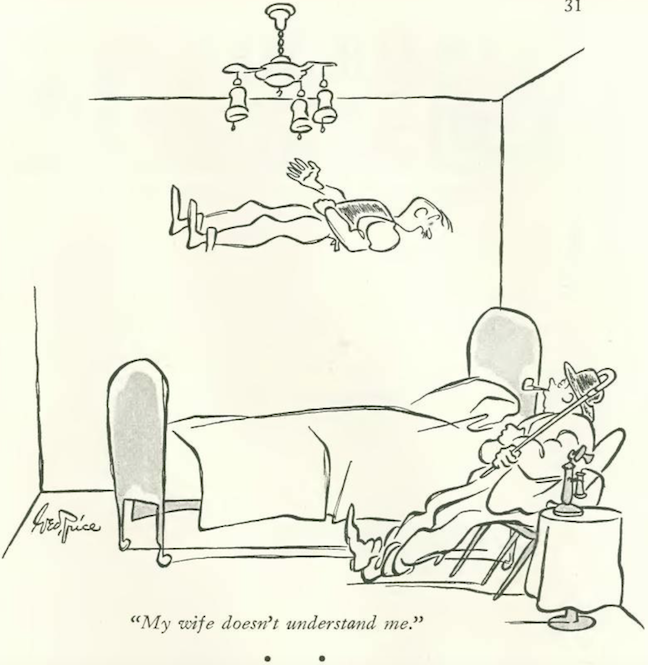

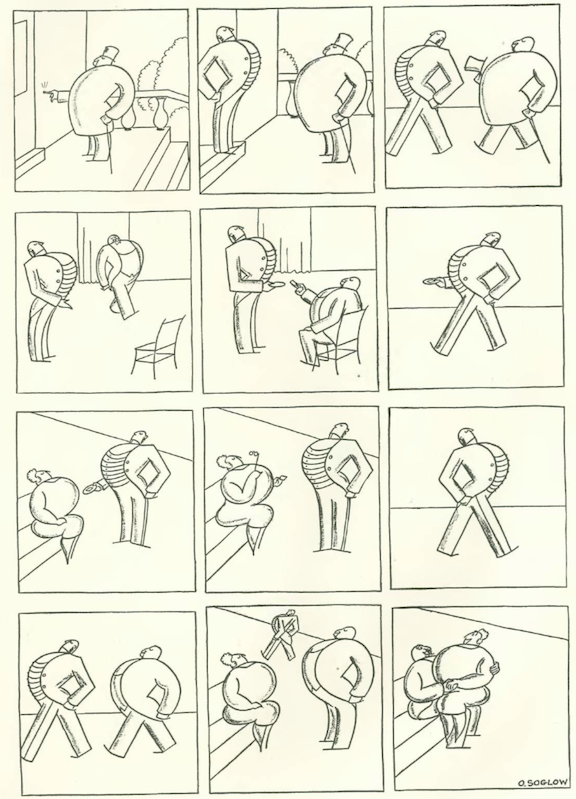


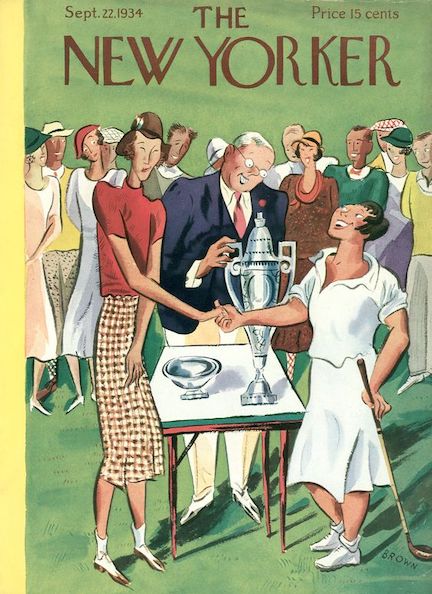
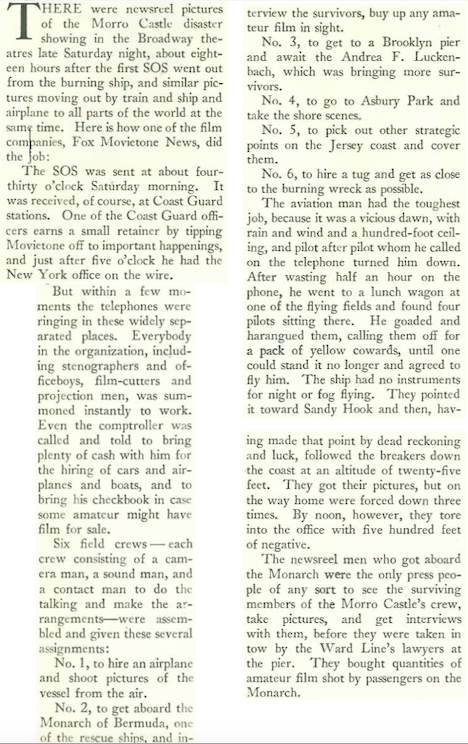
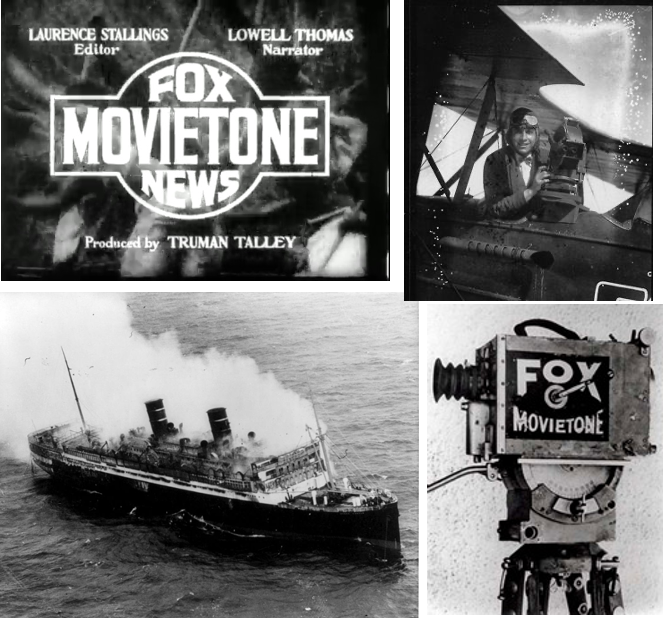
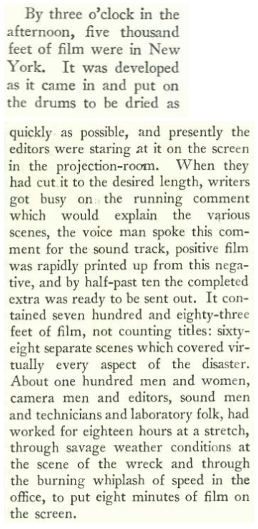

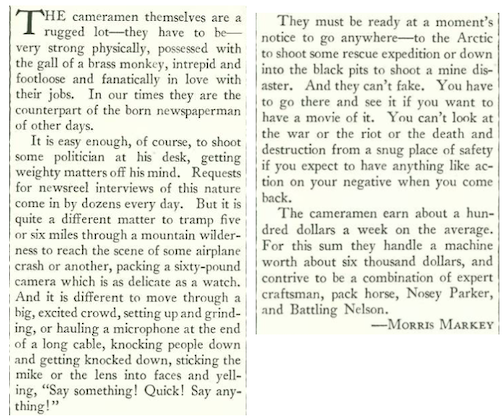
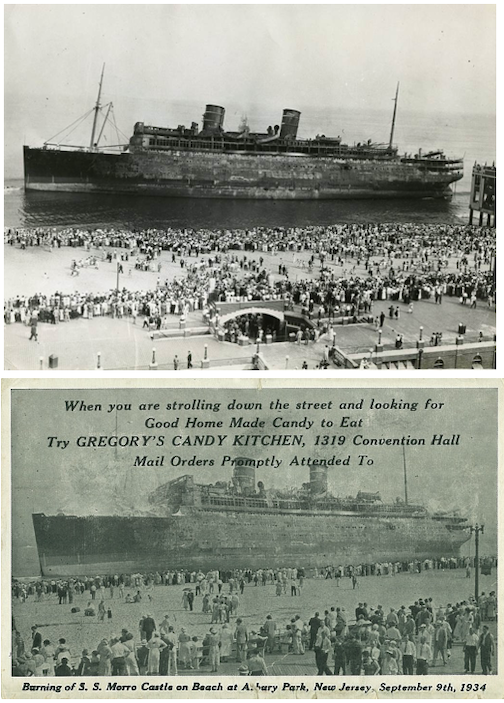
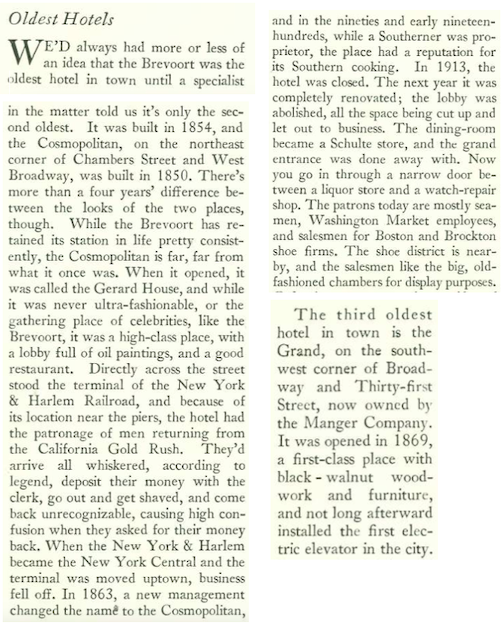

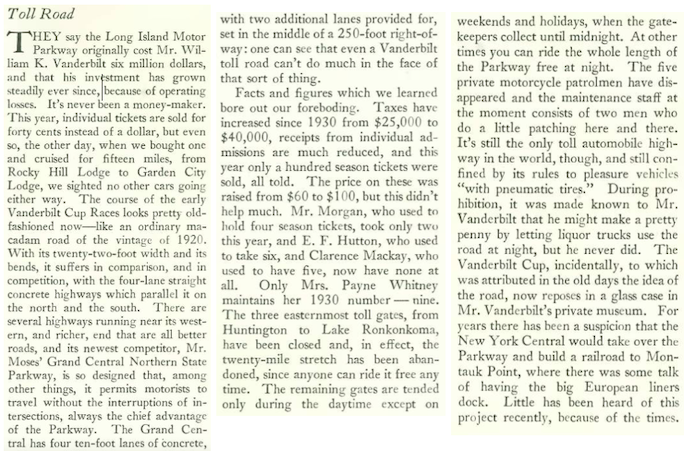
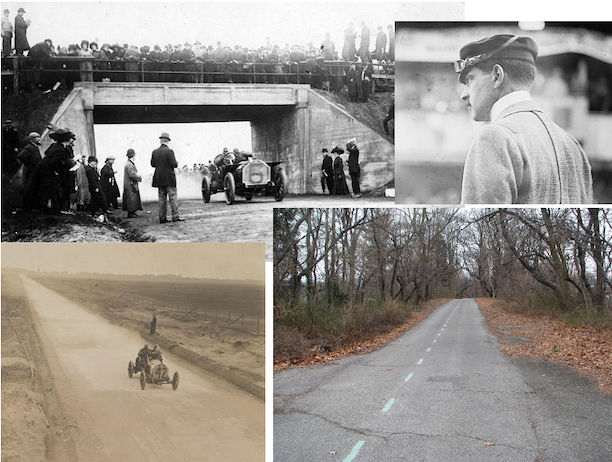





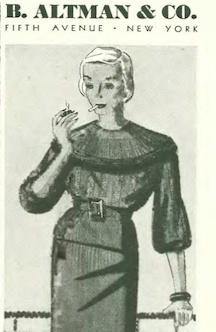


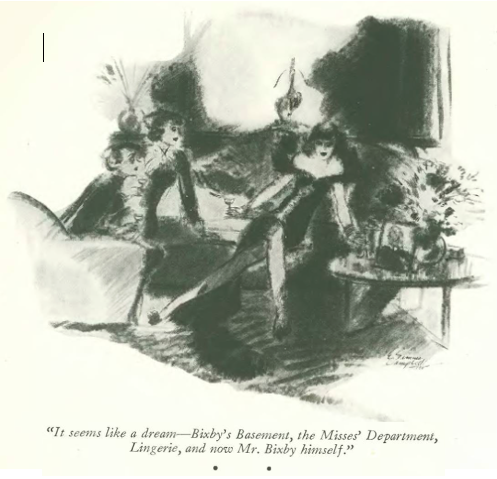

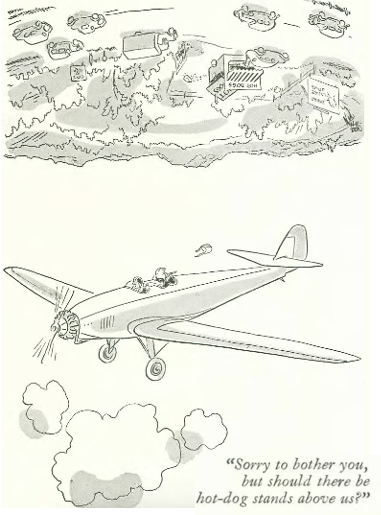
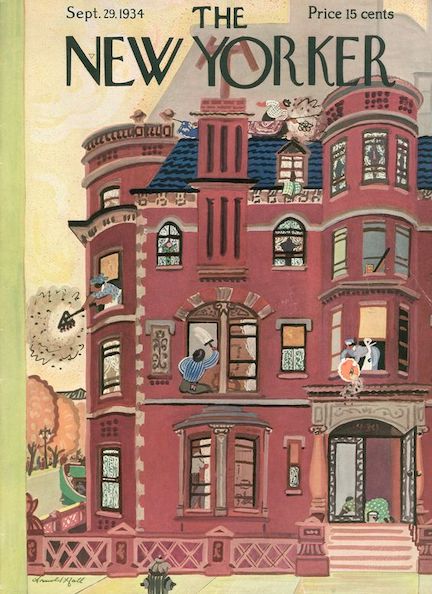
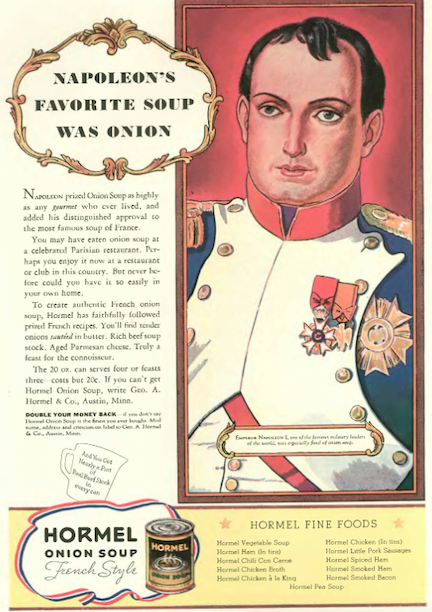
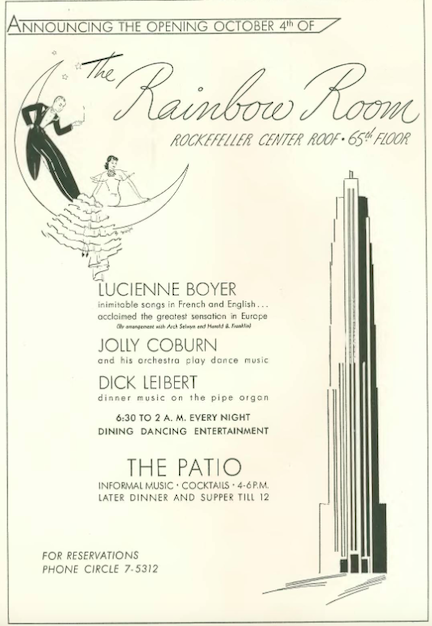
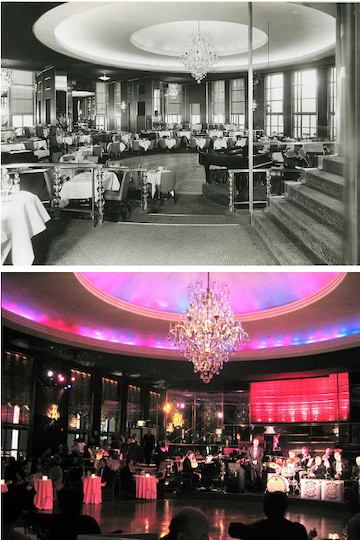



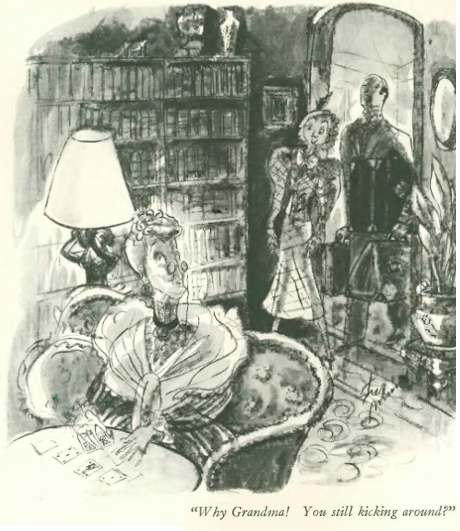


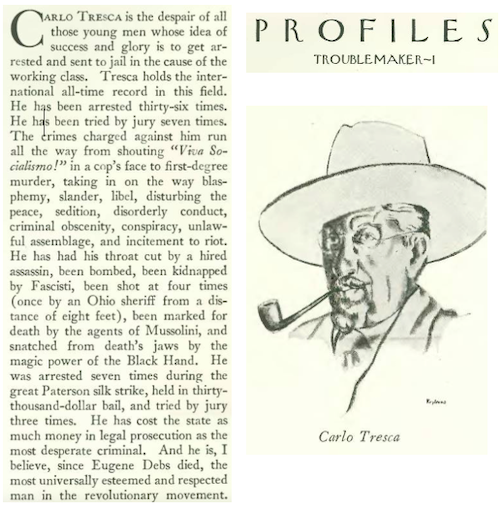
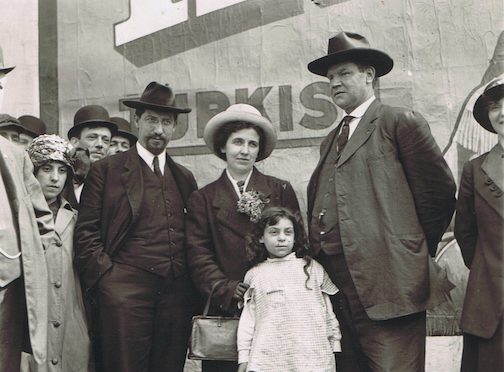
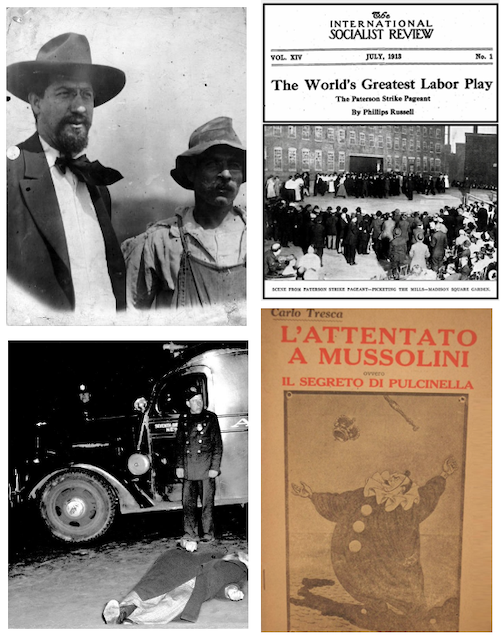
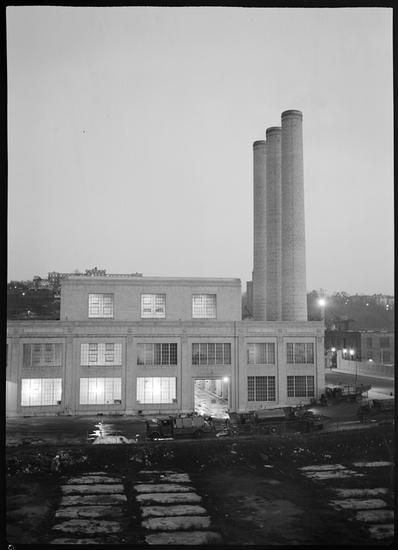


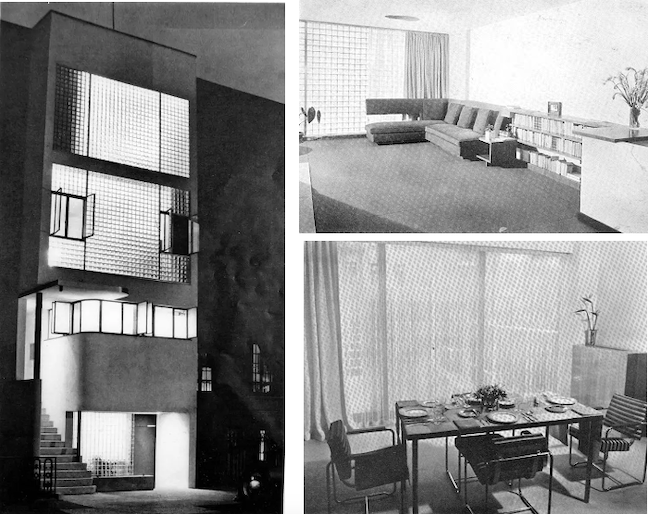

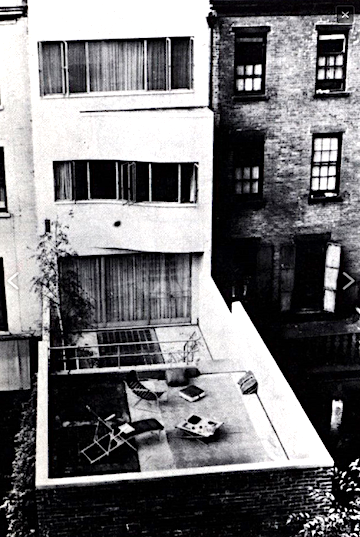
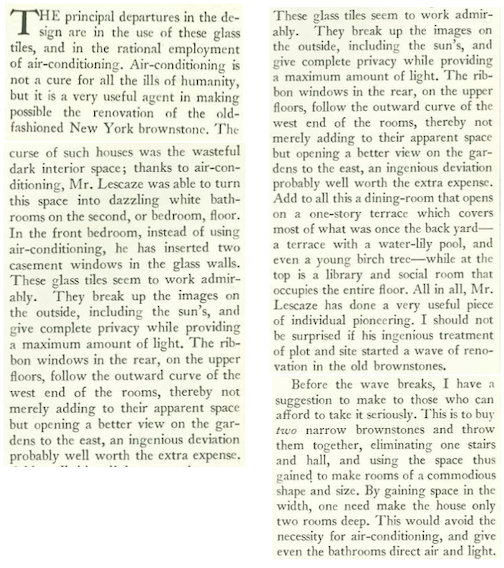

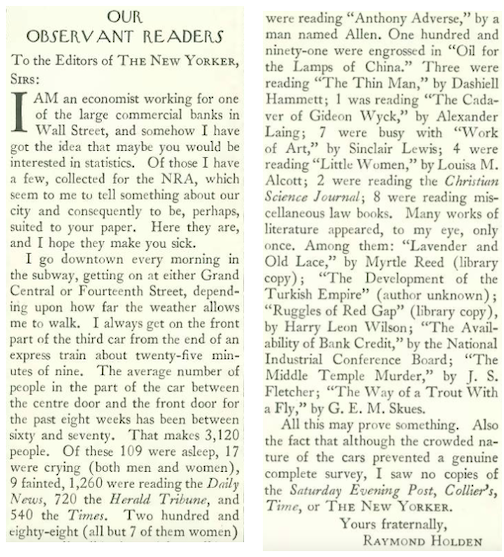
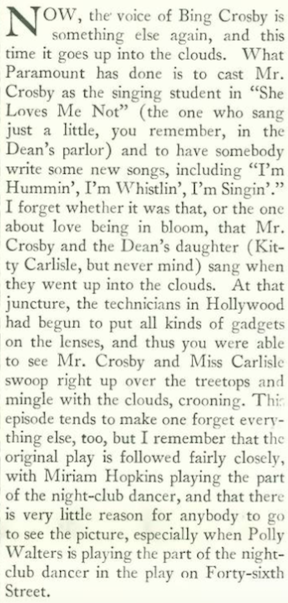
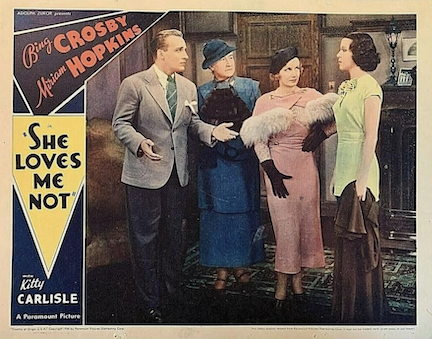
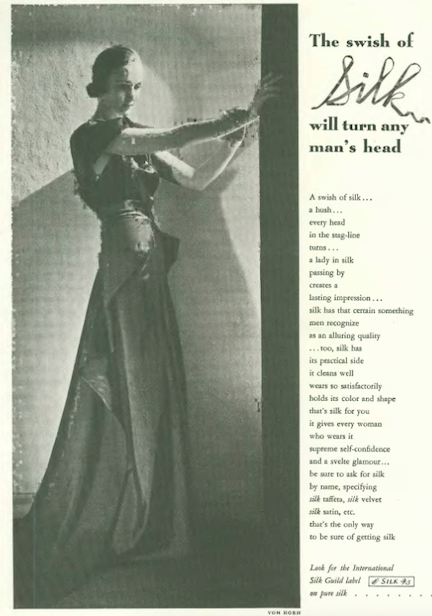
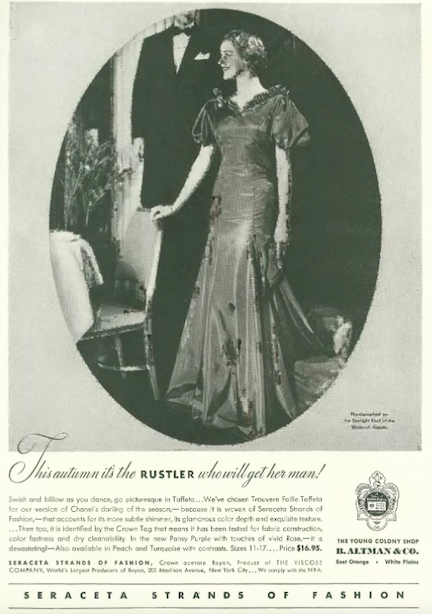

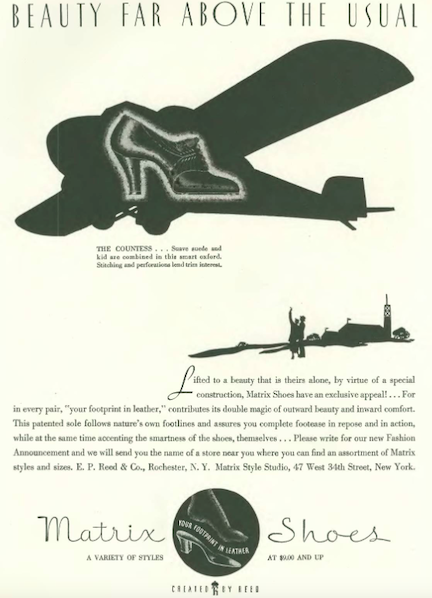
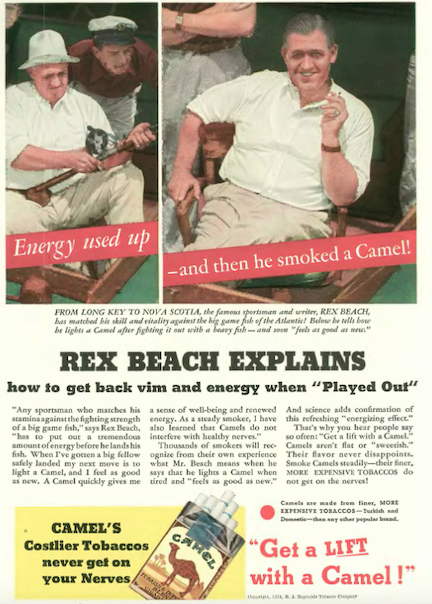

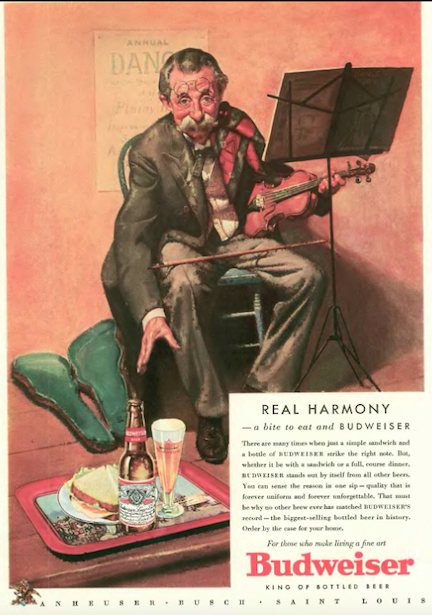




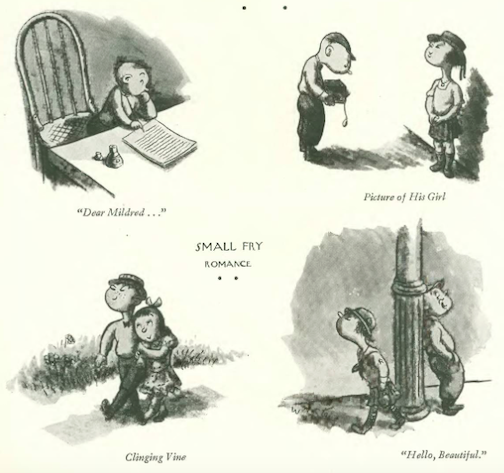
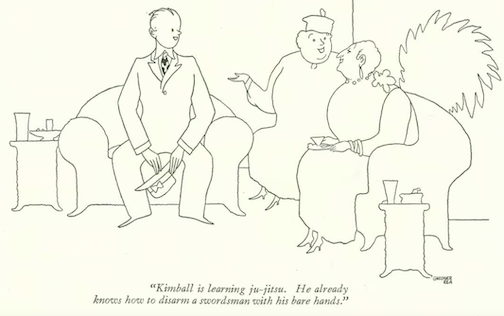
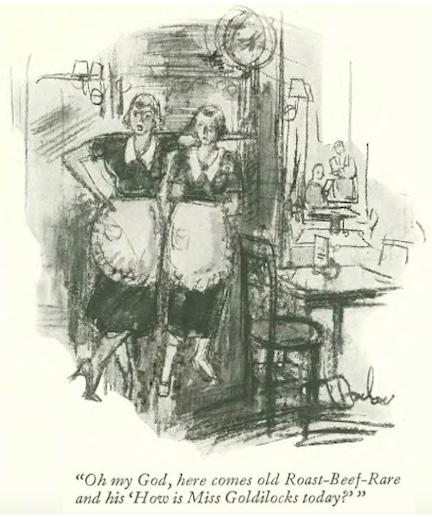
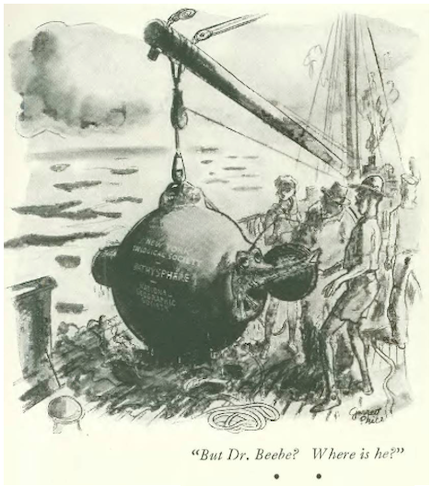
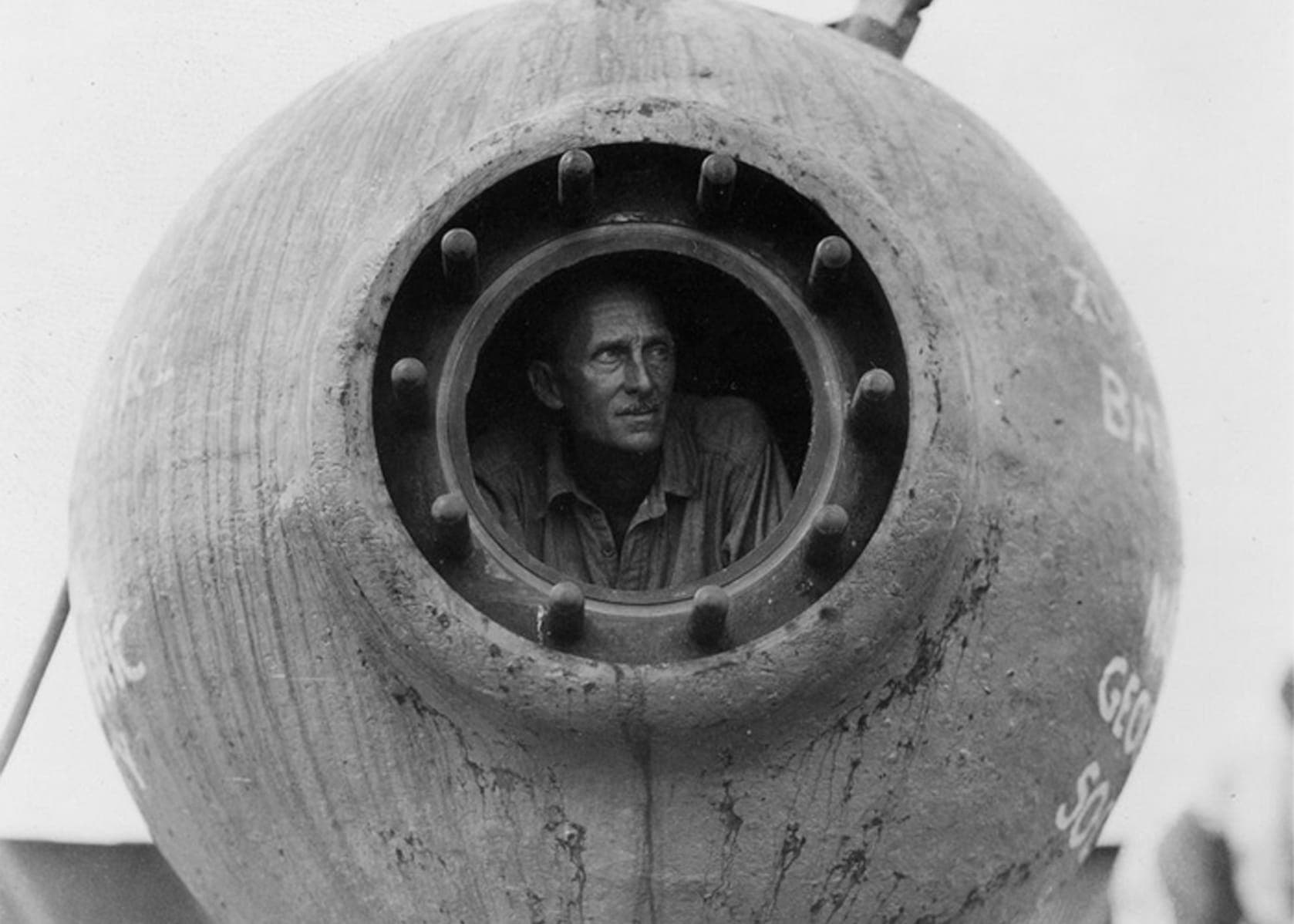
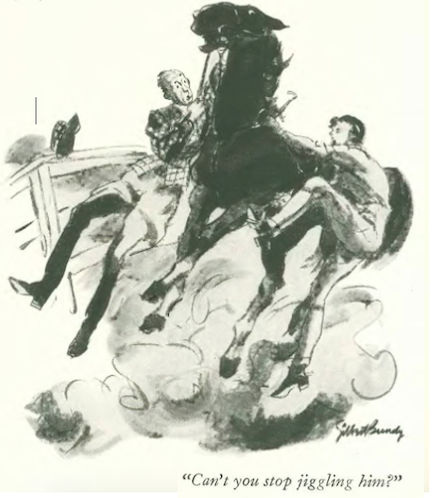
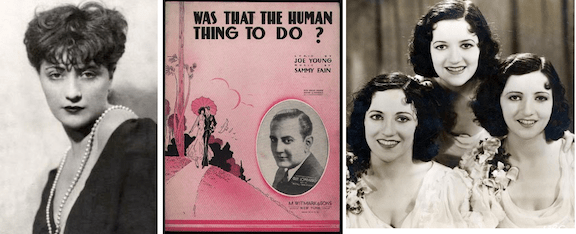




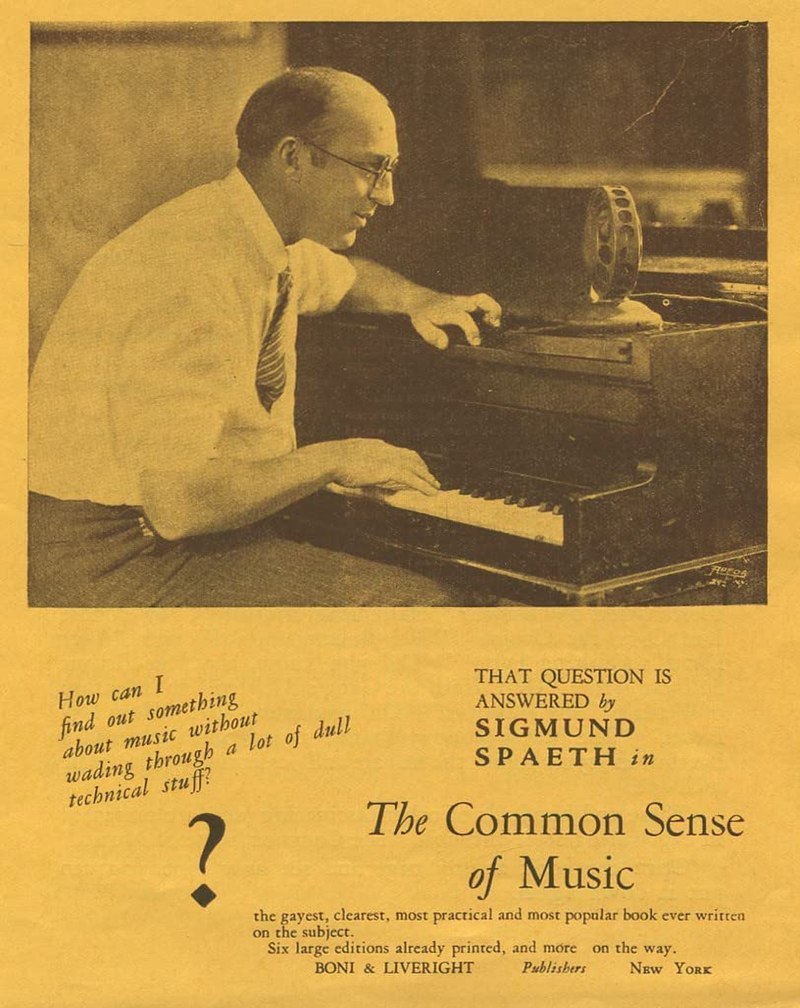

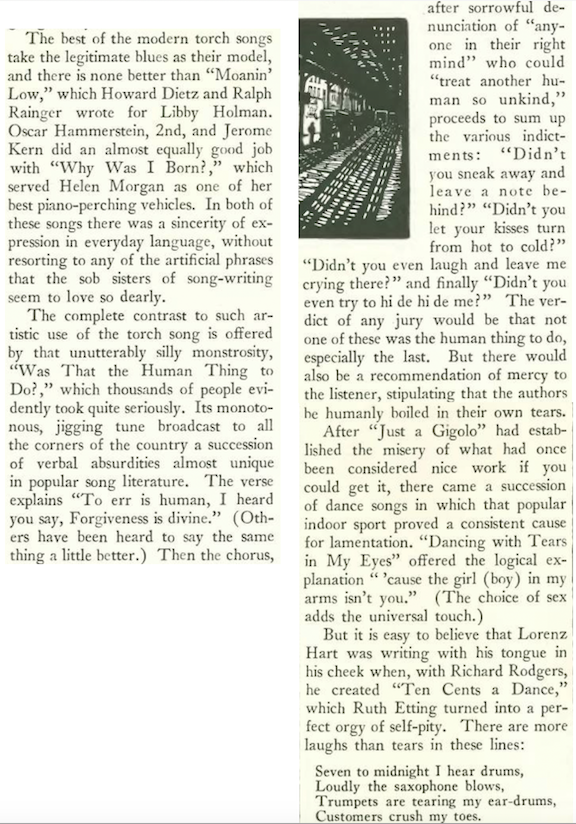
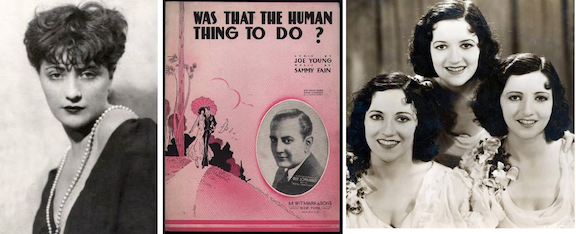


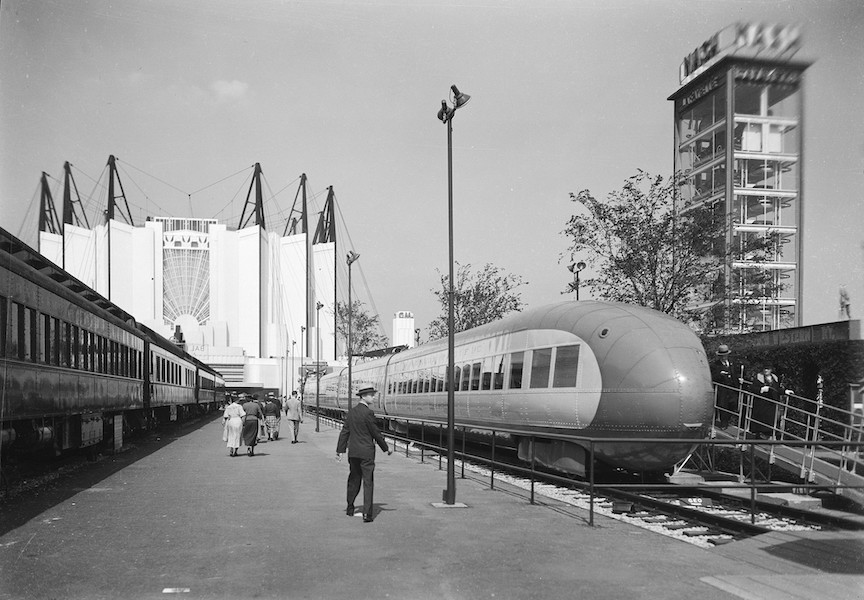
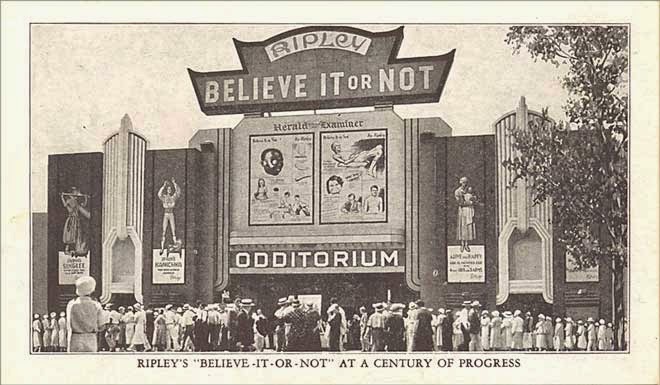
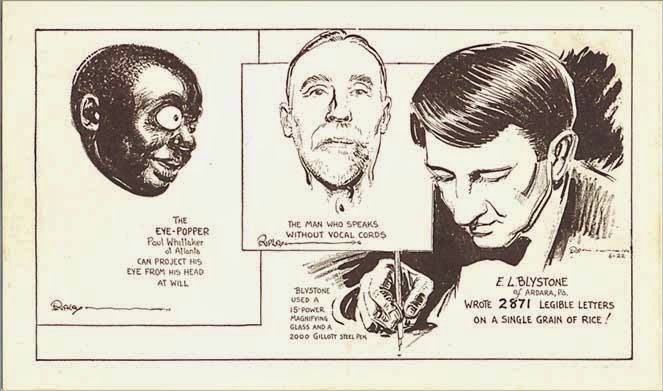

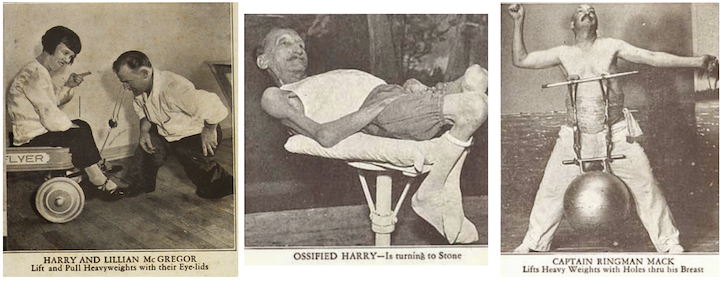
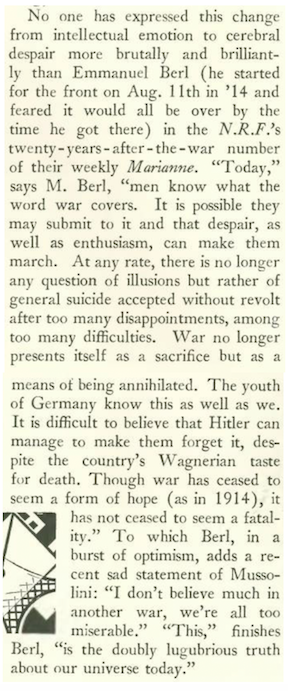

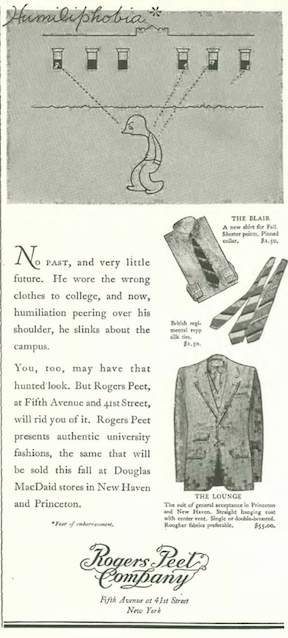
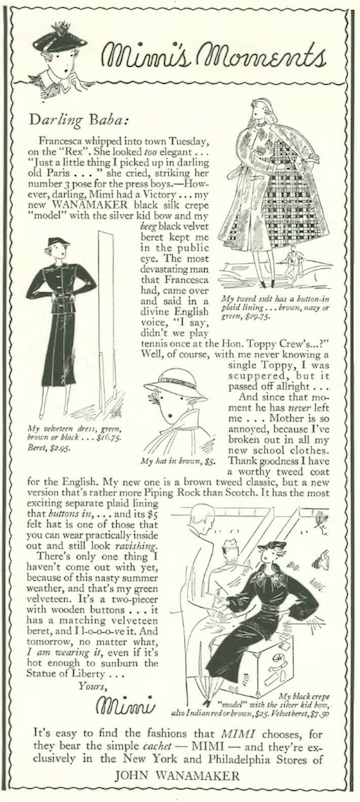

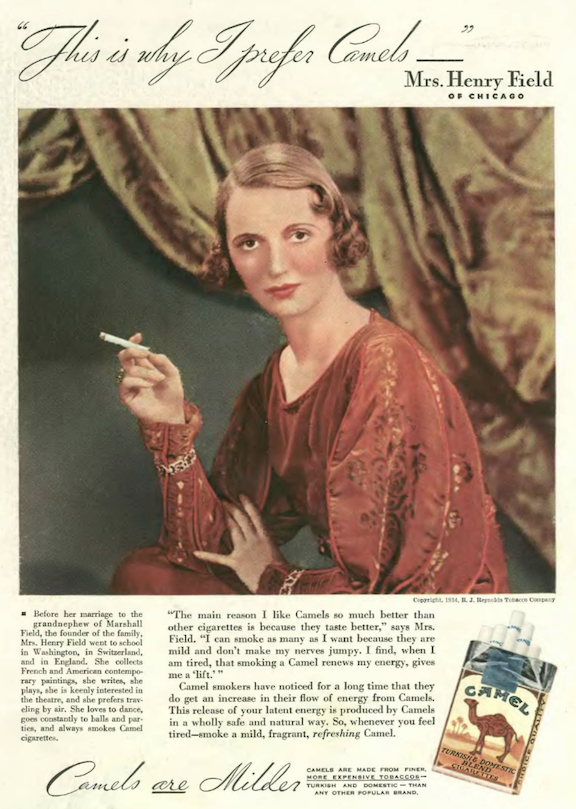


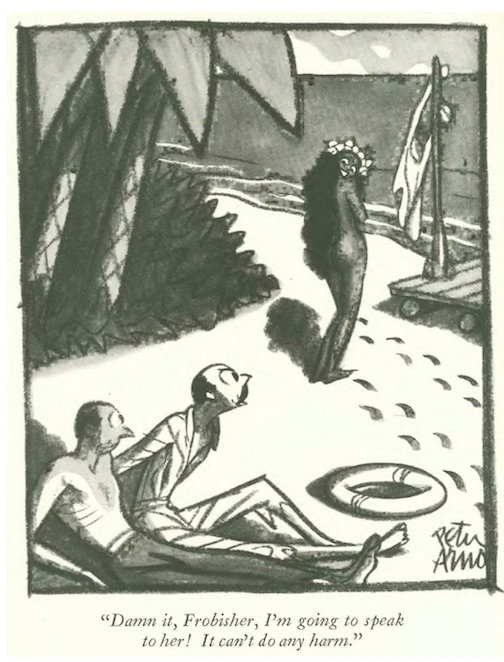
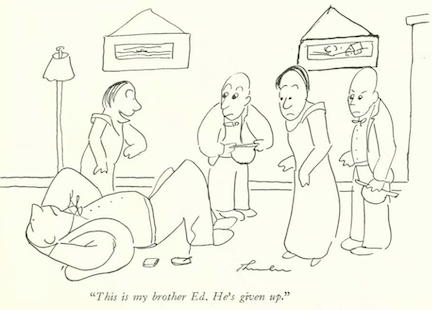
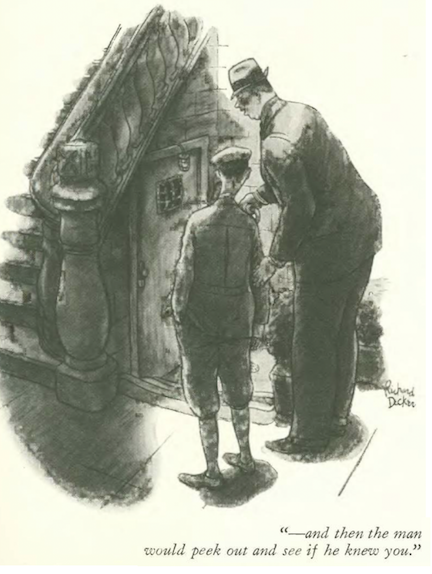

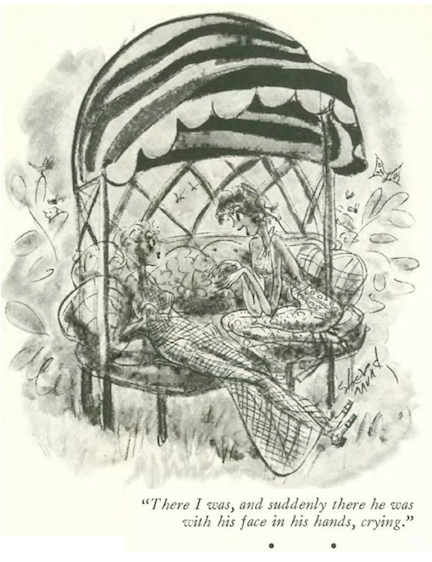


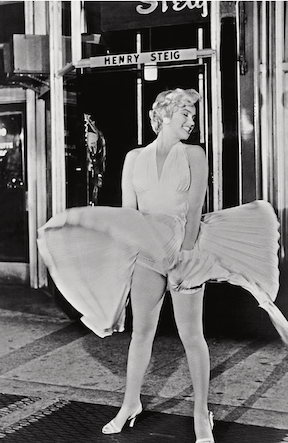
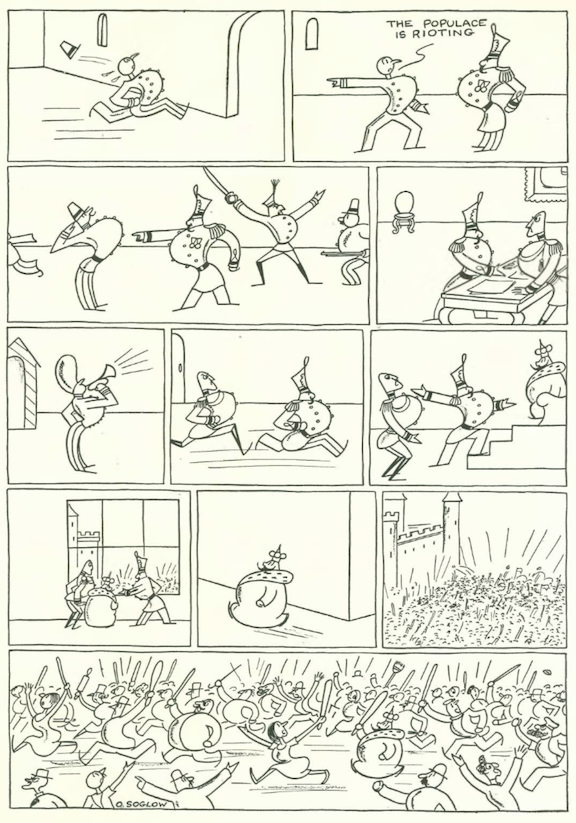
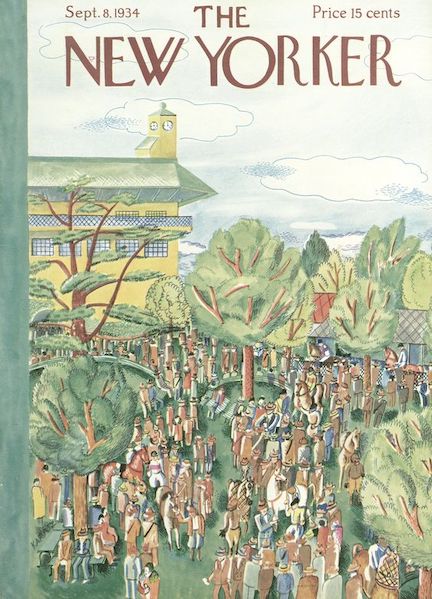


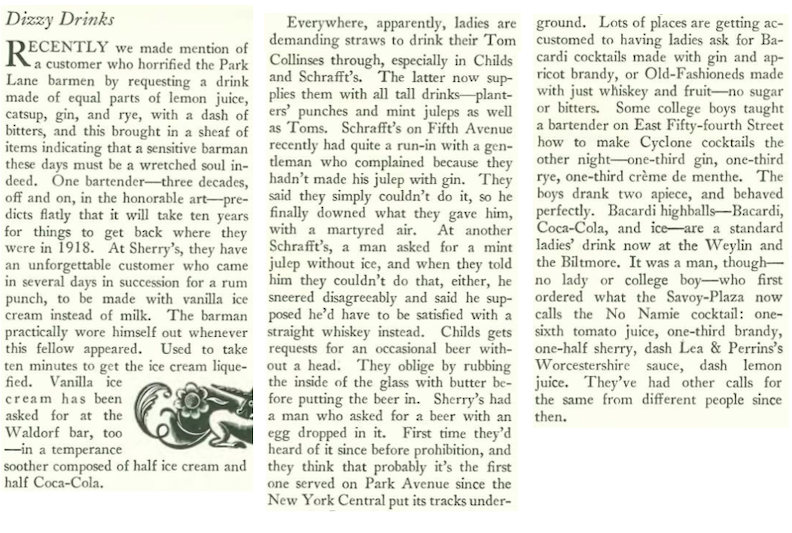


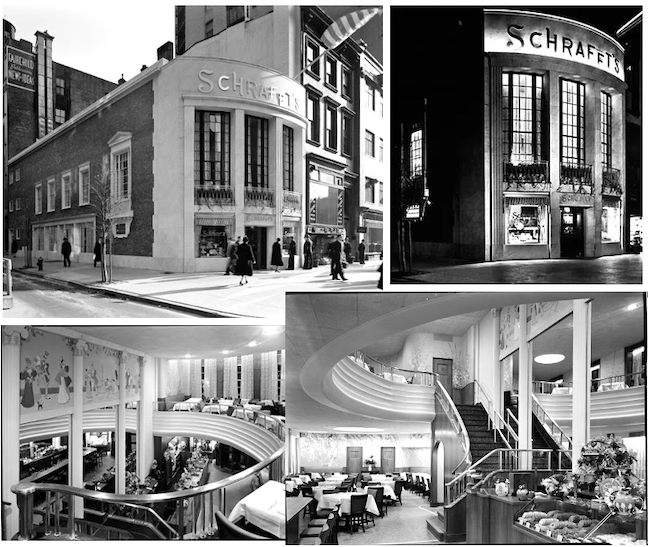


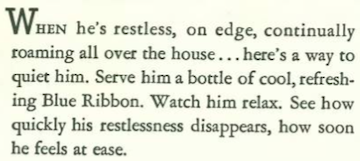
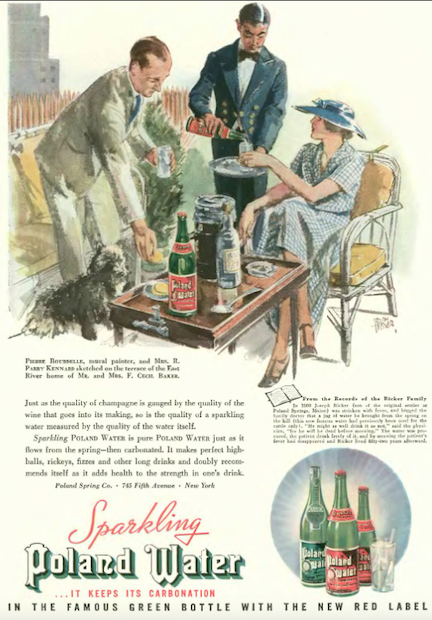


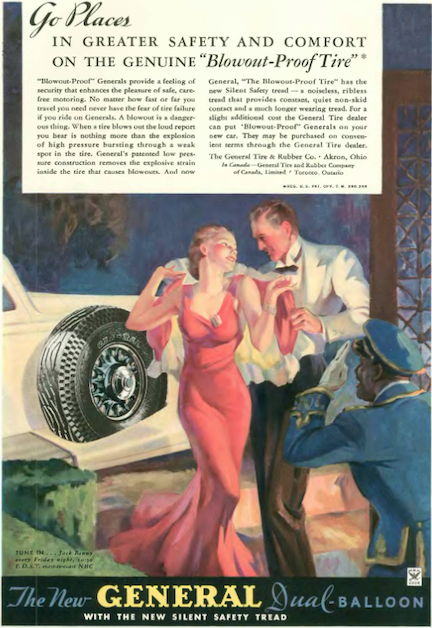
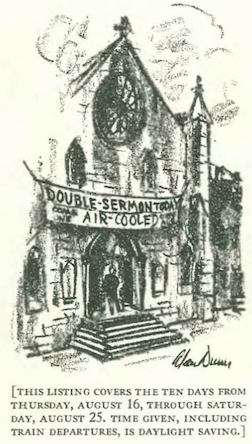

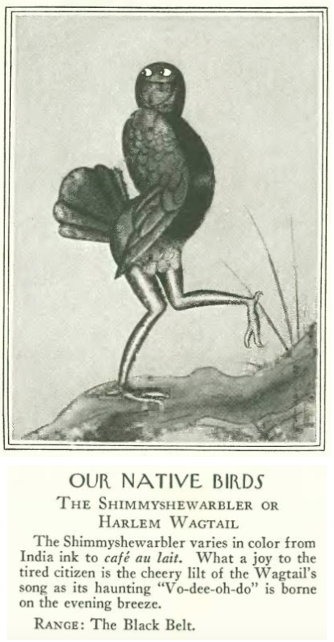

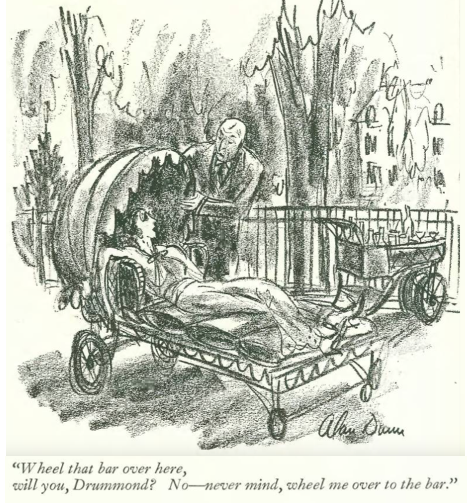
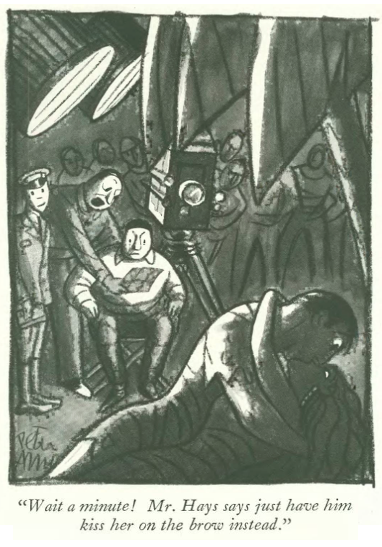
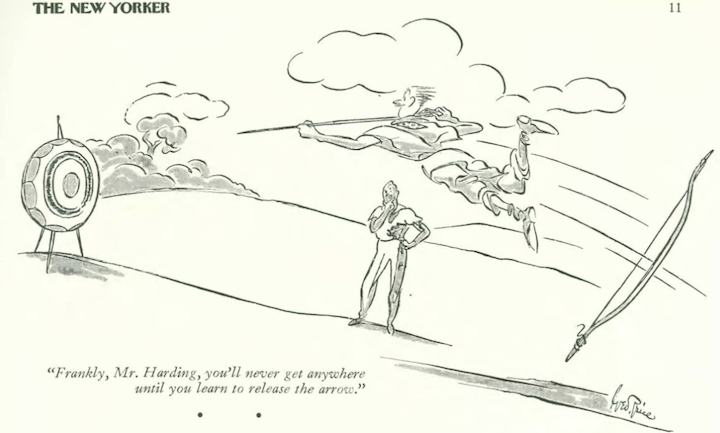

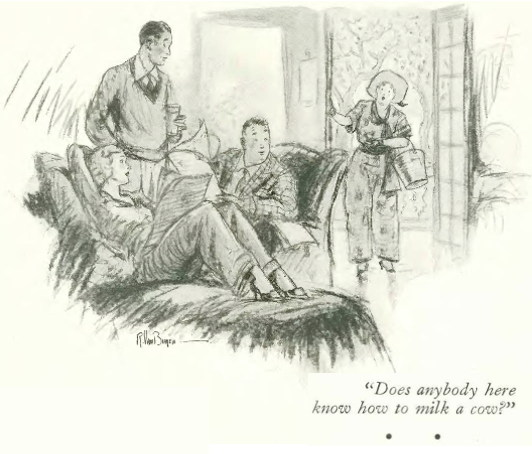

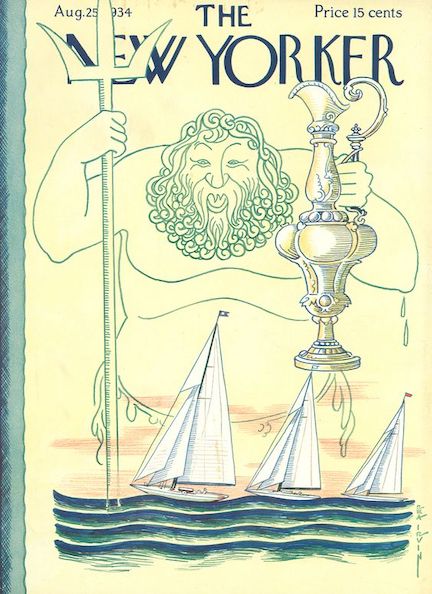
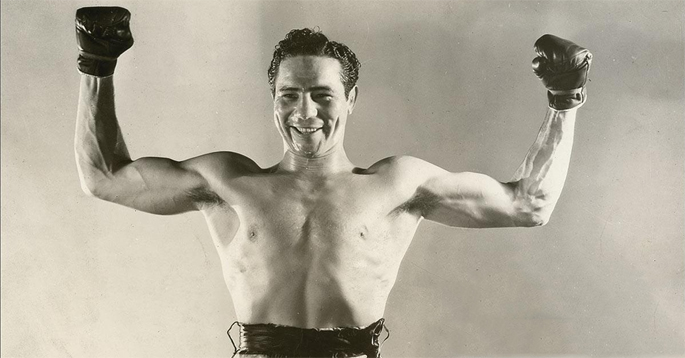

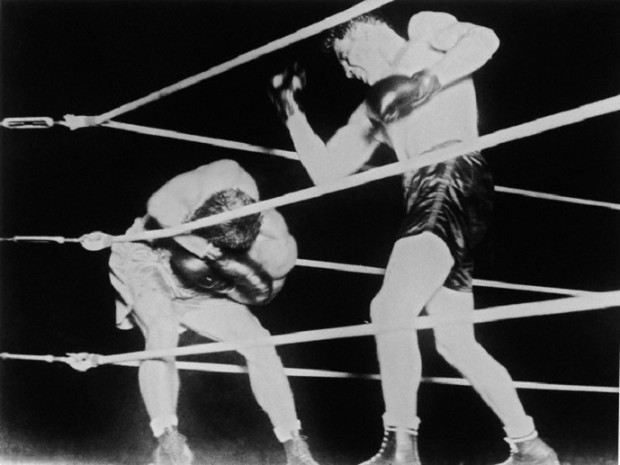
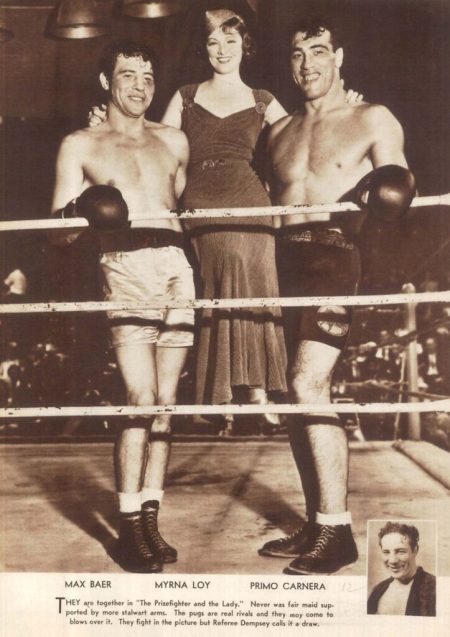
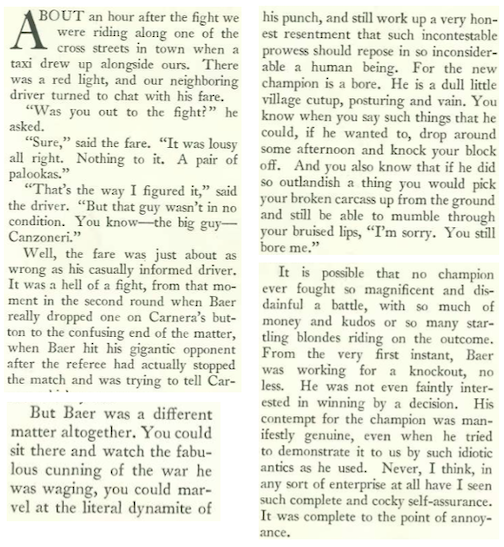
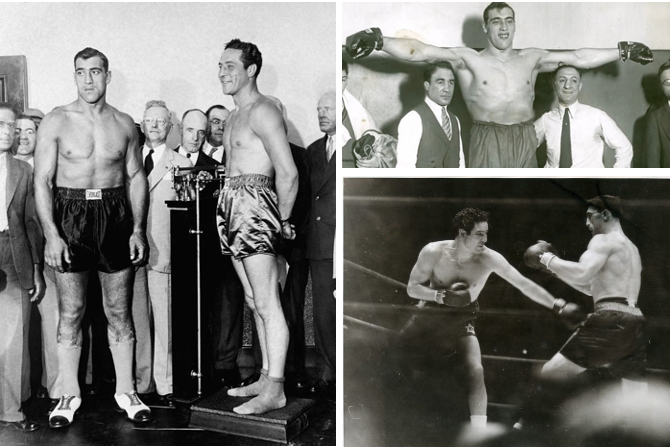




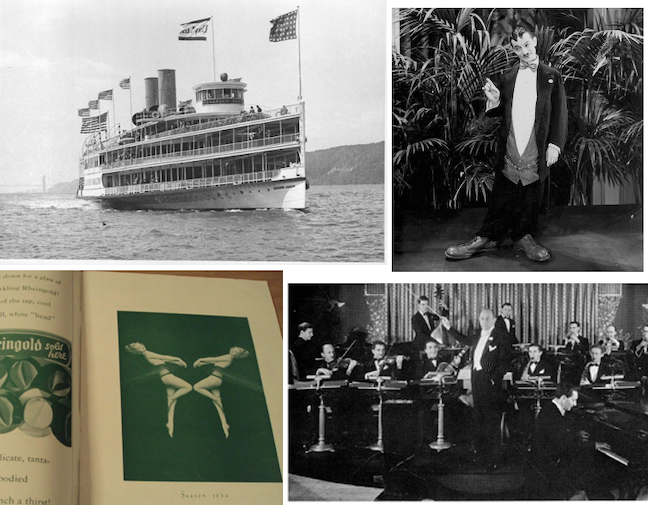


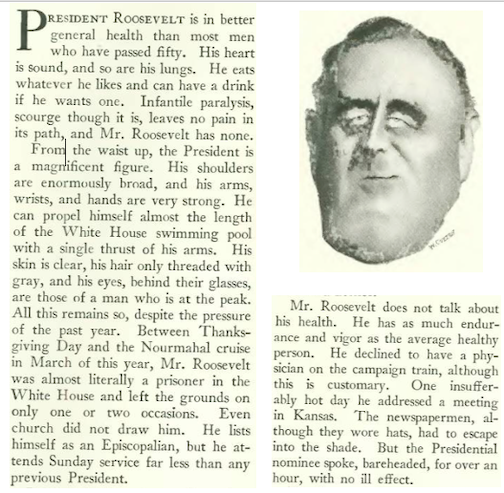
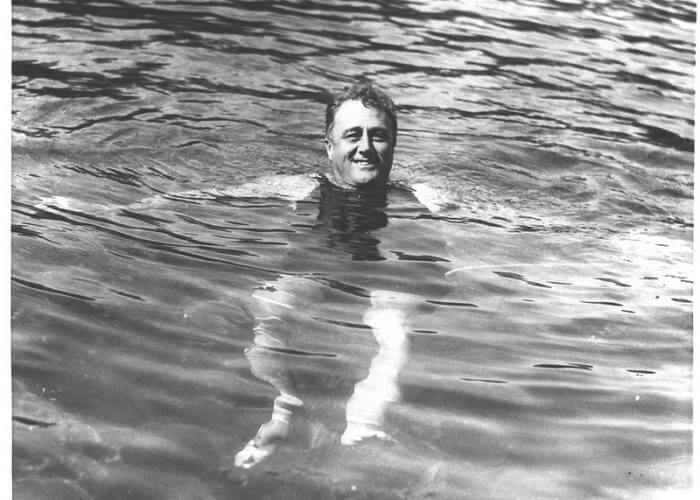
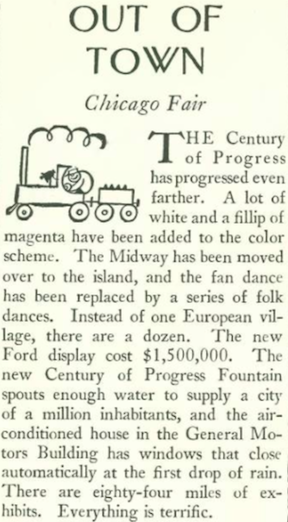
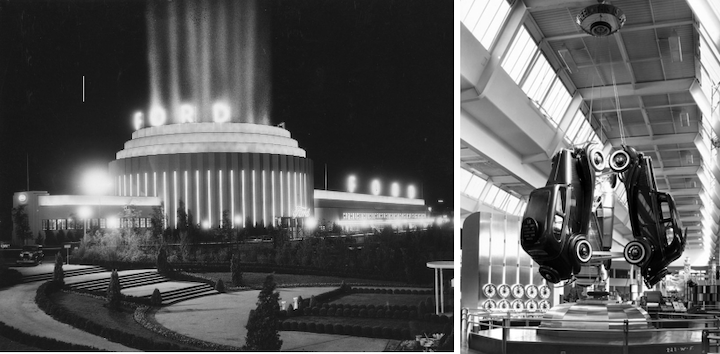
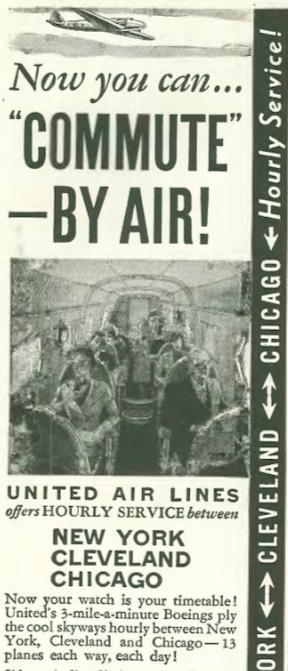
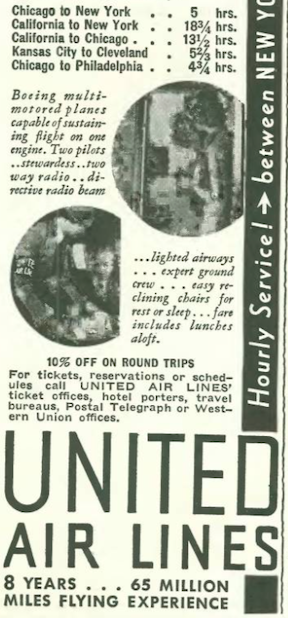


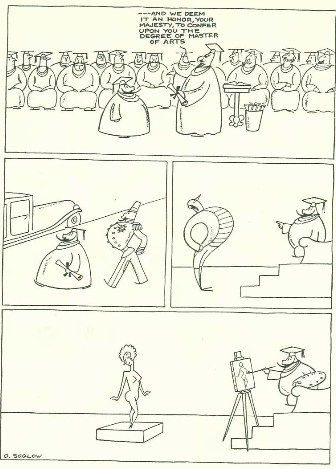

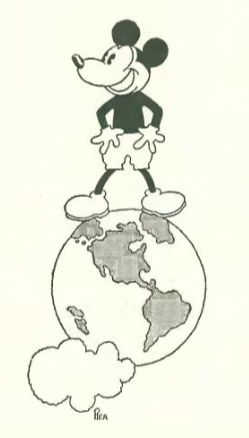


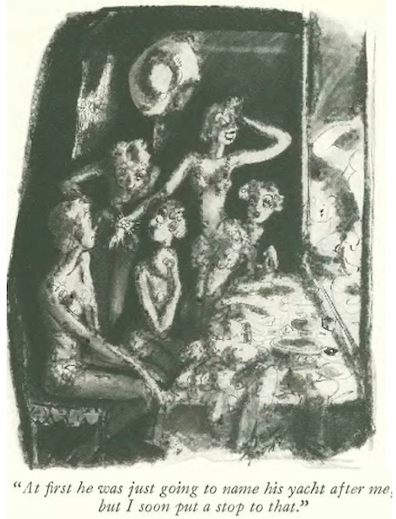


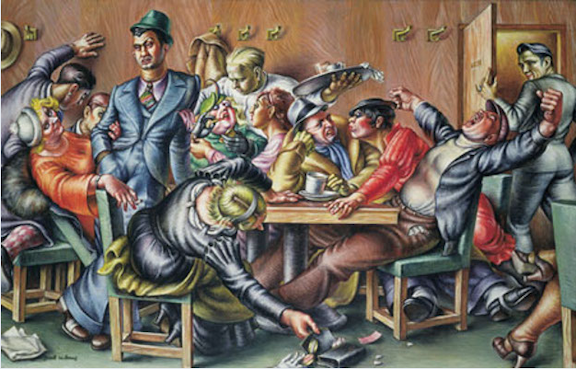


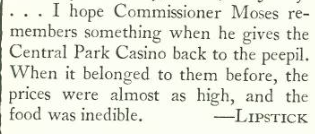
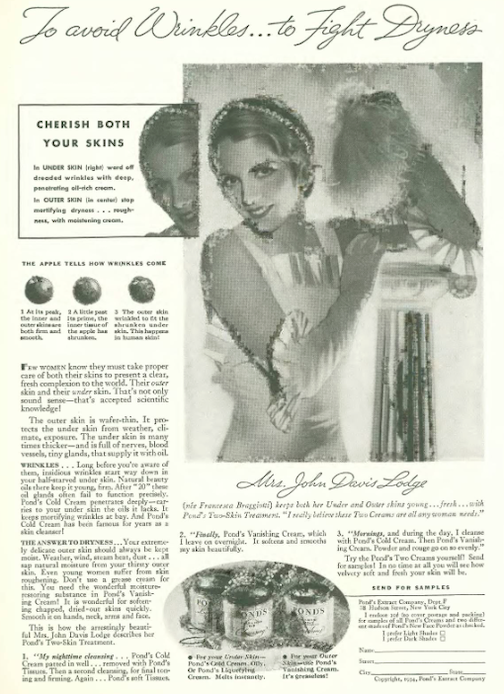
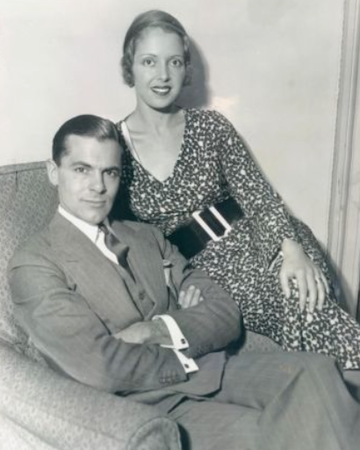
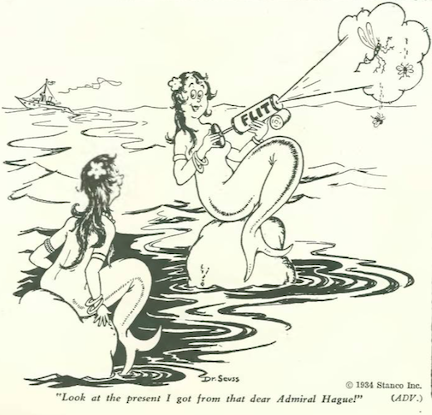
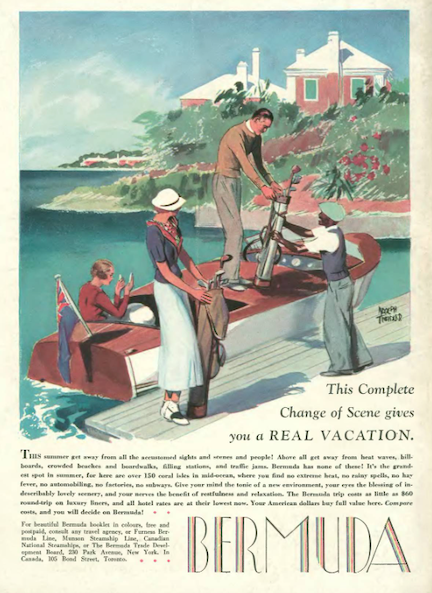
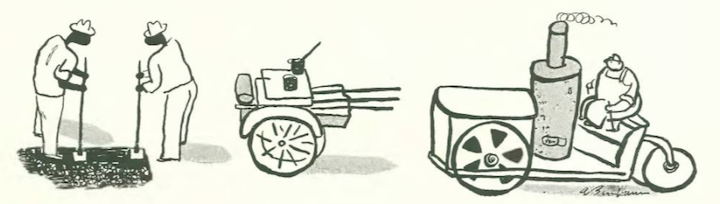
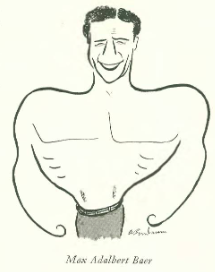


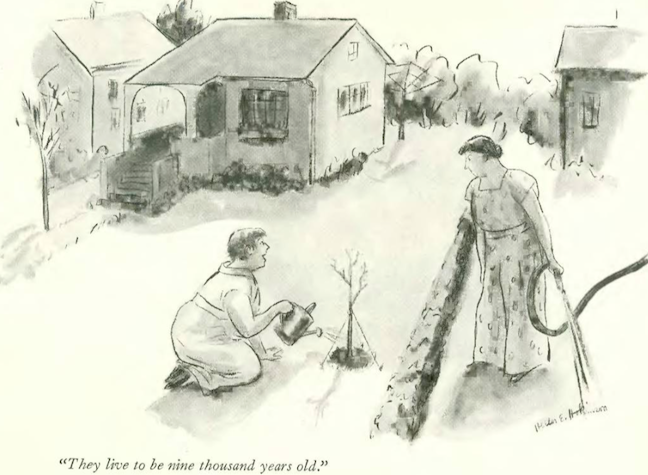
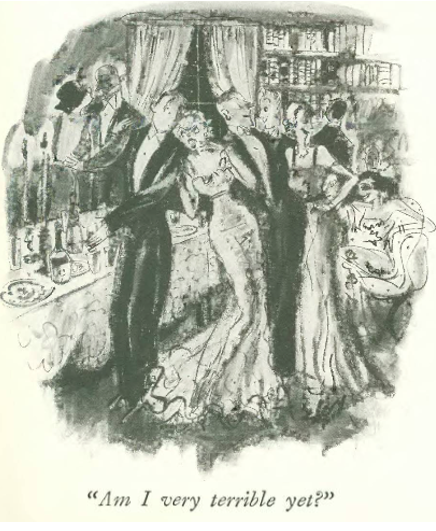


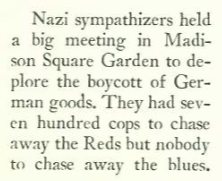
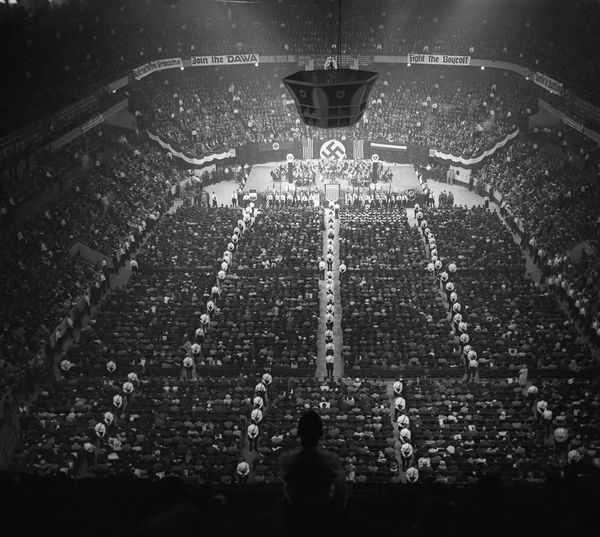
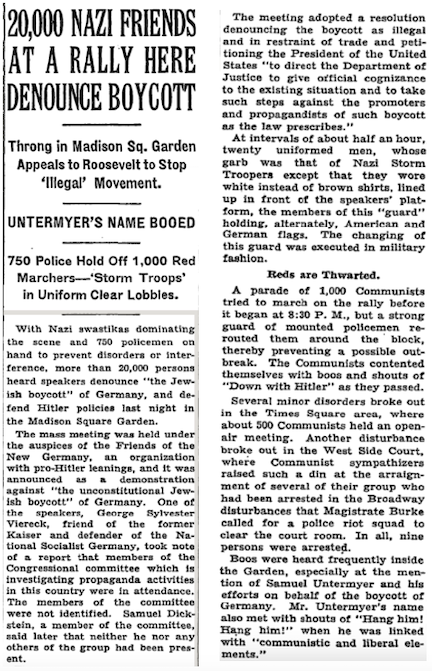


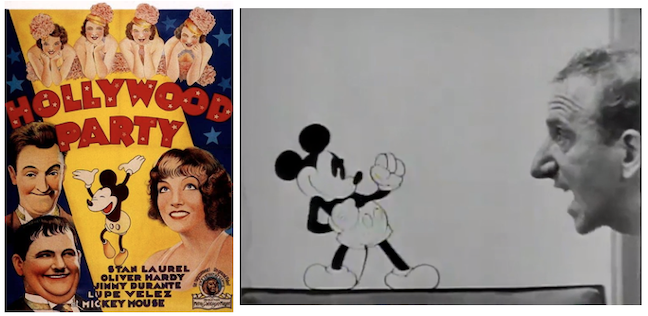

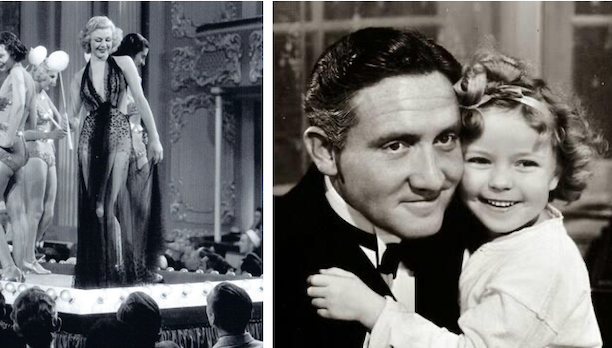
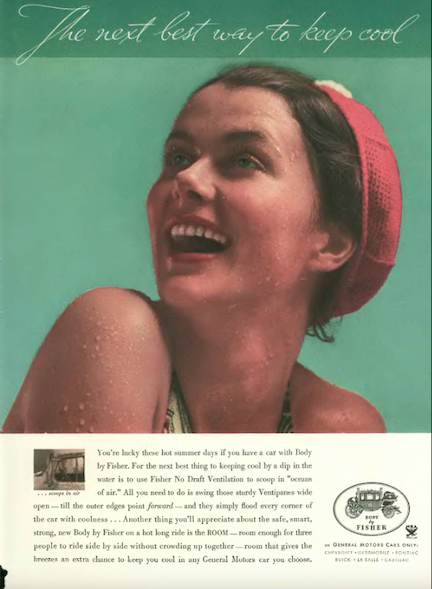


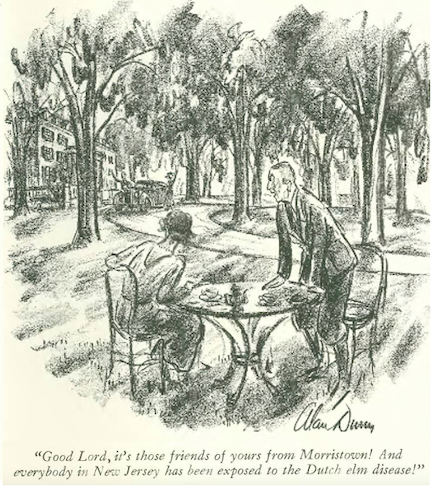



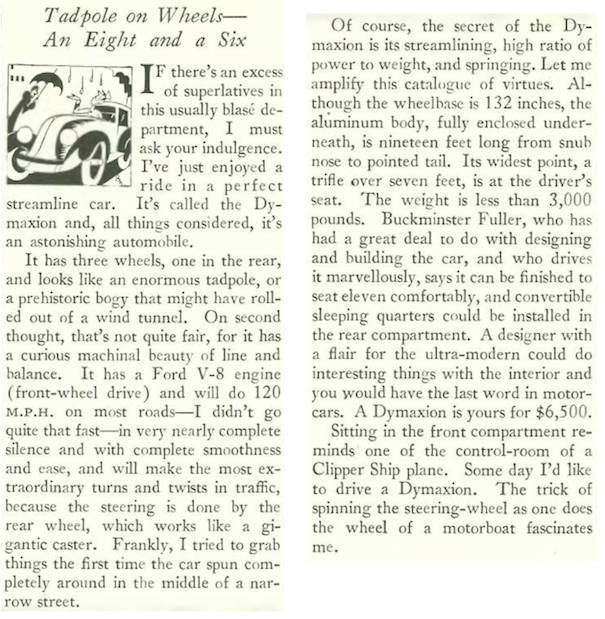
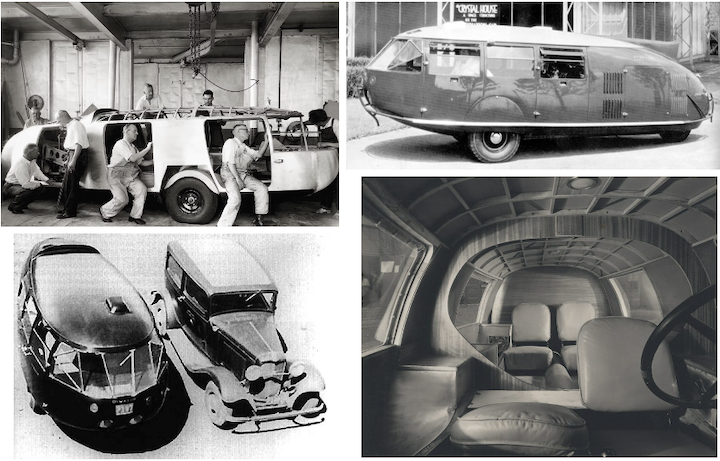


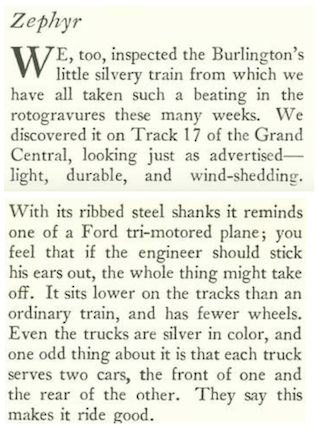
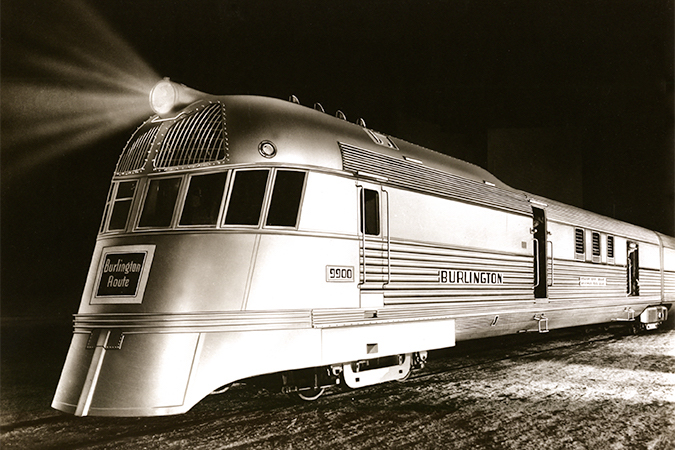


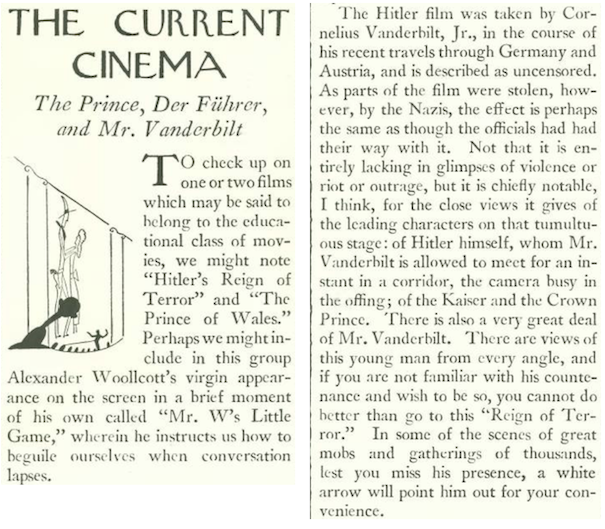

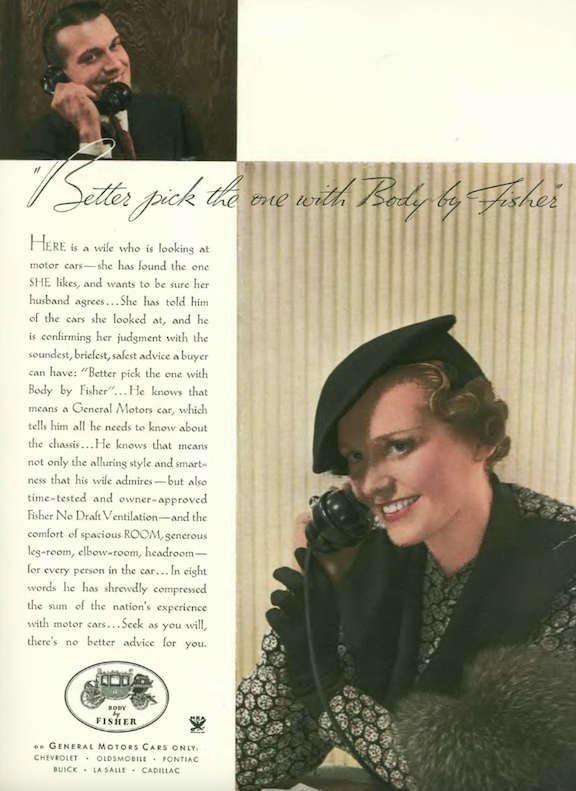
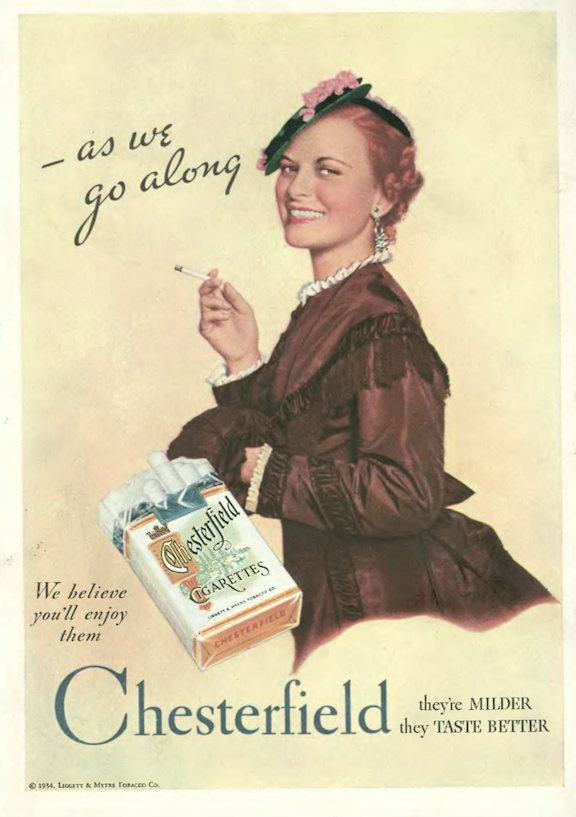


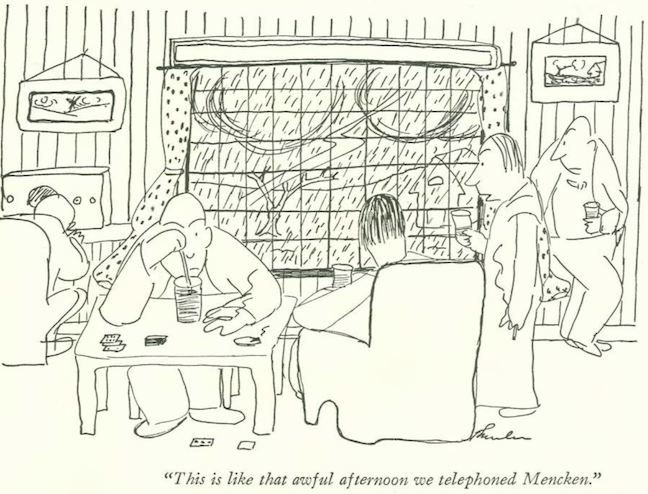
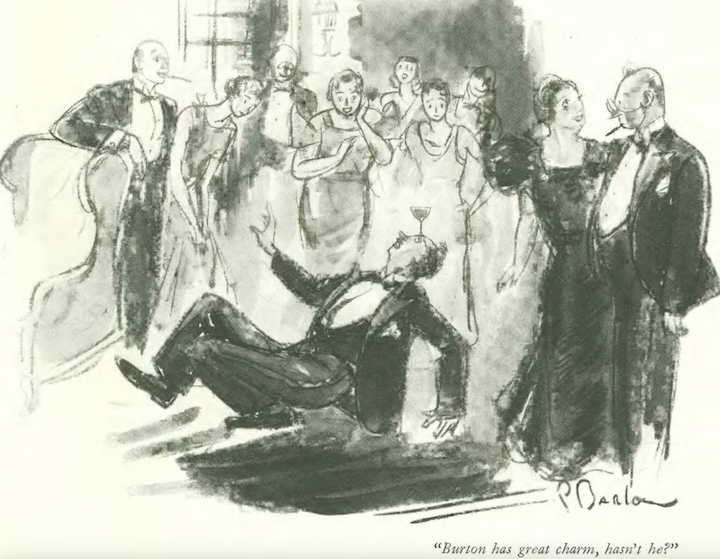


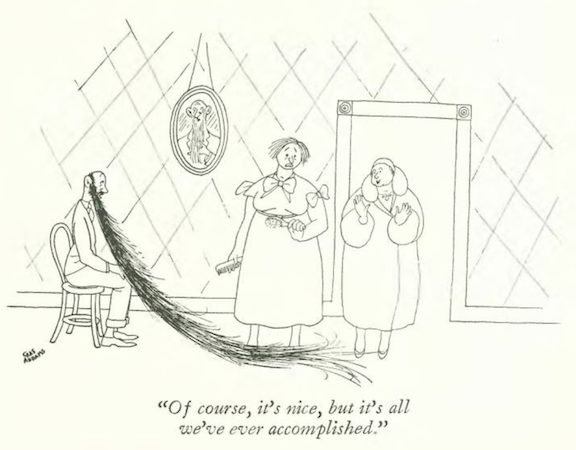

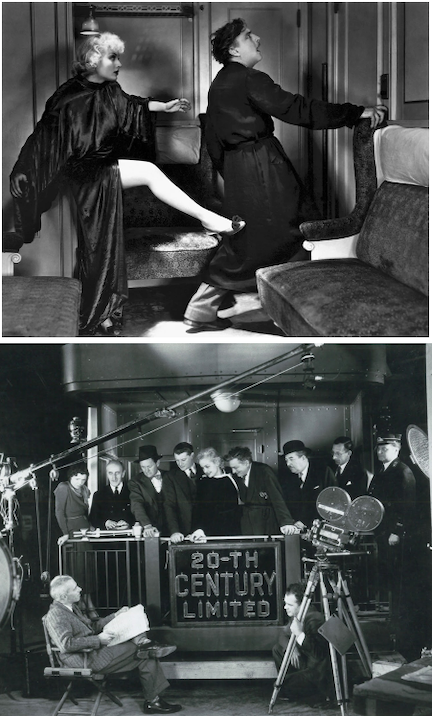

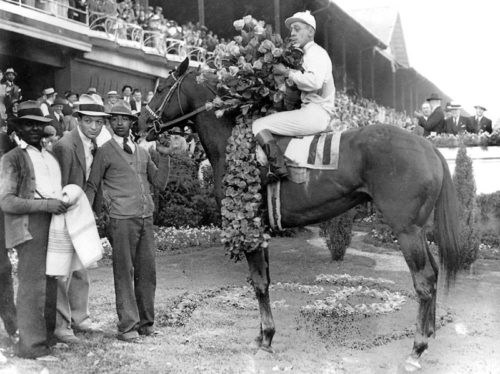
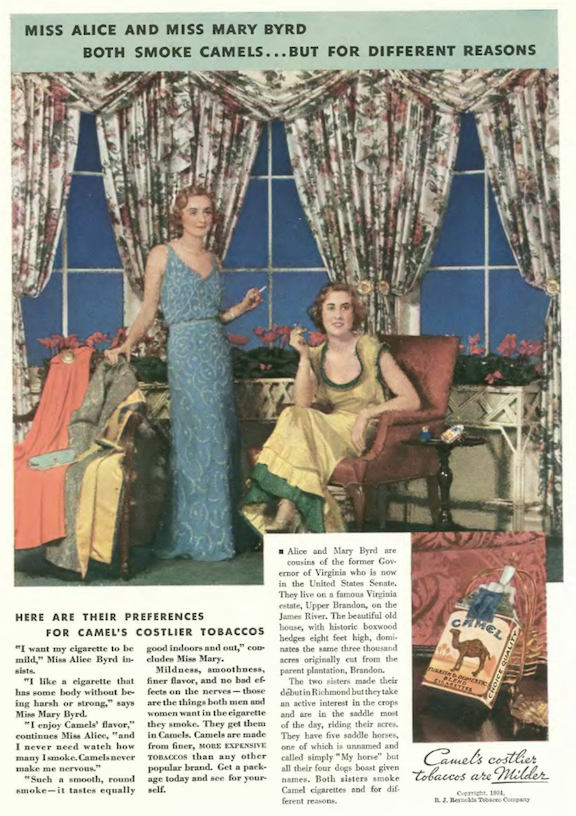

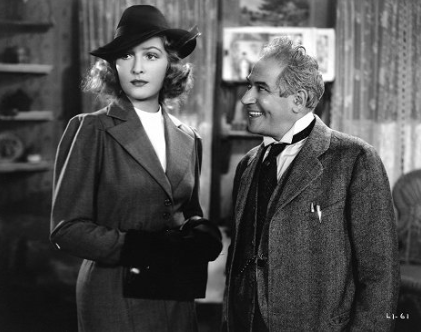
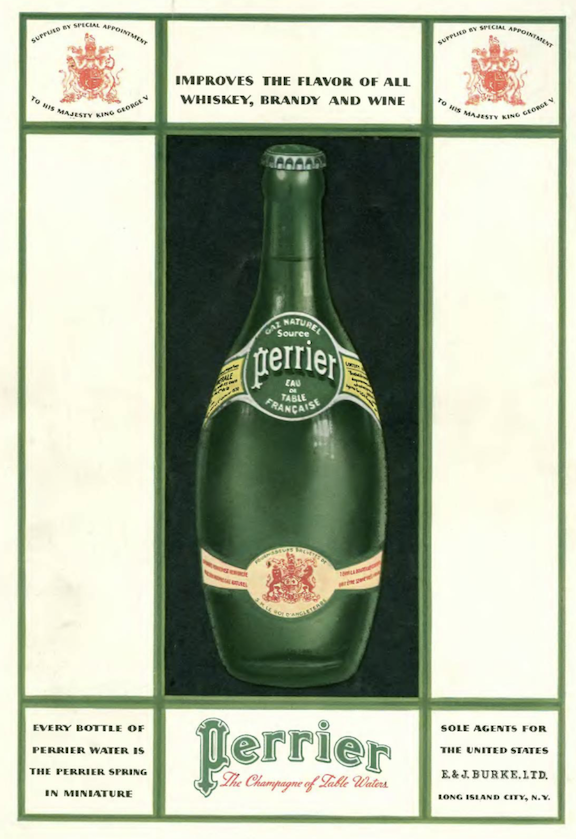

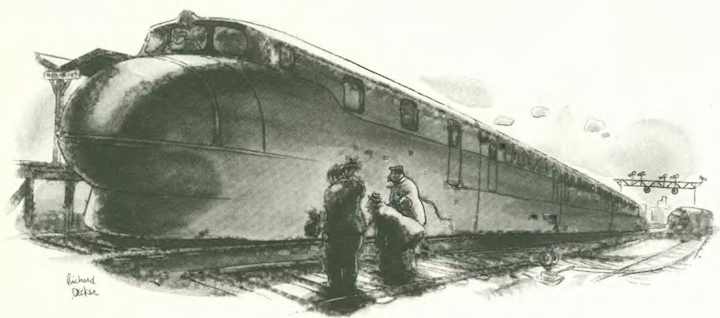


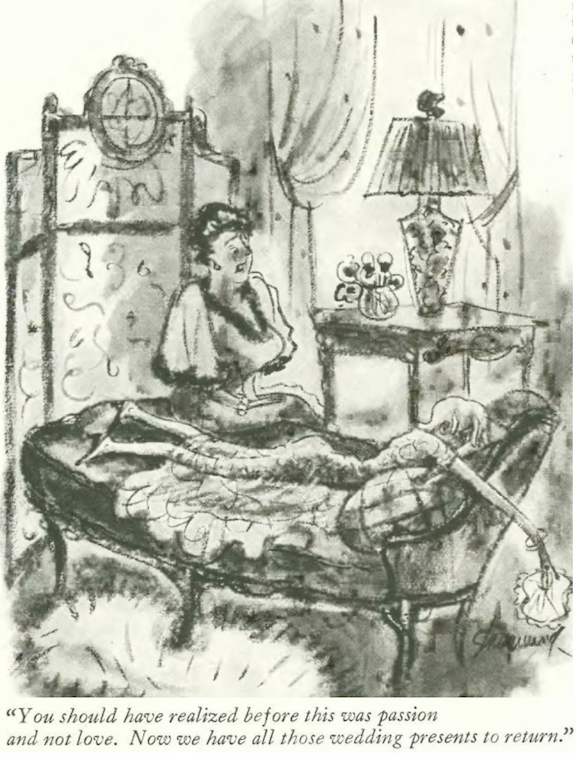


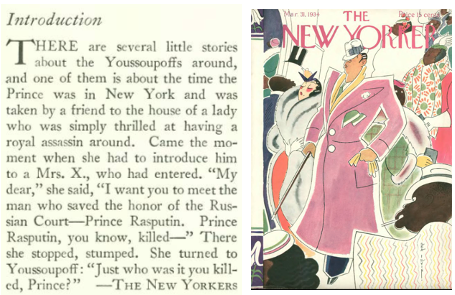

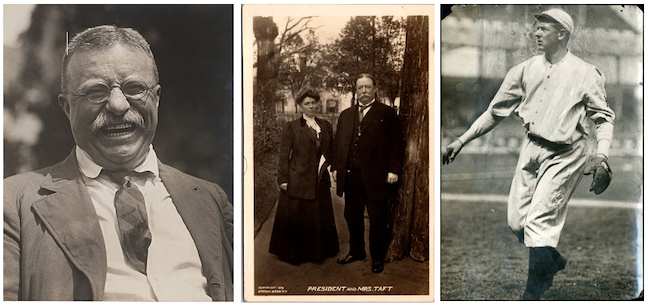
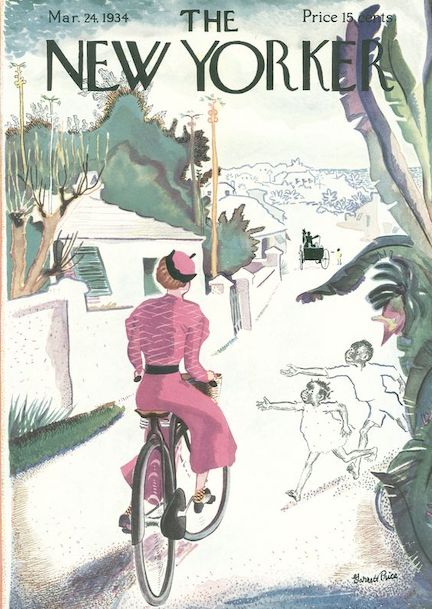
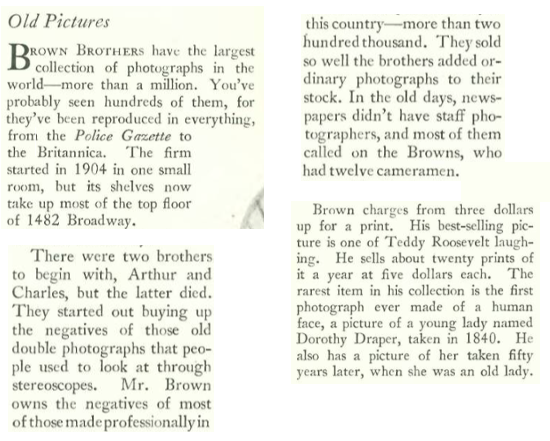
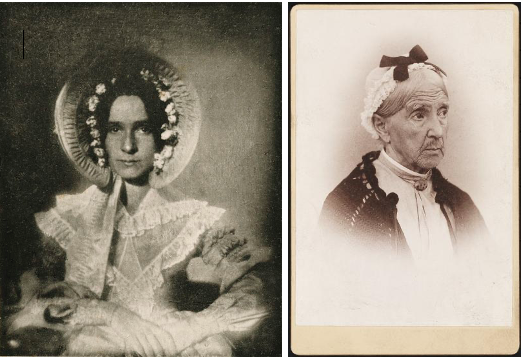
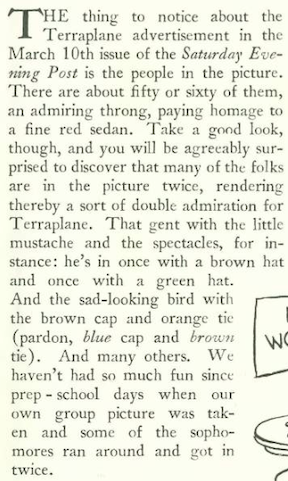
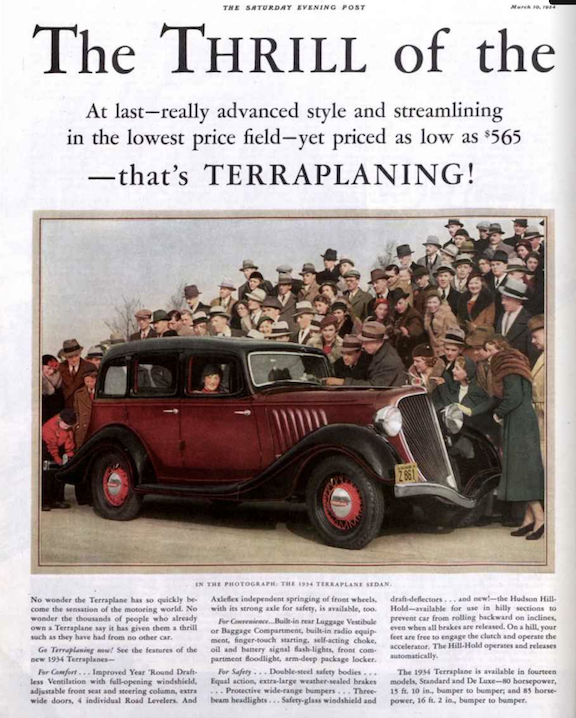
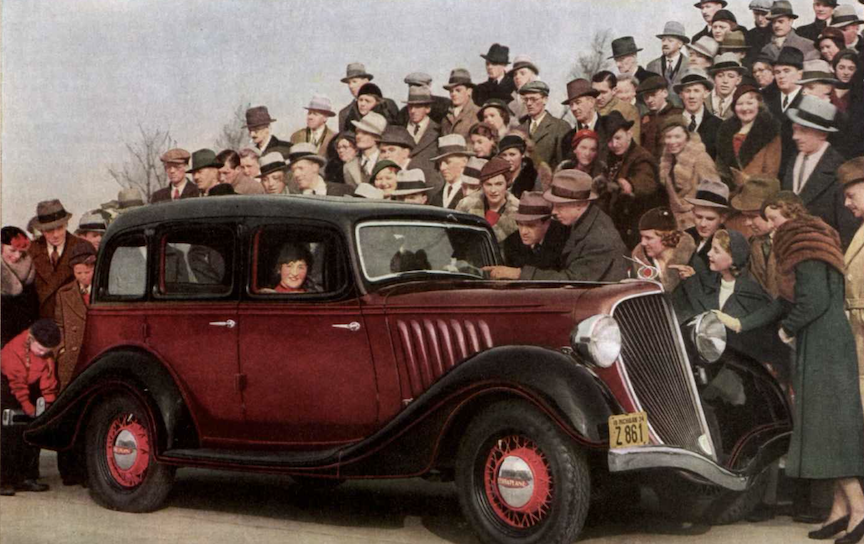
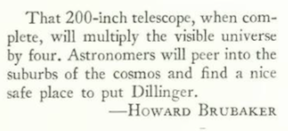
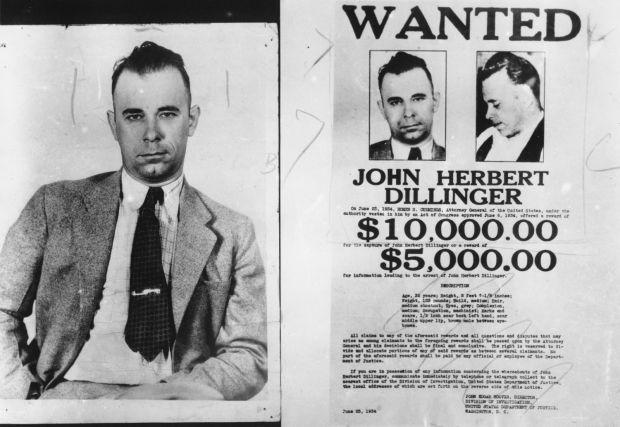
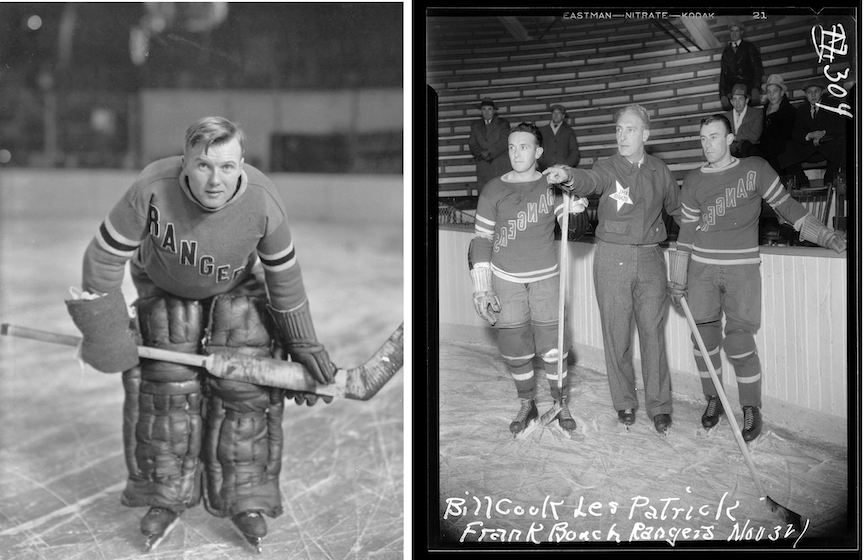
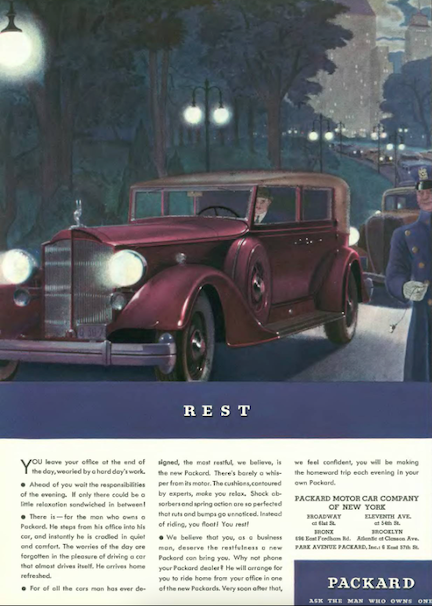
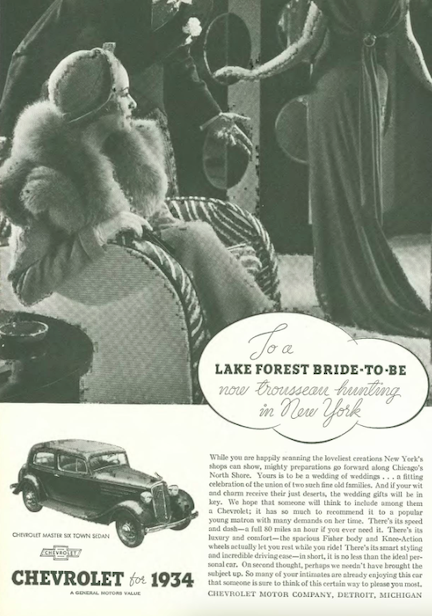
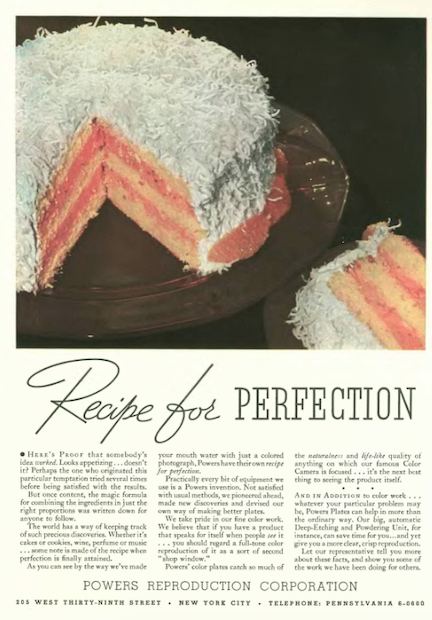
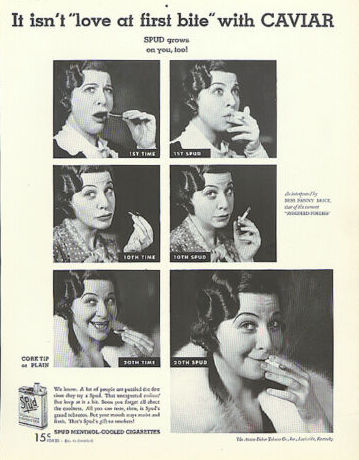
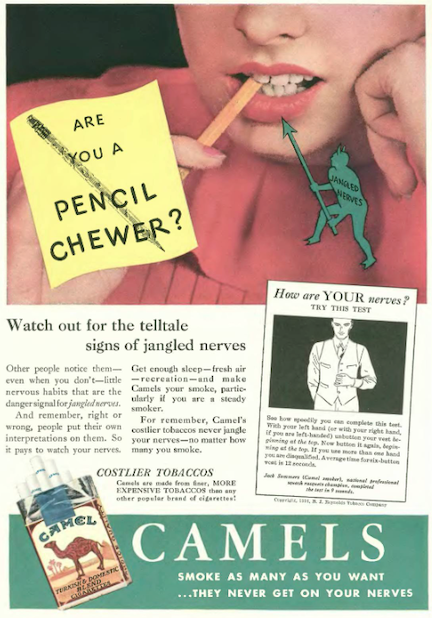
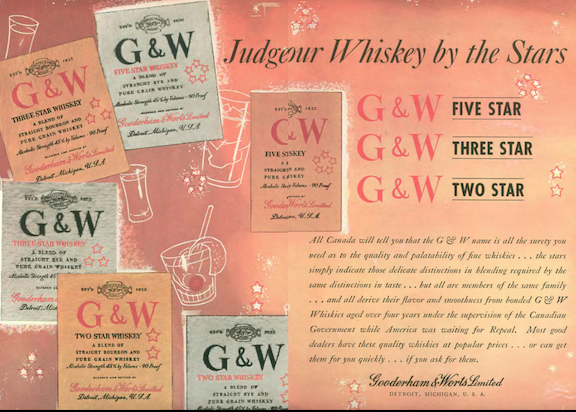
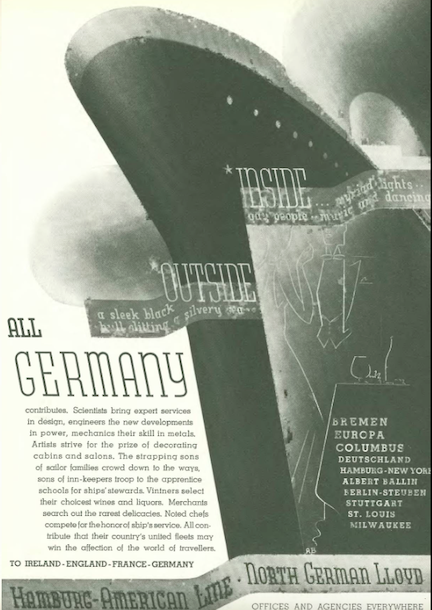
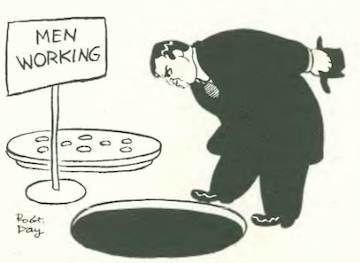
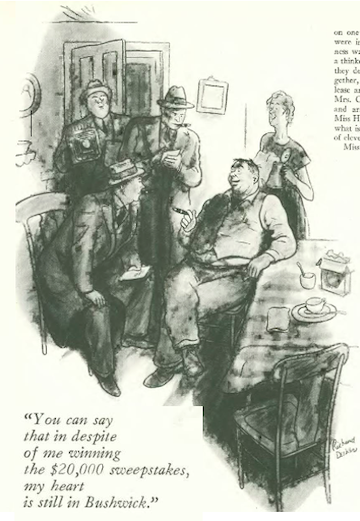
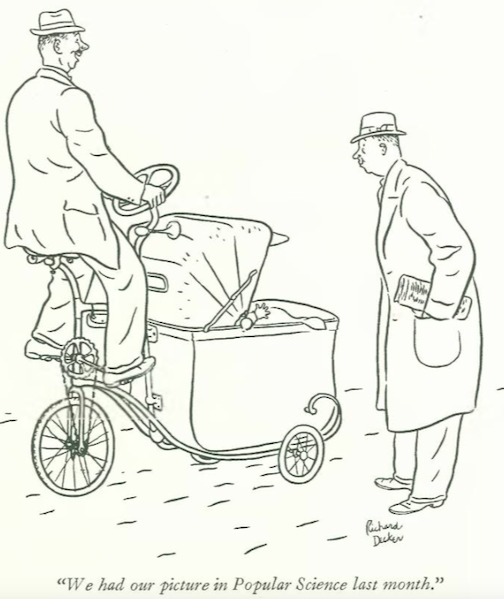
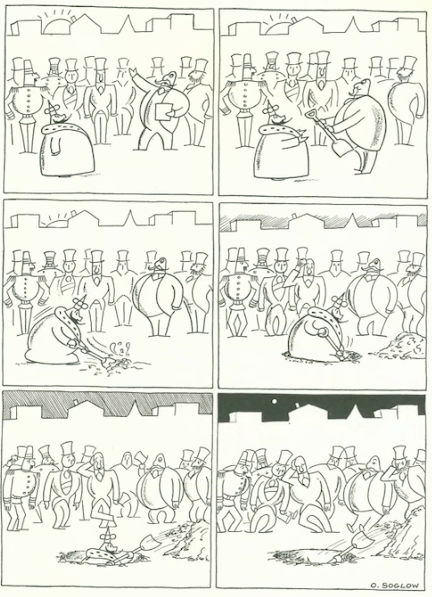
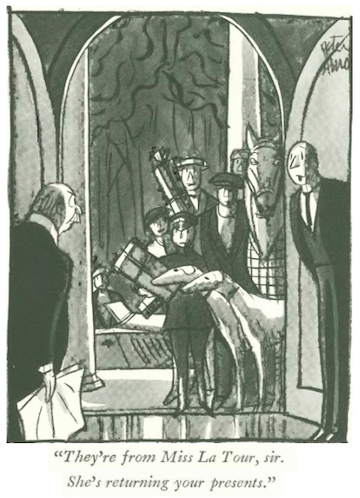
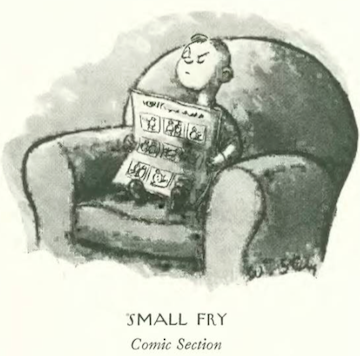
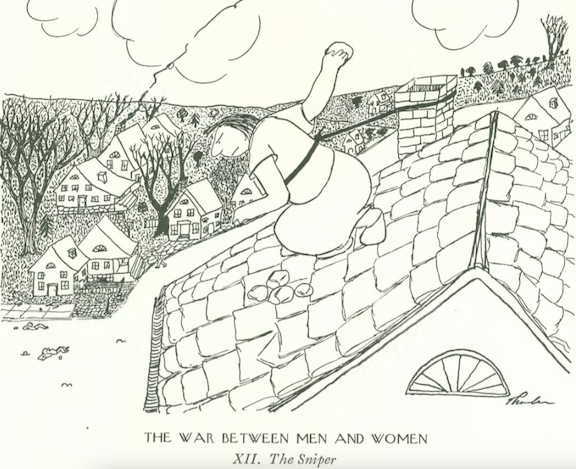
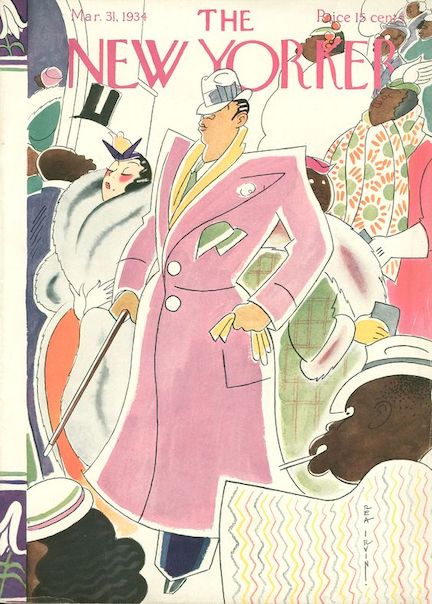
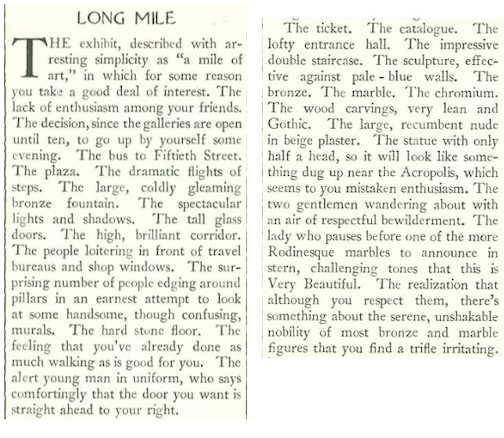
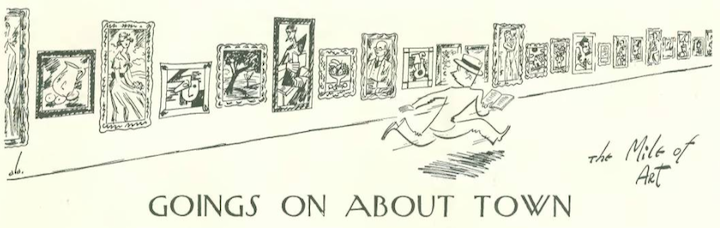
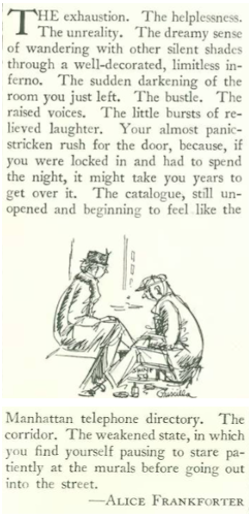
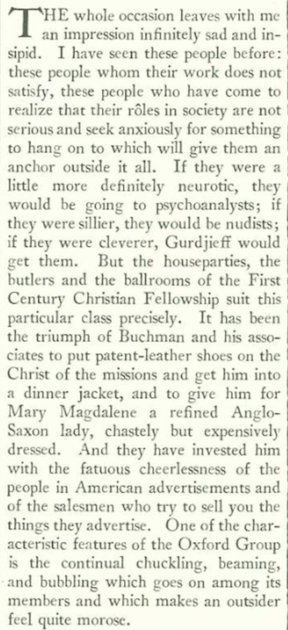
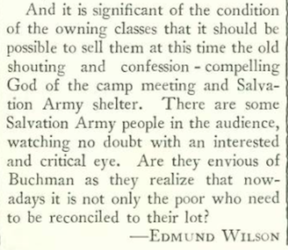
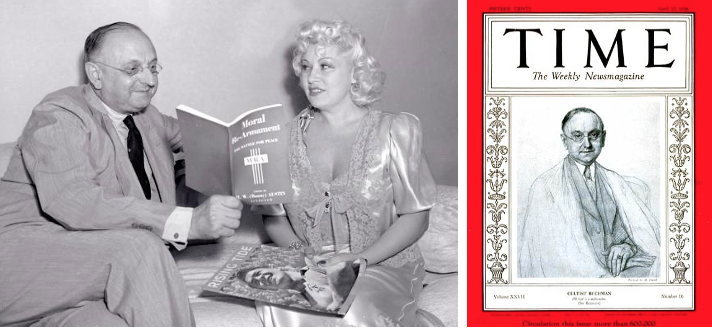
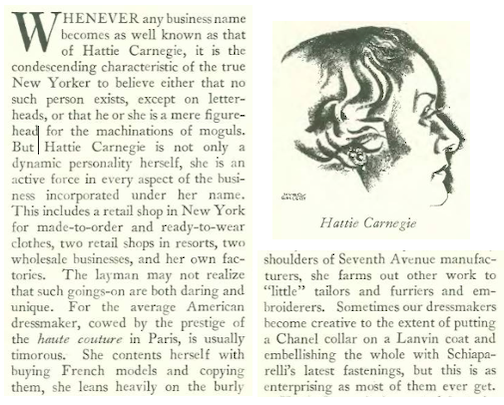
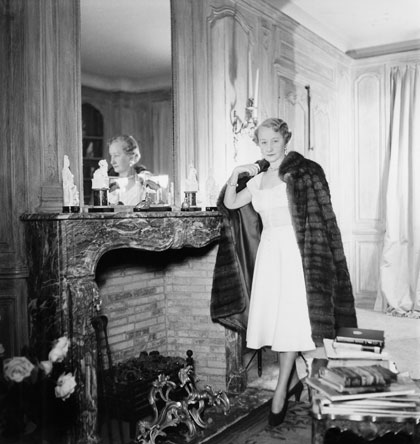
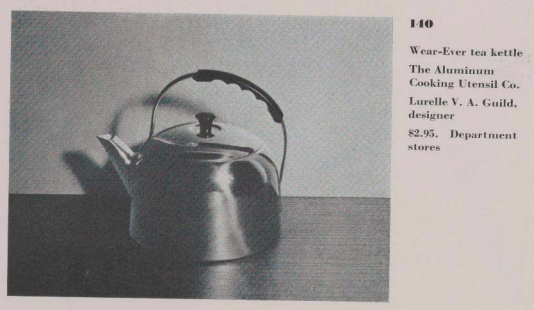
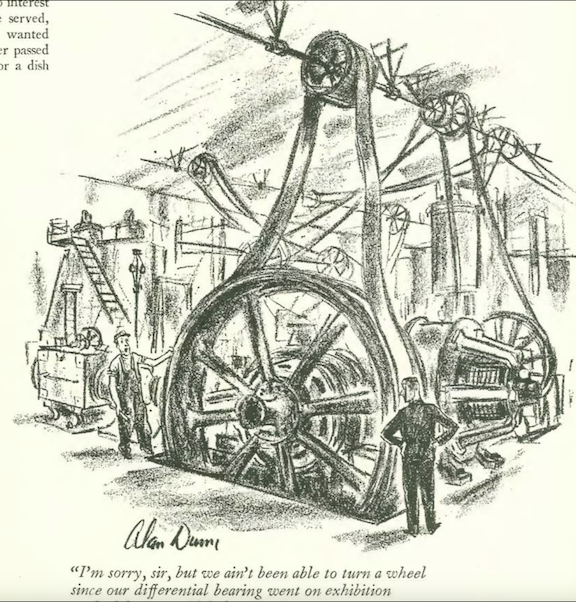
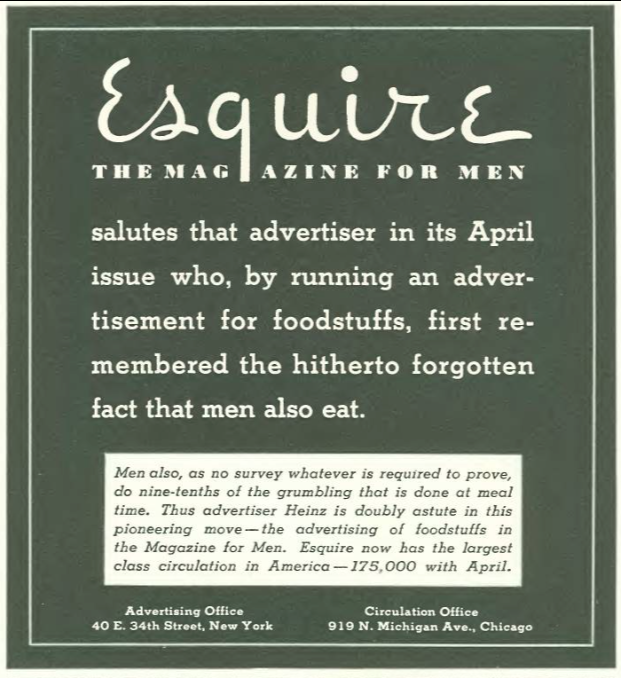
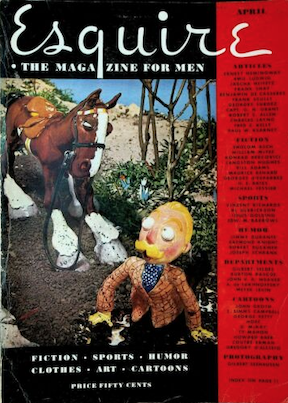
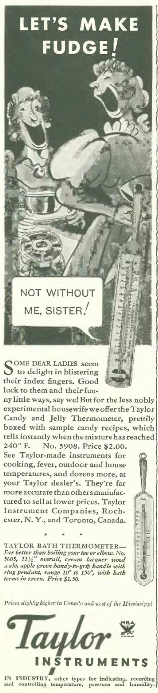
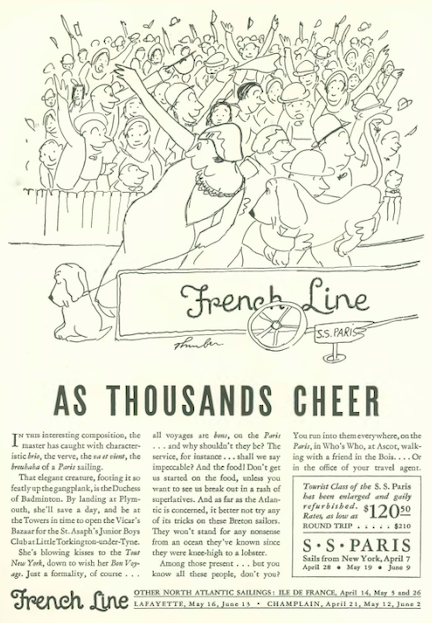
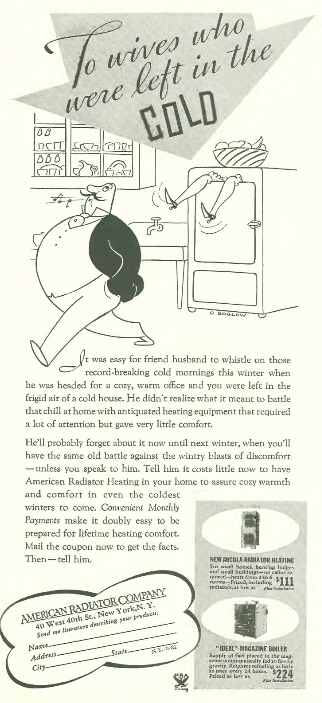
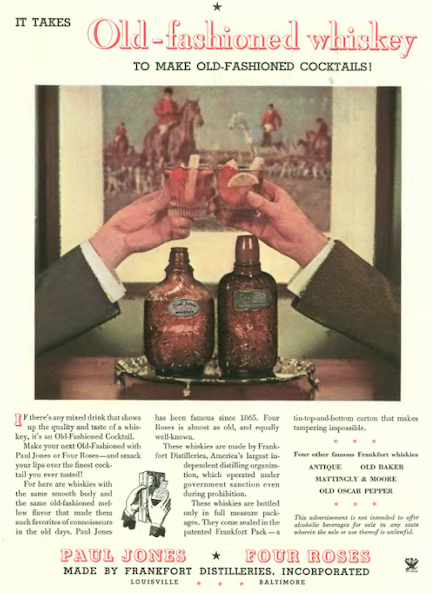
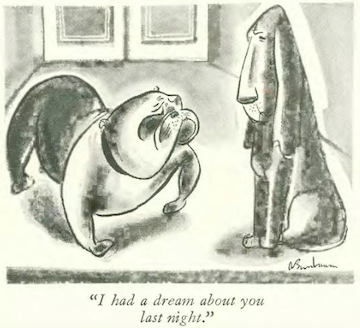
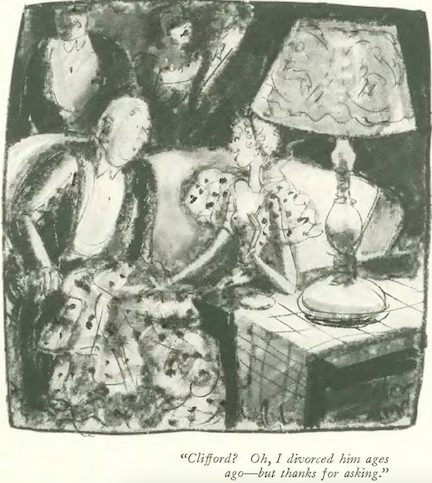
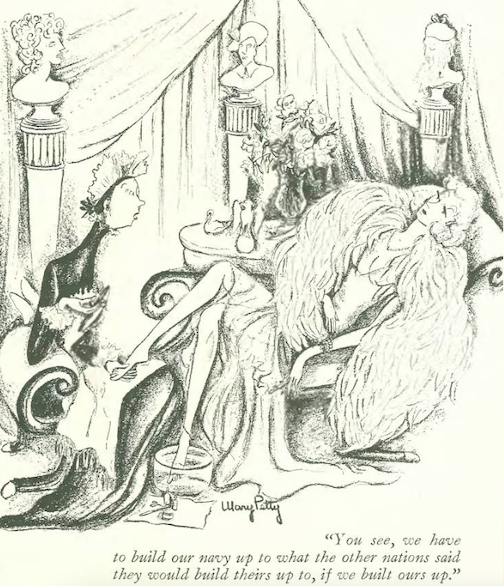
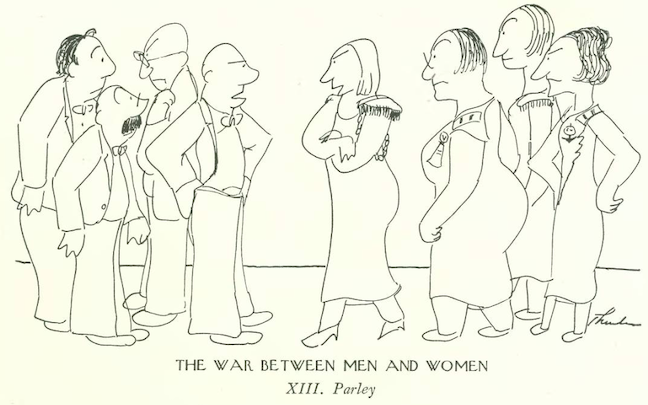


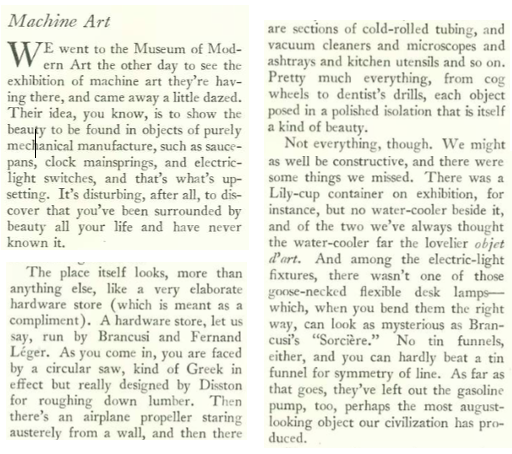
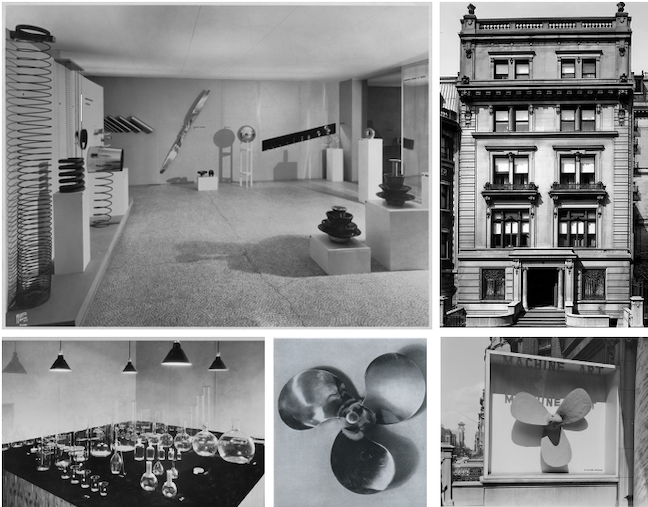


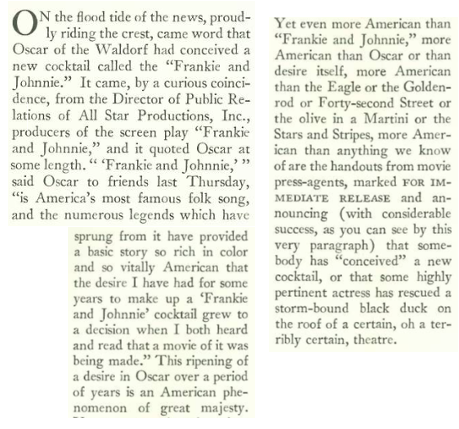
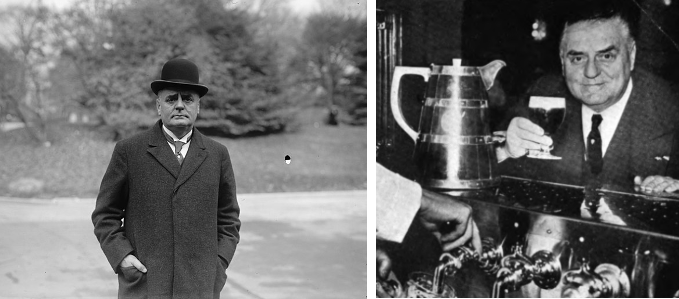
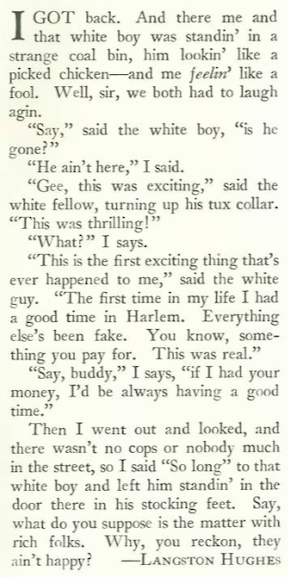
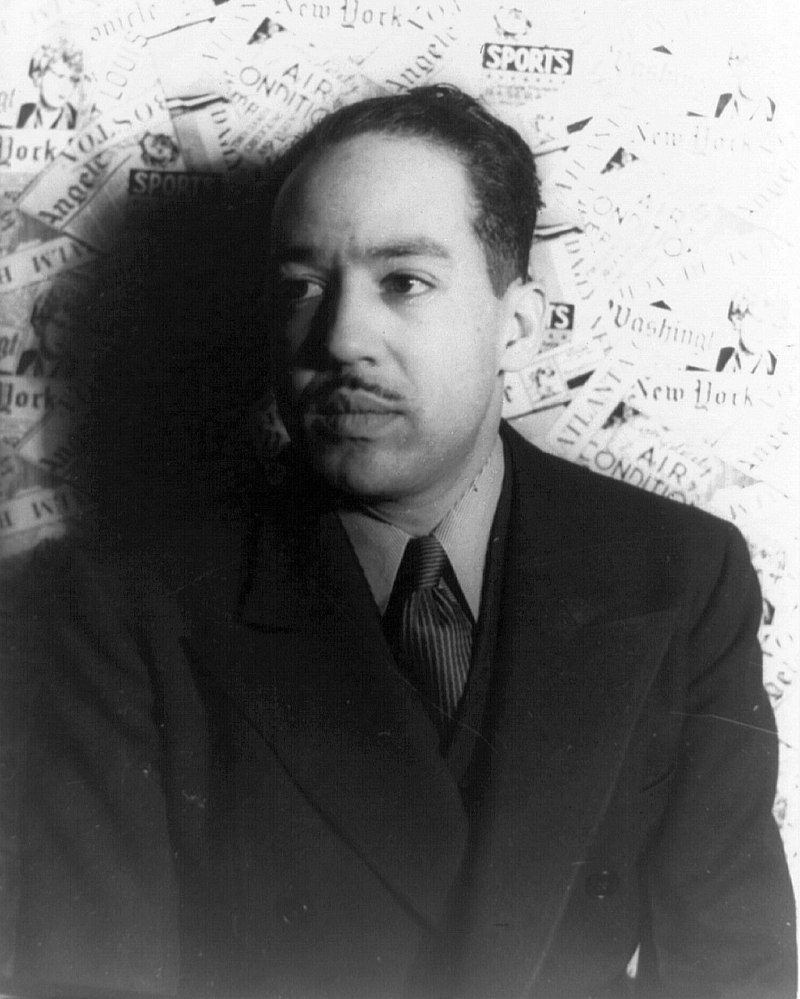
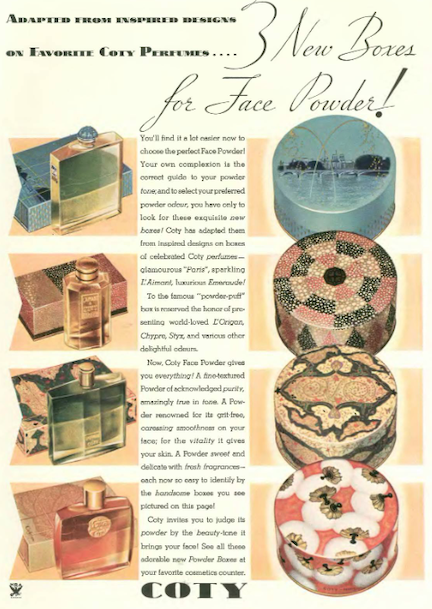

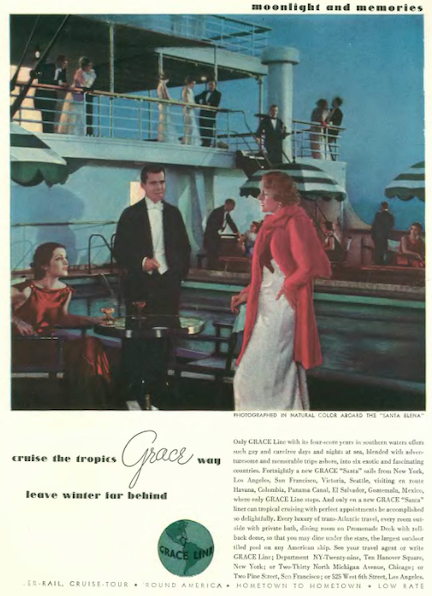


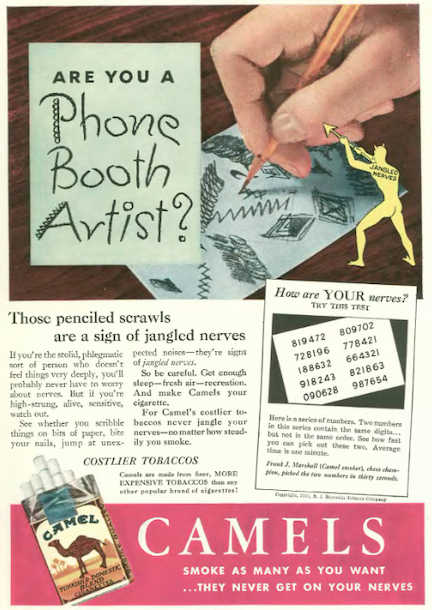
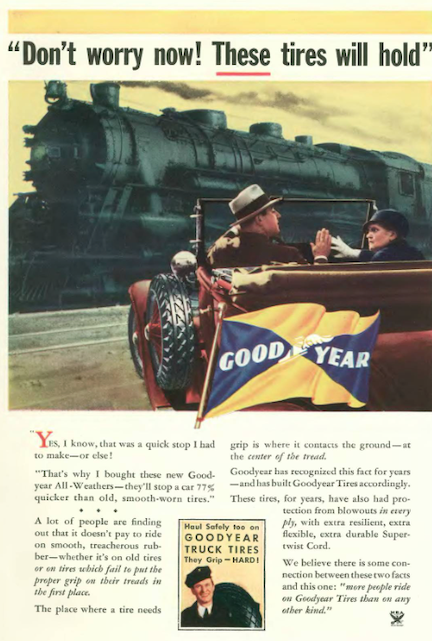
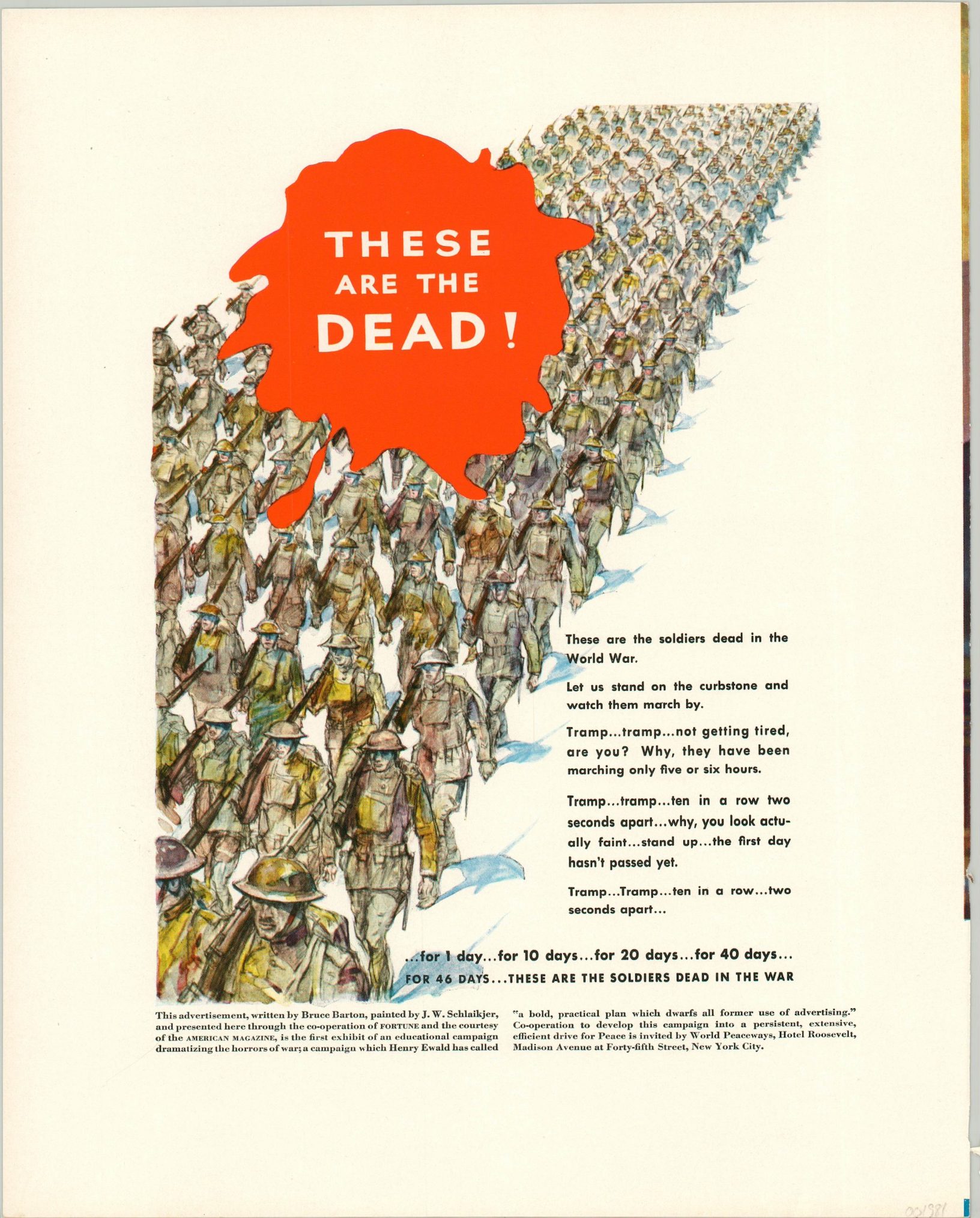



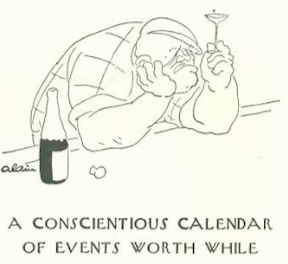
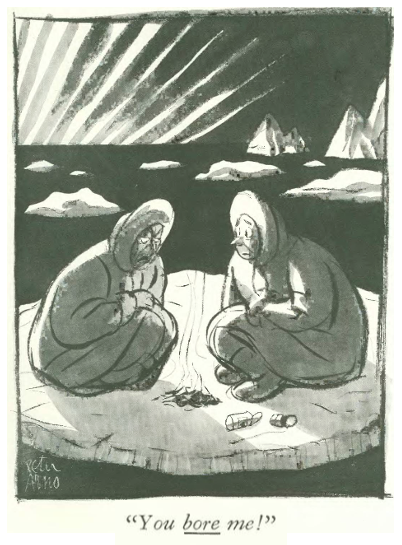

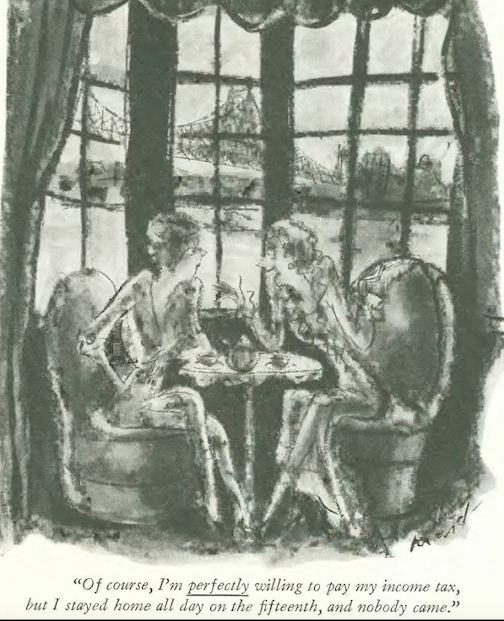

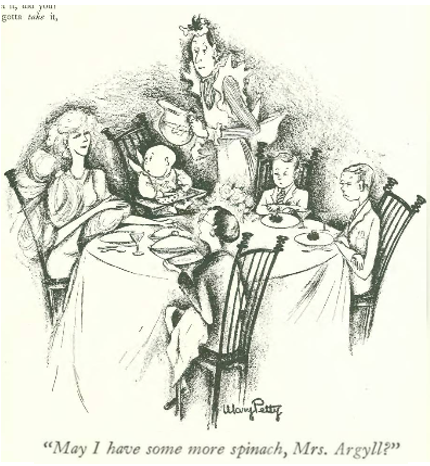
 A New Yorker State of Mind