Lighter Than Air

Just a decade after German Zeppelins sowed terror across the skies of Europe and Great Britain, Germany’s new Graf Zeppelin was enthusiastically welcomed by a throng gathered at Lakehurst, New Jersey, the massive airship having completed its first intercontinental trip across the Atlantic.

Oct. 27, 1928 cover by Peter Arno.

It had been only ten years and two months since German Zeppelins dropped their last bombs on the British, which had dubbed the airships “baby killers” for the mostly civilian casualties they inflicted. Beginning in 1915, Zeppelin raids on London killed nearly 700 and seriously injured almost 2,000 over the course of more than 50 attacks. It must have been a terrifying sight, something straight out of science fiction — flying ships more than the length of two football fields, blotting out the stars as they loomed overhead. Their size, however, was also their downfall, as Britain soon developed air defenses (searchlights, antiaircraft guns, and fighter planes) that shot many of these hydrogen gasbags out of the sky (77 of Germany’s 115 airships were either shot down or disabled).

TERROR IN THE SKIES…Image from a German postcard celebrating the bombing of Warsaw by the Zeppelin Schütte Lanz in 1914. Here’s a weird fact: There was a shortage of sausages in Germany during WWI, since cow intestines normally used for casings were instead used to create special bags to hold the hydrogen gas that kept Zeppelins aloft. It took more than 250,000 cows to make one airship. (Wikipedia)

So when the 776-foot Graf Zeppelin loomed over the New York City skyline on Oct. 15, 1928, the reaction was one of awe rather than terror. The New York Times heralded its safe arrival on the front page…

(rarenewspaper.com)
The Graf Zeppelin at Lakehurst, N.J., 1929. (rarehistoricalphotos.com)

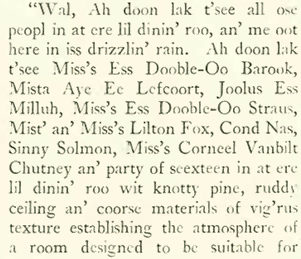
…and The New Yorker’s James Thurber (writing in “The Talk of the Town”) was on hand to assess the welcoming crowds gathered at Lakehurst, N.J….

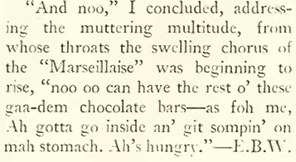
…who in their enthusiasm could have easily destroyed the vessel, which had already sustained damage during a storm over Bermuda…

OLD GAS BAG…The Graf Zeppelin arriving at Mines Field (now Los Angeles International Airport) on August 26, 1929. Newspaper magnate William Randolph Hearst sent the Graf Zeppelin dirigible on a 20-day flight that circumnavigated the world in 1929. (martinturnbull.com)
Living quarters of the Graf Zeppelin. Cozy, if you could forget that your room was contained within an envelope of highly explosive hydrogen gas. (airships.net)

Dining aboard the Graf Zeppelin. (Top, airshipsonline.com, bottom, airships.net)

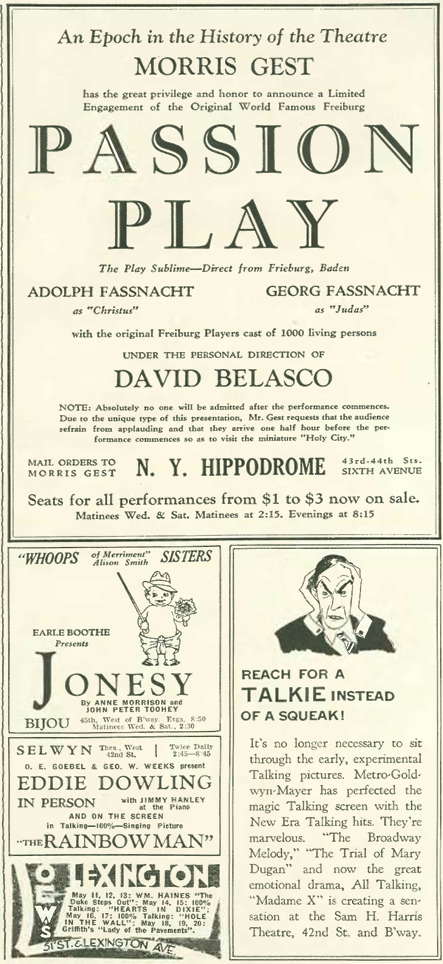
Reuben’s restaurant in New York seized the opportunity to cash in on the spectacle, boasting (in this hastily placed ad in the Oct. 27 issue) that the Graf Zeppelin’s passengers dined at their establishment on the very night of their arrival…

A final note: Considering the hazards of flying these ungainly, flammable machines (e.g. the Hindenburg in 1937) Graf Zeppelin flew more than one million miles in its career (the first aircraft in history to do so), making 590 flights (144 of them oceanic crossings, including one across the Pacific), and carrying more than 13,000 passengers — all without injury to passengers or crew.

 *  *  *

Rough Riders

Back on the ground, “The Talk of the Town” looked in on a somewhat less exotic form of long-distance travel — the recently inaugurated coast-to-coast bus service from New York to Los Angeles:

LONG HAUL…This Greyhound bus from 1929 was probably similar to those leaving the New York bus stations for points west in 1928. (flickr)

 *  *  *

From Our Advertisers

On the subject of rolling transportation, Buick trumpeted the introduction of “adjustable front seats” in its silver anniversary model. Curiously, this improvement was touted as a convenience solely for women drivers…

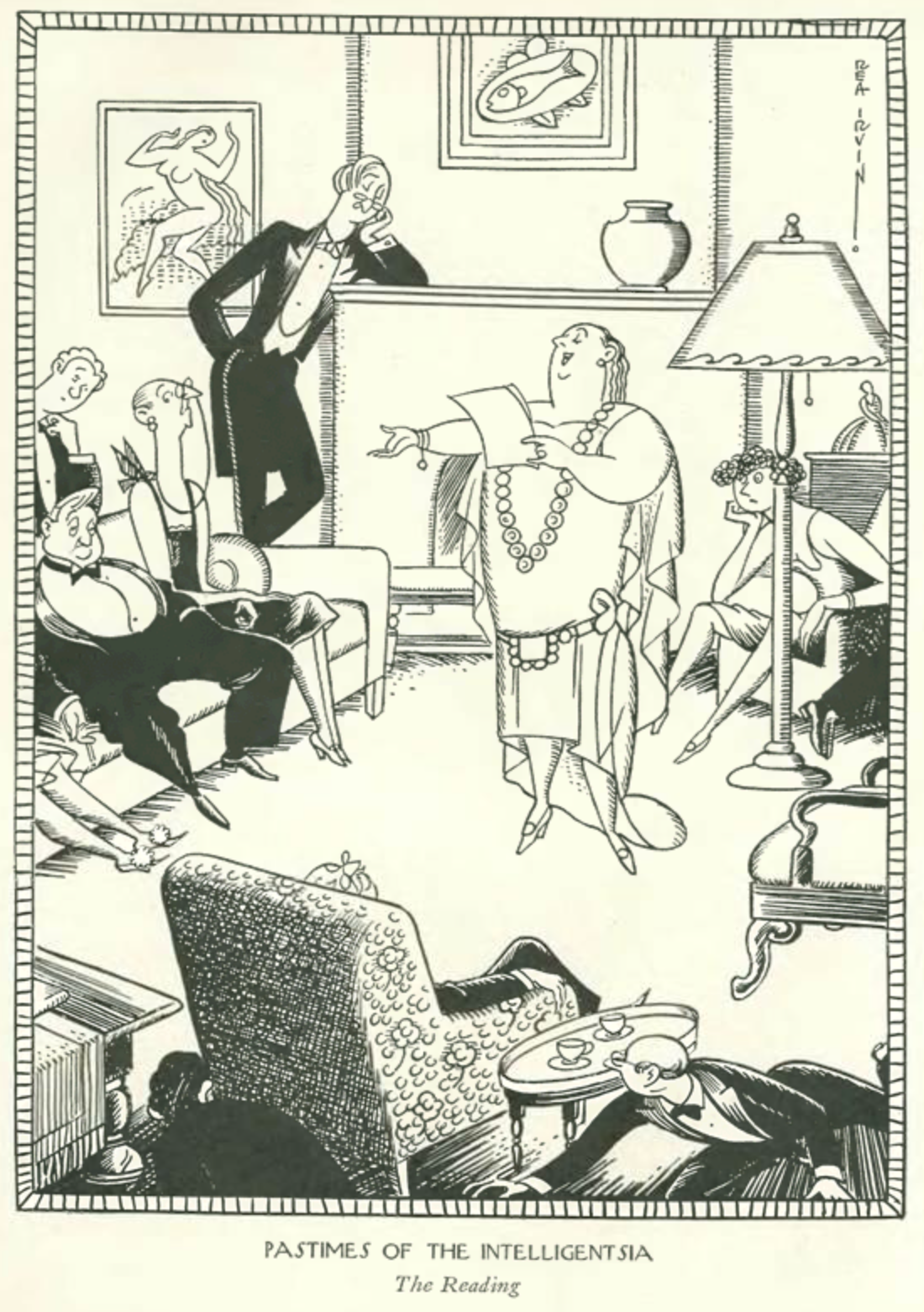
Our cartoon (a two-pager) for Oct. 27 comes from Gardner Rea, the latest among The New Yorker’s staff to mock the quality of sound motion pictures. The cartoon is labeled at the bottom: “The Firtht One Hundred Per Thent Thound Movie Breakth All Houth Recordth.” (click image to enlarge)

 *  *  *

If you wanted to get a glimpse of New York’s “royalty” in 1928, you could secure a seat at the Metropolitan Opera, especially one with a view of its famed “Diamond Horseshoe” seats.

November 3, 1928 cover by Julian de Miskey.

The “Diamond Horseshoe” described a ring of seats at the Metropolitan Opera House occupied by New York’s social elite. Not unlike today’s stadium skyboxes, the Met reserved these boxes for purchase by the wealthy. “The Talk of Town” for Nov. 3, 1928 noted how many of these were still held by the same families that had secured spots after the Met opened in 1883:

CULTURAL LANDMARK…The Metropolitan Opera House at Broadway and 39th Street circa 1905. (Wikipedia)
SEE AND BE SEEN…The Diamond Horseshoe at the Metropolitan Opera House, as seen from the rear of the stage for a concert by pianist Josef Hofmann, November 28, 1937. (newyorksocialdiary.com)

“Talk” also noted that some of the boxes in the Diamond Horseshoe were coming into new ownerships among the newly rich (E.F. Hutton) and even (gasp) immigrants such as Otto Kahn:

DUST TO DUST…Above, a view of the “Diamond Horseshoe” at the Metropolitan Opera’s gala farewell performance on April 16, 1966. Below, patrons say goodbye to the old house at Broadway at the farewell performance. The building was torn down in 1967 and replaced by a 40-story office tower. (Time/Life)

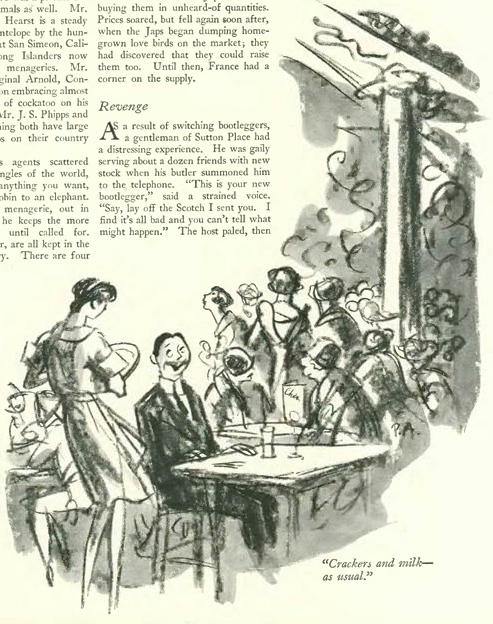
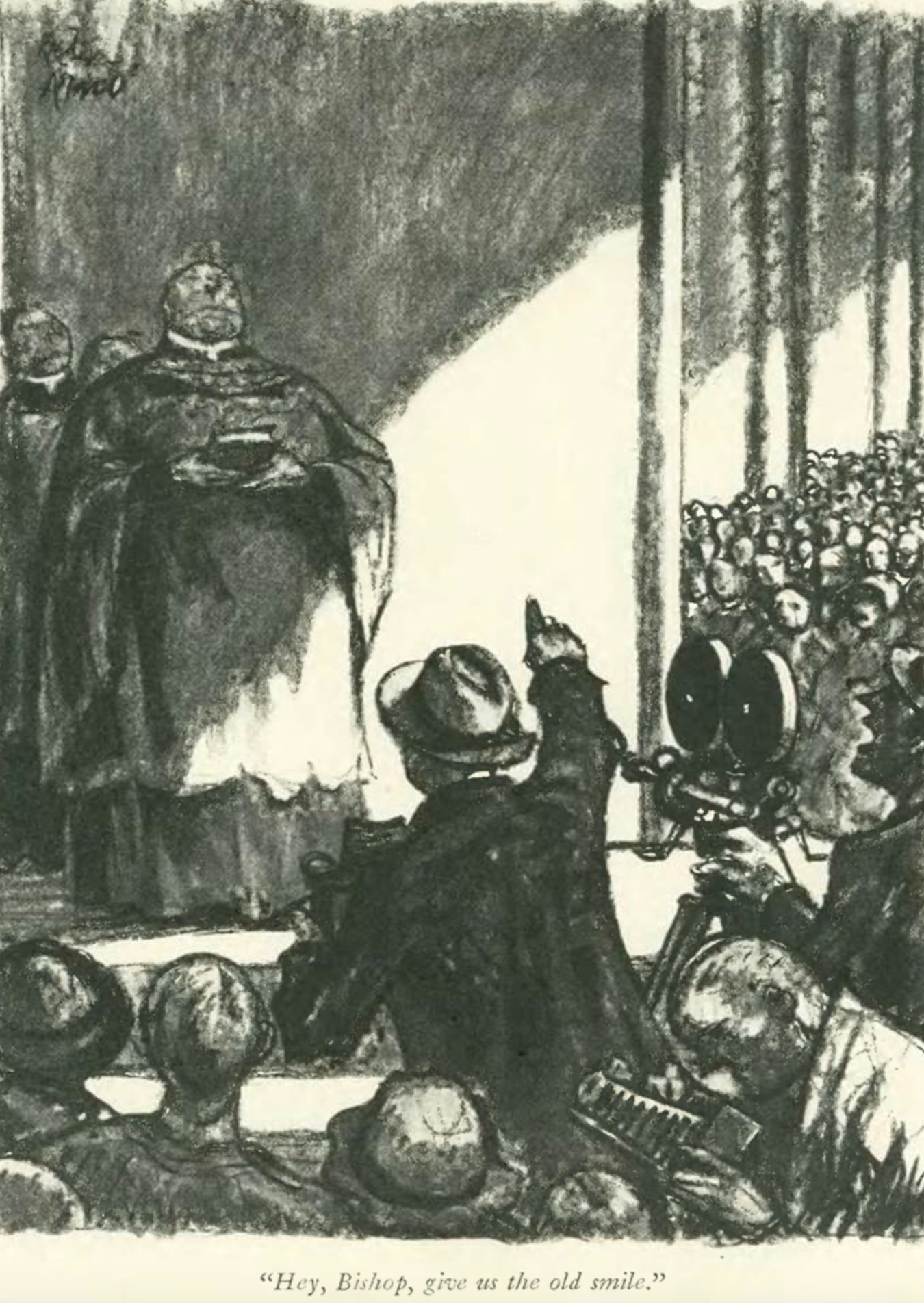
Also in the Nov. 3 issue was this cartoon by Peter Arno depicting one of the Met’s boxes stuffed with overfed toffs:

 *  *  *

Poet With a Green Thumb

The Nov. 3 “Talk” also featured a bit by James Thurber on American poet and playwright Edna St. Vincent Millay, a major figure in New York’s Greenwich Village literary scene as well as a feminist leader. A Pulitzer-Prize winner (1923), Millay was also an avid gardener who preferred the solitude of her farm, Steepletop, to the limelight usually accorded a literary star:

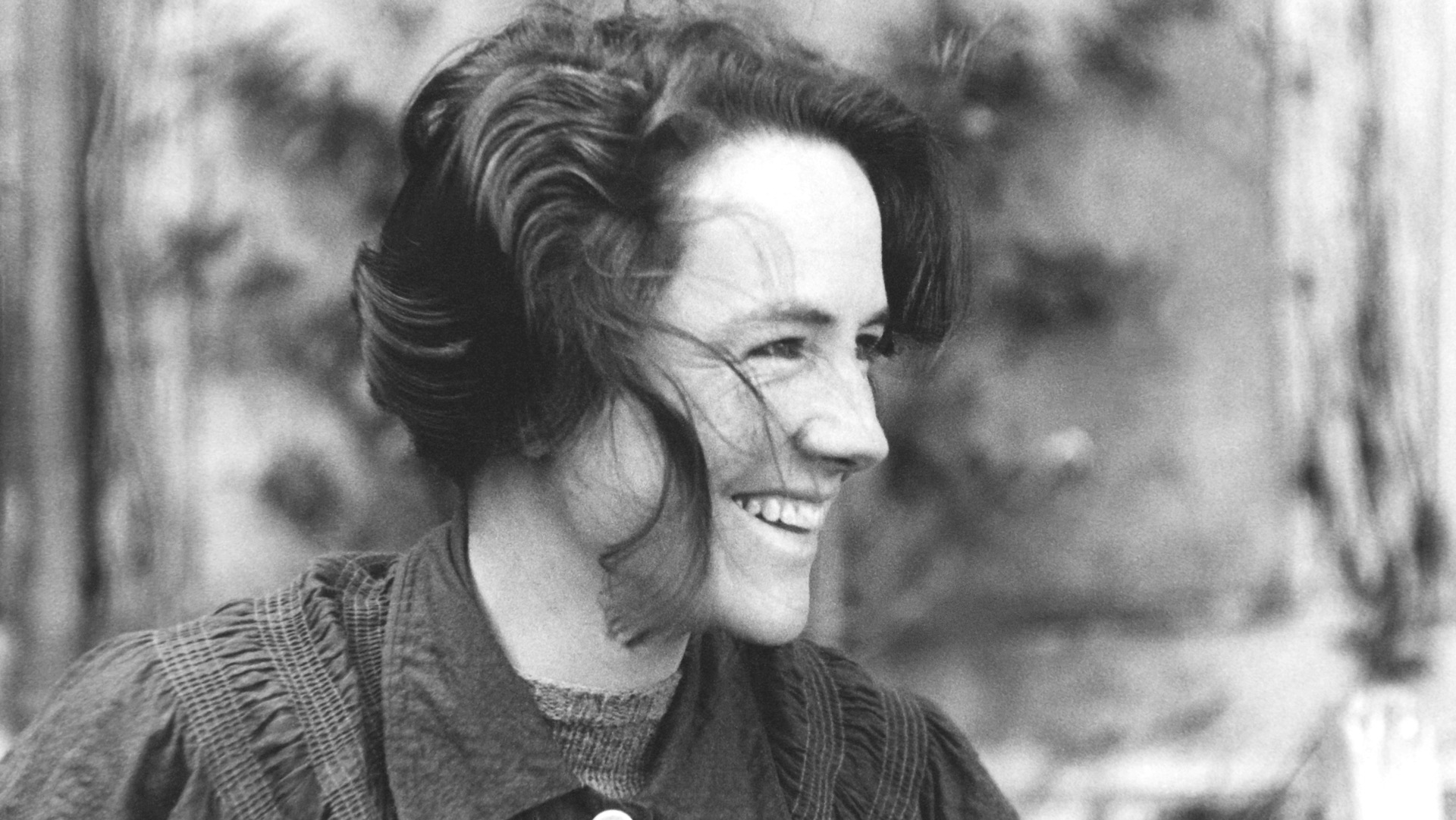
RARE PHOTOGRAPH…Edna St. Vincent Millay raised her own vegetables at Steepletop, a former blueberry farm located near Austerlitz, New York that she owned with her husband Eugen Jan Boissevain. Photo is circa 1928. (Library of Congress)

Thurber noted that even her publisher, Harper & Sons, had to use an old photo of the publicity-shy poet for a new book release:

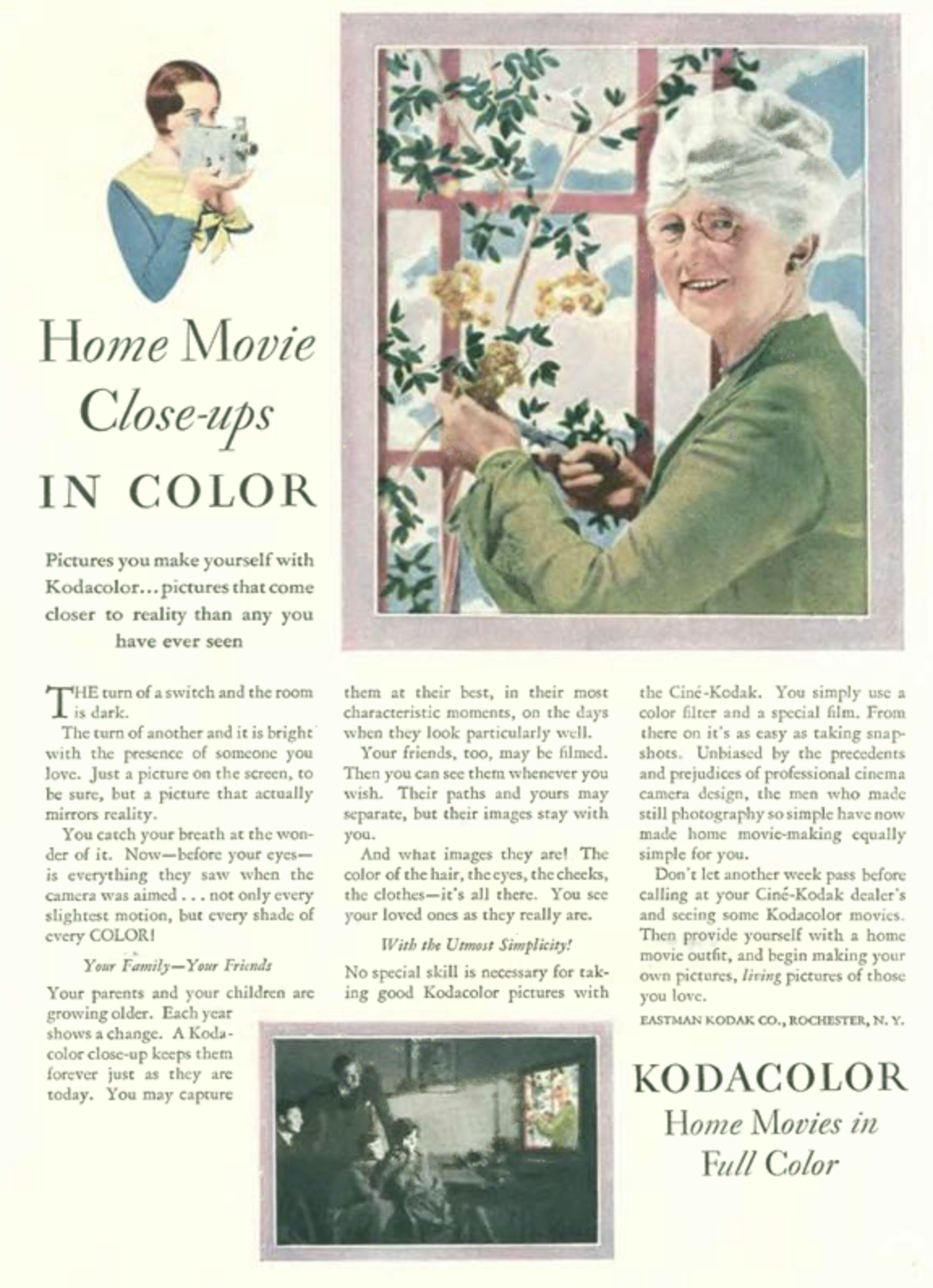
On the topic of photography, “Profiles” (written by film historian Terry Ramsaye) looked in on the quiet life of photography pioneer George Eastman, who founded the Eastman Kodak Company and popularized the use of roll film.

A quintessential “mamma’s boy,” Eastman never married…

…and by all accounts died a celibate less than four years after this profile was written, taking his own life at age 77. Suffering from intense pain caused by a spinal disorder, Eastman shot himself in the heart on March 14, 1932, leaving a note which simply read, “To my friends: my work is done. Why wait?”

Odds and Ends

Other items of note from the Nov. 3 issue included a humorous piece by Rube Goldberg, “The Red Light District,” in which the president of the Blink Stop-Go Traffic Company summons a doctor to treat a strange malady. The doctor gets held up by traffic lights on the way to the “emergency,” and when he discovers the problem is only hives, he shoots the patient. The piece was headlined by this artwork, also by Goldberg (shades of George Herriman and R. Crumb, yes?)…

Goldberg is still known today thanks to his series of cartoons depicting deliberately complex contraptions invented to perform simple tasks, such as the “Self-Operating Napkin” below, from 1931:

1931 (Wikipedia)

Cartooning’s highest honor, The Reuben Award, was named after Goldberg, who was a longtime honorary president of the National Cartoonists Society.

 *  *  *

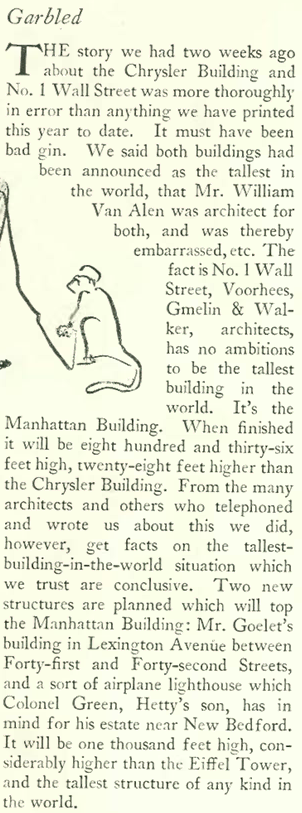
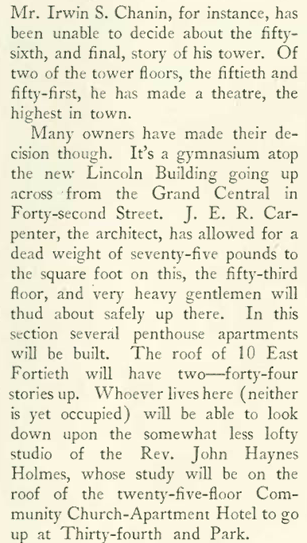
The Roaring 20s saw a rapid transformation of the New York skyline, with massive skyscrapers rising from the dust of old 18th and 19th century institutions. But few would signal the new age more than the Chrysler Building, an Art Deco landmark that would stand as the world’s tallest building for nearly a year (knocked from the top spot in May 1931 by the Empire State Building). Architecture critic George S. Chappell (“T-Square”) had this observation about the planned building:

EVOLUTION OF AN ICON…Stages in the design for the Chrysler building, from the July-December 1929 issue of Progressive Architecture.

*  *  *

More from our advertisers…in the Nov. 3 issue Hawaii beckoned well-heeled New Yorkers who were contemplating the coming winter…

…and then there was this poorly executed ad for Kolster radios, the whole point seeming to be the drawing they commissioned from New Yorker cartoonist Peter Arno:

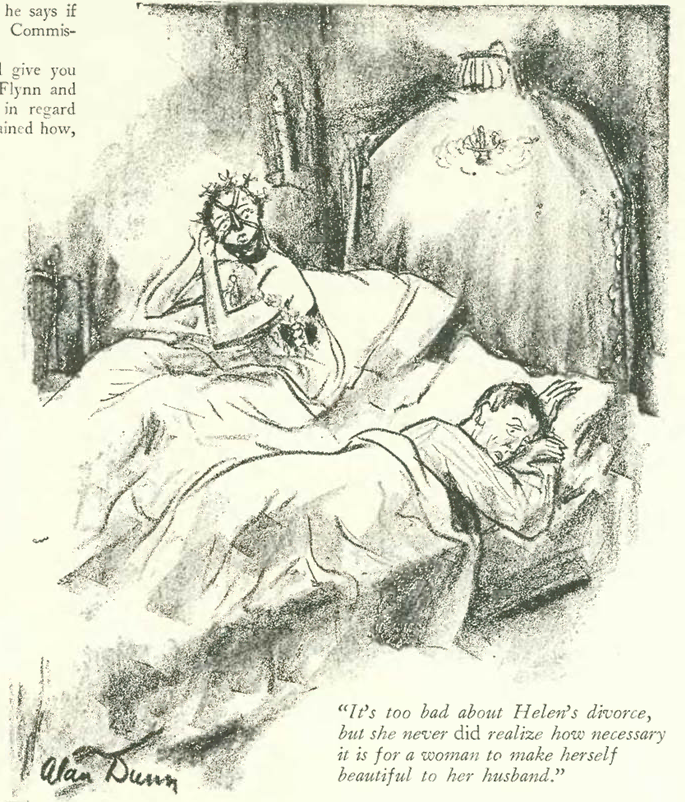
And finally, a cartoon by Alan Dunn, who looked in on an Ivy League football huddle:

Next Time: Diamond Lil…


This Thing Called Baseball

In the early years of The New Yorker, baseball as a sport was almost entirely ignored by the magazine, which otherwise gave exhaustive coverage to polo, yacht racing, tennis, and golf. There were also articles on badminton, rowing, and even auto racing, and college football received a lot of enthusiastic ink. But none for baseball. With the Sept. 22, 1928 issue I think I finally understand why.

Sept. 22, 1928 issue by Adolph K. Kronengold.

It has something to do with The New Yorker’s parochial view of the world, so aptly illustrated by Saul Steinberg on the magazine’s March 29, 1976 cover, in which anything beyond the Hudson was essentially terra incognita:

A lot of New York Yankee fans came from “out there,” according to James Thurber in a “Talk of the Town” segment titled “Peanuts and Crackerjack.” Thurber wrote of his experience at a pennant race game between the Yankees and the Philadelphia A’s. The game of baseball was described as something for the out-of-towners who were “a bit mad,” a mass spectacle in which the game itself was of minor importance. In short, it wasn’t cool to be a Yankees fan if you counted yourself among Manhattan’s smart set:

This “Talk” item was written when the Yankees were on the verge of winning their second consecutive World Series championship over the favored St. Louis Cardinals. The 1928 team featured the famed “Murderer’s Row” lineup with the likes of Babe Ruth and Lou Gehrig. In all, nine players from the ’28 team would be elected to the Hall of Fame, a major league record. But as of the Sept. 22 issue neither the 1927 or ’28 Yankees merited a line in The New Yorker’s sports pages.

HIT ONE FOR THE OUT-OF TOWNERS…The Yankees’ Earle Combs leads off with base hit against the Philadelphia A’s in a key AL pennant race game on Sept. 9, 1928. A record crowd of 85,265 attended the game, won by the Yankees, who gained half-game lead over the A’s with the victory. (baseballhistorycomesalive.com)

Thurber wrote that one could learn much about those in attendance at the game by the way they received Yankee star Babe Ruth:

Thurber proved his point about out-of-towners by noting the origin of license plates in the “army of parked cars” outside of the stadium. He also noted the appearance in the game of an ancient Ty Cobb, who hit a weak fly ball while a few old-time fans looked on in reverence:

WHERE YOU COULD READ ALL ABOUT IT…The Oct. 10, 1928 edition of the Daily News splashed its front page with photographs of the Yankee’s triumphant title win. (NY Daily News)

 *  *  *

An Eye-dropping Art Collector

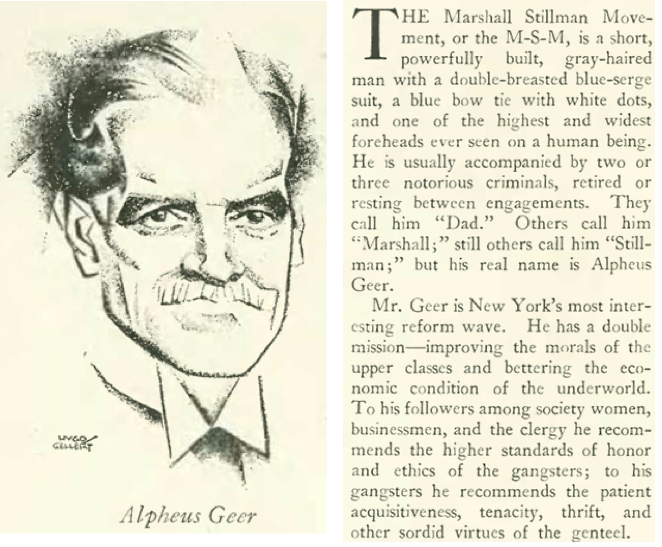
The Sept. 22 issue A.H. Shaw profiled “De Medici in Merion” Dr. Albert Barnes, who made his fortune by developing in 1901 (with German chemist Hermann Hille) a silver nitrate-based antiseptic marketed as Argyrol. In the days before antibiotics, Argyrol was used to treat eye infections and prevent newborn infant blindness caused by gonorrhea. The profile featured this rather fearsome illustration by Hugo Gellert:

The lengthy piece detailed Barnes’ coming of age, and how his promotion of Argyrol helped bankroll his famed art collection. A brief excerpt:

IT FUELED A FORTUNE…Invented in 1901, Argyrol eye drops would finance one of the world’s greatest private art collections. Although was no longer marketed in U.S. after 1996, it is still available today, as seen at right in this Vietnamese product. (todocoleccion / ydvn.net)
HMMM, THAT LOOKS FAMILIAR…Henri Matisse views his 1917 painting The Music Lesson during a 1933 visit to the Barnes Foundation in Lower Merion Township, near Philadelphia. (The Morgan Library & Museum)
HE LIKED DOGS, TOO…Dr. Albert Barnes and his dog Fidèle with Matisse’s Red Madras Headdress, in 1942. (Barnes Foundation Archives)

  *  *  *

A One-eyed Monster Comes to Life

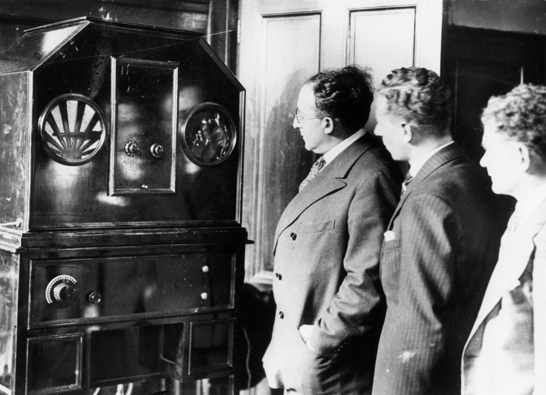
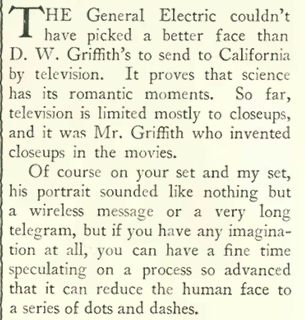
It’s always interesting to note the mentions of emerging technology in the early New Yorker, including this bit in Howard Brubaker’s column “Of All Things” about the successful broadcast of a “radio-television play.” Brubaker mused about what this new invention might called:

The first television broadcast in July 1928 was not exactly must-see TV. For two hours a day, General Electric’s experimental station W2XB broadcast the image of a 13-inch paper mache Felix the Cat, simply rotating on a turntable.

THE DAYS BEFORE VIAGRA ADS…A 13-inch Felix the Cat figure (top) was used to test an early television broadcast from General Electric’s experimental station W2XB in Schenectady, N.Y. Rotating on a record player turntable, the Felix figure was broadcast using a mechanical scanning disk, and was received as a 2-inch high image (below left) on an electronic kinescope. At bottom right, a 1928 television from General Electric that received alternating sound and picture. (NBC / Imgur / tvhistory.tv)

Then on September 11, 1928, W2XB (with WGY radio providing audio) broadcast a 40-minute one-act melodrama, The Queen’s Messenger. Northern State University’s Larry Wild writes that because TV screens were so small, only an actor’s face or hands could be shown. “The play had only two characters. A female Russian spy and a British Diplomatic Courier. Four actors were used. Two for the character’s faces, and two for their hands.”

The Queen’s Messenger was the first television drama, received by 3-inch televisions (most likely similar to the General Electric Octagon TV set pictured at left) that were set up in various places in the New York City area. At right, actors on the set of The Queen’s Messenger. The crude, flickering image marked the beginning of a revolution. (General Electric)

 *  *  *

From Our Advertisers

Advertisers were always looking for clever angles to capture the attention of The New Yorker’s upscale readers, including the use of subtle and not-so-subtle racist cues to get their points across. Two examples from the Sept. 22 issue have the makers of Oshkosh trunks helpfully pointing out that their product is not intended for African “natives”…

…or the folks from Longchamps restaurants, who depict the joyless life of a blubber-eating Eskimo as an appropriate juxtaposition to the succulent delicacies awaiting readers at their five New York locations:

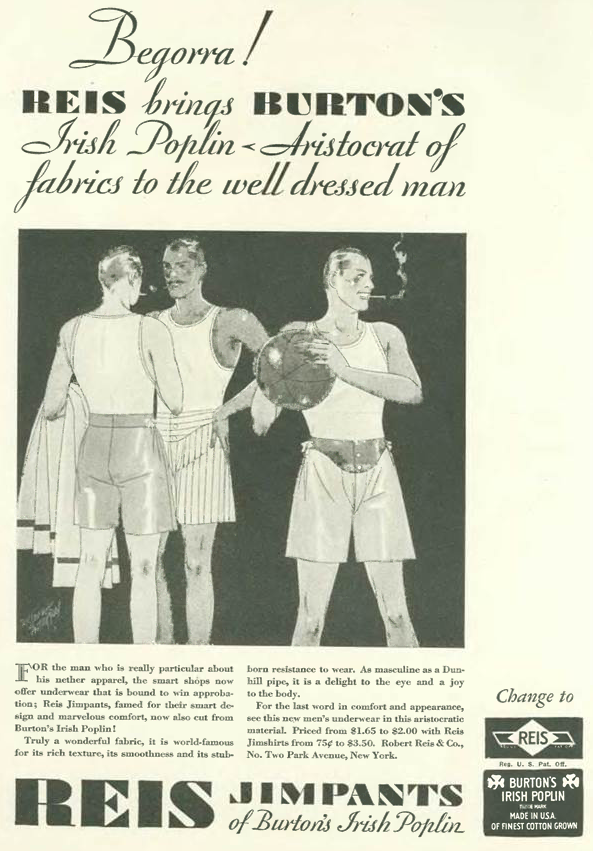
We might associate rumble seats with the carefree joys of the Roaring Twenties, but in reality passengers in these jump seats received little protection from the elements (or flying gravel), and the ride was no doubt jarring atop the rear axle. No wonder you needed a special coat:

Our cartoons for Sept. 22 include this whimsy from Gardner Rea

…and this cartoon by Al Frueh, which depicts the deserted surroundings of the Flatiron Building on Yom Kippur. Robert Mankoff, who served as The New Yorker’s cartoon editor from 1997 to 2017, observed in the Cartoon Desk (Sept. 26, 2012) that “the rapid growth of Jewish-owned businesses in New York made the cartoon relevant in a way that it’s not today. Through modern, politically correct eyes, the cartoon may seem anti-Semitic, but I don’t see it that way. It just depicts the reality of those times, exaggerated for comic effect.”

Next Time: The Tastemakers…


After Hours

Broadway shows were a popular nightlife diversion for New York’s upper middle-class, but plays and musicals were only part of an evening’s entertainment. The city’s “after theatre” clubs beckoned those who enjoyed an evening of dance with the Astaires or a light comedy with Lunt and Fontanne, but believed the night was still young.

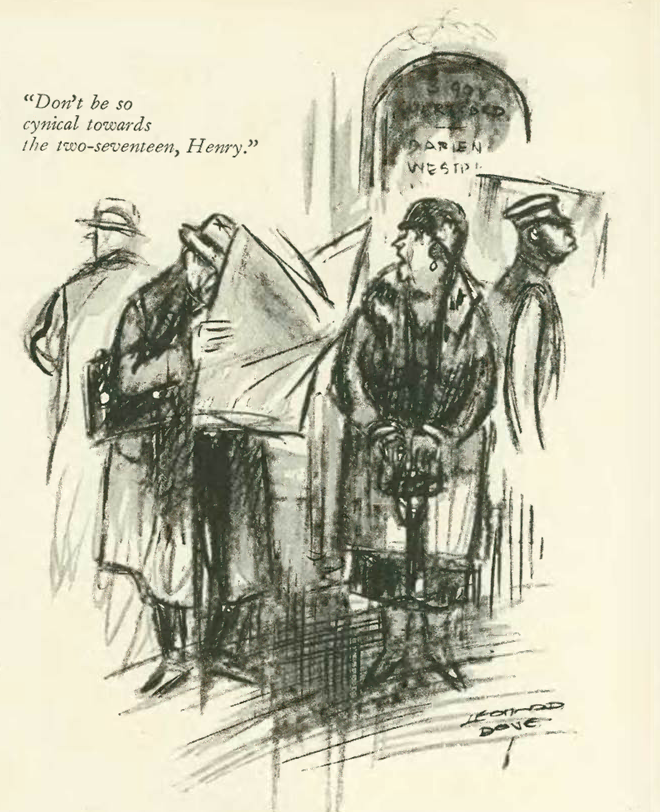
May 5, 1928 cover by Leonard Dove.

And who better to chronicle the late night revelry than Lois Long, who through her “Tables For Two” column was a leading voice of after hours Manhattan and a nightly presence in its various clubs and speakeasies. Longtime New Yorker writer Brendan Gill (Here at the New Yorker) observed that Long, who joined the magazine in 1925, “had plunged at once, joyously, into a New York that seemed always at play — a city of speakeasies, night clubs, tea dances, football weekends, and steamers sailing at midnight.”

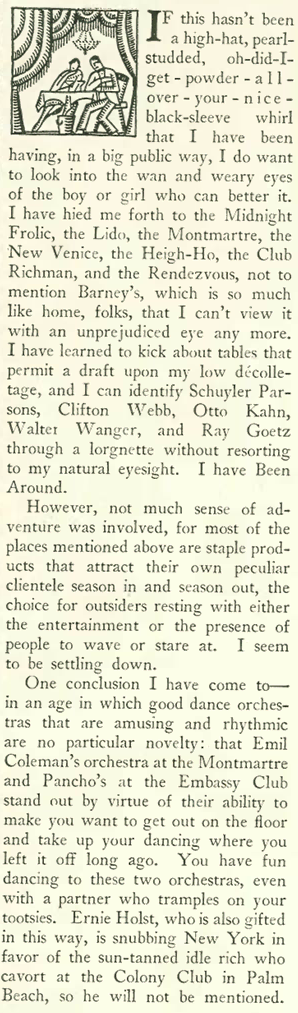
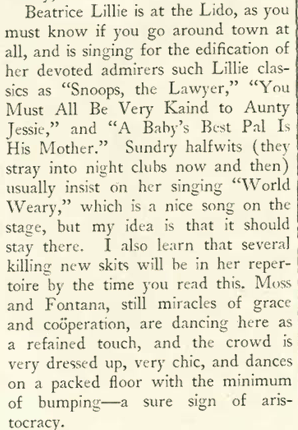
In May 1928 Long had been married for about nine months to colleague and cartoonist Peter Arno, who was also a regular fixture of the nightclub scene. But in Long’s column for May 5, 1928, one can detect a bit of weariness setting in, the 27-year-old sensing the next generation didn’t know how to have a good time.

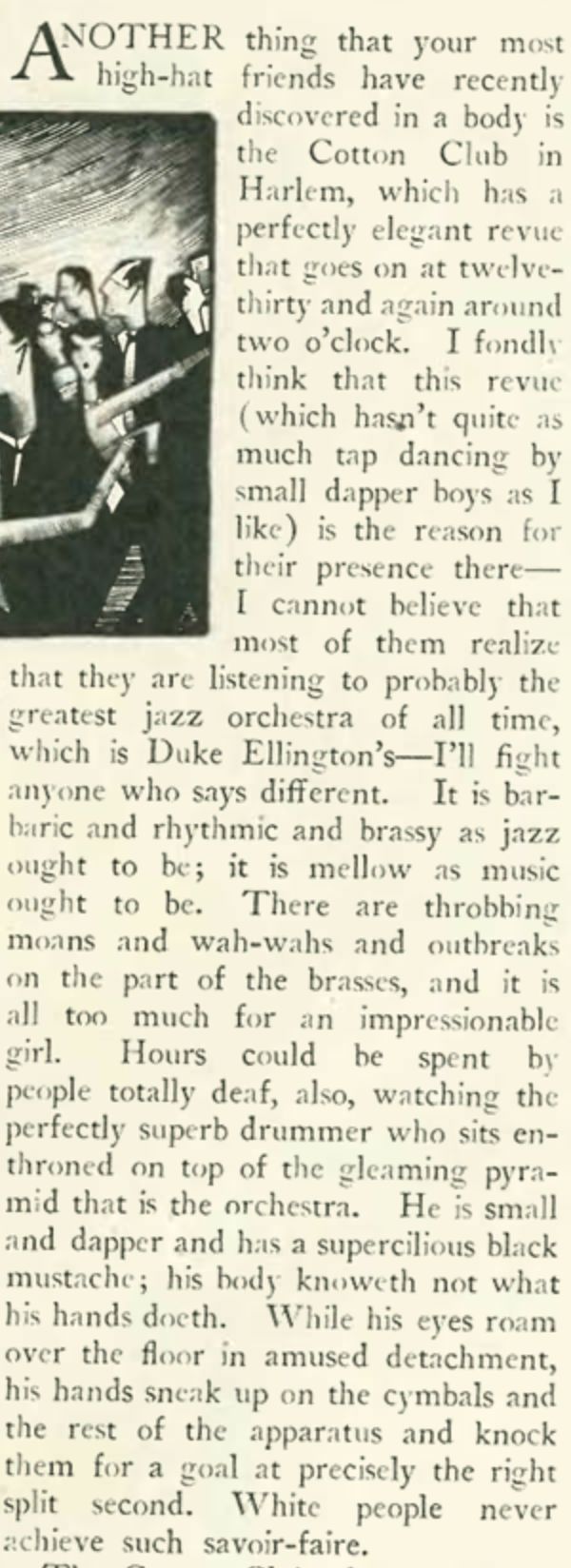
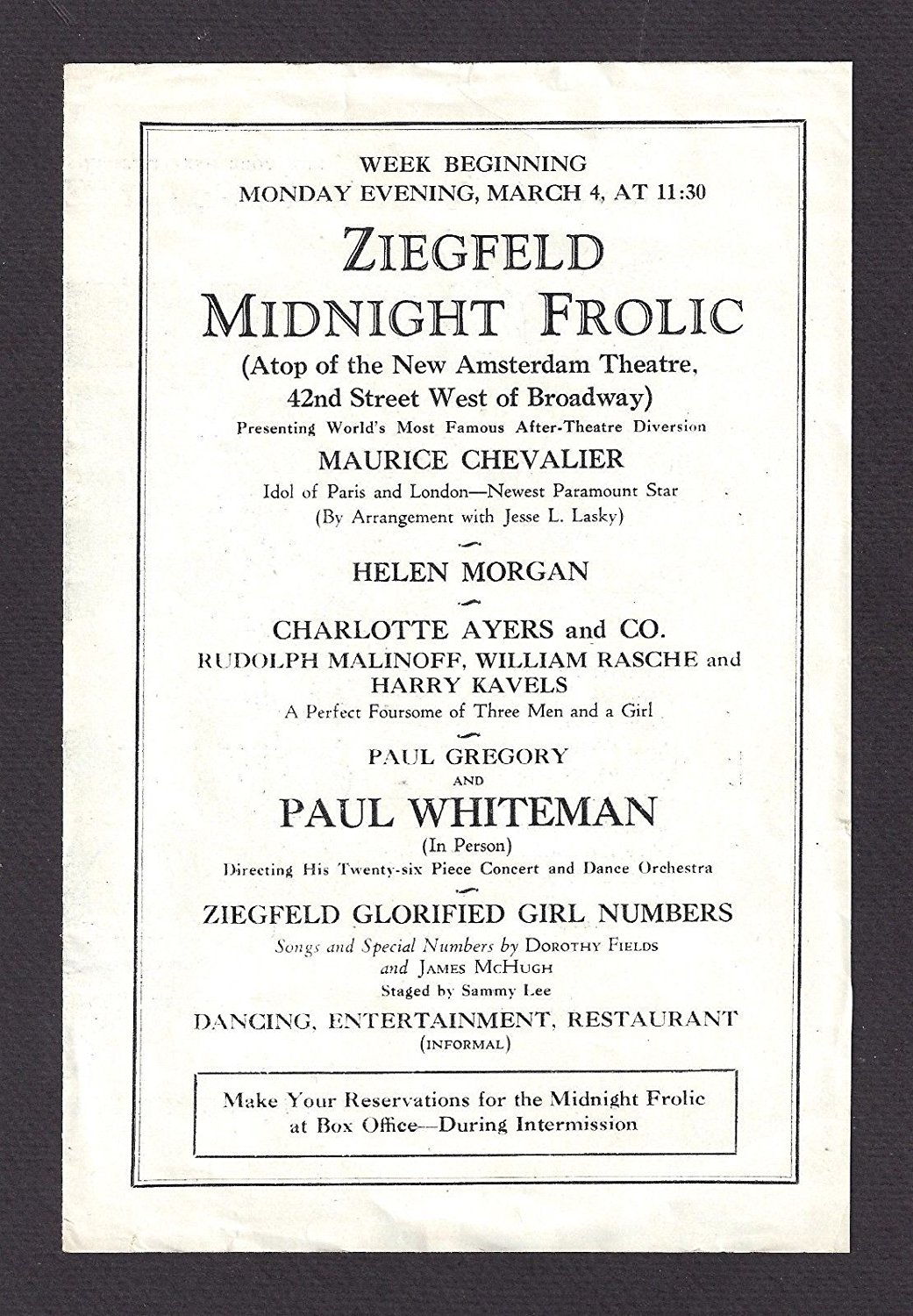
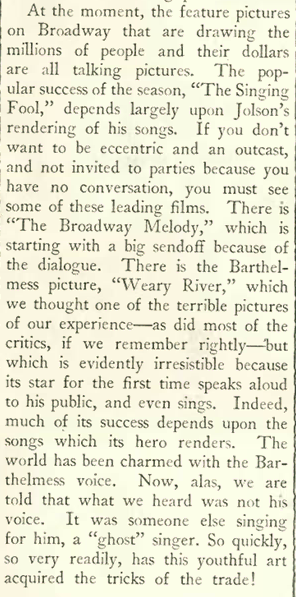
And it didn’t help that the younger people were dancing to “canned music,” what with the spread of broadcast radio and improvements in phonograph records…

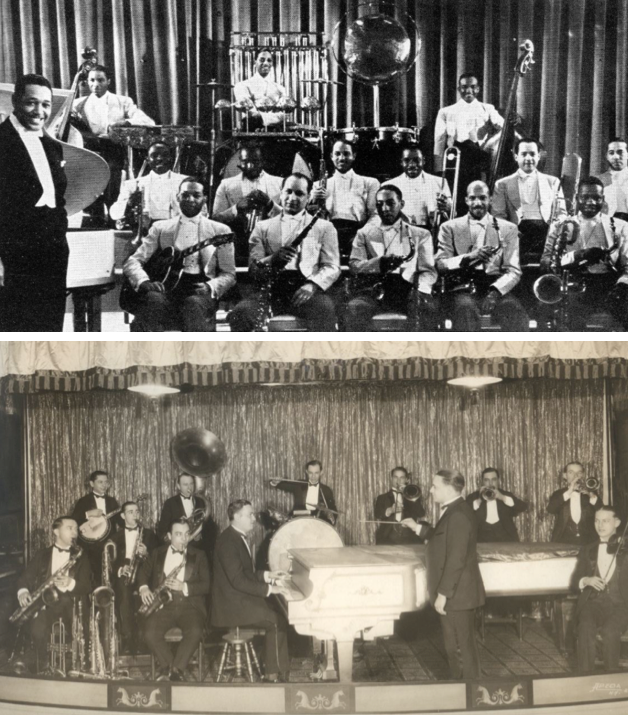
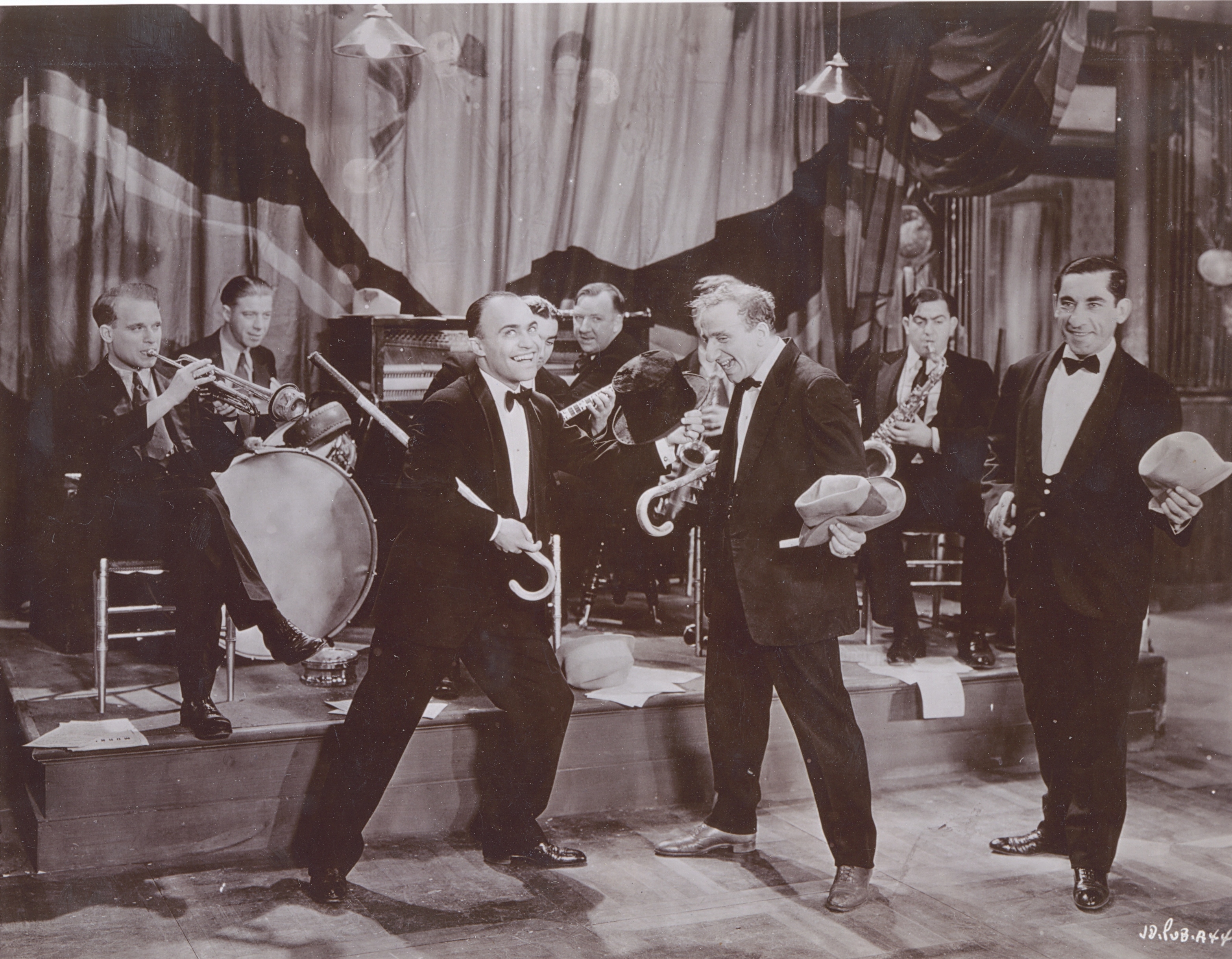
LIPSTICK WAS A FAN of the Paul Specht Orchestra, seen here in 1928. (YouTube)
BUT NOT A FAN of those darn kids who preferred records to live music, and didn’t know how to party at the clubs. (Pinterest)

For those on the wilder side, Long recommended a number of after-hours entertainments, including Texas Guinan’s latest all-night club, Salon Royal, and its snake-charming hootch dancer.

WHOOPEE was the order of the day at Texas Guinan’s Salon Royal on West 58th Street, now refurbished as the 6 Columbus Hotel. Guinan was well known to New Yorker writers and editors and was a frequent guest of the numerous parties hosted by Harold Ross and Jane Grant in their Hell’s Kitchen brownstone. (texasguinan.blogspot)

Because so many New Yorker readers were both theatre and after-theatre-goers, the magazine included some of the after-dinner destinations in its “Goings On About Town” section. Excerpts follow.

Rubberneckers

A May 5 “Talk of the Town” segment (written by James Thurber) commented on the challenges film crews faced when they shot on location in the city, in this case the production of Harold Lloyd’s latest comedy, Speedy:

LOCATION, LOCATION, LOCATION…Silent film star Harold Lloyd (leaning on car at right) and his crew draw a crowd under Queensboro Bridge during the filming of Speedy. (silentlocations.wordpress.com)
BABE IN THE CITY…Harold Lloyd takes baseball legend Babe Ruth for a wild spin in 1928’s Speedy. (YouTube)

 *  *  *

Before Mommie Dearest

The actress Joan Crawford is best known today as the subject of the 1981 biopic, Mommie Dearest, which portrayed Crawford as an insecure, abusive parent to her adopted daughter Christina (the film was based on a 1978 memoir and exposé of the same name written by Christina Crawford).

But in the 1920s and 30s the former dancer and chorus girl was better known for her sex appeal, attractive to men for her looks and to women for the roles in which she portrayed hard-working women who find both romance and success.

PRETTY PICTURE…Ramon Novarro and Joan Crawford in Across to Singapore, 1928. (Silent Hollywood)

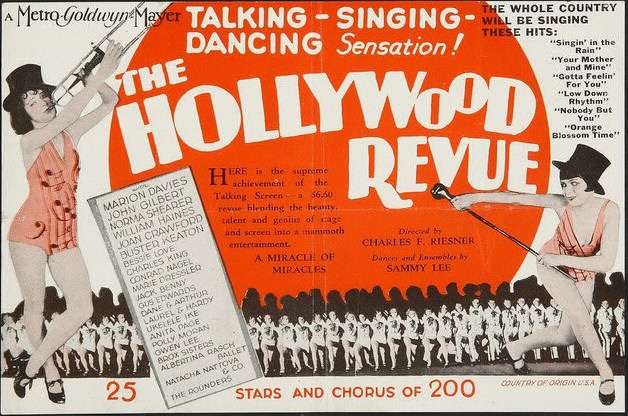
The New Yorker took notice of Crawford in its review of Across to Singapore, the critic O.C. noting that Crawford “gets prettier in every picture”…

Another film released later in 1928, Our Dancing Daughters, would make Crawford a star and a symbol of the liberated, 1920s flapper. Even the writer F. Scott Fitzgerald would observe that “Joan Crawford is doubtless the best example of the flapper, the girl you see in smart night clubs, gowned to the apex of sophistication, toying iced glasses with a remote, faintly bitter expression, dancing deliciously, laughing a great deal, with wide, hurt eyes. Young things with a talent for living.”

Another actress with a talent for living was 34-year-old Mae West, who was appearing on Broadway in Diamond Lil. Already a 21-year veteran of the stage (she began performing in vaudeville in 1907 at age 14), West was known for writing and performing in risqué plays beginning in 1926, when she appeared in Sex, which was panned by conservative critics but enjoyed hot ticket sales.

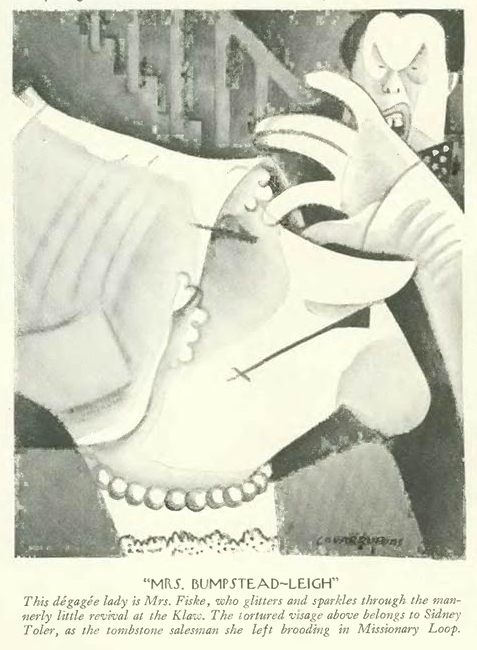
Subsequent plays aroused controversy and kept her name in the newspapers, but her play Diamond Lil would become the Broadway hit that would cement her image as a sex symbol, one she would maintain until her death at age 87 in 1980. In the May 5 issue artist Miguel Covarrubias offered his vision of the Queen of the Bowery:

THEATRE CARD for the Broadway production of Diamond Lil at the Royale Theatre. (maewest.blogspot.com)
STILL AT IT 50 YEARS LATER…The 86-year-old Mae West in her last film, 1978’s Sextette. In a 1979 review, New York Times film critic Vincent Canby called the film “a disorienting freak show in which Mae West, now 87 years old, does a frail imitation of the personality that wasn’t all that interesting 45 years ago. The movie, which opens today at the Victoria and other theaters, is a poetic, terrifying reminder of how a virtually disembodied ego can survive total physical decay and loss of common sense.” (filmcomment.com)

From Our Advertisers

It’s interesting to see how 1920s advertisers made even the most mundane gadgets appear to be vital to one’s survival. The ad for the “Sesamee” auto switch lock is a case in point, appealing to upscale female readers with this odd scenario in which the gadget enables the driver to avoid the awkward and potentially hazardous situation depicted below, although it hard to see what the actual threat might be from a dandy in a tie and waistcoat. Perhaps death from boredom.

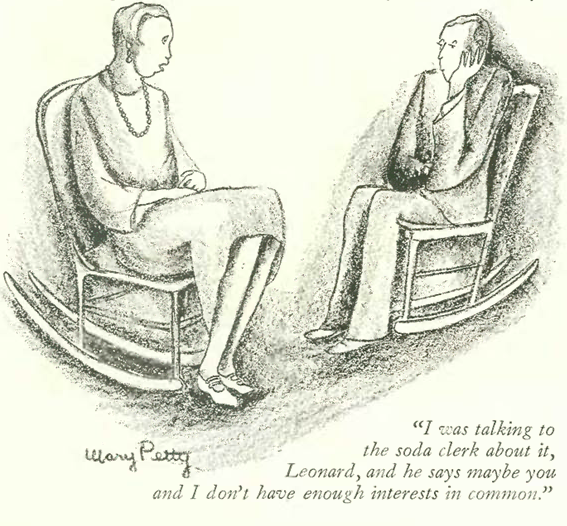
Our cartoon is courtesy of Mary Petty,  who would become a renowned illustrator for The New Yorker, best remembered for a series of covers featuring her gentle satirization of the upper class Peabody family.

Next Time: Dog’s Best Friend…


Good Vibrations

A decidedly new sound reverberated in the ears of New Yorkers who attended a Feb. 1928 performance of the New York Philharmonic that featured guest artist Leon Theremin, a Russian inventor who played music by moving his hands through the air, or more accurately, a magnetic field.

February 4, 1928 cover by Gardner Rea.

Theremin’s eponymous instrument had neither keys nor strings, but rather two metal antennas attached to an electronic oscillator. Music was produced by moving one’s hands between the antennas, which sensed the relative position of the players hands—one antenna controlled for pitch while the other adjusted the instrument’s volume. The sound produced is best described as “otherworldly.” James Thurber, writing for the “Talk of the Town” (in a piece titled “Music Makers”), found Theremin’s performance intriguing, but of even greater interest was the great Russian pianist and composer Sergei Rachmaninoff—who was in attendance—and his reaction to the strange instrument:

HMMMM…At left, Sergei Rachmaninoff in 1921, as photographed by Kubey Rembrandt. At right, Leon Theremin plays his eponymous instrument at a demonstration concert in Paris on December 8, 1927. (Wikimedia)

The New Yorker’s voyeuristic account of Rachmaninoff continued, with the great man now becoming more engaged in the performance…

The Theremin would grow in popularity, however more as a novelty than a serious instrument:

ON THE AIR…Alexandra Stepanoff playing the Theremin on NBC Radio in 1930. A Russian immigrant to the U.S., the former concert singer was Theremin’s first student in the United States. (Wikimedia)
VIRTUOSO…The Russian-born Clara (Reisenberg) Rockmore holds a unique place in music history as the virtuoso performer of the Theremin. Leon Theremin built a custom version of his instrument for Rockmore, which added greater range and sensitivity. Rockmore would sometimes perform concerts with her sister, accomplished pianist Nadia Reisenberg. Photo circa 1930. (PHOTO BY RENATO TOPPO, COURTESY OF THE NADIA REISENBERG – CLARA ROCKMORE FOUNDATION)

Theremin would be granted a U.S. patent for the instrument in 1928, which was marketed and distributed in the U.S. by RCA during the 1930’s in either DIY kit form or as a finished instrument:

(120years.net)

Interest in the instrument as a novelty continued into the 40’s and 50’s in the DIY market…

(120years.net)

Robert Moog, pioneer of modern electronic music and inventor of the Moog synthesizer, made and sold a transistorized version of the Theremin in the 1950s.

The Theremin would become best known to mass culture through its use in producing “eerie” sound effects in 1940s and 50s films, including Bernard Herrmann’s use of the instrument for the soundtrack to the 1951 sci-fi thriller, The Day The Earth Stood Still. And nearly everyone on the planet has heard the Theremin-inspired sound of the Beach Boy’s song Good Vibrations, created by an electro-Theremin that was developed in the late 1950s to mimic the sound of the original Theremin.

As for Leon Theremin himself, he would also gain notoriety as the inventor of The Thing, a listening device most famously used by the Soviets to bug the U.S. Embassy in Moscow. The device was hidden behind a wood carving of the U.S. Great Seal, which in 1945 was presented by Soviet schoolchildren to the U.S. ambassador, who subsequently hung it in his office.

GOTCHA…American Ambassador to the UN Henry Cabot Lodge displays The Thing before the UN Security Council in 1960. At right, the device which was hidden behind the seal. The Americans discovered the bug in 1952, but didn’t reveal its existence until 1960 in the wake of the U-2 spy plane incident. The Soviet Union had convened the meeting of the United Nations Security Council to accuse the Americans of spying with the U2; in response Cabot displayed The Thing as proof spying between the two countries was a mutual endeavor. (crytomuseum.com/Wikimedia)

The reasons why Theremin developed The Thing for the KGB are a mystery. When he suddenly disappeared from New York in 1938 it was rumored that he had been kidnapped and possibly executed by the KGB. What we do know is that Soviet spooks put him to work in a secret laboratory in the Gulag camp system, where he developed The Thing.

In 1991, filmmaker Steven Martin brought Leon Theremin back to New York to film a documentary about his life. Theremin gave one last performance in 1993, and died that year at age 97.

Wild Kingdom

The New Yorker’s review of the hit film Simba revealed a very different approach to the natural world 89 years ago, when the wilds of Africa were exploited purely for adventure and thrills rather than for any real understanding of natural systems and the animals and humans that inhabited them. Martin and Osa Johnson were celebrated for their filmed exploits in the wilds, including Simba; they touted their movie—shot in Kenya—as being made under the auspices of the American Museum of Natural History, although much of the film was staged or edited in ways to maximize the thrills.

The New Yorker found the film to be “darn good fun”…

Despite its flaws, the film does offer us a glimpse of Africa when wildlife hadn’t been hunted to near extinction, although the Johnsons didn’t hesitate to gun down animals left and right in the course of their movie-making.

According to a 2011 review from Wild Film History, “in stark contrast to the conservation-themed wildlife films of today, the Johnsons approached their subjects armed with both camera and rifle, with the production including provoked behavior, staged confrontations and animals shot to death on film. Relying heavily on cutting in kills from professional marksmen, numerous hunting scenes culminate in a heart-stopping sequence where, with the use of clever editing, the adventurous Mrs Johnson appears to bring down a charging rhinoceros with one well-aimed shot.

A FUN-LOVING NATURE…Osa Johnson saddles up a hapless zebra. (Daily Mail)

 *  *  *

From the Advertising Department

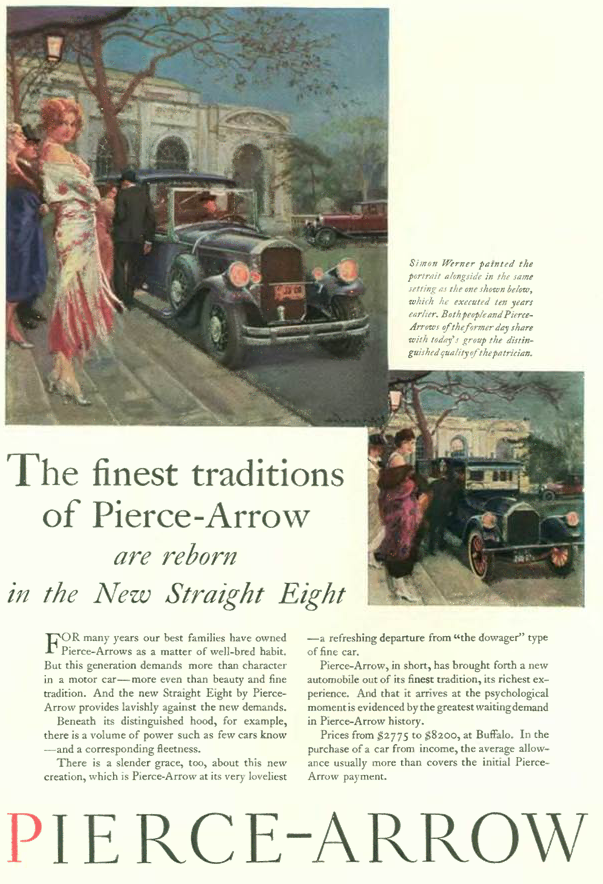
There were three automobile ads in the Feb. 4 issue, all from long-gone companies—Pierce-Arrow, Hudson-Essex, and Nash, which featured this endorsement by the brother-sister dancing duo Fred and Adele Astaire:

This ad for Dynamique showcased the art deco stylings of its furniture line…

And finally, a Peter Arno cartoon of an upper class faux pas

Next Time: Literary Rotarians…

The Thurber Effect

We’ve looked at a number of artists and writers who were instrumental in giving The New Yorker its unique look and voice, but few were more influential than James Thurber, who contributed some of The New Yorker’s most memorable writings (“The Secret Life of Walter Mitty”) as well as some of its most enduring cartoons and illustrations.

1ff86ce7dfa34152a1ab0aa892031914
September 17, 1927 cover by Julian de Miskey.

In fact, Thurber’s art is so ingrained in the New Yorker’s culture that the magazine goes to great lengths to preserve some of his office wall drawings, which move along with the magazine each time it relocates. On his website Ink Spill, New Yorker cartoonist Michael Maslin writes “When you move, it’s always reassuring unboxing something you love from the old place and setting it down in the new place.”

thurber-one-world-trade-center-ink-spill
ICONS…James Thurber’s wall drawings installed in The New Yorker offices at One World Trade Center (Michael Maslin, Ink Spill)

In 1991, when The New Yorker prepared to leave its longtime home at 25 West 43rd Street (where Thurber originally doodled on a plaster wall), conservators carved several drawings from the wall and mounted them in protective glass. The drawings were eventually installed at the magazine’s new offices across the street at 20 West 43rd St. They were moved again when The New Yorker relocated to 4 Times Square in 1999 and then once more in 2015 to their current location at One World Trade Center.

thurberwhite
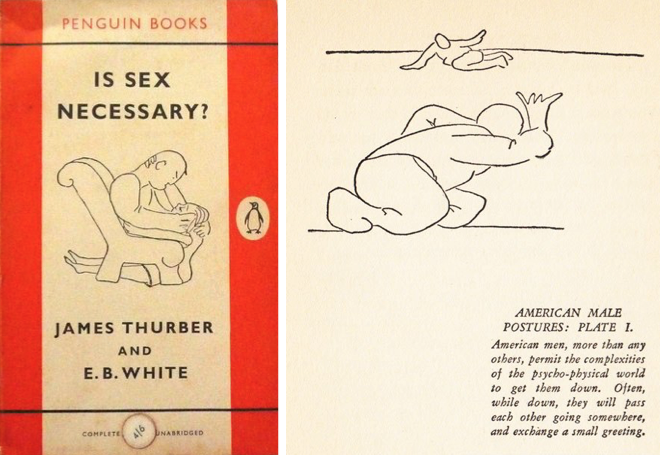
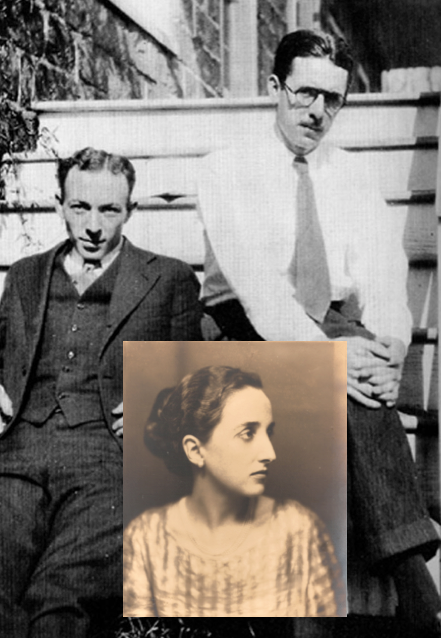
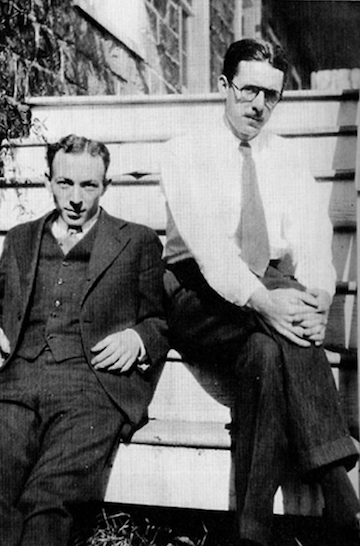
NEW YORKER GIANTS…E.B. White and James Thurber in 1929. The two would share an office and become good friends. In 1929 they would collaborate on a best-selling book spoof, Is Sex Necessary? Or, Why You Feel the Way You Do. (xroads.virginia.edu)

Thurber joined the New Yorker staff in 1927, sharing an office “the size of a hall bedroom” with E. B. White, who had joined the magazine about a year earlier. According to Jon Michaud (in a June 2, 2010 New Yorker article), Thurber arrived at The New Yorker from Columbus, Ohio, via Paris, France, and a brief stint at the New York Evening Post. “Six months after he was hired, Thurber was transferred to ‘The Talk of the Town,’ where he found his feet as a reporter and did for that department what White did for ‘Notes and Comment’—he gave it an identity and a tone, which can still be heard in the magazine today.” This included introducing the convention of using the first person plural in “Talk” items.

james-thurber-2
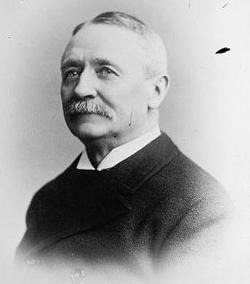
James Thurber in undated photo. (thefamouspeople.com)

His contribution to the Sept. 17, 1927 issue was not anonymous, however, as Thurber prominently signed his entire name–James Grover Thurber–at the end of a humorous essay, “Polo In The Home.” An excerpt:

james-grover-thurber

 *  *  *  *  *

People in Glass Houses

Writing in her “About the House” column, Muriel Draper examined new uses for glass in modern design and concluded that houses built of glass rather than stone belonged to a distant future.

screen-shot-2016-11-30-at-2-21-10-pm

screen-shot-2016-11-30-at-2-22-12-pm

Well, Muriel was almost right. Philip Johnson built his famous Glass House in New Canaan, Connecticut, in 1949. Muriel Draper died in 1952. I assume she visited the house or at least knew of it, since she and Johnson were in New York social orbits that often aligned, especially around the Harvard modernists.

glasshouse6atnight
PASS THE WINDEX…Architect Philip Johnson’s famed Glass House in New Canaan, Connecticut. (connecticutmag.com)

 *  *  *  *  *

So Much For Golf

The Sept 17 issue also featured a profile of golfer Glenna Collett. Writer Niven Busch Jr. began by describing how Collett’s physical appearance compared with other women golfers and athletes. Yes, it was 1927. Title IX was still 45 years away. Here are the first two paragraphs, and an illustration for the profile by Johan Bull:

screen-shot-2016-11-30-at-2-19-32-pm

screen-shot-2016-11-30-at-2-19-44-pm

alchetron
I CAN GOLF, TOO…Golfer Glenna Collett in the late 1920s. (golfweek.usatoday.com)

On the topic of physical appearance, it is interesting compare the above photograph of Collett with a rendering used in this 1925 Elgin watch ad (from another magazine). It looks nothing like Collett, not to mention the golf club she is holding would barely reach her knees let alone the ground.

period-paper
LOOK FAMILIAR?…The illustration for this advertisement is by James Montgomery Flagg, who in 1917 created the iconic “I Want You” Uncle Sam illustration for the U.S. Army. 

Finally, another look at the changing cityscape in this cartoon by H.O. Hofman:

screen-shot-2016-11-30-at-2-18-00-pm

Next Time: Flapper Fitness…

fd4accb02ed7d01ae3624ea180d47357