Fracking the Frick

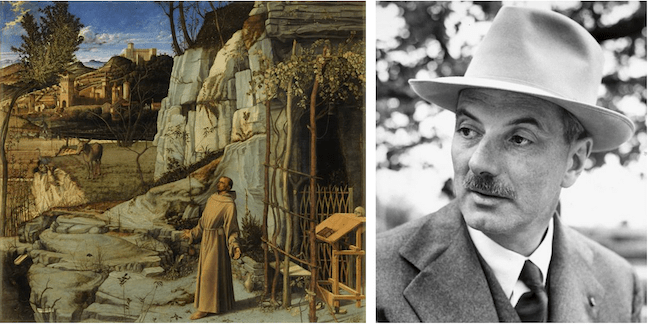
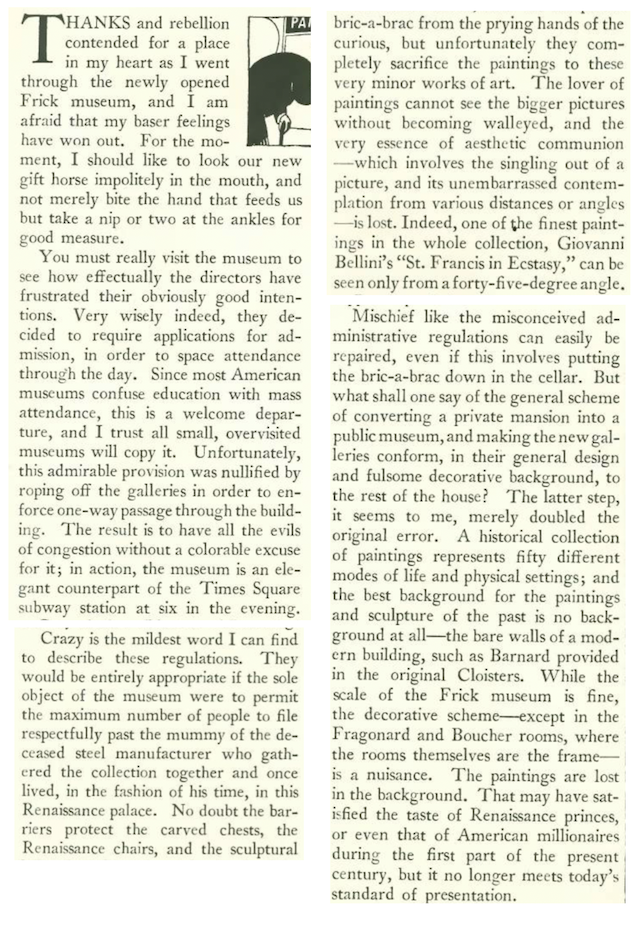
Above: Critic Lewis Mumford was not ecstatic about his visit to the newly opened Frick Collection, unhappy with the museum's crowd-control regulations that limited his view of Giovanni Bellini's masterpiece, St Francis in Ecstasy, among other things. (wikiart.org/communitydevelopmentarchive.org)

Considered one of the finest museums in the U.S., the Frick Collection on the Upper East Side of Manhattan was established in 1935 to preserve steel magnate Henry Clay Frick’s priceless 14th- to 19th-century European paintings as well as the Frick house and its furnishings. When it opened to the public on Dec. 16, 1935, museum staff distributed timed-entry tickets to prevent crowding, and therein lay the rub for New Yorker critic Lewis Mumford.

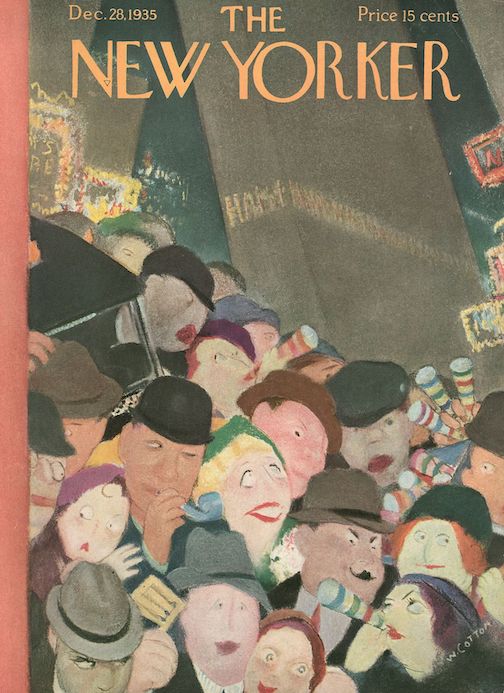
December 28, 1935 cover by William Cotton. Exclusively a cover artist for The New Yorker, Cotton (1880–1958) produced fifty-five covers for the magazine.

The timed tickets, along with ropes that forced visitors to follow a defined path, spoiled the museum’s debut for Mumford, who was one of its few detractors. In these excerpts Mumford addressed the crowd control measures, and criticized the furniture and other “bric-a-brac” that further served to obstruct his viewing pleasure:

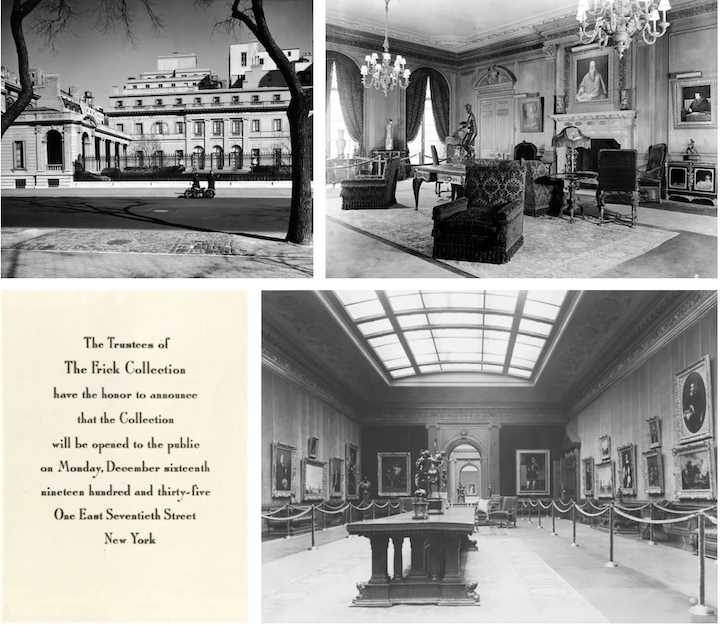
ROPES AND BRIC-A-BRAC presented obstacles to Mumford’s visit at the opening of the Frick Collection. Clockwise, from top left, view of the Frick mansion, circa 1935; installation view of the Living Hall, 1935; West Gallery, 1935; invitation to the opening of The Frick Collection, 1935. (businessinsider.com/Frick Art Reference Library Archives)

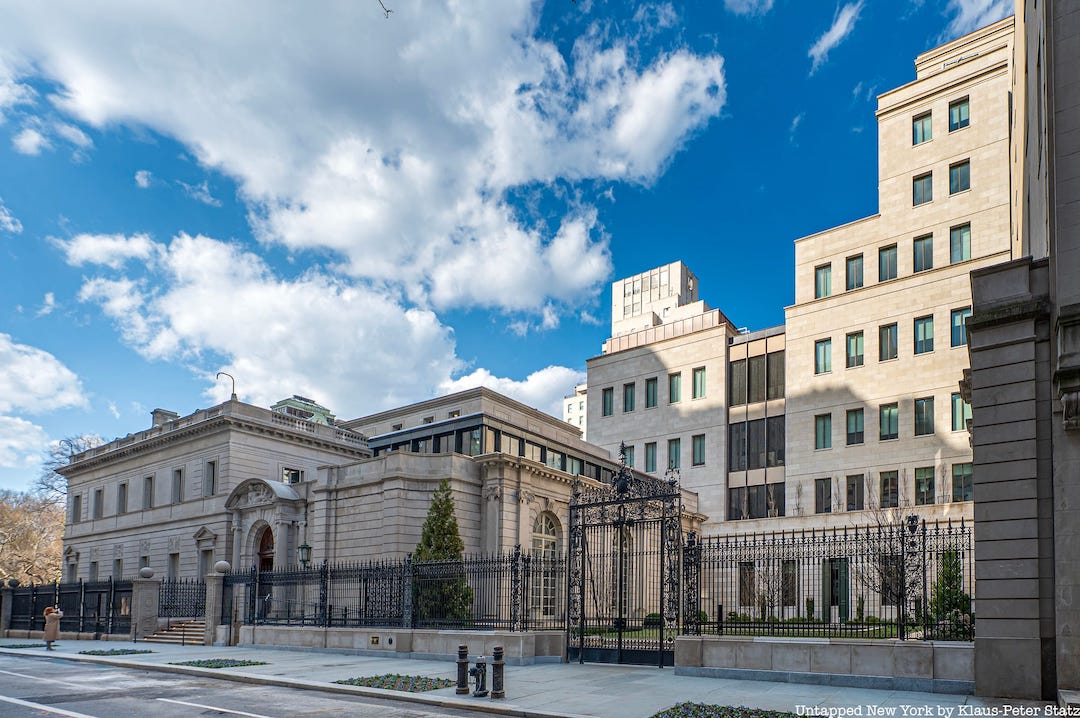
The Frick’s recent renovation and expansion has also had its detractors; after enduring a long and contentious proposal review process and five years of renovation and construction, the Frick reopened to the public in April 2025. It seems most attendees appreciate the changes.

OLD AND NEW…The Frick Collection’s home today, with expansion to the right. (untappedcities)

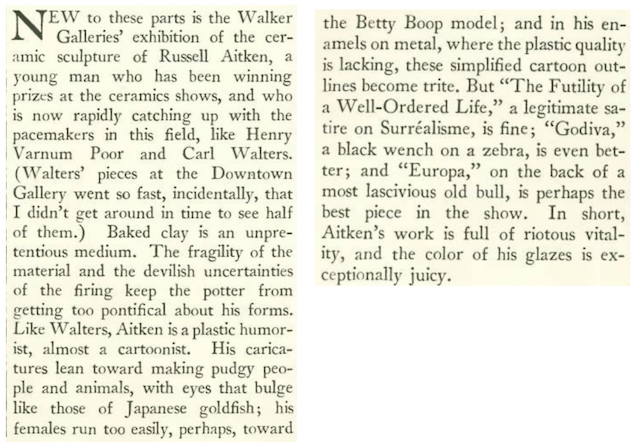
Mumford also took a look at the latest work by ceramic sculptor Russell Aitken (1910-2002), comparing his work to that of a cartoonist. Aitken was a rather odd duck in the art world, renowned both for his quirky sculptures as well as for his exploits as a big game hunter.

KILLER ARTWORK…Russell Aitken had eclectic tastes, to say the least, ranging from creating cutesy ceramics and cartoonish enamels to murdering Cape buffalo. Top left, Virgins of Mogambo, enamel on metal, 1935; bottom left, The Cactus Kid, ceramic, 1932. At right, midcentury whiskey ad featuring Aiken as a big game hunter. (Cleveland Museum of Art/findagrave.com)

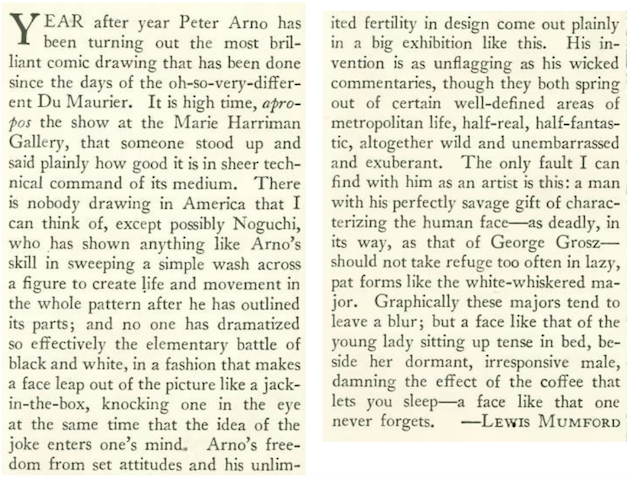
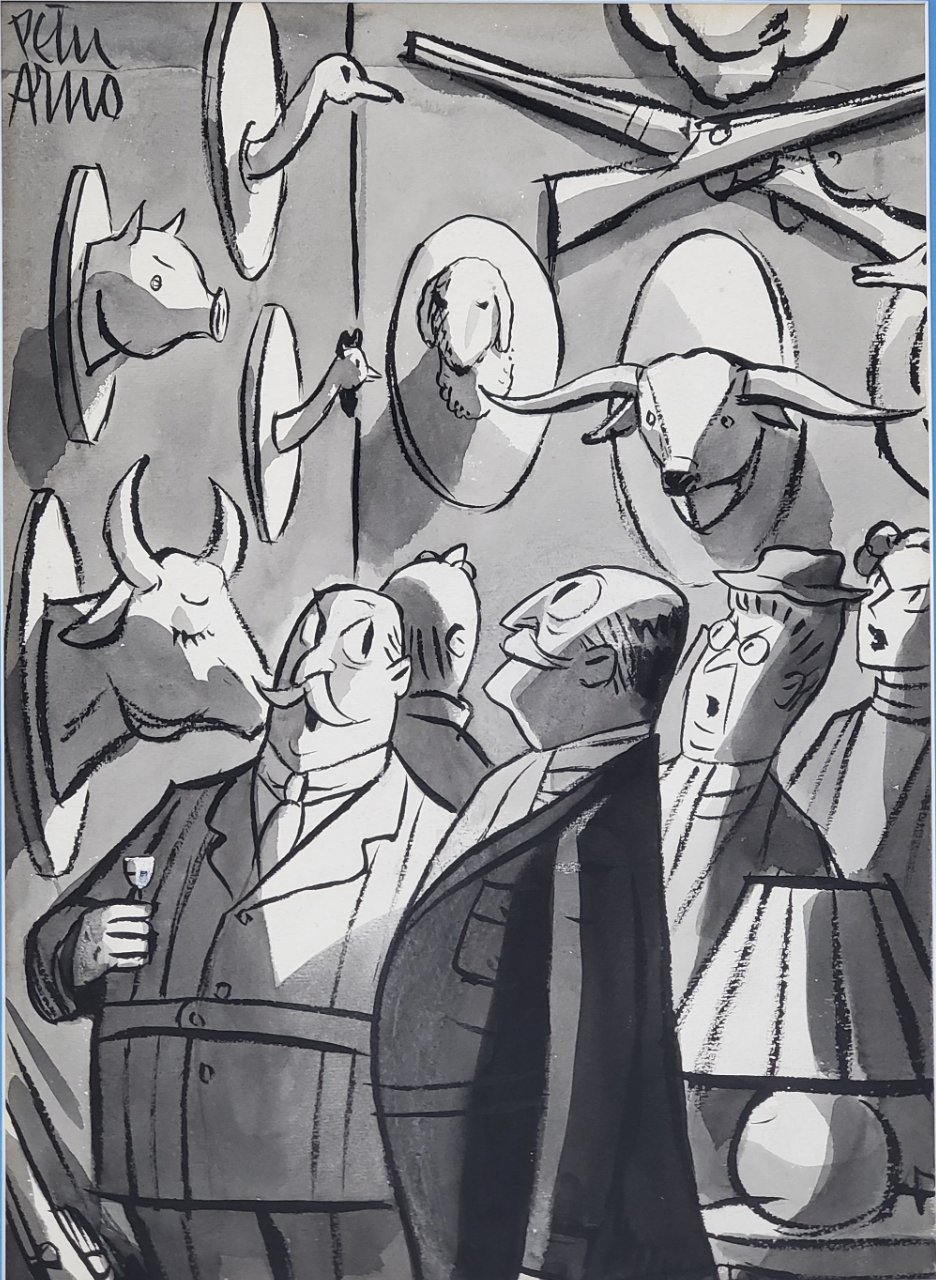
It’s always a little dicey to review the work of a colleague, but in the case of Peter Arno, Mumford had mostly praise, some of it quite high, that is except for Arno’s “white-whiskered major” which Mumford characterized as a “lazy, pat form.”

Thankfully Arno ignored Mumford’s criticism and continued to draw his “white-whiskered major.” Here he is in a delightful 1937 cartoon featured on one of my favorite New Yorker-related sites, Attempted Bloggery:

Caption reads: “I Only Kill For Food.”

 * * *

Shock of the New

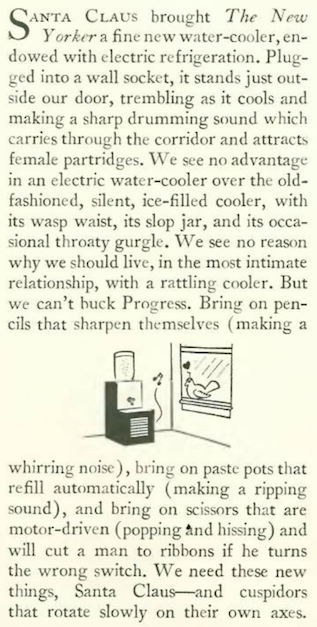
E.B. White, ever skeptical of newfangled inventions, saw no reason why The New Yorker’s old ice-filled water cooler needed to be replaced by a “rattling” electric one:

* * *

O Tannenbaum

Two decades before Rockefeller Plaza raised its giant Christmas tree (or before Rockefeller Center even existed), New Yorkers gathered around a “Tree of Light” at Madison Square. “The Talk of the Town” remembered:

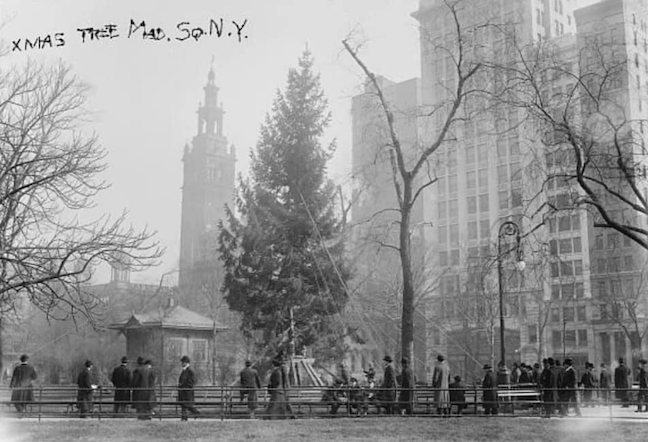
TREE OF LIGHT…America’s first outdoor Christmas tree lighting apparently occurred in Madison Square Park in 1912 (the “Talk” excerpt cited 1911). Bowery Boys History notes that “the organizers knew they were doing something unique, but probably did not realize the special significance of the event. Their 70-foot-tall imported tree from the Adirondacks, festooned with lights from the Edison Company, would be the first outdoor community Christmas tree in the United States.” (Library of Congress )

According to Bowery Boys History, in 1912 “this ‘Tree of Light’, mounted in cement, was such a novelty that almost 25,000 people showed up that night [Christmas Eve] to witness it and enjoy an evening-long slate of choral entertainment.” The following year, The New York Times reported that the Salvation Army took over the event, offering up “10,000 hot sausages and 10,000 cups of hot coffee” for the crowds.

The celebration was sparked by social activists seeking to draw attention to the needs of the city’s poor. On Christmas Day, 1912, the Times ran extensive coverage, and noted the charitable tone of the event in this excerpt:

 * * *

Honor Roll

Joseph P. Pollard and W.E. Farbstein covered a two-page spread, listing individuals of “Special Distinction” in honor of the New Year…here is a brief excerpt:

 * * *

Best (and Worst) of Broadway

Robert Benchley reviewed the hits and misses of the fall Broadway season, and admitted he had become something of a softhearted theatre critic after spending six months in Hollywood.

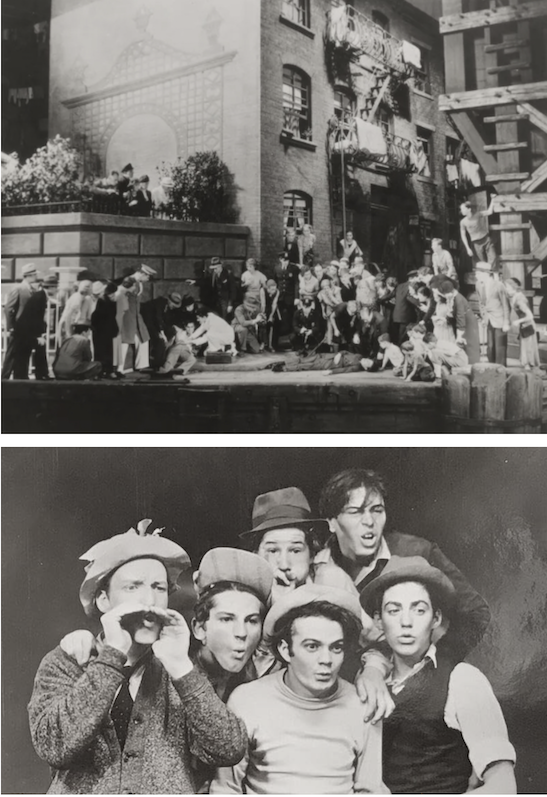
MEET THE GANG…Among the plays recommended by Robert Benchley was Dead End, which opened at the Belasco Theatre on Oct. 28,1935 and ran for 687 performances before closing on June 12, 1937. The play featured an impressive set design by Norman Bel Geddes (top) and introduced the Dead End Kids (aka the Bowery Boys), various teams of young actors who made 89 films and three serials for four different studios during their 21-year film career. The photo above shows the original six Dead End Kids—front row, from left, Huntz Hall, Gabriel Dell, Leo Gorcey and Billy Halop; back row, Bobby Jordan and Bernard Punsly. (deadendmusical.com)

 * * *

At the Movies

New Yorkers could nurse their holiday hangovers with a variety of films, ranging from the “very pleasant” The Perfect Gentleman to the “overdressed” Captain Blood, which featured a young Errol Flynn as a rather gentle pirate. As for the late year’s most anticipated film, A Tale of Two Cities, critic John Mosher found a few bright spots between his yawns, including praise for Blanche Yurka’s standout performance as Madame DeFarge.

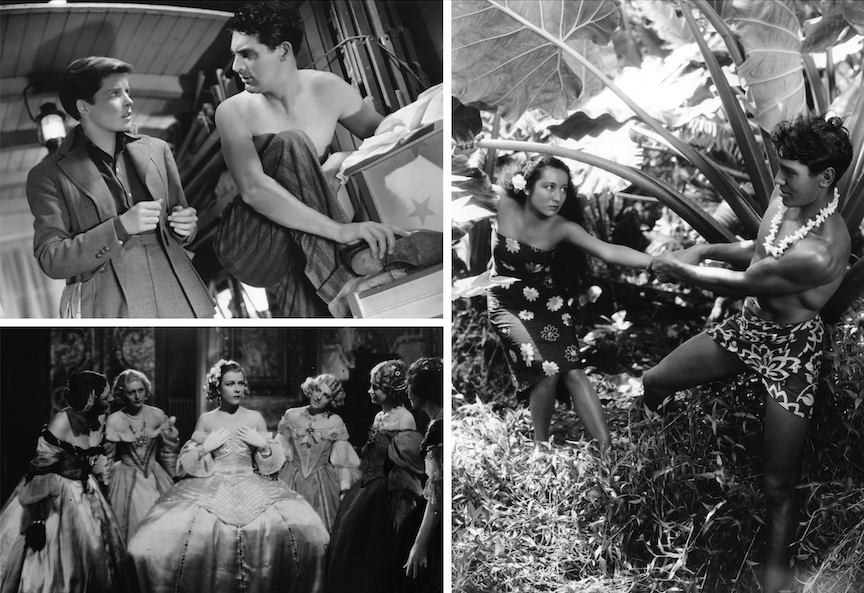
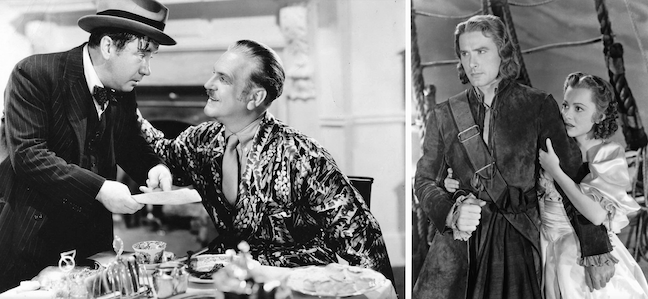
GENTLE MAN AND GENTLE PIRATE…At left, Forrester Harvey and Frank Morgan in The Perfect Gentleman; at right, Errol Flynn and Olivia de Havilland in Captain Blood. The film launched the 26-year-old Flynn and the 19-year-old de Havilland into Hollywood stardom, and marked the beginning of Flynn’s swashbuckler image. (MGM/IMDB)
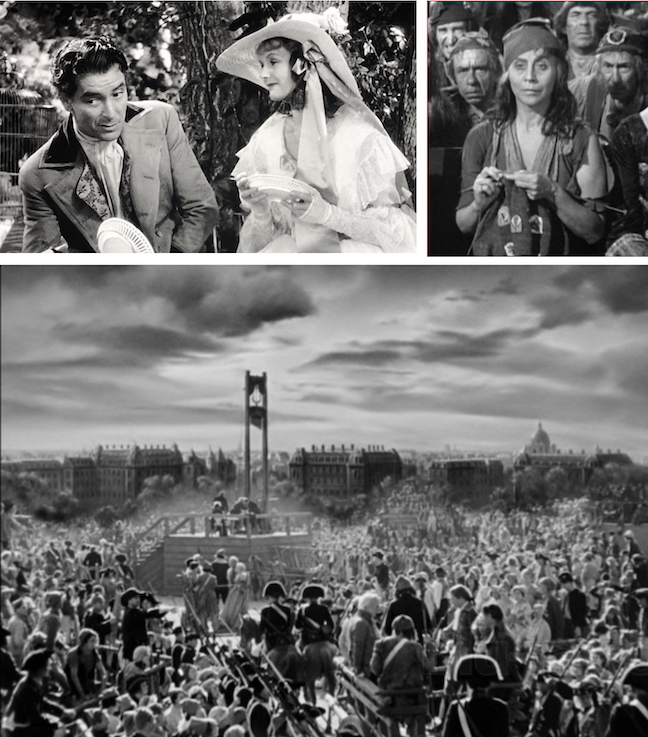
I’M LOSING MY HEAD OVER YOU…Clockwise, from top left, Sydney Carton (Ronald Colman) would lose his noggin to the guillotine in a scheme to save Lucie Manette (Elizabeth Allan) in A Tale of Two Cities; veteran theater actress Blanche Yurka, who learned to knit for her acclaimed role as Madame Defarge, is shown here in a front row seat before the guillotine—it was Yurka’s first film role; at the bottom, the execution scene at the Place de la Révolution. (bluray.com/michaelbalter.substack.com)

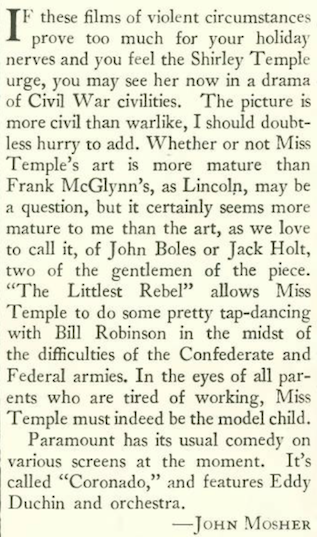
If piracy and revolution were “too much for your holiday nerves,” Mosher suggested the latest Shirley Temple film, The Littlest Rebel, featuring the superstar moppet dancing her way through the Civil War (and, unfortunately, performing a scene in blackface). Also on tap was the the musical comedy, Coronado.

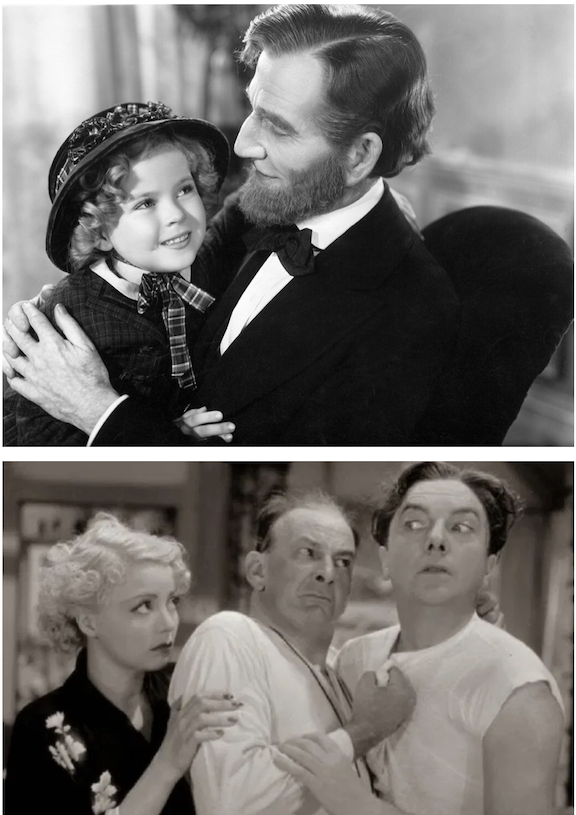
SEEKING A PRESIDENTIAL PARDON, little Virgie Cary (Shirley Temple) asks President Lincoln (Frank McGlynn Sr.) to bestow mercy on her Confederate father in The Littlest Rebel; below, Alice White, Leon Errol and Jack Haley in the musical comedy Coronado. Haley is best known today as the Tin Man in 1939’s The Wizard of Oz. (whitehousehistory.org/themovieb.org)

 * * *

From Our Advertisers

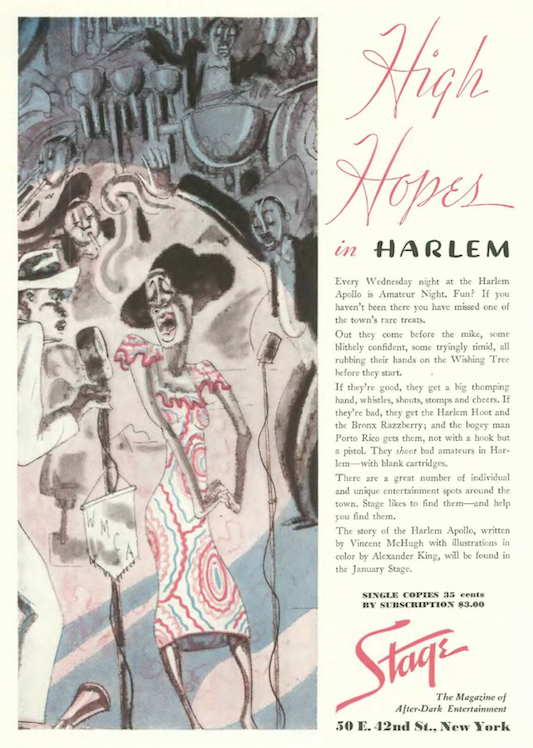
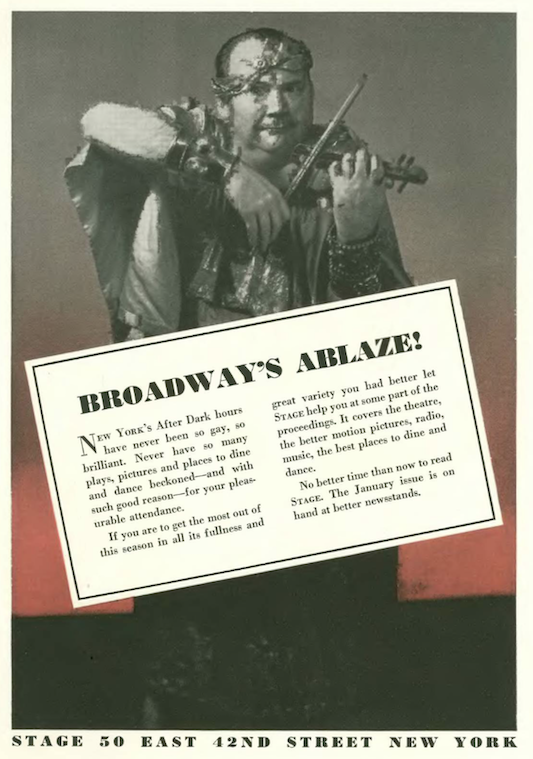
We look in on our advertisers, beginning with this from Stage magazine…the actor portraying Nero is likely from the play Achilles Had a Heel, which closed after just eight performances…

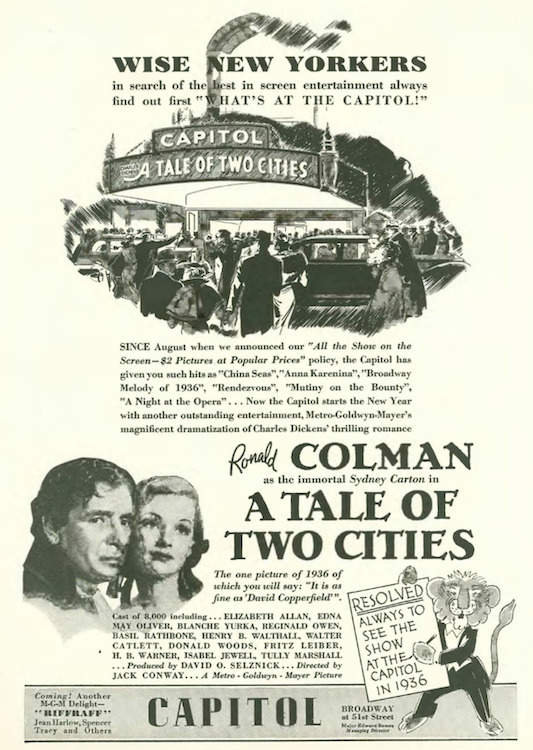
John Mosher wasn’t wowed by MGM’s A Tale of Two Cities, even if the Capitol Theatre promised a spectacle with “a cast of 8,000″…

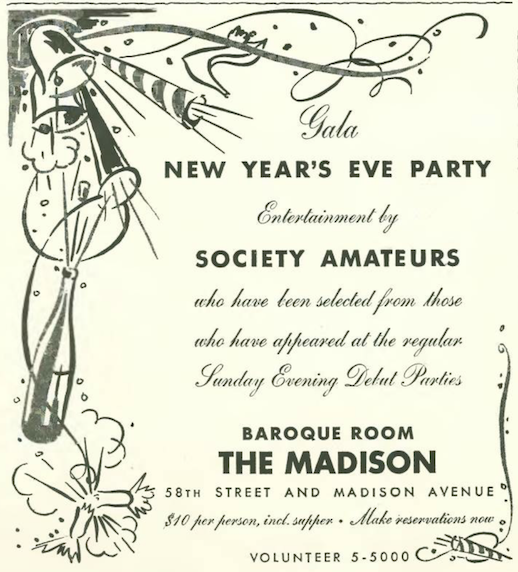
…this back of the book ad promised entertainment by “Society Amateurs” selected from the “Sunday Evening Debut Parties”…

…the brewers of Guinness promoted the health benefits of their product for the New Year…

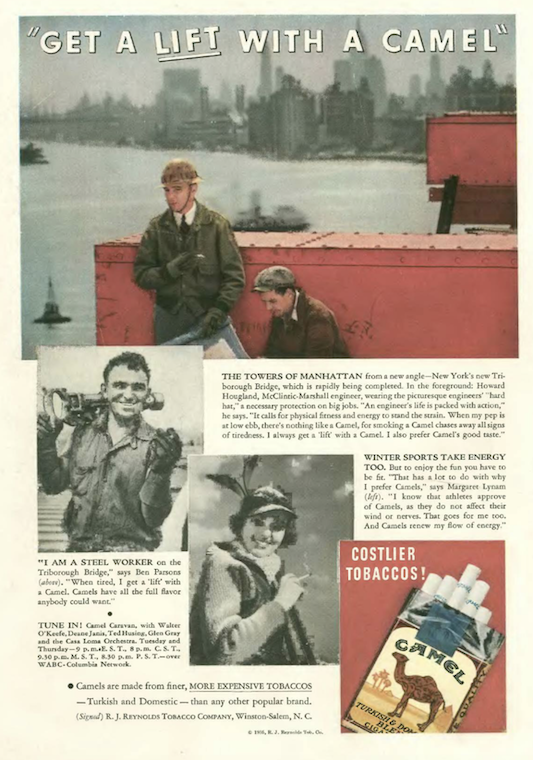
…and the makers of Camels continued to print testimonials touting the invigorating effects of their cigarettes…

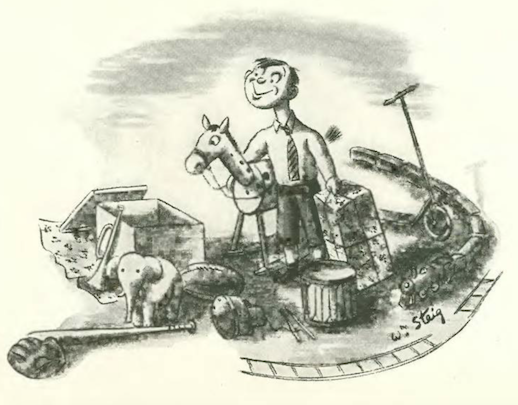
…on to our cartoonists, with William Steig taking stock of the Christmas haul…

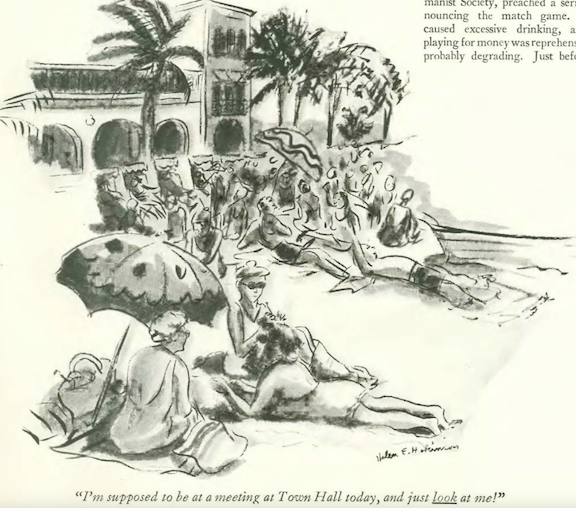
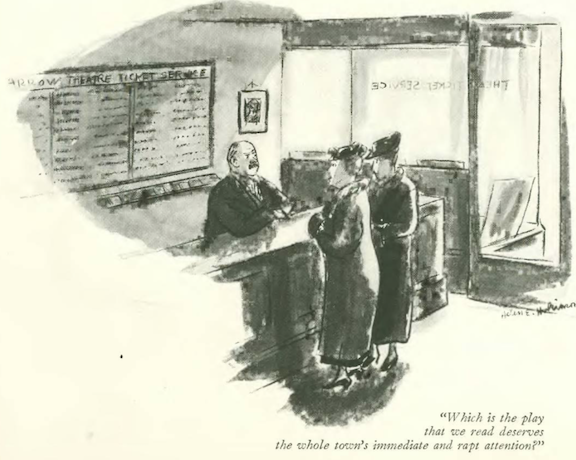
Helen Hokinson’s girls were looking for the hottest show in town…

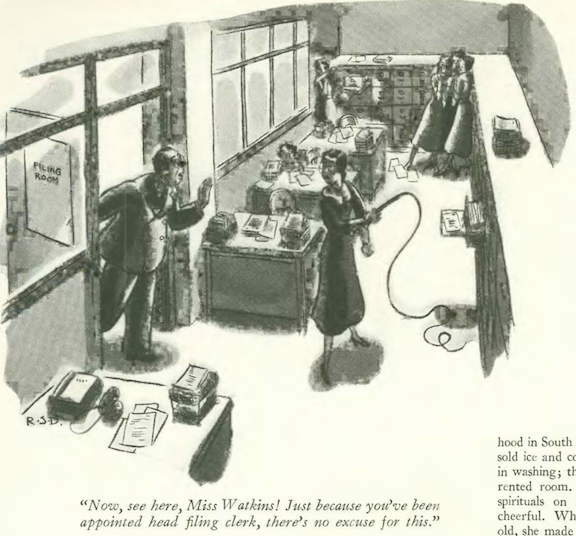
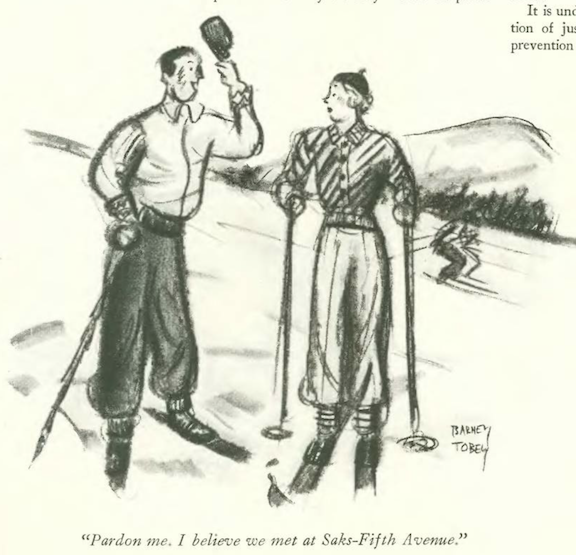
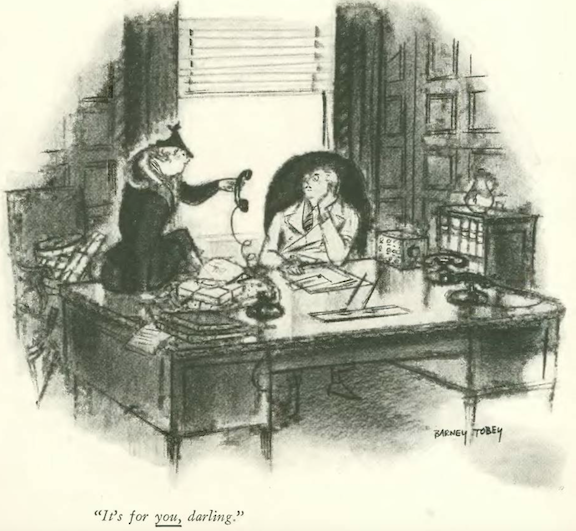
Barney Tobey was the latest cartoonist to take a shot at the boss-secretary trope…

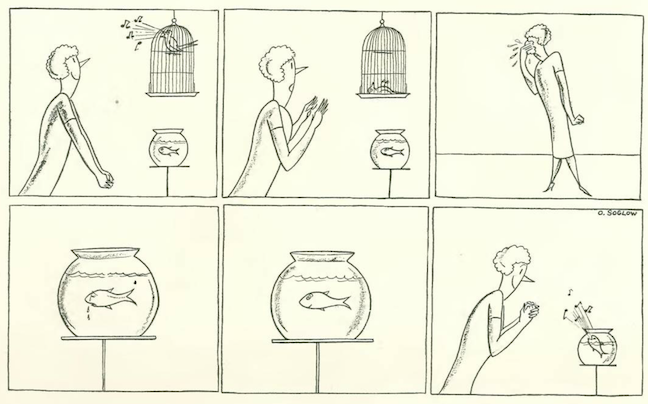
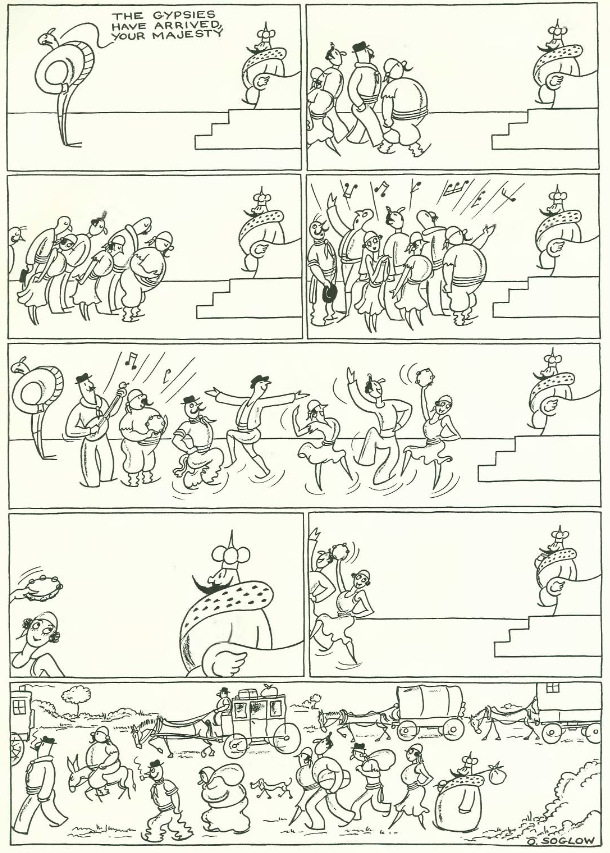
Otto Soglow gave us a singing fish…

George Price came across a landscaping challenge…

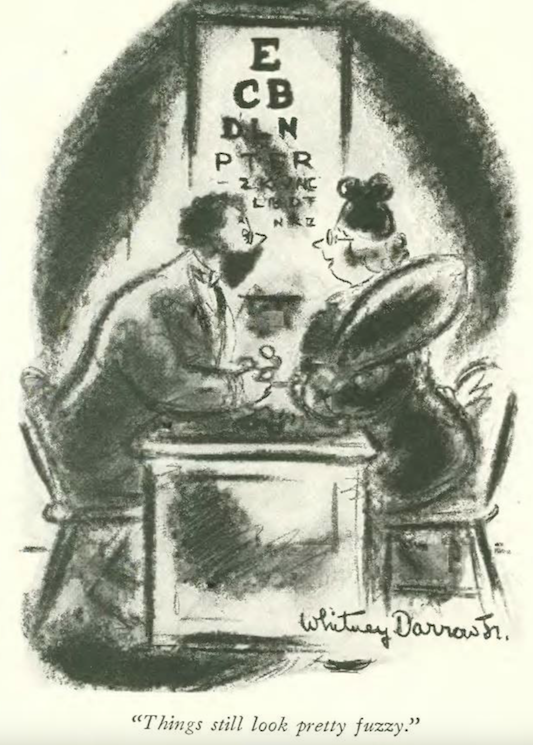
Whitney Darrow Jr focused on a visit to the optometrist…

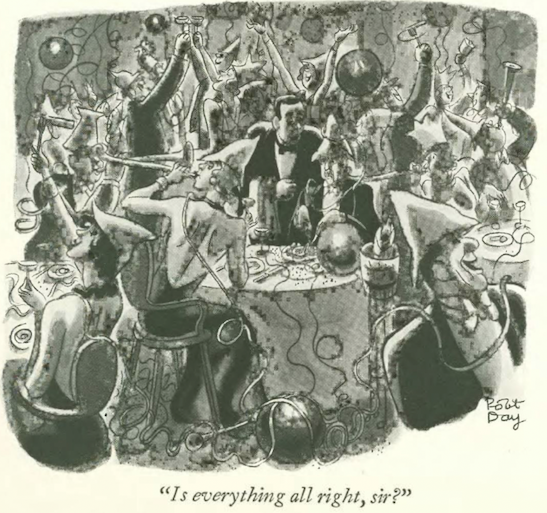
Robert Day gave us a party pooper too pooped to party…

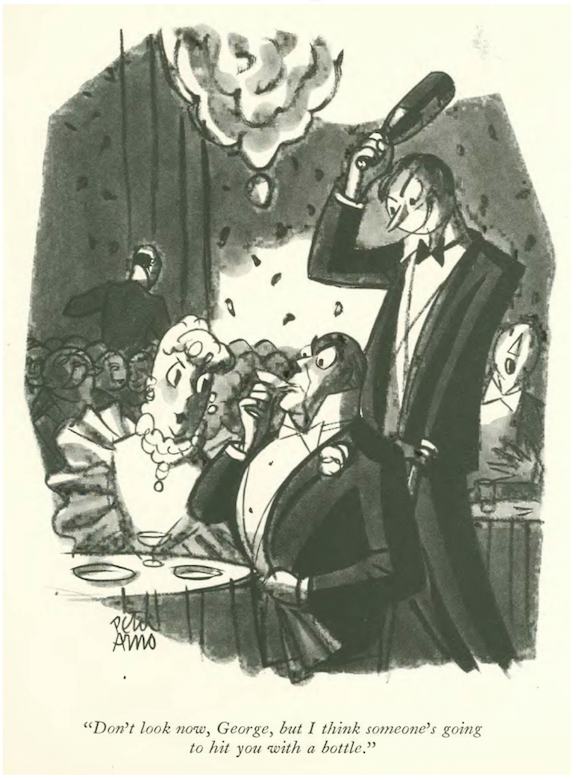
…and Peter Arno offered a glimpse into his active nightlife…

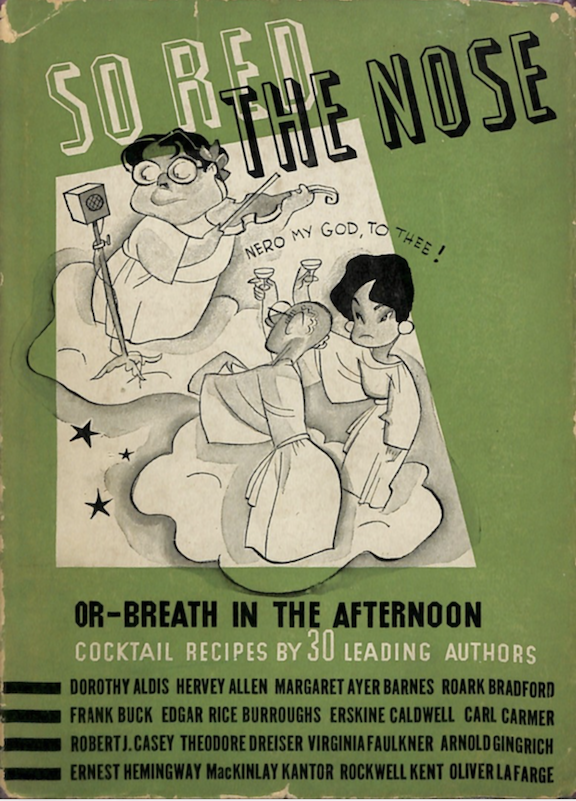
…before we go, I ran across this cocktail book, So Red the Nose, at Messy Nessy’s Cabinet of Curiosities

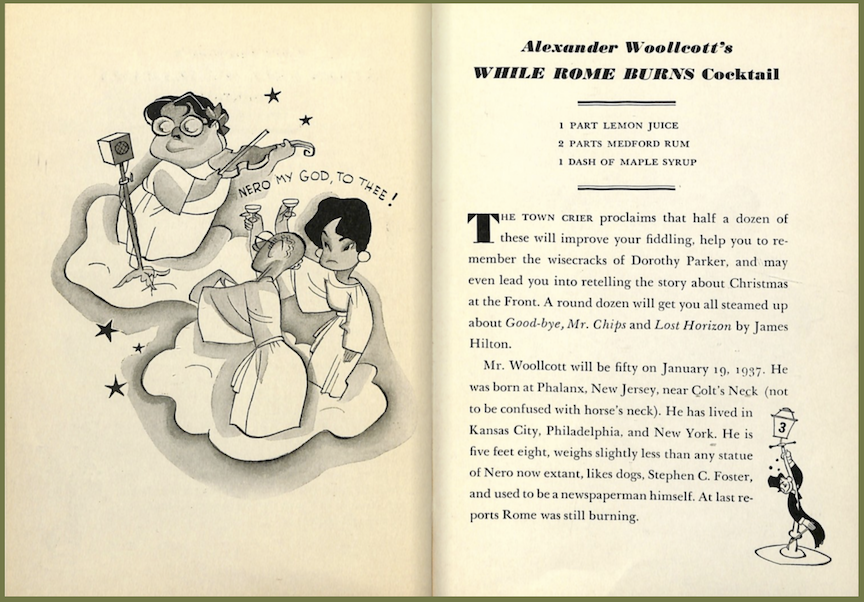
…this particular tome featured an Alexander Woollcott recipe for a cocktail called “While Rome Burns”…

…you can flip through the entire book at this site

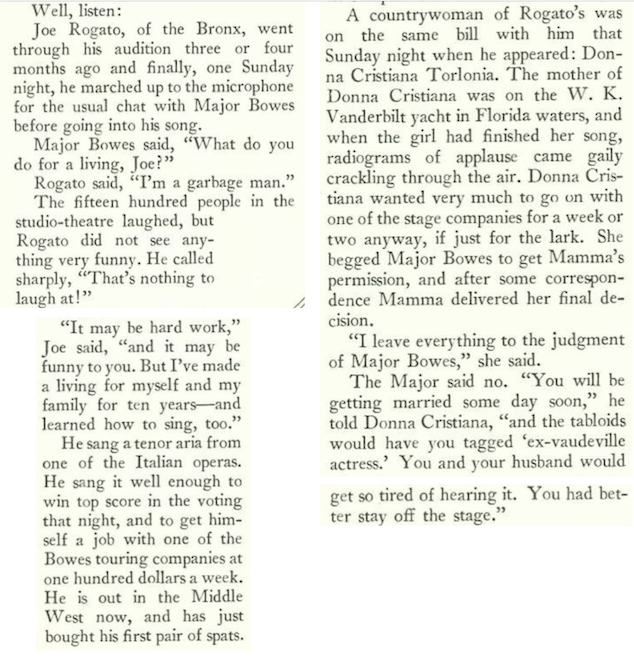
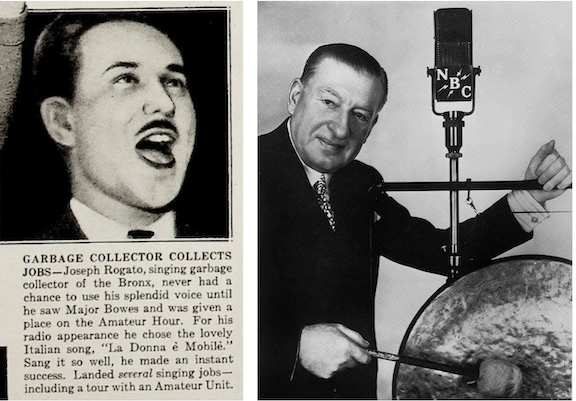
Next Time: The Major’s Amateur Hour …

Jimmy Comes Home

Above: Former New York Mayor Jimmy Walker and wife Betty Compton, aboard the S.S. Manhattan in 1935. (New York Daily News Archive)

The Roaring Twenties and Jimmy Walker seemed made for each other. A dandy with a taste for fine clothes, late-night parties, and Broadway showgirls, the 97th mayor of New York was a darling of the media…until the market crashed; as nest eggs evaporated along with jobs, folks quickly lost their taste for such frivolity.

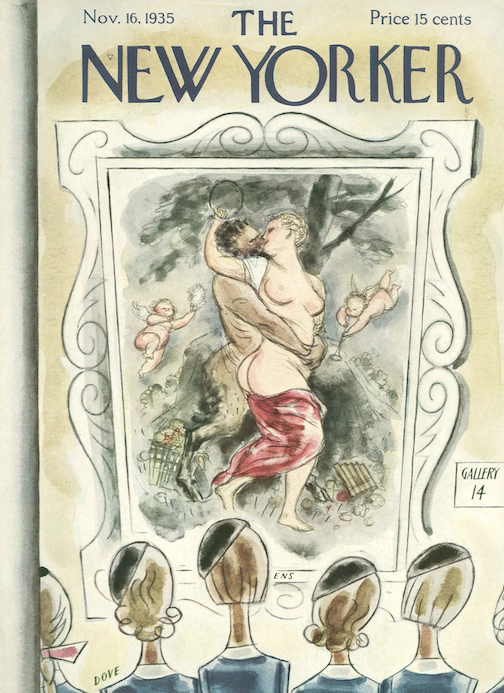
November 9, 1935 cover by Daniel “Alain” Brustlein. This was the first of nine covers Brustlein created for the magazine. An Alsatian-born American artist, cartoonist, illustrator, and author of children’s books, Brustlein (1904–1996) contributed to The New Yorker under the pen name “Alain” from the 1930s through the 1950s.
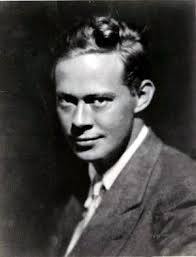
Daniel “Alain” Brustlein, in an undated photo. During the height of Abstract Expressionism Brustlein became a reputable painter, exhibiting his work in New York and Paris. (derfner.org)

 *

The fall of 1935 marked three years since Walker had left office, and for nearly two of those years the city had been governed by the reformist Mayor Fiorello La Guardia. New Yorkers, it seemed, were ready for a dose of Jimmy when he returned from his European exile, hailed by a throng of media and well-wishers.

Writing for Airmail, longtime New York journalist Sam Roberts observes that the city loved Walker, “a charming hellion, a witty, self-effacing, glib humanist, far more flawed, too, and compassionate than pictured previously, a man elevated and condemned by his own character, created and ultimately consumed by his times. He conjures up the anti-Trump—a dodgy philanderer who governed by making people feel good rather than angry.”

WHERE’S THE PARTY?…Former Mayor Jimmy Walker and his wife, Betty Compton, returned to New York in the fall of 1935 amid tremendous fanfare. The New Yorker’s Morris Markey noted that at least 160 media representatives were on hand for the couple’s arrival. (YouTube)

Walker (1881-1946) fled to Europe in November 1932 amid a bribery scandal that had prompted his resignation. Accompanied by Ziegfeld Follies singer Betty Compton (1906–1944)—whom he would marry in Cannes the following April—they would bounce around the continent until Walker determined that the danger of criminal prosecution had passed.

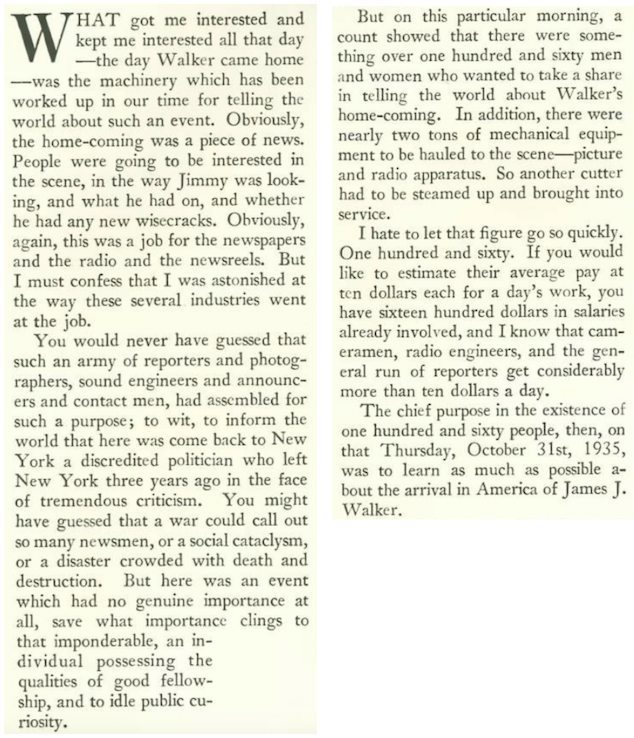
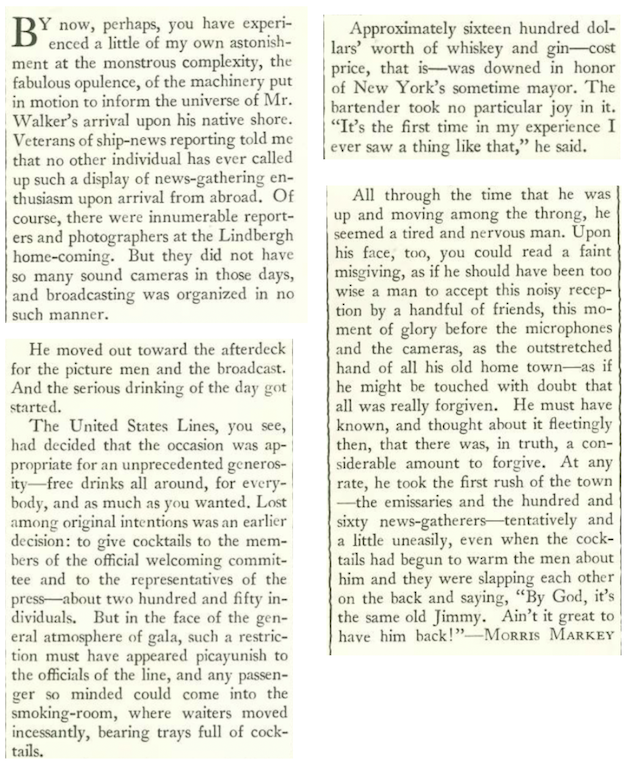
In his “A Reporter at Large” column, Morris Markey wrote about the media’s reception of the exiled mayor, “an army of reporters and photographers, sound engineers and announcers and contact men”…all assembled to inform the world of the return of a “discredited politician.”

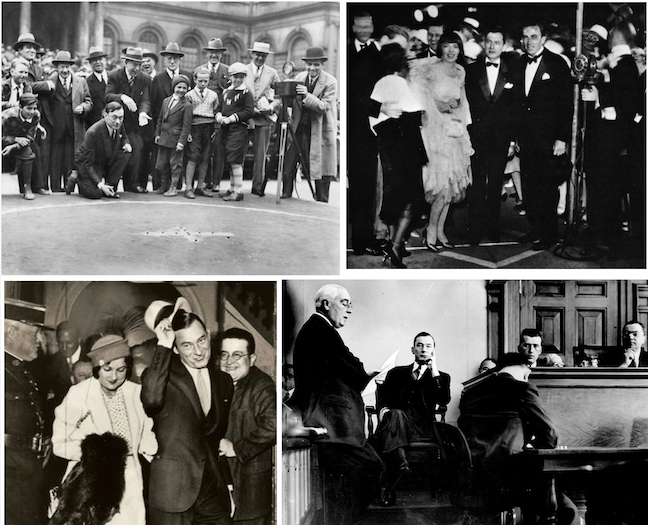
HE GOT AROUND…During his time in office from 1926 to 1932, Mayor Jimmy Walker never seemed to miss a moment in the spotlight. Clockwise, from top left, Walker presided over the first shot in the city’s annual marble tournament on June 3, 1928; with actress Colleen Moore at the 1928 premiere of her latest film, Lilac Time;  testifying on bribery charges before the investigative committee of Judge Samuel Seabury, 1932; with Betty Compton following their 1933 wedding in Cannes. (New York Times/konreioldnewyork.blogspot.com/villagepreservation.org)

Markey continued to convey his astonishment at “the monstrous complexity, the fabulous opulence, of the machinery put in motion to inform the universe of Mr. Walker’s arrival upon his native shore.” This included a massive cocktail party—hosted by The United States Lines—for more than two hundred press representatives and other officials.

After all the commotion, Walker would settle into a job as head of Majestic Records, adopt two children with Compton, and host his own radio series on WHN, Jimmy Walker’s Opportunity Hour.

Compton would divorce Walker in 1941 and remarry. Becoming ill after the birth of a son, she would die at age 38 in 1944. Walker would die two years later at age 65 of a brain hemorrhage.

CALLING ON THE ROOSEVELTS…Jimmy Walker and Betty Compton at the White House in 1937. It was pressure from FDR that led to Walker’s resignation in 1932. (Wikipedia)

 * * *

High-flying Hooplah

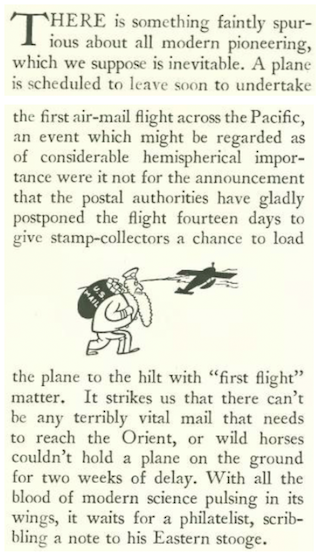
While New Yorkers were going gaga over Walker, folks in the Bay Area were all atwitter over the first air-mail flight across the Pacific, loading a Pan Am Clipper to the gills with all manner of collectables. E.B. White noted:

BELLYFUL…On Nov. 22, 1935, Pan American Airways made aviation history as the China Clipper lifted off from Alameda, beginning the world’s first trans-Pacific airmail service. Captained by Edwin Musick and crewed by famed navigator Fred Noonan, the Martin M-130 opened a new era of long-distance flight across the Pacific. Noonan, who charted many commercial routes across the Pacific, would go missing along with Amelia Earhart during their ill-fated flight in July 1937. (Library of Congress)

* * *

Wise Men From the East

“The Talk of the Town” visited with Soviet satirists Ilya Ilf (1897–1937) and Evgeny Petrov (1903–1942), who were in New York preparing for a ten-week road trip to California and back. On assignment as special correspondents for the newspaper Pravda, they later published a series of illustrated articles, “American Photographs,” as well as a book titled Single-Storied America (the summer 2004 issue of Cabinet Magazine features an account of their journey as well as a number of their photographs).

AMERICA WAS A GAS…Soviet satirists Ilya Ilf (left) and Yevgeni Petrov check out New York before heading into the American heartland on a ten-week road trip, a highlight being the countless full-service gas stations they encountered along the way. After seeing skyscrapers and mountains and other wonders, the pair agreed that the most enduring image was the one at right: “an intersection of two roads and a gasoline station against a (back)ground of wires and advertising signs.” Sadly, Ilf died two years later from tuberculosis; Petrov died in a plane crash in 1942 while working as a war correspondent. (Aleksandra Ilf archive/Cabinet Magazine)

 * * *

A Jumbo Career

Wallace Beery (1885–1949) got his start in the comedy silents of the 1910s and became a star before the sound era made him an even bigger one; by 1932 he was the world’s highest-paid actor. Alva Johnston’s profile (titled “Jumbo”) took a look at Beery’s life and career (illustration by Al Frueh). Excerpts:

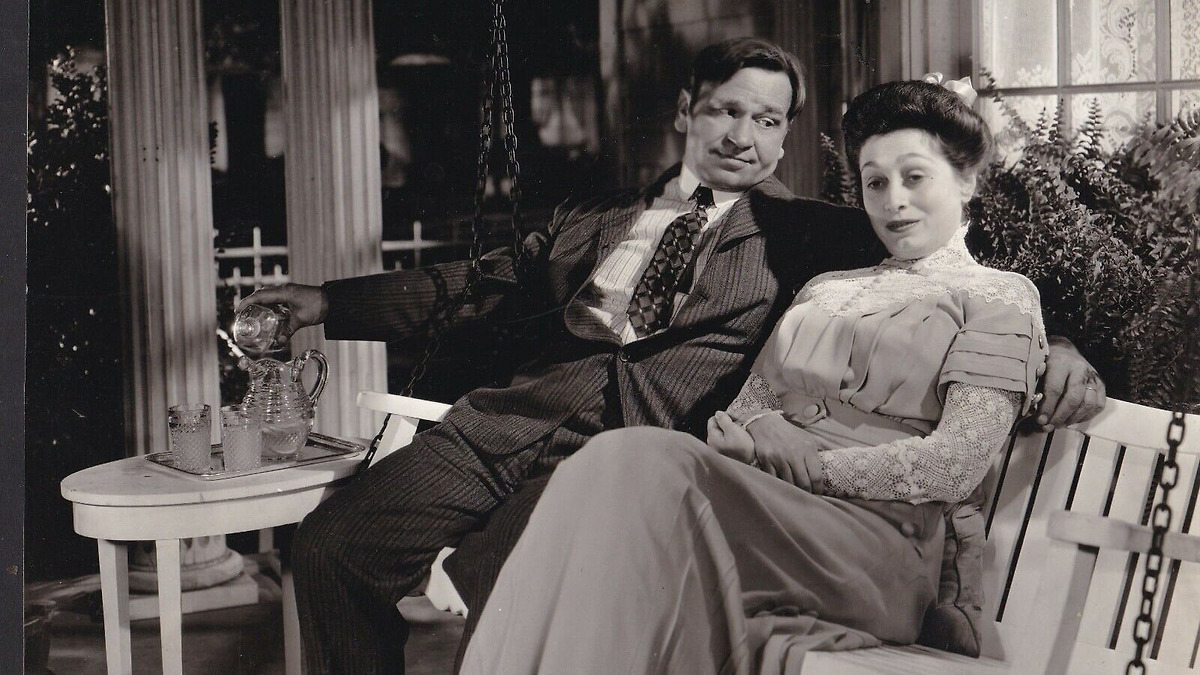
COURTING AND SPARKING…Sid Miller (Wallace Beery) spikes the lemonade as he woos Lily Davis (Aline MacMahon) in a scene from the 1935 film, Ah Wilderness! (letterboxd.com)

 * * *

A View and Corbu

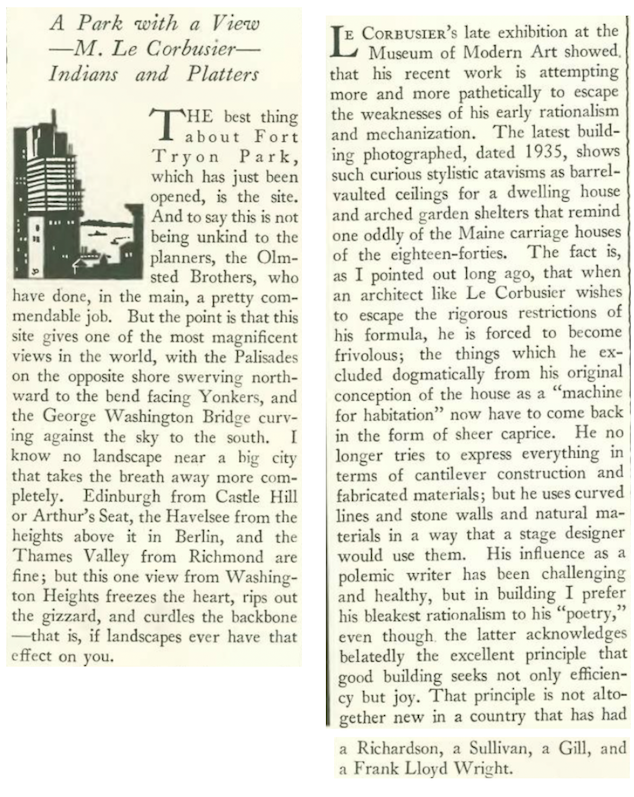
Art and design critic Lewis Mumford was well-known for his hypercritical eye, but occasionally he could be moved to rhapsodize, in this case about the opening of Fort Tryon Park, and particularly about the view it afforded visitors. He reserved his criticism for one of the latest works by Le Corbusier (aka Charles-Édouard Jeanneret), on exhibit at MoMA.

MAGNIFICENT is the word Lewis Mumford used to describe the view from Fort Tryon Park. This scene is taken from Linden Terrace to the west: a barge on the Hudson River and the Hudson Palisades beyond, with the Englewood Cliffs campus of Saint Peter’s University on the top. (Wikipedia)
IRRATIONAL?…Mumford was not pleased with Le Corbusier’s latest work, Le Petite Maison de Weekend (Villa Henfel), which was featured on the cover of the MoMA exhibition catalogue (upper left). Mumford saw the design as a pathetic escape from the architect’s renown rationalism. (MoMA/Fondation Le Corbusier)

* * *

At the Movies

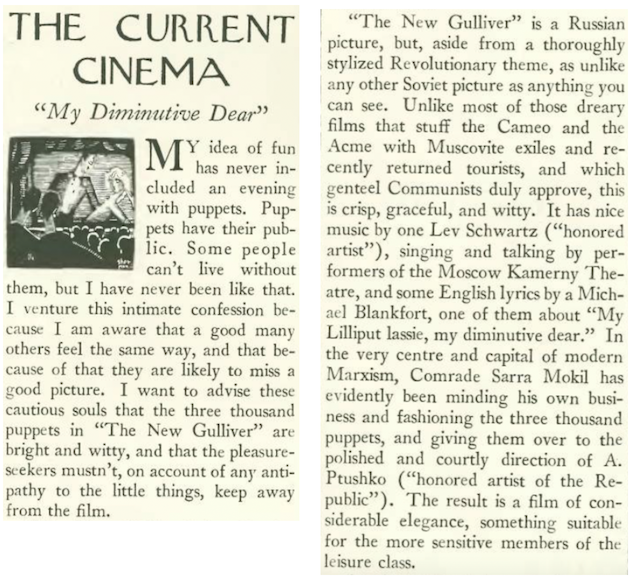
It was a mixed bag at the movies for critic John Mosher, who was delighted by a Soviet take on Gulliver’s Travels, rendered with puppets engaged in a proletarian struggle…

KOMRADE GULLIVER…The Soviet stop motion-animated fantasy film, The New Gulliver, was a communist re-telling of Jonathan Swift’s 1726 novel. The film depicted Lilliput suffering under capitalist inequality and exploitation, with Gulliver enabling a proletarian revolution against the Lilliputian monarchy. (revolutionsnewstand.com)

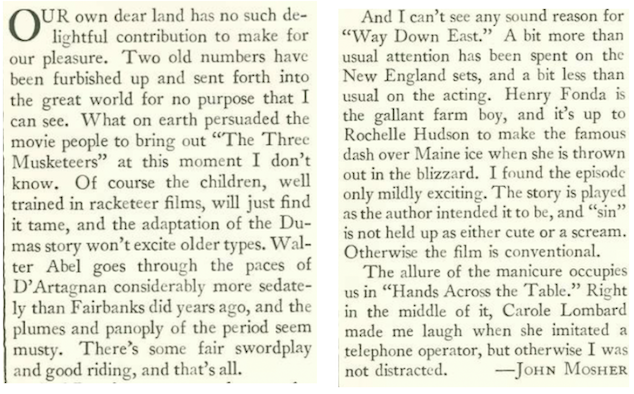
…but Mosher was less than delighted with the latest from Hollywood, including a sedate The Three Musketeers, a “conventional” remake of D.W. Grifffith’s 1920 melodrama Way Down East, and the romcom Hands Across the Table, which the Times called “uproariously funny” but Mosher deemed barely worth a chuckle.

OUTCLASSED BY PUPPETS…John Mosher found the latest from Hollywood underwhelming. Clockwise, from top, Onslow Stevens, Moroni Olsen, and Paul Lukas in The Three Musketeers; Rochelle Hudson and Henry Fonda in Way Down East; Fred MacMurray and Carole Lombard in Hands Across the Table. (mabumbe.com/zeusdvds.com/Wikipedia)

 * * *

From Our Advertisers

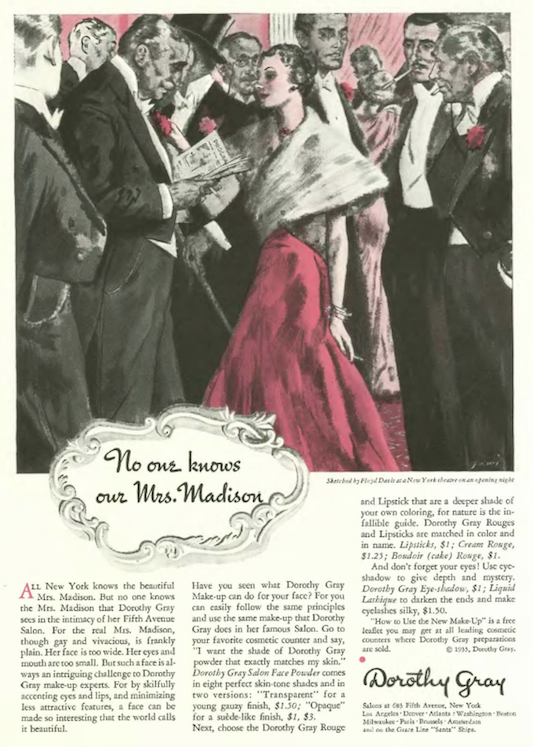
The Dorothy Gray salons didn’t mince words when it came to a woman’s beauty regimen…without their help, claimed this ad, the poor “Mrs. Madison” would be “frankly plain,” with a face too wide and eyes and mouth too small…

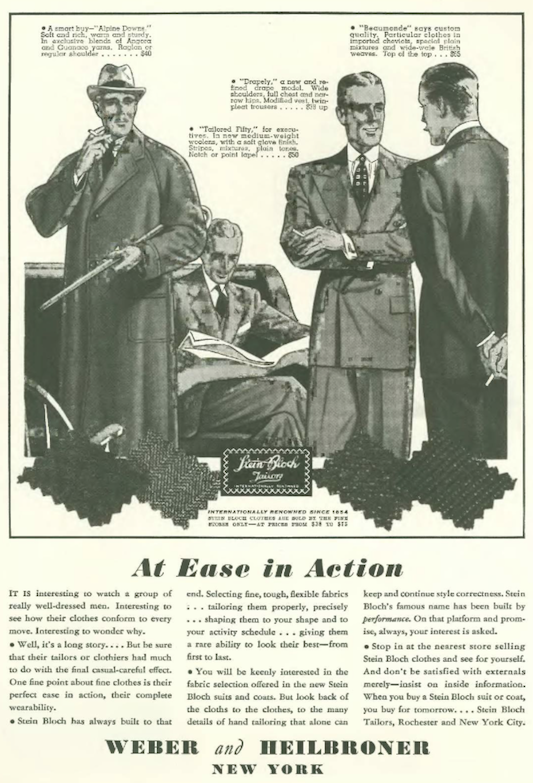
…notable in ads for men’s and women’s clothes were the presence of cigarettes…all three of the men in this spot are having a smoke in their smart attire…

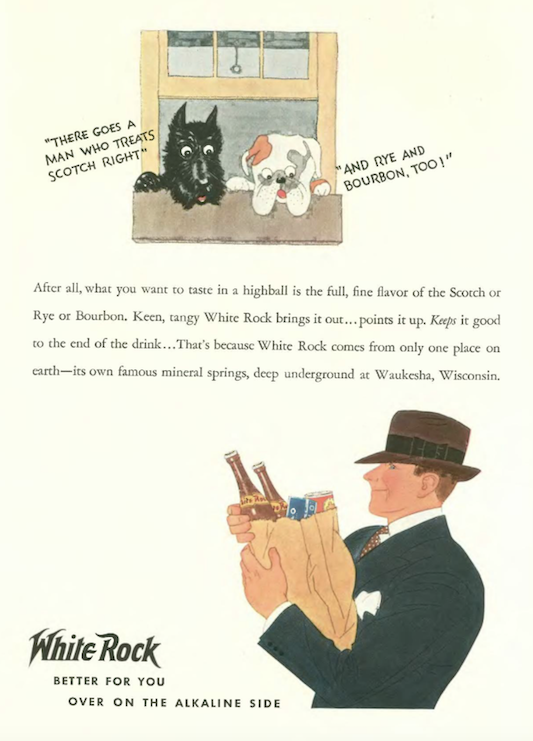
…White Rock gave their logo-bearer Psyche a rest in 1935 with a variety of ads including this one…

…the makers of Bisquit assumed their customers could read the French dialogue, or at least pretend to…

…when we (of a certain age) think of Marlboro we think of the rugged Marlboro Man, but in 1935 the brand was exclusively marketed to women…

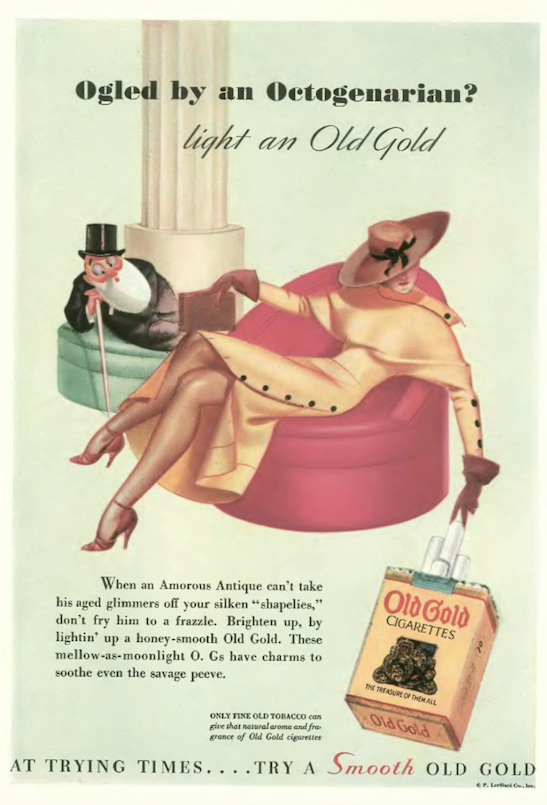
…and who knows what Old Gold’s target was here…definitely women smokers, who were the growth market, but men would take notice of the George Petty pin-up…

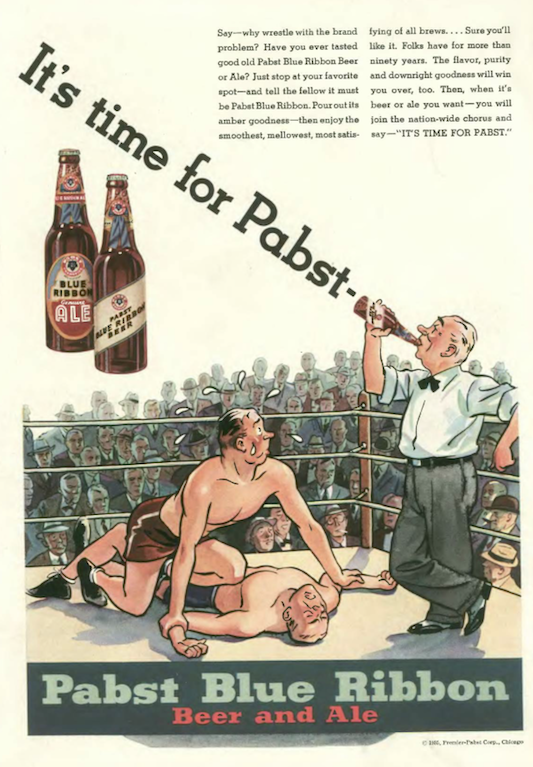
…the makers of Pabst Blue Ribbon Beer, who endured Prohibition by offering products like Pabst-ett cheese spread, were ready to grab a big market share after Repeal…

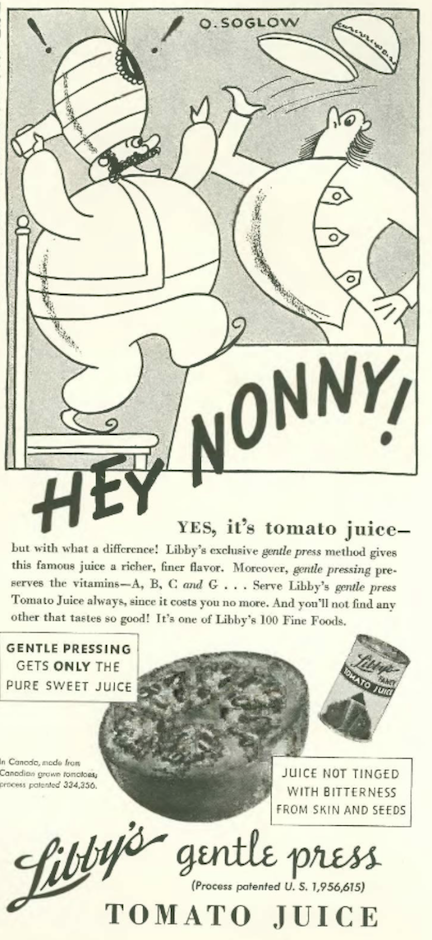
Otto Soglow, still contributing to The New Yorker despite taking his Little King to Hearst, drew up this potentate for a tomato juice spot…

…which segues to our other cartoonists, beginning with Al Frueh and his take on the latest  Broadway hit, Jubilee!

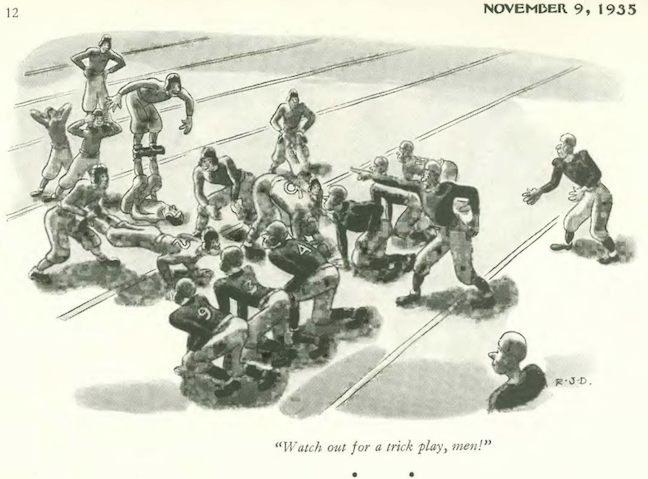
Robert Day saw action on the gridiron…

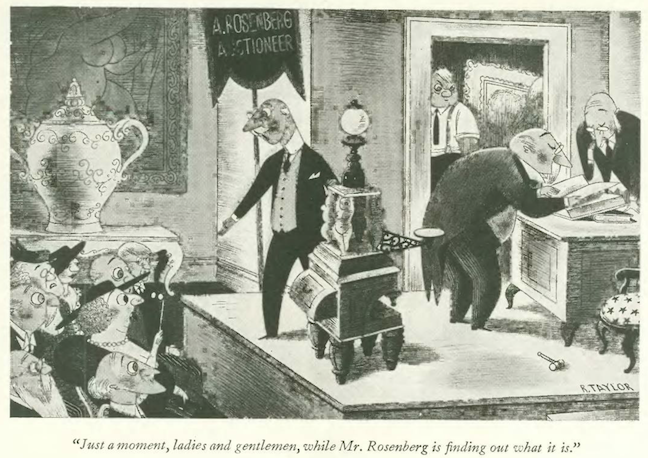
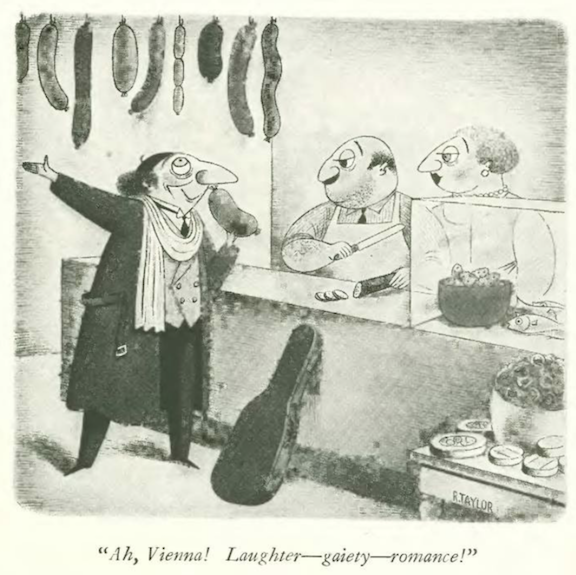
…unless I missed something, this might be Richard Taylor’s first New Yorker cartoon…

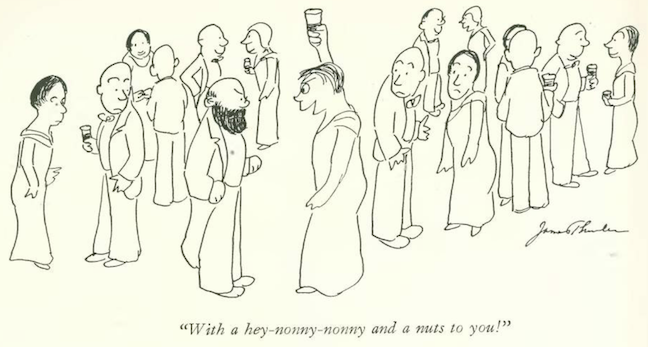
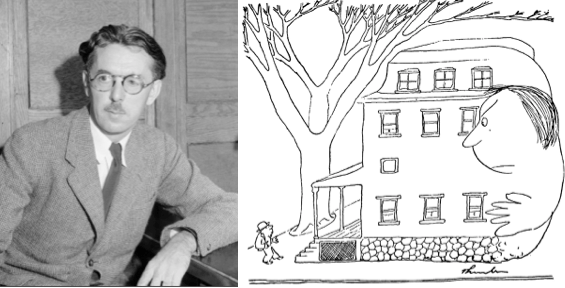
James Thurber put a unique spin on a bowling ball…

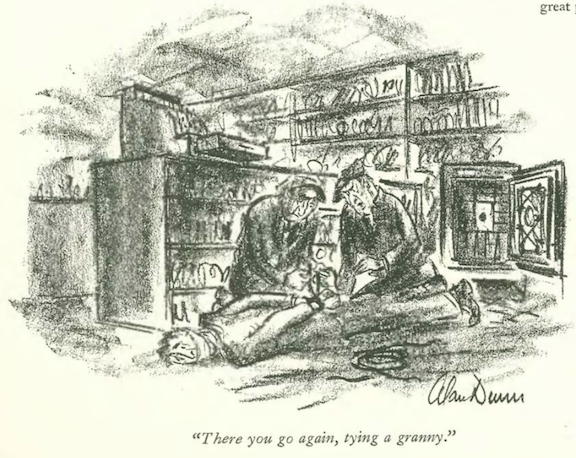
Alan Dunn was all in knots at a crime scene…

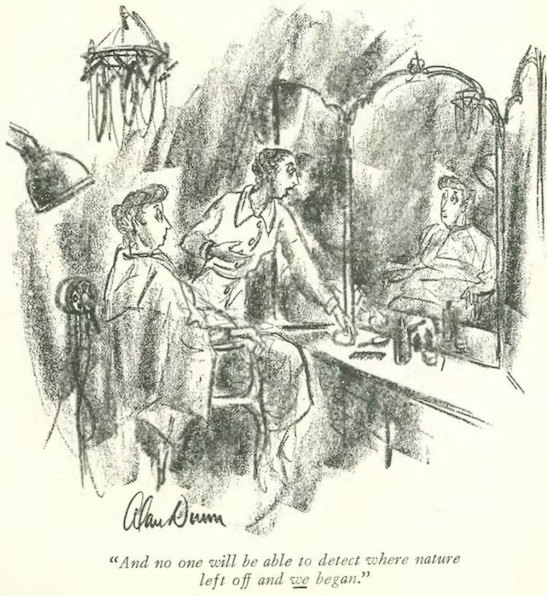
…Dunn again, pondering the wonders of a makeover…

Barney Tobey eavesdropped on a Downtown subway…

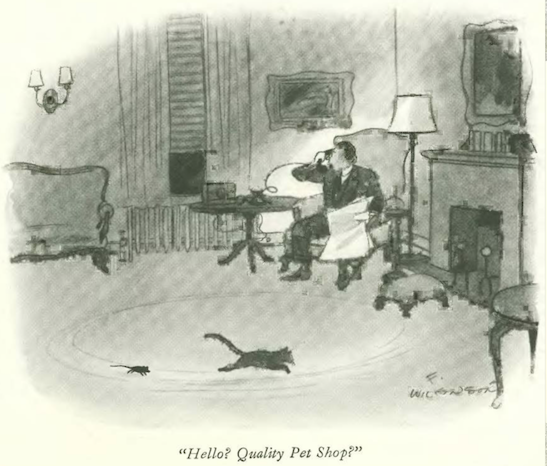
Fritz Wilkinson looked to return a defective pet…

Carl Rose needed two pages to illustrate his epic cartoon (caption added at the bottom for readability)…

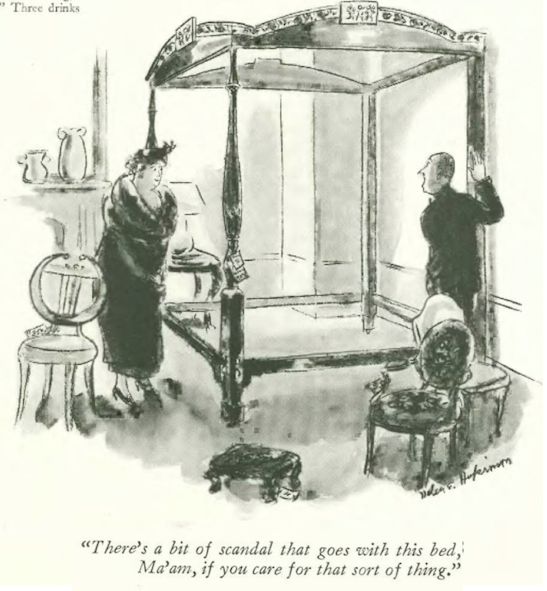
…and we close with Helen Hokinson, and a whiff of scandal…

Next Time: Seeking Decorative People…


School Days

Above: First-grade pupils at the blackboard, circa 1943. (The New York Times)

Peering into the life of a Manhattan elementary school—as it was ninety years ago—offers a glimpse into the social mores of the 1930s.

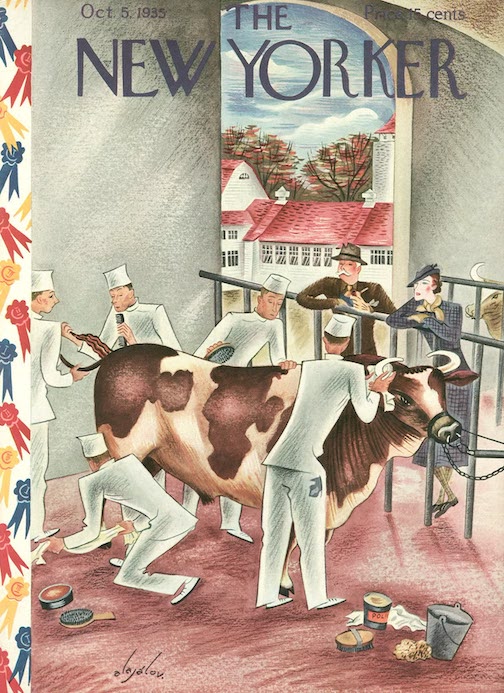
October 5, 1935 cover by Constantin Alajalov.

Taking us back to those days was St. Clair McKelway (1905-1980), who beginning in 1933 served as a writer and editor for The New Yorker. Although not well-known today, McKelway was credited by William Shawn as one of a handful of people who “set the magazine on its course.”

St. Clair McKelway. (LA Times)

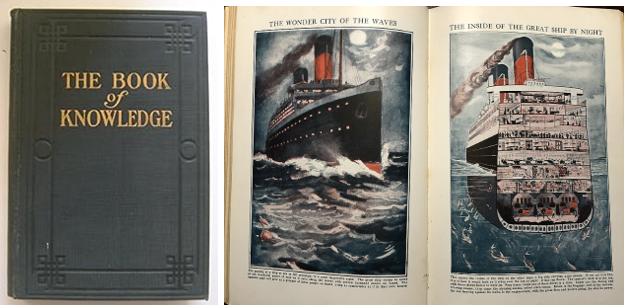
AROUND THE  WORLD IN TWENTY VOLUMES…The Grolier Society’s The Book of Knowledge was a well-known resource to students and teachers alike in the 1930s. Originally largely a reprint of the British Children’s Encyclopædia with U.S. revisions, it evolved over time into an entirely new entity. This particular volume is from 1919, part of a twenty-volume set. (Randal Oulton via Wikipedia)

In this next excerpt, a teacher and principal speak of the schoolchildren dispassionately, casually referring to one pupil’s IQ as “almost down to mental defective.”

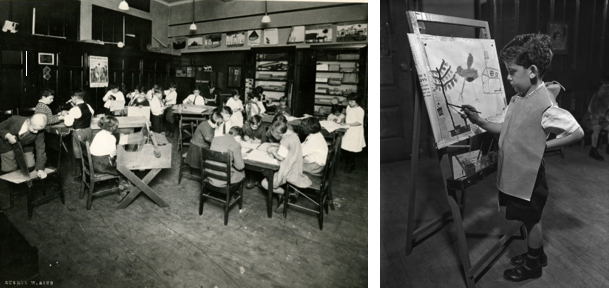
PS PUPILS…Students participate in Elizabeth Irwin’s “Little Red Schoolhouse“ program at PS 61 in 1928; at right, a kindergarten painter at PS 23 in 1935. (NYC Municipal Archives/Fordham U)

In this final excerpt, McKelway looked in on the school’s “ungraded class” of sixteen boys, most from families who were “on relief.” Beginning in the third paragraph, note how the teacher speculates on the future of one of the students.

STILL STANDING, STILL SERVING…PS 165 Robert E. Simon school today. (insideschools.org/Anna Duncan/Friends of PS 165)

A final note: It is interesting to compare McKelway’s article with one written almost thirty years later by few blocks from Columbia University, the school teaches children of graduate students and professors as well as long-time neighborhood residents and newcomers.

 * * *

Moving Days

In the fall of 1935 E.B. and Katharine White and their four-year-old son Joel moved from their Greenwich Village apartment on East 8th Street (reluctantly for E.B.) to Turtle Bay Gardens in the East 40s. At about the same time The New Yorker moved from its original headquarters on West 45th Street to its new digs at 25 West 43rd Street, where the magazine would settle in for more than fifty years.

HOME SWEET HOME…This New York townhouse (left) was the new home of E.B. and Katharine White in the fall of 1935 (their neighbor was Katharine Hepburn). At right, The New Yorker also moved to a new home at 25 West 43rd Street. The magazine would occupy several floors of the building for 56 years. (homes.com/Ink Spill)

 * * *

A Good Bad Girl

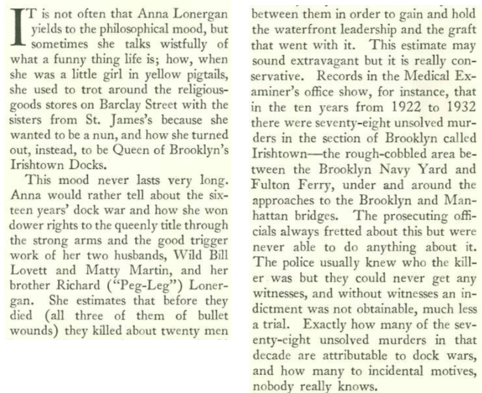
Journalist Meyer Berger (1898-1959) was known for digging deep into his subjects, including a two-part New Yorker profile of Anna Lonergan, “Queen of the Irishtown Docks.” Her two husbands and a brother—notorious killers themselves—were murdered in gang wars along with dozens of others who were Lonergan’s friends and neighbors. She was often called to the morgue to identify murder victims, thus the “Profile” title “Lady in Crepe”—one who is in a constant state of mourning. Here are the opening paragraphs:

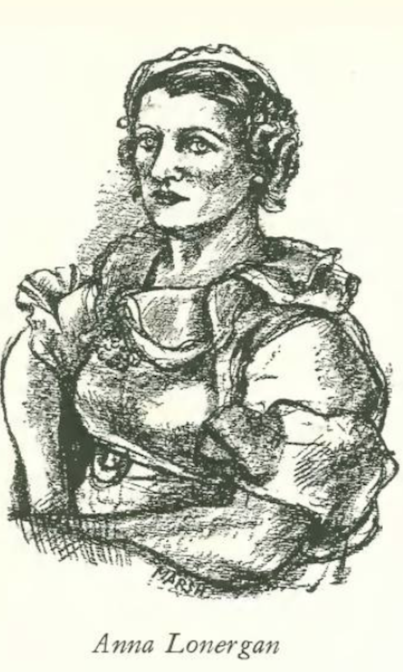
SHE WANTED TO BE A NUN…Anna Lonergan, as rendered by Reginald Marsh for the Profile.
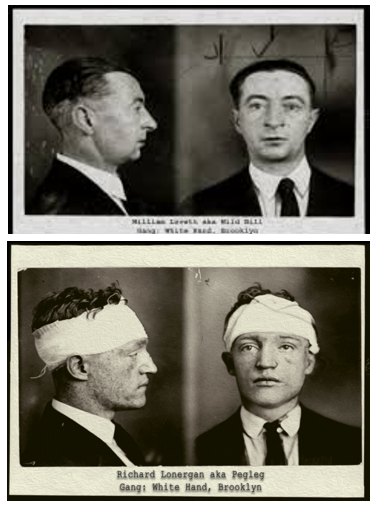
KILL OR BE KILLED…Members of the Irish “White Hand Gang” battled their Italian rivals (the Black Hand Gang) on the Brooklyn waterfront from the early 1900s to 1930. Anna Lonergan’s first husband William “Wild Bill” Lovett (top) was murdered in 1923; her brother Richard “Pegleg” Lonergan was gunned down in 1925. (artofneed.com)

 * * *

At the Movies

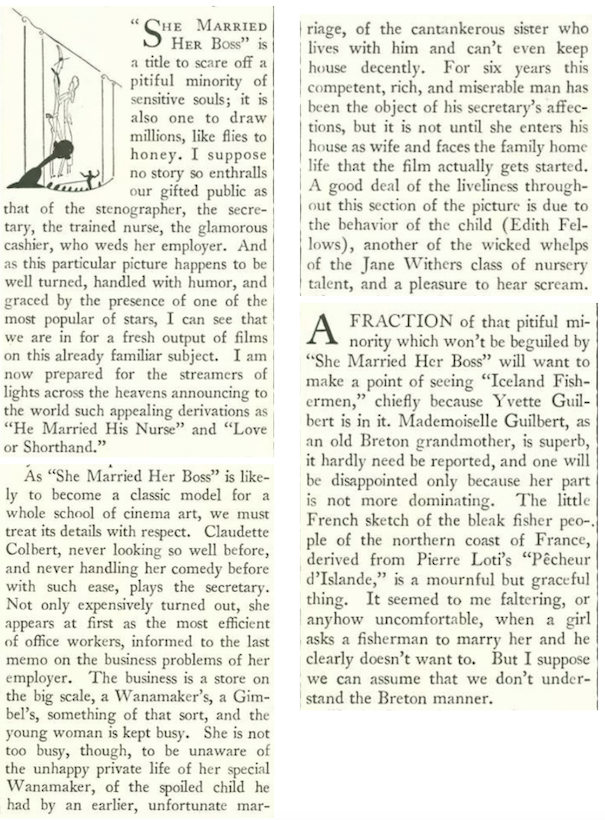
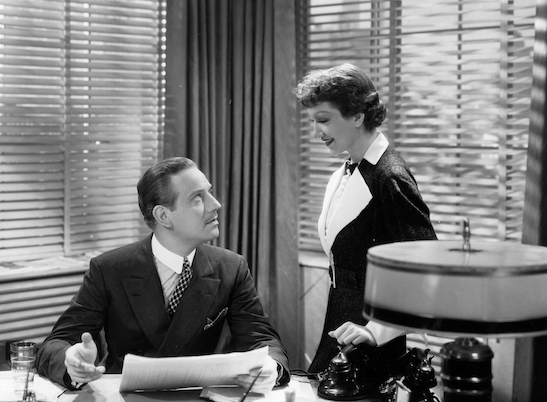
Film critic John Mosher took on a couple of very different films—the lively Claudette Colbert comedy She Married Her Boss, and the “mournful, graceful” Iceland Fisherman featuring the 1890s French cabaret star Yvette Guilbert.

BUSINESS AND PLEASURE…Melvyn Douglas and Claudette Colbert in She Married Her Boss. (IMDB)
GRAND GRANDMOTHER...John Mosher found French actress and cabaret singer Yvette Guilbert (1865–1944) to be the main attraction as a Breton grandmother in 1934’s Pêcheur d’Islande (Iceland Fishermen). Guilbert was a favorite subject of artist Henri de Toulouse-Lautrec, who made many portraits and caricatures of Guilbert, including the one at right from 1894. (musee-breton.finistere/National Portrait Gallery, London/Wikipedia)

Mosher also screened Soviet Russia through the Eyes of an American, which documented American engineer Charles Stuart’s travels through the Soviet Union. You can watch the entire film here.

NO FAMINE HERE…Children playing games were featured in Soviet Russia through the Eyes of an American, a travelogue that skipped all the bad parts of Stalinist Russia. (YouTube/Hoover Institution)

* * *

Some Housekeeping

Before we jump into the advertisements, I would feel remiss not to mention other writers in the issue, including poet Ogden Nash (“How Now, Sirrah, Oh, Anyhow”), James Thurber (“Smashup,” featuring henpecked husband Tommy Trinway); Frances Warfield (“Practical Nurse”); Theodore Pratt (“I Jes’ Goin'”); James Reid Parker (“The First Day”); Andree L. Eilert (“Words Across the Sea”) W.E. Farbstein (“Copycat”); and P. S. Le Poer Trench (“Parsons is Prepared”). Some of these contributors are long forgotten—Warfield often wrote about her deafness, but little to nothing can be found out about Eilert or Trench without considerable effort (Trench published twice in the New Yorker in 1935).

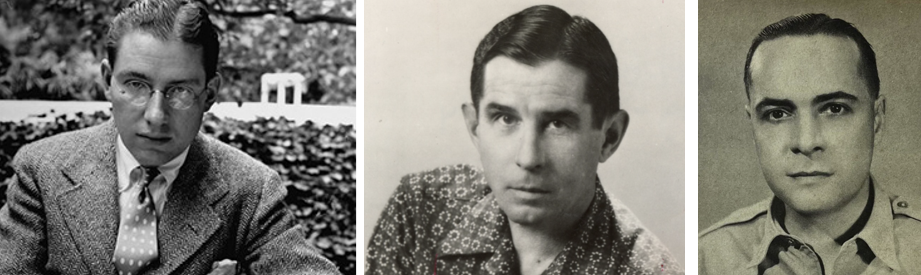
AMONG THE KNOWN…At left, Ogden Nash (1902-1971) is the most famous of this trio that includes Theodore Pratt (1901-1969), center, known as the “Literary Laureate of Florida”; and at right, James Reid Parker (1909-1984), who sidelined as a writer of captions for Helen Hokinson. Read more about Parker’s contributions to The New Yorker at Michael Maslin’s New Yorker treasure trove Ink Spill.

 * * *

From Our Advertisers

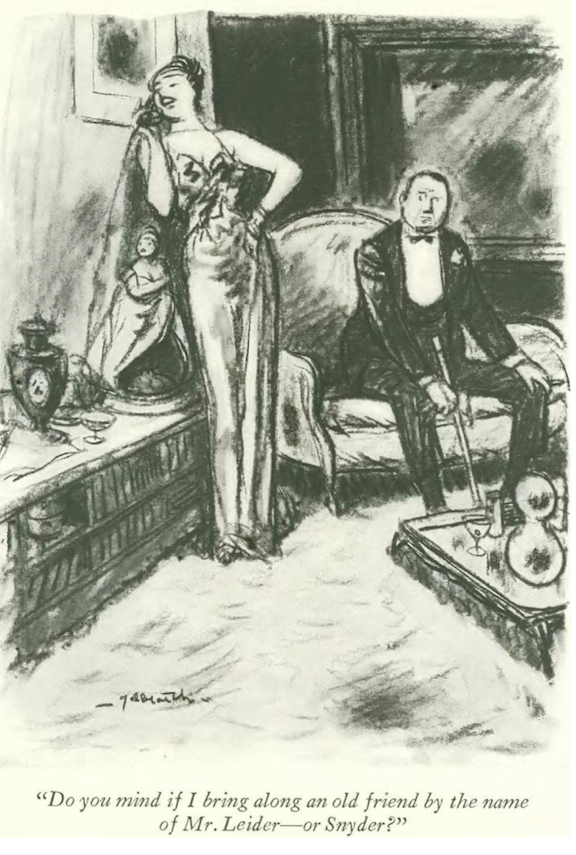
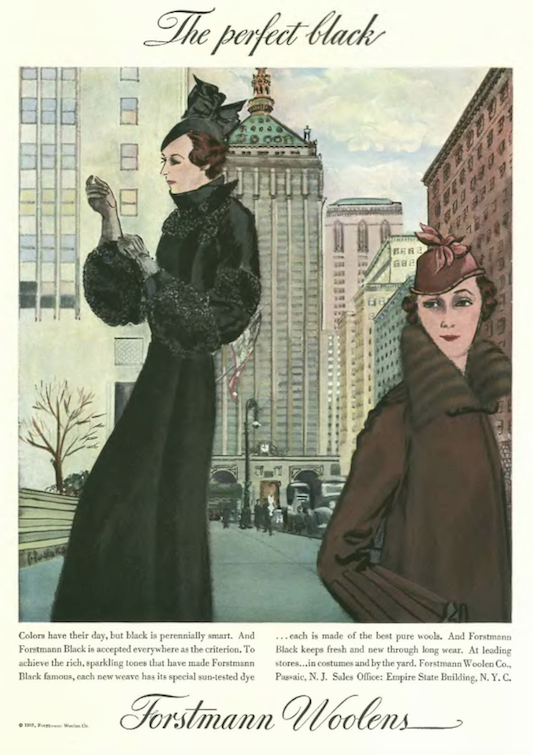
Apparently business was booming at Forstmann Woolens, who continued to post these stylish ads in the opening pages of The New Yorker—note Midtown’s 1927-29 New York Central Building (now Helmsley Building) that served as a gateway to Grand Central…

…who knew that one could be so stylish while drinking a glass of tomato juice?…

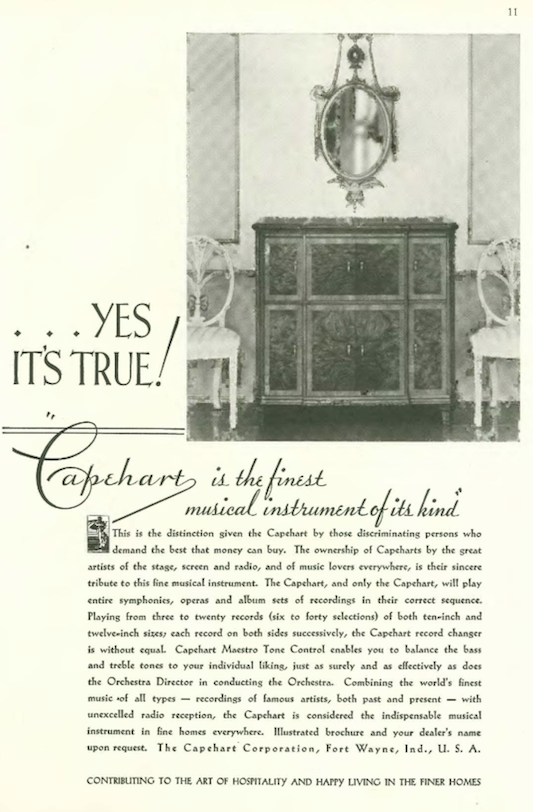
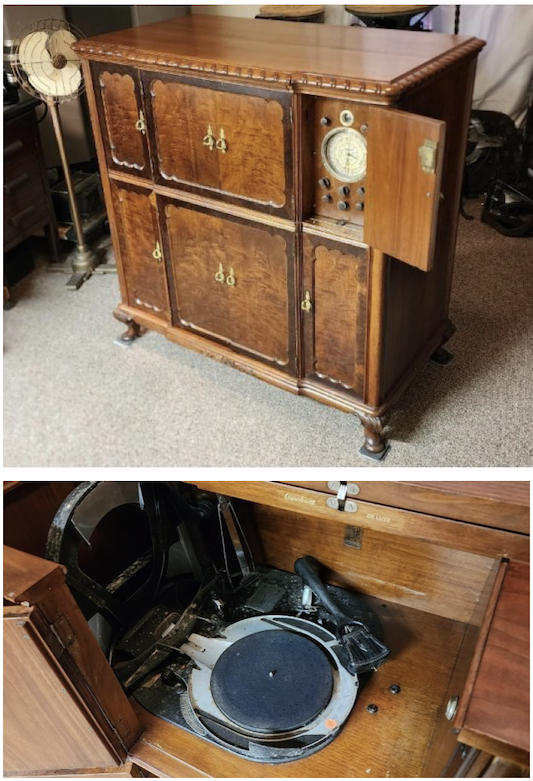
…the Capehart Automatic Phonograph Company produced a radio-phonograph that could automatically flip records to play both sides—this particular model could play up to twenty records in succession…

QUITE THE GIZMO…Restoration of a Capehart 405E. These units were not cheap, selling for the equivalent of $30k or more today. (forum.antiquephono.org)

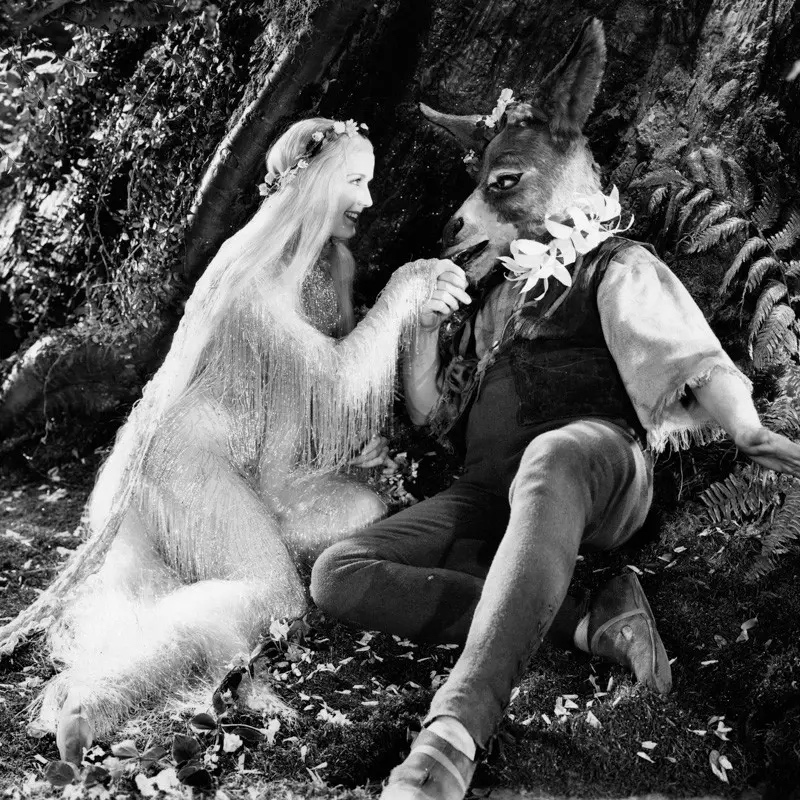
…Warner Brothers took out a full-page ad to announce the world premiere of A Midsummer Night’s Dream…the lavish, star-studded production featured, among others, James Cagney, Olivia de Havilland, Dick Powell, Anita Louise and Mickey Rooney

AN ACQUIRED TASTE...Anita Louise as Titania, Queen of the Fairies, and James Cagney as Bottom, the Weaver, in the 1935 film production of Shakespeare’s A Midsummer Night’s Dream. The film failed at the box office with mixed reviews, however it won two Academy Awards—Best Cinematography and Best Film Editing, and it was nominated for Best Picture. Today the film gets mostly good reviews. (www.academymuseum.org)

Stage magazine also took out a full-page ad to trumpet its own star-studded lineup, including contributions by James Thurber, Peggy Bacon and Abe Birnbaum

…Mrs. Chiswell Dabney Langhorne, nee Caryetta Davis Saunders (1899-1971), was the latest society maven to encourage women smokers to enjoy the unfiltered pleasures of Camel cigarettes…

…on to our cartoonists, George Price and Maurice Freed got things rolling with these spot drawings…

Carl Rose mixed the old with the new on moving day…

Barney Tobey showed us how the posh travelled to school…

George Price again, here demonstrating the joys of moneyed eccentricity…

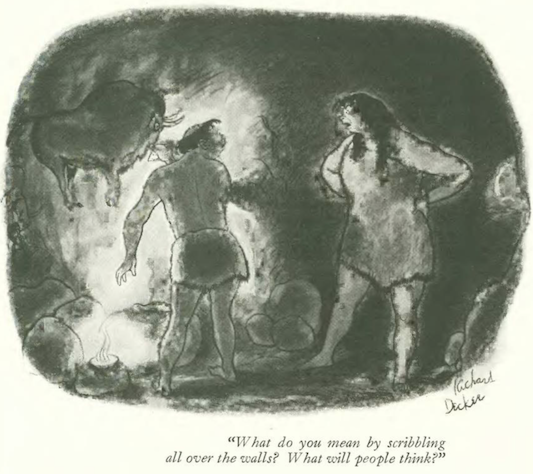
Richard Decker explored the origins of art criticism…

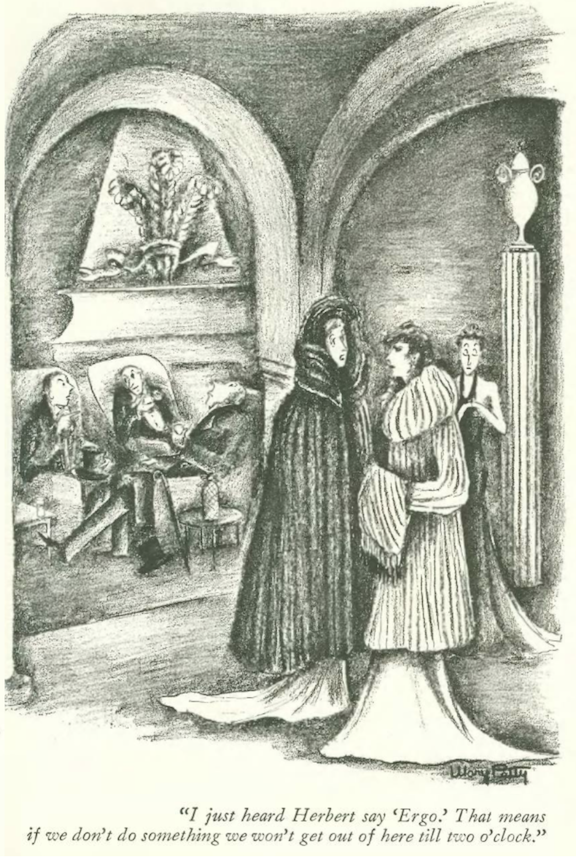
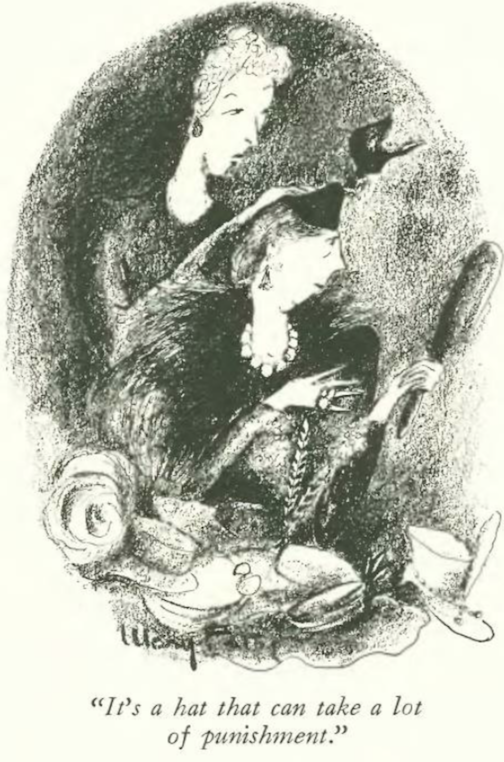
Mary Petty offered some durable fashion advice…

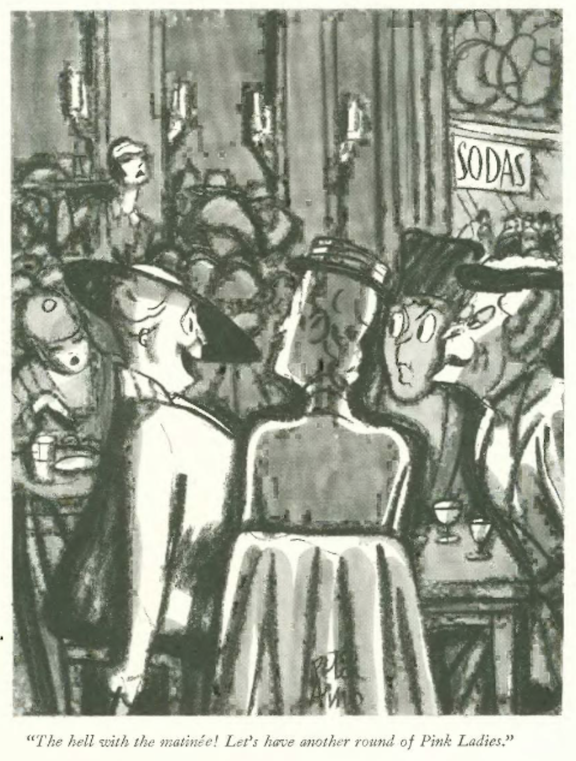
…and we close with Peter Arno, finding sudden inspiration in a Pink Lady cocktail…

Next Time: A Merry Menagerie…


The Cowboy Philosopher

William Penn Adair Rogers, aka Will Rogers (1879–1935), was a man of many talents. Today he is mostly referred to as a humorist, but he was also an actor, a social and political commentator, a trick roper and a vaudeville performer. To Americans he was a national icon.

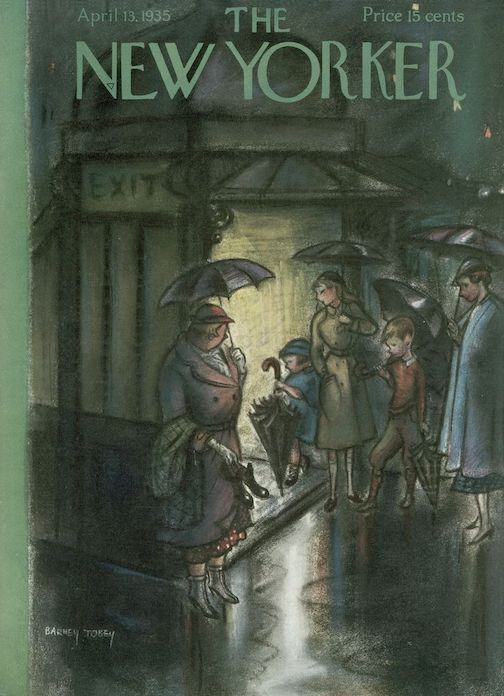
April 13, 1935 cover by Barney Tobey.

Rogers was also internationally famous, having traveled around the world three times and appearing in 71 films (50 of those silent). He also wrote more than 4,000 newspaper columns—nationally syndicated by The New York Times—that reached 40 million readers, and there were also magazine articles, radio broadcasts and personal appearances. He seemed to be everywhere.

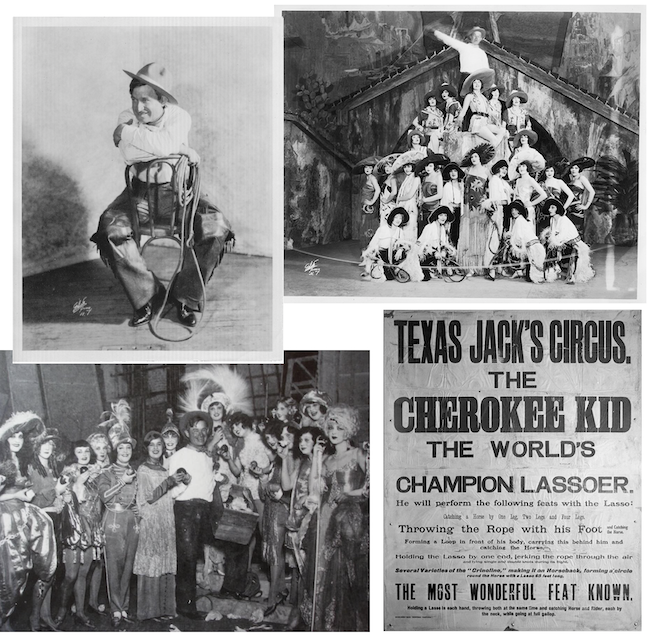
ROPING THEM IN…In 1902, Will Rogers joined Texas Jack’s Wild West Show & Circus in South Africa as the “Cherokee Kid”—he was born as a citizen of the Cherokee Nation, in the Indian Territory that is now part of Oklahoma. By 1910, he had created a sensational vaudeville act by mixing trick roping with witty monologues. Clockwise, from top left, Rogers in a publicity photo from 1916, the year he joined the Ziegfeld Follies; on stage with the Follies in 1924; poster from his circus days; backstage with the 1924 Follies cast. (National Portrait Gallery)
MULTIMEDIA MULTI-TALENT…Left, Rogers catches a few moments to write one of his 4,000 nationally syndicated newspaper columns; from 1929 to 1935 he used the exciting new medium of radio to broadcast his newspaper pieces. His weekly Sunday evening show, The Gulf Headliners, sponsored by Gulf Oil, ranked among the top radio programs in the country. (National Portrait Gallery)

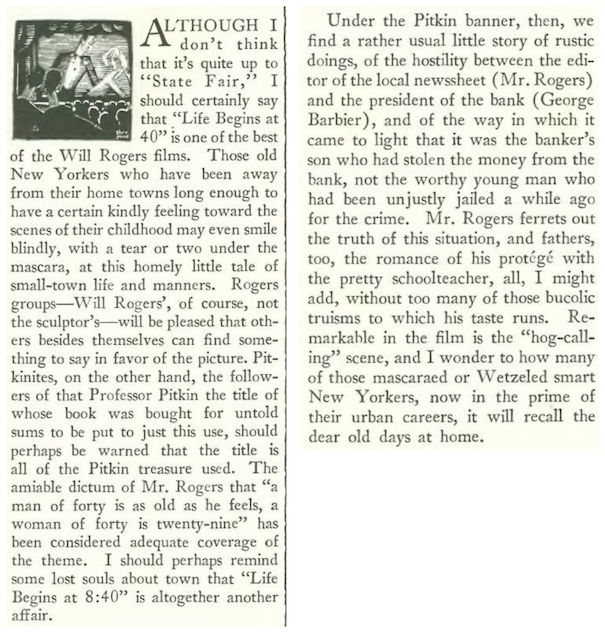
When John Mosher reviewed Rogers’ latest film, Life Begins At Forty, he found it to be one of Rogers’ best. It would also prove to be one of his last. On August 15, 1935, a small airplane carrying Rogers and aviator Wiley Post would crash on takeoff near Point Barrow, Alaska, claiming the lives of both men. Rogers would appear in three more films in 1935, the last two posthumously.

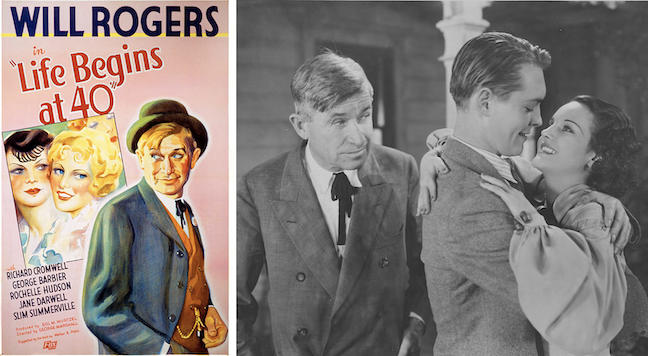
THAT’S LIFE…Will Rogers with Richard Cromwell and Rochelle Hudson in Life Begins at 40. Rogers’ film took its title from a 1932 self-help book by Walter B. Pitkin. Pitkin maintained that keeping a positive attitude toward life could give a person many fulfilling years after age 40. By the time of his death in 1935, the 55-year-old Rogers was Hollywood’s highest paid actor. (Wikipedia/IMDB)

 * * *

Not Toying Around

“The Talk of the Town” looked in on the serious business of toymakers, with 1935 being the year of streamlined tricycles, Buck Rogers disintegrator pistols, and, of course, Shirley Temple dolls.

RIVALED ONLY BY MICKEY MOUSE, Shirley Temple was the most popular celebrity to endorse merchandise for children and adults, including the “one and only” Shirley Temple Doll (left, ad from 1935); the Buck Rogers XZ-38 Disintegrator Pistol (top) was produced in 1935 by Daisy, and was available in both copper and nickel finishes–it was also offered as a premium from Cream of Wheat cereal; at bottom, the American National Streamline Velocipede Tricycle (1935), just one example of the hundreds of products receiving the streamlining treatment in the 1930s. (flickr/airandspace.si.edu/onlinebicyclemuseum.co.uk)

 * * *

Literary Spirits

E.B. White welcomed the return of literary tea party, which thanks to the repeal of the 18th Amendment had been re-dubbed the “literary cocktail party.” He shared his thoughts in “Notes and Comment”…

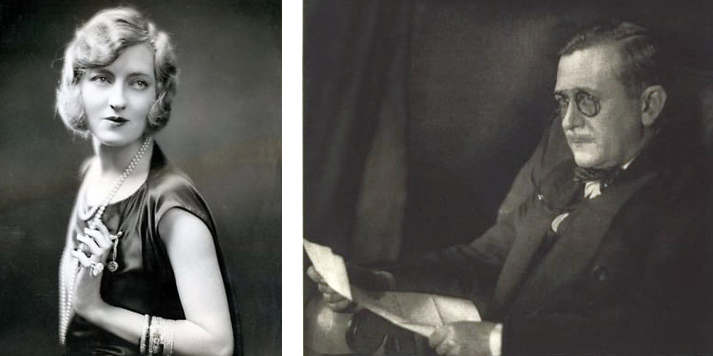
AMUSING MUSES…Actress, writer and socialite Peggy Hopkins Joyce hosted literary “teas” in the 1920s, while former Cosmopolitan editor Ray Long inspired a book on adventures in the South Seas shortly before his death; from left, Joyce in 1923; photogravure of Long, 1925. (Wikipedia/photogravure.com)

 * * *

Proto Feminist

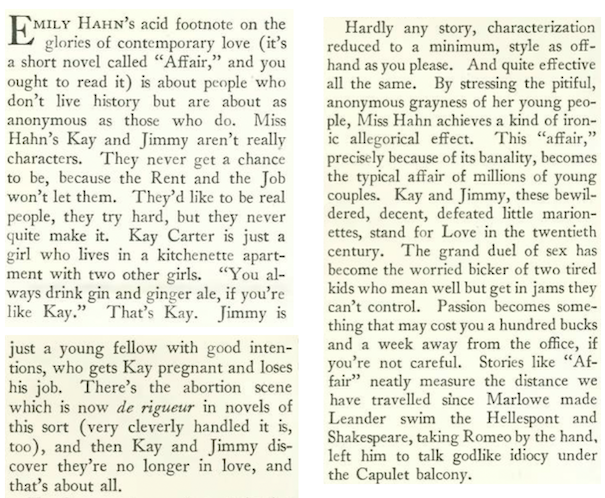
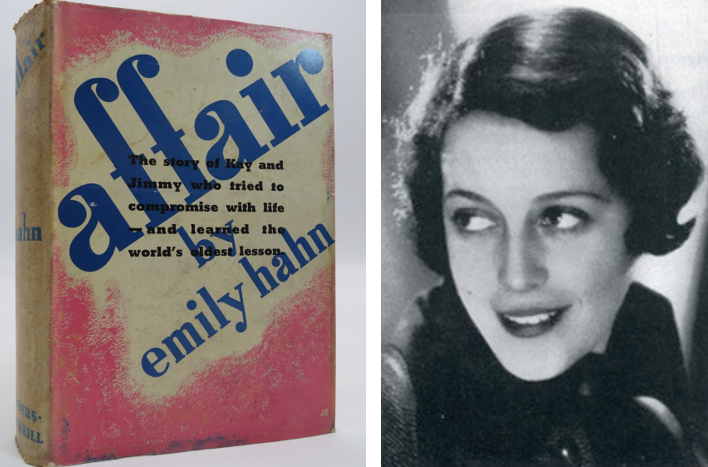
Emily Hahn was one of the more lively figures in The New Yorker’s stable of journalists and writers, leading an adventurous life that included a hike across Central Africa in the 1930s and getting into all kinds of trouble during the Japanese invasion of China. According to Roger Angell, Hahn was, “in truth, something rare: a woman deeply, almost domestically, at home in the world. Driven by curiosity and energy, she went there and did that, and then wrote about it without fuss.” It is no surprise that Hahn’s latest novel, Affair, didn’t shy away from topics like abortion. According to reviewer Clifton Fadiman, the novel’s “anonymous grayness” exposed the banality of love in the twentieth century.

If Hollywood is looking for a new biopic, Hahn would make a fascinating subject (Kristen Stewart would be perfect for the part). According to IMDB, there is an “Untitled Emily ‘Mickey’ Hahn Project”—a TV series—that has been in development since 2022, but so far nothing has come of it.

DOWN ON LOVE?…Emily Hahn’s 1935 novel Affair exposed the banality of love in the twentieth century. (abebooks.com/susanbkason.com)

 * * *

From Our Advertisers

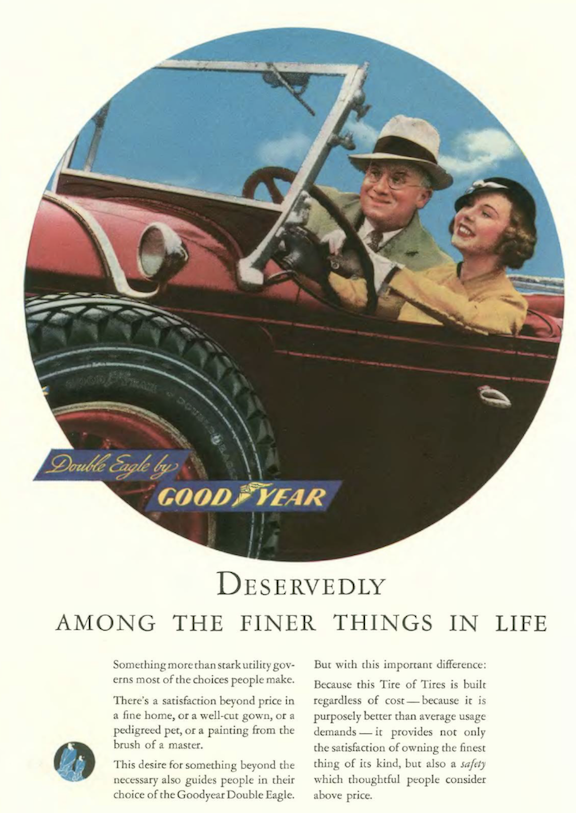
We begin with this advertisement from Goodyear, featuring what appears to be a father teaching his daughter how to drive, or in this case, fly, just like Chitty Chitty Bang Bang…

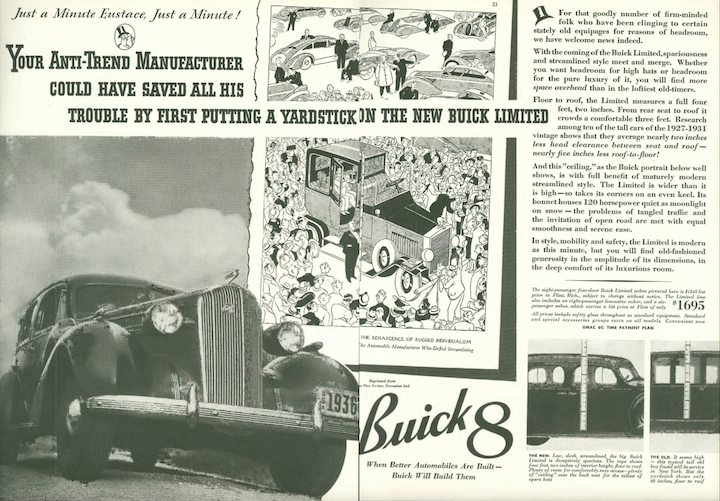
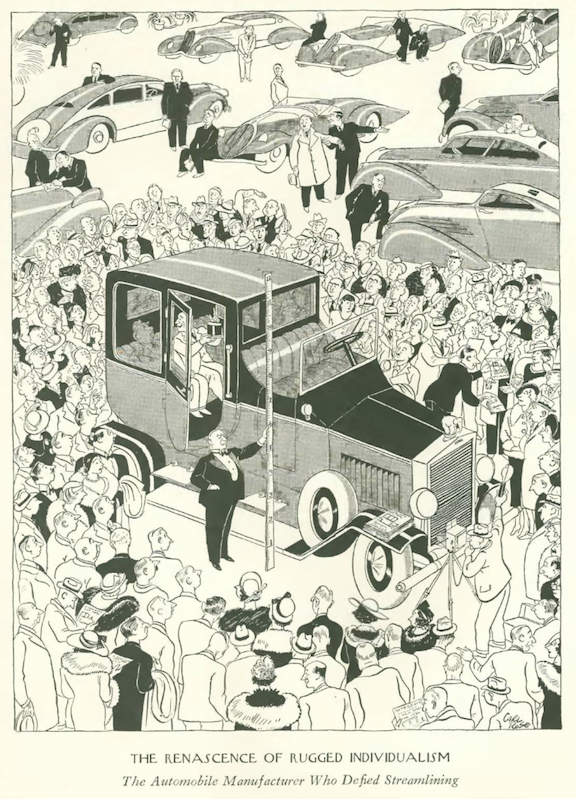
…and we stay airborne with the makers of the streamlined Nash, who claimed their automobile had “flying power”…

…and we return to earth with Cadillac’s budget model, the LaSalle, which featured “flashing performance”…

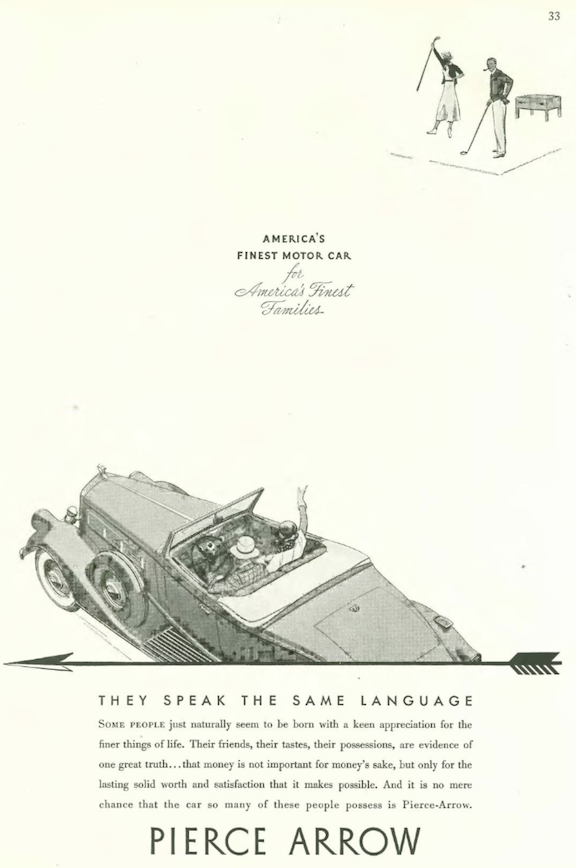
…by contrast, Pierce Arrow took a minimalist approach, gimmicks and splashy colors being reserved for the lower orders…

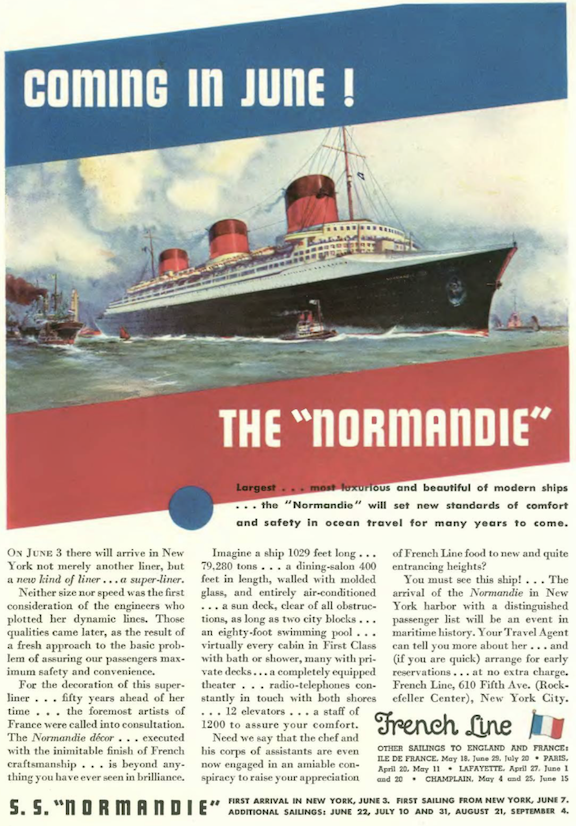
…one of the world’s most iconic ocean liners took to the sea with much fanfare in 1935. The SS Normandie was the largest and fastest passenger ship afloat; it remains the most powerful steam turbo-electric-propelled passenger ship ever built…

…if you happened to smoke Webster cigars, it could have been a sign that you were favored by the heavens…

…the “20-year rule” in fashion suggests that trends have a tendency to re-emerge every two decades, and that seems to be the case here…

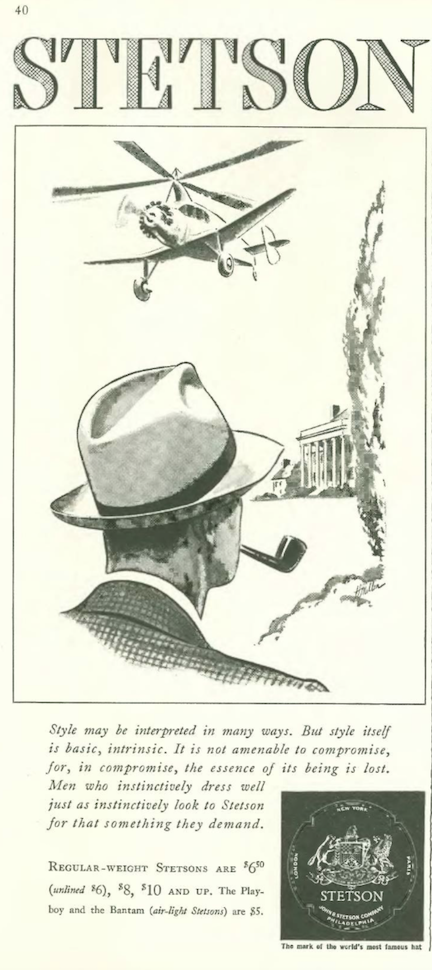
…this next ad tells us everything we need to know about the Stetson wearer: he is a wealthy country gentleman who values tradition but who is also a man of the future…from the 1920s to midcentury the autogyro was thought to be the answer to the long-dreamed of flying car…

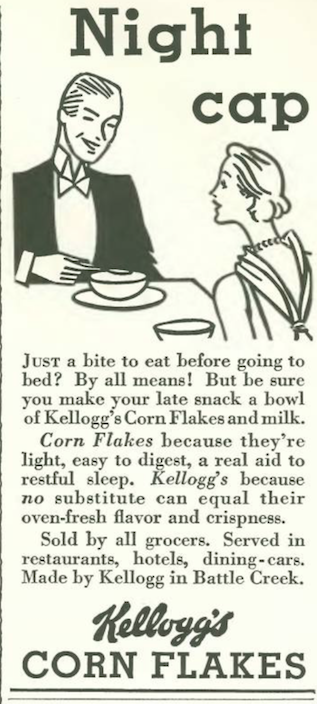
…whoever coined the term “night cap” probably wasn’t thinking about cold cereal…

…although Harold Ross’s old high school friend, John Held Jr., contributed many woodcut-style cartoons and faux maps to The New Yorker from 1925 to 1932, Held was more famous for his shingle-bobbed flappers and their slick-haired boyfriends in puffy pants, a style more apparent in this ad for Peychaud’s Bitters (the original was a one-column ad, split here for clarity)…

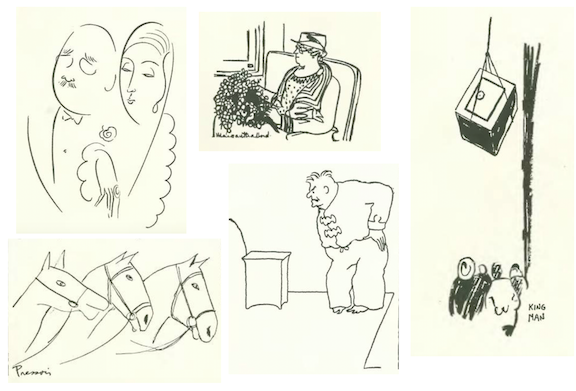
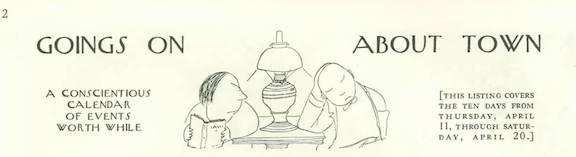
…Held provides a segue to our illustrators and cartoonists, beginning with a sampling of spot art from the April 13 issue…

James Thurber got things going on page 2…

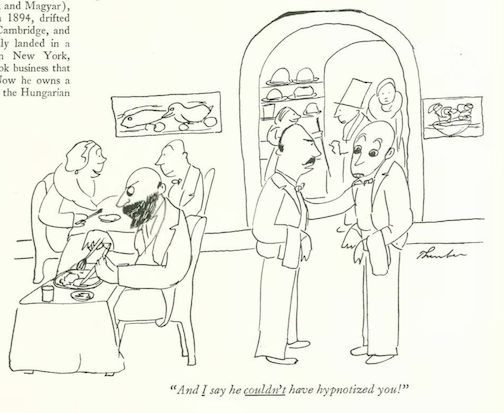
…and also contributed this observation of the hypnotic arts…

Otto Soglow did some careful surveying (this originally appeared across two pages)…

Alain looked in on some Vatican gossip…

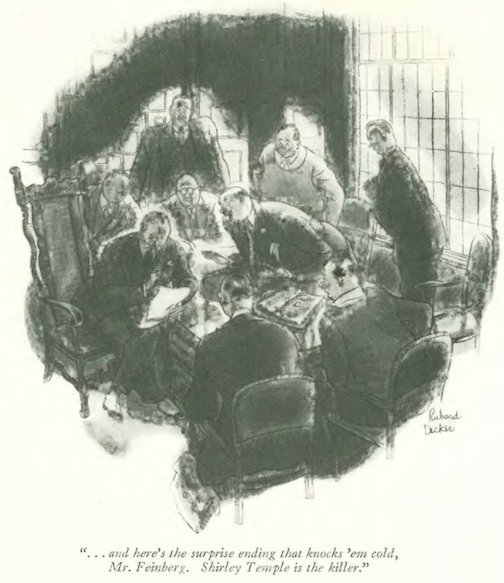
Richard Decker pitched a Shirley Temple murder caper…

Carl Rose gave us a sweet send-off…

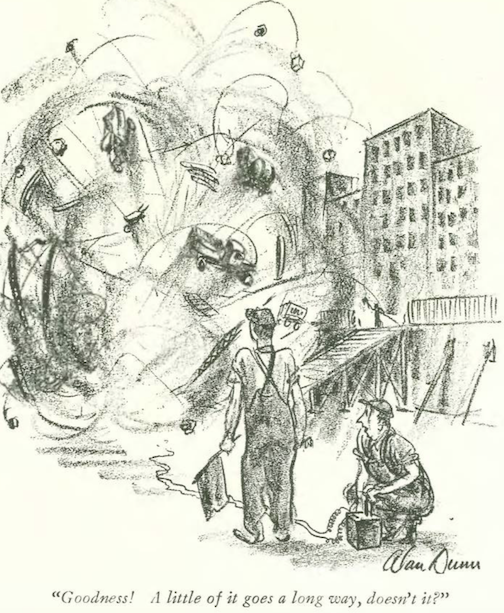
…and we close out with a big bang, courtesy of Alan Dunn

Next Time: Terse Verse…


Flying the Friendly Skies

A few posts ago (the April 11 issue) I wrote about E.B. White’s love of flying, and how his (and the nation’s) exuberance for aviation suddenly came crashing down along with Knute Rockne’s plane in a Kansas wheat field.

May 23, 1931 cover by Garrett Price.

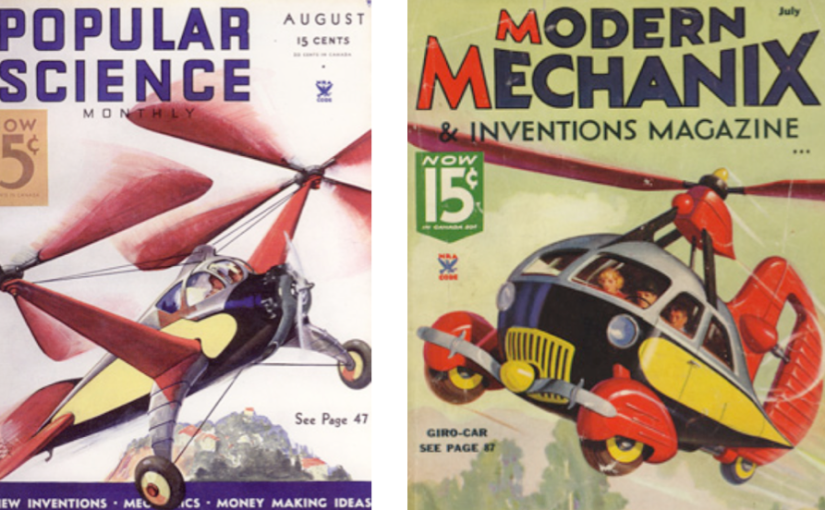
The death of the famed Notre Dame football coach had White pondering a new, safer path for aviation that seemed to be embodied in a contraption called the autogiro. White had previously written about the potential of the autogiro back in 1929 (Dec. 7 issue). Half-helicopter and half-airplane, it was considered not only safer, but easier to fly, possibly opening up the sky to everyday commuters.

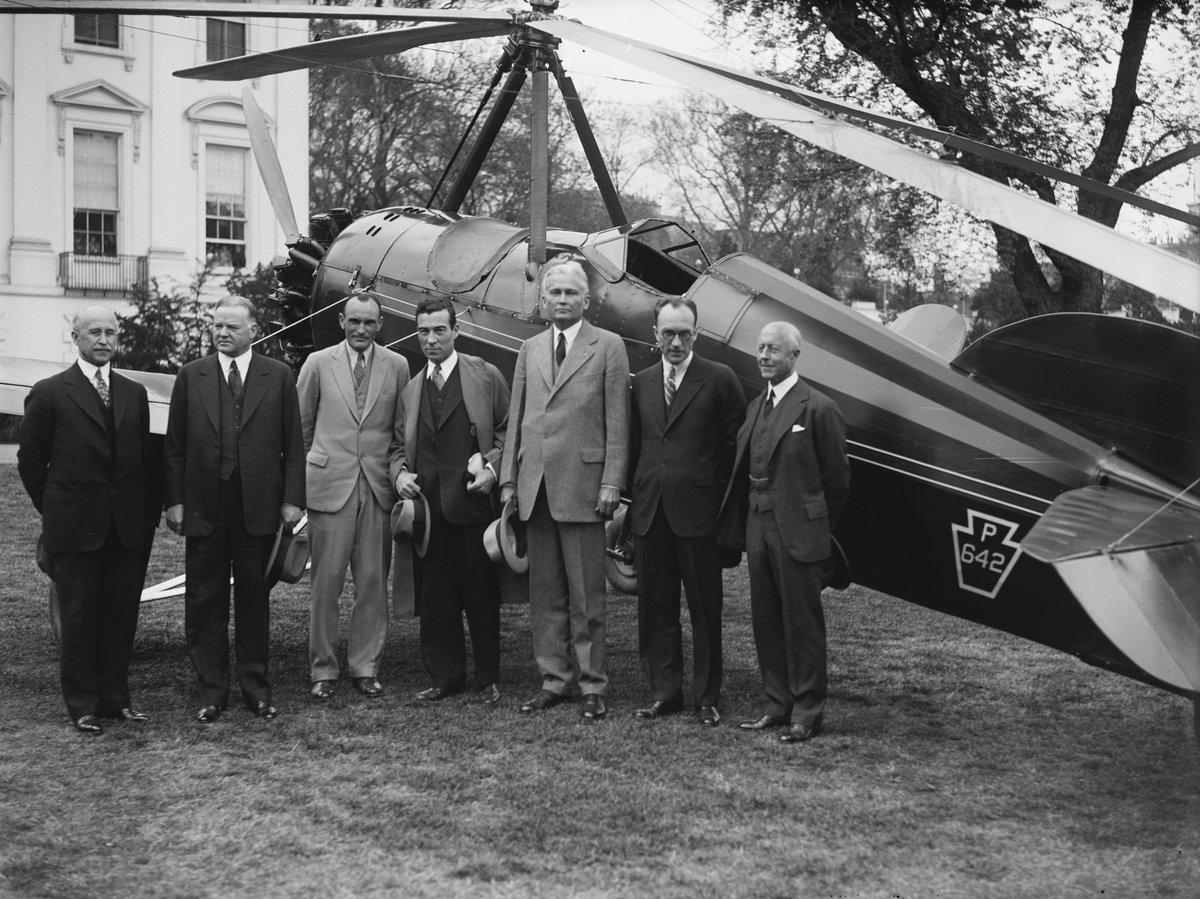
PHOTO OP…A Pitcairn PCA-2 Autogiro paid a visit to the White House on April 22, 1931. President Herbert Hoover is second from left. (Library of Congress)

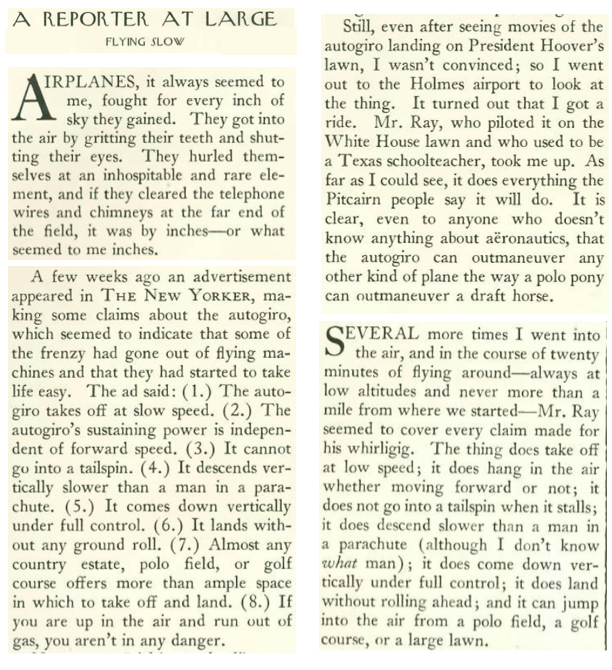
On a windy day White boarded the autogiro at an airport “in awful Queens” — most likely the current site of La Guardia — and filed this report for the “A Reporter at Large” column:

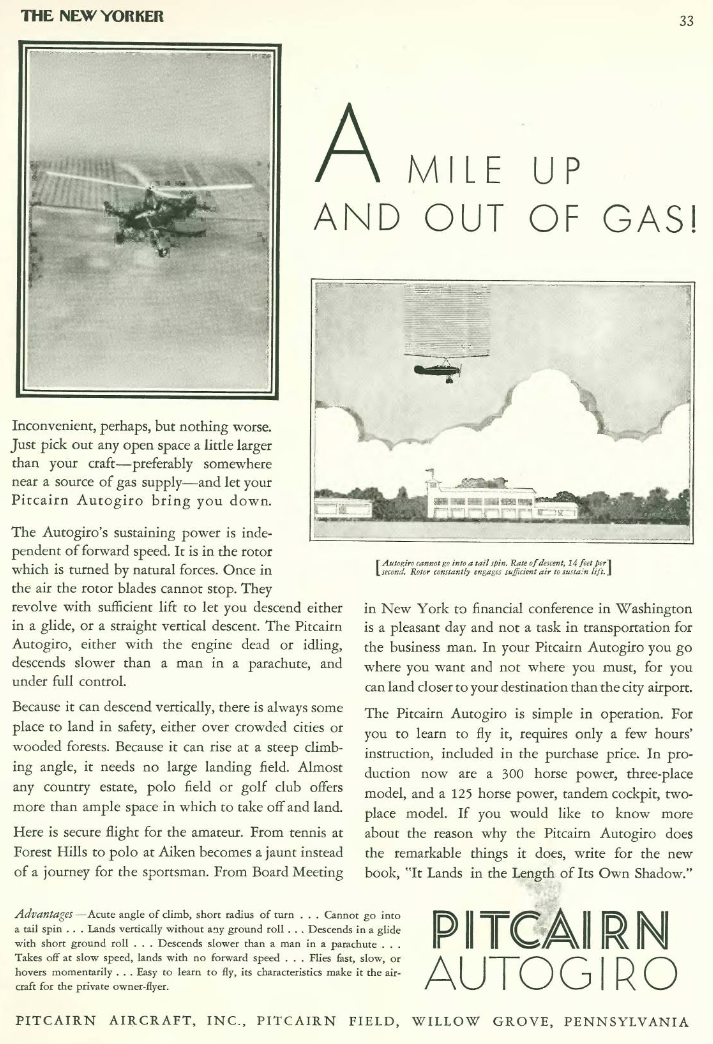
In the article, White referenced this Pitcairn Autogiro ad from the April 25, 1931 issue. No doubt the folks at Pitcairn had the Rockne accident in mind when they touted the safety of their craft, which seemed impossible to crash.

White wasn’t the only one enthused about the autogiro. It was the darling of modernist architects and futurists of 1920s and 30s, who saw the flying machine taking its place alongside the automobile in the house of the future.

SWEET…The Swiss-born architect and designer William Lescaze rendered this “House of the Future” in the late 1920s with a bullet-shaped motorcar in the carport and an autogiro perched on the roof. (From my print collection)
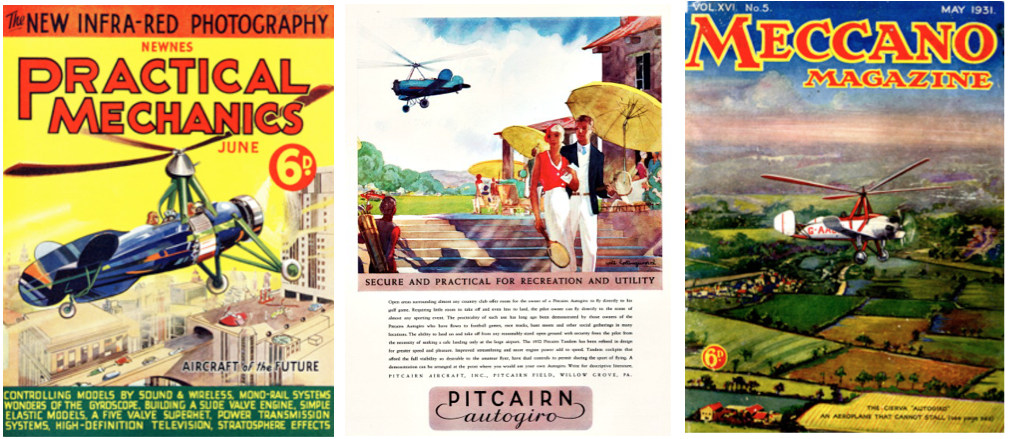
COMMONPLACE, AT LEAST IN THE IMAGINATION…The autogiro appealed to the average Joe or Jill as well, featured in magazines such as the U.K.’s Practical Mechanics (June 1934) and Meccano Magazine (May 1931). At center, a Pitcairn ad from 1930. (vtol.org)
WELL, IT WORKED…This two-seat AC-35 Autogiro (left) was developed for a Department of Commerce competition to create an “Aerial Model T.” James G. Ray, vice president and chief pilot of the Autogiro Company of America, landed the AC-35 in a small downtown park in Washington. D.C. on Oct. 2, 1936; at right, a still image from a 1936 film, Things to Come, which showed people of the year 2036 getting around in autogiros while wearing groovy futuristic togas. (Smithsonian/gutenberg.net.au)

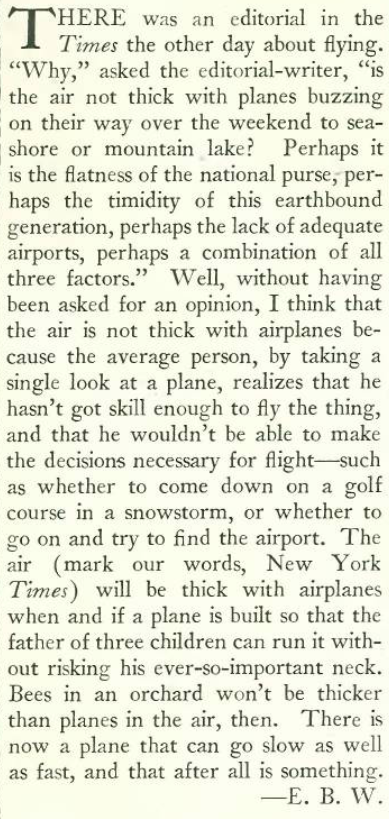
Prompted by a New York Times editorial, White pondered the day when the air would be thick with personal aircraft:

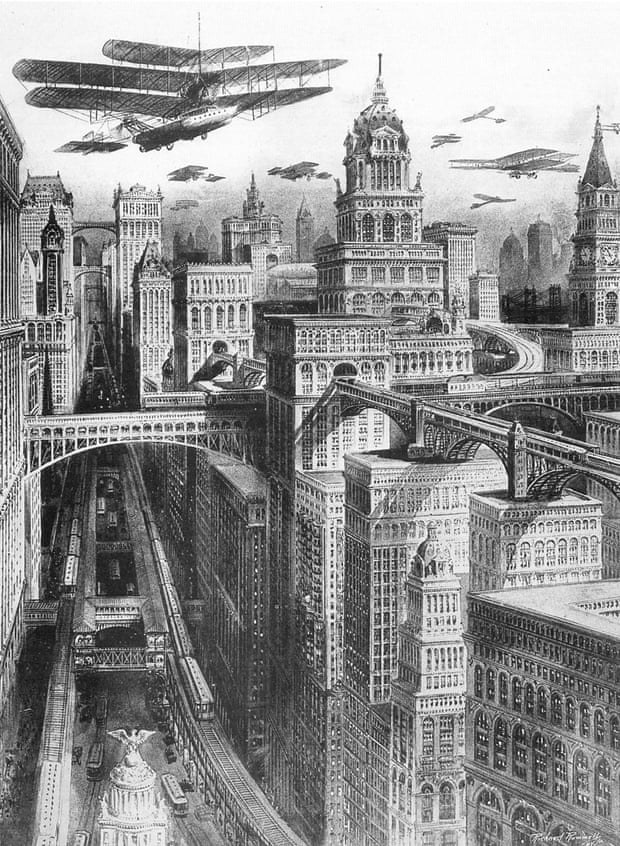
AND THEY LAND WHERE?…The idea of city skies filled with flying commuters is nothing new, as this 1911 illustration by Richard Rummell from King’s Views of New York attests. (The Guardian)

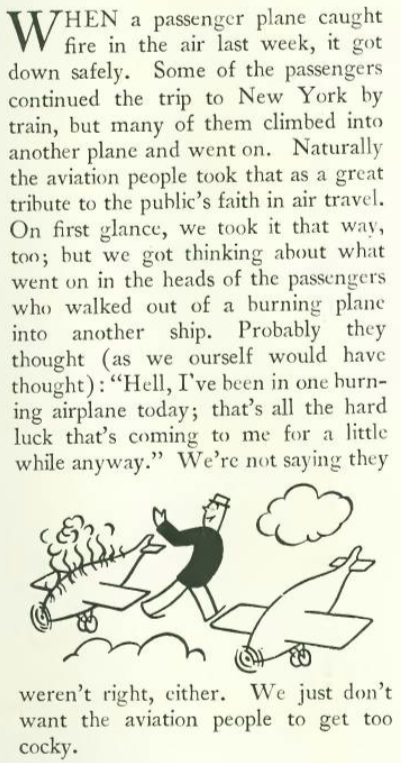
White offered still more observations on aviation safety in his “Notes and Comment” column…

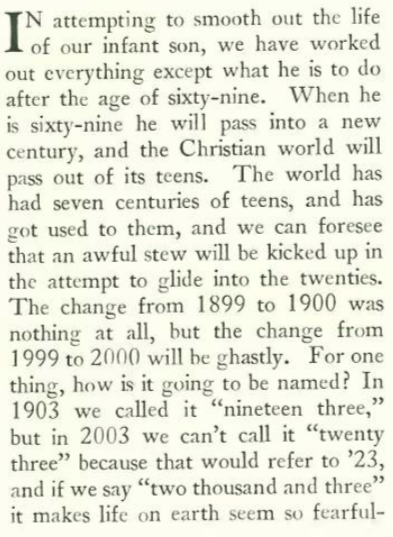
…and in the same column he also pondered the future in terms of his infant son, Joel White:

Sadly, Joel didn’t quite make it to the turn of the century — he died in 1997. He did, however, have a successful life as a noted naval architect and founder of the Brooklin Boat Yard in Brooklin, Maine.

ON GOLDEN POND…Joel White took to the water at a very young age, seen at left rowing a boat in an image from a home movie by E.B. and Katharine White; at right, Joel in his design office at the Brooklin Boat Yard, which he founded in 1960. (E.B. White Collection, Northeast Historic Film/Billy Black)

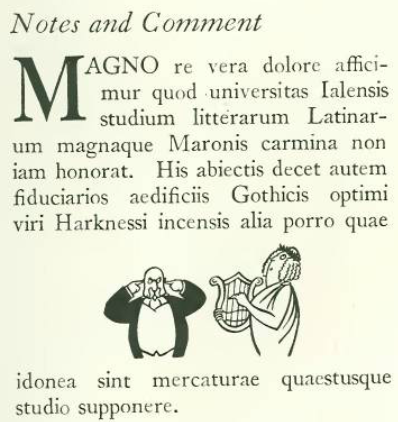
One more from E.B. White, this the lead item for his column which made jest of a debate at Yale over dropping the requirement for Latin. It says something to the effect that “Yale’s lead on the issue frees the rest of us to follow our fiduciary duty, toss tradition into the fire, and focus on practical matters such as traffic studies.”

 *  *  *

From Our Advertisers

The makers of Dawn “Ring-Lit” cigarettes seemed to have a winner on their hands with a smoke you could light like a match, but I can’t find any record of the company. Most likely this was a local brand sold at nightclubs, restaurants and hotels, and not through retail…

…Murad, on the other hand, was widely available, but the brand faded as tastes moved away from Turkish-style cigarettes…Rea Irvin illustrated a long series of ads for the brand, presenting various “embarrassing moments,” including this familiar trope involving office hijinx…

…summer was on the way, and the makers of Jantzen swimwear were establishing their brand as both the choice for athletes as well as the fashion-conscious…

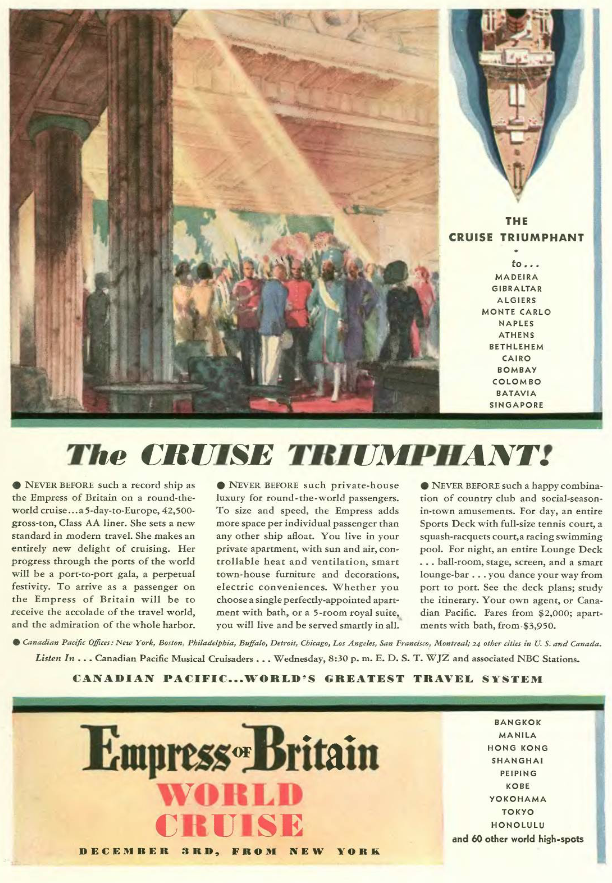
…and you might have packed a Jantzen or two for this around-the-world cruise on the Empress of Britain, arranged through Canadian Pacific. Your fare, if you wanted an “apartment with a bath,” would set you back $3,950, or a cool $63,000 in today’s currency…

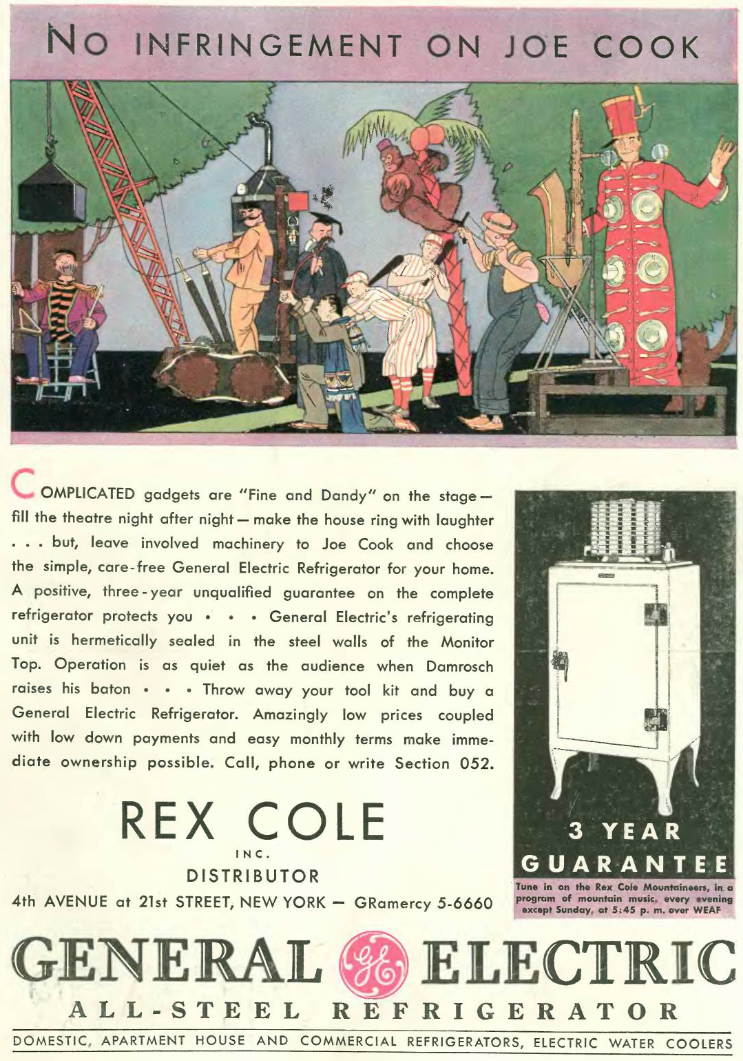
…if the cruise was too rich for your budget, perhaps you could put your money toward a durable good like a GE all-steel refrigerator. Note how GE contrasted its product with the overly complicated gadgets demonstrated on stage by popular vaudeville comedian Joe Cook

…on to the cartoons, William Steig gave us a glimpse of the important work taking place behind an exec’s closed doors…

Helen Hokinson eavesdropped on a couple’s travel plans…

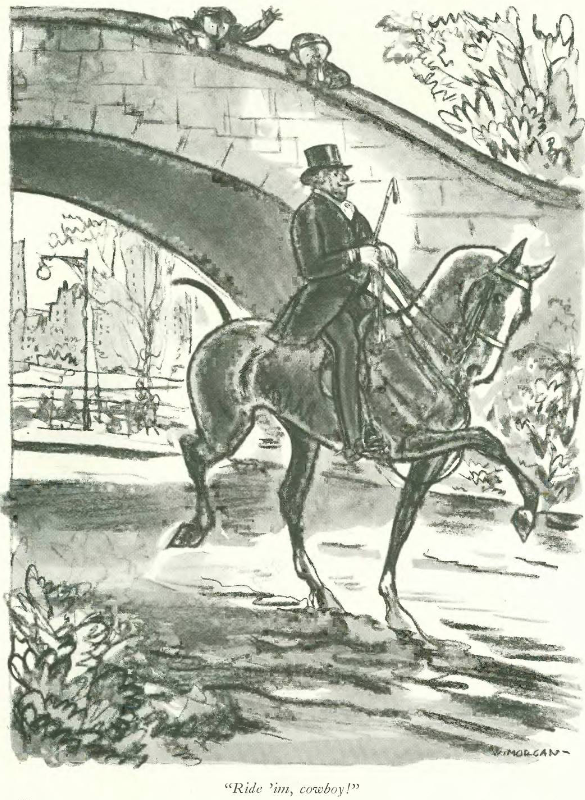
Wallace Morgan took us on a trot through Central Park…
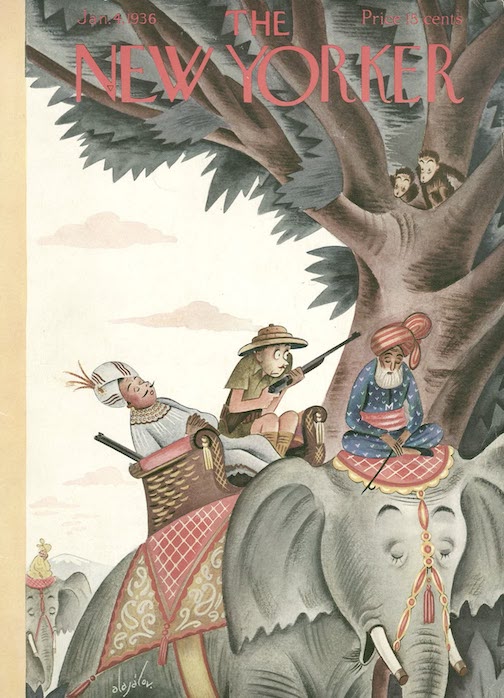
Perry Barlow probed labor relations in an estate garden (and a caption with The New Yorker’s signature diaeresis on the word “coöperation”)

…and Carl Kindl gave a look into the latest maneuvers in the canned soup wars…

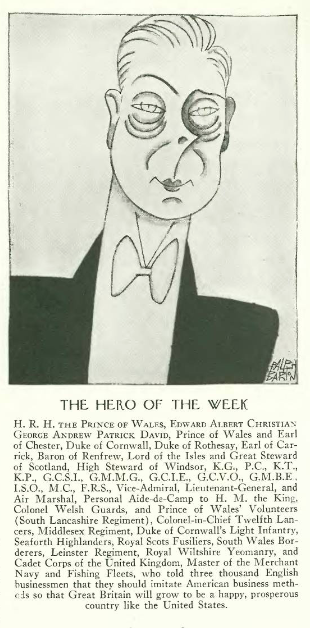
…and we end our May 23 cartoons on a sad note, with Ralph Barton’s final contribution to The New Yorker, a “Hero of the Week” illustration featuring the Prince of Wales:

On May 19, 1931, Ralph Waldo Emerson Barton, who suffered from severe manic-depression, shot himself through the right temple in his East Midtown penthouse. He was 39 years old.

From the outside one would have thought Barton had a wonderful life as a successful artist who lived in style, spent long vacations relaxing in France, and who hobnobbed with celebrities such as his close friend Charlie Chaplin.

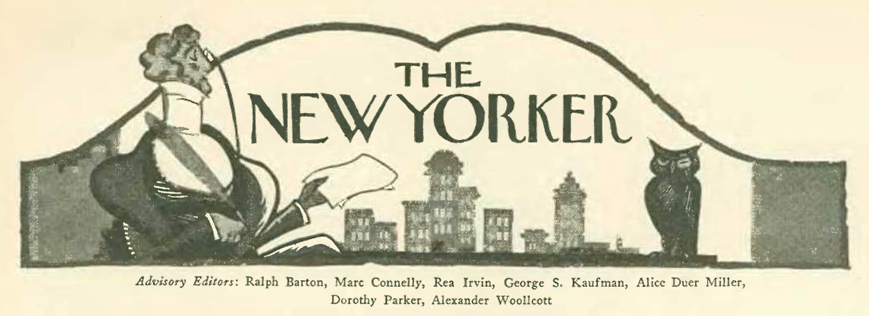
To lose a longtime contributor and friend must have been a real blow to the staff at The New Yorker. Barton had been there from the beginning, his name appearing on the magazine’s first masthead as an honorary advisory editor:

He was a prominent contributor to the magazine, from recurring features like his weekly take on the news—”The Graphic Section”—to theatrical caricatures that included clever caption-length reviews. He was married four times in his short life, most notably to actress Carlotta Monterey, his third (he was also her third marriage). She divorced Barton in 1926 and married playwright Eugene O’Neill in 1929.

In his suicide note, Barton wrote that he had irrevocably lost the only woman he ever loved, referring to Carlotta. But some speculate this claim was a final dramatic flourish, and that the end came because he feared he was on the verge of total insanity. He also wrote in the note: “I have had few difficulties, many friends, great successes; I have gone from wife to wife and house to house, visited great countries of the world—but I am fed up with inventing devices to fill up twenty-four hours of the day.”

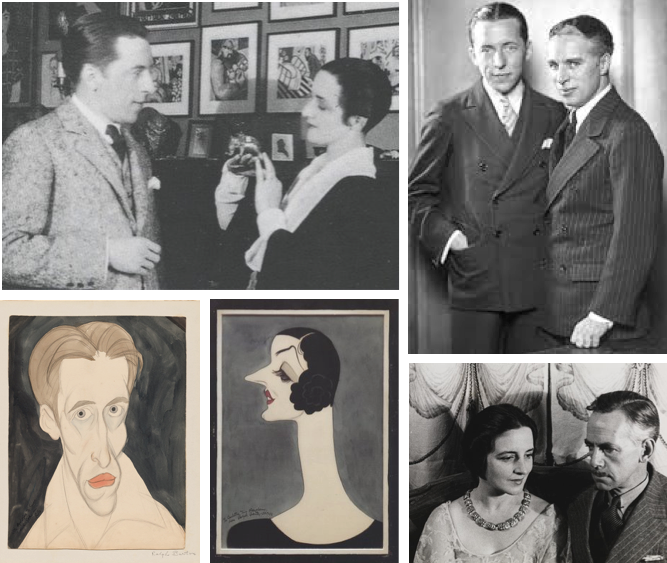
A CHARMED, TROUBLED LIFE…Clockwise, from top left, Ralph Barton with the love of his life, his third wife, actress Carlotta Monterey; Barton with best friend Charlie Chaplin, photographed by Nickolas Muray in 1927; after leaving Barton, Monterey would marry playwright Eugene O’Neill, who in a weird coincidence would become Chaplin’s father-in-law in 1943; a 1922 portrait of Carlotta by Barton; and a self-portrait from 1925, in the style of El Greco. “The human soul would be a hideous object if it were possible to lay it bare,” Barton wrote in 1926. (illustrationart.com/Pinterest/MCNY/curiator.com/npg.si.edu)

The following issue of The New Yorker (May 30, 1931)…

May 30, 1931 cover by Barney Tobey.

…featured this brief obituary on the bottom of page 28. I like the observation on the last line…his work had the rare and discomforting tingle of genius.

 *  *  *

The Gray & The Blue

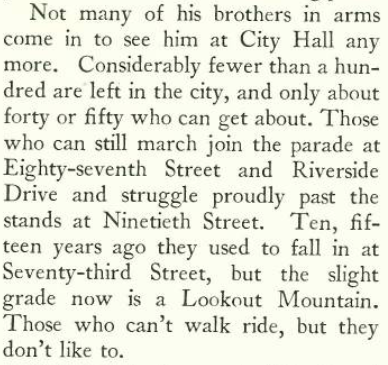
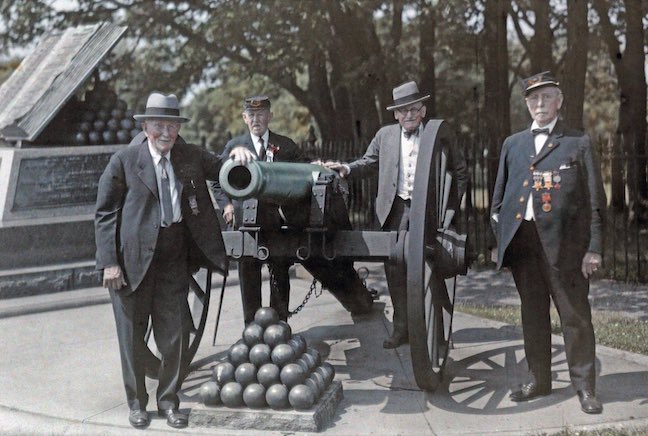
We are reminded of the span of time and history that separate us from 1931 with this small item in “The Talk of the Town” that notes “fewer than a hundred” Civil War veterans were still alive in New York City. We just marked the 76th anniversary of D-Day, an event still 13 years into the future for this New Yorker writer:

OLD WARRIORS…Union Civil War veterans stand in front a monument at Gettysburg, July 12, 1931. (National Geographic)

 *  *  *

From Our Advertisers

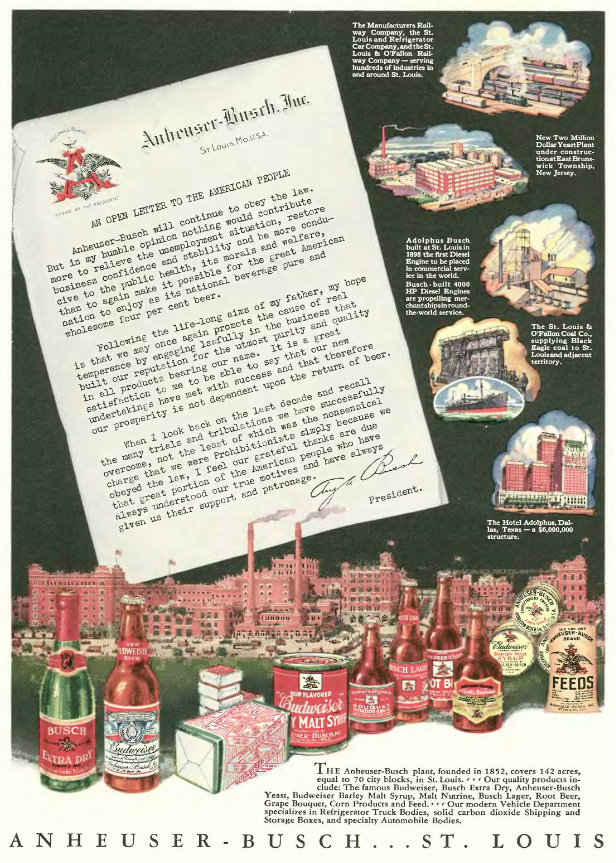
American brewers could sense the tide was turning on Prohibition laws, among them Augustus Busch, who took out a full page ad featuring “An Open Letter to the American People” that suggested a return to beer brewing would help relieve the unemployment situation caused by the Depression — note how the ad featured a variety of non-alcoholic products, but put the alcoholic beer at the head of the line…

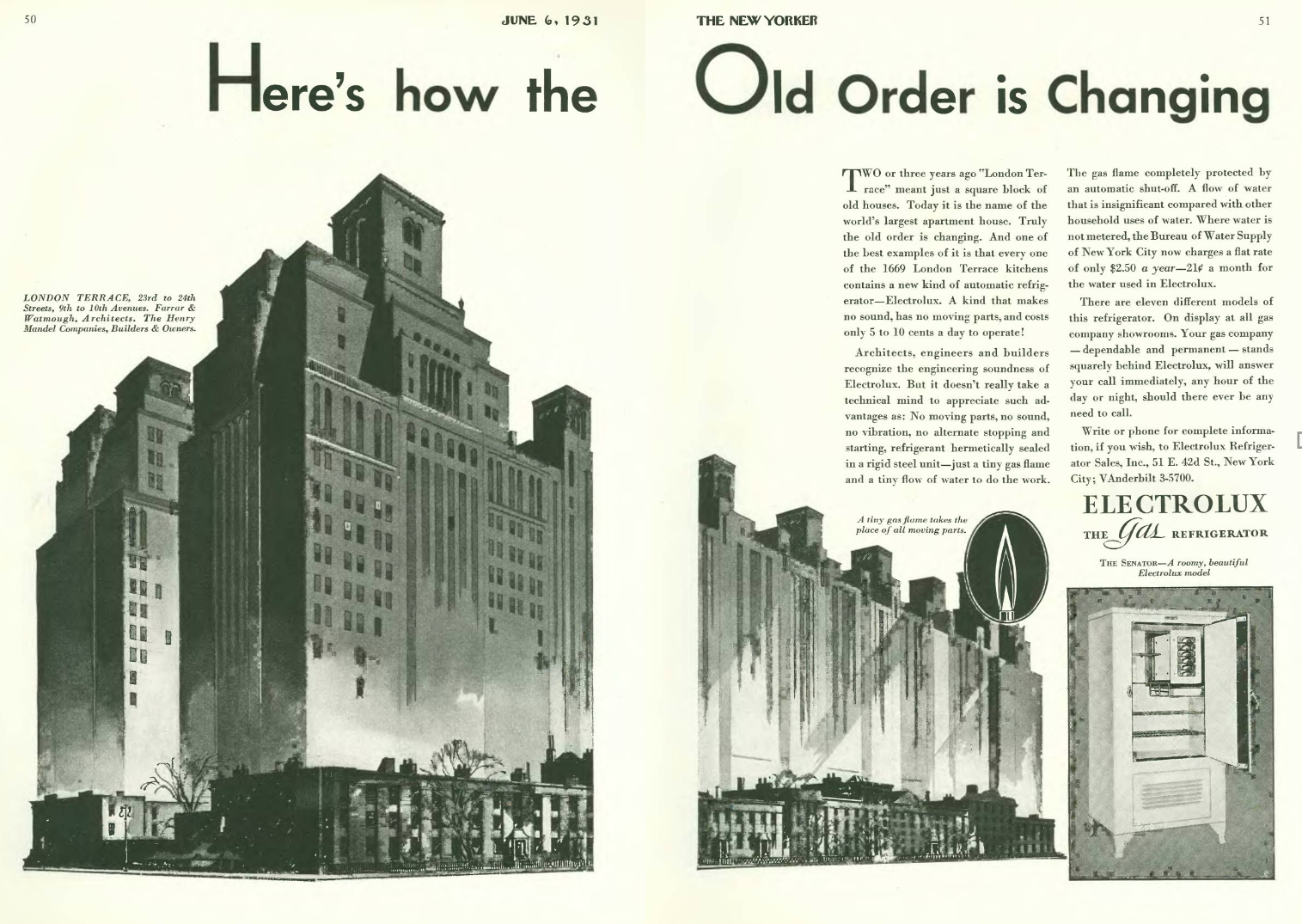
…Walking east on 24th Street past Chelsea’s London Terrace and on to Madison Square Park is one of my favorite strolls in Manhattan…there is something almost cozy about walking by this massive building, once the largest apartment house in the world…Electrolux found it impressive enough to pair it with their latest model refrigerator…

…a photo of London Terrace I took in December…

…on to our cartoons, we begin with Otto Soglow’s Little King…

Richard Decker gave us another familiar comic trope, the postman and the housewife…

Helen Hokinson eavesdropped on some small talk…

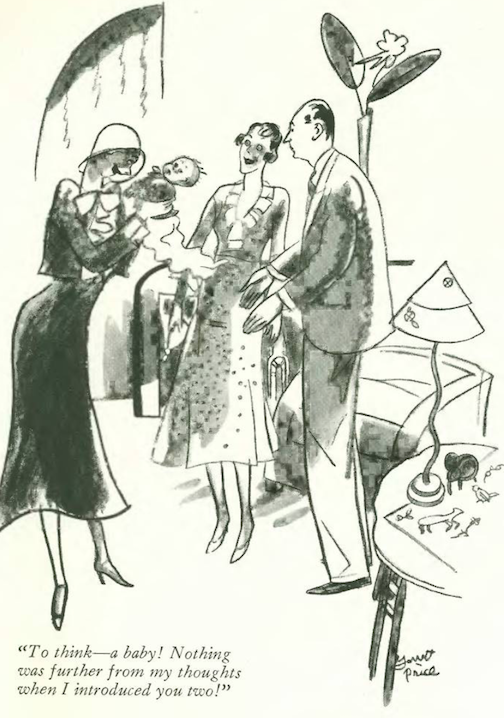
Garrett Price explored the joys of parenthood…
…and we close with Peter Arno’s unique take on family life…

Next Time: Rooftop Romance…

Risky Business

The Irish American gangster JackLegsDiamond was often referred to as the “clay pigeon of the underworld” due to surviving several attempts on his life.

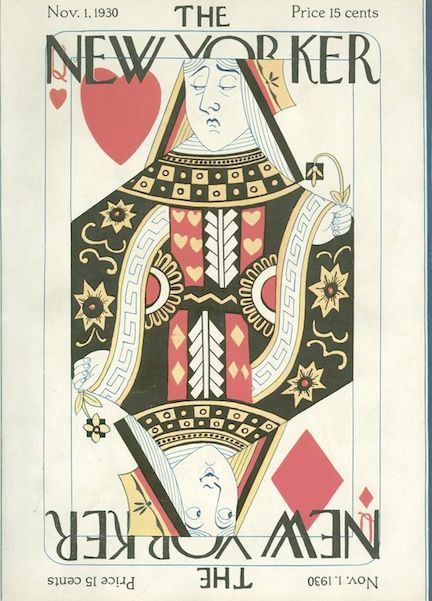
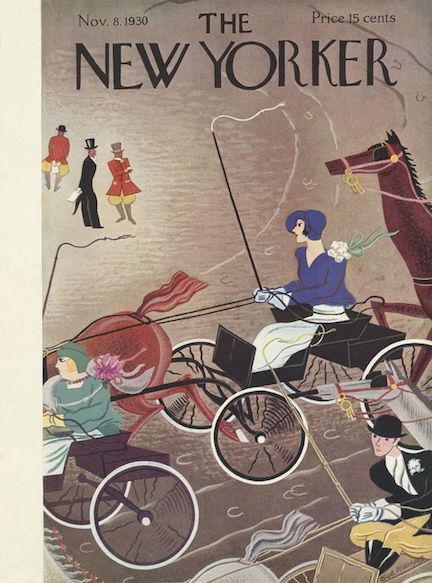
Nov. 1, 1930 cover by Rea Irvin.

In his “Reporter at Large” column, Morris Markey checked up on the fleet-footed bootlegger, adored by the public for his various brushes with the law and escapes from sure death. In his opening paragraph, Markey referred to one of the attempts on Diamond’s life: On October 12, 1930, he survived being shot five times at Manhattan’s Hotel Monticello:

Markey’s column attempted to remove some of the glamour from Diamond’s flamboyant life, a life that would be cut short about a year later in an Albany rooming house…

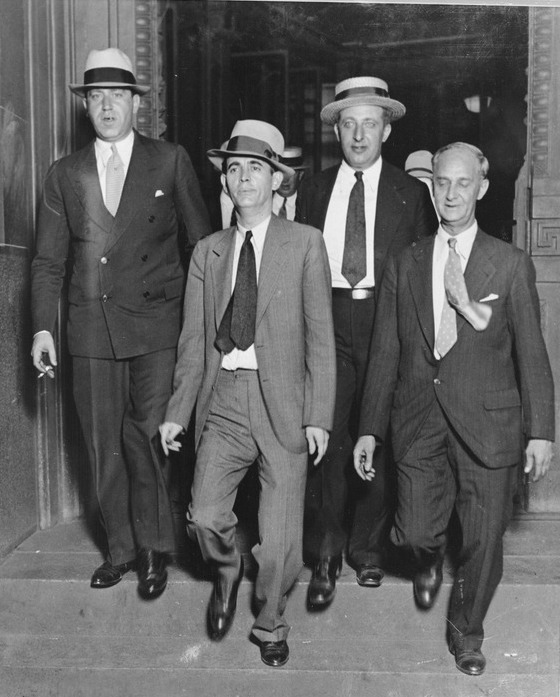
OUT WITH THE BOYS…Legs Diamond leaves the federal court in New York with his attorney and a couple of cronies on Aug. 8, 1931, after being convicted of owning an unlicensed still and conspiring to violate Prohibition laws. (digitalcommonwealth.org)
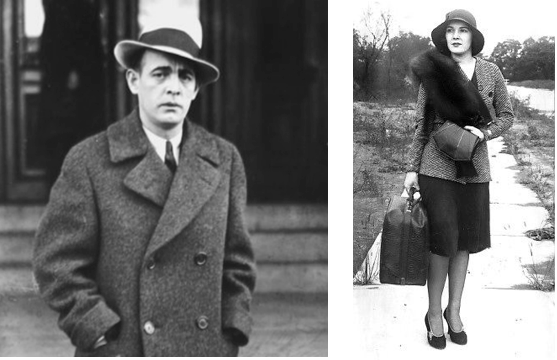
BEDFELLOWS…Legs Diamond had a number of mistresses, but the best known was Marion “Kiki” Roberts, who was with Diamond shortly before he was slain. (The Mob Museum/Pinterest)
DEADLY TRIO…Clockwise, from top left, Legs Diamond is comforted by his wife, Alice Kenny Diamond, after being shot three times at a roadhouse near Cairo, NY, on April 27, 1931. His enemies finally succeeded in killing him on Dec. 18, 1931, shooting him three times in the back of the head in an Albany rooming house. Alice would be shot and killed less than two years later, possibly by Diamond’s enemies to keep her quiet. And sadly, The New Yorker’s “Reporter at Large” columnist Morris Markey would also meet a violent end, dying of a gunshot wound to the head in 1950. Whether it was by his hand or another’s, it was never determined. (Albany Archives/NY Times)

An afternote: Enemies would finally catch up to Legs Diamond and kill him on Dec. 18, 1931. Diamond’s wife, Alice Kenny Diamond, would be shot and killed less than two years later. Diamond’s mistress and former Ziegfeld Follies performer Marion “Kiki” Roberts would return to the stage and cash in on her notoriety. In 1937 it was reported she was the big draw in a touring “Crazy Quilt” burlesque revue. And according to the writer William Kennedy, who wrote about Diamond in his 1975 novel Legs, the last record of Kiki Roberts was in Boston in the 1940s, where “she was still appearing as ‘Jack (Legs) Diamond’s Lovely Light o’ Love.’ ”

Here is newsreel footage of Diamond’s mistress Marion “Kiki” Roberts, shortly after the gangster’s death. In this brief interview with a Boston reporter (and with her mother at her side) Roberts advises girls to “live good clean lives and obey their parents wishes.” Note how it appears she is reading from cue cards.

 *  *  *

Chitty Chitty Bang Bang

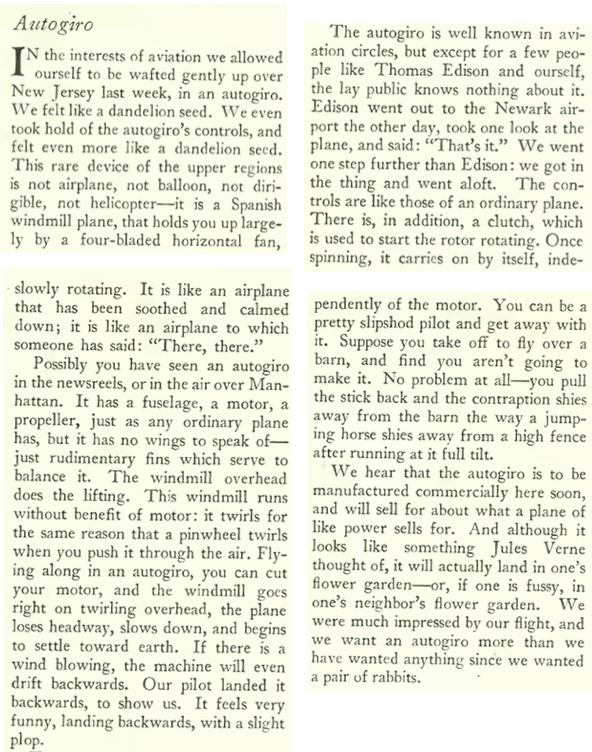
A precursor to the helicopter, the autogyro was considered by many to be the next logical step in aircraft development, and especially in the development of smaller craft that could serve as safe, affordable transportation options for commuters. The New Yorker’s E.B. White, an aviation enthusiast, demonstrated to readers the wonders of this aircraft:

EASY AS PIE…A Cierva Autogiro C30 takes flight circa 1933. (findmypast.co.uk)

 *  *  *

Baker’s Big Show

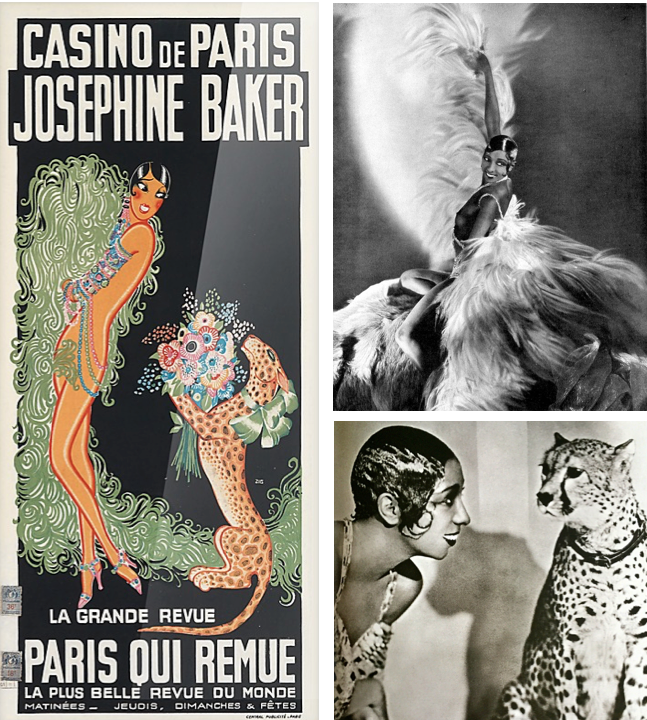
Nineteen-year-old American-born French entertainer Josephine Baker became an instant symbol of Jazz Age Paris when she starred in La Revue Nègre in October 1925. Her erotic dance routines wowed Paris audiences, and she quickly moved on to the famed Folies Bergère. In 1930 she opened a new show at the Casino de Paris that also featured her pet cheetah, Chiquita. The New Yorker’s Janet Flanner was there to take it all in:

HEAR THE THUNDER…Nineteen-year-old Josephine Baker took Paris by storm when she appeared in La Revue Nègre at the Théâtre des Champs-Élysées in October 1925. (harleminmontmartre.paris/artphotolimited.com)
HEAR ME ROAR…The New Yorker’s Janet Flanner was wowed by Josephine Baker’s newest show at the Casino de Paris that also featured her pet cheetah, Chiquita. (pictorem.com/vam.ac.uk/artphotolimited.com)

 *  *  *

Grim Reminder

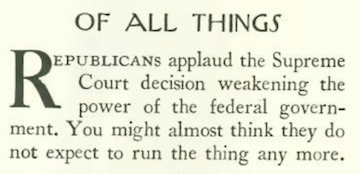
Despite the deepening Depression across the country, few mentions of it were made in the pages of The New Yorker. Howard Brubaker, in his “Of All Things” column, offered this not-so-gentle reminder:

 *  *  *

From Our Advertisers

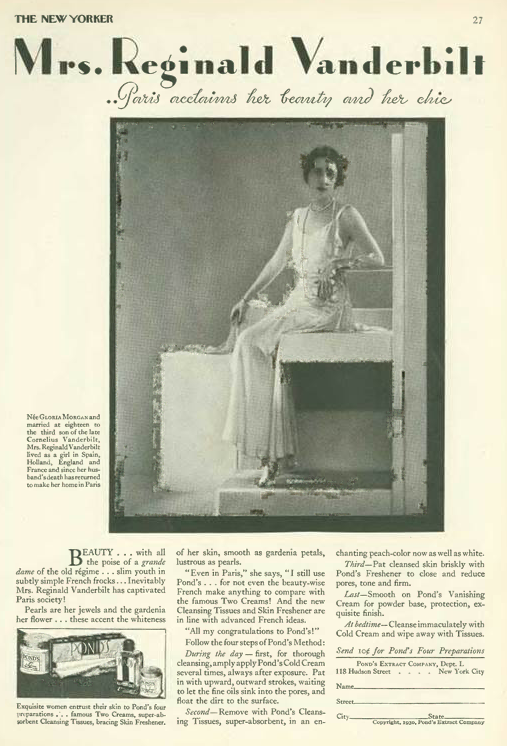
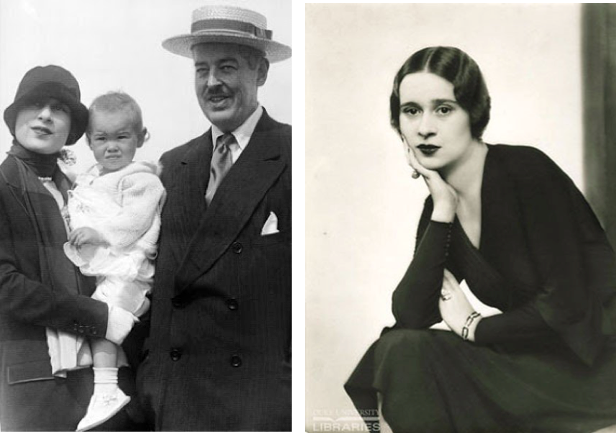
We feature Gloria Morgan Vanderbilt, a Swiss-born American socialite shilling for Pond’s cold cream. At the time of this ad she was the mother of six-year-old Gloria Vanderbilt (who would become a famous fashion designer and artist and the mother of CNN’s Anderson Cooper)…

POOR LITTLE RICH GIRLS…Gloria Morgan Vanderbilt and her husband, Reginald Claypoole Vanderbilt with daughter Gloria, circa 1924-25. Reginald died in 1925, and a famous custody battle over little Gloria (who recently died at age 95) would take place in 1934. At right, portrait of Gloria Morgan Vanderbilt by Dorothy Wilding, 1933. (Perkins Library, Duke University)

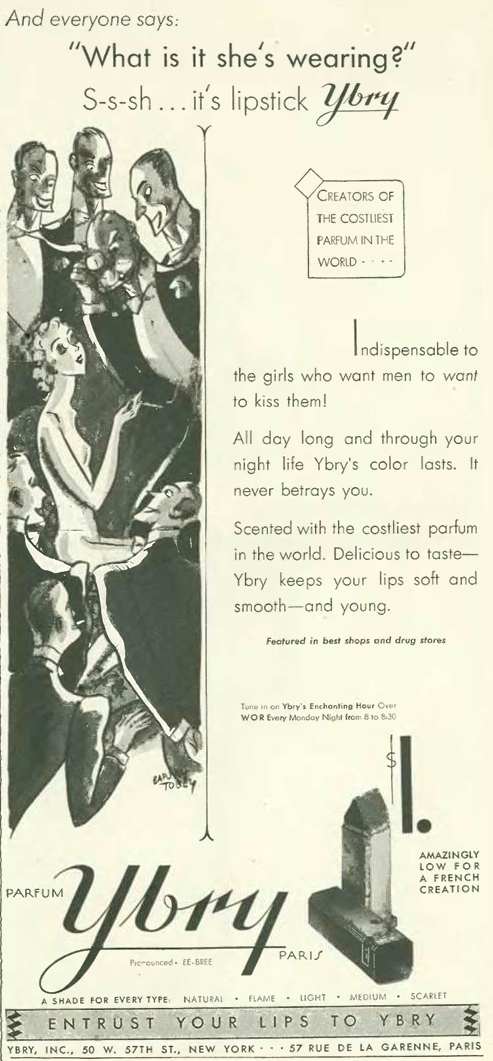
…the makers of Ybry lipstick apparently did not have the budget to garner a patrician endorsement, so they settled for this illustration by New Yorker cartoonist Barney Tobey

…and we have another lovely color ad from R.J. Reynolds, once again linking cigarettes to athletic prowess…

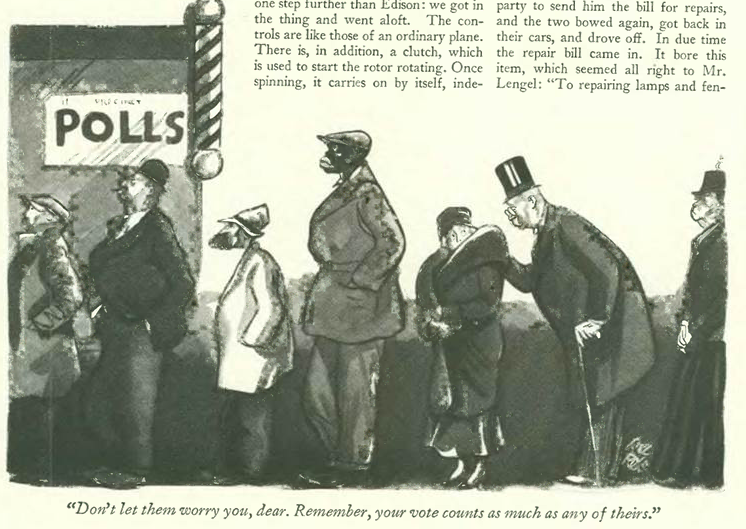
…on to our cartoons, we mark election season with Carl Rose

Barbara Shermund explored the generation gap…

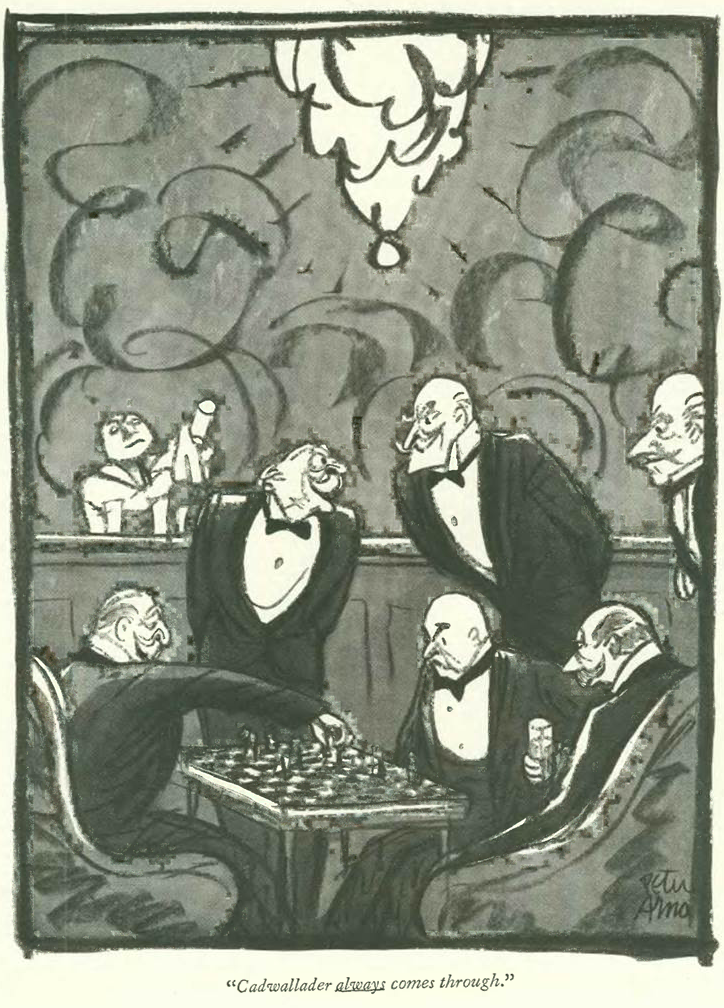
Peter Arno gathered his sugar daddies for a game of chess…

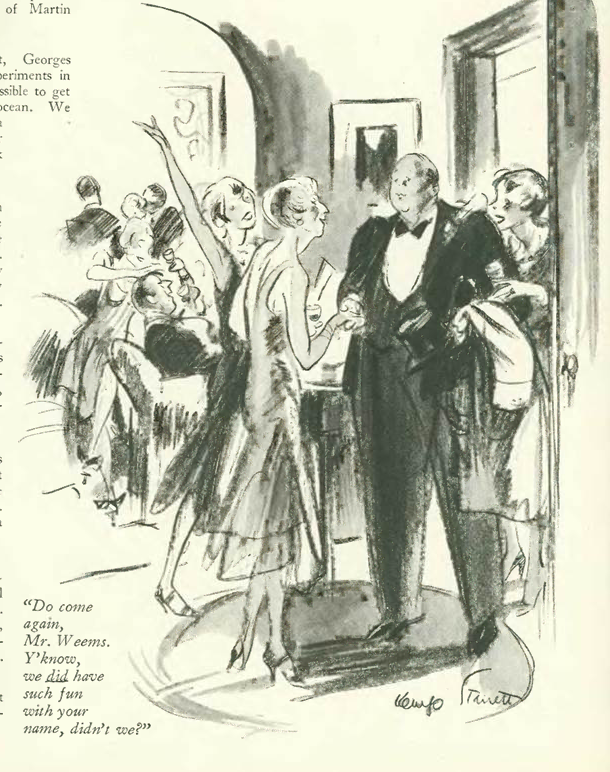
Kemp Starrett introduced us to an unlikely life of the party…

Alan Dunn examined the influences of popular cinema…

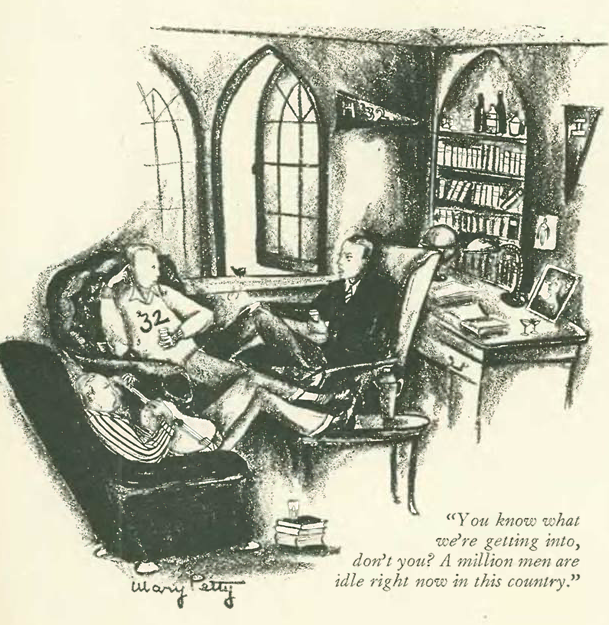
Mary Petty gave us an Ivy League perspective of the Great Depression…

…and Arno again, with a cartoon that was featured along with The New Yorker’s “Wayward Press” column…

Next Time: Body and Soul…


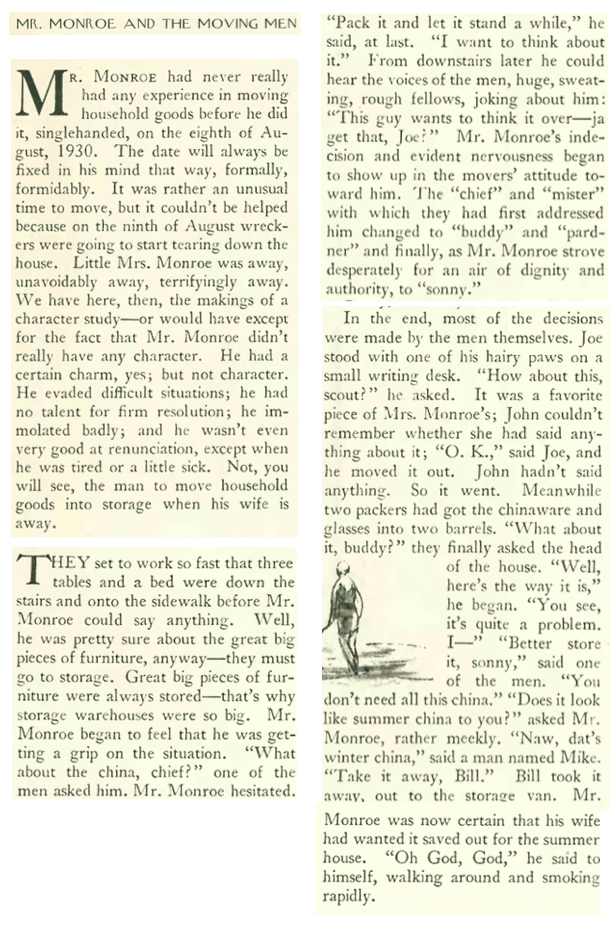
The Woes of Mr. Monroe

Whether probing the battle of sexes or exposing the secret lives of daydreamers like Walter Mitty, James Thurber (pictured above) had a knack for revealing the frustrations and various tics that plagued ordinary people.

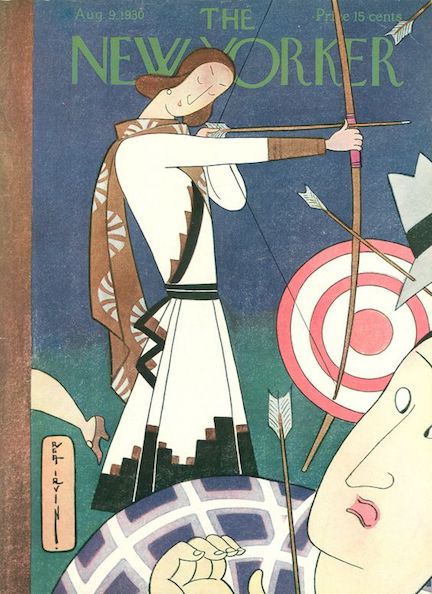
Aug. 9, 1930 cover by Rea Irvin.

That included the fictional John Monroe, whom Thurber placed in various awkward situations in a series of humorous stories, including this encounter with some moving men that required the rather inept Monroe to make a series of decisions usually left to his wife, Ellen. Some excerpts from the Aug. 9 issue:

ODD COUPLES…Sue Randall and Orson Bean portrayed Ellen and John Monroe on a 1961 episode of The DuPont Show with June Allyson. (findagrave.com/Wikipedia)
…a decade later, William Windom, left, and Joan Hotchkis portrayed John and Ellen Monroe on the Thurber-inspired (and award-winning) NBC comedy My World and Welcome to It (1969-70). (TV Guide)

 *  *  *

Beats the Heat

In the hot August of 1930, film critic John Mosher probably found the air-conditioned theaters to be the best feature of the cinema, given the generally mediocre quality of the summer movies. Mosher also noted the new trend of adapting Broadway plays to the screen, a practice that continues to this day.

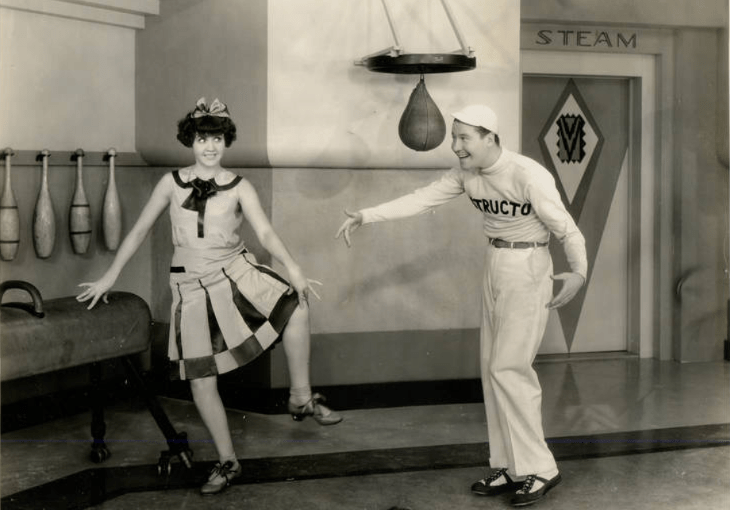
THE SOUND OF 1930…Joan Crawford (left) examines a boom microphone on the set of Our Blushing Brides. Although most films were produced with sound in 1930, it was still something of a novelty to actors who began their careers in the silent era; at right, Douglas Fairbanks Jr. and Anita Page in Little Accident. (IMDB)

 *  *  *

From Our Advertisers

Well, who doesn’t love a whole chicken in jar, ready to “fry or cream” in just 20 minutes? This was actually a big deal in 1930, given that chicken dinners were not as common back in the days before factory farms and Chick-fil-A…

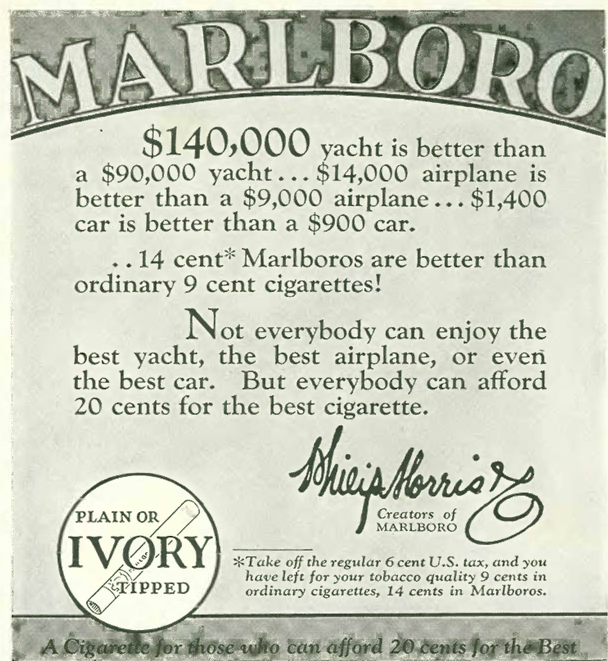
…the makers of Marlboro cigarettes abandoned their essay and penmanship contests and took another direction with their drab, back-page ads, appealing to a vague sense of status in the prospective smoker…

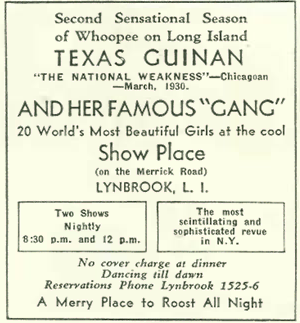
…this sad little bottom-of-the-page ad enticed readers to take a drive in the country to see Texas Guinan and her “Famous Gang” still whooping it up like it was 1925. The venture was short-lived…

…on to our cartoons, Peter Arno looked in on nightlife in the city…

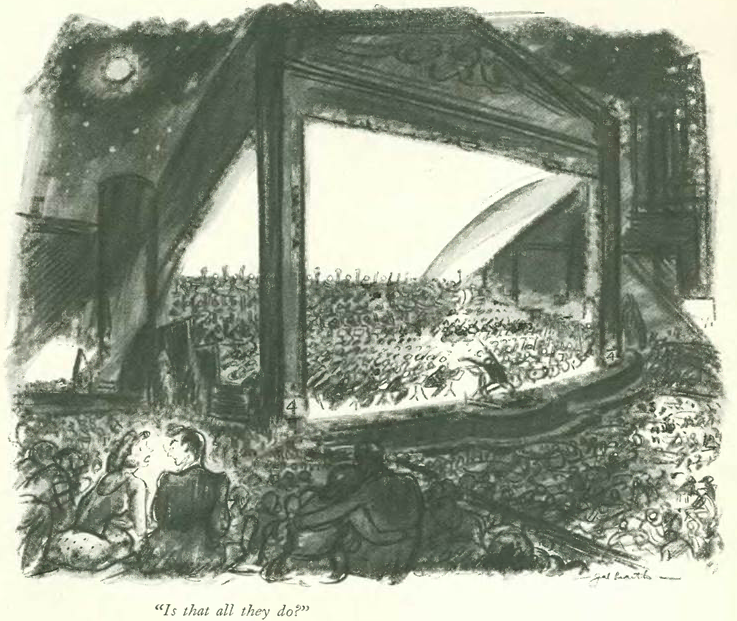
William Crawford Galbraith took in an outdoor concert…

Ralph Barton offered his comic skills to a glimpse of domestic life…

Garrett Price observed some boaters on an outing that would be frowned upon today (or at least I hope so)…

…and Constantin Alajalov examined the pitfalls of modern art…

 *  *  *

Speaking of art, we move on the Aug. 16, 1930 issue…

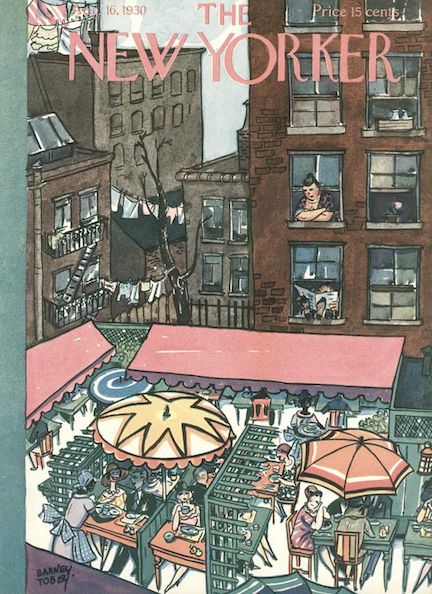
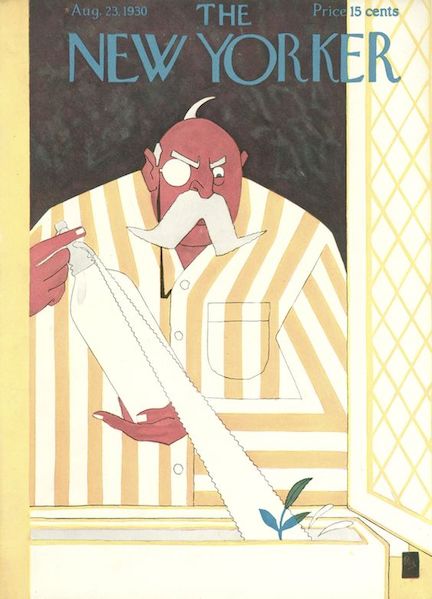
Aug. 16, 1930 cover by Barney Tobey.

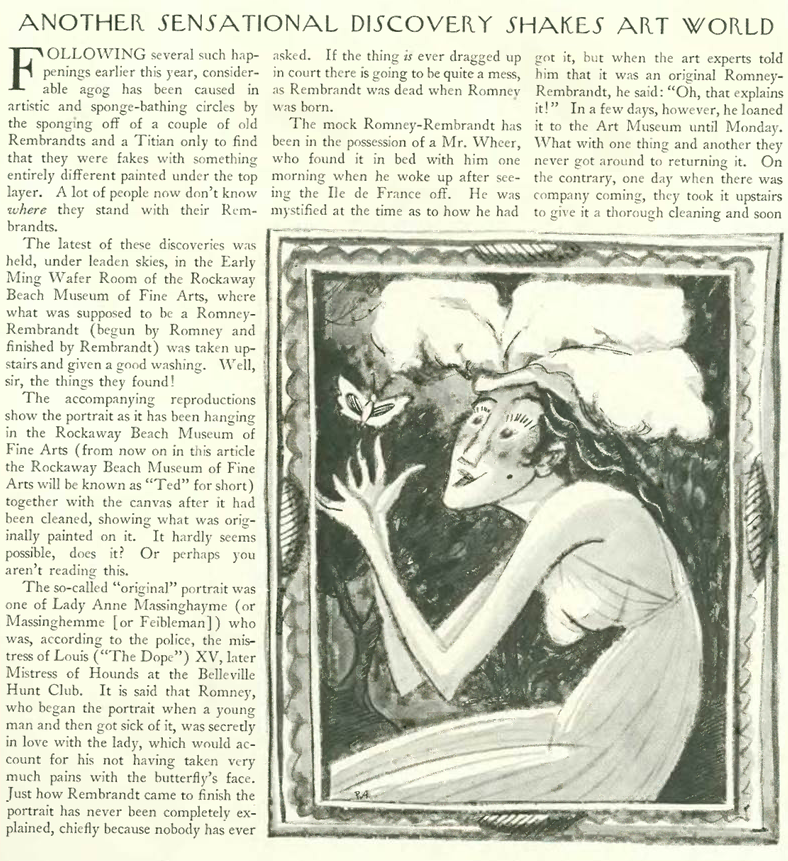
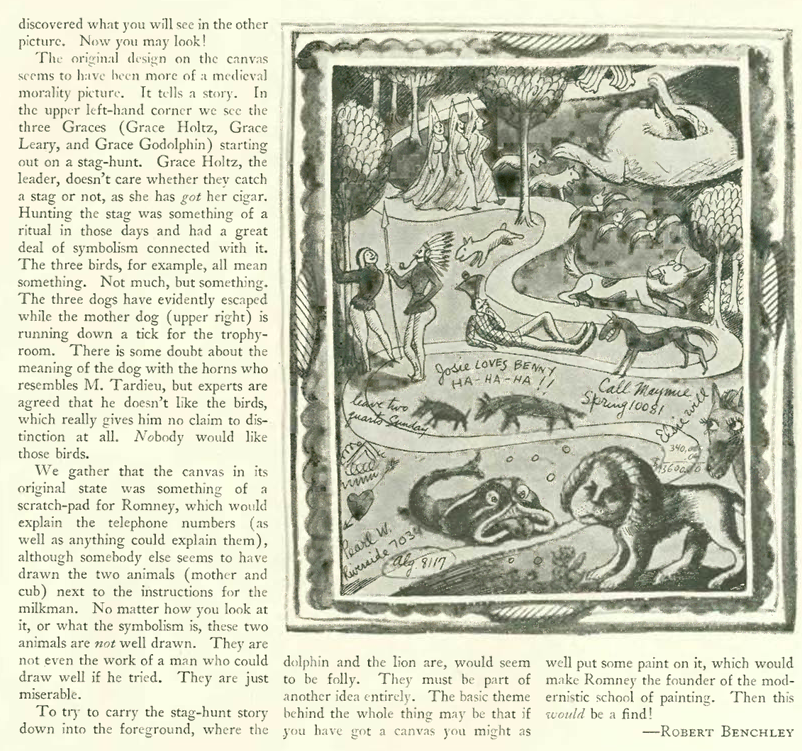
…in which Robert Benchley has fun with the foibles of the art world…

 *  *  *

Rough Riders

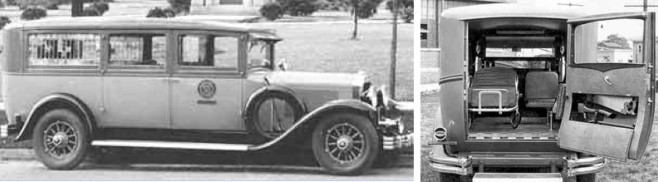
In his “Reporter at Large” column, Morris Markey looked in on the working world of one chain-smoking ambulance driver…some excerpts…

SLIDE ‘EM IN…1930s Flexible ambulance and its rather cramped interior. (coachbuilt.com)

 *  *  *

From Our Advertisers

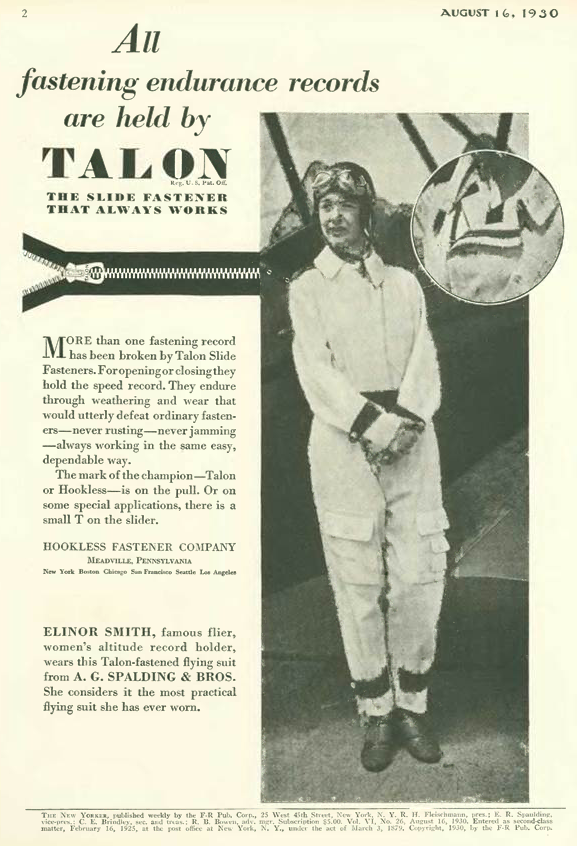
Hard to believe that zippers were a novel invention just 90 years ago…in this ad from the leading manufacturer, Talon, this “hookless” wonder was still referred to as a “slide fastener”…

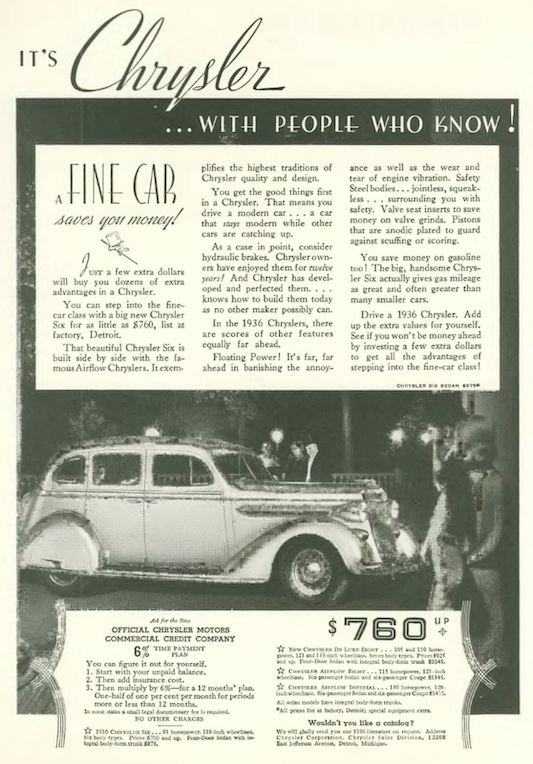
…the Chrysler Corporation was never the biggest car company in America, but it was always known as a leader in both technology and design, as in these graceful lines that flowed over its new “Straight Eight” models…

…the makers of Camel cigarettes continued to push their product as a sound way to stay fit and trim…

…in the cartoons for Aug. 16, this drawing by Peter Arno appeared for the fifth time in the magazine, always with a different caption (the others appeared in three consecutive issues — June 5, 12 and 19, and on Aug. 2, 1930)…

William Crawford Galbraith detected some wet vs. dry tension at the country club…

Ralph Barton returned with another full-page illustration of a weekend domestic scene…

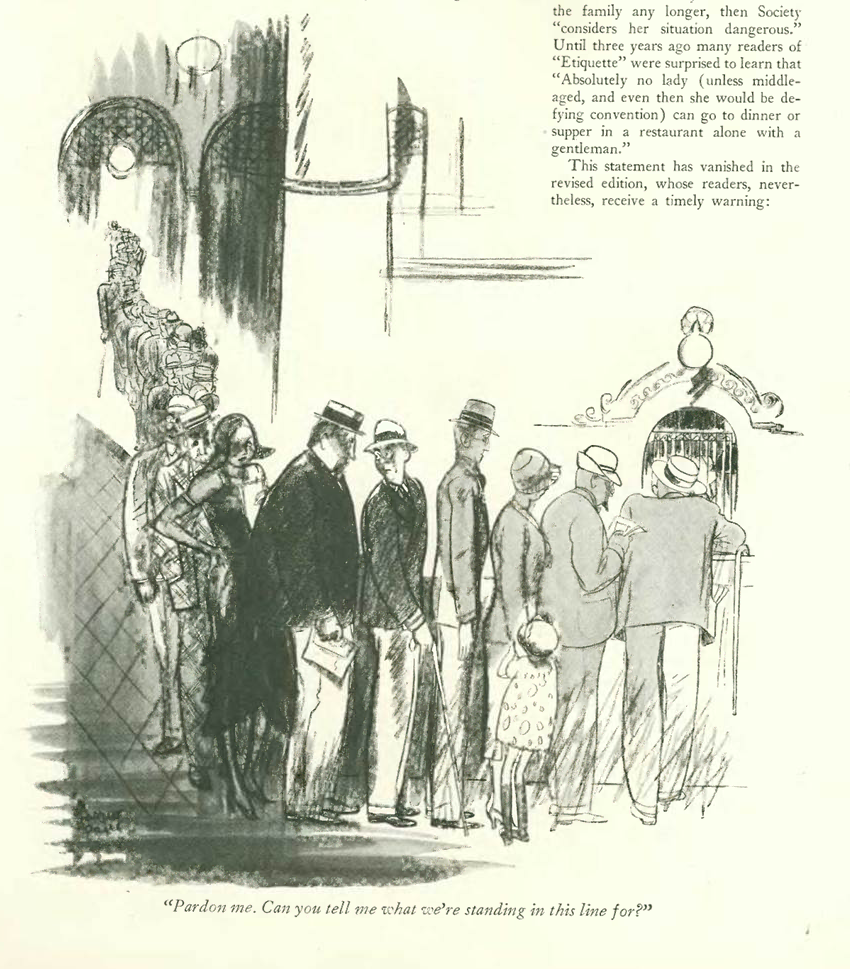
Garrett Price found confusion in a lengthy queue…

…and Kemp Starrett gave us a bird’s eye view of a future New Yorker…

Next Time: Hell’s Angels…

Paramount on Parade

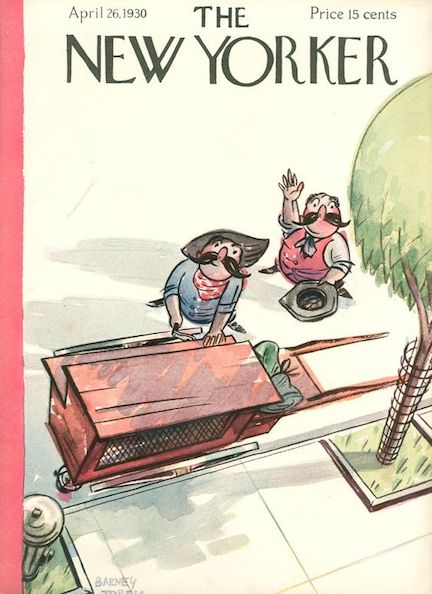
Before we launch into the latest offering from Tinseltown, a note about the cover artist for the April 26, 1930 issue.

April 26, 1930 cover by Barney Tobey.

Barney Tobey (1906-1989) was known for gently humorous cartoons that appeared in The New Yorker for more than fifty years. He also contributed four covers, the first of which appears above. In the Sept. 21, 1998 issue, illustrator Richard Merkin offered this remembrance:

*  *  *

Star-spangled Banter

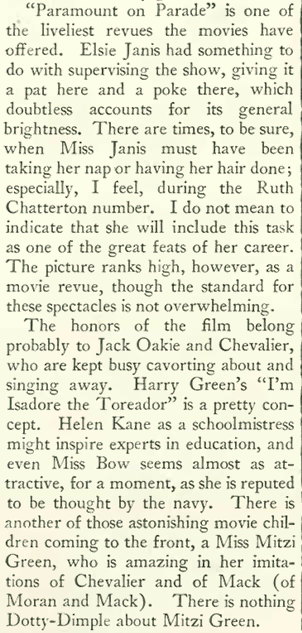
All-star musicals were all the rage in the early sound era, as they gave studios the opportunity to showcase contract players (who were virtually owned by the studios) doing things they usually didn’t do on screen. Following the success of MGM’s Hollywood Revue of 1929, Paramount Studios released Paramount on Parade in April 1930, much to the liking of New Yorker critic John Mosher, who also praised the film’s accompanying cartoon, 1929’s The Prisoner’s Song:

You can watch Max Fleischer’s The Prisoner’s Song here (and ponder how far animation has advanced)…

Mosher also praised a number of Paramount’s contract players, and especially actors Jack Oakie and Maurice Chevalier

MUCH ADO…A great crowd gathers for the premiere of “Paramount on Parade” at the New York’s Rialto Theatre in April 1930. (cinematreasures.org)
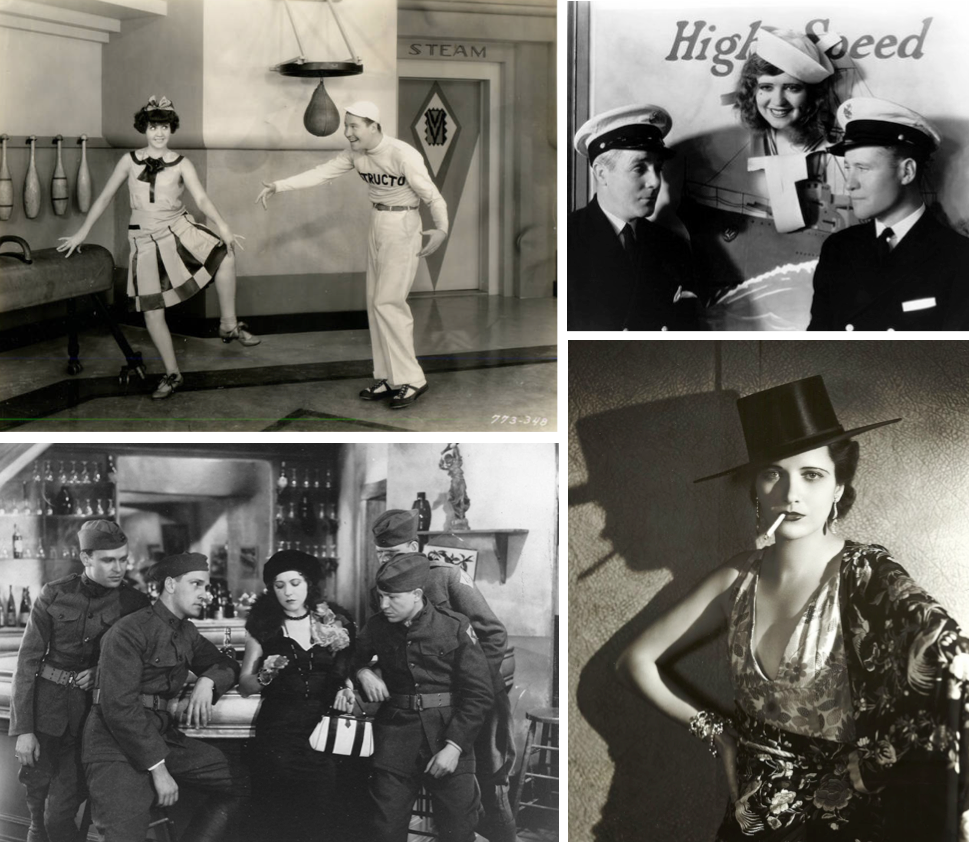
SEEING STARS…Clockwise, from top left, Helen Kane (possibly the inspiration for the cartoon character “Betty Boop”) and Jack Oakie do a little footwork; Clara Bow, Hollywood’s “It Girl,” pops through a Navy recruitment poster at the beginning of her song and dance number (with Stuart Erwin and Richard ‘Skeets’ Gallagher); one of Hollywood’s top actresses in 1930, Kay Francis, portrays “Carmen” in the revue; Ruth Chatterton entertains doughboys Stuart Erwin, Fredric March, Jack Oakie, and Stanley Smith in Paramount on Parade. (IMDB)
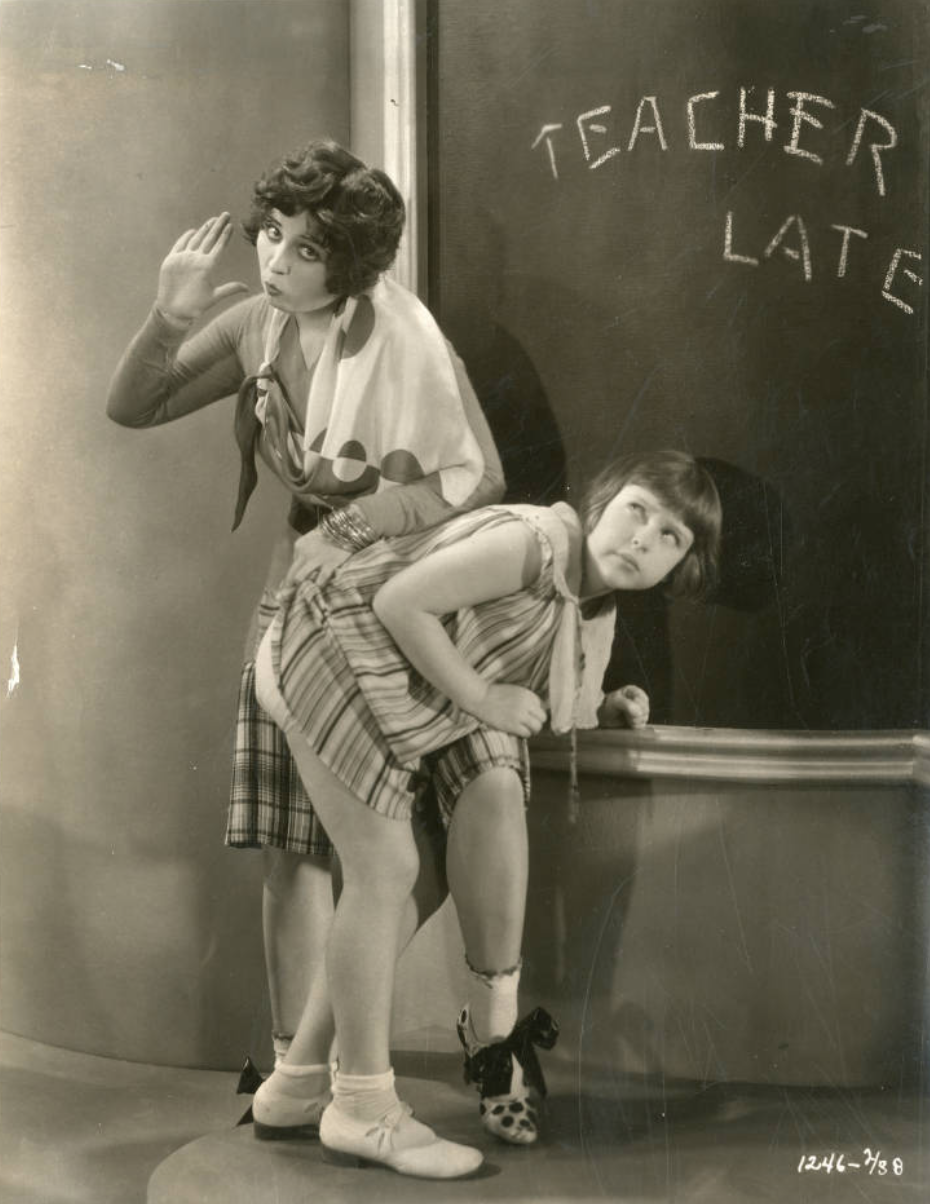
BOOP GIVES A BOP…Helen Kane (left) and child star Mitzi Green in a sketch from Paramount on Parade. (IMDB)

 *  *  *

Lost In the Crowd

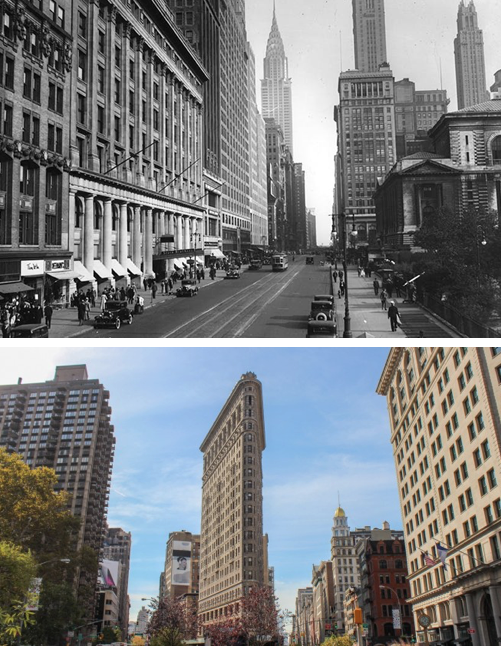
In his “Notes and Comment,” E.B. White lamented the fact that the world’s tallest building appeared less than lofty, since neighboring skyscrapers were nullifying its grandeur:

DOWN IN FRONT…E.B. White found the streetview of the world’s tallest building wanting after it was completed in 1930; the iconic Flatiron Building, however, enjoys some elbow room even today. (spectator.co.uk/walksofnewyork.com)

 *  *  *

Full of Hot Air

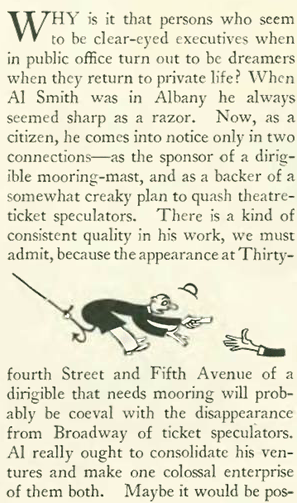
That was another opinion shared by E.B. White, this time regarding the Empire State Building’s top promotor, former New York Governor Al Smith, who spoke of plans to attach a mooring mast to the top of his skyscraper (which would eclipse the Chrysler as the world’s tallest in 1931):

*  *  *

View From the Top

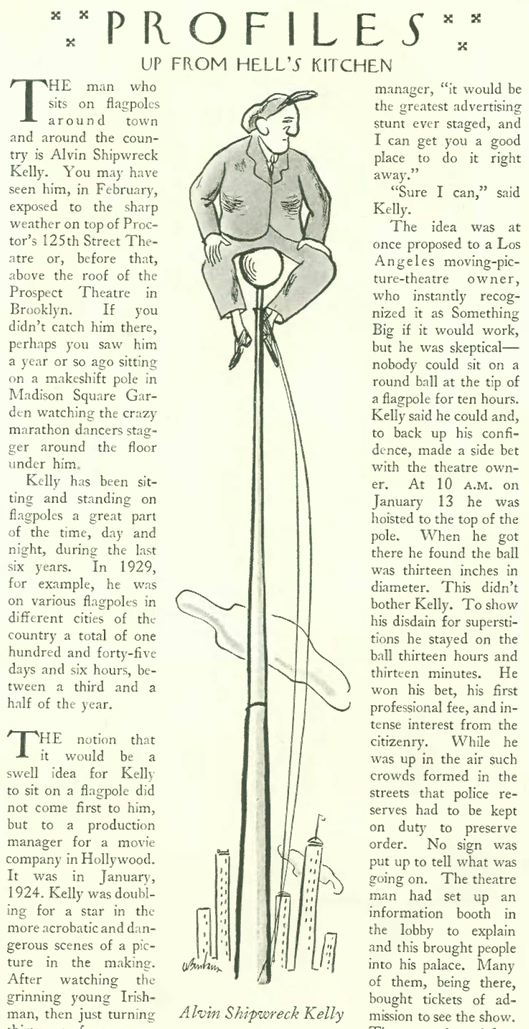
The New Yorker featured a profile of Aloysius Anthony Kelly (1893?-1952), better known as the Roaring Twenties most famous pole-sitter, “Shipwreck” Kelly. He achieved his greatest fame in the 1920s and 1930s, sitting for days at a time on elevated perches — often atop buildings — throughout the U.S.

Kelly’s fame was already on the wane when this profile appeared, and by 1934 he was reportedly working as a dance hall gigolo. Kelly’s last flagpole stunt was at a 1952 event sponsored by a Lion’s Club in Orange, Texas — he suffered two heart attacks while sitting atop their 65-foot flagpole. After climbing down he announced, “This is it. I’m through.” He died one week later after he was struck by car on West 51st Street in Manhattan.

LOFTY AMBITIONS…Alvin ‘Shipwreck’ Kelly atop a flagpole near College Park, Maryland, in October 1942. At right, undated photo circa 1940s. (CSU Archives/Digital Commonwealth)

 *  *  *

Brand X

Folks were still abuzz about the discovery of a ninth planet in the solar system, soon to be dubbed “Pluto” by an English schoolgirl. Howard Brubaker, in “Of All Things,” observed…

…and Carl Kindl illustrated the problem a new planet posed for astrologers…

 *  *  *

I Beg Your Pardon

Will Rogers was a beloved comedian with a few rope tricks up his sleeve, but I’ve never known him for working blue. However, one critic for The New Yorker (“A.S.”– not sure who this is) found Rogers’ new radio show both humorless and gauche…

CAN YOU TAKE A JOKE?…In photo above, Will Rogers debuts his new radio show in April 1930. It would become the most popular Sunday evening radio show, and Rogers would prove to be the second biggest motion picture box office draw in the U.S. before his death in 1935. (Will Rogers Memorial Museum)

 *  *  *

Before He Got Axed

Ten years before he was murdered by one of Stalin’s NKVD agents, Leon Trotsky published an autobiography that was written in his first year of exile in Turkey. The review is signed “G.H.” so I am assuming the author is Geoffrey Hellman, who contributed for decades to The New Yorker’s “Talk of the Town.” Excerpts from the review:

RED ALERT…Leon Trotsky wrote his autobiography, My Life, while exiled in Turkey. (Wikimedia)

 *  *  *

From Our Advertisers

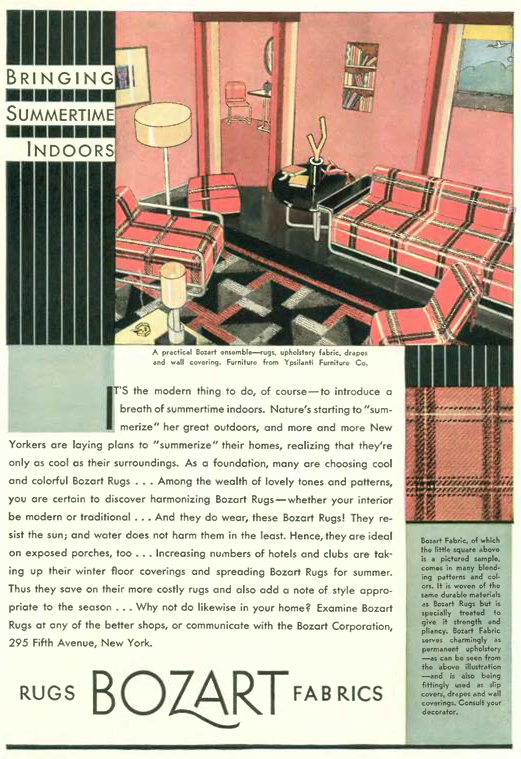
The makers of Bozart rugs and fabrics invited New Yorker readers to “introduce a breath of summertime indoors”…

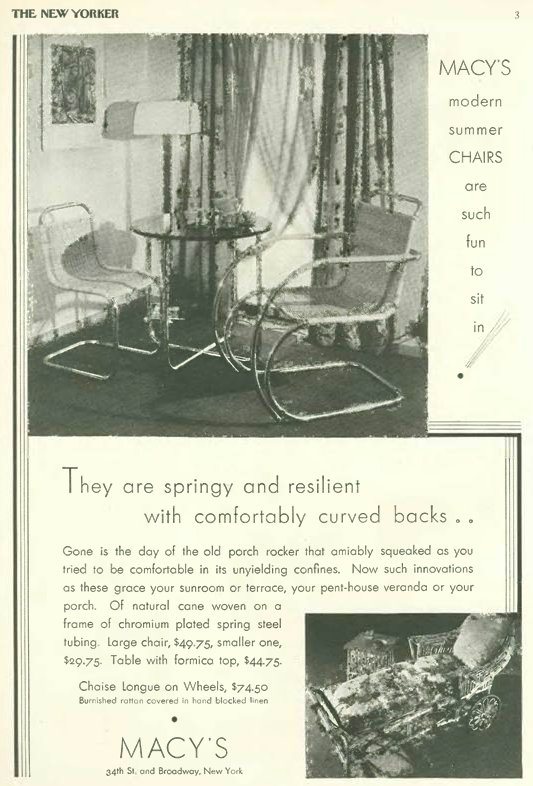
…while Macy’s urged the same by gracing a sunroom or terrace with one of their Marcel Breuer-inspired chairs…

…Colonial Airways touted an early form of radar — an “invisible pilot” — as the latest safety feature in its airplanes…

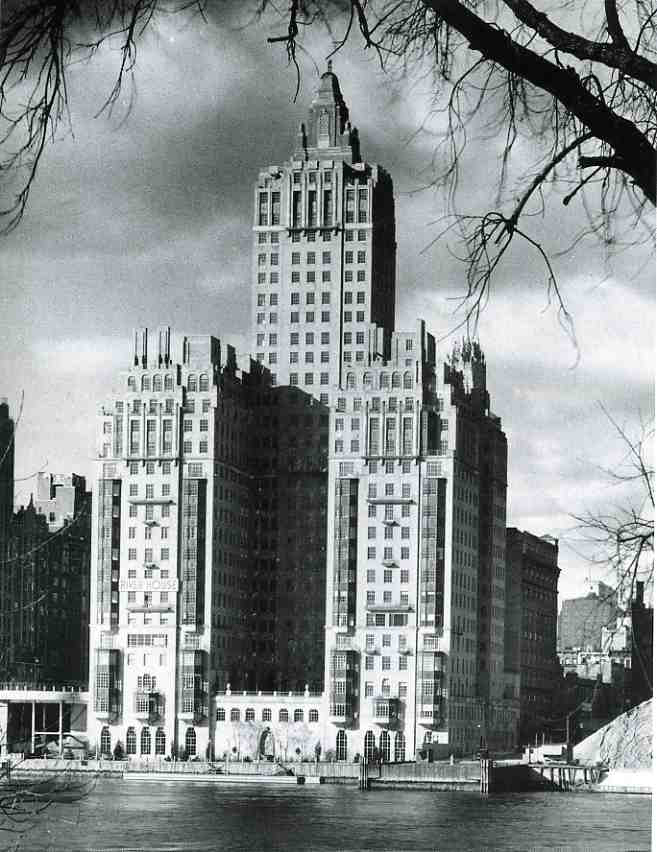
…the Douglas L. Elliman company promoted its yet unbuilt River House, which would feature a pier where residents could dock their yachts…

The 26-story River House in the 1930s. Originally, the Art Deco building featured a pier where residents could dock their yachts, but that feature was lost with the construction of FDR Drive in the early 1950s, effectively sealing the building off from the water. The building has been home to author Barbara Taylor Bradford, US Secretary of State Henry Kissinger, and actress Uma Thurman. (observer.com)

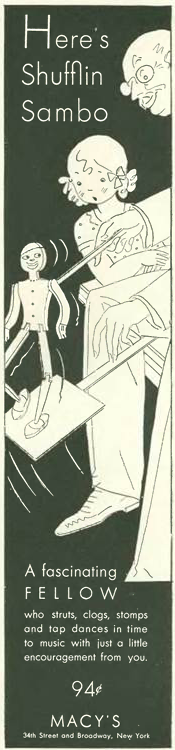
…and then we have our more unfortunate ads, such as this one from Macy’s that shows grandpa passing along his racist tendencies to a grandchild…

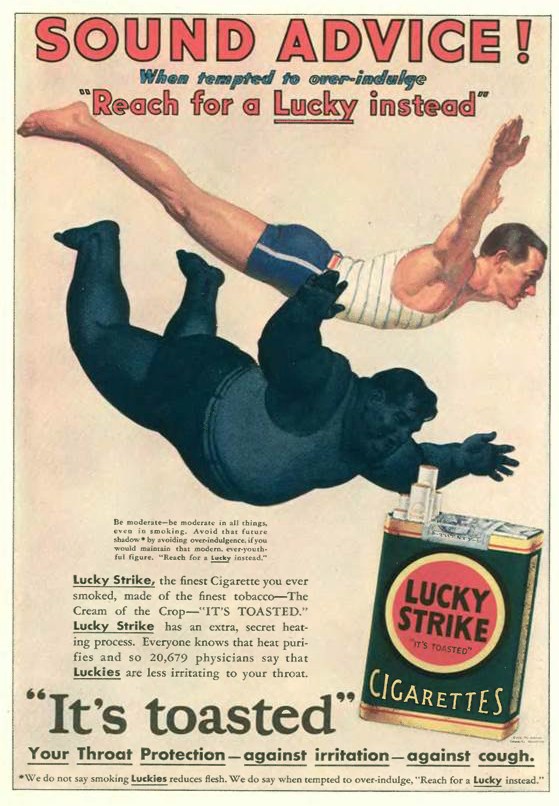
…and this sad appeal from the makers of Lucky Strike to keep puffing and avoid that hideous double chin…

…our cartoons include Garrett Price and thoughts of spring…

Barbara Shermund eavesdropped on tea time…

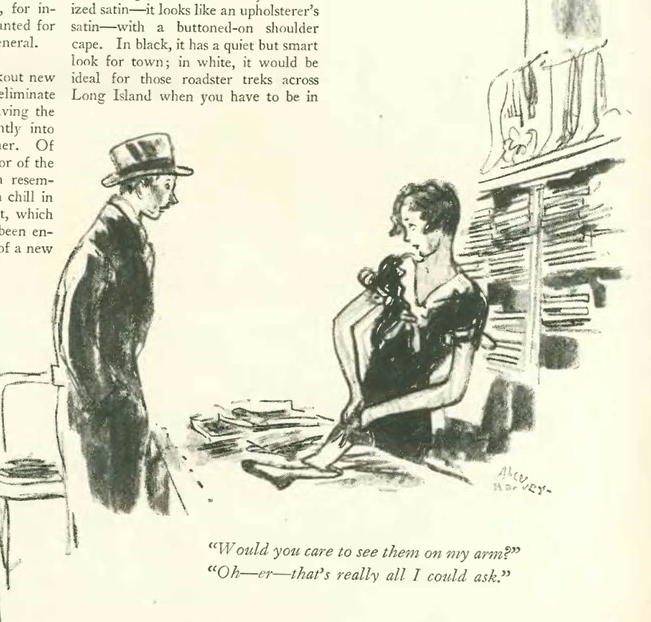
Alice Harvey found an awkward moment in a hosiery department…

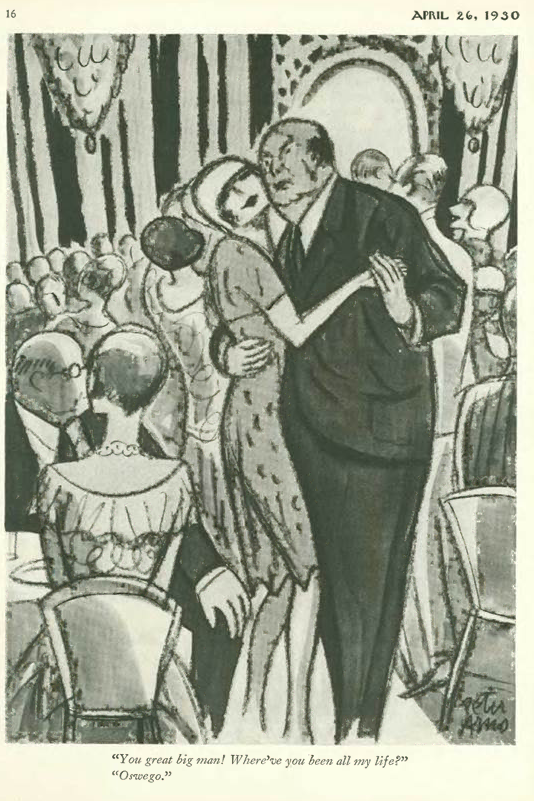
Peter Arno revisits a familiar theme — chorus girls and sugar daddies…

…and Otto Soglow looked in on a fat cat’s moment of pride…

Next Time: Minding the Gap…


  • zeusdvds.com