Through the Looking Glass

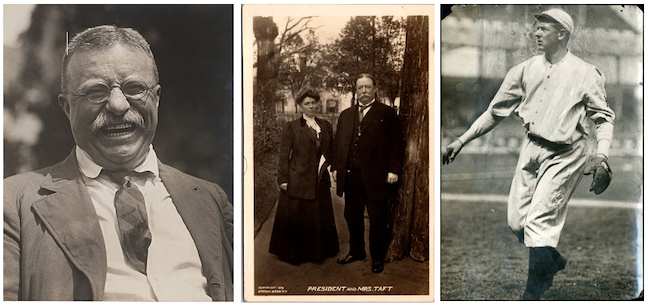
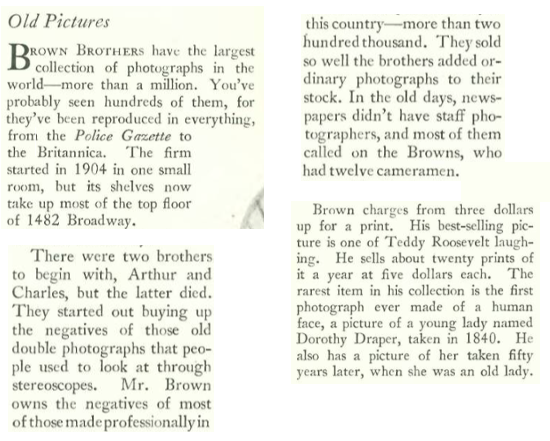
Above, from left: When Teddy Roosevelt announced in 1912 that he would run for president against his former VP, William Howard Taft, Brown Brothers sent photographer Charles Duprez to Oyster Bay to take this famous photo; President Taft and his wife, Helen “Nellie” Taft, in 1909; famed New York Giants pitcher Christy Mathewson warms up before a game, circa 1912. (liveauctioneers.com/cabinetcardgallery.com/psacard.com)

Before there were photo agencies like Magnum or archives such as Getty Images there was a company named Brown Brothers, the world’s first stock photo agency founded by Arthur and Charles Brown in New York City in 1904.

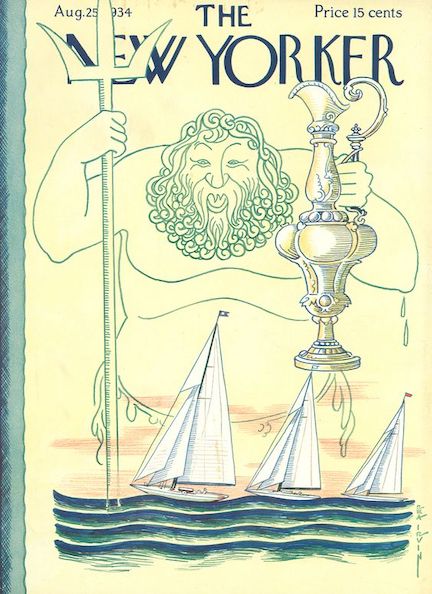
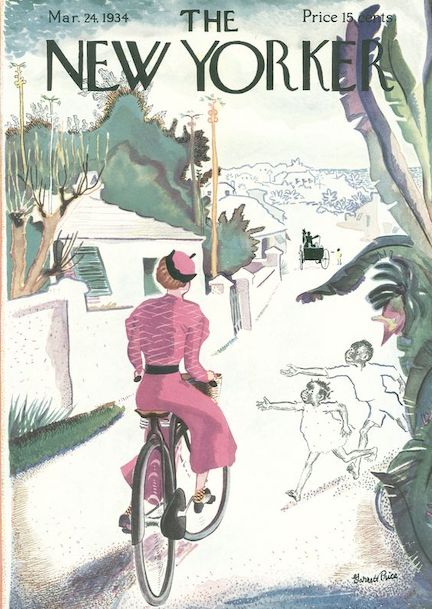
March 24, 1934 cover by Garrett Price.

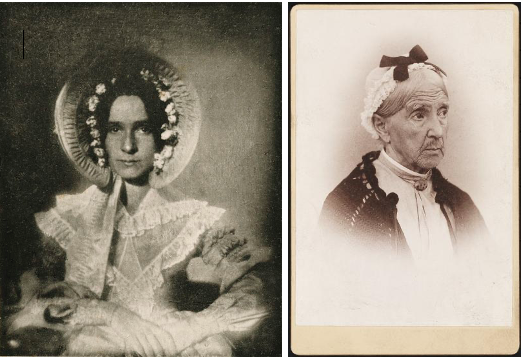
“The Talk of the Town” looked in on Brown Brothers, “the largest collection of photographs in the world—more than a million,” including a famous image of Teddy Roosevelt and the first photographic portrait of a woman’s face.

Brown Brothers photos could be seen everywhere in the early 20th century—their staff of twelve photographers provided images to New York newspapers at a time when the technology for publishing photos in the dailies was in its infancy and most papers didn’t employ staff photographers. Even the venerable New York Times hired the Browns to cover news events until they established their own team of photographers.

LITTLE DID DOROTHY DRAPER KNOW that she would become world famous when she sat for this photo (left) taken by her brother Dr. John W. Draper in his Washington Square studio at NYU in 1839 or 1840. Dorothy had to sit unblinking for the 65-second exposure—apparently her brother dusted her face with white flour to enhance the contrast. The Drapers still go down in history as creators of the oldest photo of a woman; at right, Dorothy Draper in the 1890s, in a photograph taken by her nephew. (boweryboyshistory.com/MCNY)
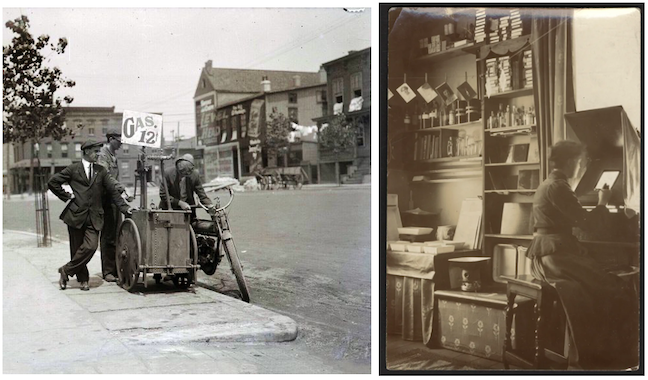
ONE IN A MILLION…The early 20th century image at left is just one of as many as three million images amassed in the Brown Brothers archive; at right, a Brown Brothers archivist at work. (Pinterest/sportscollectorsdigest.com)

Note: The Brown Brothers’ archive of photos and negatives went up for sale in 2014, and was ultimately acquired by Leland’s in 2020.

 * * *

De Terraplane!

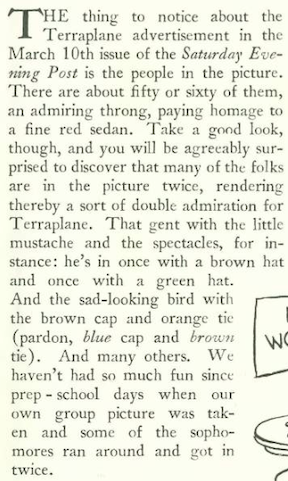
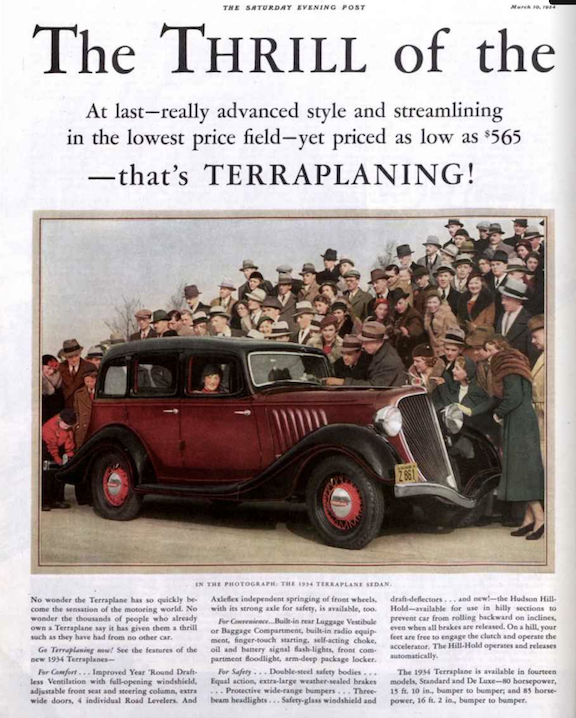
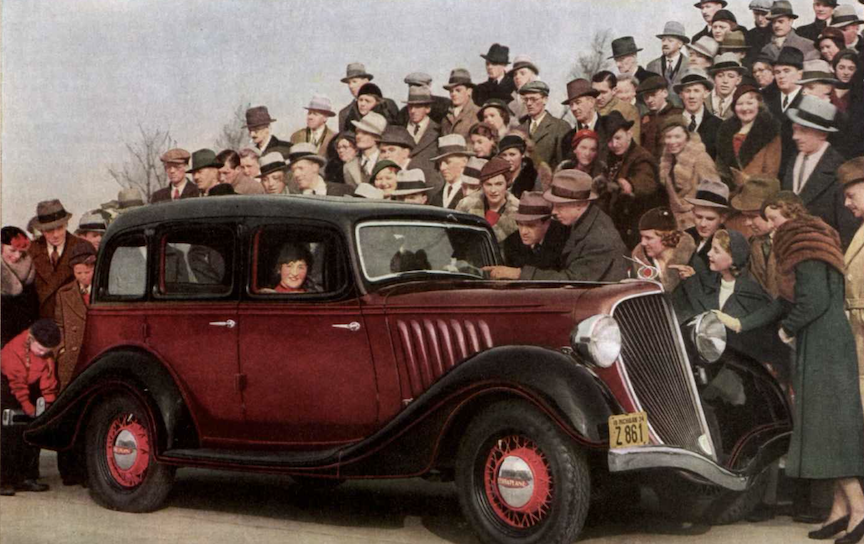
E.B. White (in “Notes and Comment”) was also looking at a photo, or rather scrutinizing one that was featured in a Saturday Evening Post advertisement for Hudson’s Terraplane:

…here is the ad from the Post

…and a closer look at the image, which had White seeing double.

(Both images courtesy The Saturday Evening Post)

 * * *

Escape Artist

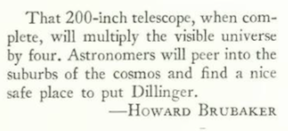
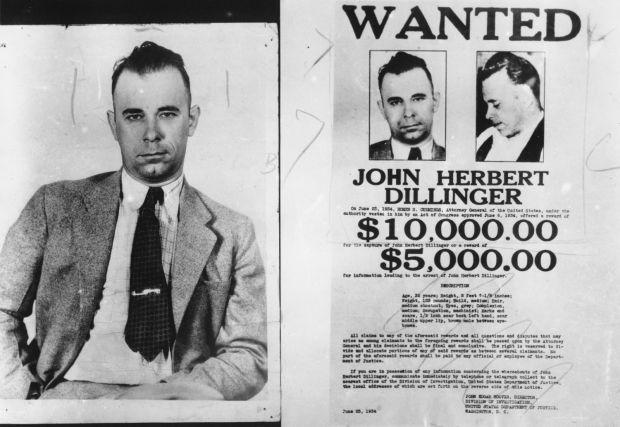
In his “Of All Things” column, Howard Brubaker included the following item about a new telescope, ostensibly to set up a quip about John Dillinger’s recent prison break (his second):

YOUR DAYS ARE NUMBERED…The FBI issued this “Wanted” poster of gangster John Dillinger— “Public Enemy No. 1″—in June 1934. The Feds gunned him down a month later. (AP Photo)

 * * *

Playing Nice

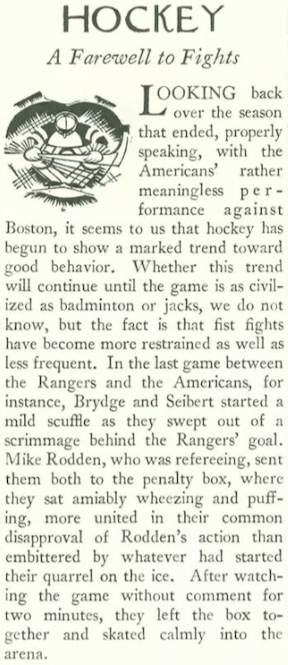
The New Yorker commented on the trend toward fewer fights in the world of hockey, and although fighting in general ebbed a bit through mid-century, it nevertheless remained a staple of the game. Indeed the New York Rangers founder, Tex Rickard, who also promoted boxing at Madison Square Garden, knew quite well that hockey fights were one reason folks attended the games.

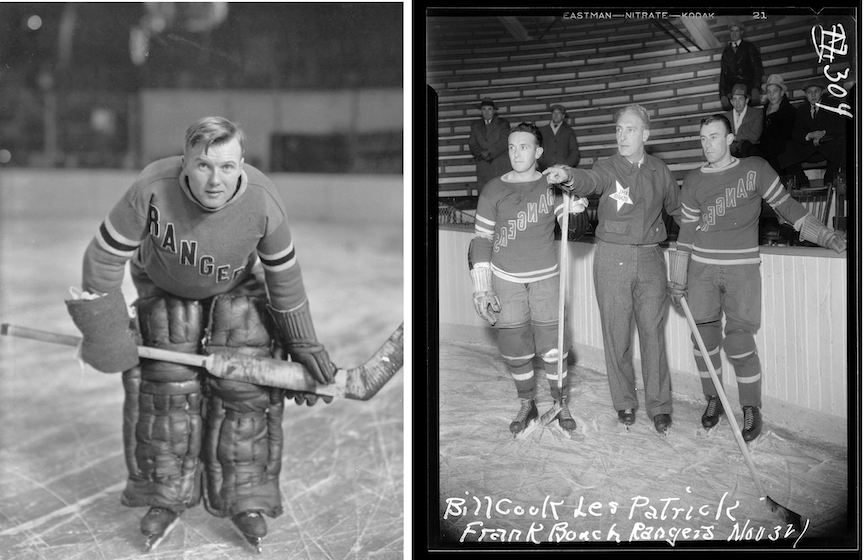
FACE OFF?…At left, goaltender Andy Aitkenhead of the New York Rangers padded his legs and arms but put his clean-shaven mug on the line in December 1934— it wasn’t until 1959, 42 years into the NHL’s existence, that a league goalie wore a mask on the ice. At right, New York Rangers captain Bill Cook (right) flanks coach and manager Lester Patrick alongside Frank Boucher on the ice at the Chicago Stadium in November of 1934. (Pinterest)

 * * *

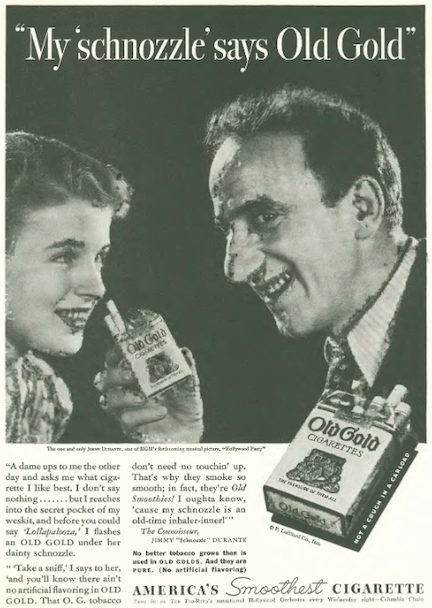
From Our Advertisers

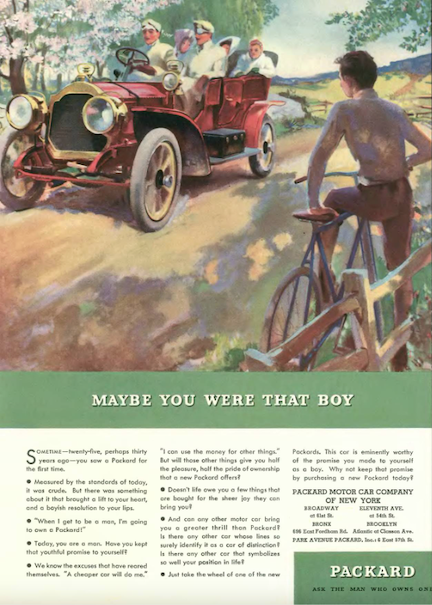
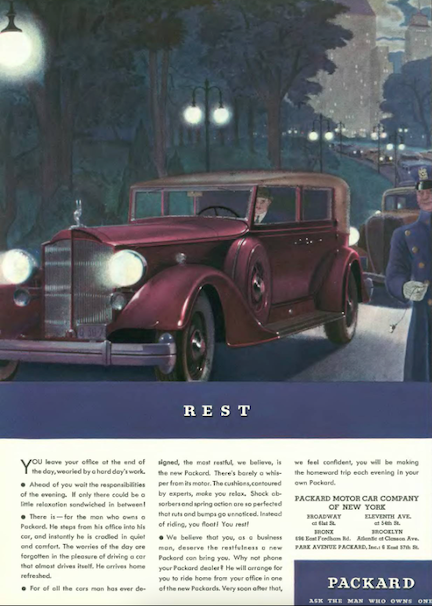
We begin with this sumptuous ad from Packard, appealing to those who could afford to own this luxury brand…

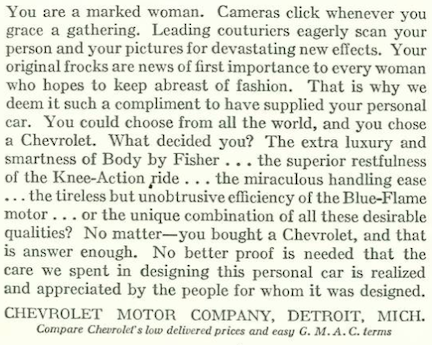
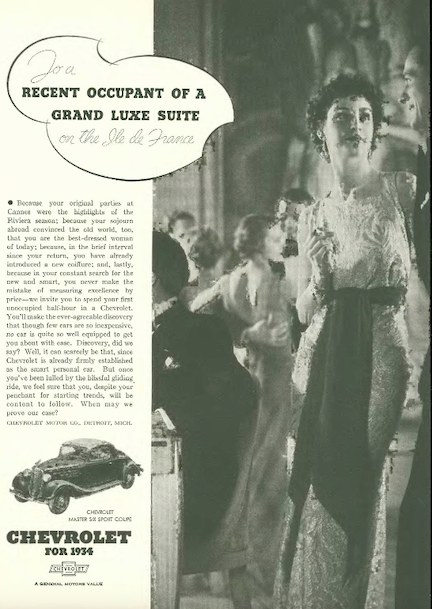
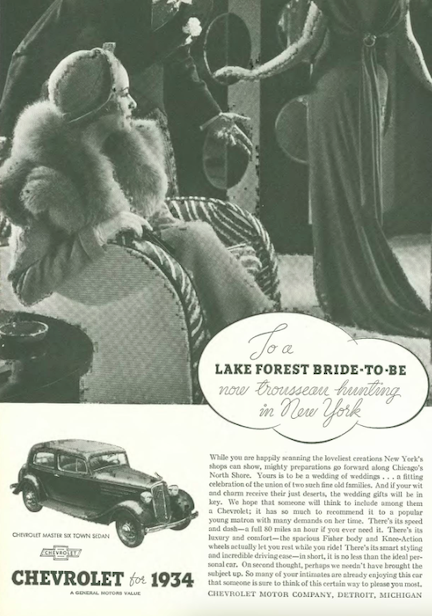
…if you couldn’t afford a Packard, you could rest assured that even a well-heeled deb could be happy with a Chevy…

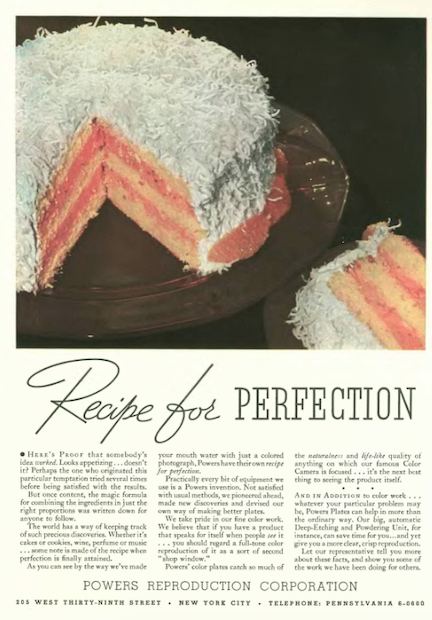
…the folks at Powers Reproduction continued to tout the wonders of their color photography, even if their cake looked less than appetizing…

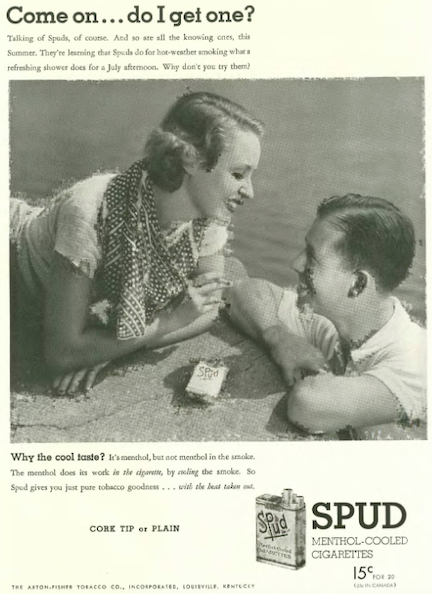
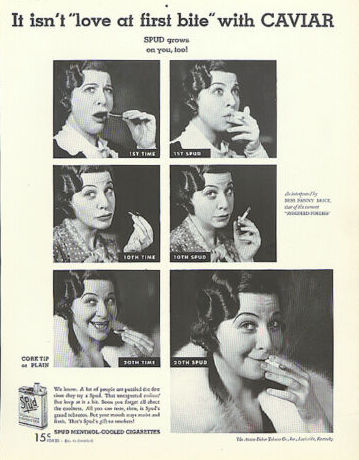
Fanny Brice was appearing with the 1934 Ziegfeld Follies on Broadway, so the folks at Spud jumped on her celebrity bandwagon…
…while R.J. Reynolds was suggesting we replace our chewed up pencils with a nice Camel cigarette…now, don’t you feel better?…

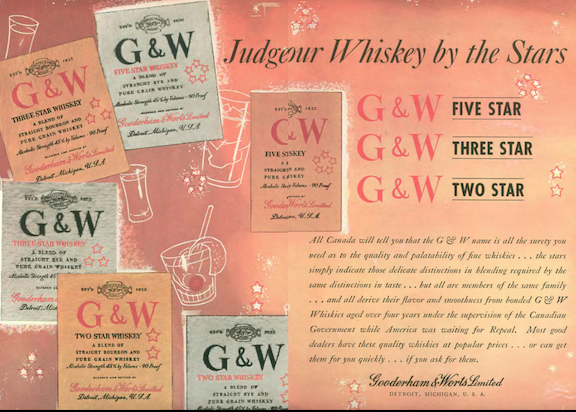
…the Canadian distillery giant Gooderham & Worts offered all sorts of options to calm our jangled nerves in this two-page spread…

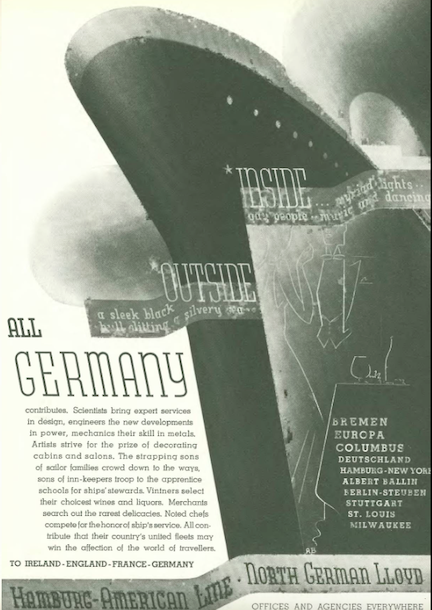
…while the Germans continued to entice us onto their cruise ships perfected by science and featuring “the strapping sons of sailor families”…hmmm…

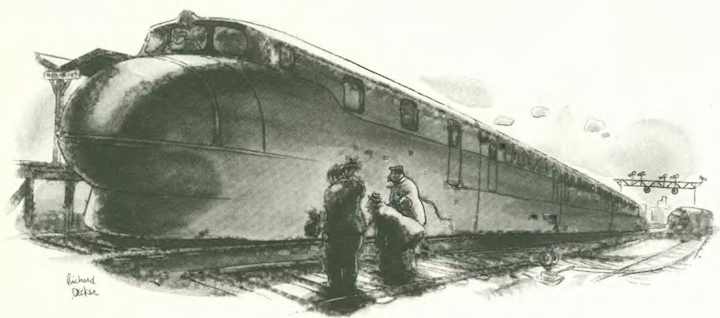
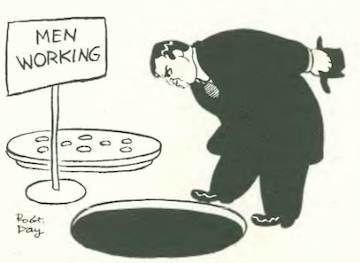
…in 1934 the New Yorker began featuring mostly wordless cartoons on the opening page of “The Talk of the Town,” including this one by Robert Day featuring Mayor Fiorello LaGuardia checking up on city employees…

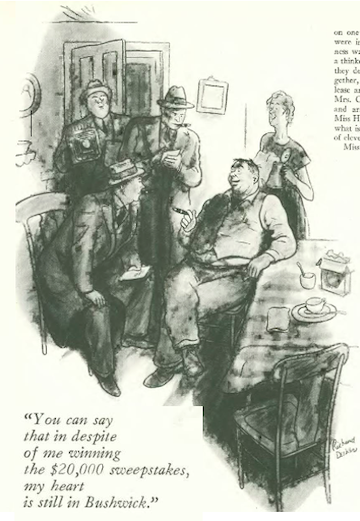
Richard Decker gave us an Irish Sweepstakes winner from Brooklyn who displayed some modesty and media savvy…

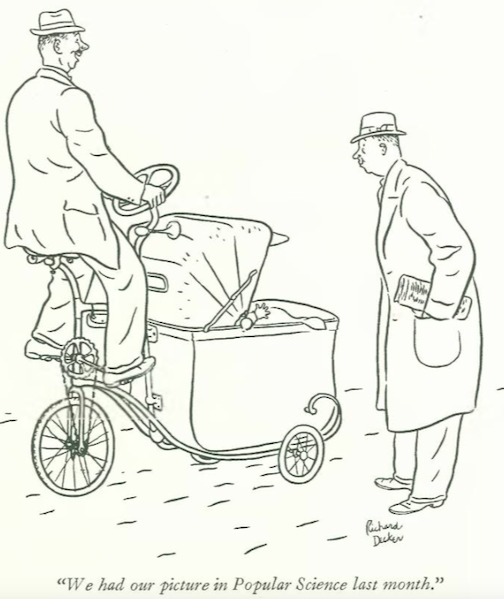
…Decker again, with the latest in perambulators…

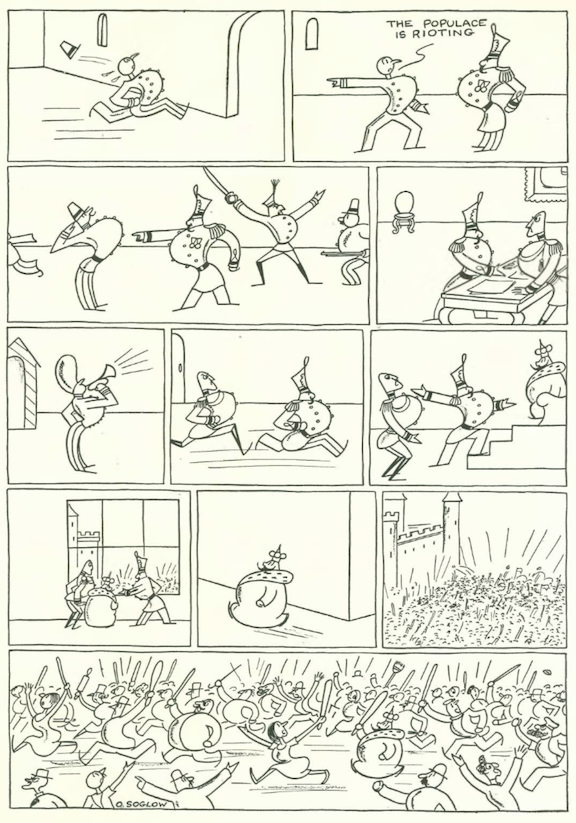
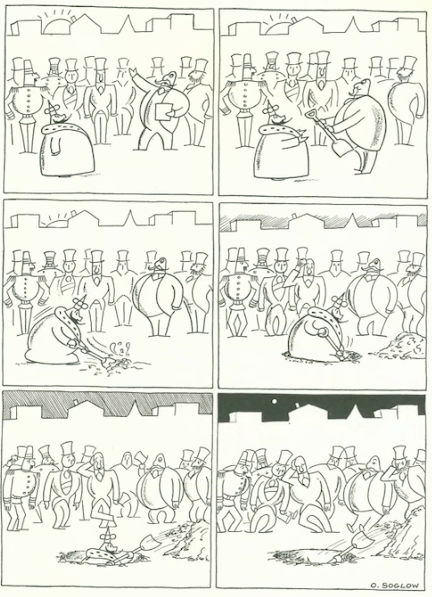
Otto Soglow’s Little King put his back into a ceremonial groundbreaking…

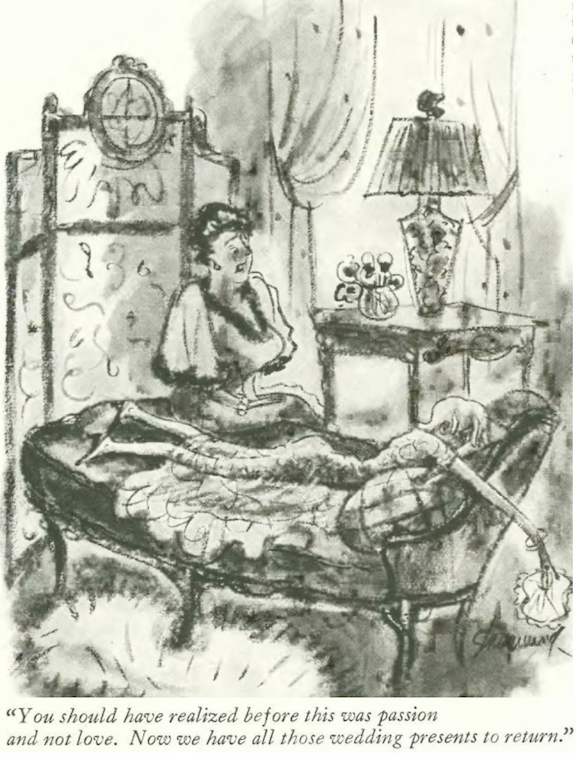
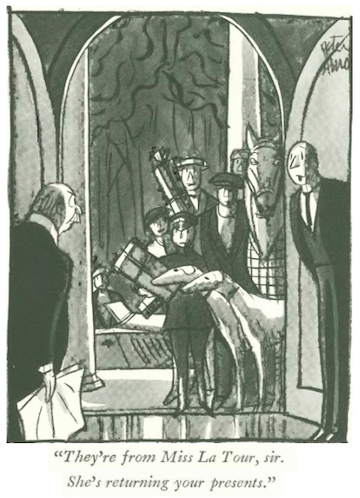
Peter Arno’s sugar daddy received some not-so-happy returns…

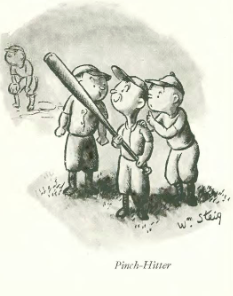
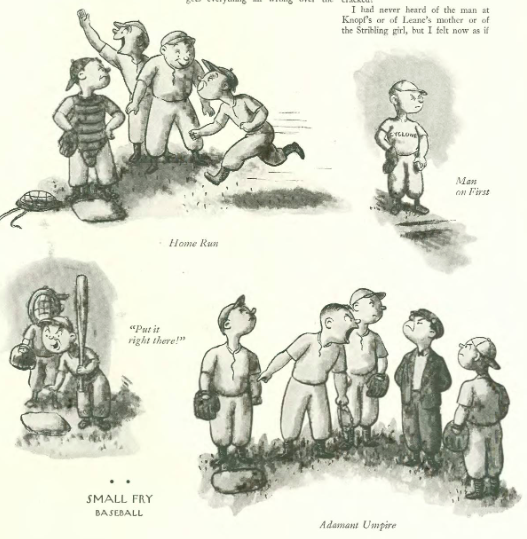
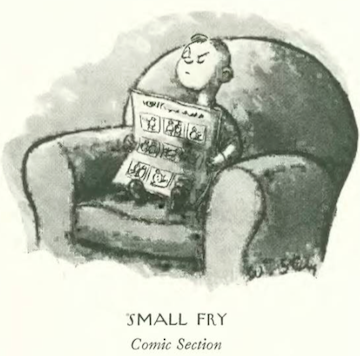
…one of William Steig’s “Small Fry” was doing some serious reading…

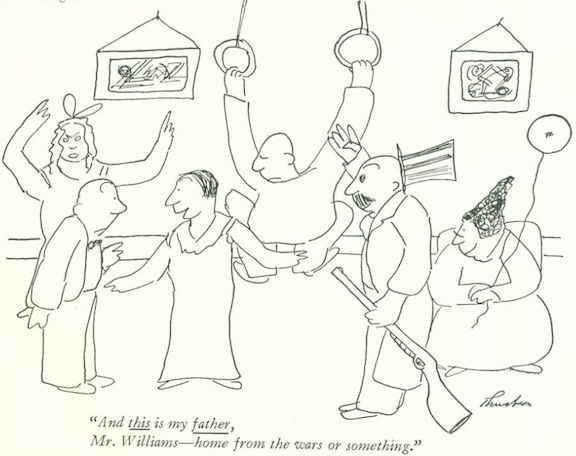
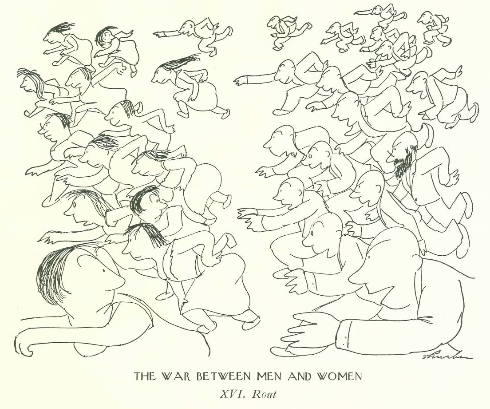
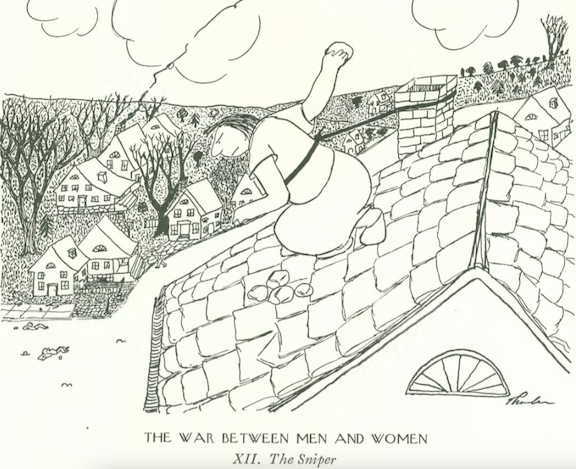
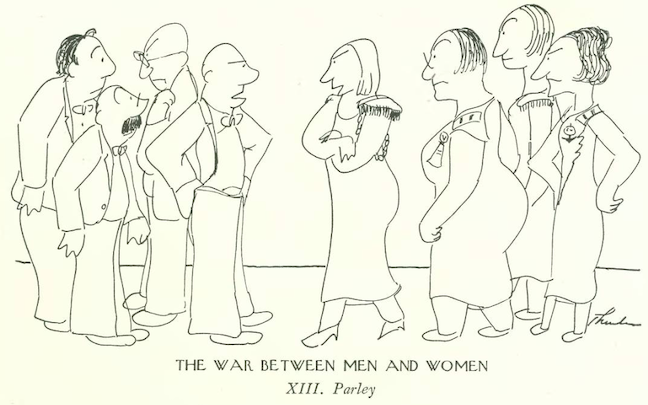
…and James Thurber’s war continued from the rooftops…

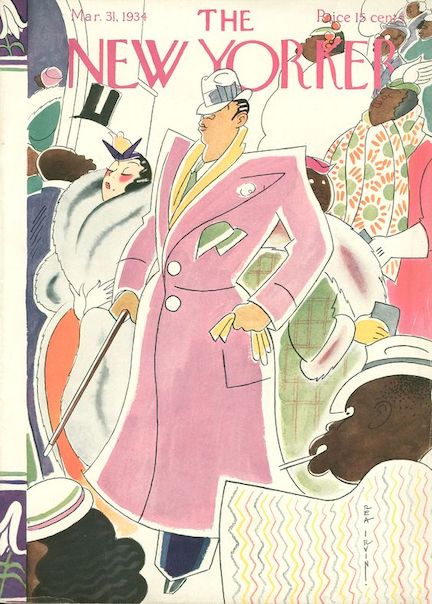
…on to March 31, 1934…

March 31, 1934 cover by Rea Irvin.

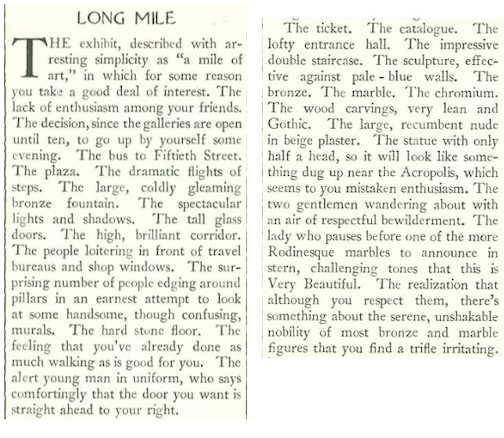
…where we find Alice Frankforter covering an exhibition dubbed “A Mile of Art.” I’m guessing critic Lewis Mumford passed on this opportunity to offer some blistering commentary. As for Frankforter, she found the spectacle puzzling, if not irritating. An excerpt:

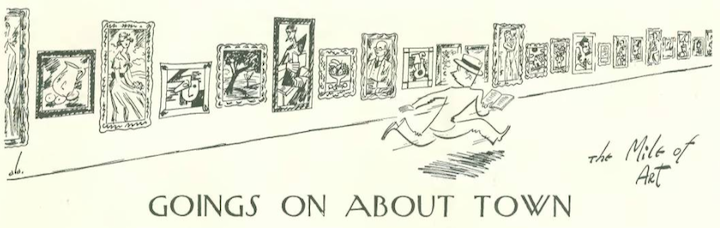
Constantin Alajalov offered his perspective on the art world stunt with this bit of spot art…

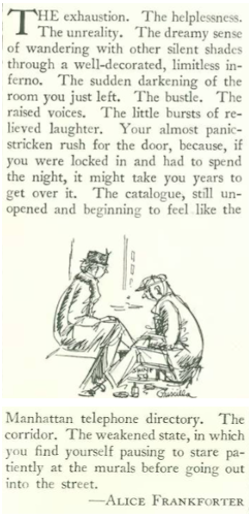
…and more from Frankforter, now reaching a state of exhaustion and near-delirium as she approached the end of the exhibit:

 * * *

Biblical Babbitts

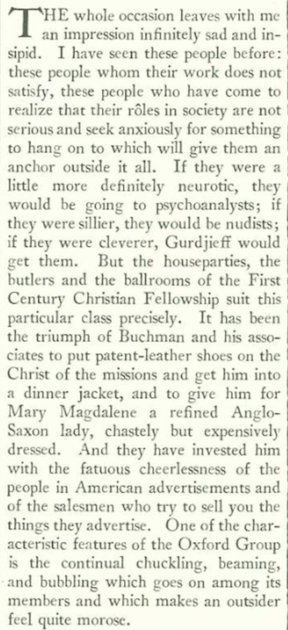
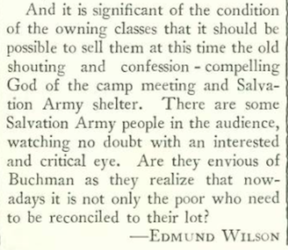
Frank Buchman’s First Century Christian Fellowship (aka the Oxford Group) meeting in New York featured a lot of people chuckling and bubbling, but all that forced conviviality left critic Edmund Wilson feeling “quite morose.” Writing for the “A Reporter at Large” column, Wilson looked in on the group as they awaited Buchman’s arrival at a preliminary rally. The column was subtitled, “Saving the Better Classes and Their Butlers.” An excerpt:

Like other critics at the time, Wilson saw “Buchmanism” as bourgeois optimism and boosterism, interested more in converting the souls of the wealthy and celebrated rather than serving the needs of poor.

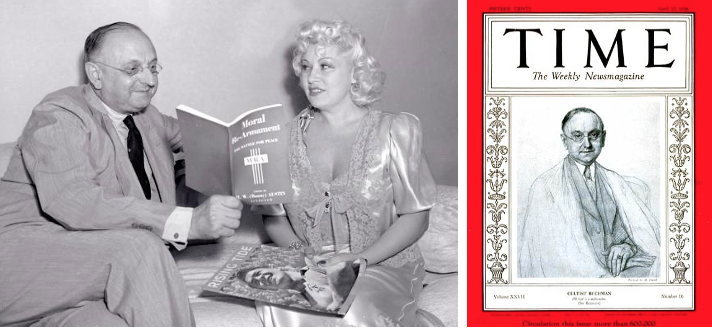
ODD COUPLE…Frank Buchman liked to be seen with the rich and famous. In 1939 he asked for a half hour of Mae West’s time, ostensibly to get this photo of him sharing some wisdom from his “Moral Re-assessment” booklet. West seems less than enamored by the encounter, regarding Buchman as some sort of alien creature; right, Buchman on the cover of April 20, 1936 edition of Time, which identified him as “Cultist Buchman.” (maewest.blogspot.com/Time)

 * * *

Carnegie’s Couture

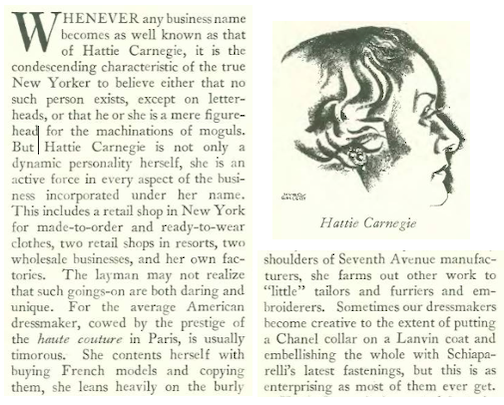
Vogue magazine fashion editor Nancy Hardin and the New Yorker’s fashion editor Lois Long teamed up on a profile about Hattie Carnegie (1889 -1956) titled “Luxury, Inc.” Born Henrietta Kanengeiser in Vienna, Carnegie immigrated with her family to New York in 1900; nine years later she adopted the name “Carnegie” after Andrew Carnegie, the richest person in America. Through hard work and an inherent instinct for what American women desired, she built a fashion design business that thrived in Depression and catered to stars and celebrities including Tallulah Bankhead, Joan Fontaine, Lucille Ball, and Joan Crawford. An excerpt, with illustration by Hugo Gellert:

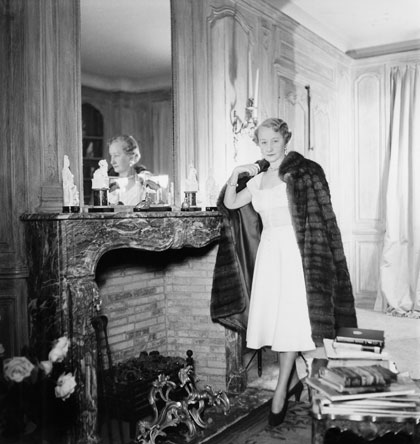
FUR SURE…Hattie Carnegie posing for a 1951 Vogue magazine photo. (Vogue)

 * * *

Steampunk Dream

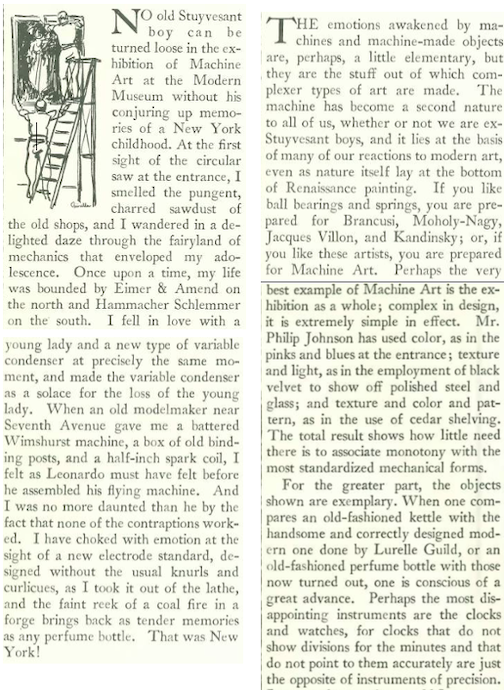
In my previous entry I featured Robert Coates’s observations on the new Machine Art exhibition at the Museum of Modern Art. For the March 31 issue critic Lewis Mumford, celebrant of the simple and unpretentious, waxed nostalgic over the novel exhibit:

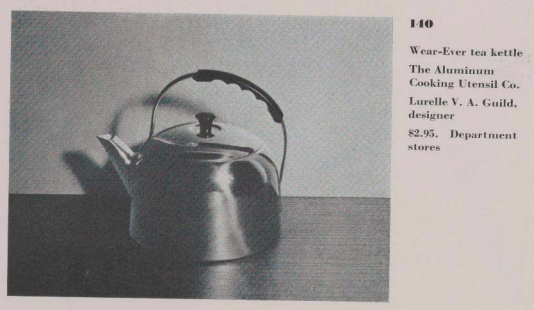
I’M A LITTLE TEAPOT that made a big advance in the design world, according to critic Lewis Mumford. (MoMA)

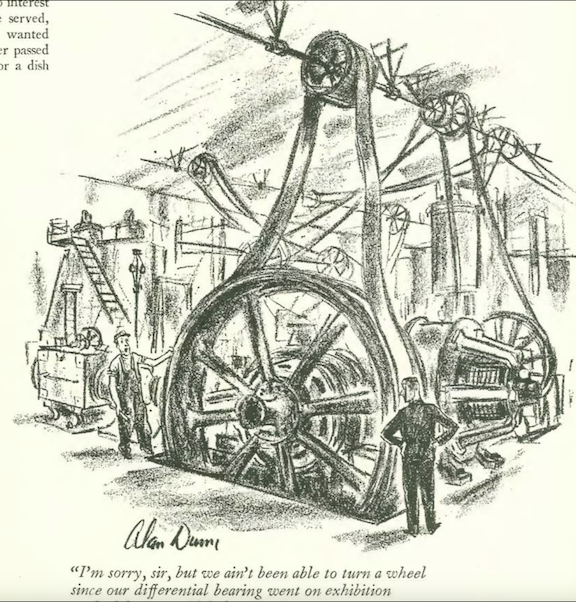
Alan Dunn was also inspired by the exhibit, as evidenced in this cartoon from the April 7 issue…

 * * *

More From Our Advertisers

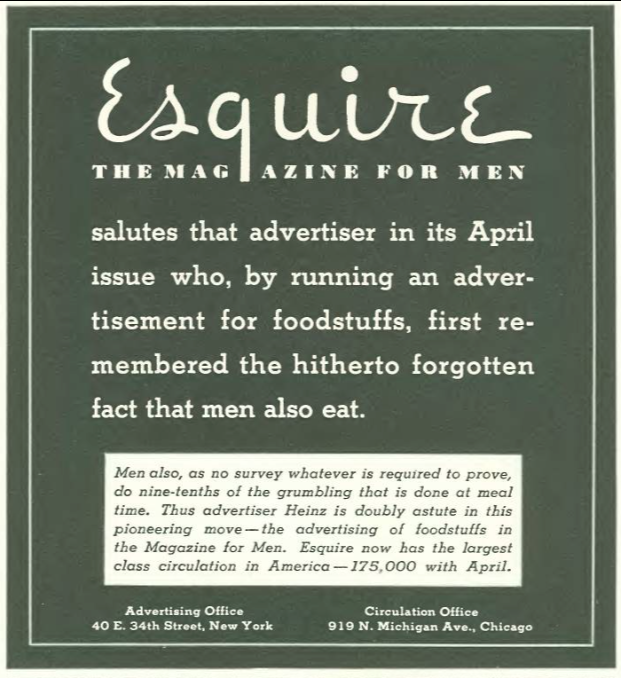
Founded in October 1933, the men’s magazine Esquire took off with a bang, and the publishers were not shy about boasting of its early success…

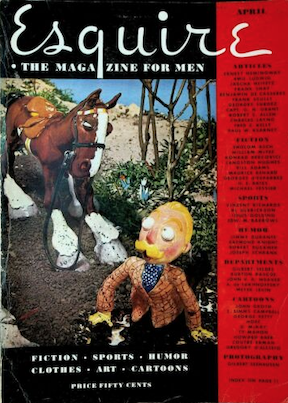
…cover of the April 1934 issue, featuring the mustachioed mascot Esky…based on a drawing by cartoonist E. Simms Campbell, Esky was featured on the cover in various situations until 1961…

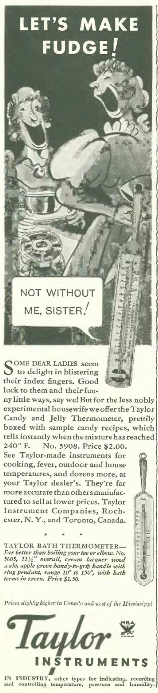
Peter Arno’s “Whoops Sisters” appeared sixty-three times in the New Yorker between 1926 and 1927 before Arno retired them (they occasionally popped up in other publications, and in a 1931 Cunard ad)…it seems odd that they would make an appearance in a cheap thermometer ad in 1934…at any rate, it is difficult to tell if this is by Arno or by a clever forger…

…there’s no mistaking the cartoonist behind this ad…

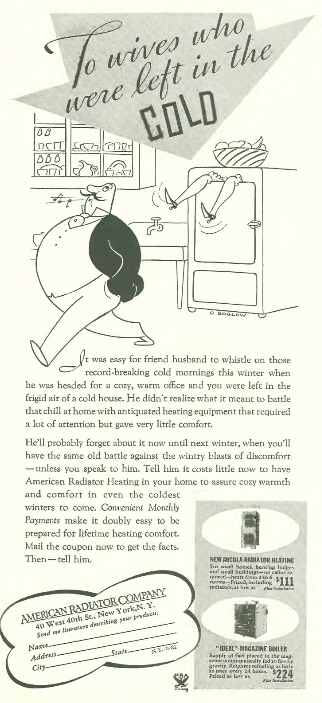
…and this one by Otto Soglow

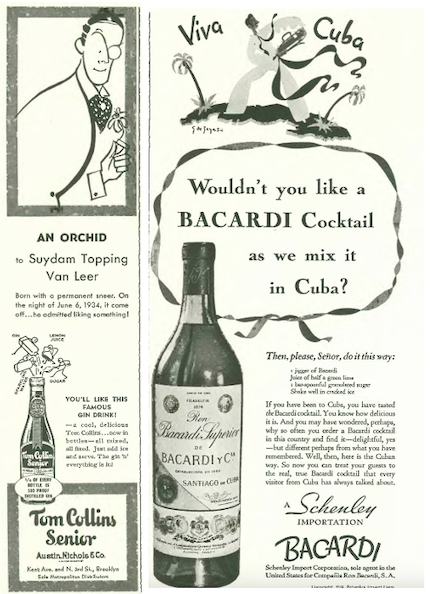
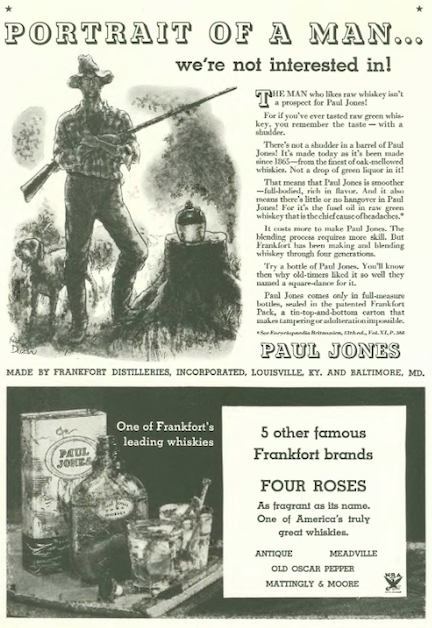
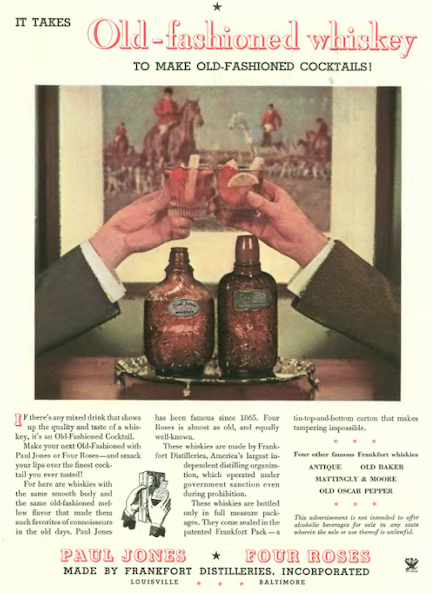
…and we close our advertising section by raising a glass to Frankfort Distilleries…

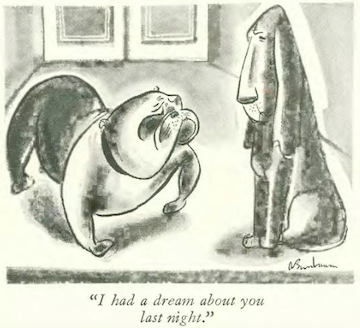
…on to our March 31 cartoons, and a lineup of New Yorker regulars Abe Birnbaum

Barbara Shermund

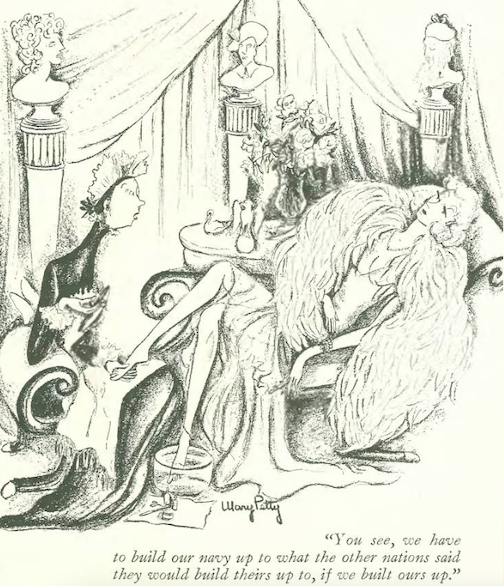
Mary Petty

…and James Thurber, with a break in the battle…

Next Time: America’s Sweetheart…

Rocky’s Cover-Up

On April 28, 1933, just two days before the RCA Building was to open to new tenants, artist Diego Rivera added a portrait of Vladimir Lenin to the mural he was painting in the building’s lobby.

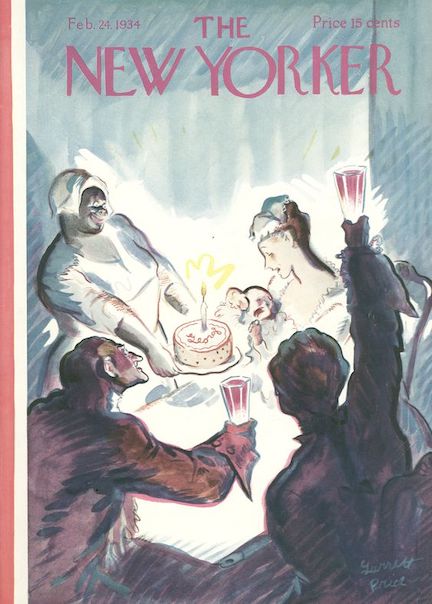
Feb. 24, 1934 cover by Garrett Price.

When Nelson Rockefeller asked Rivera to replace Lenin with a portrait of an “everyman,” Rivera refused, stating that he would prefer to see the whole mural destroyed than to alter it. Two weeks later Rivera was paid and dismissed from the job; carpenters immediately covered the mural in a white cloth. Fast forward to Saturday, February 10, 1934, when workers showed up late in the evening and began chipping away at the plaster bearing the mural, reducing Rivera’s artwork to dust. E.B. White, in his “Notes and Comment,” had this to say about that fateful night:

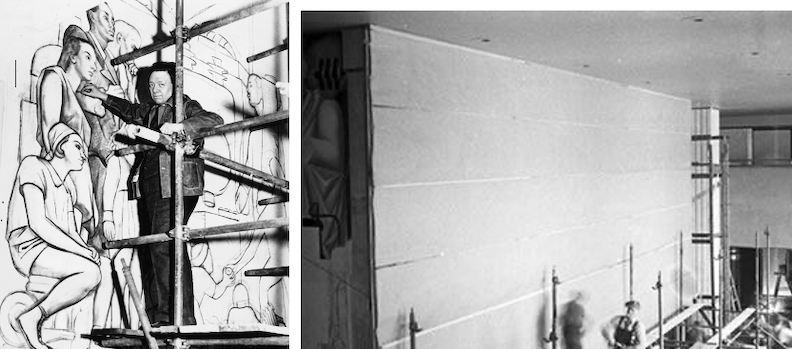
DUST TO DUST…Diego Rivera working on his mural, Man at the Crossroads, in the RCA Building lobby in 1933. At right, workers quickly covered up the mural after Rivera was dismissed from the job. One of Rivera’s artist assistants, Lucienne Bloch, clandestinely took the photo before she was escorted from the building. (Wikipedia/6sqft.com)
ARTEM INTERRUPTUS…Mexican artist Diego Rivera stands with a copy of the mural he painted at Rockefeller Center that was eventually destroyed. (A. Estrada /Courtesy of Museo Frida Kalho)

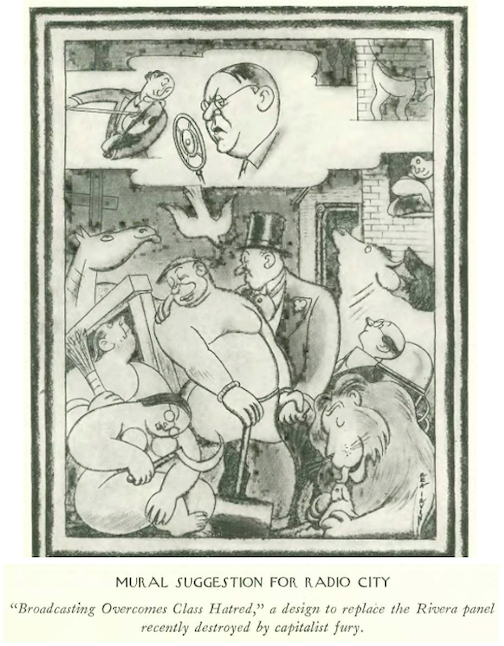
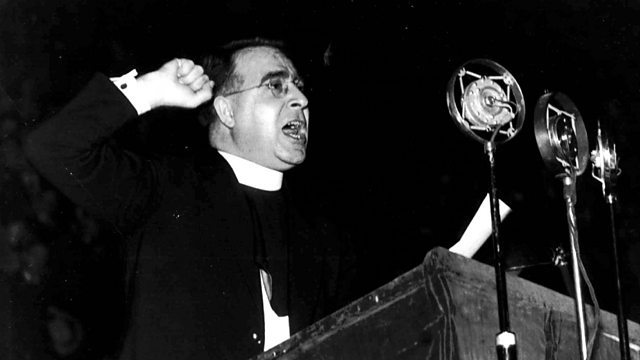
Rea Irvin shared his own thoughts on the issue with this illustration below, which referenced the hateful rhetoric of Charles Coughlin, a Canadian-American Catholic priest and populist leader and one of the first public figures to make effective use of the airwaves to spew his invective.

FAMILIAR RING…Charles Coughlin, a Catholic priest and populist leader, promoted antisemitic and pro-fascist views while also acting as a champion to the poor and a foe of big business. In the midst of the Depression he spoke to the hopes and fears of lower-middle class Americans throughout the U.S. One supporter recalled: “When he spoke it was a thrill like Hitler. And the magnetism was uncanny. It was so intoxicating, there’s no use saying what he talked about…” (BBC/NPR)

* * *

Dog Days

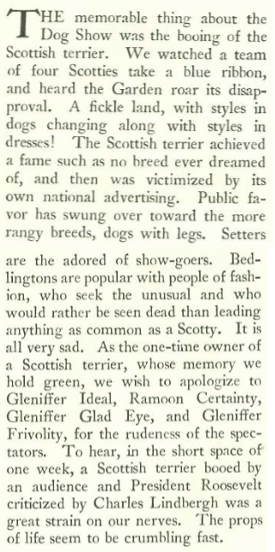
E.B. White also chimed in about boorish behavior he witnessed at the Westminster Kennel Club show at Madison Square Garden. Terriers had dominated Westminster; the fox terrier that ultimately won the 1934 competition represented the 21st terrier of any type to win Best of Show since that category was introduced in 1907.

YOU AGAIN? Ch Flornell Spicy Bit of Halleston, a Wire Fox Terrier, took Best of Show at Madison Square Garden in 1934. (westminsterkennelclub.org)

 * * *

Anybody Home?

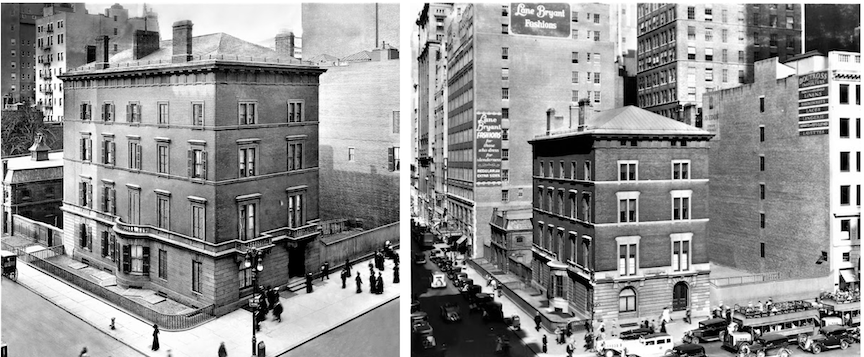
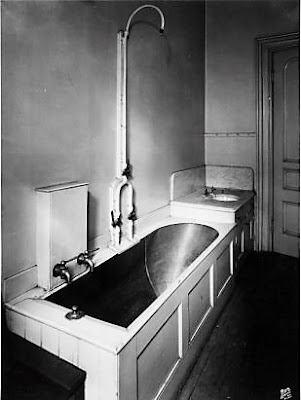
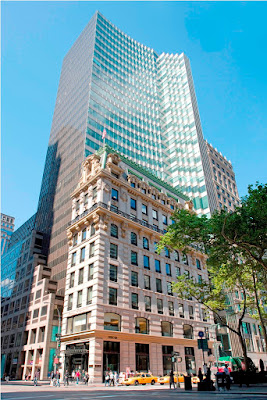
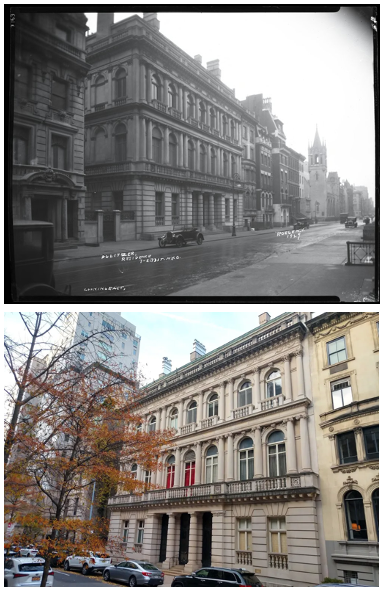
After the wealthy owner of the New York World, Joseph Pulitzer, died in 1911, his family moved out of his lavish East 73rd Street mansion, which was designed by Stanford White to resemble an Italian palazzo. The building sat empty until 1930, when investors planned to knock it down and replace it with an apartment building. The Depression foiled their plans, and another attempt to raze the mansion in the 1950s also miraculously failed, and the building was eventually converted into a co-op with sixteen apartments. Writing in “The Talk of the Town,” James Thurber pondered the Pulitzer mansion’s expected fate. An excerpt:

THEN AND NOW…With so many buildings reduced to dust these days in NYC, it’s good to see the Pulitzer mansion still standing. You can buy one of its sixteen apartments for roughly $6 million, if and when they become available. (ephemeralnewyork.wordpress.com)

 * * *

From Our Advertisers

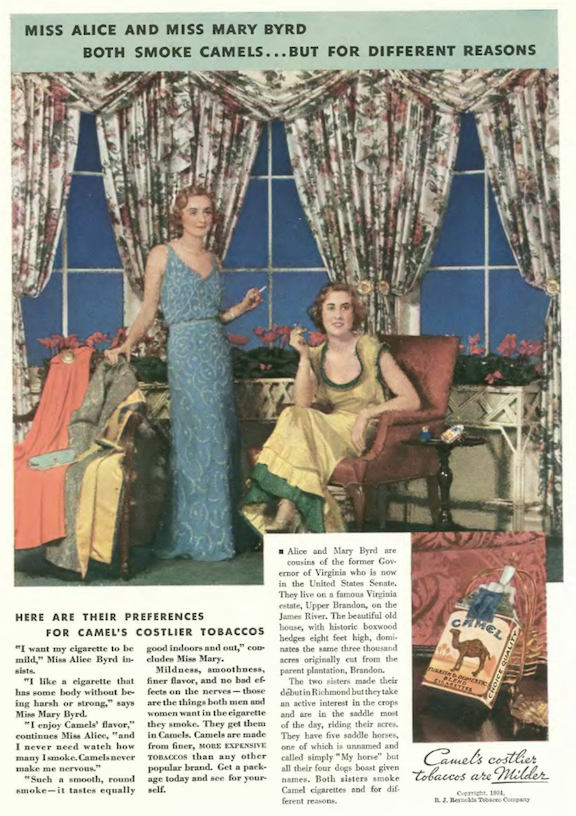
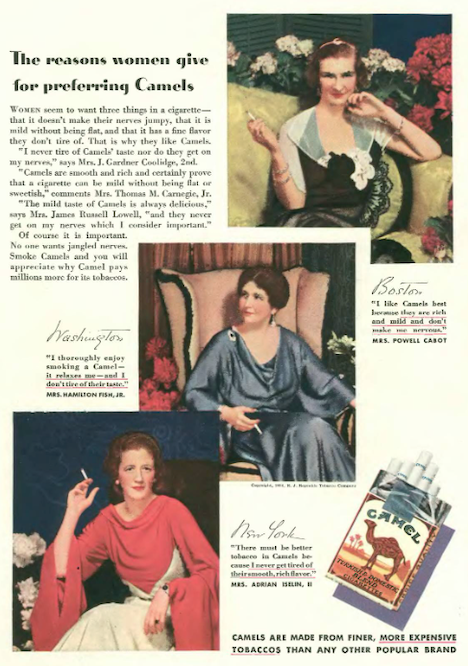
The makers of Camel cigarettes combined three previous ads into one, featuring endorsements from society matrons in Boston, Washington, D.C., and New York…

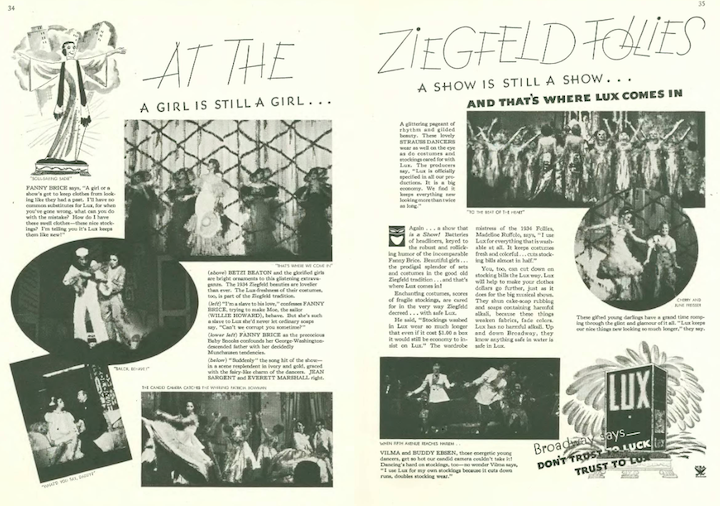
…while Fanny Brice and the cast of the 1934 Ziegfeld Follies offered a chorus of endorsements for Lux detergent in this two-page spread…

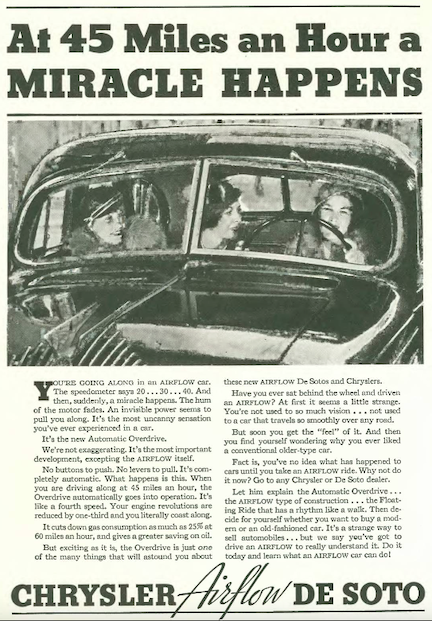
…the Graham-Paige Motors Corporation is long gone, but in the early 1930s the company was still going strong, introducing many innovations (described in the ad below) that would be copied by other carmakers…

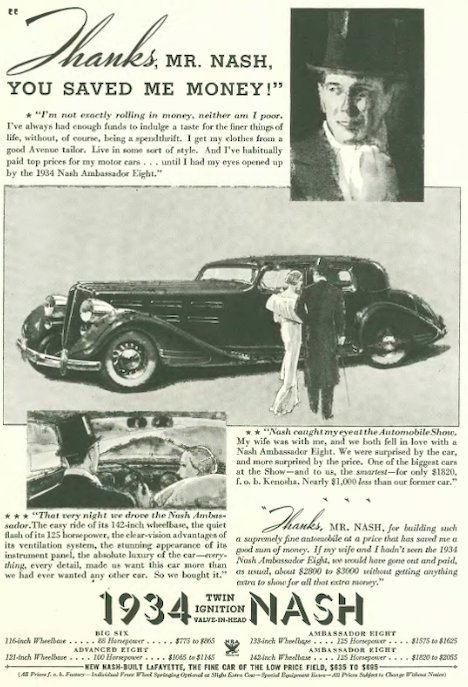
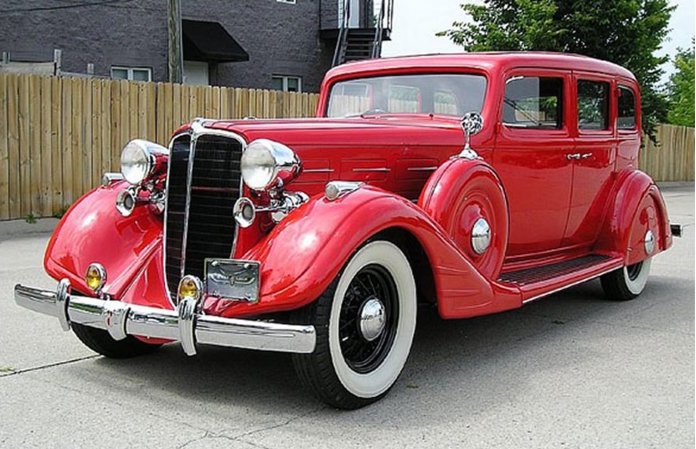
…in the 1930s an exiled Russian noble, Count Alexis de Sakhnoffsky, was known for his streamlined automobile designs…he influenced the look of the 1934 Nash Ambassador Eight, which was touted here as the choice of the budget-minded toff…note how the illustrator exaggerated the car’s length in this ad…

…as compared to an actual model of a Nash Eight…

A restored 1934 Nash Ambassador Eight. (classiccars.com)

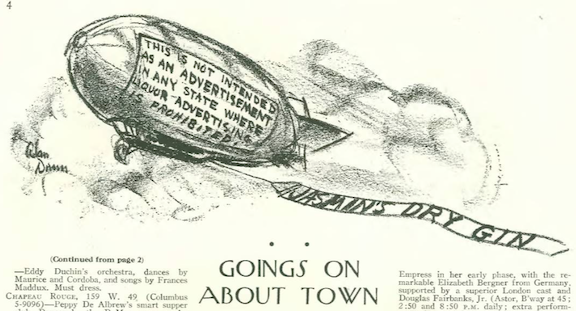
…on to our cartoonists, Alan Dunn floated above the “Goings On About Town” section…

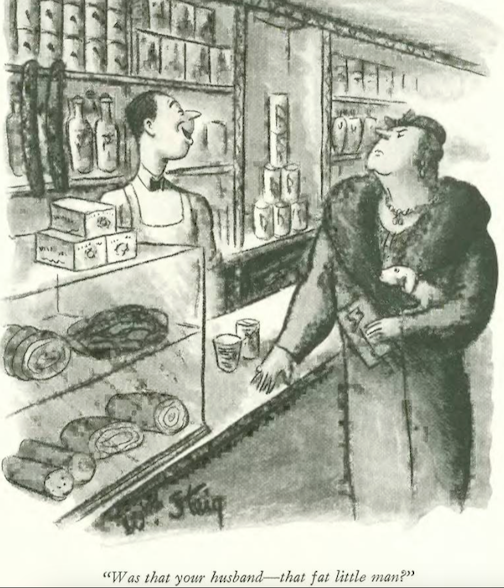
William Steig gave us a tactless grocer…

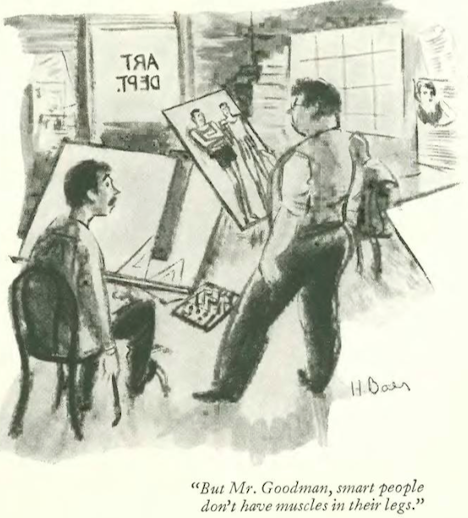
Howard Baer offered up some finer points from Madison Avenue…

Gardner Rea illustrated a very special delivery…

…and James Thurber’s war continued to be waged on a snowy battlefield…

…on to our March 3, 1934 issue…

March 3, 1934 cover by Harry Brown.

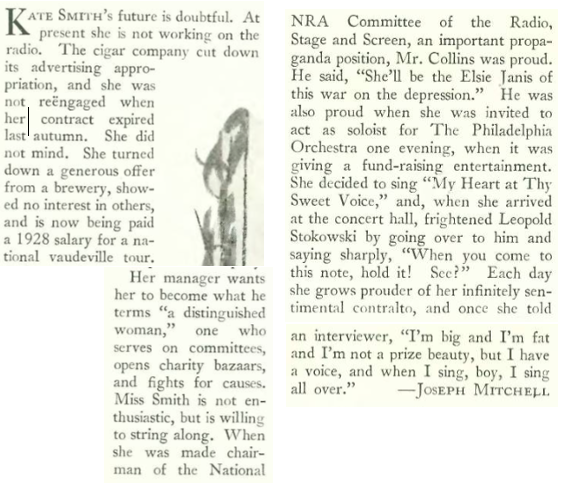
…which featured a profile of singer Kate Smith (1907–1986), written by none other than Joseph Mitchell (1908-1996), who began his career at The New Yorker in 1933. Smith was an American contralto often referred to as “The First Lady of Radio,” well known for her renditions of When the Moon Comes over the Mountain and Dream a Little Dream of Me. She was enormously popular during World War II for her rendition of God Bless America among other patriotic tunes.

Smith got her start in New York in 1926 when she appeared on Broadway in Honeymoon Lane. That year also saw the emergence of countless humiliating wisecracks about her weight that would dog her long career. A reviewer in The New York Times (Oct. 31, 1926) wrote, “A 19-year-old girl, weighing in the immediate neighborhood of 200 pounds, is one of the discoveries of the season…” In 1930, when Smith appeared in George White’s Flying High, she served as the butt of Bert Lahr’s often cruel jokes about her size.

An excerpt from the opening lines of Mitchell’s profile:

RISING STAR…At left, Kate Smith performing in the 1932 Paramount Pictures musical, Hello Everybody!; at right, on the cover of the October 1934 issue of Radio Mirror. (medium.com)

Toward the conclusion of the profile Mitchell suggested that Smith’s future was “doubtful.” She would prove that prediction wrong, however…

…23 years after her death her rendition of God Bless America would be discontinued pretty much everywhere when it was revealed that in the early 1930s she recorded such songs as That’s Why Darkies Were Born and Pickaninny Heaven (which was featured in Hello, Everybody!).

CANCELLED STAR…Since the late 1960s a rendition of God Bless America by Kate Smith served as a good luck charm for the Philadelphia Flyers hockey team. “The team began to win on nights the song was played,” The New York Times wrote in Smith’s 1986 obituary. Smith sang the tune live during game six of the 1974 Stanley Cup finals, which the Flyers went on to win against the Boston Bruins. When Smith’s racist songs were rediscovered in 2019, a statue of the singer that stood outside the Flyers’ arena was covered and ultimately removed. (Daily Mail)

A note on Joseph Mitchell, whose first credited piece in The New Yorker was a Nov. 11, 1933 “A Reporter at Large” column titled “They Got Married in Elkton.” The article described a small Maryland border town that became known for discrete “quicky” marriages. Mitchell would become known for his finely crafted character studies and expressive stories found in commonplace settings. His 1943 McSorley’s Wonderful Saloon is a prime example.

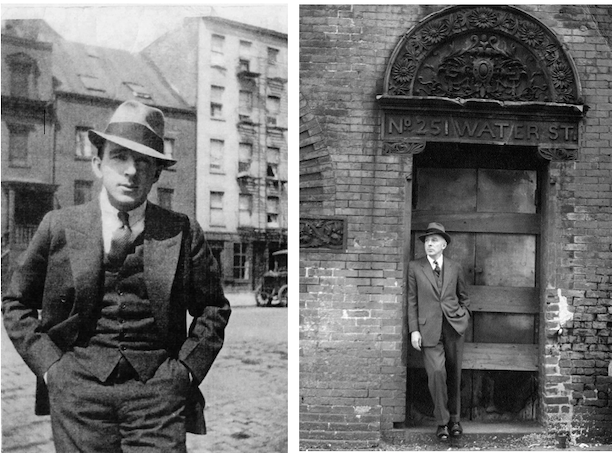
MAN ABOUT TOWN…At left, Joseph Mitchell circa 1930, wearing a brown fedora he was rarely seen without; at right, Mitchell in Lower Manhattan near the old Fulton Fish Market, as photographed by his wife, Therese Mitchell, circa 1950. (Estate of Joseph Mitchell)

 * * *

Acquired Taste

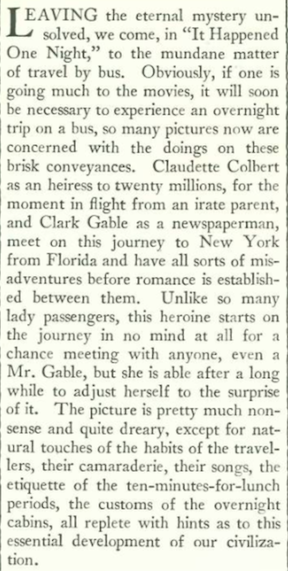
Occasionally New Yorker film critic John Mosher found himself at odds with other reviewers, and such was the case when Mosher sat down to watch Frank Capra’s It Happened One Night. While he described the 1934 pre-Code romantic comedy as “nonsense” and “dreary,” other critics found it generally enjoyable, and although it took audiences awhile to catch on, the film eventually became a smash hit.

In all fairness to Mosher, even the film’s co-star, Claudette Colbert, complained to a friend after the film wrapped, “I just finished the worst picture in the world.” As it turned out, It Happened One Night became the first of only three films to win all five major Academy Awards: Best Picture, Best Director, Best Actor, Best Actress, and Best Adapted Screenplay. It is now widely considered one of the best films ever made. Go figure.

Back to Mosher, who thought so little of the film he didn’t even lead his column with the picture’s review:

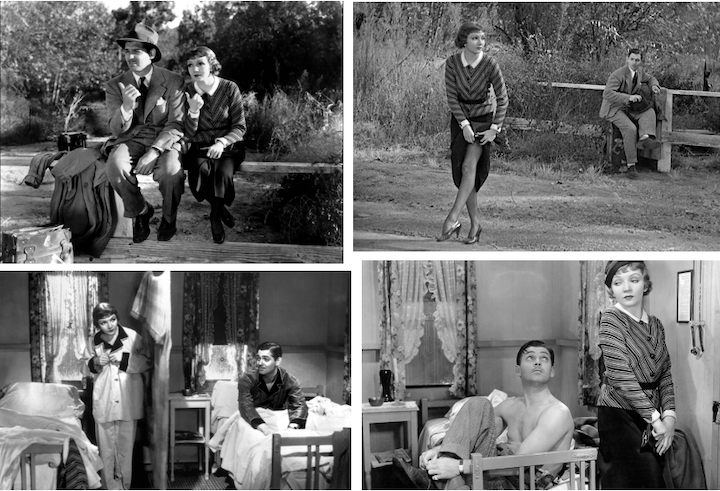
PRE-CODE AND TOPLESS…An heiress (Claudette Colbert) and a reporter (Clark Gable) find themselves hitchhiking (and sharing a motel room) after their bus breaks down in It Happened One Night. The film famously featured a scene in which co-star Gable undresses for bed and takes off his shirt to reveal that he is bare-chested. An urban legend claims that, as a result, sales of men’s undershirts declined noticeably. (IMDB)

 * * *

More From Our Advertisers

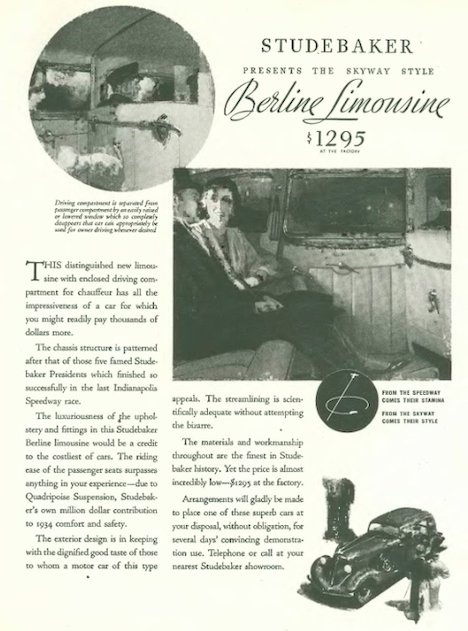
If you wanted luxury with the price, you could buy a Nash Ambassador Eight for $1,800 (about thousand less than other luxury models) or opt for Studebaker’s Berline Limousine, practically a steal at $1,295…

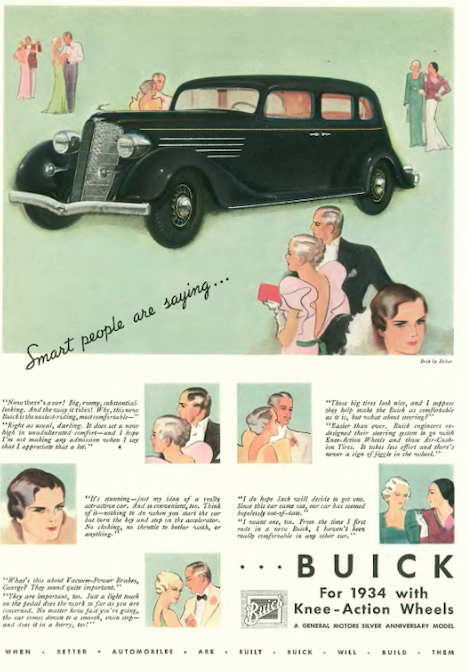
…or you could opt for this fancy-looking Buick with “Knee-Action wheels”…Knee Action was a GM marketing term for independent front suspension, which made for a smoother ride…

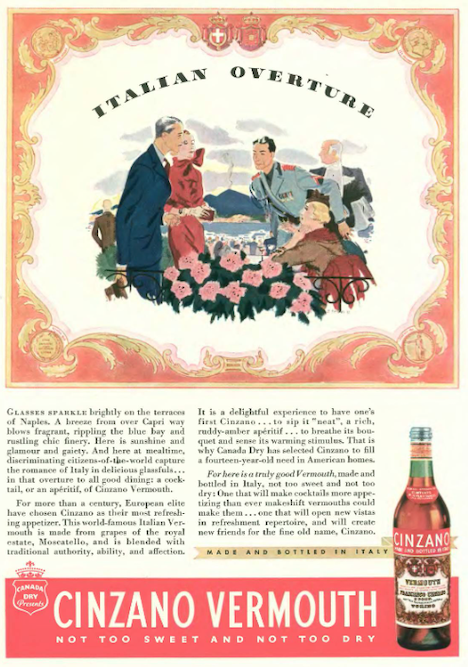
…always colorful, the makers of Cinzano vermouth made their splash in The New Yorker

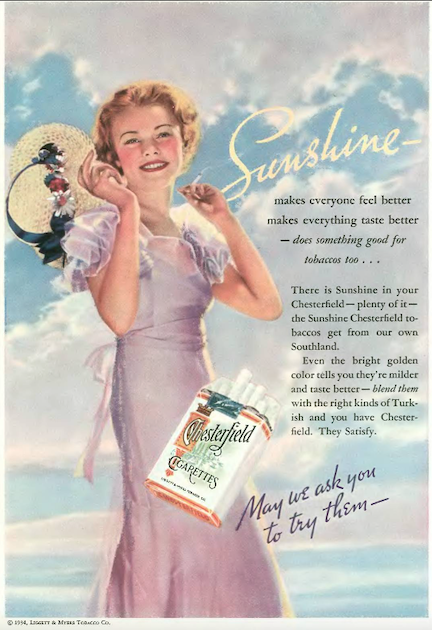
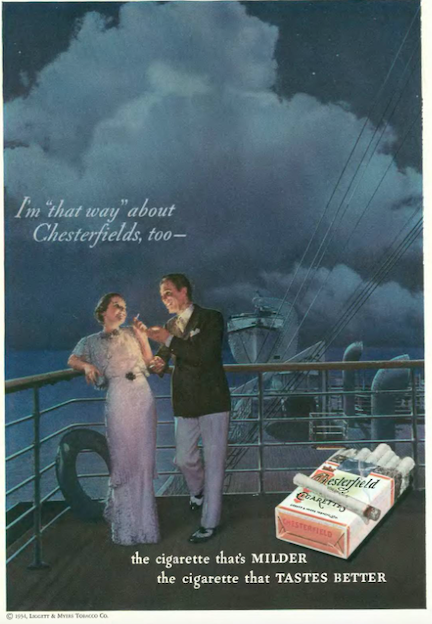
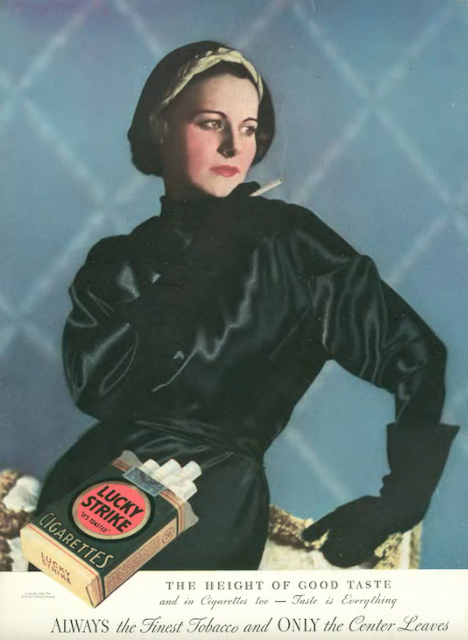
…the folks at Lucky Strike continued their theme of colorful ads featuring attractive women enjoying their cigs…

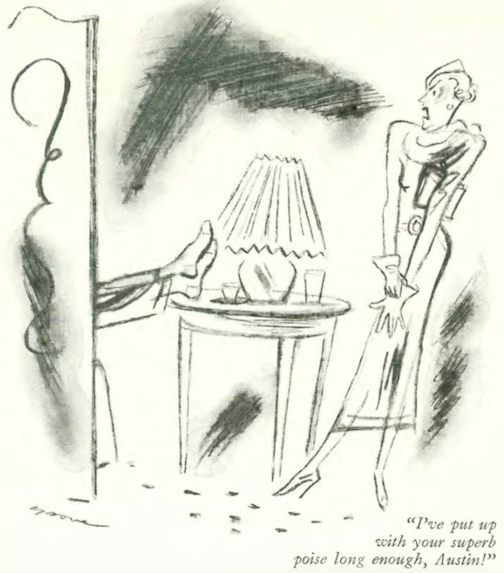
…on to our cartoonists, Leonard Dove illustrated a domestic spat…

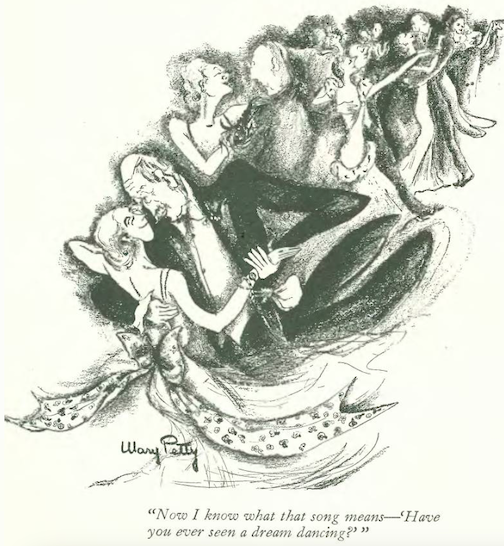
Mary Petty captured a romantic interlude on the dance floor…

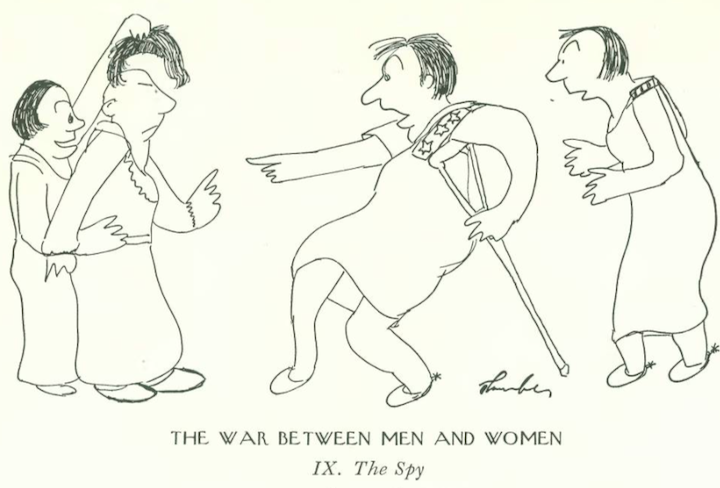
…and James Thurber introduced a new twist—espionage—into his “war”…

Next Time: The Power Broker…


Coach Arno

Peter Arno departed from his usual one-liners in the Nov. 18, 1933 issue with a football-themed cartoon that featured a four-paragraph caption…
Nov. 18, 1933 cover by Abner Dean.

…that consisted of a pep talk from a football coach—”Old Waddy”…

…Arno had visited the football theme before, notably in this early cover from 1928…

Arno cover from Oct. 7, 1928.

…and he referenced it again in the years ahead…

HAIL VARSITY…Peter Arno delivered another, much shorter pep talk in a cartoon (left) from the Nov. 20, 1937 issue; at right, Arno’s last football-themed gag, published in The New Yorker of November 25, 1967, just three months before the cartoonist’s death. Check out one of my favorite New Yorker sites, Attempted Bloggery, for more on the 1937 cartoon.

…and one more from Arno, a classic from September 27, 1947…

 * * *

Pre-emptive Nostalgia

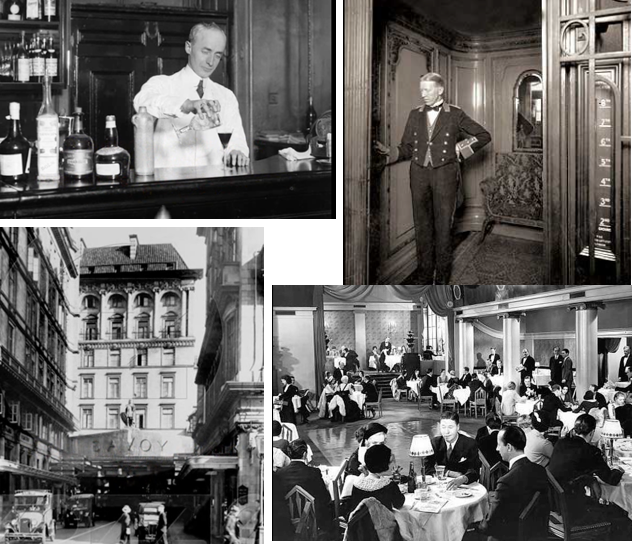
Although E.B. White welcomed the end of Prohibition with open arms, he also wondered what could be lost when drinkers emerged from the shadows of the speakeasy world…

THAT HOMEY FEELING…E.B. White suggested transforming the Waldorf-Astoria’s Sert Room (right) into a dingy dive to help ease drinkers back into the world of legal alcohol. (Britannica/Library of Congress)

White also referenced his many years at Tony’s, a speakeasy and Italian restaurant popular with writers and others in the New Yorker’s orbit. Tony Soma operated the speakeasy until 1929, when John D. Rockefeller bought Soma’s building along with other properties to make way for Rockefeller Center. Soma would later open another popular (and legit) restaurant and also become known as a yoga practitioner and the grandfather of actress Angelica Huston. You can read more about Soma at The Speakeasy King.

 * * *

The French Underground

Although war seemed like a distant rumor to most Americans, the French were busy preparing for that likelihood, according to this “Talk of the Town” piece attributed to Europe-based documentary filmmaker Richard de Rochemont and New Yorker stalwart James Thurber.

LOOK OUT BELOW…At left, a preserved WWII abris can be found below platforms 2 and 3 at Paris’ Gare de l’Est; right, Parisians take shelter in an abris in 1939. (Trip Adviser/Ebay)

…in his column, “Of All Things,” Howard Brubaker mused on the latest rumblings from Berlin…

DEMOCRACY IN ASHES…An arson attack on the Reichstag (home of the German parliament) on February 27, 1933 was used by Adolf Hitler as pretext to suspend civil liberties and conduct a ruthless pursuit of “communists,” both real and imagined. (Wikipedia)

 * * *

Little Women, Big Film

On the brighter side, we turn to Hollywood and John Mosher’s review of George Cukor’s critically acclaimed Little Women, which featured a cast led by Katharine Hepburn and Joan Bennett.

MEINE LIEBCHEN…Impoverished German linguist Professor Bhaer (Paul Lukas) proposes to Jo (Katharine Hepburn) in 1933’s Little Women. (IMDB)
SEW WITH JO…From left, the March family as portrayed by Jean Parker (as Beth), Joan Bennett (Amy), Spring Byington (Marmee March), Frances Dee (Meg), and Katharine Hepburn (Jo) in the George Cukor-directed Little Women. (IMDB)

…Mosher also found something to like in the MGM romance The Prizefighter and the Lady, which starred Myrna Loy along with professional boxers Max Baer, Primo Carnera, and Jack Dempsey.

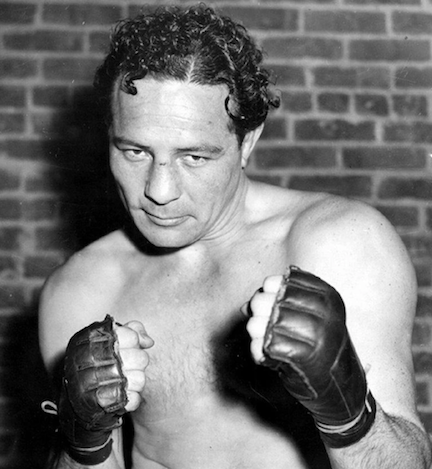
THE NEW “IT” MAN was how MGM publicists promoted professional boxer Max Baer in his film debut. Top right, Baer in a scene with Myrna Loy; bottom right, professional boxer Primo Carnera with Loy and Baer—Carnera was the world heavyweight boxing champion at the time of the film’s release, however Baer would defeat the Italian giant in their real-life 1934 fight; bottom center, Baer’s son, Max Baer Jr., would also find Hollywood fame in the 1960s playing Jethro Bodine on TV’s The Beverly Hillbillies. (IMDB/Wikipedia)

 * * *

Sausage Factory

We’ve previously looked at the smashing success of Walt Disney’s Three Little Pigs cartoon and its theme song, which took the country by storm in the fall of 1933. So it was no surprise that the piggies could be found in toy departments across the metropolis as the Christmas season approached. These are brief snippets from a lengthy holiday shopping column that was appended annually to Lois Long’s “On and Off The Avenue” every November and December.

HOG HAVEN…You could help the Three Little Pigs find their way to safety in this 1933 Disney board game. As in the film, the final leg of the board game’s journey has the wolf landing in a cauldron of boiling water. As if that wasn’t bad enough, the Disney film also featured one of the pigs adding turpentine to the cauldron. (Ebay)

This being America in the 1930s, and early Disney, the Three Little Pigs cartoon contained an offensive scene in which the Big Bad Wolf disguises himself as a Jewish peddler, complete with a fake nose, glasses, and beard (accompanied by a fiddle, the wolf also adopts a Yiddish accent).* The character was included in the above board game:

* The film was finally edited in 1948 with a redesign of the Wolf’s disguise—as a Fuller Brush salesman.

 * * *

From Our Advertisers

We kick off our ads with more “healthy nerves” testimonials from Camel smokers, including stuntwoman/pilot Mary Wiggins

…Caron Paris also went aloft with one of their famed “En Avion” adverts…

…back on the ground, this hapless couple found themselves taking a slow car to a soaking…although wearing a fur coat while riding in a rumble seat probably wasn’t a good idea, regardless of the weather…

…for those rainy days, you could get yourself a Salisbury overcoat from Brooks Brothers…this sports-themed illustration was a new twist for the usually staid BB…

…and there’s always one or two really weird ads, like this one from The Sun newspaper that touted baloney sales at Gimbels as proof of advertising prowess…

…collectors of Art Deco are well-acquainted with the work of Hans Flato, who did a series of ads (and related merchandise) for New York-based Ruppert’s Beer in the early 1930s…Flato (1887-1950) worked in a variety of styles, but the characters he created for Ruppert’s stand out…for reasons known only to the Flato, the feet of the Ruppert’s characters were always attached to yellow disks, like toy dolls…

James Thurber was keeping busy illustrating ads aimed at folks wanting to escape the cold…

…as well as those who caught a cold in a drafty automobile…

The New Yorker announced the publication of its sixth album, with an illustration by Gluyas Williams

…while Otto Soglow, in a much smaller back-page ad, proclaimed the publication of his first The Little King collection…Soglow had just ten months left on his contract with The New Yorker—his Little King would relocate to  William Randolph Hearst’s King Features Syndicate in September 1934…

…speaking of Soglow, we kick off the cartoons with his potentate’s latest adventure…

William Steig gave us a sneeze and a chorus…

…and we close with Eli Garson, and a tale from the Almost Wanted…

Next Time: The Invisible Man…

As Millions Cheer

Proposed by the 72nd Congress on February 20, 1933, the 21st Amendment to end national prohibition needed ratification from at least thirty-six states—by the end of October twenty-nine had ratified the amendment, and with passage seeming imminent…

Oct. 21, 1933 cover by Harry Brown.

…Manhattan’s venerable grocer turned national wine and spirits distributor Park & Tilford began shipping tens of thousands of cases of “potables” to New York, according to “The Talk of the Town.” Excerpt:

ON THE OFF WAGON…Parched, jubilant Americans ride on carts loaded with liquor prepared for distribution at the end of Prohibition. (Still from Universal News)

Edward Angly, who at the time was a journalist at the Herald-Tribune, tempered the celebratory mood in “A Reporter at Large” by considering the supply and demand issues (and higher prices) consumers would likely face upon ratification.

In early 1934 the Washington Post reported cocktail prices ranged from twenty-five cents (roughly $5.50 today) to forty cents. Whisky by the drink was selling from fifteen cents for blends to twenty-five cents for bonded varieties. One of the “higher priced” stores quoted a price of $3.80 for a quart of Four Roses (roughly eighty bucks today) while you could grab a quart of Crab Orchard straight Bourbon whisky for $1.40.

Until supplies could satisfy demand, distillers were encouraged to perform a “modern loaves-and-fishes miracle” and rectify their small stocks by cutting them with colored and flavored straight alcohol.

YOU CAN COME OUT NOW…With the end of Prohibition, bootleggers considered other career options. (floridamemory.com)

Who else would feel the pinch? In addition to the thousands of speakeasies that would close shop, legions of bootleggers would have to go legit or find another line of vice to keep themselves fed and occupied.

…before I close out this lead story, I came across this obituary for Edward Angly in the Dec. 8, 1951 edition of The New York Times. Note that this clip also features the funeral notice for New Yorker founding editor Harold Ross.

 * * *

Name Your Fears

Irish writer and critic Ernest Boyd was for a time connected to the consular service and probably had a pretty good sense of what was to come in Europe. Turning to verse he pondered the origin of the Hitler curse.

 * * *

Fat and Happy

Premiered to record-breaking crowds at New York’s Radio City Music Hall, The Private Life of Henry VIII was a smash hit in both the UK and the US and established Charles Laughton as a box office star. Although the film played fast and loose with the historical record, it was a critical success for director/producer Alexander Korda. The New Yorker’s John Mosher was among those praising the British film.

SINKING HIS TEETH INTO A ROLE…Charles Laughton’s portrayal of Henry VIII in The Private Life of Henry VIII is credited with creating the popular image of the king as a fat, lecherous glutton. Top photo features Wendy Barrie as Jane Seymour (wife #3); below, Binnie Barnes as Katherine Howard (wife #5). (moma.org/tcm.com)
HAIL TO THE KING…Opening night in London for The Private Life of Henry VIII, Oct. 24, 1933. From left are Elsa Lanchester, who portrayed wife #4 Anne of Cleves; Merle Oberon (who portrayed wife #2 Anne Boleyn), producer/director Alexander Korda, and Charles Laughton. (Science & Society Picture Library / National Portrait Gallery, London)

 * * *

Kid’s Stuff

In her latest “Tables for Two” column, Lois Long bemoaned the state of ballroom dancing, which seemed to be appealing more to juvenile tastes.

SUITABLE FOR ADULT AUDIENCES…Lois Long recalled the cool allure of dancers Leonora Hughes (at left, with dance partner Maurice Mouvet in 1924) and Irene Castle (in a 1929 photo). Both photographs by Edward Steichen for Vanity Fair. (Conde Nast)

 * * *

From Our Advertisers

Let it pour indeed, as advertisers anticipated the end of Prohibition…
…Brooklyn-based Piel’s joined other brewers in targeting women as a new growth market, and as in previous New Yorker ads also appealed to those who fancied themselves among the smart set…

…looking for signs of optimism after four years of economic depression? Look no further than luxury shoemaker Nettleton…
…while Nettleton held steady on its prices, the makers of Steinway pianos posted this gentle reminder about rising material costs, but what can you expect if you are purchasing “The Instrument of the Immortals”…

…the Architect’s Emergency Committee continued its campaign to promote the hiring of unemployed architects…in this ad the committee went back to the profession’s ancient origins, Marcus Vitruvius’ Virtues of an Architect

…on to our cartoonists, we begin with more adventures of The Little King, courtesy Otto Soglow

William Crawford Galbraith was still stuck on his theme of seductive women either paired with sugar daddies or clueless suitors…

…speaking of clueless, James Thurber gave us this party pooper…

Gardner Rea checked the economic temperature of the upper crust…

…and we close with William Steig, and an enterprising paperboy…

Next Time: The Bombshell…

The Wild West

Kino Lorber)

We first encountered Mae West back in 1926 when The New Yorker commented on her risqué Broadway play, Sex. Although the play was the biggest ticket in town, it eventually attracted a police raid that landed West in jail on morals charges. Sentenced to ten days for “corrupting the morals of youth,” she could have paid a fine, but for West a short stint on Welfare Island was worth its weight in publicity gold.

Oct. 14, 1933 cover by Rea Irvin.

Fast forward seven years, and West is one of the nation’s biggest box office attractions and starring in her third film, I’m No Angel. Depression-era audiences responded enthusiastically to West’s portrayals of a woman from the wrong side of the tracks who in the end gains both fortune and social acceptance. Although puritanical forces continued to be outraged by West’s antics, New Yorker film critic John Mosher found her act to be “a safe parody on indecency.”

SHIMMY TO SUCCESS…Clockwise, from top left: At the beginning of I’m No Angel, Tira (Mae West) shimmies and sings in a circus sideshow; studio poster for the film— In the early 1930s, West’s films were key in saving Paramount Pictures from bankruptcy; a wealthy sideshow customer (William B. Davidson) arranges a private rendezvous; Tira has her day in court despite attempts by her ex-boyfriend, Slick Wiley (Ralf Harolde), to discredit her. (IMDB)
SHE GETS HER MAN…Cary Grant starred opposite Mae West for the second and final time in I’m No Angel. Eleven years junior to West, Grant portrayed Tira’s fiancé, Jack Clayton. (TCM)

And finally, a much-talked about scene from the movie featured West putting her head (rather sensually) into the mouth of a lion. In reality it appears to be a camera trick: West was actually placing her head to the side of the lion’s mouth. Still, a gutsy move by West. As for the lion, it was no picnic either.

 * * *

Comic Relief

Eugene O’Neill surprised critics and audiences alike when he premiered Ah, Wilderness! at Broadway’s Guild Theatre on October 2, 1933. Among the critics was Wolcott Gibbs, who concluded that O’Neill should stick to his usual themes of disillusion and despair. An excerpt:

PASS THE CORN, PLEASE…Around the table in the original 1933 Broadway production of Ah, Wilderness! are (from left) George M. Cohan (Nat Miller), Eda Heinemann (Lily), Elisha Cook, Jr. (Richard), Gene Lockhart (Sid), Marjorie Marquis (Mrs. Nat Miller), Walter Vonnegut, Jr. (Tommy) and Adelaide Bean (Mildred). (Photograph by Vandamm for Stage magazine, November 1933)
ERRORS OF COMEDY…Wolcott Gibbs (left) found Eugene O’Neill’s attempt at comedy to be nothing more than a recycling of corny old saws. However, Ah, Wilderness! proved successful in its first Broadway production and in the touring company that followed. It remains to this day a staple of community repertory. (The New Yorker/Playbill/Encyclopedia Britannica)

 * * *

Hell in a Handbasket

If Eugene O’Neill couldn’t offer up some woe, then leave it to E.B. White of all people to supply reason for despair. In his 1982 review of a collection of White’s poems and sketches,

For the Oct. 14 issue White bemoaned the loss of the American elm (of the 77 million elms in North America in 1930, more than 75 percent were lost to Dutch elm disease by 1989), the dangers of pesticide use, and other maladies. Excerpts:

APPLE OF HIS EYE…E.B. White had reason to be concerned about the widespread practice of spraying lead arsenic on fruit trees. This 1930 photograph shows an Oregon orchardist and his child spraying apple trees with the stuff. (oregonhistoryproject.org)

White’s New Yorker colleague John O’Hara raised some concerns of his own, namely the likelihood of another world war in this prescient piece titled “Dynamite is Like a Mill Pond.” Excerpts:

FROM RUSSIA WITH LOVE…John O’Hara pondered the likelihood of another world war and an unlikely bedfellow: Soviet Russia. Photo circa 1938. (AP via loa.org)

 * * *

Pooh-Poohing Mr. Milne

In his review of A.A. Milne’s latest novel, The Red House Mystery, Clifton Fadiman seemed to recall Dorothy Parker’s own revulsion to Milne’s juvenile style (“Tonstant Weader Fwowed Up” Parker once wrote of The House at Pooh Corner). Excerpts:

 * * *

From Our Advertisers

The makers of Camels took to the water to prove how their cigarettes supported “healthy nerves,” whether in the deep sea or on the high dive…

…with a name like “Spud” you really had to stretch to prove you were a choice of the smart set…here they claimed their product was “quite at home among royalty”…

…here’s another great example of class appropriation, a white-tie dinner featuring a couple of toffs eating canned soup…

…and we give our eyes a break with a bit of elegance from Lord & Taylor, featuring the art of modern living…

…on to our cartoons, we begin with James Thurber

…curious to know Thurber’s favorite songs?—then check out this Thurber Thursday post from Michael Maslin’s Inkspill...

…we continue with William Steig’s look at a “Lady With Mirror”…

…and discover the calm after a storm in this domestic scene by Kemp Starrett

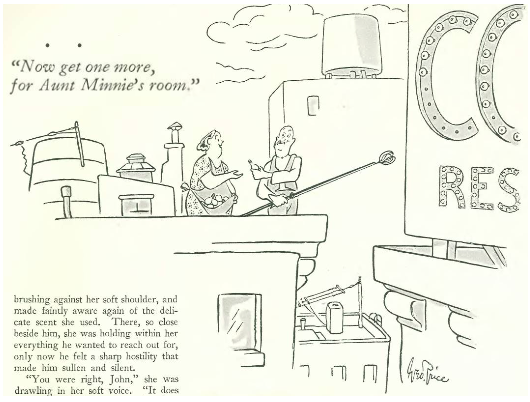
…visit the Century of Progress World’s Fair in Chicago, with George Price

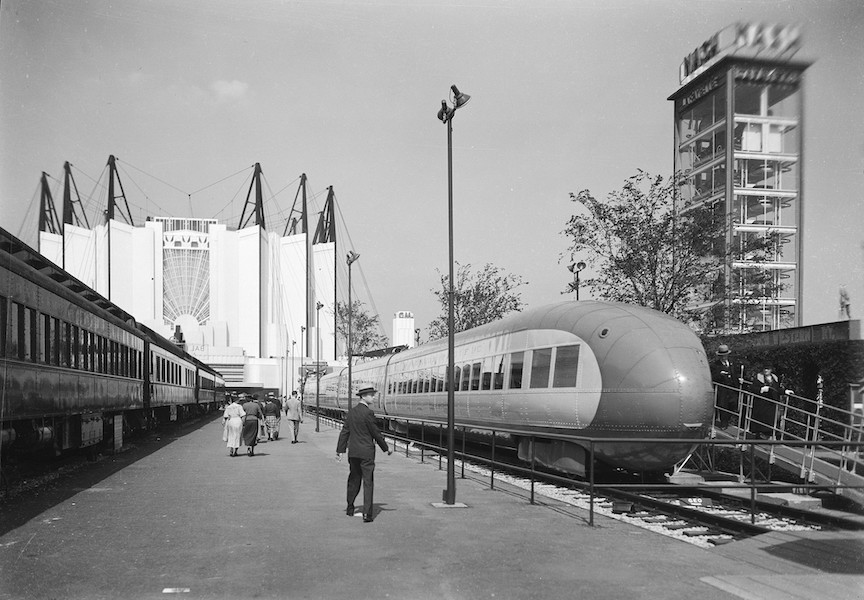
…for reference, Price’s cartoon depicted the Federal Building at the Century of Progress…

…and is often the case with this blog, we give Peter Arno the last word…

Next Time: As Millions Cheer…

The Shape of Things to Come

Above: Maurice Passworthy (Kenneth Villiers) and Catherine Cabel (Pearl Argyle) prepare for a trip to the moon in Things to Come. (IMDB)

In his 1933 science fiction novel The Shape of Things to Come, H.G. Wells foresaw how an international economic depression could eventually lead to world war.

Sept. 2, 1933 cover by William Steig.

The book also predicted that such a war would feature whole cities destroyed by aerial bombing and the eventual development of weapons of mass destruction. However, New Yorker book critic Clifton Fadiman found Wells’ other predictions to be fanciful, “scientific-romantic” notions, such as a post-war Utopia (headquartered in Basra, Iraq, of all places) ruled by super-talents that would advance scientific learning in a world without nation-states or religion. And naturally everyone would speak English.

YOU MAY SAY I’M A DREAMER…H.G. Wells envisioned a world of war, pestilence and economic collapse that would eventually give way to an English-speaking Utopia free of nation-states and religion. (Wikipedia)

Three years later Wells would adapt his book to the screen in 1936’s Things to Come, produced by Alexander Korda and starring Raymond Massey as a heroic RAF pilot John Cabal and Ralph Richardson as “The Boss,” a man who stands in the way of Cabal’s utopian dreams.

FUTURE TENSE…Clockwise, from top left, H.G. Wells visits with actors Pearl Argyle and Raymond Massey on the set of Things to Come—Swiss designer René Hubert created the futuristic costumes; in the year 1970 RAF pilot John Cabal (Massey) lands his sleek monoplane in Everytown, England, proclaiming a new civilization run by a band of enlightened mechanics and engineers; city of the future as depicted in Things to Come; poster for the film’s release. (IMDB)

An afternote: A 1979 Canadian science fiction film titled The Shape of Things to Come was supposedly based on Wells’ novel but bore little resemblance to the book. The film is a considered a turkey, lovingly mocked by the same audiences that gave Plan 9 from Outer Space a second life.

WE MEAN YOU NO HARM…Actor Jack Palance—wearing what appears to be the top from a water cooler— headed a cast that included Barry Morse and Carol Lynley in 1979’s The Shape of Things to Come. 

 * * *

Fine Dining

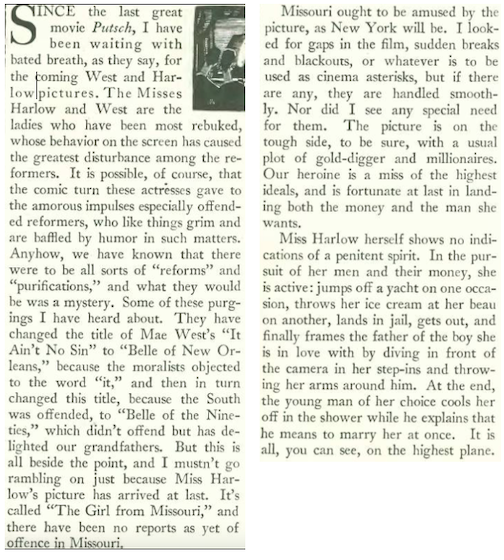
Director George Cukor turned a hit Ferber-Kaufman Broadway play into a hit movie by the same title when Dinner at Eight premiered in September 1933. While the film received high marks from leading critics, New Yorker film reviewer John Mosher found it a bit routine, if well-crafted:

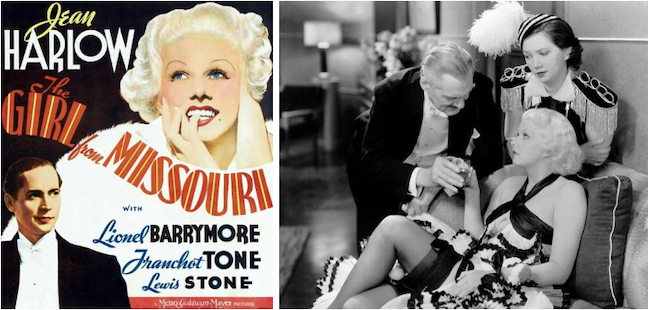
BLONDE ON BLONDE…Judith Wood (left) portrayed the character Kitty Packard in the 1932 stage production of Dinner at Eight; Jean Harlow took on the role for the 1933 film version. (IMDB)

Mosher, however, continued to admire the acting chops of veteran Marie Dressler

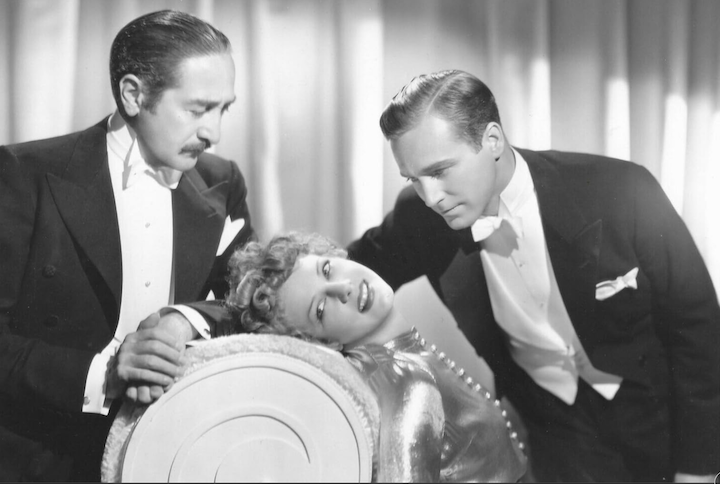
FUNNY LADIES…Clockwise, from top left: Jean Harlow and Marie Dressler square off in Dinner at Eight; movie poster highlights the “Blonde Bombshell” Harlow along with a star-studded cast; a scene with Harlow, Wallace Beery and Edmund Lowe; to avoid wrinkling her gown between takes, Harlow reviewed her lines in a special stand-up chair. (IMDB/pre-code.com)

 * * *

Madame Secretary

Secretary of Labor Frances Perkins was the first woman in the U.S. to serve as a cabinet secretary, but she was a lot more that—she was the driving force behind FDR’s New Deal. Here are excerpts from a two-part profile written by Russell Lord, with illustration by Hugo Gellert.

TRIAL BY FIRE…Frances Perkins watched in horror as young women leapt to their deaths in the 1911 Triangle Shirtwaist Factory fire—146 perished on that day Perkins recalled as the moment the New Deal was born her mind. In the wake of the fire Perkins, an established expert on worker health and safety, was named executive secretary of the NYC Committee on Safety. (trianglememorial.org/francesperkinscenter.org)

Even if some men couldn’t come around to a woman moving through the circles of power, Perkins had many admirers including prominent Tammany Hall leader “Big Tim” Sullivan.

Perkins’ appointment to FDR’s cabinet made the Aug. 14, 1933 cover of TIME magazine. (TIME/thoughtco.com)

 * * *

From Our Advertisers

Even the staid executives at Packard were getting into the modern advertising game, where sometimes the product itself was not even pictured…

…our cartoonists include Robert Day

George Price

…and baring it all, Peter Arno

…on to Sept. 9, and what I believe is Alice Harvey’s first New Yorker cover…

Sept. 9, 1933 cover by Alice Harvey.

…and where “The Talk of the Town” paid a visit to the Half Moon Hotel on Coney Island, a favorite haunt of those magnificent men and women and their flying machines:

SHIFTING SANDS…Opened in 1927 to attract upscale crowds to Coney Island away from the rabble of the Midway, the elegant Half Moon Hotel started strong but teetered on the doorstep of bankruptcy during the Depression; it gained notoriety in 1941 when mob turncoat Abe Reles fell to his death from a sixth floor window while under police protection. The hotel was demolished in 1996. (Pinterest)

* * *

Huey In The News

In his column “Of All Things,” Howard Brubaker offered this brief take on Huey Long’s visit to a Long Island party, where one guest apparently socked the controversial “Kingfish,” giving the former Louisiana governor (and then senator) a shiner.

A CHIP ON HIS SHOULDER?…Controversy followed Huey Long wherever he went. At left is a New York Times account of Long’s alleged black eye incident on Long Island. He would be assassinated two years later at the Louisiana State Capitol; Long circa 1933. (NYT/Wikipedia)

 * * *

More From Our Advertisers

As a follow-up from the previous issue’s Packard ad, this two-page spread showed us what those 1200 men were gawking at…check out that 12-cylinder model on the left, which appears to be better than 20 feet long…

…according to this ad, you could thank Camel cigarettes for getting the mail through the gloom of night…

…if you needed a cigarette to steady your nerves, you also needed fresh coffee to avoid being ostracized by your friends…

…summer-stock barn theatres were popular across America in the 1930s…this ad (illustrated by Wallace Morgan) hailed the end of the summer season and the return of “Winter Broadway”…

…on to our cartoons, out in the countryside we also find William Crawford Galbraith, here continuing to ply one of his favorite themes, namely pairing shapely seductresses and showgirls with clueless suitors…

Helen Hokinson gave us one woman who believed “what happens in the Riviera, stays in the Riviera”…

…and we close with Gardner Rea, and a scout troop on a mission…

Next Time: Rumors of War…

She Wore the Pants

It’s hard to fathom that a woman wearing trousers used to cause such a stir, but for international film star Marlene Dietrich it was an opportunity for the publicity that invariably came with defying the norms of fashion and sexuality in 1930s.

July 22, 1933 cover by Constantin Alajalov.

In May 1933 Dietrich was headed to Paris on a steamer, relaxing on the deck in a white pantsuit. Prior to her arrival, the Paris chief of police announced she would be arrested if she showed up in pants. However when Dietrich arrived at the Gare Saint Lazare wearing a man’s suit and overcoat, she stepped off the train, grabbed the chief of police by his arm, and walked him off the platform.

The New Yorker’s Janet Flanner reported on Dietrich’s comings and goings in her regular column “Letter From Paris”…

TAKING PARIS BY STORM…Clockwise, from top left: Marlene Dietrich in Paris, 1933, accompanied by her husband, Rudolf Sieber; Dietrich on the SS Europa, Cherbourg, France, May 1933; Dietrich arriving at the Gare Saint Lazare station, May 20, 1933 (this photo is often paired with an erroneous caption claiming that Dietrich is being arrested by French authorities. On the contrary, she owned them the moment she stepped onto the platform); Dietrich signing autographs in Paris, 1933. (bygonely.com/Smithsonian/Twitter/Pinterest)

 * * *

Bullish On Office Space

Despite the Depression, millions of square feet of office space were being added to the massive Rockefeller Center complex, including the Palazzo d’Italia at 626 Fifth Avenue. “The Talk of the Town” reported:

THE BIG SHORT…Attached to the International Building at its northwest corner, the Palazzo d’Italia was originally planned as a nine-story building, a fact that impressed the fascist Italian leader Benito Mussolini because it beat the six-story height of the French and British Buildings. In the end Benito only got six as well. (Wikipedia/Pinterest)

* * *

Urban Jungle

Astoria Studios in Queens was built in 1920 for Famous Players-Lasky and is still home to New York City’s only studio backlot. In 1933 it served as a tropical setting for The Emperor Jones, featuring Paul Robeson in the title role. “The Talk of the Town” looked in on the movie’s faux jungle:

35TH STREET JUNGLE…Paul Robeson in a scene from The Emperor Jones. (flickr.com)

Loosely based on a Eugene O’Neill play and financed with private money, the film was made outside of the Hollywood studio system and distributed by United Artists.

EMPEROR’S NEW CLOTHES…Brutus Jones (Robeson) schemes with colonial trader Smithers (Dudley Digges) on his plan to become emperor in The Emperor Jones. (moma.org)

 * * *

From Our Advertisers

Yes, it’s advertising so we don’t expect it to be realistic, but I can guarantee no one is going to look like that after a ride to the beach in a rumble seat…also the woman behind the car is either floating or has exceedingly long legs…

…Hupmobile enlisted humorist Irvin S. Cobb to help boost its sagging sales…

Irvin S. Cobb (1876–1944) wrote for Joseph Pulitzer’s New York World, and was once the highest paid staff reporter in the United States. (carnegiecenterlex.org)

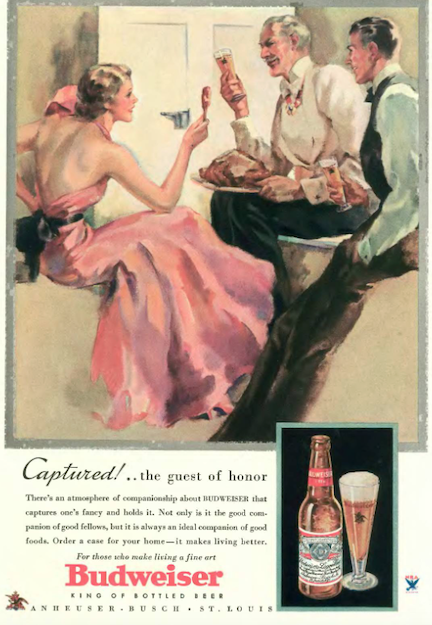
…with the return of legal beer the makers of Budweiser struck a patriotic note in promoting their “King of Bottled Beer” to thirsty New Yorkers…

…the makers of Pabst Blue Ribbon claimed the title of “Best of the Better Beers” with this ad featuring a woman who appeared on the verge of going overboard…

…if beer wasn’t your thing, you could try your hand at mixing a “30-Second Highball” per this Prohibition-themed ad…

…delving into the back pages one finds all sorts of curiosities, including this mail-order “charm school” operated by Margery Wilson

…Wilson (1896–1986) acted in numerous silent pictures (including the 1916 D. W. Griffith epic Intolerance) and in the early 1920s was a writer, director and producer…

Margery Wilson in Eye of the Night (1916). She was among pioneering women filmmakers of the 1920s. (columbia.edu))

…it must have been a hot summer in New York with the abundance of air-conditioner ads…here’s one from Frigidaire for a unit that despite its size (and enormous cost) could cool only one room…

…this next air-conditioner ad from G-E seems poorly conceived…you would think an air-conditioned office would make the boss and his secretary a bit happier than they appear here…maybe they just got the bill from General Electric…

…we begin our cartoons with another pair of sourpusses, courtesy Mary Petty

George Price offered up this bit of art for the opening pages…

William Steig headed to the country to escape summer in the city…

William Crawford Galbraith’s bathers kept cool by examining the flotsam from distant shores…

Charles Addams explored various themes before he launched his “Addams Family” in 1938…

…and we move on to July 29 with a terrific cover by Barbara Shermund

July 29, 1933 cover by Barbara Shermund.

…in this issue Geoffrey T. Hellman penned a profile of Egyptologist Herbert E. Winlock, who made key discoveries about the Middle Kingdom of Egypt and served as director of the Metropolitan Museum from 1932 to 1939, where he was employed his entire career. Excerpt:

CAN YOU DIG IT…Early 1920s photo of the Metropolitan Museum’s Theban expedition team. Herbert E. Winlock is in the back row, second from left. His wife, Helen Chandler Winlock, is in the front row, far right. (Metropolitan Museum of Art)

 * * *

Chilling With U.S. Grant

In those days before air-conditioning was widely available or used, “The Talk of the Town” dispatched an investigator to sample indoor temperatures at various public places, finding the coolest spot at Grant’s Tomb:

WHERE THE COOL PEOPLE HANG OUT…Clockwise, from top left: The tomb of Per-neb at the Metropolitan Museum registered a cozy 80 degrees, while in the same museum it was a balmy 84 by Emanuel Leutze’s famed painting Washington Crossing the Delaware; the New York Aquarium in Battery Park was a bit cooler at 79 (pictured is the Sea Lion Pool); while Grant’s Tomb was downright chilly at 70. (Met Museum/Wildlife Conservation Society/grantstomb.org)
 * * *
Node of Gold
Apparently the famed crooner Bing Crosby had a minor node on one of his vocal cords, and when he consulted a specialist he was advised against removing it, lest he alter his voice in a way that would affect his career. Indeed, the node seemed to add an “appealing timbre” to his signature sound, so Crosby had his voice insured by Lloyd’s of London for $100,000 with a proviso that the node could not be removed. Howard Brubaker made this observation in “Of All Things”…

LUMP IN HIS THROAT…Bing Crosby with Marion Davies in the 1933 film Going Hollywood. (IMDB)

…Brubaker also shared this prescient observation from American astronomer Vesto Slipher

…Slipher (1875–1969) would live long enough to confirm his statement…the first full-disk “true color” picture of the Earth was captured by a U.S. Department of Defense satellite in September 1967:

(USAF/Johns Hopkins University)

 * * *

More From Our Advertisers

This ad was on the inside front cover of the July 29 issue, a rather jarring image following that lovely Barbara Shermund cover…

…the hugely popular P.G. Wodehouse was back with more silly antics from the British upper classes…

…while some New Yorkers could take a break from their reading and hit the dance floor atop the Waldorf-Astoria…

…and tango to the stylings of bandleader Xavier Cugat

Xavier Cugat and band atop the Waldorf-Astoria. (cntraveler.com)

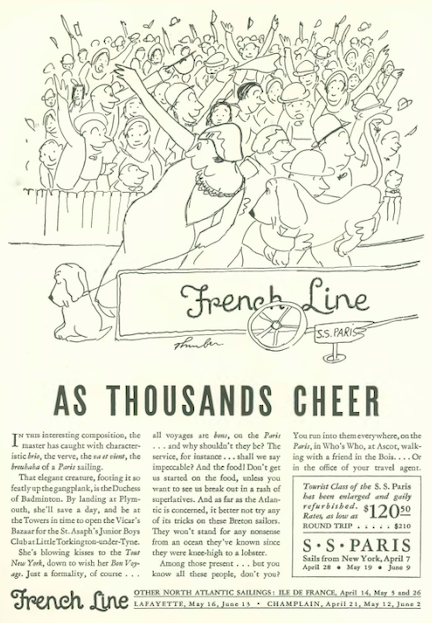
…this ad for the French Line, illustrated by Ruth Sigrid Grafstrom, offered a precious scene of a page-boy lighting a woman’s cigarette, a sight unimaginable today…

…and we close with a cartoon by Gardner Rea, doggone it…

Next Time: The Flying Season…

Headline News

The news of the day in May 1933 included a visit to the U.S. by Irish playwright George Bernard Shaw, a controversial Diego Rivera mural at Rockefeller Center, the abandonment of the Gold Standard, and the continuing saga of legal beer.

May 13, 1933 cover by Adolph K. Kronengold.

Writing under the pseudonym “Guy Fawkes,” Robert Benchley opined on the state of the print media in “The Wayward Press”…an excerpt:

NEWSMAKERS CIRCA 1933 included George Bernard Shaw (left), here being escorted by actors Charlie Chaplin and Marion Davies from a Hollywood luncheon hosted by Davies in March 1933; other headlines touted the return of legal beer and the suspension of the gold standard by the Roosevelt administration—everyone was required to deliver all gold coin, gold bullion and gold certificates owned by them to the Federal Reserve by May 1 for the set price of $20.67 per ounce. Pictured are guards stocking returned gold in New Jersey bank vaults, 1933. (Pinterest/history.com)

 * * *

Selling the Pitch

Babe Ruth was something of a freak of nature, becoming the “Sultan of Swat” despite a life of heavy drinking, poor eating habits and erratic attention to training regimens. Nevertheless, as Ruth neared the end of his career at age 38 he could still put on a show. In his “Notes and Comment,” E.B. White was hoping for just that sort of thing:

STILL GOT IT…E.B. White would get his wish for some “real showmanship” at the end of the 1933 season, when famed Yankee slugger Babe Ruth—in his 20th year in the majors—volunteered to pitch against the Red Sox in the final game of the season at Yankee Stadium. Not only did Ruth pitch a complete game, he also hit his 34th homer of the season in the Yankees’ 6–5 victory. (ballnine.com)

 * * *

From Our Advertisers

I wonder what it was like to cruise on the Dnieper River for fourteen days through “Colorful Ukrainia” during the Great Famine that Stalin imposed on that land, killing as many as five million people…

…more ads from the back pages touting various libations including Trommer’s “White Label” beer, a drink made from conch juice called “Konktail,” and an ad illustrated by William Steig promoting “imitation gin and other flavors” made by Red Lion…none of these products exist today…

…however you can still buy canned spaghetti, if that is your thing, but not “Force” breakfast cereal…

…still more selections from the back pages…on the left, an ad for Pear’s Soap that introduced us to “wise parents” whose children “are well-bred—the ‘nice people’ of tomorrow”…on the right, the lifeless gaze of a woman who pondered how life could be better in Tudor City…and in the middle, an unlikely one-column ad from luxury car maker Pierce Arrow…the automaker was America’s answer to Rolls Royce, but the Depression would take it down by 1938…

…I’m guessing the Velveeta is the mild one…

…technology was transforming beachwear, including this “Swagger Boy” outfit spun from Dupont’s latest synthetic, Acele…

…B. Altman, on the other hand, went full-color to promote their exclusive, imported fabric under the trade name Meadowbrook…

…and who ever thought a tire could look so posh, here dominating a gathering of the smart set…

…and look at this swell, sporting top hat and walking stick, but he also knows a good value when it comes to his tires…

…we move on to our cartoons with James Thurber and a lot of people apparently going nowhere…

Helen Hokinson’s girls were all ears at the latest club gathering…

Otto Soglow’s Little King got in on the excitement of legal beer…

…and we continue to the issue of May 20, 1933, with a cover by Arnold Hall, who did at least eight covers for The New Yorker during the 1930s…

May 20, 1933 cover by Arnold Hall.

The big news in this issue was Mexican artist Diego Rivera and his controversial mural at Rockefeller Center. Rivera’s New Yorker profile was written by Geoffrey Hellman (1907–1977), who beginning in 1929 served as the magazine’s principal writer for “The Talk of the Town.” Here’s an excerpt, with illustration by Al Frueh:

What got Rivera in hot water with John D. Rockefeller Jr. and family was a mural that departed somewhat from the artist’s earlier study sketches—Rivera had been hired to depict “man at the crossroads,” looking to the future with uncertainty but also with hope for a better world.

According to a 2014 story by NPR’s Allison Keyes, leftist organizations and various communist groups in New York criticized Rivera for agreeing to work with capitalist paragons like the Rockefellers. In response, Rivera sent assistants to find a picture of Bolshevik leader Vladimir Lenin. “If you want communism, I will paint communism,” he apparently said.

The subsequent inclusion of Lenin in the mural led to protests by the Rockefeller family, the press and the public. Rivera was ultimately asked to leave the country, losing yet another commission for the Chicago World’s Fair. Rivera got paid for his Rockefeller Center mural, but the work itself was demolished.

After returning to Mexico Rivera recreated the mural, adding some vengeful references (see below) to his 1934 work, Man, Controller of the Universe.

Rivera’s wife, Frida Kahlo, had accompanied him to New York, and during their time in the states (1930-34) she produced a number of now-famous paintings. However in 1933 she was not recognized as a serious artist. Indeed when she visited with the Detroit News in 1932, the headline read, “Wife of the Master Mural Painter Gleefully Dabbles in Works of Art.” In the same vein, Hellman perceived Kahlo as nothing more than a pretty helpmeet.

MORE THAN A PRETTY FACE…At left, Diego Rivera and Frida Kahlo attending an art exhibition in New York, 1933; at right, Kahlo and Rivera before the controversial mural at Rockefeller Center. Although an unknown in the art world in 1933, Kahlo would one day eclipse her husband’s fame. (SFGate/Pinterest)
MISCONCEPTION…Clockwise, from top, an early sketch of the Diego Rivera’s mural differed from what he ultimately painted in Rockefeller Center. After the mural was destroyed in 1934, Rivera recreated the work under the title Man, Controller of the Universe, now on display at the Palacio de Bellas Artes in Mexico City. A detail of that work shows Vladimir Lenin holding hands with workers of different races. Below, juxtaposed with the image of Lenin in that painting was another famous face, that of John D. Rockefeller Jr., depicted drinking martinis with a prostitute. Touché!
(Museo Frida Kahlo)

Rivera’s Rockefeller Center mural was eventually replaced in 1937 by American Progress, painted by the Spanish artist José Maria Sert:

(Flickr)

The irony of the Rivera controversy was not lost on E.B. White, who offered this ballad in response:

 * * *

Keep it in Your Pocket

E.B. White again, this time opening his column with thoughts on the anti-Hitler parade that was held in New York.

White refers to his “swastika watchfob”…before the Nazis came to power, the swastika was known to many cultures as a symbol of prosperity and good luck.

IT’S THE REAL THING…In 1925 Coca Cola made a lucky brass watch fob in the shape of a swastika. At that time the swastika was still a symbol of good luck. (Reddit)
SHOW OF UNITY…Anti-Hitler parade in New York protested the May 10, 1933 book burnings across Nazi Germany. (encyclopedia.ushmm.org)

In his weekly column Howard Brubaker added this observation regarding life in Nazi Germany…

Back home, folks could still enjoy a taste of Germany that wasn’t associated with violence and hate…an excerpt from “The Talk of the Town”…

GEMÜTLICHLüchow’s opened in 1882 when Union Square was still New York’s theater and music hall district, and featured seven dining rooms and a beer garden. The restaurant closed in 1982 and was demolished in 1995 to make way for an NYU dormitory. (Pinterest/MCNY)

 * * *

From Our Advertisers

The architecture profession fell on hard times during the Depression. In 1931 the Architects’ Emergency Committee began promoting the talents of unemployed architects who were willing to work for less than half their ordinary fee, limiting charges to materials, a small amount of cash, and a place to sleep…this is an example of a series of ads that ran in The New Yorker in the spring of 1933…

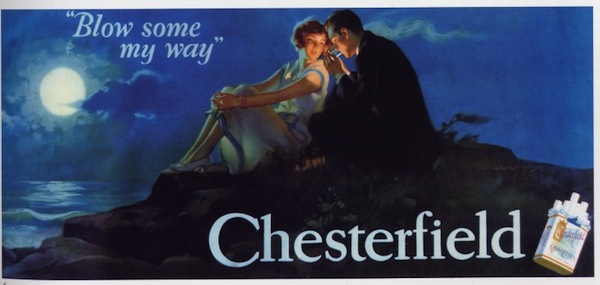
…one profession not feeling the hard times?—the makers of tobacco products, and specifically cigarettes…

…speaking of hard times, we turn to our cartoons and Gardner Rea

…and we close on a bright note, otherwise known as Peter Arno

Next Time: Rebirth of a Nation?

Not Worth a Dime

First performed in Berlin in 1928, The Threepenny Opera was Bertolt Brecht’s socialist critique of capitalist society and was a favorite (somewhat ironically) of that city’s bourgeois “smart set.” However when it landed on the Broadway stage in 1933, it famously flopped, and closed after just twelve performances.

April 22, 1933 cover by Helen Hokinson.

The first American production, adapted by Jerrold Krimsky and Gifford Cochran, opened April 13, 1933, at the Empire Theatre, featuring Robert Chisholm as Macheath (“Mack the Knife”) and Steffi Duna as his lover, Polly. Critic Robert Benchley found value in the play’s “modernistic” music, but seemed puzzled by its enigmatic production, an opinion shared by other contemporary critics.

HANGING IN THERE…Scenes from the 1928 Berlin premiere of Bertolt Brecht’s musical, The Threepenny Opera. At left, Macheath (tenor/baritone Harald Paulsen) is spared the noose during the closing act, much to the relief of his lover, Polly (soprano Roma Bahn); at right, in a deus ex machina moment, a messenger arrives at the hanging and announces that Macheath has been pardoned by the queen. (British Library)

Some critics today defend the 1933 American production, noting that the Krimsky–Cochran adaptation was quite faithful to the Brecht original. Perhaps something was lost in translation, or maybe the world in which the play was conceived no longer held much relevance to Depression-era Americans.

THE FINAL CURTAIN fell after just twelve performances of the first American production of The Threepenny Opera at Broadway’s Empire Theatre. The production featured Robert Chisholm as Macheath and Steffi Duna as Polly. (discogs.com/bizzarela.com)

Benchley half-heartedly concluded that the play was probably worth seeing, for no other reason than to experience something different for a change.

By 1933 the world that had conceived The Threepenny Opera was long gone—Brecht fled Nazi Germany two months before his play opened in New York, fearing persecution for his socialist leanings. Things were quickly going “from bad to worse” under Adolf Hitler’s new regime, as Howard Brubaker observed in his “Of All Things” column:

 * * *

Look Ma, No Net!

Karl Wallenda (referred to as “Carl” here) was born to an old circus family in Germany in 1905, and by 1922 he would put together a family-style high-wire act (with brother Herman) that would come to be known as “The Flying Wallendas.” They debuted at Madison Square Garden in 1928, notably without their safety net, which had been lost in transit. So they performed without it, much to the acclaim of the adoring crowd. They soon became known for their daring high-wire acts, often performed without safety nets. E.B. White filed this (excerpted) report for “The Talk of the Town.”

In the years that followed Karl developed some of troops’ most startling acts, including the famed seven-person chair pyramid. They performed this incredibly dangerous stunt until their appearance at the Detroit Shrine Circus in January 1962; the wire’s front man, Dieter Schepp, faltered, causing the pyramid to collapse. Schepp, who was Karl’s nephew, was killed, as was Richard Faughnan, Karl’s son-in-law. Karl injured his pelvis, and his adopted son, Mario, was paralyzed from the waist down.

DON’T TRY THIS AT HOME…The Wallenda family practices the seven-person pyramid just prior to the Shrine Circus in Detroit, where the group fell, killing Dieter Schepp (far right, bottom row) and Dick Faughnan (second from left, on bottom). (Sarasota Herald-Tribune)

Karl’s own luck finally ran out on March 22, 1978, on a tightrope between the towers of Condado Plaza Hotel in San Juan, Puerto Rico. High winds, and an improperly secured wire, caused the 73-year-old Wallenda to wobble, and then fall, one hundred feet to the ground. He was dead on arrival at a local hospital.

THE SHOW ENDED for Karl Wallenda on March 22, 1978, on a tightrope between the towers of Condado Plaza Hotel in San Juan, Puerto Rico. The 73-year-old high-wire legend fell one hundred feet to his death. (esquire.com)

 * * *

Safer Entertainments

Lois Long continued to file nightlife reports in her “Tables for Two” column, reveling in the sights and sounds (and rhythms) of the Cotton Club’s orchestra, led by Duke Ellington…but the real attraction was Ellington’s unnamed drummer, whom I assume was the great Sonny Greer

JAZZ GREAT Sonny Greer wowed Lois Long and the rest of the crowd at Harlem’s Cotton Club in April 1933. (jazz.fm)

 * * *

From Our Advertisers

Given the news Howard Brubaker shared earlier in this post, I wouldn’t use the word Gemütlichkeit (basically, warmth and friendliness) to describe the state of things in Nazi Germany…

…a better option would be a trip to the British Isles or France on the White Star lines, nicht wahr?…

…RCA’s mascot, Nipper, appeared to contemplating fatherhood in this two-page ad for the company’s new “baby sets”…

…Camel took a break from its magician-themed “It’s Fun to be Fooled” ads to run another elegant Ray Prohaska-illustrated spot…

…on to our cartoons, Carl Rose demonstrated the economic benefits of legal beer…

E. Simms Campbell showed us a woman seeking a bit of motherly wisdom…

Whitney Darrow Jr (1909–1999), who began his 50-year career at The New Yorker on March 18, 1933, offered this look at childhood’s hard knocks…

James Thurber drew up an odd encounter at a cocktail party…

Peter Arno served up a proud patriarch…

…and William Steig explored the perils of somnambulism…

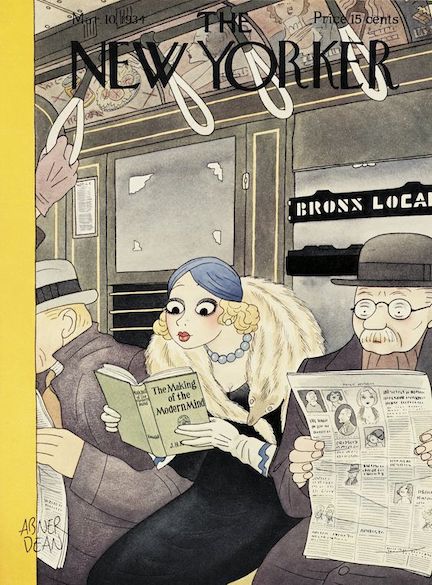
…on to our April 29, 1933 issue with a cover by Garrett Price…although we’ve already seen many cartoons by Price, we haven’t seen many covers (he did two covers in the magazine’s first year, 1925). Price would ultimately produce 100 covers for The New Yorker, in addition to his hundreds of cartoons…

April 29, 1933 cover by Garrett Price. Note the little train illustration along the spine (or strap, as it is called).

…for the record, here is Price’s first New Yorker cover from Aug. 1, 1925…

…there was more troubling news from Nazi Germany, this time from Paris correspondent Janet Flanner in her “Letter from Paris” column…Flanner would later gain wider fame as a war correspondent…

THUGS…SA members stick a poster to the window of a Jewish store in Berlin on April 1, 1933. The poster is inscribed, “Germans, Defend yourselves, Do not buy from Jews”. (Bundesarchiv, Berlin)

 * * *

From Our Advertisers

Camel followed up its elegant ad from the previous issue with another “Fun to be Fooled” spot, this time presented as a multi-panel comic strip…

…Powers Reproduction was a frequent advertiser in the early New Yorker, touting the “realism” of their color photography, but in this case the model looked more like a department store mannequin…

Otto Soglow continued to ply a lucrative sideline illustrating ads for Sanka decaf…

…as we segue to our cartoonists, the opening section featuring work by both James Thurber and George Price

Gardner Rea’s snake charmer expressed her belief that all men are created equal…

…here is a cartoon by a new artist, Howard Baer, who contributed to The New Yorker between 1933 and 1937…

…and another by newcomers Whitney Darrow Jr.

…and E. Simms Campbell

Barbara Shermund continued to rollick with her modern women…

…and we end with the ever-reliable Peter Arno

Before we close I want to remember Roger Angell, who died last week at age 101. A literary legend and a great baseball writer to be sure, but also one of the last living links to the first days of The New Yorker. Rest in Peace.

Photo by Brigitte Lacombe, for The New Yorker.

Next Time: Bohemian Rhapsody…


Beer Thirty

There’s a good reason why Americans celebrate National Beer Day on April 7.

April 15, 1933 cover by William Steig.

It was on that day in 1933 that the Cullen-Harrison Act went into effect; after nearly 13 years of Prohibition, folks were allowed to buy and drink low-alcohol content beer. The act not only promised to wet their whistles on the hot summer days ahead, but it also signaled the eventual doom of 18th Amendment. E.B. White opened his column with musings on the Easter holiday, but soon turned his attention to the big news of the day.

THINK THIS WILL BE ENOUGH?…Workers at a New York brewery unload thousands of crates of beer, getting ready for the return of legal beer in April 1933. (allthatsinteresting.com)
FRONT PAGE NEWS…The New York Times proclaimed the return of legal beer in this April 7, 1933 edition.
BLONDE’S BOMBSHELL…While on the other side of the Lower 48, actress Jean Harlow christened the first legal bottle of beer at midnight in Los Angeles, April 6, 1933. (Los Angeles Public Library)

In his “A Reporter at Large column,” Morris Markey looked in on a former speakeasy owner who was more than happy to go legit, and who also predicted the demise of his fellows who still lingered in the underground liquor trade. An excerpt from “Now That There’s Beer”…

CHEERS!…The first truckload of beer to leave New York exits the Jacob Ruppert Brewery in New York in 1933. (allthatsinteresting.com)

The subject of Markey’s column explained why speakeasies would soon be a thing of the past. Markey also observed that theatre owners would soon feel the pinch as folks would forgo movies for summer evenings at a beer garden.

 * * *

No Laughing Matter

Writers and editors at The New Yorker did their best to keep things as light and witty as possible, but sometimes the headlines could not be ignored, and tragedy was acknowledged, albeit briefly. “The Talk of the Town” had this to say about history’s deadliest airship disaster:

NATURE’S FURY…The U.S. Navy’s 785-foot dirigible, the USS Akron, plunged into the Atlantic Ocean during a violent storm shortly after midnight on April 4, 1933, claiming the lives of 73 crewmen. Clockwise, from top left, the Akron on a routine flight; men in a rear control car; servicemen in the dirigible’s engine room; April 23, 1933 photo of wreckage recovered off the coast of New Jersey. Because the ship had no life vests and one rubber raft, only three crew members survived the disaster, which heralded the end the Navy’s dirigible fleet. (howstuffworks.com/AP/Daily Mail)

In his “Of All Things” column, Howard Brubaker had this to add:

 * * *

Alex at the Movies

It wasn’t every day you got to read a movie review by Alexander Woollcott, but he did just that in the opening lines of his “Shouts and Murmurs” column, calling Cecil B. DeMille’s The Sign of the Cross an “unpleasing mess drooled on to the brobdingnagian bib” of the director.

Woollcott, who doubtless related to Nero’s bacchanalian ways, singled out Charles Laughton’s campy performance as the Roman emperor.

ANIMAL HOUSE…Charles Laughton camped it up as the Emperor Nero in Cecil B. DeMille’s The Sign of the Cross. (IMD

Besides Laughton’s performance, the pre-Code film is perhaps best known for Claudette Colbert’s revealing milk bath scene, which took several days to shoot—the powdered cow’s milk eventually turned sour, making it a very unpleasant experience for all involved.

IT STINKS…that was Alexander Woollcott’s assessment of The Sign of the Cross. Clockwise, from top left, studio poster for the film; Claudette Colbert’s famous bath scene; an actress portraying a Christian being thrown to the lions (as well as crocodiles and gorillas) was the famed burlesque dancer Sally Rand, who left little to the imagination in her uncredited appearance; an orgy scene. Although Paramount marketed the film to churches, it was attacked by the Catholic Legion of Decency: a re-release of the film was censored after the Hays Code went into effect in 1934—a “lesbian dance,” violent gladiator scenes and sequences with naked women being attacked by crocodiles were cut and wouldn’t be restored until a 1993 video release. (Wikipedia/IMDB)

As for film critic John Mosher, the remaining Hollywood fare was even worse—like The Sign of the Cross, these pictures used faith-based themes, a seemingly new trend in Hollywood scenarios, to poor effect.

Gabriel Over the White House starred Walter Huston as a politically corrupt president who, after a near-fatal car accident, comes under the divine power of the Archangel Gabriel and the spirit of Abraham Lincoln…

I SEE DEAD PEOPLE…Walter Huston and Karen Morley in Gabriel Over the White House. (TCM)

…the pre-Code drama Destination Unknown also summoned supernatural forces to tell the tale of a stranded ship saved by a stowaway who turns wine into water and heals a crippled man.

NEEDING A MIRACLE…Pat O’Brien and Betty Compson in Destination Unknown. (IMDB)

 * * *

From Our Advertisers

Considering that Adolf Hitler gave Nazi paramilitary units control of German streets in January 1933, the words “Appeasing refuge” don’t readily come to mind…

…if you liked all things German but wanted to avoid getting a jackboot to the groin, you could remain stateside, drink some 3.2 beer, and chew on some Liederkranz…

…actually this looks more preferable, especially as rendered by fashion illustrator Leslie Saalburg

…before Zillow or Craigslist you could look for some digs in the New York American, which merged with the New York Journal in 1937…

…the makers of leaded gasoline urged on a stereotypical country doctor, even though the stork seemed to have things under control…

…on to our cartoonists, Garrett Price illustrated the limits of legal beer…

…while Chon Day explored the same problem at this tea room…

…here’s a trio of The New Yorker’s early women cartoonists…Barbara Shermund

Mary Petty

…and Alice Harvey

…and we close with Al Frueh, and some brave firefighters…

Next Time: Not Worth a Dime…