Planes, Trains and Automobiles

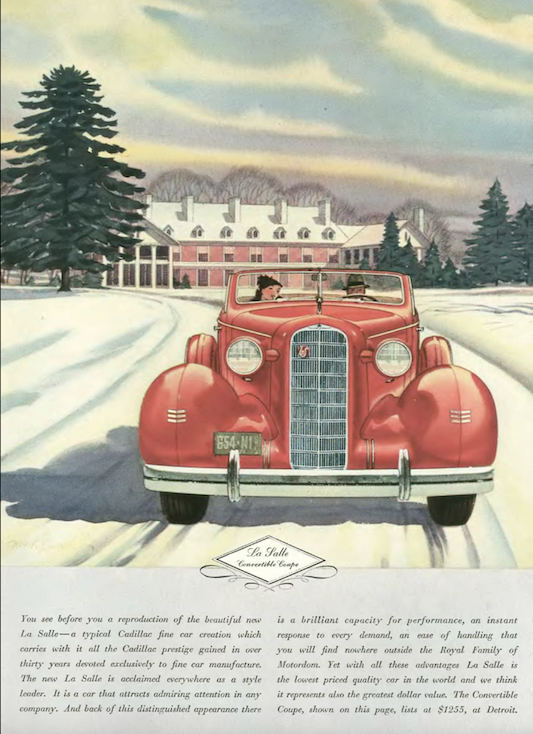
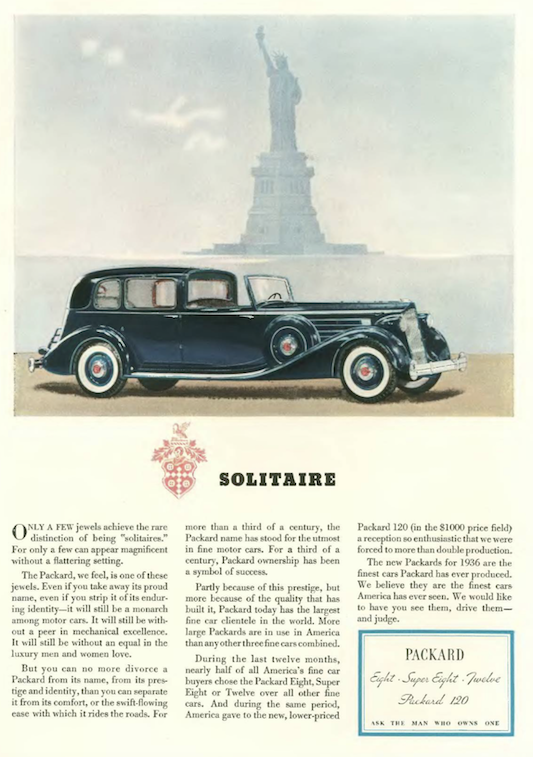
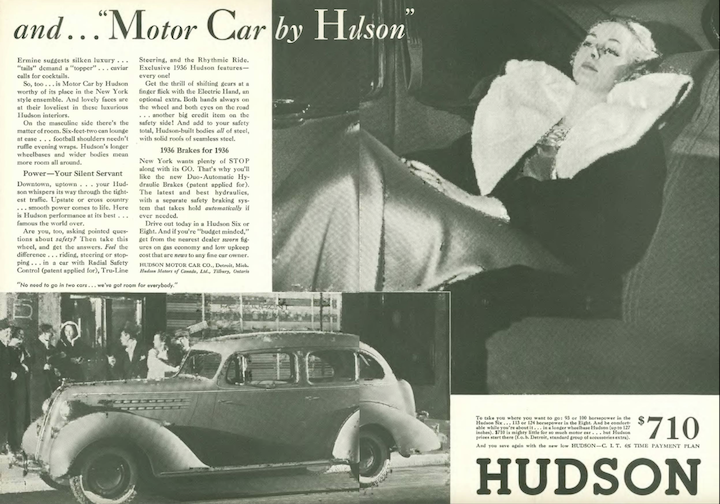
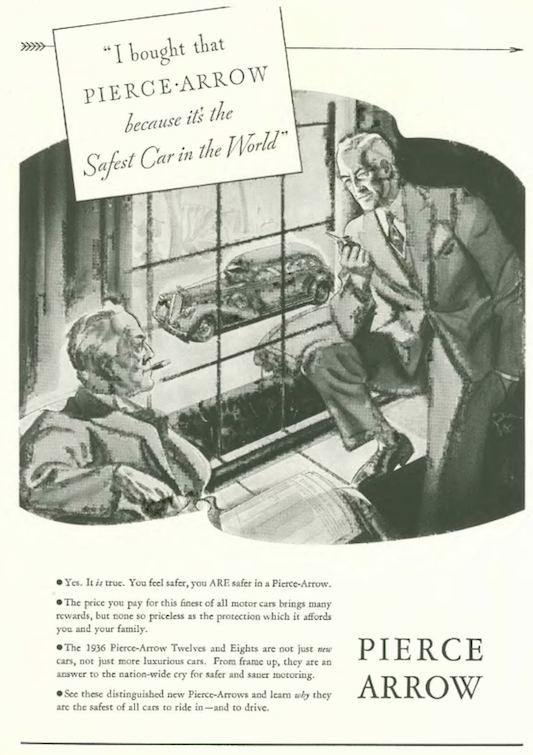
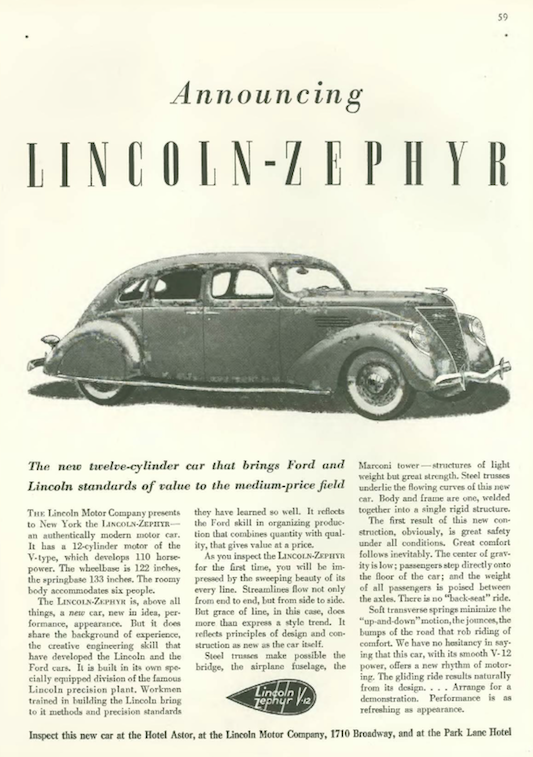
Above: Clockwise from top left—the Douglas DC-3 was introduced to airlines in 1935; Seaboard streamlined locomotive, c. 1930s; 1936 Lincoln-Zephyr; 1936 Pierce Arrow. (hushkit.net/Wikimedia/classicautomall.com)

As we’ve seen in previous issues, E.B. White often served as The New Yorker’s unofficial aviation correspondent; despite his sometimes anachronistic views on progress, he never missed a chance to hop aboard an airplane and marvel at the scene far below.

November 2, 1935 cover by Constantin Alajalov.

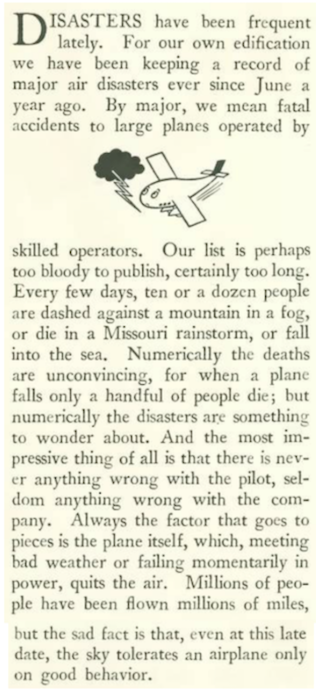
White’s enthusiasm, however, was tempered with doubts about air safety, including observations he made in an August 31, 1935 column following the deaths of Wiley Post and Will Rogers in an Alaska plane crash. Here is what he wrote then:

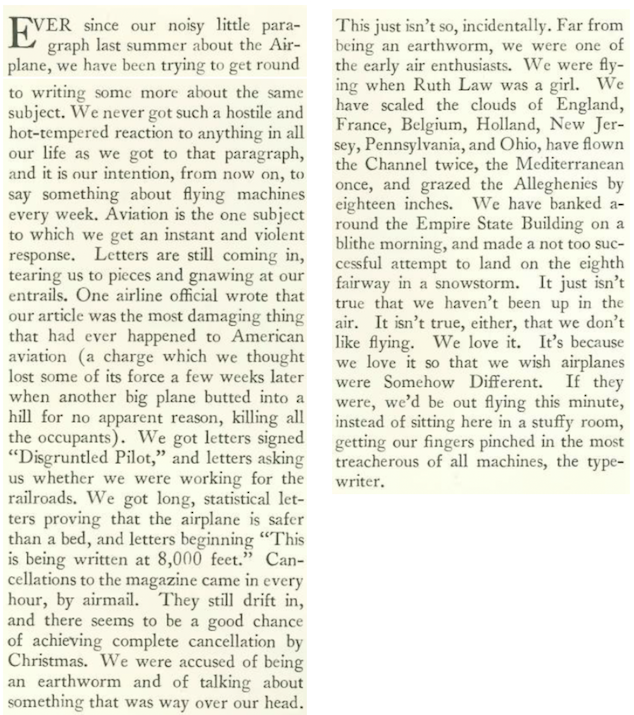
The aviation industry’s strong reaction to that “noisy little paragraph” apparently led to a number of subscription cancellations, prompting White to return to the topic in his Nov. 2 “Notes and Comment” column:

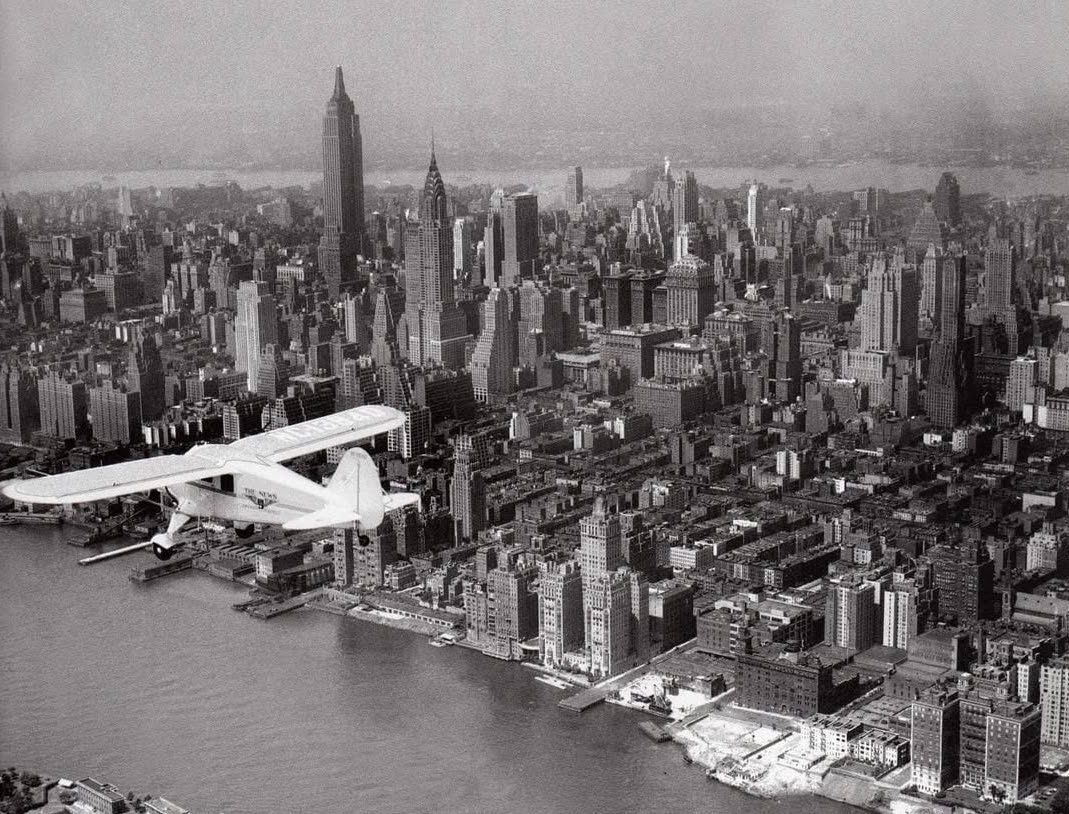
HE’D BEEN AROUND…E.B. White supported his comments on air safety by citing his many flying experiences, including soaring around the Empire State Building “on a blithe morning.” Pictured above is a New York Daily News plane flying over Manhattan in 1934. (NY Daily News)

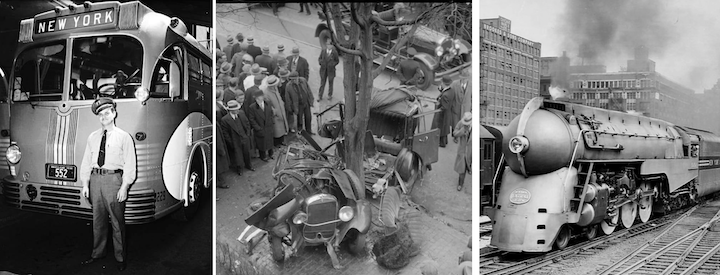
White also turned to statistics for his defense, finding that per passenger mile, railroads were still the safest mode of transportation in the country.

HOP ABOARD…According to 1933 statistics shared by E.B. White, trains were the safest mode of transportation per passenger mile, followed by buses. Automobiles were the least safe, a fact that still holds true today. From left, Greyhound bus and driver, 1937; automobile wreck, 1930s; New York Central’s 20th Century Limited leaving Chicago’s LaSalle Street station in 1938. (Facebook/Reddit/Wikipedia)

With that, White still wasn’t done with the topic, turning to none other than Anne Morrow Lindbergh for her thoughts on flying, which she shared in her latest book, North to the Orient. White noted Lindbergh’s mixed feelings about flying, about getting to places quickly and missing familiar landmarks. He also suggested that someday airline passengers would use mountains and rivers as landmarks…(I still try to do that when I fly, but at 35,000 feet it is a challenge). Today most folks are content with plugging in their earbuds and tuning out completely.

NOT YOUR EVERYDAY OUTING…In July 1931 Charles and Anne Morrow Lindbergh embarked in their Lockheed Model 8 Sirius on an often treacherous 7,100-mile journey across Canada, Alaska, Siberia and Japan in an attempt to find a commercial route to Asia for Pan American Airways. Top photo, Charles (standing on pontoon) and Anne (in the cockpit) make final preparations before the flight; bottom photo, enthusiastic crowds greet the Lindberghs upon their arrival in Japan. The Siberia-to-Japan leg was the most dangerous due to heavy fog. (historynet.com)

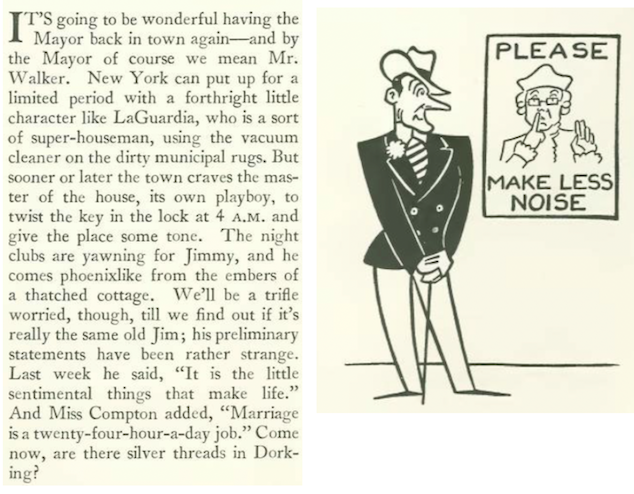
E.B. White also announced the return to the city of former Mayor Jimmy Walker, who had fled to Europe in 1932 amid corruption charges. White noted that New York’s nightclubs were eager to welcome the fun-loving Walker back to town.

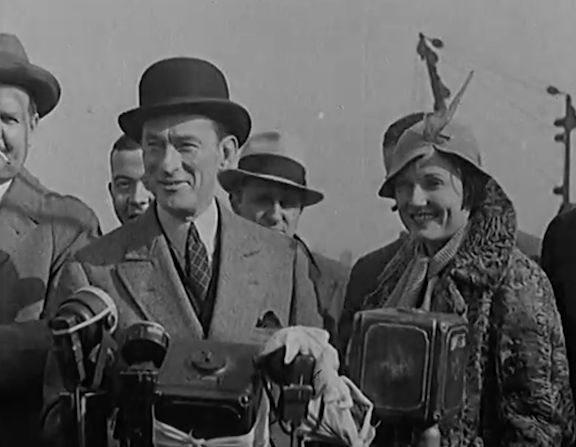
SECOND ACT…Still image from a 1935 British Pathé newsreel shows the triumphant return from Europe of former Mayor Jimmy Walker and his wife, Betty Compton. (YouTube)

 * * *

A Zephyr Blows In

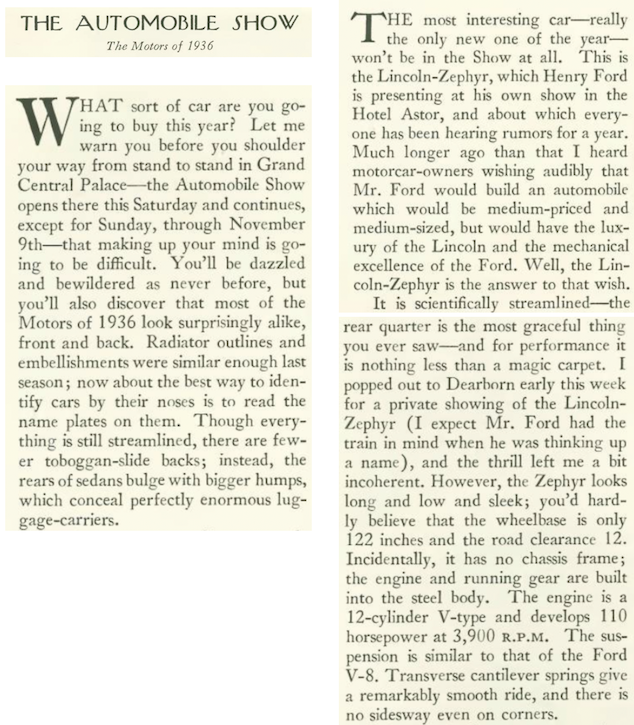
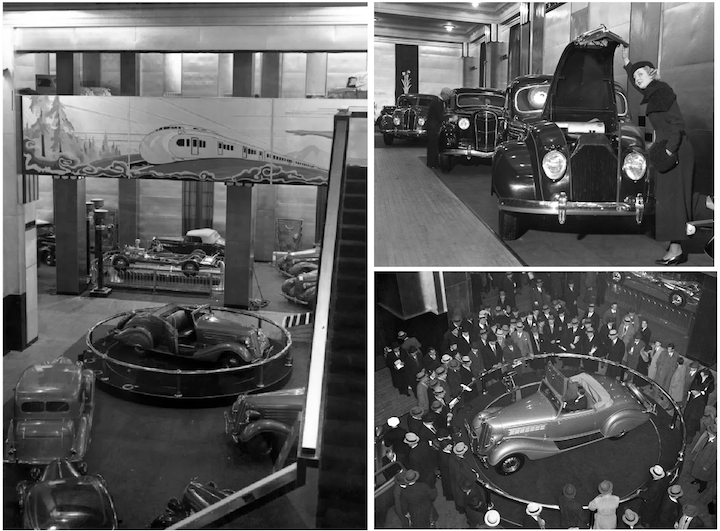
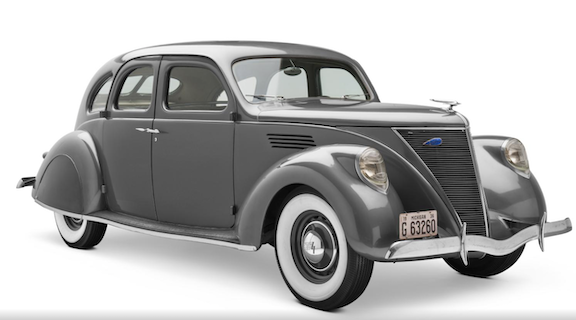
The magazine’s “Motors” correspondent (pen name “Speed”) noted the dazzling display of 1936 models at the New York Automobile Show, singling out the Lincoln-Zephyr as the year’s biggest innovation.

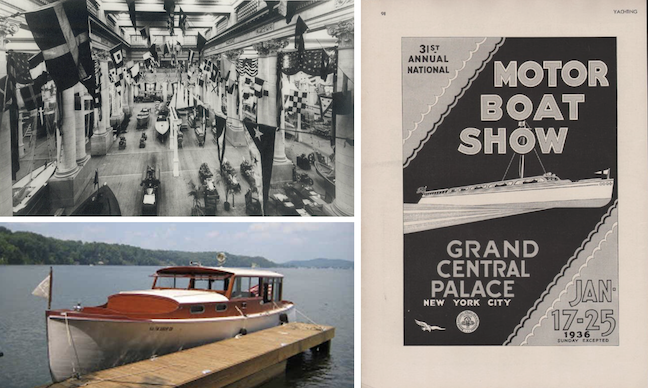
DECO DREAMSCAPE…Streamlining was all the rage at the 1935 New York Automobile Show at Grand Central Palace. Upper right, a woman opens the hood of a streamlining pioneer, the Chrysler Airflow. (New York Daily News)
LEADER OF THE PACK…The 1936 Lincoln-Zephyr had tongues wagging at the New York Automobile Show.  (thehenryford.org)

 * * *

At the Movies

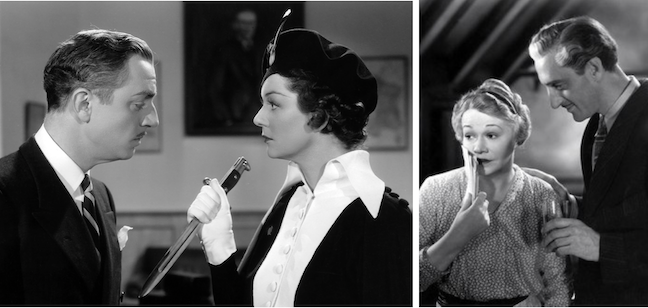
William Powell and Hollywood newcomer Rosalind Russell blessed film critic John Mosher with their spy caper, Rendezvous, while Pauline Lord got lost in the London fog with Basil Rathbone in A Feather in Her Hat.

A CAPER AND A WEEPER…At left, William Powell starred with Hollywood newcomer Rosalind Russell in Rendezvous; at right, Broadway stage actress Pauline Lord appeared opposite Basil Rathbone in A Feather in Her Hat. (1935)

Mosher also screened a French comedy, René Clair’s Le Dernier Milliardaire (The Last Billionaire), finding its slapstick approach to satire a bit dated.

DURABLE AND ADORABLE…Renée Saint-Cyr as Princess Isabelle in the French comedy Le Dernier Milliardaire (The Last Billionaire). Known for her chic comedies, Saint-Cyr (1904–2004) was a major French film star for seven decades. (Film Forum)

Finally, Mosher turned his critical eye toward a British sci-fi film, Transatlantic Tunnel. Looking forward to seeing a gee-whiz Jules Verne-type story, what Mosher found instead was a lot of sentimental “padding” and very little gee-whiz.

UNDERWATER…John Mosher looked forward to an undersea adventure, but instead got a lot of sentimental fluff in the British sci-fi film, Transatlantic Tunnel. Clockwise, from top left, movie poster for the American release; scene from the film depicting the tunnel entrance; the film showcased such futuristic conveniences as video phones (called “televisors”); a group of wealthy industrialists gather at the home of a Mr. Lloyd, a millionaire investor who used a motorized wheelchair. (Wikipedia/Reddit/cinemasojourns.com)

 * * *

No Thanks, Ernie

Clifton Fadiman had an armload of books to review, including an autobiography by Andre Gide (If I Die), novels by Mikhail Sholokhov (Seeds of Tomorrow) and Mari Sandoz (Old Jules), and an Ernest Hemingway tale about big game hunting (Green Hills of Africa) that Fadiman did not care for at all. Here are excerpts from a couple of the reviews:

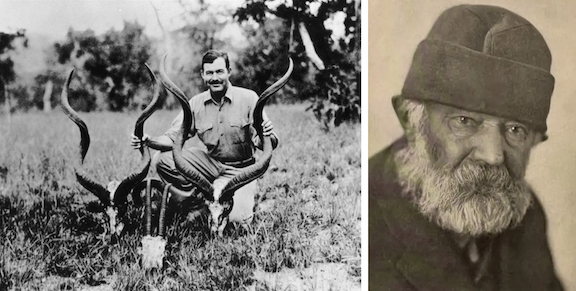
RUGGED TYPES…At left, Ernest Hemingway poses with skulls of kudu and female of sable antelope in East Africa, 1934, part of his hunting trip described in Green Hills of Africa; at right, photo of Jules Sandoz from the frontispiece of Old Jules, a biography written by his daughter Mari Sandoz. (JFK Library/U of Nebraska)

 * * *

From Our Advertisers

With the National Automobile Show in full swing at the Grand Central Palace, the issue was jammed with ads for every type and price range…the Chrysler Corporation took out this full-page spot on the opening spread to promote one of the lowest priced cars on the market…

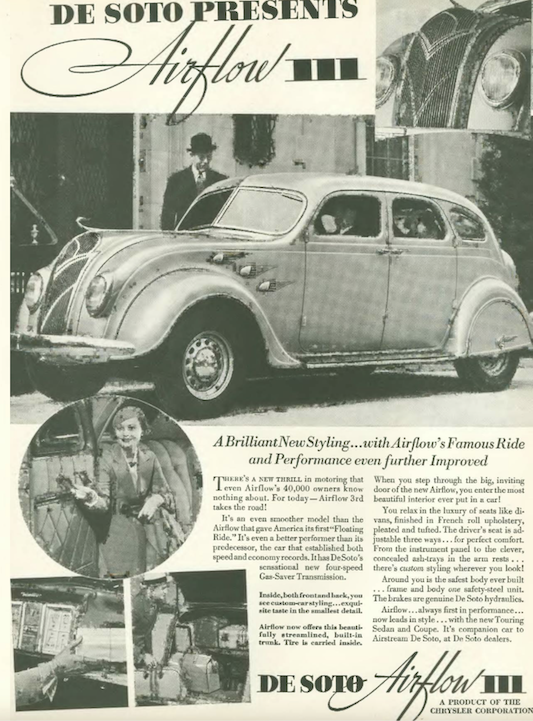
…Chrysler/DeSoto continued to tout its streamlined Airflow models…introduced in 1934, the Airflow was the first full-size American production car to use streamlining, and it featured a number of other innovations, but consumers just weren’t ready for something this radical…even with the streamlining toned down after its first year, only 55,000 units were produced during the model’s four-year run…

…on a side note, Chrysler has revived the Airflow nameplate for an electric car concept due to the marketplace in 2028…

…mentioned in Speed’s review of the Automobile Show, the Lincoln-Zephyr would find success with its aerodynamic design…

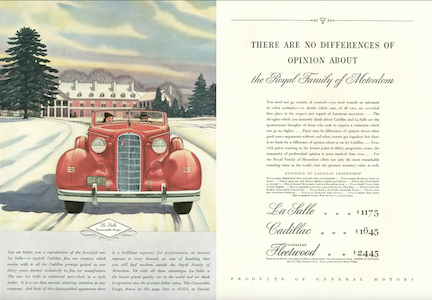
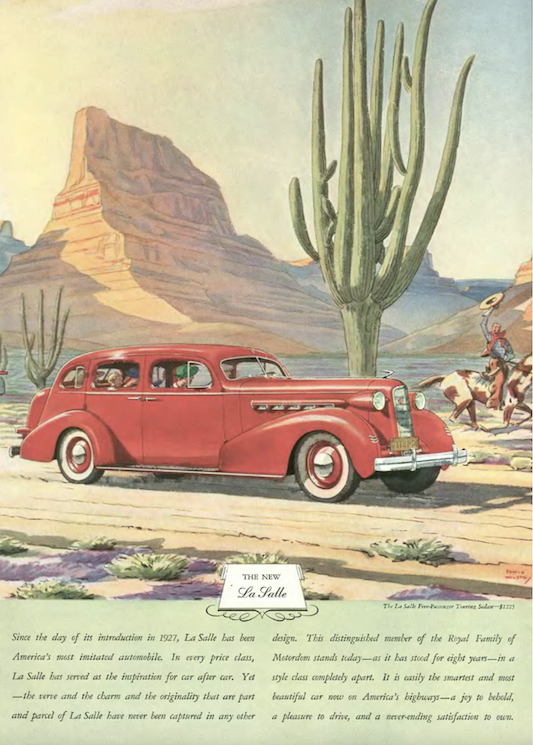
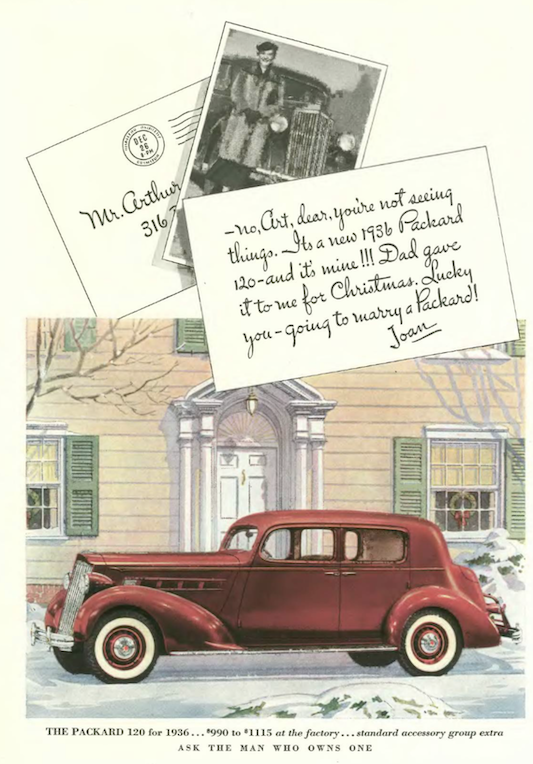
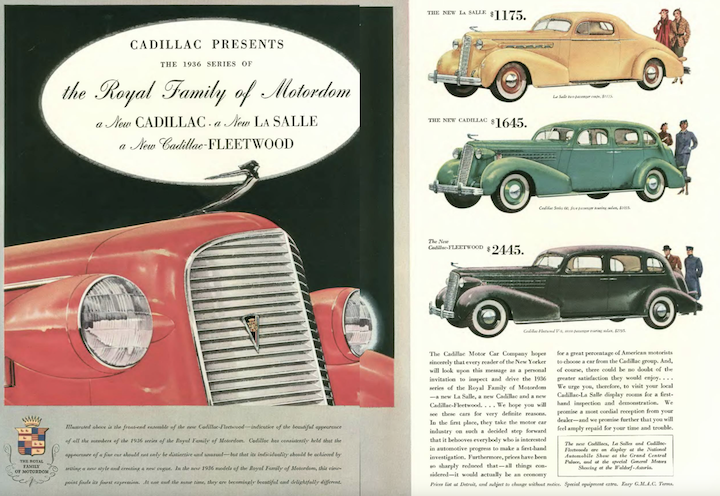
…most manufacturers were in on the streamlining trend, noticeable in the tilted grilles, low rooflines, and sweeping fenders…

…unlike the other car companies, Pierce Arrow did not produce an economy model to keep its luxury line afloat during the Depression…emphasizing its handmade quality, this American rival to Rolls-Royce went out of business by 1938…

…Goodyear got in on the Auto Show action promoting its tires for the “new and faster cars”…

…the folks at Campbell’s continued their ad series featuring upper-class women covertly serving canned soup to their society friends…in this ad, however, the hostess reveals her secret…

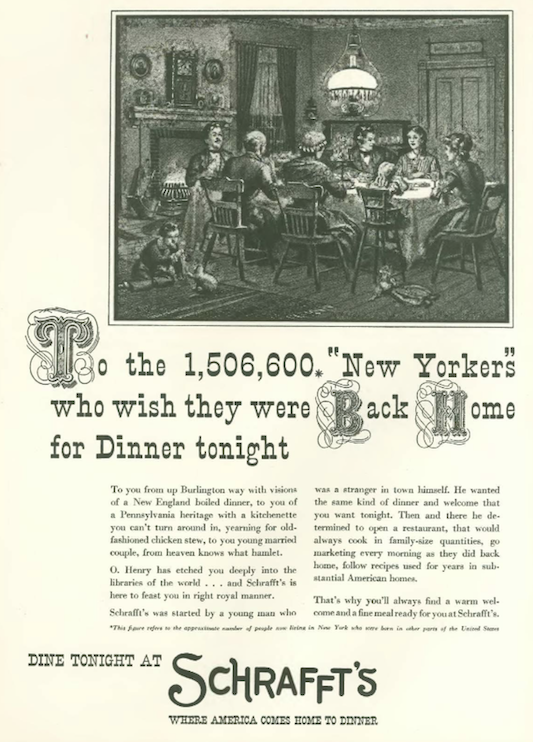
…there were no secrets to be found at Schrafft’s—its popularity increased during the Depression, when more than forty locations in the New York metro offered moderately priced “home-style” meals in an atmosphere that suggested upper-middle-class gentility…

…Long Island’s Lido Country Club tried to drum up some autumn business by promoting the “warm and lazy” sunshine of “Indian Summer”…

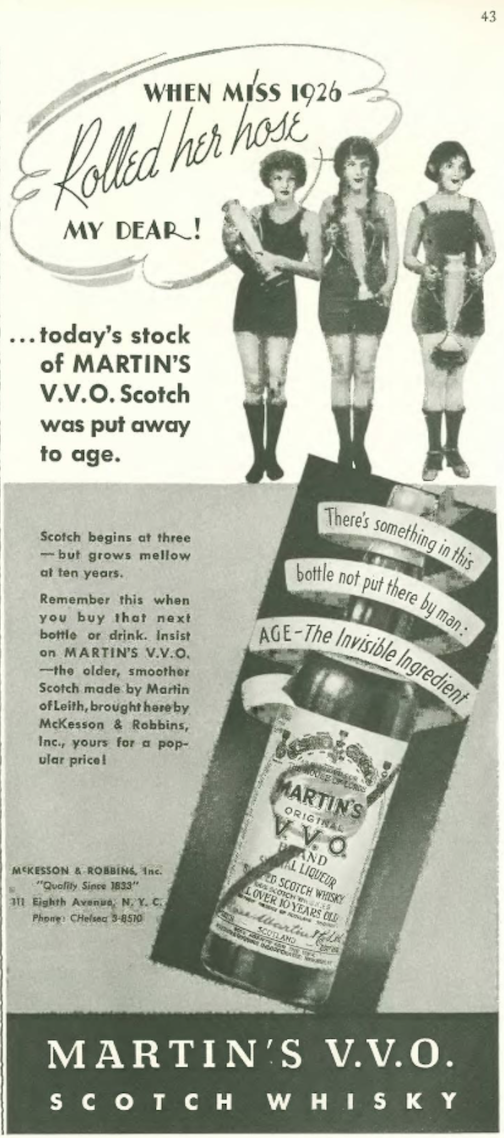
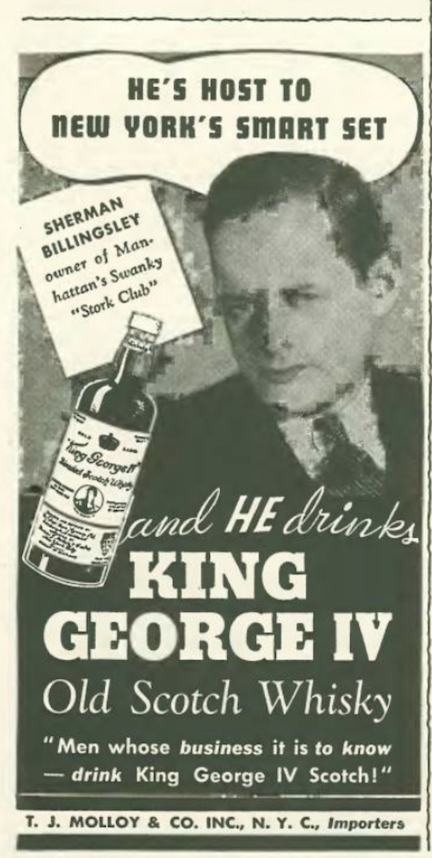
…the makers of King George IV Scotch used the face of Stork Club owner Sherman Billingsley to lend some nightlife cachet to their product…here’s an odd little fact: his nephew, Glenn Billingsley, was married to Leave It to Beaver actress Barbara Billingsley, who played June Cleaver on the TV series…

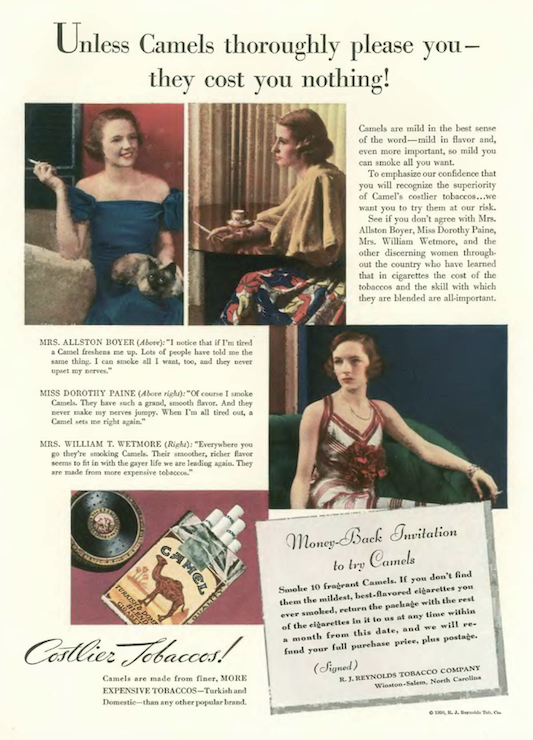
…this week the back cover belonged to R.J. Reynolds, with various aviators testifying to the calming effects of Camel cigarettes…the lead endorser in the ad, Frank Hawks, was famous for breaking aviation speed records until he perished in the crash of an experimental plane in 1938…

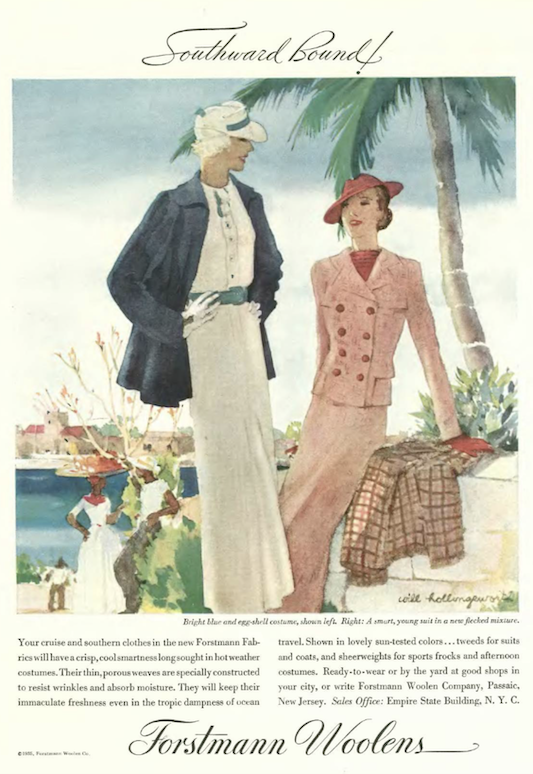
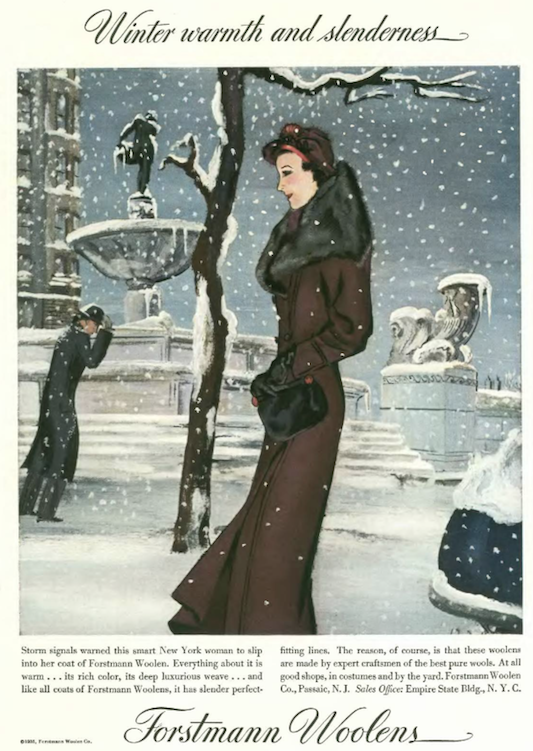
…Forstmann ads were a regular feature on the inside front cover during the fall/winter fashion season, rendered in a style made popular by illustrator Carl “Eric” Erickson

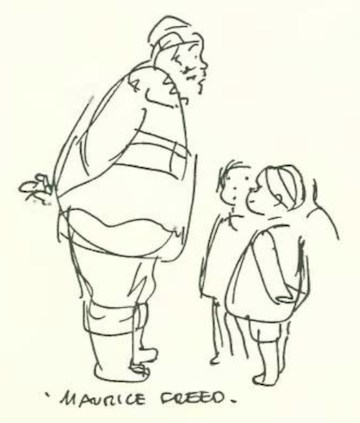
…on to our cartoonists, we open the magazine with Maurice Freed

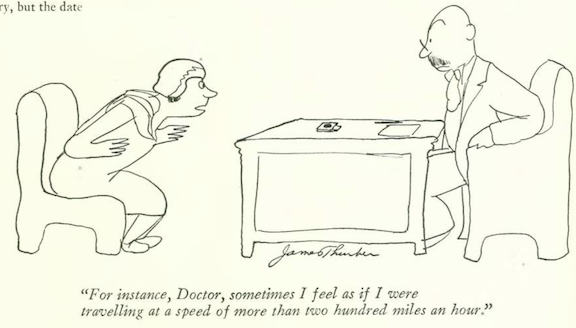
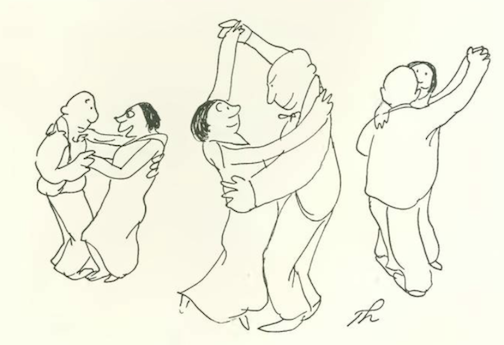
James Thurber was busy in this issue, writing a touching character sketch of a medicine show man he greatly admired (“Doc Marlowe”)…and contributing this spot art for “Goings On About Town”…

…he also turned in this terrific cartoon…

Christina Malman livened up the Auto Show review with this spot art…

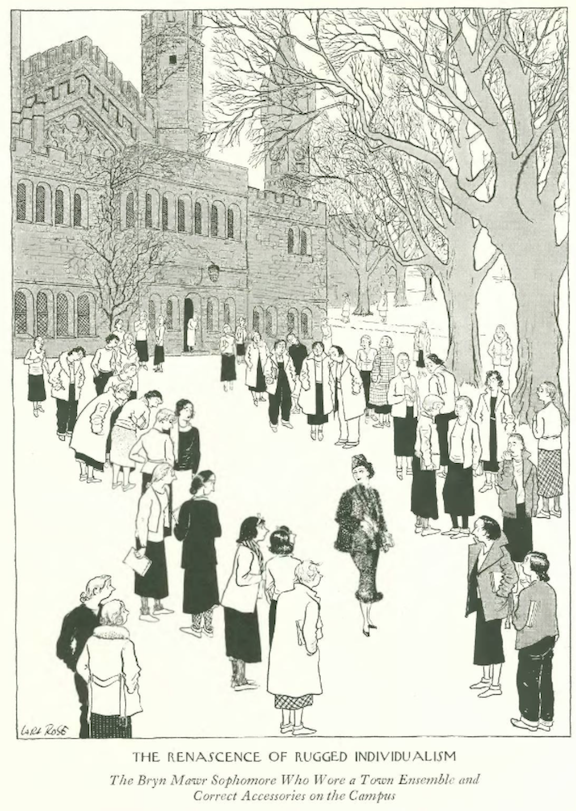
Carl Rose also paid tribute to the annual event…

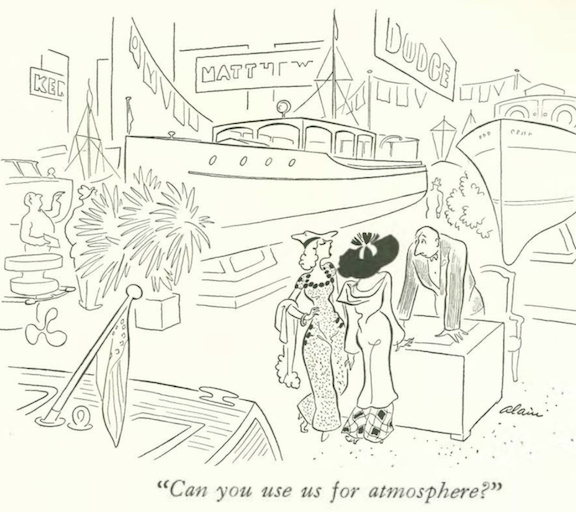
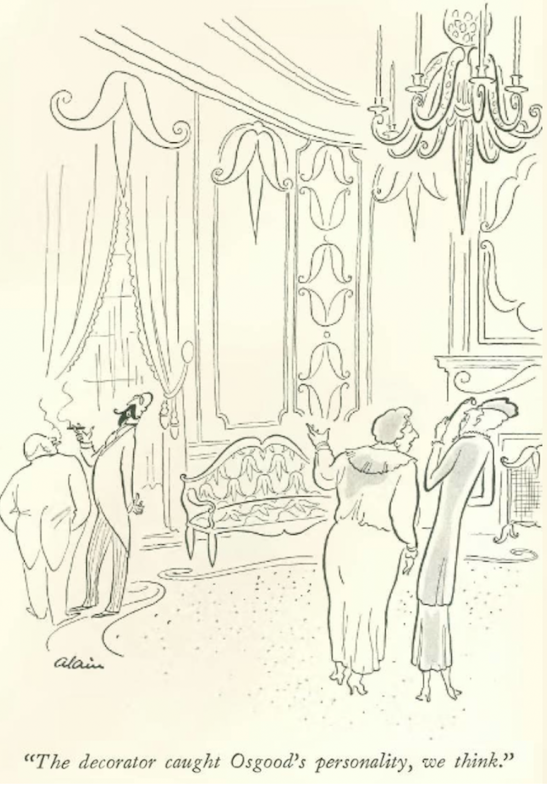
Daniel ‘Alain’ Brustlein did a bit of home decorating…

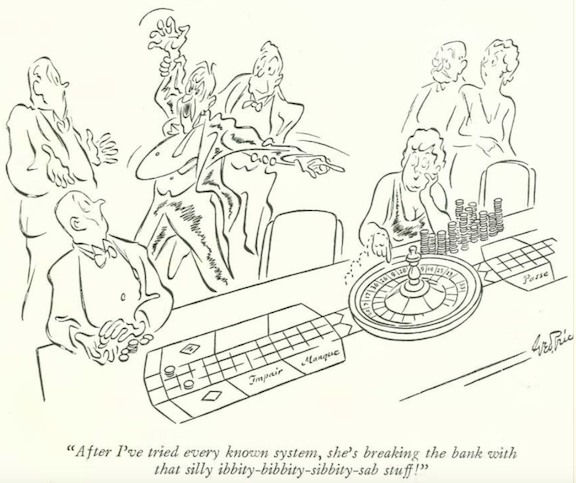
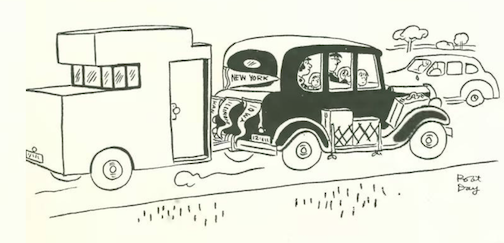
Robert Day was ready to call it a night…

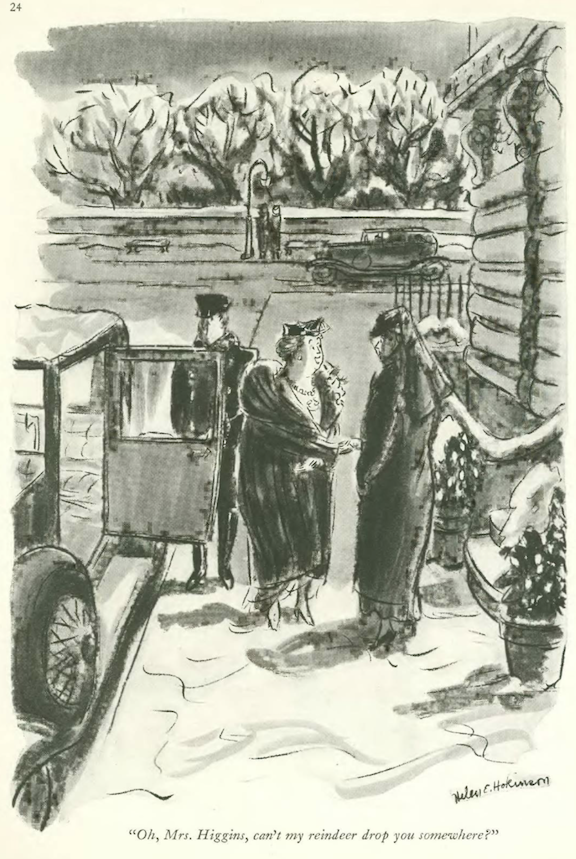
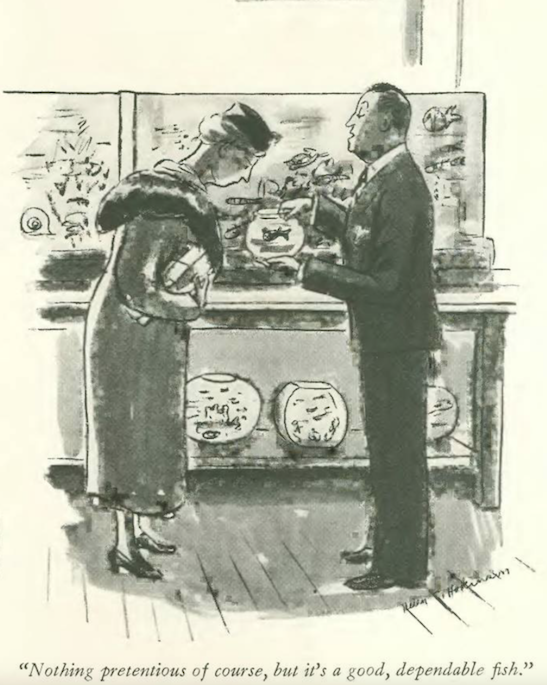
Helen Hokinson contributed two cartoons, shopping for a pet fish…

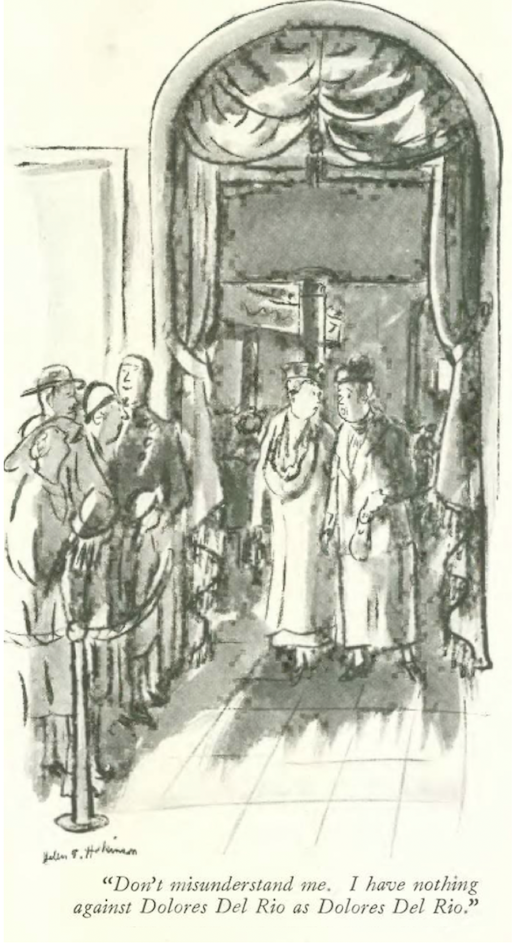
and taking in a Dolores Del Rio picture…

…no doubt Hokinson’s “girls” were commenting on the 1935 musical comedy In Caliente, featuring Mexican actress Dolores Del Rio (1904–1983)…Del Rio was the first Mexican actress to achieve mainstream success in Hollywood…

Dolores Del Rio in a scene from In Caliente. (Reddit)

…we continue with George Price, and a dedicated lumberjack…

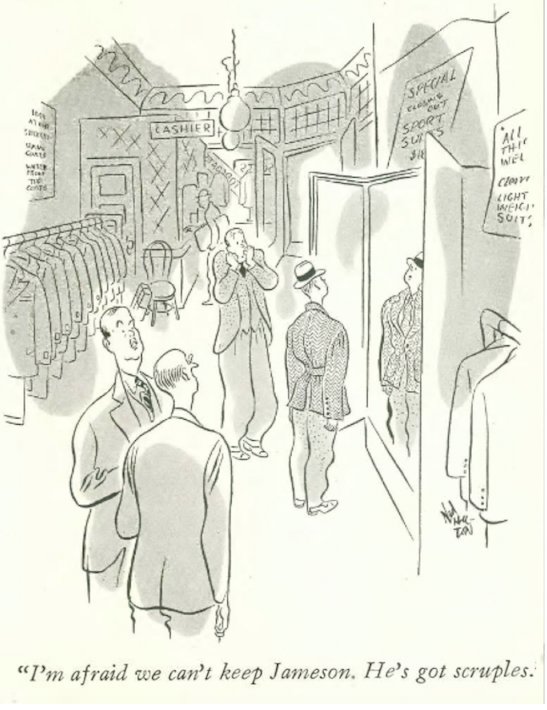
Ned Hilton discovered some honesty in the Men’s Department…

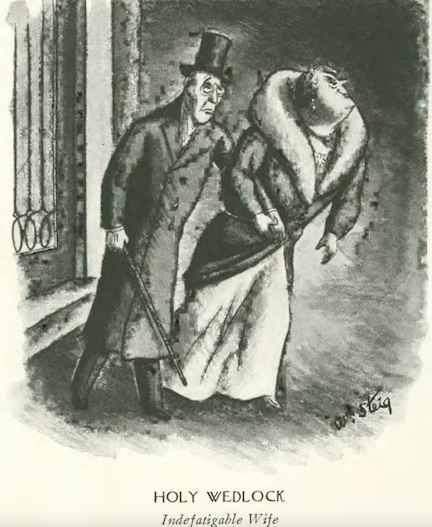
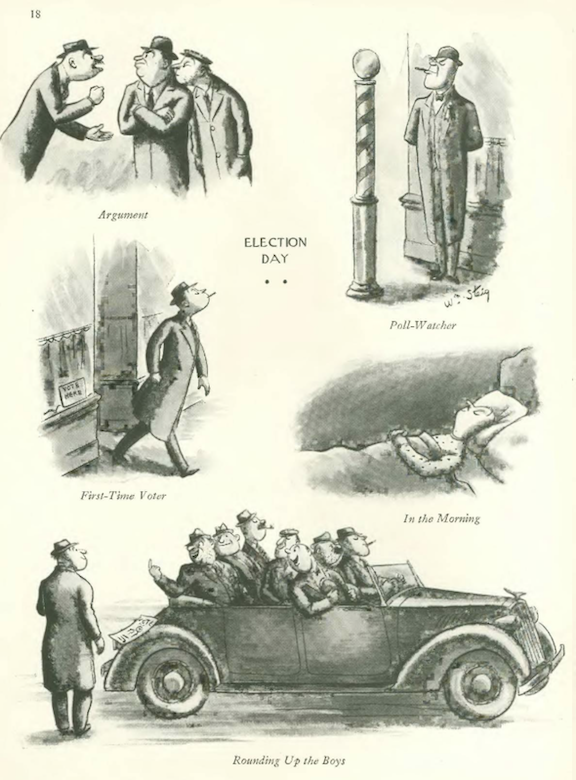
William Steig took a look around on Election Day…

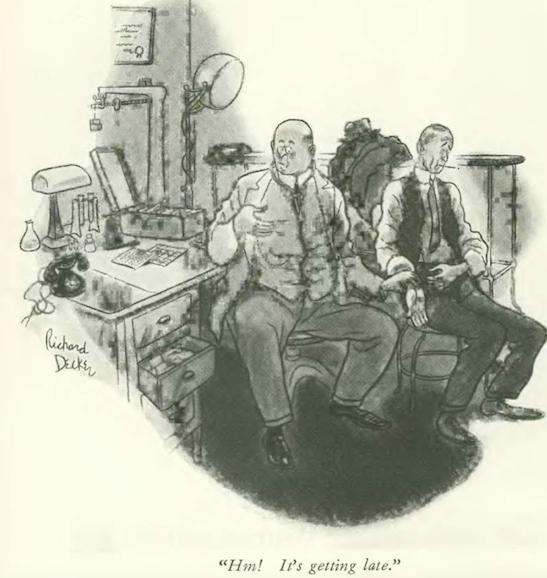
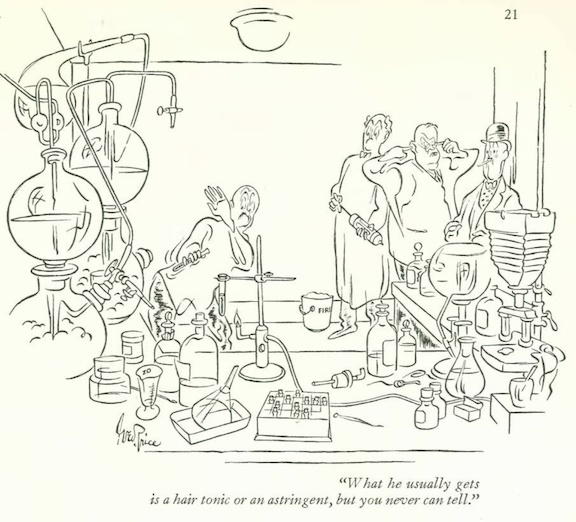
Richard Decker took the pulse of the medical profession…

…and we close with another by Decker, where seeing is not believing…

Next Time: Jimmy Comes Home…


A Merry Menagerie

It has been a while since we’ve heard from art and design critic Lewis Mumford, who often cast a censorious eye at the rapidly changing world around him.

October 12, 1935 cover by William Steig. From 1930 until his death in 2003 at age 95, Steig contributed 121 covers and 1,676 drawings to The New Yorker.

In his column “The Sky Line,” Mumford cast an envious gaze north toward Brooklyn’s Prospect Park Zoo, which he believed had greatly improved upon the recently rebuilt Central Park Zoo.

HE HAD OPINIONS…Lewis Mumford (1895-1990).

Brooklyn’s advantage, according to Mumford, was the superior design of Prospect Park, which offered a better location for a zoo than Central Park. We’ll let Mumford explain in these excerpts:

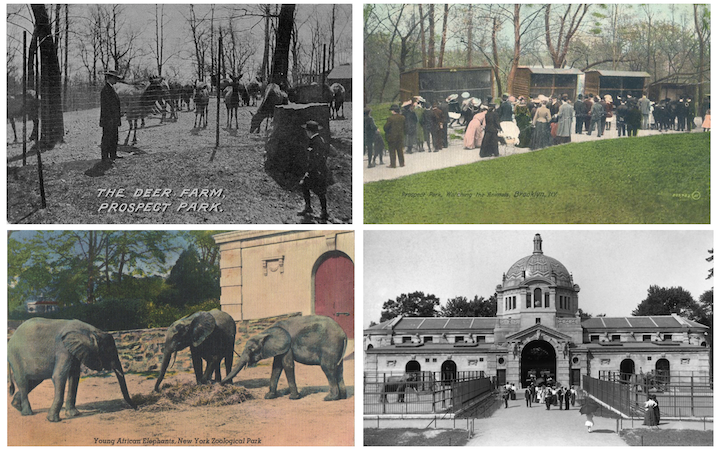
CURIOSITIES, MOSTLY…Clockwise, from top left: Animals were on display at Prospect Park as early as 1866, as seen in this photo of the “Deer Farm”; circa 1900 postcard of Prospect Park’s rather distressing “Menagerie,” which opened around 1890; the park’s Elephant House opened in 1908—modeled after the Hippo Palace at the Antwerp Zoo, the Elephant House also featured rhinoceroses, hippopotamuses, and tapirs; baby elephants (postcard circa 1940s) were a popular attraction until the zoo moved on to smaller creatures in the 1990s. (bklynlibrary.org/untappedcities.com/blog.wcs.org/nycgovparks.org)
LEWIS MUMFORD PRAISED the 1934 plan for the Prospect Park Zoo, designed by architect Aymar Embury II and approved by Parks Commissioner Robert Moses. The zoo was built, in large part, through Civil Works Administration and Works Progress Administration labor and funding. (Brooklyn Public Library)
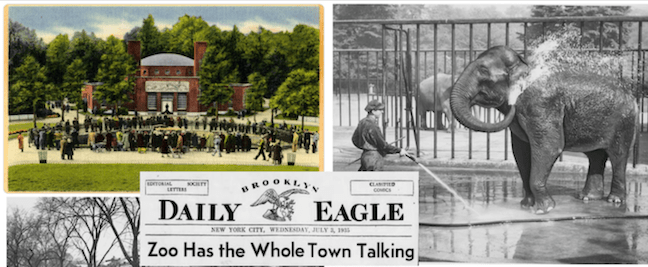
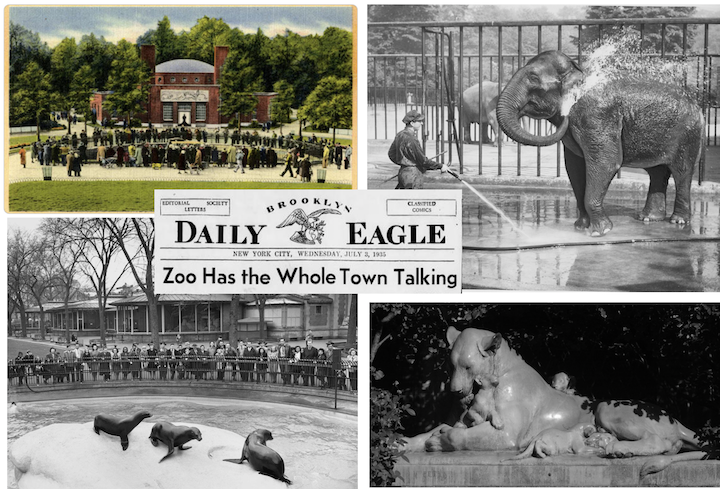
FLATBUSH FAUNA…Clockwise, from top left: Postcard image of Prospect Park Zoo circa 1935; zoo keeper sprays an elephant with a hose, circa 1940; an 1899 bronze sculpture depicting a mother lion nursing her cubs was created by French artist Victor Peter; seal pool, undated photo. (nycgovparks.org/Center for Brooklyn History/Facebook)
CARING OVER CAGES…Prospect Park Zoo today. The zoo closed in 1988 for five-year, $37 million renovation program that, except for the exteriors of the 1930s-era buildings, completely replaced the original zoo. With an emphasis on education and conservation, current exhibits house smaller species rather than elephants, tigers, and lions. (Prospect Park Alliance)

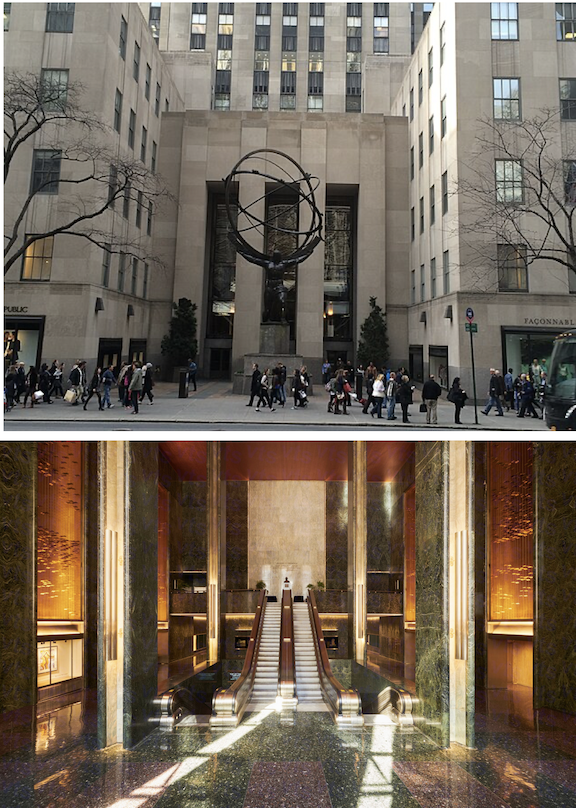
Mumford also looked at the latest developments at Rockefeller Center. As we’ve seen before, he favored smaller-scale developments that were organic and community-focused, and therefore was a strong critic of projects like Rockefeller Center. At its inception he called it a dehumanizing “megamachine,” a product of corporate greed, a “reckless, romantic chaos” that represented the capitalist jungle. Harsh words indeed, so it was something of a surprise to see his approval of the latest piece of the complex—the International Building at 630 Fifth Avenue:

SIMPLE AND CORRECT were the words Lewis Mumford used to describe the interior entrance to 630 Fifth Avenue. (Wikiwand/newyorkoffices.com)

 * * *

Bad Benito

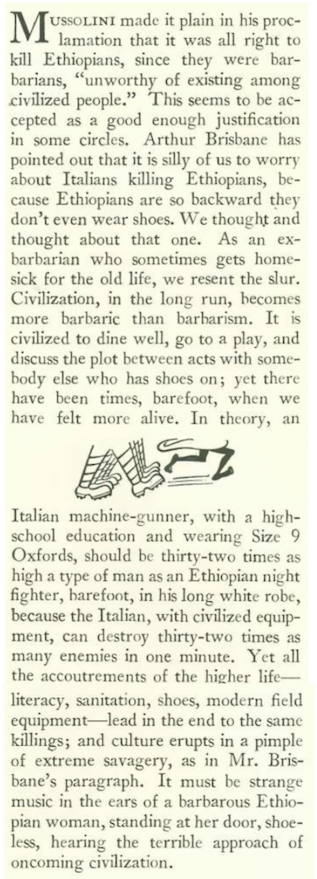
In his “Notes and Comment,” E.B. White had some choice words for the murderous Italian dictator Benito Mussolini and for the newspaper columnist Arthur Brisbane, both unconcerned with the slaughter of “backward” Ethiopians by invading Italian forces:

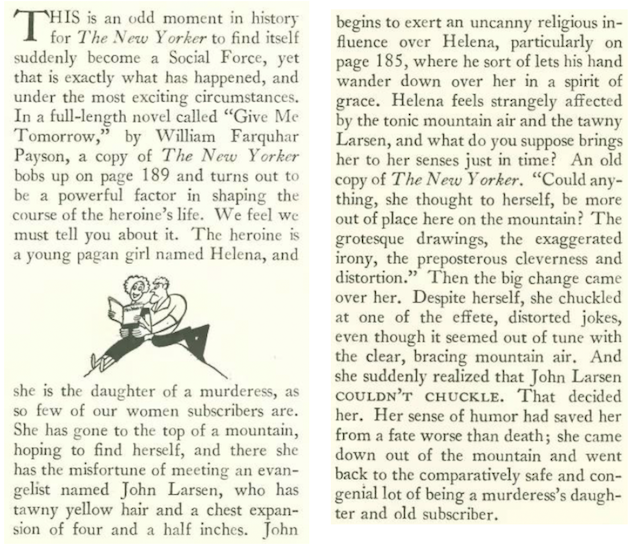
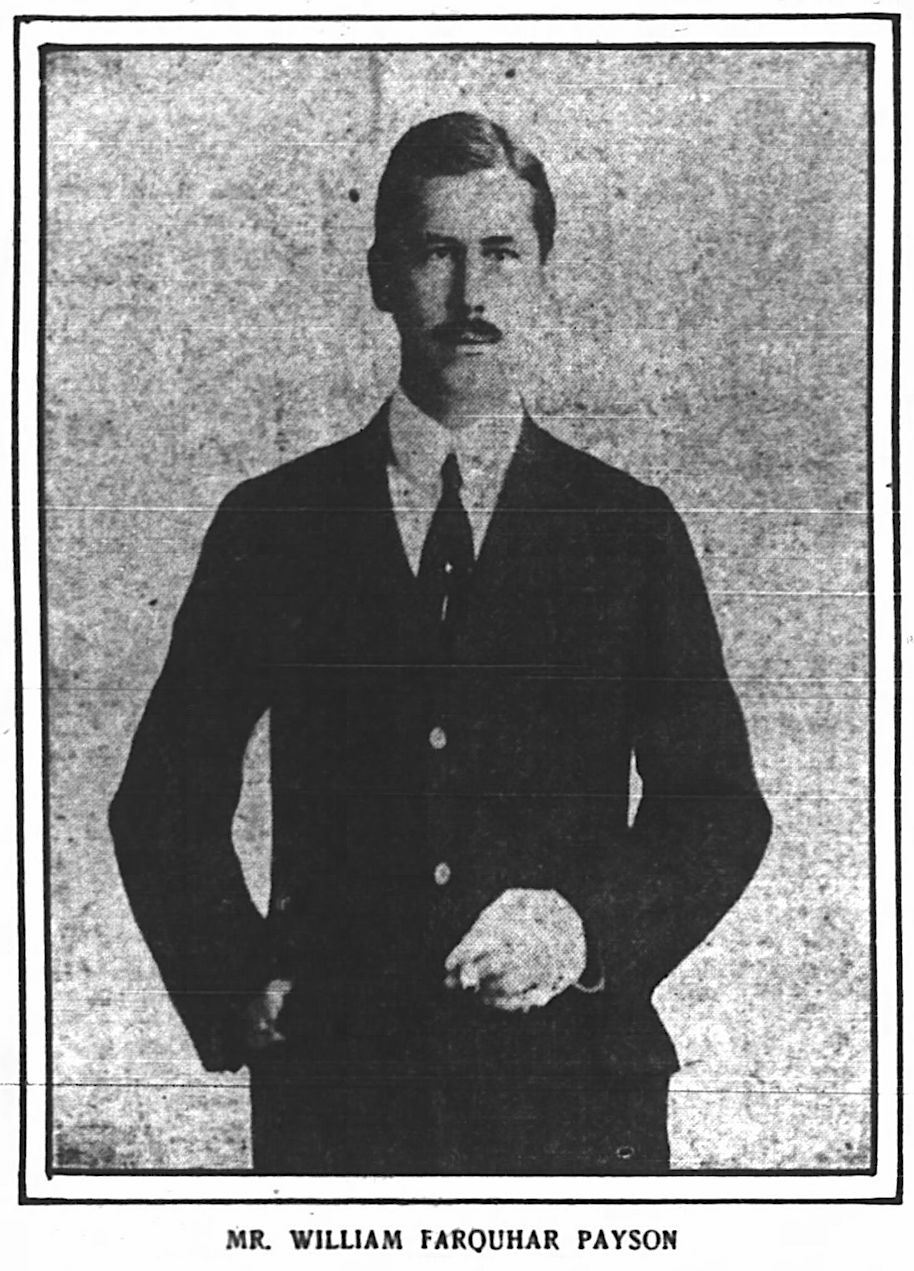
White also noted the role played by The New Yorker in a new novel by William Farquhar Payson (1876–1939) titled Give Me Tomorrow. Apparently the novel credited the magazine’s unique humor for revealing the banality of an evangelist and delivering a young woman from his clutches…

THE NEW YORKER TO THE RESCUE…William Farquhar Payson deployed a copy of the magazine for a pivotal scene in his novel Give Me Tomorrow. (findagrave.com)

 * * *

A Star Is Born

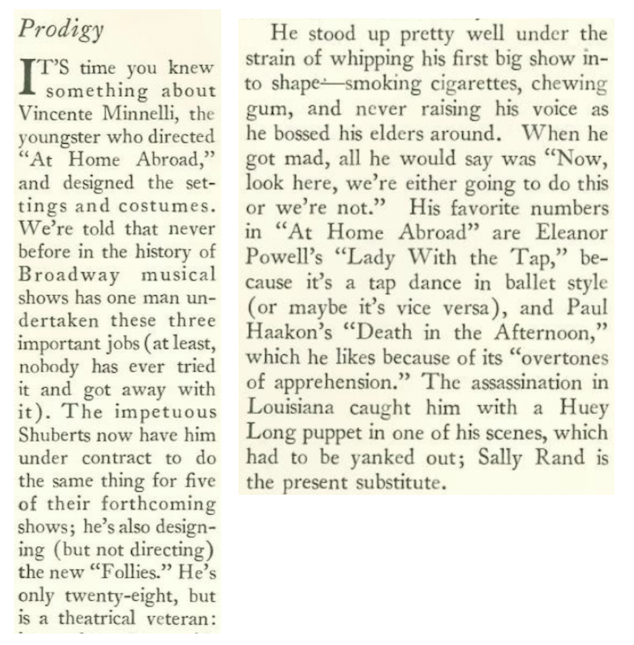
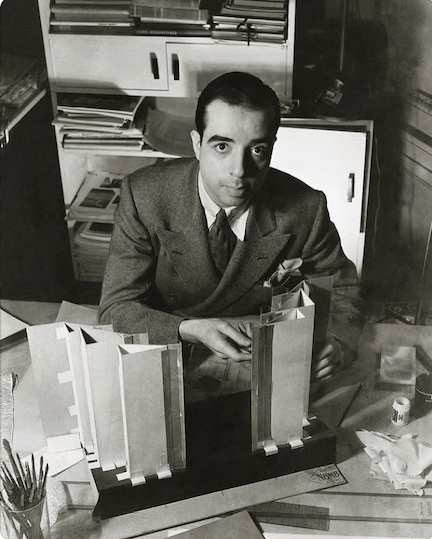
Stage and film director Vincente Minnelli (1903-1986) moved from Chicago to New York in 1931, where he worked as a stage designer for Earl Carroll’s Vanities and costume and set designer for the Ziegfeld Follies before becoming art director at Radio City Music Hall. He got his big break in 1935 when he directed, to critical acclaim, the Broadway musical At Home Abroad. “The Talk of Town” took notice of the rising star (excerpts):

AN EYE FOR DESIGN…Photographer Lusha Nelson photographed Vincente Minnelli at his desk with a miniature stage on Feb. 1, 1936. (James Grissom via threads.com)

 * * *

A Safe Space

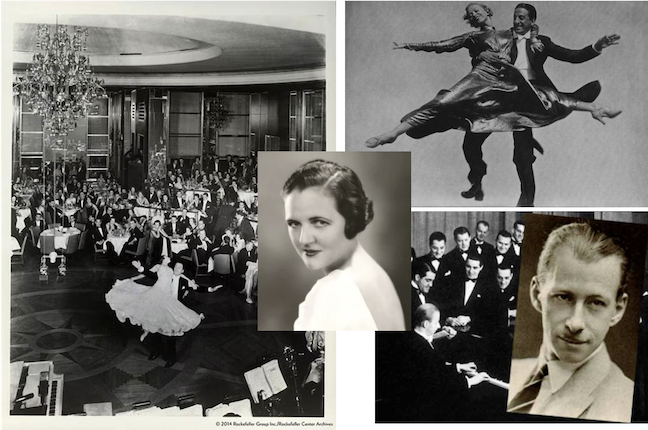
Lois Long had mixed feelings regarding the Rockefeller Center’s Rainbow Room, fearing that it was a tourist magnet but also desiring to take in its sumptuous floor shows. In the first excerpt, Long continued her comment on the heated competition she perceived among nightclub owners.

FEAR FACTOR…The entertainment lineup at Rockefeller Center’s Rainbow Room helped Lois Long overcome her fear of encountering tourists. Clockwise, from left, the Rainbow Room in 1934; Ramon and Renita lit up the dance floor (photo from Nov. 1935 Harper’s Bazaar); Ray Noble and his orchestra provided “all-around beauty”; and (inset) cabaret singer Frances Maddox offered her sophisticated warble to the glittering affair. (Rockefeller Center Archives/Pinterest/Shedd Institute)

 * * *

An Untamed Shrew

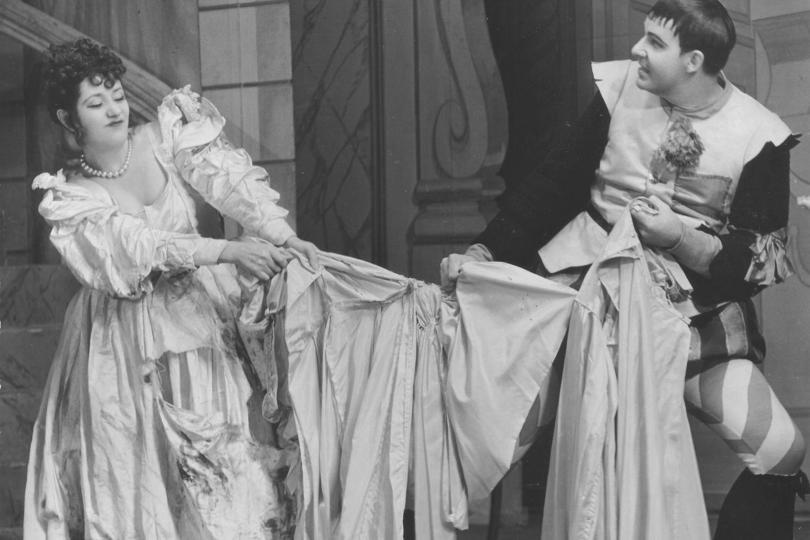
Theatre critic Wolcott Gibbs had a good time watching Alfred Lunt and Lynn Fontanne take on Shakespeare’s The Taming of the Shrew at the Guild Theatre, especially Lunt’s uproarious take on the play.

FUN WITH SHAKESPEARE…Alfred Lunt and Lynn Fontanne matched wits in the Theatre Guild’s presentation of The Taming of the Shrew. (minnesotaplaylist.com)

 * * *

At the Movies

Our film critic John Mosher didn’t have much to say about Here’s To Romance, which seemed contrived to introduce the Italian tenor Nino Martini (1905–1976) to a wider audience. To Mosher, the highlight of the film was the appearance of Ernestine Schumann-Heink (1861–1936), the Austrian-American operatic dramatic contralto, who appeared to be having a good time.

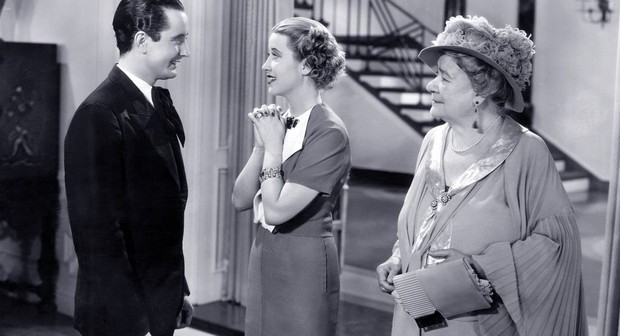
SINGER SANDWICH…Genevieve Tobin (center) stands between tenor Nino Martini and dramatic contralto Ernestine Schumann-Heink in a scene from Here’s to Romance. (rottentomatoes.com)

Mosher reviewed two other films that were a bit more dismal: The Last Outpost was a war-themed melodrama starring Cary Grant and Claude Rains; O’Shaughnessy’s Boy featured Wallace Beery as a circus animal trainer who loses his arm as well as his family.

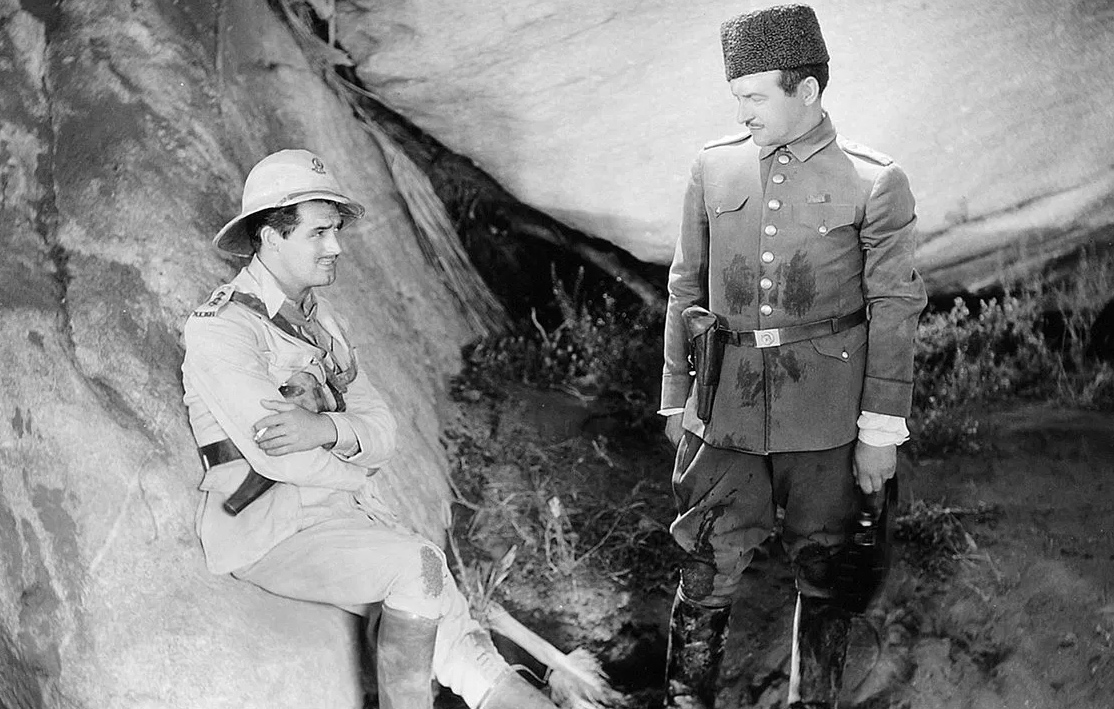
DUELING MUSTACHES…Cary Grant (left) sported a rare mustache in a role opposite Claude Rains in The Last Outpost. (mabumbe.com)
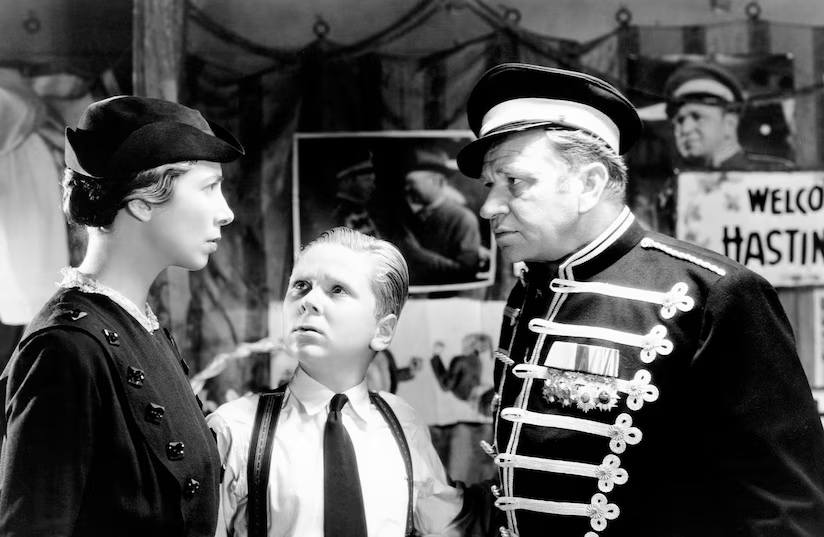
A TOUGH ACT…Sara Haden played a skeptical aunt who sees a one-armed circus animal tamer (Wallace Beery) regain his son (Jackie Cooper) and the confidence he lost along with his wife in O’Shaughnessy’s Boy. (tcm.com)

 * * *

From Our Advertisers

I find these advertisements oddly appealing, because this kind of travel no longer exists. Today there is exactly one ocean liner left in the world—the Queen Mary 2; the cruise ships that rule the 21st century seas are essentially hotel/amusement parks stacked on top of a huge barges…water slides, Vegas-style entertainments, and all-you-can-stuff-into-your-face buffets…

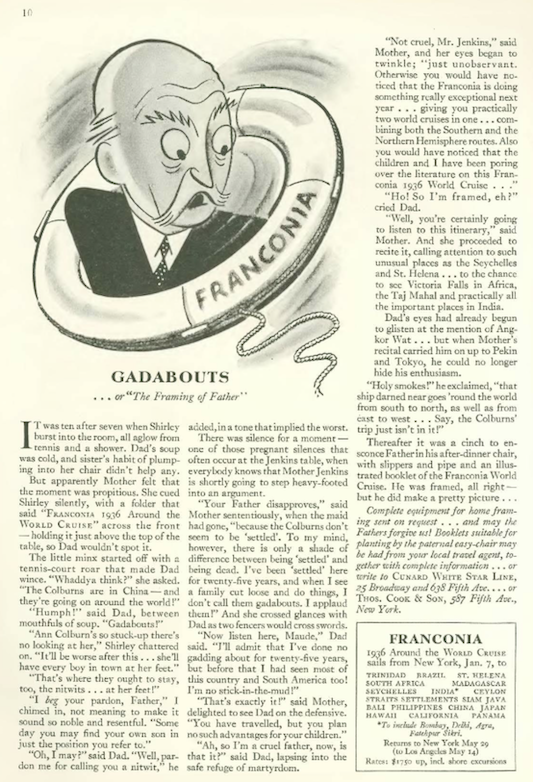
…this curious ad on page 10 mimicked the look of a New Yorker short in the vein of Clarence Day…what it promoted was an around-the-world cruise that would take two-hundred (well-heeled) passengers to more than twenty destinations including Malaysia, Bali and Singapore…

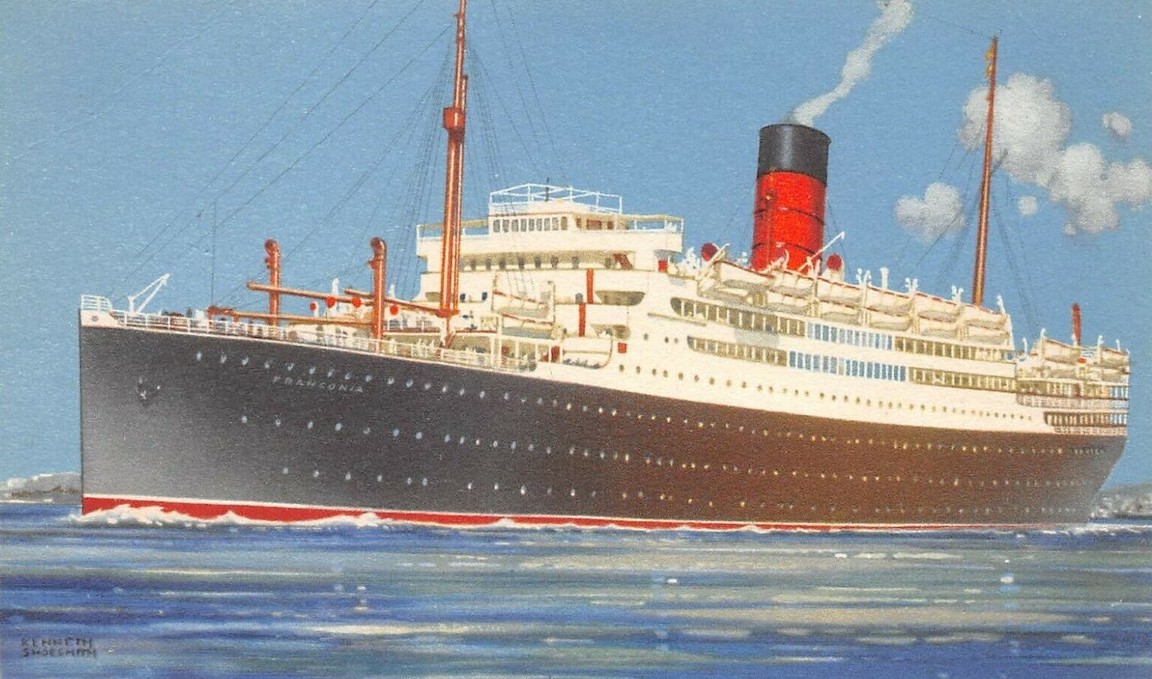
Postcard image of the Franconia. (Pinterest)

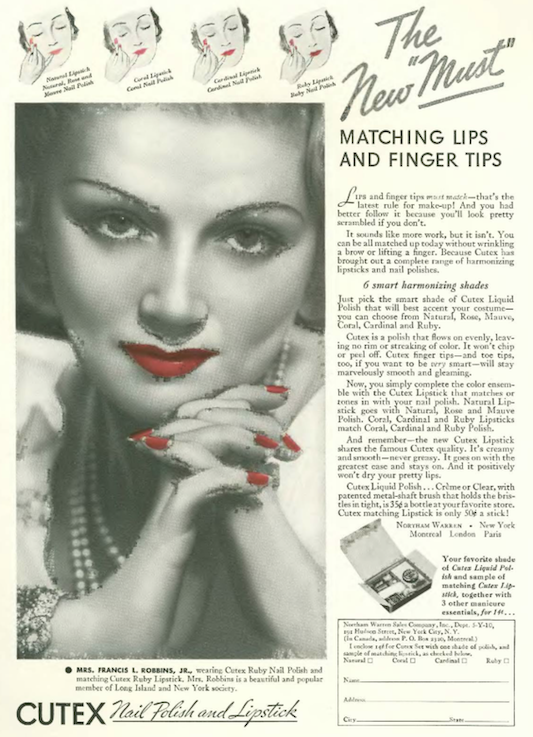
…society women could be counted on to endorse all sorts of things from cigarettes to cold cream…here a “Mrs. Francis L. Robbins, Jr” (I couldn’t find her given name) endorses Cutex nail polish and lipstick…the ad noted that Mrs. Robbins “is a beautiful and popular member of Long Island and New York society”…

…the makers of Spud menthol cigarettes entered the realm of the surreal with a talking cigarette that encouraged chain smoking…

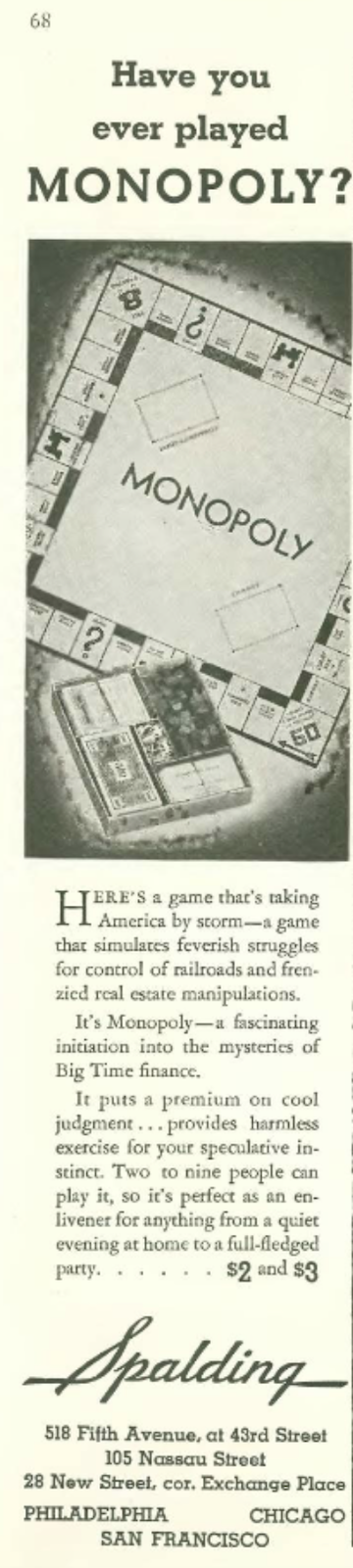
…the board game Monopoly had its origins in The Landlord’s Game, created in 1903 by an anti-monopolist named Lizzie Magie…over the years variants of the game were introduced until Parker Brothers bought the rights from Magie and another inventor and began mass-marketing the game in the fall of 1935…

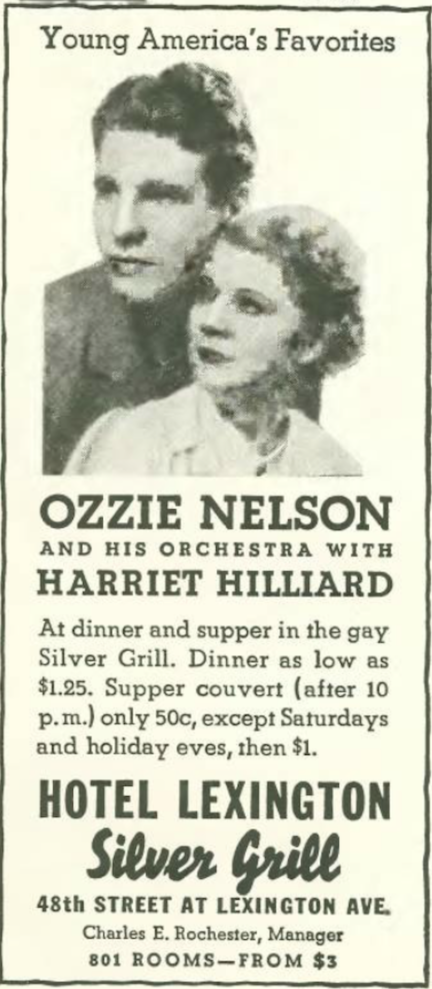
Peggy Lou Snyder was performing in vaudeville when she met the saxophone-playing bandleader Ozzie Nelson in 1932. Nelson hired her to sing with his band (under the name Harriet Hilliard) and then married her three years later…in 1944 the couple would launch a comedy series for radio, The Adventures of Ozzie and Harriet, which made a successful transition to television, appearing on ABC from 1952 to 1966…

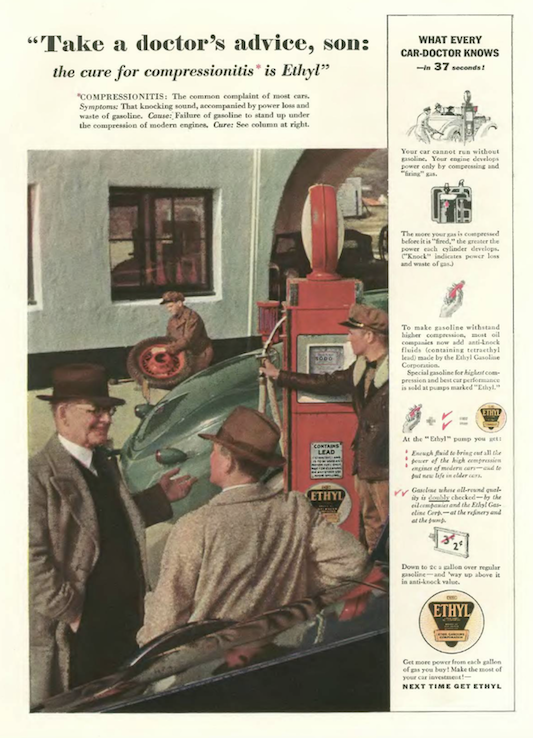
…here we have some old-timers offering hunting advice and promoting octane-boosting Ethyl gasoline, which helped prevent engine knock…it also contained the highly toxic additive tetraethyllead, which could cause severe neurological damage, particularly in children…it was completely banned in the U.S. by 1996…

…on to our cartoonists, we start with this delightful spot art by Christina Malman that graced the bottom of the calendar and events page…

Helen Hokinson appeared twice, first at the vet’s…

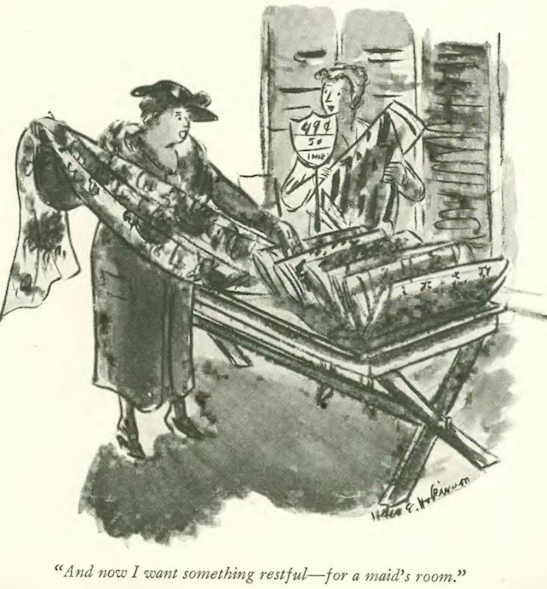
…and later shopping for the maid at a department store…

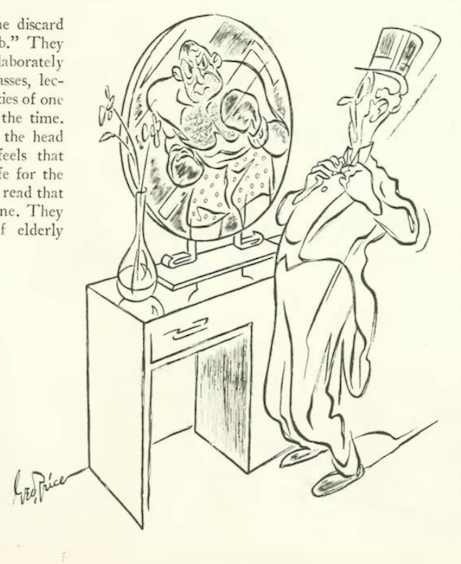
George Price had a surprise in store for this mirror-gazer…
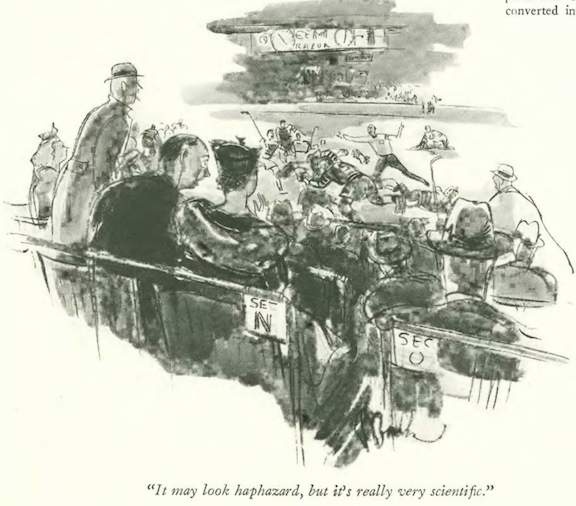
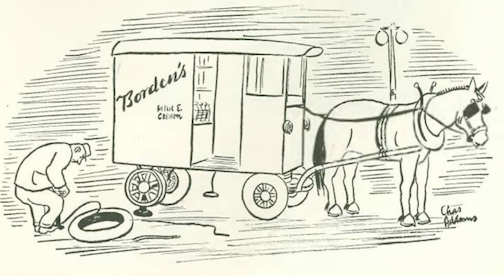
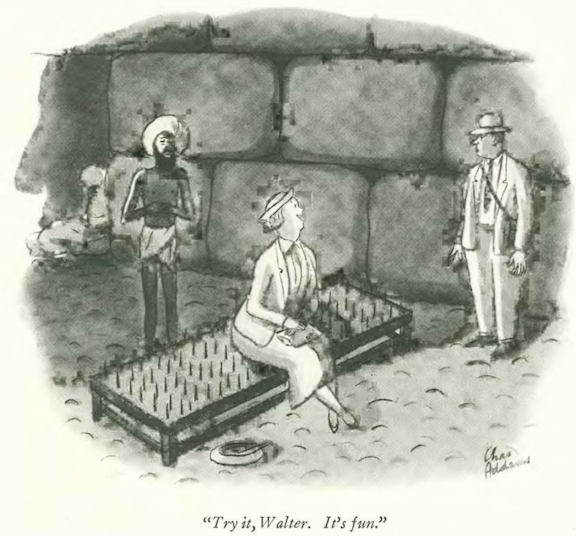
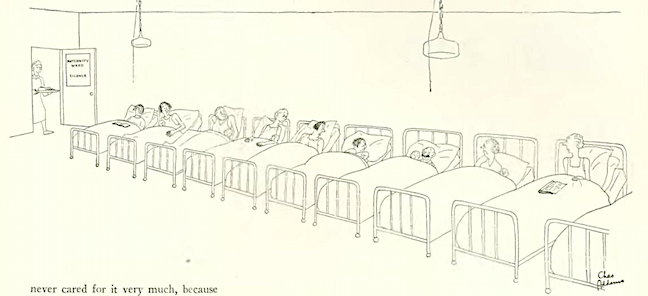
…Charles Addams took the top of page 29 to show us a proud papa in a maternity ward…

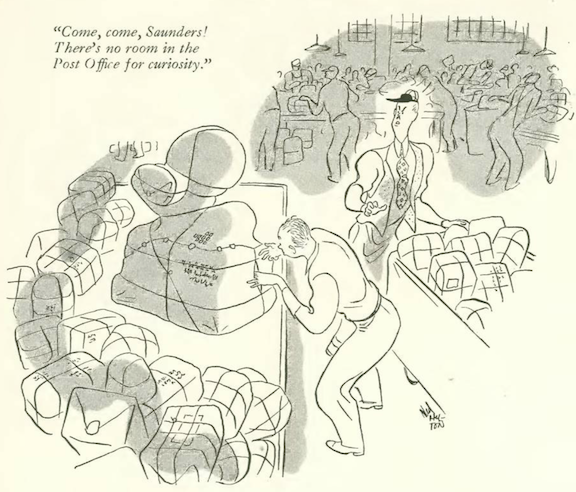
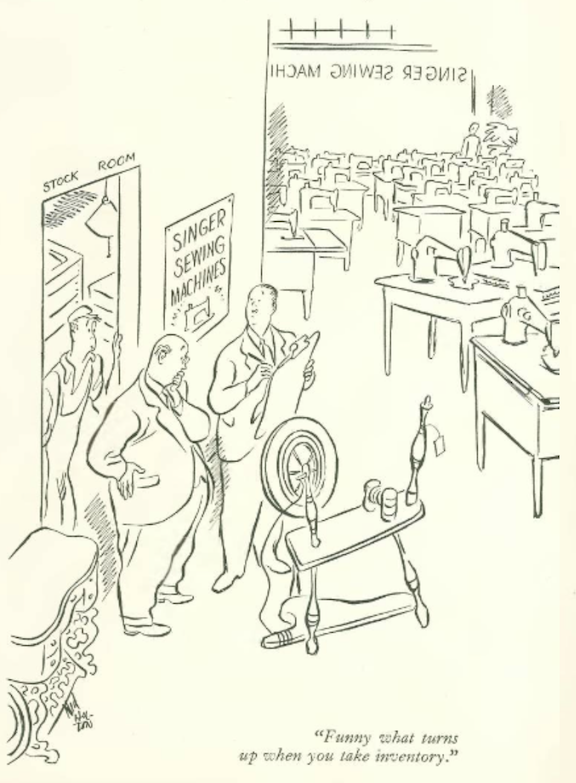
…Ned Hilton uncovered some history at the Singer Building…

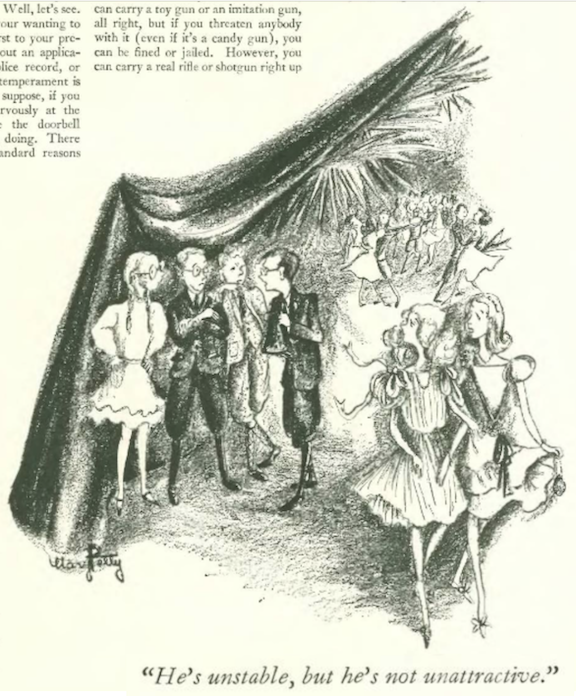
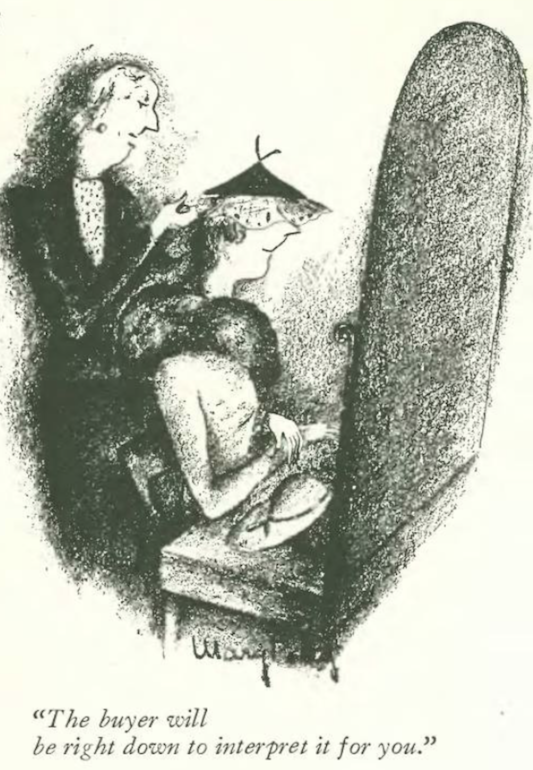
…Mary Petty eavesdropped on a tactless toff…

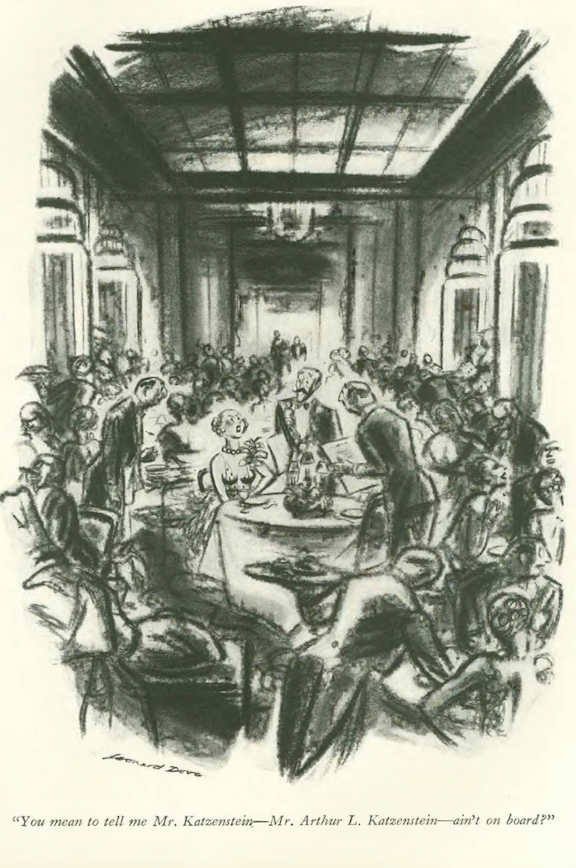
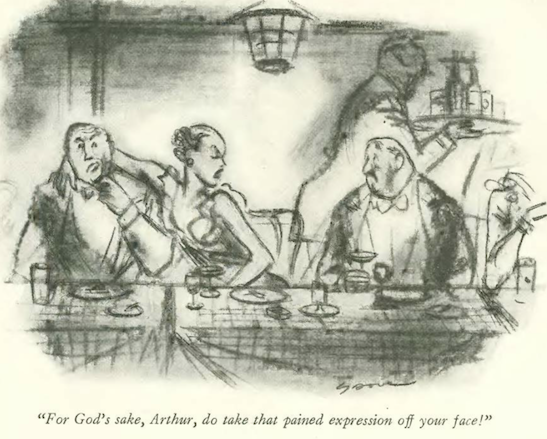
…Leonard Dove showed us that being a sugar daddy wasn’t so sweet…

…and we close with William Steig, one of his “Small Fry” speaking up for the old man…

Next Time: On Catfish Row…


She Who Must Be Obeyed

The 1935 film She was one of those old movies you’d see on television during the 1970s when there were only three or four channels (plus UHF) and local stations would tap into the “B” movie vault to fill airtime. One of those films was She.

August 3, 1935 cover by Helen Hokinson.

Film critic John Mosher felt a bit sorry for Helen Gahagan, who portrayed “She Who Must Be Obeyed” (aka “She”)—an immortal who ruled an exotic, lost civilization near the Arctic Circle. The challenge for Gahagan was to seem imperious before her co-stars Randolph Scott and Helen Mack, who seemed more suited to the high school hijinks of an Andy Hardy picture. The film was a pretty standard adventure tale, in the mold of producer Marian C. Cooper’s 1933 King Kong, with two explorers falling in love during a perilous journey.

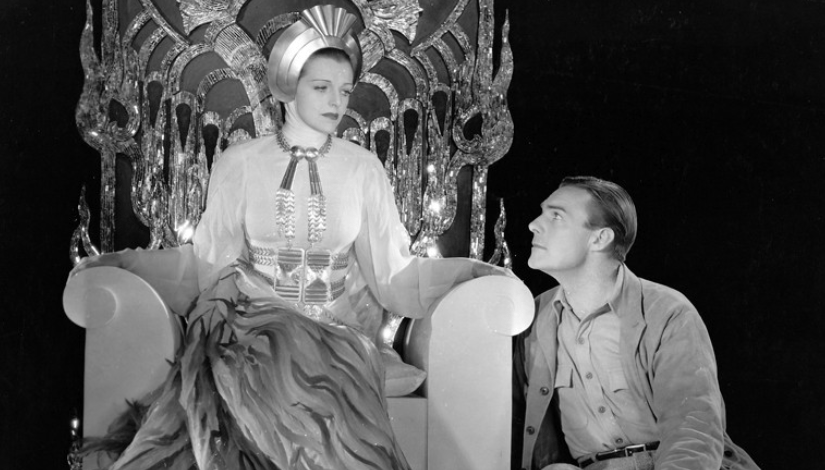
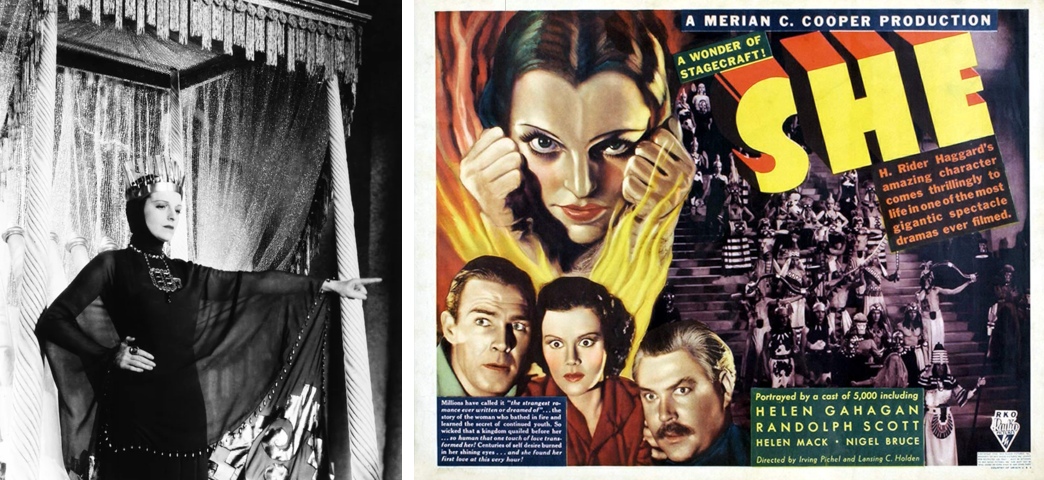
ARCHETYPE…At left, Helen Gahagan as “She” (Who Must Be Obeyed). Her costume possibly inspired the Evil Queen in Disney’s 1937 animated Snow White and the Seven Dwarfs. At right, lobby card that promoted the film. (Scifist.net/Reddit)
WHEN YOU PLAY WITH FIRE…She Who Must Be Obeyed (Helen Gahagan), believing that the explorer Leo Vincey (Randolph Scott) was a reincarnation of his ancestor (whom she loved), and jealous of his girlfriend Tanya (Helen Mack), invites Leo to join her in the eternal flame. Unfortunately, her re-entry into the flame that gave her immortality turned her into a dying, withered crone. (The Nitrate Diva/Scifist.net)

The 1887 H. Rider Haggard novel, She, inspired eponymous silent films in 1908, 1911, 1916, 1917, and 1925. The 1935 film reviewed here received tepid reviews and lost money on its first release, however in a 1949 re-release it fared much better. She was re-made in 1965 with Ursula Andress in the lead role, and again in 1984 in a post-apocalyptic film that had virtually nothing to do with Haggard’s novel.

SHE THROUGH THE YEARS…Clockwise, from top left, “She” (Marguerite Snow) offers a dagger to Leo Vincey (James Cruze) in a 1911 two-reel (24 min.) adaptation; Valeska Suratt as “She” in the 1917 film (now lost); Betty Blythe took the title role in the 1925 production, considered to be the most faithful to the 1887 H. Rider Haggard novel; Sandahl Bergman appeared dressed for a Jazzercise video in the 1984 post-apocalyptic She; and finally, Ursula Andress and John Richardson in the 1965 CinemaScope production of She. (Wikipedia / digitalcollections.lib.washington.edu / cultcelebrities.com / Reddit)

 * * *

Colonial Ambitions

With most of Africa carved up by other European powers (Britain, France, Belgium etc.) in the 19th century, Italy set its sights on Ethiopia, which by the end of the 19th century was the only independent country left on the continent. Ethiopia fought off Italy’s first attempt at conquest in the Battle of Adwa (1896), but with the rise of fascist dictator Benito Mussolini, Italy paid a return visit, this time with heavy artillery and airstrikes that included chemical weapons. E.B. White tried to make sense of this latest invasion in his opening comments.

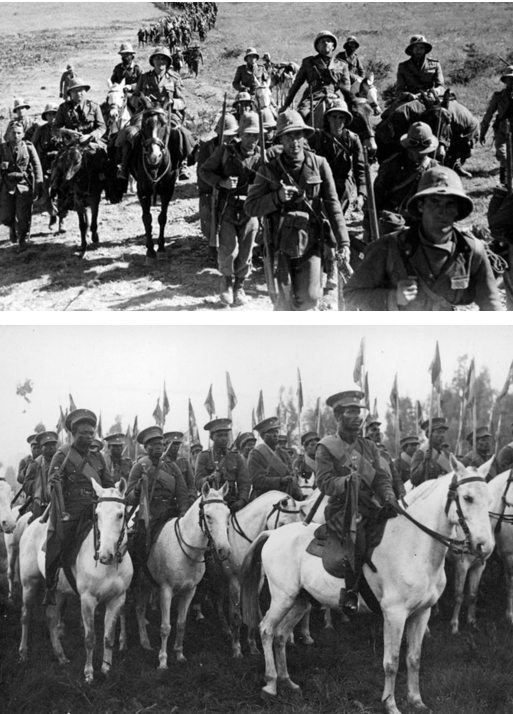
THOSE GUYS AGAIN…Italy invaded Ethiopia on October 3, 1935, a significant act of aggression in the lead up to World War II. Despite facing a technologically superior Italian army (top) equipped with modern weapons, including tanks, aircraft, and chemical weapons, the Ethiopian forces (bottom photo) mounted a strong resistance. (Wikipedia)

In his weekly column, Howard Brubaker mused on the Italian aggressions and other rumblings of the coming European war.

 * * *

Author, Author

The writer Willa Cather was a favorite of New Yorker critics, including Clifton Fadiman, however her latest novel was a bit too mild for his tastes.

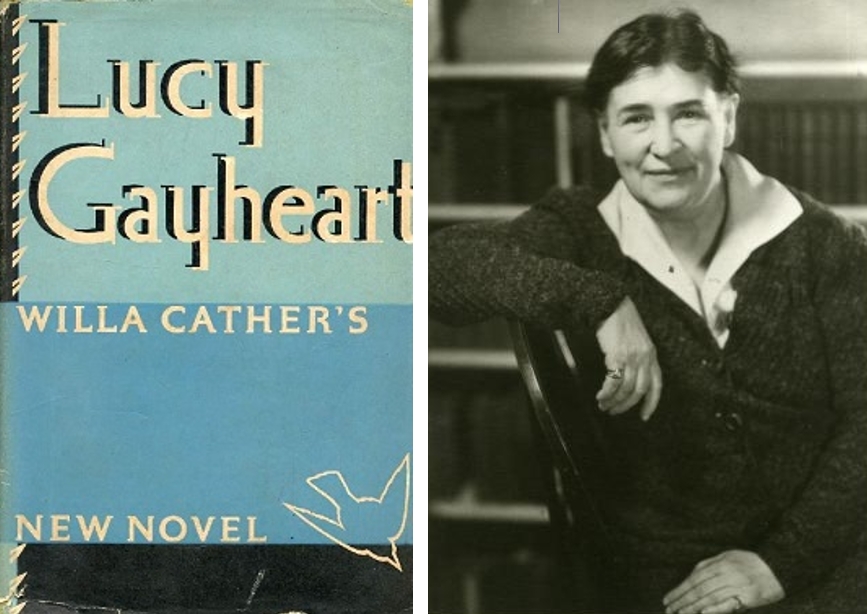
HERE’S LUCY…Clifton Fadiman confessed he was “mortified” to admit that he found Willa Cather’s latest novel a bit too gentle. At right, portrait of Cather on her birthday, December 7, 1936. (willacather.org)

 * * *

From Our Advertisers

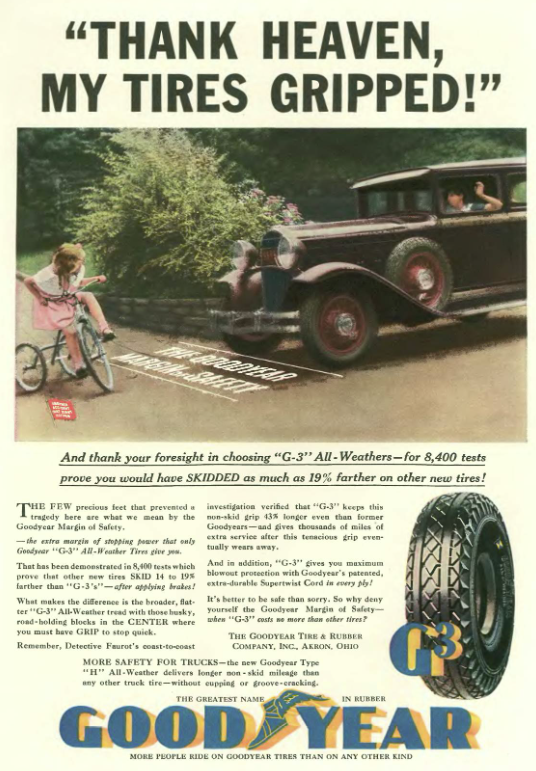
We begin with more fearmongering from the folks at Goodyear, who offered weekly reminders of the perils of not choosing their all-weather tires…

…the Liggett and Myers Tobacco Company conjured up this “naughty maiden” to encourage even timid souls to take up the habit…

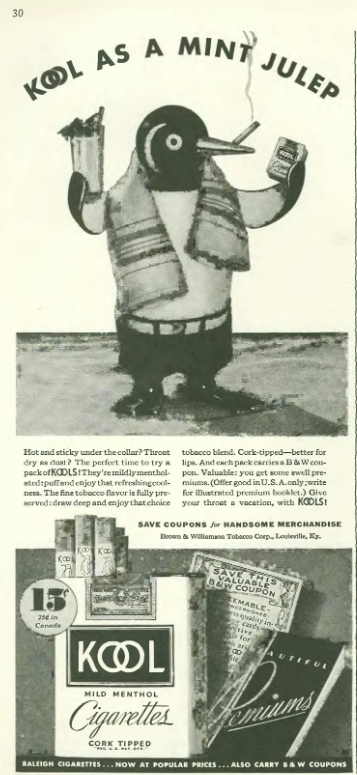
…on the other hand, the makers of the upstart KOOL brand kept it simple with their chain-smoking penguin, who was grabbing ever more market share from rival menthol pusher SPUD…

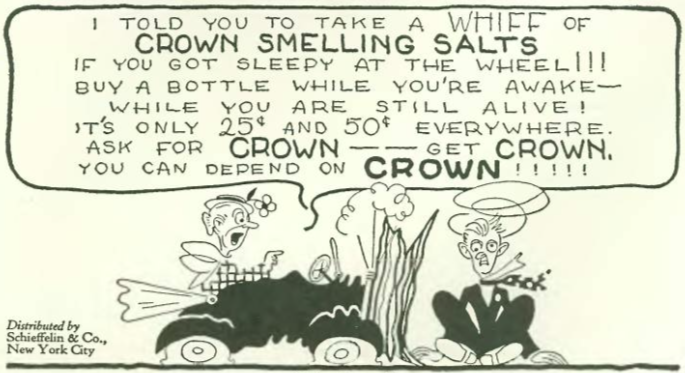
…ads in the back of the book offered up even less sophisticated products, such as Crown Smelling Salts…

…while Dr. Seuss and Norman Z. McLeod continued to make a living with their distinctive illustrations…

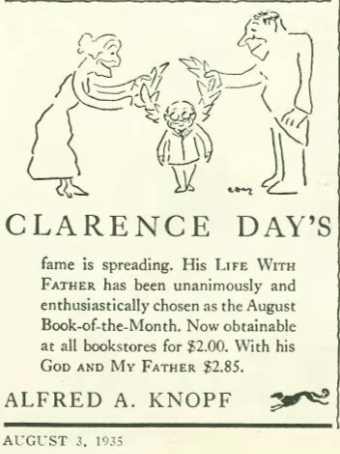
…at the very back of the magazine, this tiny ad from Knopf promoted Clarence Day’s Life With Father, published just months before Day’s death on Dec. 28…

…which brings us to our cartoonists…Constantin Alajalov kicked us off with this happy number…
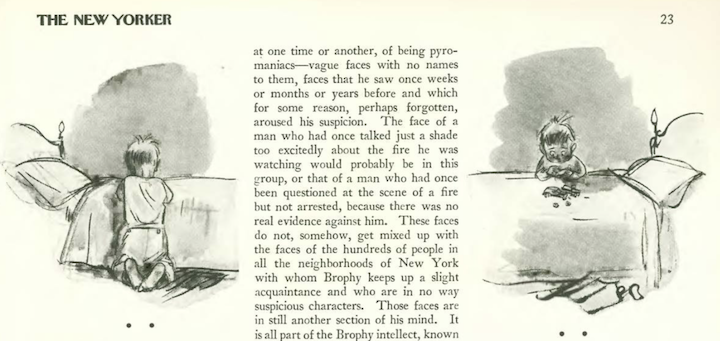
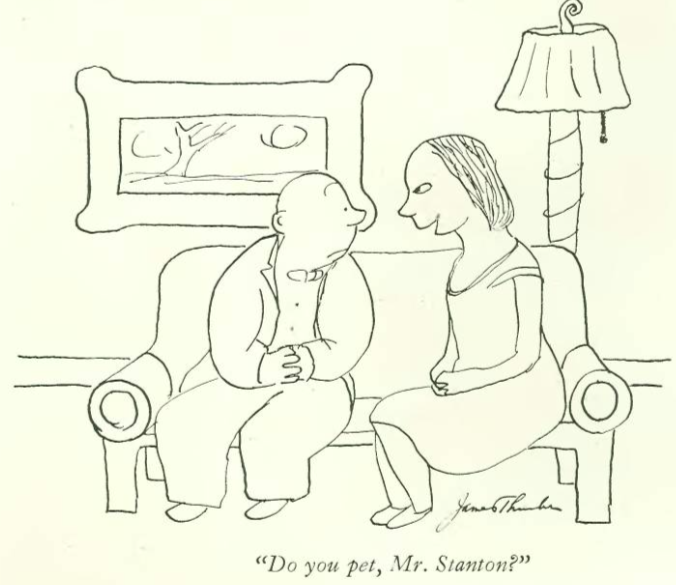
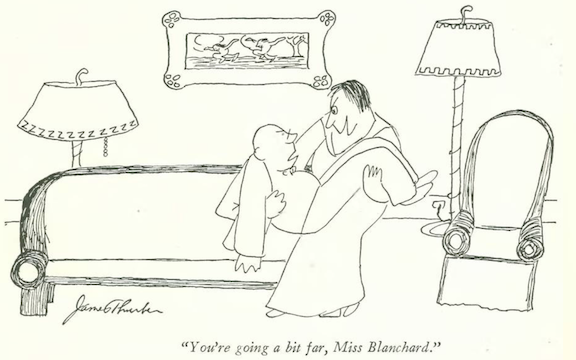
James Thurber found steamy goings on in the parlor…
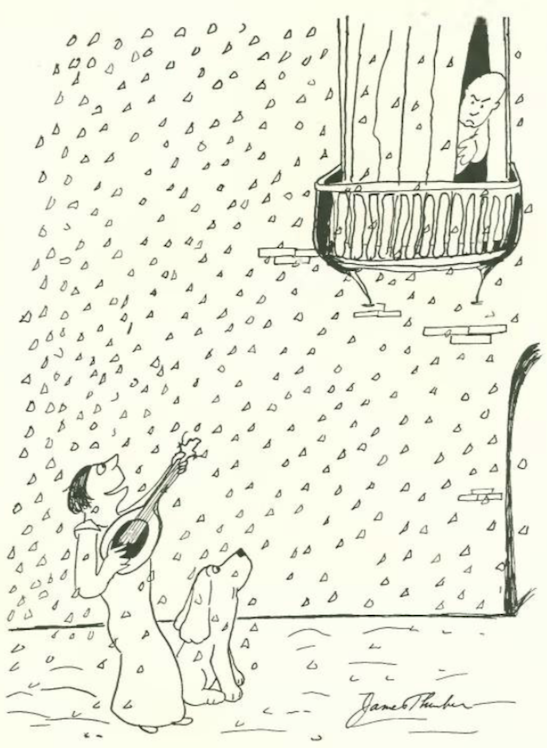
Charles Addams came down to earth with this pair…

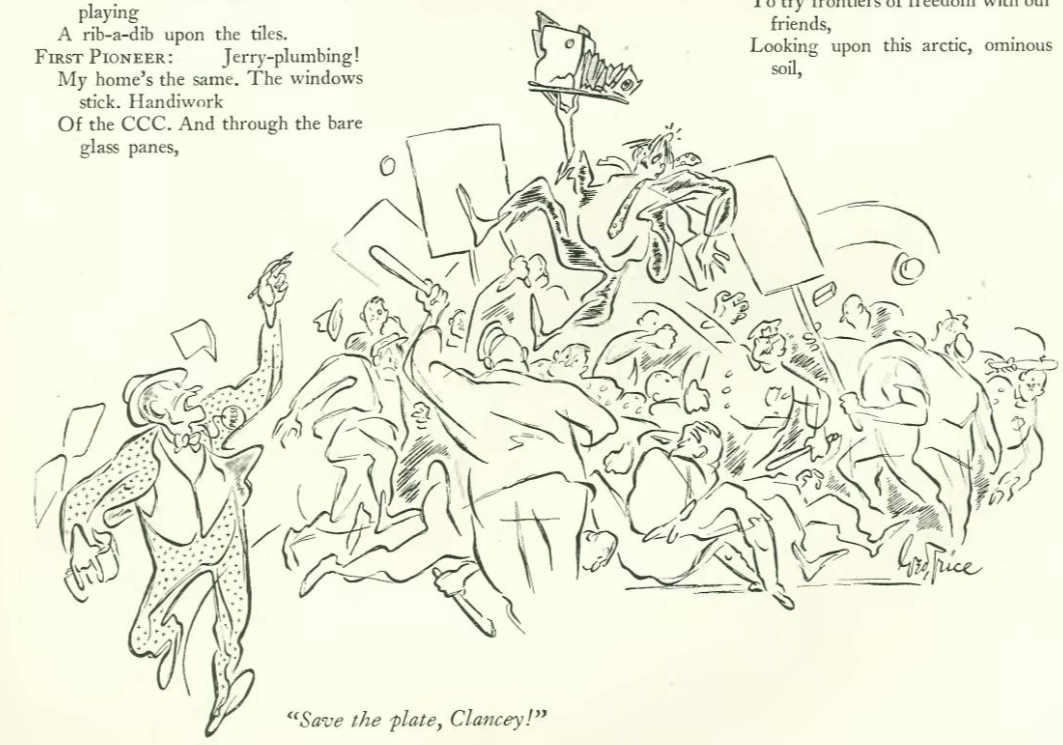
George Price showed us the rough and tumble of news reporting…

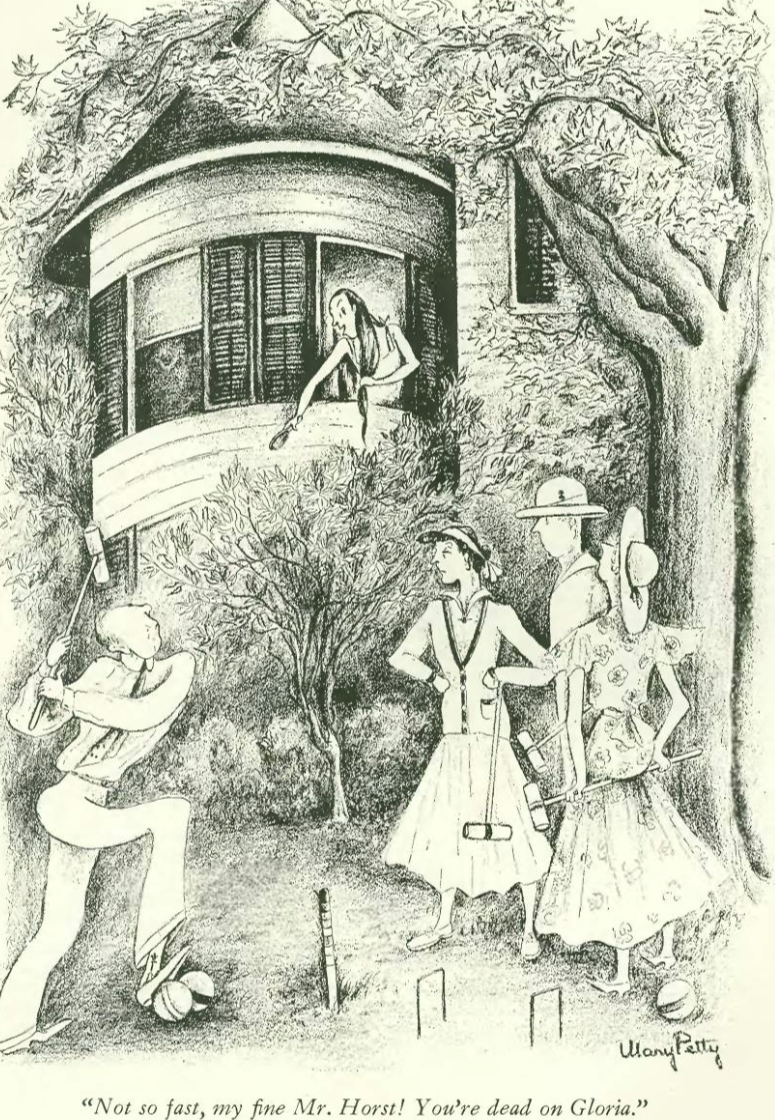
Mary Petty contributed this sumptuous drawing of a croquet match…

Helen Hokinson was in a transcendental mood…

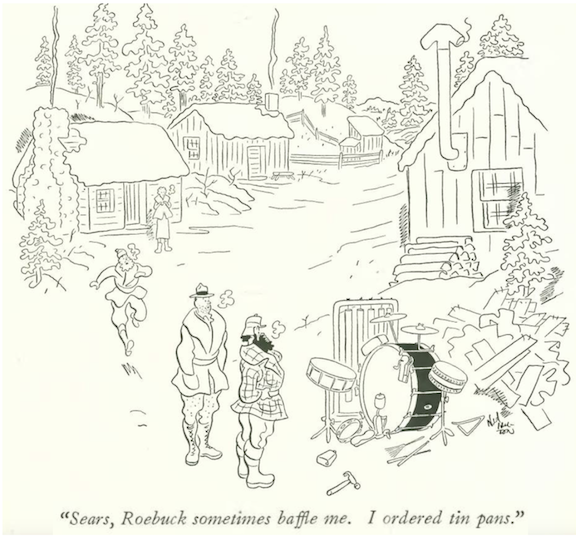
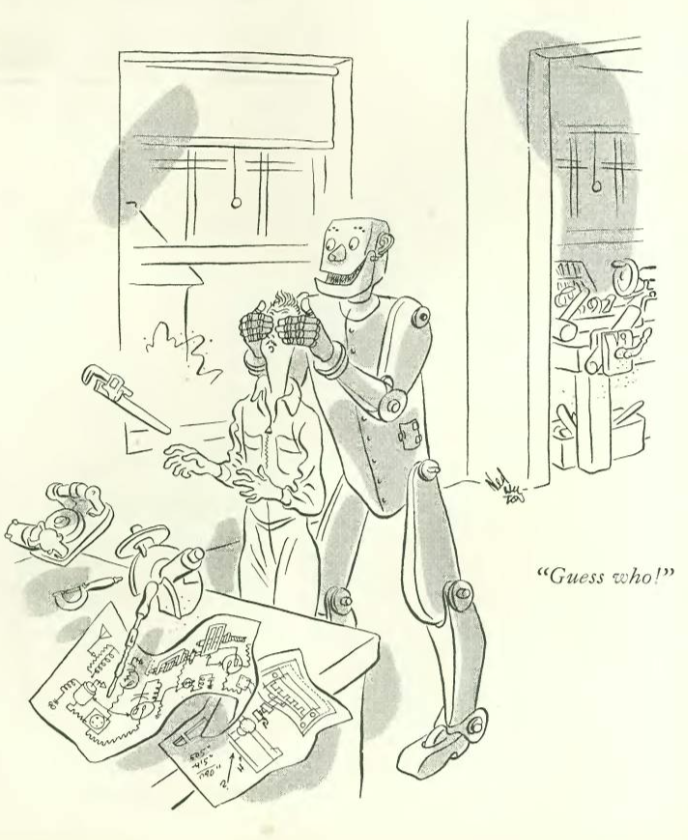
…and Ned Hilton had a big surprise for one garage tinkerer…
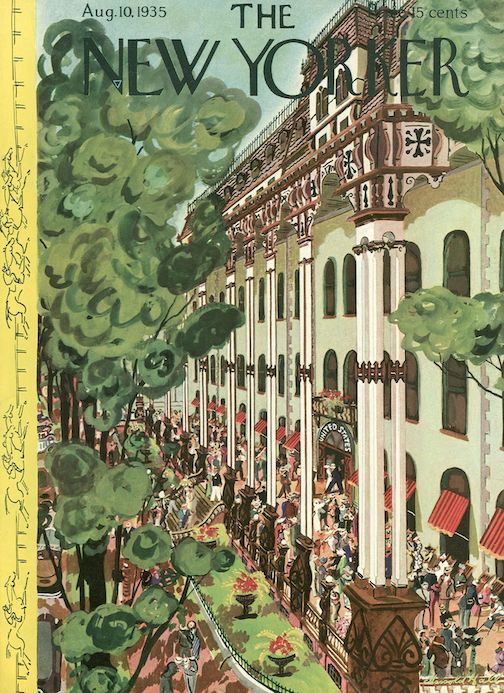
…on to August 10 and a rich summer scene by Arnold Hall:

August 10, 1935 cover by Arnold Hall.

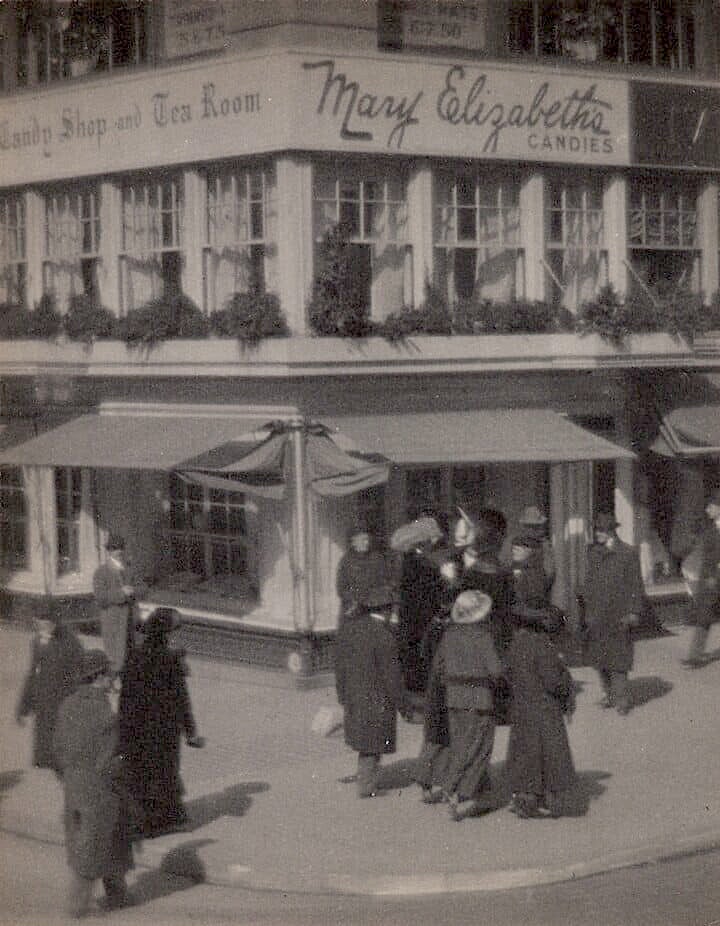
“The Talk of the Town” checked the lunch crowd at Mary Elizabeth’s Tea Room, where some preferred to drink their lunch.

TEA AND SWEETS (and cocktails) were among the offerings at Mary Elizabeth’s Tea Room at 36th and Fifth, seen here circa 1912. (Photo by Karl Struss via Facebook)

 * * *

Comic Relief

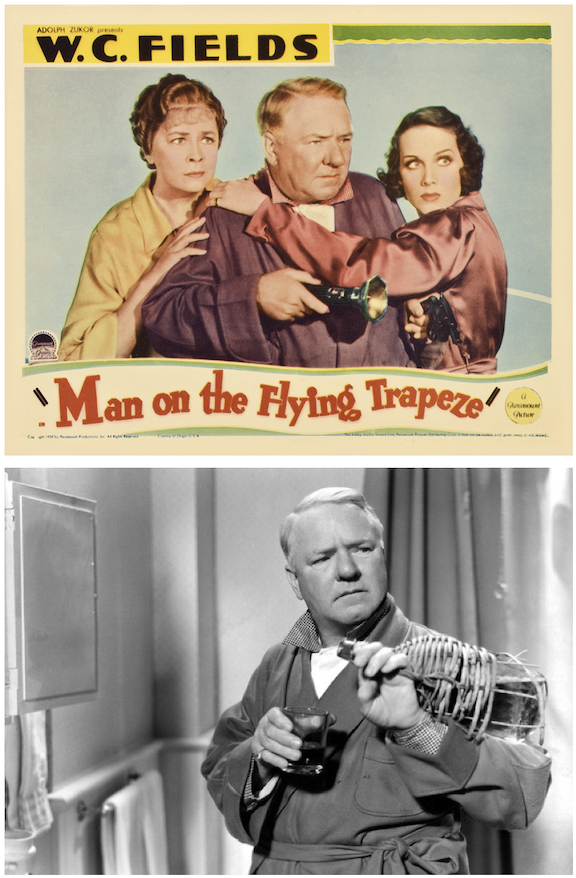
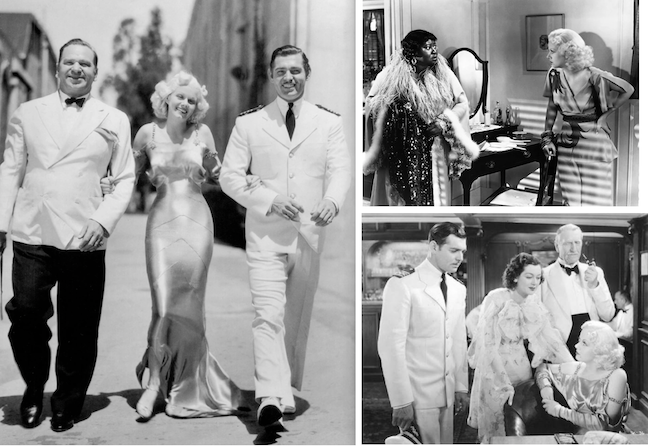
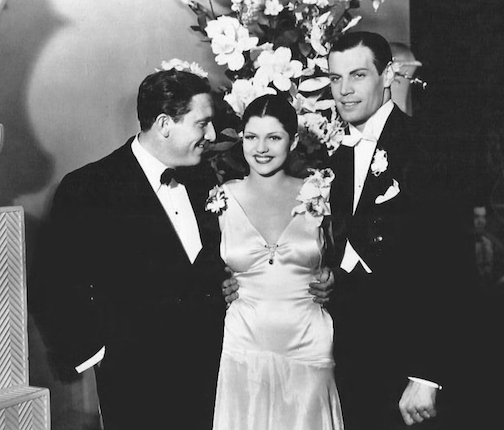
Film critic John Mosher offered an appreciation of W.C. Fields, noting that civilization needed films like Man on the Flying Trapeze during those hard years. Mosher also found some worthy distractions in the Jean Harlow vehicle China Seas, but was prepared to consign Spencer Tracey’s latest offering to the “lower circles of cinema hell.”

ANSWERING HIS NATION’S CALL…W.C. Fields brought joy to millions during the Depression in movies such as Man on the Flying Trapeze. Above, from left, Kathleen Howard, Fields, and Mary Brian. (IMDB/Rotten Tomatoes)
SHORE LEAVE…At left, Wallace Beery, Jean Harlow, and Clark Gable on the set of China Seas; top right, Hattie McDaniel with Harlow in a scene from the film; below, Gable, Rosalind Russell, and C. Aubrey Smith with Harlow in China Seas. (musingsofaclassicfilmaddict.wordpress.com / Pinterest)
FRESH FACE…Cinema newcomer Rita Hayworth was credited as Rita Cansino (she was born Margarita Carmen Cansino) in Dante’s Inferno. Here she is flanked by Spencer Tracy and Gary Leon. Dante’s Inferno was Spencer Tracy’s final film for 20th Century Fox. It was at MGM where his career really took off. (IMDB)

 * * *

All Wet

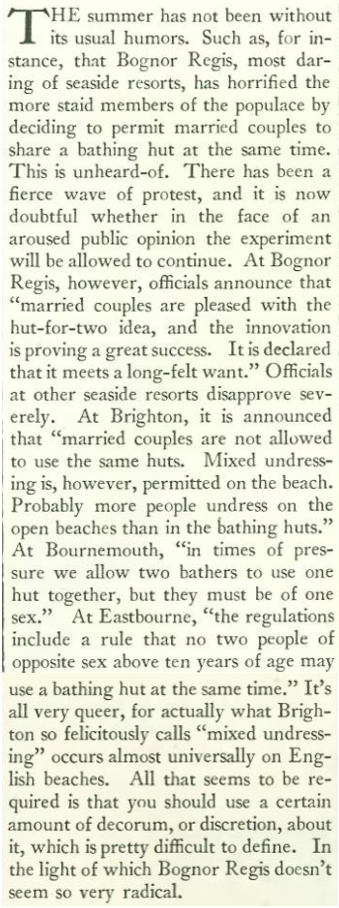
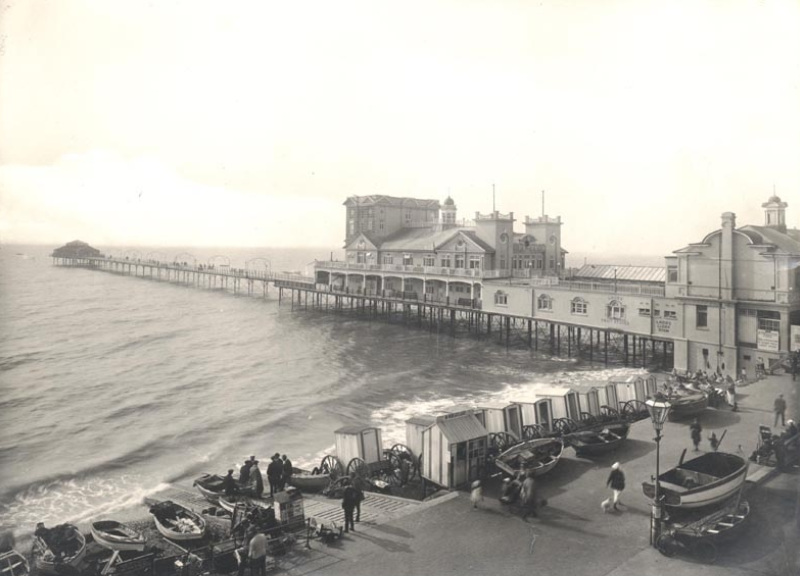
In his London Letter, Conrad Aiken (pen name Samuel Jeake Jr) examined the priggish ways of England’s seaside resorts.

SITE OF SCANDAL…Bathing huts at Bognor Regis, circa 1921. (bognorregistrails.co.uk)

 * * *

Beware the Bachelor

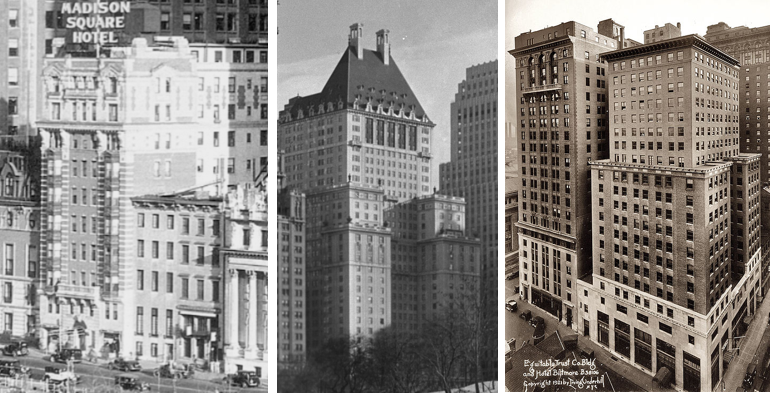
In her “Tables for Two” column, Lois Long examined some of the city’s seasonal escapes for “summer bachelors.”

GHOSTS OF THE PAST…Lois Long recommended the air-conditioned lounges of the Madison Square Hotel and the Savoy Plaza (center) or the cooling breezes of the Biltmore roof (right), which featured music by Morton Downey. Sadly, all three of these beautiful buildings have been demolished. (geographicguide.com/Wikipedia)

Other more casual venues recommended by Long included Nick’s Merry-Go-Round…

…a menu from Nick’s dated 1937…

(nypl.org)

…and its cryptic back cover…

From Our Advertisers

…speaking of the Biltmore and Morton Downey, we kick off our advertising section…

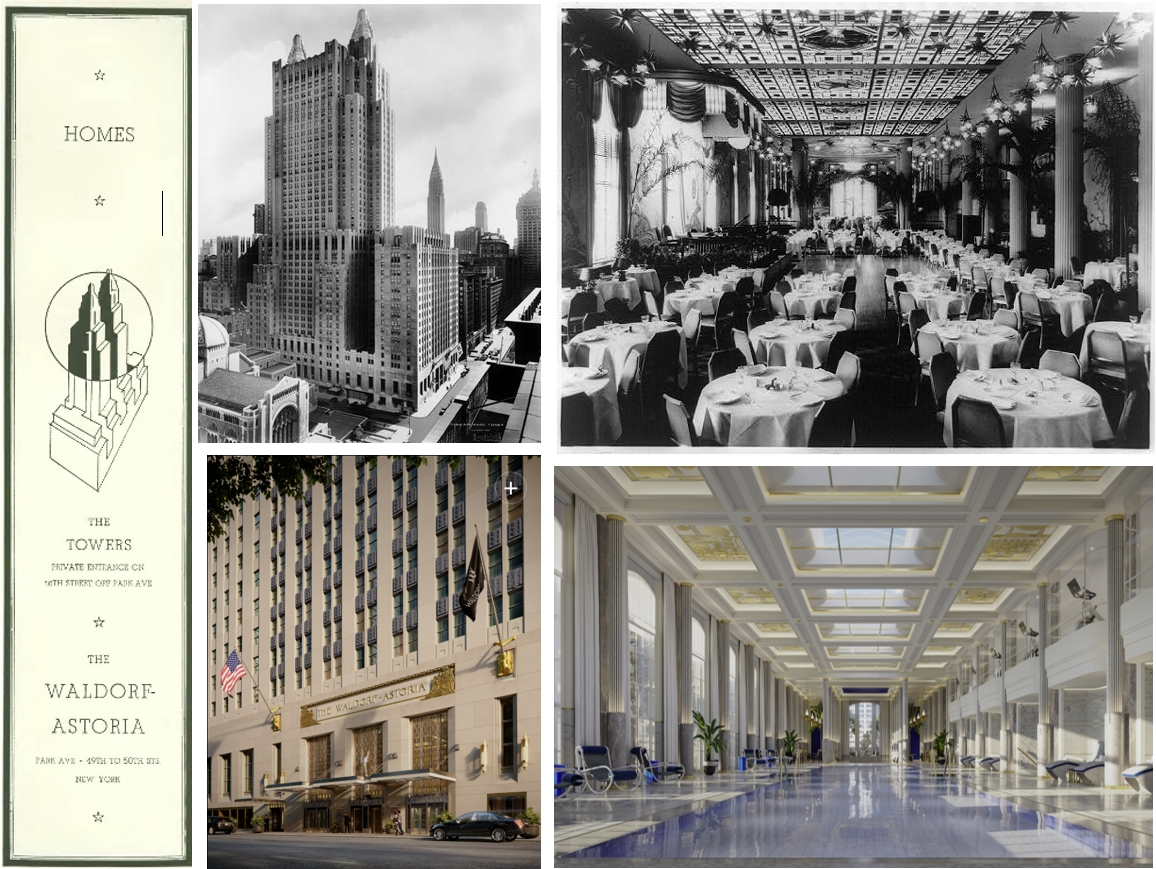
…the ad on the left announced the private residences at the Waldorf-Astoria…

Clockwise, from top left, the Waldorf Astoria circa 1930; the Waldorf’s Starlight Roof in the 1930s; after eight years and billions in restorations and renovations, the hotel has seen many changes including the transformation of the Starlight Roof into a swimming pool. Decades of grime were also cleaned from the building’s exterior. (mcny.org/loc.gov/som.com)

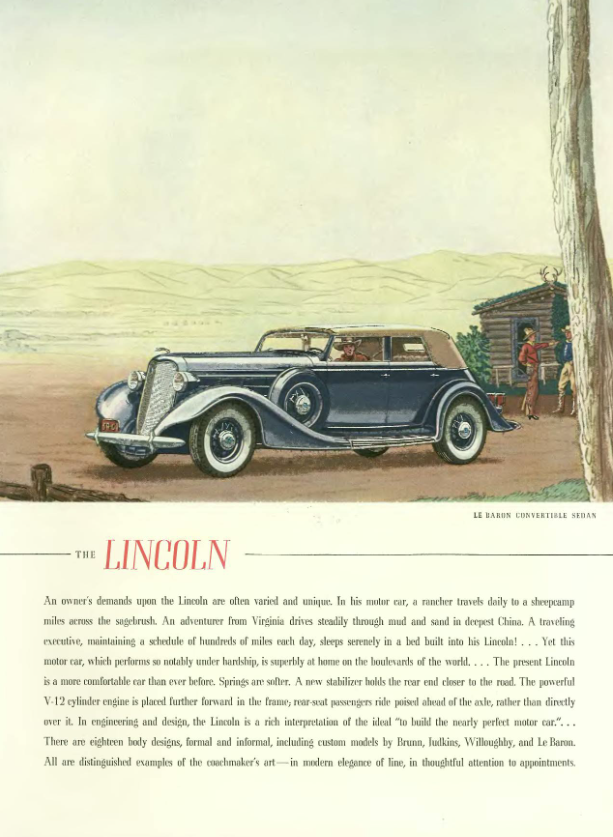
…another ad from the makers of Lincoln suggesting that the market for their luxury auto wasn’t confined to citified execs…

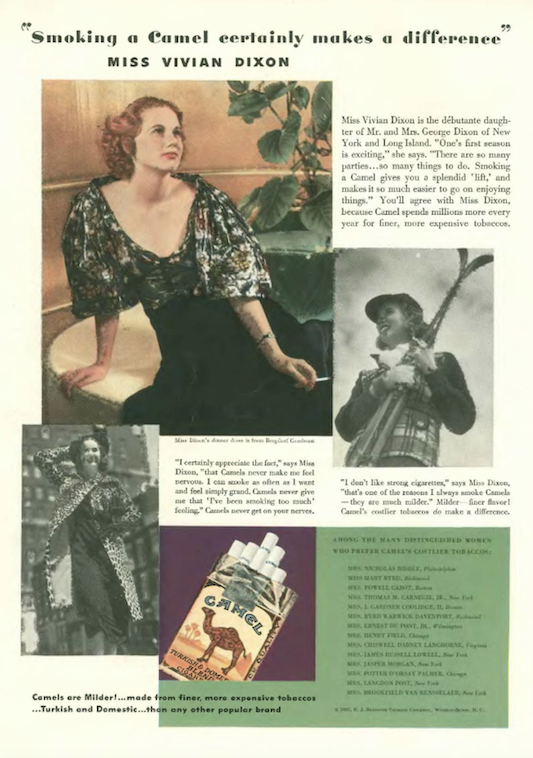
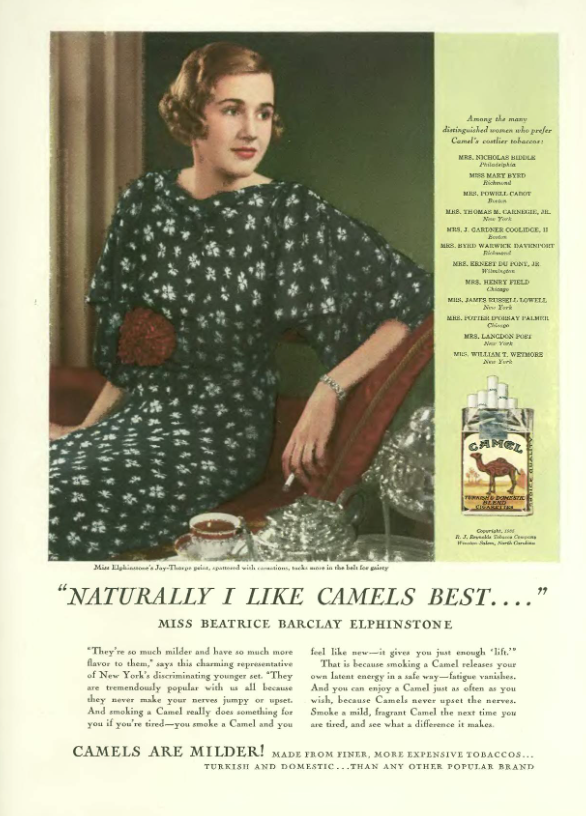
…the Camel folks introduced us to their latest society shill…

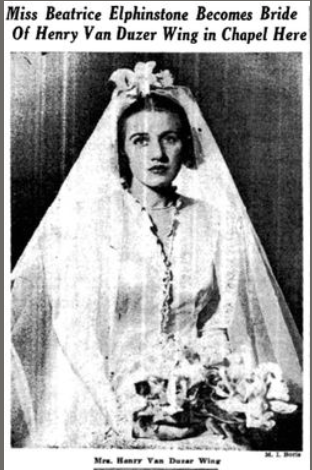
…I didn’t find much about Beatrice Barclay Elphinstone (1916-1977), described in the Camel ad as a “charming representative of New York’s discriminating younger set”…she did make the Times‘ Dec. 10, 1937 society wedding announcements, however…

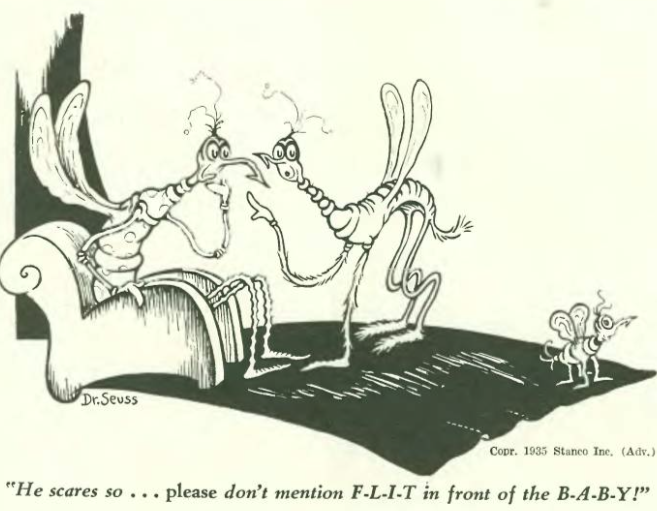
Dr. Seuss was back with another twist on Flit insecticide…

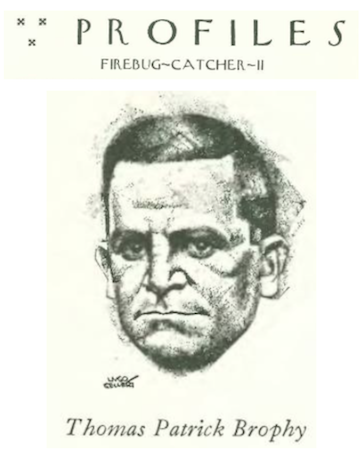
…on to our illustrators and cartoonists, a nice charcoal by Hugo Gellert for a profile titled “Yankee Horse Trader,” written by Arthur C. Bartlett…the harness horse racing legend Walter Cox (1868-1941) was known in New England as “the king of the half-milers”…

James Thurber contributed this cat and dog face-off to the opening pages…

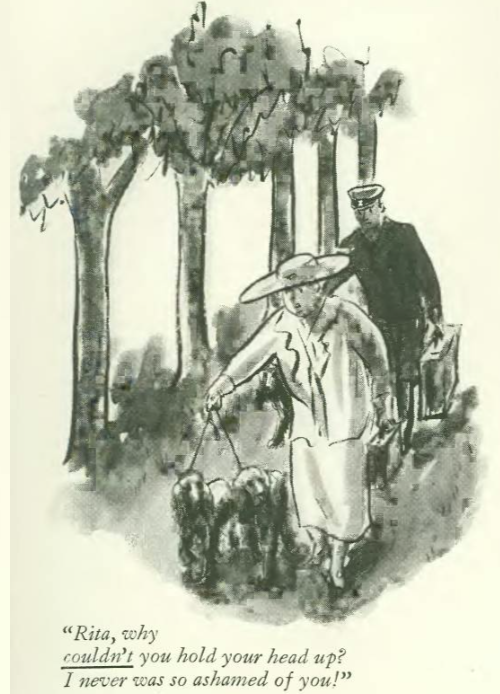
Helen Hokinson offered her perspectives on the summer dog show across pages 16-17…

…and for a closer look…

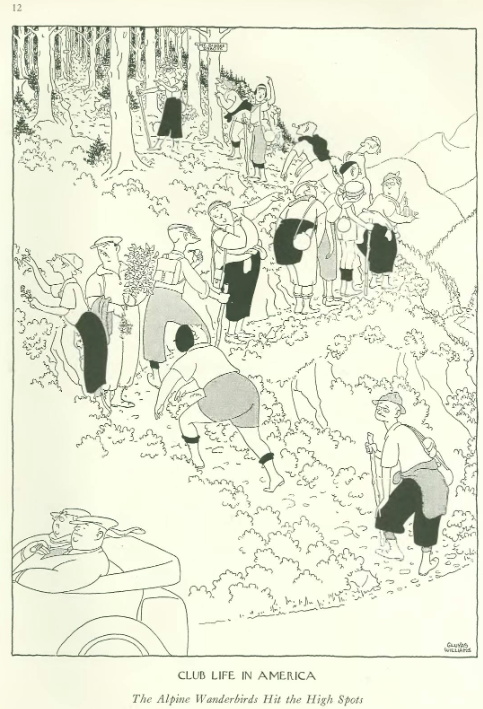
Gluyas Williams went back to nature in his “Club Life” series…

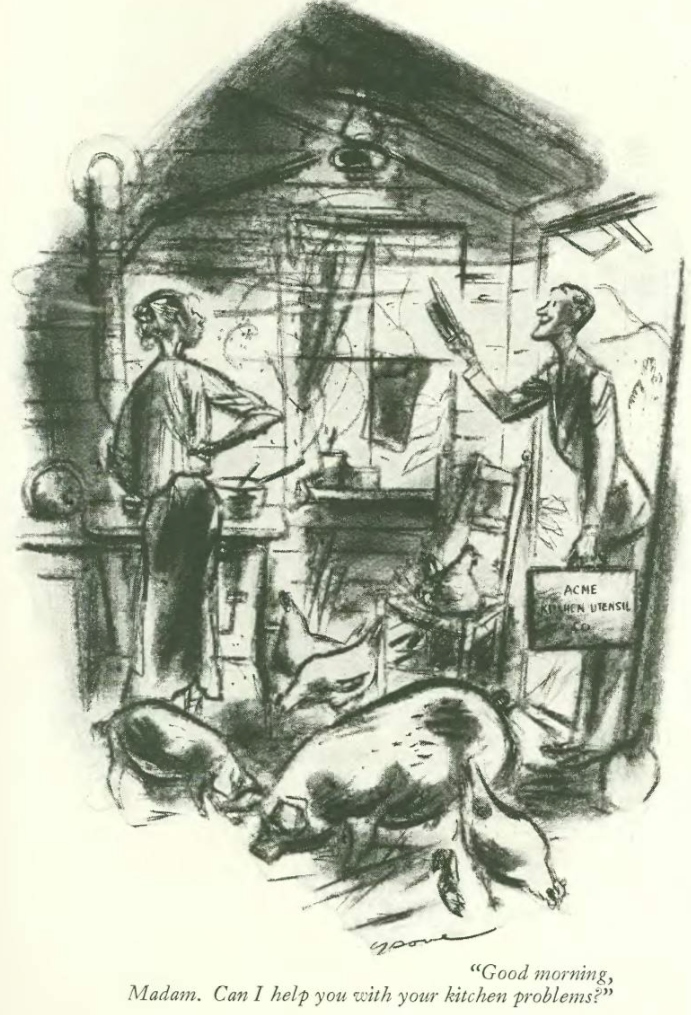
Leonard Dove introduced us to an undaunted salesman…

…in the world of George Price, crime didn’t pay…

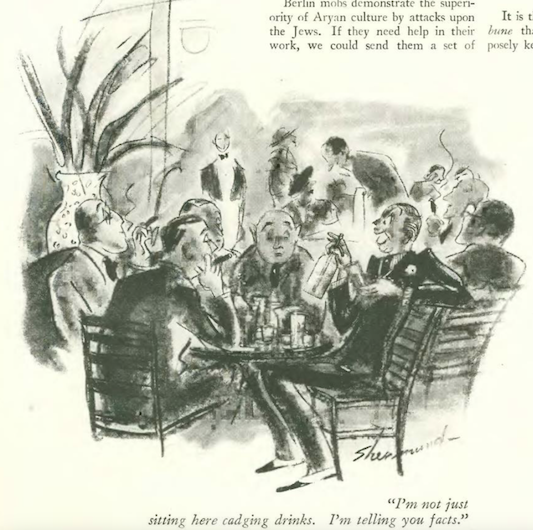
Barbara Shermund gave us a rare glimpse into the secret lives of men…

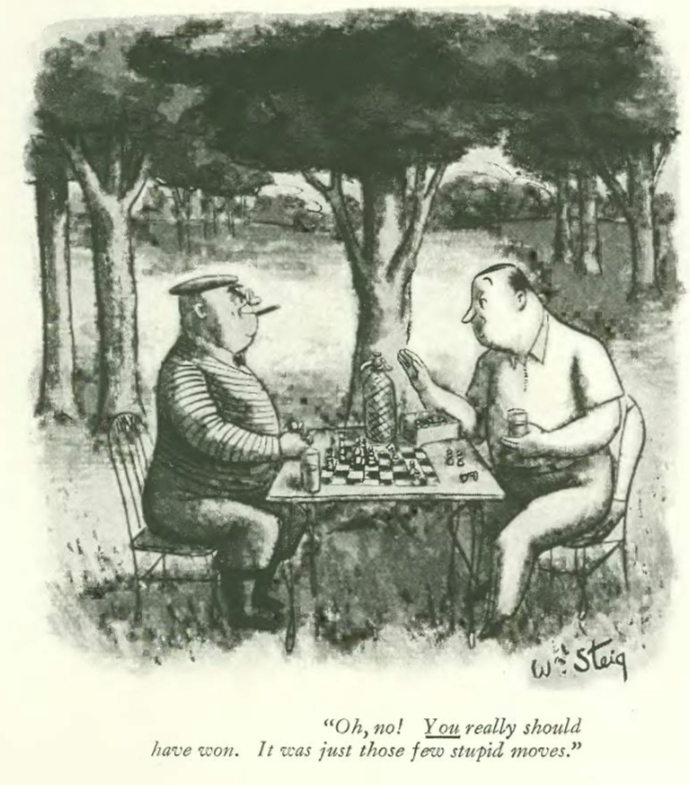
…patronizing words were unwelcome at this chess match, per William Steig

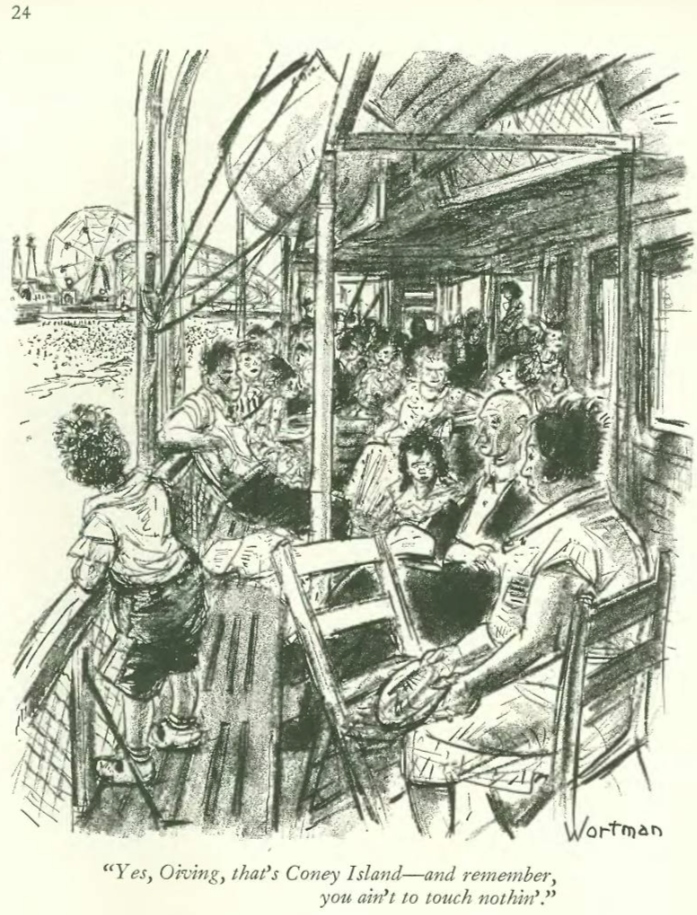
Denys Wortman took us on a family outing…

…and we close with Alain, and a mother of multiples…except words…

Next Time: Hays Hokum…

A Double-Header

Heading into the dog days of summer we take a look at the last two issues of July 1935, both somewhat scant in editorial content but still offering up fascinating glimpses of Manhattan life ninety years ago.

July 20, 1935 cover by William Crawford Galbraith. He contributed seven covers and 151 cartoons to the magazine.

That includes the observations of theatre critic Wolcott Gibbs and film critic John Mosher, both escaping the summer heat to take in some very different forms of entertainment.

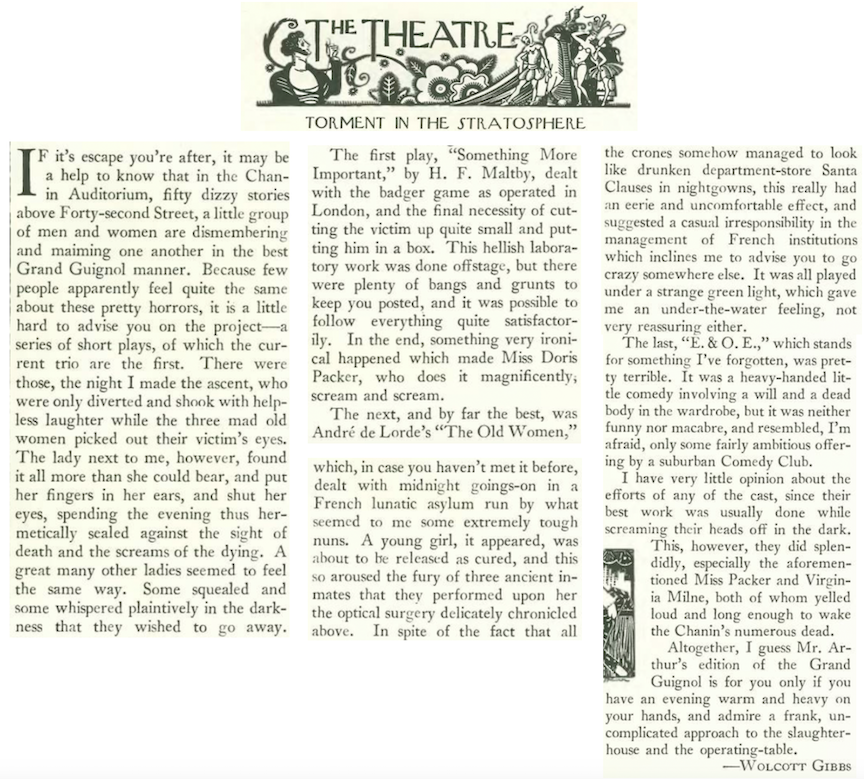
Gibbs found himself “fifty dizzy stories above Forty-second Street” in the Chanin Building’s auditorium, where he experienced New York’s take on Le Théâtre du Grand-Guignol. Founded in Paris by Oscar Méténier in 1897, Grand Guignol featured realistic shows that enacted, in gory detail, the horrific existence of the disadvantaged and working classes. It seems audiences were drawn to the shows more out of prurient interest (or sadistic pleasure) than for any desire to help the underclasses.

NOT FOR THE FAINT OF HEART…Wolcott Gibbs recommended the Grand-Guignol only for those who “admire a frank, uncomplicated approach to the slaughterhouse and the operating table.” (Image: Wikipedia)
PRETTY HORRORS…Clockwise from top left, the original Théâtre du Grand-Guignol, in the Pigalle district of Paris–it operated from 1897 until 1962, specializing in horror theatre; a poster from one of its productions; New York’s Chanin building, circa 1930s; the Chanin’s auditorium “fifty dizzy stories above 42nd Street”; fake blood applied to an actress’ neck before a scene from The Hussy; Wolcott Gibbs described a madhouse scene from André de Lorde’s The Old Women, which depicted the fury of ancient inmates performing “optical surgery” on a young woman. (thegrandguignol.com/Wikipedia/NYPL/props.eric-hart.com)

 * * *

Popeye to the Rescue

With the Hays Code in effect you wouldn’t see anything like the Grand-Guignol on the silver screen. Indeed, with the exception of a Popeye cartoon, critic John Mosher found little to get excited about at the movies. He did, however, enjoy the air conditioning that offered a break from the hot city streets.

THEY ALL COULD HAVE USED SOME SPINACH…Clockwise, from top left, Popeye and Bluto strike an unlikely partnership in Dizzy Divers; Bette Davis and George Brent in Front Page Woman; Will Rogers and Billie Burke in Doubting Thomas; James Blakeley and Ida Lupino in Paris in Spring. (brothersink.com / rottentomatoes.com / cometoverhollywood.com / classiccartooncorner.substack.com)

 * * *

From Our Advertisers

Just a few ads from this issue, first, a jolly appeal from one of the magazine’s newer advertisers, the makers of the French apertif Dubonnet…

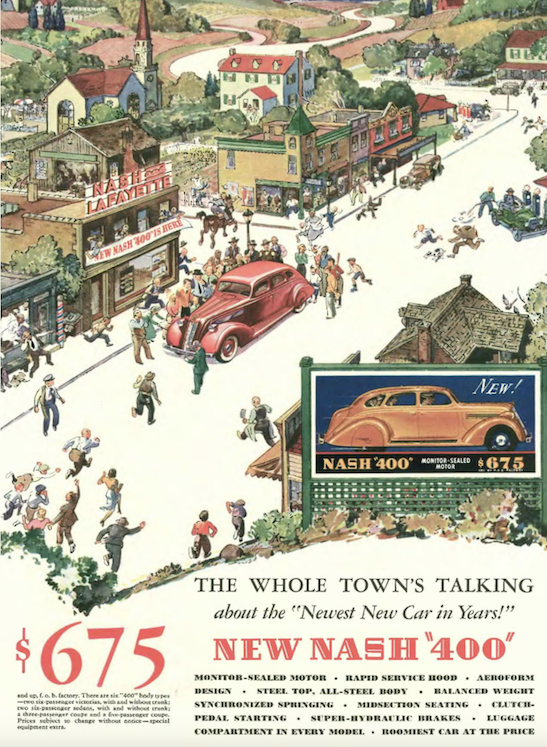
…by contrast, this quaint slice of Americana from Nash…

…and a shot of pesticide from Dr. Seuss

…our cartoonists include Constantin Alajalov, contributing this bit of spot art to the opening pages…

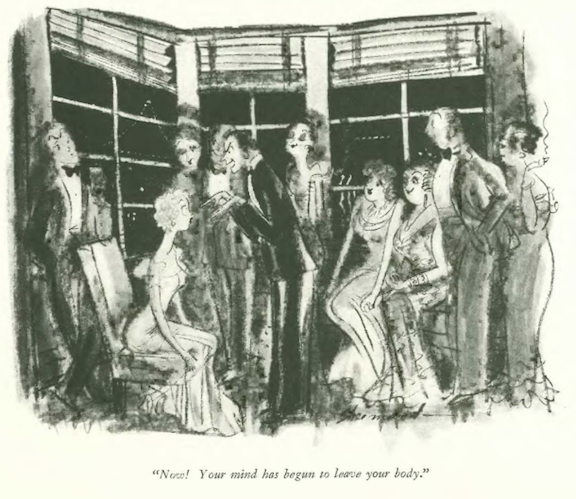
Barbara Shermund explored the world of hypnotic suggestion…

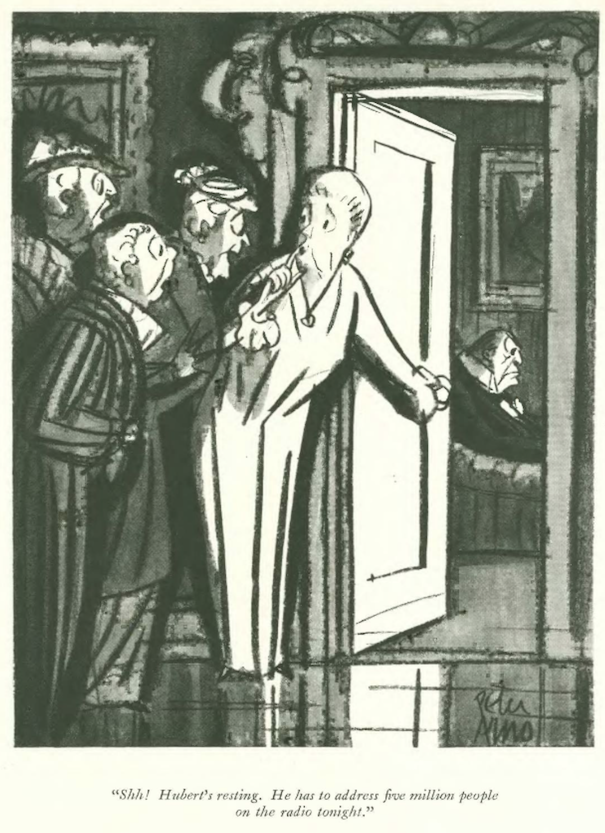
Peter Arno prepared to address the nation…

William Steig checked the weather forecast…

Helen Hokinson’s girls questioned the burden of a lei…

Carl Rose found himself on opposite sides of the page in this unusual layout

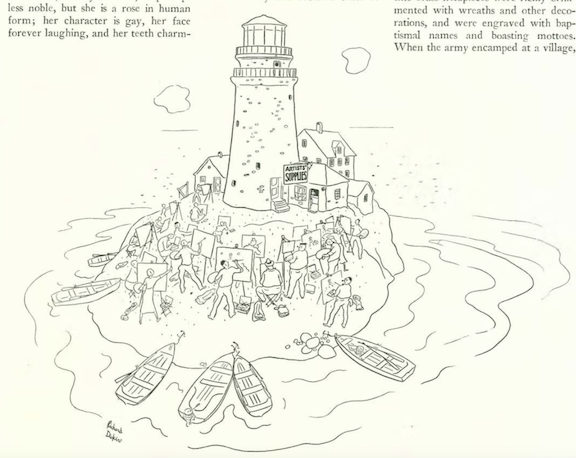
Richard Decker joined the crowd in a lighthouse rendering…

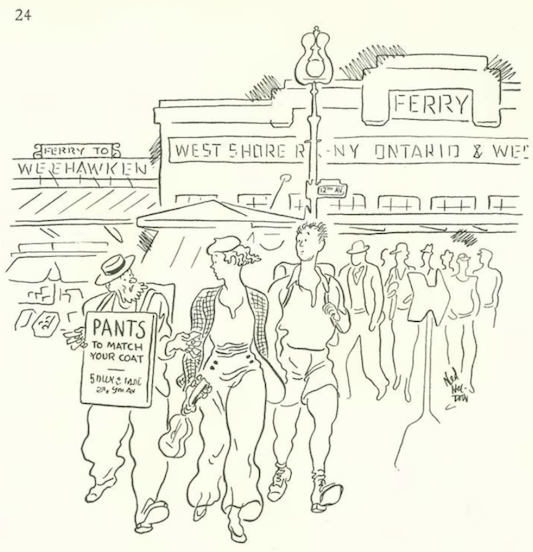
Ned Hilton reminds us that it was unusual for women to wear trousers ninety years ago…

Mary Petty examined the complications of marital discord…

…and Charles Addams shone a blue light on a YMCA lecture…

…on to July 27, 1935, with a terrific summertime cover by William Steig

July 27, 1935 cover by William Steig, one of his 117 covers for the magazine.

E.B. White (in “Notes and Comment”) was ahead of his time in suggesting that the city needed to build “bicycle paths paralleling motor highways” and invest in more pedestrian pathways.

NEW YORK’S FINEST…Doris Kopsky, who trained in Central Park, won the first Amateur Bicycle League of America Women’s Championship in 1937. Bicycle races were a big draw in the 1930s. (crca.net)

 * * *

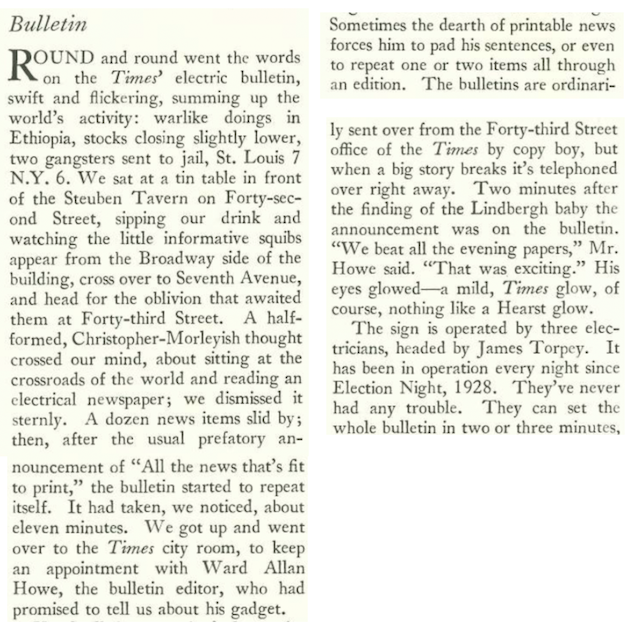
Breaking News

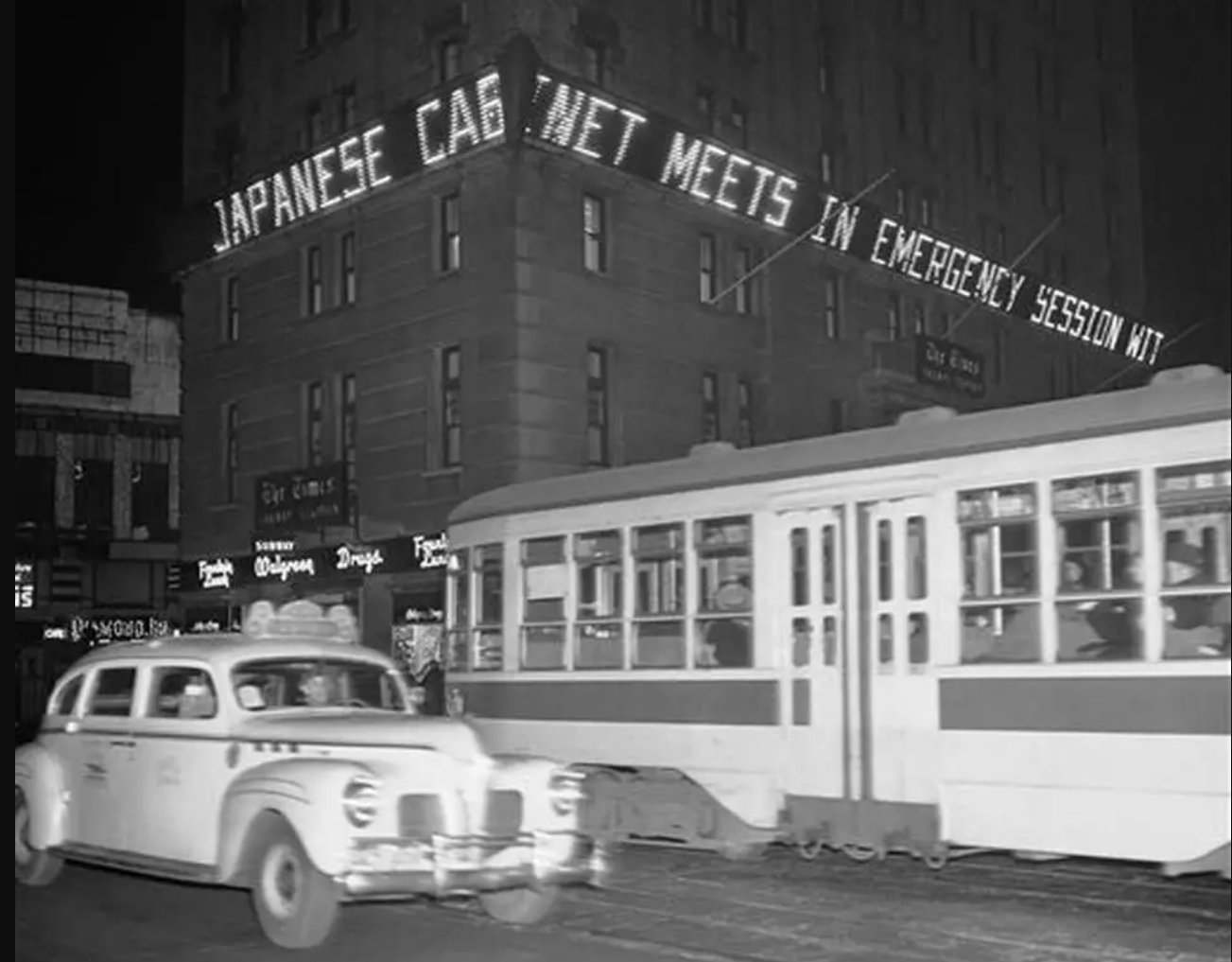
“The Talk of the Town” checked in on the New York Times’ “electric bulletin,” commonly known as “The Zipper.” Excerpt:

NIGHT CRAWLER…Launched in 1928, the Times Square “Zipper” kept New Yorkers apprised of breaking news. (cityguideny.com)

 * * *

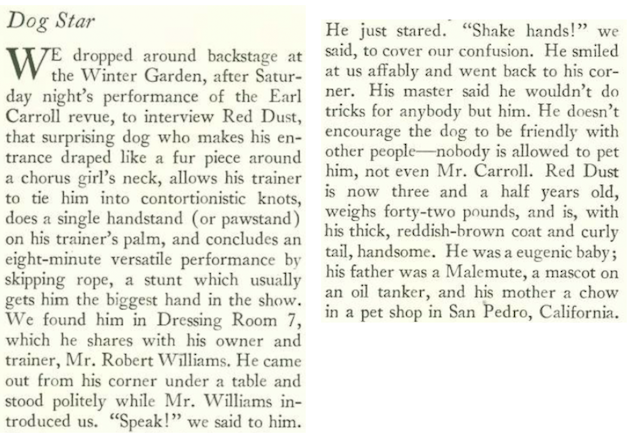
Dog Knots

“Talk” also took a look backstage at the Winter Garden, where burlesque performers shared the stage with a contortionist dog called “Red Dust.” Excerpt:

WOOF…Famed animal trainer Robert “Bob” Williams with one of his pupils. The dog in the photo is misidentified as Red Dust (he was actually a Malemute/chow mix).

 * * *

Suddenly Famous

Charles Butterworth (1896-1946) earned a law degree from Notre Dame before becoming a newspaper reporter. But his life would take on a new twist in 1926 when he delivered his comical “Rotary Club Talk” at J.P. McEvoy’s Americana revue in 1926. Hollywood would come calling in the 1930s, and his doleful-looking, deadpan characters would become familiar to movie audiences through a string of films in the thirties and forties. Alva Johnston profiled Butterworth in the July 27 issue. Here are brief excerpts:

Charles Butterworth (left) and Jimmy Durante in Student Tour (1934). A bit of trivia: Butterworth’s distinctive voice was the inspiration for the Cap’n Crunch commercials voiced by Daws Butler beginning in the early 1960s. Butterworth’s life was cut short in 1946 when he crashed his imported roadster into a lamppost on Sunset Boulevard. (Detail from film still via IMDB)

 * * *

Noisy Neighborhood

The “Vienna Letter” (written by “F.S.”–possibly Frank Sullivan) noted the rumblings of fascism in a grand old European city known for its many cultural delights as well as its many factions that included Nazis, Socialists and Communists (and no doubt a few Royalists). An excerpt:

CALM BEFORE THE STORM…Vienna in 1935, less than three years before the Anschluss, when Nazi Germany annexed Austria. (meisterdrucke.us)

 * * *

Ex Machina

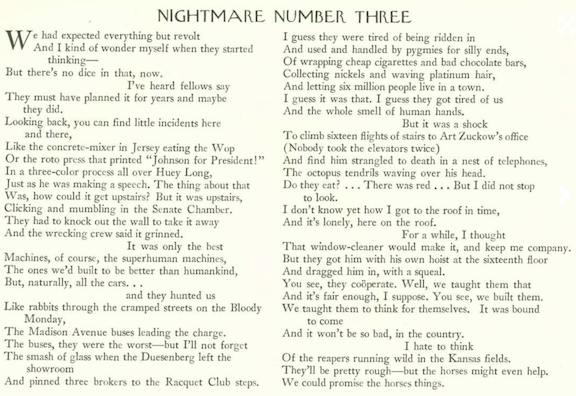
The Pulitzer Prize-winning poet and author Stephen Vincent Benét (1898-1943) penned this poem for The New Yorker that is somewhat appropriate to our own age and our fears of the rise of A.I. In “Nightmare Number Three,” Benét described a dystopian world where machines have revolted against humans.

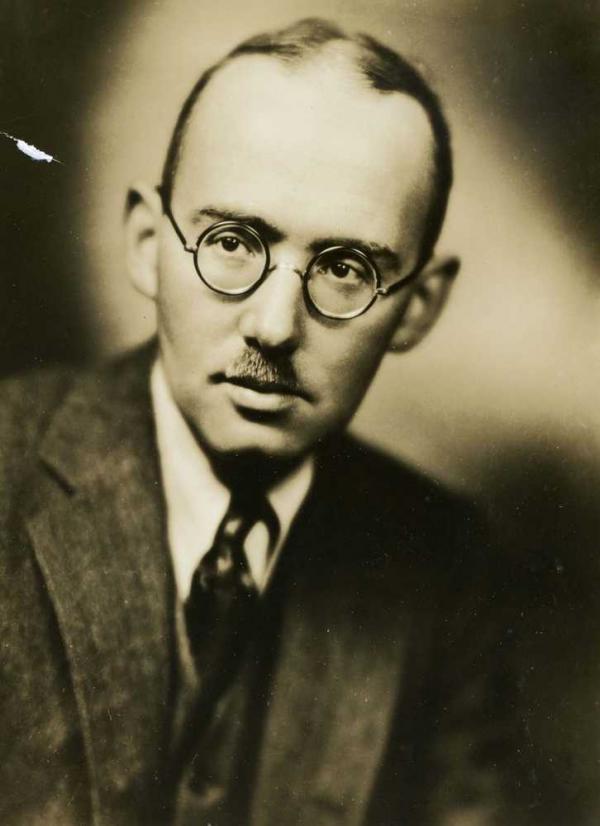
BOTH CLASSY AND FOLKSY is how some today describe Stephen Vincent Benét, who in 1928 wrote a book-length narrative poem of the American Civil War, John Brown’s Body, for which he received the Pulitzer Prize for Poetry. He was also know for such short stories as The Devil and Daniel Webster, published in 1936. (mypoeticside.com)

 * * *

From Our Advertisers

We begin with more extraordinary claims from R.J. Reynolds, who convinced a lot of folks that drawing smoke into your lungs actually improved your athletic stamina…

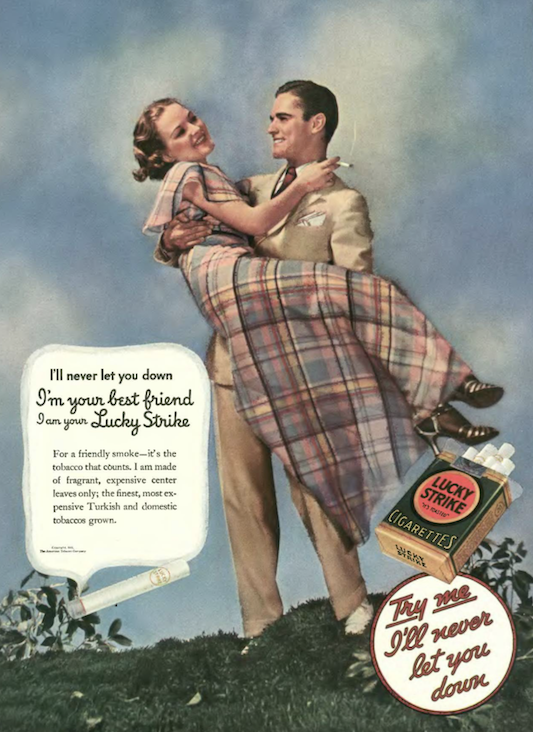
…the makers of Lucky Strike, on the other hand, stuck with images of nature and romance to suggest the joys of inhaling tar and nicotine…

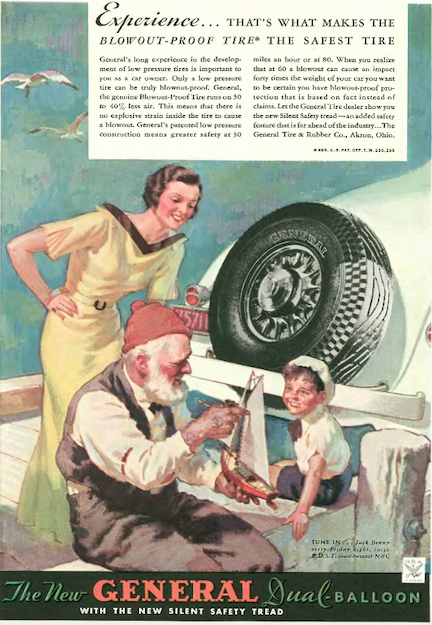
…General Tire took a cue from Goodyear, suggesting that an investment in their “Blowout-Proof Tires” was an investment in the very lives of a person’s loved ones (even though they apparently drove to the beach without seatbelts or even a windshield)…

…another colorful advertisement from the makers of White Rock, who wisely tied their product to ardent spirits as liquor consumption continued to rebound from Prohibition…

…I toss this in for the lovely rendering on behalf of Saks…it looks like the work of illustrator Carl “Eric” Erickson, but he had many imitators…

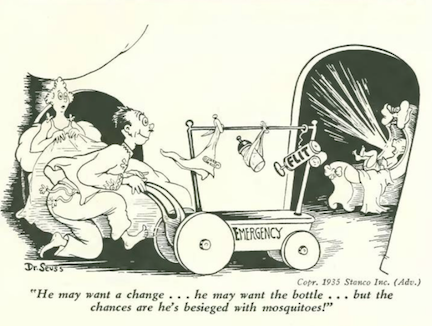
…we do, however, know the identity of this artist, and his drawings on behalf of the pesticide Flit, which apparently in those days of innocence was thought appropriate for use around infants…

…great spot drawing in the opening pages…I should know the signature but it escapes me at the moment…

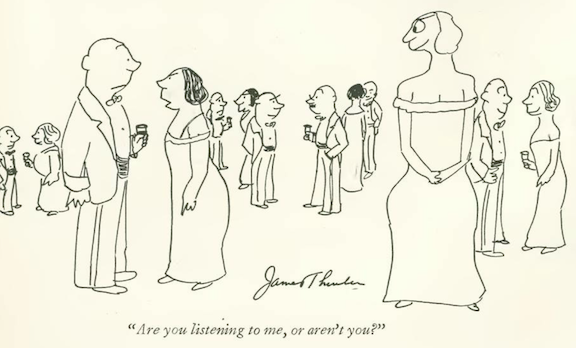
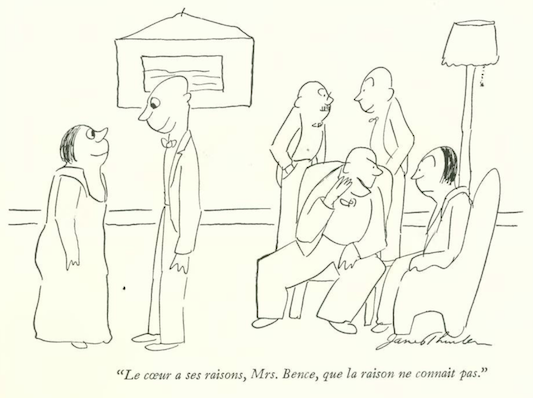
James Thurber quoted Blaise Pascal for this tender moment ( “The heart has its reasons, of which reason knows nothing”)…

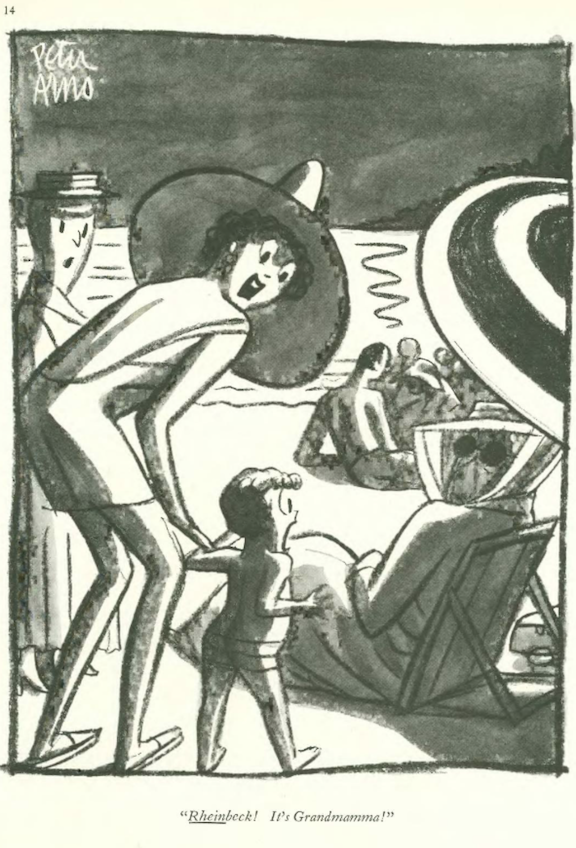
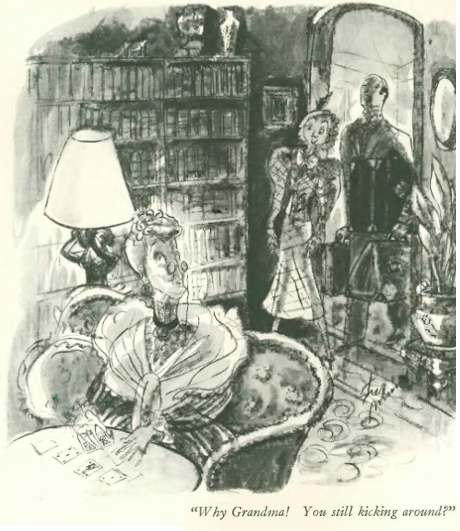
Peter Arno illustrated the horrors of finding one’s grandmother out of context…

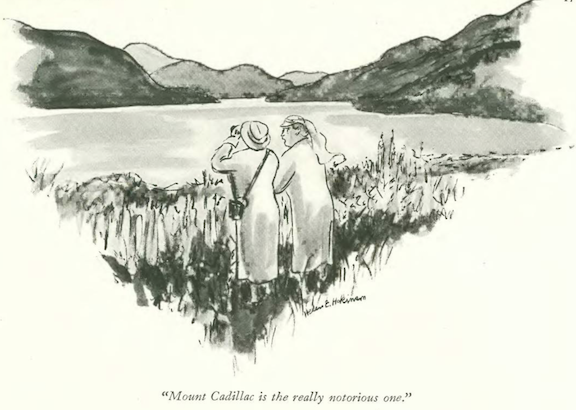
Helen Hokinson’s girls employed a malaprop to besmirch the good name of an innocent mountain…

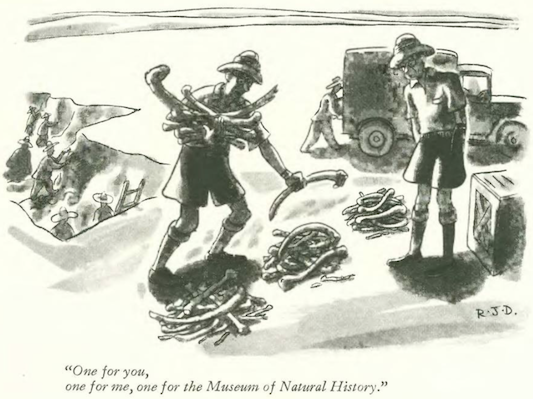
Richard Decker discovered the missing link(s) with two archeologists…

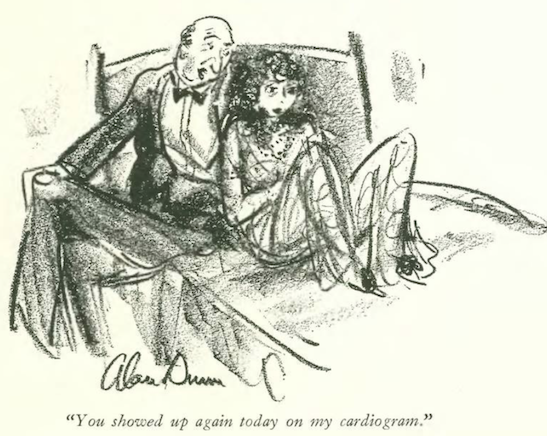
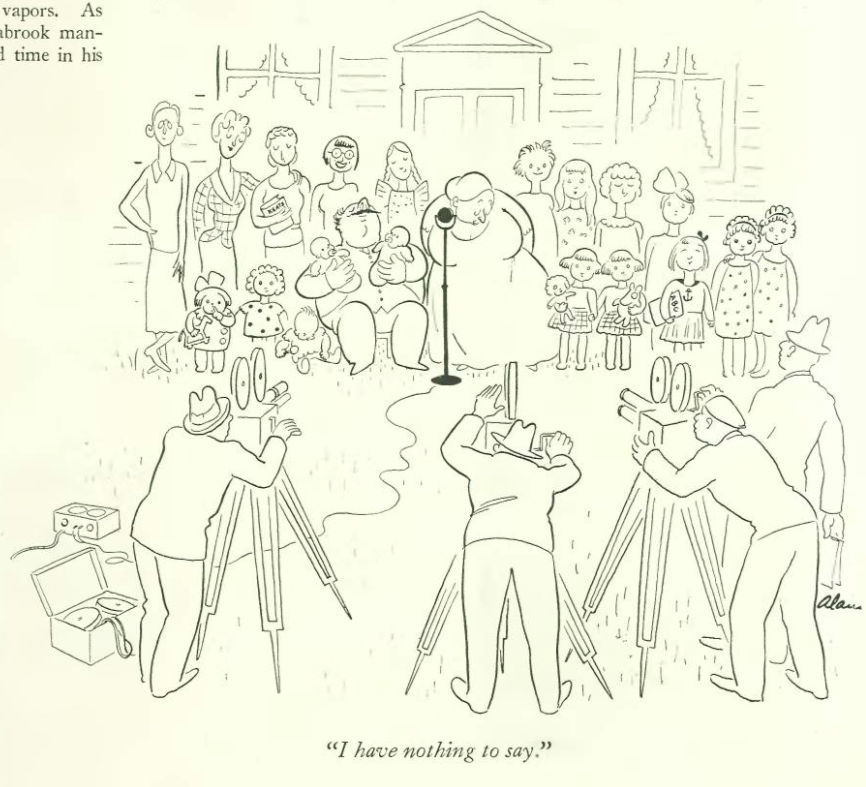
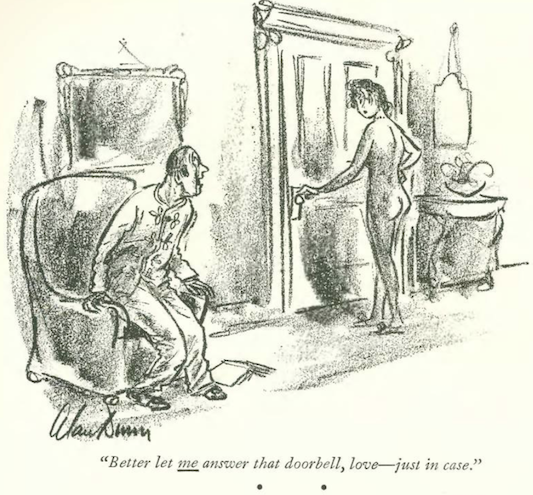
Alan Dunn narrowly averted a surprise greeting…

George Price added a new twist to a billiards match…

…Price again, at the corner newstand…

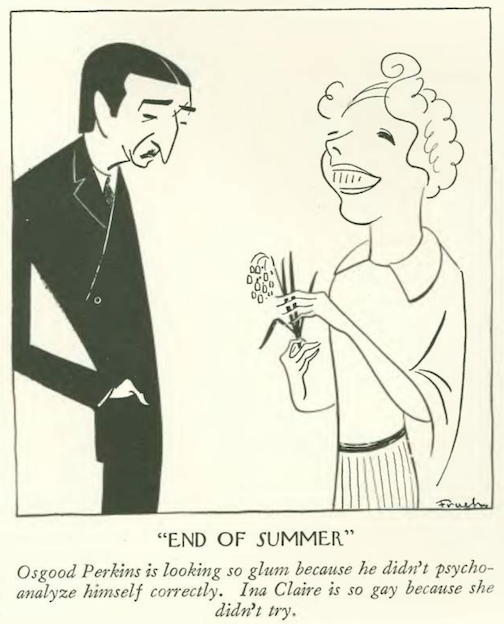
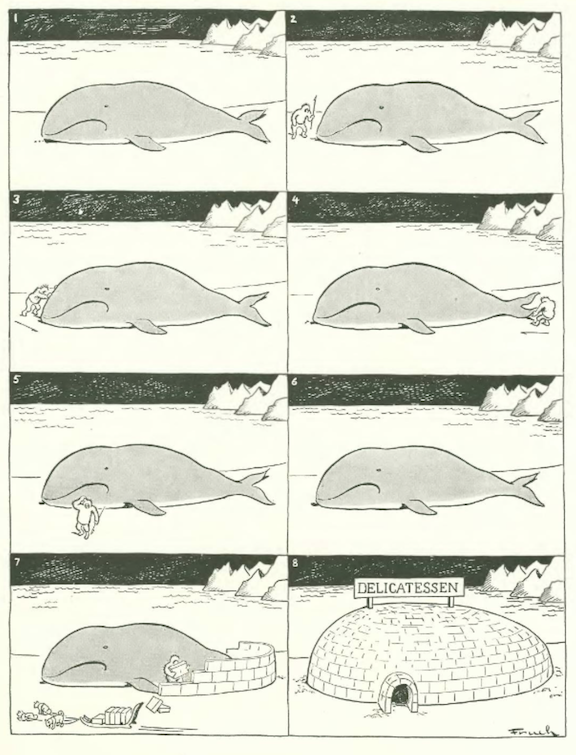
Al Frueh bit off more than he could chew…

…and we close with Barbara Shermund, and a prattling mooch…

Next Time: La Marseillaise…

Independence Day 1935

We mark the July 4 weekend with a lighter edition of A New Yorker State of Mind

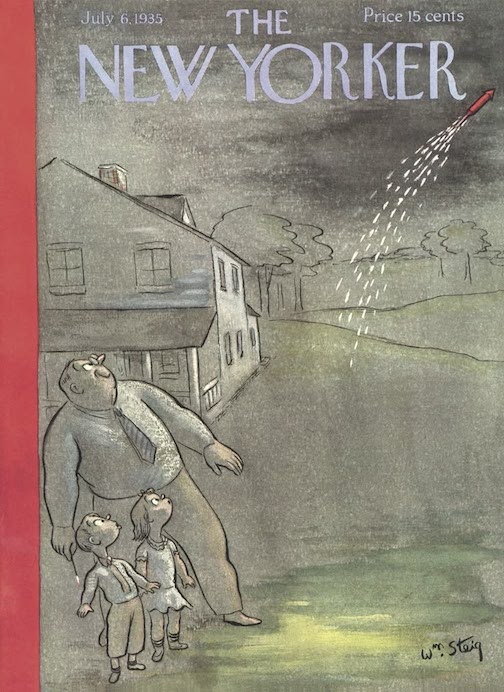
July 6, 1935 cover by William Steig, a contributor to The New Yorker from 1930 to 2003, including more than 2,600 drawings and 117 covers.

…and see what many New Yorkers were doing on that holiday ninety years ago…

TOGETHERNESS…New Yorkers celebrate the Fourth of July on a Coney Island beach, circa 1935. (coneyislandhistory.org)

Let’s look at some of the advertisements from the July 6 issue, beginning with this alarming image that greeted readers on the inside front cover…

…Goodyear continued its series of safety-minded advertisements (this one on the inside back cover) that played on the fears of parents with driving-age children…strange how no one then considered other hazards such as the hard steel dash, or worse, the steering column that often impaled drivers…also, is that how they taught folks to hold a steering wheel in the 1930s?…

…no stylish models, debutantes or famous athletes for the makers of Chesterfields, at least not in this back page ad which equated their cigarette papers (and by association, the cigarettes themselves) with wholesome milk and pure mountain water…

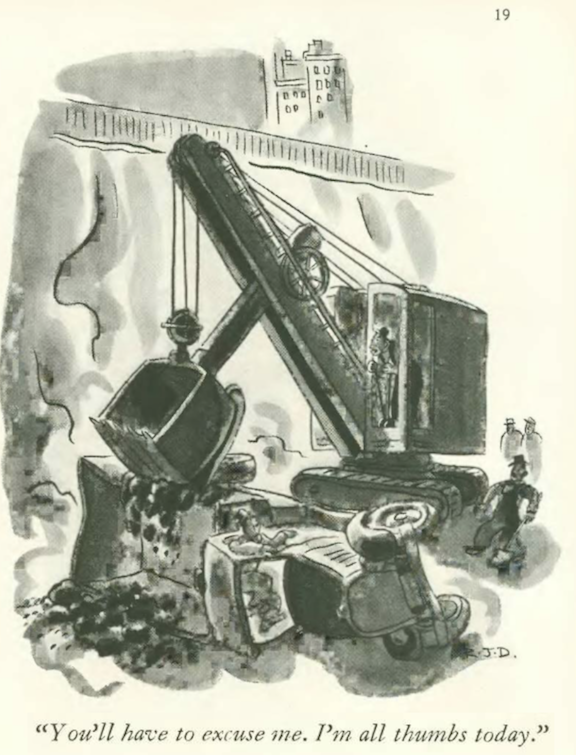
…we kick off the cartoons with Robert Day, who took to the roads with a touch of modernism…

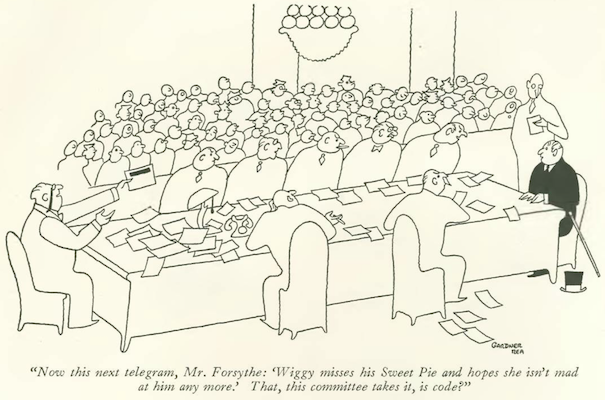
Gardner Rea topped off the calendar section with a nod to fireworks safety…

…known more for his New Yorker covers, Constantin Alajalov reflected on a visit to the Met…

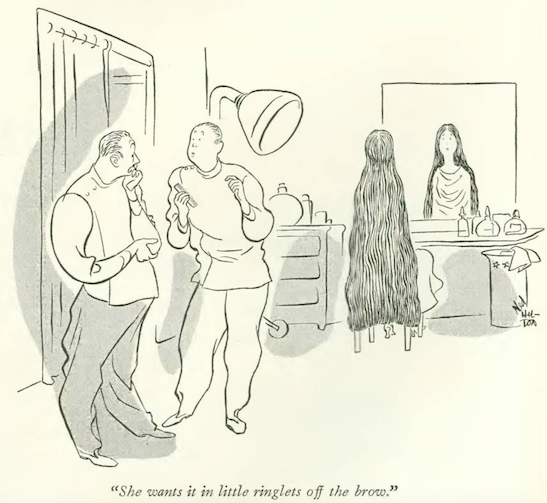
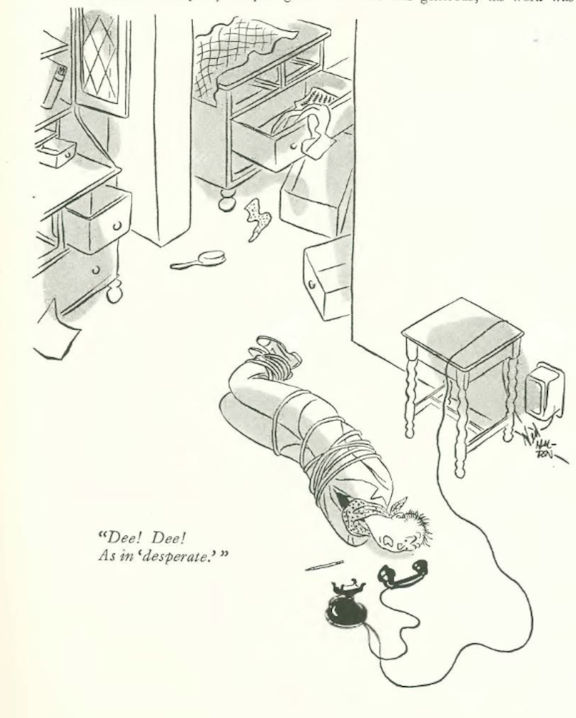
Ned Hilton was tied up on the phone…

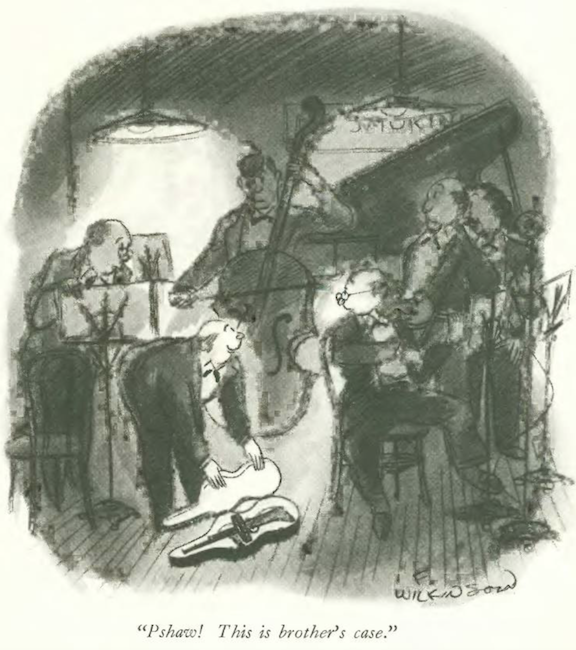
Fritz Wilkinson had one musician ready to play a different tune…

James Thurber was up in arms…

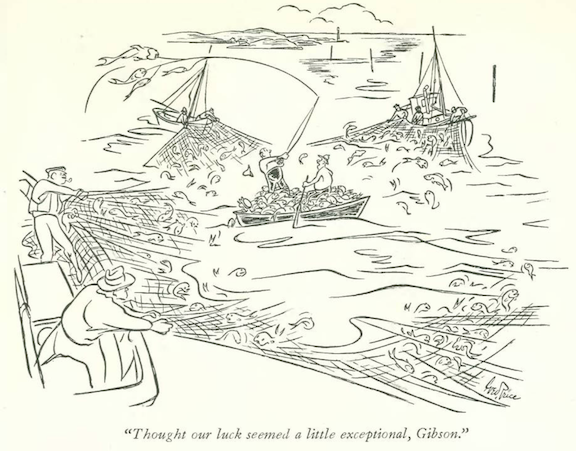
George Price found something fishy with two fishermen…

…and Price again, with the latest advances in personal hygiene…

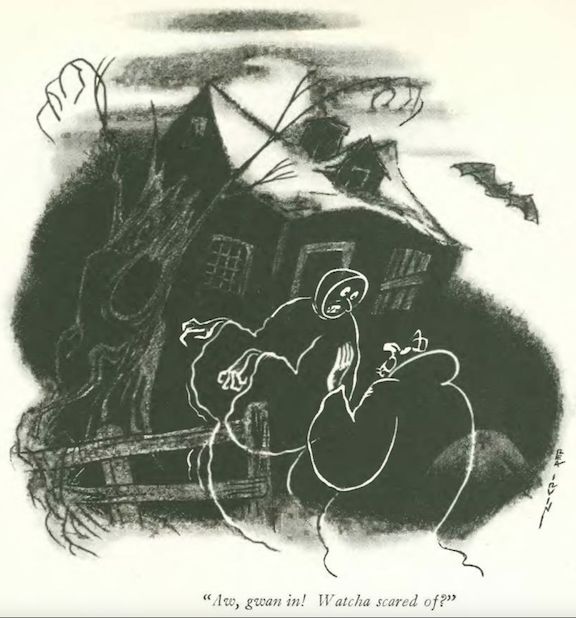
Rea Irvin gave us an early taste of Halloween…

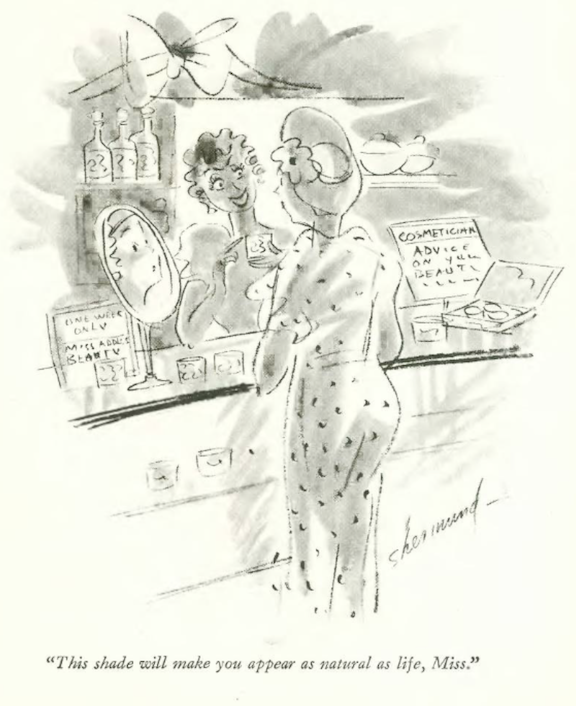
Barbara Shermund found some frank advice at the beauty counter…

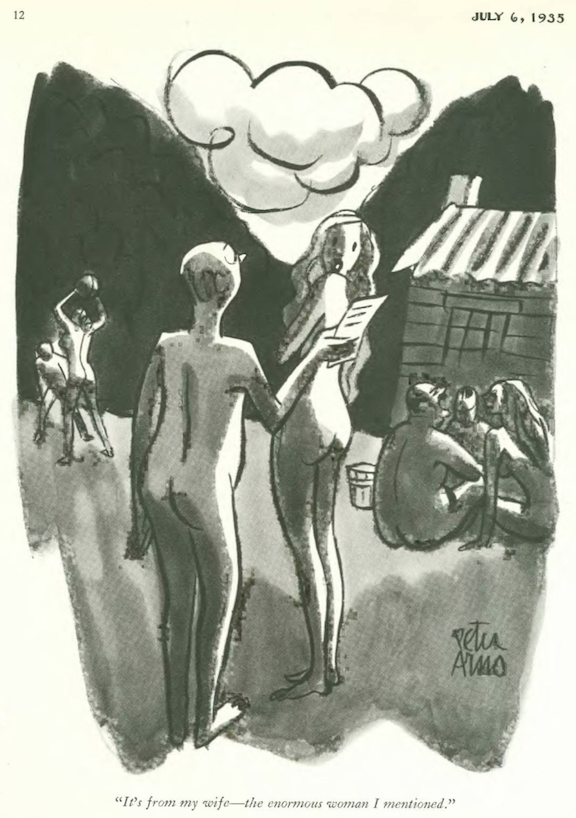
…and we close with Peter Arno, in his element…

Next Time: A German Problem…

Reel News

Above: Newsreel cameramen perch on boards resting on a windowsill to get a birds-eye view of a passing parade, circa 1930. (Public Domain Image)

We marvel at, and sometimes decry, today’s instantaneous news coverage of wars, disasters and the like, but ninety years ago newsreel crews did a remarkable job of filming and delivering the latest news to thousands of theaters across the U.S. and around the world.

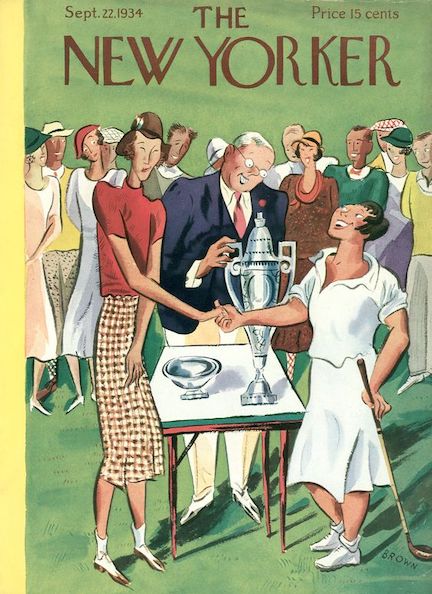
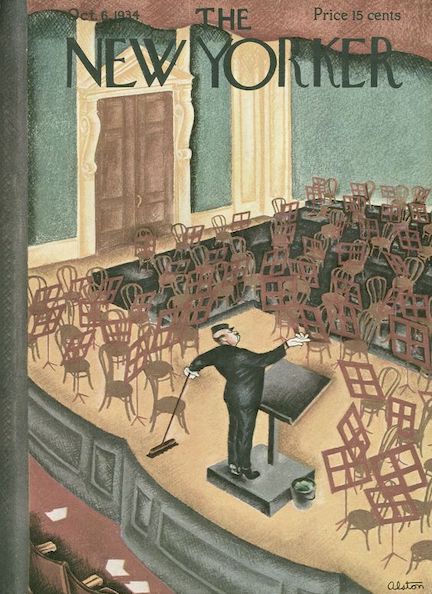
Sept. 22, 1934 cover by Harry Brown.

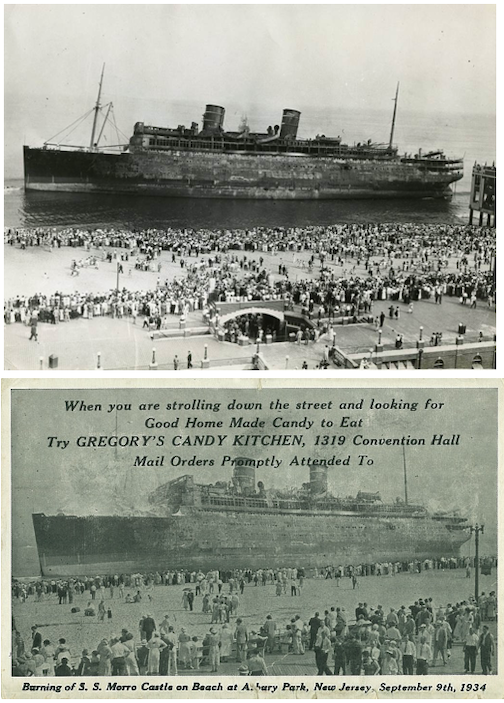
In his “A Reporter at Large” column, Morris Markey penned a lengthy account of Fox Movietone’s coverage of the SS Morro Castle disaster. En route from Havana to New York City on Sept. 8, 1934, the luxury liner caught fire near the New Jersey coast. Due to the ship’s design and the ineptitude of the crew, the blaze claimed 137 lives. Markey described how newsreel crews—with their bulky cameras and sound equipment—went into action, including a cameraman who “goaded” a pilot into taking him aloft through vicious weather conditions.

GUTS AND INGENUITY took newsreel reporters to places high and low. Clockwise, from top left, title card from a 1935 Fox Movietone newsreel; Jack Lieb goes aloft to get capture newsreel footage in an undated photo—Lieb was a cameraman for Hearst’s News of the Day; a 1930s Fox Movietone camera; the SS Morro Castle ablaze off the New Jersey Coast on Sept. 8, 1934. (Wikipedia/Lieb photo Courtesy of Bette Marshall via unwritten-record.blogs.archives.gov)

Somehow the cameraman aboard the airplane (which was forced down by weather three times) was able to get his footage to the Movietone office by noon, less than seven hours after the office first received word of the disaster. By three o’clock, five thousand feet of film from all sources was being developed.

UP NORTH AND DOWN UNDER…Movietone news had crews stationed around the world, including field staff in Sydney (top, from 1938), and in Toronto, circa 1930. (Nat’l Library of Australia/City of Toronto Archives)

Markey concluded with this observation about the “rugged” and persistent newsreel cameramen:

In the aftermath of the Morro Castle disaster, a scene of enormous tragedy was turned into a tourist attraction…

GAWKERS AND HAWKERS…The charred hulk of the SS Morro Castle came to rest on the shore near the Asbury Park boardwalk, which became a popular spot for souvenir salesmen and photo-ops. Tourists flocked to the site from September 1934 to March 1935, when the ship was finally towed away. Note the postcard (bottom) advertising homemade candy over an image of the charred ship. (ripleys.com/side-o-lamb.com)

Fox Movietone News produced sound newsreels from 1928 to 1963, and in the UK as British Movietone News…here is Movietone footage of the Morro Castle disaster, as presented by British Movietone in 1934:

 * * *

Up In The Old Hotels

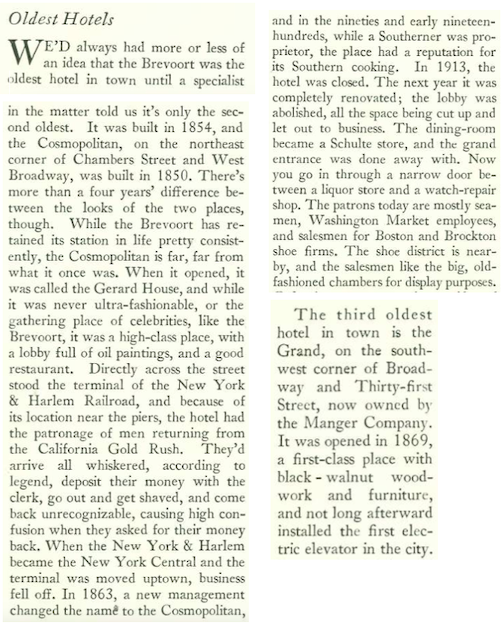
Last week “The Talk of the Town” looked in on one of Manhattan’s oldest saloons, McSorley’s. For the Sept. 22 “Talk” the subject was “Oldest Hotels,” two of which, The Cosmopolitan and The Grand, remarkably survive to this day.

HANGING IN THERE…The 1845 Brevoort House hotel at 15 Fifth Avenue (top left) was torn down in 1952, however the 1868 Grand Hotel (right) at 1232–1238 Broadway and the 1845 Cosmopolitan Hotel (below, left) at Chambers Street and West Broadway still stand today. (Museum of the City of New York / Chester Higgins Jr. for The New York Times)

 * * *

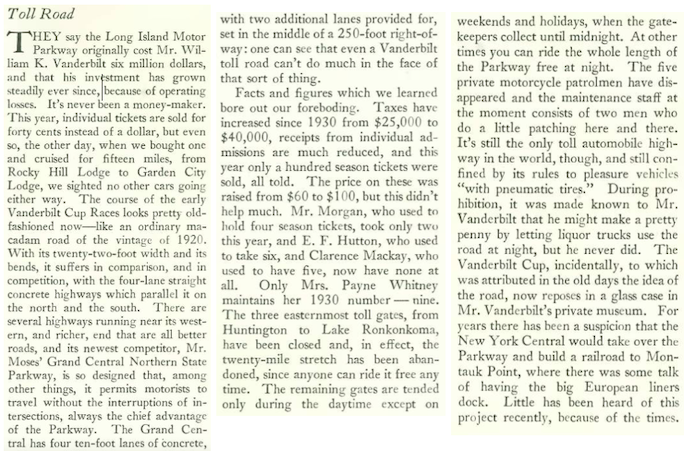
The Six-Million Dollar Road

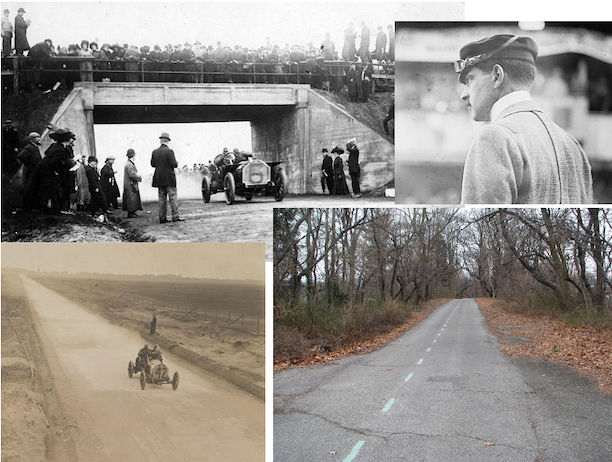
The first roadway designed exclusively for automobile use was likely the Long Island Motor Parkway, privately built by William Kissam Vanderbilt II because he wanted a road suitable for auto racing. He established the Vanderbilt Cup races on local roads in 1904, but after two spectators were killed and many others injured, in 1908 he began building what would become a 45-mile (72 km) toll road from Queens to Lake Ronkonkoma. After two mechanics were killed in a 1910 race, the New York Legislature banned racing on the road, which the state took over in 1938.

ROAD WARRIOR…William Kissam Vanderbilt II (top right) staged his Vanderbilt Cup Races on his private road until a fatal accident put a stop to the fun in 1910; At bottom right, a surviving section of the road today. Most of the road in Queens is a bicycle trail, and other segments still serve as parts of a county road. (nyheritage.org/Wikipedia-Steve Nowotarski/ny1.com)

 * * *

From Our Advertisers

I have nothing against accordion music, despite years of exposure to Lawrence Welk during my youth, but I find it hard to believe that a Park Avenue socialite (identified here as Mrs. René Du Champ Bellinger) would contemplate tormenting her posh friends with a Hohner squeezebox…

Esquire magazine was barely a year old when it posted this ad in The New Yorker…its appeal to men (and their anxieties) keeps it going today…

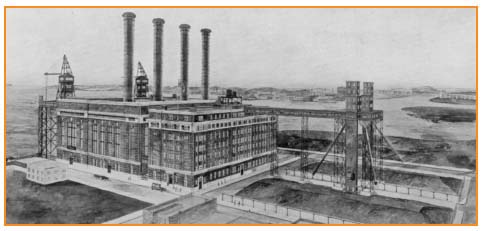
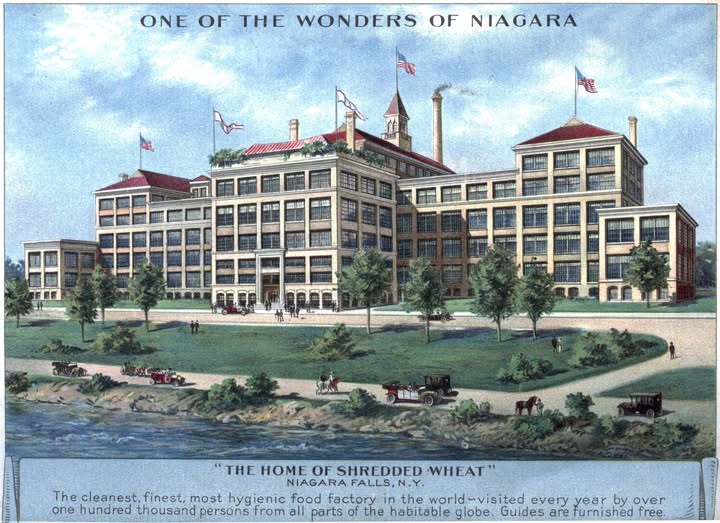
…it’s interesting how companies in the 19th century and on through the 1950s featured idealized, bird’s eye images of their factories in advertising, doubtless believing that consumers associated size (and smokestacks) with prosperity, and therefore a quality product…

…White Rock, however, has used the image of the Greek goddess Psyche for more than a century to promote the purity of its spring water…

…purity was also the main point of this ad from Daggett & Ramsdell, who hawked their wares to the Park Avenue set…after more than 130 years D&G is still in the beauty business…

…this next ad is almost unbelievable…single rooms starting at $5, double rooms $7, and a whole suite for $10…at the Plaza…okay, $10 is roughly equivalent to $225 today, but half of that could get you a single…

…and yet another unlikely claim from R.J. Reynolds regarding the energizing qualities of their Camel cigarettes…it seems the last thing you would need while climbing a mountain is smoke in your already over-taxed lungs…

…however, let’s give proper due to Georgia Engelhard (1906–1986), who scandalized the mountaineering world by ditching the Victorian climbing skirt in favor of a pair of climbing pants. Engelhard was the first female climber to ascend many of the peaks in the Rockies…

Georgia Engelhard in a 1922 photo attributed to her friend Alfred Stieglitz. (nga.gov)

…it seemed like nearly everyone smoked in the 1930s, even in ads that had nothing to do with tobacco companies (detail)…

…on to our cartoons, we begin with Richard Decker and some retail competition…

George Price drew up a curiosity even Robert Ripley couldn’t believe…

Robert Day examined advances in evolutionary science…

E. Simms Campbell offered up this abbreviated love story…

Peter Arno gave us a director with a god complex…

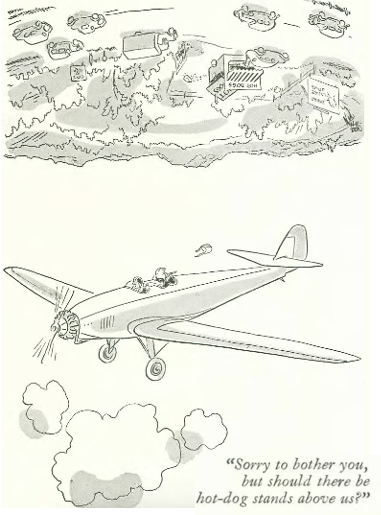
…and one from Ned Hilton, and a new perspective on flying…

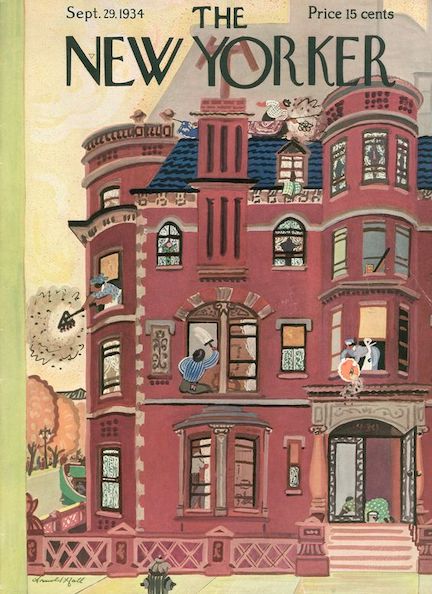
…on to Sept. 29, 1934, with a cover by Arnold Hall, who produced at least twelve covers for The New Yorker between 1933 and 1939…

Sept. 29, 1934 cover by Arnold Hall.

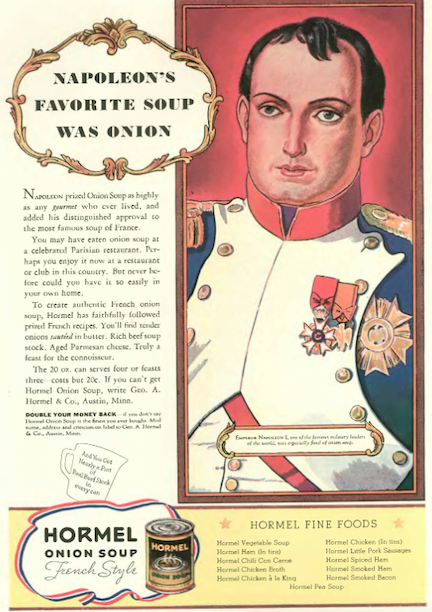
…and we go straight to ads, beginning with this alarming image that greeted readers on the inside cover…why would this prompt anyone to purchase a can of onion soup?…

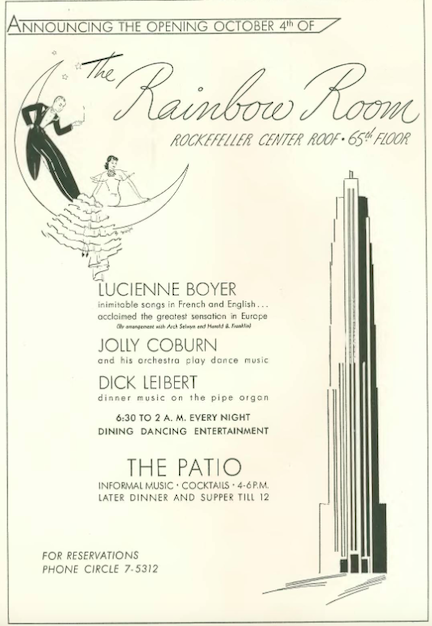
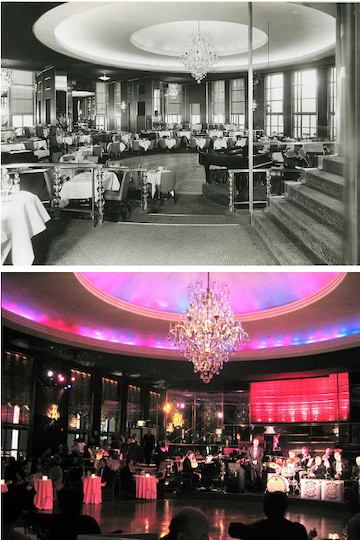
…the Rainbow Room on the 65th floor of Rockefeller Center opened in 1934, and it quickly became a focal point for the city’s elite…

Above, the dining room at the Rainbow Room, 1934, and below, in 2004. (Library of Congress/Wikipedia)

…Lucky Strike continued its series of ads featuring fashionable women looking smart with their product…

…our cartoons include this spot illustration by Otto Soglow, who did spots for The New Yorker for many years…although Soglow’s Little King moved to the Hearst newspapers, he continued to contribute cartoons to The New Yorker until 1974…

George Price continued to explore life as a levitating man…

…the enforcement of the Hays Code had this teen in a “fix,” per James Thurber

Gluyas Williams continued his exploration of various crises, this time in the music world…

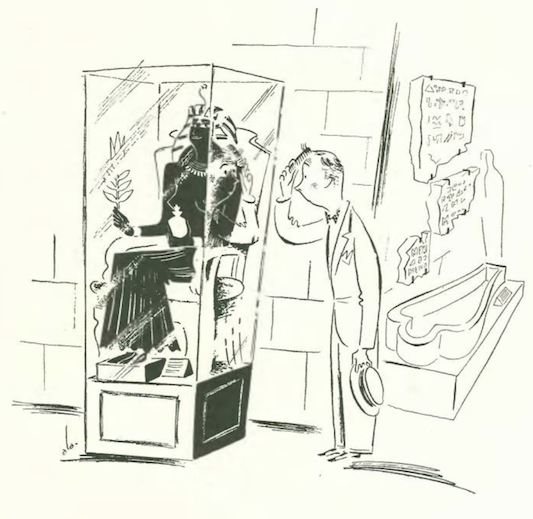
Alan Dunn gave us a glimpse of civilization via the pharaonic sculptures that were emerging on the face of Mt. Rushmore…

…and we close with the wonderful wit of Barbara Shermund

Next Time: Bojangles…

His Five Cent’s Worth

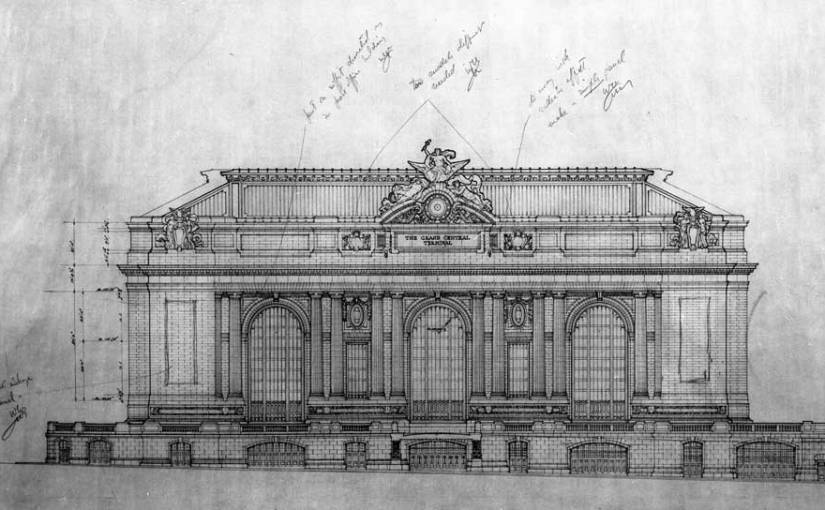
Above: Final Design of Grand Central Terminal, ca. 1910. (New York Transit Museum)

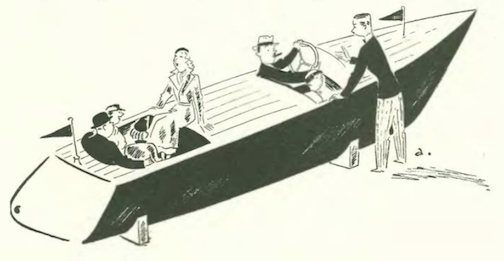
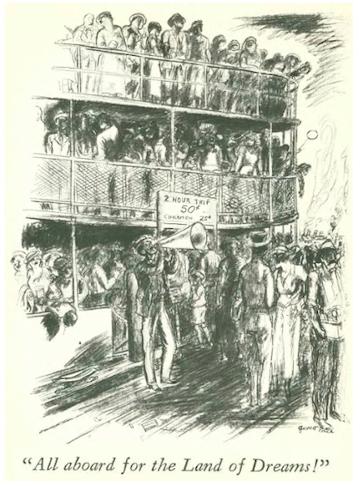
The heat wave of 1934 spread misery from the Midwest to the East Coast. The temperature in New York City hit 101 degrees F (38.3 C) on June 29, and July recorded at least ten days of temps in the mid- to upper 90s. It must have been miserable in the days before air-conditioning, and since no adult would dare be seen in public wearing shorts and a t-shirt, an outing on a crowded tour boat, as illustrated below by William Cotton, must have been hellish.

July 21, 1934 cover by William Cotton.

…putting a fine point on it, recall this wryly captioned cartoon from the June 30 issue by Garrett Price

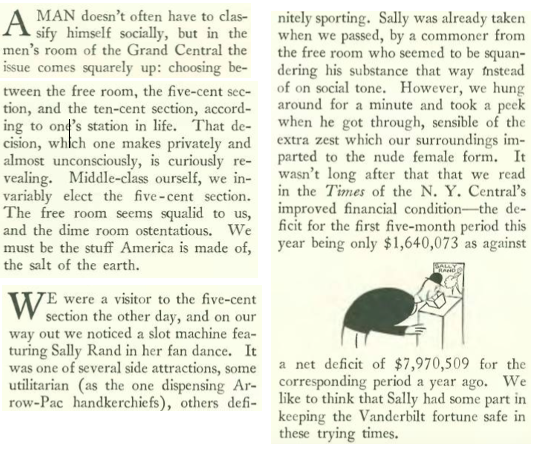
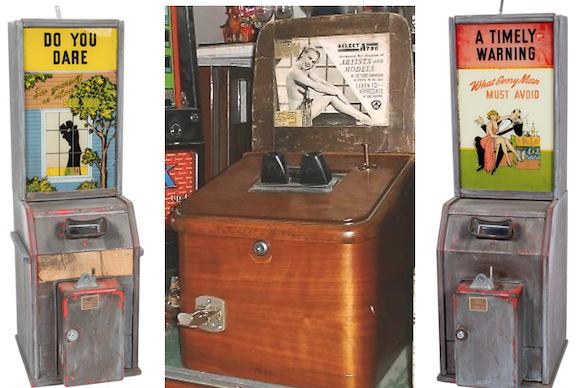
…but let us move ahead to the July 28 issue, where E.B. White was hopefully keeping his cool in the men’s waiting room at Grand Central Station, where he plunked down a nickel to cool his heels in the “middle class” section, where he observed side attractions including a vending machine that dispensed handkerchiefs and a coin-operated peep show featuring burlesque star Sally Rand.

NO MASHERS ALLOWED…Separate men’s and ladies’ rooms were available in three classes at Grand Central Station—free, five cents and ten cents. Top, the Ladies’ room, Grand Central Terminal (Central Lines), and below, a men’s room at the station. A nickel back then was worth about a dollar today. (Library of Congress)
NICKEL AND DIMED…Machines similar to these could be found in some men’s waiting rooms at train stations in the 1930s. (pinballhistory.com/comics.ha.com)

…White referred to a peep show that featured famed fan dancer Sally Rand

DOING HER DEEP KNEE BENDS…Sally Rand in the 1930s. (www.vintag.es)

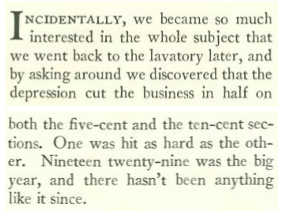
White also commented on the growing number of travelers, still pinched by the Depression, opting for the free section:

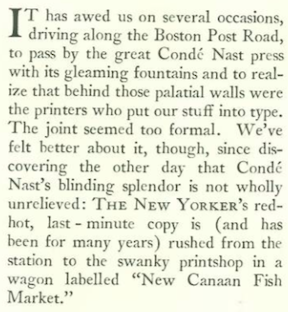
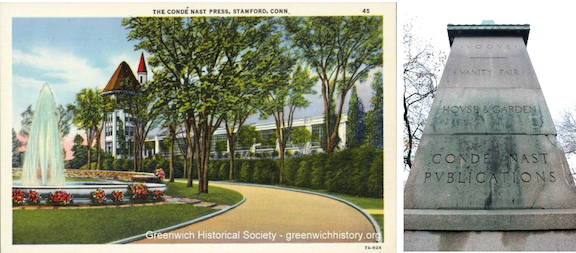
We settle in with the June 21 issue (which leads this post) with White once again, this time enjoying a drive to Stamford, Conn., where he admired the “splendor” of the Condé Nast printing plant (apparently the plant also printed The New Yorker, although the magazine itself would not be acquired by Condé Nast’s parent company, Advance Publications, until 1985).

ONLY A MEMORY…Postcard image of the Condé Nast printing plant; at left, a relic of the long-gone plant, one of two pillars that flanked the road to the plant. (Greenwich Historical Society/greenwichtime.com)

 * * *

Disney’s Other Mouse

Film critic John Mosher was a fan of Disney’s “Silly Symphony” cartoon shorts, which were produced between 1929 and 1939. Animation, and especially color animation, was in its infancy, so these doubtless had an uplifting effect on many moviegoers.

DON’T CALL ME TINKERBELL…The Butterfly Fairy brought some Disney magic to 1934’s The Flying Mouse. (disney.fandom.com)

 * * *

The Great McGonigle

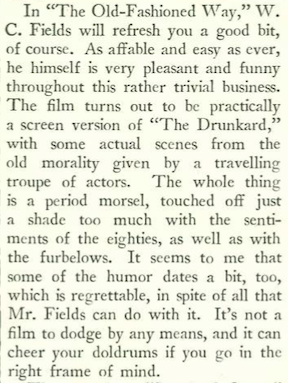
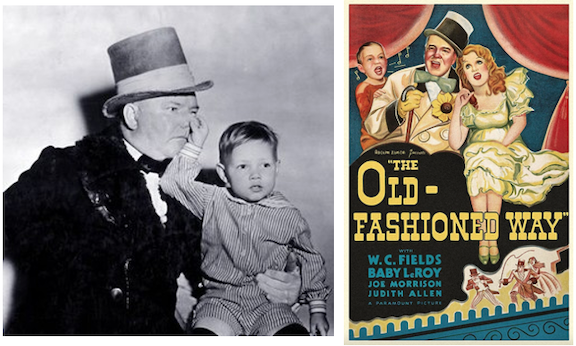
W.C. Fields appeared in more than a dozen silent films before making his first talkie, 1930’s The Golf Specialist, and it was in sound films that Fields was able to truly express his vaudevillian wit. It was also in the sound era that Fields teamed up with Baby LeRoy for three films (in 1933 and 1934), including The Old Fashioned Way, in which Fields portrayed “The Great McGonigle,” leader of a traveling (and perpetually underfunded) theater troupe who was always a step ahead of police and creditors. Critic John Mosher found the film’s riff on an old morality play, The Drunkard, to be a bit dated, but overall thought it a cheerful diversion.

HONK…Baby LeRoy, aka Ronald Le Roy Overacker (1932–2001), was just 16 months old when he became the youngest person ever put under term contract by a major studio. He is best known for his appearances in three W. C. Fields films: Tillie and Gus (1933), The Old Fashioned Way (1934) and It’s a Gift (1934). (Rotten Tomatoes/IMDB)

 * * *

From Our Advertisers

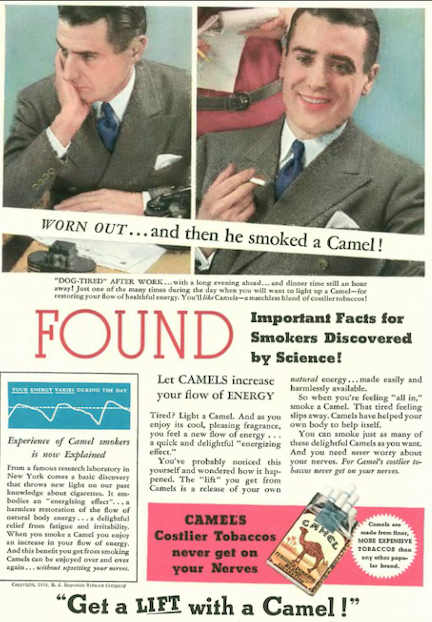
We begin with scientific proof (from a “famous research laboratory in New York”) that Camel cigarettes increased one’s flow of energy…

…if that crackpot claim doesn’t get you, here’s one that recommended downing a PBR before a big meeting, a sure remedy for that “listless, tired-out feeling”…

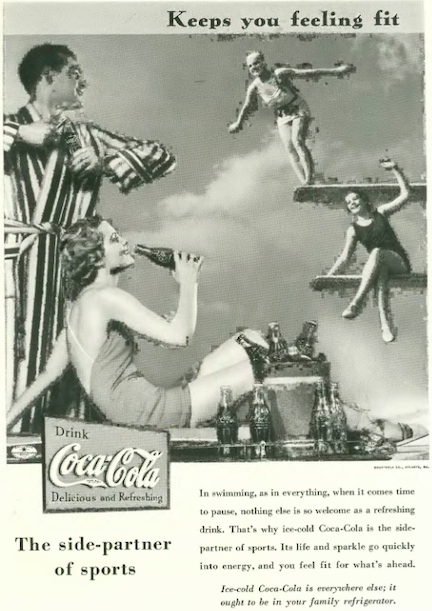
…of course we all know that a few sugary Cokes will get you going…back then they were taking it in six- and ten-ounce bottles, not 30- to 50-ounce Big Gulps…

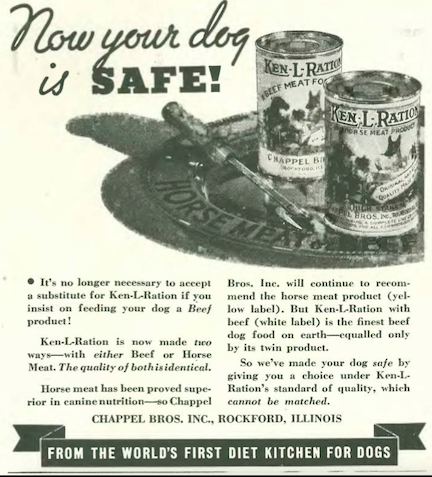
…it’s not every day you see a dog food ad in The New Yorker…in the 1930s there was no secret to where ol’ Sparky ended up…

…popular were these Rockwellian ads that equated various products with happy and wholesome (and safe) living, in this case a massive “Dual-Balloon” tire that dominated this tableau featuring a stylish mommy and her little boy slumming with an old sea salt…

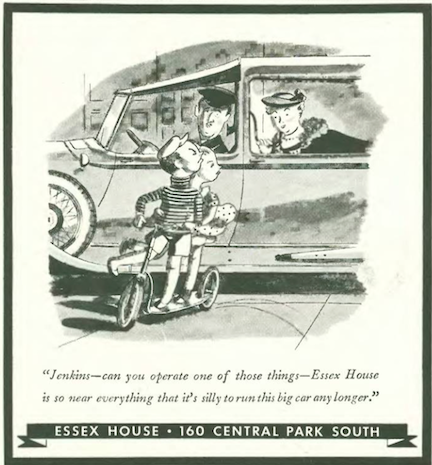
…the folks at Essex House hired an illustrator who did his or her best to channel Helen Hokinson and William Steig for this New Yorker ad…as we have seen before, Essex House ads walked a fine line between thrift and snob appeal…

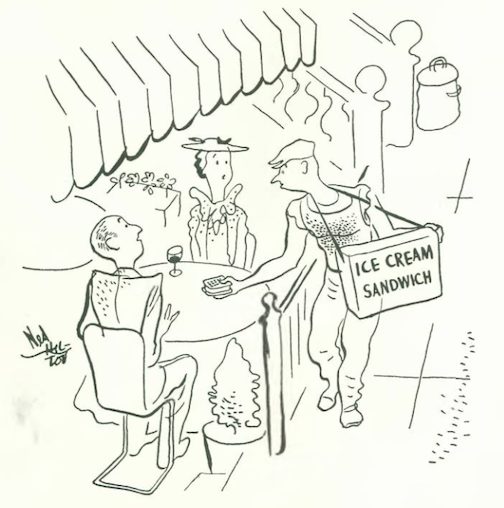
…on to our cartoons, beginning with Ned Hilton, whose work appeared in The New Yorker from 1934 to 1957…

Mary Petty recorded some sweet nothings by the seaside…

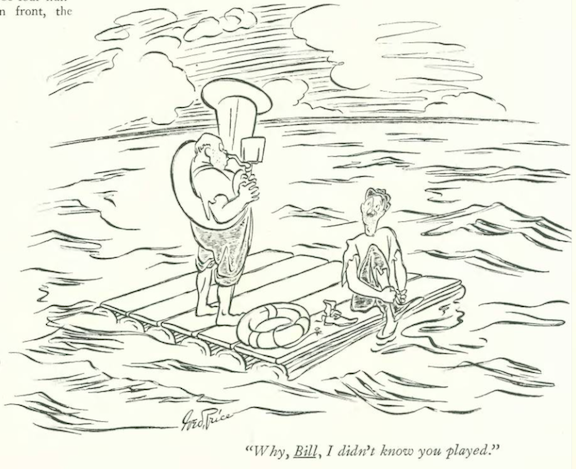
George Price drifted along with two men and tuba…

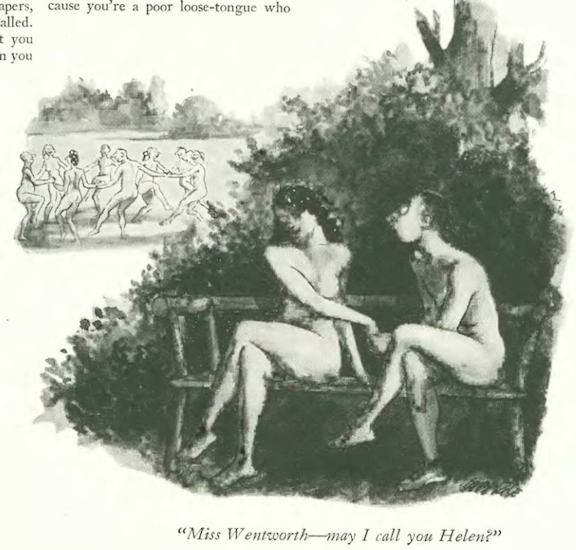
Carl Rose revealed a modest side to life at a nudist colony…

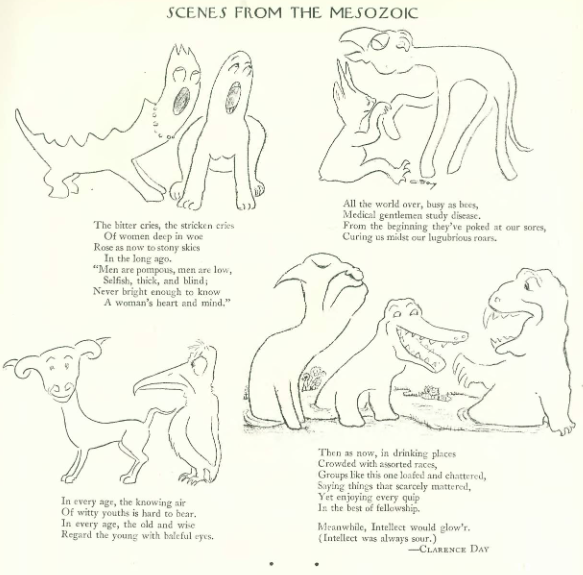
…we know Clarence Day for his Life With Father series, but on occasion he also contributed illustrated poems such as this one from the July 21 issue…

…on to July 28…

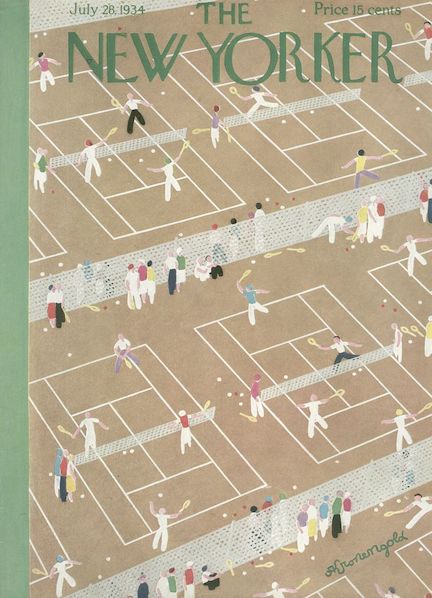
July 28, 1934 cover by Adolph K. Kronengold.

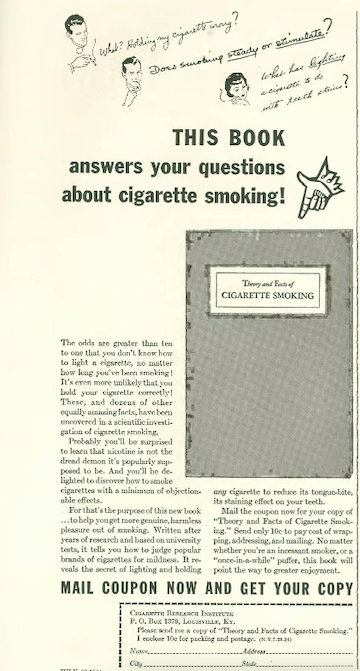
…where we encounter more “scientific research” that encouraged folks to smoke…This ad was placed on the very last page of the July 28 issue by the Cigarette Research Institute, based in Louisville, Kentucky…

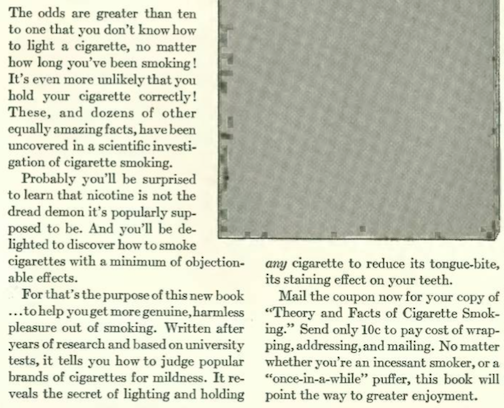
…the booklet was filled with “amazing facts” uncovered in a “scientific investigation,” facts did not address the health effects of smoking, but rather such important topics as how to hold a cigarette the right way and how to reduce staining on your teeth…it also helpfully debunked the notion that nicotine was a “dread demon”…

…take for example this woman smoking a Lucky…now she knew how to hold a cigarette!…

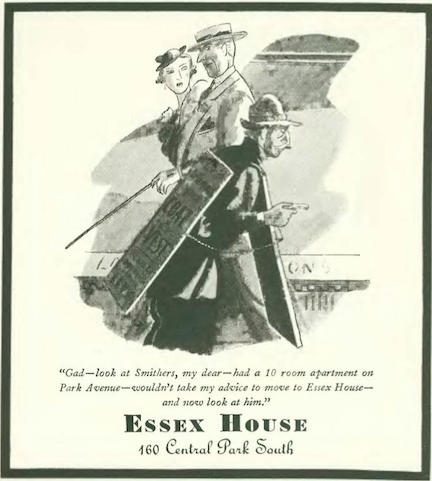
…the folks at Essex House were back, aggressively playing the class/caste card…apparently if you lived there you were entitled to kick your old friends to the curb…

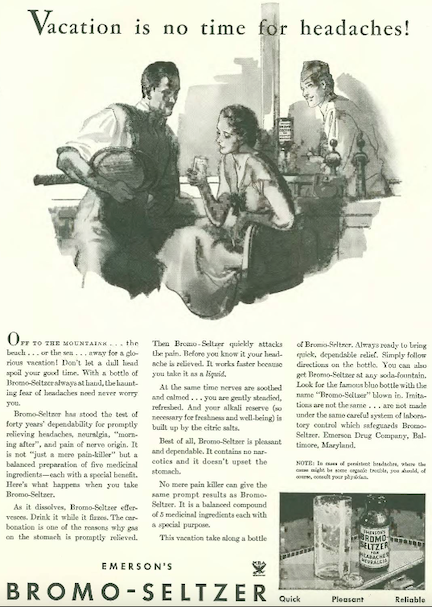
…the antacid and pain reliever Bromo-Seltzer was ubiquitous in 1930s medicine cabinets, but after the recipe was changed in the 1970s (all Bromides were withdrawn from the U.S. market in 1975) the brand slowly fizzled away…

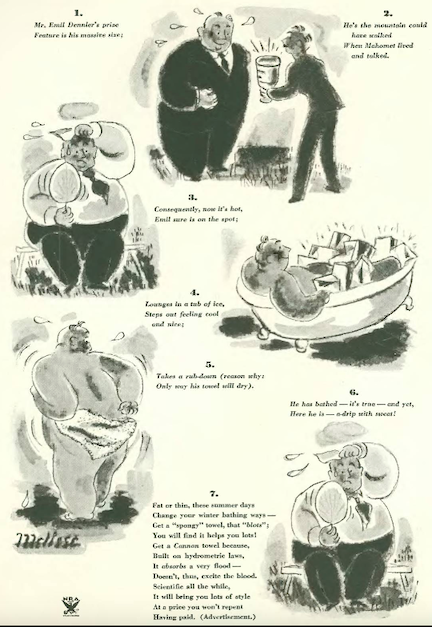
Mildred Oppenheim Melisse was a popular illustrator of ads for department stores and various household goods, including Cannon towels, here guaranteed to absorb even this man’s sweaty “flood”…

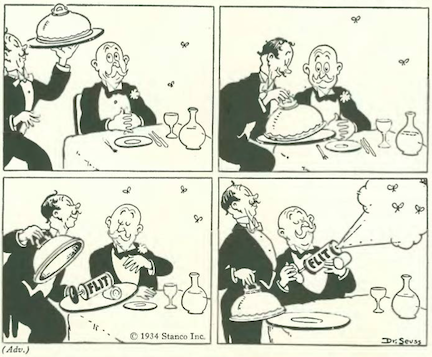
Dr. Seuss back again for Flit, once again having no issues mixing insecticide with food preparation…

Rea Irvin kicks off the cartoons with his Double Breasted Dowager…

Helen Hokinson found some misplaced pity at a garden party…

Garrett Price offered some unsolicited advice…

Reginald Marsh filled two pages with a scene from Central Park…

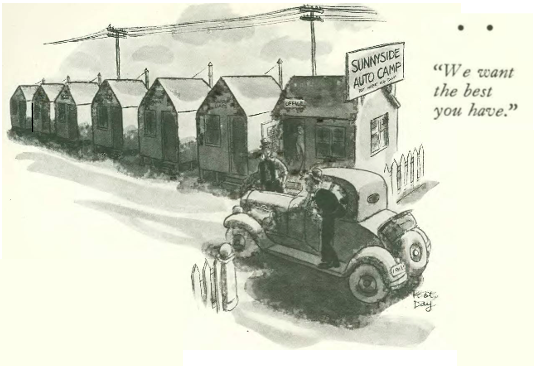
Robert Day looked for a unique experience at an auto camp…

…and we close with Barbara Shermund, and some alarming news on the domestic front…

Next Time: Men of Mystery…