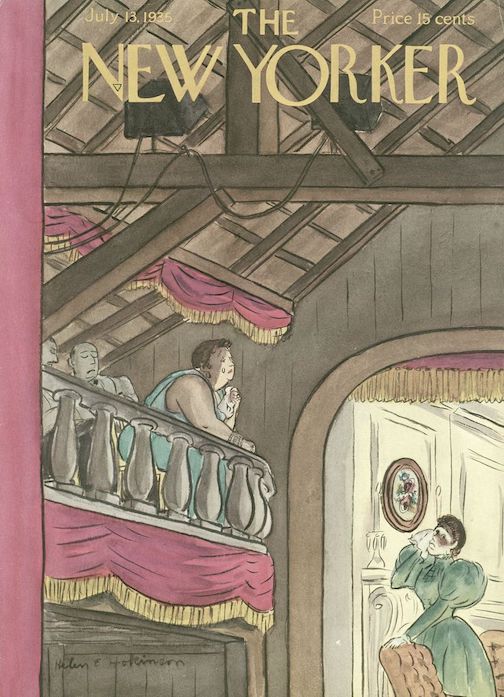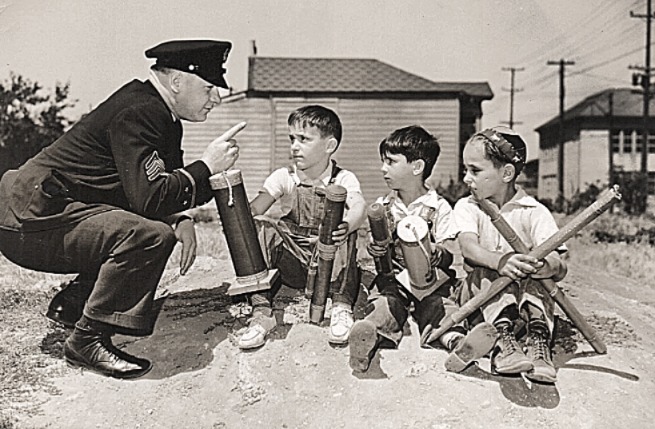
We mark the July 4 weekend with a lighter edition of A New Yorker State of Mind…
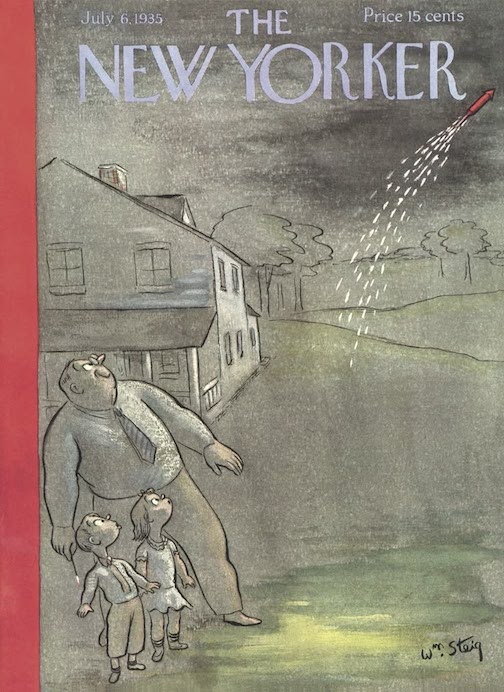
…and see what many New Yorkers were doing on that holiday ninety years ago…

Let’s look at some of the advertisements from the July 6 issue, beginning with this alarming image that greeted readers on the inside front cover…
…Goodyear continued its series of safety-minded advertisements (this one on the inside back cover) that played on the fears of parents with driving-age children…strange how no one then considered other hazards such as the hard steel dash, or worse, the steering column that often impaled drivers…also, is that how they taught folks to hold a steering wheel in the 1930s?…

…no stylish models, debutantes or famous athletes for the makers of Chesterfields, at least not in this back page ad which equated their cigarette papers (and by association, the cigarettes themselves) with wholesome milk and pure mountain water…

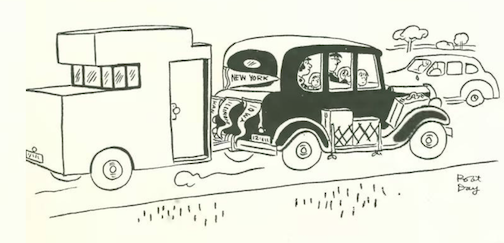
…we kick off the cartoons with Robert Day, who took to the roads with a touch of modernism…
…Gardner Rea topped off the calendar section with a nod to fireworks safety…

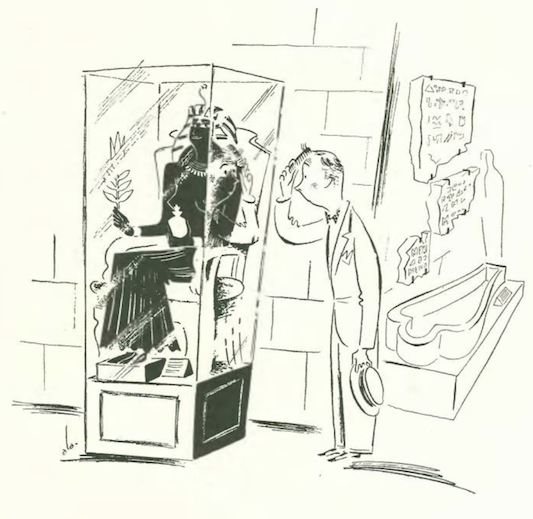
…known more for his New Yorker covers, Constantin Alajalov reflected on a visit to the Met…
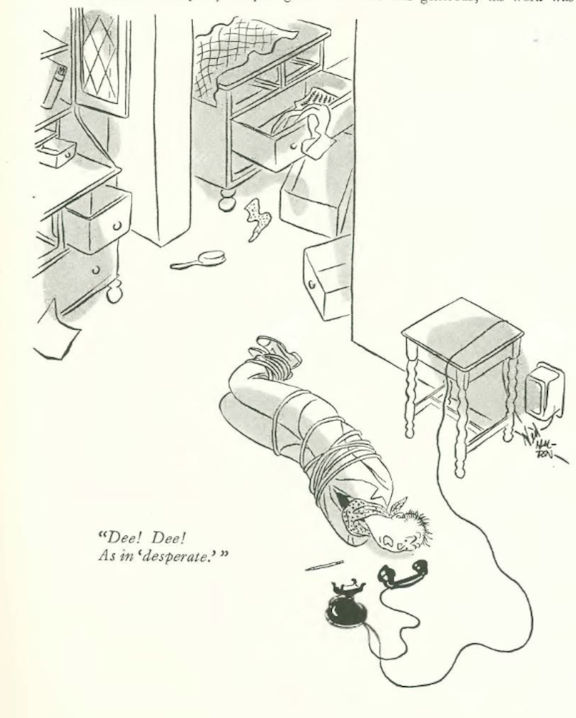
…Ned Hilton was tied up on the phone…
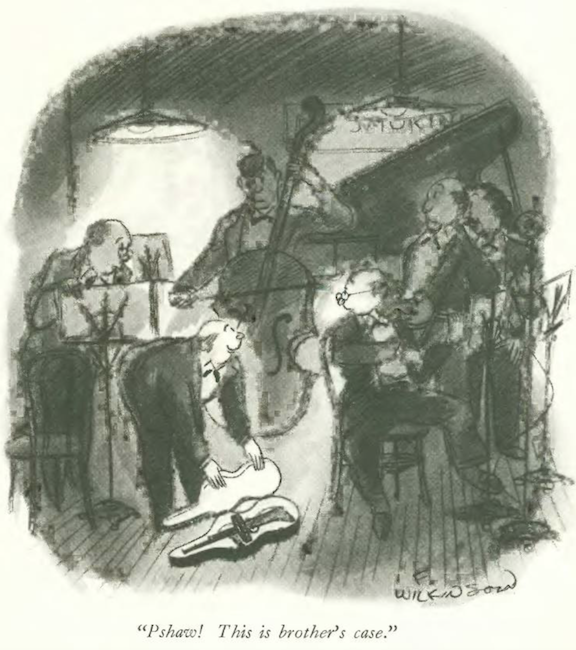
…Fritz Wilkinson had one musician ready to play a different tune…
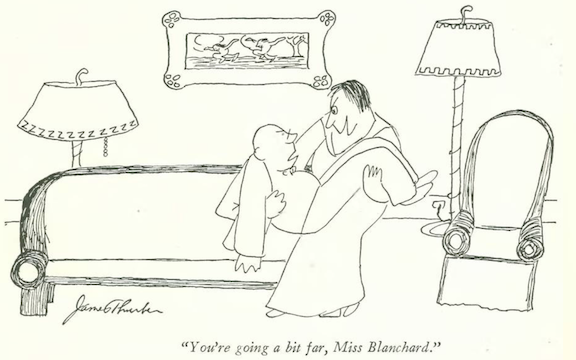
…James Thurber was up in arms…
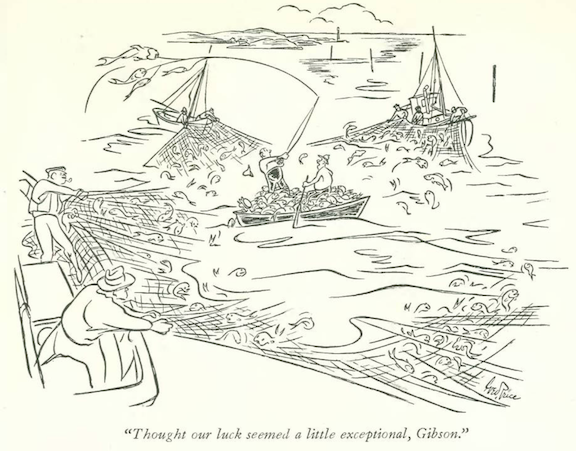
…George Price found something fishy with two fishermen…
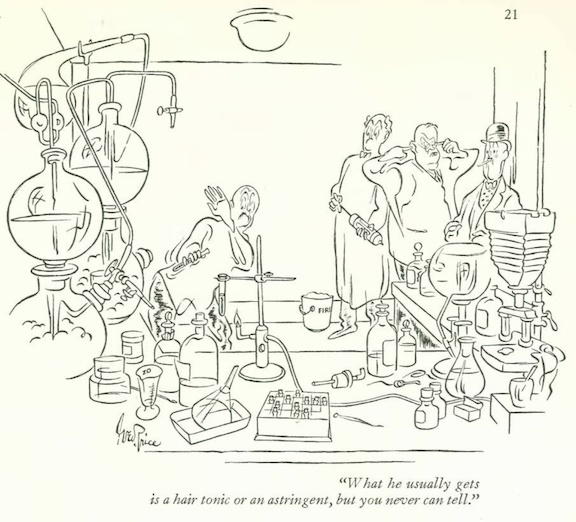
…and Price again, with the latest advances in personal hygiene…
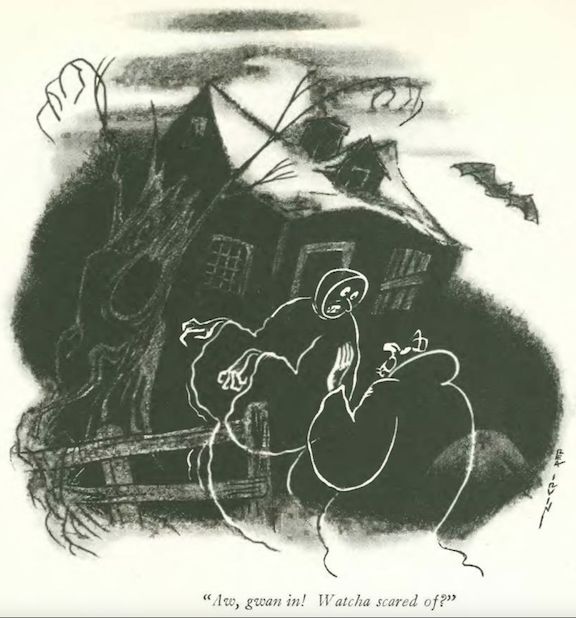
…Rea Irvin gave us an early taste of Halloween…
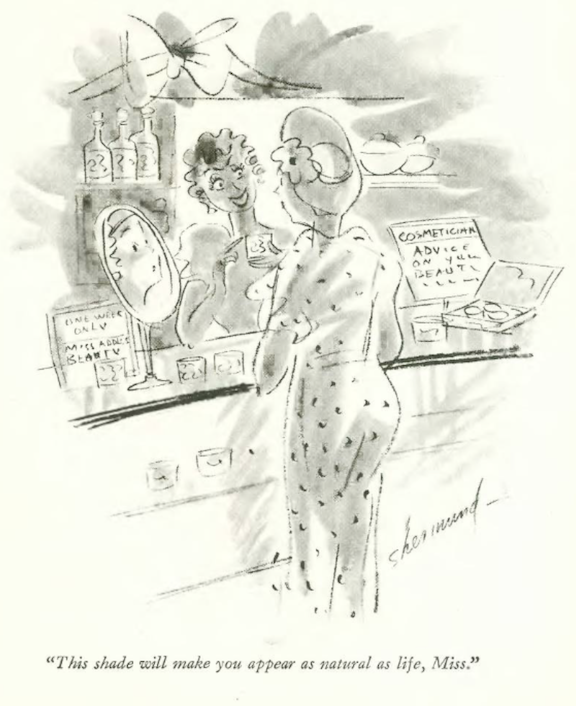
…Barbara Shermund found some frank advice at the beauty counter…
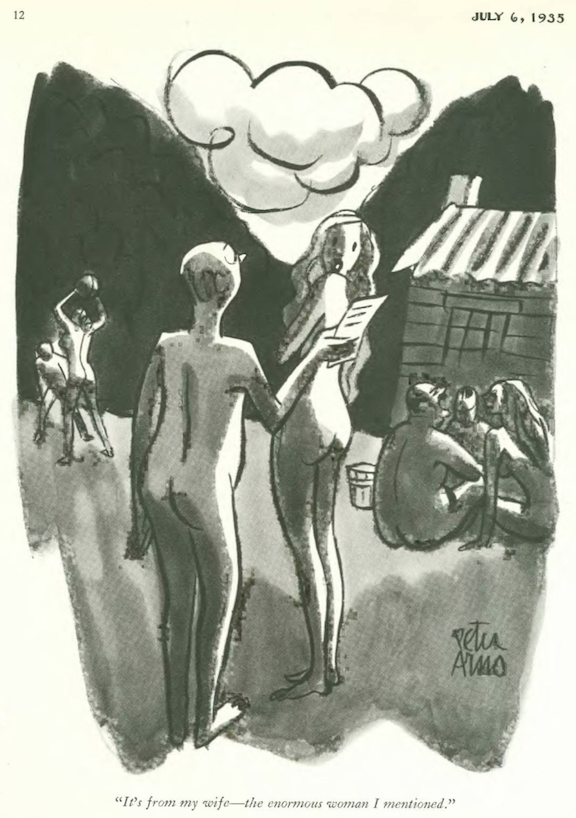
…and we close with Peter Arno, in his element…
Next Time: A German Problem…