A Tadpole on Wheels

Above: British architect Norman Foster's 2010 recreation of R. Buckminster Fuller's 1933 Dymaxion car. (Wikipedia)

Despite the limitations of 1930s technology, a few architects and designers were hell-bent on building a streamlined future that until then was mostly the stuff of movies and science fiction magazines.

May 5, 1934 cover by Rea Irvin.

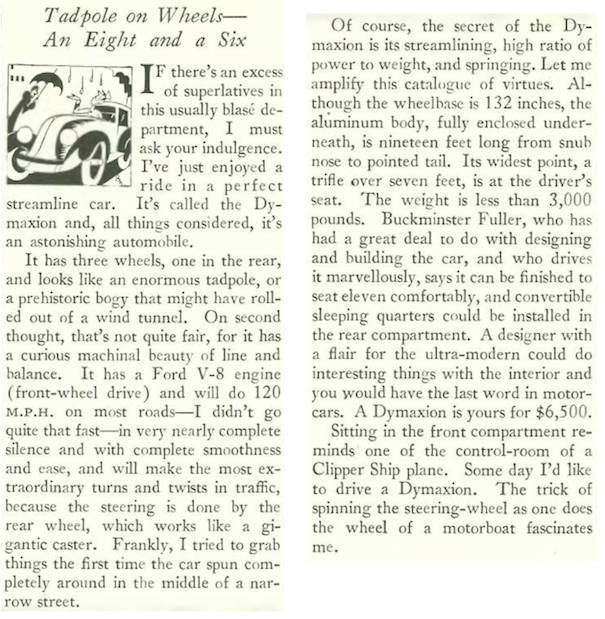
One of them was R. Buckminster Fuller (1895–1983), architect, designer, and futurist probably best known today as the inventor of the geodesic dome (think Disney’s Epcot Center). In the 1930s Fuller was all about a concept he called Dymaxion. Derived from the words dynamic, maximum, and tension, when applied to architecture and design it would supposedly deliver maximum gain from minimal energy input. The writer of the New Yorker article (pseud. “Speed”) was fascinated by the Dymaxion’s motorboat-type steering, no coincidence since Fuller intended to adapt his futuristic car for use on and under the water, as well as in the air.

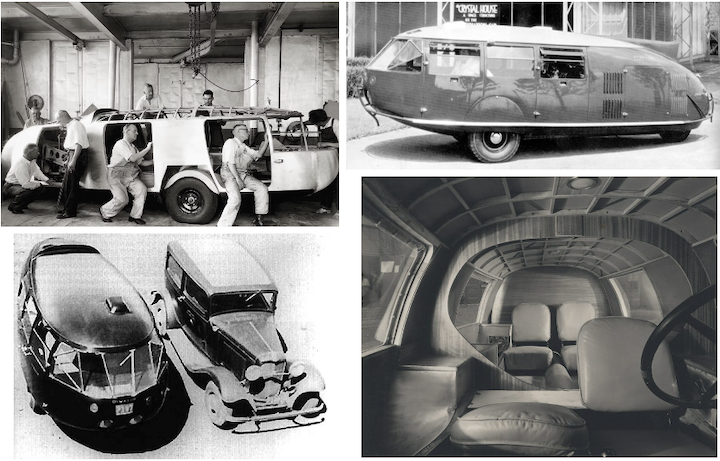
THE SHAPE OF THINGS TO COME…Clockwise, from top left: Workers at a Bridgeport, Conn., plant creating the first of three Dymaxion cars; the Dymaxion at Chicago’s 1933 Century of Progress exposition—the car was involved in a fatal accident at the fair; interior view of the Dymaxion; using the same engine and transmission as a Ford sedan (pictured), the Dymaxion offered three times the interior volume with half the fuel consumption and a 50 percent increase in top speed. (Buckminster Fuller Institute/Poet Architecture)
THINKING WITHOUT THE BOX…In 1927 R. Buckminster Fuller (pictured) developed a Dymaxion House, a “Dwelling Machine” that would be the last word in self-sufficiency. Although the aluminum house was intended to be mass-produced, flat-packaged and shipped throughout the world, the design never made it to market (however its ideas influenced other architects); at right, a Fuller geodesic dome at Disney’s Epcot Center in Florida. (archdaily.com/Wikipedia)

The 1933 Century of Progress exposition in Chicago was supposed to be a major showcase for Fuller, but when professional driver Francis Turner was killed while demonstrating the first prototype of the Dymaxion, the car’s prospects dimmed considerably. According to an article by Stephanie d’Arc Taylor (cnn.com Oct. 30, 2019), during the demonstration a local politician tried to drive his own car close to the Dymaxion—to get a better look—and ended up crashing into the unwieldy prototype, which rolled over, killing the driver and injuring its passengers. “The politician’s car was removed from the fracas before police arrived, so the Dymaxion was blamed for the accident,” writes Taylor, who notes that the rear wheel–powered car, though unconventional, was not necessarily the problem. However, “the thing that made the Fuller death-mobile singularly deadly was the fact it was also steered by the rear wheel, making it hard to control and prone to all kinds of terrifying issues.”

That history did not stop architect Norman Foster from building a replica of the Dymaxion in 2010. Foster worked with Fuller from 1971 to 1983, and considers Fuller a design hero.

GIVING IT ANOTHER GO…Architect Norman Foster with his 2010 recreation of the Dymaxion. To build a new Dymaxion, Foster sent a restorer to the National Automobile Museum in Reno, Nevada (home of the only surviving Dymaxion, Car No. 2), and after thousands of photos and measurements Foster had the car recreated using only materials available in 1933: Foster’s Dymaxion consists of an ash frame sheathed in hand-beaten aluminum, mounted on the chassis of an old 1934 Ford Tudor Sedan. (CNN/The Guardian)

According to Taylor, Foster cleaved so closely to Fuller’s original designs that he refers to his creation as a fourth genuine Dymaxion—not a replica. “The car is such a beautiful object that I very much wanted to own it, to be able to touch as well as contemplate the reality for its delight in the same spirit as a sculpture,” said Foster. “Everything in (the car) was either made in 1934, or recreated using techniques and materials that Bucky would have had access to in that period.”

 * * *

Meanwhile, At The Tracks…

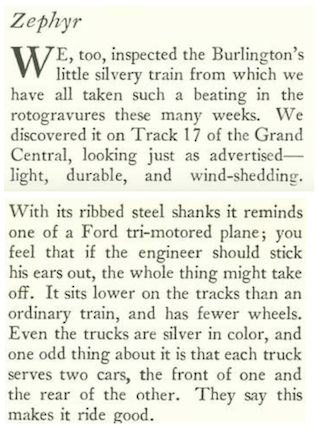
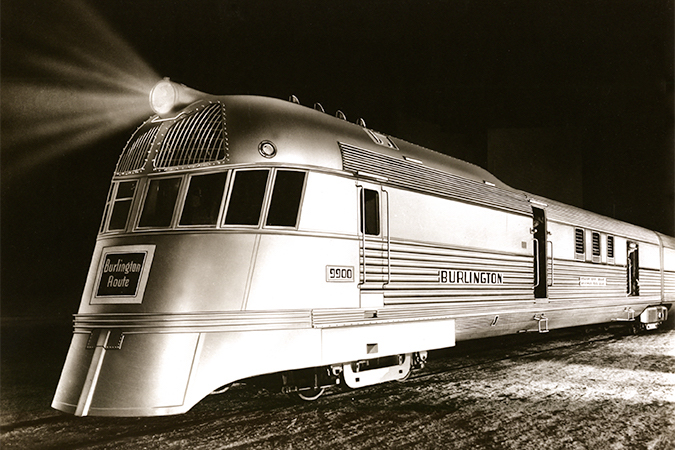
If Fuller’s attempt at the streamlined future was a bit of bust, the Burlington railroad was making a splash with its gleaming new Zephyr. E.B. White reported:

ZOOM ZOOM…The Burlington Zephyr set a speed record for travel between Denver and Chicago when it made a 1,015.4-mile (1,633 km) non-stop “Dawn-to-Dusk” dash in 13 hours 5 minutes at an average speed of almost 78 mph (124 km/h). In one section of the run it reached a speed of 112.5 mph. Following a promotional tour that included New York, it was placed in regular service between Kansas City, Missouri, and Omaha and Lincoln, Nebraska, on November 11, 1934. Other routes would be added later in the Midwest and West. (BNSF)

…we continue with E.B. White, here with some observations regarding Mother’s Day and bank robber/murderer John Dillinger, who had escaped from prison in March 1934 and was on the FBI’s Most Wanted List…
I REMEMBER MAMA…John Dillinger posed with Lake County prosecutor Robert Estill, left, in the jail at Crown Point, Ind. while he awaited his trial for murder in January 1934. Dillinger would escape from the jail in March and would be on the lam until July, when FBI agents would gun him down outside a Chicago movie theatre. (NY Daily News)

…and a last word from White, about an important change at Radio City:

 * * *

Voice In The Wilderness

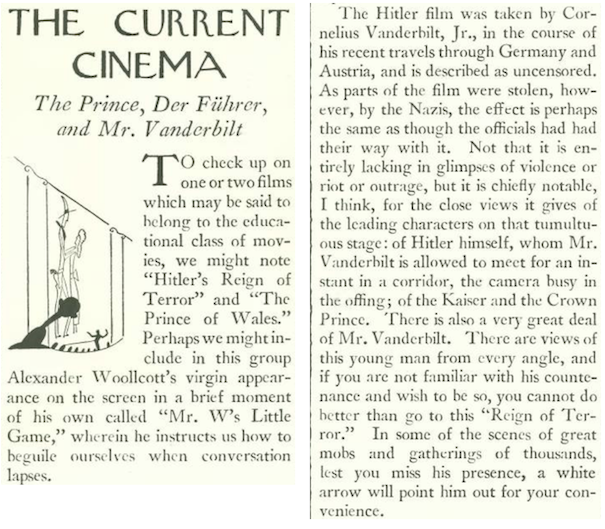
A combination of newsreel footage, documentary, and reenactment, Cornelius Vanderbilt Jr’s Hitler’s Reign of Terror played to capacity crowds for two weeks in New York City, despite the refusal of the state’s censor to license the film. Disinherited by his parents when he became a newspaper publisher, Vanderbilt was a determined journalist, covertly filming scenes in Nazi Germany and even briefly encountering Adolf Hitler outside the Reichstag, where Vanderbilt yelled to Der Führer, “And what about the Jews, Your Excellency?” (Hitler ignored the question and referred Vanderbilt to one of his lackeys). Unfortunately, Vanderbilt wasn’t much of a filmmaker, and although he warned Americans about the emerging threat in Germany, few took the film, or his warning, seriously, including John Mosher:

UNHEEDED…Audiences flocked to see Cornelius Vanderbilt Jr’s Hitler’s Reign of Terror, but critics dismissed the rather amateurish film—Film Daily scoffed at the film’s prediction that Hitler’s Germany was a future threat to world peace; at right, in the film Vanderbilt confronted “Hitler” in a recreation. (TMDB/Library of Congress)

 * * *

From Our Advertisers

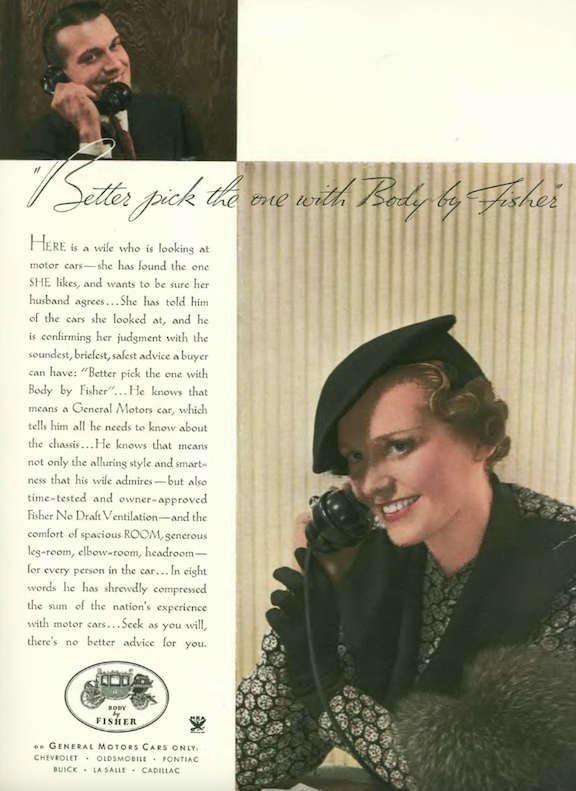
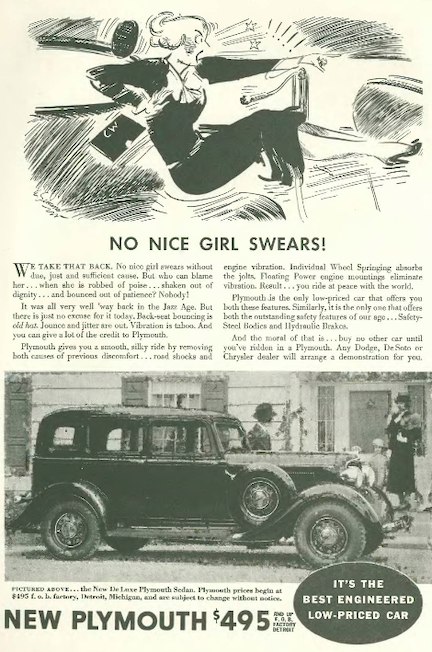
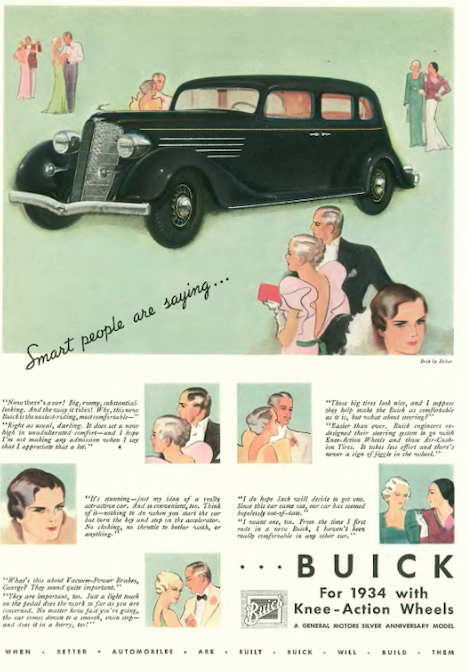
It wouldn’t seat eleven people like a Dymaxion, but a Body by Fisher (coach builder to General Motors) certainly impressed this young woman…but better check with the hubby just in case…

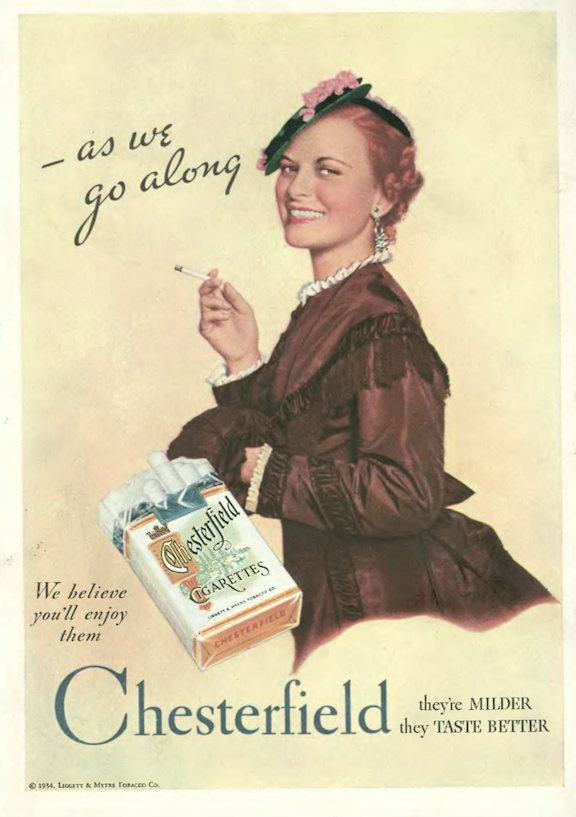
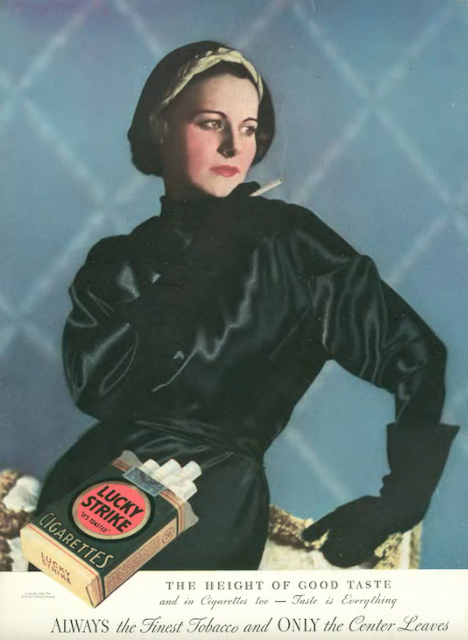
…in this next ad, we find what looks like the same woman, perhaps celebrating her decision with a nice smoke…

…this spot seems out of place in the New Yorker, like it snuck over from Better Homes & Gardens...

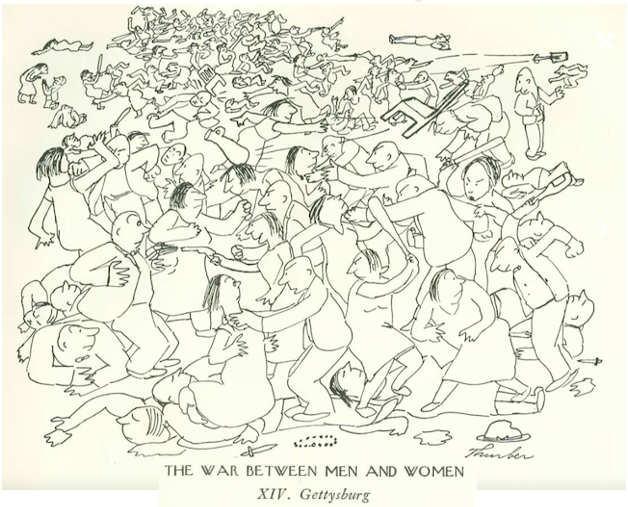
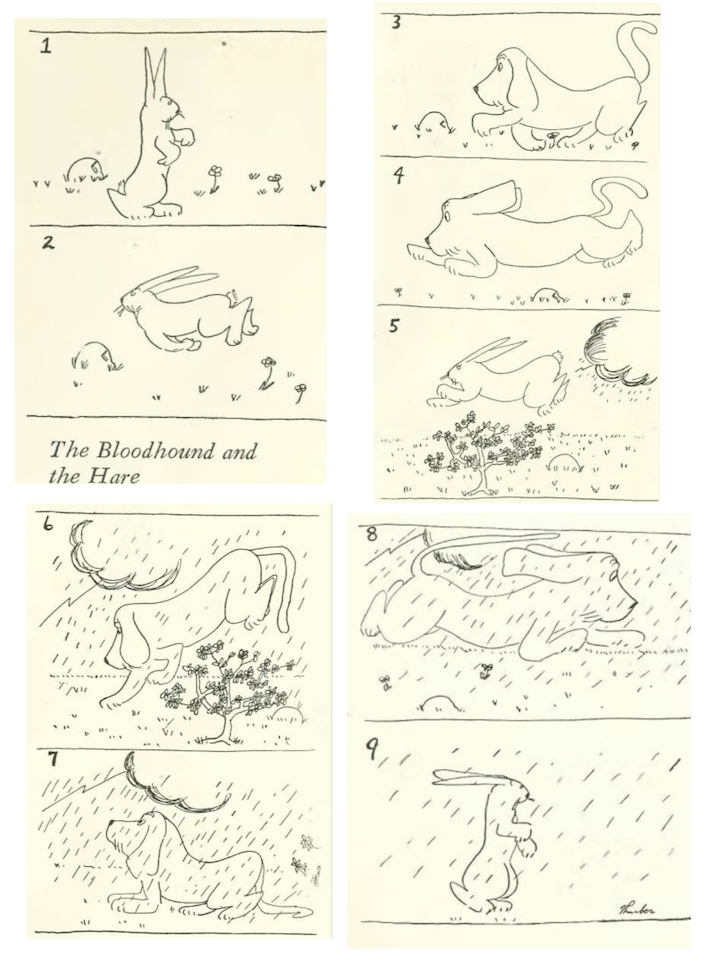
…on to our cartoons…with James Thurber’s war of the sexes over, life returned to normal…

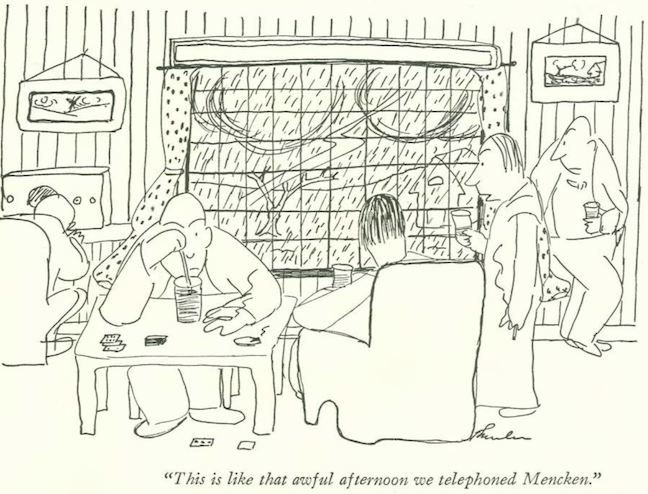
…and both sides shared in the gloom of a rainy afternoon…

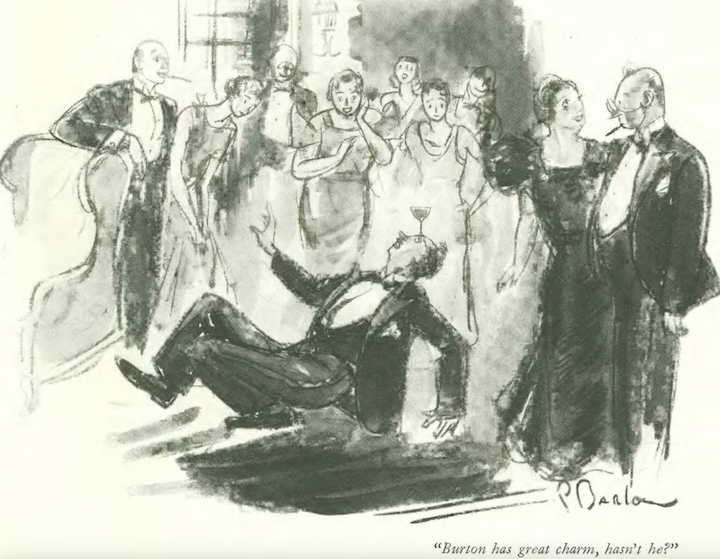
…by contrast, Perry Barlow brightened things up with this life of the party…

…but a good time doesn’t always translate over the airwaves, per George Price

Alain illustrated the consequences of losing one’s nest egg…

Peter Arno didn’t leave any room for dessert…

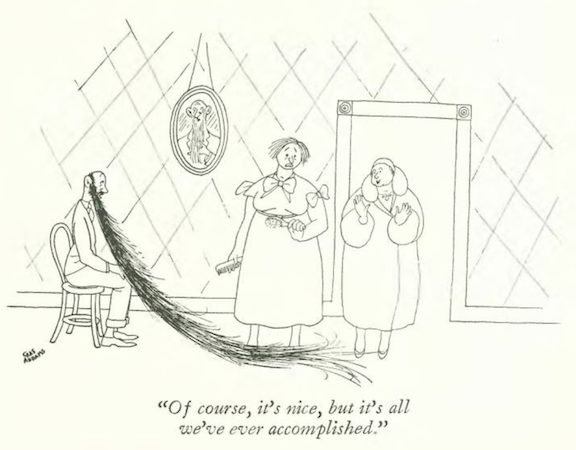
…and Charles Addams returned, a macabre cast of characters still percolating in his brain…

…on to May 12, 1934…

May 12, 1934 cover by Leonard Dove.

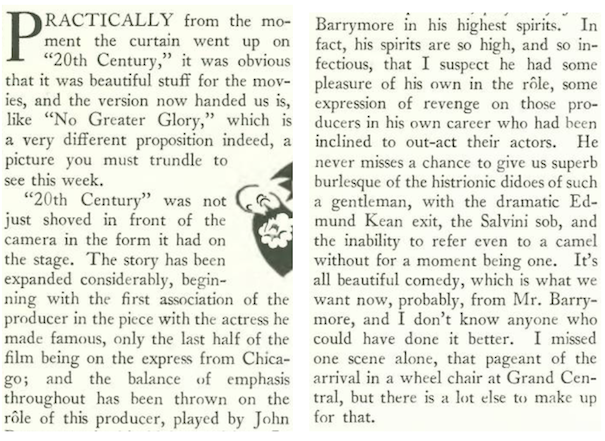
…and back to the movies, this time critic John Mosher found more cheery fare in 20th Century, a pre-Code screwball comedy directed by Howard Hawks and starring John Barrymore and Carole Lombard. Battling alcohol abuse since age 14, Barrymore nevertheless managed to display his rare genius as a comedian and turned in what is considered to be his last great film performance.

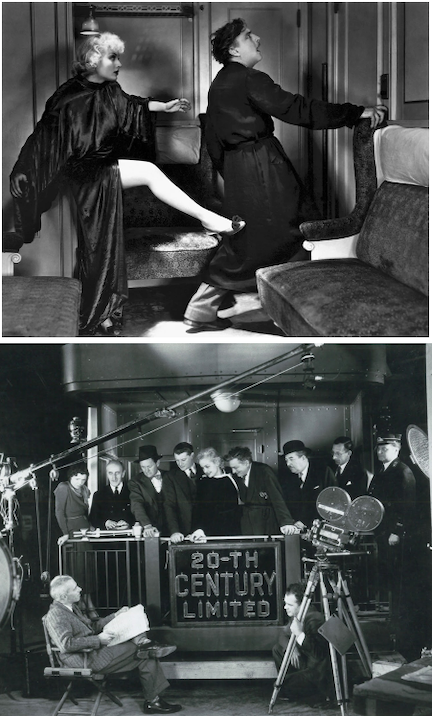
GETTING HER KICKS…Top, Carole Lombard delivers a swift one to John Barrymore in the screwball comedy 20th Century. Below, director Howard Hawks with the cast. (greenbriarpictureshows.blogspot.com)

 * * *

Playing the Ponies

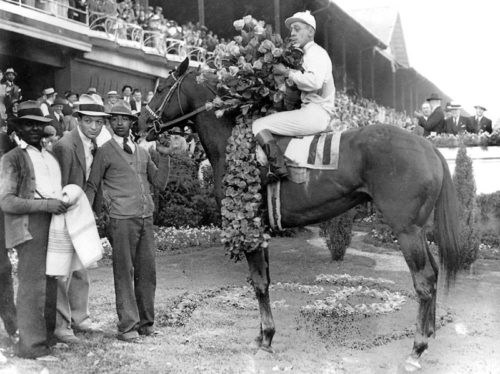
Horse racing correspondent George F. T. Ryall (pseud. “Audax Minor”) considered a losing wager at the Kentucky Derby in his column, “The Race Track.”

A HORSE OF COURSE…Jockey Mack Garner rode Cavalcade to victory at the 1934 Kentucky Derby. (Appanoose County Historical Society)

 * * *

More From Our Advertisers

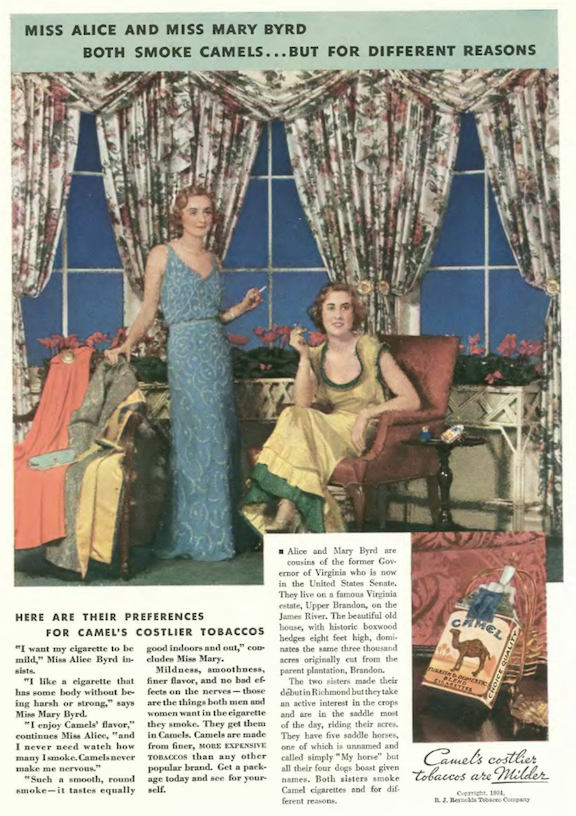
We begin with Camel cigarette endorsers Alice and Mary Byrd, residents of Virginia’s famous Brandon plantation and cousins of Virginia Senator and Governor Harry F. Byrd, known for his fights against the New Deal and his “massive resistance” to federally mandated school desegregation...

…also to the manor born, Whitney Bourne, a New York deb who would go on to a brief stage and film career that would end when she married her first husband (diplomat Stanton Griffis) in 1939…

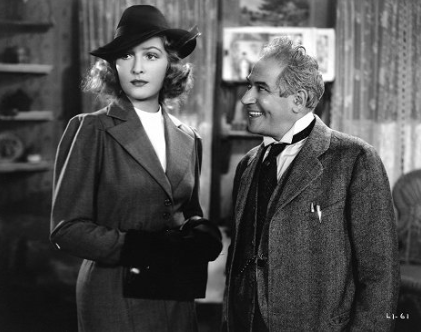
AN EYE FOR STYLE…Whitney Bourne in a scene with Solly Ward in 1937’s Flight From Glory. Named in 1933 as one of America’s best dressed women, Bourne was a noted New York socialite, skier, golfer and tennis player as well as an occasional actress.

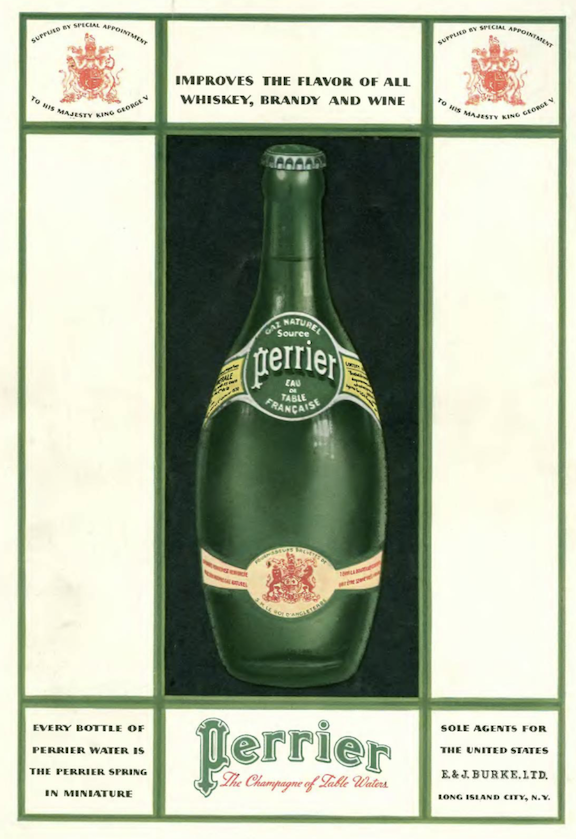
…we move along from the effervescent Whitney Bourne to the sparkling waters of Perrier…

Gardner Rea followed other New Yorker cartoonists by illustrating an ad for Heinz…

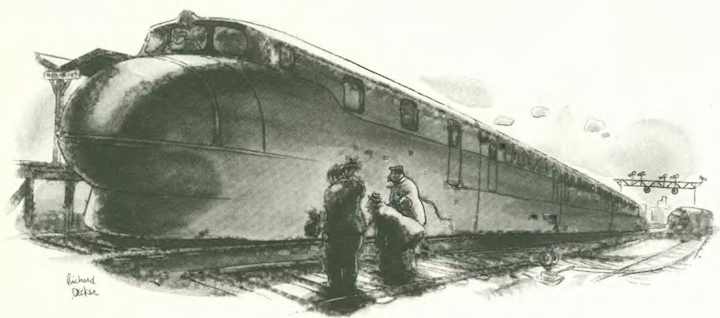
…which brings is to more cartoons, where according to Richard Decker, the move to streamlined trains wasn’t welcomed by everyone…

Carl Rose illustrated this two-page spread with an imagined right-wing response to the recent left-wing May Day parades…

William Steig eavesdropped onto a saucy little conversation…

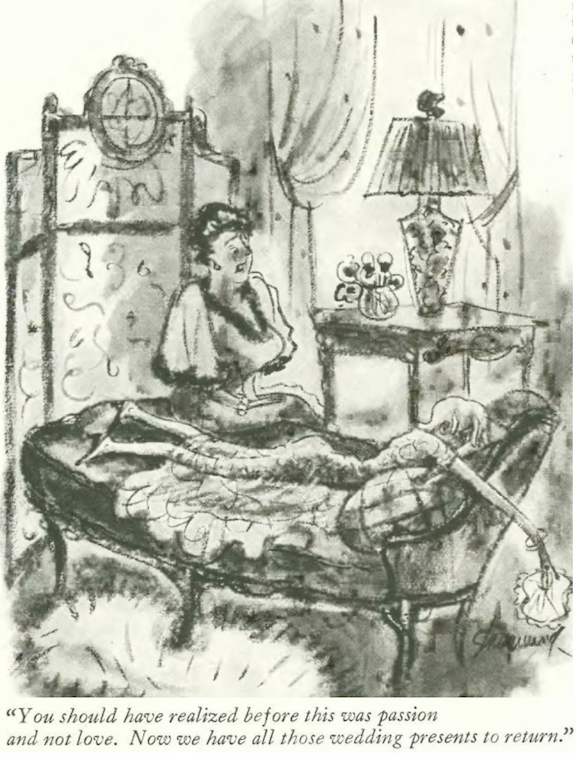
Barbara Shermund continued her explorations into the trials of the modern woman…

James Thurber was back to his old tricks…

…and we conclude our cartoons with Eli Garson, and a new perspective…

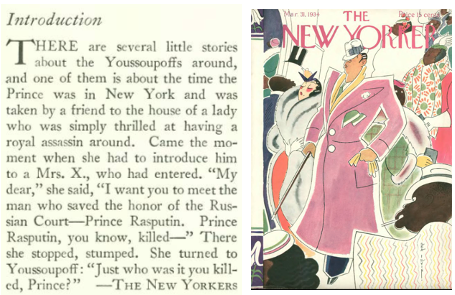
Before I close, a bit of housekeeping. The first issues in 1925 sometimes ended “The Talk of the Town” with…

…but on May 23, 1925, “Talk” signed off with —The New Yorkers. That continued until the March 31, 1934 issue (below), the last time the New Yorker signed off “The Talk of the Town” with —The New Yorkers:

Next Time: Moses Parts a Yacht Club…


America’s Sweetheart

Above: A scene from Mary Pickford’s 1922 film Tess of the Storm Country. (Library of Congress)

In today’s celebrity-saturated culture it is difficult to find a parallel to silent film star Mary Pickford, who was dubbed Queen of the Movies more than a century ago. Indeed, during the 1910s and 1920s Pickford was regarded as the most famous woman in the world.

April 7, 1934 cover by Rea Irvin.

Pickford was also known as “America’s Sweet” for her portrayal of gutsy but tenderhearted heroines. In real life she was also a gutsy and shrewd businesswoman who co-founded United Artists in 1919 with Charlie Chaplin, Douglas Fairbanks, and director D. W. Griffith. Commanding a salary only rivaled by Chaplin, her stardom only grew when she married Fairbanks in 1920, forming the first celebrity supercouple; together they ruled Hollywood from their Beverly Hills mansion, Pickfair (apparently staging dull affairs, per the “Profile” excerpt below).

The end of the silent era also put an end to Pickford’s stardom, as well as to her fairytale marriage to Fairbanks. Margaret Case Harriman’s profile of Pickford, simply titled “Sweetheart,” gave readers a glimpse into the decline of a silent superstar. Excerpts:

SINGULAR STAR…Clockwise, from top left, Mary Pickford in a publicity photo, circa 1910; Pickford visits close friend and screenwriter Frances Marion during filming of Straight is the Way (1921); Douglas Fairbanks and Pickford in the early 1920s; Pickford with a movie camera in 1916—in addition to being a shrewd businesswoman, she was also skilled behind the camera. (thehollywoodtimes.today/Time/Library of Congress)

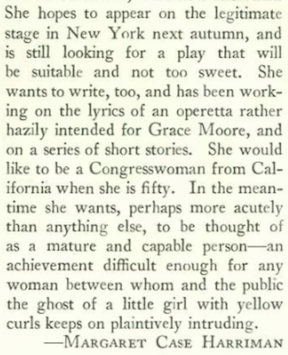
Harriman concluded her profile with some thoughts on Pickford’s future:

THE SOUND BARRIER…With the advent of sound movies Mary Pickford turned to writing books and serving various charities. From left, sharing ice cream with rising star Bing Crosby in 1934; center, Al Frueh’s caricature of Pickford for the profile; Pickford in a 1934 promotional picture supporting The Salvation Army. (Pinterest/Library of Congress)

A note on the profile’s writer, Margaret Case Harriman (1904-1966), who doubtless sharpened her people-watching skills at the Hotel Algonquin (famed birthing ground of the New Yorker), which was owned by her father, Frank Case. Douglas Fairbanks was one of Case’s best friends, and Harriman knew both Fairbanks and Pickford well, since they often stayed at the hotel.

HOME SWEET HOME…Margaret Case Harriman, photographed May 31, 1937 by Carl Van Vechten. Harriman was born in 1904 in room 1206 of the Hotel Algonquin, which was owned by her father, Frank Case. (Philadelphia Museum of Art)

 * * *

Master of Masters

The founder of perhaps the world’s most prestigious golf tournament was an amateur and a working lawyer by profession. When Bobby Jones (1902–1971) co-founded the Masters Tournament in 1934 with investment dealer Clifford Robert, it was called the Augusta National Invitation Tournament (it was Robert’s idea to call it The Masters, a name Jones thought immodest). Jones dominated top-level amateur competition from the early 1920s through 1930—the year he achieved a Grand Slam by winning golf ’s four major tournaments in the same year. However, by the 1934 Jones’s skills began to wane. The New Yorker had little to say about the first Masters (it wasn’t a big deal yet), other than Howard Brubaker making this observation in “Of All Things”…

A SWING INTO HISTORY…Bobby Jones (center) drives during the first-ever Masters Tournament in Augusta, Georgia on March 22, 1934. (augusta.com)

 * * *

From Our Advertisers

Wanna get away? This colorful advertisement beckoned New Yorker readers to take the next boat to sunny Bermuda…

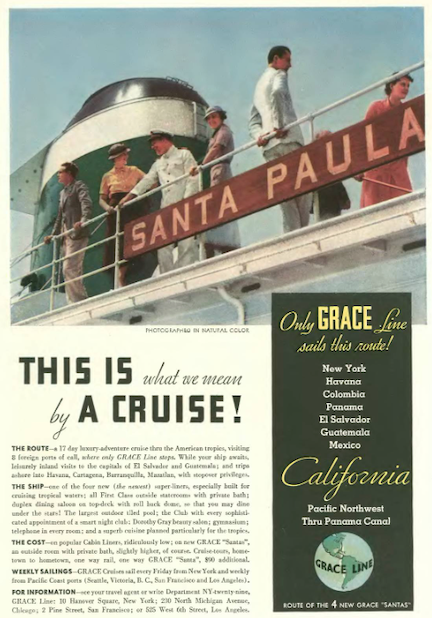
…while the Grace Line offered a southern cruise through the Panama Canal…

…but who needed to travel when you could enjoy a beer that was beloved the world over?…

Mrs. Potter d’Orsay Palmer nee Maria Eugenia Martinez de Hoz was content to stay home in Chicago and smoke a few Camels, apparently…

…we’ve encountered her before—she appeared in a Ponds ad (below) in the Aug. 8, 1931 issue of the New Yorker, where we learned she was wife No. 2 of Potter d’Orsay Palmer, son of the wealthy family of Chicago Palmer House fame…they would divorce in 1937, and the playboy Potter would marry two more times before dying of a cerebral hemorrhage in May 1939—following a drunken brawl in Sarasota, Florida with a meat cutter called Kenneth Nosworthy. Maria Eugenia would remarry and return to her homeland of Argentina to raise a family…

…this ad from Nash looks like a scene from Attack of the 50 Foot Woman, if she had a car to match, that is…

…the Cadillac V-16 was a truly massive automobile, but in contrast to the Nash ad, you can barely see the car as it approaches from the vanishing distance…

E. Simms Campbell got in on the advertising game with this spot that features contrasting images of storm and calm…

James Thurber offered this cartoon on behalf of Heinz soups…

…and Thurber again, as we kick off the cartoons with the ongoing battle…

Adolph Schus made a rare appearance in the New Yorker…according to Ink Spill, he also contributed a cartoon on March 19, 1938, and was editor of Pageant Magazine in 1945… 

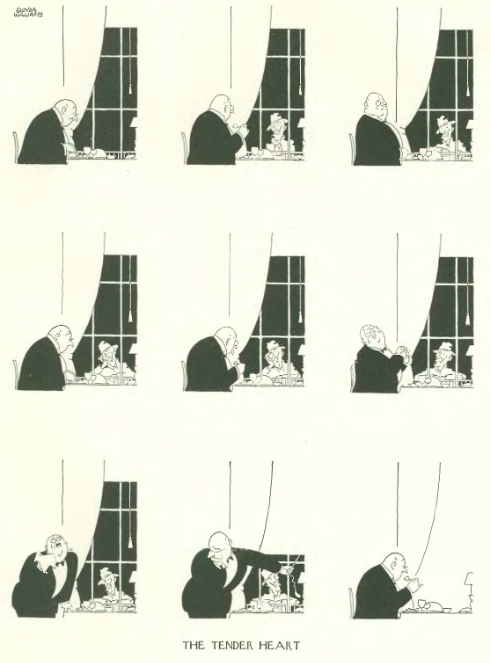
Gluyas Williams looked in on the sorrows of moneyed classes…

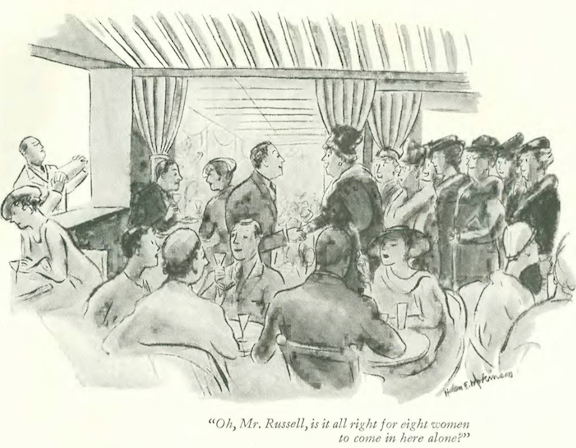
Helen Hokinson’s “girls” were in search of lunch, and propriety…

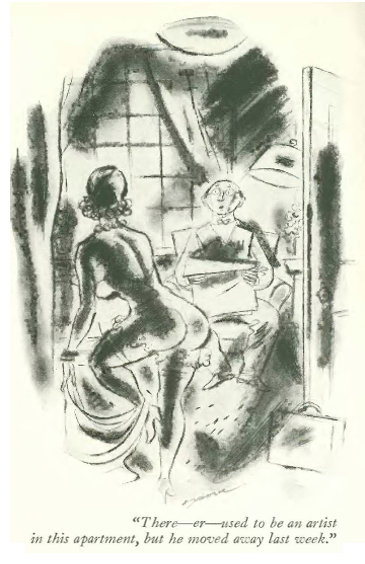
…and Leonard Dove gave us a renter surprised by something not included in his lease…

…on to April 14, 1934…

April 14, 1934 cover by Harry Brown.

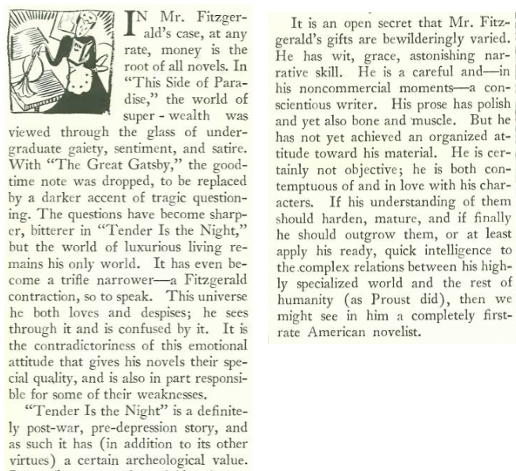
…and book reviewer Clifton Fadiman, who found F. Scott Fitzgerald’s literary gifts “bewilderingly varied”…

A NOT-SO-TENDER RECEPTION…F. Scott Fitzgerald’s status as a symbol of Jazz Age excess hurt his career during the Depression years. Tender Is the Night received mixed reviews, which didn’t help his alcoholism and deteriorating health. When Carl Van Vechten took this photo of Fitzgerald in June 1937, the author had a little over three years to live. (Wikipedia)

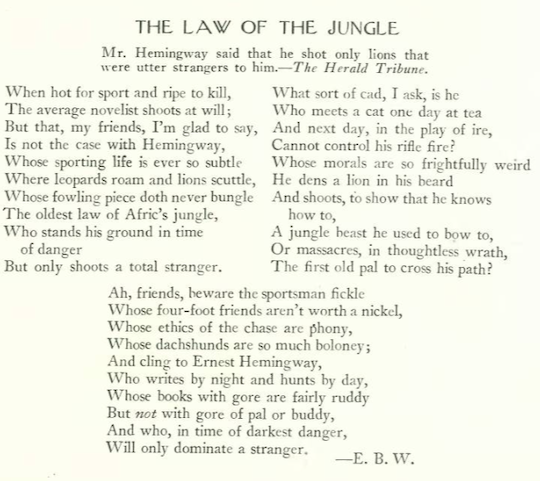
…speaking of F. Scott Fitzgerald, fellow author Ernest Hemingway defended Fitzgerald’s writing, arguing that criticism of his Jazz Age settings stemmed from superficial readings. One then wonders what Hemingway thought of E.B. White’s poetic “tribute” to his big game hunting excursions…

I ONLY SHOOT STRANGERS…Author Ernest Hemingway poses with a lion shot during a safari in Africa in 1934. (MPR News)

 * * *

From History’s Ash Heap

Various reference sources cite “freak shows” as a normal part of American culture in the late 19th to the early 20th centuries, but I have to admit I saw exhibits at state fairs of half-ton humans and conjoined twins when I was a kid in the 1970s (not to mention things in jars at a carnival in St. Louis that should have been given a decent burial).

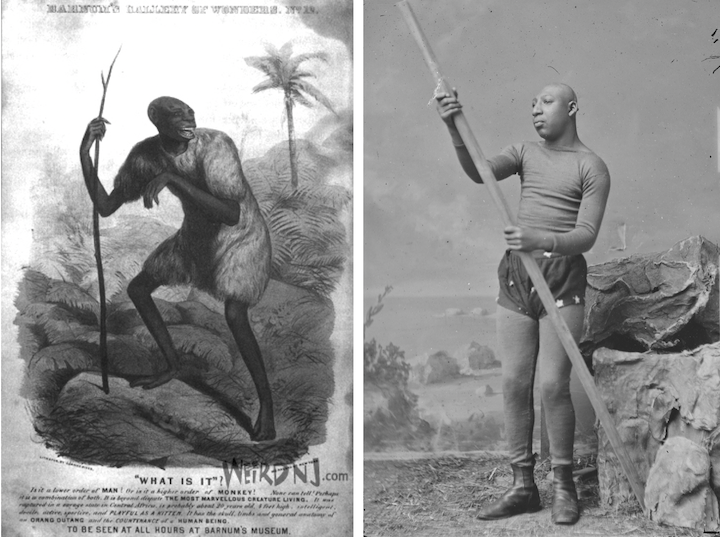
When Alva Johnston penned the first installment of a three-part profile series titled “Sideshow People,” such attractions could be found across the U.S. and Europe—Coney Island featured “Zip the Pinhead,” who was actually William Henry Johnson (1842–1926), one of six children born to former slaves living in New Jersey. His desperately poor parents agreed to allow P.T. Barnum to display him at a museum and at circus performances billed as a missing link, a “What-Is-It” supposedly caught in Africa.

FOR THE SUCKERS…P.T. Barnum exhibited William Henry Johnson as a “wild man”, a “What-Is-It” that subsisted on raw meat, nuts, and fruit, but was learning to eat more civilized fare such as bread and cake. Note the difference between the poster depiction at left and the actual man. Civil War-era photo at right by Mathew Brady’s photography studio in New York City. (National Portrait Gallery)

 * * *

Floating and Sinking

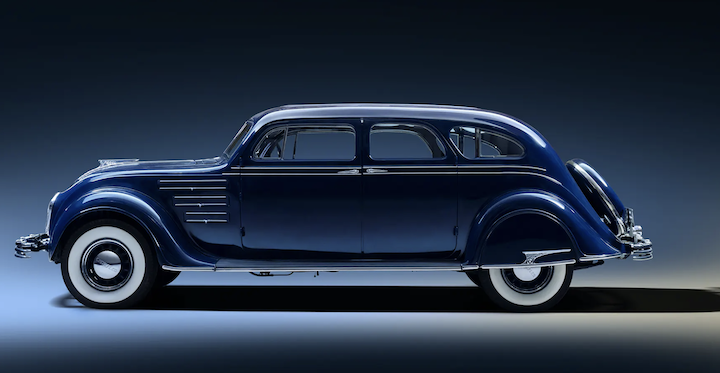
As much as New Yorker cartoonists (and E.B. White) liked to take pokes at Chrysler’s futuristic Airflow, there was much to be admired by the innovations the car represented. Unfortunately, the car’s design was too advanced for the buying public, and despite a big manufacturing and sales push by Chrysler the car was shelved by late 1936.

Writing for Time, Dan Neil noted the Airflow’s spectacularly bad timing. “Twenty years later, the car’s many design and engineering innovations — the aerodynamic singlet-style fuselage, steel-spaceframe construction, near 50-50 front-rear weight distribution and light weight—would have been celebrated. As it was, in 1934, the car’s dramatic streamliner styling antagonized Americans on some deep level, almost as if it were designed by Bolsheviks.”

SEEMED LIKE A GOOD IDEA. A restored 1934 Airflow. (Hagerty Media)

* * *

More From Our Advertisers

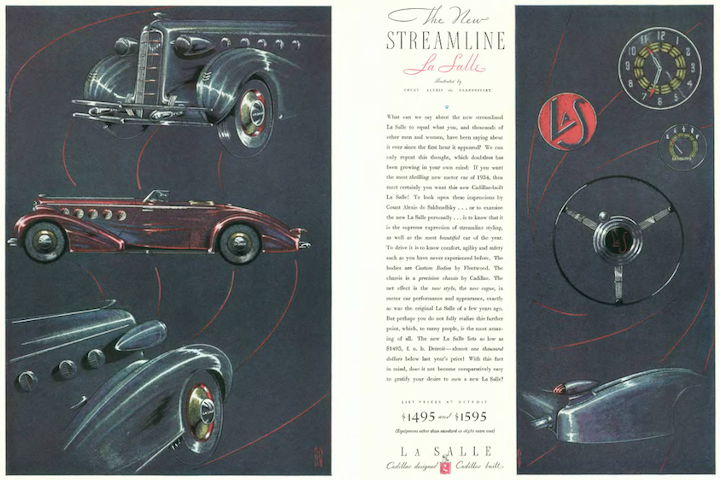
Maybe the buying public wasn’t ready for a car with a sloping hood and embedded headlights, but the folks at Cadillac were eager to unveil concepts for the new streamlined La Salle, which retained the familiar bullet headlights so as not to alarm consumers too much…

…and here’s a lovely image from Goodyear…I assume this woman is merely resting in a rumble seat, since this pose would not be possible above 25 mph…

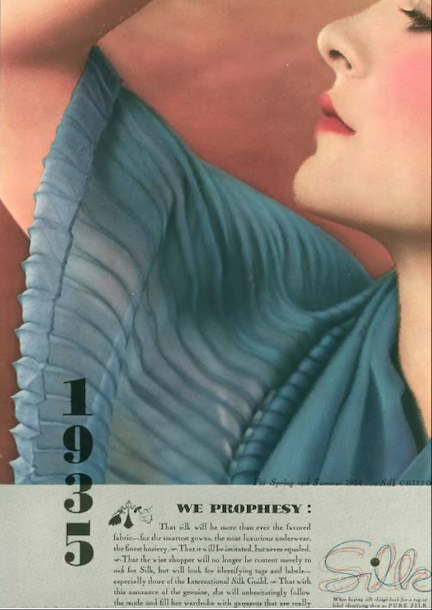
…full-bleed color ads were coming into their own, as demonstrated by this stylish entry from the purveyors of silk garments…

…on the other hand, our well-heeled friends at Ponds stuck with the tried and true copy-heavy approach…here they offer the flawless features of Anne Gould (1913–1962), granddaughter of Gilded Age robber baron Jay Gould

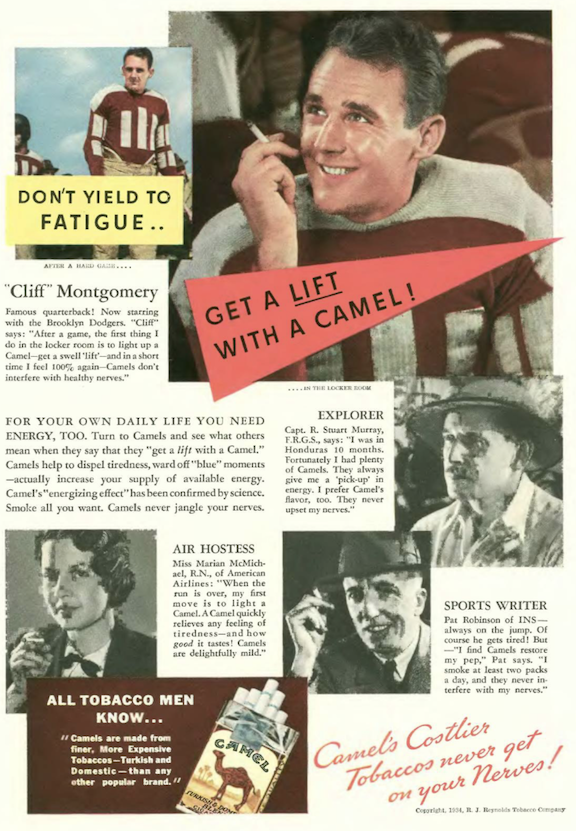
…R.J. Reynolds continued their campaign to convince us that Camels bring success to the average Joe and the champion athlete…

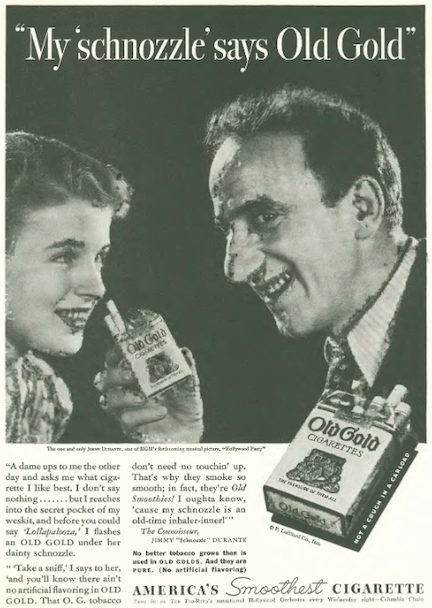
…the makers of Old Gold opted for the super creepy approach, asking entertainer Jimmy Durante to shove a pack of smokes into the face of what appears to be a teenager…

…here’s another ad from World Peaceways, reminding us of the futility of war…

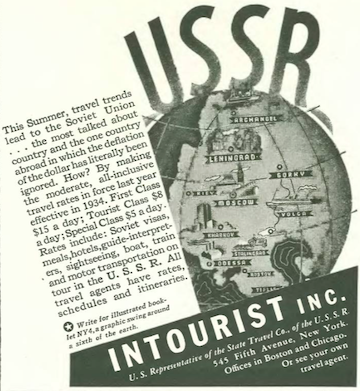
…speaking of futility, you could visit the USSR, which doubtless took great pains to steer tourists away from mass starvation in Ukraine and mass executions of Stalin’s many “enemies”…

…while folks in the USSR were worshiping Lenin and Stalin, Americans were rightly transfixed by the miracle of Kellogg’s Corn Flakes…a producer of industrial and advertising films, Castle Films would become a subsidiary of Universal and would go on to make a line of science-fiction and horror films including The Wolf Man, The Mummy, and Creature from the Black Lagoon.

…on to our cartoons, Alain took on the recent MoMA exhibition of “Machine Art”…

…and speaking of machine art, George Price was to latest cartoonist to take a crack at the Airflow…

James Thurber offered this bit of spot art for the opening pages…

…and returned to a somber scene on the battlefield of the sexes…

Next Time: Model Citizens…

Rocky’s Cover-Up

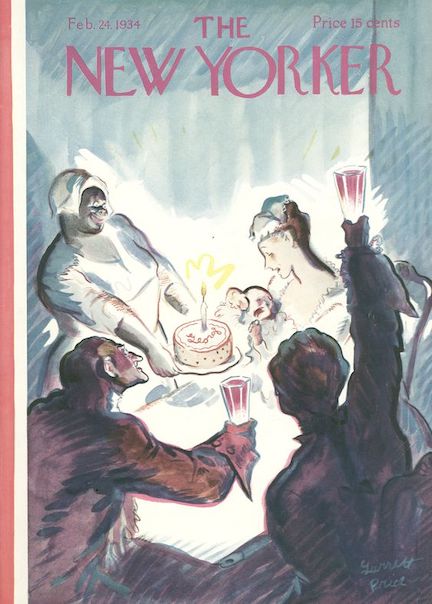
On April 28, 1933, just two days before the RCA Building was to open to new tenants, artist Diego Rivera added a portrait of Vladimir Lenin to the mural he was painting in the building’s lobby.

Feb. 24, 1934 cover by Garrett Price.

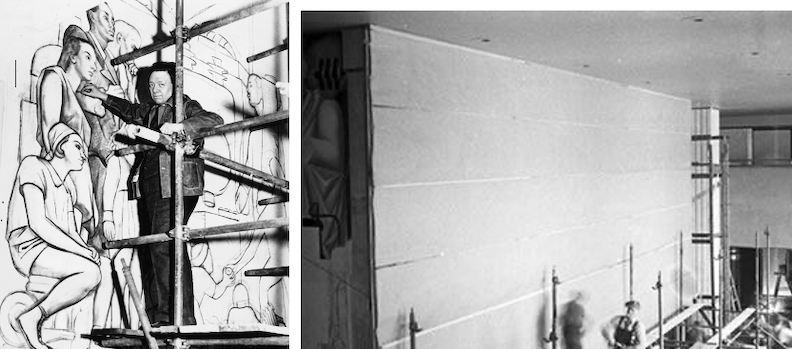
When Nelson Rockefeller asked Rivera to replace Lenin with a portrait of an “everyman,” Rivera refused, stating that he would prefer to see the whole mural destroyed than to alter it. Two weeks later Rivera was paid and dismissed from the job; carpenters immediately covered the mural in a white cloth. Fast forward to Saturday, February 10, 1934, when workers showed up late in the evening and began chipping away at the plaster bearing the mural, reducing Rivera’s artwork to dust. E.B. White, in his “Notes and Comment,” had this to say about that fateful night:

DUST TO DUST…Diego Rivera working on his mural, Man at the Crossroads, in the RCA Building lobby in 1933. At right, workers quickly covered up the mural after Rivera was dismissed from the job. One of Rivera’s artist assistants, Lucienne Bloch, clandestinely took the photo before she was escorted from the building. (Wikipedia/6sqft.com)
ARTEM INTERRUPTUS…Mexican artist Diego Rivera stands with a copy of the mural he painted at Rockefeller Center that was eventually destroyed. (A. Estrada /Courtesy of Museo Frida Kalho)

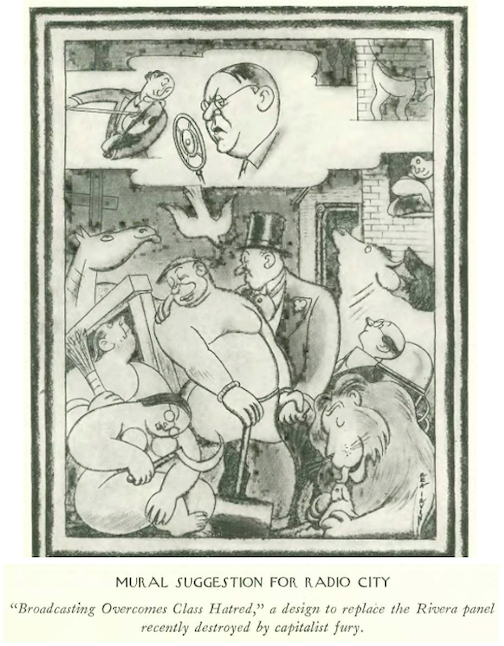
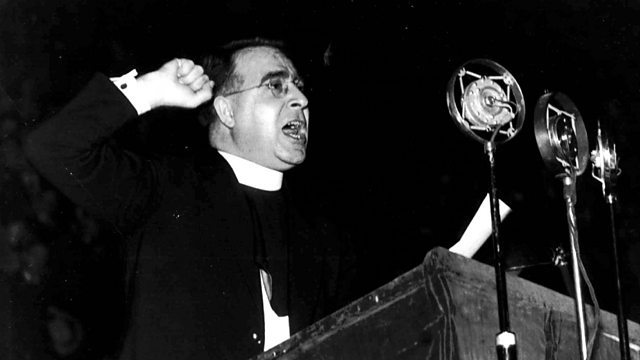
Rea Irvin shared his own thoughts on the issue with this illustration below, which referenced the hateful rhetoric of Charles Coughlin, a Canadian-American Catholic priest and populist leader and one of the first public figures to make effective use of the airwaves to spew his invective.

FAMILIAR RING…Charles Coughlin, a Catholic priest and populist leader, promoted antisemitic and pro-fascist views while also acting as a champion to the poor and a foe of big business. In the midst of the Depression he spoke to the hopes and fears of lower-middle class Americans throughout the U.S. One supporter recalled: “When he spoke it was a thrill like Hitler. And the magnetism was uncanny. It was so intoxicating, there’s no use saying what he talked about…” (BBC/NPR)

* * *

Dog Days

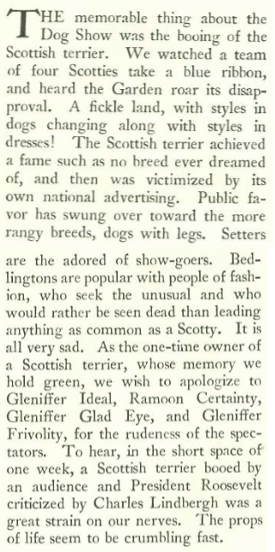
E.B. White also chimed in about boorish behavior he witnessed at the Westminster Kennel Club show at Madison Square Garden. Terriers had dominated Westminster; the fox terrier that ultimately won the 1934 competition represented the 21st terrier of any type to win Best of Show since that category was introduced in 1907.

YOU AGAIN? Ch Flornell Spicy Bit of Halleston, a Wire Fox Terrier, took Best of Show at Madison Square Garden in 1934. (westminsterkennelclub.org)

 * * *

Anybody Home?

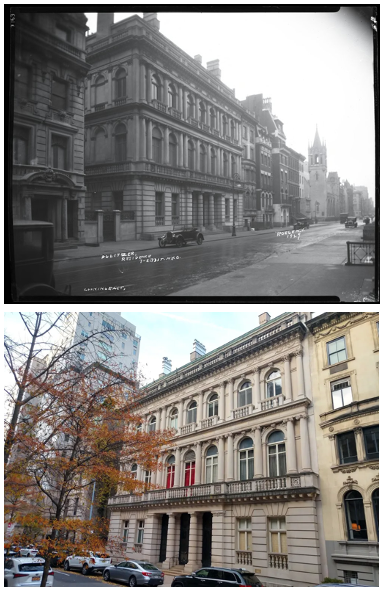
After the wealthy owner of the New York World, Joseph Pulitzer, died in 1911, his family moved out of his lavish East 73rd Street mansion, which was designed by Stanford White to resemble an Italian palazzo. The building sat empty until 1930, when investors planned to knock it down and replace it with an apartment building. The Depression foiled their plans, and another attempt to raze the mansion in the 1950s also miraculously failed, and the building was eventually converted into a co-op with sixteen apartments. Writing in “The Talk of the Town,” James Thurber pondered the Pulitzer mansion’s expected fate. An excerpt:

THEN AND NOW…With so many buildings reduced to dust these days in NYC, it’s good to see the Pulitzer mansion still standing. You can buy one of its sixteen apartments for roughly $6 million, if and when they become available. (ephemeralnewyork.wordpress.com)

 * * *

From Our Advertisers

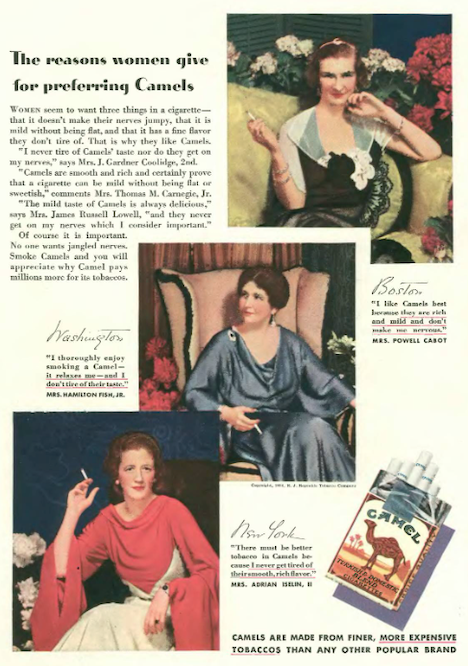
The makers of Camel cigarettes combined three previous ads into one, featuring endorsements from society matrons in Boston, Washington, D.C., and New York…

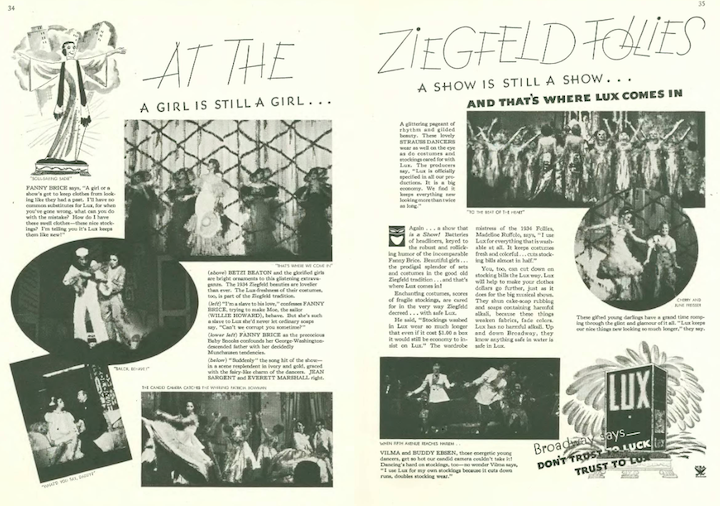
…while Fanny Brice and the cast of the 1934 Ziegfeld Follies offered a chorus of endorsements for Lux detergent in this two-page spread…

…the Graham-Paige Motors Corporation is long gone, but in the early 1930s the company was still going strong, introducing many innovations (described in the ad below) that would be copied by other carmakers…

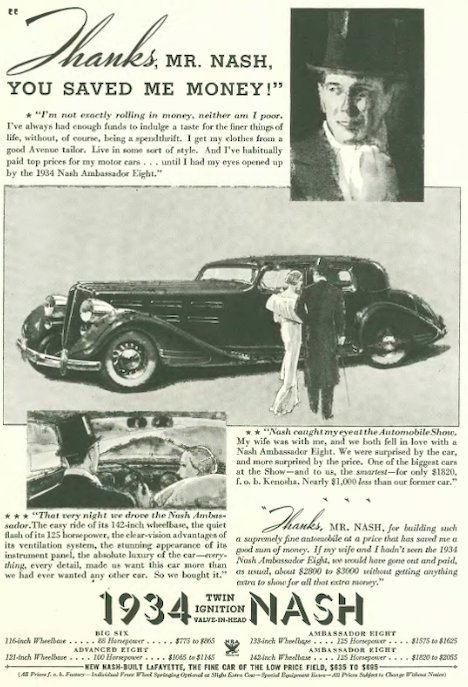
…in the 1930s an exiled Russian noble, Count Alexis de Sakhnoffsky, was known for his streamlined automobile designs…he influenced the look of the 1934 Nash Ambassador Eight, which was touted here as the choice of the budget-minded toff…note how the illustrator exaggerated the car’s length in this ad…

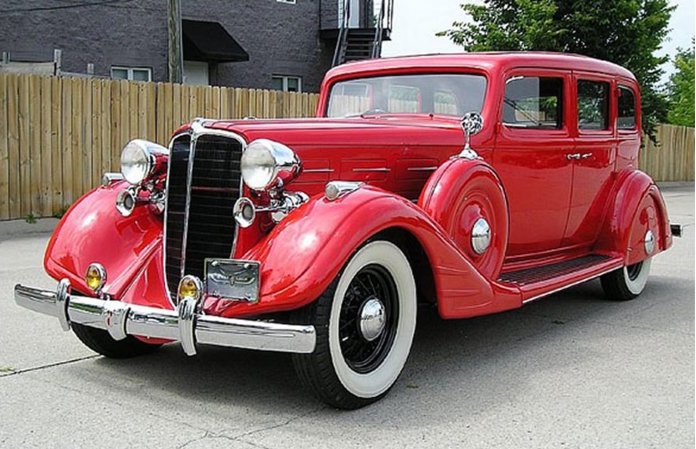
…as compared to an actual model of a Nash Eight…

A restored 1934 Nash Ambassador Eight. (classiccars.com)

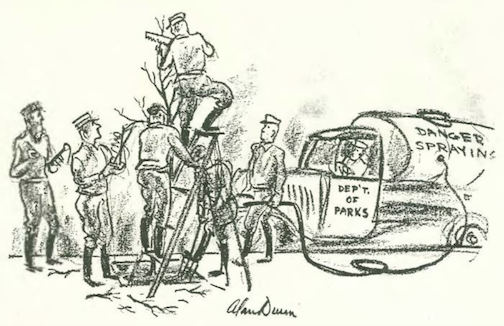
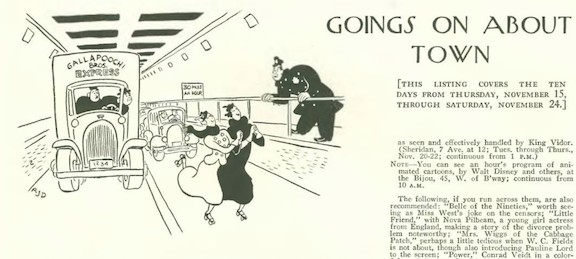
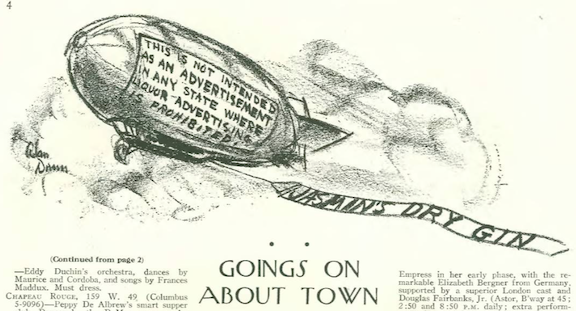
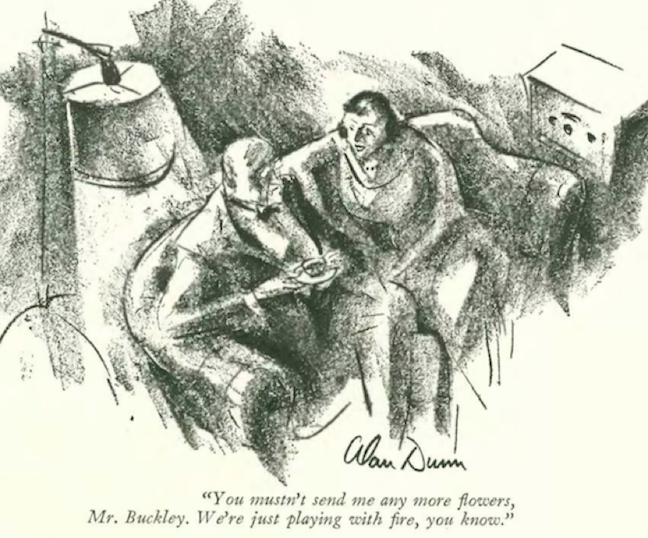
…on to our cartoonists, Alan Dunn floated above the “Goings On About Town” section…

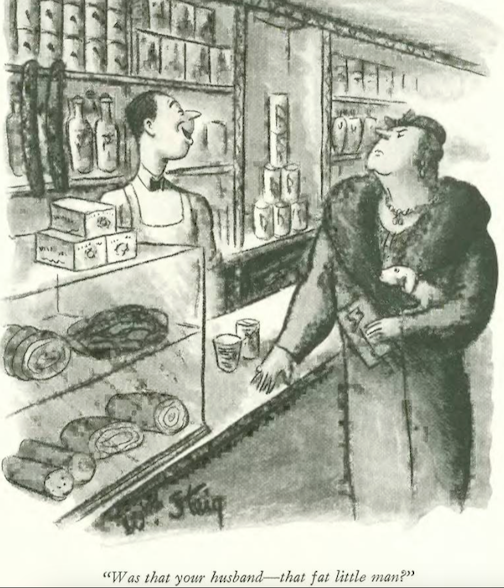
William Steig gave us a tactless grocer…

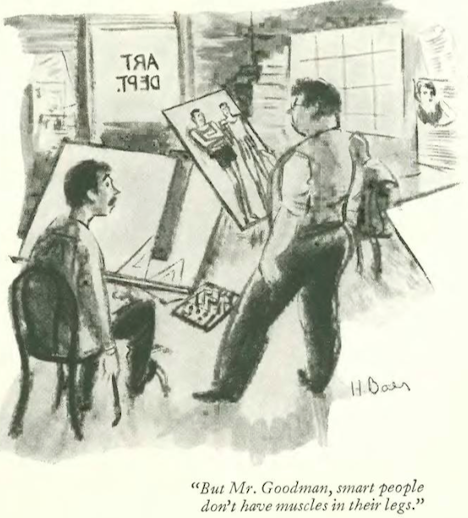
Howard Baer offered up some finer points from Madison Avenue…

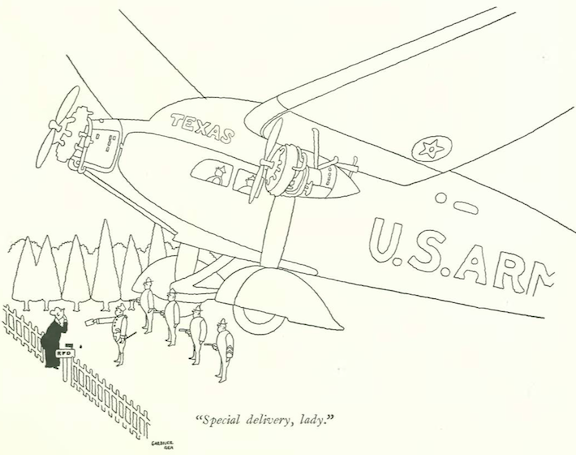
Gardner Rea illustrated a very special delivery…

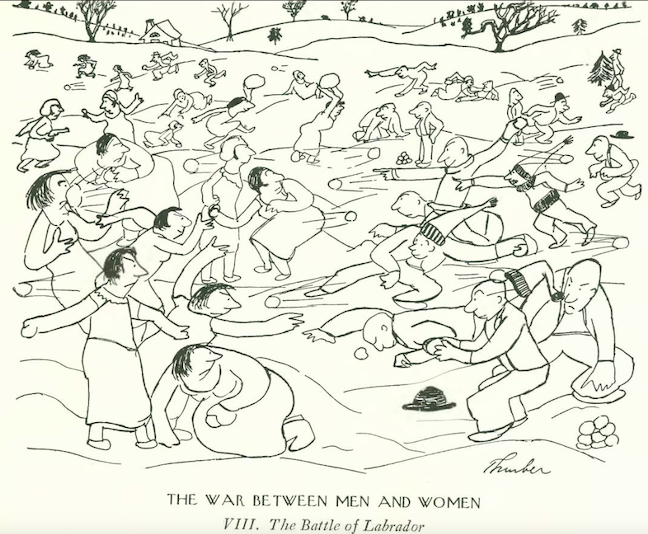
…and James Thurber’s war continued to be waged on a snowy battlefield…

…on to our March 3, 1934 issue…

March 3, 1934 cover by Harry Brown.

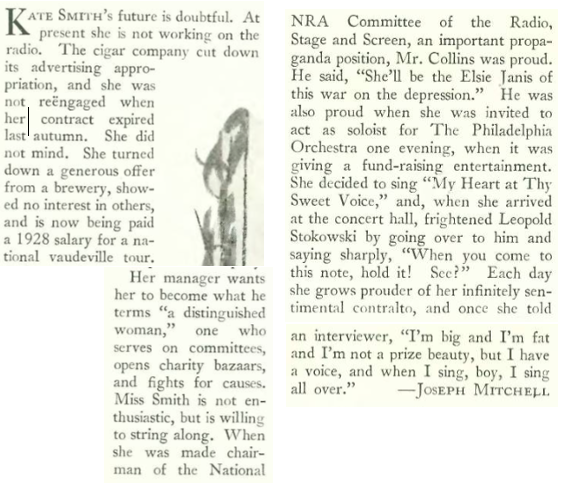
…which featured a profile of singer Kate Smith (1907–1986), written by none other than Joseph Mitchell (1908-1996), who began his career at The New Yorker in 1933. Smith was an American contralto often referred to as “The First Lady of Radio,” well known for her renditions of When the Moon Comes over the Mountain and Dream a Little Dream of Me. She was enormously popular during World War II for her rendition of God Bless America among other patriotic tunes.

Smith got her start in New York in 1926 when she appeared on Broadway in Honeymoon Lane. That year also saw the emergence of countless humiliating wisecracks about her weight that would dog her long career. A reviewer in The New York Times (Oct. 31, 1926) wrote, “A 19-year-old girl, weighing in the immediate neighborhood of 200 pounds, is one of the discoveries of the season…” In 1930, when Smith appeared in George White’s Flying High, she served as the butt of Bert Lahr’s often cruel jokes about her size.

An excerpt from the opening lines of Mitchell’s profile:

RISING STAR…At left, Kate Smith performing in the 1932 Paramount Pictures musical, Hello Everybody!; at right, on the cover of the October 1934 issue of Radio Mirror. (medium.com)

Toward the conclusion of the profile Mitchell suggested that Smith’s future was “doubtful.” She would prove that prediction wrong, however…

…23 years after her death her rendition of God Bless America would be discontinued pretty much everywhere when it was revealed that in the early 1930s she recorded such songs as That’s Why Darkies Were Born and Pickaninny Heaven (which was featured in Hello, Everybody!).

CANCELLED STAR…Since the late 1960s a rendition of God Bless America by Kate Smith served as a good luck charm for the Philadelphia Flyers hockey team. “The team began to win on nights the song was played,” The New York Times wrote in Smith’s 1986 obituary. Smith sang the tune live during game six of the 1974 Stanley Cup finals, which the Flyers went on to win against the Boston Bruins. When Smith’s racist songs were rediscovered in 2019, a statue of the singer that stood outside the Flyers’ arena was covered and ultimately removed. (Daily Mail)

A note on Joseph Mitchell, whose first credited piece in The New Yorker was a Nov. 11, 1933 “A Reporter at Large” column titled “They Got Married in Elkton.” The article described a small Maryland border town that became known for discrete “quicky” marriages. Mitchell would become known for his finely crafted character studies and expressive stories found in commonplace settings. His 1943 McSorley’s Wonderful Saloon is a prime example.

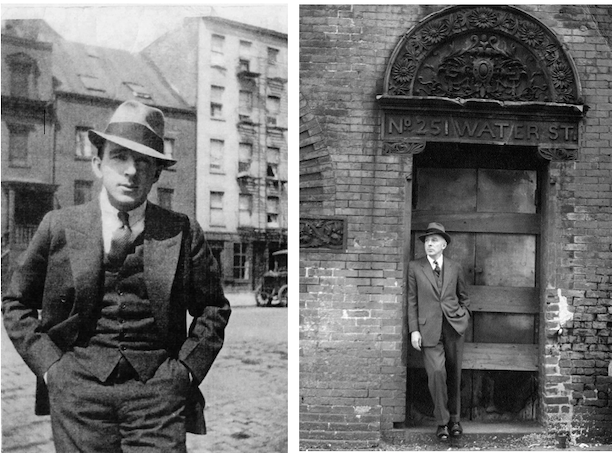
MAN ABOUT TOWN…At left, Joseph Mitchell circa 1930, wearing a brown fedora he was rarely seen without; at right, Mitchell in Lower Manhattan near the old Fulton Fish Market, as photographed by his wife, Therese Mitchell, circa 1950. (Estate of Joseph Mitchell)

 * * *

Acquired Taste

Occasionally New Yorker film critic John Mosher found himself at odds with other reviewers, and such was the case when Mosher sat down to watch Frank Capra’s It Happened One Night. While he described the 1934 pre-Code romantic comedy as “nonsense” and “dreary,” other critics found it generally enjoyable, and although it took audiences awhile to catch on, the film eventually became a smash hit.

In all fairness to Mosher, even the film’s co-star, Claudette Colbert, complained to a friend after the film wrapped, “I just finished the worst picture in the world.” As it turned out, It Happened One Night became the first of only three films to win all five major Academy Awards: Best Picture, Best Director, Best Actor, Best Actress, and Best Adapted Screenplay. It is now widely considered one of the best films ever made. Go figure.

Back to Mosher, who thought so little of the film he didn’t even lead his column with the picture’s review:

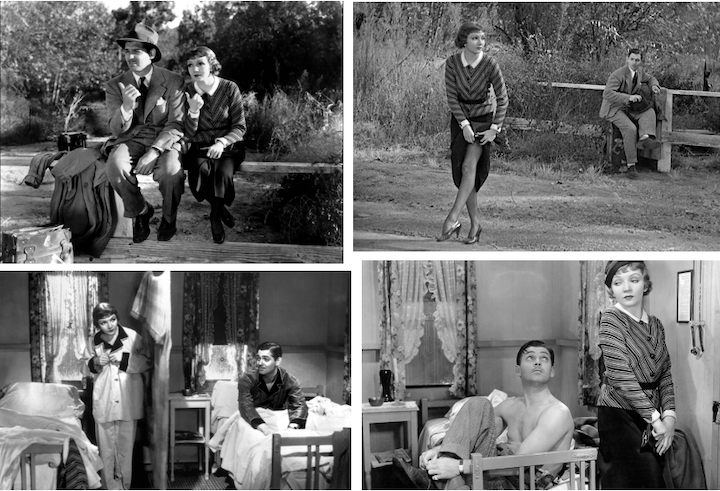
PRE-CODE AND TOPLESS…An heiress (Claudette Colbert) and a reporter (Clark Gable) find themselves hitchhiking (and sharing a motel room) after their bus breaks down in It Happened One Night. The film famously featured a scene in which co-star Gable undresses for bed and takes off his shirt to reveal that he is bare-chested. An urban legend claims that, as a result, sales of men’s undershirts declined noticeably. (IMDB)

 * * *

More From Our Advertisers

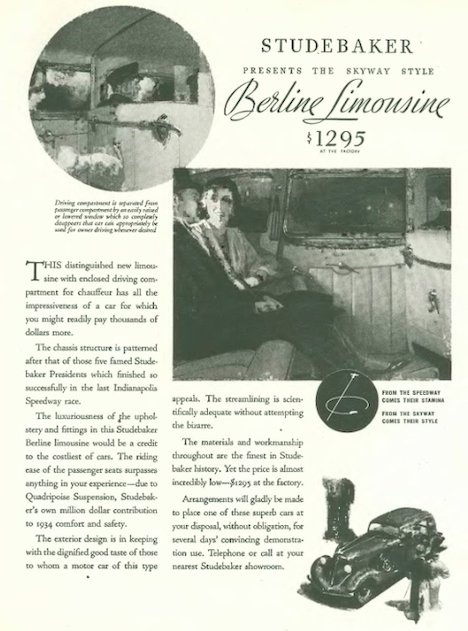
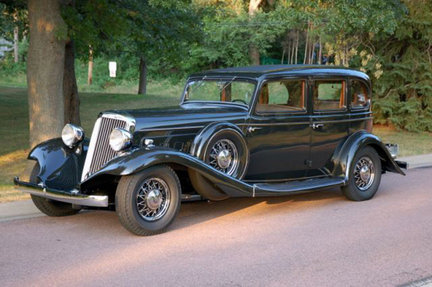
If you wanted luxury with the price, you could buy a Nash Ambassador Eight for $1,800 (about thousand less than other luxury models) or opt for Studebaker’s Berline Limousine, practically a steal at $1,295…

…or you could opt for this fancy-looking Buick with “Knee-Action wheels”…Knee Action was a GM marketing term for independent front suspension, which made for a smoother ride…

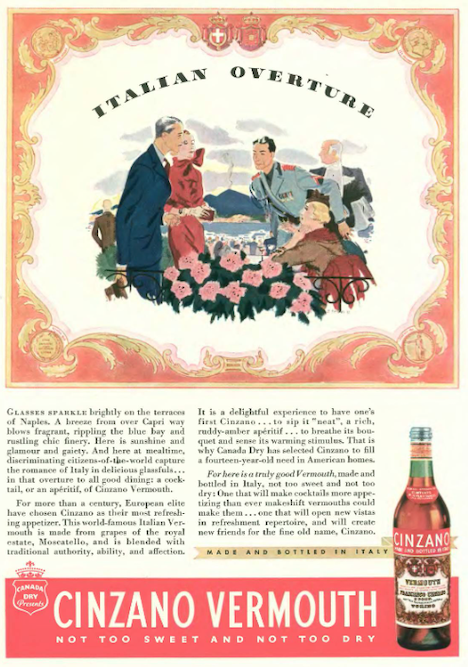
…always colorful, the makers of Cinzano vermouth made their splash in The New Yorker

…the folks at Lucky Strike continued their theme of colorful ads featuring attractive women enjoying their cigs…

…on to our cartoonists, Leonard Dove illustrated a domestic spat…

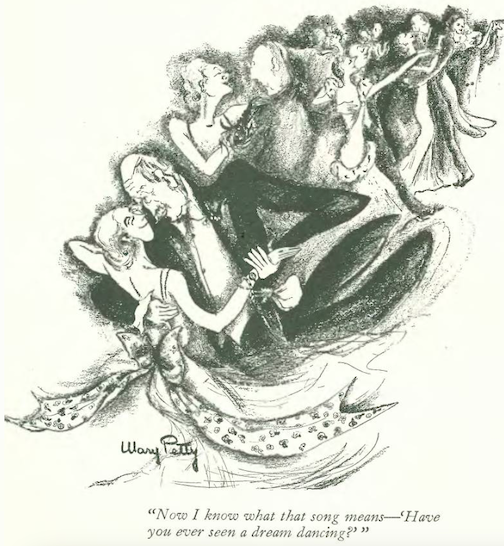
Mary Petty captured a romantic interlude on the dance floor…

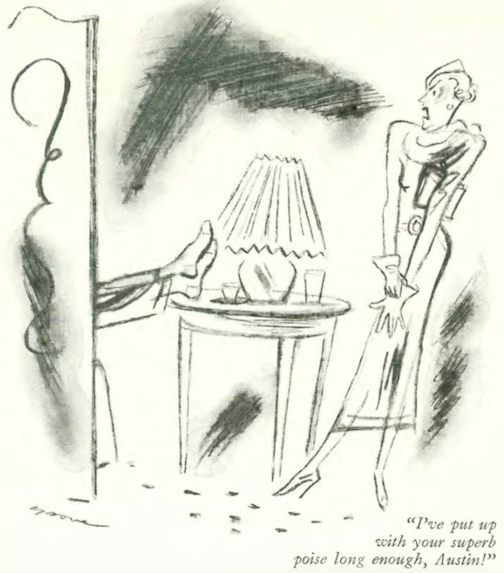
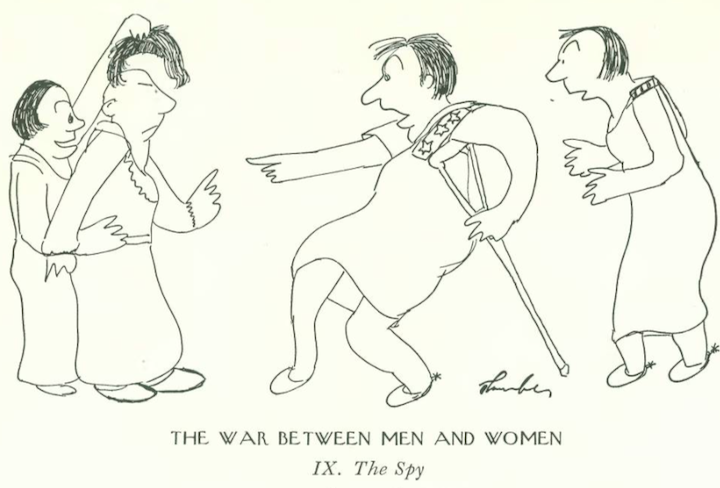
…and James Thurber introduced a new twist—espionage—into his “war”…

Next Time: The Power Broker…


Under the Boardwalk

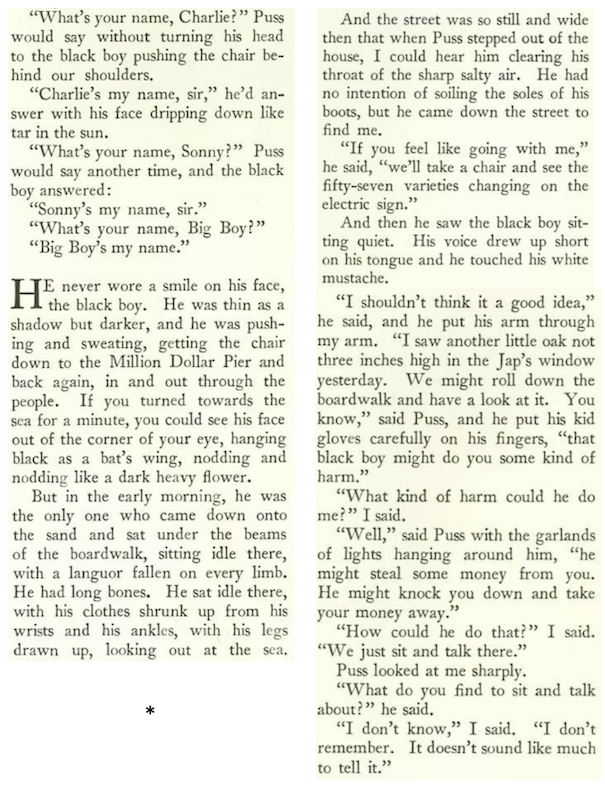
Kay Boyle was thirty and still cutting her teeth as a writer and political activist when The New Yorker published her short story “Black Boy,” told through an unnamed narrator who recalls a childhood visit to the seaside.

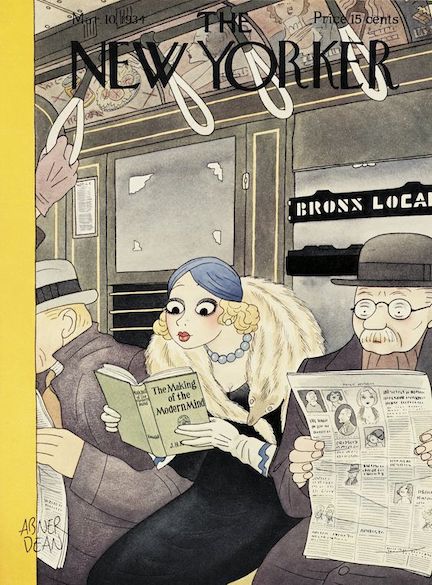
May 14, 1930 cover by Bela Dankovsky.

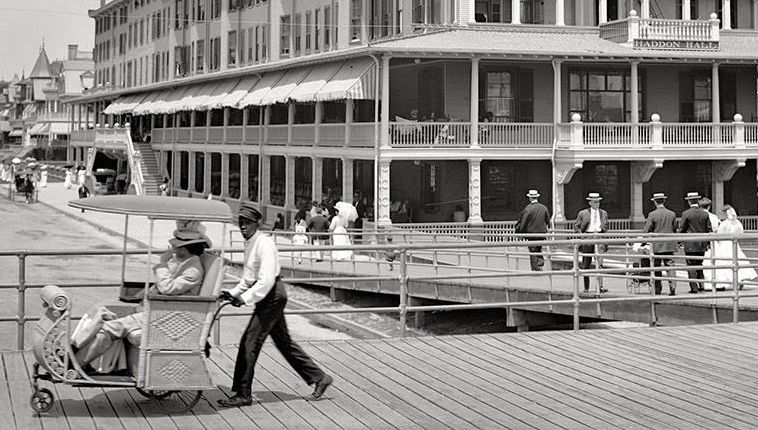
The narrator remembers the days when she rode her horse along the beach while her grandfather watched from a rolling chair, pushed along the boardwalk by various young Black boys. In the following excerpts, the grandfather asks one of the boys for his name, but is it clear he doesn’t really want to get to know him, and through his teasing suggests he isn’t even worthy of an identity. Later in the story the girl befriends the boy, who dwells beneath the boardwalk and dreams of a better life. When the grandfather learns of this budding friendship, he warns about the possibility of harm coming from the boy (two excerpts):

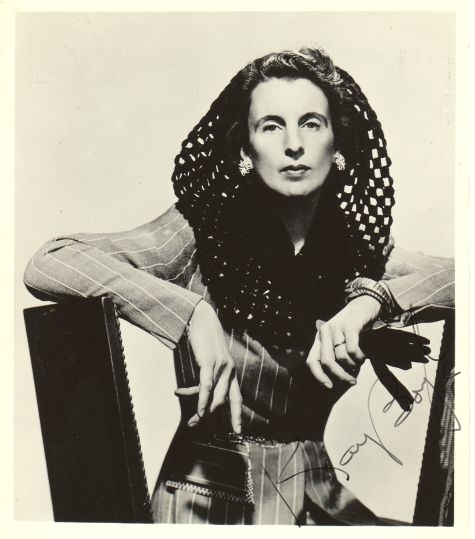
THE LONG, CHAOTIC LIFE of writer and activist Kay Boyle (1902–1992) ranged from fights against racism and fascism in the 1930s to protests against the Vietnam War in the 1960s and against nuclear weapons into the 1990s. (1941 photograph by George Platt Lynes, courtesy The Kay Boyle Papers, Morris Library, Southern Illinois University)

The final paragraphs describe how the girl falls from her horse, and the shocking consequences of the boy coming to her aid.

SEPARATE AND NOT EQUAL…Kay Boyle employed a boardwalk setting in her 1932 short story “Black Boy” to underscore the stark divisions between races in American society. Clockwise, from top left, a 1914 postcard from Atlantic City; on the Atlantic City Boardwalk, circa 1905; sheet music for a popular 1905 song; a dour-looking group being pushed along the Atlantic City Boardwalk, circa 1905. (seesaw.typepad.com/bygonely.com/reddit.com)

 *  *  *

Potemkin Park

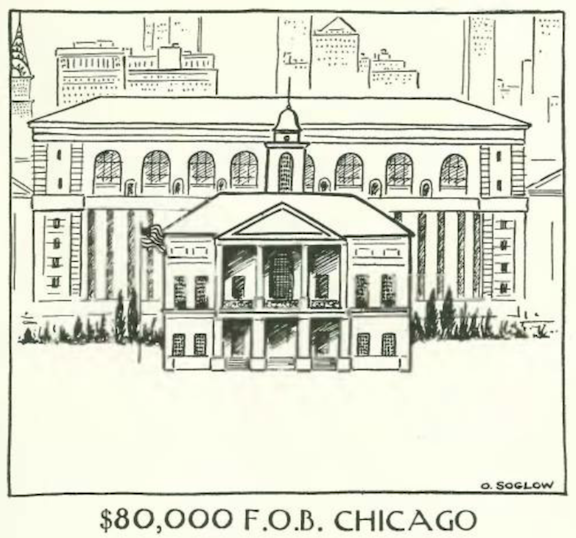
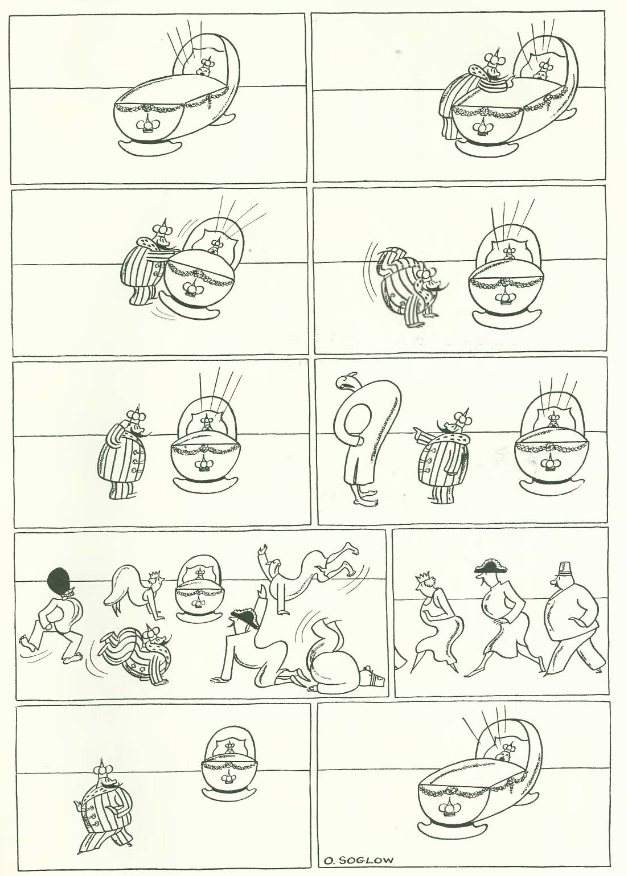
In his “Notes and Comment,” E.B. White questioned the need, and appropriateness, of a wood and plaster Federal Hall replica in Bryant Park, which at the time was a neglected patch of land behind the New York Public Library and a favorite spot for the city’s homeless, their numbers rapidly growing during one of the worst years of the Depression (unemployment hovered near 25 percent). Otto Soglow commented, via cartoon:

To add insult to injury, the area around the replica was fenced off and required an admission fee of 25 cents. White commented:

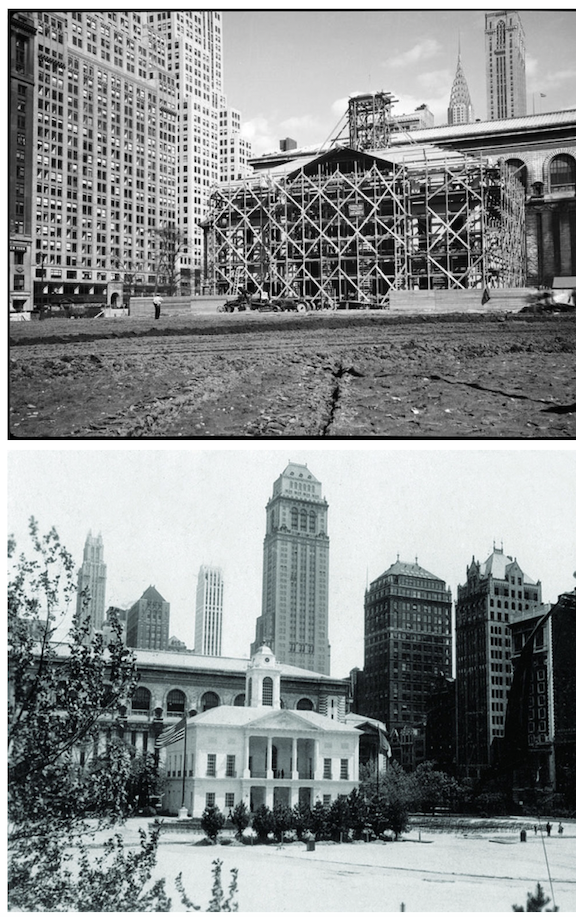
ERECTILE DYSFUNCTION…This flimsy Federal Hall replica erected in Bryant Park in 1932 symbolized some of the problems that beset New York City in one of the worst years of the Depression. Under Mayor Jimmy Walker, the committee in charge of the replica was filled with corrupt Tammany cronies who quickly depleted the committee’s funds. It is no surprise that the replica was unpopular, especially with its admission fee of 25 cents, roughly equivalent to $5 today (consider that sales clerks in 1932, if they were lucky to have a job, earned perhaps $15 a week). (Museum of the City of New York)

 *  *  *

Intermural Murals

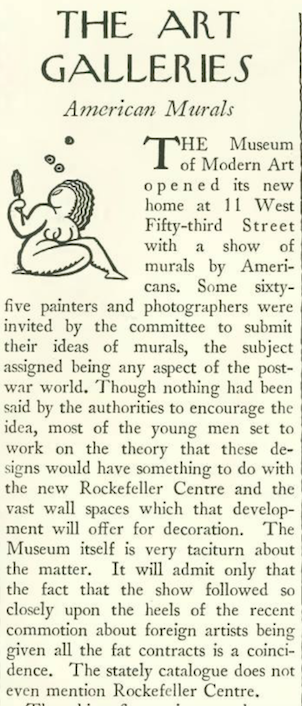
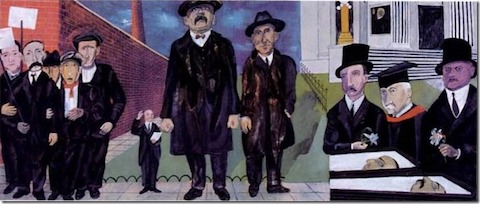
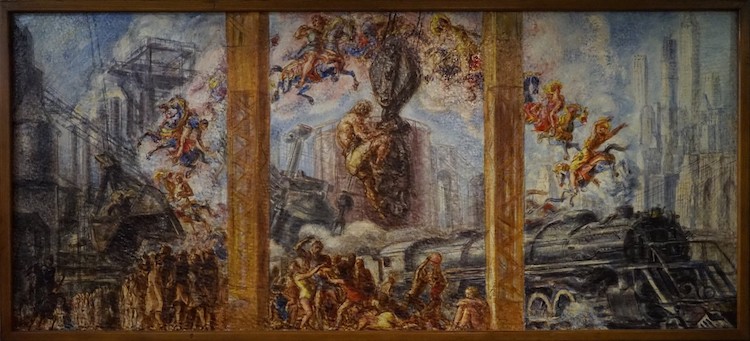
Art critic Murdock Pemberton approached the Museum of Modern Art’s newest exhibition of American muralists with a bit of suspicion, although he was correct in surmising that the Rockefeller Center was shopping for muralists, but as we now know it was not an American, but a Mexican artist (Diego Rivera) who would enter that scene and stir things up.

Among other works, MoMA visitors viewed Ben Shahn’s study for a three-part composition titled “The Passion of Sacco and Vanzetti”…

(MoMA)

…and a work by The New Yorker’s own Reginald Marsh titled “Post-War America”…

(MoMA)

 *  *  *

Boop’s Boo-Boo

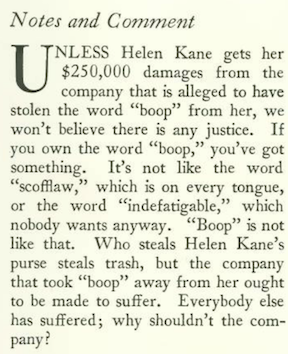
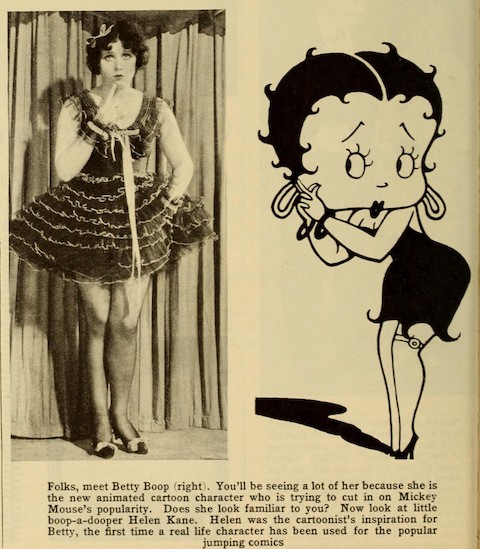
We return to E.B. White and his musings regarding actress and singer Helen Kane (1904–1966), who filed a $250,000 (equivalent to nearly $5 million in 2021) infringement lawsuit against cartoonist Max Fleischer and Paramount Studios, claiming that the popular Betty Boop character was based on Kane’s personality and image.

BOOP SCOOP…Comparison between Helen Kane and the cartoon star Betty Boop was published in Photoplay’s April 1932 issue, one month before Kane’s lawsuit was filed. The suit was settled two years later, the court finding insufficient evidence to support Kane’s claim. (Wikipedia)

 *  *  *

From Rags to Rackets

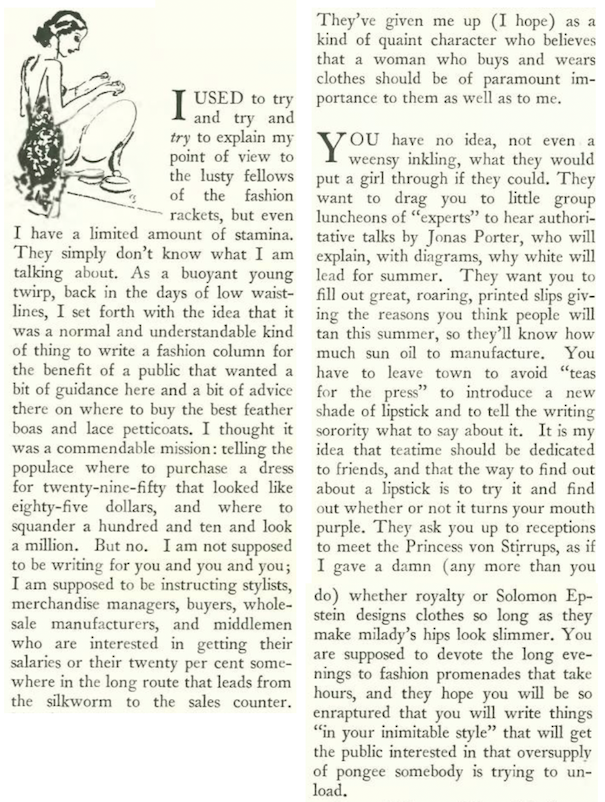
Lois Long lived at the center of the 1920s speakeasy scene, but while she partied she also kept a critical eye on her surroundings, and when she later moved on to fashion criticism (“On And Off The Avenue”) she maintained the same combination of enthusiasm and shrewdness as she took aim at the “lusty fellows of the fashion rackets”…

JUST BROWSING, THANKS…Lois Long kept a skeptical eye on the New York fashion “racket” in the 1930s. Above, an unidentified model sporting a red velvet ensemble during a fashion show in 1933. (New York Daily News)

 *  *  *

From Our Advertisers

We begin with yet another insecticide-themed cartoon from Dr. Seuss, this time using the experimental medium of television to get his point across…

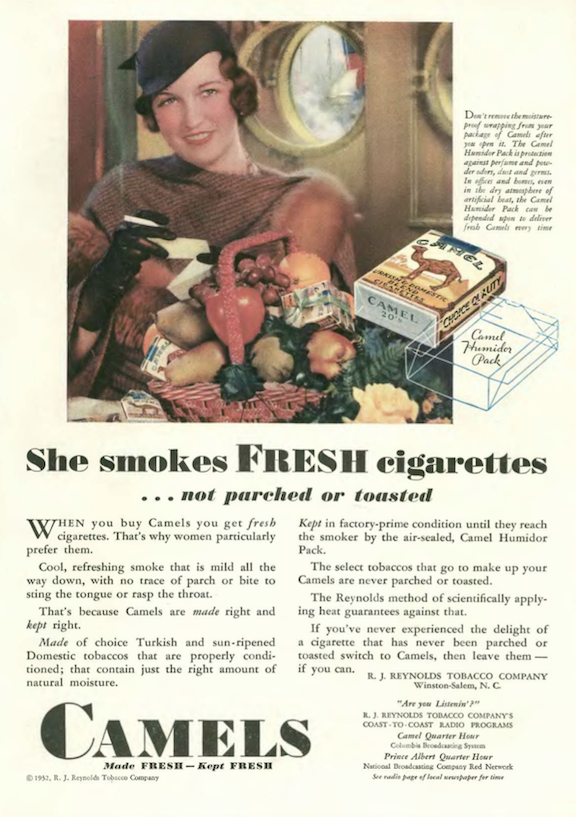
…R.J. Reynolds continued to push their Camels on the growing market of women smokers, here mixing their product with a basket of fruit to suggest freshness and vitality…

…the folks at B. Altman touted their new outdoor furniture line, placing it in a setting available to a very select few New Yorkers…

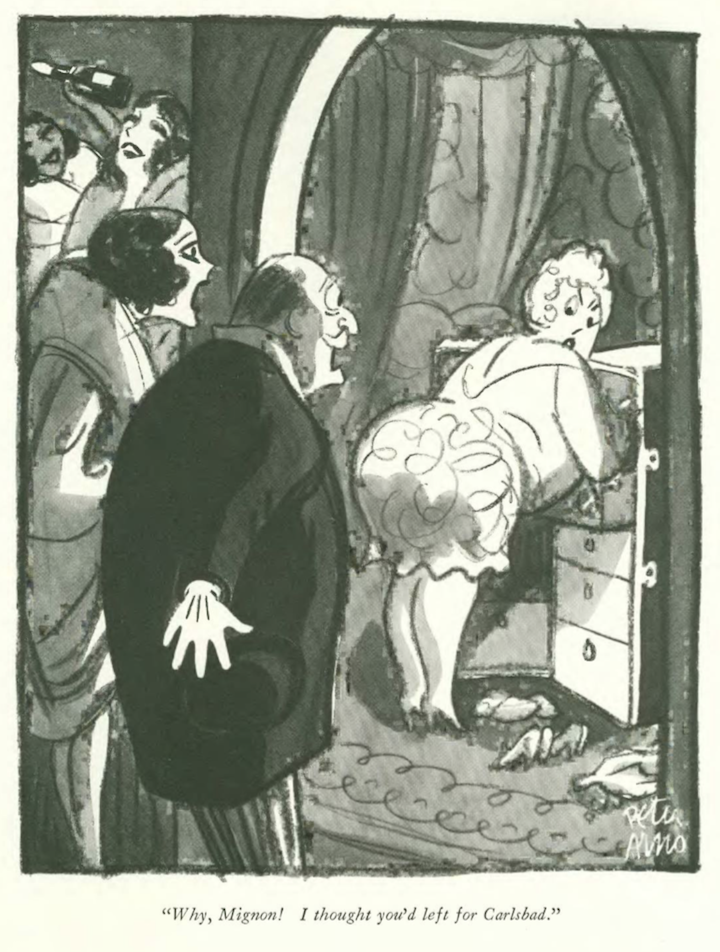
…we kick off the cartoons with Peter Arno at his best…
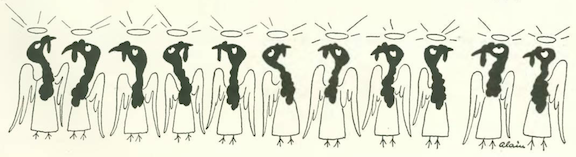
Alice Harvey gave voice to one woman’s thoughts on children…

Leonard Dove found spirits dwelling among dusty bones…

James Thurber gave us his take on the housewife eating bonbons trope…I’m not suggesting that Thurber was the first to illustrate this stereotype, but I’m not finding any references to housewives and bonbons predating the 1950s…something for a dissertation out there, if it hasn’t already been done…

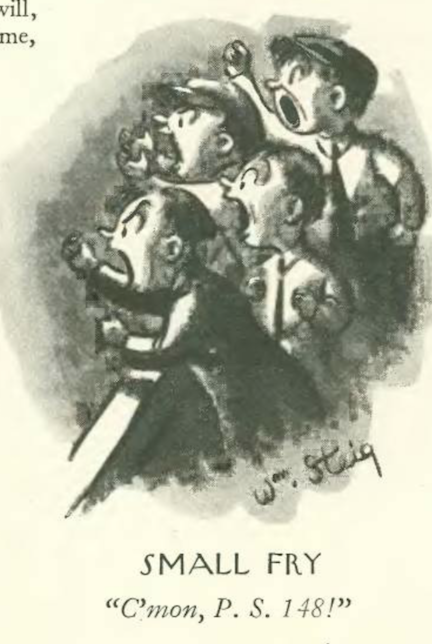
William Steig continued his exploration into the world of the Small Fry, offering up a rare image of baseball in the early New Yorker

…and we close the May 14 issue with Isadore Klein, and one sidewalk salesman looking for a bonafide endorsement…

…on to May 21, 1932…

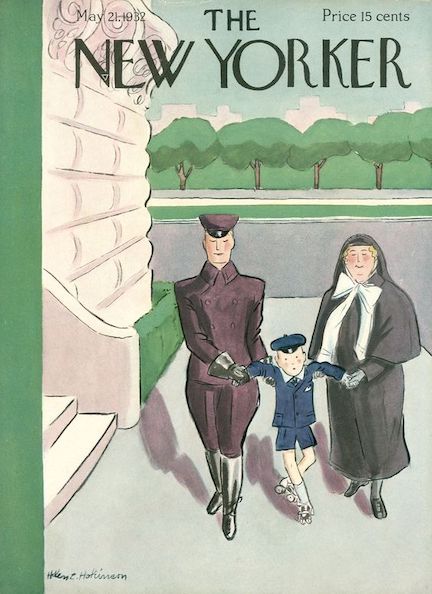
May 21, 1932 cover by Helen Hokinson.

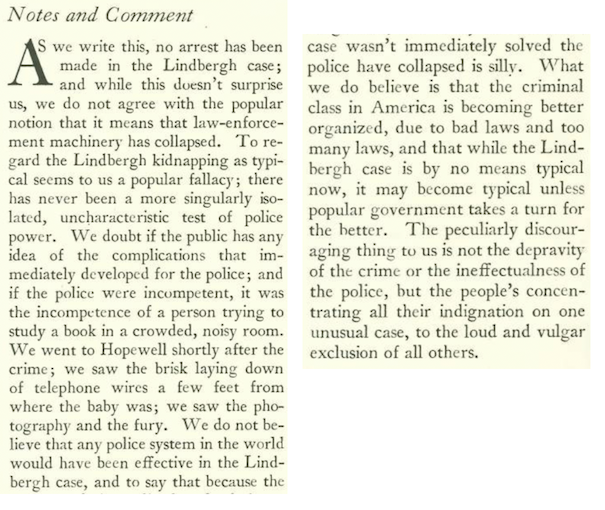
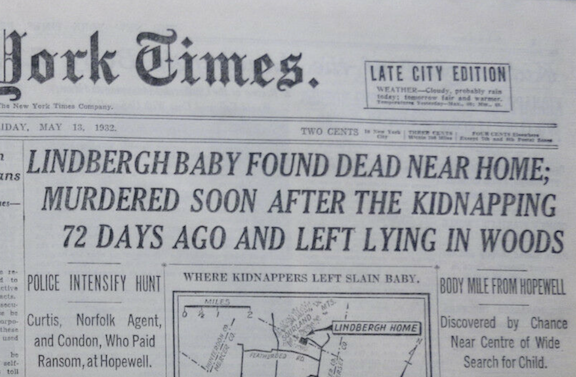
…where we find E.B. White sharing his thoughts on the Lindbergh kidnapping and its tragic result…

BAD NEWS ON THE DOORSTEP…News of the death of Charles and Anne Lindbergh’s kidnapped baby transfixed the country in the spring of 1932. (New York Times)

 *  *  *

No Immaculate Conception, This

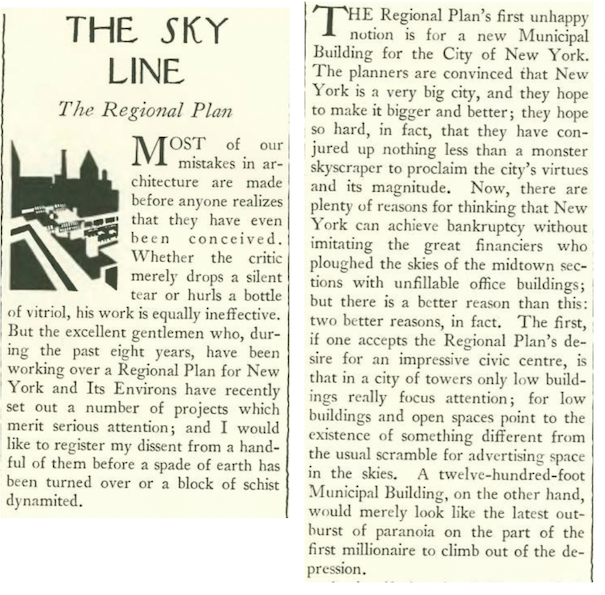
It must have been hard to be Lewis Mumford, so knowledgable in the arts, architecture and city planning, and yet rather helpless in encouraging thoughtful growth in a place that spouted buildings like mushrooms and paved roads (thanks to Robert Moses) almost as fast as cars could drive across them. These excerpts offer some of Mumford’s thoughts on the matter:

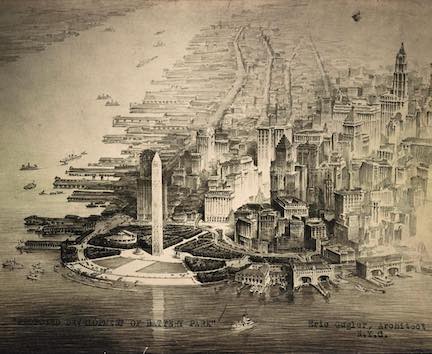
For Mumford’s second point, he soundly denounced a plan to place an obelisk in Battery Park. The 1929 proposal called for an 800-foot obelisk at the junction of Broadway and Greenwich Street:

OVER COMPENSATING, PERHAPS…Designed by architect Eric Gugler, the proposed granite obelisk for Battery Park would have been windowless, 80 feet square at its base and rising to a height of 800 feet. Thankfully it was never, ahem, “erected.” (NYC Urbanism @nycurbanism) 

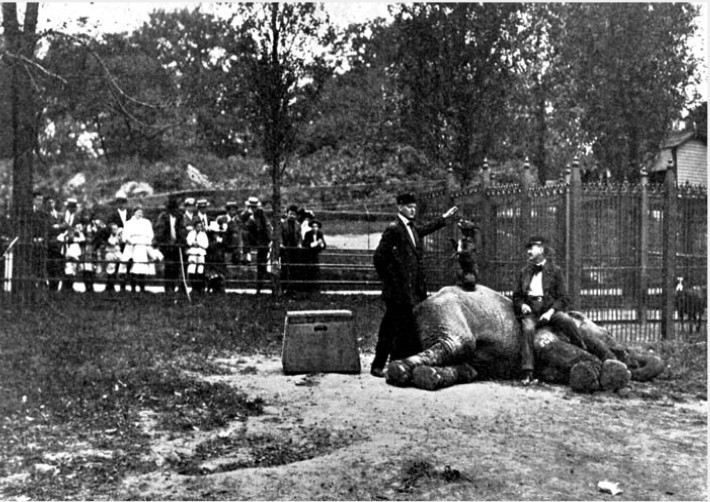
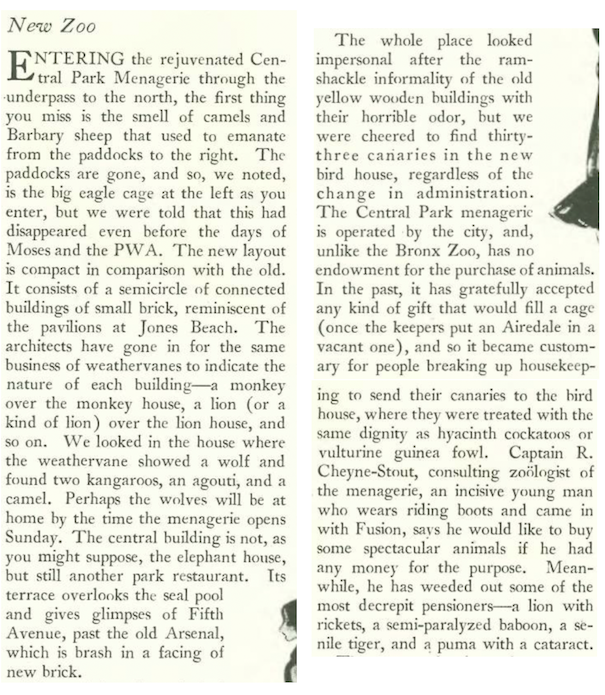
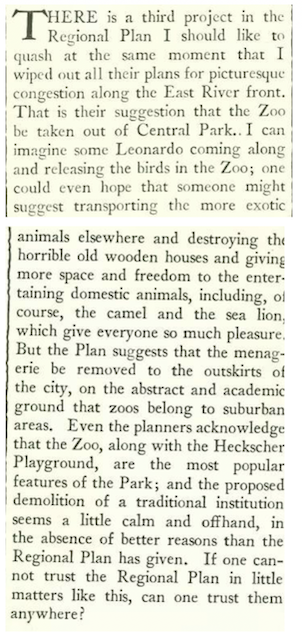
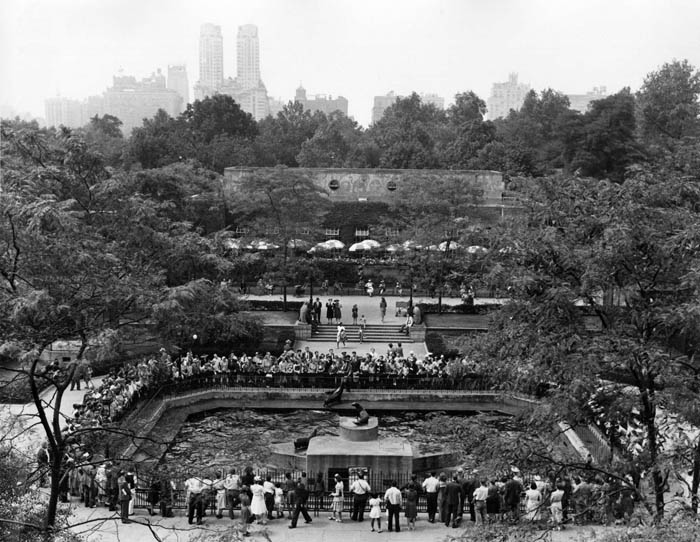
Mumford also addressed the matter of the Central Park Zoo, and its proposed relocation:

Happily for Mumford, and for former Gov. Al Smith (see caption), the zoo would be revitalized and remain in Central Park.

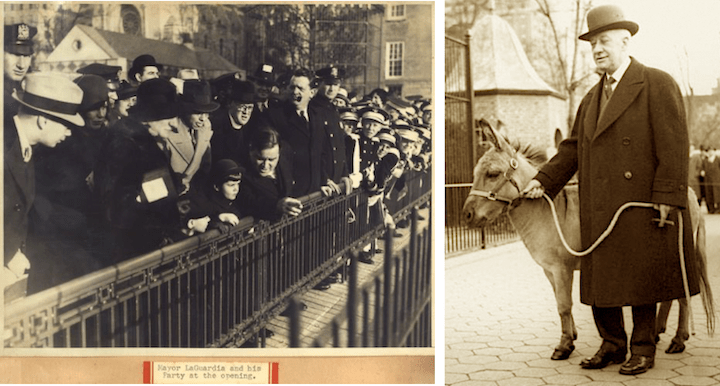
MIRACLES OF MOSES…Although Lewis Mumford would often be at odds with the powerful park commissioner Robert Moses, it was Moses who ensured that the Central Park Zoo would remain in the park. The remodeled zoo opened with great fanfare on December 2, 1934, and Moses’ old friend and political mentor Al Smith was designated honorary zookeeper. Smith, who lived just across from the zoo at 820 Fifth Avenue, visited almost daily. Structured as a quadrangle with a sea lion pool at its center, the Central Park Zoo is pictured above in August 1942. (nycgovparks.org)

 *  *  *

From Our Advertisers

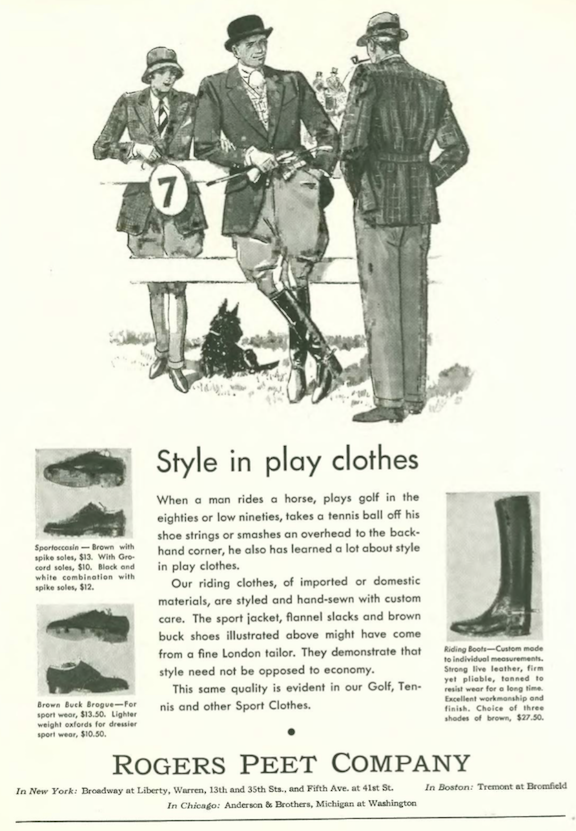
Many advertisers played to the Anglophilic tendencies of New Yorker readers, particular ones selling garments to the sporting gentry who aped their British cousins in such pursuits as polo and dressage…here we have “play clothes” from the menswear company Rogers Peet…

…and this swell get-up (below) from Henri Bendel…both Peet and Bendel were well-known in the 1930s. Cole Porter even referred to both companies in his songs…here is the refrain from “I Introduced” (from the 1919 show Hitchy-Koo):

…”I presented Mister Peet to Mister Rogers”…

and even more famously Porter wrote these lines in his 1934 song “You’re the Top”:

…”You’re a Bendel Bonnet / a Shakespeare Sonnet”…

…Rogers Peet closed its doors in the 1980s, and Bendel folded in 2019…

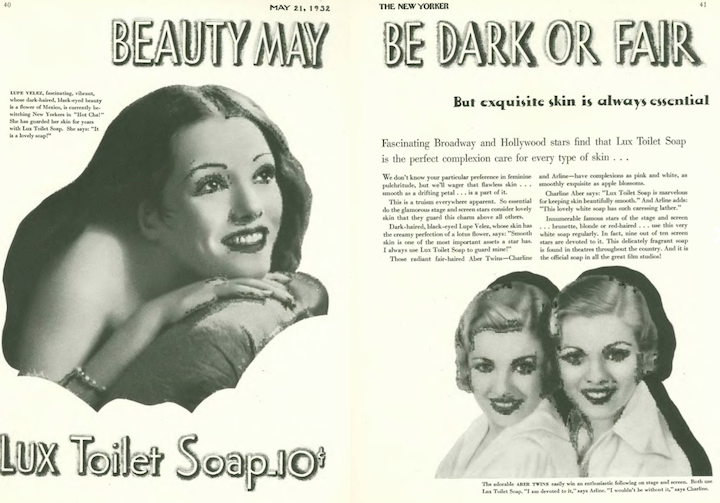
…even during the Depression, almost anyone could spring for a ten-cent bar of Lux soap, and over the years it was famous for its splashy ads (two-page spreads in The New Yorker were common) and dozens of celebrity endorsements…Lux isn’t as dominant in the U.S. today, but it remains a major international brand, now sold and marketed by the British multinational Unilever, especially in Asia…back to 1932, the Lux ad below featured Lupe Velez — known as “The Mexican Spitfire,” she was a big star in the 30s but is perhaps best known today for her sad, tragic death in 1944…the Lux ad also displayed the Aber Twins — a Ziegfeld act that featured Arlene and Charlene Aber who weren’t really twins but sisters born 18 months apart…

…if you lived in New York in the 1920s and early 30s you probably would have known about the sometime artist/designer Don Dickerman and his themed Greenwich Village restaurants — especially The Pirate’s Den — which inspired this line of highball glasses (yeah, Prohibition was still around, but who cared?)…sadly these glasses didn’t help save The Pirate’s Den, which thanks to the Depression went bankrupt in 1932…

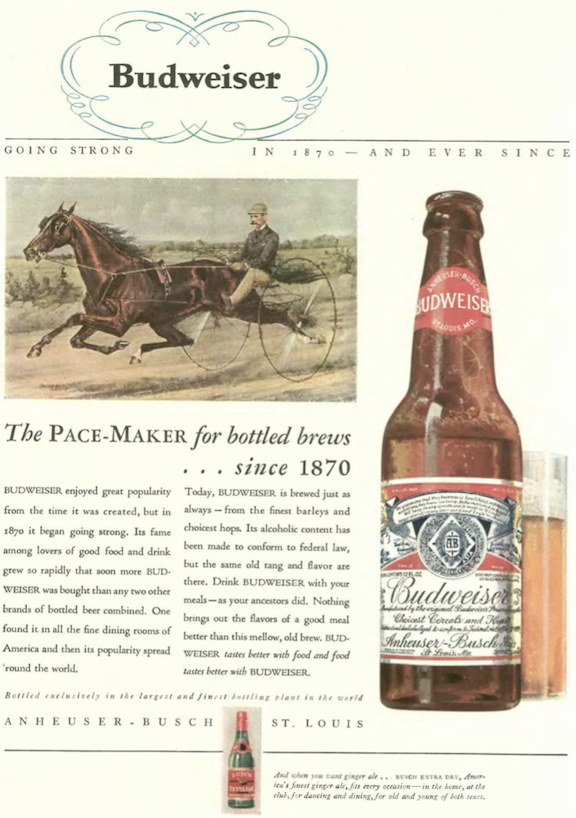
…speaking of Prohibition, Anheuser-Busch took advantage of laws that allowed for the production of near-beer containing one-half percent alcohol…

…if you couldn’t drink you could still eat to your heart’s content, that is if you were this fat cat and not some starving fellow in a bread line…

…on to our cartoons, Helen Hokinson took us pet shopping…

Garrett Price offered up a stereotype in a courtroom setting…

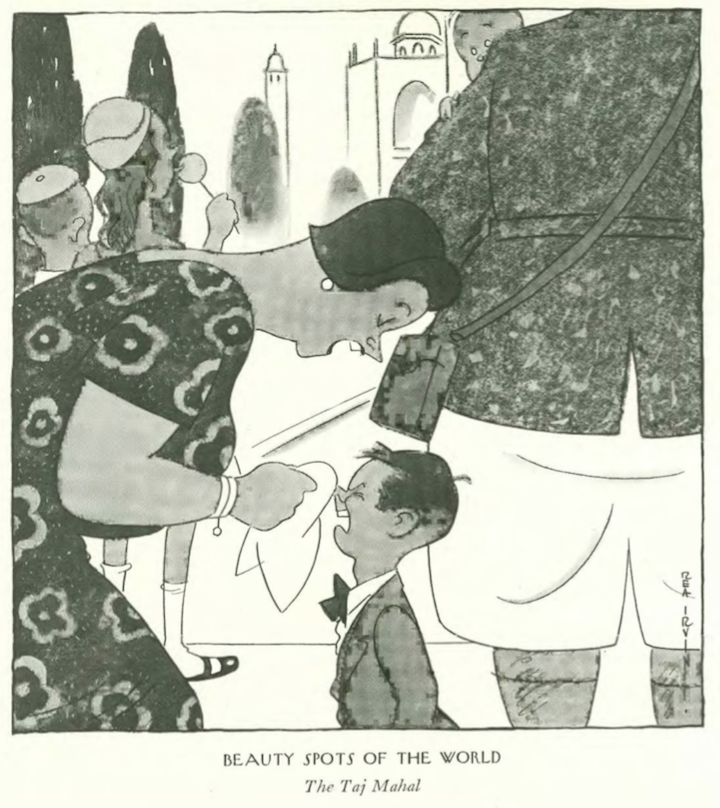
…and reminiscent of humor in the vein of Ralph Barton, Rea Irvin launched a series of the world’s “beauty spots”…

Next Time: A Visit to Minskyville…


The Grand Garbo

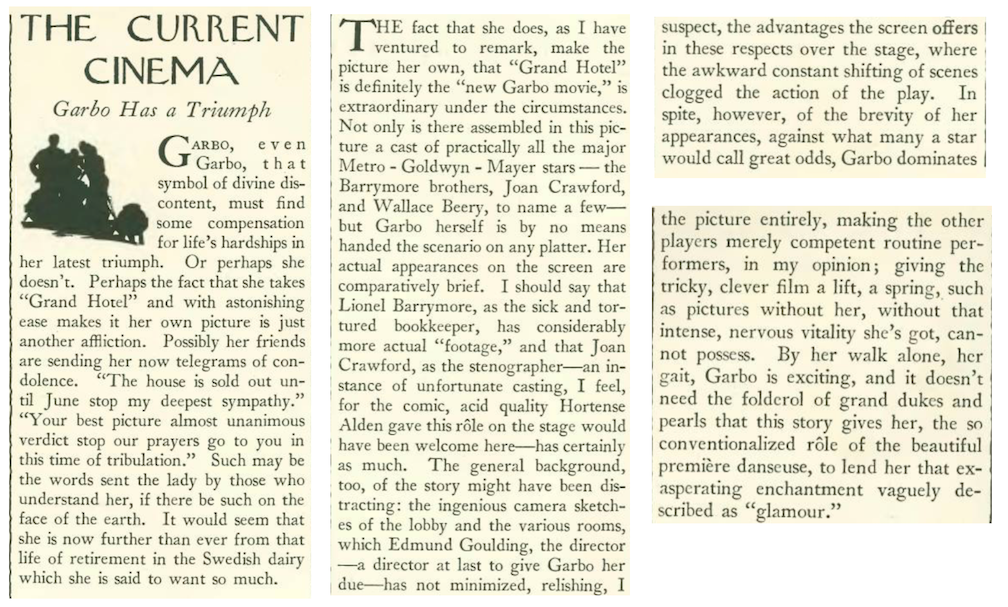
Joan Crawford was an MGM star by the 1930s, and according to many critics, an absolute scene-stealer in 1932’s Grand Hotel. However, The New Yorker’s film critic John Mosher saw Garbo, and only Garbo, in this Academy Award-winning pre-code drama.

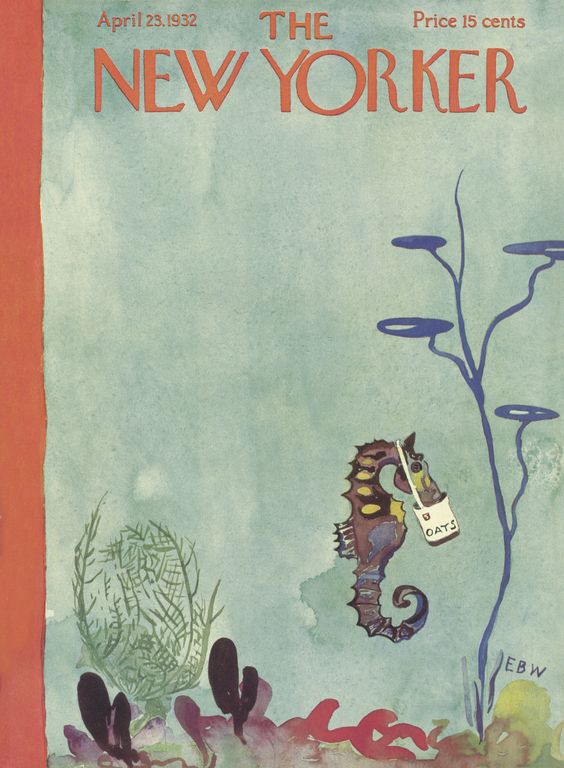
April 23, 1932 cover by E.B. White. Although White’s friend and early office mate James Thurber had been contributing drawings for more than a year, it was White who would land the first cover—his only one (Thurber’s first cover would come in 1936). Maria Popova (brainpickings.org) shares this excerpt from a 1969 Paris Review interview, during which White explained to George Plimpton: “I’m not an artist and never did any drawings for The New Yorker. I did turn in a cover and it was published. I can’t draw or paint, but I was sick in bed with tonsillitis or something, and I had nothing to occupy me, but I had a cover idea—of a sea horse wearing a nose bag. I borrowed my son’s watercolor set, copied a sea horse from a picture in Webster’s dictionary, and managed to produce a cover that was bought. It wasn’t much of a thing. I even loused up the whole business finally by printing the word ‘oats’ on the nose bag, lest somebody fail to get the point.”

Greta Garbo’s previous films hadn’t exactly wowed Mosher, but the gossip he was hearing even before he screened Grand Hotel suggested it was not to be missed. Mosher touted the unseen film (in the April 16 issue), expressing his hope that the rumors would prove true—he feared Garbo would quit the business altogether and leave the country if she didn’t land a hit. His fears were laid to rest:

Adapted from the 1929 German novel Menschen im Hotel by Vicki BaumGrand Hotel is considered the first all-star epic. The brainchild of MGM’s production head Irving Thalberg, the film proved a triumph for director Edmund Goulding, who somehow managed to direct five leading roles into one film classic.

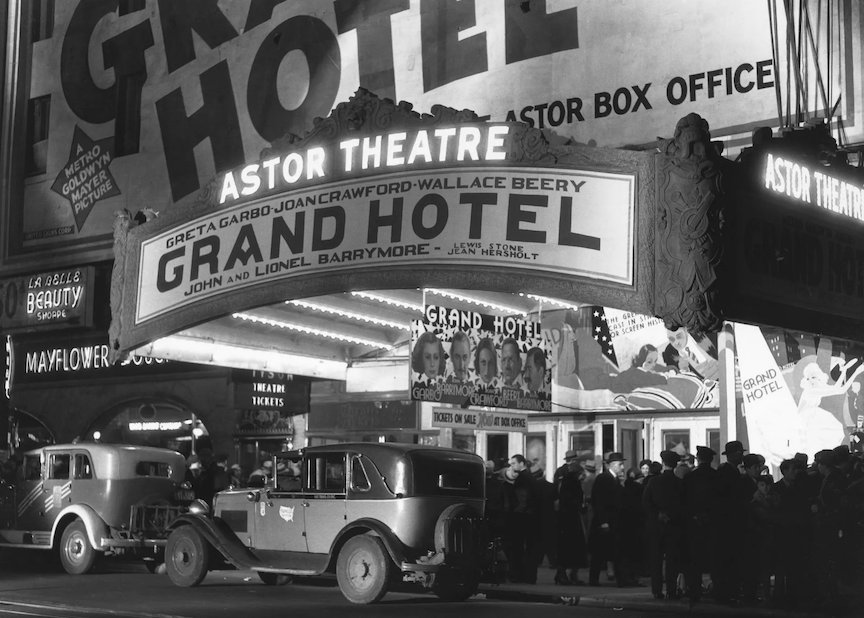
GRAND OPENING…The April 12, 1932 opening of Grand Hotel at Broadway’s famed Astor Theatre was much anticipated by critic John Mosher and pretty much everyone else. (ny.curbed.com)
STELLAR CAST…Set at a luxurious Berlin hotel, Grand Hotel brought together the stories of five seemingly unrelated lives. Clockwise, from top left, crooked industrialist Preysing (Wallace Beery), trades innuendos with an ambitious stenographer, Flaemmchen (Joan Crawford); Baron Felix von Gaigern (John Barrymore), a once wealthy man fallen on hard times, supports himself by stealing from vulnerable marks like the depressed ballerina Grusinskaya (Greta Garbo), and also teams up with a gravely ill accountant (Lionel Barrymore, John’s real brother, not pictured here); hotel entrance from the film; MGM movie poster deftly juggled the film’s five big stars; advertisement from the April 16, 1932 New Yorker made much of the film’s star power. (Wikipedia/IMDB)
THE OTHER BIG STAR in Grand Hotel was the luxurious Art Deco set created by Cedric Gibbons. Centered on the hotel’s reception desk, the set allowed filming in 360 degrees. (IMDB)

And let’s not forget that it was in this film Garbo famously uttered “I want to be alone” — it ranks number 30 in AFI’s 100 Years…100 Movie Quotes. In 2007 Grand Hotel was selected for preservation in the United States National Film Registry by the Library of Congress.

* * *

She’s Back

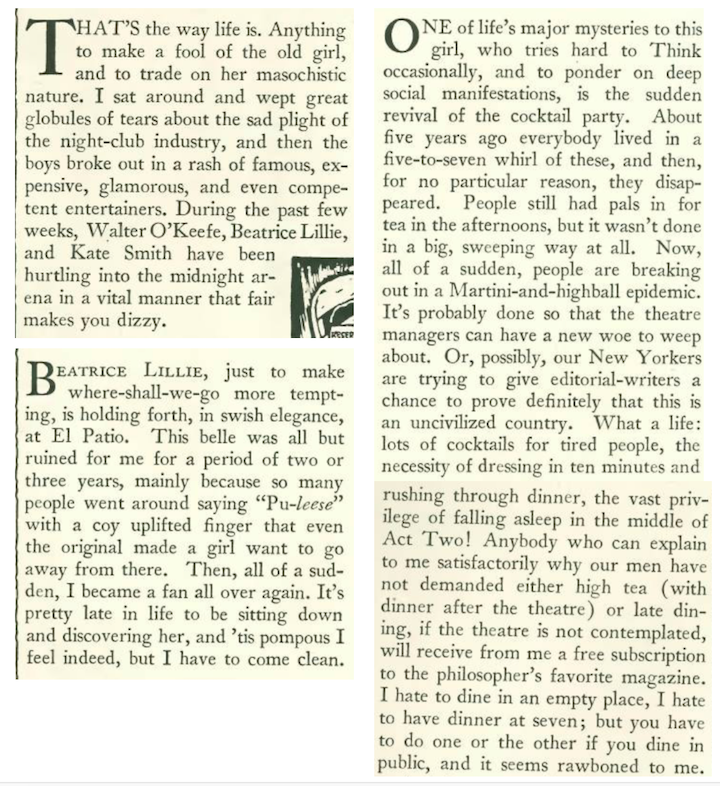
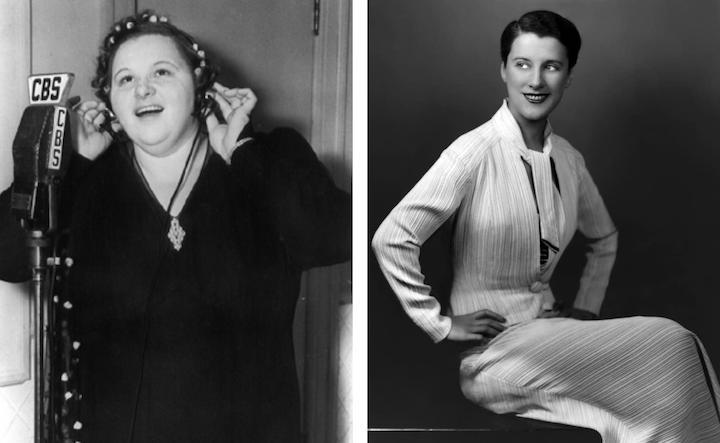
Lois Long aka “Lipstick” turned in yet another “Tables for Two,” even though she had abandoned that column as a regular feature two years earlier. Unlike those earlier columns, Long seemed to have had her fill of the night life, but occasionally she found a diversion or two worth mentioning. She also offered her thoughts about the decline of civilization, indicated by such behaviors as dining at the early hour of 7 p.m.—”rawboned” she called it…

NIGHT LIGHTS…Singer Kate Smith and comedic performer Beatrice Lillie managed to keep Lois Long awake in the wee hours of nightclub entertainments. (katesmith.org/The Poster Corp)

*  *  *

Notes, and More Notes

Despite his cover contribution, and his continued presence in the “Notes and Comment” section, the year 1932 is regarded as one of E.B. White’s leanest as a full-time writer for The New Yorker. According to Scott Elledge in E.B. White: A Biography, White published only a few “Talk” pieces or signed contributions. With a toddler about the house (Joel White had just turned 1 the previous December), White and wife Katharine enjoyed what Elledge describes as perhaps “the happiest of their years together, “able to enjoy fully their professional and private lives in the city they both loved.” So perhaps that explains this particular “Notes” entry for the April 23 issue. Still, it’s good stuff:

(Note Otto Soglow’s Tammany-themed spot cartoon — the political machine was still chugging along, but its days were numbered)

 *  *  *

From Our Advertisers

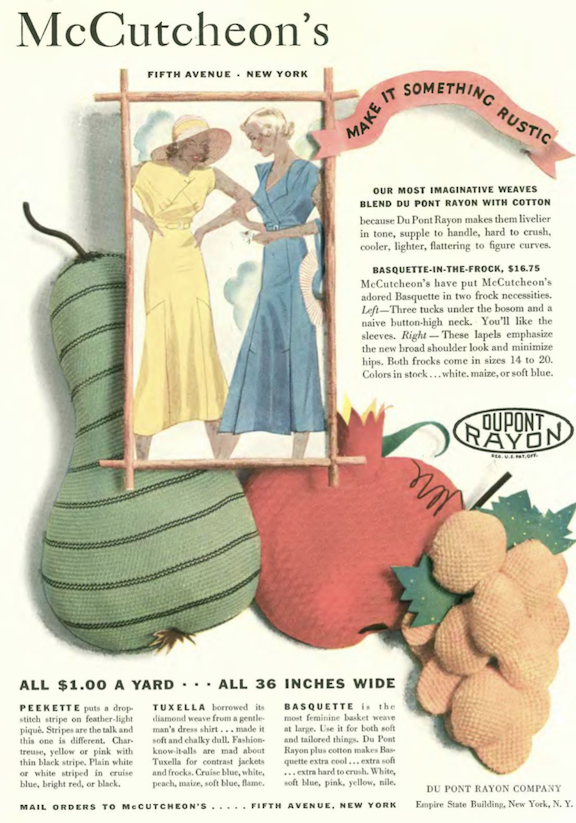
We begin with this colorful ad from McCutcheon’s to brighten our day…

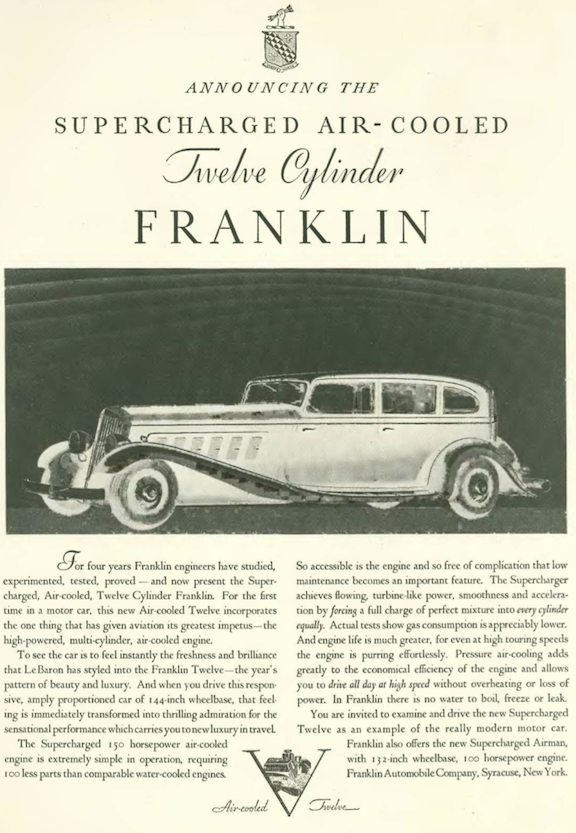
…the Franklin Automobile Company responded to competition from other luxury car makers by introducing its own 12-cylinder model, the only American car to be powered by a 12-cylinder air-cooled engine (according to the H.H. Franklin Club)…

…introducing a 12-cylinder luxury car was not a good move in 1932—one of the worst years of the Depression—and the company folded by 1934…but what a swell-looking car…

(Courtesy H.H. Franklin Club)

…one innovation that would stick around, however, was the lighted refrigerator, something to brighten those dim days of 1932, that is if you could even afford an electric fridge…

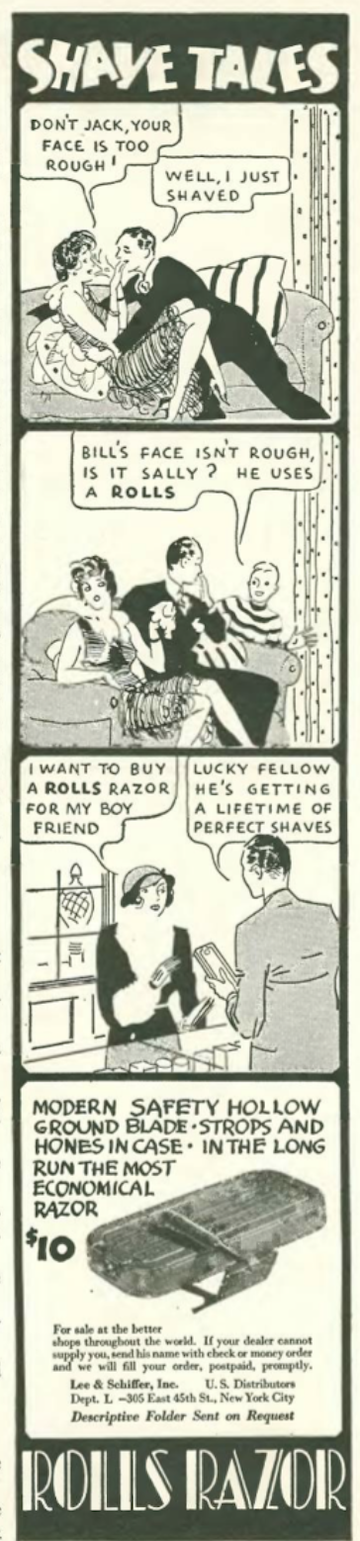
…named to evoke the luxury automobile, the British-made Rolls Razor made its debut in the back pages of The New Yorker with this panel cartoon ad featuring a hapless suitor and his girlfriend’s nosy kid brother…

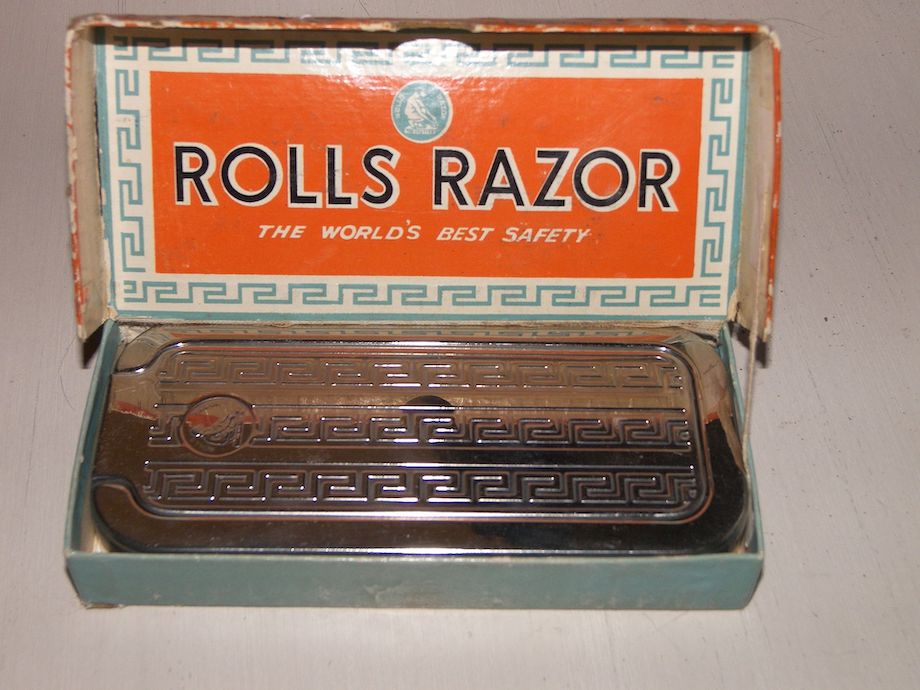
…the razor came in a rigid case enclosed by two detachable lids; one carried a sharpening stone and the other a leather strop. When a lid was removed, the razor’s oscillating a handle drove a shaft along the frame, pushing the solid, hollow ground blade forward against the stone or dragging it against the strop…

…and here’s an ad you don’t see often in The New Yorker…one featuring children…

…on to our cartoonists, we have more kids via William Steig’s Small Fry…

James Thurber continued to ply his cartooning craft with one of his favorite subjects:

…here is a more detailed look at the above…

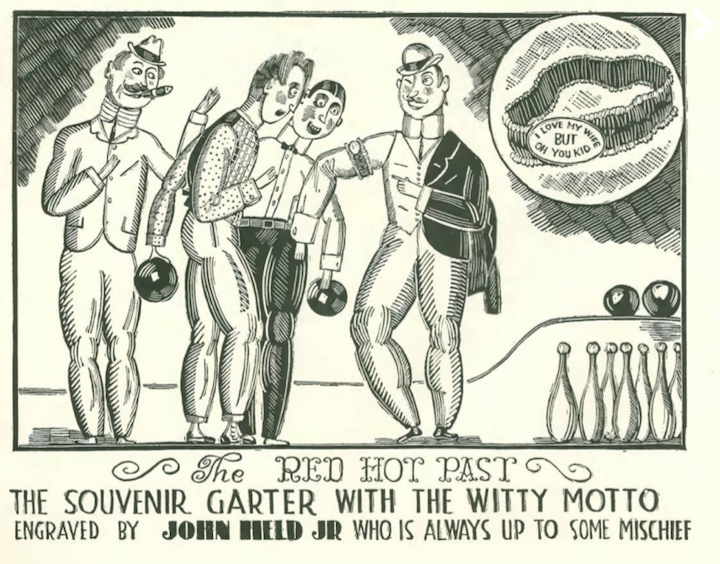
John Held Jr. continued to take us back to those saucy days of yore…

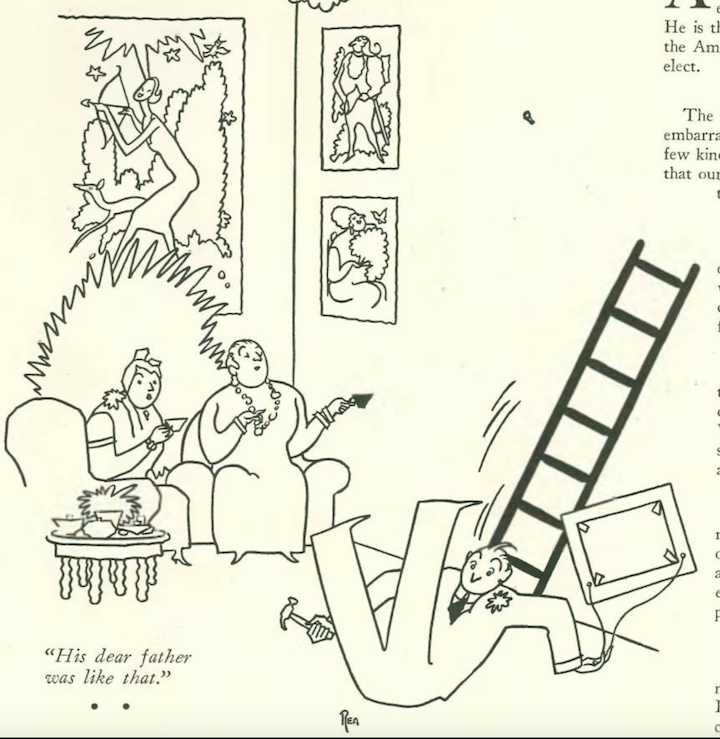
Gardner Rea sketched this hereditary pratfall…

E. McNerney gave us a woman whose beau was in alliance with architecture critic Lewis Mumford

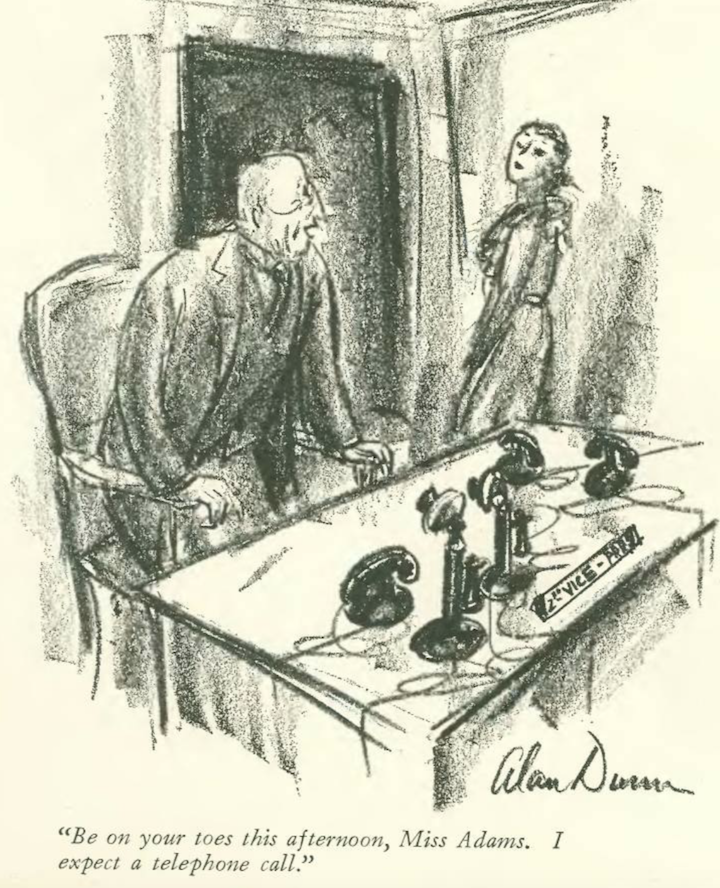
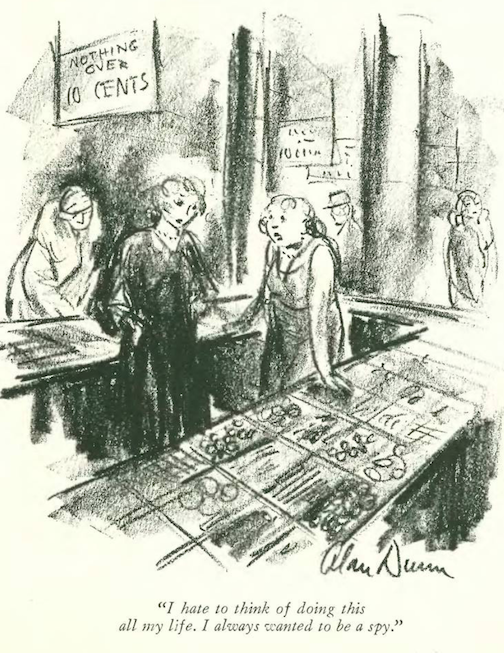
Alan Dunn looked in on the fast-paced world of business…

…and Leonard Dove takes us out on a droll note…

Next Time: The Quiet Man…


MoMA Sees The Future

If you love modern architecture, then Feb. 10, 1932 should be an important date on your calendar, for on that date the Museum of Modern Art opened Modern Architecture: International Exhibition.

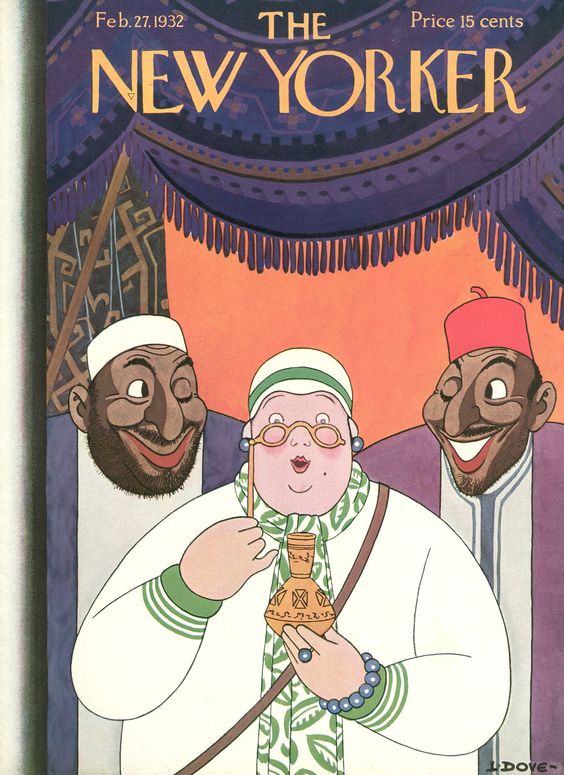
Feb. 27, 1932 cover by Leonard Dove.

Curated by Philip Johnson and Henry-Russell Hitchcock, the exhibition introduced 33,000 visitors (during the exhibition’s six-week run) to the “International Style,” an emerging architectural style that would utterly transform New York and thousands of cities around the world after the Second World War. In a catalogue prepared for the exhibition, Johnson and Hitchcock defined what this style was all about:

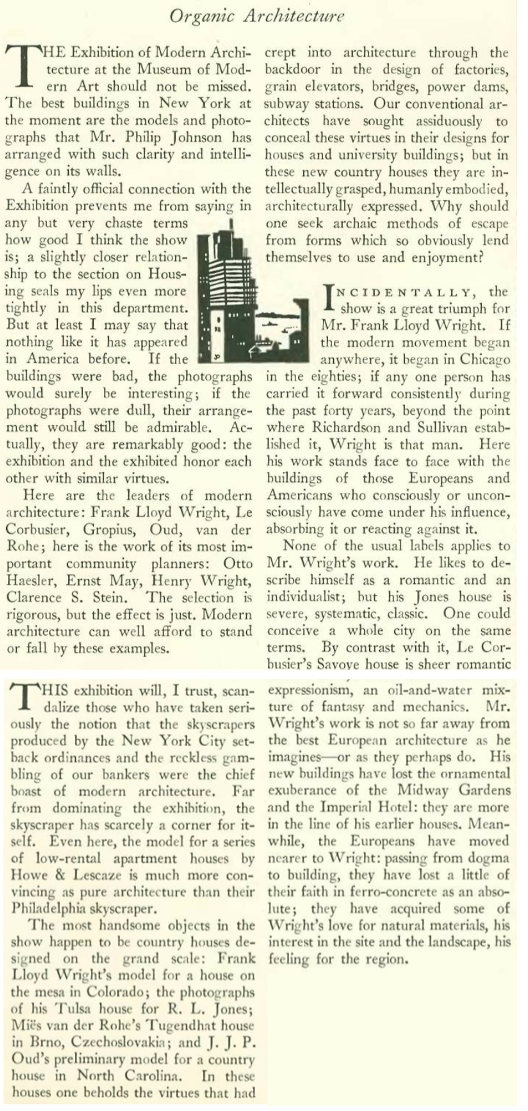
Architecture critic Lewis Mumford welcomed the exhibition, wryly noting that the “best buildings in New York” at the time were the models and photographs “arranged with such clarity and intelligence” by Philip Johnson on MoMA’s walls. An excerpt:

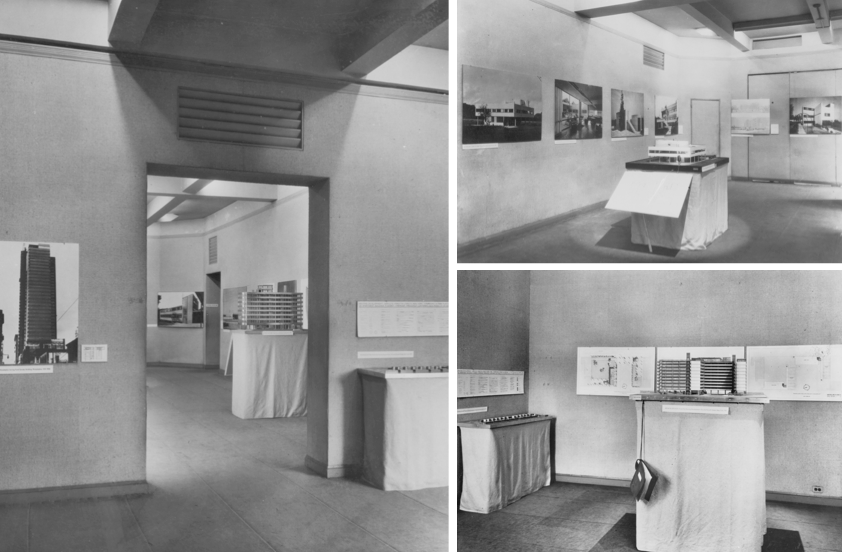
FORM FOLLOWED FUNCTION…MoMA’s Modern Architecture: International Exhibition, opened on Feb. 10, 1932 in the museum’s first home, New York’s Heckscher building on Fifth Avenue. There was nothing fancy about these gallery spaces, but the exhibits wowed The New Yorkers’s Lewis Mumford, including a model of Le Corbusier’s Villa Savoye at top right. (MoMA)
HANDSOME OBJECTS…was how Lewis Mumford described works in the exhibition he singled out for praise, including, from top, Mies van der Rohe’s 1930 Villa Tugendhat, Frank Lloyd Wright’s 1929 Jones residence in Tulsa, and Le Corbusier’s Villa Savoye. At left, the cover of the exhibition catalogue. (MoMA/Wikipedia/dezeen.com)

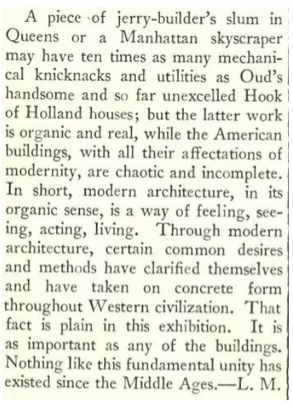
Mumford concluded his review with this bold observation:

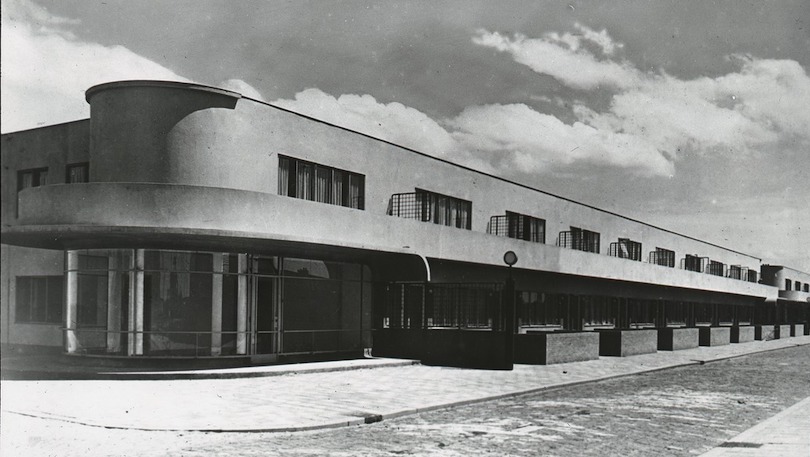
100 PERCENT ORGANIC…View of Hook of Holland housing complex in Rotterdam, designed by J.J.P. Oud, 1926-1927. (umass.edu)

 *  *  *

Out of the Trenches

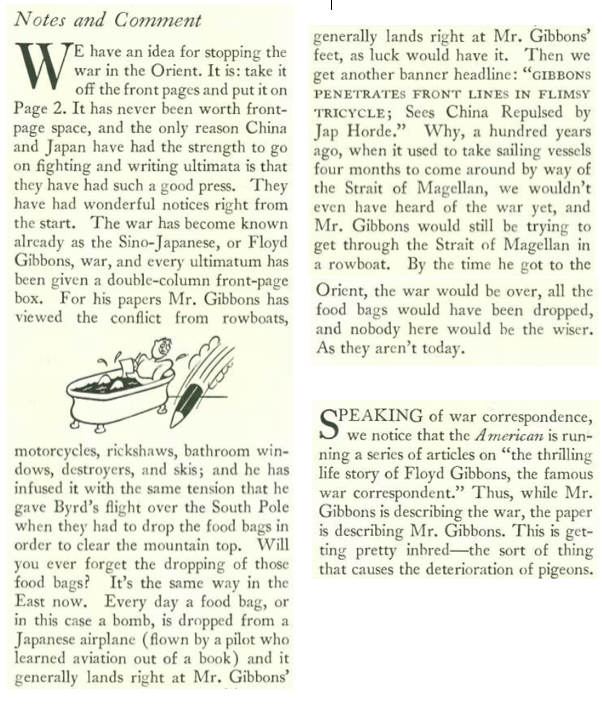
Floyd Gibbons (1887–1939) was a colorful, fast-talking war correspondent known for his derring-do as a reporter for the Chicago Tribune during World War I (losing an eye in an attempt to rescue an American marine) and later as a radio commentator and narrator of newsreels. His celebrity would even earn him a star on the Hollywood Walk of Fame. For all his death-defying exploits, Gibbons would die at home, of a heart attack, at the tender age of 52.

In his “Notes and Comment” column, E.B. White suggested that Gibbon’s fame had a little help from some friends…

Screen Shot 2021-03-22 at 10.15.43 AM

azu_ms413_b21_f40_drachmanmorocco4
IN HIS ELEMENT…Floyd Gibbons photographed in 1925 while in Morocco covering the Riff War. Seated to the left is journalist and author Rosemary Drachman, who covered the war with Gibbons. (University of Arizona Libraries)

 *  *  *

Love and War

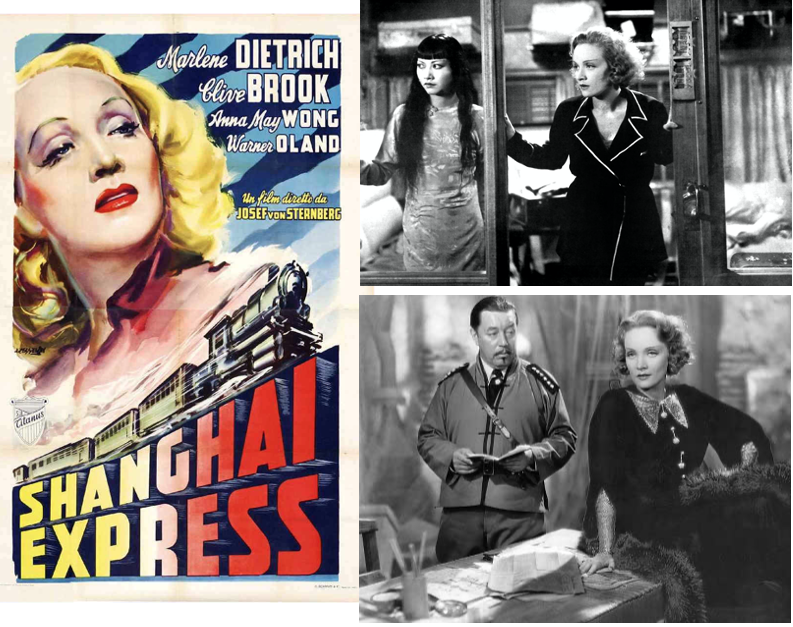
The fourth of seven films Josef von Sternberg and Marlene Dietrich made together, Shanghai Express was a critical success (nominated for three Oscars, winning one for cinematography) for Sternberg as well as for Dietrich and Anna May Wong. This pre-code drama was about a notorious woman (Dietrich, who else) who rides a train through the perils of a Chinese civil war with a British captain (Clive Brook) whom she loves. Critic John Mosher takes it from there:

Screen Shot 2021-03-22 at 9.44.59 AM

Screen Shot 2021-03-30 at 4.32.39 PM
LOOMING EVER LARGER…Marlene Dietrich’s image dominated this poster for Shanghai Express, which starred Dietrich and Anna May Wong (top right) as well as Clive Brook and Warner Oland. Oland, pictured at bottom right with Dietrich, was a (non-Asian) Swedish-American actor most remembered for playing Chinese and Chinese-American characters, including his role as Charlie Chan in 16 films between 1931 and 1937. (IMDB)

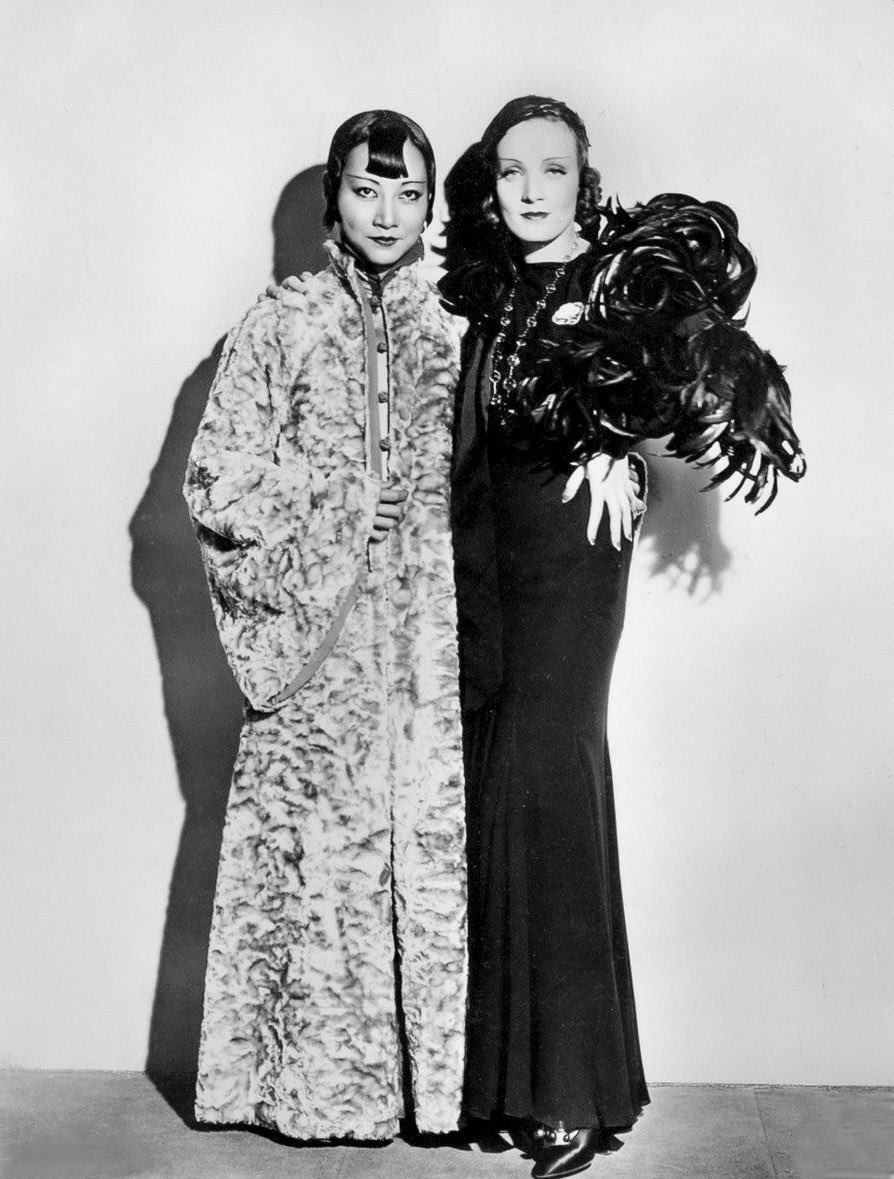
Dietrich and Wong were well acquainted when they came together to make Shanghai Express. It was rumored the two had a romantic relationship when Wong visited Europe in 1928, a rumor that tarnished Wong’s public image (but seemed to have little effect on Dietrich’s).

ALL DRESSED UP…Anna May Wong and Marlene Dietrich pose in Travis Banton costumes for 1932’s Shanghai Express. (Twitter)

 *  *  *

From Our Advertisers

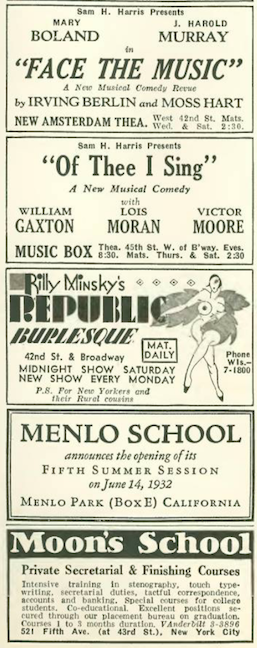
Looking at some advertisements from the Feb. 27 issue…here’s a clip from the back pages of some inexpensive sig ads promoting everything from Broadway to burlesque—Billy Minsky’s was by far the best known burlesque show in Manhattan. Note how the Minsky’s ad included the racy little drawing (hmmm, not for the kiddies) and the postscript at the bottom following “NEW SHOW EVERY MONDAY” — P.S. For New Yorkers and their Rural cousins… 

Screen Shot 2021-03-12 at 1.05.18 PM

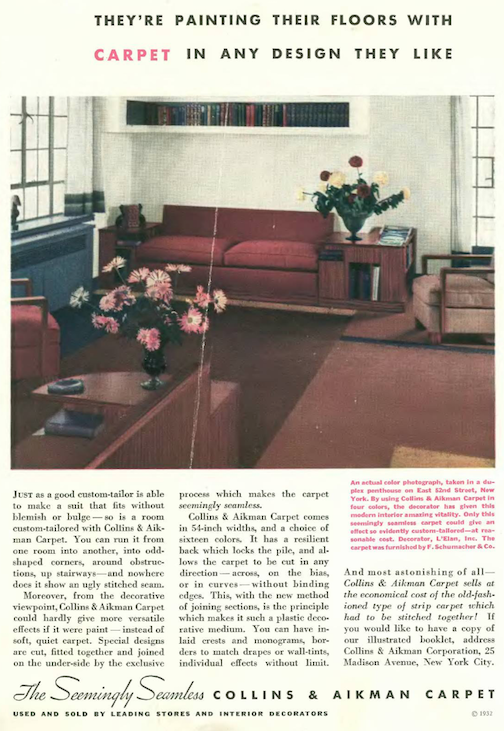
…MoMA wasn’t the only place you could find modern design, as this carpet ad suggested…

Screen Shot 2021-03-12 at 1.06.57 PM

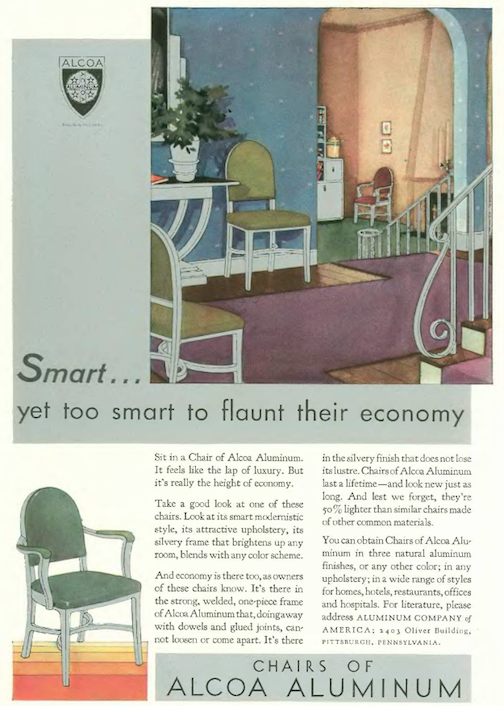
…the folks at Alcoa Aluminum were sticking with a more traditional look, even though they were marketing a very modern aluminum chair…you don’t see these much anymore…I mostly remember them reposing in rumpus rooms or church basements…

Screen Shot 2021-03-12 at 12.49.17 PM

…the makers of Nash automobiles were keeping with the times with new “Slip-Streamed” models “with lines and curves suggested by aeronautical design”

Screen Shot 2021-03-12 at 12.49.42 PM

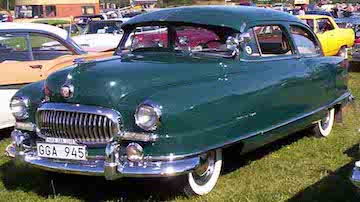
…my father’s first car was a used Nash — something similar to this 1951 Nash Statesman…

Nash_Stateman_2-Door_Sedan_1951

…Nash would acquire rival Hudson in 1954 to create American Motors Corporation, run by a man named George Romney (Mitt’s dad), who would make AMC a successful company before turning to politics (AMC would go on to make some truly weird, if not lovable vehicles, most notably the Gremlin)…and we segue into our cartoons with this ad for Sanka decaf coffee, illustrated by the New Yorker’s William Steig

Screen Shot 2021-03-12 at 12.59.44 PM

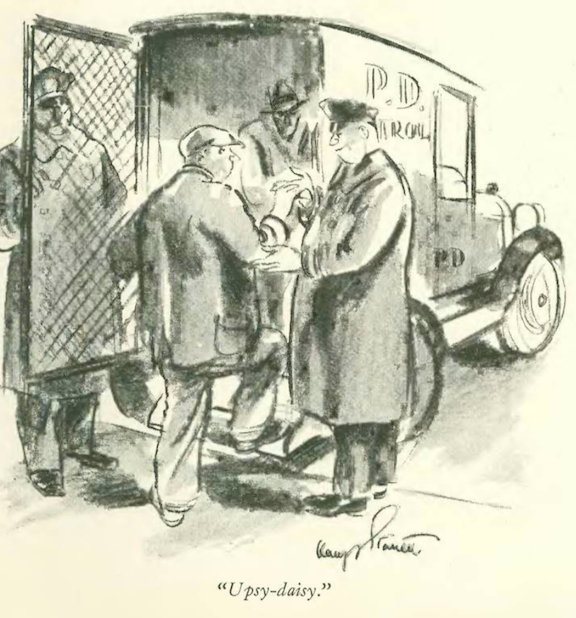
Kemp Starrett gave us a little paddy wagon humor…

Screen Shot 2021-03-12 at 12.57.08 PM

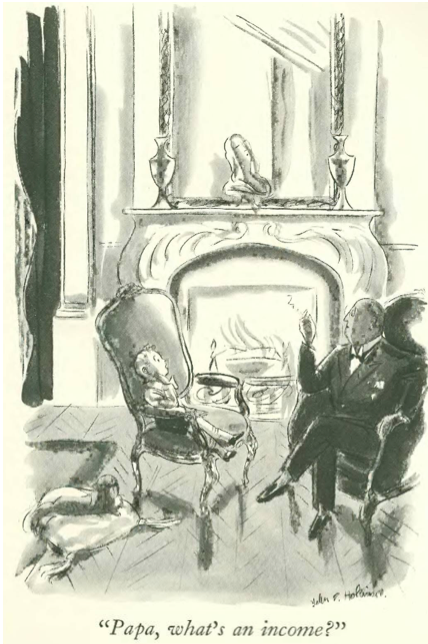
Helen Hokinson illustrated a tender moment between father and son…

Screen Shot 2021-03-22 at 10.19.15 AM

…and we close with James Thurber, and some wintertime fun…

Screen Shot 2021-03-12 at 12.53.54 PM

Next Time: The Milne Menace…


Winter Games

E.B. White was not known for his sports reporting, but when the Third Winter Olympic Games opened in Lake Placid, New York, on Feb. 4, 1932, it was White who represented The New Yorker at the first-ever winter games in the U.S.

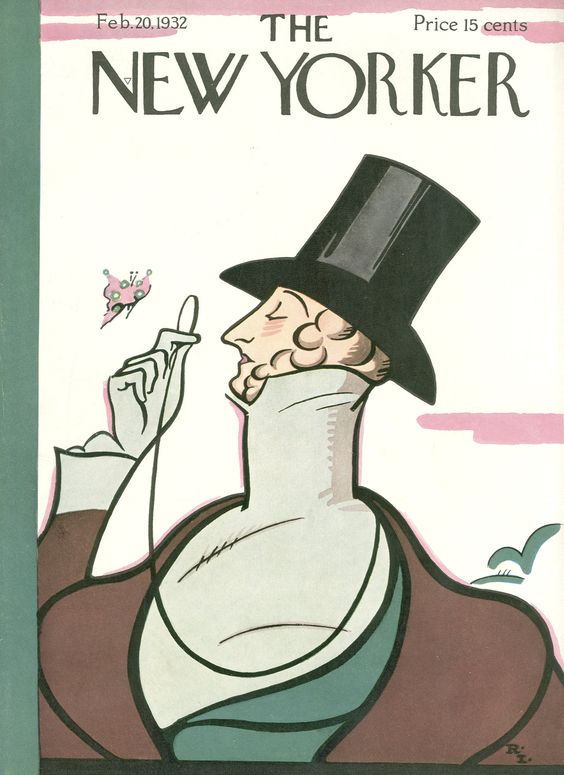
Feb. 20, 1932—seventh anniversary cover by, of course, Rea Irvin!

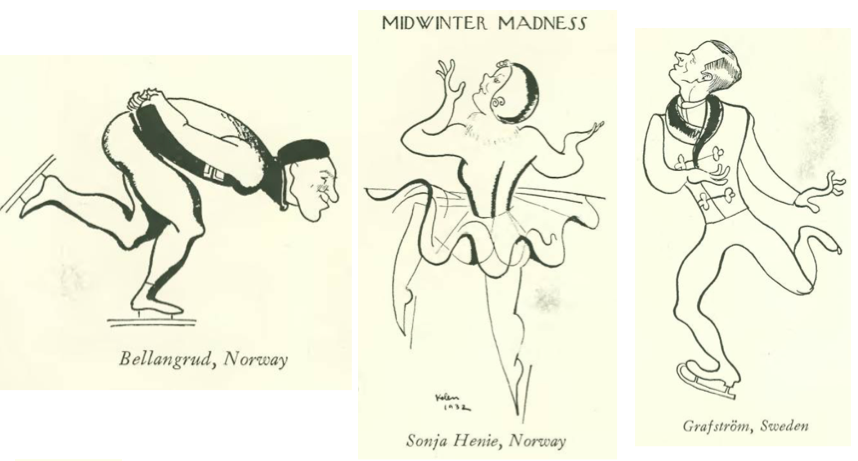
Famed caricaturist Emery Kelen (1896-1964) provided the artwork for White’s account of the games…

…which was featured in the “A Reporter at Large” section under the title, “Midwinter Madness.” White opened the piece with some observations on Godfrey Dewey, head of the Lake Placid Club, and son of Melvil Dewey, inventor of the Dewey Decimal System. It seems that Dewey wanted the Olympic posters printed in the simplified Dewey system of spelling:

BEFORE BOB COSTAS…Opening ceremonies were a far simpler affair. Clockwise, from top left, the III Winter Olympic Games officially opened on Feb. 4; Sonja Henie of Norway and Karl Schäfer of Austria were gold medal winners in ladies’ and men’s singles figure skating; the rather uninspired official poster for the event; as a pusher in the four-man bobsleigh team, Edward Eagan (center) won the gold medal with the USA I team. Twelve years earlier Eagan had been crowned Olympic champion in the light heavyweight boxing competition at Antwerp. He was the first and only person to win gold at both the summer and winter games. Note the leather helmets and the fact that, unlike today, the sled is actually a real sled. (olympic.org/Wikipedia)

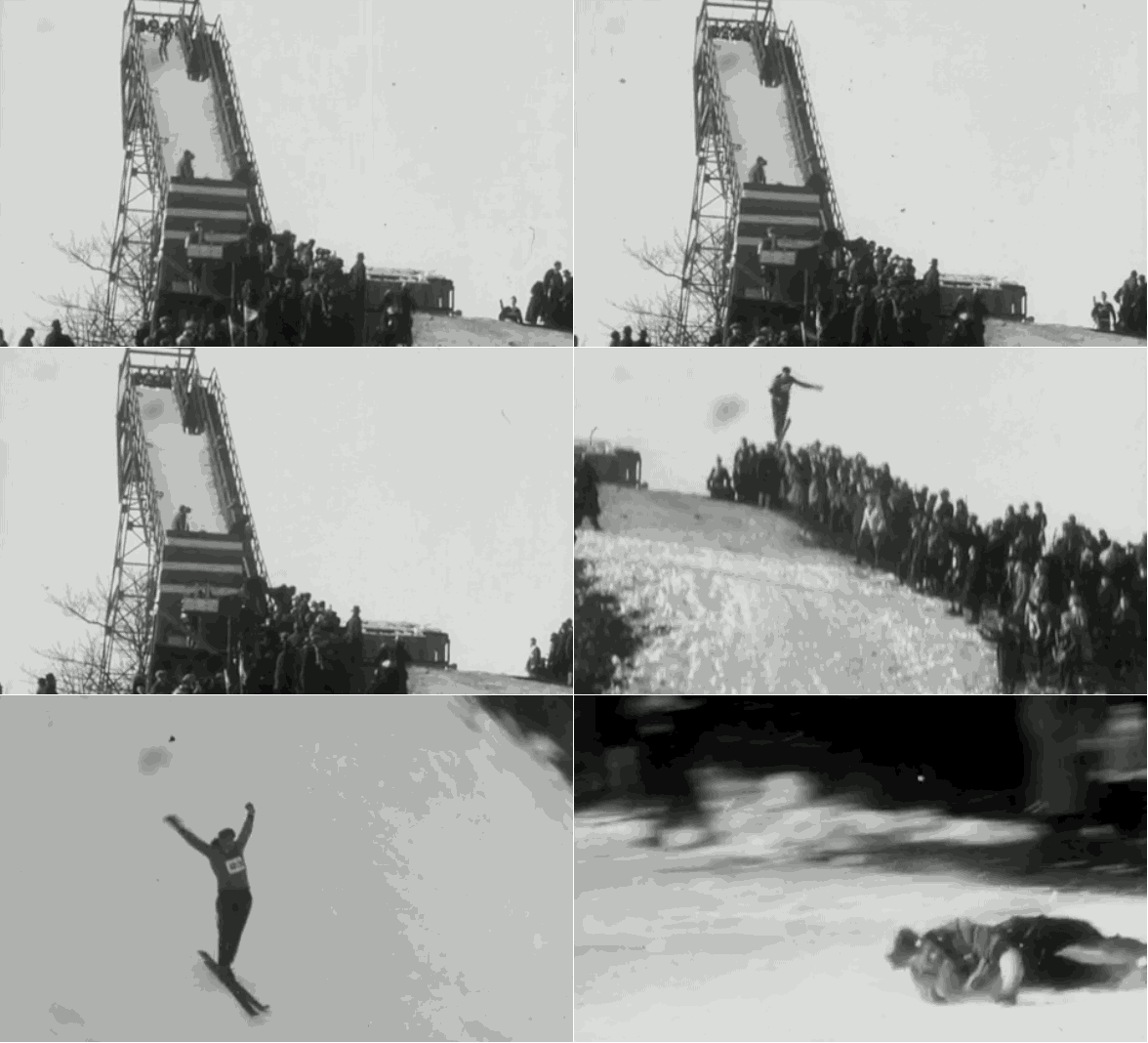
True to form, White set the stage for the games by describing his train journey to Lake Placid. At the games he observed dogsled teams—dogsled racing was one of nine sports featured at the III Winter Olympics—and marveled at the derring-do of the ski-jumpers.

Writing in the Atlantic (Feb. 10, 2014), Philip Bump described the 1932 Games as looking “way more fun and dangerous” than today’s games, “like a group of guys who set up a competition in the woods behind their house. The Jackass Games, really.” They were a lot smaller, too. The 2018 Olympics in Pyeongchang, South Korea featured entrants from 92 countries participating in 102 events over 15 disciplines. By contrast, just 17 countries participated the 1932 games.

HOVERING HANS…Norwegian Olympic skier Hans Vinjarengen took Bronze at the 1932 games. At right, ski jump at Lake Placid. (olympic.com/Wikipedia)

And we close with this gif of an unidentified ski jumper at the ’32 games…

 *  *  *

Seeing Red

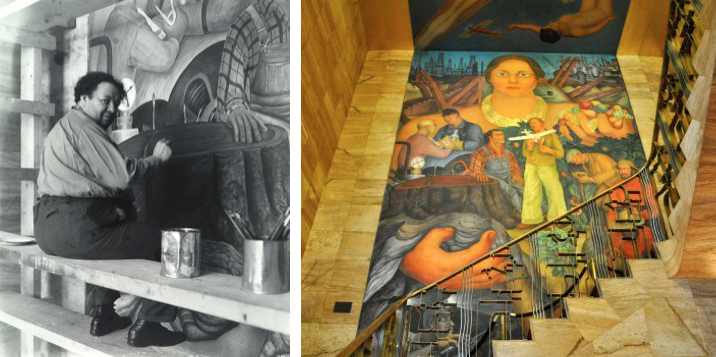
The Mexican painter Diego Rivera was sympathetic to the Soviet cause (with a Trotsky twist), but to the party faithful, painting a mural for some money-grubbing capitalists was unforgivable, as “The Talk of the Town” related…

NO GOODNIK…Left, Diego Rivera at work on Allegory of California at the San Francisco Stock Exchange Luncheon Club, 1931. At right, the mural still graces the stairwell of the building, now called “City Club.” (sfhistory.org).

 *  *  *

Thank Heaven For Little Smiles

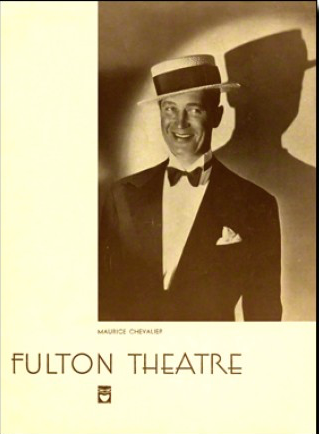
It is a challenge to find an image of Maurice Chevalier without his sunny smile, but as “The Talk of the Town” revealed, even the French crooner needed a break from all that mirth…

GRIN AND BEAR IT...Maurice Chevalier headlined an evening of song and dance at the Fulton Theatre in February 1932. (playbill.com)

 *  *  *

Survivor

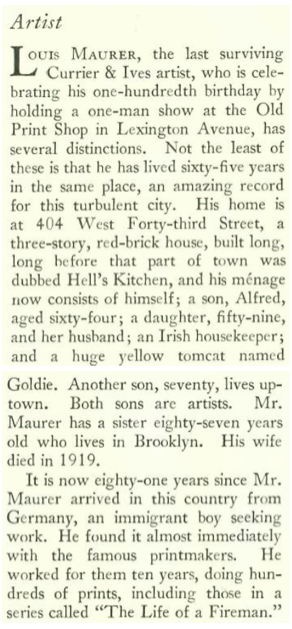
The last surviving artist of the old Currier & Ives print shop, Louis Maurer (1832–1932) celebrated his 100th birthday, and “The Talk of the Town” was there to fete the old man…

AMERICANA’S FINEST…Louis Maurer poses with one of his works on the centenary of his birth. (findagrave.com)

 *  *  *

Silence is Golden

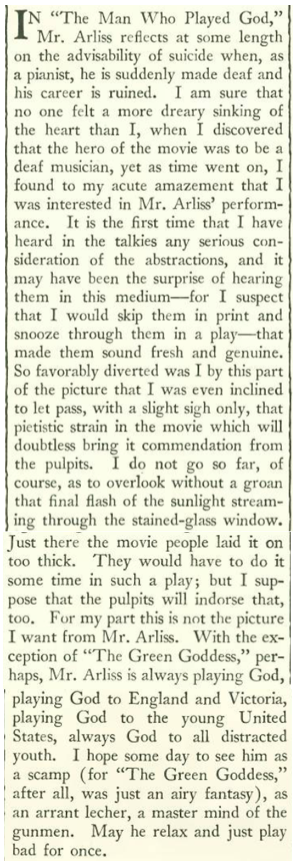
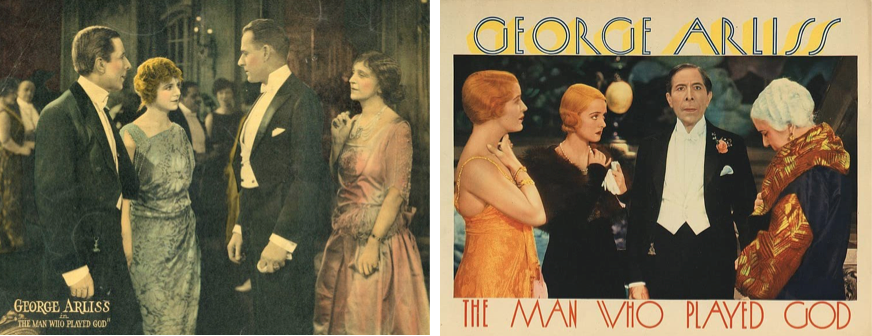
One of the older actors working in Hollywood, British actor George Arliss (1868–1946) was best known for his role in Disraeli (1929), and he is also credited with promoting the career of 23-year-old actress Bette Davis, who would have her breakout role in The Man Who Played God. This remake of a 1922 silent (that also featured Arliss) told the story of a concert pianist, Montgomery Royale, who believes his career is over when he loses his hearing. However, he finds a new purpose when he uses his lip-reading skills to help others, including himself when he calls off his engagement to Grace (Davis) after learning she is in love with another man. Critic John Mosher was impressed by Arliss, but found the film sanctimonious and wished the actor would play a baddie for a change.

TWO-TIMER…George Arliss appeared in both silent (1922) and talking (1932) versions of the The Man Who Played God. The latter film featured 23-year-old Bette Davis (second from left) in her breakout role. (IMDB)

DRAMA KING…Concert pianist Montgomery Royale (George Arliss) considers suicide when he loses his hearing in 1932’s The Man Who Played God. Arliss was the first British actor to win an Academy Award for his role as PM Benjamin Disraeli in 1929’s Disraeli. (IMDB)

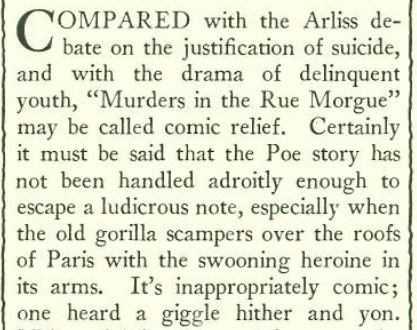
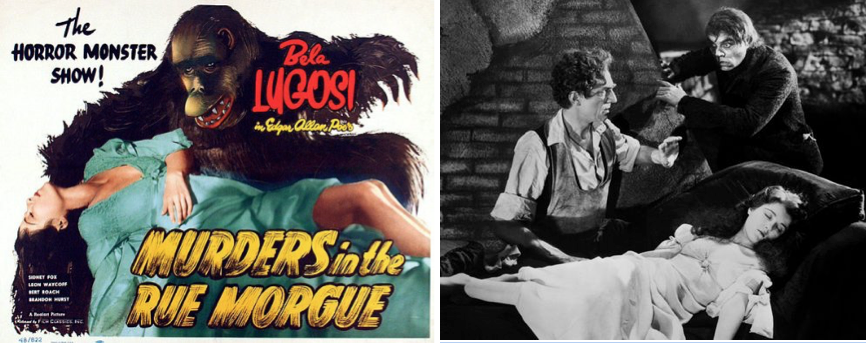
While Mosher found The Man Who Played God a bit too preachy, Murders in the Rue Morgue (1932) was way too campy to be taken seriously as a horror film. Thanks to his newfound Dracula fame, Bela Lugosi headlined the film, which debuted another young star, Arlene Francis (1907–2001), who would find her greatest fame in television from 1949 to 1983, most notably on the long-running quiz show What’s My Line?

HORROR MONSTER SHOW…or so the producers of Murders in the Rue Morgue (1932) claimed. Still image from the movie featured Bela Lugosi (left), Noble Johnson and Arlene Francis. (IMDB)

 *  *  *

From Our Advertisers

Planning a visit to England? Don’t be mistaken for a clod-kicking Yankee and get yourself over to Lord & Taylor’s…

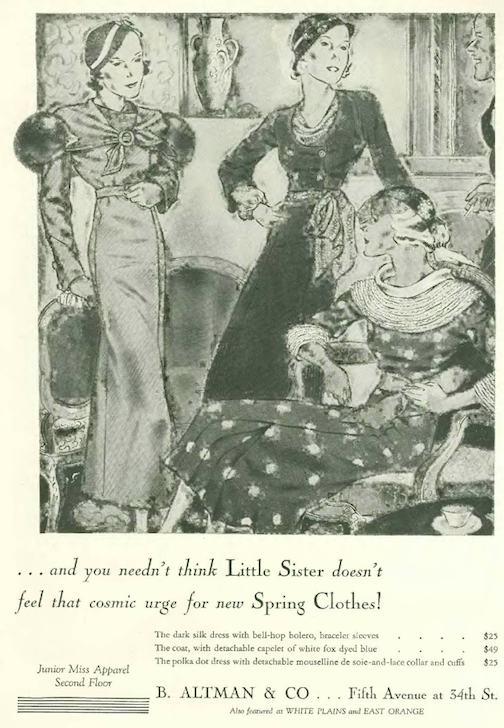
…and with spring in the air make sure little sis has the right duds to look like a 40-year-old woman…

…if you’re taking the train, you wouldn’t dare sit with the proles (I mean, look at that woman eating god-knows-what from a wrapper, and some filthy urchin wandering the aisles, and what the hell does Mr. Creepo have in that box?), so why settle for plain old gas when you can sweeten it with some lead?…

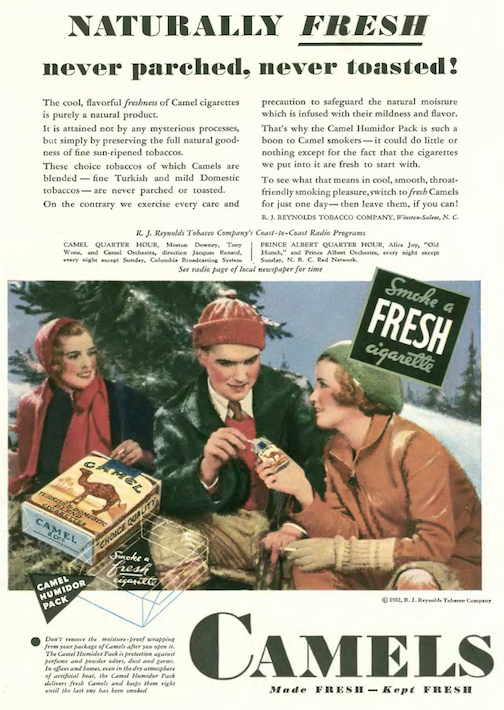
…nothing better than traveling out into the fresh air to breathe in some nice fresh tobacco smoke…it’s naturally fresh, so it’s just as good as mountain air, maybe even better

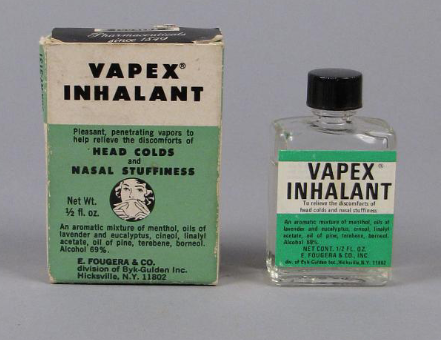
…this poor chap can’t breathe well at all, or so he claims, and that’s why he needs Vapex…

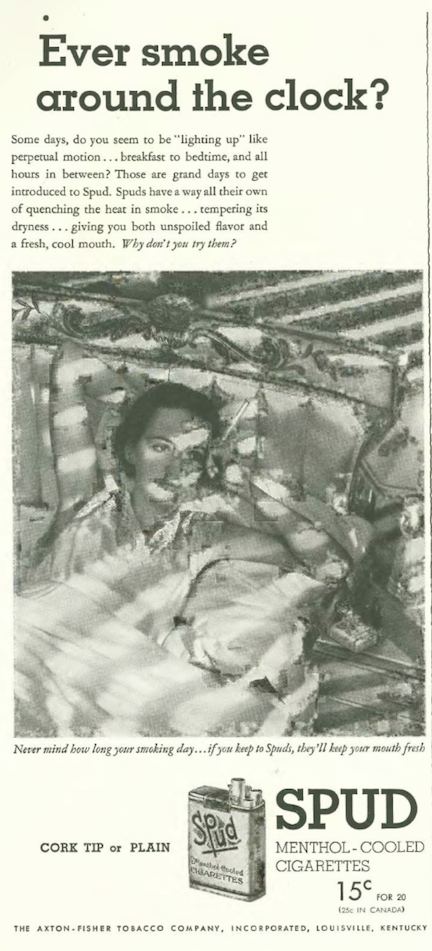
…which puts him right to sleep because it contains 70 percent alcohol, so why not take a couple of chasers with that snort…you’ll get used to the menthol flavor (it’s in your Spud cigarettes after all) and before long it’s nighty-night, oh hell I’ll just drink this and put a little ether on my pillow…yeah that’s the ticket…

…for others, why even bother pretending Prohibition is still a thing?…

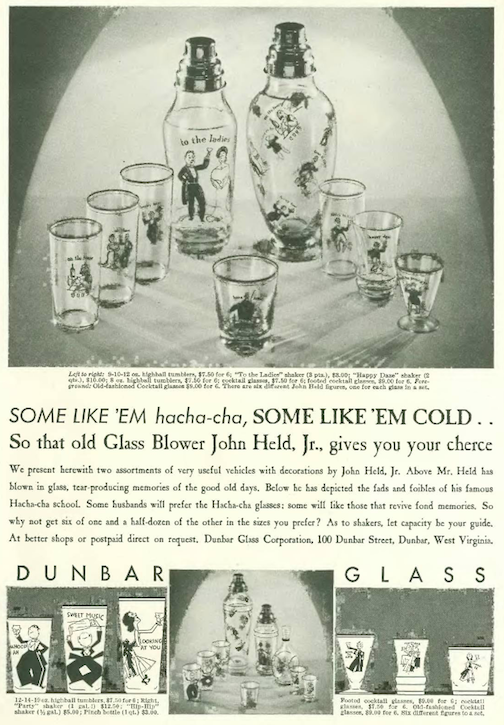
…and look at this swell cocktail set you could stock in your Bantam Bar, designed by The New Yorker’s own John Held Jr

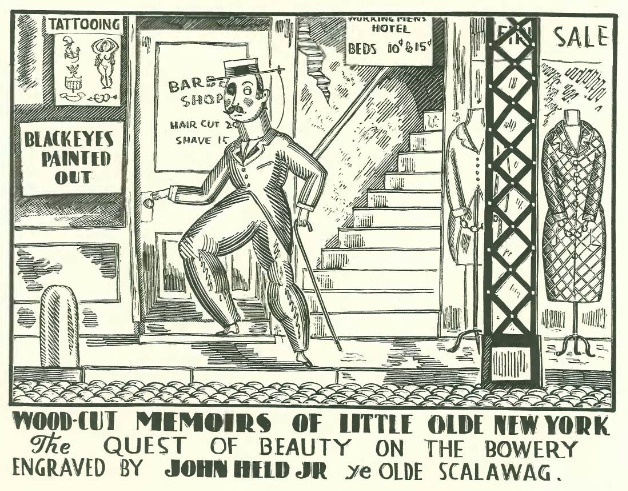
…on to our cartoons, we have Held again with another look at those naughty Victorian days…

Rea Irvin continued his commentary on the “improving” economy…

...Richard Decker gave us a master of understatement…

William Steig captured a special father-son moment…

Barbara Shermund continued to explore the ways of her modern women…

…given the recent kerfuffle over Dr. Seuss, Carl Rose confirms just how acceptable racist stereotypes were back in the day…

…and we end with Peter Arno, and one sugar daddy finding himself on the skids, temporarily at least…

Next Time: MoMA Sees The Future…


Back in the USSR

The year 1932 was a tough one for many Americans, barely scraping by in the deepening Depression. But to the suffering millions in the Soviet Union, America’s economic woes looked like a walk in the park.

Jan. 30, 1932 cover by Rose Silver.

The year marked the beginning of a catastrophic famine that swept across the Soviet countryside, thanks to the government’s bone-headed and heartless forced collectivization that caused more than five million people to perish from hunger. Those events, however, were still on the horizon when Robin Kinkead, a New York Times Moscow correspondent, ventured out into Moscow’s frigid streets in search of a lightbulb. Here is his story:

WE HAVE PLENTY OF NOTHING FOR EVERYONE…In 1930s Moscow, and in the decades beyond, much of life consisted of standing in line for everything from bread to light bulbs.

MAGIC LANTERN…Russian peasants experience electricity for the first time in their village. (flashback.com)

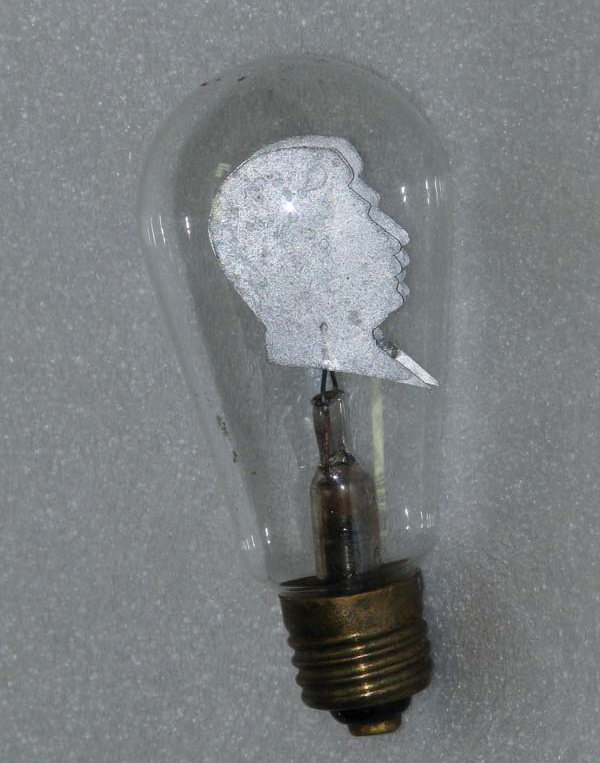
STALIN CAST A LARGE SHADOW over his subjects, even when they sought a bit of light in the darkness. Stalin and Lenin profiles served as glowers in this Soviet lightbulb, circa 1935. The first series of these bulbs were presented to the delegates of Soviet parliament of 1935, just in case they forgot who was in charge—or who might liquidate them at any moment, for any reason, or for no reason. (englishrussia.com)

*  *  *

One of Theirs

Miguel Covarrubias was one of the first artists to contribute to the fledgling New Yorker, and his linear style was well known to readers when he opened his latest show at New York’s Valentine Gallery. It featured works he had created during a 1931 sojourn in the East Indies. Critic Murdock Pemberton found the palette reminiscent of Covarrubias’ earlier work during the Harlem Renaissance:

GLOBETROTTER…A frequent contributor to the early New Yorker, Miguel Covarrubias traveled the world in search of inspiration. His 1932 exhibition at New York’s Valentine Gallery featured his latest work, a series of “Balinese paintings” including In Preparation of a Balinese Ceremony, at right. (sothebys.com)

MAN OF MANY TALENTS…An early Covarrubias contribution to the New Yorker in the March 7, 1925 issue.

 *  *  *
From Our Advertisers
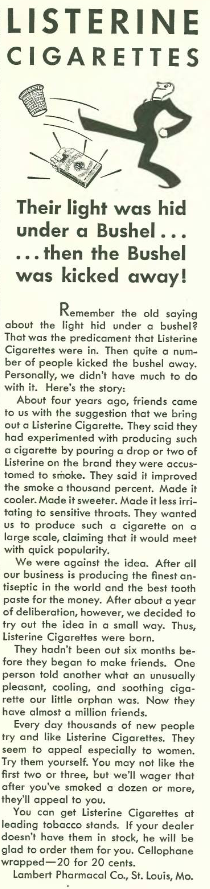
Listerine had been around since the late 1860s, but it wasn’t marketed as a mouthwash until 1914. The brand really took off in the 1920s when it was heavily advertised as a solution for “chronic halitosis” (bad breath), so in 1930 its makers went one step further by adding a few drops of their product to one of the chief causes of bad breath. The folks at Listerine were also keen to the growing market of women smokers—note the fifth paragraph: “They seem to appeal especially to women”…

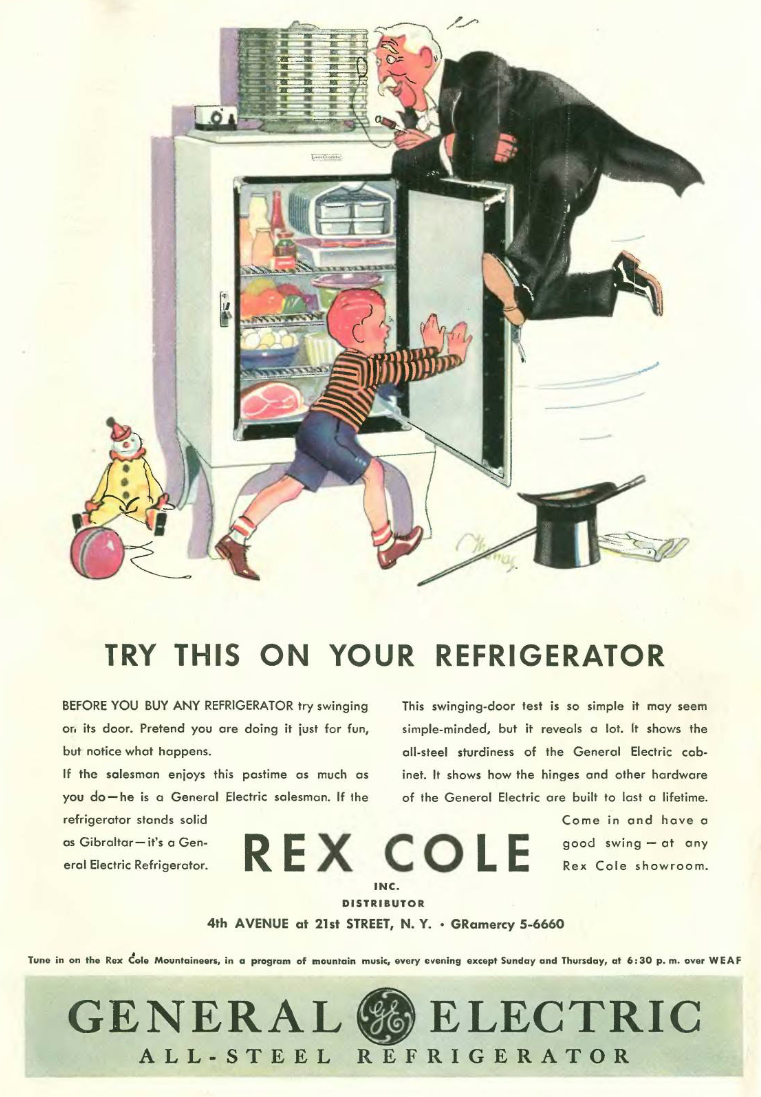
…when you run out of ideas to amuse your grandchild, drop your top hat and walking stick and let him take you for a swing on a GE fridge door…wow, admire its “all-steel sturdiness” as it slowly tips toward the unsuspecting lad…

…on to our cartoons, Rea Irvin showed readers what he thought of the latest “rosy” economic predictions…

…but with the economy still deep in the dumps, building continued to boom, per Robert Day

Perry Barlow gave us a fellow needing a break from the daily gloom…

Richard Decker unveiled this crime-fighting duo…

Alan Dunn tempered the flames of passion…

…and we close this issue with one of James Thurber’s most famous cartoons…

…on to Feb. 6, 1932…

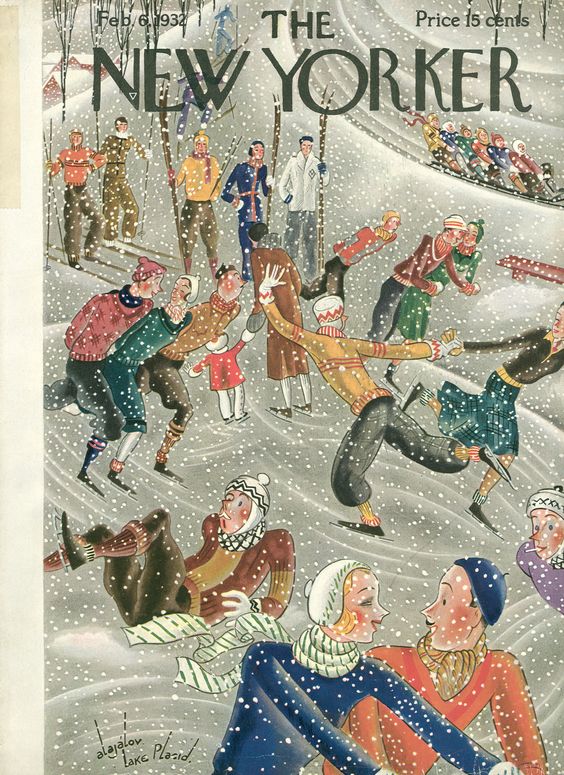
Feb. 6, 1932 cover by Constantin Alajalov.

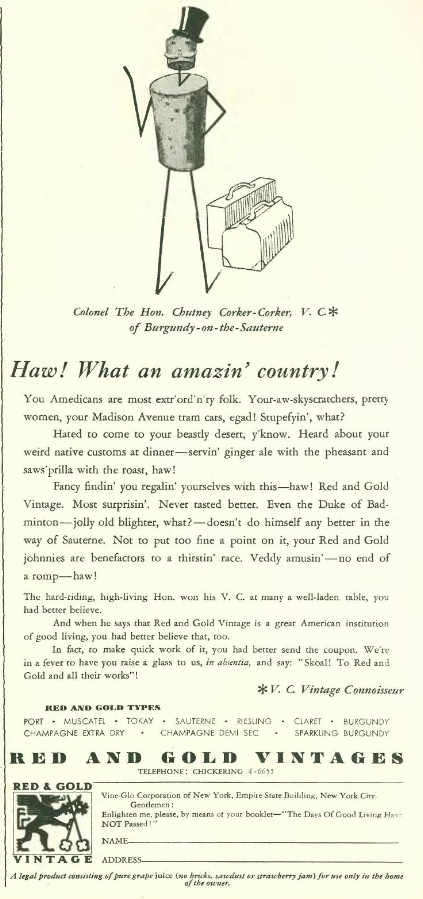
…and we head straight to our advertisers…and yet with another sad Prohibition-era ad, this from the makers of Red & Gold Vintages, who promised to dress up your bootleg rotgut with many fine flavorings…

New Yorker founding editor Harold Ross couldn’t care less about the advertising department as long as it paid the bills and kept its nose out of editorial, but I wonder if a cig dropped from his lips when he glanced at this ad…

…as noted in the Listerine ad above, tobacco companies were eager to tap the growing market of women smokers…actress Sue Carol egged on the sisterhood in this ad…Carol would have a brief acting career (including 1929’s Girls Gone Wild—not quite as racy as the 1990s DVD series) before becoming a successful talent agent…

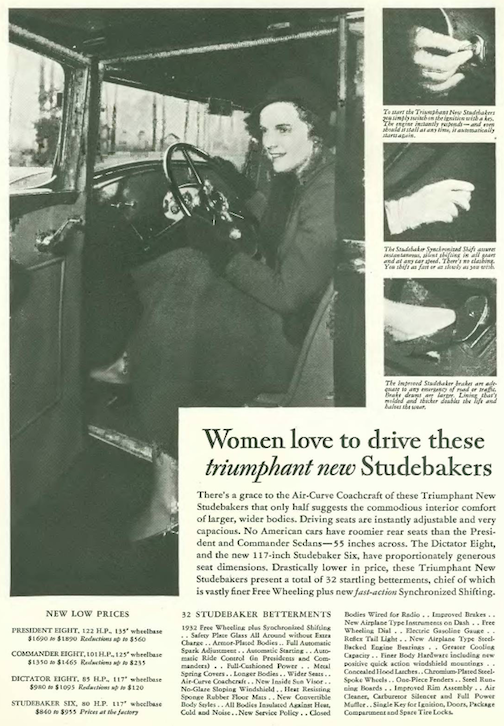
…as noted in my previous “Dream Cars” post, women were also a fast growing market for automobiles, and manufacturers—desperate for Depression-era sales—scrambled to show women all of the swell gadgets that would make driving a snap (as if men didn’t need these gadgets too)…

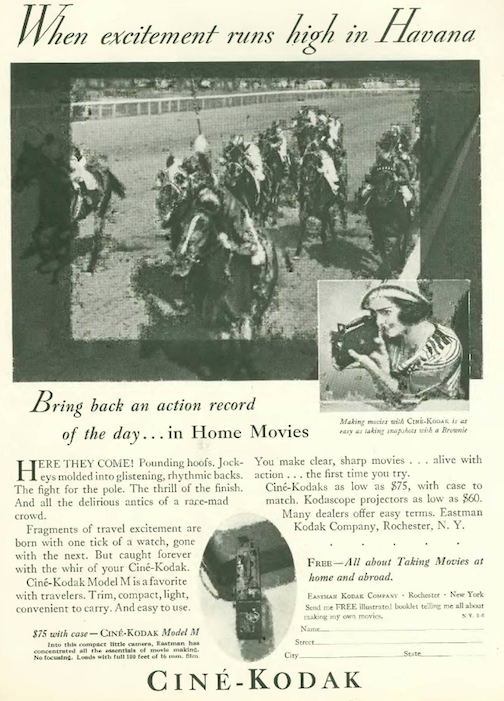
…and here we have an ad from Kodak that demonstrated the ease of its home movie camera, which could go anywhere, say, like the horse races in Havana…

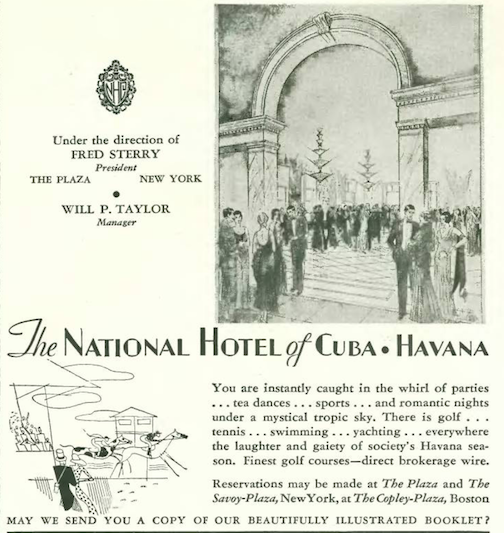
…Havana then was a playground for wealthier Americans, and many resided at a grand hotel operated by another rich American…

…but if you remained in town, you should at least know how to get tickets to the latest show (this drawing is signed “Russell”…could it be the noted illustrator Russell Patterson?)…

…on to our cartoons, Rea Irvin again commented on the latest predictions for economic recovery…

…but Alan Dunn found one woman who wanted an adventure, not a job…

…perhaps she should hang out with one of Barbara Shermund’s “New Women,” who had a flair for the dramatic…

…as for those seeking a new life, Mary Petty considered the costs…

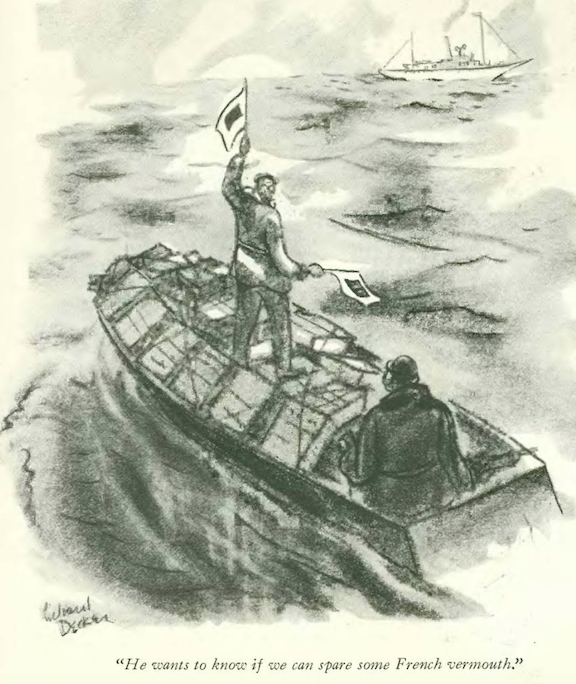
Richard Decker took us to the high seas, where a thirsty yachtsman hailed a passing smuggler…

Otto Soglow probed the sorrows of youth…

…and William Crawford Galbraith, the joys…

…and James Thurber introduced his classic dog in a big way on this two-page spread…

…and on to one more issue, Feb. 13, 1932…

Feb. 13, 1932 cover by S. Liam Dunne.

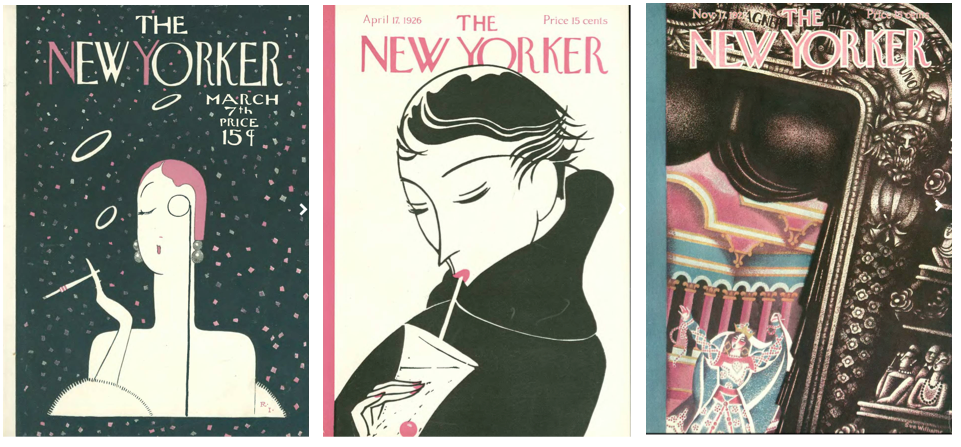
…we begin with a nerd alert—the Feb. 13 cover represented one of the magazine’s biggest departures from the original Rea Irvin nameplate, here heavily embellished within S. Liam Dunne’s design. Departures in previous issues were more subtle, Irvin himself experimented with an elongated version in the third issue (below, left). For the April 17, 1926 issue, Katharine and Clayton Knight’s* stylish illustration (center) was the first to overlap part of the nameplate, and Sue Williams’ Nov. 17, 1928 cover (right) was the first to embellish the Irvin font.

*A note on Katharine Sturges Knight and Clayton Knight. The April 17, 1926 cover (center) was the only design by the Knights published by The New Yorker. The original picture was drawn on wood by Katharine and then cut by Clayton. Their son, Hilary Knight, is also an artist, best known as the illustrator of Kay Thompson’s Eloise book series.

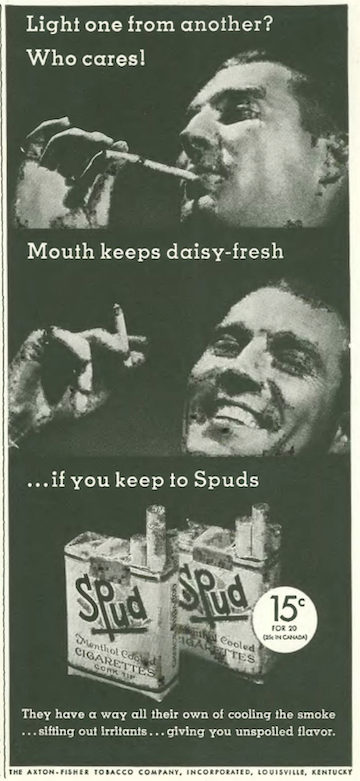
…on to the advertisements, kicking off with this subtle appeal from the makers of the unfortunately named “Spud” menthol cigarettes…here a young woman experiences Spud’s “mouth-happiness” while attending the annual Beaux Arts Ball at the new Waldorf-Astoria…

…if you’re wondering why the Spud ad featured a guy in a powdered wig puffing on a cigarette, well the theme of the 1932 ball was “A Pageant of Old New York.” Every year had a different costume theme, and the ladies and gentlemen of the ruling classes delighted in dressing up for the occasion…

PLAYING DRESS-UP…Program for the 1932 Beaux Arts Ball, and two of the attendees, Frank Sanders and Frances Royce. (Pinterest)

…if stuffy events weren’t your thing, you could chuck the fancy duds and head to the sunny beaches of Bermuda…

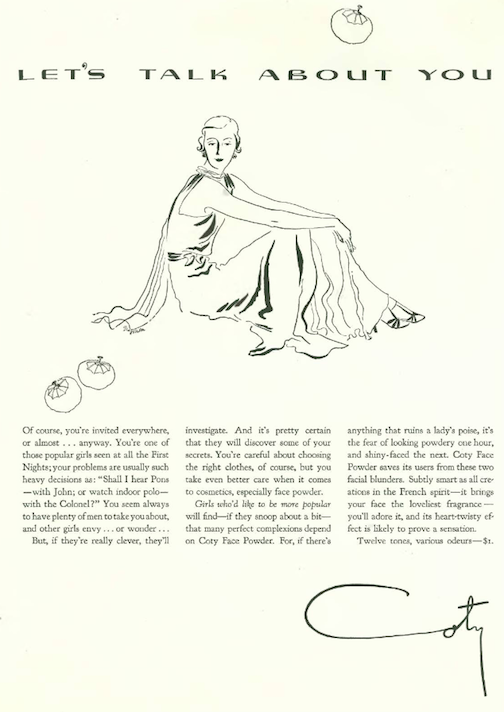
…I include this Coty advertisement for its modern look — it easily could have appeared in a magazine from the 50s or even 60s…the artwork is by American fashion illustrator Ruth Sigrid Grafstrom…

…the auto show has left town, but for some reason the makers of 12-cylinder models continued to shill their products in the New Yorker…Auburn (the middle ad) built beautiful, upscale vehicles, but the Depression would drop it to its knees by 1937…Pierce Arrow would succumb the following year…Lincoln, the highest-priced of these three, would hang on thanks to the largess of parent Ford…

New Yorker cartoonist John Held Jr. picked up some extra bucks by designing this ad for Chase and Sanborn’s…

…and on to our other cartoonists/illustrators, Reginald Marsh wrapped this busy dance hall scene around a section of “The Talk of the Town”…

Otto Soglow was back with his Little King, and the challenges of fatherhood…

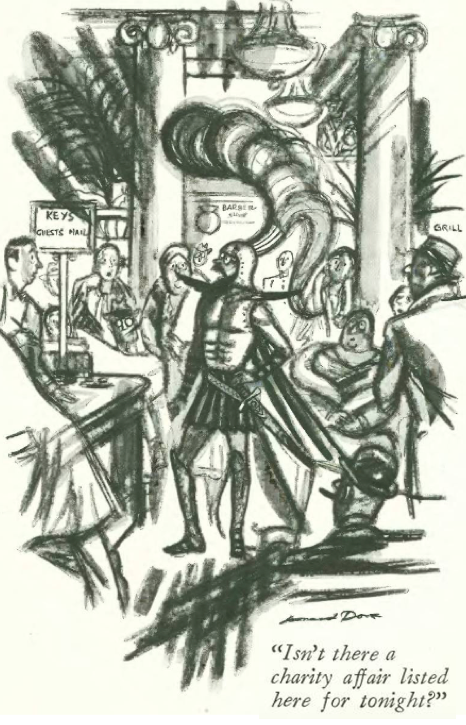
Leonard Dove gave us a knight lost on his crusade…

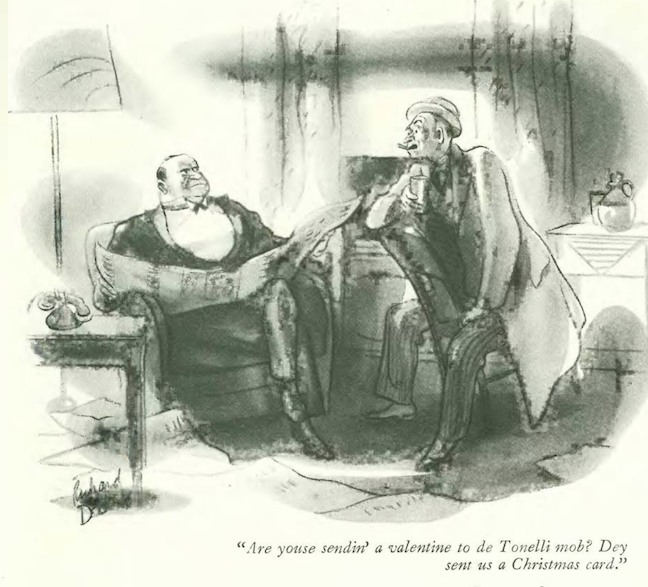
Richard Decker explored the softer side of gangster life…

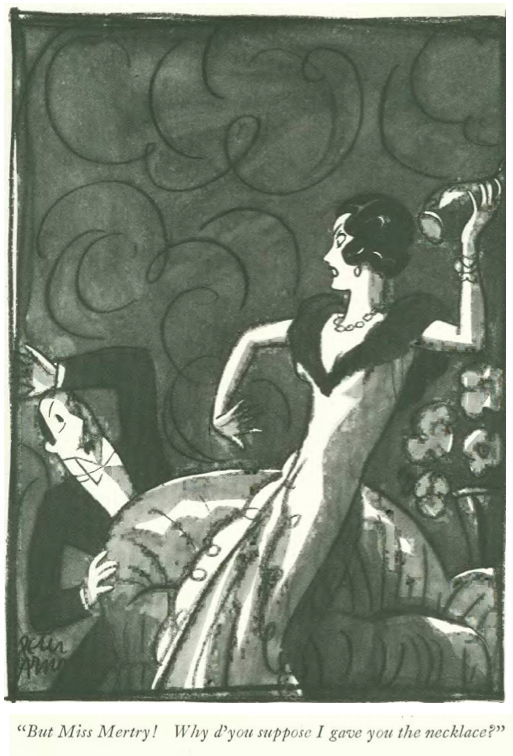
…and we sign off with Peter Arno, and a little misunderstanding…

Next Time: Winter Games…

The Wayward Press

Robert Benchley is remembered today as an American humorist, and his funny side was on display in his New Yorker theater reviews and other contributions. It was his background as a journalist, however, that shown through in his column “The Wayward Press.”

Oct. 10, 1931 cover by Theodore Haupt.

Benchley’s more serious side as a reporter (though still sprinkled with wit) demonstrated his ability to expose the conspiratorial nature of the 1930s press — which seemed to be in bed with moneyed interests — and decry its insatiable appetite for sensationalism. His October 10 column took aim at the coverage of the death of banking heir Benjamin Collings, who was murdered on Long Island Sound while aboard his yacht, Penguin. The investigation went on for weeks with scant developments, but that didn’t stop the newspapers from trying to squeeze every ounce of blood from this turnip.

The New York Daily News milked the incident for all its worth, the heading of this first article featuring photos of the slain Benjamin Collings (far left), his widow (and briefly a suspect) Lillian Collings, as well as an image of their five-year-old daughter, Barbara. According to Lillian, all three were sleeping aboard the family yacht Penguin when two men paddled a canoe up to their boat. When Ben went on deck to confront the pair, these “pirates” (as she called them) seized control of the boat, and threw Ben overboard. According to Lillian, the men forced her into the canoe, then cut the Penguin’s anchor and set it adrift with little Barbara still on board. While the girl was quickly rescued by another yachtsman, the “pirates” deposited Lillian in a moored motorboat on Oyster Bay before disappearing into the night. The Suffolk County DA found Lillian’s account unbelievable, and newspapers subsequently described her story as bizarre and illogical. The Daily News headline below indicates Lillian’s family wanted her interrogation to end…

…lacking any other details, the Daily News nevertheless kept the story alive with features such as this one below that described Five Stages in Life of Mrs. Benjamin Collings, Widowed by Yacht Murder

…and in case readers still wanted more, the paper rehashed the whole thing in photos in its Sept. 12 edition…

A few days after the yacht incident the body of Ben Collings washed up on the North Shore, his hands bound and his skull bashed in. The Suffolk County DA then began hauling in pairs of suspects who somewhat matched Lillian’s description—a 50-year-old man with gray hair and a skinny teenager—but none were quite right. The crime has never been solved.

Benchley concluded his column with some quotations which he “did not believe”…

 *  *  *

And Now For Something Ironic…

In his “Notes and Comment,” E.B. White teased New York Stock Exchange President Richard Whitney for blaming the market crash on “human vanity and selfishness,” when it was indeed those qualities that drove the markets in the first place. Before the decade was out Whitney would succumb to the very vices he named, and would serve three years and four months at Sing Sing for embezzlement.

HE DID TIME, THEN HE DID SOME MORE TIME…Richard Whitney made the cover of the Feb. 26, 1934 issue of Time magazine for his work as president of the New York Stock Exchange. At left, Whitney in 1937. He was sentenced to five to ten years for embezzlement, but was released early from Sing Sing for good behavior. He went on to a simpler life, managing a dairy farm and then a textile company before his death in 1974 at age 86. (Wikipedia/Time)

 *  *  *

The What Goes Up Department

E.B. White also commented on the latest edition of the Goodyear Blimp, christened Columbia, which he spotted hanging around the Empire State Building. Note E.B. White’s last line

Columbia was flying around the Empire State Building because Goodyear was running a sightseeing service in which passengers paid $3 for a 15-minute flight around Manhattan. The blimp also performed publicity stunts such as delivering newspapers to a man standing on the Empire State’s mooring mast—that particular stunt was supposedly a test to see if airships could anchor on the mast for passenger loading and unloading (and as we know, they couldn’t and wouldn’t).

Just four months after White watched Columbia hover over Manhattan, the airship would indeed bust into a thousand pieces, meeting its demise near the Queens airport (today’s LaGuardia). Caught in unexpected high winds, Columbia dipped into the ground, tearing off its landing gear and bending its propellers. The ground crew tried to secure the blimp but an updraft ripped the airship from their hands and sent it sailing over Flushing Bay.

As Columbia once again drifted back over land, the 23-year pilot Prescott Dixon ordered his chief mechanic, John Blair, to pull a rip cord that would release most of the air from the blimp. As Blair reached from the cabin for the cord the blimp shifted, and Blair fell to his death. Columbia then knocked two men off a warehouse roof (injuring them), then struck a factory and some power lines before crashing along the tracks of the Long Island Railroad. Dixon survived after being extricated from the crumpled gondola.

CHRISTENED WITH A BOTTLE OF LIQUID AIR, the Goodyear Blimp Columbia was readied for its inaugural flight over Akron, Ohio, in July 1931.

A SHORT LIFE…Just seven months after its inaugural flight, Columbia crashed near Flushing Bay on Feb. 12, 1932. (kathrynsreport.com)

 *  *  *

When Bridges Were Crowd-Pleasers

“The Talk of the Town” announced the imminent opening of the Jeffreys Hook Bridge, to be known thence as the George Washington Bridge:

BREAK OUT YOUR TOP HAT…New Yorkers turned out in droves to mark the official opening of the George Washington Bridge on Oct. 24, 1931. Gov. Morgan F. Larson of New Jersey, left, and Gov. Franklin D. Roosevelt of New York, right, did the ribbon honors at the dedication. (New Haven Register/AP)

 *  *  *

They Couldn’t Say ‘Hooters’ Either

In these coarser times it is hard to believe that 89 years ago the word “bosom” was a “no-no” on the nation’s airwaves, per this “Talk” item…

 *  *  *

An Actor’s Actor

Theater critic Robert Benchley wasn’t the only one who noticed the talents of newcomer Charles Laughton in his New York stage debut — Hollywood would immediately come calling for the 32-year-old English actor:

WE’LL KEEP HIM…Cicely Oates as Annie Marble and Charles Laughton as William Marble in the 1931 play Payment Deferred. (Museum of the City of New York)

 *  *  *

Kinda Long For Being Short

Humorist Frank Sullivan claimed to be following the trend for shorter short stories by turning in this piece with an editor’s note longer than the story itself:

 *  *  *

Lurid Lit

Our dear Dorothy Parker is back with another of her entertaining book columns, and in this installment we have her taking on the world of literary and not-so-literary sex romps. Excerpts:

DIRTY LITTLE BOOKS?…The three books featured in Dorothy Parker’s column included, from left, Young and Healthy by Donald Henderson Clarke (issued here under a different title in a pulp 1948 Novel Library edition); Theodore Wilde’s Moonblind, which featured a hermaphrodite character and homosexual encounters; and although attributed to Anonymous, Lady Chatterley’s Husbands was actually written by Anthony Gudaitis, aka Anton Gud, who often wrote anonymously for erotica publisher Samuel Roth. Although it was publicized as a sequel to D.H. Lawrence’s Lady Chatterley’s Lover, Gud’s book actually had less sex than the Lawrence original. After all, in the sequel Lady Chatterley gets tired of horny old Mellors. (Goodreads/Amazon)

…and before we leave Dorothy, please note her last line in the review, where she quotes Carl Rose’s famed 1928 cartoon (with caption by E.B. White)…

 *  *  *

From Our Advertisers

Just a couple quick ones (I will have more in the next installment)…this Lord & Taylor ad (illustrated by Mildred Oppenheim Melisse) showed young New Yorkers how to look smart for the fall (Lord & Taylor, the oldest department store in the United States (founded 1826), recently closed all 38 of its stores due to the pandemic, and it was announced in August that Lord & Taylor would be liquidated. Apparently its name will continue as an online-only business…

…and Helen Hokinson offered this illustration of one of her “girls” shilling for Frigidaire refrigerators…

…and two more from Helen in the Oct. 10 cartoons…

…exploring men’s attitudes toward the opposite sex…

Garrett Price visited a seemingly unappetizing banquet…

Kemp Starrett gave us a man looking at life on the bright side…

William Steig explored home decor…

Barbara Shermund found some bedtime gossip…

…and recalling our earlier “Talk” item regarding bosoms, here’s Peter Arno

Next Time: Monkey Business…


From Stage to Screen

There’s good reason why one of Broadway’s finest theatres is named after Alfred Lunt and Lynn Fontanne; no couple has lit up the stage quite like this husband-wife team.

Sept. 19, 1931 cover by Adolph K. Kronengold.

Some say Richard Burton and Elizabeth Taylor were modern successors, but they only appeared together on Broadway once (a 1983 revival of Noël Coward’s Private Lives, at the Lunt-Fontanne Theatre of all places), and they shared a tempestuous, on-and-off relationship that sharply contrasted with Lunt and Fontanne, who were inseparable both on and off the stage during their 55-year marriage. And unlike Burton and Taylor, Lunt and Fontanne appeared in just a handful of films, including a 1931 adaptation of their 1924 Broadway play, The Guardsman. John Mosher filed this review:

INSEPARABLE…Alfred Lunt and Lynn Fontanne pose for photographer Nickolas Muray in this 1924 portrait for Vanity Fair magazine. They married in 1922, and were inseparable until Lunt’s passing in 1977. (Conde Nast)

NAUGHTY, NAUGHTY!…These were Pre-Code times, so MGM played up the film’s “saucy” and “unconventional” themes. (IMDB)

I’VE GROWN ACCUSTOMED TO YOUR FACE…Although Lunt and Fontanne appeared together numerous times on Broadway, the 1931 film adaptation of their 1924 stage play, The Guardsman, would be their only film appearance together. (Museum of the City of New York/IMDB)

STAGE TO SCREEN…at top, Lunt and Fontanne in 1924’s The Guardsman on Broadway; below, a scene from the 1931 film adaptation featuring, from left, Alfred Lunt, Lynn Fontanne, Maude Eburne and Zasu Pitts; at right, Fontanne reviews fashions for the film designed by Adrian Adolph Greenburg. Lunt and Fontanne would be nominated for Academy Awards as Best Actor in a Leading Role and Best Actress in a Leading Role, respectively. (Museum of the City of New York/IMDB)

 *  *  *

One Giant Leap

Charles Lindbergh crossed the Atlantic without stopping in 1927, but it would take four more years before anyone could accomplish the same feat across the Pacific. Don Moyle and Cecil Allen took up the challenge, hoping to fly their plane, Clasina Madge, 4,400 miles from Japan to Seattle to win a $25,000 prize from a Japanese newspaper. The lads took off from Tokyo in early September, but then went missing. E.B. White wrote:

As it turned out, Moyle and Allen were caught in a storm between Japan and Alaska that forced them to land on a small, uninhabited island in the Aleutian chain. Stranded for more than a week, the flyboys were finally able to make contact through a U.S. Coast Guard patrol and report they were safe.

THESE ARE MY BOYS…at left, Cecil Allen and Don Moyle standing with financial backer John Buffelin and Buffelin’s daughter, Clasina Madge, the namesake for their hopefully record-setting airplane; At right, Moyle and Allen with a Japanese official, possibly before one of their attempts, or perhaps they are looking at their consolation prize (see below). (University of Washington)

Moyle and Allen sent word that they would return to Washington and prepare for another attempt. They flew back home by way of Nome, Alaska, where they landed on Sept. 21, 1931. Five days later they reached Fairbanks, and after weather delays finally made it to Tacoma, Washington, on Oct. 6. There they learned that Clyde Pangborn and Hugh Herndon Jr. had already won the $25,000 prize, having arrived from Japan the day before. The Tokyo newspaper did, however, give Moyle and Allen $2,500 for their efforts.

SPOILERS…at left, Hugh Herndon, Jr. and Clyde Pangborn pose next to their crash-landed plane in the hills of East Wenatchee, Washington, after becoming the first to fly non-stop across the northern Pacific Ocean. The 41-hour flight from Japan won them the 1931 Harmon Trophy and $25,000 from a Japanese newspaper. The crash-landing of their plane was deliberate — before the flight it was modified to carry 930 gallons of fuel. They had jettisoned the landing gear after takeoff to save fuel. (historylink.org/imagesofoldhawaii.com)

 *  *  *

Thurber Gets Serious

We know James Thurber as a humorist, both for his writings and his cartoons. In the Sept. 19 issue, however, Thurber offered this touching remembrance of a subway newsstand proprietor, who he later learns is killed in the crossfire of a robbery. Here are the opening passages:


 *  *  *

Did You Miss Me?

After a long absence (in Europe, presumably),  returned to his “Shouts and Murmurs,” column, offering this “Triple Warning” that included his observations of H.G. Wells, who wondered if all his musings for the future would fall to swarms of lowly insects…

WORK CAN WAIT…Alexander Woollcott relaxes in front of a Paris bar, late 1920s. Photo by James Abbe. (artsy.net)

 *  *  *

From Our Advertisers

With the arrival of fall come new fashions…these “wearables” below are suggested by B. Altman as suitable attire for attending a football game…

…smart fashions for young people weren’t confined to New York…this is how students at the University of Michigan dressed for a 1930 homecoming game against Illinois…

…well, times have changed, but folks still wear fur of a sort…

Jan 1, 201USA TODAY Sports

…wearing a real fur these days will draw the ire of animal rights advocates almost everywhere, but in 1931 few had problems with turning leopards and seals into coats for fashionable young women…

…then as now, folks enjoyed their pork sausage…the Jones Family of Wisconsin apparently saw a market for their products among New Yorker readers…

…after 131 years in business, the Jones Family and their sausages are still going strong…as is their farmhouse logo (the old farmhouse is real and still stands)…

…another back pages ad promoted Helen Hokinson’s first cartoon collection, So You’re Going to Buy a Book!

…the collection including Hokinson’s beloved dowagers, but it also featured this gem…

(attemptedbloggery.blogspot.com)

…on to our cartoons from the Sept. 19 issue, we begin with William Steig and a couple of would-be renters…

E. McNerney explored the trials of teenage life…

Leonard Dove drew a crowd in a packed subway car…

Otto Soglow displayed the playful side of his Little King…

…and Rea Irvin found an actor upstaged by an unlikely rival…

Next Time: Big Fish, Little Fish…