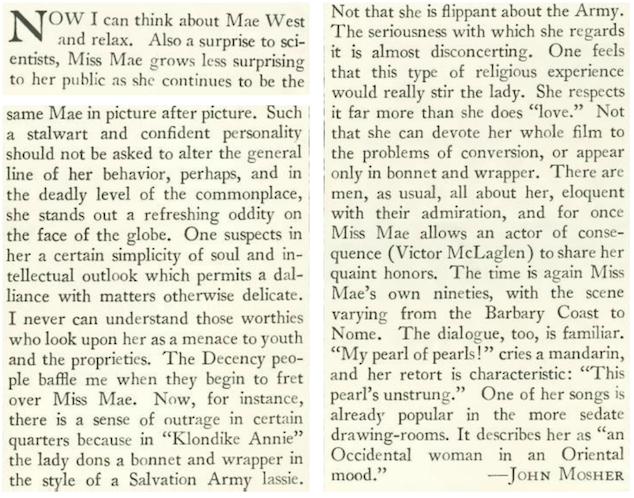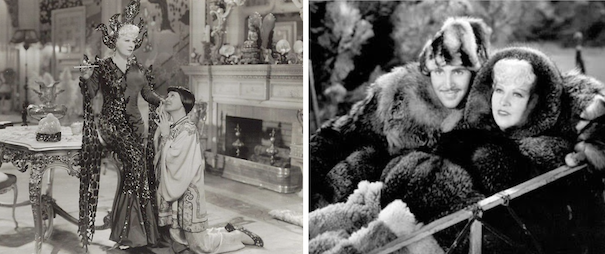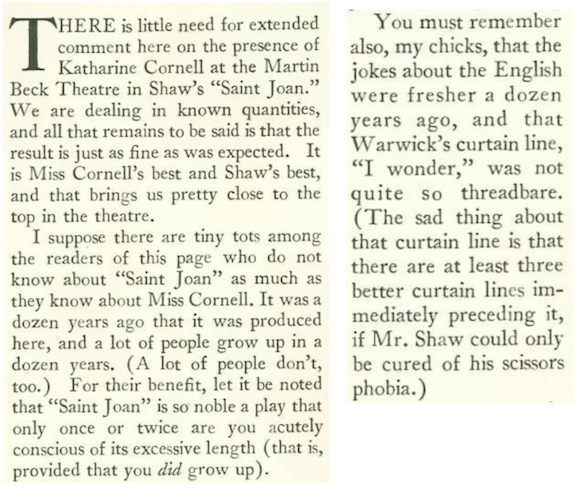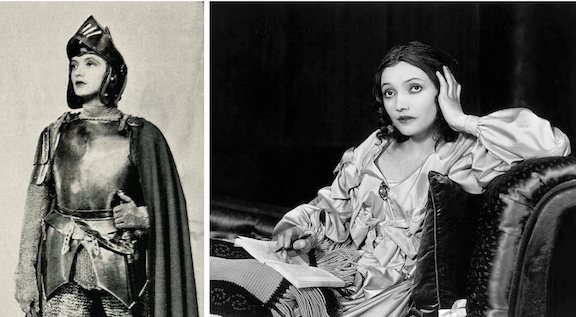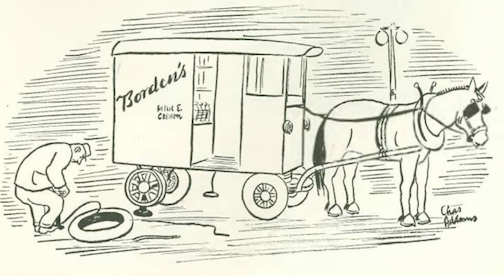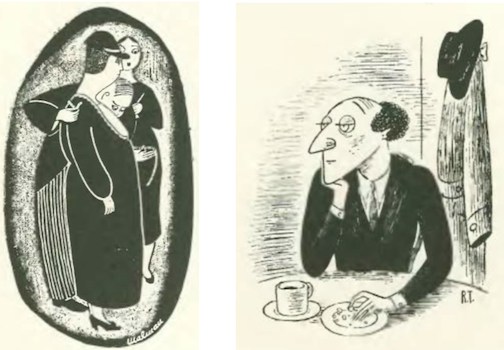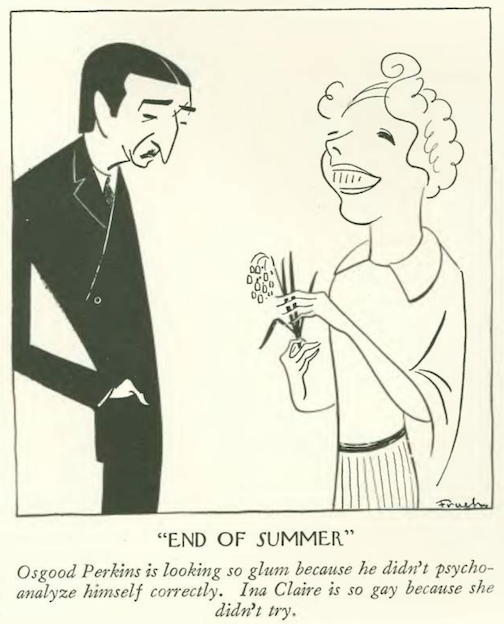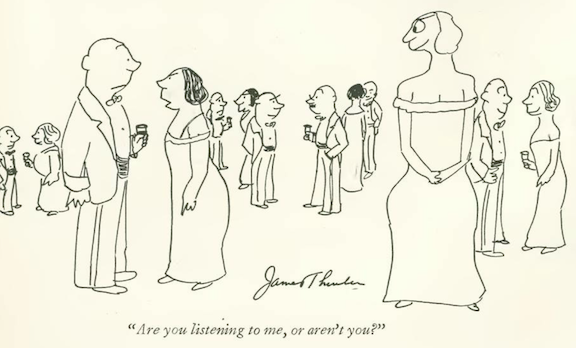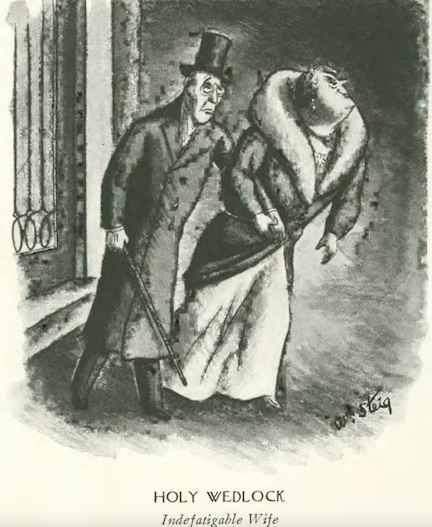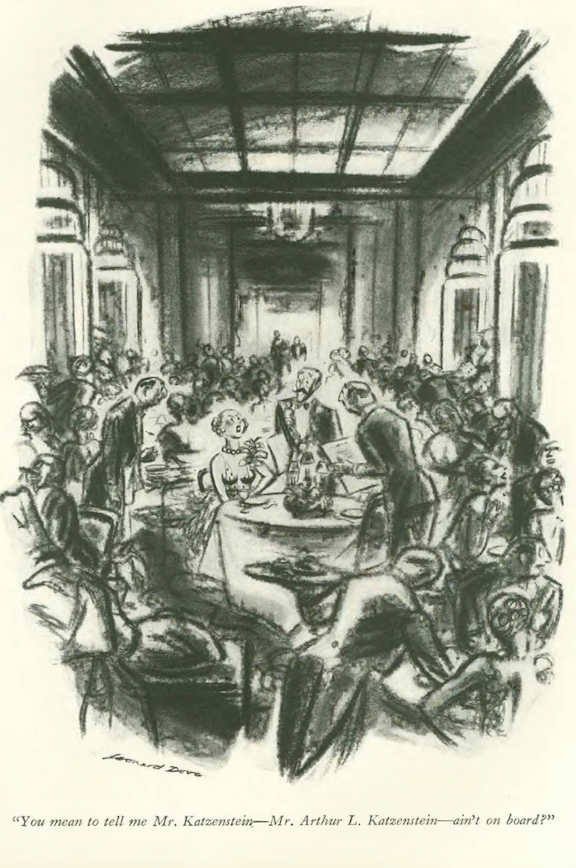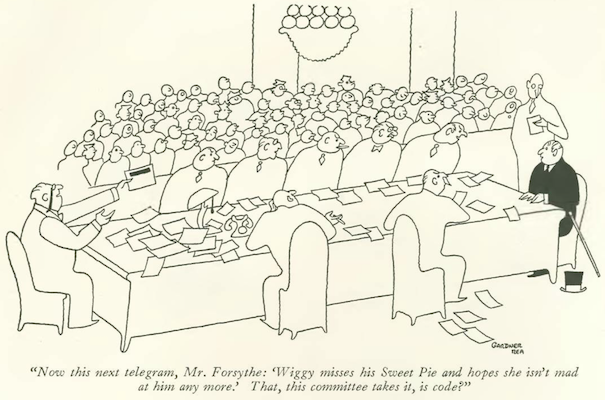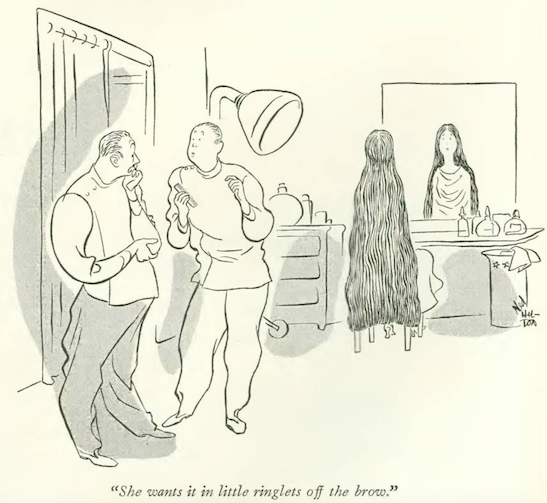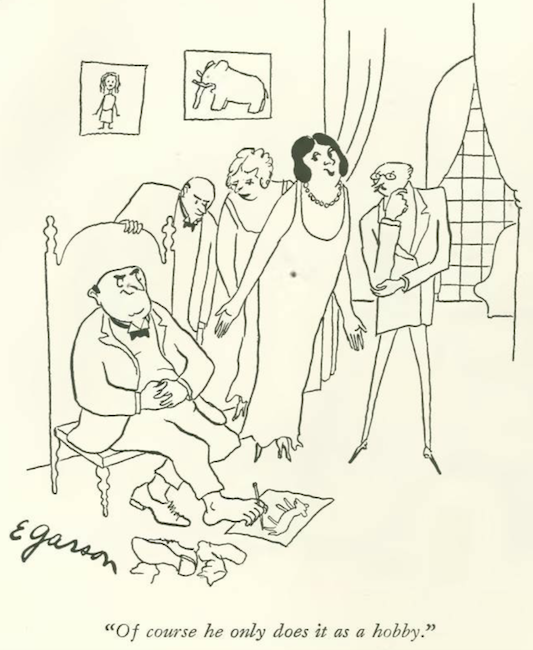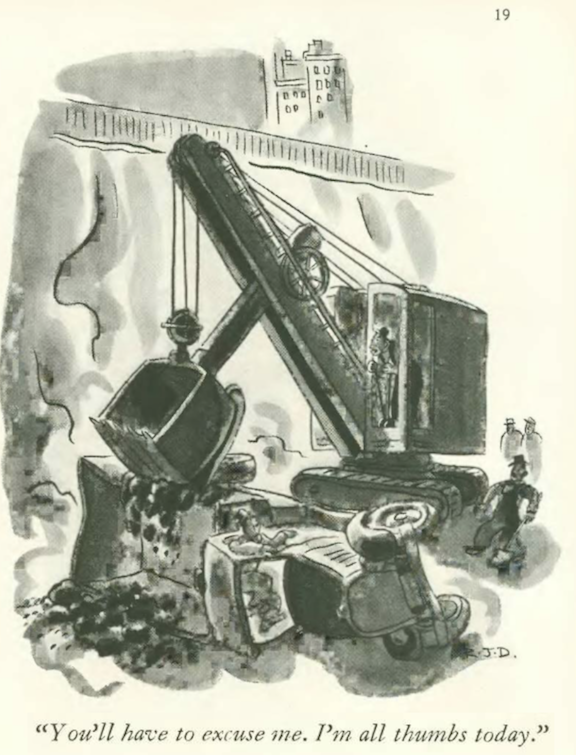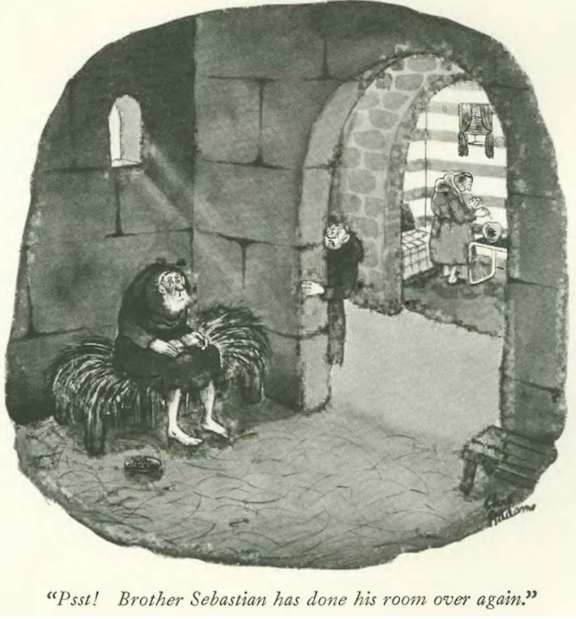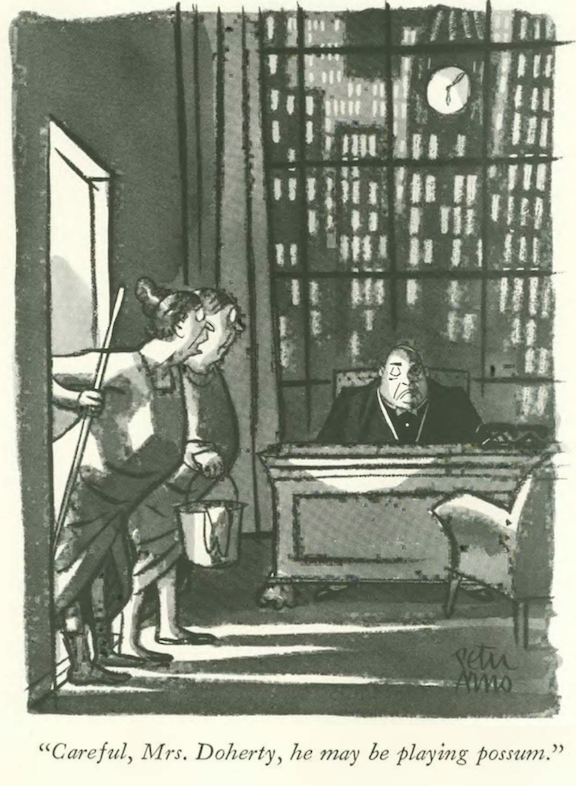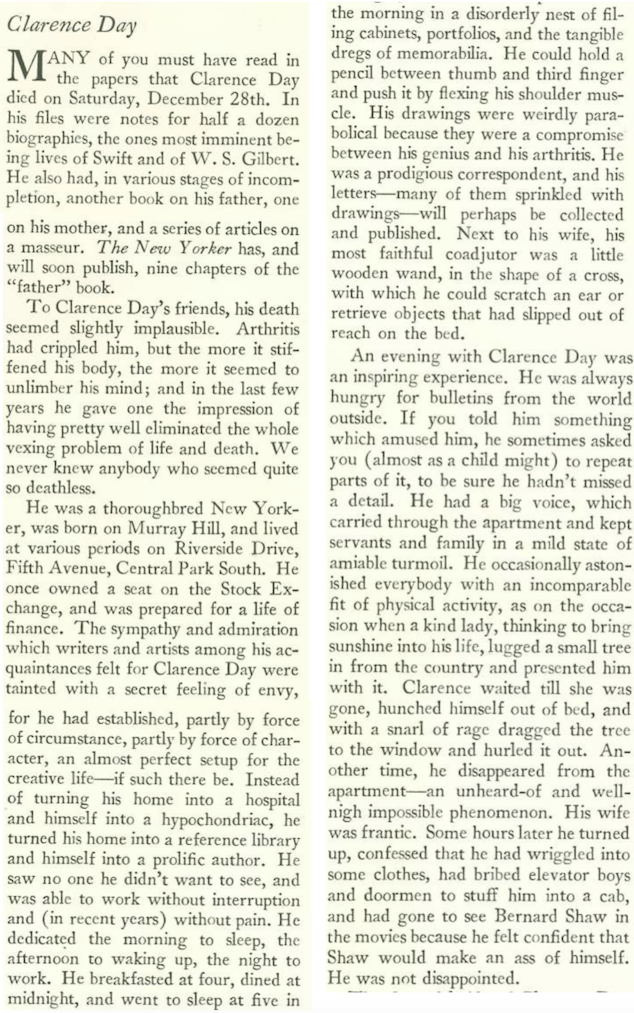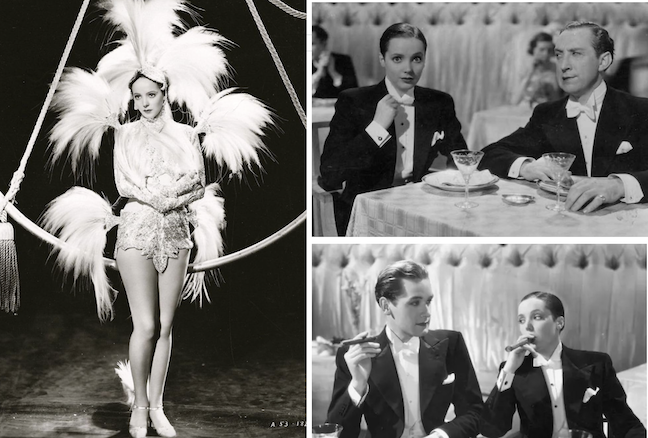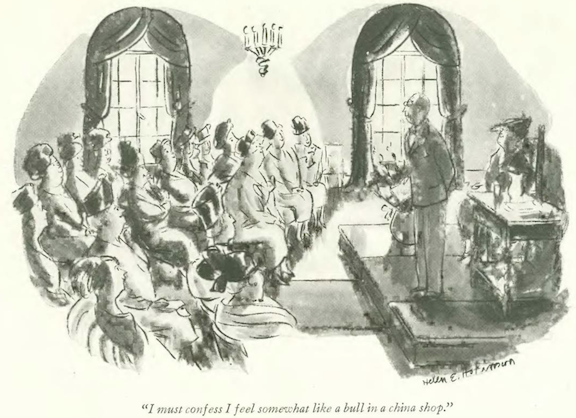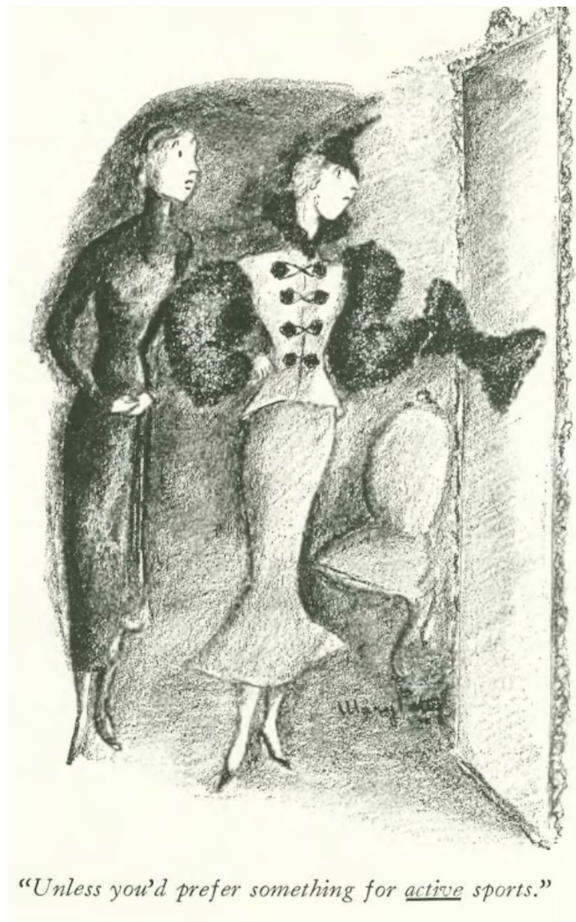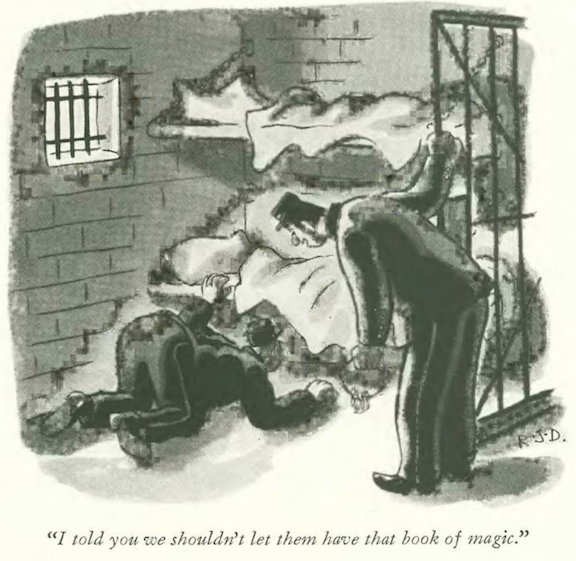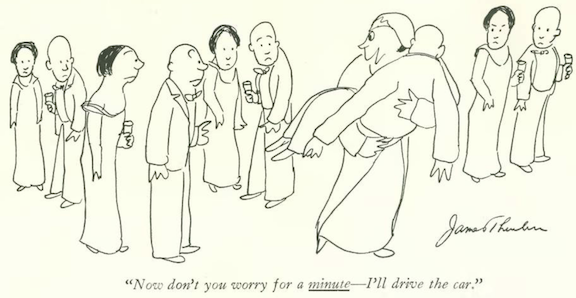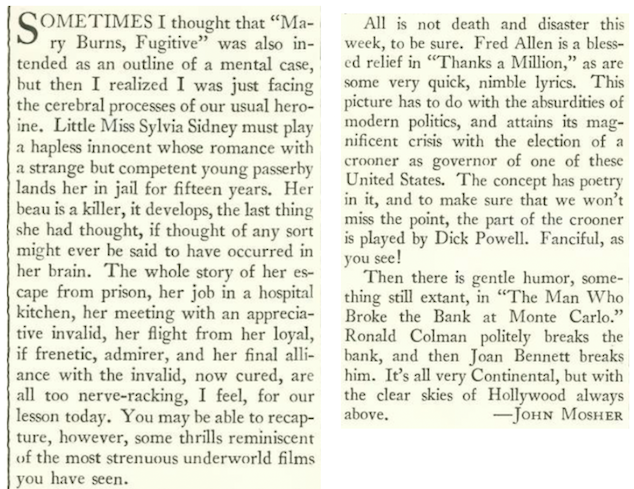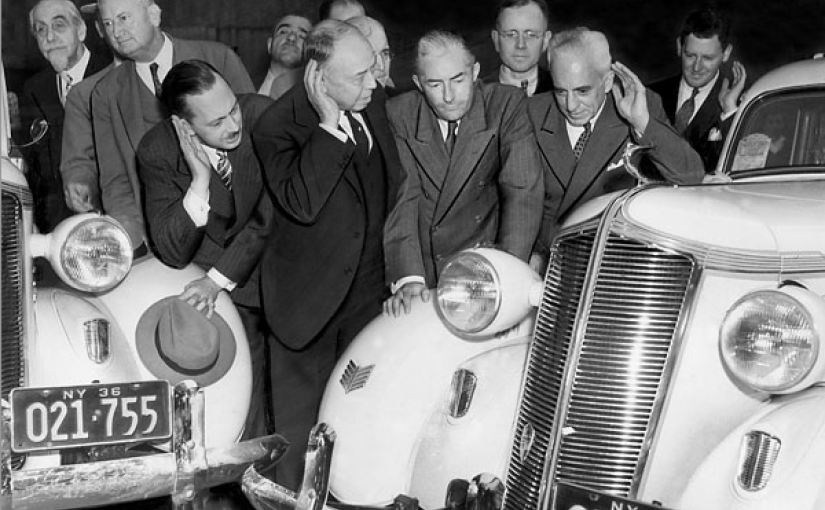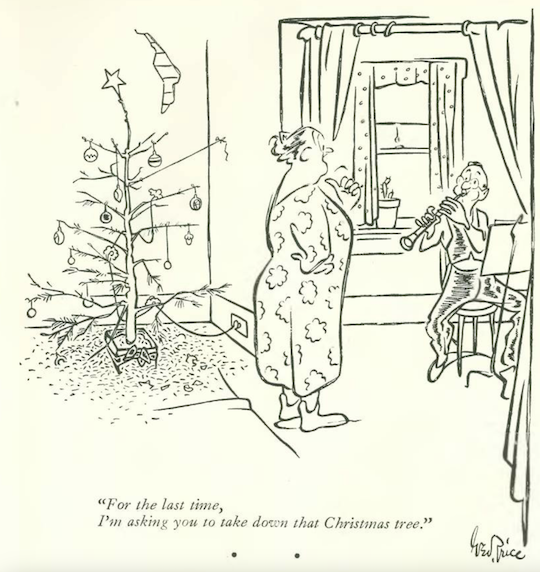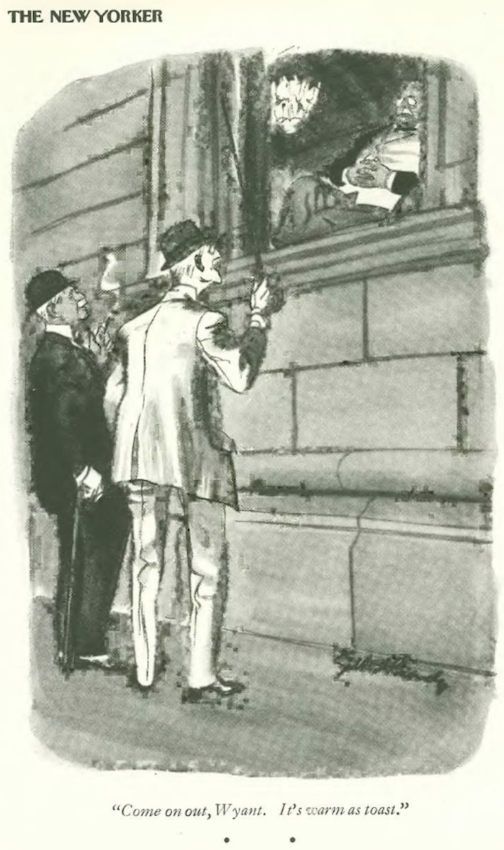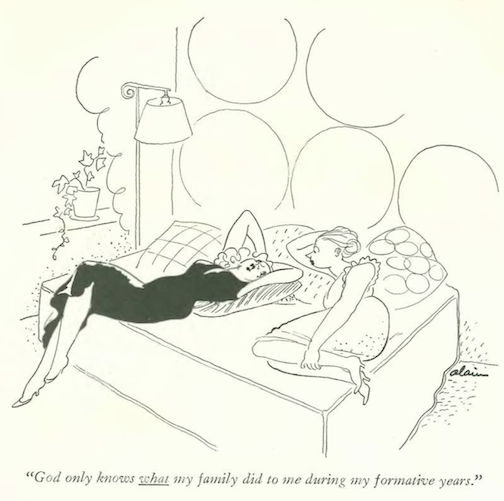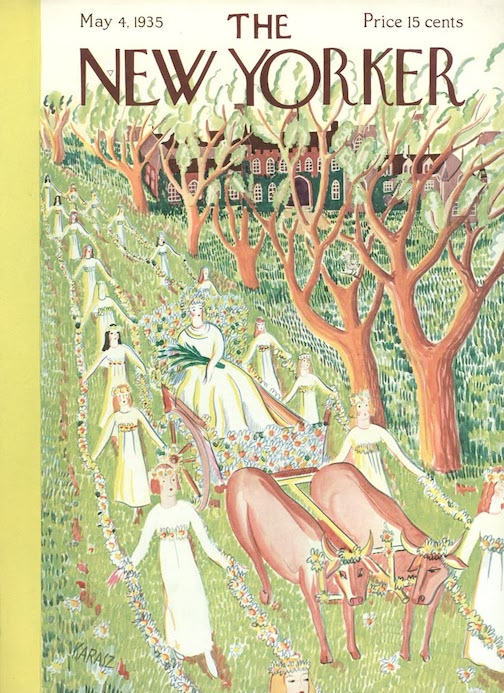
Above: New Year’s Eve at the “El Morocco” Night Club at 154 E. 54th Street, New York, 1935. (Posted on Reddit)
Lois Long took her nightlife seriously, and when it didn’t live up to her standards—defined by the wild speakeasy nights she wrote about after joining The New Yorker in 1925 —she was crestfallen, to say the least.
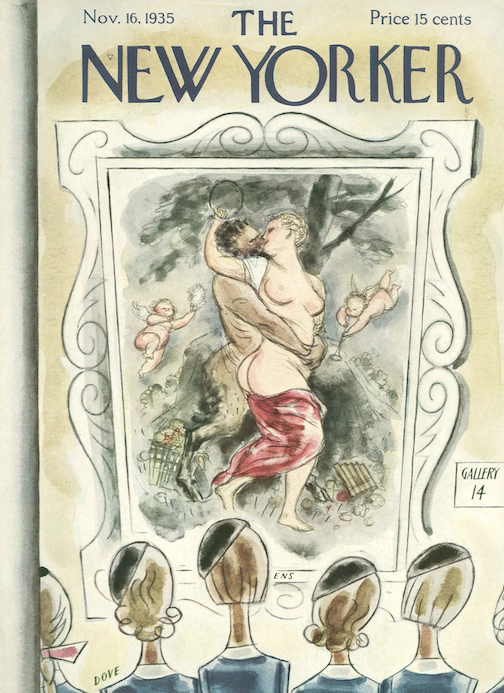
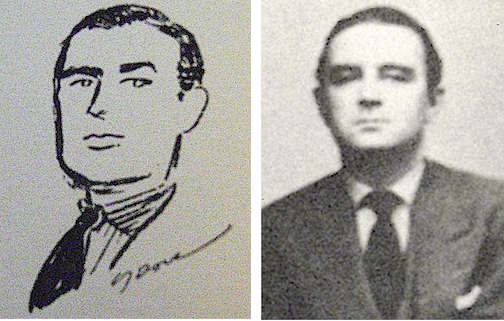
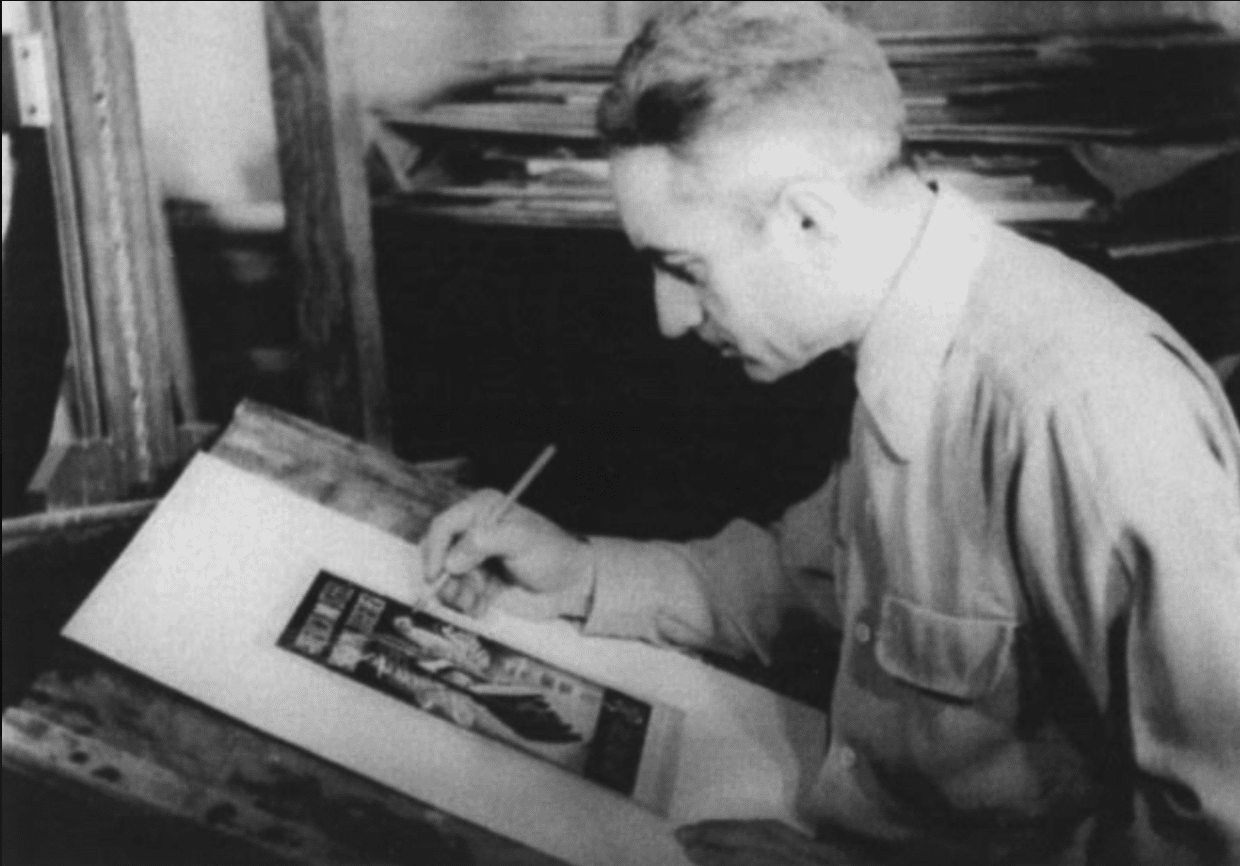
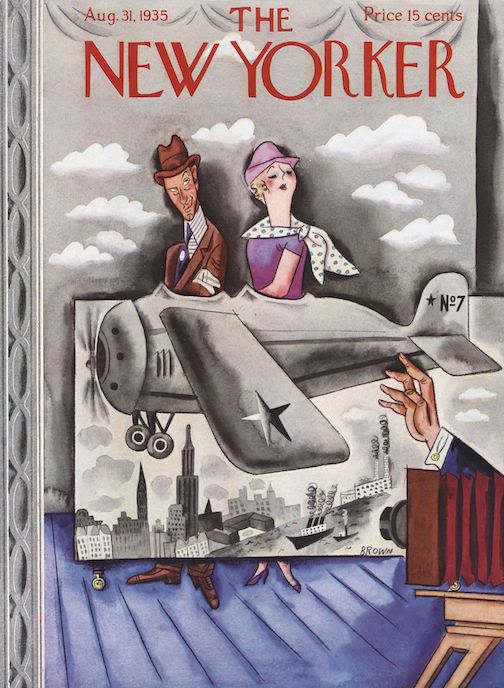
November 16, 1935 cover by Leonard Dove. This is one of Dove’s fifty-seven New Yorker covers; he also contributed 717 cartoons to the magazine.Above: Leonard Dove’s self portrait, 1941; photo: 1947. Born 1906, Great Yarmouth, England. Died, Gramercy Hotel, New York City, 1972. (Thanks to Michael Maslin’s indispensable Ink Spill)
*
When Long joined The New Yorker she was a 23-year-old Vassar graduate, and at age 34 she was not expecting to re-live those heady days; but nightlife in 1935 made her wonder where all the interesting people had gone. Instead of the smart and beautiful speakeasy set, she found people who couldn’t hold a conversation, who cared more about being mentioned in the newspapers by “Cholly Knickerbocker” (a pseudonym used by society columnists)—they simply lacked the “sparkle” she so craved. In this excerpt from her column, “Tables for Two,” she explained:
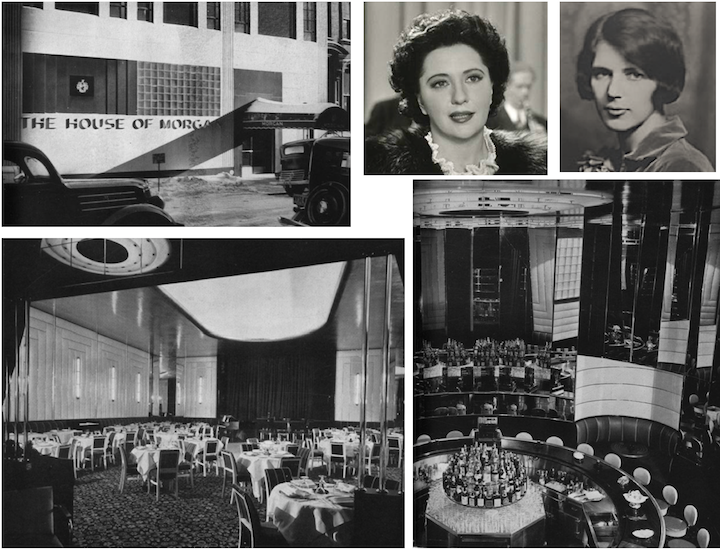
ALL SHOW, NO GO…Lois Long recalled the heady days of the original torch singer Helen Morgan, but her new club, The House of Morgan, offered up tired vaudeville instead of the singer herself. Above, images of the club from Christopher Connelly’sThe Helen Morgan Page. Top, center, detail of Morgan from the 1935 film Sweet Music. Next to Morgan is a photo of Long from the PBS documentary Prohibition. (helen-morgan.net/PBS.org)
* * *
At the Movies
Our film critic John Mosher was in good spirits after taking in MGM’s Mutiny on the Bounty, and especially the inspired performance by Charles Laughton as the cruel, tyrannical Captain Bligh…
LET’S HAVE A STARING CONTEST…Clark Gable (left) portrayed Fletcher Christian, the Bounty’s executive officer, who disapproved of the cruel leadership of Captain Bligh, portrayed by Charles Laughton (right) in Mutiny on the Bounty. (theoscarbuzz.com)
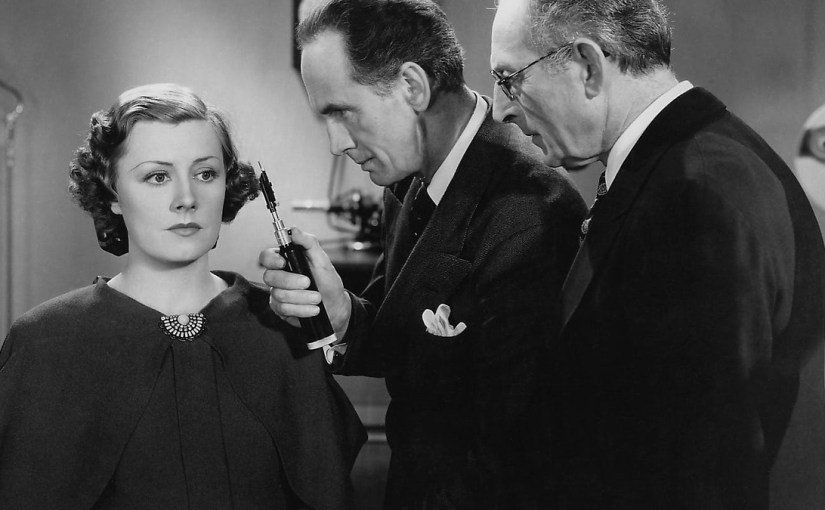
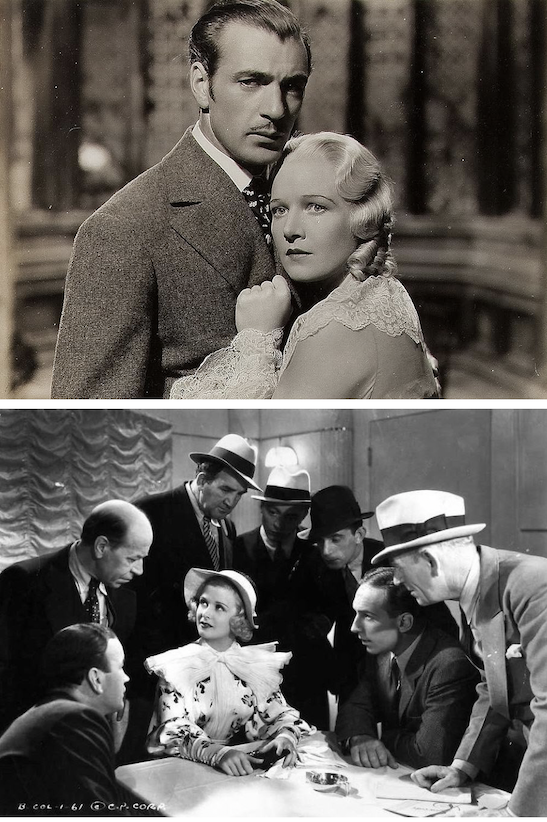
…two other pictures reviewed by Mosher were less than inspired, but at least the George Raft/Joan Bennett gangster film, She Couldn’t Take It, offered a car chase, and the occasional surprise.
STERILITY ISSUES…Top, Gary Cooper and Ann Harding needed a bit more life in Peter Ibbetson; at least Joan Bennett (bottom photo) found some action in She Couldn’t Take It. (IMDB)
* * *
From Our Advertisers
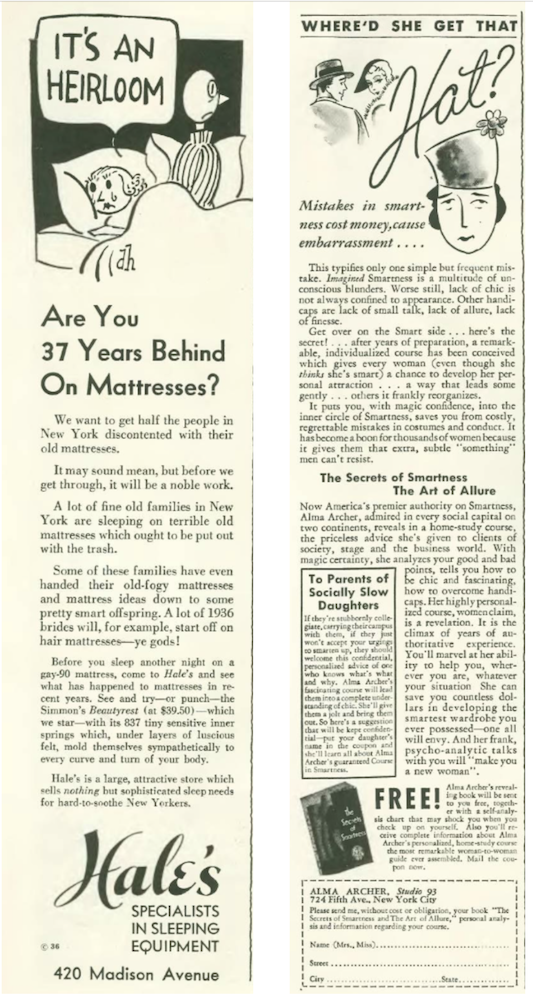
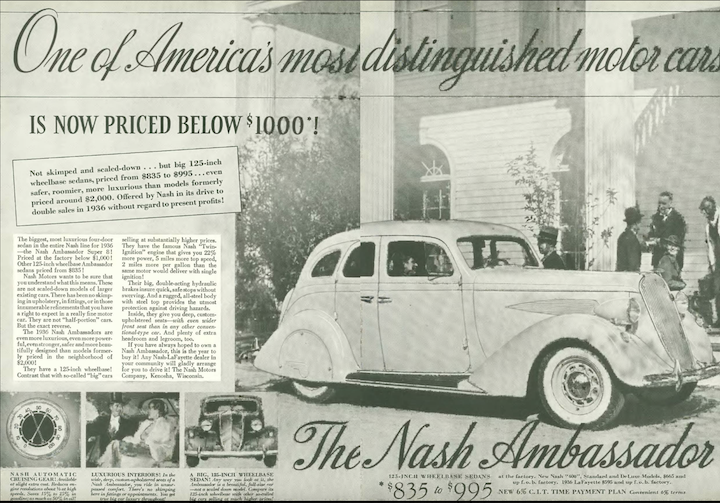
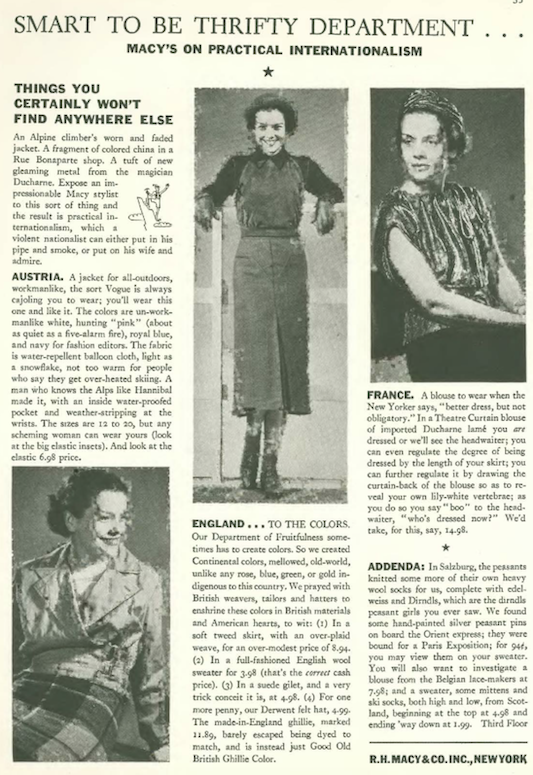
Not all fashion advertisements in The New Yorker were aimed at the posh set…Macy’s offered some thrifty selections, including a French-inspired “Theatre Curtain Blouse” that could be opened in the back “so as to reveal your own lily-white vertebrae”…
…I am puzzled by the “Duchess” types that appeared in food and beverage ads in the back of the magazine…we’ve seen some angry duchesses in ads for tomato and pineapple juice, and here we have one who has stooped so low as to shell her own peas…
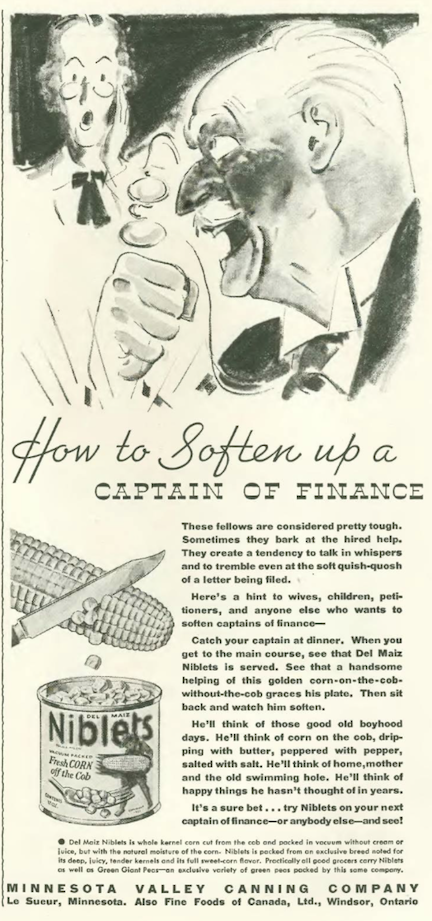
…a side note, the Duchess’s peas came in a can bearing the old Green Giant logo, a savage, bearskin-clad figure…he was redesigned by ad executive Leo Burnett in 1935 to become the friendlier “Jolly Green Giant”…
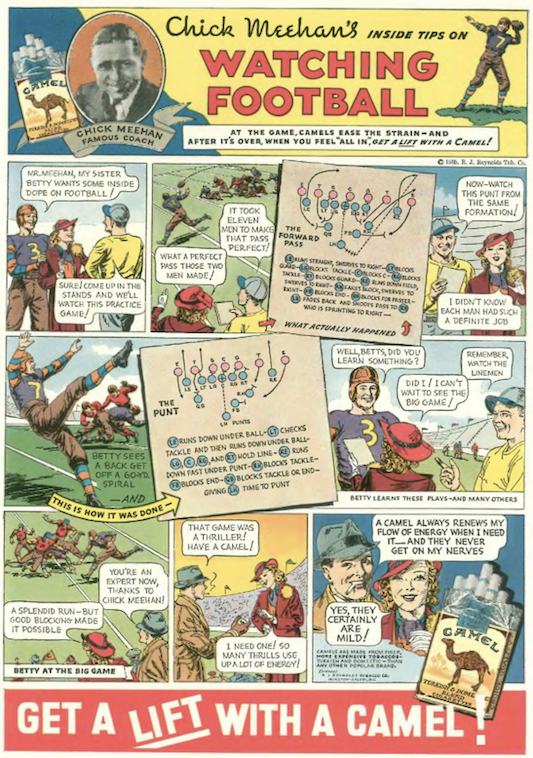
…the makers of Camels presented football coach Chick Meehan in cartoon form to extol the wonders of football and smoking to a young woman…Meehan coached football at Syracuse, NYU and Manhattan College…
…the football theme segues to our cartoon section, beginning with this spot art by James Thurber…
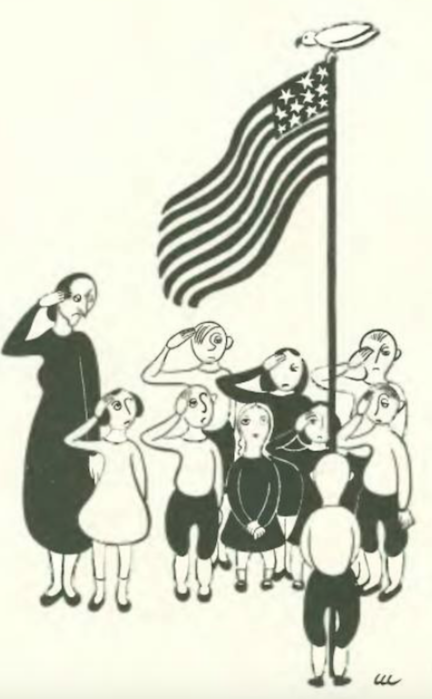
…Christina Malman’s spot drawings could now be found in every issue, and usually more than one…
…this one by Robert Day also caught my eye, maybe because I like chickens, and dogs too…
…Day again, on the streets of Manhattan…
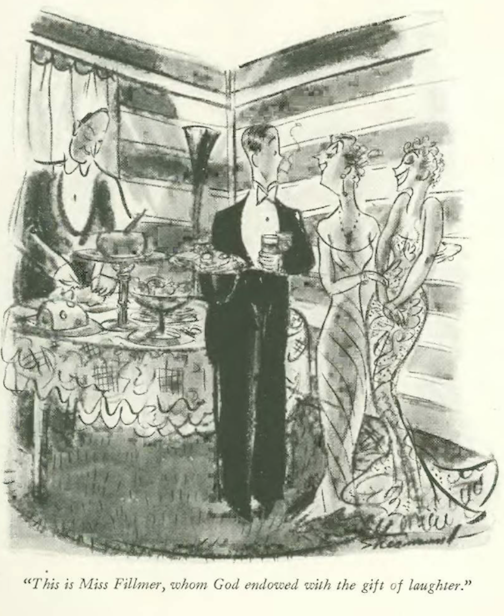
…Barbara Shermund showed us a wolf in wolf’s clothing…
…Alan Dunn seemed to be channelling Barbara Shermund here…or maybe Dunn’s wife Mary Petty had some influence…
…William Crawford Galbraith eavesdropped on some wagering waiters…
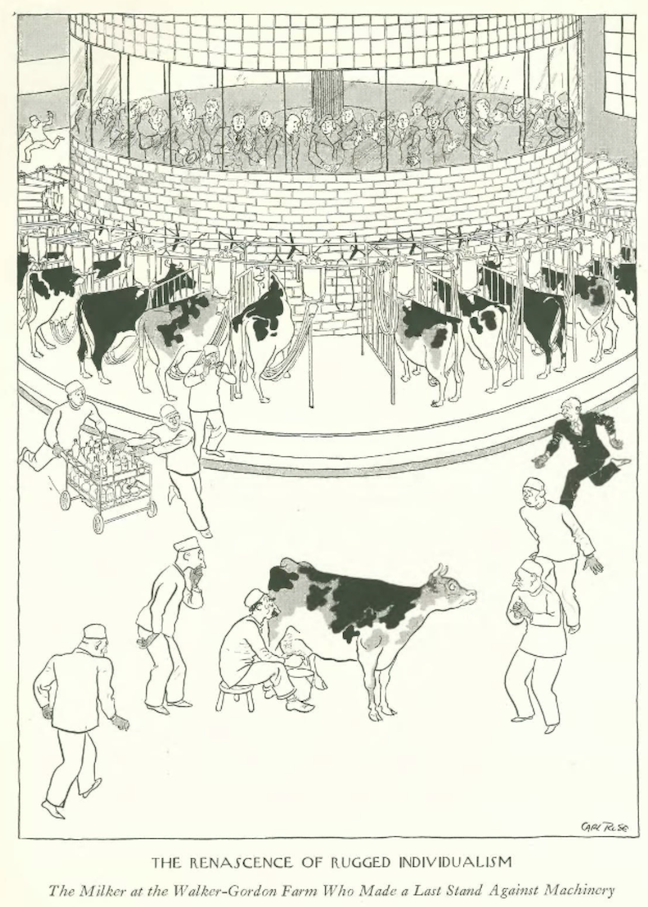
…Carl Rose found an outlier at the modern Walker-Gordon Dairy Farm…
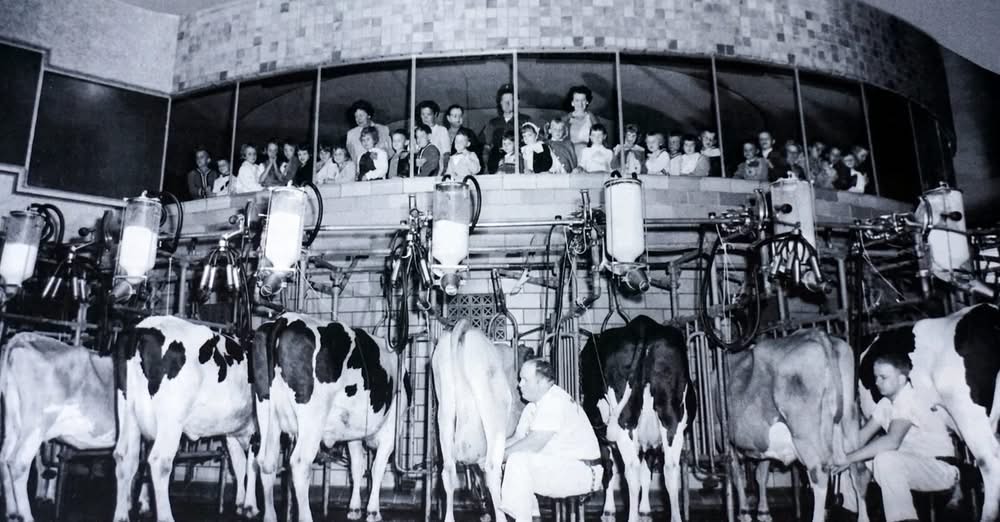
…The Rotolactor featured in Rose’s cartoon was a mostly automatic machine used for milking a large number of cows successively on a rotating platform…first used at the Walker-Gordon Laboratories and Dairy in Plainsboro, New Jersey (pictured below), the Rotolactor held fifty cows at a time, and hosted about 250,000 visitors annually…
(rawmilkinstitute.org)
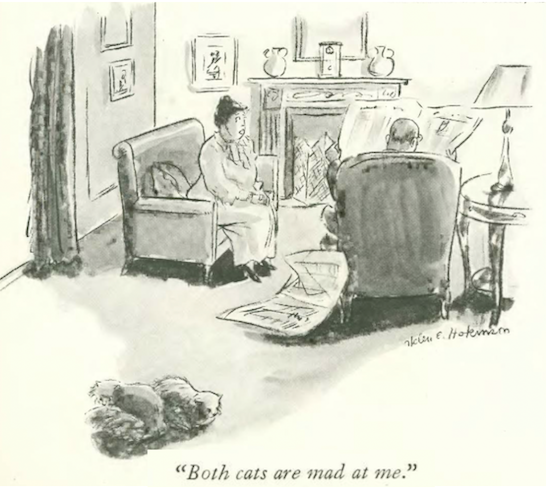
…and we go from cows to cats, courtesy Helen Hokinson…
…and Charles Addams booked an unusual perp…
…on to the November 23 issue…
November 23, 1935 cover by Antonio Petruccelli. Petruccelli (1907-1994) began his career as a textile designer, becoming a freelance illustrator in 1932 after winning several House Beautiful cover contests. This is one of four covers he produced for The New Yorker.Antonio Petruccelli. Here are samples of Petruccelli’s remarkable work.(Helicline Fine Art)
*
Worth the Wait
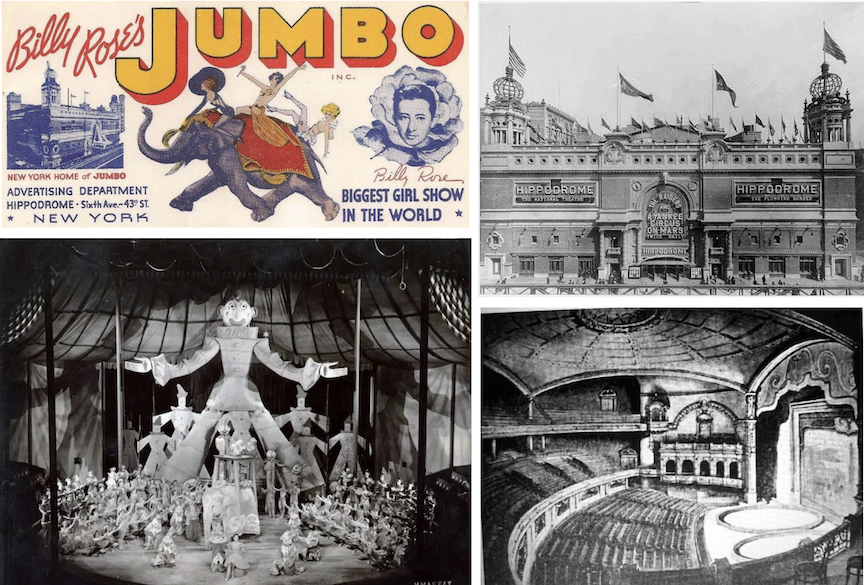
The highly-anticipated circus-themed spectacle Jumbo finally opened at the Hippodrome. In his That’s Entertainment! blog, Jackson Upperco observes that Billy’s Rose’sJumbo was “more circus than musical comedy,” a production that “was largely an excuse for Mr. Rose to present a circus.” It was headlined by comedian Jimmy Durante and bandleader Paul Whiteman, with a score by Rodgers & Hart. Here are excerpts from a review by Wolcott Gibbs:
JUMB0-SIZED ENTERTAINMENT…Clockwise, from top left, Hippodrome billboard promoting Jumbo; built in 1905, the Hippodrome provided entertainment to thousands who couldn’t afford a Broadway ticket; a circus tent was erected inside the 5,300-seat theatre for the spectacle; Jumbo was one of the most expensive theatrical events of the first half of the 20th century. (Facebook/Library of Congress/Broadway Magazine/jacksonupperco.com)
* * *
At the Movies
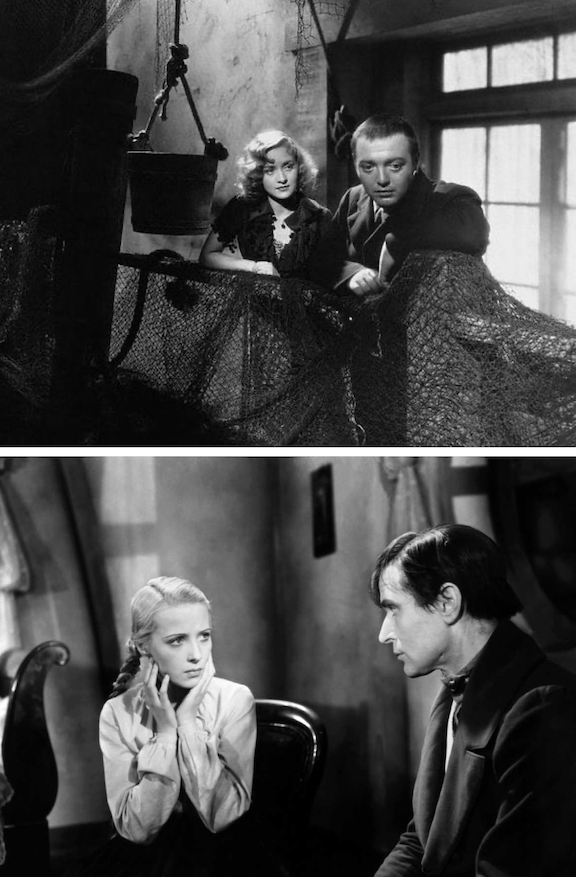
Fyodor Dostoevsky’s 1866 novel Crime and Punishment was adapted to film by both French and American producers in 1935, but critics including The New Yorker’sJohn Mosher mostly preferred the French version, titled Crime et châtiment.
DOUBLE FEATURE…American and French producers each turned out a film adaption of Fyodor Dostoevsky’s novel Crime and Punishment. Top photo, Marian Marsh as Sonya and Peter Lorre as Roderick Raskolnikov in Columbia’s Crime and Punishment; bottom photo, Madeleine Ozeray as Sonia and Pierre Blanchar as Rodion Raskolnikov in Crime et châtiment.(silverscreenmodes.com/SensCritique.com)
…Mosher reviewed another crime thriller, Mary Burns, Fugitive, but found some comic relief in two other films…
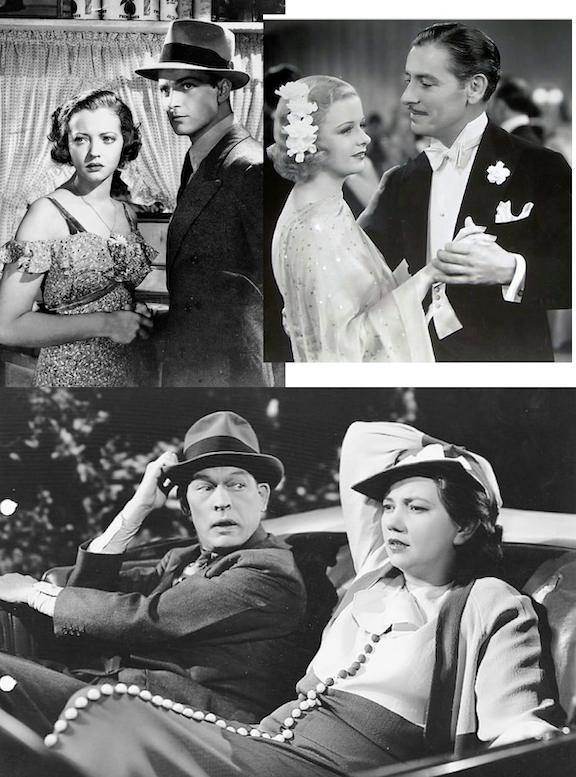
BAD CHOICE IN BOYFRIENDS was the theme of Mary Burns, Fugitive, starring (top left) Sylvia Sidney and Alan Baxter; top right, Joan Bennett and Ronald Colman in the romcom The Man Who Broke the Bank at Monte Carlo; bottom, Fred Allen and Patsy Kelly provided some laughs in musical comedy Thanks a Million. (IMDB)
* * *
From Our Advertisers
Readers of the Nov. 23 issue opened to this lovely image…
…which sharply contrasted with the clunky Plymouth ad on the opposite page…
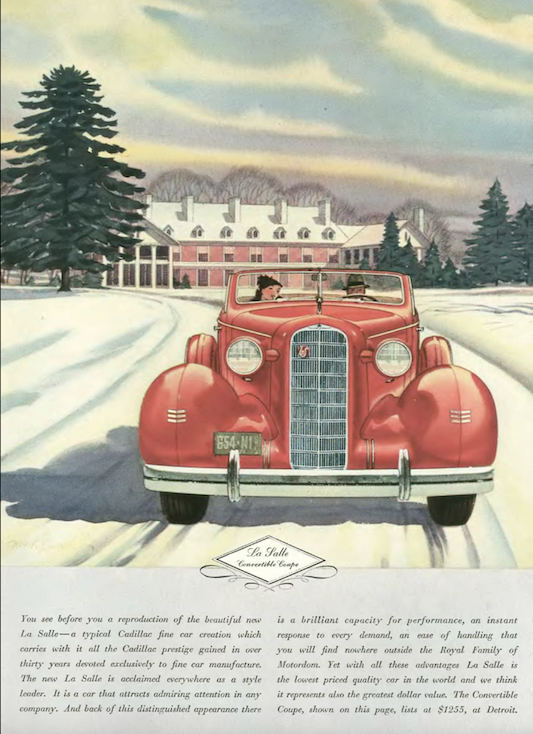
…not so clunky was this colorful illustration promoting Cadillac’s economy model, the La Salle…
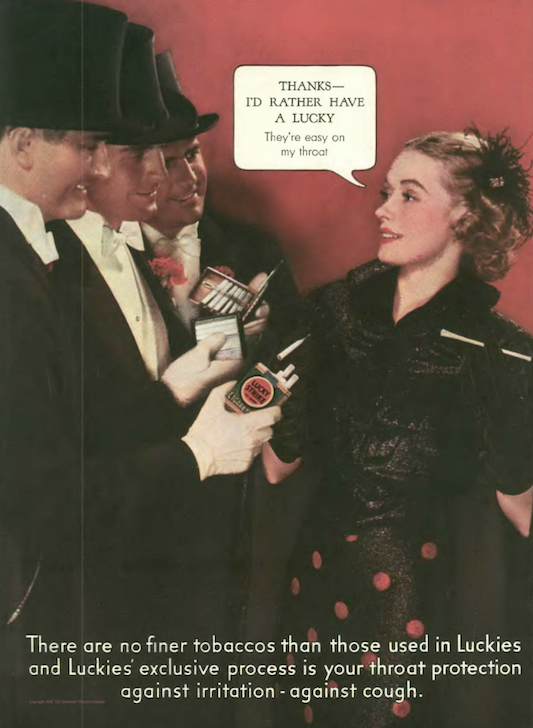
…the back cover was no surprise, with yet another glamorous cigarette ad…
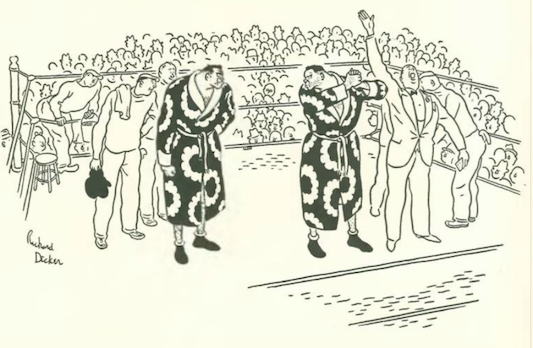
…our cartoonists included Richard Decker, and a fashion faux pas to open a boxing match…
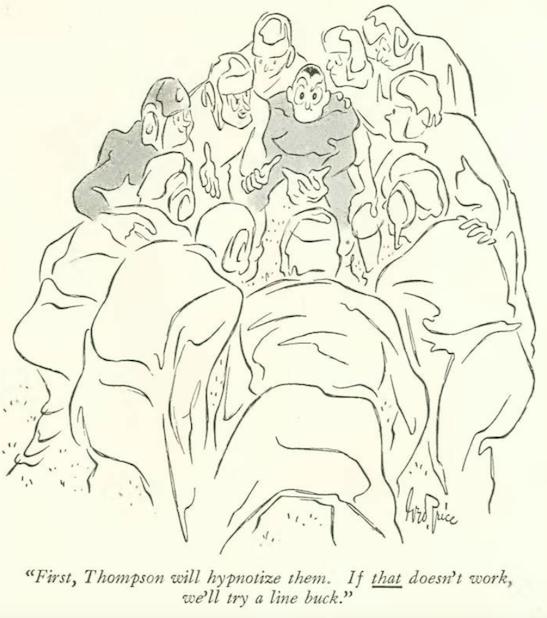
…George Price eavesdropped into some football strategy…
…Carl Rose spotted a canine unbeliever…
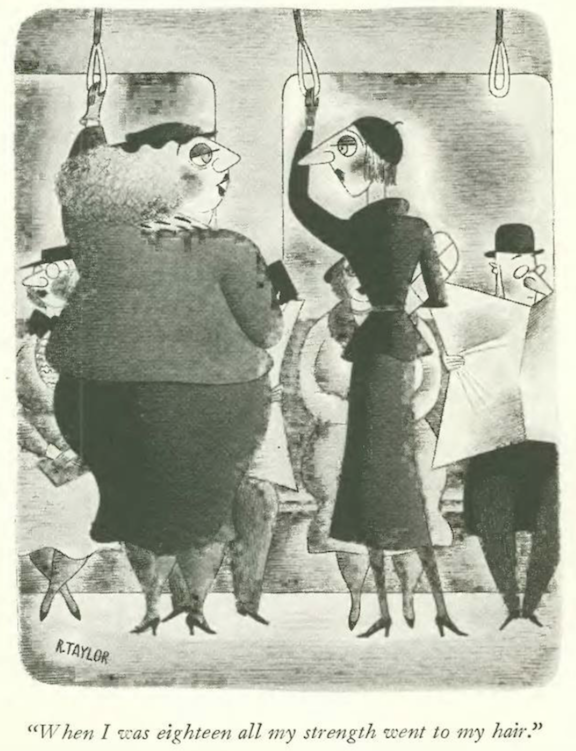
…Richard Taylor was back with his distinctive style…
…Al Frueh continued to illustrate the latest fare on Broadway…
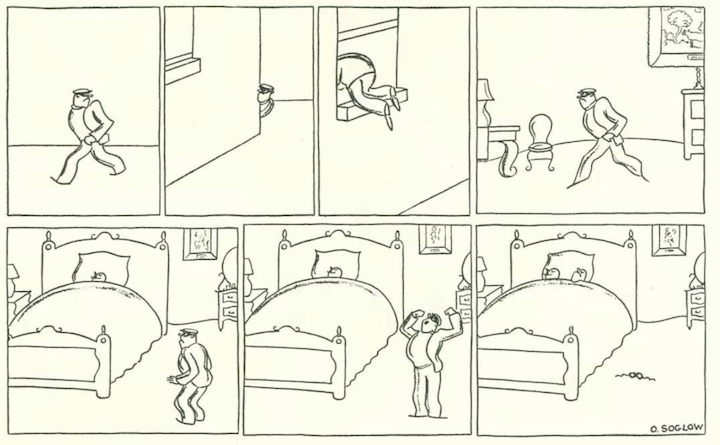
…Otto Soglow crept in for a snooze…
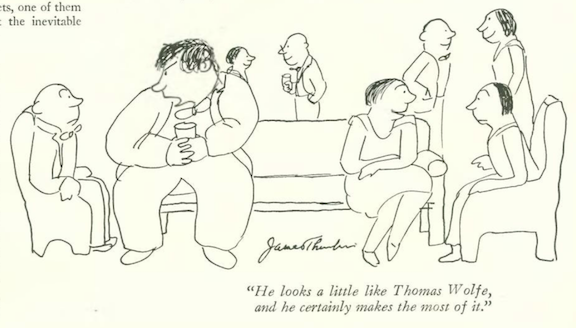
…and we close with James Thurber, and some literary cosplay…
It has been a while since we’ve heard from art and design critic Lewis Mumford, who often cast a censorious eye at the rapidly changing world around him.
October 12, 1935 cover by William Steig. From 1930 until his death in 2003 at age 95, Steig contributed 121 covers and 1,676 drawings to The New Yorker.
In his column “The Sky Line,” Mumford cast an envious gaze north toward Brooklyn’s Prospect Park Zoo, which he believed had greatly improved upon the recently rebuilt Central Park Zoo.
HE HAD OPINIONS…Lewis Mumford (1895-1990).
Brooklyn’s advantage, according to Mumford, was the superior design of Prospect Park, which offered a better location for a zoo than Central Park. We’ll let Mumford explain in these excerpts:
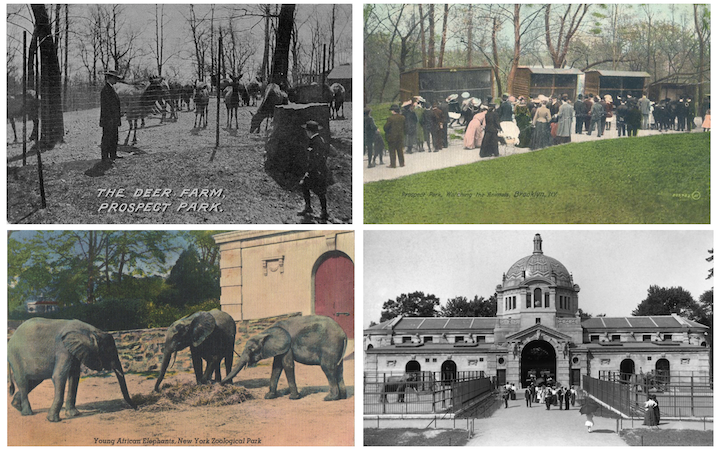
CURIOSITIES, MOSTLY…Clockwise, from top left: Animals were on display at Prospect Park as early as 1866, as seen in this photo of the “Deer Farm”; circa 1900 postcard of Prospect Park’s rather distressing “Menagerie,” which opened around 1890; the park’s Elephant House opened in 1908—modeled after the Hippo Palace at the Antwerp Zoo, the Elephant House also featured rhinoceroses, hippopotamuses, and tapirs; baby elephants (postcard circa 1940s) were a popular attraction until the zoo moved on to smaller creatures in the 1990s. (bklynlibrary.org/untappedcities.com/blog.wcs.org/nycgovparks.org)
LEWIS MUMFORD PRAISED the 1934 plan for the Prospect Park Zoo, designed by architect Aymar Embury II and approved by Parks Commissioner Robert Moses. The zoo was built, in large part, through Civil Works Administration and Works Progress Administration labor and funding. (Brooklyn Public Library)
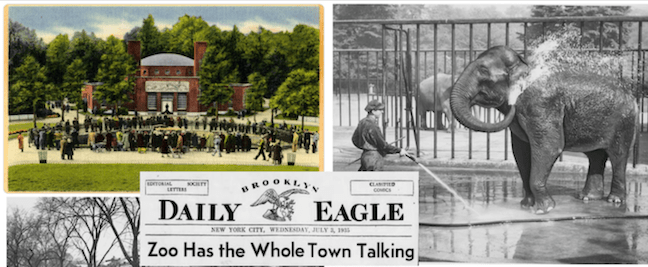
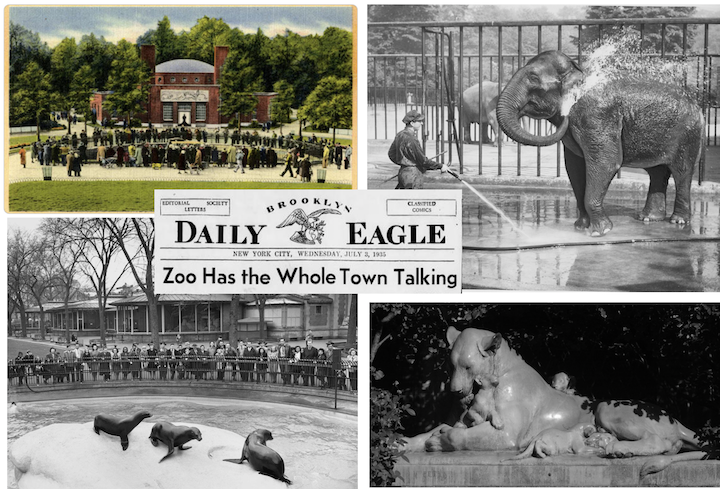
FLATBUSH FAUNA…Clockwise, from top left: Postcard image of Prospect Park Zoo circa 1935; zoo keeper sprays an elephant with a hose, circa 1940; an 1899 bronze sculpture depicting a mother lion nursing her cubs was created by French artist Victor Peter; seal pool, undated photo. (nycgovparks.org/Center for Brooklyn History/Facebook)
CARING OVER CAGES…Prospect Park Zoo today. The zoo closed in 1988 for five-year, $37 million renovation program that, except for the exteriors of the 1930s-era buildings, completely replaced the original zoo. With an emphasis on education and conservation, current exhibits house smaller species rather than elephants, tigers, and lions. (Prospect Park Alliance)
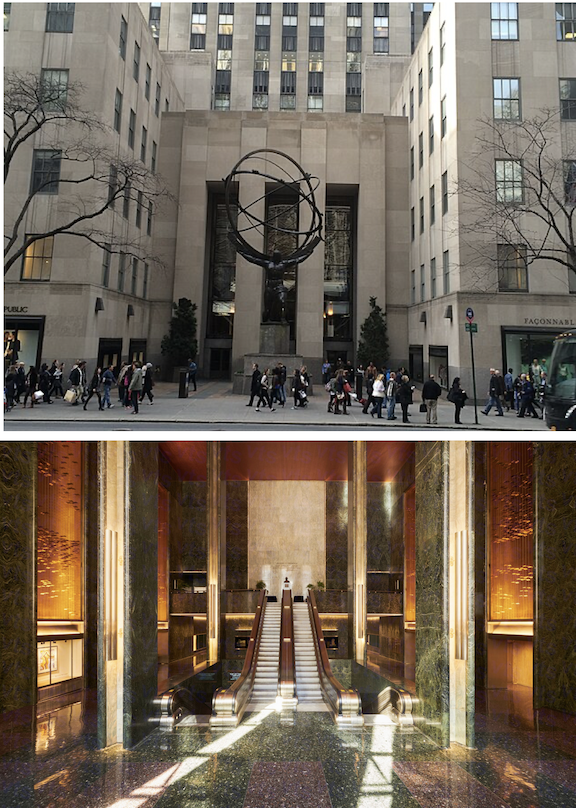
Mumford also looked at the latest developments at Rockefeller Center. As we’ve seen before, he favored smaller-scale developments that were organic and community-focused, and therefore was a strong critic of projects like Rockefeller Center. At its inception he called it a dehumanizing “megamachine,” a product of corporate greed, a “reckless, romantic chaos” that represented the capitalist jungle. Harsh words indeed, so it was something of a surprise to see his approval of the latest piece of the complex—the International Building at 630 Fifth Avenue:
SIMPLE AND CORRECT were the words Lewis Mumford used to describe the interior entrance to 630 Fifth Avenue. (Wikiwand/newyorkoffices.com)
* * *
Bad Benito
In his “Notes and Comment,” E.B. White had some choice words for the murderous Italian dictator Benito Mussolini and for the newspaper columnist Arthur Brisbane, both unconcerned with the slaughter of “backward” Ethiopians by invading Italian forces:
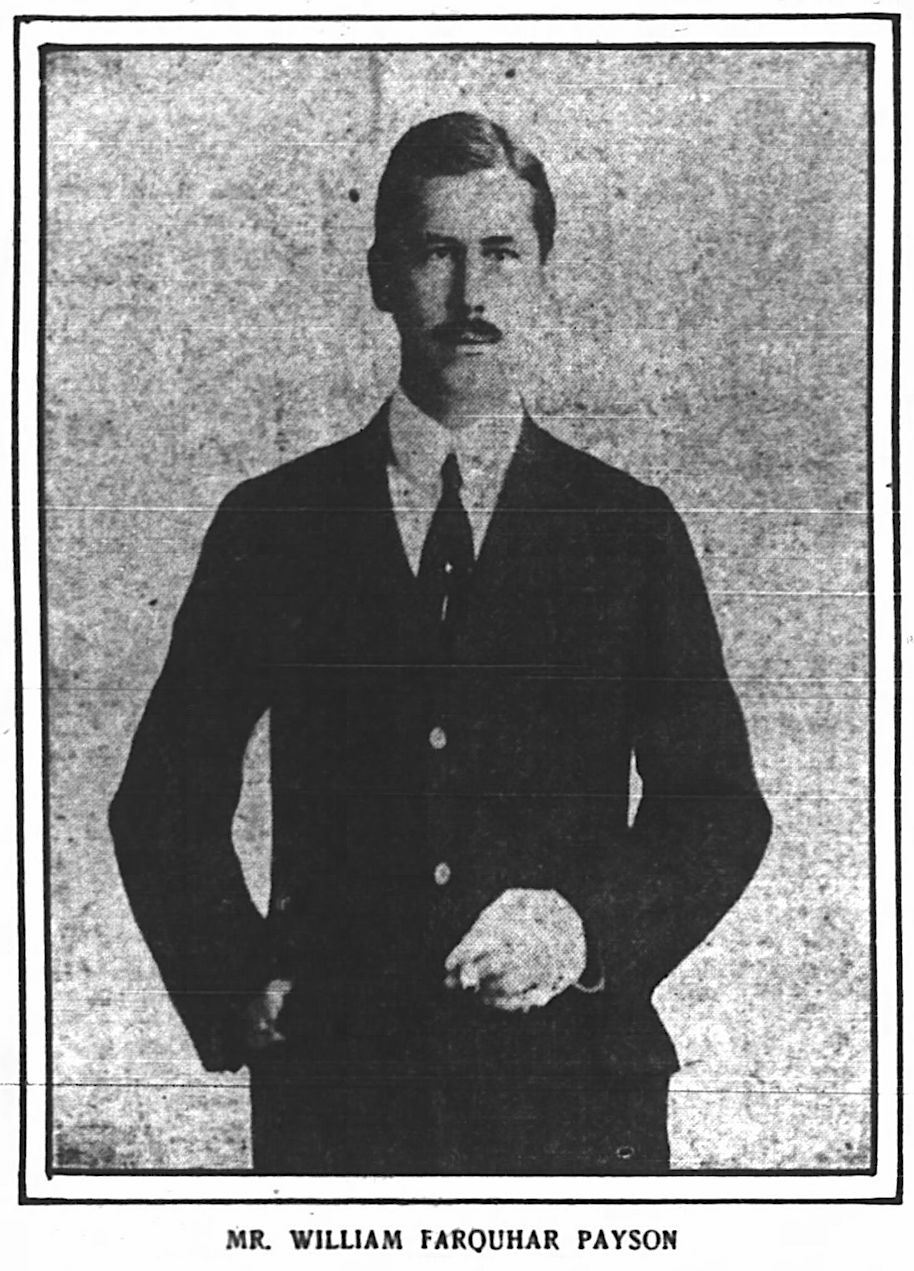
White also noted the role played by The New Yorker in a new novel by William Farquhar Payson (1876–1939) titled Give Me Tomorrow. Apparently the novel credited the magazine’s unique humor for revealing the banality of an evangelist and delivering a young woman from his clutches…
THE NEW YORKER TO THE RESCUE…William Farquhar Payson deployed a copy of the magazine for a pivotal scene in his novel Give Me Tomorrow. (findagrave.com)
* * *
A Star Is Born
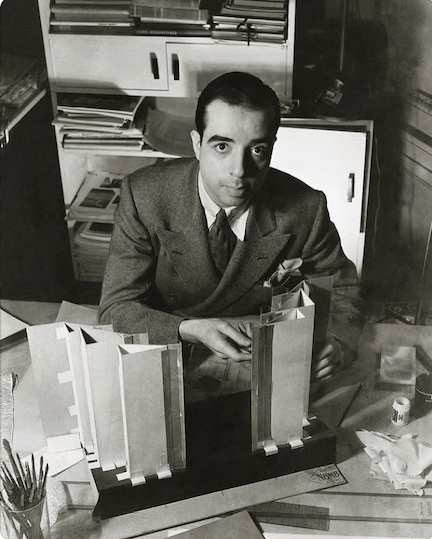
Stage and film director Vincente Minnelli (1903-1986) moved from Chicago to New York in 1931, where he worked as a stage designer for Earl Carroll’s Vanities and costume and set designer for the Ziegfeld Follies before becoming art director at Radio City Music Hall. He got his big break in 1935 when he directed, to critical acclaim, the Broadway musical At Home Abroad. “The Talk of Town” took notice of the rising star (excerpts):
AN EYE FOR DESIGN…Photographer Lusha Nelson photographed Vincente Minnelli at his desk with a miniature stage on Feb. 1, 1936. (James Grissom via threads.com)
* * *
A Safe Space
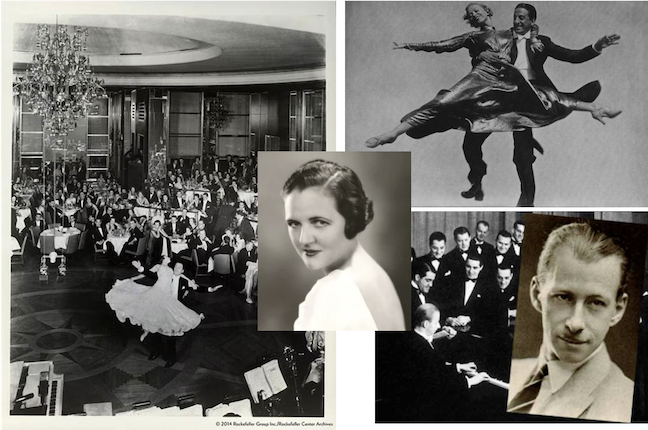
Lois Long had mixed feelings regarding the Rockefeller Center’s Rainbow Room, fearing that it was a tourist magnet but also desiring to take in its sumptuous floor shows. In the first excerpt, Long continued her comment on the heated competition she perceived among nightclub owners.
FEAR FACTOR…The entertainment lineup at Rockefeller Center’s Rainbow Room helped Lois Long overcome her fear of encountering tourists. Clockwise, from left, the Rainbow Room in 1934; Ramon and Renita lit up the dance floor (photo from Nov. 1935 Harper’s Bazaar); Ray Noble and his orchestra provided “all-around beauty”; and (inset) cabaret singer Frances Maddox offered her sophisticated warble to the glittering affair. (Rockefeller Center Archives/Pinterest/Shedd Institute)
* * *
An Untamed Shrew
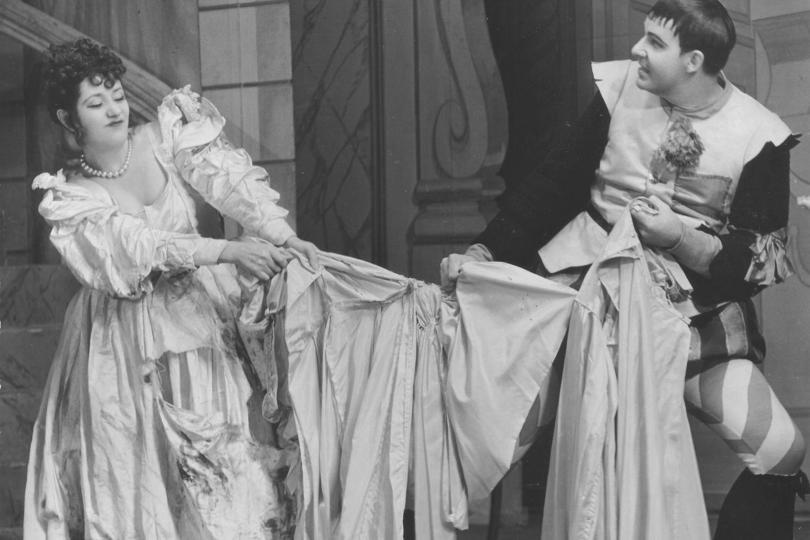
Theatre critic Wolcott Gibbs had a good time watching Alfred Lunt and Lynn Fontanne take on Shakespeare’s The Taming of the Shrew at the Guild Theatre, especially Lunt’s uproarious take on the play.
FUN WITH SHAKESPEARE…Alfred Lunt and Lynn Fontanne matched wits in the Theatre Guild’s presentation of The Taming of the Shrew. (minnesotaplaylist.com)
* * *
At the Movies
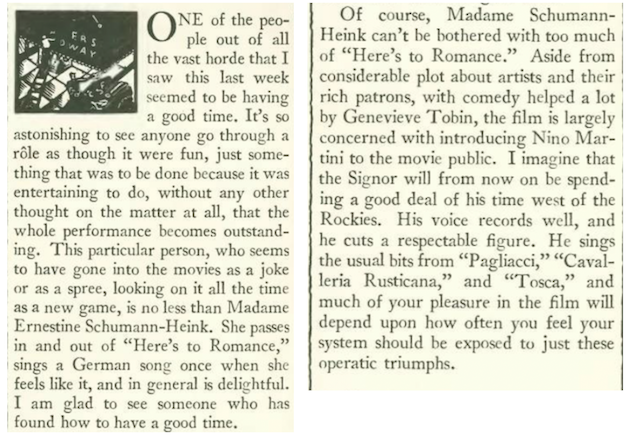
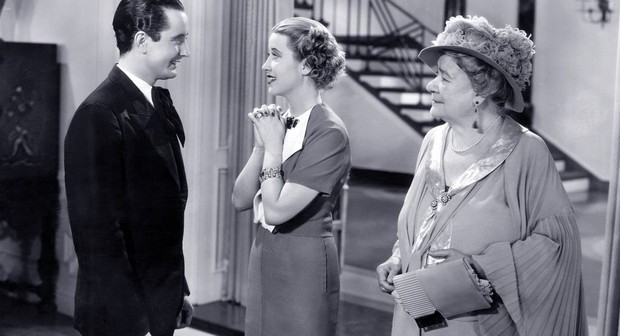
Our film critic John Mosher didn’t have much to say about Here’s To Romance, which seemed contrived to introduce the Italian tenor Nino Martini (1905–1976) to a wider audience. To Mosher, the highlight of the film was the appearance of Ernestine Schumann-Heink (1861–1936), the Austrian-American operatic dramatic contralto, who appeared to be having a good time.
SINGER SANDWICH…Genevieve Tobin (center) stands between tenor Nino Martini and dramatic contralto Ernestine Schumann-Heink in a scene from Here’s to Romance. (rottentomatoes.com)
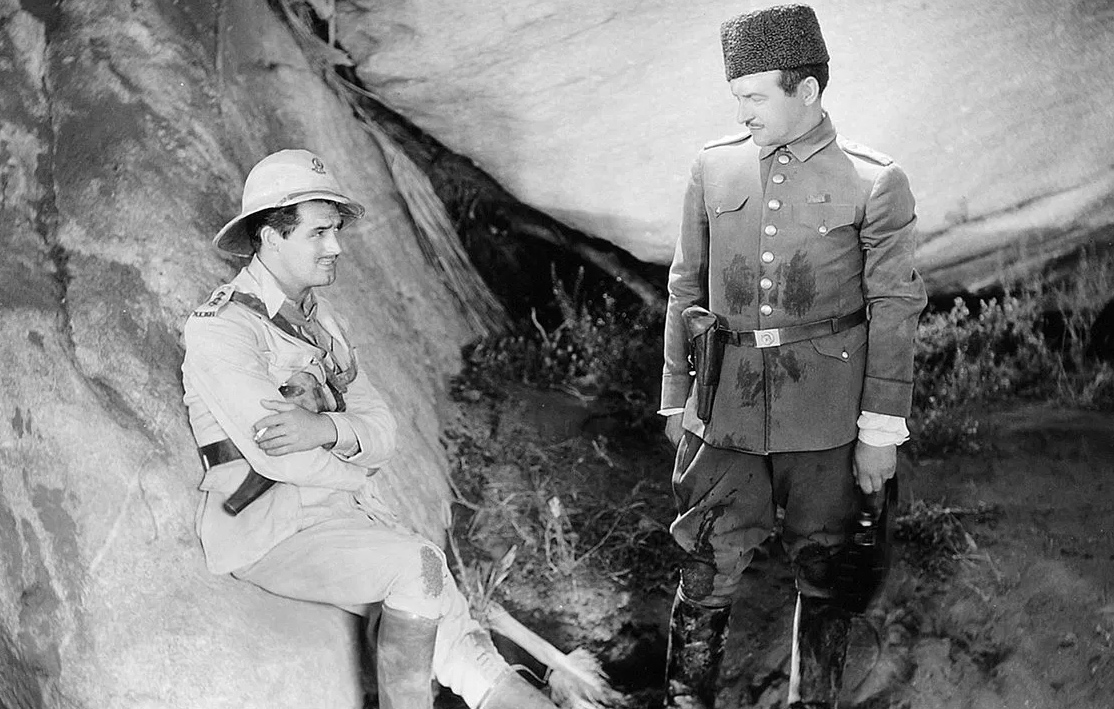
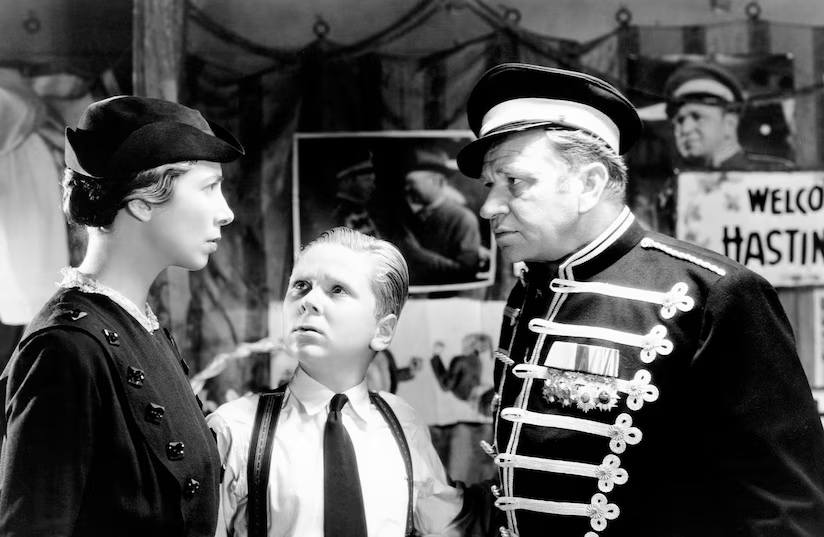
Mosher reviewed two other films that were a bit more dismal: The Last Outpost was a war-themed melodrama starring Cary Grant and Claude Rains; O’Shaughnessy’s Boy featured Wallace Beery as a circus animal trainer who loses his arm as well as his family.
DUELING MUSTACHES…Cary Grant (left) sported a rare mustache in a role opposite Claude Rains in The Last Outpost. (mabumbe.com)A TOUGH ACT…Sara Haden played a skeptical aunt who sees a one-armed circus animal tamer (Wallace Beery) regain his son (Jackie Cooper) and the confidence he lost along with his wife in O’Shaughnessy’s Boy. (tcm.com)
* * *
From Our Advertisers
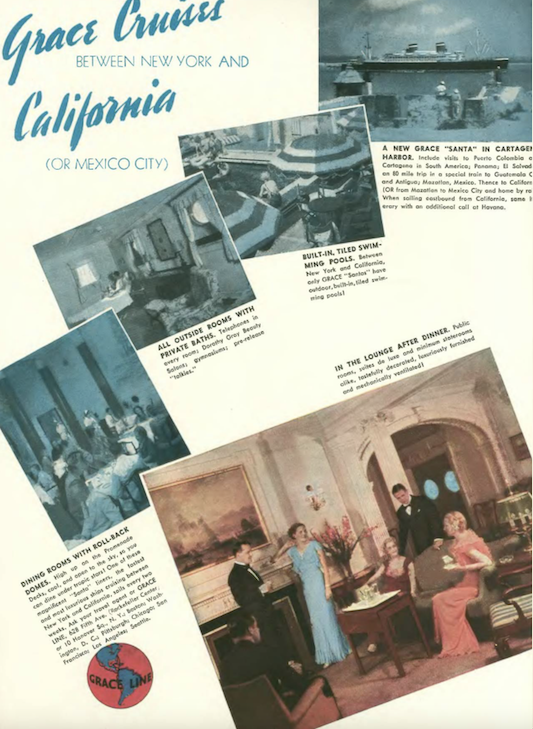
I find these advertisements oddly appealing, because this kind of travel no longer exists. Today there is exactly one ocean liner left in the world—the Queen Mary 2; the cruise ships that rule the 21st century seas are essentially hotel/amusement parks stacked on top of a huge barges…water slides, Vegas-style entertainments, and all-you-can-stuff-into-your-face buffets…
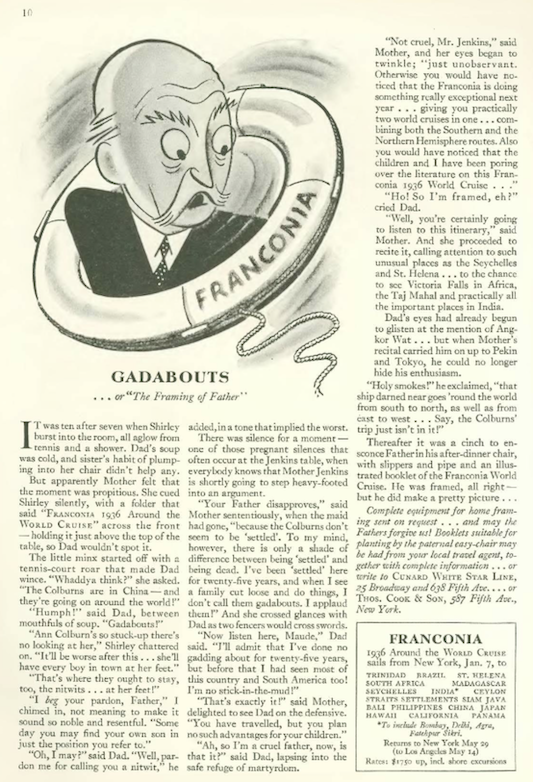
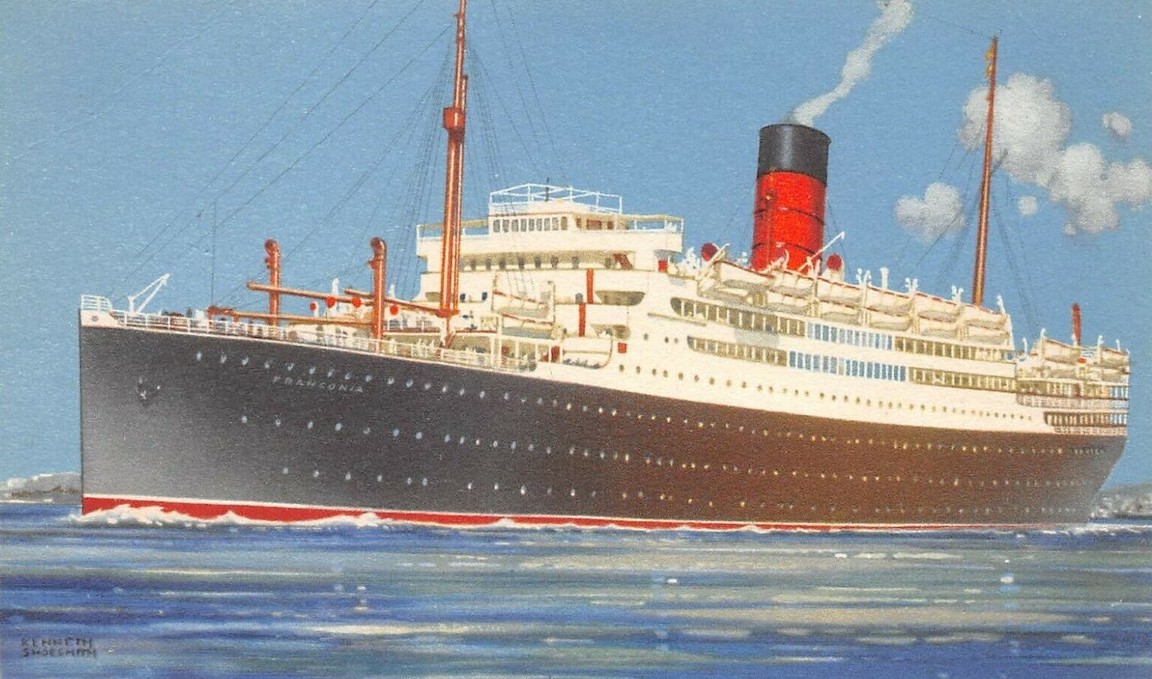
…this curious ad on page 10 mimicked the look of a New Yorker short in the vein of Clarence Day…what it promoted was an around-the-world cruise that would take two-hundred (well-heeled) passengers to more than twenty destinations including Malaysia, Bali and Singapore…
Postcard image of the Franconia. (Pinterest)
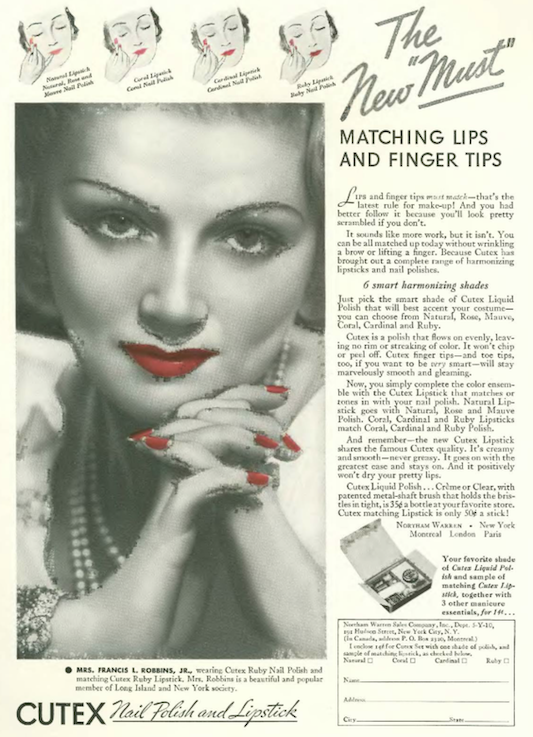
…society women could be counted on to endorse all sorts of things from cigarettes to cold cream…here a “Mrs. Francis L. Robbins, Jr” (I couldn’t find her given name) endorses Cutex nail polish and lipstick…the ad noted that Mrs. Robbins “is a beautiful and popular member of Long Island and New York society”…
…the makers of Spud menthol cigarettes entered the realm of the surreal with a talking cigarette that encouraged chain smoking…
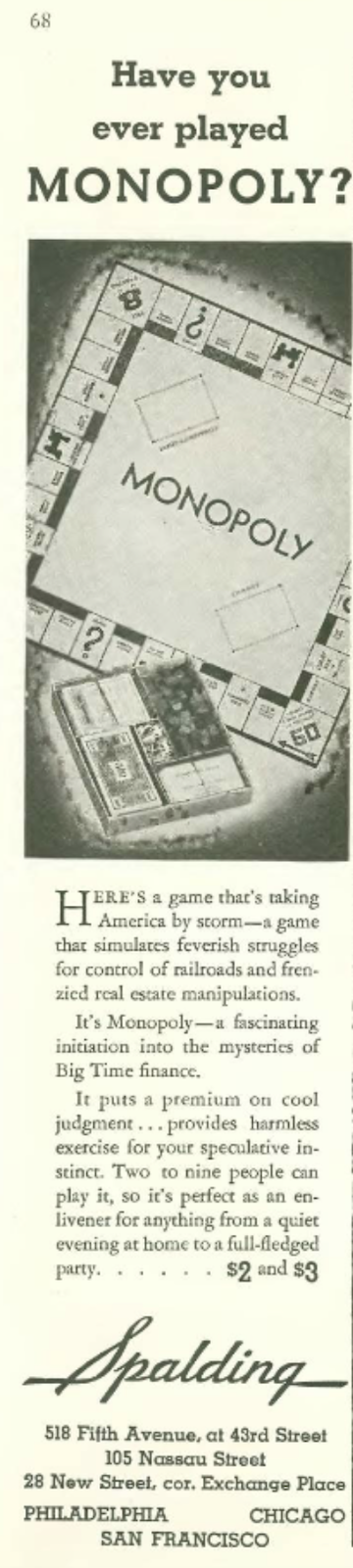
…the board game Monopoly had its origins in The Landlord’s Game, created in 1903 by an anti-monopolist named Lizzie Magie…over the years variants of the game were introduced until Parker Brothers bought the rights from Magie and another inventor and began mass-marketing the game in the fall of 1935…
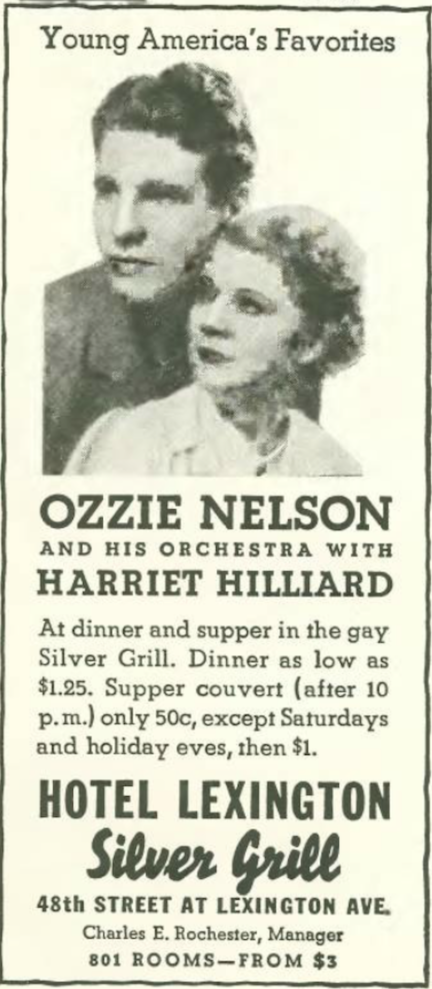
…Peggy Lou Snyder was performing in vaudeville when she met the saxophone-playing bandleader Ozzie Nelson in 1932. Nelson hired her to sing with his band (under the name Harriet Hilliard) and then married her three years later…in 1944 the couple would launch a comedy series for radio, The Adventures of Ozzie and Harriet, which made a successful transition to television, appearing on ABC from 1952 to 1966…
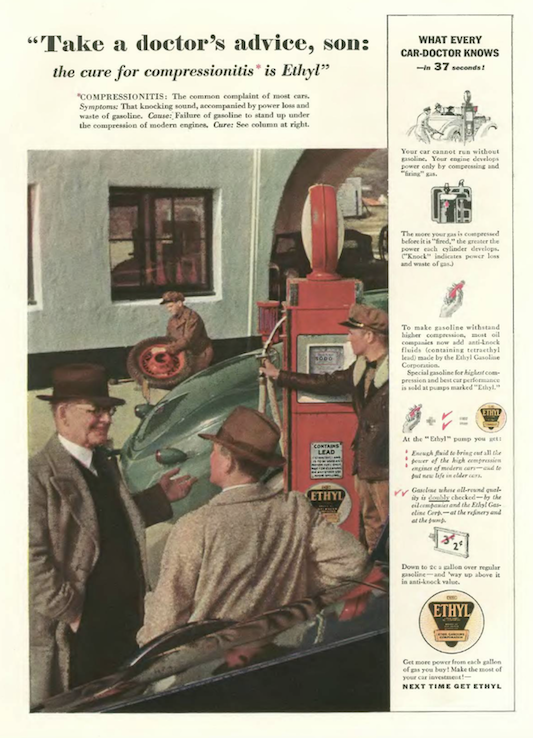
…here we have some old-timers offering hunting advice and promoting octane-boosting Ethyl gasoline, which helped prevent engine knock…it also contained the highly toxic additive tetraethyllead, which could cause severe neurological damage, particularly in children…it was completely banned in the U.S. by 1996…
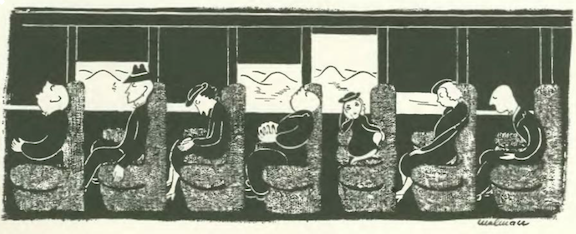
…on to our cartoonists, we start with this delightful spot art by Christina Malman that graced the bottom of the calendar and events page…
…Helen Hokinson appeared twice, first at the vet’s…
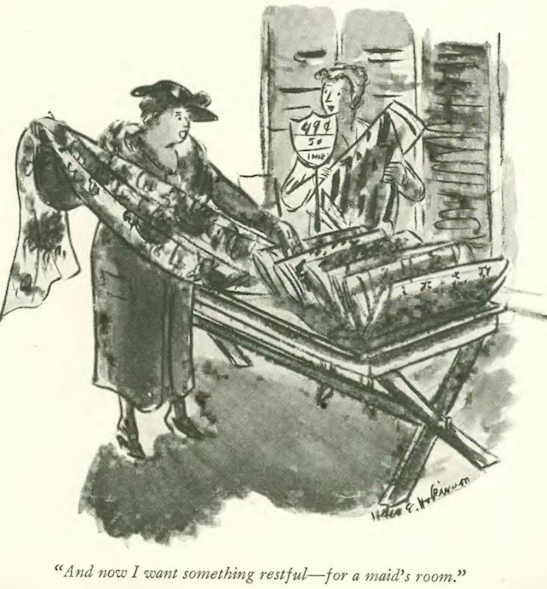
…and later shopping for the maid at a department store…
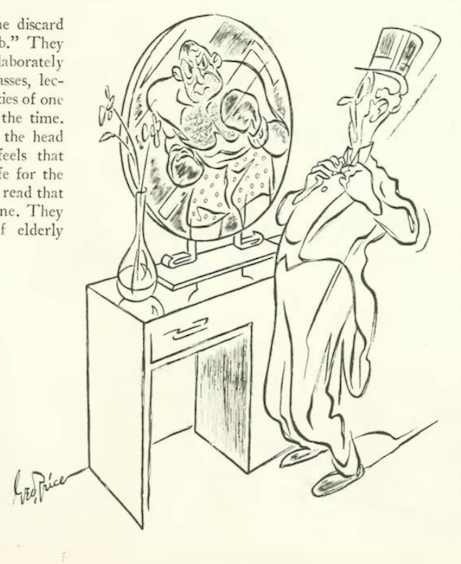
…George Price had a surprise in store for this mirror-gazer…
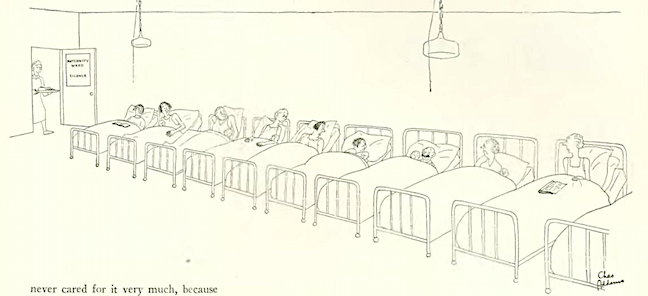
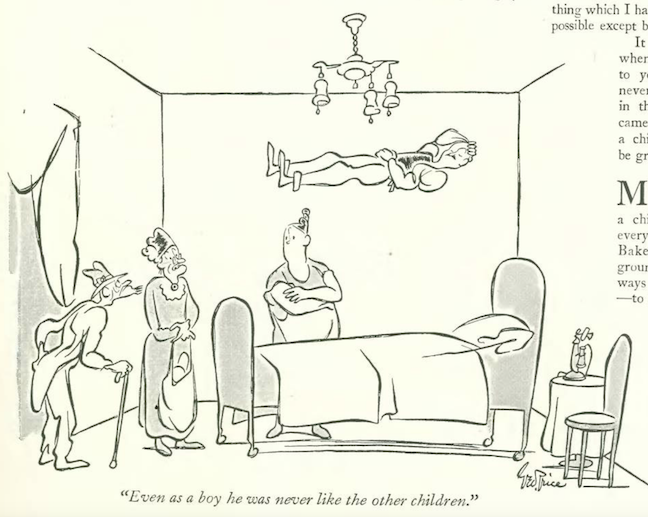
…Charles Addams took the top of page 29 to show us a proud papa in a maternity ward…
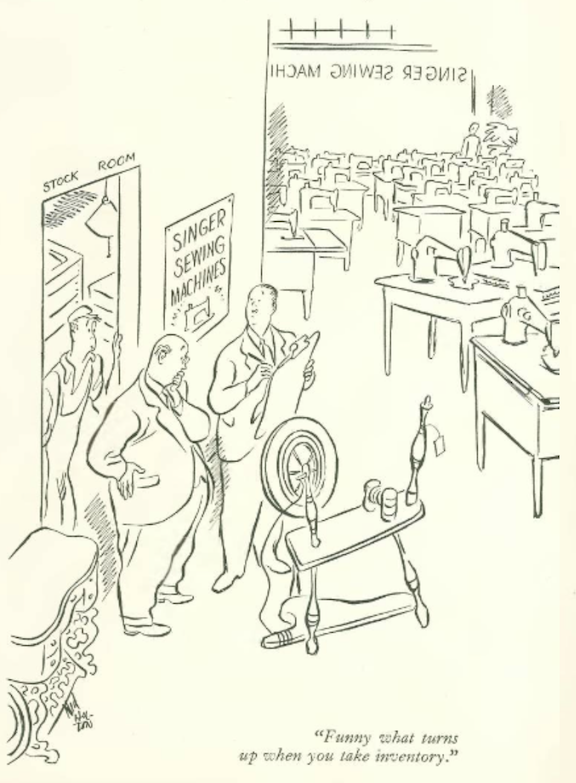
…Ned Hilton uncovered some history at the Singer Building…
…Mary Petty eavesdropped on a tactless toff…
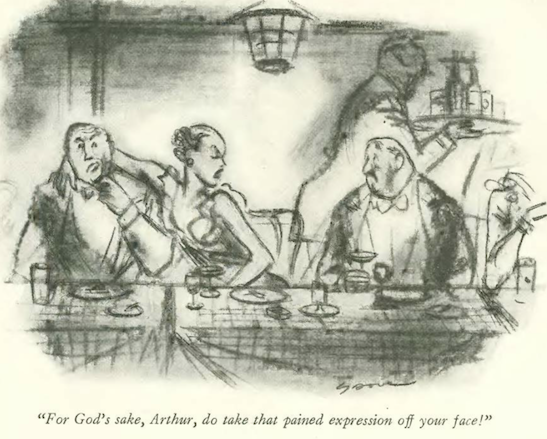
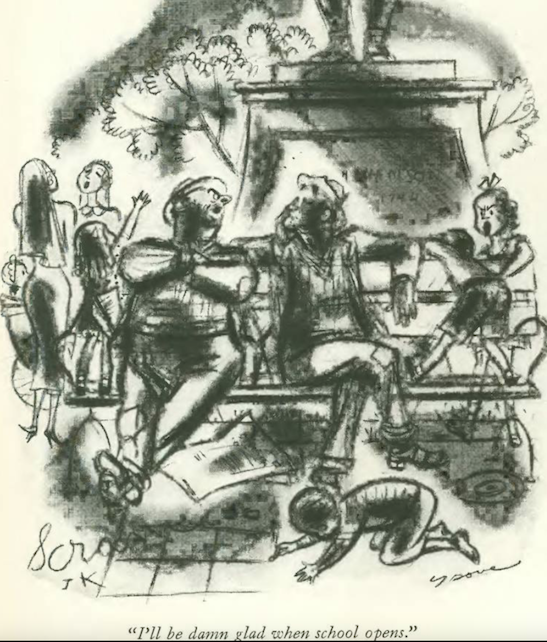
…Leonard Dove showed us that being a sugar daddy wasn’t so sweet…
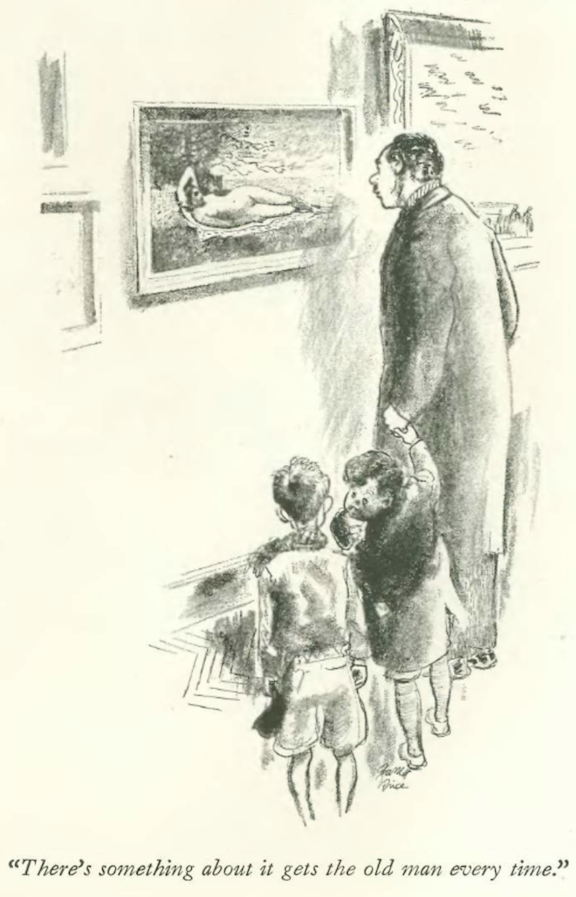
…and we close with William Steig, one of his “Small Fry” speaking up for the old man…
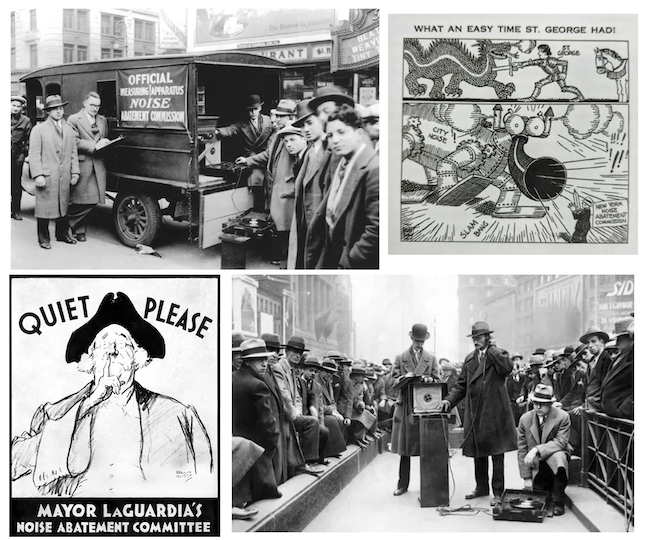
City life is a noisy life, especially in places like Manhattan, one of the most densely populated places in the world.
August 24, 1935 cover by Rea Irvin.
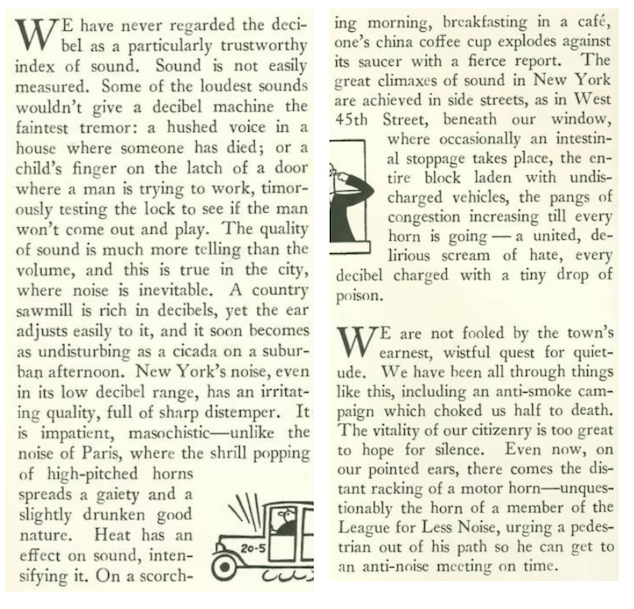
In his “Notes and Comment” column, E.B. White described the occasional “intestinal stoppage” of traffic outside The New Yorker’s offices at West 45th Street, an entire block “laden with undischarged vehicles, the pangs of congestion increasing till every horn is going—a united, delirious scream of hate, every decibel charged with a tiny drop of poison.”
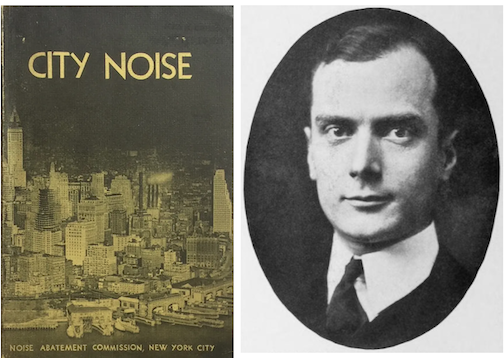
ABOVE THE FRAY…E.B. White with his pet dachshund Minnie at the West 45th Street offices of The New Yorker. (New York Times)AND DON’T CALL ME SHIRLEY…New York City’s Commissioner of Health, Shirley Wynne (right), created a Noise Abatement Commission in 1929. After eight months of research the Commission published City Noise, which included recommendations for a quieter city. (Wikipedia/trevianbooks.com)
The city began addressing the problem in 1929, when New York City’s Commissioner of Health, Shirley Wynne (1882-1942), created a Noise Abatement Commission, likely the first such commission in the U.S. The Commission cited the “mounting roar and crash of traffic, building, manufacture and sundry other noises which have accompanied the growth of the city.” After eight months of research the Commission published City Noise, which included recommendations for a quieter city.
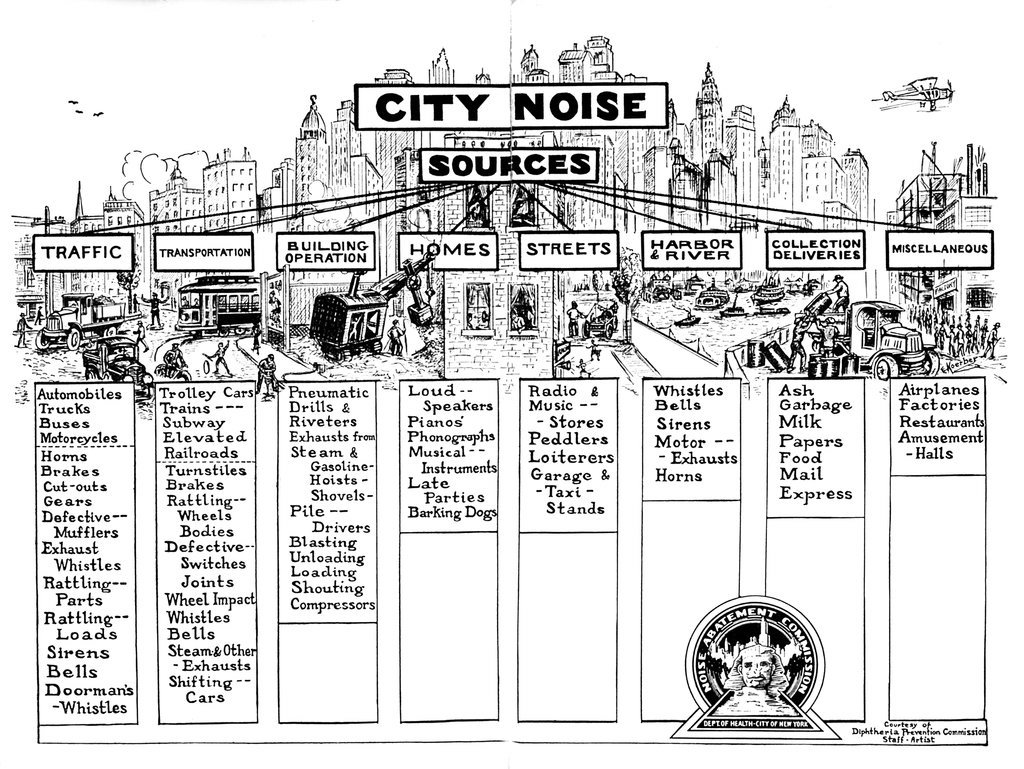
URBAN CHORUS…A chart featured in City Noise depicted some of sources of noise in New York City.PIPE DOWN!…Clockwise, from top left: The Noise Abatement Commission took to the streets with a municipal acoustics-measuring truck in 1930; cartoon in the New York Herald Tribune illustrated the challenge ahead; Commission officials conducting noise tests in Times Square, circa 1930; poster circa 1936 promoted Mayor Fiorello La Guardia’s anti-noise drives. A 1936 noise code put sound restrictions on everything from radios to the “prolonged and unreasonable blowing of a horn.” A first offense cost $1; the second, if committed within the next year, $2. (hii-mag.com/Bloomberg.com/NYTimes.com)
Not one to leave a stone unturned, White also added this note about the noisy doors on Pullman train car toilets…
Here are the Otto Soglow spot drawings that accompanied the “Talk” piece:
Final note: A colorful exploration of sound can be found on the One Thousand Birds site,Hii Magazine.Check it out!
* * *
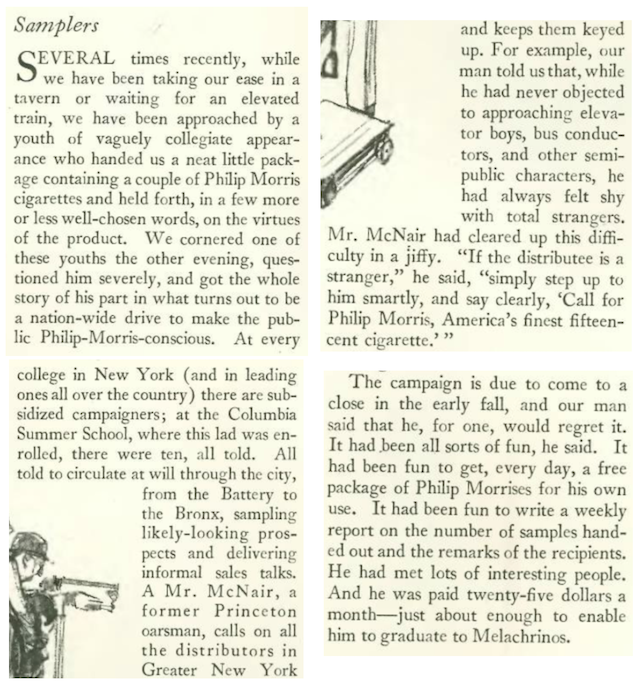
Puff Pushers
Tobacco companies like Philip Morris have long been savvy in finding ways to expand their market, including taking their product directly to the consumer, as “The Talk of the Town” explained in this entry:
SMOKE FREE…Sample pack of Philip Morris cigarettes, circa 1930s. (Ebay)
* * *
A Rare Glimpse
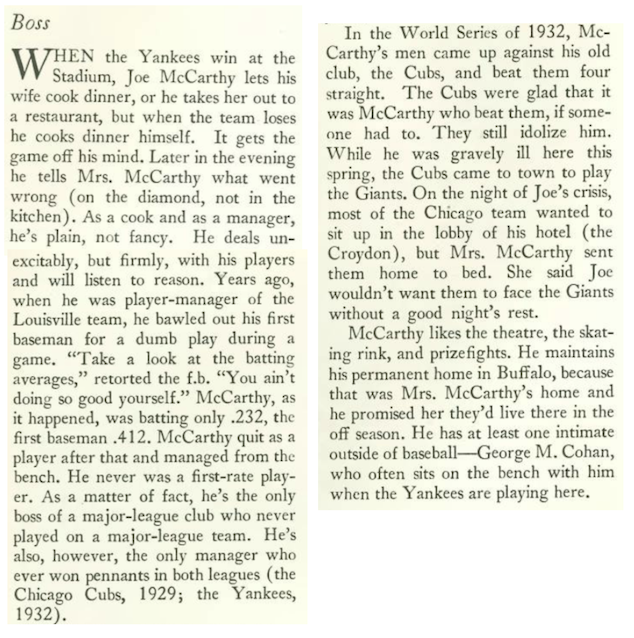
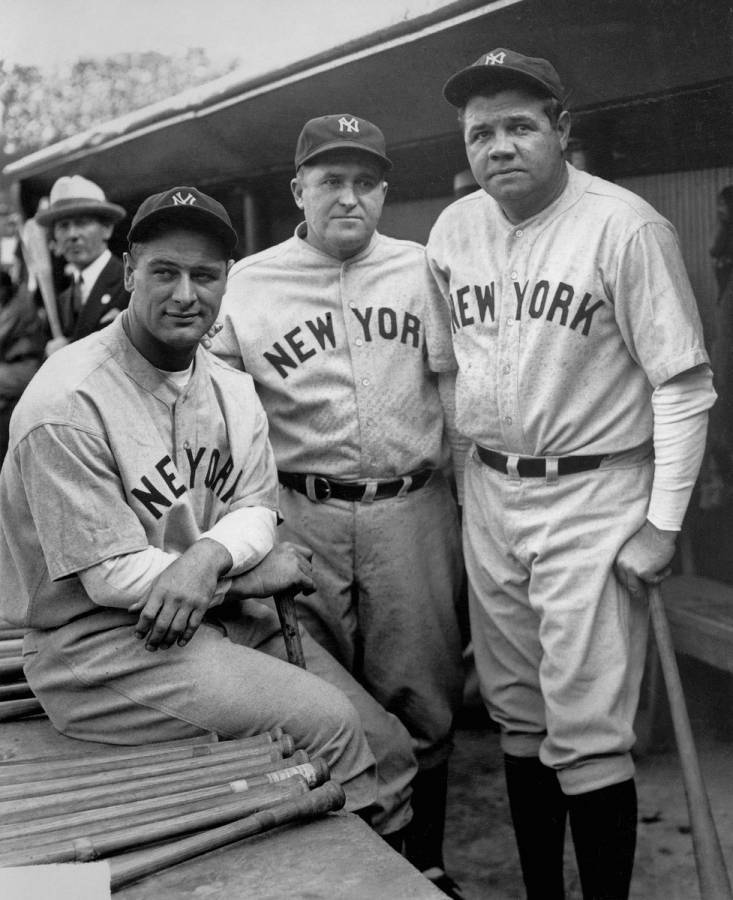
Before Roger Angell started writing about baseball in 1962, there wasn’t a whole lot written about the sport in the pages of The New Yorker. In the magazine’s early years, the game was probably perceived as too low-brow, while other athletic pursuits such as golf, tennis, and polo were more in line with the desired or perceived readership. Early contributors such as Ring Lardner had also soured on the sport, thanks to the Black Sox Scandal of 1919 and the greed of team owners. So here is a rare look at baseball, and Yankee coach Joe McCarthy (1887-1978), in “The Talk of the Town.” Excerpts:
BRONX BOMBERS…Coach Joe McCarthy (center) with sluggers Lou Gehrig, left, and Babe Ruth during the 1932 World Series. The first manager to win pennants in both the National and American leagues, McCarthy’s teams would win a total nine league pennants and seven World Series championships. (CARLI Digital Collections)
* * *
Music Under the Stars
The monumental Lewisohn Stadium was a popular classical music venue on the City College of New York campus until its unfortunate demolition in 1973. According to BBC Music Magazine, “for nearly half a century, Lewisohn Stadium gave people from all walks of life the chance to hear performances by the likes of violinist Fritz Kreisler, soprano Leontyne Price and clarinettist Benny Goodman for as little as 25 cents admission. The New Yorker paid a visit during eighteenth season of the Stadium Concerts. Excerpts:
CLASSICAL MASSES…At left, cover of the 1935 Stadium Concerts Review; at right, Andre Kostelanetz conducts before a crowd of thousands at Lewisohn Stadium in 1939. The stadium was demolished in 1973 to make way for City College of New York’s North Academic Center. SeeThe New York Philharmonic Archive for the complete digital version of the 1935 Stadium Concerts Review. (NY Philharmonic Archive/PressReader.com)
* * *
At the Movies
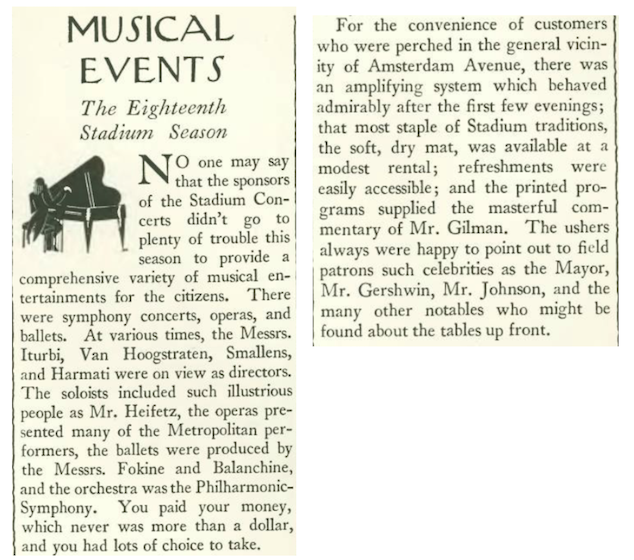
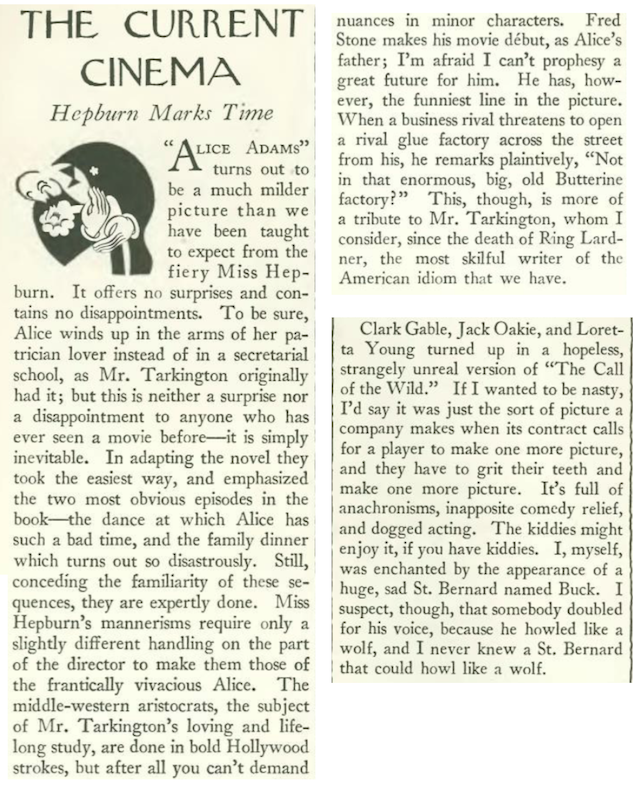
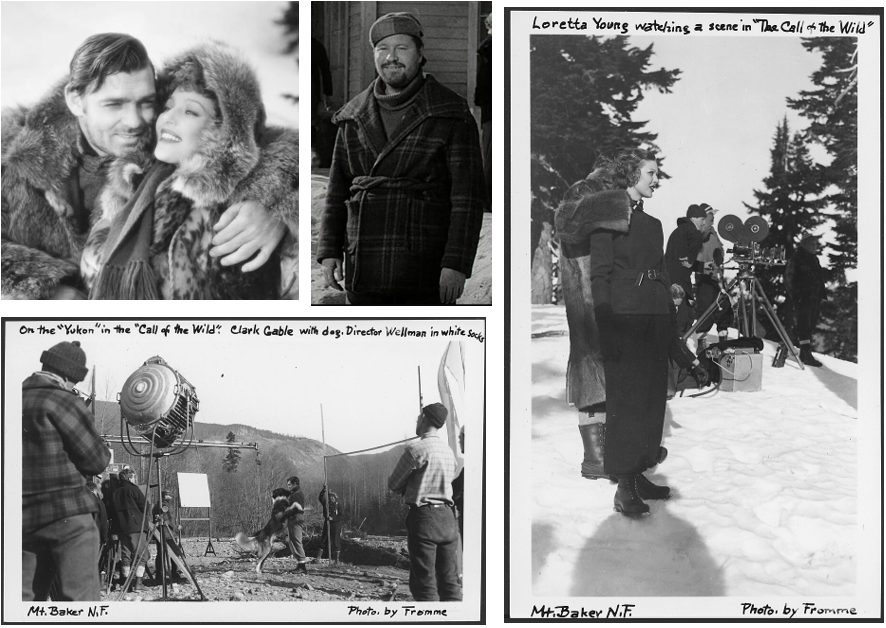
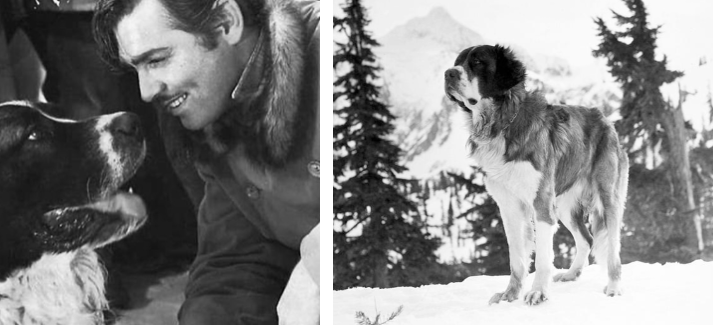
Film critic John Mosher continued to search in vain for a film he could endorse, but he came away empty-handed after screening a star-studded screen adaptation of Jack London’s novel The Call of the Wild. Star power also fell short for Mosher in the screen version of Booth Tarkington’sAlice Adams.
SMALL TALK…The film adaption of Booth Tarkington’sAlice Adams seemed to have all of the right elements in place, including director George Stevens and stars Katharine Hepburn and Fred MacMurray (left), but critic John Mosher found it somewhat average. In a 1991 retrospective review, however, The New Yorker’sPauline Kael deemed the romantic comedy “a classic” and stated that “Hepburn gives one of her two or three finest performances.” At right, the character of Alice Adams was first portrayed on the silver screen by Florence Vidor in a 1923 silent film. (Toronto Film Society/Wikipedia)THE BIG CHILL…Clockwise, from top left, Clark Gable and Loretta Young brave the Yukon wilds (actually Washington State) in The Call of the Wild; Jack Oakie provided comic relief as Gable’s sidekick Shorty Hoolihan; Young watches the filming of a scene on location at Mt. Baker National Forest; Gable shoots a scene with the St. Bernard Buck. (IMDB/Wikimedia)CLARK’S BEST FRIEND…Dog lover Clark Gable became very close with Buck during the filming of The Call of the Wild. Buck appeared in seven more films from 1935 to 1940, even receiving star billing as “Buck the Wonder Dog.” (Facebook/Pinterest)
* * *
From Our Advertisers
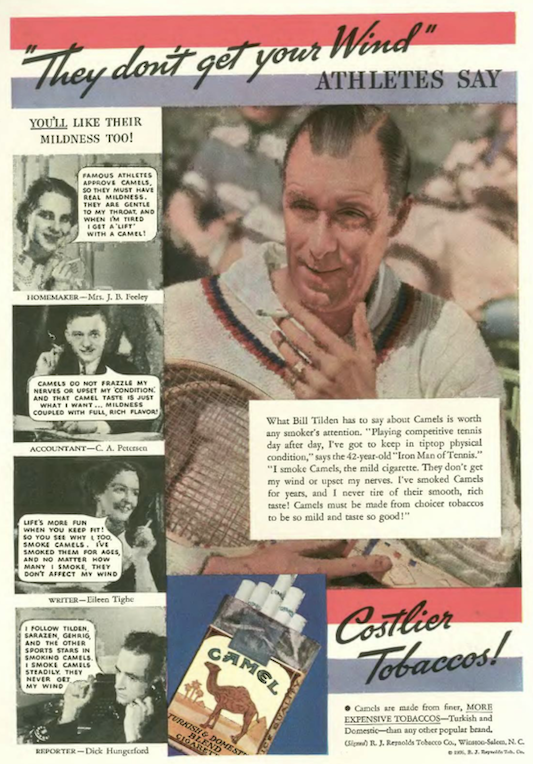
Colorful ads returned to the August 24 issue, featuring familiar sponsors who could afford full-page, full-color spots, namely tobacco and liquor producers…Camel was back with their athletic theme, however they might have chosen someone other than Bill Tilden, who looked perfectly ancient…
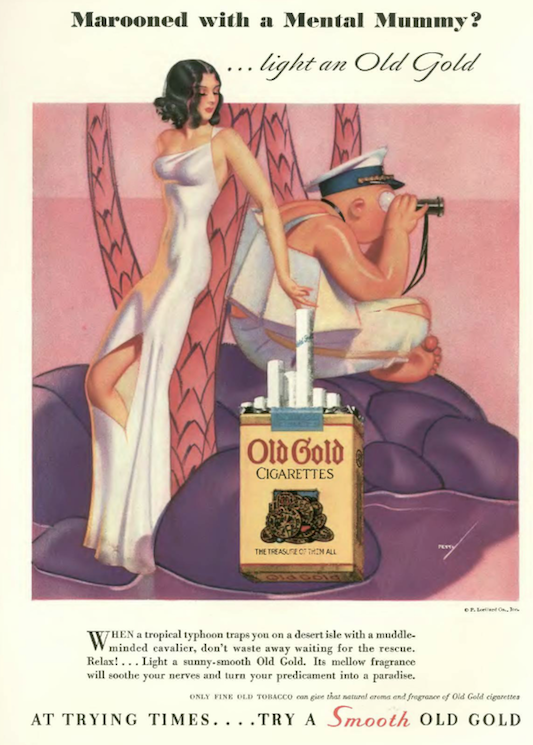
…Old Gold returned with another George Petty-illustrated ad…
…Courvoisier cognac took the back page spot…
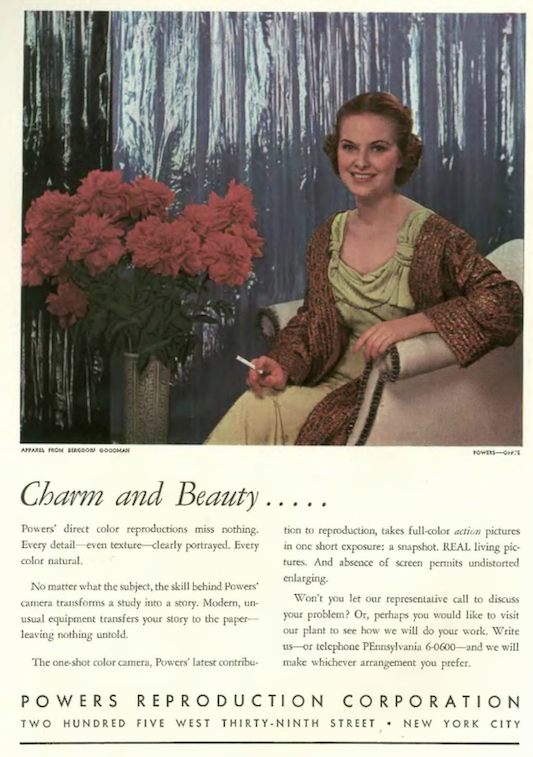
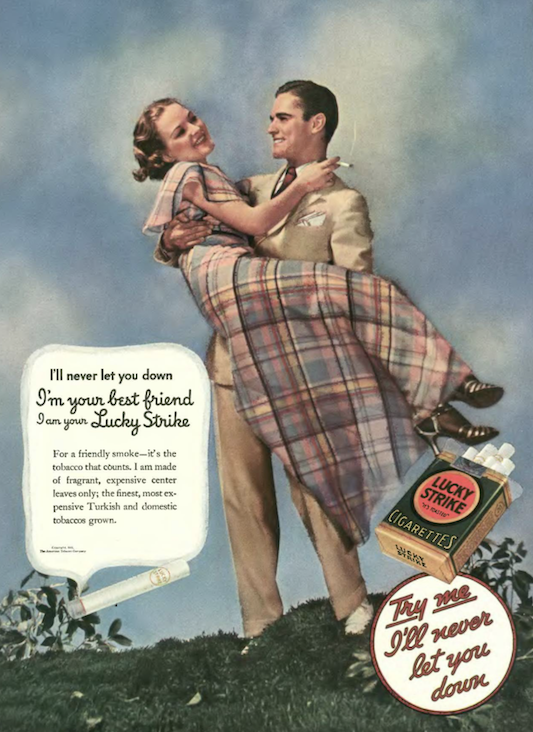
…Powers Reproduction showed off their color printing expertise…I wonder if that is a Lucky she is smoking…
…because I believe she is the same woman who appeared in this ad from the July 27 issue:
…back to August 24, where we were encouraged to enjoy a Johnny Walker highball to stave off the late summer heat…
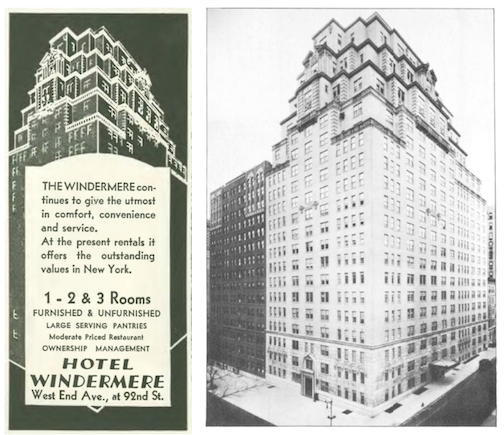
…the distinctive crown of Hotel Windemere on the Upper West Side was an eye-catcher even in this one-column ad from the back of the book…photo at right from around the time it was completed, 1927…
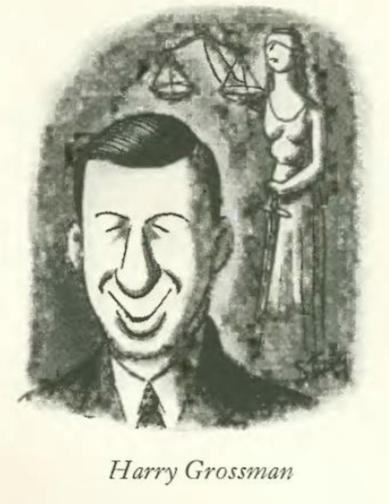
…on to our cartoonists, an unexpected profile caricature by William Steig (this two-part profile featured process-server Harry Grossman)…
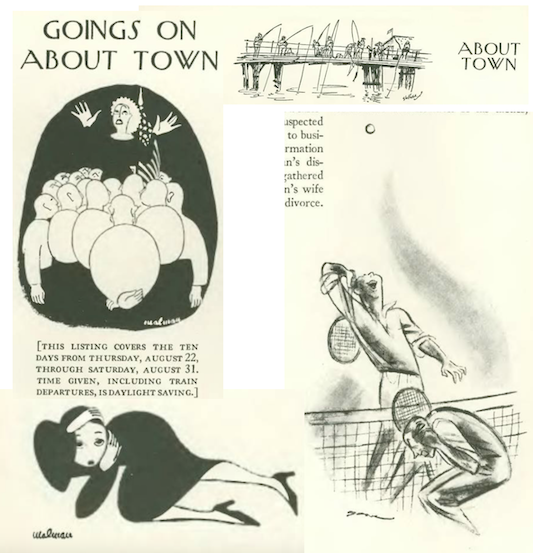
…interesting spot drawings by George Shellhase (top) and Leonard Dove (bottom right), and at left, two by Christina Malman…
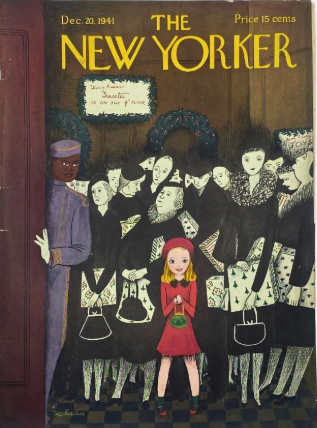
…Malman (1912-1959) produced at least two-dozen covers for The New Yorker between 1937 and 1956, including this gem from 1941:
…some baby names have real meaning, according to Alan Dunn…
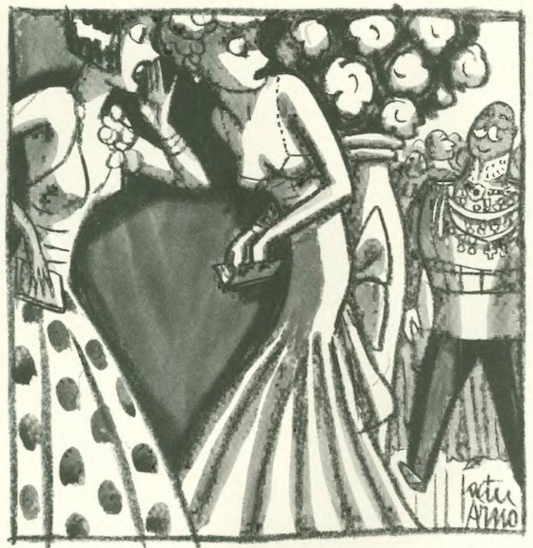
…Peter Arno offered caution about dancing with a prickly Colonel…
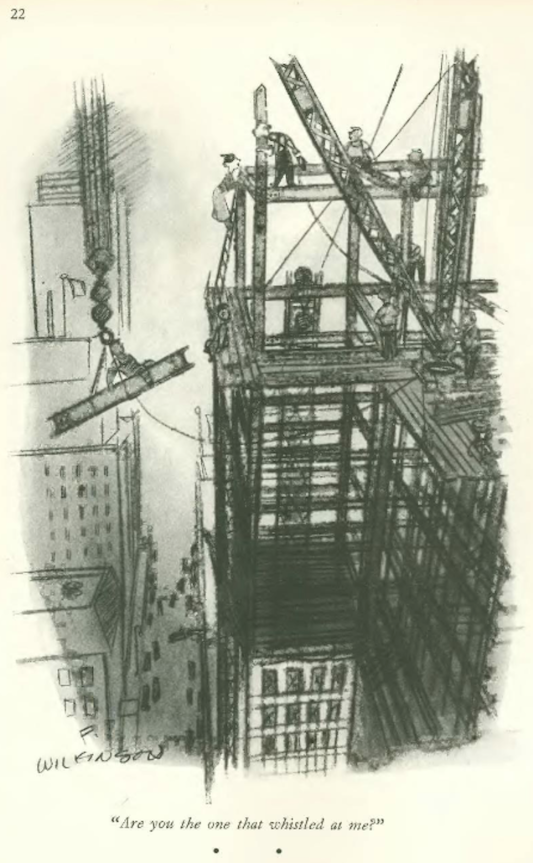
…Fritz Wilkinson answered one cat call high above the city…
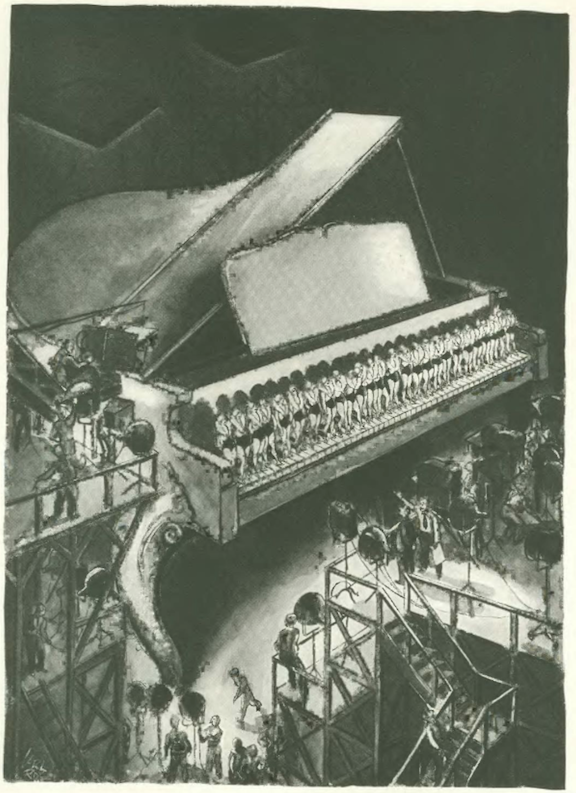
…Franz Shubert met Busby Berkeley, via Carl Rose…
…George Price persisted in threading a needle…
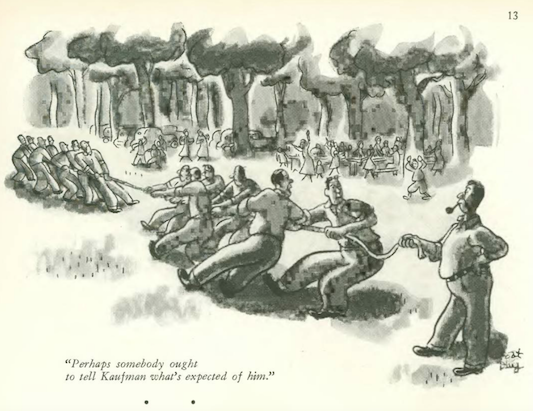
…Robert Day gave us a pacifist of sorts in a game of tug-of-war…
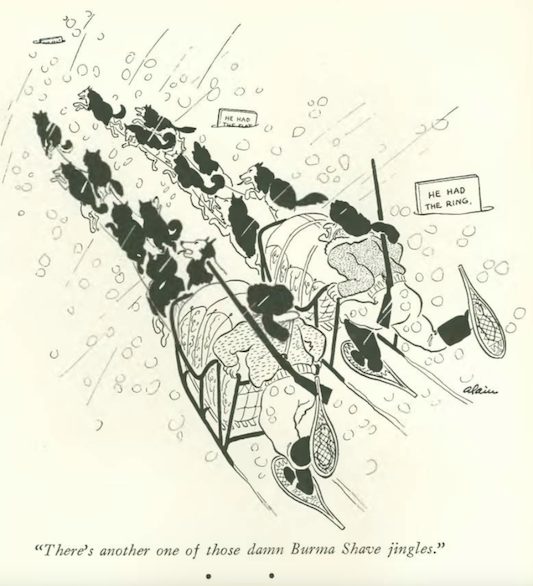
…Burma Shave jingles seemed to be everywhere in the 1930s, per Alain…
…An example of replica Burma Shave signs along Route 66:
(roadsideamerica.com)
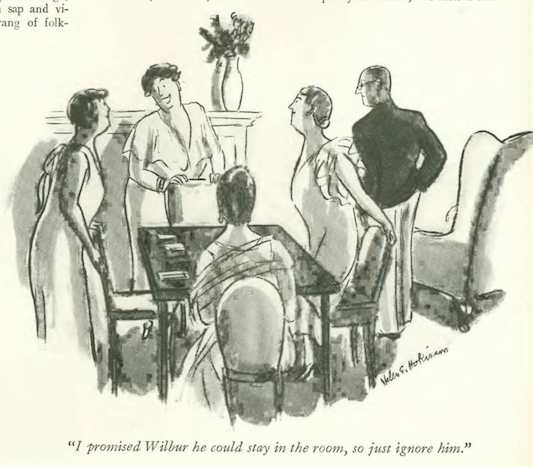
…some parenting tips came our way via Helen Hokinson…
The 1935 film She was one of those old movies you’d see on television during the 1970s when there were only three or four channels (plus UHF) and local stations would tap into the “B” movie vault to fill airtime. One of those films was She.
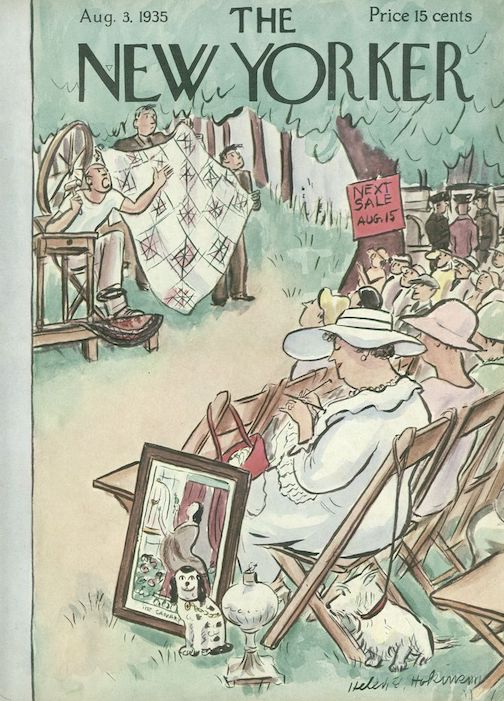
August 3, 1935 cover by Helen Hokinson.
Film critic John Mosher felt a bit sorry for Helen Gahagan, who portrayed “She Who Must Be Obeyed” (aka “She”)—an immortal who ruled an exotic, lost civilization near the Arctic Circle. The challenge for Gahagan was to seem imperious before her co-stars Randolph Scott and Helen Mack, who seemed more suited to the high school hijinks of an Andy Hardy picture. The film was a pretty standard adventure tale, in the mold of producer Marian C. Cooper’s 1933 King Kong, with two explorers falling in love during a perilous journey.
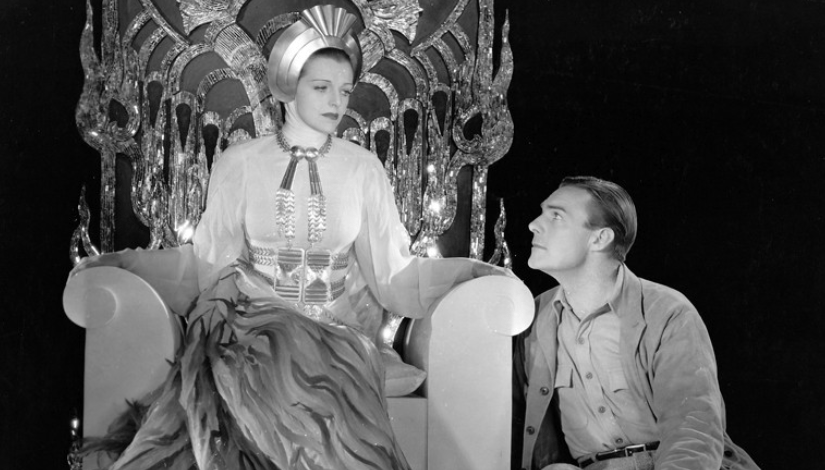
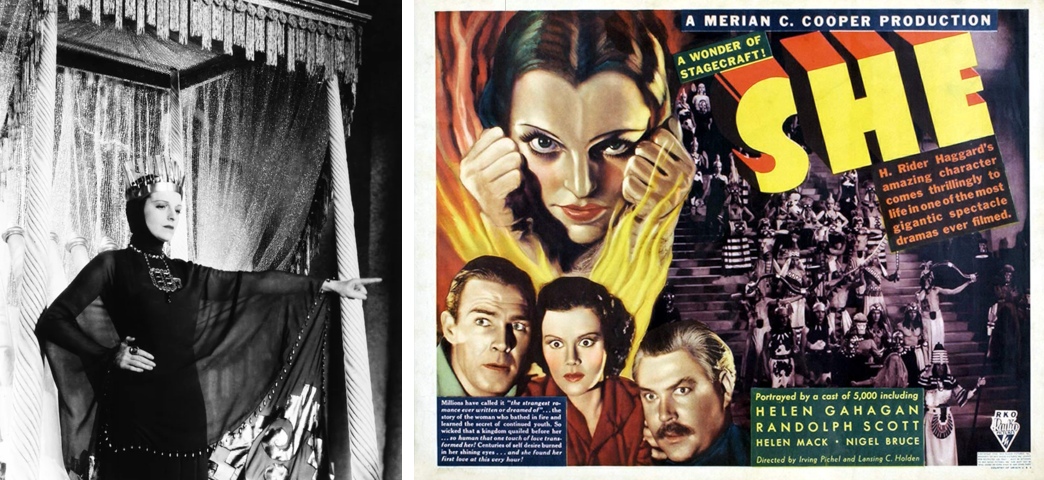
ARCHETYPE…At left, Helen Gahagan as “She” (Who Must Be Obeyed). Her costume possibly inspired the Evil Queen in Disney’s 1937 animated Snow White and the Seven Dwarfs. At right, lobby card that promoted the film. (Scifist.net/Reddit)WHEN YOU PLAY WITH FIRE…She Who Must Be Obeyed (Helen Gahagan), believing that the explorer Leo Vincey (Randolph Scott) was a reincarnation of his ancestor (whom she loved), and jealous of his girlfriend Tanya (Helen Mack), invites Leo to join her in the eternal flame. Unfortunately, her re-entry into the flame that gave her immortality turned her into a dying, withered crone. (The Nitrate Diva/Scifist.net)
The 1887 H. Rider Haggard novel, She, inspired eponymous silent films in 1908, 1911, 1916, 1917, and 1925. The 1935 film reviewed here received tepid reviews and lost money on its first release, however in a 1949 re-release it fared much better. She was re-made in 1965 with Ursula Andress in the lead role, and again in 1984 in a post-apocalyptic film that had virtually nothing to do with Haggard’s novel.
SHE THROUGH THE YEARS…Clockwise, from top left, “She” (Marguerite Snow) offers a dagger to Leo Vincey (James Cruze) in a 1911 two-reel (24 min.) adaptation; Valeska Suratt as “She” in the 1917 film (now lost); Betty Blythe took the title role in the 1925 production, considered to be the most faithful to the 1887 H. Rider Haggard novel; Sandahl Bergman appeared dressed for a Jazzercise video in the 1984 post-apocalyptic She; and finally, Ursula Andress and John Richardson in the 1965 CinemaScope production of She. (Wikipedia / digitalcollections.lib.washington.edu / cultcelebrities.com / Reddit)
* * *
Colonial Ambitions
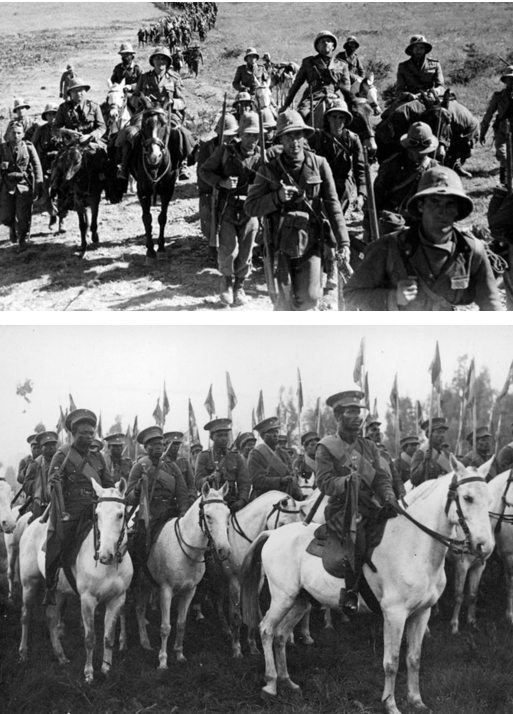
With most of Africa carved up by other European powers (Britain, France, Belgium etc.) in the 19th century, Italy set its sights on Ethiopia, which by the end of the 19th century was the only independent country left on the continent. Ethiopia fought off Italy’s first attempt at conquest in the Battle of Adwa (1896), but with the rise of fascist dictator Benito Mussolini, Italy paid a return visit, this time with heavy artillery and airstrikes that included chemical weapons. E.B. White tried to make sense of this latest invasion in his opening comments.
THOSE GUYS AGAIN…Italy invaded Ethiopia on October 3, 1935, a significant act of aggression in the lead up to World War II. Despite facing a technologically superior Italian army (top) equipped with modern weapons, including tanks, aircraft, and chemical weapons, the Ethiopian forces (bottom photo) mounted a strong resistance. (Wikipedia)
In his weekly column, Howard Brubaker mused on the Italian aggressions and other rumblings of the coming European war.
* * *
Author, Author
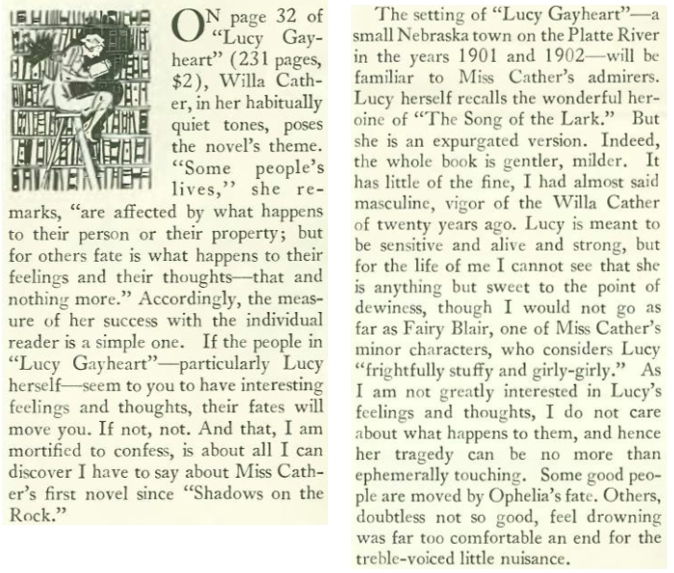
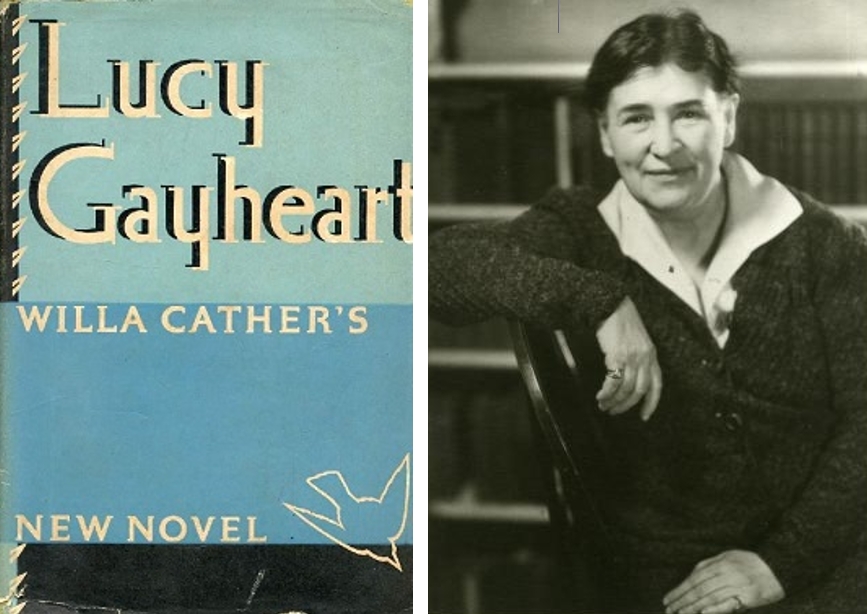
The writer Willa Cather was a favorite of New Yorker critics, including Clifton Fadiman, however her latest novel was a bit too mild for his tastes.
HERE’S LUCY…Clifton Fadiman confessed he was “mortified” to admit that he found Willa Cather’s latest novel a bit too gentle. At right, portrait of Cather on her birthday, December 7, 1936. (willacather.org)
* * *
From Our Advertisers
We begin with more fearmongering from the folks at Goodyear, who offered weekly reminders of the perils of not choosing their all-weather tires…
…the Liggett and Myers Tobacco Company conjured up this “naughty maiden” to encourage even timid souls to take up the habit…
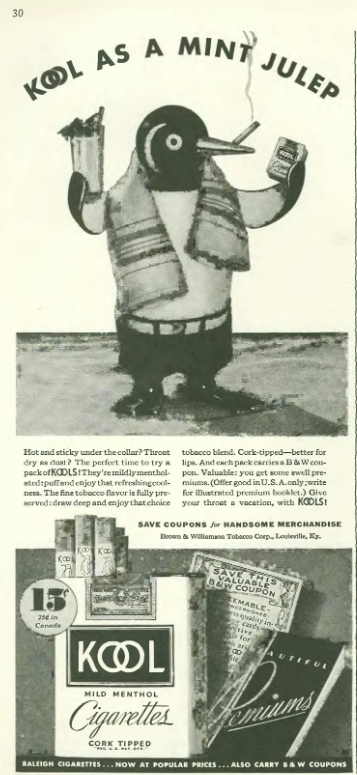
…on the other hand, the makers of the upstart KOOL brand kept it simple with their chain-smoking penguin, who was grabbing ever more market share from rival menthol pusher SPUD…
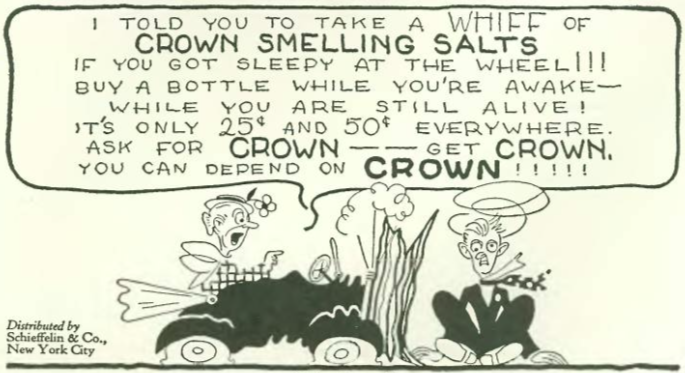
…ads in the back of the book offered up even less sophisticated products, such as Crown Smelling Salts…
…while Dr. Seuss and Norman Z. McLeod continued to make a living with their distinctive illustrations…
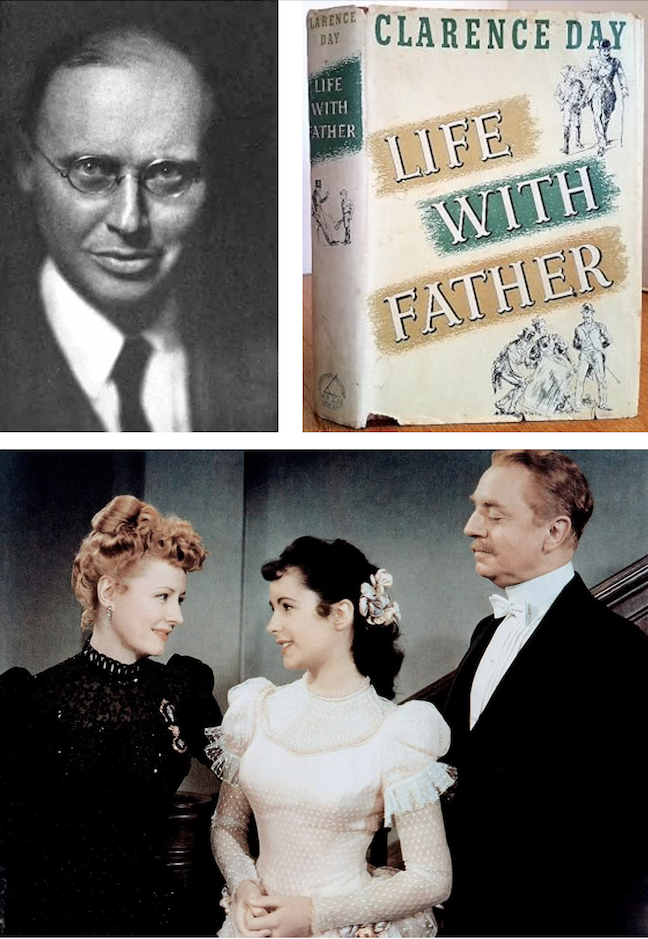
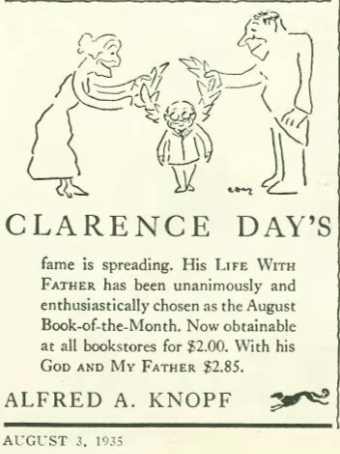
…at the very back of the magazine, this tiny ad from Knopf promoted Clarence Day’sLife With Father, published just months before Day’s death on Dec. 28…
…which brings us to our cartoonists…Constantin Alajalov kicked us off with this happy number…
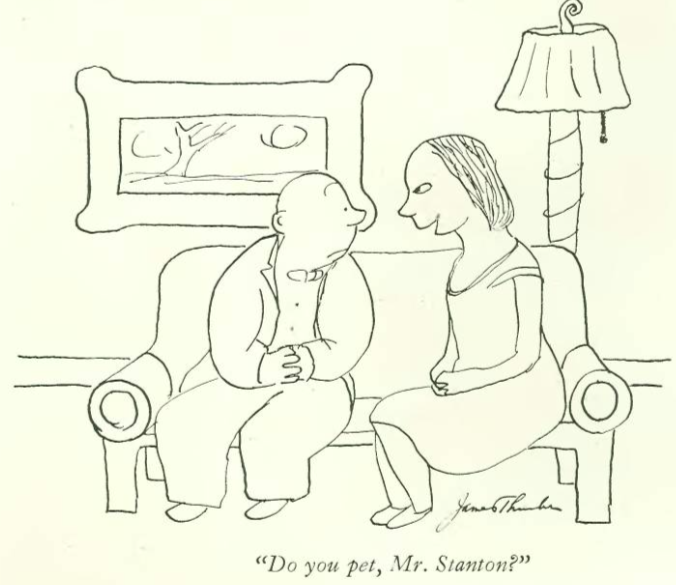
…James Thurber found steamy goings on in the parlor…
…Charles Addams came down to earth with this pair…
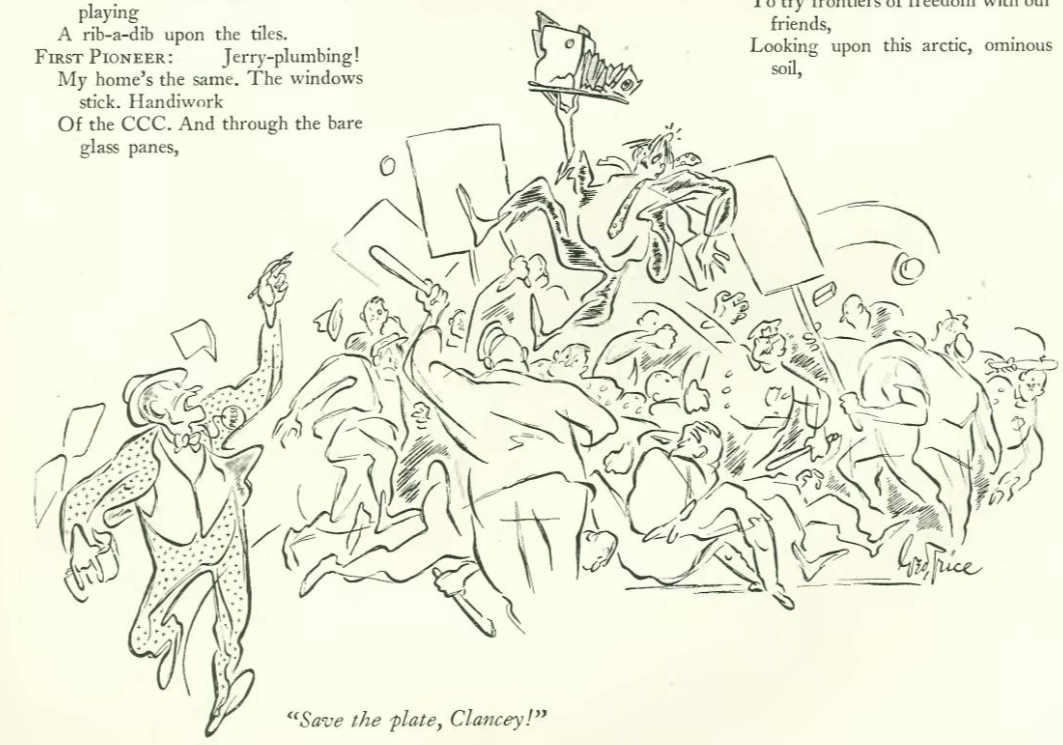
…George Price showed us the rough and tumble of news reporting…
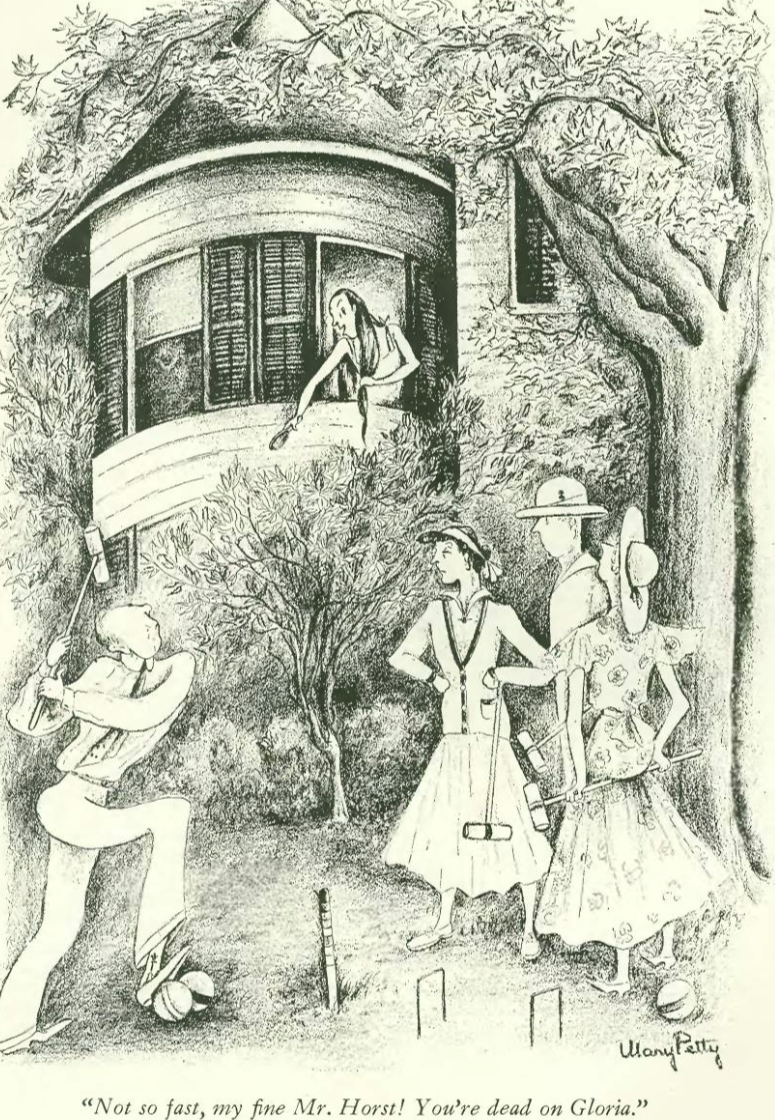
…Mary Petty contributed this sumptuous drawing of a croquet match…
…Helen Hokinson was in a transcendental mood…
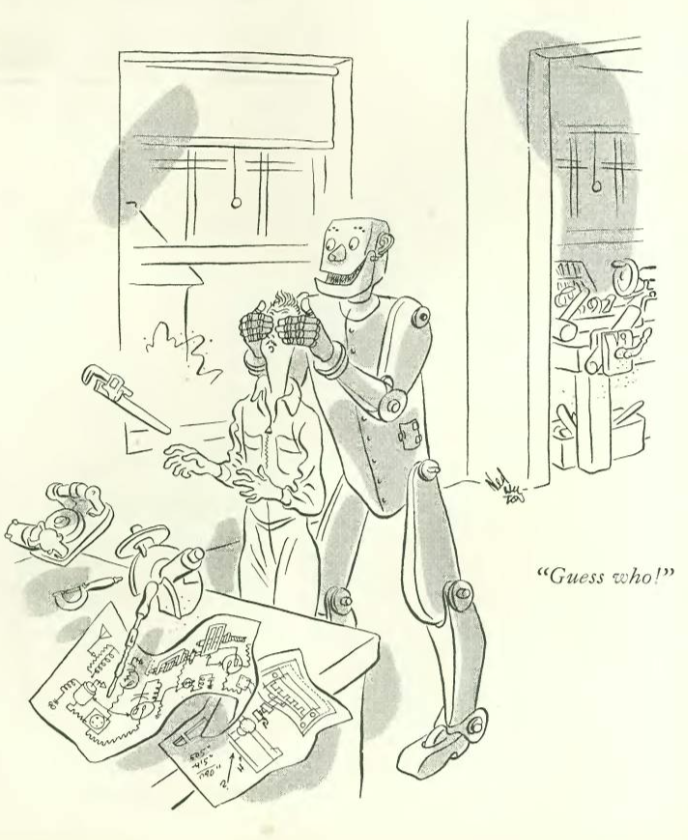
…and Ned Hilton had a big surprise for one garage tinkerer…
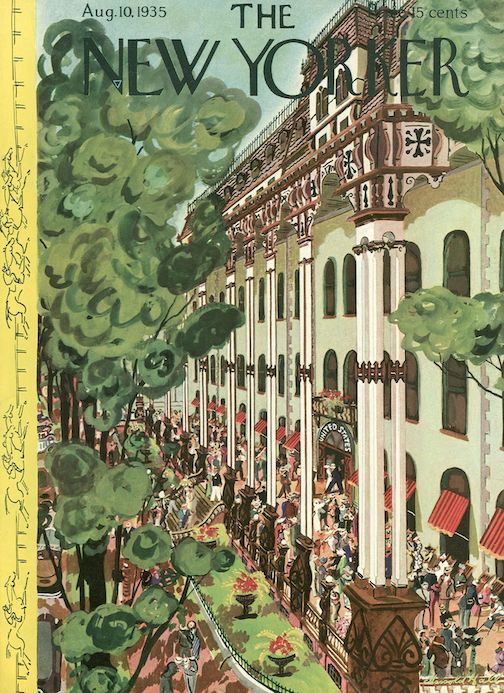
…on to August 10 and a rich summer scene by Arnold Hall:
August 10, 1935 cover by Arnold Hall.
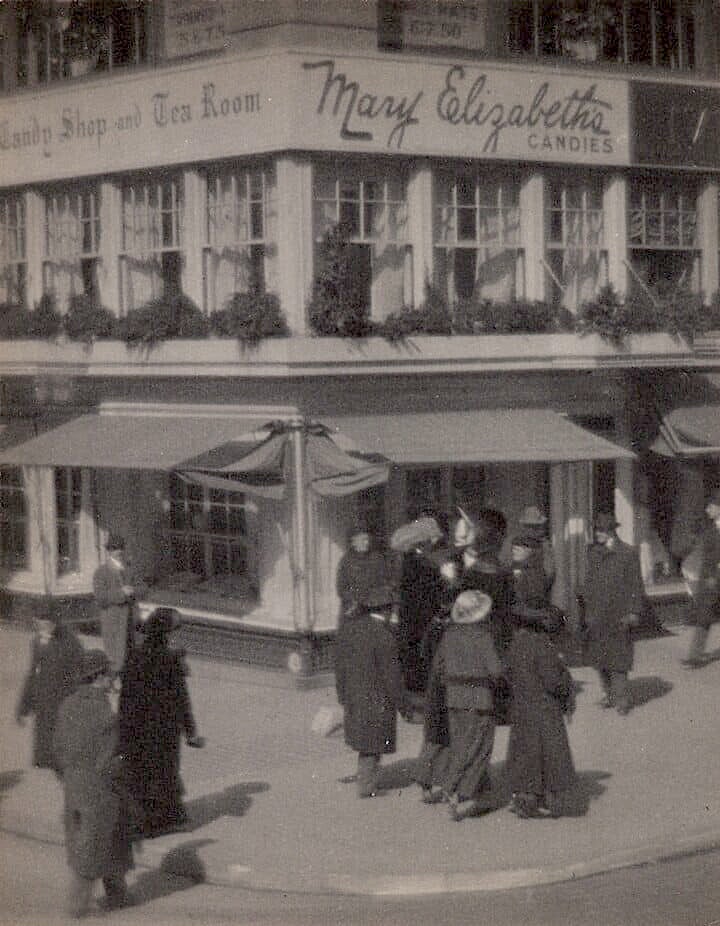
“The Talk of the Town” checked the lunch crowd at Mary Elizabeth’s Tea Room, where some preferred to drink their lunch.
TEA AND SWEETS (and cocktails) were among the offerings at Mary Elizabeth’s Tea Room at 36th and Fifth, seen here circa 1912. (Photo by Karl Struss via Facebook)
* * *
Comic Relief
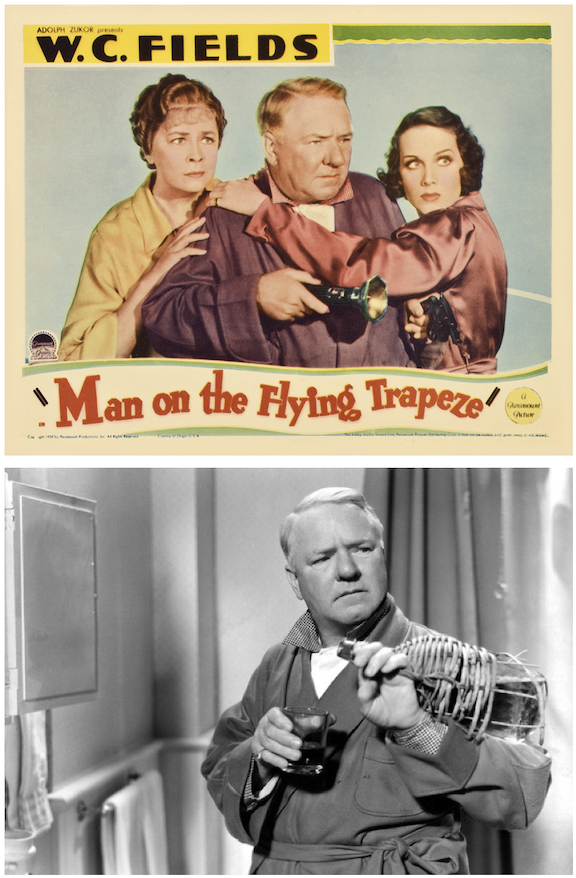
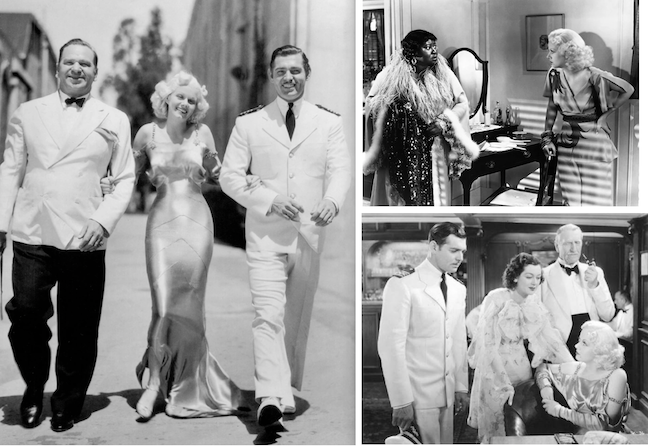
Film critic John Mosher offered an appreciation of W.C. Fields, noting that civilization needed films like Man on the Flying Trapeze during those hard years. Mosher also found some worthy distractions in the Jean Harlow vehicle China Seas, but was prepared to consign Spencer Tracey’s latest offering to the “lower circles of cinema hell.”
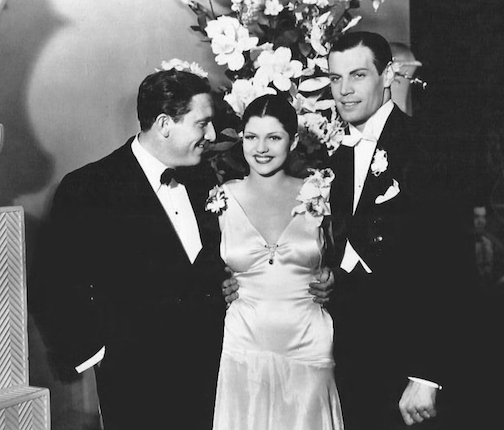
ANSWERING HIS NATION’S CALL…W.C. Fields brought joy to millions during the Depression in movies such as Man on the Flying Trapeze. Above, from left, Kathleen Howard, Fields, and Mary Brian. (IMDB/Rotten Tomatoes)SHORE LEAVE…At left, Wallace Beery, Jean Harlow, and Clark Gable on the set of China Seas; top right, Hattie McDaniel with Harlow in a scene from the film; below, Gable, Rosalind Russell, and C. Aubrey Smith with Harlow in China Seas. (musingsofaclassicfilmaddict.wordpress.com / Pinterest)FRESH FACE…Cinema newcomer Rita Hayworth was credited as Rita Cansino (she was born Margarita Carmen Cansino) in Dante’s Inferno. Here she is flanked by Spencer Tracy and Gary Leon. Dante’s Inferno was Spencer Tracy’s final film for 20th Century Fox. It was at MGM where his career really took off. (IMDB)
* * *
All Wet
In his London Letter, Conrad Aiken (pen name Samuel Jeake Jr) examined the priggish ways of England’s seaside resorts.
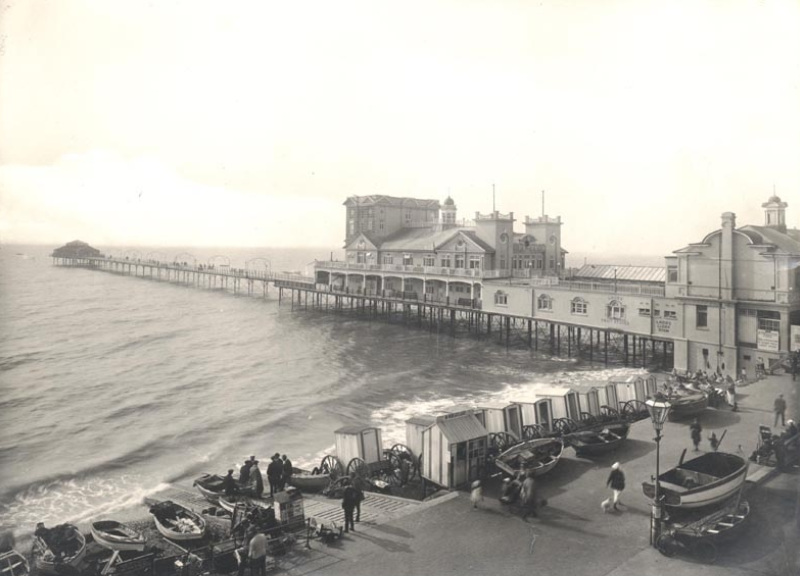
SITE OF SCANDAL…Bathing huts at Bognor Regis, circa 1921. (bognorregistrails.co.uk)
* * *
Beware the Bachelor
In her “Tables for Two” column, Lois Long examined some of the city’s seasonal escapes for “summer bachelors.”
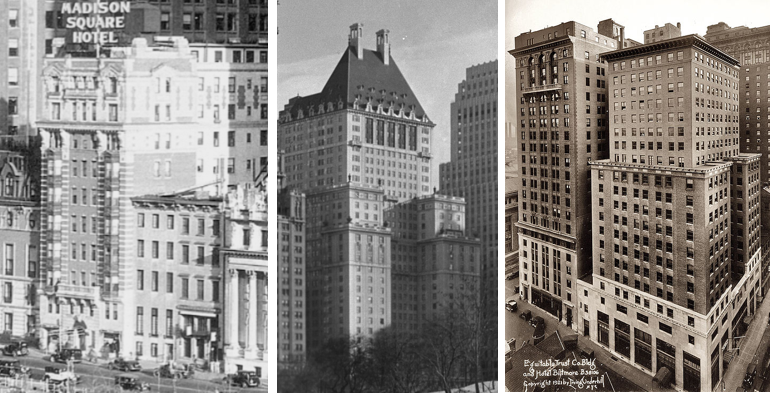
GHOSTS OF THE PAST…Lois Long recommended the air-conditioned lounges of the Madison Square Hotel and the Savoy Plaza (center) or the cooling breezes of the Biltmore roof (right), which featured music by Morton Downey. Sadly, all three of these beautiful buildings have been demolished. (geographicguide.com/Wikipedia)
Other more casual venues recommended by Long included Nick’s Merry-Go-Round…
…a menu from Nick’s dated 1937…
(nypl.org)
…and its cryptic back cover…
From Our Advertisers
…speaking of the Biltmore and Morton Downey, we kick off our advertising section…
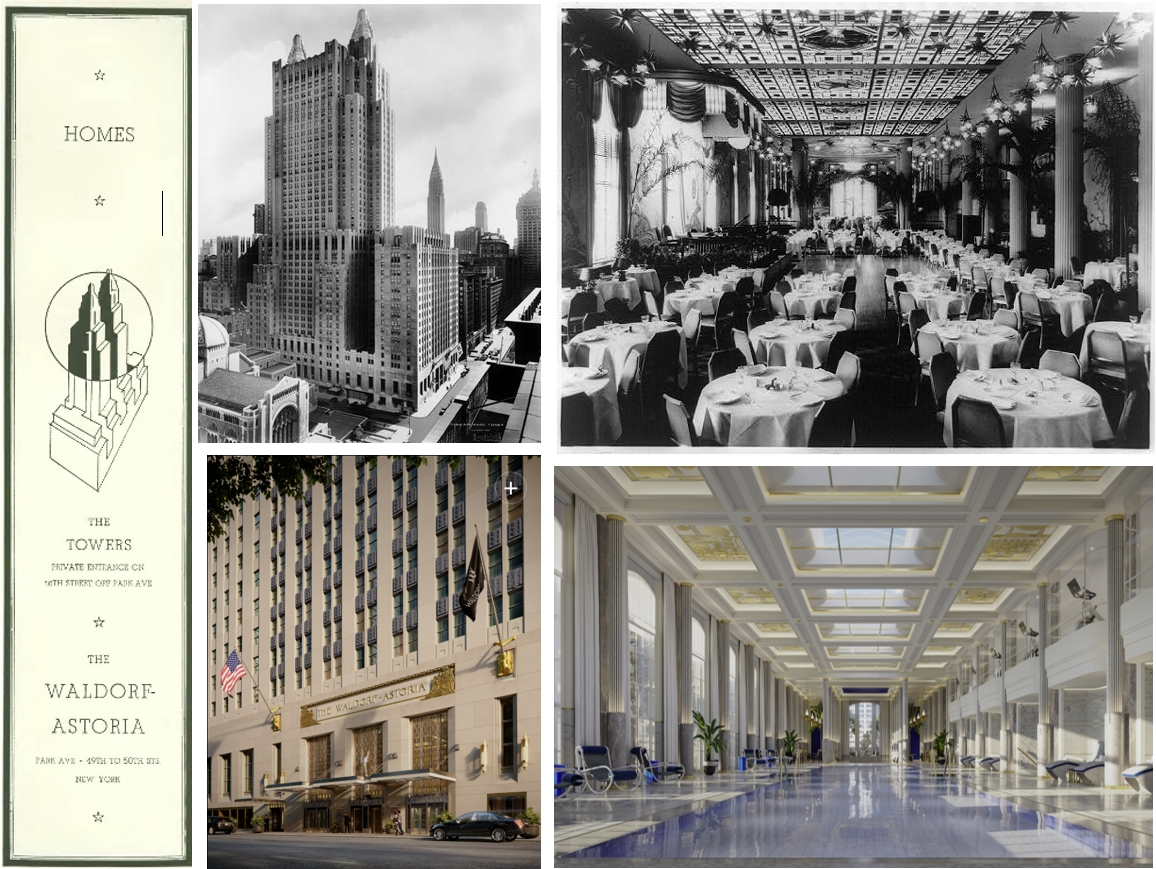
…the ad on the left announced the private residences at the Waldorf-Astoria…
Clockwise, from top left, the Waldorf Astoria circa 1930; the Waldorf’s Starlight Roof in the 1930s; after eight years and billions in restorations and renovations, the hotel has seen many changes including the transformation of the Starlight Roof into a swimming pool. Decades of grime were also cleaned from the building’s exterior. (mcny.org/loc.gov/som.com)
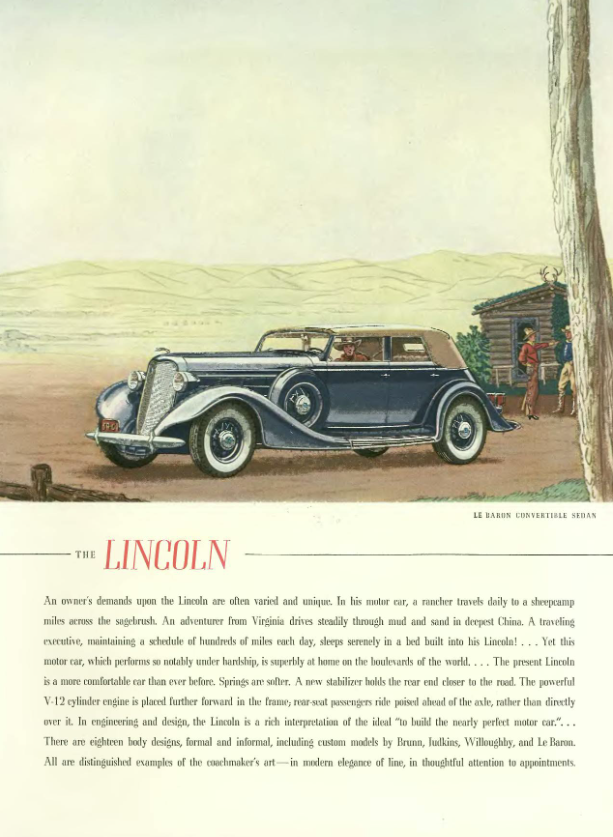
…another ad from the makers of Lincoln suggesting that the market for their luxury auto wasn’t confined to citified execs…
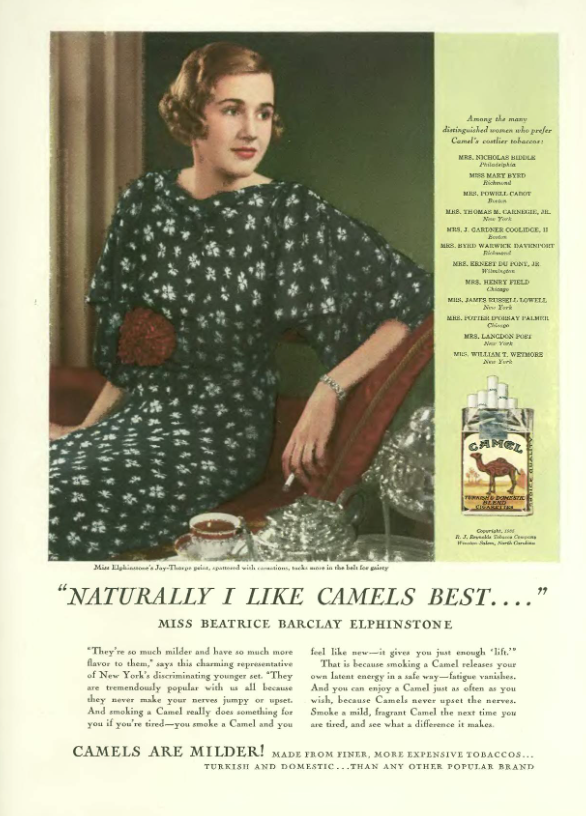
…the Camel folks introduced us to their latest society shill…
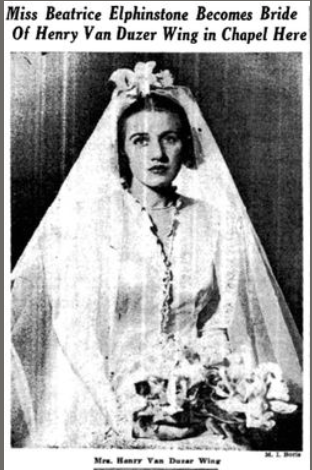
…I didn’t find much about Beatrice Barclay Elphinstone (1916-1977), described in the Camel ad as a “charming representative of New York’s discriminating younger set”…she did make the Times‘ Dec. 10, 1937 society wedding announcements, however…
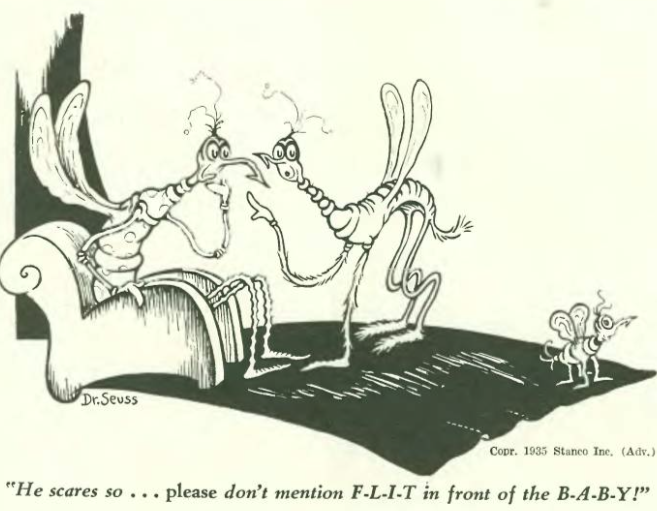
…Dr. Seuss was back with another twist on Flit insecticide…
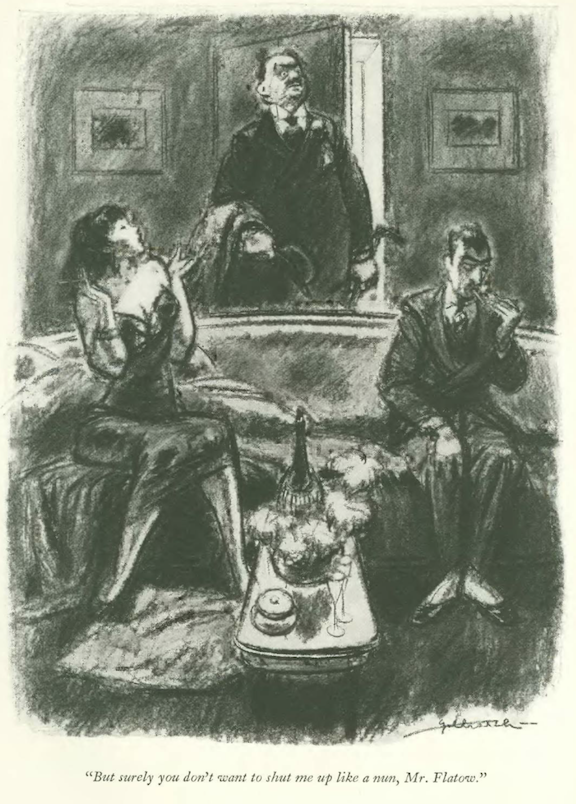
…on to our illustrators and cartoonists, a nice charcoal by Hugo Gellert for a profile titled “Yankee Horse Trader,” written by Arthur C. Bartlett…the harness horse racing legend Walter Cox (1868-1941) was known in New England as “the king of the half-milers”…
…James Thurber contributed this cat and dog face-off to the opening pages…
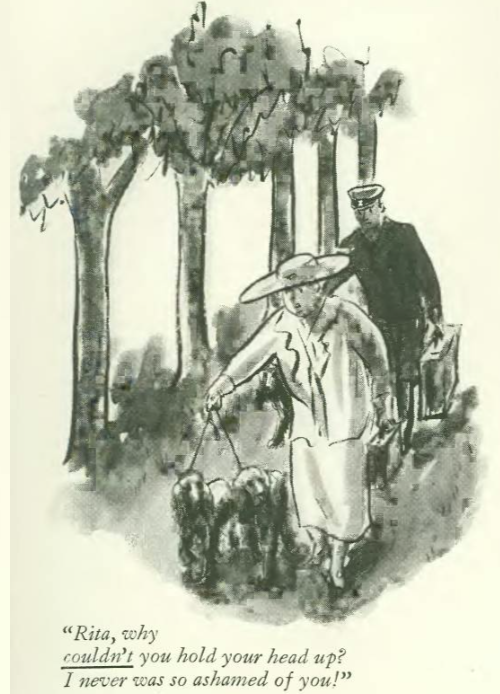
…Helen Hokinson offered her perspectives on the summer dog show across pages 16-17…
…and for a closer look…
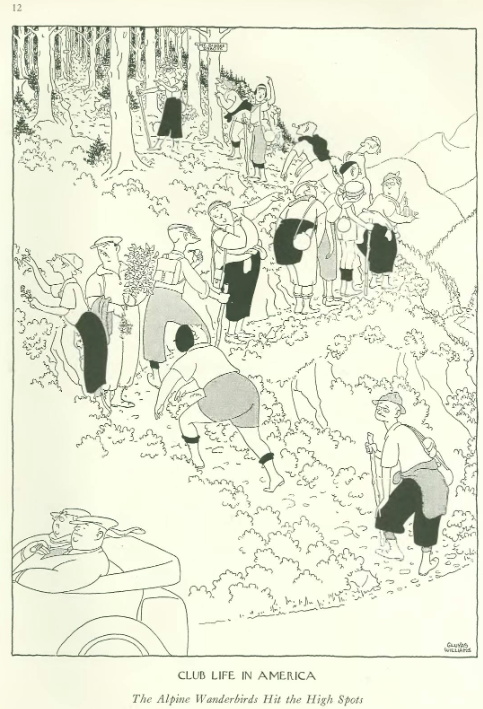
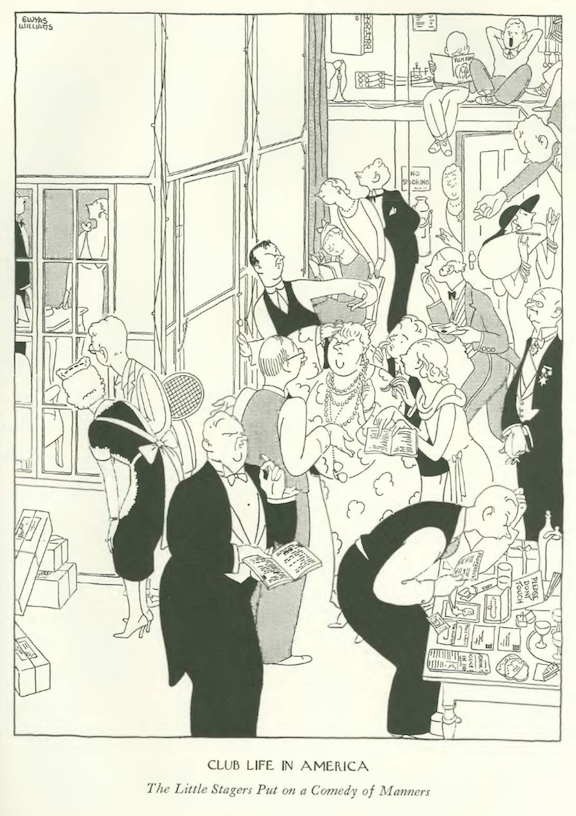
…Gluyas Williams went back to nature in his “Club Life” series…
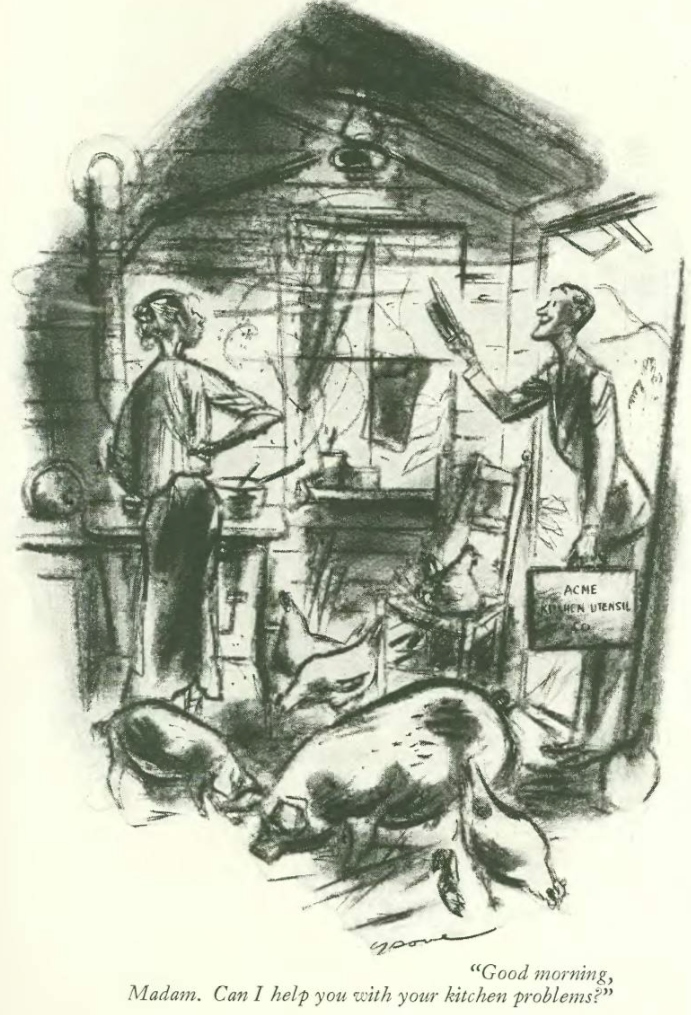
…Leonard Dove introduced us to an undaunted salesman…
…in the world of George Price, crime didn’t pay…
…Barbara Shermund gave us a rare glimpse into the secret lives of men…
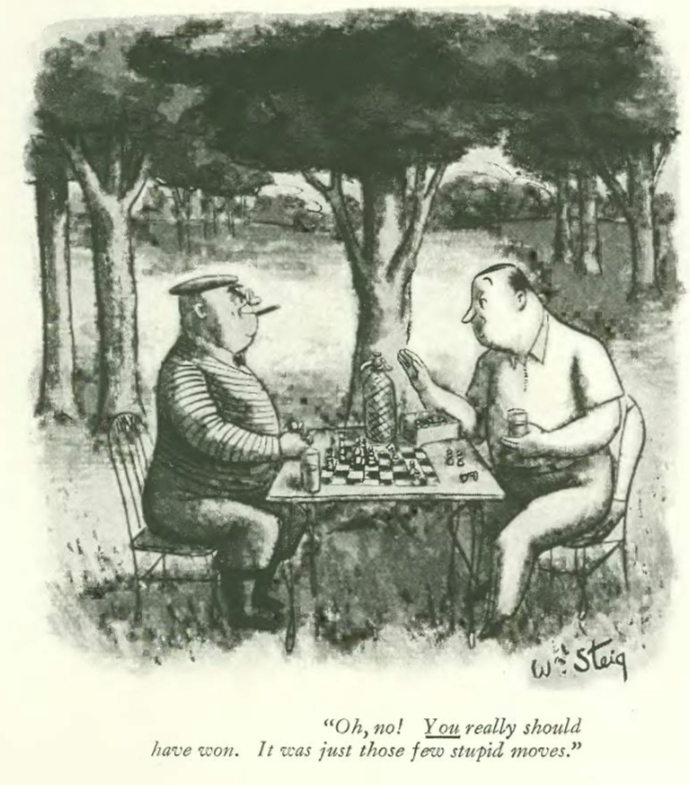
…patronizing words were unwelcome at this chess match, per William Steig…
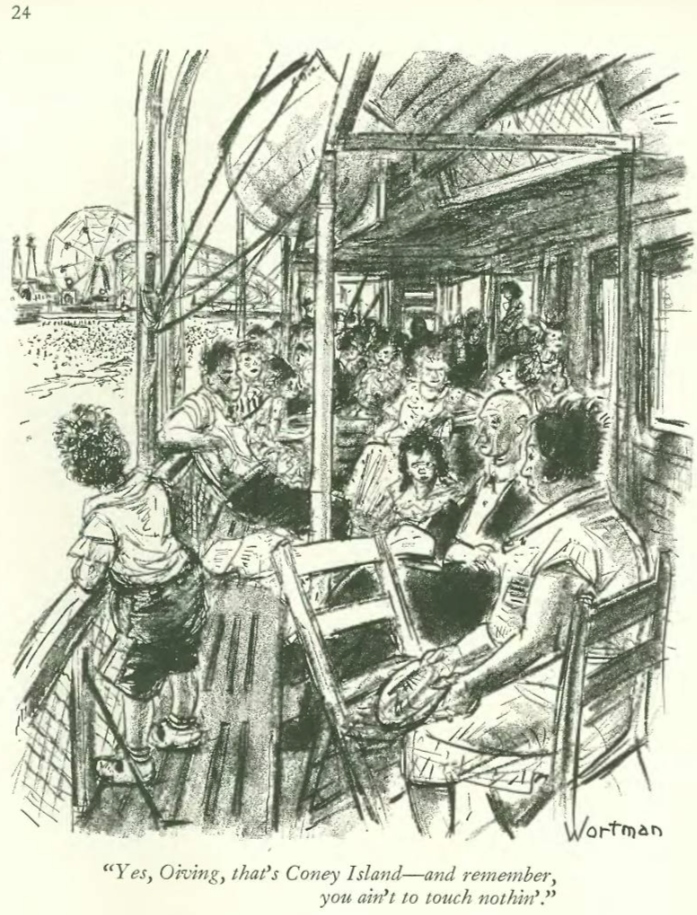
…Denys Wortman took us on a family outing…
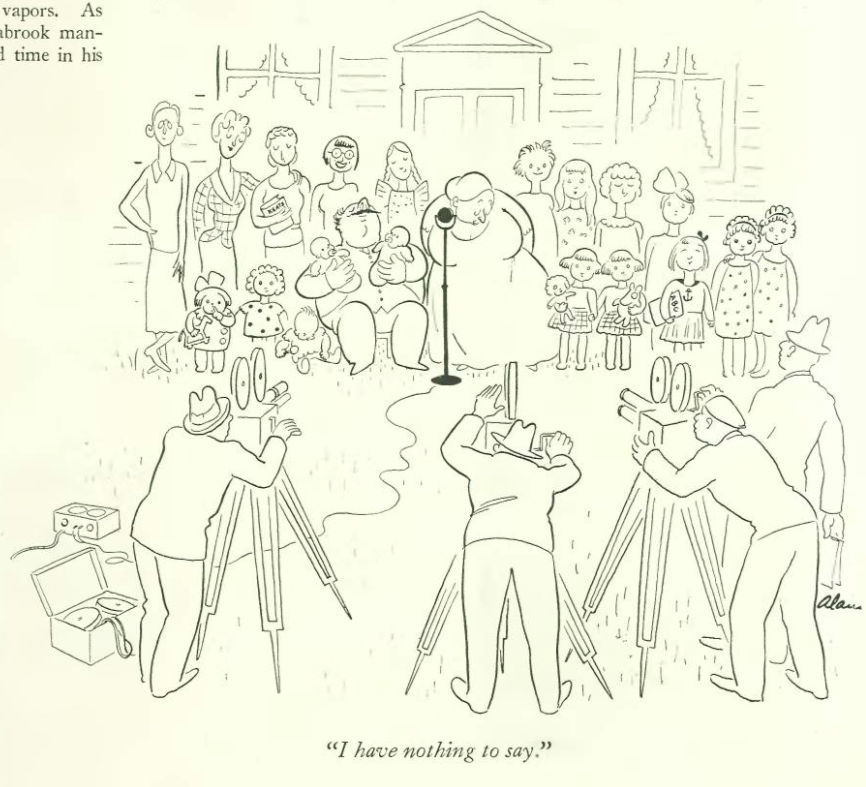
…and we close with Alain, and a mother of multiples…except words…
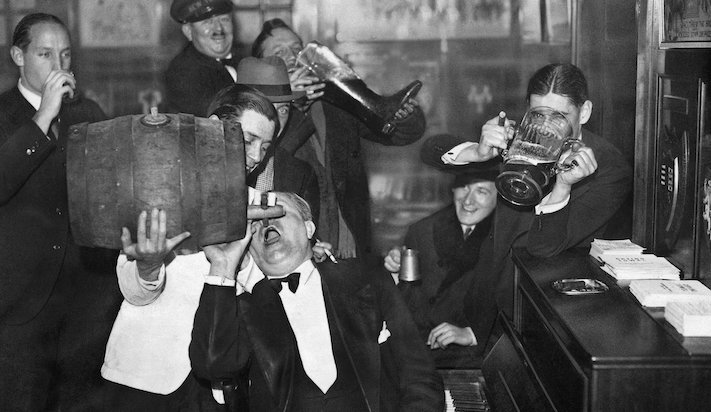
Above: Celebrating the repeal of the 18th Amendment, 1933. (New York Times)
“Settling Down” was the title given to Morris Markey’s examination of the post-Prohibition world, which to no one’s surprise heartily embraced (and imbibed) everything this world had to offer.
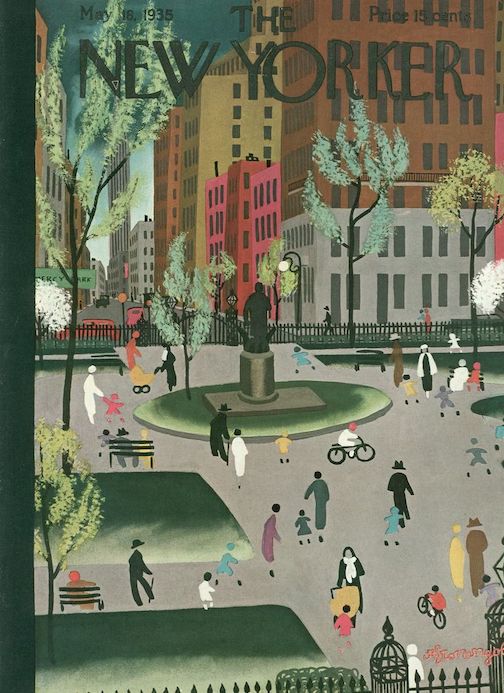
May 18, 1935 cover by Adolph K. Kronengold.
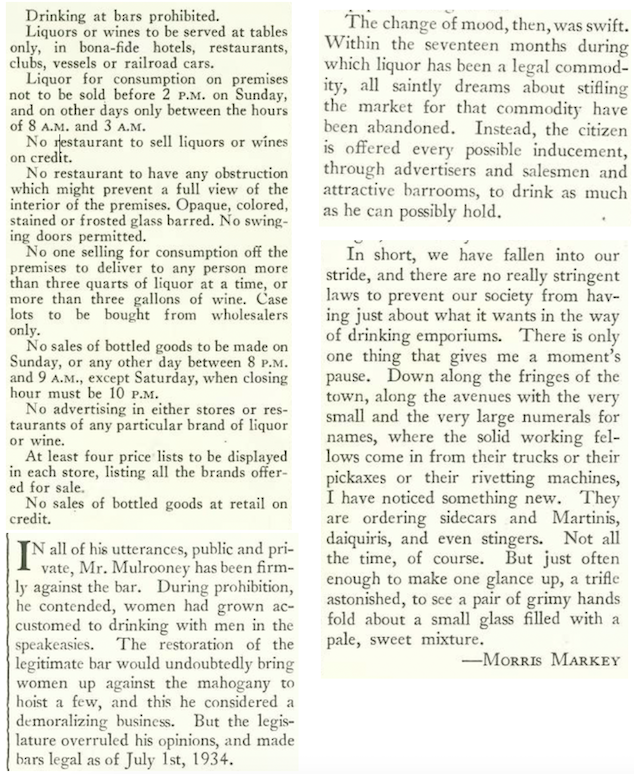
In his column, “A Reporter at Large,” Markey examined the challenges faced by local and federal governments in reestablishing old liquor control laws, in many cases creating new ones to address the technological, economic and social changes that transpired during the fourteen years of Prohibition. Facing this challenge in New York was Edward P. Mulrooney (1874-1960), a former police commissioner tapped in 1933 to head the State Alcoholic Beverage Control Board. Markey explained how Mulrooney and New York regulators tried to create new standards for alcohol consumption that would encourage moderation. Excerpts:
CAN’T HAVE A BELT IN THE BIBLE BELT…Published by The United States News on Nov. 11, 1933, this map shows how liquor laws varied by state following Prohibition. After Prohibition ended with the ratification of the 21st Amendment, states gained the authority to regulate alcohol sales, leading to a wide variety of state and local laws. Many states adopted local option laws, allowing cities and counties to decide whether to allow alcohol sales, resulting in “wet,” “dry,” and “moist” jurisdictions. (us news.com)
Seventeen chief provisions for moderating alcohol use were published in The New York Times on Nov. 10, 1933, but ten of those provisions were quickly abandoned. Less than a year and a half after repeal, Markey noted that “the citizen is offered every inducement…to drink as much as he can possibly hold.”
SO MUCH FOR RULES…Celebrations for the repeal of Prohibition in bars and former speakeasies began when Franklin Roosevelt signed the Cullen-Harrison Act on March 22, 1933; the president himself was known to enjoy a dry martini; former New York Police Commissioner Edward P. Mulrooney had the unlucky task of figuring out how to regulate the juice of the grape and the grain. In the end, people seemed to be drinking more than ever. (themobmuseum.org/thrillist.com/Condé Nast)
* * *
Hordes From the Hinterland
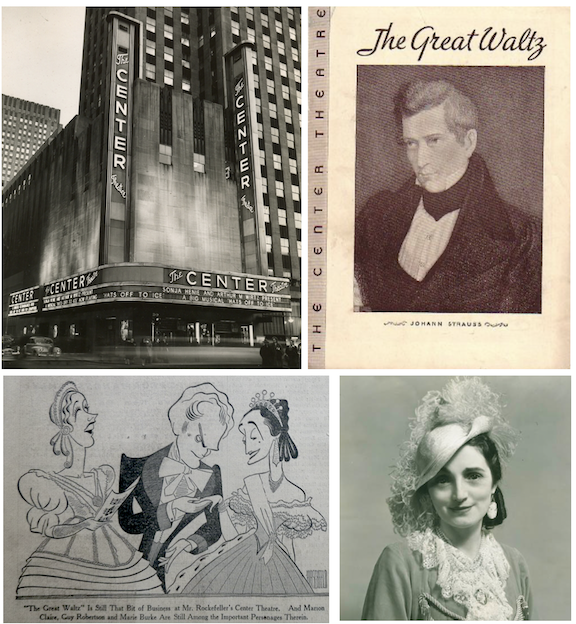
There was a time, long ago, when Broadway catered mostly to New Yorkers, but with the advent of mass media and better transportation options folks from the hinterlands (from beyond the Hudson) began to descend on the Great White Way. Then as now, certain shows attracted thousands, including The Great Waltz, a musical based on the works of Johann Strauss I and Johann Strauss II. It opened in September 1934 at the Center Theatre and ran for 289 performances. “The Talk of the Town” sniffed that “People who literally have never seen a play before in their lives turn up at Sixth Avenue and Forty-ninth Street, ready for anything.”
MANY AMERICANS WERE AGOG over the The Great Waltz…Clockwise, from top left, the play was performed at the Center Theatre (formerly the RKO Roxy Theatre) at 49th Street and 6th Avenue—sadly, it was demolished in 1954, the only building to ever be demolished from the original Rockefeller Center complex; cover of the Playbill; actress Marie Burke portrayed Countess Olga Baranskaja; Al Hirschfeld illustration of Burke and fellow actors Guy Robertson (as Johann Strauss) and Marion Claire as Therese. (cinematreasures.org/playbill.com/nyt.com)
* * *
From Our Advertisers
Appropriately, this full-page advertisement for Gordon’s Gin appeared opposite the opening page of Morris Markey’s exploration of the post-Prohibition world…
…and business was booming in the liquor trades…most of the full-color ads in The New Yorker were placed by liquor companies, cigarette manufacturers, and automakers…the inside back cover shilled for Penn Maryland…
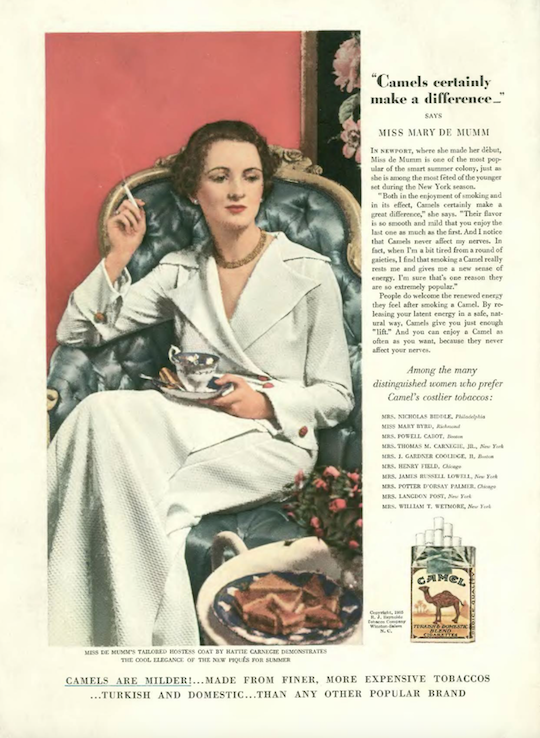
…while the back cover was once again claimed by big tobacco…here we have Newport deb Mary De Mumm expounding on wonders of Camel cigarettes, which somehow helped her feel both restful and energetic…
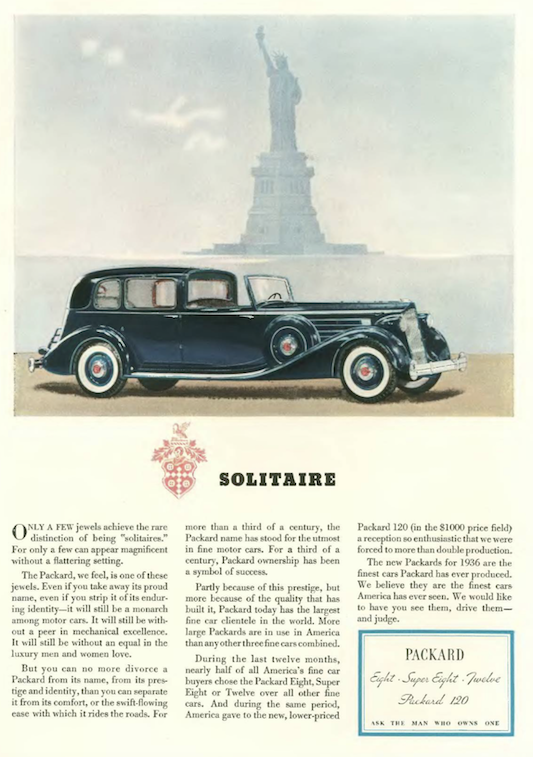
…those who enjoyed the finer things could buy this Packard for about $3,000 (nearly $90K today).
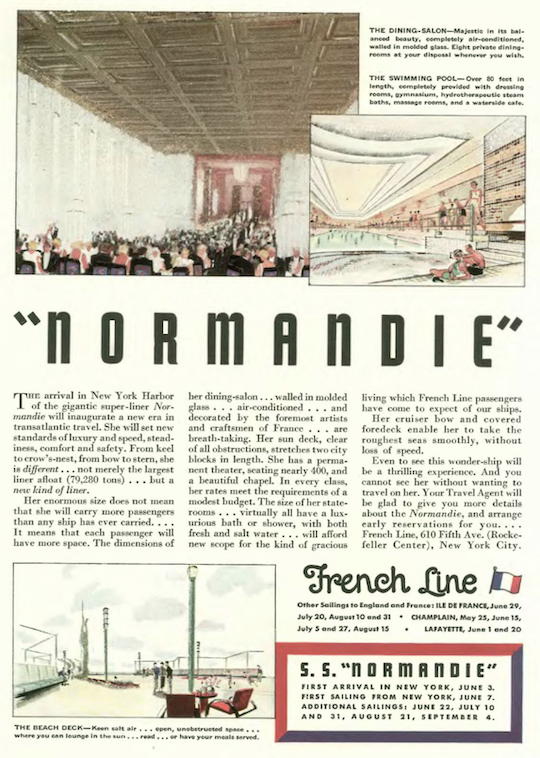
…anticipation was building for the June arrival of the new French liner S.S. Normandie, the largest and fastest passenger ship afloat…
S.S. Normandie on the high seas. (Wikipedia)
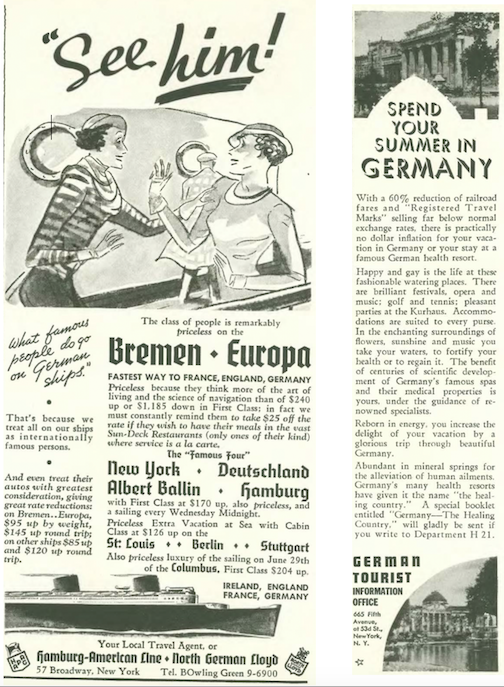
…the Hamburg-American Line was another way to get across the pond, and it promised a ship filled with famous and classy people (and likely more than a few Nazis)…the single-column ad on the right suggested you could spend your summer in Germany…the tourist bureau claimed that Germany was known as “the healing country,” and doubtless many needed healing after being beaten by Brownshirts…
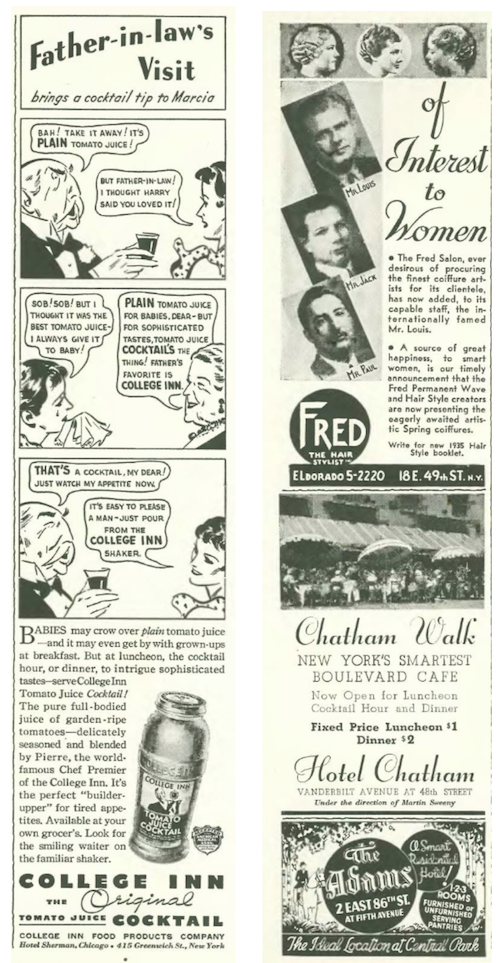
…a couple more single-column ads, first from our friends at College Inn, who dumped the furious Duchess in favor of a dyspeptic father-in-law who brings his daughter-in-law to tears over her choice of tomato juice…the ad at right advertised the services of Mr. Louis, Mr. Jack, and Mr. Paul at the hair stylist Fred, while a tiny ad at the bottom offered a luncheon for a buck at New York’s “Smartest Boulevard Cafe”…
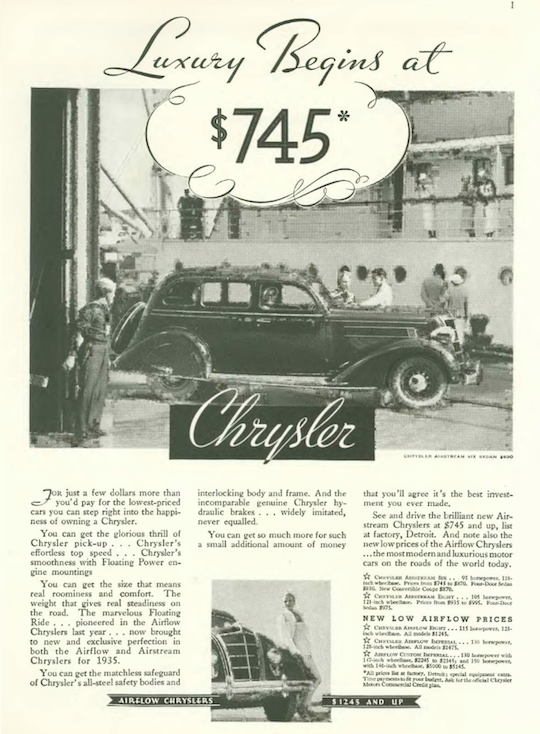
…the key word in many New Yorker advertisements was luxury, and for a fraction of what you would pay for a Packard, you could, apparently, experience luxury for as little as $745…
…or you could enjoy a bit of elegance by opening a some cans of Heinz soup, chili sauce, stuffed olives and other delectables…here a couple of shady-looking butlers are serving nothing but canned goods at a swanky party, much to the annoyance of the cook, who appears poised to take a cleaver to the scheming pair…
…and look what else you can get from a can, some soup with a “personality”…
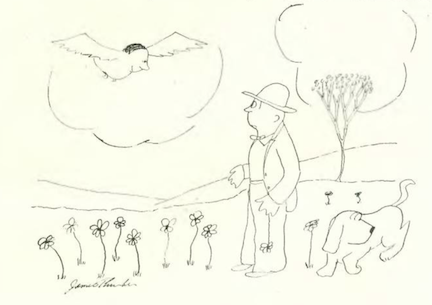
…enough of that nonsense, on to our cartoonists, with two spots from James Thurber…
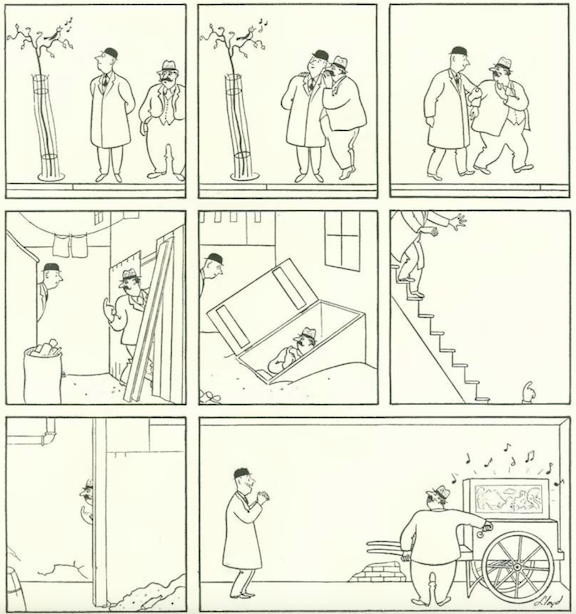
...Lloyd Coe gave us this musical multi-panel…
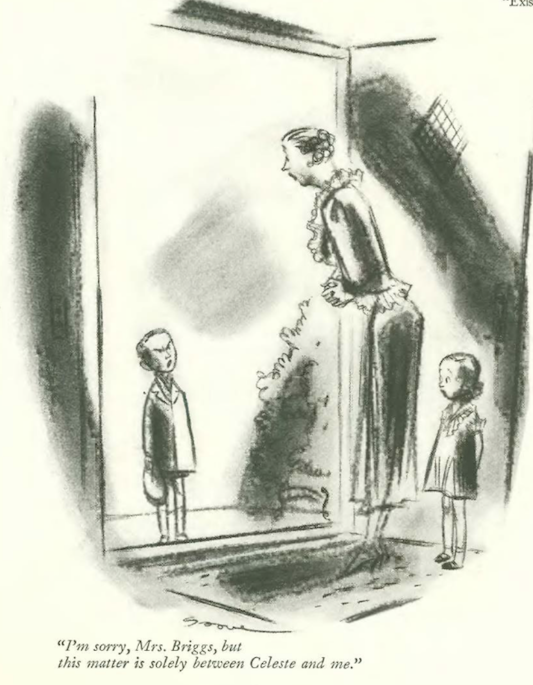
…Leonard Dove looked in on the complex world of young love…
…George Price found the Yuletide spirit still alive among procrastinators…
…and we close with Alan Dunn, and some earthy reading…
Above: Detail from Spanish architect David Romero's computer-generated model of Frank Lloyd Wright's Broadacre City, complete with an "aerotor" flying car.
To be sure, architect Frank Lloyd Wright was a visionary, creating a uniquely American vernacular that influences architecture and design to this day. That might also true for his Broadacre City concept, which demonstrated how four square miles (10.3 km2) of countryside might be settled by 1,400 families. Wright unveiled this escape to the countryside in the middle of Manhattan.
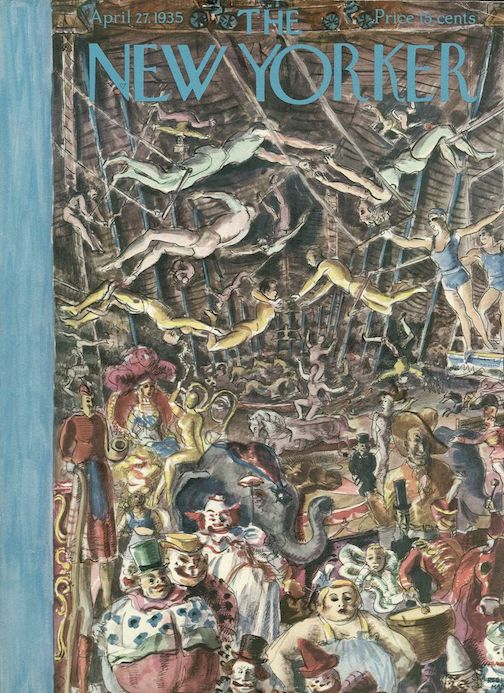
April 27, 1930 cover by Reginald Marsh.
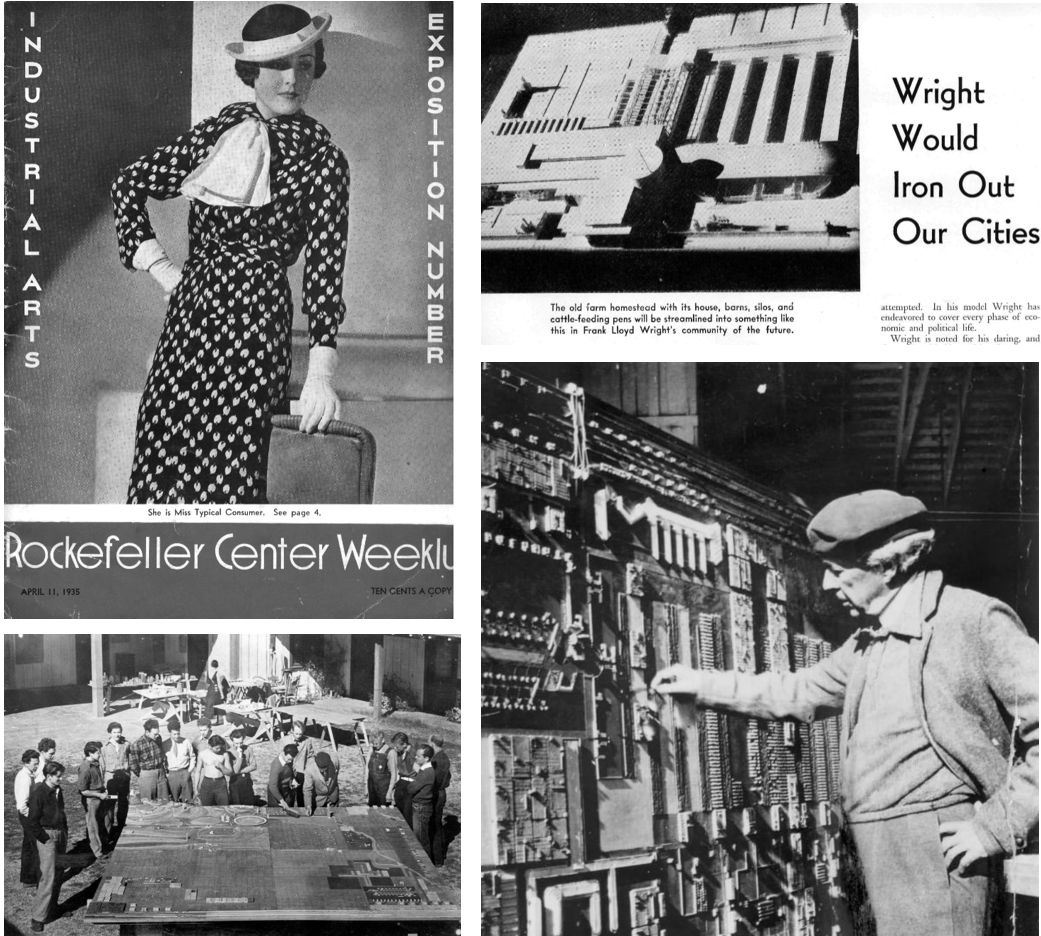
On April 15, 1935, the Industrial Arts Exposition opened at Rockefeller Center, and Wright (1867-1959) was front and center with his audacious proposal to resettle the entire population of the United States onto individual homesteads. Critic Lewis Mumford observed that Wright “carries the tradition of romantic isolation and reunion with the soil” by putting every American family on a minimum of five acres of land.
FLAT EARTH…Clockwise, from top left, cover of Rockefeller Center Weekly featuring the Industrial Arts Exposition—the model on the cover is identified as “Miss Typical Consumer”; detail from the magazine depicting a “streamlined farmstead” in Broadacre City; Frank Lloyd Wright examining the Broadacre City model, circa 1935; Wright students who crafted the 12×12-foot model, circa 1935. (digital.hagley.org/franklloydwright.org)
Wright first presented the idea of Broadacre City in his book The Disappearing City in 1932…
ROMANTIC ISOLATION…Broadacre City as depicted in Wright’s 1932 book The Disappearing City. (Wikipedia)
…note how the above drawing is reflected in one of Wright’s last designs, the Marin County Civic Center:
(visitmarin.org)
A detailed 12×12-foot scale model of Broadacre City—crafted by Wright’s student interns at Taliesin, was unveiled at the Industrial Arts Exposition:
GREEN ACRES…The 12×12-foot model (top images) crafted by student interns who worked for Wright at Taliesin is now housed at the Museum of Modern Art (MoMA); bottom right, Wright’s rendering of Broadacre City, and at left, detail from Spanish architect David Romero’s computer-generated model of Broadacre City (more images below). (MoMA/David Romero via Smithsonian)
For the most part Mumford reacted favorably to Wright’s vision, which is no surprise considering that Mumford derided the dehumanizing skyscrapers popping up all over his city (including Rockefeller Center).
Despite his patrician demeanor, Wright envisioned an egalitarian Broadacre City, with every family having access to cars, telephones and other appliances. Power would come from solar and electric energy, and any technological advances would be applied at a local level toward the common good.
VIRTUAL REALITY…In 2018 Spanish architect David Romero created computer-generated models to see what Wright’s unrealized structures might have looked like. At left, cars (based on Wright concepts) in Broadacre City, and an aerial view featuring a tower that bears a strong resemblance to Wright’s 1956 Price Tower in Bartlesville, Oklahoma. Modeling Broadacre took Romero more than eight months to complete—it contains more than one hundred detailed buildings, one hundred ships, two hundred “aerotors” (based on the autogyros of the day), 5,800 cars, and more than 250,000 trees. (David Romero via Smithsonian and openculture.com)
What Mumford (and perhaps Wright) didn’t fully anticipate was the urban sprawl such a vision would help inspire, the suburban and exurban landscape that would lead to a car-dominated world of congested, multi-lane highways and housing developments that continue to encroach on our woodlands and wetlands. And we didn’t get those groovy aerotors either.
(Christoph Gielen, webcolby.edu)
* * *
Little House on the Avenue
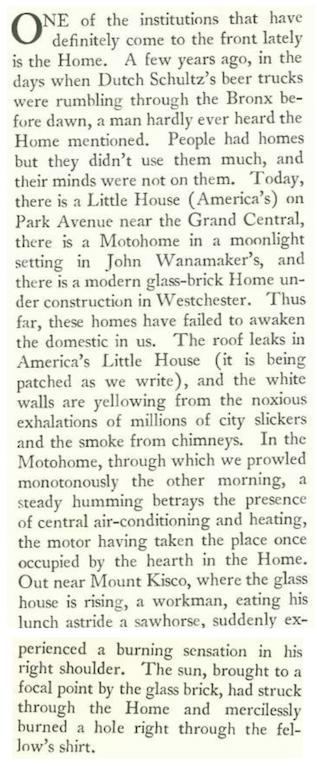
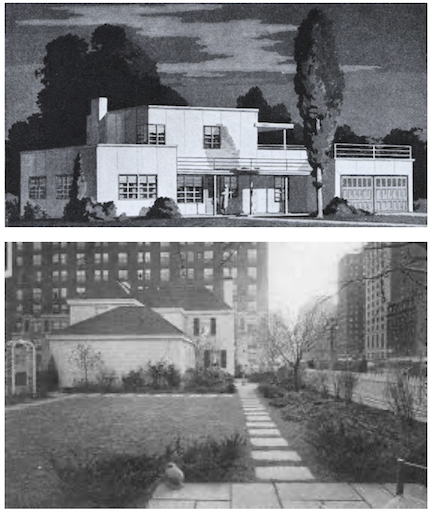
E.B. White, in his “Notes and Comment,” also offered some observations on housing trends, noting the manufactured “Motohome” displayed at Wanamaker’s as well as “America’s Little House,” plopped down at the corner of 39th and Park Avenue.
SETTING A STANDARD…Above, the factory-manufactured Motohome (above) was touted as the solution to the nation’s housing shortage. The federal Better Homes in America organization built a model house (“America’s Little House,” below) at 39th and Park Avenue to illustrate how standardized components and methods could make home improvement easier. (Google Books/Johns Hopkins)
* * *
Horsing Around
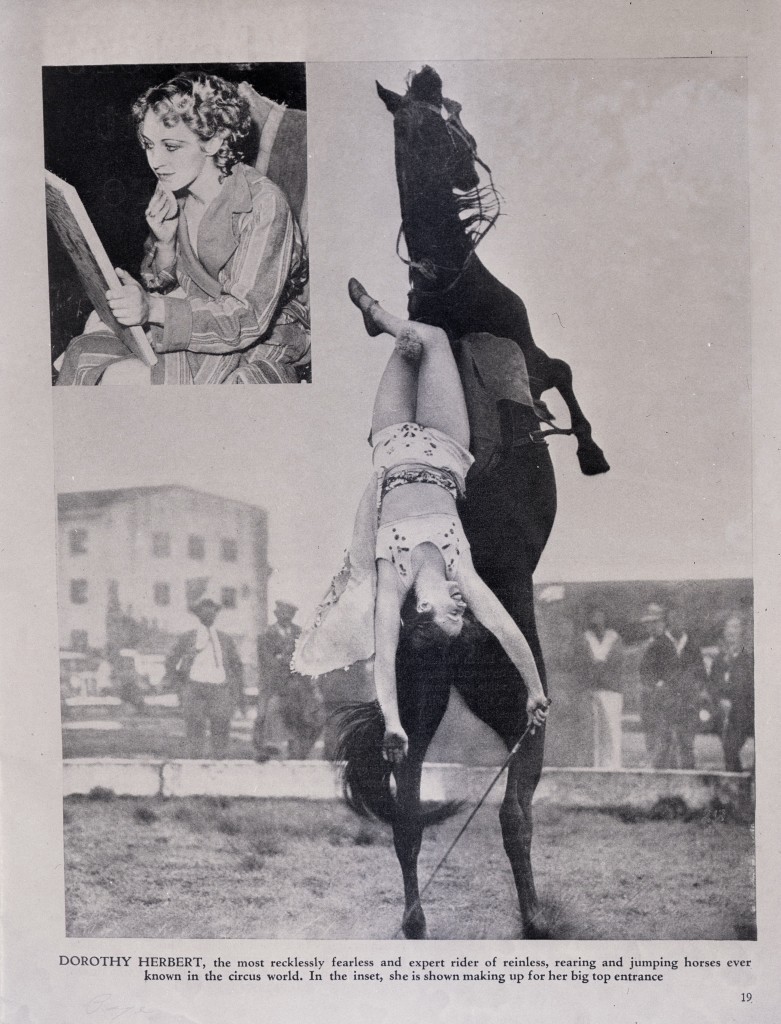
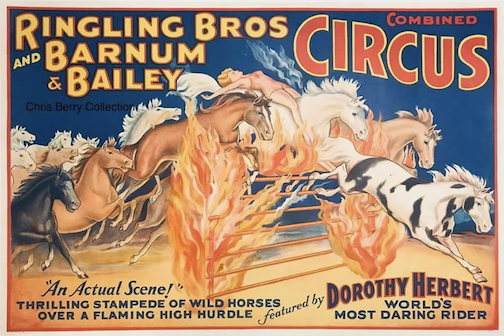
Although known for their nonchalance, New Yorkers could still find some enthusiasm when the circus came to town. “The Talk of the Town” looked in on the star of the circus, Dorothy Herbert (1910-1994), a trick rider with the Ringling Bros. and Barnum & Bailey Circus.
WHOA NELLY…One of Dorothy Herbert’s signature moves was her layback on a rearing horse. Here she demonstrates the move in 1939. (equineink.com)HOT STUFF…Circus poster touts Herbert’s ride over flaming hurdles in the company of twelve riderless horses. (circushistory.org)
* * *
Don’t Call Him ‘Tiny’
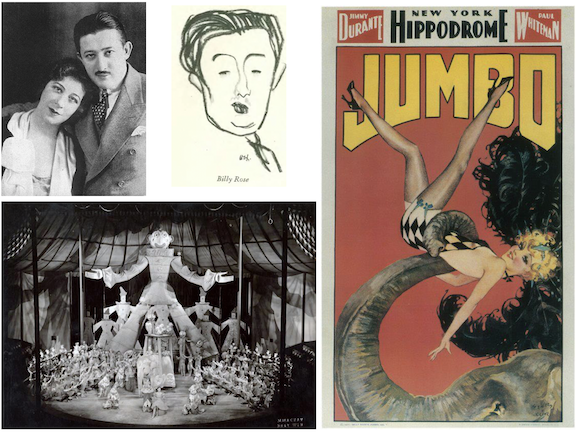
He was known as “The Little Napoleon of Showmanship,” but there was nothing small about Billy Rose’s accomplishments as an impresario, theatrical showman, composer, lyricist and columnist. Here are excerpts from Alva Johnston’s profile:
JUMBO-SIZED ENTERTAINMENT…Clockwise, from top left, Billy Rose and his first wife, comedian-actress Fanny Brice; illustration of Rose for the profile; poster announcing Rose’s 1935 stage spectacle Jumbo at the Hippodrome; described as more circus than musical comedy, Jumbo was one of the most expensive theatrical events of the first half of the 20th century. (jacksonupperco.com)
* * *
On Guard
We shift gears and turn to more sobering events of the 1930s, namely the rise of fascism in Europe. In his column “Of All Things,” Howard Brubaker pondered the possibilities of fascism in his own country…
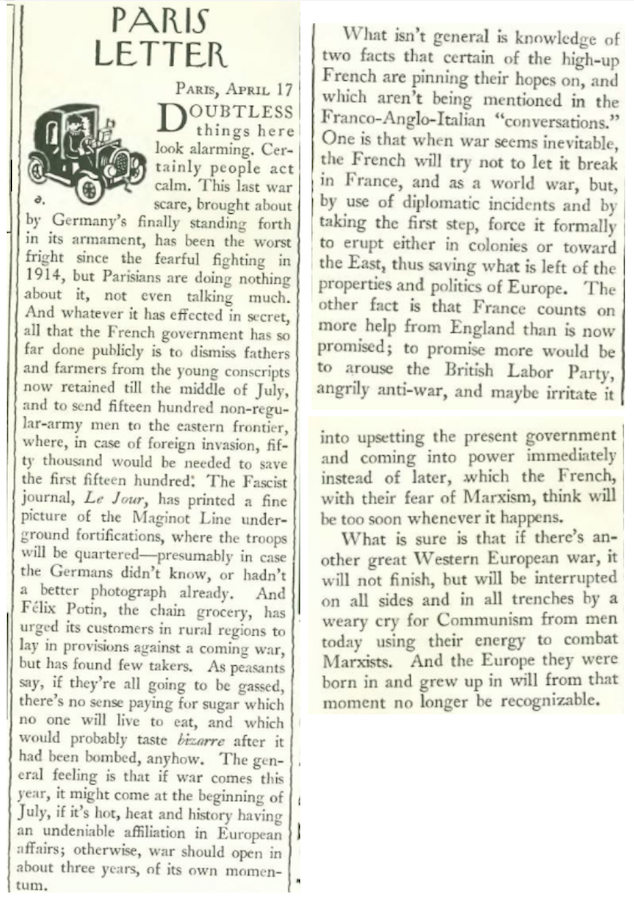
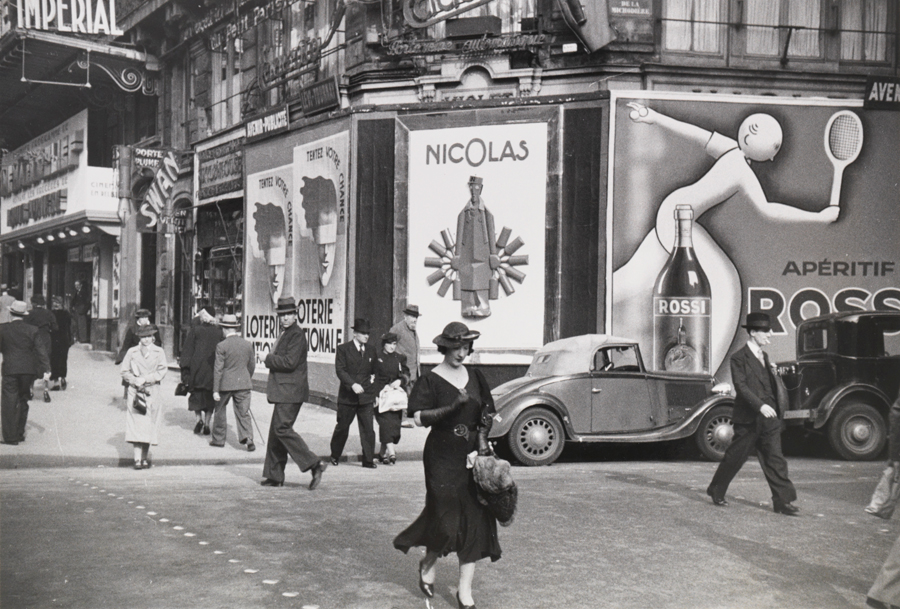
…meanwhile, Paris correspondent Janet Flanner was finding nothing funny about the uneasy calm among Parisians as war with Germany seemed likely.
C’EST LA VIE…Janet Flanner found Parisians resigned to whatever fate awaited them in 1935. (unjourdeplusaparis.com)
Flanner also remarked on Leni Riefenstahl’s Nazi propaganda film Triumph des Willens (Triumph of the Will). Flanner’s assessment of this “best recent European pageant” wryly underscored the horrors the film portends.
* * *
News From An Old Friend
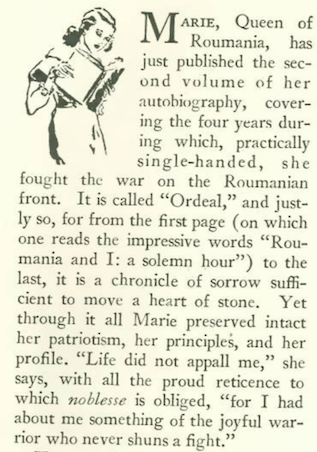
Longtime readers may recall one of my earliest entries on Queen Marie of Romania (1875-1938); the March 14, 1925 edition of The New Yorker (issue #4) found New Yorkers “agog” over her planned 1926 visit to the city. Her comings and goings were followed for a time (she also appeared in a Pond’s Cold Cream ad in the June 6, 1925 issue), but then she abruptly disappeared. Here she is again, courtesy of a glowing book review by Clifton Fadiman. An excerpt:
A PROGRESSIVE THINKER for her time, Marie of Romania was immensely popular in America. Born into the British royal family, she was the last queen of Romania from 1914 to 1927. At left, portrait from 1920; at right, during her 1926 visit to the States, Marie received a headdress from two American Indian tribes. They named her “Morning Star” and “Winyan Kipanpi Win”—“The Woman Who Was Waited For.” (Wikipedia/brilliantstarmagazine.org)
* * *
From Our Advertisers
Although we’ve seen plenty of ads from prestige automakers such as Packard, it was clear that companies found their sweet spot in lower-priced models that still suggested “prestige”…here’s an example from Cadillac’s budget line LaSalle…
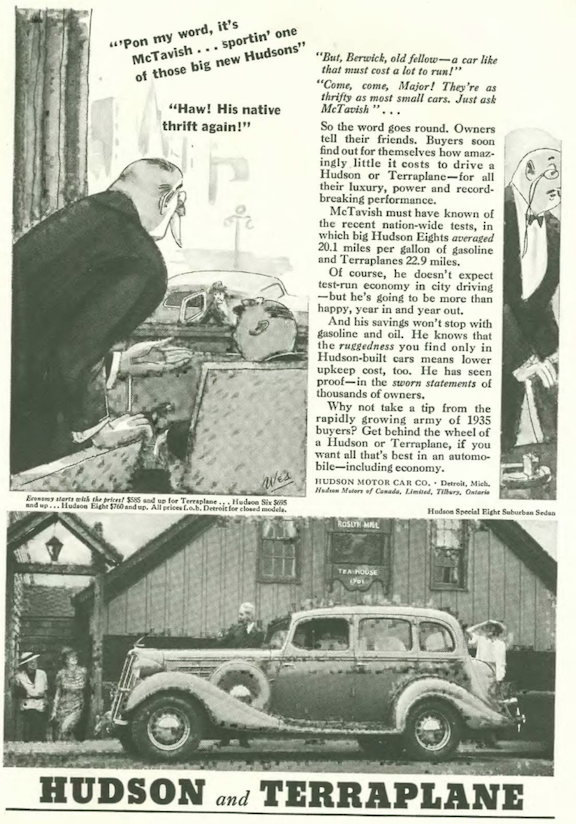
…for less than half the price of a LaSalle you could get behind the wheel of Hudson, its makers suggesting that prestige doesn’t preclude thrift…this ad seems to have been hastily produced–note the right side of ad, with just a slice of some toff squeezed next to the copy…
…this advertisement would only appeal to those who were among the tiny minority who could afford to fly…from 1924 to 1939 this early long-range airline served British Empire routes to South Africa, India, Australia and the Far East…
…for reference, detail below of a Scylla-class airliner used by Imperial Airways…
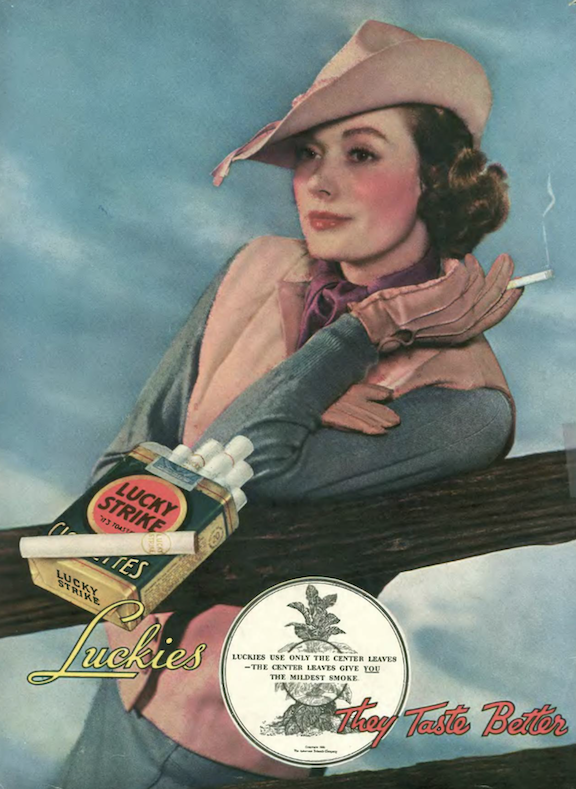
…and what would the back cover be without a photo of a stylish woman having a smoke?…
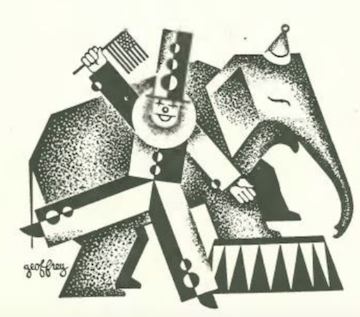
…a few advertisers referenced the circus in town to drum up business…
…and we segue to our cartoonists and illustrators, and this circus-themed spot from an illustrator signed “Geoffrey”…
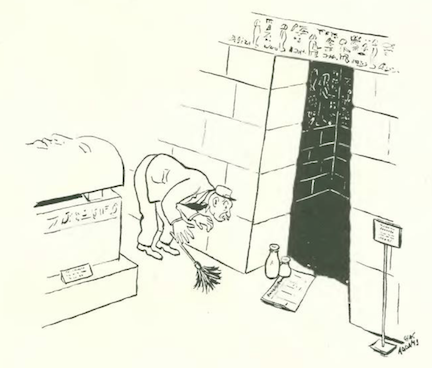
…a more familiar name is found at the bottom of page 4…namely Charles Addams…the milk order outside the tomb hints at things to come…
…Addams again, going from Bacchus to beige…
…George Price, and well, you know…
…Robert Day was aloft with a speculative builder…
…William Steig typecast his Small Fry…
…Leonard Dove made a sudden exit…
…Gilbert Bundy found one old boy unaffected by spring fever…
…Alain channeled Barbara Shermund to give us this gem…
…and we close with a typical day in James Thurber’s world…
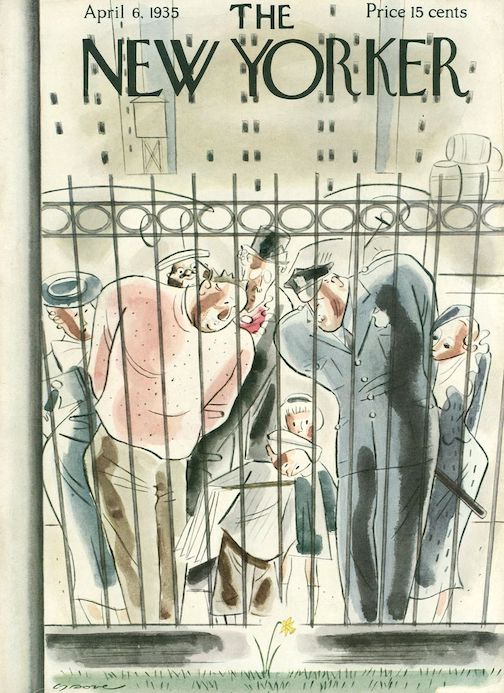
If you lived in Germany in 1935, or in Italy or Spain for that matter, the world would have looked very different from the one most Americans were experiencing, clawing their way out of the Great Depression and hoping to improve their domestic lives. War was not big on their worry list.
April 6, 1935 cover by Leonard Dove.
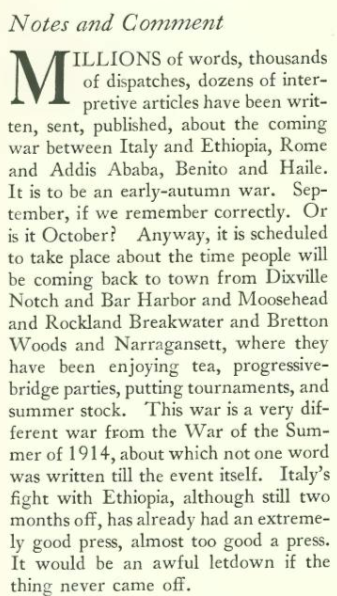
In his “Notes and Comment,” E.B. White satirized the talk about war that was filling more column inches in the nation’s newspapers. He was particularly scornful of journalists such as Arthur Brisbane—the influential editor of William Randolph Hearst’s media empire—who was fond of giant headlines warning of impending war.
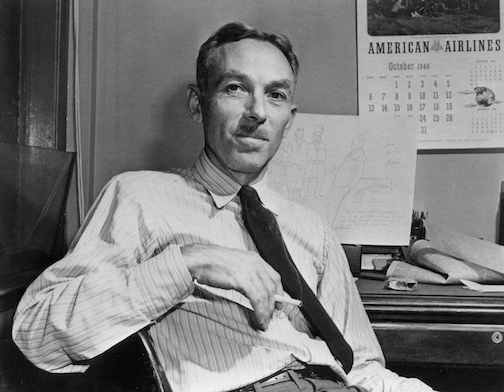
TEND YOUR OWN GARDEN...E.B. White in 1946. (Britannica)
White wasn’t naive about the possibilities of war; however, he believed obsessing about things over which we have little control did little to help the human condition. Helping one’s neighbor, on the other hand, would do the world more good. In 1939, just six months before Germany invaded Poland, White wrote a piece titled “Education” for his Harper’s Magazine column, One Man’s Meat. This excerpt helps define his worldview:
“I find that keeping abreast of my neighbors’ affairs has increased, not diminished, my human sympathies…in New York I rise and scan Europe in the Times; in the country I get up and look at the thermometer—a thoroughly set-contained point of view which, if it could infect everybody everywhere, would I am sure be the most salutary thing that could happen to the world.”
With that, here is a selection from the April 6 “Notes and Comment”…
TANKS A LOT…Clockwise, from top left, German war production in the 1930s—by increasing the size of the army by 500,000 and establishing the Luftwaffe in early 1935, Germany broke international law and the Treaty of Versailles; the 1935 Anglo-German Naval Agreement was the first sign of British and European appeasement—photo shows the launch of the Admiral Graf Spee; a display of force at Nuremberg, mid 1930s; cartoon by Bernard Partridge from Punch (September 1932) foresaw the inevitable. (parisology.net/theholocaustexplained.org/Punch Limited)
In March 1973, a “Mr. Nadeau” wrote a letter to E. B. White expressing fears about humanity’s bleak future. Here are the first and last lines of White’s reply:
As long as there is one upright man, as long as there is one compassionate woman, the contagion may spread and the scene is not desolate. Hope is the thing that is left to us, in a bad time. I shall get up Sunday morning and wind the clock, as a contribution to order and steadfastness…Hang on to your hat. Hang on to your hope. And wind the clock, for tomorrow is another day.
* * *
Another Viewpoint
Ever the observer of the passing scene, Howard Brubaker made these relevant observations in “Of All Things”…
…and back to White’s “Notes,” and the imminent passing of the beloved organ grinder…
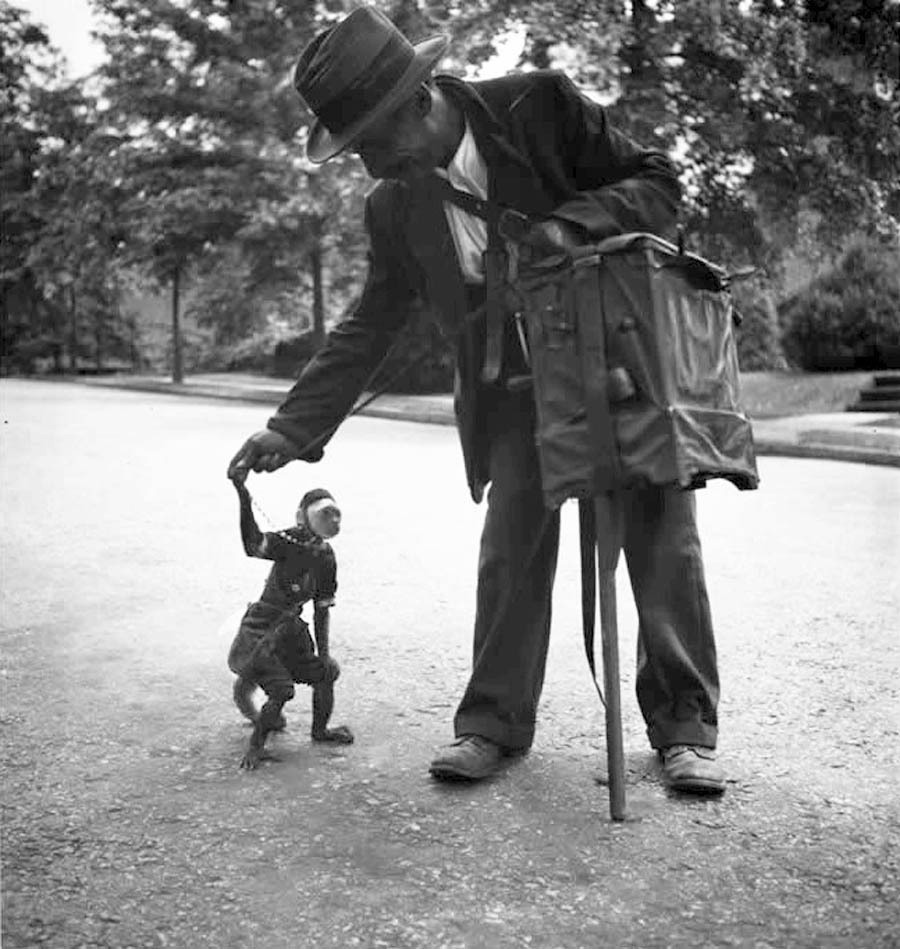
THE OLD GRIND…Above, one of New York City’s last organ grinders in Washington Heights, ca. 1935. Organ grinders had been fixtures in Manhattan since the 1850s, and by 1880 roughly five percent of Italian men living in Five Points were organ grinders, often accompanied by monkeys who entertained and collected coins. Organ grinders were outlawed in 1936 by Mayor Fiorello La Guardia. It is thought the mayor disliked the Italian immigrant stereotype. (Library of Congress)
* * *
Give Him More Mickey Mouse
John Mosher expressed his displeasure with movies that failed to deliver some escape from life’s mundane realities or offered little more than tepid storylines.
IN SEARCH OF A CREDIBLE PLOT…Critic John Mosher found Claudette Colbert (top left) both unbelievable and unqualified to be a psychiatrist in Private Worlds; at top right, Joan Blondell and Glenda Farrell offered some mindless distractions in Traveling Saleslady (from 1933 to 1936 Blondell and Farrell appeared together in seven films); bottom, Mosher called The Woman in Red an “anemic” tale. Barbara Stanwyck seems to be wondering why she took the part. (rottentomatoes.com/TCM)
* * *
Odds and Ends
Also in the issue, John O’Hara kicked off the short fiction with “I Could Have Had A Yacht,” Margaret Case Harriman penned a profile of Elizabeth Arden (of cosmetics empire fame), and theatre critic Wolcott Gibbs enjoyed the “bitterly effective performances” in Clifford Odets’ Waiting For Lefty, which was being produced at the Longacre Theatre.
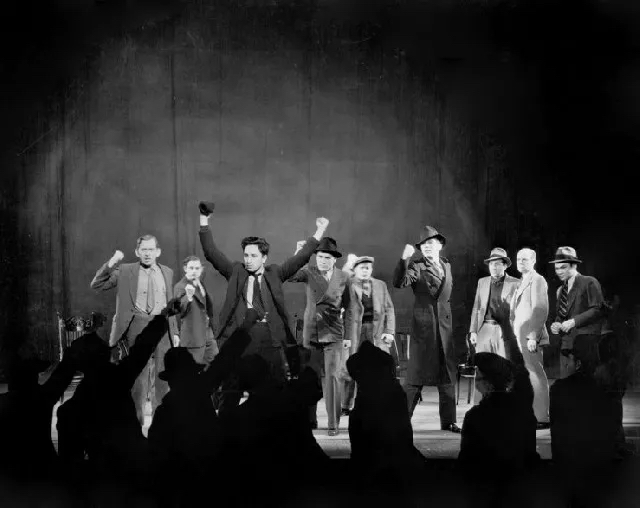
ENOUGH IS ENOUGH...Elia Kazan led the cast in the original production of Clifford Odets’ iconic 1935 play Waiting for Lefty. Centered around a taxi drivers’ strike, Lefty was produced by The Group Theatre, which sought to perform plays that functioned as social commentaries on the inequality and poverty of 1930s America. Some referred to Kazan as the “Proletarian Thunderbolt.” (Creative Commons)
* * *
From Our Advertisers
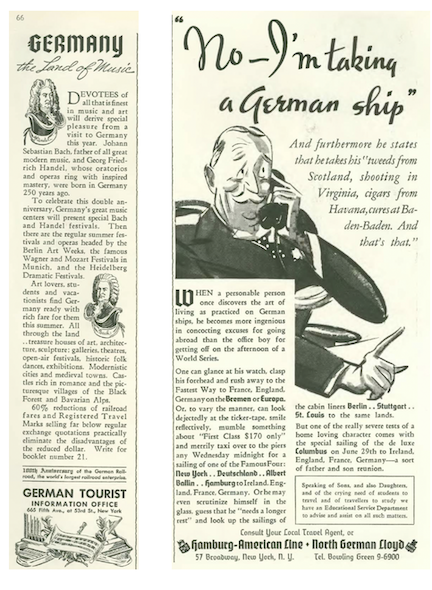
While Hitler ramped up weapons production and prepared to enact the Nuremberg Race Laws, the German Tourist Office touted their country as “The Land of Music” in this one-column advertisement on page 66 (left)…a couple of pages later we have an old chap looking forward to a German cruise and a quiet soak at Baden-Baden in the midst of madness…
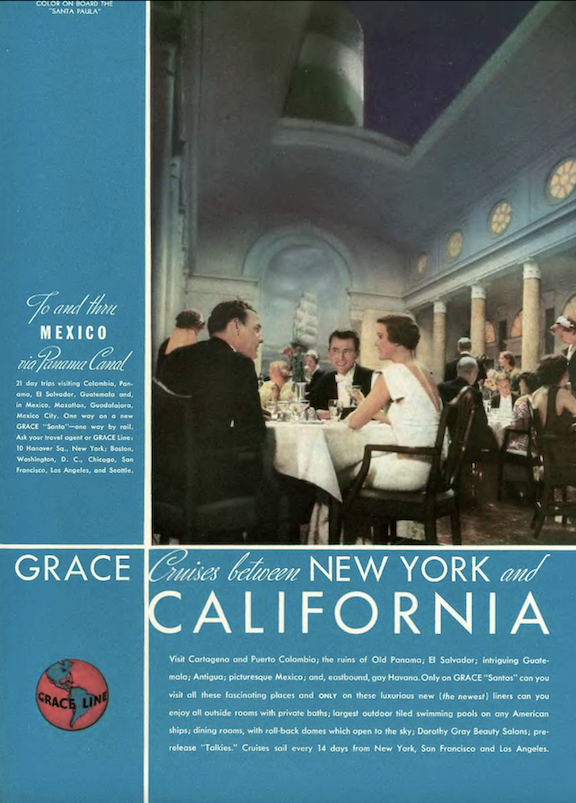
…now this is more like it, fine dining under the stars aboard the Santa Paula, far from the maddening crowds…
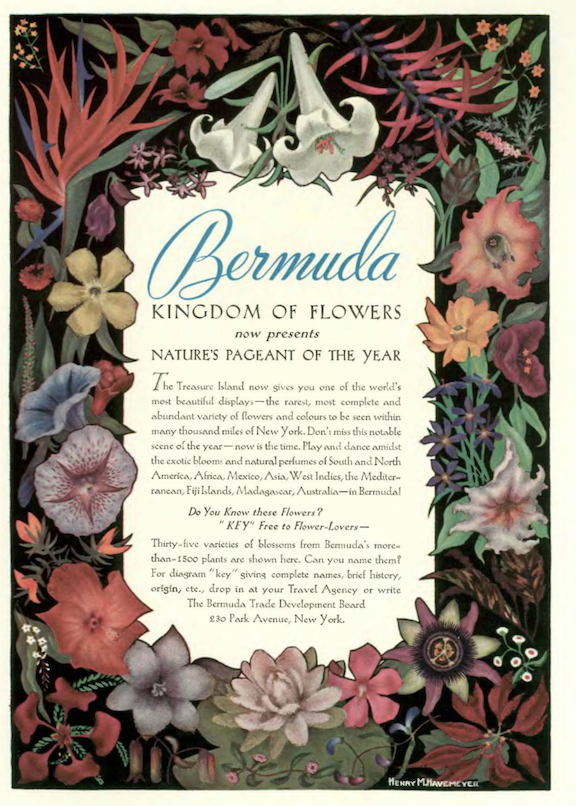
…there were several colorful full-page ads in the issue, including this splashy display from the very un-splashy-sounding Bermuda Trade Development Board…
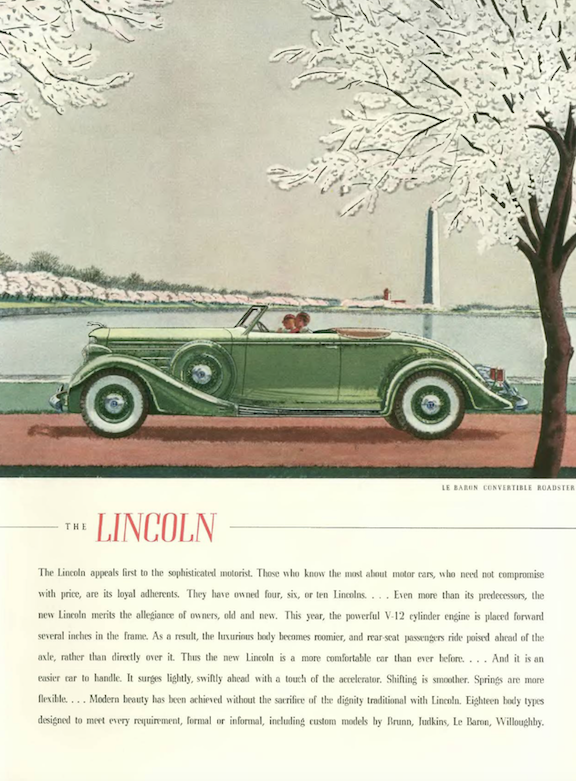
…cherry blossoms lined the path of Lincoln’s Le Baron Roadster…
…Camel played to a wide demographic, from ads featuring stylish young women to ads like this that roped in everyone from an “enthusiastic horsewoman” to an engineer working on the Boulder (now Hoover) Dam…
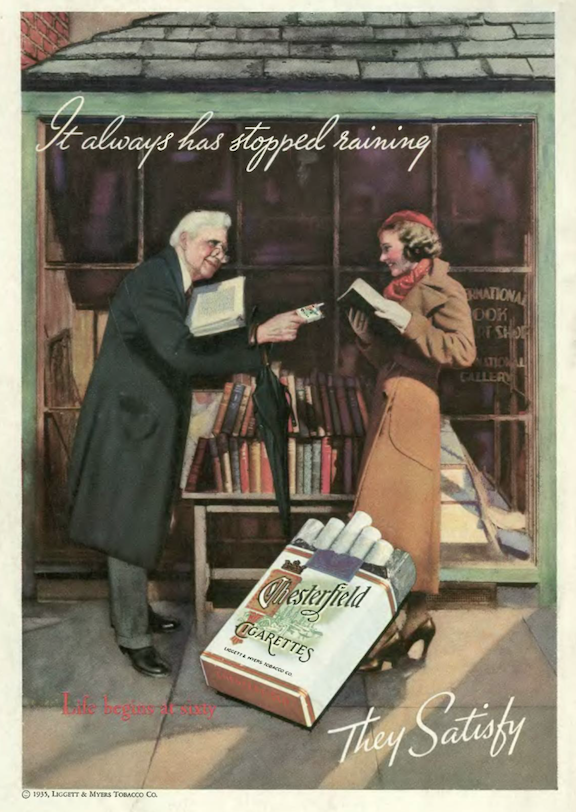
…I’m not sure what “Life begins at sixty” is supposed to mean, unless it’s about tempting young women with your bad habit…
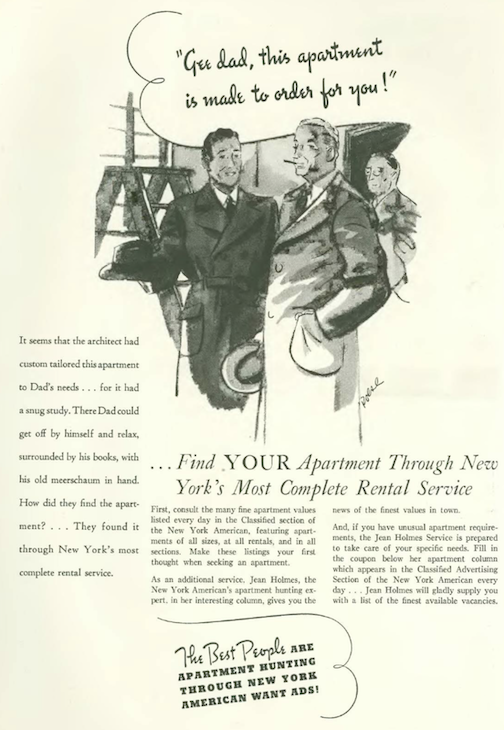
…the New York American was hoping that some of the “Best People” who read The New Yorker would also want to read their apartment rental want ads…
…spring was in the air at Richard Hudnut’s Fifth Avenue salon…if you had dry skin, it was recommended you try a product with the unfortunate name “Du Barry Special Skin Food”…
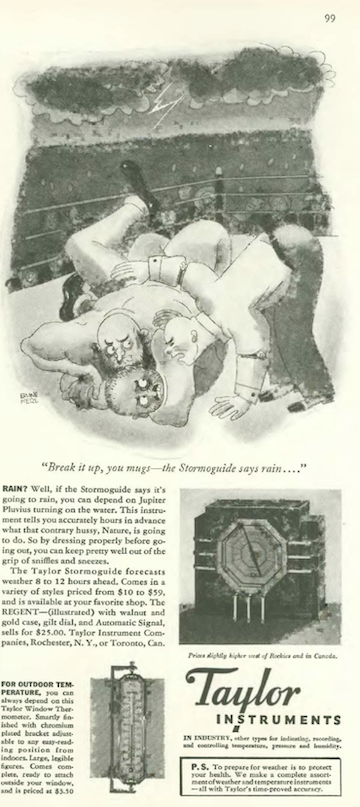
…Taylor Instruments hoped readers would monitor the spring weather with one of their stylish thermometers…American graphic artist and illustrator Ervine Metzl provided the artwork…he was best known for his posters and postage stamp designs…
…which brings us to our illustrators and cartoonists, beginning with this small woodcut on page 6 signed “Martin”…
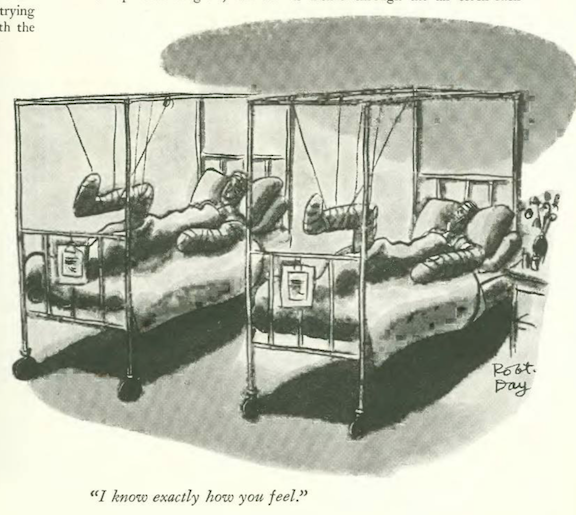
…empathy gained some traction in this Robert Day cartoon…
…Alan Dunn demonstrated the effect of the Depression on the building trades…
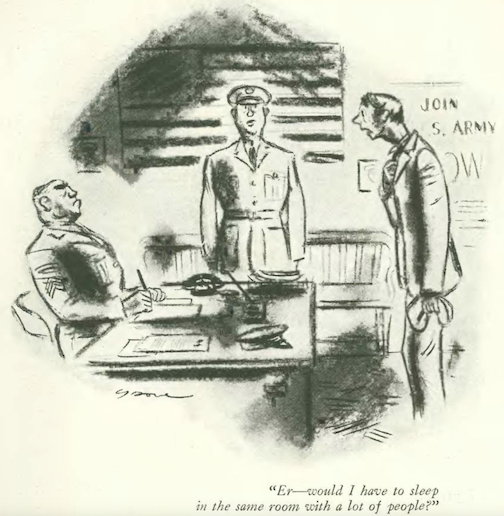
…Leonard Dove found one enlistee not ready for basic training…
…Syd Hoff showed us all the right moves…
…Alain was up in the garret with an artist in need of some peace…
…Gluyas Williams took a glimpse backstage…
…William Crawford Galbraith was still exploring the world of sugar daddies and golddiggers…
ABOVE: E.B. White presented us with a mixed bag of February happenings, from the comings and goings of Neily Vanderbilt to the Macon disaster and the economic power of Mickey Mouse.
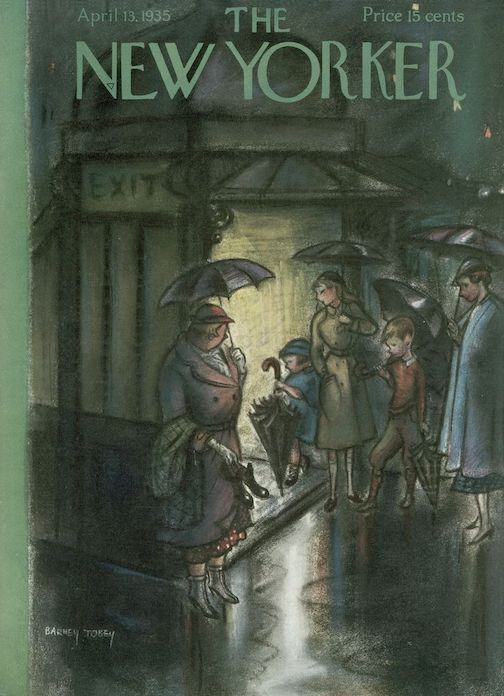
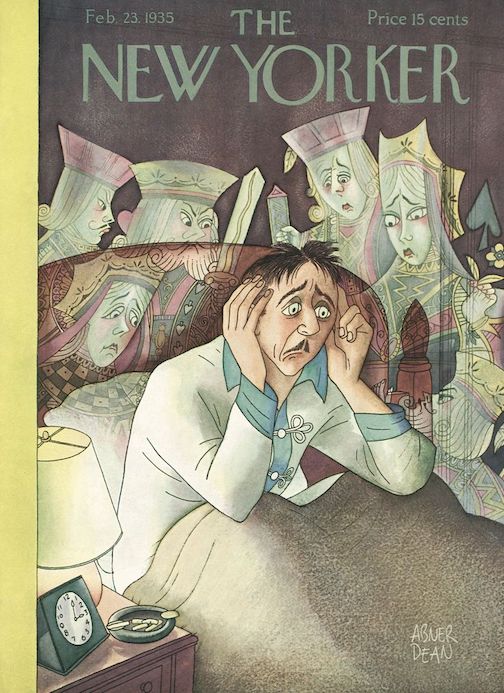
The title for this entry comes from E.B. White’s “Notes and Comment” column, which kicked off the Feb. 23, 1935, issue with a quick rundown of February events.
Feb. 23, 1935 cover by Abner Dean.
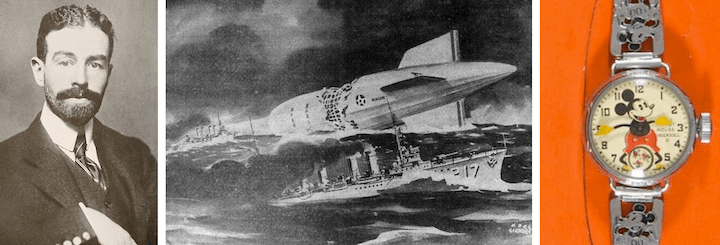
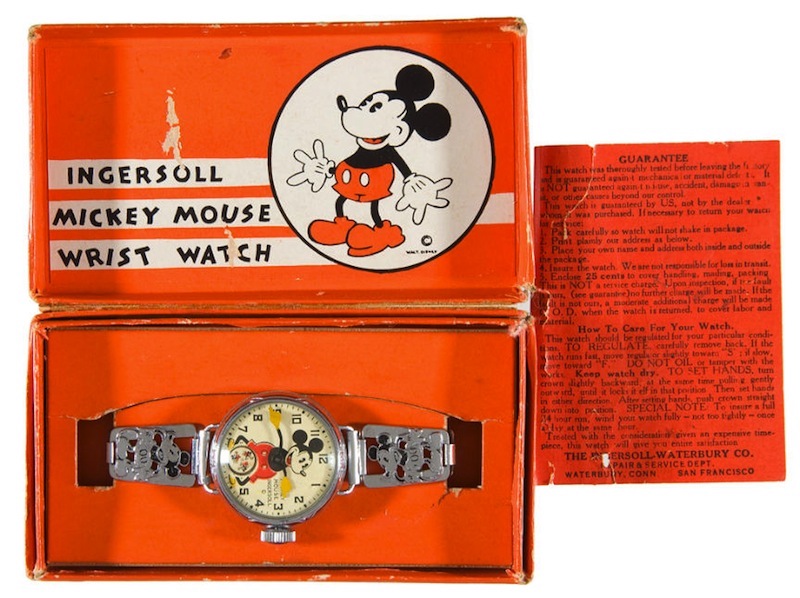
February notably marked the end of the Bruno Hauptmann trial. Convicted of the abduction and murder of the infant son of Charles and Anne Morrow Lindbergh, Hauptmann would go to the electric chair on April 3, 1936. White also noted the return of Admiral Richard Byrd from his second Antarctic expedition, the demise of the U.S. Navy airship U.S.S. Macon, and the economic miracle of the Mickey Mouse watch.
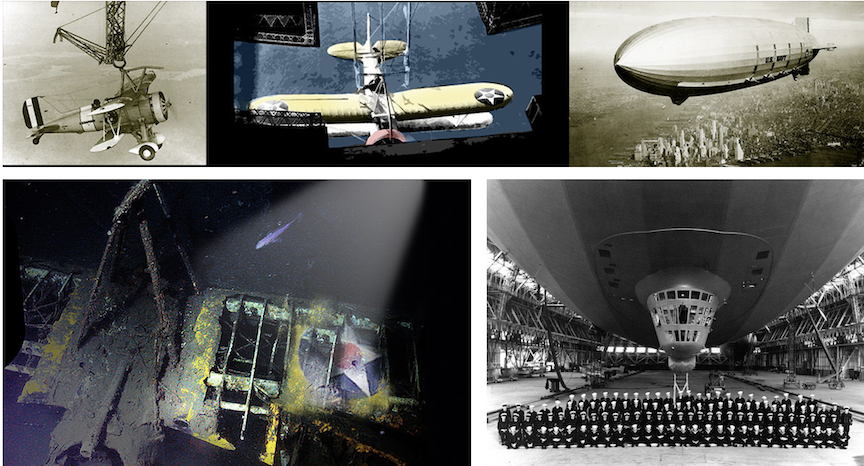
FLYING AIRCRAFT CARRIER…The US Navy’s 785-foot rigid airship USS Macon could launch and retrieve up to five airplanes in mid-flight. Known as “parasitic fighters, the Sparrowhawks were hung from a rail system inside the airship. On Feb. 12, 1935 the Macon crashed in a storm off the coast Point Sur, California. Only two of the 66 crew were lost. Photos above, clockwise from top left, show the deployment of a Sparrowhawk; the USS Macon over New York City in 1933; crew pose for a photo in the dirigible’s hanger; photo from the wreckage discovered in 2006—the pre-1941 pattern U.S. roundel emblem still recognizable. Sky-hook also visible. (sanctuaries.noaa.gov/macon/Sunnyvale Historical Society)TIME WAS RUNNING OUT for the Ingersoll Waterbury Company (now known as Timex) during the Great Depression. It was saved from bankruptcy, in part, by the introduction of the Mickey Mouse watch. (connecticuthistory.org)
White also made note of the comings and goings of Cornelius “Neily” Vanderbilt III (1873–1942), who was saying farewell to Fifth Avenue (although he would return to live out his life there), while New Yorkers were apparently saying farewell to the Park Avenue Tunnel (aka Murray Hill Tunnel). After more than 190 years it is still there, now serving a single lane of northbound traffic from 33rd to 40th Street.
TUNNEL VISION…Park Avenue Tunnel in 1890 (top) and in 2013 during a Voice Tunnel art installation. The nearly two-century old tunnel was made open to pedestrians for the first time in coordination with the annual Summer Streets event which began in 2013. (viewing.nyc/Wikipedia)
* * *
Getting An Earful
Howard Brubaker, in his column “Of All Things,” made this observation of deepening repression taking place in Nazi Germany…
* * *
Try Our Knockout Cheesecake
Lois Long continued her chronicle of New York night life, in this excerpt making note of the celebrity gawkers at Jack Dempsey’s tavern/restaurant near Madison Square Garden. Apparently Dempsey’s place was renown for its cheesecake…
PLEASED AS PUNCH…Heavyweight boxing champ Jack Dempsey opened his restaurant at 50th Street and Eighth Avenue in 1935 (bottom photo) before moving to Broadway’s Brill Building in 1937 (top). According to Ephemeral New York, “In the restaurant’s early years, Dempsey was known to hold court at a table, a legendary figure greeting customers and glad-handling guests.” (Ephemeral New York)
* * *
From Our Advertisers
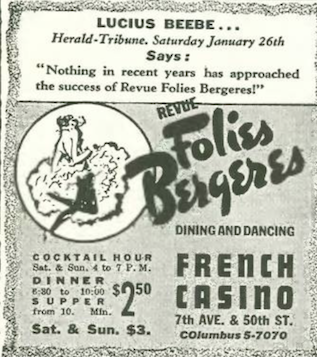
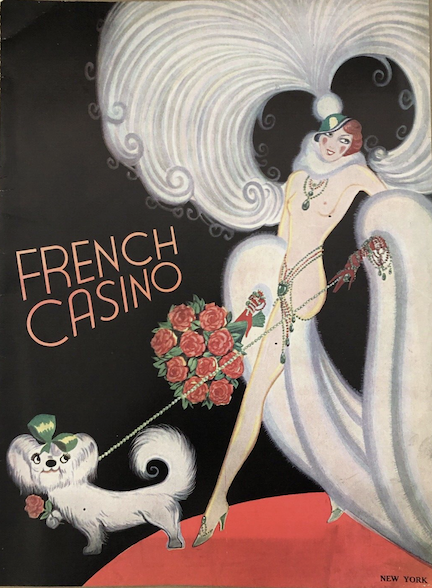
The refurbished Earl Carroll Theatre (7th Ave. and 50th St.) opened as the French Casino late in 1934. The art deco theatre’s first show was the Revue Folies Bergères, promoted here in this small ad on page 54 in the Feb. 23 issue…
…the menu’s cover suggests patrons weren’t there for the cheesecake (yes, there is a pun, but I’m not touching it)…
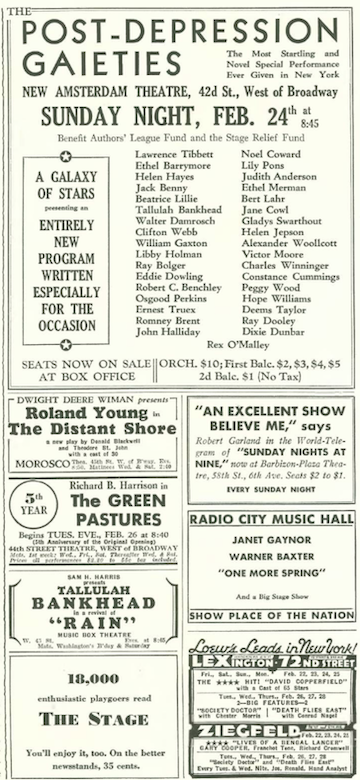
…another ad in the back pages touted the “Post-Depression Gaities” at the New Amsterdam Theatre with an impressive roster of stars including New Yorker notables Robert Benchley and Alexander Woollcott…
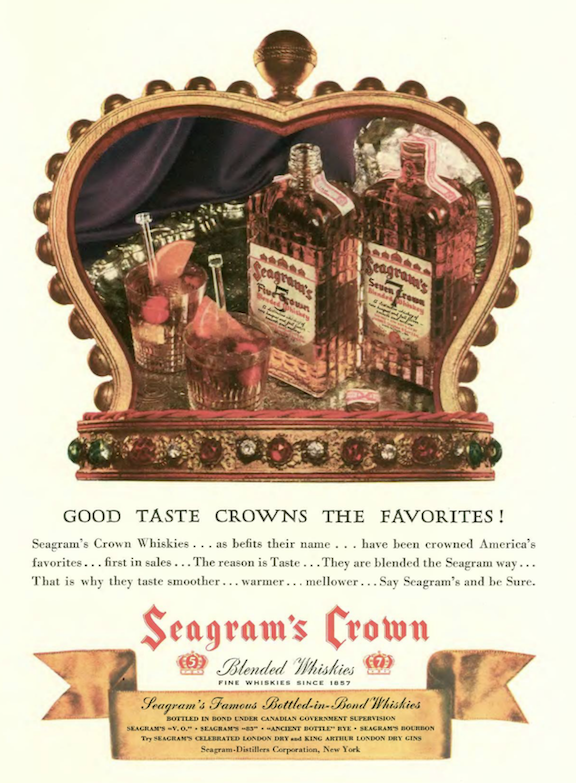
…following Prohibition, Seagram introduced two blended whiskies—5 Crown and 7 Crown. Seagram 5 Crown was discontinued in 1942, while Seagram 7 would go to become the first million case brand in U.S. history…
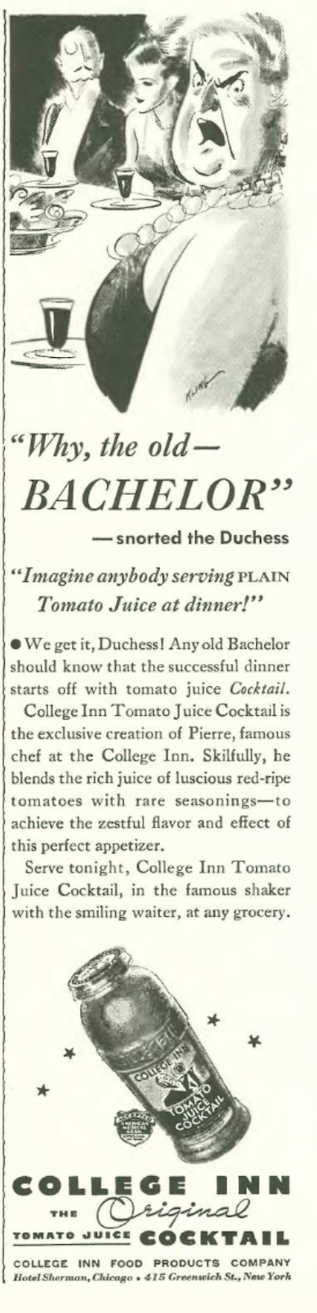
…this one-column ad caught my eye for the rendering of the stereotypic ill-tempered matron, here having a fit over tomato juice…
…coming from an old and influential New York family, it’s hard to believe Elizabeth West Post Van Rensselaer thought about Campbell’s soup when her daughter, Elizabeth, fell seriously ill…at any rate, something must have worked because her daughter lived until 2001…
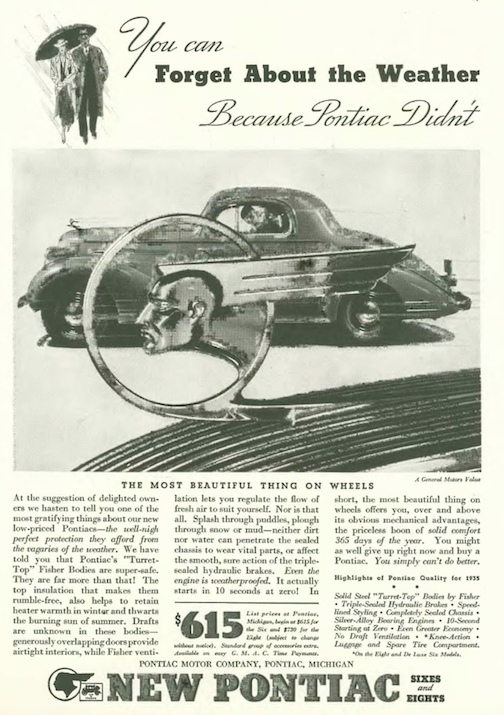
…For a time “Chief Pontiac” served as a logo for the Pontiac line of automobiles, discontinued by GM in 2010…
…many automobile advertisements of this era emphasized safety, none more prominent than the “Body by Fisher” ads that frequently featured happy little children…oddly, no one had yet considered seat belts, car seats or other safety measures we now take for granted…
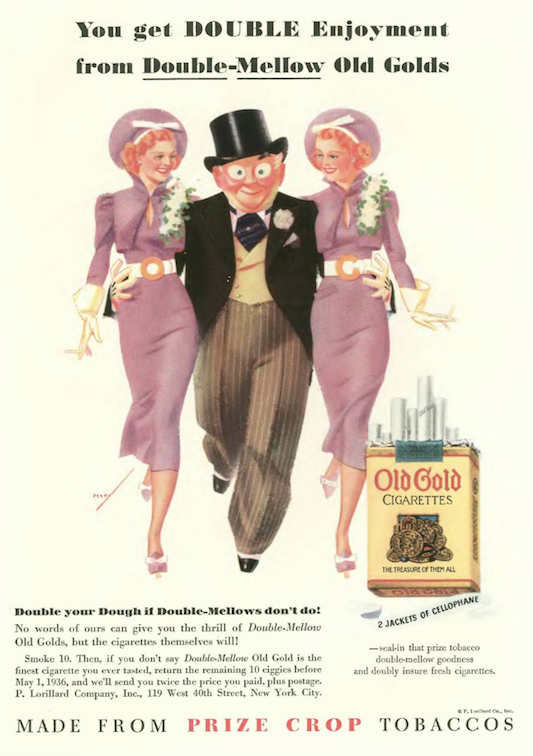
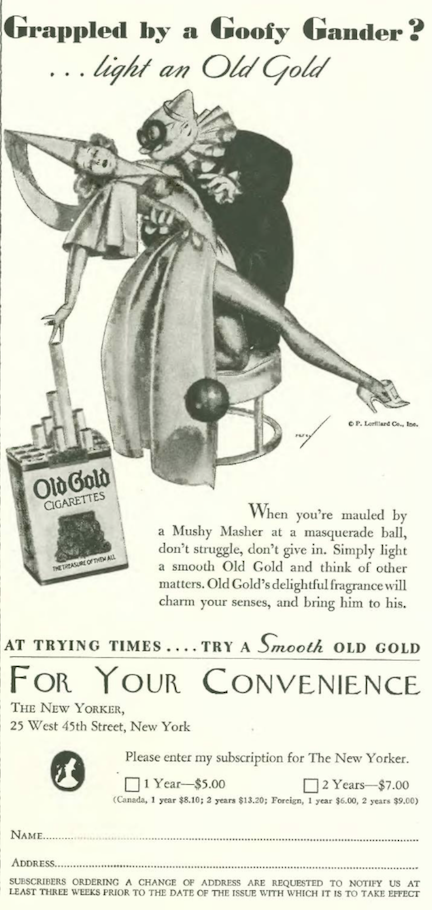
…the makers of Old Gold cigarettes (Lorillard) ran a series of ads featuring a sugar daddy and his leggy mistress…they were drawn by George Petty (1884–1975), famed for his “pin-up girls”…as an added bonus below the ad, you could renew your New Yorker subscription—two years for seven bucks…
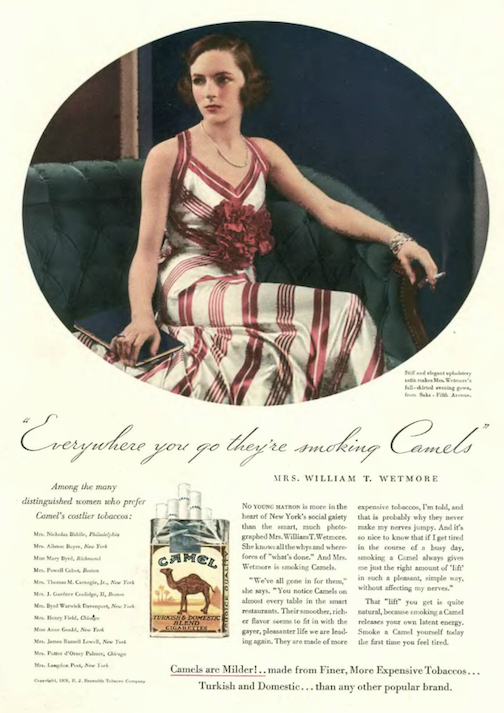
…the makers of Camels kept it classy with their continuing series of society women enjoying their unfiltered “Turkish & Domestic” blend…
…the “young matron” in the ad, the Sydney, Australia-born Joan (Deery) Wetmore (1911-1989), was indeed “much-photographed,” and was a favorite of Vogue photographer Edward Steichen:
Detail from a Steichen photo of Joan Wetmore, taken in Rockefeller Center’s Rainbow Room, 1934. (Condé Nast)
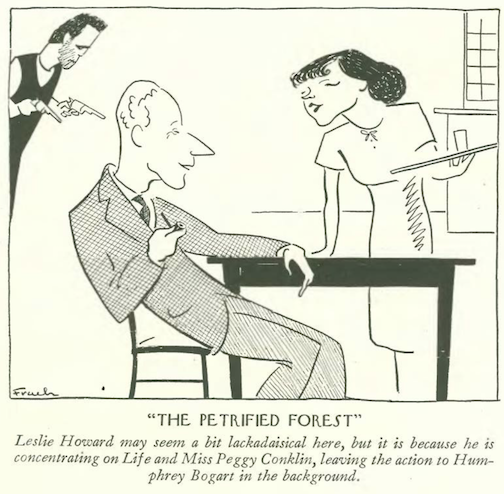
…on to our cartoonists, Al Frueh illustrated Humphrey Bogart as the coldblooded killer Duke Mantee in the 1935 play The Petrified Forest; the 1936 film adaptation would be Bogart’s breakout role in the movies…
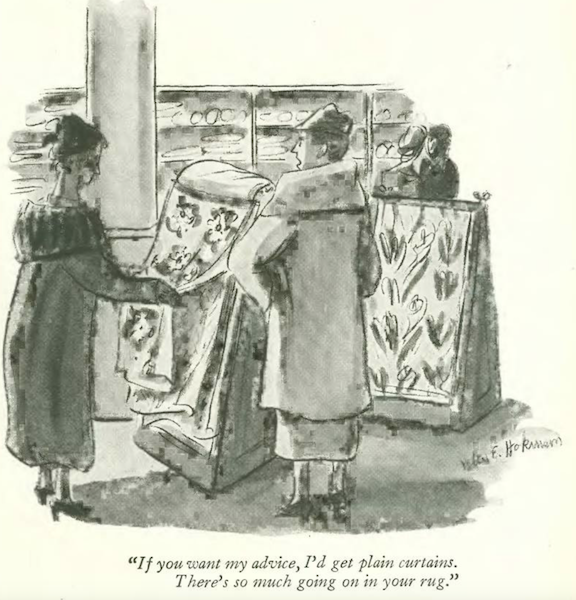
…Helen Hokinson went shopping for drapes…
…George Price was all tied in knots…
…and still up in the air…
…Barbara Shermund dreamed of Venice…
…James Thurber gave us the life of the party…
…and we close with Leonard Dove, and some unexpected party life…
Above: The Dec. 2, 1934 opening of the reconstructed Central Park Menagerie drew such luminaries as Mayor Fiorello La Guardia, pictured at left with his family, and, at right, former New York Governor Al Smith, who was designated honorary zookeeper. Smith, who, lived across from the zoo at 820 Fifth Avenue, poses with two donkeys at the Menagerie in 1940. (New York Parks Archive)
The Central Park Zoo was not part of the original Olmstead-Vaux plan for the park, but beginning in 1859 it evolved spontaneously as a menagerie located near the Arsenal; its odd collection of animals included exotic pets donated as gifts, and other random creatures including a bear, a monkey, a peacock and some goldfish.
Dec. 1, 1934 cover by Leonard Dove.
The menagerie accepted animals of all kinds, even sick ones, and by the 1920s the quality of the animals as well as the hodgepodge of buildings had degraded significantly (the lion house had to be guarded to prevent the animals from escaping their rotting quarters). In early 1934 Parks Commissioner Robert Moses addressed the adverse conditions in the menagerie, putting a redesign on a fast track and insisting that only healthy animals, in more humane settings, would be displayed.
DUMBOS…According to a 1911 Department of Parks Annual Report, the menagerie at Central Park submitted animals to questionable treatment, as suggested by this photo of a trainer and a dog perched on top of an elephant. (nycgovparks.org)
Built of brick and limestone, the new zoo was designed in just sixteen days by an in-house team led by architect Aymar Embury II. Construction on the roughly six-acre zoo took just eight months, employing federally financed Works Progress Administration (WPA) labor.
MOSES PARTS THE RED TAPE…Robert Moses wasted no time after his appointment as parks commissioner (in January 1934) to get rolling on the menagerie makeover—it took just eight months to complete the new zoo. Clockwise, from top left, invitation to the opening celebration of the Central Park Menagerie—12,000 invited guests attended the opening, while another 25,000 lined Fifth Avenue hoping to be admitted; the popular sea lion pool was a central attraction on opening day (it is one of several elements from the 1934 zoo that still exists); conditions had improved for elephants and other animals, but they were still far from ideal; aerial view of the zoo as it neared completion on Oct. 9, 1934. (nycma.lunaimaging.com/digitalcollections.nypl.org)
Much ado was made of Al Smith’s appointment as “Honorary Night Superintendent”—in these clips from the Dec. 3 New York Times, Smith gave a brief “lecture” about the zoo’s bison, to which he offered a slice of bread…
(Excerpts from The New York Times via the TimesMachine)
* * *
From Our Advertisers
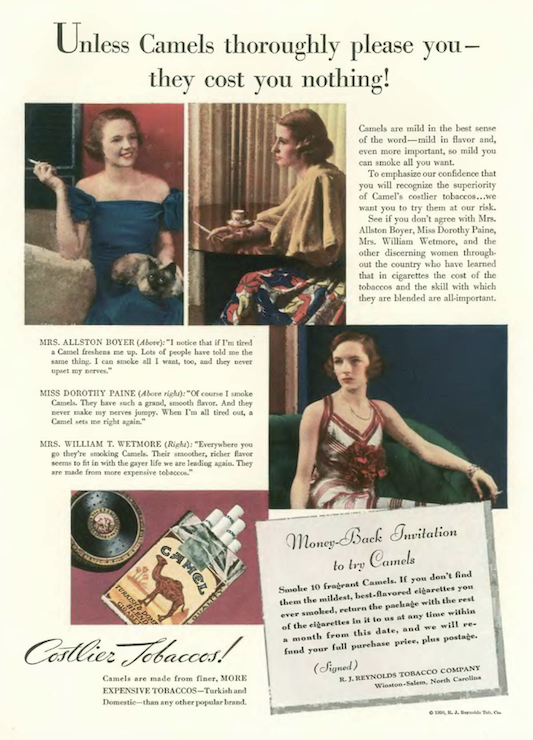
R.J. Reynolds continued to roll out its list of distinguished women who preferred their Camel cigarettes: “Mrs. Allston Boyer” nee Charlotte Young was a model with the John Robert Powers agency who was married to resorts planner Allston Boyer from 1934 to 1939. Young (1914–2012) would later marry New York Times Moscow correspondent Harrison Salisbury, and the two would embark on lengthy journeys throughout Asia, including a grueling 7,000-mile journey retracing the route of The Long March that Charlotte recounted in one of her seven travel books. Whether she continued her Camel habit is unknown, but she did live 98 years…
…a house ad from The New Yorker celebrated the holiday season with special Christmas rates (and Julian de Miskey embellishments)…
…Rea Irvin continued to have fun with the federal government’s new food and drug labeling standards…
…while Richard Decker had these two castaways contemplating a simpler form of government…
…and James Thurber continued to stir up trouble among the sexes…
…on to Dec. 8, 1934…
Dec. 8, 1934 cover by Richard Decker.
…which featured (on page 135) a handwritten letter from Kewpie Doll inventor Rose O’Neill, who commented on her recent New Yorker profile…
…here is an excerpt from the Nov. 24 profile referenced by O’Neill:
…and on to our advertisements from the Dec. 8 issue, including another Julian de Miskey-illustrated house ad…
…the clever folks at Heinz enlisted the talents of Carl Rose for a play on his famous Dec. 8, 1928 New Yorker cartoon…
…a closer look at the illustration (note the mother’s softer, more conservative appearance, five years removed from her flapper days; the child hasn’t changed a bit, except now we can see her face)…
…and the 1928 original, with caption by E.B. White…
…Peter Arno also popped up in the advertising section on behalf of Libby’s…
…the magazine grew thicker with many Christmas-themed ads, including this one from Johnnie Walker…
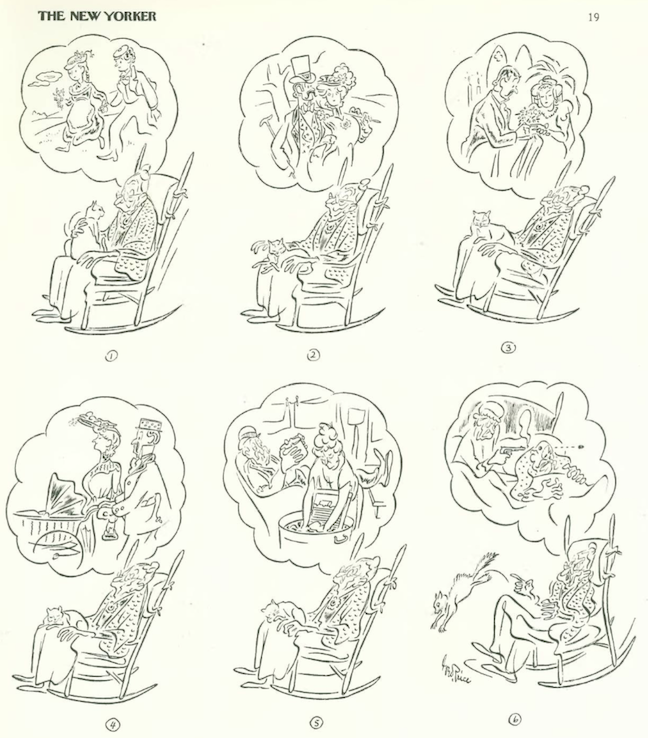
…Marlboro continued to take out these modest, back-page ads aimed at tobacco’s growth market—women smokers…
…the makers of Spud menthol cigarettes continued their campaign to encourage chain-smoking with this rather depressing image…
…while Spud’s new competitor in menthol cigs, KOOL, kept things simple with their smoking penguin mascot and valuable coupons for keen merchandise…
…the Citizens Family Welfare Committee offered this reminder that the Depression was still very much a challenge for 20,000 New York families…
…on to our cartoonists, beginning with Alan Dunn’s rather dim view of Robert Moses’s generously funded parks department…
…George Price gave us the latest update on his floating man, who had been up in the air since the Sept. 22 issue…
…Daniel ‘Alain’ Brustlein marked the season with dueling Santas from Macy’s and Gimbel’s…
…and we end with James Thurber, and some reverse psychology…
Above, left, a 1935 portrait of Gertrude Stein by Carl Van Vechten; right, Gertrude Stein and Alice B. Toklas arriving in New York aboard the French Line’s SS Champlain in 1934. (Library of Congress/AP)
Much of America’s literary world was abuzz about the arrival of Gertrude Stein in New York after her nearly three-decade absence from the States. Audiences were mostly receptive to Stein’s lectures, even if they were largely unintelligible, but The New Yorker would have none of it.
Nov. 17, 1934 cover by Rea Irvin.
Stein (1874–1946) visited the U.S. at the urging of friends who suggested that a lecture tour might help her gain an American audience for her work. She crisscrossed the country for 191 days, delivering seventy-four lectures in thirty-seven cities.
Writing for the Smithsonian Magazine (October 2011), Senior Editor Megan Gambino notes that publishing houses regarded Stein’s writing style as incomprehensible (Gambino writes that shortly after her arrival in the U.S., “psychiatrists speculated that Stein suffered from palilalia, a speech disorder that causes patients to stutter over words or phrases”), but in 1933 “she at last achieved the mass appeal she desired when she used a clearer, more direct voice” in The Autobiography of Alice B. Toklas. However, Stein was still best known in the U.S. for her “insane” writings, as one New York Times reporter described Stein’s work upon the writer’s arrival in New York. Excerpts from the Oct. 25, 1934 edition of the Times:
Stein had also achieved success in America via her libretto to Virgil Thomson’s opera Four Saints in Three Acts. Prior to her visit, Stein was featured in a newsreel reading the “pigeon” passage from the libretto, which James Thurber satirized in this piece titled “There’s An Owl In My Room.” Excerpts.
Here is a YouTube clip of the newsreel satirized by Thurber. Stein begins her “pigeon” reading at the 30-second mark:
If Thurber found the libretto ridiculous, it was an opinion not necessarily shared by audiences who attended Four Saints in Three Acts, which premiered in Hartford, Connecticut, before making a six-week run on Broadway.
SAINTS AND PIGEONS…The original cast of Four Saints in Three Acts, onstage at the Wadsworth Atheneum, Hartford, 1934; at right, Gertrude Stein reviews the libretto for Four Saints with American composer Virgil Thomson, 1934. (Harold Swahn/Bancroft Library, UC Berkeley)
Since Stein had never seen the opera performed, writer and photographer Carl Van Vechten convinced Stein and Toklas to fly on an airplane for the first time in order to be able to see the play in Chicago.
FLIGHT INSURANCE…Stein and Toklas were anxious about flying, so Van Vechten gave each a small Zuni fetish—a good luck charm as they prepared to board their plane at Newark. (Boatwright Memorial Library, The University of Richmond)
Thurber wasn’t the only New Yorker writer to throw shade on Stein’s visit. In his “Books” column, Clifton Fadiman described Stein as a “mamma of dada” and a “Keyserling in divided skirts” (Hermann Keyserling was a non-academic German philosopher known for his platitudinous, obscure writings). Excerpt:
Fadiman continued by excoriating Stein’s latest book, Portraits and Prayers, likening its “shrill, incantatory” quality to “the rituals of a small child at solitary play.”
* * *
Over the Rainbow
We leave Gertrude Stein for the time being and check in with Lois Long, who was sampling the fall attractions of the New York nightclub scene in “Tables for Two.” In these excerpts, the 32-year-old Long continued her pose as a much older woman (“about to settle down with a gray shawl”) as she bemoaned the bourgeoisie excess of places like the Colony, once known for its boho, speakeasy atmosphere. And then there was the Rainbow Room, with its organ blaring full blast to the delight of gawking tourists.
LOST IN NEW YORK…Lois Long lamented the demise of cafe life in Manhattan; from left, the Colony, circa 1940, which went from boho to upscale; the 21 Club, a favorite Prohibition-era haunt of Long’s where she was suddenly a nobody; and high above the city, the Rockefeller Center’s Rainbow Room, and its interminable organ music. (Pinterest/Alice Lum via Daytonian in Manhattan/nycago.org)
* * *
From Our Advertisers
Just one ad from the Nov. 17 issue (more to come below)…the latest athlete to attest to the energizing effects of Camel cigarettes…Cliff Montgomery (1910–2005) was famed for a hidden ball trick play that led one of the greatest athletic upsets—Columbia’s 7-0 win over Stanford in the 1934 Rose Bowl. Montgomery would play one year with the NFL Brooklyn Dodgers, and would later earn a Silver Star for his heroism during World War II…
…on to our cartoonists, we begin with Robert Day’s jolly illustration for the “Goings On About Town” section…
…Rea Irvin looked into fair play among the fox hunting set…
…Garrett Price gave us a tender moment among the bones at the American Museum of Natural History…
…and Peter Arno introduced two wrestlers to an unwelcoming hostess…
…on to Nov. 24, 1934 issue, and the perils of the Macy’s Thanksgiving Day Parade as illustrated on the cover by William Cotton…
Nov. 24, 1934 cover by William Cotton.
…where we find still more scorn being heaped upon Gertrude Stein. “The Talk of the Town” offered this observation (excerpt):
…and E.B. White had the last word on Stein in his Dec. 1, 1934 “Notes and Comment” column:
* * *
There Goes the Neighborhood
Returning to the Nov. 24 issue, Alberta Williams penned a lengthy “A Reporter at Large” column, titled “White-Collar Neighbors,” about the new Knickerbocker Village development in the Lower East Side. Real estate developer Fred French razed roughly one hundred buildings to build what has since been criticized as an example of early gentrification in Manhattan. Williams assessed the development after more than a year of construction, finding that despite federal funding, the leasing company had yet to rent any apartments “to Negroes or Orientals.” Although the development was meant to serve some of the families it displaced, the vast majority were forced to move back into slums due to escalating rents.
BREATHING ROOMS…Knickerbocker Village in 2019. To make way for the development, one hundred buildings were razed in the “Lung Block,” so named because of its high tuberculosis mortality rate. The development continues to be designated as affordable housing. (Wikipedia)
* * *
Dollmaker
Raised in rural Nebraska, at an early age Rose O’Neill (1874–1944) demonstrated an artistic bent, and was already a published illustrator and writer when she drew her first images of “Kewpie” around the year 1908. A German doll manufacturer began producing a doll version of Kewpie in 1913, and they became an immediate hit, making O’Neill a millionaire and for a time the highest-paid female illustrator in the world. When Alexander King penned a profile of O’Neill, Kewpies were no longer the rage, but O’Neill was nevertheless determined to find success in a new doll line. Excerpts:
QP QUEEN…Clockwise from top left, Rose O’Neill circa 1910, just before her Kewpie dolls made it big; Kewpie doll in original box, undated; as the Kewpie craze faded in the 1930s, O’Neill tried to launch a new line called Little Ho Ho, a laughing baby Buddha, but before production plans were finalized the doll factory burned to the ground; a 1935 ad for a Rose O’Neill-branded “Scootles” doll, another attempt at a comeback. (Wikipedia/Pinterest/museumobscura.com)
* * *
Last Call
Lois Long was back with another installment of “Tables for Two” and in these excerpts she found the Central Park Casino a welcome place to hang out, apparently unaware that Parks Commissioner Robert Moses had already served an eviction notice to the Casino’s owners (Moses would tear down the Casino in 1936, mostly to settle a personal vendetta). Long also found respite at the Place Piquale, which featured the musical stylings of Eve Symington.
BYE BYE…The Central Park Casino was not long for the world when Lois Long paid an enjoyable visit in November 1934. Long also found a good time at the Place Piquale, which featured the “startling,” deep voice of cabaret singer Eve Symington. (centralpark.org/Pinterest)
At the Place Piquale, Long was “grateful” to see that silent film star Louise Brooks was also a good dancer. An icon of Jazz Age flapper culture, Brooks loathed the Hollywood scene and the mediocre roles it offered, and after a stint making films in Europe she returned to the States, appearing in three more films before declaring bankruptcy in 1932. A former dancer for the Ziegfeld Follies, Brooks had turned back to dancing in nightclubs to make a living.
IT’S A LIVING…Promotional photo for the Place Piquale featuring Louise Brooks (sans her familiar flapper bob) and Dario in “Spectacular Interpretive Dances,” April 17, 1934. (books0977.tumblr.com)
…and dance remains a theme with John Mosher’s film review of the Fred Astaire and Ginger Roger musical The Gay Divorcee, which was based on the 1932 Broadway musical Gay Divorce starring Astaire and Claire Luce.
YOU WILL HAVE TO DANCE BACKWARD, IN HEELS…Ginger Rogers and Fred Astaire trip the light fantastic in The Gay Divorcee. (precode.com)
* * *
Using Her Heads
Clifton Fadiman praised Peggy Bacon’s collection of caricatures, Off With Their Heads!, which included drawings of fellow New Yorker contributors as well as various Algonquin Hotel acolytes. Excerpt:
HEAD HUNTER…Peggy Bacon offered up caricatures of forty celebrities in her new book, Off With Their Heads! Bacon (1895–1987) contributed cartoons as well as poetry and fiction to The New Yorker from 1927 to 1950. Clockwise, from top left, title page with Bacon’s self-portrait; undated photo of Bacon, likely circa 1930; caricatures of Dorothy Parker, Carl Sandburg and Heywood Broun. (villagepreservation.org/printmag.com/Wikipedia–Peter A. Juley & Son)
* * *
More From Our Advertisers
“Beautiful Vanderbilts” Mrs. Reginald Vanderbilt and Miss Frederica Vanderbilt Webb wowed one unnamed dermatologist who discovered that both had 20-year-old skin even though they were seven years apart! “Mrs. Reginald” was Gloria Morgan Vanderbilt, who was thirty when this ad was produced (Miss Frederica was apparently twenty-three). We’ve met Gloria Morgan Vanderbilt before, shilling for Pond’s—she was the maternal grandmother of television journalist Anderson Cooper, and earned her “bad mom” rep from Vanderbilt vs. Whitney, one of America’s most sensational custody trials…
…we move from skin care to who cares…in this case how many Spud cigs you smoke…hell, smoke three packs a day if you like, the cooling menthol will always keep you feeling fresh even as your lungs gradually darken and shrivel up…
…and here’s a lesson from the makers of Inecto hair dye, no doubt a company solely run by men, who schooled wives with the advice that you’d better color that gray hair pronto or your hubby will kick you to the curb…
…the New York American was a Hearst broadsheet known for its sensationalism, however it did claim Damon Runyon, Alice Hughes, Robert Benchley and Frank Sullivan among its contributors…the morning American merged with the New York Evening Journal to form the American and Evening Journal in 1937. That paper folded in 1966…
…illustrator Stuart Hay drew up this full page ad for the makers of Beech-Nut candy and chewing gum…when I was a kid we used to call this “grandpa gum”…
…on to our cartoonists, we begin with a Thanksgiving spot by Alain (Daniel Brustlein)…
…Barbara Shermund delivered another life of the party…
…George Price was finally bringing his floating man back to earth…
…Otto Soglow gave us an unlikely detour…
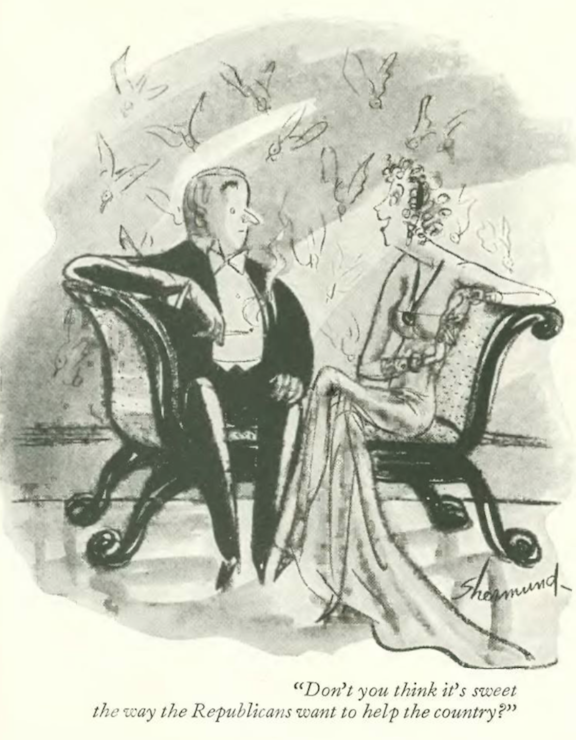
…Gardner Rea signaled the end to the 1933-34 Chicago World’s Fair…with a boom…
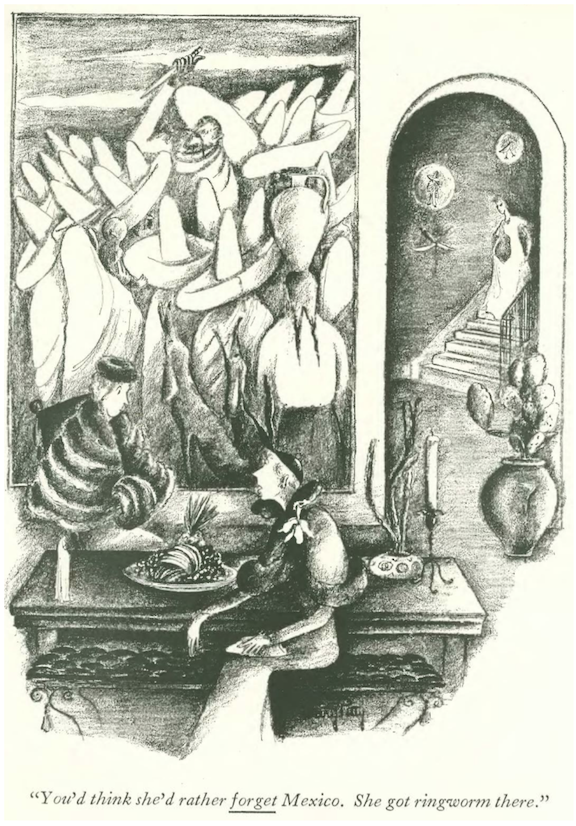
…Leonard Dove dialed up a familiar trope…
…and we close on a more pious note, with Mary Petty…