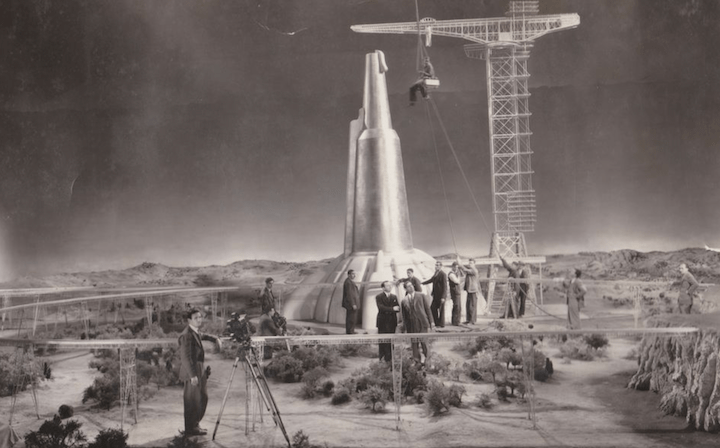
Above: Behind the scenes production photo of the space gun used to launch a manned projectile to the moon in Things to Come. (Instagram)
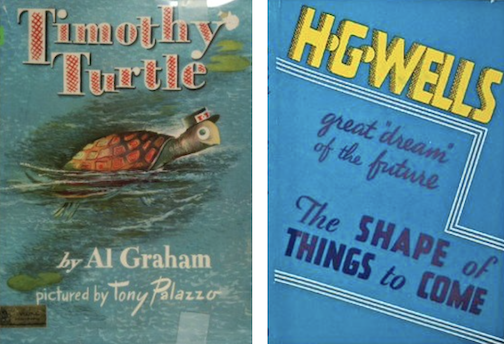
One of the most anticipated films of the 1930s was the British production of Things to Come. Loosely based on the 1933 science fiction novel by H.G. Wells, The Shape of Things to Come, the film was an extraordinarily ambitious and expensive production featuring a huge cast and elaborate sets, both full-scale and in miniature.
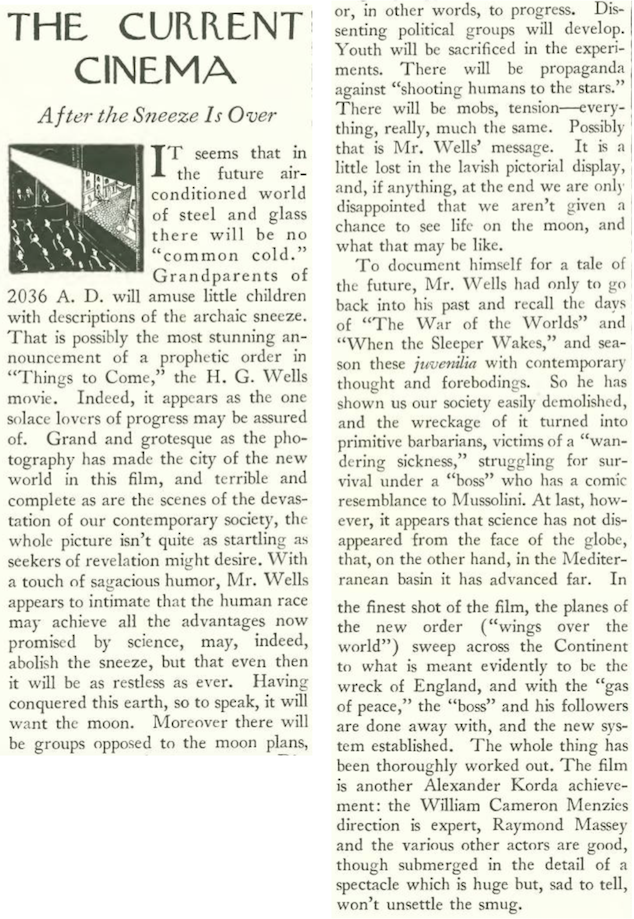
Critic John Mosher wasn’t quite sure what to make of Things to Come, seizing on the film’s promise to end the common cold.
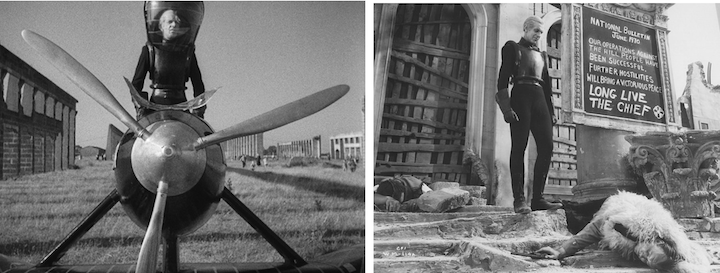
In a review for The Criterion Collection, Geoffrey O’Brien notes that the film’s shocking scenes of war were shown to an audience “in active denial, many of them, of the possibility of such things coming to pass in the near future.”
But an antiseptic city with a population made docile by a “Gas of Peace” didn’t appear to be something one would look forward to either. O’Brien points to Jorge Luis Borges’ remarks regarding Things to Come: “The heaven of Wells and Alexander Korda, like that of so many other eschatologists and set designers, is not much different than their hell, though even less charming.” Borges dismissed the notion that science and technology would be the rallying force against tyranny: “In 1936, the power of almost all tyrants arises from their control of technology.”
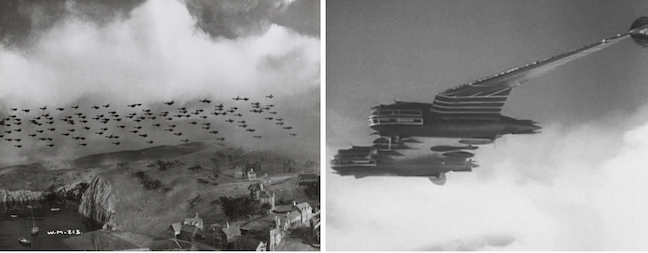
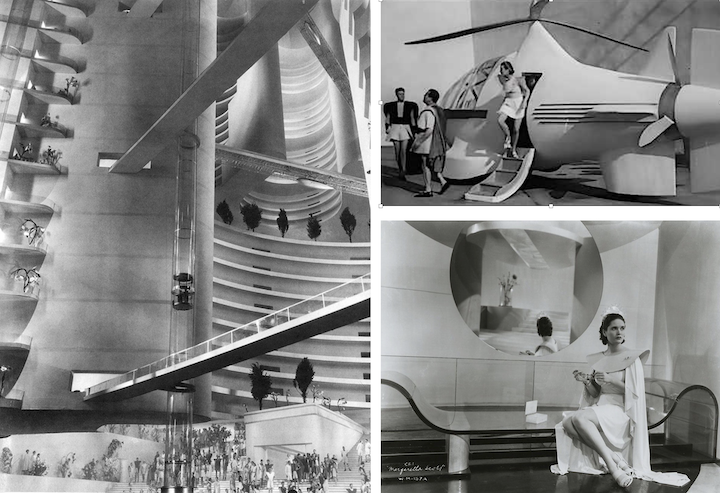
O’Brien concludes: “There is no way any audience, in the 1930s or now, would be likely to accept Raymond Massey’s Oswald Cabal as an empathetic spokesperson for the human race. He is essentially the chairman of the board of a quasi-fascist ruling elite—and not so very far from the idea that Wells, at best ambivalent about democracy, in fact had in mind.”
In all fairness, I should note that Massey did not like his character’s “heavy-handed speeches” that lacked human emotion. He complained H.G. Wells prioritized cold scientific ideals over personal character depth. “For heart interest, Mr. Wells hands you an electric switch,” Massey stated.
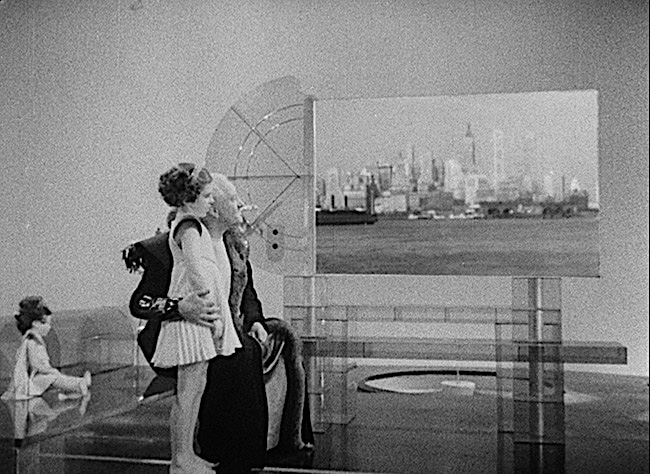

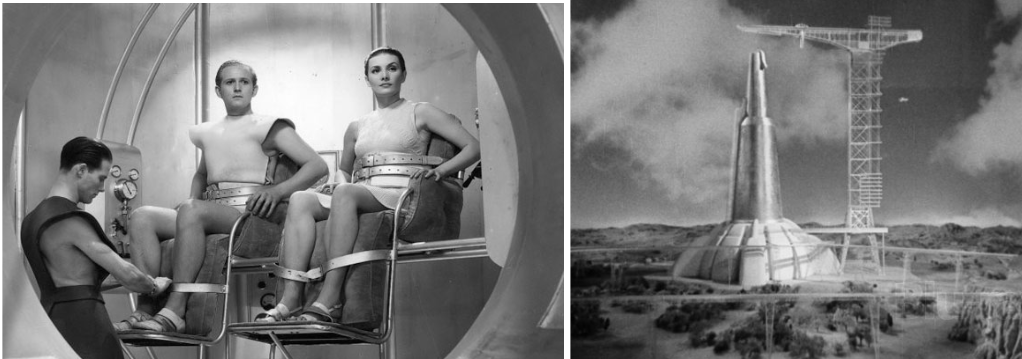
Interestingly, Raymond Massey (1896–1983) and most of the film’s cast would live to see an actual moon landing in just 33 years. Most of them would also be involved in some way in the Second World War, Massey being wounded as part of the Canadian regiment.
You can watch the whole film (colorized) on YouTube.
* * *
Another Viewpoint
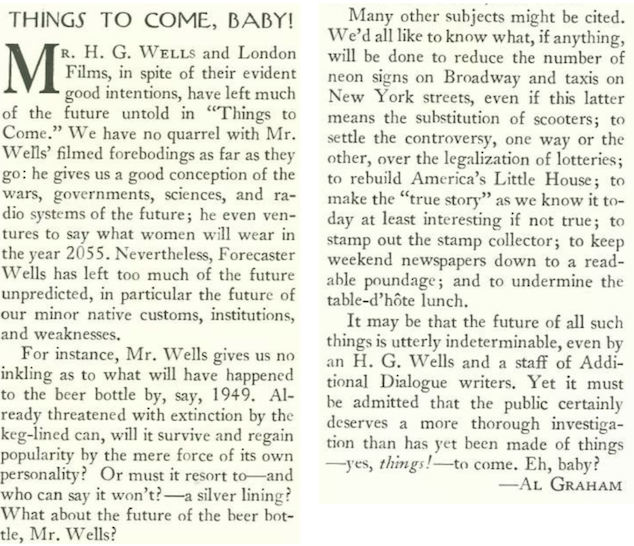
American writer and editor Al Graham (1905–1972), who contributed a number of poems and “Talk of the Town” pieces to The New Yorker in the Thirties and Forties, offered some thoughts regarding Things to Come. Here are excerpts of the first and last parts of his piece:
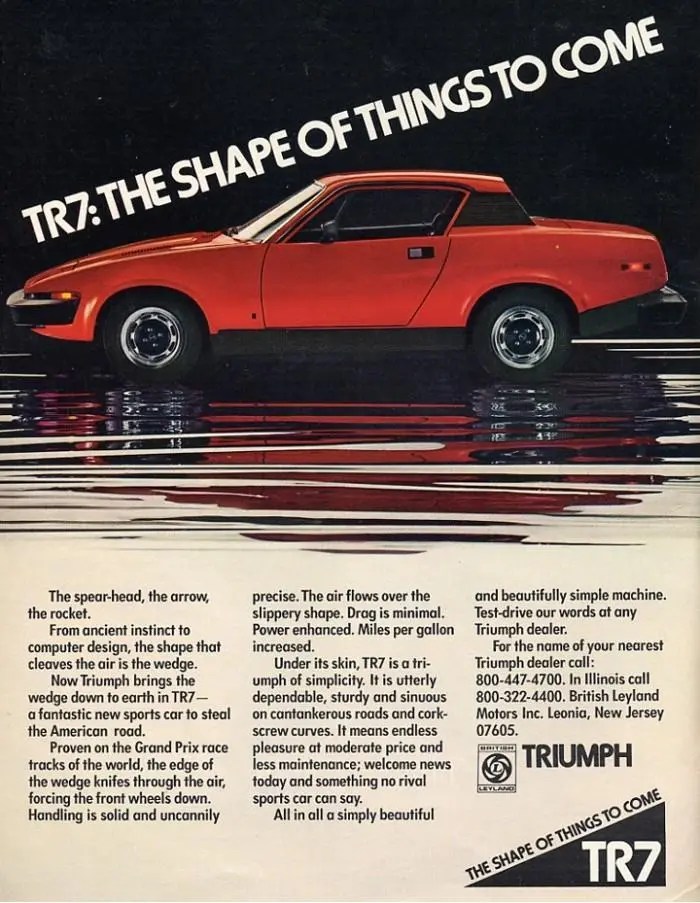
Incidentally, the British automaker Triumph used Wells’ title in a 1970s ad campaign for the TR-7…
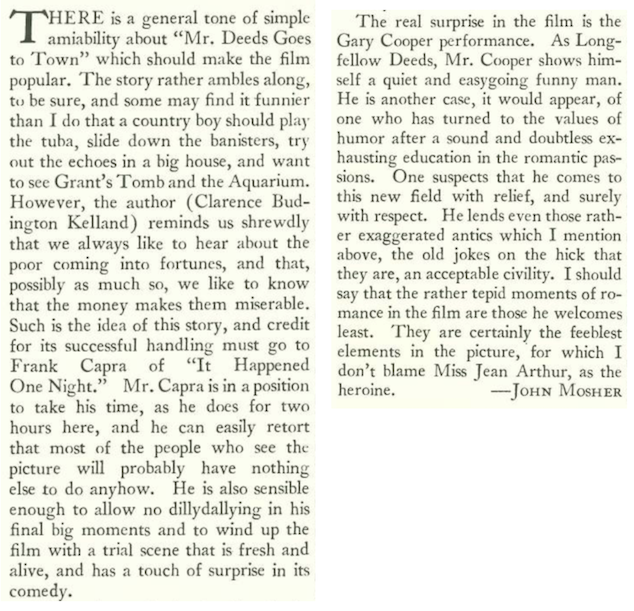
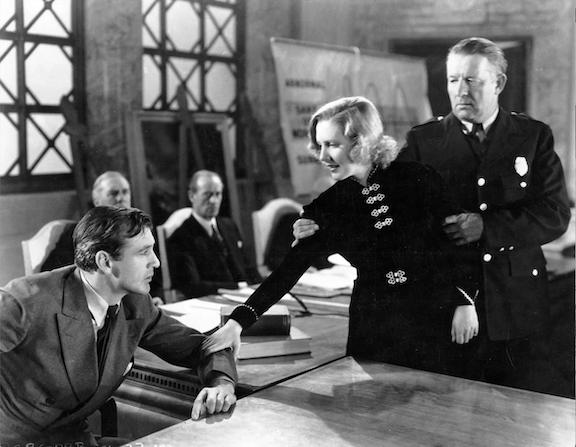
While we are talking movies, Mosher also reviewed Frank Capra’s Mr. Deeds Goes to Town. Films such as Mr. Deeds and It’s a Wonderful Life were Capra’s “love letters to an idealized America—a cinematic landscape of his own invention,” wrote social critic Morris Dickstein. Or as actor/director John Cassavetes once observed: “Maybe there really wasn’t an America, it was only Frank Capra.” Whatever it was, Mr. Deeds would win Capra his second Oscar for Best Director (he would win three in all, plus a fourth for a World War II documentary).
* * *
Ah-Choo!
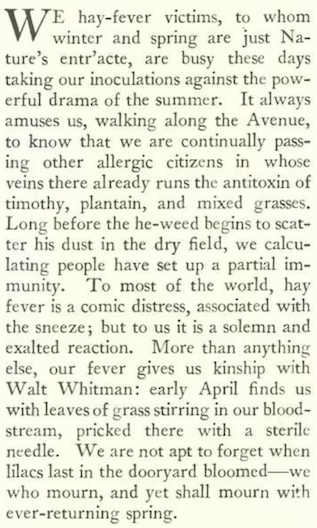
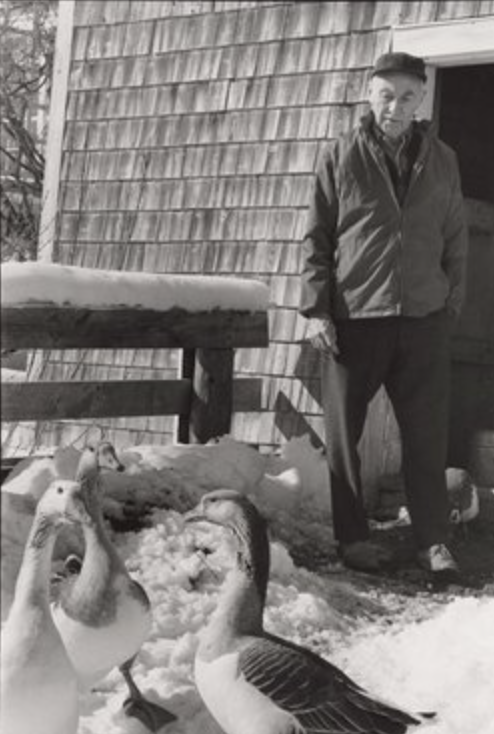
Those familiar with E.B. White’s writings are likely also familiar with his lifelong struggle with hay fever, or “catarrh” as it was also referred to in those days. White notably wrote about his condition in a 1938 New Yorker essay, “Daniel Webster, the Hay Fever, and Me.” He addresses the malady in his April 25, 1936 “Notes and Comment” column:
One of the more common and effective treatments for allergies in the Thirties was the benzedrine inhaler. The active ingredient was amphetamine. It was safe if inhaled, however some folks got the idea to crack open the inhaler and swallow the contents, which would induce a mind-altering effect (the amount of amphetamine in the inhaler was 250 milligrams, much greater than the five or ten milligrams in tablets prescribed for depression).

* * *
Before the Internet
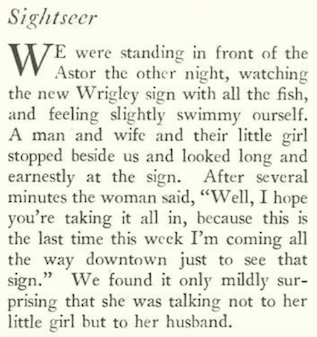
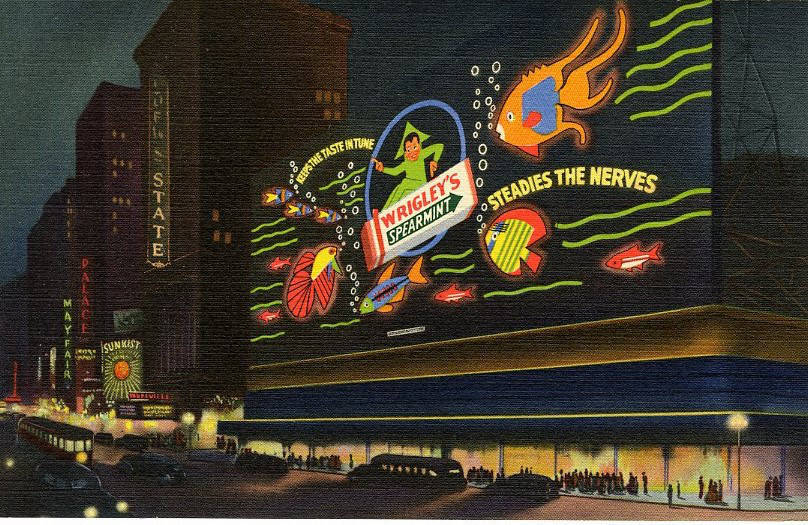
What did some folks do in the evening before modern-day distractions? According to “The Talk of the Town,” at least one man and his family loved to gawk at the new Wrigley sign in Times Square.
* * *
From Our Advertisers
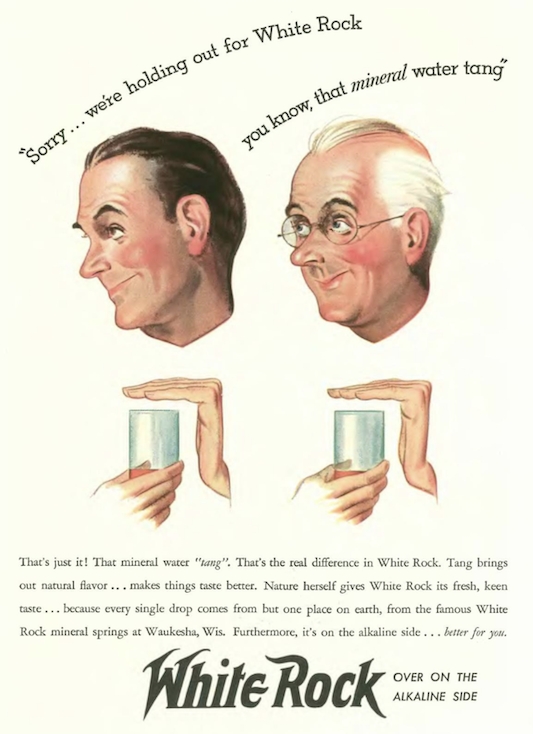
White Rock continued its series of brightly illustrated ads, this most likely the work of noted illustrator John Holmgren…
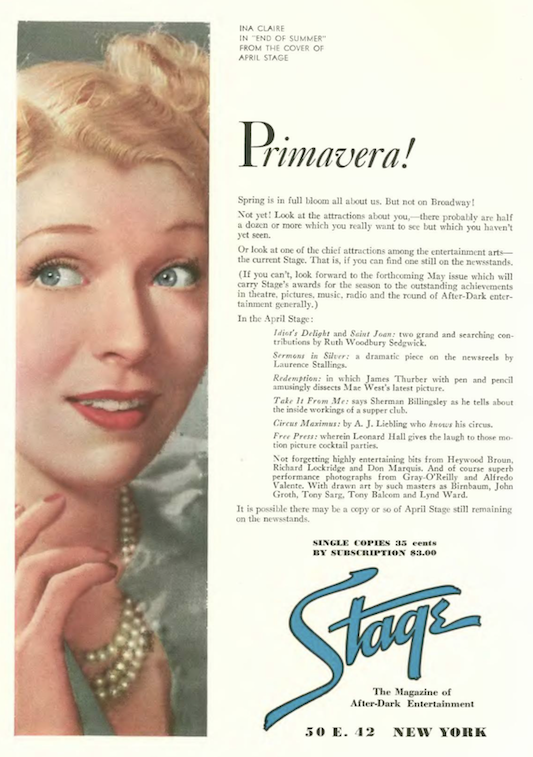
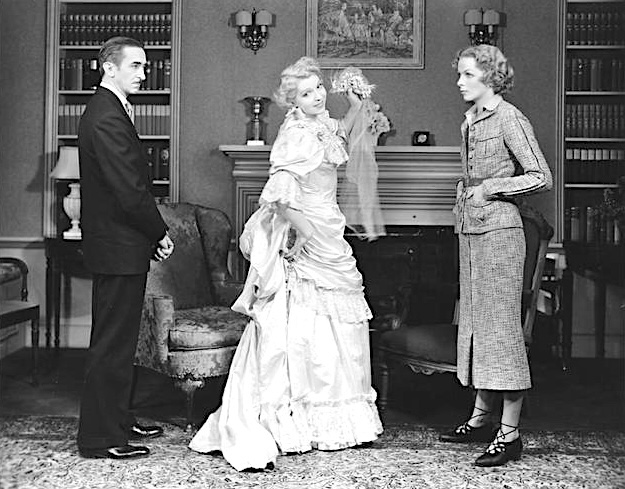
…Stage magazine continued to promote its star-studded content in full-page color ads…this one featured American stage and film actress Ina Claire…
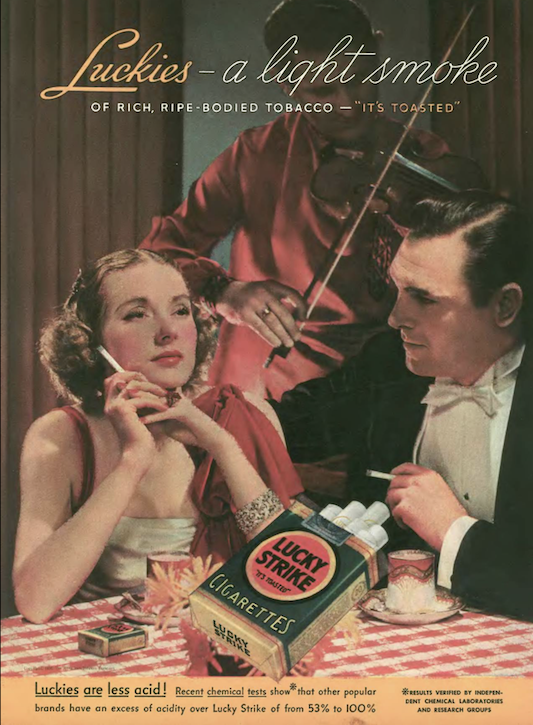
…ah, the pleasure of an after-dinner Lucky back in the day when you could still smoke indoors…
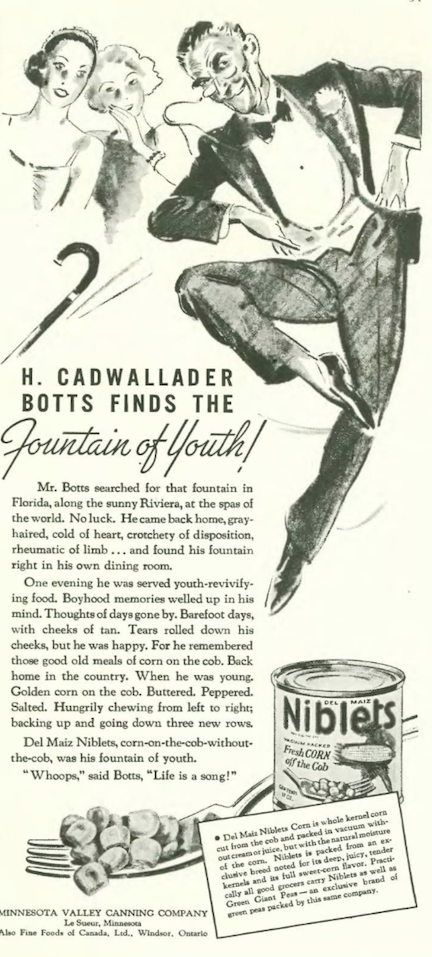
…another ad for Green Giant Niblets featuring a rich old toff who’s just over the moon about canned corn…
…these surreal Lyse Darcy ads for Guerlain really stood out in the magazine…

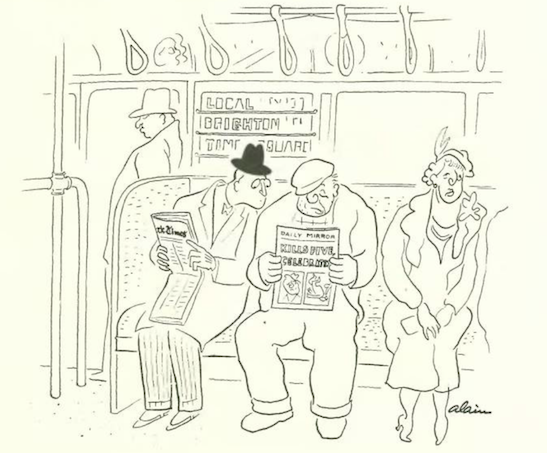
…speaking of standing out, who could resist the distraction of a tabloid, especially with the Gray Lady folded in one’s lap?…Alain illustrates…
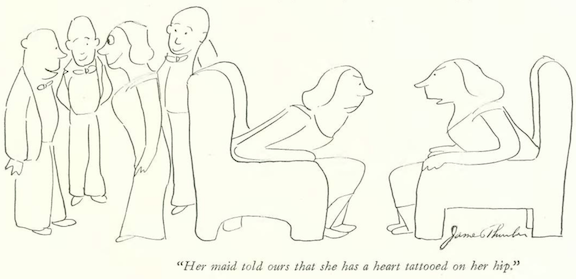
…and per James Thurber, who was immune to the charms of a woman with a heart tattooed on her hip?…
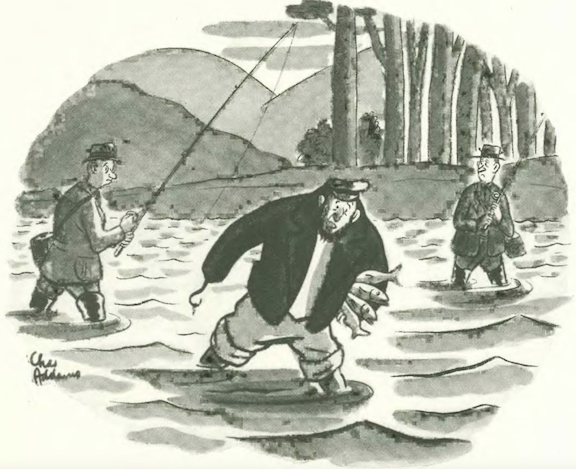
…Charles Addams showed us a man with a built-in fishing advantage…
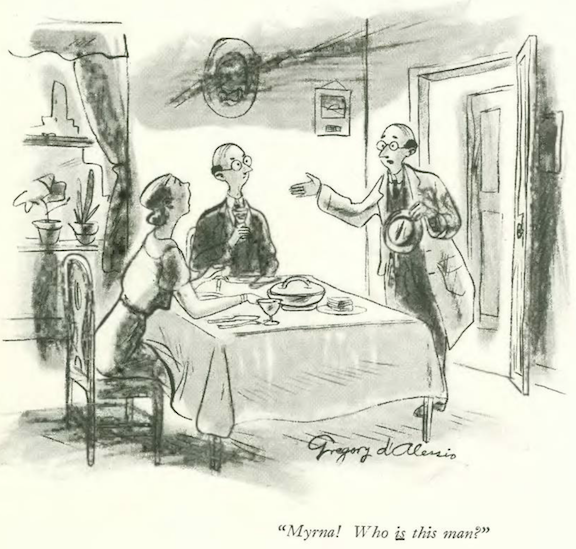
…Gregory d’Alessio gave us an understandable marital mix-up…
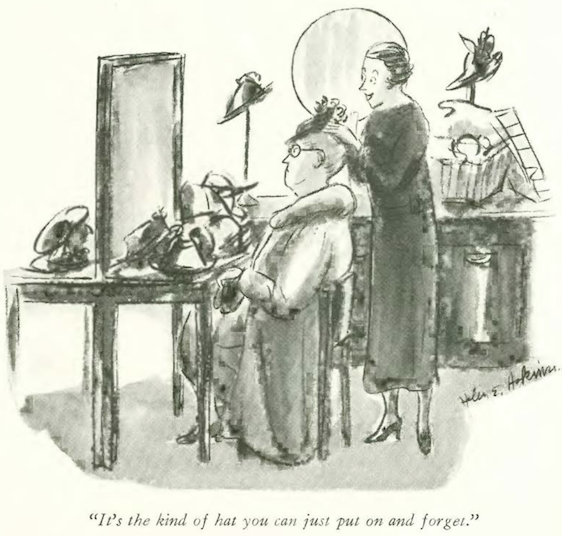
…Helen Hokinson offered a dose of “meh” in the hat department…
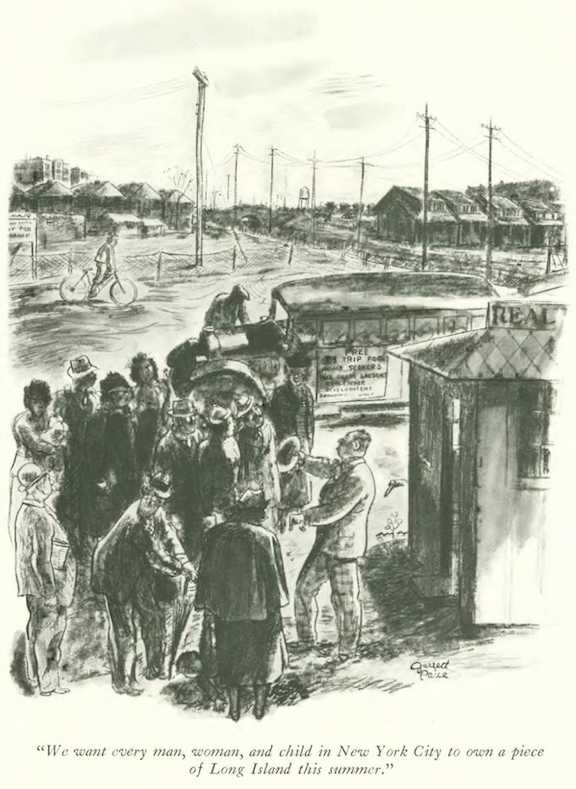
…Garrett Price showed us the consequences of Robert Moses’s transformation of Long Island from a rural area for the rich into a suburban landscape for the hoi polloi…
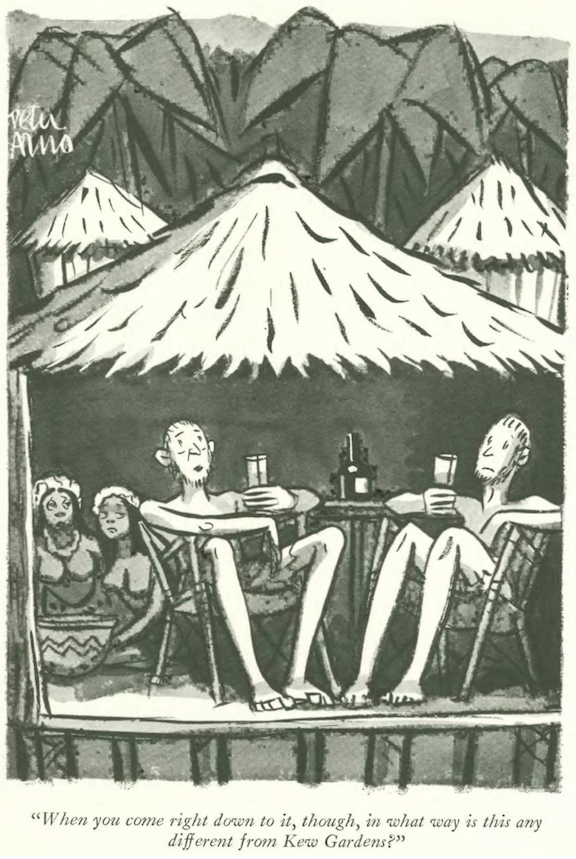
…and we close with Peter Arno, who wondered what’s the fun of drinking in the tropics when you can do the same thing in Queens?…
Next Time: Safari Under Glass…