Like many publications, there are defining moments in the New Yorker’s history that make the magazine what it is today.
December 8, 1928 cover by Peter Arno.
In a post more than two years ago I wrote about Ellin Mackay’s pivotal essay, “Why We Go To Cabarets: A Post-Debutante Explains.” The debutante daughter of a multi-millionaire (who threatened to disinherit her due to her romance with Irving Berlin), Mackay explained that modern women were abandoning social matchmaking in favor of the more egalitarian night club scene. Mackay’s essay provided a huge boost to the struggling New Yorker, which had dipped to less than 3,000 subscribers in August 1925. A more recent post, “A Bird’s Eye View,” noted how a short story by Thyra Samter Winslow opened the door to serious fiction in the magazine.
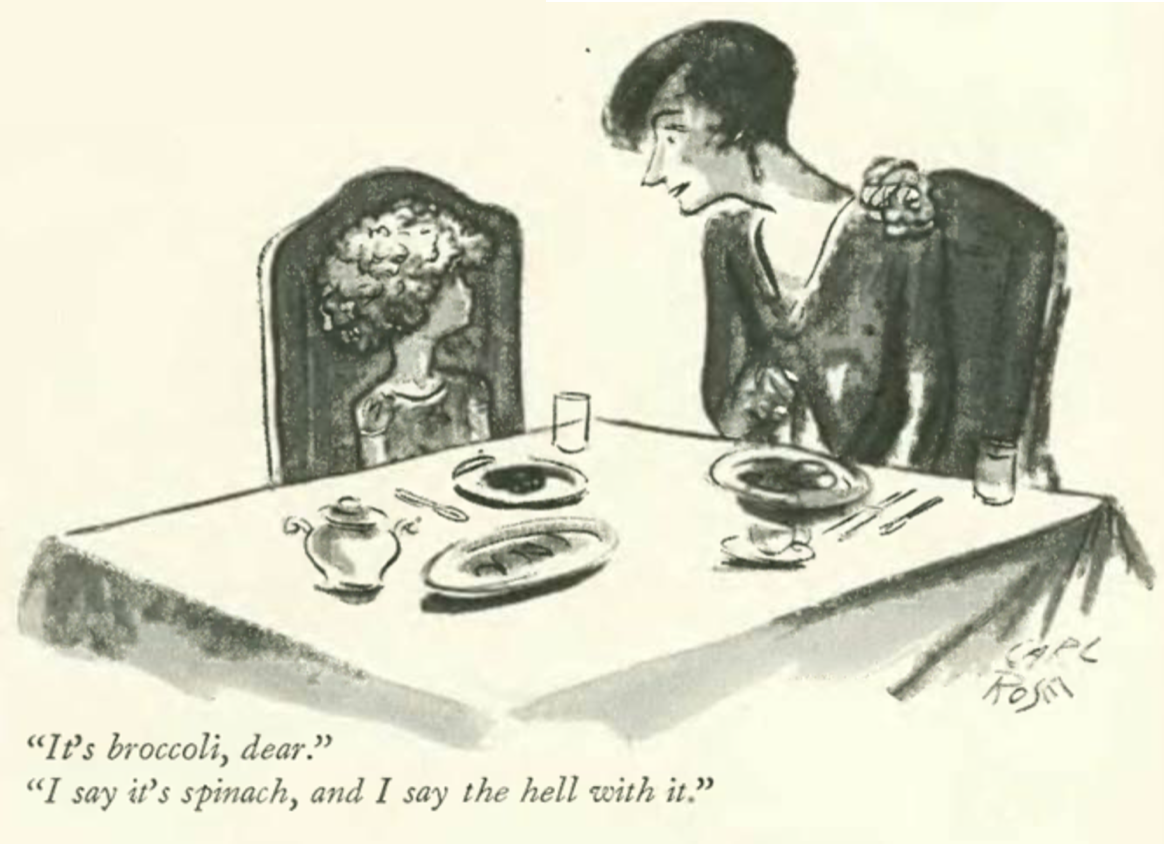
The Dec. 8, 1928 issue was significant for a cartoon by Carl Rose that appeared on the bottom of page 27:
It remains one of The New Yorker’s most famous cartoons, and for good reason. In his book About Town: The New Yorker and the World It Made, Ben Yagoda writes that the cartoon (drawn by Rose, with spinach line provided by E.B. White) “was picking up on something in the culture: it was a moment when the air reverberated with the sound of speech.” Yagoda notes that although “the cartoons led the way,” the magazine has always been filled with the sound of voices in “The Talk of the Town.” Naturalistic rendering of speech could also be found under the heading of such features as “Overheard,” which ran from 1927-1929 and included such contributors as the young writer John O’Hara.
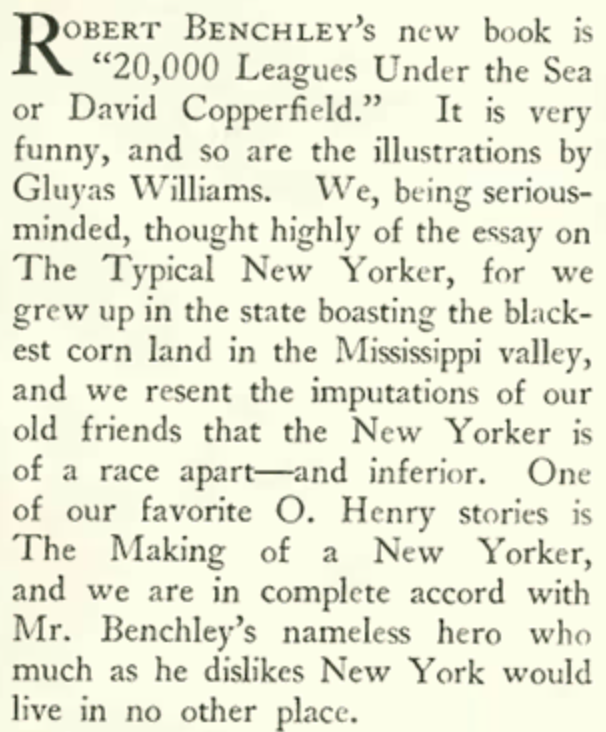
Another New Yorker contributor whose work resounded with the sound of speech, Robert Benchley, received some kind words from the magazine on his latest book, Twenty Thousand Leagues Under the Sea or David Copperfield:
DON’T BE SERIOUS…Robert Benchley and his book, 20,000 Leagues Under the Sea or David Copperfield, illustrated by his New Yorker colleague Gluyas Williams. The cover depicted Benchley performing his famous sketch, The Treasurer’s Report. (Goodreads/bio.com)
* * *
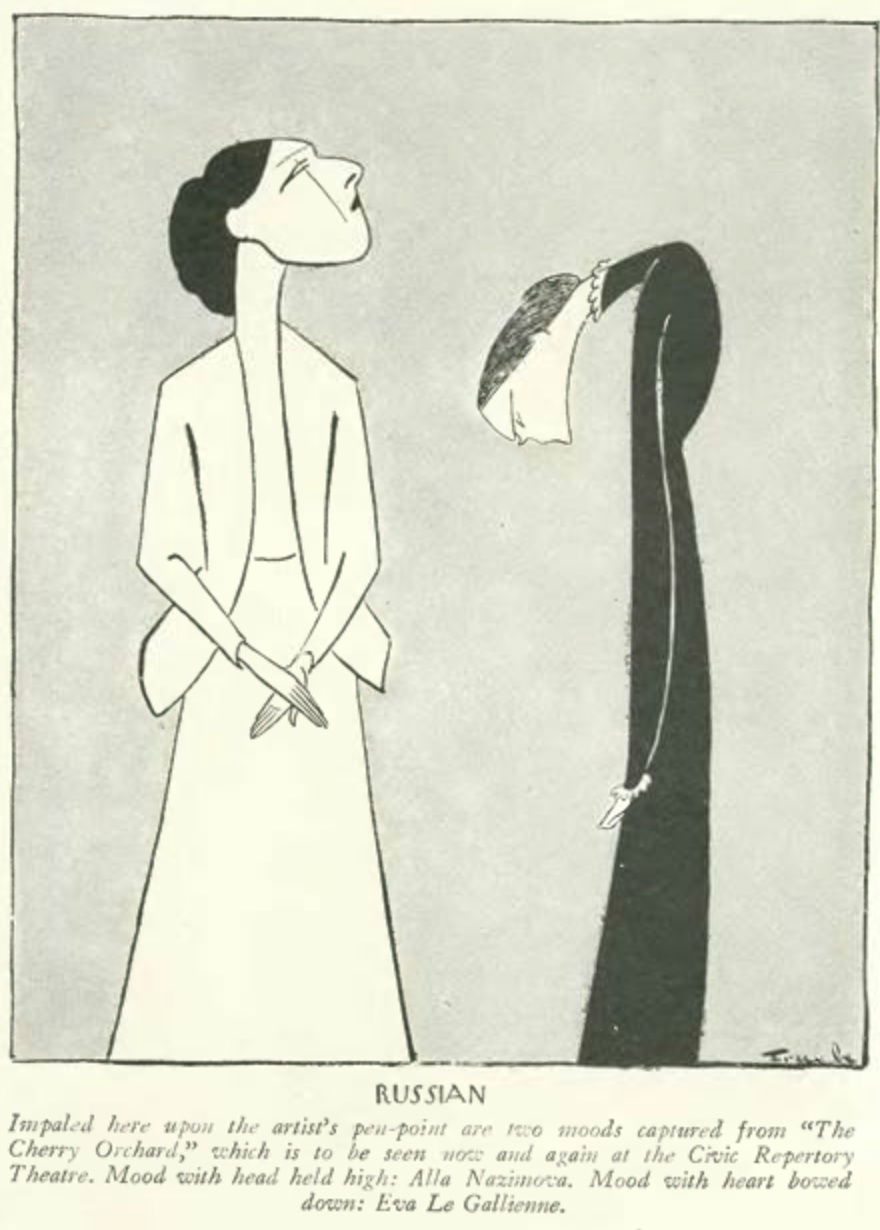
Appearing at the Civic Repertory Theatre (founded by actress Eva Le Gallienne in 1926) was Alla Nazimova and Eva herself in Anton Chekov’s last play, The Cherry Orchard.Al Frueh offered this sketch for the theatre review section.
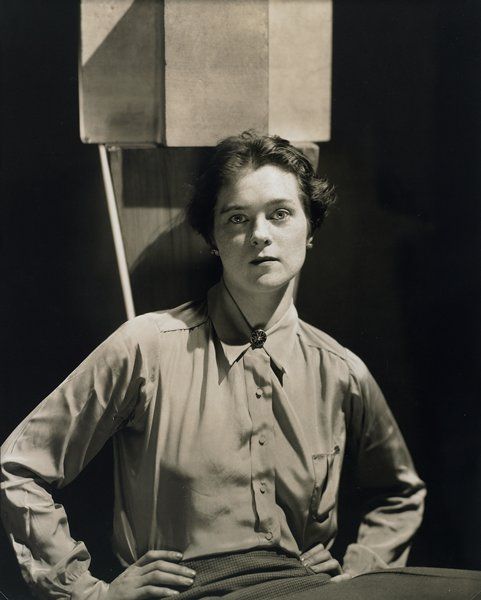
Josephine Hutchinson as Anya, Alla Nazimova as Ranevskaya, and Paul Leyssac as Gayev in Anton Chekov’s last play, The Cherry Orchard, at the Civic Repertory Theatre in 1928. (eBay)TOUR DE FORCE…Eva Le Gallienne in 1928, photo by Edward Steichen. (Minneapolis Institute of Art)
* * *
From Our Advertisers
Advertisements from the Dec. 8 issue offered this study in contrasts…a “modern” take on the holidays by Wanamaker’s, featuring the unfortunately titled “Psycho-Gifts for Christmas”…
…versus the staid offerings of Brooks Brothers on the following page…
* * *
On to the Dec. 15 issue, we find The New Yorker enjoying the debut of the Ziegfeld Follies latest revue…
December 15, 1928 — issue number 200 — cover by Julian de Miskey.
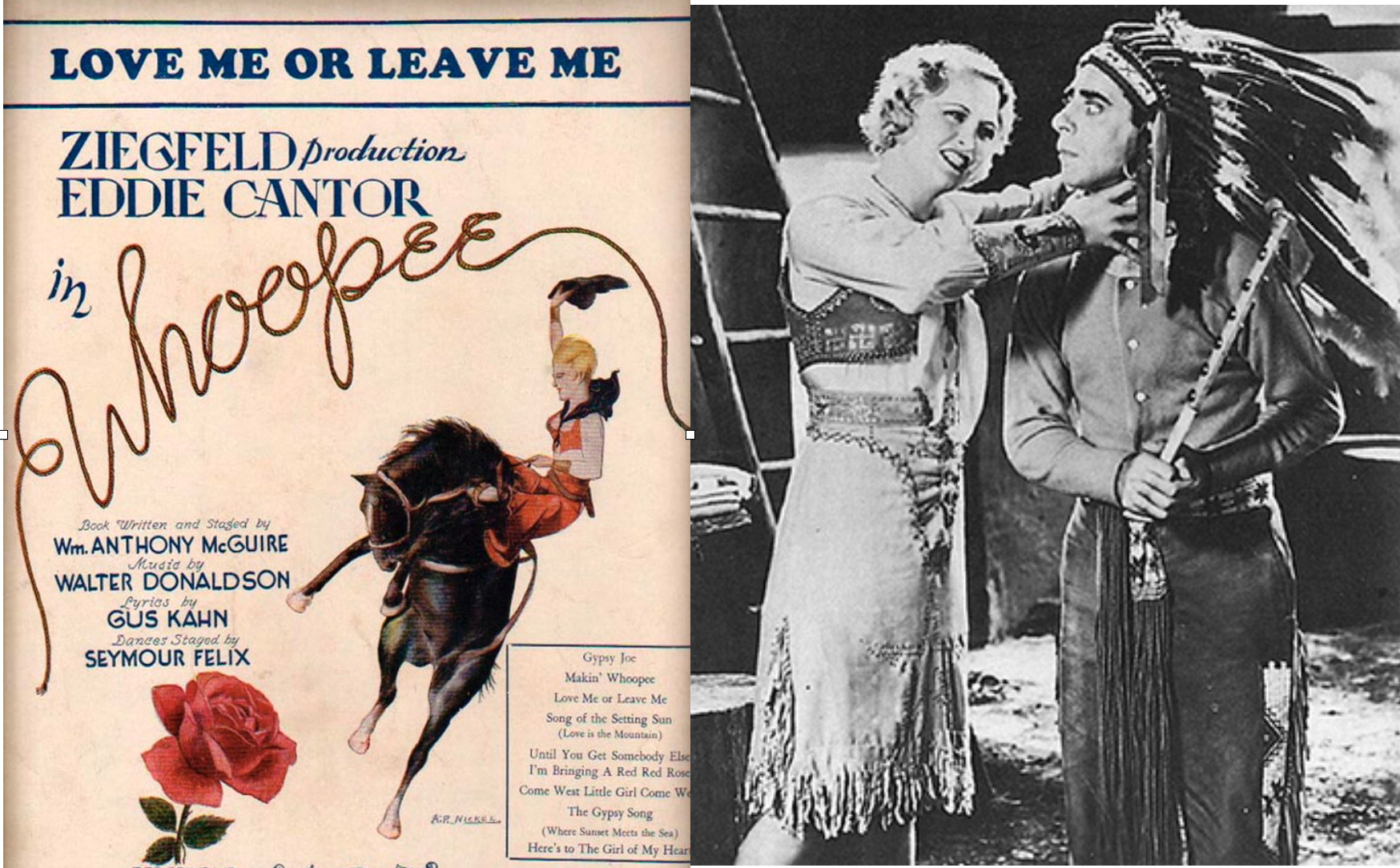
…the show “Whoopee” at the New Amsterdam, featuring Eddie Cantor:
HIT MAKER…Sheet music for the hit “Love Me Or Leave Me” from the Ziegfeld Follies show Whoopee. At right, a still from the 1930 film Whoopee!, with Eleanor Hunt and Eddie Cantor. (carensclassiccinema/thejumpingfrog.com)
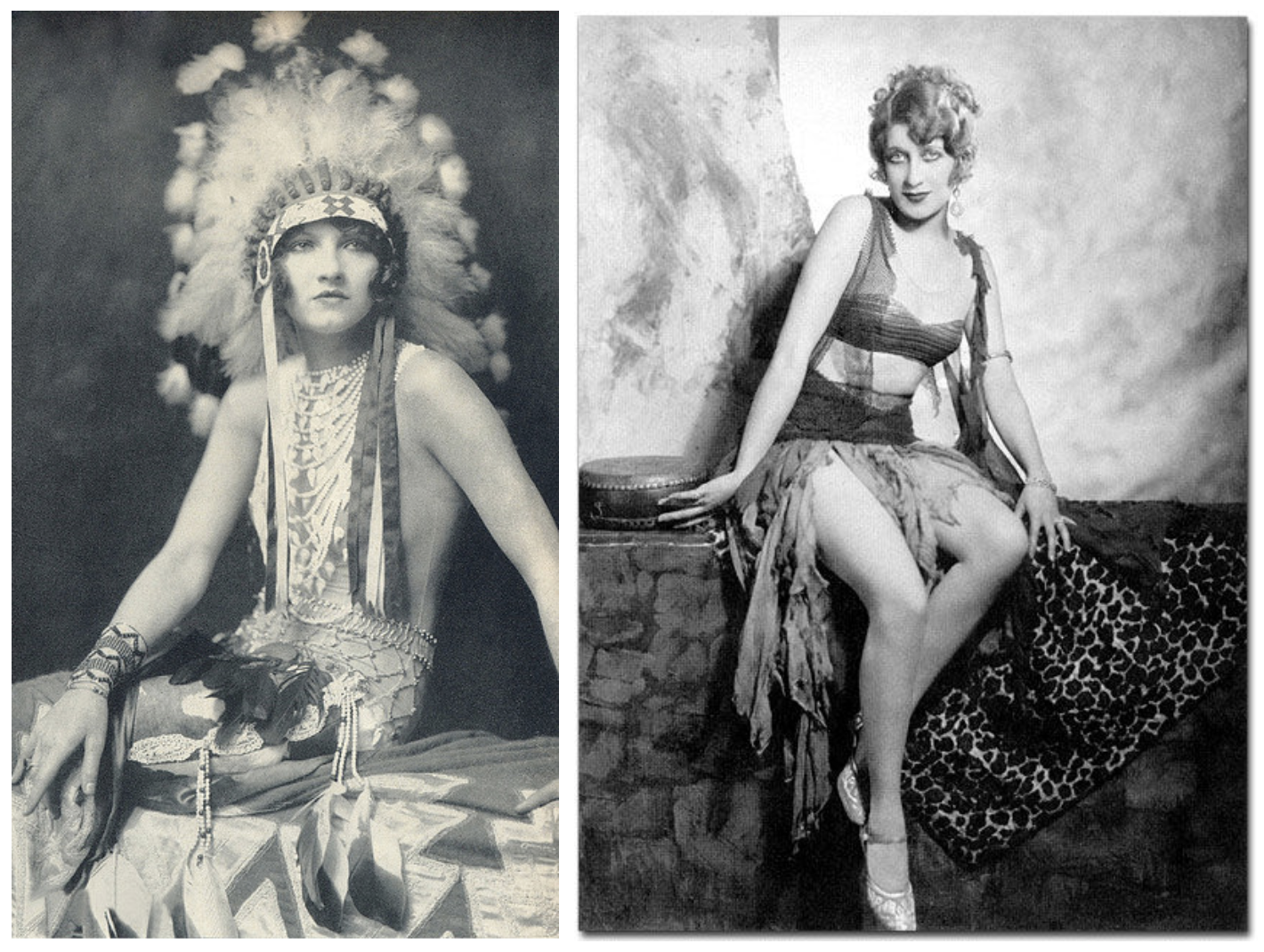
And lest you think audiences were flocking to only see Eddie Cantor…
LAVISH, LAVISH!…At left, Ziegfeld Follies performer Jean Ackerman in Whoopee! At right, Ziegfeld performer Ruth Ettig’s rendition of “Love Me or Leave Me” in Whoopee made it a major hit as well as her signature song. (mote-historie.tumblr.com/Alfred Cheney Johnston photo via songbook1.wordpress.com)
* * *
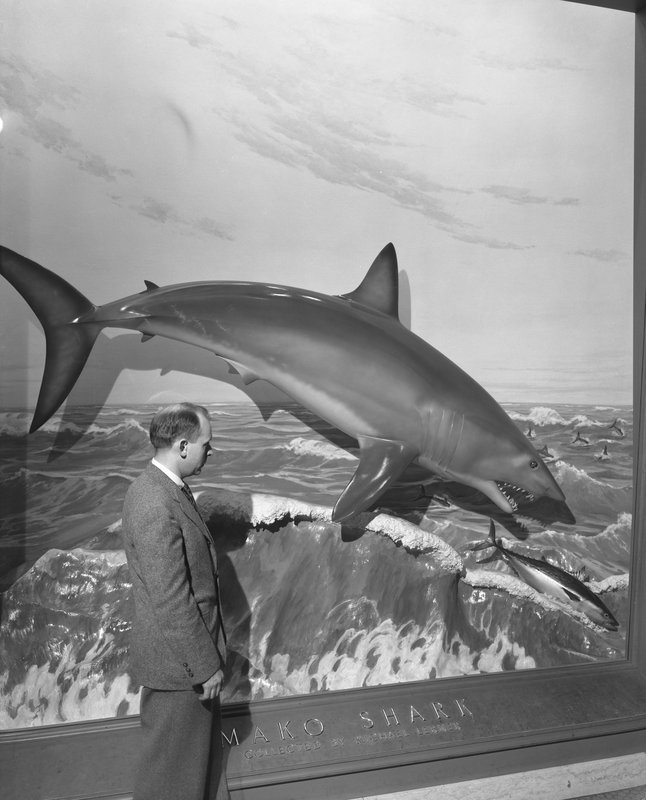
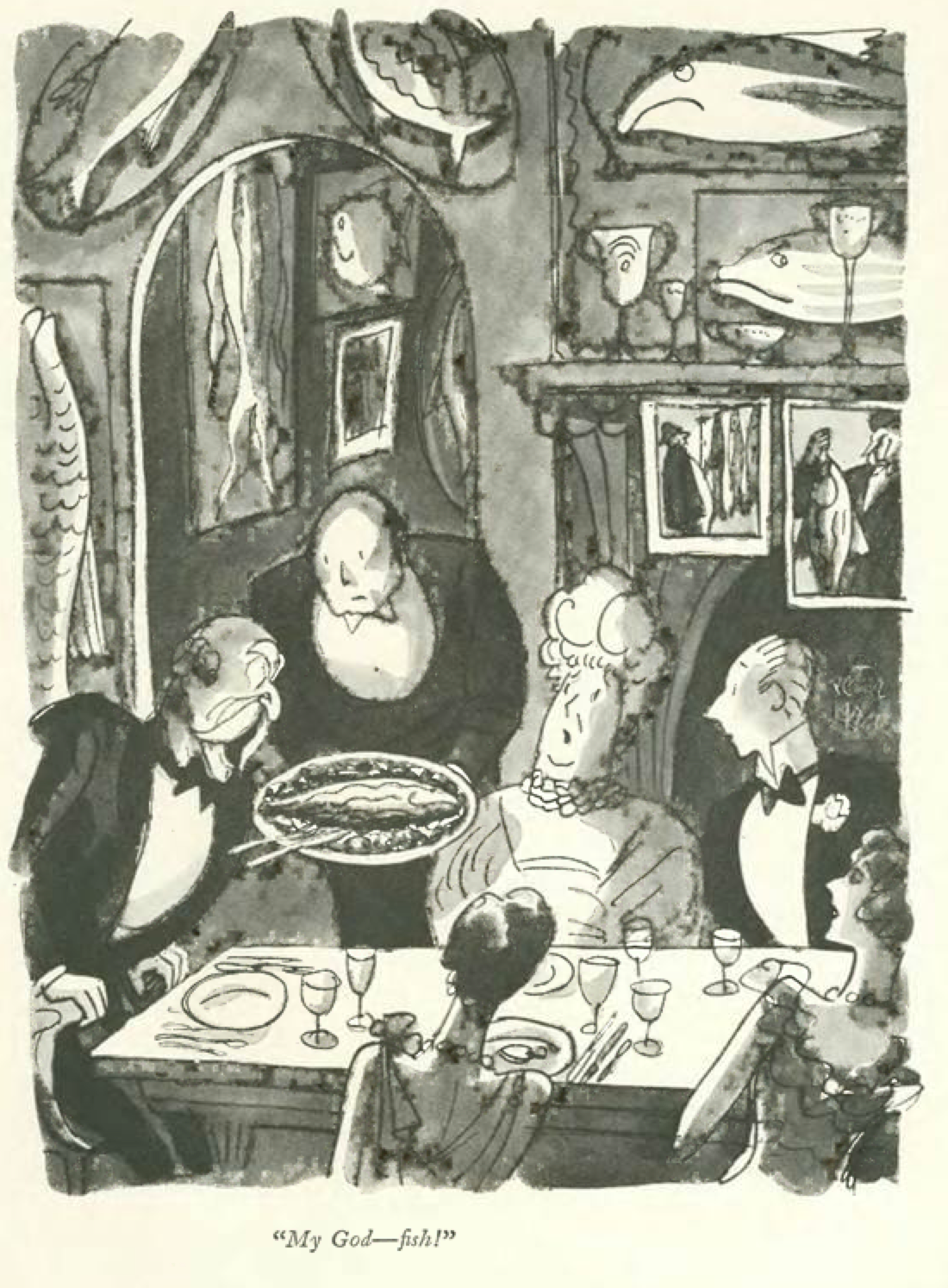
On to less glamorous pursuits, The New Yorker also paid a visit to the new “Fish Wing” at the Museum of Natural History, as recounted in “Talk of the Town.” A brief excerpt:
SWIMMING WITH THE FISHES…A visitor admires the mako shark exhibit at the Hall of Fishes in the American Museum of Natural History, 1948 (AMNH)
From Our Advertisers…
…comes this house ad from The New Yorker itself, promoting its first-ever Album:
Chris Wheeler has gathered all of the albums at this site.
Although the Roaring Twenties saw the relaxing of many moral strictures — particularly in major cities like New York — Mae West’s frank portrayals of sex on an off-Broadway stage could still create a stir in the newspapers and among arbiters of American probity.
Nov. 19, 1928 cover by Theodore G. Haupt.
Before she appeared in films (mostly in the 1930s) Mae West was well known to New Yorkers both in vaudeville and on Broadway. Her wider fame came in 1927, when many Americans read about her arrest on obscenity charges linked to a scandalous play simply titled Sex. A story of a Montreal prostitute, Sex opened at Daly’s 63rd Street Theatre on April 1926 to modest audiences and mostly scathing reviews. The New York Times, for example, called it a “crude and inept play, cheaply produced and poorly acted.” Perhaps because of the negative reviews, which mostly focused on the play’s morality, curious audiences flocked to see it. Ironically (at least, I imagine, to the critics), Sex was the only play on Broadway in 1926 to stay open through the summer and into the following year.
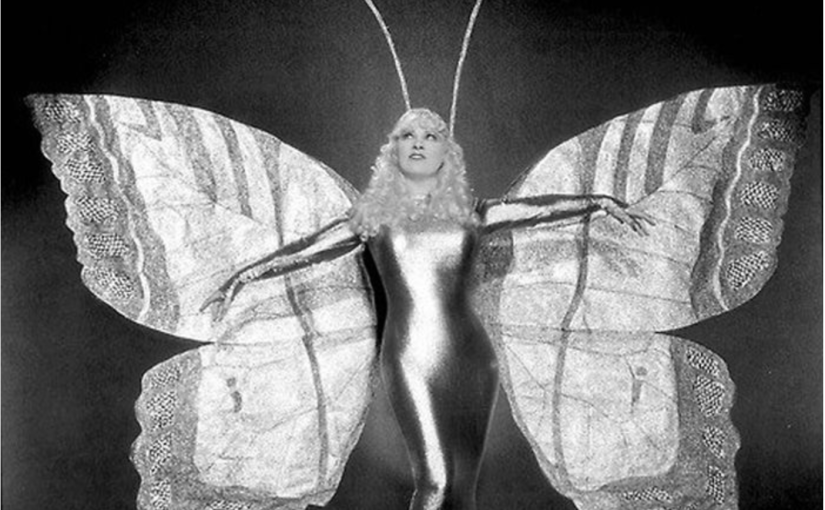
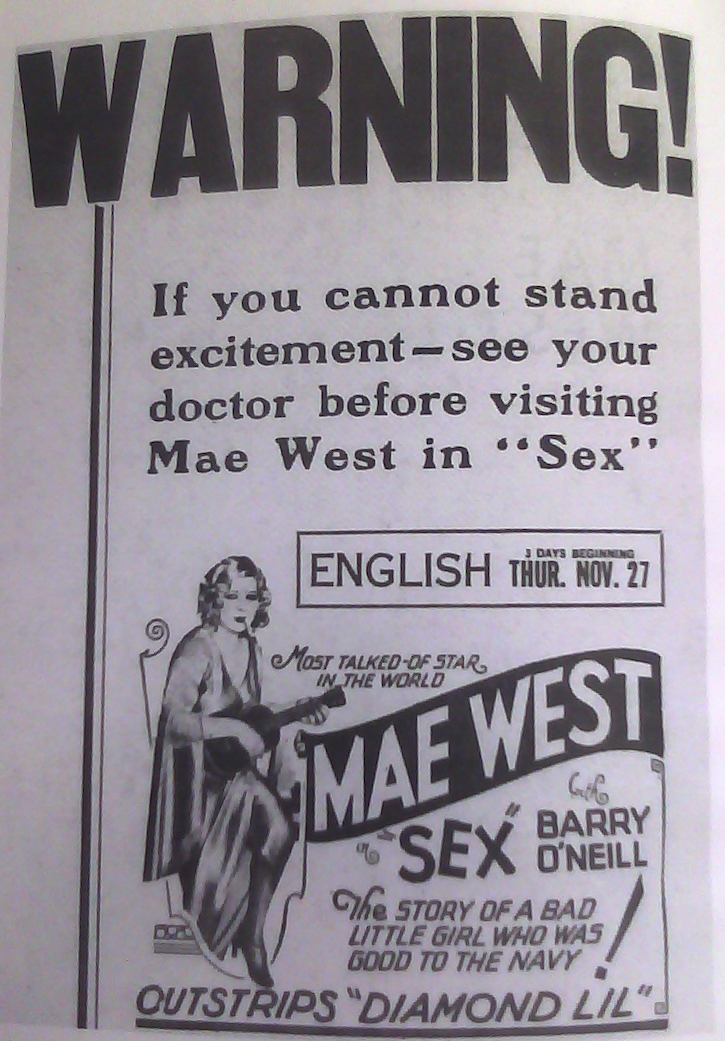
NOW THAT I HAVE YOUR ATTENTION…Mae West in a publicity photo from 1926. At right, promotional poster for Sex, which touted the play as the “Biggest Sensation Since The Armistice.” (maewest.blogspot.com/boweryboyshistory.com)
The fun ended when New York City police raided West’s production company in February 1927 and charged her with obscenity. In another ironic and hypocritical twist (many in the police department and in the city’s court system had enjoyed the play themselves, along with approximately 325,000 others during the play’s 10-month run), authorities fined West $500 and sentenced her to ten days in a workhouse on Welfare Island. Always the entrepreneur, West used the sentence to her advantage, and even arrived at the prison in a limousine. It was during her short stint in prison that she began work on her smash hit Diamond Lil.
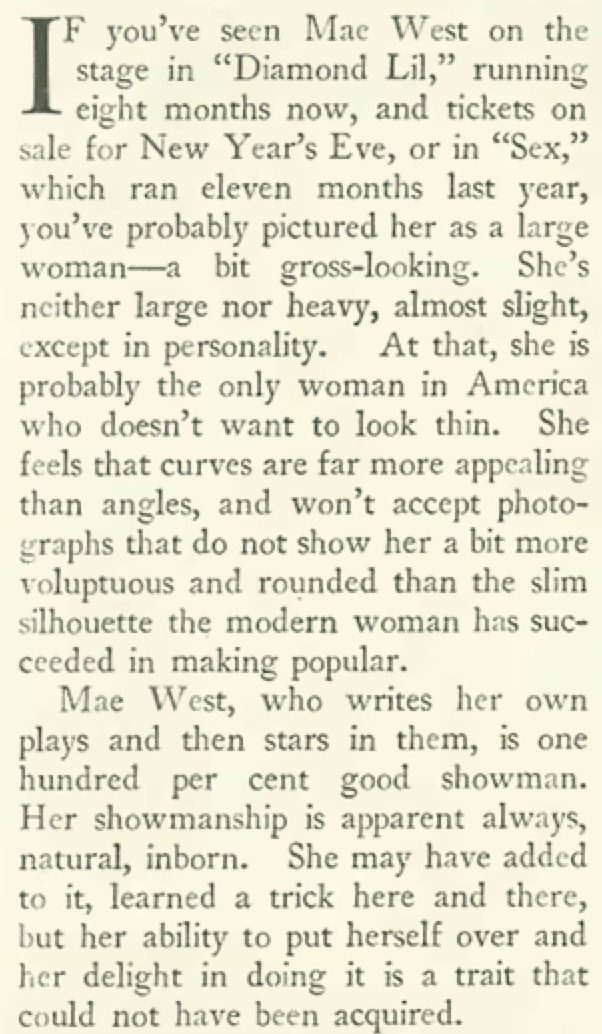
Thyra Samter Winslow, a writer who often exposed the hypocrisy and prejudice in American life in her short fiction, profiled West for the Nov. 10, 1928 issue:
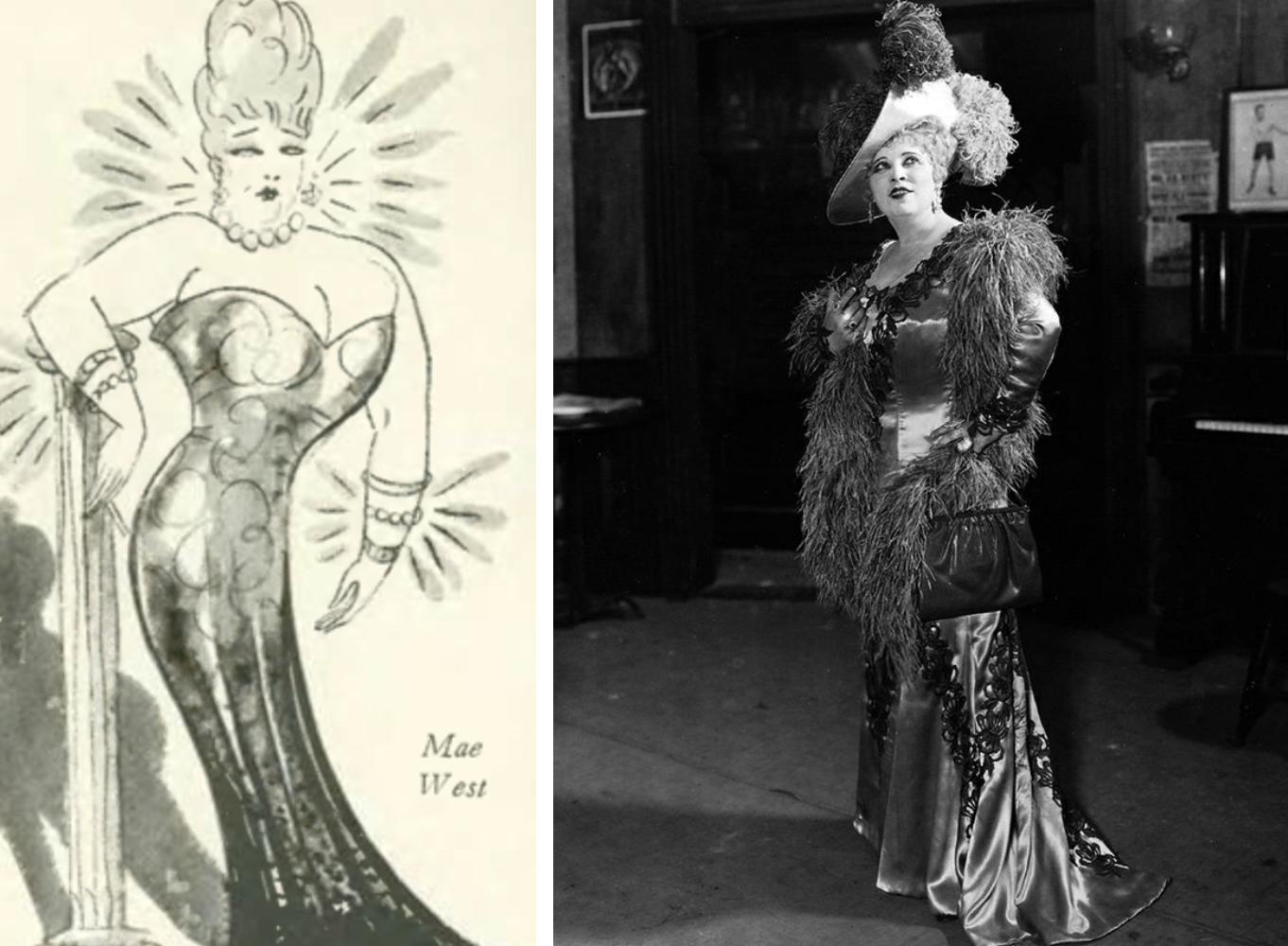
Note Winslow’s surprise to find West to be much smaller than she imagined (indeed, West barely stood five feet tall). Because West preferred a curvy, buxom figure to the thin flapper look, many like Winslow assumed her to be a much larger woman. No doubt her lavish costumes also suggested greater proportions:
West explained to Winslow that she was simply giving the people what they wanted, whether it was outlandish costumes or some “dirt” in their entertainments. Behind this facade, however, was a private, hard-working woman who wrote much of her own material and had the savvy to market it.
BE STILL MY HEART…Page from a 1926 Playbill. (New York Public Library, Shubert Archive)
In her profile, Winslow noted West’s marketing savvy during her incarceration, where she won many new friends along the way:
Winslow concluded her piece wondering if West had peaked in her success, and would “fade out” along with so many other vaudeville stars…
…. In less than seven years, West at age 42 would become Hollywood’s highest paid star and second only to William Randolph Hearst as the highest paid person in America. Ninety-two years after Sex, West remains an icon of popular culture around the world.
ALL THAT GLITTERS…Drawing of Mae West that accompanied the New Yorker profile. At right, publicity photo for Diamond Lil, 1928. (Playbill)
* * *
From Our Advertisers
The Nov. 10 issue featured this all American endorsement for Lucky Strike cigarettes from World Series winning pitcher Waite Hoyt…never mind that TheNew Yorker itself completely ignored the World Series and baseball in general.
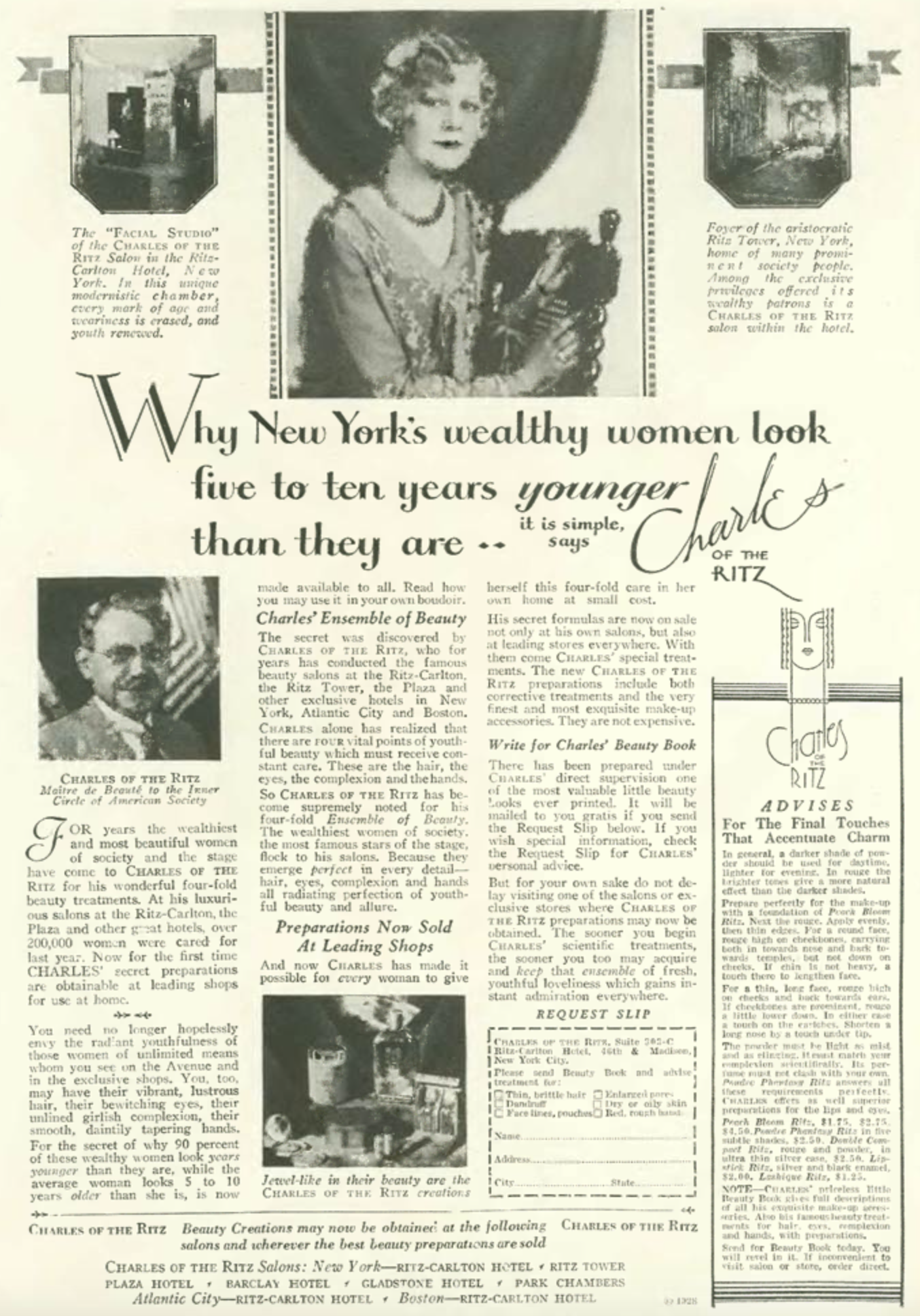
…and Charles of the Ritz used a combination of vanity, snob appeal and class anxiety to promote their latest beauty ensemble…
The comics glimpsed the foibles of the upper classes, including this terrific entry by 22-year-old Ben Hur Baz, a Mexico-born artist who would go on to become famous for his pin-ups in the 1940s and 50s, many of them appearing in Esquire:
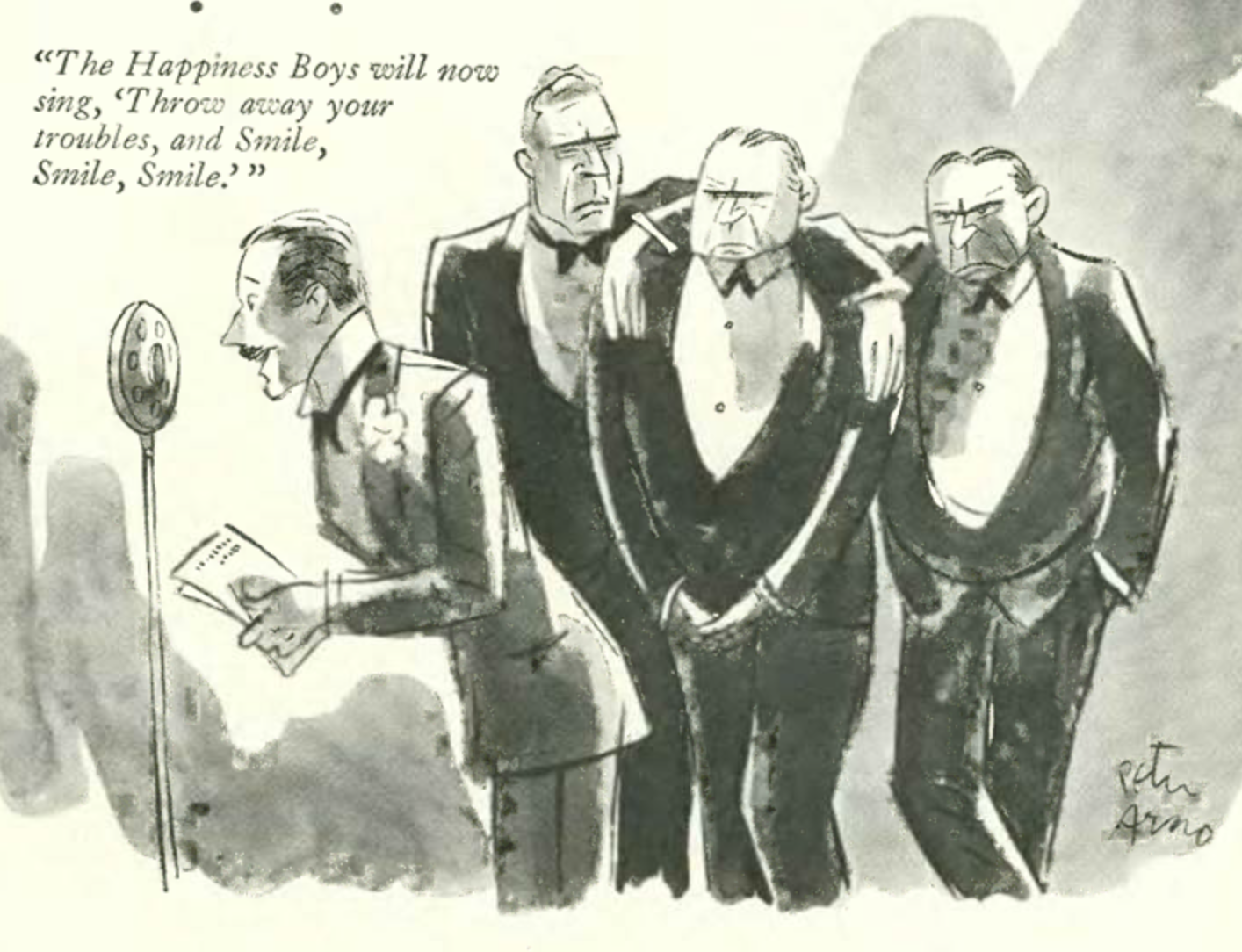
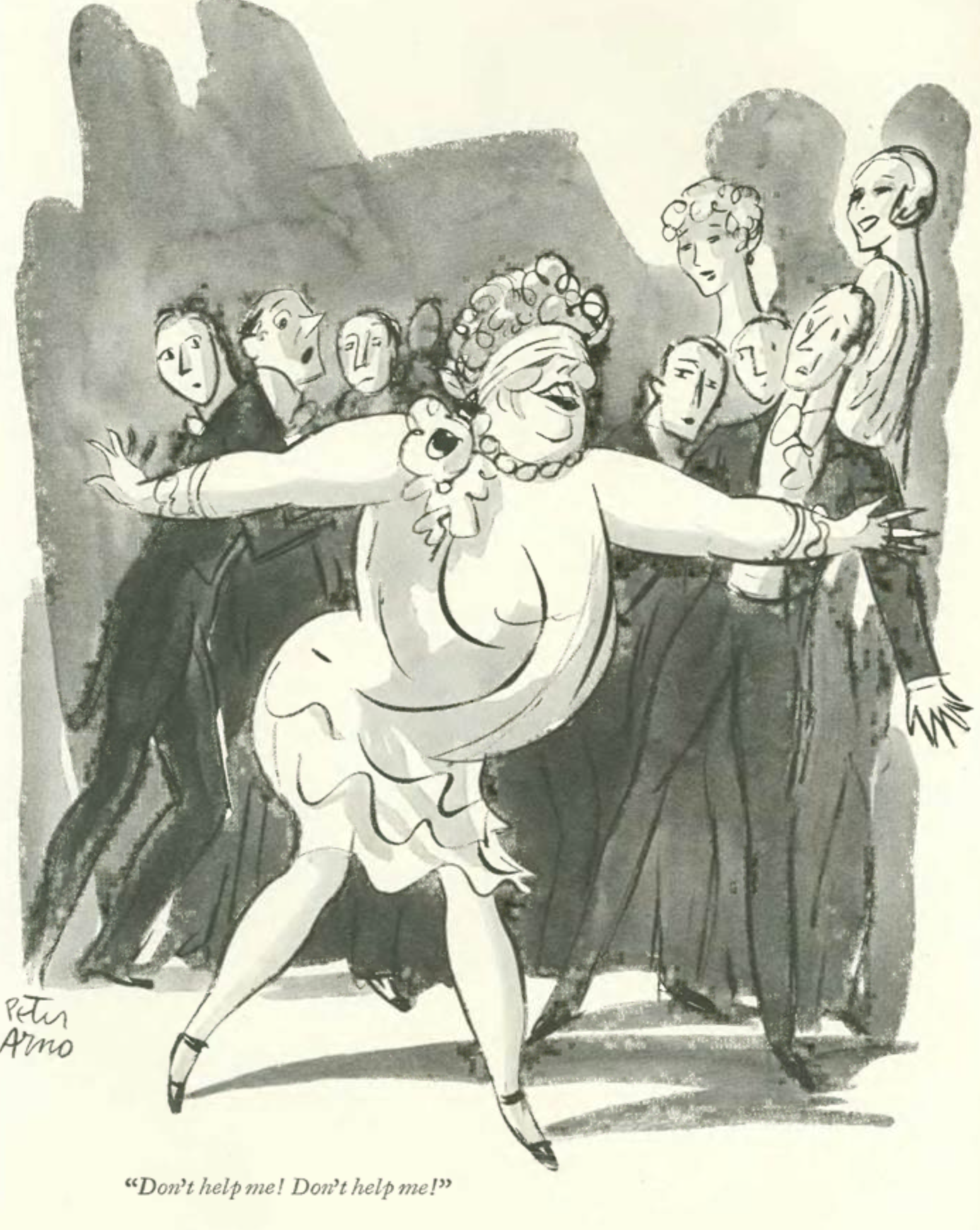
…and a game of blind man’s bluff (or some say ‘buff’) as rendered by Peter Arno:
* * *
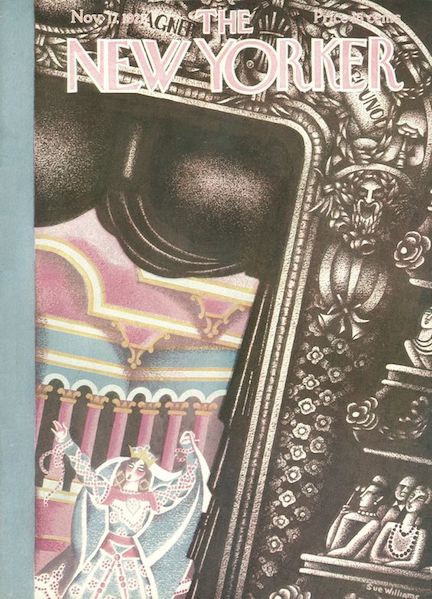
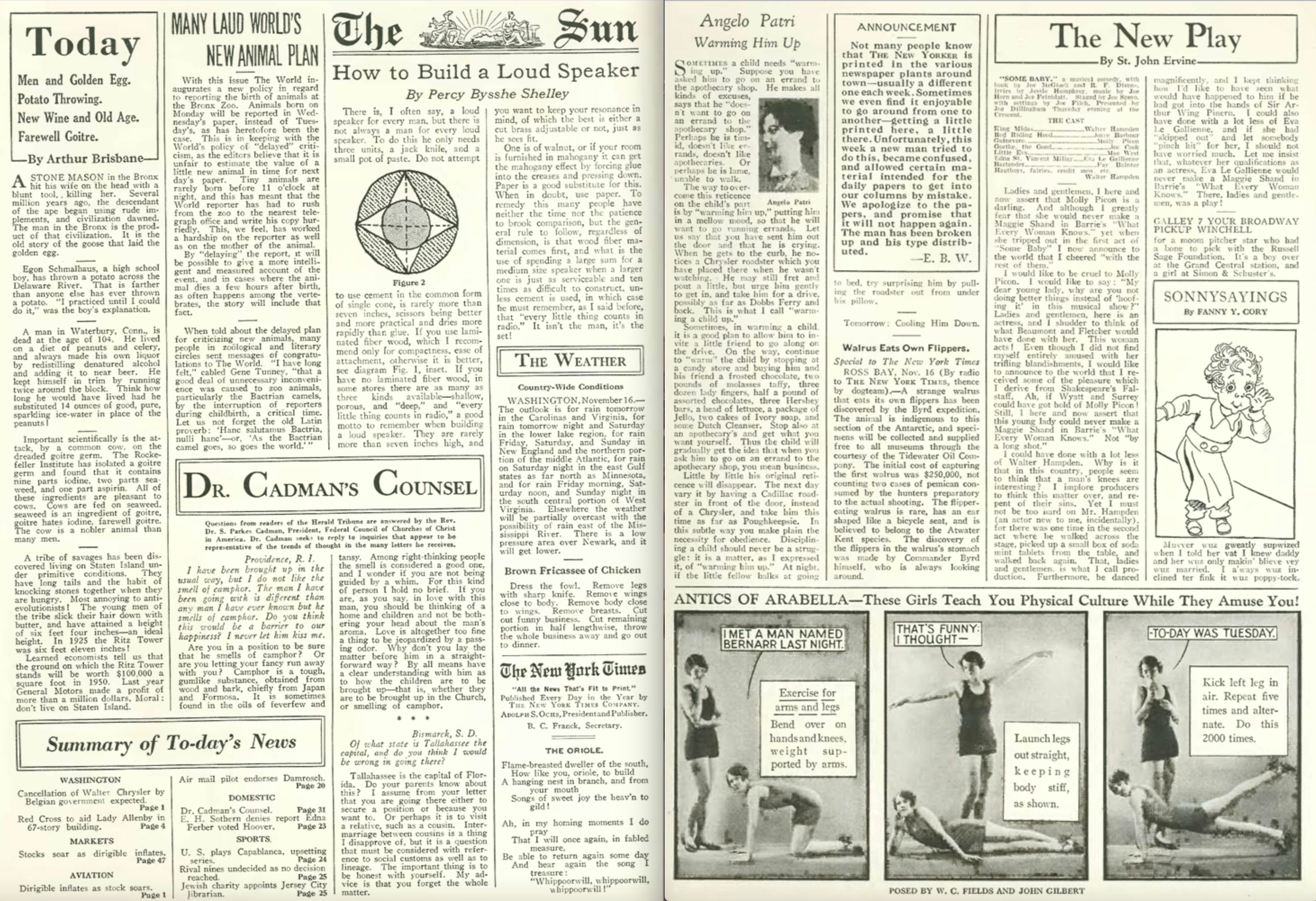
The Nov. 17 issue featured an unusual entry by E.B. White, who, like many of his New Yorker colleagues, found many reasons to be critical of the media, including the dumbing down of newspapers that increasingly favored trivia, sensation and promotion over serious discourse.
Nov. 17, 1928 cover by Sue Williams.
White skewered the news of the day in this two-page spread that parodied the look and language of contemporary newspapers (click to enlarge):
* * *
The issue’s “Talk of the Town” featured a lengthy entry on Notre Dame football coach Knute Rockne, a figure greatly admired and generally lauded by the magazine’s sportswriters. A brief excerpt:
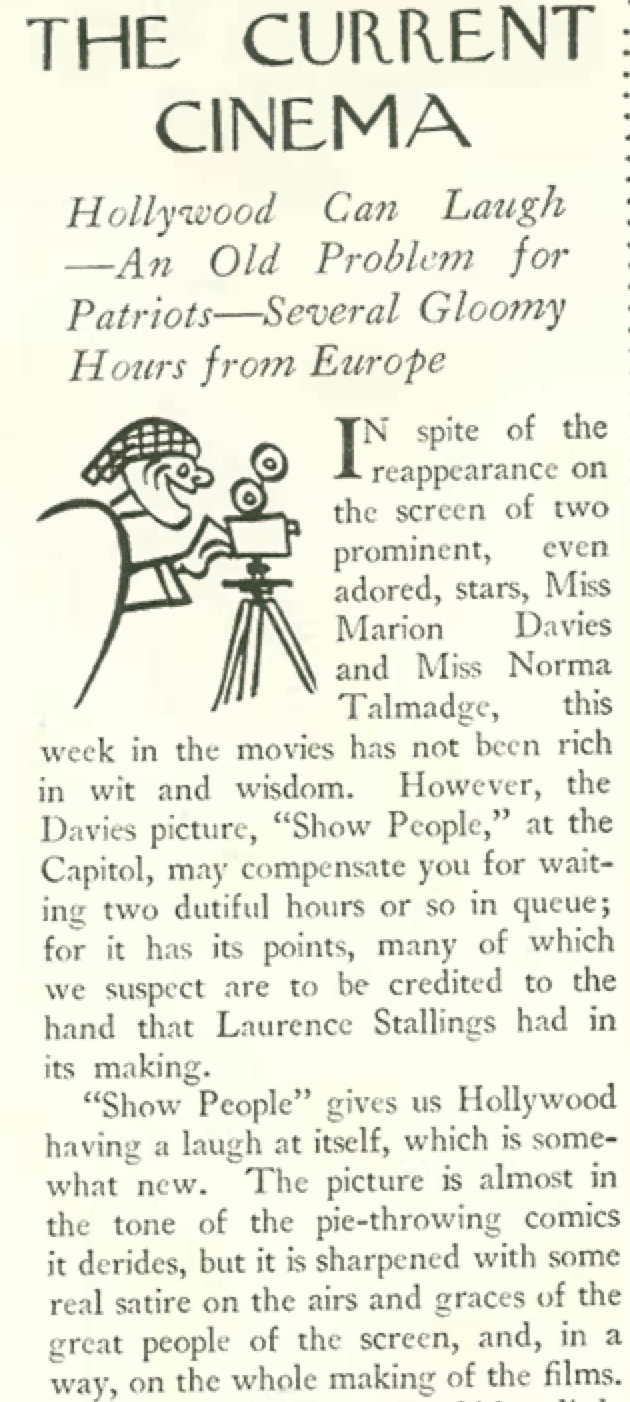
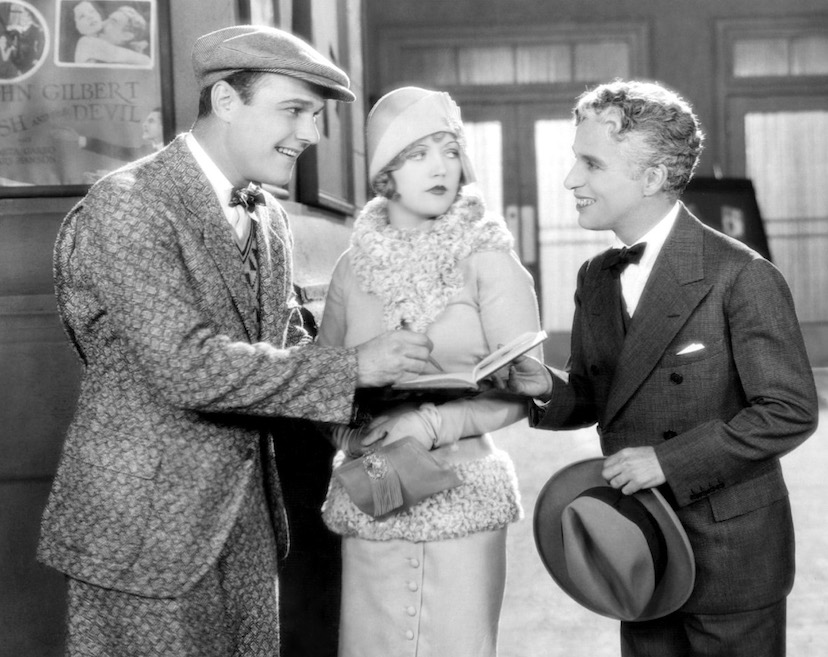
The Nov. 17 film reviews gave a rare thumbs up to an American movie, Show People, which starred Marion Davies.
HE LOOKS FAMILIAR…William Haines (left) and Marion Davies meet Charlie Chaplin in the 1928 Hollywood send-up film, Show People, directed by King Vidor. Chaplin made this rare appearance as himself, without his “Little Tramp” makeup. He was uncredited in the film, and asked to be paid the extra’s fee of only $7.50. (silent-volume.blogspot.com)
* * *
From Our Advertisers
Although you couldn’t legally procure a drink in 1928, you could (unlike today) legally purchase of box of Cuban cigars for you special someone:
…or if you preferred, a carton Chesterfields. Apparently someone in marketing thought conjuring up the horrors of trench warfare would help sell some smokes…
And finally, Peter Arno found out what’s for dinner at the table of a great outdoorsman:
Despite Prohibition, booze flowed freely in 1928 New York thanks to bootleggers and lax enforcement by everyone from cops to judges. One major exception was Mabel Walker Willebrandt, a U.S. Assistant Attorney General from 1921 to 1929 who among other things handled cases concerning violations of the Volstead Act.
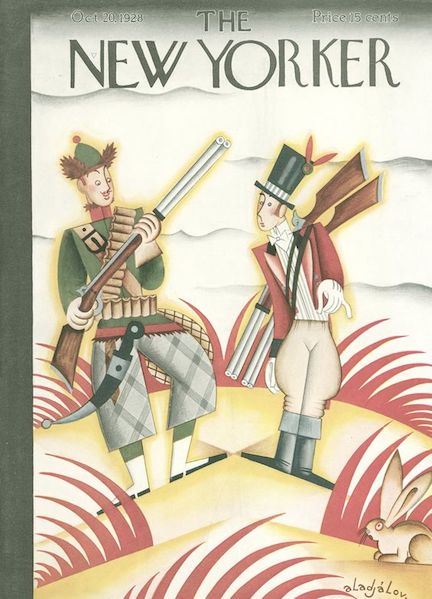
Oct. 20, 1928 cover by Constantin Alajálov.
Although Willebrandt herself enjoyed the occasional drink (she was personally opposed to prohibition), she was nevertheless serious about enforcing the law, and rather than chasing small-time bootleggers or padlocking speakeasies, she targeted the big-time operators.
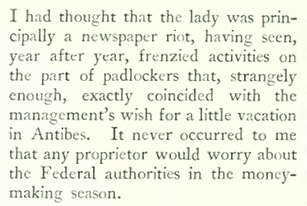
How Willebrandt fits into this blog entry can be found in Lois Long’s “Table for Two” column in the Oct. 20, 1928 issue, in which Long described the current state of affairs of Manhattan’s nightlife, including the departure of boozy torch singer Helen Morgan from the speakeasy scene for Flo Ziegfeld’s late-night Broadway revue, the Ziegfeld Midnight Frolic:
WELL-KNOWN TO THE POLICE…Helen Morgan started singing in Chicago speakeasies in the early 1920s, where she defined the look of the torch singer, including the draped-over-the-piano pose, which was her signature. (amanandamouse.blogspot.com)
Morgan, who at the time was also starring in Broadway’s Show Boat, had been arrested the previous December for violation of liquor laws at her own popular nightclub, Chez Morgan. She would not return to performing in nightclubs until after the repeal of Prohibition.
Long also looked in on the popular Harlem nightclubs, where the dance music was “throbbier than ever.”
HOPPING IN HARLEM…Lois Long wrote that you couldn’t get near the popular Small’s (left) on a Saturday night, while Connie’s Inn (right) offered a new show that was “as torrid as ever.” (harlemworldmag.com, New York Public Library)
There was a sober undercurrent to all of this merry-making, namely Willebrandt’s determined efforts to go after the big bootlegging operations that were fueling all of this mirth. Long wrote:
PROHIBITION PORTIA…At left, Mabel Walker Willebrandt being sworn in as U.S. Assistant Attorney General in 1921. At right, Willebrandt on the cover of Time magazine, August 26, 1929. (legallegacy.wordpress.com/Time)
Willebrandt decried the political interference and the incompetence (or corruption) of public officials who undermined the enforcement of the Volstead Act, and even fired a number of prosecutors. As her office also oversaw the enforcement of tax laws, she developed the strategy for prosecuting major crime bosses for income tax evasion. It was an approach that would finally put the famed Chicago gangster Al Capone behind bars in 1931.
Lois Long’s mention of Willebrandt was doubtless due to the 1928 presidential campaign, during which Willebrandt openly campaigned for the “dry” candidate, Republican Herbert Hoover, over the “wet” Al Smith, who referred to Willebrandt as “The Prohibition Portia.” Smith was referencing Shakespeare’s The Merchant of Venice, in which the play’s heroine, Portia, outwits the merchant Shylock in a court case by referring to the exact language of the law.
Jim Dandy
New York Mayor Jimmy Walker was well-known for his taste in clothes (as well as for the nightlife), so E.B. White (writing in “The Talk of the Town”) decided to pay a visit to the mayor’s personal tailor to see how the “royal garments” were created. Excerpts:
JIM DANDY…New York Mayor Jimmy Walker was a well-known dandy and a familiar face at Manhattan nightclubs. Rarely seen at City Hall, Walker used the lavish Casino nightclub in Central Park as his unofficial headquarters. (Encyclopedia Britannica)
* * *
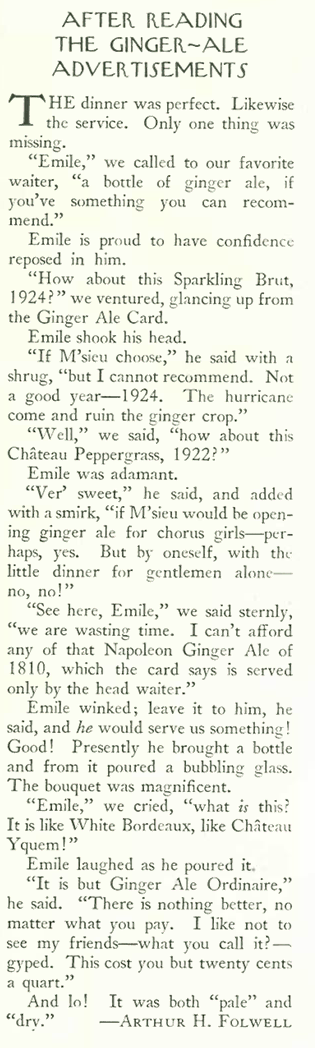
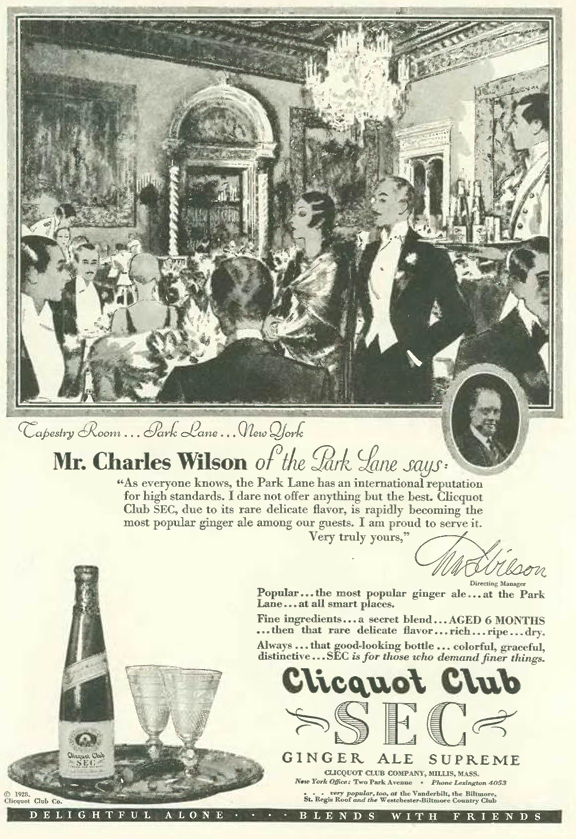
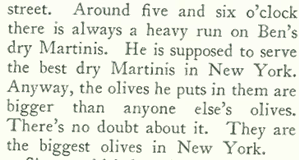
In one of my recent entries (The Tastemakers, posted Nov. 28) I noted how Prohibition had driven some advertisers to absurd lengths, including manufacturers of non-alcoholic beverages who appealed to the refined tastes (and snobbishness) usually associated with fine wines (see Clicquot Club ad below). Gag writer Arthur H. Folwell had some fun with such pretensions:
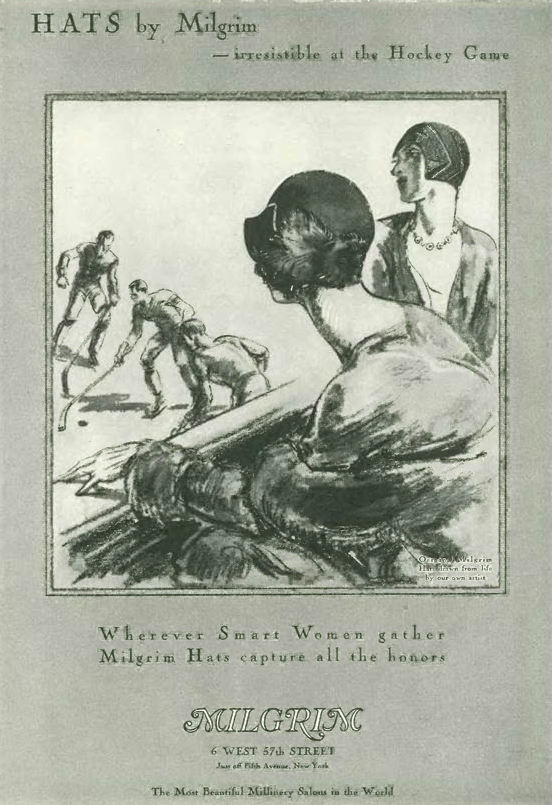
Speaking of refinement, when was the last time you saw someone dressed like this at a hockey game?
Before they graced the silver screen, the Marx Brothers were one of Broadway’s biggest draws, including their 1928 hit “Animal Crackers,” advertised in the back pages of the Oct. 20 New Yorker.
Our cartoons are courtesy Peter Arno, who looked in on a Hollywood movie set…
…and Gardner Rea, who rendered a scenario for an upper class emergency…
The New Yorker’sE.B. White was an aviation enthusiast who rhapsodized about his flights into the clouds, but also had prescience to see the darker side of this modern thrill ride.
October 6, 1928 cover by Ilonka Karasz.
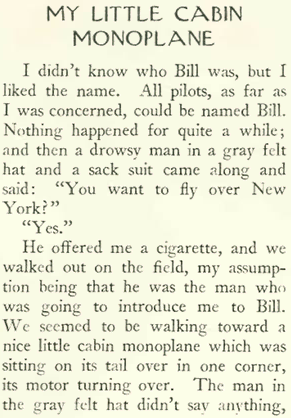
Writing in the “Reporter at Large” column for the Oct. 6, 1928 issue, White described his visit to Curtiss Field, where he inquired about a pilot who could fly him over New York City. He was told someone named Bill would take him up.
EARLY BIRD…This Fairchild FC-2 Cabin Monoplane, with strut-supported wing, was probably similar to the plane E.B. White rode in his flight over New York City. (Quora)
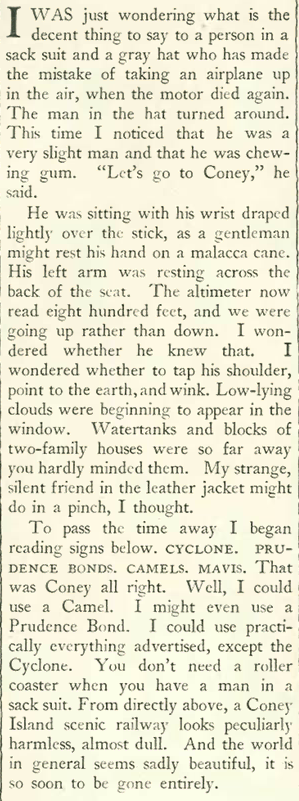
After a half hour wait, a man in a gray felt hat and sack suit offered White a cigarette and said, “You want to fly over New York?” Although the man didn’t look like a pilot, White followed him to a “little cabin monoplane.” Without saying another word the man took the plane up into the air, much to White’s surprise:
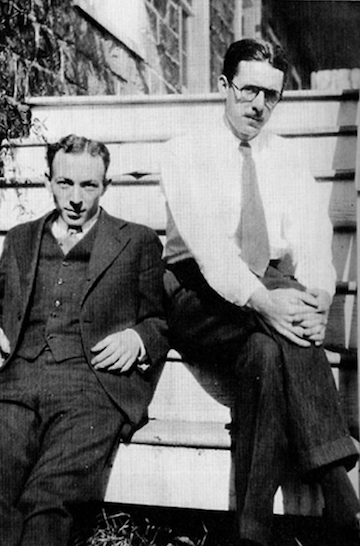
FLYBOY…E.B. White (left) with friend and New Yorker colleague James Thurber in 1929. (University of Virginia)
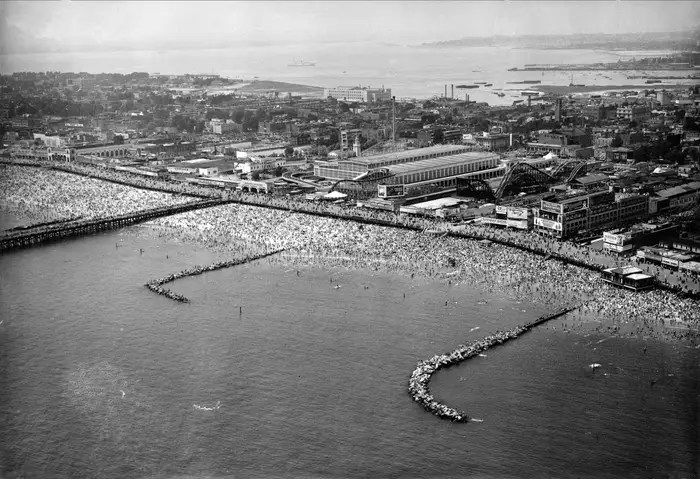
White described the various sites from 800 feet up, including Coney Island, a view at once beautiful and foreboding…
Aerial view of Coney Island, 1937. (AP/lunaparknyc.com)
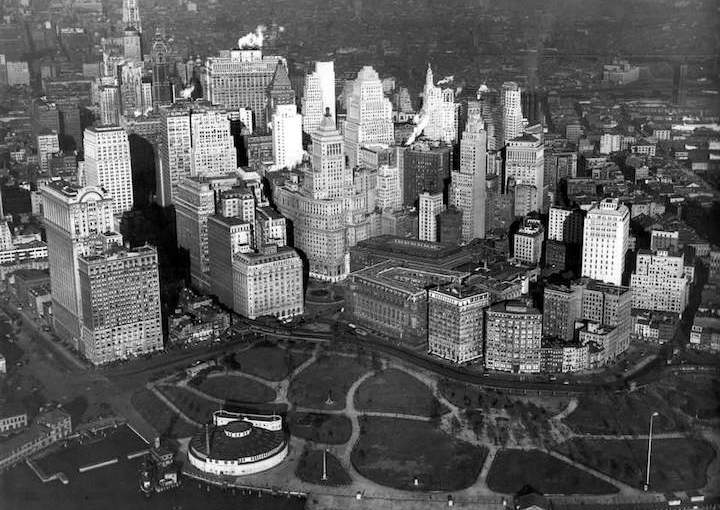
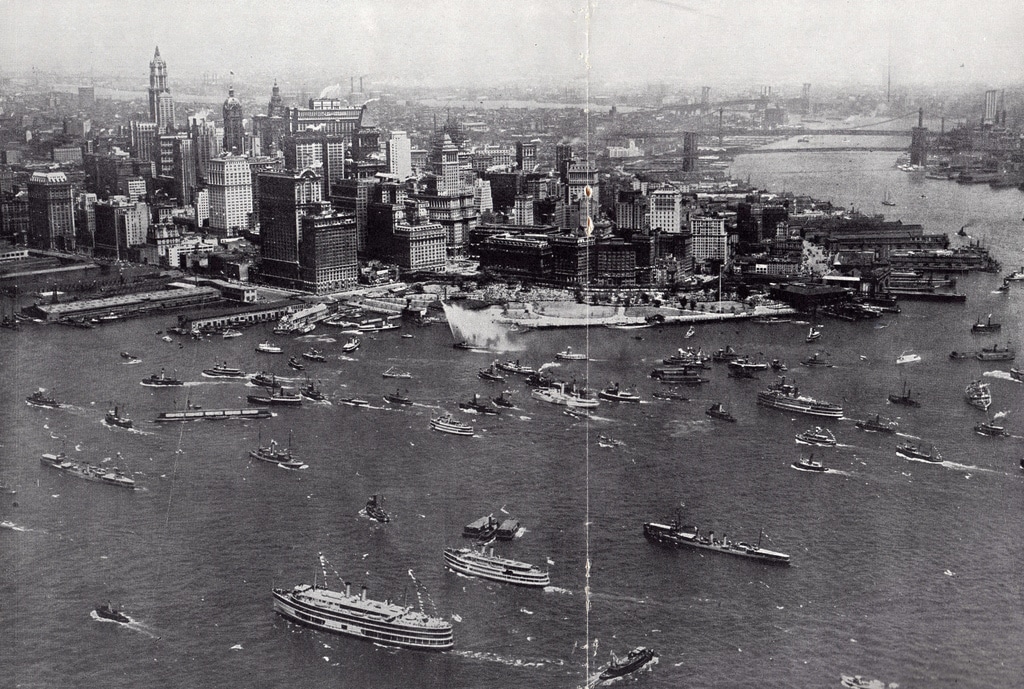
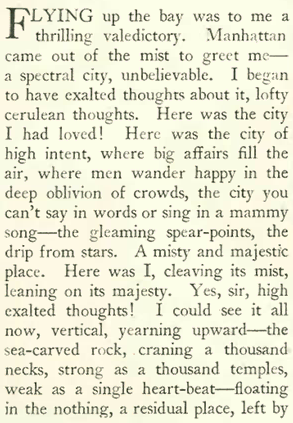
…and the thrill of the approaching city skyline as his plane soared up the Bay toward Manhattan:
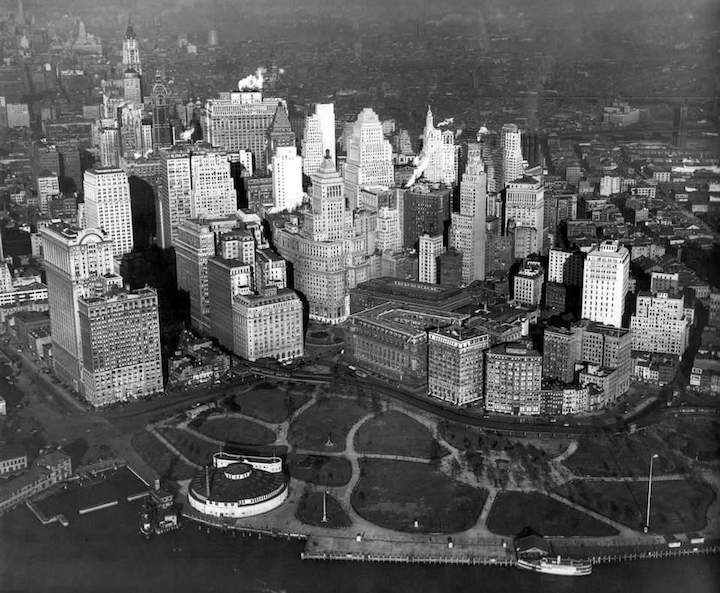
Lower Manhattan looking northeast from the Bay in July 1927. This is approximately the view described by E.B. White as his plane approached Manhattan. (Favrify.com)A closer view of lower Manhattan as it would have appeared to E.B. White on his 1928 flight over New York City. (Fairchild Aerial Survey photo, 1928)
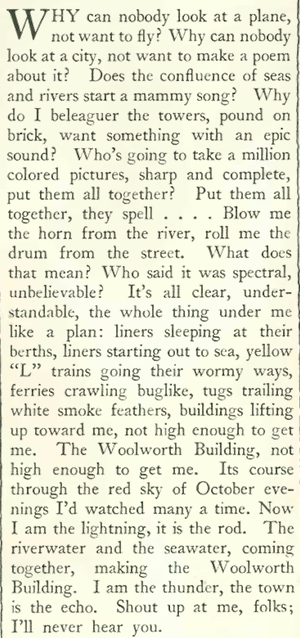
Once over the city, White could not help but contain his exuberance, soaring high above the towering spires and teeming crowds below:
And yet as I noted earlier, his observations were tinged with melancholy and foreboding. In describing his flight over Coney Island, for example, White concluded that “the world in general seems sadly beautiful, it is so soon to be gone entirely.”
Perhaps he referred to the rapid changes seen daily in the city during the 1920s, when nothing seemed permanent. Or did this bird’s eye view suggest something else to White? Twenty years later, in his 1948 essay “Here is New York,” White would write:
A single flight of planes no bigger than a wedge of geese can quickly end this island fantasy, burn the towers, crumble the bridges, turn the underground passages into lethal chambers. The intimation of mortality is part of New York now: in the sound of jets overhead, in the black headlines of the latest edition.
Unlike 1928, White had the hindsight of World War II, of entire cities leveled by waves of heavy bombers, or in the case of Hiroshima and Nagasaki, just a single bomb. The foreshadowing of 9/11 is contained in his words as well.
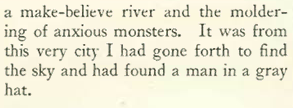
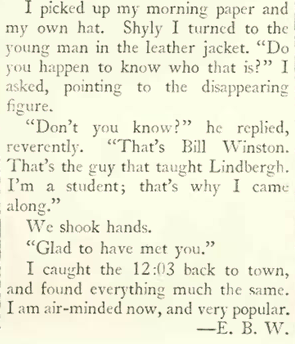
Back on the ground at Curtiss Field, White would finally learn the identity of the man who didn’t look like a pilot, but had just flown him over the city:
Another Vantage Point
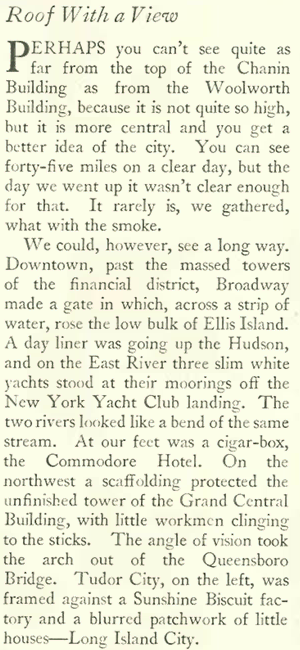
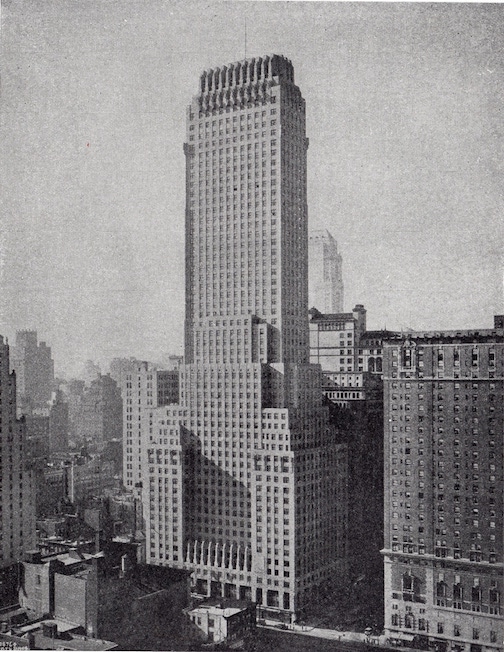
With buildings rising ever higher in Manhattan, you could get a pretty good view of the surrounding city by taking an elevator to the rooftop of the latest skyscraper. The Oct. 6 “Talk of the Town” found a good perch atop the 680-foot-tall Chanin building on the southwestern corner of Lexington Avenue and 42nd Street.
THINGS ARE LOOKING UP…The Chanin Building at Lexington and 42nd. Sloan & Robertson Architects, 1928. (New York Public Library)
* * *
From Our Advertisers
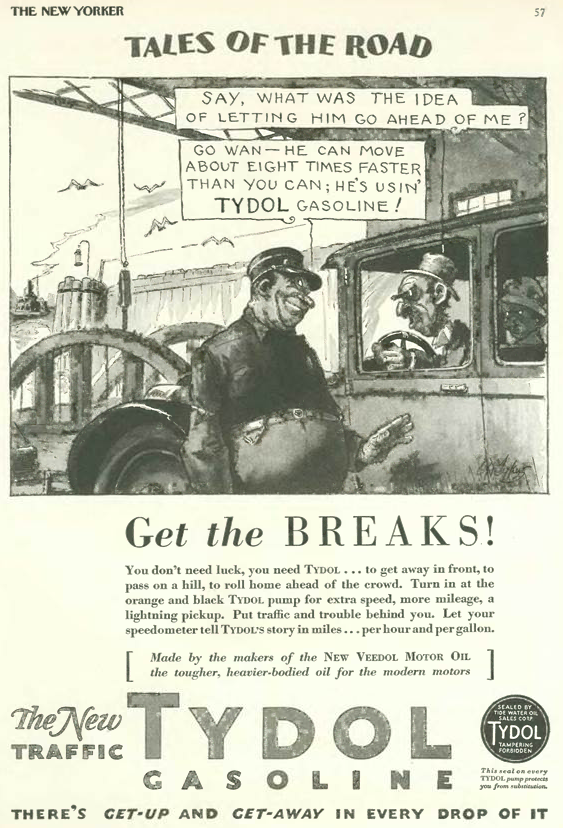
Something you never see in The New Yorker anymore, or in most magazines for that matter, are ads promoting various brands of gasoline. This one touts the benefits of Tydol, produced by the (now defunct) Tide Water Oil Company of New York:
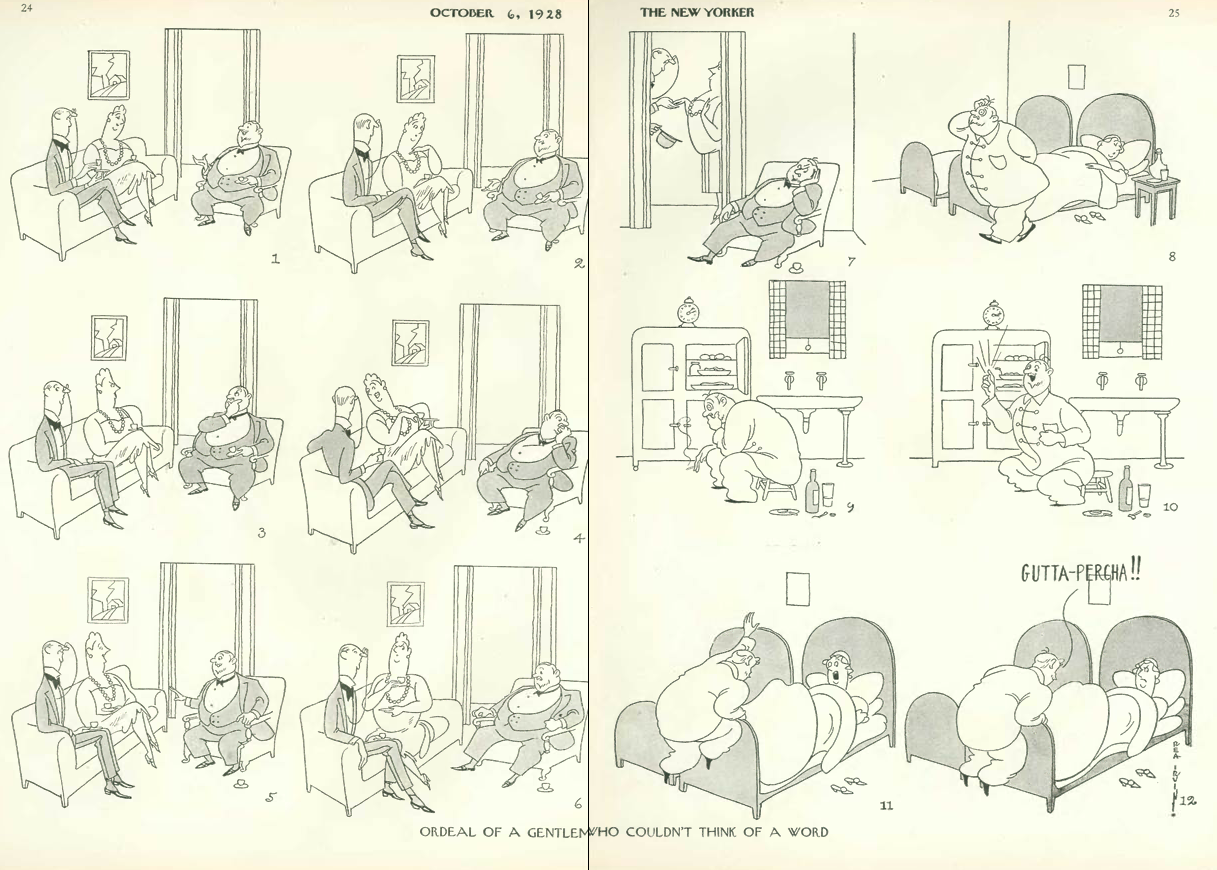
For our Oct. 6 cartoon, here is one of Rea Irvin’s occasional multi-panel, two-page comic spreads, this one exploring the ordeal of a man who couldn’t think of the word for a type of natural plastic used in the 1920s (click to enlarge image):
* * *
The Oct. 13, 1928 issue featured a notable short story by Thyra Samter Winslow, a writer who contributed nearly a dozen pieces to The New Yorker in 1927 and 1928.
October 13, 1928 cover by Julian de Miskey.
Her short story on page 25, “But for the Grace of God,” was a “key transitional work” for the magazine, according to Ben Yagoda in his book About Town: The New Yorker and the World It Made. He writes: “Realistic fiction thrives in periods of social ambiguity and flux, and the attention to class was on of the factors working to propel New Yorker writing from two-dimensional sketches to fleshed out short stories.” Yagoda observes that Winslow’s story, “in its carefully selected details, its mild epiphany, and its attention to the potency of class…is an accomplished and poignant piece of short fiction.” Excerpts:
Thyra Samter Winslow, in 1936. (findagrave.com)
* * *
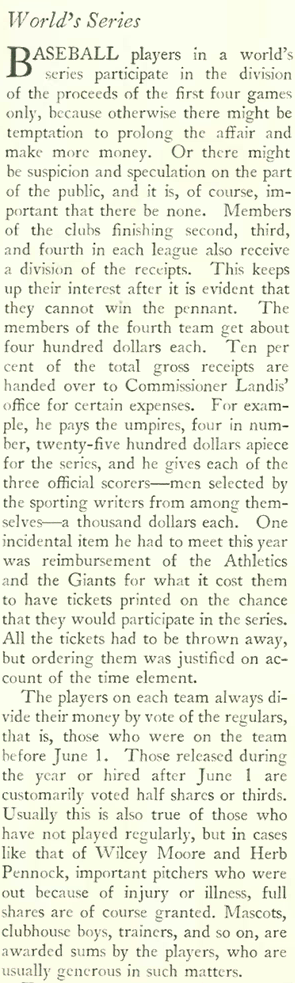
The New Yorker continued its stubborn refusal to report on baseball in its sports section, even though the Yankees were in the process of taking their second consecutive World Series title with a 4-0 sweep over the favored St. Louis Cardinals. The magazine did, however, mention the game in the Oct. 13, 1928 “Talk of the Town” — not on how it was played, but rather on how the championship money was distributed among players and assistants:
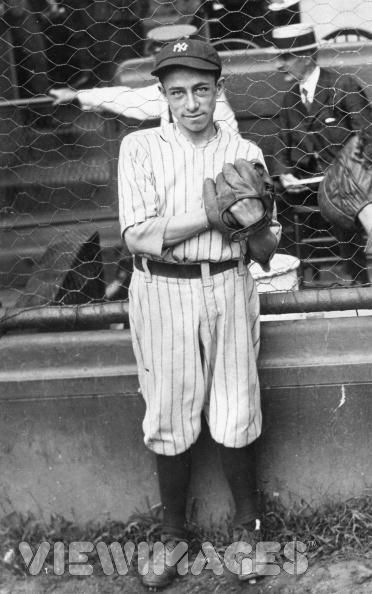
Money matters in the game of sport were more informal 90 years ago, with players themselves divvying up money to other players, trainers, mascots and batboys. For example, in 1927 Yankees batboy Eddie Bennett received $700 for the one-eighth World Series share voted him by the team. This sum earned over the four days of the series nearly equalled a batboy’s pay for a full year.
GOOD LUCK CHARM…Yankee batboy Eddie Bennett in the 1920s. Although a spinal injury as an infant left him hunchbacked, Bennett would serve as Yankee batboy for 12 years — a period that would include seven pennants and four World Series titles. (sabr.org)
* * *
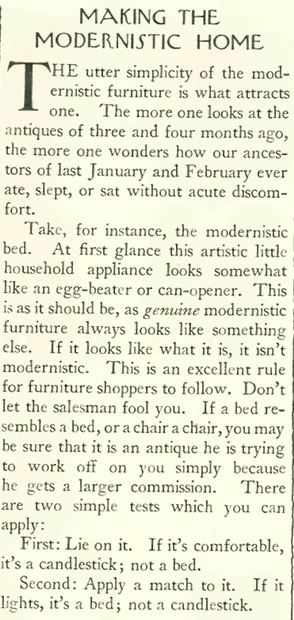
Although European-inspired modern furniture was all the rage among certain members of the New York smart set, writer Joseph Fulling Fishman (best known for his writing on contemporary prison conditions) offered a dissenting view in the Oct. 13 edition. An excerpt:
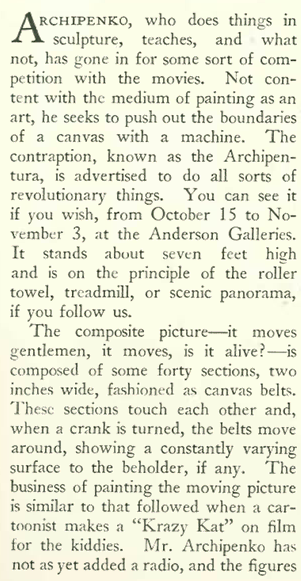
In the art review section, critic Murdock Pemberton also seemed a bit perplexed by modern design, in this case by the work of Ukrainian-born avant-garde artist Alexander Archipenko. His Archipentura was an electronic machine that displayed pre-loaded images of a female undressing by rolling painted canvas through a complex system of sprockets and belts. He intended the machine “to do for painting what the motion picture did for photography.” Pemberton observed:
THINK DIFFERENTLY…Alexander Archipenko (right, circa 1920), intended his intended his Archipentura machine (pictured in front and side views) “to do for painting what the motion picture did for photography.” (Wikipedia/Archipenko Foundation)
* * *
From Our Oct. 13 Advertisers
Yet another endorsement for cigarettes from the posh set. This time Melachrino Cigarettes got in on the action with this endorsement by Augusta Barney Harriman.
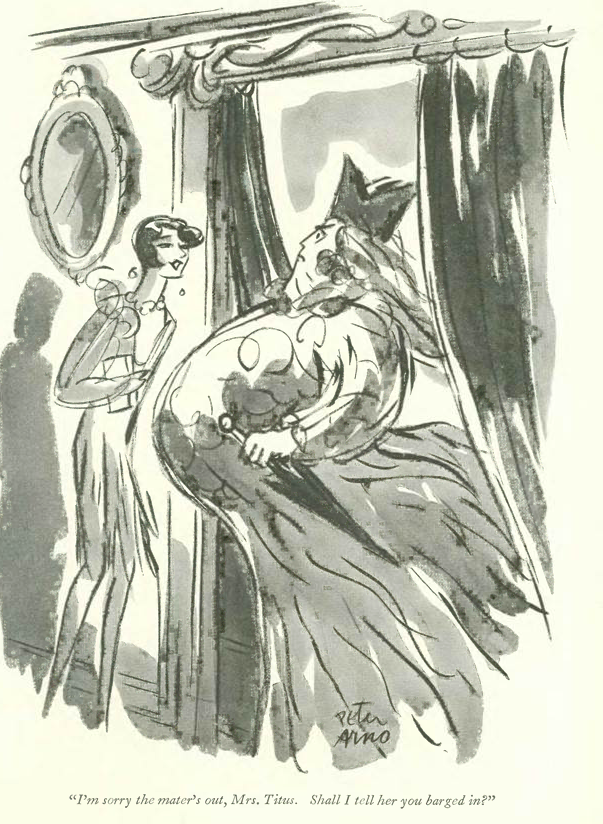
For our cartoon, Peter Arno once again looked in on the mannerisms of the upper class, contrasting a lithe young flapper with the imposing presence of a battle-axe. Note how the young woman uses the archaic British “mater” in reference to her mother…
Modernism in interior design gained a wider audience in the 1920s thanks in part to a series of major exhibitions sponsored by some of New York City’s leading department stores.
Sept. 29, 1928 cover by Rea Irvin.
Although The New Yorker continued to feature advertisements for traditional styles of furniture, such as this one from the Sept. 22, 1928 issue…
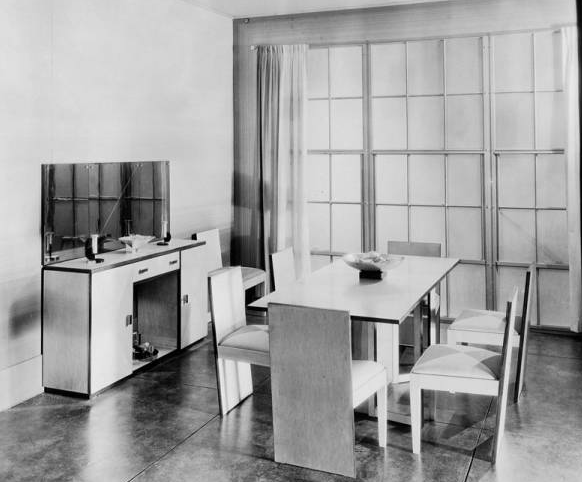
…it was clear that the appetites of the city’s younger “smart set” were being whetted by retailers such as Macy’s, who in May 1927 hosted an “Exposition of Art in Trade” that included 100 exhibitors of modern European and American silver, pottery, books, textiles and furniture. The following spring Macy’s hosted the “International Exposition of Art in Industry,” where more than 250,000 visitors saw the work of more than 300 exhibitors from six countries. (This blog’s opening photo features a 1928 sideboard by Kem Weber, one of the exhibitors at Macy’s 1928 show. Photo courtesy Cooper Hewitt Collection).
TRENDSETTERS…R. H. Macy & Co. hosted the International Exposition of Art in Industry in the spring of 1928. At right, an interior scene at the exposition, with a chair designed by Walter Von Nessen. (socalarchhistory.blogspot.com/wright20.com)
Macy’s inspired other exhibitions by such retailers as Wanamaker’s, Abraham & Straus, Frederick Loeser, Lord & Taylor, and B. Altman & Co., which advertised its “20th Century Taste in the New Expression of the Arts in Home Furnishings” in the Sept. 29, 1928 issue of The New Yorker:
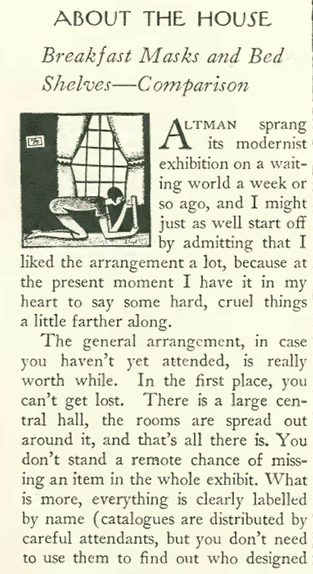
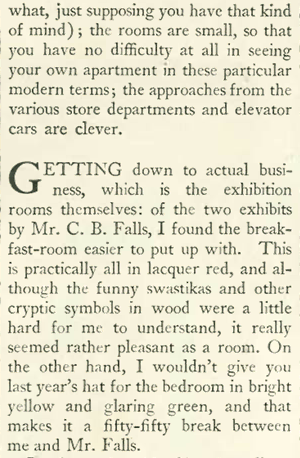
Writer Bertram Bloch reviewed the exhibit in the Oct. 6 issue. Although he suggested that he had some “hard, cruel things” to say about the show, overall he believed it something not to be missed. Excerpts:
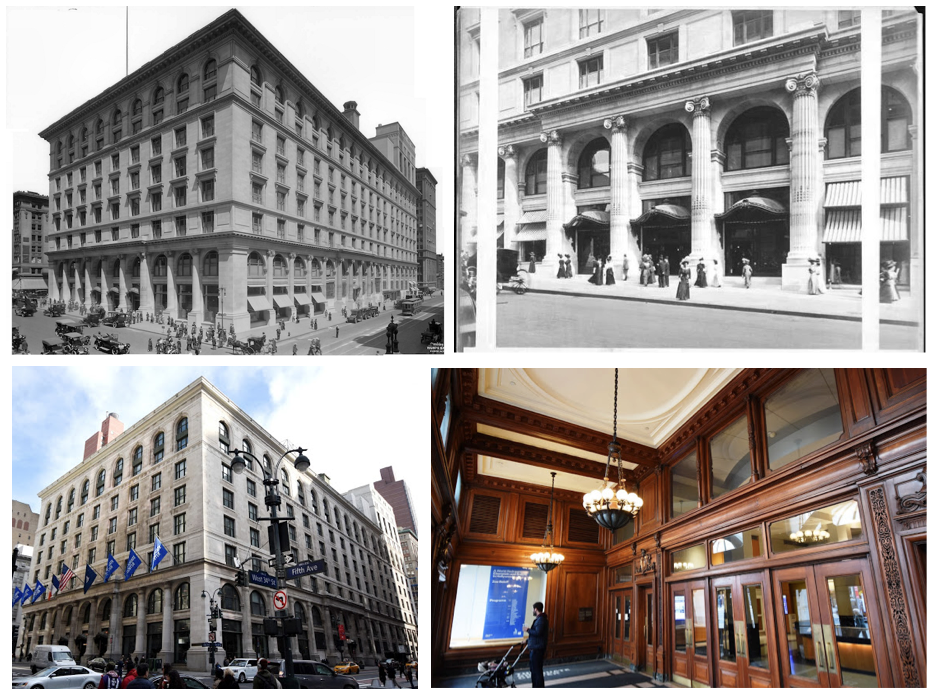
THE SMART LOOK…B. Altman & Company showcased designs including, clockwise, from upper left, a dining room by Charles B. Falls; a conversation room by Steele Savage; a bedroom by Charles B. Falls; and a salon section by Dominique. (Art Institute of Chicago)FADED GLORY…Clockwise, from upper left, The B. Altman flagship store at 34th Street and 5th Avenue and a closer view of the front entrance in 1915; closed in 1989, the flagship store is now used by the Graduate Center of the City University of New York, among other tenants. The mahogany-paneled Fifth Avenue foyer survives intact, however the exterior looks a bit hosed-down, with the Ionic capitals removed from the columns as well as the lintels that banded the windows and the cornice on top. (Museum of the City of New York/daytonianinmanhattan)
While on the topic of modern furniture, Ilonka Karasz, who painted a total of 186 New Yorker covers from 1924 to 1973, showcased her own furniture designs (along with other artists from theAmerican Designers’ Gallery), at an exhibition the following month.
NEW YORKER COVER ARTIST Ilonka Karasz designed this dining room for the American Designers Gallery Exhibition in October 1928. (Art Institute of Chicago)
* * *
The Singing Fool
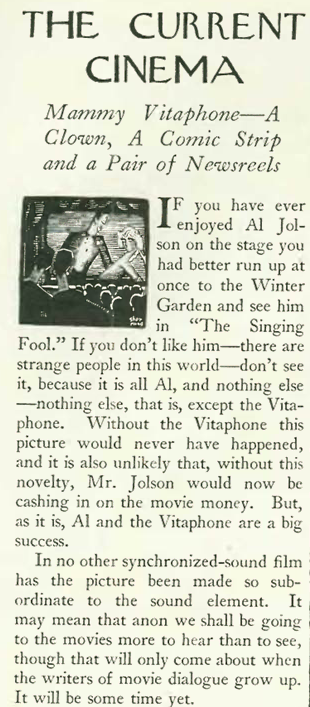
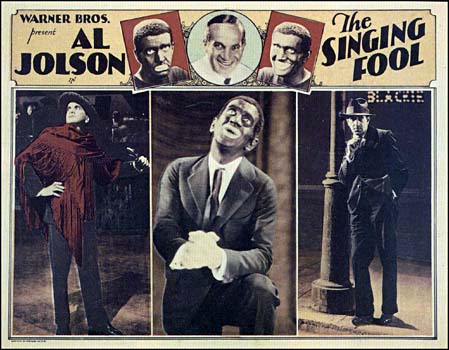
The New Yorker generally detested the introduction of sound in motion pictures, but for some reason didn’t mind it so much when Al Jolson opened his mouth. This time he followed up his blackface performance in The Jazz Singer with another blackface routine in The Singing Fool.E.B. White wrote about the film’s big opening in “The Talk of the Town”…
…and in the magazine’s film review section, yet more praise for Jolson, whose singing apparently compensated for the mediocre dialogue:
SERVED WITH A SIDE OF HAM…One of a series of promo slides for The Singing Fool, featuring Al Jolson, child actor Davey Lee, and the saccharine lyrics for Sonny Boy, said to be the first pop record to sell more than million copies. (nitrateville.com)THAT WAS ENTERTAINMENT…Theatre lobby card for 1928’s The Singing Fool. (IMDB)
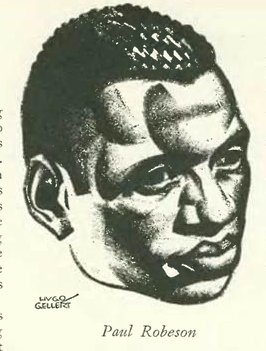
The Sept. 29 issue illustrates the dichotomy in how The New Yorker depicted African Americans in the 1920s. Blacks in the magazine’s cartoons and illustrations were often portrayed as exaggerated characters from minstrel shows. However, a serious artist like Paul Robeson received a much different treatment. Indeed, the magazine shamed the racism of a fictional character in Dorothy Parker’s short story “Arrangement in Black and White” (Oct. 8, 1927), in which a wealthy, white woman condescends to a black singer who might well have been modeled afterRobeson.The journalist and author Mildred Gilman profiled Robeson in the very same issue that praised Jolson’s tired blackface routine. An excerpt, accompanied by a Hugo Gellert illustration:
* * *
Next Time Wear a Disguise
The newlywed Gene Tunney, newly retired from boxing, was spending some time in Europe, probably hoping to get a break from the adoring crowds back in the States. Upon entering a French café with his friend, the author Thornton Wilder, he soon discovered that adoring crowds awaited him on the other side of the pond, as related by The New Yorker’s Paris correspondent Janet “Genêt” Flanner:
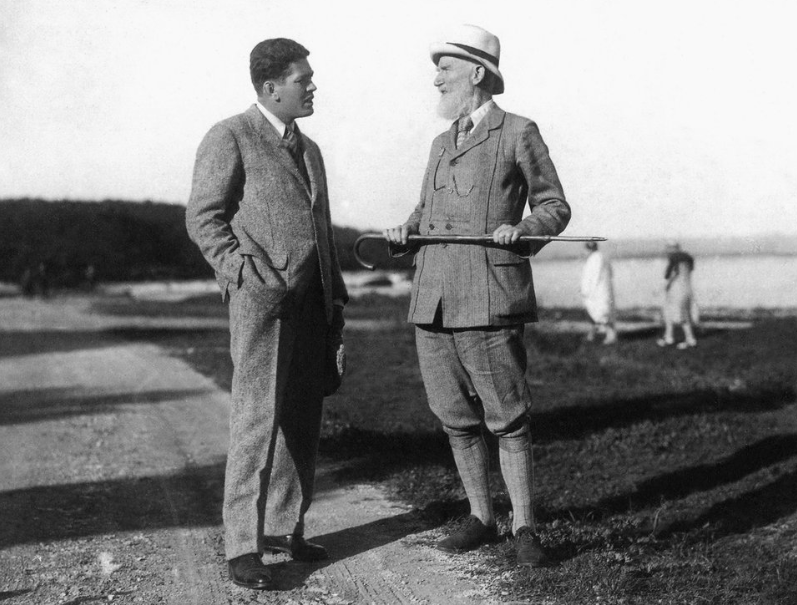
ENJOYING SOME DOWN TIME…The boxer Gene Tunney, left, and the writer George Bernard Shaw on a 1929 vacation to Brioni. (Associated Press)
* * *
From Our Advertisers
Although by 1928 Americans (and particularly New Yorkers) were flouting Prohibition laws, alcoholic beverages still could not be legally produced or marketed (except for “religious” or “medicinal” purposes). Advertisers, however, found clever ways to market non-alcoholic beverages like ginger ale with the allure of liquor or fine wine. But then again, few were actually drinking straight ginger ale…
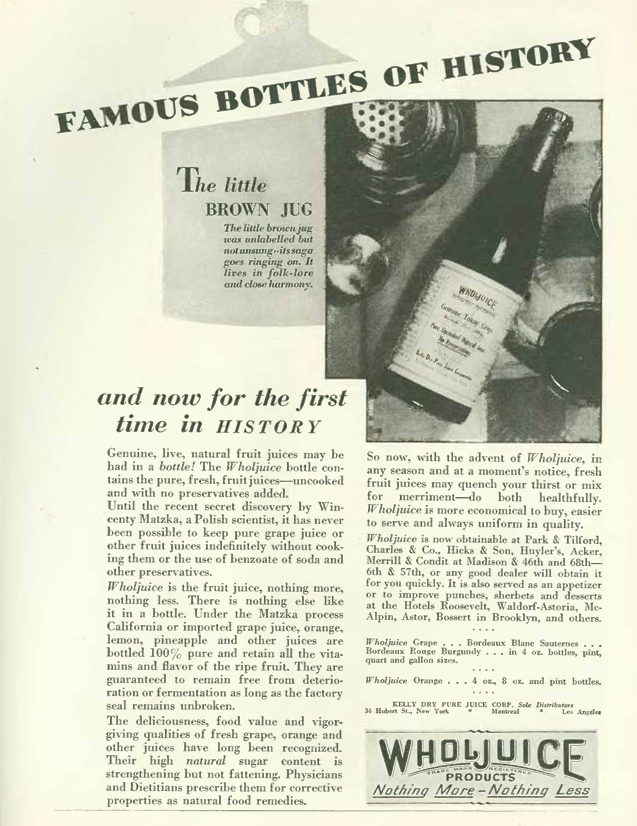
And if you formerly grew grapes for winemaking, what’s preventing you from selling unpasteurized grape juice that remains free from fermentation “as long as the factory seal remains unbroken”…? Also, note the not-so-subtle cocktail shaker at the top left of the photo:
And for our cartoons, Barbara Shermund explored the modern ways of love…
…while Peter Arno continued probing the comic imbalance of rich old men and their young mistresses…
NINETY YEARS AGO, when former Chicago reporters Ben Hecht and Charles MacArthur sat down to write The Front Page, they might have sensed they had a Broadway hit in the making, but probably had no idea their play would still grace a Broadway stage well into the 21st century.
August 25, 1928 cover by Leonard Dove.
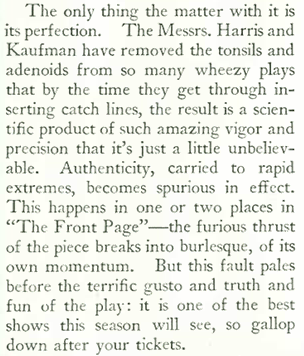
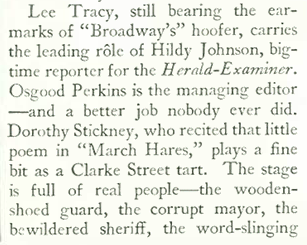
The Front Page made a big splash on the Great White Way when it premiered on August 14, 1928 at Times Square Theatre. Featuring a story about tabloid newspaper reporters on the police beat, the play’s wisecracking, rapid-fire dialogue (which would become a staple of Hollywood’s screwball comedies), was a big hit with audiences, and with E.B. White, who reviewed the play in the Aug. 25, 1928 New Yorker:
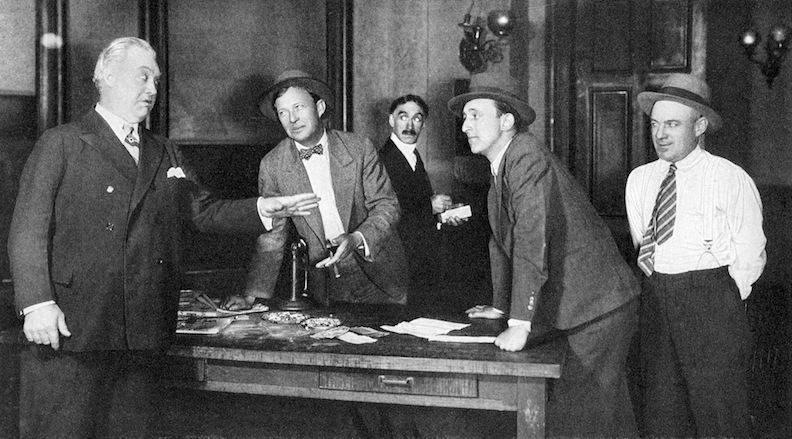
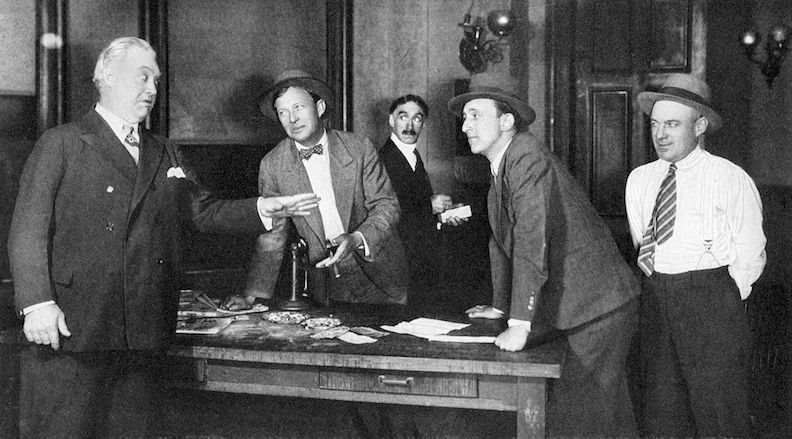
DREAM TEAM…The Front Page was written by former Chicago reporters Ben Hecht (left) and Charles MacArthur (center) and produced by Jed Harris (at right, in a 1928 photo used on the cover of Time magazine). Hecht, an occasional New Yorker contributor, would go on to a successful career as a screenwriter, director, producer and playwright. Like Hecht, screenwriter/playwright MacArthur was friends with members of the Algonquin Round Table. He was married to actress Helen Hayes, with whom he adopted a son, James MacArthur (“Danno” on TV’s Hawaii 5-0). Harris was responsible for some of Broadway’s most successful productions in the ’20s and ’30s including Uncle Vanya, Our Town and The Crucible. (IMDB, Kentucky Digital Library, Time)TROUBLE IN WINDY CITY…Set entirely in a dingy press room of Chicago’s Criminal Courts Building, The Front Page featured reporters who passed the time playing poker and exchanging wisecracks—until a convicted killer escapes jail and makes things lively. Worried about his chances for re-election, the crooked Mayor, played by George Barbier, far left, confronts three reporters — Murphy (Willard Robertson), Endicott (Allen Jenkins), and McCue (William Foran). In the background is Claude Cooper, as the crooked Sheriff Hartman. (Theatre Magazine, August 1928)
White was so taken by the play, in fact, that he found it to be nearly perfect, like a scientific instrument of exacting precision. And considering how many times the play has been adapted to stage and screen (most recently on Broadway in 2016), he was probably right. It still plays pretty well after all these years:
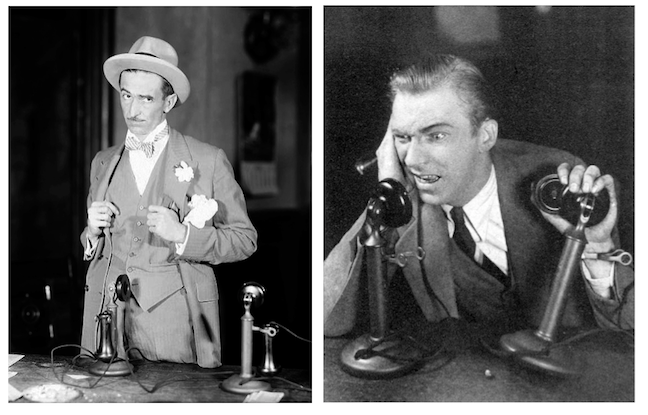
WISE GUYS…Promotional photographs of Osgood Perkins as Walter Burns (left) and Lee Tracy as Hildy Johnson in the 1928 Broadway production of The Front Page. (Theatre Magazine, August 1928)
ENTER, STAGE RIGHT…Escaped prisoner Earl Williams (George Leach) surprises reporter Hildy Johnson (Lee Tracy) in The Front Page. (Theatre Magazine, August 1928)
The play was restaged four more times on Broadway — 1946, 1969, 1986 and 2016 — the 2016 production starred Nathan Lane as Walter Burns, John Slattery as Hildy Johnson and John Goodman as Sheriff Hartman. Film adaptions included The Front Page in 1931 and His Girl Friday (directed by Howard Hawks) in 1940 — the latter added a twist to the play by changing the Hildy character to a woman, played by Rosalind Russell as the ex-wife of Walter Burns (Cary Grant). The play returned to the big screen in 1974 as The Front Page, directed by Billy Wilder and starring Jack Lemmon as Hildy and Walter Matthau as Walter Burns.
Still Some Fight Left in Him
Although boxer Gene Tunney had retired from the ring, he was still making headlines fighting off a different foe: the paparazzi.
Tunney’s engagement to Connecticut socialite and Carnegie heiress Polly Lauder was front-page news across the country, and photographers were eager to capture a photo of the couple, who up until the announcement had enjoyed a mostly secret romance. “The Talk of the Town” described the couple’s attempts to elude a persistent press:
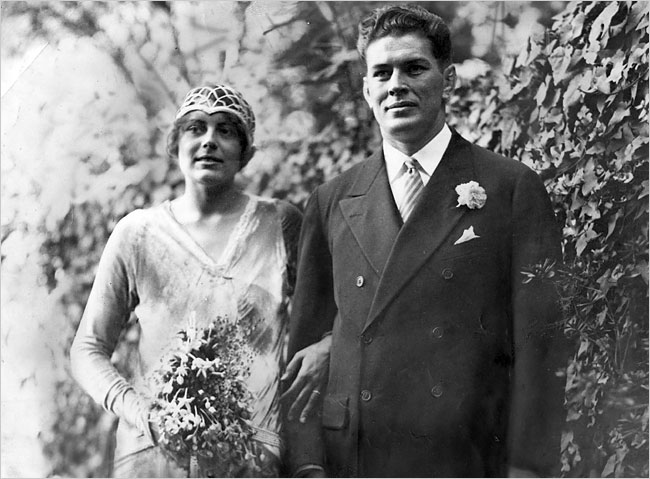
MAYBE IT’S QUIETER OVER HERE…21-year-old Polly Lauder Tunney and 31-year-old Gene Tunney after marrying in Rome on Oct. 3, 1928. The marriage would last 50 years. (Wikipedia)
In September 1928 the couple took separate trips to Rome and married in a small ceremony on Oct. 3. Unfortunately, they attracted the attentions of Rome’s original paparazzi: According to The New York Times “the scene after the wedding looked mighty like a riot as clothes were torn and cameras smashed in a melee of photographers jostling to capture images of the couple.”
After traveling in Europe they returned to the U.S. and made their home in North Stamford, Connecticut, where they restored an 18th century farmhouse and raised Hereford cattle and sheep. They would be married 50 years until Tunney’s death at age 81 in 1978. Polly continued to live at her home in Stamford until her death in 2008 at age 100.
* * *
Dorothy Recuperates
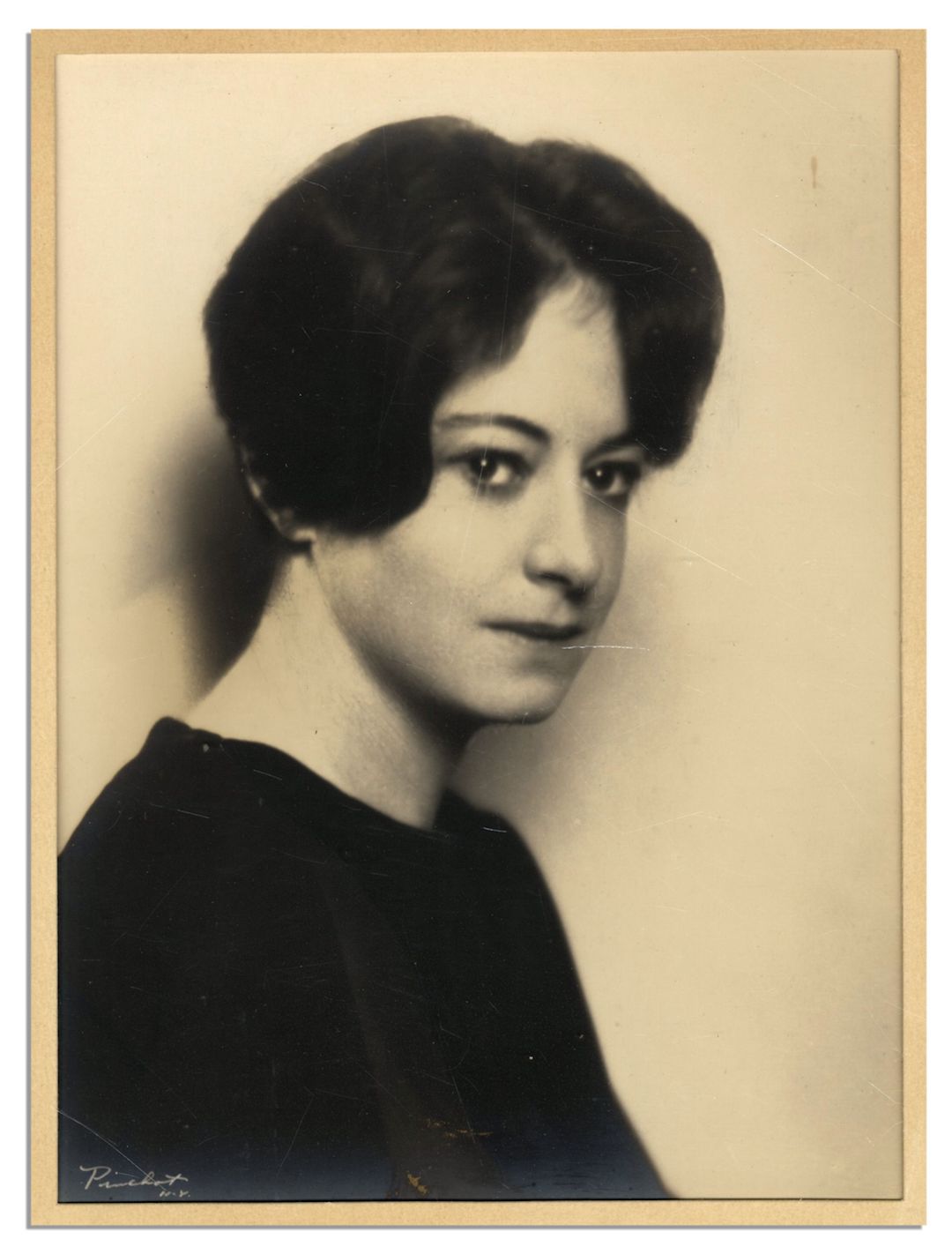
Dorothy Parker’s “Constant Reader” signature at the end of the book review section was absent during part of the summer of 1928 as she was recuperating from an appendectomy. Fortunately her rapier wit remained intact when she returned in the Aug. 25 issue…
Dorothy Parker in 1928 (natedsanders.com)
…where she found the strength to skewer The Lion Tamer, the latest novel by romance writer E.M. Hull:
I’D RATHER BE IN SURGERY…E.M. Hull’sThe Lion Tamer. Dodd, Mead and Co. 1928. (yesterdaysgallery.com)
* * *
Long Before Starbucks
If you were a New Yorker in the 1920s, this cartoon by Rea Irvin would make perfect sense, because nearly everyone knew that Alice Foote MacDougall was the queen of New York’s coffee scene, a one-woman Starbucks of her day.
According to Jan Whitaker, writing for the blog Restaurant-ing Through History, MacDougall kept a carefully crafted persona. In numerous magazine stories crafted by her publicity agent, “she was widely known as the poor widow with three children who built a coffee wholesaling and restaurant empire on $38.”
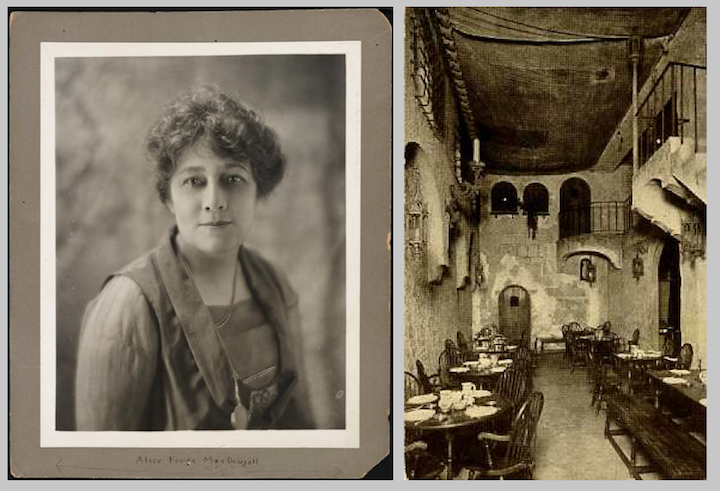
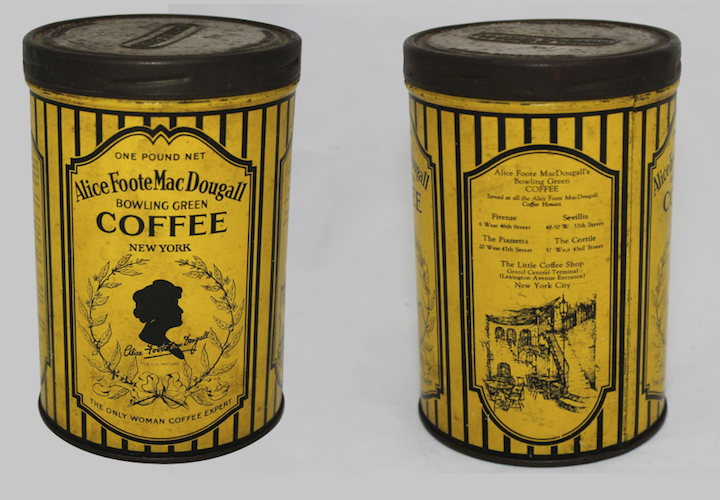
MacDougall was actually from a distinguished New York City family, and her coffee wholesaling career began in 1909 after her husband’s death. Whitaker writes: “In the 1920s she was said to be the only woman expert in coffee grading and blending in the U.S. She opened her first eating place, The Little Coffee Shop, in Grand Central Station in New York in December 1919. Waffles were the specialty in her homey café which was decorated with a plate rail and shelves holding decorative china. (Evidently tips were good, because MacDougall had the nerve to charge her waitresses $10 a day to work there.) By 1927 she had signed a $1 million lease for her fifth coffee house, Sevillia, at West Fifty-seventh Street. Her places became known for their Italian-Spanish scene setting. The reason, she said, was that it provided a way to disguise long, narrow spaces.”
BEANS TO RICHES…Alice Foote MacDougall, ca. 1910. At right, Sevillia, at West Fifty-seventh Street, in the late 1920s. (restaurant-ingthroughhistory.com)TIN GOLD…Canisters of Alice Foote MacDougall’s famed coffee, ca. 1927. (ruby lane.com)
* * *
The Friendly Skies
E.B. White made another appearance in the Aug. 25 issue, this time with a poem describing his recent flight from London to Paris aboard an Imperial Airways trimotor biplane. If White seems to rhapsodize a bit here (especially to jaded fliers of the 21st century), it is understandable, considering that White’s flight to France was only 25 years removed from the Wright Brothers at Kitty Hawk. It was still something miraculous:
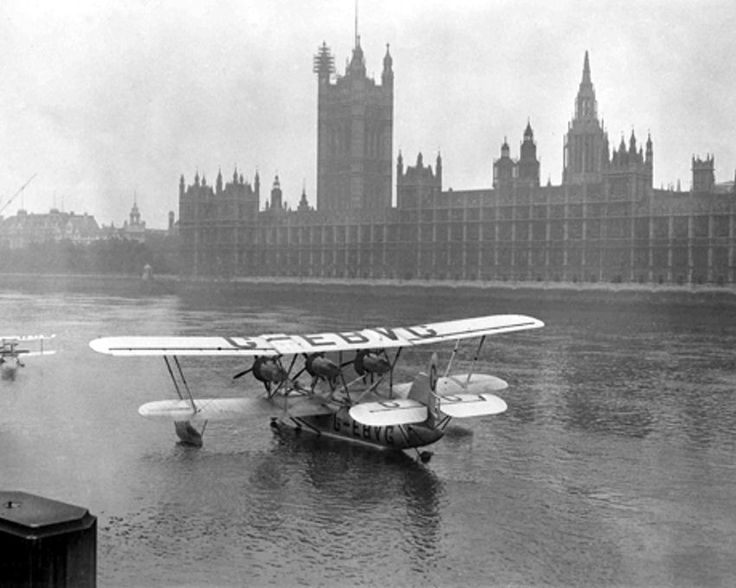
TOP, the Imperial Airways “Calcutta” trimotor flying boat on the Mediterranean, 1928. Below, the “Calcutta” moored on the River Thames in 1928. (Claude Boullevraye de Passillé / AP)
* * *
Missing the Boys of Summer
The New Yorker continued to ignore the sport of baseball in its pages, even though it enthusiastically covered almost everything else: college football, hockey, tennis, golf, lacrosse, polo, rowing and yacht racing. Strange because the New York Yankees had one of the winningest lineups in baseball (Murderer’s Row, with sluggers Babe Ruth and Lou Gehrig), had won the 1927 World Series, and were poised to win it again in 1928. Unless I missed something, the first mention of baseball in the 1928 New Yorker was this bit in Howard Brubaker’s Aug. 25 “Of All Things” column:
The Yankees would sweep the favored St. Louis Cardinals in the ’28 World Series.
From Our Advertisers
This creepy advertisement from the Aug. 25 issue comes courtesy of the Clark Lighting Company. The tagline, “Clark Always Works,” has a double meaning, the ad copy suggesting that a woman is so simple (described here as a “little minx”) that she will be captivated by the very flick of a lighter:
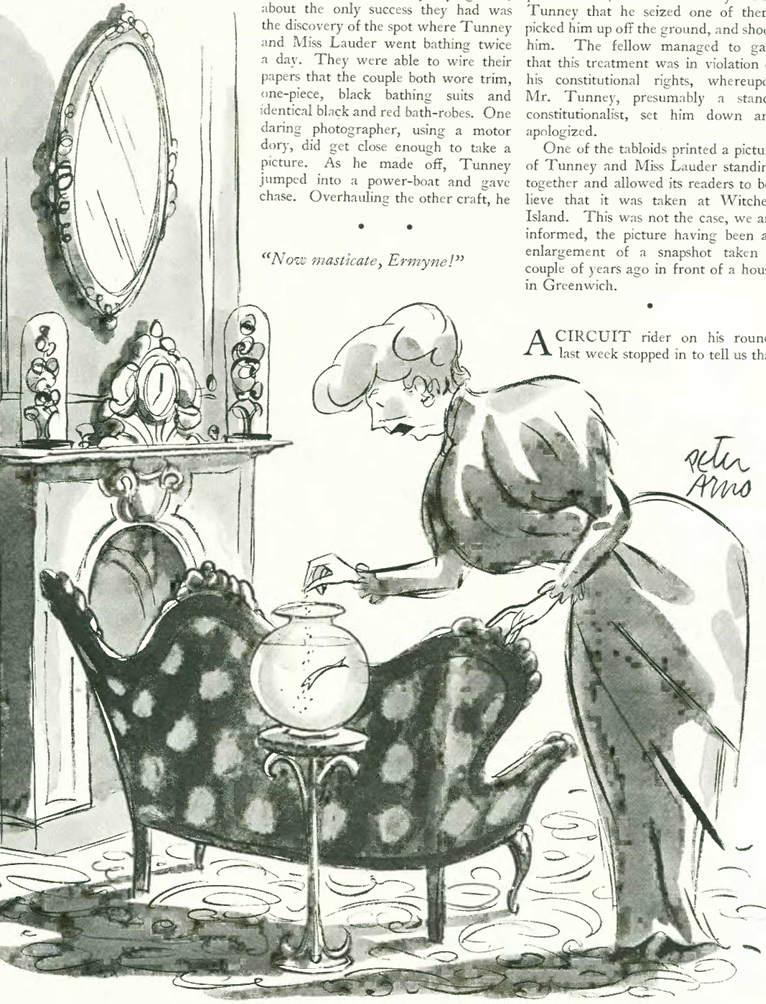
Our cartoon is by Peter Arno, who was making light of a diet fad from the late 19th and early 20th century (hence the woman’s age and dress) made famous by Horace Fletcher, who was known as the “Great Masticator” for his diet that involved chewing each mouthful of food a minimum of 100 times. The cartoon’s caption reads: “Now masticate, Ermyne!”
It seems that each generation has its “Fight of the Century,” a phenomenon that emerges from the alchemy of mass marketing, a lust for blood sport, and the madness of crowds. Gene Tunney — a boxer who also wanted to be a public intellectual — was party to at least two of these spectacles in the 1920s.
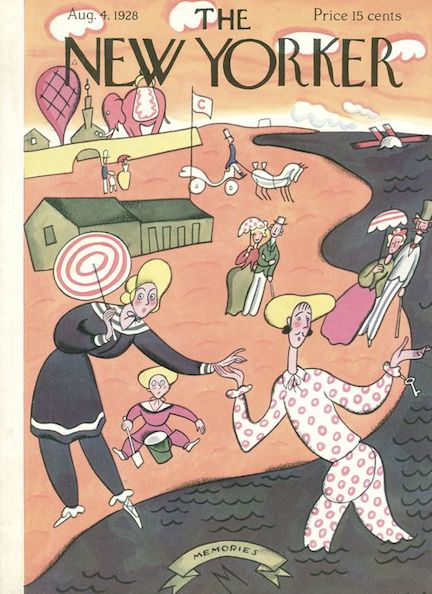
August 4, 1928 cover by Julian de Miskey.
Tunney is most famous for his fights against Jack Dempsey—in some ways they were the Ali–Frazier of their day. Tunney took the heavyweight title from Dempsey in 1926, and again defeated Dempsey in the controversial “long count” rematch one year later, on Sept. 22, 1927. That match was a huge spectacle, staged at Chicago’s Soldier Field in front of 105,000 spectators.
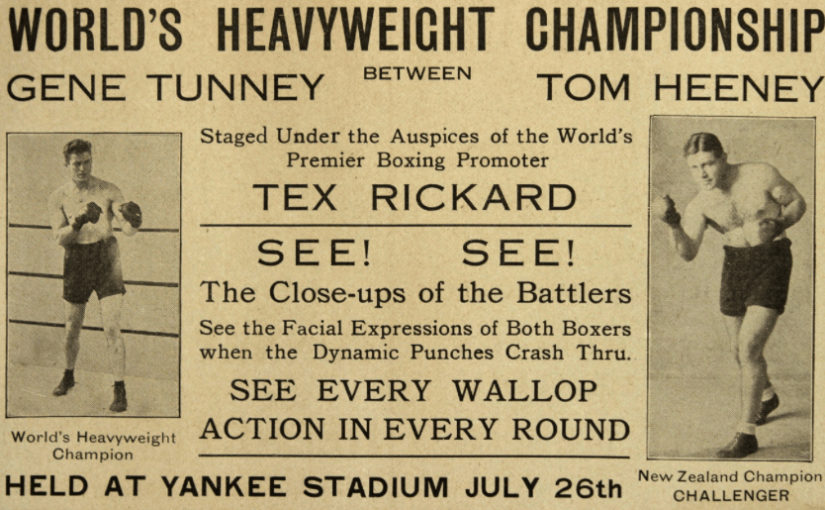
Boxing promoter Tex Rickard saw dollar signs when a scrappy New Zealander named Tom Heeney challenged the champ to a match. Heeney had won the Australian heavyweight title in 1922, and after arriving in the U.S. in 1926 found enough success in the ring to be ranked fourth among the world’s heavyweight boxers.
Writing in his column, “Sports of the Week,” in the July 21, 1928 issue of The New Yorker, Niven Busch Jr. assessed Heeney as a formidable opponent:
NO PALOOKAS HERE…Tom Heeny (left), and Gene Tunney in the late 1920s. (boxrec.com / Alchetron)
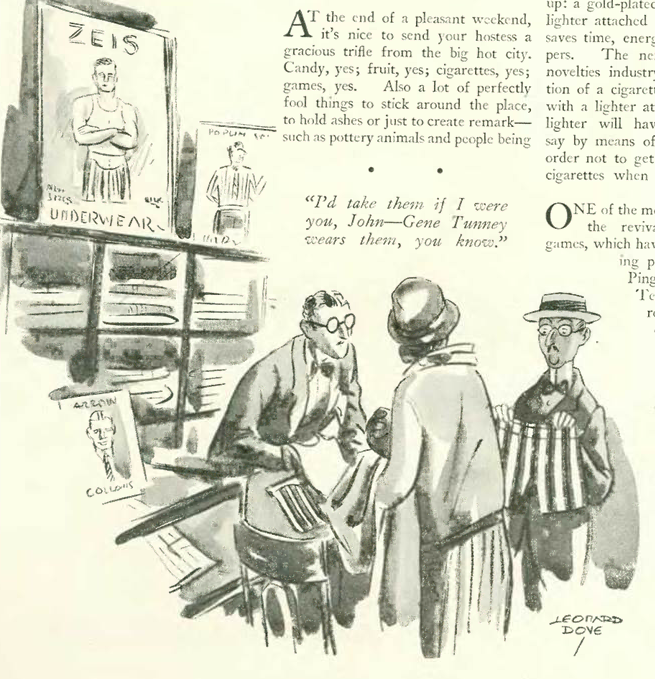
This cartoon by Leonard Dove, also in the July 21 issue, joined in the fun…
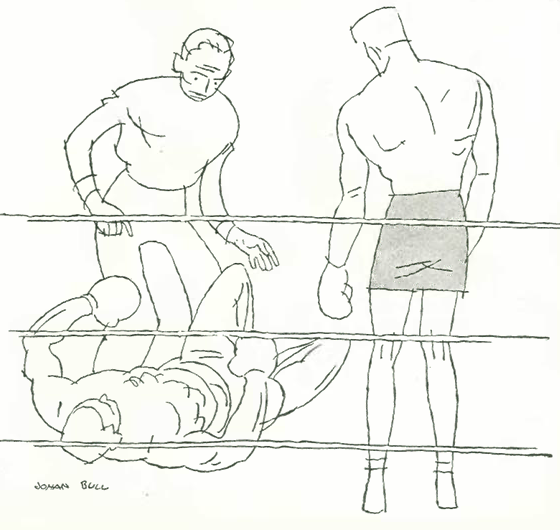
As for the actual fight at Yankee Stadium on July 26, 1928, Tunney won by a TKO in the 11th round. Perhaps the boxer from Down Under wasn’t in such great shape after all, or so surmised Niven Busch Jr in the August 4 issue:
New Yorker illustrator Johan Bull offered this perspective in artwork that accompanied Busch’s article…
Tunney’s winning purse was $525,000 (about $7.3 million today) and Heeney’s was $100,000 ($1.4 million), modest when compared to the recent debacle in Las Vegas that pitted professional boxer Floyd Mayweather Jr. against mixed martial arts champion Conor McGregor. Mayweather earned a disclosed purse of $100 million while Conor McGregor brought home $30 million.
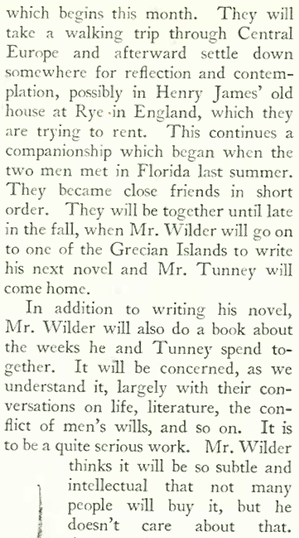
Heeney would remain in the U.S. and fight a few more bouts before retiring to Florida, where he ran a bar and fished with his friend, Ernest Hemingway. Tunney, on the other hand, announced his retirement from boxing just five days after the fight. It was time to finally devote himself to a life of the mind. Norman Klein, writing in the Aug. 4 “Talk of Town,” offered a glimpse into that new life:
BRAIN OVER BRAWN…Boxing champ Gene Tunney, left, and writer George Bernard Shaw on a 1929 vacation to Brioni. (Associated Press)
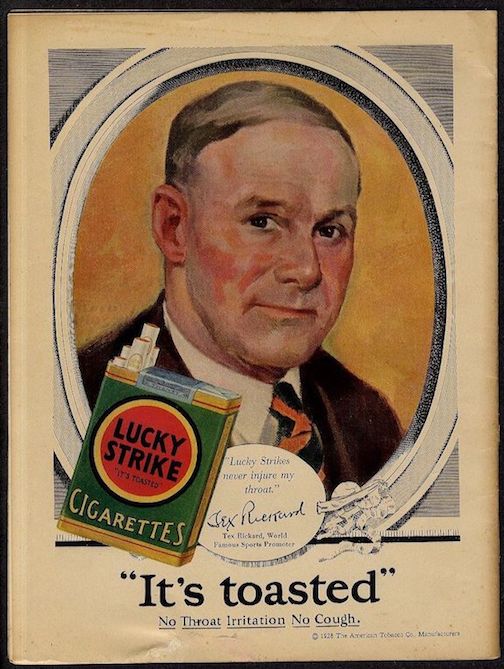
Still not getting enough of The Champ, “Talk” also related this story about Lucky Strike cigarettes, and how that company’s publicists tried unsuccessfully to persuade Tunney to endorse their product:
However the promoter of the Tunney–Heeney fight, Tex Rickard, had no problem taking money from the American Tobacco Company:
THEN I’LL TAKE THE MONEY…The promoter of the Tunney – Heeney fight, Tex Rickard, had no problem endorsing Lucky Strikes in this 1928 advertisement. Rickard would die the following year at age 59, from an appendectomy of all things. (eBay)
* * *
Tunney Was More Exciting
“The Talk of the Town” cast a jaded eye toward the Ninth Olympic Games in Amsterdam:
Poster from the 1928 games. (www.olympic.org)
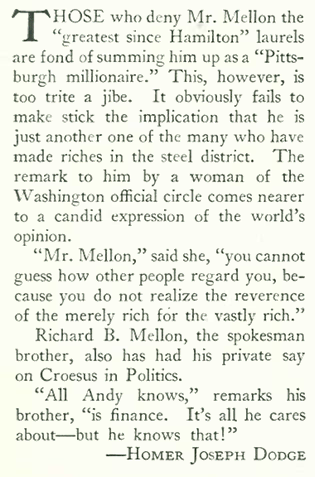
And perhaps even less exciting than the Olympics was the magazine’s “Profile” subject, Andrew W. Mellon, referred to in the title as “Croesus in Politics.” Mellon was no Gene Tunney, but he did ensure his immortal fame through his philanthropy, still expressed today by the Andrew W. Mellon Foundation. Below are the concluding lines of the profile, written by Homer Joseph Dodge:
The article featured this terrific caricature by illustrator Abe Birnbaum…
Planned Obsolescence
The magazine’s “Motors” column touted Chrysler’s new “peaked” radiators, which no doubt caused many insecure Chrysler owners to consider junking their non-peaked models of yesteryear:
This ad in the same issue screamed “new, new, new” for what appeared to be mostly the same old, same old…
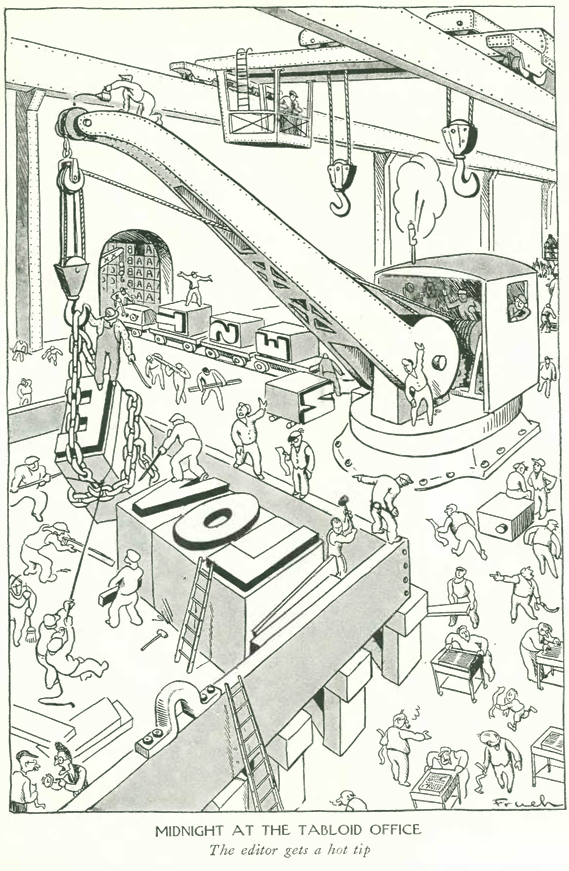
Our comic comes courtesy Al Frueh, who looks in on the workings of a printing press at a celebrity tabloid:
Ring Lardner is one of those 20th century American writers everyone has heard of but few have actually read. This is perhaps because he is often pigeonholed as a sportswriter rather than being remembered as a gifted satirist whose crisp writing style—often peppered with slang—influenced a generation of writers including Ernest Hemingway, who covered sports for his high school newspaper under the pseudonym “Ring Lardner.”
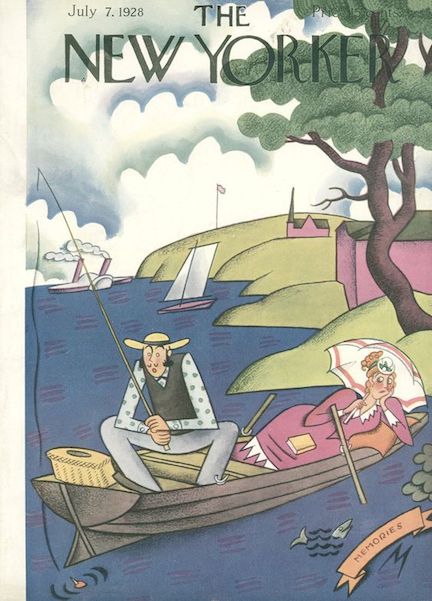
July 7, 1928 cover by Julian de Miskey.
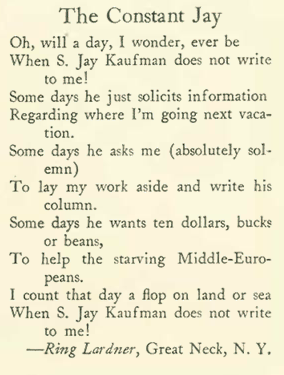
Lardner would contribute nearly two dozen pieces to The New Yorker beginning with this ditty in the April 18, 1925 issue—
—and ending with “Odd’s Bodkins,” published posthumously in the Oct. 7, 1933 issue (Lardner died at age 48 of a heart ailment on Sept. 25, 1933). In his satirical “Profiles” piece for the July 7, 1928 issue, Lardner had some fun with editor and playwright Beatrice Kaufman, who like Lardner existed within the orbit of the famed Algonquin Round Table but was not a regular member (however Beatrice’s husband, playwright and director George S. Kaufman, was a charter member).
The entire piece, including an illustration by Peter Arno, is below (click image to enlarge the text):
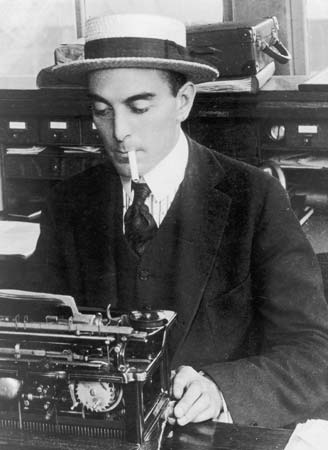
Ring Lardner in undated photo, possibly mid 1920s (Encyclopaedia Britannica)KAUFMAN CHUMS…Comedian Julius Tannen (left) frolics with Beatrice Kaufman and George S. Kaufman in Atlantic City in the 1920s; writer/critic Alexander Woollcott (left), artist Neysa McMein, actor Alfred Lunt, Beatrice Kaufman and comedian Harpo Marx hanging out in the 1920s. (spartacus-educational.com)
* * *
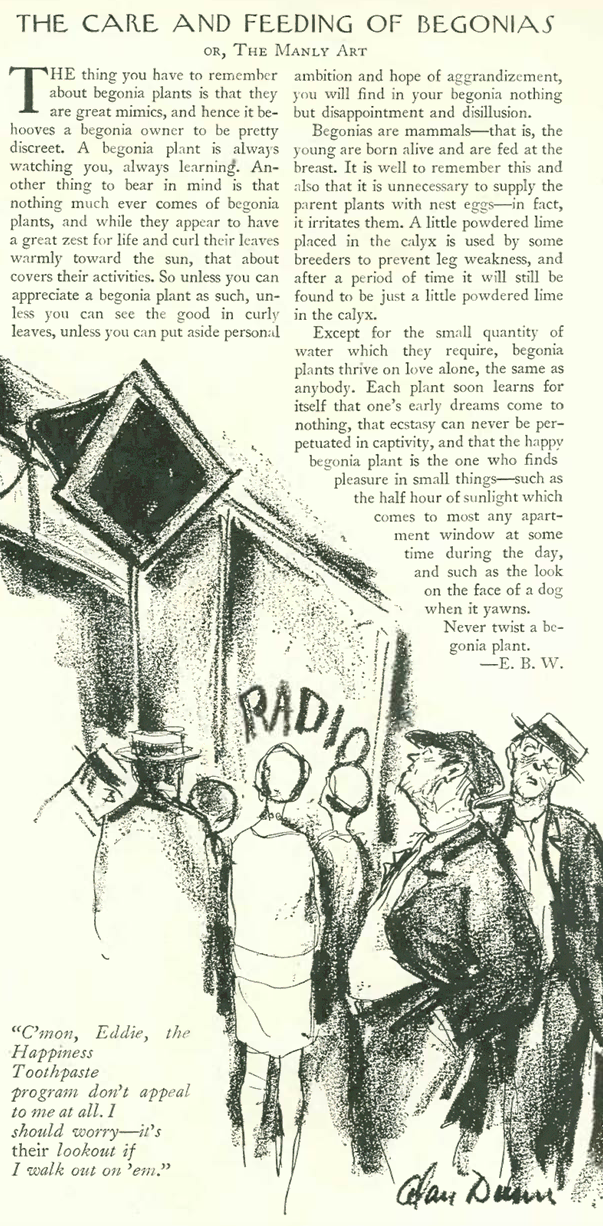
One New Yorker writer who does stand the test of time is E.B. White, known to earlier generations for his many humorous contributions to The New Yorker and to later generations for his co-authorship of the English language reference The Elements of Style, and for his beloved children’s books including Stuart Little and Charlotte’s Web (Charlotte’s Web was often voted as the top children’s novel in a survey of School Library Journal readers, and most recently in 2012—the 60th anniversary of its publication). In the July 7, 1928 issue the nature-loving White offered these tongue-in-cheek plant care instructions, arranged atop a cartoon by Alan Dunn:
Another cartoon in the July 7 issue by Garrett Price offered another perspective on an advertising come-on:
No doubt Price was referencing ads such as this one below by the American Tobacco Company in which actress and dancer Gilda Gray—who in the 1920s popularized a dance called the “shimmy”—announced her preference for pipe smokers:
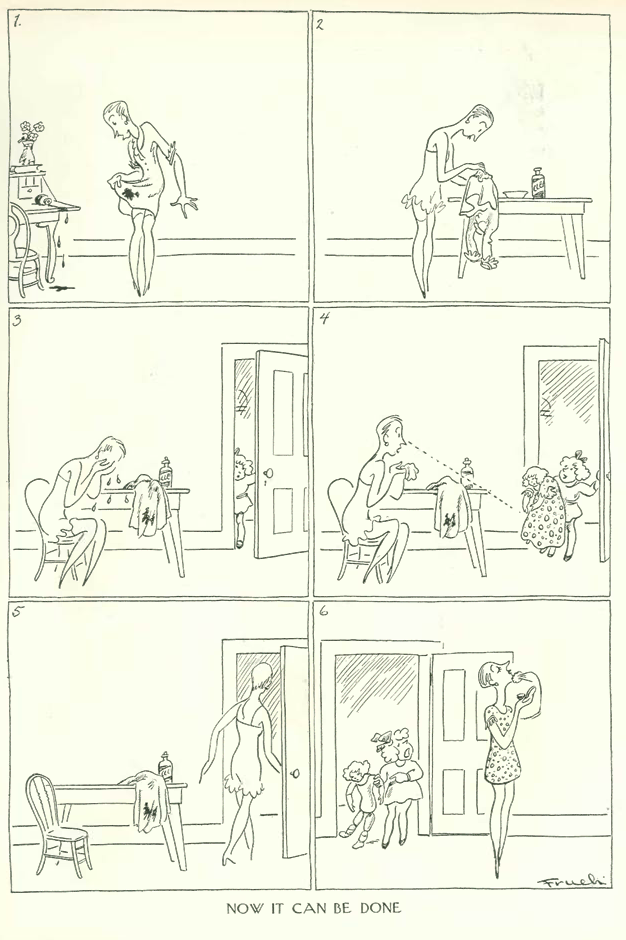
And we close with this cartoon by Al Frueh, who demonstrated how fashion had freed the woman of the Roaring Twenties:
Interested in the history of New Yorker cartoons and cartoonists? Then I recommend you check out cartoonist Michael Maslin’sInkspillwebsite for news on cartoonists and events. Another great site is Stephen Nadler’sAttempted Bloggery, which explores original art, auctions, obscurities and other angles of New Yorker cartoons and cartoonists.
A couple of my favorite Maslin cartoons (among many):
Before screenwriter Niven Busch Jr. headed to Hollywood in 1931, he cut his teeth as writer for The New Yorker, contributing a series of profiles (later compiled in Twenty-one Americans) as well as an intermittent series from May 1927 to Feb. 1930 on New York’s Prohibition-era speakeasies.
February 18, 1928 cover by Theodore G. Haupt.
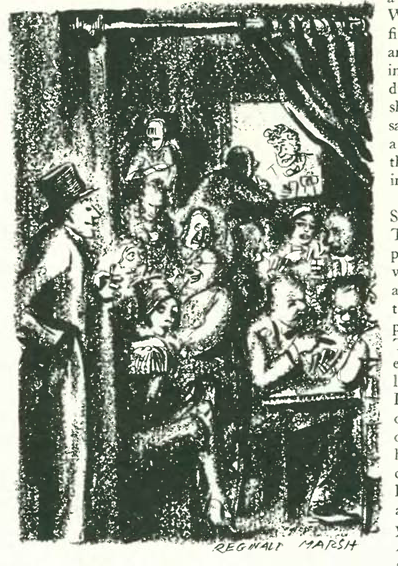
Always careful to shield the identity of speakeasy owners and patrons, Busch described the often less-than-glamorous digs of New York’s illegal watering holes. In a speakeasy called “The No Trump,” two Irish brothers took turns mixing drinks “on a kitchen table in a cubbyhole” while Busch sat in a darkened bar and listened in on a conversation coming from the adjoining “bridge room”…
This illustration by Reginald Marsh accompanied Niven Busch’s article.
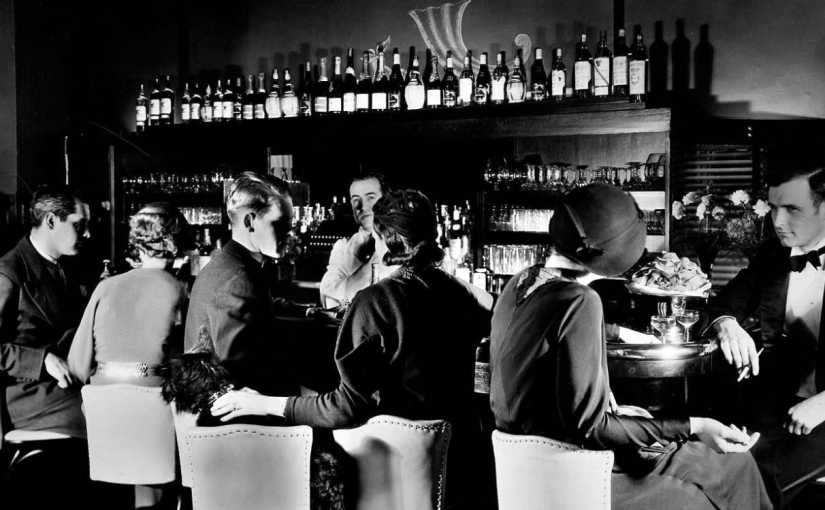
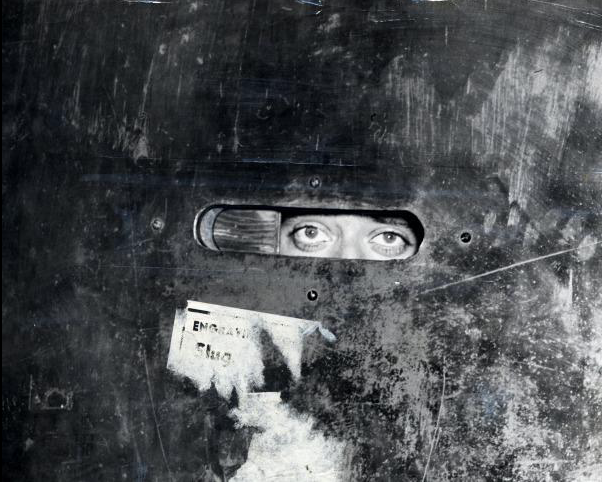
LAST CALL…Images taken by photographer Margaret Bourke-White for Life magazine during the last days of Prohibition. (Time.com)WHO GOES THERE?…The familiar slot in the door came in handy for speakeasy owners wishing to screen clients before allowing entry into their illegal lairs. (Chicago Tribune)BETTER SWILL…The Marlborough House, an East Side speakeasy for socialites during Prohibition, 1933. Photo by Margaret Bourke-White for Fortune. (Time.com)
Busch also described his visit to the “Circus Speakeasy,” operated by a man who “travelled for 21 years with the Ringling Circus”…
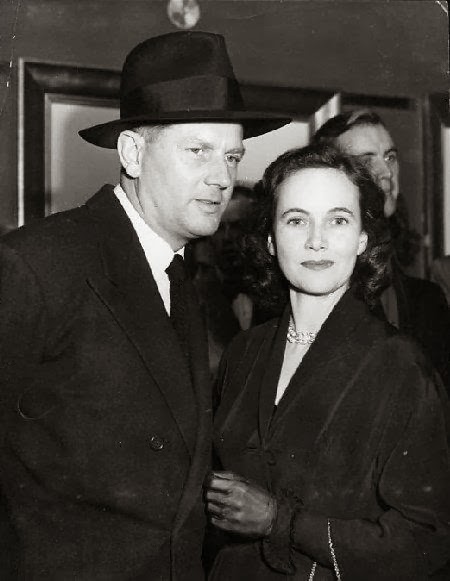
A young Niven Busch Jr., circa 1930. (enetpress.com)Busch and the third of his five wives, the actress Teresa Wright, in the 1940s. (danielmartineckhart.com)
In his later years as a producer and screenwriter in Hollywood, Busch would script movies ranging from The Man With Two Faces (1934) starring Edward G. Robinson, to The Postman Always Rings Twice (1946), with Lana Turner.
All Aboard
One of the prominent voices of the unsigned “Talk of the Town,” E.B. White was also a regular contributor of short pieces in The New Yorker, such as the following which described a mistaken encounter on an overnight train:
* * *
Another way to calm the jitters
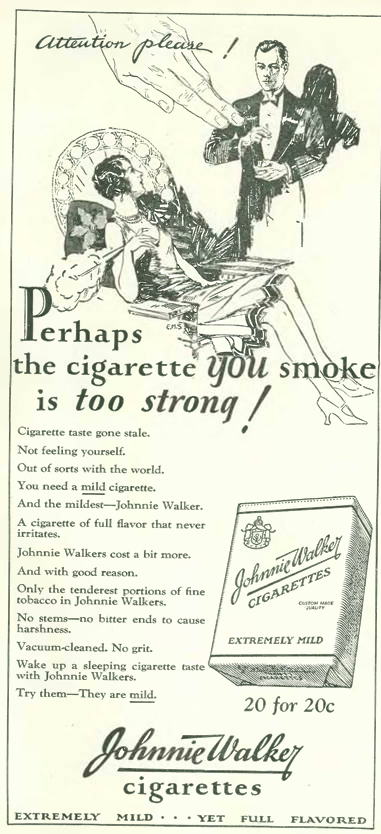
If you couldn’t legally (or illegally) buy Johnny Walker Scotch whisky in 1928, you had to settle for their brand of “vacuumed-cleaned, extremely mild” cigarettes, which were apparently sold as late as the 1950s…
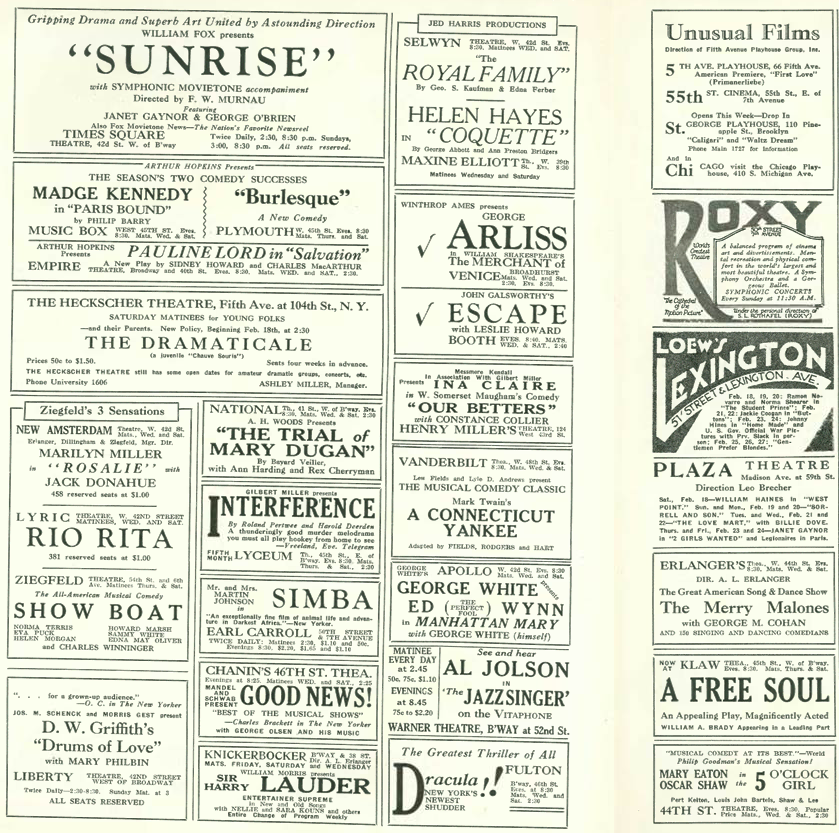
And to get a taste of what was showing at the local cinemas, I’ve included this page-and-third spread of movie and theatre ads from the back pages. Note the film Sunrise featured prominently at the top left-hand corner.
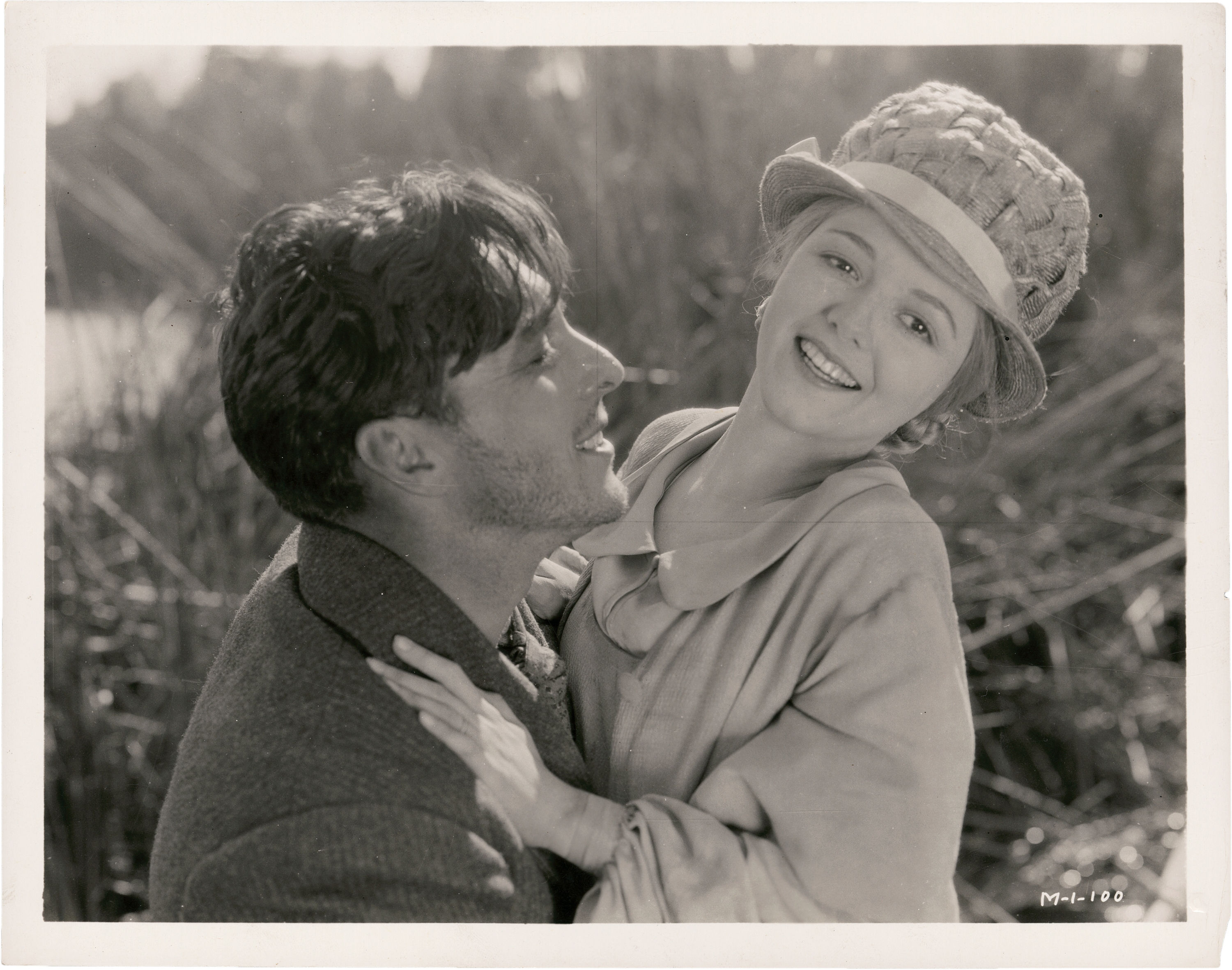
Starring George O’Brien, Janet Gaynor, and Margaret Livingston, this 1927 silent romantic drama, directed by F.W. Murnau, used the new Fox Movietone sound-on-film system, making it one of the first feature films with a synchronized musical score and sound effects soundtrack. Sunrise (full title: The Sunrise: A Song of Two Humans) won the Academy Award in the category “Unique and Artistic Picture” at the 1st Academy Awards in 1929, and Gaynor won the first Academy Award for “Best Actress in a Leading Role.” Sunrise is considered one of the greatest films of the silent era and even today is widely considered a masterpiece.
AWARD-WINNING SMILES…George O’Brien and Janet Gaynor in 1927’s acclaimed The Sunrise: A Song of Two Humans. (The Red List)
* * *
And finally, more hijinks from the moneyed classes, courtesy of Peter Arno:
American inventor Thomas Edison was a hero to the young Henry Ford, who grew up to become something of a tinkerer himself with his pioneering development of the assembly line and mass production techniques. Over a matter of decades in the late 19th and early 20th century these two men would play outsized roles in transforming the American landscape and our way of life.
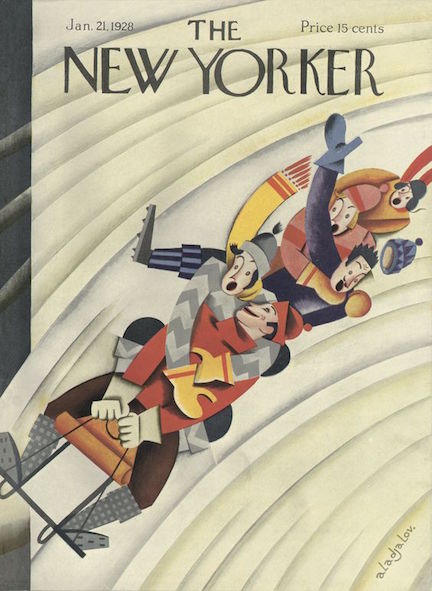
January 21, 1928 cover by Constantin Alajalov.
Ford would first meet Edison in August 1896, at a convention of the Association of Edison Illuminating Companies held at the Oriental Hotel in Brooklyn—it was just two months after the 33-year-old Ford had finished work on his first car—a “quadricycle”—consisting of a simple frame, an ethanol-powered engine and four bicycle wheels. In contrast, by 1896 the 49-year-old Edison was a worldwide celebrity, having already invented the phonograph (1877), the incandescent lamp (1879), public electricity (1883) and motion pictures (1888).
WHAT NEXT, A CAR STEREO?…Thomas Edison (left) with his second phonograph, photographed by Mathew Brady in Washington, D.C., April 1878. At right, Henry Ford sits in his first automobile, the Ford Quadricycle, in 1896. (Wikimedia Commons)
By 1907 the two had forged a close friendship that would endure the rest of their lives. So it was no surprise that these two giants of the machine age would show up together at the New York Auto Show at Madison Square Garden and take a gander at the latest technical marvels, including Ford’s new “Model A.” The New Yorker’s “Talk of the Town” was on hand as witness:
NEAT-O…Thomas Edison and Henry Ford at the 1928 New York Auto Show. (Associated Press)IT SOLD LIKE HOTCAKES…Henry Ford and son Edsel introducing the 1928 Ford Model A at the Ford Industrial Exposition in New York City, January 1928. (thehenryford.org)
* * *
E.B. Drives the ‘A’
In the same issue (Jan. 21, 1928) E.B. White told readers how to drive the new Model A—in his roundabout way. Some excerpts:
No doubt White was feeling a bit wistful with the arrival of the Model A, which supplanted its predecessor, the ubiquitous Model T. White even penned a farewell to the old automobile under a pseudonym that conflated White’s name with Richard Lee Strout’s, whose original submission to The New Yorker inspired White’s book (illustrated by New Yorker cartoonist Daniel ‘Alain’ Brustlein).
FAREWELL TIN LIZZIE…E.B. and Katharine White driving his beloved Model T.
In Farewell to Model T White recalled his days after graduating from college, when in 1922 he set off across America with his typewriter and his Model T. White wrote that “(his) own vision of the land—my own discovery of it—was shaped, more than by any other instrument, by a Model T Ford…a slow-motion roadster of miraculous design—strong, tremulous, and tireless, from sea to shining sea.”
The Eternal Debate
In his “Reporter at Large” column, Morris Markey commented on the execution of former lovers and convicted murderers Ruth Snyder and Judd Gray, noting that once again the debate over the death penalty had been stirred, but as usual there was no resolution in sight. Little could Markey know that we would still be holding the debate 89 years later, with no resolution in sight.
END OF THE LINE…Mugshots of Ruth Snyder and Henry Judd Gray taken at Sing Sing Prison following their conviction for the murder of Snyder’s husband. They were executed Jan. 12, 1928. (Lloyd Sealy Library, CUNY)
* * *
Ahoy there
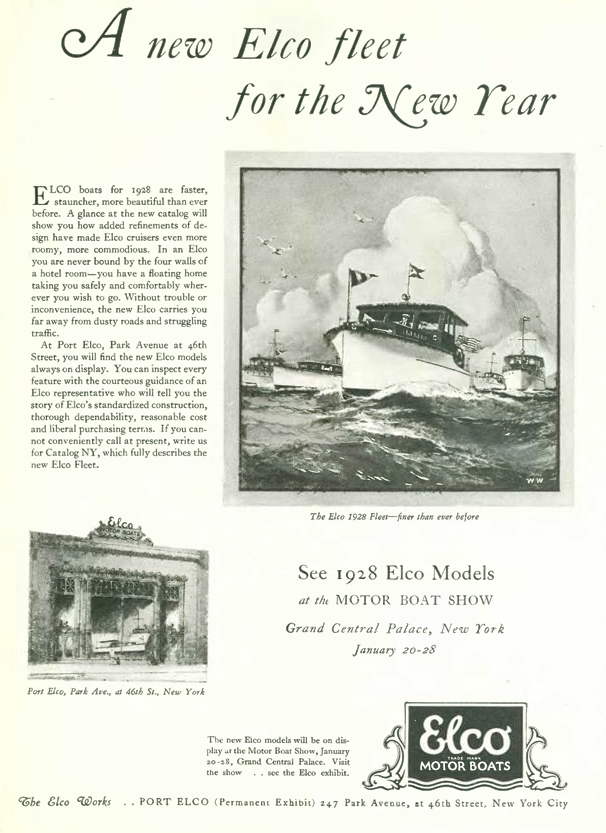
The New York Boat Show was back in town at the Grand Central Palace, enticing both the rich and the not-so-rich to answer the call of the sea. Correspondent Nicholas Trott observed:
An advertisement in the same issue touted Elco’s “floating home”…
But if you aspired to something larger than a modest cruiser, the Boat Show also featured an 85-foot yacht…
But for the rest of the grasping orders, Chris-Craft offered the Cadet, an affordable 22′ runabout sold on an installment plan. Another ad from the issue asking those of modest means to answer “the call of freedom!”
For an affordable boat, the Chris-Craft was really quite beautiful—its mahogany construction puts today’s fiberglass tubs to shame…
PRETTY SWEET…A 1928 Chris-Craft Cadet. (Click to enlarge)
* * *
Odds & Ends
The boat show was one indication that spring was already in the air. The various ads for clothing in the Jan. 21 issue had also thrown off the woolens, such as this one from Dobbs on Fifth Avenue, which featured a woman with all the lines of a skyscraper.
And to achieve those lines, another advertisement advised young women to visit Marjorie Dork…
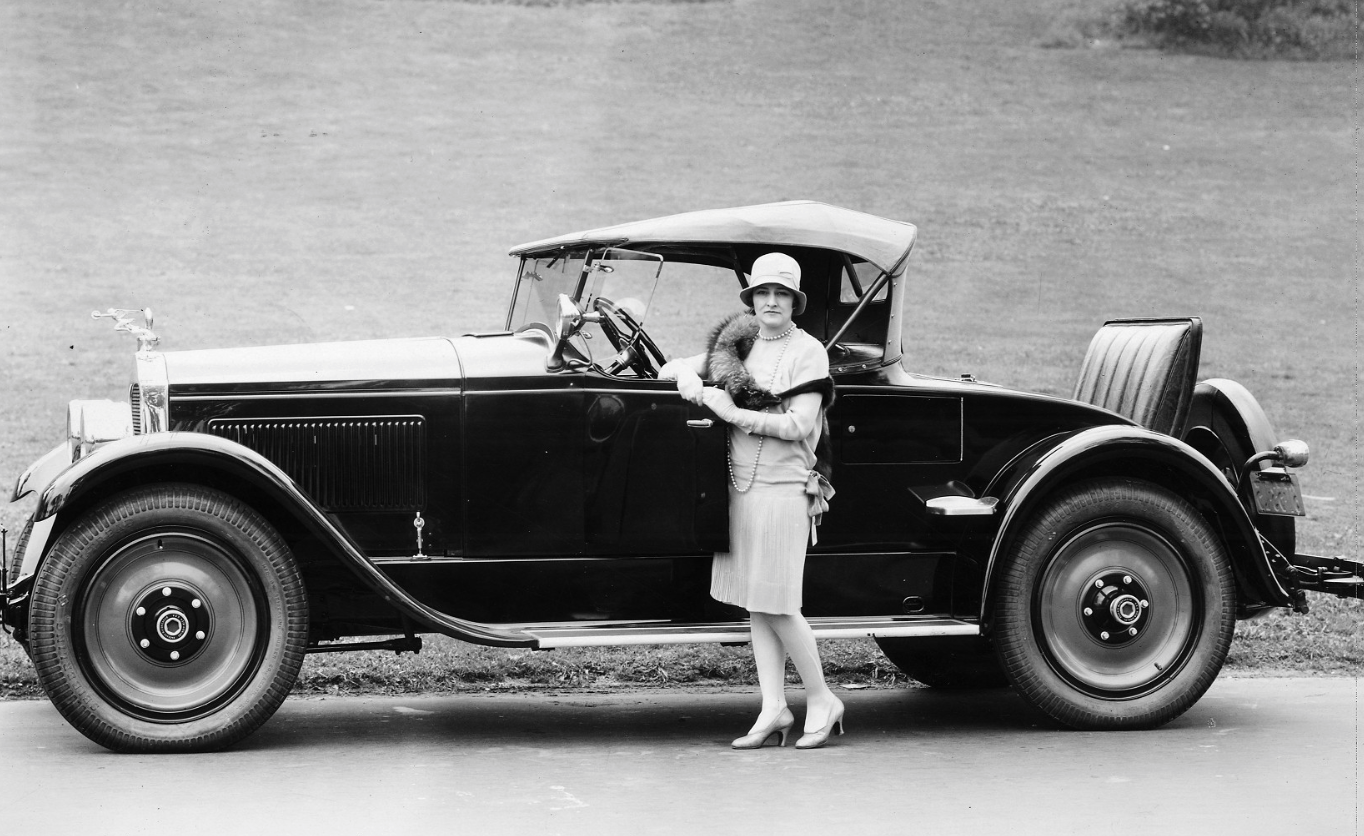
…who seemed to do quite well for herself in the early days of fitness training…
THOROUGHLY MODERN MARJORIE…New York beauty specialist Marjorie Dork, with her Packard, in New York’s Central Park, 1927. Original photo by John Adams Davis, New York. (Detroit Public Library)
And then there was a back page ad that said to hell with healthy living…
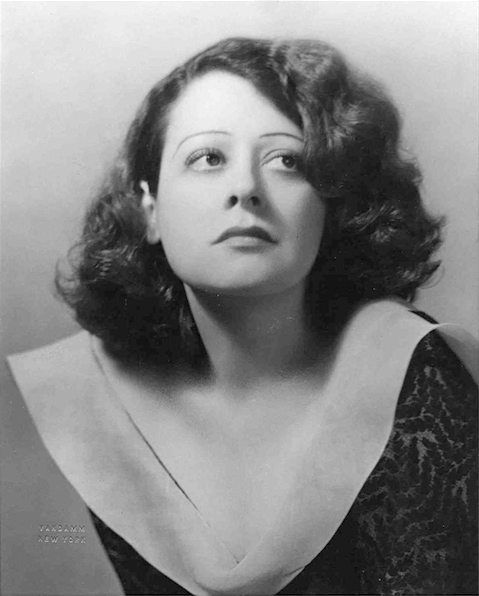
The actress featured in the advertisement, Lenore Ulric, was considered one of the American theater’s top stars. Born in 1892 as Lenore Ulrich in New Ulm, Minnesota, she got her start on stage when she was still a teen, a protégé of the famed David Belasco. Though she primarily became a stage actress, she also made the occasional film appearance, portraying fiery, hot-blooded women of the femme fatale variety.
Portrait of Lenore Ulric by New York’s Vandamm Studio. (broadway.cas.sc.edu)
* * *
And we close with this post with a peek into the into upper class social scene, courtesy of Barbara Shermund…





































































































 A New Yorker State of Mind