More Funny Business

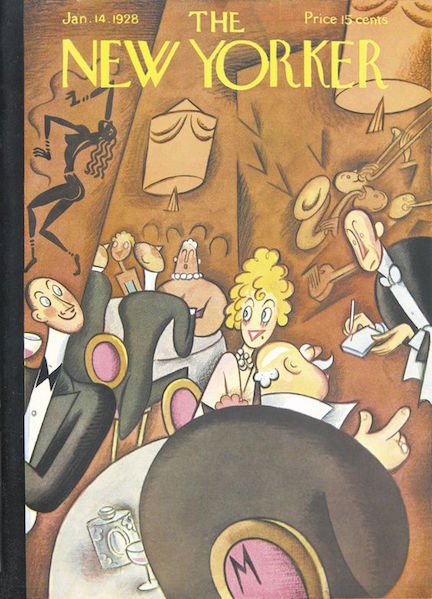
My last entry featured cartoonist Bud Fisher, inventor of the comic “strip” (Mutt & Jeff) and the subject of The New Yorker’s Nov. 26, 1927 “Profile.” It was something of a surprise, then, to open the next issue, Dec. 3, and find literary critic Dorothy Parker offering her observations on the funny papers, including Sidney Smith’s comic strip, The Gumps.

dec-3
December 3, 1927 cover by Constantin Alajalov.

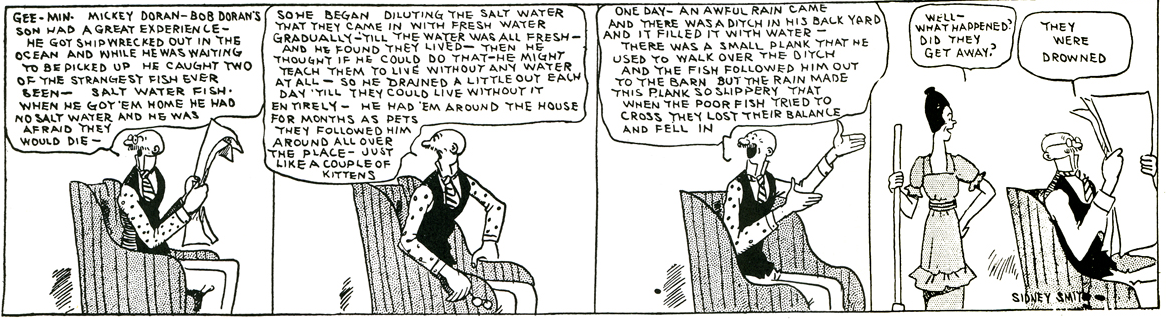
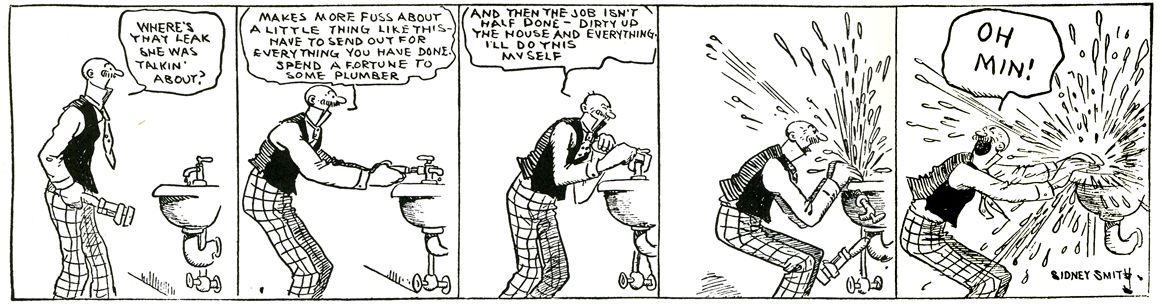
Before we get to Dorothy Parker, let’s have a look at The Gumps, created by Sidney Smith in 1917. Although that strip had plenty of slapstick, it was wordier than Mutt & Jeff and somewhat more realistic (Smith was the first cartoonist to kill off a regular character, in 1929–it caused a national outcry). An example of the strip from around 1920:

screen-shot-2017-01-31-at-12-37-37-pm
(michaelspornanimation.com) Click image to enlarge

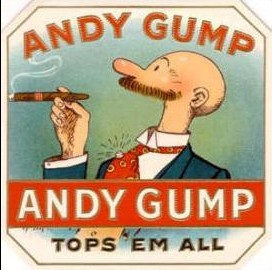
Like Bud Fisher, Smith would become wealthy from the merchandising of Gump toys, games, songs, food products, etc…

9eef3c685e113a5712ce4c353729044a
The image of Andy Gump even graced cigar boxes. (kenlevine.blog)

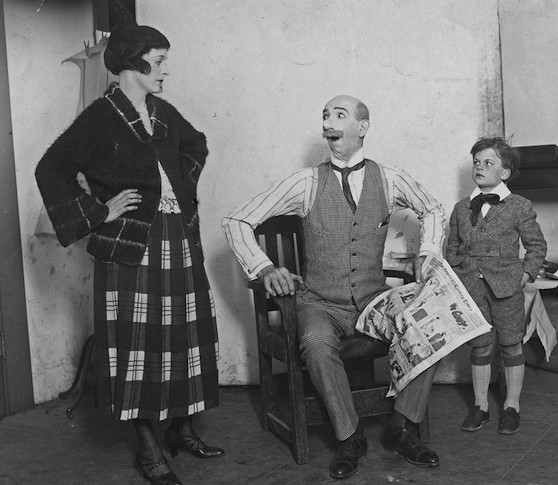
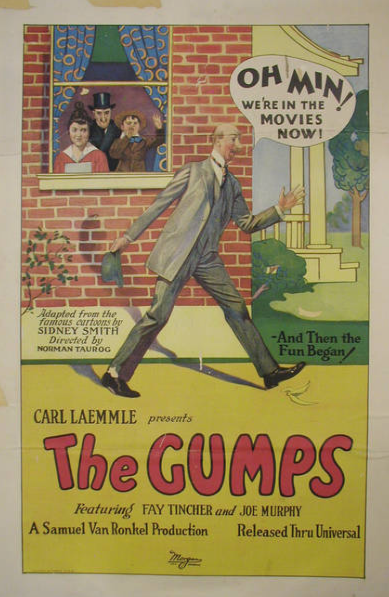
The Gumps were also featured in nearly 50 animated shorts, and between 1923 and 1928 Universal produced dozens of two-reel comedies starring Joe Murphy (one of the original Keystone Cops) as Andy Gump, Fay Tincher as Min and Jack Morgan as Chester (two-reelers were usually comedies, about 20 minutes in length). The director of these short films, Norman Taurog, would go on to become the youngest director to win an Academy Award (Skippy 1931). He would also direct such films as Boy’s Town (1938) and nine Elvis Presley movies from 1960 to 1968.

His comic strip barely five years old, in 1922 Smith famously signed a 10-year, one million-dollar contract. In 1935 he would sign an even more lucrative contract, but on his way home from the signing he would die in a car accident.

574451a661b35824488062388d2a1939
OH MIN!…A publicity still from Universal’s two-reel comedy series featuring The Gumps. From left, Fay Tincher (Min), Joe Murphy (Andy Gump) and Jackie Morgan (Chester). The actress Fay Tincher is a bit of a mystery…an enterprising young comedienne who started her own production company in 1918, she dropped from public view by 1930, and little is known of her life since that time, even though she lived to see the year 1983, and died at age 99. (younghollywoodhof.com)
screen-shot-2017-02-01-at-9-26-09-am
Theatre poster announced the coming of what would be dozens of two-reelers produced by Universal between 1923 and 1928 featuring The Gumps. (imdb.com)

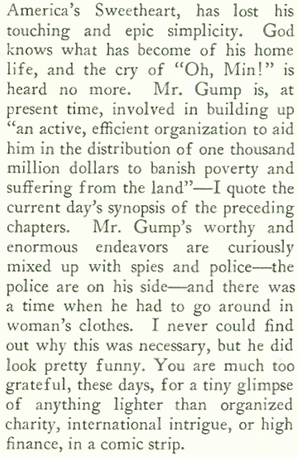
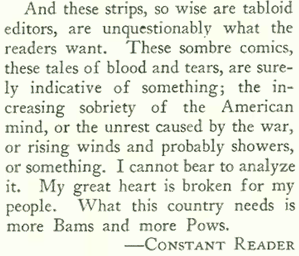
In her column, “Reading and Writing,” Dorothy Parker (writing under the pen name “Constant Reader”) lamented the fact that the comic strips were abandoning simple, light horseplay in favor of “melodramas.” Apparently even Andy Gump wasn’t exempt:

screen-shot-2017-01-30-at-10-06-30-am

screen-shot-2017-01-30-at-10-06-42-am

thegumpsintro21217

screen-shot-2017-01-31-at-9-55-35-am
GUMPS IN THE DUMPS…in late 1927 Dorothy Parker longed for the antics of the old, dimwitted Andy Gump and his much-brainier wife, Minerva. Above, the first strip from 1917 that introduced The Gumps. Below, a circa 1920 strip featuring a typical Andy Gump mishap and his trademark “Oh Min!” (newspapers.com) Click images to enlarge.

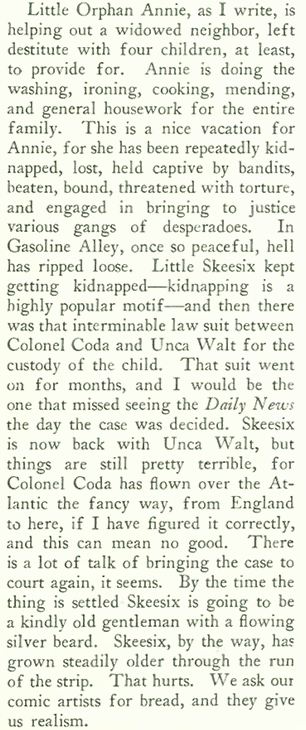
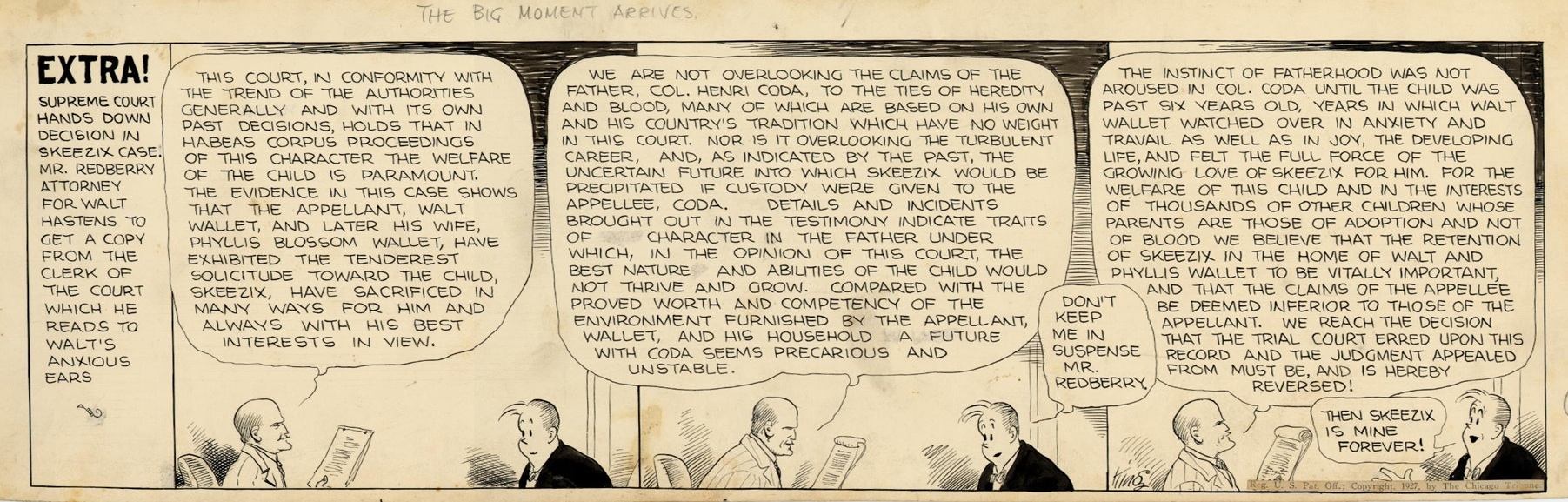
Parker also bemoaned the likes of Little Orphan Annie and the gang from Gasoline Alley, where everyday hijinks were replaced by melodrama:

screen-shot-2017-01-30-at-10-07-07-am

screen-shot-2017-01-31-at-1-02-47-pm
I LOVE YA, TOMORROW…but I’m gonna kick your ass today! Annie gets rough in this 1927 strip. Hugely popular, the strip (begun in 1924) inspired a ton of merchandise, films, a radio show and the musical Annie. The strip Little Orphan Annie made creator Harold Gray a very rich man. (ha.comics.com) Click image to enlarge.
ga23nov1927
SORRY, NO PIE IN THE FACE HERE…In this series of turgid word balloons, Walt gets full custody of the orphan Skeezix in this Gasoline Alley strip from 1927, ending what Dorothy Parker called “an interminable law suit.” First published November 24, 1918 by Frank King (who drew the strip until 1959), Gasoline Alley is still going and is the second-longest-running comic strip in the U.S. As Parker noted in her column, the characters in Gasoline Alley were allowed to age naturally. Skeezix is currently 97 years old. (hoodedutilitarian.com) Click image to enlarge.

Parker suffered throughout her life from depression, and no doubt turned to the funnies for respite. However, she wrote that she hadn’t “seen a Pow or a Bam in an egg’s age,” and sadly concluded that melodrama was what the readers wanted.

screen-shot-2017-01-31-at-9-27-56-am

When Minerva Was a Car

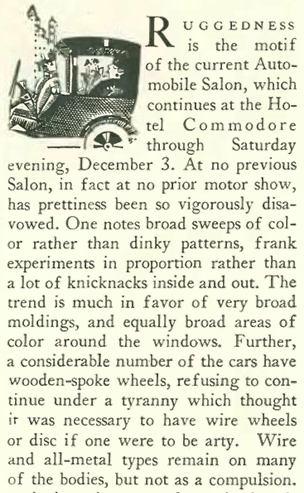
The New Yorker’s Nicholas Trott visited the Automobile Salon at the Hotel Commodore and noted that the latest trend favored an automobile’s “ruggedness” over its “prettiness.” Given the condition of roads in the 1920s, that probably wasn’t a bad thing…

the-automobile-salon

In the early days of the auto industry there were thousands of different manufacturers that eventually went broke or merged with other companies. Trott’s article mentioned new offerings from Chrysler, Mercedes, and Cadillac as well as from such makes as Erskine, Sterns-Knight, Minerva, Holbrook Franklin, Stutz, and Brewster.

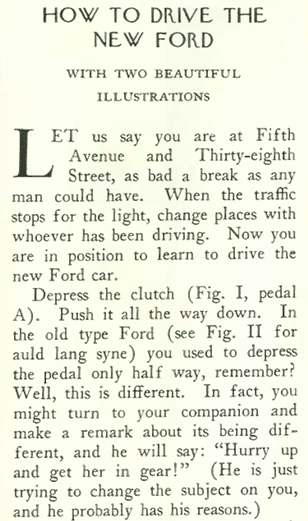
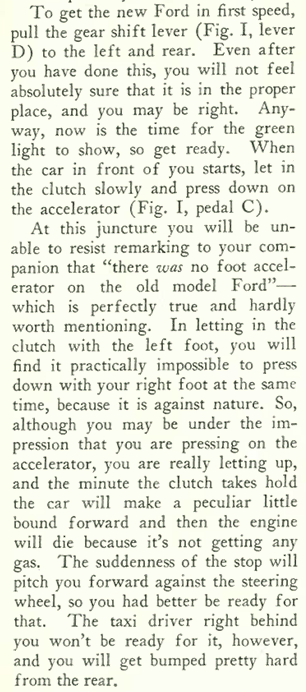
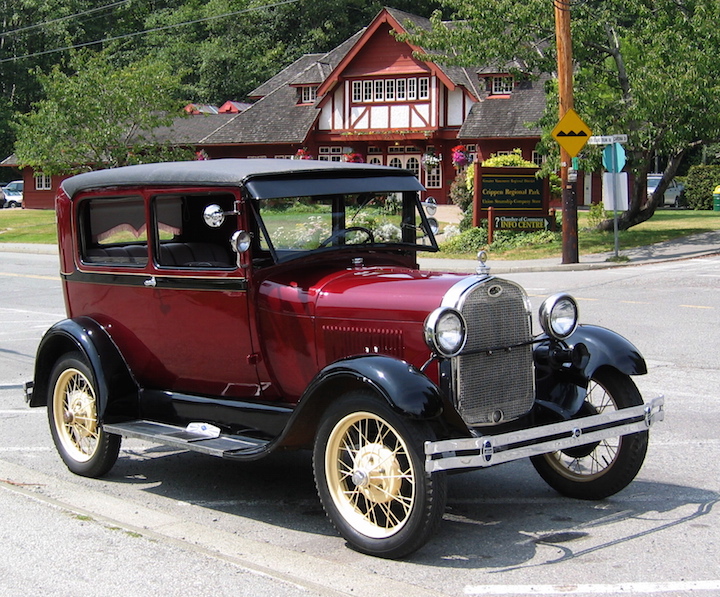
In “The Talk of the Town,” however, the editors wrote about another car with a far less colorful name: The Ford Model A. After 18 years of the ubiquitous black Model T, Ford buyers were ready for something different…

screen-shot-2017-01-30-at-9-38-36-am

1928_model_a_ford
GOOD ENOUGH…The 1928 Ford Model A Tudor Sedan (Wikipedia)

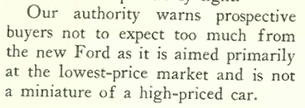
New Yorker editors cautioned, however, that buyers of the Model A should “not expect too much” from a car aimed at more modest pocketbooks. In a little more than a year Ford would sell one million of the things, and by the summer of 1929, more than two million.

screen-shot-2017-01-30-at-9-39-30-am

When Model A production ended in early 1932, nearly five million of the cars had been produced.

German Atrocities?

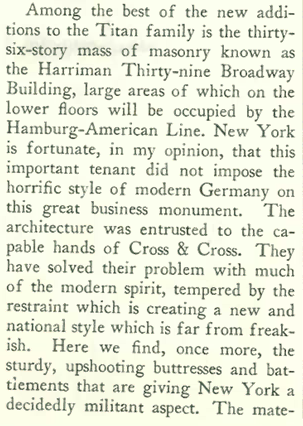
It’s seemed a bit of an “about face” for New Yorker architecture critic George S. Chappell to write of the “horrific style of modern Germany” after previously writing admiringly of the Bauhaus movement and “International Style” promulgated by Le Corbusier. Chappell’s column “The Sky Line” included this subhead, “German Atrocities Neatly Escaped.” In a few years “German Atrocities” would refer to something very different…

screen-shot-2017-01-30-at-10-02-36-am

screen-shot-2017-01-30-at-10-03-44-am

mny325559
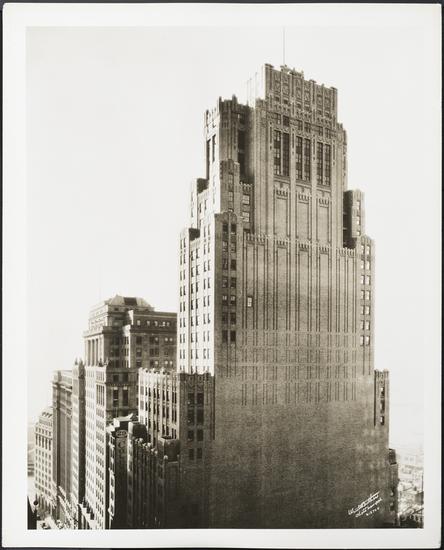
TEN-HUT!…The New Yorker’s George Chappell liked the Harriman Building at 39 Broadway despite its “militant aspect.” Designed by Cross & Cross, it opened in 1928. (Museum of the City of New York)

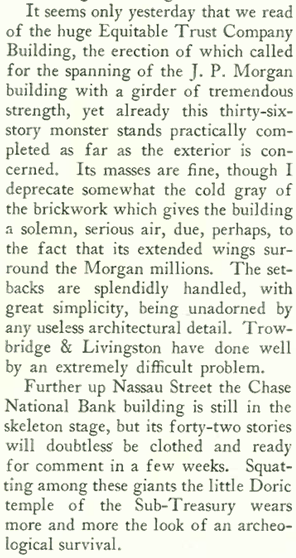
Another monstrous building of note in Chappell’s column was the “huge” Equitable Trust Building at 15 Broad Street…

screen-shot-2017-01-30-at-10-03-56-am

mny323767
Equitable Trust Building at 15 Broad Street. Designed by Trowbridge & Livingston, completed in 1928. (Museum of the City of New York)

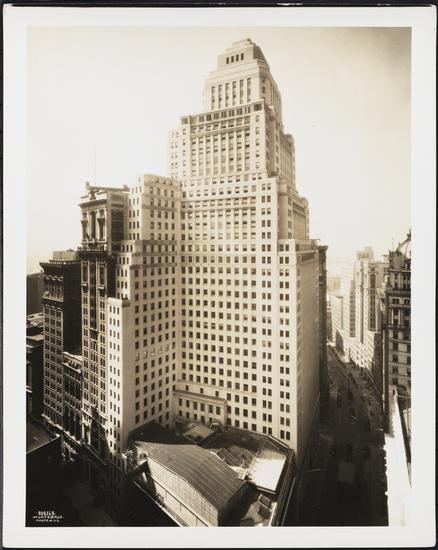
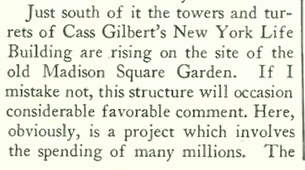
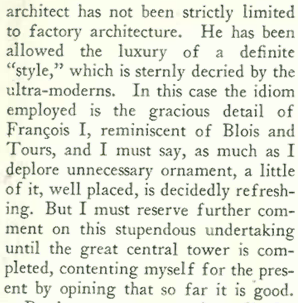
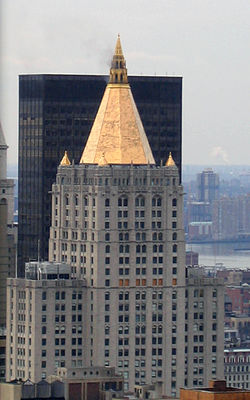
To save the best for last, Chappell also wrote of Cass Gilbert’s landmark New York Life Building, rising on the site of the old Madison Square Garden…

screen-shot-2017-01-30-at-10-04-22-am

screen-shot-2017-01-30-at-10-04-42-am

The distinctive pyramidal gilded roof of the New York Life Insurance Building, (Wikipedia)

 *  *  *

She Nearly Made It

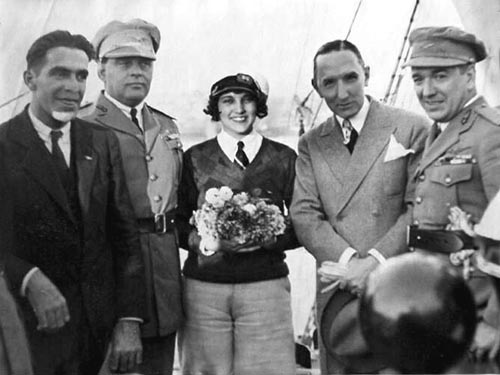
Morris Markey wrote about the exploits of pilot and actress Ruth Elder (1902–1977) in his “Reporter at Large” column. Known as the “Miss America of Aviation,” on Oct. 11, 1927, Elder and her co-pilot, George Haldeman, took off from New York in her attempt to become the first woman to make a transatlantic crossing to Paris. Mechanical problems in their airplane (a Stinson Detroiter dubbed American Girl) caused them to ditch into the ocean 350 miles northeast of the Azores. Fortunately they were rescued by a Dutch oil tanker in the vicinity.

elder_trip_4_500
NO WORSE FOR WEAR…Ruth Elder, center, and George Haldeman, far left, on board their rescue ship, the Barendrecht, Oct. 25, 1927. (ctie.monash.edu)
wt81_hootandlady
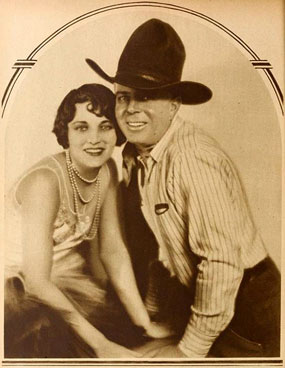
WHAT A HOOT…Ruth Elder and Hoot Gibson in a promotional pose for the 1929 film Winged Horseman (usc.edu).

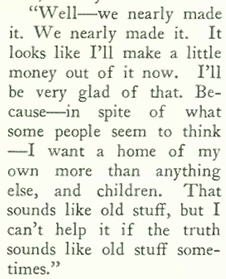
Although they were unable to duplicate Charles Lindbergh’s feat, Elder and Haldeman nevertheless established a new over-water endurance flight record of 2,623 miles–the longest flight ever made by a woman. They were honored with a ticker-tape parade upon their return to New York. Despite her derring-do, Elder suggested that she longed for a simpler, more domestic life…

morris-markey-a-reporter-at-large-ruth-elder

Whether or not she found the simple life it is hard to say. She married six times, perhaps looking for the right “old stuff” and not quite finding it.

 *  *  *

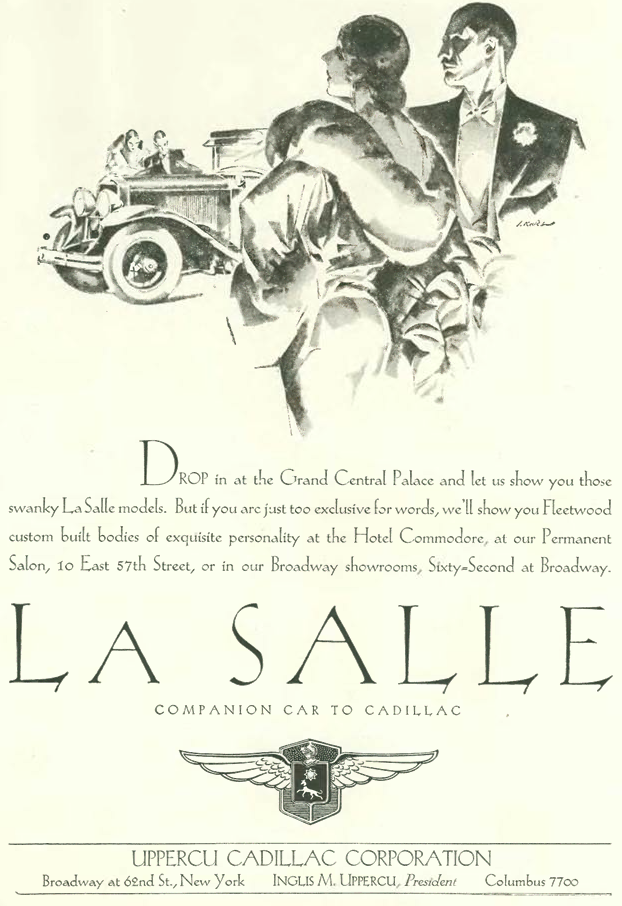
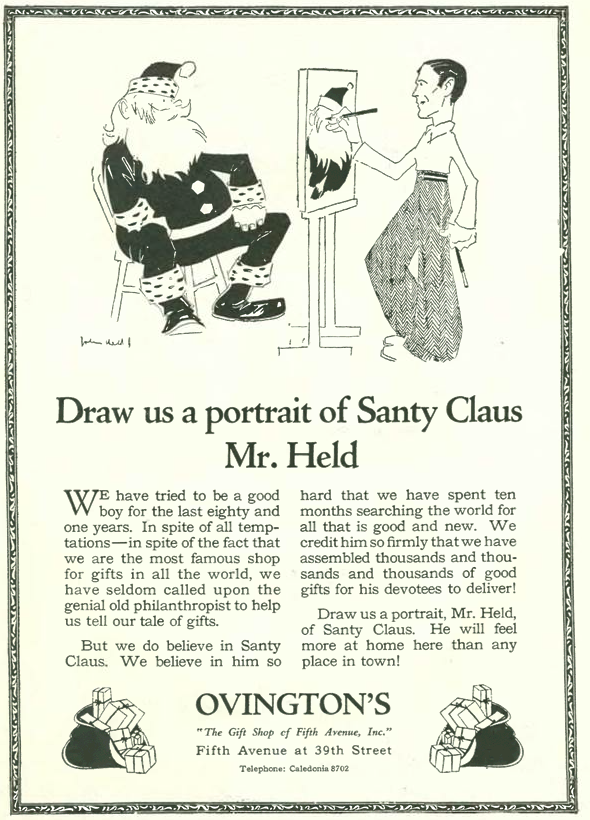
And finally, this ad from the Dec. 3 issue featuring the art of New Yorker contributor John Held Jr…

screen-shot-2017-01-30-at-9-37-40-am

…and this cartoon by Otto Soglow, depicting how one toff bags his “trophy”…

screen-shot-2017-01-30-at-9-51-46-am

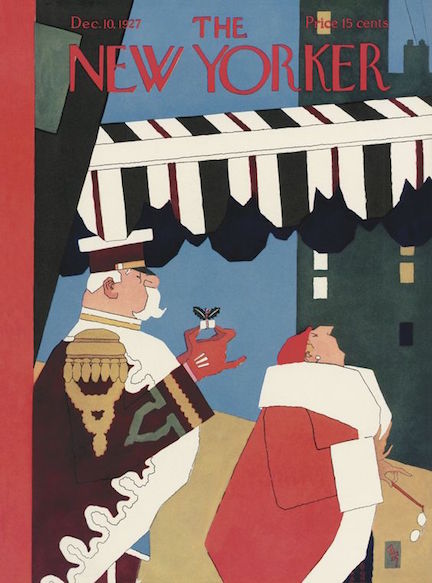
Next Time: The Perfect Gift for 1927…

dec-10

Death Avenue Days

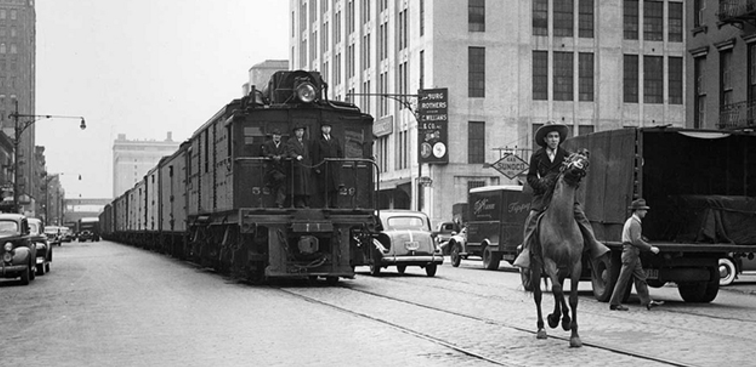
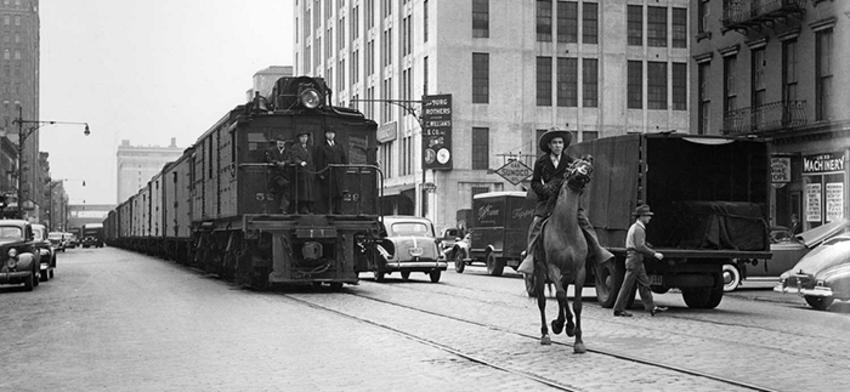
Before the elevated tracks were constructed in the early 1930s in Manhattan’s west side warehouse district (home of today’s popular “High Line”), freight trains rumbled through the city–at street level–on “Death Avenue.”

8b6d47f5480e534755b5a03ab5ea97a4
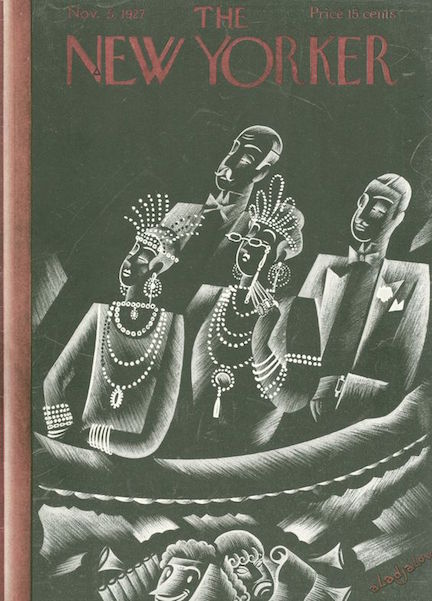
November 5, 1927 cover by Constantin Alajalov.

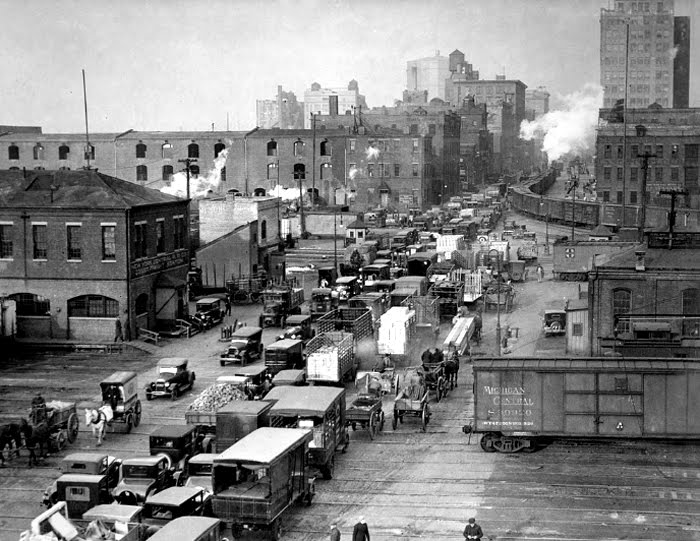
Freight trains were introduced to the west side warehouse district in 1846, which was a bad plan from the very start. Block-long trains would run through cross streets and congested traffic, maiming and killing along the way.

11and41
ON YOUR LEFT!…Both diesel and steam locomotives rumbled along Manhattan avenues well into the 20th century. Pictured is a freight train at 11th and 41st Street. Eleventh was known as “Death Avenue.” (Forgotten NY)

According to Friends of the High Line, “an 1892 New York World article referred to the trains as ‘a monster which has menaced them night and day,’ and by 1908 the Bureau of Municipal Research claimed that since 1852, the trains had killed 436 people. A New York Times piece from the same year reported that in the preceding decade there had been almost 200 deaths, mostly of children.”

caption-1death-avenue
MIXED USE…This circa 1920 photo shows the congestion that occurred when freight trains, horse-drawn carts, cars, and pedestrians used the same streets. (Kalmbach Publishing Company)
the-history-of-death-avenue_list_image
SHOWDOWN…Beginning in 1850, the West Side Cowboys rode ahead of oncoming trains to ensure the safety of people on the street, although statistics show that some pedestrians did not heed the warnings. (Friends of the High Line)

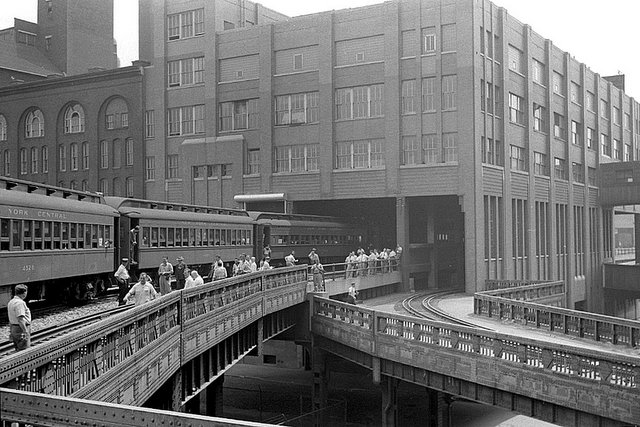
The safety issues on Death Avenue were finally addressed in 1929 when city and state officials reached an agreement with New York Central Railroad to move the rail above street level. New elevated tracks opened in 1934 were novel in the way they bisected city blocks, unloading cargo directly into buildings in the district.

high-line-chelsea-meatpacking-nabisco-factory-chelsea-market
BETTER…The elevated tracks served warehouses including one for the National Biscuit Company (Nabisco), pictured above, which today houses another popular High Line attraction, the Chelsea Market. (Friends of the High Line)
hick-town-10172013
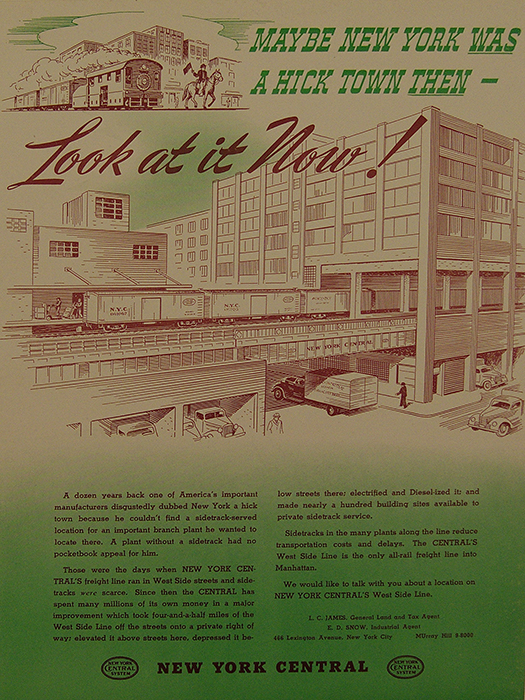
A New York Central Railroad advertisement touting the benefits of its elevated West Side Line, which today supports a unique and popular urban park–the High Line. (Friends of the High Line)

The elevated West Side Line’s unique design also complements the current use of the tracks–the High Line, one of New York’s most popular tourist draws and a widely successful example of urban reuse and renewal. Today few visitors to the High Line are aware that the peaceful oasis they now enjoy was once a dangerous and chaotic place that was home to the aptly named Death Avenue…

image_3_1436827707
NOT SO BAD, THIS…Visitors to the High Line enjoy a peaceful oasis above the former “Death Avenue.” (Friends of the High Line)

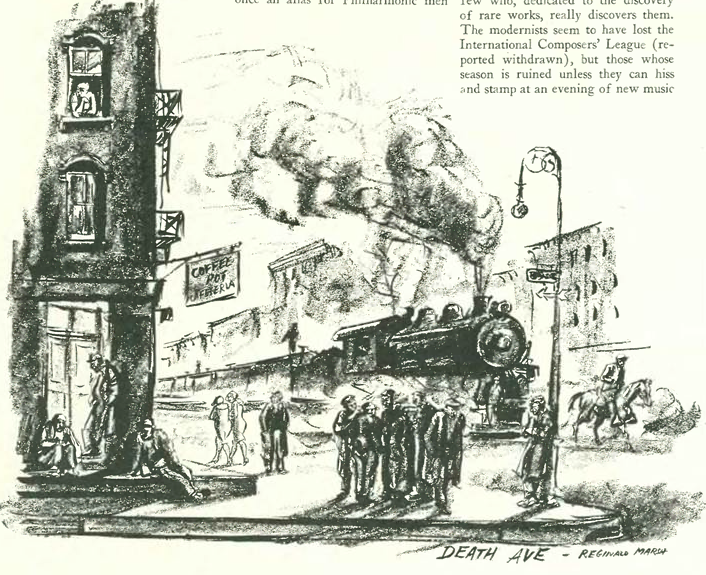
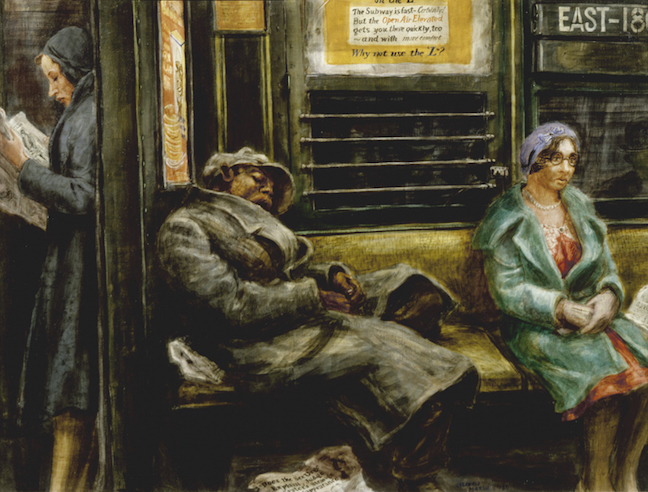
What prompted my interest in Death Avenue was this illustration by Reginald Marsh in the Nov. 5, 1927 issue of The New Yorker:

screen-shot-2017-01-10-at-8-35-23-am

Marsh (1898-1954) joined The New Yorker as one of its first cartoonists, and stayed there for seven years. He was practically born an artist, growing up in an artists’ colony in New Jersey where his father worked as a noted muralist and his mother made watercolors. After graduating from Yale he went to work of the Daily News, where he contributed sketches of vaudeville acts and illustrated a column titled “People We’d Like to Kill but Don’t.”

Described as a “Social Realist” painter, Marsh studied painting at the Art Students League, where the prevailing theme was life among the working poor, the unemployed, and the homeless, especially after the market crash in 1929…

31-293_marsh
WHY NOT USE THE “L”?…the title of a 1930 work by Reginald Marsh. (Whitney Museum of Art)
m3y34958
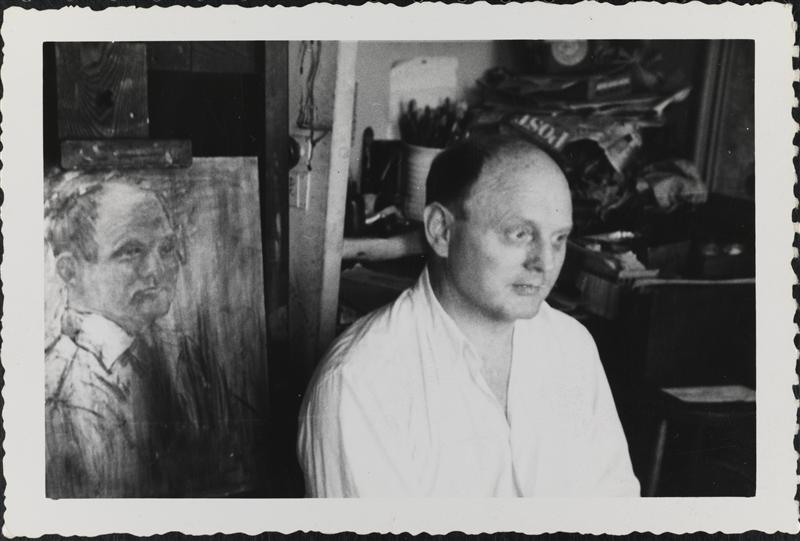
SELF REFLECTION…Reginald Marsh with one of his self-portraits, circa 1938. (Museum of the City of New York)

*  *  *

Write What You Know

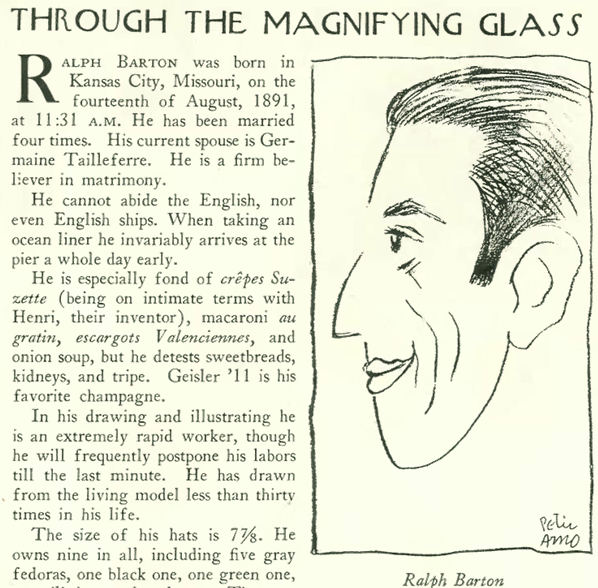
Among other items in the Nov. 5, 1927 issue was this profile written by Charles Shaw of fellow New Yorker contributor (artist and writer) Ralph Barton. An excerpt, with sketch by Peter Arno...

charles-g-shaw-profile

By Any Other Name

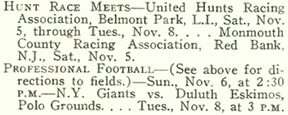
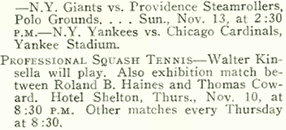
As it still does today, The New Yorker listed area happenings in the front section of the magazine, and in the early days the magazine included extensive listings of sporting events. The excerpt below offers various diversions from a “hunt race” to “squash tennis.” There were also professional football games featuring such mighty foes as the New York Giants and the Duluth Eskimos…

screen-shot-2017-01-09-at-12-40-58-pm

screen-shot-2017-01-09-at-12-41-17-pmHope(ful) Chest

Before the age of smart phones, the term “smart” in advertising meant one was on the leading edge of fashion–for aspiring young women this meant all things French–clothes, perfumes, beauty treatments–and for the bride, the all-important trousseaux, or so claimed this advertisement from Franklin Simon & Co. on page five of the Nov. 5 issue…

screen-shot-2017-01-09-at-12-38-23-pm

Couldn’t afford the latest from Paris? In that case you could turn to the back pages of the same issue, where you would find cheaper ads from places like Kathleen, Inc, which sold knock-offs of the latest in haute couture

screen-shot-2017-01-10-at-12-24-03-pm

 *  *  *

And finally, we return to Reginald Marsh, who contributed this cartoon to the Nov. 5 issue…

screen-shot-2017-01-13-at-4-50-08-pm

Next Time: The Shape of Things to Come…

6a4881d9250d214bed267228a8881e08


Summer in the City

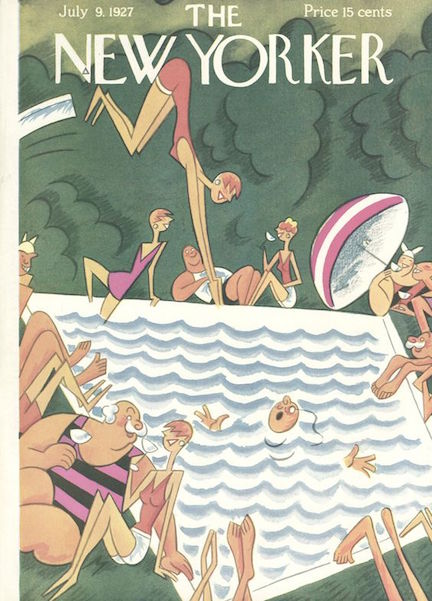
The July 1927 issues of the New Yorker were filled with news of yacht races, polo matches and golf tournaments as the city settled into the heart of the summer. The artist for the July 9 cover, Julian de Miskey, was in the summertime mood with this lively portrayal of Jazz Age bathers:

21b6fac0e9233b827d578cf6175dd79d
July 9, 1927 cover by Julian de Miskey. Born in Hungary in 1898, de Miskey emigrated to the United States in 1914.

Although Julian de Miskey (1898–1976) was was one of the most prolific of the first wave of New Yorker artists, his work seems to be little known or appreciated. But more than forty years after his death his influence is still felt in the magazine, particularly in the spot illustrations and overall decorative style that grace the pages of “The Talk of the Town.”

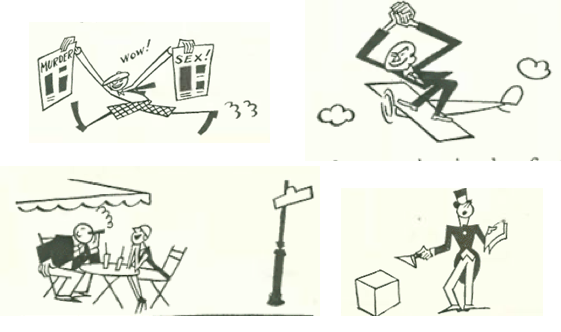
Here is a sampling of de Miskey’s spot illustrations for “Talk” in the July 9 and July 16, 1927 issues…

screen-shot-2016-10-28-at-1-39-59-pm

…and here are examples of spot illustrations for some recent (Aug-Sept. 2016) New Yorker “Talk” sections, as rendered by Antony Huchette (which also reference Otto Soglow’s spot work for The New Yorker)…

screen-shot-2016-10-28-at-1-40-11-pm

De Miskey did it all–spots, cartoons, and dozens of covers. A member of the Woodstock Art Association, de Miskey was well known in the New York art circles of his day, rubbing elbows in the Whitney Studio Club in Manhattan with artists including Edward Hopper, Guy Pene du Bois, Mabel Dwight and Leon Kroll. De Miskey also illustrated and designed covers for a number of books, studied sculpture and created stage sets and costume designs.

screen-shot-2016-10-28-at-11-18-07-am
PROLIFIC…Julian de Miskey illustrated a number of children’s books, including Chúcaro: Wild Pony of the Pampa (1958-Newbery winner); The Trouble with Jenny’s Ear (1960); and Piccolo (1968) which was both written and illustrated by de Miskey.

The June 9 issue also featured this cartoon by de Miskey:

screen-shot-2016-10-28-at-10-18-17-am

 *  *  *

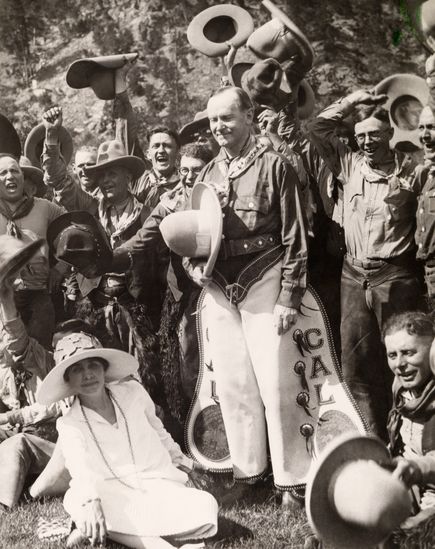
President Calvin Coolidge fled the bugs and heat of Washington, D.C. for cooler climes in the Black Hills of South Dakota. The New Yorker regularly mocked Coolidge’s dispatches from the Dakotas, including this item in “Of All Things”…

screen-shot-2016-10-28-at-10-16-24-am

02-calvin-coolidge-cowboy_69085_600x450
VAPID CITY…President Calvin Coolidge wears a cowboy hat and Western garb while on a two-month vacation in the Black Hills of South Dakota in 1927. (Library of Congress)

The magazine’s July 16 issue added this observation in “The Talk of the Town”…

screen-shot-2016-10-28-at-2-38-02-pm

Closer to home, M. Bohanan offered an urban sophisticate’s take on nature:

screen-shot-2016-10-28-at-10-16-49-am

For those who couldn’t flee the city, respite was sought in Central Park, as illustrated by Constantin Alajalov for “The Talk of the Town…”

screen-shot-2016-10-28-at-10-14-08-am
click to enlarge

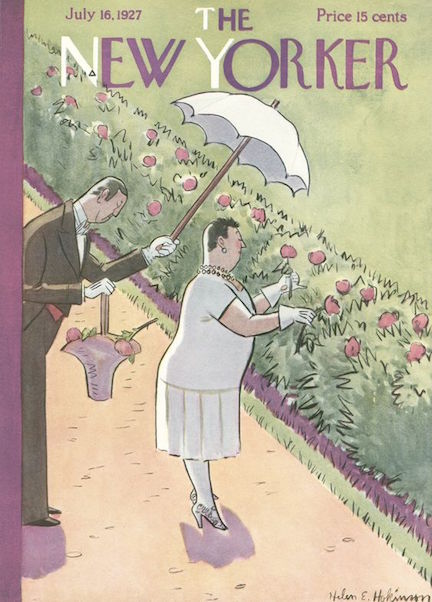
Summer themes continued with the July 16 issue, which featured a cover by Helen Hokinson depicting one of her favorite subjects–the plump society woman:

1f64e9e51d307bb03097744ebbb681f6
July 16, 1927 cover by Helen Hokinson.

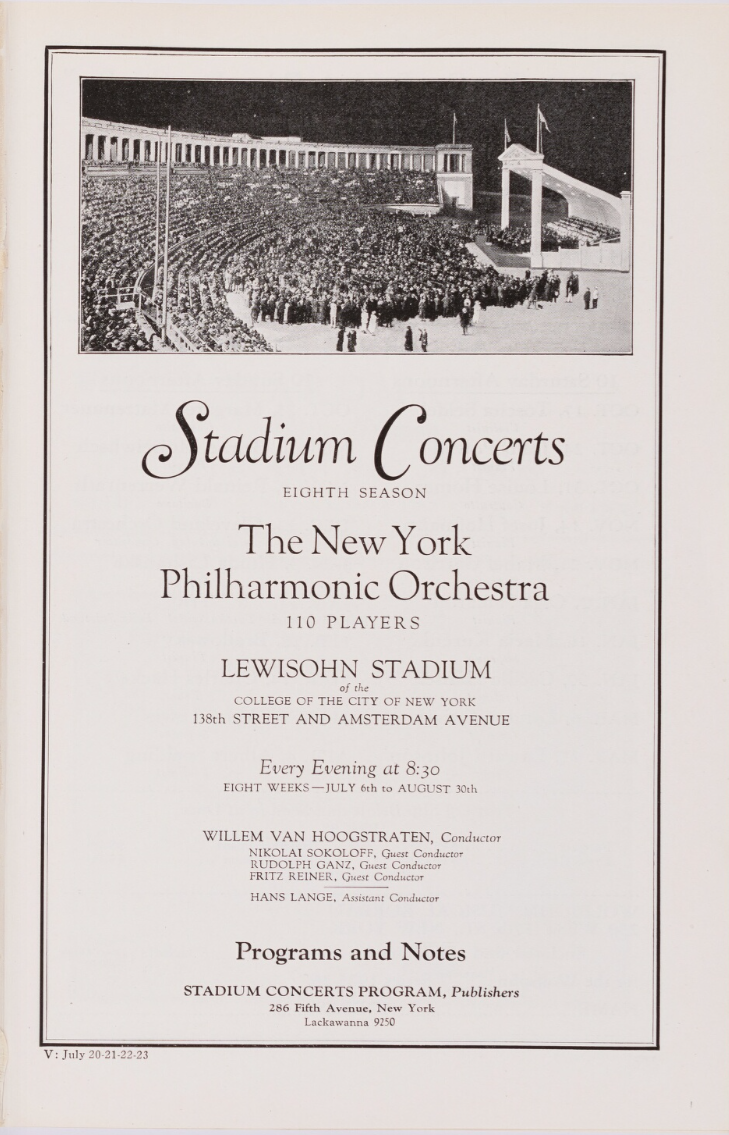
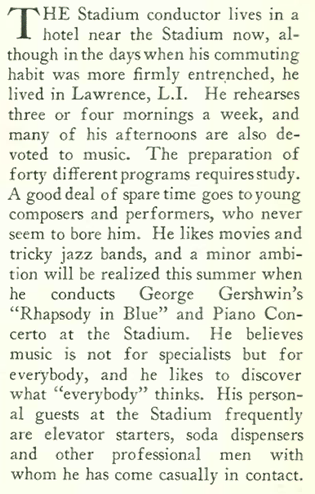
From 1918 to 1966, thousands of New Yorkers attended summer open-air concerts at Lewisohn Stadium, an amphitheater and athletic facility on the campus of the City College of New York. For many years Willem Van Hoogstraten conducted the nightly concerts, including the summer of 1927 when George Gershwin played his Rhapsody in Blue to adoring crowds.

summer-conerts
Performance at Lewisohn Stadium, located at 136th Street and Convent Avenue. (nyc-architecture.com)
1925
Program for the 1925 Stadium Concerts series.     (archives.nyphil.org)        Click to enlarge

screen-shot-2016-10-28-at-10-54-07-am

screen-shot-2016-10-28-at-10-54-40-am

serpico-1973
FINAL BOW…A still from the 1973 film Serpico, showing actors Al Pacino and Tony Roberts walking through the abandoned Lewisohn Stadium just before it was demolished. (YouTube)
110927-gon039-01
UGH…The Lewisohn Stadium site is now occupied by a City College of New York building with the inspiring name, “North Academic Center.” (nyc-architecture.com)

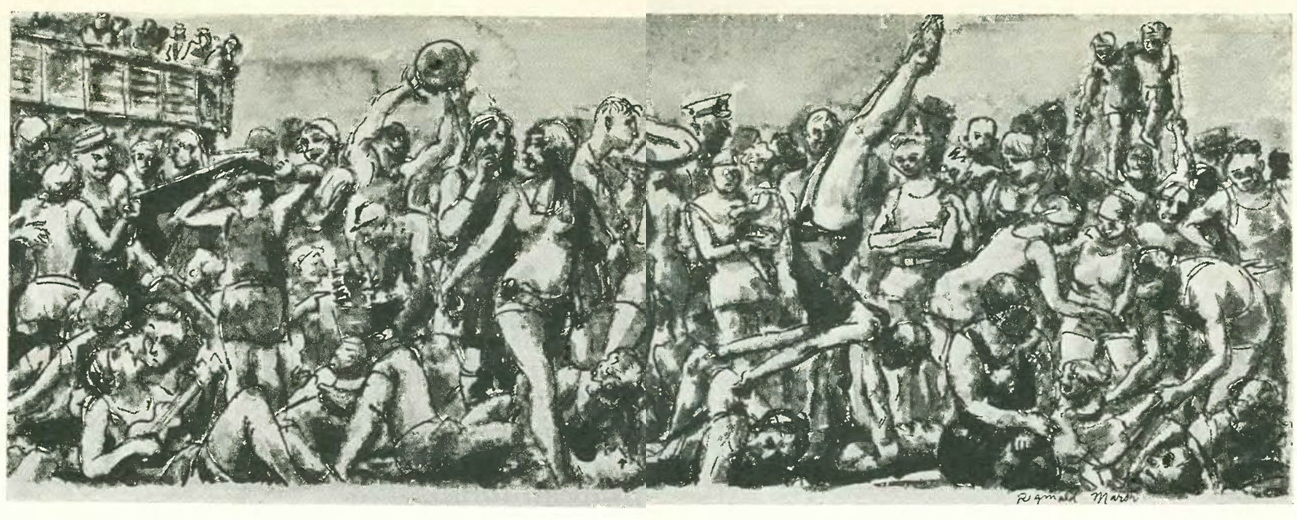
And finally, another illustration in the “Talk of the Town” of summer in the city, this a teeming Coney Island beach courtesy of Reginald Marsh

screen-shot-2016-10-28-at-10-24-00-am
click to enlarge

However, if you wanted to avoid the rabble at the beach, you could fly over them–in style, of course…

screen-shot-2016-10-28-at-10-23-20-am

Next Time: Picking on Charlie Chaplin…

5128947dc365cb603134bbb6e56f67aa

The Dinosaurs of Upper West Side

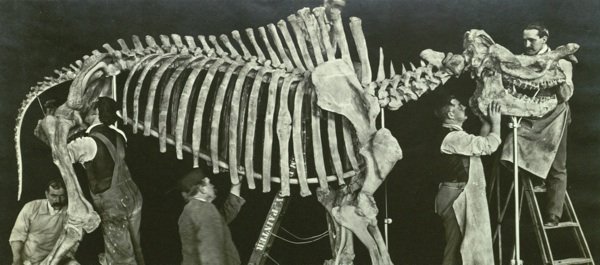
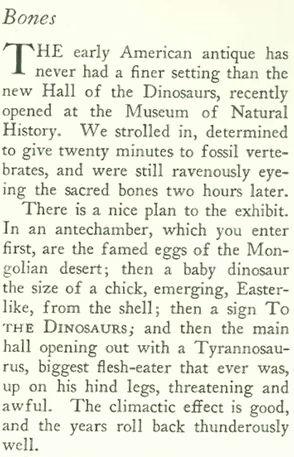
New York’s American Museum of National History unveiled its new Hall of Dinosaurs, and it was so impressive that even The New Yorker set aside its usual blasé tone toward popular attractions…
deb15aac127a5a9b06b890362c4878a1
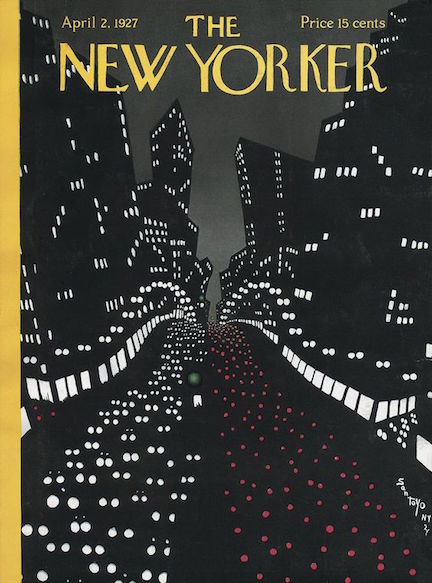
April 2, 1927 cover by Toyo San.

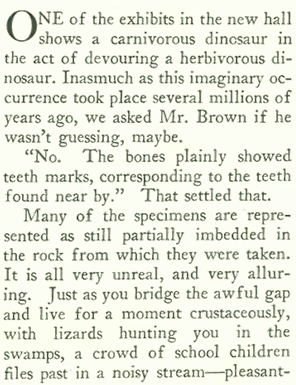
…and found its “Talk of the Town” editors to be quite taken with “sacred bones:”dinosaurs

2007 METRO Project | ImageDigitizationSpecifications v1.0 | Epson Perfection V750 Pro
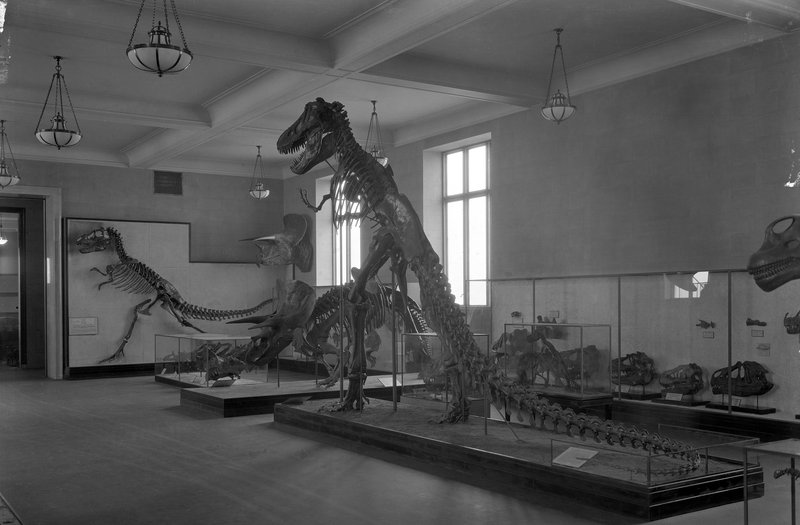
NEW DIGS…Children studying a Brontosaurus skeleton in the American Museum of National History’s Hall of Dinosaurs, 1927. (AMNH Research Library)

Screen Shot 2016-08-12 at 5.05.45 PM

Screen Shot 2016-08-12 at 5.06.04 PM

2007 METRO Project | ImageDigitizationSpecifications v1.0 | Epson Perfection V750 Pro
Tyrannosaurus and Triceratops in the Hall of Dinosaurs, 1927. (AMNH Research Library)

 *  *  *

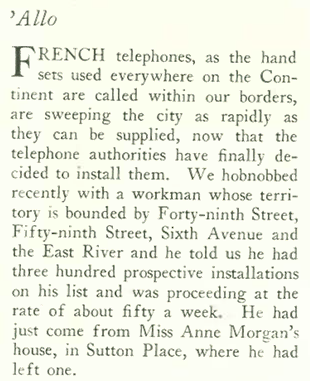
The April 2, 1927 issue also found New Yorkers to be agog over “French-style” telephones:
French phone II

Screen Shot 2016-08-22 at 12.39.27 PM
FRANCOPHONE…Trendy New Yorkers were switching from their old reliable candlestick telephones (left) to “French-style” phones (center) that were common throughout Europe. Western Electric answered their call with a sleek American version in 1928, right.

 *  *  *

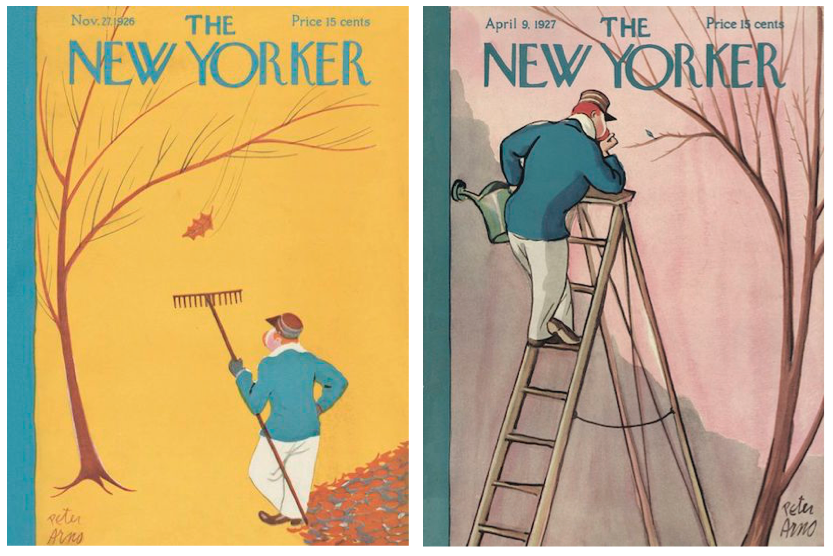
The April 9, 1927 issue featured the second of Peter Arno’s 99 covers for the New Yorker. His first cover appeared eighteen issues earlier (Nov. 22, 1926) and featured the same gardener, but this time he was inspecting a newly budded leaf rather than the last one to fall:

Screen Shot 2016-08-22 at 4.20.14 PM

Note the difference in style between the two covers–the April 9 cover is rendered with more detail, depth and texture. These would be Arno’s only covers with rather sedate subjects. Subsequent covers would have more action and humor, such as this one from 1954, one of my favorites:

Screen Shot 2013-06-01 at 5.17.30 PM

 *  *  *

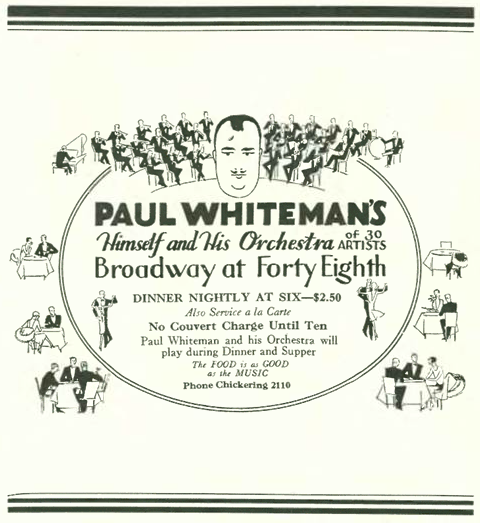
And now for a note about Paul Whiteman. One cannot write about the Jazz Age without mentioning the Paul Whiteman Orchestra. It was Whiteman who in 1924 commissioned George Gershwin’s Rhapsody in Blue, which premiered with Whiteman’s orchestra (and with Gershwin himself at the piano).

Whitemasn feb 26
This ad in the Feb. 26, 1927 New Yorker announced the much-anticipated return of Paul Whiteman and his orchestra. The caricature of Whiteman was his trademark.

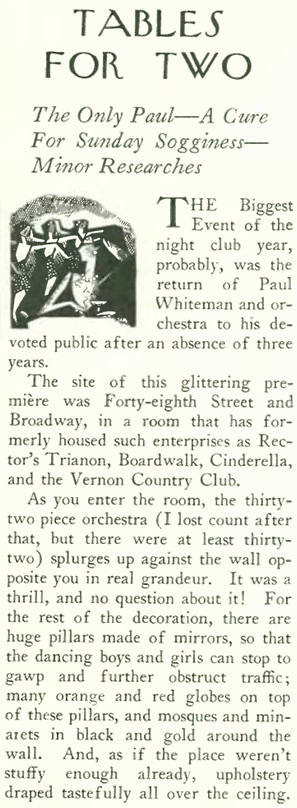
Even Lois Long, who seemed to be growing bored with New York nightlife, found reason to celebrate Whiteman in this column that appeared alongside the ad:

Feb. 26

Whiteman had 28 number one records during the 1920s and dominated sheet music sales. He provided music for six Broadway shows and produced more than 600 recordings. Dubbed “King of Jazz” his style was actually a blending of jazz and symphonic music.

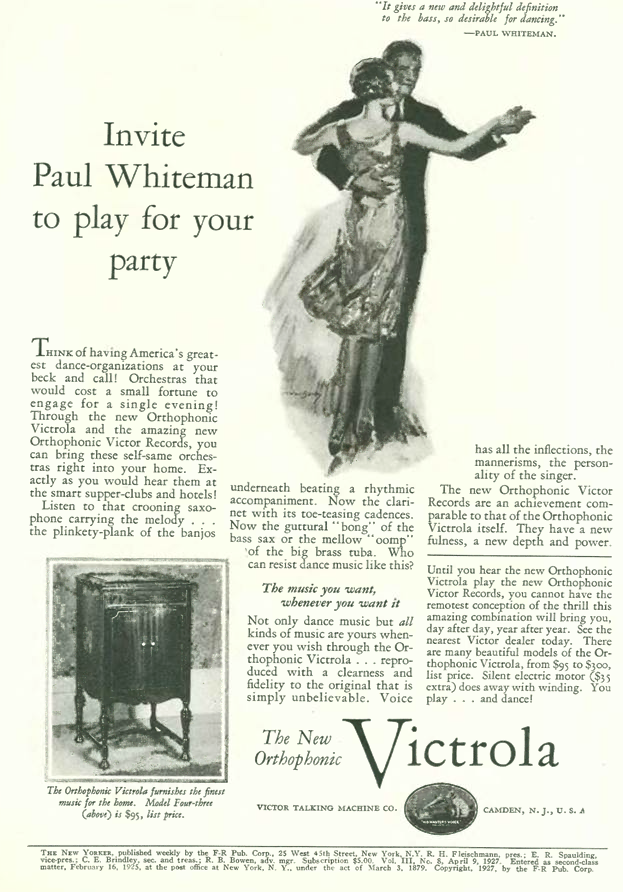
The folks at Victor Talking Machines played on Whiteman’s fame with this advertisement for their latest “Orthophonic” Victrola. Although it was the first consumer phonograph designed specifically to play “electrically” recorded discs and was recognized as a major step forward in sound reproduction, the claim that the machine would reproduce sounds “exactly as you would hear them at the smart supper clubs” seemed a little far-fetched.

Screen Shot 2016-08-23 at 12.27.26 PM

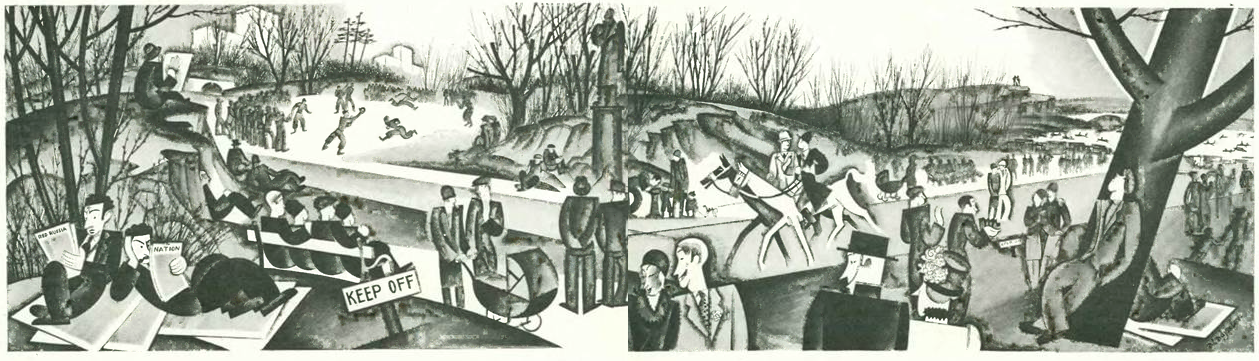
And finally, in celebration of spring, Constantin Alajalov illustrated an April day in Central Park, which was featured in a two-page spread in “Talk of the Town.”

Screen Shot 2016-08-23 at 12.26.22 PM
(click to enlarge)

Next Time: The Enchanting Modernist…

1eeb12ad3b9cff3f5e529a466432adbe

Bad Hootch

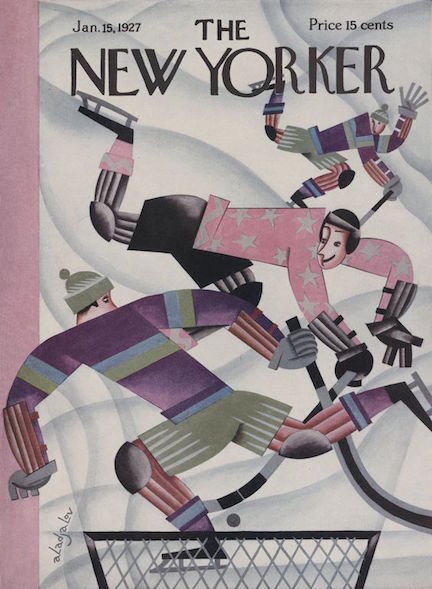
Despite Prohibition, perhaps a few champagne corks were popped for the January 15, 1927, edition of the New Yorker. This is Issue # 100.

8d2aebbb715d1dad58142be9b1bce88f
January 15, 1927–Issue # 100. The cover art by Constantin Alajalov.

Prohibition was on the minds of the editors of the issue, which featured a highly critical piece by Morris Markey (“A Reporter at Large”) on the hysteria surrounding the government’s attempt to poison supplies of bootleg alcohol. The editors of “The Talk of the Town” also made this observation:

Screen Shot 2016-06-07 at 12.52.51 PM

Before we get more into Markey’s piece, a little background is in order. In an article for Time magazine (Jan. 14, 2015) Lily Rothman writes that for years prior to Prohibition industrial alcohol had been “denatured” by adding toxic or unappetizing chemicals to it. This was done so folks couldn’t escape beverage taxes by drinking commercial-use alcohol instead — but it was still possible to re-purify the liquid so that it could be consumed.

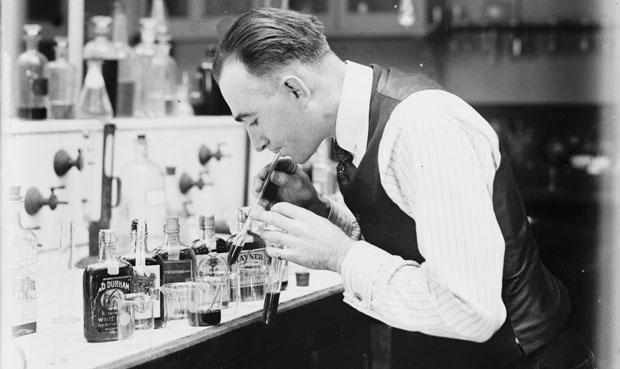
HOME CHEMISTRY KIT…A bootlegger at work in the 1920s. (oldmagazinearticles.com)

Rothman cites a Time article from Jan. 10, 1927, which reported that Prohibition forces in the government were introducing a new formula that year for denaturing industrial-grade alcohol that doubled the poisonous content: “4 parts methanol (wood alcohol), 2.25 parts pyridine bases, 0.5 parts benzene to 100 parts ethyl alcohol.” The article noted that “Three ordinary drinks of this may cause blindness.”

denatured-alcohol-vickyloebel.com
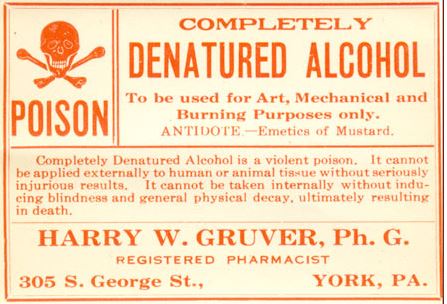
Warning label from the 1920s (vickyloebel.com)

Although some opposed the practice as legalized murder, Rothman cites Seymour M. Lowman, who as Assistant Secretary of the Treasury (1927-33) was in charge of Prohibition enforcement. Lowman told citizens that those on the fringes of society who continued to drink were “dying off fast from poison ‘hooch’” and that if the result was a sober America, “a good job will have been done.”

c61f5ce7ad01e577ee48eaff7470a61f
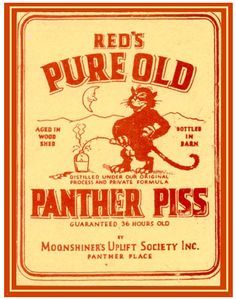
DRINK AT YOUR OWN RISK…1920s label for bootleg moonshine. (googleuk)

Thousands died from consuming poisoned alcohol. Rothman writes that 33 people died in Manhattan alone in a three-day period in 1928, mostly from drinking wood alcohol.

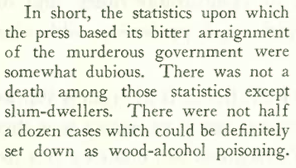
Markey’s stance in his New Yorker article is somewhat unique, if not cold-hearted. Instead of taking the government to task for the practice, he assured his well-heeled readers that they had nothing to fear as long as they procured their alcohol from reputable bootleggers at top prices. Markey seemed to care not at all for the poor “slum-dwellers” who died from consuming the cheap stuff:

Screen Shot 2016-06-07 at 1.02.58 PM

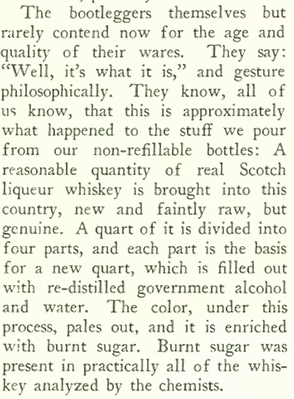
If anything, Markey’s sympathies seemed to lie with those who had to drink the safe, albeit diluted hootch. He explained how four bottles of bootleg Scotch could be fashioned from a single bottle of the real deal:

Screen Shot 2016-06-07 at 1.07.13 PM

And if you had money, there was no need to fear death from drink…

Screen Shot 2016-06-07 at 1.11.16 PM

…that is, unless you were careless:

Screen Shot 2016-06-07 at 1.11.25 PM

* * *

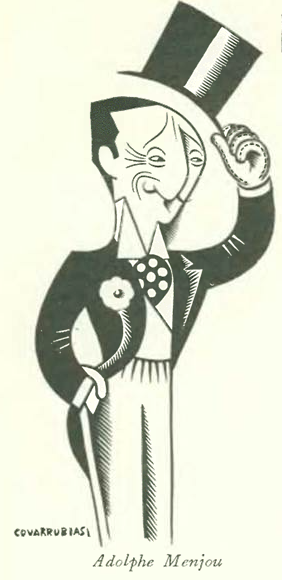
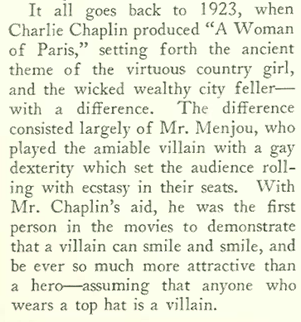
Helena Huntington Smith wrote a profile on the actor Adolphe Menjou, described by IMDB as Hollywood’s epitome of suave and debonair style: “Known for his knavish, continental charm and sartorial opulence, Menjou, complete with trademark waxy black mustache, evolved into one of Hollywood’s most distinguished of artists and fashion plates, a tailor-made scene-stealer.” Interestingly, Menjou was born in Pittsburgh, and not in France as many a fan assumed (his father, however, was a French émigré).

Screen Shot 2016-06-07 at 12.56.18 PM

Screen Shot 2016-06-07 at 12.56.30 PM

Glass_lantern_advertising_slide_for_1927_silent_film_A_Gentleman_of_Paris
Glass lantern advertising slide for Adolphe Menjou’s 1927 silent film A Gentleman of Paris.

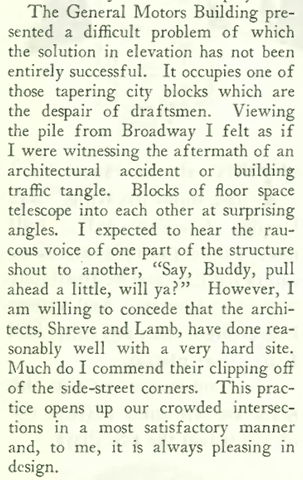
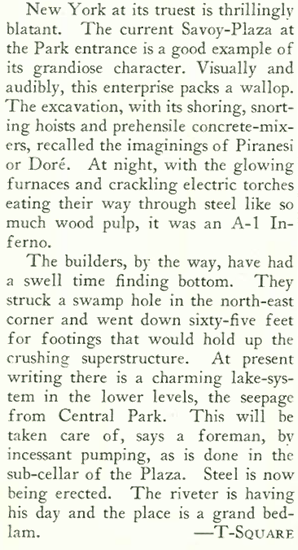
In other items, New Yorker architecture critic George S. Chappell (aka T-Square) once again set his sights on the city’s changing skyline. He began with the new General Motors building at Columbus Circle:

Screen Shot 2016-06-07 at 1.13.34 PM

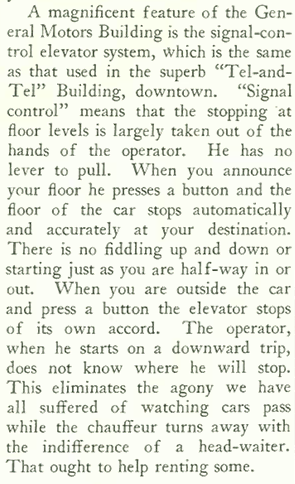
He was thrilled by the push-button automation of the building’s elevators:

Screen Shot 2016-06-07 at 1.14.21 PM

20gm.span
The General Motors building, left, as it originally appeared on Columbus Circle. It was designed by Shreve & Lamb, who would soon go on to design the Empire State Building. At right, the building became known as the Newsweek Building. (Drawing by J. W. Golinkin in Towers of Manhattan, 1928, and photo by David W. Dunlap/The New York Times)

If Chappell thought the General Motors building had some issues in 1927, he should see it today, wrapped in tacky reflecting glass and renamed 3 Columbus Circle:

AAGAAS14-03
WHY? WHY ON EARTH? (nyc-architecture.com)

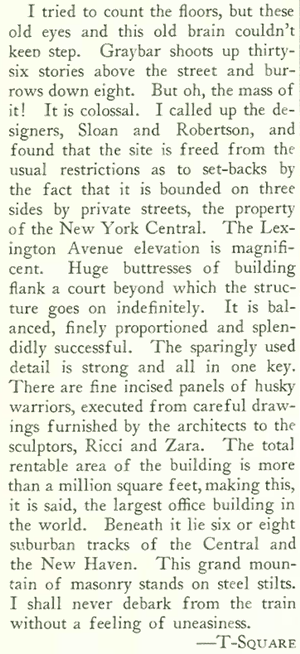
Elsewhere, Chappell was agog at Sloan & Robertson’s massive Graybar Building:

Screen Shot 2016-06-07 at 1.15.54 PM

af1e2749ea5c762147dd77145765bce2
Sloan & Robertson’s Graybar Building at 420 Lexington. (history.graybar.com)

And to close, this ad on the back page for Chesterfield cigarettes, featuring the company’s famous Atlantic City sign. Note the point of pride: “There are 13,000 lamps” in the sign, but four times that many Chesterfields are smoked every minute…koff…koff…

Screen Shot 2016-06-07 at 1.20.42 PM

Next Time: Upstairs, Downstairs…
015737c92d9c339b44b3805c311dd478


Race Matters

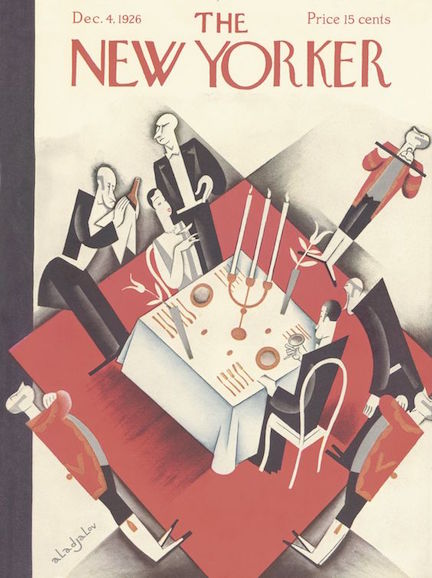
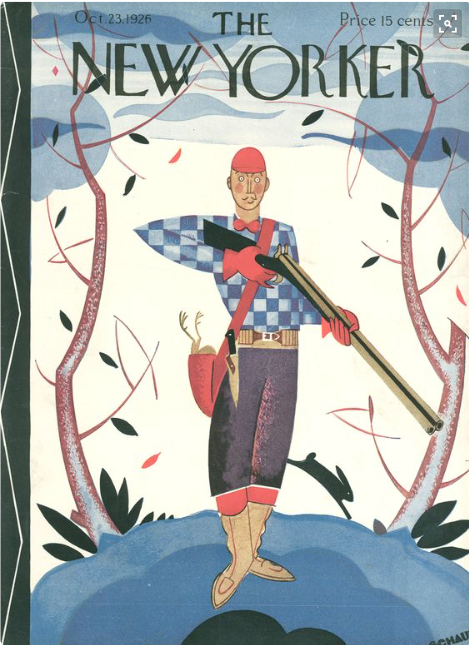
Ben Hecht was a well-known screenwriter, director, producer, playwright (notably, The Front Page) and journalist who contributed a number of comic essays to The New Yorker, including “The Caliph Complex” featured on Page 30 of the Dec. 4, 1926 issue.

e0fa6079facd04a1d0611e2da7cd2519
December 4, 1926 cover by Constantin Alajalov.

The magazine consistently rejected “uptown slumming” by New Yorkers seeking exotic thrills in Harlem nightclubs (see my recent post on nightlife correspondent Lois Long’s ho-hum attitude toward the Cotton Club), and Ben Hecht was no exception to this stance.

Screen Shot 2016-05-17 at 9.19.24 AM
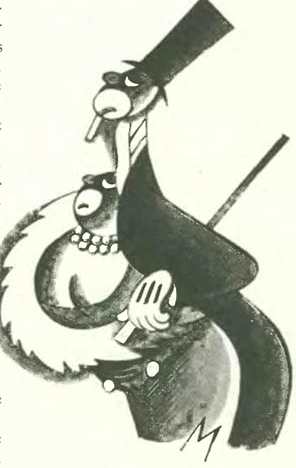
A drawing by Julian De Miskey that accompanied Hecht’s article.

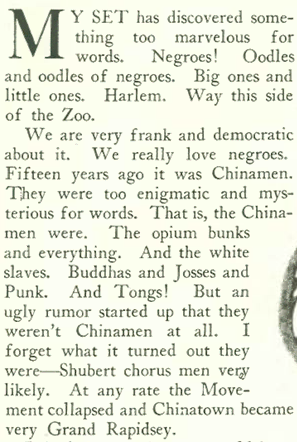
In her book Defining New Yorker Humor, Judith Yaross Lee suggests that Hecht’s criticism of “slummers” was not an act of political liberalism, but rather was in line with the magazine’s habit of poking fun at the faddish. Hence the opening lines of Hecht’s essay:

Screen Shot 2016-05-17 at 9.39.05 AM

Screen Shot 2016-05-17 at 9.39.20 AM

As I’ve previously noted, for all its sophistication The New Yorker of the 1920s was decidedly mainstream in treating blacks as racial “others.”

Lee notes that only a few illustrations in the magazine’s first five years depicted Asians, and the servant class was mostly represented by European types (butlers with a Jeeves-like air, or comely chamber-maids).

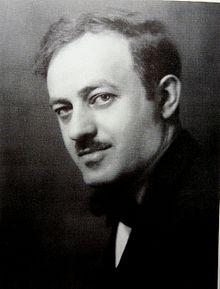
Ben Hecht (Wikipedia)

When it came to depictions of black and brown faces, Lee notes that the magazine featured “conventional” types of the day—minstrel figures in blackface (see illustration above) or exotic African dancers.

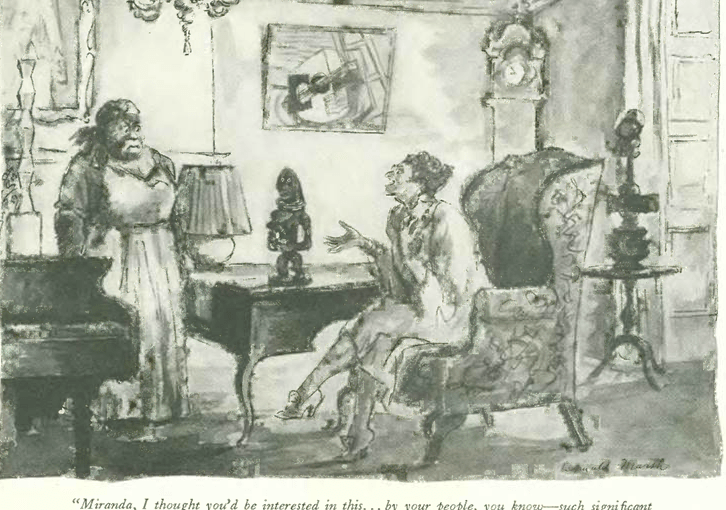
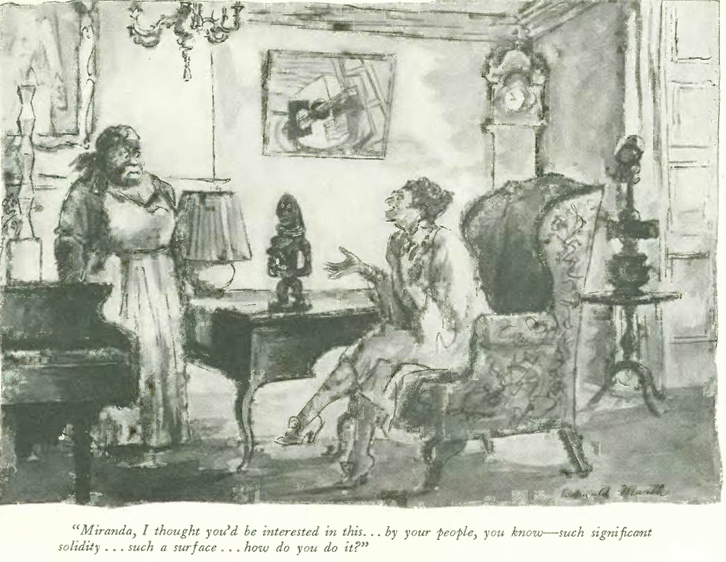
When blacks were depicted as servants, they were rendered as “mammies,” such as in this cartoon by Reginald Marsh in the Dec. 4 issue:

Screen Shot 2016-05-17 at 5.01.48 PM

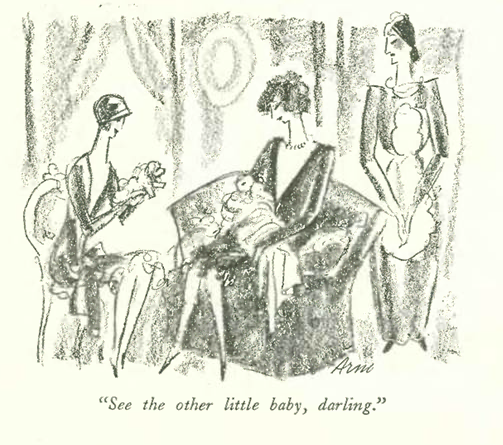
On the facing page, Peter Arno offered a depiction of a servant more typical for the magazine:

Screen Shot 2016-05-17 at 9.57.11 AM

But lest we feel smug in looking down at our literary forebears, the current discourse in our country seems to indicate that we still have a long way to go on issues of race.

Although there is much to dislike about The New Yorker’s views on race 90 years ago, its criticism of faddish “slumming” did call into question 1920s notions of race. Lee notes that the cartoon by Reginald Marsh (above) is actually a sneer aimed at the white woman for her patronizing comment. She represented the “fashionable Afrophilia” that Hecht and his fellow New Yorker writers detested.

“The Caliph Complex,” according to Lee, “suggested that The New Yorker did not so much ignore Africanist movements as suspect their white supporters.” The following October, Dorothy Parker would pen the essay “Arrangement in Black and White”–the story of a party in honor of a famous gospel singer–that would echo Hecht’s attack on false liberalism.

Next Time: What Price Glory…
9ce9dbbb683b23ca1336748460e4d7ac


A Changing Sky Line

Although architectural criticism was practiced by a rare few in 1926 (and even fewer today), it was prominent in the pages of The New YorkerLewis Mumford famously served as the magazine’s critic from the 1930s to the 1950s, and longtime critic Paul Goldberger took over the magazine’s “Sky Line” column from the mid-90s to 2011.

c37832e544c79a83494d91ea68c0329b
October 16, 1926 cover by Constantin Alajalov.

In 1926 George S. Chappell served the magazine as architecture critic under the pseudonym “T-Square.” A rare combination of architect, parodist, and journalist, he was perhaps best known for his travel series parody published under the pseudonym “Walter E. Traprock.”

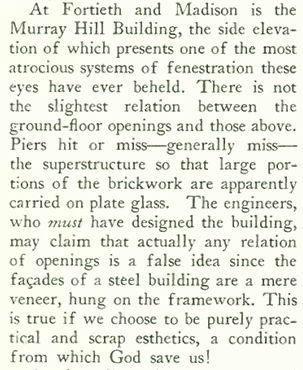
In the Oct. 16, 1926 issue, Chappell took critical aim at the “cheap architecture” sprouting amidst the clamor of a rapidly changing landscape…

1

…and referred to the fenestration (the arrangement of windows and doors) of the Murray Hill Building as “atrocious.”

2

MNY329523
The Murray Hill Building. (Museum of the City of New York)
01_big
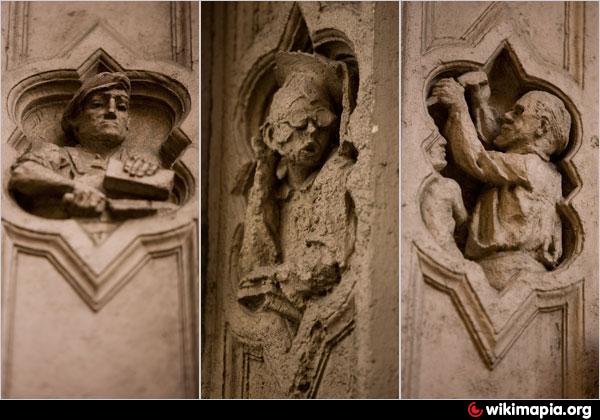
The ground-floor show windows of Murray Hill feature free-hand carvings depicting people in various trades. (Wikimapia)

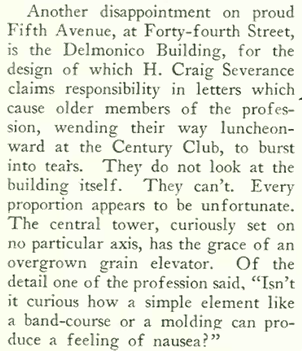
Chappell then set his sights on “another disappointment,” the Delmonico Building, which he said possessed “the grace of an overgrown grain elevator…”

3

Screenshot 2015-05-18 13.19.10
Part of Chappell’s disgust is no doubt attributable to the fact that the beloved old Delmonico Building at Fifth Avenue and 44th Street (left, photo from The Brickbuilder, 1899), was razed in 1925 and replaced by the “overgrown grain elevator” at right. (Google Maps screen image)

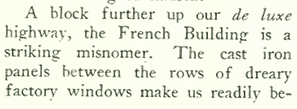
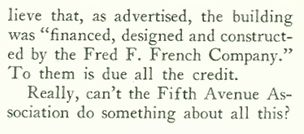
He then moves on to the landmark French Building with its “dreary factory windows”…

4

4.1

The French Building. (Google Maps)
Fred_French_building_entrance
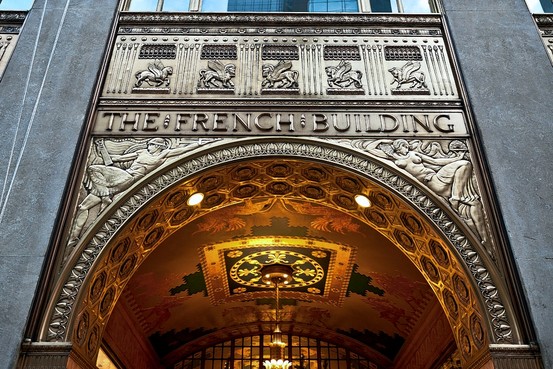
The 5th Avenue entrance to the French Building. (omnidisc)

So what did Chappell prefer? Read on…

5

aeoliean 1-13-1927
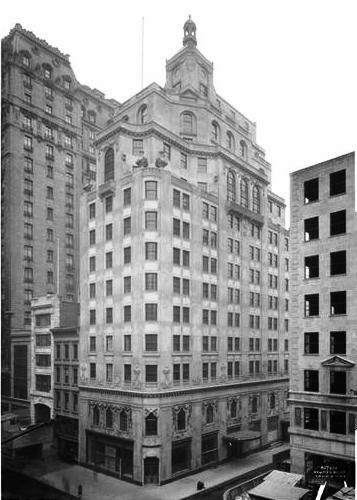
Aeolian Hall on Fifth Avenue, constructed on a site formerly occupied by the William Rockefeller mansion. (Museum of the City of New York)
P2810035
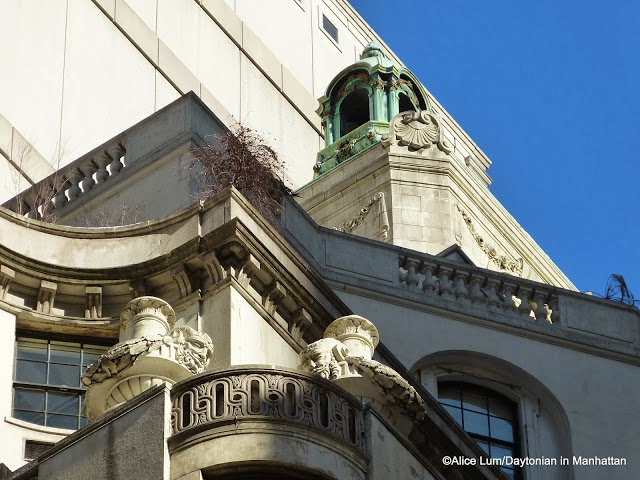
Detail of the upper stories of Aeolian Hall. (Daytonian in Manhattan)
20512108023_f7771faf39_b
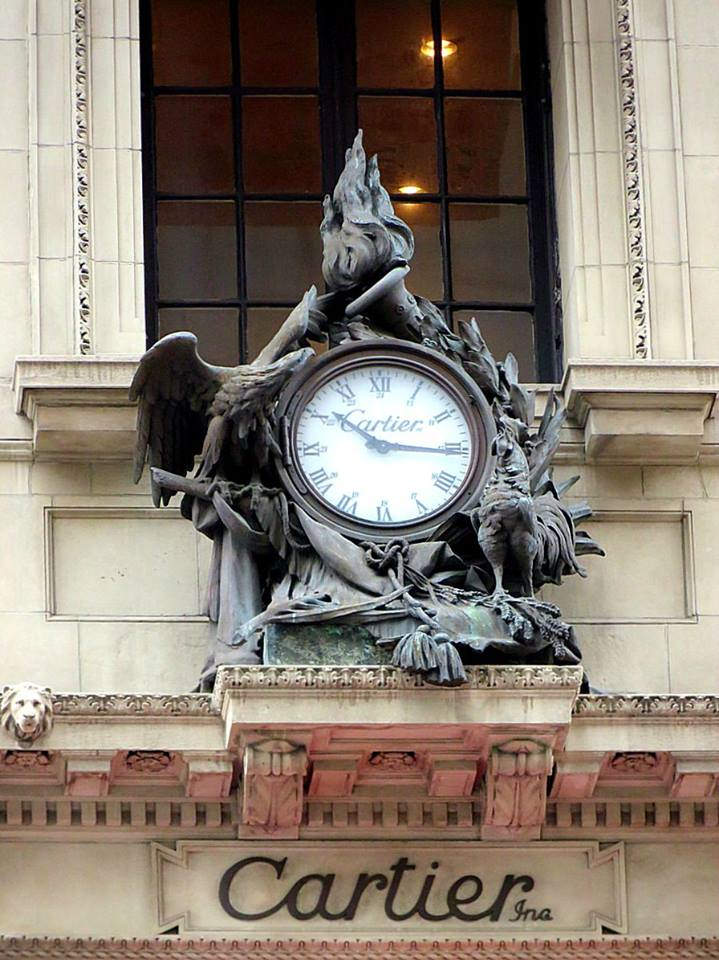
Cartier’s clock on Fifth Avenue (Pinterest)

Despite Chappell’s oft disapproving gaze, in the end he (along with other editors and writers at The New Yorker) could not help but be caught up in the thrill of one of the city’s grandest building booms…
7

Other items of note in the Oct. 16 issue, this ad promoting the first-ever “New Yorker book,” a collection of “Profiles” by Waldo Frank, who wrote under the pen name “Search-light”…

Screen Shot 2016-03-31 at 9.55.06 AM

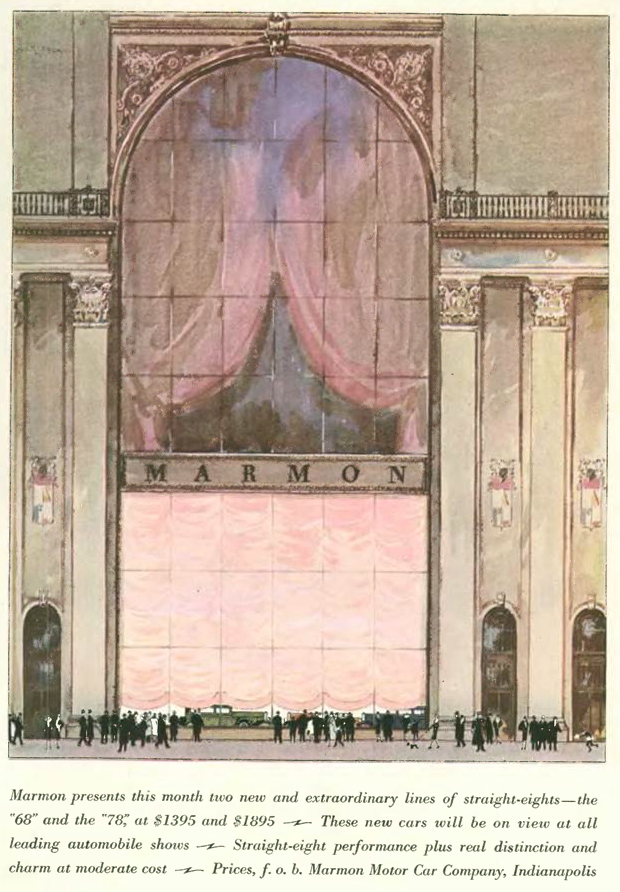
And finally this picturesque ad for Marmon automobiles. The company was defunct by 1933.

Screen Shot 2016-03-31 at 9.55.42 AM

Next time: A Royal Flush…

Screen Shot 2016-03-31 at 9.58.22 AM


Fight Night in Philly

We skip ahead to the Oct. 2, 1926 issue to look at one of the big events of that year–the Dempsey-Tunney heavyweight prize fight (I’m not skipping issues…Sept. 25 appears later in this blog).
652f917918402a71eb86f6671c9f228a
Oct. 2, 1926 – Issue # 85 – Cover by Constantin Alajalov. (Once again, note the ongoing comic reference to androgyny in 20’s fashion)
Heavyweight boxing was a big part of the American sports scene in the 1920s, and two giants of the sport, Jack Dempsey and Gene Tunney, dominated the headlines in the late 1920s thanks to much-heralded bouts in Philadelphia in 1926 and a rematch in Chicago the following year (which would include the famous “long count” incident).
Screen Shot 2016-02-26 at 12.30.40 PM
An estimated 135,000 fans packed Sesquicentennial Stadium in Philadelphia for the Dempsey-Tunney bout. (NYTimes)
The New Yorker joined in on the hoopla, publishing a lengthy account of the match by Waldo Frank (aka “Search-light”), who trained his jaded eye on the whole affair:
Screen Shot 2016-02-25 at 4.28.32 PMScreen Shot 2016-02-25 at 4.28.39 PM
MediaStream.ashx
VIEW FROM THE CHEAP SEATS…a rain-soaked throng at the Dempsey-Tunney fight in Philadelphia. (City of Philadelphia)
According to the New York Times, the crowd included such notables as Charlie Chaplin, cowboy movie star Tom Mix and the English Channel swimmer Gertrude Ederle.
Screen Shot 2016-02-26 at 12.13.08 PM
Coverage of Tunney’s victory by unanimous decision took up three-quarters of the front page of The New York Times, and also filled most of pages 2 through 7. (The New York Times)
But in typical fashion, Waldo was less than dazzled, finding the rain an apt metaphor for a spectacle mostly unseen by those in attendance:
Screen Shot 2016-02-25 at 4.27.50 PM
Never one to wallow in tragedy, the magazine made a brief (and oddly droll) reference in “The Talk of the Town” to a hurricane that hit Miami and its environs (it killed 372 people and injured more than 6,000):
Screen Shot 2016-02-25 at 4.16.52 PM
Other items of note in the issue included this examination of country vs. city life by cartoonist Barbara Shermund
Screen Shot 2016-02-25 at 4.21.56 PM
…and this cartoon by Al Frueh commenting on the challenges of Manhattan’s rapidly changing cityscape:
Screen Shot 2016-02-25 at 4.18.53 PM
The changing city was also on the mind of Reginald Marsh in this illustration he contributed to the Sept. 25, 1926 issue of the magazine:
Screen Shot 2016-02-25 at 4.02.32 PM
Back to the Sept. 25 issue, which featured an update from Paris correspondent Janet Flanner
d9f3d5507a7bade4fc28276d12a63260
Sept. 25, 1926 – Issue # 84 – Cover by Constantin Alajalov.
…who commented on the large number of American tourists crowding the city just as the locals were fleeing for their long, late summer holidays:
Screen Shot 2016-02-25 at 4.07.13 PM
She offered some numbers to back up her observations:
Screen Shot 2016-02-25 at 4.07.43 PM
3333095832_f6a6fd78cb_o
Janet “Genêt” Flanner (right) and longtime companion Solita Solano (center) in Paris, 1921. Solano was a well-known writer and drama critic for the New York Tribune. (Vintage Everyday)

And finally, a cartoon by Rea Irvin exploring the trials of the idle rich:

Screen Shot 2016-02-25 at 4.01.32 PM
 Next Time: Do Gentlemen Prefer Blondes?
848d031119e0d470956ce963e6e7fb62