Flying the Friendly Skies

A few posts ago (the April 11 issue) I wrote about E.B. White’s love of flying, and how his (and the nation’s) exuberance for aviation suddenly came crashing down along with Knute Rockne’s plane in a Kansas wheat field.

May 23, 1931 cover by Garrett Price.

The death of the famed Notre Dame football coach had White pondering a new, safer path for aviation that seemed to be embodied in a contraption called the autogiro. White had previously written about the potential of the autogiro back in 1929 (Dec. 7 issue). Half-helicopter and half-airplane, it was considered not only safer, but easier to fly, possibly opening up the sky to everyday commuters.
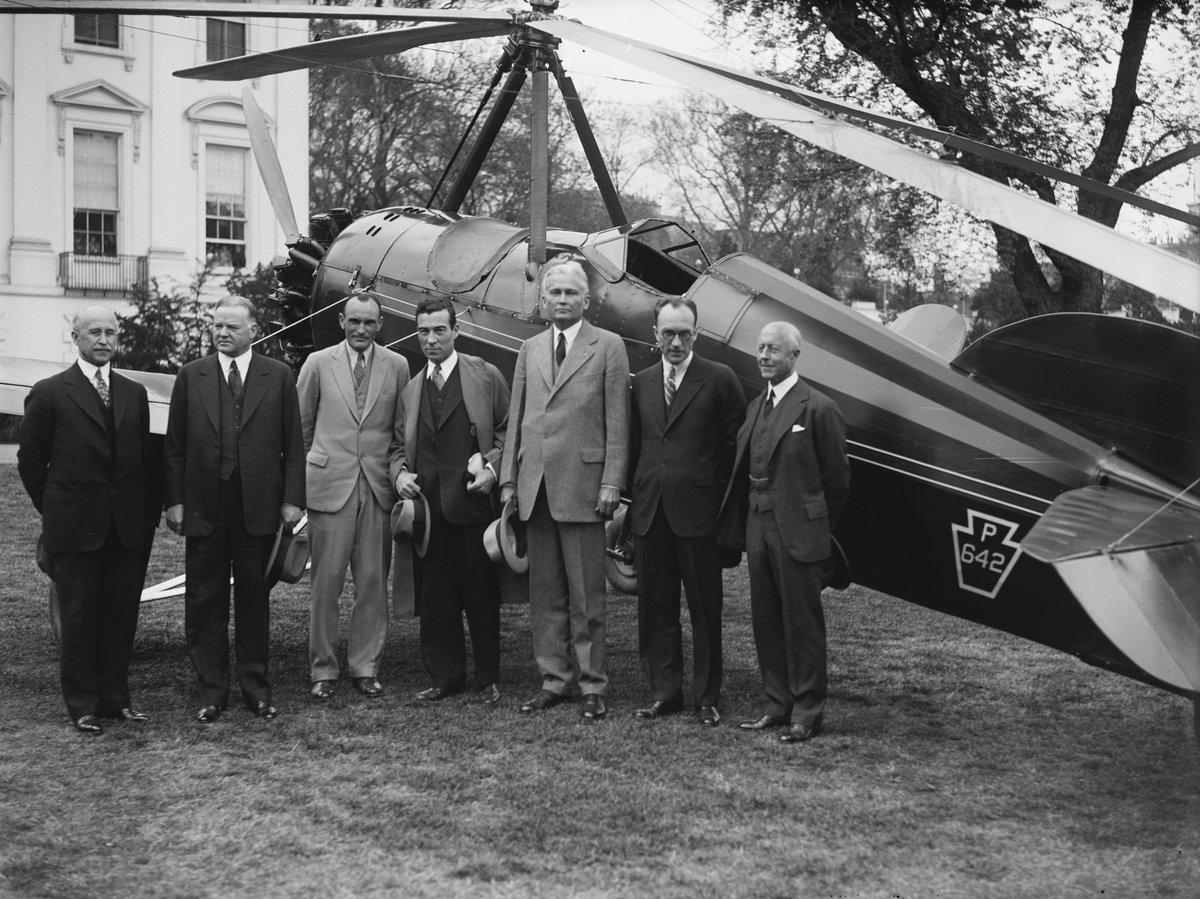
PHOTO OP…A Pitcairn PCA-2 Autogiro paid a visit to the White House on April 22, 1931. President Herbert Hoover is second from left. (Library of Congress)

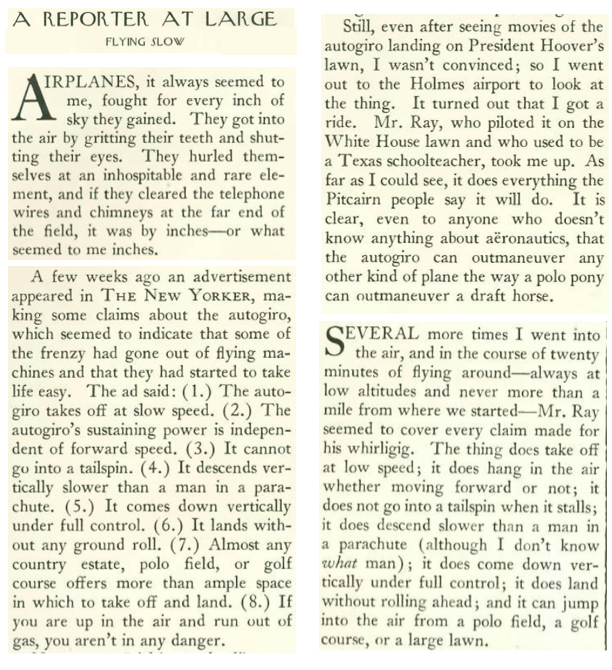
On a windy day White boarded the autogiro at an airport “in awful Queens” — most likely the current site of La Guardia — and filed this report for the “A Reporter at Large” column:
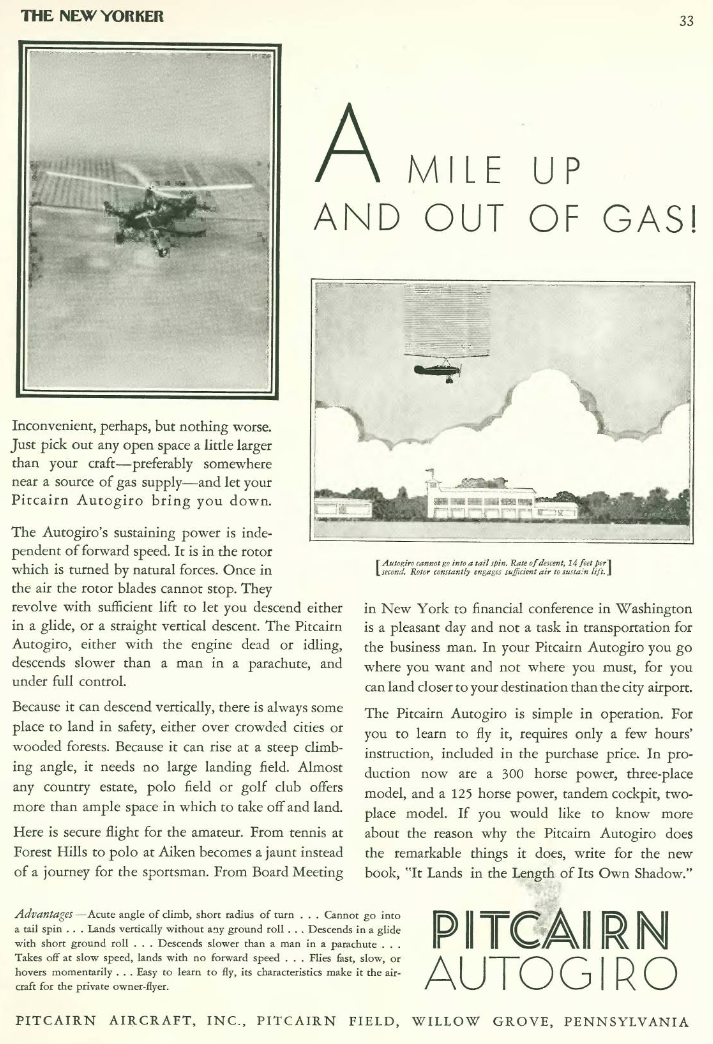
In the article, White referenced this Pitcairn Autogiro ad from the April 25, 1931 issue. No doubt the folks at Pitcairn had the Rockne accident in mind when they touted the safety of their craft, which seemed impossible to crash.
White wasn’t the only one enthused about the autogiro. It was the darling of modernist architects and futurists of 1920s and 30s, who saw the flying machine taking its place alongside the automobile in the house of the future.
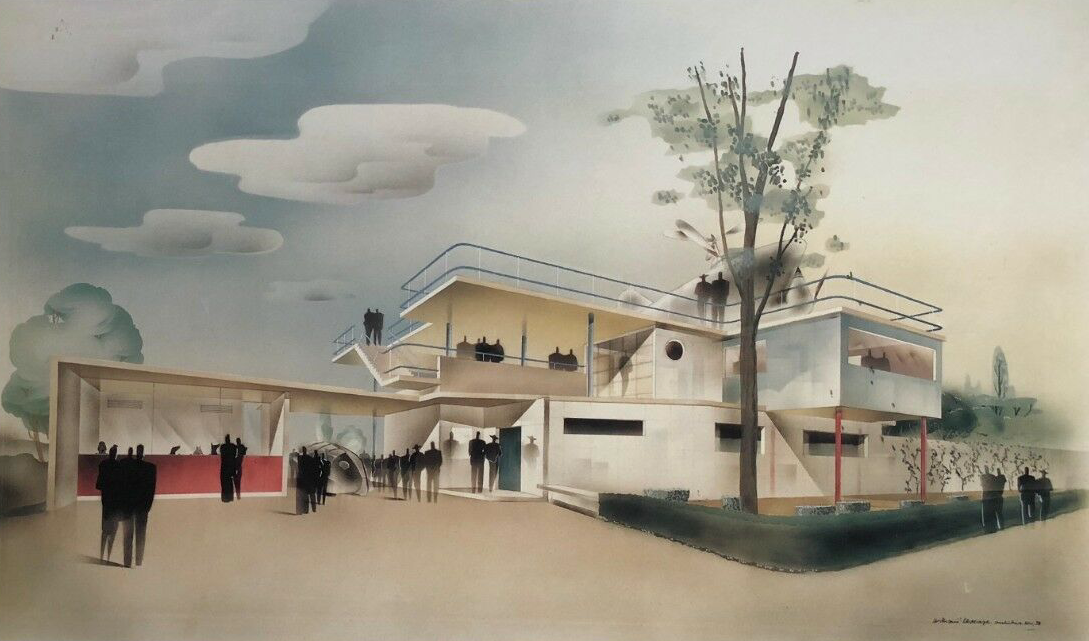
SWEET…The Swiss-born architect and designer William Lescaze rendered this “House of the Future” in the late 1920s with a bullet-shaped motorcar in the carport and an autogiro perched on the roof. (From my print collection)
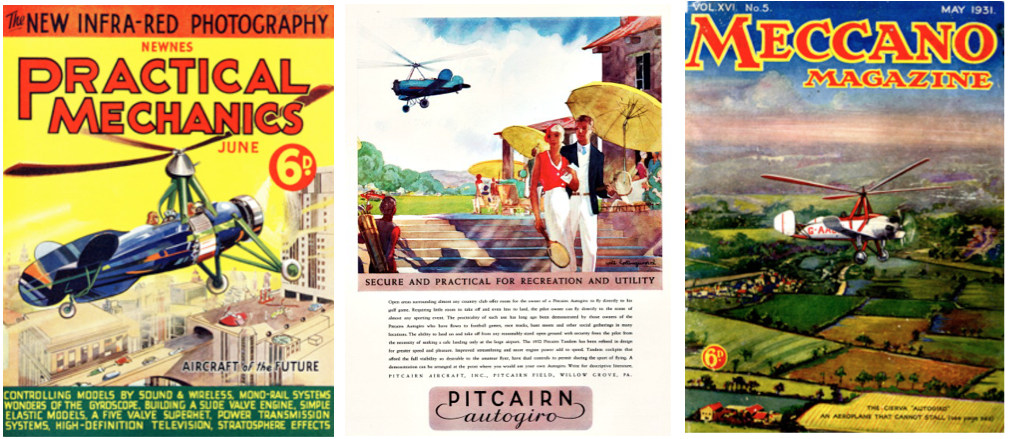
COMMONPLACE, AT LEAST IN THE IMAGINATION…The autogiro appealed to the average Joe or Jill as well, featured in magazines such as the U.K.’s Practical Mechanics (June 1934) and Meccano Magazine (May 1931). At center, a Pitcairn ad from 1930. (vtol.org)
WELL, IT WORKED…This two-seat AC-35 Autogiro (left) was developed for a Department of Commerce competition to create an “Aerial Model T.” James G. Ray, vice president and chief pilot of the Autogiro Company of America, landed the AC-35 in a small downtown park in Washington. D.C. on Oct. 2, 1936; at right, a still image from a 1936 film, Things to Come, which showed people of the year 2036 getting around in autogiros while wearing groovy futuristic togas. (Smithsonian/gutenberg.net.au)

Prompted by a New York Times editorial, White pondered the day when the air would be thick with personal aircraft:
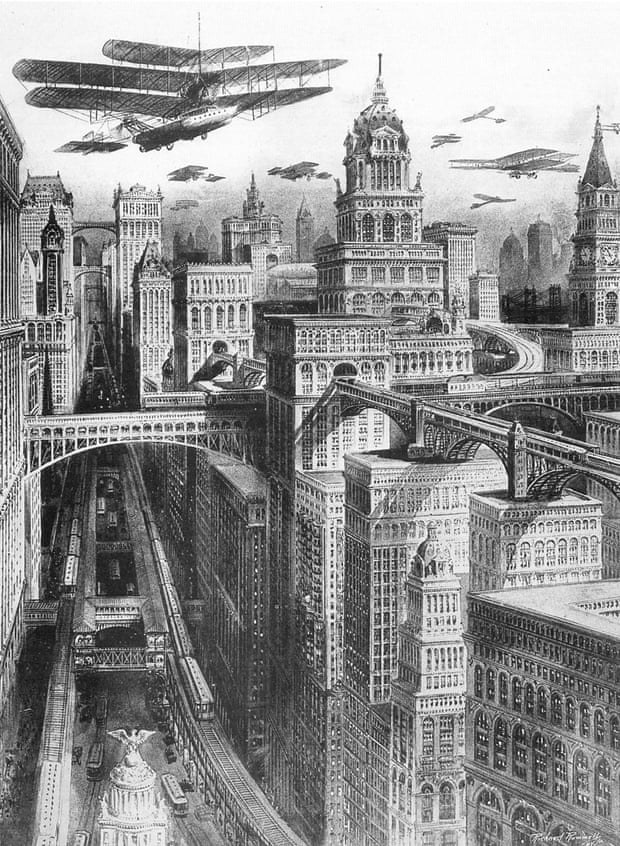
AND THEY LAND WHERE?…The idea of city skies filled with flying commuters is nothing new, as this 1911 illustration by Richard Rummell from King’s Views of New York attests. (The Guardian)

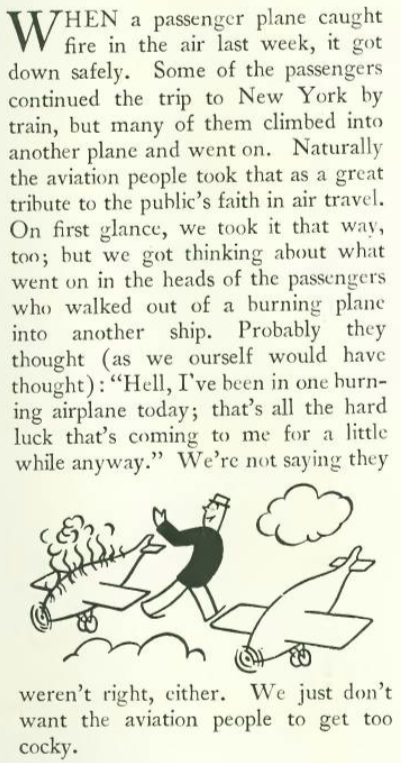
White offered still more observations on aviation safety in his “Notes and Comment” column…
…and in the same column he also pondered the future in terms of his infant son, Joel White:
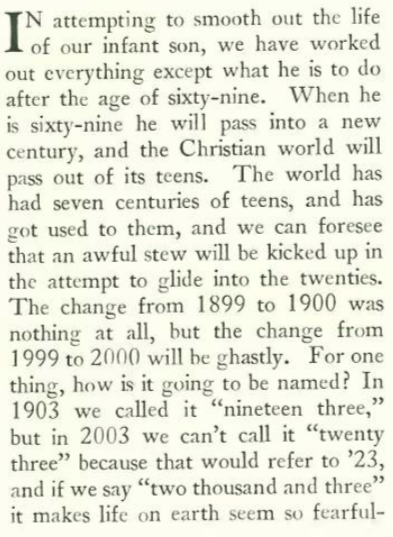
Sadly, Joel didn’t quite make it to the turn of the century — he died in 1997. He did, however, have a successful life as a noted naval architect and founder of the Brooklin Boat Yard in Brooklin, Maine.

ON GOLDEN POND…Joel White took to the water at a very young age, seen at left rowing a boat in an image from a home movie by E.B. and Katharine White; at right, Joel in his design office at the Brooklin Boat Yard, which he founded in 1960. (E.B. White Collection, Northeast Historic Film/Billy Black)

One more from E.B. White, this the lead item for his column which made jest of a debate at Yale over dropping the requirement for Latin. It says something to the effect that “Yale’s lead on the issue frees the rest of us to follow our fiduciary duty, toss tradition into the fire, and focus on practical matters such as traffic studies.”
 *  *  *

From Our Advertisers

The makers of Dawn “Ring-Lit” cigarettes seemed to have a winner on their hands with a smoke you could light like a match, but I can’t find any record of the company. Most likely this was a local brand sold at nightclubs, restaurants and hotels, and not through retail…

…Murad, on the other hand, was widely available, but the brand faded as tastes moved away from Turkish-style cigarettes…Rea Irvin illustrated a long series of ads for the brand, presenting various “embarrassing moments,” including this familiar trope involving office hijinx…

…summer was on the way, and the makers of Jantzen swimwear were establishing their brand as both the choice for athletes as well as the fashion-conscious…

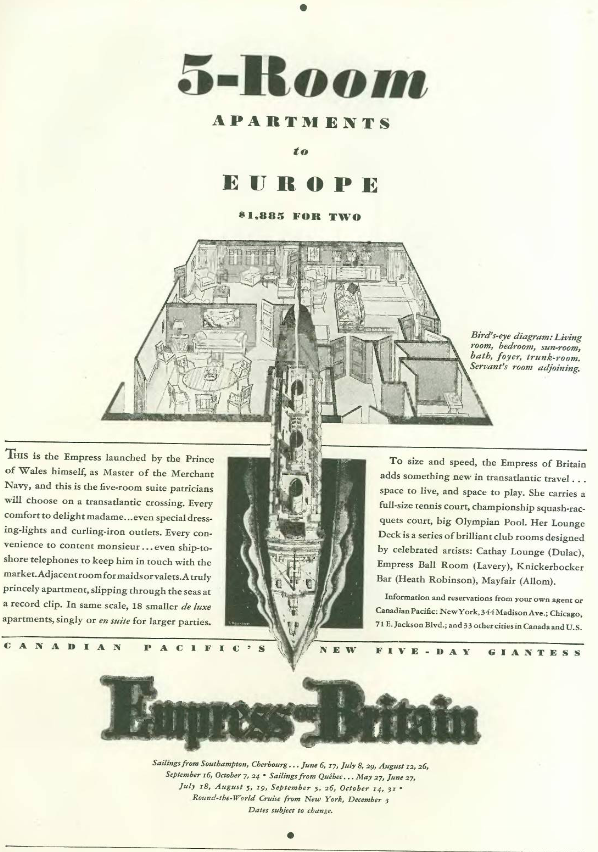
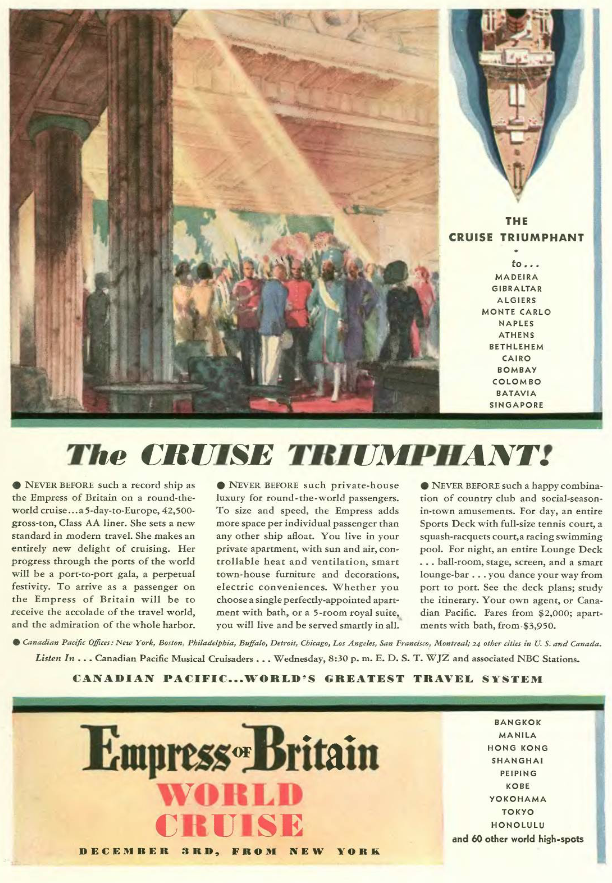
…and you might have packed a Jantzen or two for this around-the-world cruise on the Empress of Britain, arranged through Canadian Pacific. Your fare, if you wanted an “apartment with a bath,” would set you back $3,950, or a cool $63,000 in today’s currency…
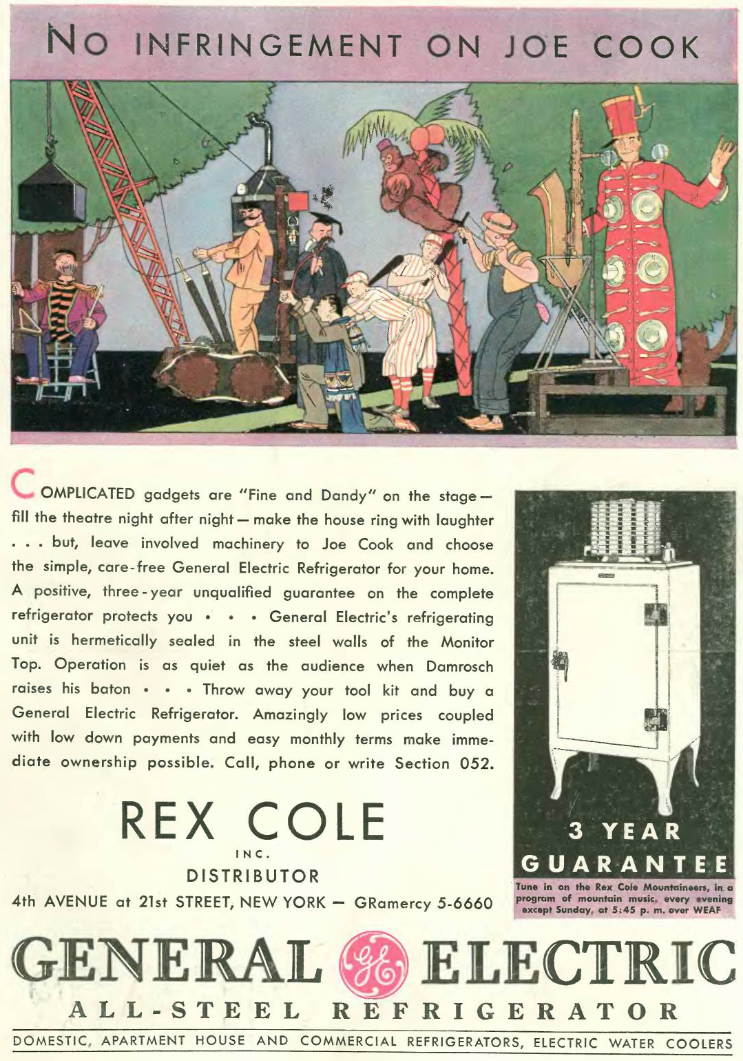
…if the cruise was too rich for your budget, perhaps you could put your money toward a durable good like a GE all-steel refrigerator. Note how GE contrasted its product with the overly complicated gadgets demonstrated on stage by popular vaudeville comedian Joe Cook

…on to the cartoons, William Steig gave us a glimpse of the important work taking place behind an exec’s closed doors…

Helen Hokinson eavesdropped on a couple’s travel plans…

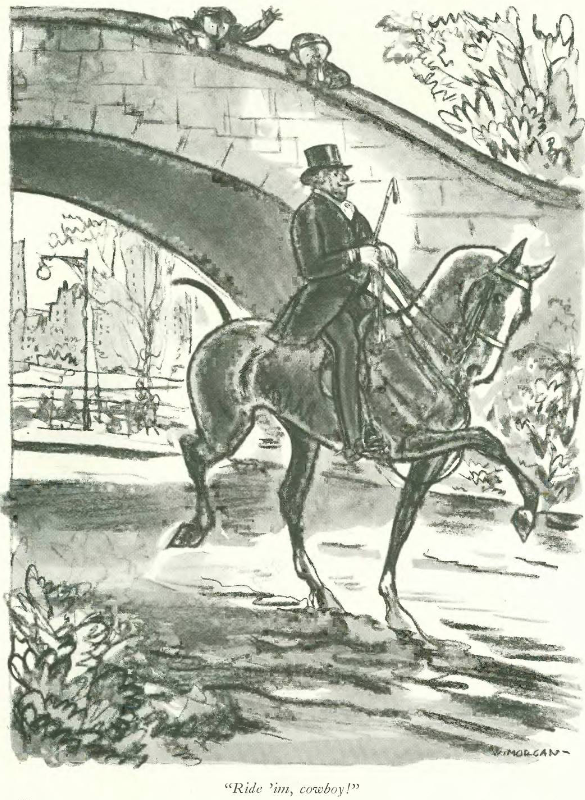
Wallace Morgan took us on a trot through Central Park…
Perry Barlow probed labor relations in an estate garden (and a caption with The New Yorker’s signature diaeresis on the word “coöperation”)

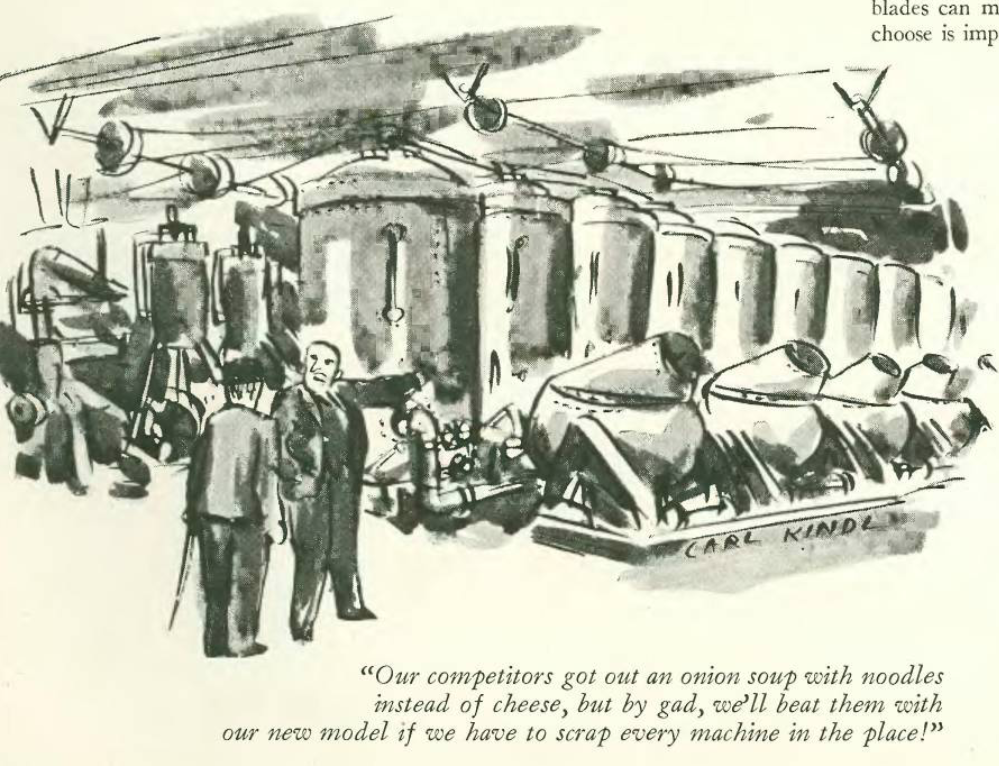
…and Carl Kindl gave a look into the latest maneuvers in the canned soup wars…
…and we end our May 23 cartoons on a sad note, with Ralph Barton’s final contribution to The New Yorker, a “Hero of the Week” illustration featuring the Prince of Wales:
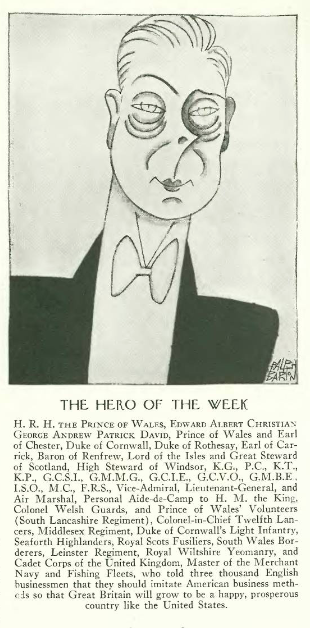
On May 19, 1931, Ralph Waldo Emerson Barton, who suffered from severe manic-depression, shot himself through the right temple in his East Midtown penthouse. He was 39 years old.

From the outside one would have thought Barton had a wonderful life as a successful artist who lived in style, spent long vacations relaxing in France, and who hobnobbed with celebrities such as his close friend Charlie Chaplin.

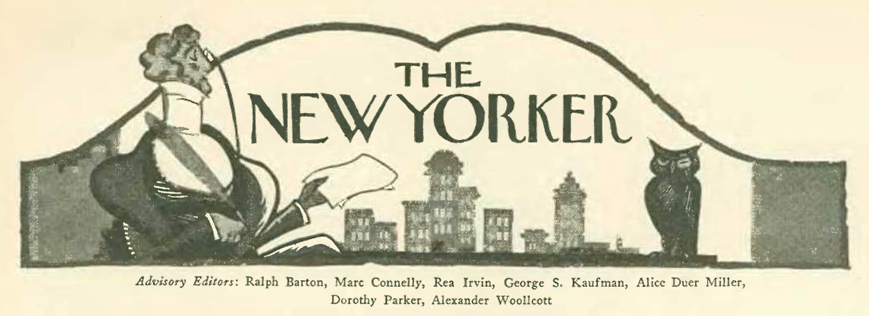
To lose a longtime contributor and friend must have been a real blow to the staff at The New Yorker. Barton had been there from the beginning, his name appearing on the magazine’s first masthead as an honorary advisory editor:
He was a prominent contributor to the magazine, from recurring features like his weekly take on the news—”The Graphic Section”—to theatrical caricatures that included clever caption-length reviews. He was married four times in his short life, most notably to actress Carlotta Monterey, his third (he was also her third marriage). She divorced Barton in 1926 and married playwright Eugene O’Neill in 1929.

In his suicide note, Barton wrote that he had irrevocably lost the only woman he ever loved, referring to Carlotta. But some speculate this claim was a final dramatic flourish, and that the end came because he feared he was on the verge of total insanity. He also wrote in the note: “I have had few difficulties, many friends, great successes; I have gone from wife to wife and house to house, visited great countries of the world—but I am fed up with inventing devices to fill up twenty-four hours of the day.”
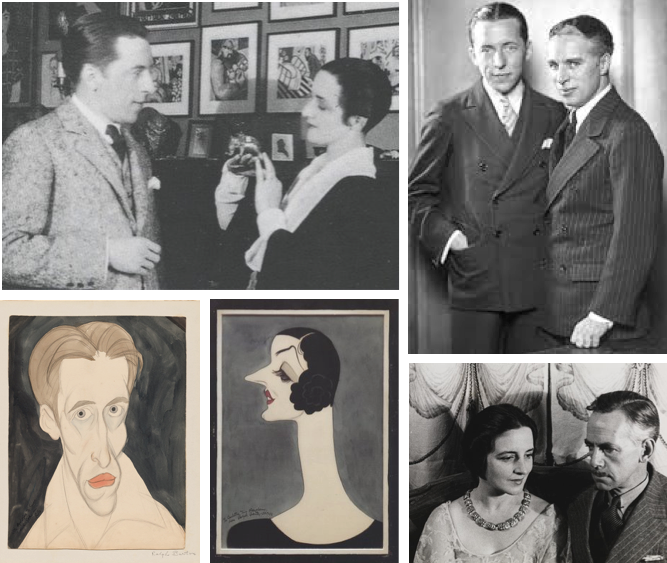
A CHARMED, TROUBLED LIFE…Clockwise, from top left, Ralph Barton with the love of his life, his third wife, actress Carlotta Monterey; Barton with best friend Charlie Chaplin, photographed by Nickolas Muray in 1927; after leaving Barton, Monterey would marry playwright Eugene O’Neill, who in a weird coincidence would become Chaplin’s father-in-law in 1943; a 1922 portrait of Carlotta by Barton; and a self-portrait from 1925, in the style of El Greco. “The human soul would be a hideous object if it were possible to lay it bare,” Barton wrote in 1926. (illustrationart.com/Pinterest/MCNY/curiator.com/npg.si.edu)

The following issue of The New Yorker (May 30, 1931)…

May 30, 1931 cover by Barney Tobey.

…featured this brief obituary on the bottom of page 28. I like the observation on the last line…his work had the rare and discomforting tingle of genius.

 *  *  *

The Gray & The Blue

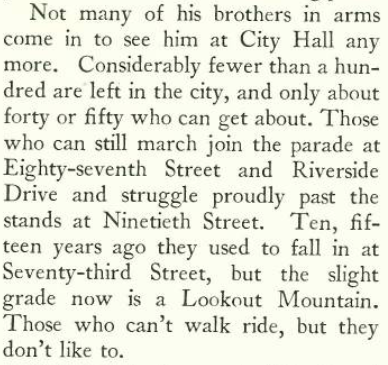
We are reminded of the span of time and history that separate us from 1931 with this small item in “The Talk of the Town” that notes “fewer than a hundred” Civil War veterans were still alive in New York City. We just marked the 76th anniversary of D-Day, an event still 13 years into the future for this New Yorker writer:
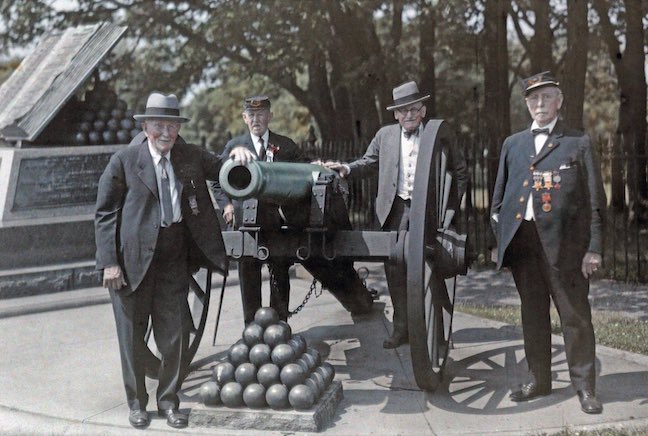
OLD WARRIORS…Union Civil War veterans stand in front a monument at Gettysburg, July 12, 1931. (National Geographic)

 *  *  *

From Our Advertisers

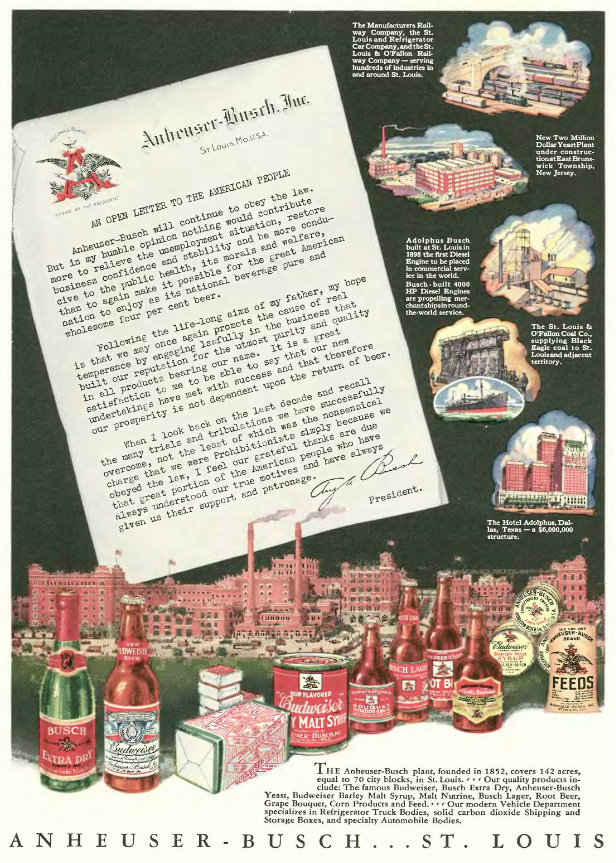
American brewers could sense the tide was turning on Prohibition laws, among them Augustus Busch, who took out a full page ad featuring “An Open Letter to the American People” that suggested a return to beer brewing would help relieve the unemployment situation caused by the Depression — note how the ad featured a variety of non-alcoholic products, but put the alcoholic beer at the head of the line…
…Walking east on 24th Street past Chelsea’s London Terrace and on to Madison Square Park is one of my favorite strolls in Manhattan…there is something almost cozy about walking by this massive building, once the largest apartment house in the world…Electrolux found it impressive enough to pair it with their latest model refrigerator…
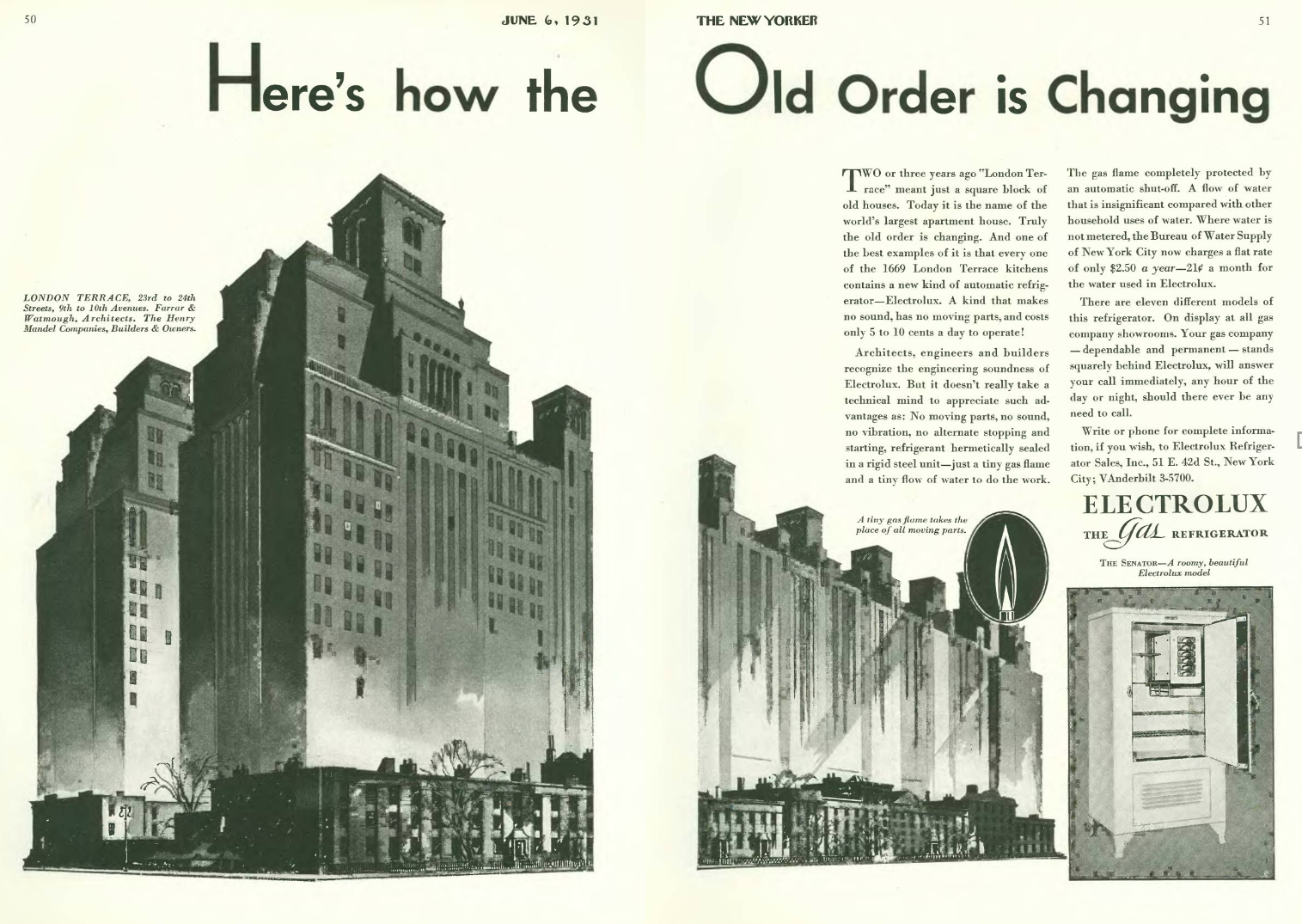
…a photo of London Terrace I took in December…

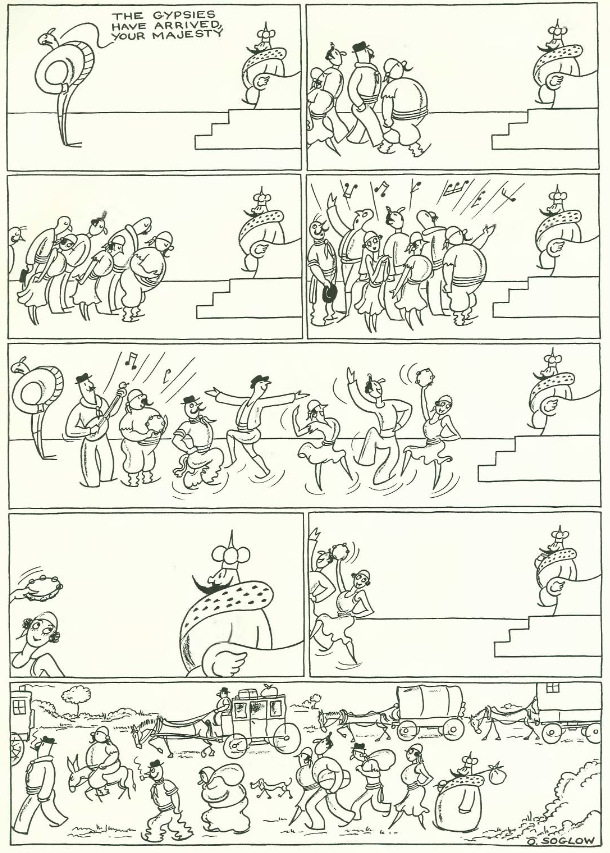
…on to our cartoons, we begin with Otto Soglow’s Little King…
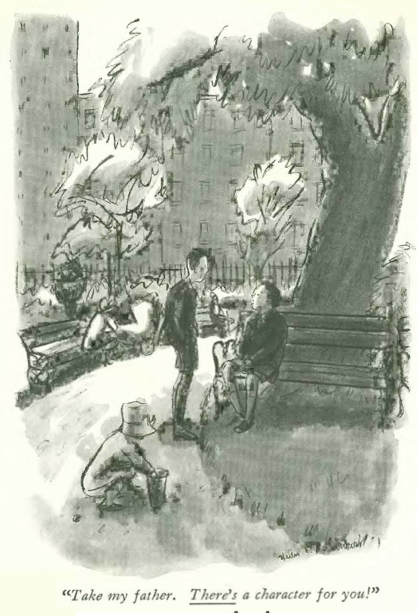
Richard Decker gave us another familiar comic trope, the postman and the housewife…

Helen Hokinson eavesdropped on some small talk…
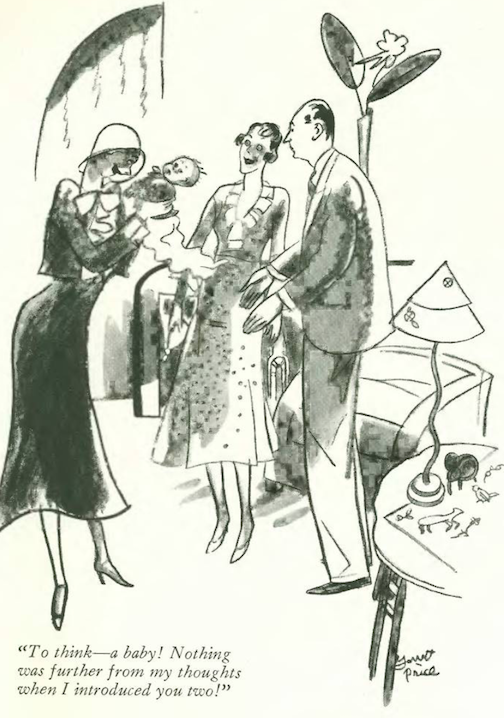
Garrett Price explored the joys of parenthood…
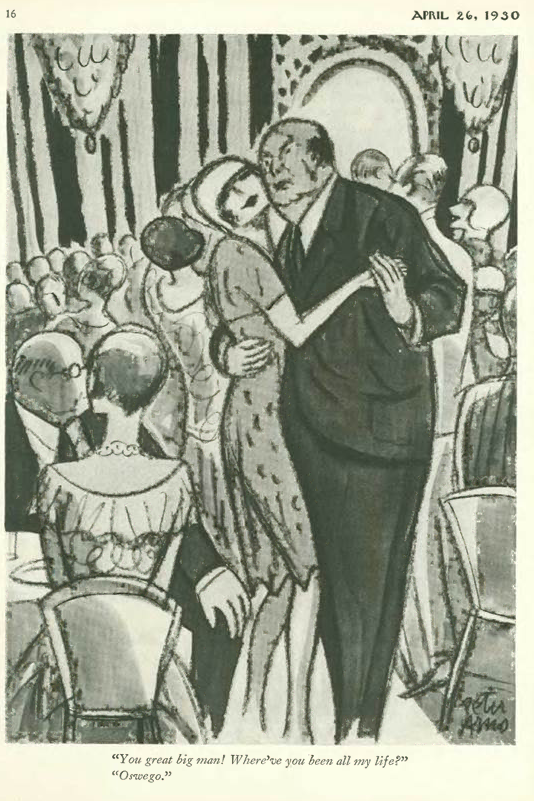
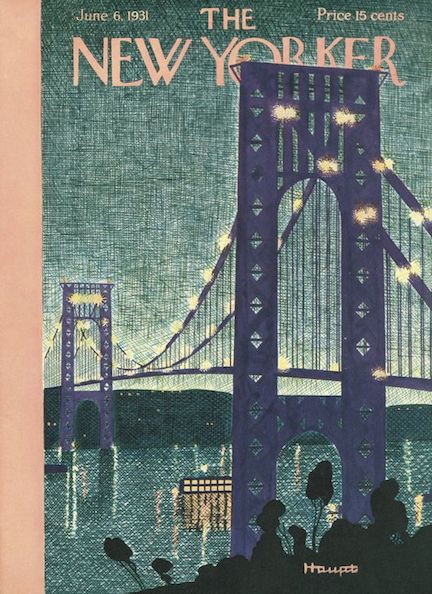
…and we close with Peter Arno’s unique take on family life…

Next Time: Rooftop Romance…
Chaplin of the Jungle

In the 1920s and 30s the concept of the documentary film was still in its infancy, and beginning with the silent Nanook of the North (1922), the idea that a documentary and a drama were separate things was unknown to filmmakers.

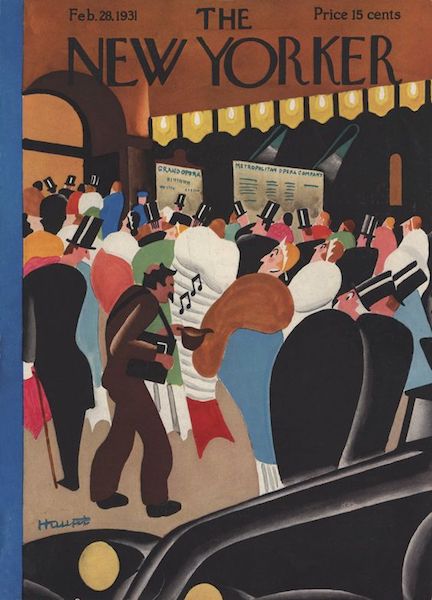
Feb. 28, 1930 cover by Theodore Haupt.

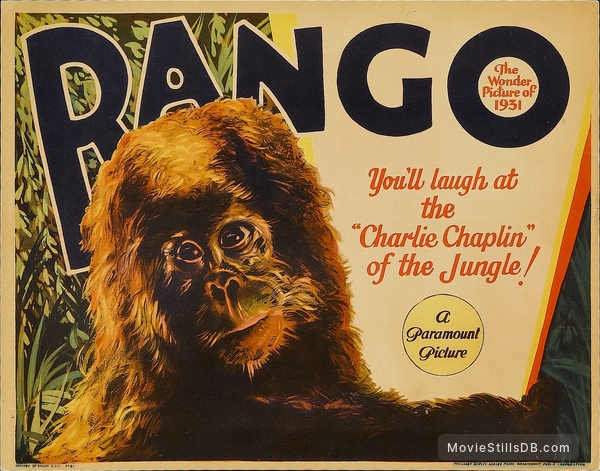
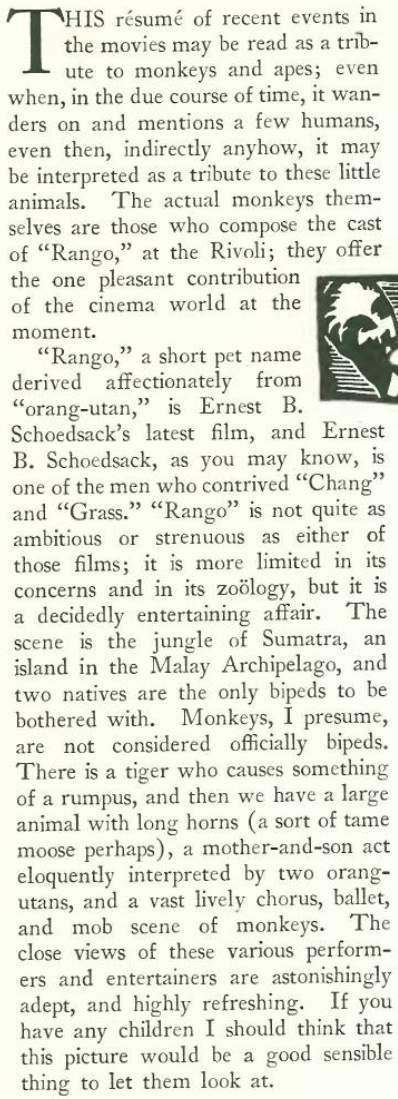
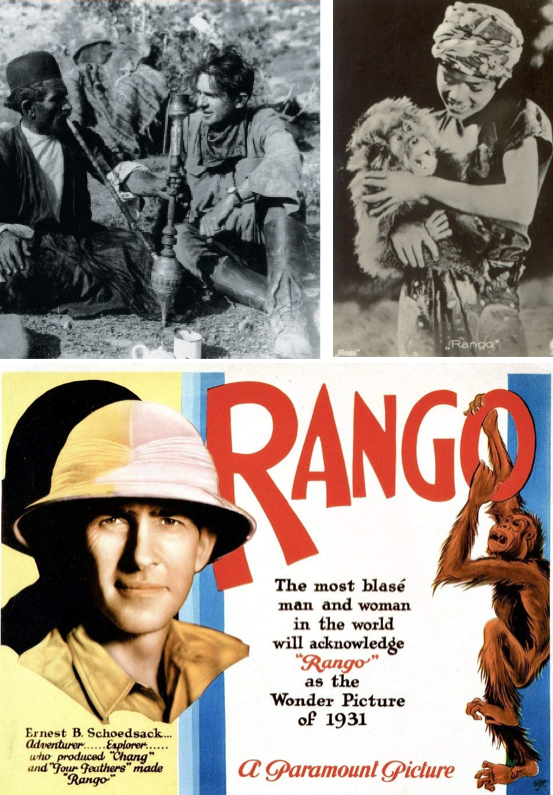
What was known, however, was the box office appeal of films that explored unknown and exotic lands, like Ernest B. Schoedsack’s 1927 blockbuster Chang, which featured a mix of staged events as well as the actual slaughter of wild animals. Audiences (and most critics) seemed little troubled that these films were a mix of fact and fiction. It was a movie, after all, and movies followed a story arc, and they had drama, and sometimes comedy. And so when Schoedsack (1893-1979) introduced audiences to an orangutan named Rango, publicists described the simian star as the “Charlie Chaplin of the Jungle.” The New Yorker’s John Mosher found the performances of the various apes “astonishingly adept”…

MONKEY BUSINESS…Clockwise, from top left, the Iowa-born Ernest B. Schoedsack cut his filmmaking teeth as a producer/director of quasi-documentaries, beginning with 1925’s Grass, which followed a caravan from Angora to Persia; a young Sumatran boy, Bin, bonds with the orangutan Rango; promotional theater card for the film. (filmaffinity.com)
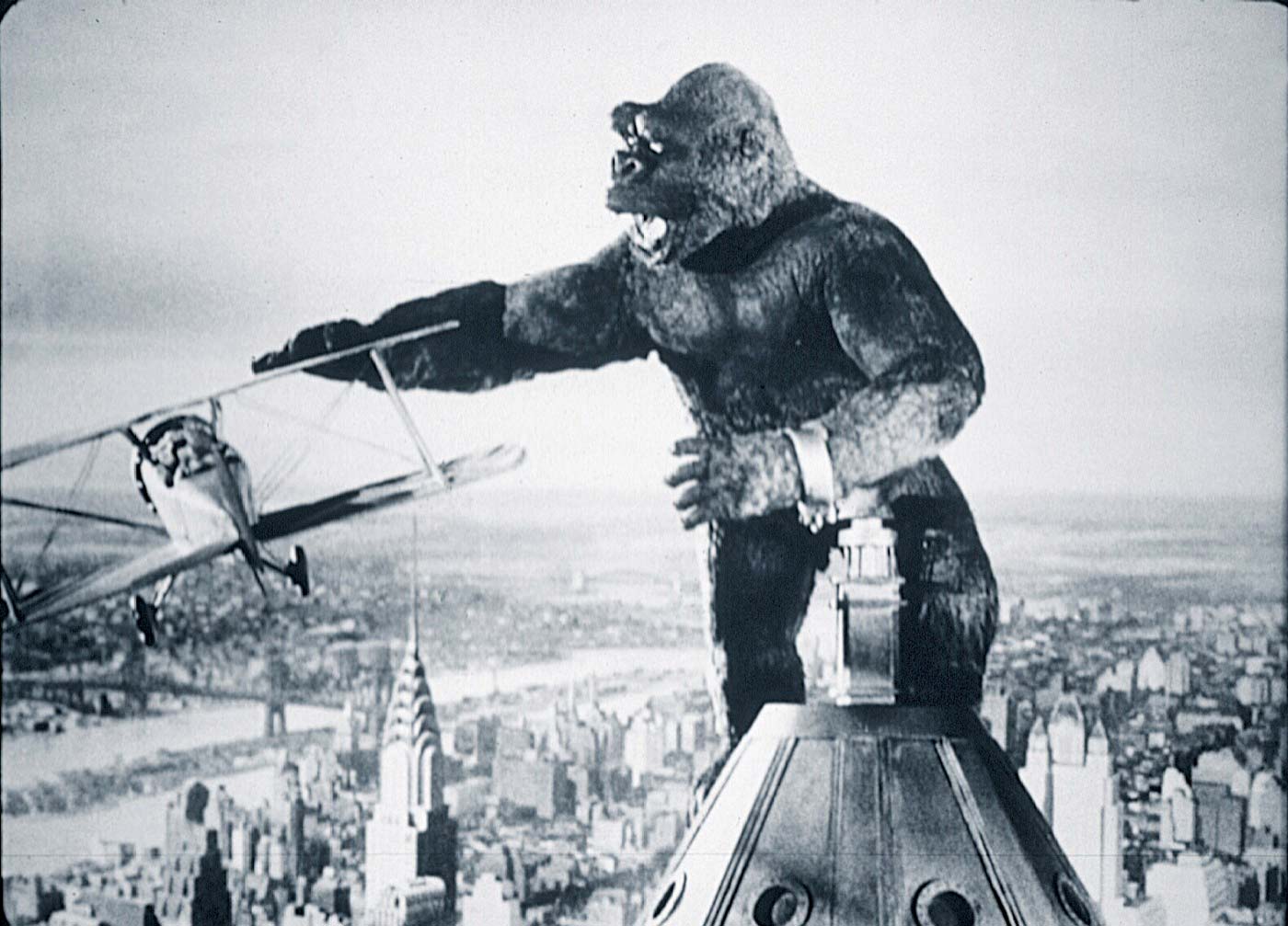
NOT SO CUDDLY…Two years after Rango, Ernest B. Schoedsack would co-produce and co-direct 1933’s King Kong, with Merian C. Cooper. (Britannica)

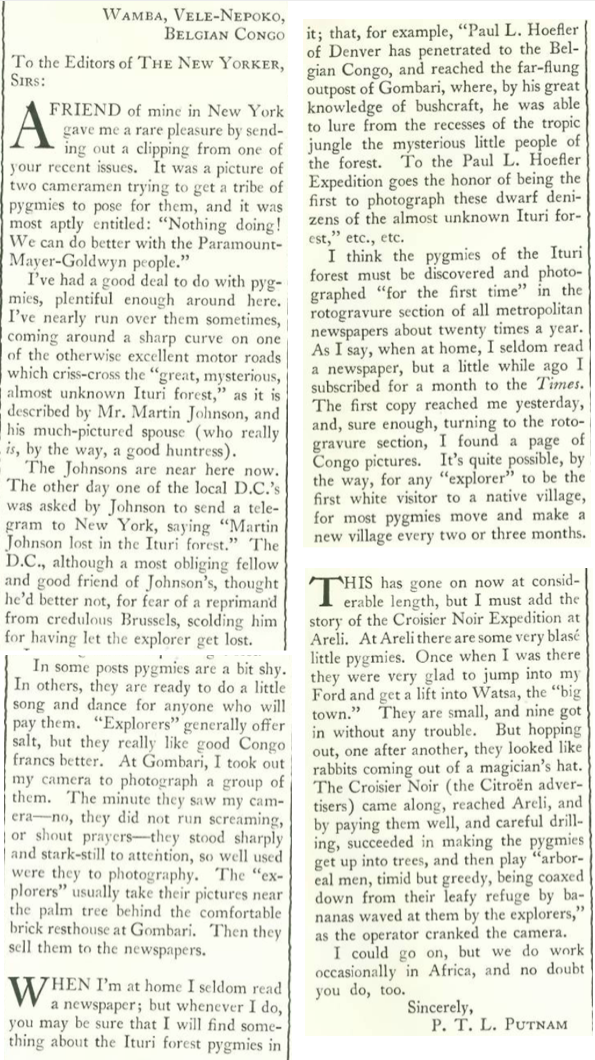
If interpretations of tropical life weren’t accurate in 1931, it wasn’t completely due to filmmakers taking dramatic license. Attitudes toward “exotic” lands and people commonly ranged from naively paternalistic to downright racist. In a letter to The New Yorker, Patrick T.L. Putnam (1904-1953) is decidedly of the former, portraying Congo pygmies as clever, amusing children who hoodwink unsuspecting “explorers”…

To Putnam’s credit, he showed a genuine interest (and respect for) in the lives of tribal peoples, and particularly the Mbuti of the Congo’s Ituri Forest. He remained in the Congo for the rest of his life. This thumbnail is the only photo I could find of Putnam:

(geni.com)

 *  *  *

Big Bill Turns Pro

In first decades of the 20th century it was still widely believed that athletic competition should be for its own sake rather than as a means for making money, so many top stars competed as amateurs. Professional golf wasn’t established until 1916, and professional leagues in basketball and football first formed in the 1920s. Amateur status was especially prized in tennis — before the “Open Era” began in 1968, only amateurs were allowed to compete in Grand Slam tournaments.

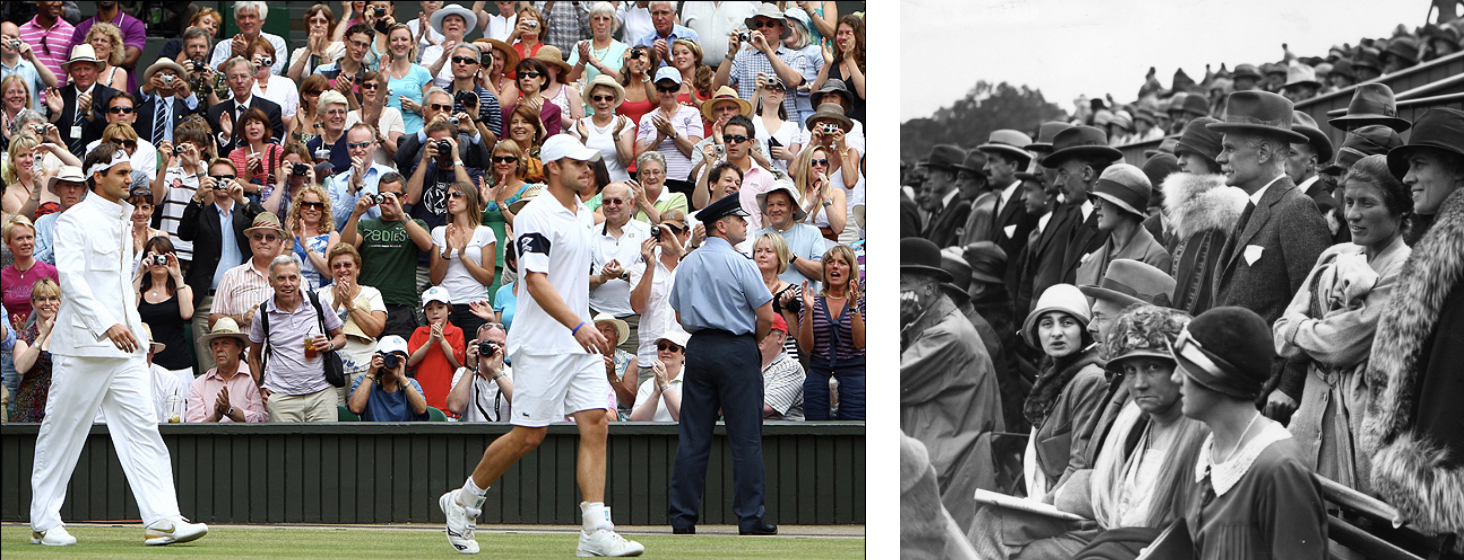
Sports promoter C. C. Pyle established the first professional tennis tour in 1926 with American and French stars playing exhibition matches in front of paying audiences. According to The New Yorker’s John Tunis, many in the crowd were finely dressed, with men in top hats and women turned out in the latest high fashion.

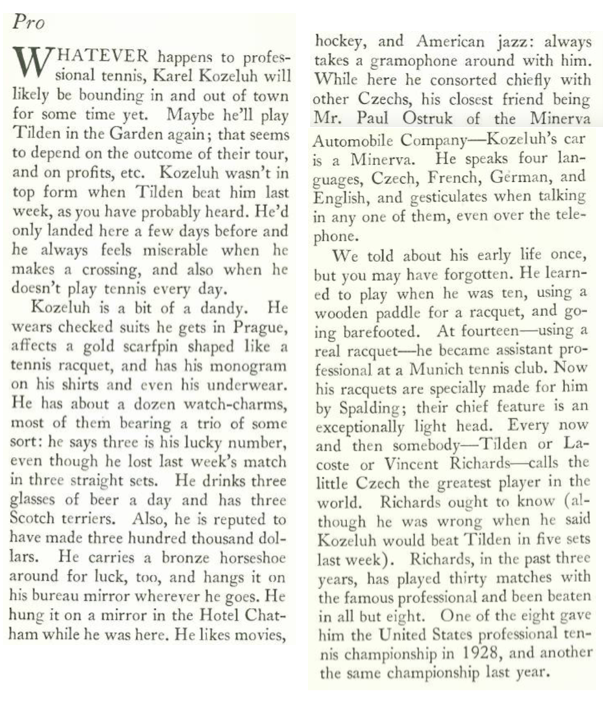
America’s top draw was “Big Bill” Tilden, the world’s number one player from 1920 to 1925 and the first American to win Wimbledon. It caused quite a stir when Tilden went pro on Dec. 31, 1930. He barnstormed across the country,  playing one-night stands with a small group of professionals including the top Czech player Karel Koželuh. “The Talk of the Town” had this to say about the fledging game of professional tennis:

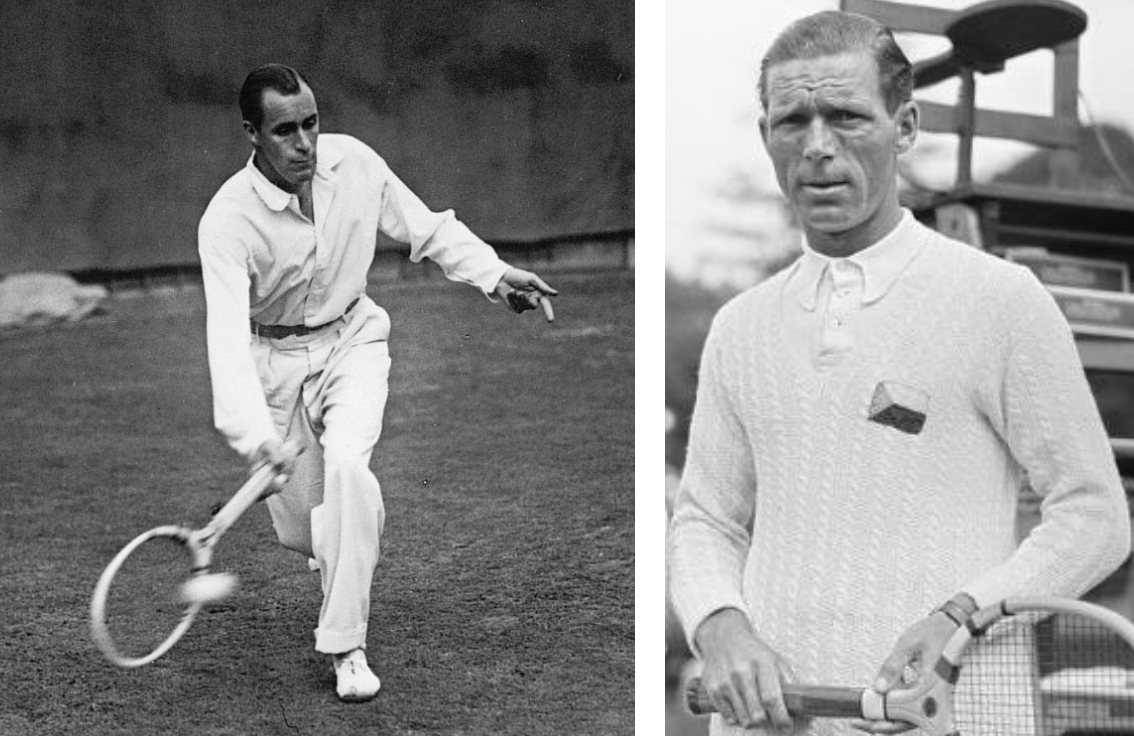
BARNSTORMERS…Bill Tilden (left) and Karel Koželuh toured America and Europe with a handful of other players in a series of exhibition matches in the fledgling professional tennis circuit. (Britannica/cyranos.ch)

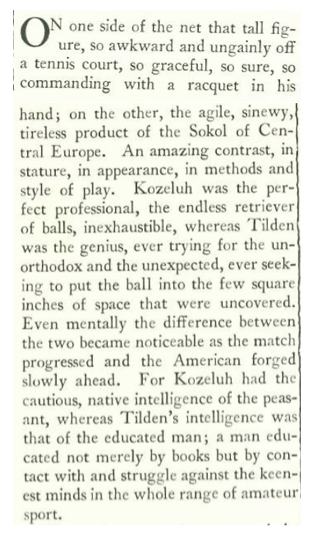
In his sports column, John Tunis offered this description of the competitors:

NOW AND THEN…At left, you can still spot a few neckties at Wimbledon as the audience watches Roger Federer and Andy Roddick enter Centre Court in 2009; at right, Wimbledon crowd in 1925. (BBC/Vintage Every Day)

 *  *  *

Triple Tripe

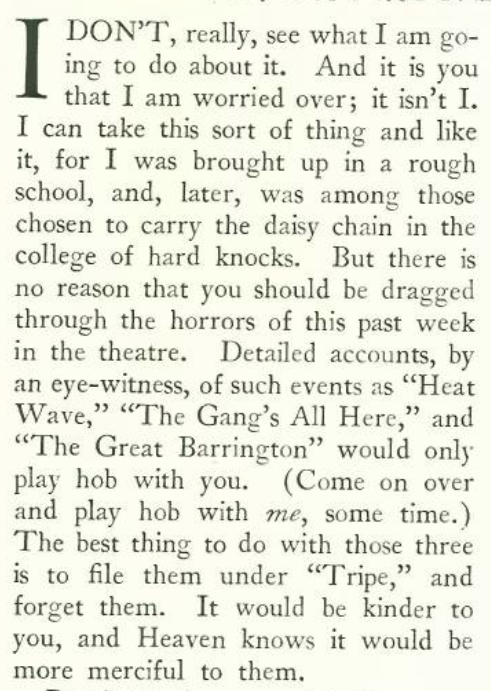
Dorothy Parker continued to sub in the theater column for her friend Robert Benchley, who was traveling abroad. She found little to like on the Great White Way, including three forgettable plays she reviewed in the Feb. 28 issue:

Apparently audiences agreed with Parker’s assessment. The Gang’s All Here closed after just 23 performances, The Great Barrington, after just 16. And Heat Wave was not so hot, closing after a mere 15 performances.

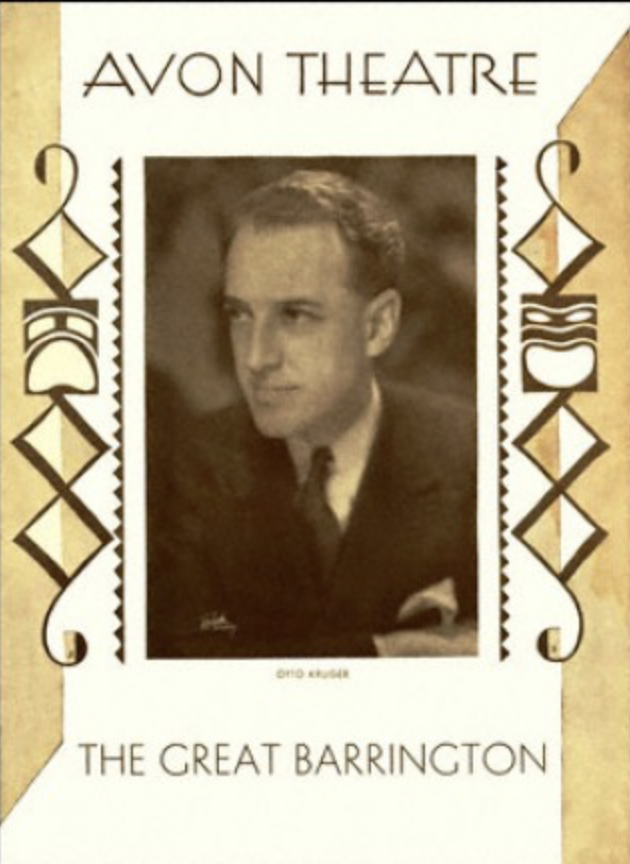
NOT SO GREAT…Program for 1931’s The Great Barrington. It lasted 16 performances. (IBDB)

Parker once again closed the column with a plea to her dear friend:

 *  *  *

To Swash No More

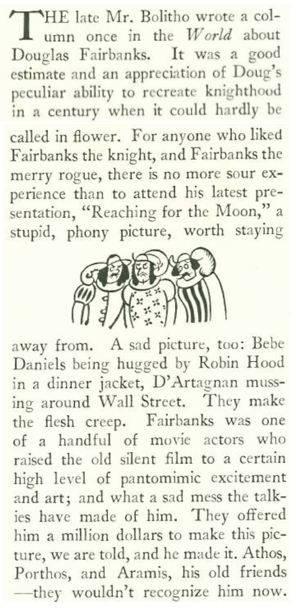
In his “Notes and Comment,” E.B. White lamented the end of Douglas Fairbanks as the swashbuckler of the silents, and rejected the talkie version of the actor in Reaching for the Moon, a film in which Fairbanks portrayed Larry Day, a Wall Street millionaire who later loses his fortune in the 1929 stock market crash.

KEEP YOUR SHIRT ON, DOUG…From left, Douglas Fairbanks in the silent era’s The Thief of Bagdad (1924); Fairbanks on an ocean cruise with Bebe Daniels in Reaching for the Moon. The 47-year-old Fairbanks was still fit enough to pose shirtless, but E.B. White wasn’t having any of it. Despite his fit appearance, Fairbanks would die of a heart attack at the end of the decade. (IMDB)

The film today is perhaps best known for its sumptuous Art Deco sets…

(IMDB)

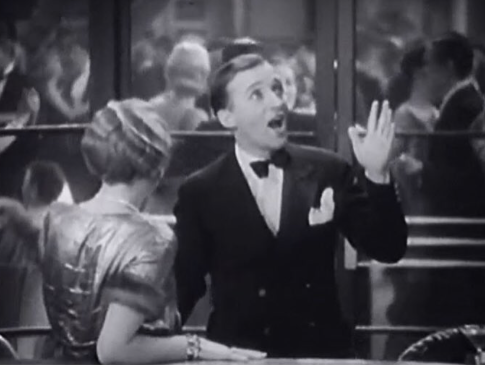
…and for one of Bing Crosby’s earliest film appearances. Reaching for the Moon was originally intended to be a musical featuring numbers by Irving Berlin, however Berlin found director Edmund Goulding difficult to work with, so only one of the original five songs recorded for the film was used, “When the Folks High Up Do the Mean Low Down,” sung by Crosby. It was filmed late at night after he had completed his gig at the Cocoanut Grove.

SINGING WITH BA-BA-BEBE…A young Bing Crosby sings “When the Folks High Up Do the Mean Low Down” with Bebe Daniels in Reaching for the Moon. (IMDB)

 *  *  *

Modern Living

E.B. White also commented on the modern world’s reliance on electric appliances, a habit a mere decade in the making since the gadgets he lists below did not exist before the 1920s:

ELECTRIC SURGE…Prior to the 1920s none of these electric appliances existed. By 1931 many homes were dependent upon them — although many country houses would have to wait for the Rural Electrification Administration (1935) and other New Deal programs get electrical service. (Pinterest)

*  *  *

From Our Advertisers

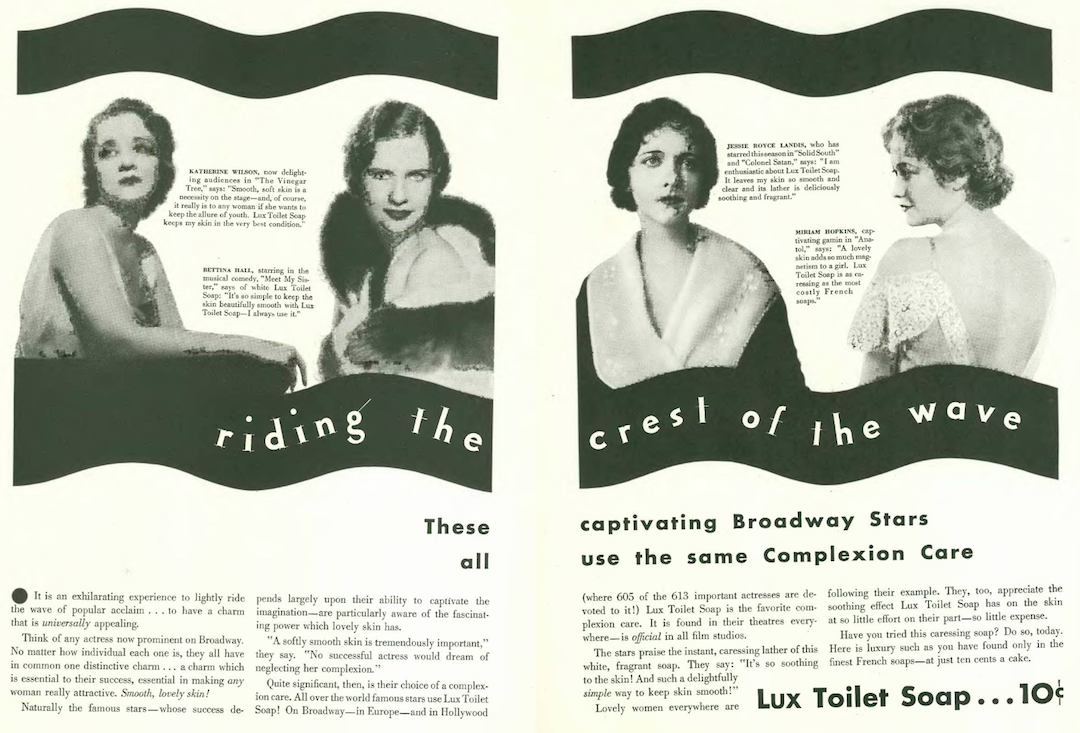
I’ve written before about Lux Toilet Soap’s celebrity-studded ad campaigns, but this two-page ad in the Feb. 28 issue caught my eye because it featured one of my favorite actresses, Jessie Royce Landis

…who appeared in two of my favorite films, both by Alfred Hitchcock: To Catch a Thief (1955) and North by Northwest (1959).

MATERNAL ROLES…Jessie Royce Landis usually played older than she was in real life. Clockwise, from top left, detail of Lux ad; Landis circa 1930; opposite Cary Grant in 1955’s To Catch a Thief; and again with Grant in 1959’s North by Northwest. In the latter film she played Grant’s mother, but in reality she was only seven years older than Grant. (IMDB)

…much of the Douglas Fairbanks/Bebe Daniels film Reaching for the Moon was set on a luxury ocean liner…if the stock market didn’t get you down, you could also afford to travel in style with the Empress of Britain

…or on one of the fine ships of the French Line fleet…

…the Imperial was one of the luxury cars that could get you to the docks…

…among the stranger ads to appear in The New Yorker was this one by the maker of clay plumbing fixtures…

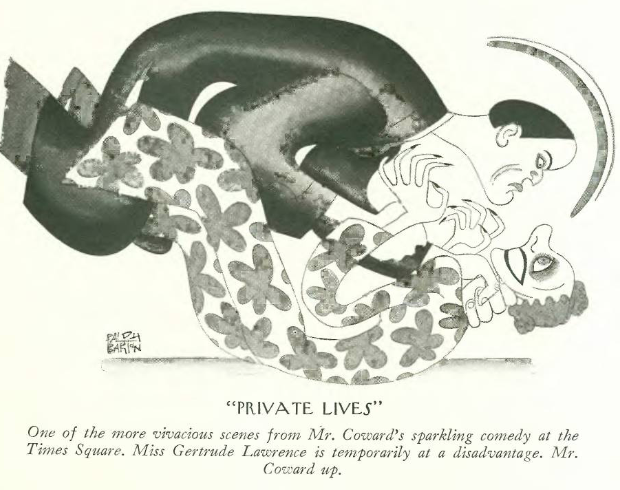
…on to our cartoonists, Ralph Barton returned with this illustration for the theater section…

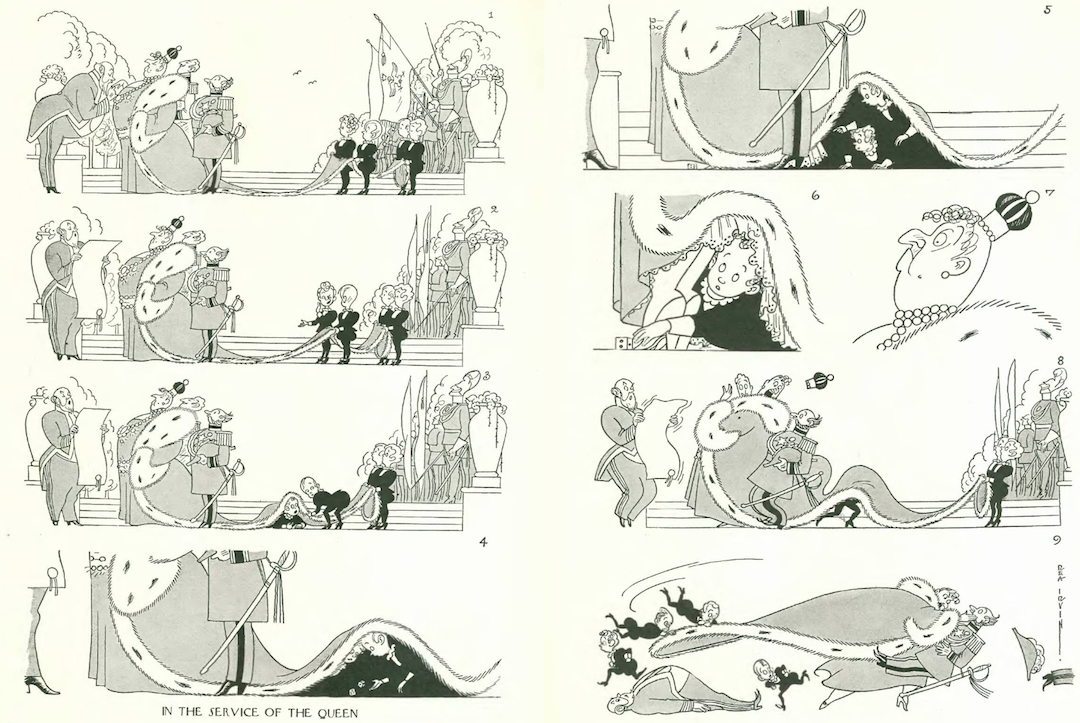
Rea Irvin brought us another of his two-page series cartoons…

Gardner Rea commented on the state of the art world…

Peter Arno peered in on an unfortunate infant…

Helen Hokinson gave us this exchange along a city street…

Garrett Price illustrated a tall order for a blues musician…

Carl Kindl found clashing styles in the shoe department…

…and James Thurber returned with a prelude to his battle of the sexes…

Next Time: The End of the World…

Robeson’s Othello

In 1930s America there were few if any opportunities for black actors to perform in mainstream stage or screen productions unless they conformed to racial stereotypes. An exception was Paul Robeson.

June 21, 1930 cover by Gardner Rea.

In 1930 Robeson (1898-1976) won rave reviews for his performance in Shakespeare’s Othello. That performance, however, took place in London, not New York, which London correspondent Anthony Gibbs took pains to point out in his dispatch for the June 21, 1930 New Yorker.

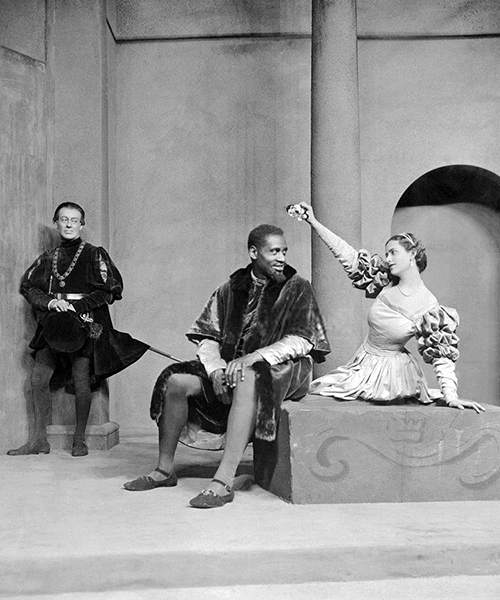
English actress Peggy Ashcroft as Desdemona and Paul Robeson as Othello in London’s Savoy Theatre production of Othello in 1930. Although only 22 at the time, Ashcroft was an established Shakespearean actress. The 32-year-old Robeson was already famous as both an athlete and actor. He was twice named a consensus All-American in football (Rutgers) and was the class valedictorian. He also received a law degree from Columbia while playing in the NFL. In 1930 he was already known to London audiences, having previously appeared in a 1928  London production of the American musical Show Boat. (theshakespeareblog.com)
CENTER STAGE…Left to right: Maurice Browne (Iago), Paul Robeson (Othello) and Peggy Ashcroft (Desdemona) in Othello at the Savoy Theatre, 1930. Maurice Browne was also the play’s producer; his over-the-top portrayal of Iago and his wife’s incompetent stage direction hurt the production, but Robeson nevertheless received high praise for his performance. (britishstageandscreen.tumblr.com)

Although the performance was a triumph for Robeson, the production itself was a mess. The play’s producer, Maurice Browne, enlisted his wife, Ellen van Volkenburg, to direct (Peggy Ashcroft later called her “a pretentious dud”). Writing in The Guardian (Sept. 3, 2003), Samantha Ellis observes: “Recognising that his Othello transcended the ropey production, the audience gave Robeson 20 curtain calls. He reprised the role all over the world and never lost his pleasure in it. For Robeson, it was more than just a part: it was, as he once said, “killing two birds with one stone. I’m acting and I’m talking for the negroes in the way only Shakespeare can.”

Robeson’s Othello would not make it to New York until 1943. It would run for almost 300 performances, setting an all-time record run for a Shakespearean play on Broadway.

 *  *  *

Restoring Order

In the aftermath of Grover Whalen’s disastrous (and sometimes violent) run as New York City Police Commissioner, E.B. White and his fellow New Yorkers welcomed the steady hand of Edward P. Mulrooney (1874-1960) to the helm:

THE COMMISH…Edward P. Mulrooney in a 1930s portrait by Edward Steichen. (Conde Nast)

 *  *  *

The Commander

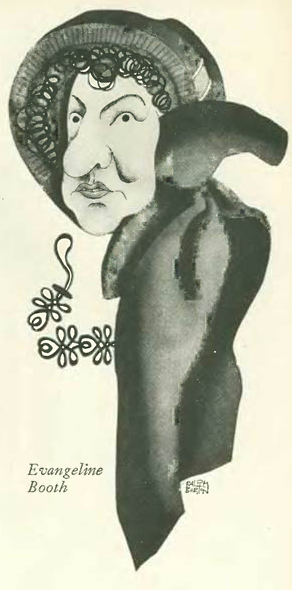
American author and lecturer Virgilia Peterson Ross profiled Evangeline Cory Booth (1865 – 1950), who would become the fourth General of the Salvation Army in 1934. She was the first woman to hold that post. An excerpt:

Ralph Barton returned to provide this caricature for the profile, one of the last works he would create for The New Yorker before his untimely death…

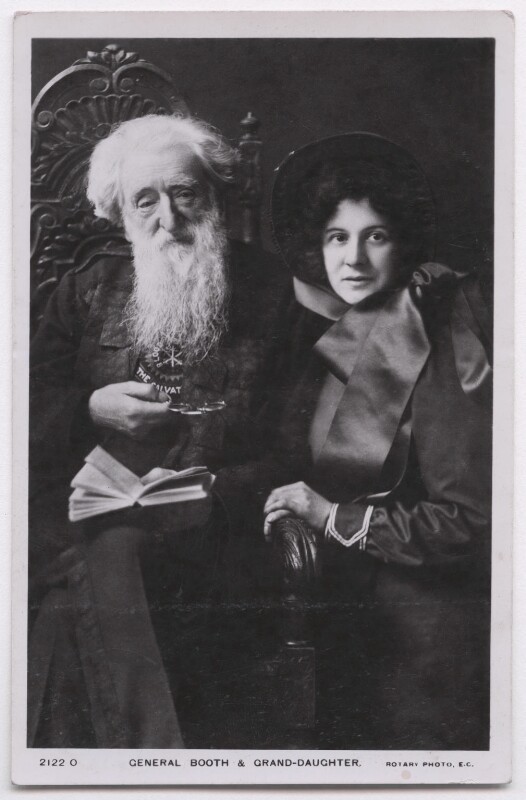
HEIRESS TO A LEGACY…William Booth, an English Methodist preacher who founded The Salvation Army and became its first General, poses with his grand-daughter Evangeline Cory Booth in this 1908 postcard image. (National Portrait Gallery)

 *  *  *

Home of the Dome

Architecture critic George “T-Square” Chappell was gladdened by the sight of scaffolding atop St. Bartholomew’s Church, which would finally get its dome to complete architect Bertram Goodhue’s vision…

NOW YOU SEE IT…Clockwise, from top left, St. Bartholomew’s Church at 325 Park Avenue, sans dome, in 1928; the church with dome in the 1950s; interior and exterior views of dome. (nyago.com/bostonvalley.com)

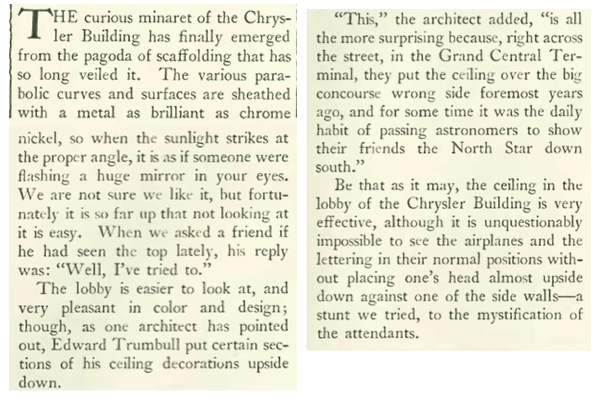
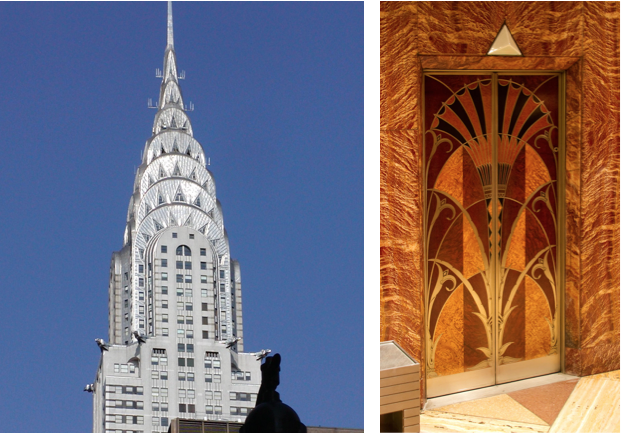
…Chappell also commented on the emergence of the Chrysler Building’s blindingly shiny dome and interior appointments…

BLINDED BY THE LIGHT…The Chrysler Building’s gleaming spire emerged in all its glory in June 1930. At right, an elevator in the building’s lobby. (Wikipedia)

 *  *  *

Below the Belt

It wasn’t Dempsey-Tunney, but the bout between Max Schmeling (1905-2005) and Jack Sharkey (1902-1994) was the next best thing for boxing fans. The World Heavyweight Championship had been vacant since Gene Tunney’s retirement in 1928, and Sharkey and Schmeling had emerged as the sport’s No. 1 and 2 contenders.

The bout ended in a controversial decision: Although Sharkey won the first three rounds, he was disqualified after he landed a punch below the belt late in the fourth round. Schmeling became the first boxer to win the World Heavyweight Championship on a foul. The New Yorker’s Niven Busch Jr. (with illustration by Johan Bull) offered these thoughts on the fight’s disappointing outcome:

LOW BLOW…Although Jack Sharkey (far right) led after three rounds, a low blow in the fourth delivered the World Heavyweight Championship to German boxer Max Schmeling (left). Sharkey would claim the title two years later in a rematch with Schmeling. Although boxing isn’t the healthiest pursuit, both men lived into their 90s; Schmeling died in 2005 just shy of his 100th birthday. (Wikipedia/boxrec.com/thefightcity.com)

 *  *  *

One Of Ours

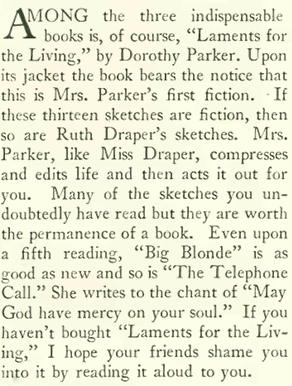
The New Yorker included this brief review of a collection of short fiction pieces by Dorothy Parker, herself a literary critic of some renown at the magazine…

DOROTHY’S LAMENTATIONS…The New Yorker’s Dorothy Parker published this collection of short fiction in 1930.

…and on to our advertisers, this ad appeared on the opposite page of the review…

…speaking of ads, the makers of Marlboro cigarettes continued to sponsor gimmicky penmanship and writing contests to promote their deadly product…

…while promoters of the Empire State Building (still under construction) continued to draw on the historical significance of the building’s Midtown location…

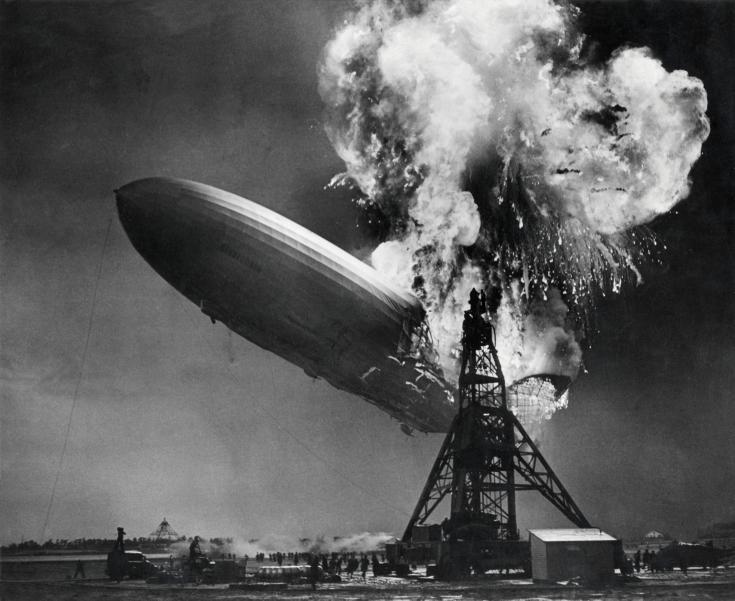
…on to our cartoons, Garrett Price pondered the very real challenge of guiding a massive Zeppelin to the planned mooring mast atop the Empire State…

…a portent of what would happen to the Hindenburg just seven years later…

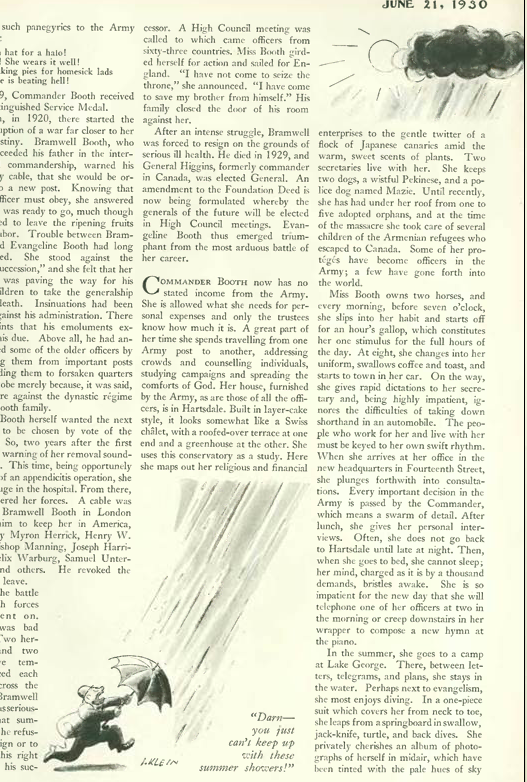
The New Yorker’s typesetter Popsy Whitaker made clever use of his columns for this Isadore Klein entry…

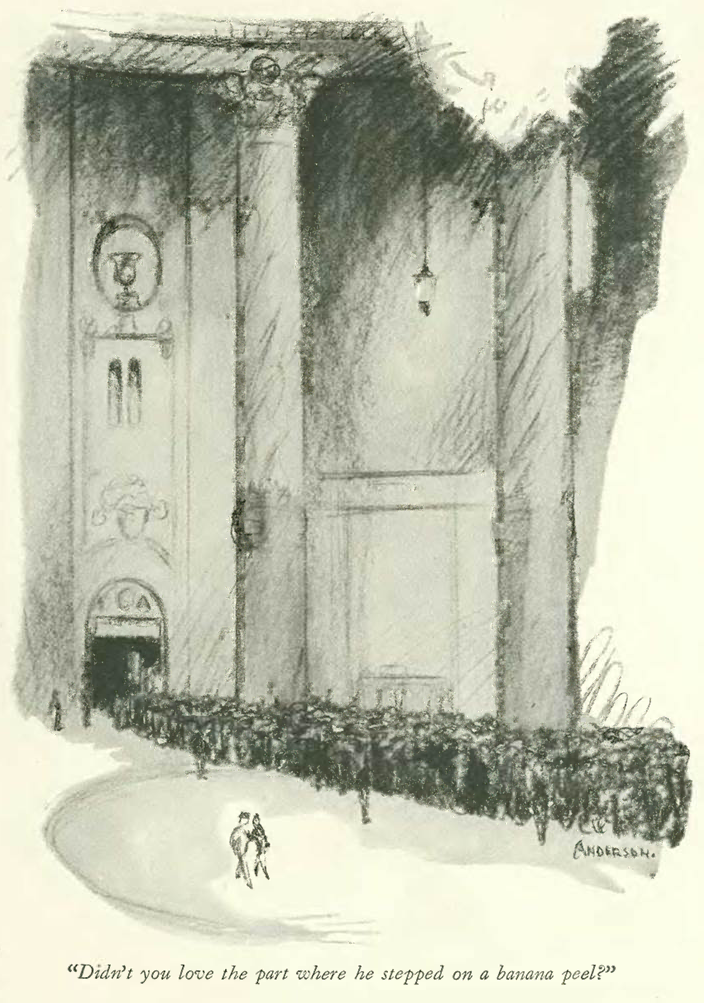
John Murray Anderson found humor in contrasting the grand with the mundane…

Carl Kindl eavesdropped on the small talk of a couple of ash haulers…

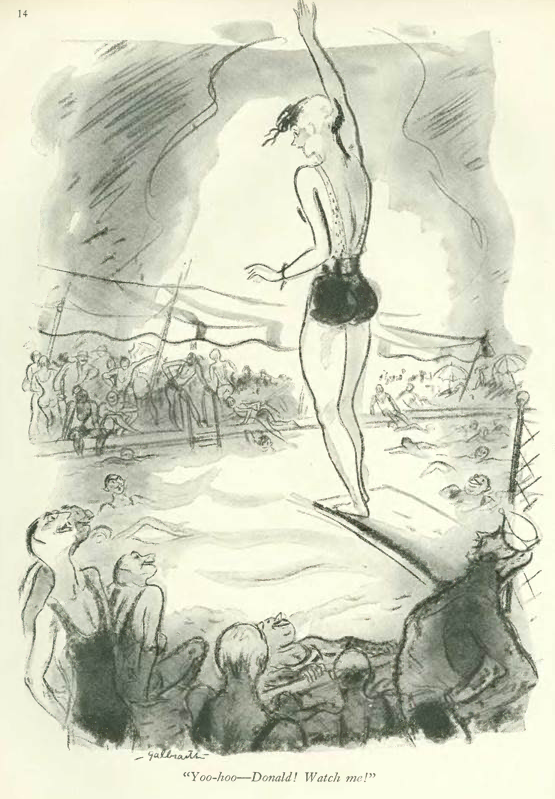
…and William Crawford Galbraith found humor at the public pool…

 *  *  *

On to the June 28 issue, with a cover featuring a satirical kakemono-style illustration by Rea Irvin, who was fond of Japanese scroll art…

June 28, 1930 cover by Rea Irvin.

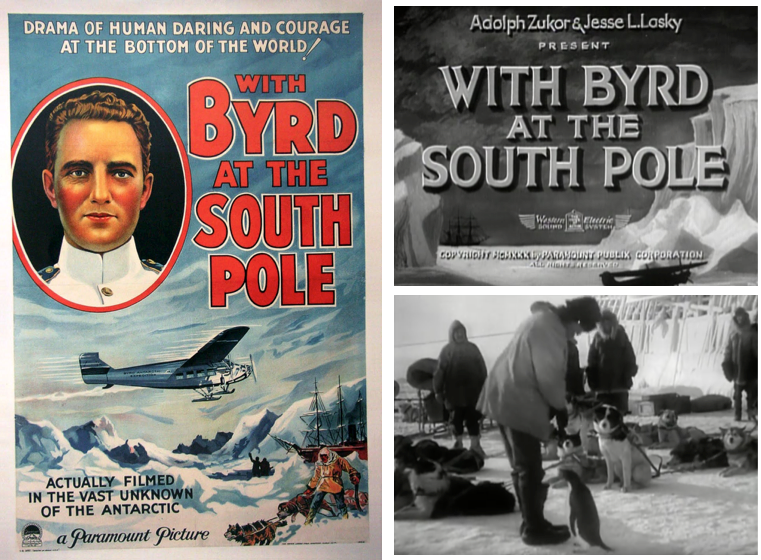
Film critic John Mosher checked out the new documentary on Admiral Richard Byrd’s expedition to the South Pole…

A BYRD WITH WINGS…A Paramount Pictures movie poster promoting the 1930 documentary With Byrd at the South Pole; still images from the film at right. (Wikipedia/YouTube)

“The Talk of the Town” also made note of Byrd’s expedition and homecoming, contrasting his upcoming book, Little America, with the four-volume historical work planned by popular historian Will Durant.

In collaboration with his wife, Ariel, Durant would end up publishing an eleven-volume history of civilization (four million words across nearly 10,000 pages), written between 1935 and 1975. Will Durant was at work on a twelfth volume when he died in 1981 at age 96.

Admiral Richard Byrd’s Little America, left, and the 11-volume The Story of Civilization, by Will and Ariel Durant.

 *  *  *

American Lenin

The June 28 profile, written by Alva Johnston, featured radical American labor organizer and Marxist politician William Z. Foster. Despite Johnston’s portrayal of Foster as something of a genial pinko, in reality Foster was a strong supporter of Joseph Stalin and a dedicated and loyal ally of the Soviet Union’s Communist Party until his death in 1961. The Soviets even gave him a state funeral, with Nikita Khrushchev personally heading an honor guard in Red Square. An excerpt of Johnston’s profile:

RED AS A ROSE…Left, a campaign photo of William Z. Foster when he headed the Communist Party ticket in the 1928 U.S. presidential election; at right, illustration of Foster for the profile, by Abe Birnbaum.

 *  *  *

And to close…a colorful advertisement in the June 28 issue from Rex Cole…from the signature it appears to be the work of Mario Cooper, but this doesn’t look at all like his other work…

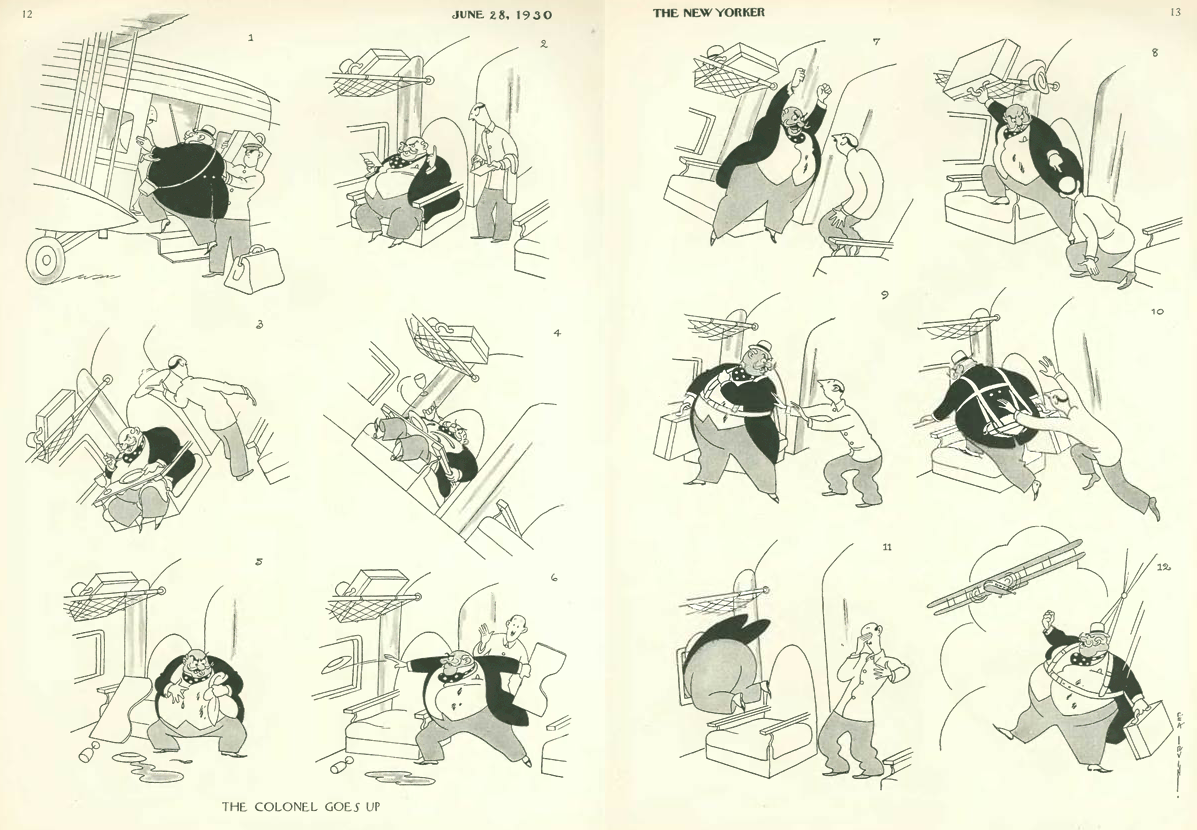
…and a two-page Rea Irvin cartoon, which demonstrates his visual storytelling skills…

Next Time…Happy Fourth!


Paramount on Parade

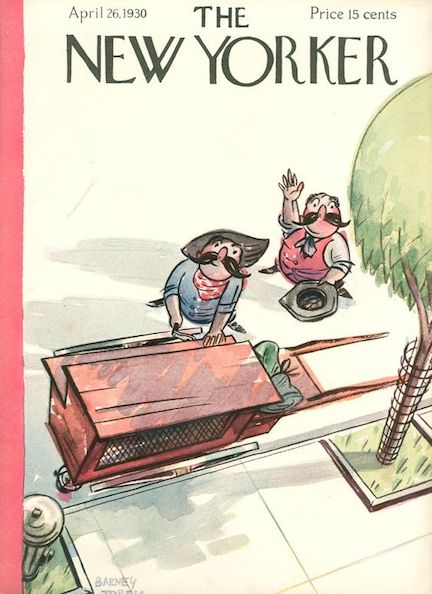
Before we launch into the latest offering from Tinseltown, a note about the cover artist for the April 26, 1930 issue.

April 26, 1930 cover by Barney Tobey.

Barney Tobey (1906-1989) was known for gently humorous cartoons that appeared in The New Yorker for more than fifty years. He also contributed four covers, the first of which appears above. In the Sept. 21, 1998 issue, illustrator Richard Merkin offered this remembrance:

*  *  *

Star-spangled Banter

All-star musicals were all the rage in the early sound era, as they gave studios the opportunity to showcase contract players (who were virtually owned by the studios) doing things they usually didn’t do on screen. Following the success of MGM’s Hollywood Revue of 1929, Paramount Studios released Paramount on Parade in April 1930, much to the liking of New Yorker critic John Mosher, who also praised the film’s accompanying cartoon, 1929’s The Prisoner’s Song:

You can watch Max Fleischer’s The Prisoner’s Song here (and ponder how far animation has advanced)…

Mosher also praised a number of Paramount’s contract players, and especially actors Jack Oakie and Maurice Chevalier

MUCH ADO…A great crowd gathers for the premiere of “Paramount on Parade” at the New York’s Rialto Theatre in April 1930. (cinematreasures.org)
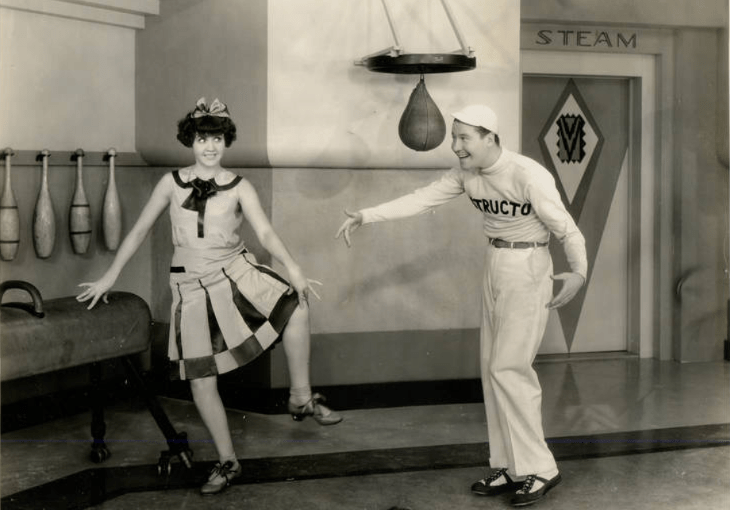
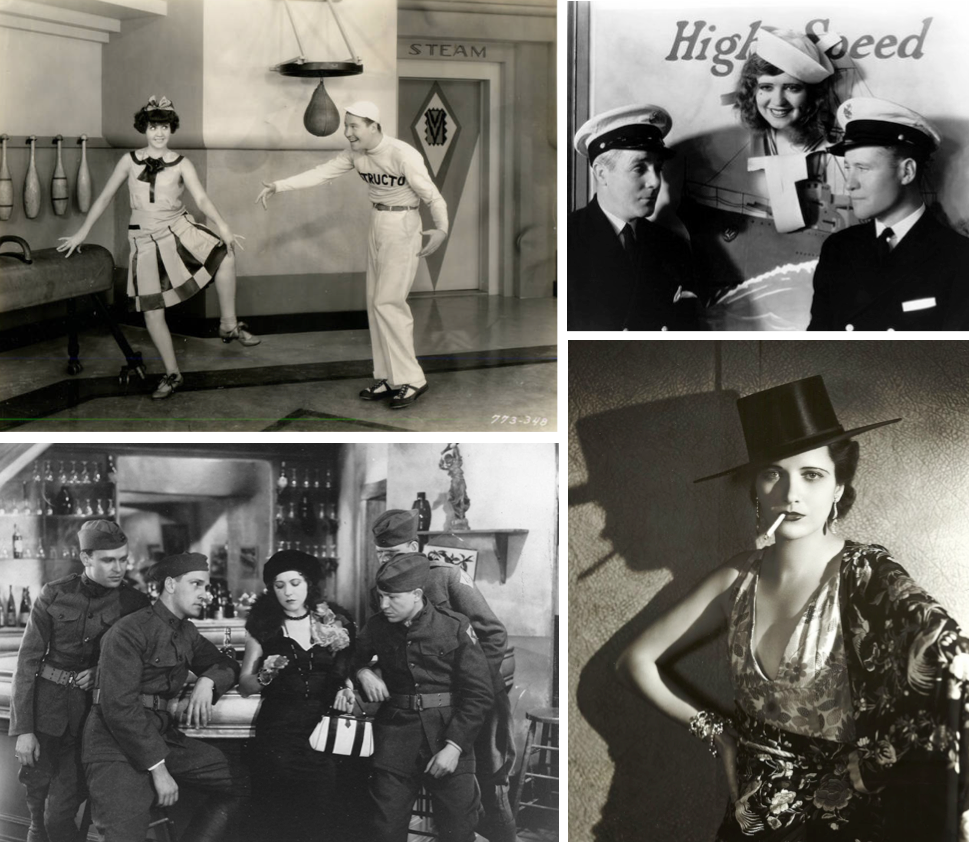
SEEING STARS…Clockwise, from top left, Helen Kane (possibly the inspiration for the cartoon character “Betty Boop”) and Jack Oakie do a little footwork; Clara Bow, Hollywood’s “It Girl,” pops through a Navy recruitment poster at the beginning of her song and dance number (with Stuart Erwin and Richard ‘Skeets’ Gallagher); one of Hollywood’s top actresses in 1930, Kay Francis, portrays “Carmen” in the revue; Ruth Chatterton entertains doughboys Stuart Erwin, Fredric March, Jack Oakie, and Stanley Smith in Paramount on Parade. (IMDB)
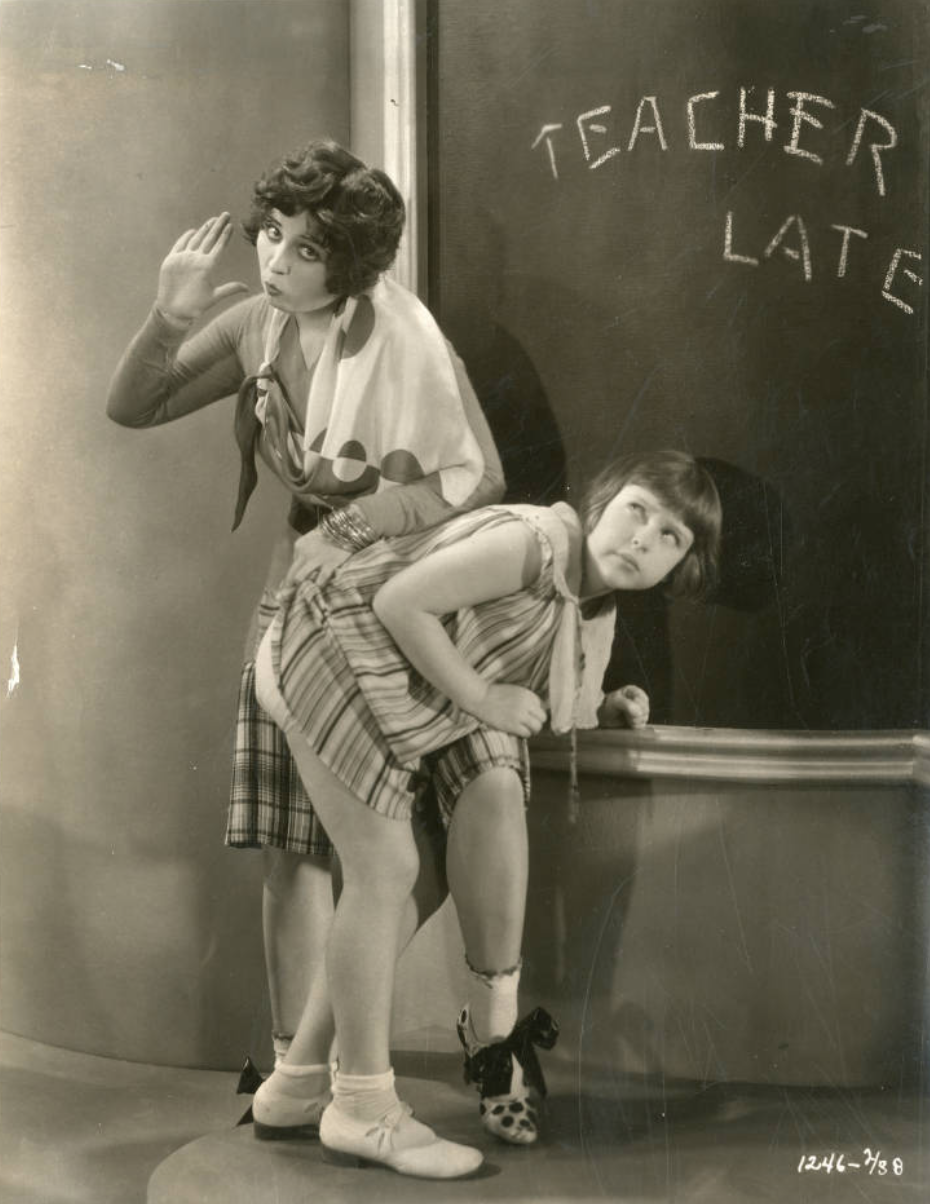
BOOP GIVES A BOP…Helen Kane (left) and child star Mitzi Green in a sketch from Paramount on Parade. (IMDB)

 *  *  *

Lost In the Crowd

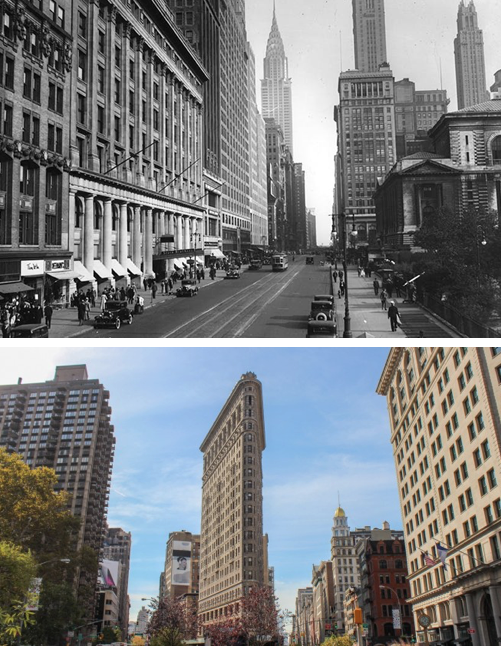
In his “Notes and Comment,” E.B. White lamented the fact that the world’s tallest building appeared less than lofty, since neighboring skyscrapers were nullifying its grandeur:

DOWN IN FRONT…E.B. White found the streetview of the world’s tallest building wanting after it was completed in 1930; the iconic Flatiron Building, however, enjoys some elbow room even today. (spectator.co.uk/walksofnewyork.com)

 *  *  *

Full of Hot Air

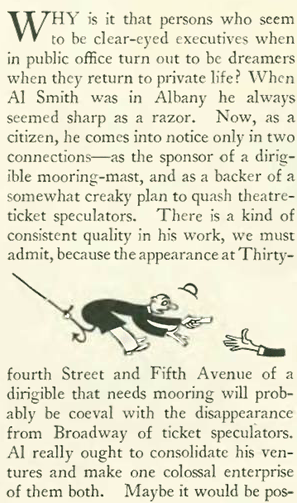
That was another opinion shared by E.B. White, this time regarding the Empire State Building’s top promotor, former New York Governor Al Smith, who spoke of plans to attach a mooring mast to the top of his skyscraper (which would eclipse the Chrysler as the world’s tallest in 1931):

*  *  *

View From the Top

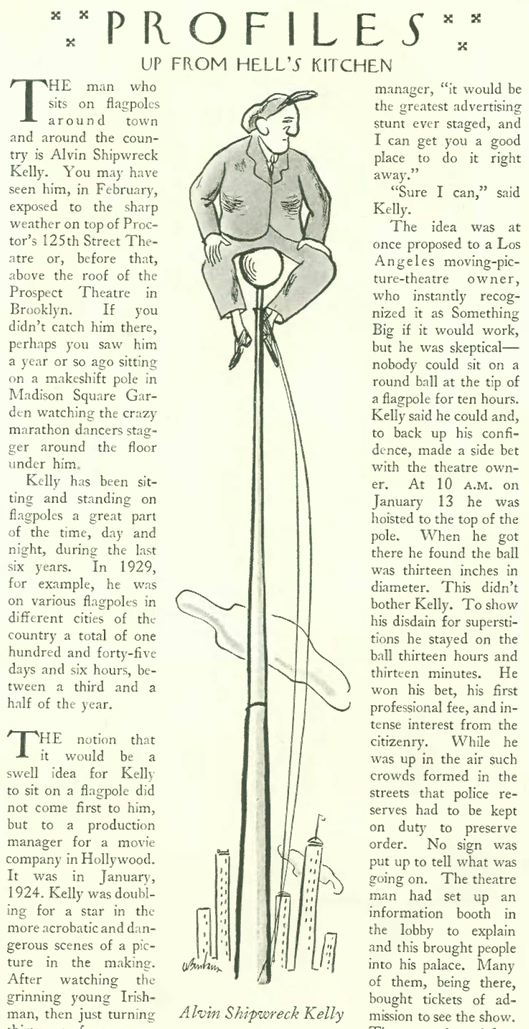
The New Yorker featured a profile of Aloysius Anthony Kelly (1893?-1952), better known as the Roaring Twenties most famous pole-sitter, “Shipwreck” Kelly. He achieved his greatest fame in the 1920s and 1930s, sitting for days at a time on elevated perches — often atop buildings — throughout the U.S.

Kelly’s fame was already on the wane when this profile appeared, and by 1934 he was reportedly working as a dance hall gigolo. Kelly’s last flagpole stunt was at a 1952 event sponsored by a Lion’s Club in Orange, Texas — he suffered two heart attacks while sitting atop their 65-foot flagpole. After climbing down he announced, “This is it. I’m through.” He died one week later after he was struck by car on West 51st Street in Manhattan.

LOFTY AMBITIONS…Alvin ‘Shipwreck’ Kelly atop a flagpole near College Park, Maryland, in October 1942. At right, undated photo circa 1940s. (CSU Archives/Digital Commonwealth)

 *  *  *

Brand X

Folks were still abuzz about the discovery of a ninth planet in the solar system, soon to be dubbed “Pluto” by an English schoolgirl. Howard Brubaker, in “Of All Things,” observed…

…and Carl Kindl illustrated the problem a new planet posed for astrologers…

 *  *  *

I Beg Your Pardon

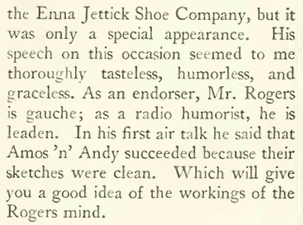
Will Rogers was a beloved comedian with a few rope tricks up his sleeve, but I’ve never known him for working blue. However, one critic for The New Yorker (“A.S.”– not sure who this is) found Rogers’ new radio show both humorless and gauche…

CAN YOU TAKE A JOKE?…In photo above, Will Rogers debuts his new radio show in April 1930. It would become the most popular Sunday evening radio show, and Rogers would prove to be the second biggest motion picture box office draw in the U.S. before his death in 1935. (Will Rogers Memorial Museum)

 *  *  *

Before He Got Axed

Ten years before he was murdered by one of Stalin’s NKVD agents, Leon Trotsky published an autobiography that was written in his first year of exile in Turkey. The review is signed “G.H.” so I am assuming the author is Geoffrey Hellman, who contributed for decades to The New Yorker’s “Talk of the Town.” Excerpts from the review:

RED ALERT…Leon Trotsky wrote his autobiography, My Life, while exiled in Turkey. (Wikimedia)

 *  *  *

From Our Advertisers

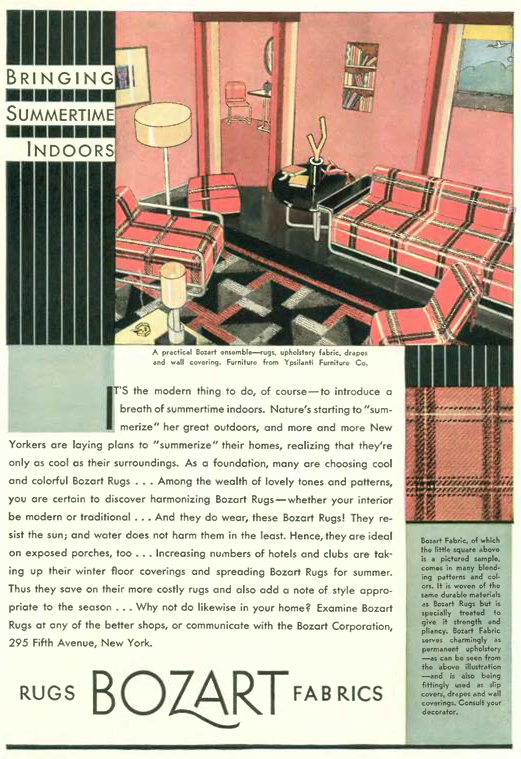
The makers of Bozart rugs and fabrics invited New Yorker readers to “introduce a breath of summertime indoors”…

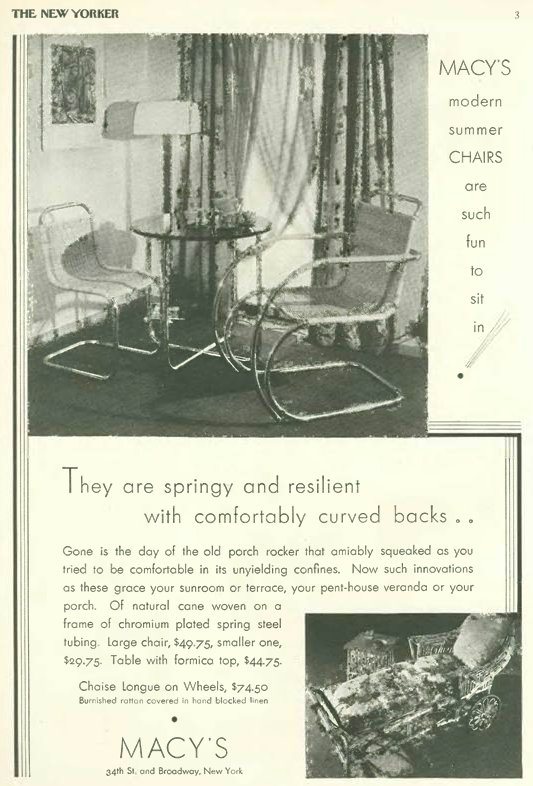
…while Macy’s urged the same by gracing a sunroom or terrace with one of their Marcel Breuer-inspired chairs…

…Colonial Airways touted an early form of radar — an “invisible pilot” — as the latest safety feature in its airplanes…

…the Douglas L. Elliman company promoted its yet unbuilt River House, which would feature a pier where residents could dock their yachts…

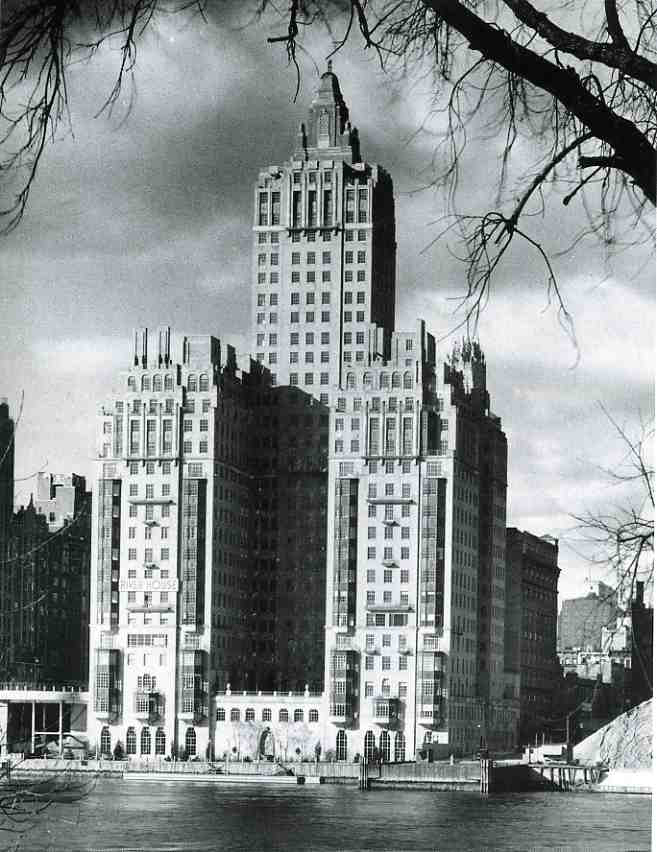
The 26-story River House in the 1930s. Originally, the Art Deco building featured a pier where residents could dock their yachts, but that feature was lost with the construction of FDR Drive in the early 1950s, effectively sealing the building off from the water. The building has been home to author Barbara Taylor Bradford, US Secretary of State Henry Kissinger, and actress Uma Thurman. (observer.com)

…and then we have our more unfortunate ads, such as this one from Macy’s that shows grandpa passing along his racist tendencies to a grandchild…

…and this sad appeal from the makers of Lucky Strike to keep puffing and avoid that hideous double chin…

…our cartoons include Garrett Price and thoughts of spring…

Barbara Shermund eavesdropped on tea time…

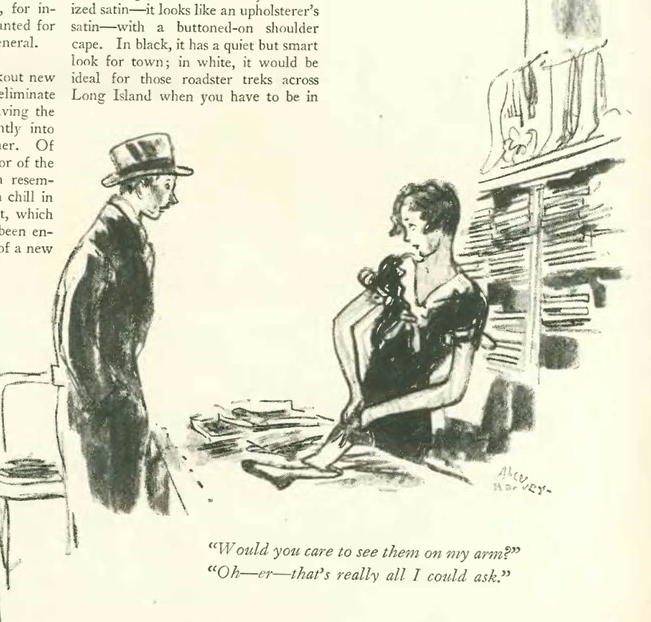
Alice Harvey found an awkward moment in a hosiery department…

Peter Arno revisits a familiar theme — chorus girls and sugar daddies…

…and Otto Soglow looked in on a fat cat’s moment of pride…

Next Time: Minding the Gap…


  • zeusdvds.com

A Carnival in the Air

When Charles Lindbergh gunned his Wright Whirlwind engine on Roosevelt Field and took to the skies on his historic flight, he sparked such an interest in flying that just two years later that very same field was hosting huge weekend crowds that came to marvel at the airborne wonders of a new age.

August 31, 1929 cover by Theodore Haupt.

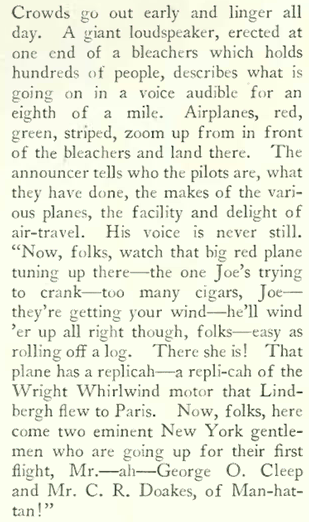
Writing for “The Talk of the Town,” James Thurber was on hand to take in the spectacle, noting how the announcer sold air-mindedness to the mob “in great clamorous phrases and resonant assurances.” Among those taking their first flight was a “Mr. Galleger, aged 101.” Thurber also observed:

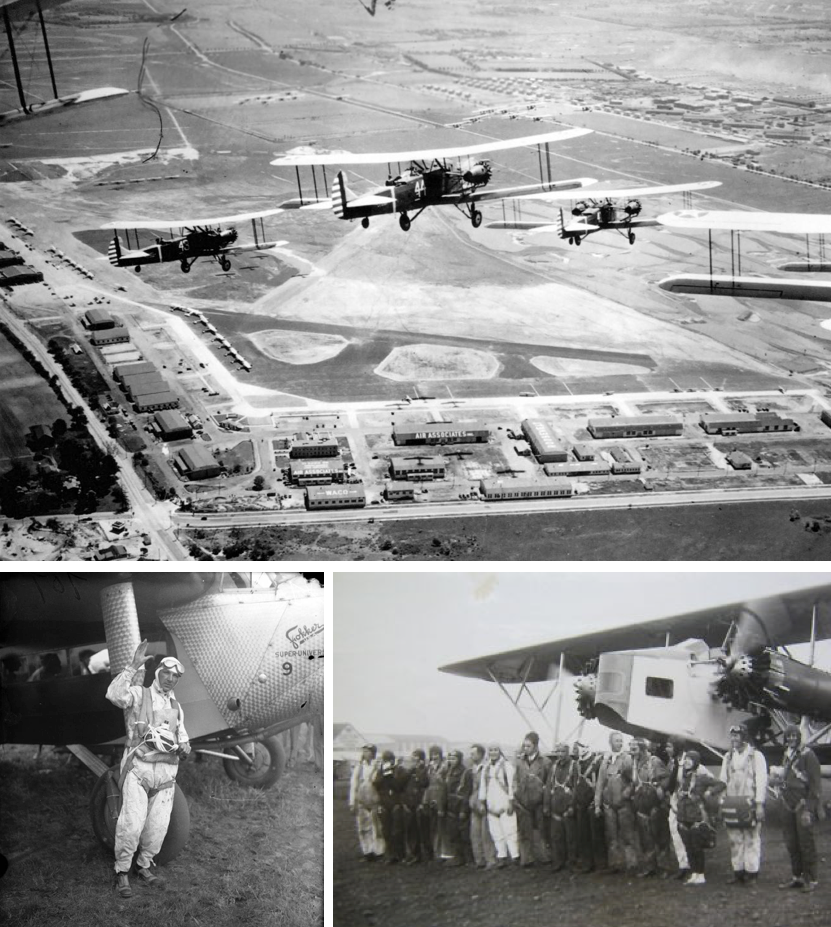
AIRBORNE SPECTACLES…Clockwise, from top, a 1931 aerial view looking southeast at a group of Army twin-engine biplane bombers overflying Roosevelt Field; parachute records were broken when 14 men and 2 women leaped from a Sikorsky bombing plane at Roosevelt Field in November 1929 (in the photo they seem to be standing precariously close to the plane’s whirling blades); Jack Cope waved to onlookers in Chicago before he performed a 15,000 foot jump in 1929. (tripod.com/Worthpoint/Chicago Tribune)

Although there were thrills galore up in the sky, Thurber seemed equally impressed by the spectacle on the ground…

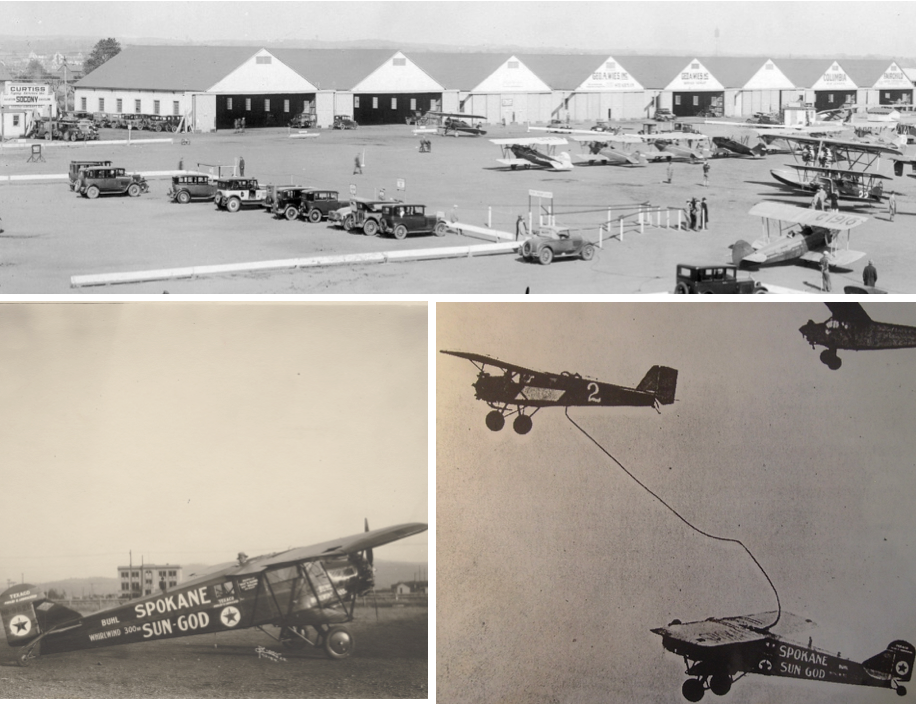
THE SUN GOD…Clockwise, from top, a 1928 photo of biplanes lined up by a row of hangars at Roosevelt Field; the spectacle of mid-air refueling was demonstrated above Roosevelt Field by Texaco Oil’s Spokane Sun God. (Tom Heitzman/barnstmr.blogspot.com/Wikipedia)

One of the big attractions was Texaco Oil’s Spokane Sun God, which traveled around the country to demonstrate the art of mid-air refueling. Note in the excerpt below (second paragraph) how the Sun God’s pilot communicated with his ground crew: He tossed some notes—tied to a heavy piece of lead(!)—out of the airplane’s window. It nearly landed in a crowd of onlookers…

AND HOW WAS YOUR DAY?…For some perspective, the first attempt at refueling in mid-air was made in 1921. In the photo above, Wesley May climbs from the lower biplane to the upper while carrying a 5-gallon can of fuel strapped to his back. After lifting himself onto the wing, he worked his way between the wings and into the cockpit. He then poured the fuel into the engine. (Seattle Museum of Flight) 

*  *  *

Falling Short

As I noted in a previous post (The Last Summer), the race to build the tallest building was erroneously reported by The New Yorker as a man against himself (namely, architect William Van Allen). In the Aug. 31 issue, the magazine’s “Talk of the Town” corrected the error, and added another curious note about another plan to build an “airplane lighthouse” taller than the Eiffel Tower…

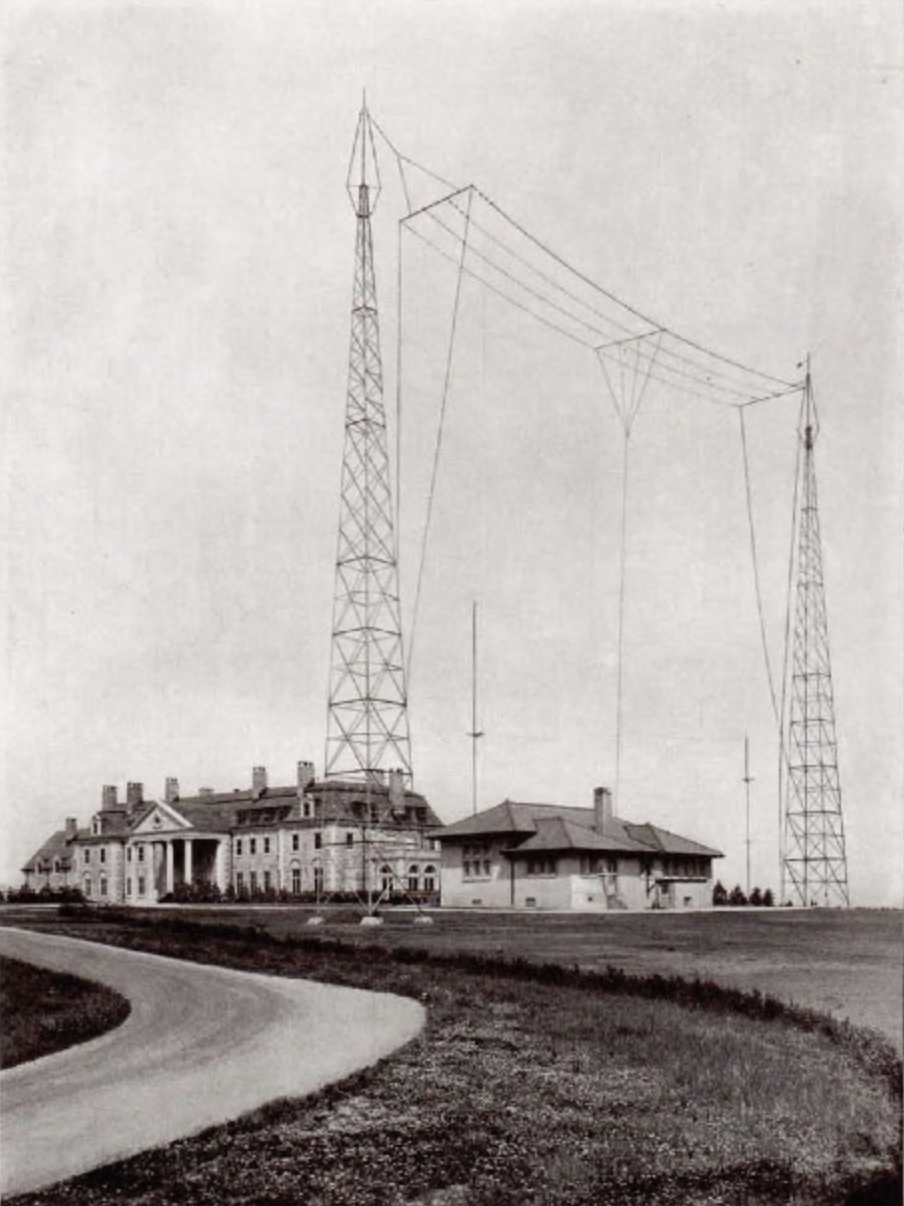
As noted above, Col. Edward Howland Robinson Green (son of the notorious miser Hetty Green) wanted to build a thousand-foot tower on his estate in Massachusetts. Here is what he settled for instead:

WORK-LIFE BALANCE…Edward Green, radio enthusiast and son of the miserly Hetty Green, erected huge radio towers at his Massachusetts estate in the 1920s to operate an early broadcast station, WMAF. (Wikipedia)

 * * *

When Trains Fly

Cashing in on the enthusiasm over aviation, the City of New York promoted its elevated train system as an “Air Line.” According to “Talk”…

Click on the video below to take a ride on the “L”. Most of the 1929 footage begins at 4:47…

* * *

Haw Haw

One more “Talk” item: a self-referential piece in which The New Yorker pondered its “mission” as a humor magazine…

* * *

Audax Minor

For more than five decades, George Francis Trafford Ryall (1887-1979) wrote the horse racing column for the New Yorker under the pseudonym Audax Minor. He published his first column on July 10, 1926, and his last on Dec. 18, 1978. He was the writer of longest record at the magazine when he died at age 92 in 1979 (52 years, a record that has been shattered by the nearly 98-year-old Roger Angell, who has published in the New Yorker from 1944 to 2018).

According to Ryall’s obituary in the New York Times, he adopted the nom de plume Audax Minor in a nod to Arthur F. B. Portman, who wrote about racing in England under the name of Audax Major. Ryall’s writing was so entertaining that many of his readers had never even been to a racetrack. According to Brendan Gill in his book, Here at the New Yorker, “(Ryall’s) world is a romantic fiction and they (the readers) are grateful when they learn that, with his green tweeds, his binoculars hung smartly athwart his chest, and his jaunty stride, Ryall resembles a character out of some sunny Edwardian novel.” An excerpt of his column from the Aug. 31 issue, with illustrations by Johan Bull:

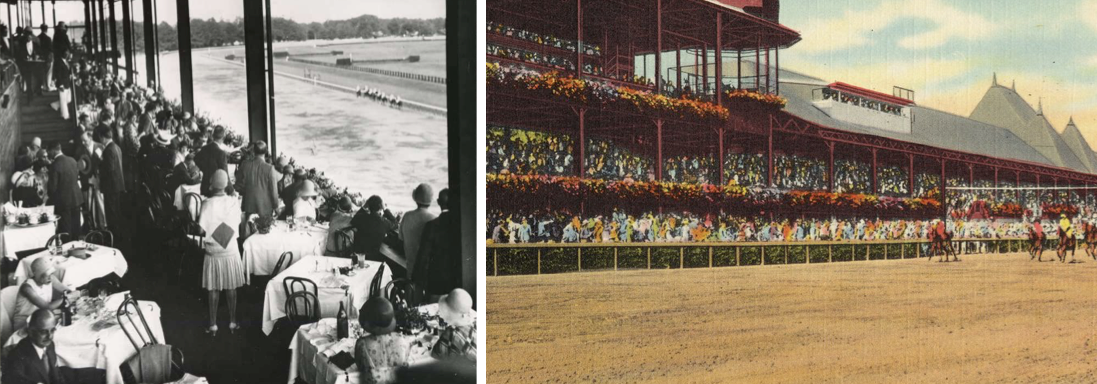
A DAY AT THE RACES…At left, a crowded second floor dining area in the clubhouse at Saratoga, 1929; a postcard image of the track, with expanded clubhouse at left, circa 1929. (Saratoga Springs Historical Museum/Boston Public Library)

 *  *  *

Shut Out

As I’ve noted before, the New Yorker covered nearly every imaginable sport except baseball. Here is a rare mention of the game in Howard Brubaker’s “Of All Things” column:

The Cubs would win the NL pennant, but they would fall to the Philadelphia Athletics in the 1929 World Series.

Rough and Ready

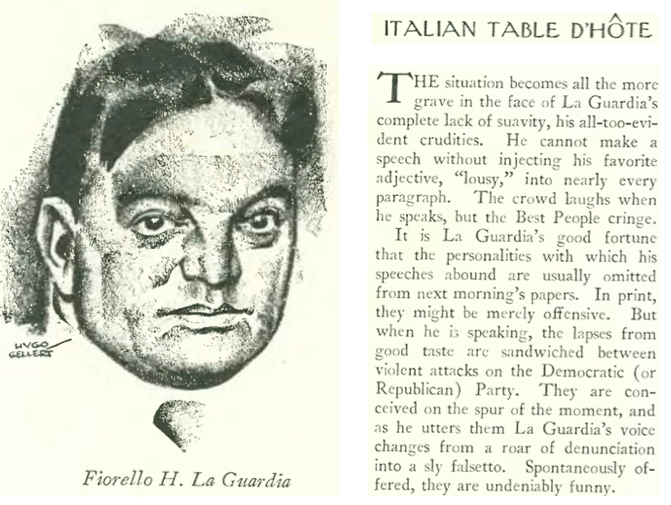
When Fiorello La Guardia challenged incumbent Jimmy Walker for New York City mayor in 1929, the city’s voters were presented with two colorful candidates who could not have been more different in their styles. Walker, a product of Tammany Hall, was a svelte dandy with a taste for the refined, whereas the reform-minded La Guardia was often coarse and unkempt. If they had anything in common, it was their dislike of Prohibition. La Guardia was featured in the Aug. 31 profile, written by Henry F. Pringle. Some excerpts:

JUST TRY TO STOP ME…Congressman Fiorello La Guardia pouring beer in his office during Prohibition, when he served New York’s 20th district in U.S. House of Representatives. (La Guardia Wagner Archives)

 *  *  *

Praise for the King

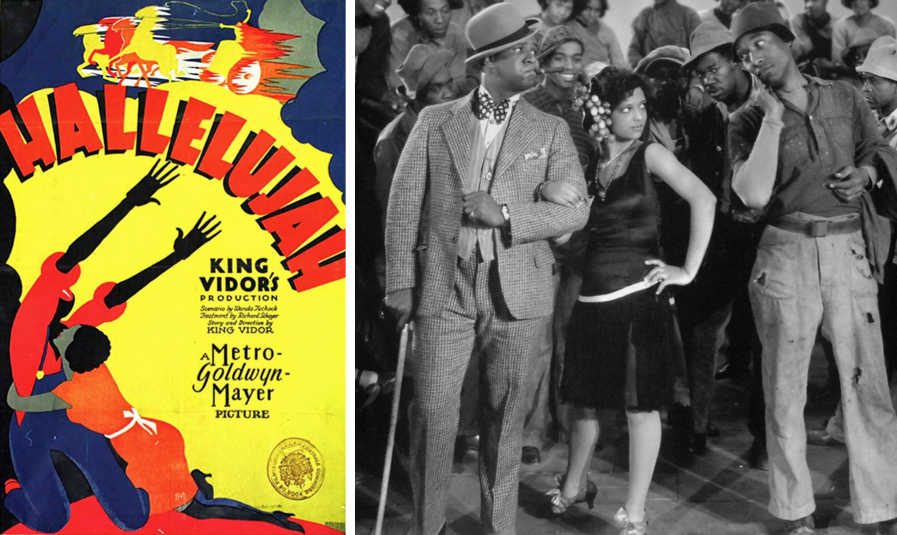
The New Yorker’s film critic John Mosher found most of Hollywood’s output to be pedestrian, but occasionally he saw a bright spot, including King Vidor’s latest production, Hallelujah:

William E. Fountaine, Nina Mae McKinney and Daniel Haynes in Hallelujah. The 17-year-old McKinney was the first African-American actress to hold a principal role in a mainstream film, and the first African-American actor to sign a long-term contract with a major studio—MGM. (IMDB)

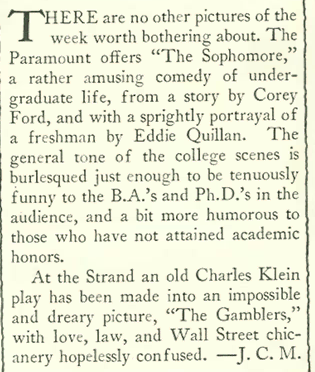
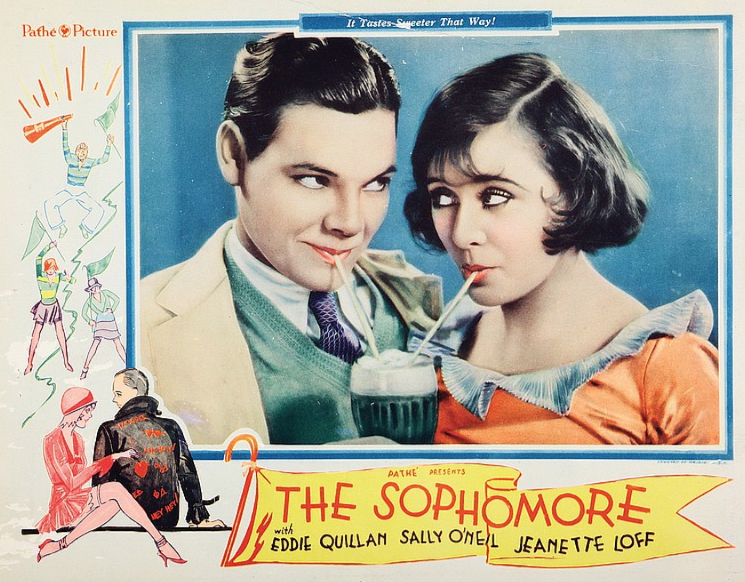
As for another film, Paramount’s The Sophomore, Mosher probably felt a bit obligated to say something nice, since it was a derived from a story by humorist Corey Ford, an early contributor to The New Yorker and part of the Algonquin Round Table orbit:

BOY MEETS GIRL…Lobby card for The Sophomore. (IMDB)

 *  *  *

A Bright Interval

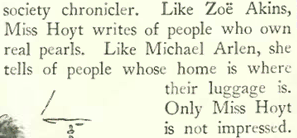
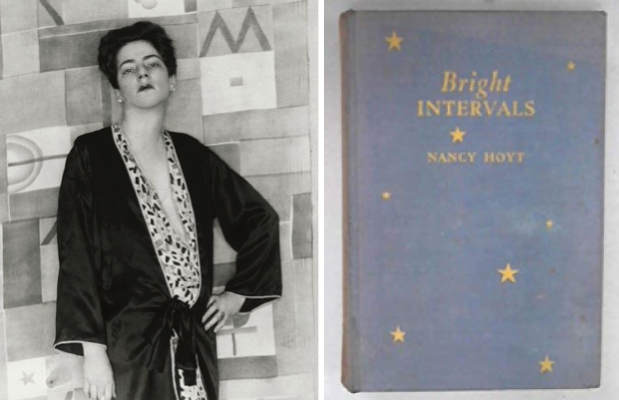
The New Yorker gave a brief but approving mention of Nancy Hoyt’s latest book, Bright Intervals, in its book review section…

Hoyt was a member of a socially prominent but deeply troubled family that included her recently deceased sister, the poet and writer Elinor Wylie (I wrote about the Hoyt family in my post Generation of Vipers). Characters in Hoyt’s novels often resembled the women in her family.

Nancy Hoyt in an undated photo by Sherril Schell. (Conde Nast/Amazon)

 *  *  *

From Our Advertisers

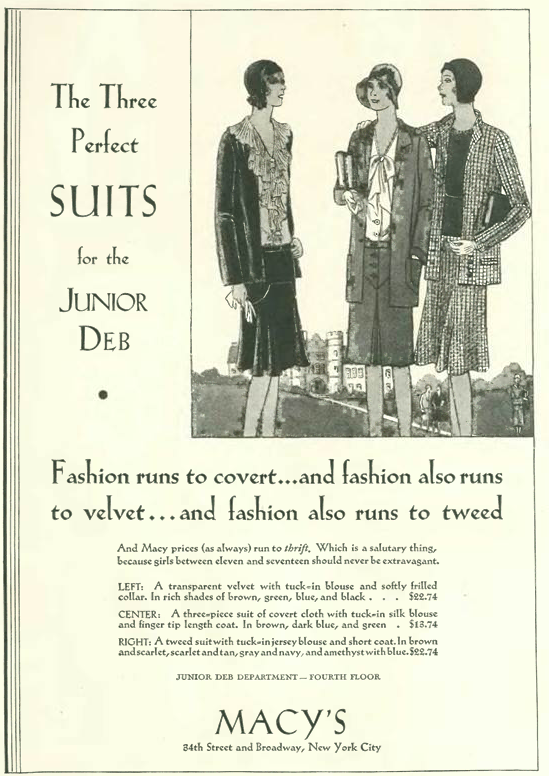
It was back to college time, and Macy’s had a thrifty new fall lineup ready for the “Junior Deb”…

…and on the less thrifty side, Best & Company offered these new looks for fall…

…note in the above ad that the first model is Virginia Maurice, the very same model we encountered in a recent post (The Last Summer) posing for Chesterfield cigarettes…

Model Virginia Maurice posed for this 1929 Chesterfield ad, illustrated by artist Charles Edward Chambers.

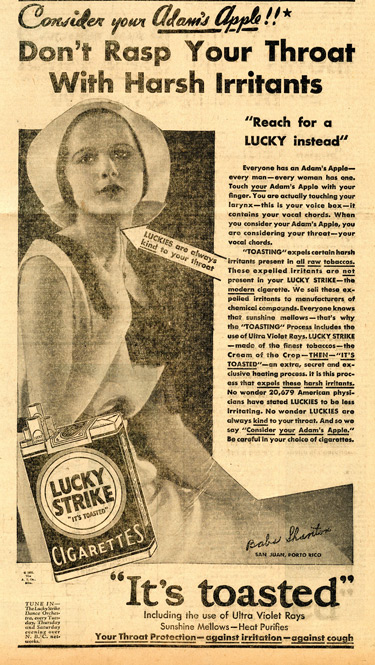
…the other model in the Best & Company ad, Babs Shanton, also wasn’t averse to taking money from the tobacco companies…

Undated newspaper ad for Lucky Strikes featuring Babs Shanton, a sometime performer with the Ziegfeld Follies and a singer with the Lucky Strike Dance Orchestra. (Stanford University)

…the makers of Studebakers tried to add sex appeal in this ad for their President Roadster. The artist was obviously challenged to work all of the necessary elements into the picture—car, swimming pool, diving board—not to mention the block of superfluous text where the steps to this impossibly long diving board should have been located…

…and sex not only sold cars…its also sold printing services…

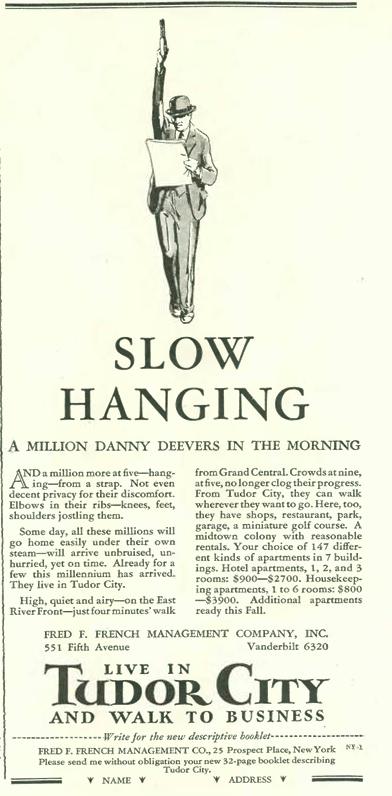
…instead of sex, the promoters of Tudor City chose strangulation to get their pitch across, equating a man’s daily train commute to death at the gallows (“Danny Deevers” refers to a character in a Rudyard Kipling poem who is hanged for murder)…

…the gawkers at Roosevelt Field weren’t the only folks with their heads in the clouds…an ad for Flit insecticide by Dr. Seuss…

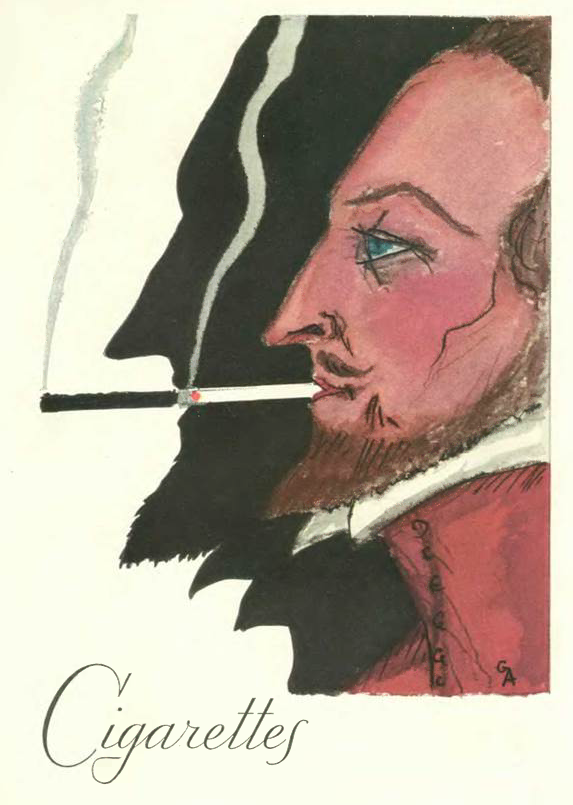
…this ad for Raleigh cigarettes, which appeared on the back cover of the Aug. 31 issue, assumed that folks were so familiar with their mascot that no further explanation was needed…

…here is a 1929 ad from House Beautiful that featured the same mascot with the Van Dyke beard…both ads were rendered by French illustrator Guy Arnoux

…on to our cartoonists…Helen Hokinson contributed this two-page spread on the challenges of visiting an old friend (click to enlarge)

Peter Arno looked in on a cheapskate at a posh restaurant…

Bruce Bairnsfather visited the talkies…

Justin Herman examined the literary life of the street…

Carl Kindl explored an awkward moment from the annals of technological advancements…

…and Isadore Klein illustrated the hazards of the tonsorial trade…

Next Time: The Last Hurrah…

The Last Summer

Winding down the last summer of the 1920s — an unusually hot one — one detects subtle changes in The New Yorker’s mood; weary from the decade-long party known as the Roaring Twenties, a bit more mature, and more confident in its voice thanks to the regular writings of James Thurber, E.B. White and Lois Long and copious cartoons and illustrations by such notables as Peter Arno, Barbara Shermund and Helen Hokinson that gave the magazine a distinctively modern feel as it headed into the 1930s.

Aug. 10, 1929 cover by Theodore Haupt; Aug. 17 cover by Peter Arno.

The exuberance associated with the rapidly changing skyline was still there, however, as the Aug. 17 “Talk of the Town” speculated on the race for the world’s tallest building. The article not only anticipated an architect’s sleight of hand, but also a Zeppelin docking station that in the end would top the world’s tallest building:

As it turned out, William Van Alen did not have to compete against himself, the commission for One Wall Street instead going to Ralph Walker, who would design a beautiful art deco landmark that, at 50 stories, would not vie for the title of the world’s tallest building. Unbeknownst to The New Yorker, and perhaps Van Alen, the challenger would instead be 40 Wall Street, which would hold the crown as world’s tallest for about a month. Thanks to some sleight of hand (see caption below) the Chrysler building would quickly surpass 40 Wall Street and hold the title for just eleven months, bested in the end by the Empire State Building (which would sport a “Zeppelin superstructure”).

DECO DELIGHTS…40 Wall Street (left) vied with the Chrysler Building for the title of the world’s tallest building. The 927-foot 40 Wall Street would claim the title in late April 1930. One month later, the Chrysler building would sprout a needle-like spire (secretly constructed inside the building) bringing its total height to 1,046 feet. The builders of 40 Wall Street cried foul and claimed that their building contained the world’s highest usable floor, whereas the Chrysler’s spire was strictly ornamental and inaccessible. Less than a year later the point was made moot when the Empire State Building soared above them both. (Wikipedia/The Skyscraper Museum)
ERECTILE DYSFUNCTION…Clockwise, from top left, progression of designs for the Chrysler Building; the building’s architect, William Van Alen; drawing from Popular Science Monthly (Aug. 1930) revealed the inner workings of the spire’s clandestine construction; Zeppelin docking station for the Empire State Building as imagined in a composite (faked) photograph. At 1,250 feet, the wind-whipped mooring mast proved not only impractical, but downright dangerous. In September 1931 a dirigible briefly lashed itself to the mast in 40 mph winds, and two weeks later the Goodyear Blimp Columbia managed to deliver a stack of Evening Journals to a man stationed on the tower. Contrary to the faked photograph, no passengers ever transferred from the tower to a Zeppelin. (Skyscraper City/Wikipedia/NY Times)

*  *  *

What, Me Worry?

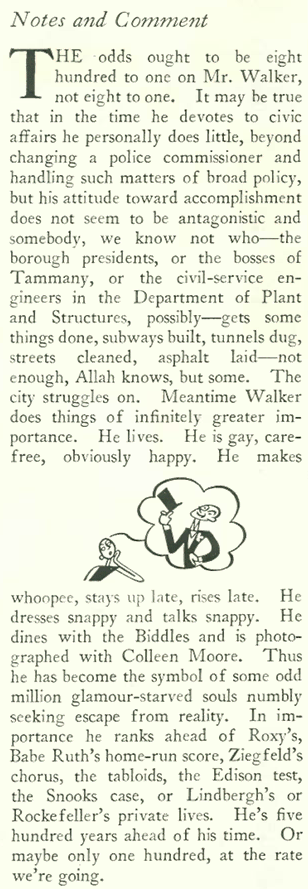
The famously flamboyant New York City Mayor Jimmy Walker lived the easy life during his initial years as Hizzonner, riding a booming economy, partying with the rich and famous (while flaunting Prohibition laws), carousing with his mistress (Ziegfield dancer Betty Compton) and sleeping until noon. When reform-minded Fiorello La Guardia challenged Walker’s reelection bid in 1929, Walker left the dirty work to his Tammany Hall cronies and continued to charm the public, and The New Yorker. The Aug. 17 “Talk of the Town” observed:

IT’S EASY BEING ME…Mayor Jimmy Walker accompanied actress Colleen Moore to the October 1928 premiere of her latest film, Lilac Time. (konreioldnewyork.blogspot.com)
I HAVE MY EYE ON YOU…Reform-minded Fiorello La Guardia (right) detested Jimmy Walker and his Tammany cronies, but that wasn’t enough to get him elected in 1929. The Great Depression would soon turn the tables. (Wikipedia)

Howard Brubaker, in his Aug. 17 “Of All Things” column, suggested that La Guardia had a zero chance of getting elected. Just three years later, Walker would resign amid scandal and flee to Europe. La Guardia, on the other hand, would be elected to the first of his three terms as mayor in 1933, riding the wave of the New Deal.

 *  *  *

Peek-A-Boo

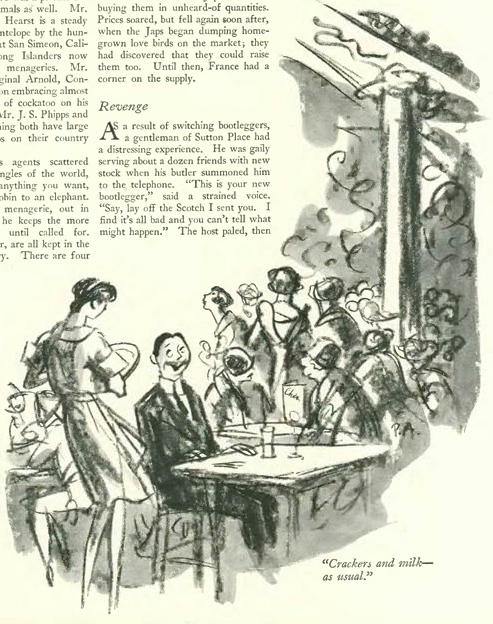
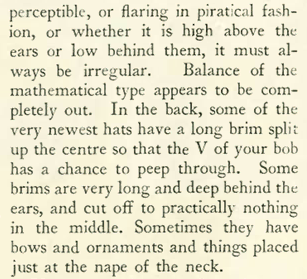
Politics might have been business as usual, but in the world of fashion the vampish hat styles associated with flappers were giving way to a new rolled-brim look that seemed to suggest an aviator’s helmet. In her Aug. 17 fashion column “On and Off the Avenue,” Lois Long reported:

FACING THE FUTURE…Vampish hats of 1928, pictured at top, gave way to the rolled-brim or flare look of 1929. (Images gleaned from magazine/catalog images posted on Pinterest)

Long seemed to welcome the idea that women should once again bare their foreheads…

 *  *  *

Twain Wreck

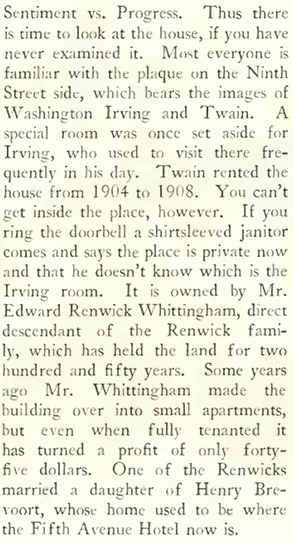
Jumping back to the Aug. 10 issue, “The Talk of the Town” reported on the possible remodeling or demolition of a house once occupied by Samuel Clemens, aka Mark Twain. The house in question was a lavish old mansion built by Henry Brevoort, Jr. in 1834, at the northwest corner of Fifth Avenue and 9th Street. Twain lived in the house from 1905 to 1908, and it was there that Twain’s biographer Albert Paine conducted interviews with the author and wrote the four-volume Mark Twain, a Biography; The Personal and Literary Life of Samuel Langhorne Clemens. When millionaires abandoned their Fifth Avenue mansions in the 1920s and high-rise apartments took their place, there was pressure to either convert an old mansion like the Breevoort house at 21 Fifth Avenue to apartments or demolish it altogether.

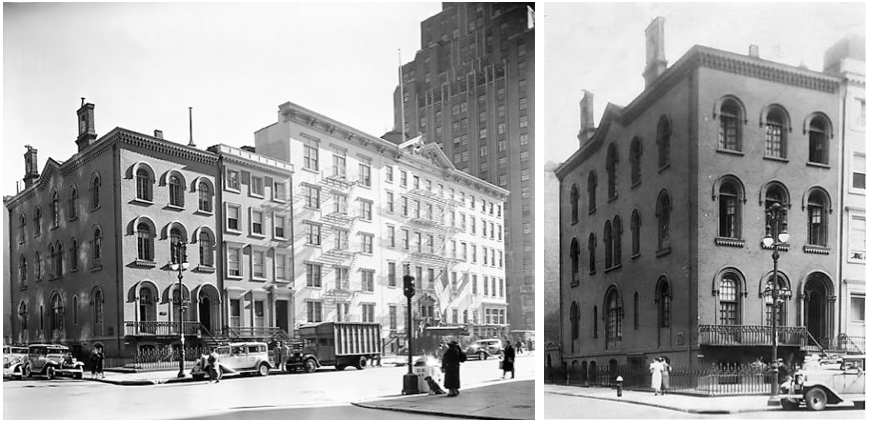
LOOKING GOOD AFTER A CENTURY…At left, Berenice Abbott took this photograph of No. 21 Fifth Avenue in 1935. At right, in a close-up shot from the same period, the 1924 plaque from the Greenwich Village Historical Society is visible on the side of the house. (Museum of the City of New York/Greenwich Village Historical Society)
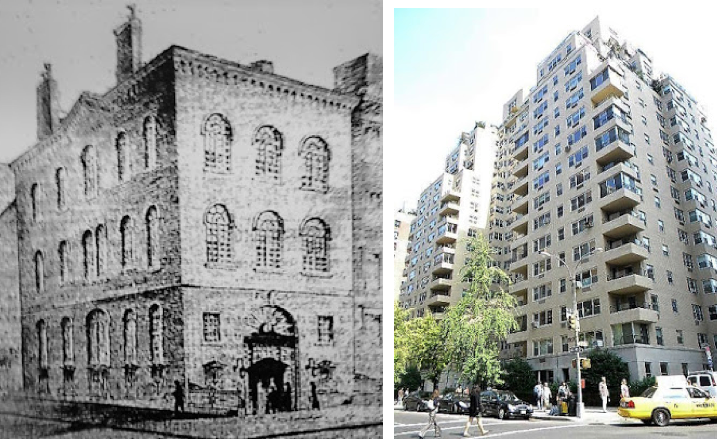
A NOW FOR SOMETHING COMPLETELY DIFFERENT…A proposed 1929 remodeling (left) moved the front door of the old Brevoort mansion to the center and lowered it to street level. At right, today the 1955 Brevoort apartment house occupies the site. (daytoninmanhattan.blogspot.com)

The Greenwich Village Historical Society did what it could to save the house, and in 1924 affixed a bronze plaque to a side wall noting that both Twain and Washington Irving were once occupants. When the house was slated for demolition in 1954, the Society appealed to New Yorkers to raise the $70,000 needed to move the building, but only a fraction of that amount was secured. No. 21 was demolished in 1954 along with the rest of the houses on that block.

 *  *  *

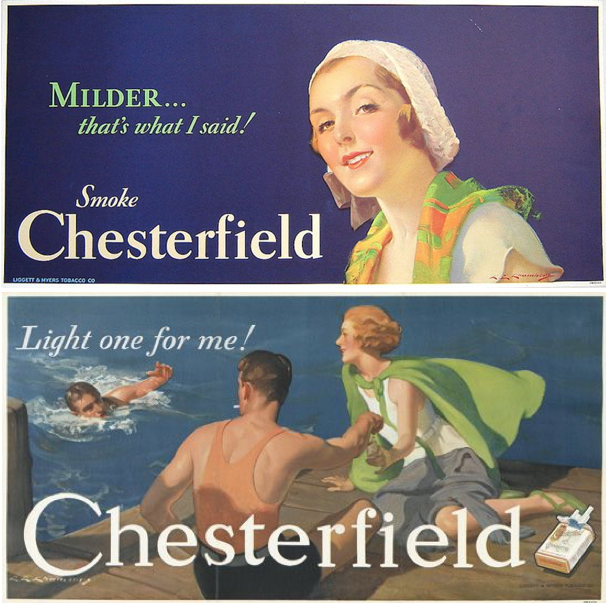
Charles Edward Chambers was an American illustrator probably best known for his Chesterfield ads, although he also illustrated stories for a number of popular magazines from the early 1900s until his death in 1941. The Aug. 10 “Talk of the Town” looked in on his work with model Virginia Maurice:

QUICK…THROW THAT MAN A CIGARETTE!…Examples of Charles Edward Chambers’ Chesterfield ads from 1929 featuring model Virginia Maurice. Note that Maurice is wearing the latest “rolled brim” hat style in the upper image. (Pinterest)
HIS NONSMOKING SECTION…A 1919 Harper’s cover illustration by Charles Edward Chambers. (Wikipedia)

*  *  *

Mama’s Boy

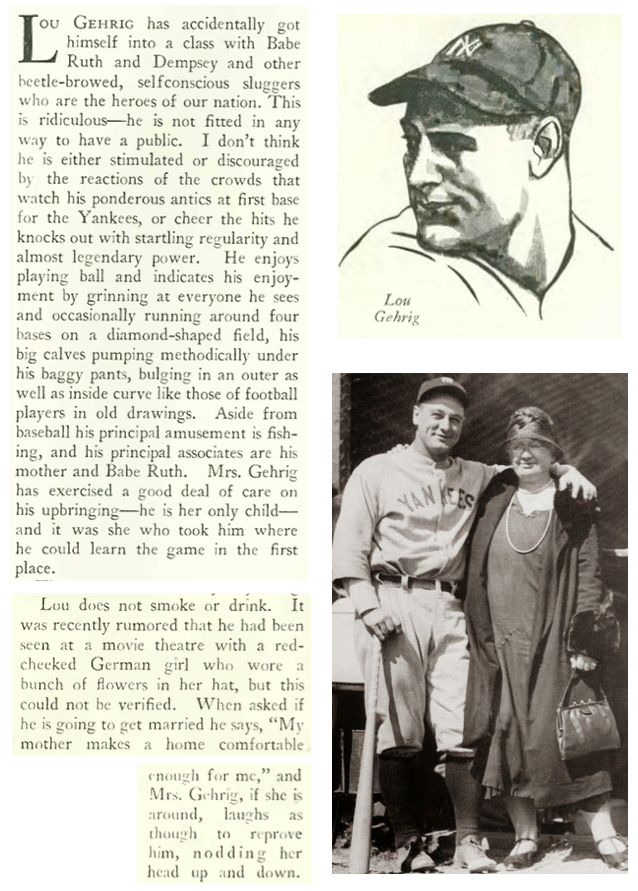
Lou Gehrig rivaled Babe Ruth as a top Murderer’s Row slugger for the 1929 Yankees, yet he couldn’t be more opposite in his lifestyle. A teetotaler and nonsmoker, Gehrig was completely devoted to mom (pictured below in 1927). Niven Busch Jr. submitted this profile of Gehrig for the Aug. 10 issue. Excerpts:

 *  *  *

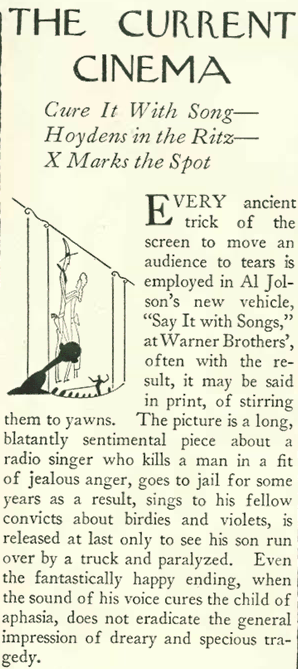
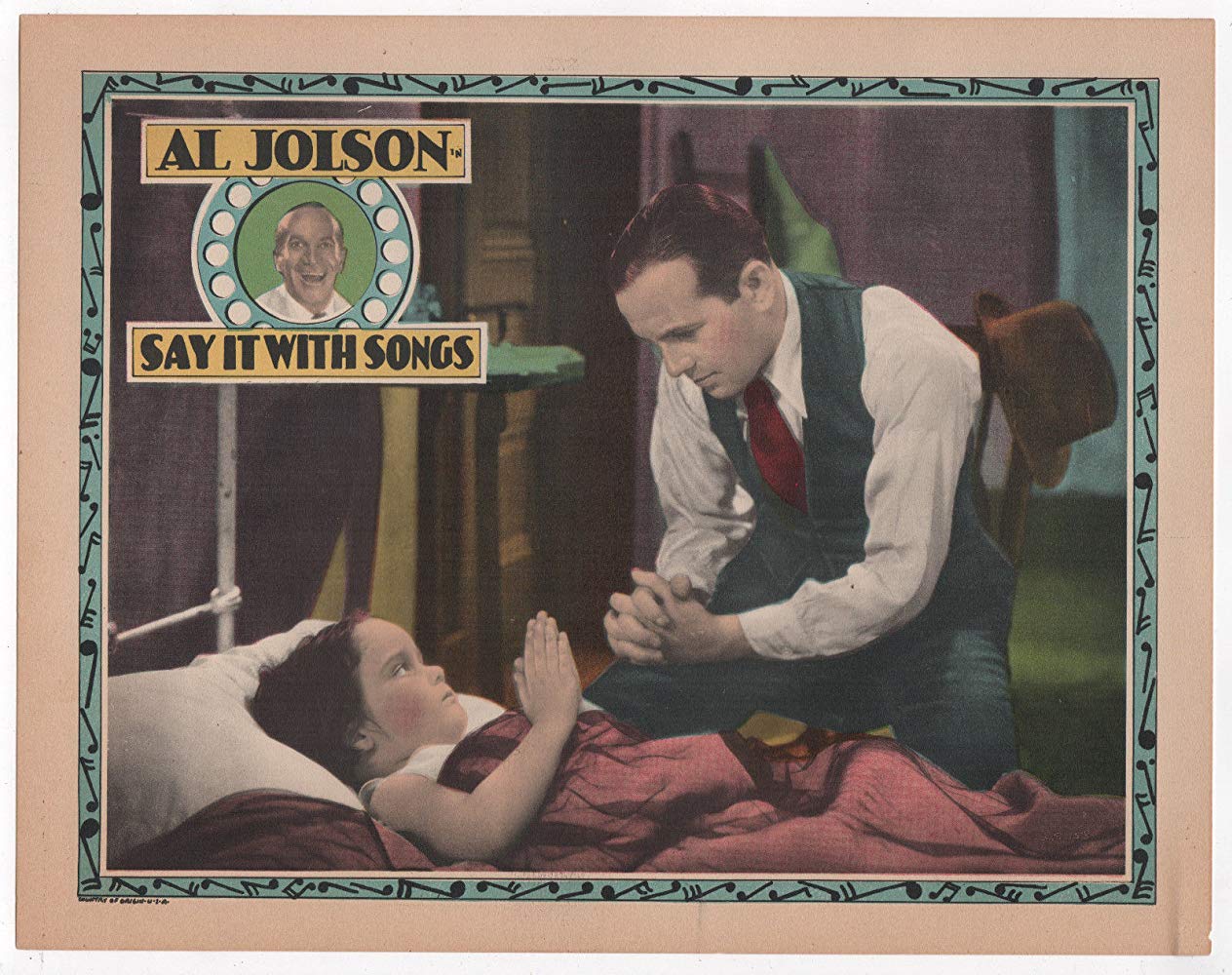
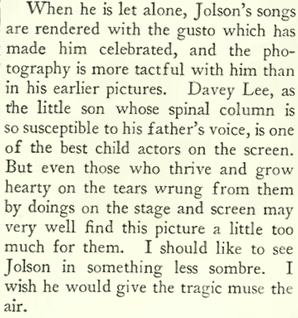
After appearing as Al Jolson’s dying son in The Singing Fool (1928), the child actor Davey Lee returned to the screen for yet another Jolson weeper, 1929’s Say It With Songs. Once again portraying Jolson’s son—this time crippled and rendered dumb after being hit by a truck—he miraculously recovers at the end of the film. The New Yorker wasn’t having any of this sentimental treacle, especially served up for a second time…

LET’S PRAY FOR A BIG BOX OFFICE…Davey Lee and Al Jolson in Say It With Songs. (IMDB)

…and the magazine hoped for something a bit less somber from Jolson in the future, suggesting that he “give the tragic muse the air”…

In the same issue of The New Yorker, this advertisement touted Jolson’s recording of “Little Pal” from Say It With Songs (note the blackface image of Jolson—his unfortunate trademark back in the day)…

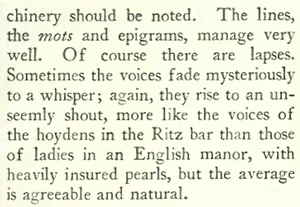
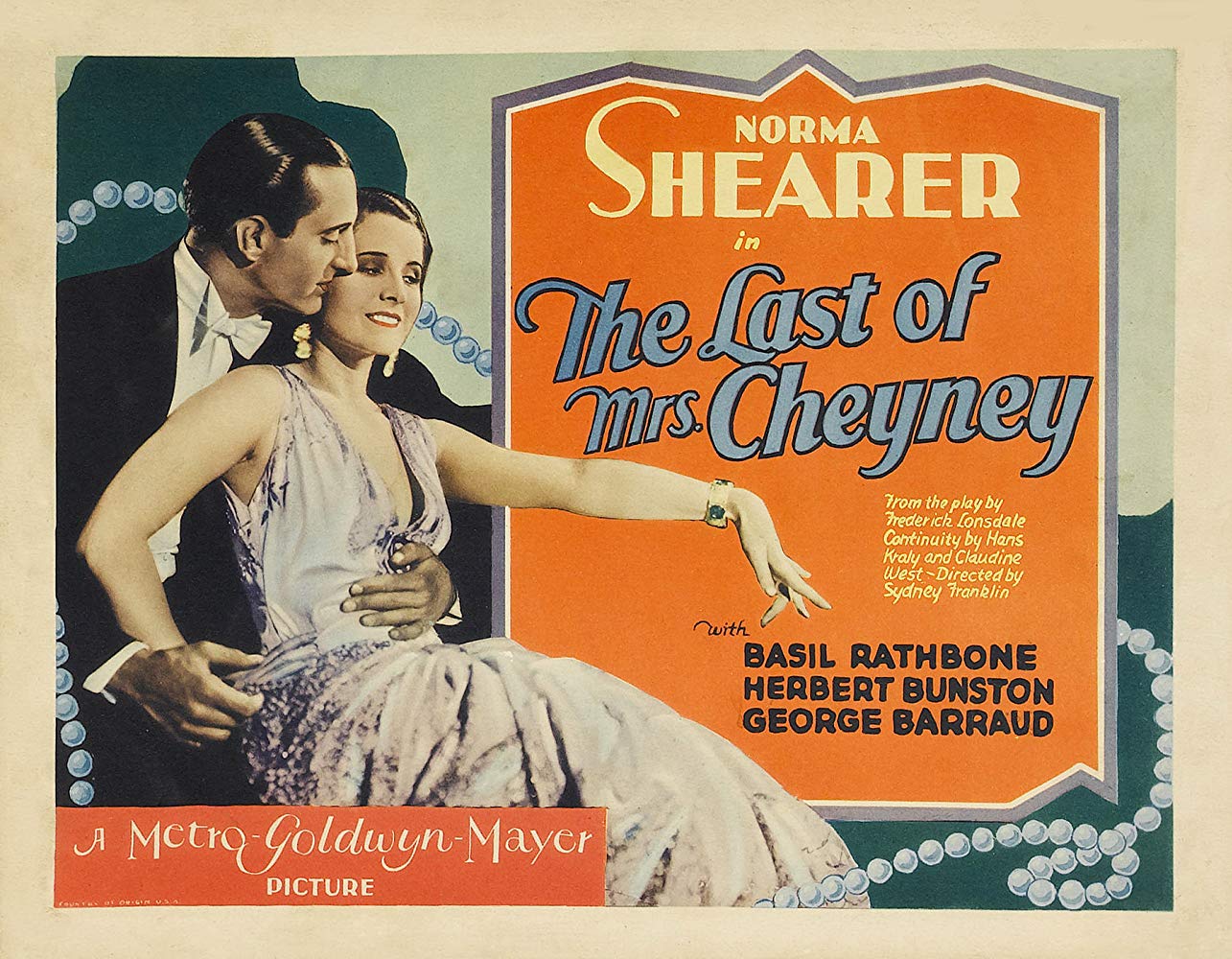
…happily, there were other movies that offered less schmaltzy diversions, including Norma Shearer’s comedy-drama The Last of Mrs. Cheyney, in which Shearer portrayed the jewel thief Fay Cheyney…

OH BASIL YOU ANIMAL…Theatre card for The Last of Mrs. Cheyney. (IMDB)

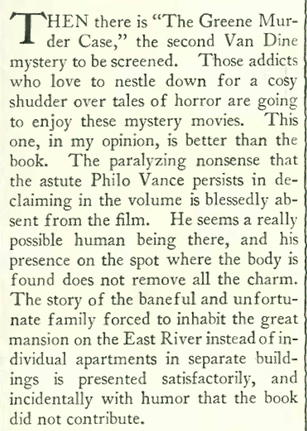
…often cast as a heavy in silent films, it was the “talkies” that made William Powell a star, his pleasant voice more suited to a hero or leading man than a villain. In The Greene Murder Case, Powell portrayed amateur detective Philo Vance, a role that he played in another 1929 release, The Canary Murder Case (originally filmed as a silent in 1928), both based on mystery novels by S.S. Van Dine. Powell would portray Philo Vance in three more films from 1930 to 1933 until he took on the role of another amateur detective, Nick Charles, in 1934’s The Thin Man (a role he would reprise five times from 1936 to 1947)…

WHODUNNIT? YOUDUNNIT!…William Powell as detective Philo Vance, Florence Eldridge as Sibella Greene, and Jean Arthur as Ada Greene in 1929’s The Greene Murder Case. (IMDB)
KEEPING IT QUIET…William Powell as Philo Vance and Louise Brooks as “the Canary,” a scheming nightclub singer, in The Canary Murder Case. Brooks was a huge star in the silent era and the iconic flapper. According to IMDB, the film was shot as a silent in 1928, but producers decided to rework it as a more profitable “talkie.” When Brooks refused to return from Germany (where she was filming Pandora’s Box) to dub the movie, Paramount spread the word that Brooks’ voice was not suited to sound film, although later productions made by Brooks proved this to be wrong. Actress Margaret Livingston ultimately supplied Brooks’ voice for Canary. (IMDB)

*  *  *

From Our Advertisers

We look at some advertisements from the August 17 issue, including this one from Past Blue Ribbon. Note that nowhere in the ad is the word “beer” used, this being a “near-beer” with less than 1% alcohol content by volume. In addition to making cheese (a Velveeta-like product), Pabst hoped to keep its company alive by selling this “brew” during the unusually hot summer of 1929…

…and with that blazing sun advertisers also promoted a number of face creams and powders to those “enjoying the sunny outdoor life,” including this two-page spread from Richard Hudnut and Poudre Le Début

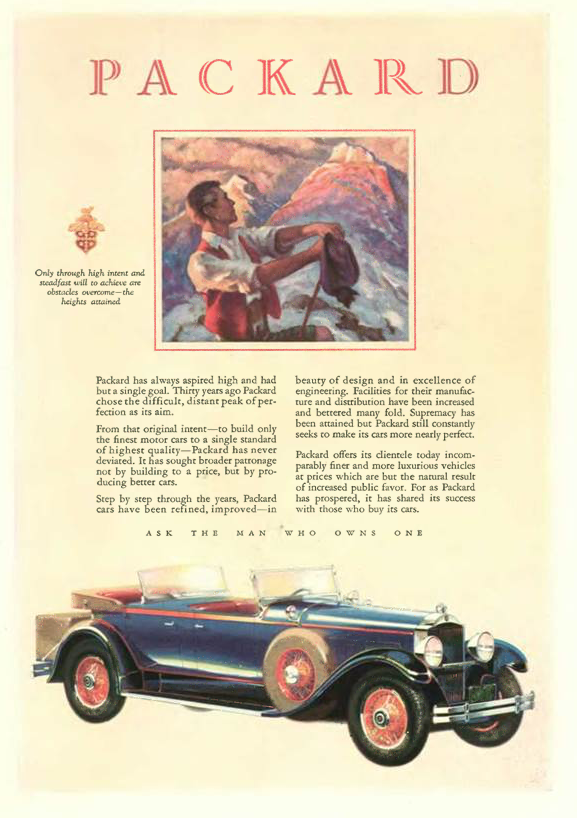
…the outdoor life could also be enjoyed in a convertible Packard 640, a car that was a cut above a Lincoln or Cadillac, and was considered by some to be America’s answer to the Rolls Royce…

A 1929 Packard 640 Convertible. This particular model can be had today for about $130,000. (Hemmings Motor News)

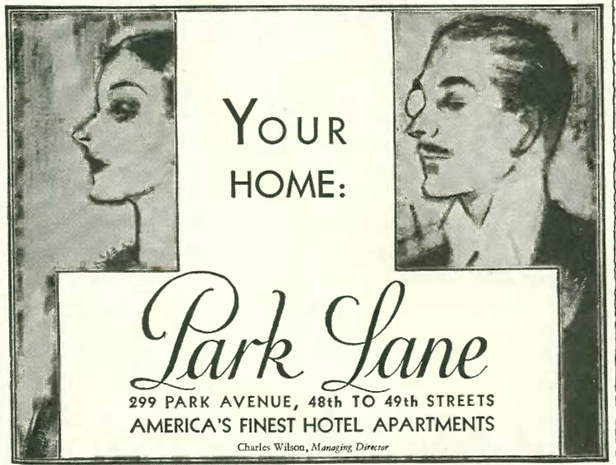
…I found this ad in the back pages interesting for its crude design yet overt appeal to snobbishness with this haughty pair…

…and here is what the Park Lane looked like when it opened in 1924…

Circa 1924 advertisement from the Sargent lock and hardware company touting its fixtures in the new Park Lane hotel apartments. At right, circa 1924 image from The American Architect depicting the Park Lane’s dining room. The building is long gone, razed some time in the 1960s to make way for an office tower. (Pinterest)

 *  *  *

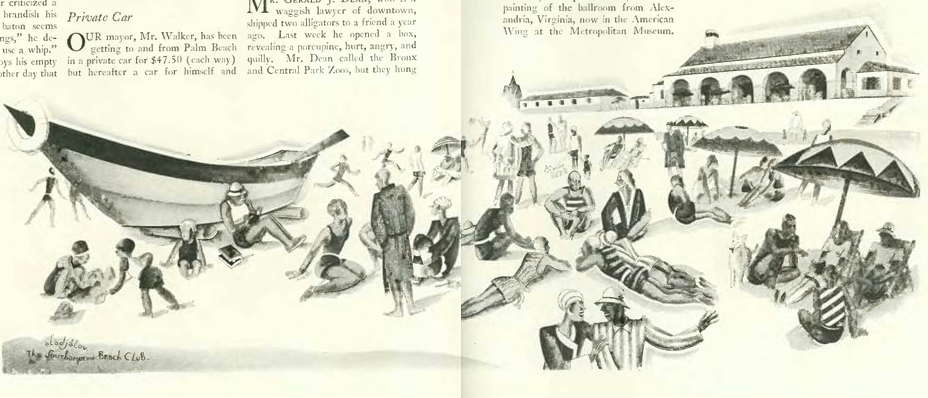
This week’s featured illustration is by Constantin Alajalov, who depicted a summer scene from the Southampton Beach Club…click to enlarge…

…our cartoonists from the Aug. 10 issue include Helen Hokinson, who looked at the challenges of Americans abroad…

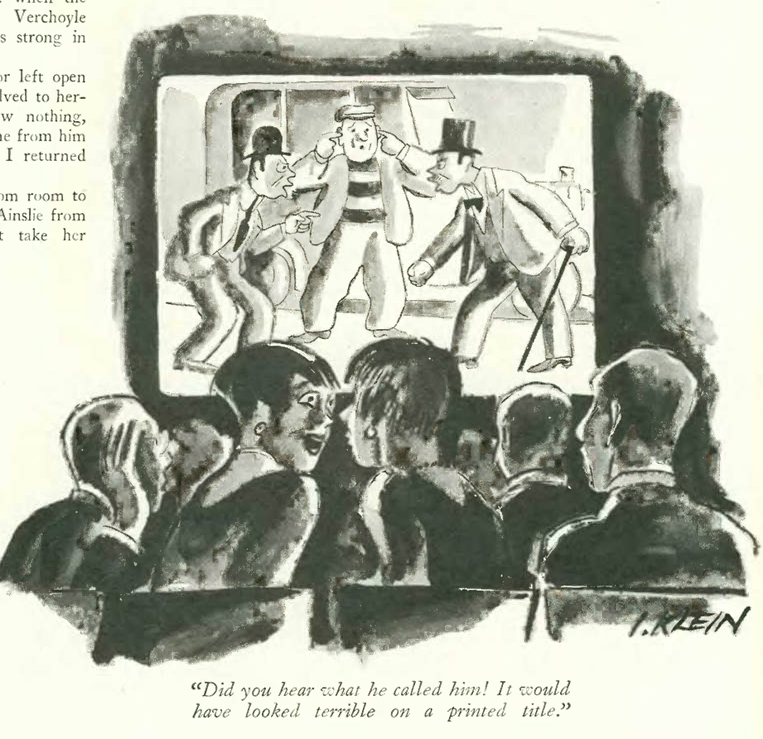
Isadore Klein observed the changing mores of movie houses (a couple of “damns” were apparently uttered in the talking pictures of 1929)…

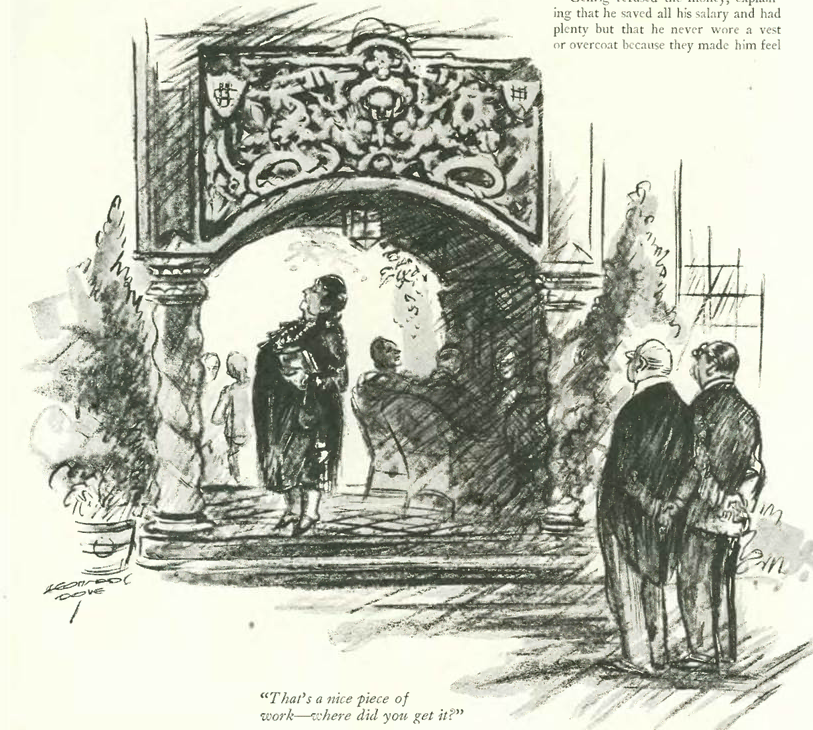
…and Leonard Dove offered up a double entendre of sorts…

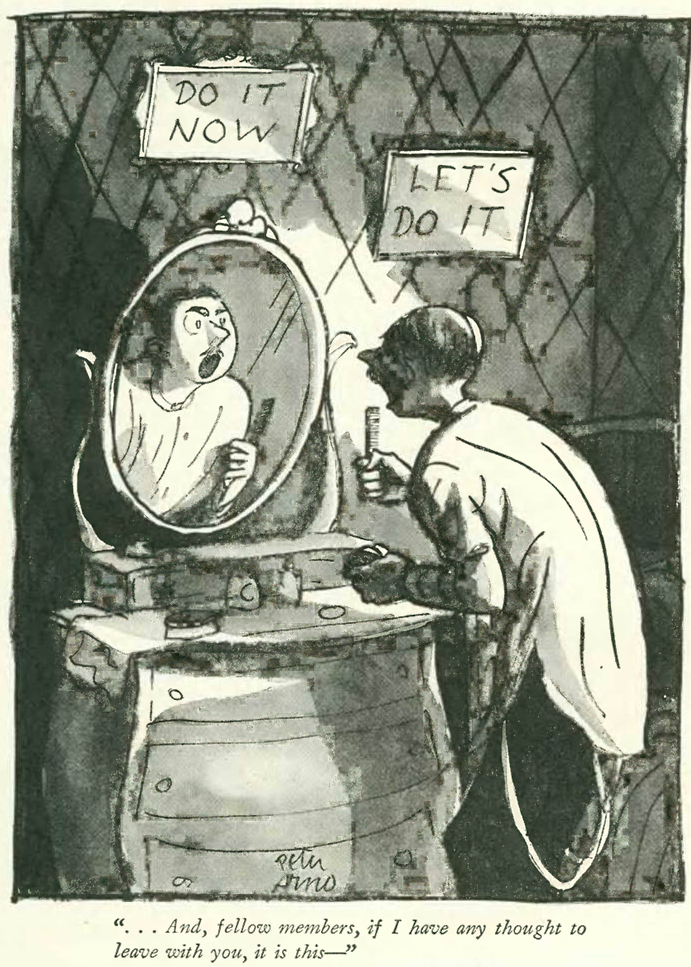
…cartoons for the Aug. 17 issue included a peek behind the scenes at a motivational speaker courtesy Peter Arno

Carl Kindl had some fun with the juxtaposition of a matron and a flapper hat…

…and for reference, the cloche hat called a “Scalawag” was featured in this ad by Knox in the March 30, 1929 New Yorker…drawing by Carl “Eric” Erickson

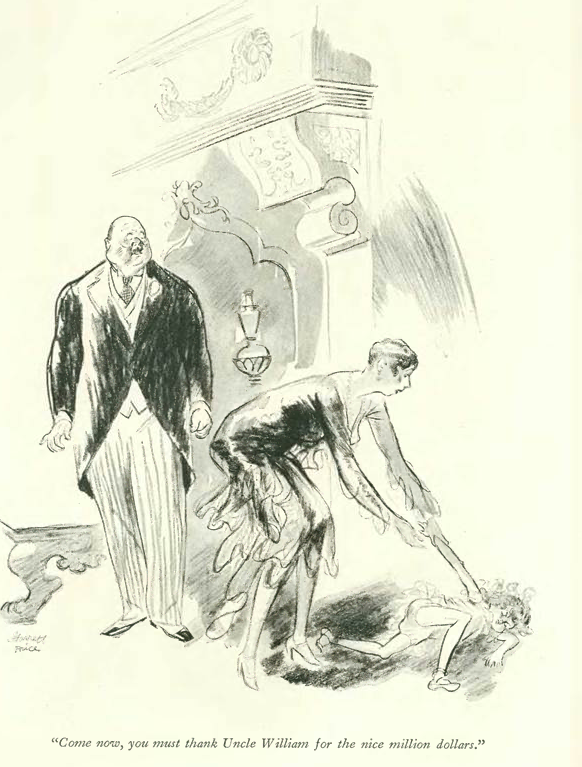
Garrett Price portrayed the antics of an ungrateful trust fund brat, who probably did not have that million dollars after the market crash…

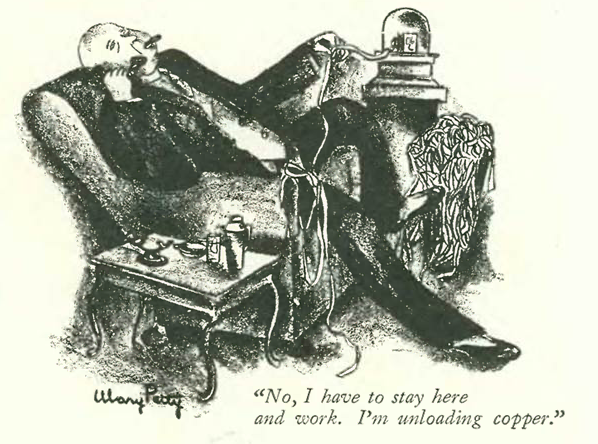
…and this fellow, depicted by Mary Petty, who doubtless would be less nonchalant come Oct. 28, or what we know as “Black Monday”…

Next Time: Hooray for Hollywood…


Not Your Grandpa’s Tammany Hall

For more than a century, a political organization known as the Tammany Society ruled New York City politics with an iron fist. Founded in 1786 (and named for Tamanend, a chief in the Lenni-Lenape nation), by the mid 19th century it rapidly expanded its political control by earning the loyalty of the city’s fast-growing immigrant population, particularly the Irish.

July 13, 1929 cover by Rea Irvin.

The Tammany Society proved an efficient machine for controlling state Democratic politics as well as New York City elections. Through its use of patronage to reward loyal precinct leaders, it also became a center for big-time graft. Most of us know a bit about Tammany thanks to school history books that focused on the deep corruption of William “Boss” Tweed, who was brought down by the press and by Harper’s Weekly cartoonist Thomas Nast in the 1870s. Tammany Hall would survive the scandal, and in the 1920s would still pull the strings of politicians including Gov. Al Smith and New York City Mayor Jimmy Walker.

Tammany had several homes, but during its most notorious years it was located in a circa 1812 hall (then called a “wigwam”) and later in an 1868 building on 14th Street, between Third and Fourth avenues. The July 13, 1929 “The Talk of the Town” noted the recent demolition of that old hall and the opening of a new headquarters on 17th Street:

POLITICAL BAGGAGE…Top, a stereoscope card featuring the 1868 Tammany Hall; below, Thomas Nast cartoons depicting the corruption of Tammany Hall and the downfall of Boss Tweed. (Wikimedia Commons/Smithsonian)

“Talk” found the new building unimpressive; it seemed to signal that the old political machine was losing some of its luster:

EVOLUTION OF THE WIGWAM, as depicted on a poster circa 1920. (nypdhistory.com)
Top left: The old Tammany Hall, decorated for the 1868 Democratic National Convention. Bottom left, the old hall was located at 141 E 14th Street, between 3rd and 4th Avenues. It was demolished in 1927 to make way for expansion of the Consolidated Edison building (right). (NYPL Digital Gallery/mediahistoryny.files.wordpress.com/Wikipedia)

Indeed, “Talk” found the building to be a somewhat austere, hosed-down affair, far removed from its grander past:

I LIKE YOUR NEW HAT…The 1929 Tammany Hall (top left) is currently undergoing a major renovation. Although the interior is being dramatically altered, including the addition of a glass dome, the landmarked exterior will mostly be preserved. When completed, the building—a mix of office and retail—will be known as 44 Union Square. (bkskarch.com)

For further evidence that the more austere Tammany Hall was nevertheless alive and well in 1929, another “Talk” item noted the organization’s continued influence behind the scenes in local politics:

The 1930s marked the beginning of the end for Tammany Hall, when reform-minded Democrats such as President Franklin Roosevelt and New York’s Republican Mayor Fiorello La Guardia (supported by Roosevelt on a “Fusion” ticket) dismantled Tammany’s system of patronage. The Tammany Society abandoned its headquarters in 1943 when it found it no longer had the funds to maintain the hall. Bought by a local affiliate of the International Ladies Garment Workers Union, it later housed the New York Film Academy and the Union Square Theatre until 2016, when it underwent extensive remodeling to make way for new office and retail space.

 *  *  *

Your Two Cents Worth

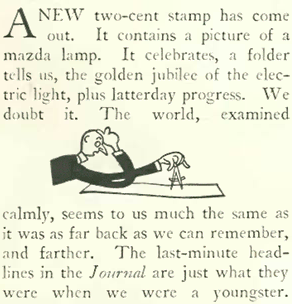
“Talk” also commented on the introduction of a new two-cent stamp that featured an image of Thomas Edison’s Mazda lamp, marking the celebration of fifty years of electric light. The magazine cheekily suggested that in the world of technological progress, there was nothing new under the sun:

(eBay)

 * * *

Americans in Paris

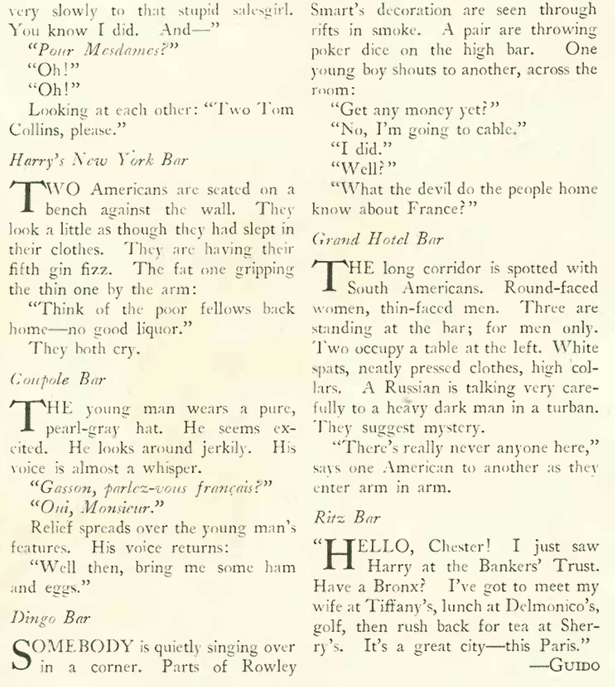
The New Yorker featured this humorous bit by a writer identified as “Guido” (I assume it is one of E.B. White’s many pseudonyms), who looked in on the chatter of various Parisian cafés and bars:

VOLSTEAD CAN’T GET US HERE…Enjoying the good life at a Parisian brasserie, circa 1920s. (National Geographic)

*  *  *

Hit and Miss

The New Yorker generally reveled in the good times Florenz Ziegfeld brought to the stage, but his latest effort, Show Girl, proved a bit of a disappointment (more evidence, in my view, that folks were tiring of the decade-long party known as the Roaring Twenties):

TAP-DANCING ON THE GRAVE OF THE ROARING TWENTIES…Although The New Yorker seemed less than enthused by Flo Ziegfeld’s latest effort, Show Girl, Ruby Keeler (top left) brought her tap shoes and her ‘A’ game to the performance. Clockwise, from top right, Keeler has some fun with the comedy trio Clayton, Jackson and Durante; program cover for Show Girl; the popular Albertina Rasch Girls with Harriet Hoctor in the “An American in Paris” scene of Show Girl, 1929. (Pinterest/jacksonupperco.com/eBay/songbook1.wordpress.com)

*  *  *

One of a Kind

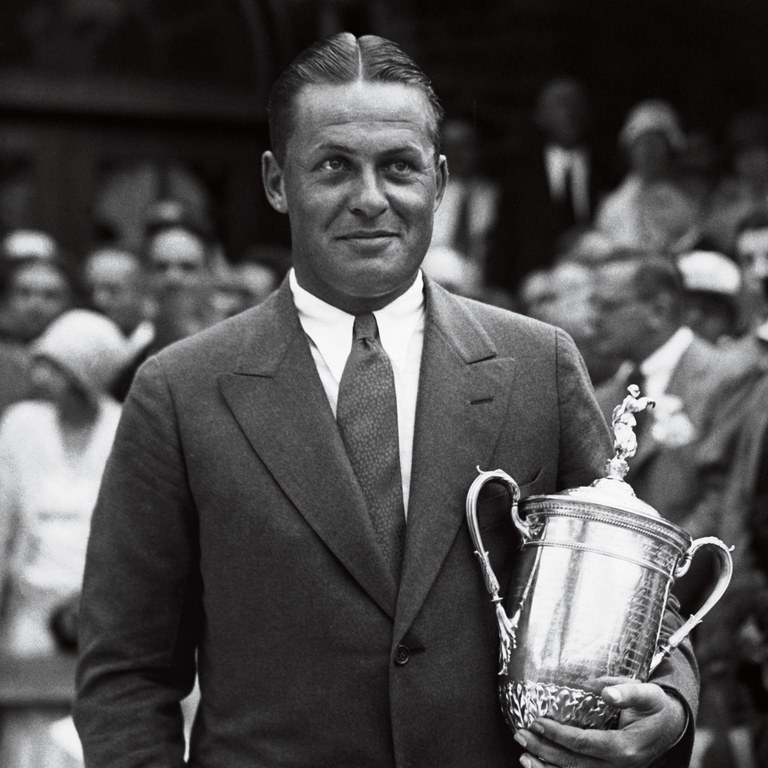
New Yorker sportswriter Niven Busch, Jr. provided a nice write-up on golfer Bobby Jones, the most successful amateur ever to compete in the sport. An attorney by trade, the unassuming Jones had just won his third U.S. Open (he would win again in 1930). In all he would play in 31 majors, winning 13 of them and finishing in the top 10 an incredible 27 times. After retiring at age 28 in 1930 he helped design the Augusta National Golf Club and co-founded the Masters Tournament. An excerpt:

AND HE DID IT WEARING A NECKTIE…Although a lawyer by trade, the amateur golfer Bobby Jones was one of golf’s greatest champions. He pictured here after winning the 1929 U.S.Open in Mamaroneck, New York. (golf digest.com)

 *  *  *

An Odd Bit

Looking around the July 13 issue, let’s see what nighttime diversions were being touted by The New Yorker in their “Going on About Town” section (note the warning on the last item):

*  *  *

From Our Advertisers

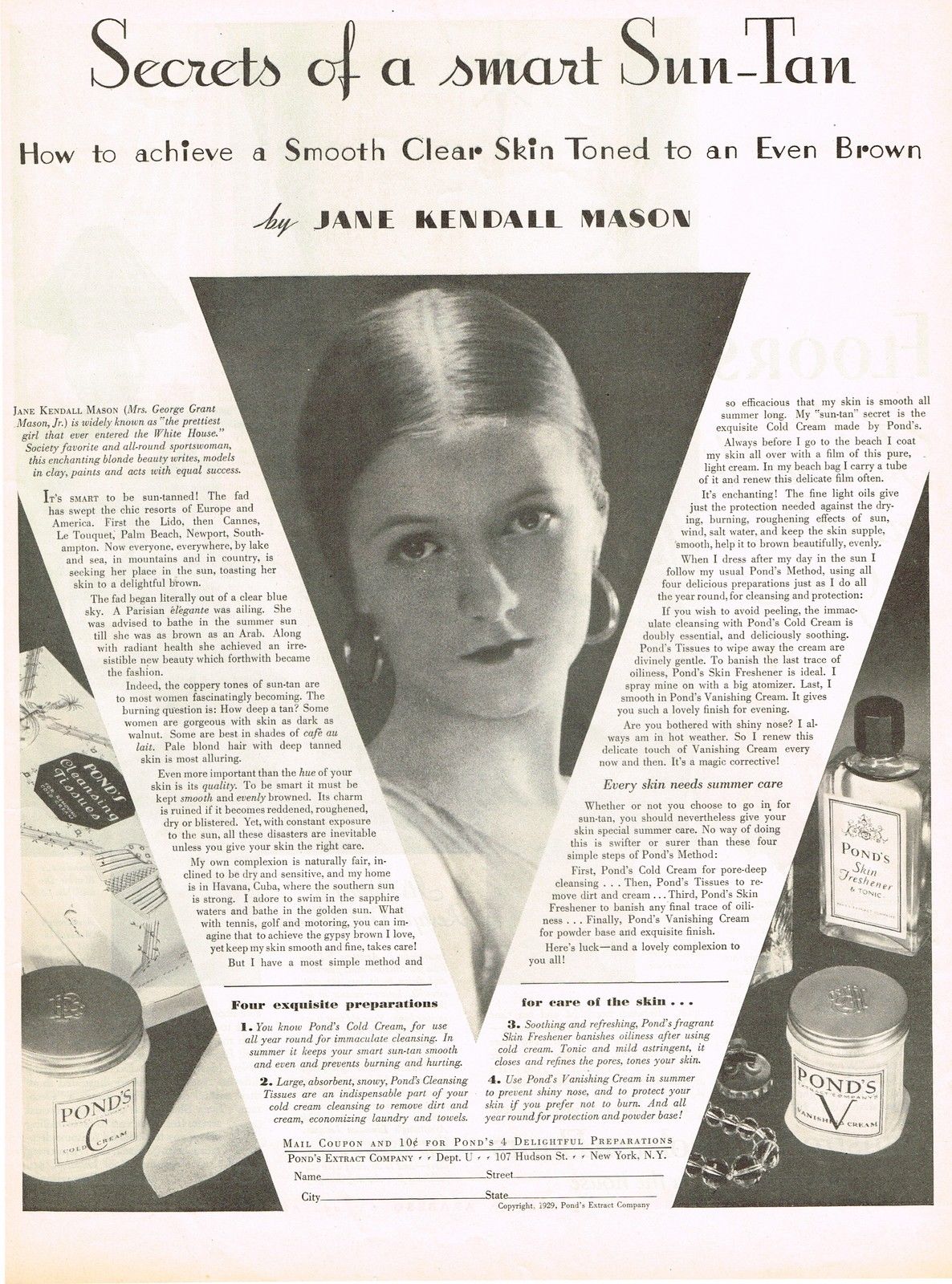
The makers of Pond’s cold cream continued to roll out endorsements from high society with this testimonial from Jane Kendall Mason (1909-1980), the newlywed wife of George Grant Mason, an executive with Pan American Airways in Cuba.

In 1925, the 17-year-old Jane made her formal debut in Washington society. After a visit with Grace Goodhue Coolidge, the first lady famously declared that Jane was “the most beautiful girl ever to enter the White House.”

After their marriage, the Masons became friends with Ernest and Pauline Hemingway, and introduced the Hemingways into Cuban society. Jane could hunt, fish, and hold her liquor, and, according to Ernest Hemingway, she was the most uninhibited person he’d ever met. So naturally they had a torrid, tempestuous, two-month affair that ended with Jane’s attempted suicide (she leapt from a balcony that was not high enough to do the job).

Hemingway supposedly used Jane as a model for the cruel-hearted Margot Macomber in The Short, Happy Life of Francis Macomber, in which the title character—trapped in a sad marriage to a wealthy but spineless American (George?)—accidentally shoots her husband in the head while on safari. She is also considered to be the model for the sex-obsessed Helene Bradley in Hemingway’s novel To Have and Have Not— a character also married to a rich but spineless husband.

Carlos Gutierrez (who served as a boat guide for Ernest Hemingway) and Jane Mason aboard “Sloppy” Joe Russell’s boat Anita in 1933. (Ernest Hemingway Photograph Collection, JFK Presidential Library and Museum, Boston)

…and we segue into our cartoons, featuring a mother and child (drawn by Carl Kindl) probably flying on one of those Sikorskys…

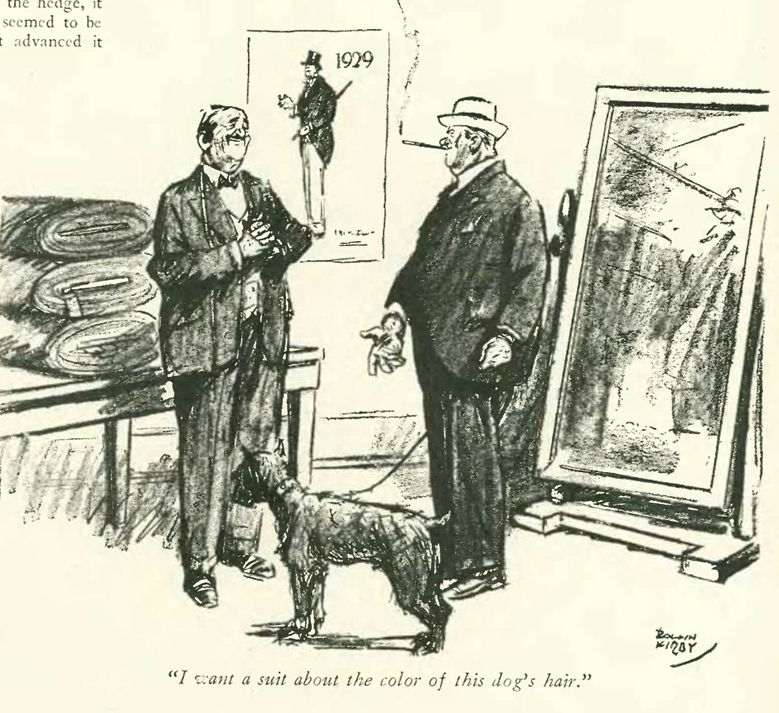
Rollin Kirby looked in on a tailor’s shop (this is one of only two drawings published by Kirby in The New Yorker)…

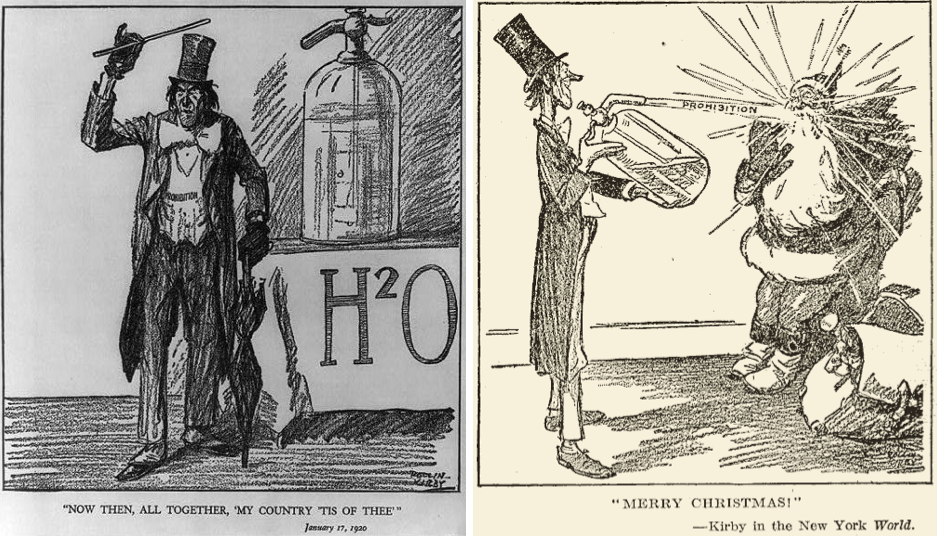
…a note on Kirby, a three-time Pulitzer winner: outraged by the passage of Prohibition laws, Kirby created one of his most famous characters, “Mr. Dry,” which he introduced to readers of the New York World in January 1920…

Rollin Kirby’s miserly, foreboding “Mr. Dry” made his first appearance in the pages of the New York World on Jan. 17, 1920, shortly after Prohibition laws went into effect in the United States. Mr. Dry also made an appearance at the end of 1920, to throw some water on America’s Christmas cheer. (bottlesboozeandbackstories.blogspot.com)

You can read more about Rollin Kirby and Mr. Dry here.

Roland Baum peeked in on a reluctant stargazer…

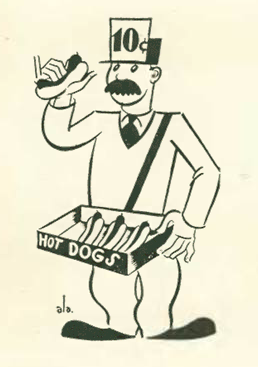
…and to close, this little filler drawing of a hot dog vendor by Constantin Alajalov…

Next Time: On the Flatfoot Beat…

A Bridge Too Far

Despite the rise of the professional classes in the 20th century (and their attendant rules for accreditation and licensing) there still existed individuals who practiced at the highest levels with little or no formal training.

June 8, 1929 cover by Julien de Miskey.

Gustav Lindenthal (1850-1935) was a case in point. An Austrian immigrant who designed New York’s Hell Gate Bridge among others had little formal education and no degree in civil engineering. Rather, he learned by working as an assistant on various construction projects and teaching himself mathematics, metallurgy, engineering, hydraulics and other principles of the building profession.

Lindenthal was praised for his innovations in bridge design as well as for his artistic eye, but one project eluded him throughout his career: the largest bridge in the world—a massive double-decker that would span the Hudson River from 57th Street in New York City to Hoboken in New Jersey. The June 8, 1929 “Talk of the Town” checked in on the nearly 80-year-old bridge builder:

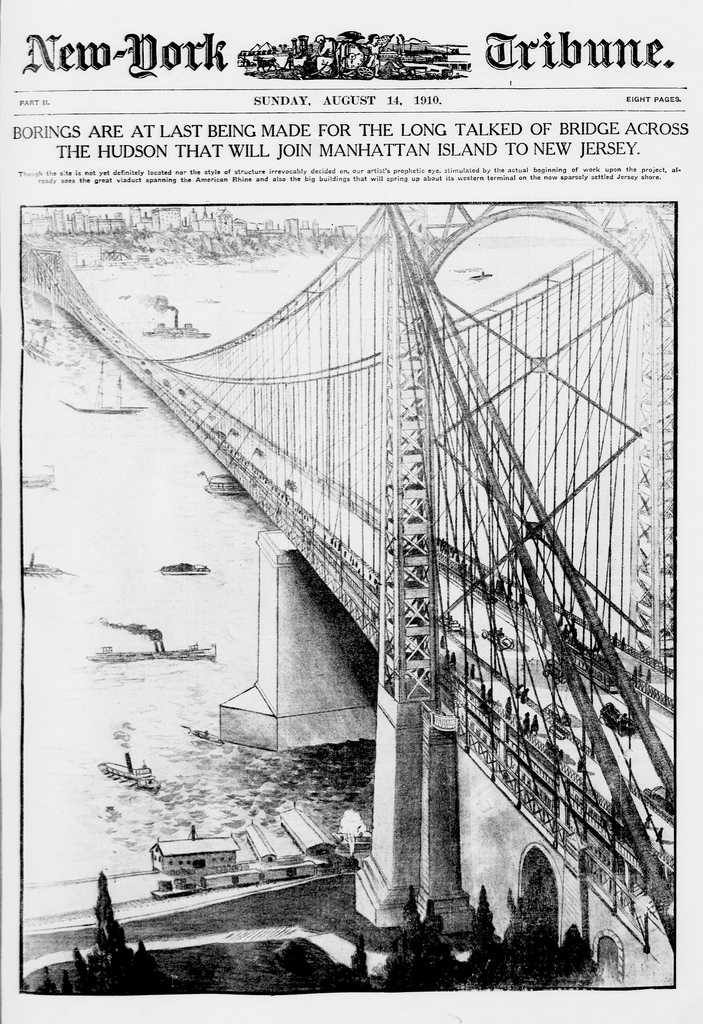
A cornerstone for the Hudson bridge was laid in 1895, but a series of bad breaks, including the 1898 Depression and various political setbacks, served to continually delay the project. The New York Tribune anticipated the bridge in its April 28, 1907 edition…

(untapped cities) click to enlarge

…and three years later the Tribune seemed confident that work was finally underway…

(untapped cities)

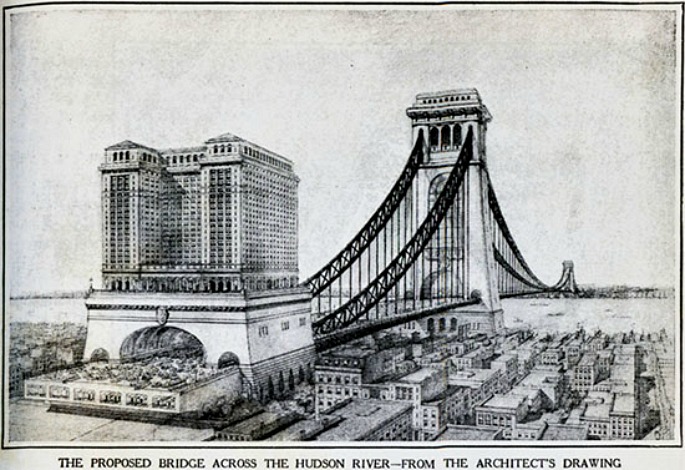
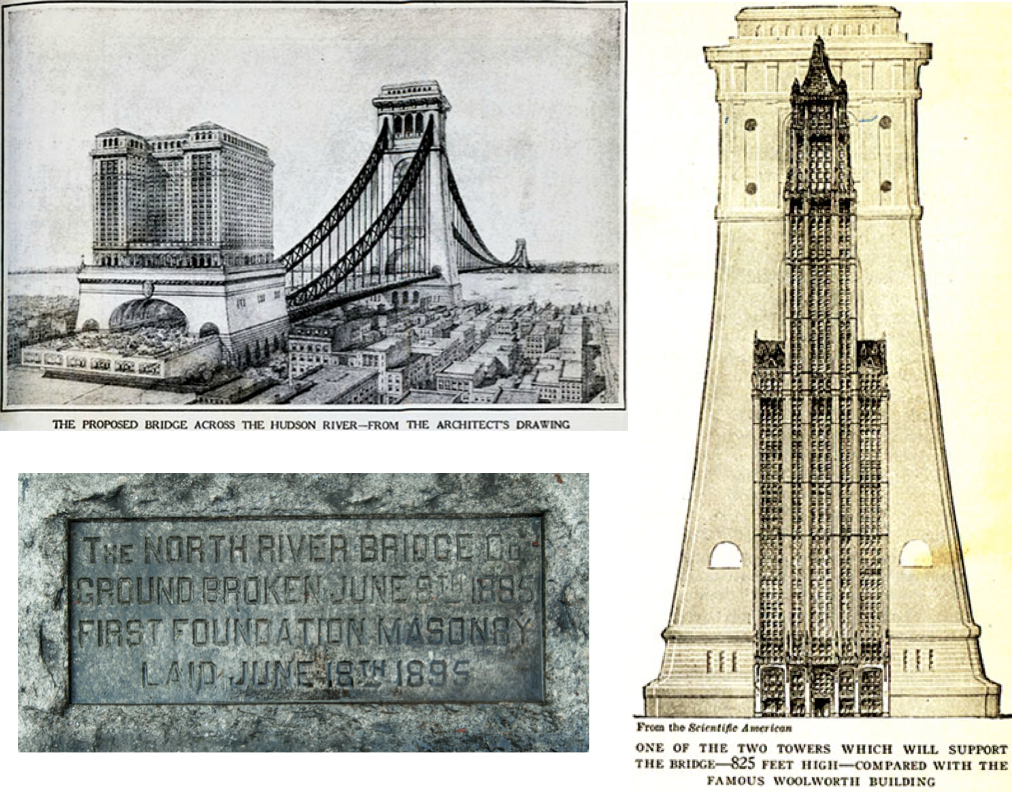
…however by the 1920s the bridge was still a dream. In 1921 Scientific American offered the latest glimpse of Lindenthal’s proposed 57th Street Bridge — a span 6,000 feet in length, with a 200-foot-wide double deck accommodating 24 lanes of traffic and 12 railroad tracks. An artist’s rendering included a massive building, on an arched plinth, positioned over the bridge deck:

BIG PLANS…Clockwise, from top left: Artist’s rendering of Gustav Lindenthal’s proposed 57th Street bridge from the June 25, 1921 issue of Scientific American. That same issue featured a size comparison with the then-tallest building in the world—the Woolworth Building. Below, the 1895 cornerstone, recently recovered from a crumbling pier on the New Jersey side of the Hudson and relocated to the grounds of Steven’s Institute of Technology in Hoboken. (untappedcities.com)

The New Yorker suggested that Lindenthal’s legacy was already secure, and with his determination and vigorous constitution, he still might still win the day:

Despite his vigor, Lindenthal would not live to see his dream realized. However, he is remembered for building some of New York’s most iconic bridges, including the Hell Gate and Queensboro:

LEGACY…Clockwise, from top left, Hell Gate Bridge; Gustav Lindenthal, circa 1920; Queensboro Bridge. (Library of Congress/Britannica/Pinterest)

 *  *  *

Keeping Up With the Lindberghs

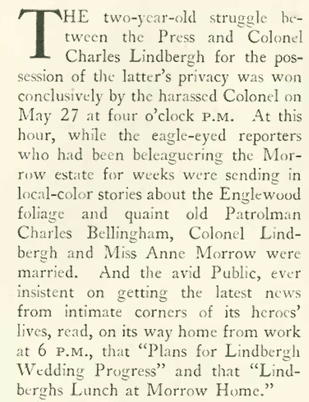
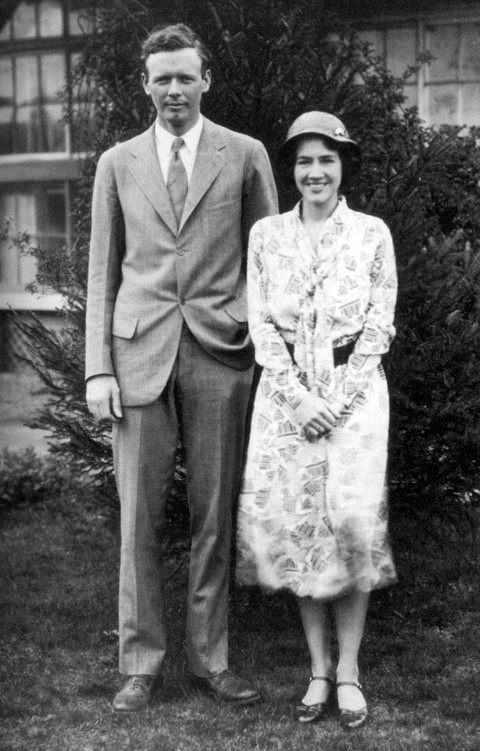
Despite his worldwide fame, Charles Lindbergh (1902-1974) detested the limelight, particularly when it came to his personal life. Writing in the column “The Wayward Press,” humorist Robert Benchley mocked the newspapers for their invasions into the lives of the celebrated, including newlyweds Charles and Anne Morrow Lindbergh:

MIND YOUR OWN BEESWAX…Charles and Anne Morrow Lindbergh after their marriage in a private ceremony on May 27, 1929, at the home of her parents in Englewood, New Jersey. (Library of Congress)

Benchley wasn’t buying the newspaper industry’s insistence that the public demanded to know the facts about the flyboy’s nuptials:

 *  *  *

Let the Good Times Roll

With the newly remodeled Central Park Casino officially christened by Mayor Jimmy Walker and his cronies, The New Yorker’s Lois Long (in “Tables for Two”) decided to pay a visit to see what all the fuss was about:

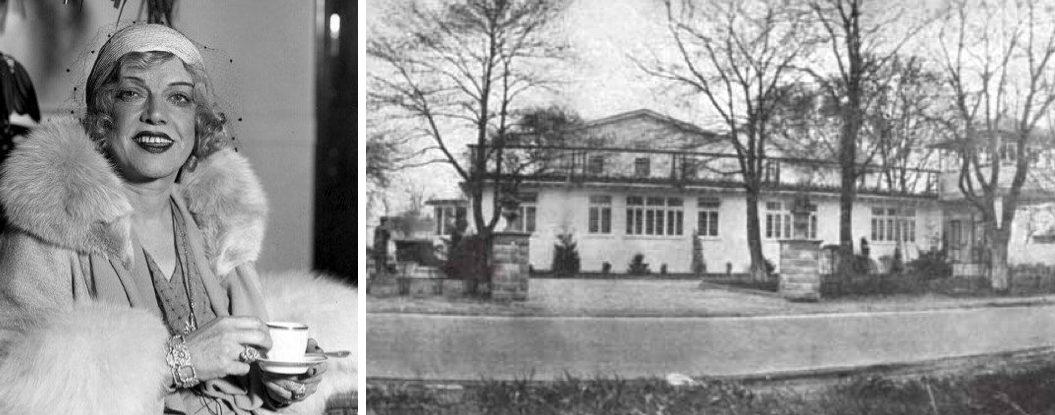
Long also commented on the declining fortunes of another familiar face of New York nightlife, Texas Guinan, who had fled Manhatten’s smoky speakeasy scene for the bucolic climes of Nassau County…

GOODBYE CITY LIFE…Texas Guinan took her nightclub to the quiet village of Valley Stream, New York, located just south of Queens in Nassau County. Guinan didn’t abandon all the trappings of city life: she drove to Valley Stream in a lavender Rolls Royce, and continued to greet her patrons with her famous “Hello, Sucker!” (jhgraham.com/texasguinanblogspot.com)

Long concluded that regardless where one ended up on a summer evening, one should be aware that a shabbier crowd awaited their company:

 *  *  *

Cuba Libre

Now we look at another New Yorker contributor who today is not exactly a household name: Donald Barr Chidsey (1902-1981), an American writer, biographer, historian and novelist best known for his adventure fiction. In this short column he offered some insights into the Cuban drinking scene:

ADVENTURESOME LAD…Donald Barr Chidsey wrote more than 50 books, including many action-adventure titles such as Captain Adam, from 1953. Note the resemblance of the hero on the cover to the author. (etsy/Amazon)

 *  *  *

Waxing Poetic

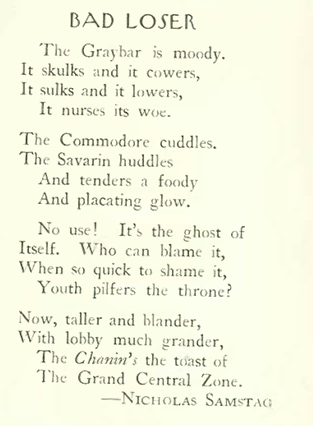
From its very first issue, The New Yorker also published a wide variety of poets, including Nicholas Samstag (1904-1968),who contributed several poems to the magazine in 1928 and 1929. Samstag later went on to a successful career in advertising, and was a close associate of  Edward Bernays, considered the father of public relations and propaganda.

A frequent contributor to The New Yorker, writer, poet and critic Mark Van Doren (1894-1972) published more than three dozen poems in the magazine from 1929 to 1972. Here is his first contribution, in the June 8, 1929 issue:

Van Doren’s last contribution to The New Yorker was published on Nov. 18, 1972, less than a month before his death. It was appropriately titled “Good Riddance”…

DID THE APPLE FALL FAR FROM THE TREE?…At left, a circa 1925 portrait of Mark Van Doren. He was the father of Charles Van Doren, who achieved brief renown as the 1957 winner of the rigged game show Twenty One. He is pictured at far right with fellow contestant Vivienne Nearing and game show host Jack Barry. (art.net/Wikipedia)

 *  *  *

From Our Advertisers

As summer approached some distinct themes emerged in ads aimed at female consumers. Here is a collection of ads from the June 8 issue that capitalized on the new tanning craze of the late 1920s…

click to enlarge

…and another big craze of the 1920s, the permanent wave, seemed to be a necessity as summer approached…

click to enlarge

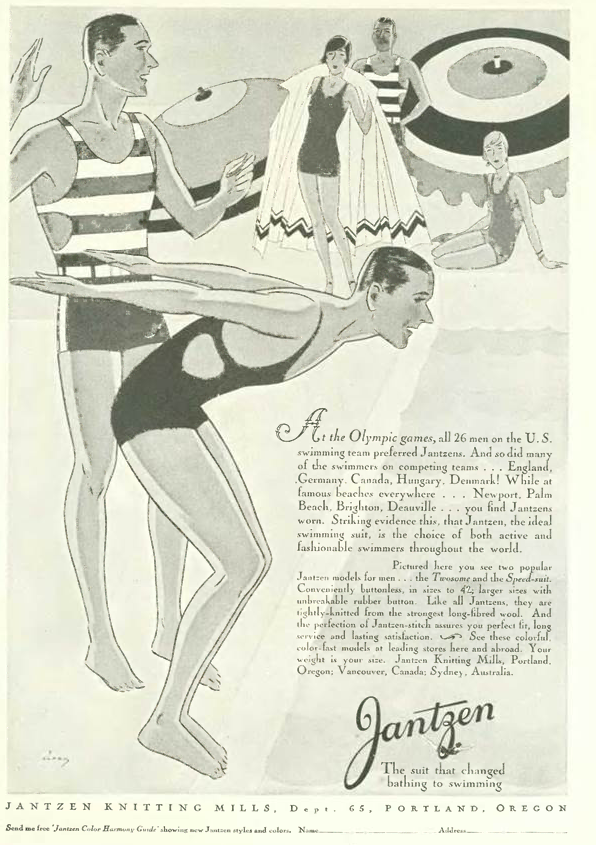
…as for the gents, check out this new line of Jantzen swimwear modeled by what appear to be identical twins…

…and when you’re out of the water, a pair of “fashion welts” were all the rage for tip-toeing across the hot sands of Southampton…

…this ad from B. Altman depicted two women clad for “open motoring” (not sure how those long, lithe figures will fit into that tiny rumble seat)…

…for a less dusty mode of transportation, you could hop aboard The Broadway Limited for a quick 20-hour jaunt to Chicago…

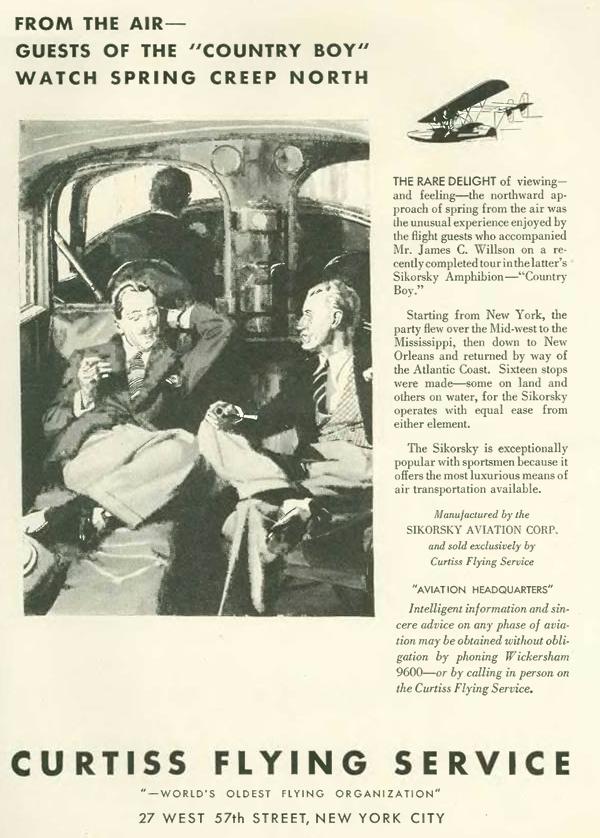
…or better yet, have a relaxing smoke with one of your chums aboard a Sikorsky seaplane…

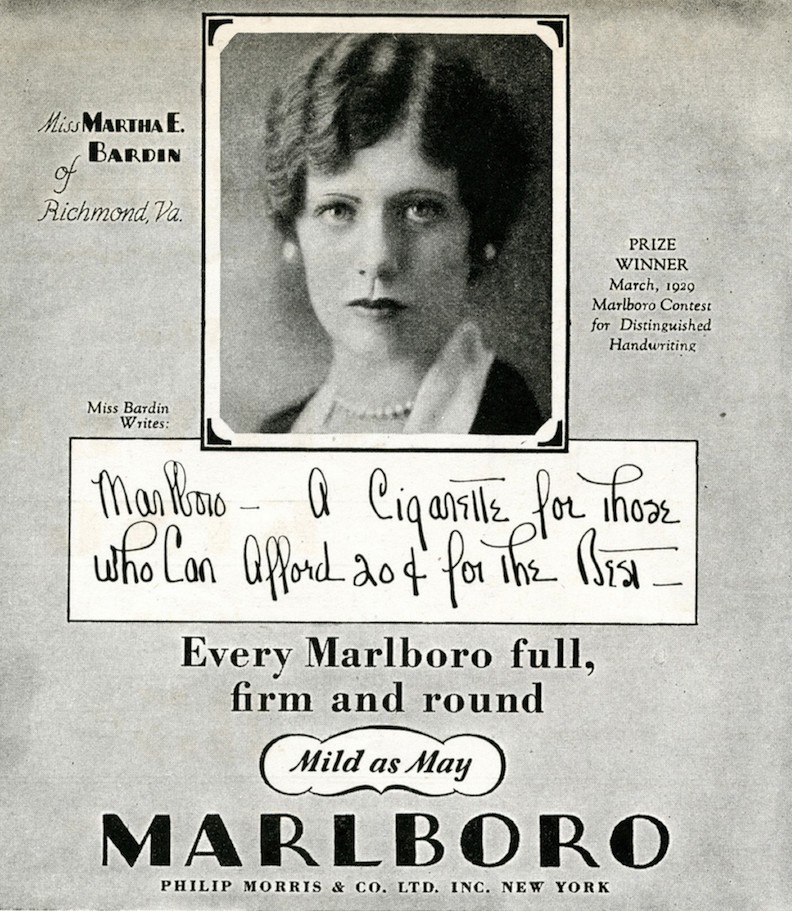
…our cigarette ad for this week comes from Philip Morris, makers of Marlboro, who once again exploited the nation’s youth with a bogus handwriting contest that doubled as a product endorsement…
…our June 8 comics are from Helen Hokinson, who offered a full page of illustrations from a “Fifth Avenue Wedding”…

…while Leonard Dove peeked in on a wastrel son and his disappointed father…

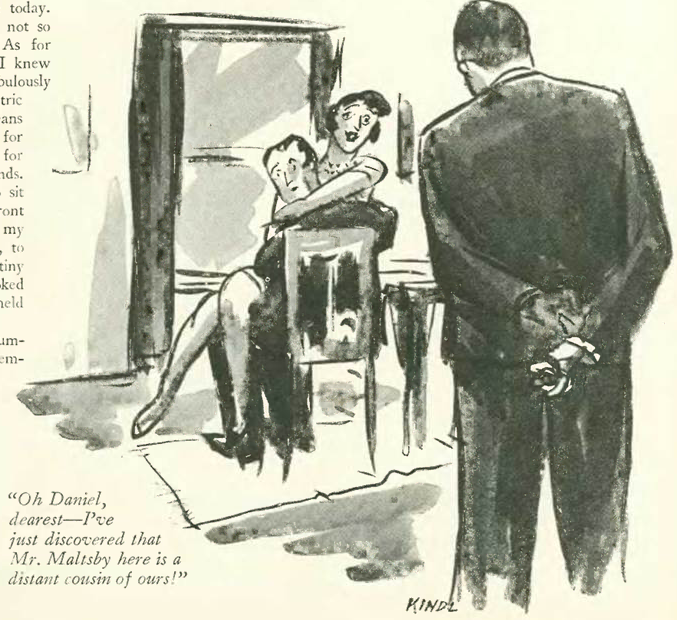
…and we have an awkward moment revealed by Carl Kindl

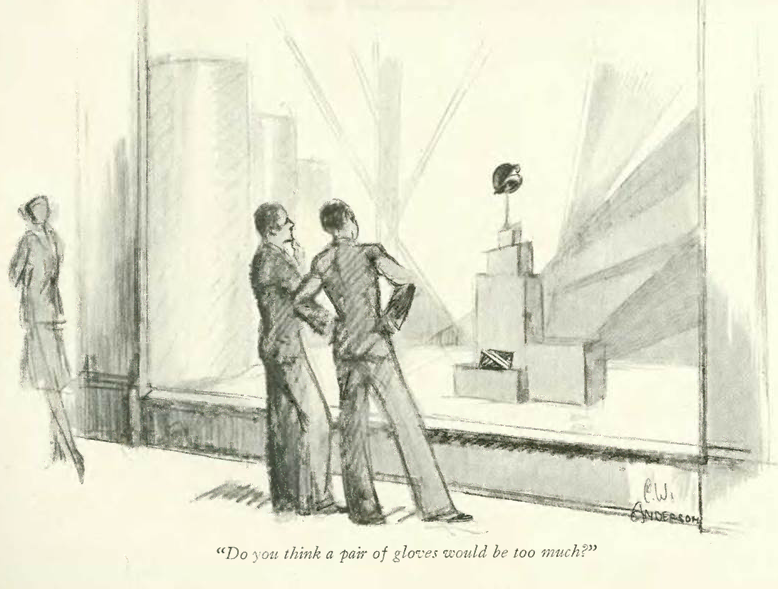
…and an observation by C.W. Anderson on the minimalism of modernist design…

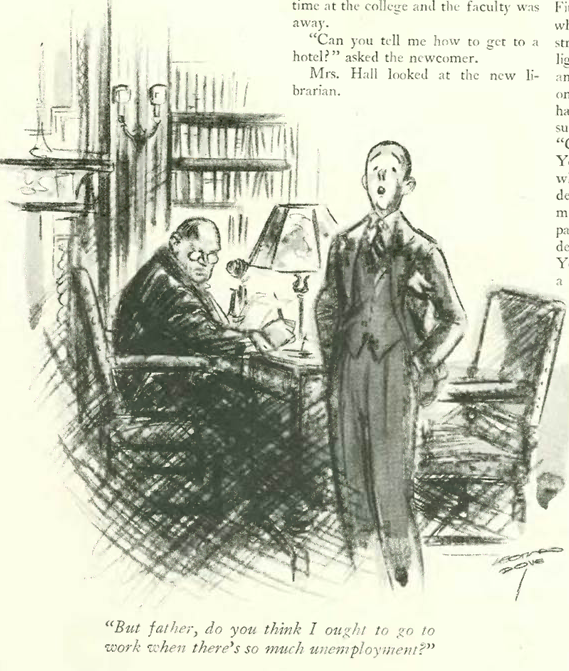
…and finally, Peter Arno’s take on the challenges of shooting sound motion pictures…

Caption: “Lord, Mr. Rolbert, you’ll have to develop a more robust sneeze—the public will think you’re a sissy!”

Next Time: Something Old, Something New…