In the days before air conditioning, New Yorkers took to the higher rooftops in the city to escape the summer heat and reconnect with familiar entertainers.
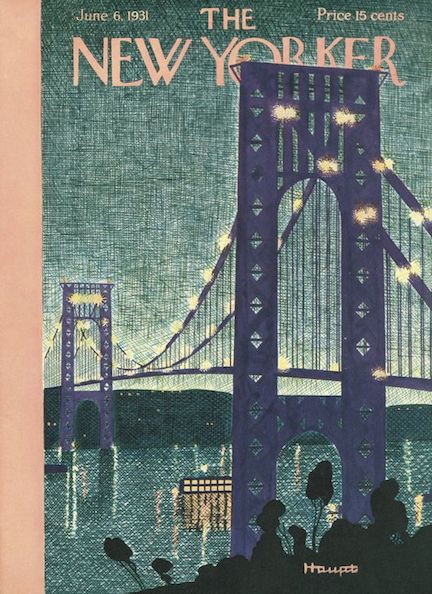
June 6, 1931 cover by Theodore Haupt. The title image is a detail from a Sept. 5, 1970 cover by Arthur Getz.
Among those reconnecting was Lois Long, who had abandoned her nightlife column “Tables for Two” the previous year but revived it in the June 6, 1931 issue, perhaps in reaction to the “boundless trouble” that had marched into her “quiet life,” namely her bitter divorce that month from cartoonist Peter Arno. Soon to be single again, Long dusted off her “Table” for another night out.
PRE-AC…As far back as the Gilded Age of the 19th century New Yorkers escaped the summer heat by seeking entertainment on one of the city’s rooftop gardens. Pictured is the Paradise roof garden atop Hammerstein’s Victoria Theatre, 1901. (MCNY)
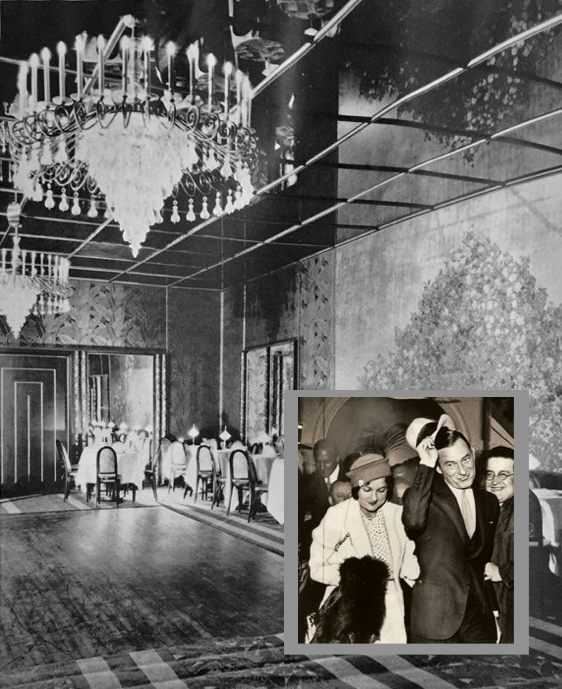
THE BUCK STARTS HERE…It wasn’t a rooftop, but the Central Park Casino was a cool retreat from city streets, especially for Mayor Jimmy Walker, who conducted much of city business there. After reform-minded Mayor Fiorello La Guardia replaced Walker in 1934, Parks Commissioner Robert Moses had the place torn down. (New York City Parks Photo Archive)I COULD HAVE DANCED ALL NIGHT…Mayor Jimmy Walker and his mistress, showgirl Betty Compton, were often the last to leave the Casino in the wee hours of the morning, dancing in the Joseph Urban-designed black-glass ballroom (above) to the Leo Reisman Orchestra. (drivingfordeco.com)
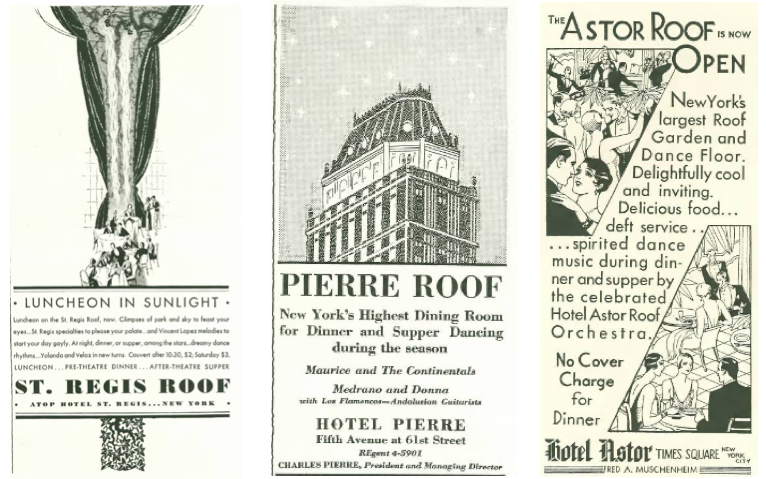
Higher up in the city, Long also paid a visit to the elegant rooftop of the St. Regis, also designed by the famed architect and theatrical designer Joseph Urban…
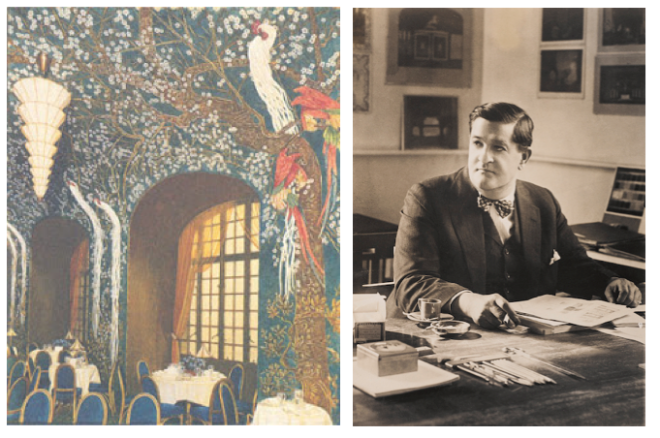
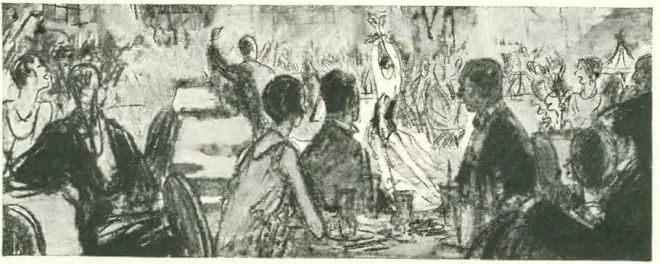
DAZZLING…The St. Regis rooftop, designed by Joseph Urban. (flaglermuseum.us)ANOTHER VIEW of the St. Regis rooftop as illustrated in the July 7, 1928 issue of The New Yorker by Alice Harvey.
Long also visited the roof of the 42-story Hotel Pierre. The New York Sun described the top two floors as “decorated to resemble the interior of a zeppelin cabin.”
THE COOLEST…Top of the Hotel Pierre. A popular summer ballroom in the years before air-conditioning, the Pierre advertised itself as having “the highest and coolest hotel roof in Manhattan.” (NYT)
If you were in the mood for a little crooning, Rudy Vallee and his Connecticut Yankees were taking in the breeze atop the Hotel Pennsylvania, per this ad in the back pages of the June 6 New Yorker…
Advertisers must have been paying attention to Long’s column, because the back pages of the following issue (June 13) had plenty of ads touting various rooftops…
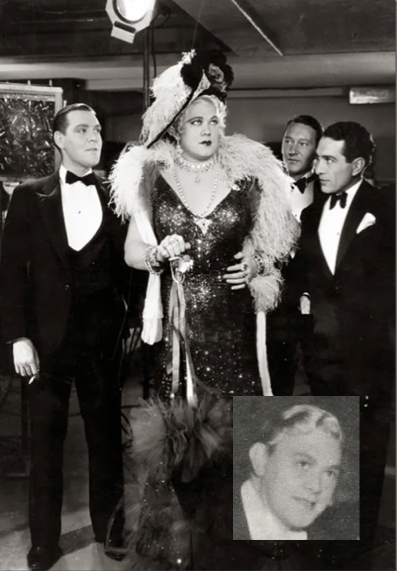
Long also sampled the offerings of less savory venues, such as the Club Argonaut, which was apparently frequented by mobsters…
NOT AMUSED…Lois Long didn’t care for the antics of Gene Malin (center, and inset) who performed in front of a tough-looking crowd at the Club Argonaut. A popular drag artist who helped ignite the “Pansy Craze” in the 1920s and 30s, Malin was one of the first openly gay performers in Prohibition-era speakeasy culture. His career ended abruptly at age 25 in a car accident. (Wikipedia)
* * *
Sexy Soviet Tractors
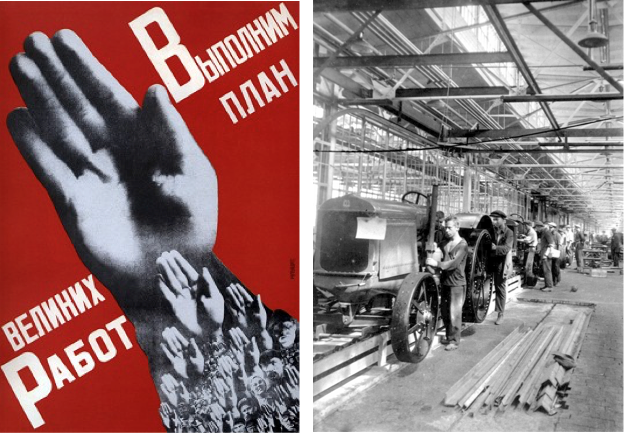
One place you could find an early form of air conditioning was at the movies (critic John Mosher referred to these theatres as “iced), and no doubt many lowered their cinematic standards just to get a few hours respite from the heat. For some unknown reason the Central Theatre thought it could entice audiences not with air-conditioning, but with a Soviet propaganda film titled The Five-Year Plan.
STAY CALM AND CARRY ON…Soviet poster for The Five Year Plan (1930), and a 1930 image of the Volograd (Stalingrad) tractor factory. You wonder how many of those chaps got wiped out by Stalin’s purges, or by the Battle of Stalingrad in 1942-43. (Wikipedia)
* * *
Laughing at Death
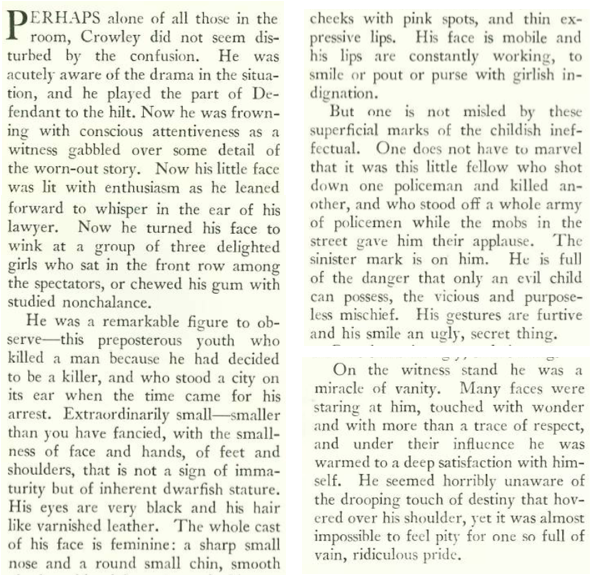
A couple of posts ago I wrote about a very public gun battle that brought diminutive killer Frances Crowley to justice (“The Short Life of Two-Gun Crowley”). In the June 6 installment of “A Reporter at Large,” Morris Markey recounted the courtroom scene where the 18-year-old Crowley winked at girls and nonchalantly chewed his gum as judge and jury determined his fate.
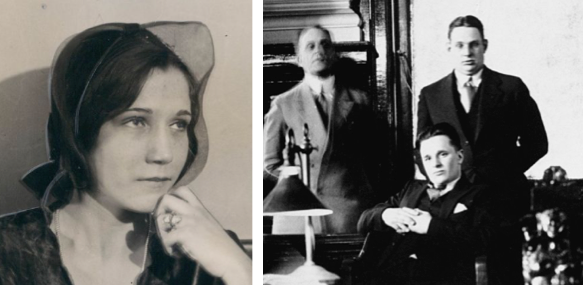
OH WELL…Frances Crowley’s 16-year-old girlfriend, Helen Walsh, left, was positively bored during the trial that would send her beau to Sing Sing’s electric chair. Crowley himself (shown above at the trial) seemed to be amused by the proceedings, and enjoyed the attention. (NY Daily News)
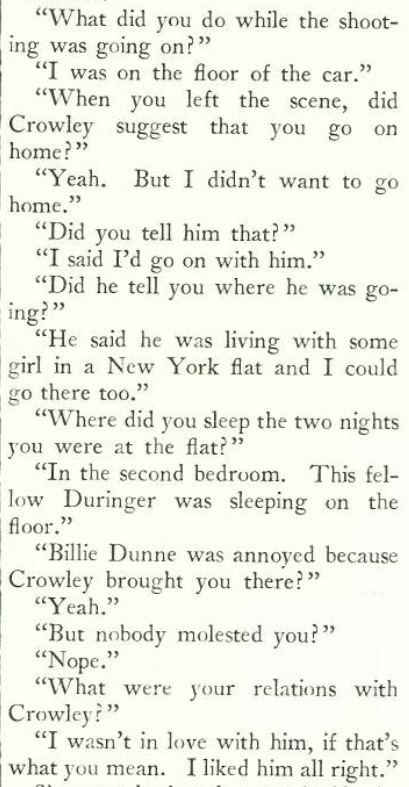
Markey also noted the unseemly behavior of Crowley’s 16-year-old girlfriend, Helen Walsh, who seemed bored by the whole thing. “She was not a creature of your world or of mine,” wrote Markey, who noted at one point that she put her hands to her face “to conceal a faint smile that sprang from some incalculable amusement within her.” Markey offered this sample of Walsh’s questioning.
* * *
Summer Frost
Novelist and poet Raymond Holden penned a profile of famed poet Robert Frost, who among things apparently enjoyed apples and a bit of gossip. A brief excerpt:
* * *
Dead Ball
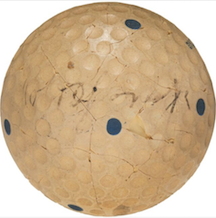
E. B. White lamented in his “Notes and Comment” the changes to the official golf ball, which was to be made slower in a time when Depression-weary businessmen could use a little lift:
GET ‘EM WHILE THEY LAST…This 1930 golf ball, signed by golf legend Bobby Jones, listed for $15,000 on eBay.
* * *
From Our Advertisers
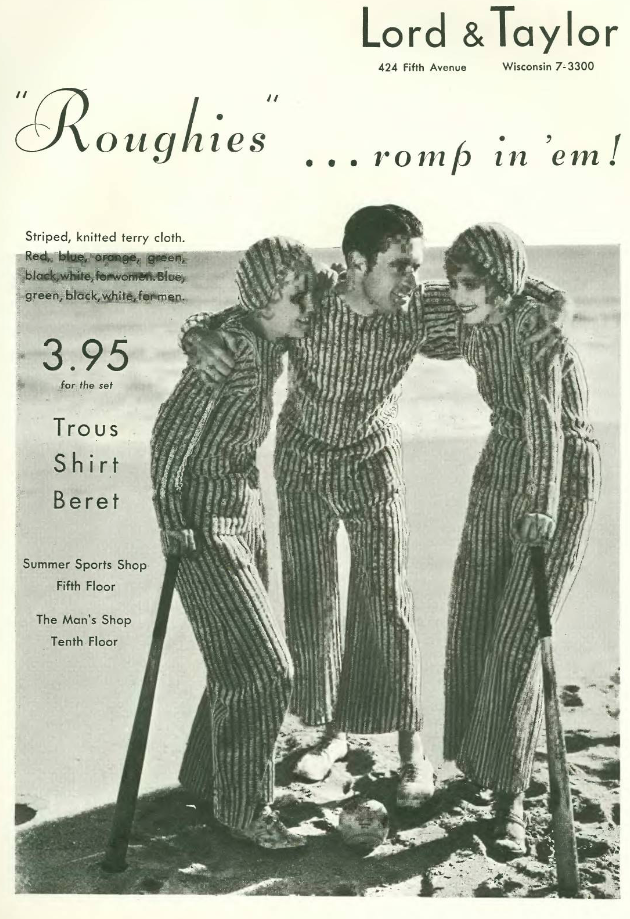
Gender-bending trends in clothing continued from the 1920s with flowing trousers for women (unthinkable a decade earlier)…
…and beach pajamas for men and women alike…
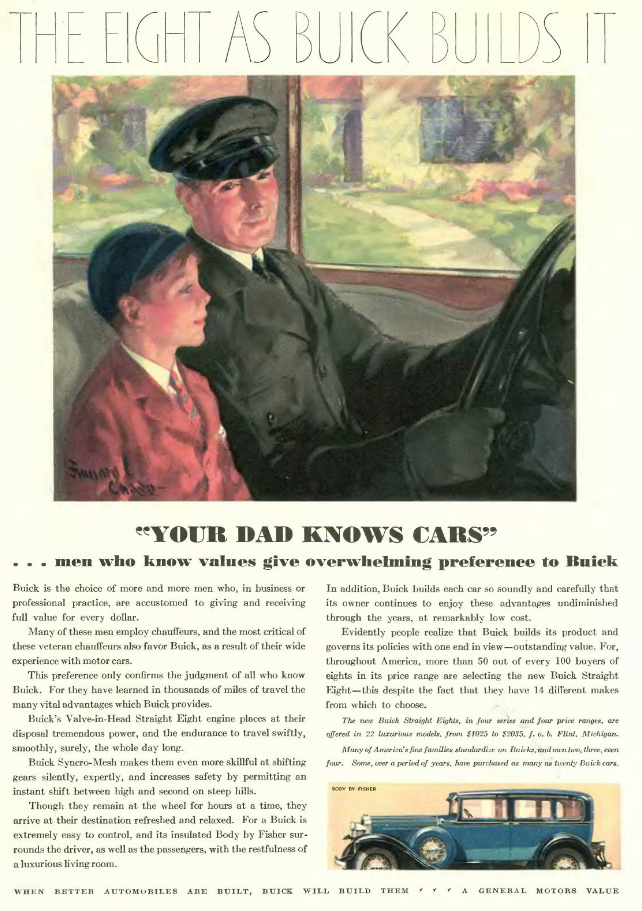
…Buick dialed up a patrician vibe with this ad that suggested a posh boy might be transported in one by the family’s driver…
…and this might be one of the first ads that linked cigarette smoking to the myth of the Western cowboy…
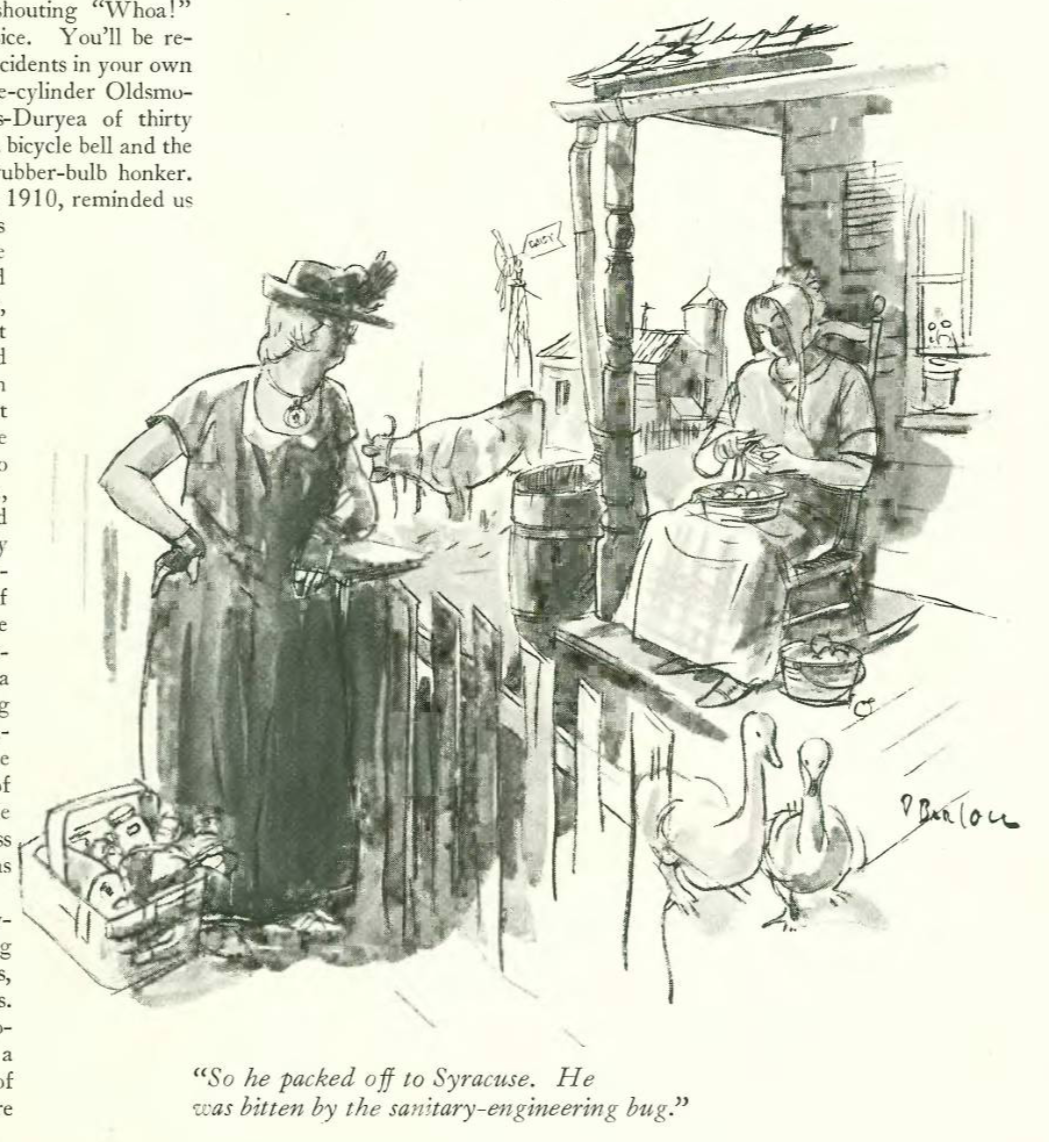
…on to our cartoons, we begin out in the country with Perry Barlow…
…and Kemp Starrett, with this charming bucolic scene…
…back in the drawing room, we have this canine encounter from Leonard Dove…
…Helen Hokinson explored the violent side of bridge…
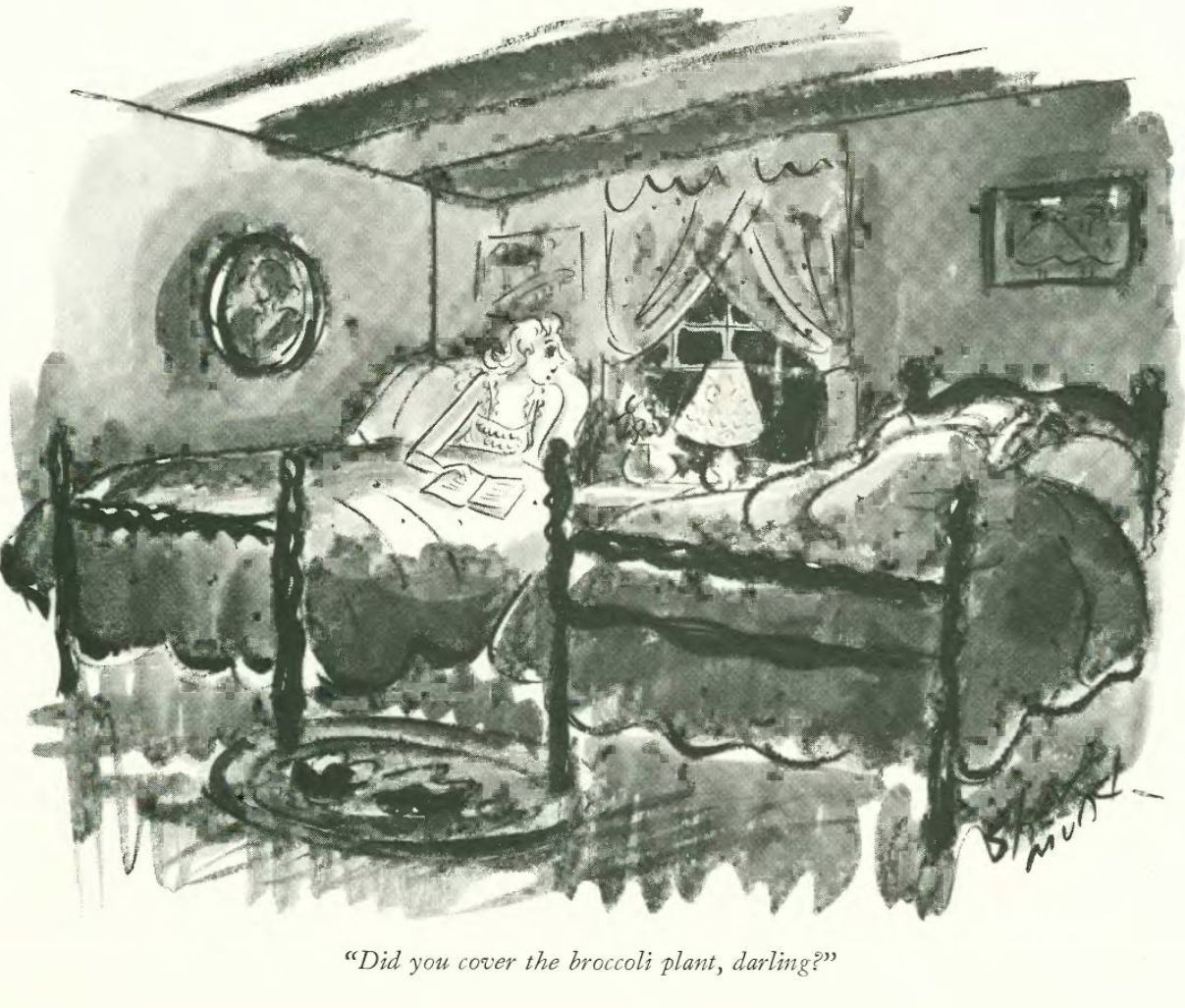
…Barbara Shermund went into the garden to sample the trials of the rich…
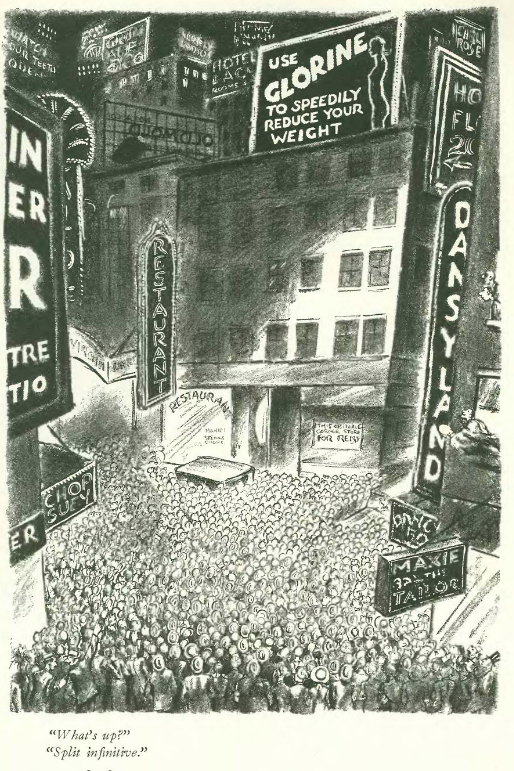
…Carl Rose pondered the art of grammar in crowded places…
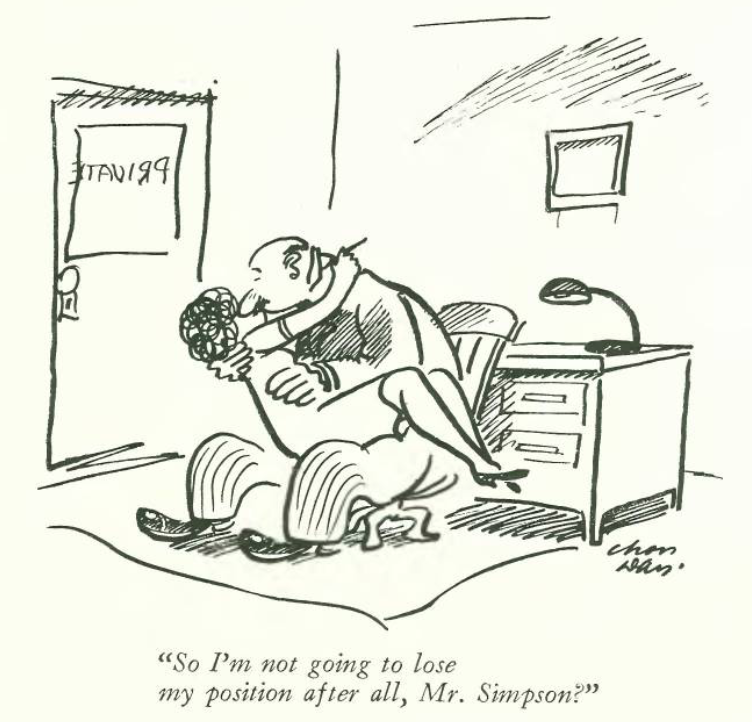
…Chon Day gave us yet another take on the familiar boss vs secretary trope…
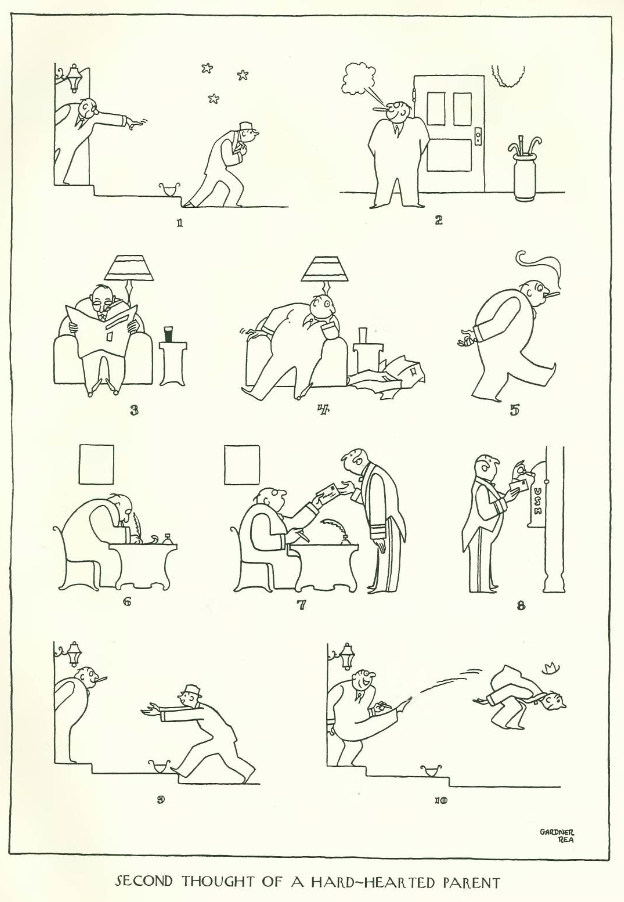
…and Gardner Rea gets the last laugh with this hapless prodigal son…
Harold Ross founded The New Yorker as a sophisticated humor magazine, so when events in the city or the world took a serious turn, the writers and editors did their best to maintain its waggish tone.
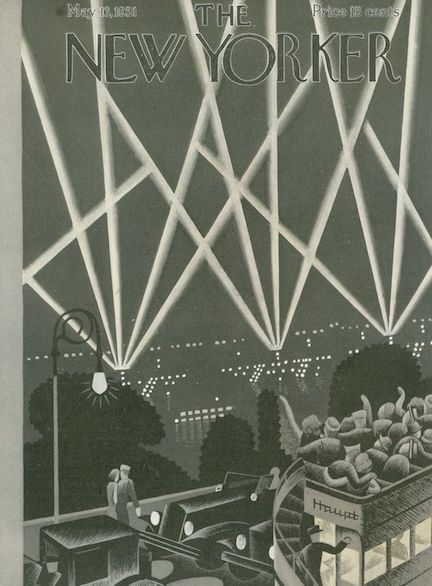
May 16, 1931 cover by Theodore Haupt.
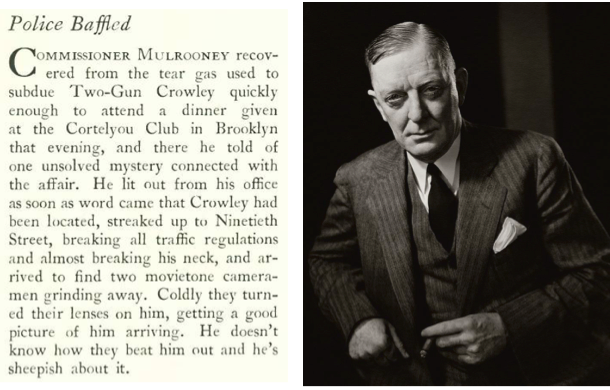
After two cold-blooded killers engaged police in a heated gun battle from a West 91st Street rooming house, the May 16, 1931 “Talk of the Town” had this to say about the incident:
At right, a 1933 portrait of Portrait Of Edward Mulrooney, Police Commissioner of New York City, by Edward Steichen. (Conde Nast)
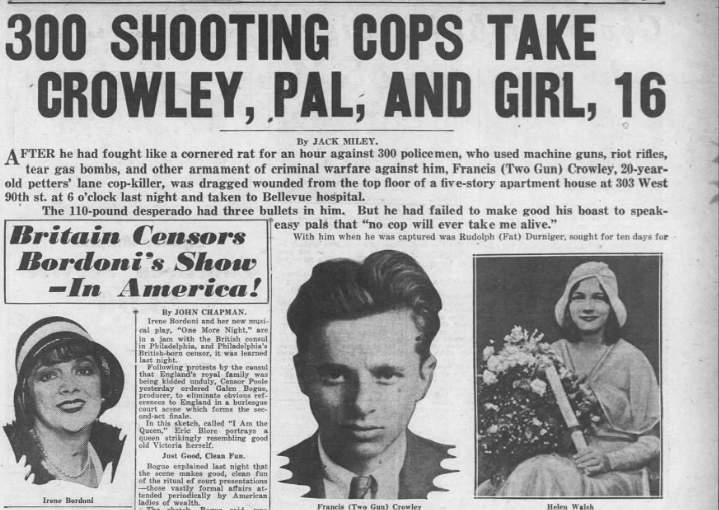
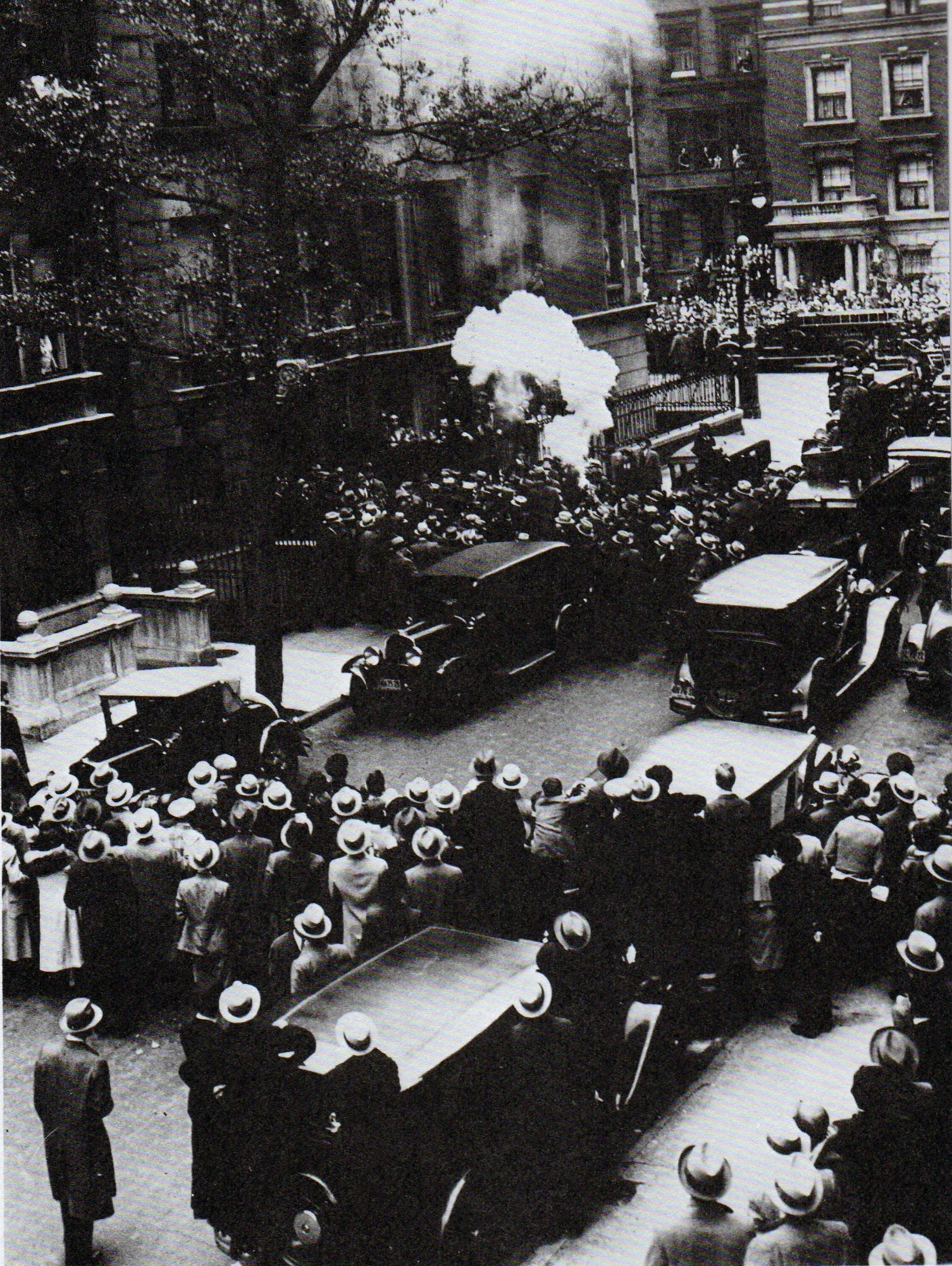
The New Yorker wasn’t alone in finding entertainment value in the gun battle. Safety standards were quite different in the 1930s, so as police exchanged heavy gunfire with 18-year-old Francis “Two Gun” Crowley, a crowd of 15,000 bystanders surrounded the scene, some just yards away from the action as the photo below attests:
THEY NEEDED SOCIAL DISTANCING…On May 7, 1931, Francis “Two Gun” Crowley exchanged gunfire with police for nearly two hours from the fifth floor of a rooming house on West 91st Street. A force of 300 police fired an estimated 700 rounds at Crowley’s apartment while a crowd of 15,000 spectators surrounded the scene. Not sure why the police stood in a huddled mass beneath the window of the shooter. Strength in numbers, perhaps. (ephemeralnewyork.wordpress.com)
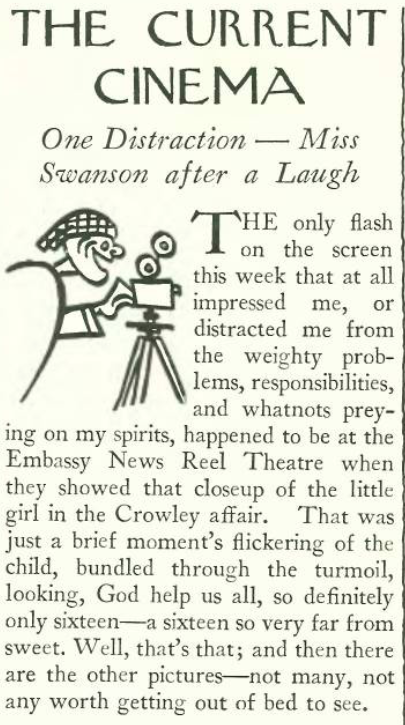
Another mention of the incident was in John Mosher’s film review column. He noted that the newsreel footage of the shoot-out was the best thing on the screen that week, and especially the moment when Crowley’s 16-year-old girlfriend Helen Walsh emerged from the building in the clutches of the police:
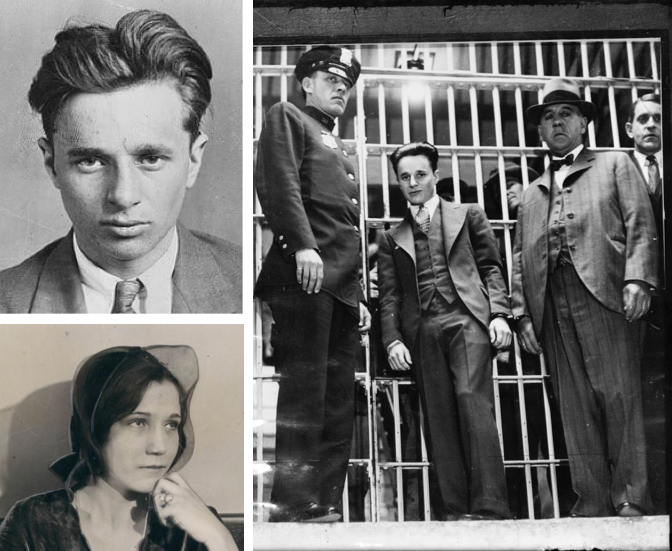
DON’T GET TOO COMFORTABLE…18-year-old Francis “Two Gun” Crowley (left) surrendered to police after suffering four gunshot wounds in the West 91st Street shootout, but would recover in time to be executed two months after his 19th birthday. At right, images from the newsreel show Crowley accomplice Fats Durringer being led away from the scene, along with Crowley’s girlfriend (bottom right), 16-year-old Helen Walsh. (Everett/YouTube)
By the end of the month Crowley was tried and convicted of the murder of a police officer, and his partner Fats Durringer was found guilty of brutally killing a dance hall hostess. Justice moved swiftly in those days, especially when the murder of a police officer was involved: On June 1, 1931—just three weeks after the shoot-out with police—Crowley and Durringer were sentenced to death. Only six months would pass before Durringer took a seat in Sing Sing’s electric chair. Crowley would follow his accomplice a few weeks later. As for Helen Walsh, she was released after testifying against Crowley and Durringer.
SHORT LIFE FOR SHORT KILLER…The diminutive Francis “Two Gun”Crowley, top, left, developed a habit of carrying more than one gun at all times, hence the nickname. At right, Crowley with officials at Sing Sing, where both he and partner Fats Durringer would meet their end in the electric chair. Below left, Crowley’s 16-year-old girlfriend Helen Walsh. Crowley was barely 19 years old when he was executed on Jan. 21, 1932. Among his last words, he asked the warden for a rag to wipe off the electric chair before he took his seat. “I want to wipe off the chair after that rat sat in it,” Crowley said, referring to Durringer, who had been executed weeks earlier, on Dec. 10, 1931. His request was denied. (www.swordandscale.com)
One final mention of the incident came from Ralph Barton, who named Police Commissioner Ed Mulrooney his “Hero of the Week”…
* * *
Sub Sandwich
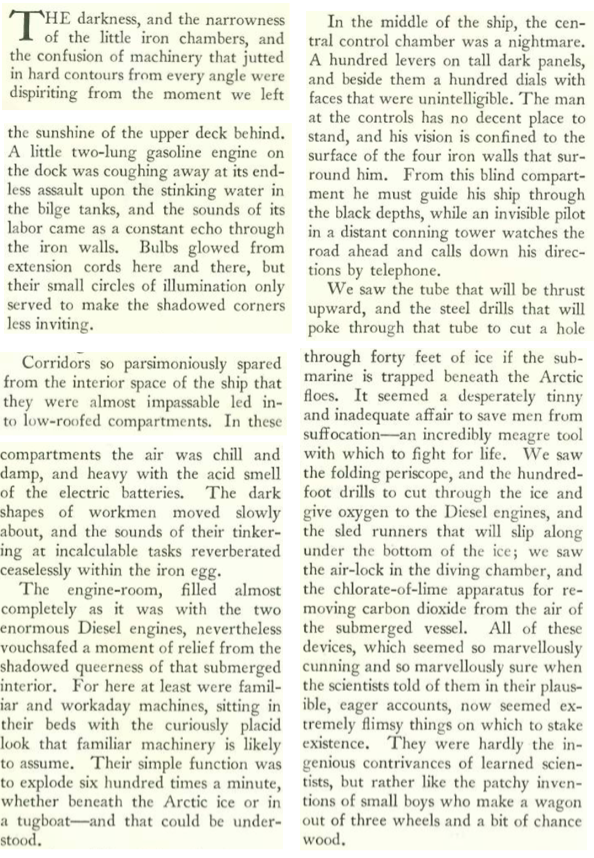
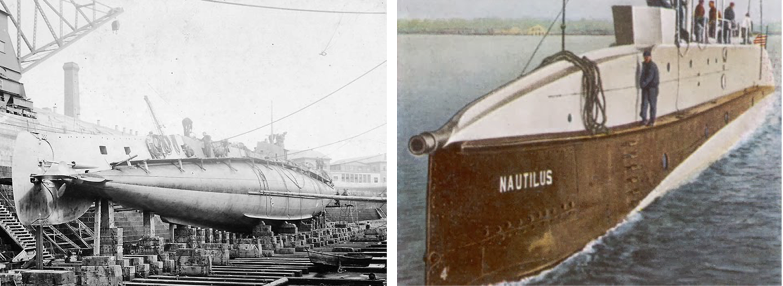
In his “Reporter at Large” column, Morris Markey paid a visit to the Brooklyn Navy Yard where Sir Hubert Wilkins and his crew were busy preparing a narrow, cramped submarine dubbed Nautilus for a trip beneath the ice of the North Pole. Markey marveled at all of the complicated devices crammed into the vessel, but at the same time wondered why anyone would stake their life on “such flimsy things”…
TIGHT QUARTERS…The Nautilus was a refurbished O-class submarine built in 1916 for the U.S. Navy. Somehow a crew of 20 crammed into the thing. (amphilsoc.org)The Nautilus was fitted with ice drills that would allow access to the surface of North Pole ice, as well as provide air to the crew and the vessel’s diesel engines. All this equipment was untested and unproven, since at the time submarines were not able to snorkel and had never broken through ice to reach fresh air. Click to enlarge. (Modern Mechanix)
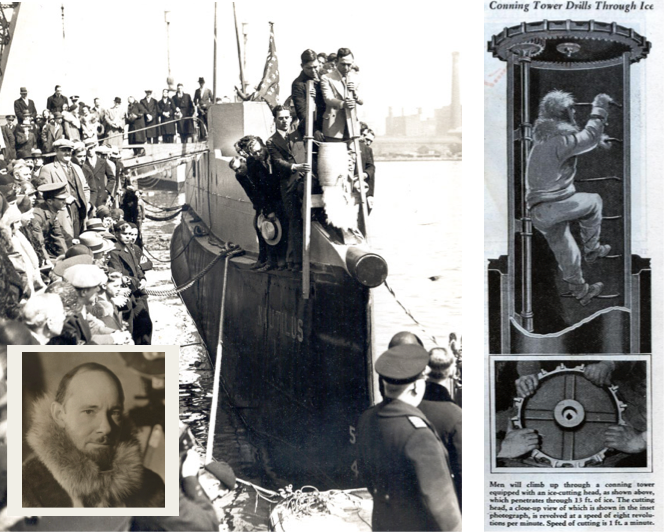
Markey wasn’t alone in thinking such an expedition was preposterous, and from the very beginning it was beset by problems. On the very first day of preparations, March 23, 1931, a crew member fell overboard and drowned. The next day, Lady Suzanne Bennett Wilkins (Sir Hubert’s wife) christened the submarine with a bottle of ice water rather than Champagne, which was unavailable due to Prohibition.
More on this in another post, but suffice to say Sir Hubert did not succeed in this endeavor, and perhaps should have listened to the advice of the Icelandic American explorer Vilhjalmur Stefansson:
DRY DOCK…Christened with a bottle of ice water rather than Champagne thanks to Prohibition, the Nautilus expedition, led by Sir Hubert Wilkins (inset), had to overcome many obstacles to reach the North Pole, including untested equipment such as a conning tower (right) designed to drill through ice to allow crew members to reach the surface of polar ice. (amphilsoc.org)
* * *
Bright Star on Broadway
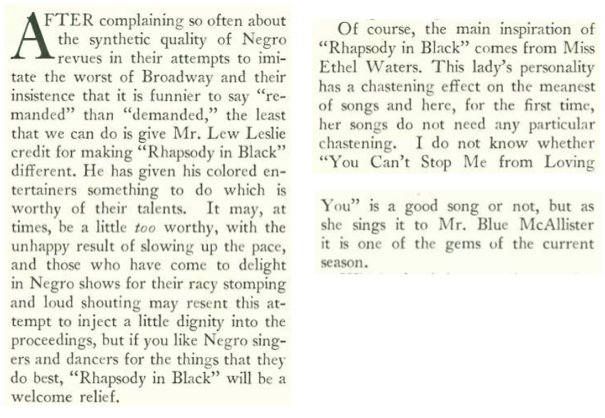
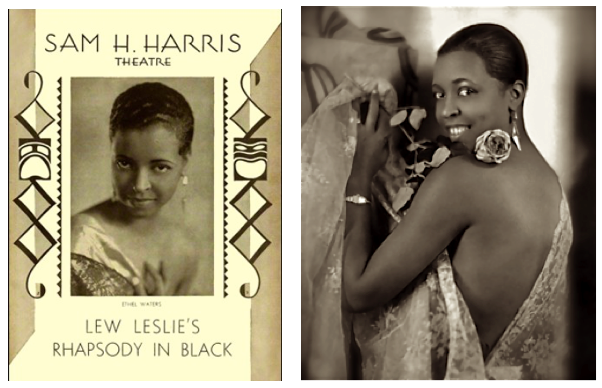
In spring 1931 Dorothy Parker subbed as theatre critic for her friend, Robert Benchley, and was greeted with a remarkably mediocre (or worse) line-up of shows. When Benchley returned to his post, things didn’t get much better until Rhapsody in Black came along with its inspiring star, Ethel Waters.
WELCOME RELIEF…Robert Benchley wrote that singer Ethel Waters had a “chastening effect” on even “the meanest of songs.” (Playbill/Carter Magazine)
* * *
Six – Love
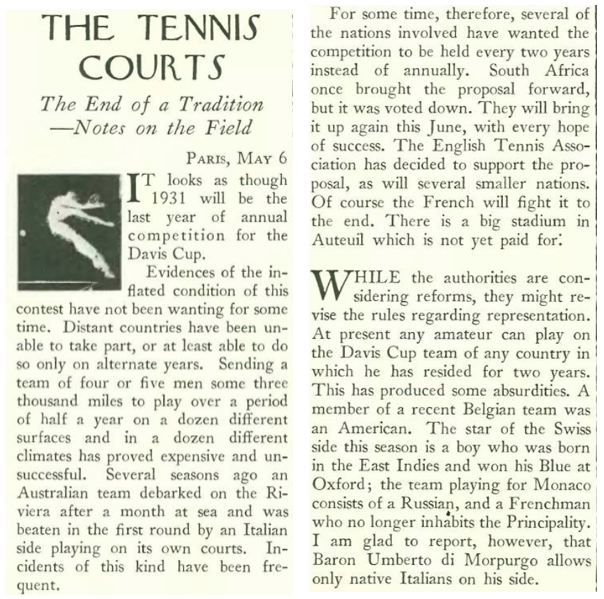
Eighty years ago sportswriter John Tunis declared that the Davis Cup international tennis competition would likely come to an end due to expense and the erosion of amateur play. Well, we know the Davis Cup is still around, and one wonders if Tunis was getting a whiff of sour grapes, since the French had won the cup five years straight, and would win again in 1932.
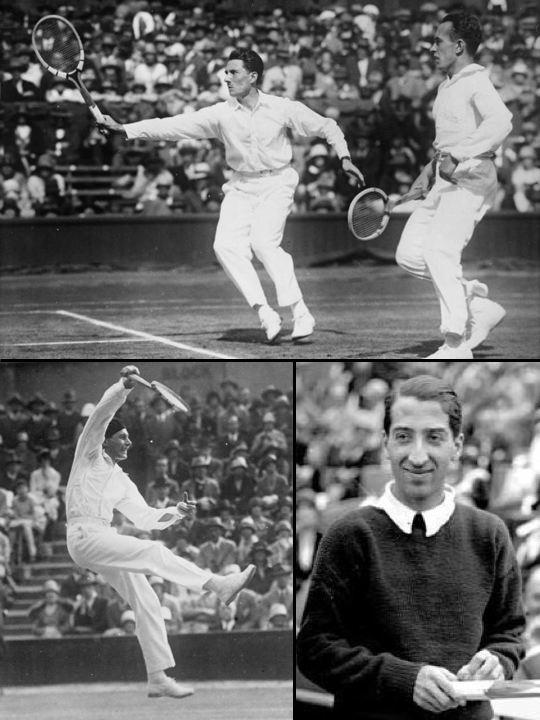
JEU, SET ET MATCH!…Dubbed Les Quatre Mousquetaires (“The Four Musketeers”), the French team of Jacques Brugnon and Henri Cochet (top), Jean Borotra (bottom left), and René Lacoste (bottom right) led France to six straight Davis Cup wins, 1927–1932. (Wikipedia)
* * *
Old Gloria
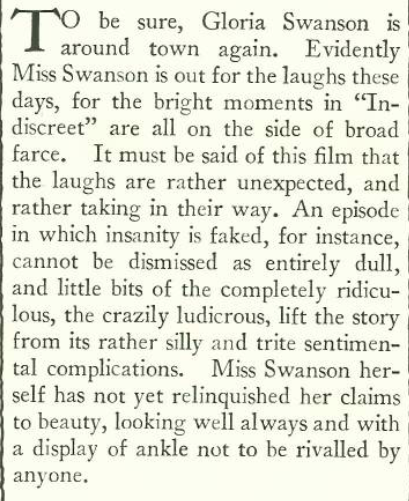
To be fair, Gloria Swanson was only 32 years old in 1931, but she was so deeply associated with the silent era that by the 1930s she seemed positively ancient (a status that she would brilliantly use to her advantage in 1950’s Sunset Boulevard). Mosher offered this “meh” review of her latest work — only her second completely-sound film — Indiscreet.
WHERE’S THE DOOR?…Ben Lyon seems perplexed by Gloria Swanson’s attentions in this theatre lobby card promoting Indiscreet. At right, Swanson delivers her trademark laser stare. (IMDB)
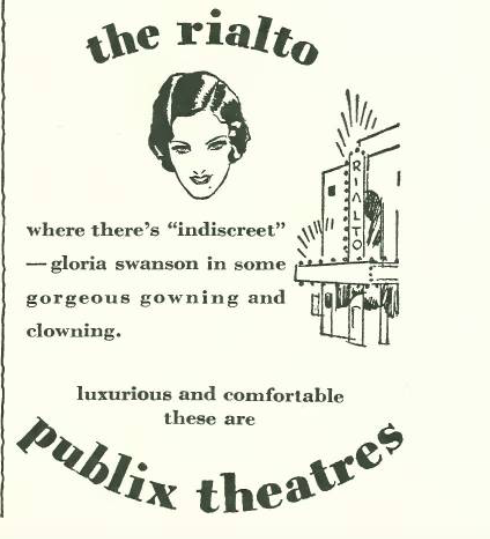
And we move on to our advertisers, with this ad from Publix Theatres (owned by Paramount) promoting Indiscreet…
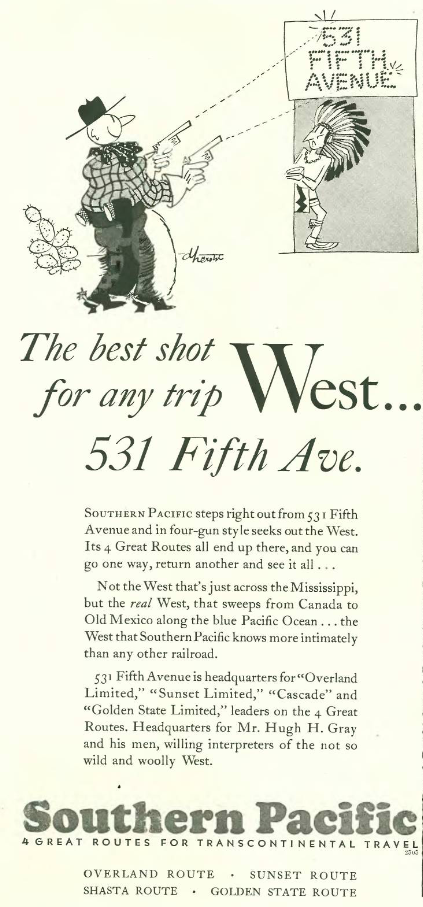
…Southern Pacific used a theme (illustrated by Don Harold) to promote travel on their trains that wouldn’t fly today…
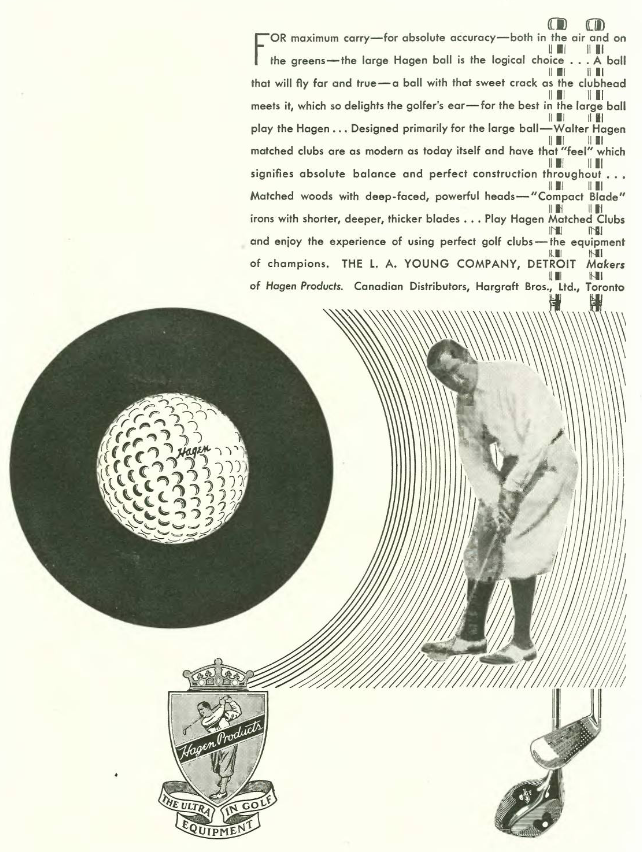
…I include this ad for the design, which seemed to have a little of everything…
…the makers of Camel cigarettes, however, reverted to a somewhat more homespun image, abandoning the stylish, euro-set illustrations of Carl “Eric” Erickson…
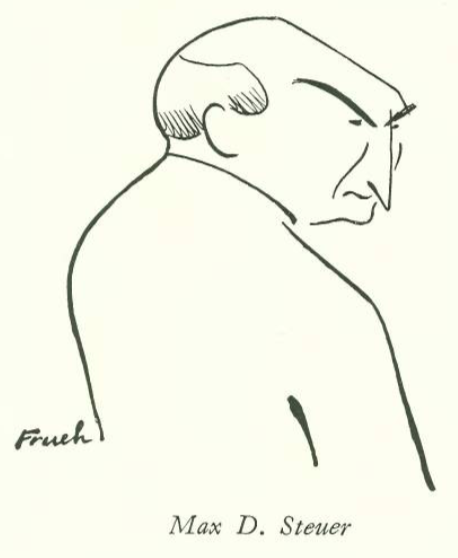
…on to our cartoonists, we have this caricature of Max Steuer by Al Frueh, rendered for a two-part profile…Steuer is perhaps best known for his successful defense of the factory owners after the 1911 Triangle Shirtwaist Factory Fire…
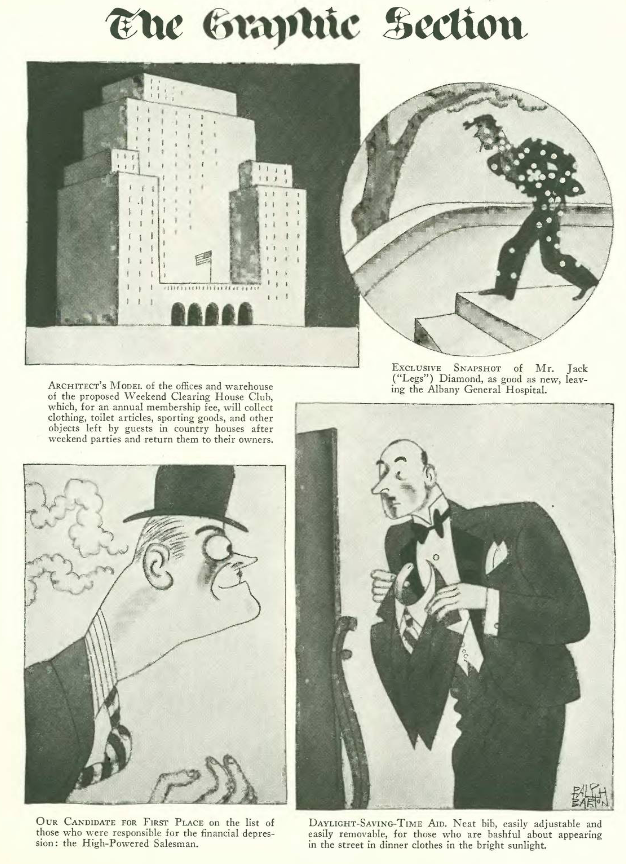
…Ralph Barton again, with his “Graphic Section”…
…Garrett Price weighed the durability of modern decor…
…Barbara Shermund looked at gardening challenges in the ‘burbs…
…Perry Barlow gave us a glimpse of something perhaps inspired by a trip to Europe…
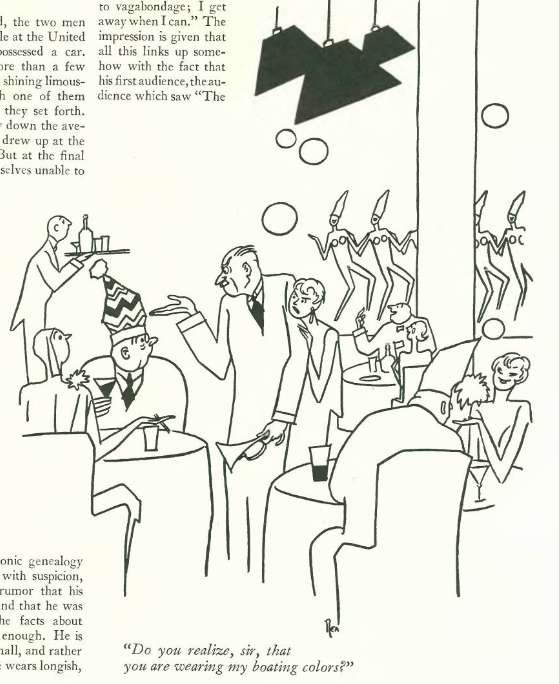
…Richard Decker conjured a boat salesman with a loaded question…
…and we end with the great James Thurber, and a cartoon that might not pass muster today…
The early New Yorker loved two things about modern life — college football and air travel. Tragedy would bring them together on the last day of March 1931.
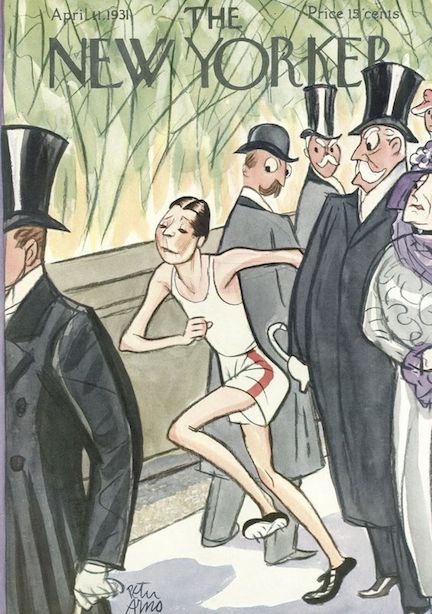
April 11, 1931 cover by Peter Arno. A brilliant cover, contrasting the skinny, lightly clad runner with one of Arno’s stock characters from the Taft era—a millionaire with a walrus mustache.
The New Yorker’s sportswriter John Tunis was especially keen on Knute Rockne’s Notre Dame football team, which played an annual rivalry game against Army at Yankee Stadium. Tunis’s colleague, E.B. White, was the flying enthusiast, never missing a chance to hop aboard a plane and marvel at the scene far below. In the Nov. 30, 1929 issue, White was eager to join passengers on a test of the Fokker F-32, and suggested that flying was becoming so routine that one could be blasé about its risks:
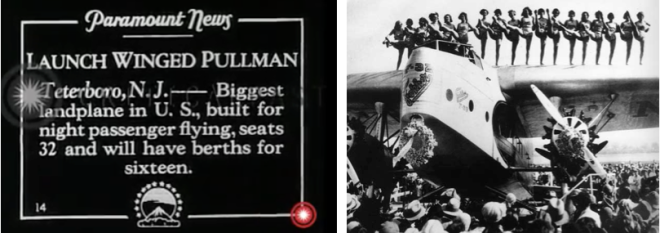
WHAT COULD POSSIBLY GO WRONG?…Title card from a silent Paramount newsreel reporting on a November 1929 test flight of the Fokker F-32 at Teterboro, possibly the same flight enjoyed by E.B. White. At right, a celebration of the plane’s arrival in Los Angeles. (YouTube/petersonfield.org)
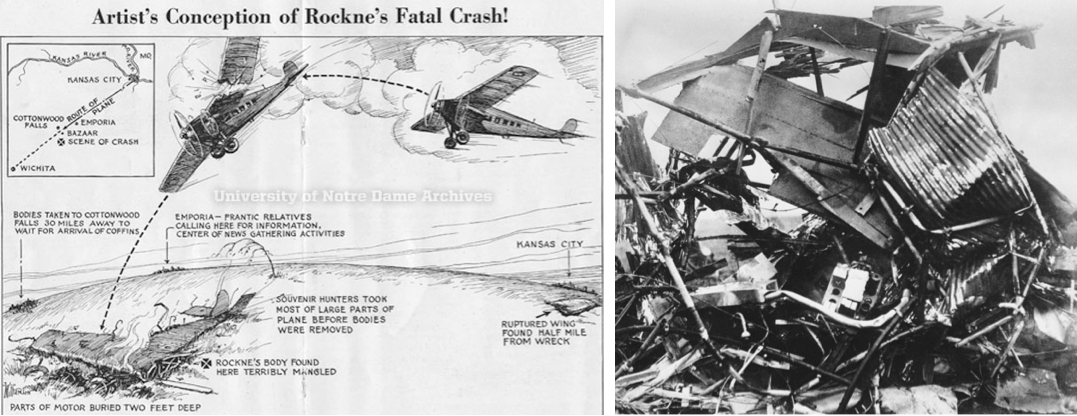
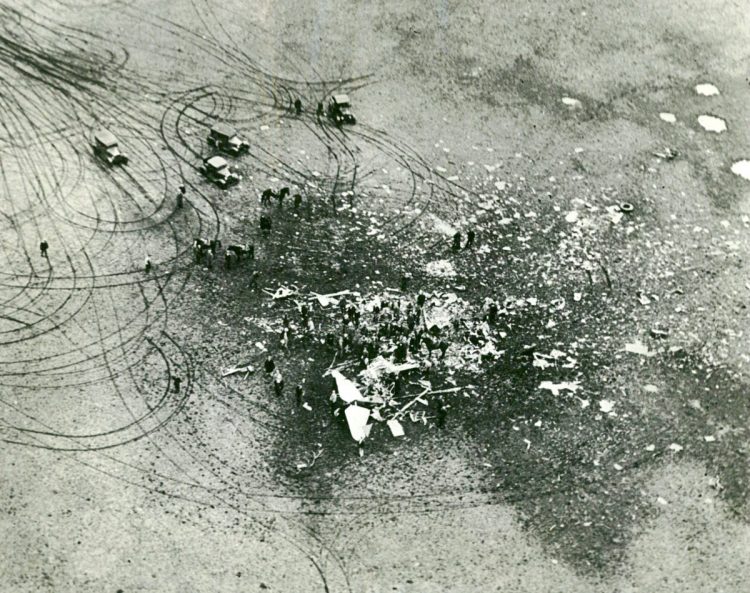
All of that exuberance came crashing down in a Kansas wheat field on March 31, 1931. It was Rockne’s fame—which The New Yorker and countless other magazines and newspapers helped to spread—that put the coach on a TWA flight to Hollywood, where director Russell Mack was filming The Spirit of Notre Dame. Rockne stopped in Kansas City, where he visited his two oldest sons, before boarding a Fokker F-10 destined for Los Angeles. About an hour after takeoff one of the airplane’s wings broke to pieces, sending Rockne and seven others to their deaths.
(University of Notre Dame) click image to enlarge
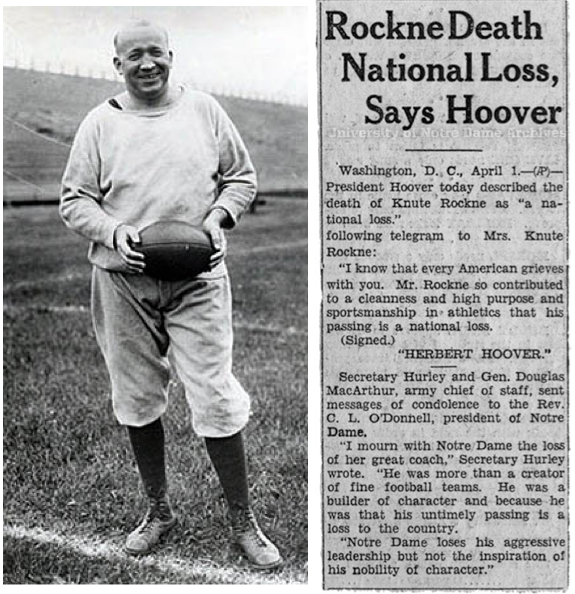
The accident rattled E.B. White. In his April 11, 1931 “Notes and Comment,” White pondered the eulogies Rockne received from President Herbert Hoover and others, calling into question the fame a college football coach could attain while achievements of college faculty go unheralded. White also seemed to have lost some of his faith in the progress of aviation, suggesting that the autogiro (a cross between an airplane and a helicopter) might be the safest way to proceed into the future:
Knute Rockne, in undated photo. (University of Notre Dame)
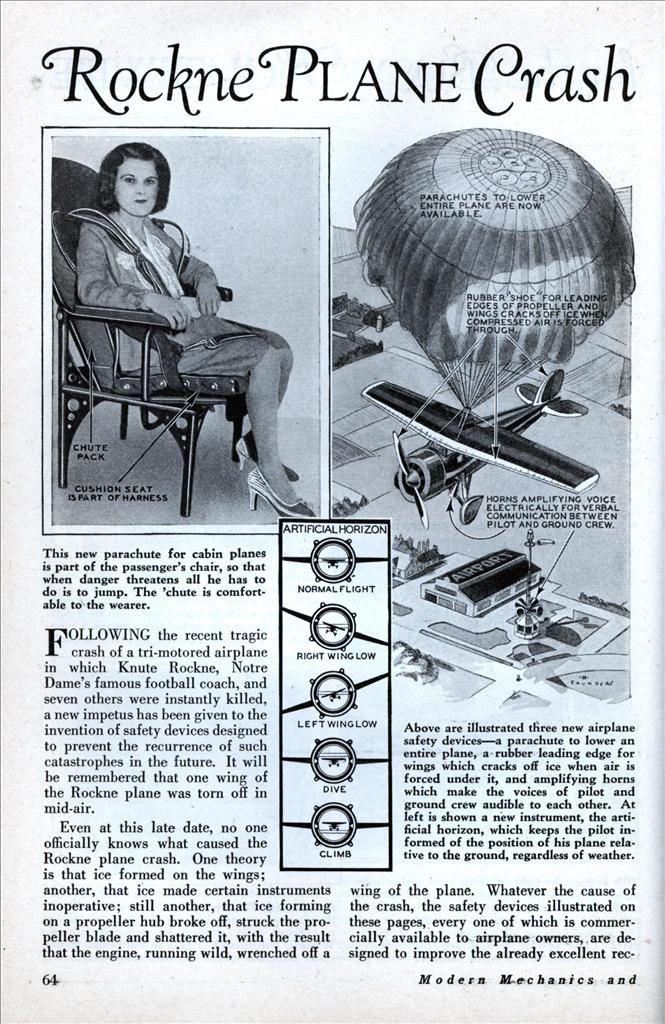
Ironically, it was thanks to Rockne’s fame that the aviation industry began to get serious about safety. A public outcry over the crash led to sweeping changes in everything from design to crash investigation, changes that have helped make flying one of the safest forms of transportation today.
SAFETY FIRST…The crash that claimed the life of Knute Rockne resulted in a public outcry for greater safety in the air. This article in the July 1931 issue of Modern Mechanics suggested parachutes for passengers and for the plane itself. (modernmechanix.com)
As for the cause of crash, it was determined that the plywood covering one of the Fokker F-10’s wings had separated from the wing’s supporting structure — the wing had been bonded together with a water-based glue that likely deteriorated as the result of rainwater seeping into the wing.
Unfortunately, the investigation into the crash was hampered by souvenir-seekers, who carried away most of the large parts of the plane even before the bodies were removed. So much for honest Midwestern values, at least in this case.
(clickamericana.com)
* * *
Give My Regards
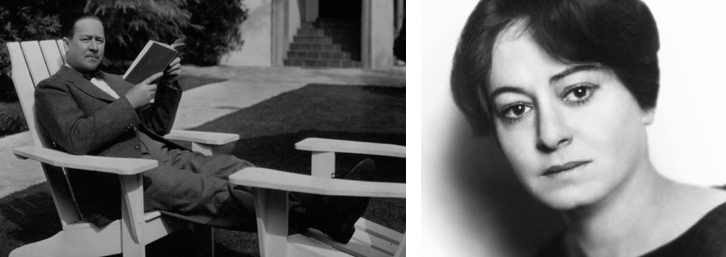
Back in Manhattan, Dorothy Parker was writing a eulogy of her own, bidding farewell to her interim role as theater critic. Parker subbed for Robert Benchley during his extended European vacation, and often noted that it was just her luck to be stuck with a string of plays that likely comprised one of Broadway’s worst spring line-ups.
In an earlier column Parker had alluded to the fact that Benchley was in Europe, no doubt staying part of the time with their mutual friends, Gerald and Sara Murphy, at their fashionable “Villa America” at Cap d’Antibes on the French Riviera.
SIGHT FOR SORE EYES…Dorothy Parker was glad to have her old friend Robert Benchley back at the theater desk, she having endured a “rotten time” reviewing a long string of bad plays. (dorothy parker.com)
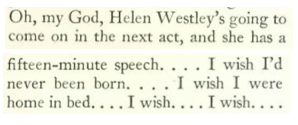
Hopeful to review at least one play of redeeming value before her friend returned, Parker was to be sorely disappointed as evidenced in her final review column. Of the terribly dated Getting Married, a play written by George Barnard Shaw way back in 1908, Parker was more afraid of Getting Bored, especially when Helen Westley (portraying Mrs. George Collins) entered the stage to deliver a 15-minute monologue…
Things got no better with the second play Parker reviewed, Lady Beyond the Moon, a “dull, silly, dirty play” that was frequently interrupted by various sounds from the restless audience — “comments, titters and lip-noises…” The play must have been terrible, because it closed after just fifteen performances.
As for the third play Parker reviewed, the misnamed Right of Happiness, the audience had every excuse “for displayed impatience,” yet conducted itself “like a group of little lambs.” Right of Happiness, observed Parker, “fittingly concluded the horrible little pre-Easter season…” The play closed after just eleven performances.
* * *
Turning Up the Heat
If anyone thought he had a right to happiness it would have been New York Mayor Jimmy Walker, who was preparing to face a grilling from Judge Samuel Seabury. Walker loved the nightlife and left most of his duties to a bunch of Tammany Hall cronies whose activities drew the attention of reformers like Seabury and Gov. Franklin D. Roosevelt. In his “A Reporter at Large” column, Morris Markey observed:
* * *
Walking Tall
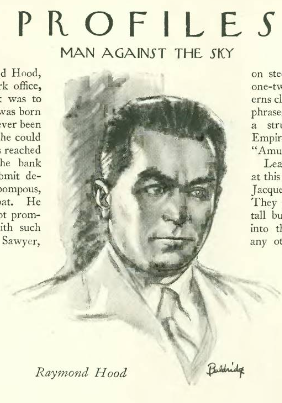
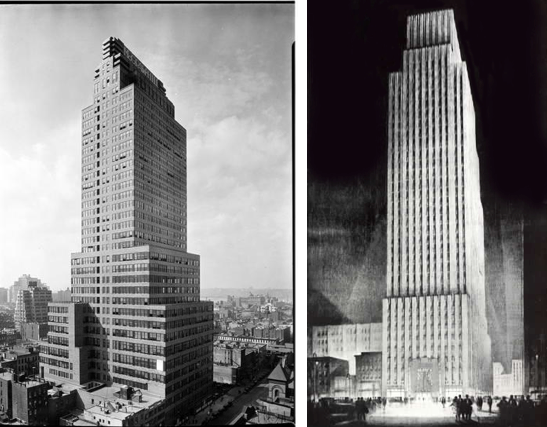
Raymond Hood (1881-1934) might have been short in stature, but he stood tall among the architects of some of New York’s most iconic skyscrapers — Rockefeller Plaza, American Radiator, Daily News, McGraw Hill (Sadly, both his career and his life were cut short when he died in 1934 at age 53 from complications related to rheumatoid arthritis). Allene Talmey, a former reporter for the New York World and managing editor of Conde Naste’s original Vanity Fair, gave Hood his due (see brief excerpt) in a New Yorker profile, with a portrait by Cyrus Baldridge:
LANDMARKS…The 1931 McGraw-Hill Building and the 1929-30 Daily News Building. (MCNY/Wikipedia)And of course, Hood’s 30 Rock. I took this last December before everything shut down.
* * *
From Our Advertisers
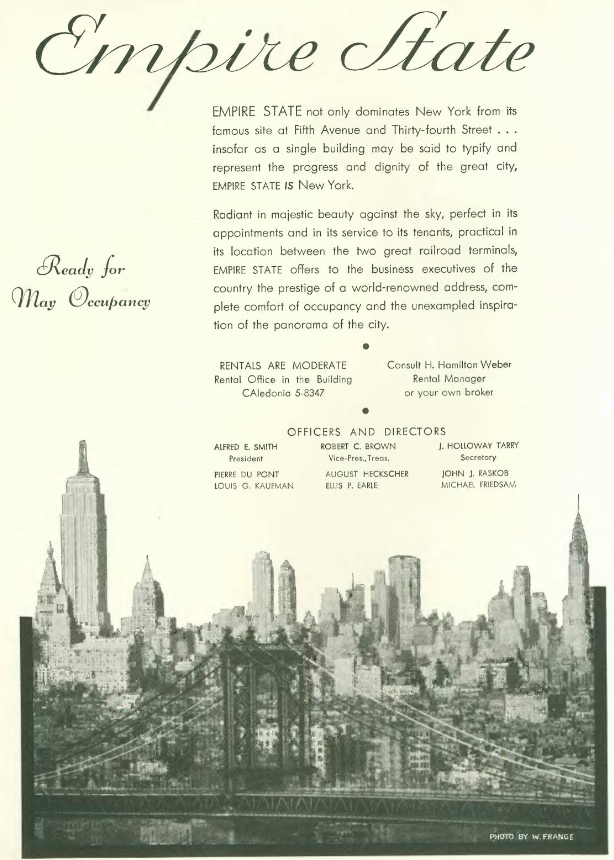
Speaking of big and tall, Al Smith and his gang took out this full page ad to announce the availability of office rentals in the world’s tallest building. Thanks to the Depression, only 23 percent of the available space in the Empire State Building was rented out in its first year. Thankfully, the building was also an instant tourist attraction, with one million people each paying a dollar to ride elevators to the observation decks in 1931, matching what the owners made in rent that year…
…for those who could afford more than a dollar ride up the Empire State’s elevators, the cooling breezes of coastal California beckoned…
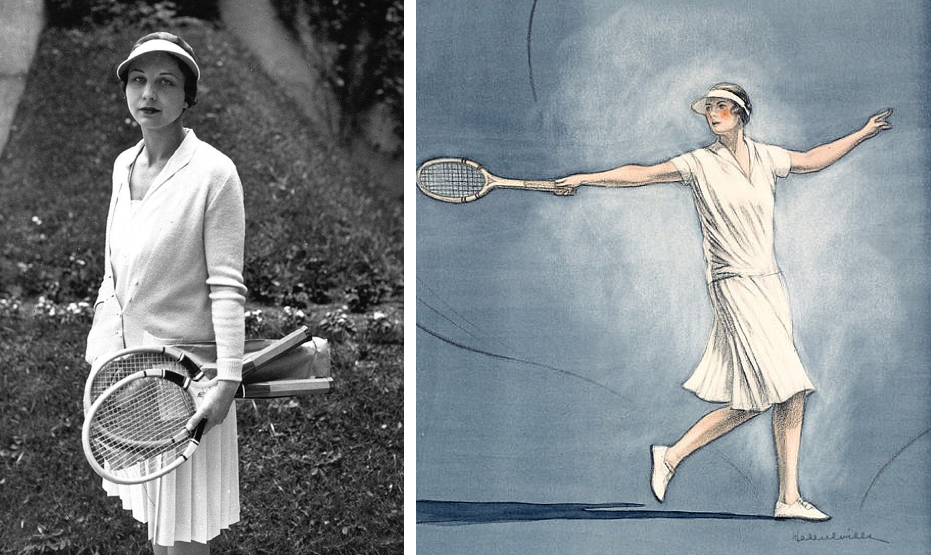
…those with even greater means and leisure time could hop on a boat to Europe…note that you could still cruise on the Olympic, the Titanic’s sister ship…also note that the illustration of the posh couple was rendered by Helen Wills (1905-1998), better known at the time as the top women’s tennis player in the world…
HELEN, MEET HELEN…American tennis star Helen Wills in 1932, and a self-portrait from the same year. Wills was the world’s top women’s tennis player for nine of the years between 1927 and 1938. She played tennis into her 80s, and sketched and painted all of her life. (Wikipedia/invaluable.com)
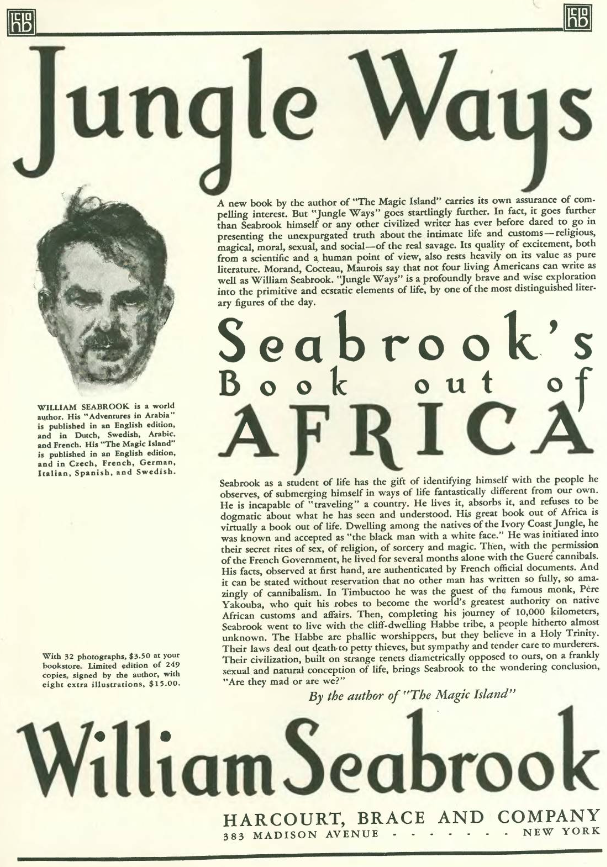
…Guess who’s coming to dinner?…hopefully not William Seabrook, who had just released his latest book on his adventures as an explorer…in Jungle Ways, Seabrook devoted an entire section to cannibalism in the French Sudan and how to cook human flesh; apparently he tried some himself…but then again by most accounts he was a weird dude who dabbled in occultism and possibly believed in zombies…Seabrook’s 1929 book, The Magic Island, is credited with introducing the concept of zombies to popular culture…
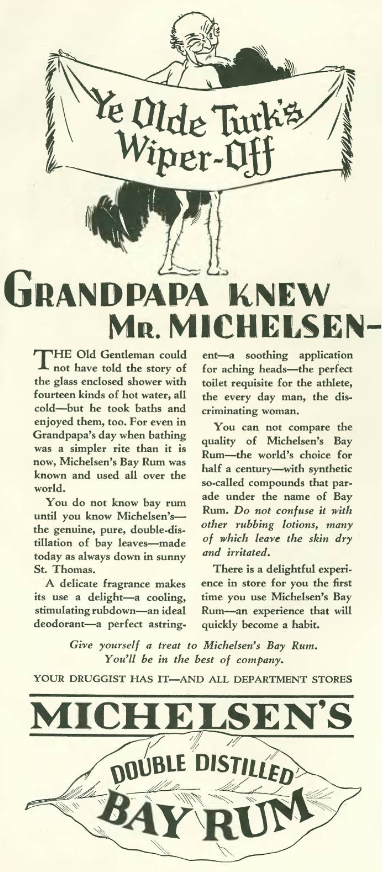
…speaking of weird, an ad for Michelsen’s “Bay Rum” body rub…
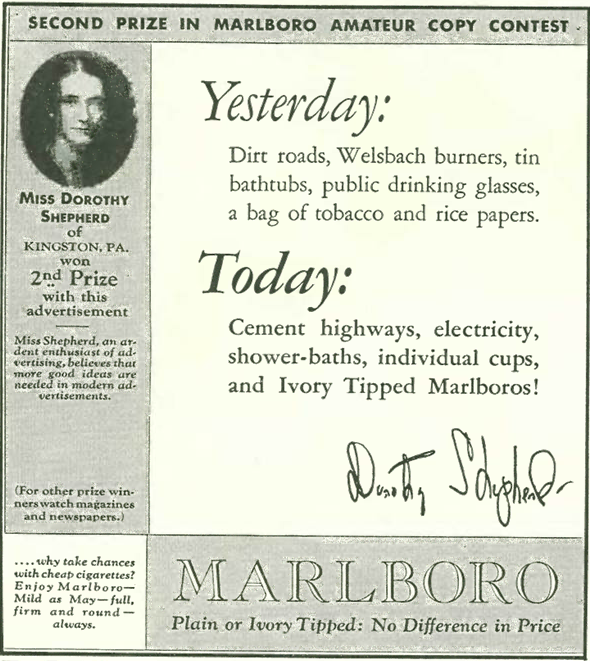
…when Marlboro cigarettes were introduced in the mid-1920s, they were marketed as “luxury” cigarettes and sold mostly at resorts and hotels. In the late 1920s, however, they were marketed as a “lady’s cigarette,” with ads in the New Yorker featuring handwriting and penmanship contests to promote the brand. This ad from November 1930 featured the “second prize” winner of their amateur copywriting contest…
…it appears marketing tactics changed a bit in 1931…still the dopey contest, but instead of real photos of winners, like the schoolmarmish “Miss Dorothy Shepherd” above, this ad featured a rather tawdry image of a model, more gun moll than schoolmarm…
…on to our cartoonists…Ralph Barton, who was with The New Yorker from Day One, had been increasing his contributions to the magazine after a notable absence from spring 1929 to summer 1930…beset by manic-depression, he would take his own life in May 1931, so what we are seeing are Barton’s last bursts of creativity before his tragic end, reviving old favorites like “The Graphic Section”…
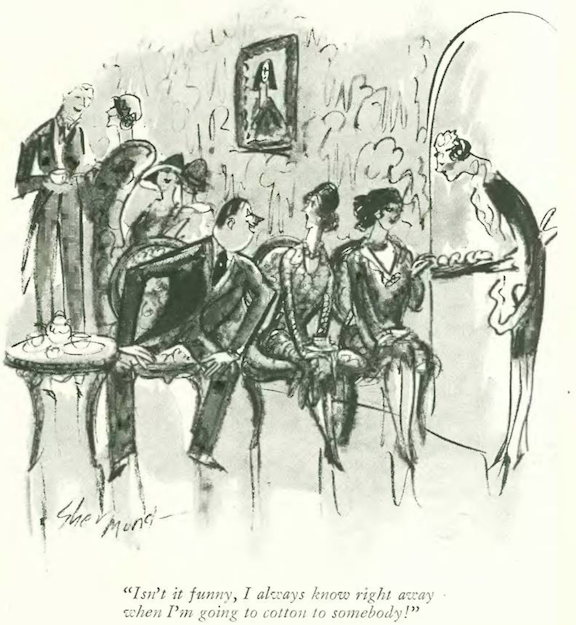
…Barbara Shermund entertained with some parlor room chatter…
…Leonard Dove looked in on a couple of frisky old duffers…
…William Crawford Galbraith, and a crashing bore…
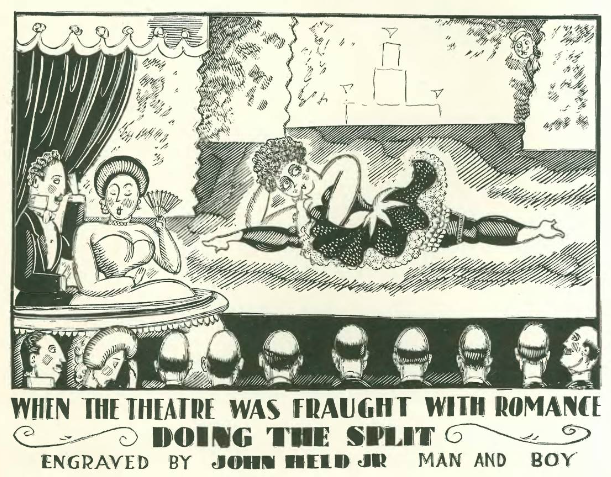
…John Held Jr gave us one of his “naughty” engravings…
…and two by our dear Helen Hokinson, stuck in traffic…
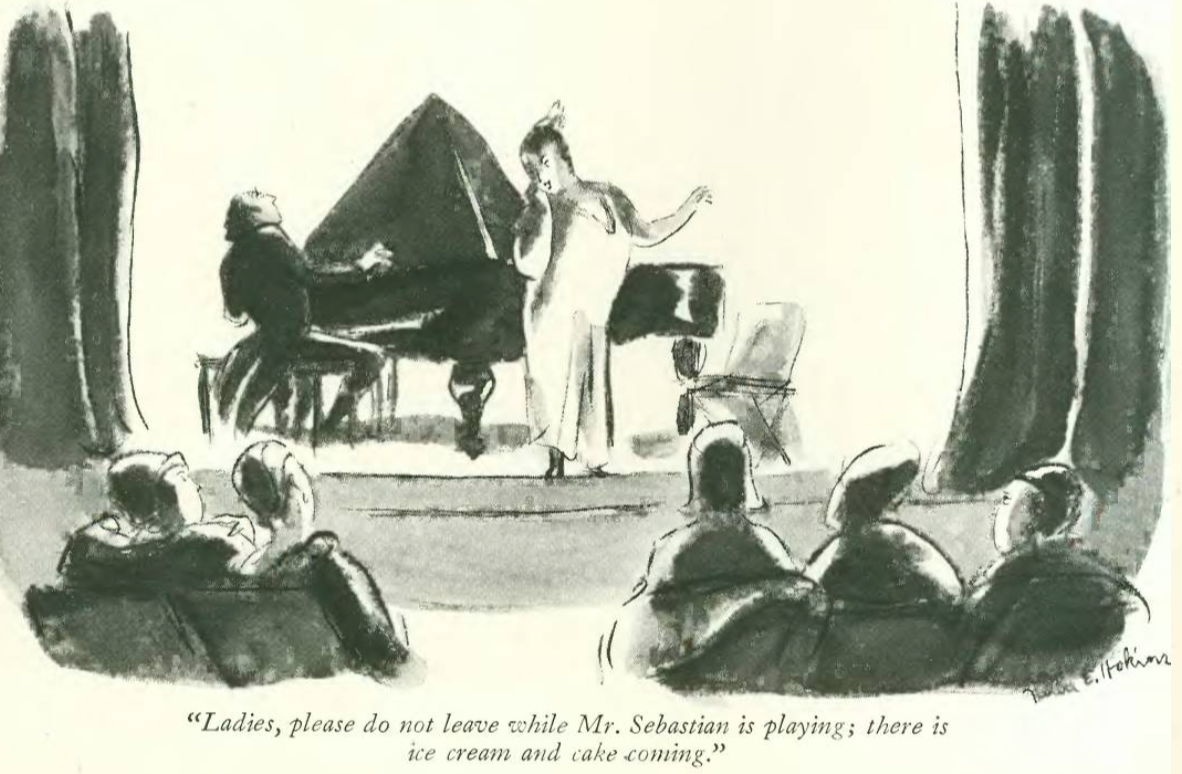
…and enjoying cake and ice cream, with a dab of culture…
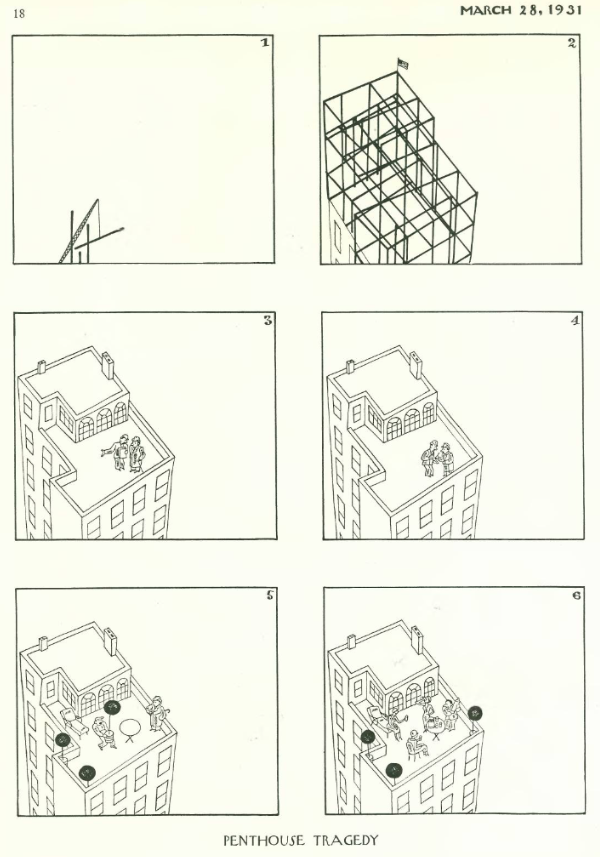
It’s hard to beat Chicago as a source for hardboiled storytelling, and two of its best newspaper reporters, Ben Hecht and Charles MacArthur, would draw on their rough and tumble newsroom experiences to create one of Broadway’s most-beloved plays.
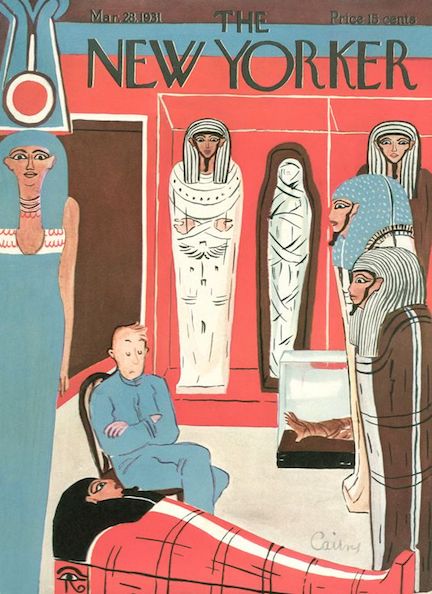
March 28, 1931 cover by Ruth Cairns.
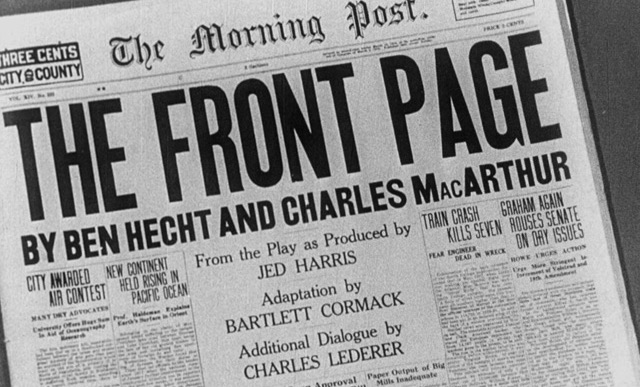
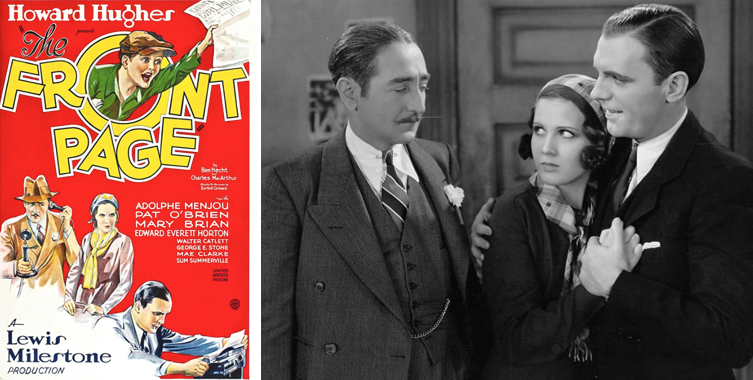
Although they were Chicago boys, The New Yorker crowd viewed Hecht and MacArthur as adopted (or perhaps naturalized) Manhattanites. So when John Mosher wrote his glowing review of the film adaption of The Front Page, he was writing about the work of a pair well known to the Algonquin Round Table set.
WE ❤ NY…Chicagoans Ben Hecht, left, and Charles MacArthur were familiar faces with the Algonquin Round Table crowd. (Chicago Tribune/Amazon)NEWSIES…Editor Walter Burns (Adolphe Menjou) sizes up his reporter Hildy Johnson (Pat O’Brien) and Hildy’s fiance Peggy Grant (Mary Brian) in The Front Page. (IMDB)
MacArthur (1895-1956) was especially close to the Algonquin group, having shared an apartment with Robert Benchley and a bed with Dorothy Parker in the early 1920s. In 1928 MacArthur would marry one of Broadway’s most beloved stars, Helen Hayes.
For his part, Hecht (1893-1964) contributed short fiction pieces to The New Yorker during its lean first years, 1925-1928. After the success of The Front Page, Hecht would go on to become one of Hollywood’s greatest screenwriters.
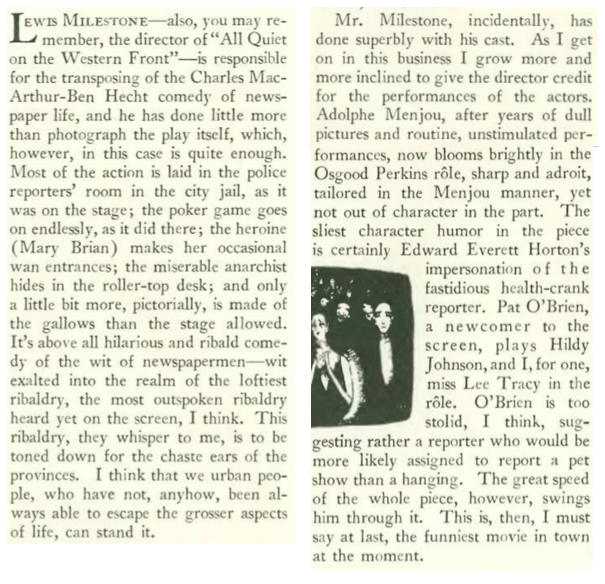
Here’s Mosher’s review:
Playwright and essayist James Harvey observes that The Front Page was “Hecht and MacArthur’s Chicago…(and) that counts most deeply in the imagination of Hollywood. And their play, the first of the great newspaper comedies, did more to define the tone and style, the look and the sound of Hollywood comedy than any other work of its time.”
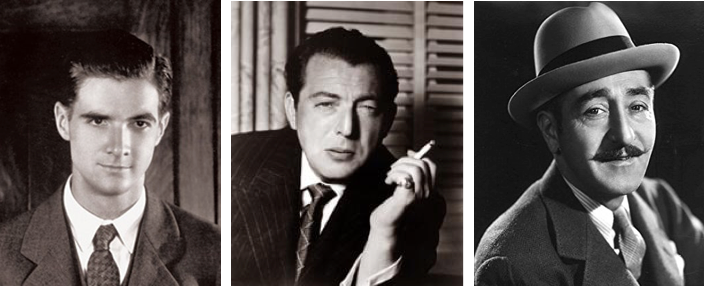
DESK JOB…Hildy Johnson (Pat O’Brien) and Molly Malloy (Mae Clarke) hide escaped murderer Earl Williams (George E. Stone) in a rolltop desk in 1931’s The Front Page. (Everett)TRIUMPHANT TRIUMVIRATE… Following up on the success of his famously over-budget war film Hell’s Angels (1930), Howard Hughes (left) had another hit on his hands as co-producer of The Front Page; at the Fourth Academy Awards the film was nominated for Best Picture, Lewis Milestone (center) for Best Director, and Adolphe Menjou (right) for Best Actor. (Wikipedia/IMDB)
A footnote: Ben Hecht and Charles MacArthur were close throughout their careers, and remain so even in death: they are buried near each other on a hilltop in Oak Hills Cemetery, Nyack, NY.
* * *
From Our Advertisers
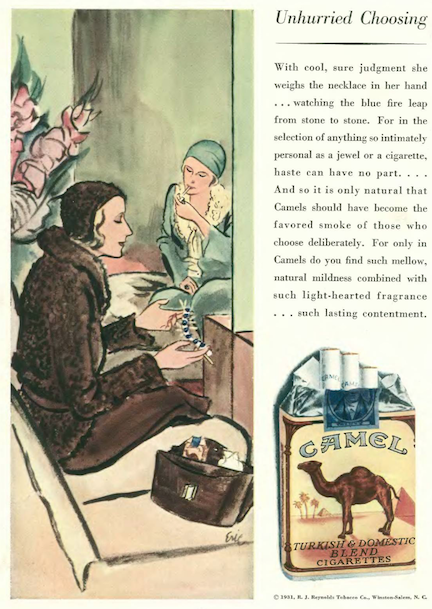
In the late 1920s and early 1930s several illustrators drew inspiration from the style Carl “Eric” Erickson made famous with his elegant series of ads for Camel cigarettes…I’m not sure if this ad (part of a series promoting “The New Chevrolet Six”) is by Erickson or an imitator, but it seems the artists were likely inspired by the actress Greta Garbo and her signature beret…
…and for comparison, an Erickson Camel ad from the March 21, 1931 issue…
…and our inspiration, Greta Garbo circa 1930…
…those Chevy buyers might have considered investing in Velmo mohair upholstery to boost the resale value of their auto…
…among other technological wonders of the age — furniture crafted from aluminum, soon to become ubiquitous in workplaces across the country…
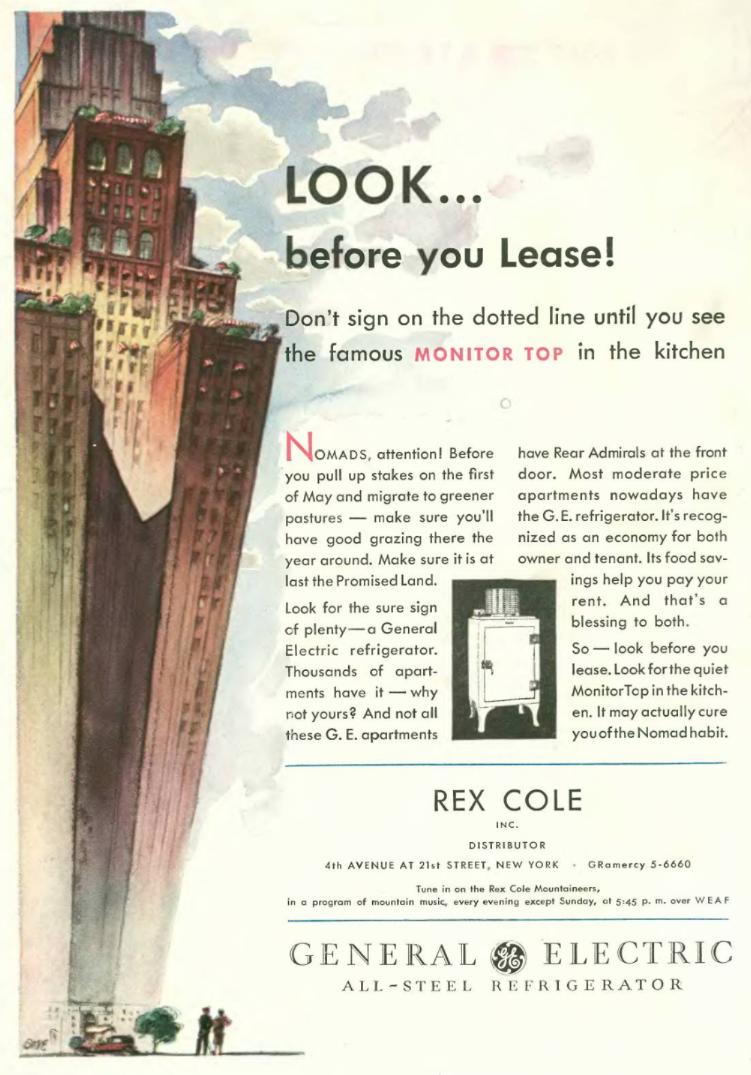
…and then there was the electric refrigerator, still new to a lot of households in 1931 as icemen began to hang up their tongs and head for the sunset…
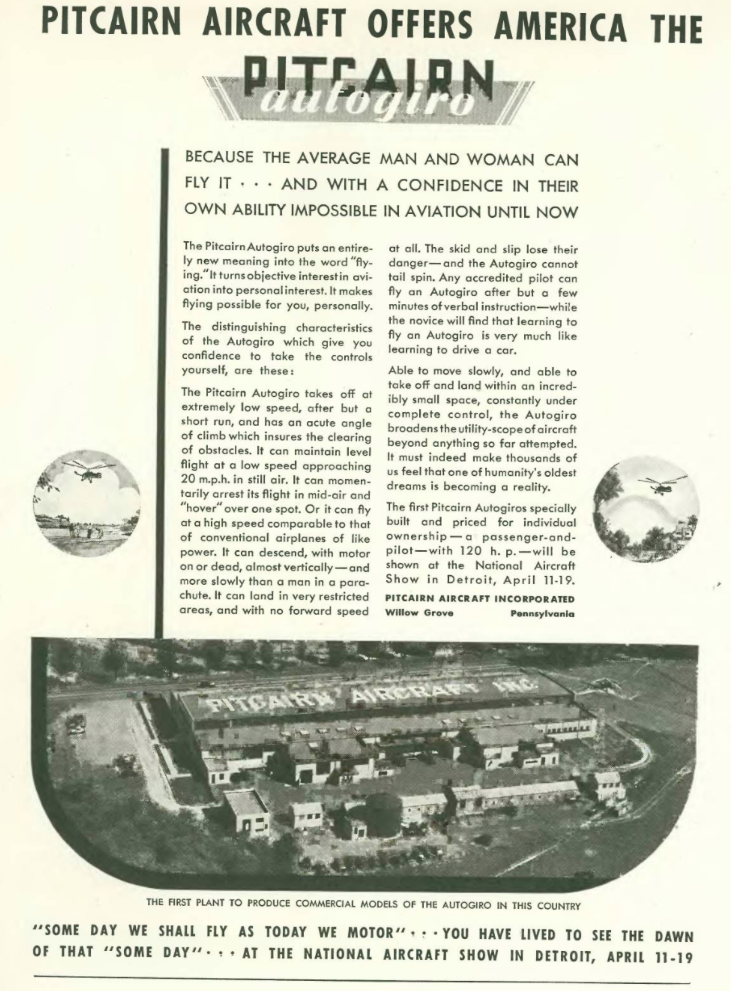
…if you were a modern man or woman of means, you could ditch the auto altogether and get yourself a Pitcairn autogiro…
…in the 1920s and 30s the autogiro was considered by many to be the transportation of the future, a flying machine as easy to operate as driving a car…
HEY DAD, CAN I HAVE THE KEYS TO THE AUTOGIRO?…Above, a Pitcairn PCA-2. In the 1920s and 30s, many future-forward designers imagined the autogiro as the flying car of tomorrow. (Wikipedia)
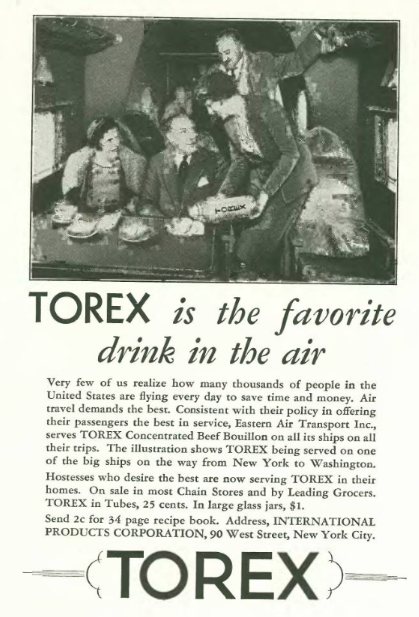
…for those who preferred to be passenger rather than pilot, they could relax in the comfort of an airplane cabin and enjoy some…hmmm…beef broth! From what I understand, passenger flight was not this cosy in 1931…this was long before pressurized cabins, when you had to mostly fly in the weather, and not above it, and you probably had to fight to keep from upchucking that Torex all over the lovely flight attendant…
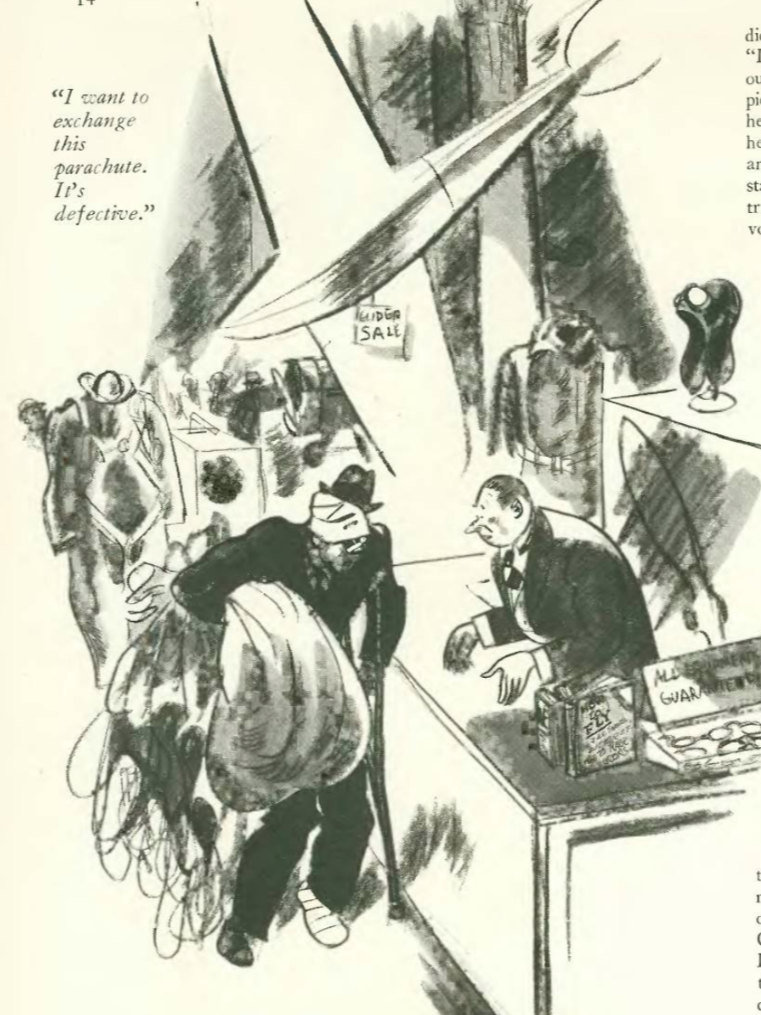
…while we are on the subject of flight, we turn to our cartoons, beginning with Garrett Price…
…meanwhile, William Steig explored the trials of young love…
…a rare two-pager from Ralph Barton…
…Leonard Dove adopted an alias for a cartoon that seems inspired by a recent trip to Persia…
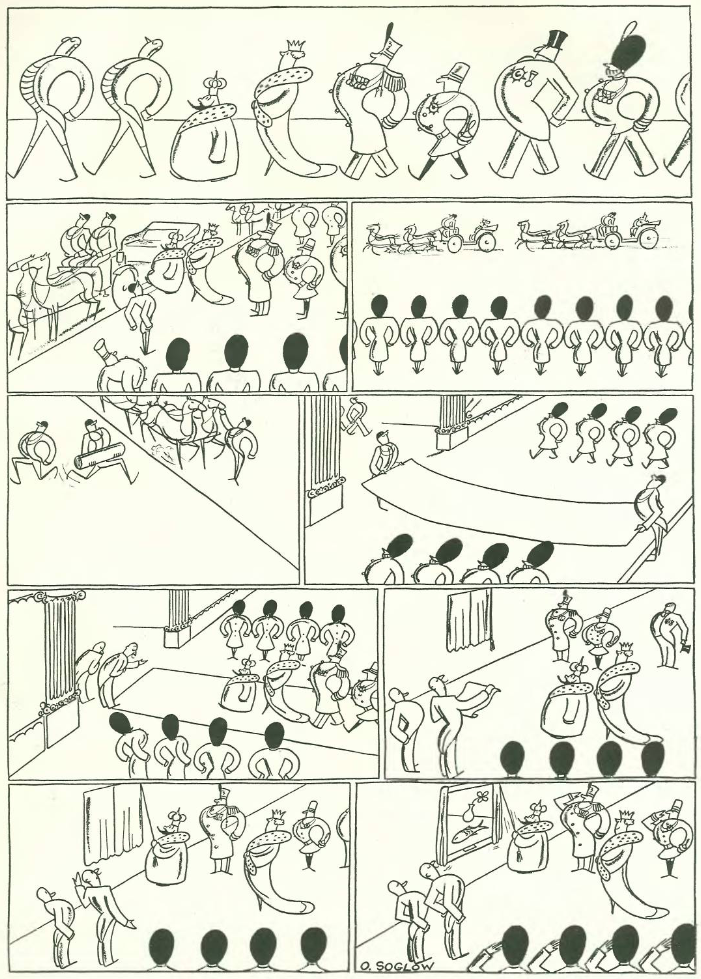
…Otto Soglow illustrated one man’s dilemma at a bus stop…
…Gardner Rea found offense in an unlikely setting…
…Barbara Shermund defined pathetic in this sugar daddy’s boast…
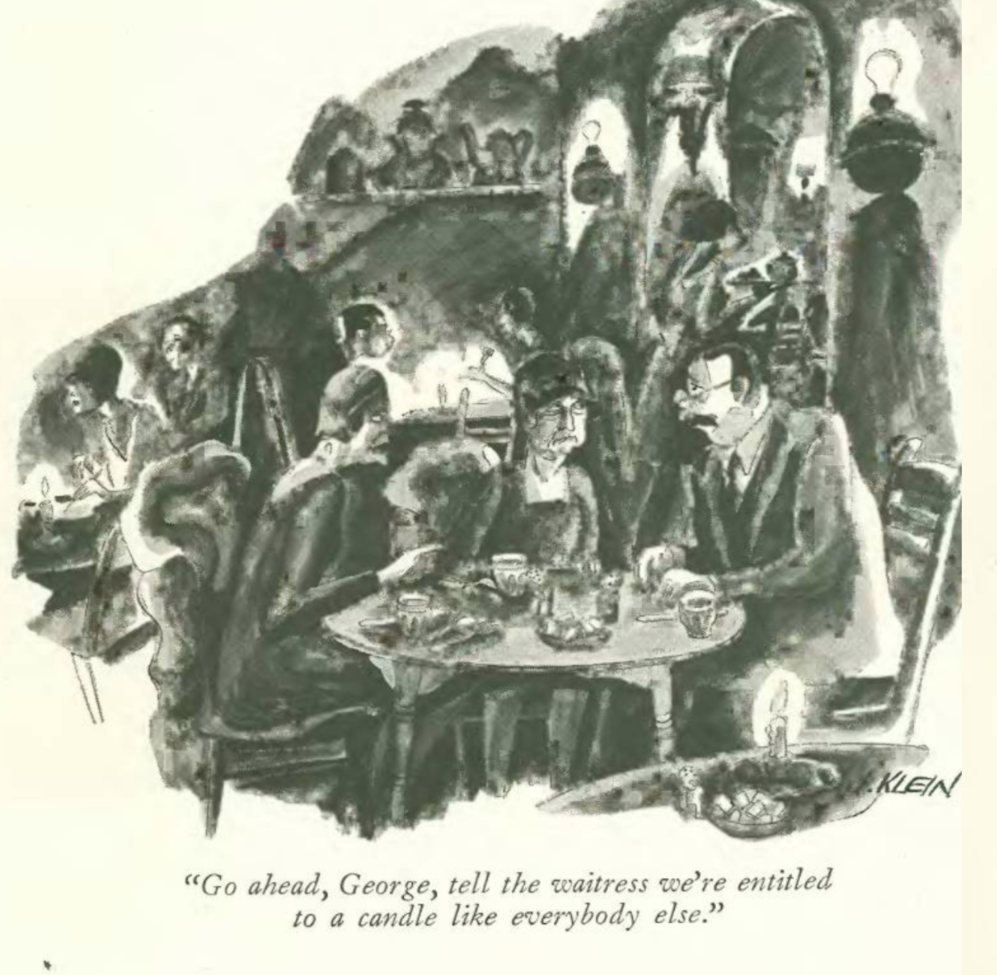
…while on the other end of the spectrum, I. Klein illustrated the burdens of life as a Milquetoast…
…and we sign off with Mary Petty, and one woman’s terms of endearment…
The story of Fred Nixon-Nirdlinger isn’t exactly dinner table conversation these days, but in the spring of 1931 his death at the hands of his beauty queen wife had much of America abuzz.
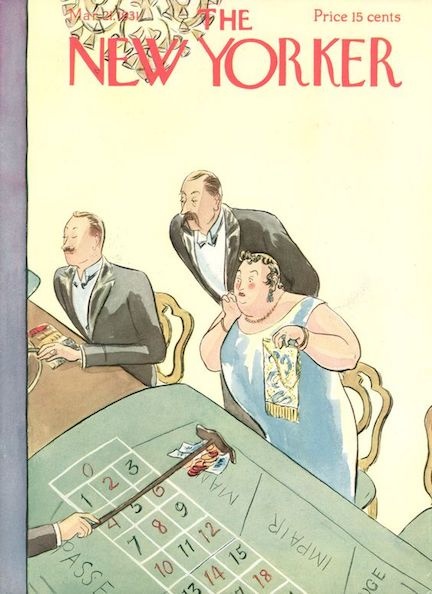
March 21, 1930 cover by Helen Hokinson.
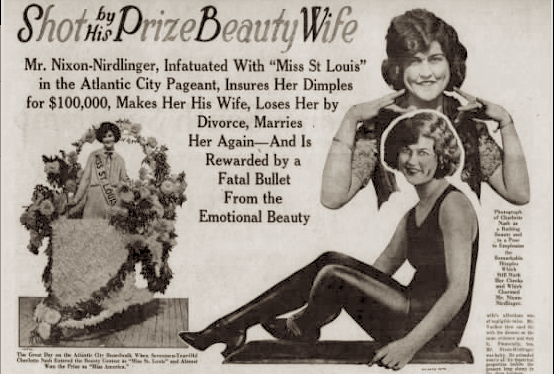
Charlotte Nash, Miss St. Louis of 1923, would have passed into obscurity like so many other beauty contestants if she hadn’t married a wealthy theater owner 30 years her senior, and then divorced and remarried him, and then shot him in the head on the French Riviera.
But first, the reason I am writing about this lurid episode: here’s E.B. White in the March 21, 1931 “Notes and Comment”…
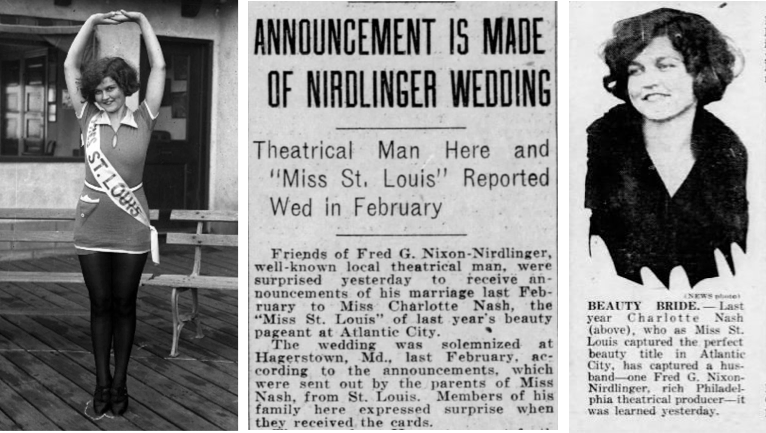
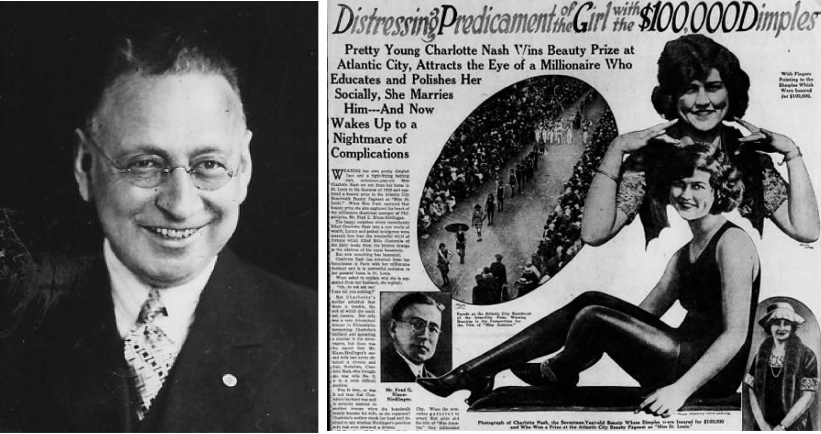
Forty-seven-year-old Fred Nixon-Nirdlinger, wealthy owner of a Philadelphia theater chain, was serving as a judge at the 1923 Miss America competition in Atlantic City when the 17-year-old “Miss St. Louis,” Charlotte Nash, caught his eye and his fancy. By February 1924 they were married…
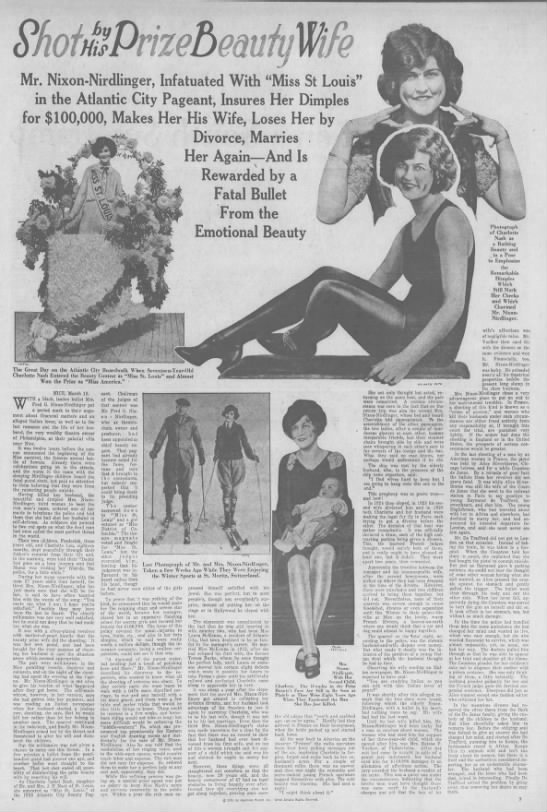
FANCY STRIKER…Seventeen-year-old Charlotte Nash strikes a pose at the 1923 Miss America pageant in Atlantic City; belated 1924 marriage announcement in the Philadelphia Inquirer; announcement in the New York Daily News. (New York Daily News/Philadelphia Inquirer)
…Fred was furious that Charlotte did not win the title in Atlantic City. He vowed to make her a movie star and sent her off to finishing school to work on her manners and elocution…
CRADLE TO GRAVE…Fred Nixon-Nirdlinger sent his young bride to finishing school for “a touch of polishing here and there.” Little did he know that one day she would finish him too…permanently. (findagrave.com/Pittsburgh Press)
…Unfortunately, Fred forgot to tell his young bride that he already had a wife —news that came to light on a trans-Atlantic voyage to Paris, where Fred and Charlotte had planned to honeymoon. Already pregnant with his child, Charlotte nevertheless divorced Fred, but remarried him some months later after the baby was born (and after considerable wooing and groveling by the theater magnate). Fred rejoined Charlotte in France, but the second honeymoon didn’t last long either. On the evening of March 11, 1931, the intensely jealous Fred accused his young wife of trafficking with “gigilos.” After Charlotte denied the charge, Fred seized her by the neck and threatened to choke her to death.
“At some point Fred went into the kitchen for more whisky. Charlotte used the opportunity to flee to the bedroom, where she slipped a loaded pistol under her pillow. Fred’s last words to her were, “I will kill you rather than let you have an Italian lover.” Charlotte beat him to it, and as she lay on the bed she retrieved her pistol and fired. The first bullet entered just under Fred Nixon-Nirdlinger’s left eye and lodged at the base of his skull. A second bullet hit him in the chest. Two other shots went wild. Fred crumpled in a pool of blood.”
Charlotte was soon in a French jail, now a bigger star than she had ever been, or ever would be…
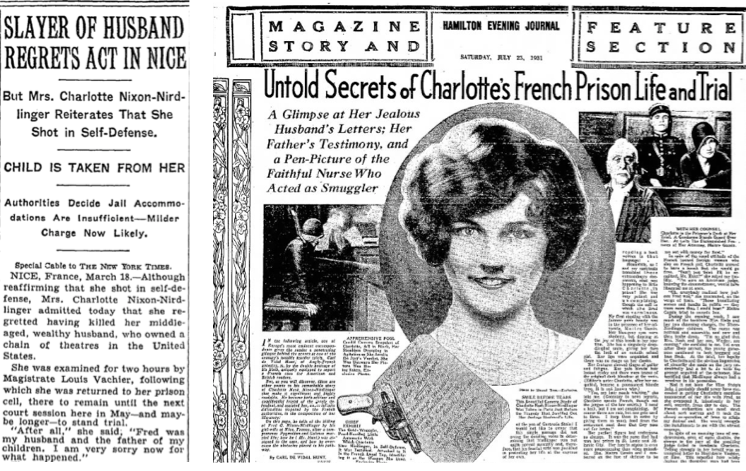
FINALLY GETTING SOME NOTICES…Left, detail of a March 18, 1931 New York Times account of the slaying; right, a more lurid take on the story by the July 18, 1931 edition of the Hamilton (Ohio) Evening Journal. Below, another colorful account from the San Francisco Examiner. (newspaper.com/New York Times)
During the subsequent trial, Charlotte’s defense attorneys argued that the shooting was a clear case of self-defense, and the jury agreed, acquitting the former beauty queen in just nine minutes. When she returned to the United States with her two young children, it appeared she would be entitled to a big chunk of Fred’s fortune…
…but in the end the will left her nearly penniless, so she earned what she could by telling her sensational story to the media, including this multi-installment feature she penned for the St. Louis Star and Times:
IT’S A LONG STORY…The 14th and 16th installments of Charlotte Nash’s story of her brush with fame and infamy in the St. Louis Star and Times. (newspaper.com)
Laura James notes that Charlotte might have been better off remaining in France: “The verdict was largely attributed (by the American newspapers at least) to French attitudes toward beautiful women and marriage in general (the jury included eight bachelors). But she returned to St. Louis; learned that her husband’s will left her nearly penniless; and tried to find acting jobs in Hollywood only to be snubbed Lizzie Borden-style, as Hollywood would have none of her. In the end she would declare, ‘Sometimes I’m sorry that I was ever considered beautiful. It brought me more trouble than joy.”‘
But the story doesn’t end there. Charlotte Nash Nixon-Nirdlinger (1905-2009) dropped out of public view, but would live on into the 21st century, dying at age 103 or 104 in her hometown of St. Louis, Missouri, where she rests today.
RIP CHARLOTTE. (findagrave.com)
* * *
Turkey Trot
Dorothy Parker began to detect a pattern as she continued subbing for her friend Robert Benchley’s theater review column. All of the plays she had reviewed to date were found to be uniformly terrible; she found comfort, however, in fellow critics who also viewed Broadway’s spring lineup as a flock of “little turkeys”…
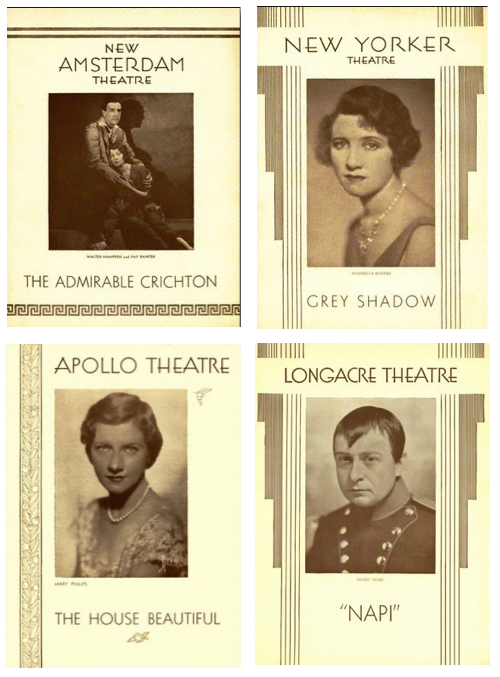
BIRDS OF A FEATHER…Dorothy Parker found Broadway’s spring lineup to be uniformly terrible, and audiences mostly agreed. Clockwise, from top left, The Admirable Crichton ran for two months and 56 performances at the New Amsterdam Theatre; Grey Shadow closed after 39 performances at the New Yorker Theatre; Napi, directed and lead-acted by the diminutive Ernest Truex (pictured) lasted just 21 shows at the Longacre; The House Beautiful bested them all by staying open for 108 performances at the Apollo. A curious side note: Mary Philips, pictured on the Apollo cover, was Humphrey Bogart’s second wife. The marriage lasted ten years — 1928 to 1938. (Playbill)
Of the plays Parker reviewed, she called The Admirable Crichton “piteously dated;” of Grey Shadow, she wrote that it would be as indelicate for her to discuss the play as it would be to “go into details of my appendectomy;” Parker deemed Napi “as grubby and unpleasant a little comedy as you could want to stay away from;” and she did not find The House Beautiful all that beautiful…”The House Beautiful is, for me, the play lousy.”
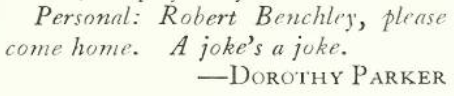
Parker ended the column with her usual plea to Benchley:
* * *
Moses Parts the Swamp
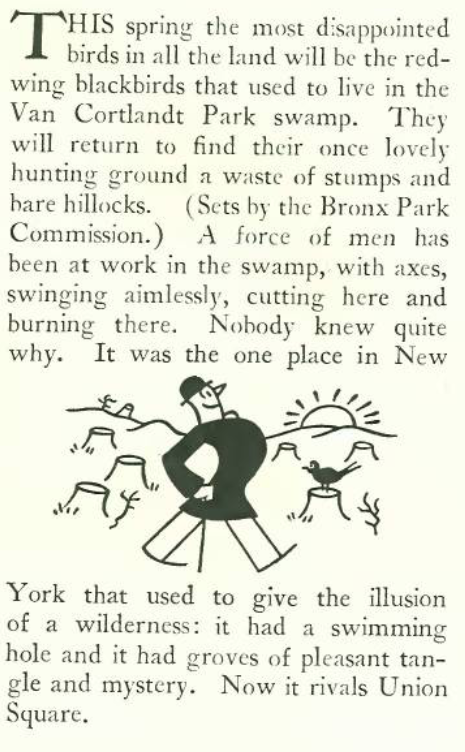
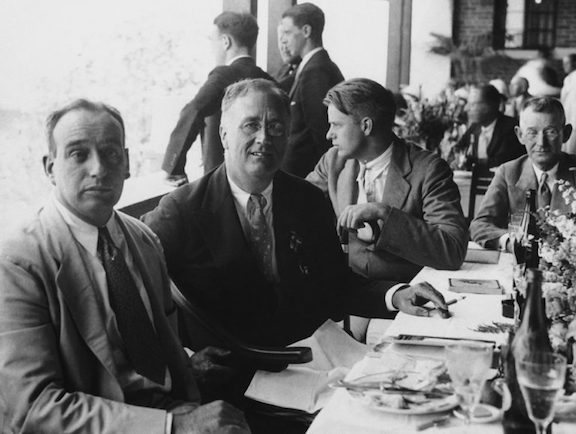
In his “Notes and Comment,” E.B. White noted the destruction of trees and swampland in Van Cortlandt Park. In 1931 Robert Moses was president of the Long Island Park Commission but held political sway over so much more. What White was witnessing were preparations for the construction of the Henry Hudson Parkway and Mosholu Parkway that would split Van Cortlandt into six separate pieces. White was right about the disappearing birds: the last remaining freshwater marsh in the state, Tibbetts Brook, was dredged to accommodate construction.
HE PAVED PARADISE…Governor Franklin D. Roosevelt of New York attends a Jones Beach luncheon on July 26, 1931, as a guest of Robert Moses (far left), who was president of the Long Island Park Commission. (AP Photo)A PARK DIVIDED…The Mosholu Parkway cuts a wide swath through Van Cortlandt Park, 1936. (Museum of the City of New York)
* * *
Those Daring Young Men
Ever since Charles Lindbergh made his historic transatlantic flight in 1927, Americans were captivated by the derring-do of pilots who competed for various “firsts.” In the case of Clyde Pangborn and Hugh Herndon Jr., the goal was to to fly around the world and break the record of 20 days and 4 hours set by Germany’s Graf Zeppelin in 1929. In his “Reporter at Large” column, Morris Markey noted the many weeks of preparation by the two pilots…
A BIT OF FUN…July 1931 newspaper illustration of Clyde Pangborn, left, and Hugh Herndon Jr., with a map of the route they followed on their attempt to set a new round-the-world flight record. (AP)
Markey noted that the two pilots claimed they were setting out on their dangerous mission “for the fun of it”…
While Pangborn and Herndon were still making flight plans at their Hotel Roosevelt headquarters, Wiley Post and Harold Gatty took to the air and claimed the record of 8 days and 15 hours. Pangborn and Herndon decided to make a go of it anyway, leaving New York on July 28, 1931, in their red Bellanca named the Miss Veedol, but poor weather in Siberia caused them to abandon their quest.
There was, however, a $25,000 prize being offered by the Tokyo newspaper Asahi Shimbun to the first pilots to cross the Pacific non-stop, so Pangborn and Herndon regrouped and successfully flew the Miss Veedol across the Pacific Ocean — in 41 hours and 13 minutes. It wasn’t exactly a smooth flight; three hours after takeoff the device used to jettison the landing gear failed, prompting Pangborn to climb out onto the wing barefoot at 14,000 feet to remove the landing gear props. After several other near-mishaps — including nearly smashing into a mountain — the duo completed their historic flight with a controlled crash landing near Wenatchee, Washington.
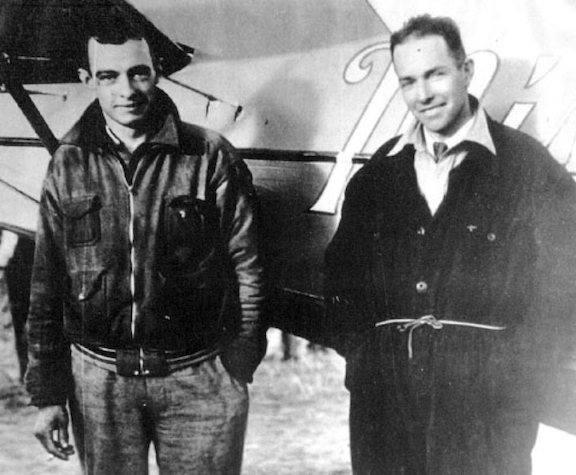
NO WHEELS, NO PROBLEM…More than 41 hours after departing Japan, Clyde Pangborn and Hugh Herndon Jr. performed a controlled crash landing near Wenatchee, Washington, completing the first-ever nonstop flight across the Pacific Ocean. (Wired.com)STILL IN ONE PIECE…Hugh Herndon Jr., left, and Clyde Pangborn after crash-landing at Wenatchee, Wash., following their 1931 flight across the Pacific from Misawa, Japan. (Spirit of Wenatchee).
* * *
From Our Advertisers
Herndon and Pangborn made plans for their round-the-world flight while staying at the Roosevelt Hotel in Midtown…I’ve stayed there myself and enjoyed its nubby charms…as for the underground passageway to the Grand Central, it’s still there, but no longer open to the public…
…the makers of Kleenex originally marketed their tissues for makeup removal…by the 1930s, however, they saw a much bigger opportunity…
…if the Roosevelt Hotel wasn’t posh enough for you, the new Waldorf-Astoria might have been your cup of tea…
…and if you could stay at the Waldorf, you might be able to afford a Packard, which in the 1930s was a near-rival to Rolls Royce…
…I toss this one in from Goodyear because it is probably the only time an image of the Taj Mahal was used to sell tires…
…we have another lovely Carl “Eric” Erickson illustration for Camel…
…and at first glance I thought this was another two-page ad for Chesterfield cigarettes, but it appears the candy manufacturers also wanted to tie their products to exciting lifestyles…in this case, you were urged to eat candy for some quick energy…here it is implied that Schrafft’s candy will give you the energy you need for sailboating and…er…other activities…
…for comparison, Chesterfield ad from 1930…
…on to our cartoons…Otto Soglow continued the adventures of the Little King…
…Perry Barlow showed us that war is hell…
…some ringside niceties courtesy E. McNerney…
…Mary Petty reminded us that posh folks weren’t exactly known for their intellect…
…Alan Dunn examined the challenges of buying an older house…
…Helen Hokinson gave us a politically precocious young lad…
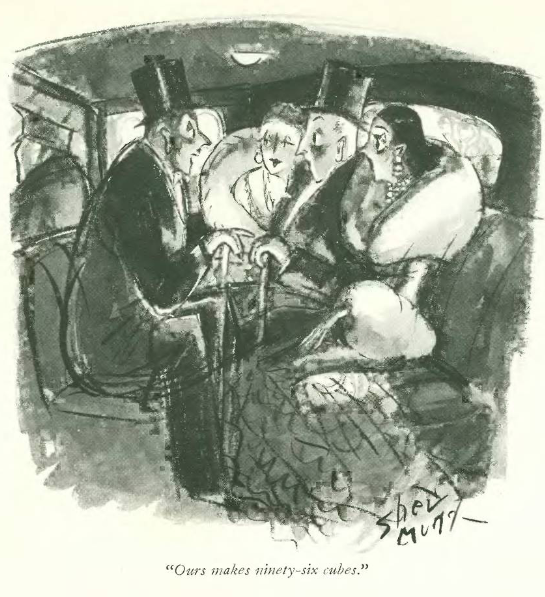
…and two glimpses into high society by Barbara Shermund…
…including their scintillating conversations about such things as ice makers…
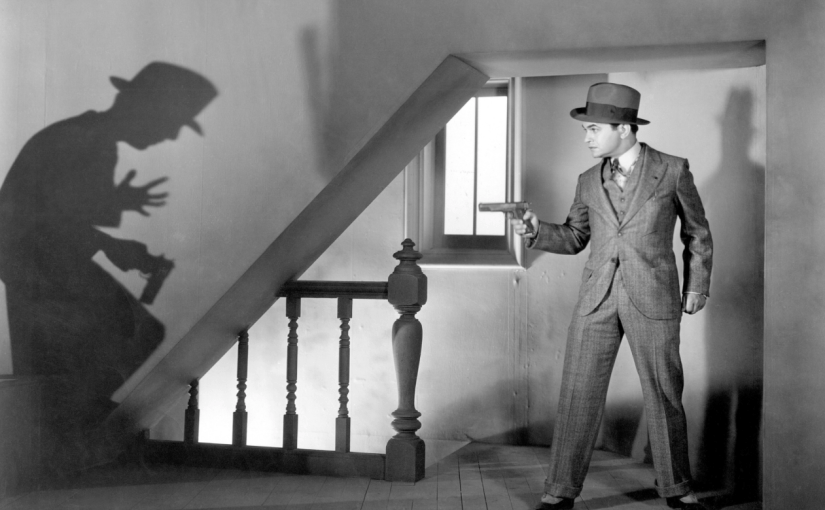
During the early years of the Depression and before censorship guidelines were imposed by the Hays Code, Hollywood cranked out a slew of “Pre-Code” films filled with sex and violence, including 1931’s Little Caesar, the first “talkie” gangster film that defined the genre for decades to come.
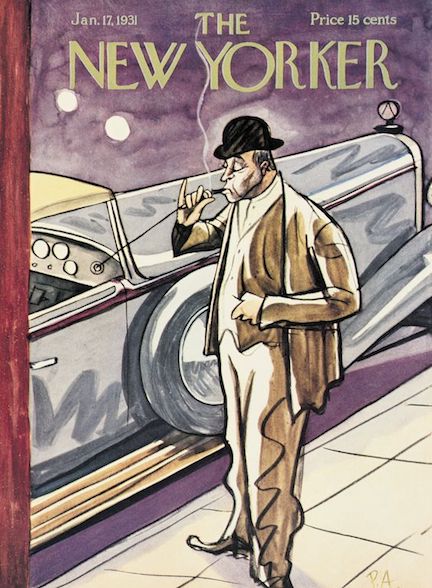
Jan. 17, 1931 cover by Peter Arno.
It also propelled the career of Edward G. Robinson (1893-1973), who portrayed “Little Caesar” Rico Bandello—it was a breakout role for the actor, leading to a 50-year career of playing tough guys among other roles. Although the film today is considered a classic and well-regarded by critics, The New Yorker’sJohn Mosher was not entirely bowled over; he did, however, see the talent potential of the 33-year-old Robinson:
OUCH…Clockwise, from top left, Rico Bandello (Edward G. Robinson) catches some lead from a rival gangster in Little Caesar; Rico has little patience for his partner Joe (Douglas Fairbanks Jr.) and his love interest Olga (Glenda Farrell); Rico and his boys doing a little banking business; Rico up to no good with his sidekick Otero (George E. Stone). (Britannica/moviestillsdb.com/MoMA/IMDB)
Mervyn LeRoy’sLittle Caesar would kick off a series of Warner Brothers gangster films that would help launch the careers of other actors including James Cagney (The Public Enemy, Angels With Dirty Faces) and Humphrey Bogart (The Petrified Forest). Here’s Warner’s trailer for Little Caesar:
* * *
You Dirty Rat
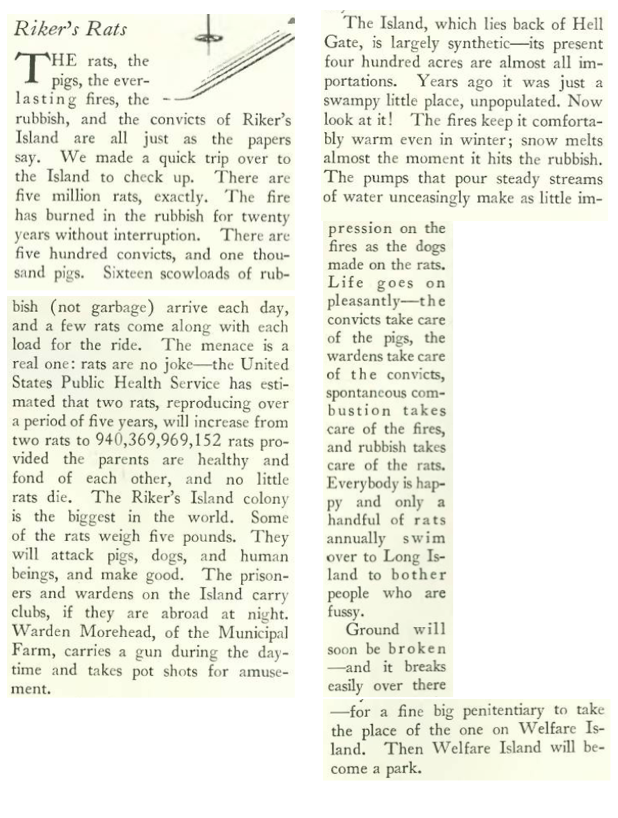
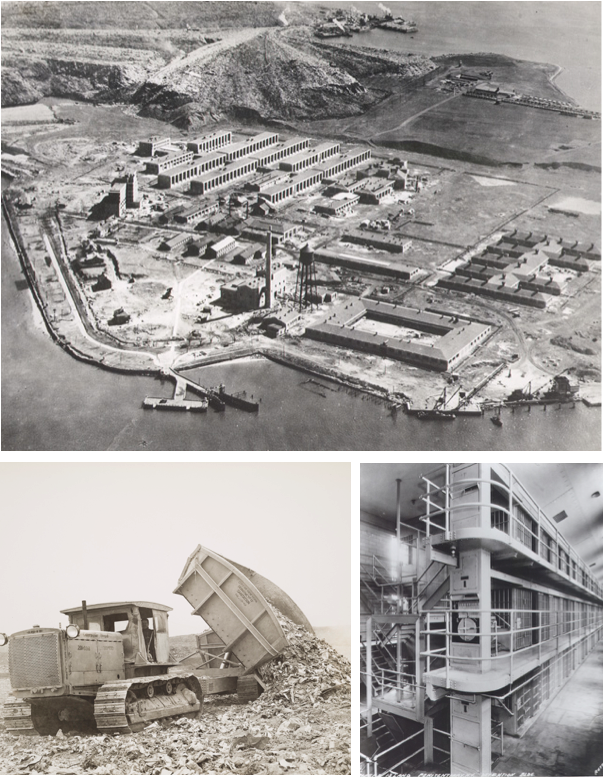
The Jan. 17 “Talk of the Town” looked in on the growing rat infestation at Riker’s Island, a swampy little island that expanded more than four times its original size thanks to the mountains of garbage dumped there in the early 20th century. Much of it was coal ash, which caused the spontaneous fires referred to in the following “Talk” article. Of course the garbage also attracted legions of rats, which officials tried to counter by releasing vicious dogs and pigs on the island. It only seems fitting that such a place would become home to one of America’s most hellish prisons:
RAT TRAP…Clockwise, from top, aerial view of the Riker’s Island Penitentiary, which opened in 1932. Mountains of garbage, some 130 feet high, are visible in the background. The garbage heaps were prone to spontaneous combustion. In 1934 a prison warden described his nighttime view as a “whole hillside lit up with little fires. … It was beautiful”; view of a cellblock; adding to the mountain of garbage in 1937. (correction history.org)
* * *
Sign of the Times
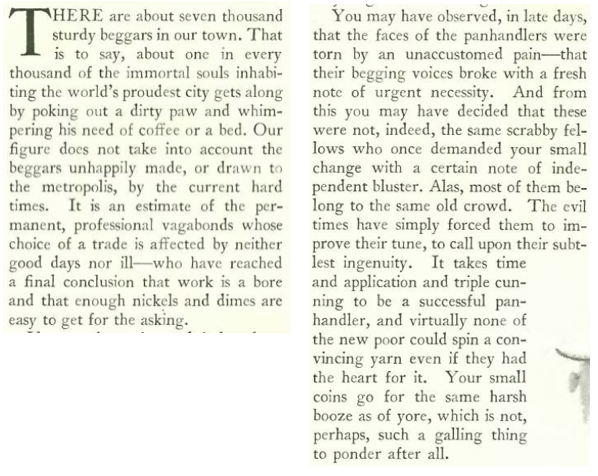
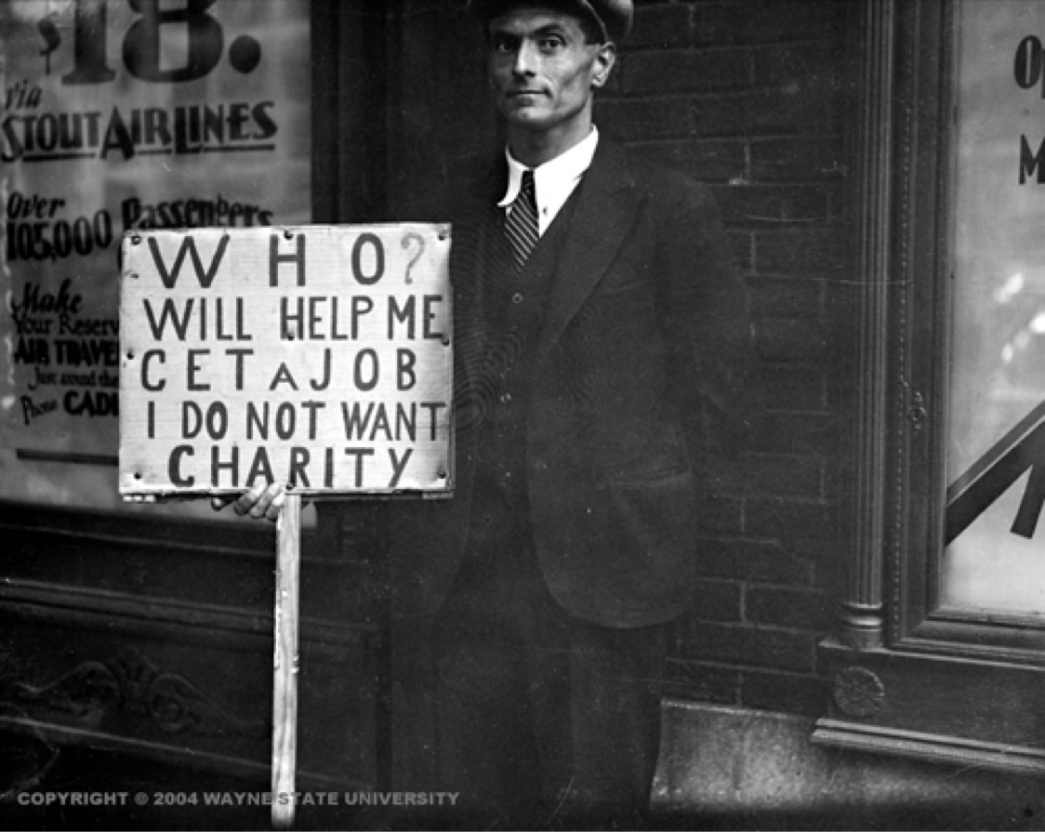
No doubt some of the folks who ended up at Riker’s were desperate souls who were reduced to begging on the streets of Manhattan. Morris Markey, in his “A Reporter at Large” column, looked in on some of the city’s “Vagabonds,” noting that the Depression had added some new faces among the panhandlers, faces “torn by an unaccustomed pain.” An excerpt:
HARD TIMES…An unemployed man seeks work in the 1930s. (Wayne State University)
* * *
Grim for the Reaper
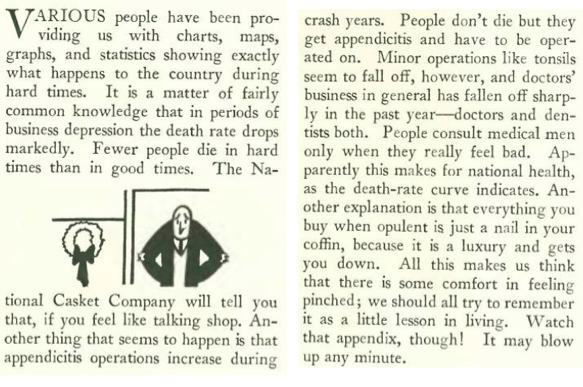
The Depression, it seems, was even hard on the nation’s undertakers, according to E.B. White in “Notes and Comment”…
NEED A LIFT?…A hearse and undertaker in 1930. Business was surprisingly slow in hard times. (my101years.com)
* * *
Work is Fun When You Don’t Need It
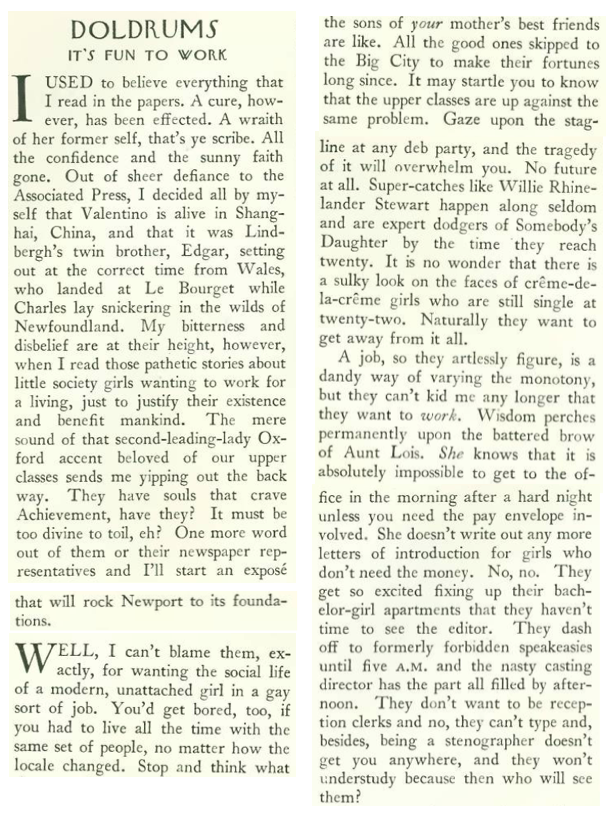
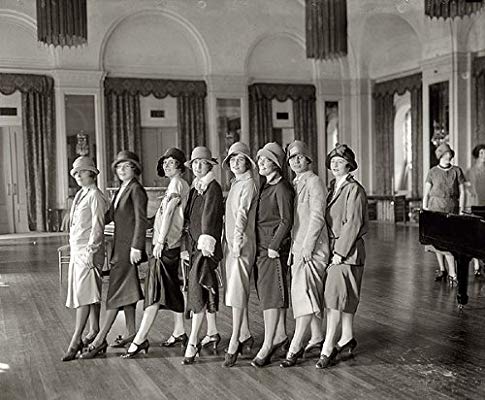
Lois Long filed another installment in her “Doldrums” series, in which she commented on the desires of the city’s debutantes to find some purpose in life…
PUTTING THEIR BEST FEET FORWARD…Debutantes pose in Washington, D.C., circa 1930. (Pinterest)
* * *
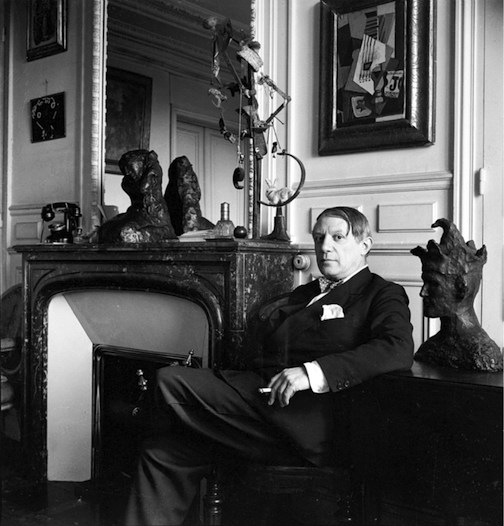
Pablo Who?
New York’s Valentine Gallery was offering a showing of works by Pablo Picasso, who was famous enough to create as he wished, but not quite ready for canonical consideration…
I’LL DO AS I PLEASE…Pablo Picasso in 1931, in a portrait by Cecil Beaton. (oscarenfotos.com)
* * *
Order Restored
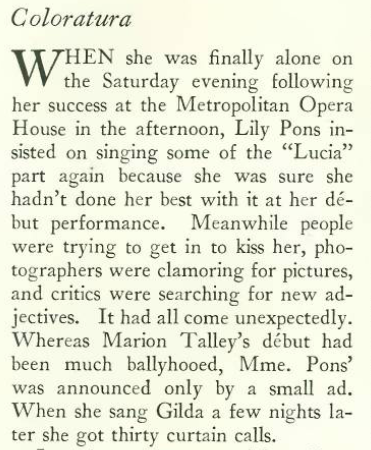
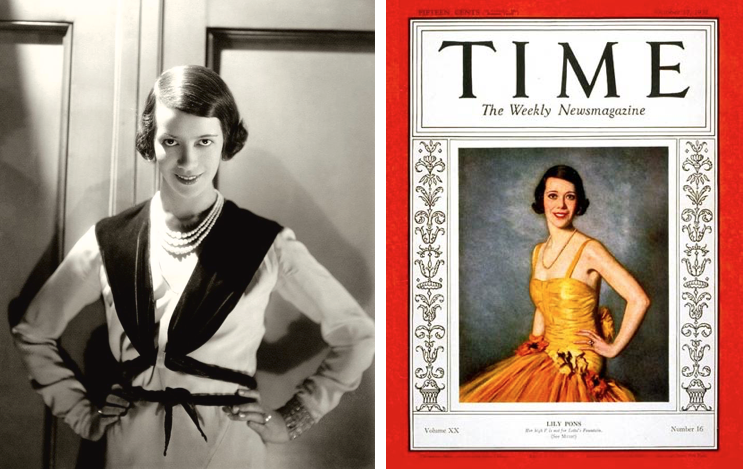
After its Marion Talley debacle, the Metropolitan Opera stage welcomed French soprano Lily Pons (1898-1976) to its stage. “The Talk of Town” noted that although Pons’ debut was far less hyped than Talley’s, her reception by New York audiences was far more enthusiastic. While Talley’s career would sputter and fade, Pons would enjoy a long association with the Metropolitan Opera, where she performed nearly 300 times between 1931 and 1960.
A BREATH OF FRESH AIR…One of the most popular prima donnas of her time, French soprano Lily Pons would grace the Metropolitan Opera stage for 30 years. From right, a 1931 portrait of Pons by Cecil Beaton; on the cover of Time, Oct. 17, 1932. (CondeNast/Time)
* * *
From Our Advertisers
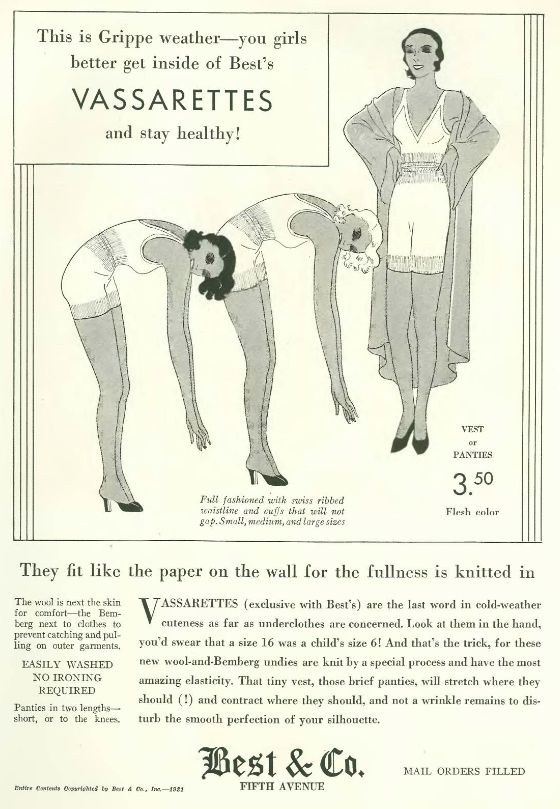
Best & Company looked out for the welfare of New York’s young women by offering a selection of wool “Vassarettes” to stave off the “Grippe” weather…
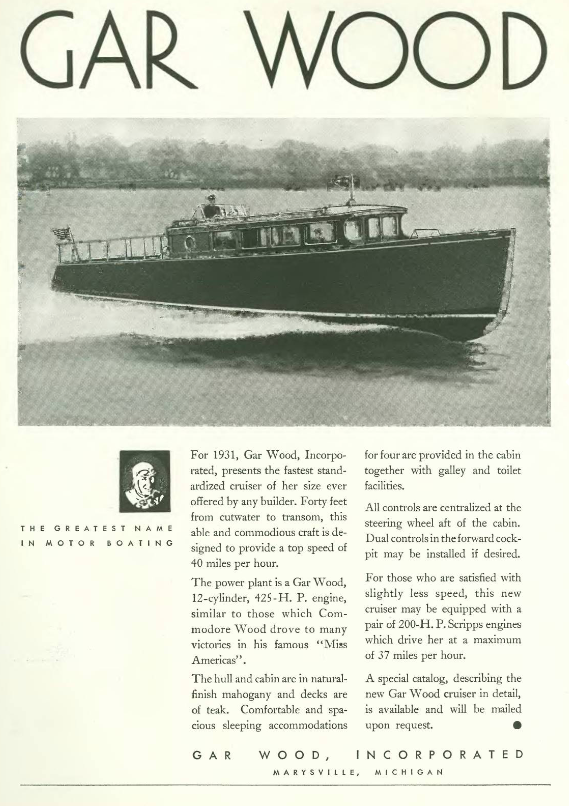
…with the annual Motor Boat Show at the Grand National Palace, several ads called readers’ attention to expensive toys fewer and fewer could afford to own…
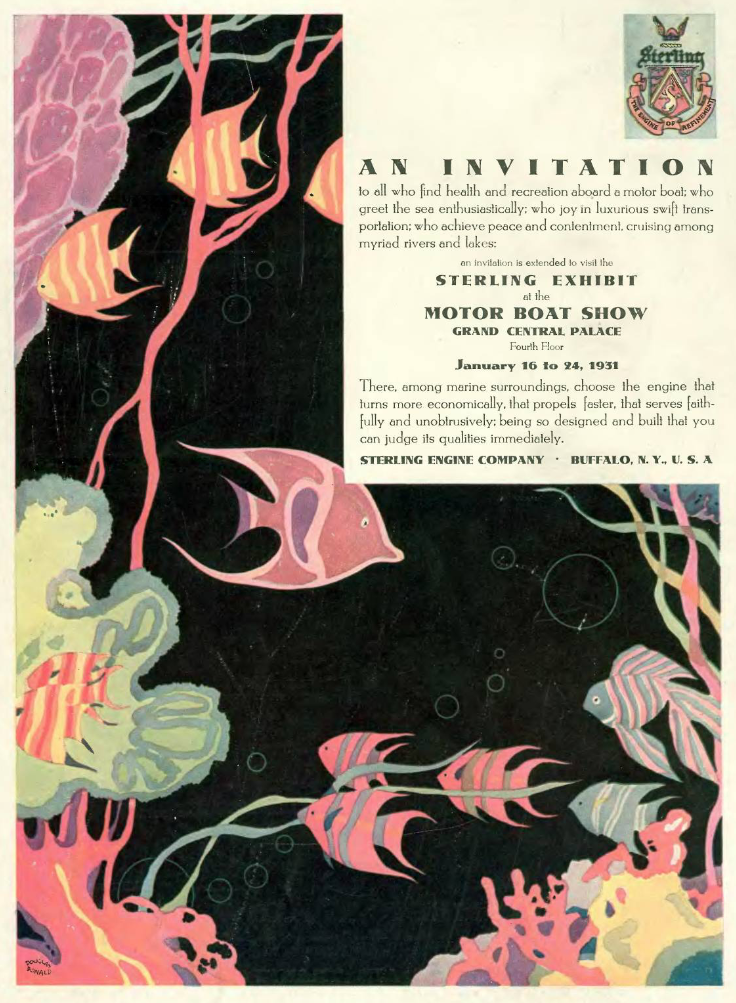
…the makers of Sterling boat motors shelled out the big bucks for this full-color, back-page ad…overall, the number of boat ads were down from previous years…
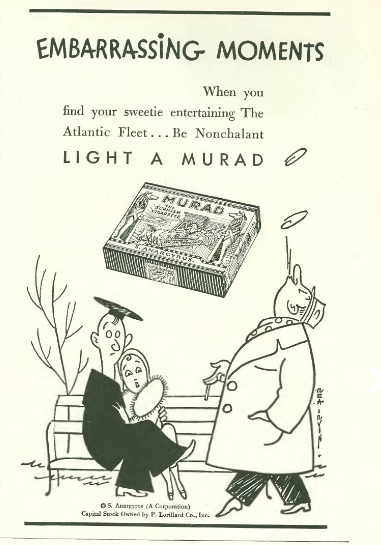
…Rea Irvin continued to pick up some extra income with an ongoing series of cartoons promoting Murad cigarettes…
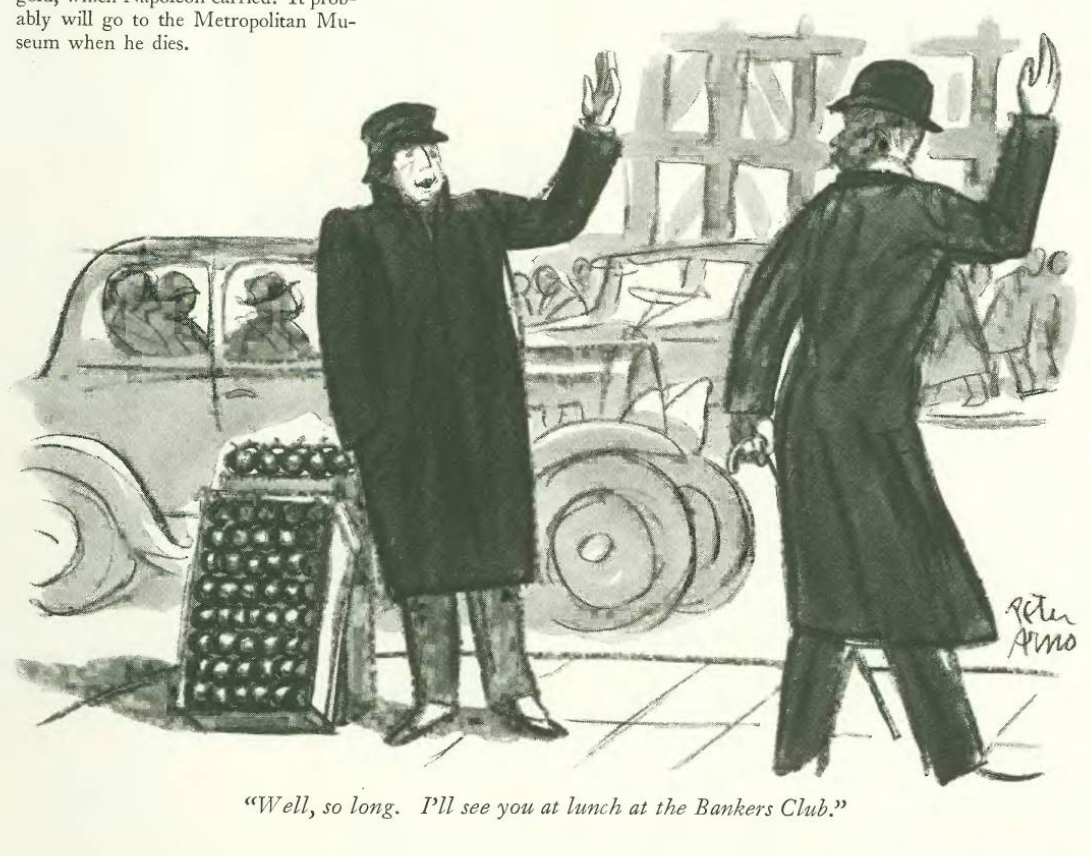
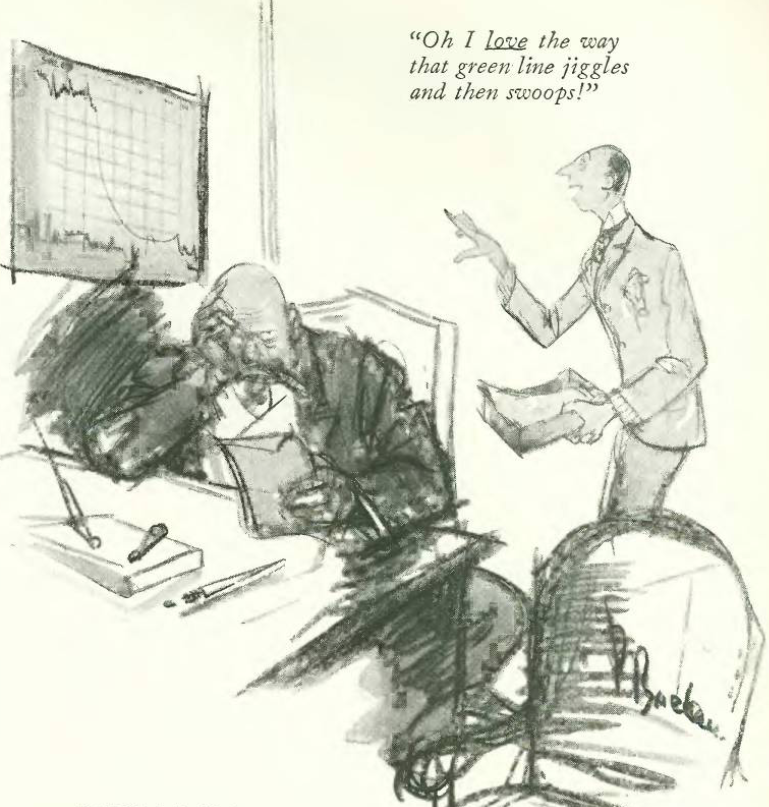
…on to Irvin’s fellow cartoonists, we have Peter Arno’s look at the new economy…
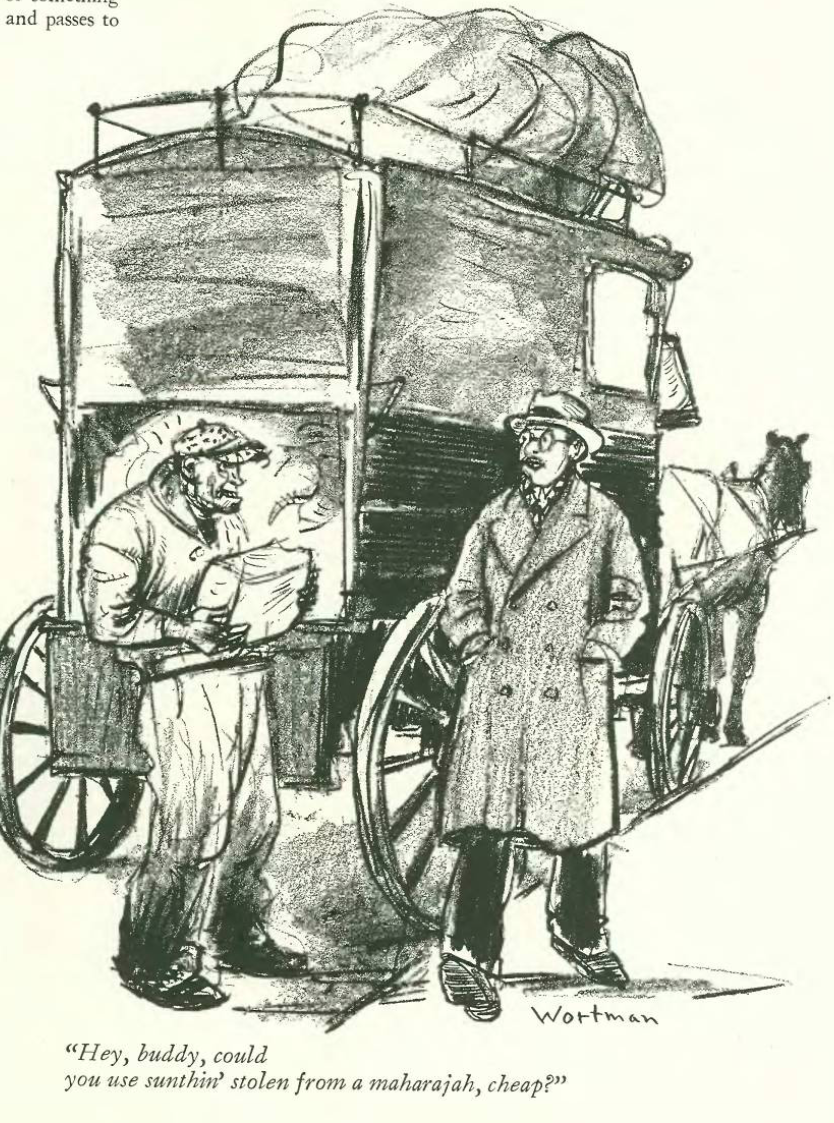
…likewise Denys Wortman…
…and Perry Barlow…
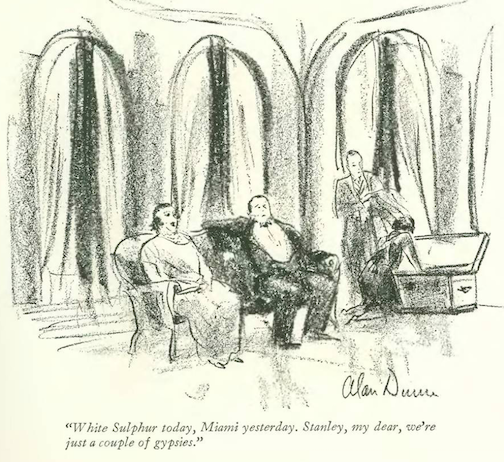
…while Alan Dunn checked in on the challenges of those who still had means…
…Barbara Shermund was still the life of the party…
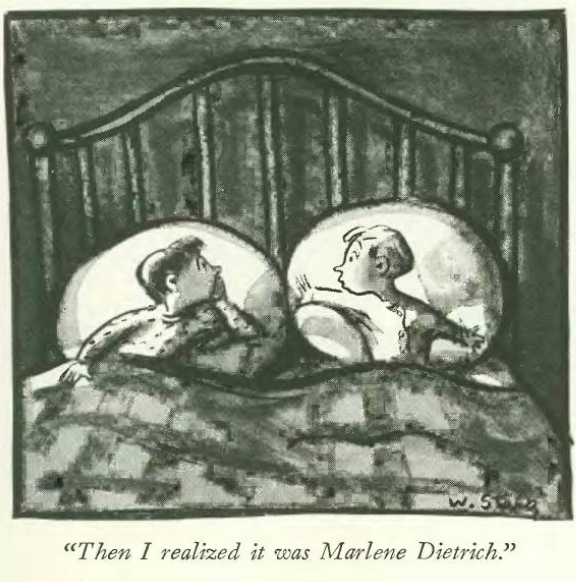
…and William Steig was beginning to establish himself in the stable of cartoon regulars (and offer a preview of his famed “Small Fry”)…
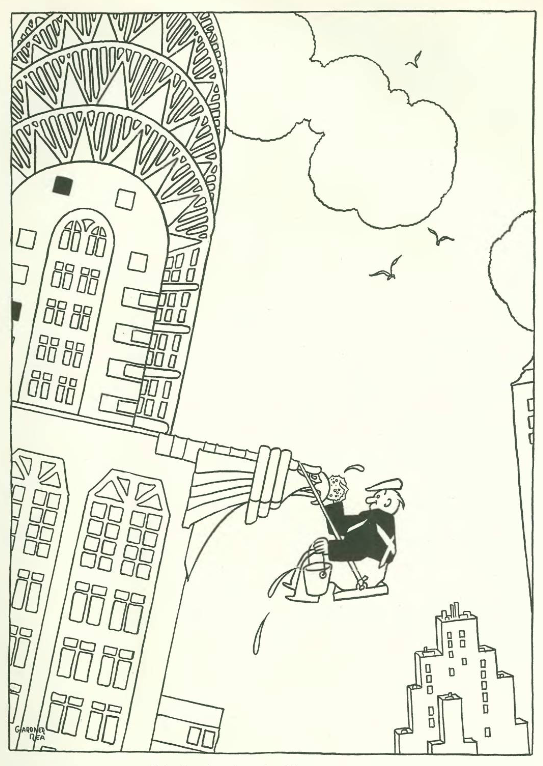
…and finally, a new perspective on the Chrysler Building, from Gardner Rea…
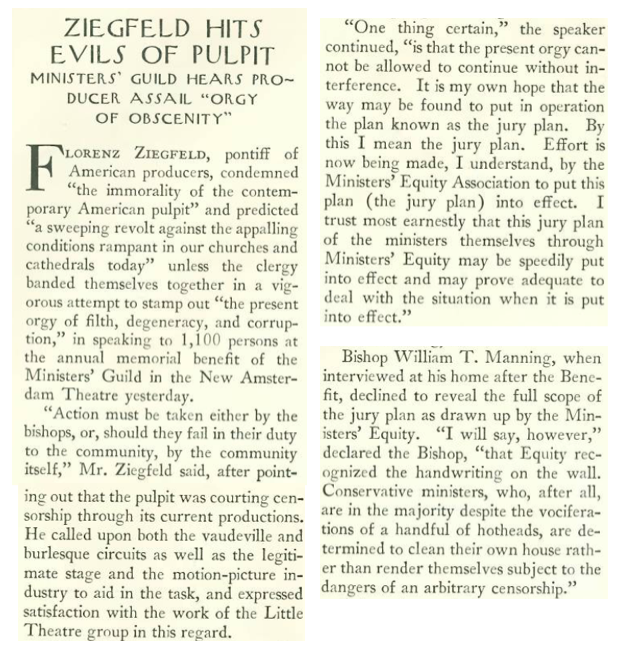
Broadway impresario Florenz Ziegfeld Jr knew how to pack a Broadway theater, and from 1907 to 1932 he staged a number of revues and plays (most notably Showboat) that featured lavish costumes and a bevy of chorus girls.
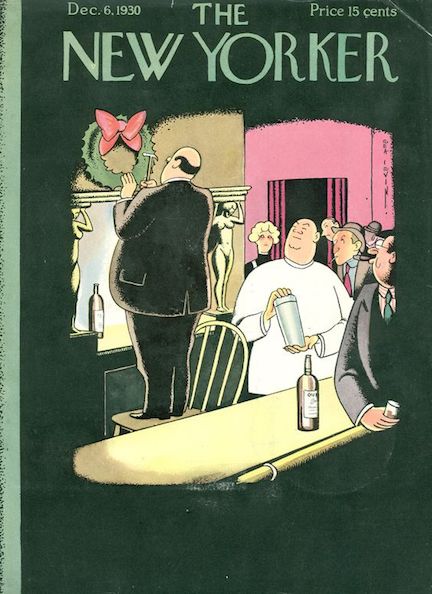
Dec. 6, 1930 cover by Rea Irvin, depicting a peephole view of a speakeasy during the holidays.
When his latest show, Smiles, hit the stage of the Ziegfeld Theatre on Nov. 18, 1930, it was greeted by an audience that had endured the first year of the Great Depression. Ziegfeld’s entertainments, on the other hand, were more associated with the high times of the Roaring Twenties. So even the popular brother-sister dance team from Omaha — Fred and Adele Astaire — seemed a bit old hat.
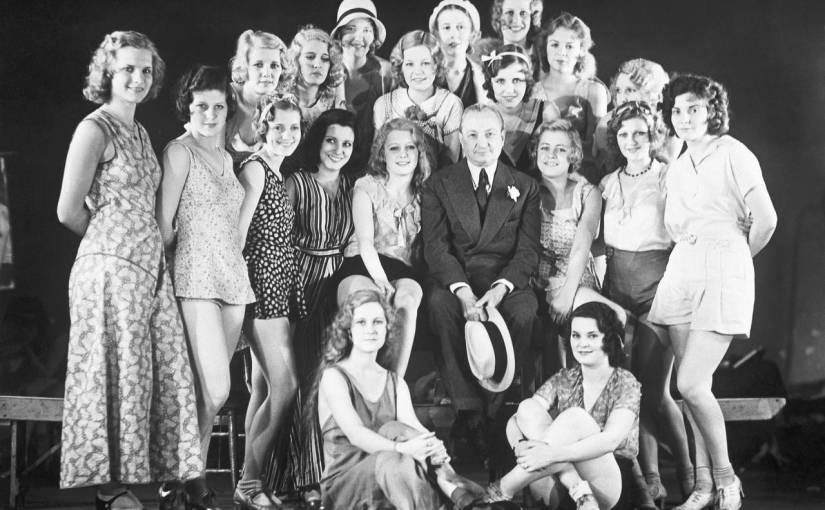
GO WITH THE FLO…Broadway impresario Florenz “Flo” Ziegfeld Jr with his Follies cast, 1931. (Wall Street Journal)
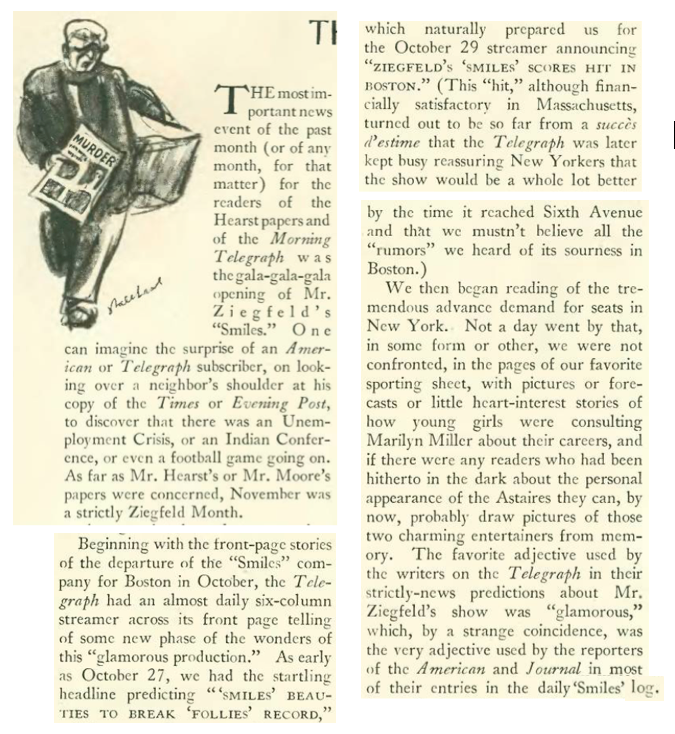
Or so it seemed to Robert Benchley, who observed in “The Wayward Press” that most of his readers could draw pictures of the Astaires from memory. But what really irked Benchley was the way William Randolph Hearst manipulated his mighty newspaper empire to promote Ziegfeld’s Smiles in a way that made the show appear to be the biggest hit of the year.
Ziegfeld Theatre was built with Hearst’s financial backing, so the media mogul was determined that the show would be a success, commanding his editors and writers to lavish praise on the tepid production, which would close in less than two months as a box office failure.
SAY CHEESE…Program for Smiles featuring Fred Astaire, Marilyn Miller and Adele Astaire. At right, publicity photo for Smiles featuring Fred and Marilyn. (Playbill/Pinterest)
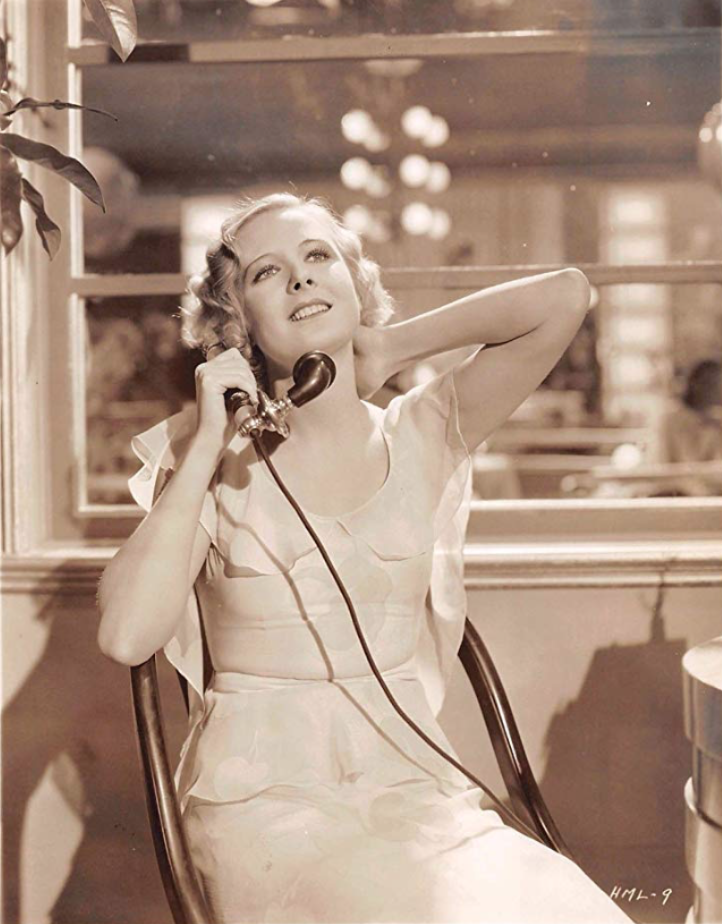
For the Astaires, they were nearing the end of their 27-year collaboration — Adele would retire from the stage in 1932 to marry Lord Charles Cavendish, and in 1934 Fred would pair up with Ginger Rogers for the first of nine films they would make together for RKO. Marilyn Miller, one of the most popular Broadway stars of the 1920s and early 1930s, would also seek her fortune in films, but would only make three. Alcoholism and persistent sinus infections would cut her life short in 1936 — she would die at age 37 from complications following nasal surgery.
BRIEF CAREER…Marilyn Miller in 1931’s Her Majesty, Love, one of just three films she would make before her death in 1936. (IMDB)
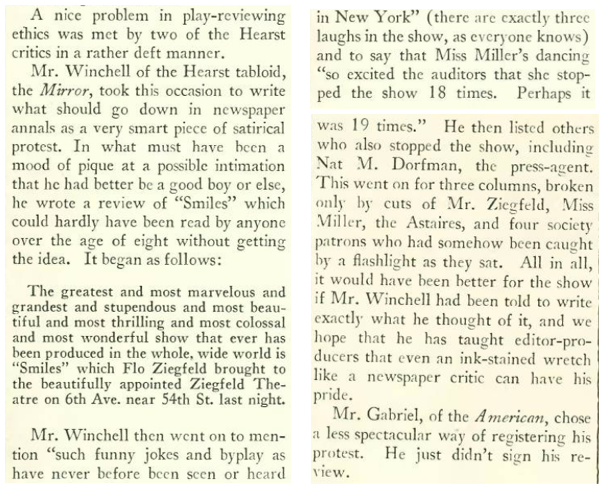
Benchley revealed how some of Hearst’s reporters responded to the edict from their boss:
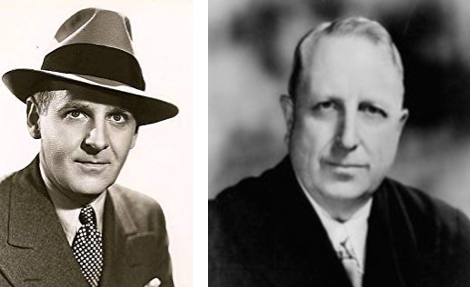
TWEAKING HIS NOSE…Walter Winchell, left, registered his protest against his boss, William Randolph Hearst, by laying it on thick in his column. (IMDB/BBC)THE FOLLY OF FOLLIES…Robert Benchley (left) cried foul regarding Hearst’s attempt to prop up a lousy show; Ogden Nash (right) found humor in the “immorality” of Ziegfeld’s productions. (Wikipedia/Notable Biographies)
On a related note, Ogden Nash also zeroed in on Ziegfeld’s latest show, turning the tables on religious zealots who found the Follies immoral. An excerpt:
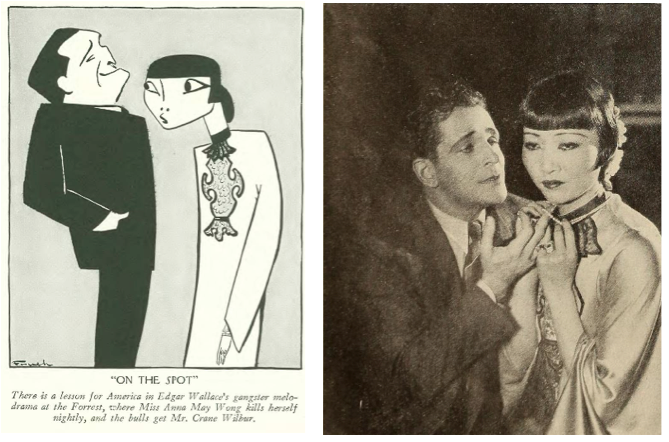
And finally, one more theater-related item: a drawing by Al Frueh highlighting the melodrama On The Spot, which ran from Oct. 29, 1930 through March 1931 at the Forrest Theatre.
BETTER THAN ZIEGFELD, THIS…At right, Crane Wilbur and Anna May Wong in the melodrama On The Spot, which opened Oct. 29, 1930 at the Forrest Theatre. (New Yorker/Pinterest)
* * *
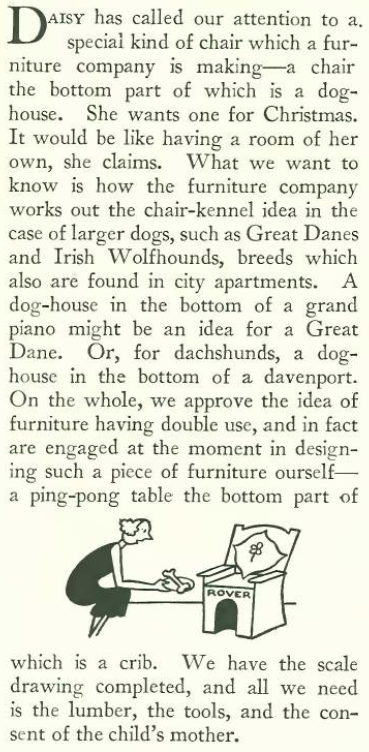
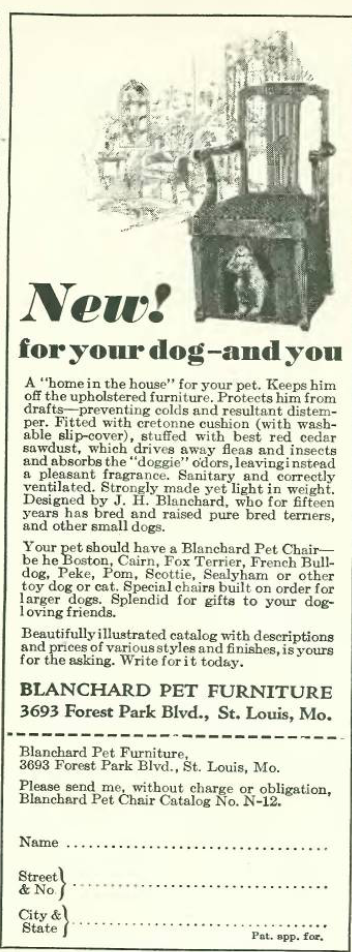
In the Dec. 6, 1930 “Notes and Comment,” E.B. White shared his observations on a new type of chair that doubled as a dog house…
…and he wasn’t making it up, because the chair he described was featured in this ad from the same issue…
* * *
Drunk History
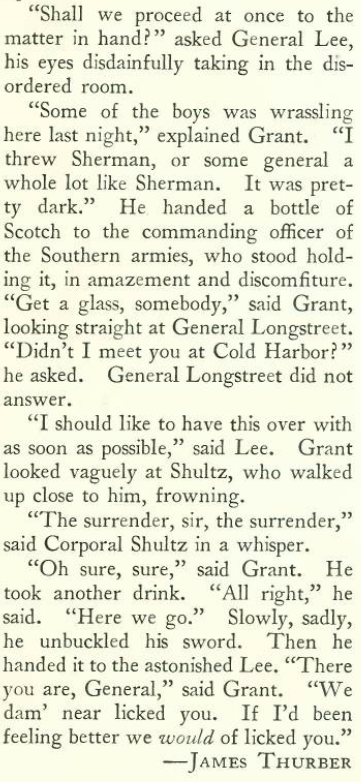
In the fall of 1930 Scribner’s magazine published a series of three articles titled “If Booth Had Missed Lincoln,” If Lee Had Not Won the Battle of Gettysburg,” and “If Napoleon Had Escaped to America.” The New Yorker’sJames Thurber claimed to be the author of a fourth article, “If Grant Had Been Drinking At Appomattox.” An excerpt:
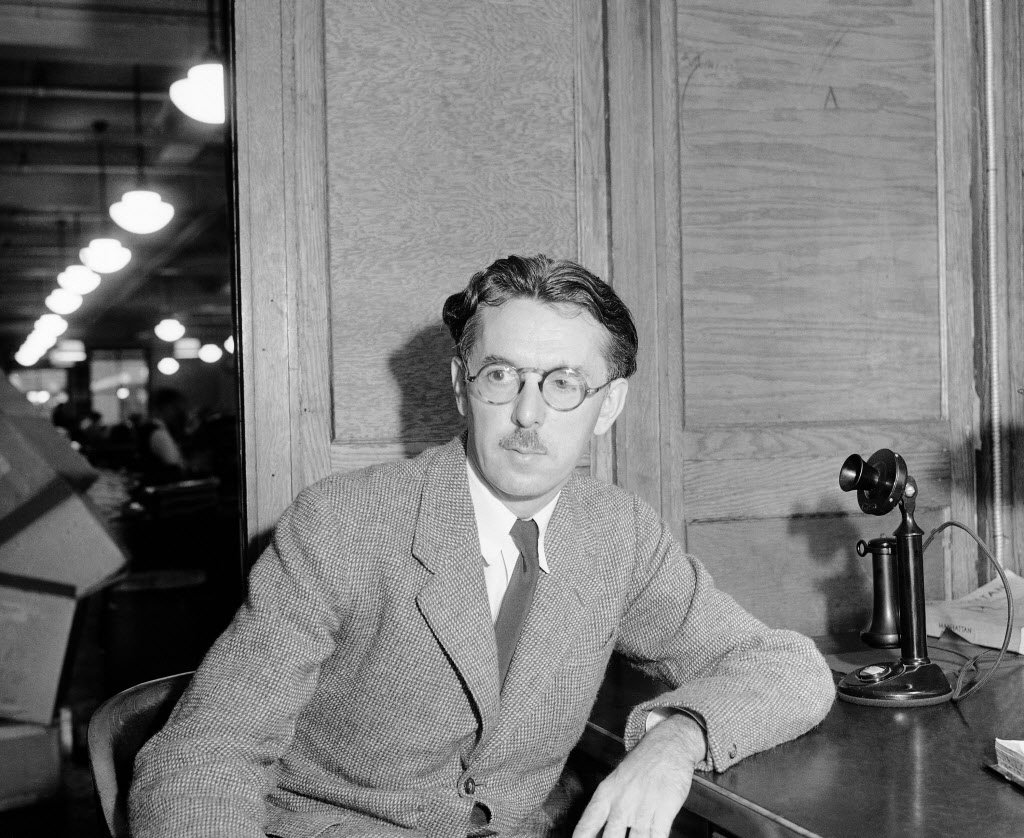
REVISIONIST…James Thurber circa 1930. (thurberhouse.org)
* * *
From Our Advertisers
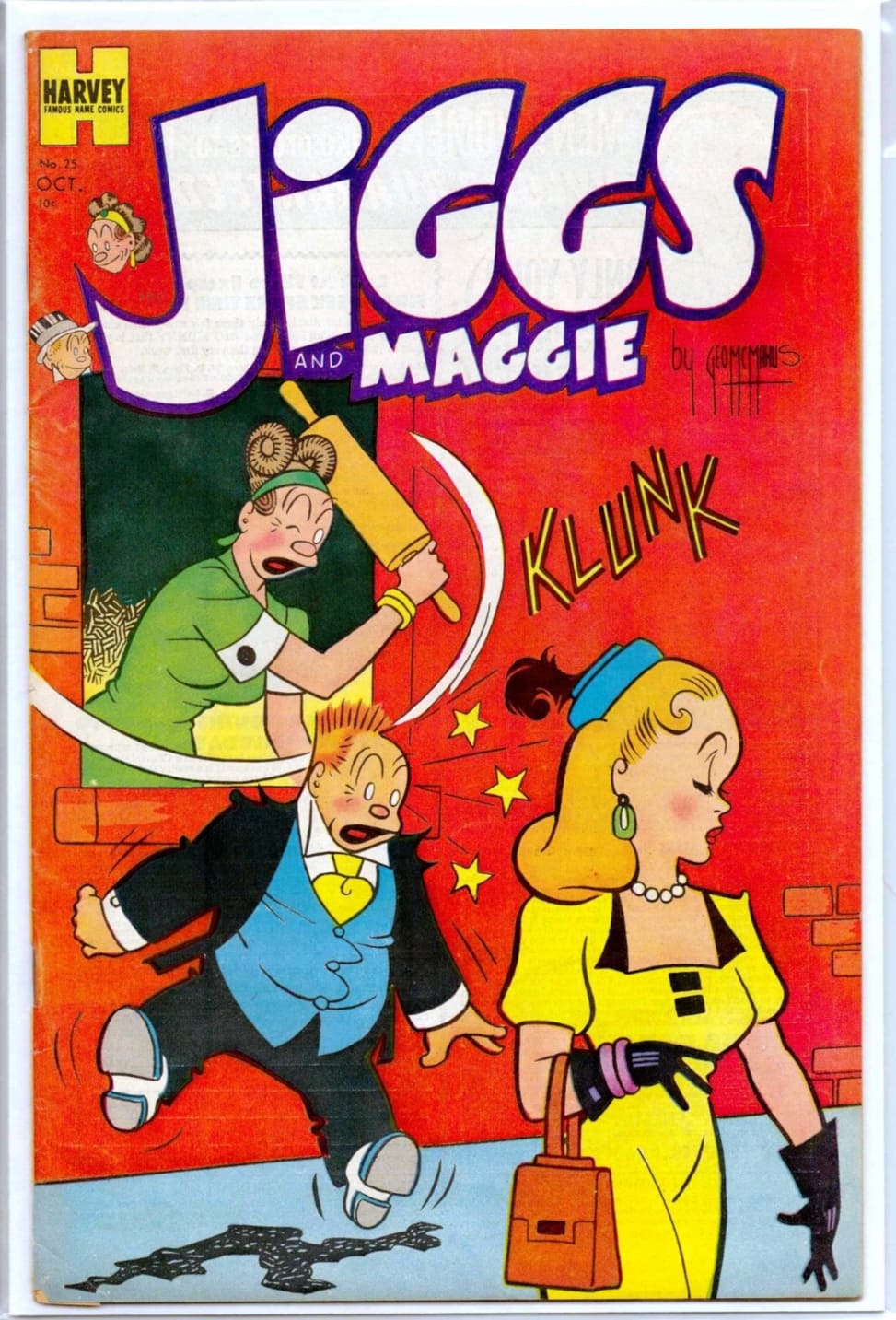
The rolling pin was often deployed as a prop — especially in the comics — to illustrate marital discord; the makers of Hoffman ginger ale used the common trope to sell their fizzy drink…
…for reference, Maggie gives it to Jiggs in this comic book cover from 1953…
(Good Girl Comics)
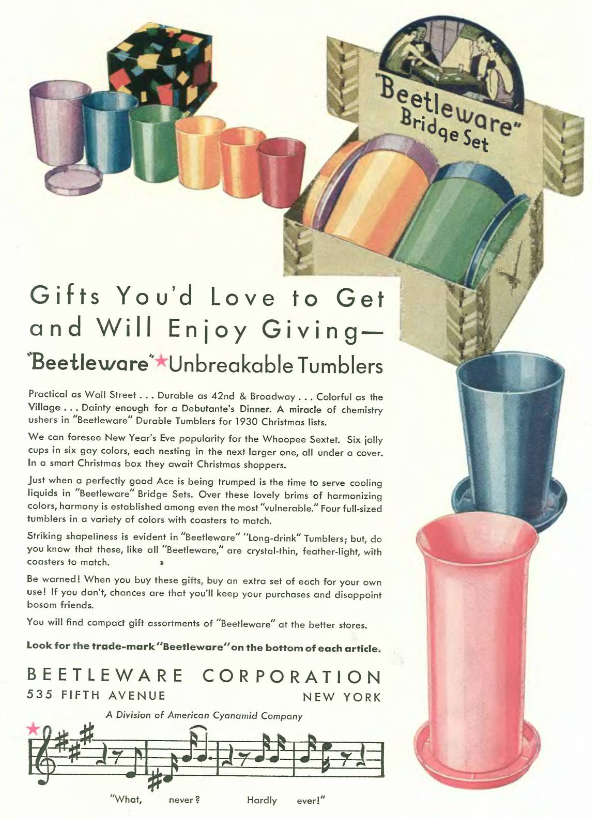
…the issue was stuffed with ads for Christmas shoppers, ranging from colorful plastic tumblers…
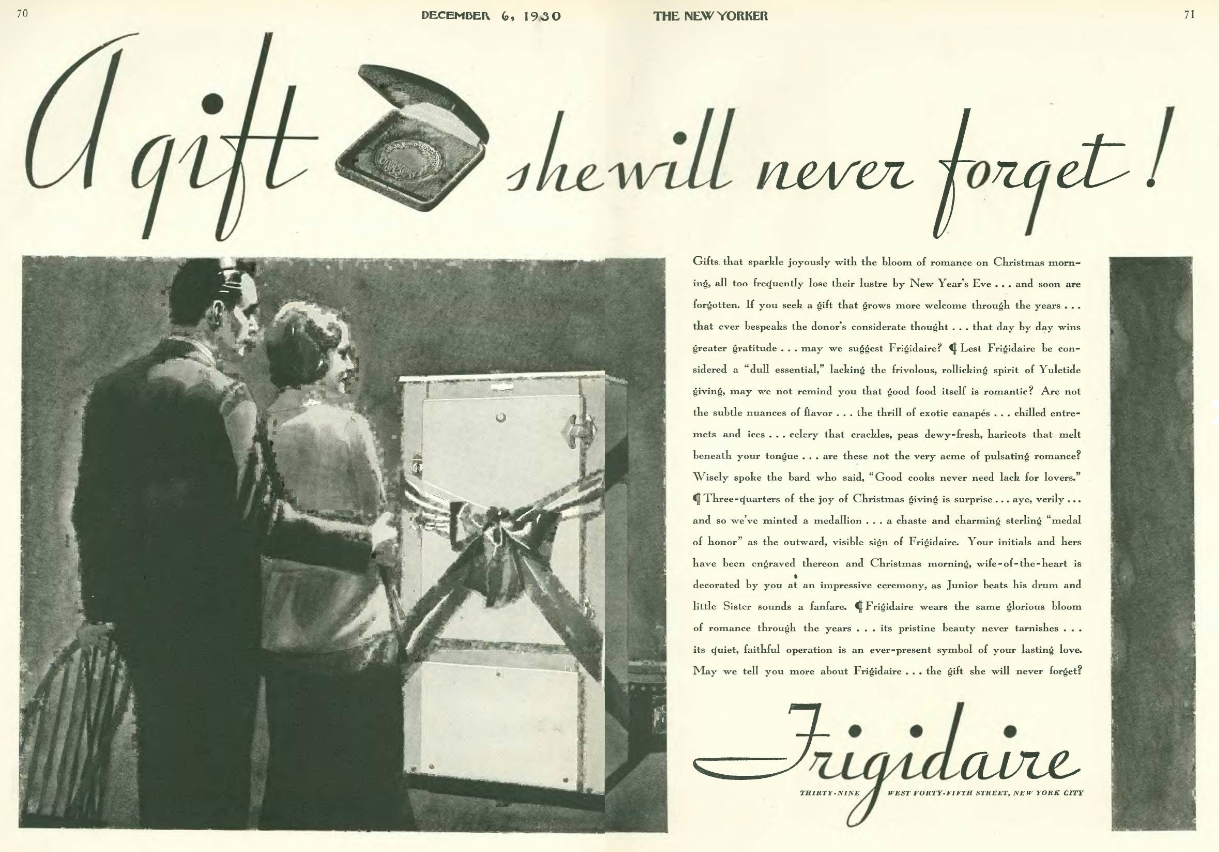
…to “unforgettable” appliances…
…to a variety of accessories at Wanamaker’s…
…Macy’s offered this pajama and robe combination for (insufferable) little boys who “strive for sartorial effect”…
…while Burdine’s of Miami urged snowbirds to purchase multiple wardrobes to remain fashionable throughout the winter season…
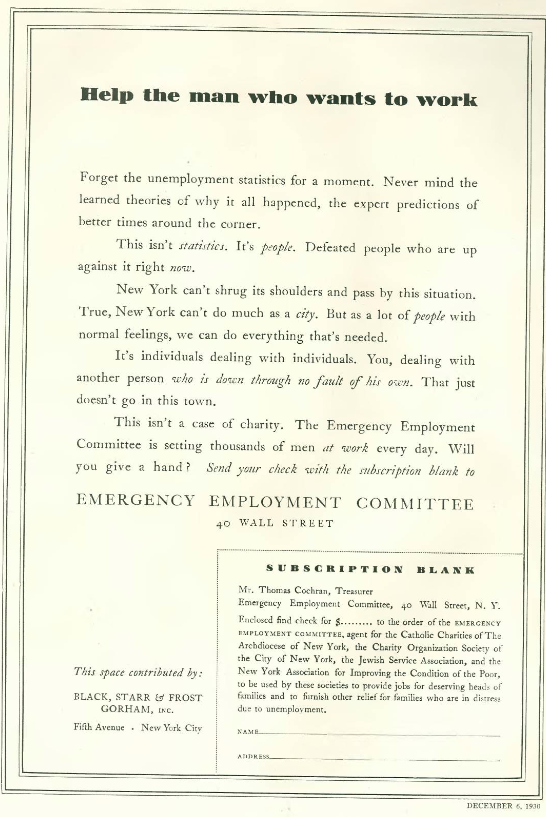
…and in stark contrast, this ad appealed for donations to help the jobless…
One of the most expensive movies of 1930 was a sci-fi musical comedy titled Just Imagine, a silly mash-up of great sets, terrible acting, and a vision of the future fifty years hence that was way off the mark.
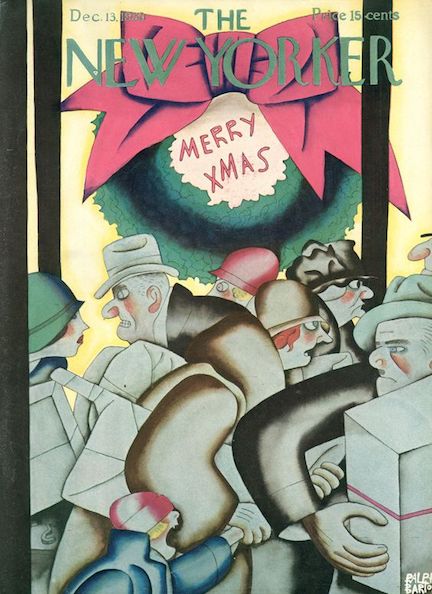
Nov. 29, 1930 cover by Victor Bobritsky.
Not that the film ever set out to be an accurate prediction of the future. Nevertheless, it is instructive (or, at the least, amusing) to look back on “yesterday’s tomorrows” to understand the American mind in the first year of the Great Depression.
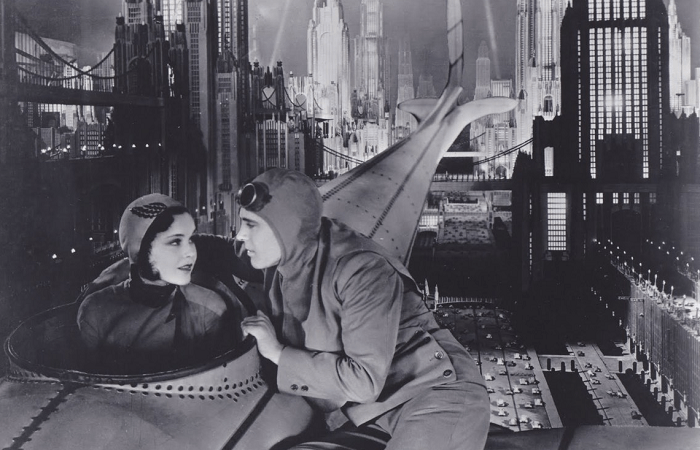
COME FLY WITH ME…Clandestine lovers LN-18 (Maureen O’Sullivan) and J-21 (John Garrick) share a romantic moment high above the streets of 1980 New York City. (scifist.net)
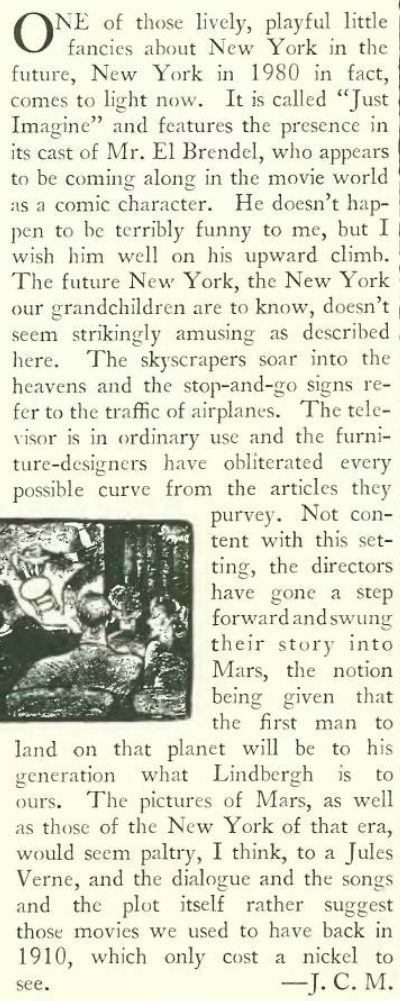
Just Imagine borrowed some of its look from Fritz Lang’sMetropolis (1927), a dystopian vision of the future that reflected the contentious years of Germany’s Weimar Republic. Just Imagine similarly reflected its time and place — the early years of the Depression — Hollywood responding not with gloom and doom but rather with uplifting fare — comedies, musicals, and escapist fantasies (Flash Gordon came along in 1936). The producers of Just Imagine rolled all of it into one film, and The New Yorker’sJohn Mosher tried to make sense of the mess:
EYE IN THE SKY…In Just Imagine, technology is advanced enough to have a traffic cop floating in the sky, but he still must rely on his arms and mechanical signals to keep the skyways in order. (YouTube clip)
The floating traffic cop is just one example of the film’s attention to set design. The New York skyline, featured in the opening scene, was constructed in a giant hangar at enormous cost…
(IMDB)
In one of the films weirder twists, vaudeville comedian El Brendel is brought back to life with an electric beam…
SMOKED HAM…Vaudeville comedian El Brendel is zapped back to life to provide the world of 1980 with comic relief. Some of the electrical equipment assembled by set designer Kenneth Strickfaden would be seen again in 1931’s Frankenstein. (scifist.net)
…and Brendel (below, center), proceeds to get drunk on booze pills and spew a series of really bad jokes throughout the duration of the film…
WE SHOULD HAVE LEFT HIM DEAD…Frank Albertson, El Brendel and John Garrick in Just Imagine. (scifist.net)MARS ATTACKS…The film also took audiences to the surface of Mars via a phallus-shaped spaceship that would later be used in Flash Gordon serials. Clockwise, top left, the spaceship blasts off surrounded by a crowd of men in fedoras; aboard the spaceship; landing site on Mars; J-21 (John Garrick) encounters the Martian Queen (Joyzelle Joyner). (YouTube/scifist.net)
The movie flopped at the box office, but producers were able to recoup some of the costs by farming out clips of the futuristic sets, and some of the props, to other sci-fi films of the 1930s including the Flash Gordon and Buck Rogers serials.
* * *
Toys For Tots
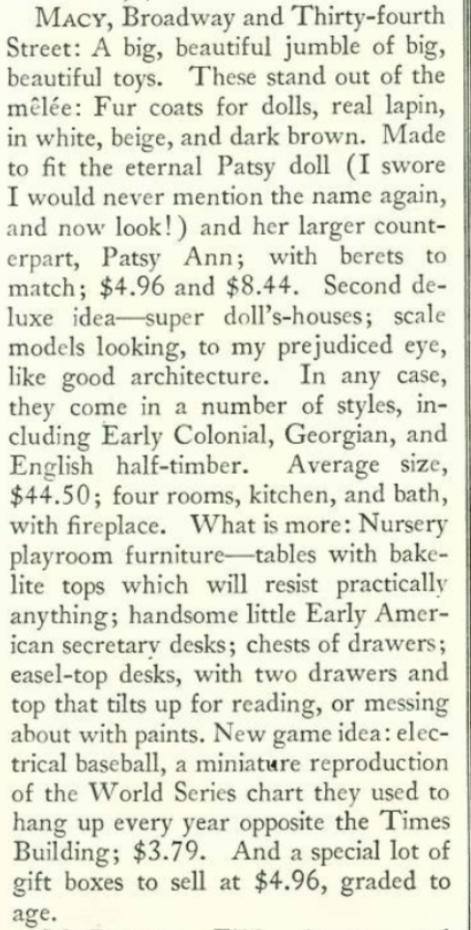
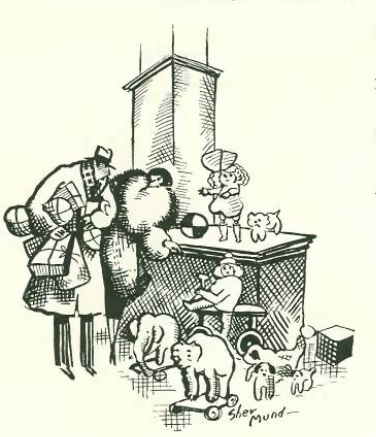
By mid-November The New Yorker’s “On and Off the Avenue” column had lengthened to include ideas for Christmas shoppers. The Nov. 29 issue offered these ideas for children’s toys from Macy’s…
XMAS IS COMING…Patsy Ann dolls in smart berets, and dollhouses in various styles (a 1930 Tudor dollhouse at right) could be had at Macy’s Herald Square flagship store. (Pinterest)
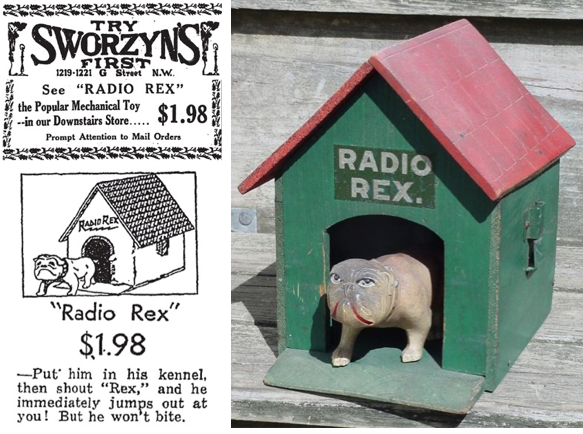
GRRRR…First introduced in 1922, the revival of “Radio Rex” proved popular to the kiddies in 1930. It was the “high tech” toy of its day, the first to respond to voice commands. Rex the dog would spring out of his doghouse at the sound of the word “Rex,” thanks to a sound-sensitive electromagnet. (ctinventor.wordpress.com)
* * *
A Century-old-Problem
Traffic woes have been around almost as long as there have been cars. In an excerpt from “A Reporter at Large,” Morris Markey explained the challenges facing the city’s police department:
IF YOU BUILD IT, THEY WILL COME…Traffic clogs Fifth Avenue near 42nd Street in 1930. (digitalcollections.archives.nysed.gov)
* * *
Speaking of cars, this ad in The New Yorker announced the opening of the annual Automobile Salon at the Commodore Hotel…
…and the magazine was on hand to describe its various wonders. Some excerpts:
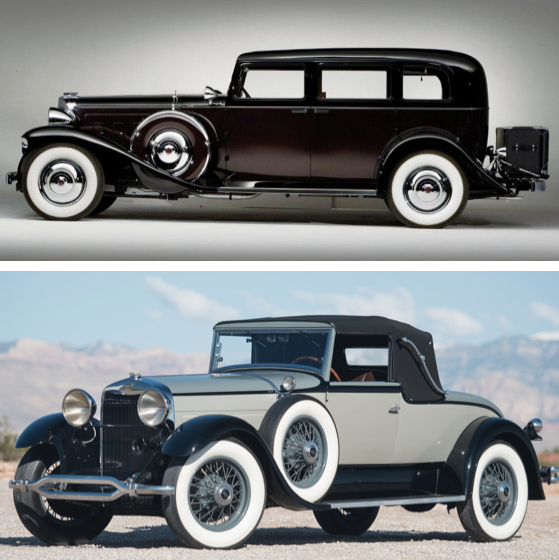
POETRY IN MOTION…Top, the Walter Dorwin Teague-designed Marmon 16-cylinder wowed crowds at the Salon, even if few could afford it. The Great Depression limited the production of the luxury Marmon, and less than 400 were produced. The company abandoned the car business altogether in 1933. Below, the sporty Ford Model L Roadster, designed by Raymond Dietrich. (supercars.net/Sotheby’s)
* * *
Maestro Politician
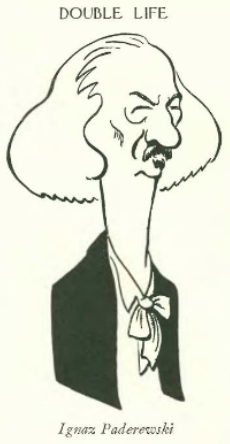
TheNew Yorker profiled pianist, composer and statesman Ignacy Jan Paderewski (1860-1941). Paderewski served as Poland’s prime minister in 1919, negotiated on behalf of his country at the Treaty of Versailles, and had a 60-year career as a virtuoso pianist. A brief excerpt:
* * *
Not For the Moneychangers
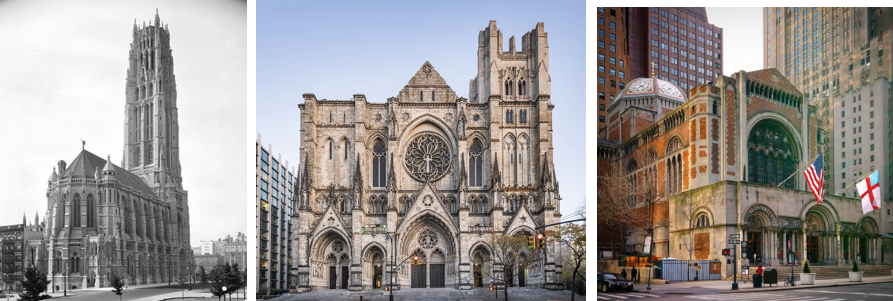
Architecture critic George S. Chappell checked in on the progress of three prominent Manhattan cathedrals in his “Sky Line” column:
LANDMARKS ALL…From left, Riverside Church, the still yet-to-be completed St. John the Divine, and St. Bartholomew’s. (MCNY/masonrymagazine.com/dtjoyce.com)
* * *
The theater review section included this illustration of a new play, Roar China, that opened Oct. 27, 1930 at the Beck Theatre.
The staging of Roar China included this reconstruction of the bow of the H.M.S. Europa on the Beck Theatre stage…
(messynessychic.com)
* * *
From Our Advertisers
The holiday season was in the air, and retailers were taking various approaches to entice Depression-era shoppers to consider their wares. The ads have a more conservative bent, when compared to late 1920s, and in the case of Wanamaker’s and B. Altman’s, an appeal to simpler times…
…Macy’s, on the other hand, looked to sell rather expensive lighters “to arouse the youthful enthusiasm among veteran smokers”…
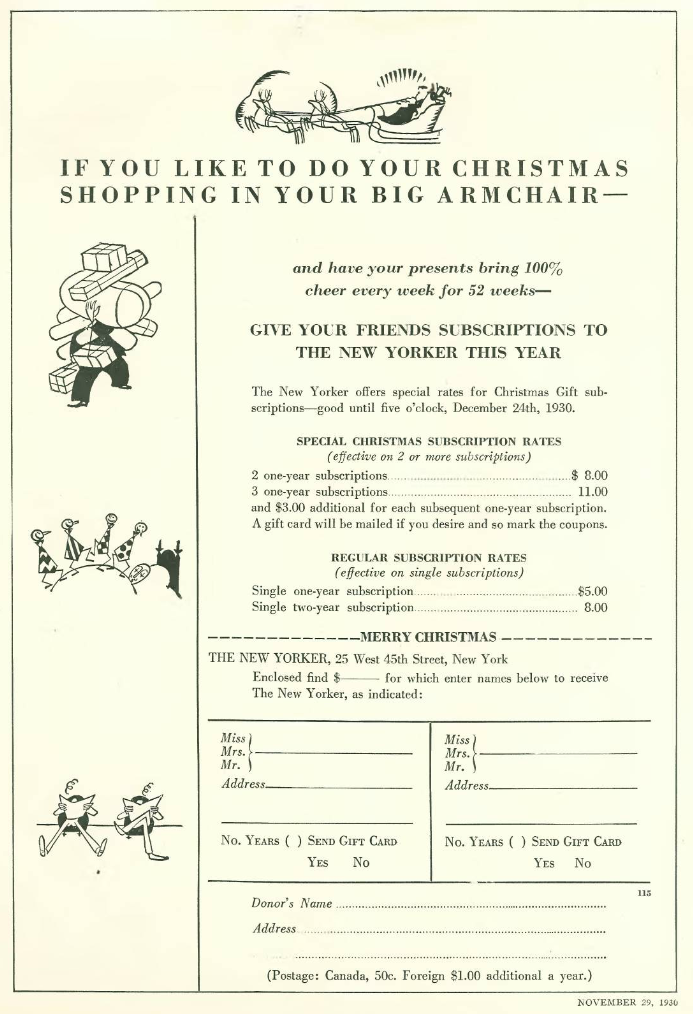
…despite the Depression, New Yorker subscriptions continued to steadily increase — the magazine had nearly 45,000 subscribers in 1930, and by the end of the decade the number would approach 100,000 — below, a house ad designed to entice new subscribers…
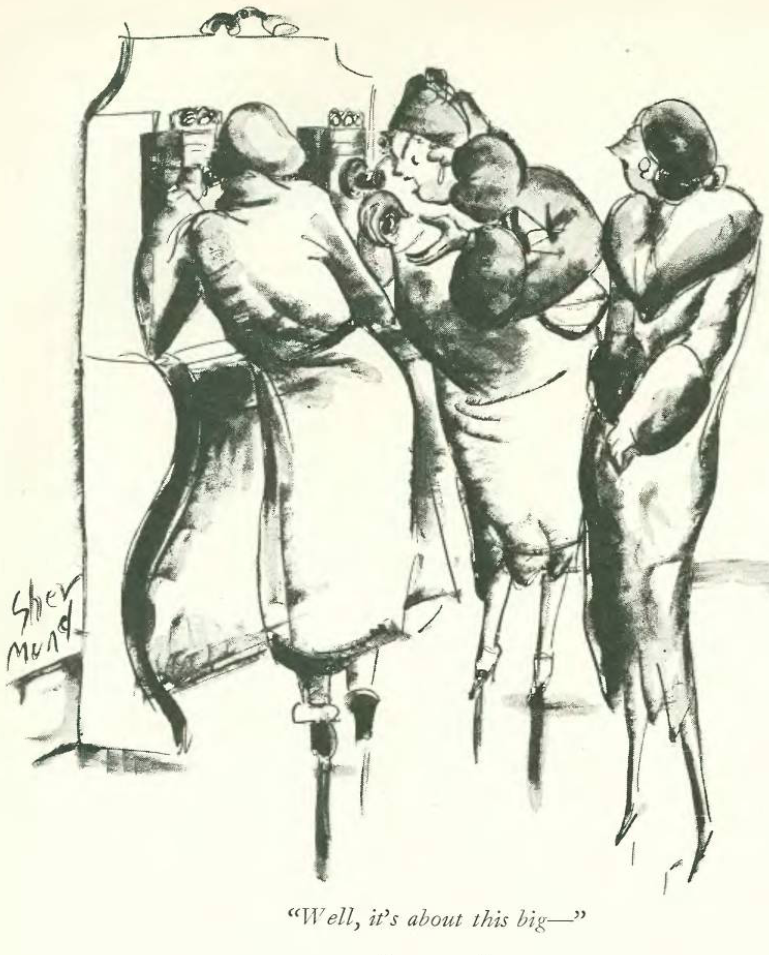
…our cartoons include this holiday spot illustration by Barbara Shermund…
…and another by Shermund of her parlor room crowd…
…Otto Soglow amused us with a couple of tots…
…Gardner Rea imagined a confrontation between a Macy’s Thanksgiving Day Parade balloon and Italy’s Fascist dictator Benito Mussolini…
…the balloon Rea illustrated was “The Captain” from the popular Katzenjammer Kids comic strip. Along with his “family,” the Captain appeared in the parade in 1929 and 1930 (and possibly 1931). They were the first licensed character balloons in the parade’s history…
(The New York Times)
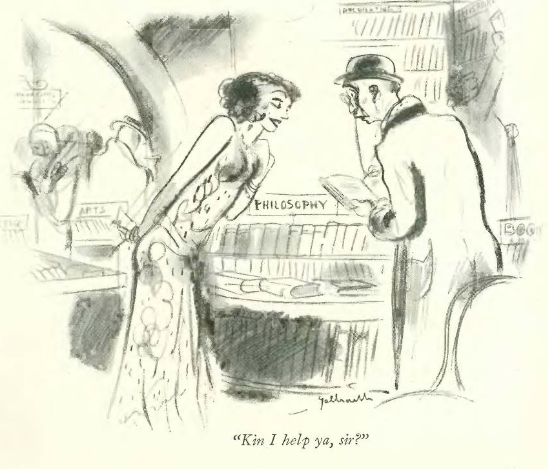
…back to cartoons, book shopping with William Crawford Galbraith…
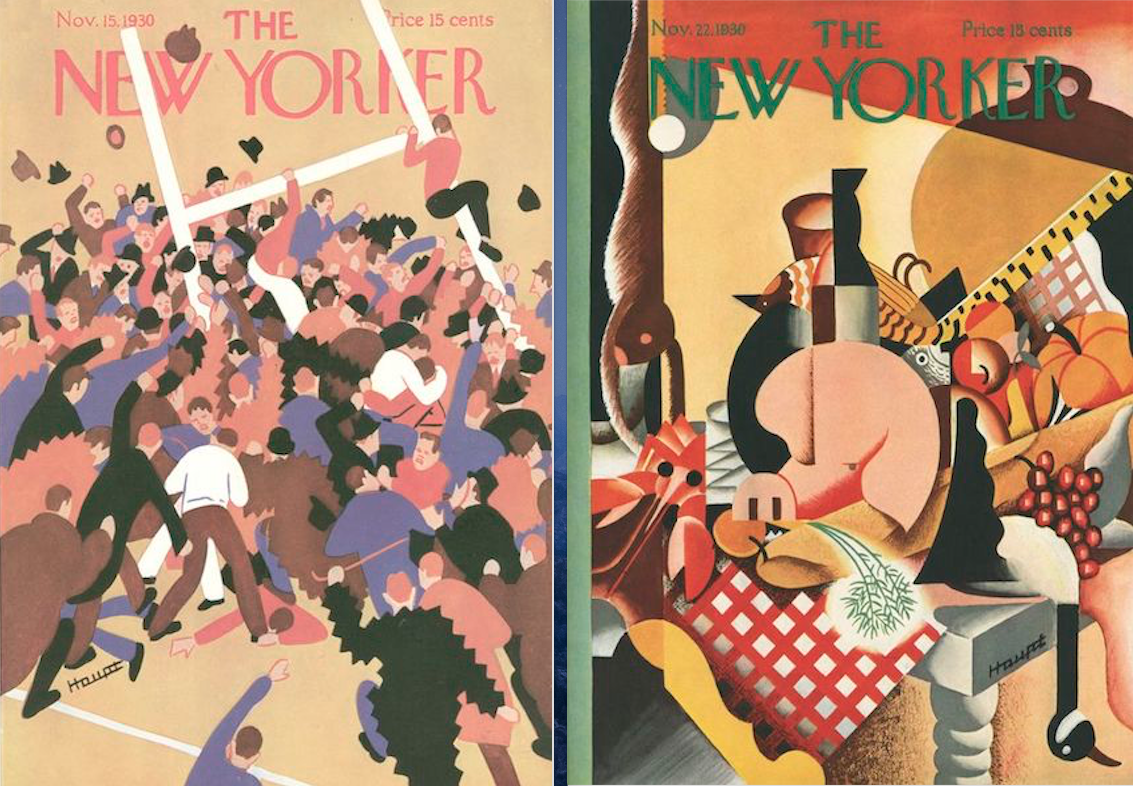
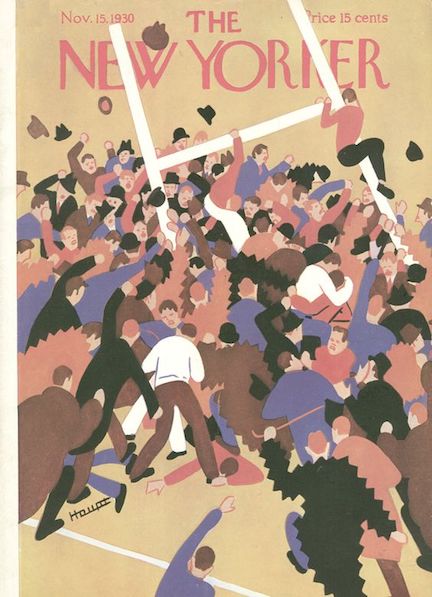
For this installment we look at two issues, Nov. 15 and 22, both featuring covers by Theodore Haupt that celebrated two autumn rituals: football and Thanksgiving.
Let’s begin with the Nov. 22 issue, which climbed to the highest place in Manhattan — no, not the Chrysler Building, but the nearby Empire State Building — with E.B. White admiring the commanding view:
Before the Empire State Building could go up, the old Waldorf-Astoria hotel had to come down. As White observed, the old hotel was built so soundly that it was too costly to deconstruct and salvage. Most of it ended up on the bottom of the ocean.
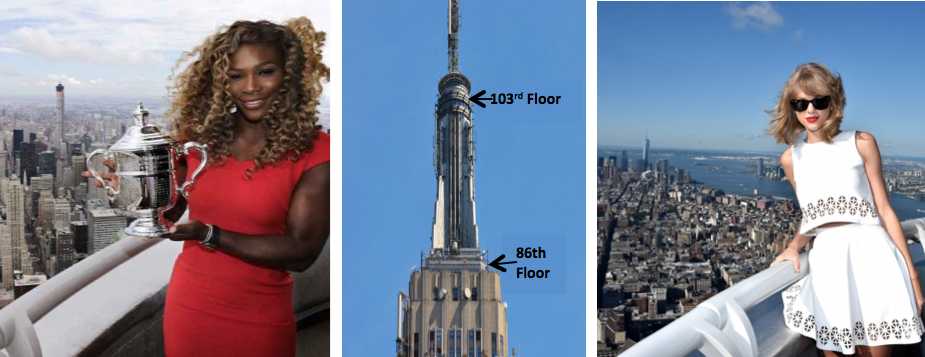
DOWN IN DAVY JONES’ LOCKER lie the remains of the old Waldorf-Astoria Hotel, which stood for just 36 years before it was razed to make room for the Empire State Building. At right, one of the hotel’s lobbies, and the Grand Ballroom. (nyc-architecture.com/Pinterest)A LOT OF HOT AIR…Top images: The fabled “mooring mast,” described by E.B. White in his New Yorker brief, as imagined in composite images (old-time Photoshop). In reality, the morning mast never worked; bottom right, a cutaway view of the mast featured in Popular Mechanics; bottom left, New York Times photo from March 22, 1931, announcing the completion of the Empire State Building, just 17 months after the Waldorf-Astoria began coming down. (Keith de Lellis Gallery, rarehistoricalphotos.com/Google Books/The New York Times)SURVEYING THEIR KINGDOM…Most visitors to the Empire State Building can only go as high as the 86th floor observation deck. However, if you are a VIP like Serena Williams or Taylor Swift, you can get your picture snapped on the 103rd. (Associated Press/Empire State Building/Evan Bindelglass, CBSNewYork)
* * *
Sore Winner
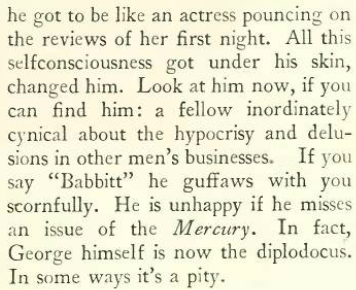
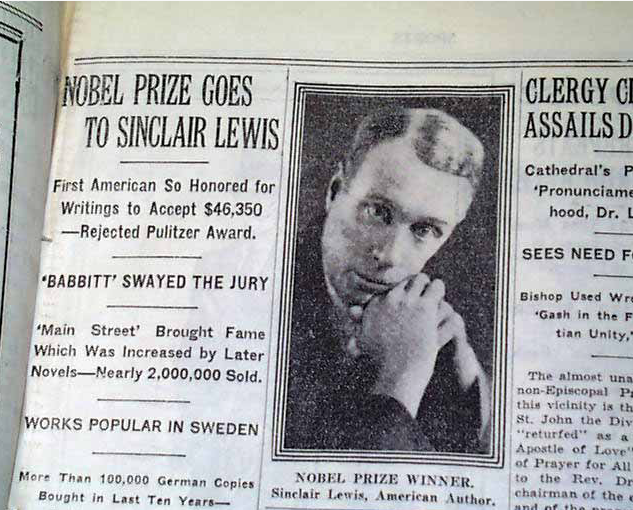
Sinclair Lewis famously declined the Pulitzer Prize for his 1925 novel Arrowsmith, upset that his 1920 novel Main Street had not previously won the prize. But when the Swedish Academy came calling with a Nobel Prize in Literature in 1930, he happily accepted. According to “The Talk of the Town,” this award also seemed a bit tardy, since Lewis’s small town booster archetype, George F. Babbitt, did not fit the dour days of the Great Depression. But it turned out that the 1922 novel Babbitt was ultimately what swayed the Nobel jury:
BOOST FROM A BOOSTER…George F. Babbitt helped make Sinclair Lewis famous, and landed him a Nobel. (NYT, NOVEMBER 6, 1930)
* * *
Not So Sweet
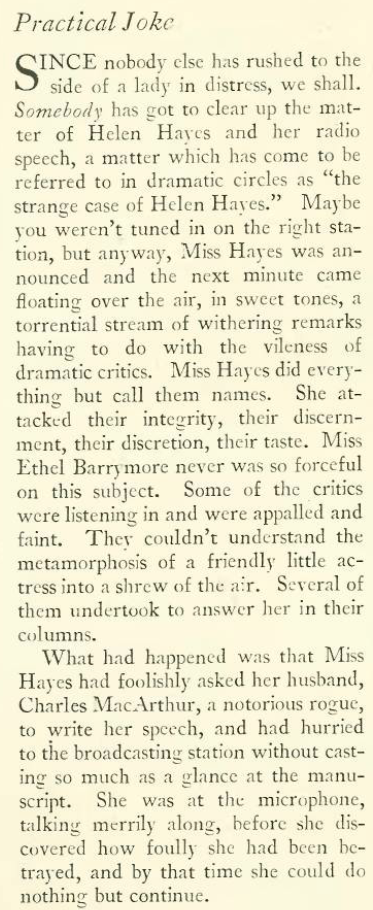
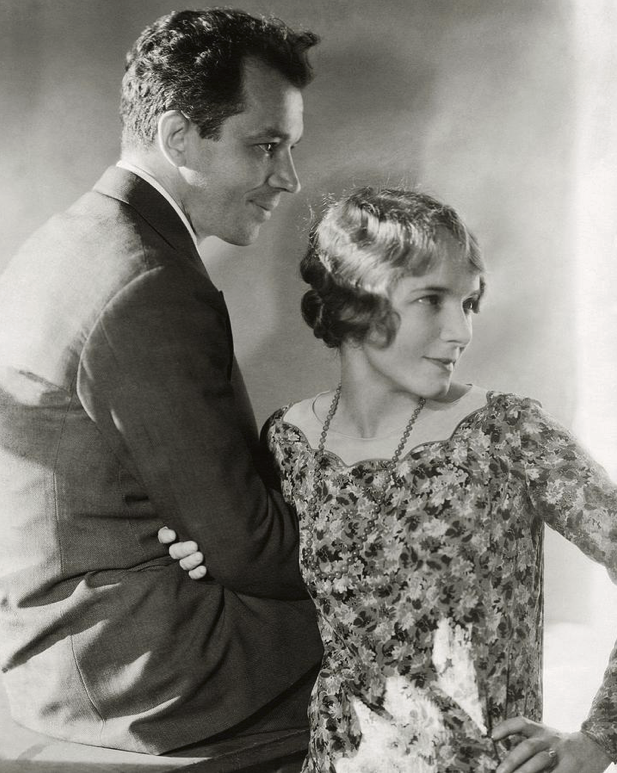
Those of a certain age might remember Helen Hayes as a sweet old lady who appeared on a number of TV shows in the 1970s and 80s, or as the mother in real life of James MacArthur, Disney teen star and later the portrayer of Danny “Book ’em Danno” Williams on the original Hawaii 5-0 TV series. Hayes was married to playwright Charles MacArthur, and “The Talk of the Town” takes it from there…
CREATIVE TYPES…The engaged couple Charles MacArthur and Helen Hayes posed for photographer Edward Steichen for this Jan. 1, 1929 image featured in Vanity Fair magazine. (Condé Nast)
* * *
Ain’t It Grand
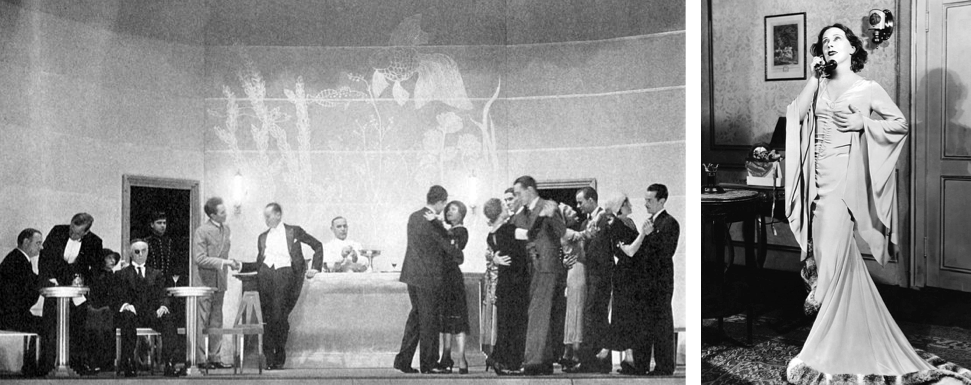
Grand Hotel opened at the National Theatre on Nov. 13, 1930 to strong reviews, including the one below by Robert Benchley that he filed for The New Yorker. The play, adapted from the 1929 novel Menschen im Hotel by Austrian writer Vicki Baum, would prove to be a smash on Broadway and again on the silver screen in a star-studded 1932 film featuring Greta Garbo, John Barrymore, and Joan Crawford.
THE STARS ALIGN…Left, promotional photograph of the original Broadway production of Grand Hotel. At right, Eugenie Leontovich portrayed fading Russian ballerina Grusinskaya in the play. The role would go to Greta Garbo in the 1932 film adaptation. (Theatre Magazine, February 1931/Wikipedia)
…and while we are on the subject of Broadway, the theater review section also featured this Al Frueh illustration promoting a noted production of Twelfth Night at the Maxine Elliott…
Program for the production featuring Jane Cowl. (Playbill)
* * *
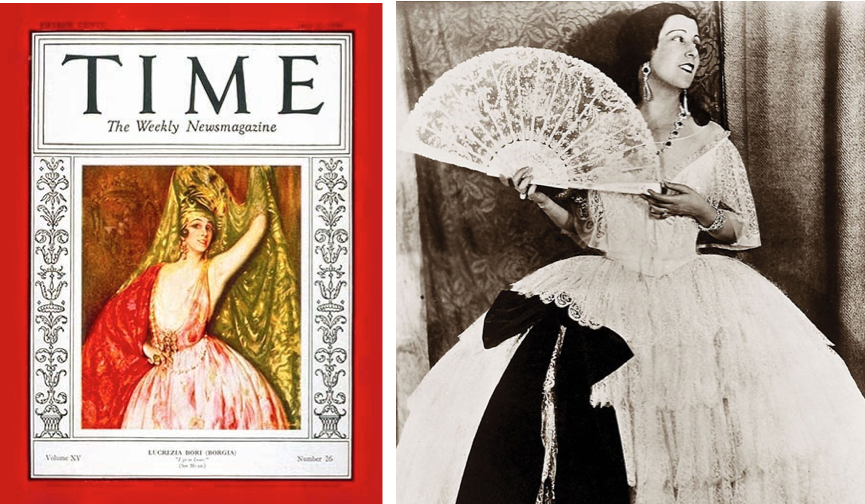
There were also big doings at the Met, where Spanish lyric soprano Lucrezia Bori (1887-1960) wowed audiences with her portrayal of Violetta in La Traviata.
SHE HAD SOME PIPES…right, lyric soprano Lucrezia Bori on the cover of the June 30, 1930 edition of Time magazine. At right, promotional photo of Bori circa 1930. (Time/Wikipedia)
* * *
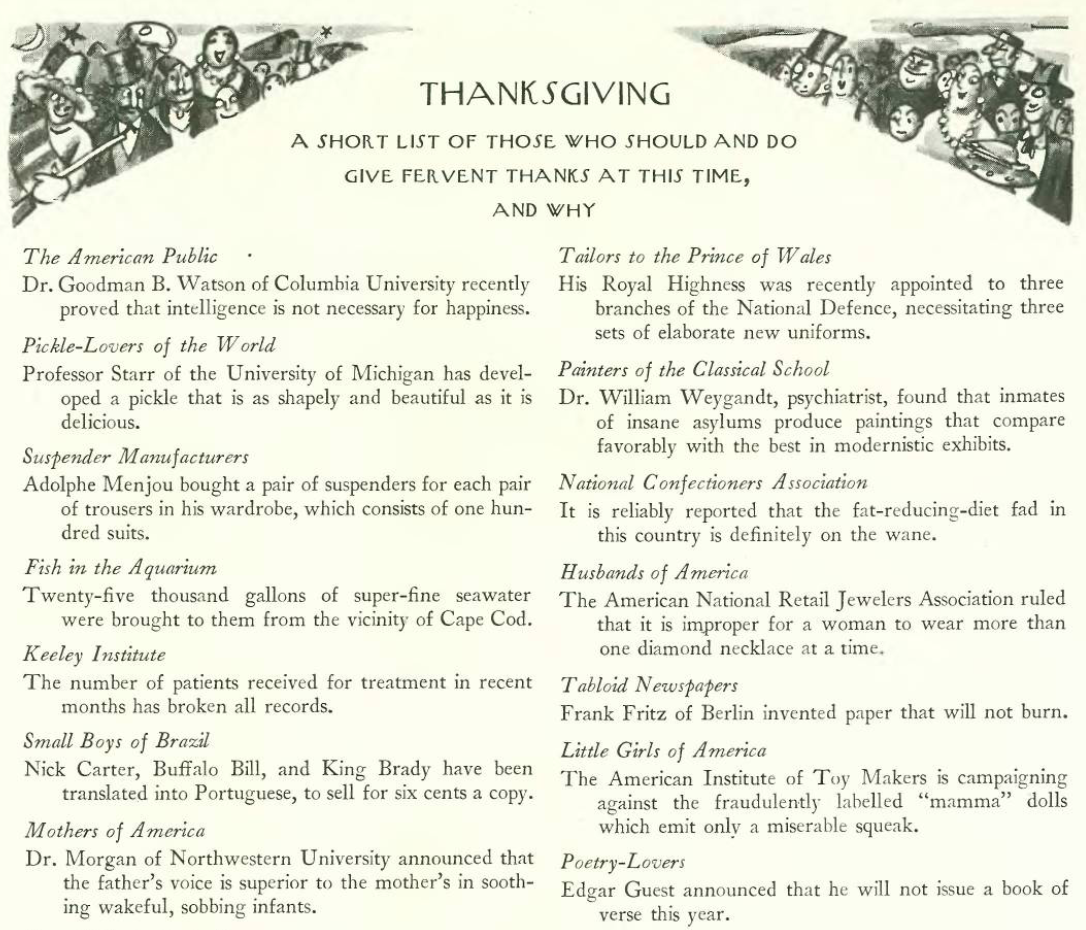
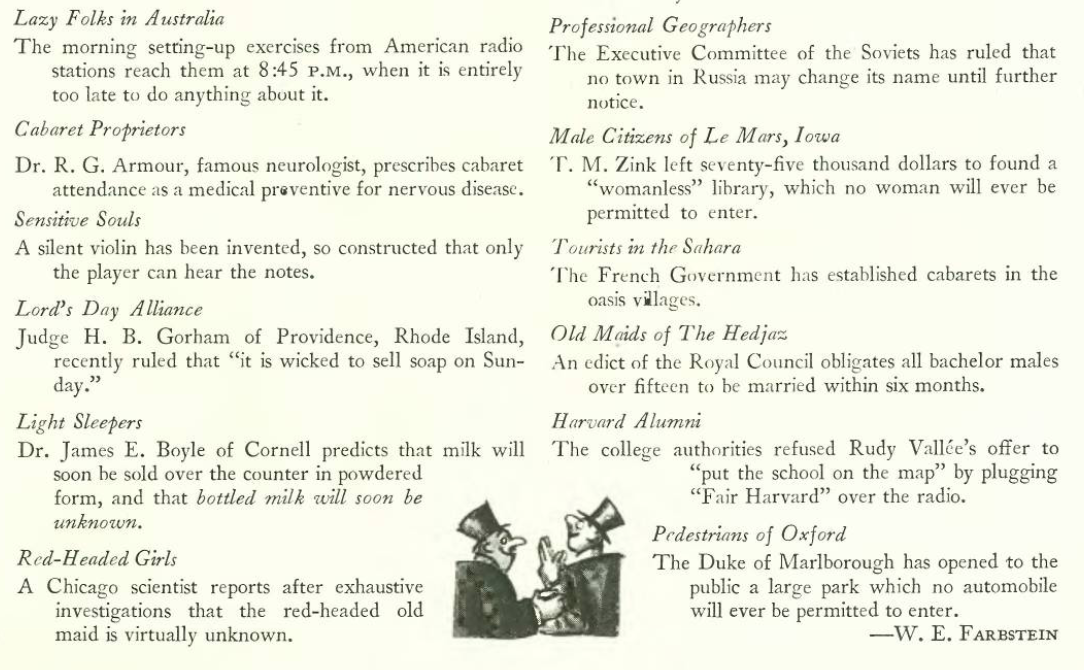
Bounty of Blessings
Humorist W. E. Farbstein gave readers plenty to be thankful for in this tribute to the Thanksgiving holiday…
* * *
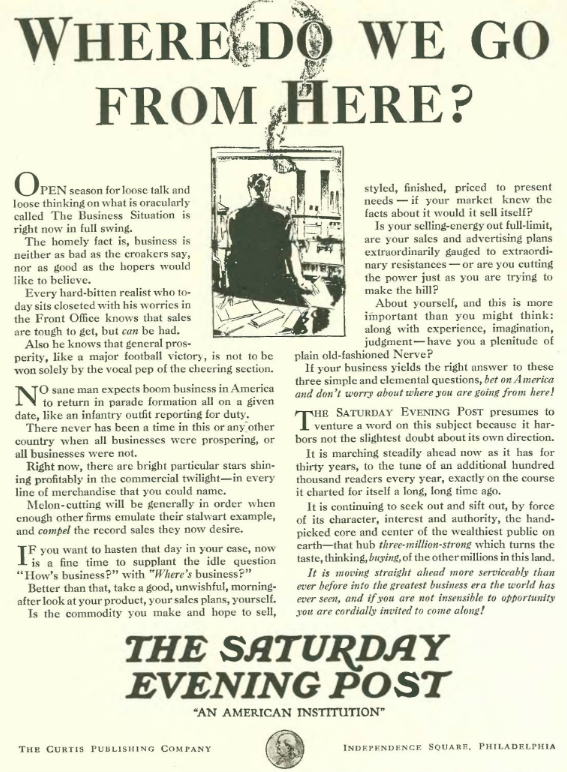
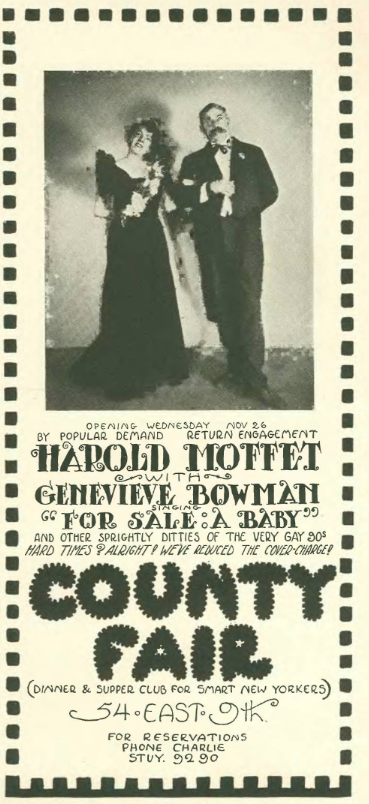
From Our Advertisers
Occasionally advertisements acknowledged the reality of the Great Depression, including this one from The Saturday Evening Post that offered encouraging words to prospective readers…
…County Fair, a Greenwich Village country-themed nightclub, offered the diversion of Moffatt and Bowman to take audiences’ minds off of hard times…
…and for all the supposed sophistication of New Yorker readers, there were still plenty of back page ads offering nostrums laced with superstition…
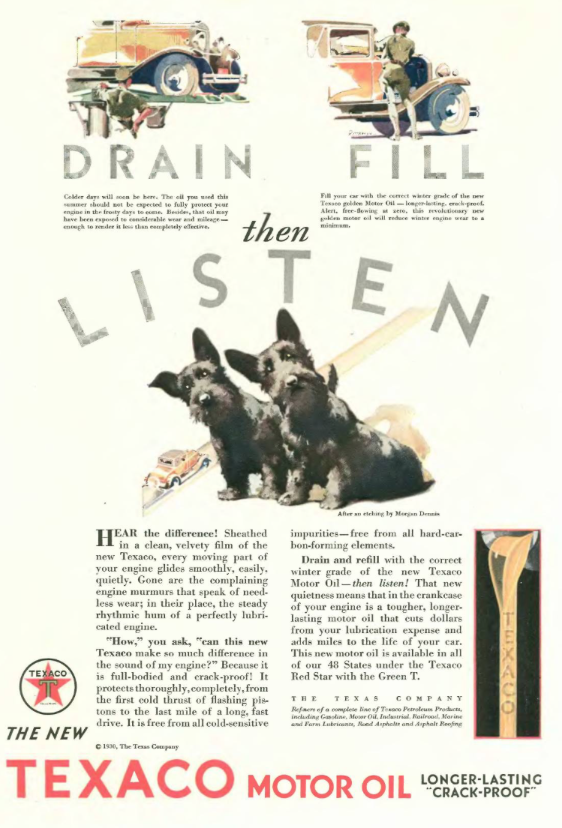
…some of the more colorful, spritely ads from the era were offered up by the producers of Texaco Motor Oil…
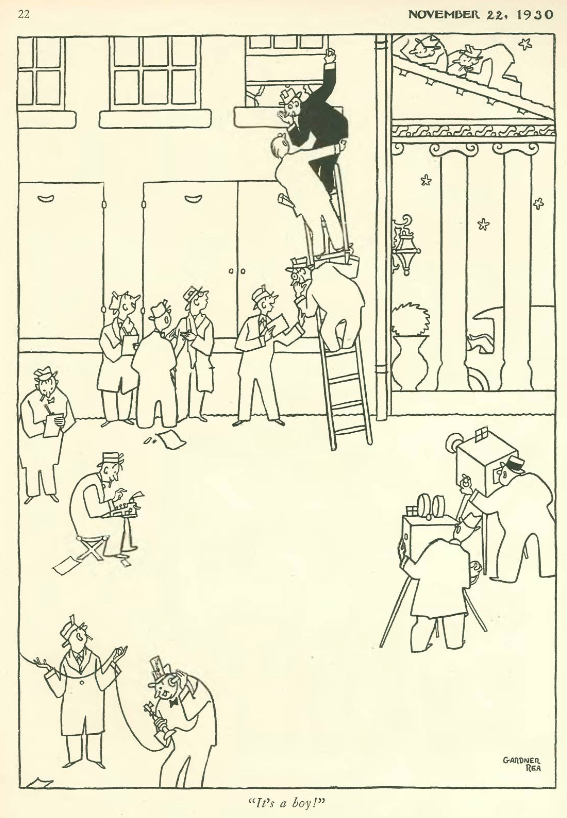
…our cartoons are by Gardner Rea…
…Barbara Shermund…
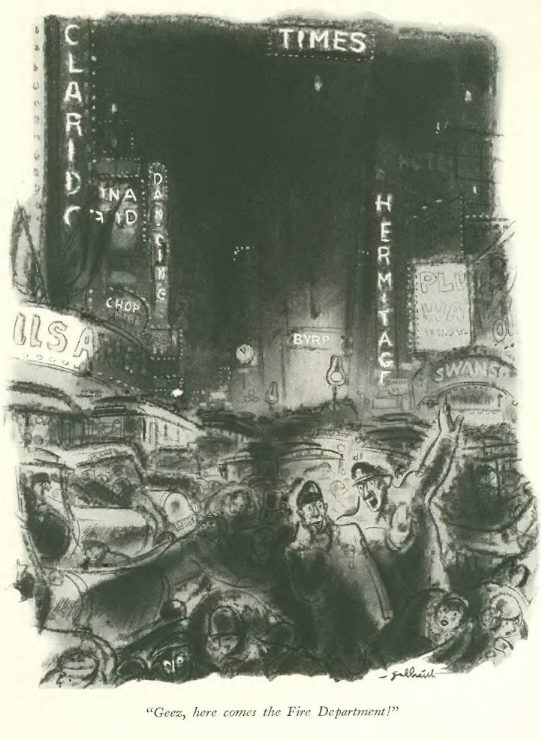
…William Crawford Galbraith…
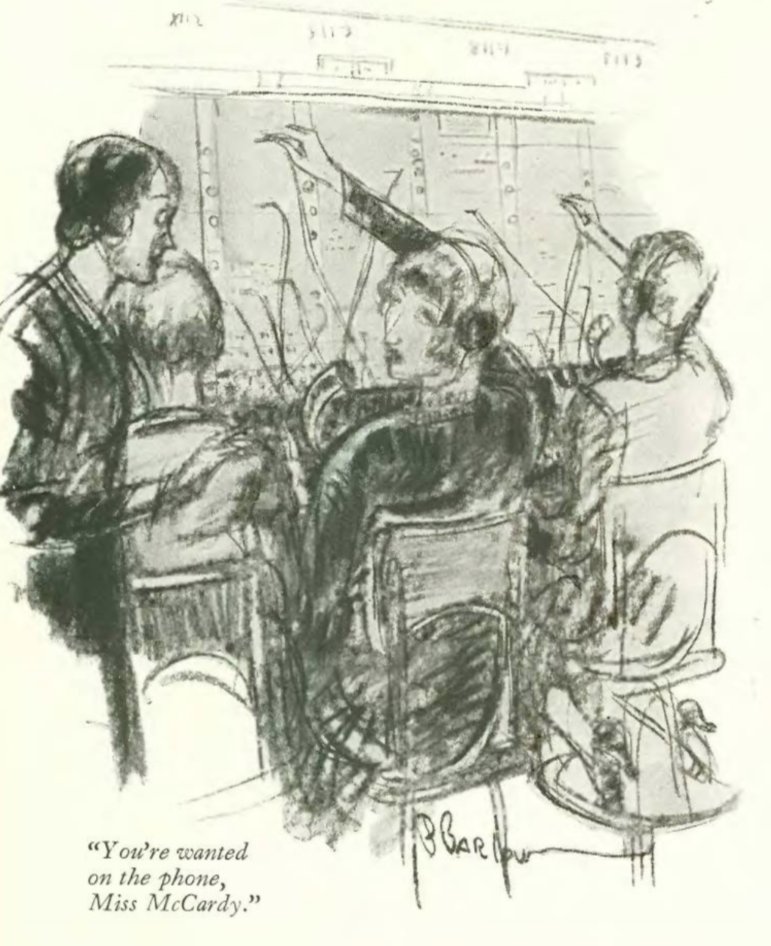
…and Perry Barlow…
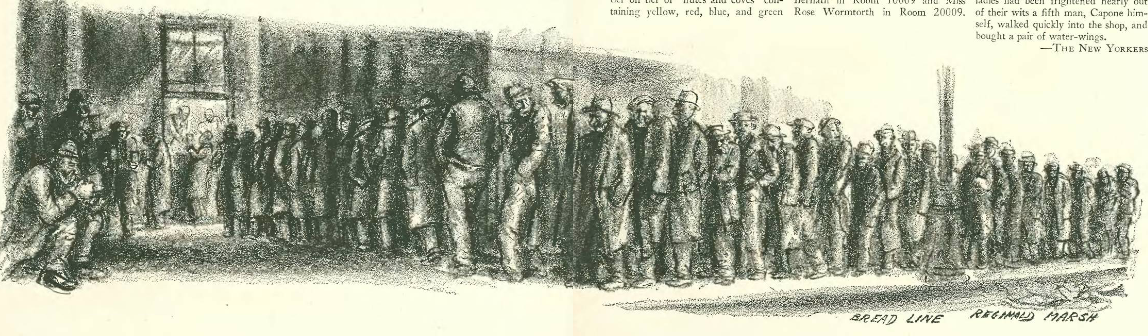
…and for another reminder of reality in the city, this sketch that ran along the bottom of “The Talk of the Town,” by Reginald Marsh…
…and now we step back to the Nov. 15 issue, where E.B. White offered a less somber take on the Great Depression…
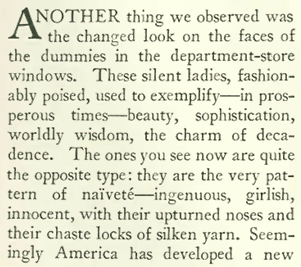
…White also noted a change on the faces of storefront mannequins…
YIN AND YANG…The worldly pose of a Roaring Twenties mannequin, and a more wholesome look for the leaner times in the 1930s. (Pinterest)
* * *
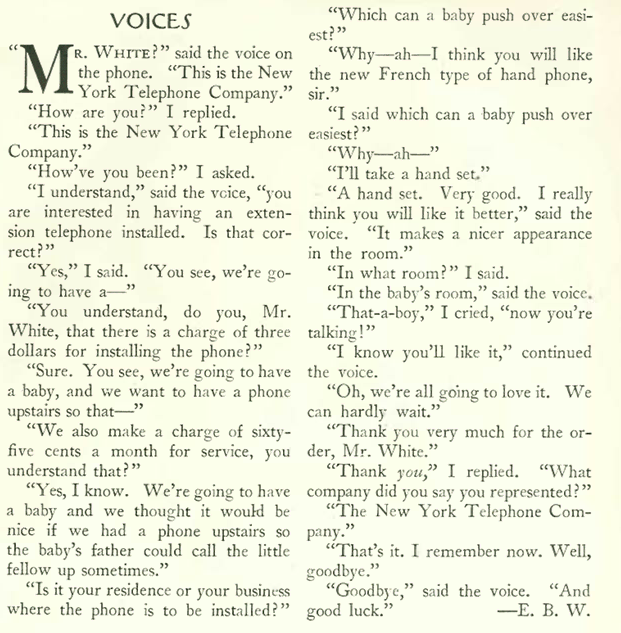
Playing Telephone
Long, long before cell phones, telephones were heavy stationary devices that required a certain amount of planning before installation, as E.B. White explains:
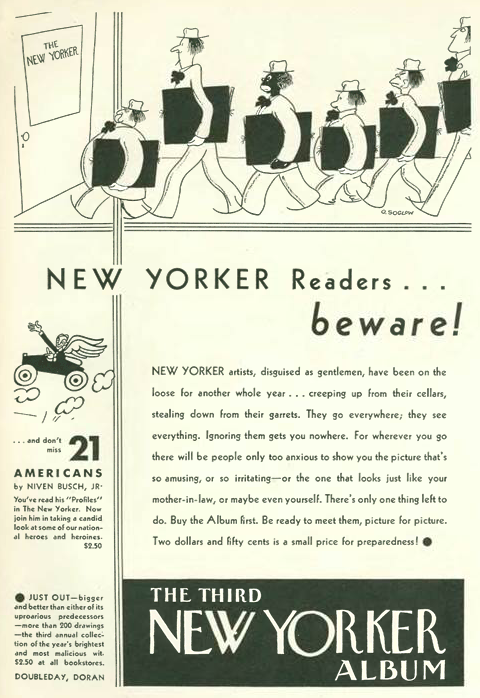
On to our Nov. 15 ads, we have this announcement for The Third New Yorker Album…with illustration by Otto Soglow…
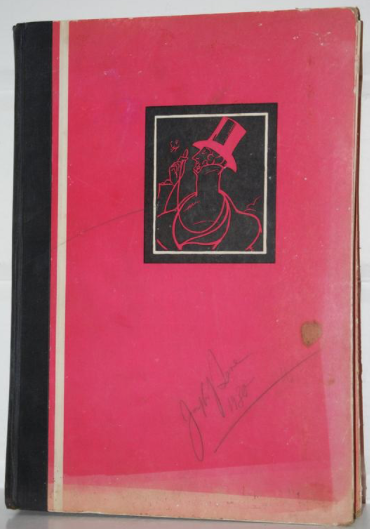
…here is what the album looked like…
…and a couple of inside pages…
(Etsy)
…one of the contributors to the album was Rea Irvin, founding illustrator for The New Yorker, here doing some business with Murad cigarettes…also another Flit insecticide ad by Dr. Seuss…
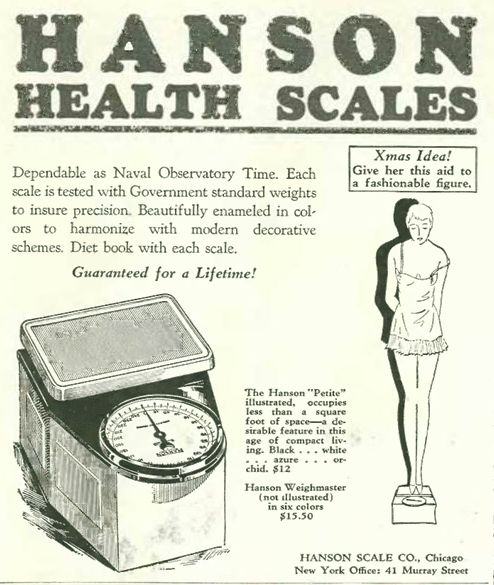
…Christmas ads began appearing in the magazine, including this one for Hanson scales…pity the poor chap (and his wife) who actually thought this might be a suitable present for Christmas, or any occasion for that matter…
…and with Prohibition still in force, advertisers found other uses to promote their products…
…on to our cartoons, Leonard Dove illustrated a couple who didn’t get away with the ruse…
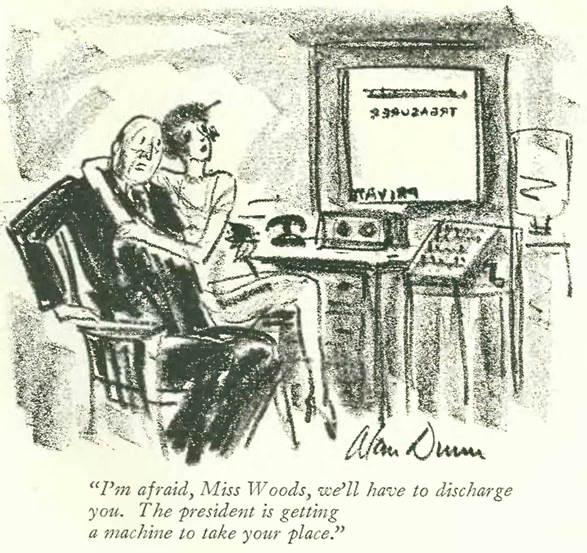
… Alan Dunn depicted what was considered typical office behavior in the 1930s…
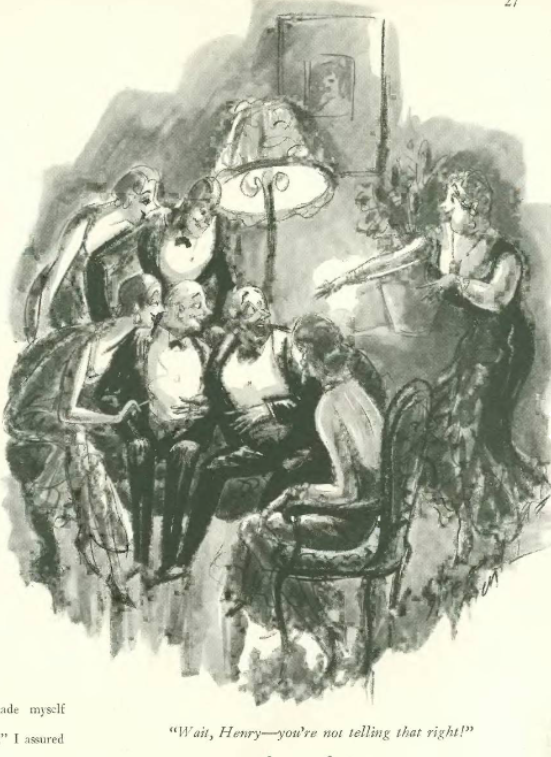
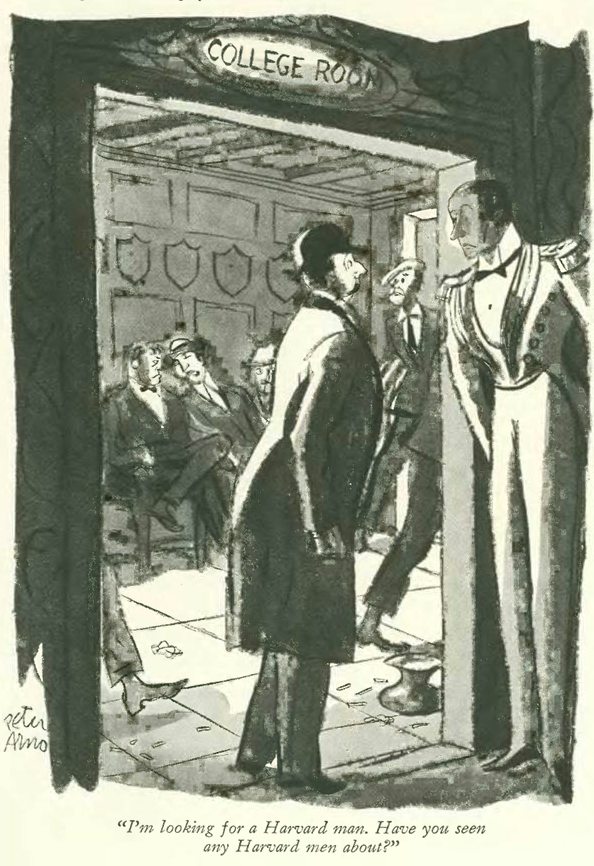
...Peter Arno visited the Harvard Club…
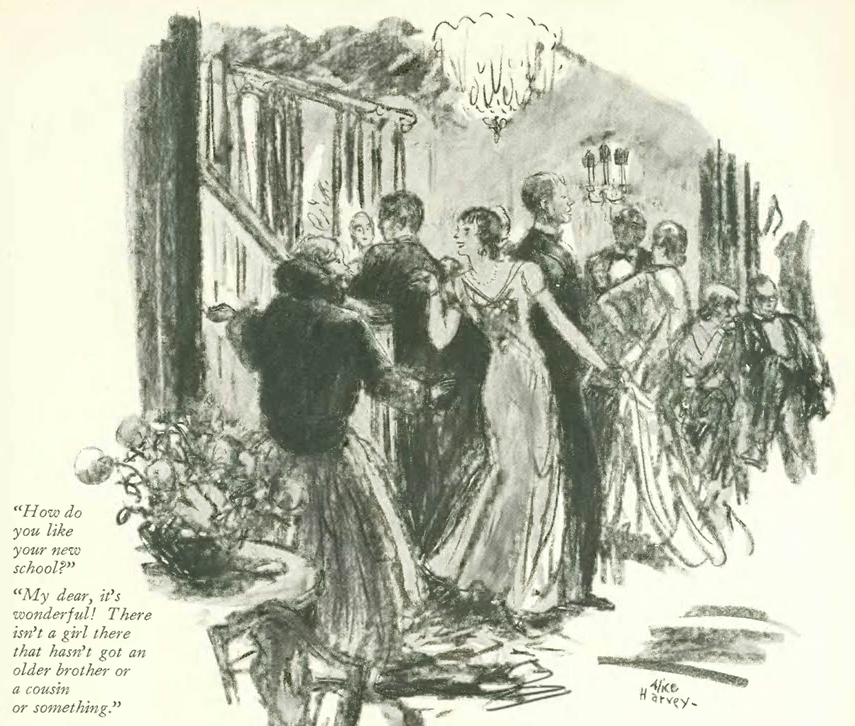
…Alice Harvey also explored the college scene…
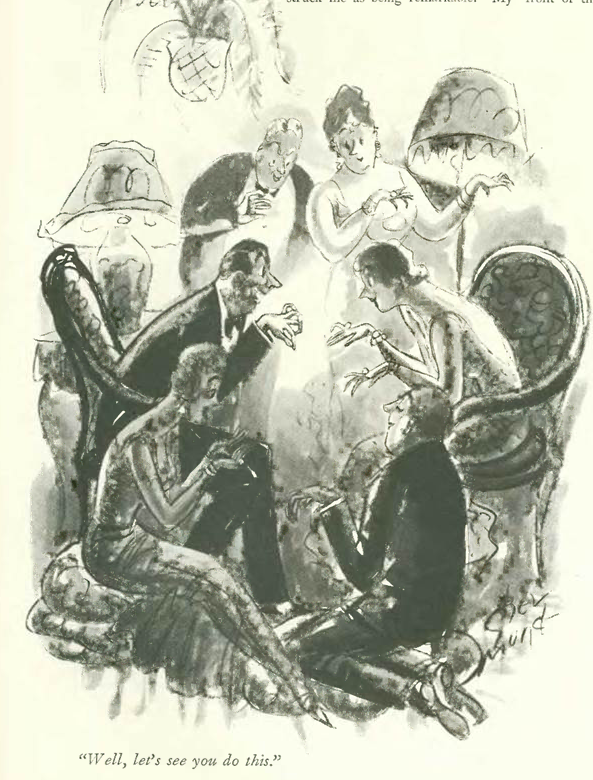
…some parlor games with Barbara Shermund…
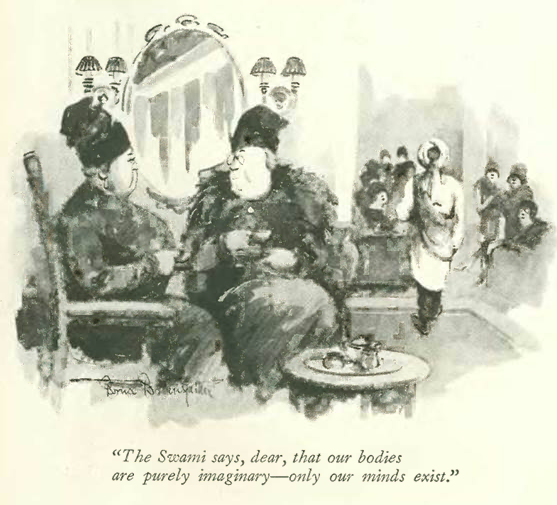
……Bruce Bairnsfather, and some existentialist chat at tea time…
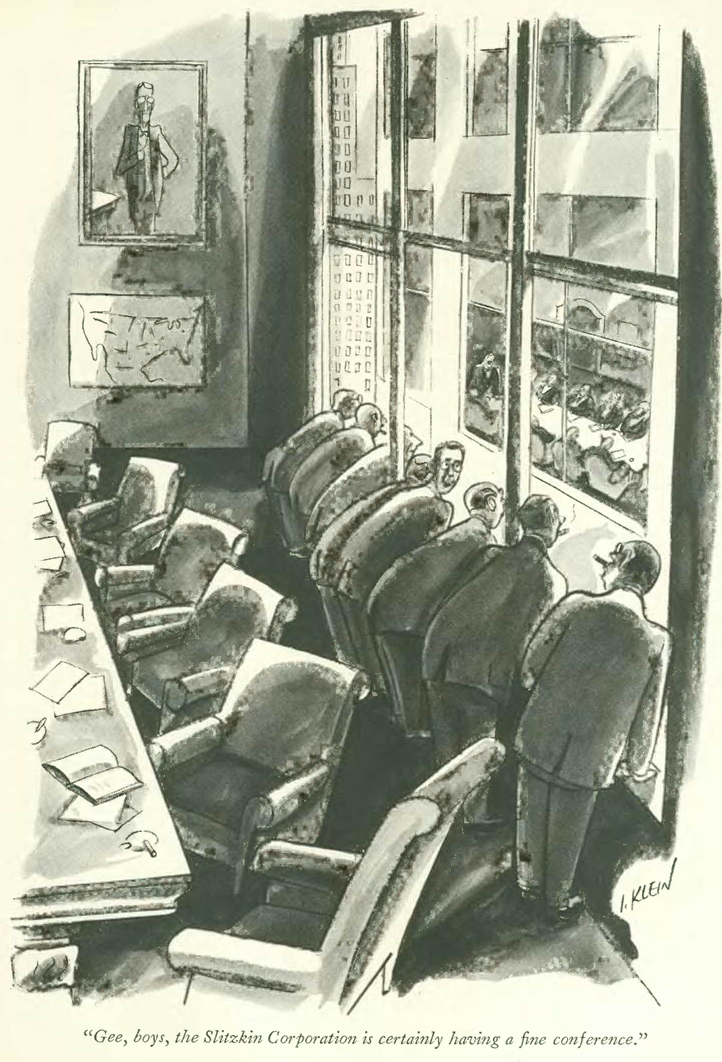
…and we close with Isadore Klein, and the world of corporate competition…
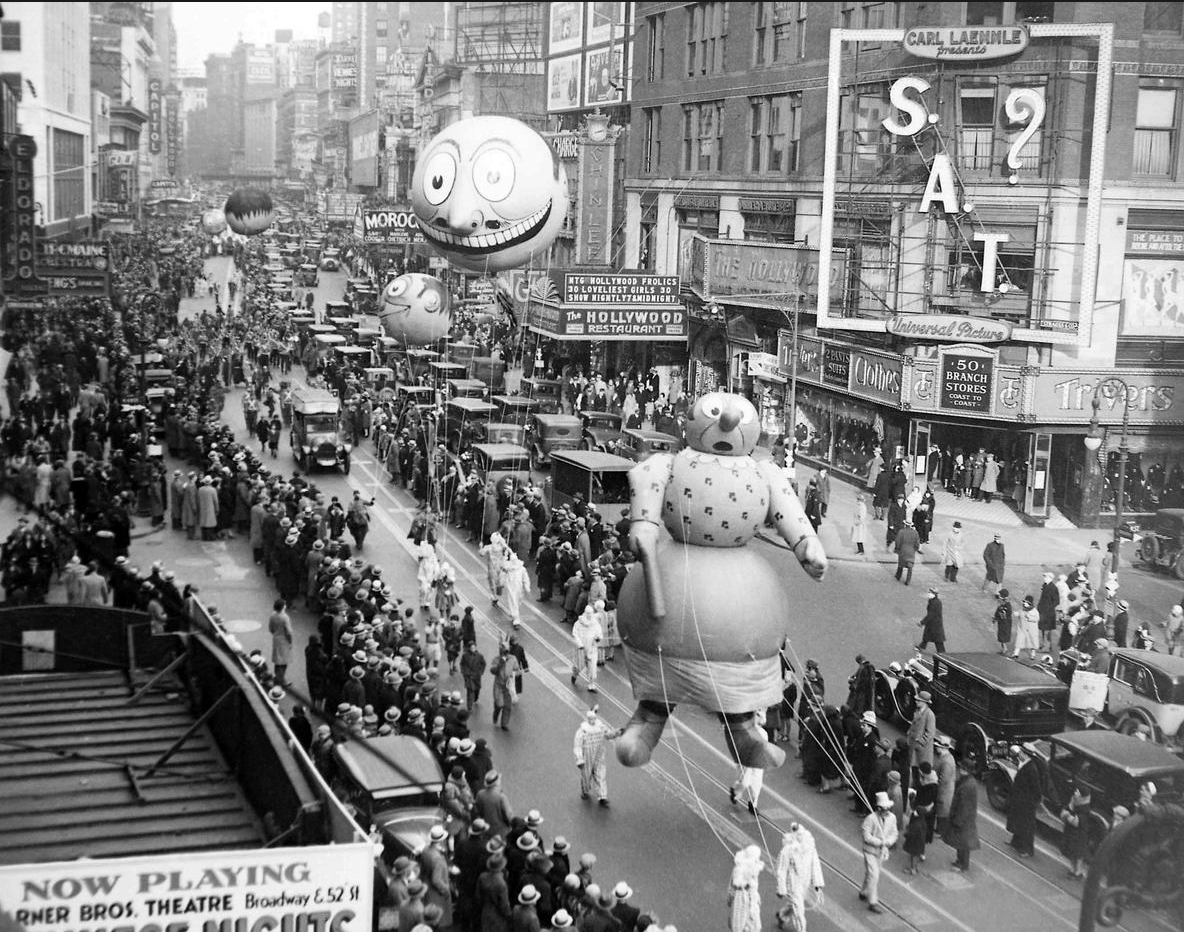
…and a Happy Thanksgiving, from the Macy’s Thanksgiving Parade 89 years ago, Nov. 27, 1930…
After completing a major in French in just three years, 19-year-old Libby Holman became the youngest woman to graduate from the University of Cincinnati in 1923. But it was her unique style of torch-singing—a trademark throaty mumble—that would launch a career on Broadway and a life of seemingly endless scandal.
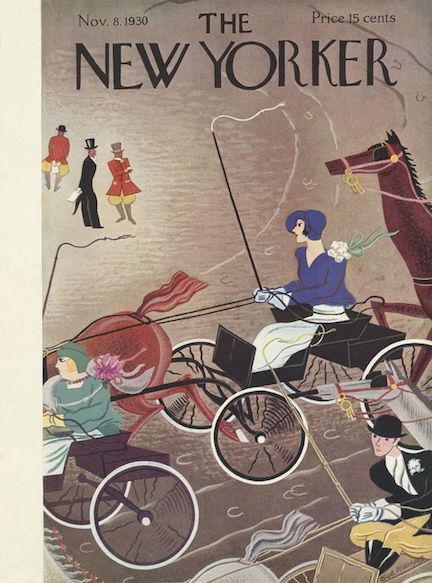
Nov. 8, 1930 cover by Sue Williams.
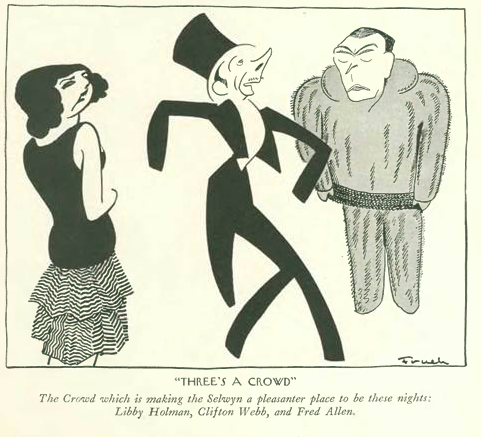
After performing in the The Greenwich Village Follies, Holman (1904–1971) landed her first big role in 1925 in the Rodgers and Hart production of Garrick Gaieties. But it was a signature song, “Moanin’ Low,” from Clifton Webb’sThe Little Show that would make her a star. When Three’s a Crowd (by Howard Dietz and Arthur Schwartz) opened at the Selwyn Theater on October 15, 1930, Holman was well-known to audiences not only for her voice but also for her unconventional lifestyle.
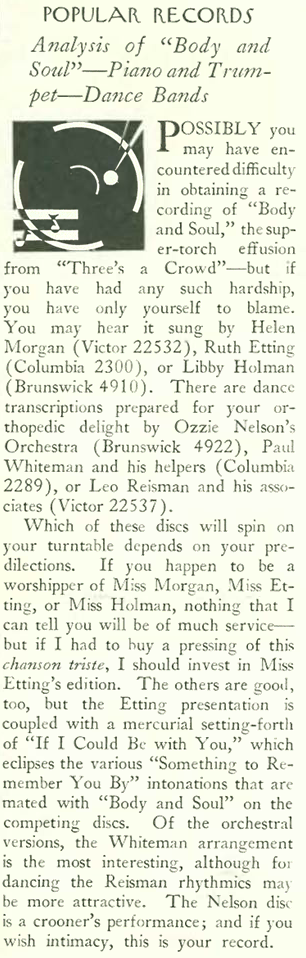
Three’s a Crowd proved to be a hit for Holman, and it gave her another hit song, “Body and Soul,” which was banned from the radio for “obscenity” but nevertheless became one of the year’s most popular songs. So popular, in fact, that it was recorded by Holman as well as by fellow torch singer Helen Morgan and Ziegfeld star Ruth Etting. This was the age of the Great American Songbook, when the song itself, and not necessarily its performer, reigned supreme. So when sheet music was distributed from a popular stage show, any number of entertainers would record it.
NAME THAT TUNE…From top to bottom, Helen Morgan, Ruth Etting and Libby Holman all recorded versions of “Body and Soul,” but Holman would make it one of her signature numbers. (YouTube/ruthetting.com/Wikipedia)
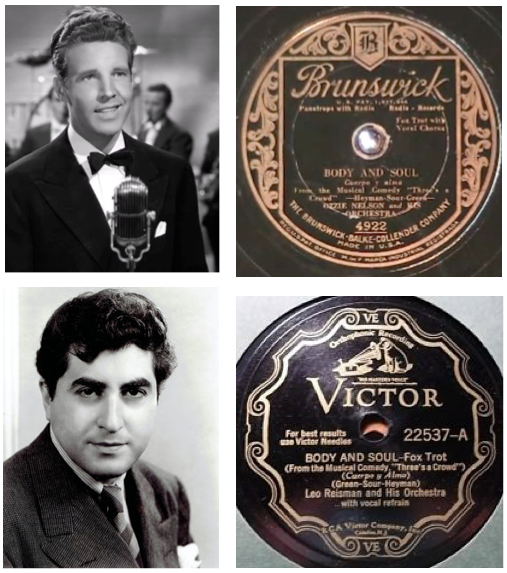
…for the hoofers, there were also a couple of dance versions of “Body and Soul” created by bandleaders Ozzie Nelson and Leo Reisman…
GOOD BEAT, EASY TO DANCE TO…Bandleaders Ozzie Nelson and Leo Reisman recorded dance versions of “Body and Soul.” (YouTube)
Openly bisexual, Holman partied hard and swore like a sailor, and during her life she would lose one husband in a suspected murder (Holman herself was briefly a suspect) and another to suicide. She would take her own life in 1971. You can read more about Holman’s colorful, tragic life in the Jewish Women’s Archive.
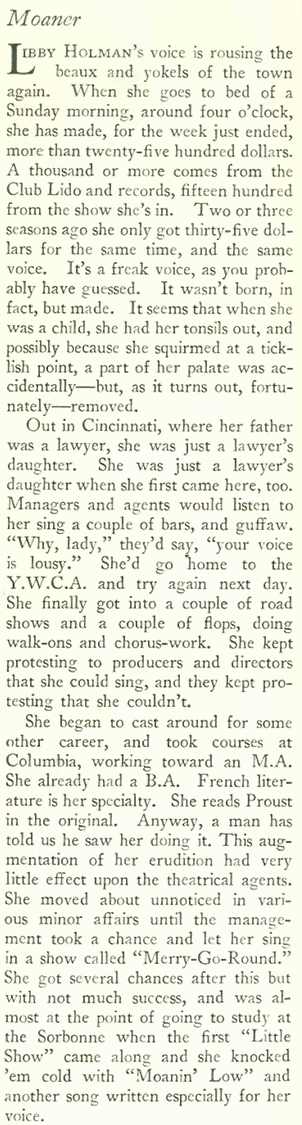
We temporarily skip to the next issue of The New Yorker (Nov. 15, 1930), which featured Holman in a “Talk of the Town” brief, and some insight into her unique singing style. An excerpt:
The same issue also featured this drawing of the “Three’s a Crowd” cast by Al Frueh in the theater review section:
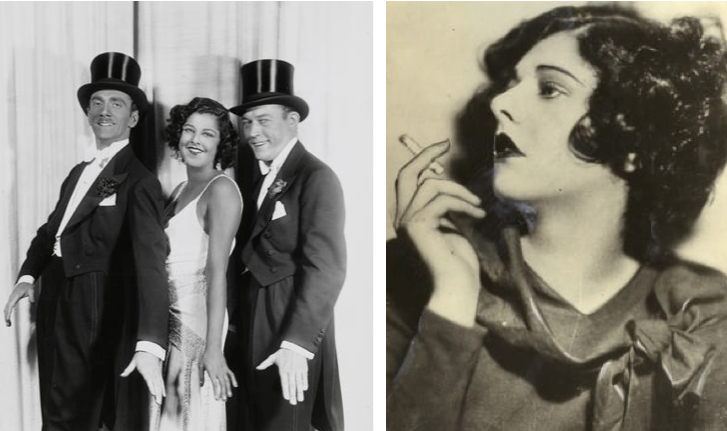
and finally, a publicity photo of the cast from 1930-31:
A FUN CROWD…Clifton Webb, Libby Holman and Fred Allen in Three’s a Crowd. At right, undated publicity photo of Holman. (performerstuff.com)
* * *
Horsin’ Around
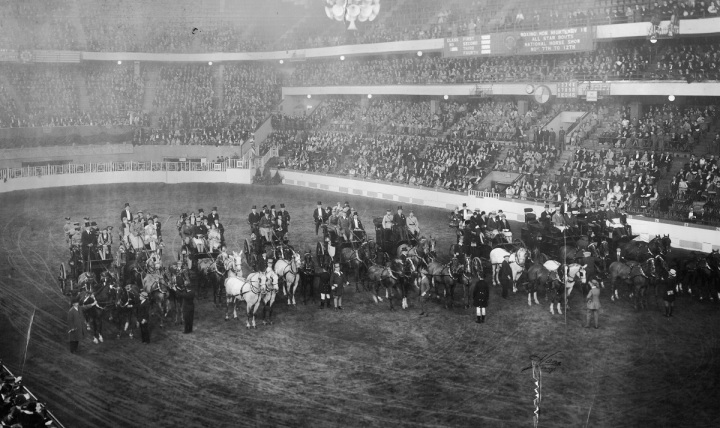
The National Horse Show was a major event on New York’s social calendar, first held at the original Madison Square Garden in 1883 before moving to the second Madison Square Garden in 1890 and again to the third Madison Square Garden in 1926. This account in the Nov. 8, 1930 New Yorker noted how the horse show’s patrician air contrasted with the rodeo held at MSG the previous week.
NOT FOR GOAT-ROPERS, THIS…The coaching parade on display at the 1927 National Horse Show in Madison Square Garden. (National Sporting Library & Museum)SOON WE’LL BE FIGHTING EACH OTHER…The National Horse Show began including a military competition in 1925. This photo from the Nov. 6, 1930 New York Times featured some international guests at the 1930 show. (NY TIMES)
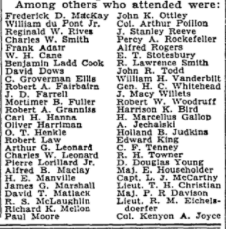
Along with the above photo, the Times included this partial lists of guests to the Horse Show Luncheon, a who’s who of New York society. Indeed, the National Horse Show’s 1887 directory provided the basis for the first New York Social Register.
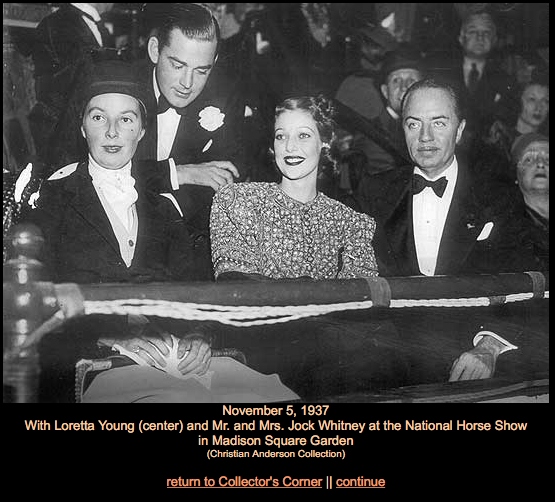
DRESSING UP FOR THE HORSES…Champion horsewoman Mary Elizabeth Whitney (left) with actors Loretta Young and William Powell at the National Horse Show in Madison Square Garden, Nov. 5, 1937. Standing behind Mary Elizabeth is her husband, Jock Whitney, a noted ambassador, art collector, philanthropist and investor. (Christian Anderson Collection)HIGH STEPPIN’…After a brief stint in Florida, the National Horse Show moved to Kentucky in 2011. Perhaps a tad less formal, it nevertheless remains an important society event. Above, noted horsewoman Misdee Wrigley Miller rides World Grand Champion Grande Gil at the 2012 National Horse Show. (Doug Shiflet)
* * *
A Lesson in Poetry
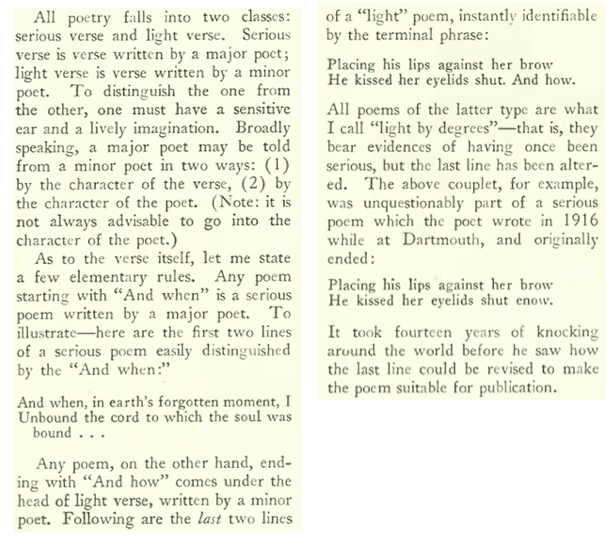
In a casual for the Nov. 8 issue, E.B. White instructed readers on how to “Tell a Major Poet From a Minor Poet.” An excerpt.
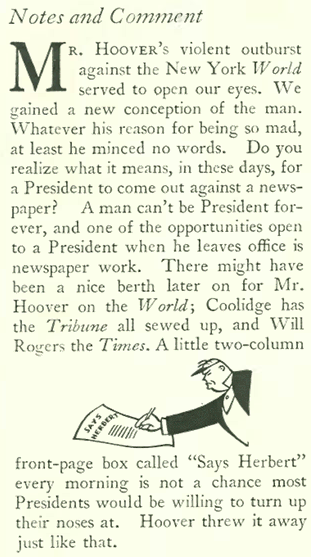
And in his “Notes and Comment,” White suggested that criticism of the press was a major no-no for a sitting U.S. President:
Christmas shopping suggestions began to trickle into Lois Long’s section on fashion, house and home, including this bit of advice that reminds us just how distant 1930 is from our own time:
* * *
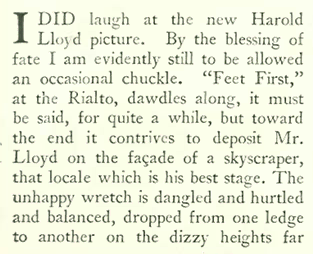
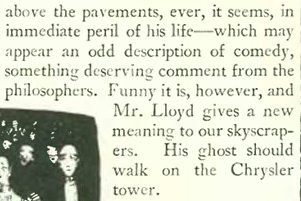
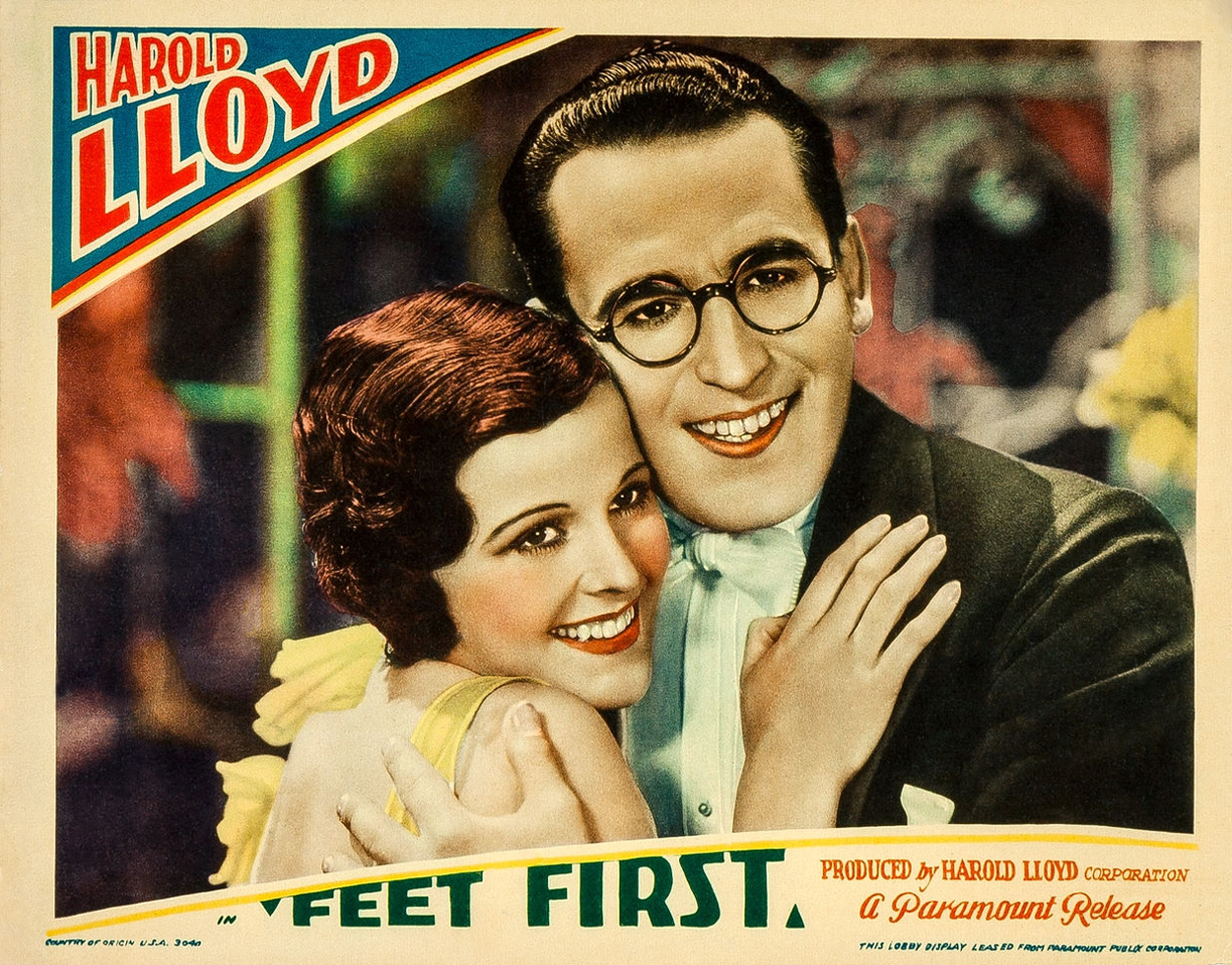
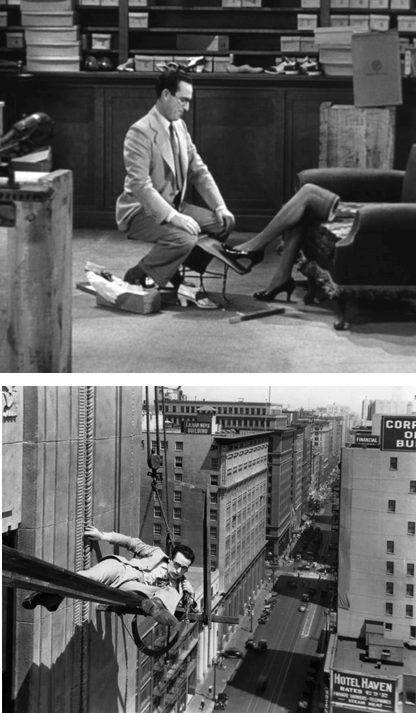
Film critic John Mosher took in the latest offering from silent film star Harold Lloyd, who was making his second foray into the talkies with his portrayal of a hapless shoe salesman in Feet First…
TEETH FIRST…Theater card for 1930’s Feet First featuring Barbara Kent and Harold Lloyd. (IMDB)GETTING A LEG UP…Top, Harold Lloyd practices the art of shoe salesmanship with a pair of dummy legs in Feet First; below, Lloyd once again finds himself in a precarious situation high above a city street. (IMDB)
* * *
From Our Advertisers
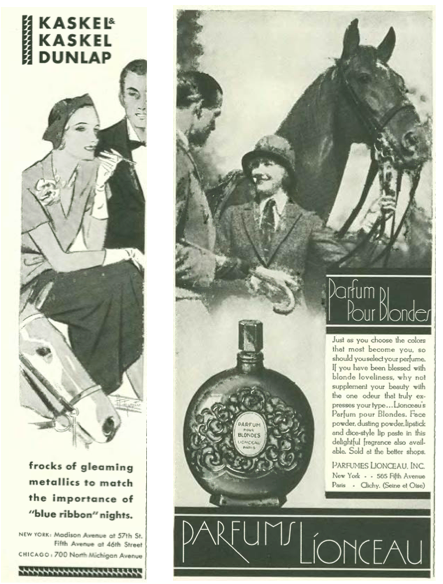
The National Horse Show was on the minds of several advertisers in The New Yorker, including these fashion merchants targeting the patrician set…
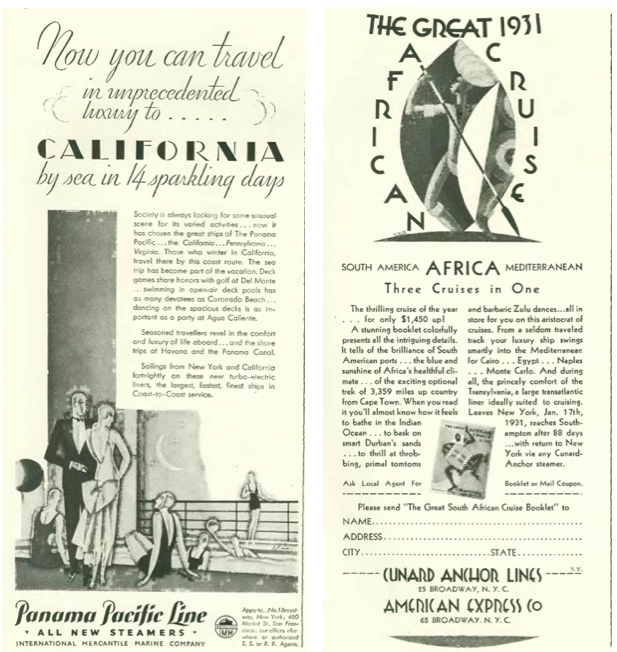
…speaking of the well-heeled, with winter approaching travel agencies enticed those with means to take a steamer through the Panama Canal to California, or for the more adventurous, a three-continent tour package…
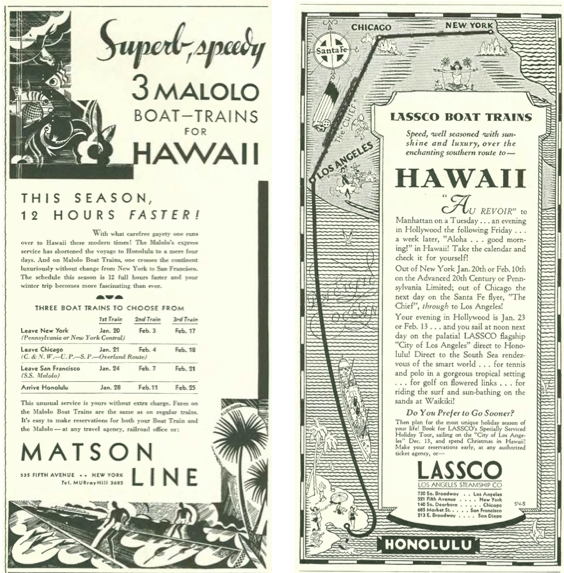
…and of course Hawaii beckoned snowbirds, who could make their way across the Lower 48 by train and then hop a boat to the islands…
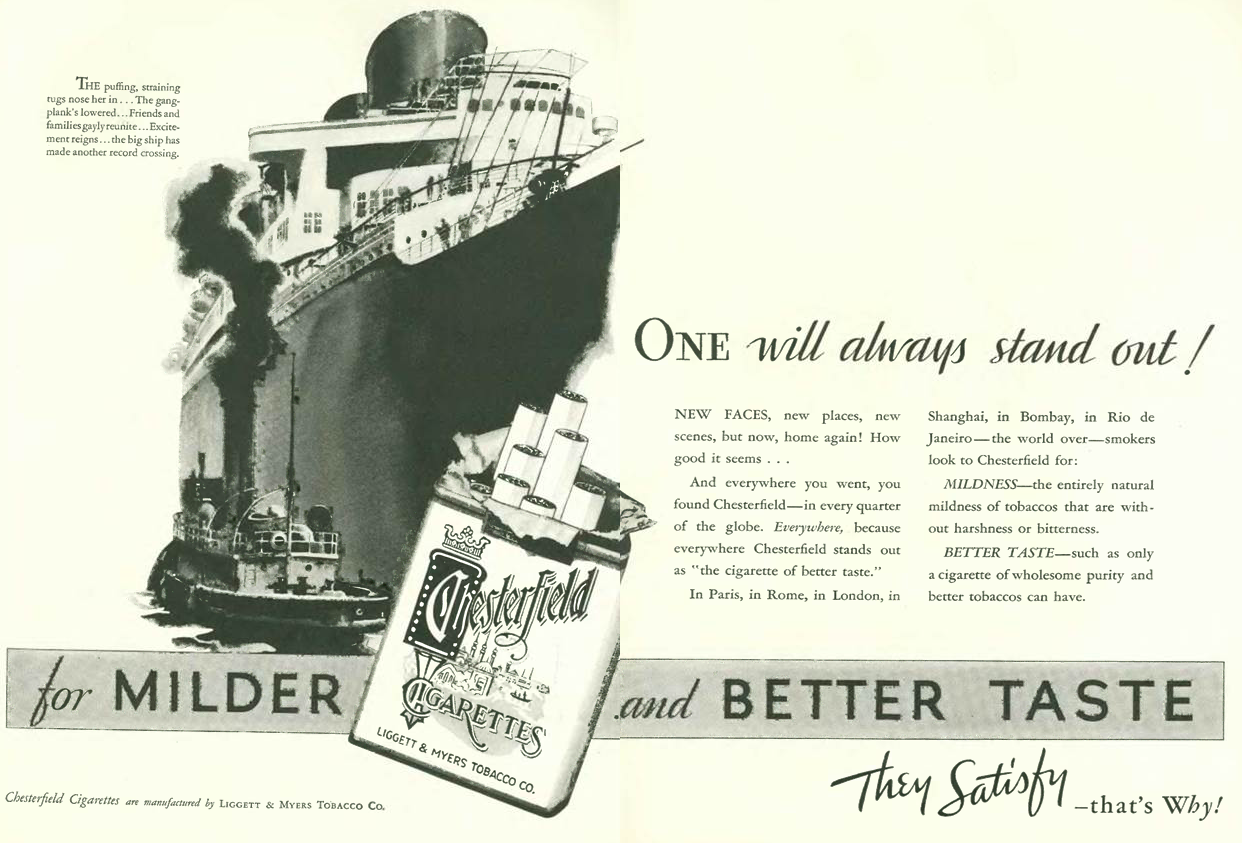
…the makers of Chesterfield cigarettes were on board with the travel theme…
…while the folks at Marlboro stuck with their dopey handwriting and jingle contests to push their smokes…
…as the luxury market grew ever tighter in the Depression, the sellers of finer things sought to distinguish their wares from competitors. L.P. Hollander kicked off a series of wordy ads regarding the provenance of their hats, gloves and other accessories (in short, they ain’t cheap copies)…
…no doubt the folks at L.P. Hollander were looking down their noses at the likes of Russeks, which offered copies of Lucien Lelong gowns. Apparently old Lucien was okay with this, as this “Radiogram” purportedly attests…
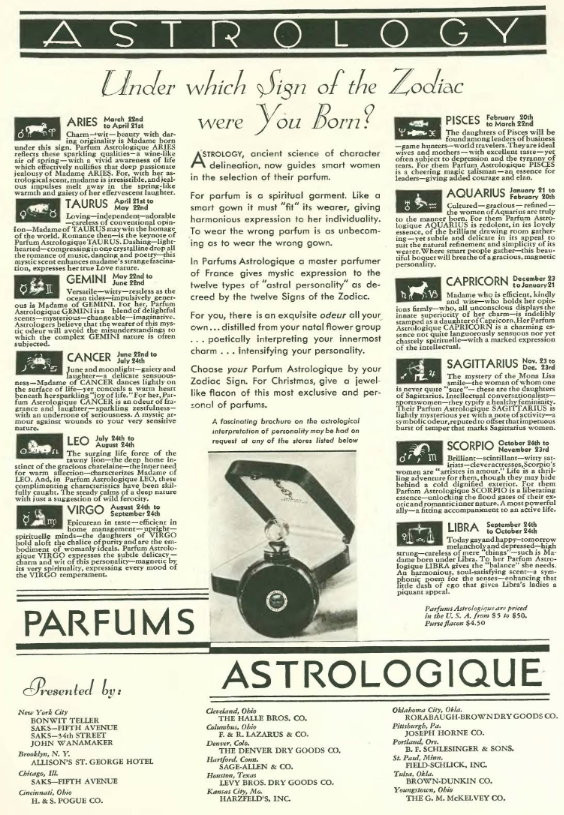
…Lucien pops again in another ad, this one for his perfume line…
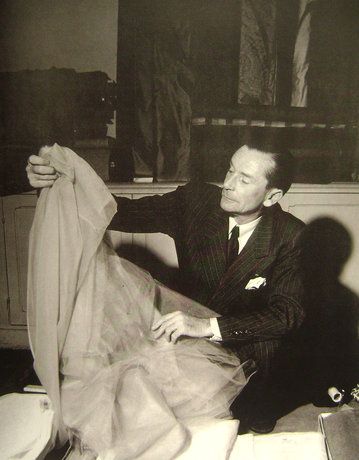
…and for reference, here’s a photo of Monsieur Lelong, circa 1940…
(comm396-s16.ascjclass.org)
…on to our cartoonists, the Nov. 8 issue featured these great spot illustrations by Constantin Alajalov, the first, running along the bottom of “The Talk of the Town,” referenced the horse show at Madison Square Garden…
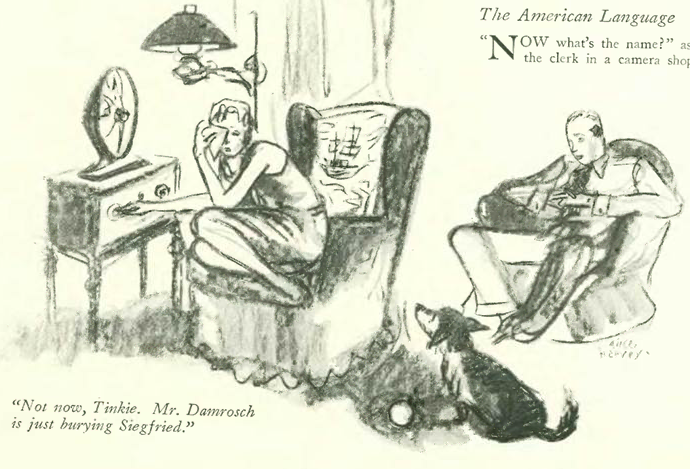
…Alice Harvey listened in on a radio soap…
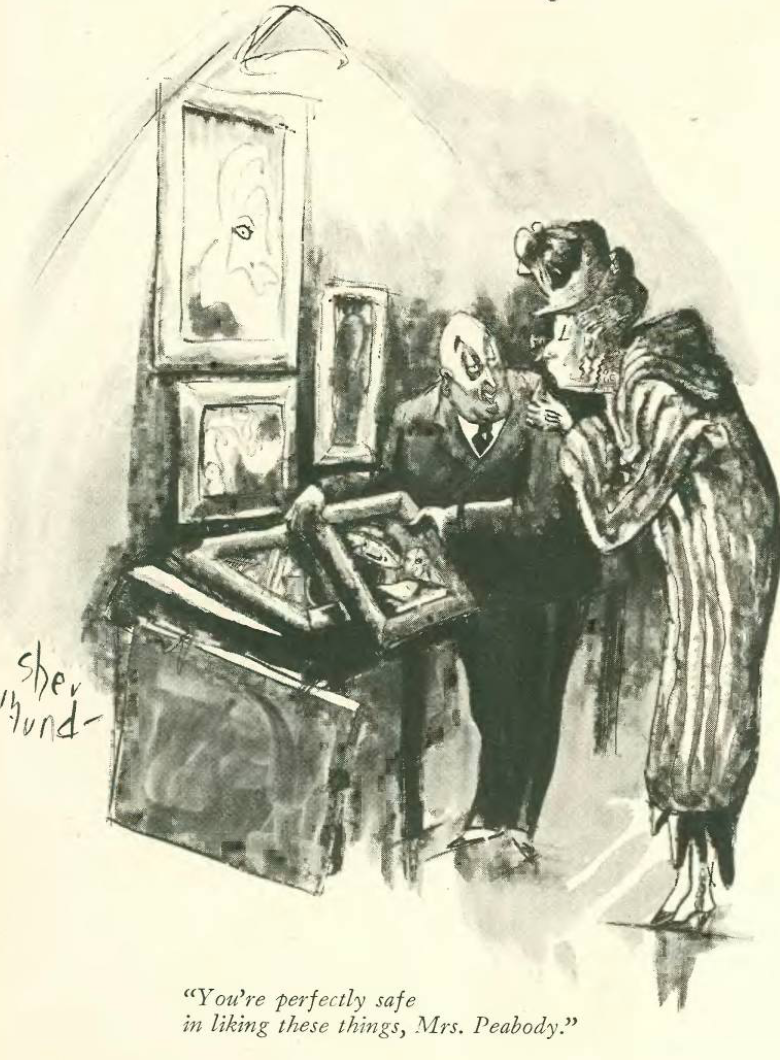
…William Crawford Galbraith found some admirers of art…
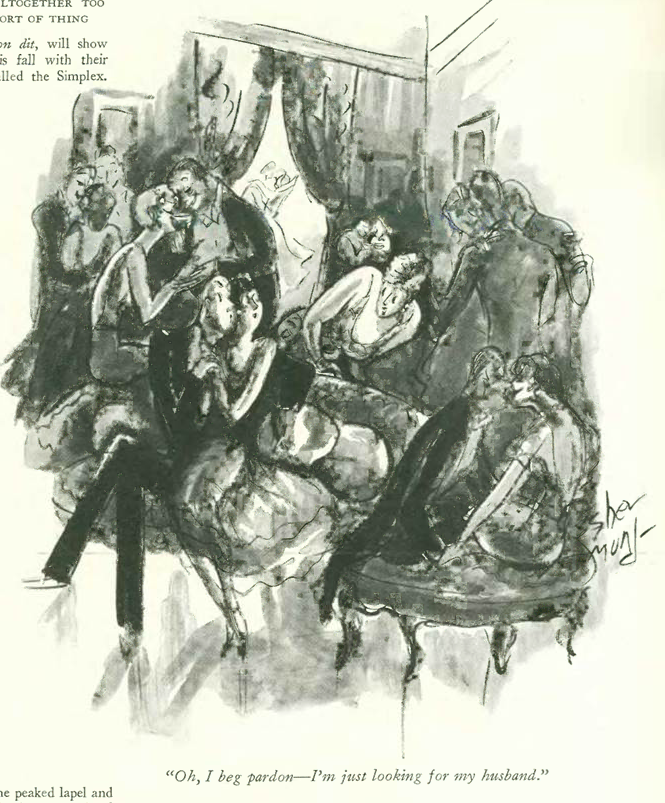
…Barbara Shermund continued to share her sharp observations of parlor hijinks…
…Garrett Price illustrated the challenges of modern design…
…and we end with Peter Arno, and a stomach-turning moment…















































































































 A New Yorker State of Mind