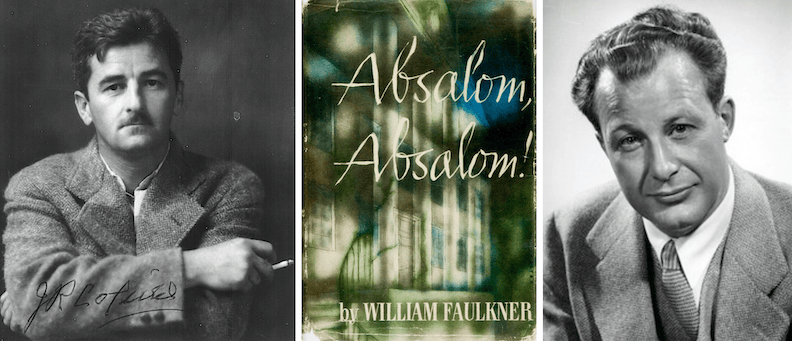
Above: New Yorker book critic Clifton Fadiman (right) characterized William Faulkner's "Absalom, Absalom!" as a "penny dreadful tricked up in fancy language." Fadiman was not alone among contemporary mainstream critics in his assessment, although today the novel is considered a masterwork of Southern Gothic literature. (Wikipedia/J.R. Cofield Collection, University of Mississippi Library)
With its non-linear timeline, winding prose, and multiple unreliable narrators, William Faulkner’s Absalom, Absalom! left many critics wondering what to make of the author’s ninth novel, including The New Yorker’s Clifton Fadiman, who had a near-visceral response to Faulkner’s “shuddery inventions.”
Although today the novel is widely considered a literary masterpiece, in 1936 Fadiman saw the dense, labyrinthine style of Absalom, Absalom! as nothing more than an empty facade for a melodramatic plot and characters resembling a “mince-pie nightmare.”
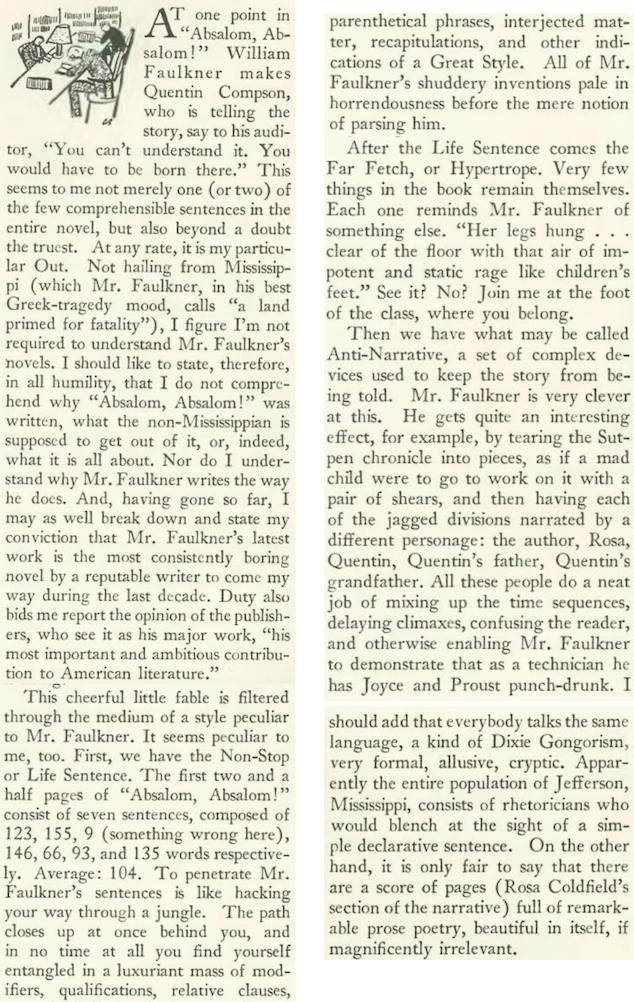
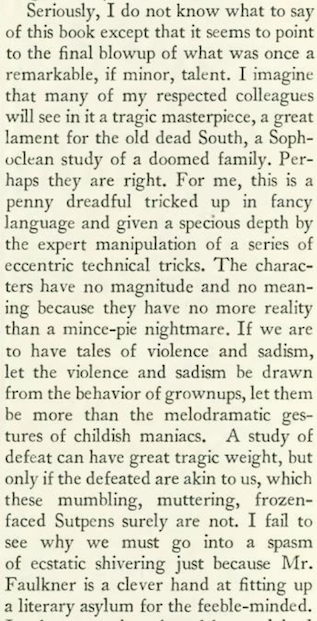
The novel explored the rise and fall of Thomas Sutpen, a poor man who ruthlessly carves out a plantation empire in 1830s Mississippi. Told entirely in flashbacks consisting of fragmented memories and differing perspectives, the novel is psychologically bleak and violent, with nearly every major character meeting a tragic end. Following are excerpts from Fadiman’s review:

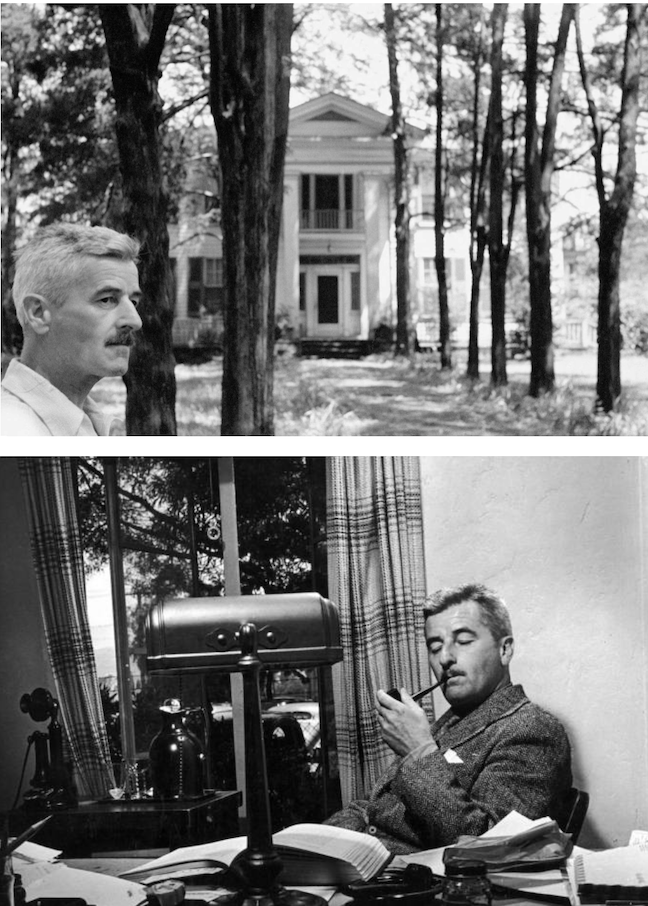
Faulkner had some history with The New Yorker: A Nov. 21, 1931 “Talk of the Town” entry titled “Oxford Man” featured a thirty-four-year-old Faulkner living in a Tudor City apartment, working on his novel Light in August. “Talk” noted his service in the Canadian air force, which he joined in 1915 (he broke both legs in a crash) and that he “sometimes flies a rather wobbly plane owned by a friend in Oxford.” As for his writing style, “Talk” offered this quote from Faulkner: “Ah write when the spirit moves me, and the spirit moves me every day.” The piece also noted that “Only a few of the townspeople know he writes at all; most of them think he’s lazy.”
Here’s a second excerpt from Fadiman’s Oct. 31, 1936 review, in which the critic concludes that Faulkner “is a clever hand at fitting up a literary asylum for the feeble-minded.”

* * *
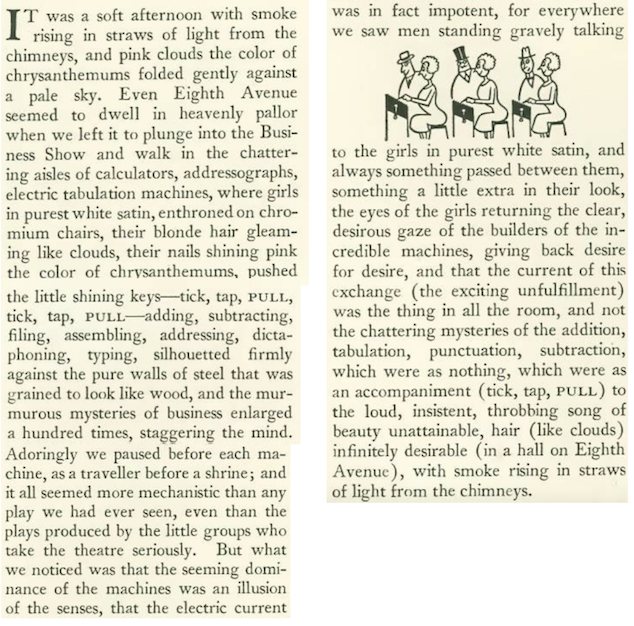
Chattering Mysteries
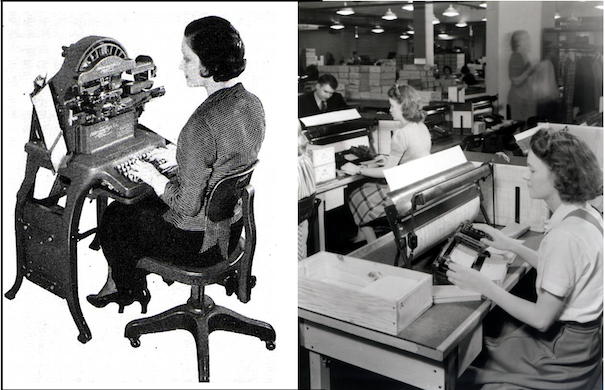
Those are the words E.B. White used to describe aisles of calculators, addressographs, and electric tabulation machines being operated by women clad “in purest white satin” at a business show on Eighth Avenue.
* * *
Get the Extra-large Popcorn
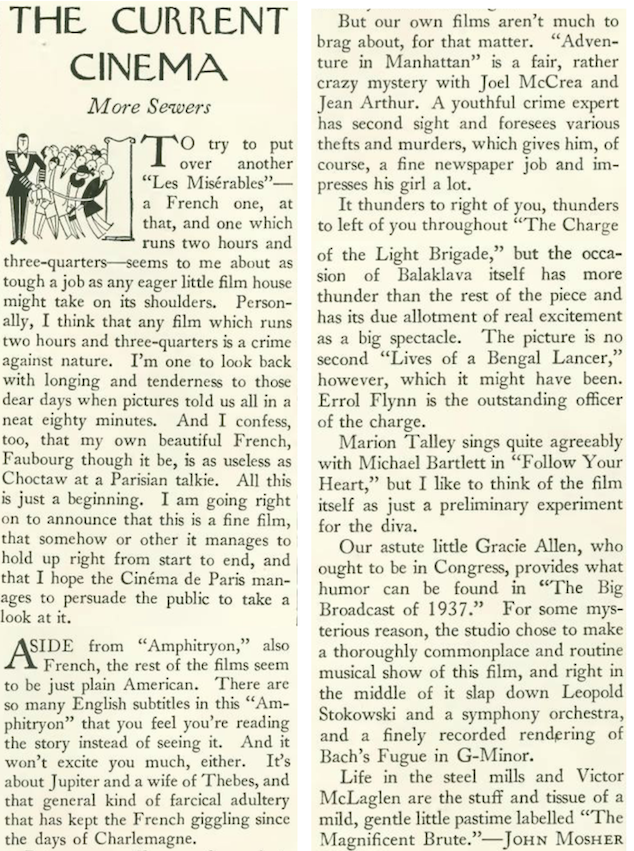
They say movies are getting longer these days, but the Thirties had its share of lengthy screen epics, including a nearly five-hour running time for the 1934 French adaptation of the Victor Hugo novel Les Misérables. Initially released as three films premiering over three consecutive weeks, the full, unedited film ran a total of 281 minutes. Apparently the 1936 American release, reviewed here by John Mosher, ran for just under three hours, which Mosher called “a crime against nature.” He did, however, pronounce it “a fine film.” He also reviewed a German musical comedy, Amphitryon, and some uninspiring “plain American” films.

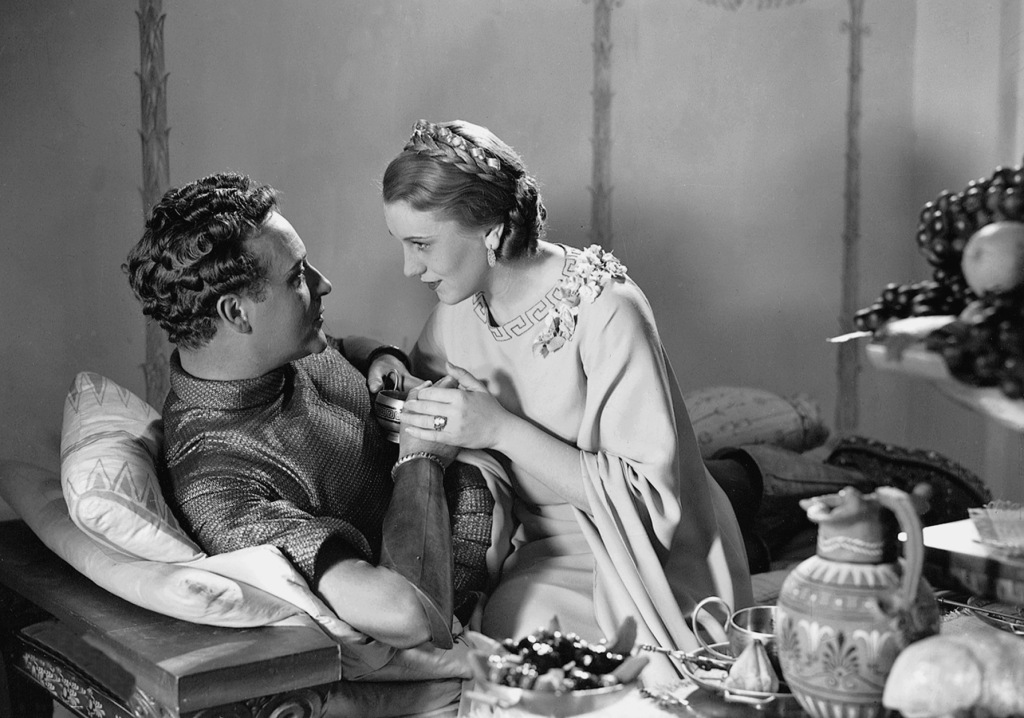
Mosher grew weary of reading the subtitles in the German film Amphitryon, a surprising satirical musical that somehow got made even after the Nazis took over the reigns of the Ufa-Atelier studio; however, the coming year would see a further tightening of domestic repression (including film) under Reich leadership.
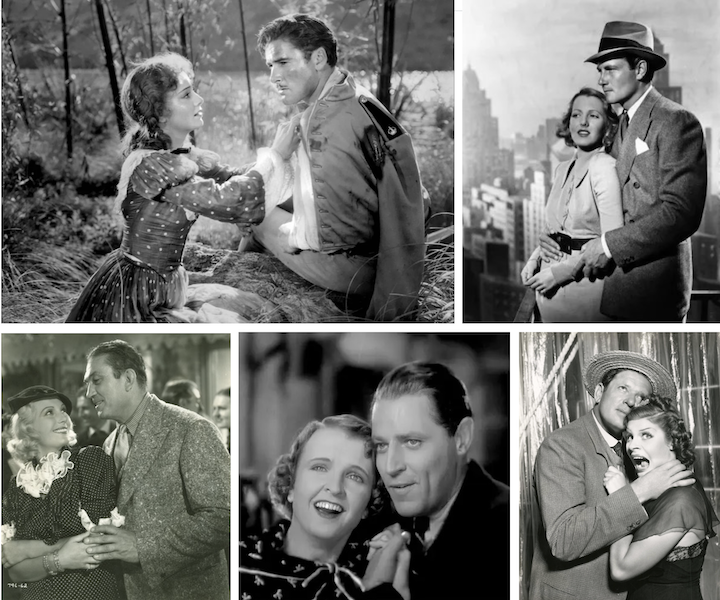
The “plain American” films reviewed by Mosher included a mystery, a revue, and a musical featuring opera singer Marion Talley, who years earlier had received some rough treatment from The New Yorker.
* * *
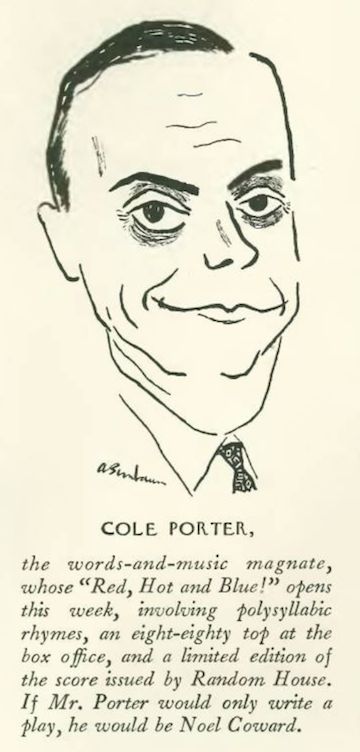
Polymath Porter
The multi-talented composer/songwriter Cole Porter was the latest celebrity to receive a mini bio in the opening pages…illustration by Abe Birnbaum…
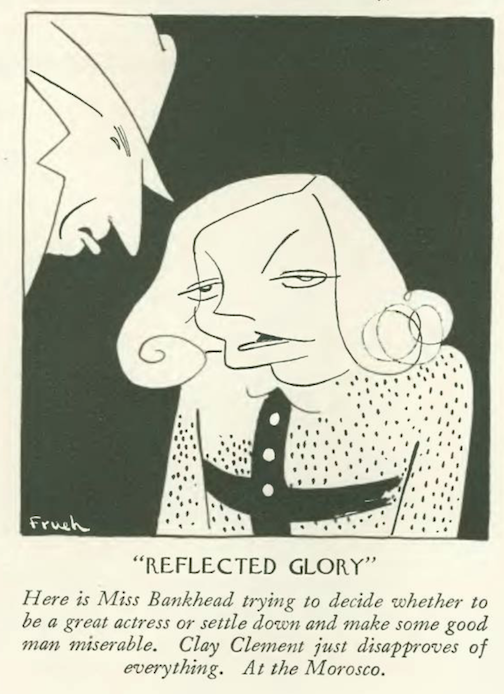
…and on the subject of theater, Al Frueh offered his impression of the Talullah Bankhead vehicle, Reflected Glory...
* * *
From Our Advertisers
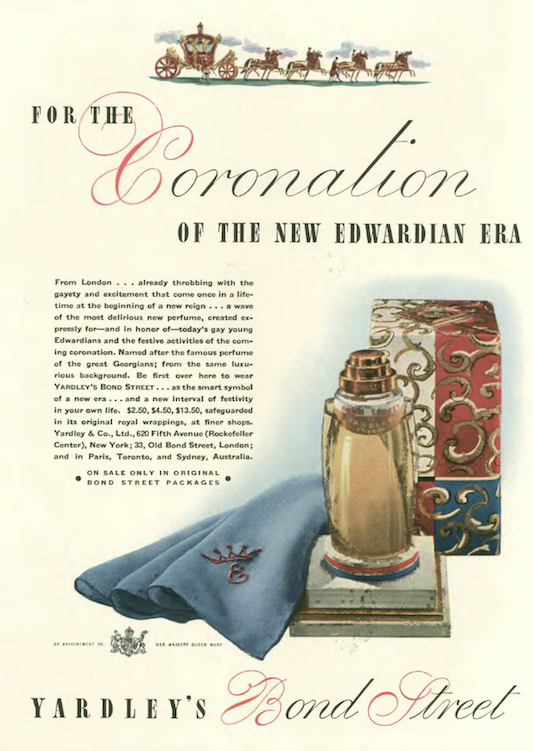
Various retailers were gearing up for the coronation of England’s King Edward VIII, and the folks at Yardley’s were busy packaging their lavender-scented soaps and perfumes for royalty-starved Americans, “safeguarded in original royal wrappings”…this “Edwardian” campaign would be scrapped just weeks later when Edward would abdicate the throne (on Dec. 10) and run off with American Wallis Simpson…
…the makers of Beech-Nut chewing gum made a splash with this full-page ad touting their traveling “Smallest Show on Earth”…

…Canadian Club continued its world tour with a stop in Kuala Lumpur…

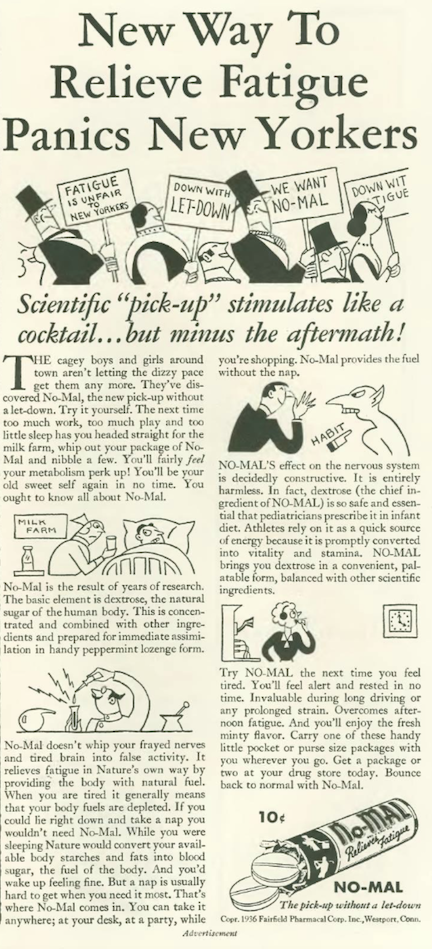
…No-Mal ran another back-of-the-book ad promoting its scientific “pick-up”…the chief ingredient, according to this spot, was dextrose (even safe for infants!), but it doubtless also contained caffeine and Lord knows what else…
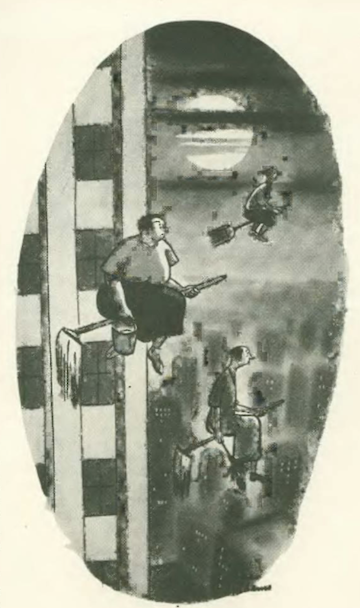
…no extra stimulation needed for our cartoon section, beginning with Mary Petty…
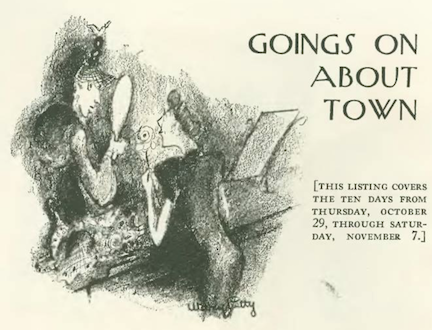
…there were a couple of Halloween-themed spots by Susan Willard Flint…

…and Charles Addams...
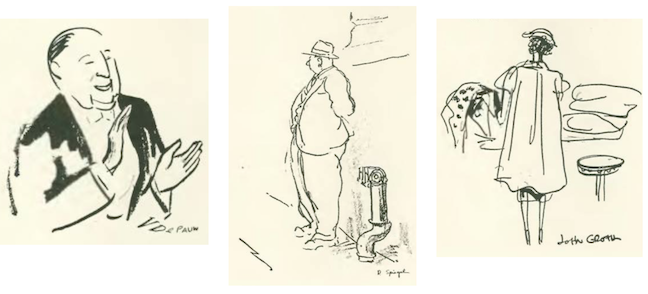
…a sampling of other spot drawings…Victor de Pauw, Doris Spiegel, and John Groth…
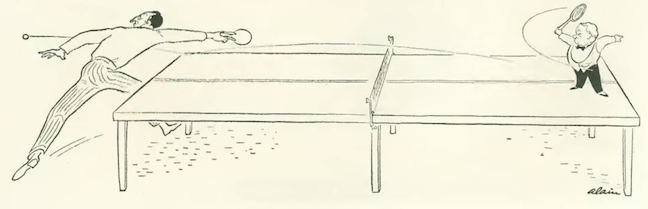
…Alain gave us the true meaning of “table tennis”…
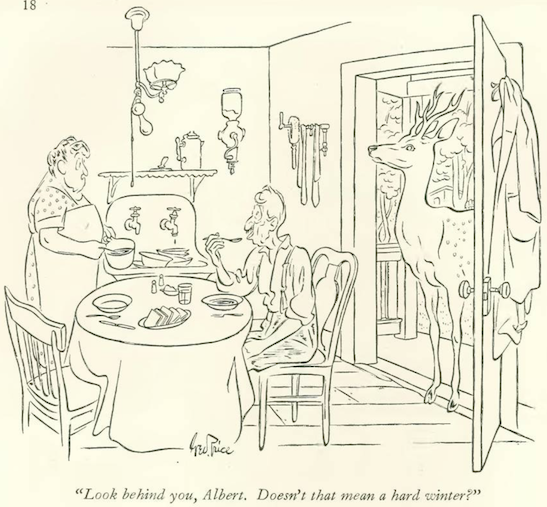
…George Price anticipated a long winter…
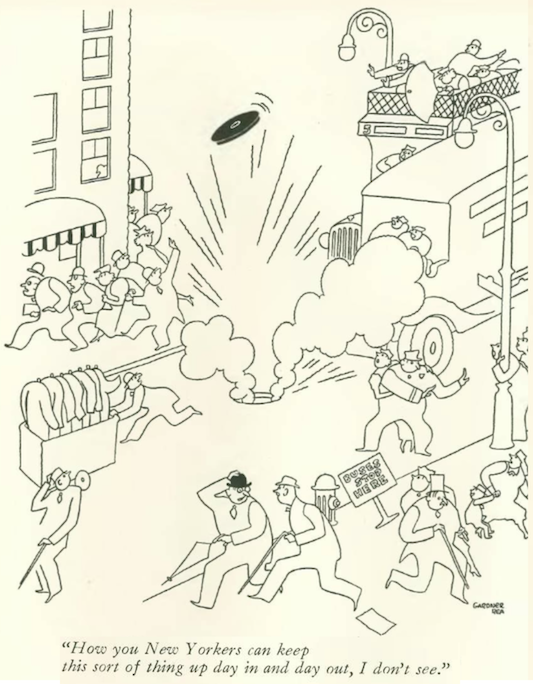
…Gardner Rea showed us an Englishman who found Manhattan life a bit too invigorating…
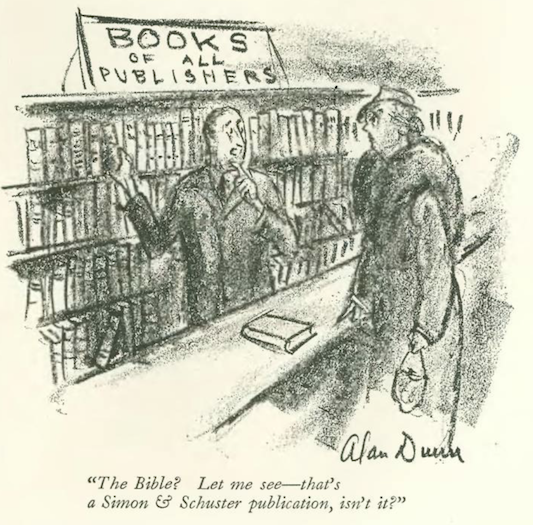
…Alan Dunn posed a question regarding authorship…
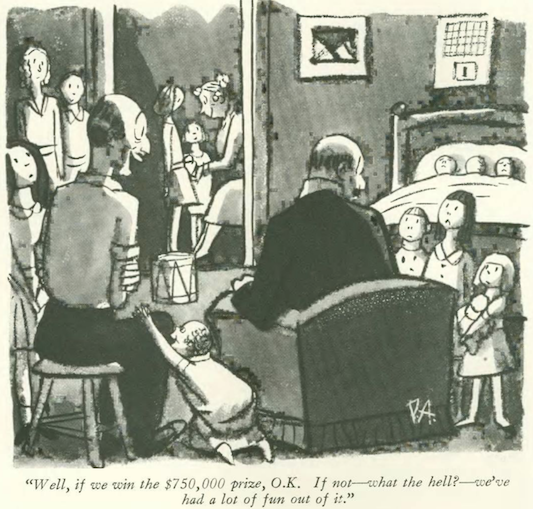
…Peter Arno might be referring to something akin to The Great Stork Derby here…
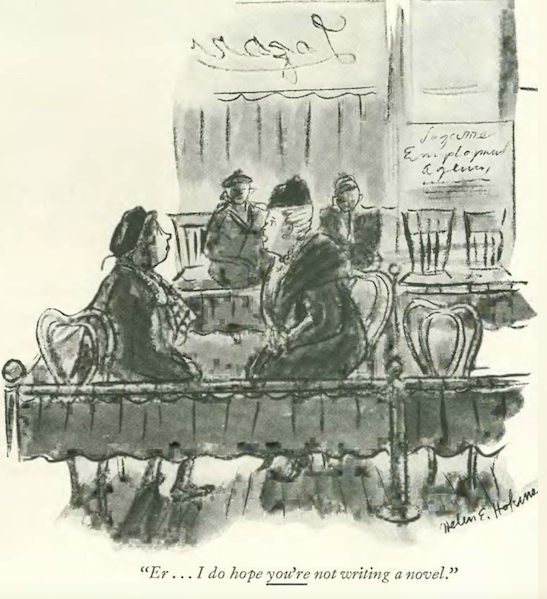
…one of Helen Hokinson’s “girls” sought to stay “off the record”…
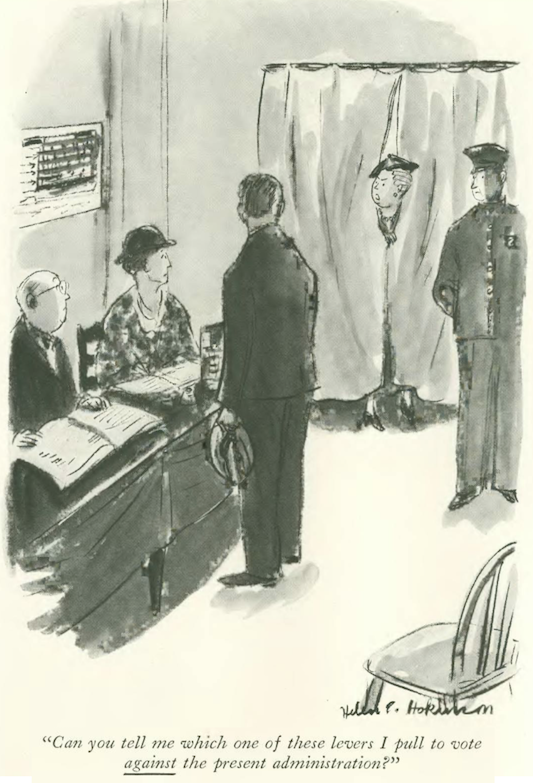
…and Hokinson again, casting a vote in the 1936 General Election…
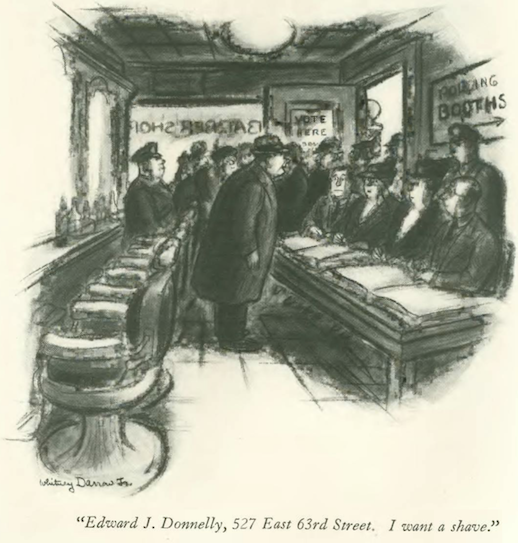
…Whitney Darrow Jr was also thinking about elections, and a clean shave…
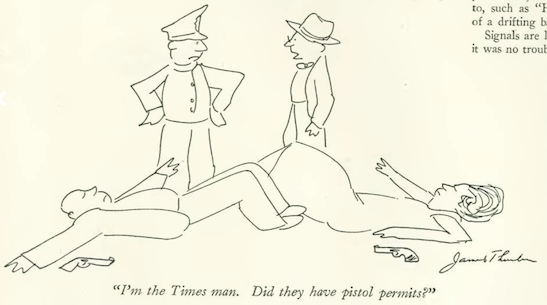
…and we close with James Thurber, and an inquiring reporter…
Next Time: The Instant Home…