Above: Bill "Bojangles" Robinson demonstrating his famous stair dance, which involved a different rhythm and pitch for each step. At left, Robinson in Broadway's Blackbirds of 1928; at right, publicity photo circa 1920s. (Vandamm collection, New York Public Library/bet.com)
Bill “Bojangles” Robinson (1878–1949) is considered one of the greatest tap dancers of all time, introducing a style of remarkable lightness and complexity that was perhaps best represented by his famous stair dance.
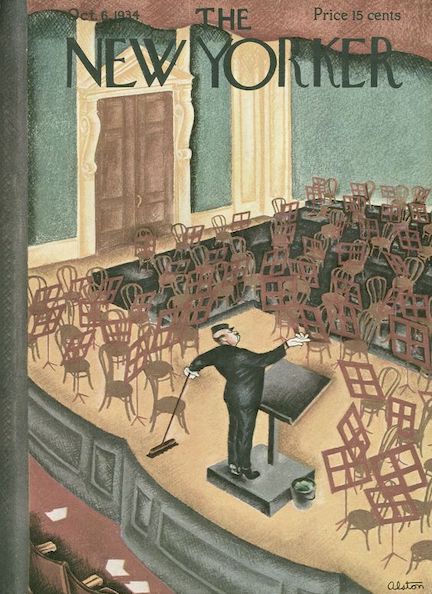
Oct. 6, 1934 cover by Charles Alston. This was Alston’s only New Yorker cover. Active in the Harlem Renaissance, Alston was also a painter, sculptor and muralist (see more on Alston at the conclusion of this post).
St. Clair McElway wrote about the 57-year-old Robinson in a two-part profile that examined his personal life and habits, including his propensity for getting shot. Two brief excerpts:
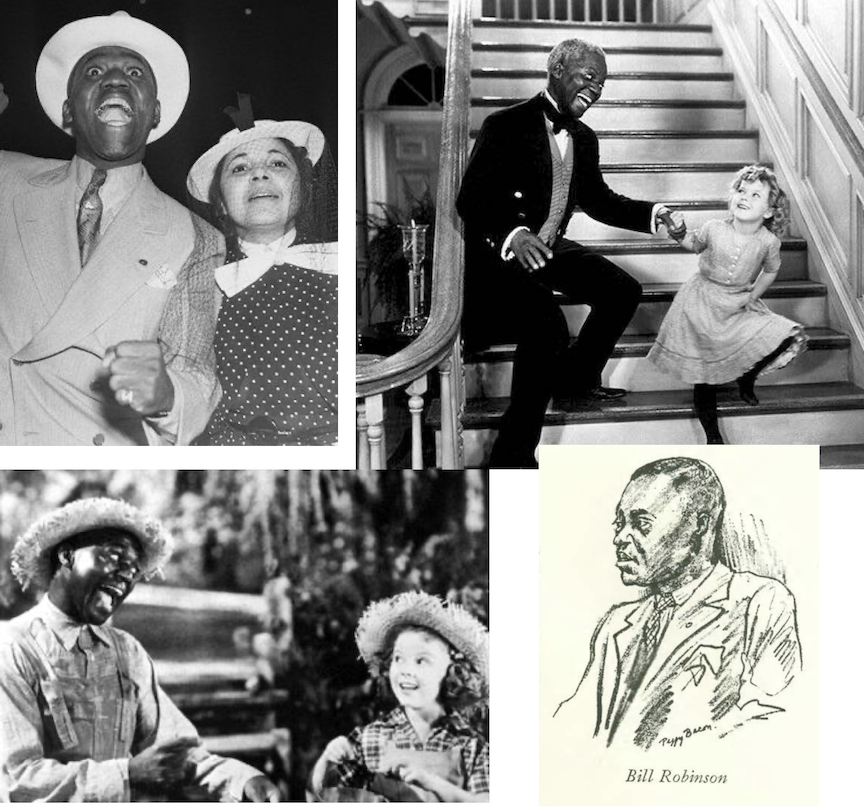
The New Yorker profile coincided with Robinson’s rising career in films, including four he made with Shirley Temple. For the 1935 film The Little Colonel, Robinson taught the stair dance to the child star, modifying his routine to mimic her movements. Robinson and Temple became the first interracial dance partners in Hollywood history (however, the step dance scene was cut from the film shown to Southern audiences). Temple and Robinson, who became lifelong friends, also appeared together in 1935’s The Littlest Rebel, 1938’s Rebecca of Sunnybrook Farm and 1938’s Just Around the Corner.
DANCING WITH THE STAIRS…Bill Robinson was also known as Bojangles, a nickname from his childhood in Richmond, Virginia. Clockwise, from top left, with his second wife Fannie Clay in 1933; performing the stair dance with Shirley Temple in The Little Colonel (1935); profile illustration by Peggy Bacon; Robinson with Temple in 1938’s Rebecca of Sunnybrook Farm. (blackpast.org/Wikipedia)
Robinson is remembered for his generous support of fellow dancers including Fred Astaire, Eleanor Powell, Lena Horne, Sammy Davis Jr and Ann Miller, as well as his support for the career of 1936 Olympics star Jesse Owens.
FAST IN BOTH DIRECTIONS…Robinson befriended Jesse Owens (left) after the track & field great returned from the 1936 Olympics (where Owens won four golds). Known for his generosity to his friends, Robinson helped Owens establish a successful post-Olympics career. Robinson himself was also something of a runner, having set the world record for running backward in 1922 (100 yards in 13.5 seconds). (Public domain image)
Although Robinson was the highest paid black performer of his time, his generosity with friends as well as his gambling habits left him penniless at his death from heart failure in 1949. Longtime friend Ed Sullivan paid for Robinson’s funeral, and more than 30,000 filed past his casket to pay their respects.
I’VE STILL GOT IT…Bill Robinson with Lena Horne in 1943’s Stormy Weather, a film loosely based on Robinson’s own life. (MoMA)
* * *
In a Romantic Mood
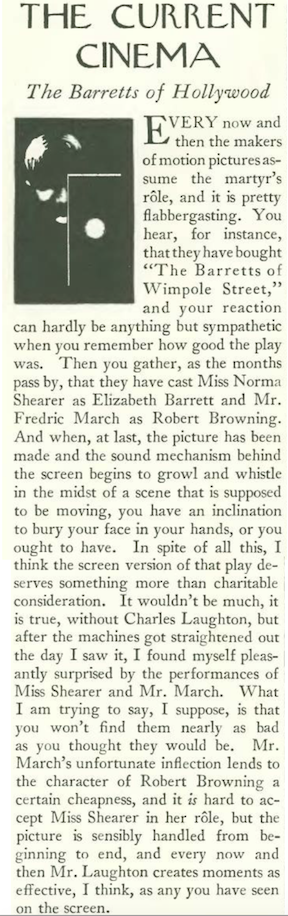
That is how St. Clair McKelway found Hollywood in two of its latest offerings, The Barretts of Wimple Street and Caravan. To his relief, he found the Hollywood version of Barretts quite “sensible”…
LET’S BE SENSIBLE…The Barretts of Wimpole Street (1934) starred Fredric March and Norma Shearer in the lead roles. (TCM)
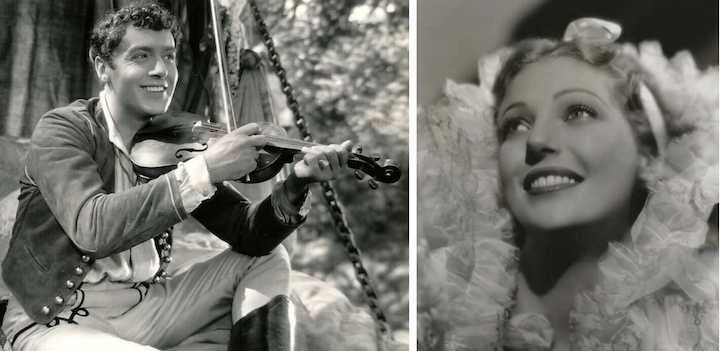
…as for Caravan, McKelway wrote that he’d “never seen a picture with so much grinning in it.” He found the “peculiar, unreal gleam” of the actors’ teeth a real distraction in closeup shots.
THAT PEPSODENT SMILE…Charles Boyer and Loretta Young showed off their pearly whites in 1934’s Caravan. (IMDB/TCM)
* * *
From Our Advertisers
The Oct. 6 issue opened with a study in contrasts: an image of two Civil War veterans swapping stories over whiskey on the inside front cover, paired with an illustration of a lithe model sheathed in the latest fashion from Bergdorf…
…the folks at Campbell’s continued to suggest that their canned soup was a delight of the elite…
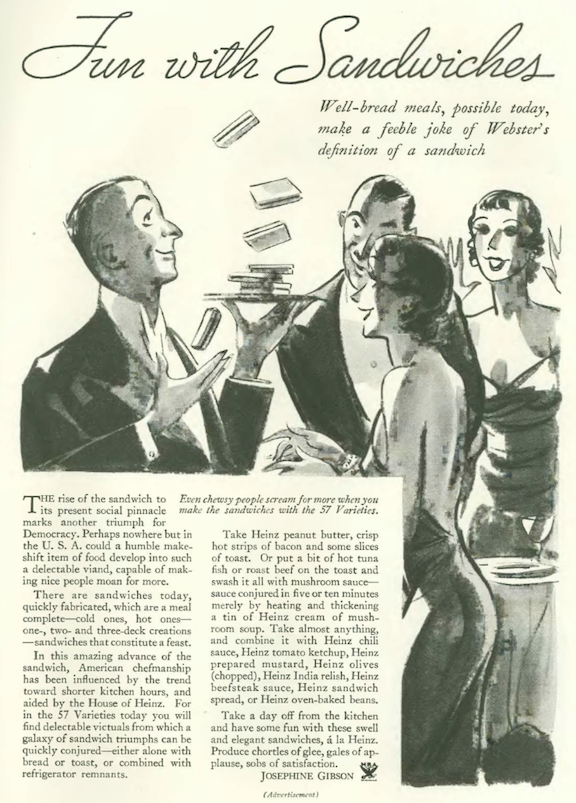
…Heinz took a similar tack, showing the smart set having fun with their sandwich spreads…
…Lord & Taylor touted its “tomorrow look” in furniture…
…R.J. Reynolds continued its series of “distinguished women who preferred Camel’s “costlier tobaccos,” adding to their growing list a the “charming debutante” Evelyn Cameron Watts, who later became Evelyn Watts Fiske (1915–1976)…
…in contrast to Camel’s fashionable ads, the upstart menthol brand Kool offered a series of cheap, back-page ads featuring a smoking penguin, here in the Halloween spirit (detail)…
…another recurring back page ad was this weird spot from Satinmesh, a product that apparently helped close a woman’s “gaping pores”…those pores apparently prompted one man to ponder the eternal why…
…on to our cartoonists, we begin with a two-page spot by Carl Rose…
…James Thurber spiced up a game of ping-pong…
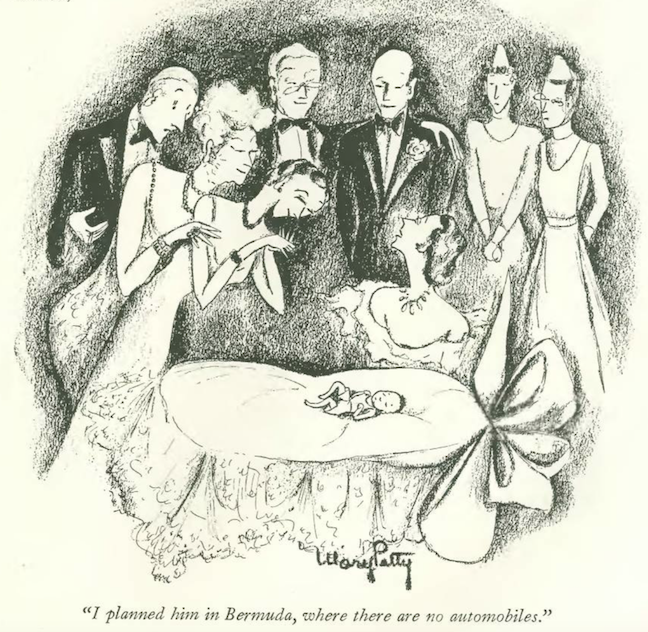
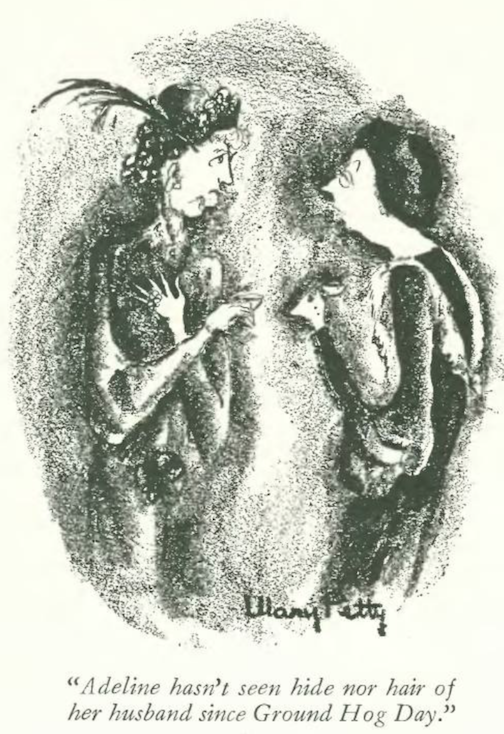
…Mary Petty explored the miracle of birth…
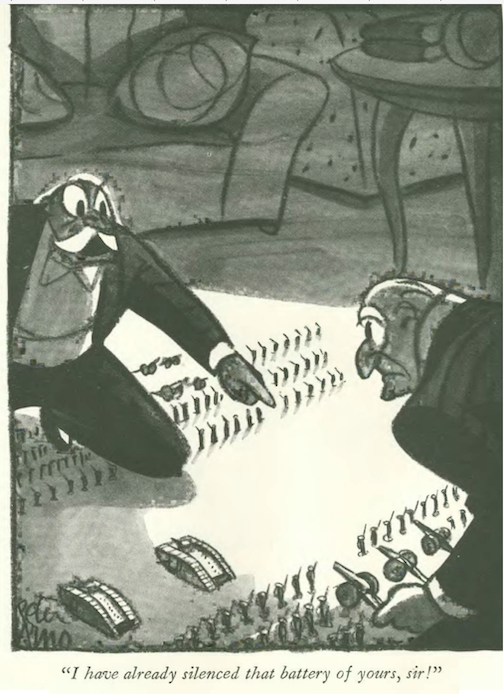
…Peter Arno discovered you’re never too old to play with toys…
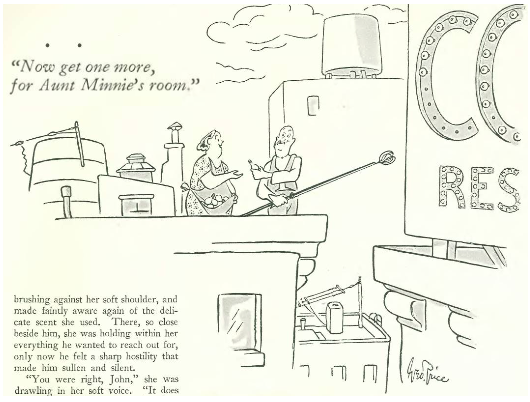
…Garrett Price offered a young man’s perspective on a father’s avocation…
…Alain (Daniel Brustlein) gave us a disappointed plutocrat on vacation in Mexico…
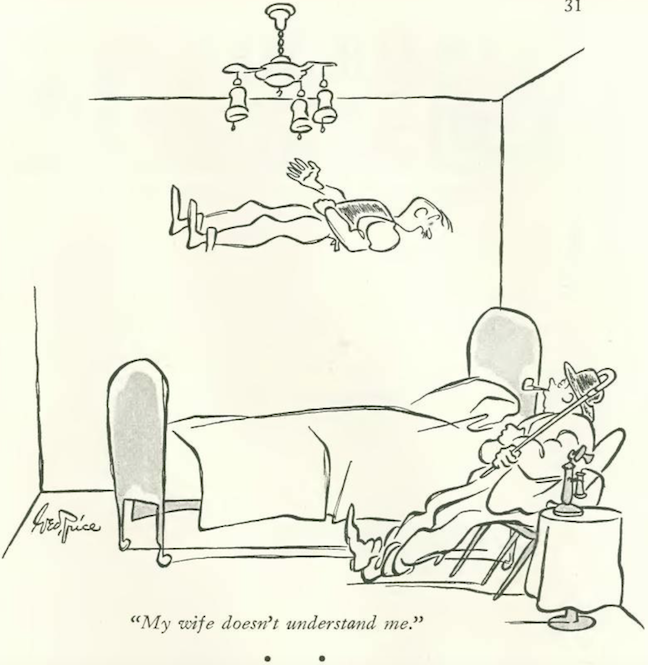
…George Price continued to mine the humor of his “floating man” series…
…and contributed a second cartoon that featured some office hijinks…
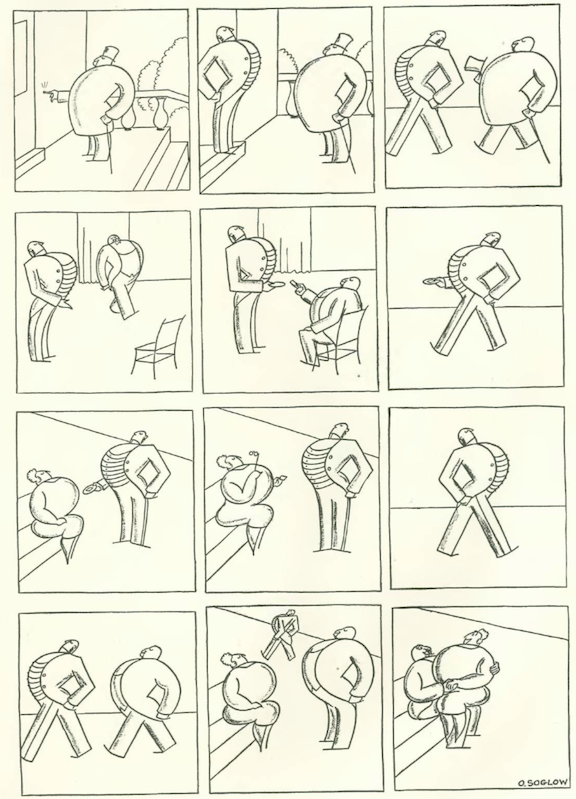
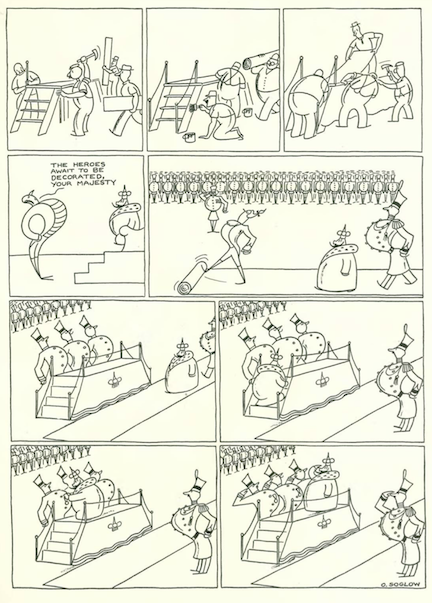
…and Otto Soglow returned without The Little King, offering in its stead the closest thing to royalty in America…
Before we sign off, a note on the Oct. 6 cover artist, Charles Henry Alston (1907–1977). A Harlem-based painter, sculptor, illustrator, muralist and teacher, Alston was active in the Harlem Renaissance and was the first Black supervisor for the Works Progress Administration’s Federal Art Project. In 1990, Alston’s bust of Martin Luther King Jr. became the first image of an African American displayed at the White House.
Clockwise, from top left, Charles Henry Alston’s 1970 bust of Martin Luther King Jr; Walking 1958; Andrew Herman photo of Alston, 1939; Midnight Vigil, 1936. (Smithsonian/Wikipedia/Columbia.edu)
Above: Final Design of Grand Central Terminal, ca. 1910. (New York Transit Museum)
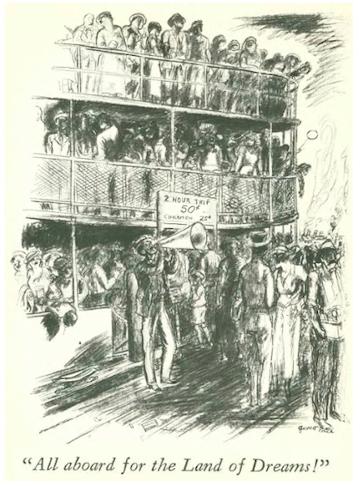
The heat wave of 1934 spread misery from the Midwest to the East Coast. The temperature in New York City hit 101 degrees F (38.3 C) on June 29, and July recorded at least ten days of temps in the mid- to upper 90s. It must have been miserable in the days before air-conditioning, and since no adult would dare be seen in public wearing shorts and a t-shirt, an outing on a crowded tour boat, as illustrated below by William Cotton, must have been hellish.
July 21, 1934 cover by William Cotton.
…putting a fine point on it, recall this wryly captioned cartoon from the June 30 issue by Garrett Price…
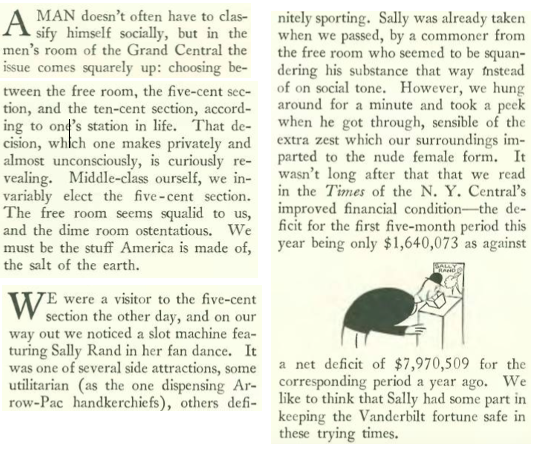
…but let us move ahead to the July 28 issue, where E.B. White was hopefully keeping his cool in the men’s waiting room at Grand Central Station, where he plunked down a nickel to cool his heels in the “middle class” section, where he observed side attractions including a vending machine that dispensed handkerchiefs and a coin-operated peep show featuring burlesque star Sally Rand.
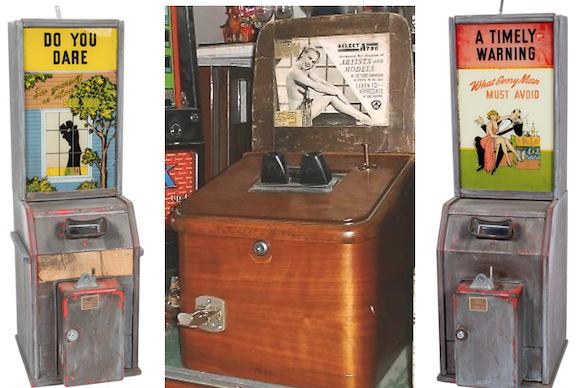
NO MASHERS ALLOWED…Separate men’s and ladies’ rooms were available in three classes at Grand Central Station—free, five cents and ten cents. Top, the Ladies’ room, Grand Central Terminal (Central Lines), and below, a men’s room at the station. A nickel back then was worth about a dollar today. (Library of Congress)NICKEL AND DIMED…Machines similar to these could be found in some men’s waiting rooms at train stations in the 1930s. (pinballhistory.com/comics.ha.com)
…White referred to a peep show that featured famed fan dancer Sally Rand…
DOING HER DEEP KNEE BENDS…Sally Rand in the 1930s. (www.vintag.es)
White also commented on the growing number of travelers, still pinched by the Depression, opting for the free section:
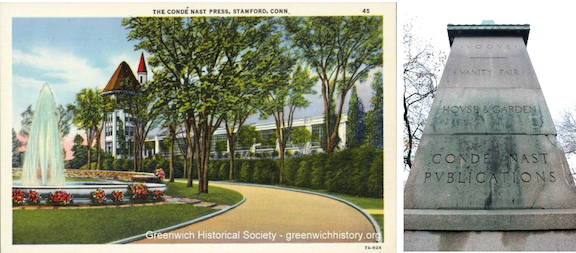
We settle in with the June 21 issue (which leads this post) with White once again, this time enjoying a drive to Stamford, Conn., where he admired the “splendor” of the Condé Nast printing plant (apparently the plant also printed The New Yorker, although the magazine itself would not be acquired by Condé Nast’s parent company, Advance Publications, until 1985).
ONLY A MEMORY…Postcard image of the Condé Nast printing plant; at left, a relic of the long-gone plant, one of two pillars that flanked the road to the plant. (Greenwich Historical Society/greenwichtime.com)
* * *
Disney’s Other Mouse
Film critic John Mosher was a fan of Disney’s “Silly Symphony” cartoon shorts, which were produced between 1929 and 1939. Animation, and especially color animation, was in its infancy, so these doubtless had an uplifting effect on many moviegoers.
DON’T CALL ME TINKERBELL…The Butterfly Fairy brought some Disney magic to 1934’s The Flying Mouse. (disney.fandom.com)
* * *
The Great McGonigle
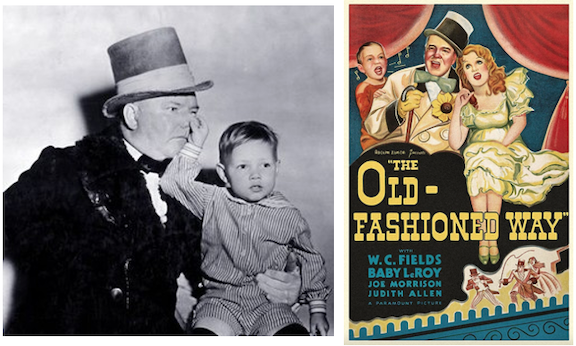
W.C. Fields appeared in more than a dozen silent films before making his first talkie, 1930’s The Golf Specialist, and it was in sound films that Fields was able to truly express his vaudevillian wit. It was also in the sound era that Fields teamed up with Baby LeRoy for three films (in 1933 and 1934), including The Old Fashioned Way, in which Fields portrayed “The Great McGonigle,” leader of a traveling (and perpetually underfunded) theater troupe who was always a step ahead of police and creditors. Critic John Mosher found the film’s riff on an old morality play, The Drunkard, to be a bit dated, but overall thought it a cheerful diversion.
HONK…Baby LeRoy, aka Ronald Le Roy Overacker (1932–2001), was just 16 months old when he became the youngest person ever put under term contract by a major studio. He is best known for his appearances in three W. C. Fields films: Tillie and Gus (1933), The Old Fashioned Way (1934) and It’s a Gift (1934). (Rotten Tomatoes/IMDB)
* * *
From Our Advertisers
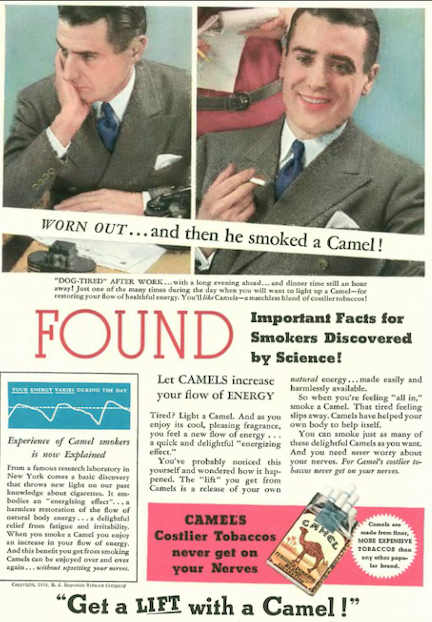
We begin with scientific proof (from a “famous research laboratory in New York”) that Camel cigarettes increased one’s flow of energy…
…if that crackpot claim doesn’t get you, here’s one that recommended downing a PBR before a big meeting, a sure remedy for that “listless, tired-out feeling”…
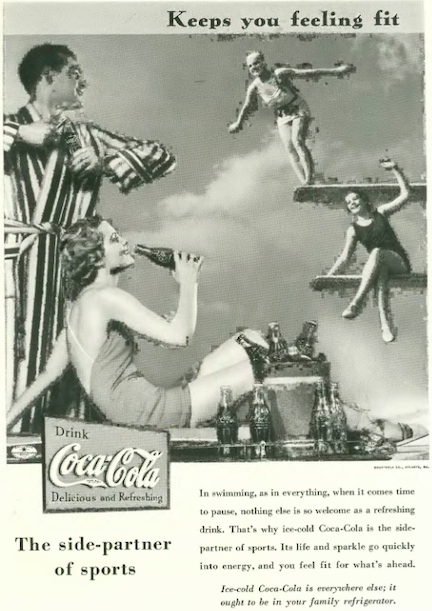
…of course we all know that a few sugary Cokes will get you going…back then they were taking it in six- and ten-ounce bottles, not 30- to 50-ounce Big Gulps…
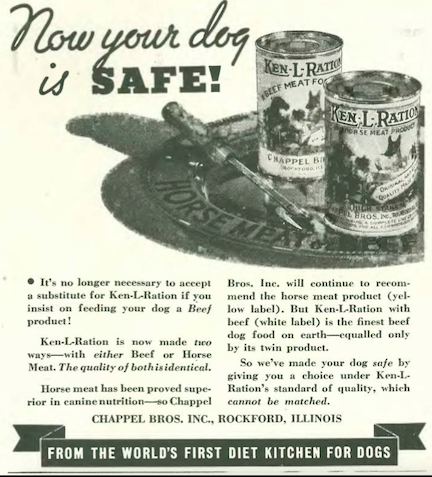
…it’s not every day you see a dog food ad in The New Yorker…in the 1930s there was no secret to where ol’ Sparky ended up…
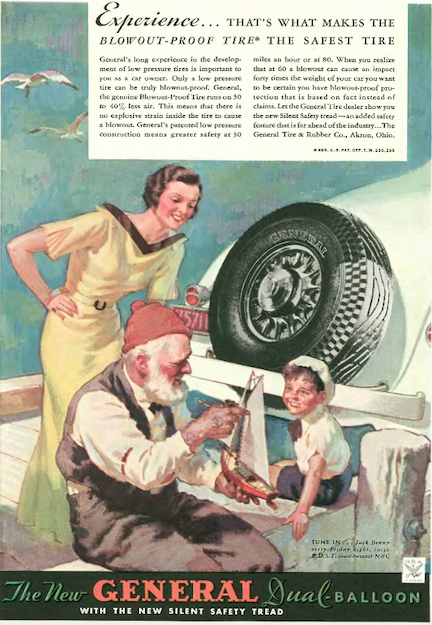
…popular were these Rockwellian ads that equated various products with happy and wholesome (and safe) living, in this case a massive “Dual-Balloon” tire that dominated this tableau featuring a stylish mommy and her little boy slumming with an old sea salt…
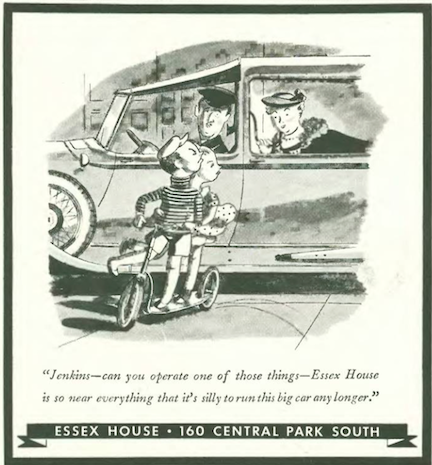
…the folks at Essex House hired an illustrator who did his or her best to channel Helen Hokinson and William Steig for this New Yorker ad…as we have seen before, Essex House ads walked a fine line between thrift and snob appeal…
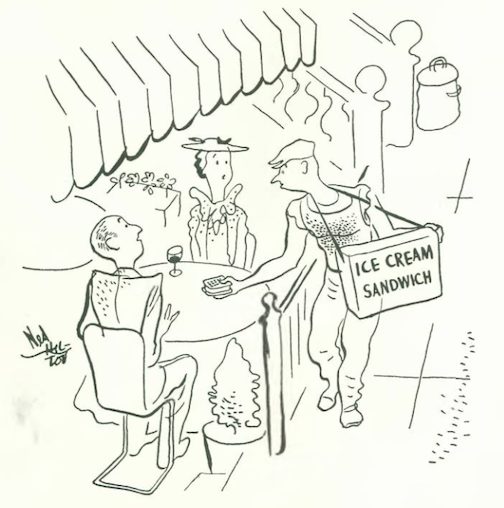
…on to our cartoons, beginning with Ned Hilton, whose work appeared in The New Yorker from 1934 to 1957…
…Mary Petty recorded some sweet nothings by the seaside…
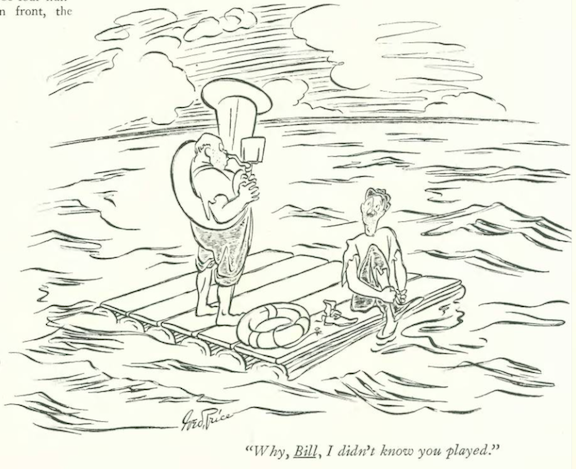
…George Price drifted along with two men and tuba…
…Carl Rose revealed a modest side to life at a nudist colony…
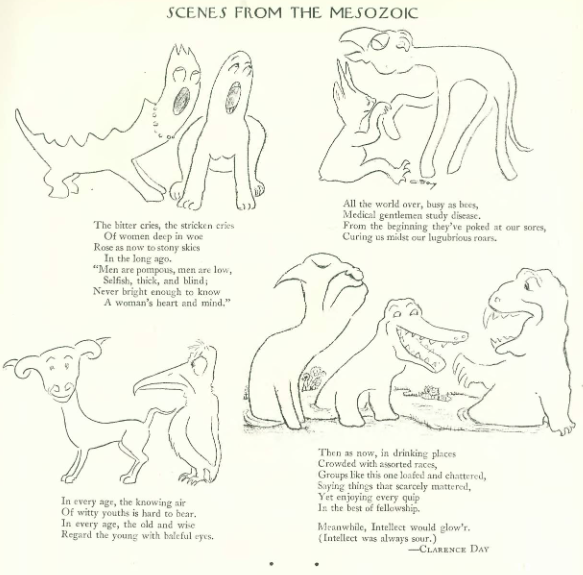
…we know Clarence Day for his Life With Father series, but on occasion he also contributed illustrated poems such as this one from the July 21 issue…
…on to July 28…
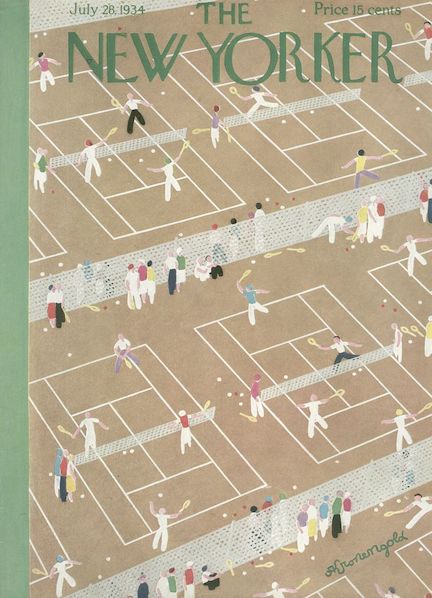
July 28, 1934 cover by Adolph K. Kronengold.
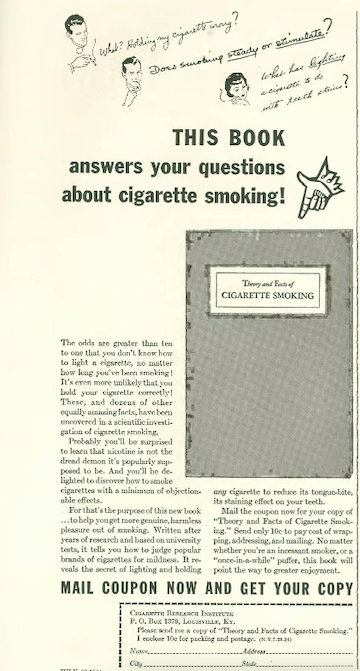
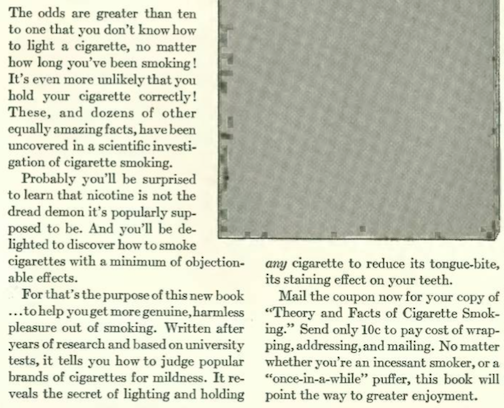
…where we encounter more “scientific research” that encouraged folks to smoke…This ad was placed on the very last page of the July 28 issue by the Cigarette Research Institute, based in Louisville, Kentucky…
…the booklet was filled with “amazing facts” uncovered in a “scientific investigation,” facts did not address the health effects of smoking, but rather such important topics as how to hold a cigarette the right way and how to reduce staining on your teeth…it also helpfully debunked the notion that nicotine was a “dread demon”…
…take for example this woman smoking a Lucky…now she knew how to hold a cigarette!…
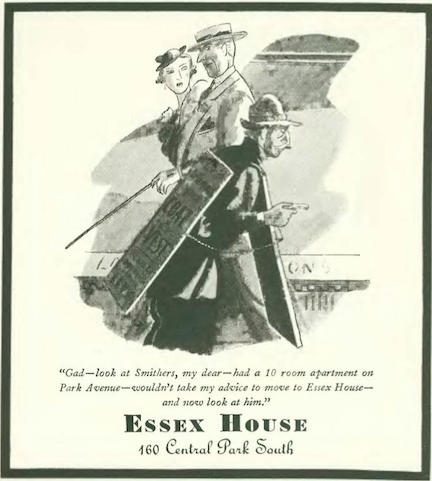
…the folks at Essex House were back, aggressively playing the class/caste card…apparently if you lived there you were entitled to kick your old friends to the curb…
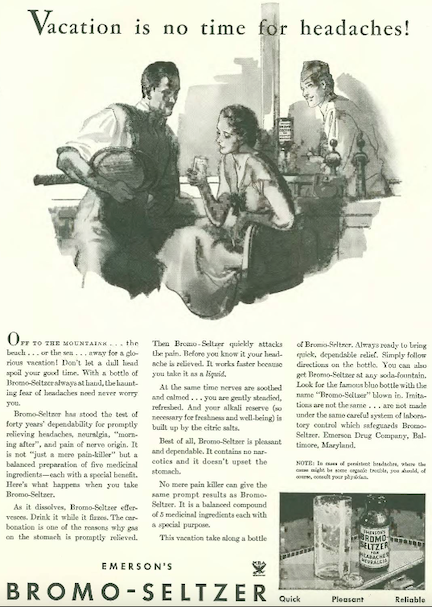
…the antacid and pain reliever Bromo-Seltzer was ubiquitous in 1930s medicine cabinets, but after the recipe was changed in the 1970s (all Bromides were withdrawn from the U.S. market in 1975) the brand slowly fizzled away…
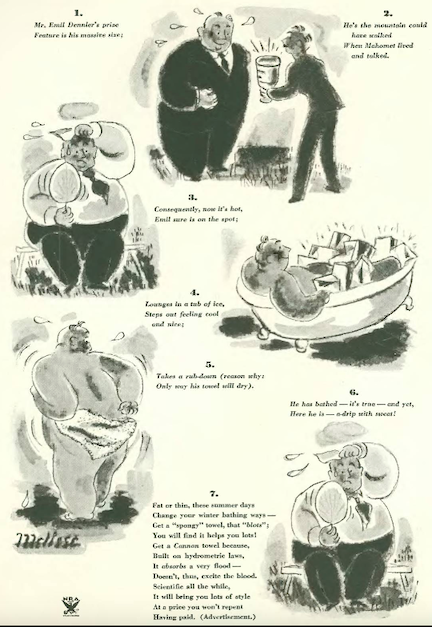
…Mildred Oppenheim Melisse was a popular illustrator of ads for department stores and various household goods, including Cannon towels, here guaranteed to absorb even this man’s sweaty “flood”…
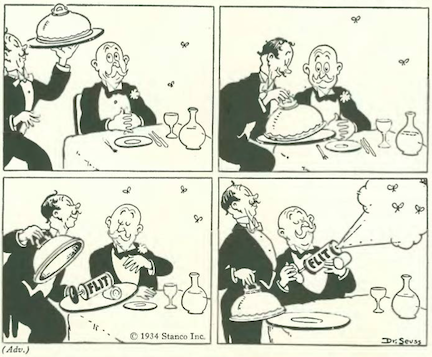
…Dr. Seuss back again for Flit, once again having no issues mixing insecticide with food preparation…
…Rea Irvin kicks off the cartoons with his Double Breasted Dowager…
…Helen Hokinson found some misplaced pity at a garden party…
…Garrett Price offered some unsolicited advice…
…Reginald Marsh filled two pages with a scene from Central Park…
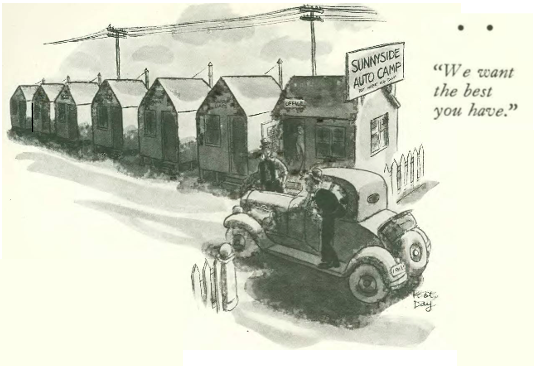
…Robert Day looked for a unique experience at an auto camp…
…and we close with Barbara Shermund, and some alarming news on the domestic front…
Above: Illustration of the Dorchester Hotel’s ballroom in the 1930s. (dorchestercollection.com)
Lois Long took her nightlife column, “Tables for Two,” to London and its famed nightclub scene, where everyone from British royalty to gangsters reveled in a boozy, bohemian scene.
July 7, 1934 cover by Ilonka Karasz.
Prince Edward, a well-known party animal (who would serve as king for less than a year and abdicate in 1936) was known to get up on the stage of the Embassy Club and perform drum solos, while at the Savoy his fellow toffs would sip Champagne and glide in elegant dress across the dance floor. London nightlife included a lively jazz scene in edgy Soho basement clubs, featuring such greats as Duke Ellington, Louis Armstrong and Dizzy Gillespie.
Long hoped that the visit to London, her first in eight years, would give her some much-needed rest and a change of scene. What she found instead was a red-hot, all-night party, where the smart set took dinner near midnight and danced until dawn.
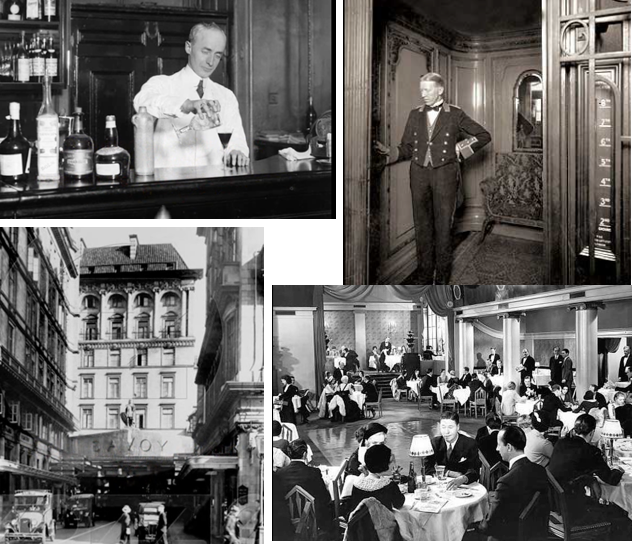
SAVVY SAVOY….Clockwise from top left, the famed Savoy bartender Harry Craddock, credited with inventing the White Lady and the Corpse Reviver, at the Savoy’s American Bar in the 1930s; a Savoy elevator operator in 1926; diners at the Savoy circa 1930s; Savoy entrance. (madamgenevaandgent.co.uk/The Savoy/YouTube)LONDON SWINGS…More Lois Long haunts in London included, clockwise from top left, the Dorchester Hotel; the crowded dance floor at the Monseigneur with Roy Fox and his Orchestra (photo from 1932); patrons kicking up their heels at the Embassy Club on Old Bond Street; the Café de Paris, where American actress Louise Brooks demonstrated a new dance craze, The Charleston, in 1924. (dorchestercollection.com/albowlly.club/lucyjanesantos.com/Wikipedia)
* * *
Misery Loves Company
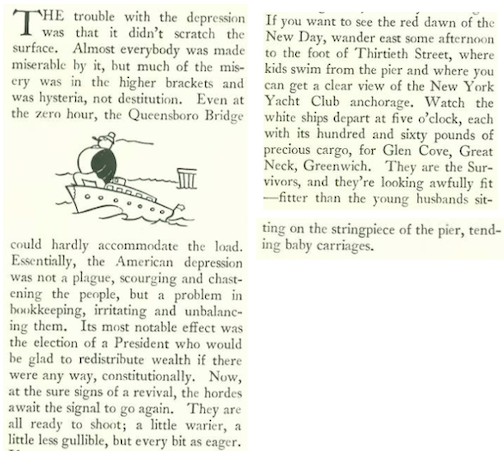
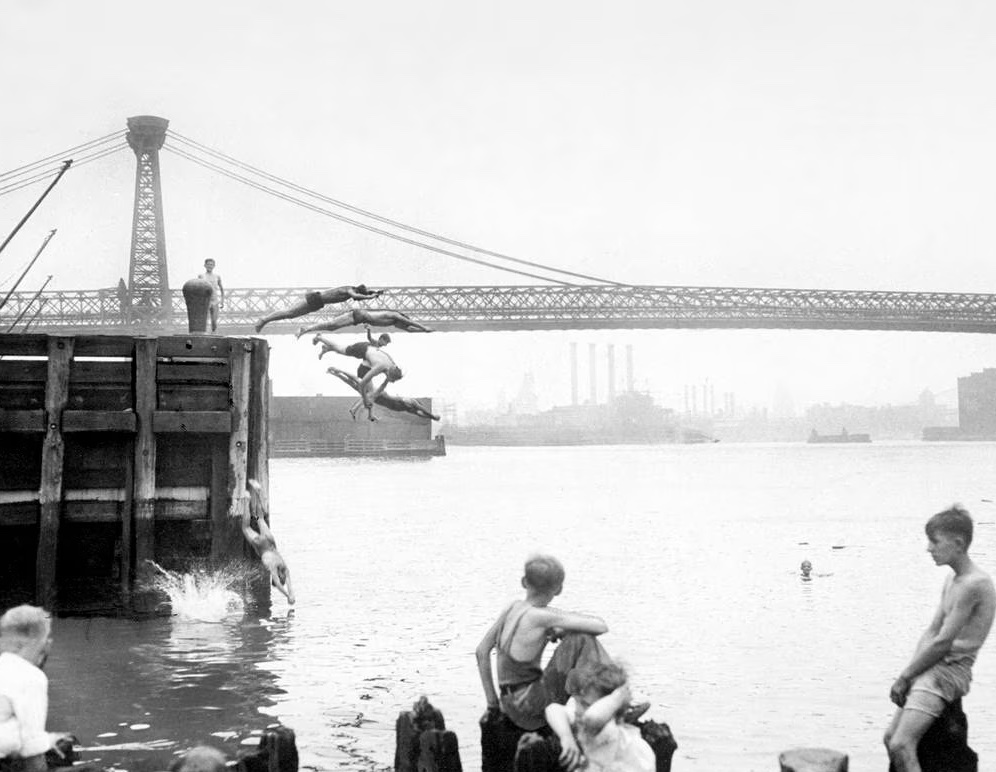
In his “Notes and Comment,” E.B. White observed that almost everyone was “made miserable” by the Depression, but if one looked around there were signs that things weren’t so bad after all.
REASON FOR CHEER…For those still feeling blue about the Depression, E.B. White suggested watching kids cool off at a pier, such as these lads seen diving into the East River on the Lower East Side on July 3, 1935. (Jack Gordon/New York Daily News)
* * *
He Came Up a Bit Short
Howard Brubaker, in his column “Of All Things,” made this observation about Adolf Hitler’s prediction that Nazism would endure a thousand years.
And now a retreat into the cool darkness of the cinema, where John Mosher singled out Bette Davis’s performance in Of Human Bondage…Mosher’s instincts were correct—the film proved to be Davis’s breakout role on her road to major stardom.
ROAD TO RUIN…Bette Davis wowed the critics with her portrayal of a tearoom waitress who seduces a young medical student (Leslie Howard) and leads him down a path of self-destruction. The film was based on the 1915 novel by W. Somerset Maugham. (IMDB)
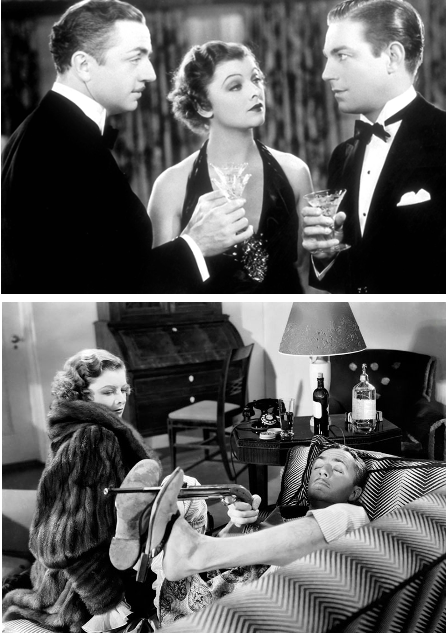
Mosher also took in the “bright” performances of William Powell and Myrna Loy in The Thin Man, a pre-Code comedy-mystery based on the Dashiell Hammett novel by the same name. Powell and Loy portrayed Nick and Nora Charles, who added spice to their leisurely lives through numerous cocktails, flirtatious banter, and crime-solving. Critics loved the film, as did audiences, spawning five sequels from 1936 to 1947.
CHEERS…Top photo: Nick and Nora Charles (William Powell and Myrna Loy) enjoy a drink with their client’s fiancee (Henry Wadsworth) in The Thin Man (1934); Bottom photo: Charles takes aim at a Christmas ornament (with a BB gun) while Nora enjoys the comforts of her new fur coat in a scene from The Thin Man. (Daily Beast/Austin Chronicle)
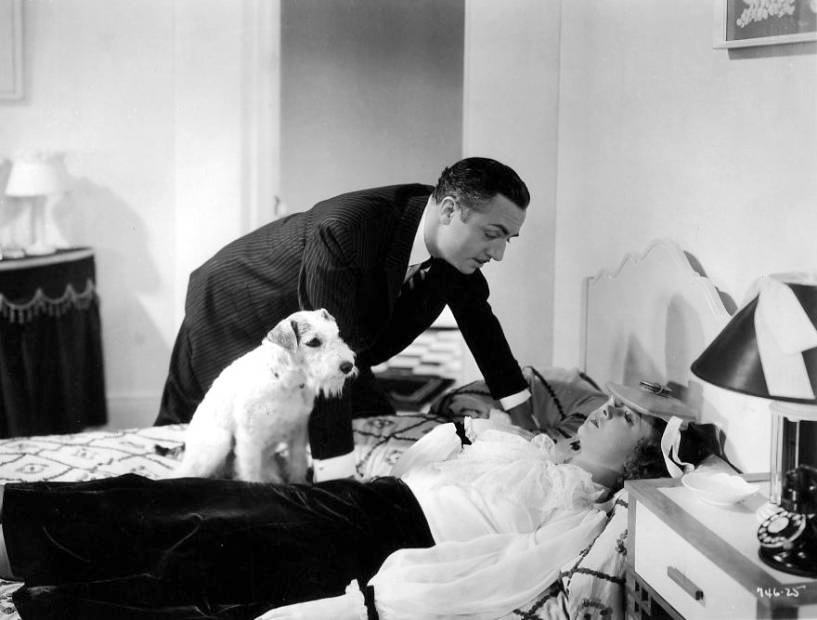
Another star of the show was Asta, the Charles’s wire fox terrier. Asta was portrayed by Skippy, a dog actor who not only appeared in The Thin Man films but also acted alongside Cary Grant in 1937’s The Awful Truth and in 1938’s Bringing Up Baby. Skippy appeared in three Thin Man movies and in more than twenty films altogether between 1932 and 1941. Being an actor in the film must have been good for one’s health: Powell lived 91 years, Loy 88 years, and Skippy, 20 years—a good long life for any pooch.
ROUGH NIGHT…Nick (William Powell) and Asta (Skippy) tend to Nora (Myrna Loy), who nurses a hangover in The Thin Man. (Wikipedia)
* * *
From Our Advertisers
While Chrysler’s styling of their streamlined Airflow proved to be too far advanced for the buying public (the Depression didn’t help), Studebaker’s own foray into the streamlined future caused a sensation…
…thanks to Studebaker’s brief merger with Pierce-Arrow (1928–33), Studebaker’s designers took cues from Pierce’s streamlined 1933 Silver Arrow and created more than 800 cars with “Year-Ahead” design features—the positive reception convinced the company to continue the style in 1935…here is a top-of-the-line 1934 President Land Cruiser…
1934 Studebaker President Land Cruiser with “Year-Ahead” design features, yet not as radical as Chrysler’s Airflow. (hemmings.com)
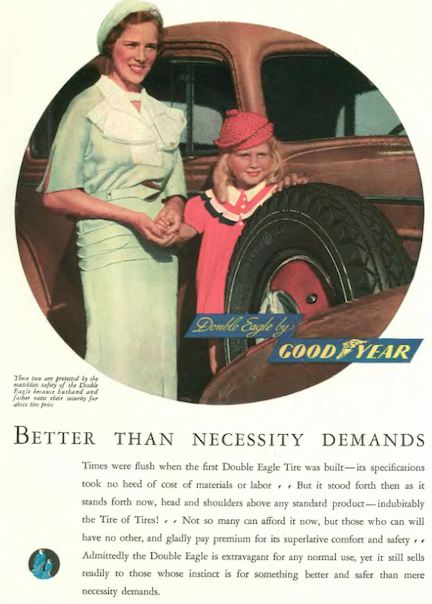
…we continue with those round rubber things that held the cars up…a lot of tire ads in the 1930s emphasized safety—blowouts were common back then…funny how it took nearly four decades to add seat belts to cars…those tires wouldn’t help much in a head-on collision, especially with your kid standing on the from seat…
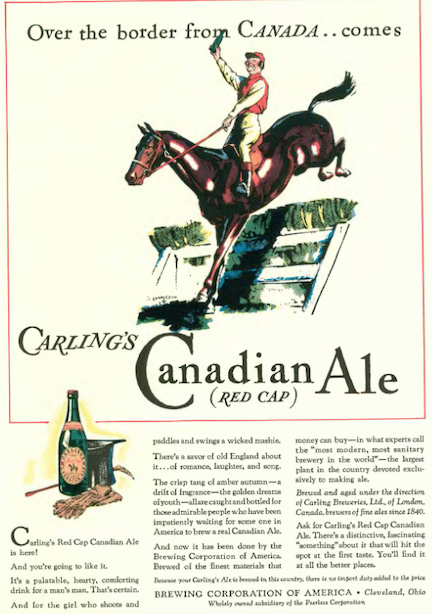
…now let’s cool off with crisp Canadian Ale, thanks to Carling’s entry into the American market…
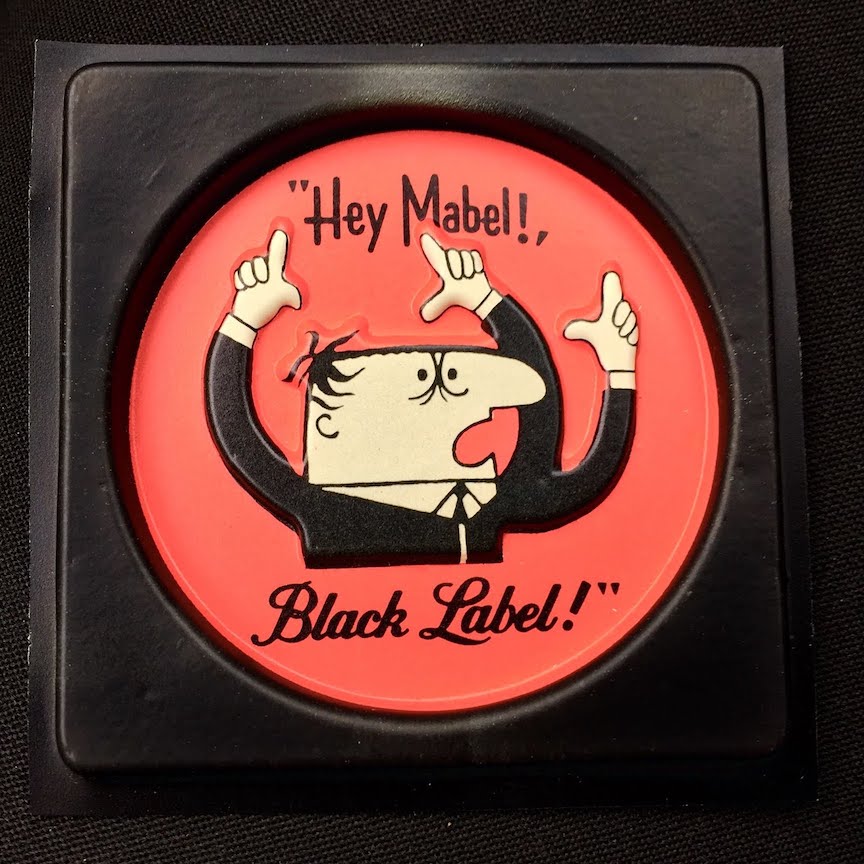
…Carling’s Black Label beer was popular in the states…my parents had a set of these coasters with the Black Label tagline…
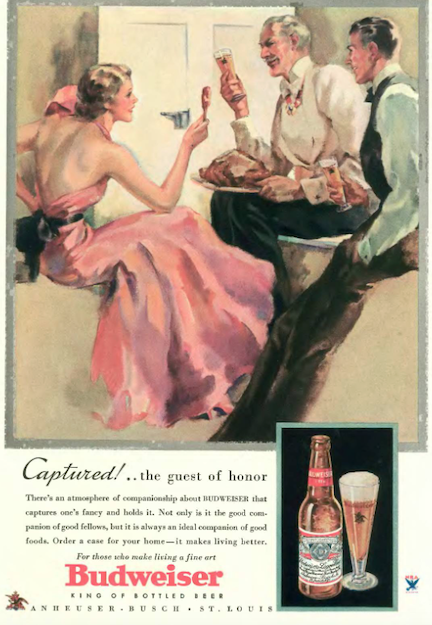
…Budweiser continued its artful series of ads featuring the well-heeled enjoying its product…here it appears old dad (wearing some kind of medal) is getting to know his daughter-in-law over some cold chicken…”hey boy, she’s one of us!”…
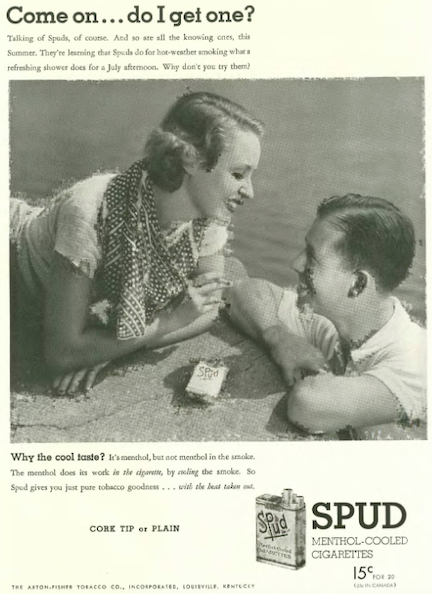
…and we move on to three very different approaches to selling cigarettes, beginning with Spud, continuing its message that menthol cigarettes are as refreshing as a shower on a July afternoon…
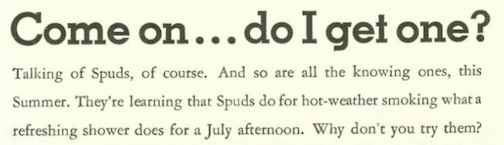
…a close up of the message…
…Camel, on the other hand, continued its campaign against irritability…it apparently did wonders for this woman, who seems to be on something more than nicotine…
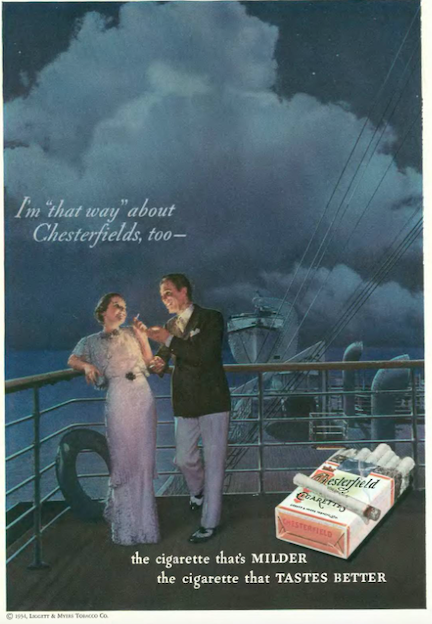
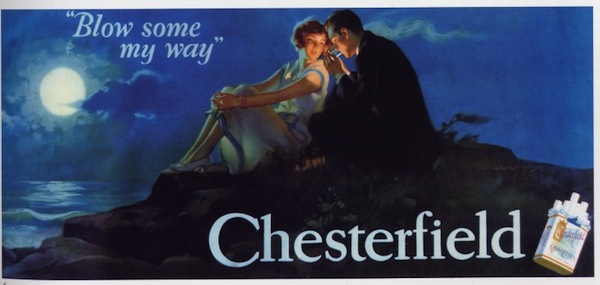
…and from the people who brought us the tagline “blow some my way” in 1928 (as a way to encourage women to take up the habit), by 1934 she is owning that cigarette, and apparently setting some ground rules with the gentleman…
…contrast with the more submissive pose in the Chesterfield ad from the late 1920s…
…on to our cartoons, we begin with spot art by Alan Dunn, which appears to have originated as a captioned cartoon…
…William Steig offered up this bit of art for a profile of an “insurance man” by St. Clair McKelway…
…Helen Hokinson drew up a full page of cartoons along the theme of outdoor dining…
…we continue Rea Irvin’s series on native birds…
…George Price found a way to save on the cost of light bulbs…
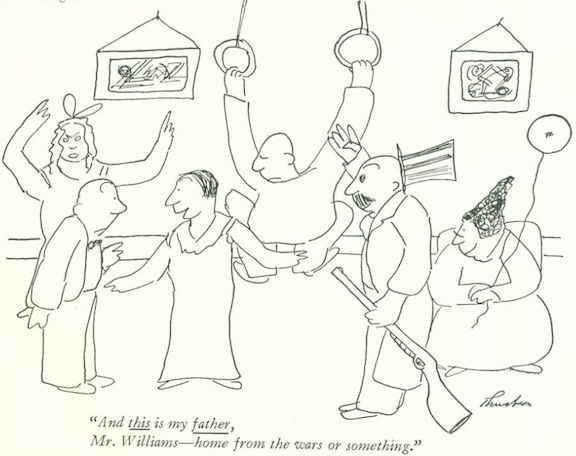
…and we close with James Thurber, and a welcome to the family…
Above: A scene from Mary Pickford’s 1922 film Tess of the Storm Country. (Library of Congress)
In today’s celebrity-saturated culture it is difficult to find a parallel to silent film star Mary Pickford, who was dubbed Queen of the Movies more than a century ago. Indeed, during the 1910s and 1920s Pickford was regarded as the most famous woman in the world.
April 7, 1934 cover by Rea Irvin.
Pickford was also known as “America’s Sweet” for her portrayal of gutsy but tenderhearted heroines. In real life she was also a gutsy and shrewd businesswoman who co-founded United Artists in 1919 with Charlie Chaplin, Douglas Fairbanks, and director D. W. Griffith. Commanding a salary only rivaled by Chaplin, her stardom only grew when she married Fairbanks in 1920, forming the first celebrity supercouple; together they ruled Hollywood from their Beverly Hills mansion, Pickfair (apparently staging dull affairs, per the “Profile” excerpt below).
The end of the silent era also put an end to Pickford’s stardom, as well as to her fairytale marriage to Fairbanks. Margaret Case Harriman’s profile of Pickford, simply titled “Sweetheart,” gave readers a glimpse into the decline of a silent superstar. Excerpts:
SINGULAR STAR…Clockwise, from top left, Mary Pickford in a publicity photo, circa 1910; Pickford visits close friend and screenwriter Frances Marion during filming of Straight is the Way (1921); Douglas Fairbanks and Pickford in the early 1920s; Pickford with a movie camera in 1916—in addition to being a shrewd businesswoman, she was also skilled behind the camera. (thehollywoodtimes.today/Time/Library of Congress)
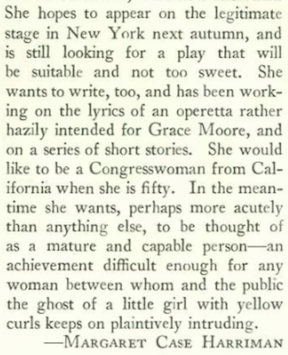
Harriman concluded her profile with some thoughts on Pickford’s future:
THE SOUND BARRIER…With the advent of sound movies Mary Pickford turned to writing books and serving various charities. From left, sharing ice cream with rising star Bing Crosby in 1934; center, Al Frueh’s caricature of Pickford for the profile; Pickford in a 1934 promotional picture supporting The Salvation Army. (Pinterest/Library of Congress)
A note on the profile’s writer, Margaret Case Harriman (1904-1966), who doubtless sharpened her people-watching skills at the Hotel Algonquin (famed birthing ground of the New Yorker), which was owned by her father, Frank Case. Douglas Fairbanks was one of Case’s best friends, and Harriman knew both Fairbanks and Pickford well, since they often stayed at the hotel.
HOME SWEET HOME…Margaret Case Harriman, photographed May 31, 1937 by Carl Van Vechten. Harriman was born in 1904 in room 1206 of the Hotel Algonquin, which was owned by her father, Frank Case. (Philadelphia Museum of Art)
* * *
Master of Masters
The founder of perhaps the world’s most prestigious golf tournament was an amateur and a working lawyer by profession. When Bobby Jones (1902–1971) co-founded the Masters Tournament in 1934 with investment dealer Clifford Robert, it was called the Augusta National Invitation Tournament (it was Robert’s idea to call it The Masters, a name Jones thought immodest). Jones dominated top-level amateur competition from the early 1920s through 1930—the year he achieved a Grand Slam by winning golf ’s four major tournaments in the same year. However, by the 1934 Jones’s skills began to wane. The New Yorker had little to say about the first Masters (it wasn’t a big deal yet), other than Howard Brubaker making this observation in “Of All Things”…
A SWING INTO HISTORY…Bobby Jones (center) drives during the first-ever Masters Tournament in Augusta, Georgia on March 22, 1934. (augusta.com)
* * *
From Our Advertisers
Wanna get away? This colorful advertisement beckoned New Yorker readers to take the next boat to sunny Bermuda…
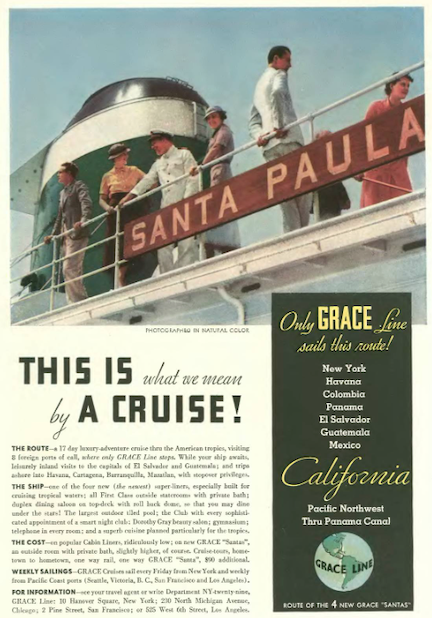
…while the Grace Line offered a southern cruise through the Panama Canal…
…but who needed to travel when you could enjoy a beer that was beloved the world over?…
…Mrs. Potter d’Orsay PalmerneeMaria Eugenia Martinez de Hoz was content to stay home in Chicago and smoke a few Camels, apparently…
…we’ve encountered her before—she appeared in a Ponds ad (below) in the Aug. 8, 1931 issue of the New Yorker, where we learned she was wife No. 2 of Potter d’Orsay Palmer, son of the wealthy family of Chicago Palmer House fame…they would divorce in 1937, and the playboy Potter would marry two more times before dying of a cerebral hemorrhage in May 1939—following a drunken brawl in Sarasota, Florida with a meat cutter called Kenneth Nosworthy. Maria Eugenia would remarry and return to her homeland of Argentina to raise a family…
…this ad from Nash looks like a scene from Attack of the 50 Foot Woman, if she had a car to match, that is…
…the Cadillac V-16 was a truly massive automobile, but in contrast to the Nash ad, you can barely see the car as it approaches from the vanishing distance…
…E. Simms Campbell got in on the advertising game with this spot that features contrasting images of storm and calm…
…James Thurber offered this cartoon on behalf of Heinz soups…
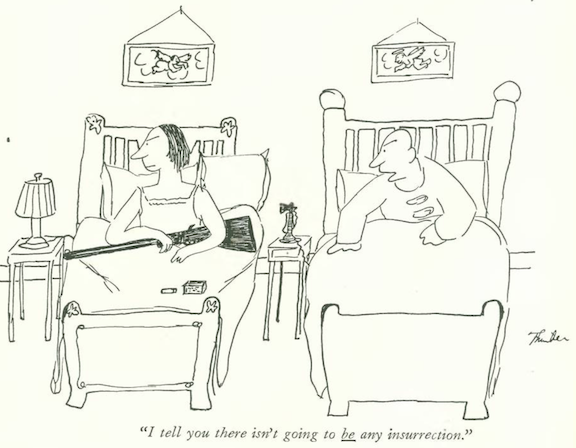
…and Thurber again, as we kick off the cartoons with the ongoing battle…
…Adolph Schus made a rare appearance in the New Yorker…according to Ink Spill, he also contributed a cartoon on March 19, 1938, and was editor of Pageant Magazine in 1945…
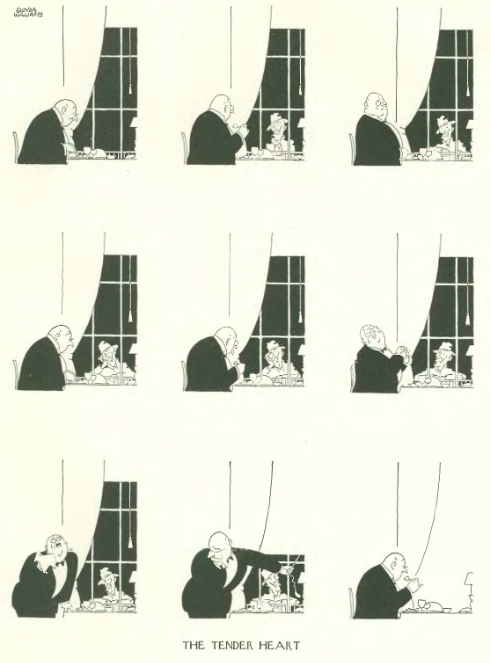
…Gluyas Williams looked in on the sorrows of moneyed classes…
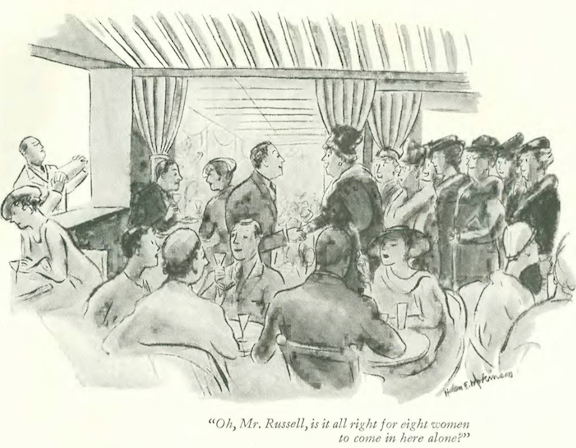
…Helen Hokinson’s “girls” were in search of lunch, and propriety…
…and Leonard Dove gave us a renter surprised by something not included in his lease…
…on to April 14, 1934…
April 14, 1934 cover by Harry Brown.
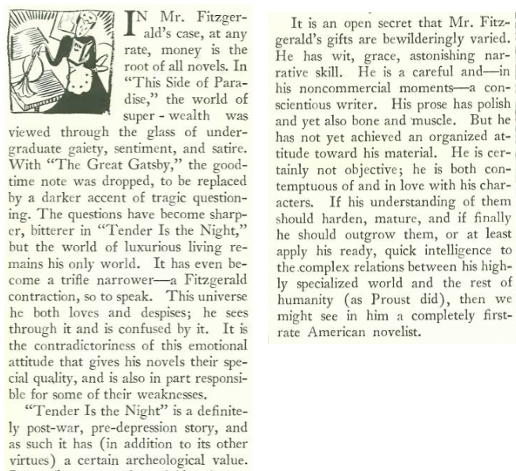
…and book reviewer Clifton Fadiman, who found F. Scott Fitzgerald’s literary gifts “bewilderingly varied”…
A NOT-SO-TENDER RECEPTION…F. Scott Fitzgerald’s status as a symbol of Jazz Age excess hurt his career during the Depression years. Tender Is the Night received mixed reviews, which didn’t help his alcoholism and deteriorating health. When Carl Van Vechten took this photo of Fitzgerald in June 1937, the author had a little over three years to live. (Wikipedia)
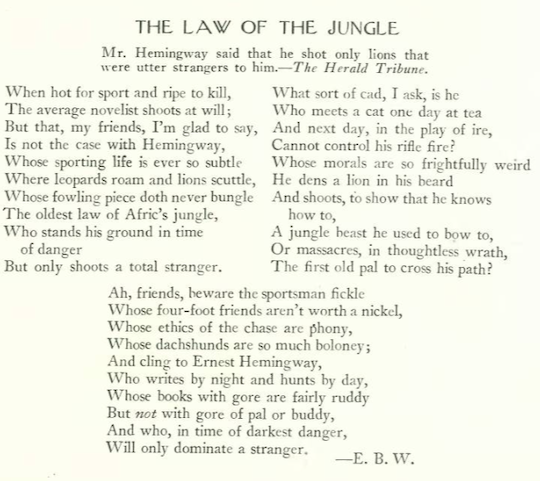
…speaking of F. Scott Fitzgerald, fellow author Ernest Hemingway defended Fitzgerald’s writing, arguing that criticism of his Jazz Age settings stemmed from superficial readings. One then wonders what Hemingway thought of E.B. White’s poetic “tribute” to his big game hunting excursions…
I ONLY SHOOT STRANGERS…Author Ernest Hemingway poses with a lion shot during a safari in Africa in 1934. (MPR News)
* * *
From History’s Ash Heap
Various reference sources cite “freak shows” as a normal part of American culture in the late 19th to the early 20th centuries, but I have to admit I saw exhibits at state fairs of half-ton humans and conjoined twins when I was a kid in the 1970s (not to mention things in jars at a carnival in St. Louis that should have been given a decent burial).
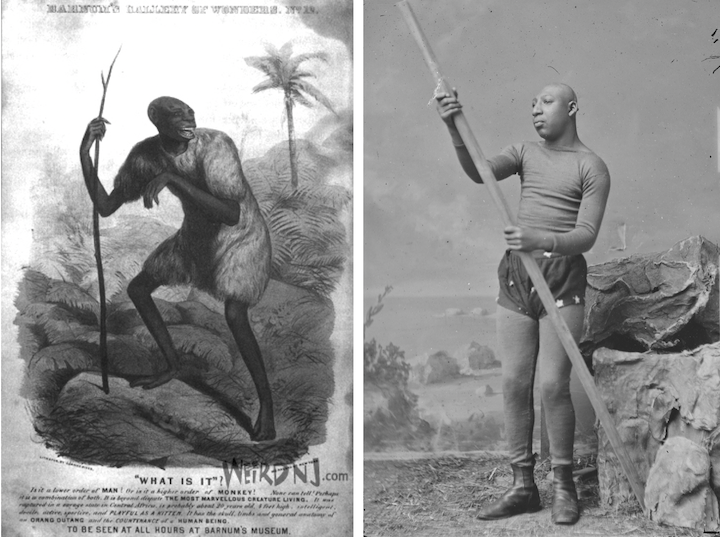
When Alva Johnston penned the first installment of a three-part profile series titled “Sideshow People,” such attractions could be found across the U.S. and Europe—Coney Island featured “Zip the Pinhead,” who was actually William Henry Johnson (1842–1926), one of six children born to former slaves living in New Jersey. His desperately poor parents agreed to allow P.T. Barnum to display him at a museum and at circus performances billed as a missing link, a “What-Is-It” supposedly caught in Africa.
FOR THE SUCKERS…P.T. Barnum exhibited William Henry Johnson as a “wild man”, a “What-Is-It” that subsisted on raw meat, nuts, and fruit, but was learning to eat more civilized fare such as bread and cake. Note the difference between the poster depiction at left and the actual man. Civil War-era photo at right by Mathew Brady’s photography studio in New York City. (National Portrait Gallery)
* * *
Floating and Sinking
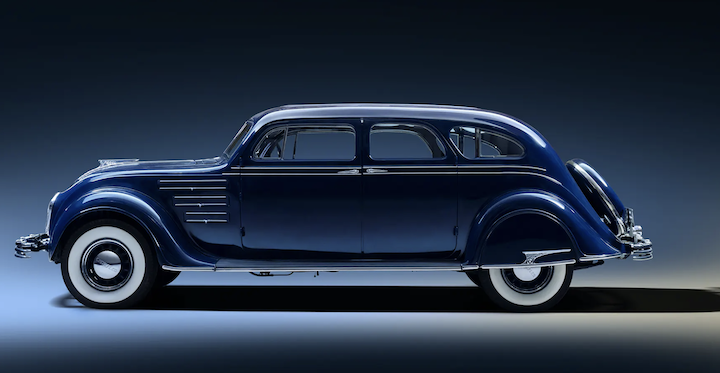
As much as New Yorker cartoonists (and E.B. White) liked to take pokes at Chrysler’s futuristic Airflow, there was much to be admired by the innovations the car represented. Unfortunately, the car’s design was too advanced for the buying public, and despite a big manufacturing and sales push by Chrysler the car was shelved by late 1936.
Writing for Time, Dan Neil noted the Airflow’s spectacularly bad timing. “Twenty years later, the car’s many design and engineering innovations — the aerodynamic singlet-style fuselage, steel-spaceframe construction, near 50-50 front-rear weight distribution and light weight—would have been celebrated. As it was, in 1934, the car’s dramatic streamliner styling antagonized Americans on some deep level, almost as if it were designed by Bolsheviks.”
SEEMED LIKE A GOOD IDEA. A restored 1934 Airflow. (Hagerty Media)
* * *
More From Our Advertisers
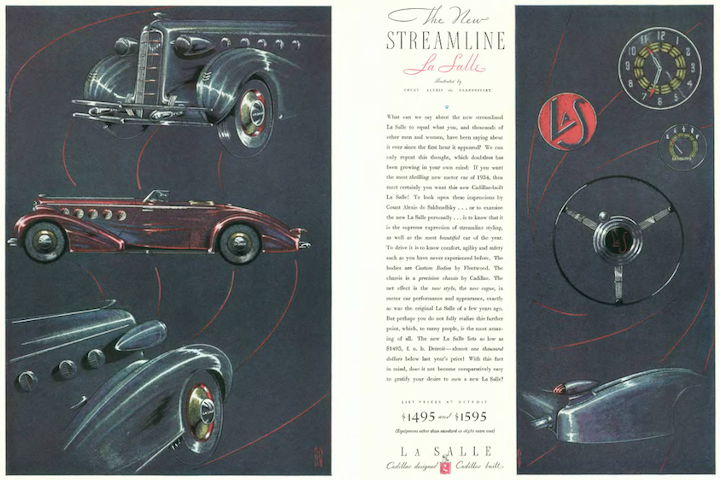
Maybe the buying public wasn’t ready for a car with a sloping hood and embedded headlights, but the folks at Cadillac were eager to unveil concepts for the new streamlined La Salle, which retained the familiar bullet headlights so as not to alarm consumers too much…
…and here’s a lovely image from Goodyear…I assume this woman is merely resting in a rumble seat, since this pose would not be possible above 25 mph…
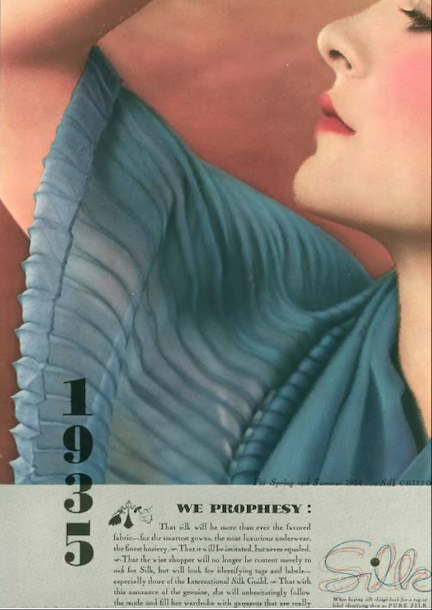
…full-bleed color ads were coming into their own, as demonstrated by this stylish entry from the purveyors of silk garments…
…on the other hand, our well-heeled friends at Ponds stuck with the tried and true copy-heavy approach…here they offer the flawless features of Anne Gould (1913–1962), granddaughter of Gilded Age robber baron Jay Gould…
…R.J. Reynolds continued their campaign to convince us that Camels bring success to the average Joe and the champion athlete…
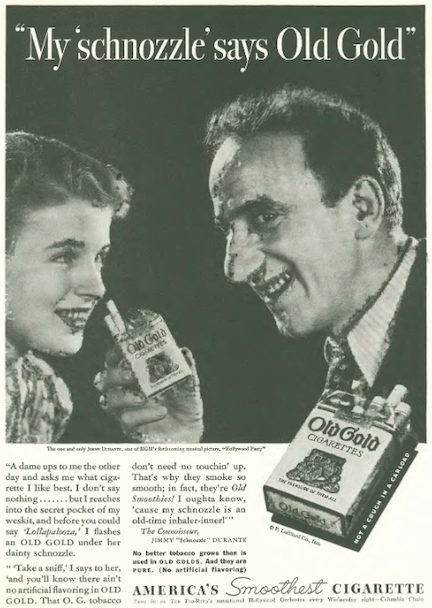
…the makers of Old Gold opted for the super creepy approach, asking entertainer Jimmy Durante to shove a pack of smokes into the face of what appears to be a teenager…
…here’s another ad from World Peaceways, reminding us of the futility of war…
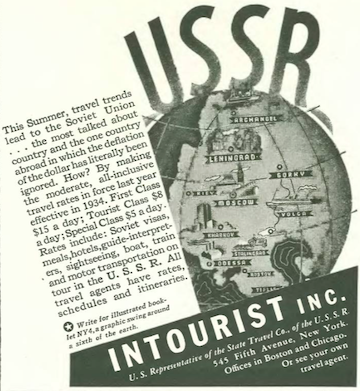
…speaking of futility, you could visit the USSR, which doubtless took great pains to steer tourists away from mass starvation in Ukraine and mass executions of Stalin’s many “enemies”…
…while folks in the USSR were worshiping Lenin and Stalin, Americans were rightly transfixed by the miracle of Kellogg’s Corn Flakes…a producer of industrial and advertising films, Castle Films would become a subsidiary of Universal and would go on to make a line of science-fiction and horror films including The Wolf Man, The Mummy, and Creature from the Black Lagoon.
…on to our cartoons, Alain took on the recent MoMA exhibition of “Machine Art”…
…and speaking of machine art, George Price was to latest cartoonist to take a crack at the Airflow…
…James Thurber offered this bit of spot art for the opening pages…
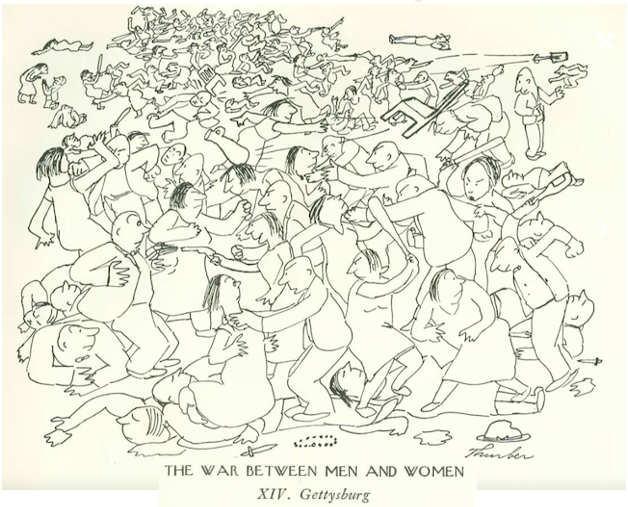
…and returned to a somber scene on the battlefield of the sexes…
While legal beer dominated the headlines in the spring of 1933—a little something to cheer about in those depressed times—few seemed to notice the troubles brewing on the other side of the pond.
April 1, 1933 cover by Julian de Miskey.
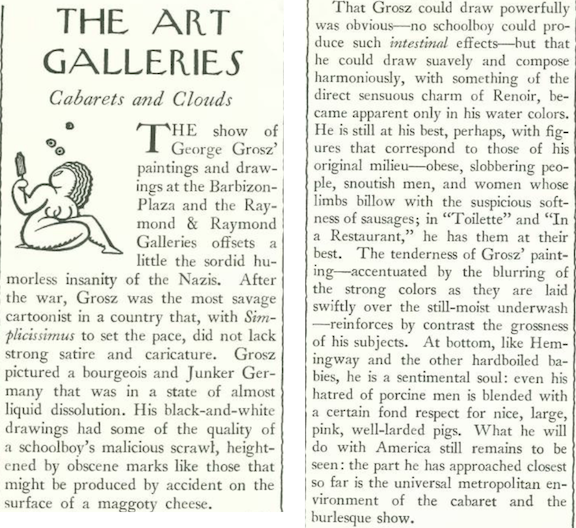
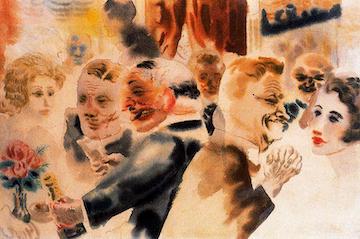
Artist George Grosz (1893–1959) was not among them. A recent self-exile from his native Germany, Grosz had savagely caricatured the perversity of the bourgeois in 1920s Weimar Berlin; through his art he tried to warn fellow Germans of the horrors to come. Critic Lewis Mumford stopped in at the Raymond & Raymond galleries to check out the latest efforts of this Manhattan newcomer:
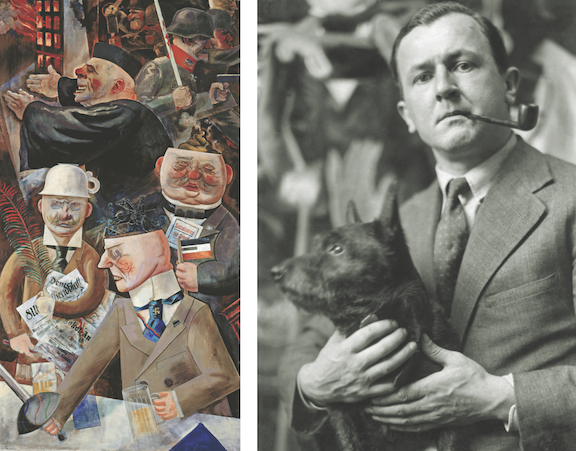
EARLY WARNING SIGNS… George Grosz’s The Pillars of Society (1926) satirized the bourgeois supporters of Fascism in post-war Germany; Grosz with friend, circa 1933. (history net.com)
Although Grosz intended to make a clean break with his past after emigrating to New York in January 1933, his work still reflected his distaste for bourgeois sensibilities…
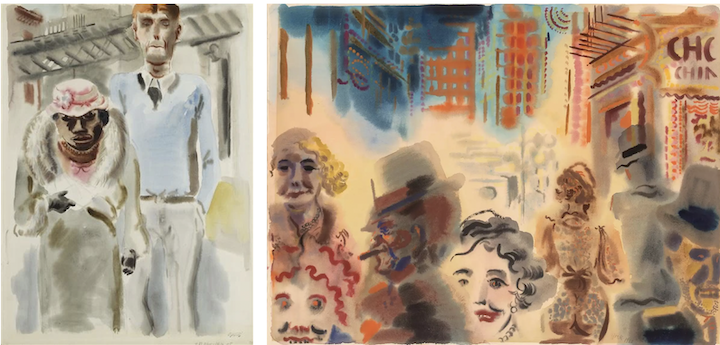
GROSS GROSZ…In a Restaurant (circa 1933) was admired by Mumford for the tenderness of the watercolor wash that contrasted with the “grossness” of its subjects. (artnet.com)ON THE SIDEWALKS OF NEW YORK…Grosz wanted to make a clean break with his past after emigrating to New York in January 1933, but he still couldn’t help but see the hypocrisy in the faces of bourgeois Manhattanites. At left, Black & White (1933) and at right, Street Scene, Downtown Manhattan (1933). (mutual art.com/artsy.net)
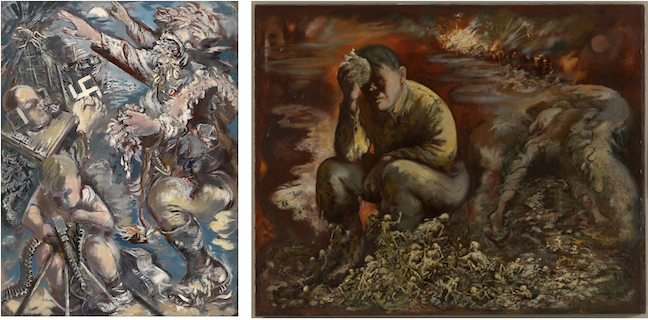
…and when war raged in his homeland, Grosz returned to chronicling the perversity of the Nazi regime…
HORRORS REALIZED…Grosz’s God of War (at left, from 1940) and his 1944 oil on canvas, Cain or Hitler in Hell. (David Nolan New York)
* * *
Bluenose Blues
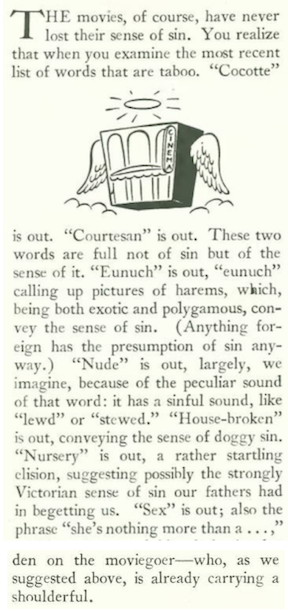
Sadly, we are moving toward the end of the pre-Code era, and as E.B. White explained in “Notes and Comment,” the talkies were about to get a bit less talkative:
AW HECK…Dorothy Mackaill portrayed a secretary-turned-prostitute in the 1931 pre-Code Hollywood film Safe in Hell. The days were numbered for the brief period in Hollywood (roughly 1929–34) when films featured “adult” themes including sexual innuendo, mild profanity, and depictions of drug use, promiscuity and prostitution. (IMDB)
* * *
From Our Advertisers
We begin with the back pages, and the latest in entertainment on Broadway…
…the makers of Cadillacs continued to promote the snob appeal of their 12- and 16-cylinder automobiles…it appears these folks are leaving an Easter service (note the doves), but whatever went on in there, they don’t seem very moved by the spirit…
…and here’s a close-up of the ad’s opening lines that suggested Cadillacs are an ideal complement to the apparel of those strutting their stuff on the Easter Parade…
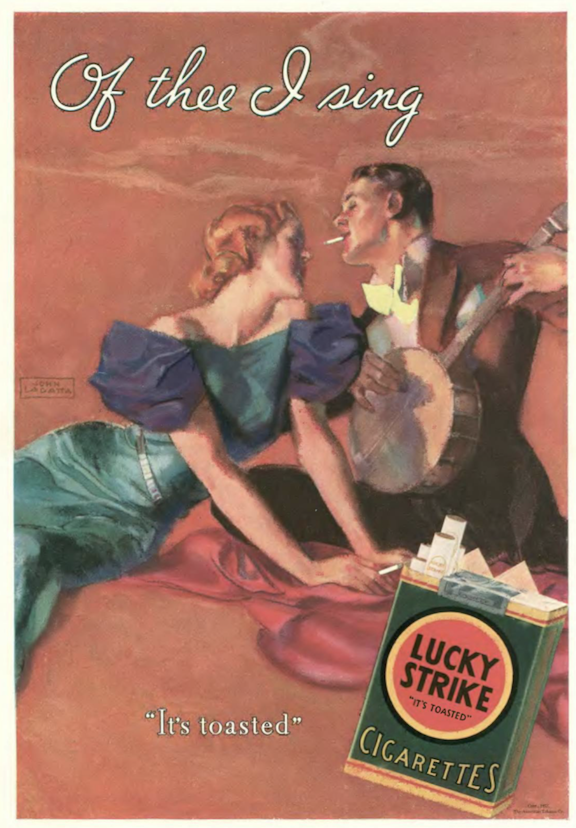
…and here’s a jolly rendering for Lucky Strike by advertising illustrator John LaGatta (1894–1977)…his work was seen in many ads and in magazines during the first half of the 20th century, including twenty-two Saturday Evening Post covers…LaGatta’s style was known for its cool elegance, but I have to say this image is a bit disturbing, given that the banjo player’s cigarette is just inches from the woman’s eyeball…
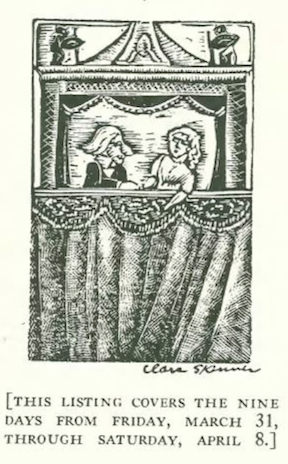
…on to our cartoonists, we have a rare appearance by Clara Skinner (1902–1976), showing us here in the “Goings On About Town” section that John Held Jr wasn’t the only one making woodcuts…
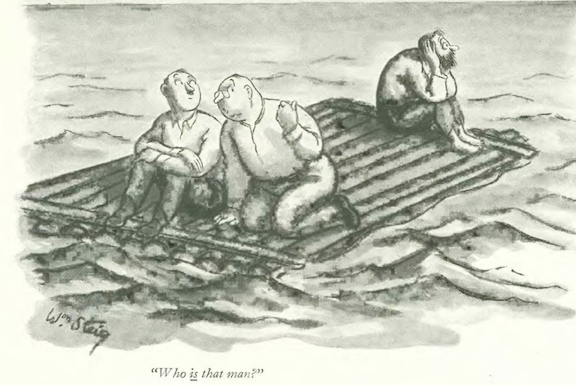
…William Steig was lost at sea…
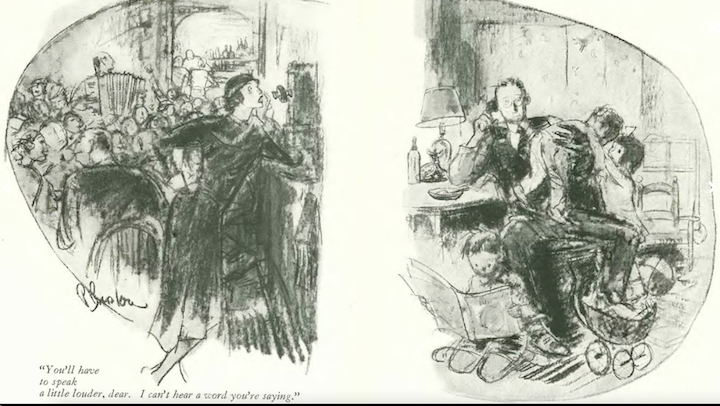
…Perry Barlow gave us this split scene (across two pages) of the challenges of mixing domestic and non-domestic life…
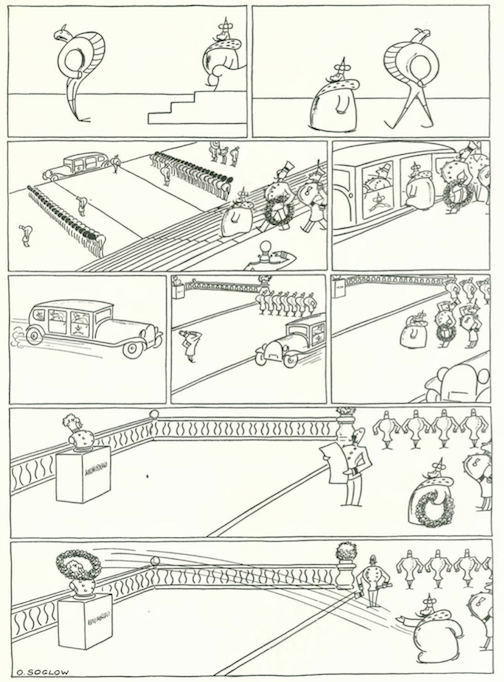
…Otto Soglow continued to chronicle the adventures of his popular Little King…
…we haven’t seen Mary Petty in awhile, so here’s a bit of gossip…
…James Thurber used a rare two-page spread of Alexander Woollcott’s “Shouts and Murmurs,” to lay out this unusual illustration…
…and Thurber again, in a more familiar vein…
…we move on April 8, 1933…
April 8, 1933 cover by Adolph K. Kronengold.
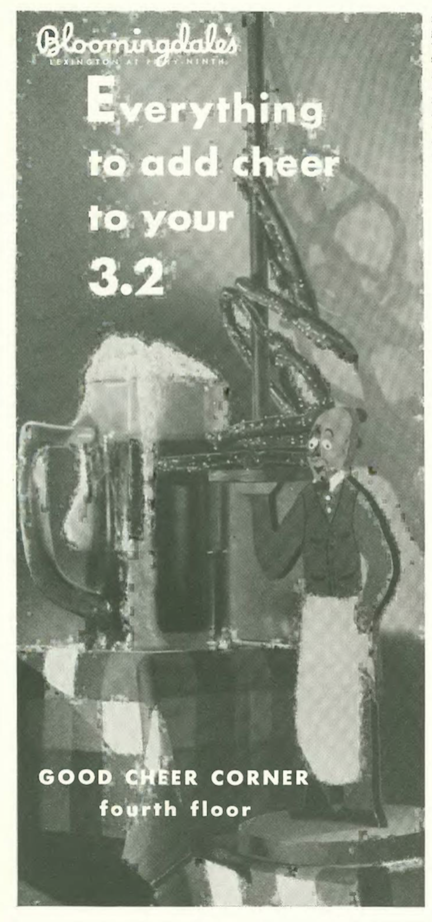
…and go straight to advertisers who were responding to the March 22 signing of the Beer and Wine Revenue Act by Franklin D. Roosevelt…the Congressional action made it permissible to sell beer as long as it was less than 3.2% alcohol…
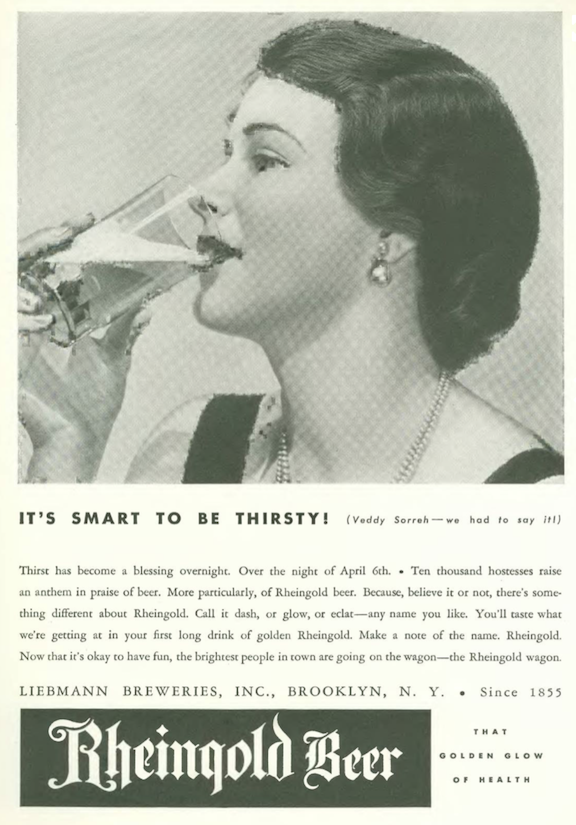
…the makers of Rheingold beer came out of the gates with this ad showing that even elegant women could enjoy this taste of freedom…
…not completely sure, but I believe this was the first ad for Coca-Cola to appear in The New Yorker…
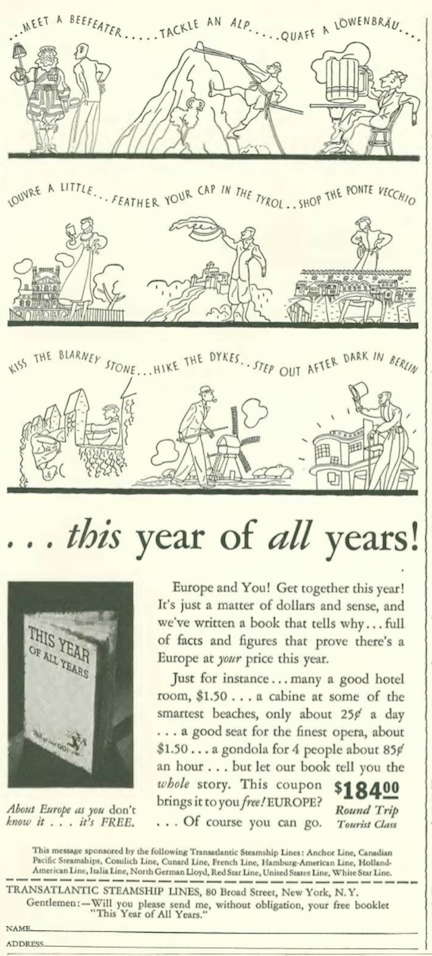
…in those tough times the steamship lines were beginning to realize they needed to appeal to the thrifty as well as the posh…
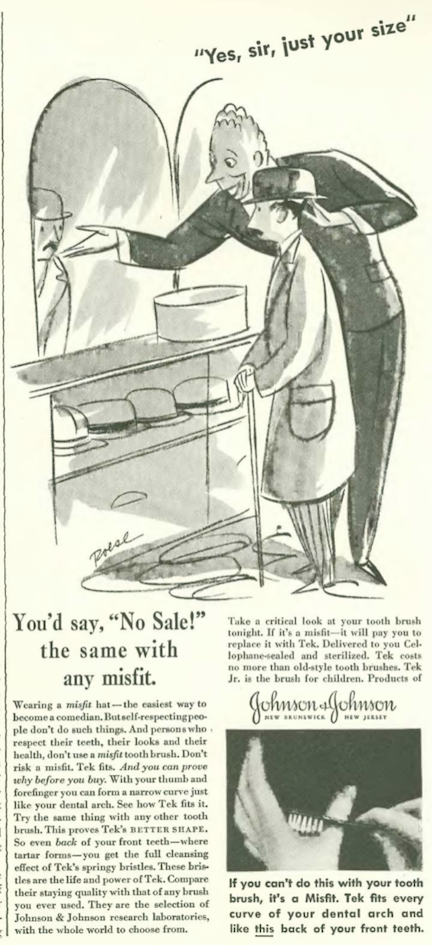
…Illustrator Herbert Roese offered up this Arno-esque gag for Johnson & Joshnson…
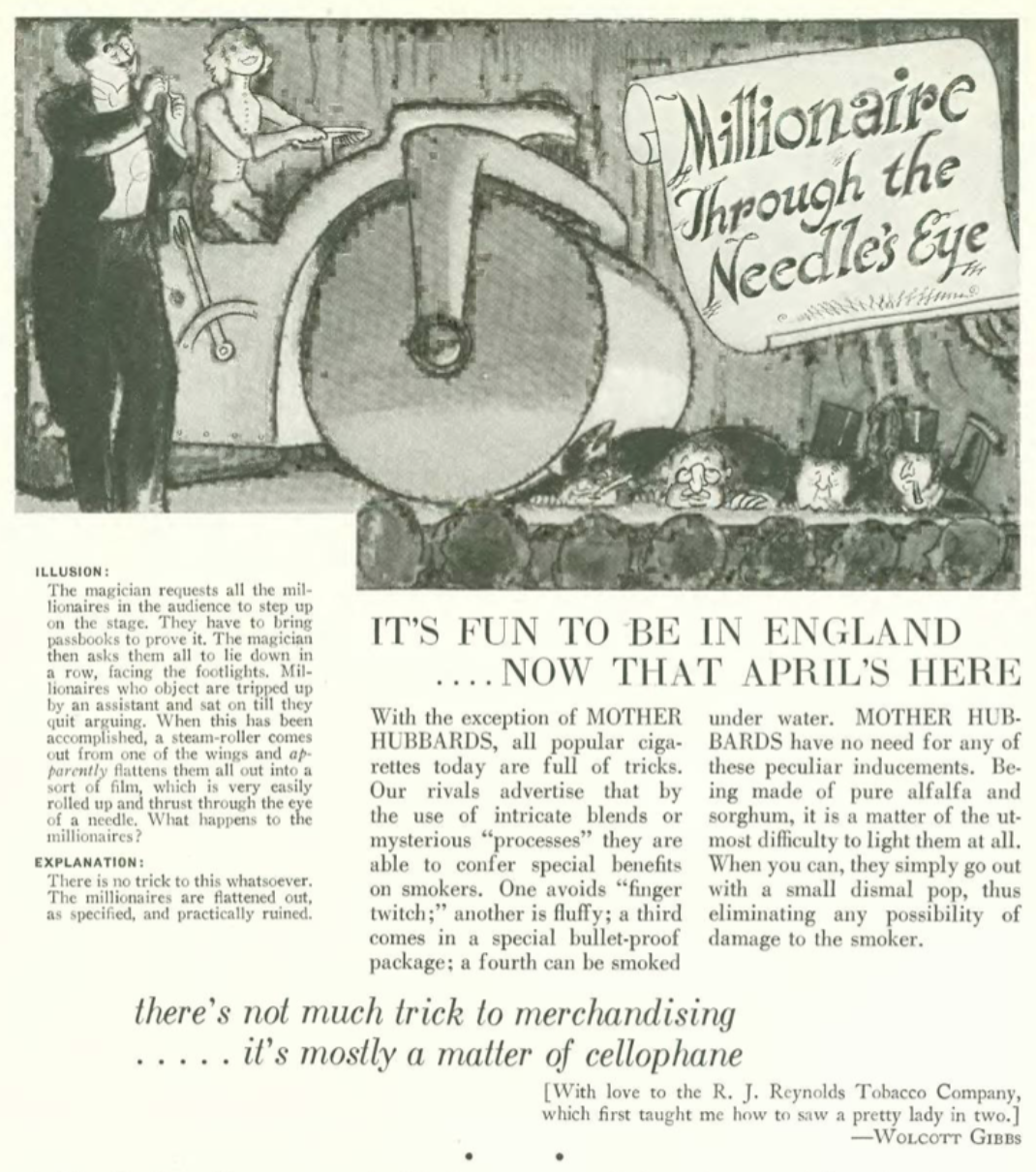
…on to our cartoons, we begin with this Peter Arno spoof of a series of R.J. Reynold’s Camel ads that referenced various magic tricks…
…in the same issue, just 20 pages later (p. 48) appeared one of the actual Camel ads…proof that Harold Ross would never kowtow to the advertising department—with the exception of those yeast ads for his friend and benefactor Raoul Fleischmann, who kept the magazine afloat in the early, lean years…
…we have more James Thurber, who kicked off the April 8 issue…
…and offered more hijinks inside…
…William Steig gave us this strip captioned “The Spicy Story” which ran across the bottom of pages 26-27…
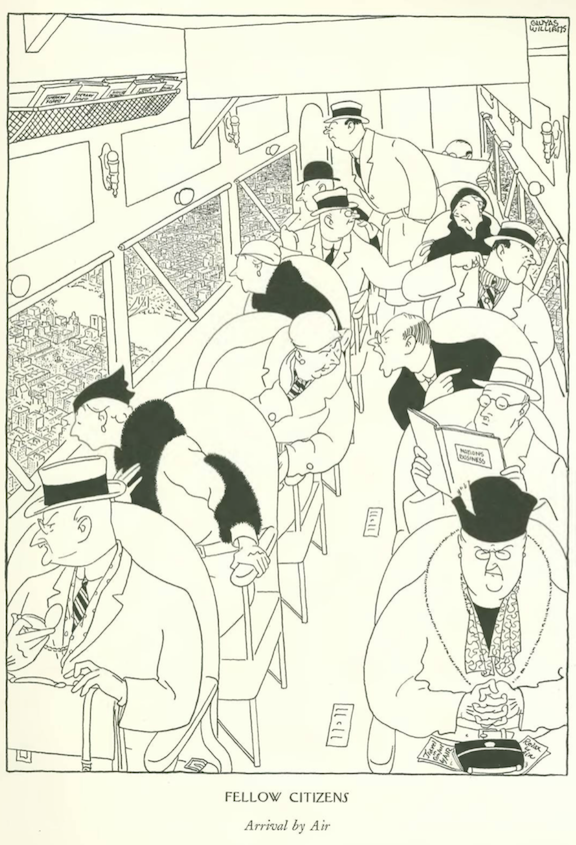
…Gluyas Williams continued to hang out with his fellow citizens, this time in the skies above Manhattan…
…Daniel ‘Alain’ Brustlein showed us one cabbie’s reaction to the cheap ways of the posh crowd…
There were a number of people Dorothy Parker couldn’t abide. That included gifted writers who not only eschewed serious literature, but who instead chose to crank out a lot of mass-market trash.
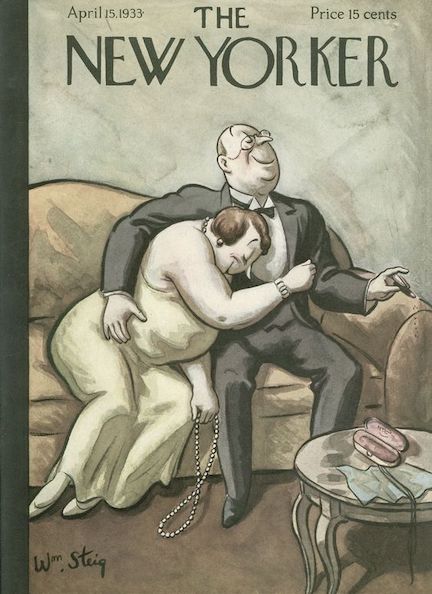
March 18, 1933 cover by William Steig.
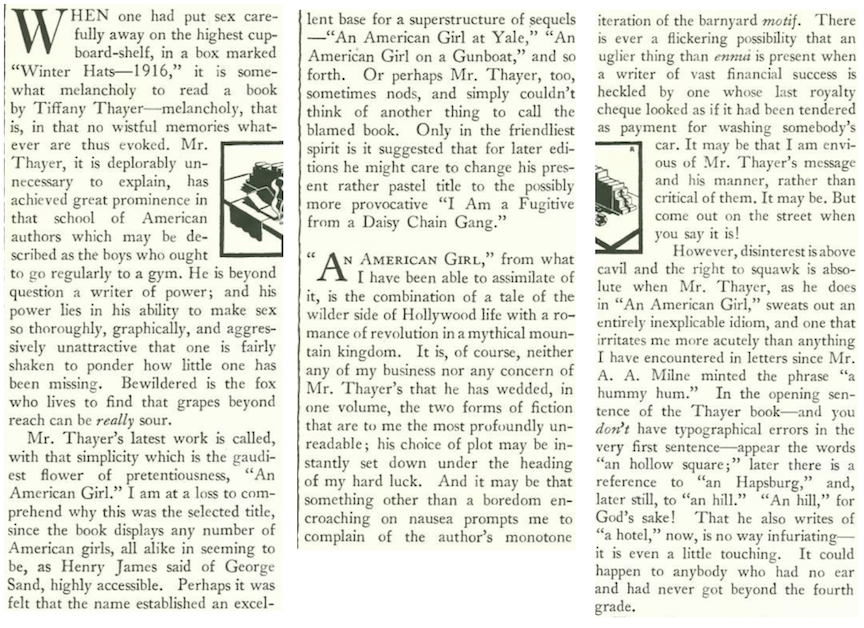
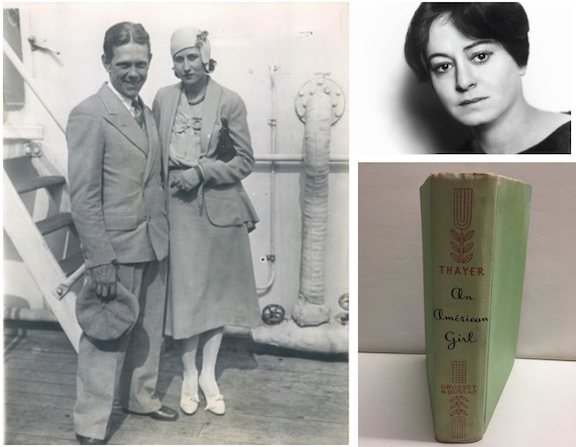
Parker was well acquainted with Tiffany Ellsworth Thayer (1902–1959), and for a time she even associated with the Fortean Society, which Thayer founded in 1931. Inspired by writer Charles Fort, the Forteans promoted the use of scientific methods to evaluate unexplained phenomena such as UFOs, spontaneous human combustion, and other oddities. Parker and fellow New Yorker writers Ben Hecht and Alexander Woollcott were among founding members, doubtless drawn to Fort’s reputation as a skeptic; however one famous skeptic, journalist H.L. Mencken, called Fort’s ideas “Bohemian mush.” It’s hard to say how long Parker stayed connected to the Society, but by 1933 she was fed up with Thayer’s novels, including his latest, An American Girl, which she found to be “the gaudiest flower of pretentiousness.” Here is an excerpt from Parker’s sometime column, “Reading and Writing,” subtitled Not Even Funny…
TIFF WITH TIFFANY…At left, Tiffany Thayer aboard a cruise ship with an unidentified woman, most likely his first wife, a dancer named Tanagra, early 1930s; at right, Dorothy Parker and a first edition of the offending volume. In her review, Parker observed that Taylor “is beyond question a writer of power; and his power lies in his ability to make sex so thoroughly, graphically, and aggressively unattractive that one is fairly shaken to ponder how little one has been missing.” (IMDB/Worthpoint)
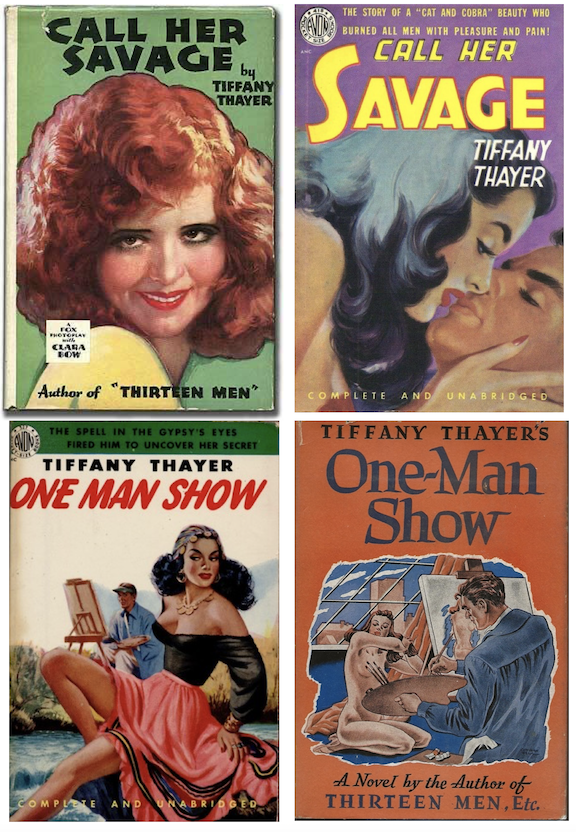
Although Thayer founded a society based on scientific reason, his pulp novels were filled with fantasy and prurient imagery. F. Scott Fitzgerald once observed that “curious children nosed at the slime of Mr. Tiffany Thayer in the drug-store libraries.”
BELIED LETTRES…Clockwise from top left, Thayer’s 1931 novel Call Her Savage was made into a 1932 film starring Clara Bow, here featured on the book’s dustcover; the same novel repackaged in 1952 for the pulp trade; a 1943 edition of Thayer’s One-Man Show, and a 1951 Avon reprint that toned down the nudity but upped the creep factor. (facebook.com/biblio.com)
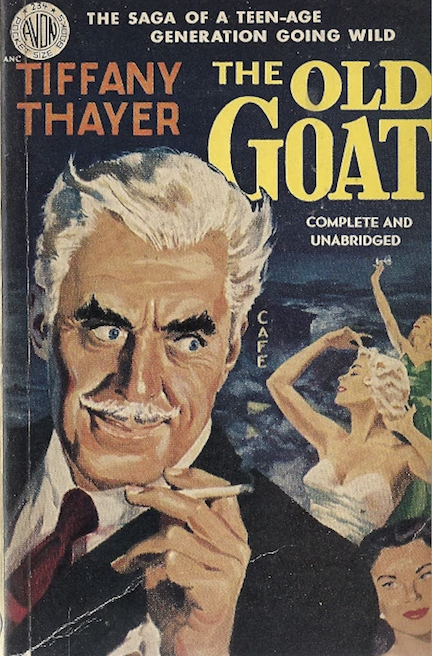
…and speaking of creep factor, check out Avon’s 1950 re-issue of Thayer’s 1937 novel The Old Goat, illustration attributed to Edgar Lyle Justis…
(biblio.com)
Artists like Justis must have had a ball doing these illustrations, creating images to lure the unsuspecting into purchasing these old titles. Note how the coked-up old man sports not-so-subtle devil horns.
* * *
They Called It a Holiday
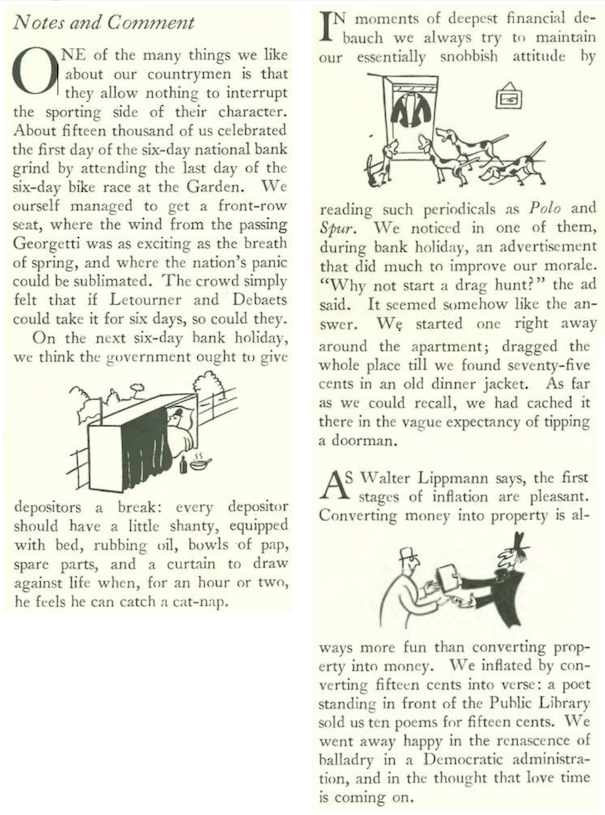
E.B. White, James Thurber (see below) and others in the March 18 issue commented on the national banking “holiday” declared by President Franklin D. Roosevelt in an effort to stabilize America’s banking system and rebuild public confidence. This led to the Glass-Steagall Act, signed three months later by FDR. Some observations in “Notes and Comment” by E.B. White, with the usual great spot illustrations by Otto Soglow…
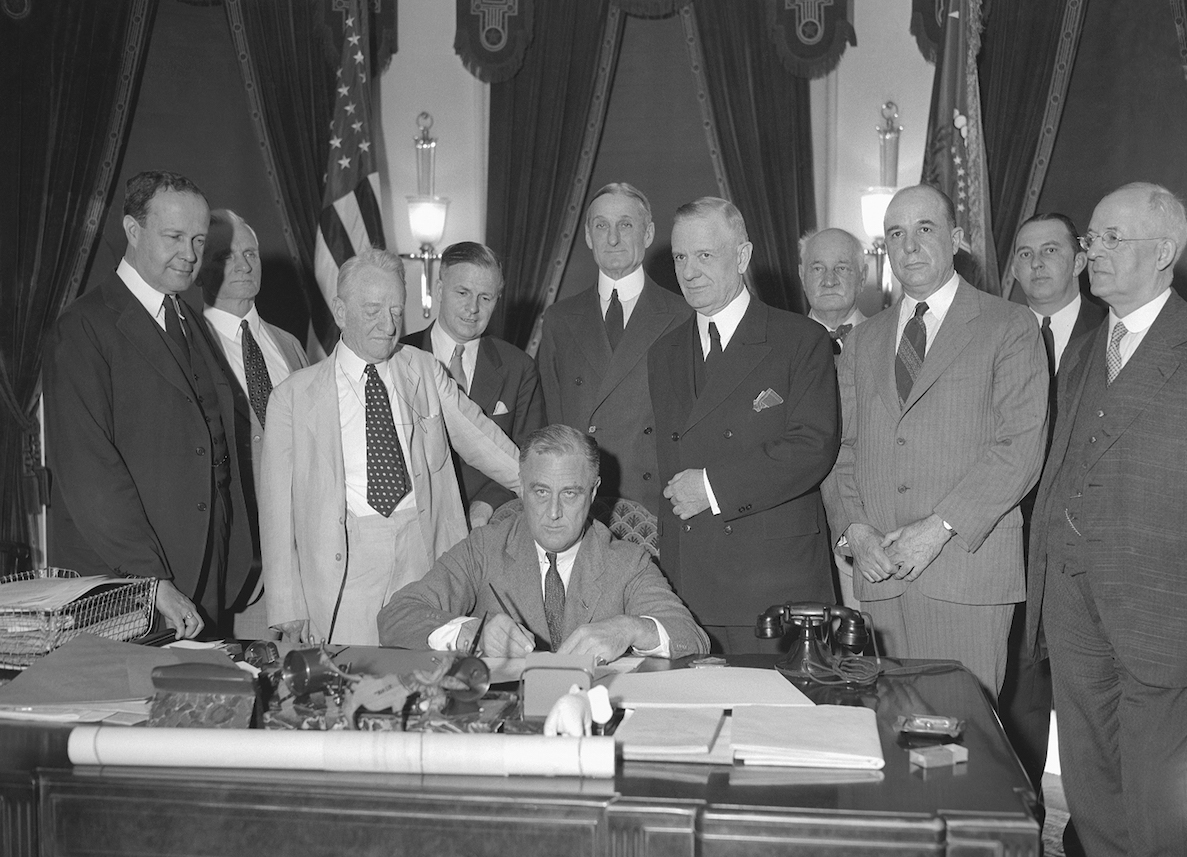
SAY CHEESE!…President Franklin D. Roosevelt signs the Glass-Steagall Act on June 16, 1933, effectively separating commercial banking from investment banking and creating the Federal Deposit Insurance Corporation (FDIC), among other things. (Associated Press)
…meanwhile, Germany’s new chancellor, Adolf Hitler, was busy abolishing civil liberties while pretending to be distressed by the behavior of his brownshirt thugs…an excerpt from Howard Brubaker’s “Of All Things”…
* * *
A Familiar Ring
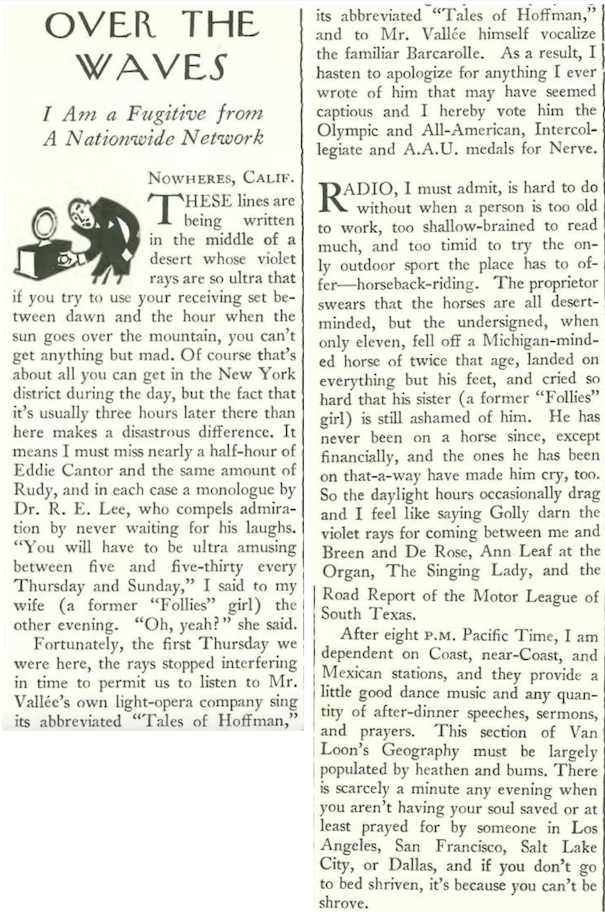
For the second week in a row Ring Lardner lent his wit to The New Yorker’s “Over the Waves,” column, which typically reviewed the latest news and entertainment beamed from the radio tower atop the Empire State Building. Lardner, however, was in California, lamenting the challenges of the time lag. An excerpt:
AND NO WI-FI, EITHER…Ring Lardner (center) detailed the frustrations of listening to New York-based radio entertainers like Eddie Cantor (left) and Rudy Vallée during his stay in California. (Pinterest/The Classic Archives/The New York Times)
* * *
Dance Away Those Blues
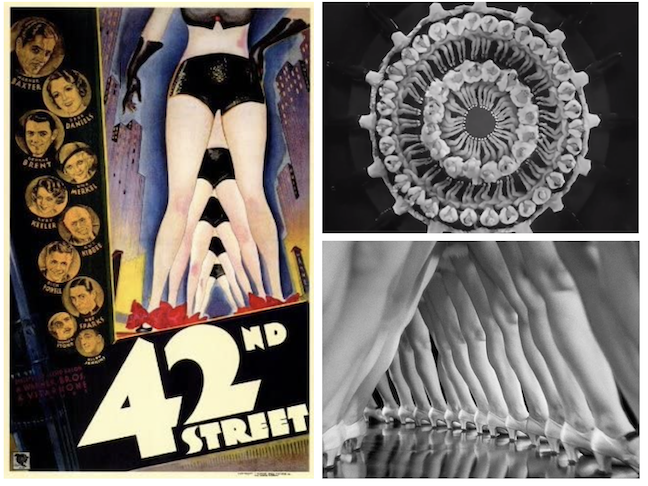
The pre-Code musical 42nd Street received a brief, albeit mostly positive review from critic John Mosher, who along with the producers of the film knew Depression-weary Americans needed such distractions. Nearly 90 years later (April 10, 2020), another New Yorker film critic, Richard Brody, suggested 42nd Street as one of the best films to stream during the Covid-19 pandemic: “Modern musicals start here, and Busby Berkeley’s genius bursts into full flower,” he wrote.
DANCE ‘TIL YOU DROP…Under pressure to produce a hit after losing his lead dancer (Bebe Daniels) to a broken ankle, Broadway musical director Julian Marsh (Warner Baxter, center) mercilessly rehearses her replacement, Peggy Sawyer (Ruby Keeler, in her film debut) before the premiere, vowing “I’ll either have a live leading lady or a dead chorus girl.” Looking on (to the right of Baxter) is Ginger Rogers, who portrayed “Anytime Annie.” (tcm.com)A LEG UP ON HIS CAREER…42nd Street was a breakthrough film for choreographer Busby Berkeley, who would direct and choreograph a long string of musicals until the 1960s. The film is now considered a classic, preserved in the United States National Film Registry. (IMDB)
…and for trivia buffs, during an opening scene Bebe Daniels is shown reading the February 20, 1932 (anniversary) issue of The New Yorker…
* * *
From Our Advertisers
A convertible LaSalle (a downscale Cadillac brand) looks like a great way to enjoy a drive along the beach…let’s hope it has enough acceleration to outrun the tsunami apparently heading its way…
…Walter Chrysler continued to dig into his deep pockets for two-page color spreads, including this one that placed his humble DeSoto in St. Moritz, of all places…
…not to be outdone, the folks at Nash found another exotic locale for their budget-priced sedan…Chicago, that is, at the 1933 Century of Progress Exhibition…and for an extra touch of class, we have what appears to be a chauffeur attending to this modest motorcar…
…America’s top luxury car maker, Pierce Arrow — a regular advertiser in The New Yorker — decided a quarter-page ad was sufficient to keep their name before the eyes of the well-heeled…at right, an ad from another back page featured cartoonist Don Herold shilling for the makers of imitation liquor flavors…according to the ad, one bottle, obtainable from your druggist, “flavors a gallon” of whatever forsaken hootch you are consuming…
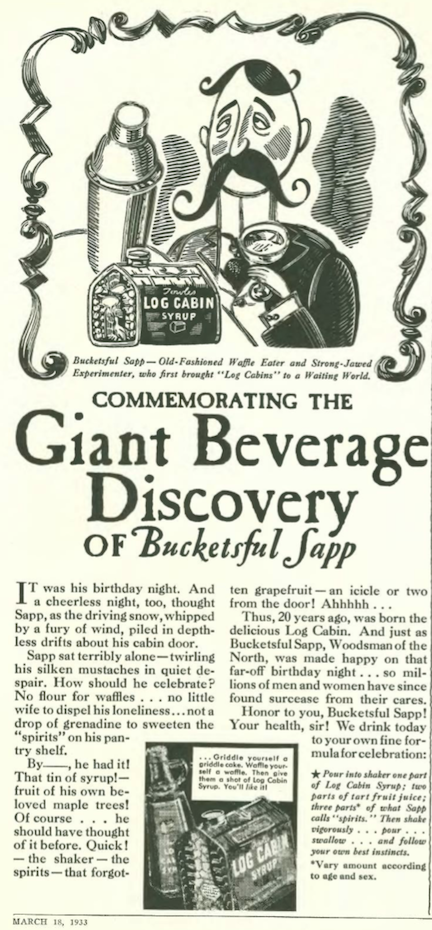
…the folks at Log Cabin relied on the talents of another New Yorker cartoonist, John Held Jr., to make both their product and a signature cocktail a more palatable experience…
…I have to hand it to the folks at Heinz for signing off on an advertisement only a vampire would find appealing…
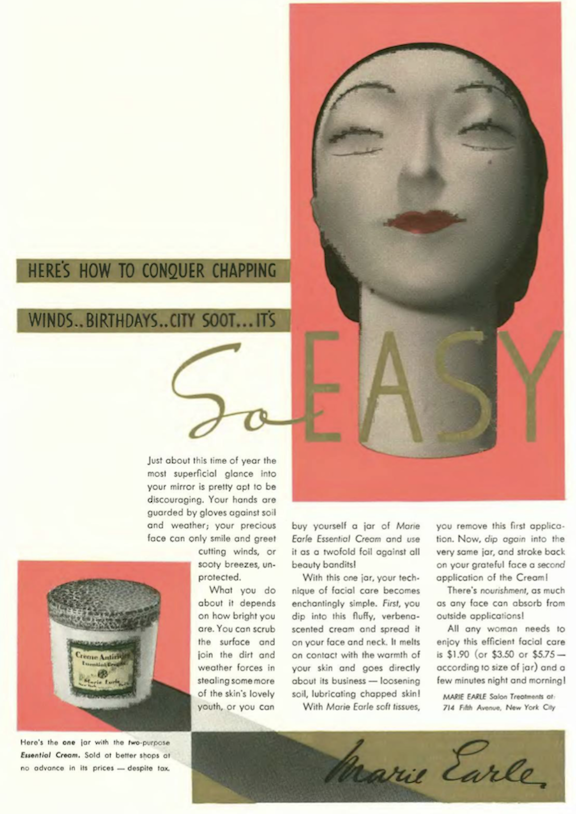
…the purveyors of Marie Earle beauty products rolled out this modern ad to promote their “Essential Cream”…
…while staid Brooks Brothers remained true to form — no flashy colors or advertising jargon — just straight talk about price increases….
…and then there’s the upmarket Fortnum & Mason, appealing to America’s Anglophiles with one of their famed wicker hampers filled with various goodies selected for “charming and greedy people”…
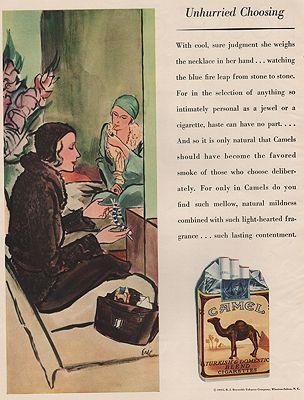
….for several years R.J. Reynolds employed the services of Carl “Eric” Erickson (1891–1958) to illustrate a series of ads featuring classy, disinterested, continental types smoking their Camel brand cigarettes…despite their less-than-exotic name, the makers of Spud menthol cigarettes hired Ruth Sigrid Grafstrom (1905–1986) to create their own smart set of smokers…
…ads that bore a striking resemblance to Erickson’s Camel work (this example from 1931)…
…and for your consideration, works from 1933 by Carl Erickson and Ruth Sigrid Grafstrom…both were noted fashion illustrators…
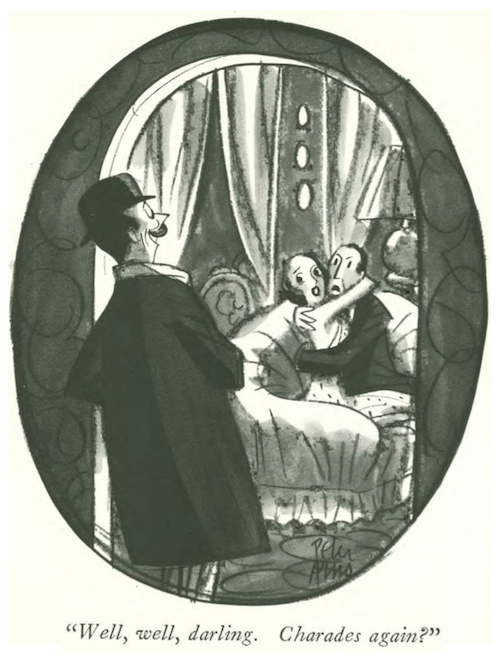
…on to our cartoonists, we begin with Charles Addams, who’d just published his first New Yorker cartoon the previous month, in the Feb. 4, 1933 issue…
…that first cartoon was simply signed “Addams”…here he used the familiar “Chas Addams”…a close-up of the signature…
…we continue with a great caricature by Al Frueh to accompany a profile of Rudolf Kommer (as told by Alexander Woollcott)…
…a delightful full page of bank holiday-themed cartoons by James Thurber…
…Richard Decker offered up a tall tale…
…and we close with Peter Arno, who served up one of his clueless cuckolds…
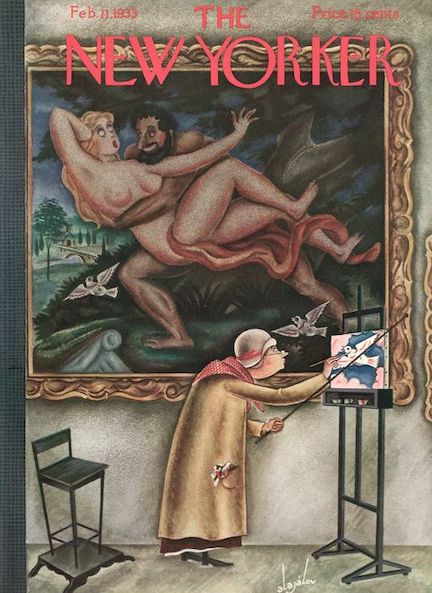
James Cagney began his entertainment career singing and dancing in various vaudeville and Broadway acts, but when he was cast in his first film as a tough guy, the die was cast…at least for one New Yorker critic.
Feb. 11, 1933 cover by Constantin Alajalov.
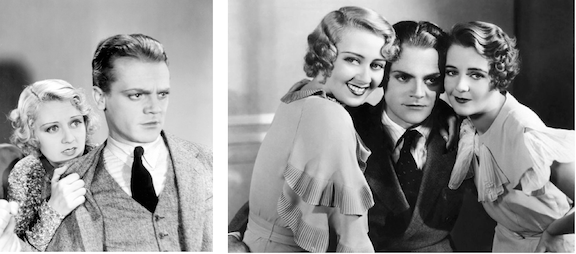
Cagney’s first film role came after he starred along with Joan Blondell in Broadway’s Penny Arcade. However when the play was made into the 1930 movie Sinners’ Holiday, execs at Warner Brothers opted to put Grant Withers and Evalyn Knapp into the lead roles, believing they were destined for stardom; Cagney and Blondell were relegated to supporting parts. As fate often has it, Withers and Knapp ended up in B-movie obscurity, while Cagney and Blondell went on to become two of the biggest stars of the 1930s. The pair would appear in six more films together, including the gangster film The Public Enemy (1931) and the musical Footlight Parade (1933).
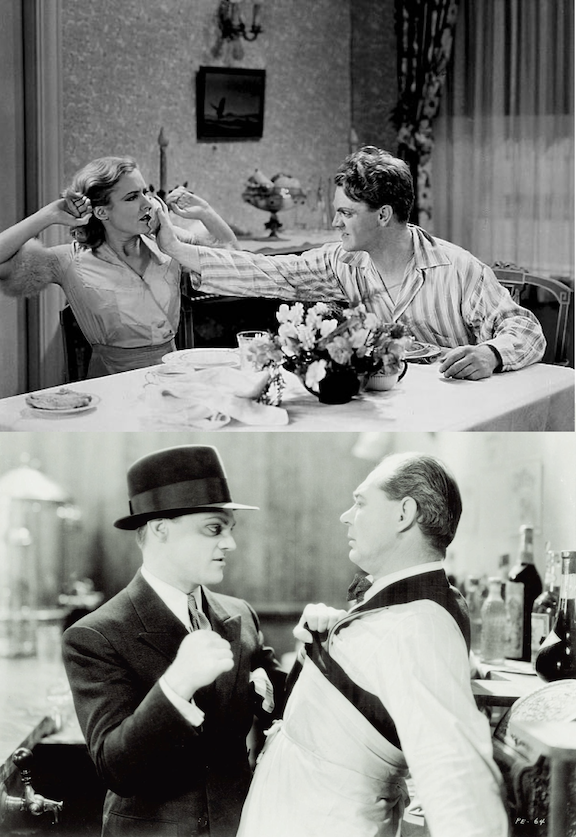
TWO-FACED…James Cagney would be paired with Joan Blondell in seven films during the 1930s including the gangster film The Public Enemy (1931, left) and the musical Footlight Parade (1933, also with Ruby Keeler). (IMDB)THE ONE I USED TO KNOW…Top, Cagney mashes a grapefruit half into Mae Clarke’s face in a famous scene from Cagney’s breakthrough film, 1931’s The Public Enemy; below, Cagney gets acquainted with a bartender (Lee Phelps) in The Public Enemy. (IMDB)
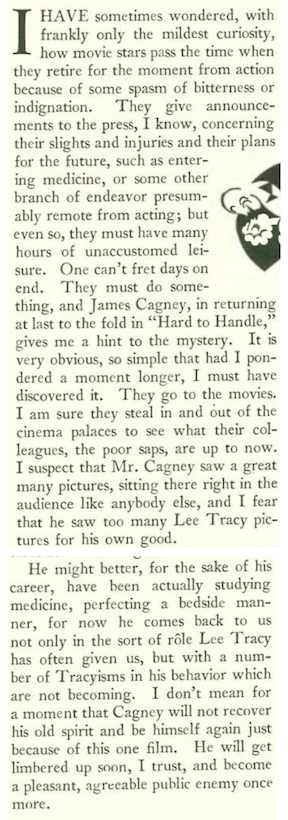
New Yorker film critic John Mosher preferred the tough guy Cagney to the toe-tapping version, and was anticipating Cagney’s return to pictures after a contact dispute with Warner in which he threatened to quit the business and follow his brothers into the medical profession…
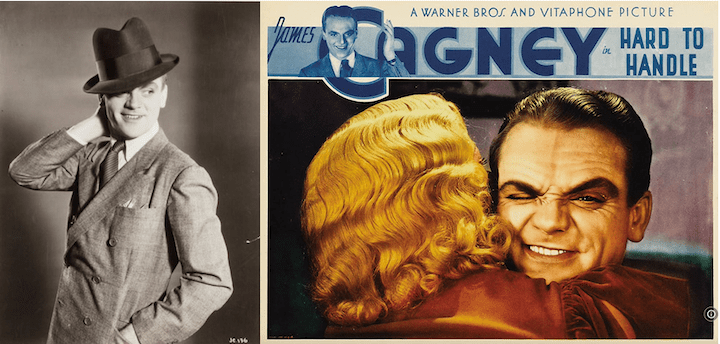
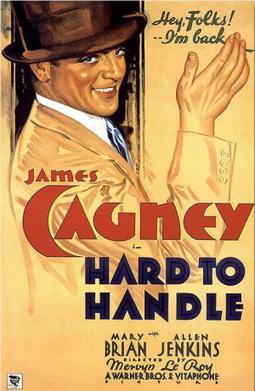
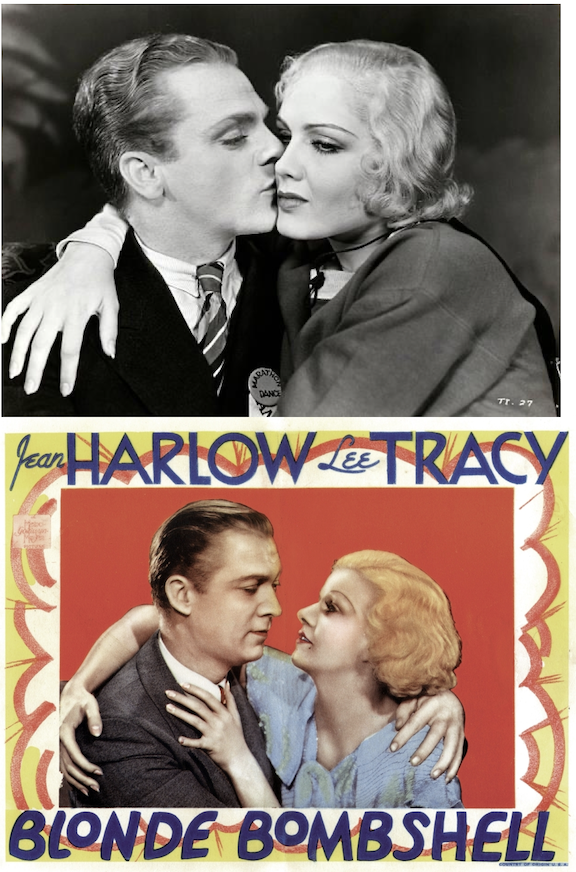
When Cagney finally announced his return in Hard to Handle, Mosher found he had taken on the guise of actor Lee Tracy, who was best known for his comic portrayals of wisecracking salesmen and reporters…
MY SOFTER SIDE…James Cagney and Mae Clark (top) in 1933’s pre-Code comedy Hard to Handle — Cagney played a clowning con artist who organizes a dance marathon. Below, critic John Mosher thought Cagney was channelling the comic actor Lee Tracy, seen here with Jean Harlow in 1933’s Blonde Bombshell. (IMDB)
* * *
Slippery Slope
Located on Lexington between 102nd and 103rd streets, Duffy’s Hill was once famous for being the steepest hill in Manhattan and the scourge of street cars that had to quickly accelerate and decelerate at that point, leading to numerous accidents. An excerpt from “The Talk of the Town”…
LOOK OUT BELOW…Duffy’s hill played merry hell with New York’s streetcars more than a century ago. (New York Social Diary via Facebook)
* * *
Getting High
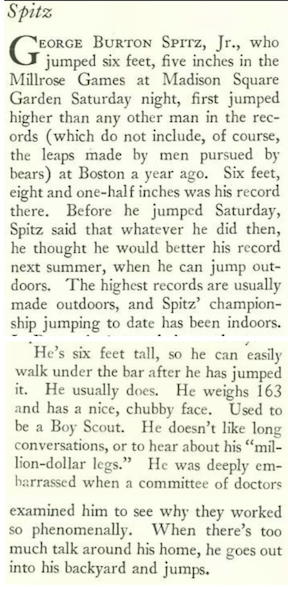
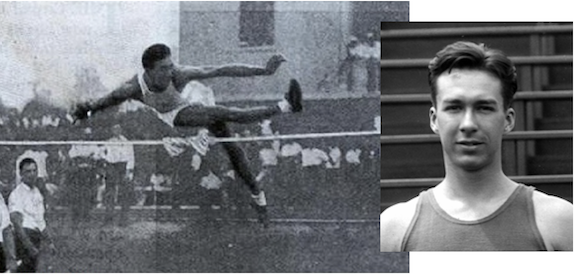
George Spitz Jr was an AAU high jump champion when he participated in the 1932 Summer Olympics in Los Angeles. In 1933 he made a personal best leap of 6 feet, 8¼ inches using scissors-style leap with elements of the Western roll. “The Talk of the Town” marveled at Spitz’s feat, giving him an extra quarter inch for his record leap:
MILLION-DOLLAR LEGS…In 1933 George Spitz Jr made his personal best leap of 6 feet, 8¼ inches using a scissors-style jump with elements of the Western roll. With the introduction of the Fosbury Flop in 1968, today’s men’s record stands at 8 feet, ¼ inches. The current women’s record is 6 feet, 10¼ inches. (Olympedia)
* * *
This Guy Again
As we move into the 1930s we will be seeing more references to Adolf Hitler, who seized power in Germany on January 30, 1933. At this point “The Talk of the Town” wasn’t taking him seriously…
…and neither was Howard Brubaker in his regular column of short quips…
* * *
From Our Advertisers
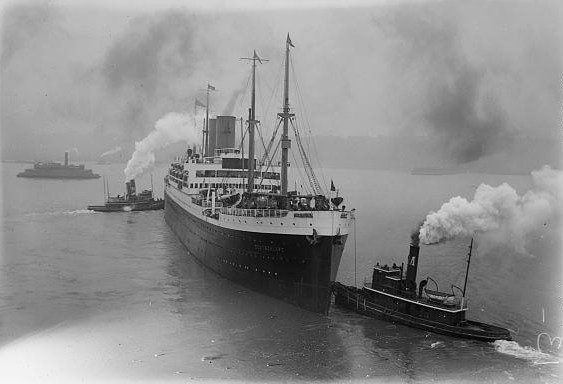
Hitler aside, the German-owned Hamburg-American Line was still serving peaceful purposes when it advertised the comfort of its “stabilized ships” on transatlantic voyages…these sister ships of the Hamburg-American Line were all destroyed during World War II…the SS New York and the SS Deutschland were both sunk by the British RAF in 1945…The SS Albert Ballin and the SS Hamburg sank after hitting Allied mines…
THE BIG BANG…the RAF sent the S.S. Deutschland to the bottom of the Bay of Lübeck on May 3, 1945. (Wikipedia)
…if travel wasn’t your thing, you could escape the winter blahs in the comfort of your home thanks to the GE Mazda Sunlight Lamp…
…and Dad, when you were her age you called these things “horseless carriages”…
…the folks at luxury carmaker Packard answered the splashy color ad from Cadillac in the Jan. 7 issue…
…with a colorful show-stopper of their own…
…if the Packard was too pricy, you could have checked out this lower-priced Cadillac, marketed as the LaSalle…
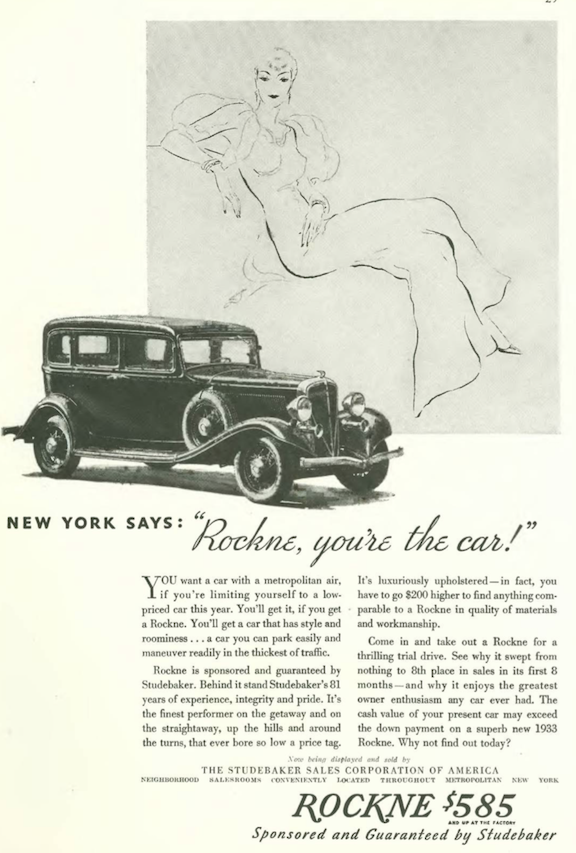
…no, New York did not say “Rockne, you’re the car!”, even if it was juxtaposed with a giant woman…the car was named for famed football coach Knute Rockne, and the Depression was not a good time to promote a new car line…it was produced from 1932 to 1933, when Studebaker pulled the plug and sold the remaining inventory (about 90 cars, packaged in kits) to a Norwegian railroad car manufacturer…
…a couple of posts ago (“Life With Father”) we were accosted by a three-page Camel ad featuring a Q&A stating the facts about its product…here they are back with two more pages of irrefutable evidence…
…what I read in their eyes is that none of them, including the woman, gives a damn about the others…if anything, the fellow at left is checking out the other guy…
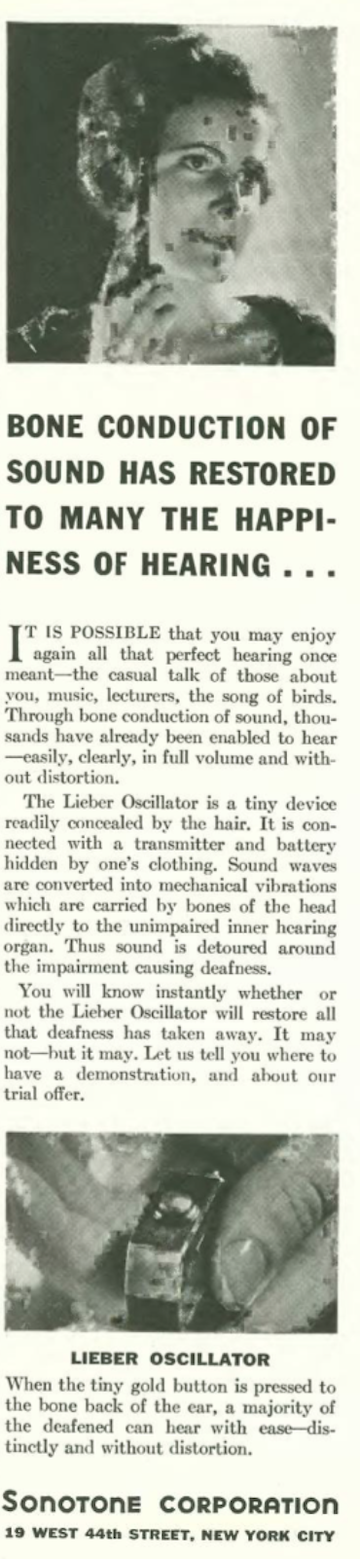
…this ad from Sonotone Corporation promoted a new hearing aid developed by Hugo Lieber…this revolutionary bone conduction receiver enabled the deaf to hear through bones in their head…
…a 1939 Sonotone catalog demonstrated how the hearing aid could be worn inconspicuously…
(abebooks.com)
…on to our cartoonists, Al Frueh illustrated the drama on board Broadway’s Twentieth Century Limited…note vaudevillian William Frawley’s caricature in the bottom right hand corner…although he appeared in more than 100 films, Frawley is best known today for his role as Fred Mertz on TV’s I Love Lucy…
…here’s a great caricature by Rea Irvin of New York’s new mayor John P. O’Brien, using his new broom to sweep away the corruption of the deposed Jimmy Walker and his Tammany Hall cronies…
…here’s another early work by George Price, who would be a cartoonist at The New Yorker for nearly six decades…
…and here we have the other Price…Garrett Price gave us a fellow who made some changes in his life à la Paul Gauguin…
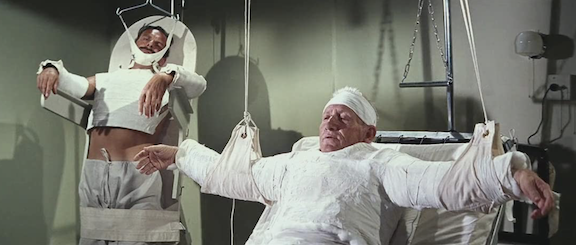
…I like this Perry Barlow cartoon because it reminds me of the patient-in-traction trope commonly seen in comedies of the 1960s and 70s…
…such as this Paul Coker Jr. illustration from the June 1970 issue of MAD magazine…
(MAD Magazine)
…and Terry-Thomas and Spencer Tracy in 1963’s It’s a Mad Mad Mad Mad World…
(IMDB)
…William Steig assured readers there was nothing sweet about his “Small Fry”…
…once again Helen Hokinson offered her impressions of the annual Westminster Kennel Club show at Madison Square Garden…
…Peter Arno’s Lake Placid would never be the same for his mustachioed millionaire “walruses” after the previous year’s Winter Olympic Games…
“Nobody said not to go” was a phrase often used by Emily “Mickey” Hahn when returning from one of her far-flung and often wild adventures.
Feb. 4, 1933 cover by Rea Irvin.
And nobody ever told Hahn (1905–1997) what she could write about, and so she wrote, with brio and authority, on a variety of subjects ranging from feminism, diamond mining, and animal behavior to Chinese history and cooking. The author of 54 books, Hahn also penned a number of biographies including those of Leonardo da Vinci, Chiang Kai-shek, and D. H. Lawrence among others. In the Feb. 4 issue Hahn wrote about spending the night at a New York flophouse, not out of necessity but rather to write about the experience. Excerpts:
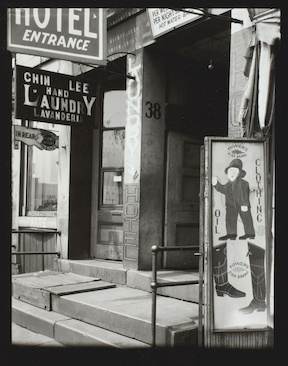
NO RITZ, THIS…Entrance to a flophouse in the Bowery, photo by Walker Evans, 1934.
In the following two excerpts, Hahn described her sleepless night, and her exit from the flophouse the following morning…
More on Emily Hahn, who defied convention from the very start of her adult life: before graduating from the University of Wisconsin in 1926 (the first woman to earn a degree in mining engineering there), she drove across the U.S. in a Model T, dressed a man. She wrote about her experiences in letters to her brother-in-law who, unbeknownst to Hahn, shared them with New Yorker editors. This would lead to a longtime relationship with the magazine, to which she would contribute nearly 200 articles (and one poem) between 1929 and 1996. She would also serve as China correspondent from 1935 to 1943.
In 1930 she traveled to the Belgian Congo, where she lived for two years with a pygmy tribe while working for the Red Cross; she later crossed Central Africa alone on foot. In his 2006 memoir, Let Me Finish, Roger Angell described Hahn as the magazine’s “Belle Geste,” a woman “deeply, almost domestically, at home in the world. Driven by curiosity and energy, she went there and did that, and then wrote about it without fuss.”
AT HOME IN THE WORLD…Clockwise, from top left, Emily “Mickey” Hahn poses with her pet gibbon, Mr. Mills, in Shanghai, circa 1935; undated photo with more of her furry friends; Hahn as a teenager, circa 1920; cover photo from her 1944 book, China to Me; Hahn in 1944 with her daughter Carola, following their return from occupied China. (Wikipedia/Lilly Library, Indiana U)
* * *
Chief Stooge
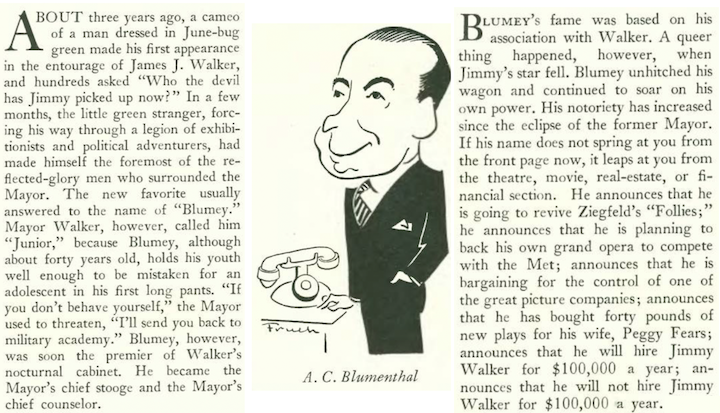
Theatrical promoter Alfred Cleveland Blumenthal (1885–1957) was well-known to New Yorkers in the 1920s and 30s as a speakeasy owner, buddy to Mayor Jimmy Walker and husband to actress Peggy Fears. Although “Blumey” is largely forgotten today, in 1933 he merited a two-part profile by Alva Johnston. Here are excerpts from the opening lines:
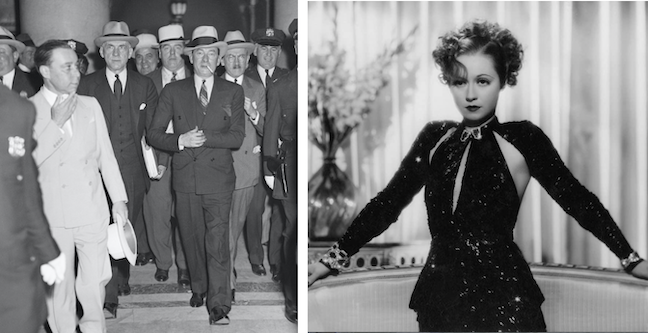
ONLY THE SHADOW KNOWS…A.C. “Blumey” Blumenthal (at left in the light suit) was often seen shadowing Mayor Jimmy Walker in his role as chief counselor and chief stooge. Here the mayor is escorted by Blumey and New York’s finest during corruption hearings in 1931. At right, Blumey’s wife Peggy Fears (1903–1994) in her most notable film role, 1935’s The Lottery Lover. Their tempestuous marriage lasted from 1927 to 1950. (avenuemagazine.com)
* * *
Coward’s Ménage
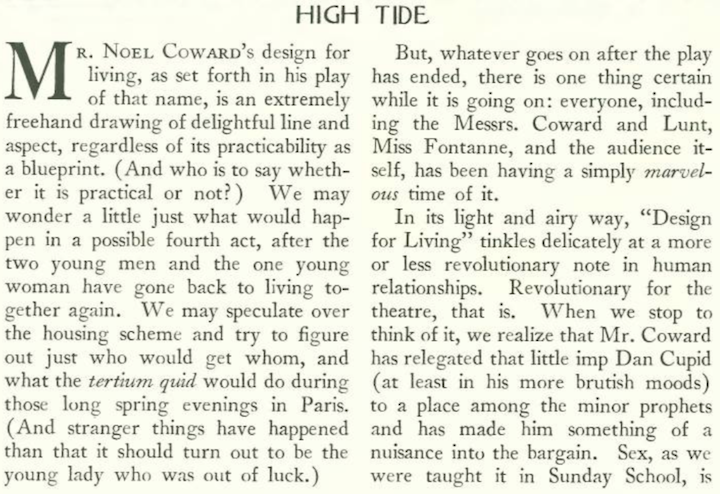
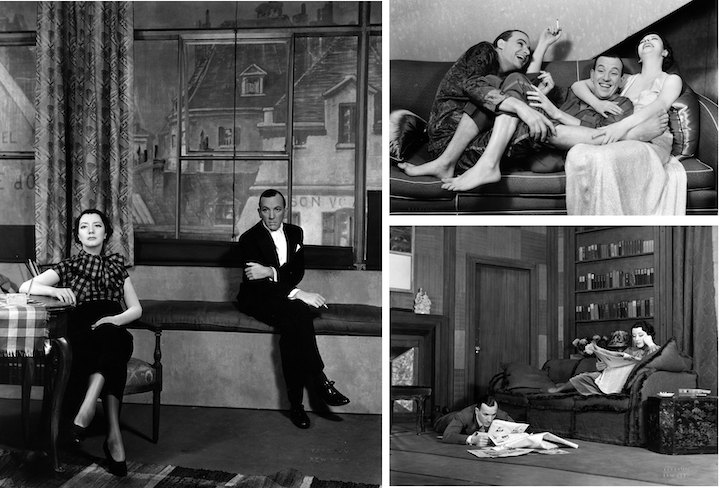
Playwright Noel Coward existed in the orbit of the Algonquin Round Table, so it was doubtless challenging for Robert Benchley to critically review his friend’s work. Fortunately, Benchley found Design For Living mostly to his liking. Note how Benchley subtly refers to the play’s gay subtext, and to the fact that it mirrored the real-life relationships of the play’s trio.
THREE’S COMPANY…A studio in Paris. A penthouse in New York. A flat in London. These were the settings for Noël Coward’s play Design for Living at the Ethel Barrymore Theatre, which starred the wife-husband team Lynn Fontanne and Alfred Lunt and their close friend Coward in a Broadway run of 135 performances from January to May 1933. (Vandamm theatrical photos via wisc.edu)
Benchley did have a few quibbles, but reasoned there was no need to be overly critical when there was such a dearth of quality stage entertainment. Note the great caricatures by Al Frueh (below) that accompanied the review.
Benchley had a different sort of dilemma criticizing Elmer Rice’s earnestly patriotic We, the People, a play about the misfortunes of a working class family in Depression America.
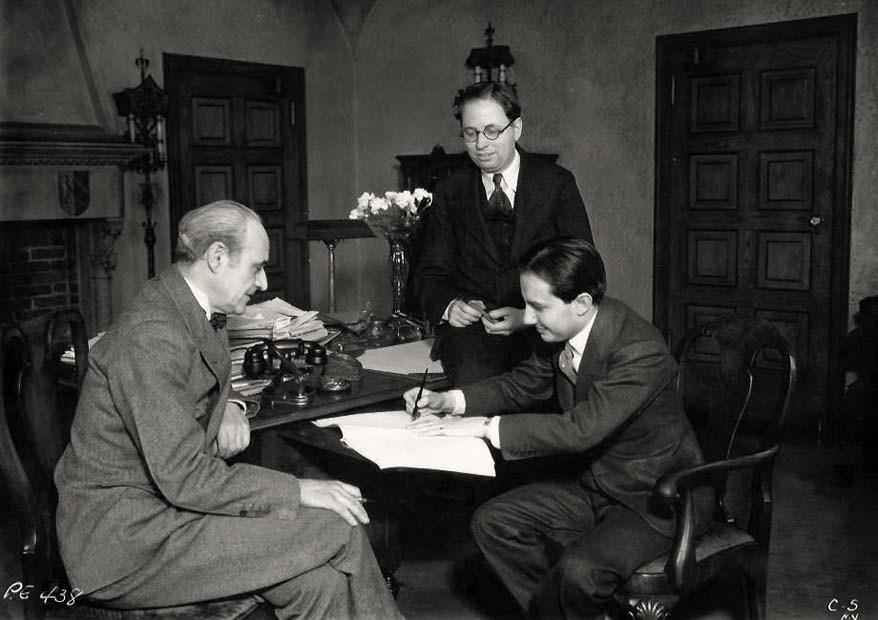
Rice, who won the Pulitzer Prize for Drama in 1929, was an occasional contributor to The New Yorker from 1929 to 1931, including his sci-fi satire on the film industry, Voyage to Purila, which was serialized in eleven installments (with illustrations by Peter Arno) in The New Yorker from Oct. 12 to Dec. 21, 1929.
LET’S MAKE A MOVIE…Elmer Rice (standing) joins theatre producer Joseph P. Bickerton, Jr. (left), and Universal’s Carl Laemmle Jr. to sign a contract for the film version of Rice’s 1931 Broadway play Counsellor at Law. The film proved to a critical success. (Wikipedia)
Meanwhile, film critic John Mosher was trying his best to enjoy the latest Hollywood fare, another Broadway play adapted to the silver screen. Whistling in the Dark…
MURDER MOST AMUSING…The 1933 American pre-Code comedy-mystery film Whistling in the Dark starred Ernest Truex and Una Merkel. (IMDB)
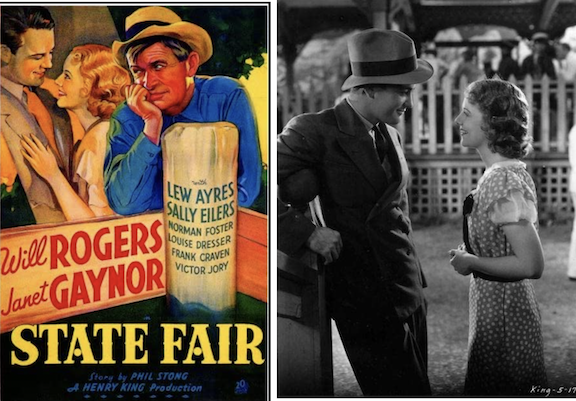
However, Mosher was surprisingly enthused by the rustic charms of Iowa country folk in State Fair…
THE TRIUMPH OF PRIZE PICKLES and other delights awaited viewers of 1933’s State Fair, which gave star billing to Will Rogers and Janet Gaynor. At right, Lew Ayres sweet-talks Gaynor at the fairgrounds. (IMDB)
* * *
Form Follows Function
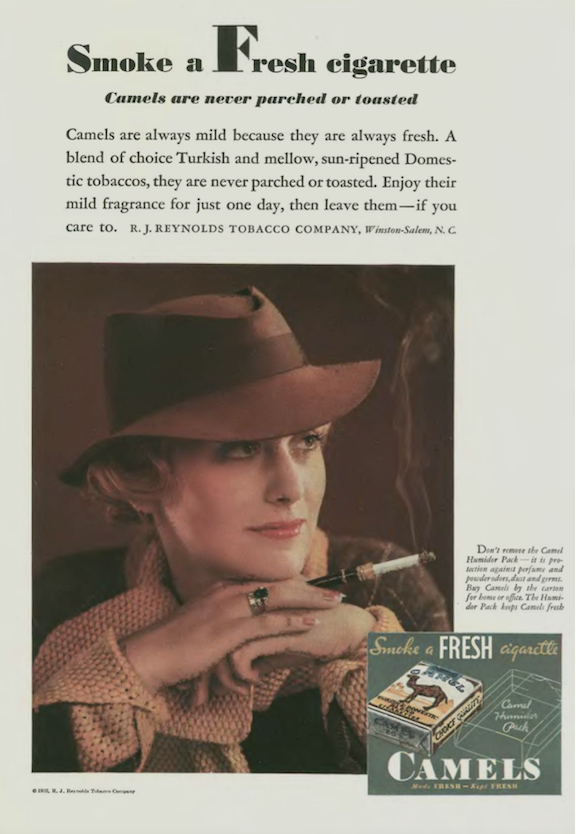
E.B. White paid close attention to all the little details of daily life, including the advertisements that appeared in The New Yorker. In “The Talk of the Town” he wrote about a Camel ad that inspired a sudden fashion trend:
…here is the Dec. 24, 1932 New Yorker ad to which White referred:
* * *
From Our Advertisers
We keep our cigs lit for our first ad, from Lucky Strike, keeping it simple with their familiar slogan…
…this ad from Powers Reproduction shows us the beach caps that were all the rage in the early ’30s…
…this may look like an old car to modern eyes, but in 1933 these sweeping curves were la dernière mode in the auto world…
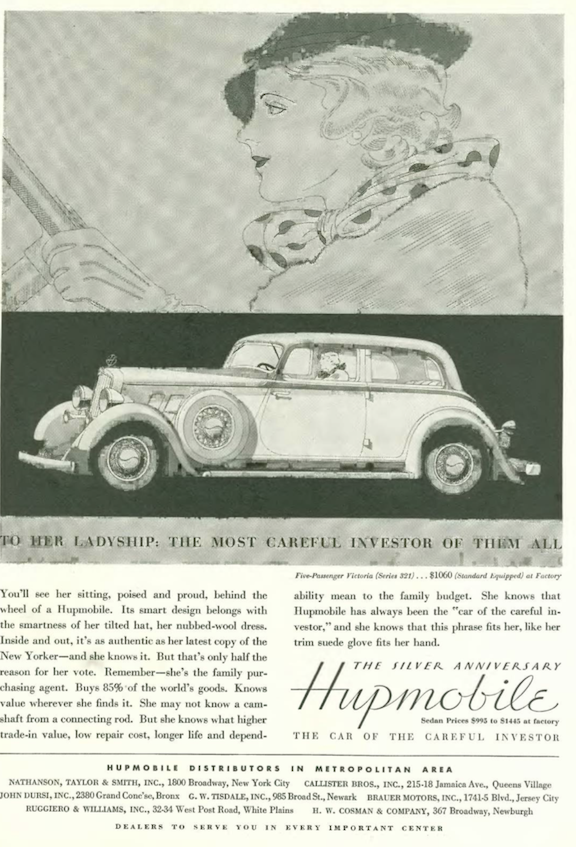
…and then there was Hupmobile, trying its best to stay relevant in the Depression…
…the company folded in 1939, but a few reminders live on…
HUP HUP HOORAY…The 1917 Hupmobile dealership at 25th and Farnam in Omaha, NE, was located along the old Lincoln Highway and is the last preserved Hupmobile dealership in the United States. On the National Register since 2014, it now houses apartments. (Flickr)
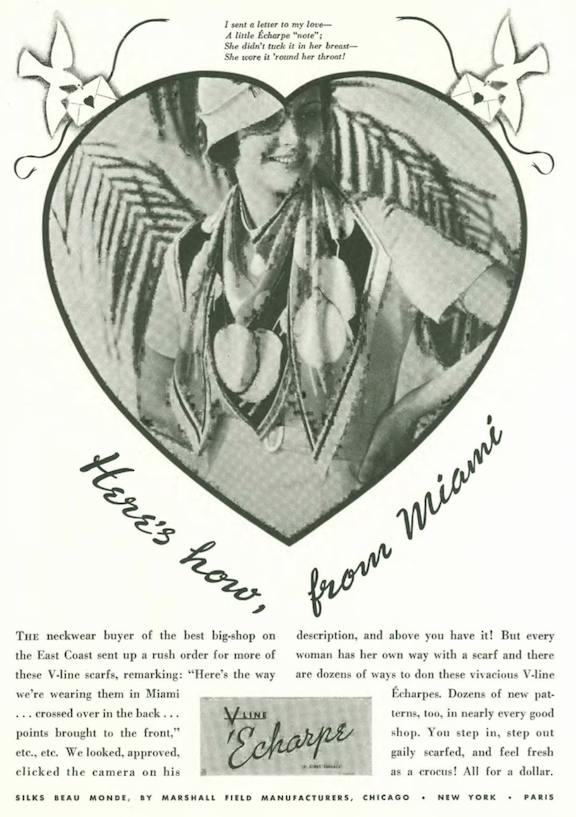
…Valentine’s Day was just around the corner, so time to buy your sweetheart something special, like this scarf that was all the rage among the Miami snowbirds…
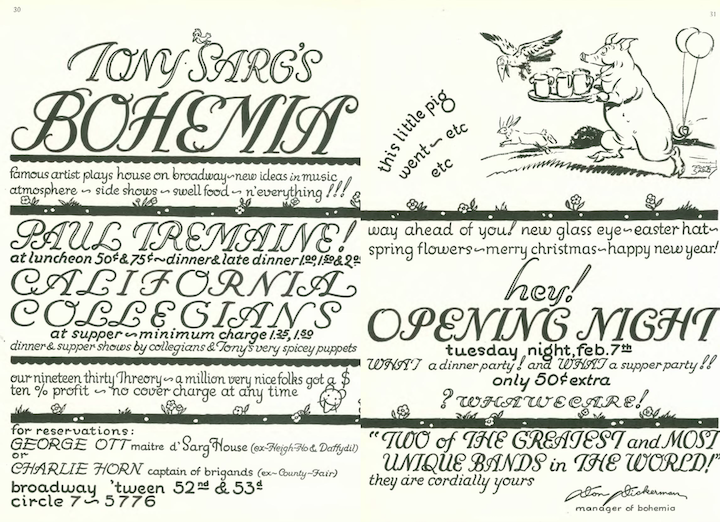
…Greenwich Village restaurateur and personality Don Dickerman took out this two-page ad to trumpet his partnership with puppeteer and illustrator Tony Sarg at the Bohemia restaurant on Broadway…
…the German-American Sarg is also known as the creator, in 1927, of the first giant balloons for Macy’s Thanksgiving Parade…
THE OLD GASBAG…Tony Sarg (upper right hand corner) and assistants painting one of his Macy’s parade balloons. (Fotograms News Photo Service via Pinterest)
…on to our cartoons, and what a big day for The New Yorker…the Feb. 4, 1933 issue featured the first captioned cartoon by Charles Addams…
…for the record, Addams’s very first contribution to the magazine was this spot illustration (below) featured on page 65 of the Feb. 6, 1932 issue…
…one of the original contributing artists to The New Yorker,Gardner Rea, continued his skewering of America’s plutocrats…
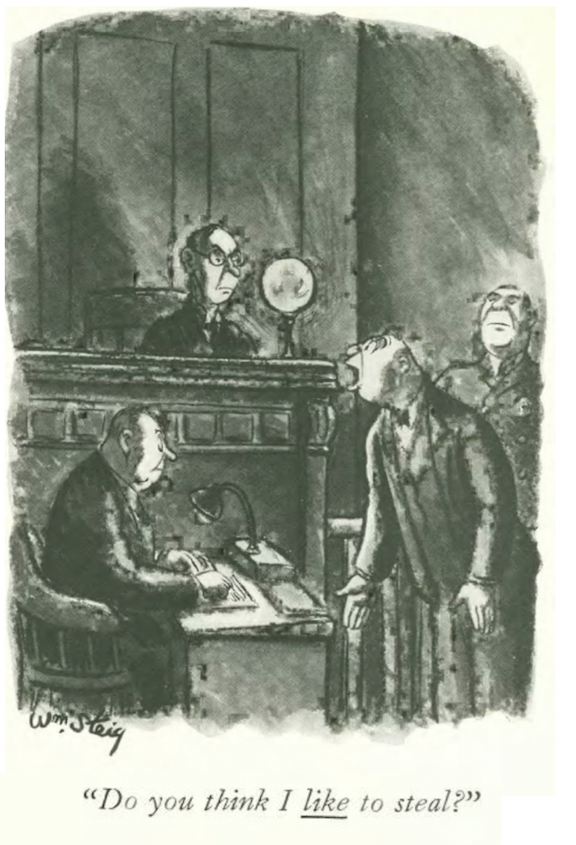
…William Steig took us before the bench to make an honest plea…
…James Thurber gave us another skirmish between the sexes…
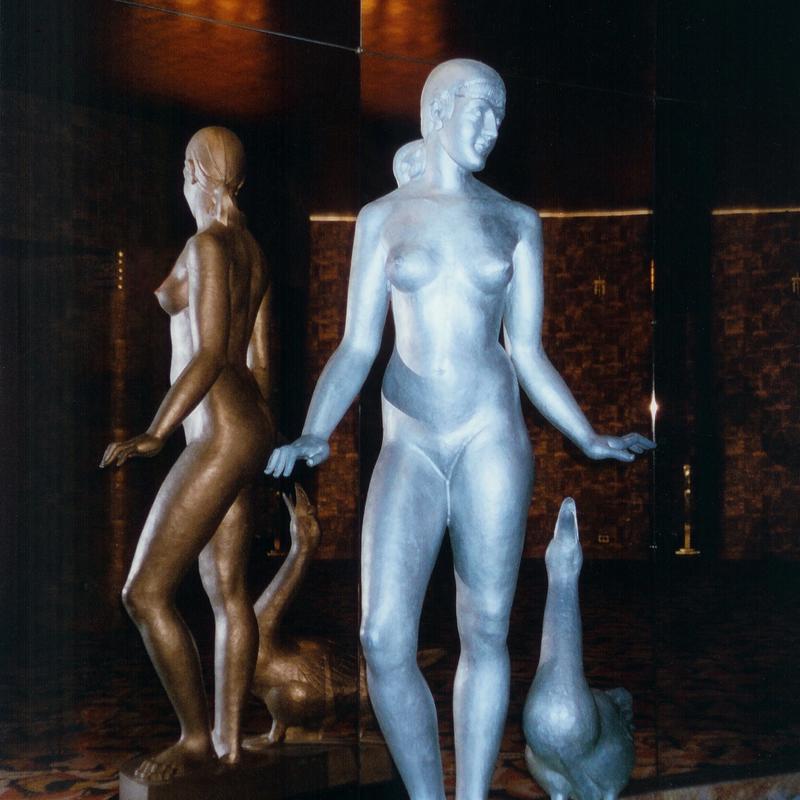
…and recalling my Jan. 12 post (about the Jan. 7, 1933 issue), in which the puritans got their knickers in a bunch over Robert Laurent’sGoose Girl sculpture in the Radio City Music Hall lobby…
…we end with Helen Hokinson, inspired by Laurent’s work…
Lois Long welcomed 1933 by venturing out into the New Year’s nightclub scene…
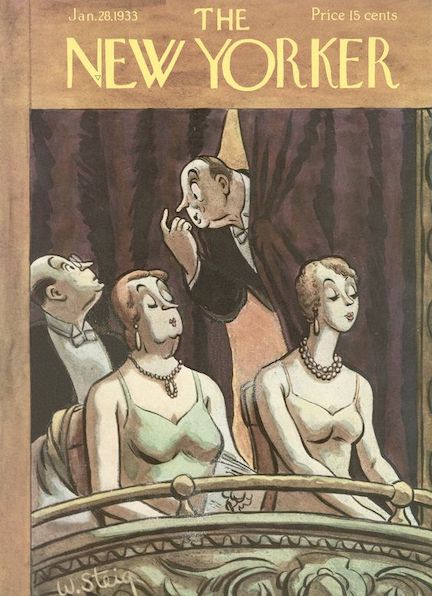
Jan. 28, 1933 cover by William Steig.
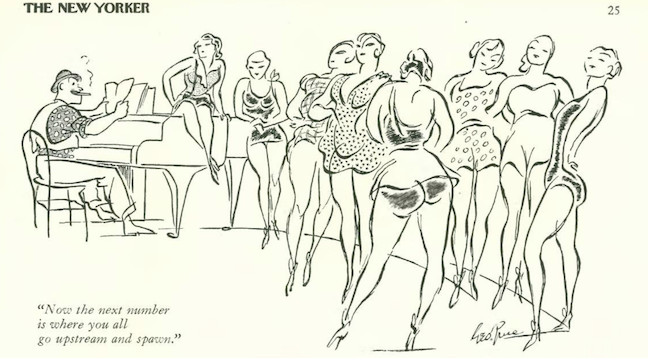
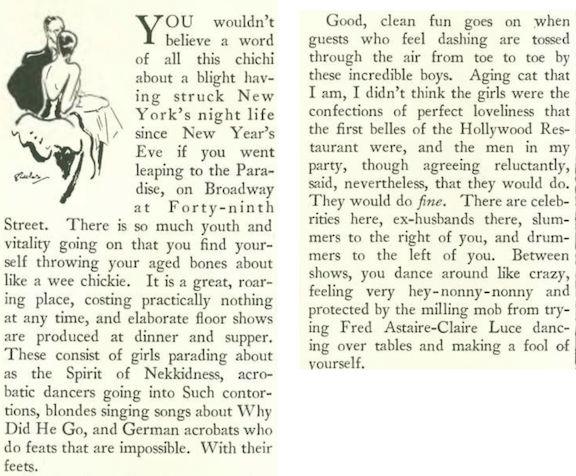
…where she encountered the new Paradise Cabaret Restaurant at Broadway and 49th, where there was no cover charge and not much covering the showgirls, either…
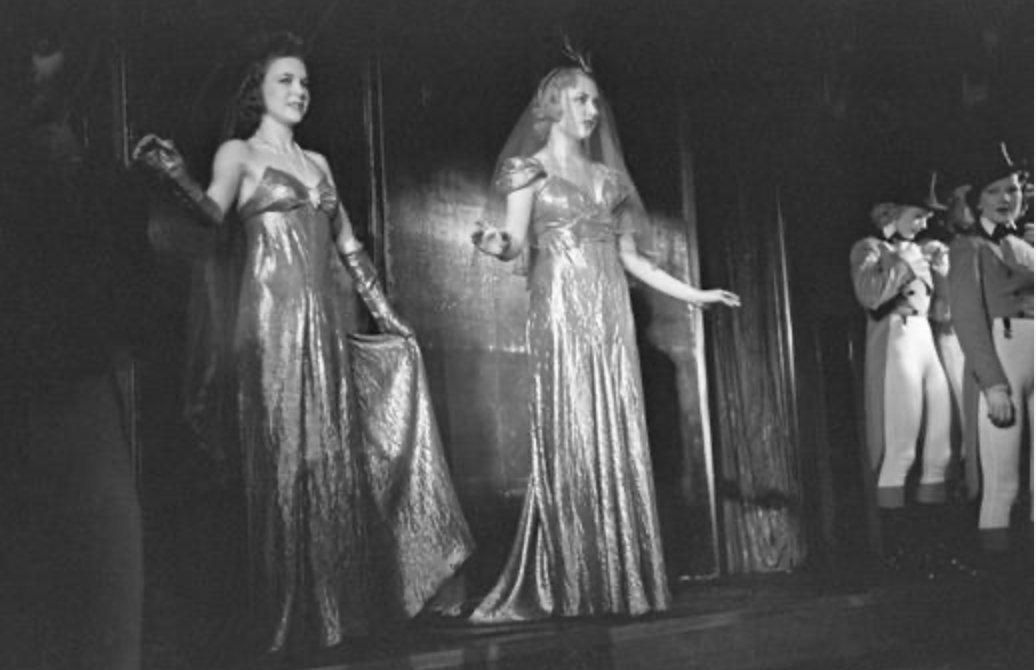
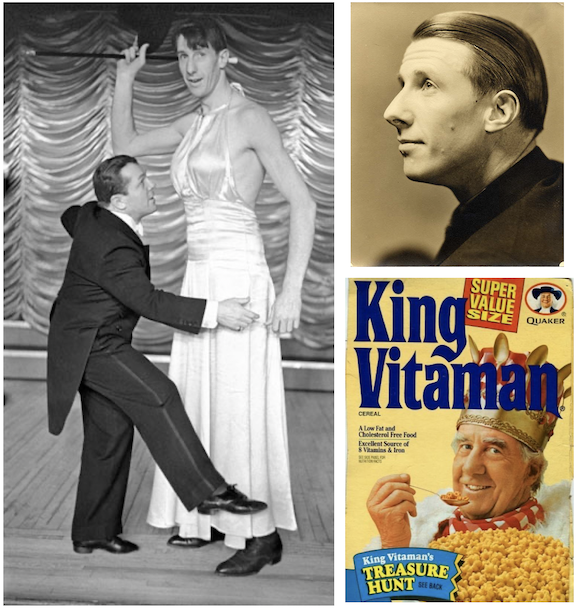
THE GANG’S ALL HERE…Everyone from gangsters to sugar daddies (and a number of New Yorker staffers) took in the sights and sounds of the Paradise Cabaret Restaurant (shown here in 1937). (Pinterest)THE SPIRIT OF NEKKIDNESS, as Lois Long put it in her “Tables for Two” column, could be found at the Paradise Cabaret Restaurant: clockwise, from top left, marquee on the corner of the Brill Building advertises a 1936 appearance of the comedy team of Dewey Barto and George Mann (photo by George Mann via Flickr); menu cover made it clear that food was not the main attraction at the Paradise; a 1933 poster advertising “a Galaxy of Stars”; a 1943 “Paradise Girls” poster; circa 1930s matchbook; circa 1930s noisemaker. (Flickr/picclick/Pinterest)THE LONG AND SHORT OF IT…known as the “laugh kings” of vaudeville, the comedy team of Barto and Mann rehearse at the Paradise in 1936. Their humor played on their disparities in height — Barto was under 5′ and Mann was 6’6″. If Mann (top right) looks familiar, later in life he portrayed “King Vitaman” in commercials for the breakfast cereal of the same name. As I recall it tasted like Cap’n Crunch. (Wikipedia)
While Mann went on to become King Vitaman, another Paradise performer, 16-year-old Hope Chandler, found the love of her life while performing in next-to-nothing at the Paradise…
SHE WAS ONLY SIXTEEN…Hope Chandler’s photo (right) was featured on the Dec. 20, 1937 cover of LIFE Magazine, which proclaimed the 16-year-old as the “Prettiest Girl in Paradise”. Photo at left was included in the magazine article. (Twitter)
…namely the 22-year-old son of William Randolph Hearst, who spotted Chandler during one of his visits to the Paradise. David Whitmire Hearst married Chandler in 1938 and they lived happily ever until his death in 1986.
YOUNG LOVE…David Whitmire Hearst and his new wife, Hope Chandler, after their wedding ceremony in New York, 1938. They would be married 48 years until David’s death in 1986. Hope would remain active in the Hearst organization until her death at age 90 in 2012. (Tumblr)
* * *
Tragic Opera
Yes, the lovers die at the end of Tristan und Isolde, but for New York opera buffs the real tragedy belonged to Samuel Insull (1859–1938), a Chicago utilities magnate responsible for building a new Chicago Civic Opera House in 1929. When Insull’s opera house went bust in 1932, the Met landed two of its principal stars. Robert Simon reported for The New Yorker:
CHICAGO’S FINEST…Soprano Frida Leider (left) and mezzo-contralto Maria Olszewska were stars of the Chicago Opera from 1928 to 1932. When the company went belly-up, the singers headed for New York to appear in a much-acclaimed performance of Tristan und Isolde. (metoperafamily.org)
Insull was a famed innovator and investor who was a driving force behind creating an integrated electrical infrastructure in the U.S. In 1925 he addressed the financial difficulties of the Chicago opera community with a proposal to build a skyscraper with an opera house on the ground floor — he thought the rental of office space would cover the opera company’s expenses. The building was completed in 1929 — the same year as the market crash — and suddenly his grand plan didn’t look so grand.
Then Insull’s companies went under, and he was charged with fraud and embezzlement. He fled to Europe, but in 1934 he was arrested in Istanbul and brought back to Chicago to stand trial. Although he was acquitted, he was left a broken (and broke) man, his $3 billion utilities empire in shambles.
DUELING ARIAS…New York’s rival in the opera scene, the Chicago Civic Opera erected this skyscraper (left) in 1929 with the help of Samuel Insull; a door at the Cook County jail in Chicago is opened for Insull in May 1934, his $3 billion utilities empire in shambles. He was unable to raise the $200,000 bail in fraud charges, which were eventually dismissed; at right, New York’s Metropolitan Opera House in 1909. (classicchicagomagazine.com/Wikipedia)FAME TO INFAMY…Insull’s appearances on the cover of Time said it all: left to right: issues from November 29, 1926; November 4, 1929; and May 14, 1934. (classicchicagomagazine.com)
* * *
From Land to Sea
The National Auto Show left town to be followed by the annual Boat Show at the Grand Central Palace, featuring boats that were priced to meet the needs of some Depression-era buyers:
CRUISIN’ CRUISETTE…You could buy an Elco Cruisette for just under $3,000 in 1933, but that was roughly equivalent to $64,000 today, so it was still out of reach for most Americans in the 1930s. (Pinterest)
* * *
From Our Advertisers
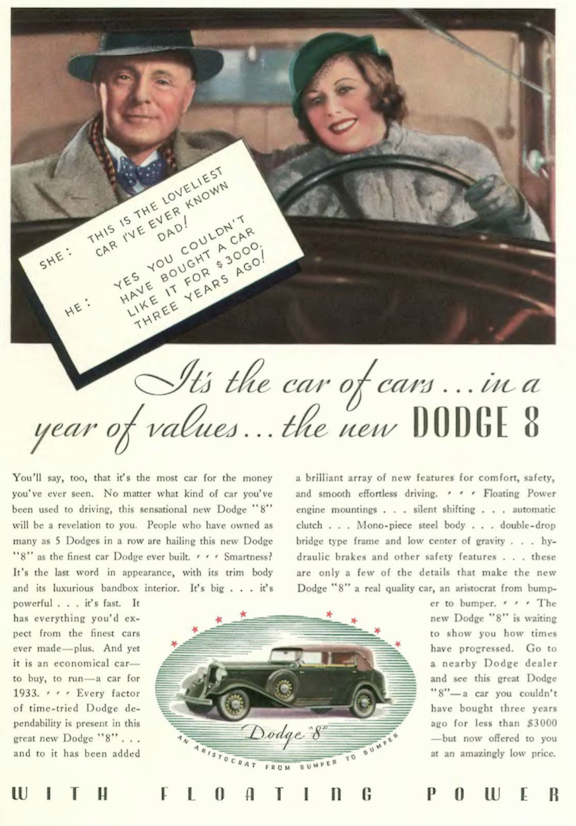
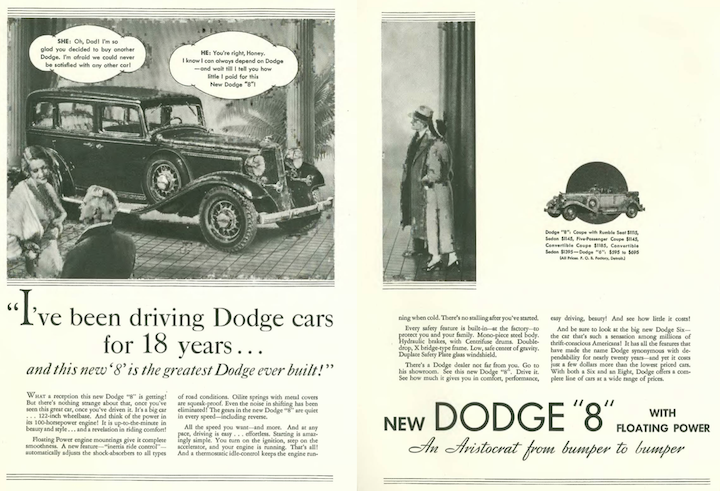
Yes, the boat show was in town, but automobile manufacturers were still making their points to potential customers including Chrysler, one of The New Yorker’s biggest advertisers in the early 1930s…here’s a two-page spread for the Dodge 8…
…Chrysler’s DeSoto line claimed a luxurious interior that would inspire even regular folks to put on the “haughty air” of a French Duchess…
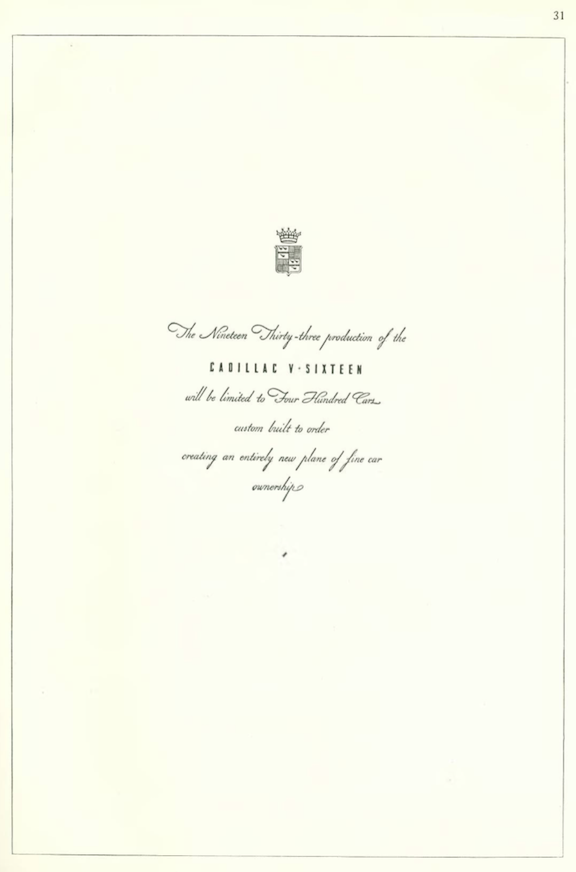
…on the other hand, the folks at Cadillac went for understatement with this announcement of a limited edition V-16…
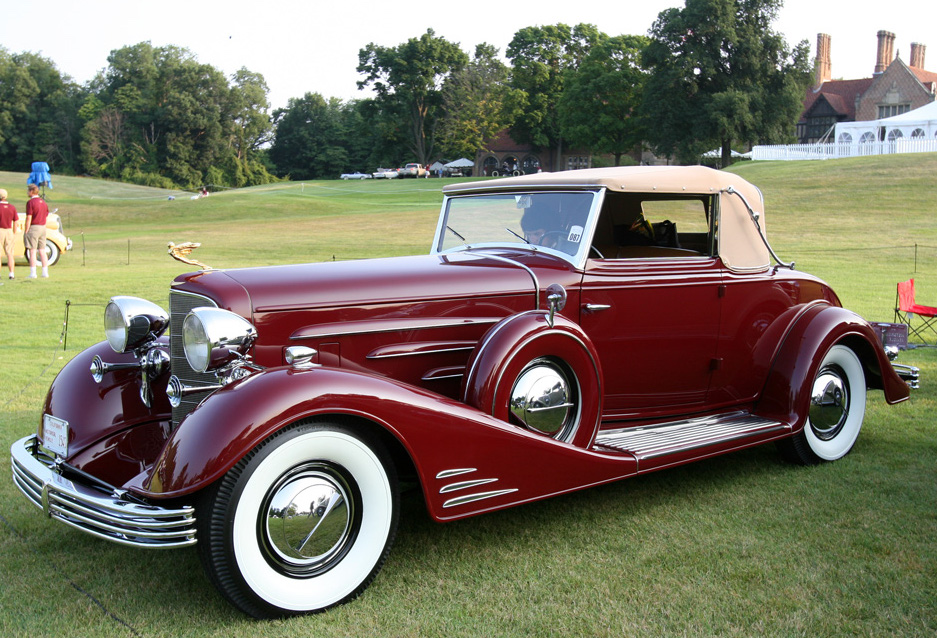
…with 16 cylinders under the hood, this thing could really tear down the road, but it was the Depression, and even though this edition was limited to just 400 cars, only 125 were sold…
(supercars.net)
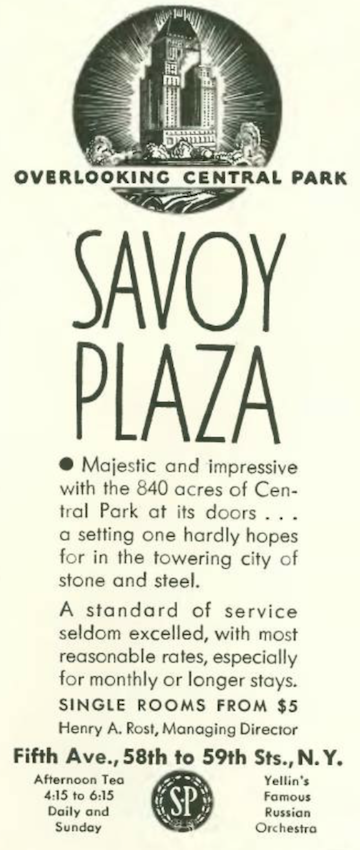
…it really bothers me that the Savoy Plaza Hotel (1927) was knocked down in 1965 and replaced by the monolithic GM Building…and look, in 1933 you could get a single room for five bucks a night…
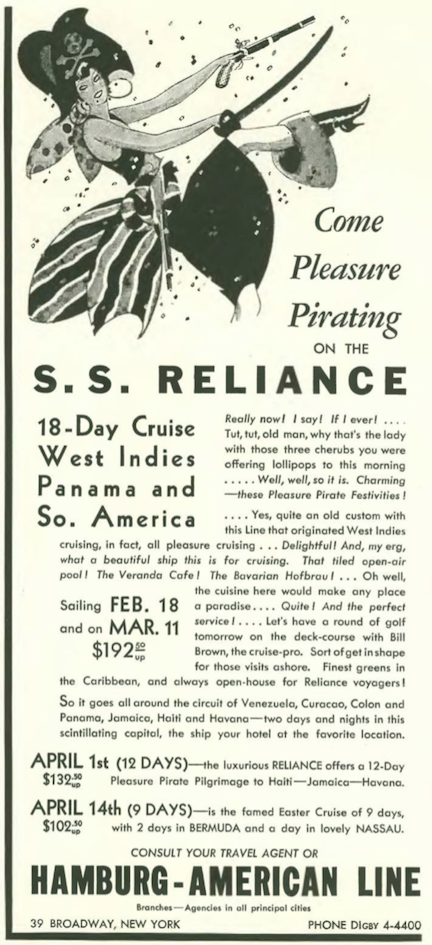
…maybe you’d rather take to the seas on the Hamburg-American Line…
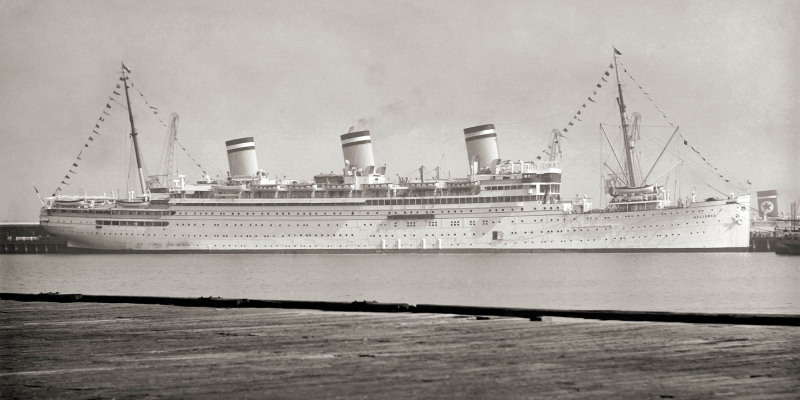
The SS Reliance in 1937. Gutted by fire in 1938, she was scrapped in 1941. (Wikipedia)
…or you could chase away the winter blues in a steaming bath that the folks at Cannon Towels called “almost the ultimate in mortal content”…
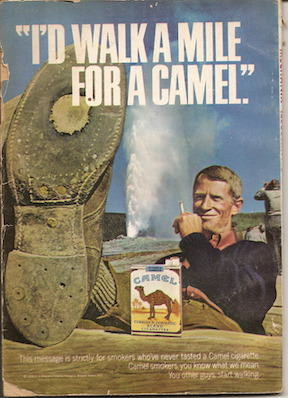
…and no doubt a few lit up a Camel or two during their soak…note the tagline “I’d walk a mile for a Camel!”…it was a slogan the brand used for decades…
…I still remember these from when I was a kid…
…on to our cartoons, and we begin with William Crawford Galbraith, still up to his old tricks…
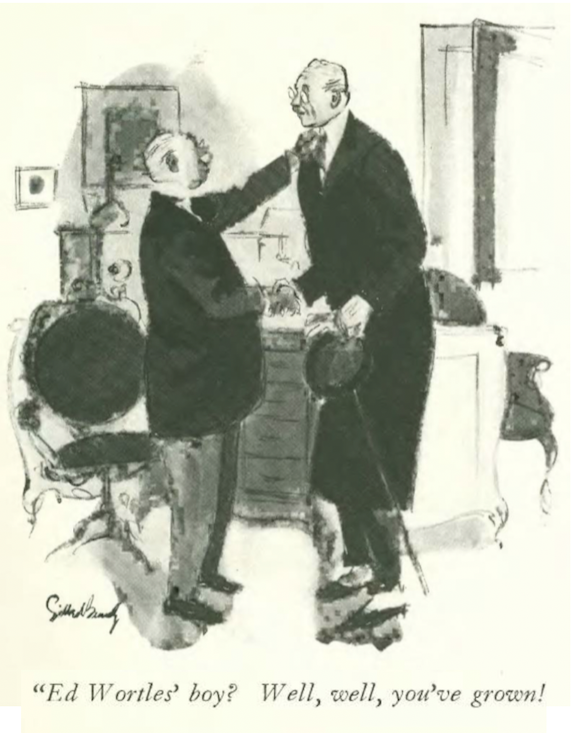
…Gilbert Bundy gave this exchange between old mates…
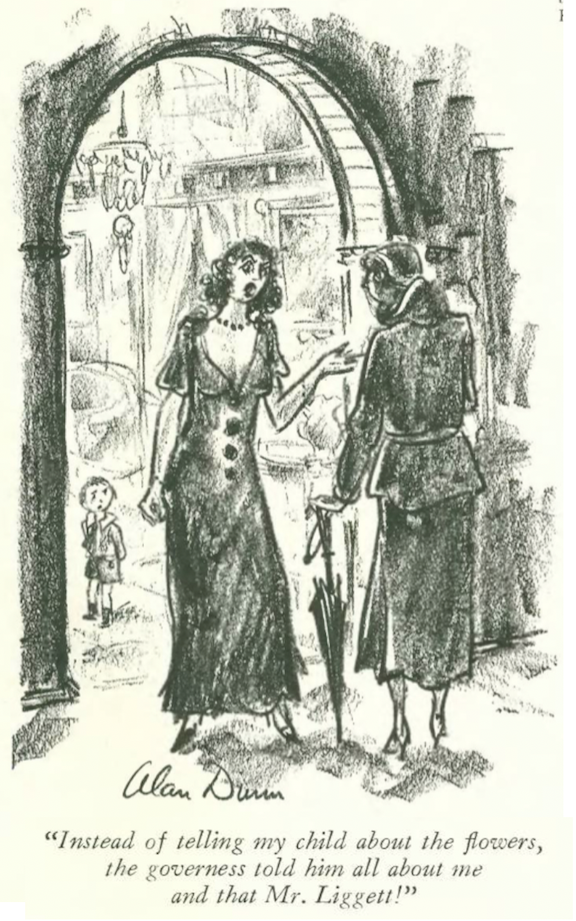
…Alan Dunn showed us what happens when you hire a chatty governess…
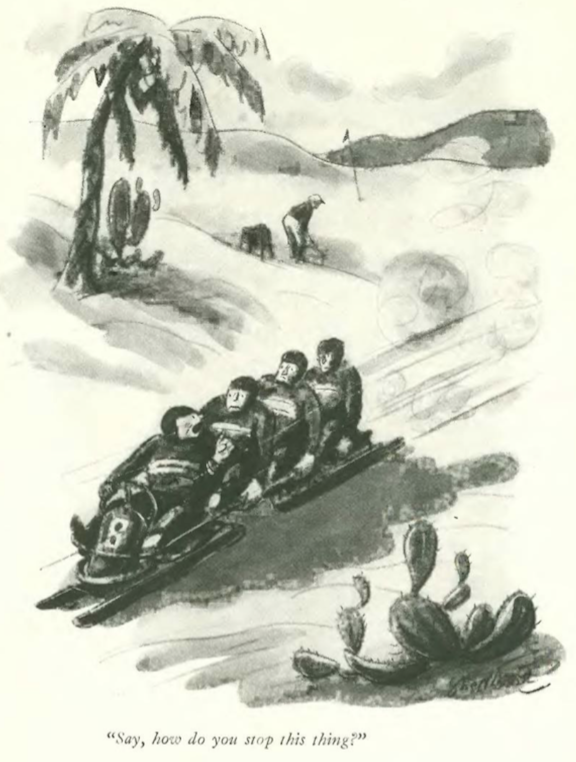
…in the spirit of the 2022 Winter Olympics, one from George Shellhase…
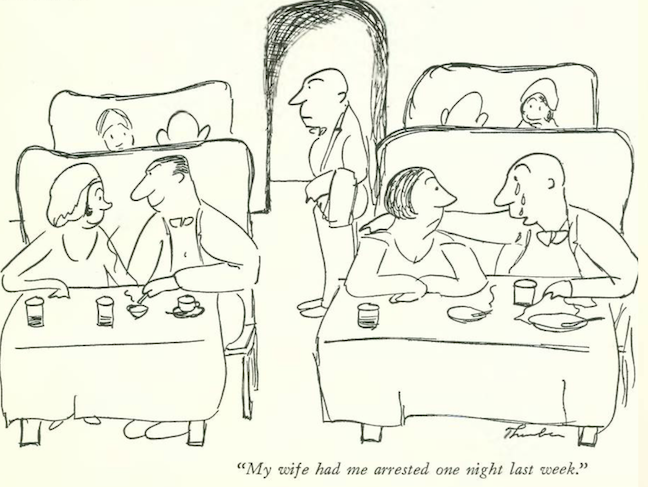
…and we close with James Thurber, and the trials of married life…
If you’ve ever come across the byline B.H. Arkwright, you were most likely reading the work of Clarence Day Jr., who in February 1931 began writing for The New Yorker under that pseudonym and also under his given moniker, which in four short years would become a household name.
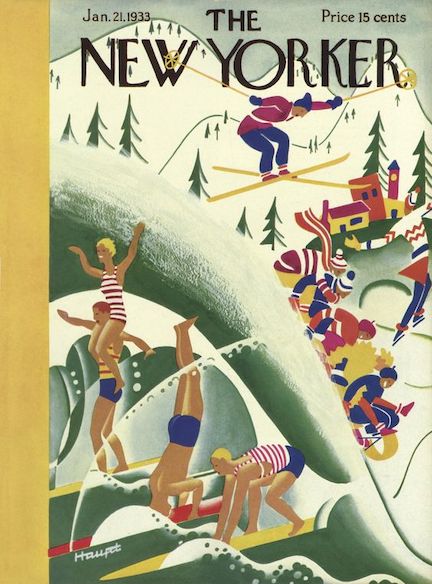
Jan. 21, 1933 cover by Theodore Haupt.
In the Jan. 21, 1933 issue Day would publish his first humorous story in The New Yorker about upper-middle-class family life in the 1890s. A subsequent collection of these stories would be published in 1935 under the title Life with Father. Sadly, Day would die shortly thereafter and wouldn’t witness the enormous cultural impact his stories would have on mid-century America.
Here is an excerpt of Day’s first story about his father, describing an exchange between his parents that would set the tone for the series:
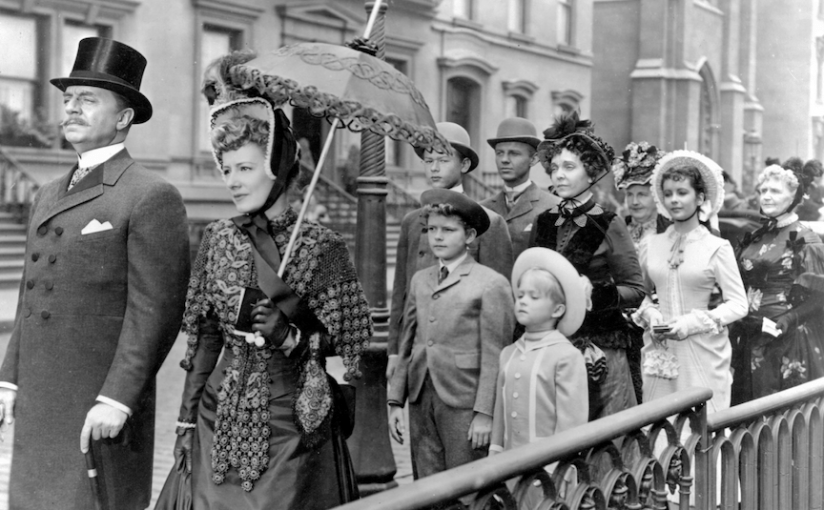
Life with Father was a hit with readers, inspiring a 1939 Broadway production by Howard Lindsay and Russel Crouse that would run for 3,224 performances over 401 weeks—it was, and still is, the longest-running non-musical play on Broadway. The play would be adapted into a 1947 film featuring Irene Dunne and William Powell in the leading roles. The stories even made it to the small screen in a CBS TV series that ran from 1953 to 1955.
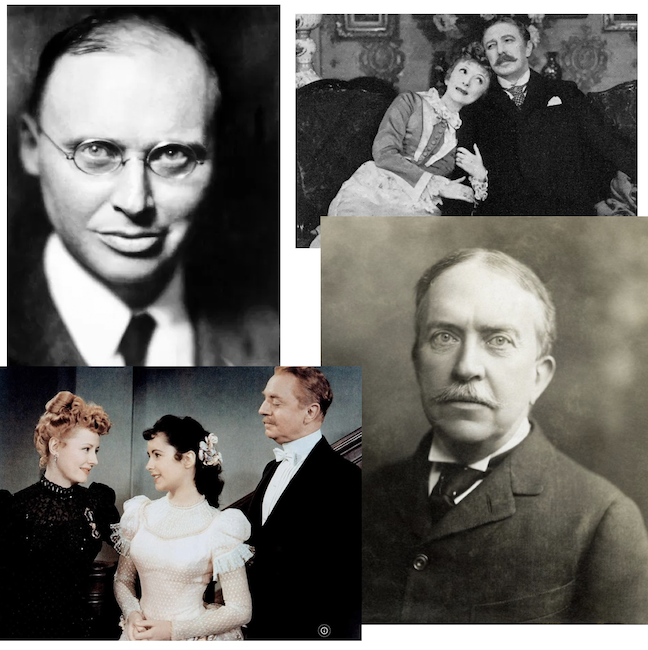
ALL IN THE FAMILY…Clockwise, from top left, Clarence Day, Jr. (1874-1935) in undated photo; Dorothy Stickney and Howard Lindsay in the Broadway production of Life with Father, 1939; Day’s father and inspiration, stockbroker Clarence Day, Sr. (1844-1927); scene from the 1947 feature film Life with Father with Irene Dunne, William Powell, and a 14-year-old Elizabeth Taylor. (britannica.com/theguardian.com/IMDB)
Day was also a cartoonist, contributing satirical cartoons for U.S. suffrage publications in the 1910s and also publishing collections of humorous essays including a Darwinian satire on the origins of human nature, This Simian World (1920), and the rambling, whimsical The Crow’s Nest (1921). Both featured Day’s simplistic cartoons and anthropomorphic tales that anticipated the work of James Thurber later in the decade.
CATTAIL…Self-portrait of Clarence Day rendered as a cat in a selection from The Crow’s Nest (1921). The entire book is available as a free e-book from The Project Gutenberg.
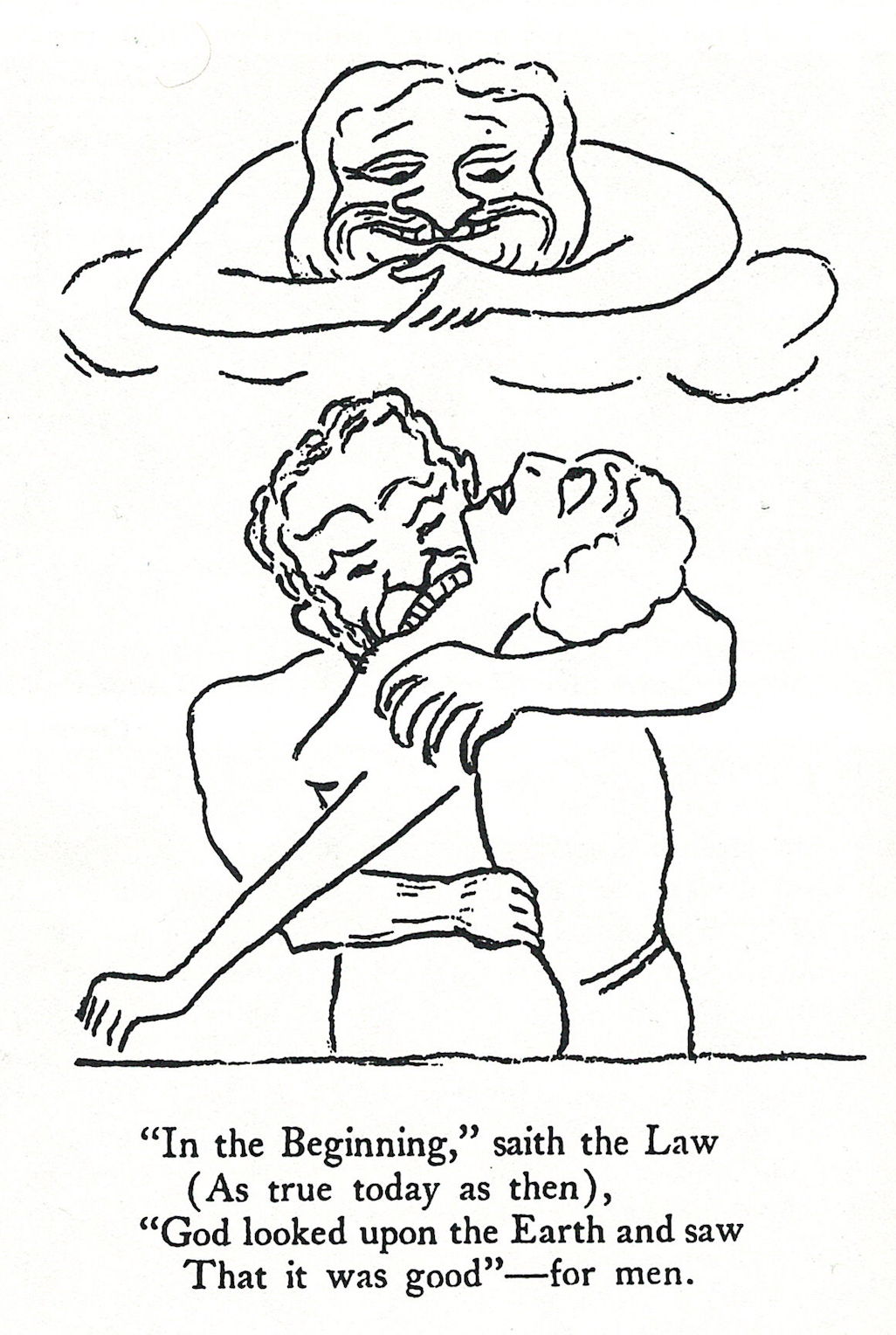
As we know, New Yorker founding editor Harold Ross was a man of contradictions, at once profane and puritanical, the latter on display when it came to one of Day’s cartoon submissions for the magazine. According to Brendan Gill’s memoir Here at The New Yorker, Ross balked at publishing the drawing below because it showed an exposed breast. Either Day or an editor simply removed the nipple (note the broken line in the nipple’s place) and the cartoon was published.
* * *
Big Man’s Big Man
August Gennerich not only served as President Franklin D. Roosevelt’s bodyguard, he was also a close family friend. “The Talk of the Town” featured a lengthy account of the man, an excerpt of which is below:
ON GUARD…Augustus “Gus” Gennerich (1887-1936) was a friend of Franklin and Eleanor Roosevelt’s as well as one of FDR’s most trusted guards. He began his career in 1909 as a NYC policeman and in 1929 was assigned to be then-Governor Roosevelt’s bodyguard in the city. The Roosevelts were heartbroken when Gus died unexpectedly at age 50 from a heart attack. (picryl.com)
* * *
Desert Solitude
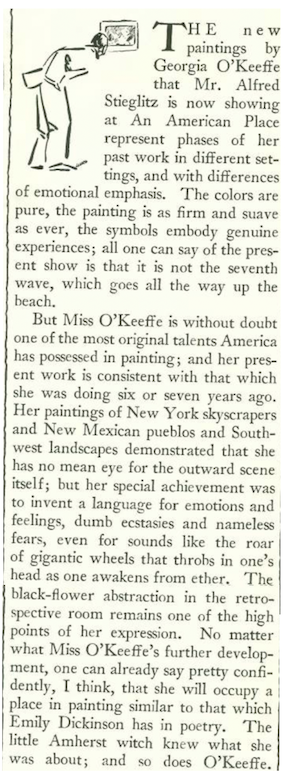
In 1933 Georgia O’Keeffe (1887–1986) was well into her Southwestern phase when her husband Alfred Stieglitz staged a show of her work at his last New York gallery, An American Place. O’Keeffe and Stieglitz lived together in New York until 1929, when O’Keeffe began spending more time in the Southwest—most likely to put some distance between herself and Stieglitz, who was in a long-term affair with photographer and writer Dorothy Norman. After this show opened O’Keeffe would suffer a nervous breakdown (per the above) and not return to painting until 1934. Lewis Mumford visited An American Place and had this to say about O’Keeffe’s work:
ANOTHER AMERICAN PLACE…New Mexican Landscape by Georgia O’Keeffe, 1930. (springfieldmuseums.org)
* * *
The Bookish Type
Modernist American poet and writer Archibald MacLeish (1892–1982) was a man of letters to the letter, serving as the ninth Librarian of Congress (1939-44) and during which time initiated the process of naming U.S. poet laureates. Here he contributes some of his verse to The New Yorker:
DESK JOB…Archibald MacLeish, circa late 1930s. (Library of Congress)
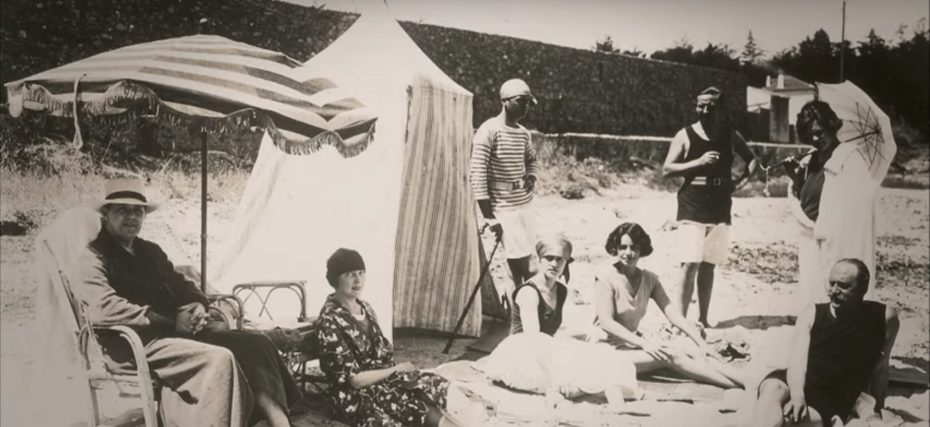
It was no accident that MacLeish contributed to The New Yorker: in addition to being among the literary expatriates in Paris including Gertrude Stein and Ernest Hemingway, MacLeish and his wife, Ada Hitchcock, were part of the Riviera crowd hosted by Gerald and Sara Murphy, which included among other notables John O’Hara, Dorothy Parker, and Robert Benchley.
OVER THERE…Gerald and Sara Murphy hosting friends at a Riviera beach party, circa 1923. Gerald is the man standing in the striped shirt; Sara is at right with a parasol. I believe that is Benchley at the bottom right, and Parker seated at center-right. (Beinecke Library)
* * *
From Our Advertisers
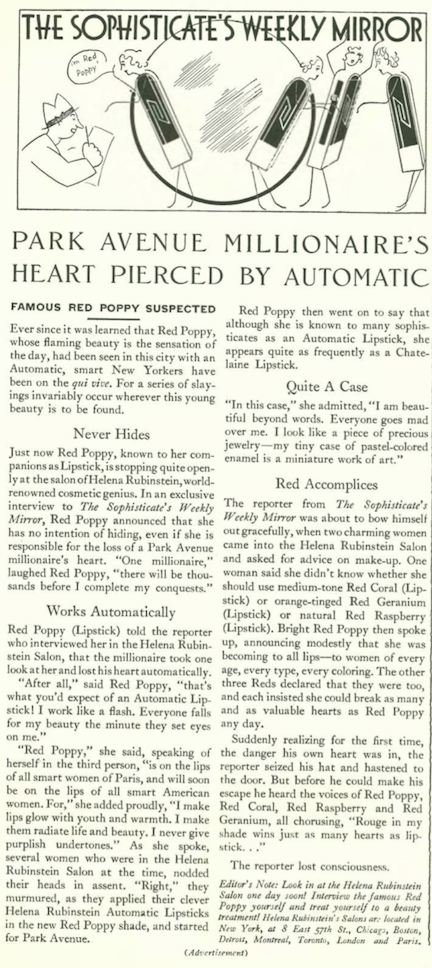
We begin with this ad from Helena Rubinstein that parodies Lois Long’s “Tables for Two” column (Long signed that column as “Lipstick”) and announced a new “Red Poppy” shade…
…on the other hand, the folks at Tangee borrowed from the old Temperance Movement song, TheLips that touch liquor, shall never touch mine, to promote a lipstick guaranteed to snag a sugar daddy like the one illustrated below (recalling Monopoly’s Uncle Pennybags)…
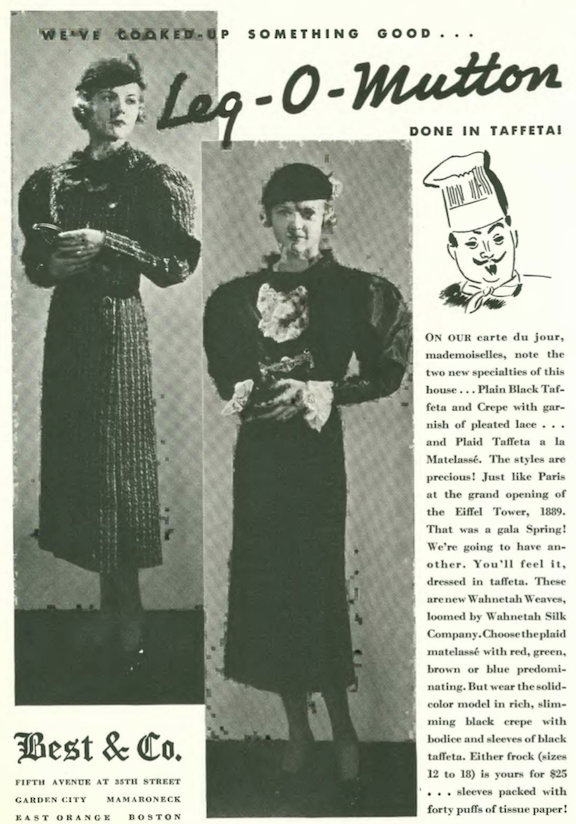
…more advertising weirdness comes our way from the staid Best & Company, its execs somehow persuaded by an ad man to go with this chef motif…
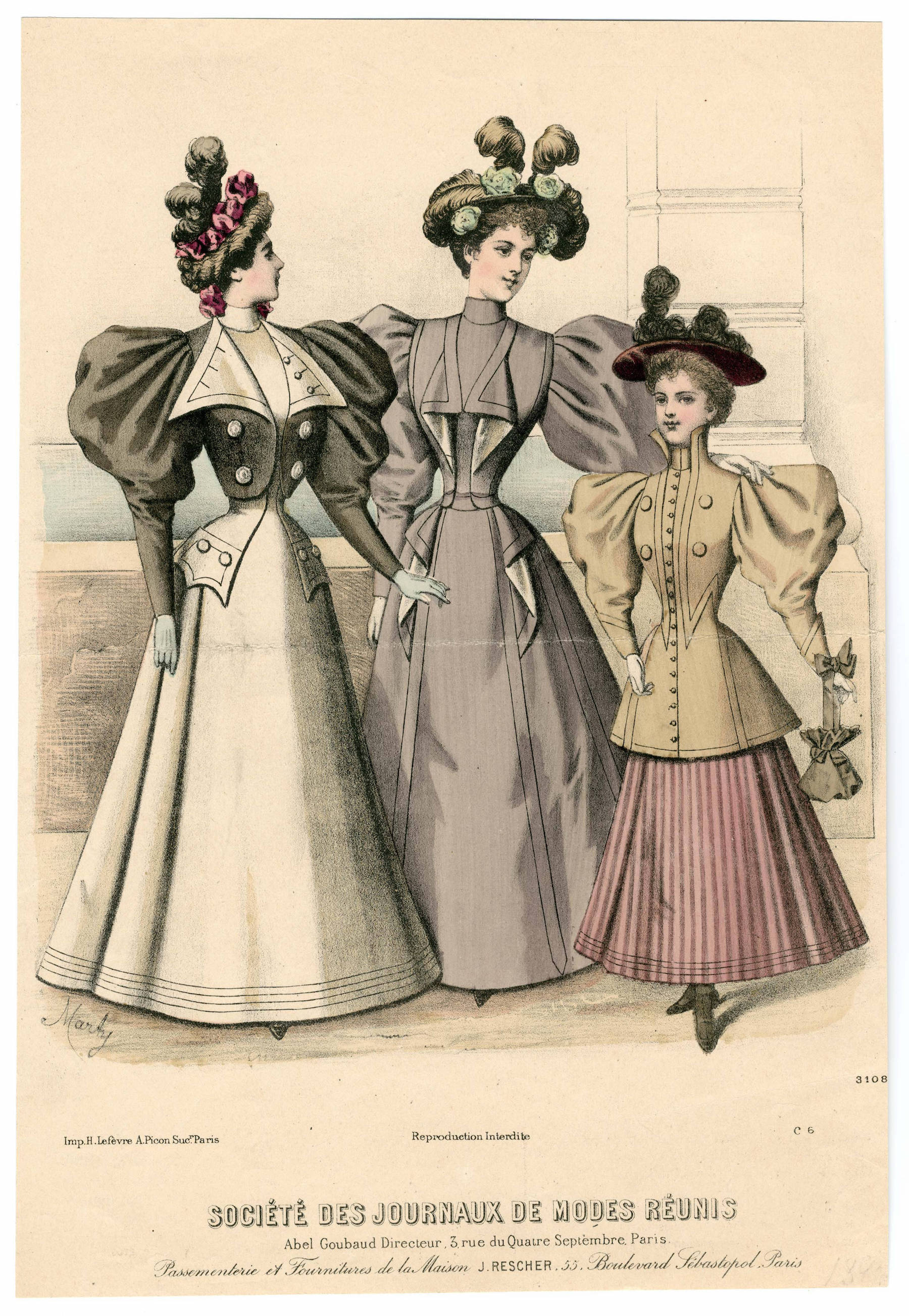
…Leg ‘O Mutton referred to a type of puffy sleeve introduced in 1830s France that had a revival in the late 1880s…
MMMMM, MUTTON…The Leg ‘O Mutton look, circa 1890s. (genealogylady.net)
…the National Auto Show moved on and the National Motor Boat and Engine Show took its place at the Grand Central Palace…
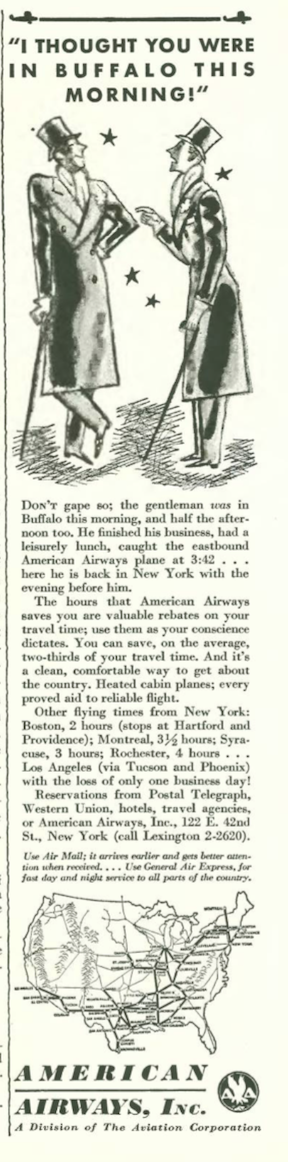
…I’m trying to imagine the guy at left stowing his top hat in an overhead bin…
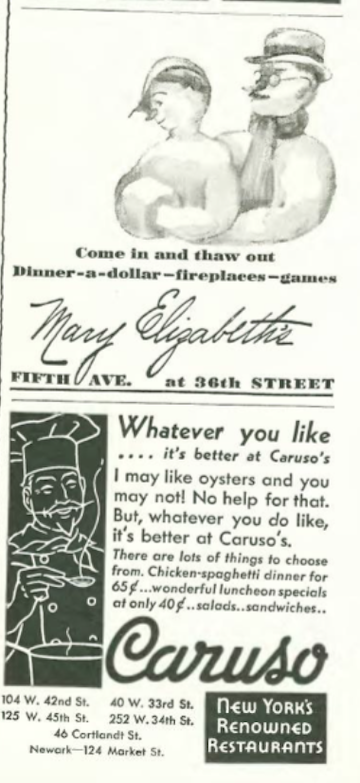
…down on earth folks could enjoy some down-to-earth home cooking at Mary Elizabeth’s, or go some Italian at Caruso’s…
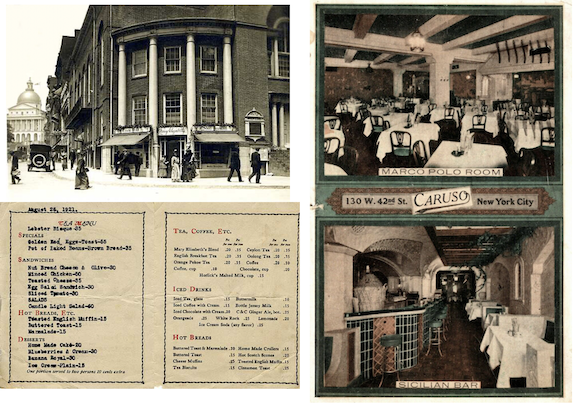
…and for reference…
Top left, Mary Elizabeth’s success on Fifth Avenue led to expansion into Boston; below, a 1921 menu at Mary Elizabeth’s in New York; at right, 1930s postcard advertising Caruso’s on 42nd Street. (restaurant-ingthroughhistory.com)
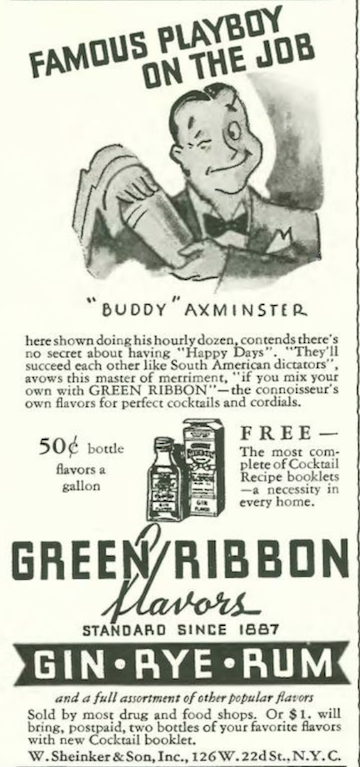
…of course you couldn’t legally drink at those places, so you had to go to a speakeasy or mix your cocktails at home…but this is just sad, ‘ol Buddy here flavoring his bootleg with some Green Ribbon…let’s hope the playboy’s guests aren’t blinded before the night is over…
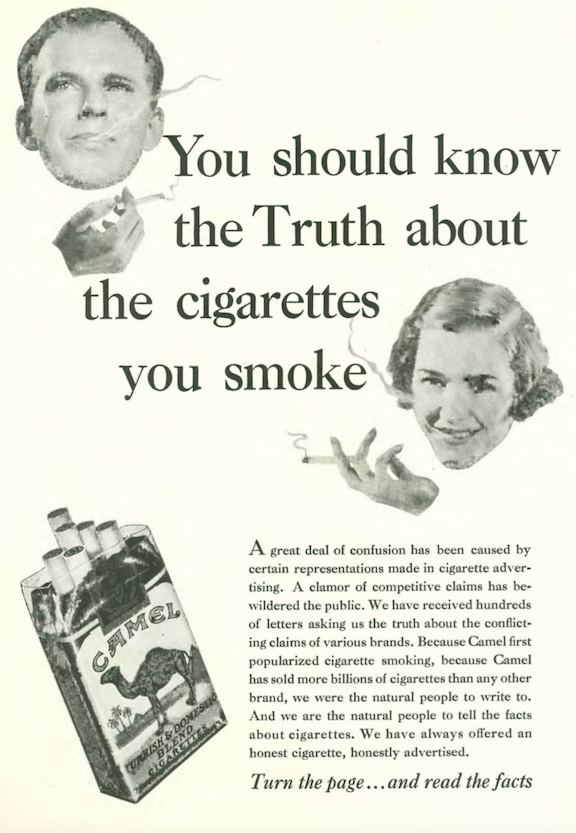
…we all know the tricky ways of the tobacco companies, including this 3-page Q&A from the makers of Camels offering smokers and would-be smokers THE TRUTH and THE FACTS about the cigarettes folks smoke…turns out Camels are the best!…
…and now for a bit of fresh air before we turn to our cartoonists…
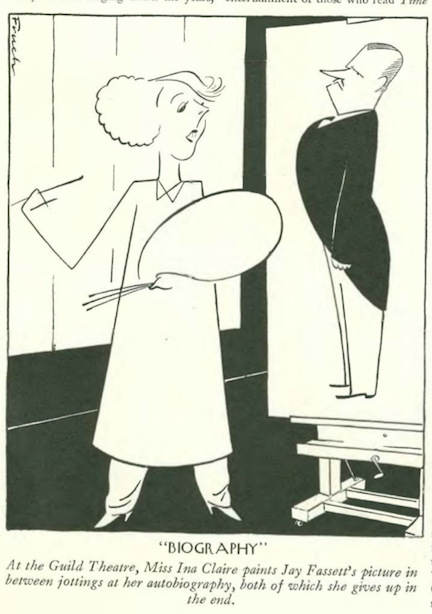
…beginning with Al Frueh and his impressions of a show at the Guild Theatre…
…Peter Arno contributed this illustration across pages 12-13 in “The Talk of the Town” section…
…Helen Hokinson offered up some scandal among the “girls”…
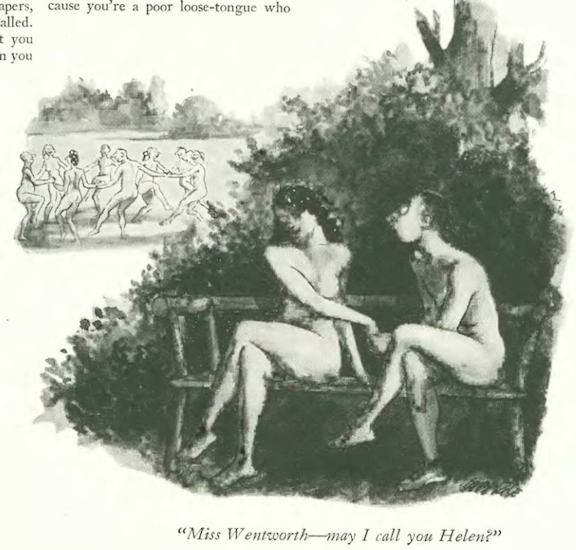
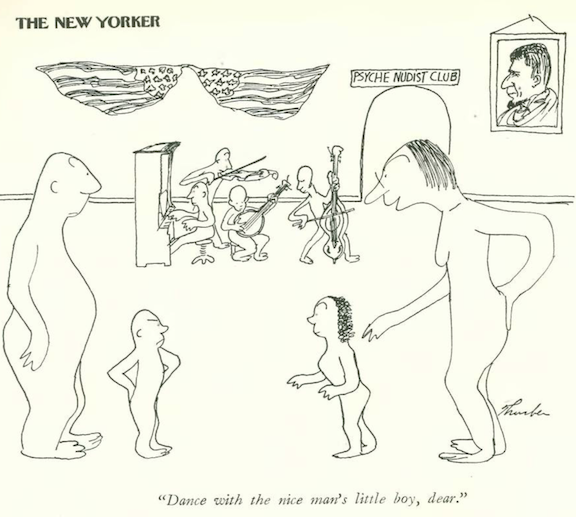
…James Thurber gave us an awkward moment among the tender youth of the unclad world…
…Otto Soglow’s Little King rose to the occasion, as always…
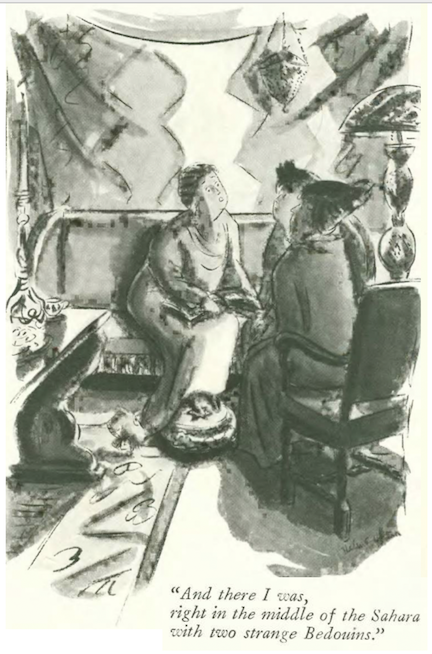
…Daniel Alain’s artist tried his best to make some small talk while at work…
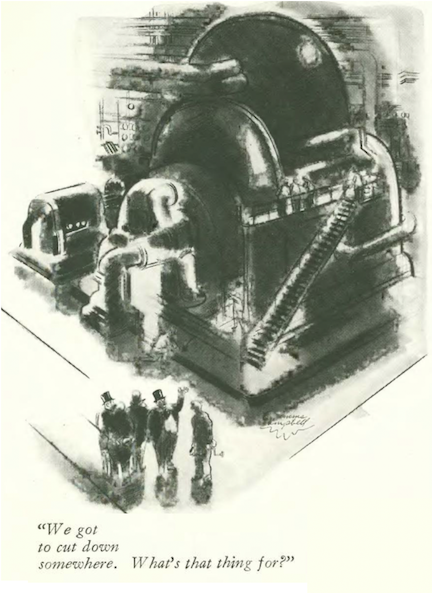
…and we close with E. Simms Campbell, and the yawning gulf between owners and workers…







































































































































 A New Yorker State of Mind