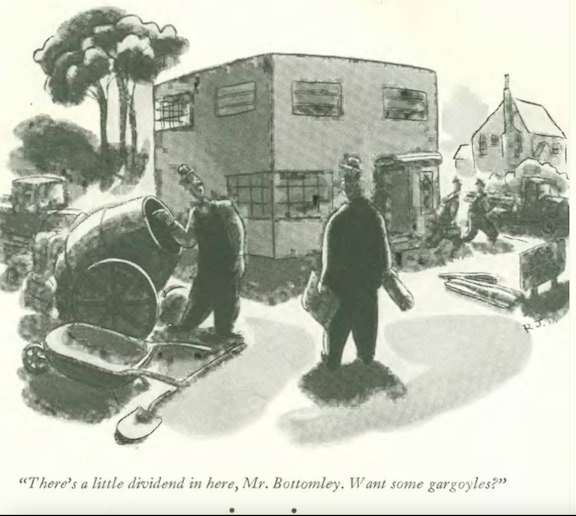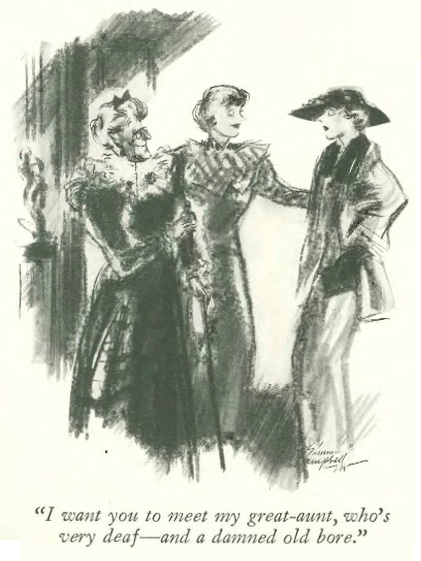
Fracking the Frick

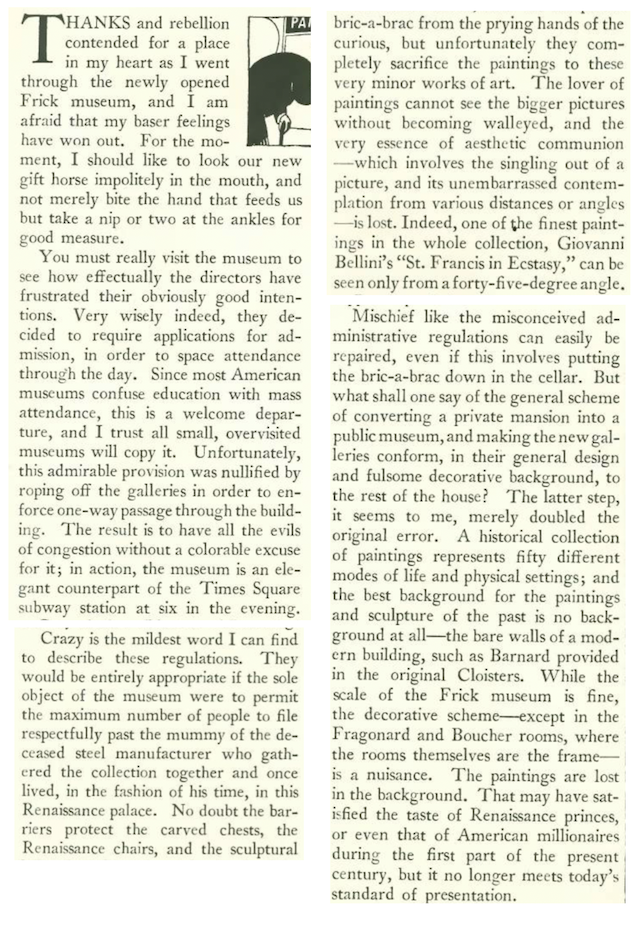
Above: Critic Lewis Mumford was not ecstatic about his visit to the newly opened Frick Collection, unhappy with the museum's crowd-control regulations that limited his view of Giovanni Bellini's masterpiece, St Francis in Ecstasy, among other things. (wikiart.org/communitydevelopmentarchive.org)

Considered one of the finest museums in the U.S., the Frick Collection on the Upper East Side of Manhattan was established in 1935 to preserve steel magnate Henry Clay Frick’s priceless 14th- to 19th-century European paintings as well as the Frick house and its furnishings. When it opened to the public on Dec. 16, 1935, museum staff distributed timed-entry tickets to prevent crowding, and therein lay the rub for New Yorker critic Lewis Mumford.
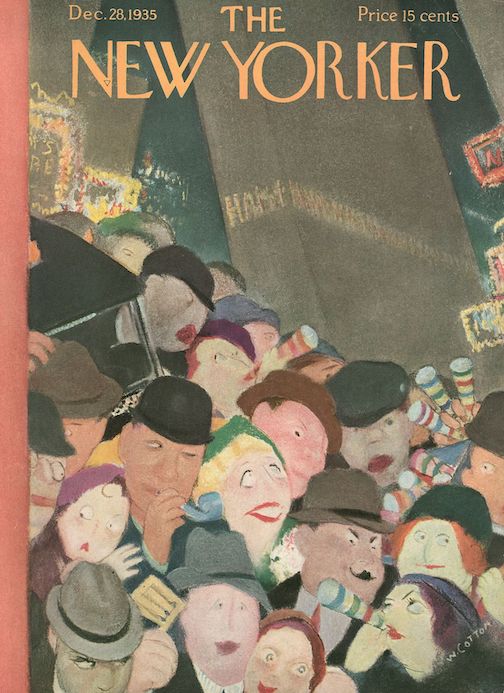
December 28, 1935 cover by William Cotton. Exclusively a cover artist for The New Yorker, Cotton (1880–1958) produced fifty-five covers for the magazine.

The timed tickets, along with ropes that forced visitors to follow a defined path, spoiled the museum’s debut for Mumford, who was one of its few detractors. In these excerpts Mumford addressed the crowd control measures, and criticized the furniture and other “bric-a-brac” that further served to obstruct his viewing pleasure:
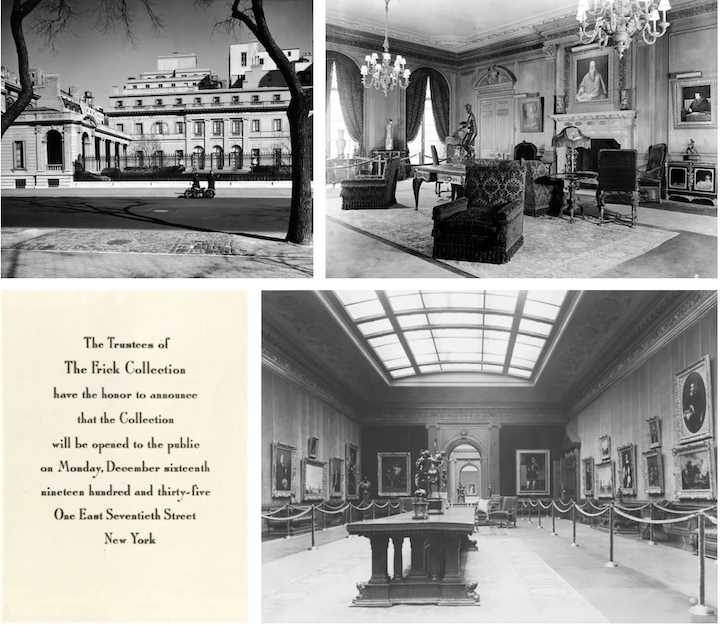
ROPES AND BRIC-A-BRAC presented obstacles to Mumford’s visit at the opening of the Frick Collection. Clockwise, from top left, view of the Frick mansion, circa 1935; installation view of the Living Hall, 1935; West Gallery, 1935; invitation to the opening of The Frick Collection, 1935. (businessinsider.com/Frick Art Reference Library Archives)

The Frick’s recent renovation and expansion has also had its detractors; after enduring a long and contentious proposal review process and five years of renovation and construction, the Frick reopened to the public in April 2025. It seems most attendees appreciate the changes.
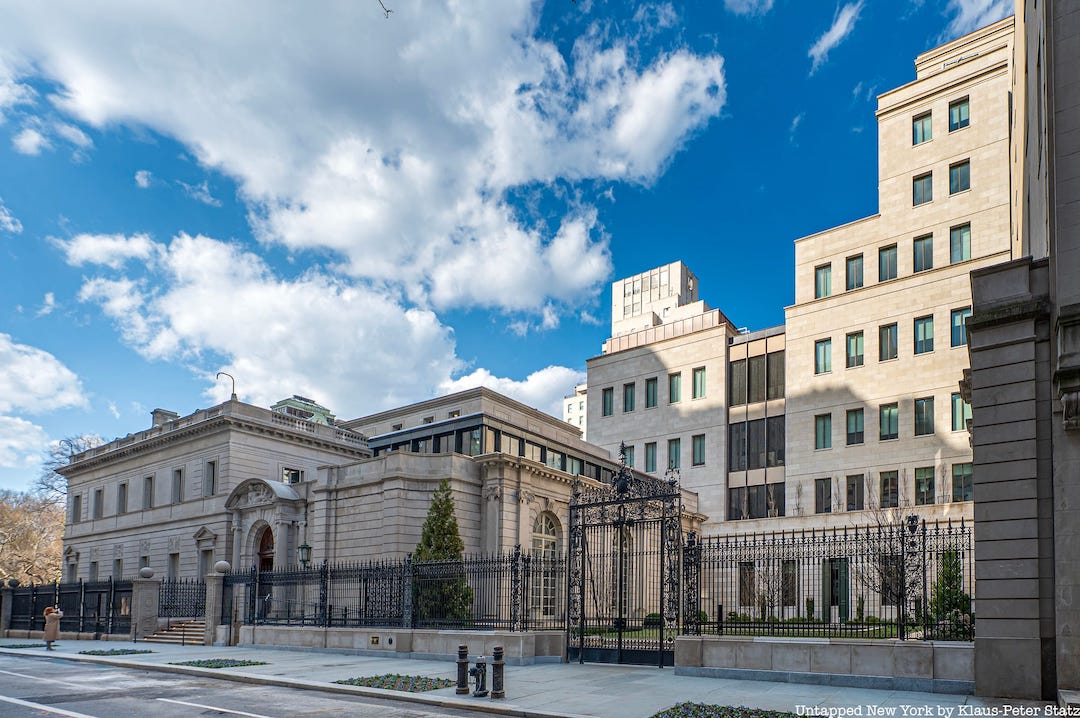
OLD AND NEW…The Frick Collection’s home today, with expansion to the right. (untappedcities)

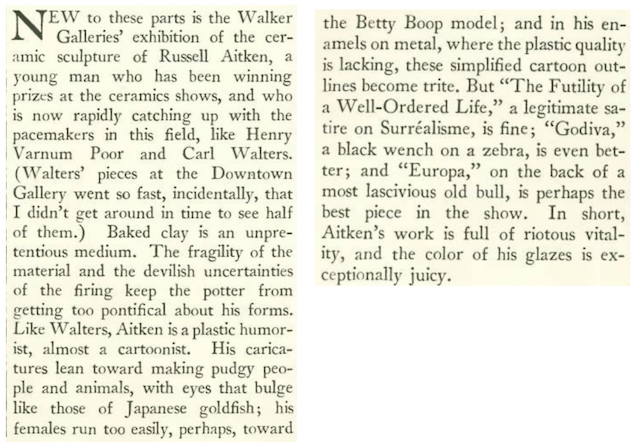
Mumford also took a look at the latest work by ceramic sculptor Russell Aitken (1910-2002), comparing his work to that of a cartoonist. Aitken was a rather odd duck in the art world, renowned both for his quirky sculptures as well as for his exploits as a big game hunter.
KILLER ARTWORK…Russell Aitken had eclectic tastes, to say the least, ranging from creating cutesy ceramics and cartoonish enamels to murdering Cape buffalo. Top left, Virgins of Mogambo, enamel on metal, 1935; bottom left, The Cactus Kid, ceramic, 1932. At right, midcentury whiskey ad featuring Aiken as a big game hunter. (Cleveland Museum of Art/findagrave.com)

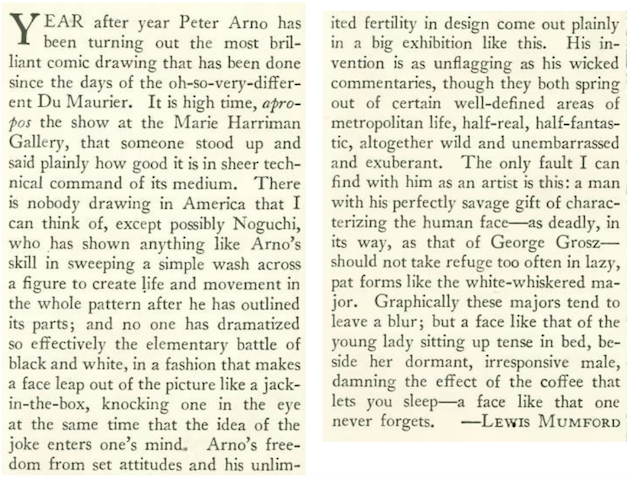
It’s always a little dicey to review the work of a colleague, but in the case of Peter Arno, Mumford had mostly praise, some of it quite high, that is except for Arno’s “white-whiskered major” which Mumford characterized as a “lazy, pat form.”
Thankfully Arno ignored Mumford’s criticism and continued to draw his “white-whiskered major.” Here he is in a delightful 1937 cartoon featured on one of my favorite New Yorker-related sites, Attempted Bloggery:
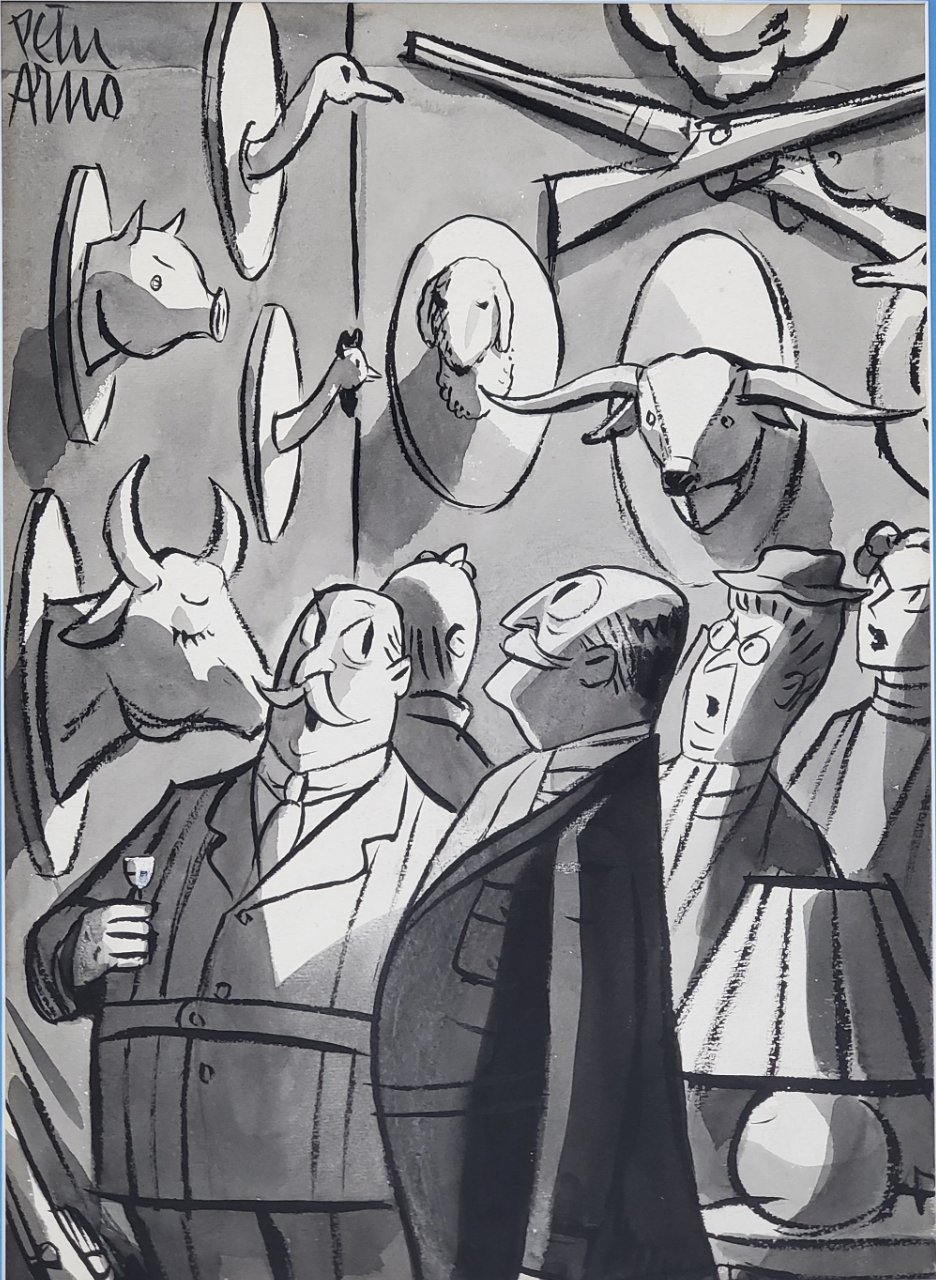
Caption reads: “I Only Kill For Food.”

 * * *

Shock of the New

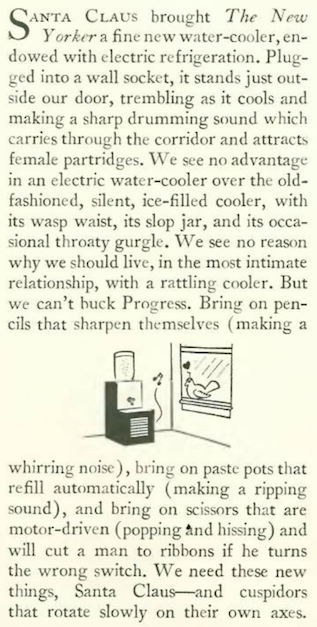
E.B. White, ever skeptical of newfangled inventions, saw no reason why The New Yorker’s old ice-filled water cooler needed to be replaced by a “rattling” electric one:
* * *

O Tannenbaum

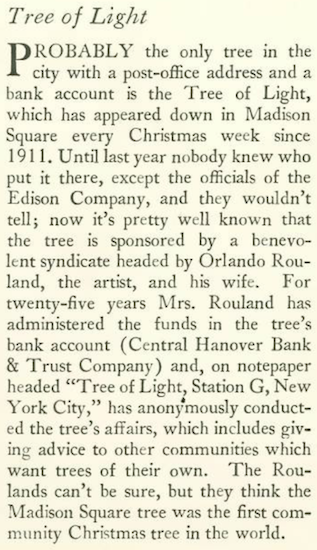
Two decades before Rockefeller Plaza raised its giant Christmas tree (or before Rockefeller Center even existed), New Yorkers gathered around a “Tree of Light” at Madison Square. “The Talk of the Town” remembered:
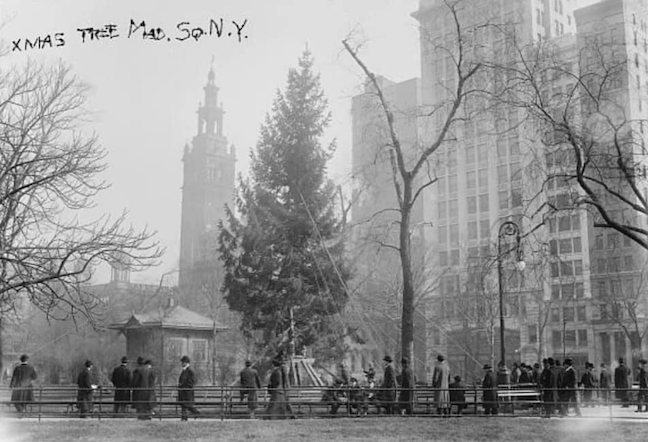
TREE OF LIGHT…America’s first outdoor Christmas tree lighting apparently occurred in Madison Square Park in 1912 (the “Talk” excerpt cited 1911). Bowery Boys History notes that “the organizers knew they were doing something unique, but probably did not realize the special significance of the event. Their 70-foot-tall imported tree from the Adirondacks, festooned with lights from the Edison Company, would be the first outdoor community Christmas tree in the United States.” (Library of Congress )

According to Bowery Boys History, in 1912 “this ‘Tree of Light’, mounted in cement, was such a novelty that almost 25,000 people showed up that night [Christmas Eve] to witness it and enjoy an evening-long slate of choral entertainment.” The following year, The New York Times reported that the Salvation Army took over the event, offering up “10,000 hot sausages and 10,000 cups of hot coffee” for the crowds.

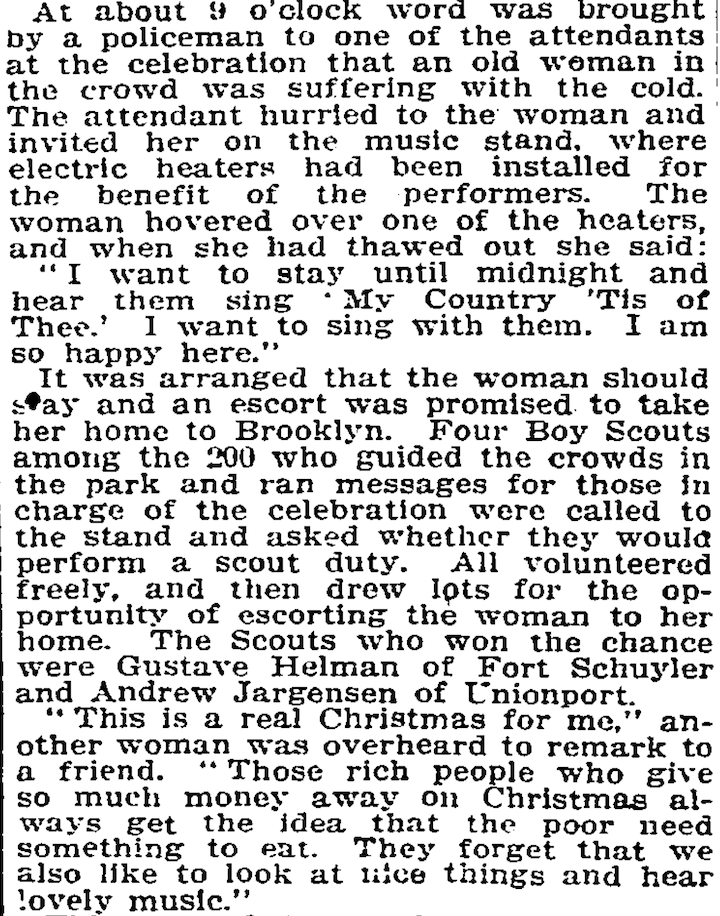
The celebration was sparked by social activists seeking to draw attention to the needs of the city’s poor. On Christmas Day, 1912, the Times ran extensive coverage, and noted the charitable tone of the event in this excerpt:
 * * *

Honor Roll

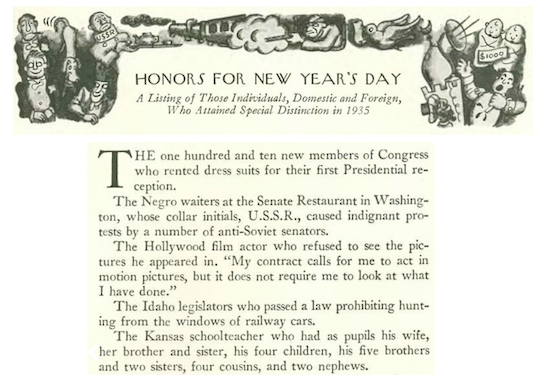
Joseph P. Pollard and W.E. Farbstein covered a two-page spread, listing individuals of “Special Distinction” in honor of the New Year…here is a brief excerpt:
 * * *

Best (and Worst) of Broadway

Robert Benchley reviewed the hits and misses of the fall Broadway season, and admitted he had become something of a softhearted theatre critic after spending six months in Hollywood.

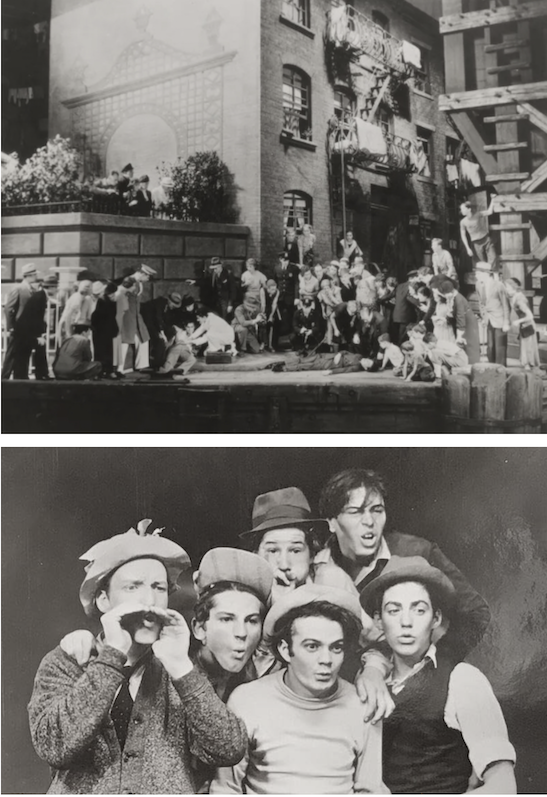
MEET THE GANG…Among the plays recommended by Robert Benchley was Dead End, which opened at the Belasco Theatre on Oct. 28,1935 and ran for 687 performances before closing on June 12, 1937. The play featured an impressive set design by Norman Bel Geddes (top) and introduced the Dead End Kids (aka the Bowery Boys), various teams of young actors who made 89 films and three serials for four different studios during their 21-year film career. The photo above shows the original six Dead End Kids—front row, from left, Huntz Hall, Gabriel Dell, Leo Gorcey and Billy Halop; back row, Bobby Jordan and Bernard Punsly. (deadendmusical.com)

 * * *

At the Movies

New Yorkers could nurse their holiday hangovers with a variety of films, ranging from the “very pleasant” The Perfect Gentleman to the “overdressed” Captain Blood, which featured a young Errol Flynn as a rather gentle pirate. As for the late year’s most anticipated film, A Tale of Two Cities, critic John Mosher found a few bright spots between his yawns, including praise for Blanche Yurka’s standout performance as Madame DeFarge.
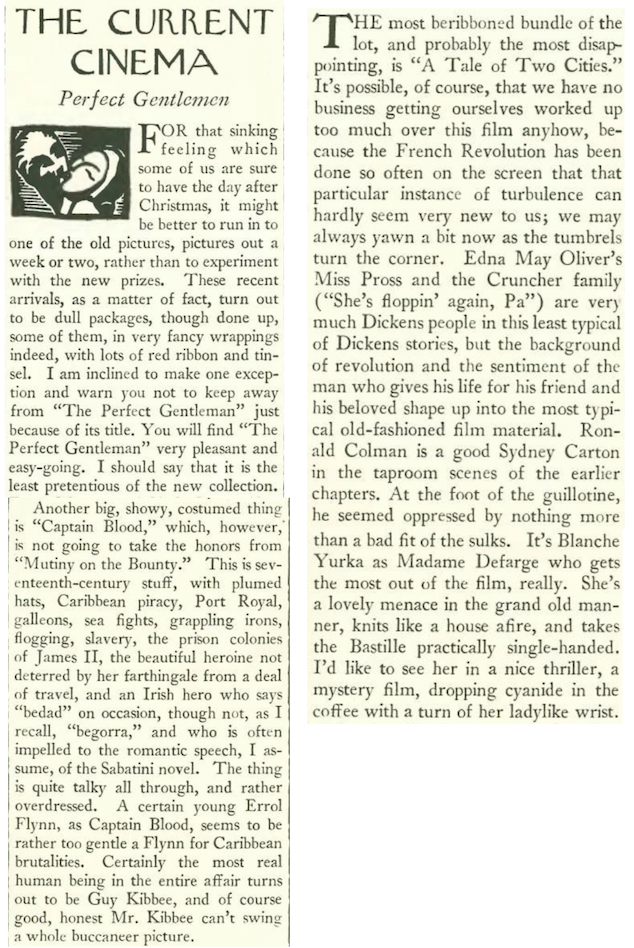
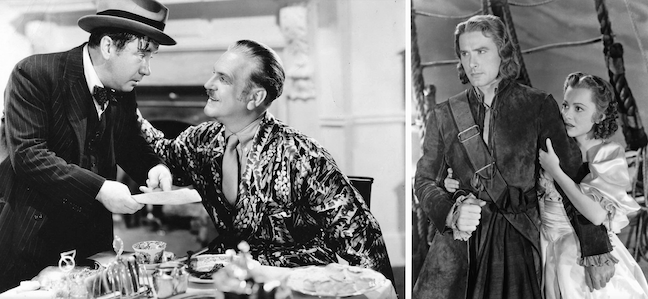
GENTLE MAN AND GENTLE PIRATE…At left, Forrester Harvey and Frank Morgan in The Perfect Gentleman; at right, Errol Flynn and Olivia de Havilland in Captain Blood. The film launched the 26-year-old Flynn and the 19-year-old de Havilland into Hollywood stardom, and marked the beginning of Flynn’s swashbuckler image. (MGM/IMDB)
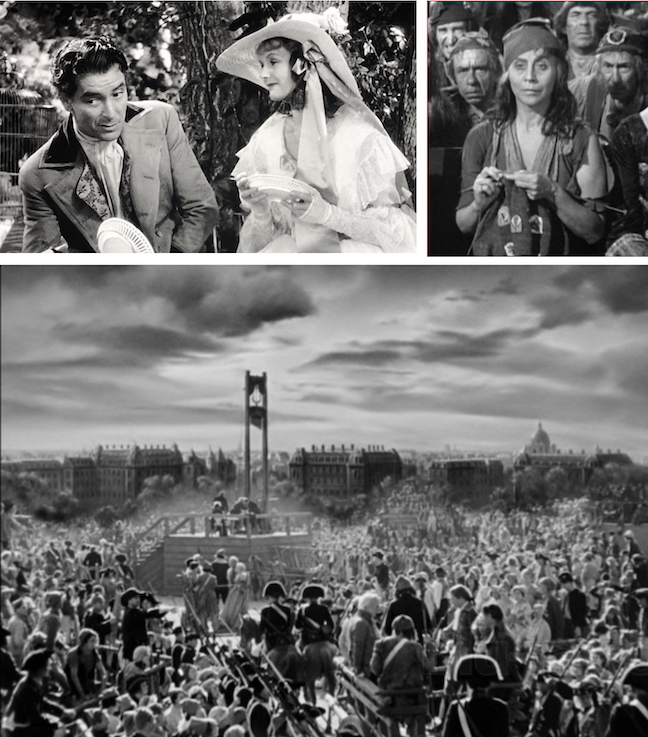
I’M LOSING MY HEAD OVER YOU…Clockwise, from top left, Sydney Carton (Ronald Colman) would lose his noggin to the guillotine in a scheme to save Lucie Manette (Elizabeth Allan) in A Tale of Two Cities; veteran theater actress Blanche Yurka, who learned to knit for her acclaimed role as Madame Defarge, is shown here in a front row seat before the guillotine—it was Yurka’s first film role; at the bottom, the execution scene at the Place de la Révolution. (bluray.com/michaelbalter.substack.com)

If piracy and revolution were “too much for your holiday nerves,” Mosher suggested the latest Shirley Temple film, The Littlest Rebel, featuring the superstar moppet dancing her way through the Civil War (and, unfortunately, performing a scene in blackface). Also on tap was the the musical comedy, Coronado.
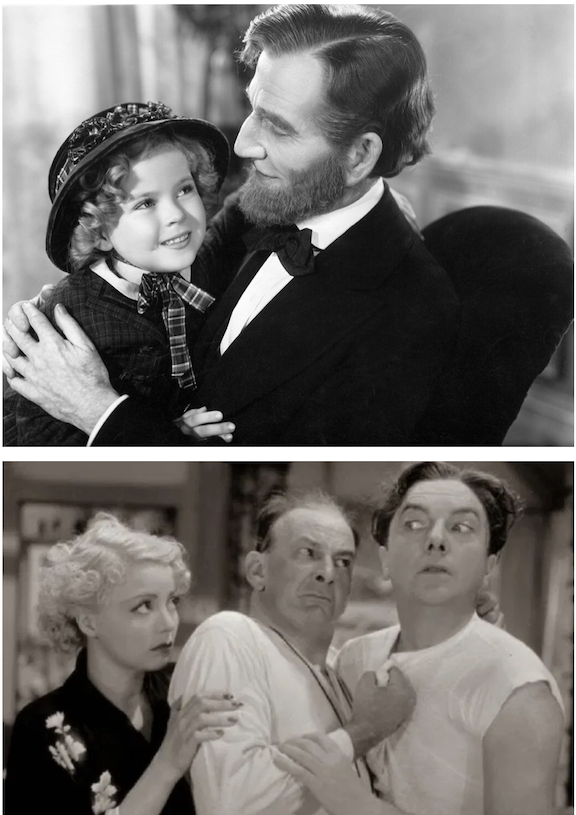
SEEKING A PRESIDENTIAL PARDON, little Virgie Cary (Shirley Temple) asks President Lincoln (Frank McGlynn Sr.) to bestow mercy on her Confederate father in The Littlest Rebel; below, Alice White, Leon Errol and Jack Haley in the musical comedy Coronado. Haley is best known today as the Tin Man in 1939’s The Wizard of Oz. (whitehousehistory.org/themovieb.org)

 * * *

From Our Advertisers

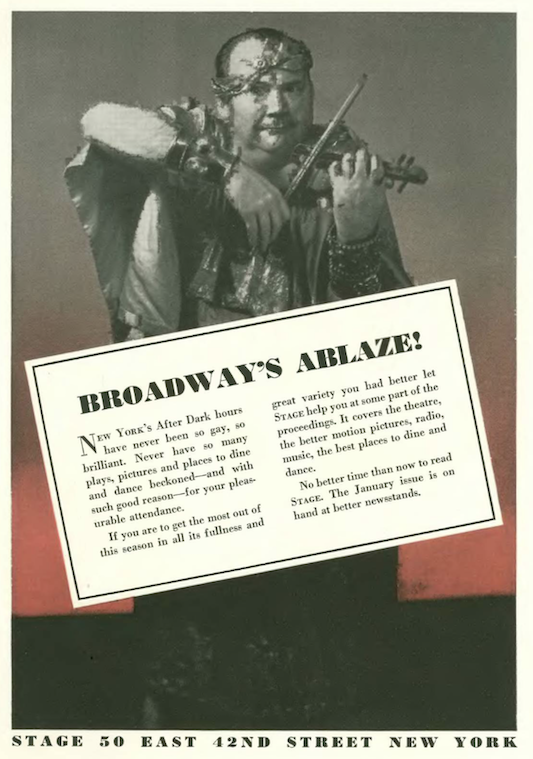
We look in on our advertisers, beginning with this from Stage magazine…the actor portraying Nero is likely from the play Achilles Had a Heel, which closed after just eight performances…
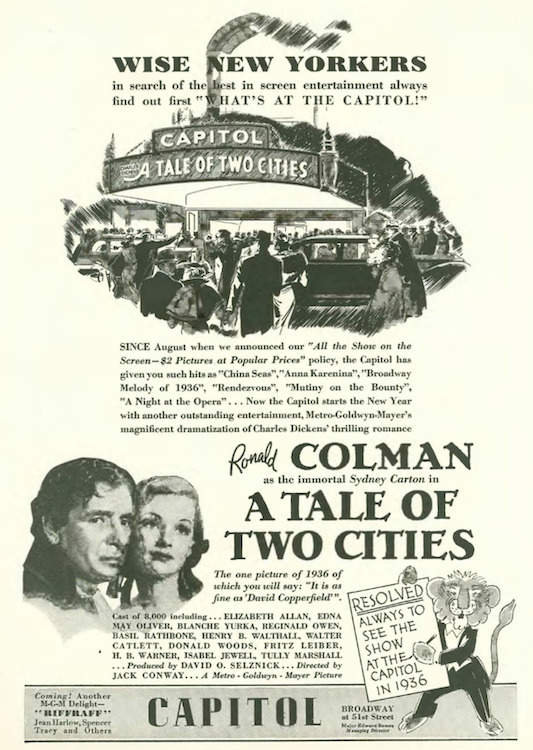
John Mosher wasn’t wowed by MGM’s A Tale of Two Cities, even if the Capitol Theatre promised a spectacle with “a cast of 8,000″…
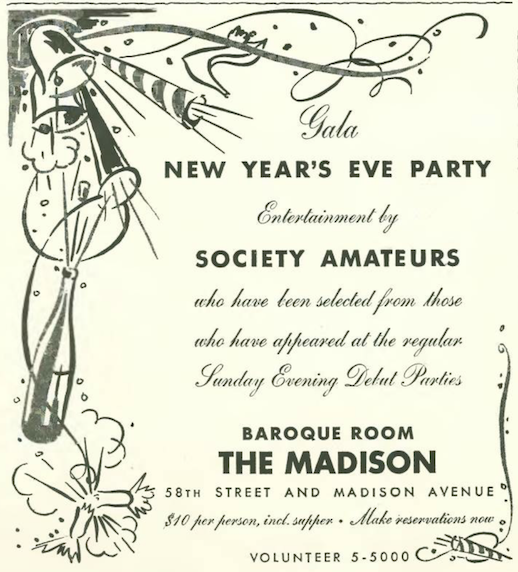
…this back of the book ad promised entertainment by “Society Amateurs” selected from the “Sunday Evening Debut Parties”…
…the brewers of Guinness promoted the health benefits of their product for the New Year…

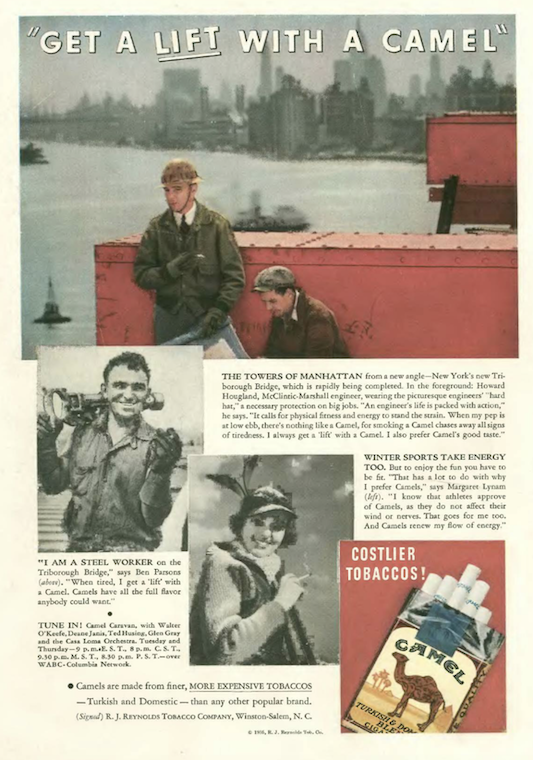
…and the makers of Camels continued to print testimonials touting the invigorating effects of their cigarettes…
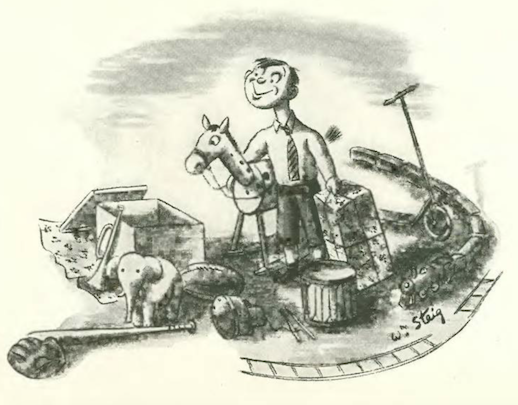
…on to our cartoonists, with William Steig taking stock of the Christmas haul…
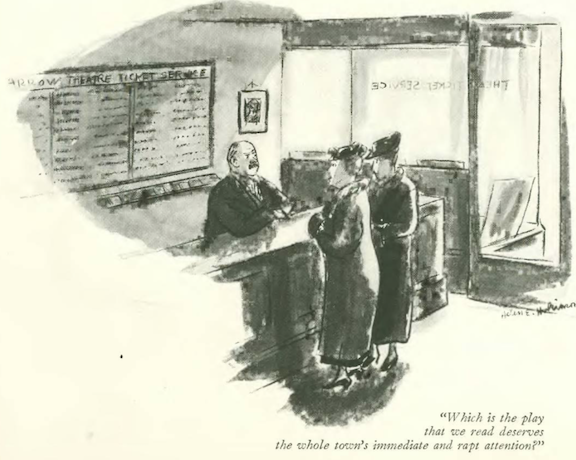
Helen Hokinson’s girls were looking for the hottest show in town…
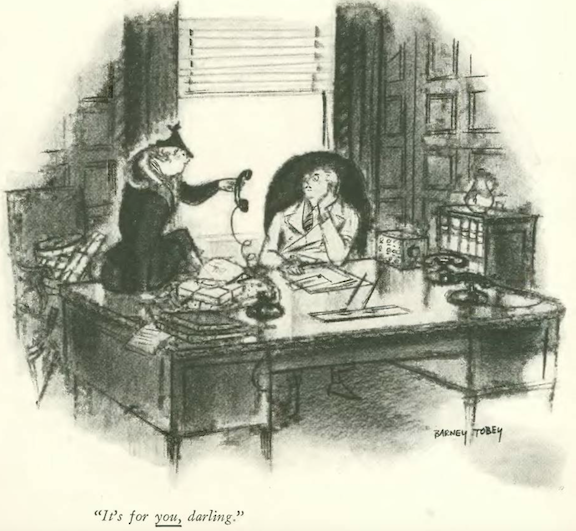
Barney Tobey was the latest cartoonist to take a shot at the boss-secretary trope…
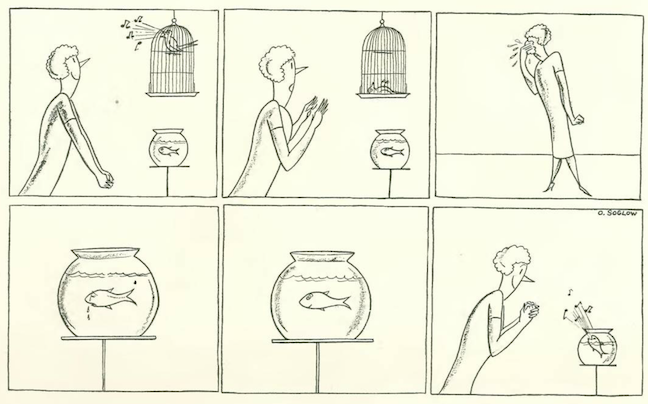
Otto Soglow gave us a singing fish…

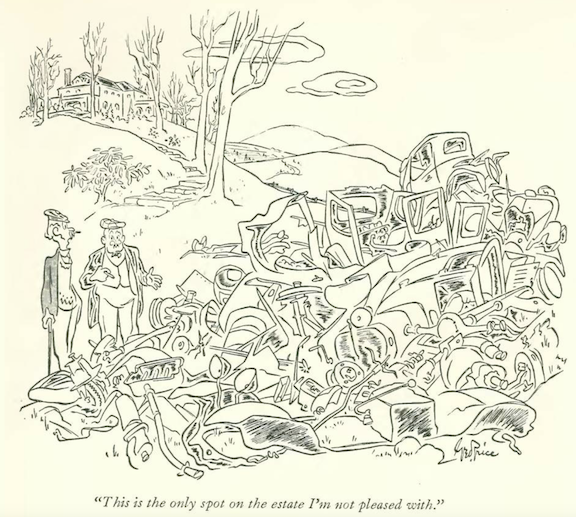
George Price came across a landscaping challenge…
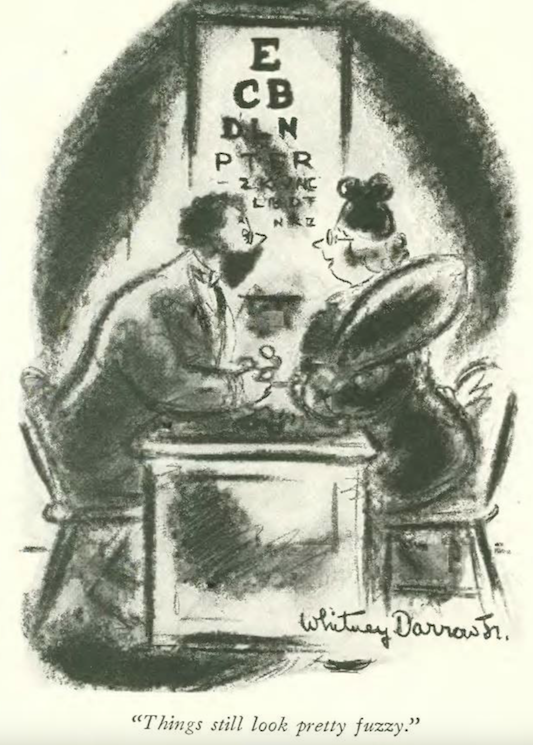
Whitney Darrow Jr focused on a visit to the optometrist…
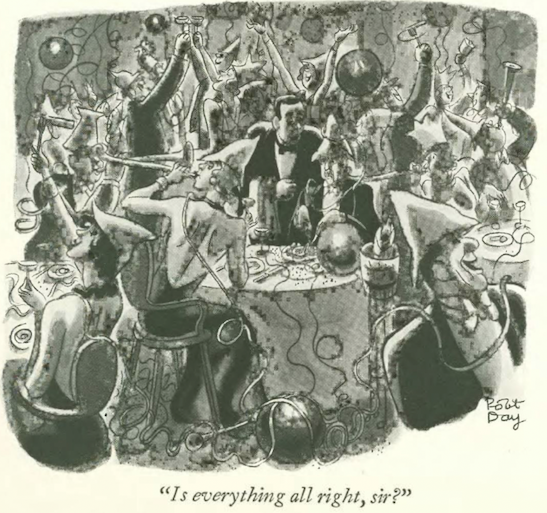
Robert Day gave us a party pooper too pooped to party…
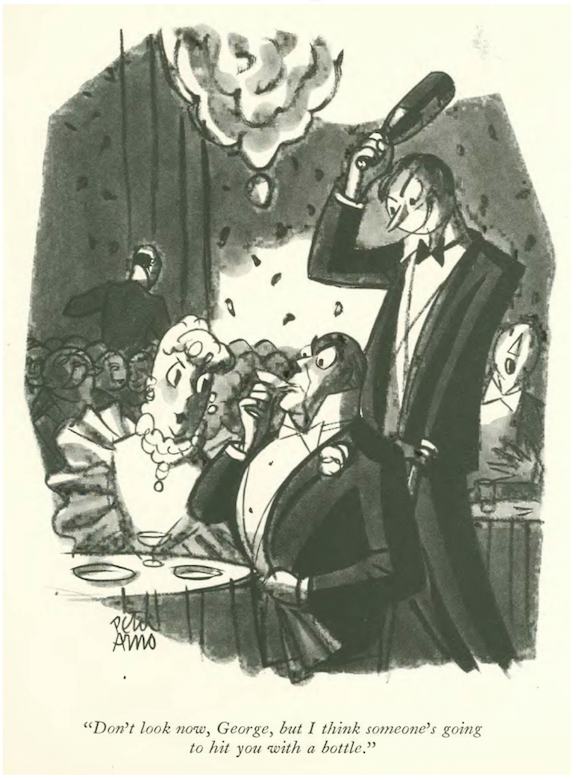
…and Peter Arno offered a glimpse into his active nightlife…
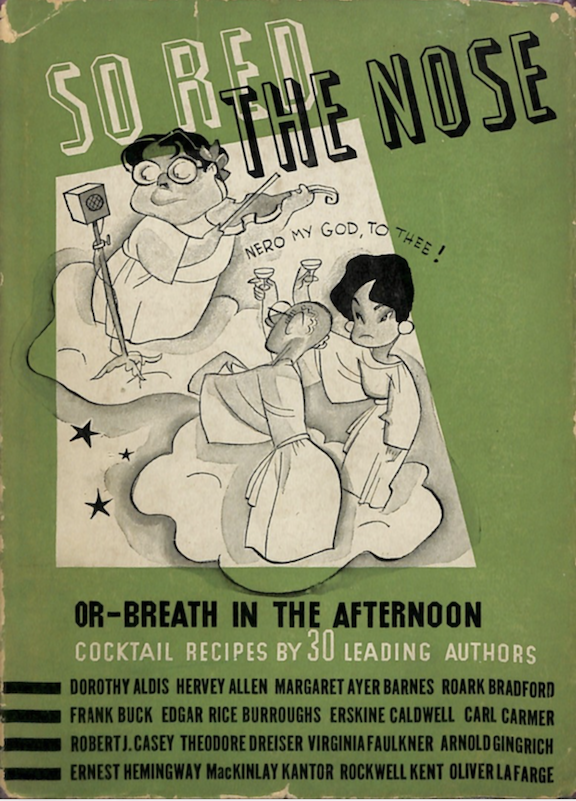
…before we go, I ran across this cocktail book, So Red the Nose, at Messy Nessy’s Cabinet of Curiosities

…this particular tome featured an Alexander Woollcott recipe for a cocktail called “While Rome Burns”…
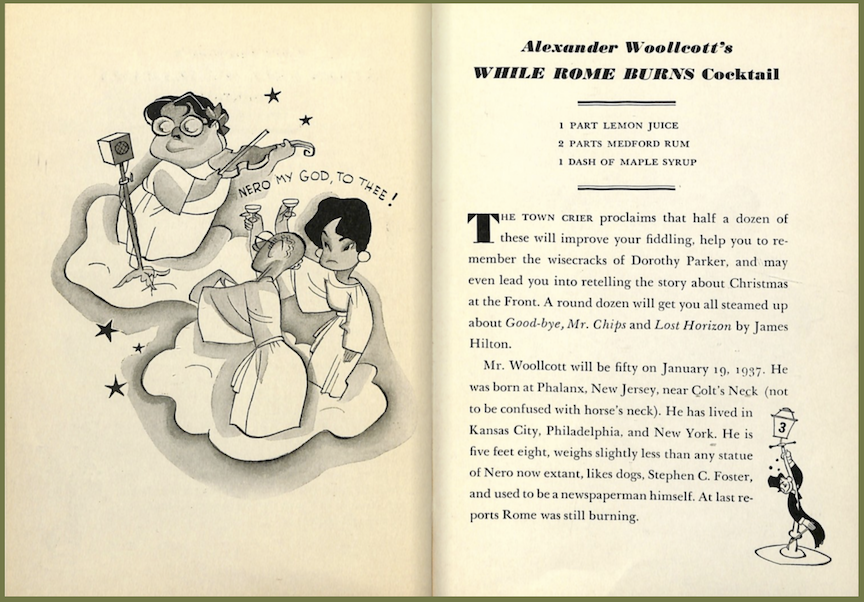
…you can flip through the entire book at this site

Next Time: The Major’s Amateur Hour …

Seeking Decorative People

Above: New Year’s Eve at the “El Morocco” Night Club at 154 E. 54th Street, New York, 1935. (Posted on Reddit)

Lois Long took her nightlife seriously, and when it didn’t live up to her standards—defined by the wild speakeasy nights she wrote about after joining The New Yorker in 1925 —she was crestfallen, to say the least.

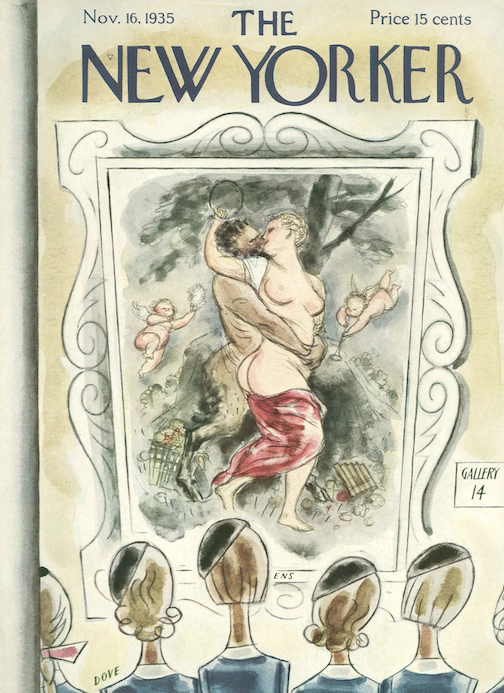
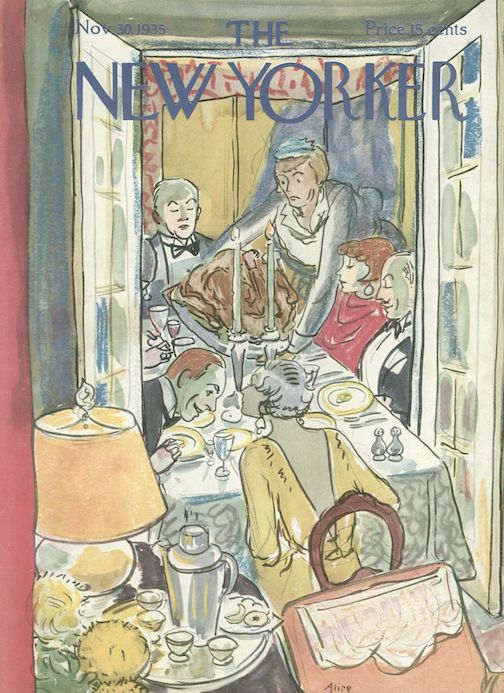
November 16, 1935 cover by Leonard Dove. This is one of Dove’s fifty-seven New Yorker covers; he also contributed 717 cartoons to the magazine.
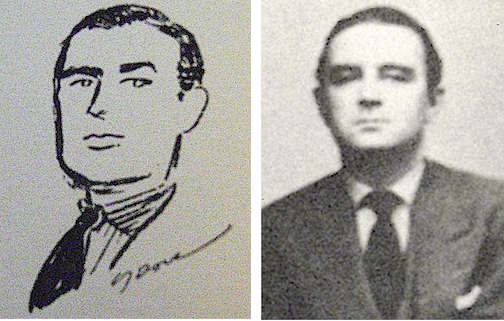
Above: Leonard Dove’s self portrait, 1941; photo: 1947. Born 1906, Great Yarmouth, England. Died, Gramercy Hotel, New York City, 1972. (Thanks to Michael Maslin’s indispensable Ink Spill)

 *

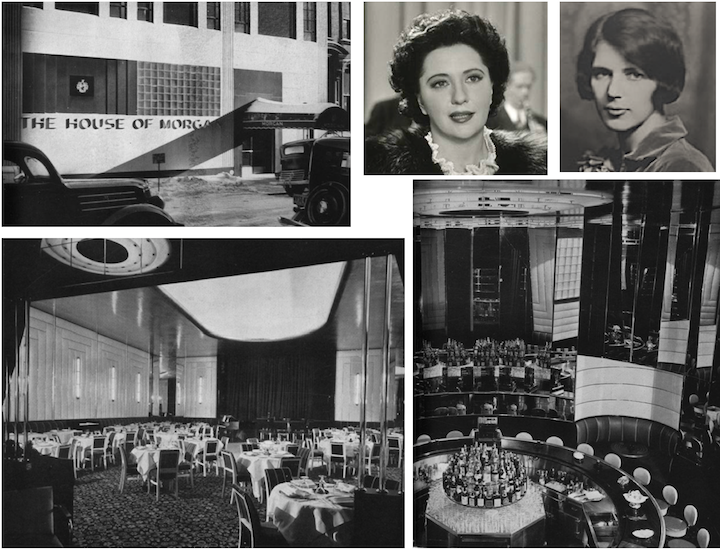
When Long joined The New Yorker she was a 23-year-old Vassar graduate, and at age 34 she was not expecting to re-live those heady days; but nightlife in 1935 made her wonder where all the interesting people had gone. Instead of the smart and beautiful speakeasy set, she found people who couldn’t hold a conversation, who cared more about being mentioned in the newspapers by “Cholly Knickerbocker” (a pseudonym used by society columnists)—they simply lacked the “sparkle” she so craved. In this excerpt from her column, “Tables for Two,” she explained:

ALL SHOW, NO GO…Lois Long recalled the heady days of the original torch singer Helen Morgan, but her new club, The House of Morgan, offered up tired vaudeville instead of the singer herself. Above, images of the club from Christopher Connelly’s The Helen Morgan Page. Top, center, detail of Morgan from the 1935 film Sweet Music. Next to Morgan is a photo of Long from the PBS documentary Prohibition. (helen-morgan.net/PBS.org)

 * * *

At the Movies

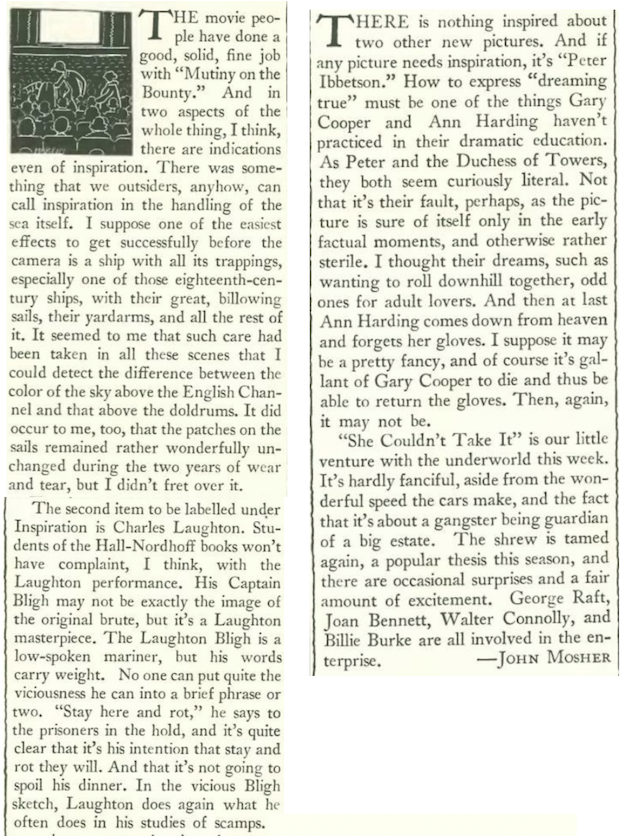
Our film critic John Mosher was in good spirits after taking in MGM’s Mutiny on the Bounty, and especially the inspired performance by Charles Laughton as the cruel, tyrannical Captain Bligh…
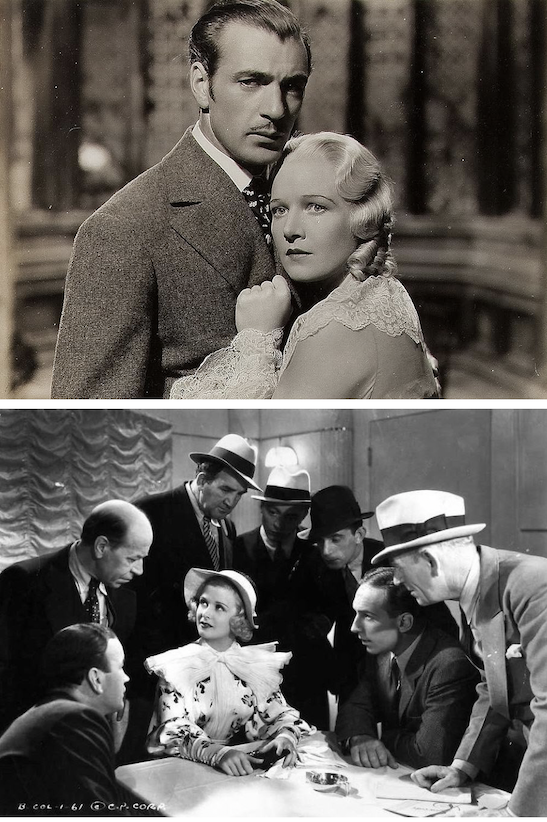
LET’S HAVE A STARING CONTEST…Clark Gable (left) portrayed Fletcher Christian, the Bounty’s executive officer, who disapproved of the cruel leadership of Captain Bligh, portrayed by Charles Laughton (right) in Mutiny on the Bounty. (theoscarbuzz.com)

…two other pictures reviewed by Mosher were less than inspired, but at least the George Raft/Joan Bennett gangster film, She Couldn’t Take It, offered a car chase, and the occasional surprise.

STERILITY ISSUES…Top, Gary Cooper and Ann Harding needed a bit more life in Peter Ibbetson; at least Joan Bennett (bottom photo) found some action in She Couldn’t Take It. (IMDB)

 * * *

From Our Advertisers

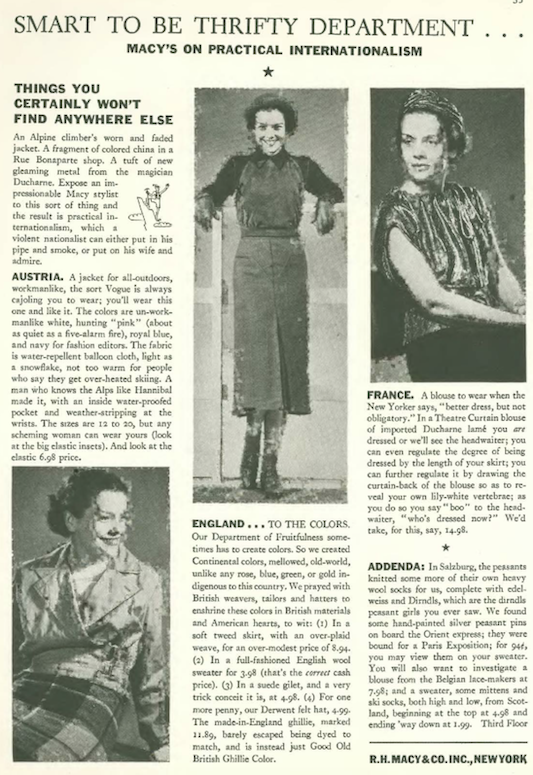
Not all fashion advertisements in The New Yorker were aimed at the posh set…Macy’s offered some thrifty selections, including a French-inspired “Theatre Curtain Blouse” that could be opened in the back “so as to reveal your own lily-white vertebrae”…
…I am puzzled by the “Duchess” types that appeared in food and beverage ads in the back of the magazine…we’ve seen some angry duchesses in ads for tomato and pineapple juice, and here we have one who has stooped so low as to shell her own peas…

…a side note, the Duchess’s peas came in a can bearing the old Green Giant logo, a savage, bearskin-clad figure…he was redesigned by ad executive Leo Burnett in 1935 to become the friendlier “Jolly Green Giant”…

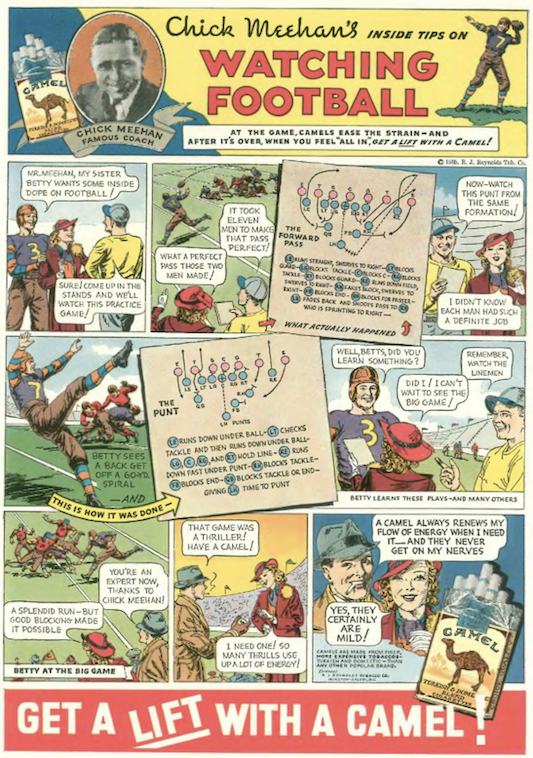
…the makers of Camels presented football coach Chick Meehan in cartoon form to extol the wonders of football and smoking to a young woman…Meehan coached football at Syracuse, NYU and Manhattan College…

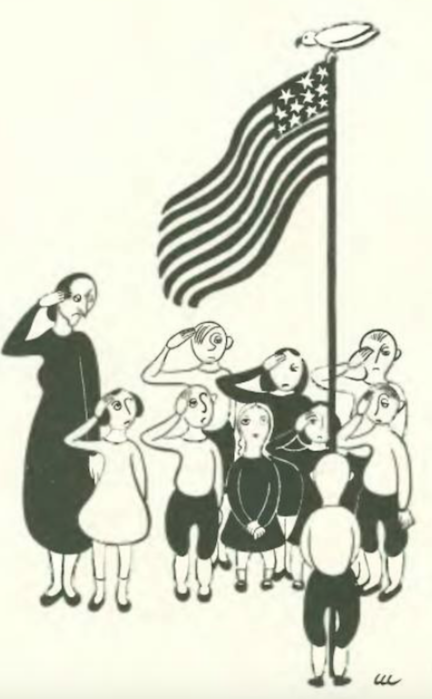
…the football theme segues to our cartoon section, beginning with this spot art by James Thurber

Christina Malman’s spot drawings could now be found in every issue, and usually more than one…

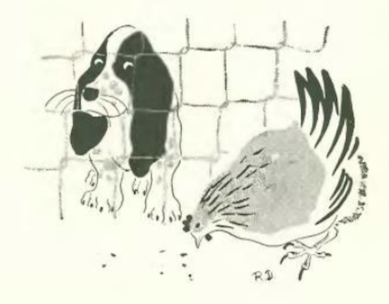
…this one by Robert Day also caught my eye, maybe because I like chickens, and dogs too…

…Day again, on the streets of Manhattan…

Barbara Shermund showed us a wolf in wolf’s clothing…

Alan Dunn seemed to be channelling Barbara Shermund here…or maybe Dunn’s wife Mary Petty had some influence…

William Crawford Galbraith eavesdropped on some wagering waiters…

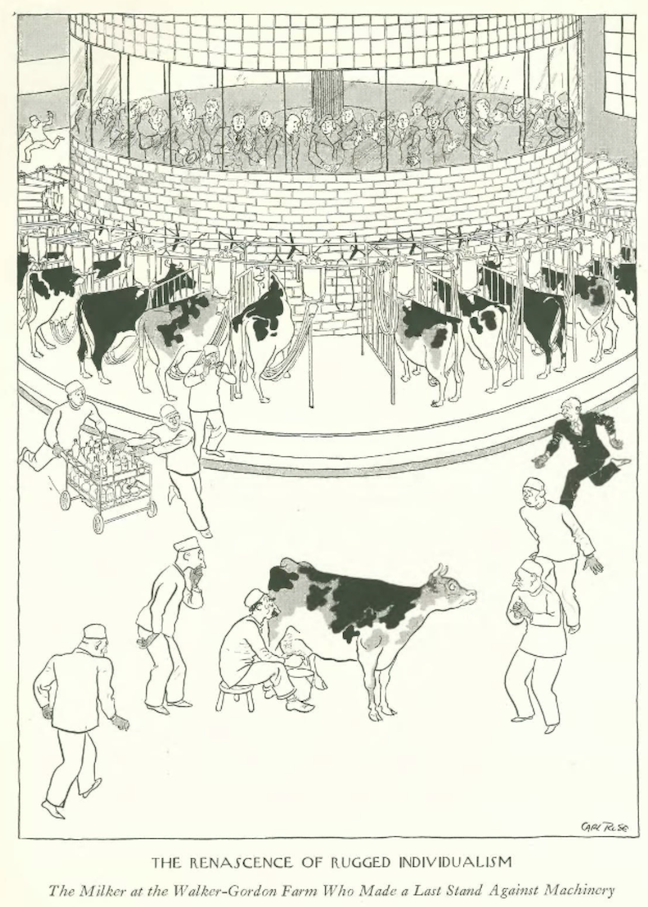
Carl Rose found an outlier at the modern Walker-Gordon Dairy Farm…

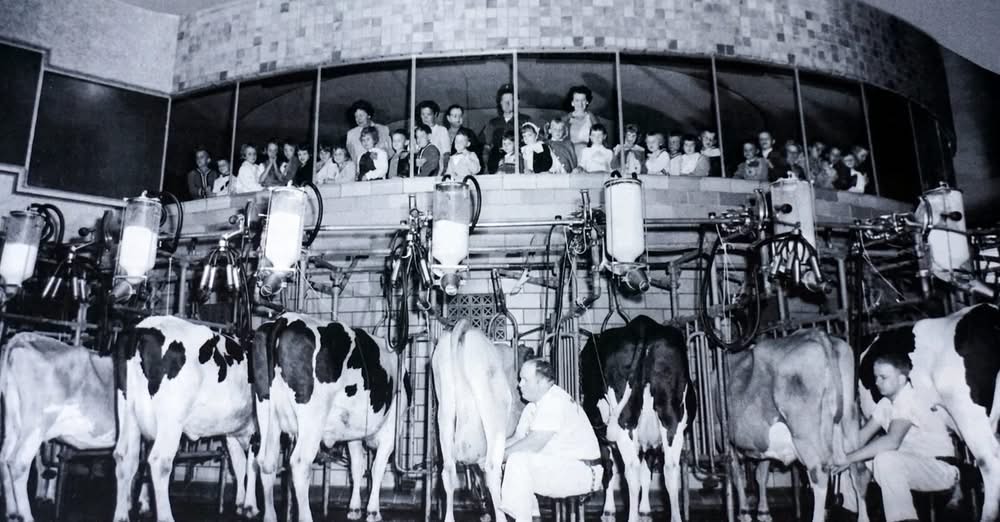
…The Rotolactor featured in Rose’s cartoon was a mostly automatic machine used for milking a large number of cows successively on a rotating platform…first used at the Walker-Gordon Laboratories and Dairy in Plainsboro, New Jersey (pictured below), the Rotolactor held fifty cows at a time, and hosted about 250,000 visitors annually…

(rawmilkinstitute.org)

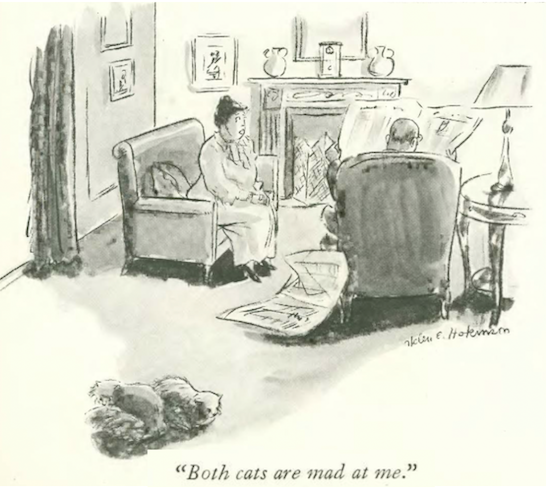
…and we go from cows to cats, courtesy Helen Hokinson

…and Charles Addams booked an unusual perp…

…on to the November 23 issue…

November 23, 1935 cover by Antonio Petruccelli. Petruccelli (1907-1994) began his career as a textile designer, becoming a freelance illustrator in 1932 after winning several House Beautiful cover contests. This is one of four covers he produced for The New Yorker.
Antonio Petruccelli. Here are samples of Petruccelli’s remarkable work. (Helicline Fine Art)

 *

Worth the Wait

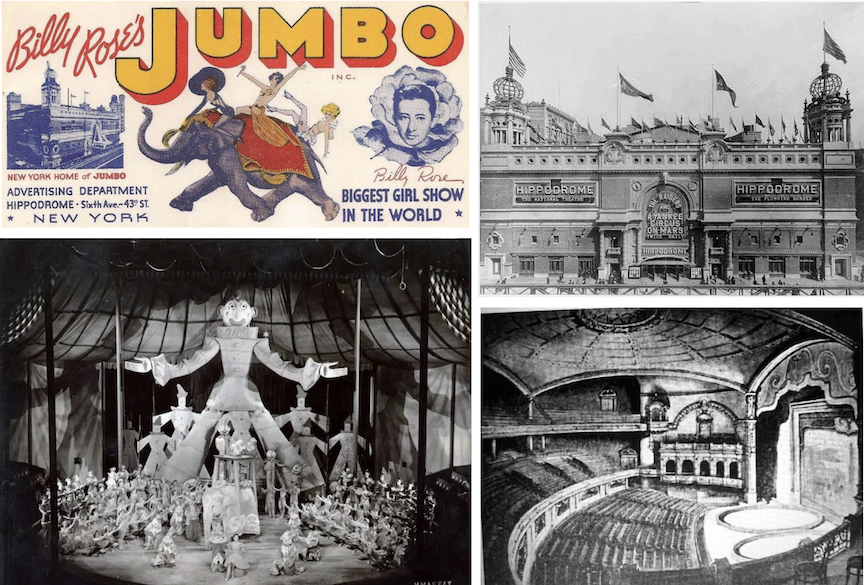
The highly-anticipated circus-themed spectacle Jumbo finally opened at the Hippodrome. In his That’s Entertainment! blog, Jackson Upperco observes that Billy’s Rose’s Jumbo was “more circus than musical comedy,” a production that “was largely an excuse for Mr. Rose to present a circus.” It was headlined by comedian Jimmy Durante and bandleader Paul Whiteman, with a score by Rodgers & Hart. Here are excerpts from a review by Wolcott Gibbs:

JUMB0-SIZED ENTERTAINMENT…Clockwise, from top left, Hippodrome billboard promoting Jumbo; built in 1905, the Hippodrome provided entertainment to thousands who couldn’t afford a Broadway ticket; a circus tent was erected inside the 5,300-seat theatre for the spectacle; Jumbo was one of the most expensive theatrical events of the first half of the 20th century. (Facebook/Library of Congress/Broadway Magazine/jacksonupperco.com)

 * * *

At the Movies

Fyodor Dostoevsky’s 1866 novel Crime and Punishment was adapted to film by both French and American producers in 1935, but critics including The New Yorker’s John Mosher mostly preferred the French version, titled Crime et châtiment.

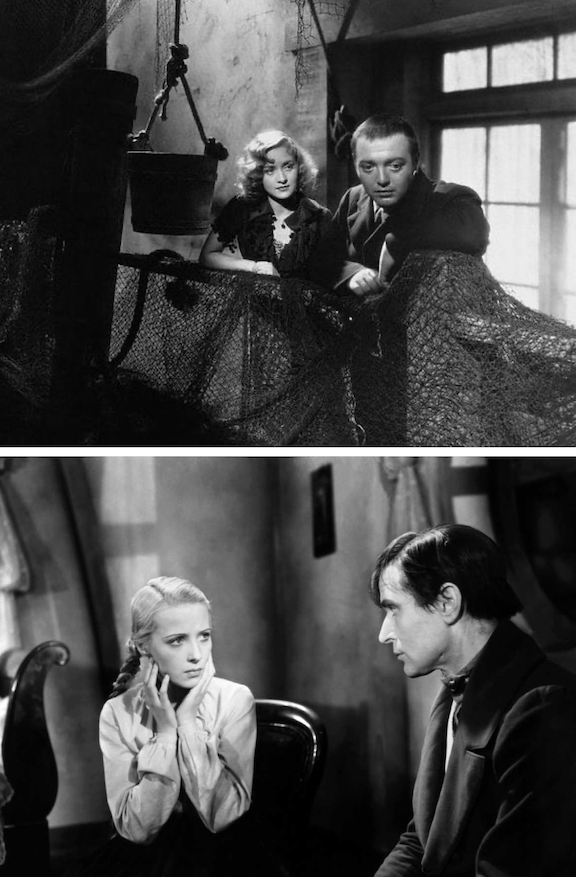
DOUBLE FEATURE…American and French producers each turned out a film adaption of Fyodor Dostoevsky’s novel Crime and Punishment. Top photo, Marian Marsh as Sonya and Peter Lorre as Roderick Raskolnikov in Columbia’s Crime and Punishment; bottom photo, Madeleine Ozeray as Sonia and Pierre Blanchar as Rodion Raskolnikov in Crime et châtiment. (silverscreenmodes.com/SensCritique.com)

…Mosher reviewed another crime thriller, Mary Burns, Fugitive, but found some comic relief in two other films…

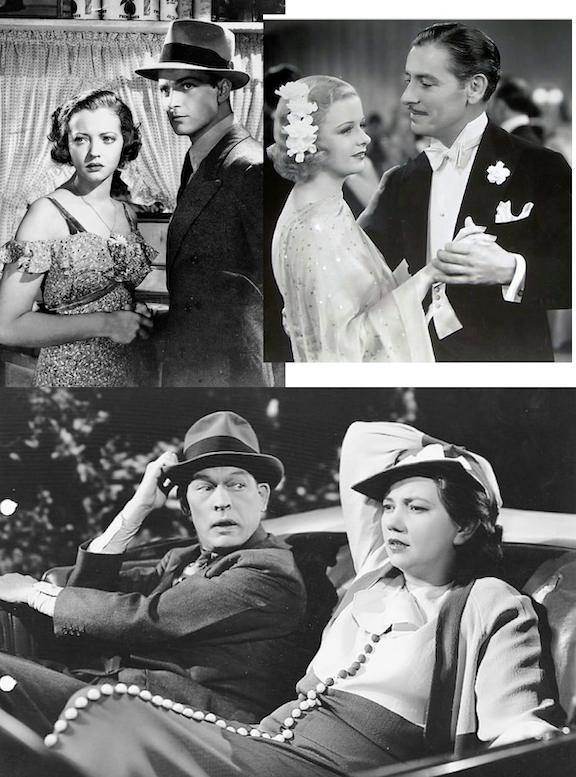
BAD CHOICE IN BOYFRIENDS was the theme of Mary Burns, Fugitive, starring (top left) Sylvia Sidney and Alan Baxter; top right, Joan Bennett and Ronald Colman in the romcom The Man Who Broke the Bank at Monte Carlo; bottom, Fred Allen and Patsy Kelly provided some laughs in musical comedy Thanks a Million. (IMDB)

* * *

From Our Advertisers

Readers of the Nov. 23 issue opened to this lovely image…

…which sharply contrasted with the clunky Plymouth ad on the opposite page…

…not so clunky was this colorful illustration promoting Cadillac’s economy model, the La Salle…

…the back cover was no surprise, with yet another glamorous cigarette ad…

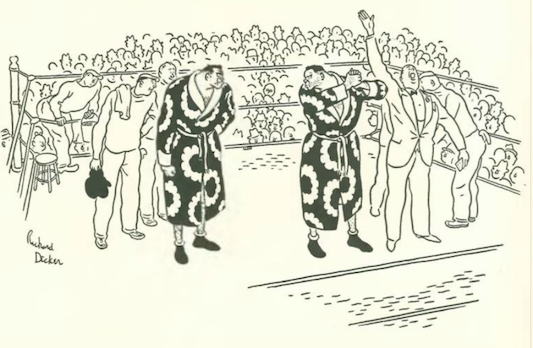
…our cartoonists included Richard Decker, and a fashion faux pas to open a boxing match…

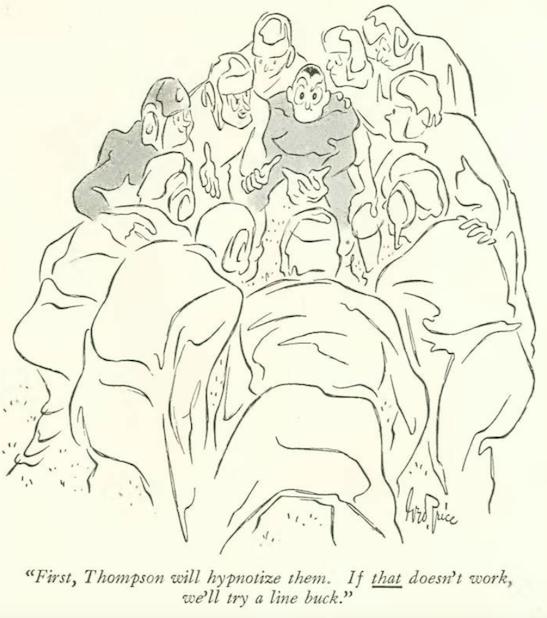
George Price eavesdropped into some football strategy…

Carl Rose spotted a canine unbeliever…

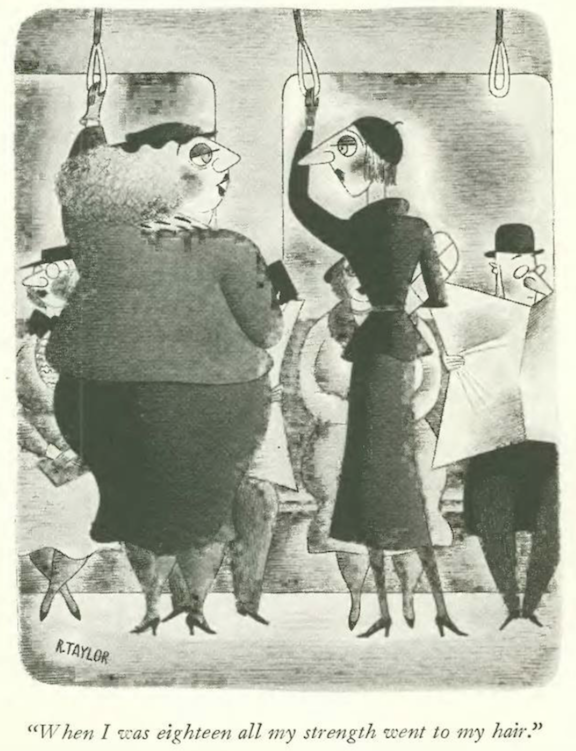
Richard Taylor was back with his distinctive style…

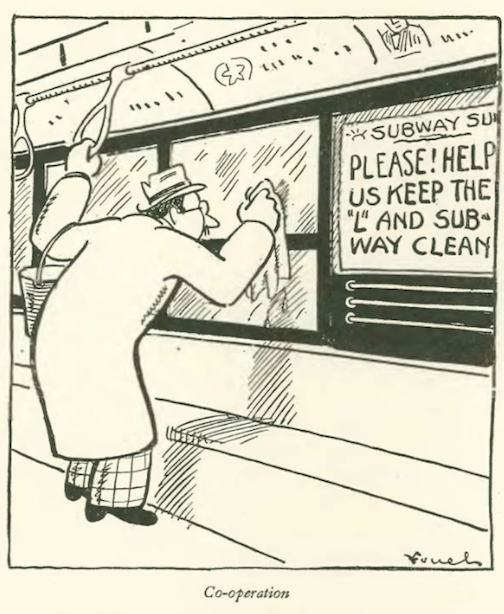
Al Frueh continued to illustrate the latest fare on Broadway…

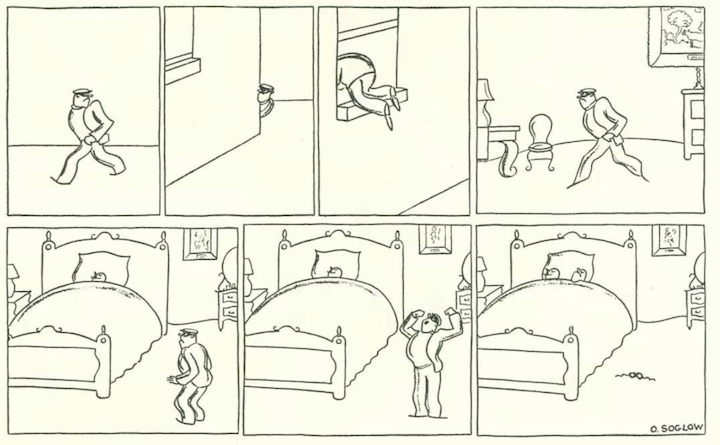
Otto Soglow crept in for a snooze…

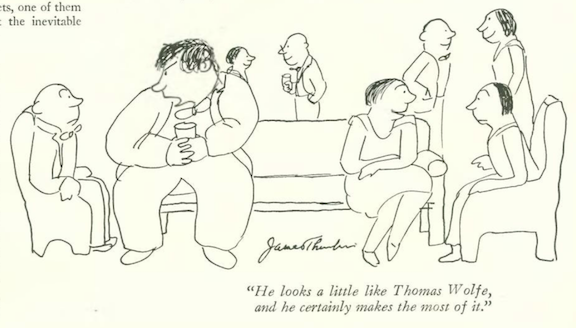
…and we close with James Thurber, and some literary cosplay…

Next Time: Some Holiday Shopping…

A Century and a Decade

Above: The first three issues of The New Yorker, an Al Frueh cover (#2) sandwiched between Rea Irvin covers.

The current team at The New Yorker has put together a great read (Feb. 17 & 24, 2025) to mark the magazine’s centennial. I’m still reading, but what I have seen so far is first rate, including Jill Lepore’s insightful “War of Words” (chronicling the battles between editors and writers over the years) and David Remnick’s look back at those first years of struggle in “The Talk of Town.”

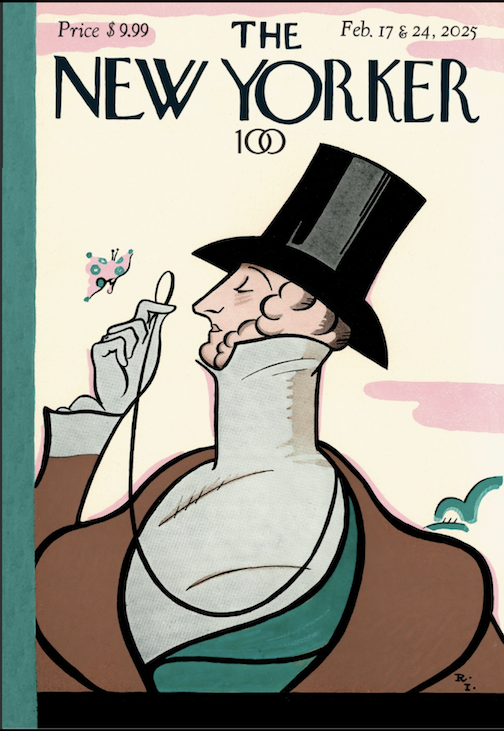
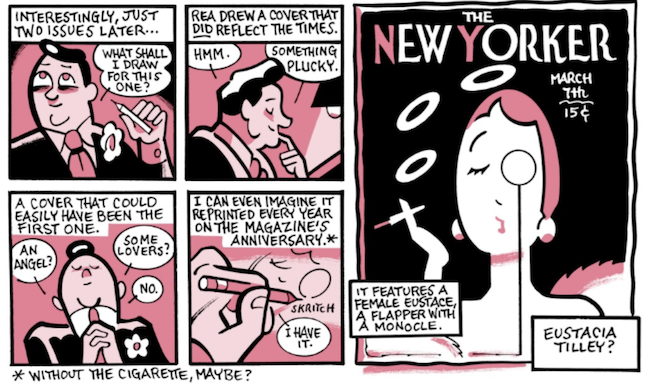
I was glad to see the return of the Rea Irvin cover (appended with the “100”), but was a bit disappointed to see “Talk” headed by the re-draw of Irvin’s original art. Oh well, you can’t have it all. However, Seth’s “Appreciation” of Irvin was wonderful. Here is a little clip:

DOUBLE TAKE…Seth’s “Appreciation” of Rea Irvin in the centennial issue notes the relationship between those first two Irvin covers. Bravo!

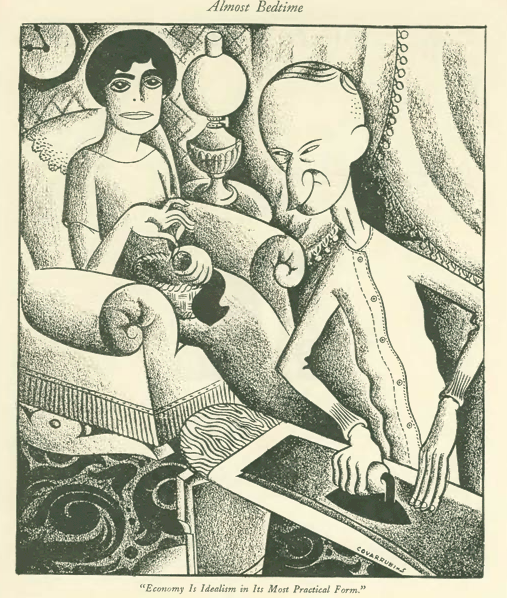
The joy of writing this blog is the vicarious pleasure found in the deep reading of every issue, as well as occasional historical insights into how we have arrived at our present day. It has also been rewarding to follow the maturation of the magazine from its first issue, which was a bit of a jumble (see my previous post). However, what we see in Issue #1 and in subsequent issues were subjects The New Yorker found worthy of attention in 1925, whether they were frequent potshots at publisher William Randolph Hearst or the many comic possibilities of President Calvin Coolidge, here rendered by Miguel Covarrubias in the March 14, 1925 issue…

Harold Ross cronies and various Algonquin Round Table stalwarts were also frequent subjects of the early magazine…Covarrubias again, with a rendering of Ross pal Heywood Broun in the March 7, 1925 issue (#3)…

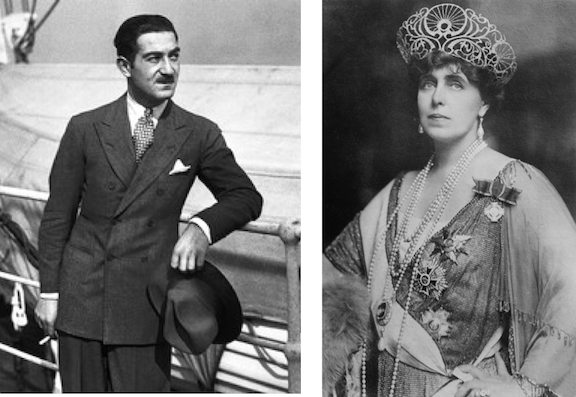
The first issues also featured frequent references to celebrities of the day, some still known to us while others have faded into the mists of time, such as the “literary lion” Michael Arlen (March 28, 1925) and Queen Marie of Rumania, the March 14, 1925 issue noting that New York was “agog” about her possible visit.

CELEBS OF THEIR DAY…Writer Michael Arlen (aka Dikran Kouyoumdjian) and Queen Marie of Rumania were prominent in the pages of the early New Yorker. 

The June 6, 1925 issue even featured the Queen in a Pond’s cold cream ad…

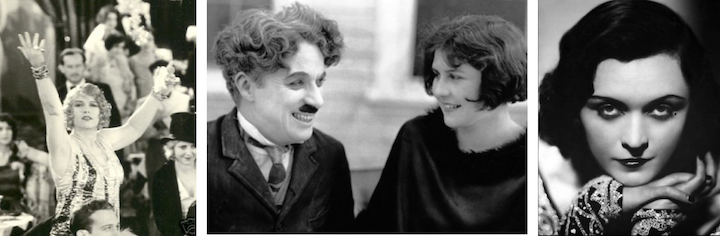
The leading lady of New York’s nightlife, Texas Guinan, was also prominent in those early issues. Her 300 Club, constantly raided by Prohibition-era police, was a favorite of Broadway and Hollywood agents. Another frequent subject was the life of Charlie Chaplin, mostly due to his scandalous marriage to sixteen-year-old Lita Grey when he was thirty-five. Then there was Pola Negri, Polish stage and screen star and headliner of gossip magazines that followed her series of love affairs that included Chaplin and Rudolph Valentino.

GOSSIP FODDER OF ’25…From left, Texas Guinan reigned supreme as Queen of the Speakeasies during Prohibition; Charlie Chaplin’s teen bride Lita Grey kept tongues wagging, as did the off-screen antics of the volatile Pola Negri.

The Scopes “Monkey Trial” was also big news at the time, and The New Yorker had a heyday with the populist firebrand William Jennings Bryan. Here Rea Irvin joined in on the fun:

In those lean first months advertisers were hard to come by, and during this time we see a few oddballs…

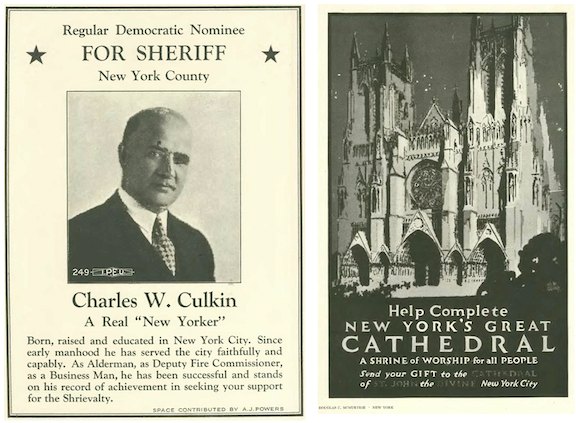
From left, ads from Sept. 19, 1925 and April 18, 1925. Charles Culkin, a Tammany Hall politician, would serve as county sheriff from 1926 to 1929. He would also embezzle interest money from the sheriff’s office, part of the whole mess that would bring down Mayor Jimmy Walker.

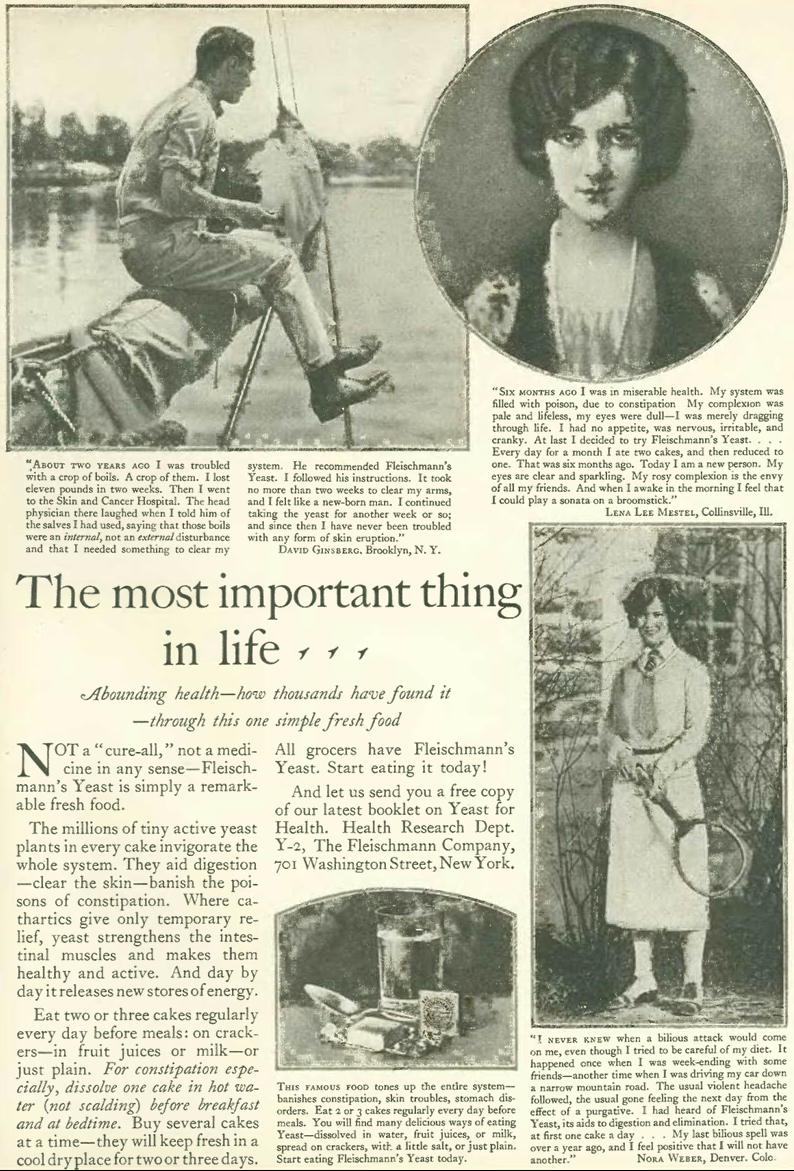
…there were regular ads for Fleischmann’s Yeast (this example from Sept. 19, 1925)…Raoul Fleischmann hated the family baking business but loved hanging out with the Algonquin Round Table gang. When the fledging magazine nearly went belly up in 1925, Fleischmann kicked in the money (and on a number of occasions thereafter) to keep it going. Hence the advertising for his yeast cakes, touted not as a baking aid, but rather as a cure for constipation and other intestinal turmoils…

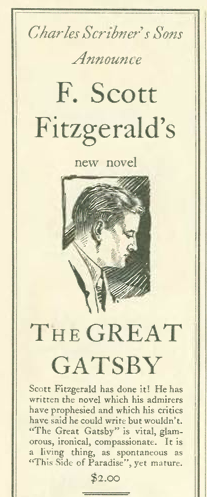
…and it’s a kick to see ads like this (from April 18, 1925), a modest little one-column spot for what some consider to be the Great American Novel… The Great Gatsby would receive a brief, lukewarm review from The New Yorker…

…and then there were those early cartoons and illustrators…as noted before, the very first was by Al Frueh

Reginald Marsh would make his first appearance in Issue #2…a social realist painter, Marsh was a prolific contributor to The New Yorker from 1925 to 1944…

…a number of the early cartoons resembled the captioning style of the British Punch…here is an April 4, 1925 contribution by the British illustrator Gilbert Wilkinson…

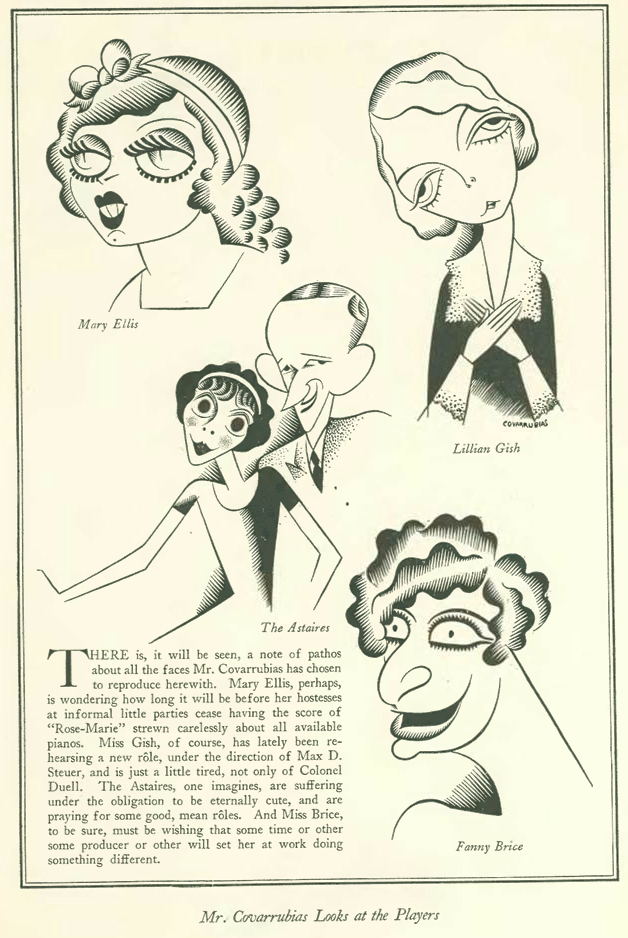
…In the April 11, 1925 issue, Miguel Covarrubias offered these caricatures of 1920s celebrities…

…another contributor from the April 11 issue, Hans Stengel…

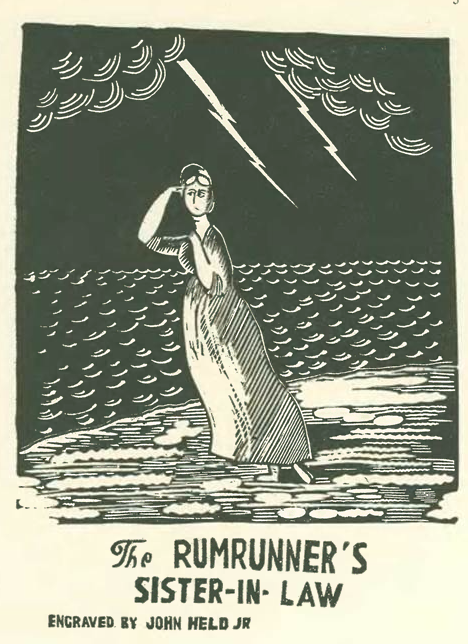
…and John Held Jr supplied the first of his many woodcuts in the April 11 issue…

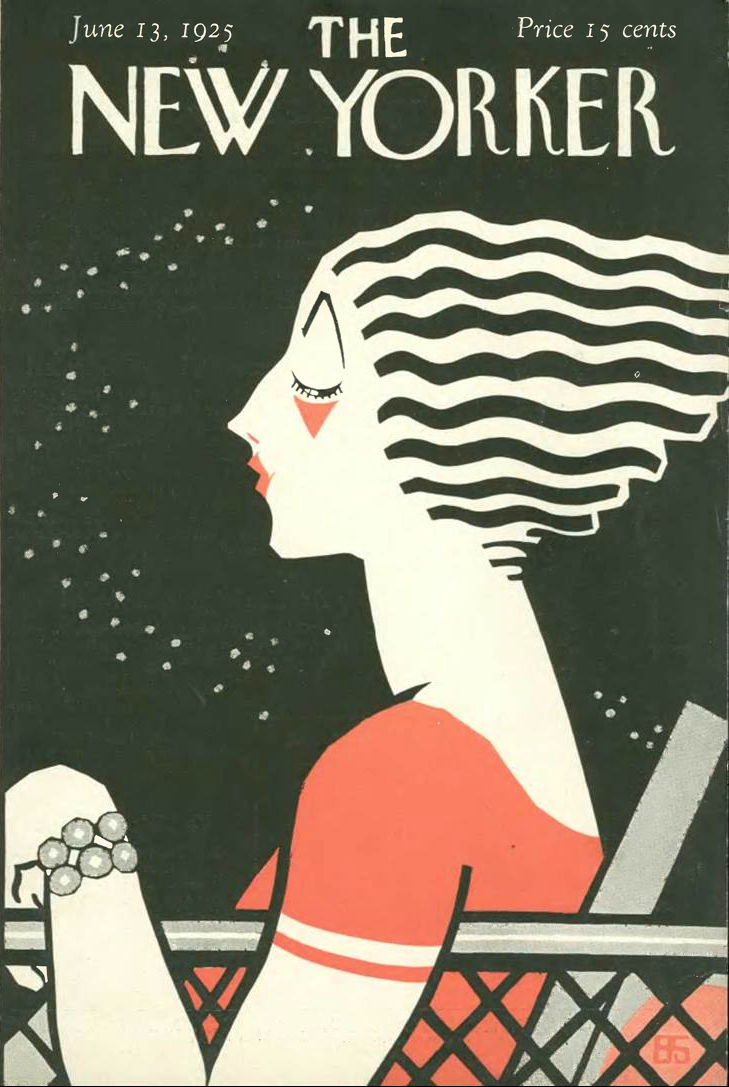
Barbara Shermund found her way onto the June 13, 1925 cover, the first of nine covers she would contribute to magazine, along with hundreds of cartoons…

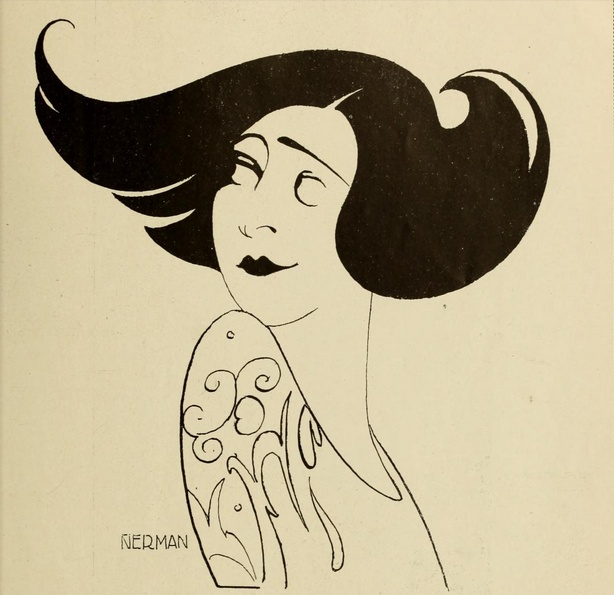
From the June 27, 1925 issue, this is one of my favorite illustrations. In The New Yorker’s “Critique” section, a terrific caricature of Russian-American actress Alla Nazimova, by Swedish artist Einar Nerman

…another early contributor, Johan Bull, was especially prolific in providing spots for sports columns. Here in the July 11, 1925 issue he contributed this rare multi-panel cartoon…

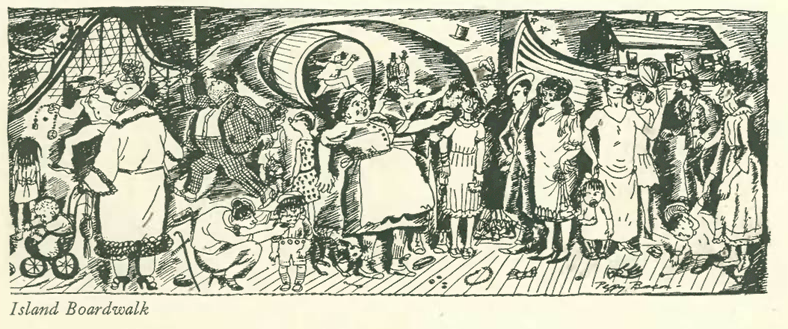
Peggy Bacon was another early contributor, here from July 18, 1925…

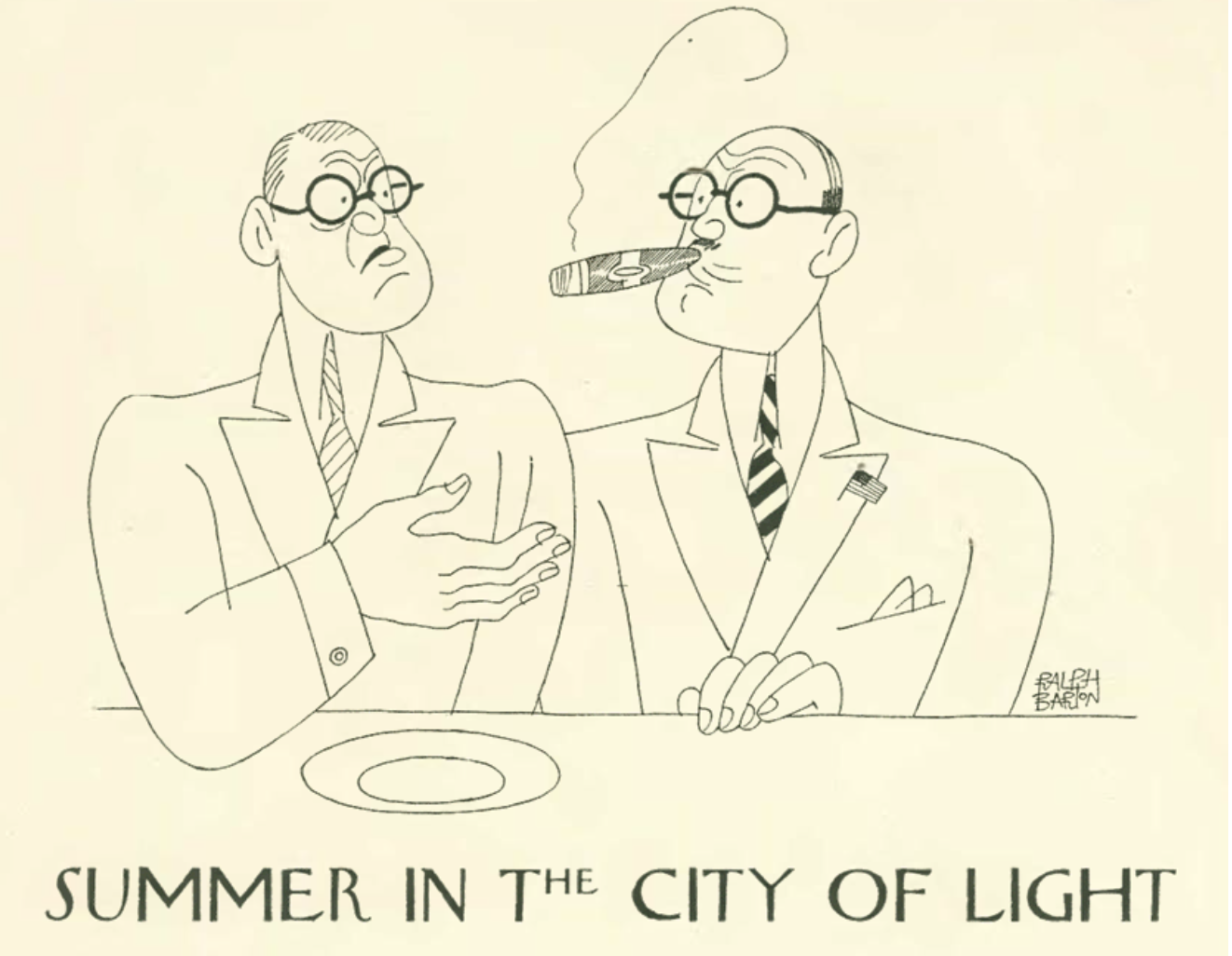
…and of course there was Ralph Barton, listed as one of The New Yorker’s original “Advisory Editors,” contributing several different features including “The Graphic Section,” a satiric take on new trends in photojournalism, and this July 4, 1925 feature on the various ways of Europeans, written and illustrated by Barton…here is a clip from that feature…

…I can’t include all of the first cartoonists who contributed to those critical first months, so I will end with dear Helen Hokinson, and her first New Yorker contribution, a spot illustration for “The Talk of the Town” in the July 4, 1925 issue…

Next Time: Quite a Month…

A Centennial to Remember

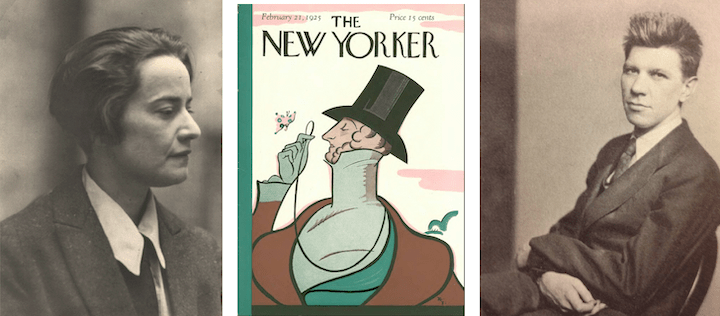
ABOVE: Although Harold Ross looms large in most accounts of the early New Yorker, his wife at the time, Jane Grant, played a major role in its conception and launch.

After a year hiatus, during which I changed jobs (yes, I’m still “hewing the wood and drawing the old wet stuff,” as Bertie Wooster would put it), I am returning to A New Yorker State of Mind, just in time for the 100th anniversary of the greatest magazine in the world.

Issue #1 cover by Rea Irvin, Feb. 21, 1925.

Before I continue where I left off—the tenth anniversary issue, Feb. 15, 1935—let us mark the magazine’s centennial year with a look back at the first issue, Feb. 21, 1925.

It is remarkable that after a century the magazine still retains its character, even if it is more serious these days, and more topical, and, most egregious, still fiddling with Rea Irvin’s original designs (for more on this issue, please consult Michael Maslin’s Ink Spill. In addition to being one of the magazine’s greatest cartoonists, Maslin offers a wealth of New Yorker insight and history, including his longstanding crusade to restore Irvin’s original artwork for “The Talk of the Town,” which was removed and replaced by a contemporary illustrator’s redraw in 2017).

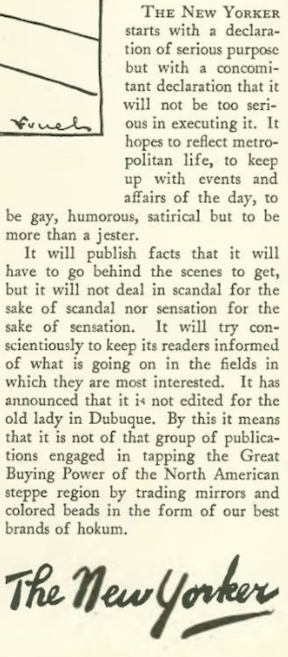
Although founder and editor-in-chief Harold Ross set the tone for the magazine in the first issue, famously proclaiming “that it is not edited for the old lady in Dubuque,” it was Irvin that gave the magazine a signature look that set it apart from other “smart set” periodicals of the day.

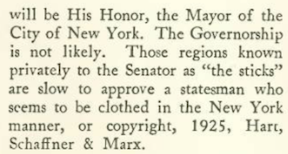
It took a few issues for the editors to sort out regular features and their order of appearance. The opening section of Issue No. 1 featured the Irvin masthead—flanked by Eustace Tilley and the night owl—and Irvin’s distinctive typeface that would introduce “The Talk of Town” for many issues to come. However, in that first issue, “Of All Things” appeared under the masthead, followed by “Talk of the Town” which was (for the first and last time) under this banner:

As for Ross’s manifesto, it appeared at the end of “Of All Things,”…

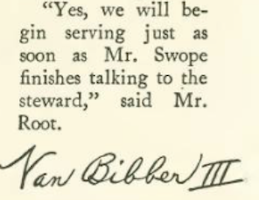
…and “Talk” ended with this signature…

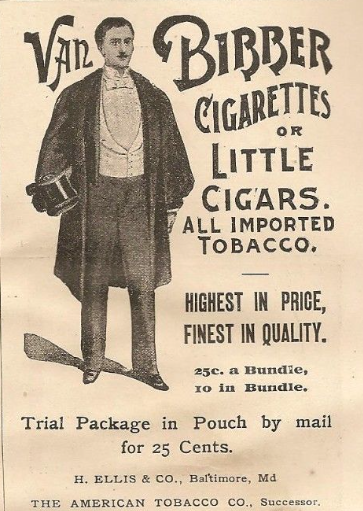
…In Defining New Yorker Humor, Judith Yaross Lee wrote that early readers of The New Yorker would have recognized the Van Bibber III persona “as a joke, a personification of Van Bibber cigarettes, whose ads targeted the devil-may-care, swagger young man about town all dressed up for the opening night. As an insiders view of the urban scene, Van Bibber’s accounts featured casual conversation—that is, talk.”

Van Bibber advertisement in Cosmopolitan, 1896.

The magazine’s very first cartoon was by Al Frueh

…and among the features that persisted through the years was “Profiles,” the first one featuring Giulio Gatti-Casazza (1869-1940), who served as Metropolitan Opera’s general manager for a record 27 seasons (1908-1935).

The profile featured this illustration by Miguel Covarrubias, the renowned Mexican painter, caricaturist, and illustrator, who was a frequent contributor to the early New Yorker.

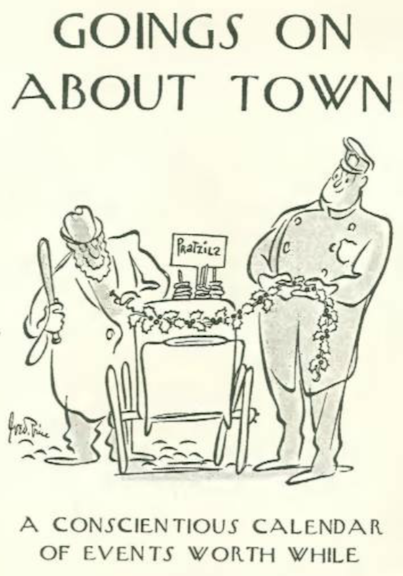
“Goings On” also persists, sans the original artwork…

…the same goes for these sections…

…still others disappeared altogether…

…some would hang around for awhile…

…others for just a few issues…”The Hour Glass” featured brief vignettes of local personalities…

…such as the ever-fascinating antics of Jimmy Walker, who would soon be elected mayor…

…while “In Our Midst” detailed the comings and goings of other locals…

…including The New Yorker’s own Al Frueh.

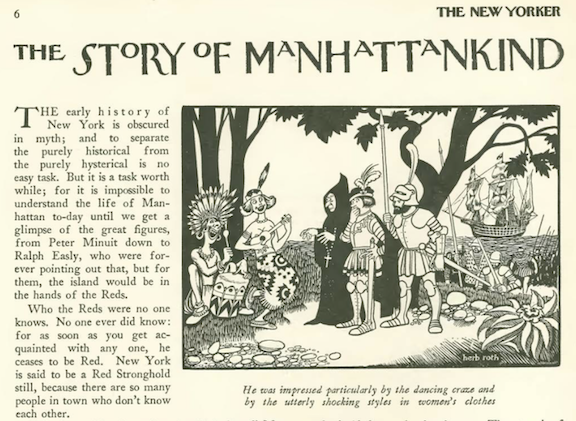
“The Story of Manhattankind” was another short-lived feature. It offered drawings by Herb Roth and tongue-in-cheek accounts of early Manhattan life replete with cartoonish Indians and bumbling settlers. It is here where the magazine took its first of many shots at William Randolph Hearst, the perceived rival and publisher of Cosmopolitan (which was more of a literary magazine in 1925).

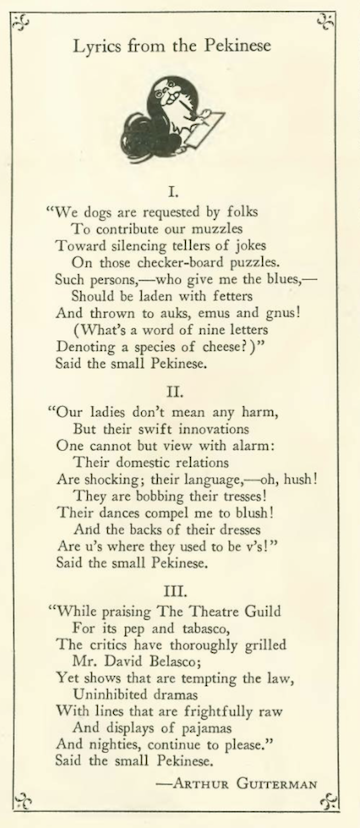
…other items that persisted through the early issues included “Lyrics from a Pekinese” by writer Arthur Gutterman, who was known for his silly poems…

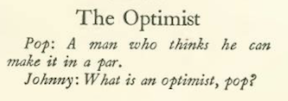
…and this recurring column filler, “The Optimist”…a tired joke featured repeatedly in the first issues until Katharine Angell came on board and put an end to such nonsense…

…in those lean first months there was little advertising, making this back page ad seem out of place…

…since many of the early ads were small, signature ads for theatre and other diversions…

…the magazine also leaned heavily on full-page house ads to fill space…

…the one thing that has persisted to this day is the prominence of cartoonists and illustrators, although in the early issues some of the cartoons resembled those found in Punch, including this one by British graphic artist Alfred Leete, who was a regular contributor to such British magazines including Punch, the Strand Magazine and Tatler.

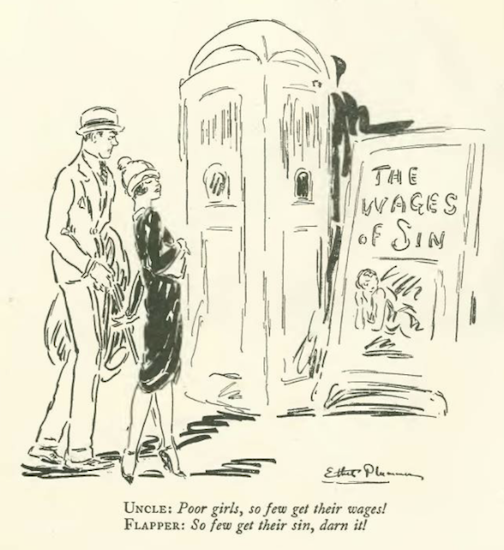
Also in the Punch style there were a number of “He-She” captioned cartoons, such as this Ethel Plummer cartoon of an “uncle” and a “flapper” looking at a theater bill for The Wages of Sin (most notably, Plummer was the first woman artist published in The New Yorker)…

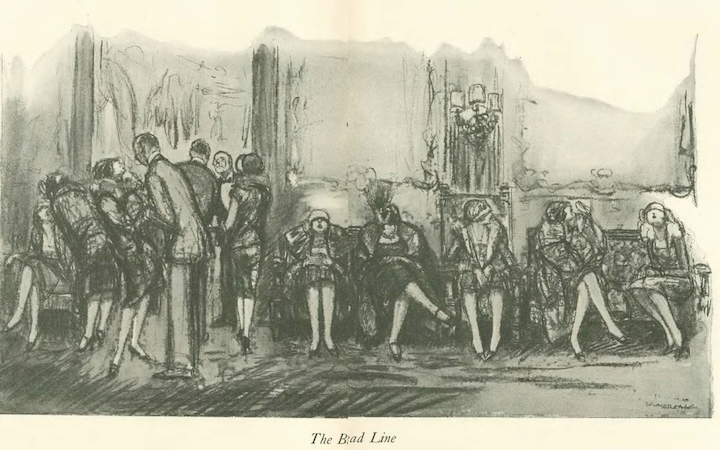
Plummer was a noted artist/illustrator in her day, as was Wallace Morgan, who contributed this two-page spread, “The Bread Line”…

…this illustration by Eldon Kelley is notable for what it lacks…namely, clothing. Early New Yorker lore has it that Ross was somewhat puritanical, and shied away from suggestions of sex or nudity, but here it is in the first issue, what Michael Maslin refers to as “The New Yorker’s First Nipples.” 

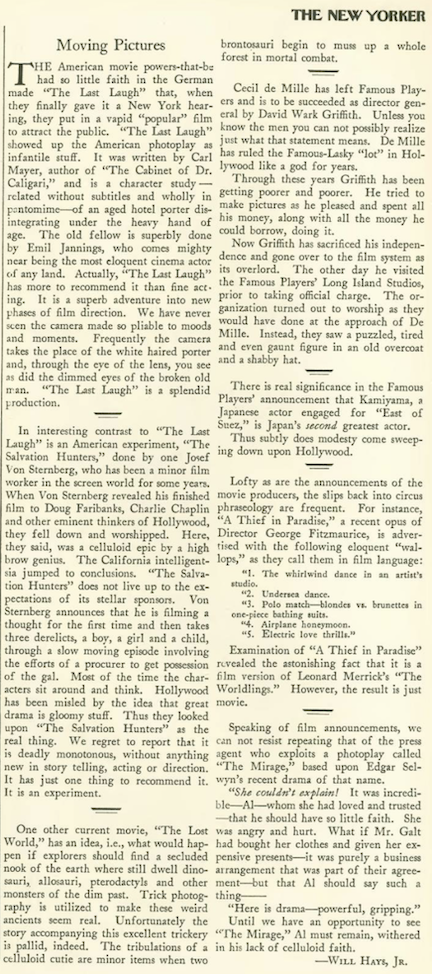
…and before I go, I am wondering about The New Yorker’s first film critic, who signed his review “Will Hays Jr.” Is this the same Hays as in the “Hays Code?” I will investigate.

Next Time: A Century and a Decade…


An Industrial Classicist

Above: Walter Dorwin Teague's design for Kodak's "Brownie" camera, circa 1930. (Milwaukee Art Museum)

Walter Dorwin Teague pioneered industrial design as a profession, firmly believing that great, heirloom-quality design could be available to all, and that even mass-produced objects could be beautiful if they possessed “visible rightness.”

Dec. 15, 1934 cover by William Cotton.

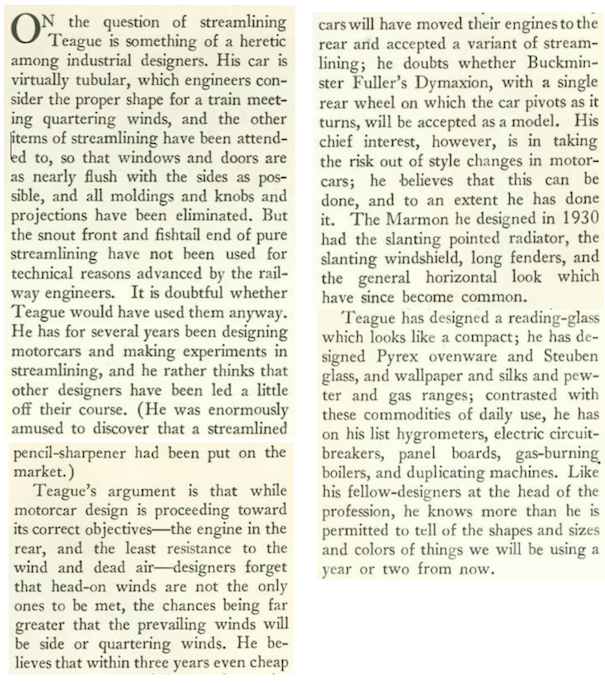
Cultural critic Gilbert Seldes profiled Teague (1883–1960) in the Dec. 15 issue, and in this excerpt he examined the designer’s role in the streamlining craze that emphasized movement and speed in everything from locomotives and automobiles to radios and pencil sharpeners.

GOING WITH THE FLOW…Top left, early applications of streamlining in the 1931 Marmon 16, designed by Walter Dorwin Teague; at right, Teague at work in an undated photo; below, wooden model of Teague’s Marmon 12, 1932. (drivingfordeco.com/North Carolina State University/Smithsonian Design Museum)
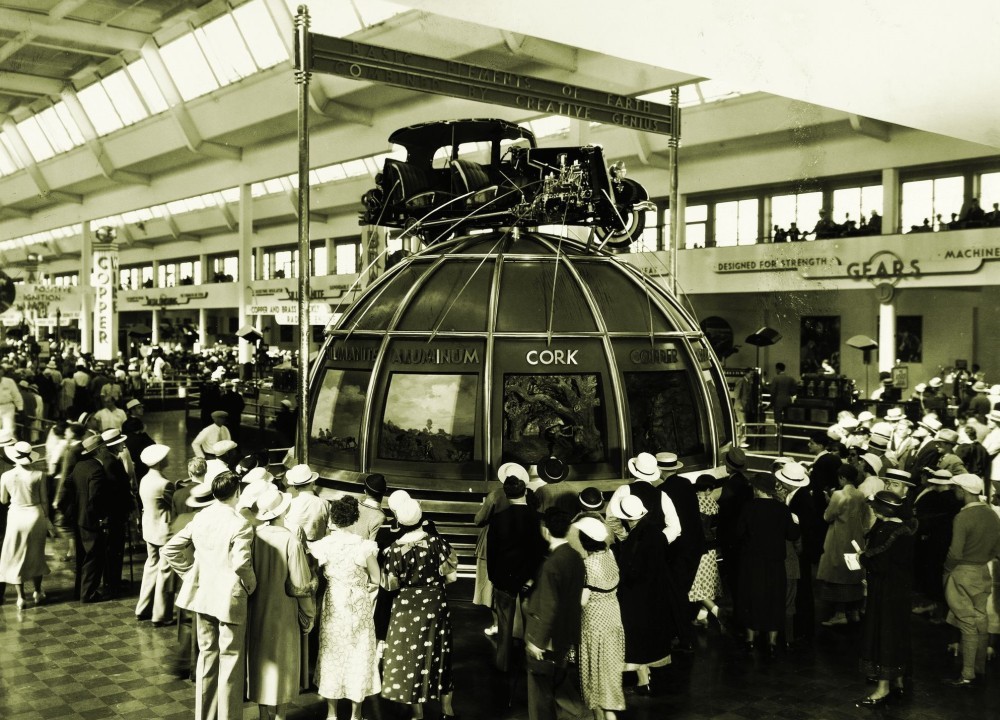
GEE WHIZ…Henry Ford called on Teague to design an exhibit hall like no other for the 1934 re-opening of the Chicago World’s Fair. The exhibit featured an automobile cut lengthwise, and explained how various materials were extracted to create the final product. Teague helped usher in the era when world’s fairs served as arenas for the advancement of corporate identities. (Hemmings Daily)
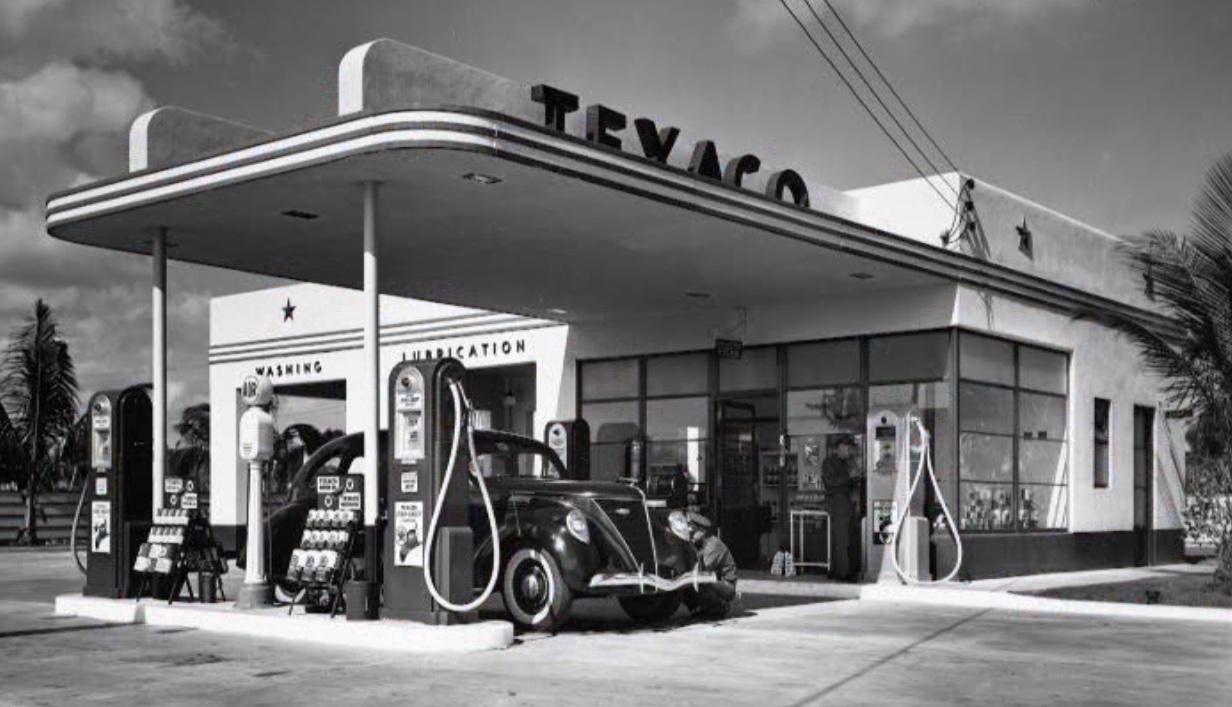
WHAT A GAS…Teague created this ubiquitous streamlined design for Texaco’s service stations in the late 1930s. (encyclopedia.design)

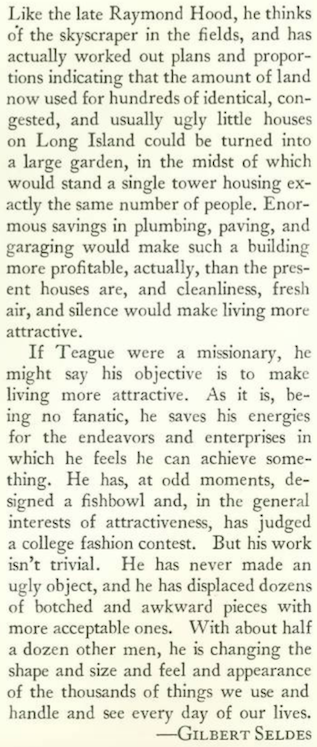
In this next excerpt, Seldes noted that Teague shared the thinking of other modernists of the time, namely that people could be herded into towers, even in rural landscapes. At any rate, Teague’s ultimate objective, according to Seldes, was to make everyday living more attractive to the masses.

CHROME-PLATED WORLD…Teague designed the Kodak Baby Brownie Camera (top left) and its packaging. It sold for just one dollar; at right, Teague’s console radio design Nocturne, 1935, which featured glass and chrome-plated metal; at bottom, Kodak gift camera, ca.1930. (Cooper Hewitt/design-is-fine.org/Brooklyn Museum)

 * * *

Art Depreciation

Lewis Mumford did a bit of hate-viewing during a visit to the Whitney Museum, which hosted the Second Biennial of Contemporary American Painting. Mumford found a few works he genuinely liked, but had to admit he also enjoyed the ones he hated. Excerpts:

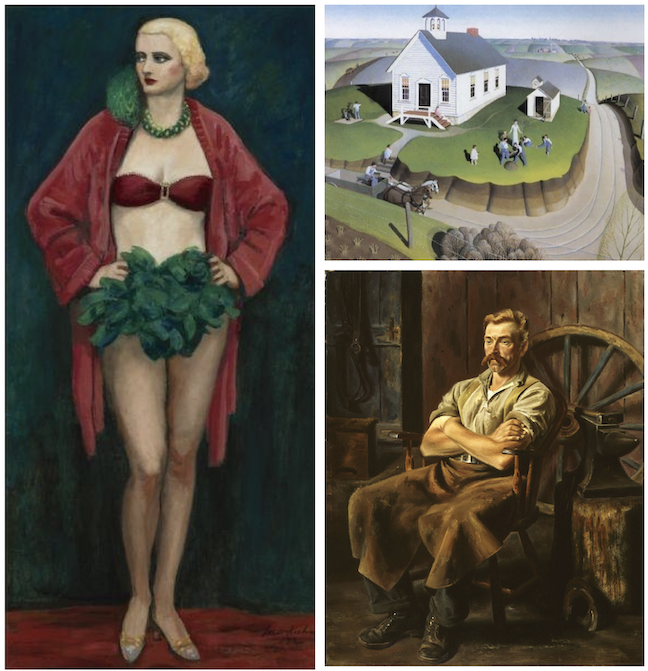
MYSTERY WOMAN…at left, Lewis Mumford was at a loss regarding the meaning, if any, of Walt Kuhn’s latest circus painting, Sibyl, 1932; at top, Mumford found Grant Wood’s Arbor Day (1932) perfectly suited to the Cedar Raids art scene, while he derived great pleasure in his dislike of Eugene Speicher’s Red Moore: The Blacksmith, 1933-34.  (americangallery.wordpress.com/Wikiart/lacma.org)

 * * *

The Swash Buckles

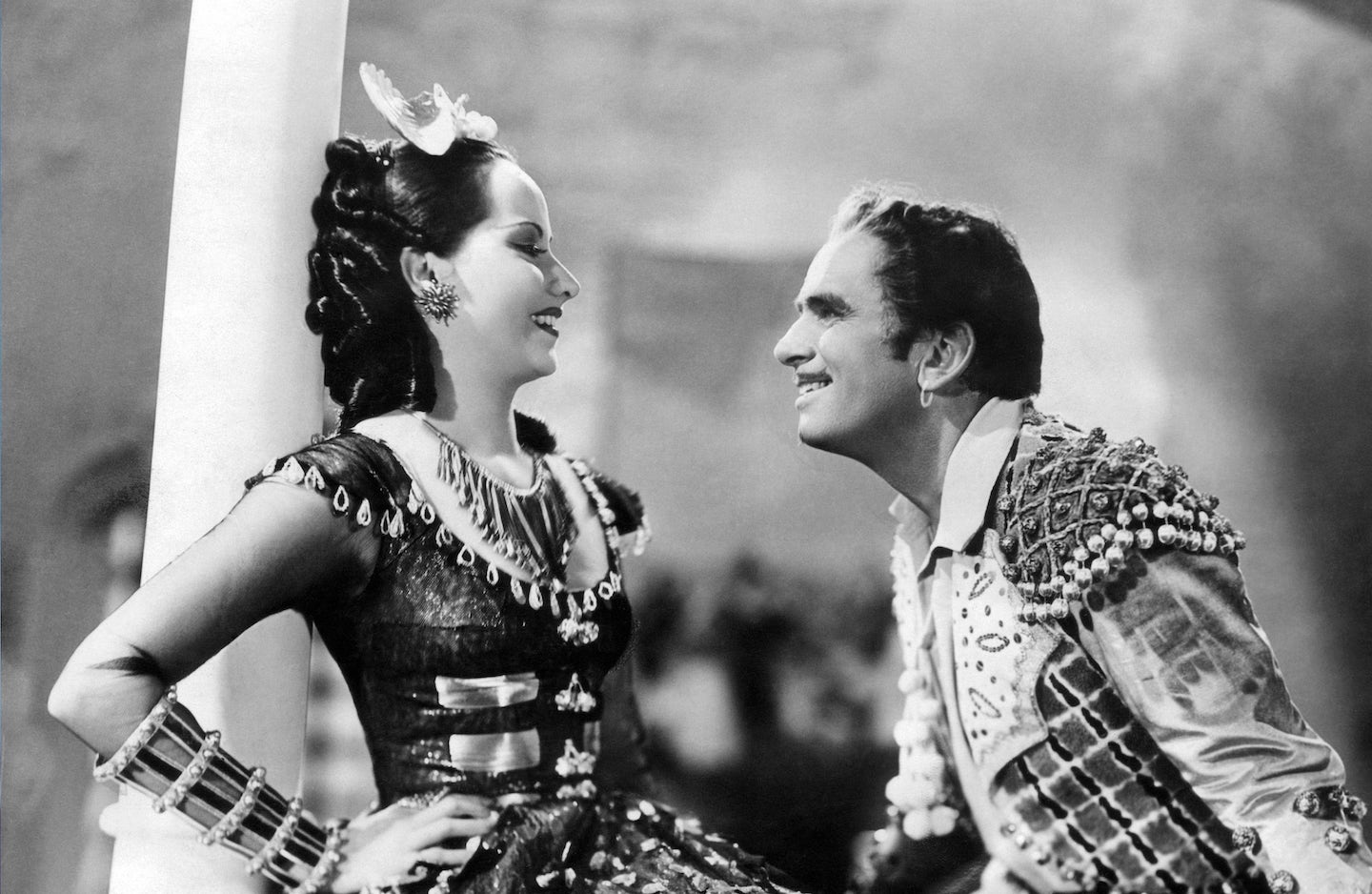
Film critic John Mosher checked out Douglas Fairbanks Sr’s latest movie, The Private Life of Don Juan, which would prove to be the old swashbuckler’s last hurrah.

FINAL BOW…Douglas Fairbanks and Merle Oberon in Alexander Korda’s comedy-drama The Private Life of Don Juan (1934). It was the final role for the 51-year-old Fairbanks, who died five years later. (TCM)

 * * *

Toyland 1934

The New Yorker continued its seasonal tradition of offering exhaustive descriptions of various wares around the city, including the many new toys that would be available to children whose parents could afford them. An excerpt:

XMAS JOYS…According to The New Yorker, the Union Pacific Streamline Train was a big hit with the kiddos, as were the dolls and other items created to exploit the hapless Dionne Quintuplets. And then there was a Buck Rogers rocket ship that shot real sparks from its tail.(airandspace.si.edu/PBS/Paleofuture)

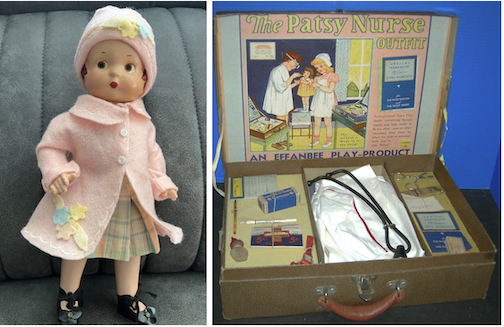
“Patsy” dolls and doctor/nurse kits were also popular sellers in 1934…

THEY’RE AFTER YOU…The much sought-after Patsy doll and the Patsy Nurse Outfit graced many a Christmas morning in 1934. (eBay)

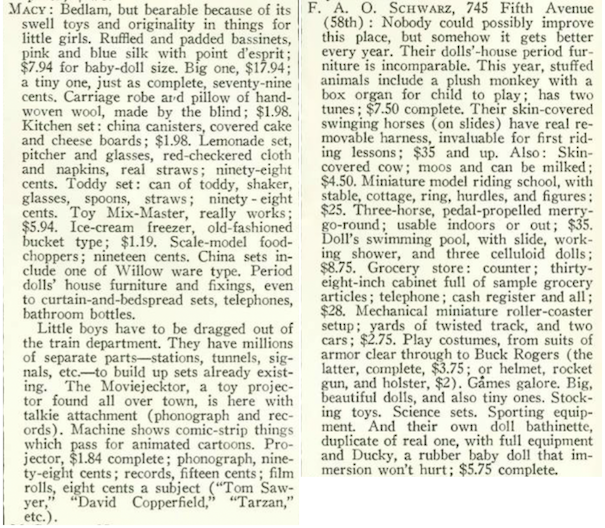
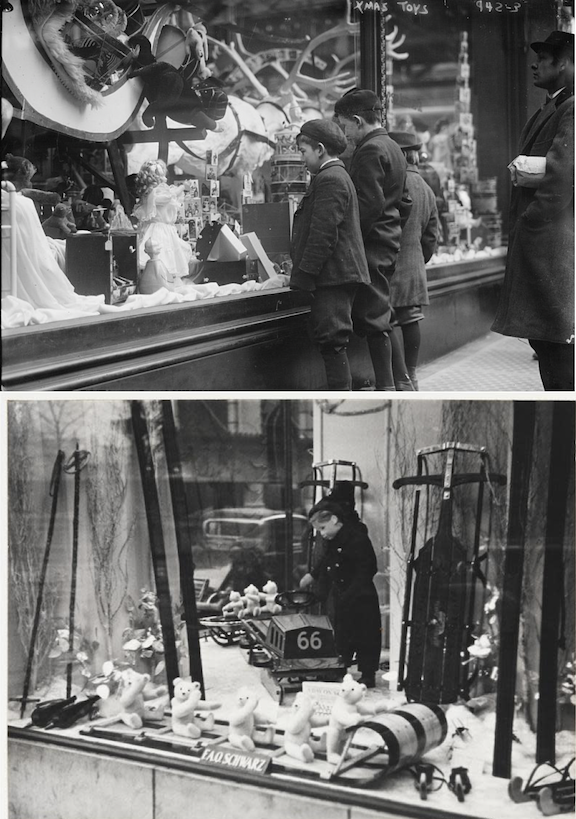
The article was followed by detailed listings of department stores and select toys. Here are excerpts featuring two of the toy biggies: Macy’s and F.A.O. Schwarz:

THROUGH THE LOOKING GLASS…Top, children peering into a Macy’s window circa 1930; below, F.A.O. Schwarz display window at its Fifth Avenue location in 1935. (Library of Congress/MCNY)

   * * *

From Our Advertisers

We kick off the holiday season with Santa bringing cheer to the world, his bag laden with tobacco products from the jolly elves at R.J. Reynolds…

…along with your cigarette you could enjoy a cup of this frothy eggnog spiked with a generous shot of Paul Jones…

…and I pity the poor soul who was hoping for a toaster from Santa…perhaps the companion “Hospitality Tray” will add an extra dose of good cheer…

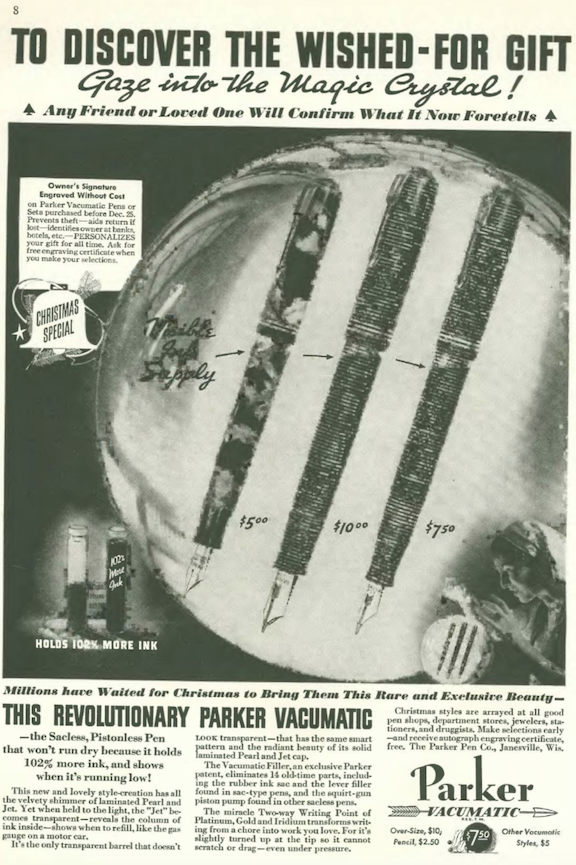
…however some may have wished for a revolutionary Parker “vacumatic” pen…no more dipping into the old ink-well…

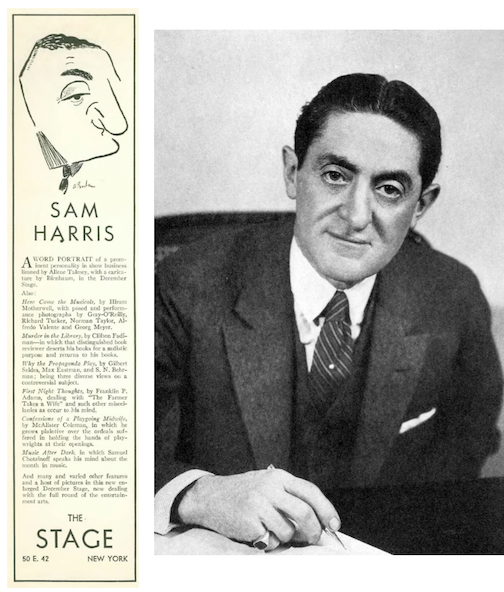
…I include this ad simply for the terrific Abe Birnbaum caricature of Broadway producer Sam Harris

Image at right is of Harris in 1928. (Wikipedia)

…on to our cartoonists, we begin with this merry spot by George Price

William Crawford Galbraith gave us another person in the spirit of the season…

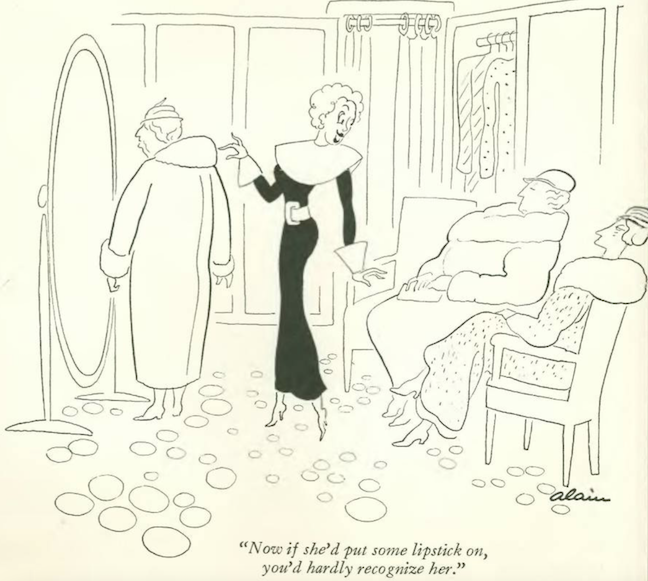
…as did Daniel ‘Alain’ Brustlein

…a less cheery note comes to us from James Thurber, who gave us a patron unhappy with changes to his familiar watering hole…

…and we have Alain again, and a spirited salesperson…

Barbara Shermund gave us a glimpse of the awkward courtship rituals of the male peacock…

…and we close with Jack Markow, and the demands of Hollywood life…

Next Time: Music in the Air…

Up In The Air

The 1930s saw steady improvements in the fledging airline industry, which catered mostly to major businesses or well-heeled (and somewhat brave) folks who were interested in getting to places relatively quickly. Margaret Case Harriman reported on the many ways one could criss-cross the country by heading to the Newark Airport, the first major airport to serve the New York metro.

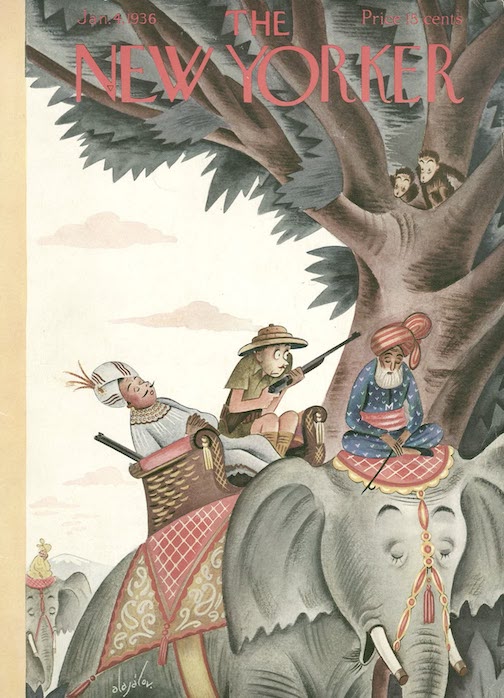
August 11, 1934 cover by Constantin Alajalov.

Writing for the “Out of Town” column, Harriman described how someone in 1934 could make their way to Los Angeles by boarding a 9 a.m. American Airlines flight in Newark and then changing over to a “sleeper plane” in Fort Worth around 10 p.m. that same day (top speed of the fastest plane was about 190 mph or 306 kph. The trip also required stops for refueling). The night flight from Fort Worth would deliver the traveler to Los Angeles the following day, at 7:55 a.m.—the trip totaled about 23 hours.

NIGHTY NIGHT…In 1934 American Airlines was the only airline offering “sleeper planes,” as the ad at left claimed. The head of American Airlines, C.R. Smith, was obsessed with customer service and the amenities offered on his Curtiss Condors—roomy airplanes with sleeping berths that Margaret Case Harriman likened to beds in a Pullman railroad car. Passengers loved the Curtiss Condor, although the planes tended to catch fire and pilots found them difficult to fly. (archbridgeinstitute.org/American Airlines)
SKYTRAIN…Top, the passenger section of an American Airlines Curtiss Condor, circa 1930s; below, interior of a Boeing 247—note the steps in the aisle used to cross over the support beams that reinforced the 247’s wings. Also note the female attendant—the profession was dominated by male stewards in the first years of passenger service, but in the 1930s women took over the profession. (American Airlines/bethelgrapevine.com)
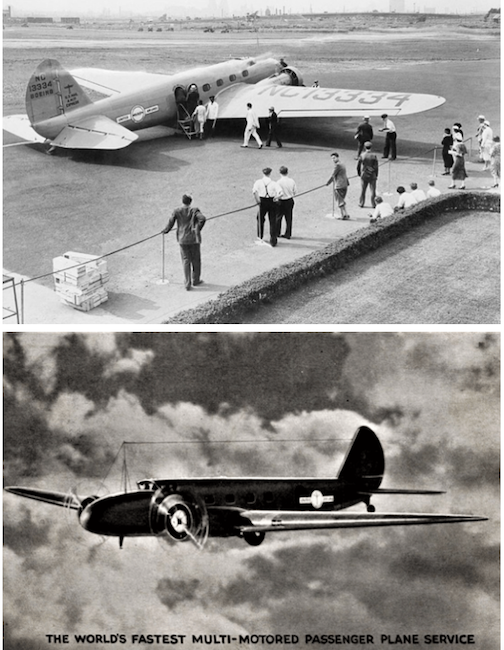
TWENTY-TWO HOURS and change on a United Airlines Boeing 247 would get you from Newark to San Francisco in 1934. Top, Passengers are shown boarding a United Airlines Boeing 247 at the Newark Airport circa 1934; United boasted the fastest multi-motored plane service with the 247, but TWA apparently offered the fastest service between coasts with its sleek new DC-2, seen in photo below. (bethelgrapevine.com)
HARD TO BEAT…A TWA Douglas DC-2 could get you to California faster than either United or American—fifteen hours from Newark to Los Angeles. (wahsonline.com)

When we think of flying in the 1930s many of us recall the great travel posters featuring Pan American’s Clipper Ships—flying boats that took passengers to exotic locations in the Caribbean and in Central and South America. Harriman wrote:

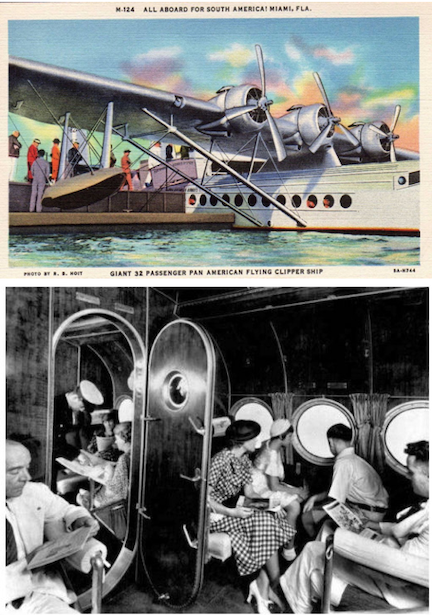
FLYING BOAT…Boasting nautical appointments including porthole windows, Pan Am’s Sikorsky S-42 offered roomy seats to its 32 passengers. Top, a postcard image of a Sikorsky S-42 in Miami in the 1930s; below, passenger cabin of the Sikorsky S-42. (clipperflyingboats.com/seawings.com.uk)

Harriman closed with some advice to readers unfamiliar with flying, including putting drops of Argyrol (a silver-protein antiseptic) into ones eyes to “prevent that ticking sensation in the temples.”

 * * *

No Offense Taken

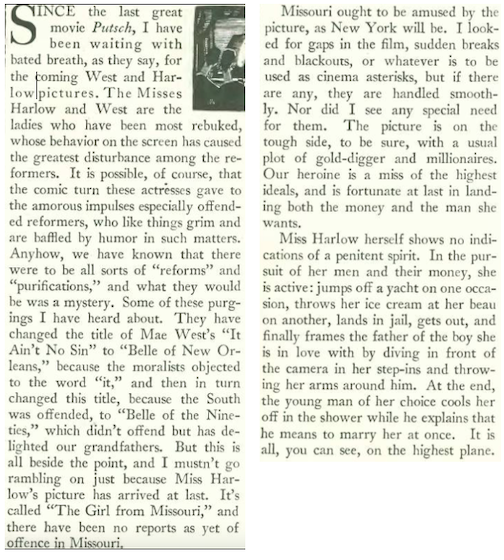
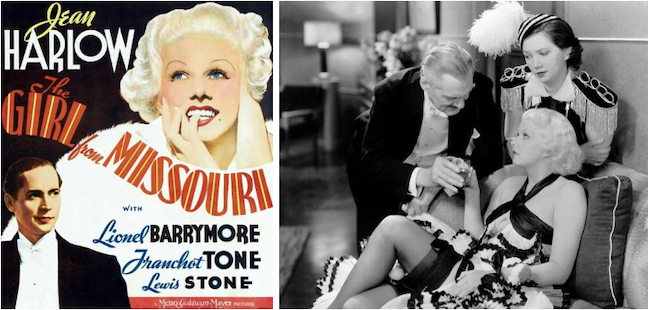
Critic John Mosher was no fan of Jean Harlow’s, but he did acknowledge her box office appeal, and that fans eagerly awaited the Blonde Bombshell’s next picture, The Girl from Missouri…with its “usual plot of a gold-digger and millionaries.” Mosher also noted that Harlow, along with Mae West, was a prime target of reformers (see Hays Code) who wanted to ban “immorality” from the pictures, and he was eager to see how the Puritans had wielded their new censoring shears on the film.

GOING FOR THE GOLD…At right, Lionel Barrymore, Jean Harlow, and Patsy Kelly in The Girl from Missouri. (IMDB)

 * * *

From Our Advertisers

We begin with another ad from the makers of Spud menthol cigarettes, who deployed what seemed like every known visual metaphor to suggest that smoking their cigarettes “all day” would leave one feeling cool, clean and fresh, in this case as a blanket of newly fallen snow (an appealing sight in that hot summer of 1934)…

…R.J. Reynolds deployed any number of tricks to sell their Camels, from ads promoting their health benefits to endorsements by wealthy socialites, in this case Sarah Lippincott (“Mrs. Nicholas Biddle”) of Philadelphia…

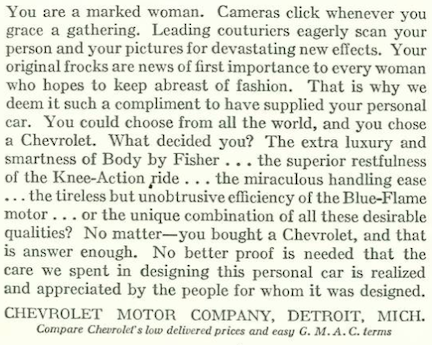
…snob appeal was not limited to cigarette ads, as this full page from the folks at Chevrolet attests…

…zooming in on the copy that accompanied the above ad, we find that this fictive Chevy owner was a “marked woman” sought out by paparazzi and admired by couturiers…

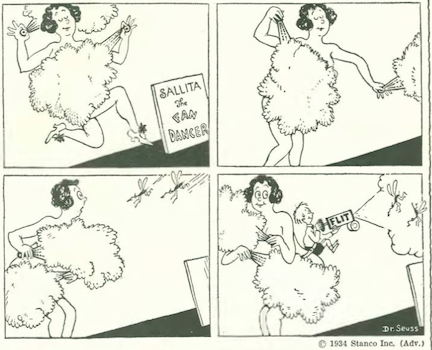
Dr. Seuss continued his series of weird ads for Flit insecticide…

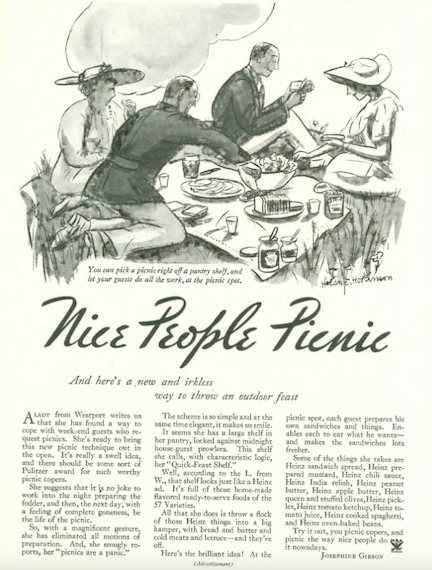
Helen Hokinson illustrated this patrician picnic scene to promote Heinz’s line of sandwich spreads…

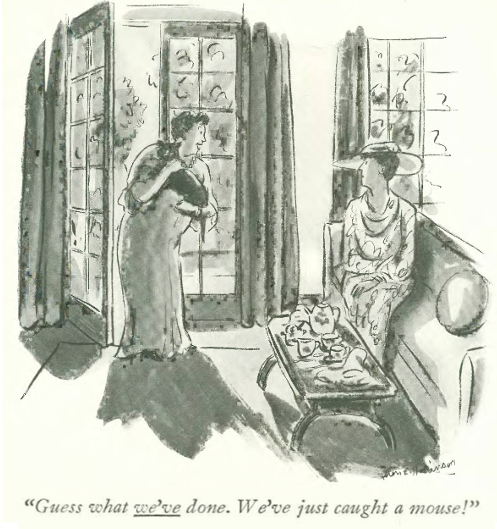
…and we kick off our cartoons with Helen again, observing a proud moment…

Robert Day offered this observation on modern architecture…

Rea Irvin skewered the puritan set with his latest bird illustration…

William Steig’s precocious “Small Fry” visited Coney Island…

…and we close with E. Simms Campbell, and a sly introduction…

Next Time: Dizzy Drinks…

His Five Cent’s Worth

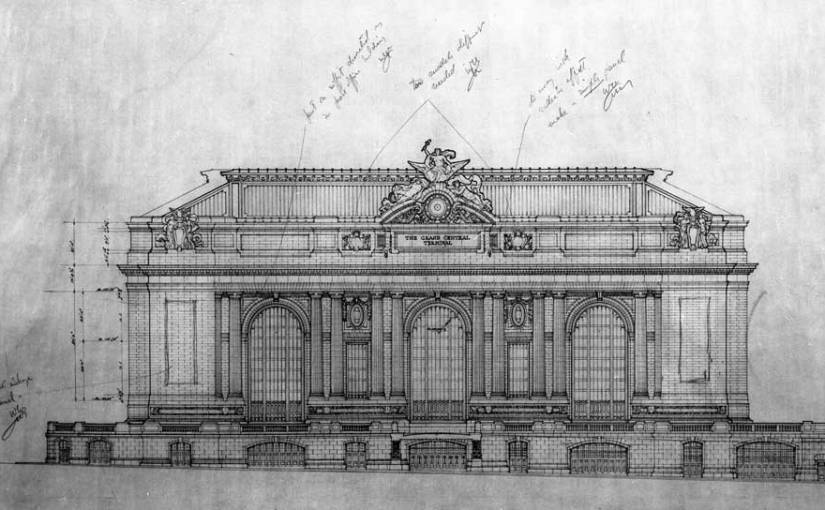
Above: Final Design of Grand Central Terminal, ca. 1910. (New York Transit Museum)

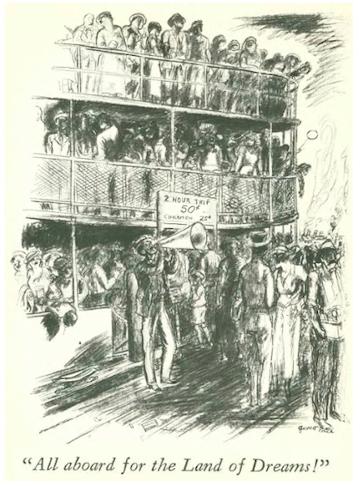
The heat wave of 1934 spread misery from the Midwest to the East Coast. The temperature in New York City hit 101 degrees F (38.3 C) on June 29, and July recorded at least ten days of temps in the mid- to upper 90s. It must have been miserable in the days before air-conditioning, and since no adult would dare be seen in public wearing shorts and a t-shirt, an outing on a crowded tour boat, as illustrated below by William Cotton, must have been hellish.

July 21, 1934 cover by William Cotton.

…putting a fine point on it, recall this wryly captioned cartoon from the June 30 issue by Garrett Price

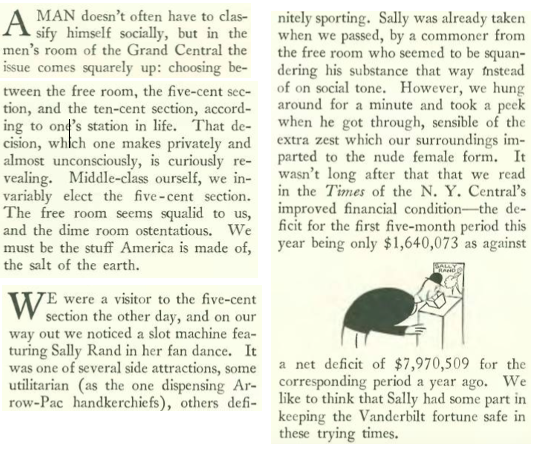
…but let us move ahead to the July 28 issue, where E.B. White was hopefully keeping his cool in the men’s waiting room at Grand Central Station, where he plunked down a nickel to cool his heels in the “middle class” section, where he observed side attractions including a vending machine that dispensed handkerchiefs and a coin-operated peep show featuring burlesque star Sally Rand.

NO MASHERS ALLOWED…Separate men’s and ladies’ rooms were available in three classes at Grand Central Station—free, five cents and ten cents. Top, the Ladies’ room, Grand Central Terminal (Central Lines), and below, a men’s room at the station. A nickel back then was worth about a dollar today. (Library of Congress)
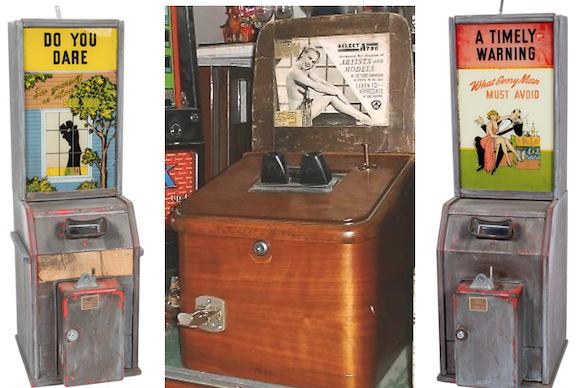
NICKEL AND DIMED…Machines similar to these could be found in some men’s waiting rooms at train stations in the 1930s. (pinballhistory.com/comics.ha.com)

…White referred to a peep show that featured famed fan dancer Sally Rand

DOING HER DEEP KNEE BENDS…Sally Rand in the 1930s. (www.vintag.es)

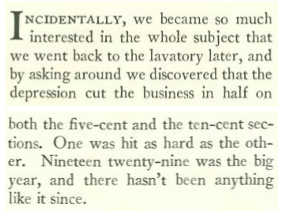
White also commented on the growing number of travelers, still pinched by the Depression, opting for the free section:

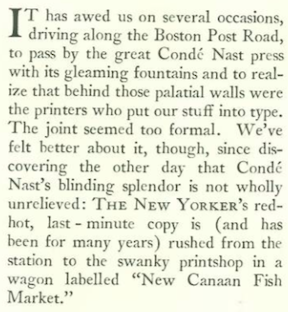
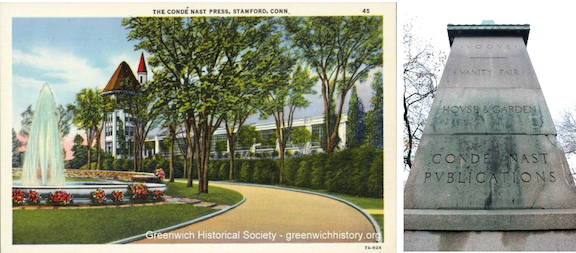
We settle in with the June 21 issue (which leads this post) with White once again, this time enjoying a drive to Stamford, Conn., where he admired the “splendor” of the Condé Nast printing plant (apparently the plant also printed The New Yorker, although the magazine itself would not be acquired by Condé Nast’s parent company, Advance Publications, until 1985).

ONLY A MEMORY…Postcard image of the Condé Nast printing plant; at left, a relic of the long-gone plant, one of two pillars that flanked the road to the plant. (Greenwich Historical Society/greenwichtime.com)

 * * *

Disney’s Other Mouse

Film critic John Mosher was a fan of Disney’s “Silly Symphony” cartoon shorts, which were produced between 1929 and 1939. Animation, and especially color animation, was in its infancy, so these doubtless had an uplifting effect on many moviegoers.

DON’T CALL ME TINKERBELL…The Butterfly Fairy brought some Disney magic to 1934’s The Flying Mouse. (disney.fandom.com)

 * * *

The Great McGonigle

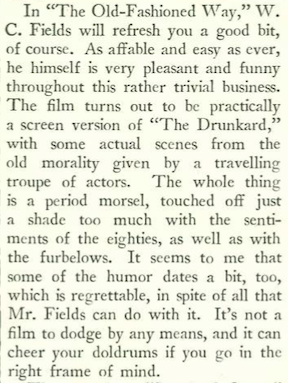
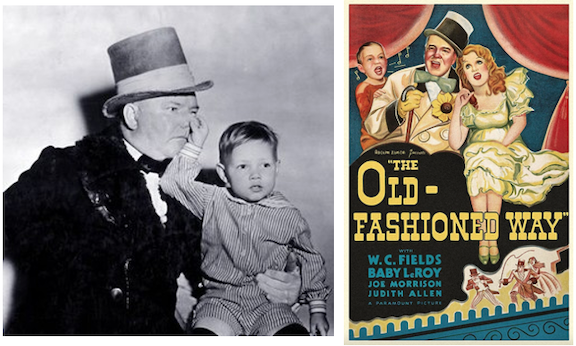
W.C. Fields appeared in more than a dozen silent films before making his first talkie, 1930’s The Golf Specialist, and it was in sound films that Fields was able to truly express his vaudevillian wit. It was also in the sound era that Fields teamed up with Baby LeRoy for three films (in 1933 and 1934), including The Old Fashioned Way, in which Fields portrayed “The Great McGonigle,” leader of a traveling (and perpetually underfunded) theater troupe who was always a step ahead of police and creditors. Critic John Mosher found the film’s riff on an old morality play, The Drunkard, to be a bit dated, but overall thought it a cheerful diversion.

HONK…Baby LeRoy, aka Ronald Le Roy Overacker (1932–2001), was just 16 months old when he became the youngest person ever put under term contract by a major studio. He is best known for his appearances in three W. C. Fields films: Tillie and Gus (1933), The Old Fashioned Way (1934) and It’s a Gift (1934). (Rotten Tomatoes/IMDB)

 * * *

From Our Advertisers

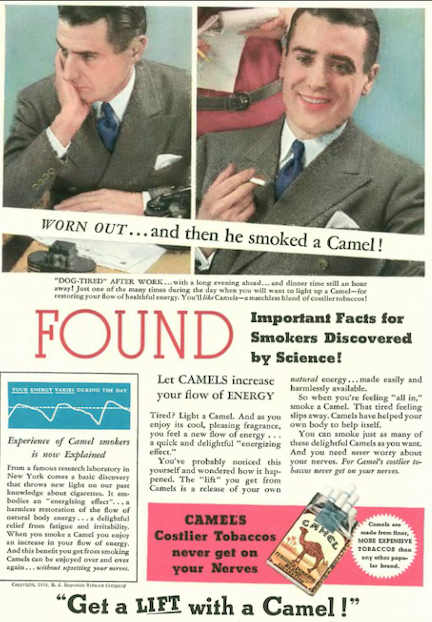
We begin with scientific proof (from a “famous research laboratory in New York”) that Camel cigarettes increased one’s flow of energy…

…if that crackpot claim doesn’t get you, here’s one that recommended downing a PBR before a big meeting, a sure remedy for that “listless, tired-out feeling”…

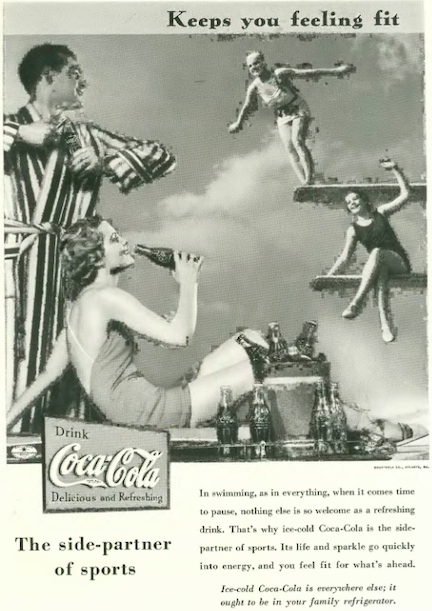
…of course we all know that a few sugary Cokes will get you going…back then they were taking it in six- and ten-ounce bottles, not 30- to 50-ounce Big Gulps…

…it’s not every day you see a dog food ad in The New Yorker…in the 1930s there was no secret to where ol’ Sparky ended up…

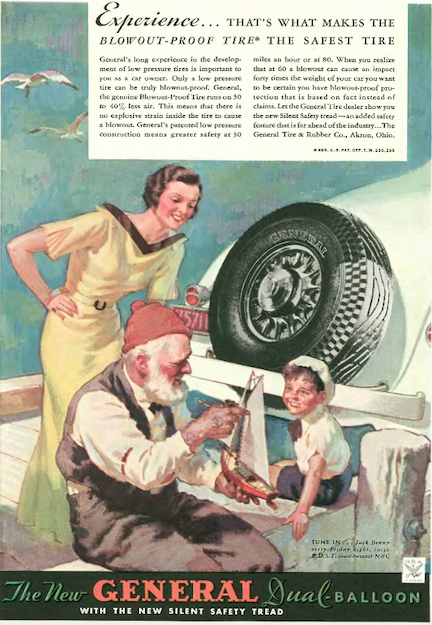
…popular were these Rockwellian ads that equated various products with happy and wholesome (and safe) living, in this case a massive “Dual-Balloon” tire that dominated this tableau featuring a stylish mommy and her little boy slumming with an old sea salt…

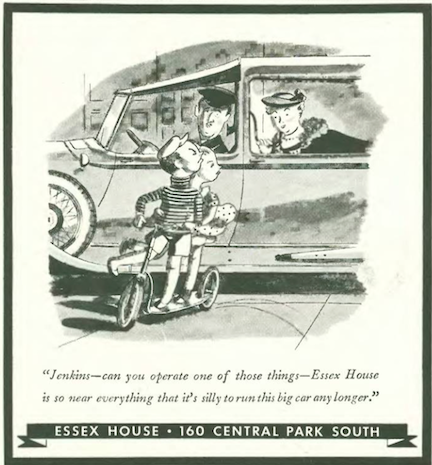
…the folks at Essex House hired an illustrator who did his or her best to channel Helen Hokinson and William Steig for this New Yorker ad…as we have seen before, Essex House ads walked a fine line between thrift and snob appeal…

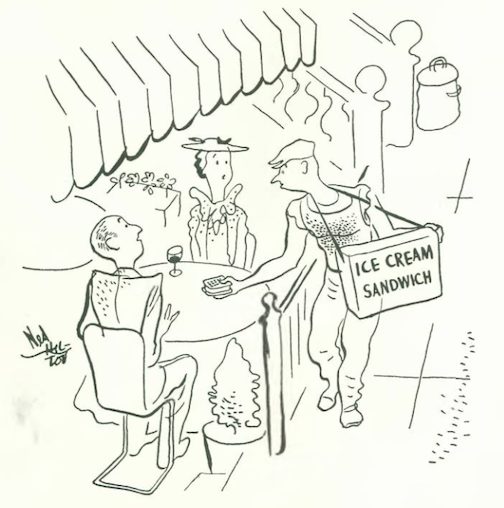
…on to our cartoons, beginning with Ned Hilton, whose work appeared in The New Yorker from 1934 to 1957…

Mary Petty recorded some sweet nothings by the seaside…

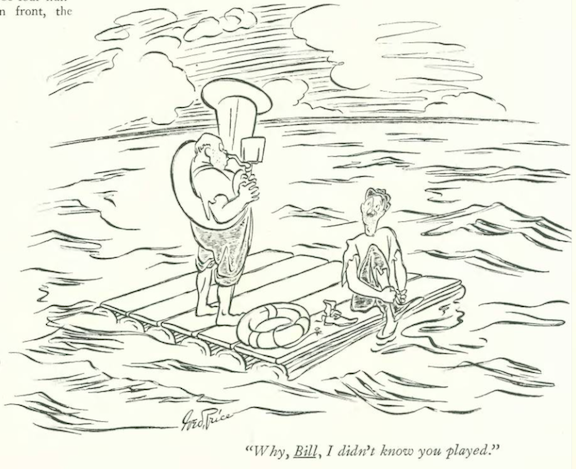
George Price drifted along with two men and tuba…

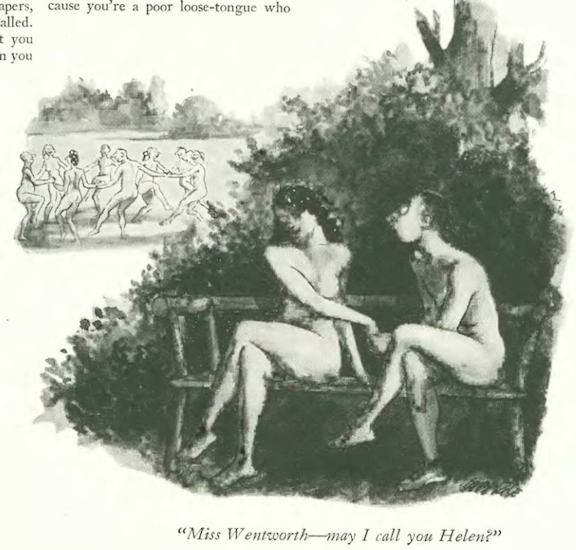
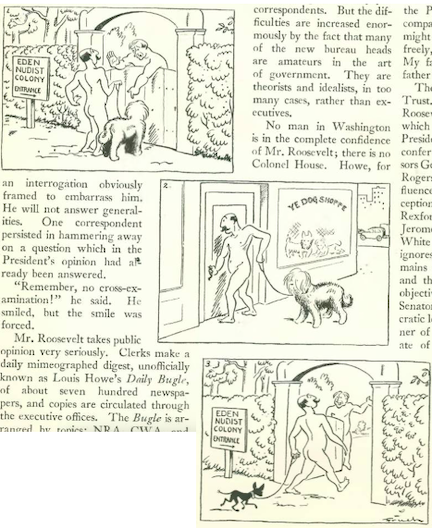
Carl Rose revealed a modest side to life at a nudist colony…

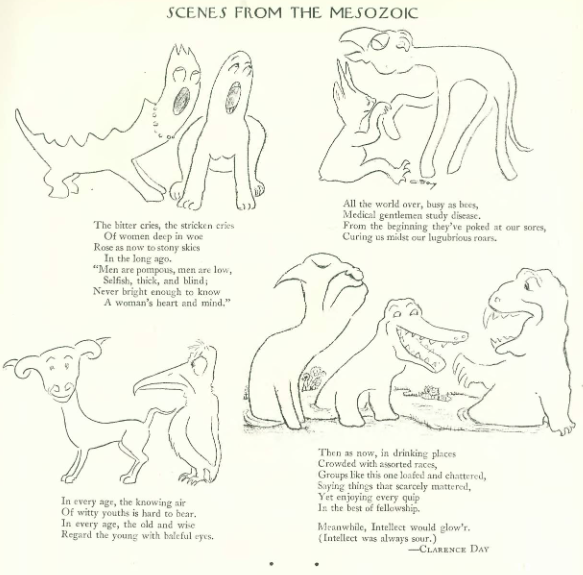
…we know Clarence Day for his Life With Father series, but on occasion he also contributed illustrated poems such as this one from the July 21 issue…

…on to July 28…

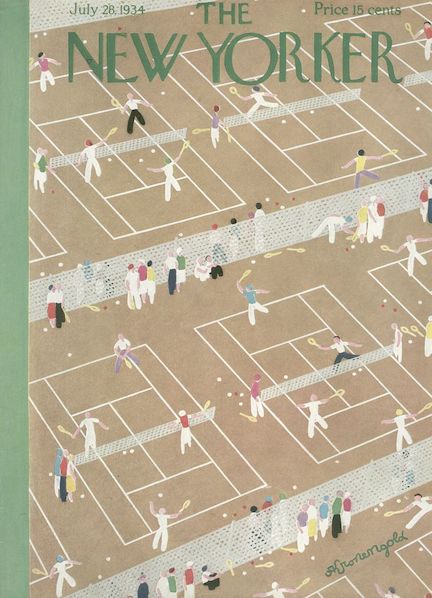
July 28, 1934 cover by Adolph K. Kronengold.

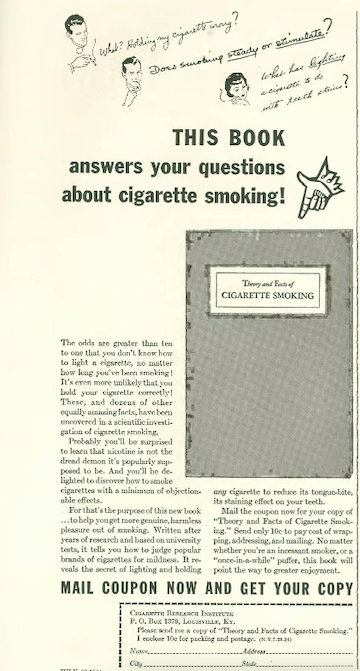
…where we encounter more “scientific research” that encouraged folks to smoke…This ad was placed on the very last page of the July 28 issue by the Cigarette Research Institute, based in Louisville, Kentucky…

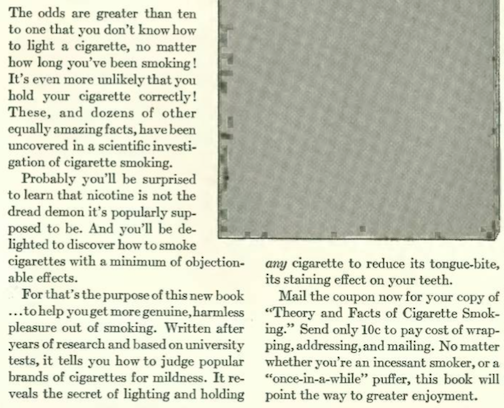
…the booklet was filled with “amazing facts” uncovered in a “scientific investigation,” facts did not address the health effects of smoking, but rather such important topics as how to hold a cigarette the right way and how to reduce staining on your teeth…it also helpfully debunked the notion that nicotine was a “dread demon”…

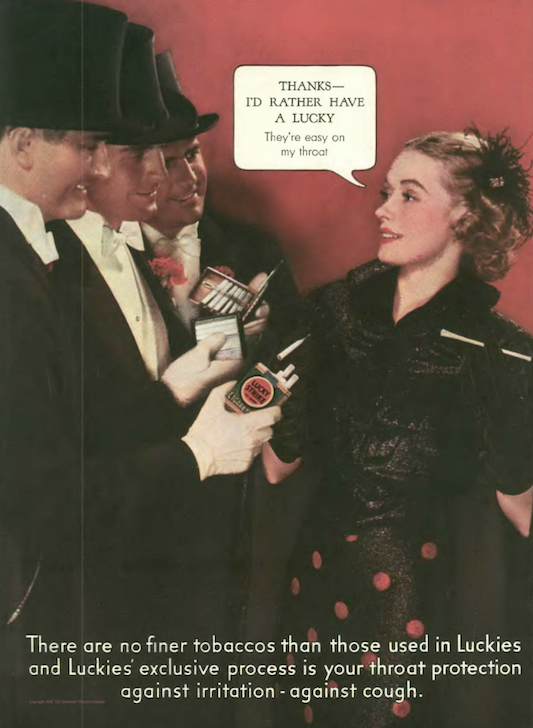
…take for example this woman smoking a Lucky…now she knew how to hold a cigarette!…

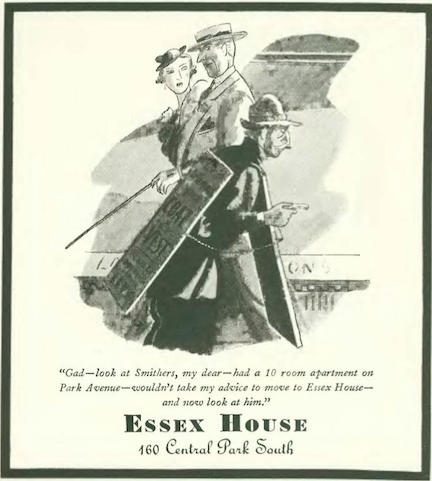
…the folks at Essex House were back, aggressively playing the class/caste card…apparently if you lived there you were entitled to kick your old friends to the curb…

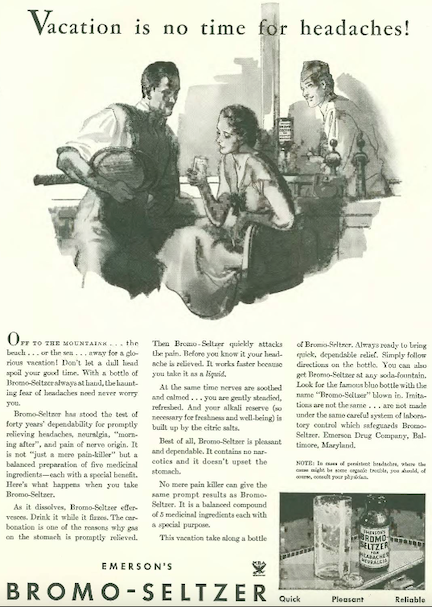
…the antacid and pain reliever Bromo-Seltzer was ubiquitous in 1930s medicine cabinets, but after the recipe was changed in the 1970s (all Bromides were withdrawn from the U.S. market in 1975) the brand slowly fizzled away…

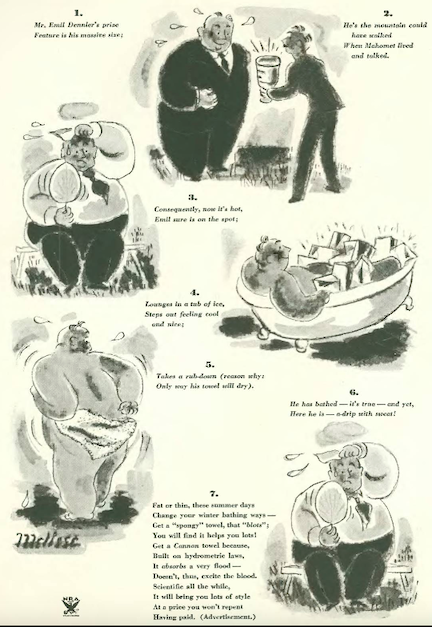
Mildred Oppenheim Melisse was a popular illustrator of ads for department stores and various household goods, including Cannon towels, here guaranteed to absorb even this man’s sweaty “flood”…

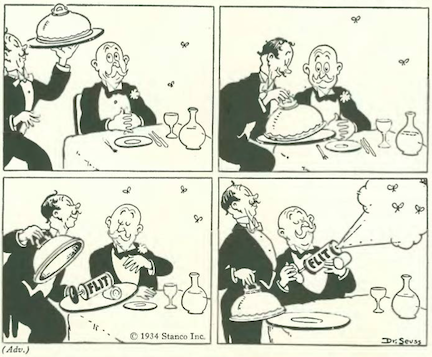
Dr. Seuss back again for Flit, once again having no issues mixing insecticide with food preparation…

Rea Irvin kicks off the cartoons with his Double Breasted Dowager…

Helen Hokinson found some misplaced pity at a garden party…

Garrett Price offered some unsolicited advice…

Reginald Marsh filled two pages with a scene from Central Park…

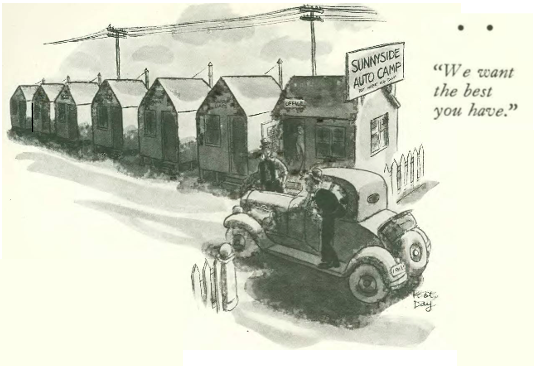
Robert Day looked for a unique experience at an auto camp…

…and we close with Barbara Shermund, and some alarming news on the domestic front…

Next Time: Men of Mystery…

A Light in Darkness

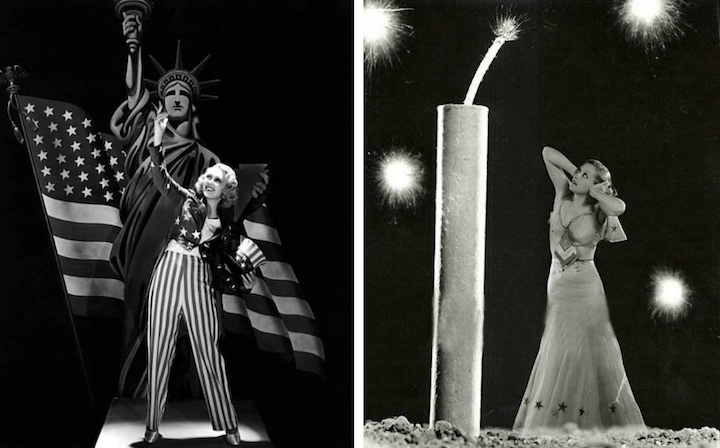
Above: For this Hollywood-heavy post we feature stars of the 1930s—the two Joans, Joan Blondell (left) and Joan Crawford, marking the Fourth of July holiday.

The New Yorker marked the Fourth of July with this William Steig cover featuring a patriotic “strap” along the binding and one of his precocious “Small Fry”…

June 30, 1934 cover by William Steig.

We’ve been looking at ways New Yorkers kept their cool in the hot summer of 1934, and one way to beat the heat was to escape into the air-conditioned darkness of a movie theater. It was not uncommon for folks to remain seated after the credits rolled and watch the feature all over again,  just enjoy some cold comfort.

Film critic John Mosher no doubt enjoyed this particular perk, and perhaps this made him a bit more agreeable to whatever was playing on the big screen, including three rather dull pictures featuring actresses Marion Davies, Kay Francis and Elissa Landi.

Marion Davies (1897–1961) was the veteran of the group, beginning her film career in 1917 and appearing in thirty silent films before breaking into sound movies. Sadly, her talents as an actress and comedian were overshadowed by her reputation as William Randolph Hearst’s mistress. Known for her aristocratic bearing, Austrian-American actress Elissa Landi (1904–1948) appeared in several British silents and on Broadway before signing with Fox Films in 1931. Kay Francis (1905–1968) began her film career with the advent of sound movies in 1929. A major box-office draw for Warner Brothers, by 1935 Francis was one of Hollywood’s highest-paid actors (she was also a former roommate and longtime friend of The New Yorker’s Lois Long).

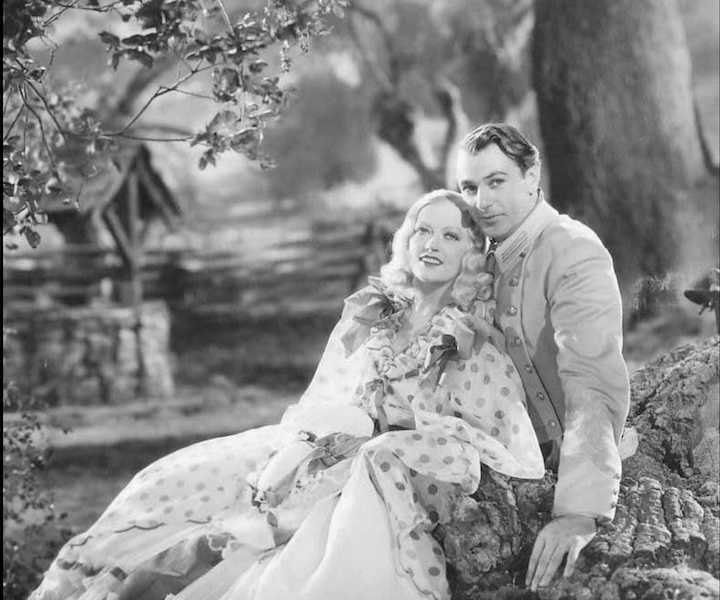
BEFORE SCARLETT AND RHETT…Gary Cooper and Marion Davies as star-crossed lovers in the 1934 Civil War drama Operator 13. Davies portrayed actress Gail Loveless, recruited by the Union to infiltrate a Confederate camp, where she falls for Capt. Jack Gailliard, a Confederate officer played by Cooper. (IMDB)

Perhaps one of the more notorious examples of a white actor in blackface, Operator 13 featured Davies as a Union spy who poses as a Black maid to infiltrate a Confederate camp…

FOOLING NO ONE…Marion Davies, in blackface, with Sam McDaniel in Operator 13. (IMDB)
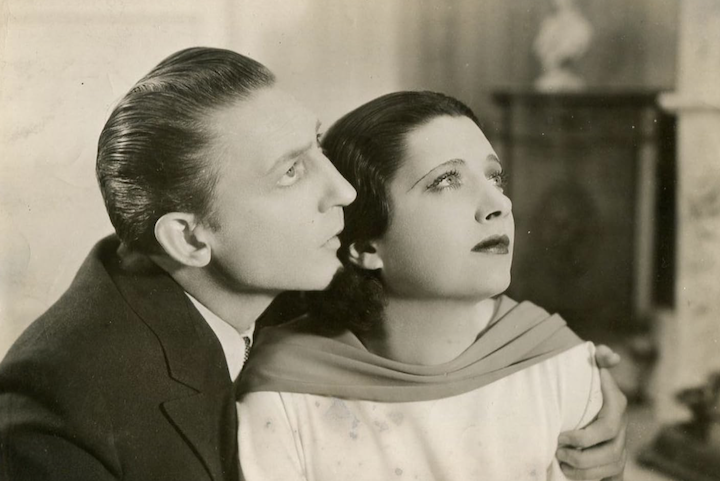
PLAYING DOCTOR…Kay Francis and Warren William in the 1934 Pre-Code drama Dr. Monica. (IMDB)
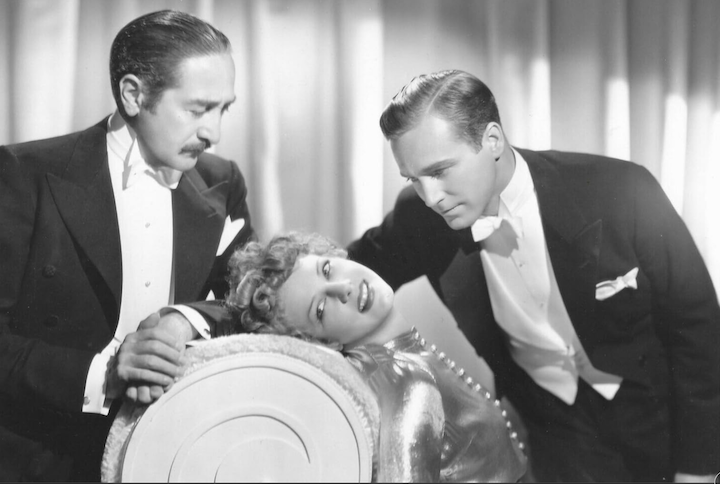
JUST KEEP PRETENDING UNTIL THE CREDITS…From left, Adolphe Menjou, Elissa Landi, and David Manners in the 1934 romantic comedy The Great Flirtation. (IMDB)

 * * *

Sentimental Journey

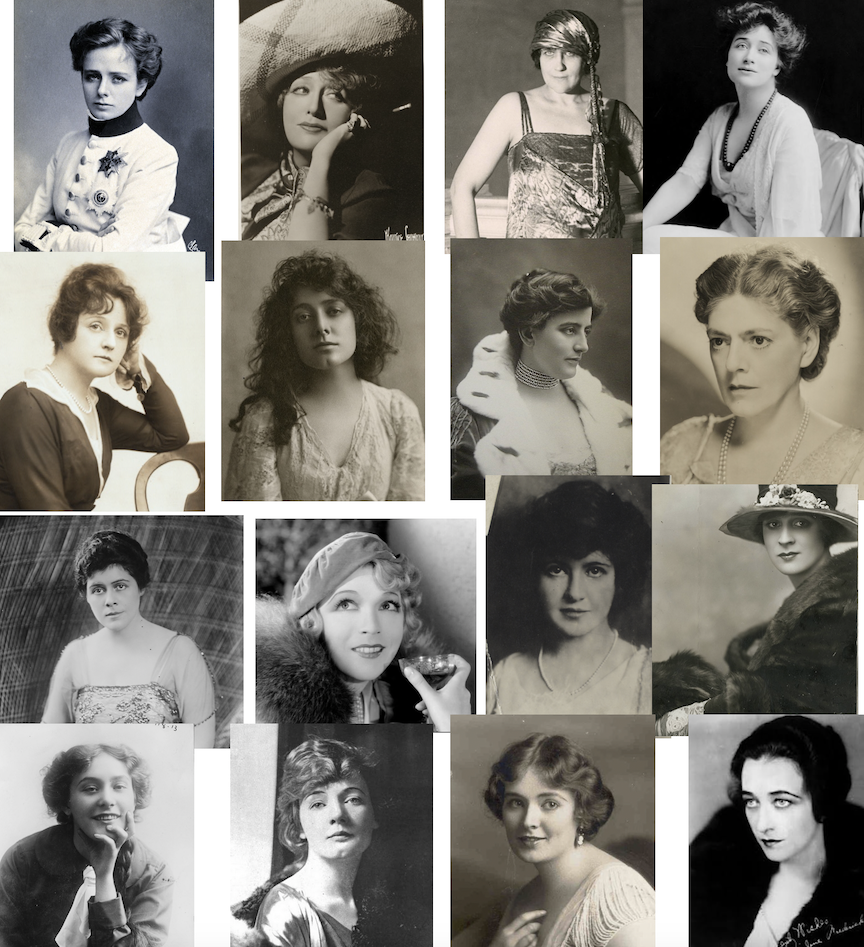
Another critic enjoying the cool of the theater was Robert Benchley, who used this break in the Broadway season to reveal his passions regarding a number of stage actresses. An excerpt:

BENCHLEY’S BROADWAY…Robert Benchley’s all-time favorite Broadway actresses included, from top row, left to right, Maud Adams, Florence Reed, Gladys Hanson, and Charlotte Walker; second row, from left, Laura Hope Crews, Julia Marlowe, Maxine Elliott, and Ethel Barrymore; third row, Janet Beecher, Ina Claire, Marguerite Clark, and Jane Cowl; fourth row, Elsie Ferguson, Martha Hedman, Marjorie Rambeau, and Pauline Frederick. (NYPL/Wikipedia/IMDB)

 * * *

A Poke at Palooka

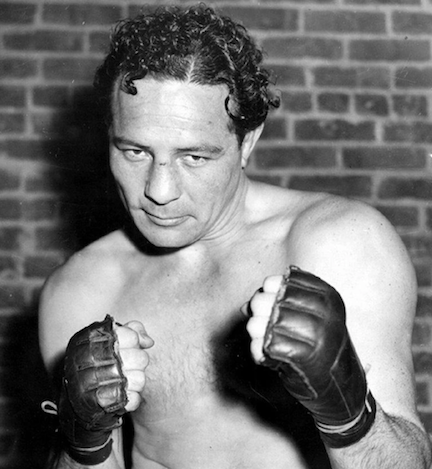
In his column “Of All Things,” Howard Brubaker took a shot below the belt at the new heavyweight boxing champ, Max Baer.

WHO SEZ I CAN’T READ?…Max Baer in the 1930s. (boxing.fandom.com/wiki)

 * * *

From Our Advertisers

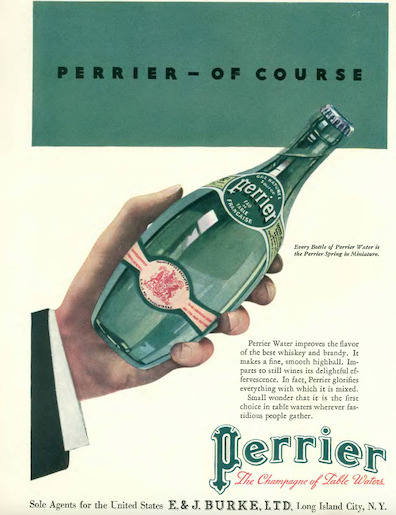
It was hot outside, folks were cooling off with their favorite beverages, and advertisers responded in kind…we begin with a familiar green bottle, and with apologies to Max Baer, you didn’t need to know how to read to know this was a bottle of Perrier…

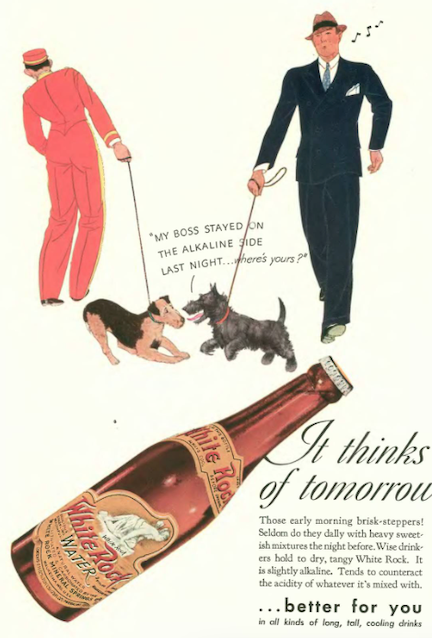
…if your taste was more on the domestic side, there was White Rock…

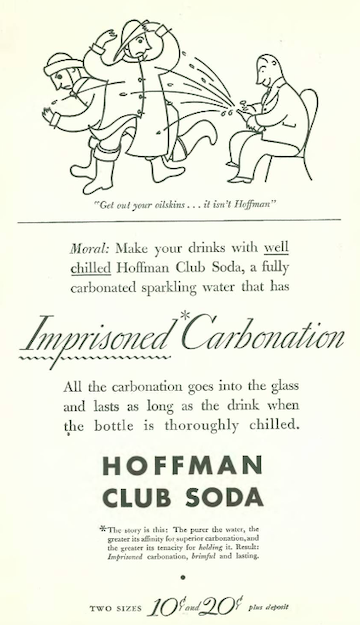
…a series of Hoffman Club Soda ads sought to convince consumers about their superior carbonation…

…or how about a brandy, perhaps lightly chilled, especially if it’s late in the evening, and you happen to be sitting on a breezy hotel rooftop…

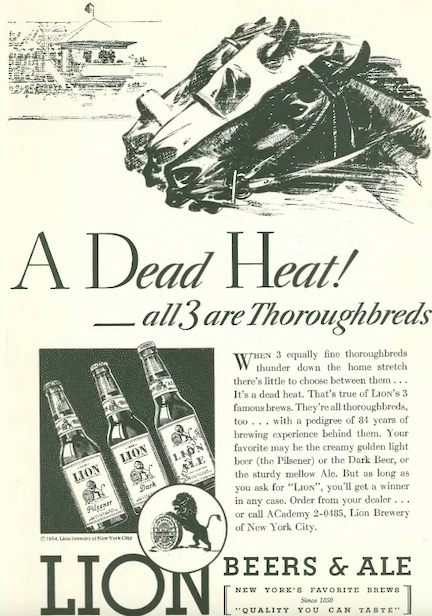
…or you could cool down with a Lion beer…considered a heritage brewery, Lion Brewery is one of only ten pre-Prohibition breweries that has independently and continuously operated since the repeal of Prohibition…

…a fairly new brand of cigarettes, Marlboro, was still taking out these bargain-sized ads to build brand recognition…Flit insecticide, on the other hand, was well-known thanks to these ubiquitous Dr. Seuss ads…

…the folks at General Tire & Rubber were the latest advertiser to tie their product to the glamour of aviation…

…and on to our cartoons, we begin with another installment of native birds via Rea Irvin

Al Frueh chimed in with this three-panel encounter at a nudist colony…

Robert Day presented a case of indigestion…

Garrett Price welcomed us aboard a dream cruise…

George Price gave us this gem in the “Goings On About Town” section,,,

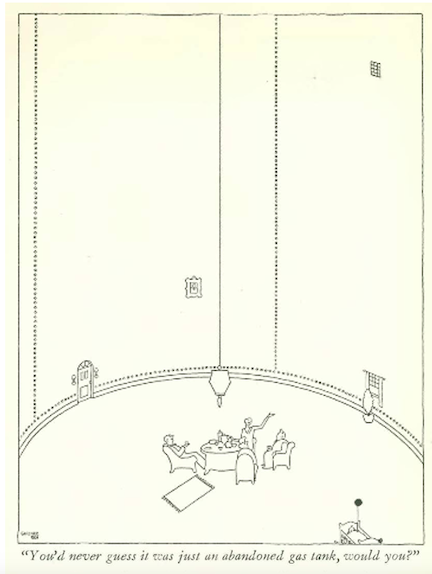
Gardner Rea gave us his spare line to illustrate an enormous space…one of his specialties…

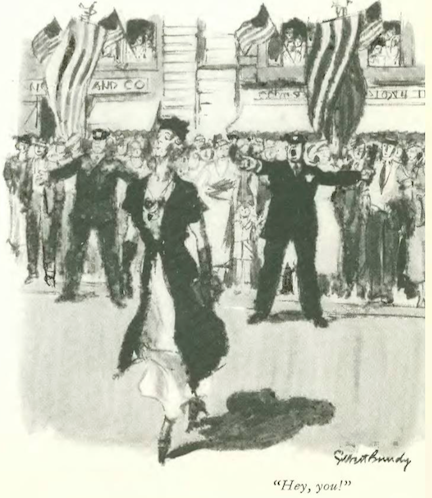
Gilbert Bundy marked the Fourth with an entitled jaywalker…

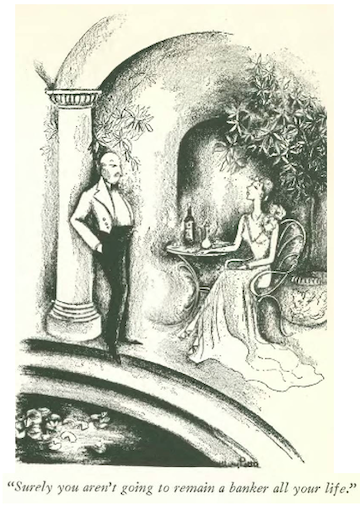
…and we close with Mary Petty, and a banker’s contentment…

Next Time: London Calling…

A Bridge Too Far

Despite the rise of the professional classes in the 20th century (and their attendant rules for accreditation and licensing) there still existed individuals who practiced at the highest levels with little or no formal training.

June 8, 1929 cover by Julien de Miskey.

Gustav Lindenthal (1850-1935) was a case in point. An Austrian immigrant who designed New York’s Hell Gate Bridge among others had little formal education and no degree in civil engineering. Rather, he learned by working as an assistant on various construction projects and teaching himself mathematics, metallurgy, engineering, hydraulics and other principles of the building profession.

Lindenthal was praised for his innovations in bridge design as well as for his artistic eye, but one project eluded him throughout his career: the largest bridge in the world—a massive double-decker that would span the Hudson River from 57th Street in New York City to Hoboken in New Jersey. The June 8, 1929 “Talk of the Town” checked in on the nearly 80-year-old bridge builder:

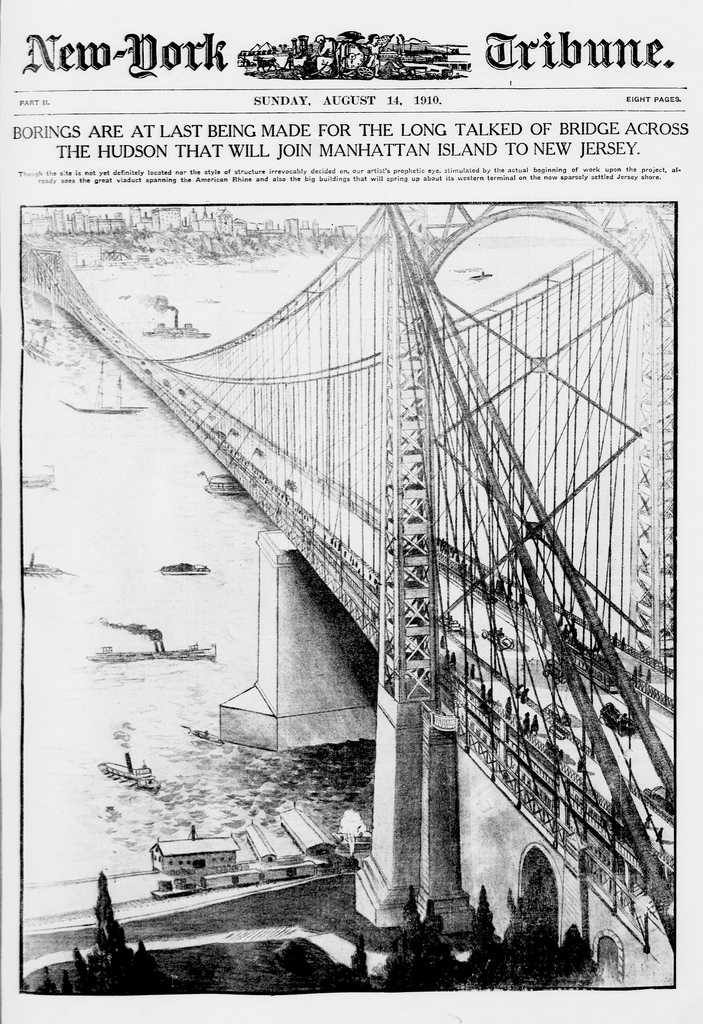
A cornerstone for the Hudson bridge was laid in 1895, but a series of bad breaks, including the 1898 Depression and various political setbacks, served to continually delay the project. The New York Tribune anticipated the bridge in its April 28, 1907 edition…

(untapped cities) click to enlarge

…and three years later the Tribune seemed confident that work was finally underway…

(untapped cities)

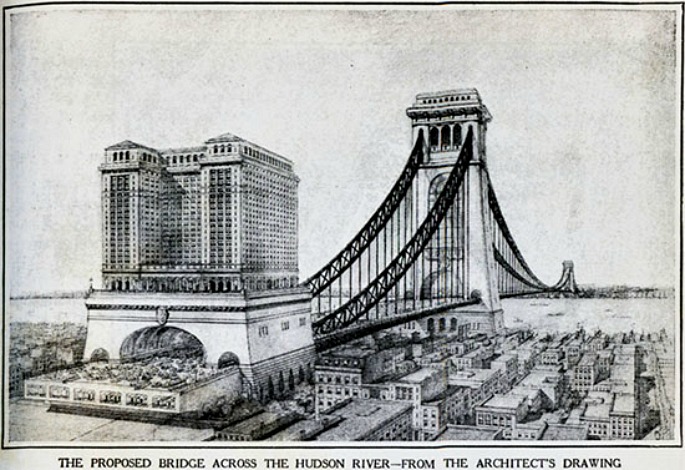
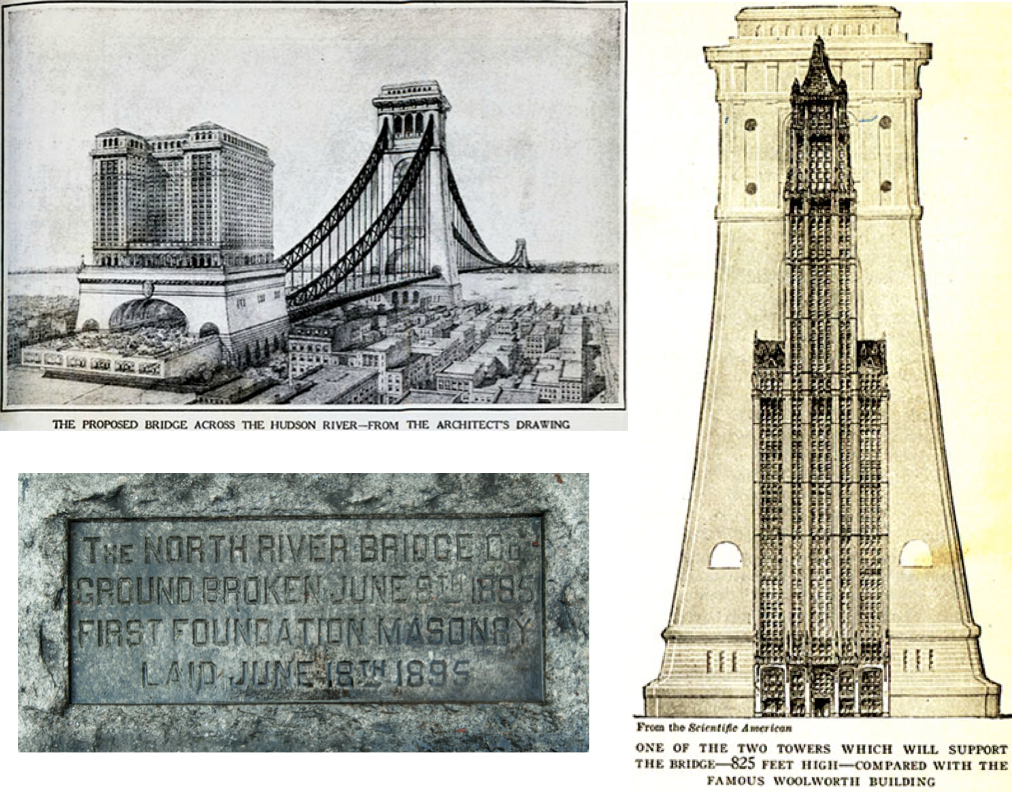
…however by the 1920s the bridge was still a dream. In 1921 Scientific American offered the latest glimpse of Lindenthal’s proposed 57th Street Bridge — a span 6,000 feet in length, with a 200-foot-wide double deck accommodating 24 lanes of traffic and 12 railroad tracks. An artist’s rendering included a massive building, on an arched plinth, positioned over the bridge deck:

BIG PLANS…Clockwise, from top left: Artist’s rendering of Gustav Lindenthal’s proposed 57th Street bridge from the June 25, 1921 issue of Scientific American. That same issue featured a size comparison with the then-tallest building in the world—the Woolworth Building. Below, the 1895 cornerstone, recently recovered from a crumbling pier on the New Jersey side of the Hudson and relocated to the grounds of Steven’s Institute of Technology in Hoboken. (untappedcities.com)

The New Yorker suggested that Lindenthal’s legacy was already secure, and with his determination and vigorous constitution, he still might still win the day:

Despite his vigor, Lindenthal would not live to see his dream realized. However, he is remembered for building some of New York’s most iconic bridges, including the Hell Gate and Queensboro:

LEGACY…Clockwise, from top left, Hell Gate Bridge; Gustav Lindenthal, circa 1920; Queensboro Bridge. (Library of Congress/Britannica/Pinterest)

 *  *  *

Keeping Up With the Lindberghs

Despite his worldwide fame, Charles Lindbergh (1902-1974) detested the limelight, particularly when it came to his personal life. Writing in the column “The Wayward Press,” humorist Robert Benchley mocked the newspapers for their invasions into the lives of the celebrated, including newlyweds Charles and Anne Morrow Lindbergh:

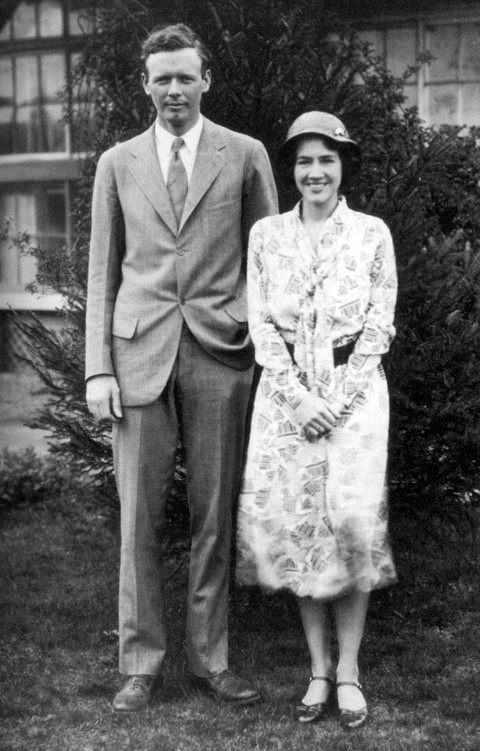
MIND YOUR OWN BEESWAX…Charles and Anne Morrow Lindbergh after their marriage in a private ceremony on May 27, 1929, at the home of her parents in Englewood, New Jersey. (Library of Congress)

Benchley wasn’t buying the newspaper industry’s insistence that the public demanded to know the facts about the flyboy’s nuptials:

 *  *  *

Let the Good Times Roll

With the newly remodeled Central Park Casino officially christened by Mayor Jimmy Walker and his cronies, The New Yorker’s Lois Long (in “Tables for Two”) decided to pay a visit to see what all the fuss was about:

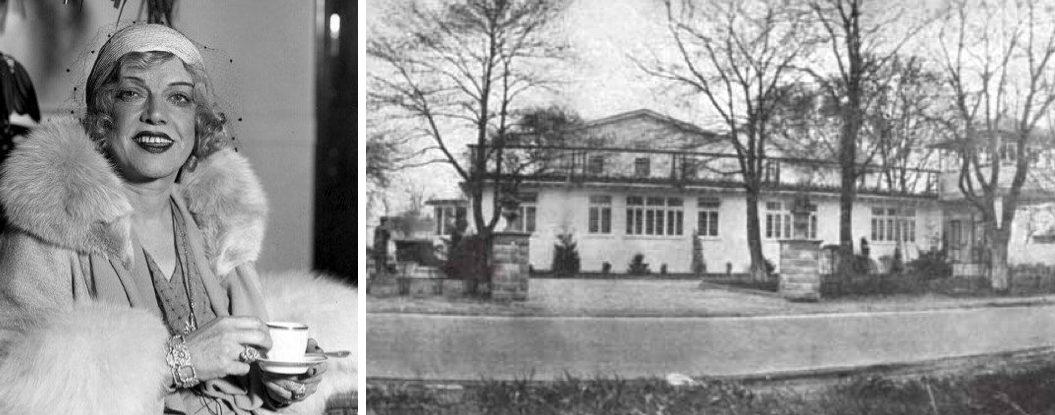
Long also commented on the declining fortunes of another familiar face of New York nightlife, Texas Guinan, who had fled Manhatten’s smoky speakeasy scene for the bucolic climes of Nassau County…

GOODBYE CITY LIFE…Texas Guinan took her nightclub to the quiet village of Valley Stream, New York, located just south of Queens in Nassau County. Guinan didn’t abandon all the trappings of city life: she drove to Valley Stream in a lavender Rolls Royce, and continued to greet her patrons with her famous “Hello, Sucker!” (jhgraham.com/texasguinanblogspot.com)

Long concluded that regardless where one ended up on a summer evening, one should be aware that a shabbier crowd awaited their company:

 *  *  *

Cuba Libre

Now we look at another New Yorker contributor who today is not exactly a household name: Donald Barr Chidsey (1902-1981), an American writer, biographer, historian and novelist best known for his adventure fiction. In this short column he offered some insights into the Cuban drinking scene:

ADVENTURESOME LAD…Donald Barr Chidsey wrote more than 50 books, including many action-adventure titles such as Captain Adam, from 1953. Note the resemblance of the hero on the cover to the author. (etsy/Amazon)

 *  *  *

Waxing Poetic

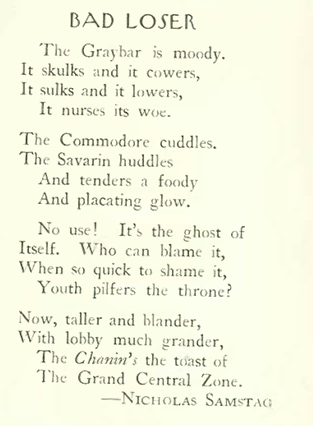
From its very first issue, The New Yorker also published a wide variety of poets, including Nicholas Samstag (1904-1968),who contributed several poems to the magazine in 1928 and 1929. Samstag later went on to a successful career in advertising, and was a close associate of  Edward Bernays, considered the father of public relations and propaganda.

A frequent contributor to The New Yorker, writer, poet and critic Mark Van Doren (1894-1972) published more than three dozen poems in the magazine from 1929 to 1972. Here is his first contribution, in the June 8, 1929 issue:

Van Doren’s last contribution to The New Yorker was published on Nov. 18, 1972, less than a month before his death. It was appropriately titled “Good Riddance”…

DID THE APPLE FALL FAR FROM THE TREE?…At left, a circa 1925 portrait of Mark Van Doren. He was the father of Charles Van Doren, who achieved brief renown as the 1957 winner of the rigged game show Twenty One. He is pictured at far right with fellow contestant Vivienne Nearing and game show host Jack Barry. (art.net/Wikipedia)

 *  *  *

From Our Advertisers

As summer approached some distinct themes emerged in ads aimed at female consumers. Here is a collection of ads from the June 8 issue that capitalized on the new tanning craze of the late 1920s…

click to enlarge

…and another big craze of the 1920s, the permanent wave, seemed to be a necessity as summer approached…

click to enlarge

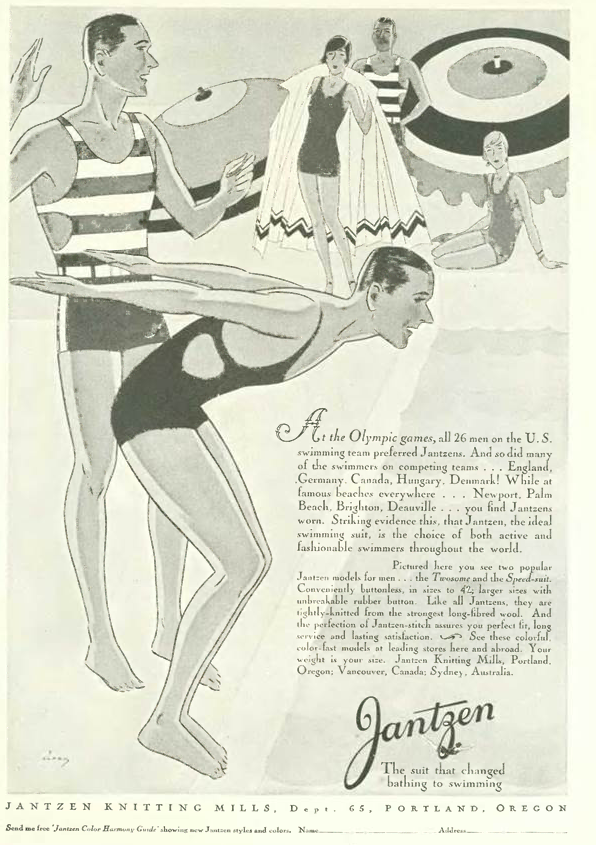
…as for the gents, check out this new line of Jantzen swimwear modeled by what appear to be identical twins…

…and when you’re out of the water, a pair of “fashion welts” were all the rage for tip-toeing across the hot sands of Southampton…

…this ad from B. Altman depicted two women clad for “open motoring” (not sure how those long, lithe figures will fit into that tiny rumble seat)…

…for a less dusty mode of transportation, you could hop aboard The Broadway Limited for a quick 20-hour jaunt to Chicago…

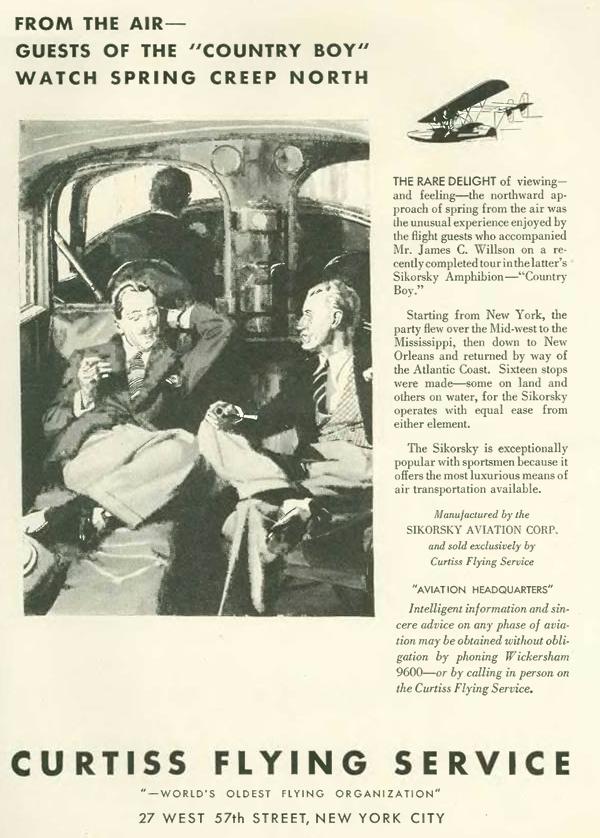
…or better yet, have a relaxing smoke with one of your chums aboard a Sikorsky seaplane…

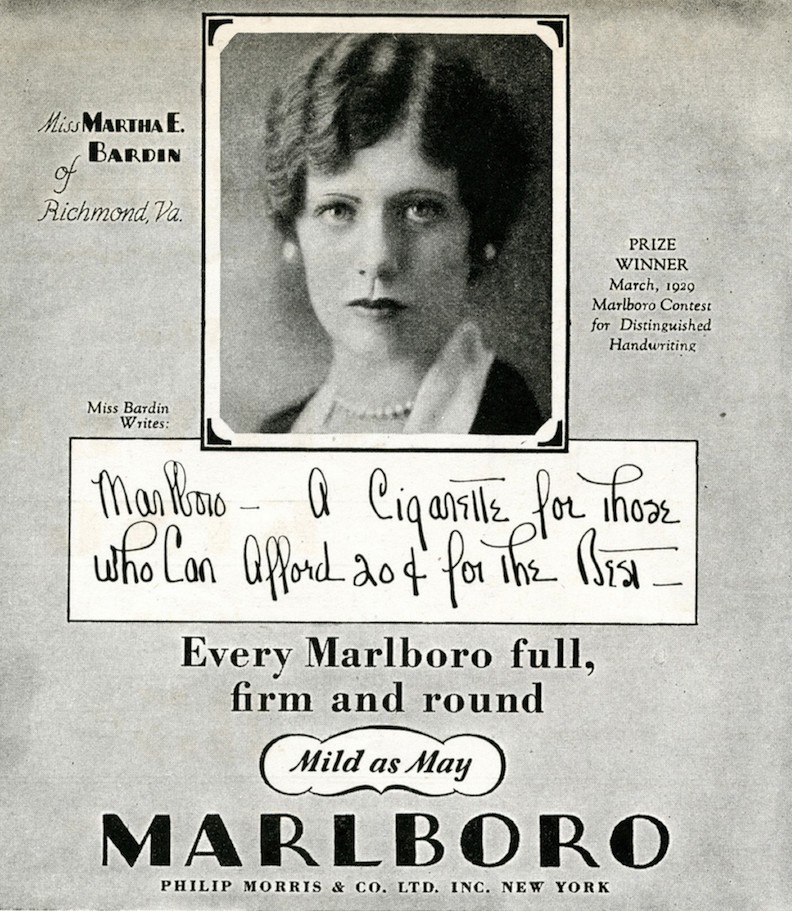
…our cigarette ad for this week comes from Philip Morris, makers of Marlboro, who once again exploited the nation’s youth with a bogus handwriting contest that doubled as a product endorsement…

…our June 8 comics are from Helen Hokinson, who offered a full page of illustrations from a “Fifth Avenue Wedding”…

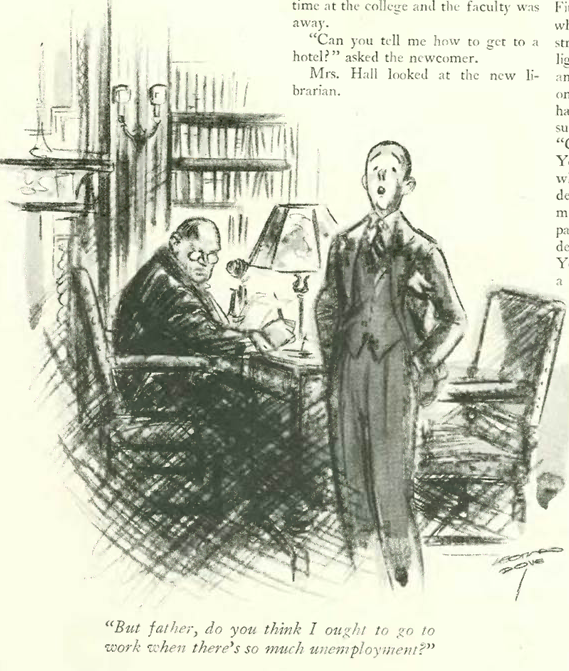
…while Leonard Dove peeked in on a wastrel son and his disappointed father…

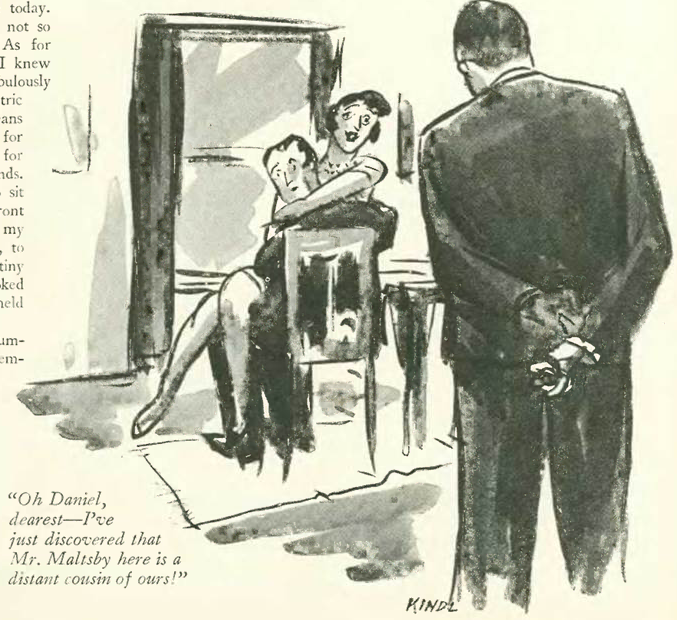
…and we have an awkward moment revealed by Carl Kindl

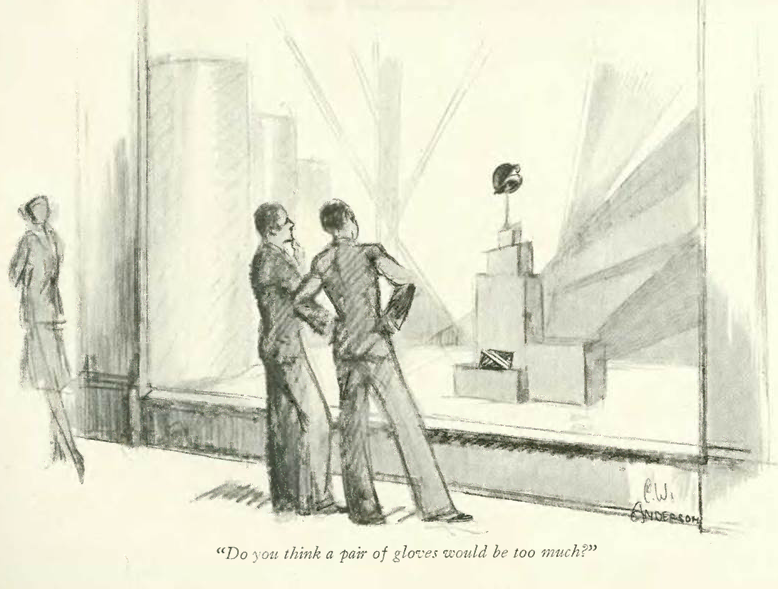
…and an observation by C.W. Anderson on the minimalism of modernist design…

…and finally, Peter Arno’s take on the challenges of shooting sound motion pictures…

Caption: “Lord, Mr. Rolbert, you’ll have to develop a more robust sneeze—the public will think you’re a sissy!”

Next Time: Something Old, Something New…

That Moderne Feeling

A defining moment for Art Deco design in America occurred at New York’s Metropolitan Museum of Art during a 1929 exhibition that showcased everything from household furnishings to garden design.

March 9, 1929 cover by Theodore Haupt. Between 1927 and 1933, Haupt would illustrate 45 covers for the New Yorker.

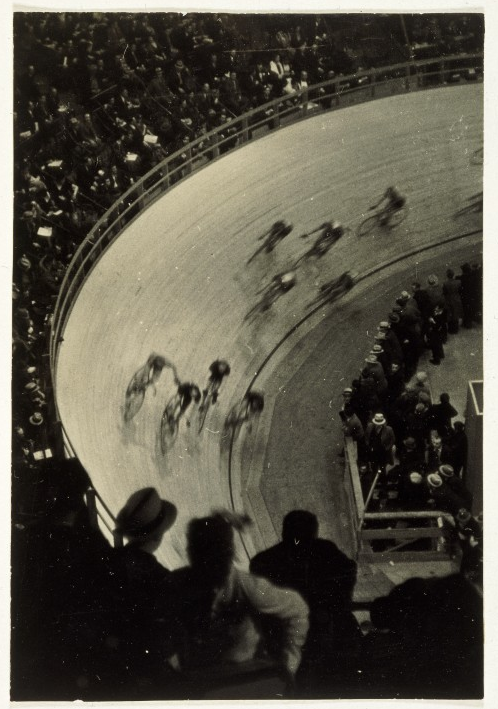
Before we delve into the Met’s exhibition, The Architect and the Industrial Arts, a quick note about the New Yorker’s Theodore Haupt-illustrated cover, which referenced the annual Six-Day Cycling Race that was taking place at the Madison Square Garden Velodrome. The event, which began at the old Madison Square Garden in 1891 and lasted until 1950, featured a beer garden (after Prohibition) in the center of the oval and drew such celebrities as Bing Crosby, Barbara Stanwyck and Peggy Joyce. It was said that Crosby even paid the hospital bills of riders who fell during the race.

THIS MIGHT TAKE AWHILE…The Six-Day Cycling Race at the Madison Square Garden Velodrome, 1932. (Victoria & Albert Museum)

The March 9 issue was lively with another contribution from Groucho Marx (“Press Agents I Have Known”) and an Alexander Woollcott-penned profile of playwright and screenwriter Charles Gordon MacArthur (husband of stage actress Helen Hayes and father of James “Book ’em Danno” MacArthur).

But as the blog title suggests, it was also filled with articles and ads that told of a city embracing all things new and modern, including a piece by architecture critic George S. Chappell on the Metropolitan Museum of Art’s eleventh Exhibition of Contemporary American Design, titled The Architect and the Industrial Arts. It was curated by the Met’s Richard F. Bach, who organized 15 annual exhibitions of contemporary industrial art at the museum between 1917 and 1940.

The 1929 exhibition of Art Deco works was the biggest yet, inspired by the Art Moderne movement in Europe and particularly the 1925 Paris Exposition International des Arts Decoratifs et Industriels). The Met exhibition, wrote Chappell, “should not be missed”…

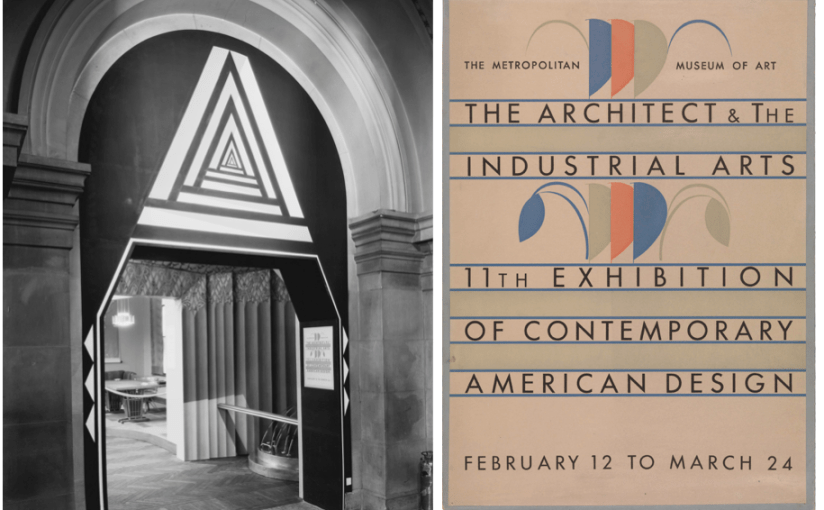
PORTAL TO THE FUTURE…Entrance to The Architect & the Industrial Arts exhibition at The Metropolitan Museum of Art, designed by Joseph Urban. The above exhibition poster (seen mounted on the doorway in the photo) was by W.A. Dwiggins. (Metropolitan Museum of Art)
Ornaments created by W.A. Diggins for the exhibition catalogue included, from left, “Conservatory,” for a section on  Joseph Urban; ornament on a page devoted to curator Richard F. Bach; “Backyard Garden” for a section on Ely Jacques Kahn; and an ornament that graced the acknowledgements page. (Metropolitan Museum of Art, via paulshawletterdesign.com)
NOT YOUR GRANDMOTHER’S GARDEN…Mosaic semi-circular bench designed by Austin Purves, Jr. was featured in architect Ely Jacques Kahn’s “Backyard Garden” display by at the The Architect & the Industrial Arts exhibition at the Metropolitan Museum of Art. (Pencil Points Magazine, January 1929)

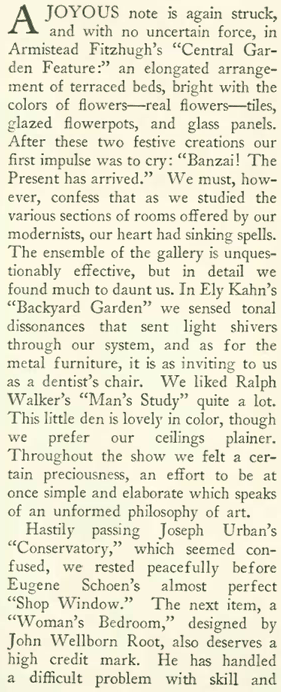
Chappell found the exhibit to be “stimulating,” although he hoped designers in the future would “curb cleverness” and focus more on fundamentals:

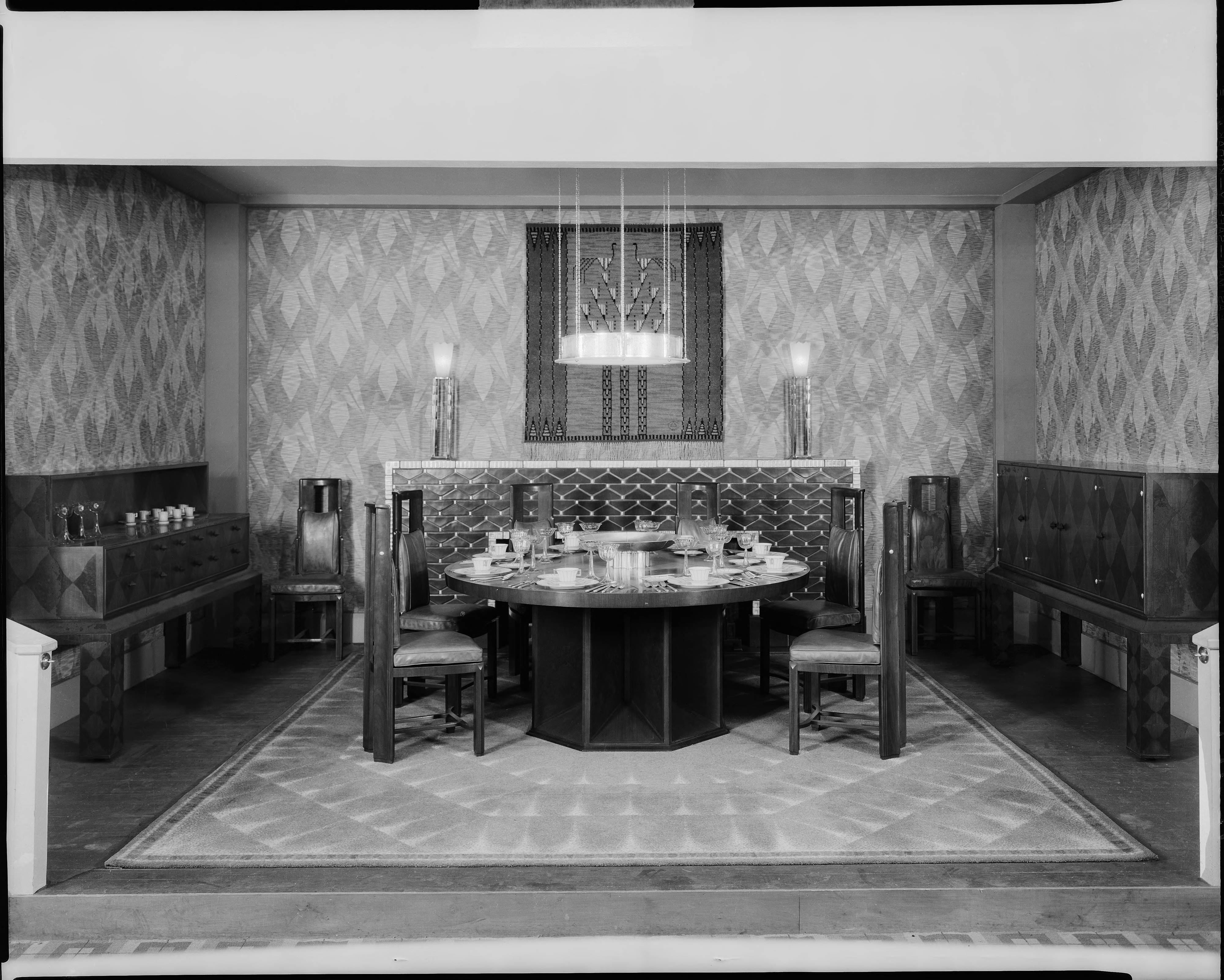
DINING IN STYLE…A dining room designed by Finnish architect Eliel Saarinen for The Architect and the Industrial Arts exhibition at the Metropolitan Museum of Art. (Metropolitan Museum of Art)
VISIONARIES…The Cooperating Committee for 1929 The Architect and the Industrial Arts exhibition were, standing, left to right, architects Raymond Hood, Eugene Schoen and Ely Jacques Kahn. Seated, left to right, architects Ralph T. Walker, John Wellborn Root, Jr. and Eliel Saarinen; ceramist, painter and graphic artist Leon V. Solon; and architect, illustrator and scenic designer Joseph Urban. (Metropolitan Museum of Art)
COZY…Ralph Walker’s “Man’s Study for a Country House” at the The Architect and the Industrial Arts exhibition. (architectsandartisans.com)
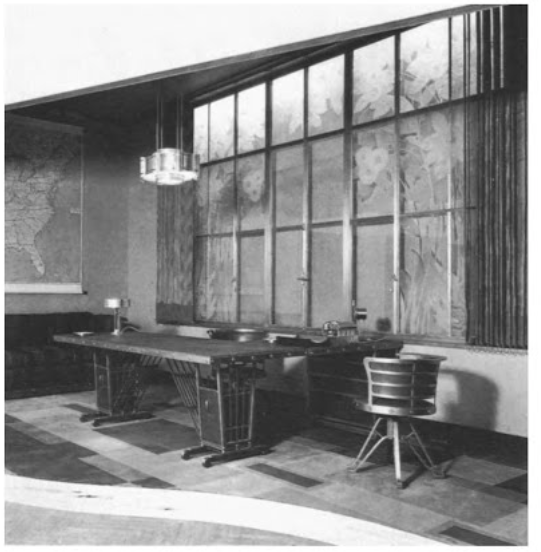
ALL BUSINESS…Raymond Hood’s “Business Executive’s Office” featured at The Architect and the Industrial Arts exhibition. (Metropolitan Museum of Art)

Writing in the February 1929 Bulletin of the Metropolitan Museum of Art, curator Richard S. Bach posed bold questions for this new age: “What is the tempo of our day? What are the dominant elements of our culture, our activities, our thinking? Is this a speed age or are we sedate? Have we time to be dignified and stately about frills or are we air-minded? Do we wait for months, as once all did, for the silkworm to complete his labors before beginning to make thread from his cocoon…or (do we) make a few bales of vegetable silk out of chemically treated wood fiber between breakfast and lunch as a regular chore of a business week-day? And is this the mechanistic millennium which shrivels the soul and makes mockery of imagination, or are these fabulous industries, these automatic instruments of production, the means of bringing within range of vision the real potentialities of our crowded lives and of interpreting our aspirations and achievements?

Pumping Iron Into the Sky

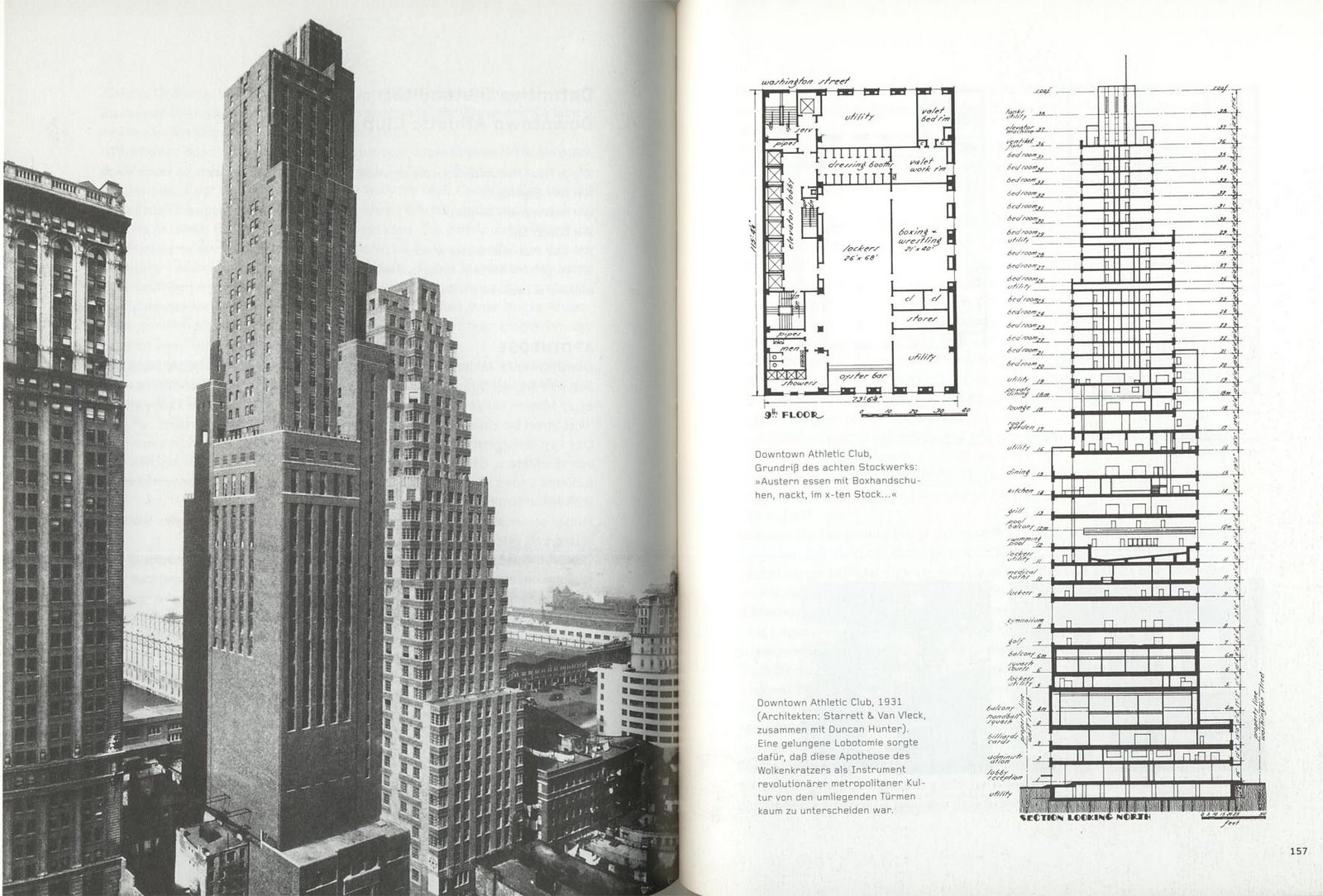
The architecture firm Starrett & van Vleck saw the “real potentialities of our crowded lives” when they designed a new Art Deco skyscraper to house the Downtown Athletic Club. Writing in Lost City NewsMary Hohlt cites the architect Rem Koolhaas, who sees the Downtown Athletic Club as “the ideal of a hyper-reality in the burgeoning urban form of hyper-density and congestion.” The Club is “the everything-at-your-fingertips self-improvement incubator for men…It is a place for men to indulge on self-improvement; to better themselves in a place only the constructed, hyper-reality of Manhattan can provide.”

SELF-IMPROVEMENT INCUBATOR…the Downtown Athletic Club by Starrett & van Vleck, 1930. (4.bp.blogspot.com) click to enlarge

Hohlt writes that Koolhaas sees the Downtown Athletic Club as a sterile place: “Towering in the sky, the Club removes men from the rest of the world and allows them a kind of aesthetic improvement that cannot be passed on.” E.B. White took a less jaded view in this “Talk of the Town” segment:

STILL A WINNER…Famous for serving as the site of the annual awarding of the Heisman Trophy, the Downtown Athletic Club closed in 2001 following the 9/11 attacks. The club was within a “frozen zone” closed to the public during the long clean-up that followed, and could not withstand the financial impact of such a long closure. It reopened in 2005 as a residential tower. (newyorkitecture.com)

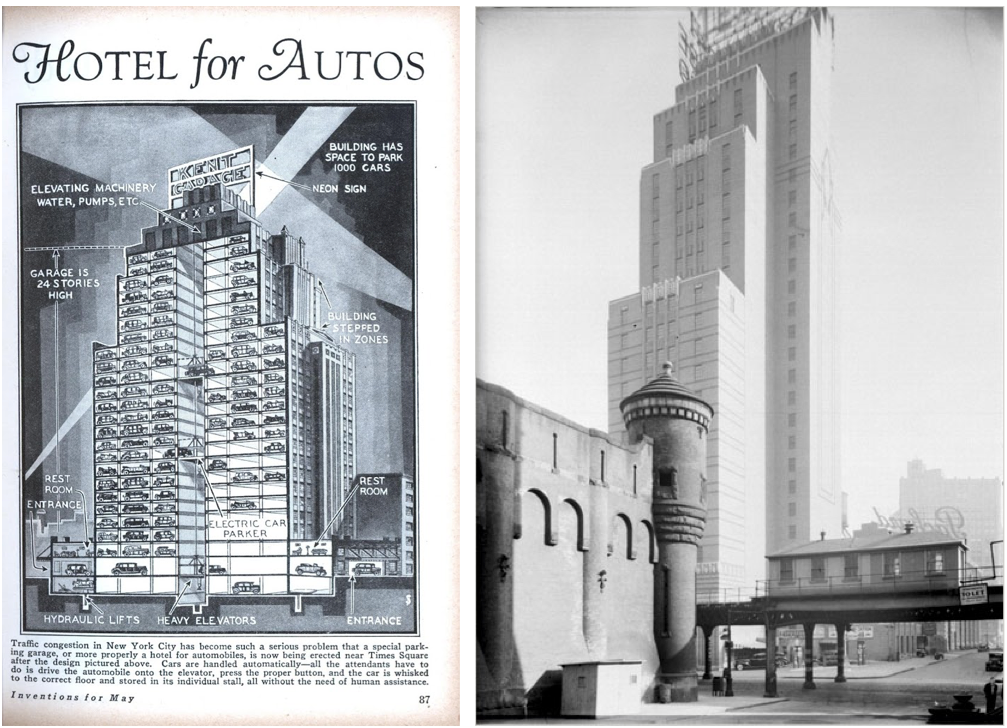
Another New Yorker who saw the “real potentialities of our crowded lives” was insurance salesman Milton A. Kent, who in 1928-29 erected a brick and terra-cotta Art Deco tower that could park 1,000 cars using an automatic elevator system.

MONUMENT TO THE CAR…The May 1928 issue of Modern Mechanix featured this cutaway illustration of Milton Kent’s high-rise, automated parking garage. (boweryboyshistory.com) click image to enlarge

Once again E.B. White was on hand to render this observation for “Talk”…

HUMAN SCALE…Kent’s fantastic garage still stands at West 61st Street, but today it serves as—you guessed it—an apartment building. (boweryboyshistory.com)

 *  *  *

Death of a Can-Can Dancer

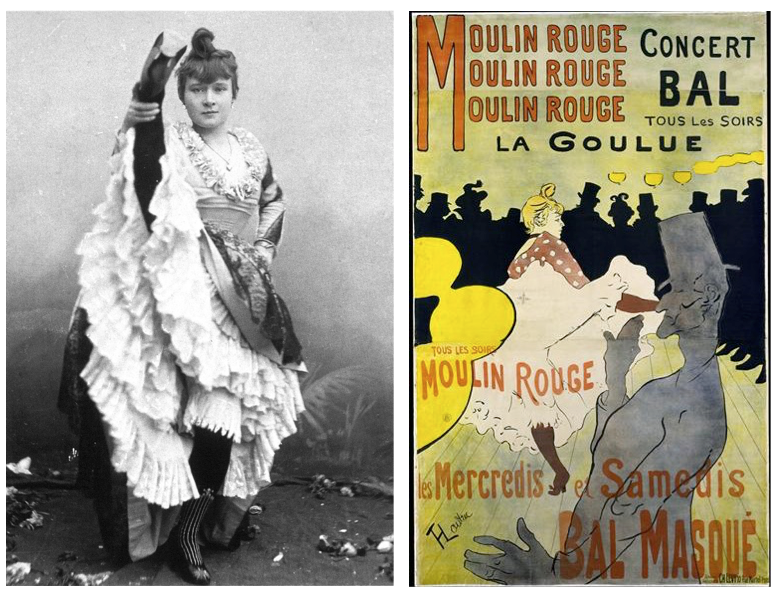
The sad death of Louise Weber, aka La Goulue, was announced in Janet Flanner’s “Letter from Paris” column. Weber was a can-can dancer at the Moulin Rouge in Paris and a model for some of Henri de Toulouse-Lautrec’s most famous cabaret paintings. Flanner wrote of La Goulue’s rise to fame…

JUST FOR KICKS… Louise Weber, aka La Goulue, circa 1890, and an 1891 poster by Toulouse-Lautrec advertising the performers La Goulue and “No-Bones” Valentin at the new Paris dance hall Moulin Rouge. (Wikipedia)

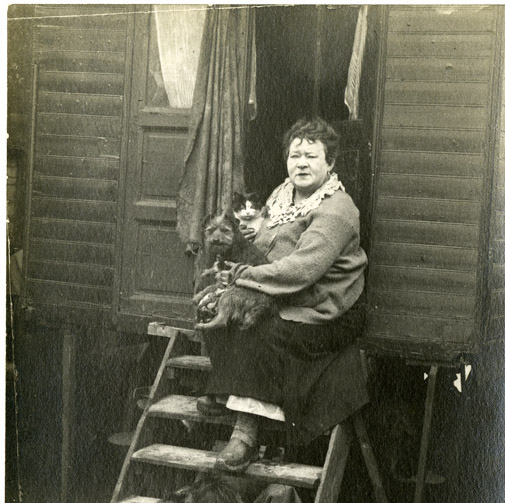
…and her sad downfall into a life of poverty among the rag-pickers:

SAD DECLINE…La Goulue, her face freshly powdered, sat on the steps of her small trailer for an unknown postcard photographer in the 1920s. This image is a detail of the original photograph, held at the Wheaton College Permanent Collection.

 *  *  *

From Our Advertisers

An advertisement on page 45 for Mohawk carpets featured two Cockney charwomen admiring the new carpets at the General Motors headquarters:

A corresponding note: Shreve & Lamb’s 1927 General Motors Building was the hub of Columbus Circle’s Automobile Row. A hideous 2012 remodel, which clad the entire structure in reflective glass, has rendered the former landmark unrecognizable:

Museum of the City of New York/nyc-architecture.com

Getting back to all things “moderne,” these facing ads on pages 8-9 offered some new looks for spring…

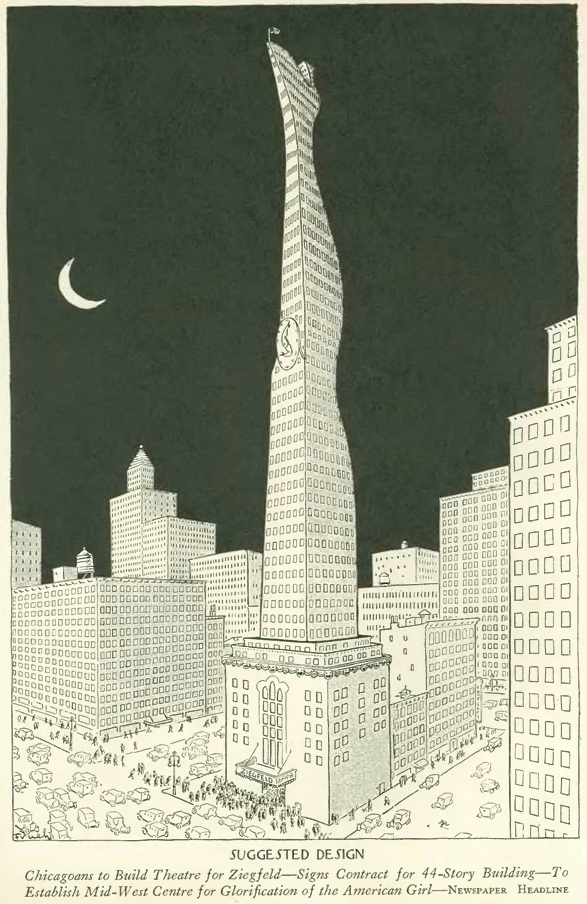
…and in the cartoons, a tongue-in-cheek vision of a modern high-rise by Al Frueh, prompted by the news that Florenz Ziegfeld planned to build a 44-story building in his native Chicago. Thanks to the market crash later in the year, it was never realized.

In drawings sprinkled across pages 24-25, Helen Hokinson examined various approaches to tax season, including these two examples…

…and finally, Peter Arno caught a theatre performer with his pants down…

Next Time: Babbitt Babble…