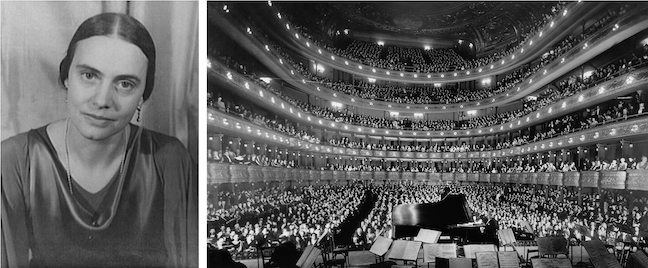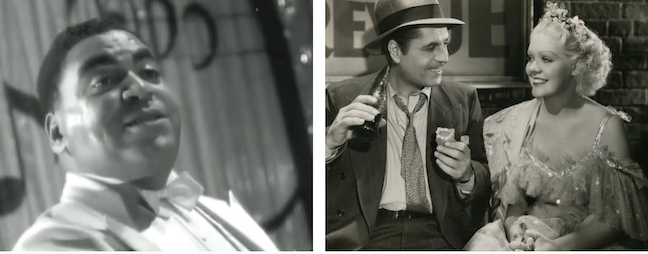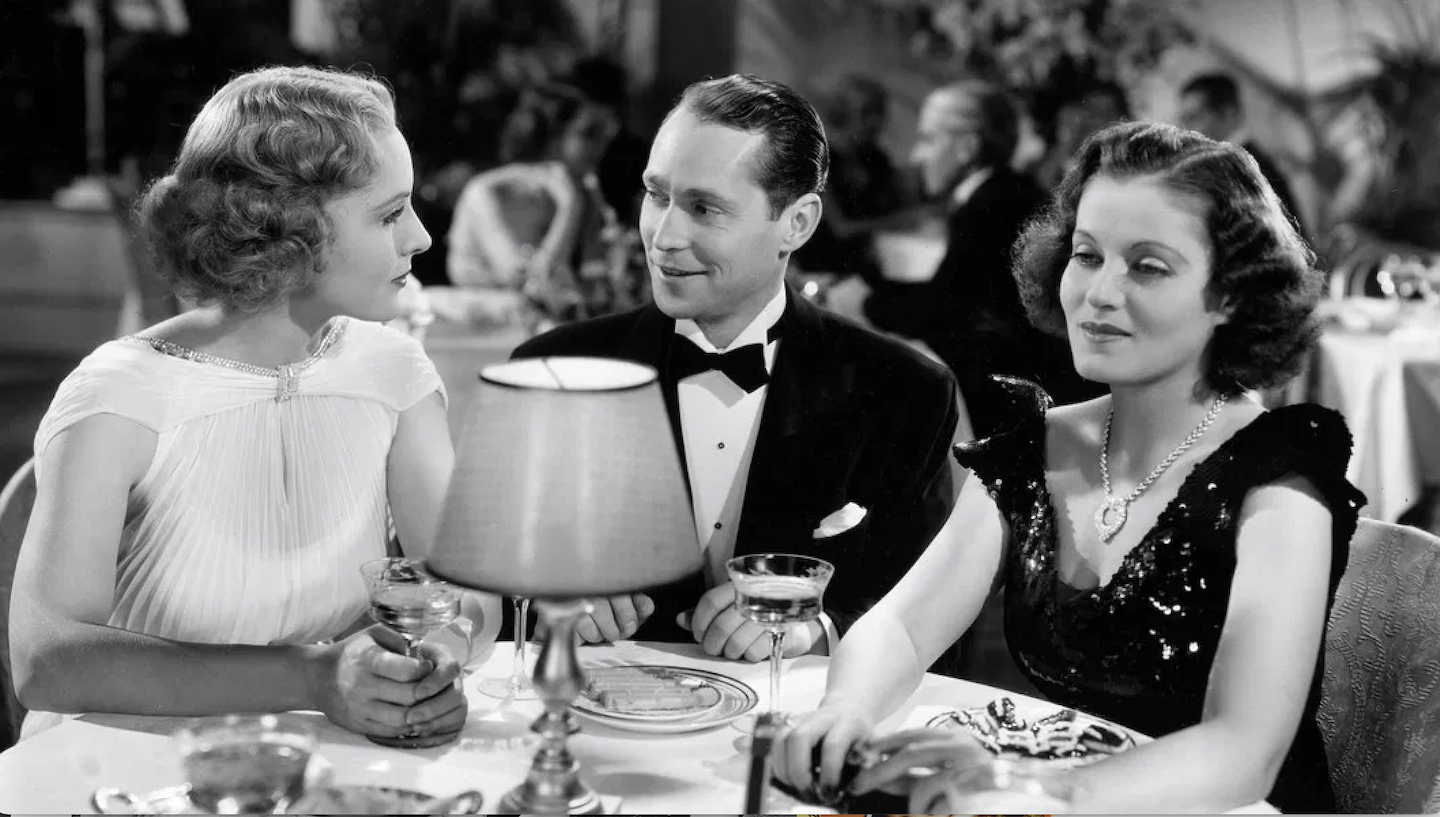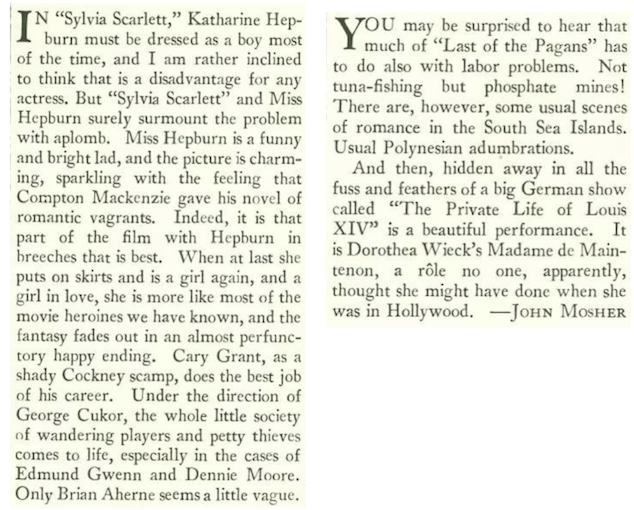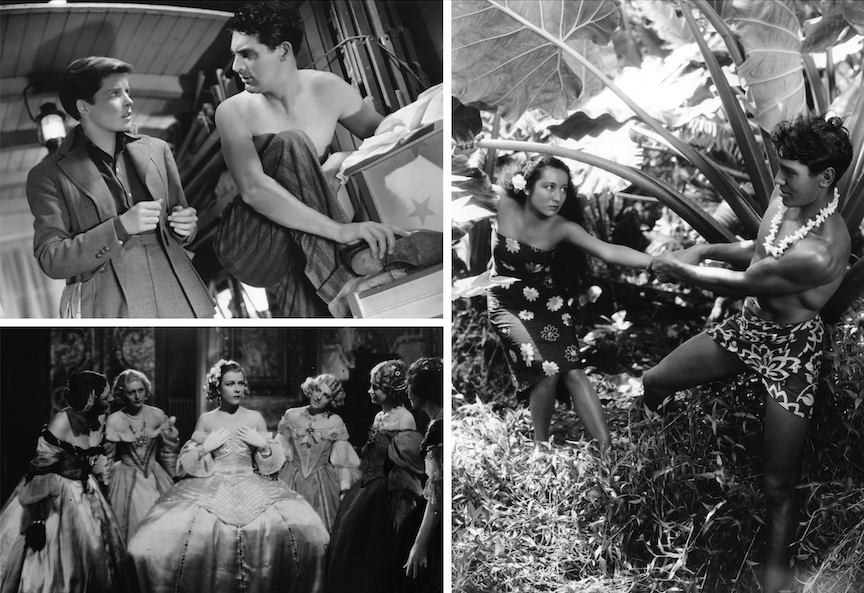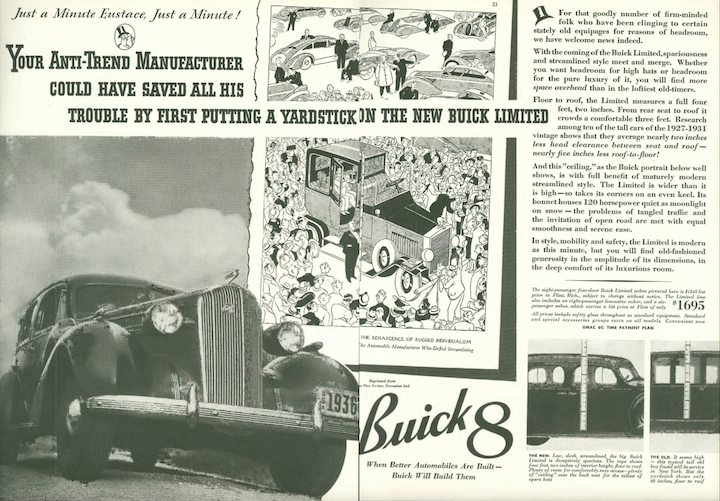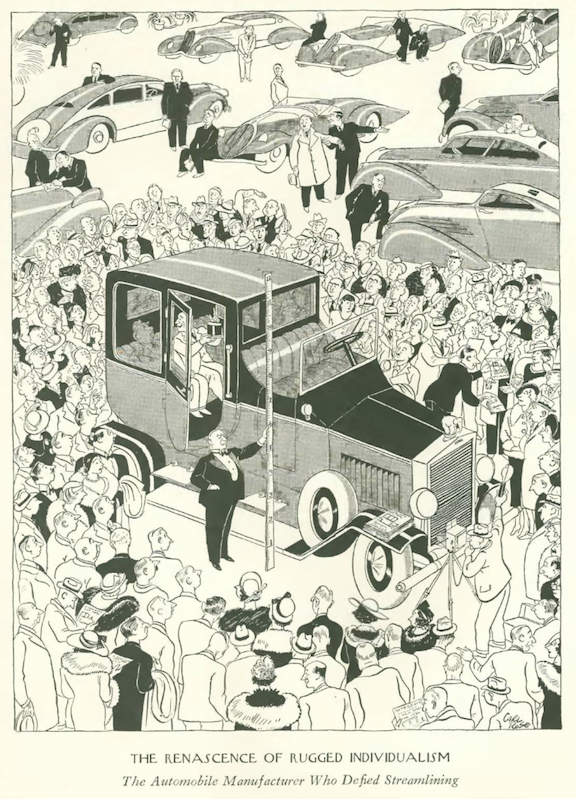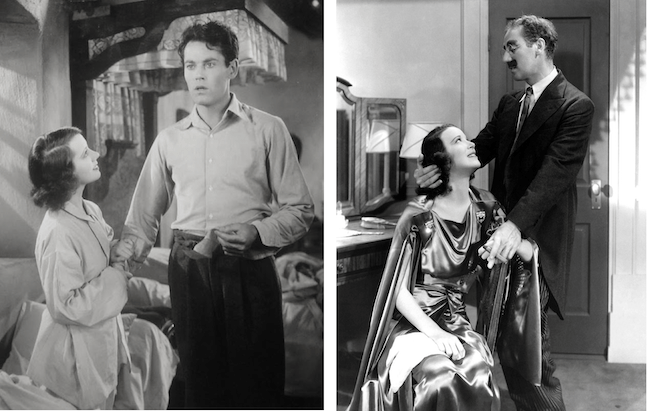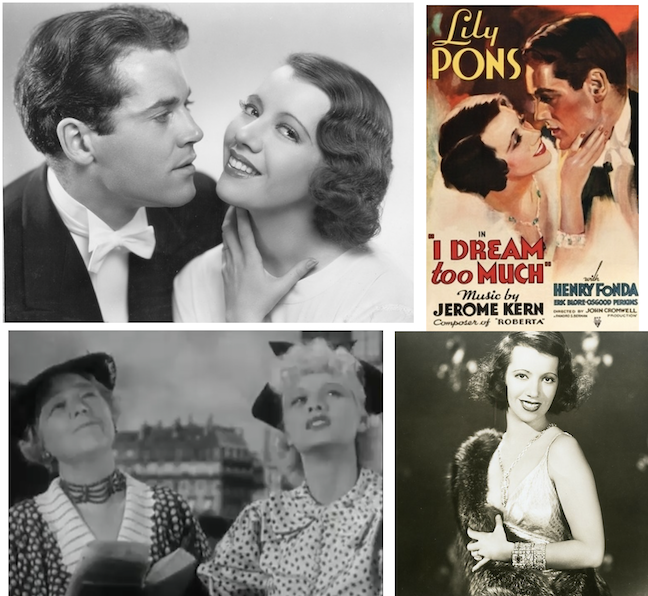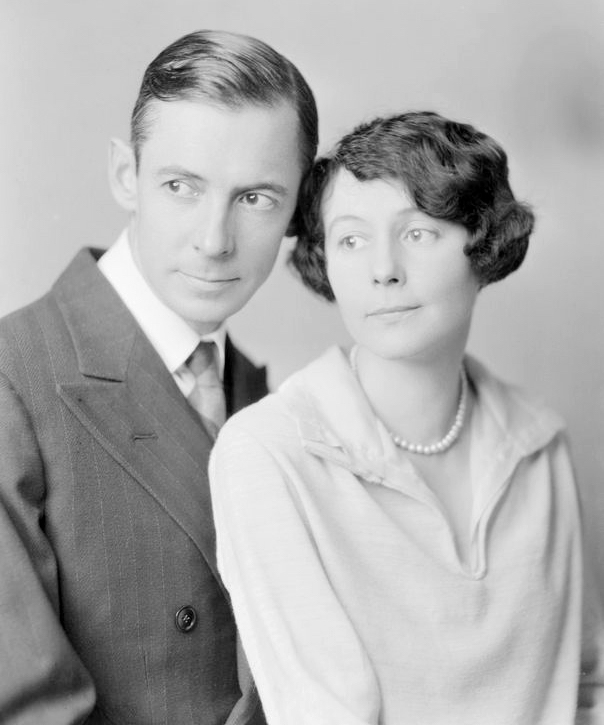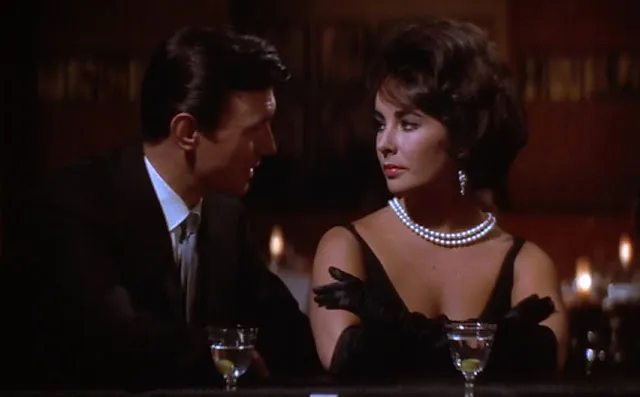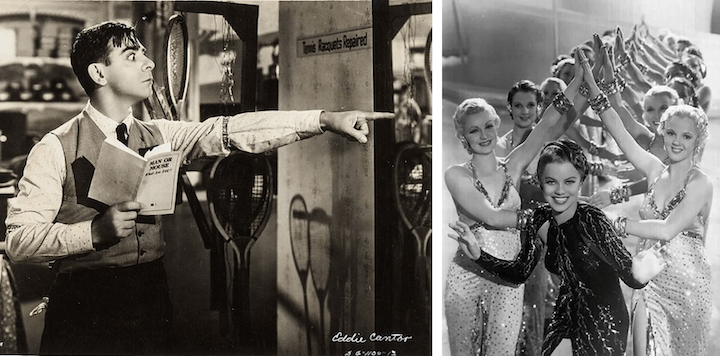
Above: Left image, coloratura soprano Lily Pons with Henry Fonda in I Dream Too Much;at right, Kitty Carlisle and Groucho Marx in A Night at the Opera. (rottentomatoes.com/IMDB)
The title of this post refers to two items below, which you’ll discover as we make our way through the December 7, 1935 issue of The New Yorker.
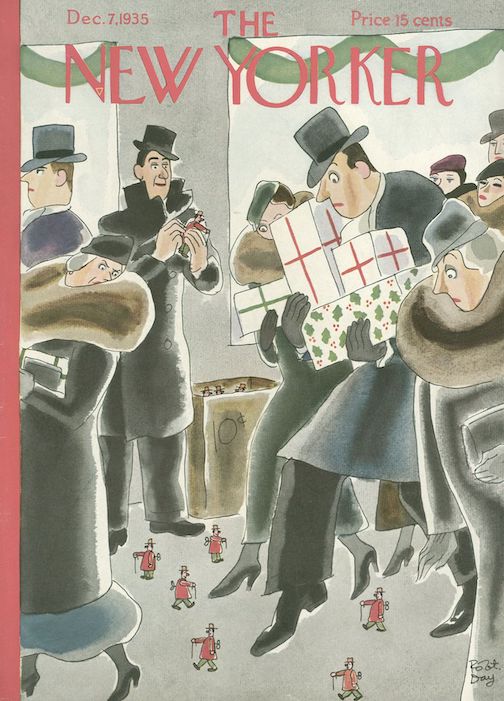
December 7, 1935 cover by Robert Day. A longtime contributor to The New Yorker, Day (1900-1985) contributed hundreds of cartoons as well as eight covers from 1931 to 1976.Robert Day (photo from This Week anthology via Ink Spill.)
*
Our first night at the opera comes courtesy of RKO Pictures, which presented French-American coloratura soprano Lily Pons as the star of the musical rom-com I Dream Too Much. Critic John Mosher found the film enjoyable, singling out Pons for praise while chastising the screenwriters for interrupting the lively farce with some “social research.”
DREAM DATE…Clockwise, from top left: Henry Fonda in his third screen appearance as Lily Pons’ love interest in RKO’s I Dream Too Much; movie poster and publicity photo of Pons from the film; Lucille Ball (seen here with actress Esther Dale), appeared in a bit part as a gawky American teenage tourist in Paris (which was actually an RKO studio lot)…little did Ball know that one day she would own that RKO studio lot with husband Desi Arnaz as home to their Desilu Productions facility. (IMDB/Wikipedia/TCM)
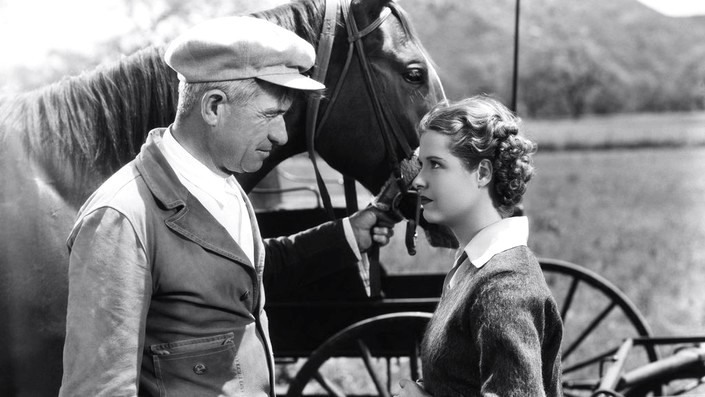
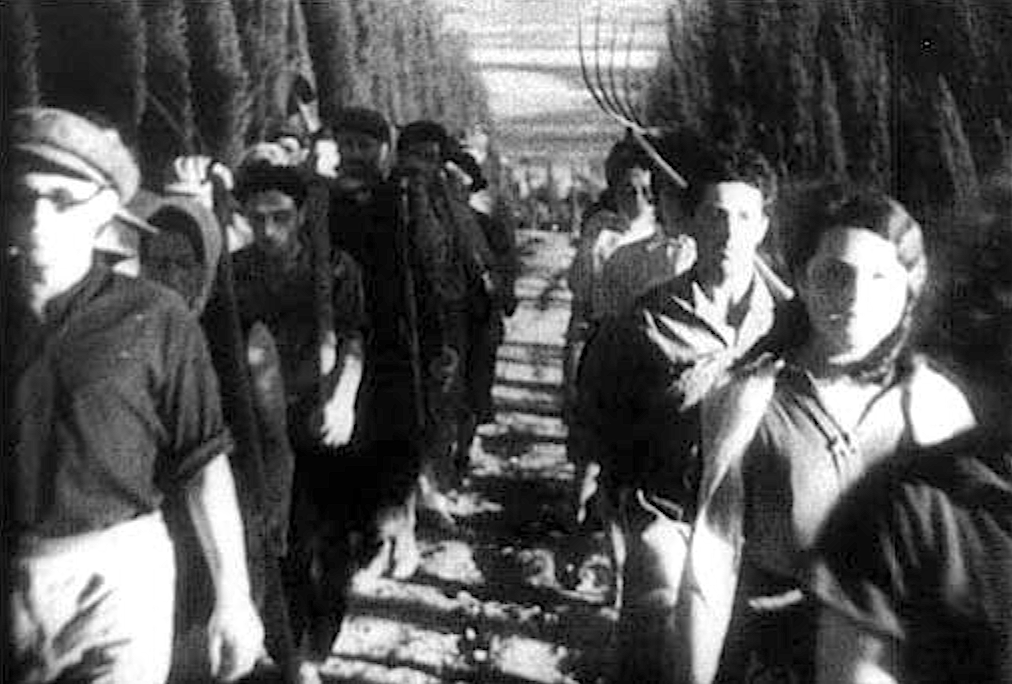
Mosher also said farewell to Will Rogers in his final film, In Old Kentucky, which he found to be a “minor affair.” He also reviewed The Land of Promise, a film about Palestine that indicated to Mosher that “life there is highly successful for all present.”
THIS IS GOODBYE…Will Rogers in a scene with Dorothy Wilson in Rogers’ final film appearance, In Old Kentucky. (rotten tomatoes.com)ORIGIN STORY…According to the Israel Film Archive, Judah Leman’sThe Land of Promise “laid the cinematic groundwork for all subsequent Zionist propaganda films that would follow.” (IMDB)
* * *
E.B. White keeps us on the cinema trail with some thoughts on the film, Mutiny on the Bounty, namely a certain historical inaccuracy:
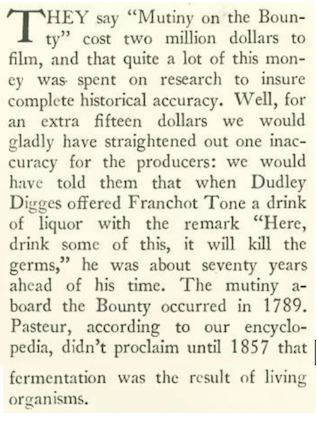
AHEAD OF HIS TIME…E.B. White noted that Roger Byam (Franchot Tone) would have to wait seventy years to learn about germ theory. In addition, the trailer for Mutiny on the Bounty (above) incorrectly referred to Tone’s character as an ensign, when in fact Tone’s role was as a midshipman. (Wikipedia)
* * *
They Had It First
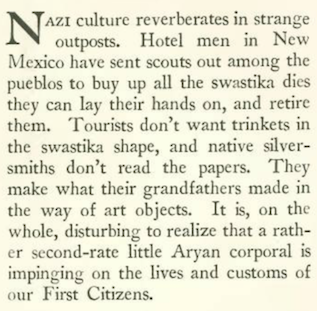
The swastika was among the more popular designs incorporated into southwestern tribal art during the American tourist era (roughly 1890 to the 1930s). For the Navajo, the symbol represented humanity and life, and was used in healing rituals (it was also widely used by tribal peoples across Europe and Asia). Tourism promoters (called “hotel men” here) encouraged the symbol’s use until the 1930s, when it was increasingly associated with Germany’s Nazi Party. E.B. White explained:
TOURIST FAVORITE…Navajo blankets such as this example, made from 1864 to 1910, were popular with tourists. (Wichita State University)
* * *
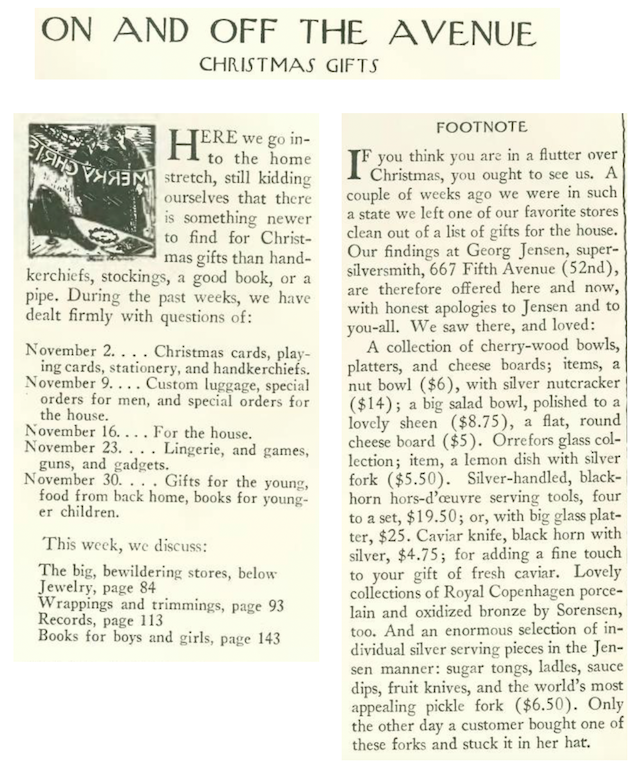
Lois Long’s fashion column continued to be dominated by exhaustive Christmas shopping lists, in this issue stretching from pages 58 to 97…here are the first and last paragraphs of the column…
* * *
A Woolly Read
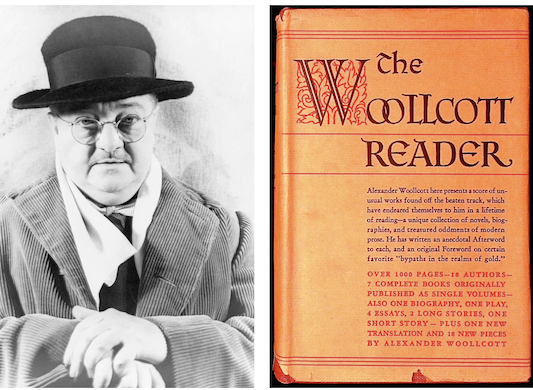
Perhaps your special someone was hoping for a thousand-page book under the tree; then look no further than The Woollcott Reader, a collection of stories, essays and other literary gems by New Yorker personality and former “Shouts and Murmurs” columnist Alexander Woollcott. In this excerpt, book critic Clifton Fadiman noted that a signed copy could be had for $7.50.
MY GIFT TO THE WORLD…Alexander Woollcott in 1939, as photographed by Carl Van Vechten, and the $3 brown cloth edition. (Wikipedia/Abebooks.com)
* * *
From Our Advertisers
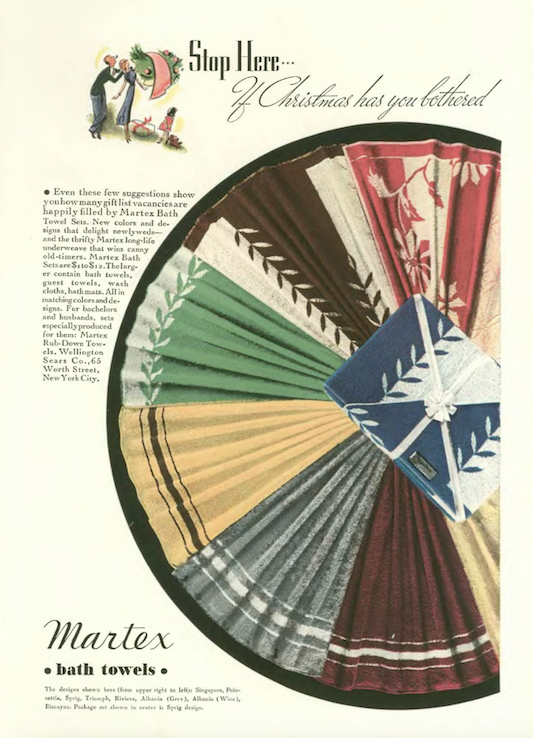
Colorful advertisements brightened the 149 pages of the Dec. 7 issue…we begin with this colorful array from Martex…
…the women’s specialty shop Jane Engel commissioned one of the best-known commercial photographers of the day, Ruzzie Green, to capture this glamorous image…
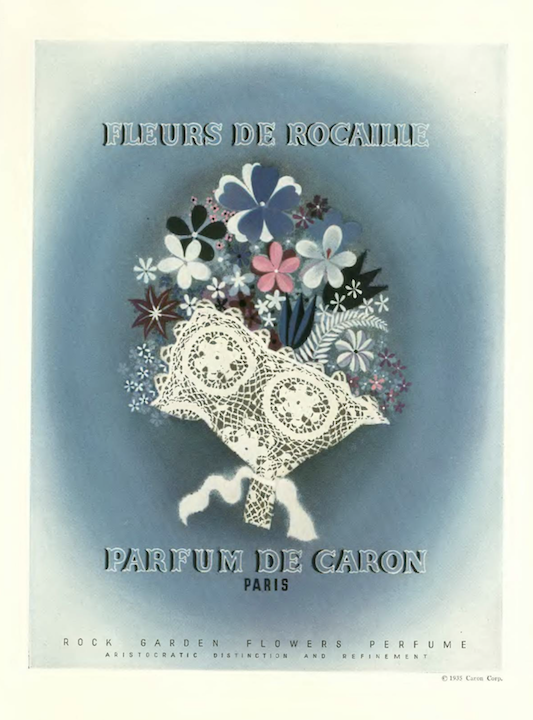
…Caron Paris offered up this cheerful bouquet…
…the makers of White Rock were enjoying the fruits of post-Prohibition days…
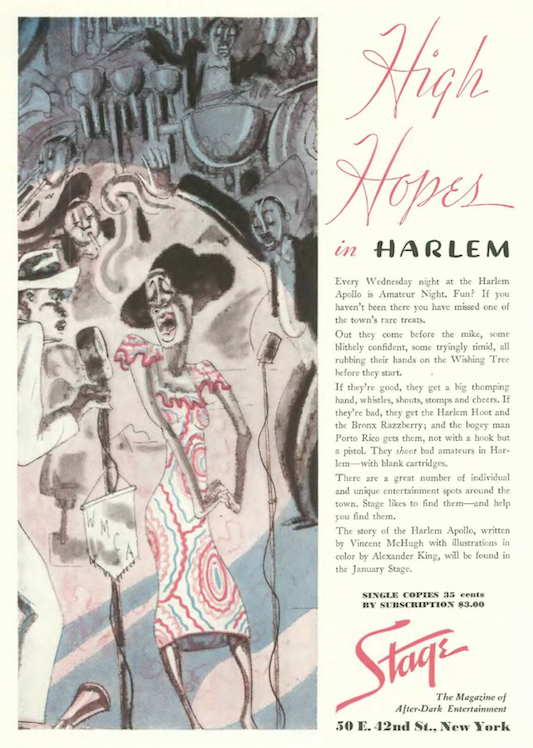
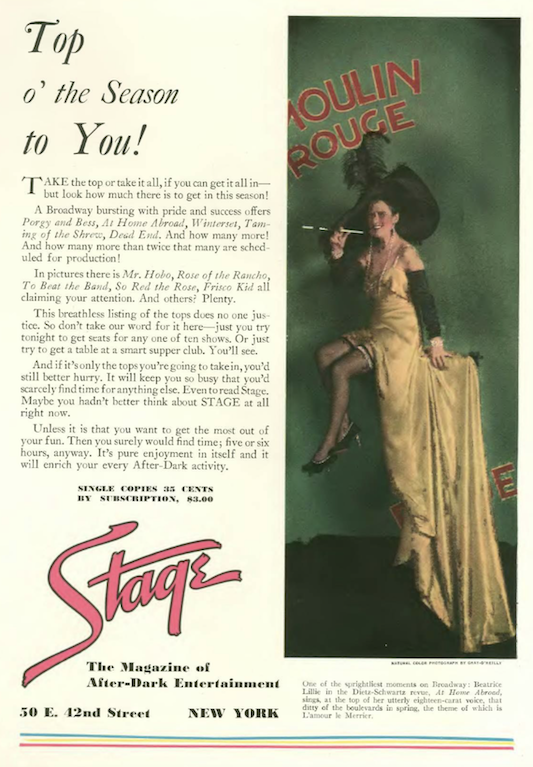
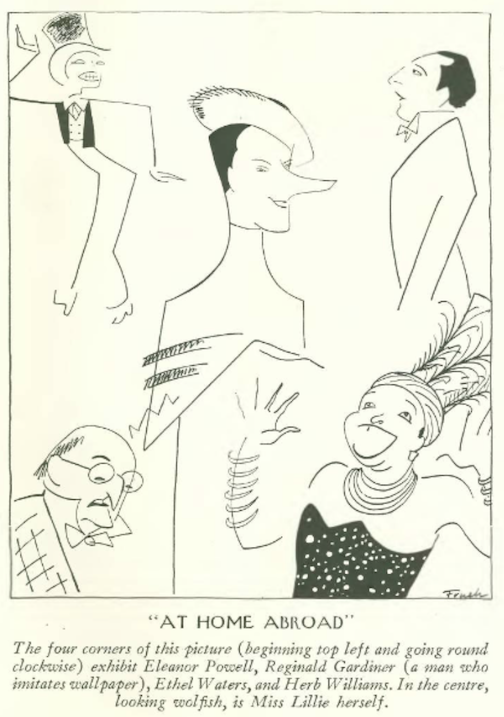
…the publishers of Stage magazine highlighted Beatrice Lillie’s Broadway revue, At Home Abroad…
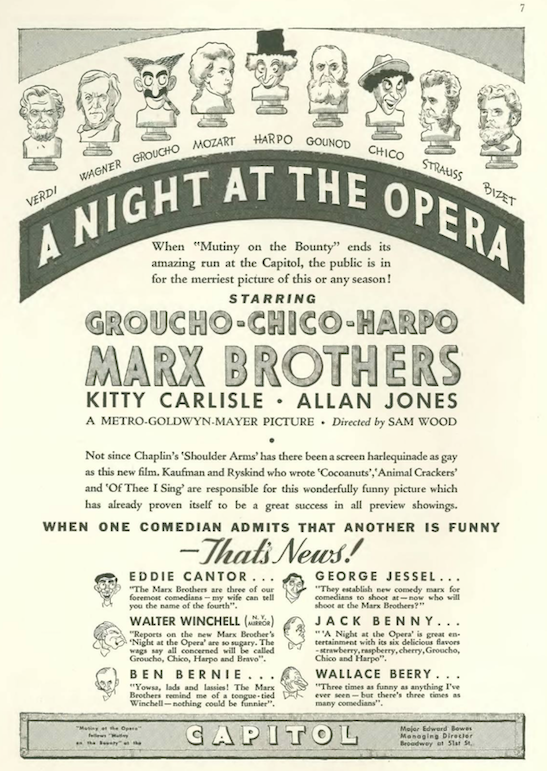
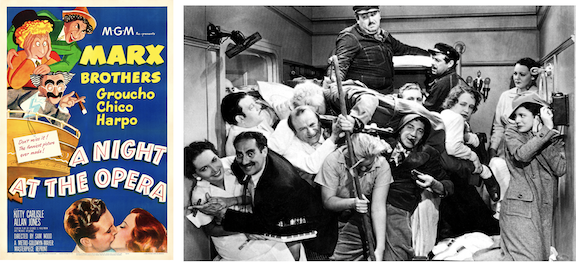
…the Capitol Theatre took out this full-page advertisement to tout the opening of the latest Marx Brothers film…
…here is a close-up of the ad’s “testimonials”…
…and what awaited audiences…
(Wikipedia/thedissolve.com)
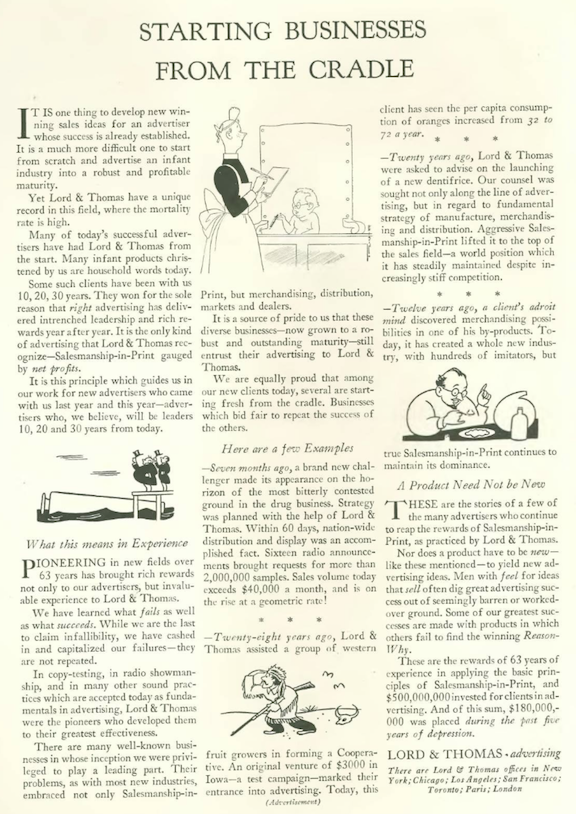
…the Lord & Thomas advertising firm imitated the New Yorker style in this full-page promotion…
…now who wouldn’t want a Philco “Radiobar” for the holidays?…
…found this one on 1stdibs.com…pretty cool…
…or you could get a little something for every one of your smoking friends (likely everyone)…
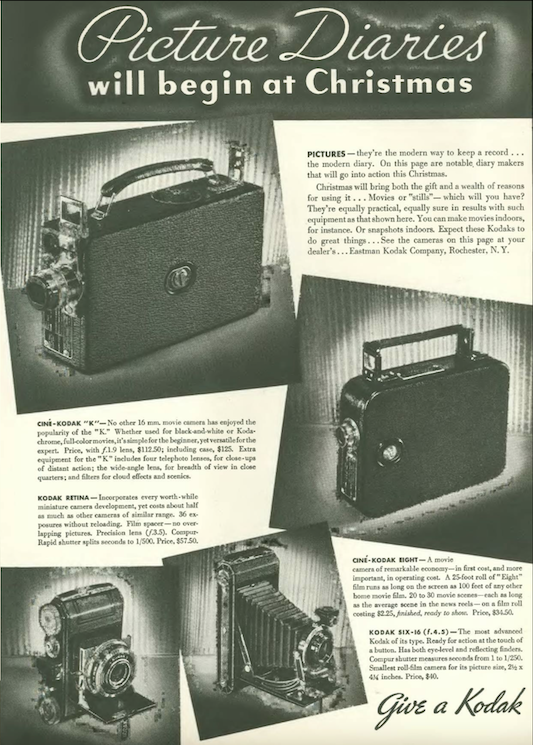
…and you could keep those holiday memories alive with a swell Kodak movie camera…
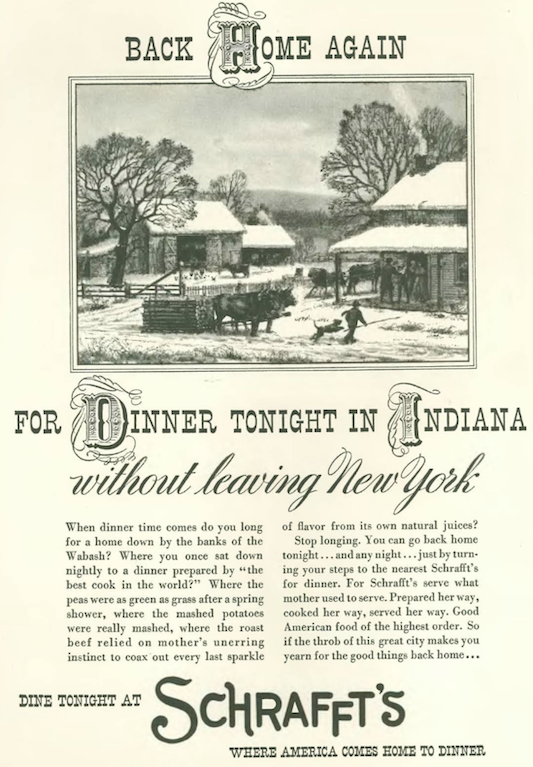
…Schrafft’s must have been something like an upscale Cracker Barrel…
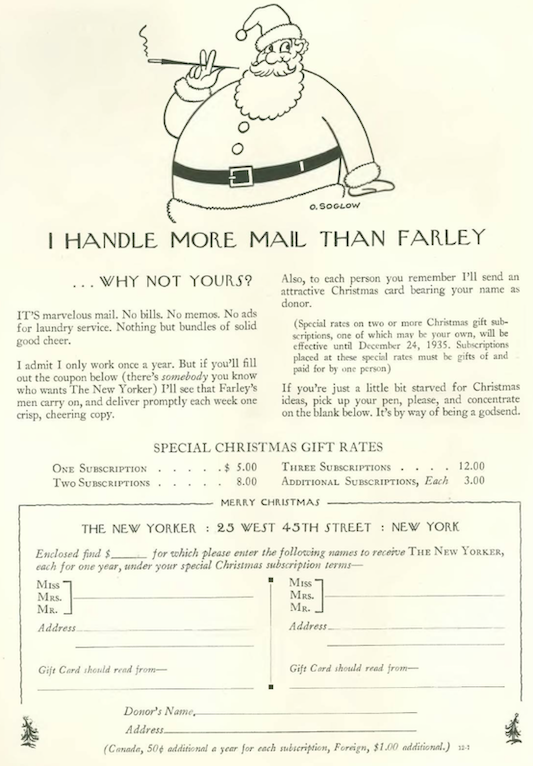
…house ads from The New Yorker included this Otto Soglow-illustrated full pager…
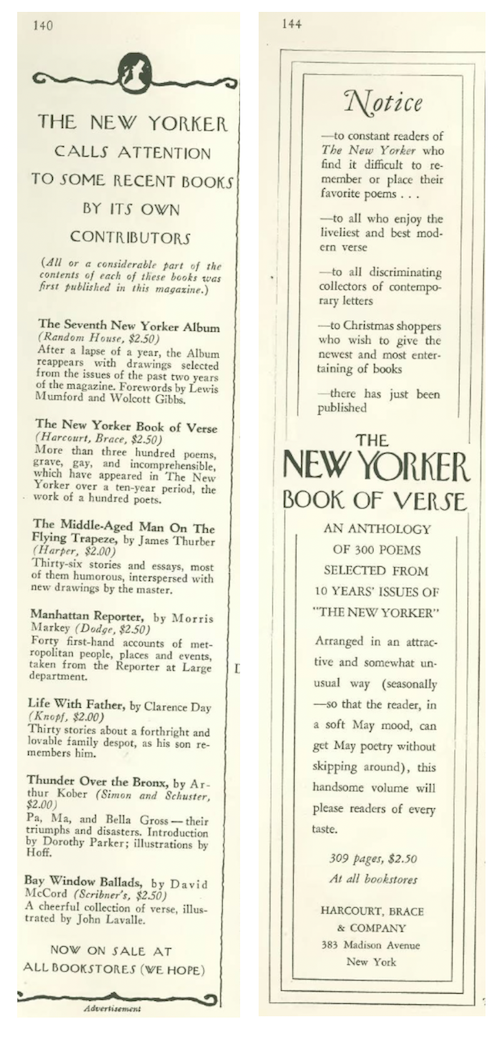
…the magazine also touted books and poems by its contributors…
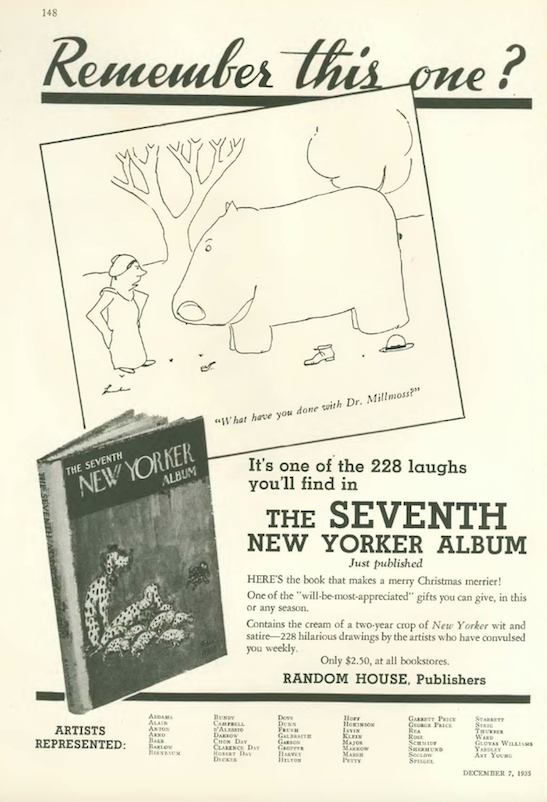
…and the Seventh New Yorker Album…
…more James Thurber here in this spot drawing for the “Books” section…
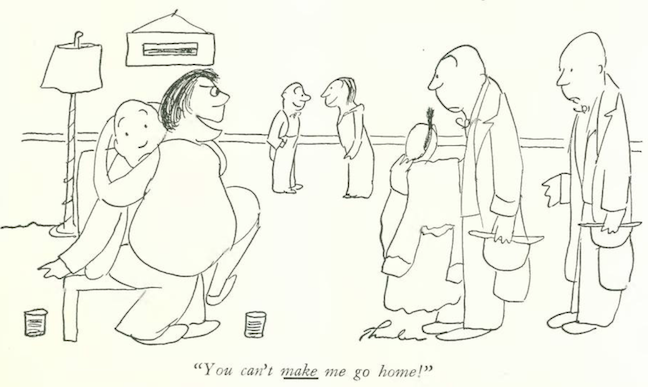
…and in this cartoon filled with holiday hijinks…
…Ilonka Karasz gave us a hockey goalie to open the calendar listings…
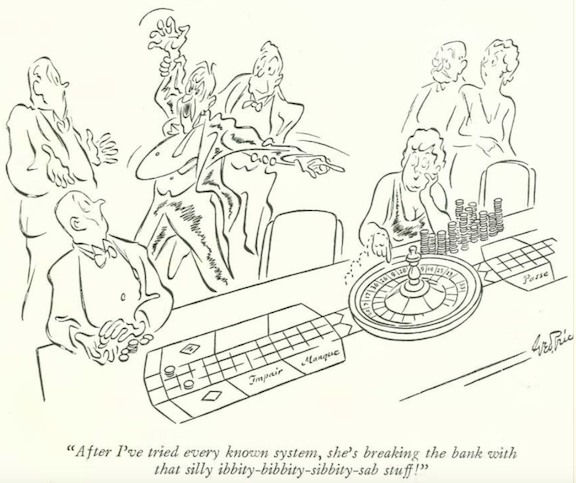
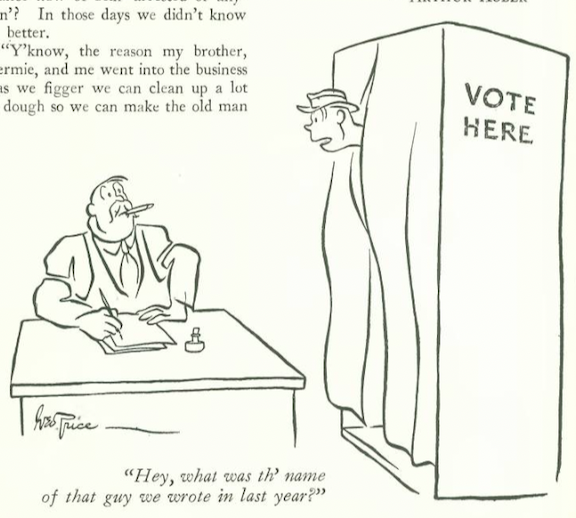
…George Price drew up this Depression-themed drawing at the bottom of the “Goings On” section…
…a great spot drawing by Aaron Sopher (1905–1972), who is perhaps best known for his depictions of everyday life in Baltimore…it was oddly placed amidst the “Christmas Gifts” section…
…according to Michael Maslin’sInk Spill, Sopher contributed just two cartoons to the magazine, in the issues of June 15, 1929, and December 6, 1930 (pictured below)…
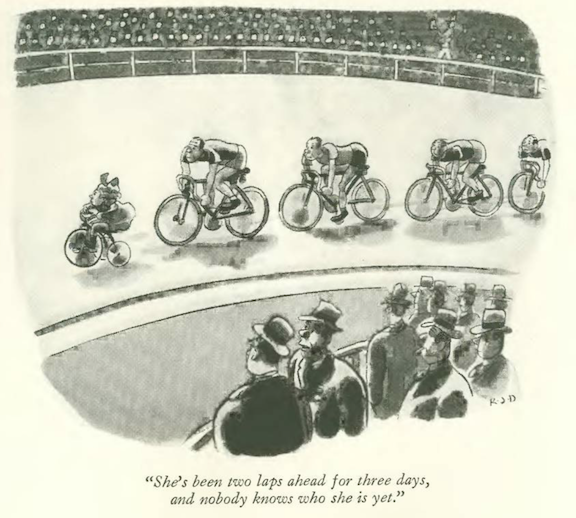
…back to the Dec. 7 issue, and at the Velodrome with Robert Day…
…who also visited an ill-suited Santa…
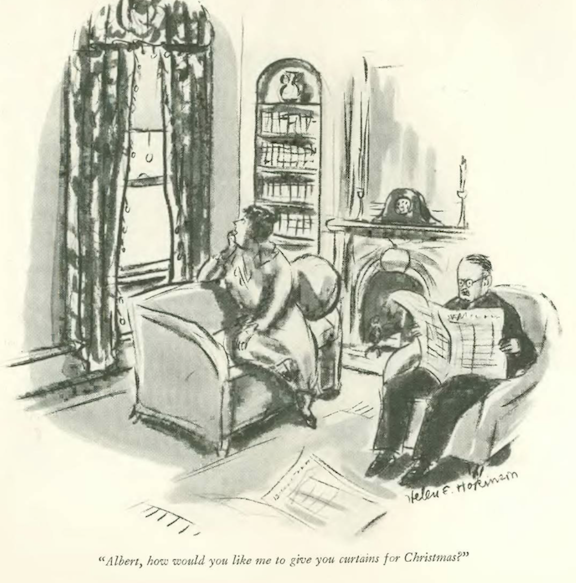
…Helen Hokinson pondered gift ideas…
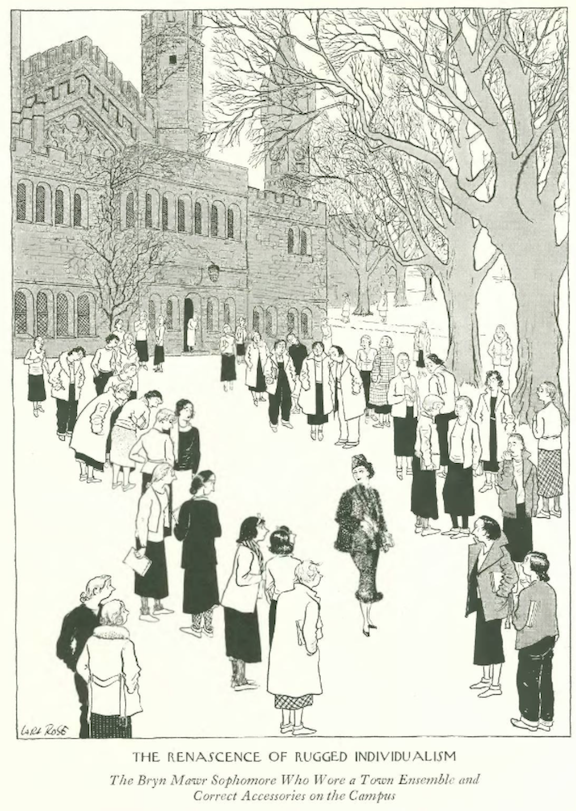
…Carl Rose illustrated an unspeakable act at a progressive school…
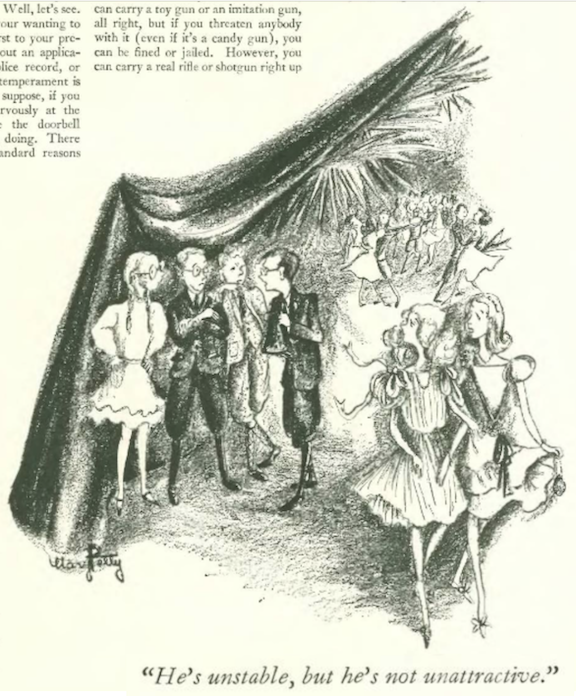
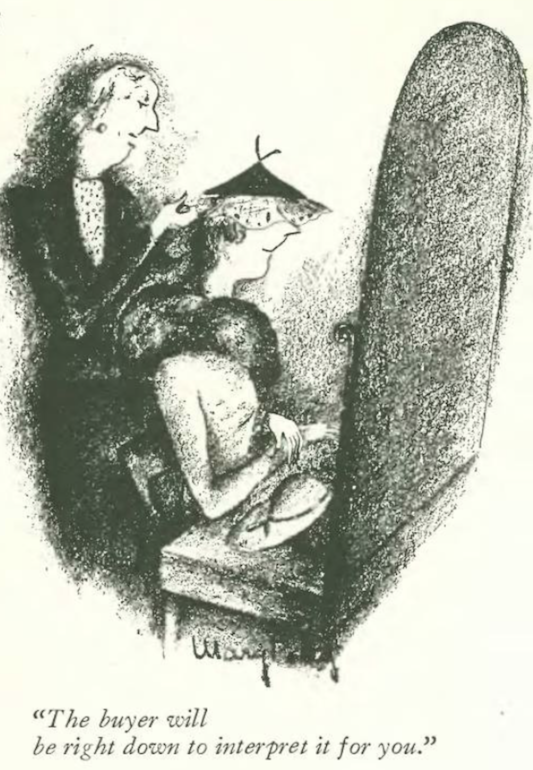
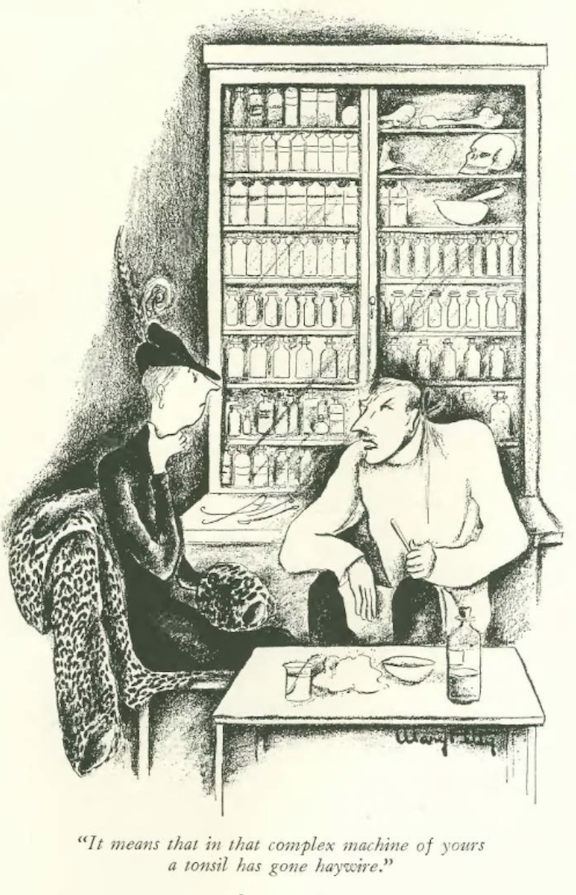
…Mary Petty gave us a straightforward diagnosis…
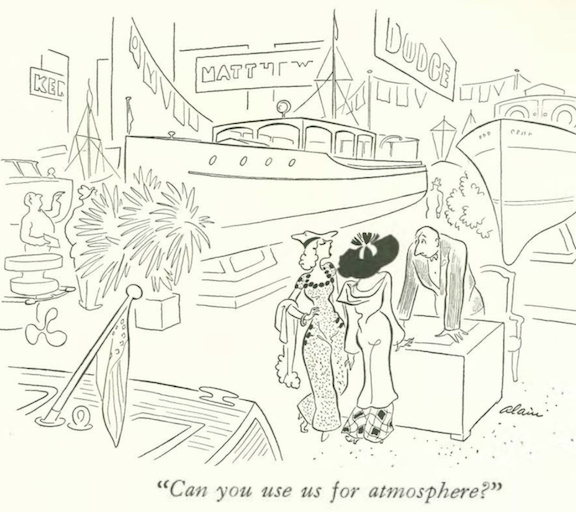
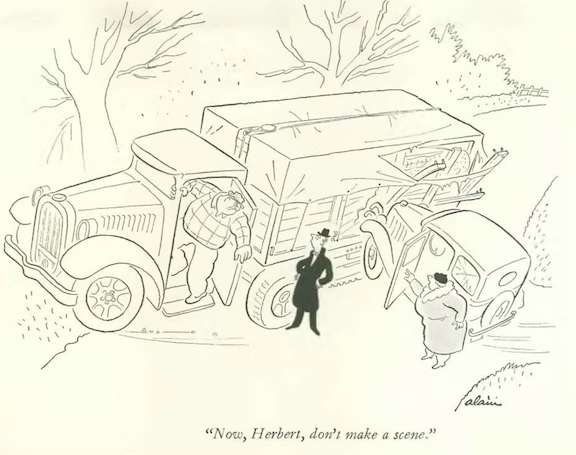
…Alain asked us to ponder the fate of one man…
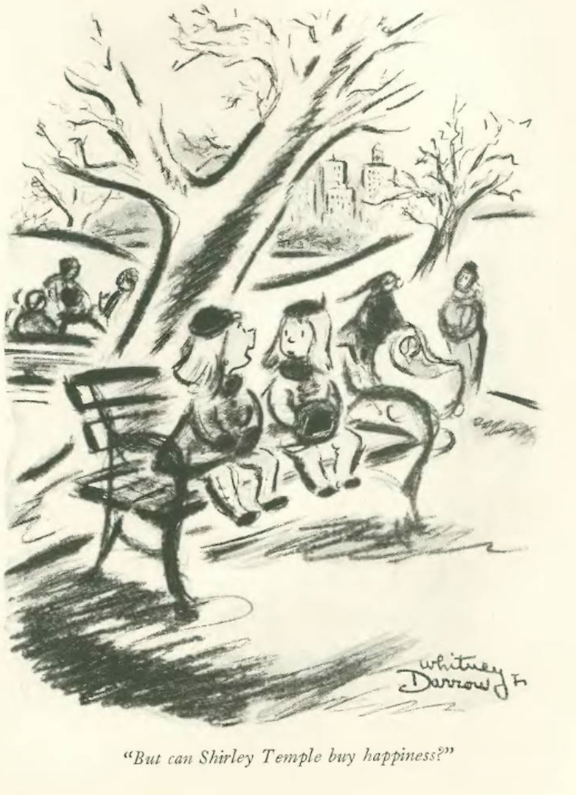
…Whitney Darrow Jr eavesdropped on some child philosophy…
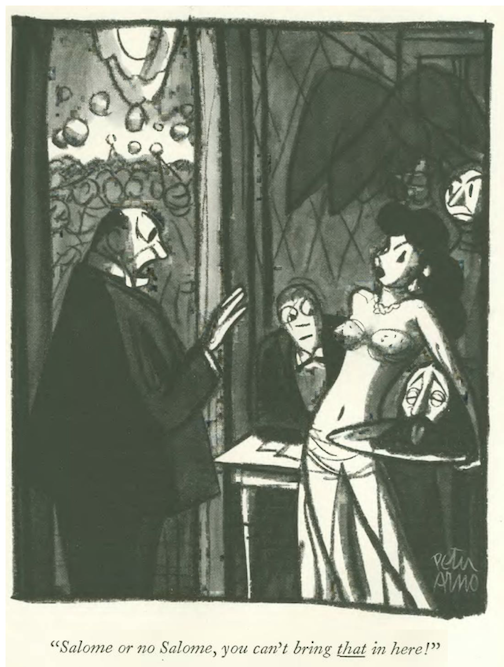
…and we close with Peter Arno, and a groom’s surprise at the altar…
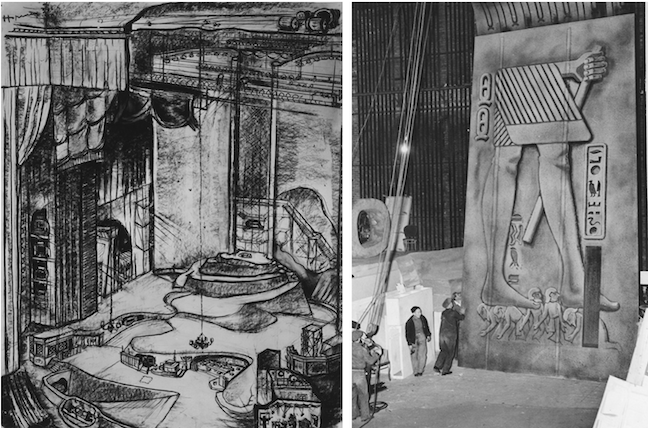
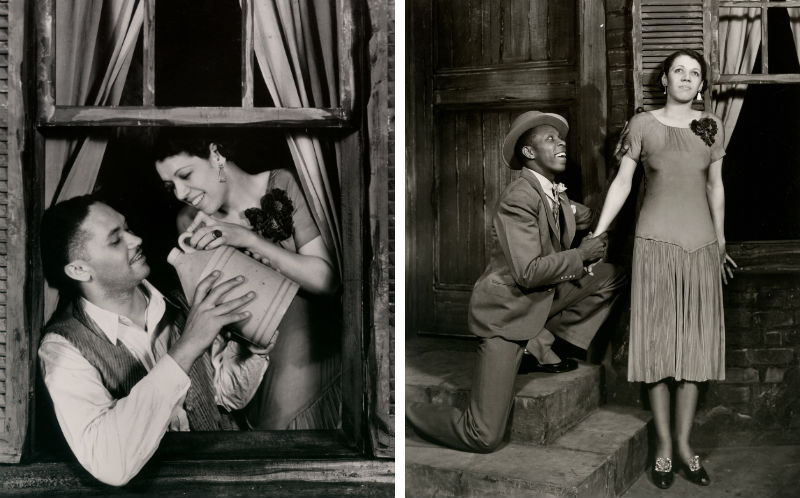
Above: Left image: Todd Duncan (Porgy) and Anne Brown (Bess), in the 1935 Broadway production of Porgy and Bess. Right image: John Bubbles (Sportin’ Life) and Brown. (Photos courtesy the Ira & Leonore Gershwin Trusts)
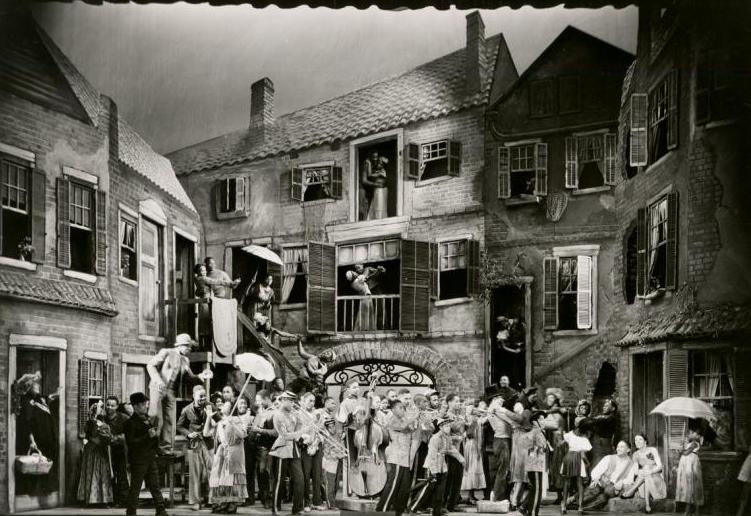
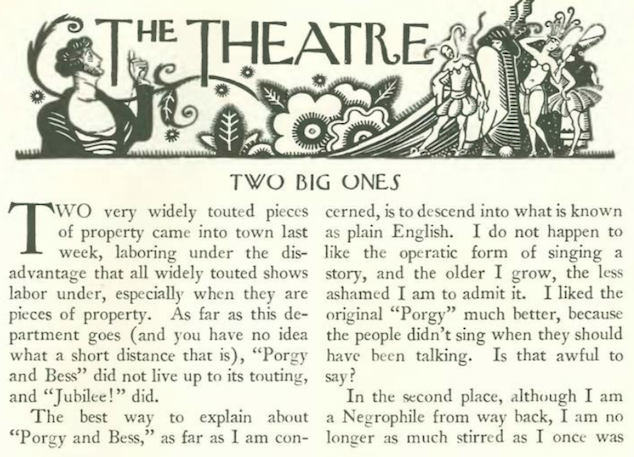
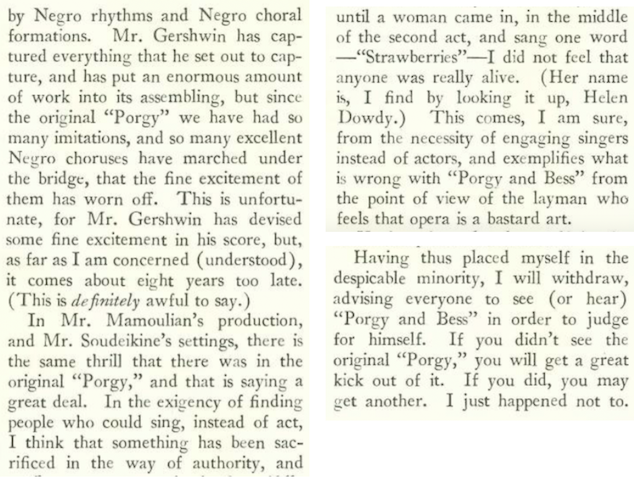
The 1935 Broadway production of Porgy and Bess is widely regarded as one of the most successful American operas of the twentieth century, but when it opened at the Alvin Theatre on Oct. 10, 1935, reviews were mixed, including the one penned by Wolcott Gibbs.
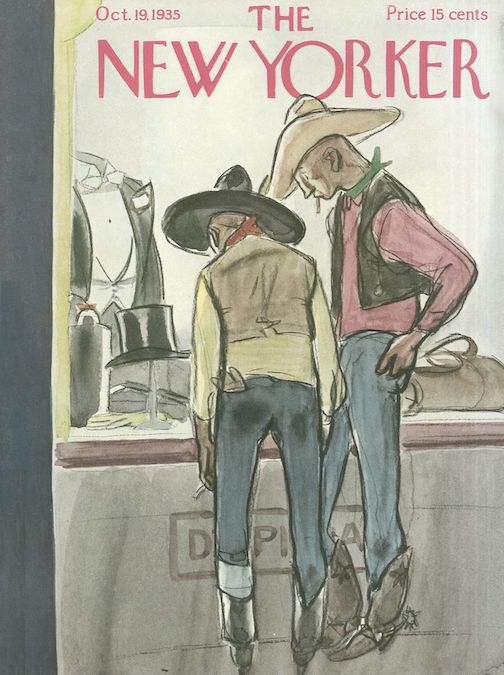
October 19, 1935 cover by William Crawford Galbraith. The New York Times (Oct. 9, 1935) made this observation about the rodeo at Madison Square Garden: “New York, which for several days has been vaguely aware of an impending rodeo because of a profusion of ten-gallon hats along Eighth Avenue and a sign in a beauty parlor, ‘Welcome, Cowgirls,’ will see the real thing this morning.”
Now you would think a work by composer George Gershwin, with a libretto written by DuBose Heyward (author of the 1925 novel Porgy) and lyricist Ira Gershwin, would be a sure hit. Some critics did praise the production, which ran for 124 performances, but others criticized themes and characterizations of Black Americans that were created by white artists.
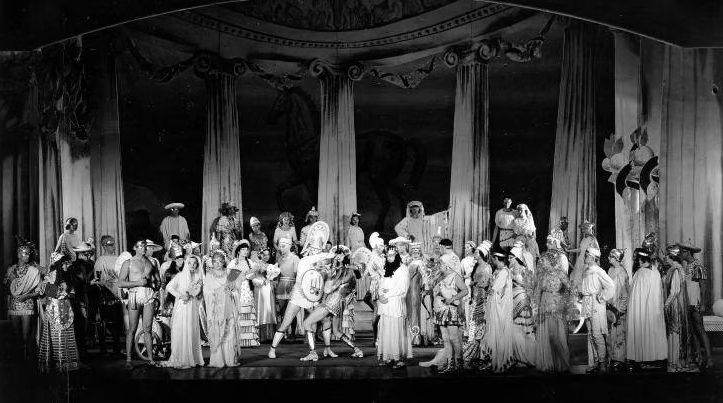
MIXED REVIEWS…The original Catfish Row set for Porgy and Bess as seen at Broadway’s Alvin Theatre (now the Neil Simon Theatre) in 1935. (Billy Rose Theatre Collection, New York Public Library Digital Gallery)
This wasn’t the first time Porgy was adapted to the stage. It was originally produced in 1927 by Heyward and his wife, Dorothy, at the Guild Theatre in New York. The Heywards insisted on an African-American cast—an unusual decision at the time—and enlisted newcomer Rouben Mamoulian to direct. The play ran a total of fifty-five weeks.
ORIGIN STORY: Porgy: A Play in Four Acts, was a 1927 play by Dorothy Heyward and DuBose Heyward, adapted from the short novel by DuBose. (Wikiwand)
Gibbs preferred the original Porgy to the Gershwin–Heyward production, admitting that he simply did not care for “the operatic form of singing a story.”
continued…
TAKING THEIR BOWS…George Gershwin greets an audience after a performance of Porgy and Bess. Behind Gershwin are his brother, Ira Gershwin (left), and librettist and Porgy author DuBose Heyward (partially hidden, at right). (umich.edu)
The Moss Hart/Cole Porter musical comedy Jubilee! premiered at Broadway’s Imperial Theatre on Oct. 12, 1935, just two days after the Porgy and Bess premiere. Gibbs dubbed this show “heat-warming and beautiful.”
THE BEGUINE BEGINS…Inspired by the Silver Jubilee of Britain’s George V, the musical comedy Jubilee! told the story of a fictional royal family. The play featured such hit songs as “Begin the Beguine” and “Just One of Those Things,” which have become part of the American Songbook. (ovrtur.com)ROYAL HIJINKS…At left, June Knight as Karen O’Kane and Charles Walters as Prince James in Jubilee!; at right, Mary Roland (the Queen) encounters “Mowgli” (Mark Plant) in Act I. (ovrtur.com)
Note: In the last issue (Oct. 12) we saw an ad for an around-the-world luxury cruise on the Franconia.Cole Porter and Moss Hart—with their families, friends, and assistants—sailed on a previous Franconia cruise, possibly in 1934, with the intention to write a new musical while on the trip. Apparently some of the songs and scenes in Jubilee! were inspired by their ports of call.
* * *
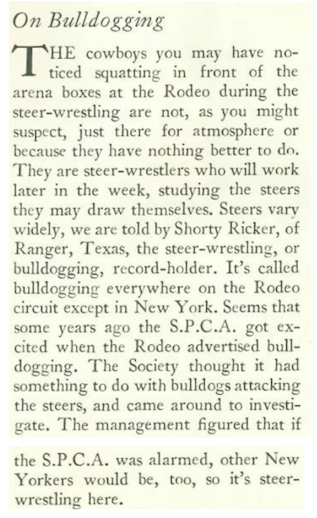
Steering Clear
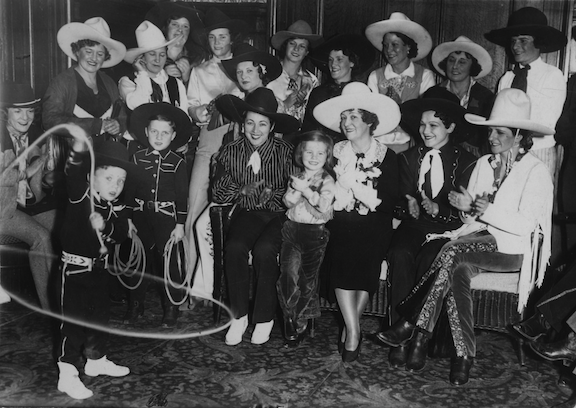
“The Talk of the Town” commented on the “steer-wrestlers” that were featured at the Madison Square Garden rodeo. Since steer-wrestling was also called “bulldogging,” it caused considerable consternation among New York animal lovers.
A BIG HOWDY…Cowgirls From the Madison Square Garden Rodeo With Millicent Hearst, 1932. (texashistory.unt.edu)
* * *
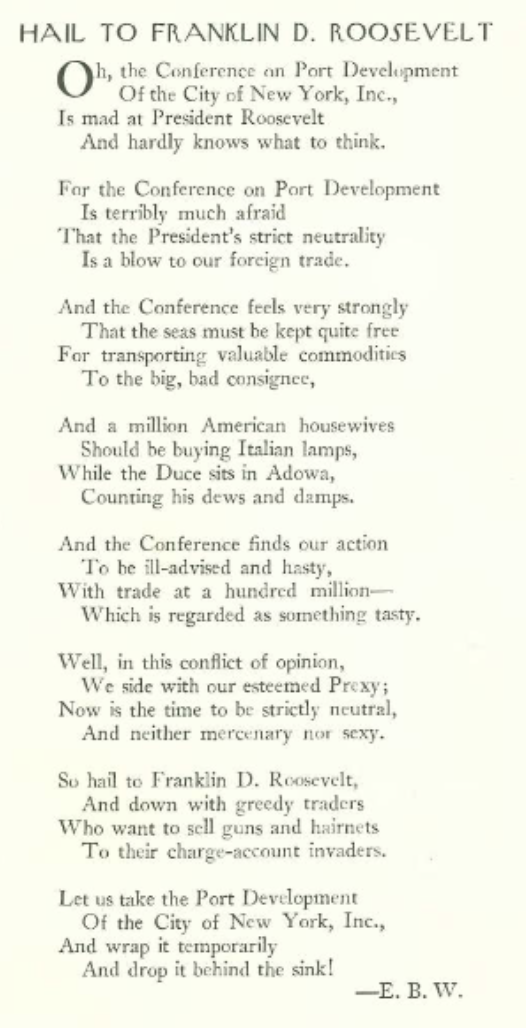
Much Ado About FDR
The Conference on Port Development of the City of New York took issue with President Franklin D. Roosevelt’s foreign trade policies, particularly his strict stance on neutrality, which the Conference believed was detrimental to foreign trade. This was likely related to the October 1935 Italian invasion of Ethiopia. E.B. White offered this satirical poem in reaction to the trade spat.
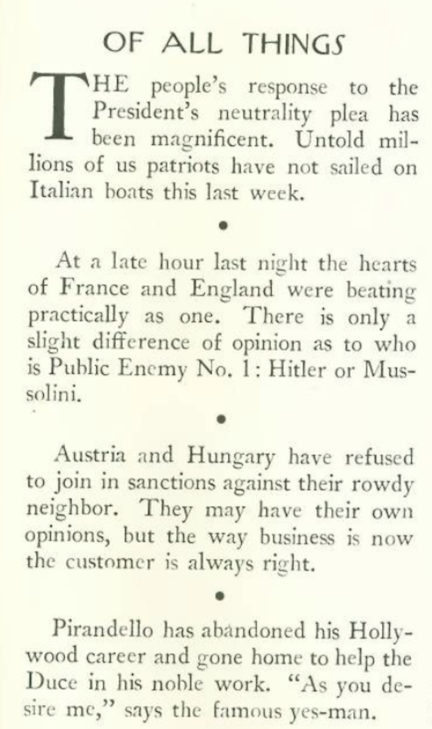
Howard Brubaker also chimed in on the trade issue, and on other unsettling developments in Europe:
* * *
Puppy Love
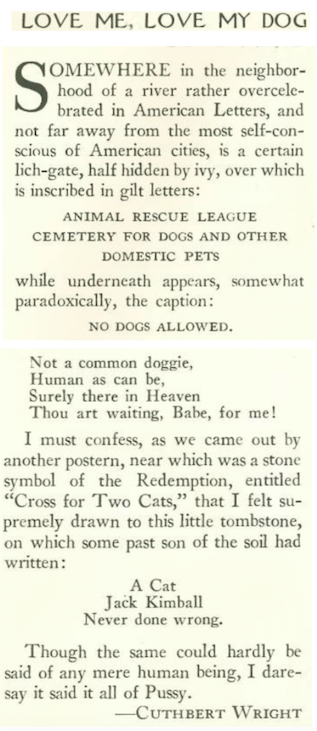
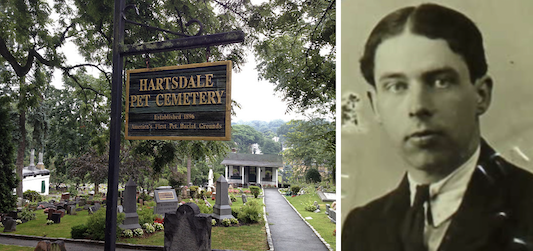
Critic and poet Cuthbert Wright (1892–1948) was moved to write poetry after visiting a dog cemetery that also welcomed animals of all stripes. Here are excerpts of the opening and closing lines:
PET PROJECT…Cuthbert Wright was moved to verse after his visit to a pet cemetery, possibly the Hartsdale Pet Cemetery in Westchester. (Wikipedia/parenthetically.blogspot.com)
* * *
Man and Machine
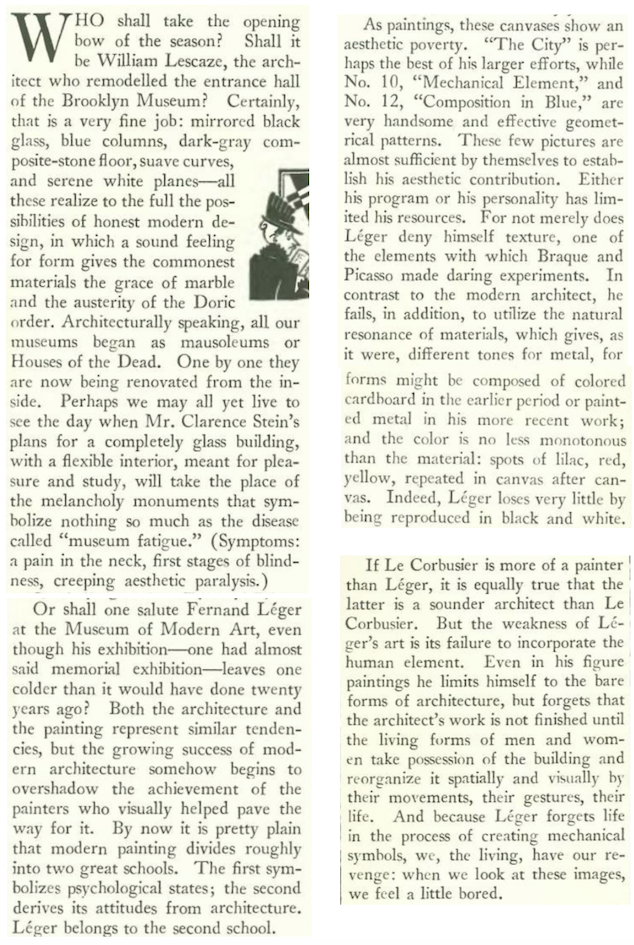
Art and culture critic Lewis Mumford is back this week, this time taking a look at the work of French artist Fernand Léger (1881–1955), who created a form of cubism known as “tubism,” regarded today as a forerunner of the pop art movement of the mid-1950s and the 1960s.
It is no surprise that the humanist Mumford, who sought an “organic balance” in everyday design, found Léger’s machine-like works alienating and sterile, representing an “aesthetic poverty.”
TOTALLY TUBULAR…Clockwise, from top left, works of Fernand Léger cited by Lewis Mumford: The City, 1919; photo of Léger, circa 1930s; from the 1918–1923 series Mechanical Elements, 1920; Composition in Blue, 1920–27. (Philadelphia Museum of Art/The Met Collection/Art Institute of Chicago, Charles H. and Mary F. S. Worcester Collection)
* * *
Disappointment in O’Hara
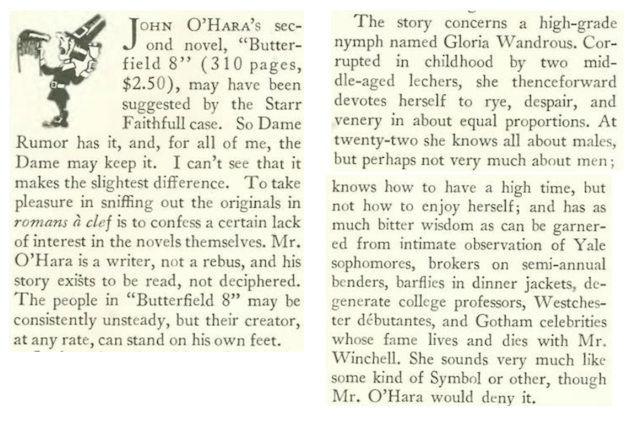
That is how Clifton Fadiman titled his “Books” column after reviewing John O’Hara’s latest novel, Butterfield 8.
O’Hara (1905–1970) wasn’t just any old scribbler. A prolific short-story writer, he has often been credited with helping to invent The New Yorker’s short story style. Praised by the likes of F. Scott Fitzgerald and Ernest Hemingway, O’Hara cranked out two bestsellers before the age of thirty. One was the acclaimed Appointment in Samarra (which was praised by Fadiman). The other was BUtterfield 8, the novel Fadiman found disappointing (Hemingway, on the other hand, blurbed, “John O’Hara writes better all the time.”). Here are a couple of brief excerpts from Fadiman’s review:
Fadiman concluded his review with a note to the author: “Why not let Jean Harlow have it, Mr. O’Hara, and start a fresh page?”
Well, Harlow didn’t get it, but twenty-five years later Elizabeth Taylor would reluctantly take on the role of Gloria Wandrous, and win the Academy Award for Best Actress.
YOU AGAIN?…Laurence Harvey and Elizabeth Taylor played on and off lovers in 1960’s Butterfield 8.John O’Hara did not participate in writing the adaptation, and the film’s plot bore only a slight resemblance to his novel. However, after the film’s release more than one million paperback copies of the novel were sold. (aiptcomics.com)
* * *
At The Movies
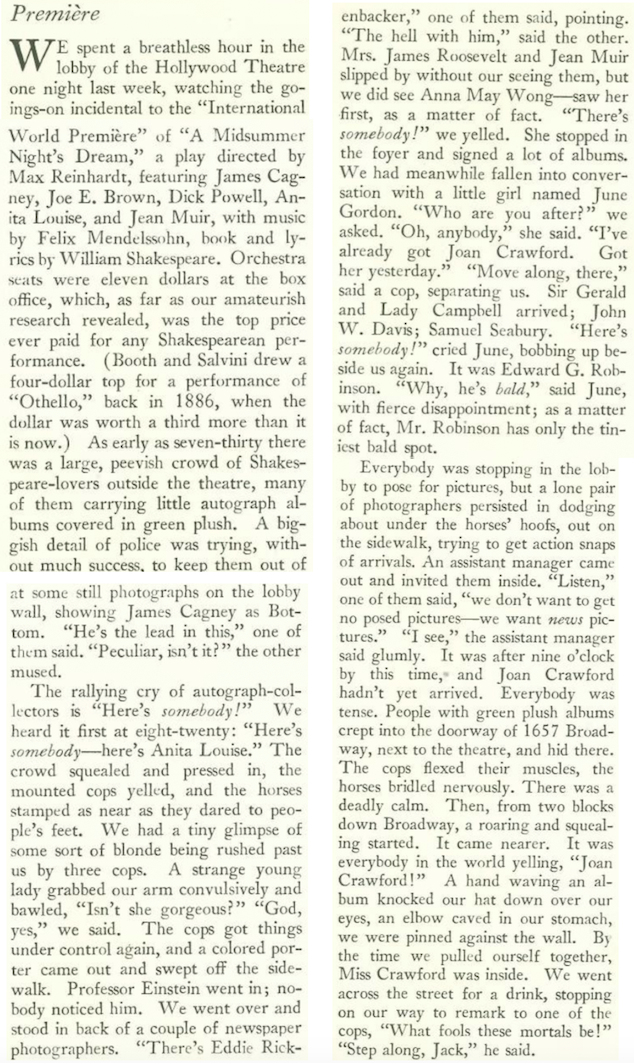
We begin this section with an excerpt from “The Talk of the Town,” which covered the “International World Première” of the Warner Brother’s adaptation of A Midsummer Night’s Dream. The film opened worldwide on October 9, 1935 in London, Sydney, Vienna and at New York’s Hollywood Theatre, where crowds turned out to get a glimpse of the stars.
RUBBERNECKERS…A Midsummer Night’s Dream premiere at the Hollywood Theatre in New York City on October 9, 1935. (britannica.com)
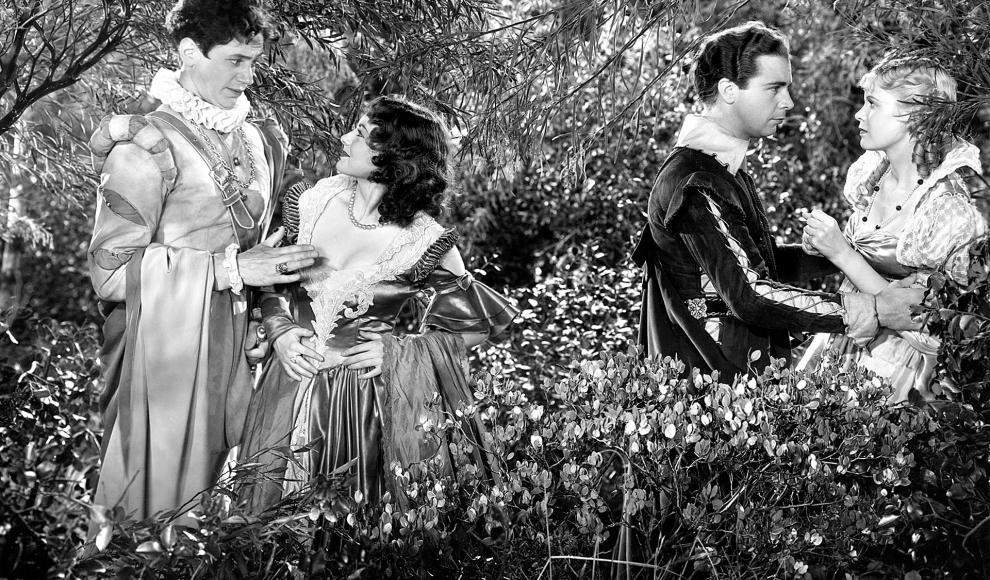
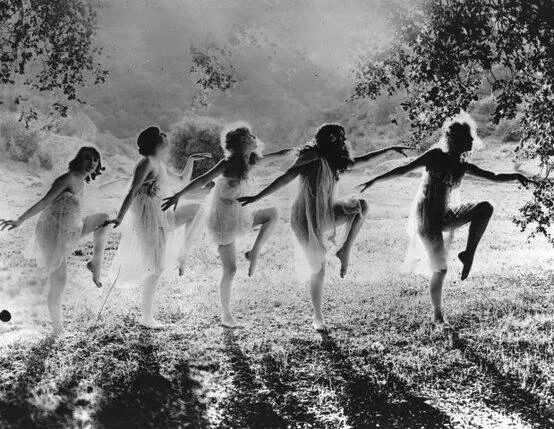
Film critic John Mosher praised Joe E. Brown’s performance as Flute, as well James Cagney’s portrayal of Bottom, and lauded the “magnificent group of clowns” that formed the remainder of The Players. Here are excerpts from his review (note I included the entirety of Otto Slogow’s delightful spot drawing):
THE LOVERS…Left to right: Ross Alexander (Demetrius), Olivia de Havilland (Hermia), Dick Powell (Lysander) and Jean Muir (Helena) meet cute and confused in A Midsummer Night’s Dream. (TCM.COM)THE SEVEN STOOGES…Bottom (James Cagney) and his fellow Players prepare to perform a stage play about the death of Pyramus and Thisbe which turns into a farce. From left, in front, Joe E. Brown (Flute), Cagney, and Otis Harlan (Starveling); in the back are, from left, Hugh Herbert (Snout), Arthur Treacher (Epilogue) and Dewey Robinson (Snug) as The Players in A Midsummer Night’s Dream. Frank McHugh (Quince) can be seen behind the wall in back. (IMDB)DANCING THE NIGHT AWAY…Fairie scene from A Midsummer Night’s Dream. (Facebook)
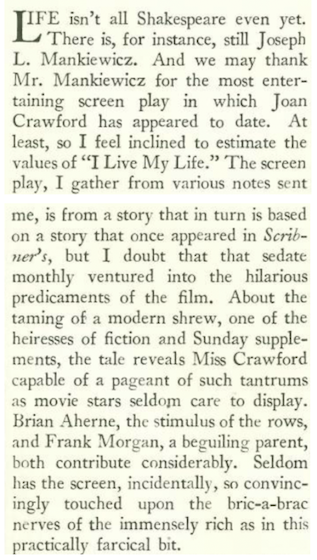
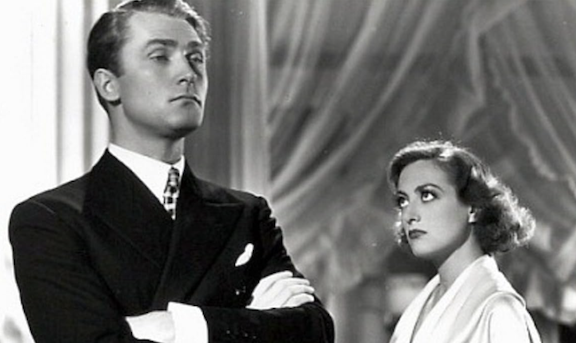
Mosher also reviewed the romantic comedy I Live My Life, which he found to be a satisfying satire on the lives of the rich.
MATCHING WITS…Bored socialite Kay Bentley (Joan Crawford) has a tempestuous romance with idealistic archaeologist Terry O’Neill (Brian Aherne) in I Live My Life. (IMDB)
* * *
From Our Advertisers
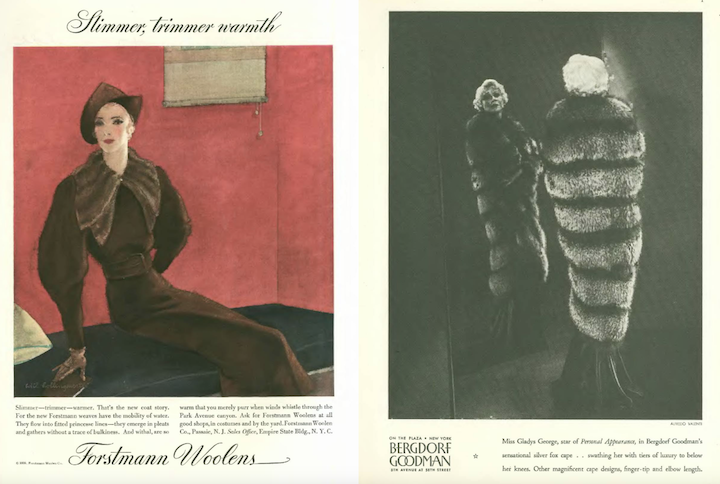
Readers ninety years ago opened the Oct. 19 issue to this two-page spread featuring the latest in fall/winter fashions…the ad on the right from Bergdorf Goodman featured stage and screen actress Gladys George donning a full-length silver fox fur…
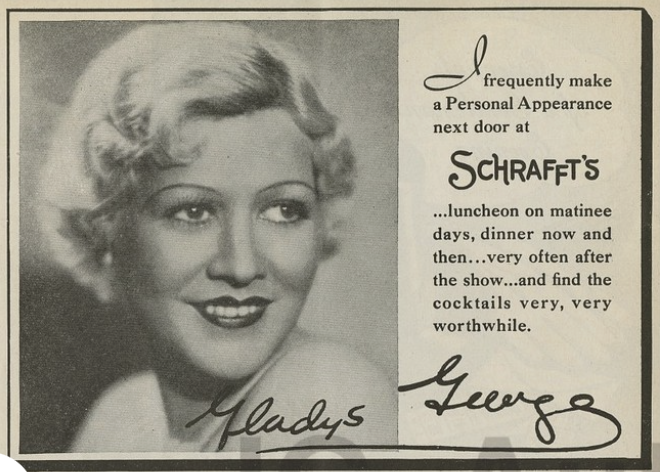
…George (1904–1954) was appearing at Henry Miller’s Theatre in the play Personal Appearance…she was featured in this testimonial ad for Schrafft’s in the theatre’s Playbill…
(playbill.com)
…the folks at Packard took out this colorful two-page spread to promote their more affordable model, the 120…the move to more affordable models helped the luxury carmaker weather the lean years of the Depression…
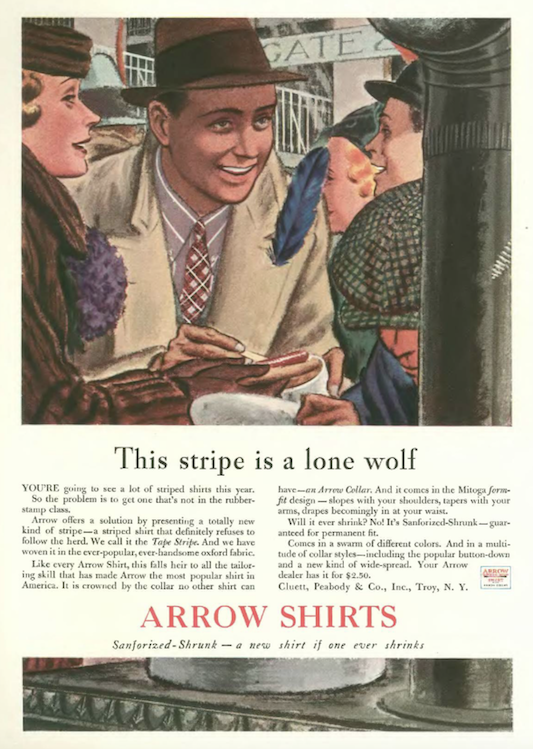
…there is a strange quality to these Arrow Shirt advertisements…what are the they looking at?…apparently something amusing as the man applies mustard to a hotdog, but it isn’t the vendor, who looks down at his cart…
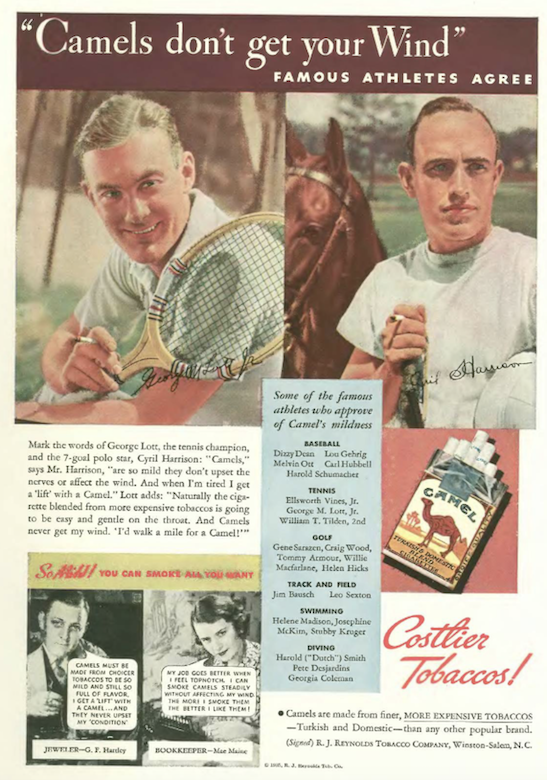
…R.J. Reynolds continued its Camel campaign featuring accomplished athletes who got a “lift” from smoking…the ad also included a couple of regular folks at the bottom, who claimed the cigarettes were so mild “You can smoke all you want”…
…Old Gold continued to enlist the talents of George Petty to illustrate their full-page ads…
…here’s a couple of back of the book ads touting Irish whisky and Ken-L-Ration dog food…note how the Scottish terriers speak in “dialect”…Ken-L-Ration was a leading dog food brand in the 1930s, thanks to their use of horse meat rather than “waste meat”…
…on to our cartoonists, we start with Al Frueh enhancing the “Theatre” page…
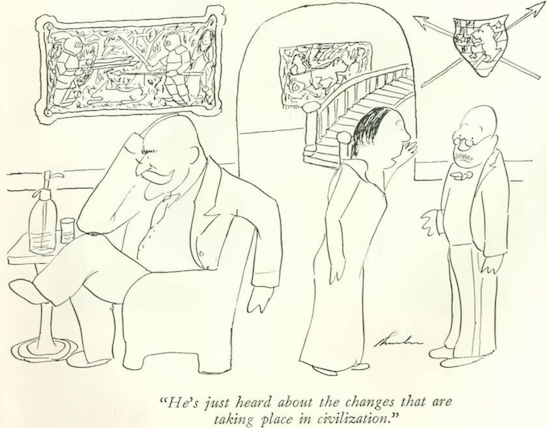
…James Thurber showed us a man at odds with the times…
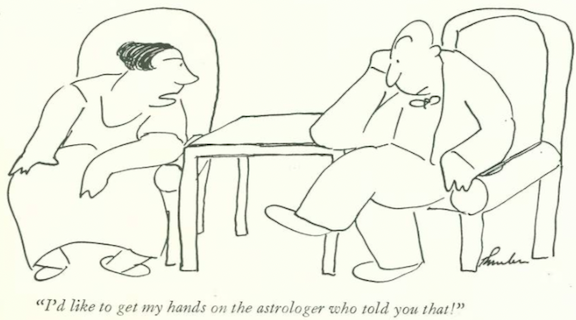
…Barbara Shermund kept us up to date on the modern woman…
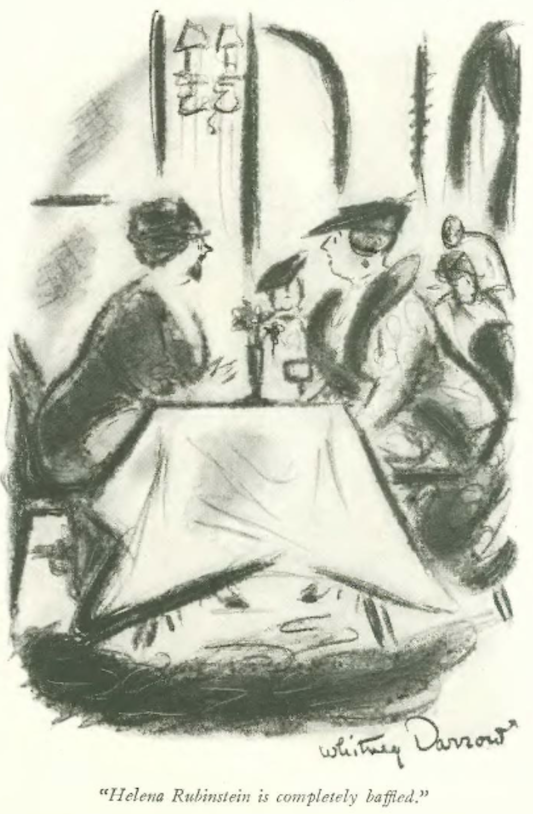
…Whitney Darrow Jr offered a challenge to Helena Rubinstein (note the woman on the right—she could have been drawn by Helen Hokinson)…
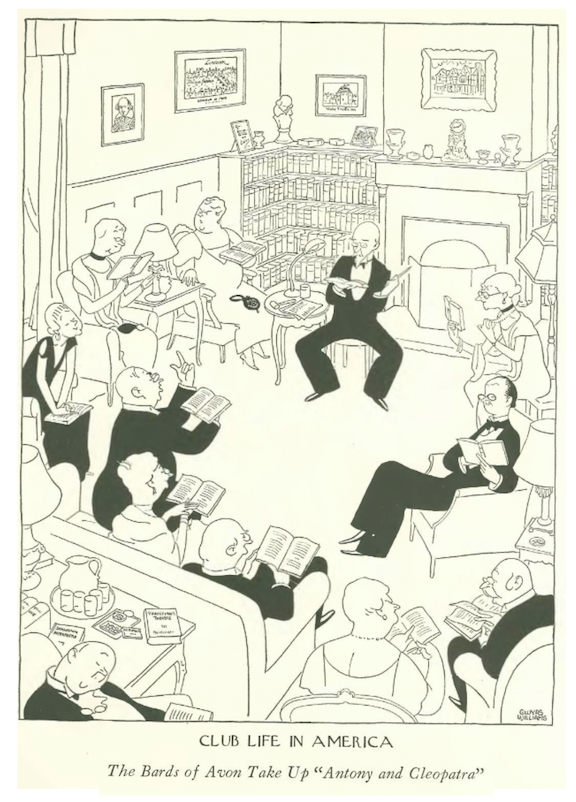
…Gluyas Williams checked in on the lively proceedings of a book club…
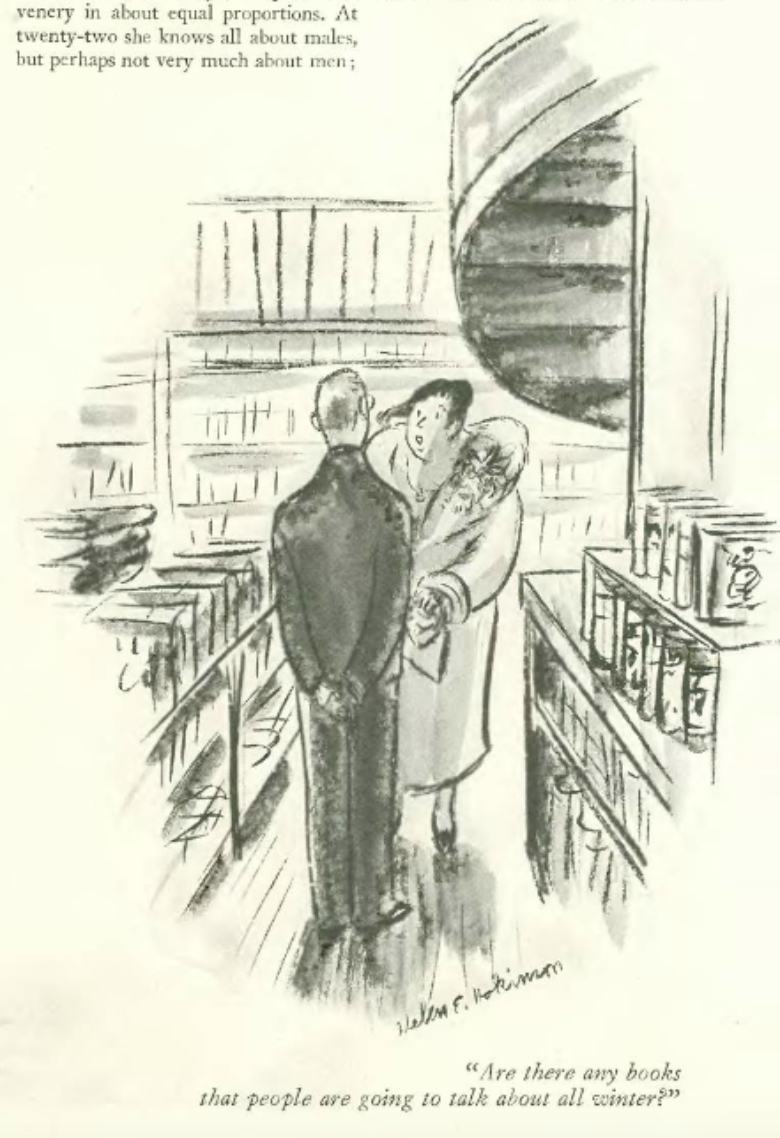
…Helen Hokinson went looking for a good winter read…
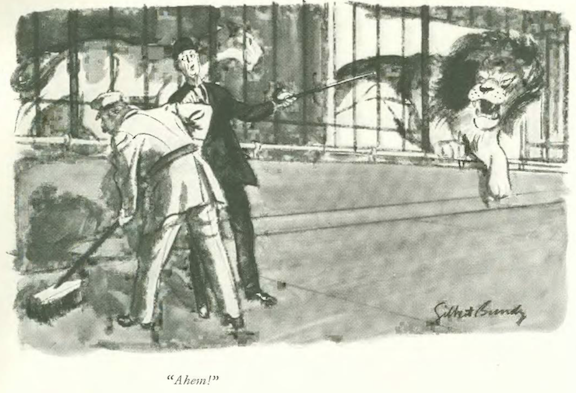
…Gilbert Bundy offered an alarming scenario on the top of p. 31…
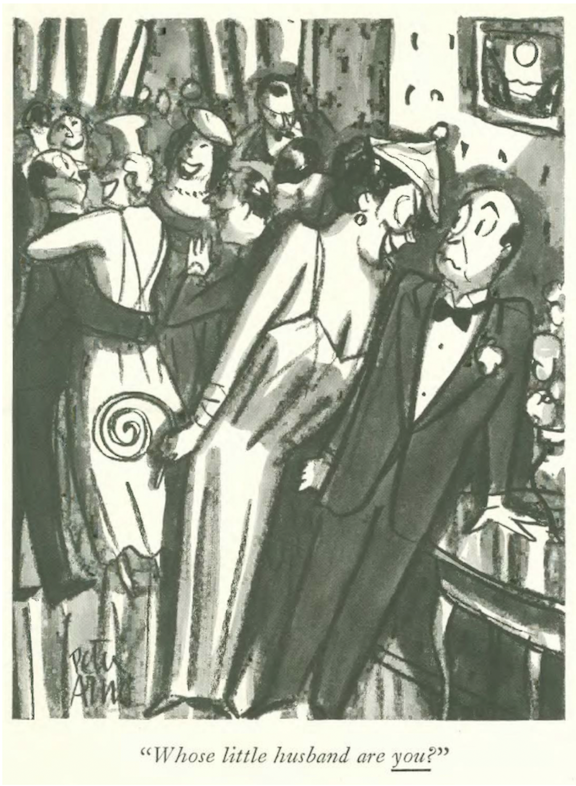
…and we close with Peter Arno, and an eye-raising encounter…
And what can be more frivolous than a Busby Berkeley musical, with scores of leggy showgirls tap-dancing in perfect rhythm, or dressed in identical white gowns while playing flying pianos. Make sense? No, and that was the whole point.
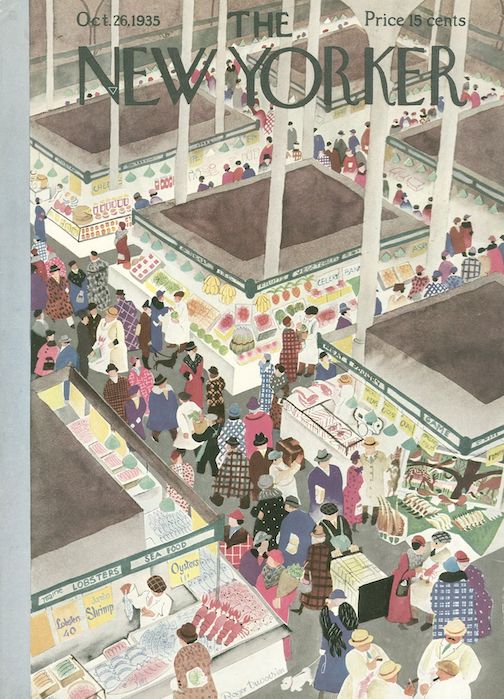
March 23, 1935 cover by Peter Arno. The color, contrast and composition are striking; it looks more like a cover from the 50s or 60s.
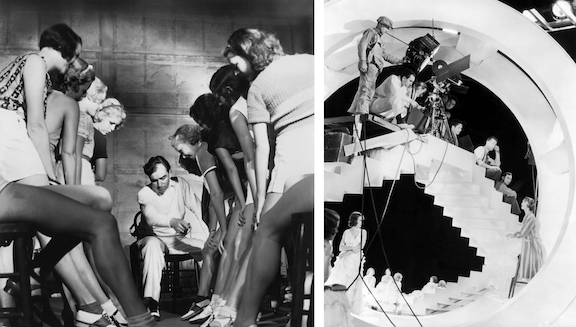
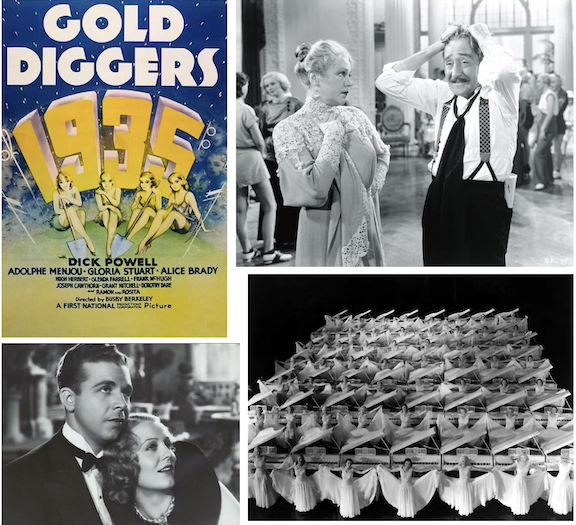
“In an era of breadlines, depression and wars, I tried to help people get away from all the misery…” Berkeley once remarked. “I wanted to make people happy, if only for an hour.” Gold Diggers of 1935 was Berkeley’s second “Gold Digger” picture (he choreographed or directed four; there were six in all, including one silent), and it was the first in which he served as sole director. Critic John Mosher didn’t know what to make of the film, likening it more to an earthquake than an entertainment.
SOMEONE HAS TO DO IT…Busby Berkeley (1895-1976) works with dancers (left) during the production of 1933’s 42nd Street; right, at work on one of his lavish sets, circa 1930s. (IMDB)
The “harmless jingle” Mosher referred to, Harry Warren and Al Dubin’s “Lullaby of Broadway,” received an Oscar for Best Original Song (it also gave me an earworm for a week).
GOLDEN GIRLS…Clockwise, from top left, Alice Brady as the parsimonious Matilda Prentiss and Adolphe Menjou as the conniving Russian dance director Nicolai Nicoleff in Gold Diggers of 1935; a scene from the dancing pianos sequence; Dick Powell and Gloria Stuart as the film’s sweethearts. (Wikipedia/YouTube/IMDB)
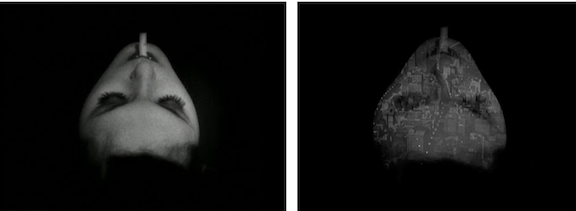
Amid the frivolity, Mosher noted the juxtaposition of the jingly “Lullaby of Broadway” with the haunting, two-minute sequence of Wini Shaw singing “Lullaby” as her disembodied face emerges from the blackness toward the viewer.
The scene continues as the woman (Shaw) turns onto her back, her head slowly dissolving into the nighttime city…after a raucous, mass tap-dancing scene, she falls to her death, and the sequence is reversed, her face disappearing into the blackness. The blog Acidemic gives an interesting take on this part of the film, which is more reminiscent of a German avant-garde film than Berkeley’s usual fare…
(YouTube)
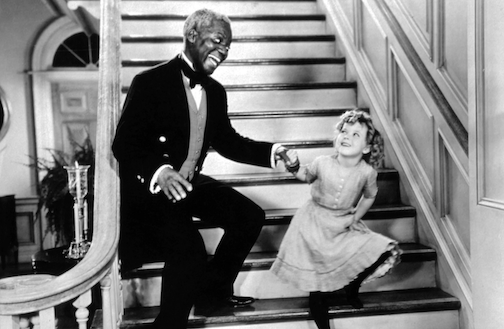
…Mosher found the scene “terrifying.” Perhaps Shirley Temple helped calm his nerves with her precocious antics in The Little Colonel…
NO FLOATING HEADS HERE…Shirley Temple and Bill Robinson doing the famous staircase dance in The Little Colonel (1935). (TCM)
* * *
Up In Smoke
In “Notes and Comment” E.B. White considered the possibility that cigarette smoking might be harmful to unborn babies, and wryly suggested that embryos could replace grandmothers as a new growth market for big tobacco:
…White referred to the advertisement below, which appeared in the Feb. 9, 1935 issue of The New Yorker:
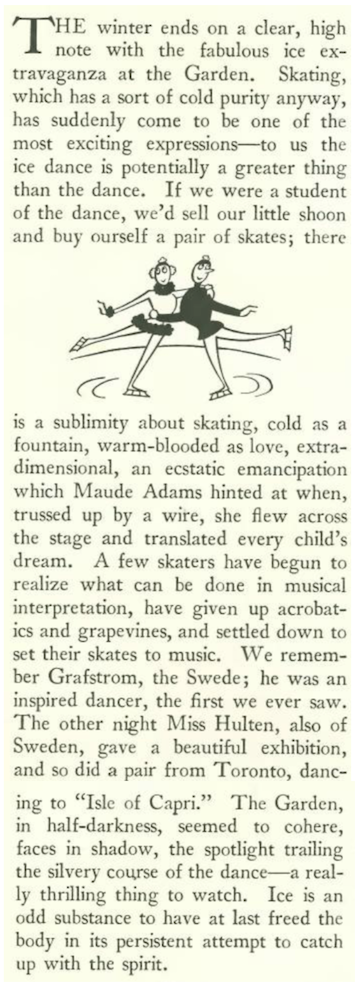
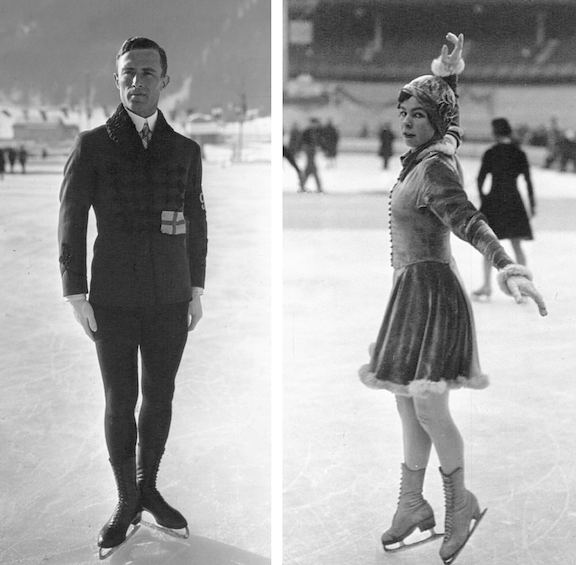
…White also commented on his recent visit to Madison Square Garden’s winter skating carnival…
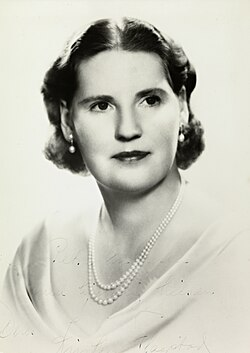
THE DOUBLE AXEL was still thirteen years in the future when Swedish skaters Gillis Emanuel Grafström (left) and Vivi-Anne Hultén delighted E.B. White at Madison Square Garden. Photos are from 1924 and 1932, respectively. (Wikipedia)
* * *
Prescience of Mind
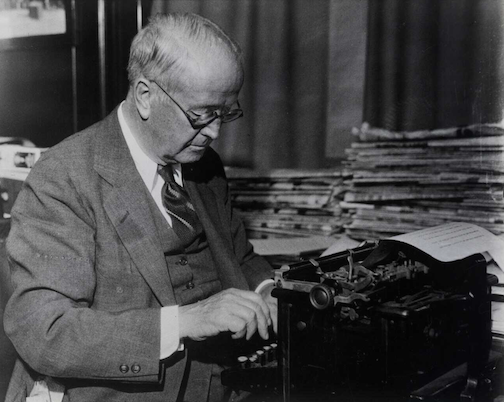
We have more from E.B. White, this time in a humorous piece titled “The Dove’s Nest,” in which White took a poke at the most influential newspaper editor in the country, Arthur Brisbane. A close friend of William Randolph Hearst, Brisbane essentially ran Hearst’s newspaper empire. The New Yorker often ridiculed Hearst’s (and Brisbane’s) jingoistic approach to the news that included giant headlines warning of war. Excerpts:
William A. Swanberg, author of the 1961 biography Citizen Hearst, described Brisbane as “a one-time socialist who had drifted pleasantly into the profit system…in some respects a vest-pocket Hearst–a personal enigma, a workhorse, a madman for circulation, a liberal who had grown conservative, an investor.”
DAMN THOSE TORPEDOES…Arthur Brisbane in 1933. His grandson, Arthur S. Brisbane, now retired, served as public editor of The New York Times from 2010 to 2012. (credo.library.umass.edu)
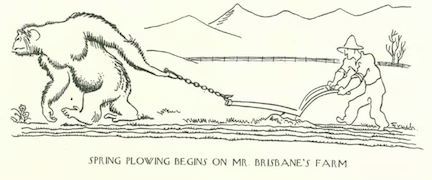
The New Yorker continued to take jabs at Brisbane in the following issue (March 30). Brisbane owned a large estate (including a horse farm) in New Jersey that he made available to New Deal work programs during the Depression. I suppose this Al Frueh cartoon was some kind of reference to that…
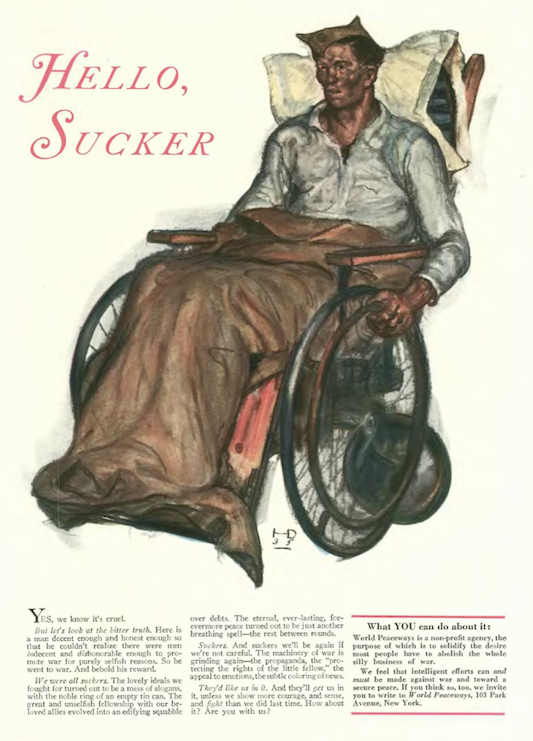
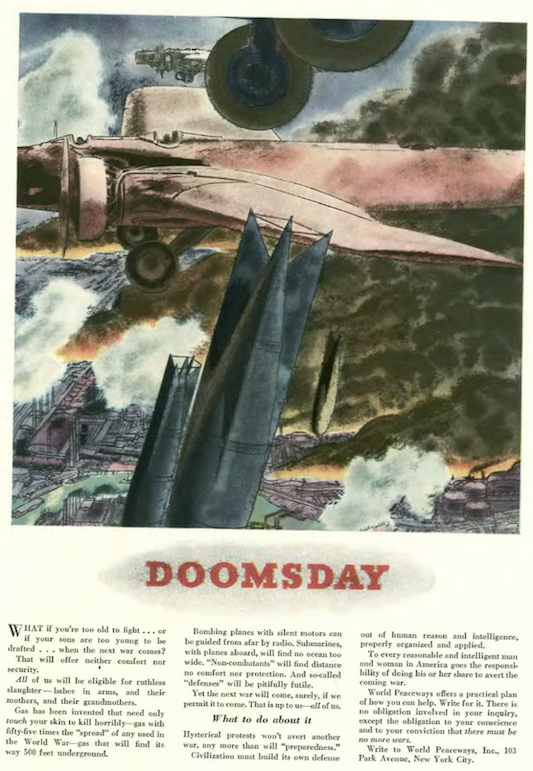
…also in the March 30 issue was this ad from World Peaceways, which raised alarms about possible war and bombs raining down from the sky…
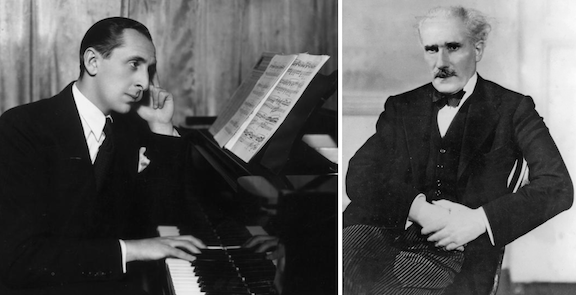
…back to the March 23 issue, where we find the calming strains of a Brahms concerto at Carnegie Hall, conducted by Arturo Toscanini with some support from his son-in-law, Vladimir Horowitz…
MAY I CALL YOU DAD?…Not likely something said by young Vladimir Horowitz, left, to father-in-law Arturo Toscanini. (WQXR/Britannica)
* * *
From Our Advertisers
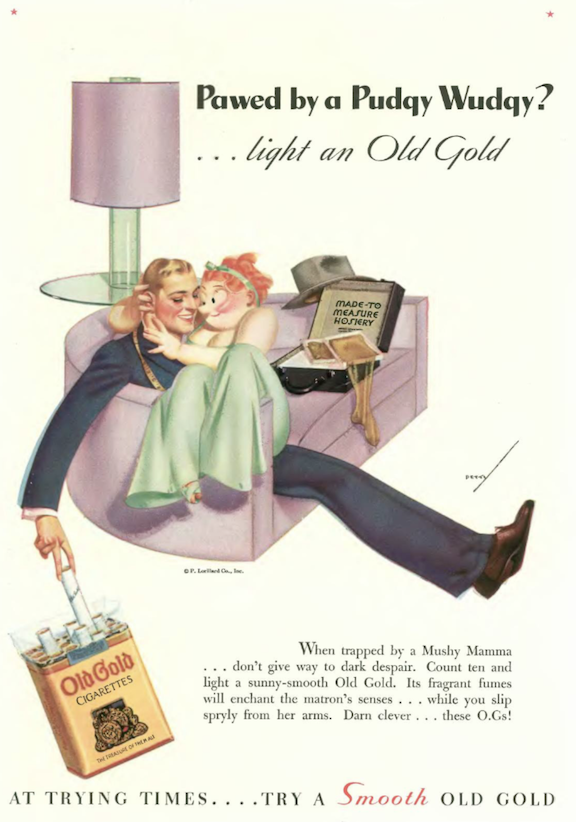
Beginning in 1934 the makers of Old Gold cigarettes hired pin-up artist George Petty to create a series of ads featuring a homely, clueless sugar daddy and his leggy mistress…here he turns the tables, introducing a “Pudgy Wudgy” matron putting the moves on a handsome hosiery salesman…
…this Petty ad appeared in the Feb. 9, 1935 issue of The New Yorker…
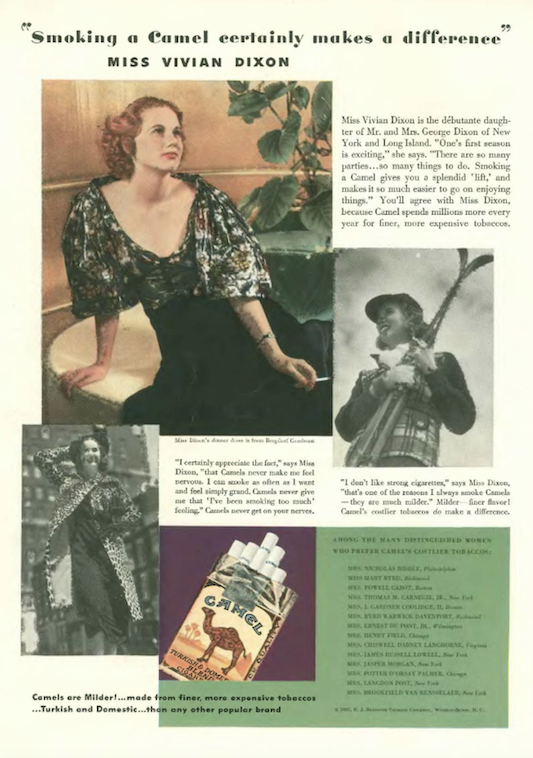
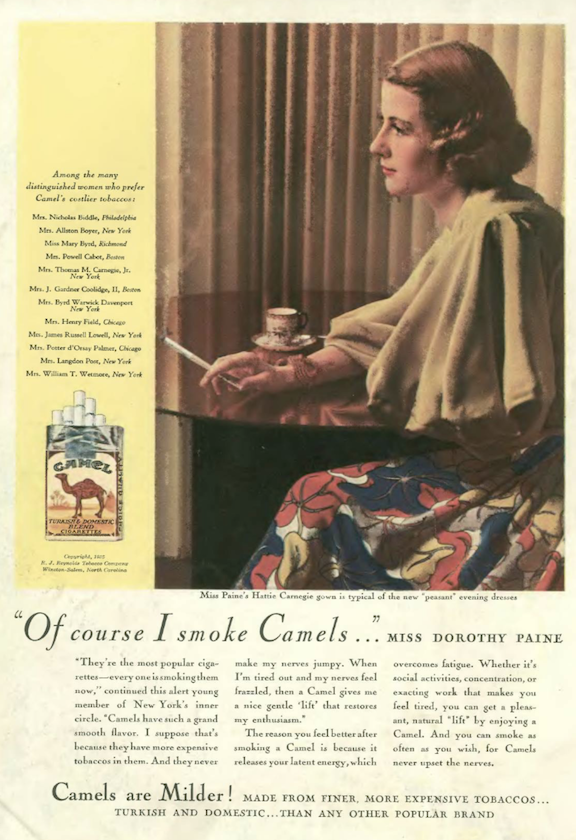
…the makers of Camels continued their campaign of “distinguished women” who enjoyed their product…here we have a former debutante, Dorothy Paine, an “alert young member of New York’s inner circle.” Not much of a record of Dorothy, who married a man named Walter H. Sterling in 1935…apparently they moved to Phoenix and bought up property in the Southwest…
…the makers of General Tire offered this grim assessment of tire safety…the lad seems to be a mere investment of time…
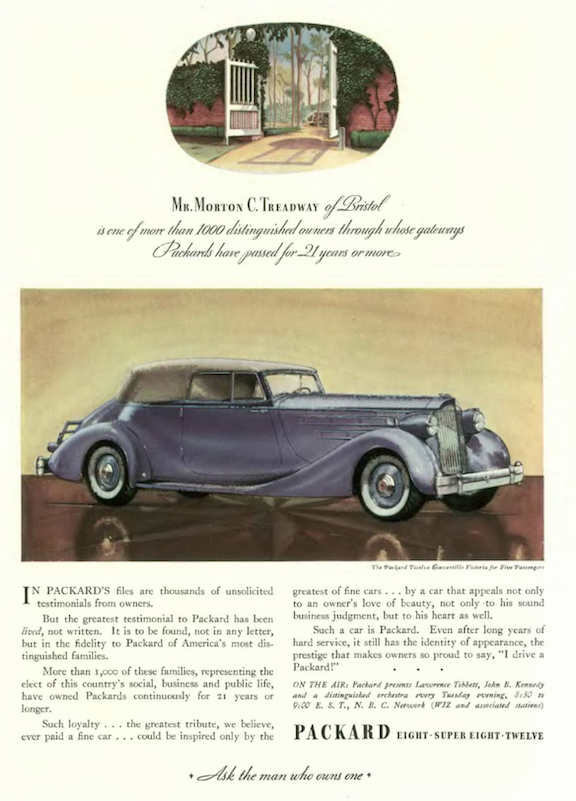
…although prestige brands suffered mightily during the Depression, the folks at Packard were doubling down on the elite status of their automobile…
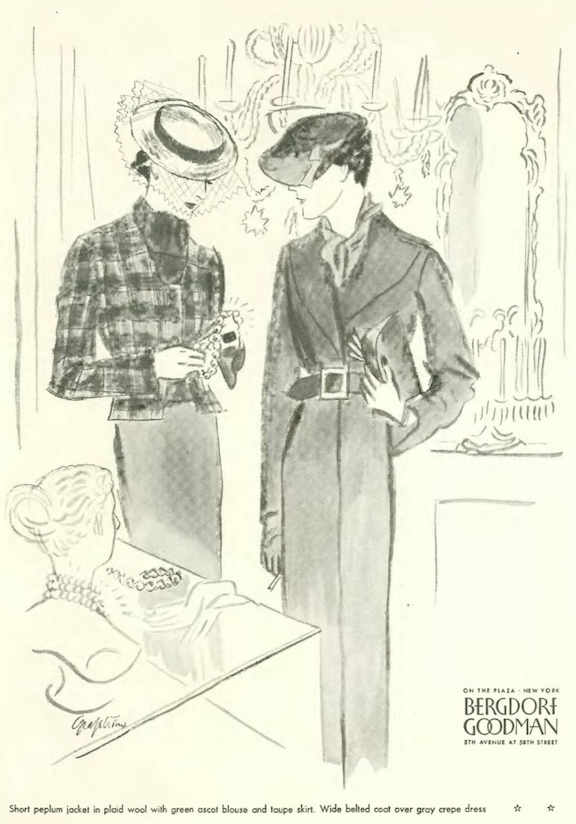
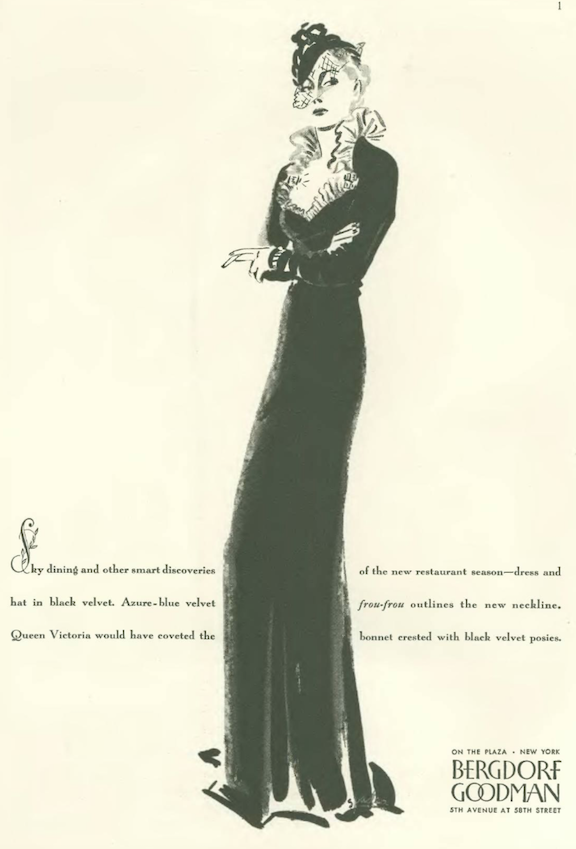
…we’ve seen the work of fashion illustrator Ruth Sigrid Grafstrom before in ads for Spud cigarettes…here she contributes some elegant lines to a spot for Bergdorf Goodman (is the woman on the right smoking a Spud?)…
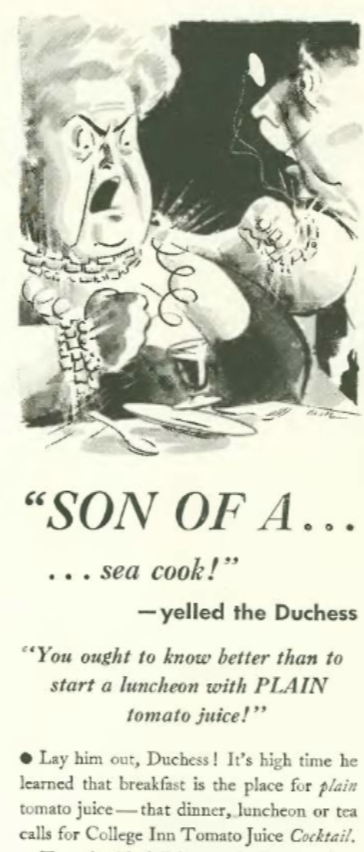
…here’s the Duchess again, still blowing her top over College Inn tomato juice…just look at her clenched fists…that fop with a monocle looks like he just took a left hook to the chops…
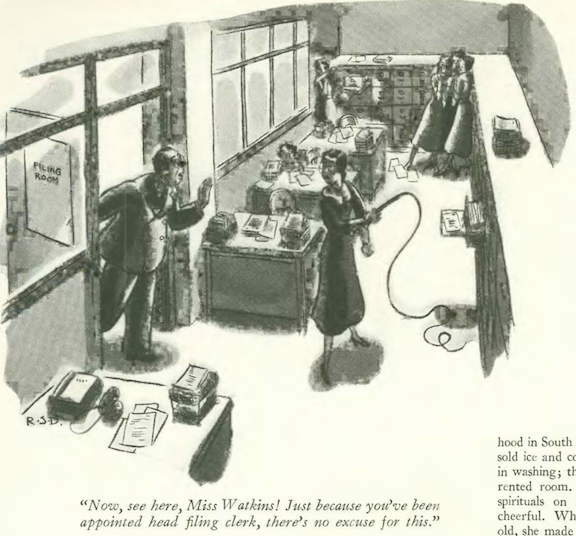
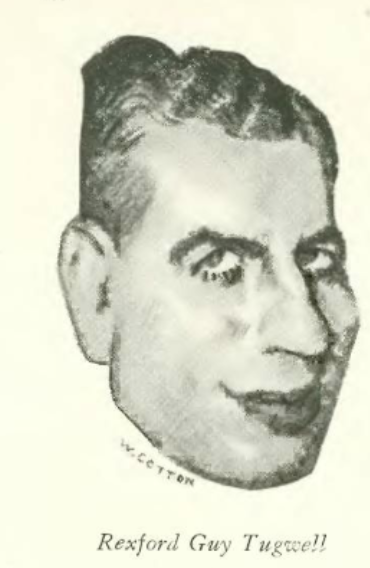
…on to our illustrators, William Cotton created this caricature of Rexford Guy Tugwell for Russell Lord’s two-part profile…Tugwell and President Franklin D. Roosevelt created the Resettlement Administration, which relocated rural unemployed to “Greenbelt Cities” near urban job markets. Critics called him “Rex the Red” for his social engineering experiments, and after he was forced out of federal government, Tugwell was appointed in 1938 as the first director of the NYC Planning Commission. Naturally, he would butt heads with Robert Moses…
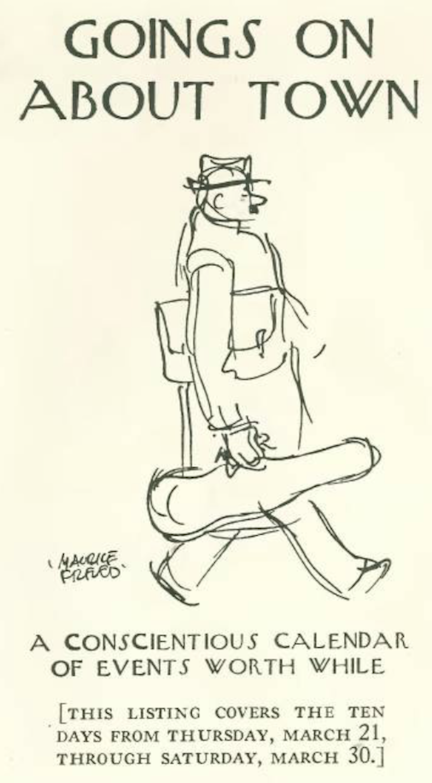
…illustrator and painter Maurice Freed kicked off the calendar section…
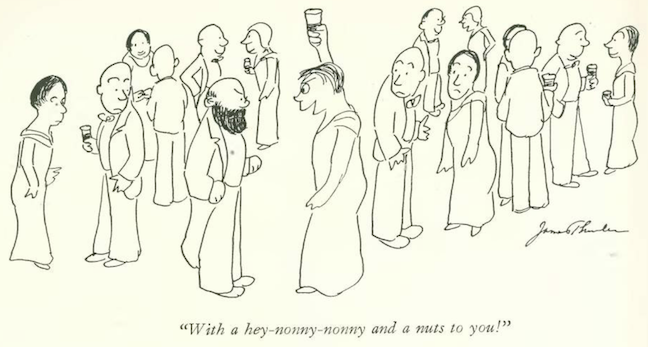
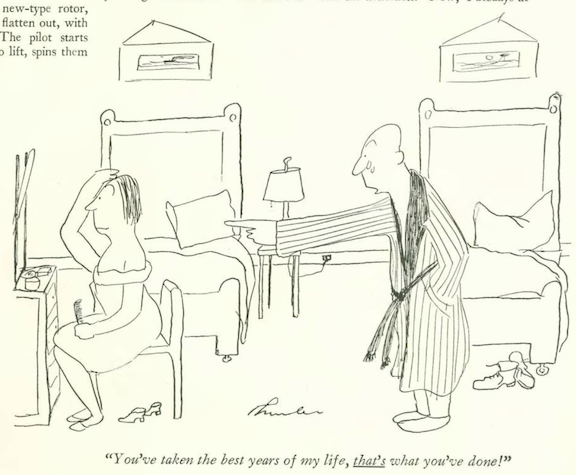
…bookended on the bottom of page 4 by one of James Thurber’s most recognized drawings…
…Thurber again, and more woes between the sexes…
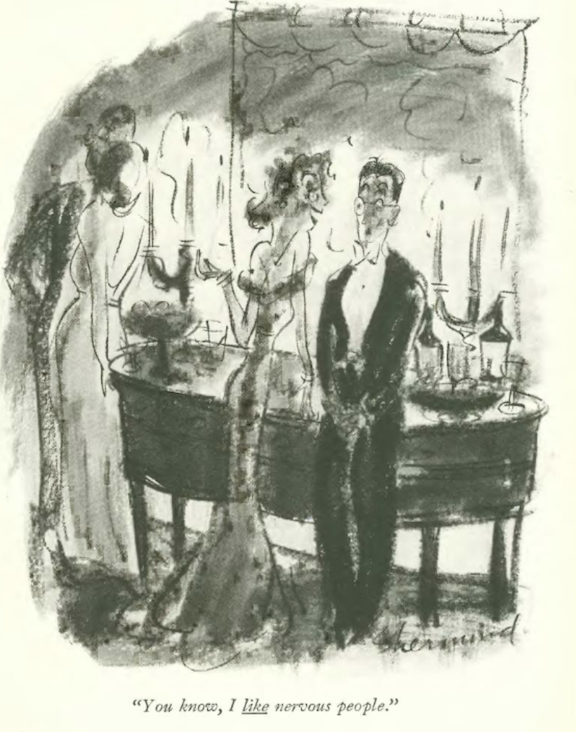
…we continue with our cartoonists by looking in on Barbara Shermund…
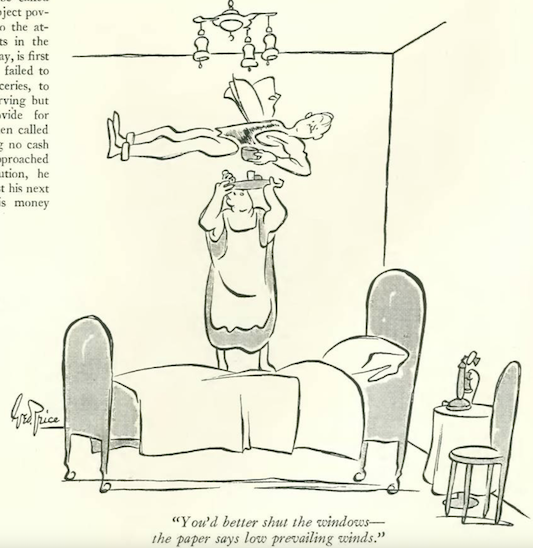
…George Price found a new wrinkle for his recurring floating man cartoon…
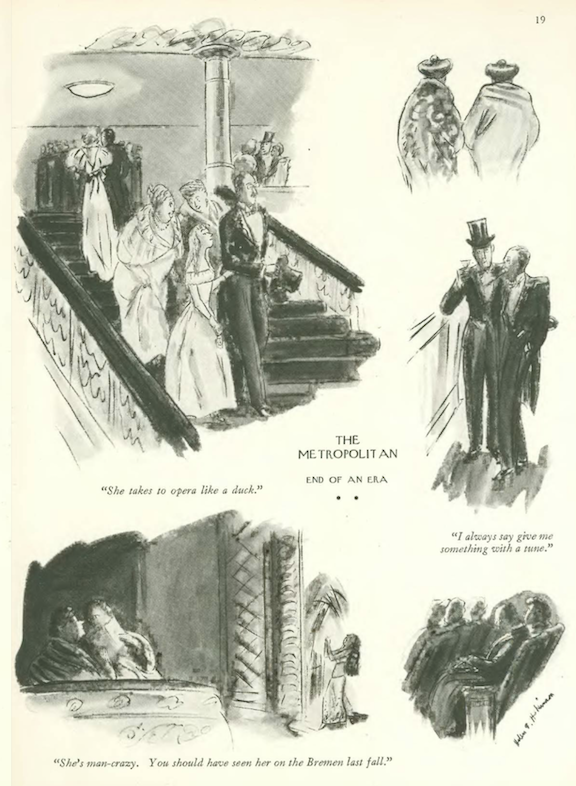
…Helen Hokinson graced page 19 with scenes from the opera…
…leaving an extra drawing stranded on page 18…
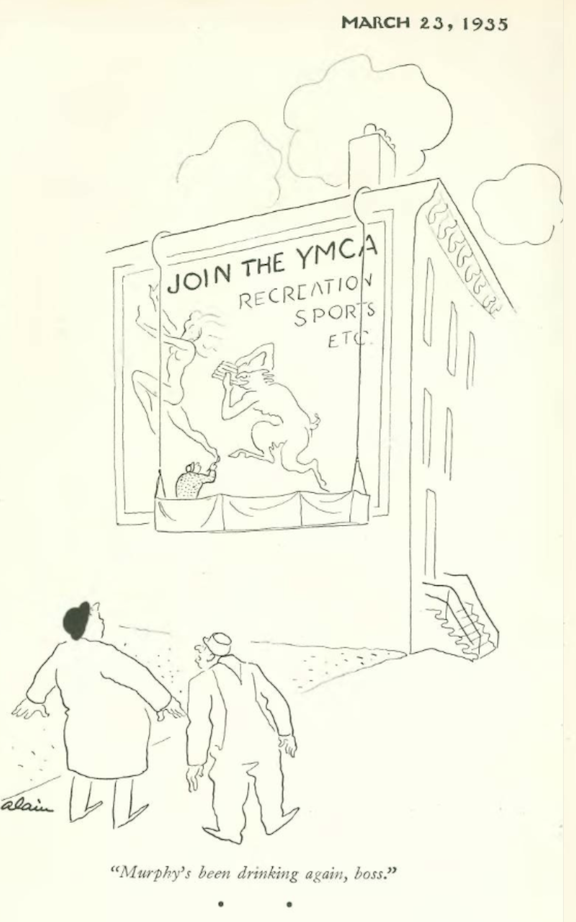
…Alain offered a new twist on the promotion of physical fitness…
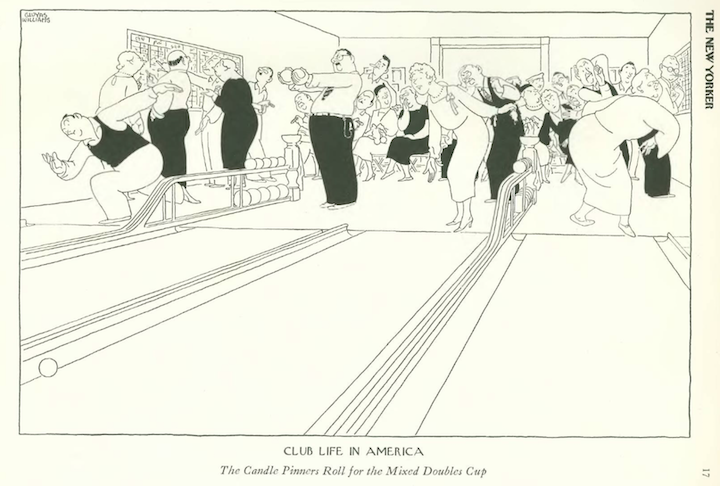
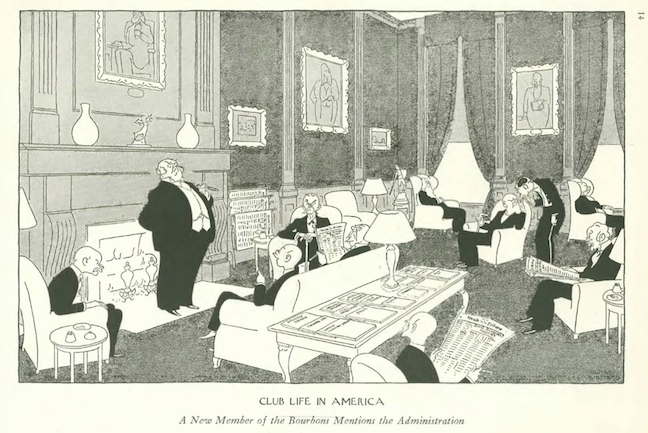
…Gluyas Williams brought us to the stuffy confines of club life (the cartoon was originally featured vertically)…
…and we close with Richard Decker, and a lucky draw at the IRS…
Otto Klemperer rehearsing at the Hollywood Bowl in September 1937. (Los Angeles Philharmonic)
The 20th century was an age of big personalities in classical music, among them Otto Klemperer (1885-1973), a German-born protégé of the composer and conductor Gustav Mahler. Klemperer was already an established conductor in opera houses around Germany when the rise of the Nazis prompted the maestro to emigrate with his family in 1933. He was soon appointed chief conductor of the Los Angeles Philharmonic.
Oct. 13, 1934 cover by Rea Irvin.
Klemperer also guest conducted a number of orchestras in the U.S., including the New York Philharmonic, where his larger than life presence caught the attention of “The Talk of the Town.” Excerpts:
MAESTRO…Top left, Otto Klemperer with Czech composer Leoš Janáček in 1927; at right, with Austrian-American classical pianist and composer Artur Schnabel in 1933; bottom photo, with wife Johanna Geisler, son Werner and daughter Lotte in Los Angeles, 1936. (operaplus.cz/Otto Klemperer Film Foundation/ottoklemperer.nl)
Lauded internationally as a great orchestral commander, in 1939 Klemperer would begin experiencing balance issues. After a tumor the size of a small orange was removed from his brain, he would be left partially paralyzed on his right side; bouts of depression and a manic phase would later land him in a mental hospital. However, by 1946 he would recover his health enough to return to conducting in a career that would last until 1971.
The conductor’s daughter, Lotte Klemperer (1923–2003), would serve as her father’s secretary, negotiator and administrator until his death in 1973. Otto’s son, Werner Klemperer (1920–2000), would become a stage, screen and television actor, most notably portraying Colonel Klink in the 1960s comedy Hogan’s Heroes. Although the role would garner Werner two Emmys, his father never fully understood the series or even the concept of a sitcom. Reluctant to pursue a musical career while his father was alive, Werner would later join the Metropolitan Opera Company in the 1970s, appear in Broadway musicals, and serve as a narrator with a number of American symphony orchestras.
TO THEM HE WAS DAD…At left, daughter Lotte Klemperer with her famous father in 1954. She would serve as his caretaker and business partner after her mother’s death in 1956. At right, son Werner Klemperer acted on Broadway and in films before taking on the role of the bumbling Colonel Klink in the 1960s comedy Hogan’s Heroes, which garnered the actor two Emmys. Although Werner Klemperer was musically inclined, he avoided work in music until the death of his father in 1973. (Otto Klemperer Film Foundation/CBS)
* * *
Vanished in the Haze
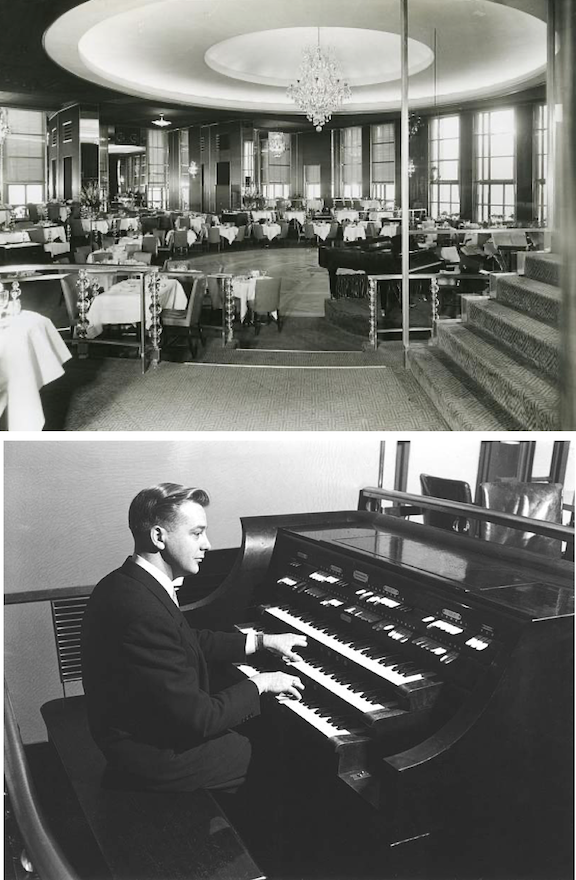
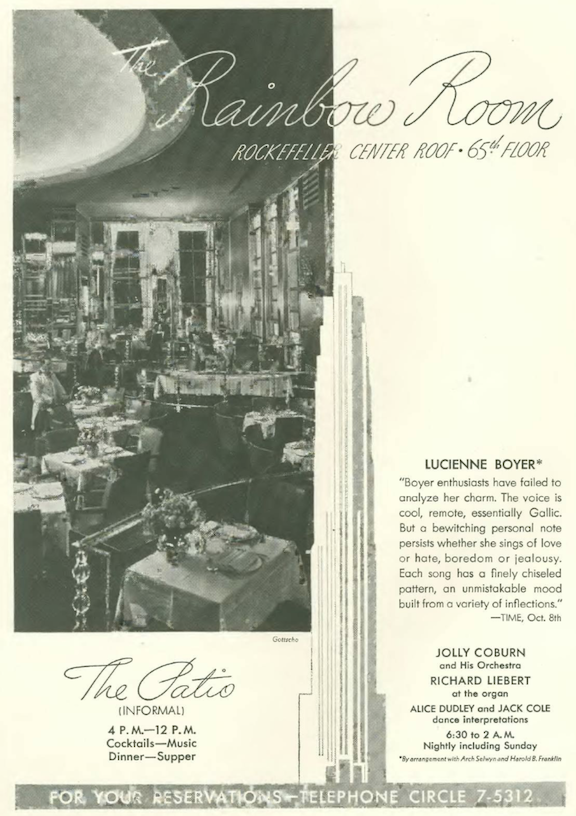
In his “Notes and Comment,” E.B. White lamented what appeared to be the transformation of the familiar night club; high above Manhattan in the Rockefeller Center’s Rainbow Room, the comforting haze of “cigarette smoke, talc, waiter’s venom” had been displaced by air conditioning, and to add to the horror, an organ had been installed that tinged the fox trot “with an odd piety.”
NOWHERE TO HIDE…E.B. White found the lack of haze in the new Rainbow Room disconcerting, not to mention the addition of a Wurlitzer organ, its wonders demonstrated here by organist Ray Bohr in 1934. (Library of Congress/nycago.org)
* * *
There Oughta Be a Law
While E.B. White was mourning the demise of the smoky nightclub, art and design critic Lewis Mumford continued his tirade against the pretentious and mediocre buildings that were popping up all over the city, including the new Federal Court Building on Centre Street that was, in Mumford’s words, a supreme example of bad design and fake grandeur.
A CRIMINAL CASE…Cass Gilbert’s Federal Courthouse building (United States courthouse) was completed in 1936, two years after Gilbert’s death. In 2001 it was designated as the Thurgood Marshall United States Courthouse. Critic Lewis Mumford called the design, which combined “two unlovely and unrelated forms”…”nothing short of a major crime.” (Wurts Brothers Photography Collection, National Building Museum)
* * *
Crime of the Century
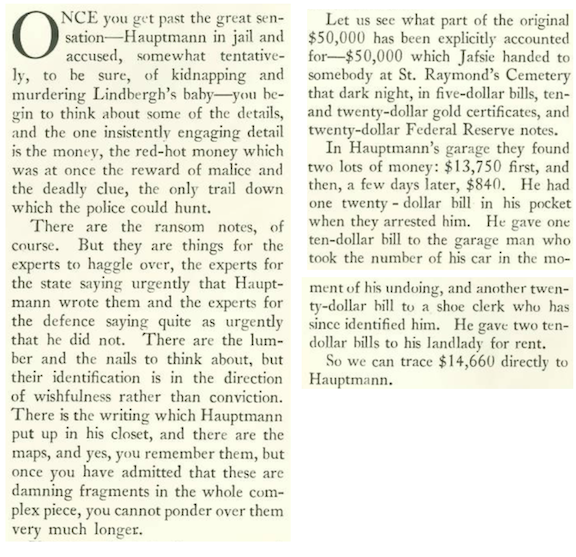
That is what the press called the kidnap and murder of the infant son of Charles Lindbergh and Anne Morrow. In September 1934 a German immigrant carpenter named Bruno Hauptmann was arrested for the crime, and a trial date was set for the following January. In his “A Reporter at Large” column, Morris Markey examined the ransom money trail that led to Hauptmann’s ultimate arrest. Excerpts:
DON’T SAY “CHEESE”…Bruno Hauptmann sits for a mug shot following his arrest for the abduction and murder of the 20-month-old son of Charles Lindbergh and Anne Morrow Lindbergh. (Leslie Jones, Boston Public Library)
* * *
Should Have Stayed Lost
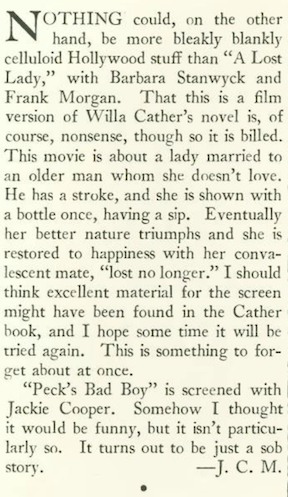
A film version of Willa Cather’s 1923 novel A Lost Lady was first made as a silent by Warner Brothers in 1924 (the film itself is lost) but in 1934 Warner had another go at the novel with a sound version starring starring Barbara Stanwyck, who was emerging as a major star. But Stanwyck’s talents could not overcome a script that critic John Mosher described as bleak, blank nonsense. Cather was so dismayed by the film that she refused to permit another adaptation of any of her novels during her lifetime.
LOST IN TRANSLATION…Barbara Stanwyck and Ricardo Cortez in A Lost Lady (1934). (IMDB)
* * *
From Our Advertisers
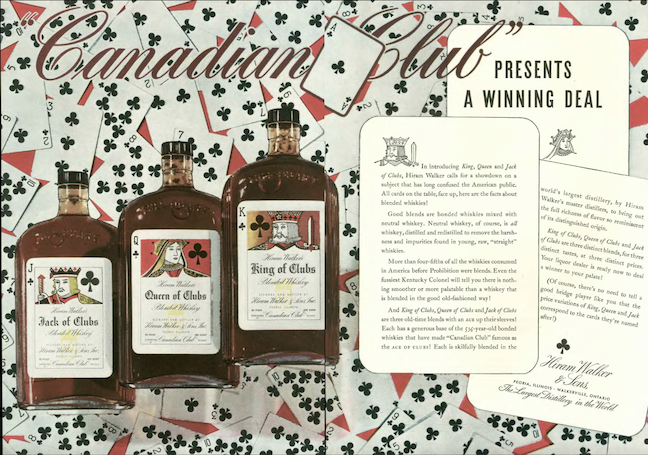
We kick off our sponsors with this two-page center spread from Hiram Walker & Sons, who introduced their new line of playing card-inspired whiskies…
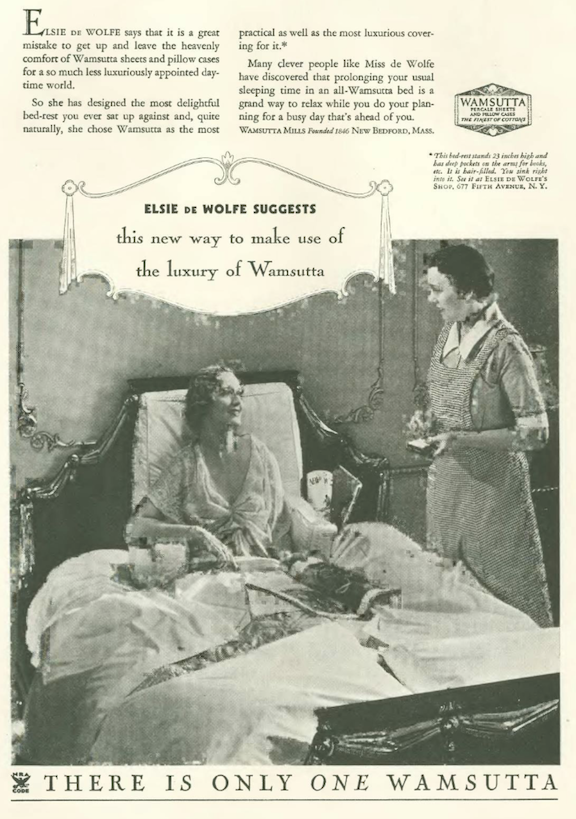
…the New Yorker’s Janet Flanner wrote in 1938 that Elsie de Wolfe invented interior design as a profession, so who was to argue with de Wolfe’s suggestion that the leisure class should linger in bed with the aid of a Wamsutta bed-rest…the small print beneath the logo indicated that the bed-rest was “hair-filled,” which I assume was horse hair, still used today in some luxury brands…
…if de Wolfe was queen of interior designers, then Hattie Carnegie was the “First Lady of Fashion,” or so this ad claimed…
…here are images of the two titans of fashion and good taste…
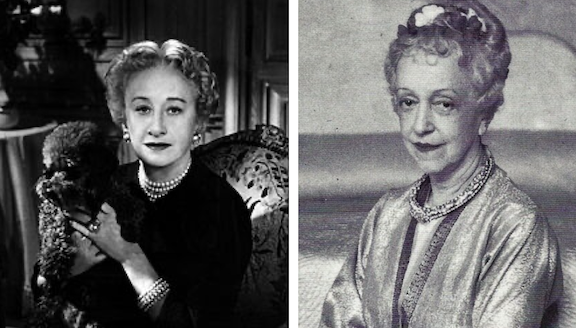
TASTEMAKERS…At left, Hattie Carnegie aka Henrietta Kanengeiser (1880-1956), and Elsie de Wolfe, aka Lady Mendl (1859–1950). (americacomesalive.com/bureauofinteriors.com)
…and speaking of fashion, here is a llama cloth coat from B. Altman, trimmed in silver raccoon, suitable for Yale football games…based on inflation, that coat today would set you back at least $2,000…
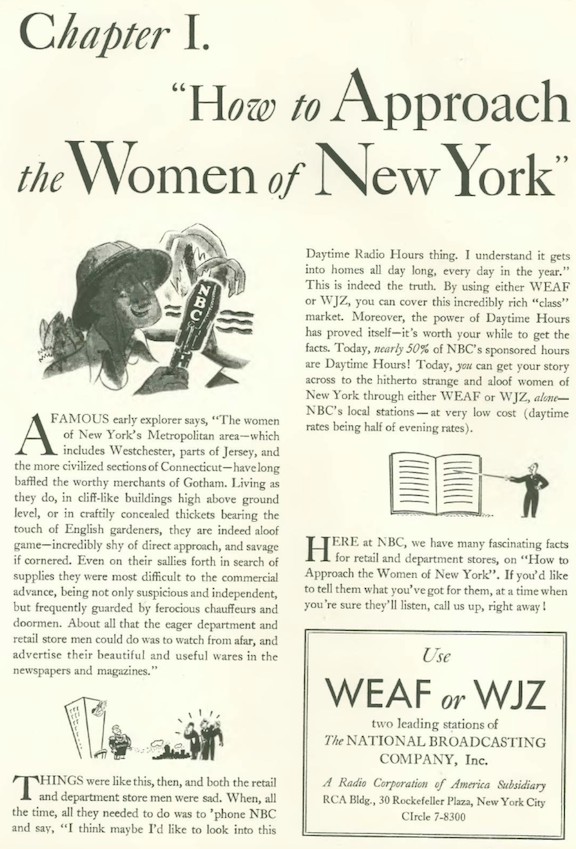
…this condescending ad offered merchants a way to reach the “hitherto strange and aloof women of New York” through daytime advertising…
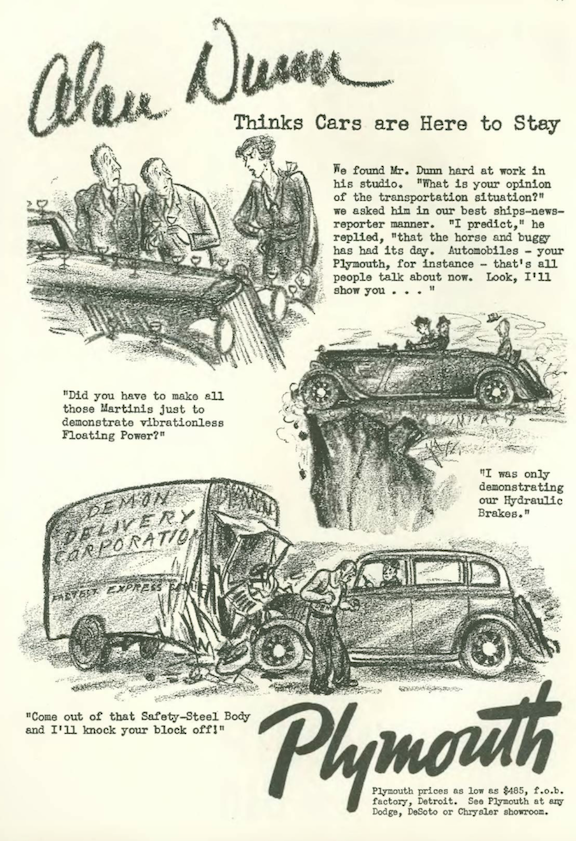
…Plymouth enlisted the talents of Alan Dunn to tout their car’s ride and durability…
…and on to our cartoonists, another from Dunn, a bit of spot art featuring a not so subtle commentary on Lawrence Lee Bazley Angas’s book The Coming American Boom…
…and some spot art from Isadore Klein…
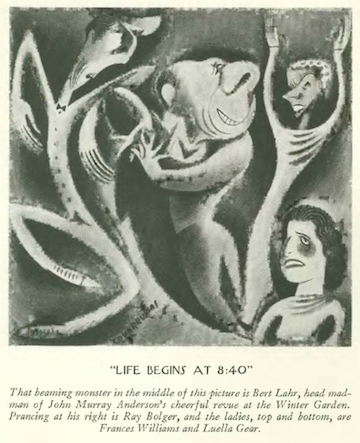
…Miguel Covarrubias contributed to the theater review section…
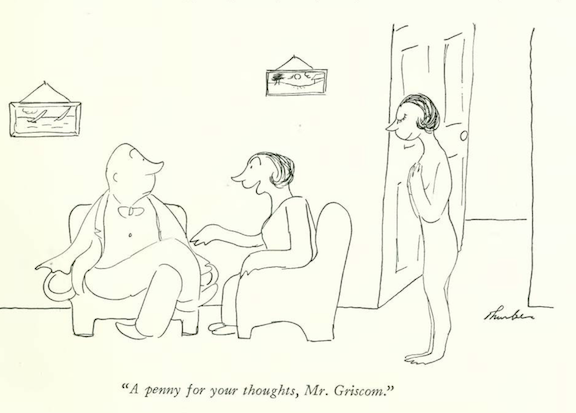
…James Thurber entertained a house guest…
…George Price was still up in the air…
…Helen Hokinson took a spin with a celebrity look-alike…
…and Barbara Shermund offered another glimpse into the life of a modern woman…
…on to Oct. 20, 1934…
Oct. 20, 1934 cover by Helen Hokinson.
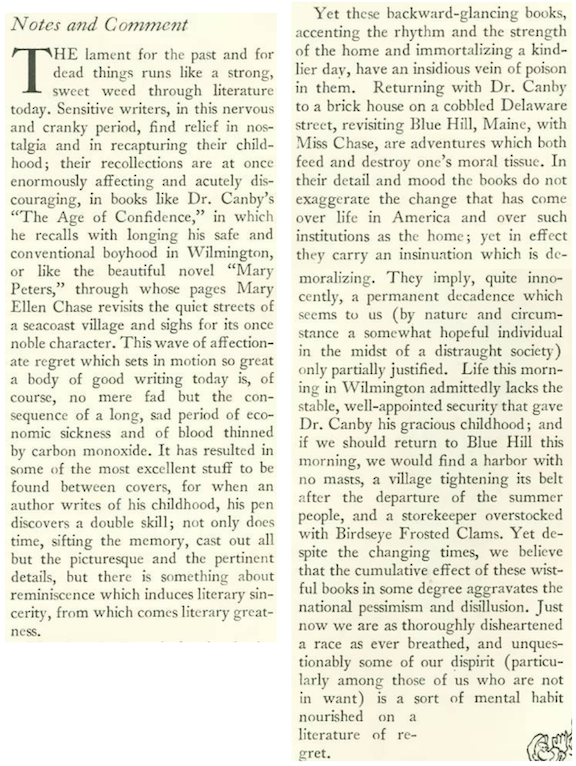
…in which E.B. White offered up a new lament, namely the pervasiveness of nostalgia and sentiment in contemporary literature…
HARKING BACK TO THOSE DAYS OF YORE…E.B. White simply had no stomach for the nostalgic stylings of Mary Ellen Chase (left) or Henry Seidel Canby, seen here on the cover of the May 19, 1924 issue of Time. (U of Maine/Time Inc)
* * *
Fifty Years Young
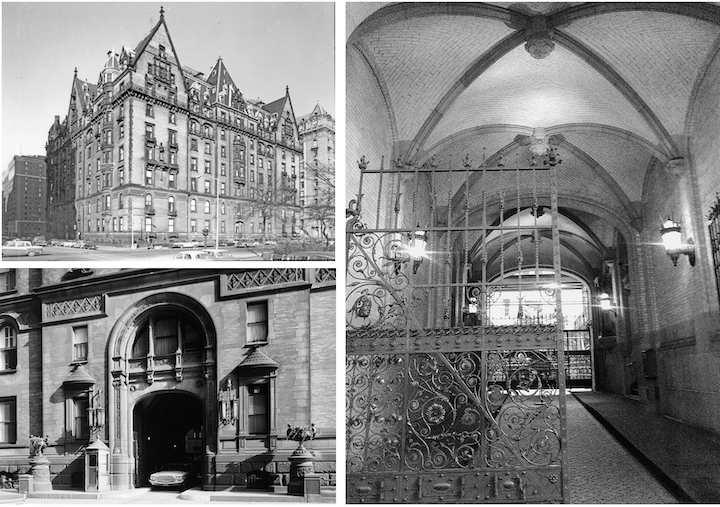
“The Talk of the Town” marked the Dakota’s 50th year at Central Park West, and made note of its loyal and prominent clientele…back in the day it served as a residence for actors such as Lillian Gish, Boris Karloff, and Teresa Wright, and in later years such luminaries as Lauren Bacall, Judy Garland, Rudolf Nureyev, and, of course, John Lennon and Yoko Ono.
THE STORIES IT COULD TELL…At left, the facade and main entrance of the Dakota in the 1960s; at right, inside the main entrance. (Pinterest/Wikipedia)
* * *
More From Our Advertisers
The Matson-Oceanic Line offered a “millionaire’s idea of a vacation” at an affordable price, and offered this sumptuous image as proof…
…E.B. White wasn’t crazy about the smokeless dazzle of the Rainbow Room, but it proved to be popular among the city’s elite…
…in case one was concerned about the provenance of one’s mink coat, Saks posted this helpful ad. Their high-end, natural-skin minks were priced at $8,000 (roughly $180,000 today); there was, however, a caveat regarding the cheaper models…
…Bergdorf Goodman offered up another ad featuring an impossibly attenuated model posed with a cigarette, her defiant gaze suggesting her modernity and individualism…
…Plymouth went back to the stable of New Yorker cartoonists, this time featuring the adventures of Helen Hokinson’s “girls”…
…and we segue to the rest of our cartoonists, including this spot by Constantin Alajalov…
…and this by George Price…
…who also gave us another update on the trials and tribulations of his floating man…
… James Thurber occasionally ignored scale in rendering his characters, which didn’t really matter in his strange world…
…Jack Markow had some bad news for two sign painters (the caption size is increased for readability)…
…and we close with Peter Arno, and the winner of most original Halloween costume…
…and before I go…this is being posted on Halloween, 2023, so here are a few images from 1934 to get you in the spirit, including a Saturday Evening Post cover, a 1934 party ideas magazine, and a page from Popular Mechanics featuring a smoking robot costume you could make yourself…in the 1930s, Popular Mechanics often featured Halloween party ideas that were downright lethal, usually involving electric shocks, pistols loaded with blanks, that sort of thing.
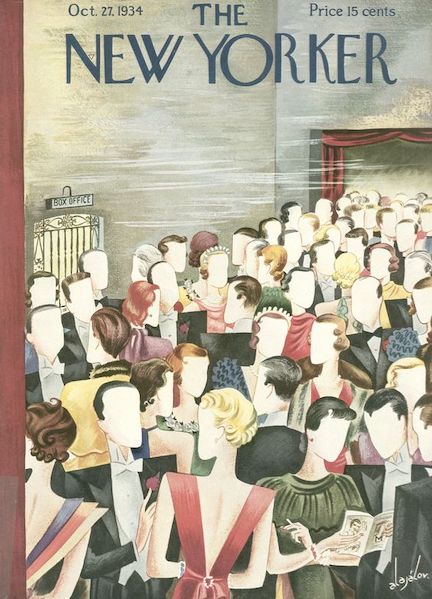
Sigmund Gottfried Spaeth (1885–1965) sought to popularize classical music and improve the musical tastes of the masses by meeting the public wherever he could find them, from vaudeville halls to national radio broadcasts.
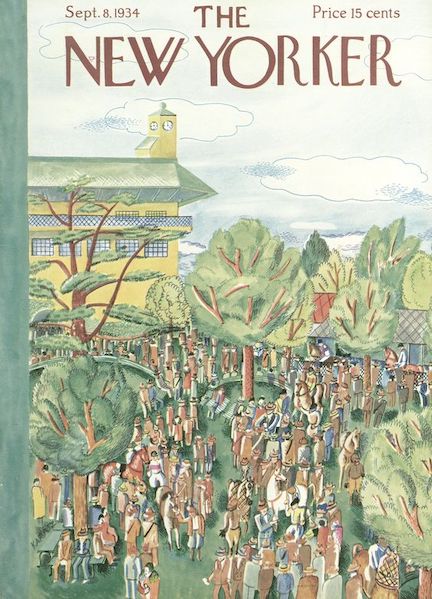
September 1, 1934 cover by William Steig.
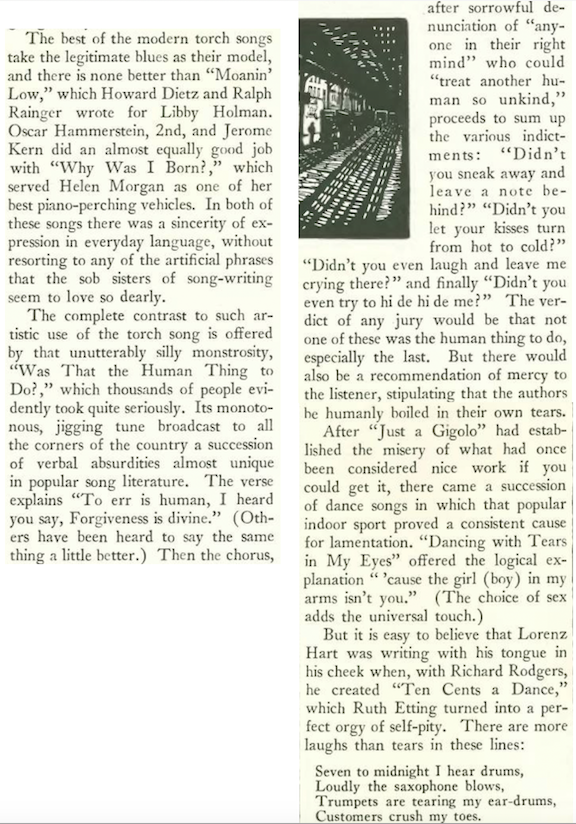
Born in a line of three generations of Lutheran clergymen, Spaeth chose a different path and became a musicologist who sought to de-mystify classical music, often demonstrating how popular melodies had origins in earlier music. He also had strong opinions about lyrics in popular music, demonstrating his distaste for “the lyric school of self-pity” in this “Onward and Upward” column. Excerpts:
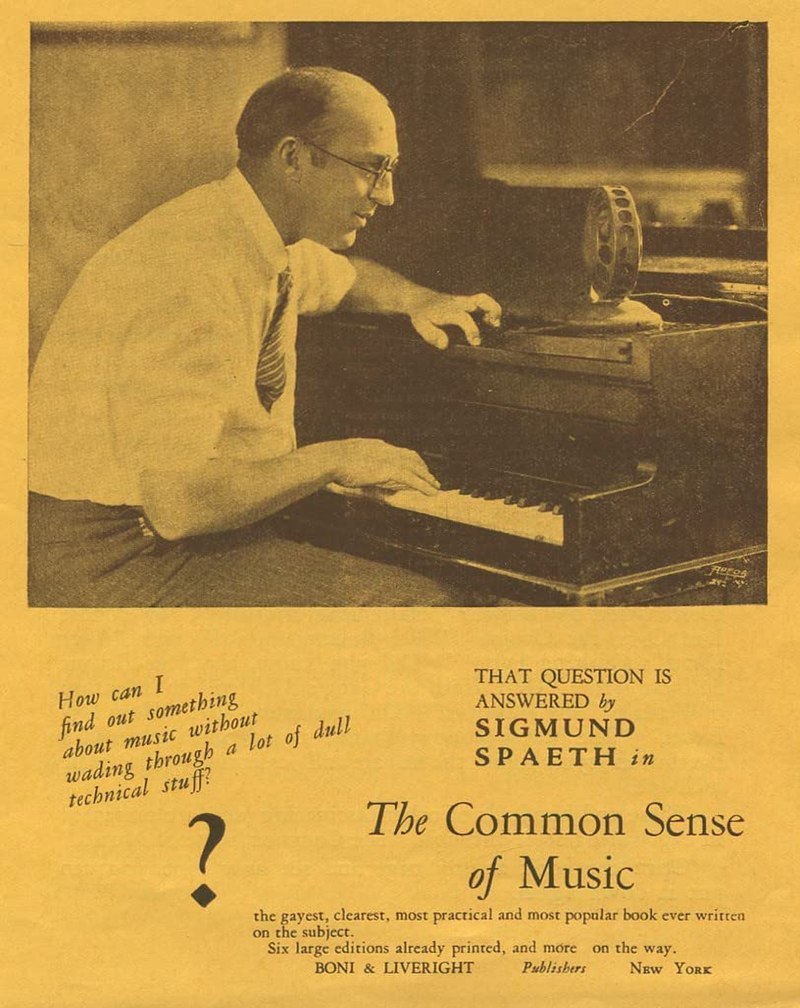
BRINGING MUSIC AND LIGHT…Sigmund Spaeth found much to dislike in the world of popular music, but he was never stuffy in his approach to music appreciation. At right, Spaeth appeared in vaudeville-style shows (and for many years on the radio) as “The Tune Detective,” wearing a deerstalker cap, cape, and checked tweeds in imitation of Sherlock Holmes. He hoped to demonstrate to a wide audience that all music was essentially based on a set of simple principles. (sinfonia.org/wnyc.org)HAVE NO FEAR…Spaeth wrote a popular syndicated newspaper column, “Music for Everybody,” and contributed articles to many periodicals during his career. With his first book in 1925, The Common Sense of Music, and others that followed, Spaeth sought to de-mystify music for a general audience. (Wikimedia Commons)OH LIGHTEN UP…Spaeth detected a cynical note in Bing Crosby’s (left) sob song, “I Cried for You,” and noted Irving Berlin’s latest contribution to the “sob symposium,” “I Never Had a Chance.” (Wikipedia/digitalcommons.library.umaine.edu/britannica.com)
Spaeth noted that not all sad songs were dripping in artificial self-pity, citing Helen Morgan’s “Why Was I Born?” as an example of a song modeled on “the legitimate blues,” marked by “a sincerity of expression in everyday language”…
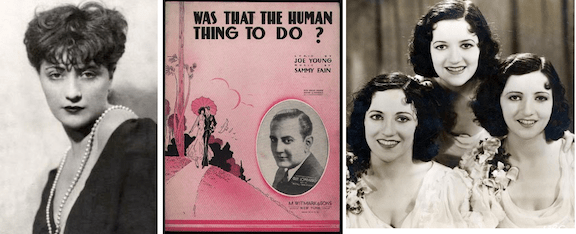
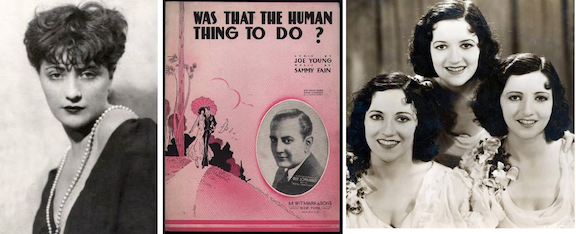
RIGHT AND WRONG…Spaeth acknowledged the “sincerity of expression” in Helen Morgan’s (left) torch songs, while at the other extreme he suggested that the authors of “Was That the Human Thing to Do?” (Sammy Fain and Joe Young) be boiled alive in their own tears. The song was popularized by The Boswell Sisters, a beloved New Orleans trio in the early 1930s. (findagrave.com/amazon.com/genius.com)
* * *
Off to the Races
In his column, “Of All Things,” Howard Brubaker commented on the apparent competition and contrast between Alexander Woollcott’s book, While Rome Burns, and another with a rosier title, The Coming of the American Boom. It appears Woollcott’s book won out, at least in the long run, as I can find no trace of the Boom book, or its author.*
* One of our kind readers has identified the author: “The Coming American Boom” was written by Lawrence Lee Bazley Angas and published by Simon and Schuster in 1934. In 1939, Time noted that “Major Lawrence Lee Bazley (‘Boom’) Angas is a pink & white Britisher with a reputation for making daring predictions which have sometimes come true…. He won his nickname with a much-publicized booklet, The Coming American Boom, which heralded his arrival in the U.S. in 1934.”
Speaking of rosy outlooks, E.B. White offered some parting thoughts on Chicago’s World’s Fair, called “A Century of Progress.” Rather than focus on the grandiose exhibits, White wryly noted other signs of progress at the fair, as recounted from a letter he received from his nephew.
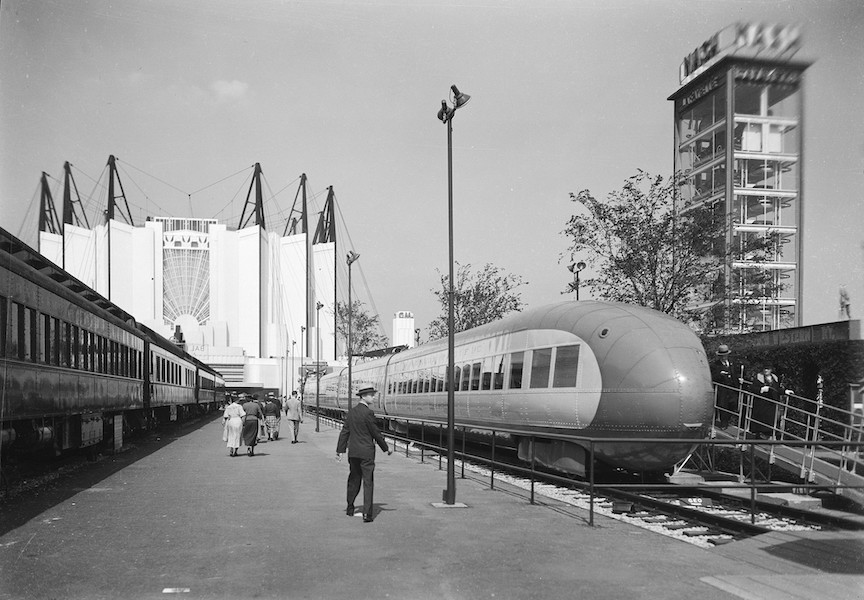
The Chicago World’s Fair featured all sorts of modern wonders “dedicated to the ideal of scientific advance”…
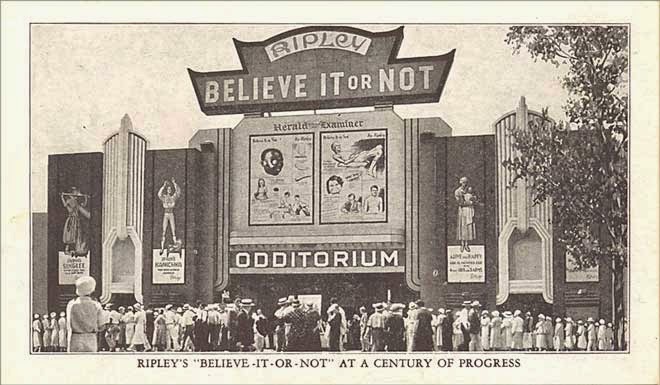
…but as with any World’s Fair, it also catered to the baser interests of the masses, with attractions such as Robert Ripley’sBelieve It Or Not “Odditorium,” which was essentially a P.T. Barnum-style freak show…
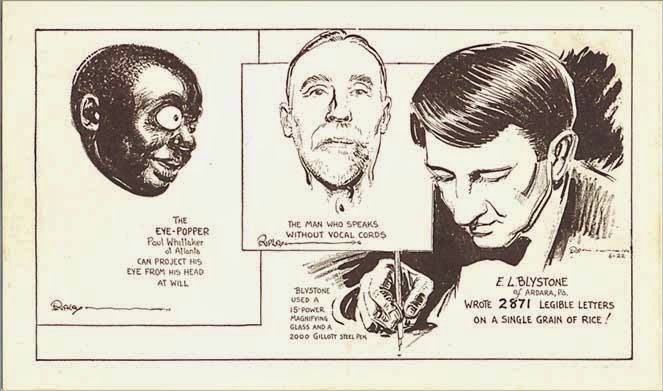
…Ripley’s syndicated newspaper feature included these Odditorium attractions…
…White made light of exhibitions displaying such signs of progress as how to brush your teeth, and more examples of human freakdom…
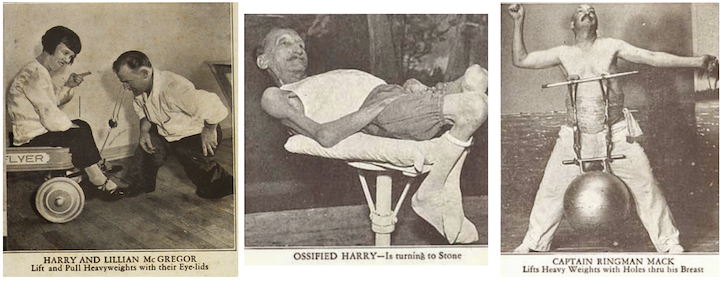
…White’s nephew wrote of a man who could pull a wagon (containing his wife) with his eyelids, an apparently arthritic fellow who was “turning to stone,” and a man who could support heavy weights with his pierced breasts…
(all images courtesy postcardy.blogspot.com)
* * *
Letter From Paris
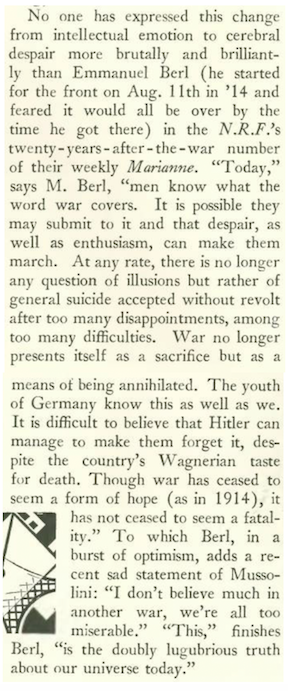
Paris correspondent Janet Flanner wrote that August 1934 was a “month of memories” as it marked the twentieth anniversary of the outbreak of the Great War, which we now call World War I. Flanner wrote about a new attitude that had arisen in those two decades, “a new attitude not only toward the last war but toward the next (which, ironically enough, seems increasingly inevitable to France since the death of the enemy warrior, von Hindenburg).” She continued with these observations made by French journalist and historian Emmanuel Berl (1892–1976), who wrote that as a result of the Great War, the youth in both France and Germany held few heroic illusions about war, seeing it not as a sacrifice but rather “as a means of being annihilated.”
SO MUCH FOR THE HEROICS…A refugee family returning to Amiens, France, looking at the ruins of a house on Sept. 17, 1918. Top right, Janet Flanner in 1940; below, Emmanuel Berl. (iwm.org.uk/Flanner photo copyright Estate of George Platt Lynes/Berl photo courtesy Joël Chirol)
* * *
From Our Advertisers
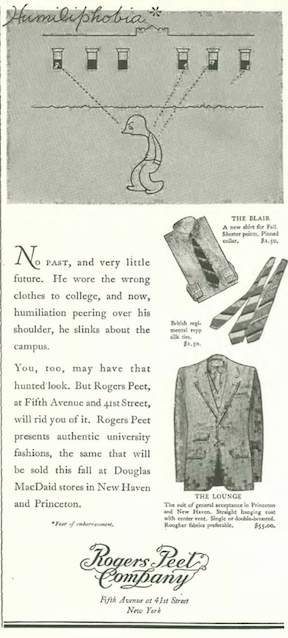
Clothing company Rogers Peet used the threat of humiliation to encourage young men to stock up on “authentic university fashions” before returning to campus…
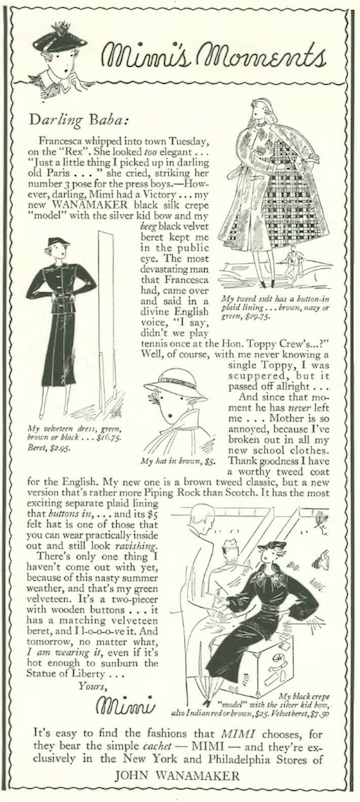
…the Wanamaker department store took a different approach, offering up new styles with a heavy English accent (I say, didn’t we play tennis once at the Hon. Toppy Crew’s?)…
…the makers of Goodyear tires offered up this disturbing image to boost sales…
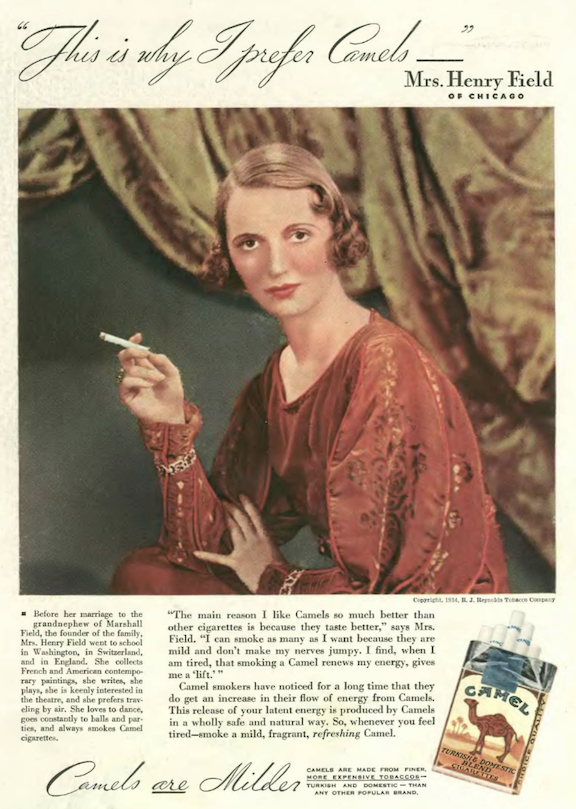
…this ad told us that “Mrs. Henry Field” collected fine art, loved to go to parties, and “always smoked Camel cigarettes”…I am unaware of the fate of Mrs. Henry Field, married to the grandnephew of Marshall Field, but this unseemly image suggests she was replaced by a wax figure before the photo was taken…
…on to our cartoons, we begin with spot illustrations from (clockwise, from top) Victor De Pauw, Abe Birnbaum, and an unidentified illustrator who offered this suggestion for beating the late summer heat…
…we move along to Alan Dunn and a record-seeking pooch…
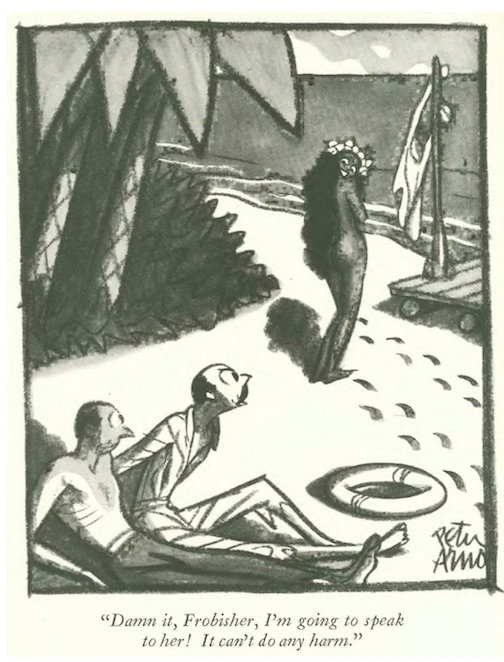
…Peter Arno with a very Arno-esque take on the stranded island trope…
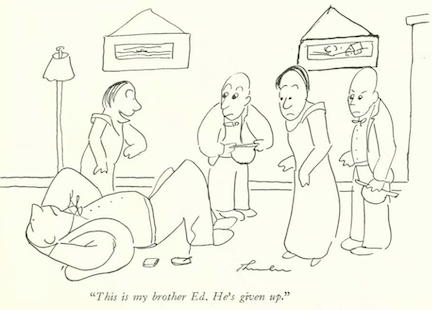
…James Thurber gave us a man who was done making decisions…
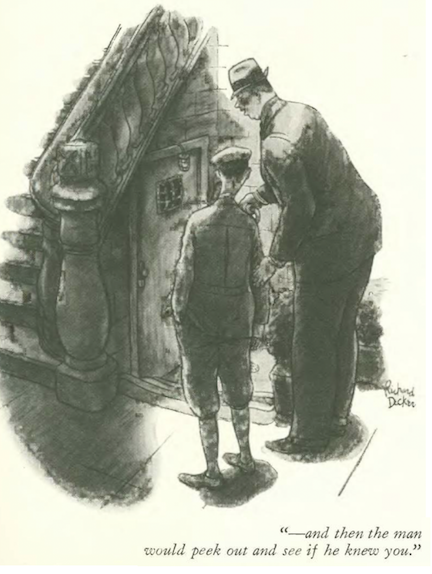
…Richard Decker offered up this living history demonstration…
…George Price gave us two tropes for the price of one…
…Barbara Shermund gave us another glimpse into the lives of modern women…
…Rea Irvin continued his exploration of Manhattan’s fauna…
…our next cartoon is by Henry Steig, who used the pseudonym Henry Anton to avoid being confused with his brother, William Steig (featured on this issue’s cover)…unlike his brother, Henry was also a jazz musician, a sculptor and painter, a photographer, and a novelist…that is before he became a noted jeweler…
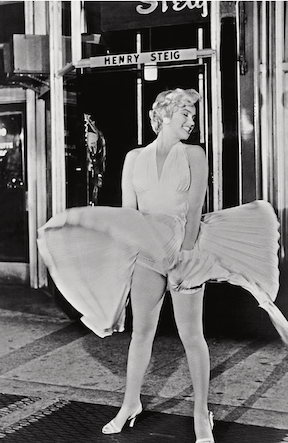
…Henry Steig’s jewelry shop at 590 Lexington Avenue can be glimpsed in the background of the famous subway vent scene from 1955’s The Seven Year Itch featuring Marilyn Monroe…
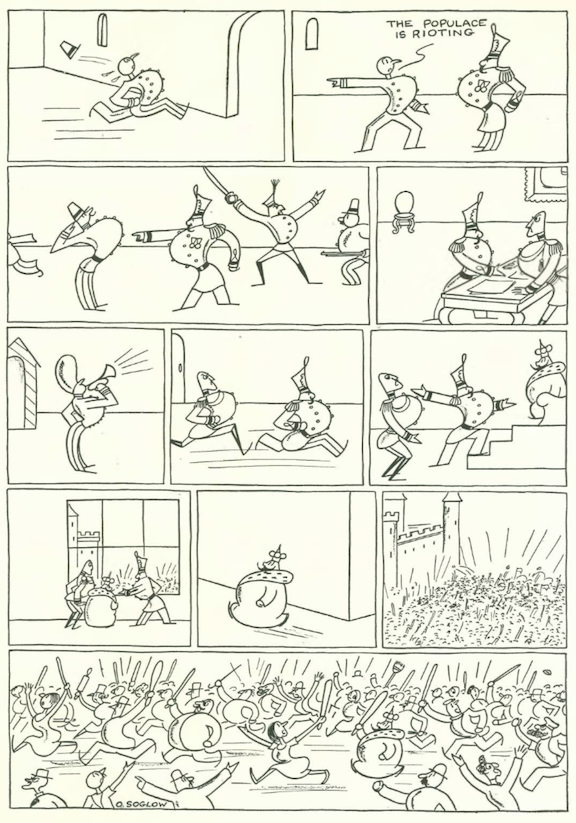
…and we close with Otto Soglow, and the last appearance his “Little King” in The New Yorker...William Randolph Hearst had lured Soglow away for his King Features Syndicate, debuting The Little King in his newspapers on September 9, 1934, where it would run until Soglow’s death in 1975…Soglow, however, would continue contributing cartoons of other themes to The New Yorker until 1974…
The NBC Studios at 30 Rockefeller Plaza have wowed visitors and performers alike for nearly 90 years. Today we look back at the remarkable foresight of the studios’ designers, who created spaces that would one day accommodate a new medium called television, which was still in its experimental stages.
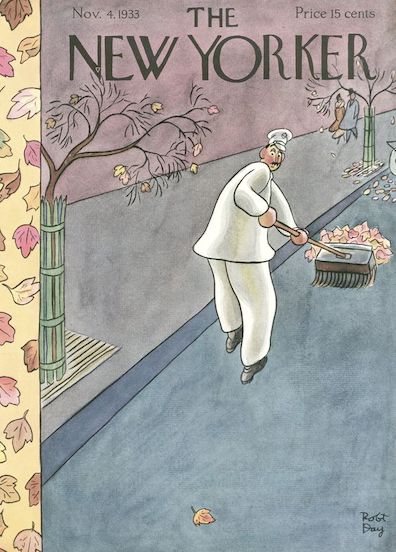
Nov. 4, 1933 cover by Robert Day, who contributed a total of eight covers to The New Yorker.
However, before we jump in, let’s look at Robert Day’s cover for the Nov. 4 issue, which featured a familiar character who made his first appearance on the cover of issue #12 (May 9, 1925), and returned four years later looking much older in the dog days of August…
Cover of issue #12 (May 9, 1925) by Rea Irvin introduced our street sweeper, who returned Aug. 3, 1929 by the hand of Gardner Rea.
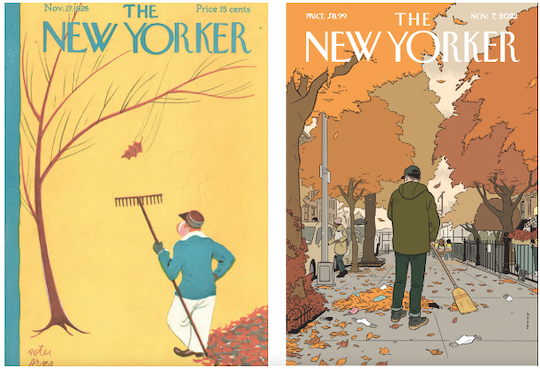
Day’s cover, however, was also a nod to the annual gathering of autumn leaves—an occasional cover theme that began with Peter Arno’s contribution to the Nov. 27, 1926 issue (below, left) and most recently expressed in Adrian Tomine’s cover for the Nov. 7, 2022 issue (with timely pandemic reference)…
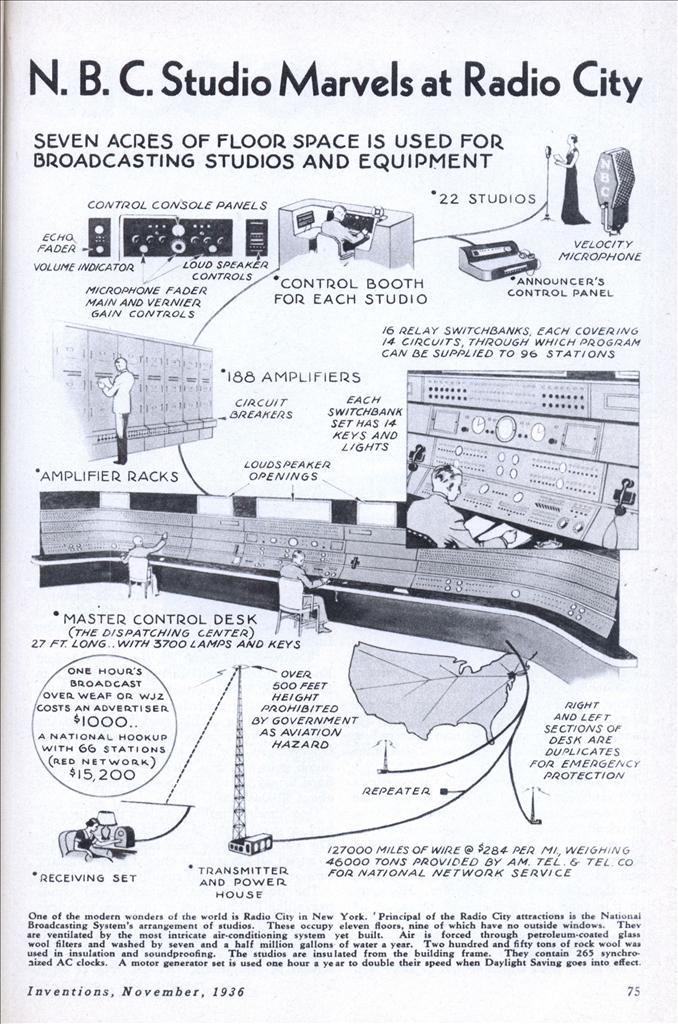
Back to Radio City, Morris Markey recounted the technological wonders of the new NBC studios in his “A Reporter at Large” column, “Marconi Started It.” Markey noted the “fabulous quality” of the facilities, wired for the day when television would arrive. Excerpts:
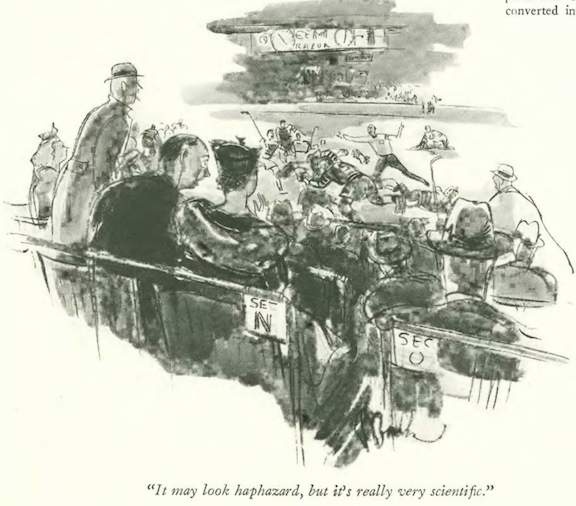
GEE WHIZ…Morris Markey could be assured that some folks would be “goggled-eyed” by NBC studios, including the technophiles at Popular Mechanics. (westmb.org)WHERE HISTORY WAS MADE…Studio 8H was the world’s largest radio studio when it opened in 1933. It would be converted for television in 1950. (westmb.org)
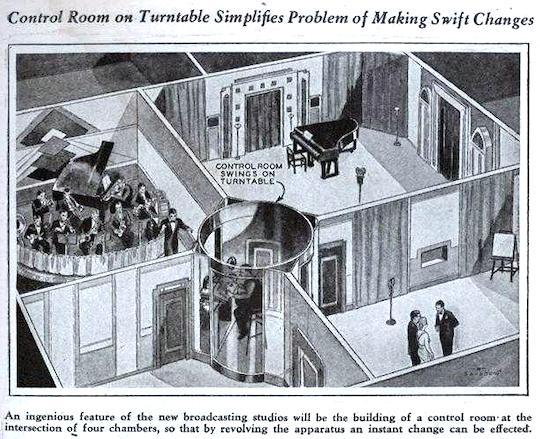
Markey marveled at NBC Studios’ various design innovations, including a revolving control room dubbed the “Clover Leaf”…
(Modern Mechanics, Jan. 1931)
Almost 90 years later, the studios continue to serve the broadcast needs of the 21st century, including Studio 8H…
LIVE FROM NEW YORK…Studio 8H was the world’s largest radio studio when it opened in 1933. Converted to television in 1950, it has been home to Saturday Night Live since 1975. Above, SNL stage manager Gena Rositano, in 2015. Below, longtime SNL director Don Roy King at the controls for Studio 8H, also in 2015. (Dana Edelson/NBC via Directors Guild of America)
* * *
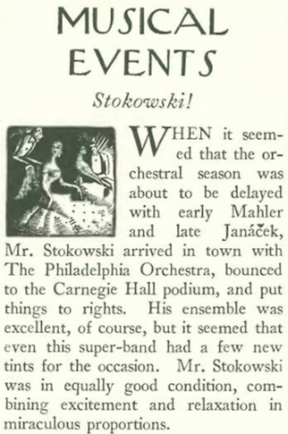
Leopold!
Conductor Leopold Stokowski was no stranger to Studio 8H. From 1941 to 1944 he led the NBC Symphony Orchestra in that venue. One of the leading conductors of the early and mid-20th century, Stokowski (1882–1977) began his musical career in New York City in 1905 as the organist and choir director at St. Bartholomew’s Church, but by 1915 he was conducting the famed Philadelphia Orchestra. Robert Simon reported on Stokowski’s return to New York for a performance at Carnegie Hall. A brief excerpt:
I GET AROUND…Portrait Of Leopold Stokowski by Edward Steichen, Dec. 1, 1933. Married three times and once romantically linked to Greta Garbo, he was married to wife #3, Gloria Vanderbilt, for ten years. (Condé Nast)
Stokowski had the distinct honor of being satirized in a 1949 Looney Tunes cartoon, “Long-Haired Hare,” in which Bugs Bunny disguised himself as the conductor and entered the stage to the astonished whispers of the orchestra…Leopold! Leopold!…
MAESTRO…Bugs Bunny as Stokowski in “Long-Haired Hare.”
Stokowski was no stranger to animation. The conductor appeared in silhouette in Disney’s Fantasia (1940), leading the Philadelphia Orchestra in the film’s score. He even shook hands with Mickey Mouse.
* * *
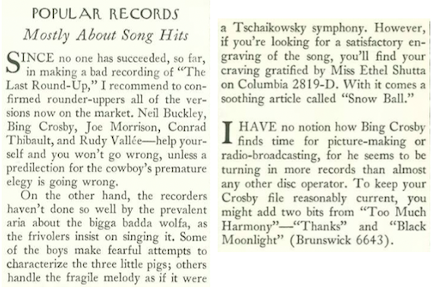
Bigga Badda Wolfa
The New Yorker took a look at the popular records of the day, and in addition to tunes by Bing Crosby and Rudy Vallée there was yet another release of “Who’s Afraid of the Big Bad Wolf?”…Ethel Shutta was the latest of seemingly dozens of artists to cash in on the Disney hit…
I’LL HUFF AND I’LL PUFF…Those who couldn’t get enough of “Who’s Afraid of the Big Bad Wolf” could turn to Ethel Shutta’s rendition of the hit song on Columbia records. (discogs.com)
* * *
Page-Turner
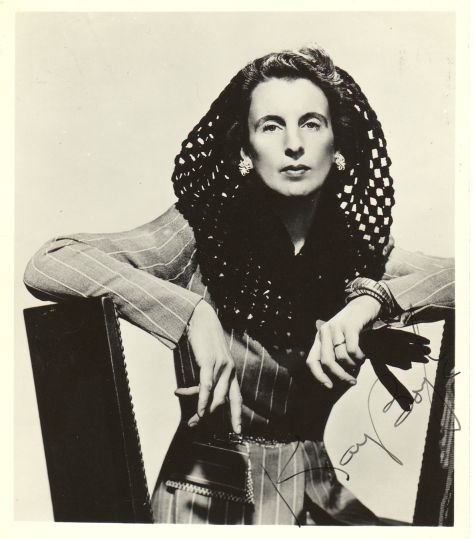
Writer Kay Boyle wasn’t afraid of wolves or any other subject for that matter, according to book reviewer Clifton Fadiman…
TOSSING A SALACIOUS SALAD…Kay Boyle, photographed by George Platt Lynes, 1941. (The Kay Boyle Papers, Morris Library, Southern Illinois University)
* * *
A Grapeful Nation
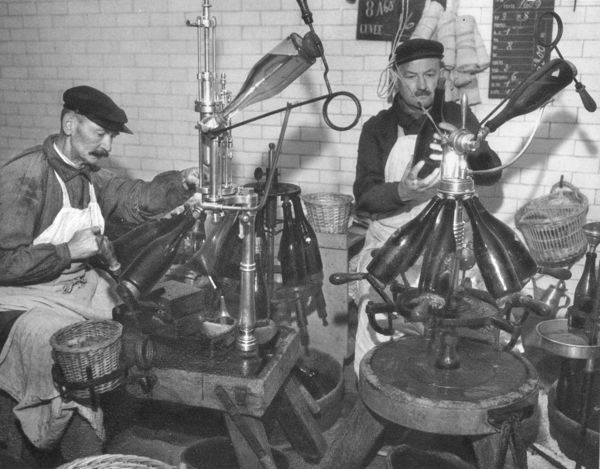
As New Yorkers counted the days until the end of Prohibition, The New Yorker did its part to get readers back up to speed by enlisting the talents of one of the world’s great wine experts, Frank Schoonmaker, who had the enviable job of filing a series of wine reports for the magazine. His first installment of “News From the Wine Country” featured the Champagne region. Excerpts:
THAT FIZZY FEELING…Bottling the good stuff in the Champagne region, circa 1930. (wineterroirs.com)
* * *
From Our Advertisers
Christmas was just around the corner, and F.A.O. Schwarz was READY with its 64-page catalog…
…White Rock anticipated the end of Prohibition with an ad featuring a miniature colonel who apparently needed a stiff drink to prepare for his wife’s return from abroad…
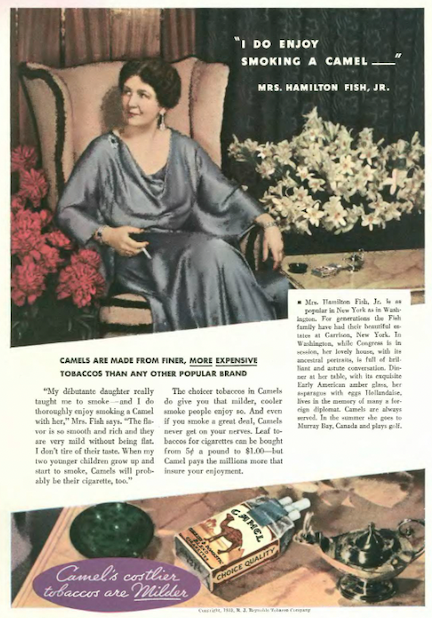
…Mrs. Hamilton Fish Jr, aka Grace Chapin, was married to the New York congressman from 1920 until her death in 1960, apparently enjoying many Camels along the way…her husband would go on living another 31 years and take three more brides before expiring at age 102…
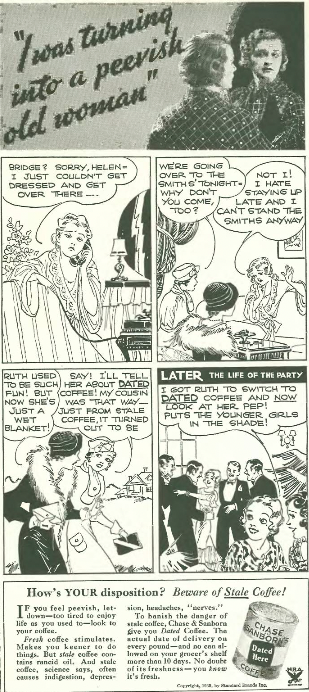
…another cautionary tale from Chase & Sanborne about the perils of undated coffee…
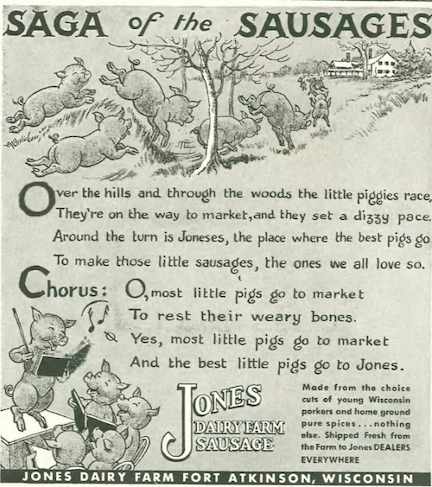
…and with the holidays approaching, a jolly ditty from Jones Dairy Farm, home to little piggies who merrily dash toward their inevitable slaughter…
…and we jump to another back-page ad, this from the stately Plaza, where you could get a single room for five bucks a night…
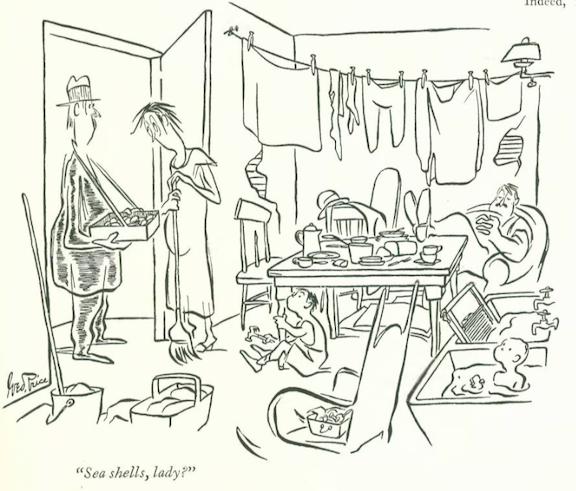
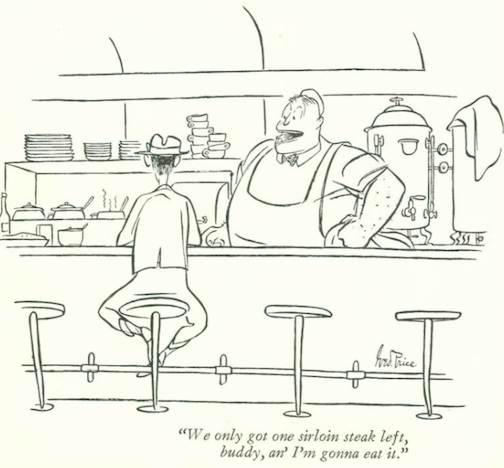
…turning to the cartoons, we find George Price hitting his stride with multiple cartoons in consecutive issues…
…and taking a look at the recent elections…
…on to James Thurber, and continuing struggles on the domestic front…
…and that brings us to our next issue…
Nov. 11, 1933 cover by Constantin Alajalov.
…in which E.B. White had a thing or two to say about the latest edition of the National Horse Show at Madison Square Garden.
HORSE SENSE AND SENSIBILITY…The National Horse Show at Madison Square Garden was a major event on New York’s social calendar; top and bottom right, scenes from the 1936 show; bottom left, undated scene circa 1960. (Stills from YouTube)
* * *
Versatile Verse
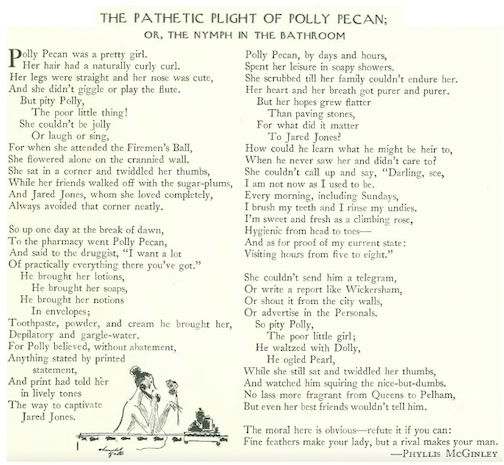
Phyllis McGinley (1905–1978) was the author of children’s books and poetry, the latter genre most notably for The New Yorker. However, she attracted a wide audience for her light verse in other publications ranging from Ladies Home Journal to The Saturday Review.
LIGHT TOUCH…Phyllis McGinley in an undated photo. She received the Pulitzer Prize in 1961 for her book Times Three—the first writer of light verse to receive the prize. (wnyc.org)
* * *
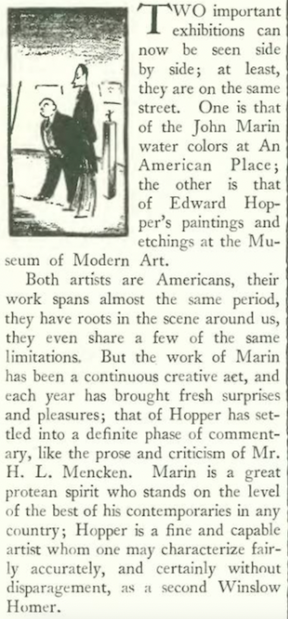
Oil and Water
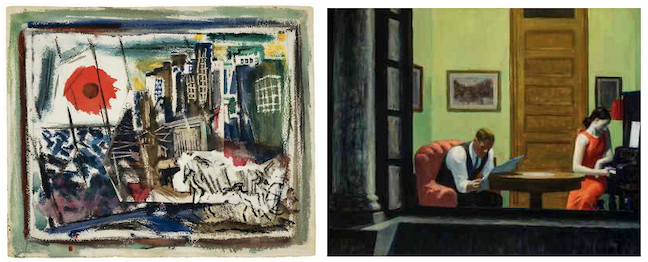
Art and architecture critic Lewis Mumford found two very different visions of America in the works of contemporaries John Marin and Edward Hopper. Marin’s watercolors were featured at An American Place, while Hopper’s oil paintings and etchings were shown down the street at the Museum of Modern Art.
SIDE BY SIDE…Lewis Mumford found different visions of New York and the world at An American Place and MoMA galleries. At left, John Marin’s watercolor From the Bridge, N.Y.C. (1933); at right, Edward Hopper’sRoom in New York, also from 1933. (Artists Rights Society/Sheldon Memorial Art Gallery)
* * *
More From Our Advertisers
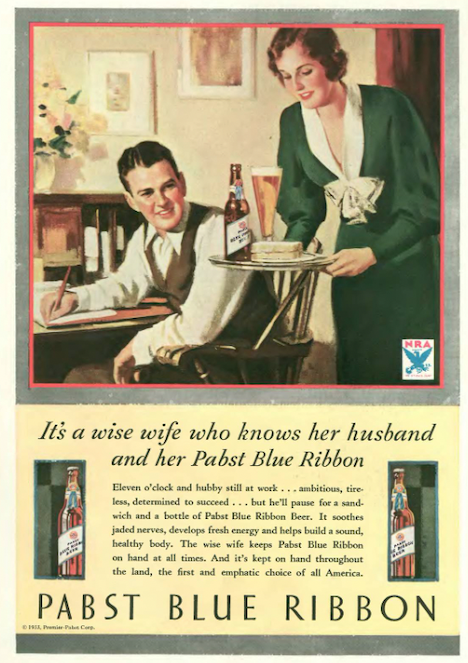
Okay, so I’ll buy the part about PBR’s ability to soothe “jaded nerves,” but I doubt it gave this guy “fresh energy” and “a sound, healthy body”…
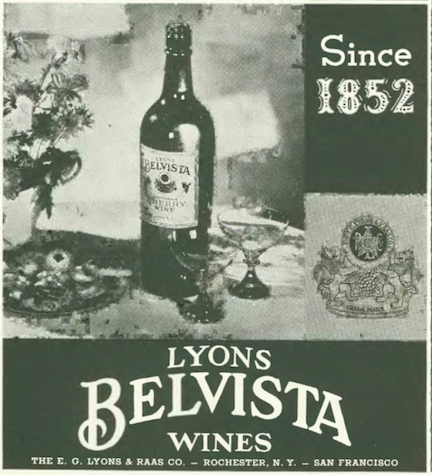
…After thirteen long years, winemakers emerged from their cellars to glimpse the light of a new day…
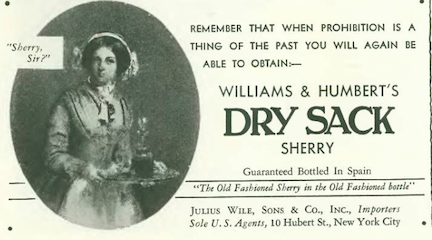
…and yes, after thirteen long years, some folks would be yearning for their DRY SACK Sherry…
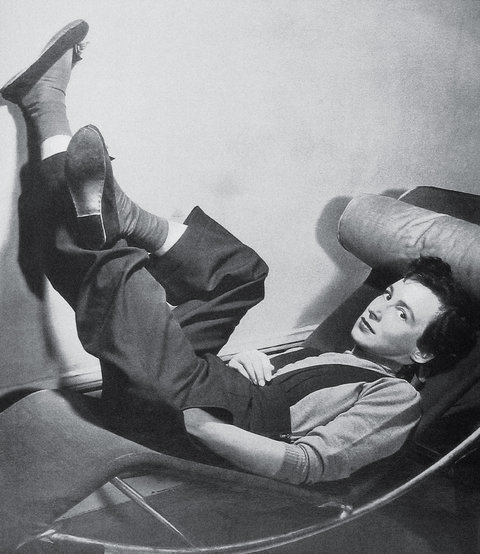
…the name Elizabeth Hawes was synonymous with high fashion in the late 1920s and 1930s—she owned one of the most exclusive couture houses in New York…
…an outspoken advocate of dress reform, Hawes (1903–1971) was referred to by one historian as “the Dorothy Parker of fashion criticism.” After attacking the fashion industry with her 1938 book, Fashion Is Spinach (Hawes wrote: “I don’t know when the word fashion came into being, but it was an evil day…”), she closed her fashion house and in 1942 took a job as a machine operator at a wartime plant in New Jersey. She became a union organizer, a champion of gender equality, and a critic of American consumerism.
IN A LEAGUE OF HER OWN…Elizabeth Hawes — writer, fashion designer and political activist, poses for a photograph in 1941. (Mary Morris Lawrence)
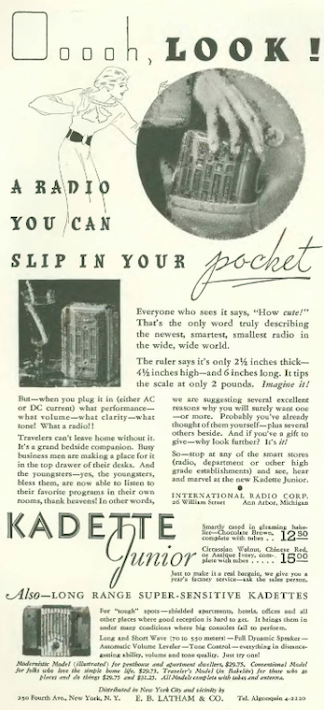
…speaking of consumerism, ooooh look! A radio “you can slip in your pocket,” depending of course on the size of your pocket…
…transistors would not come along until the late 1950s, so the Kadette still depended on tubes, and you had to plug it in somewhere, so no running down the beach with headphones, at least for awhile…
The Kadette Junior. (radiolaguy.com)
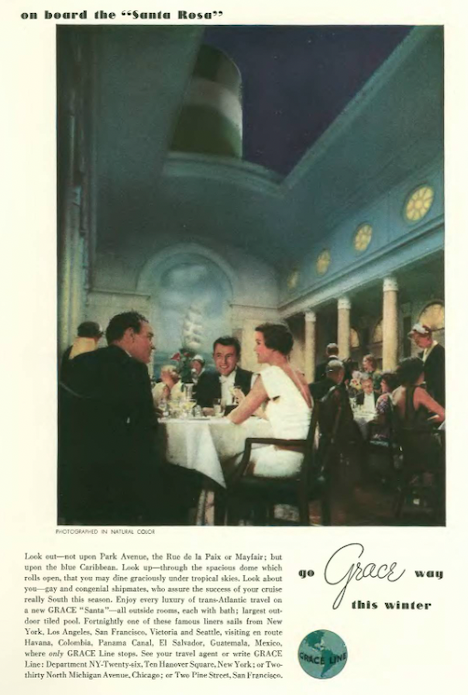
…it must have been a rare treat to sail on a ship like the SS Santa Rosa—situated between the ship’s two funnels, the dining room had an atrium stretching up two-and-a-half decks and featured a retractable roof…
…on to more cartoons, and more George Price…
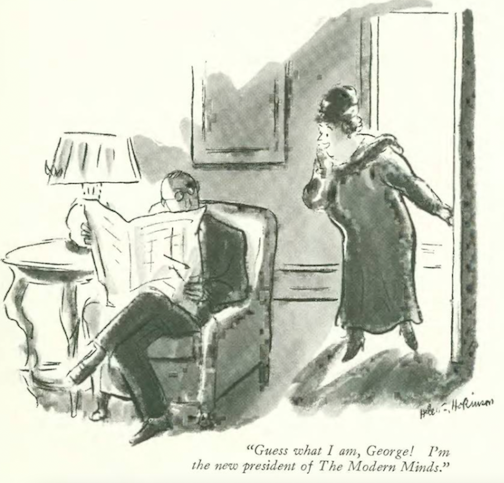
…moving along, we received some big news from one of Helen Hokinson’s “girls”…
…an aside I’ve been meaning to include…in 1952, just three years after Helen Hokinson’s untimely death, a cartoonist for The Cincinnati Enquirer, Franklin Folger, debuted a cartoon called “The Girls.” The cartoon was eventually syndicated and appeared in more than 150 newspapers worldwide before Folger retired it in 1977. Perhaps I am missing something, but I cannot find a single reference to Folger’s obvious appropriation of Hokinson’s “girls”…some examples of Folger’s work from the early 1960s and another from H.H. for comparison:
…and onward to Peter Arno, and the trials of portrait artists…
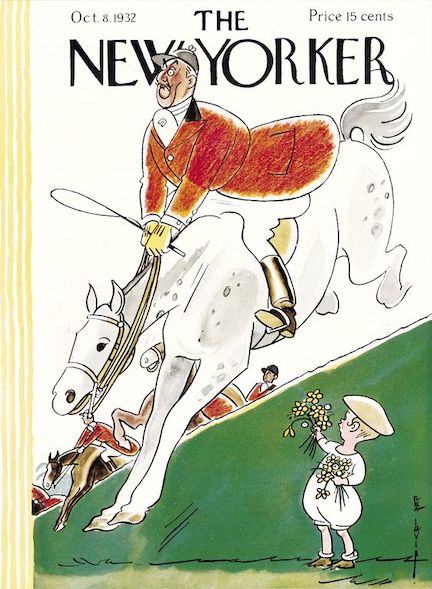
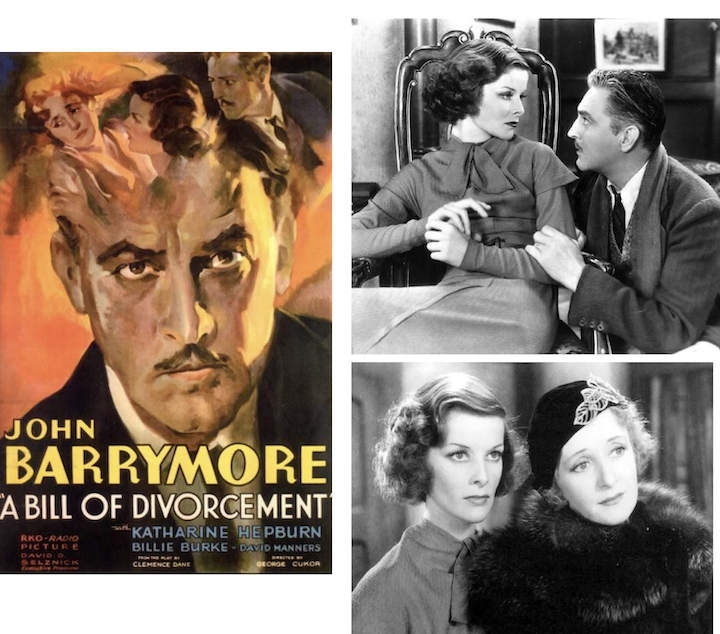
George Cukor’s 1932 pre-Code film A Bill of Divorcement would make Katharine Hepburn an instant star in her screen debut…
Oct. 8, 1932 cover by Rea Irvin.
… but New Yorker critic John Mosher seems to have missed the boat in spotting this new talent, who would go on to be—at least according to the American Film Institute, “the greatest female star of classic Hollywood cinema.” In A Bill of Divorcement, Hepburn portrays a young woman who fears she has inherited the same psychiatric problems that plague her father (John Barrymore). Mosher wrote:
A LOT ON HIS MIND…In A Bill of Divorcement, John Barrymore portrays a man who escapes from a mental hospital after 15 years of confinement, seeking to return to wife and family; his daughter, Sydney (Katharine Hepburn), fears she has inherited his psychiatric problems, while Sydney’s mother, Meg (Billie Burke) wants to start a new life with another man. (IMDB)
Although Mosher offered a rather tepid response to Hepburn’s debut role, critic Mordaunt Hall of The New York Times called the film “intelligent, restrained and often stirring.” Of Hepburn he wrote: “Miss Hepburn’s characterization is one of the finest seen on the screen and the producers have been wise in not minimizing the importance of her part because Mr. Barrymore is the star of the film.”
* * *
On Shaky Ground
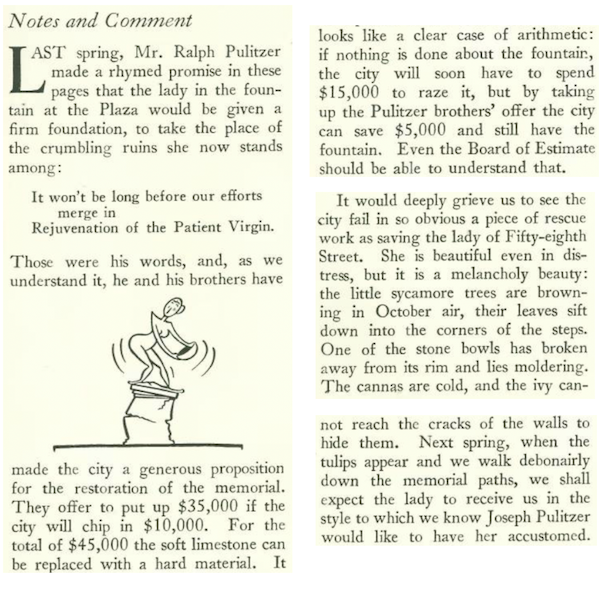
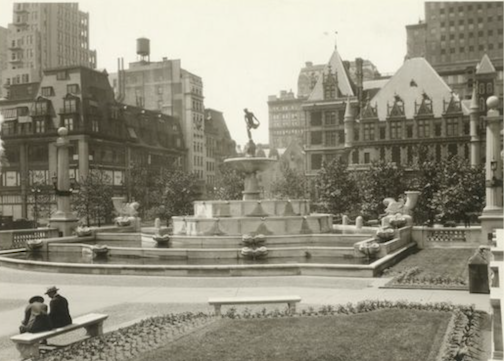
E.B. White noted the sad state of the Pulitzer Fountain, which had stood at the Plaza since 1916. Although Joseph Pulitzer’s sons had put up funds to restore the landmark, the city had yet to act on a plan.
Fortunately the fountain still stands, thanks to restorations in 1933-35, 1971 and 1985-90. As to White’s concerns, the city finally accepted the Pulitzers’ offer, and after delays due to labor disputes it was completed in June 1935. The original limestone basin was rebuilt in Italian marble, and a limestone balustrade and columns that surrounded the fountain were demolished.
WHEN WE WERE YOUNG…The Pulitzer Fountain after it was completed in 1916. (New York Public Library)
White also mused about the nature of Long Island, soon to be transformed under Robert Moses’ system of parkways that would stretch across the island’s vast expanses.
EAT ME…Hundreds of truck farms dotted Long Island in the early 20th century, especially known for their potatoes. (Newsday)
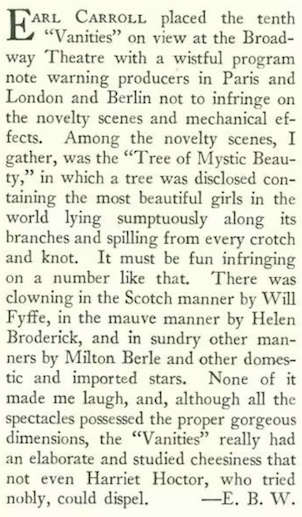
…and we have more from White, also serving as the magazine’s theater critic and taking in the latest installment of Earl Carroll’sVanities…I include this mainly to note the young vaudevillian Milton Berle’s first appearance on a big stage…
BEFORE UNCLE MILTIE…Milton Berle (1908–2002) made his first appearance on a big stage with Earl Carroll’s 1932 Vanities. It is also noteworthy that in that same year Chicago native Vincente Minnelli (see program cover) was getting his first breaks on Broadway as a stage and costume designer. (tralfaz.blogspot.com/Playbill)
* * *
Delirious Nights
Although Lois Long was primarily focused on her fashion column, she continued to file an occasional “Tables for Two” that gave readers a glimpse into New York nightlife, including the star-studded (Walter Chrysler, Howard Hughes, among others) opening of the Pierrette Club in the Waldorf-Astoria’s Sert Room…
DANCING WITH THE STARS…Lois Long reported on the star-studded opening of the Pierrette Club in the Waldorf-Astoria’s Sert Room, which featured a series of Saturday night supper dances; images of the Sert Room left and right; at center, The New York Times’ account of the club’s opening, Oct. 2, 1932. (geographicguide.com/The New York Times/jstor.org)
* * *
From Our Advertisers
Simon & Schuster promoted George Gershwin’s Song Book, illustrated by New Yorker regular Constantin Alajalov…
…signed first editions go for up to $8000 these days…
(raptisrarebooks.com)
…meanwhile, Farrar & Rinehart trumpeted the release of Evelyn Waugh’s latest novel (his third)…Black Mischief satirized the ways Europeans attempted to impose their customs and beliefs on other cultures…
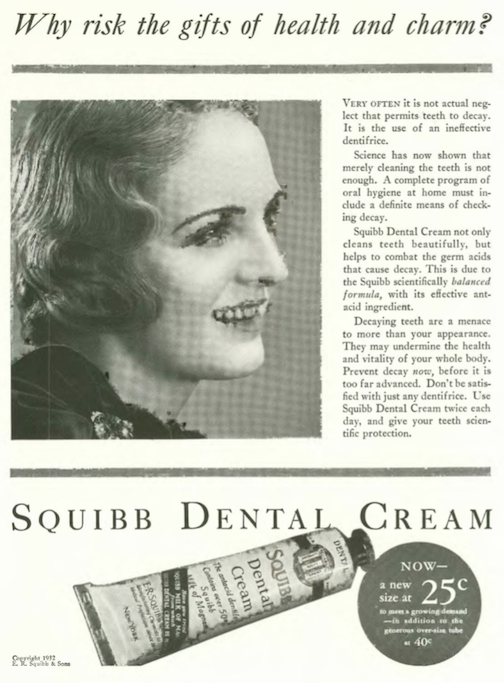
…Squibb helped The New Yorker’s bottom line with three separate ads scattered throughout the magazine…back in the day the Squibb brand was associated with everything from toothpaste…
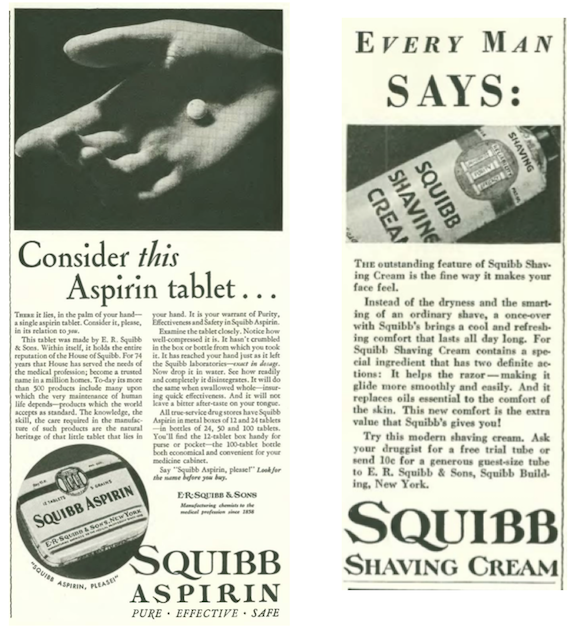
…to aspirin and shaving cream…founded in 1858, it merged with Bristol Meyers in 1989 to form one of the world’s largest pharmaceutical companies, Bristol Myers Squibb, which today is mostly known for manufacturing dozens of prescription pharmaceuticals and biologics…
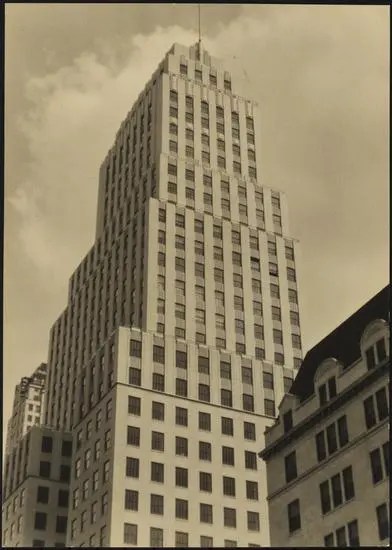
…Squibb & Sons were the primary tenant (the top 12 floors) of New York’s landmark Squibb Building when it opened its doors in 1930…
(Museum of the City of New York)
…moving on, here are a couple of ads that show us one thing that has definitely changed in the past 89 years…when was the last time you wore a fur coat to a football game?…
…cigarette manufacturers had plenty of money to advertise during the depths of the Depression, but apparently so did the folks at Wamsutta Mills…Wamsutta sheets are no longer made in New Bedford—part of the circa 1847 mill complex is now loft-style housing…however, the Wamsutta brand still exists in the U.S. through Bed, Bath & Beyond and internationally as part of a Brazilian textile conglomerate…
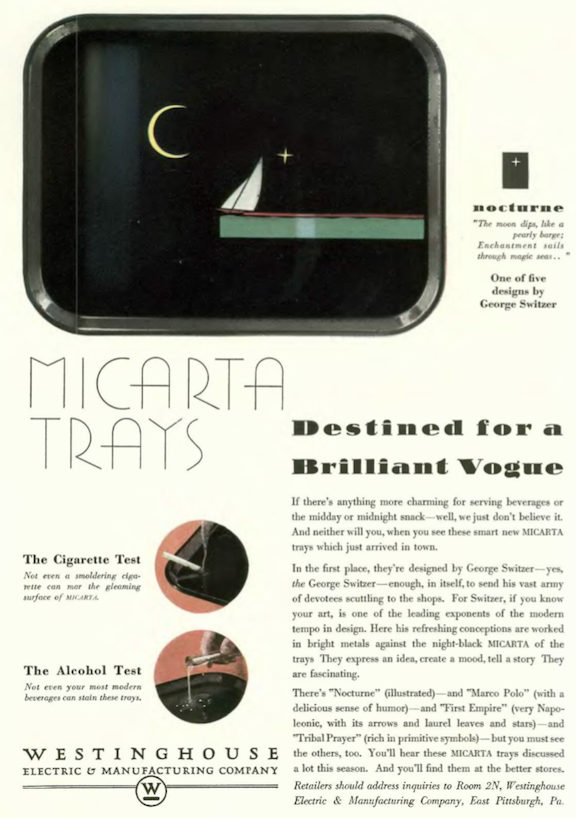
…Micarta was a substance developed by Westinghouse in the early 20th century for use with electrical equipment…produced from a combination of linen, canvas, paper, fiberglass and other materials processed under heat and pressure, Westinghouse found a new use for this laminate — serving trays designed by George Switzer…you can read more about Micarta trays at Driving for Deco…reader Chris notes that Micarta is “still available in a wide range of grades and designer colors and is popular with hobbyists and craftsmen the world over”…
…in the Oct. 29 issue, E.B. White made this observation about Micarta trays…
…on to our cartoons, William Steig’s “Small Fry” learned about the birds and the bees…
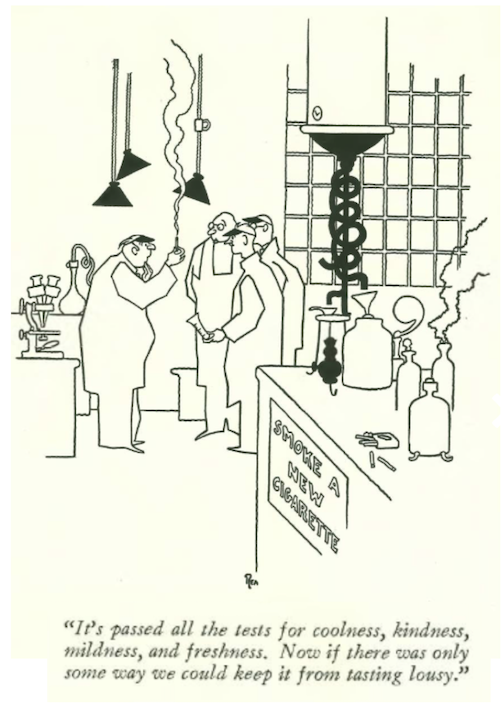
…Gardner Rea visited some tobacco researchers challenged to keep pace with advertising claims…
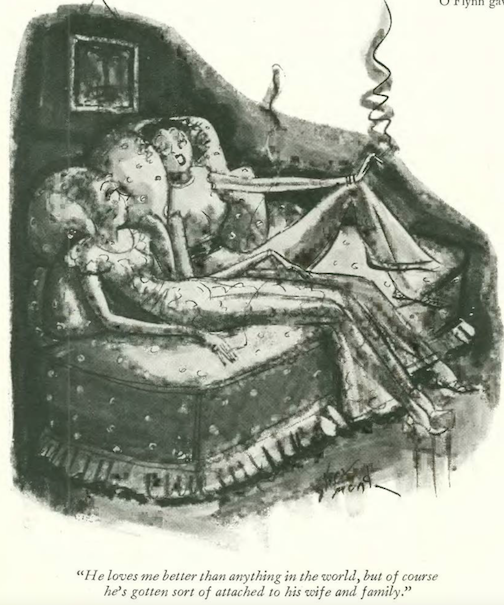
…Barbara Shermund looked into the love lives of the modern woman…
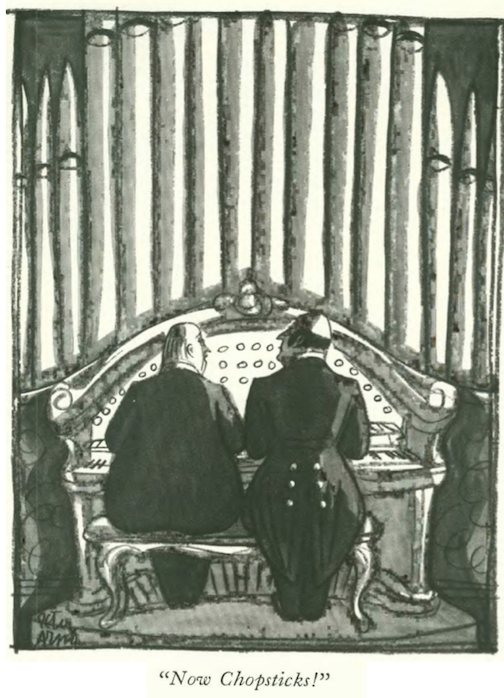
…and Peter Arno got playful at the pipe organ…
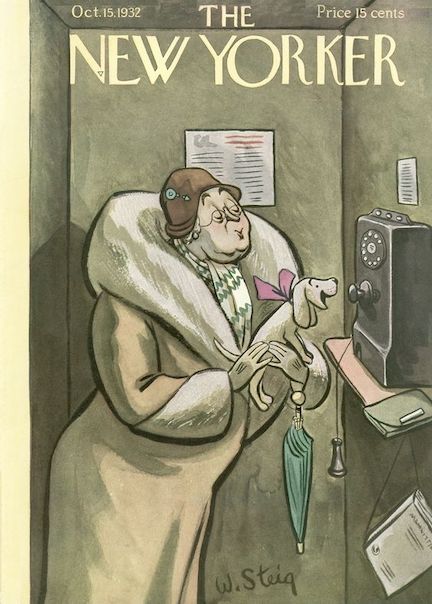
…on to our Oct. 15, 1932 issue…
Oct. 15, 1932 cover by William Steig.
…where we check in on John O’Hara (1905–1970), who defined the short story at The New Yorker (and contributed more shorts to the magazine than any other writer). For the Oct. 15 issue O’Hara submitted a profile titled “Of Thee I Sing, Baby.” The profile is unusual because it is told as a story rather than as a biography, and the subject, a chorus girl, is not identified by her real name. A brief excerpt:
WRITING MACHINE…John O’Hara (pictured here in 1945) contributed more short stories to The New Yorker than any other writer. (Library of Congress)
* * *
…William Steig (1907–2003) was both a writer and illustrator, and every bit as prolific as O’Hara, publishing more than 50 books during his long life and career, including his very first, which received this mention at the end of the Oct. 15 book review section:
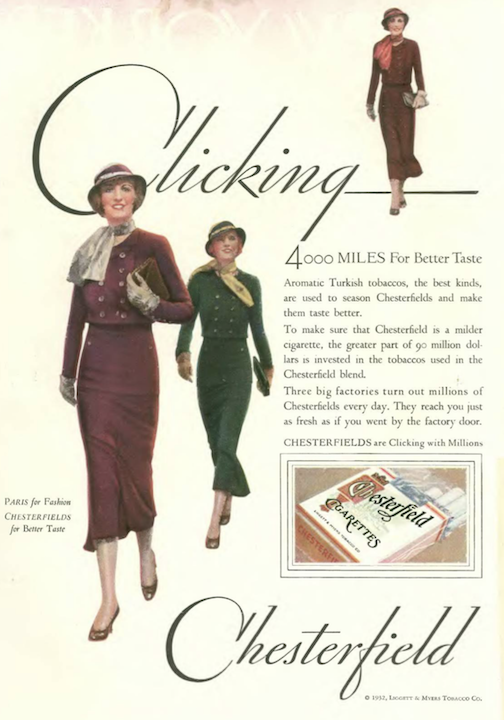
…on to our Oct. 15 advertisers, we have the makers of Chesterfields pairing their product with the sophistication of Paris fashions…
…Carl “Eric” Erickson illustrated a number of ads for R.J. Reynolds’ Camel cigarettes in the late 1920s and early 1930s…here he employed his signature sophisticated style for the French Line…
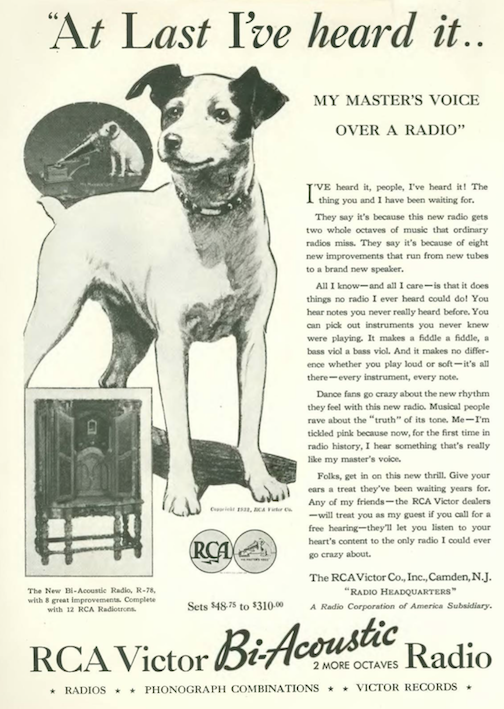
…RCA promoted the next great advance in radio technology—”bi-acoustic” sound that added “two more octaves” to radio broadcasts…it would take thirty more years to roll out something we take for granted today—stereo…
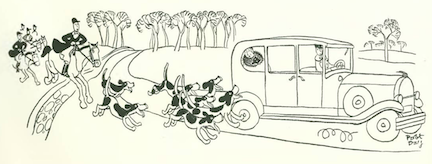
…on to our cartoons, Robert Day joined a misdirected fox hunt…
…Richard Decker gave us one man’s simple solution to a perilous situation…
Whether or not you could afford a new car in Depression-era New York, you could afford to take your mind off the hard times for a few hours and visit the annual National Automobile Show at Grand Central Palace.
Jan. 16, 1932 cover by S. Liam Dunne.
The 1932 exhibition featured many familiar brands, and others that would not survive the decade. Bolstered in part by the largess of General Motors and its downscale LaSalles, Cadillac could offer a pricey edition of the Fleetwood (at $5,542, roughly equivalent to $100K today), but most car makers featured models with reduced prices and/or smaller engines, as well as new technologies and design features they hoped would attract buyers of modest means. Excerpts from The New Yorker’s “Motors” column:
CAN’T TOUCH THIS…The Cadillac V16 Fleetwood sat atop the American car world in 1932. (classicdriver.com)LOOK, BUT DON’T BUY…The New Yorker noted the crowds gathered around the Studebaker –produced “Rockne” at the National Automobile Show. Named for the famed Notre Dame football coach Knute Rockne (who died in a 1931 plane crash), this 1932 model attracted plenty of gawkers at the show but few buyers. It was soon discontinued, and leftover Rocknes were disassembled and sent to Norway, where they were reassembled and sold to Scandinavian buyers. (conceptcarz.com)DOUBLE VISION…The 1932 Oakland Roadster (left) marked the end of the Oakland Motorcar Company, which had been previously acquired by General Motors. That same year Oakland was reborn as the Pontiac division, and the Oakland Roadster was reimagined as the 1932 Pontiac Model 302 (right). (Hemmings/justamericanautomobiles.com)PALACE OF DREAMS…Grand Central Palace (top right) sat at Lexington Ave. between 46th and 47th Streets. A favorite locale for manufacturers to display their latest wares, it was demolished in 1963; at left, images from the 1935 National Automobile Show; bottom right, 1932 copy of The Wheel, produced by Studebaker for distribution at auto shows. (freelibrary.org/chicagology.com)
Whether folks were able to shell out more than $5,000 for a Caddy or a mere $700 for Plymouth, many left the show with nothing more than dreams for better days. Howard Brubaker summed it up thusly in his “Of All Things” column:
* * *
Darling Lily
Coloratura soprano Lily Pons (1898–1976) was not well-known in her native France when she took the Metropolitan Opera stage by storm in 1931—she would become the Met’s principal soprano and, in 1940, an American citizen. The singer was profiled by Janet Flanner in the Jan. 16 issue (caricature by Miguel Covarrubias). Excerpts:
FRENCH TOAST OF THE TOWN…Coloratura soprano Lily Pons was particularly associated with the title roles of Lakmé (pictured above, mid-1930s), and Lucia di Lammermoor. Pons was a principal soprano at New York’s Metropolitan Opera for 30 years, appearing 300 times from 1931 until 1960. (Pinterest/YouTube)
If you have a few minutes, check out Lily Pon’s 1935 performance of “The Bell Song” from the film I Dream Too Much, which co-starred Henry Fonda. Although the sound quality is not the greatest, you can still get a pretty good idea why Met audiences adored her.
* * *
Fantasy Bridge
Satirist Ring Lardner found something rotten in the behavior of robber barons and politicians in the midst of the Depression, so he imagined a bridge game that brought together banker J.P. Morgan (Jr), John D. Rockefeller (then the richest person in America and perhaps the world), Sen. Reed Smoot of the Smoot-Hawley Tariff Act (a catalyst for the Depression), and social worker Jane Addams. Excerpts:
DEAL ME OUT…Ring Lardner addressed the wages of greed through a fantasy bridge game. (Dallas Morning News)
* * *
From Our Advertisers
If you were one of J.P. Morgan’s bankers, you might have considered hopping on a United flight instead of taking the train—within 20 years, airlines would make a serious dent into railroad’s corporate travel business…
…and if you were a successful banker, your daughter or granddaughter might have been an aspiring deb with some very specific needs…
…the Little King also had some specific fashion needs, as Otto Soglow brings us to the cartoon section…
…with the Auto Show in town, Helen Hokinson got her girls into the conversation…
…the “wizard control” they refer to was Buick’s gimmick to attract more women drivers to their product…here’s an ad from the Feb. 6 issue of the New Yorker:
…back to our cartoons with James Thurber, and the “war” that continued to brew between men and women (note artwork on the wall)…
…Al Freuh offered his perspective on meagre predictions for prosperity…
…as did one of William Steig’s precocious children…
…and Helen again with another privileged view of the downtrodden…
…Barbara Shermund showed us one woman’s interpretation of “belonging”…
…and Denys Wortman gave us one salesman who probably dreamed of some solitary drinking…
…on to our Jan. 23, 1932 issue…
Jan. 23, 1932 cover by Rea Irvin.
…and this item in “The Talk of the Town,” which noted the challenges of publishing a book about Adolf Hitler…
…and a few pages later, we are treated to an E.B. White “song” written for delegates to the Conference for the Reduction and Limitation of Armaments which was being convened in Geneva, Switzerland…
Delegates from sixty countries attended the Geneva conference. They were there to consider the German demand that other nations disarm to the same levels that had been imposed on them by the Treaty of Versailles. The conference deadlocked by the summer, and when it was reconvened in February 1933 Hitler had just assumed power in Germany. By fall 1933 Germany withdrew from both the Disarmament Conference and the League of Nations, and the stage was set for another world war.
Here is a 1933 photo of the delegates to the Disarmament Conference before things went south:
(wdl.org)
A detail of the photo (below) reveals the identity of the tiny man seated at center: the representative from Germany—Minister of Public Enlightenment and Propaganda Joseph Goebbels. Just twelve years hence Goebbels would find himself trapped with Hitler and Eva Braun in a Berlin bunker as Soviet troops demolished the city above them. Goebbels and his wife, Magda, would poison their six children, and then themselves as the Third Reich crumbled to ashes.
A final note: The delegates weren’t alone in Geneva, as a number of peace organizations sent observers and demonstrators to the conference, many of them women:
APPEALS TO DEAF EARS…Women’s disarmament campaigner in Geneva, c.1932; right, a poster created by Dutch artist Giele Roelofs for the Northern Friends Peace Board and others. (London School of Economics/armingallsides.org.uk)
We’ll give the last word to Howard Brubaker in Jan. 30 “Of All Things” column:
* * *
From Our Advertisers
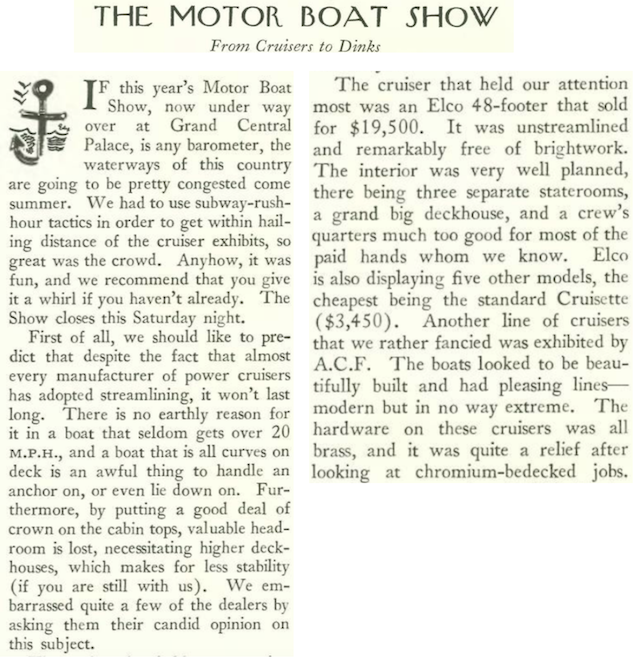
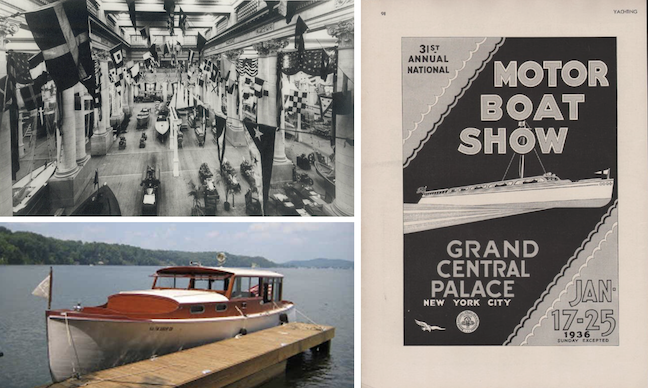
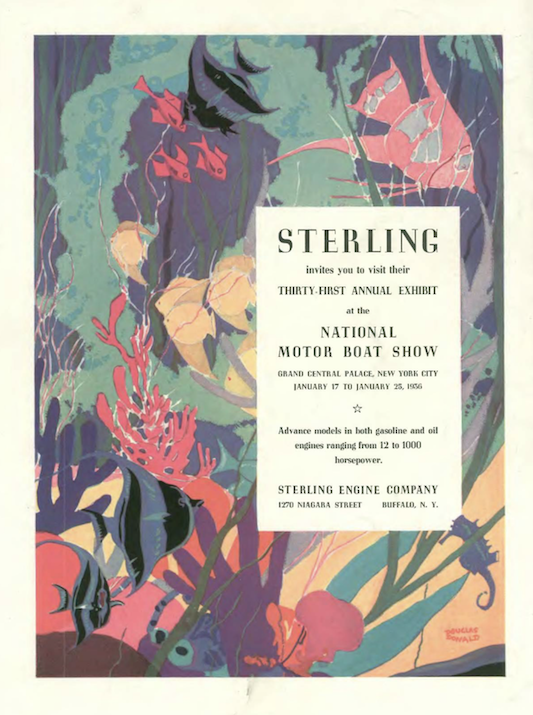
With the National Automobile Show wrapping up, the Grand Central Palace prepared to welcome exhibitors for the annual Motor Boat Show…
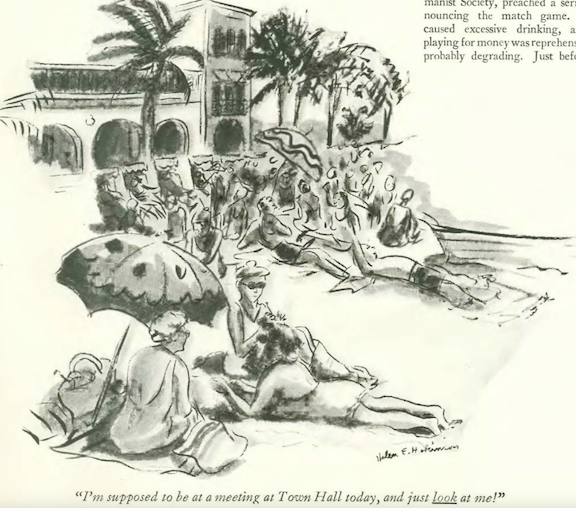
…the woman in this next ad might have been better off in a boat than on the beach…I’m wondering if the artist had any idea that his or her illustration would be used to promote coffee…it’s hard to tell what is going on here…apparently a young woman has almost drowned and is receiving oxygen, or maybe she doesn’t really need it, and the perverted lifeguard and cop just want to ogle the poor beachgoer, who seems bored by the whole predicament…
…there is also something vaguely sexual going on in this ad for Vicks (what is he looking out for in panel four?)…the artist (the cartoon is signed “Len”) seems to be channeling one of Rea Irvin’s series cartoons…
…in the early 20th century it was fashionable to smoke imported luxury Egyptian cigarettes, or counterfeits like Ramses II, produced in the U.S. by the Stephano Brothers…
…the makers of Camel were among the most successful counterfeiters of Egyptian cigarettes — the camel, pyramids and palm tree motifs were no mistake, but by 1932 this established brand (launched in 1913) went less for snob appeal and more for the active, fresh-faced youths whose pink lungs were highly coveted by R.J. Reynolds…
…on to our cartoons, we begin with James Thurber and some more sexual tension…
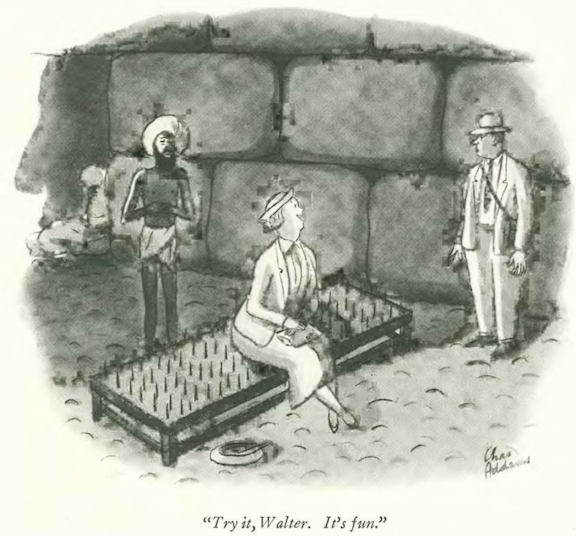
…Garrett Price found a young hostess eager to to please…
…Perry Barlow introduced us to a young man who (almost) never forgets a face…
…William Crawford Galbraith dined with the uppers, not necessarily known for their literary sophistication…
…Barbara Shermund gave us a proud collector who managed to evade the Puritans in U.S. Customs…
…William Steig showed us pride of a different sort…
…and another by Steig displayed the antics of one of his “Small Fry”…
…and we end with Helen Hokinson, who found a local women’s club joining the debate raging far away at the Disarmament Conference in Geneva…
In 1931 Gertrude Vanderbilt Whitney (image above) opened a new art museum in Greenwich Village that would be unlike any other in Manhattan, one that would focus exclusively on American art and artists.
Nov. 28, 1931 cover by Harry Brown.
Ninety years ago American painters and sculptors were mostly considered second-rate by critics who had cut their teeth on the Old World’s “Great Masters.” An exception was TheNew Yorker’s first art critic, Murdock Pemberton, who accused such institutions as the Metropolitan Museum of discouraging American art. It is a bit surprising, however, that Pemberton initially gave a cool reception to the opening of the Whitney Museum of American Art, perceiving that its founders were putting the cart before the horse:
AMERICAN ORIGINAL…The original Whitney Museum of American Art was located at 8–12 West Eighth Street in Greenwich Village. Above, images from a 1937 museum catalog, and (bottom right) a view of the building’s West Eighth Street facade, circa 1940-50. (Whitney Museum/Life magazine)SHE WORE THE PANTS…Robert Henri’s 1916 portrait of Gertrude Vanderbilt Whitney, sculptor and founder of the Whitney Museum. Gertrude’s husband, Harry Payne Whitney, would not allow his wife to hang the portrait in their Fifth Avenue town house because he didn’t want visitors to see his wife “in pants.” Instead, the portrait hung in Gertrude’s West 8th Street studio, which became the first Whitney Museum in 1931. (whitney.org)
Despite Pemberton’s initial concerns, the Whitney became a beloved New York institution, moving in 1954 from the West Eighth location to a larger space on West 54th, and then to its iconic Marcel Breuer-designed building at Madison and 75th, which opened in 1966. The museum would move again in 2015 to its current location at 99 Gansevoort Street in a building designed by Renzo Piano.
IMPERMANENT COLLECTION…The Whitney would move three times after its 1931 opening, first to West 54th in 1954, then to its iconic Marcel Breuer-designed home at Madison and 75th (opened in 1966), and finally to its current location at 99 Gansevoort Street. (museuminforme.blogspot.com)
* * *
Party Pooper
William Faulkner attracted much attention among literary circles during his extended visit to New York in 1931, however (as reported in “The Talk of the Town”) the author was able to dodge most of it by staying put in his Tudor City apartment.
HOME ALONE…William Faulkner spent most of his time in New York holed up in his Tudor City apartment, where he worked on the manuscript for Light in August. (LA Times/Wikipedia)
* * *
This or That
While we are on the subject of literary giants, here is a poem submitted by E.B. White to the Nov. 28 issue that explored some universal half-truths:
* * *
From Our Advertisers
As the market for cigarettes continued to increase, so did the number of new brands launched to take advantage of all those eager young puffers. The makers of Condossis Cigarettes hoped to create some buzz for their new product through a series of ads written by Mark O’Dea and illustrated by The New Yorker’sGardner Rea. Apparently the makers of Condossis believed that a posh backstory would lend a certain élan to their smokes. This seems all for naught—I haven’t found a record of the brand beyond 1938…
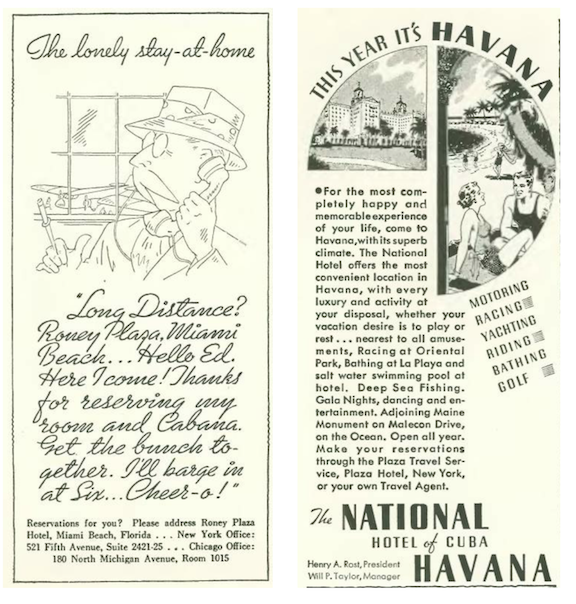
…a few of those posh smokers might have considered heading to Monte Carlo for the holidays, where they could also legally drink and gamble and forget about the jobless masses back home…
…but you needn’t go to Monte Carlo to signal your taste for the finer things, at least that is what B. Altman claimed with their lower-priced French knock-offs (although $95 was still a lot of dough in 1931)…
…Bonwit Teller also boasted of its low-priced evening wraps, so affordable that one could consider having a different wrap to complement every gown in one’s wardrobe ($135 in 1931 is roughly equivalent to $2,300 today)…
…the makers of Lenthéric perfumes offered the potential for shame and embarrassment if one didn’t choose their product for that special holiday gift…(illustration by Frank McIntosh, who contributes a cartoon in the next issue)…
…but perhaps the happiest shopper of all could shell out a mere $2.50 for the latest editions of The Fourth New Yorker Album or The New Yorker Scrapbook (drawings of a delighted couple courtesy Peter Arno)…
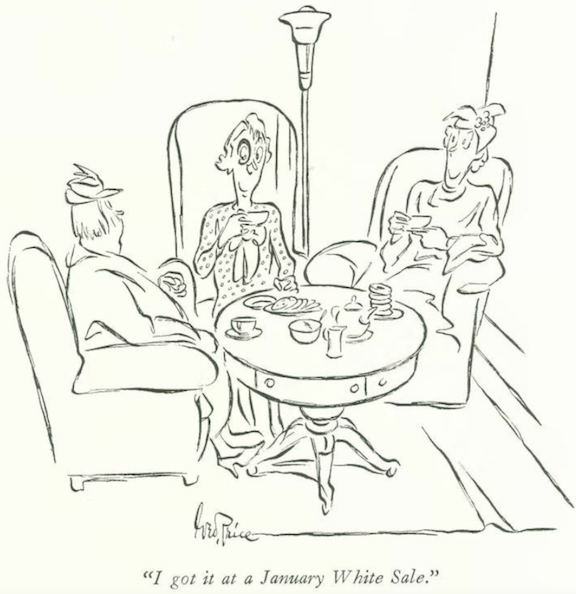
…on to our cartoons, we begin with Mary Petty and a tête-à-tête over tea…
…and Petty again with one woman’s attempt at noblesse oblige…
…Barbara Shermund looked in on the very idle rich…
…William Steig spotted a bald-watcher…
…E. McNerney revealed a secret among siblings…
…and William Crawford Galbraith gave us a backstage glimpse of a Broadway revue…
* * *
On to the Dec. 5 issue…
Dec. 5, 1931 cover by Rea Irvin.
…which featured a profile of renowned violinist and composer Efrem Zimbalist (1889-1985). The son of a Russian conductor, Zimbalist was married to the famous American soprano Alma Gluck…
…and the entertainment gene continued on through the family line, as Zimbalist and Gluck’s son, Efrem Zimbalist Jr., would become a star in Hollywood, as would their granddaughter, Stephanie Zimbalist.
ALL IN THE FAMILY…Famed violinist Efrem Zimbalist and American soprano Alma Gluck (top, left) would pass on their entertainment genes to son Efrem Zimbalist Jr. (known for his starring roles in 77 Sunset Strip and The F.B.I.) and granddaughter Stephanie Zimbalist, who portrayed sleuth Laura Holt in the NBC series Remington Steele. Top right, a “Profile” caricature of Zimbalist by Al Frueh. (Wikipedia/Pinterest)
* * *
From Our Advertisers
Much to the delight of The New Yorker advertising department, the makers of Condossis Cigarettes were back with their second installment of the adventures of the “Condossis Family”…
…on the other hand, the well-established Chesterfield brand didn’t have to try quite as hard — offering an attractive woman and some supporting copy that subtly suggested that a woman could credit her fine demeanor to a mere cigarette…
…on to our comics, we have this two-page entry by Rea Irvin…
…a bit of offensive driving, Helen Hokinson-style…
…Carl Rose gave us an unlikely candidate for a chaste role…
…Alan Dunn’s entry played to the stereotypes of his day…
…Frank McIntosh plied the Sugar Daddy waters to come up with this gem…
…Garrett Price gave us a gift designed to light a man’s fire…
…Barbara Shermund lit a flame of a different sort between a dowager and her latest escort…
…and we end with James Thurber, and one of my all-time favorites…
For this installment we look at two issues, Nov. 15 and 22, both featuring covers by Theodore Haupt that celebrated two autumn rituals: football and Thanksgiving.
Let’s begin with the Nov. 22 issue, which climbed to the highest place in Manhattan — no, not the Chrysler Building, but the nearby Empire State Building — with E.B. White admiring the commanding view:
Before the Empire State Building could go up, the old Waldorf-Astoria hotel had to come down. As White observed, the old hotel was built so soundly that it was too costly to deconstruct and salvage. Most of it ended up on the bottom of the ocean.
DOWN IN DAVY JONES’ LOCKER lie the remains of the old Waldorf-Astoria Hotel, which stood for just 36 years before it was razed to make room for the Empire State Building. At right, one of the hotel’s lobbies, and the Grand Ballroom. (nyc-architecture.com/Pinterest)A LOT OF HOT AIR…Top images: The fabled “mooring mast,” described by E.B. White in his New Yorker brief, as imagined in composite images (old-time Photoshop). In reality, the morning mast never worked; bottom right, a cutaway view of the mast featured in Popular Mechanics; bottom left, New York Times photo from March 22, 1931, announcing the completion of the Empire State Building, just 17 months after the Waldorf-Astoria began coming down. (Keith de Lellis Gallery, rarehistoricalphotos.com/Google Books/The New York Times)SURVEYING THEIR KINGDOM…Most visitors to the Empire State Building can only go as high as the 86th floor observation deck. However, if you are a VIP like Serena Williams or Taylor Swift, you can get your picture snapped on the 103rd. (Associated Press/Empire State Building/Evan Bindelglass, CBSNewYork)
* * *
Sore Winner
Sinclair Lewis famously declined the Pulitzer Prize for his 1925 novel Arrowsmith, upset that his 1920 novel Main Street had not previously won the prize. But when the Swedish Academy came calling with a Nobel Prize in Literature in 1930, he happily accepted. According to “The Talk of the Town,” this award also seemed a bit tardy, since Lewis’s small town booster archetype, George F. Babbitt, did not fit the dour days of the Great Depression. But it turned out that the 1922 novel Babbitt was ultimately what swayed the Nobel jury:
BOOST FROM A BOOSTER…George F. Babbitt helped make Sinclair Lewis famous, and landed him a Nobel. (NYT, NOVEMBER 6, 1930)
* * *
Not So Sweet
Those of a certain age might remember Helen Hayes as a sweet old lady who appeared on a number of TV shows in the 1970s and 80s, or as the mother in real life of James MacArthur, Disney teen star and later the portrayer of Danny “Book ’em Danno” Williams on the original Hawaii 5-0 TV series. Hayes was married to playwright Charles MacArthur, and “The Talk of the Town” takes it from there…
CREATIVE TYPES…The engaged couple Charles MacArthur and Helen Hayes posed for photographer Edward Steichen for this Jan. 1, 1929 image featured in Vanity Fair magazine. (Condé Nast)
* * *
Ain’t It Grand
Grand Hotel opened at the National Theatre on Nov. 13, 1930 to strong reviews, including the one below by Robert Benchley that he filed for The New Yorker. The play, adapted from the 1929 novel Menschen im Hotel by Austrian writer Vicki Baum, would prove to be a smash on Broadway and again on the silver screen in a star-studded 1932 film featuring Greta Garbo, John Barrymore, and Joan Crawford.
THE STARS ALIGN…Left, promotional photograph of the original Broadway production of Grand Hotel. At right, Eugenie Leontovich portrayed fading Russian ballerina Grusinskaya in the play. The role would go to Greta Garbo in the 1932 film adaptation. (Theatre Magazine, February 1931/Wikipedia)
…and while we are on the subject of Broadway, the theater review section also featured this Al Frueh illustration promoting a noted production of Twelfth Night at the Maxine Elliott…
Program for the production featuring Jane Cowl. (Playbill)
* * *
There were also big doings at the Met, where Spanish lyric soprano Lucrezia Bori (1887-1960) wowed audiences with her portrayal of Violetta in La Traviata.
SHE HAD SOME PIPES…right, lyric soprano Lucrezia Bori on the cover of the June 30, 1930 edition of Time magazine. At right, promotional photo of Bori circa 1930. (Time/Wikipedia)
* * *
Bounty of Blessings
Humorist W. E. Farbstein gave readers plenty to be thankful for in this tribute to the Thanksgiving holiday…
* * *
From Our Advertisers
Occasionally advertisements acknowledged the reality of the Great Depression, including this one from The Saturday Evening Post that offered encouraging words to prospective readers…
…County Fair, a Greenwich Village country-themed nightclub, offered the diversion of Moffatt and Bowman to take audiences’ minds off of hard times…
…and for all the supposed sophistication of New Yorker readers, there were still plenty of back page ads offering nostrums laced with superstition…
…some of the more colorful, spritely ads from the era were offered up by the producers of Texaco Motor Oil…
…our cartoons are by Gardner Rea…
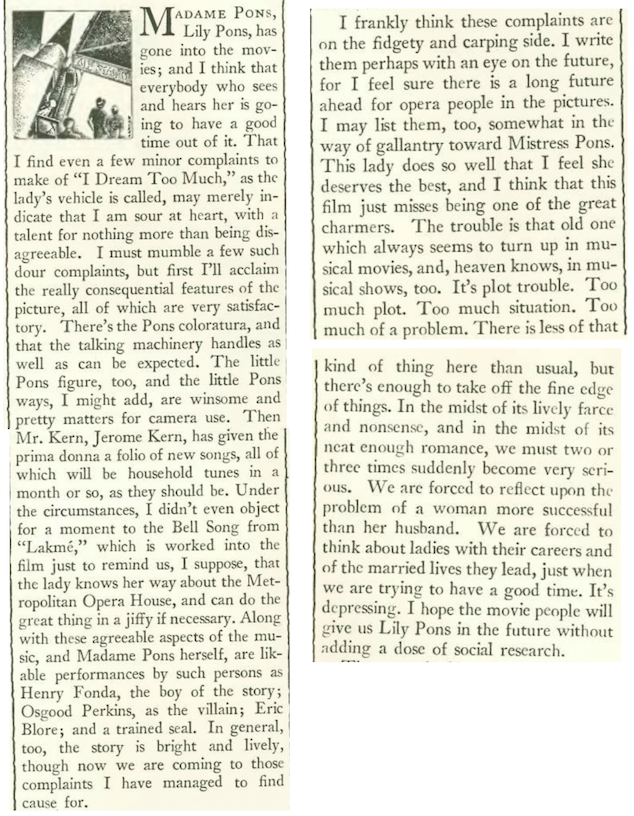
…Barbara Shermund…
…William Crawford Galbraith…
…and Perry Barlow…
…and for another reminder of reality in the city, this sketch that ran along the bottom of “The Talk of the Town,” by Reginald Marsh…
…and now we step back to the Nov. 15 issue, where E.B. White offered a less somber take on the Great Depression…
…White also noted a change on the faces of storefront mannequins…
YIN AND YANG…The worldly pose of a Roaring Twenties mannequin, and a more wholesome look for the leaner times in the 1930s. (Pinterest)
* * *
Playing Telephone
Long, long before cell phones, telephones were heavy stationary devices that required a certain amount of planning before installation, as E.B. White explains:
On to our Nov. 15 ads, we have this announcement for The Third New Yorker Album…with illustration by Otto Soglow…
…here is what the album looked like…
…and a couple of inside pages…
(Etsy)
…one of the contributors to the album was Rea Irvin, founding illustrator for The New Yorker, here doing some business with Murad cigarettes…also another Flit insecticide ad by Dr. Seuss…
…Christmas ads began appearing in the magazine, including this one for Hanson scales…pity the poor chap (and his wife) who actually thought this might be a suitable present for Christmas, or any occasion for that matter…
…and with Prohibition still in force, advertisers found other uses to promote their products…
…on to our cartoons, Leonard Dove illustrated a couple who didn’t get away with the ruse…
… Alan Dunn depicted what was considered typical office behavior in the 1930s…
...Peter Arno visited the Harvard Club…
…Alice Harvey also explored the college scene…
…some parlor games with Barbara Shermund…
……Bruce Bairnsfather, and some existentialist chat at tea time…
…and we close with Isadore Klein, and the world of corporate competition…
…and a Happy Thanksgiving, from the Macy’s Thanksgiving Parade 89 years ago, Nov. 27, 1930…