Above: King George V and Queen Mary posed for portraits by John St Helier Lander to commemorate the king’s Silver Jubilee in 1935. (Wikipedia)
The British Royal Family has never been my cup of tea, but its hard to deny their influence on world affairs, even if today it is mostly ceremonial. The king and queen were also figureheads back in 1935, however they could still claim to lead a vast empire, albeit one badly fraying at the seams.
May 4, 1935 cover by Ilonka Karasz.
Then as now, the power of the royals lay largely in their ability to boost the political and economic fortunes of their island nation. Such was observed by The New Yorker’s Paris correspondent Janet Flanner, who penned a two-part profile of Queen Mary (nee Mary of Teck or more formally Victoria Mary Augusta Louise Olga Pauline Claudine Agnes; Queen of the United Kingdom and the British Dominions, and Empress of India). Flanner wrote the profile of Queen Mary (1867-1953) in anticipation of the Silver Jubilee of her husband, King-Emperor George V (1865-1936). Excerpts:
A DEB AND A DUKE…In 1886 Mary was a an unmarried British princess who was not descended from Queen Victoria, so she was a suitable candidate for the royal family’s most eligible bachelor, Mary’s second cousin Prince Albert Victor, Duke of Clarence and Avondale. In early December 1891 Albert Victor (left photo) proposed marriage to Mary, but he died six weeks later in the Russian flu pandemic. Less than two years later (July 1893) Albert Victor’s brother, Prince George, Duke of York, would wed Mary—at right, their wedding day photo. (Wikipedia)
Flanner noted that the King George V and Queen Mary were rated by British industrialists as the Empire’s “two best salesmen,” however it was Mary who proved the most influential whether she was buying a hat or a refrigerator. Excerpts:
SILVER AND GOLD…Top photo: to mark the king’s Silver Jubilee on May 6, 1935, King George V and Queen Mary greet their subjects from a balcony at Buckingham Palace with their grandchildren, (from left) Princess Margaret Rose, Hon. Gerald Lascelles, Princess Elizabeth, and Viscount Lascelles. Below, King George V, the Duke and Duchess of York, and Princess Elizabeth take a trip in the royal carriage, 1933. The Duke and Duchess would succeed the throne upon the death of King George in 1936 and the abdication of the Duke’s brother, Edward, that same year. (Reddit/Town & Country)
Naturally, not everyone in the kingdom was thrilled by the Silver Jubilee…
OPPOSING VIEWPOINT…The anti-monarchist cartoonist Desmond Rowney commemorated the Silver Jubilee with this cartoon in the Daily Worker. The public expense for the Silver Jubilee in the midst of a financial depression caused some controversy. (National Archives UK)
* * *
Corn-fed Canvasses
Critic Lewis Mumford, like many East Coast intellectuals, was allergic to the over-patriotic and the sentimental, so when it came to assessing the work of the regionalist painter Grant Wood (1891-1942), Mumford found himself perplexed but hopeful that Wood would one day “find himself” and produce “first rate” art.
FLANKING THE ICONIC painting American Gothic (1930) are Grant Wood’s Self Portrait (1932) and, at right, Arnold Comes of Age (1930). Lewis Mumford considered American Gothic to be Wood’s best work. (figgeartmuseum.org/whitney.org/sheldonartmuseum.org)
Mumford did not mince words, however, when it came to Wood’s contemporary landscapes, which he called “unmitigatedly bad…If that is what the vegetation of Iowa is like, the farmers ought to be able to sell their corn for chewing gum…”
BUBBLEGUM TREES…From 1919 to 1925, Grant Wood taught junior high art in Cedar Rapids, Iowa. The seasonal nature of teaching allowed Wood to take summer trips to Europe to study art, and his early work showed strong post-impressionist influences, including his impressionistic Vegetable Farm (top) from 1924; below, Mumford thought Grant’s later landscapes looked like they were made of cotton and sponge rubber, including Near Sundown, from 1933. (wikiart.org)HOPE AND NOPE…Mumford wrote that Wood’s more “hopeful” works included, top left, Death on Ridge Road and, top right, Adolescence. On the other hand, he found the portraiture in Dinner for Threshers (bottom) vacuous, suggesting “a color photograph of a model of Life in Iowa done for a historical museum.” (wikiart.org/figgeartmuseum.org)
* * *
Daring Young Man
“The Talk of the Town” paid a visit to William Saroyan (1908–1981), an Armenian-American novelist, playwright, and short story writer who would go on to receive a Pulitzer Prize for Drama in 1940 and a 1943 Academy Award for Best Story for the film The Human Comedy. An excerpt:
HIGH WIRE ACT…The Daring Young Man on the Flying Trapeze and Other Stories (1934) was the first collection of 26 short stories by William Saroyan (pictured here in 1940). The book became an immediate bestseller. (Wikipedia)
* * *
Not Long For Long
In his column “Of All Things,” Howard Brubaker noted that the “loose talk” of Huey Long, a U.S. Senator from Louisiana and prominent critic of the New Deal, could be squelched by a Senate vote. As it turned out, it wouldn’t be necessary; Long was felled by an assassin’s bullet four months later.
* * *
Ode to Abode
E.B. White turned to verse to offer his thoughts on where one should live:
* * *
Tough Guys
After a musical comedy, a Shakespeare adaptation (A Midsummer Night’s Dream), and another comedy, James Cagney returned to familiar form with an exciting crime drama, G Men. Critic John Mosher was pleased that Cagney was back to tap-dancing with machine guns rather than showgirls.
CRIME PAYS…AT THE BOX OFFICE… James Cagney takes aim at his new role as a federal agent James “Brick” Davis in G Men. With the Hays Code in force, Warner Brothers made the film to counteract what many leaders claimed was a disturbing trend of glorifying criminals in gangster films. (Still from film)
* * *
From Our Advertisers
According to General Motors’ Fischer division, good taste was in order whether you were choosing a spouse or an automobile…
…New Yorker ads continued to display bright colors to sell everything from cars to whiskey to sparkling water (with apparent health benefits)…
…the shadowy Dubonnet mascot was back, here making the claim (against the wisdom of the ages) that a lunchtime drink will clear your head for the afternoon ahead…
…no health claims here from Penn Maryland, just pure magic as depicted by Otto Soglow…
…and what goes better with whiskey than the Kentucky Derby…
…the 1935 Kentucky Derby was won by Omaha, a three-year-old Thoroughbred; he was the third horse to ever win the Triple Crown (Omaha was the son of Gallant Fox, the 1930 U.S. Triple Crown winner)…
Omaha in 1935 (Wikipedia)
…on the subject of Thoroughbreds, Camel offered up testimonials from top athletes in a variety of sports…they all agreed that the cigarettes “don’t get your wind”…so what did that mean?…according to R.J. Reynolds, “It means you can smoke Camels all you want”…
…Camels also calmed the nerves, and so apparently did Chesterfields…
…on to our cartoonists, we begin with a spot by Charles Addams at the top of page 2…
…later in the issue James Thurber contributed this drawing to stretch across the bottom of page 62 (“On and Off the Avenue”)…
…Thurber again, with the life of the party…
…William Steig offered up a page-full of wits…
…plus one more on the preceding page…
…Gluyas Williams continued to follow the strange ways of club life in America…
…and we close with Alan Dunn, and service with a smile…
Above: A bull terrier in the early 1900s. (Westminster Kennel Club)
For dog lovers, or really for anyone with a heart, James Thurber’s “Snapshot of a Dog” is a moving tribute to a childhood pet, a bull terrier named Rex.
March 9, 1935 cover by Rea Irvin.
“Snapshot of a Dog” was reprinted almost two decades later in Our Dogs, A Magazine For Dog Lovers, which featured cover stories of various celebrities and their dogs. I recall reading “Snapshot” as a child in an anthology belonging to my parents; it affected me deeply then and still does today. Grab your hankies—here are excerpts from the first and last sections of the story:
FAITHFUL FRIENDS…Clockwise, from left, James Thurber with his beloved Christabel; Thurber’s illustration of a childhood pet, a terrier named “Muggs” from the story “The Dog That Bit People” (1933); photograph of the real Muggs; dogs appear in many of Thurber’s cartoons as a stoic presence among maladjusted humans; Thurber at work on one of his dogs in an undated photo. (thurberhouse.org/ohiomemory.org/jamesthurber.org)
* * *
Searching For the American Way
Ninety years ago E.B. White (in “Notes and Comment”) offered some thoughts on America’s system of government, and the country’s need for a song of hope…
…White also commented on a distasteful development at the old Round Table haunt, the Algonquin Hotel…
MAYBE USE THE BACK DOOR…Entrance to the Hotel Algonquin, early 1930s. (Hotel Algonquin)
…In her column “Tables for Two,” Lois Long took issue with folks who were yapping about couvert charges, and offered a simple solution…
…following Long’s “On and Off the Avenue” column were several restaurant reviews signed “S.H.”…here the writer visited the home of the Reuben sandwich…
KNOWN FOR ITS EPONYMOUS SANDWICH, Reuben’s also offered a Georgie Jessel (sturgeon and Swiss) and an Al Jolson (raw beef). (restaurant-ingthroughhistory.com/tag/reubens)
* * *
Getting Their Kicks
Professional football has been played in the UK since the 1870s, and by the early 20th century the sport drew massive crowds (the 1923 FA Cup final at Wembley Stadium drew an estimated 300,000). This excerpt from “London Letter” correspondent Samuel Jeake, Jr. (aka Conrad Aiken) offered a glimpse into the sport in 1935:
DOWN IN FRONT…Spectators in a crush at Highbury ground in London when a huge crowd turned up for the Arsenal versus Tottenham Hotspur match in January 1934. (Photo by A. Hudson/blog.woolwicharsenal.co.uk)
* * *
Endurance Test
Thomas Wolfe (1900-1938) published a number of novellas as well as plays and stories during his short life, but he only published two novels before his death in 1938 (others would be published posthumously). Wolfe’s second novel, the autobiographical Of Time and the River, would be well received by New Yorker critic Clifton Fadiman. Here is an excerpt from Fadiman’s lengthy review:
KNOCKOUT…Clifton Fadiman, right, wrote that Thomas Wolfe’s energetic writing could leave one feeling “punch-drunk.” (biblio.com/Wikipedia)
* * *
From Our Advertisers
We begin with two pioneers in the cosmetics industry…Dorothy Gray salons set the springtime mood with this advertisement on the inside front cover…
…Dorothy Gray (1886-1968), a.k.a. Dorothy Cloudman, sold her business in 1927 to Lehn & Fink, a New York-based pharmaceutical company best known as the maker of Lysol. In 1929, the company opened a flagship salon and executive offices in the new Dorothy Gray Building at 683 Fifth Avenue…
Dorothy Gray Building at 683 Fifth Avenue (cosmeticsandskin.com)
…Richard Hudnut (1855-1928) began working in his father’s drug store in 1873, and in 1899 opened his own pharmacy on Broadway. Hudnut, who promoted his perfumes and cosmetics by distributing booklets detailing his preparations, sold his company in 1916 to William R. Warner, which eventually became Pfizer…
Hudnut is recognized as the first American to achieve international success in cosmetics manufacturing. Part of that success was Du Barry, a premium perfume he created in 1902. It was used to scent a variety of products.
At left, the narrow Hudnut Building at 693 Fifth Avenue, designed by Ely Jacques Kahn and Eliel Saarinen. The Elizabeth Arden salon was next door. At right, salon treatment room in the Hudnut building.(cosmeticsandskin.com)
…if salon treatments weren’t your thing, you could revive by taking a trip to sunny Southern California…just look what it did for the old Major…
…the makers of Camel cigarettes offered an even quicker and cheaper way to feel invigorated…
…the back cover continued to be dominated by tobacco companies targeting women smokers…this week Chesterfield got in on the act…
…on to our cartoonists, we begin with James Thurber at the top of page 2 to kick off “Goings On About Town”…
…and Thurber again, with the ultimate party pooper…
…George Price graced the bottom of “Goings On” on page 4 with this whimsy…
…Helen Hokinson looked in on a children’s concert…
…there was another quarrel among lovers via Peter Arno…
…revolution was in the air at Alan Dunn’s cocktail party…
…George Price again, with two women who found a new perspective atop the Empire State Building…
…and we close with Syd Hoff, and an unexpected bundle of joy…
Otto Klemperer rehearsing at the Hollywood Bowl in September 1937. (Los Angeles Philharmonic)
The 20th century was an age of big personalities in classical music, among them Otto Klemperer (1885-1973), a German-born protégé of the composer and conductor Gustav Mahler. Klemperer was already an established conductor in opera houses around Germany when the rise of the Nazis prompted the maestro to emigrate with his family in 1933. He was soon appointed chief conductor of the Los Angeles Philharmonic.
Oct. 13, 1934 cover by Rea Irvin.
Klemperer also guest conducted a number of orchestras in the U.S., including the New York Philharmonic, where his larger than life presence caught the attention of “The Talk of the Town.” Excerpts:
MAESTRO…Top left, Otto Klemperer with Czech composer Leoš Janáček in 1927; at right, with Austrian-American classical pianist and composer Artur Schnabel in 1933; bottom photo, with wife Johanna Geisler, son Werner and daughter Lotte in Los Angeles, 1936. (operaplus.cz/Otto Klemperer Film Foundation/ottoklemperer.nl)
Lauded internationally as a great orchestral commander, in 1939 Klemperer would begin experiencing balance issues. After a tumor the size of a small orange was removed from his brain, he would be left partially paralyzed on his right side; bouts of depression and a manic phase would later land him in a mental hospital. However, by 1946 he would recover his health enough to return to conducting in a career that would last until 1971.
The conductor’s daughter, Lotte Klemperer (1923–2003), would serve as her father’s secretary, negotiator and administrator until his death in 1973. Otto’s son, Werner Klemperer (1920–2000), would become a stage, screen and television actor, most notably portraying Colonel Klink in the 1960s comedy Hogan’s Heroes. Although the role would garner Werner two Emmys, his father never fully understood the series or even the concept of a sitcom. Reluctant to pursue a musical career while his father was alive, Werner would later join the Metropolitan Opera Company in the 1970s, appear in Broadway musicals, and serve as a narrator with a number of American symphony orchestras.
TO THEM HE WAS DAD…At left, daughter Lotte Klemperer with her famous father in 1954. She would serve as his caretaker and business partner after her mother’s death in 1956. At right, son Werner Klemperer acted on Broadway and in films before taking on the role of the bumbling Colonel Klink in the 1960s comedy Hogan’s Heroes, which garnered the actor two Emmys. Although Werner Klemperer was musically inclined, he avoided work in music until the death of his father in 1973. (Otto Klemperer Film Foundation/CBS)
* * *
Vanished in the Haze
In his “Notes and Comment,” E.B. White lamented what appeared to be the transformation of the familiar night club; high above Manhattan in the Rockefeller Center’s Rainbow Room, the comforting haze of “cigarette smoke, talc, waiter’s venom” had been displaced by air conditioning, and to add to the horror, an organ had been installed that tinged the fox trot “with an odd piety.”
NOWHERE TO HIDE…E.B. White found the lack of haze in the new Rainbow Room disconcerting, not to mention the addition of a Wurlitzer organ, its wonders demonstrated here by organist Ray Bohr in 1934. (Library of Congress/nycago.org)
* * *
There Oughta Be a Law
While E.B. White was mourning the demise of the smoky nightclub, art and design critic Lewis Mumford continued his tirade against the pretentious and mediocre buildings that were popping up all over the city, including the new Federal Court Building on Centre Street that was, in Mumford’s words, a supreme example of bad design and fake grandeur.
A CRIMINAL CASE…Cass Gilbert’s Federal Courthouse building (United States courthouse) was completed in 1936, two years after Gilbert’s death. In 2001 it was designated as the Thurgood Marshall United States Courthouse. Critic Lewis Mumford called the design, which combined “two unlovely and unrelated forms”…”nothing short of a major crime.” (Wurts Brothers Photography Collection, National Building Museum)
* * *
Crime of the Century
That is what the press called the kidnap and murder of the infant son of Charles Lindbergh and Anne Morrow. In September 1934 a German immigrant carpenter named Bruno Hauptmann was arrested for the crime, and a trial date was set for the following January. In his “A Reporter at Large” column, Morris Markey examined the ransom money trail that led to Hauptmann’s ultimate arrest. Excerpts:
DON’T SAY “CHEESE”…Bruno Hauptmann sits for a mug shot following his arrest for the abduction and murder of the 20-month-old son of Charles Lindbergh and Anne Morrow Lindbergh. (Leslie Jones, Boston Public Library)
* * *
Should Have Stayed Lost
A film version of Willa Cather’s 1923 novel A Lost Lady was first made as a silent by Warner Brothers in 1924 (the film itself is lost) but in 1934 Warner had another go at the novel with a sound version starring starring Barbara Stanwyck, who was emerging as a major star. But Stanwyck’s talents could not overcome a script that critic John Mosher described as bleak, blank nonsense. Cather was so dismayed by the film that she refused to permit another adaptation of any of her novels during her lifetime.
LOST IN TRANSLATION…Barbara Stanwyck and Ricardo Cortez in A Lost Lady (1934). (IMDB)
* * *
From Our Advertisers
We kick off our sponsors with this two-page center spread from Hiram Walker & Sons, who introduced their new line of playing card-inspired whiskies…
…the New Yorker’s Janet Flanner wrote in 1938 that Elsie de Wolfe invented interior design as a profession, so who was to argue with de Wolfe’s suggestion that the leisure class should linger in bed with the aid of a Wamsutta bed-rest…the small print beneath the logo indicated that the bed-rest was “hair-filled,” which I assume was horse hair, still used today in some luxury brands…
…if de Wolfe was queen of interior designers, then Hattie Carnegie was the “First Lady of Fashion,” or so this ad claimed…
…here are images of the two titans of fashion and good taste…
TASTEMAKERS…At left, Hattie Carnegie aka Henrietta Kanengeiser (1880-1956), and Elsie de Wolfe, aka Lady Mendl (1859–1950). (americacomesalive.com/bureauofinteriors.com)
…and speaking of fashion, here is a llama cloth coat from B. Altman, trimmed in silver raccoon, suitable for Yale football games…based on inflation, that coat today would set you back at least $2,000…
…this condescending ad offered merchants a way to reach the “hitherto strange and aloof women of New York” through daytime advertising…
…Plymouth enlisted the talents of Alan Dunn to tout their car’s ride and durability…
…and on to our cartoonists, another from Dunn, a bit of spot art featuring a not so subtle commentary on Lawrence Lee Bazley Angas’s book The Coming American Boom…
…and some spot art from Isadore Klein…
…Miguel Covarrubias contributed to the theater review section…
…James Thurber entertained a house guest…
…George Price was still up in the air…
…Helen Hokinson took a spin with a celebrity look-alike…
…and Barbara Shermund offered another glimpse into the life of a modern woman…
…on to Oct. 20, 1934…
Oct. 20, 1934 cover by Helen Hokinson.
…in which E.B. White offered up a new lament, namely the pervasiveness of nostalgia and sentiment in contemporary literature…
HARKING BACK TO THOSE DAYS OF YORE…E.B. White simply had no stomach for the nostalgic stylings of Mary Ellen Chase (left) or Henry Seidel Canby, seen here on the cover of the May 19, 1924 issue of Time. (U of Maine/Time Inc)
* * *
Fifty Years Young
“The Talk of the Town” marked the Dakota’s 50th year at Central Park West, and made note of its loyal and prominent clientele…back in the day it served as a residence for actors such as Lillian Gish, Boris Karloff, and Teresa Wright, and in later years such luminaries as Lauren Bacall, Judy Garland, Rudolf Nureyev, and, of course, John Lennon and Yoko Ono.
THE STORIES IT COULD TELL…At left, the facade and main entrance of the Dakota in the 1960s; at right, inside the main entrance. (Pinterest/Wikipedia)
* * *
More From Our Advertisers
The Matson-Oceanic Line offered a “millionaire’s idea of a vacation” at an affordable price, and offered this sumptuous image as proof…
…E.B. White wasn’t crazy about the smokeless dazzle of the Rainbow Room, but it proved to be popular among the city’s elite…
…in case one was concerned about the provenance of one’s mink coat, Saks posted this helpful ad. Their high-end, natural-skin minks were priced at $8,000 (roughly $180,000 today); there was, however, a caveat regarding the cheaper models…
…Bergdorf Goodman offered up another ad featuring an impossibly attenuated model posed with a cigarette, her defiant gaze suggesting her modernity and individualism…
…Plymouth went back to the stable of New Yorker cartoonists, this time featuring the adventures of Helen Hokinson’s “girls”…
…and we segue to the rest of our cartoonists, including this spot by Constantin Alajalov…
…and this by George Price…
…who also gave us another update on the trials and tribulations of his floating man…
… James Thurber occasionally ignored scale in rendering his characters, which didn’t really matter in his strange world…
…Jack Markow had some bad news for two sign painters (the caption size is increased for readability)…
…and we close with Peter Arno, and the winner of most original Halloween costume…
…and before I go…this is being posted on Halloween, 2023, so here are a few images from 1934 to get you in the spirit, including a Saturday Evening Post cover, a 1934 party ideas magazine, and a page from Popular Mechanics featuring a smoking robot costume you could make yourself…in the 1930s, Popular Mechanics often featured Halloween party ideas that were downright lethal, usually involving electric shocks, pistols loaded with blanks, that sort of thing.
Above: Modeling agency founder John Robert Powers poses with participants of a fashion queen contest at the 1939 New York World's Fair. (NYPL)
John Robert Powers was a household name in the 1930s, founder of one of the world’s first modeling agencies—he supplied countless advertisers with mostly female models, some moving on to Hollywood careers.
April 21, 1934 cover by Abner Dean.
Writing for “A Reporter at Large” under the title “Perfect 36,” frequent New Yorker short story contributor Nancy Hale (1908 –1988) looked into the mysteries behind the fabled “John Powers Book” and its collection of sophisticated models.
TYPING BOOK…John Robert Powers (1892–1977) wrote a bestselling 1941 book, The Powers Girls, that told “the story of models and modeling and the natural steps by which attractive girls are created,” organizing various models by type; at right, a page from the book featuring Elizabeth ‘Liz’ Gibbons—despite her Alabama roots, she was described by Powers as being “The Urban Type.” (Wikipedia/lastyeargirl.blogspot.com)
Hale was given a tour by a company representative who described the types of women the Powers company represented, noting the successes of women who landed in major cigarette ads or went on to become Hollywood stars:
SMOKE AND MIRRORS…Clockwise, from top left: Powers model Janice Jarratt (in a 1934 publicity photo from her only film, Kid Millions), who for a time was known as the “Lucky Strike Girl” as well as the “most photographed woman in the world”; Jarratt offering a Lucky to a nervous young man in a 1935 ad; Powers model Ethelyn Holt in a publicity photo for the Billy Rose Theatre; Holt in a 1933 ad for Camel cigarettes. (MGM/NPR/NYPL/propadv.com)
A number of Hollywood stars got their start or were discovered through their work with Powers, who himself was a sometime actor and the subject of a 1943 musical comedy, The Powers Girl.
POWER STARS…Former Powers models turned Hollywood stars included, from left, Norma Shearer,Frederic March and Kay Francis. (TCM/TMDB)
A note about the author, Nancy Hale: A brilliant short story writer, Hale published her first short story in The New Yorker in 1929 (when she was just 21) and would publish more than eighty stories in the magazine through 1969—she holds the record for the most stories in the magazine in a single year, publishing twelve between July 1954 and July 1955. New Yorker editor William Maxwell regarded Hale’s writing technique as “flawless.”
PROLIFIC…Nancy Hale published more than a hundred short stories in her lifetime, ten of which were recipients of an O. Henry Prize. Writer Joanne O’Leary (London Review of Books) notes that Hale also worked for Vogue (where she “pinch-hit as a model”) and became the first female news reporter at the New York Times. Above left, Hale in an undated photo; at right, Hale photographed in 1936 for Harper’s Bazaar. (Nancy Hale Papers, Sophia Smith Collection, Smith College)
* * *
Tat For Tat
Alva Johnston explored the world of “tattooed people” in his second installment of a three-part profile series titled “Sideshow People”…
MARKED FOR LIFE…Alva Johnston noted such celebrated tattooed ladies as Mae Vandermark (left, circa 1920s), and Lady Viola, pictured at right with tattoo artist Fred Clark, 1930s. (Vintage Everyday)INKSLINGER…Charlie Wagner, a tattoo artist who lived from 1875 to 1953, is considered one of the kings of American tattooing. Practicing his art in New York’s Bowery, he not only developed an influential art style; he invented new machinery that helped spread the art of modern tattooing. (nyctattooshop.com)
* * *
Bloody Satisfying
Film critic John Mosher declared David O. Selznick’s production Viva Villa! to be “thoroughly satisfying”—with a screenplay by Ben Hecht and starring actor Wallace Beery as Mexican revolutionary Pancho Villa, the film was considered violent and bloody by 1934 standards.
REVOLUTIONARY…Clockwise, from top left, Pancho Villa (Wallace Beery) finds himself attracted to a benefactor’s sister (Fay Wray); MGM film poster; Beery with Katherine DeMille (who was Cecil B. DeMille’s adopted daughter) and Stuart Erwin; Beery striking a pose on the set of Viva Villa! (IMDB)
Mosher found some of the film’s violence to be startling. Being one the last Pre-Code films, censors would start clamping down on such scenes in the coming years.
MAKE SURE YOU GET MY GOOD SIDE…Pancho Villa (Wallace Beery) faces a firing squad before receiving a last-minute reprieve in Viva Villa! (IMDB)
* * *
From Our Advertisers
MGM took out a full-page ad to tout the success of Viva Villa and other MGM “hits”…
…note the bottom left hand corner of the MGM ad—a cartoon by Otto Soglow promoting the upcoming film Hollywood Party, a star-studded comedy musical featuring Laurel & Hardy, Jimmy Durante, Lupe Velez and Mickey Mouse…
…those looking for a different kind of entertainment could have been enticed by this lavish center-page spread from German ocean liner companies…they were inviting Americans to Oberammergau, Germany to witness the “only performances of the Passion Play until 1940″…the play was usually performed every ten years (years ending in the digit zero) but in 1934 a special performance was supported by the Nazi Party…incidentally, the 1940 play was cancelled due to World War II…
…the same German-American shipping companies also advertised an African cruise…with some racist imagery…
…perhaps you wanted to go to Europe on a ship with fewer Nazis on board…in that case you could grab a berth on a ship with the United States Lines, and hang out with these stiffs…
…the makers of Old Gold referenced a previous ad featuring Jimmy Durante with a new spot starring actor/comedian Eddie Cantor…both ads depicted impressionable young women admiring the smoking wisdom of older men…
…for reference, the creepy Durante ad…
…the famous “Call for Philip Morris” advertising campaign began during World War I, but in 1933 Johnny Roventini, a bellhop at the Hotel New Yorker, would become the living symbol of the cigarette brand…
…by contrast, Frankfort Distilleries showed us an image of man who would not represent them, namely Jed Clampett…
…Chevrolet continued its rebranding campaign, positioning itself as an affordable choice that was nevertheless favored by the posh set…
…who would rather be driving a Packard, here appealing to the nostalgic sensibilities of old-timers who had the means to afford one…
…on to our cartoons, and some “Small Fry” baseball from William Steig…
…an unusual captioned cartoon (from George Price) featured in the opening “Goings On About Town” section…
…Syd Hoff gave us an alarmed matron confronting the unthinkable…a doorman as a son-in-law…
…we haven’t seen Isadore Klein’s work in awhile—understandable, as he was busy in his career as an animator––in 1934 he worked on films for Van Beuren Studios (Rainbow Parade Cartoons) and in 1936 he would move to Disney’s Silly Symphonies…
…Paul Manship’sPrometheus at Rockefeller Center is iconic today, but when it was installed in 1934 it puzzled more than a few onlookers, including Robert Day…
…and we close with James Thurber, and a turn of events in his “war”…
Above, from left: When Teddy Roosevelt announced in 1912 that he would run for president against his former VP, William Howard Taft, Brown Brothers sent photographer Charles Duprez to Oyster Bay to take this famous photo; President Taft and his wife, Helen “Nellie” Taft, in 1909; famed New York Giants pitcher Christy Mathewson warms up before a game, circa 1912. (liveauctioneers.com/cabinetcardgallery.com/psacard.com)
Before there were photo agencies like Magnum or archives such as Getty Images there was a company named Brown Brothers, the world’s first stock photo agency founded by Arthur and Charles Brown in New York City in 1904.
March 24, 1934 cover by Garrett Price.
“The Talk of the Town” looked in on Brown Brothers, “the largest collection of photographs in the world—more than a million,” including a famous image of Teddy Roosevelt and the first photographic portrait of a woman’s face.
Brown Brothers photos could be seen everywhere in the early 20th century—their staff of twelve photographers provided images to New York newspapers at a time when the technology for publishing photos in the dailies was in its infancy and most papers didn’t employ staff photographers. Even the venerable New York Times hired the Browns to cover news events until they established their own team of photographers.
LITTLE DID DOROTHY DRAPER KNOW that she would become world famous when she sat for this photo (left) taken by her brother Dr. John W. Draper in his Washington Square studio at NYU in 1839 or 1840. Dorothy had to sit unblinking for the 65-second exposure—apparently her brother dusted her face with white flour to enhance the contrast. The Drapers still go down in history as creators of the oldest photo of a woman; at right, Dorothy Draper in the 1890s, in a photograph taken by her nephew. (boweryboyshistory.com/MCNY)ONE IN A MILLION…The early 20th century image at left is just one of as many as three million images amassed in the Brown Brothers archive; at right, a Brown Brothers archivist at work. (Pinterest/sportscollectorsdigest.com)
Note: The Brown Brothers’ archive of photos and negatives went up for sale in 2014, and was ultimately acquired by Leland’s in 2020.
* * *
De Terraplane!
E.B. White (in “Notes and Comment”) was also looking at a photo, or rather scrutinizing one that was featured in a Saturday Evening Post advertisement for Hudson’s Terraplane:
…here is the ad from the Post…
…and a closer look at the image, which had White seeing double.
(Both images courtesy The Saturday Evening Post)
* * *
Escape Artist
In his “Of All Things” column, Howard Brubaker included the following item about a new telescope, ostensibly to set up a quip about John Dillinger’s recent prison break (his second):
YOUR DAYS ARE NUMBERED…The FBI issued this “Wanted” poster of gangster John Dillinger— “Public Enemy No. 1″—in June 1934. The Feds gunned him down a month later. (AP Photo)
* * *
Playing Nice
The New Yorker commented on the trend toward fewer fights in the world of hockey, and although fighting in general ebbed a bit through mid-century, it nevertheless remained a staple of the game. Indeed the New York Rangers founder, Tex Rickard, who also promoted boxing at Madison Square Garden, knew quite well that hockey fights were one reason folks attended the games.
FACE OFF?…At left, goaltender Andy Aitkenhead of the New York Rangers padded his legs and arms but put his clean-shaven mug on the line in December 1934— it wasn’t until 1959, 42 years into the NHL’s existence, that a league goalie wore a mask on the ice. At right, New York Rangers captain Bill Cook (right) flanks coach and manager Lester Patrick alongside Frank Boucher on the ice at the Chicago Stadium in November of 1934. (Pinterest)
* * *
From Our Advertisers
We begin with this sumptuous ad from Packard, appealing to those who could afford to own this luxury brand…
…if you couldn’t afford a Packard, you could rest assured that even a well-heeled deb could be happy with a Chevy…
…the folks at Powers Reproduction continued to tout the wonders of their color photography, even if their cake looked less than appetizing…
…Fanny Brice was appearing with the 1934 Ziegfeld Follies on Broadway, so the folks at Spud jumped on her celebrity bandwagon…
…while R.J. Reynolds was suggesting we replace our chewed up pencils with a nice Camel cigarette…now, don’t you feel better?…
…the Canadian distillery giant Gooderham & Worts offered all sorts of options to calm our jangled nerves in this two-page spread…
…while the Germans continued to entice us onto their cruise ships perfected by science and featuring “the strapping sons of sailor families”…hmmm…
…in 1934 the New Yorker began featuring mostly wordless cartoons on the opening page of “The Talk of the Town,” including this one by Robert Day featuring Mayor Fiorello LaGuardia checking up on city employees…
…Richard Decker gave us an Irish Sweepstakes winner from Brooklyn who displayed some modesty and media savvy…
…Decker again, with the latest in perambulators…
…Otto Soglow’s Little King put his back into a ceremonial groundbreaking…
…Peter Arno’s sugar daddy received some not-so-happy returns…
…one of William Steig’s “Small Fry” was doing some serious reading…
…and James Thurber’s war continued from the rooftops…
…on to March 31, 1934…
March 31, 1934 cover by Rea Irvin.
…where we find Alice Frankforter covering an exhibition dubbed “A Mile of Art.” I’m guessing critic Lewis Mumford passed on this opportunity to offer some blistering commentary. As for Frankforter, she found the spectacle puzzling, if not irritating. An excerpt:
Constantin Alajalov offered his perspective on the art world stunt with this bit of spot art…
…and more from Frankforter, now reaching a state of exhaustion and near-delirium as she approached the end of the exhibit:
* * *
Biblical Babbitts
Frank Buchman’s First Century Christian Fellowship (aka the Oxford Group) meeting in New York featured a lot of people chuckling and bubbling, but all that forced conviviality left critic Edmund Wilson feeling “quite morose.” Writing for the “A Reporter at Large” column, Wilson looked in on the group as they awaited Buchman’s arrival at a preliminary rally. The column was subtitled, “Saving the Better Classes and Their Butlers.” An excerpt:
Like other critics at the time, Wilson saw “Buchmanism” as bourgeois optimism and boosterism, interested more in converting the souls of the wealthy and celebrated rather than serving the needs of poor.
ODD COUPLE…Frank Buchman liked to be seen with the rich and famous. In 1939 he asked for a half hour of Mae West’s time, ostensibly to get this photo of him sharing some wisdom from his “Moral Re-assessment” booklet. West seems less than enamored by the encounter, regarding Buchman as some sort of alien creature; right, Buchman on the cover of April 20, 1936 edition of Time, which identified him as “Cultist Buchman.” (maewest.blogspot.com/Time)
* * *
Carnegie’s Couture
Vogue magazine fashion editor Nancy Hardin and the New Yorker’s fashion editor Lois Long teamed up on a profile about Hattie Carnegie (1889 -1956) titled “Luxury, Inc.” Born Henrietta Kanengeiser in Vienna, Carnegie immigrated with her family to New York in 1900; nine years later she adopted the name “Carnegie” after Andrew Carnegie, the richest person in America. Through hard work and an inherent instinct for what American women desired, she built a fashion design business that thrived in Depression and catered to stars and celebrities including Tallulah Bankhead, Joan Fontaine, Lucille Ball, and Joan Crawford. An excerpt, with illustration by Hugo Gellert:
FUR SURE…Hattie Carnegie posing for a 1951 Vogue magazine photo. (Vogue)
* * *
Steampunk Dream
In my previous entry I featured Robert Coates’s observations on the new Machine Art exhibition at the Museum of Modern Art. For the March 31 issue critic Lewis Mumford, celebrant of the simple and unpretentious, waxed nostalgic over the novel exhibit:
I’M A LITTLE TEAPOT that made a big advance in the design world, according to critic Lewis Mumford. (MoMA)
Alan Dunn was also inspired by the exhibit, as evidenced in this cartoon from the April 7 issue…
* * *
More From Our Advertisers
Founded in October 1933, the men’s magazine Esquire took off with a bang, and the publishers were not shy about boasting of its early success…
…cover of the April 1934 issue, featuring the mustachioed mascot Esky…based on a drawing by cartoonist E. Simms Campbell, Esky was featured on the cover in various situations until 1961…
…Peter Arno’s “Whoops Sisters” appeared sixty-three times in the New Yorker between 1926 and 1927 before Arno retired them (they occasionally popped up in other publications, and in a 1931 Cunard ad)…it seems odd that they would make an appearance in a cheap thermometer ad in 1934…at any rate, it is difficult to tell if this is by Arno or by a clever forger…
…there’s no mistaking the cartoonist behind this ad…
…and this one by Otto Soglow…
…and we close our advertising section by raising a glass to Frankfort Distilleries…
…on to our March 31 cartoons, and a lineup of New Yorker regulars Abe Birnbaum…
The NBC Studios at 30 Rockefeller Plaza have wowed visitors and performers alike for nearly 90 years. Today we look back at the remarkable foresight of the studios’ designers, who created spaces that would one day accommodate a new medium called television, which was still in its experimental stages.
Nov. 4, 1933 cover by Robert Day, who contributed a total of eight covers to The New Yorker.
However, before we jump in, let’s look at Robert Day’s cover for the Nov. 4 issue, which featured a familiar character who made his first appearance on the cover of issue #12 (May 9, 1925), and returned four years later looking much older in the dog days of August…
Cover of issue #12 (May 9, 1925) by Rea Irvin introduced our street sweeper, who returned Aug. 3, 1929 by the hand of Gardner Rea.
Day’s cover, however, was also a nod to the annual gathering of autumn leaves—an occasional cover theme that began with Peter Arno’s contribution to the Nov. 27, 1926 issue (below, left) and most recently expressed in Adrian Tomine’s cover for the Nov. 7, 2022 issue (with timely pandemic reference)…
Back to Radio City, Morris Markey recounted the technological wonders of the new NBC studios in his “A Reporter at Large” column, “Marconi Started It.” Markey noted the “fabulous quality” of the facilities, wired for the day when television would arrive. Excerpts:
GEE WHIZ…Morris Markey could be assured that some folks would be “goggled-eyed” by NBC studios, including the technophiles at Popular Mechanics. (westmb.org)WHERE HISTORY WAS MADE…Studio 8H was the world’s largest radio studio when it opened in 1933. It would be converted for television in 1950. (westmb.org)
Markey marveled at NBC Studios’ various design innovations, including a revolving control room dubbed the “Clover Leaf”…
(Modern Mechanics, Jan. 1931)
Almost 90 years later, the studios continue to serve the broadcast needs of the 21st century, including Studio 8H…
LIVE FROM NEW YORK…Studio 8H was the world’s largest radio studio when it opened in 1933. Converted to television in 1950, it has been home to Saturday Night Live since 1975. Above, SNL stage manager Gena Rositano, in 2015. Below, longtime SNL director Don Roy King at the controls for Studio 8H, also in 2015. (Dana Edelson/NBC via Directors Guild of America)
* * *
Leopold!
Conductor Leopold Stokowski was no stranger to Studio 8H. From 1941 to 1944 he led the NBC Symphony Orchestra in that venue. One of the leading conductors of the early and mid-20th century, Stokowski (1882–1977) began his musical career in New York City in 1905 as the organist and choir director at St. Bartholomew’s Church, but by 1915 he was conducting the famed Philadelphia Orchestra. Robert Simon reported on Stokowski’s return to New York for a performance at Carnegie Hall. A brief excerpt:
I GET AROUND…Portrait Of Leopold Stokowski by Edward Steichen, Dec. 1, 1933. Married three times and once romantically linked to Greta Garbo, he was married to wife #3, Gloria Vanderbilt, for ten years. (Condé Nast)
Stokowski had the distinct honor of being satirized in a 1949 Looney Tunes cartoon, “Long-Haired Hare,” in which Bugs Bunny disguised himself as the conductor and entered the stage to the astonished whispers of the orchestra…Leopold! Leopold!…
MAESTRO…Bugs Bunny as Stokowski in “Long-Haired Hare.”
Stokowski was no stranger to animation. The conductor appeared in silhouette in Disney’s Fantasia (1940), leading the Philadelphia Orchestra in the film’s score. He even shook hands with Mickey Mouse.
* * *
Bigga Badda Wolfa
The New Yorker took a look at the popular records of the day, and in addition to tunes by Bing Crosby and Rudy Vallée there was yet another release of “Who’s Afraid of the Big Bad Wolf?”…Ethel Shutta was the latest of seemingly dozens of artists to cash in on the Disney hit…
I’LL HUFF AND I’LL PUFF…Those who couldn’t get enough of “Who’s Afraid of the Big Bad Wolf” could turn to Ethel Shutta’s rendition of the hit song on Columbia records. (discogs.com)
* * *
Page-Turner
Writer Kay Boyle wasn’t afraid of wolves or any other subject for that matter, according to book reviewer Clifton Fadiman…
TOSSING A SALACIOUS SALAD…Kay Boyle, photographed by George Platt Lynes, 1941. (The Kay Boyle Papers, Morris Library, Southern Illinois University)
* * *
A Grapeful Nation
As New Yorkers counted the days until the end of Prohibition, The New Yorker did its part to get readers back up to speed by enlisting the talents of one of the world’s great wine experts, Frank Schoonmaker, who had the enviable job of filing a series of wine reports for the magazine. His first installment of “News From the Wine Country” featured the Champagne region. Excerpts:
THAT FIZZY FEELING…Bottling the good stuff in the Champagne region, circa 1930. (wineterroirs.com)
* * *
From Our Advertisers
Christmas was just around the corner, and F.A.O. Schwarz was READY with its 64-page catalog…
…White Rock anticipated the end of Prohibition with an ad featuring a miniature colonel who apparently needed a stiff drink to prepare for his wife’s return from abroad…
…Mrs. Hamilton Fish Jr, aka Grace Chapin, was married to the New York congressman from 1920 until her death in 1960, apparently enjoying many Camels along the way…her husband would go on living another 31 years and take three more brides before expiring at age 102…
…another cautionary tale from Chase & Sanborne about the perils of undated coffee…
…and with the holidays approaching, a jolly ditty from Jones Dairy Farm, home to little piggies who merrily dash toward their inevitable slaughter…
…and we jump to another back-page ad, this from the stately Plaza, where you could get a single room for five bucks a night…
…turning to the cartoons, we find George Price hitting his stride with multiple cartoons in consecutive issues…
…and taking a look at the recent elections…
…on to James Thurber, and continuing struggles on the domestic front…
…and that brings us to our next issue…
Nov. 11, 1933 cover by Constantin Alajalov.
…in which E.B. White had a thing or two to say about the latest edition of the National Horse Show at Madison Square Garden.
HORSE SENSE AND SENSIBILITY…The National Horse Show at Madison Square Garden was a major event on New York’s social calendar; top and bottom right, scenes from the 1936 show; bottom left, undated scene circa 1960. (Stills from YouTube)
* * *
Versatile Verse
Phyllis McGinley (1905–1978) was the author of children’s books and poetry, the latter genre most notably for The New Yorker. However, she attracted a wide audience for her light verse in other publications ranging from Ladies Home Journal to The Saturday Review.
LIGHT TOUCH…Phyllis McGinley in an undated photo. She received the Pulitzer Prize in 1961 for her book Times Three—the first writer of light verse to receive the prize. (wnyc.org)
* * *
Oil and Water
Art and architecture critic Lewis Mumford found two very different visions of America in the works of contemporaries John Marin and Edward Hopper. Marin’s watercolors were featured at An American Place, while Hopper’s oil paintings and etchings were shown down the street at the Museum of Modern Art.
SIDE BY SIDE…Lewis Mumford found different visions of New York and the world at An American Place and MoMA galleries. At left, John Marin’s watercolor From the Bridge, N.Y.C. (1933); at right, Edward Hopper’sRoom in New York, also from 1933. (Artists Rights Society/Sheldon Memorial Art Gallery)
* * *
More From Our Advertisers
Okay, so I’ll buy the part about PBR’s ability to soothe “jaded nerves,” but I doubt it gave this guy “fresh energy” and “a sound, healthy body”…
…After thirteen long years, winemakers emerged from their cellars to glimpse the light of a new day…
…and yes, after thirteen long years, some folks would be yearning for their DRY SACK Sherry…
…the name Elizabeth Hawes was synonymous with high fashion in the late 1920s and 1930s—she owned one of the most exclusive couture houses in New York…
…an outspoken advocate of dress reform, Hawes (1903–1971) was referred to by one historian as “the Dorothy Parker of fashion criticism.” After attacking the fashion industry with her 1938 book, Fashion Is Spinach (Hawes wrote: “I don’t know when the word fashion came into being, but it was an evil day…”), she closed her fashion house and in 1942 took a job as a machine operator at a wartime plant in New Jersey. She became a union organizer, a champion of gender equality, and a critic of American consumerism.
IN A LEAGUE OF HER OWN…Elizabeth Hawes — writer, fashion designer and political activist, poses for a photograph in 1941. (Mary Morris Lawrence)
…speaking of consumerism, ooooh look! A radio “you can slip in your pocket,” depending of course on the size of your pocket…
…transistors would not come along until the late 1950s, so the Kadette still depended on tubes, and you had to plug it in somewhere, so no running down the beach with headphones, at least for awhile…
The Kadette Junior. (radiolaguy.com)
…it must have been a rare treat to sail on a ship like the SS Santa Rosa—situated between the ship’s two funnels, the dining room had an atrium stretching up two-and-a-half decks and featured a retractable roof…
…on to more cartoons, and more George Price…
…moving along, we received some big news from one of Helen Hokinson’s “girls”…
…an aside I’ve been meaning to include…in 1952, just three years after Helen Hokinson’s untimely death, a cartoonist for The Cincinnati Enquirer, Franklin Folger, debuted a cartoon called “The Girls.” The cartoon was eventually syndicated and appeared in more than 150 newspapers worldwide before Folger retired it in 1977. Perhaps I am missing something, but I cannot find a single reference to Folger’s obvious appropriation of Hokinson’s “girls”…some examples of Folger’s work from the early 1960s and another from H.H. for comparison:
…and onward to Peter Arno, and the trials of portrait artists…
It’s hard to fathom that a woman wearing trousers used to cause such a stir, but for international film star Marlene Dietrich it was an opportunity for the publicity that invariably came with defying the norms of fashion and sexuality in 1930s.
July 22, 1933 cover by Constantin Alajalov.
In May 1933 Dietrich was headed to Paris on a steamer, relaxing on the deck in a white pantsuit. Prior to her arrival, the Paris chief of police announced she would be arrested if she showed up in pants. However when Dietrich arrived at the Gare Saint Lazare wearing a man’s suit and overcoat, she stepped off the train, grabbed the chief of police by his arm, and walked him off the platform.
The New Yorker’sJanet Flanner reported on Dietrich’s comings and goings in her regular column “Letter From Paris”…
TAKING PARIS BY STORM…Clockwise, from top left: Marlene Dietrich in Paris, 1933, accompanied by her husband, Rudolf Sieber; Dietrich on the SS Europa, Cherbourg, France, May 1933; Dietrich arriving at the Gare Saint Lazare station, May 20, 1933 (this photo is often paired with an erroneous caption claiming that Dietrich is being arrested by French authorities. On the contrary, she owned them the moment she stepped onto the platform); Dietrich signing autographs in Paris, 1933. (bygonely.com/Smithsonian/Twitter/Pinterest)
* * *
Bullish On Office Space
Despite the Depression, millions of square feet of office space were being added to the massive Rockefeller Center complex, including the Palazzo d’Italia at 626 Fifth Avenue. “The Talk of the Town” reported:
THE BIG SHORT…Attached to the International Building at its northwest corner, the Palazzo d’Italia was originally planned as a nine-story building, a fact that impressed the fascist Italian leader Benito Mussolini because it beat the six-story height of the French and British Buildings. In the end Benito only got six as well. (Wikipedia/Pinterest)
* * *
Urban Jungle
Astoria Studios in Queens was built in 1920 for Famous Players-Lasky and is still home to New York City’s only studio backlot. In 1933 it served as a tropical setting for The Emperor Jones, featuring Paul Robeson in the title role. “The Talk of the Town” looked in on the movie’s faux jungle:
35TH STREET JUNGLE…Paul Robeson in a scene from The Emperor Jones. (flickr.com)
Loosely based on a Eugene O’Neill play and financed with private money, the film was made outside of the Hollywood studio system and distributed by United Artists.
EMPEROR’S NEW CLOTHES…Brutus Jones (Robeson) schemes with colonial trader Smithers (Dudley Digges) on his plan to become emperor in The Emperor Jones. (moma.org)
* * *
From Our Advertisers
Yes, it’s advertising so we don’t expect it to be realistic, but I can guarantee no one is going to look like that after a ride to the beach in a rumble seat…also the woman behind the car is either floating or has exceedingly long legs…
…Hupmobile enlisted humorist Irvin S. Cobb to help boost its sagging sales…
Irvin S. Cobb (1876–1944) wrote for Joseph Pulitzer’s New York World, and was once the highest paid staff reporter in the United States. (carnegiecenterlex.org)
…with the return of legal beer the makers of Budweiser struck a patriotic note in promoting their “King of Bottled Beer” to thirsty New Yorkers…
…the makers of Pabst Blue Ribbon claimed the title of “Best of the Better Beers” with this ad featuring a woman who appeared on the verge of going overboard…
…if beer wasn’t your thing, you could try your hand at mixing a “30-Second Highball” per this Prohibition-themed ad…
…delving into the back pages one finds all sorts of curiosities, including this mail-order “charm school” operated by Margery Wilson…
…Wilson (1896–1986) acted in numerous silent pictures (including the 1916 D. W. Griffith epic Intolerance) and in the early 1920s was a writer, director and producer…
Margery Wilson in Eye of the Night (1916). She was among pioneering women filmmakers of the 1920s. (columbia.edu))
…it must have been a hot summer in New York with the abundance of air-conditioner ads…here’s one from Frigidaire for a unit that despite its size (and enormous cost) could cool only one room…
…this next air-conditioner ad from G-E seems poorly conceived…you would think an air-conditioned office would make the boss and his secretary a bit happier than they appear here…maybe they just got the bill from General Electric…
…we begin our cartoons with another pair of sourpusses, courtesy Mary Petty…
…George Price offered up this bit of art for the opening pages…
…William Steig headed to the country to escape summer in the city…
…William Crawford Galbraith’s bathers kept cool by examining the flotsam from distant shores…
…Charles Addams explored various themes before he launched his “Addams Family” in 1938…
…and we move on to July 29 with a terrific cover by Barbara Shermund…
July 29, 1933 cover by Barbara Shermund.
…in this issue Geoffrey T. Hellman penned a profile of Egyptologist Herbert E. Winlock, who made key discoveries about the Middle Kingdom of Egypt and served as director of the Metropolitan Museum from 1932 to 1939, where he was employed his entire career. Excerpt:
CAN YOU DIG IT…Early 1920s photo of the Metropolitan Museum’s Theban expedition team. Herbert E. Winlock is in the back row, second from left. His wife, Helen Chandler Winlock, is in the front row, far right. (Metropolitan Museum of Art)
* * *
Chilling With U.S. Grant
In those days before air-conditioning was widely available or used, “The Talk of the Town” dispatched an investigator to sample indoor temperatures at various public places, finding the coolest spot at Grant’s Tomb:
WHERE THE COOL PEOPLE HANG OUT…Clockwise, from top left: The tomb of Per-neb at the Metropolitan Museum registered a cozy 80 degrees, while in the same museum it was a balmy 84 by Emanuel Leutze’s famed painting Washington Crossing the Delaware; the New York Aquarium in Battery Park was a bit cooler at 79 (pictured is the Sea Lion Pool); while Grant’s Tomb was downright chilly at 70. (Met Museum/Wildlife Conservation Society/grantstomb.org)
* * *
Node of Gold
Apparently the famed crooner Bing Crosby had a minor node on one of his vocal cords, and when he consulted a specialist he was advised against removing it, lest he alter his voice in a way that would affect his career. Indeed, the node seemed to add an “appealing timbre” to his signature sound, so Crosby had his voice insured by Lloyd’s of London for $100,000 with a proviso that the node could not be removed. Howard Brubaker made this observation in “Of All Things”…
LUMP IN HIS THROAT…Bing Crosby with Marion Davies in the 1933 film Going Hollywood. (IMDB)
…Brubaker also shared this prescient observation from American astronomer Vesto Slipher…
…Slipher (1875–1969) would live long enough to confirm his statement…the first full-disk “true color” picture of the Earth was captured by a U.S. Department of Defense satellite in September 1967:
(USAF/Johns Hopkins University)
* * *
More From Our Advertisers
This ad was on the inside front cover of the July 29 issue, a rather jarring image following that lovely Barbara Shermund cover…
…the hugely popular P.G. Wodehouse was back with more silly antics from the British upper classes…
…while some New Yorkers could take a break from their reading and hit the dance floor atop the Waldorf-Astoria…
…and tango to the stylings of bandleader Xavier Cugat…
Xavier Cugat and band atop the Waldorf-Astoria. (cntraveler.com)
…this ad for the French Line, illustrated by Ruth Sigrid Grafstrom, offered a precious scene of a page-boy lighting a woman’s cigarette, a sight unimaginable today…
…and we close with a cartoon by Gardner Rea, doggone it…
If you’ve ever come across the byline B.H. Arkwright, you were most likely reading the work of Clarence Day Jr., who in February 1931 began writing for The New Yorker under that pseudonym and also under his given moniker, which in four short years would become a household name.
Jan. 21, 1933 cover by Theodore Haupt.
In the Jan. 21, 1933 issue Day would publish his first humorous story in The New Yorker about upper-middle-class family life in the 1890s. A subsequent collection of these stories would be published in 1935 under the title Life with Father. Sadly, Day would die shortly thereafter and wouldn’t witness the enormous cultural impact his stories would have on mid-century America.
Here is an excerpt of Day’s first story about his father, describing an exchange between his parents that would set the tone for the series:
Life with Father was a hit with readers, inspiring a 1939 Broadway production by Howard Lindsay and Russel Crouse that would run for 3,224 performances over 401 weeks—it was, and still is, the longest-running non-musical play on Broadway. The play would be adapted into a 1947 film featuring Irene Dunne and William Powell in the leading roles. The stories even made it to the small screen in a CBS TV series that ran from 1953 to 1955.
ALL IN THE FAMILY…Clockwise, from top left, Clarence Day, Jr. (1874-1935) in undated photo; Dorothy Stickney and Howard Lindsay in the Broadway production of Life with Father, 1939; Day’s father and inspiration, stockbroker Clarence Day, Sr. (1844-1927); scene from the 1947 feature film Life with Father with Irene Dunne, William Powell, and a 14-year-old Elizabeth Taylor. (britannica.com/theguardian.com/IMDB)
Day was also a cartoonist, contributing satirical cartoons for U.S. suffrage publications in the 1910s and also publishing collections of humorous essays including a Darwinian satire on the origins of human nature, This Simian World (1920), and the rambling, whimsical The Crow’s Nest (1921). Both featured Day’s simplistic cartoons and anthropomorphic tales that anticipated the work of James Thurber later in the decade.
CATTAIL…Self-portrait of Clarence Day rendered as a cat in a selection from The Crow’s Nest (1921). The entire book is available as a free e-book from The Project Gutenberg.
As we know, New Yorker founding editor Harold Ross was a man of contradictions, at once profane and puritanical, the latter on display when it came to one of Day’s cartoon submissions for the magazine. According to Brendan Gill’s memoir Here at The New Yorker, Ross balked at publishing the drawing below because it showed an exposed breast. Either Day or an editor simply removed the nipple (note the broken line in the nipple’s place) and the cartoon was published.
* * *
Big Man’s Big Man
August Gennerich not only served as President Franklin D. Roosevelt’s bodyguard, he was also a close family friend. “The Talk of the Town” featured a lengthy account of the man, an excerpt of which is below:
ON GUARD…Augustus “Gus” Gennerich (1887-1936) was a friend of Franklin and Eleanor Roosevelt’s as well as one of FDR’s most trusted guards. He began his career in 1909 as a NYC policeman and in 1929 was assigned to be then-Governor Roosevelt’s bodyguard in the city. The Roosevelts were heartbroken when Gus died unexpectedly at age 50 from a heart attack. (picryl.com)
* * *
Desert Solitude
In 1933 Georgia O’Keeffe (1887–1986) was well into her Southwestern phase when her husband Alfred Stieglitz staged a show of her work at his last New York gallery, An American Place. O’Keeffe and Stieglitz lived together in New York until 1929, when O’Keeffe began spending more time in the Southwest—most likely to put some distance between herself and Stieglitz, who was in a long-term affair with photographer and writer Dorothy Norman. After this show opened O’Keeffe would suffer a nervous breakdown (per the above) and not return to painting until 1934. Lewis Mumford visited An American Place and had this to say about O’Keeffe’s work:
ANOTHER AMERICAN PLACE…New Mexican Landscape by Georgia O’Keeffe, 1930. (springfieldmuseums.org)
* * *
The Bookish Type
Modernist American poet and writer Archibald MacLeish (1892–1982) was a man of letters to the letter, serving as the ninth Librarian of Congress (1939-44) and during which time initiated the process of naming U.S. poet laureates. Here he contributes some of his verse to The New Yorker:
DESK JOB…Archibald MacLeish, circa late 1930s. (Library of Congress)
It was no accident that MacLeish contributed to The New Yorker: in addition to being among the literary expatriates in Paris including Gertrude Stein and Ernest Hemingway, MacLeish and his wife, Ada Hitchcock, were part of the Riviera crowd hosted by Gerald and Sara Murphy, which included among other notables John O’Hara, Dorothy Parker, and Robert Benchley.
OVER THERE…Gerald and Sara Murphy hosting friends at a Riviera beach party, circa 1923. Gerald is the man standing in the striped shirt; Sara is at right with a parasol. I believe that is Benchley at the bottom right, and Parker seated at center-right. (Beinecke Library)
* * *
From Our Advertisers
We begin with this ad from Helena Rubinstein that parodies Lois Long’s “Tables for Two” column (Long signed that column as “Lipstick”) and announced a new “Red Poppy” shade…
…on the other hand, the folks at Tangee borrowed from the old Temperance Movement song, TheLips that touch liquor, shall never touch mine, to promote a lipstick guaranteed to snag a sugar daddy like the one illustrated below (recalling Monopoly’s Uncle Pennybags)…
…more advertising weirdness comes our way from the staid Best & Company, its execs somehow persuaded by an ad man to go with this chef motif…
…Leg ‘O Mutton referred to a type of puffy sleeve introduced in 1830s France that had a revival in the late 1880s…
MMMMM, MUTTON…The Leg ‘O Mutton look, circa 1890s. (genealogylady.net)
…the National Auto Show moved on and the National Motor Boat and Engine Show took its place at the Grand Central Palace…
…I’m trying to imagine the guy at left stowing his top hat in an overhead bin…
…down on earth folks could enjoy some down-to-earth home cooking at Mary Elizabeth’s, or go some Italian at Caruso’s…
…and for reference…
Top left, Mary Elizabeth’s success on Fifth Avenue led to expansion into Boston; below, a 1921 menu at Mary Elizabeth’s in New York; at right, 1930s postcard advertising Caruso’s on 42nd Street. (restaurant-ingthroughhistory.com)
…of course you couldn’t legally drink at those places, so you had to go to a speakeasy or mix your cocktails at home…but this is just sad, ‘ol Buddy here flavoring his bootleg with some Green Ribbon…let’s hope the playboy’s guests aren’t blinded before the night is over…
…we all know the tricky ways of the tobacco companies, including this 3-page Q&A from the makers of Camels offering smokers and would-be smokers THE TRUTH and THE FACTS about the cigarettes folks smoke…turns out Camels are the best!…
…and now for a bit of fresh air before we turn to our cartoonists…
…beginning with Al Frueh and his impressions of a show at the Guild Theatre…
…Peter Arno contributed this illustration across pages 12-13 in “The Talk of the Town” section…
…Helen Hokinson offered up some scandal among the “girls”…
…James Thurber gave us an awkward moment among the tender youth of the unclad world…
…Otto Soglow’s Little King rose to the occasion, as always…
…Daniel Alain’s artist tried his best to make some small talk while at work…
…and we close with E. Simms Campbell, and the yawning gulf between owners and workers…
Writing under the pseudonym Guy Fawkes, Robert Benchley (1889-1945) tried to keep the newspaper industry honest through regular criticism in his “Wayward Press” column.
June 11, 1932 cover by Helen Hokinson.
As the summer of ’32 approached, Benchley recalled the barrage of sensational headlines that dominated the month of May—everything from Amelia Earhart’s solo crossing of the Atlantic to John Curtis’ false confession in the Lindbergh baby kidnapping. Here is the opening paragraph:
THE NOBLE AND IGNOBLE marked a busy May 1932. On May 20–21, Amelia Earhart became the first woman—and the only person since Charles Lindbergh—to fly nonstop and alone across the Atlantic. She is shown here after arriving in Culmore, Northern Ireland after her solo flight; At top, right, John Hughes Curtis, a bankrupt shipbuilder from Norfolk, Virginia, who falsely claimed he was in contact with the actual kidnappers of the Lindbergh baby, leading investigators on a wild goose chase; bottom right, Jimmy Walker’s days as mayor of New York were numbered as investigations into corruption continued. (pioneersofflight.si.edu/Wikipedia)
* * *
News From Texas
Lois Long filed another installment of “Tables for Two,” noting that folks at Broadway and Seventh Avenue “still own most of the motorcars that sally out of town,” with some of those cars ending up at Texas Guinan’s new La Casa Guinan on Merrick Road.
TEXAS TEA…Following the market crash of 1929, Mary Louise Cecilia “Texas” Guinan left Manhattan’s speakeasy life and in time started a new club near Valley Stream, Long Island. Formerly known as Hoffman’s, Guinan renamed the club La Casa Guinan in 1932. (liherald.com)
* * *
Dud Stud
Writing under his pseudonym Audax Minor, George F. T. Ryall reported on the latest news from the track, namely the race at Belmont that produced a surprise winner.
FAIR FAIRENO scored his first major victory of 1932 in the Belmont Stakes. Unfortunately, Faireno fared less well with the fillies—he was found to be completely sterile when tried at stud.(americanclassicpedigrees.com)
* * *
Appreciating ZaSu
ZaSu Pitts (1894 – 1963) began her acting career in silent dramas, but moved on to comic roles with the advent of sound, most famously pairing up with Thelma Todd in a string of comedy shorts. Producer Hal Roach saw the duo as a female version of Laurel and Hardy, although Pitts and Todd’s characters were smarter and more streetwise. Pitts was also known for playing many secondary parts in B films, mostly portraying fretful spinsters. According to critic John Mosher, this typecasting did not do justice to the Pitts’ obvious talents, which were on display in 1932’s Strangers of the Evening.
UNSUNG HEROINE is how critic John Mosher described actor ZaSu Pitts, seen at left in a circa 1930 publicity photo. Anticipating Lucy and Ethel from I Love Lucy, Pitts teamed up with Thelma Todd in a string of comedy shorts in the early 1930s. Pitts was featured in dozens of films in her 50-year career, including appearances in 18 films in 1932 alone. (IMDB)
Mosher was also a big fan of Greta Garbo, her recent appearance in Grand Hotel prompting a raft of superlatives from the usually reserved critic. But in her latest outing, As You Desire Me, the enigmatic star seemed to drift a bit closer to earth.
GET OFF MY BACK…Critic John Mosher was a big fan of Greta Garbo, but her appearance in As You Desire Me was a bit of a letdown. Maybe it was the blonde wig. (IMDB)
* * *
From Our Advertisers
Chelsea’s London Terrace opened in 1930 as largest apartment building in the world, and it was a world unto itself, noted for its “Garden Quiet” as this ad claimed…
…and its terraces continue to provide respite from the clamor below…
NOW AND THEN…London Terrace today and in 1930. (londonterracestories.com)
…next is another testimonial ad from Pond’s Cold Cream, this time featuring “Mrs. John Davis Lodge,” aka Francesca Braggiotti (1902-1998), an Italian dancer and actor who married fellow actor John Davis Lodge in 1929 (they co-starred in the 1938 film Tonight at Eleven)…
…A member of a prominent political family, John Davis Lodge (1903-1985) later served as governor of Connecticut, a U.S. House representative, and ambassador to Spain, Argentina, and Switzerland…
SECOND ACT… Francesca Braggiotti married fellow actor John Davis Lodge in 1929, but gave up the acting life when her husband entered politics in the 1940s. At left, the couple in 1938; at right, a 1931 portrait of Braggiotti by Arnold Genthe. The couple had two children, one of whom is Lily Lodge, co-founder of Actors Conservatory in NYC. (Wikipedia/geni.com)
…on with the rest of the ads, we have this one from the maker of Camels, R.J. Reynolds, who took a shot at rival American Tobacco, and their “toasted” Lucky Strikes…
…and we get a dose of retrofuturism thanks to Charles Kaiser and his illustrations of life unbounded with the autogiro, a predecessor to the modern helicopter…
…and it makes a nice segue to our cartoons, beginning with Robert Day…
…and the next series are of a scandalous nature, beginning with Otto Soglow’s comment on Mayor Walker’s corruption charge, and an “unnamed” whistleblower…
…and we have scandalous whispers for a dowager at Versailles, with Rea Irvin…
…and we let our imaginations run wild with Helen Hokinson here…
Kay Boyle was thirty and still cutting her teeth as a writer and political activist when The New Yorker published her short story “Black Boy,” told through an unnamed narrator who recalls a childhood visit to the seaside.
May 14, 1930 cover by Bela Dankovsky.
The narrator remembers the days when she rode her horse along the beach while her grandfather watched from a rolling chair, pushed along the boardwalk by various young Black boys. In the following excerpts, the grandfather asks one of the boys for his name, but is it clear he doesn’t really want to get to know him, and through his teasing suggests he isn’t even worthy of an identity. Later in the story the girl befriends the boy, who dwells beneath the boardwalk and dreams of a better life. When the grandfather learns of this budding friendship, he warns about the possibility of harm coming from the boy (two excerpts):
THE LONG, CHAOTIC LIFE of writer and activist Kay Boyle (1902–1992) ranged from fights against racism and fascism in the 1930s to protests against the Vietnam War in the 1960s and against nuclear weapons into the 1990s. (1941 photograph by George Platt Lynes, courtesy The Kay Boyle Papers, Morris Library, Southern Illinois University)
The final paragraphs describe how the girl falls from her horse, and the shocking consequences of the boy coming to her aid.
SEPARATE AND NOT EQUAL…Kay Boyle employed a boardwalk setting in her 1932 short story “Black Boy” to underscore the stark divisions between races in American society. Clockwise, from top left, a 1914 postcard from Atlantic City; on the Atlantic City Boardwalk, circa 1905; sheet music for a popular 1905 song; a dour-looking group being pushed along the Atlantic City Boardwalk, circa 1905. (seesaw.typepad.com/bygonely.com/reddit.com)
* * *
Potemkin Park
In his “Notes and Comment,” E.B. White questioned the need, and appropriateness, of a wood and plaster Federal Hall replica in Bryant Park, which at the time was a neglected patch of land behind the New York Public Library and a favorite spot for the city’s homeless, their numbers rapidly growing during one of the worst years of the Depression (unemployment hovered near 25 percent). Otto Soglow commented, via cartoon:
To add insult to injury, the area around the replica was fenced off and required an admission fee of 25 cents. White commented:
ERECTILE DYSFUNCTION…This flimsy Federal Hall replica erected in Bryant Park in 1932 symbolized some of the problems that beset New York City in one of the worst years of the Depression. Under Mayor Jimmy Walker, the committee in charge of the replica was filled with corrupt Tammany cronies who quickly depleted the committee’s funds. It is no surprise that the replica was unpopular, especially with its admission fee of 25 cents, roughly equivalent to $5 today (consider that sales clerks in 1932, if they were lucky to have a job, earned perhaps $15 a week). (Museum of the City of New York)
* * *
Intermural Murals
Art critic Murdock Pemberton approached the Museum of Modern Art’s newest exhibition of American muralists with a bit of suspicion, although he was correct in surmising that the Rockefeller Center was shopping for muralists, but as we now know it was not an American, but a Mexican artist (Diego Rivera) who would enter that scene and stir things up.
Among other works, MoMA visitors viewed Ben Shahn’s study for a three-part composition titled “The Passion of Sacco and Vanzetti”…
(MoMA)
…and a work by The New Yorker’s own Reginald Marsh titled “Post-War America”…
(MoMA)
* * *
Boop’s Boo-Boo
We return to E.B. White and his musings regarding actress and singer Helen Kane (1904–1966), who filed a $250,000 (equivalent to nearly $5 million in 2021) infringement lawsuit against cartoonist Max Fleischer and Paramount Studios, claiming that the popular Betty Boop character was based on Kane’s personality and image.
BOOP SCOOP…Comparison between Helen Kane and the cartoon star Betty Boop was published in Photoplay’s April 1932 issue, one month before Kane’s lawsuit was filed. The suit was settled two years later, the court finding insufficient evidence to support Kane’s claim. (Wikipedia)
* * *
From Rags to Rackets
Lois Long lived at the center of the 1920s speakeasy scene, but while she partied she also kept a critical eye on her surroundings, and when she later moved on to fashion criticism (“On And Off The Avenue”) she maintained the same combination of enthusiasm and shrewdness as she took aim at the “lusty fellows of the fashion rackets”…
JUST BROWSING, THANKS…Lois Long kept a skeptical eye on the New York fashion “racket” in the 1930s. Above, an unidentified model sporting a red velvet ensemble during a fashion show in 1933. (New York Daily News)
* * *
From Our Advertisers
We begin with yet another insecticide-themed cartoon from Dr. Seuss, this time using the experimental medium of television to get his point across…
…R.J. Reynolds continued to push their Camels on the growing market of women smokers, here mixing their product with a basket of fruit to suggest freshness and vitality…
…the folks at B. Altman touted their new outdoor furniture line, placing it in a setting available to a very select few New Yorkers…
…we kick off the cartoons with Peter Arno at his best…
…Alice Harvey gave voice to one woman’s thoughts on children…
…Leonard Dove found spirits dwelling among dusty bones…
…James Thurber gave us his take on the housewife eating bonbons trope…I’m not suggesting that Thurber was the first to illustrate this stereotype, but I’m not finding any references to housewives and bonbons predating the 1950s…something for a dissertation out there, if it hasn’t already been done…
…William Steig continued his exploration into the world of the Small Fry, offering up a rare image of baseball in the early New Yorker…
…and we close the May 14 issue with Isadore Klein, and one sidewalk salesman looking for a bonafide endorsement…
…on to May 21, 1932…
May 21, 1932 cover by Helen Hokinson.
…where we find E.B. White sharing his thoughts on the Lindbergh kidnapping and its tragic result…
BAD NEWS ON THE DOORSTEP…News of the death of Charles and Anne Lindbergh’s kidnapped baby transfixed the country in the spring of 1932. (New York Times)
* * *
No Immaculate Conception, This
It must have been hard to be Lewis Mumford, so knowledgable in the arts, architecture and city planning, and yet rather helpless in encouraging thoughtful growth in a place that spouted buildings like mushrooms and paved roads (thanks to Robert Moses) almost as fast as cars could drive across them. These excerpts offer some of Mumford’s thoughts on the matter:
For Mumford’s second point, he soundly denounced a plan to place an obelisk in Battery Park. The 1929 proposal called for an 800-foot obelisk at the junction of Broadway and Greenwich Street:
OVER COMPENSATING, PERHAPS…Designed by architect Eric Gugler, the proposed granite obelisk for Battery Park would have been windowless, 80 feet square at its base and rising to a height of 800 feet. Thankfully it was never, ahem, “erected.” (NYC Urbanism @nycurbanism)
Mumford also addressed the matter of the Central Park Zoo, and its proposed relocation:
Happily for Mumford, and for former Gov. Al Smith (see caption), the zoo would be revitalized and remain in Central Park.
MIRACLES OF MOSES…Although Lewis Mumford would often be at odds with the powerful park commissioner Robert Moses, it was Moses who ensured that the Central Park Zoo would remain in the park. The remodeled zoo opened with great fanfare on December 2, 1934, and Moses’ old friend and political mentor Al Smith was designated honorary zookeeper. Smith, who lived just across from the zoo at 820 Fifth Avenue, visited almost daily. Structured as a quadrangle with a sea lion pool at its center, the Central Park Zoo is pictured above in August 1942. (nycgovparks.org)
* * *
From Our Advertisers
Many advertisers played to the Anglophilic tendencies of New Yorker readers, particular ones selling garments to the sporting gentry who aped their British cousins in such pursuits as polo and dressage…here we have “play clothes” from the menswear company Rogers Peet…
…and this swell get-up (below) from Henri Bendel…both Peet and Bendel were well-known in the 1930s. Cole Porter even referred to both companies in his songs…here is the refrain from “I Introduced” (from the 1919 show Hitchy-Koo):
…”I presented Mister Peet to Mister Rogers”…
and even more famously Porter wrote these lines in his 1934 song “You’re the Top”:
…”You’re a Bendel Bonnet / a Shakespeare Sonnet”…
…Rogers Peet closed its doors in the 1980s, and Bendel folded in 2019…
…even during the Depression, almost anyone could spring for a ten-cent bar of Lux soap, and over the years it was famous for its splashy ads (two-page spreads in The New Yorker were common) and dozens of celebrity endorsements…Lux isn’t as dominant in the U.S. today, but it remains a major international brand, now sold and marketed by the British multinational Unilever, especially in Asia…back to 1932, the Lux ad below featured Lupe Velez — known as “The Mexican Spitfire,” she was a big star in the 30s but is perhaps best known today for her sad, tragic death in 1944…the Lux ad also displayed the Aber Twins — a Ziegfeld act that featured Arlene and Charlene Aber who weren’t really twins but sisters born 18 months apart…
…if you lived in New York in the 1920s and early 30s you probably would have known about the sometime artist/designer Don Dickerman and his themed Greenwich Village restaurants — especially The Pirate’s Den — which inspired this line of highball glasses (yeah, Prohibition was still around, but who cared?)…sadly these glasses didn’t help save The Pirate’s Den, which thanks to the Depression went bankrupt in 1932…
…speaking of Prohibition, Anheuser-Busch took advantage of laws that allowed for the production of near-beer containing one-half percent alcohol…
…if you couldn’t drink you could still eat to your heart’s content, that is if you were this fat cat and not some starving fellow in a bread line…
…on to our cartoons, Helen Hokinson took us pet shopping…
…Garrett Price offered up a stereotype in a courtroom setting…
…and reminiscent of humor in the vein of Ralph Barton, Rea Irvin launched a series of the world’s “beauty spots”…

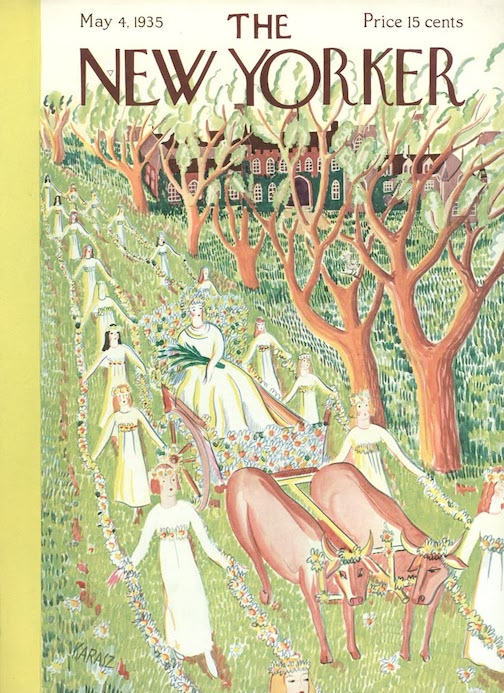

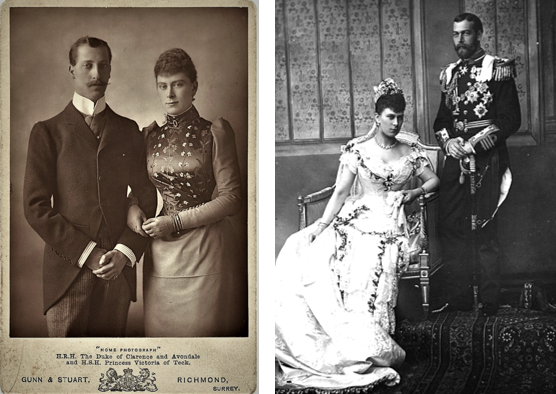
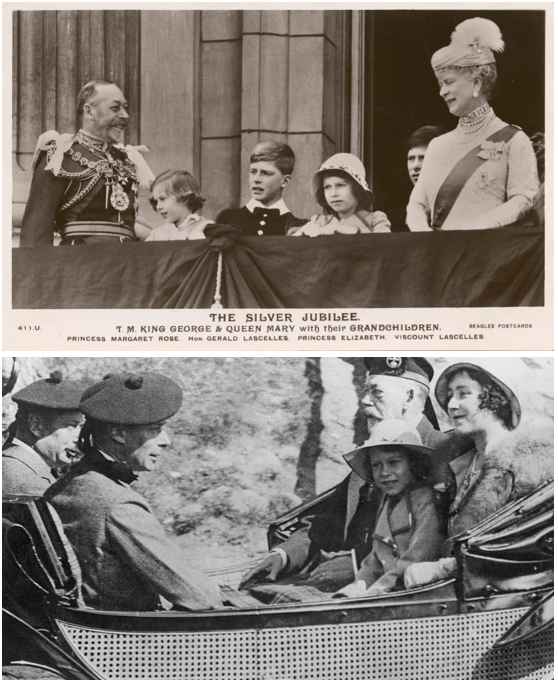
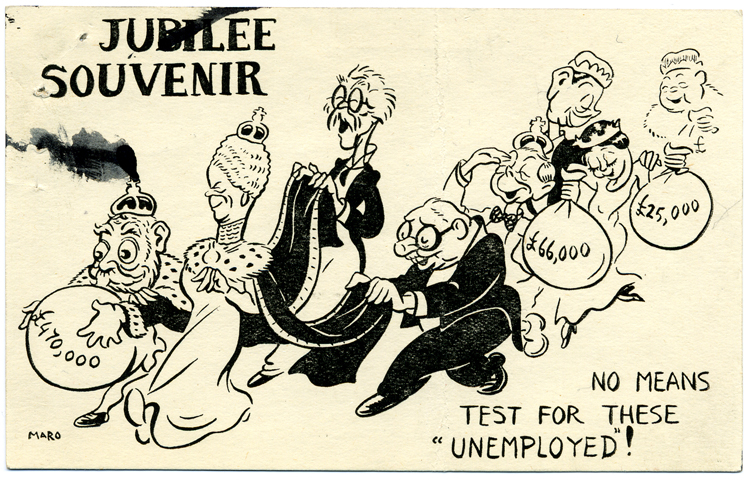
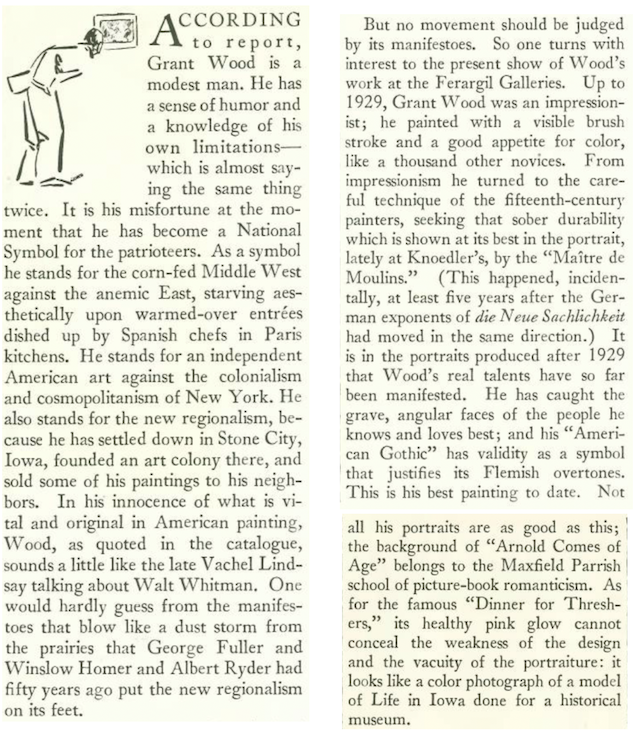
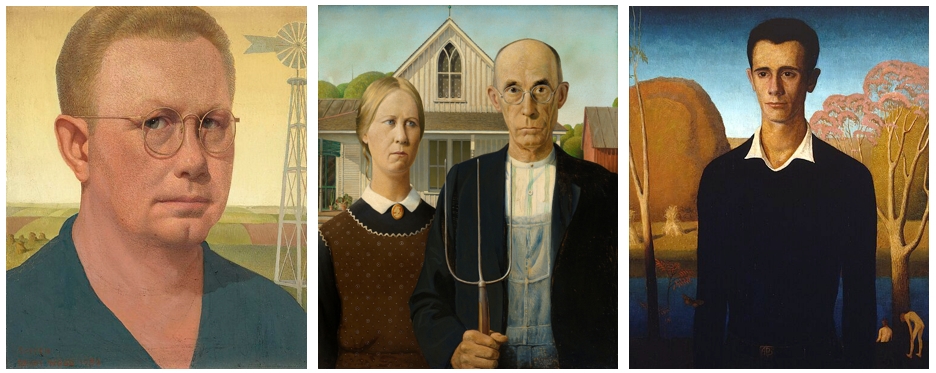
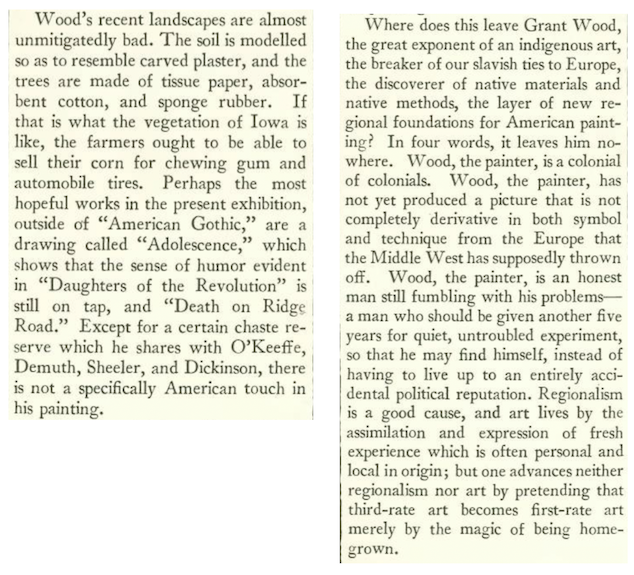
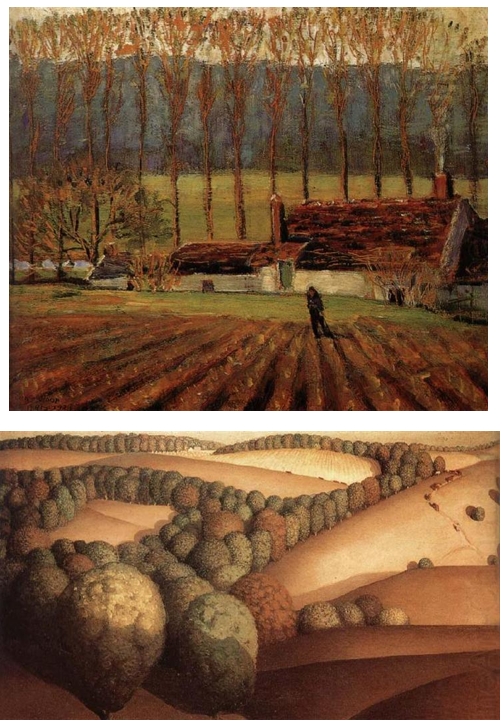

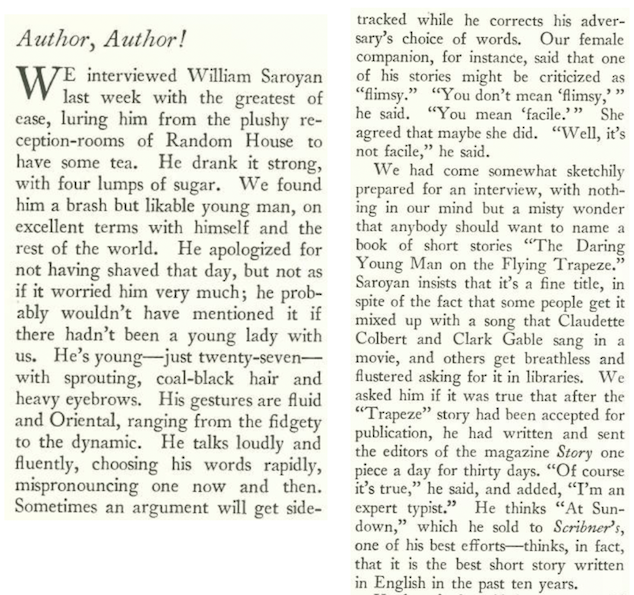
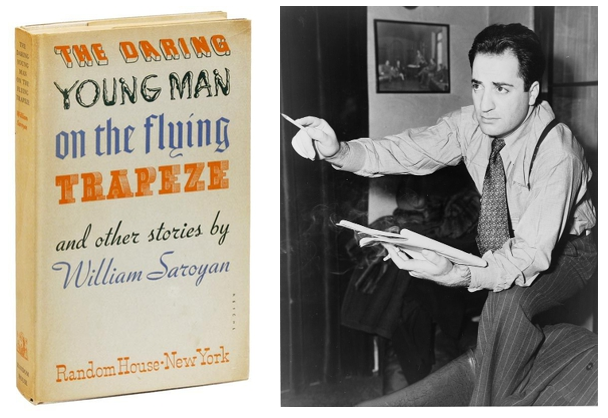


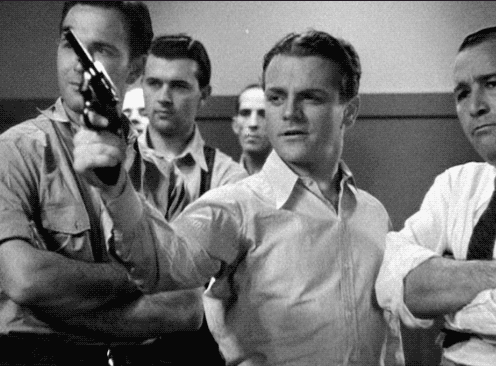
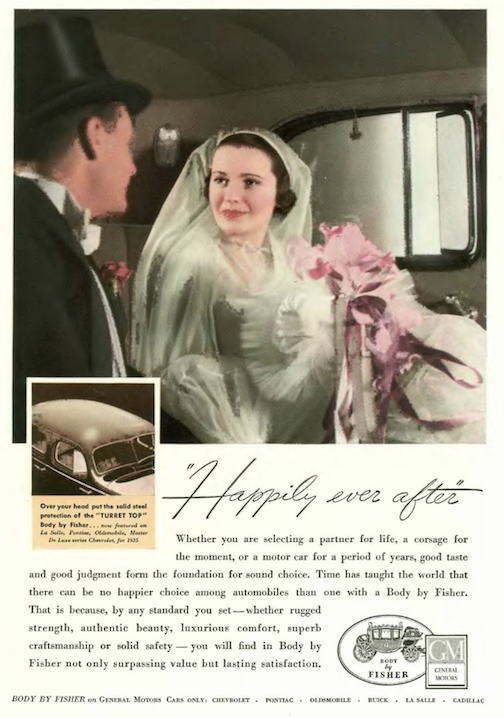

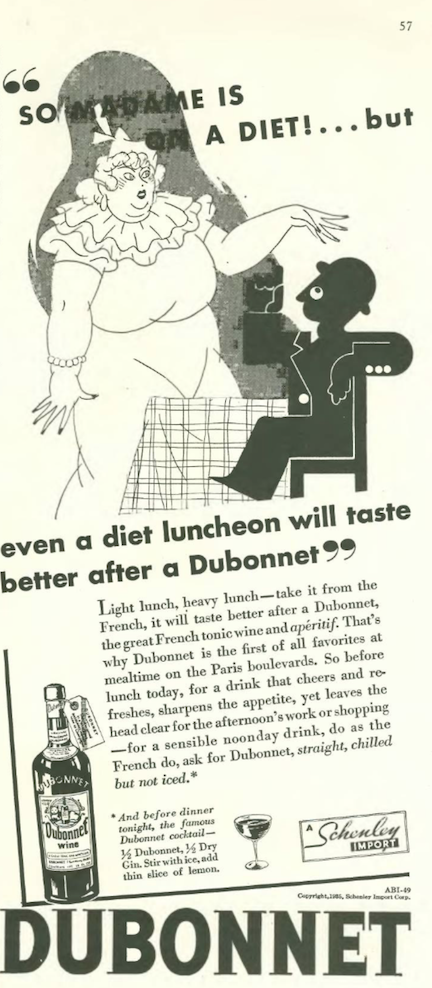
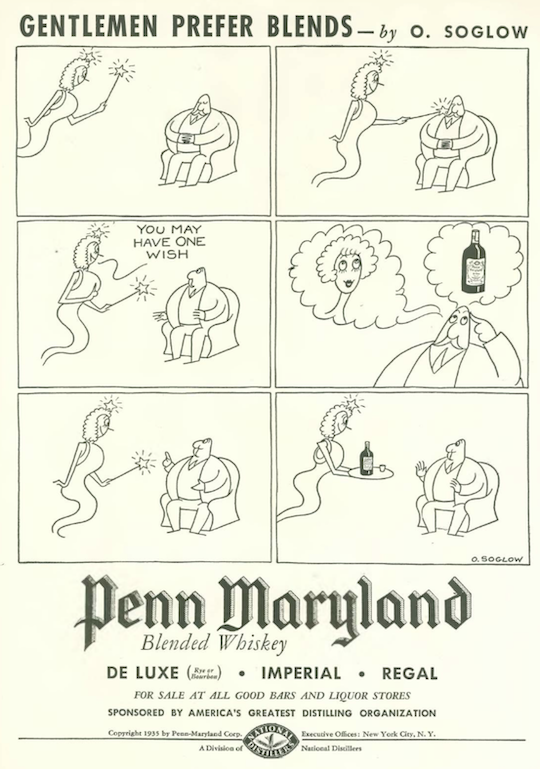
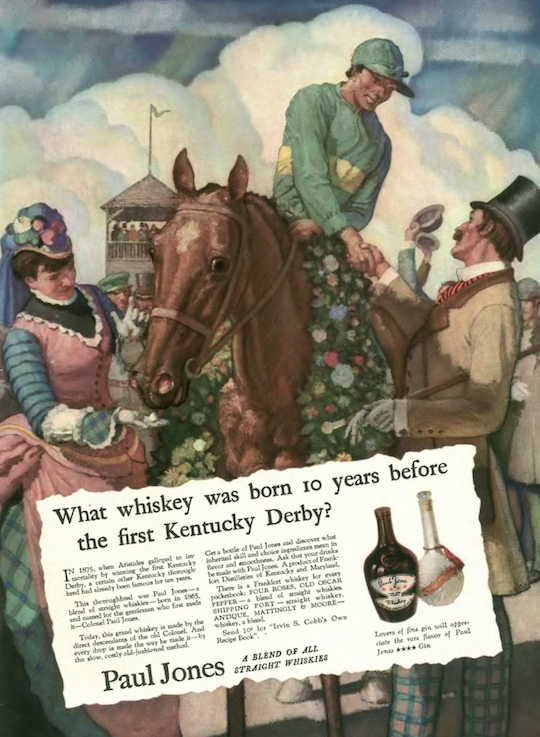
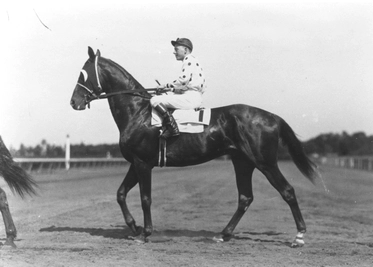

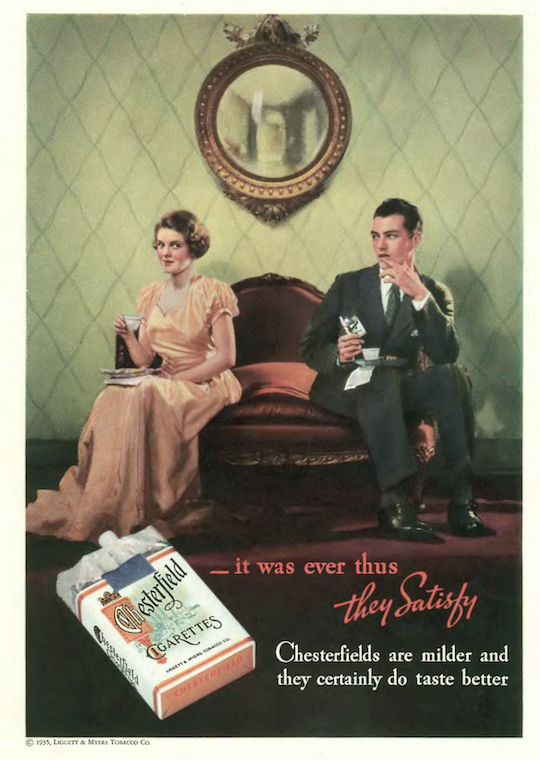
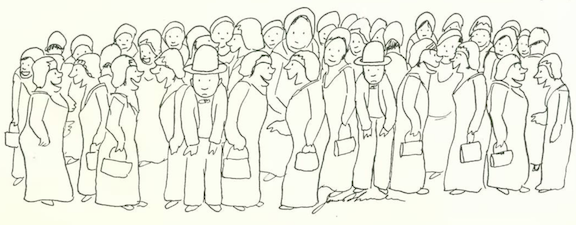
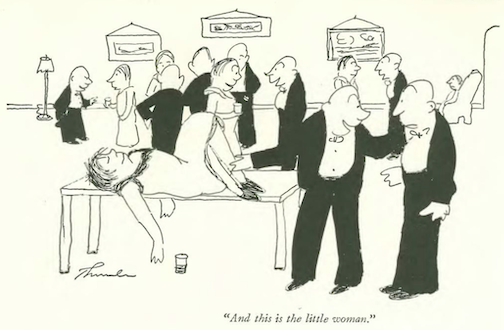


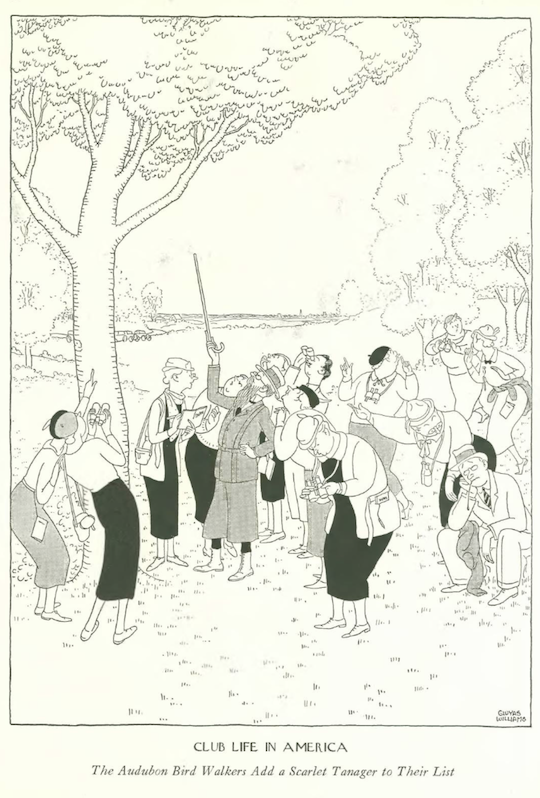
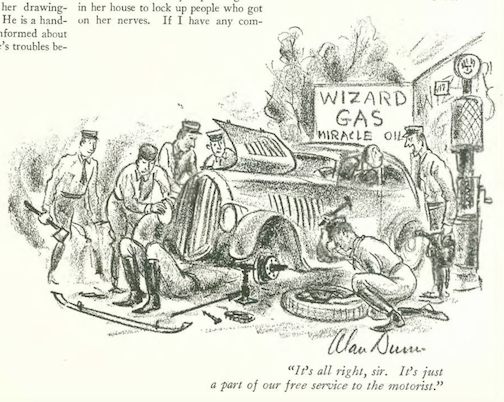


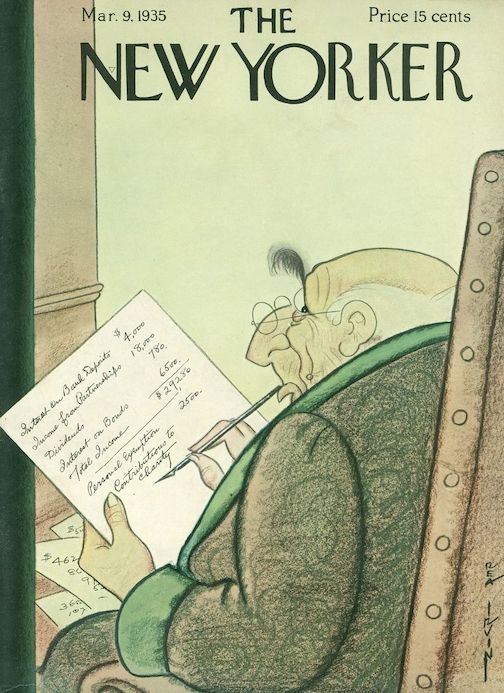
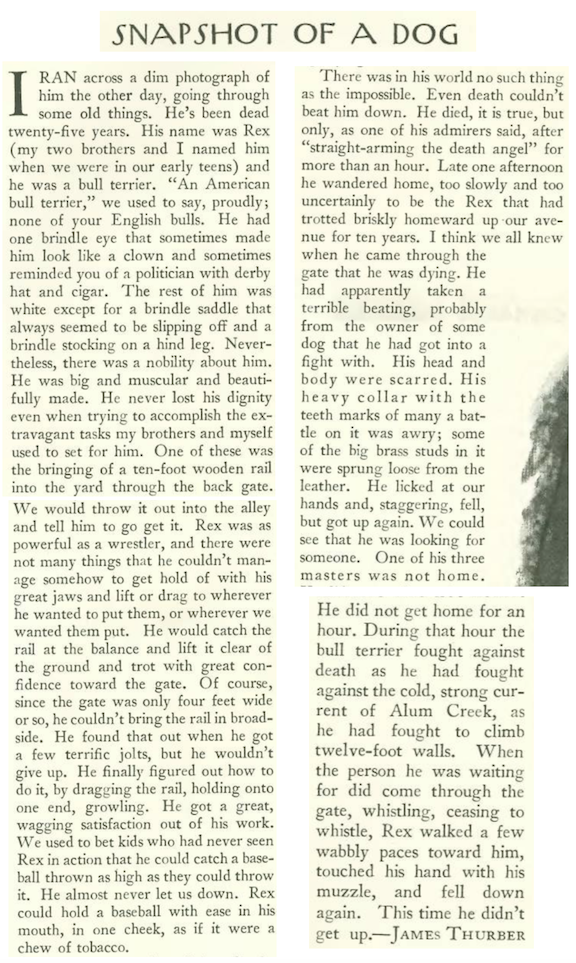
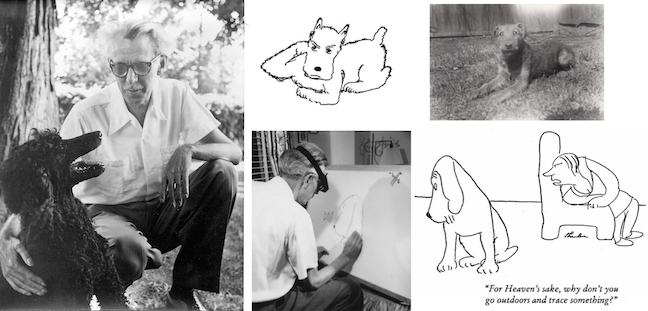


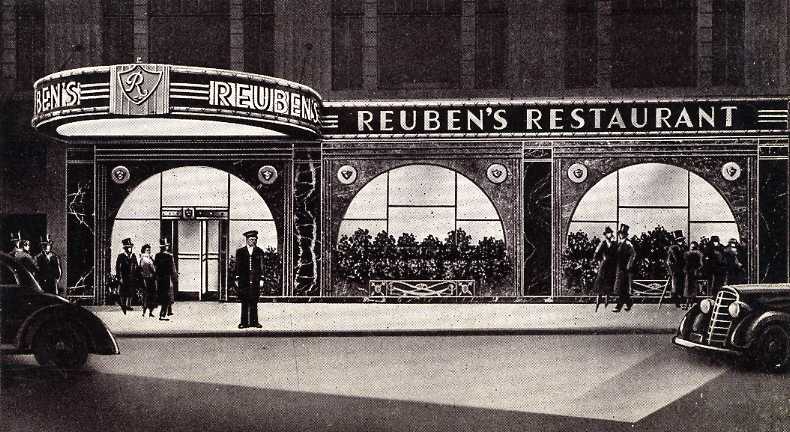

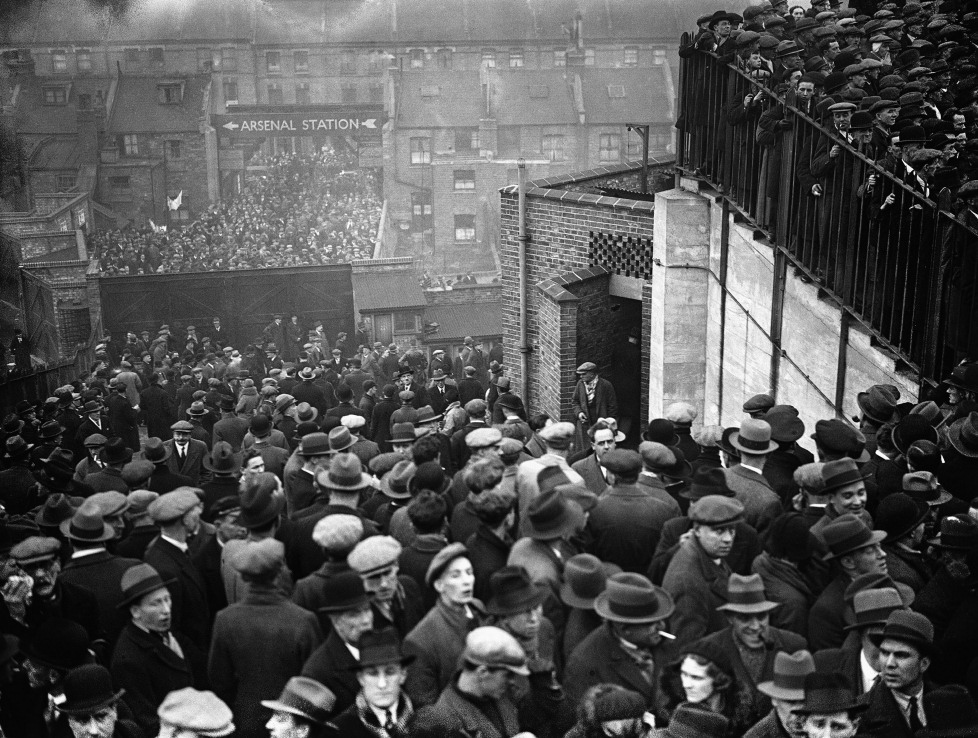


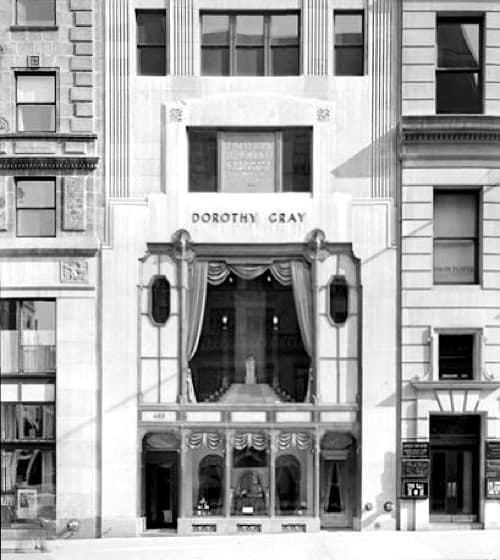

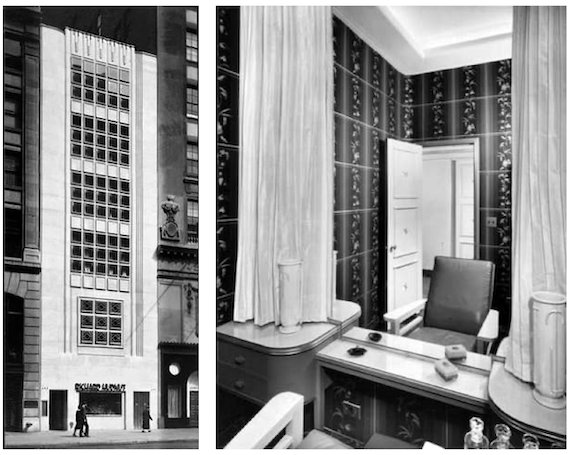
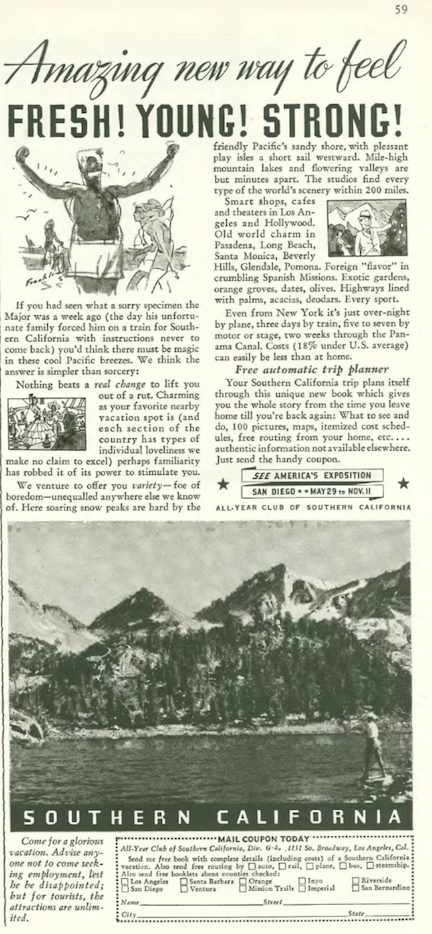
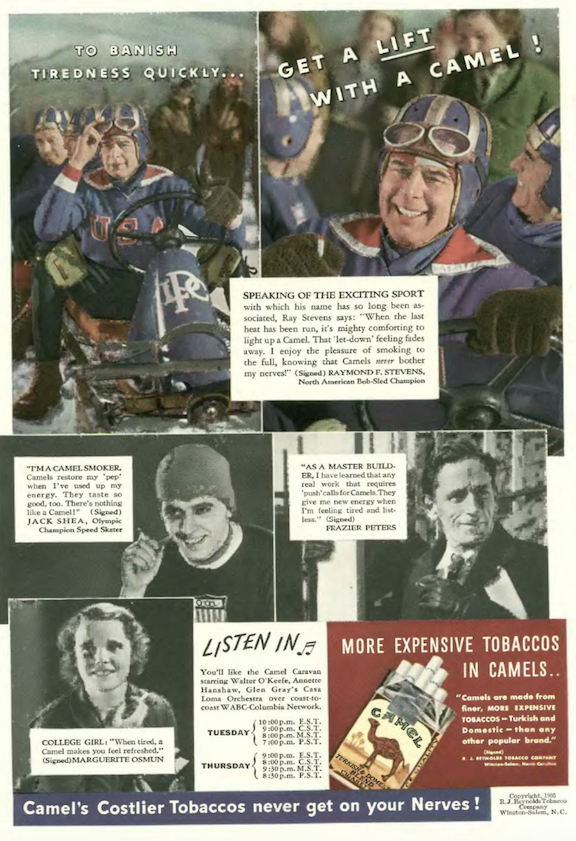
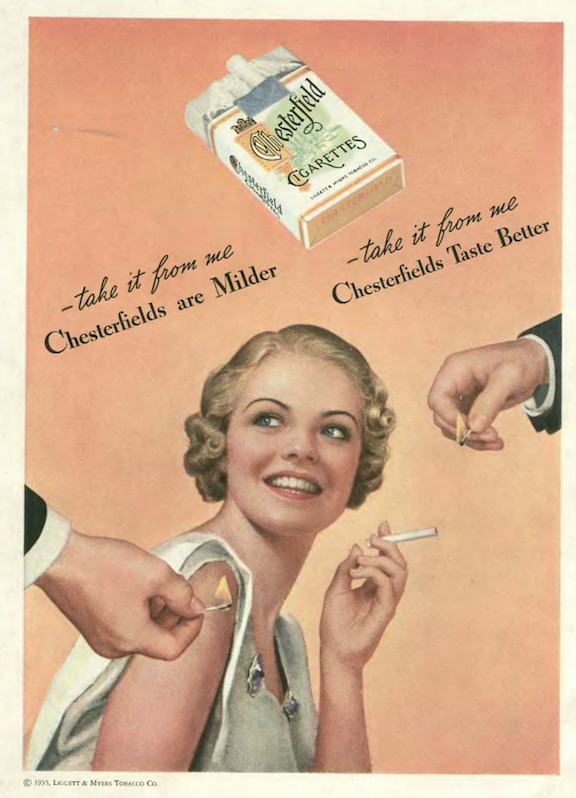
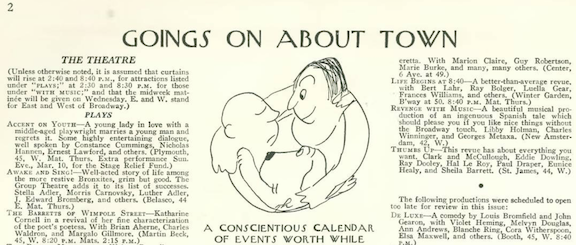

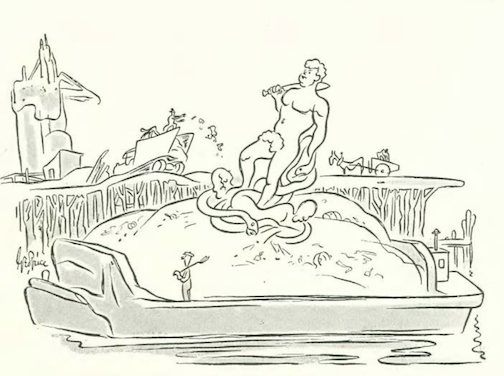
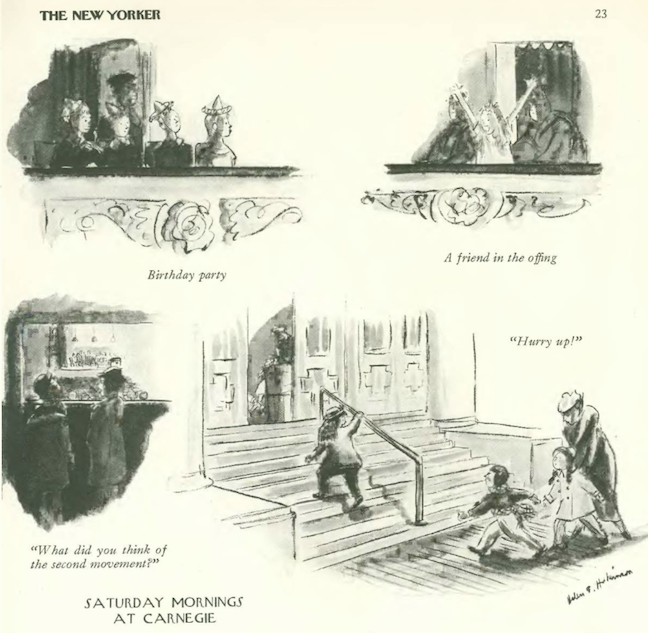
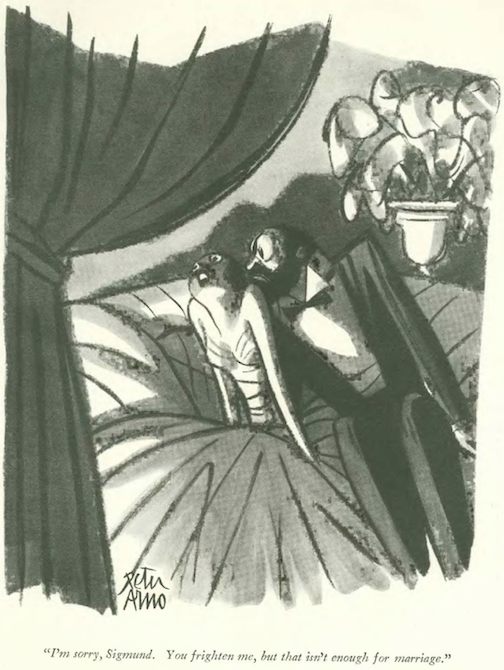
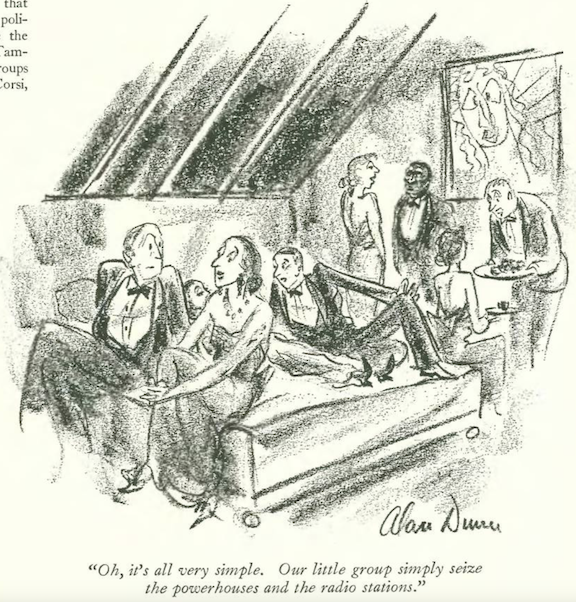
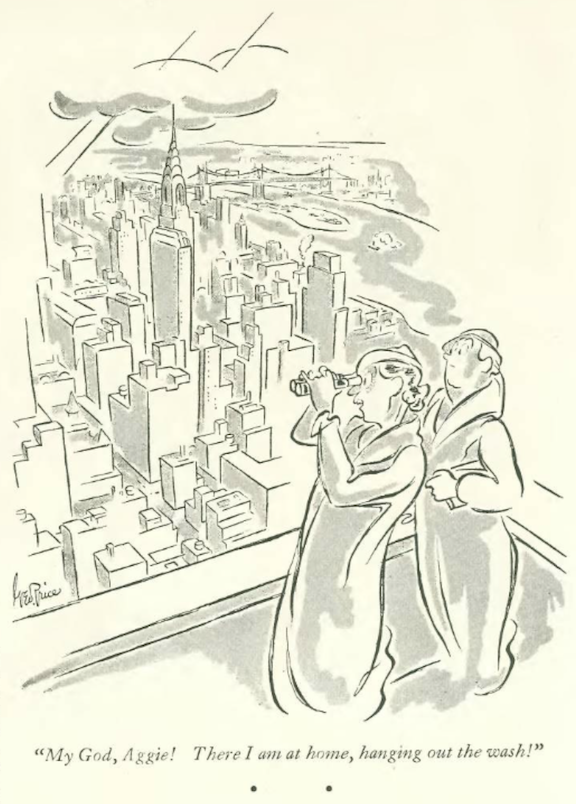


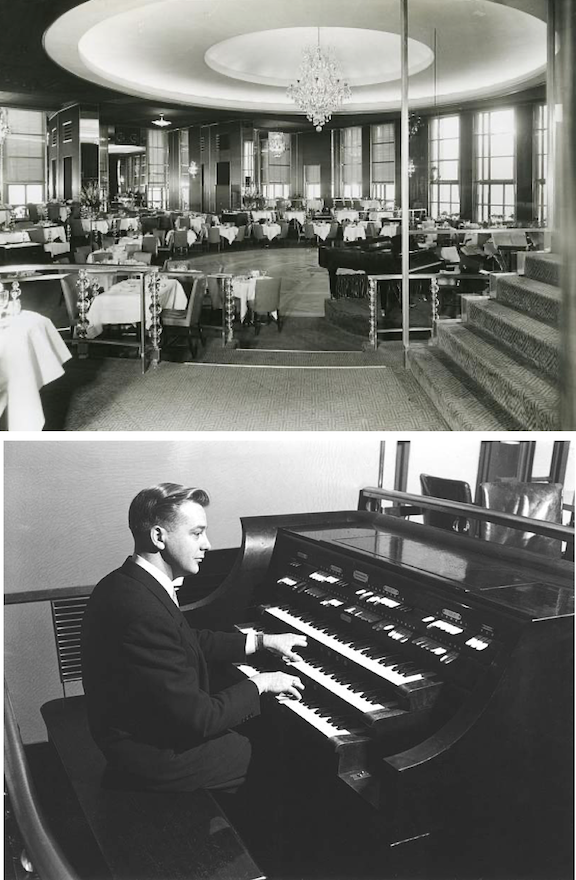


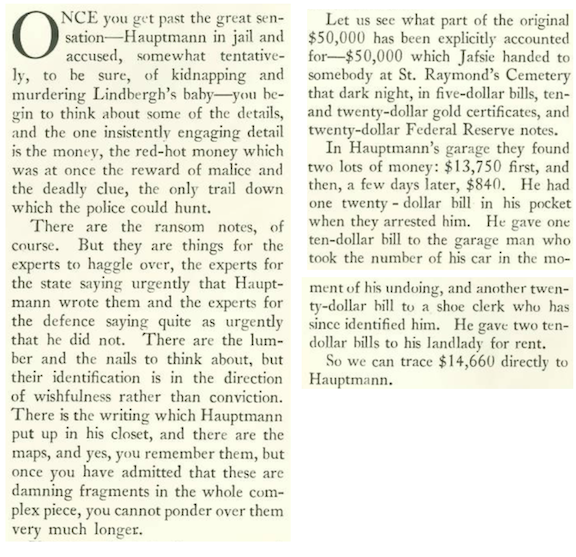

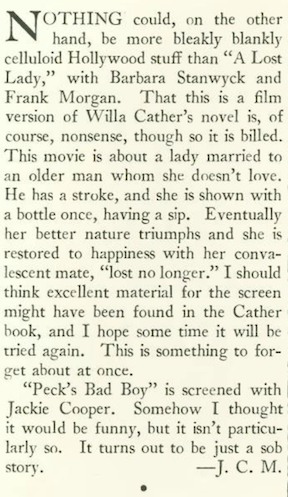

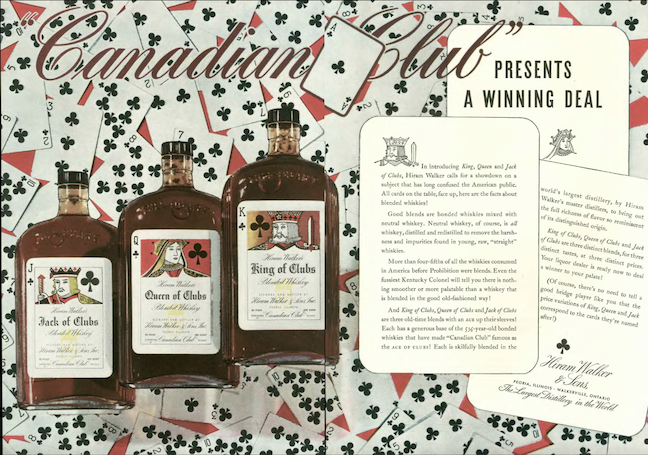
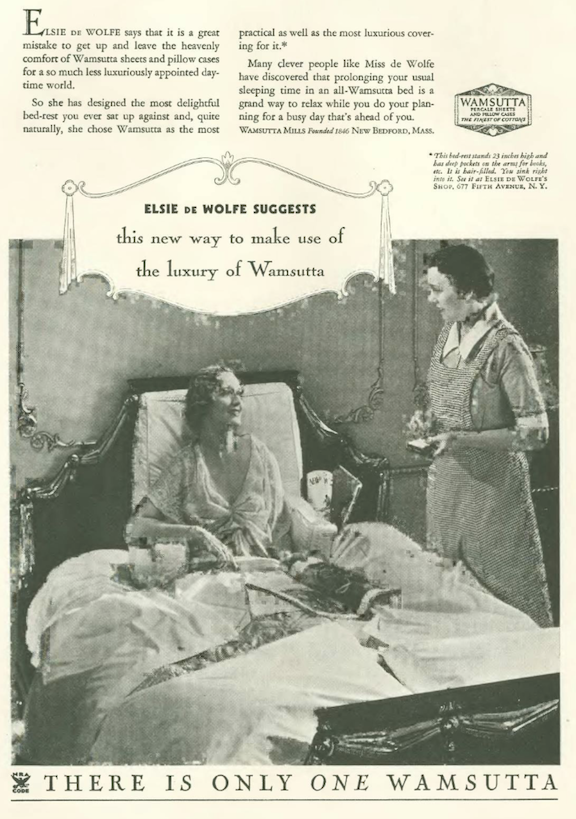

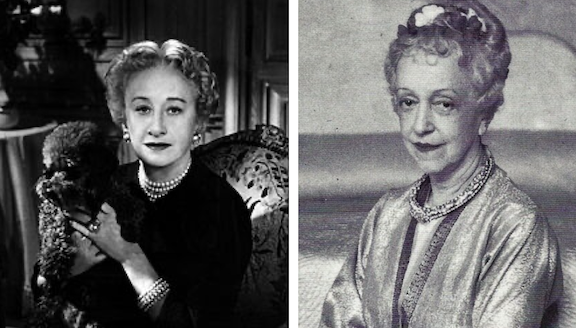

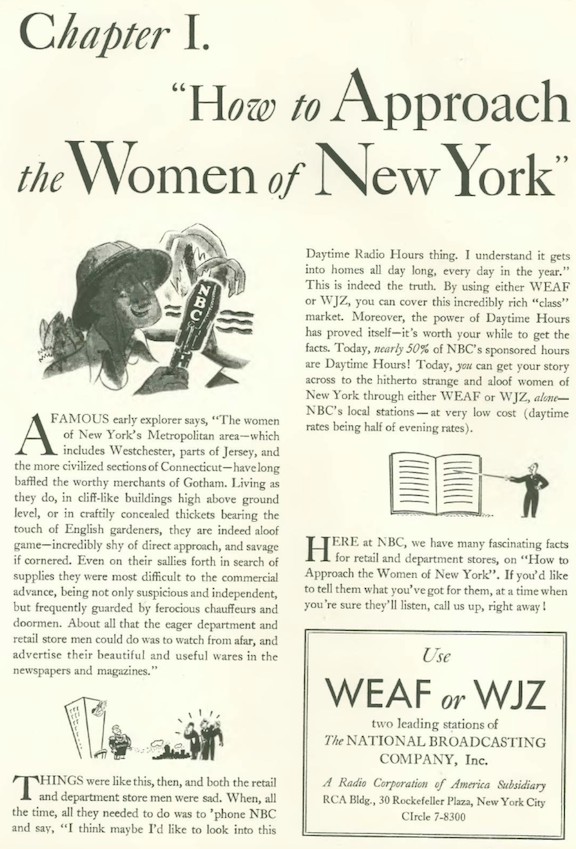
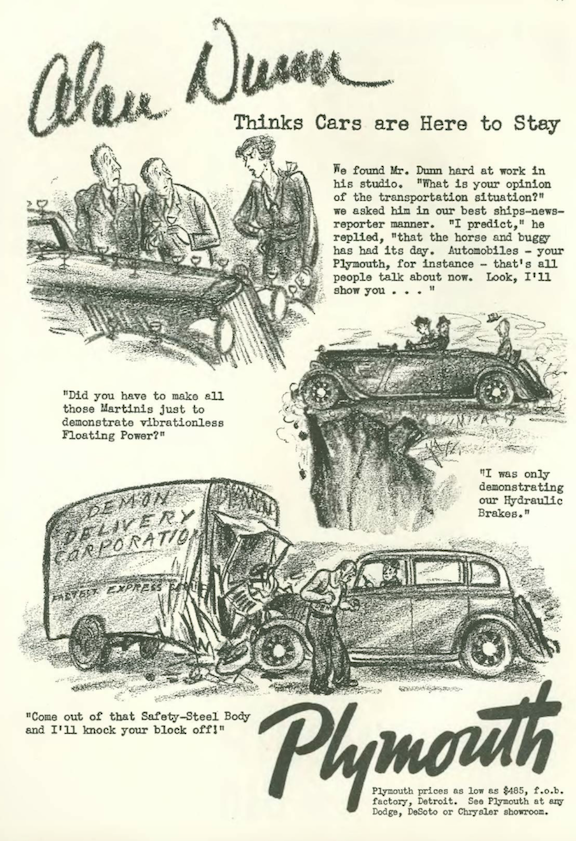


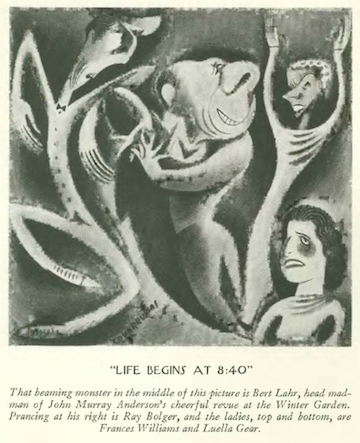

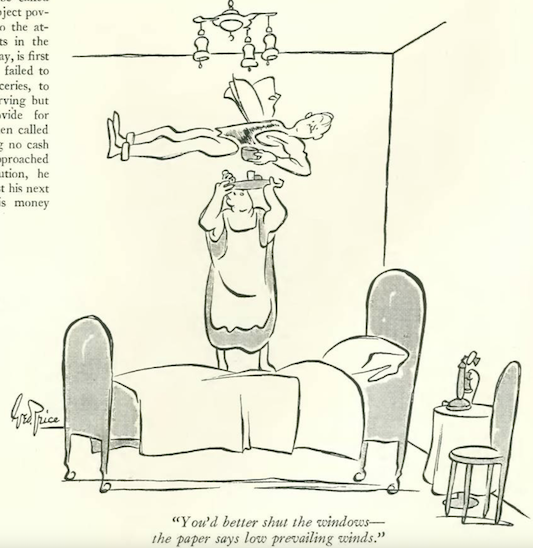


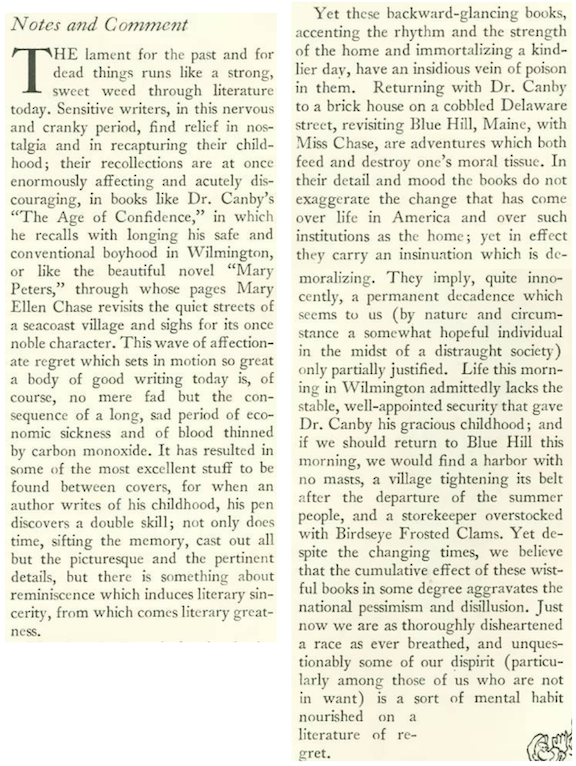


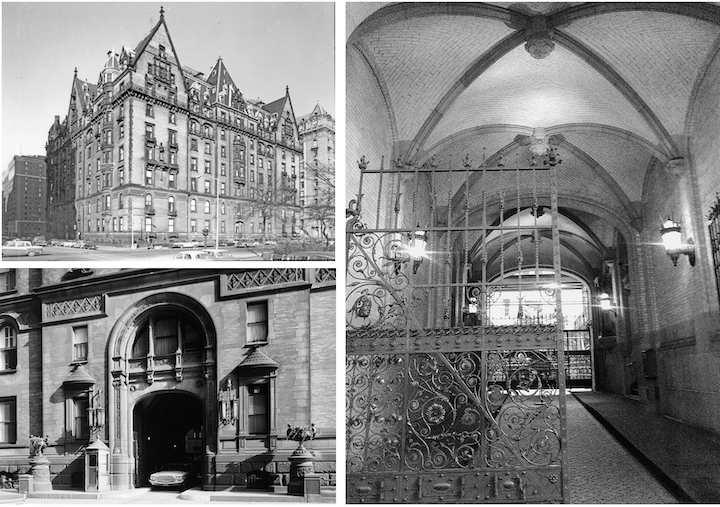

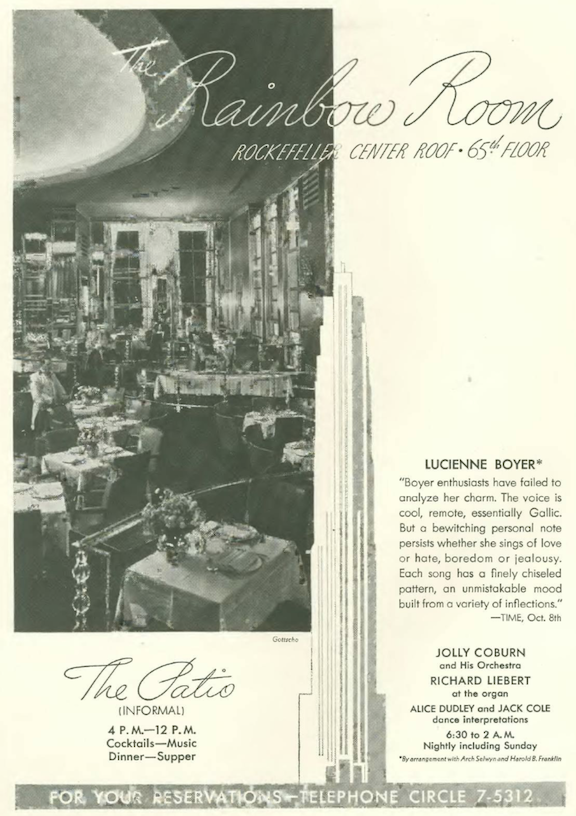

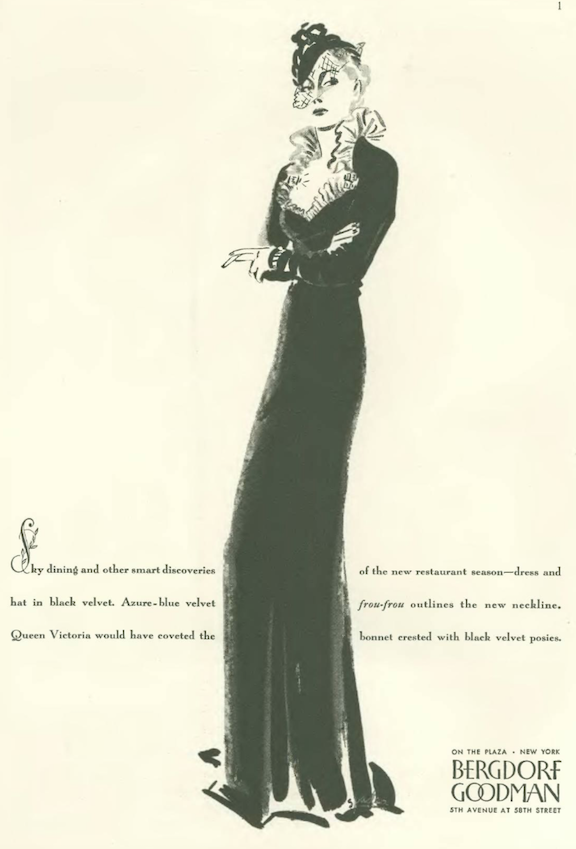

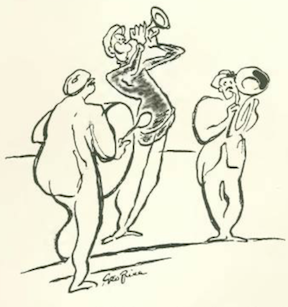


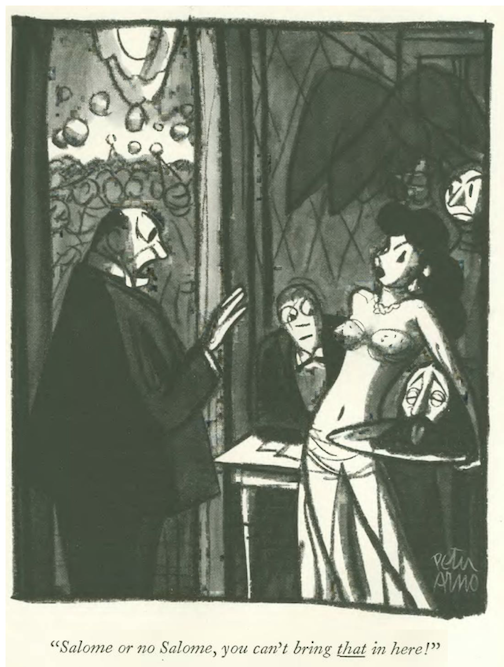

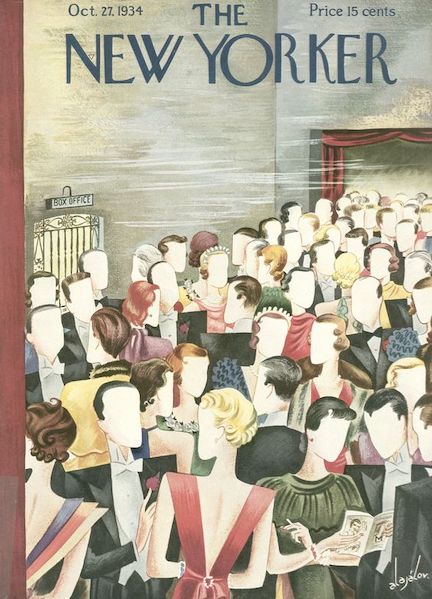
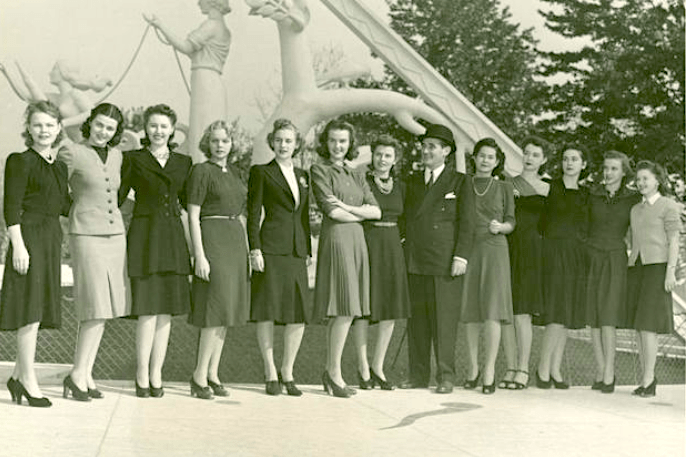


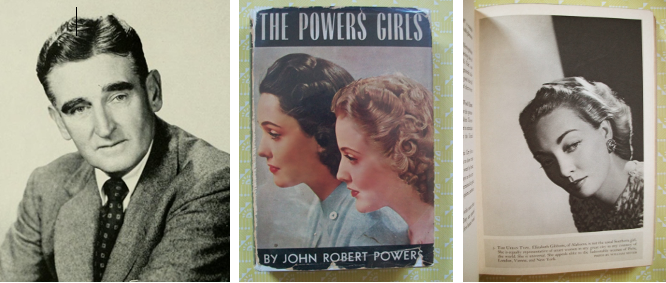


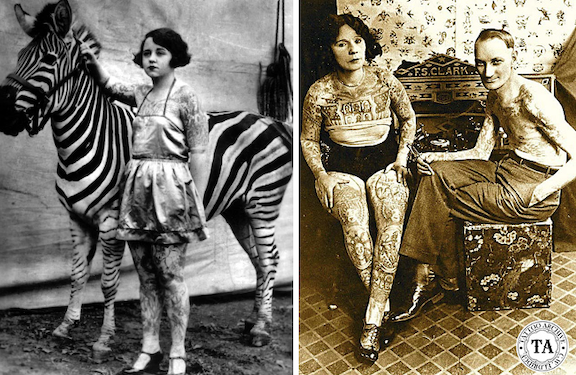
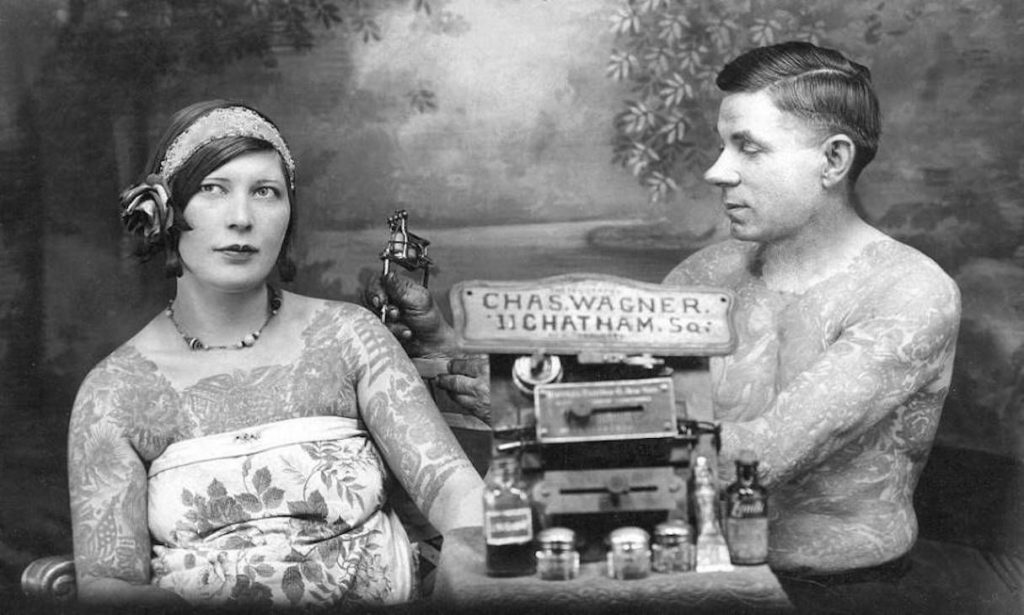
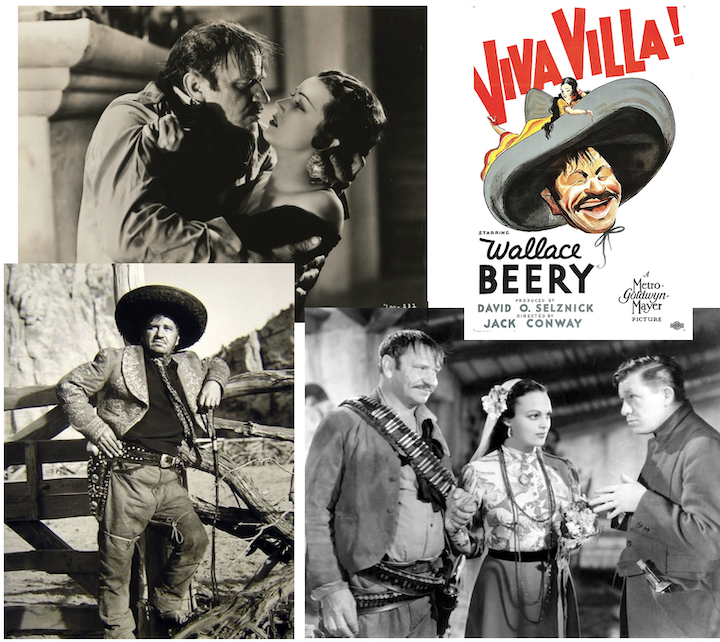

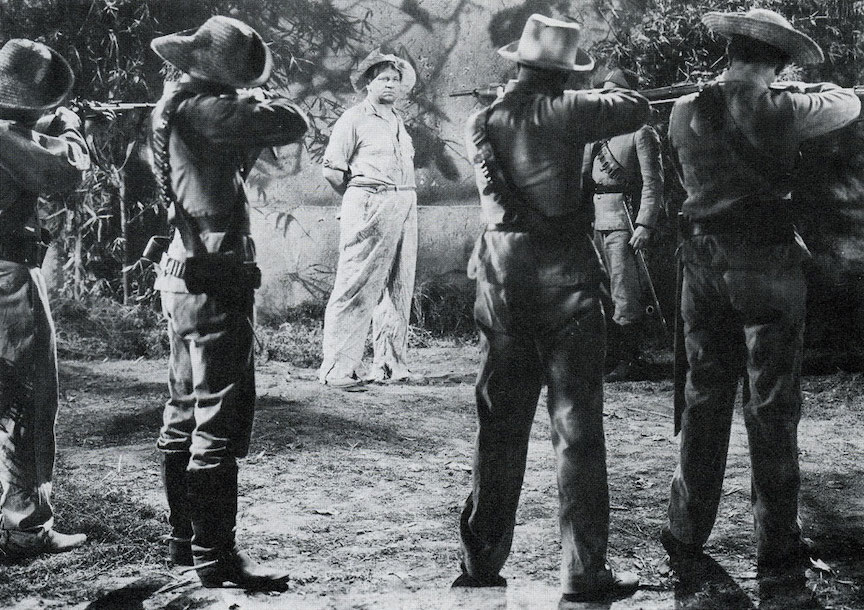
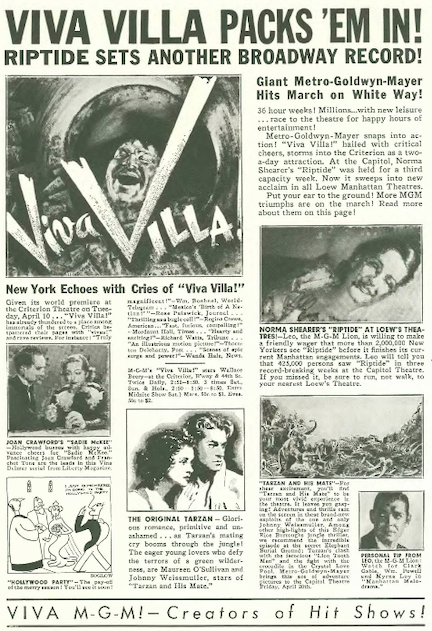

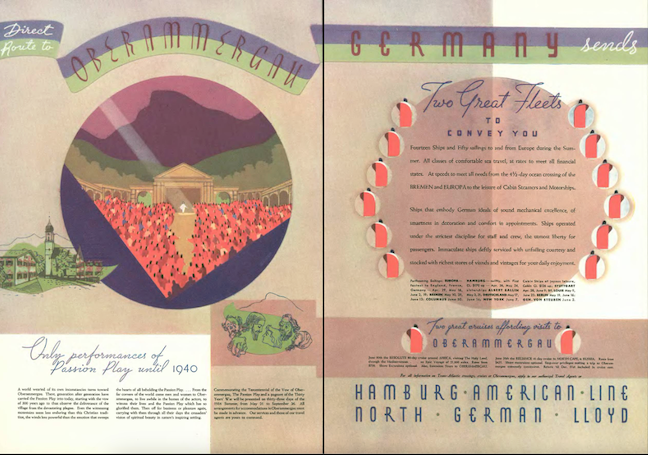
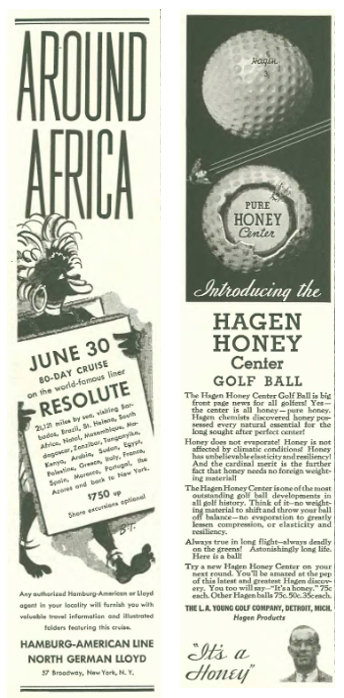
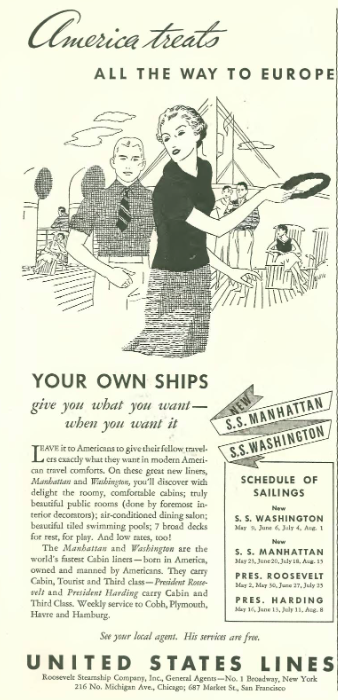
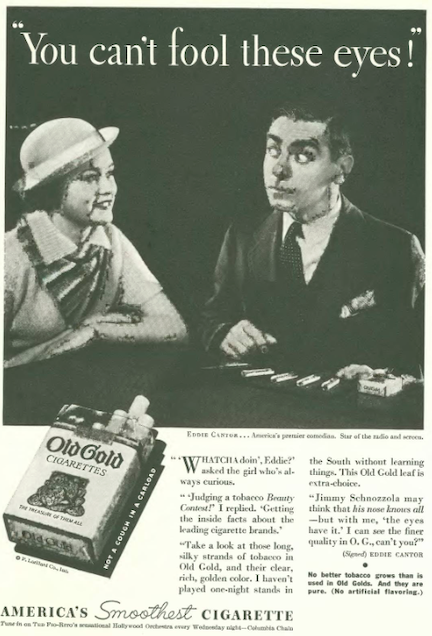
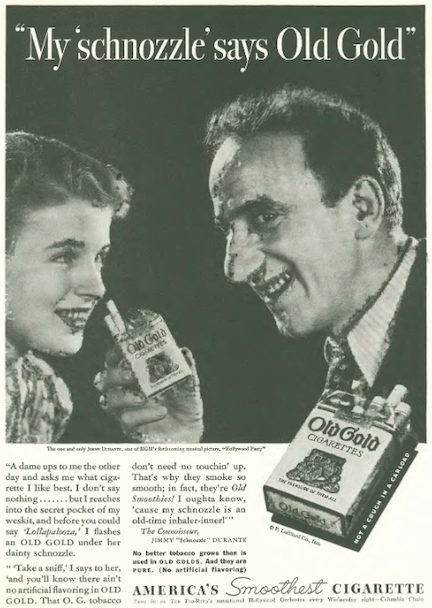

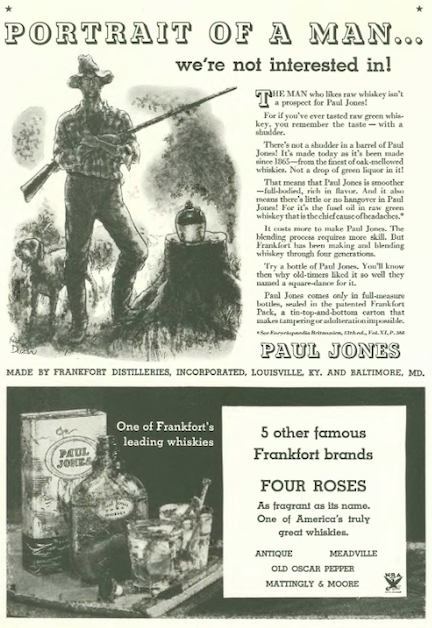
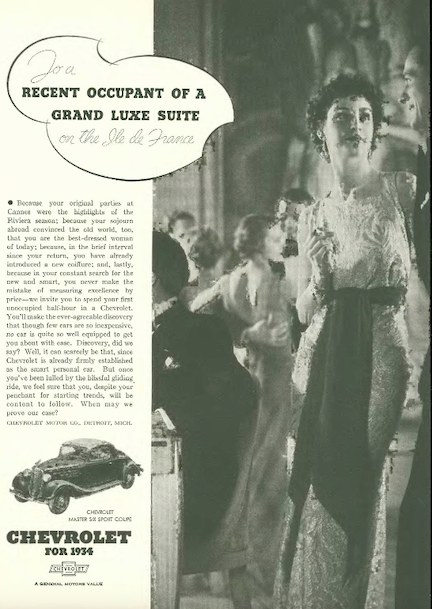
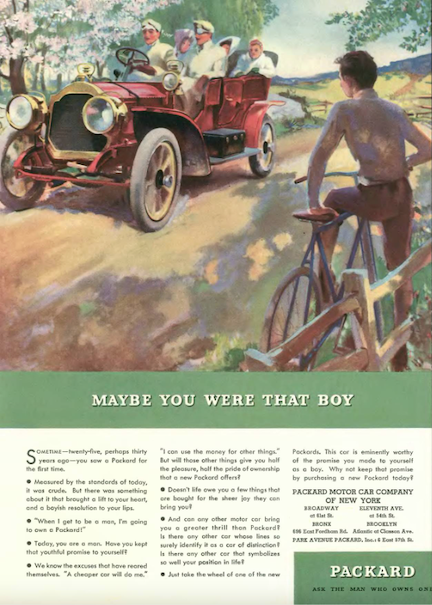
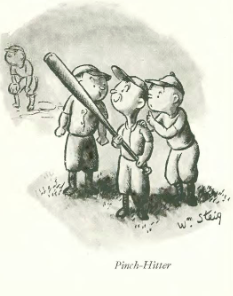
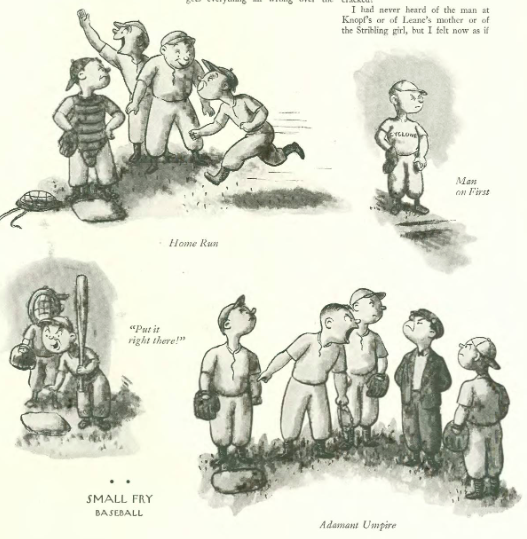

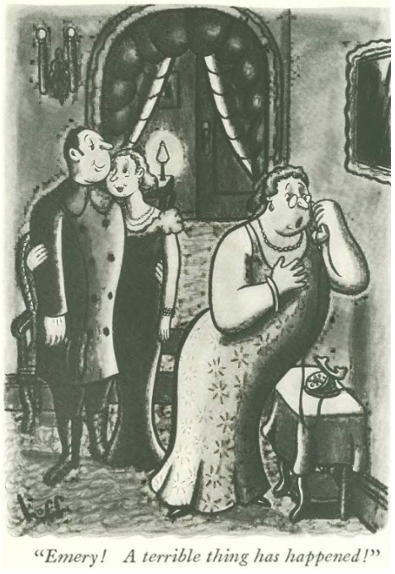
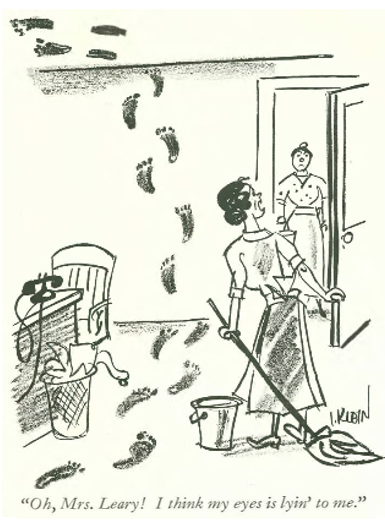

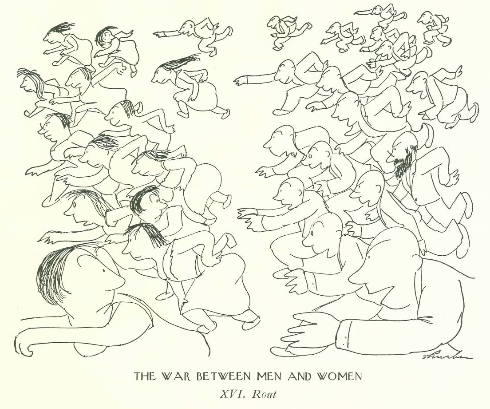
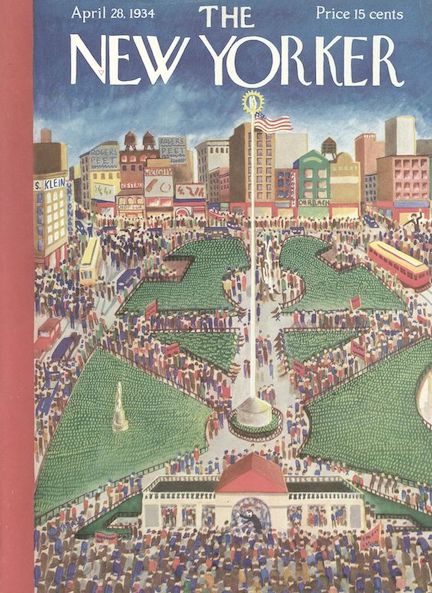
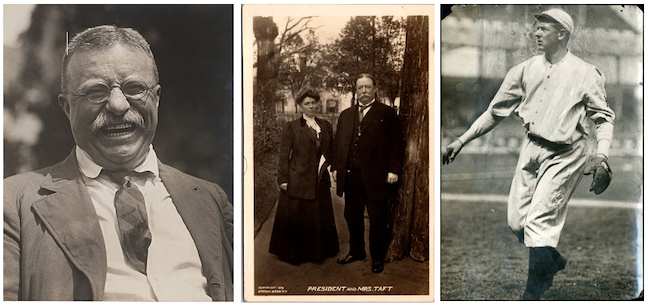
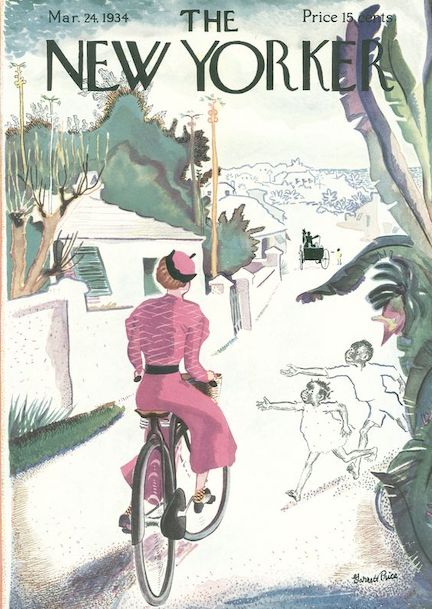
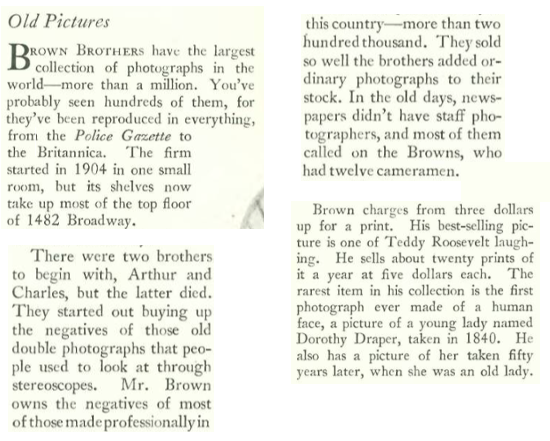
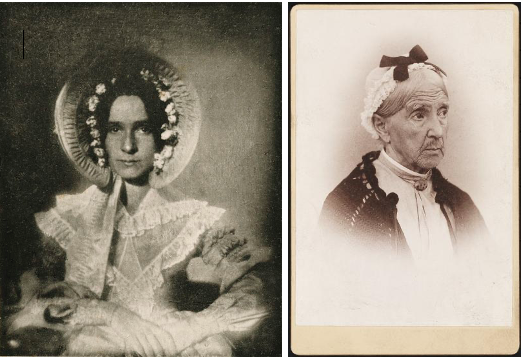
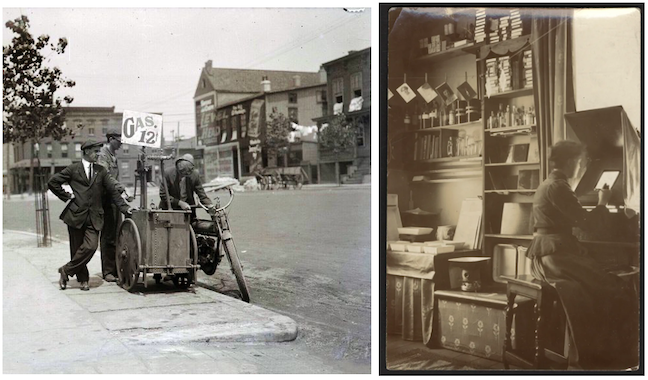
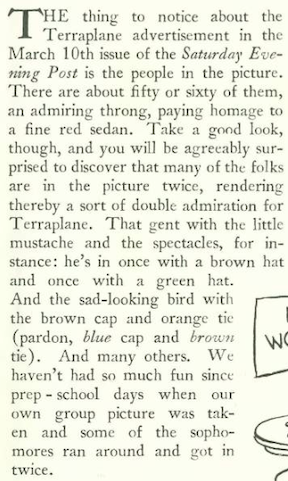
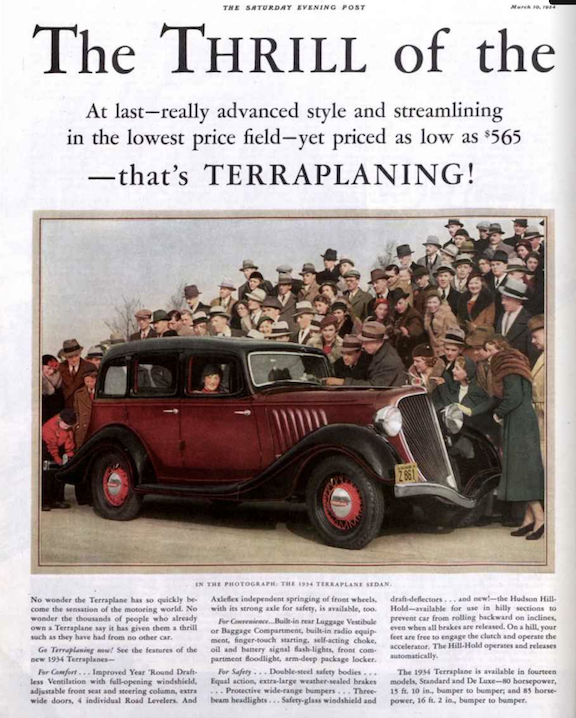
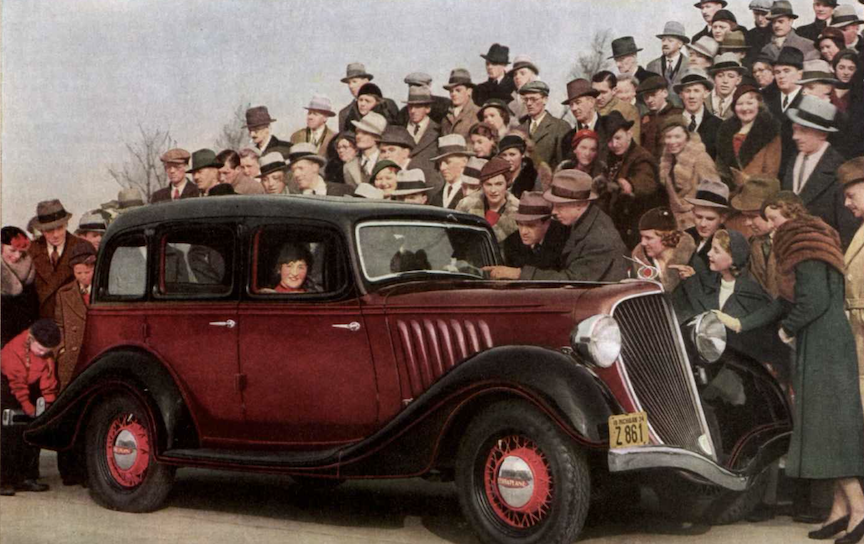
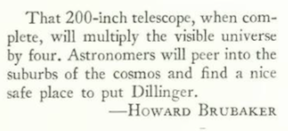
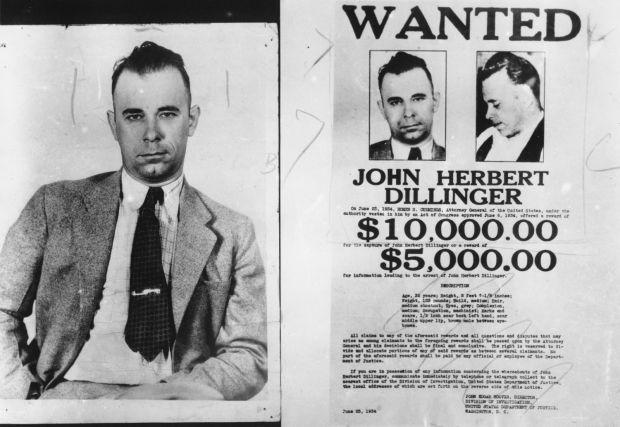
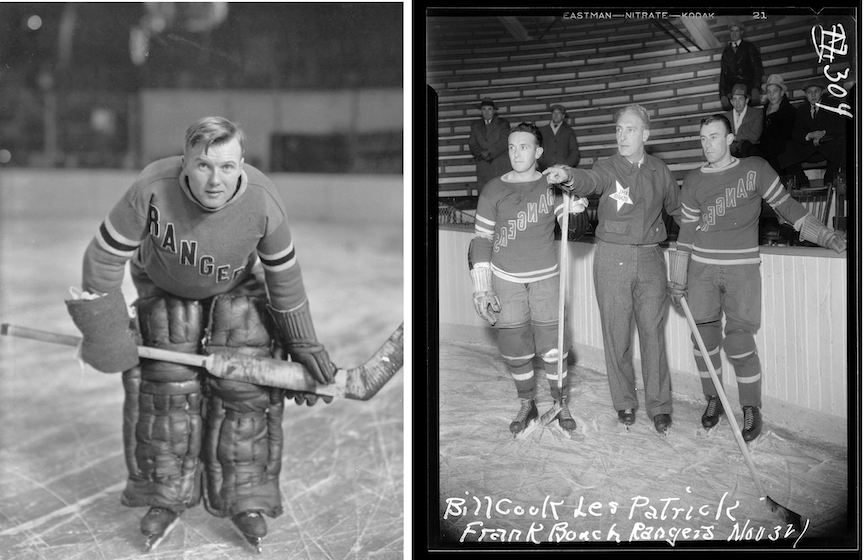
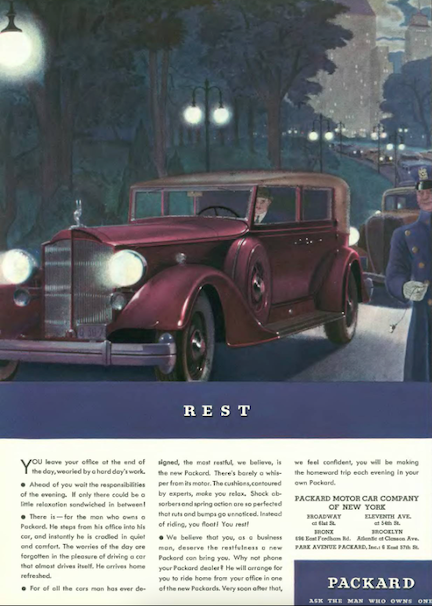
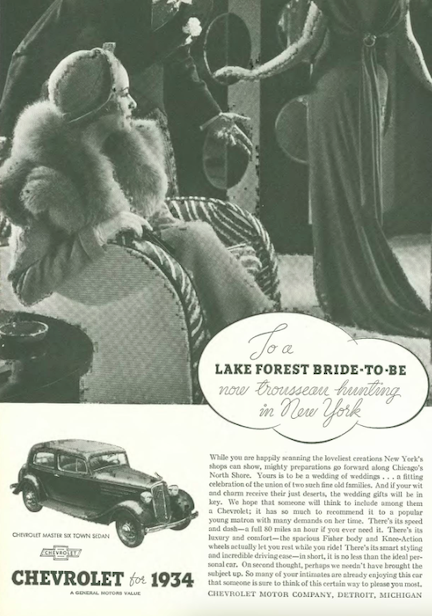
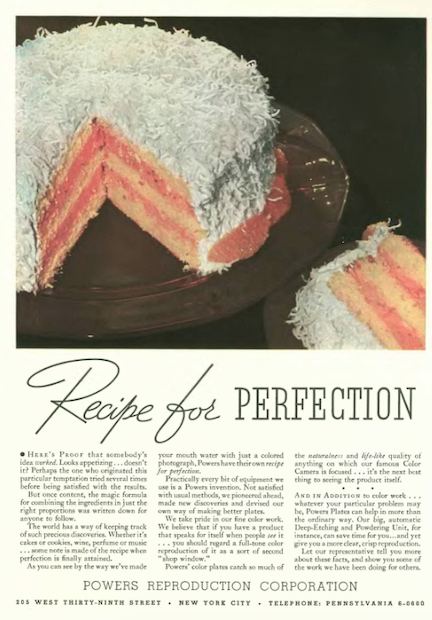
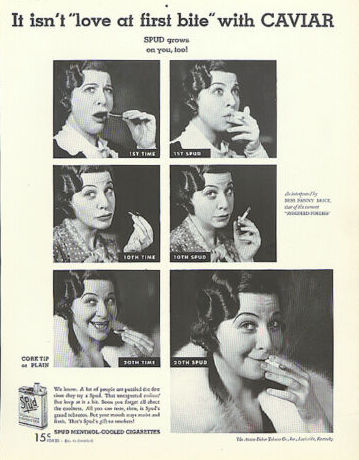
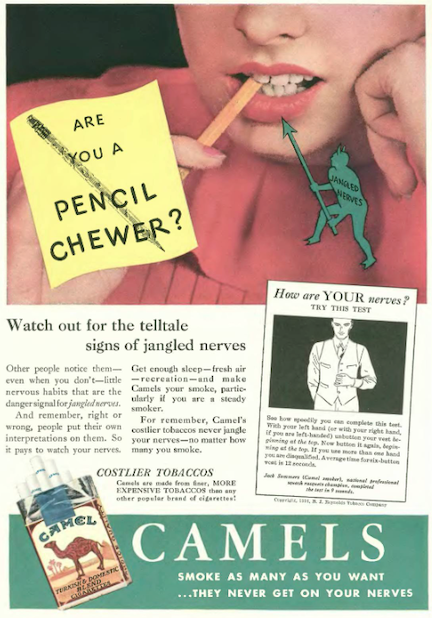
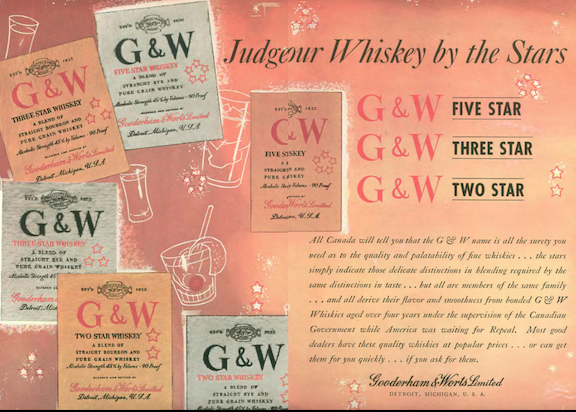
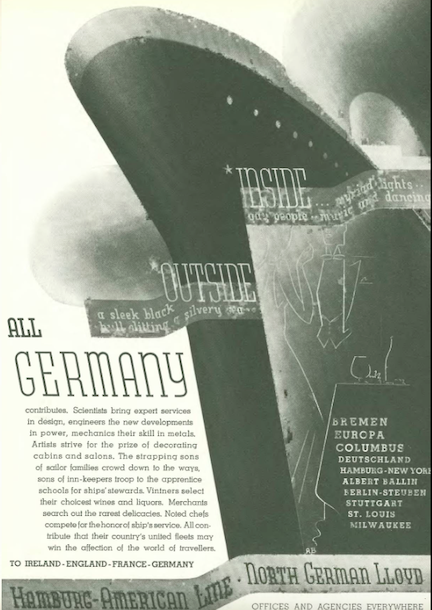
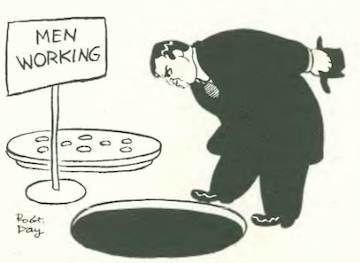
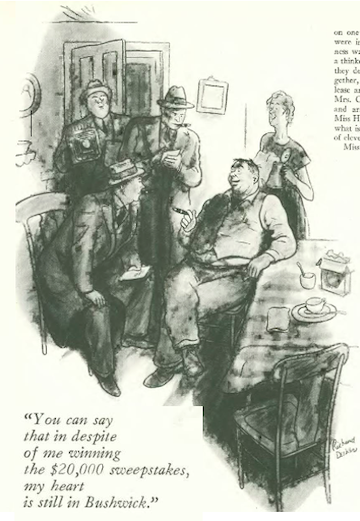
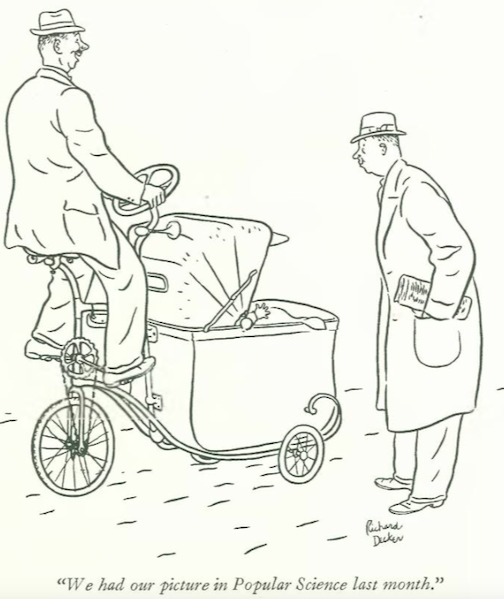
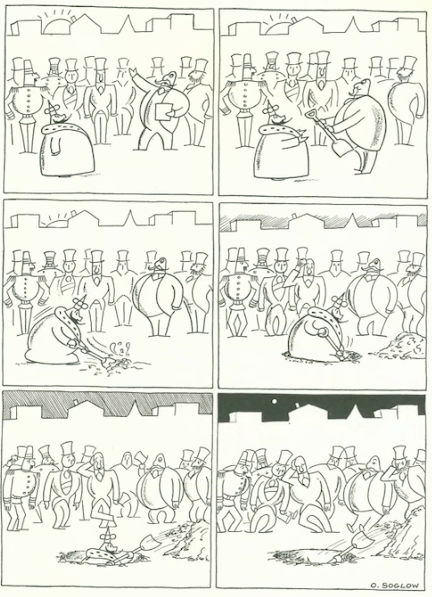
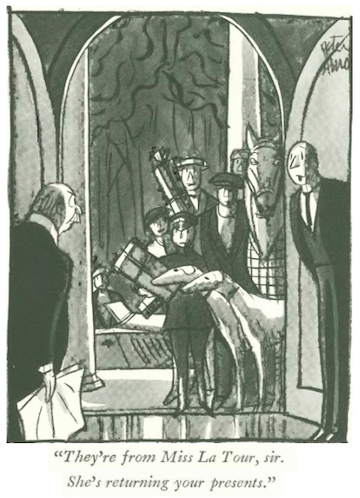
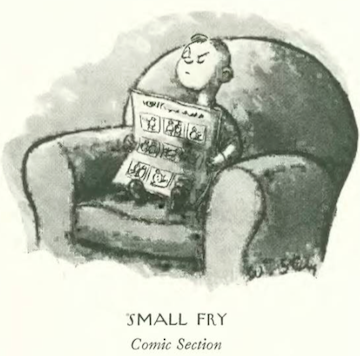
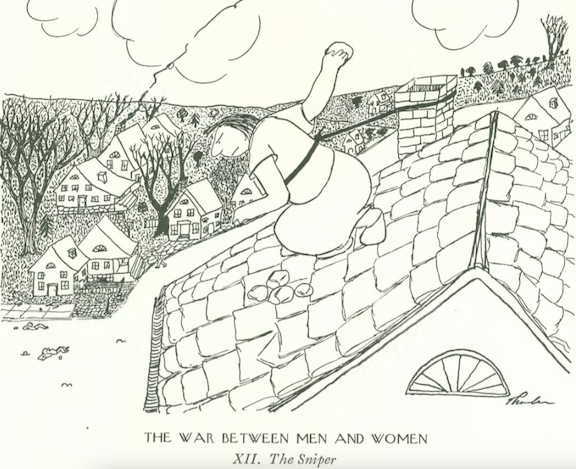
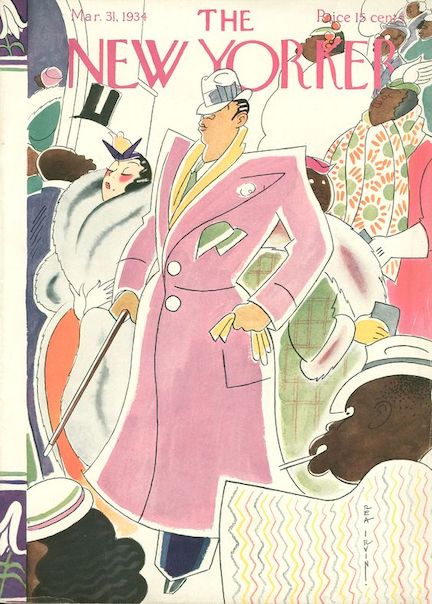
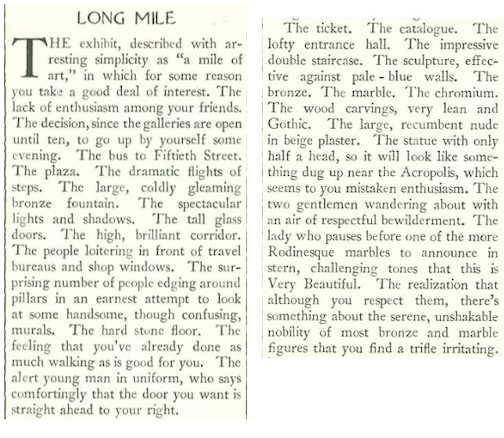
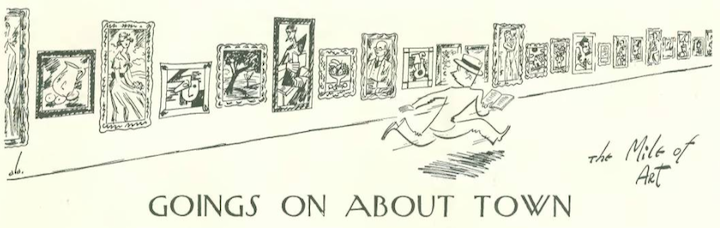
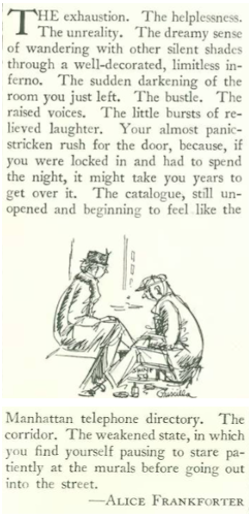
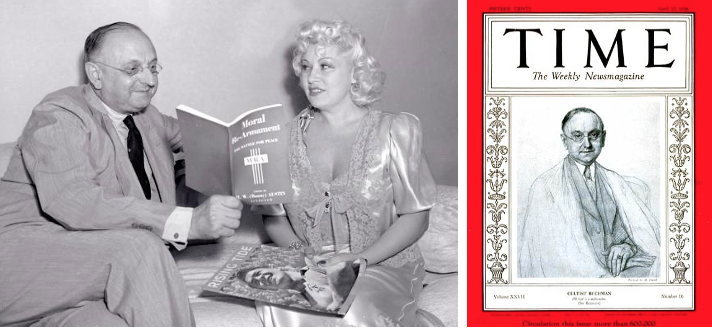
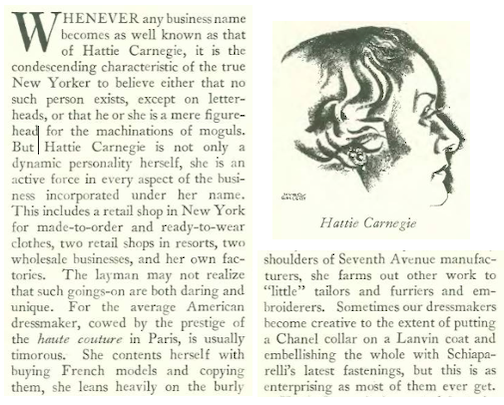
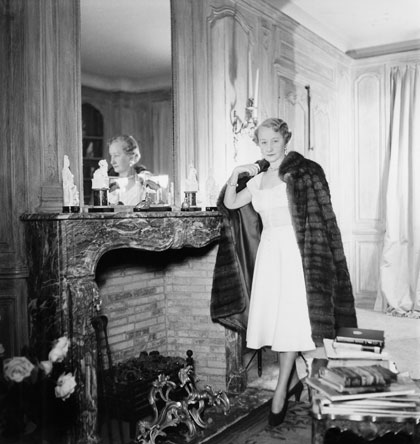
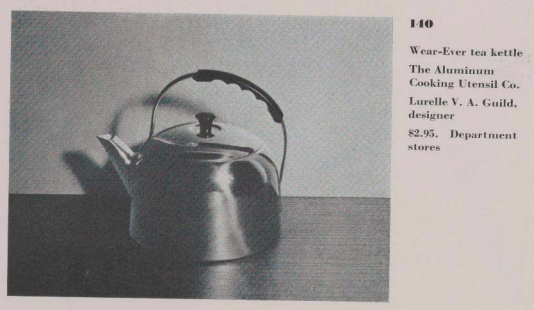
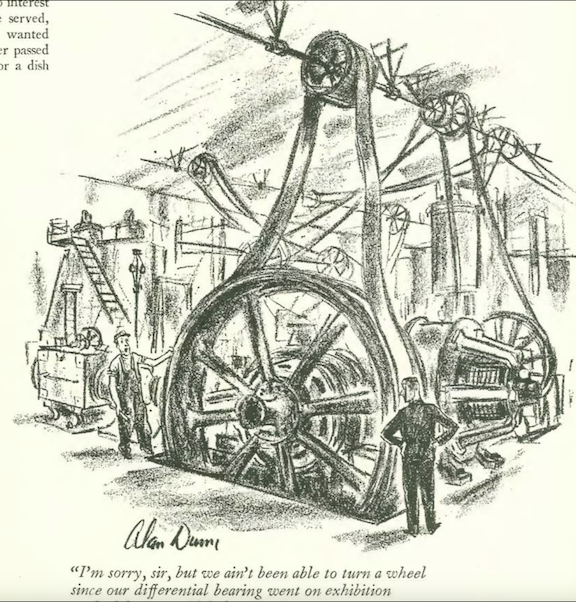
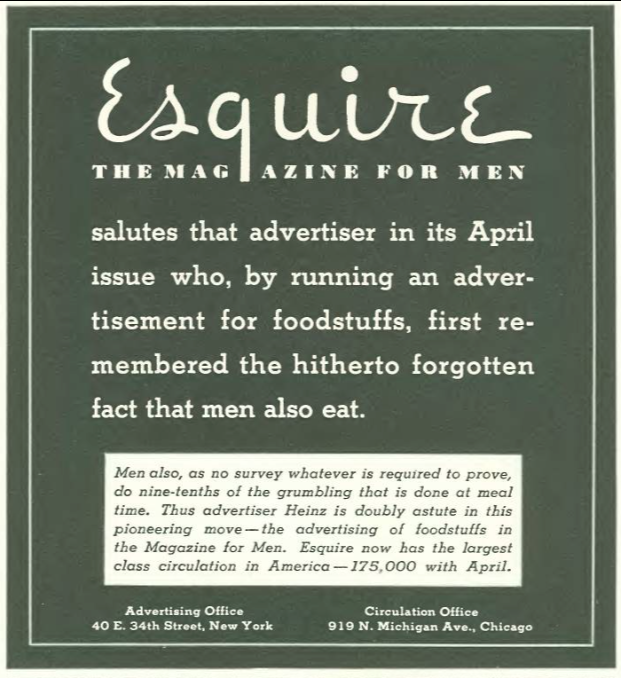
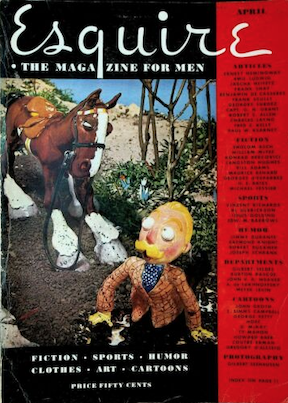
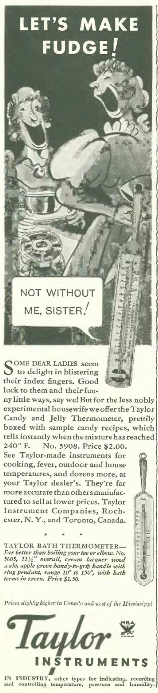
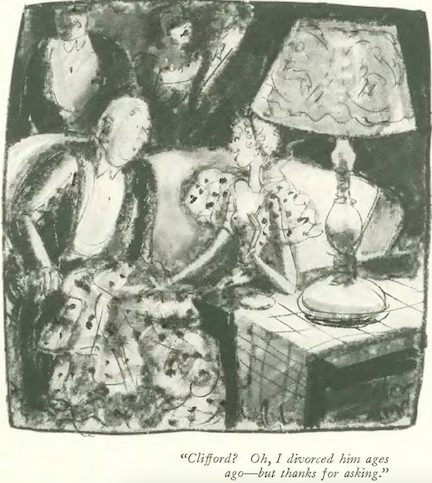
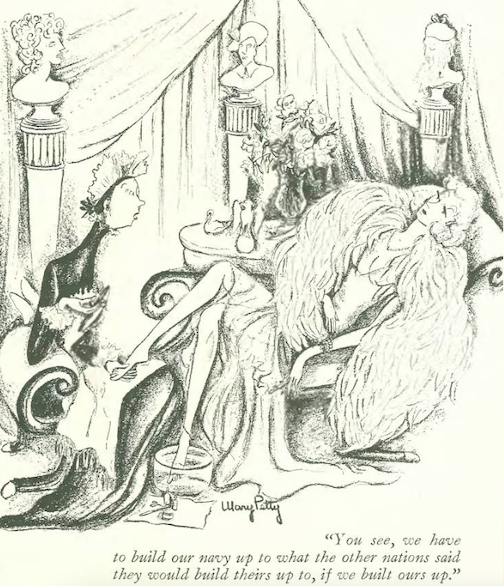
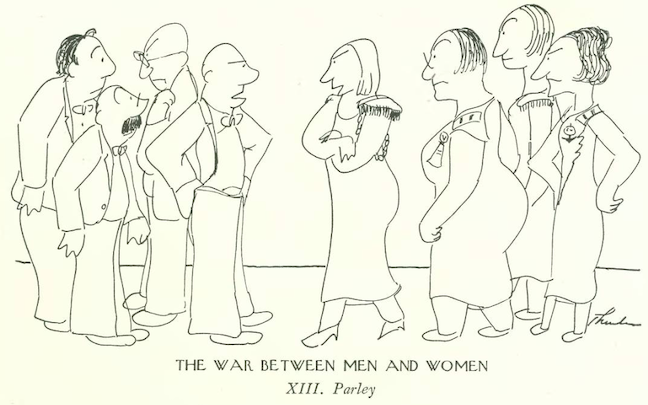


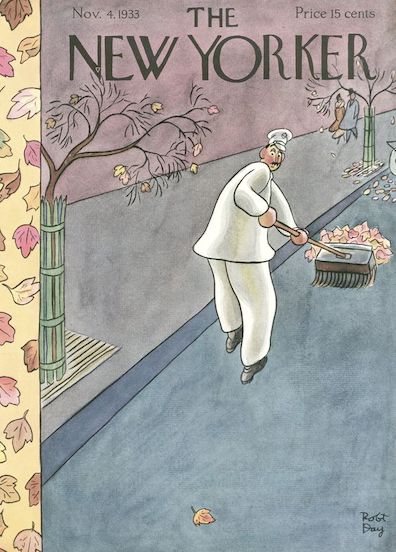

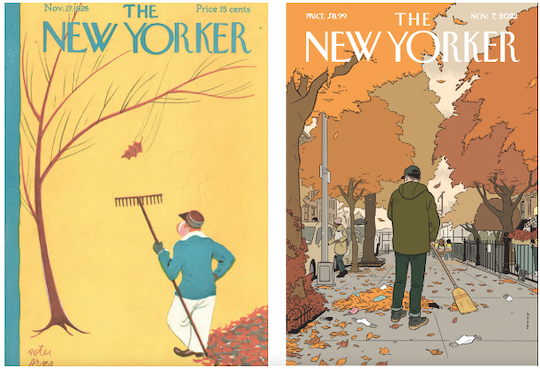

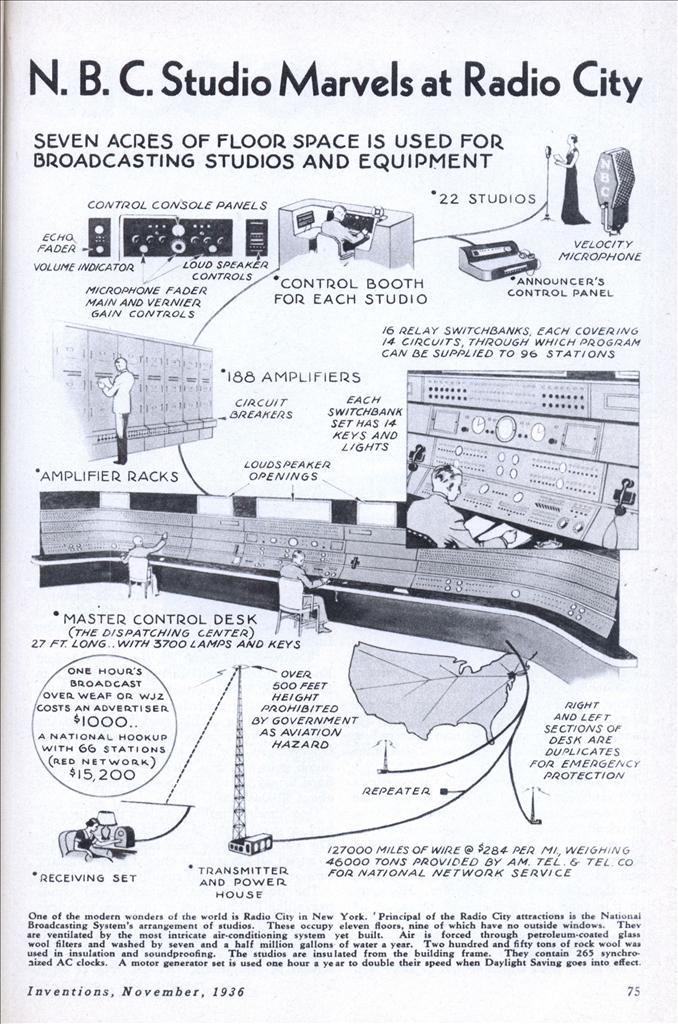


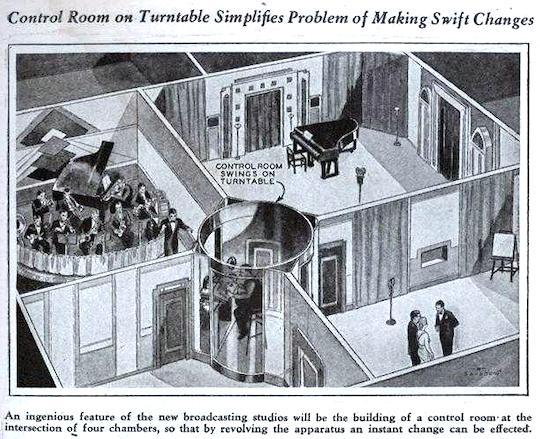

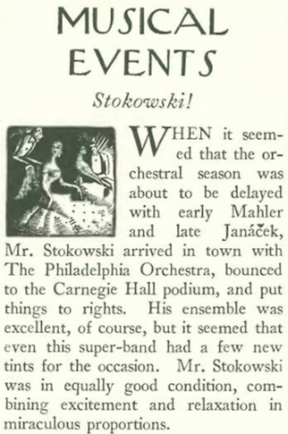
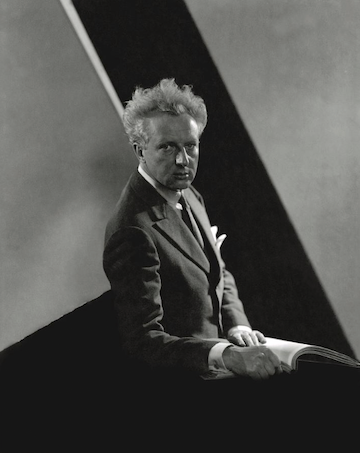

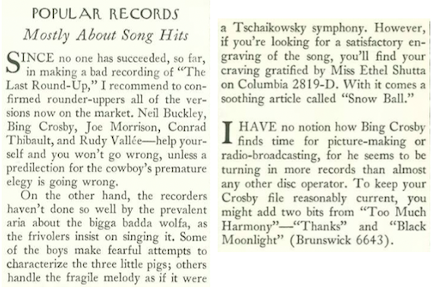


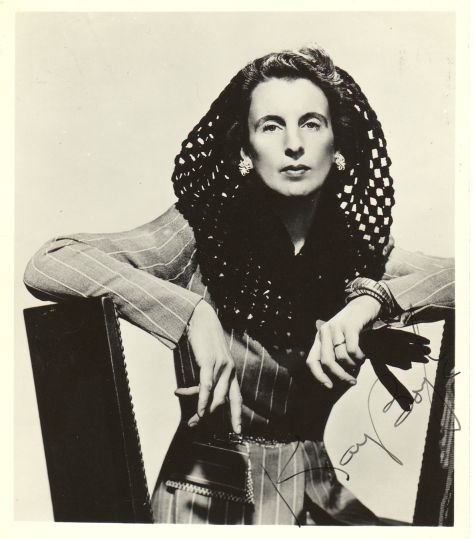

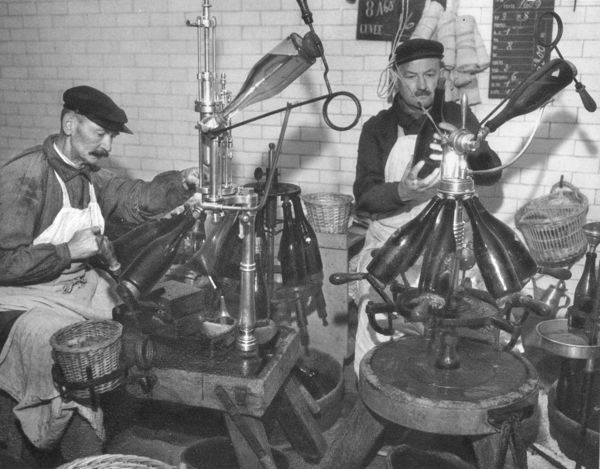


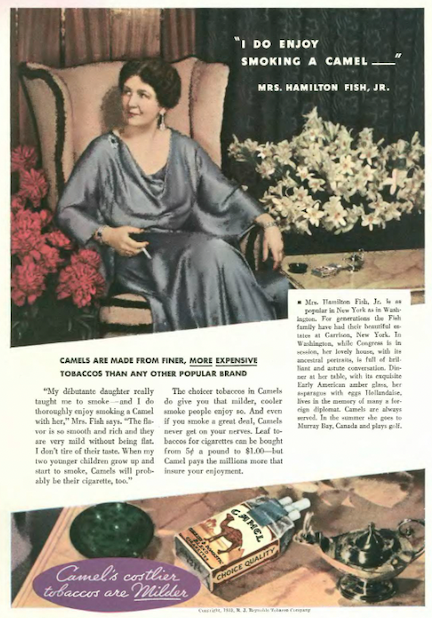
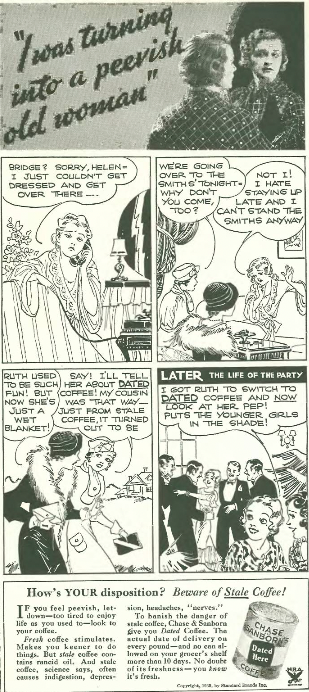
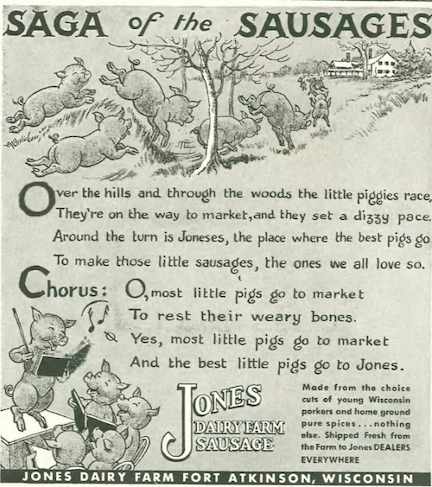

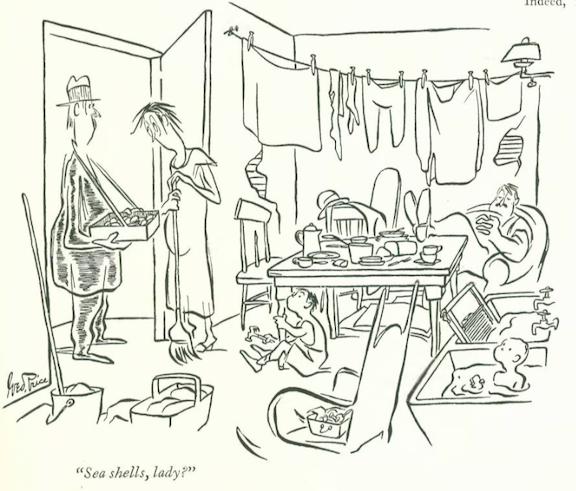
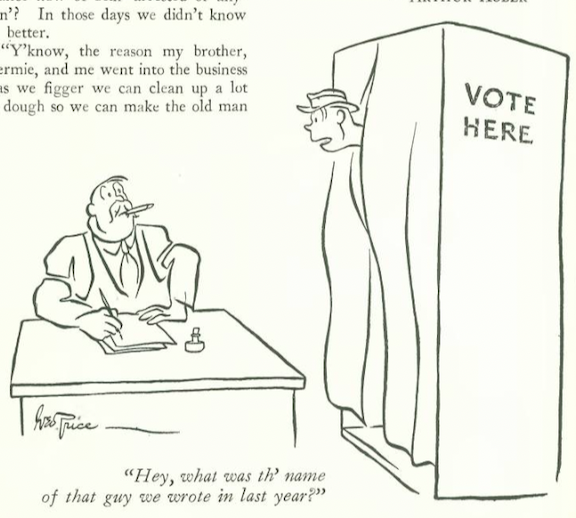
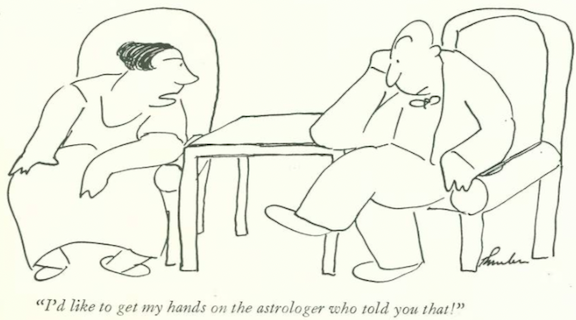


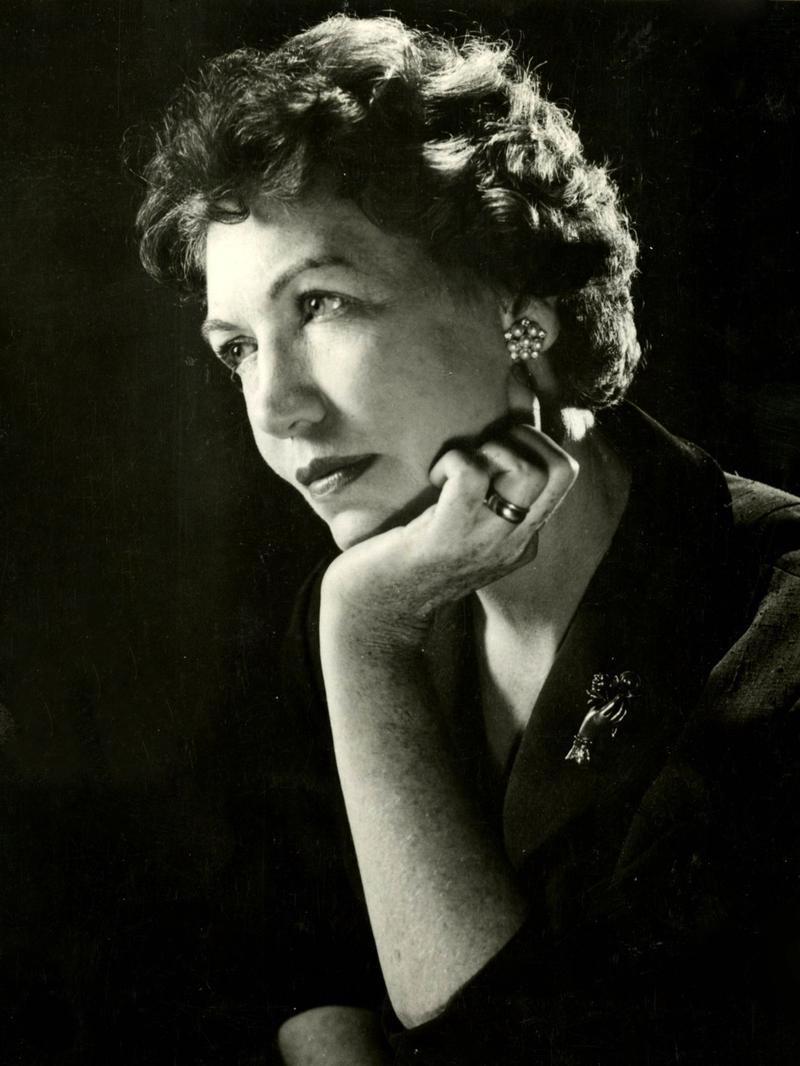
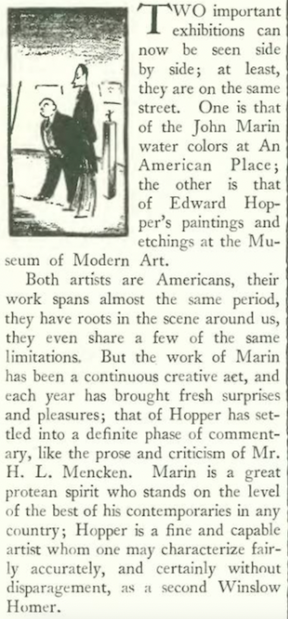
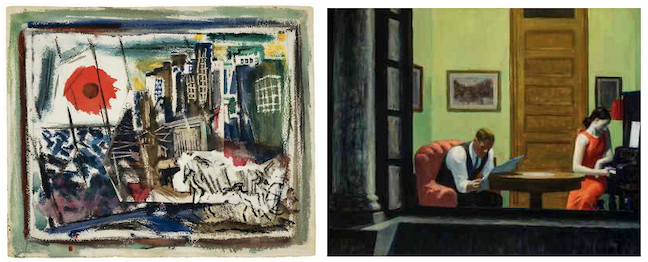
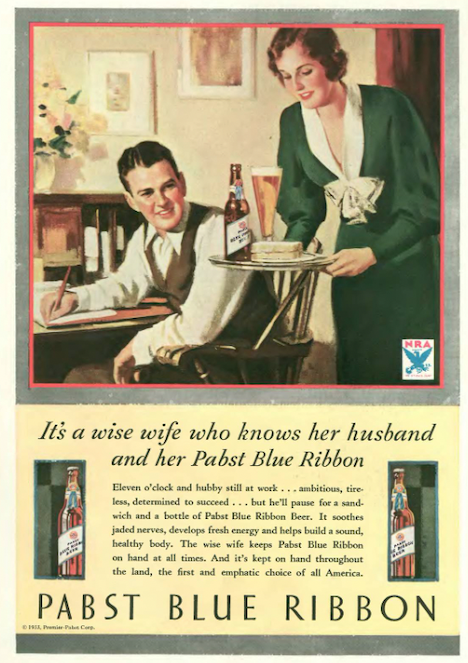
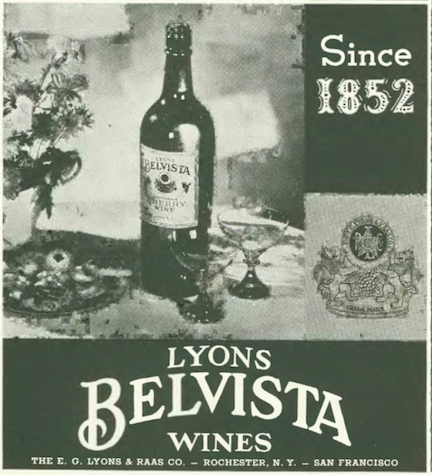
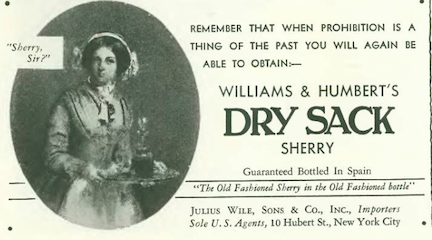

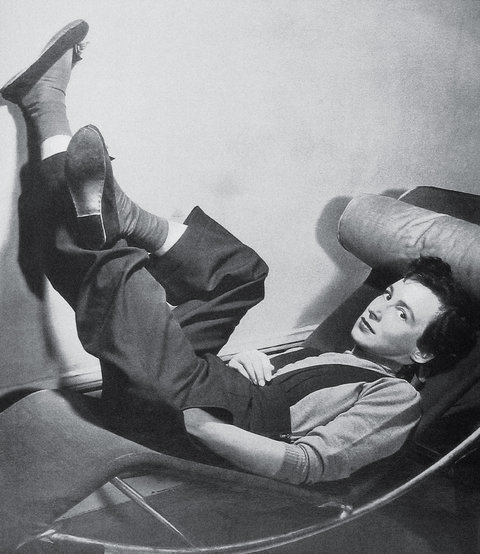
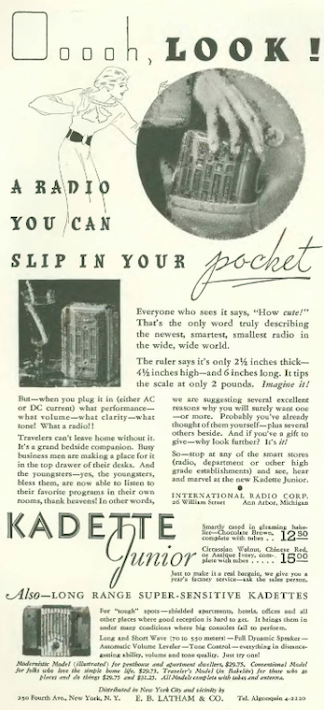

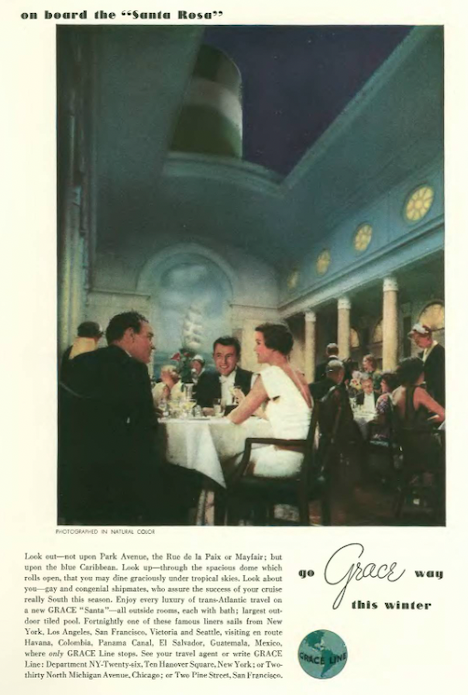
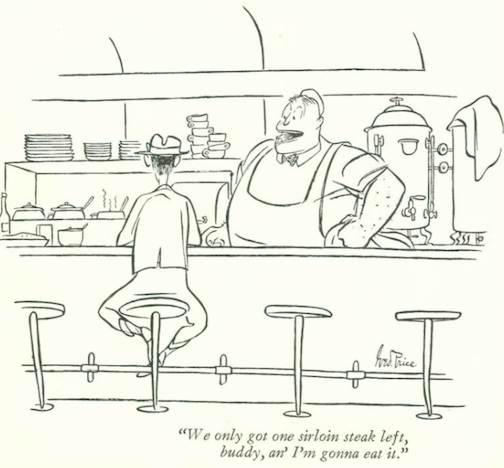

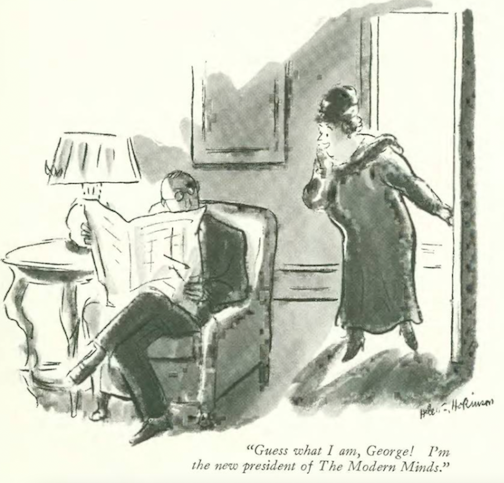
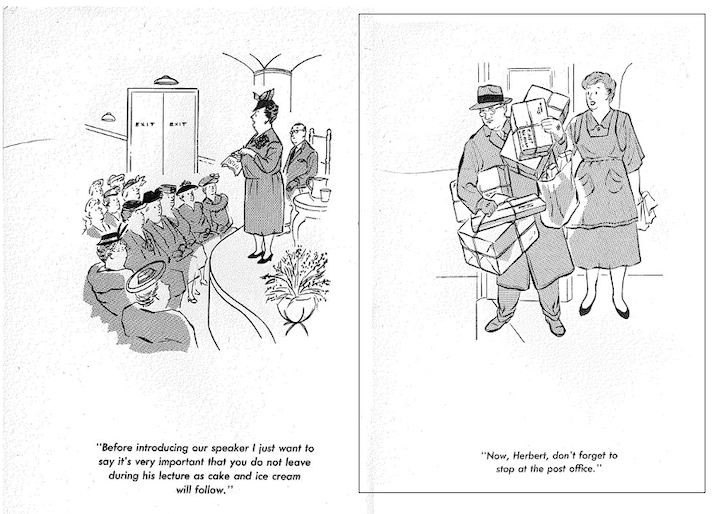
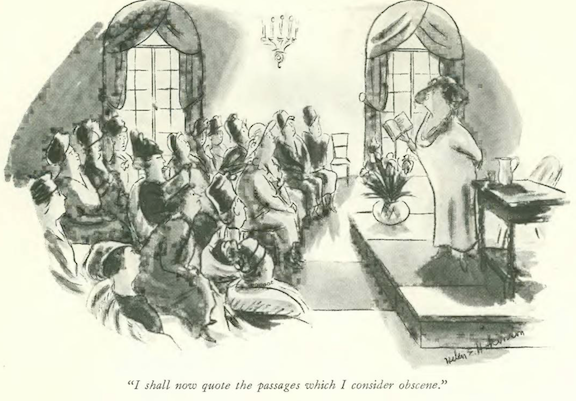






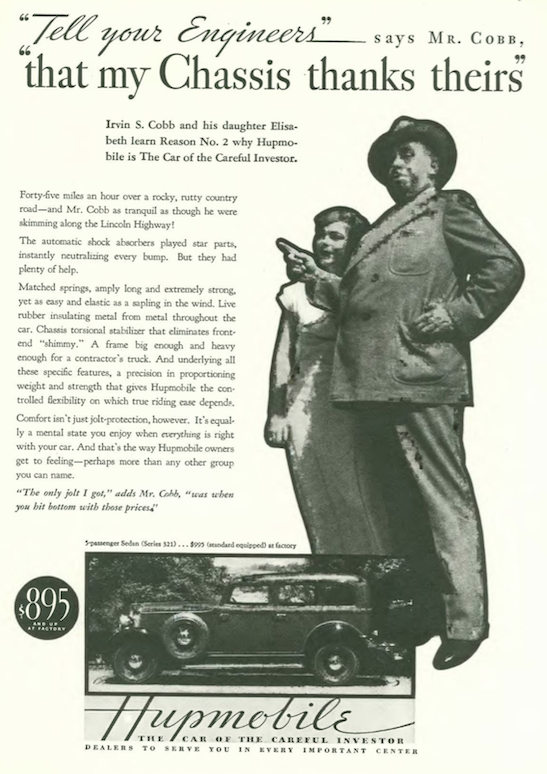


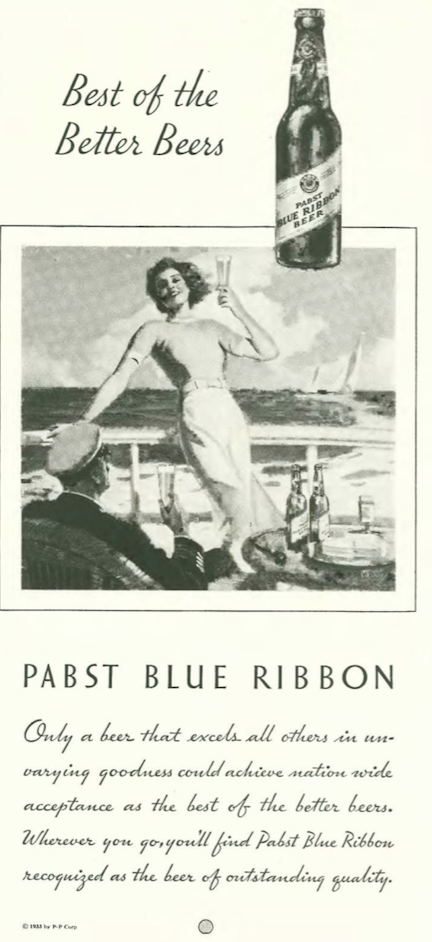
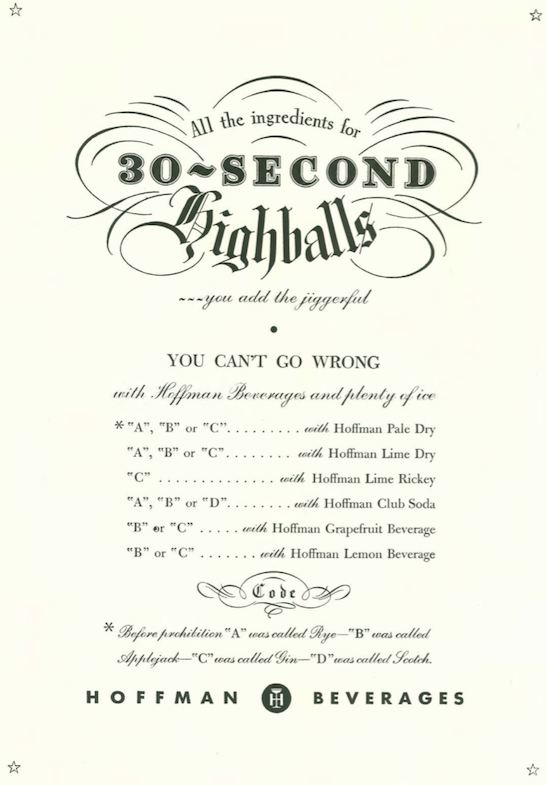

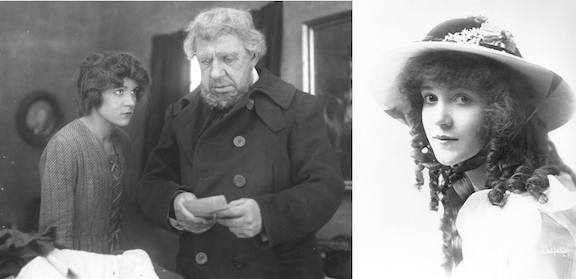

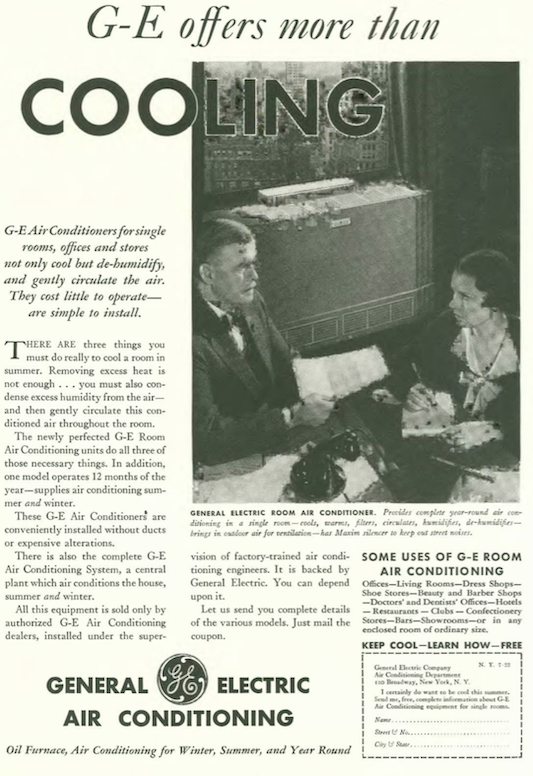

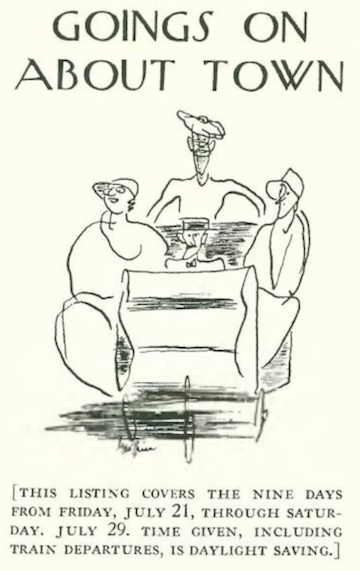

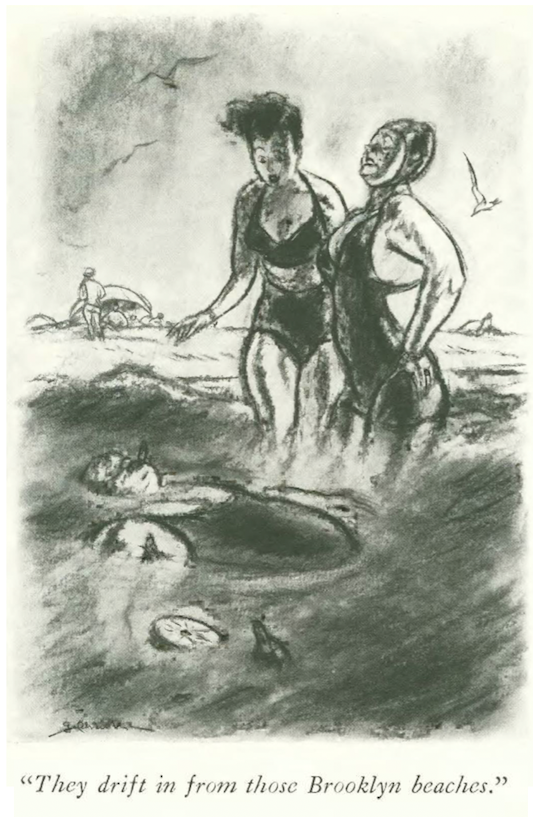
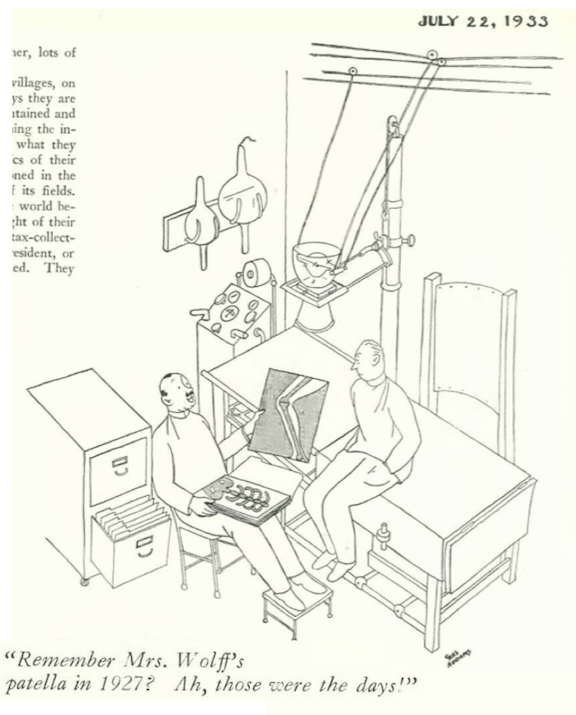
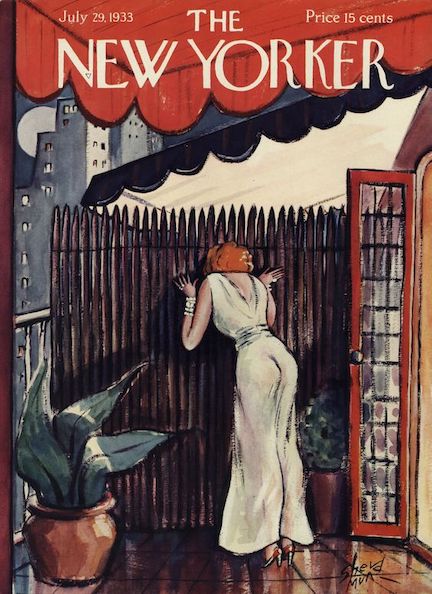
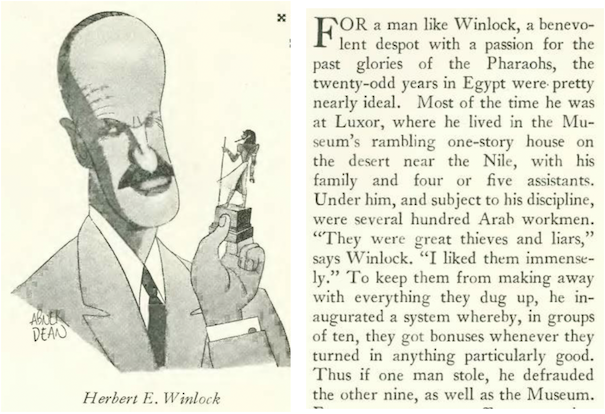
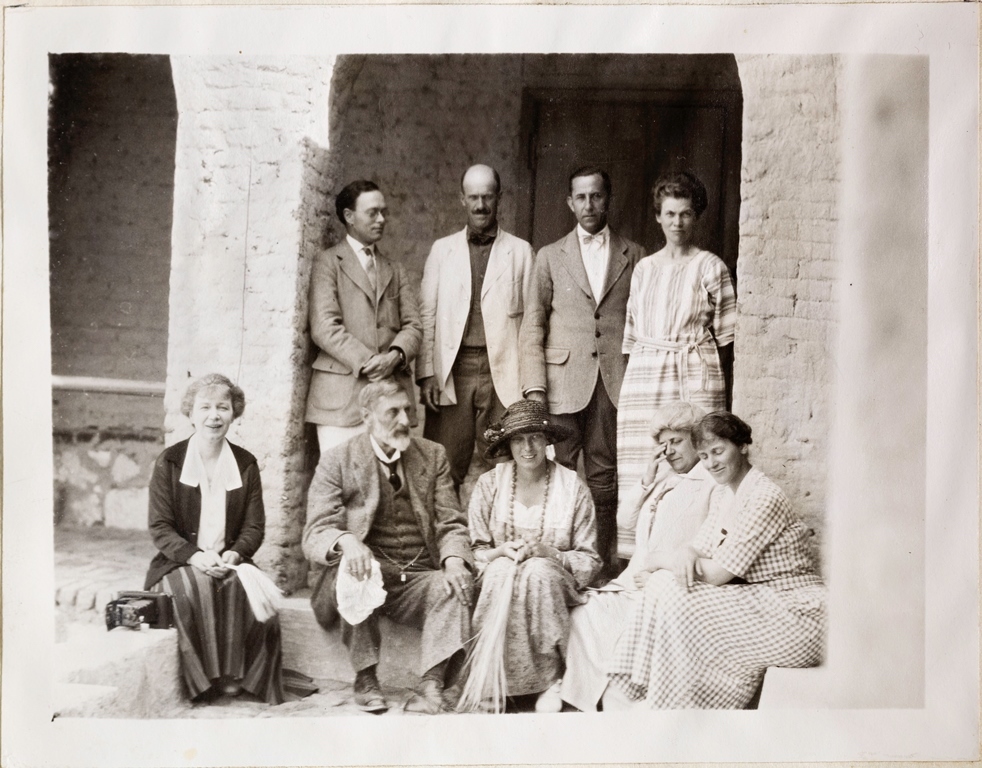

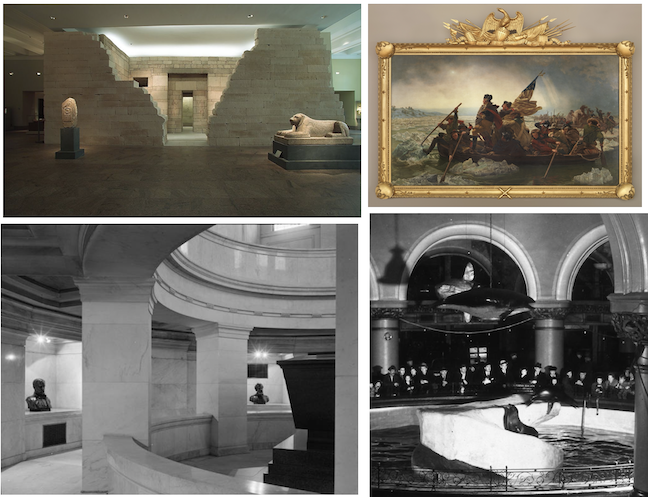

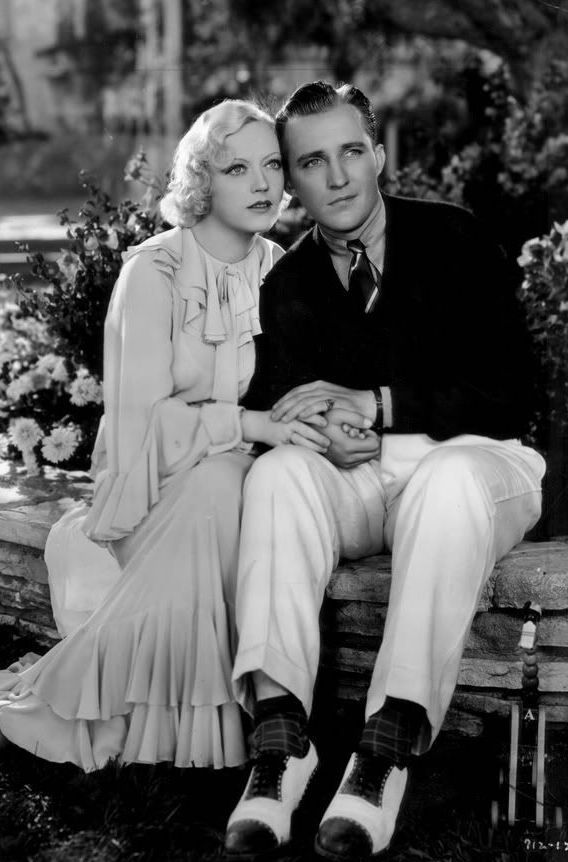


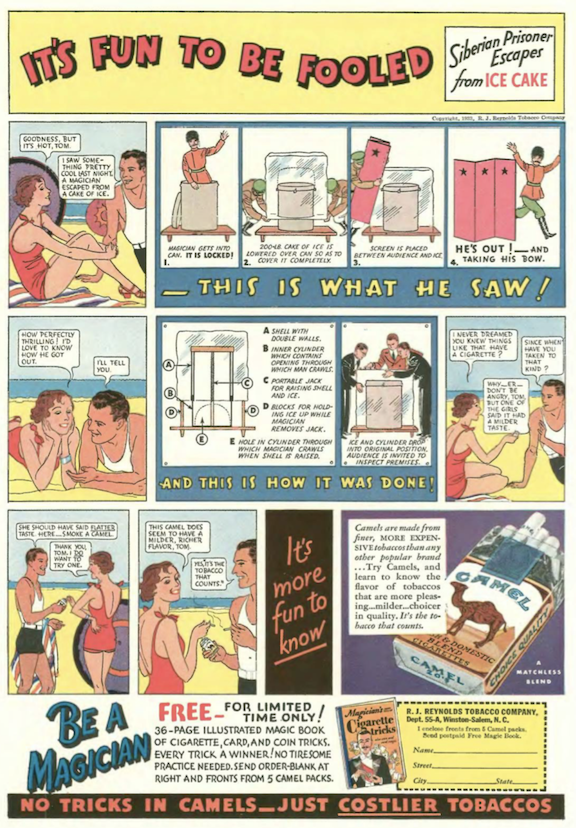
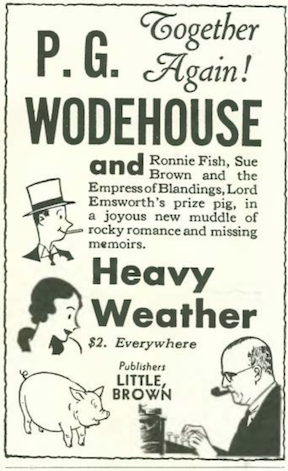
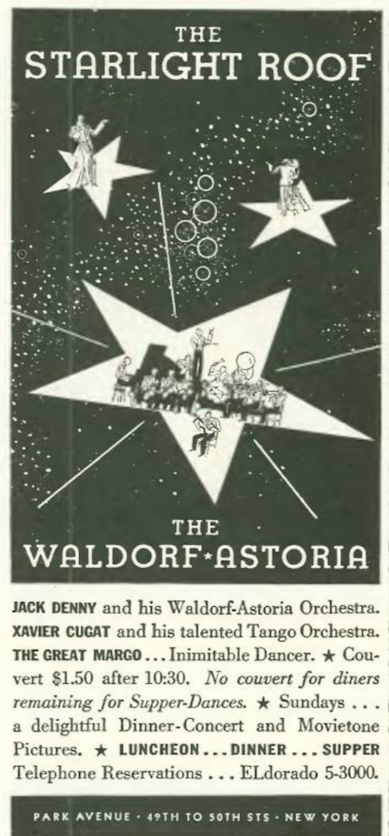
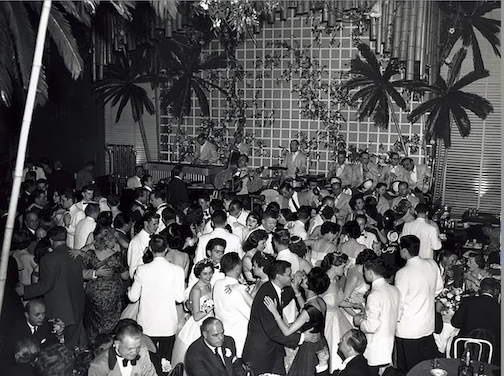
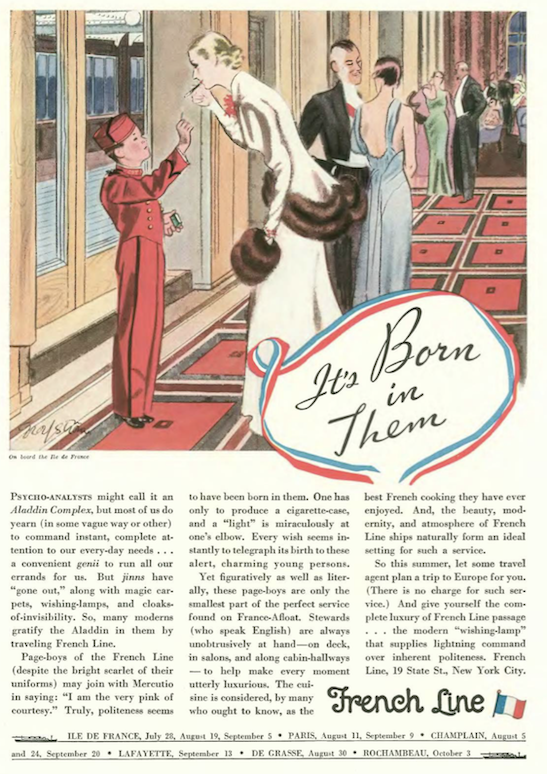

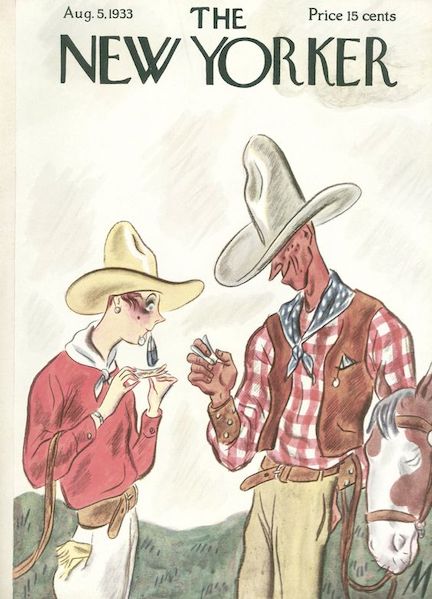
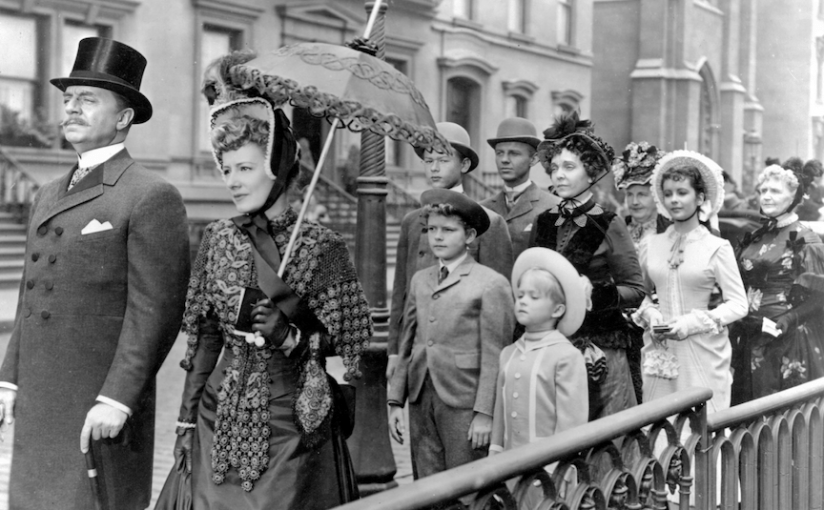
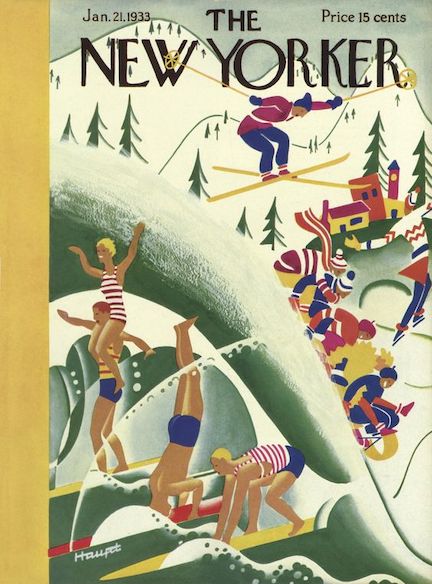


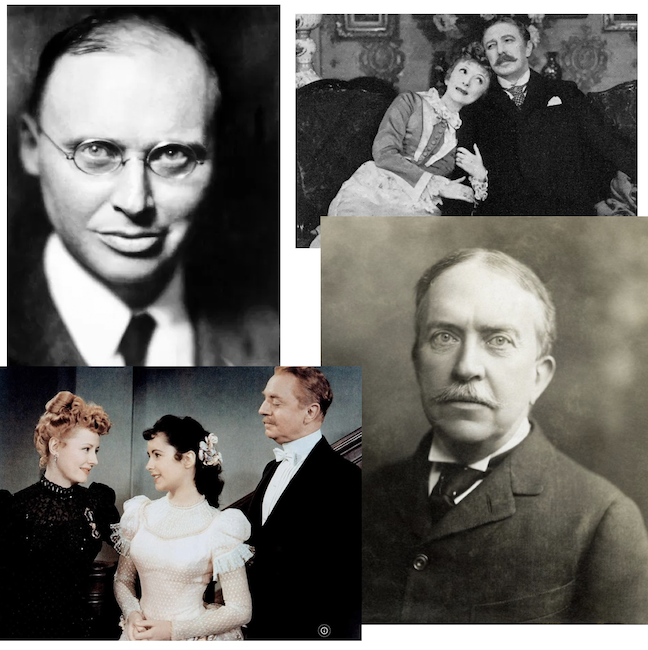

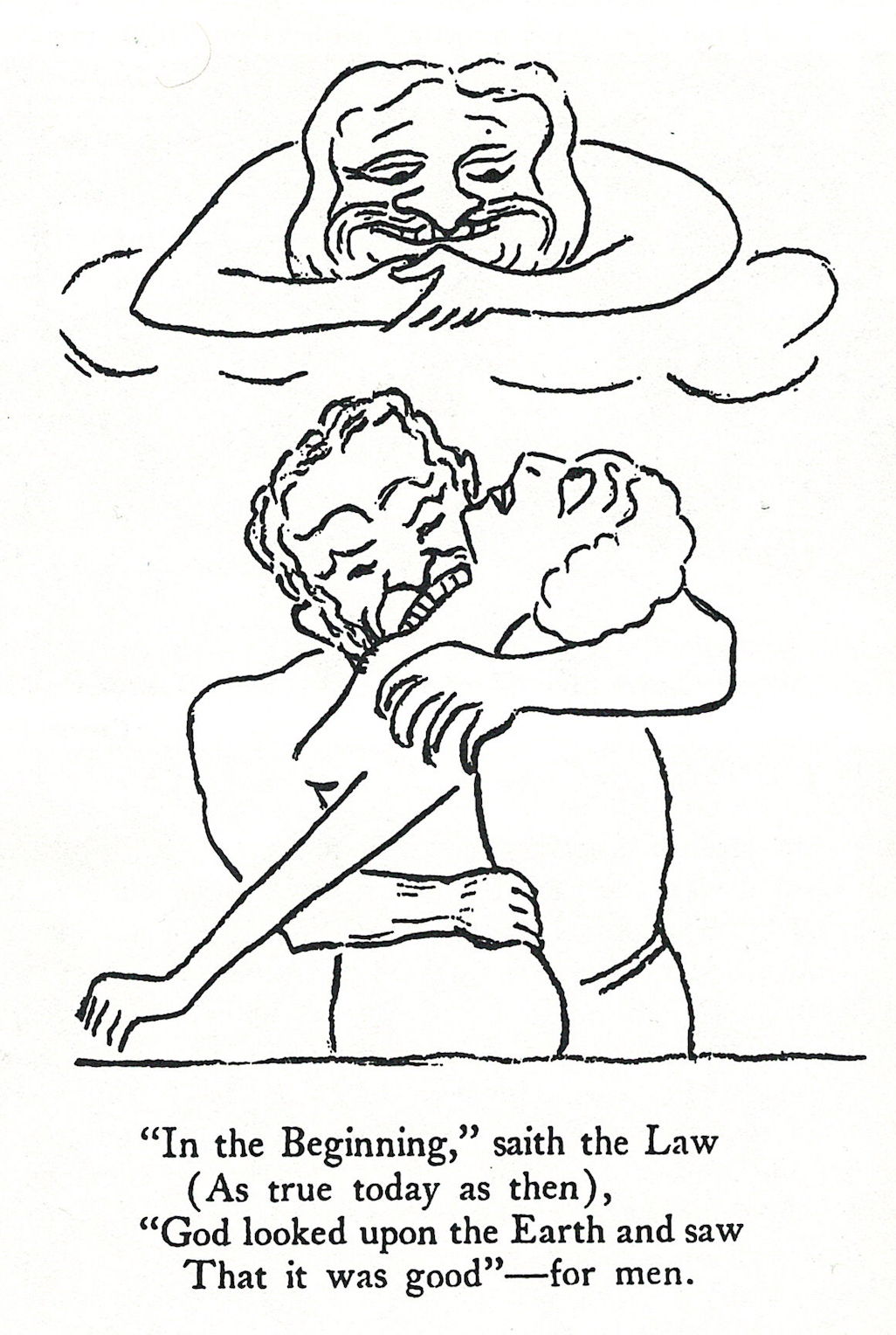


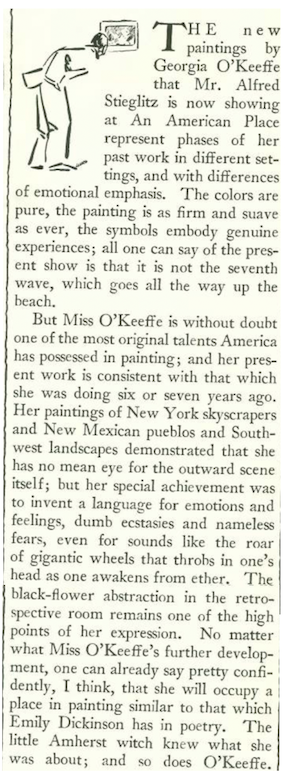



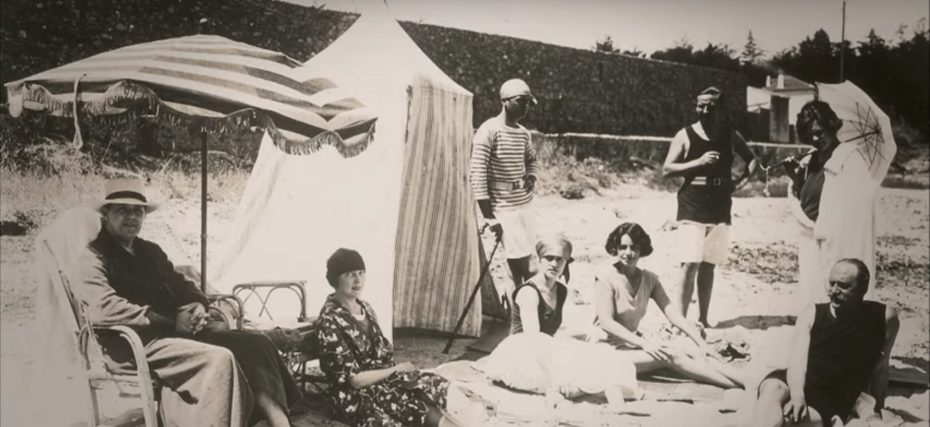
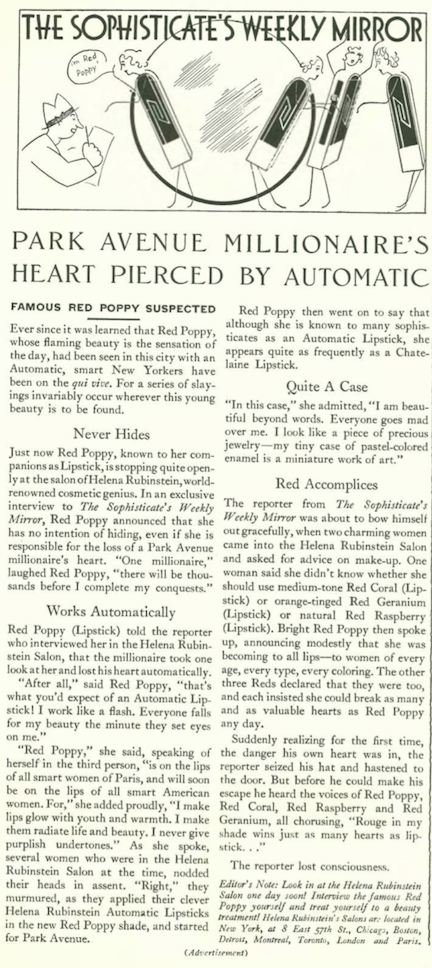

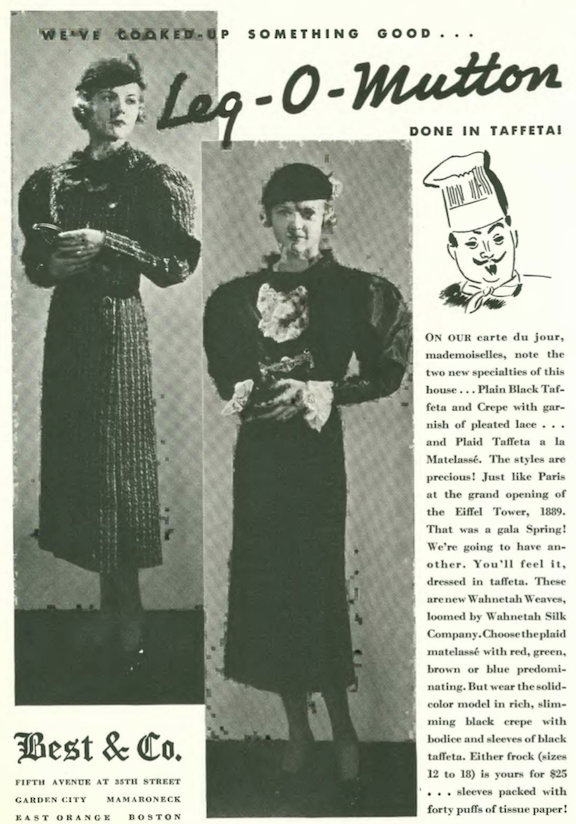
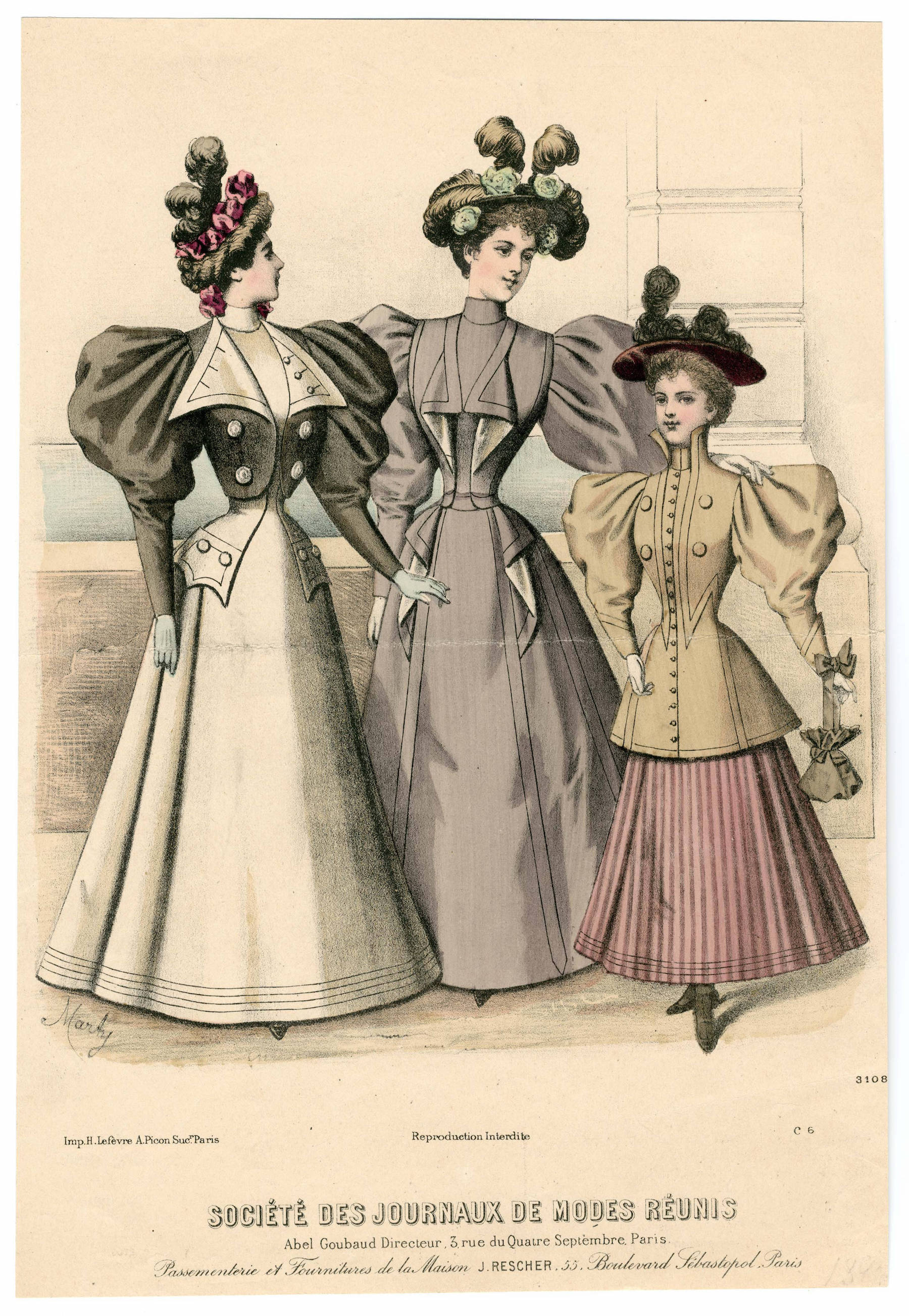

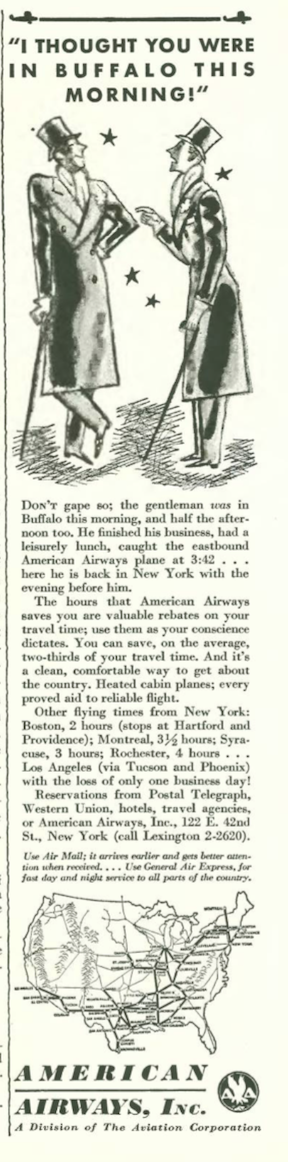
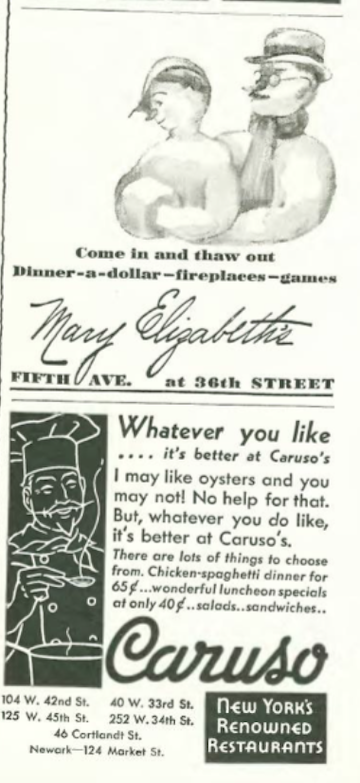
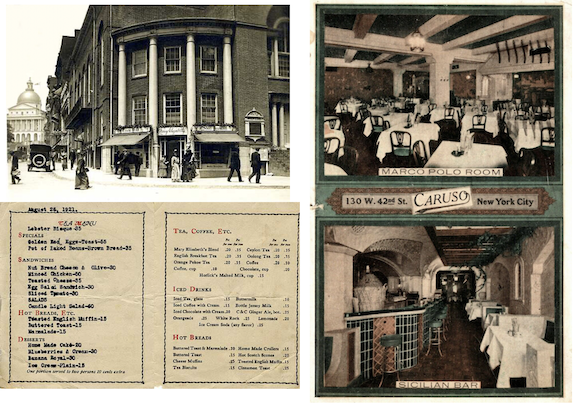
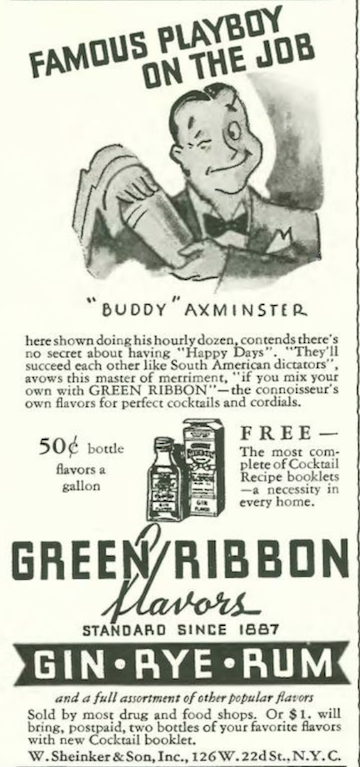

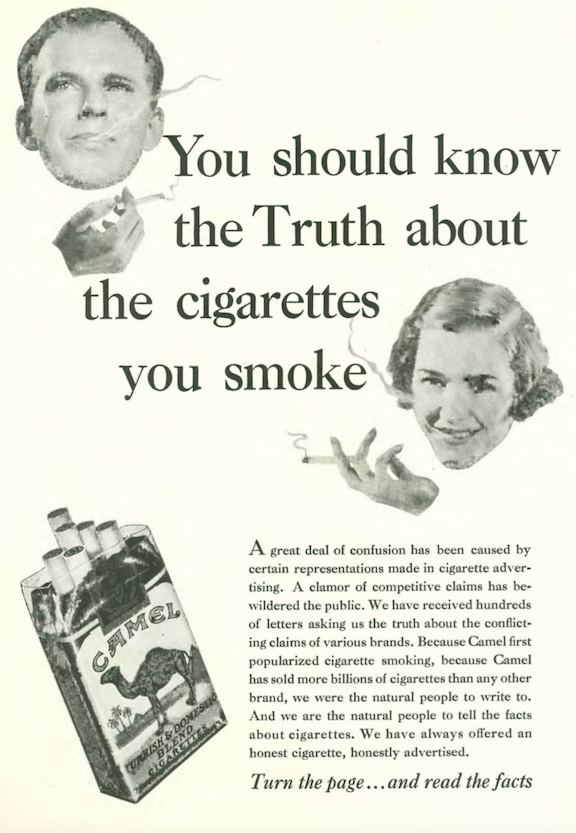

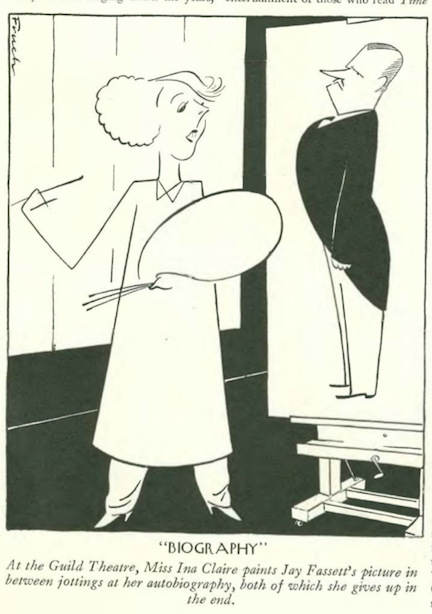

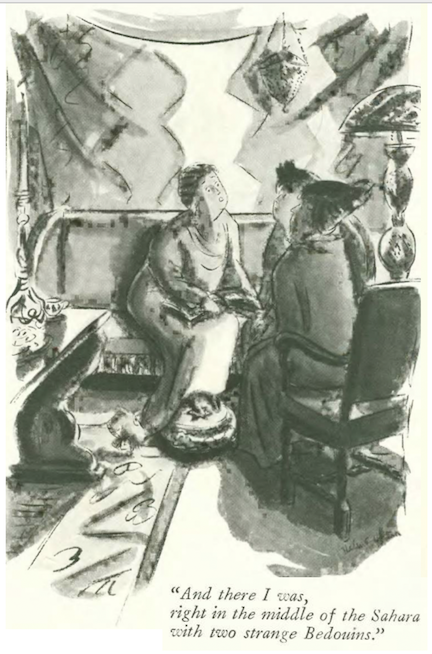
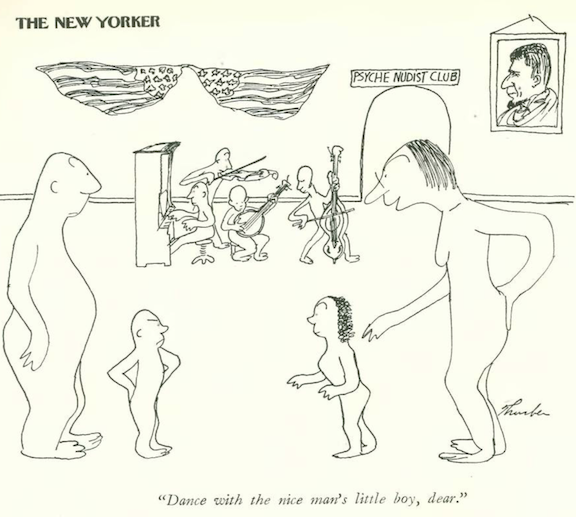
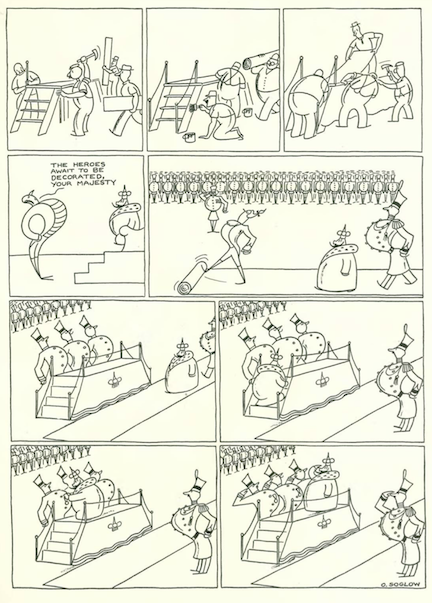

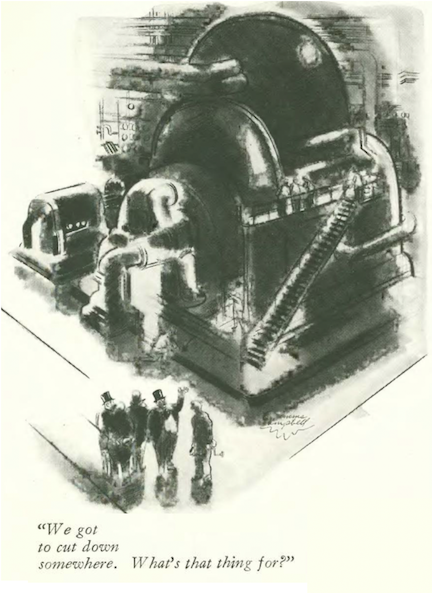
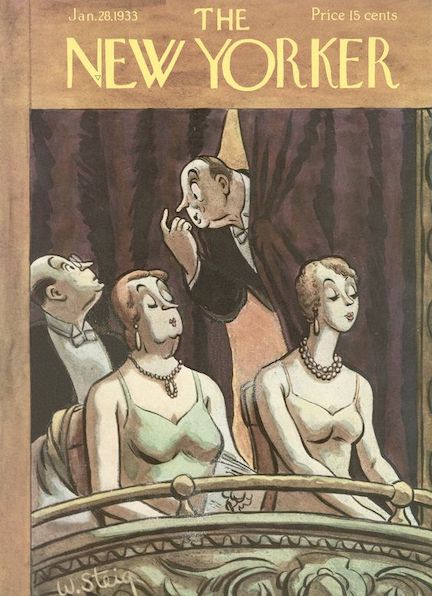

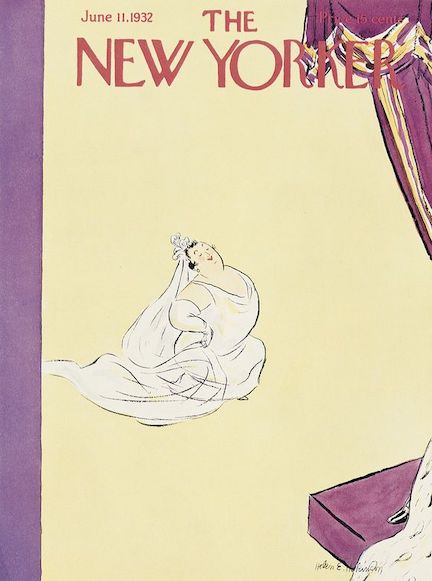
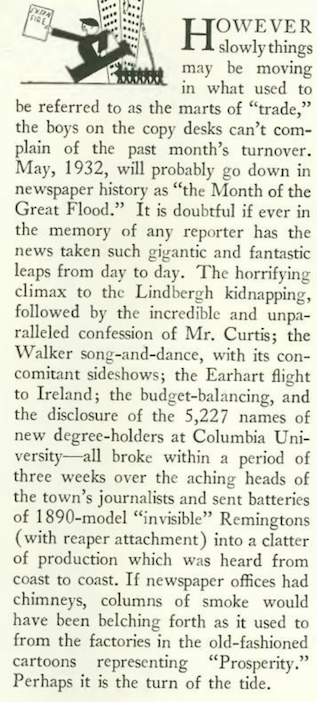
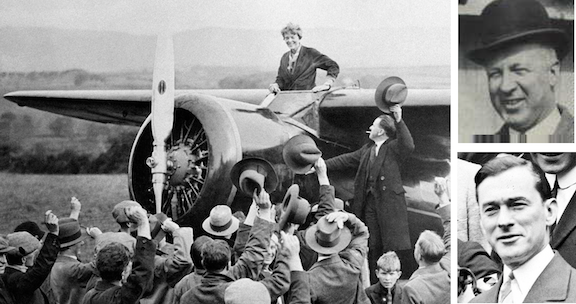

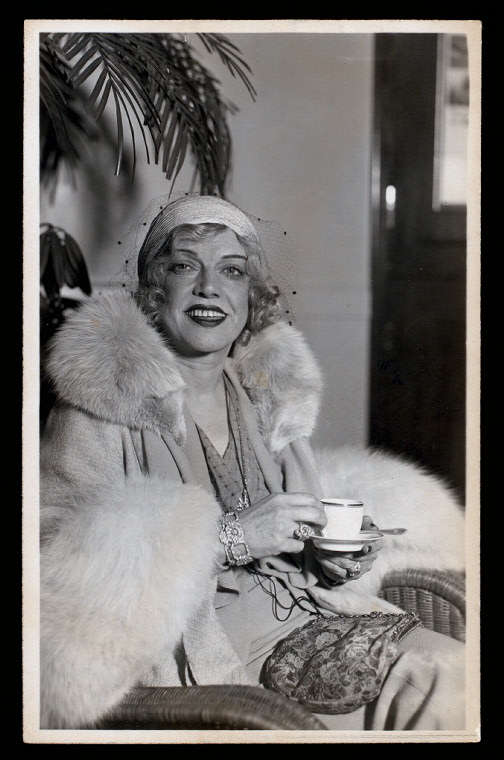


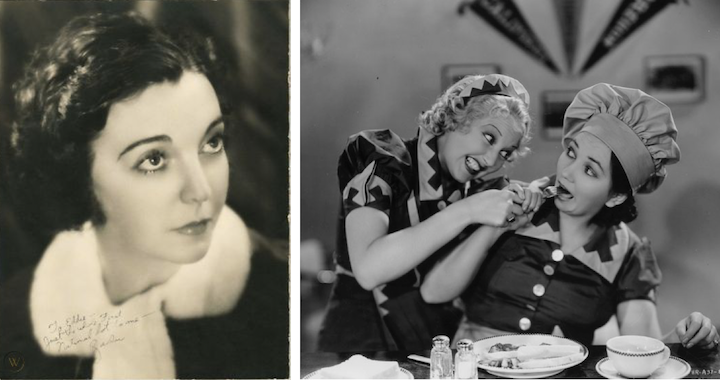
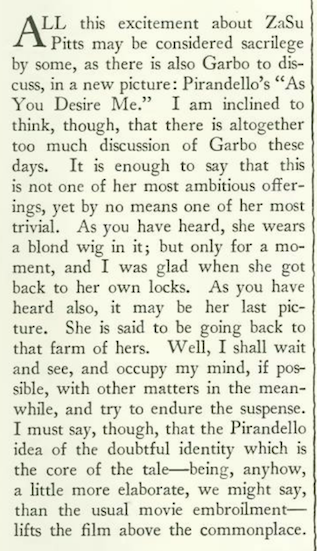


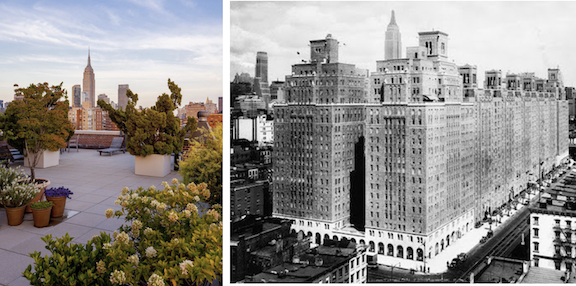
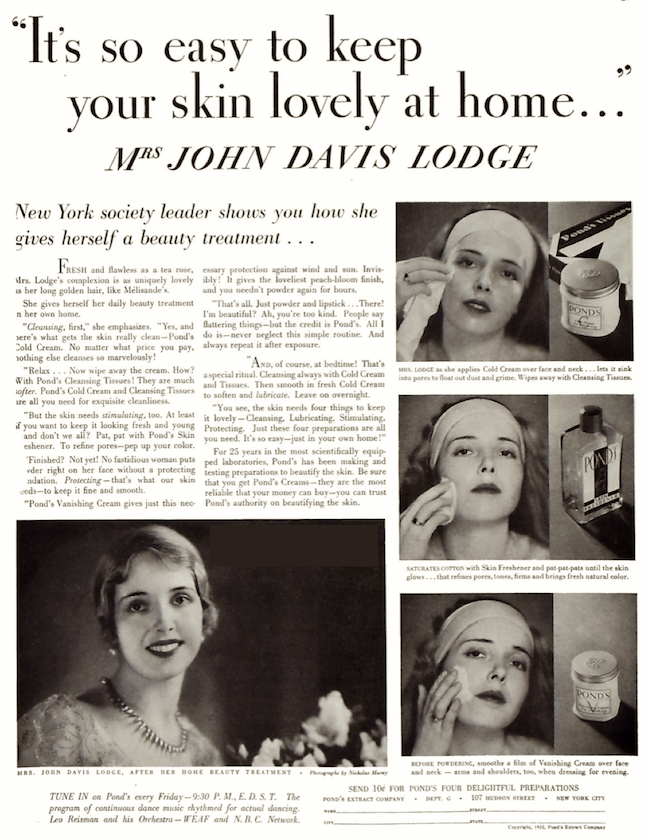
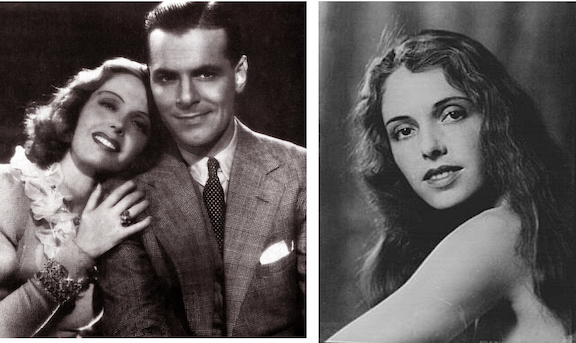
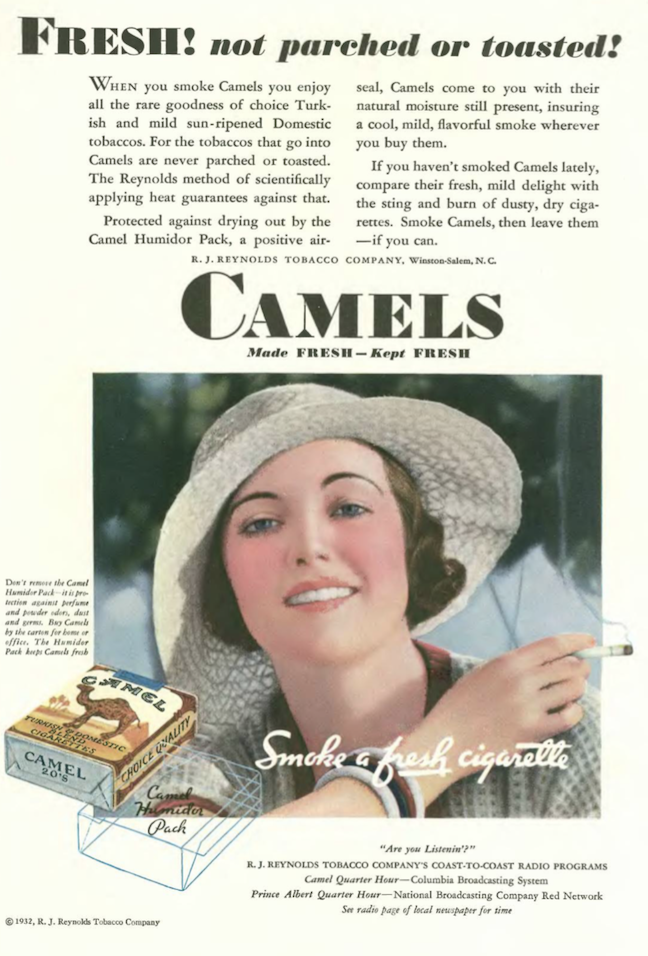


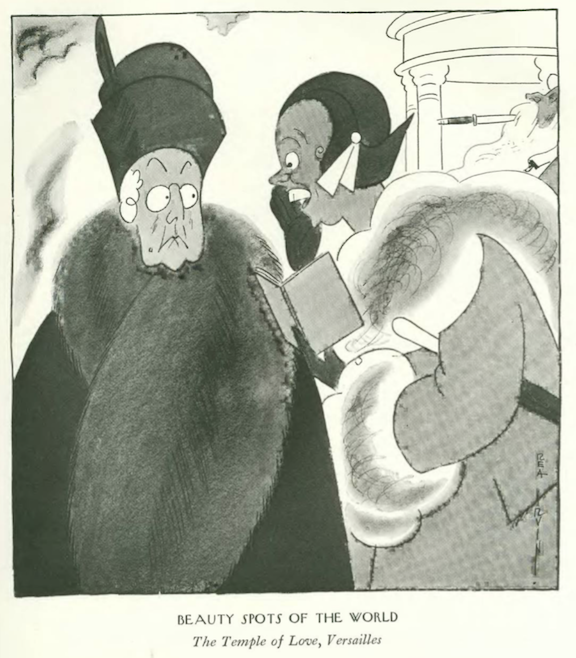


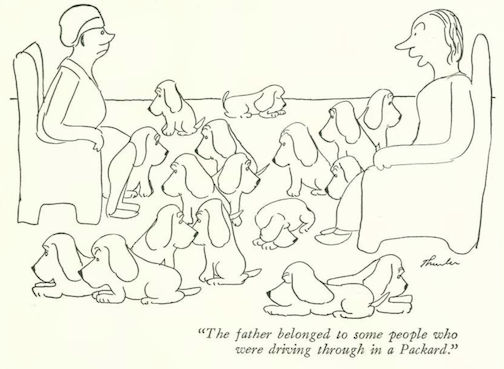
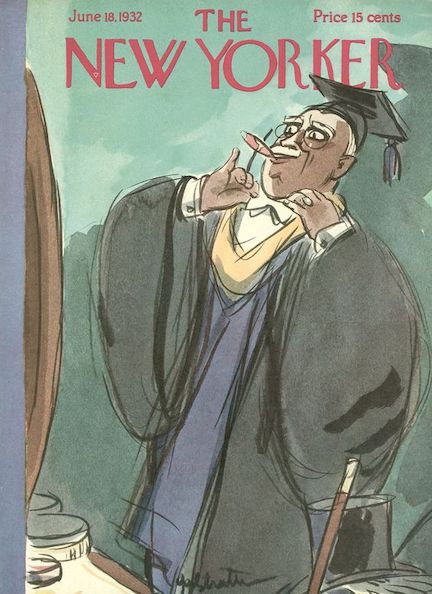
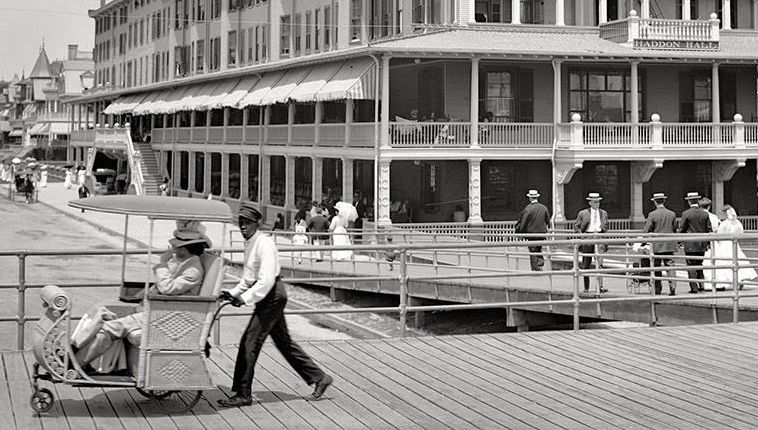

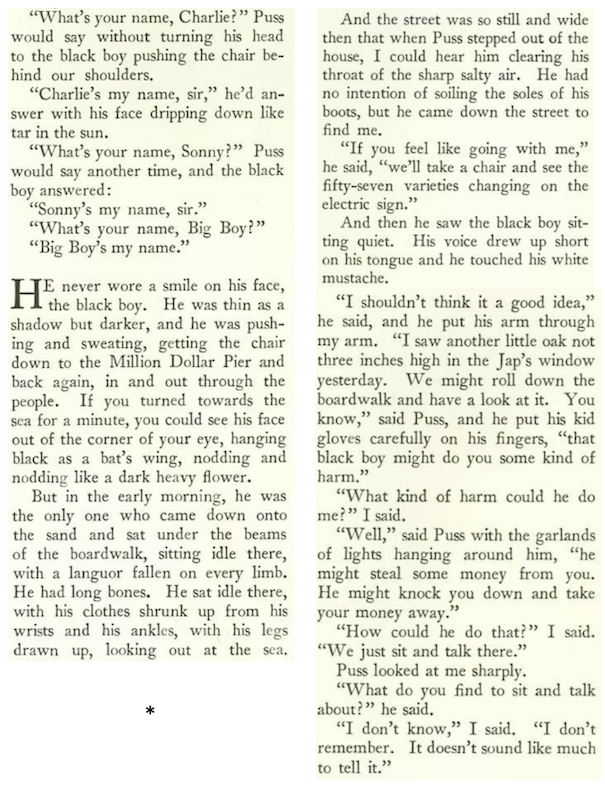
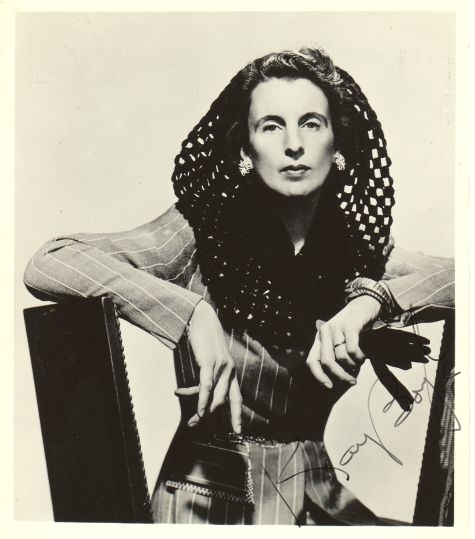


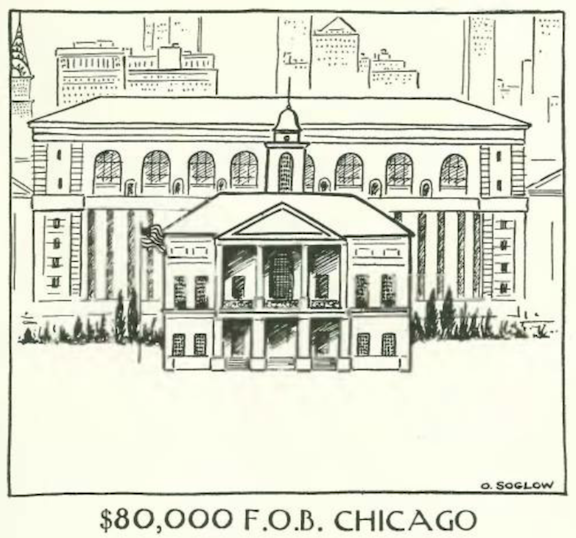

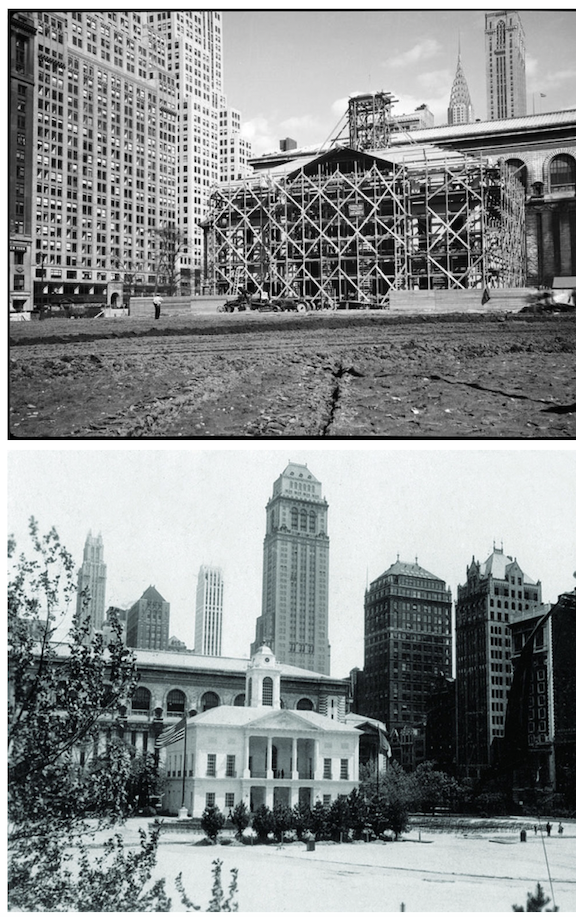
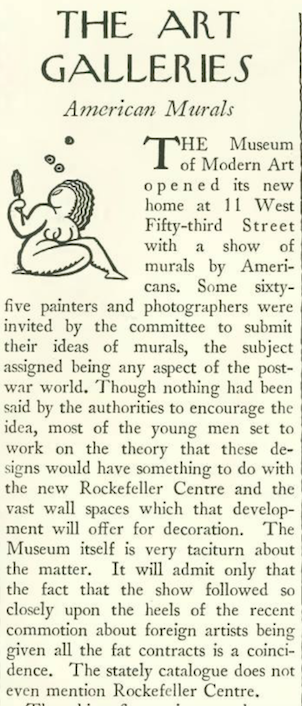
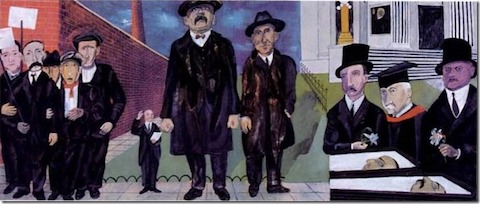
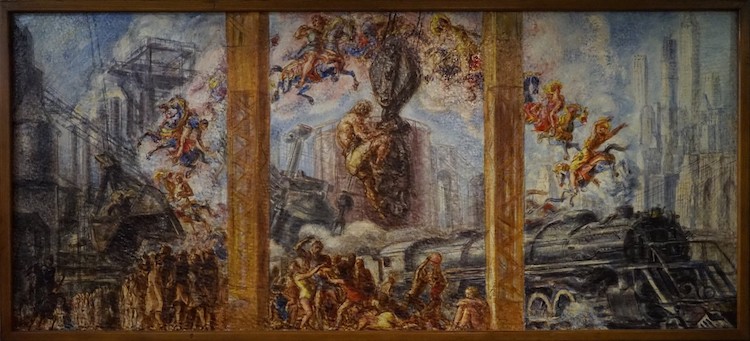
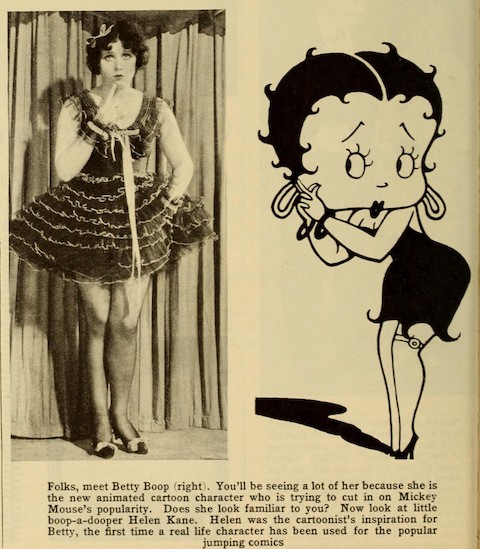


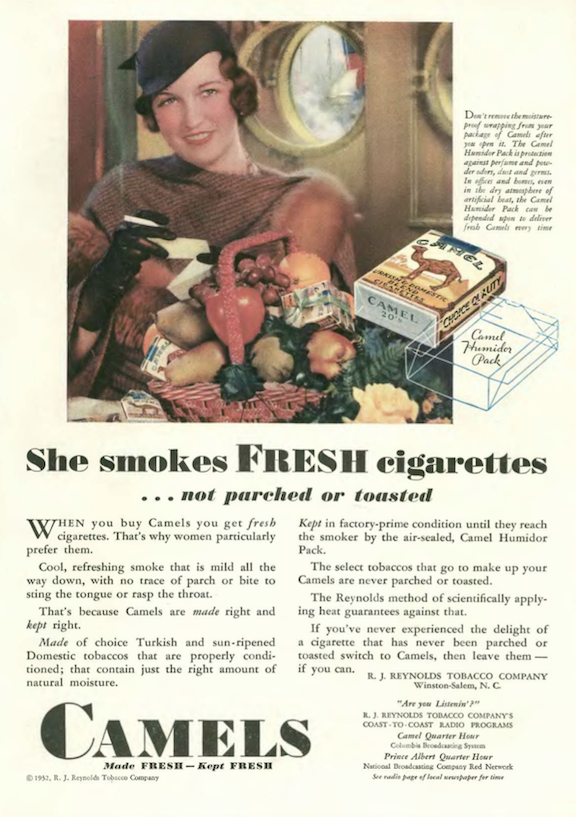

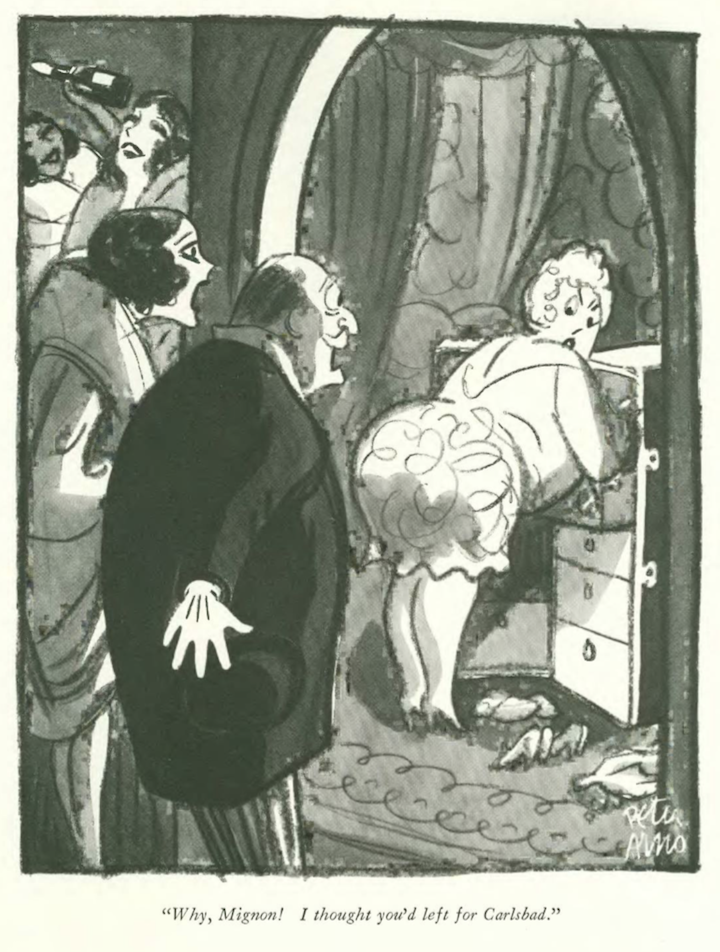

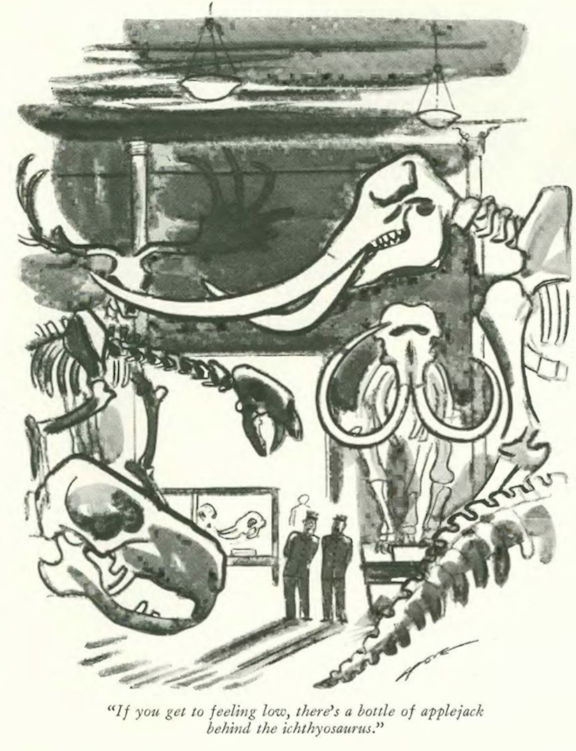
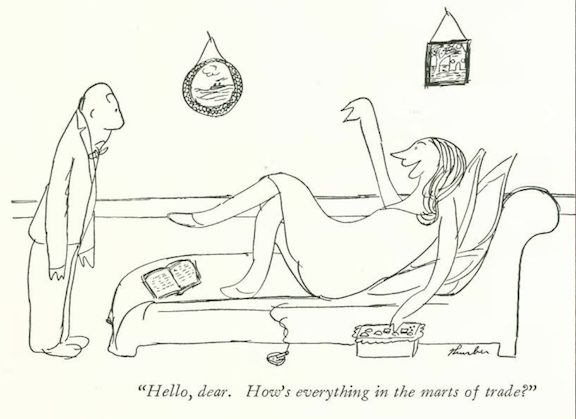


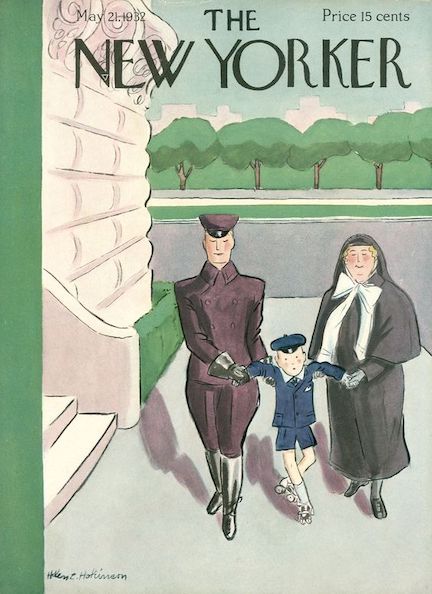
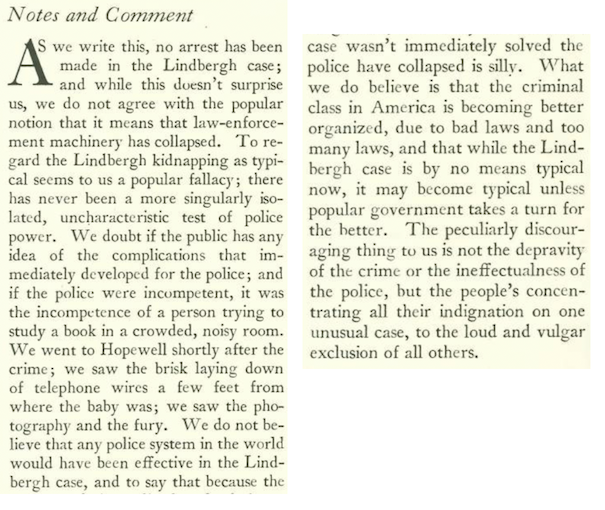
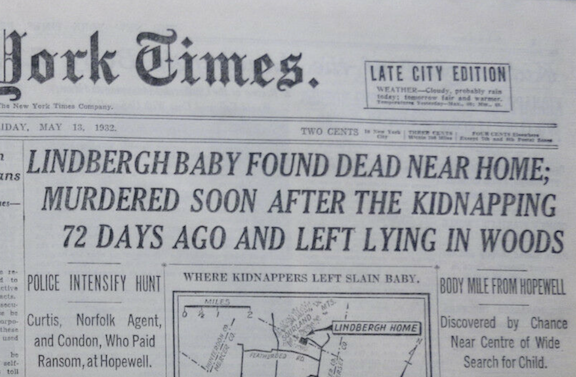
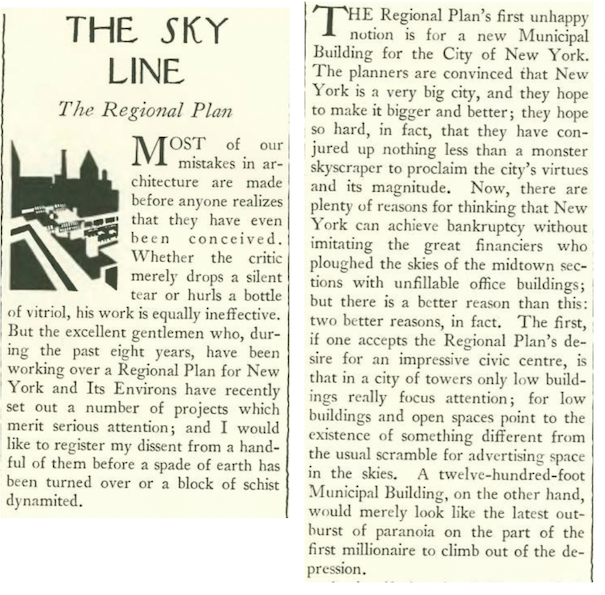
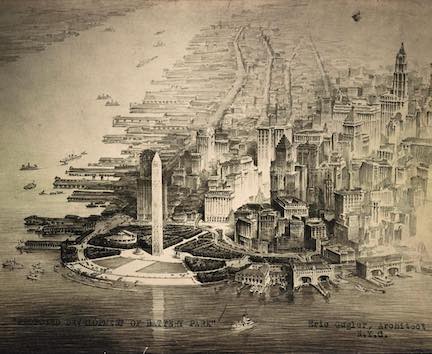
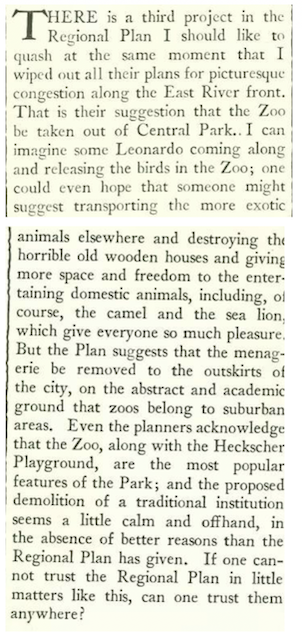
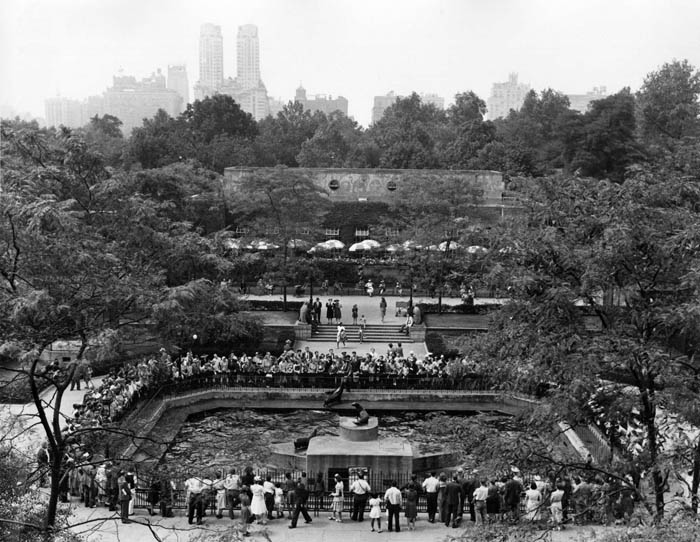
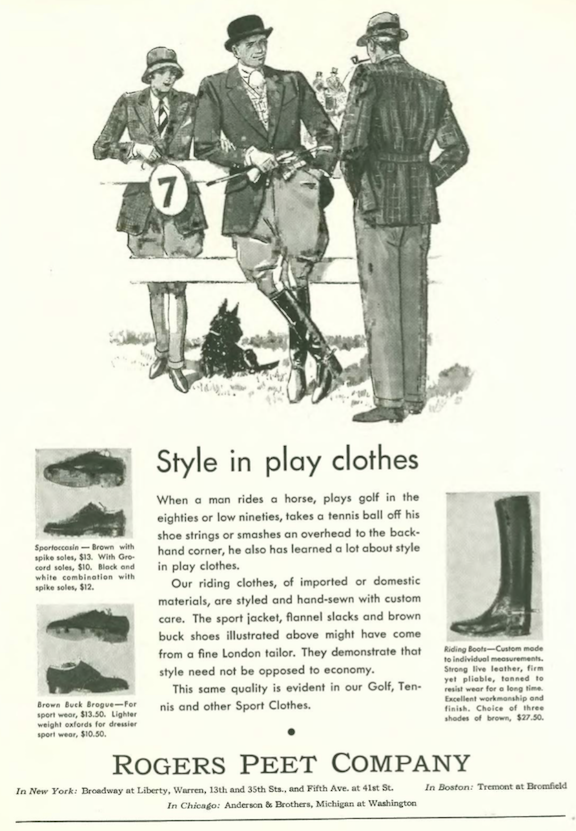

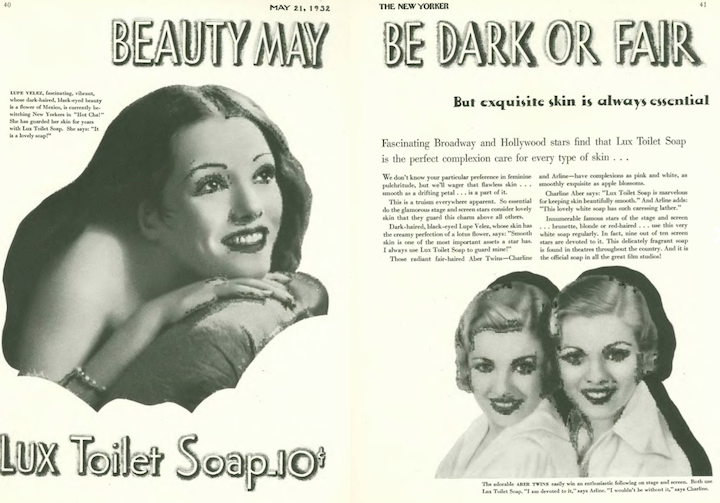

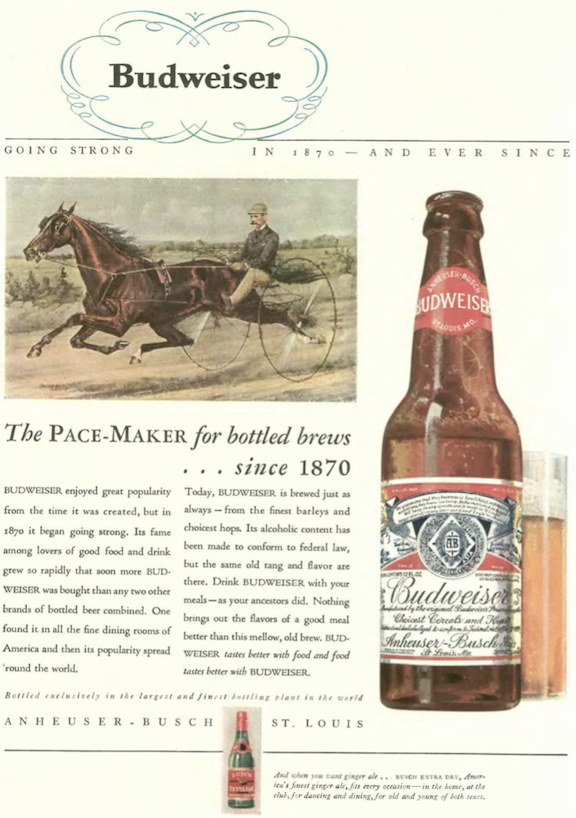


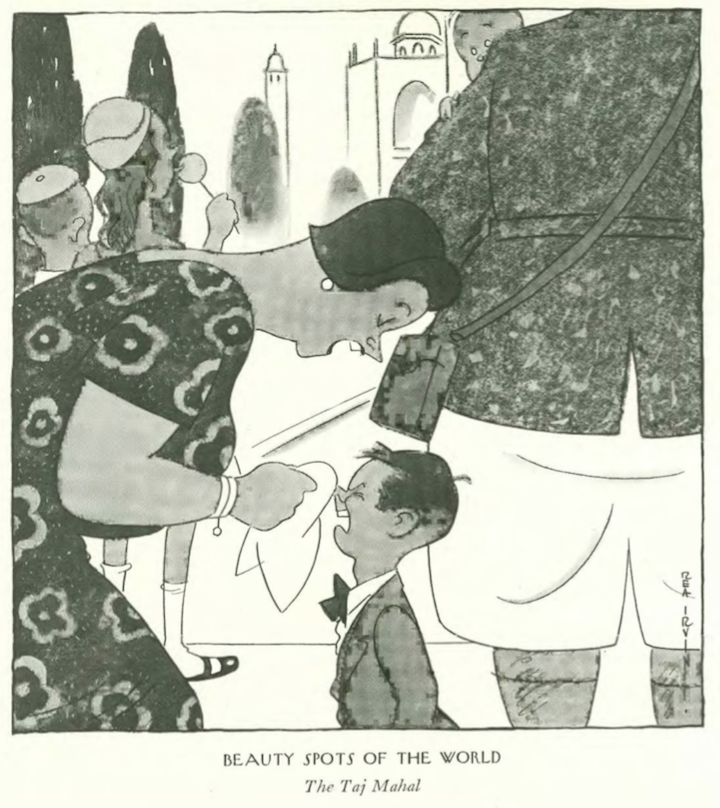

 A New Yorker State of Mind