Clark Gable made such an impression as a charming rogue in 1931’s A Free Soul that it transformed him almost overnight from a bit actor to into one of Hollywood’s biggest stars of the 1930s.
June 13, 1931 cover by Helen Hokinson.
When the film was released it was Norma Shearer who was the biggest name, supported by Lionel Barrymore and Leslie Howard. As this was “Pre-Code” Hollywood, MGM played up the film’s risqué themes of gangsters, drunks and infidelity. After all, according to this ad, Norma was “born in an age of FREEDOM!”
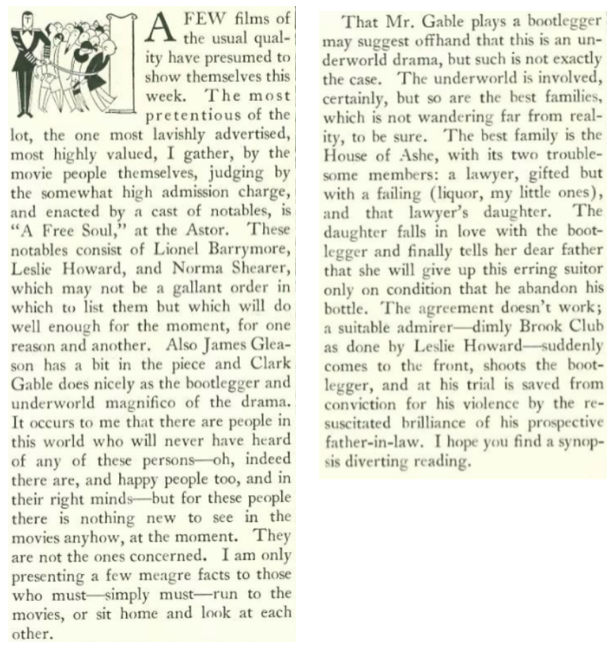
Although critic John Mosher—already weary of the fledgling gangster film genre—found the film pretentious, the public voted it one of the best films of 1931, and Barrymore took home an Oscar for his performance as a successful but conflicted (and alcoholic) attorney…
TRUST ME, HE WON’T BITE…Defense lawyer Stephen Ashe (Lionel Barrymore) introduces Ace Wilfong (Clark Gable), a bootlegger he successfully defends from a murder charge. Unfortunately, Ashe’s daughter Jan (Norma Shearer), who was betrothed to another (the squeaky-clean Dwight Winthrop, played by Leslie Howard), ends up falling for his shady client. (IMDB)DECISIONS, DECISIONS…Jan Ashe (Norma Shearer) must decide between bad boy and goody two-shoes in 1931’s A Free Soul. Clark Gable and Leslie Howard would again play rivals for a woman’s affections eight years later in 1939’s Gone With The Wind. (IMDB)
* * *
Speaking of Gangsters
A real one was profiled in The New Yorker by novelist and screenwriter Joel Sayre — Jack “Legs” Diamond — a thug who seemed to have nine lives but would be dead before the year was out (spoiler: he would not die from natural causes). An excerpt:
IN TROUBLE AGAIN?…Jack Diamond, aka “Legs Diamond” being escorted to the courthouse in Troy, New York in July 1931. (Everett)
* * *
Some Real Guts
“The Talk of the Town” (via E.B. White) looked in on the work of famed aerial photographer Albert Stevens, who back in the day employed the common practice of chucking “flashlight bombs” out of airplanes to illuminate subjects below, including buildings along Riverside Drive that had their windows blown out during one of his aerial photo sessions…
Captains Albert Stevens (left, with the devil-may-care smile) and St. Clair Streett prepare for a high-altitude airplane flight in 1935. At right, Stevens readies his camera for an aerial photo session. (National Air and Space Museum).
Below is something similar to what Stevens dropped from the plane to get the effect he needed during nighttime shots…
Nighttime aerial photography owes its origins to pioneers like George Goddard, who stunned residents of Rochester, NY, in 1925 when he ignited an 80-pound flash bomb to illuminate the city (image at left). It is considered the first aerial night photograph. At right, Manhattan at night, 1931.
(16thphototech.wordpress.com)
* * *
Poetic Pugilist
Throughout his career and into his retirement, heavyweight boxing champion Gene Tunney took great pains to distinguish himself from the other brutes who practiced his violent trade, and was known for his love of the higher and gentler arts. In his “Notes and Comment” E. B. White further explored this phenomenon upon the boxer’s return to the States:
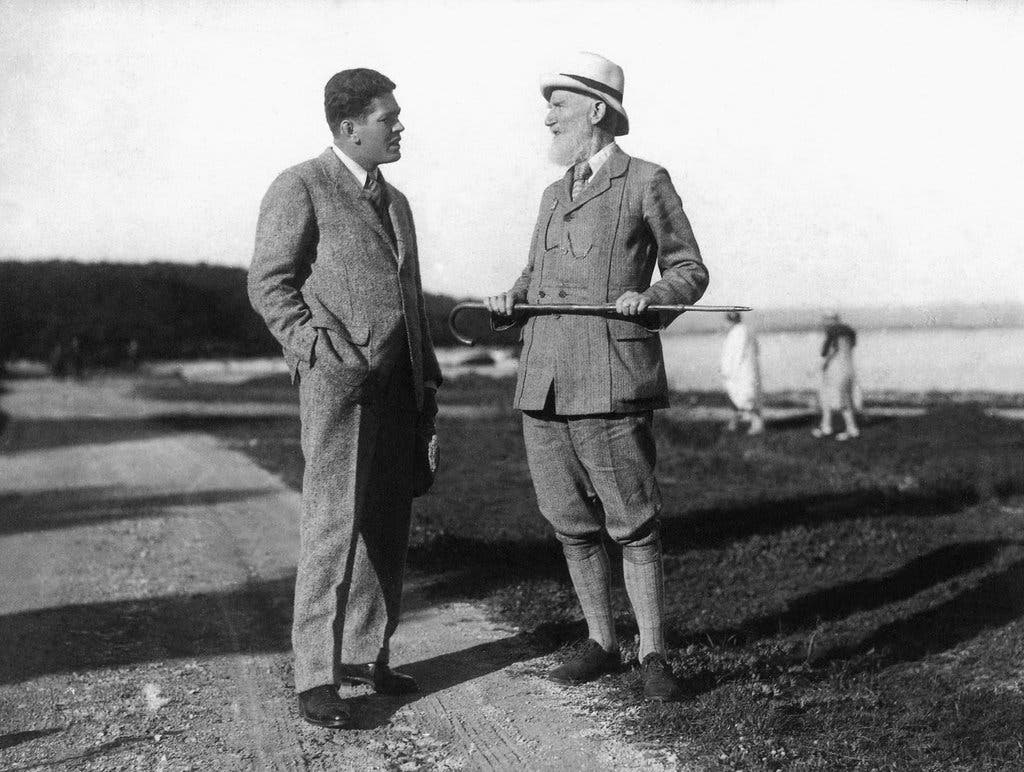
I’M NO PALOOKA…Gene Tunney chewing the fat with playwright George Bernard Shaw during a holiday in Brioni, 1929. (Associated Press)
* * *
Not So Brief
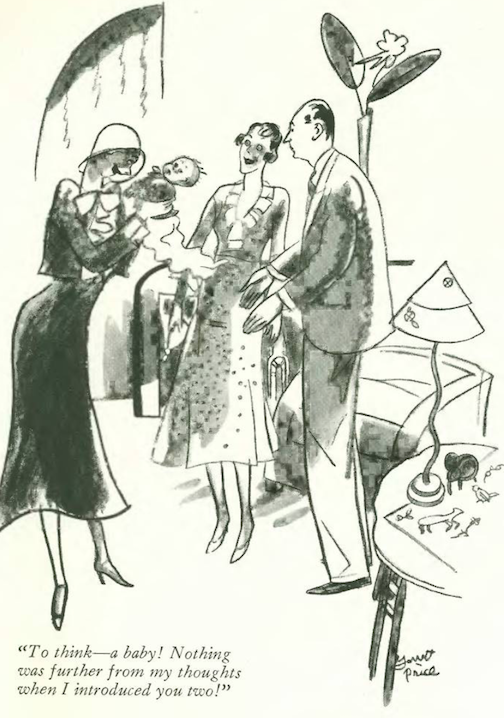
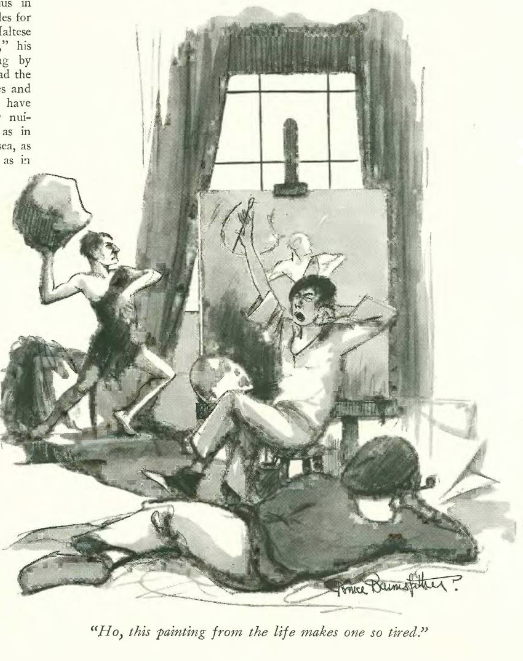
I include this entire page to feature both Garrett Price’s cartoon (Judge Benjamin Barr Lindsey, a leader in abolishing child labor, supported the idea of unmarried couples living together, hence the caption), and Wolcott Gibbs’ thoughts on applying for an advertising position…
* * *
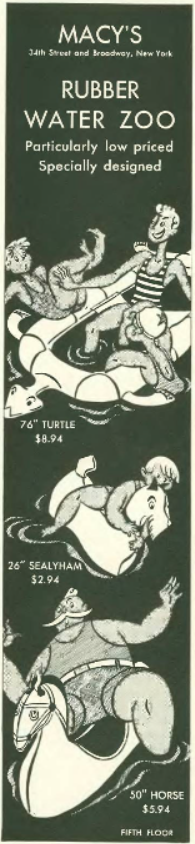
And speaking of advertising, we have this summer-themed ad from Macy’s (yes, they had inflatables back then, too)…
…for reference, here’s a 1930s photo of actress Una Merkel astride an inflatable horse like the one featured in the ad…
Publicity photo of Una Merkel for the 1933 film “Her First Mate.”
…R.J. Reynolds continued to market Camel cigarettes to women, but the ads moved away from illustrations of Continental leisure and instead emphasized the freshness of the product, thanks to the cellophane-wrapped “Humidor pack”…
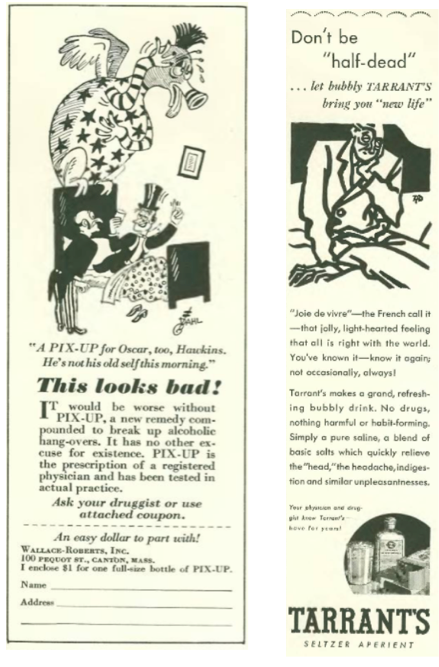
…while cigarette smoking continued to increase in America, the sale of alcohol remained illegal — it didn’t stop people from drinking, and if you got a bad batch of bootleg, or just had too much, there were remedies available…
…perhaps a fortunate few were able to just sleep it off on a lovely bed fitted with Wamsutta sheets…
…on to our cartoons, Rea Irvin continued to explore his alter ego, “Du Maurier Irvin”…
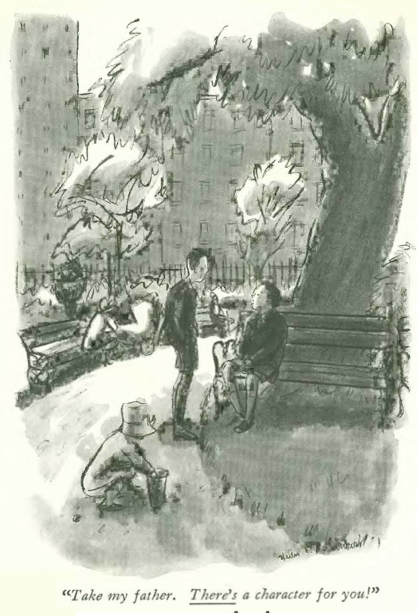
…Alan Dunn showed us why some “can’t make it there” in New York, New York…
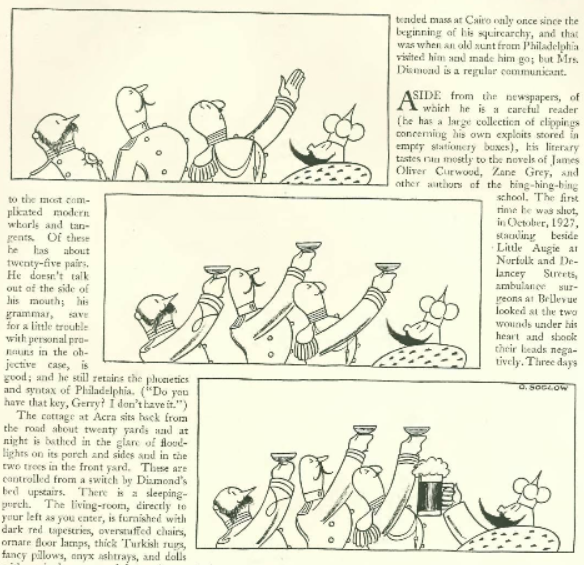
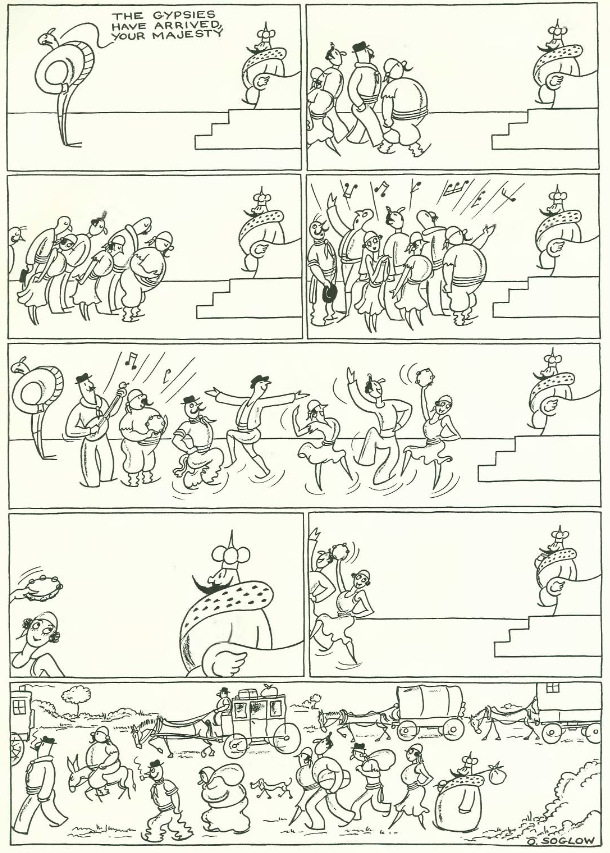
…Otto Soglow revealed that his Little King preferred beer to bubbly…
…William Steig found an unlikely customer for a photo button…
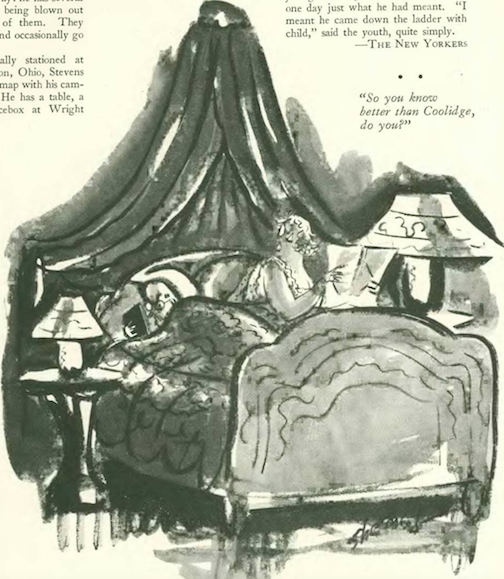
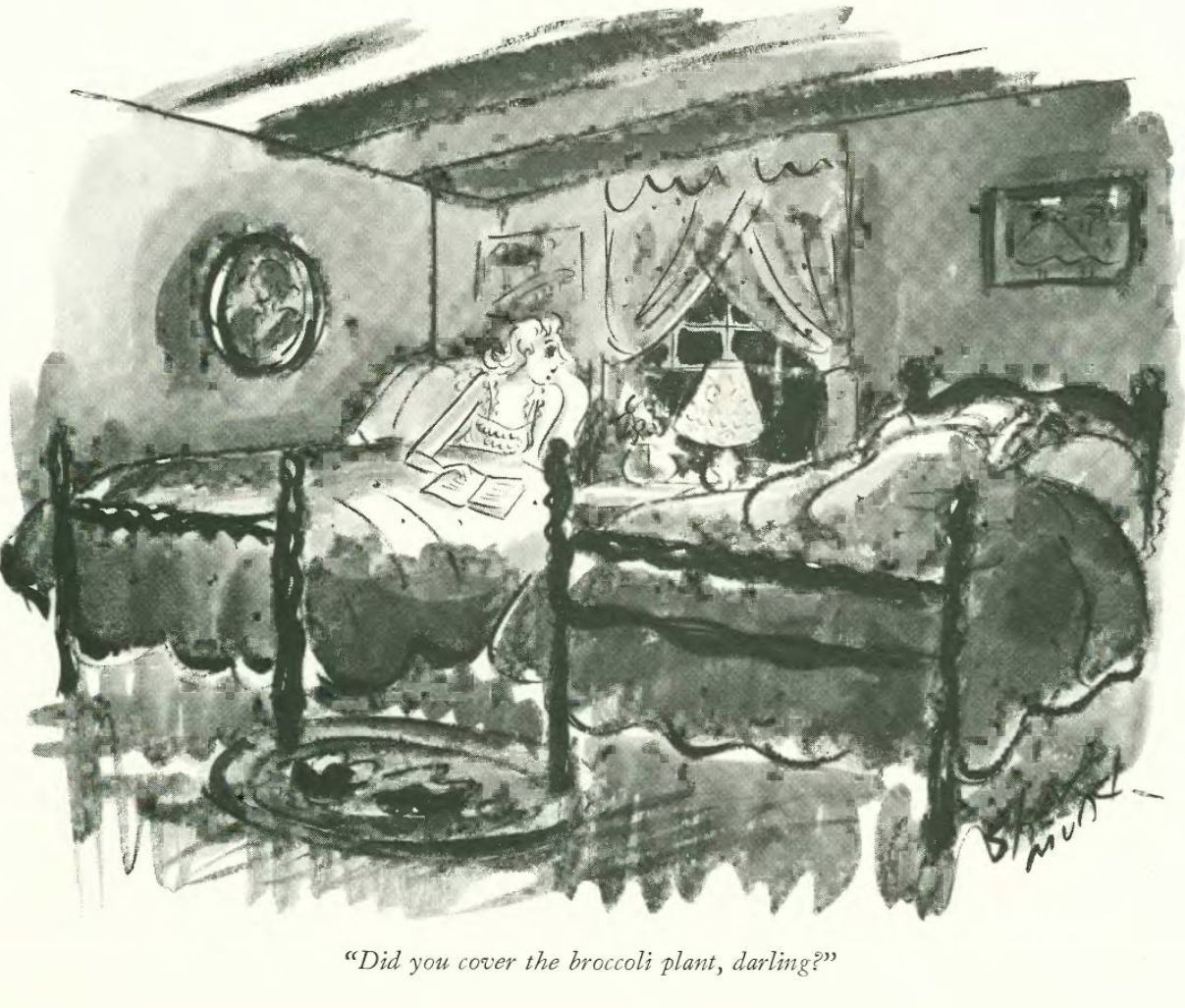
…Barbara Shermund explored politics between the sheets…
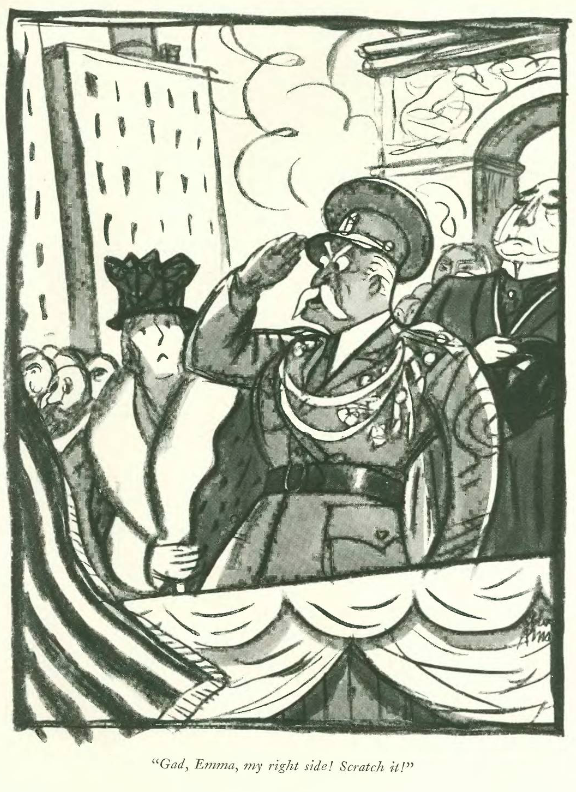
…and Peter Arno gave us his Major with a major itch to scratch…
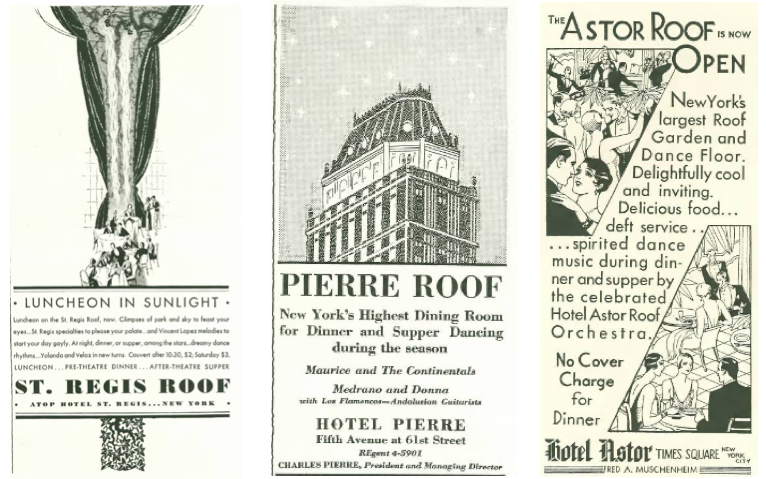
In the days before air conditioning, New Yorkers took to the higher rooftops in the city to escape the summer heat and reconnect with familiar entertainers.
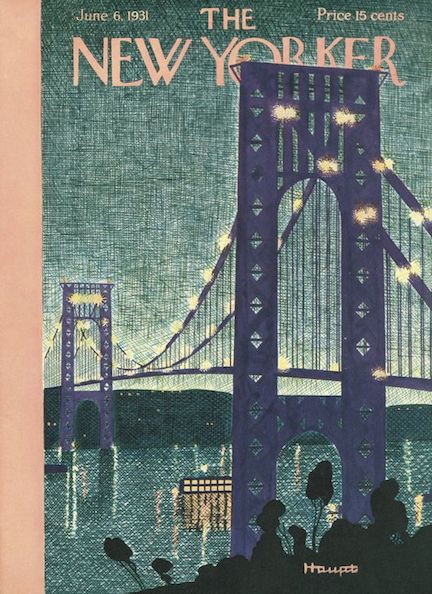
June 6, 1931 cover by Theodore Haupt. The title image is a detail from a Sept. 5, 1970 cover by Arthur Getz.
Among those reconnecting was Lois Long, who had abandoned her nightlife column “Tables for Two” the previous year but revived it in the June 6, 1931 issue, perhaps in reaction to the “boundless trouble” that had marched into her “quiet life,” namely her bitter divorce that month from cartoonist Peter Arno. Soon to be single again, Long dusted off her “Table” for another night out.
PRE-AC…As far back as the Gilded Age of the 19th century New Yorkers escaped the summer heat by seeking entertainment on one of the city’s rooftop gardens. Pictured is the Paradise roof garden atop Hammerstein’s Victoria Theatre, 1901. (MCNY)
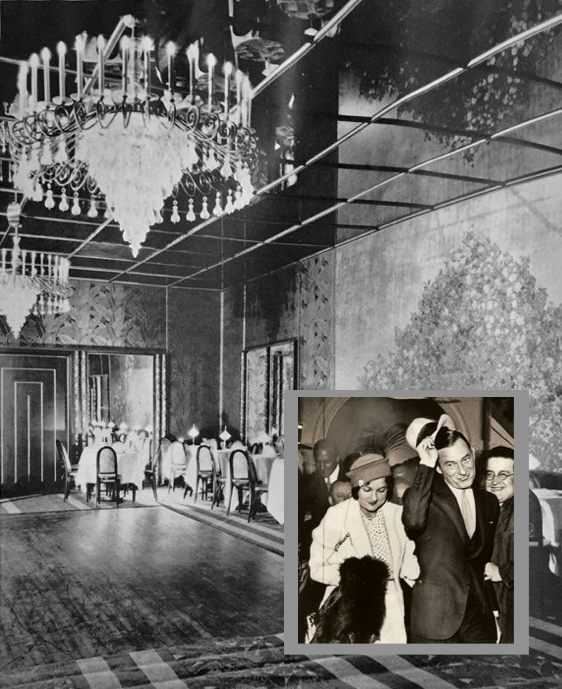
THE BUCK STARTS HERE…It wasn’t a rooftop, but the Central Park Casino was a cool retreat from city streets, especially for Mayor Jimmy Walker, who conducted much of city business there. After reform-minded Mayor Fiorello La Guardia replaced Walker in 1934, Parks Commissioner Robert Moses had the place torn down. (New York City Parks Photo Archive)I COULD HAVE DANCED ALL NIGHT…Mayor Jimmy Walker and his mistress, showgirl Betty Compton, were often the last to leave the Casino in the wee hours of the morning, dancing in the Joseph Urban-designed black-glass ballroom (above) to the Leo Reisman Orchestra. (drivingfordeco.com)
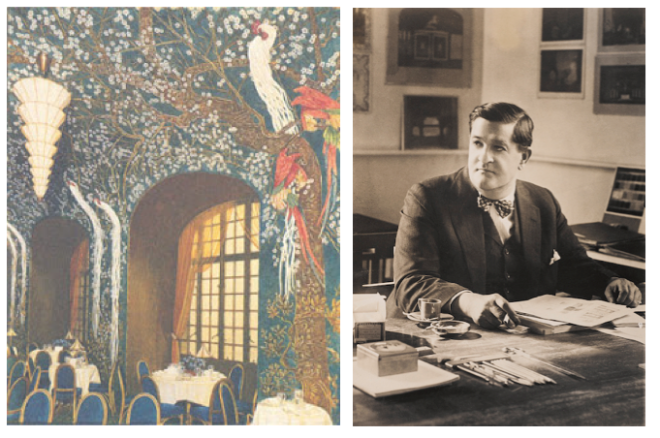
Higher up in the city, Long also paid a visit to the elegant rooftop of the St. Regis, also designed by the famed architect and theatrical designer Joseph Urban…
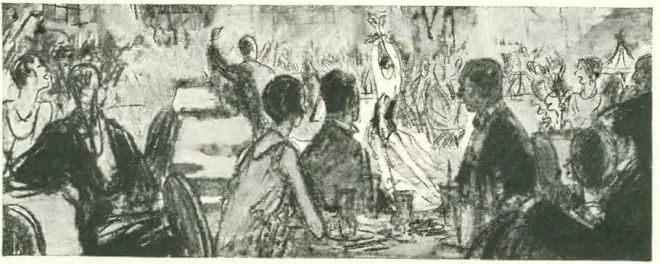
DAZZLING…The St. Regis rooftop, designed by Joseph Urban. (flaglermuseum.us)ANOTHER VIEW of the St. Regis rooftop as illustrated in the July 7, 1928 issue of The New Yorker by Alice Harvey.
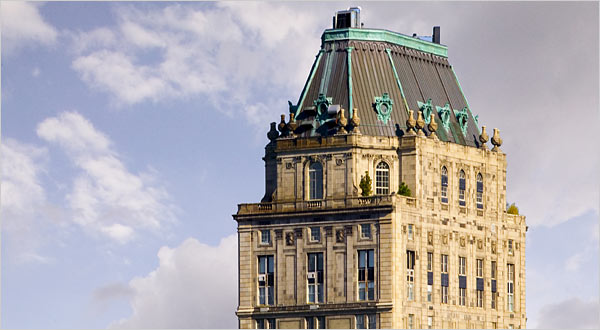
Long also visited the roof of the 42-story Hotel Pierre. The New York Sun described the top two floors as “decorated to resemble the interior of a zeppelin cabin.”
THE COOLEST…Top of the Hotel Pierre. A popular summer ballroom in the years before air-conditioning, the Pierre advertised itself as having “the highest and coolest hotel roof in Manhattan.” (NYT)
If you were in the mood for a little crooning, Rudy Vallee and his Connecticut Yankees were taking in the breeze atop the Hotel Pennsylvania, per this ad in the back pages of the June 6 New Yorker…
Advertisers must have been paying attention to Long’s column, because the back pages of the following issue (June 13) had plenty of ads touting various rooftops…
Long also sampled the offerings of less savory venues, such as the Club Argonaut, which was apparently frequented by mobsters…
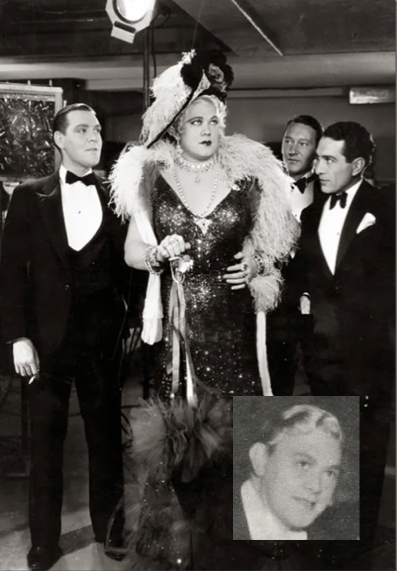
NOT AMUSED…Lois Long didn’t care for the antics of Gene Malin (center, and inset) who performed in front of a tough-looking crowd at the Club Argonaut. A popular drag artist who helped ignite the “Pansy Craze” in the 1920s and 30s, Malin was one of the first openly gay performers in Prohibition-era speakeasy culture. His career ended abruptly at age 25 in a car accident. (Wikipedia)
* * *
Sexy Soviet Tractors
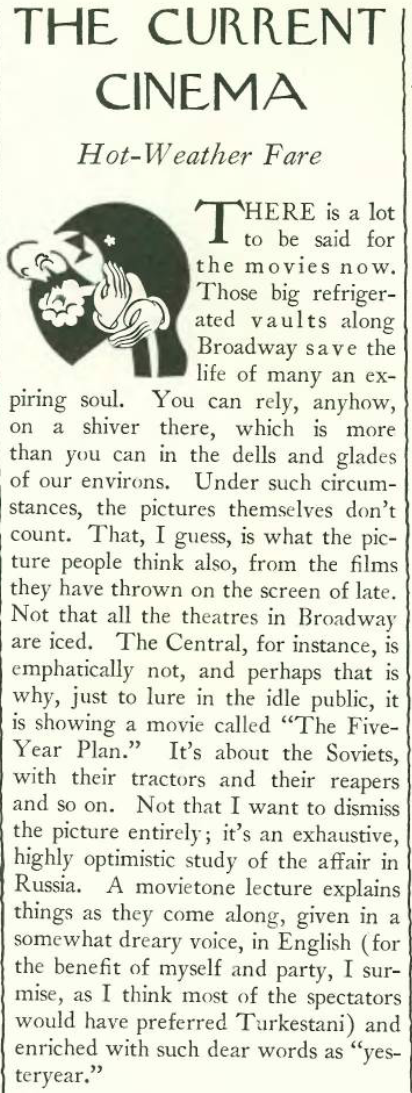
One place you could find an early form of air conditioning was at the movies (critic John Mosher referred to these theatres as “iced), and no doubt many lowered their cinematic standards just to get a few hours respite from the heat. For some unknown reason the Central Theatre thought it could entice audiences not with air-conditioning, but with a Soviet propaganda film titled The Five-Year Plan.
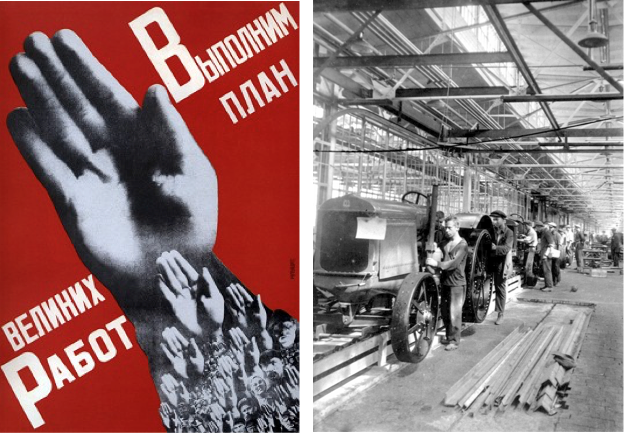
STAY CALM AND CARRY ON…Soviet poster for The Five Year Plan (1930), and a 1930 image of the Volograd (Stalingrad) tractor factory. You wonder how many of those chaps got wiped out by Stalin’s purges, or by the Battle of Stalingrad in 1942-43. (Wikipedia)
* * *
Laughing at Death
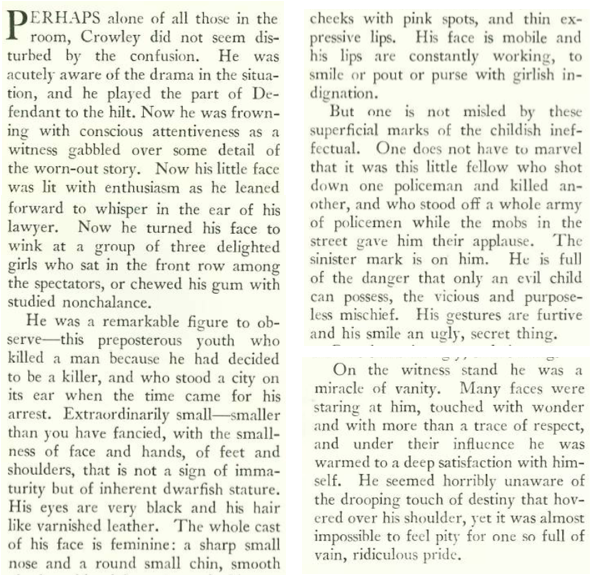
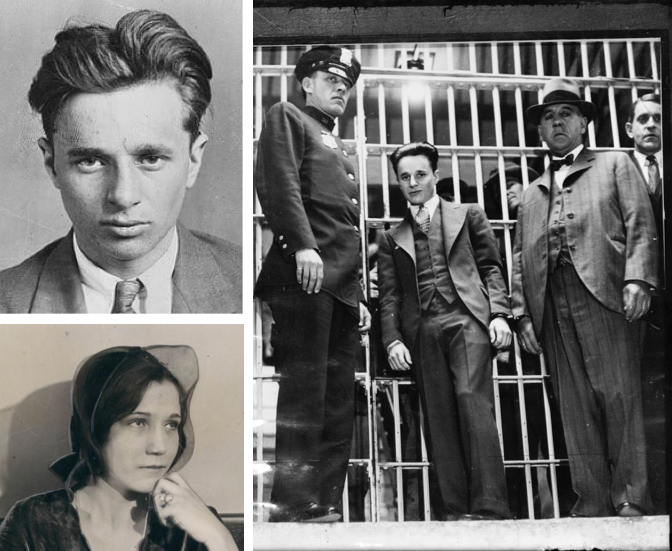
A couple of posts ago I wrote about a very public gun battle that brought diminutive killer Frances Crowley to justice (“The Short Life of Two-Gun Crowley”). In the June 6 installment of “A Reporter at Large,” Morris Markey recounted the courtroom scene where the 18-year-old Crowley winked at girls and nonchalantly chewed his gum as judge and jury determined his fate.
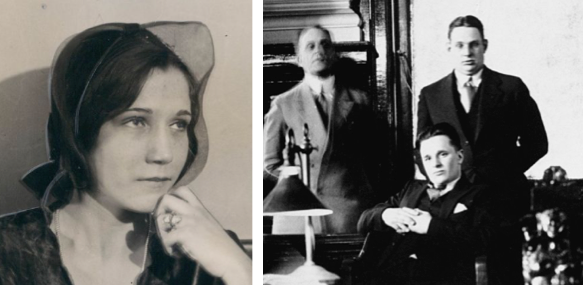
OH WELL…Frances Crowley’s 16-year-old girlfriend, Helen Walsh, left, was positively bored during the trial that would send her beau to Sing Sing’s electric chair. Crowley himself (shown above at the trial) seemed to be amused by the proceedings, and enjoyed the attention. (NY Daily News)
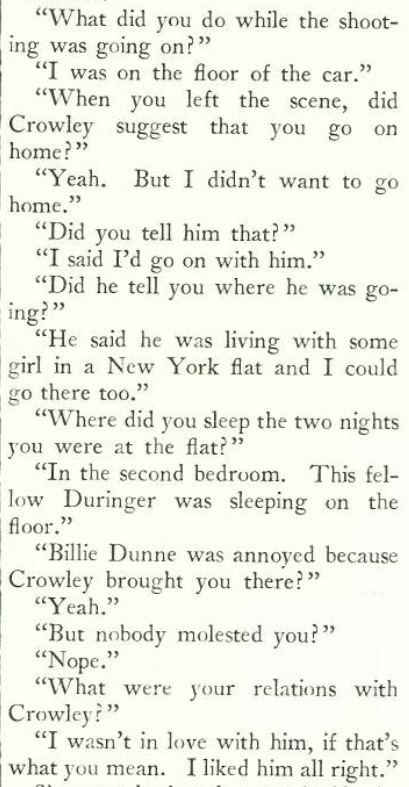
Markey also noted the unseemly behavior of Crowley’s 16-year-old girlfriend, Helen Walsh, who seemed bored by the whole thing. “She was not a creature of your world or of mine,” wrote Markey, who noted at one point that she put her hands to her face “to conceal a faint smile that sprang from some incalculable amusement within her.” Markey offered this sample of Walsh’s questioning.
* * *
Summer Frost
Novelist and poet Raymond Holden penned a profile of famed poet Robert Frost, who among things apparently enjoyed apples and a bit of gossip. A brief excerpt:
* * *
Dead Ball
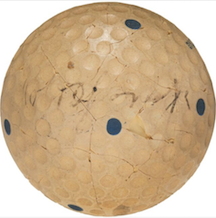
E. B. White lamented in his “Notes and Comment” the changes to the official golf ball, which was to be made slower in a time when Depression-weary businessmen could use a little lift:
GET ‘EM WHILE THEY LAST…This 1930 golf ball, signed by golf legend Bobby Jones, listed for $15,000 on eBay.
* * *
From Our Advertisers
Gender-bending trends in clothing continued from the 1920s with flowing trousers for women (unthinkable a decade earlier)…
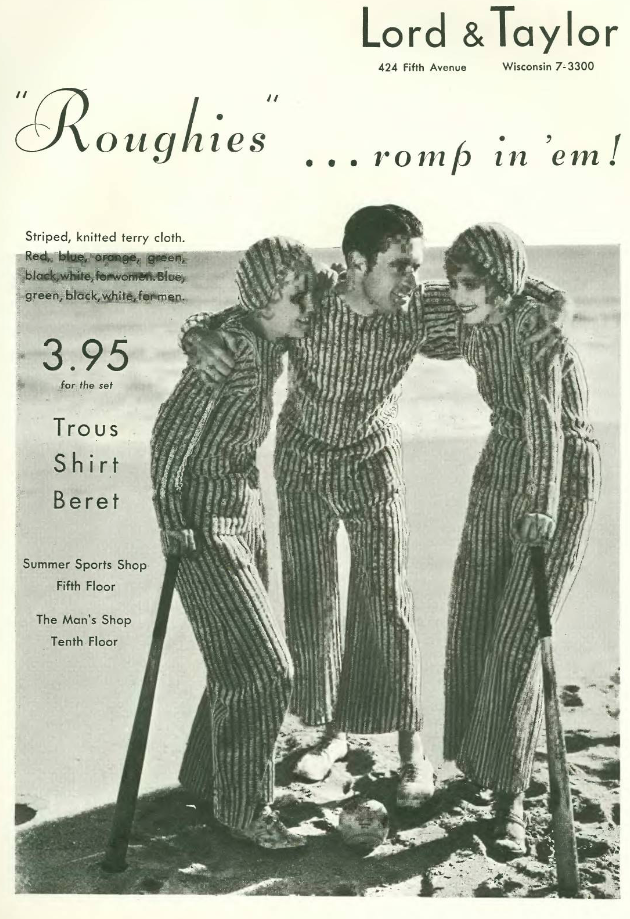
…and beach pajamas for men and women alike…
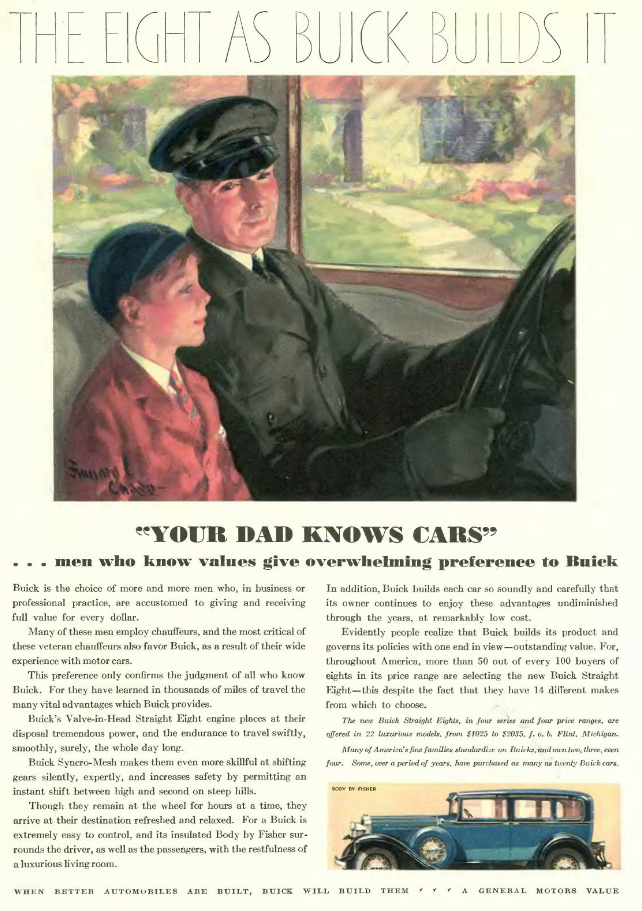
…Buick dialed up a patrician vibe with this ad that suggested a posh boy might be transported in one by the family’s driver…
…and this might be one of the first ads that linked cigarette smoking to the myth of the Western cowboy…
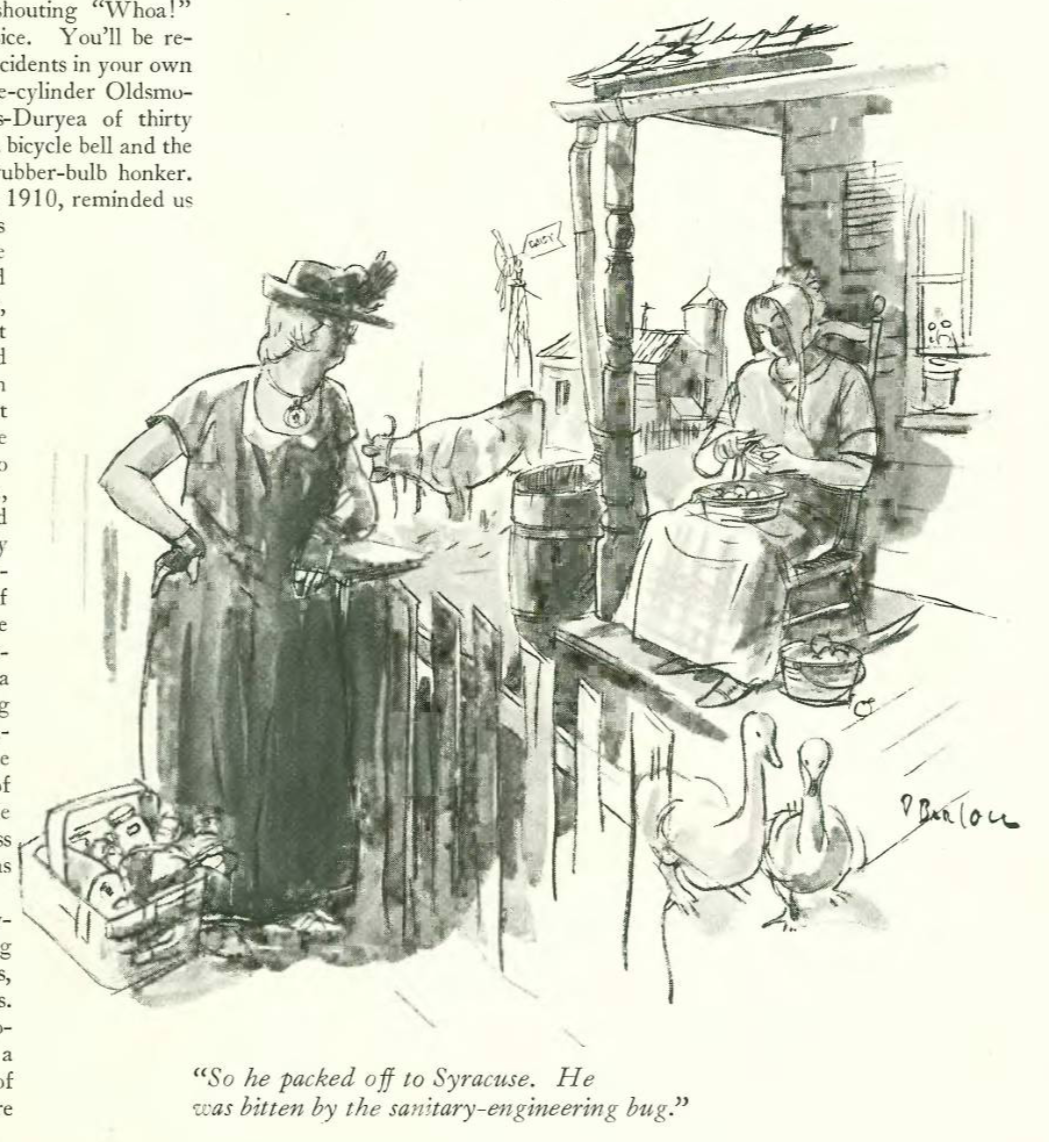
…on to our cartoons, we begin out in the country with Perry Barlow…
…and Kemp Starrett, with this charming bucolic scene…
…back in the drawing room, we have this canine encounter from Leonard Dove…
…Helen Hokinson explored the violent side of bridge…
…Barbara Shermund went into the garden to sample the trials of the rich…
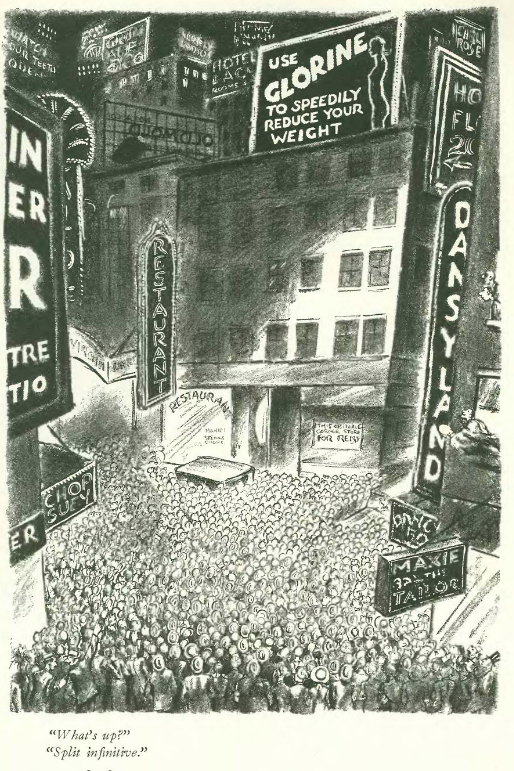
…Carl Rose pondered the art of grammar in crowded places…
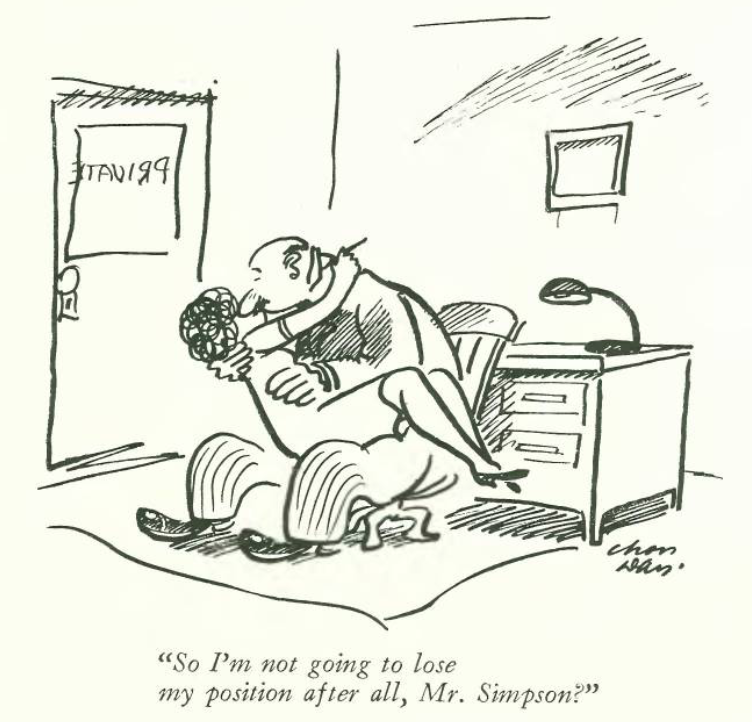
…Chon Day gave us yet another take on the familiar boss vs secretary trope…
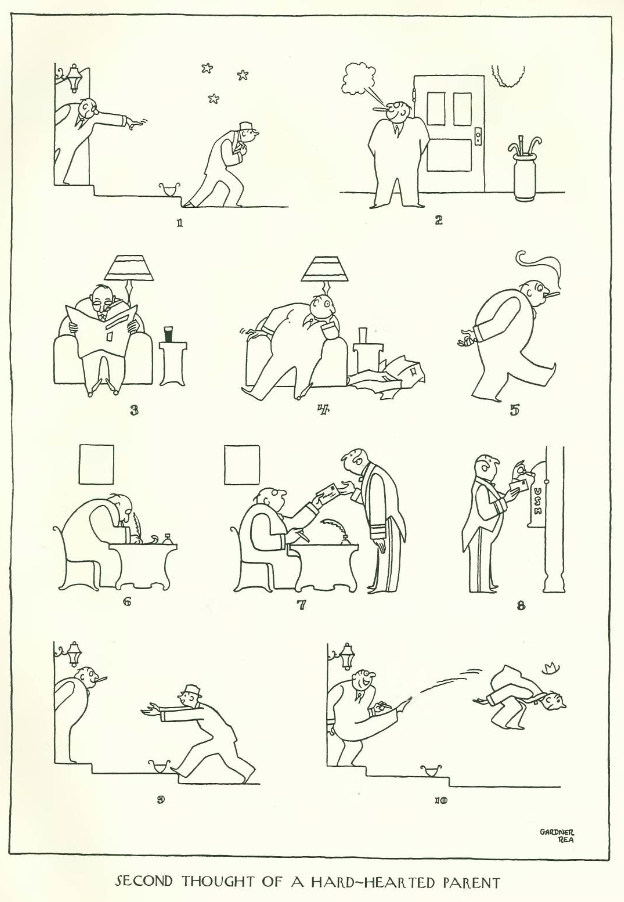
…and Gardner Rea gets the last laugh with this hapless prodigal son…
A few posts ago (the April 11 issue) I wrote about E.B. White’s love of flying, and how his (and the nation’s) exuberance for aviation suddenly came crashing down along with Knute Rockne’s plane in a Kansas wheat field.
May 23, 1931 cover by Garrett Price.
The death of the famed Notre Dame football coach had White pondering a new, safer path for aviation that seemed to be embodied in a contraption called the autogiro. White had previously written about the potential of the autogiro back in 1929 (Dec. 7 issue). Half-helicopter and half-airplane, it was considered not only safer, but easier to fly, possibly opening up the sky to everyday commuters.
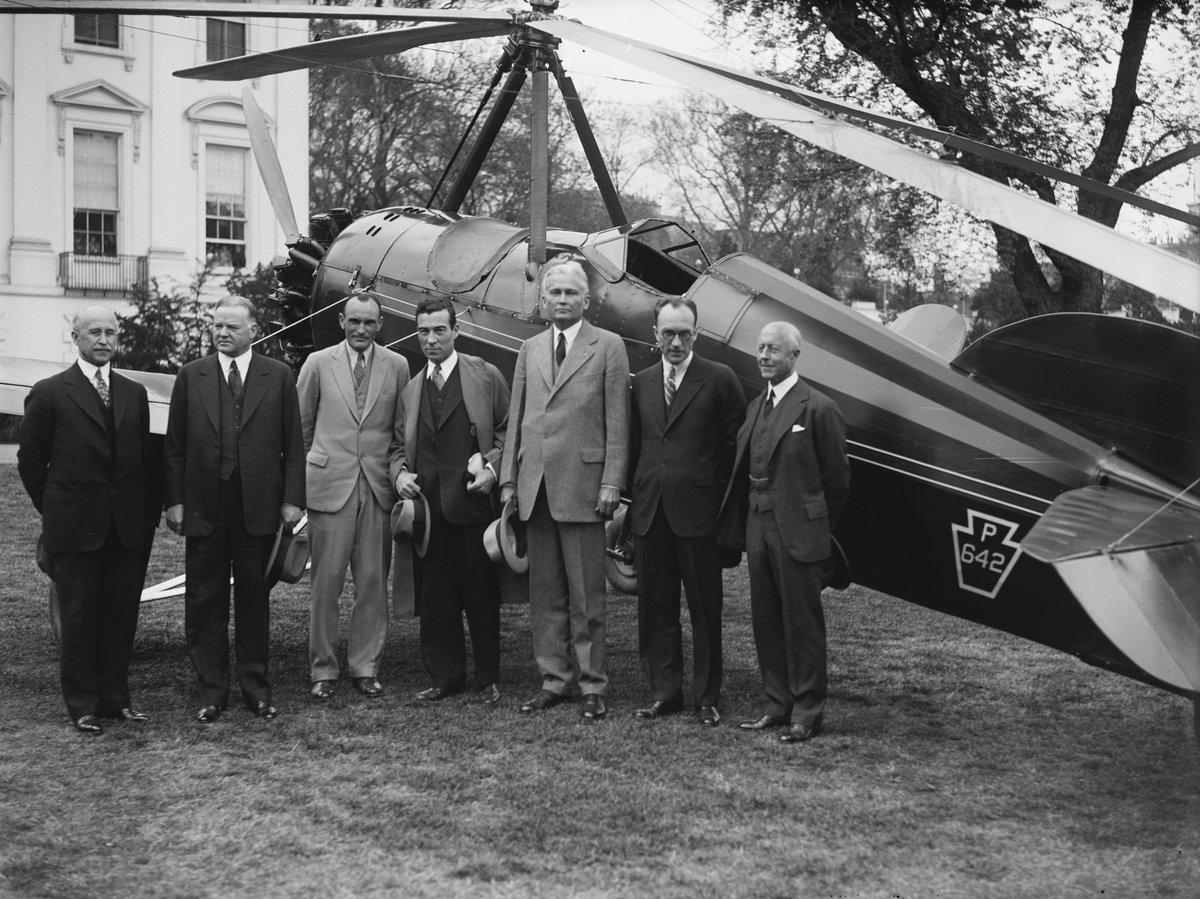
PHOTO OP…A Pitcairn PCA-2 Autogiro paid a visit to the White House on April 22, 1931. President Herbert Hoover is second from left. (Library of Congress)
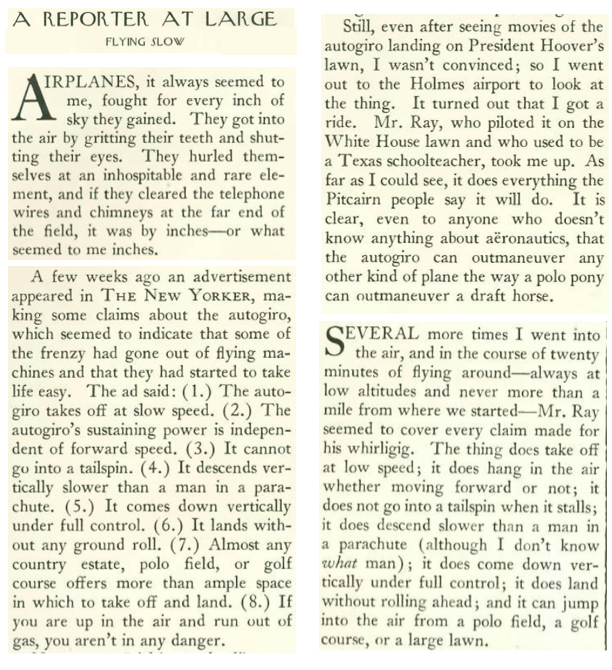
On a windy day White boarded the autogiro at an airport “in awful Queens” — most likely the current site of La Guardia — and filed this report for the “A Reporter at Large” column:
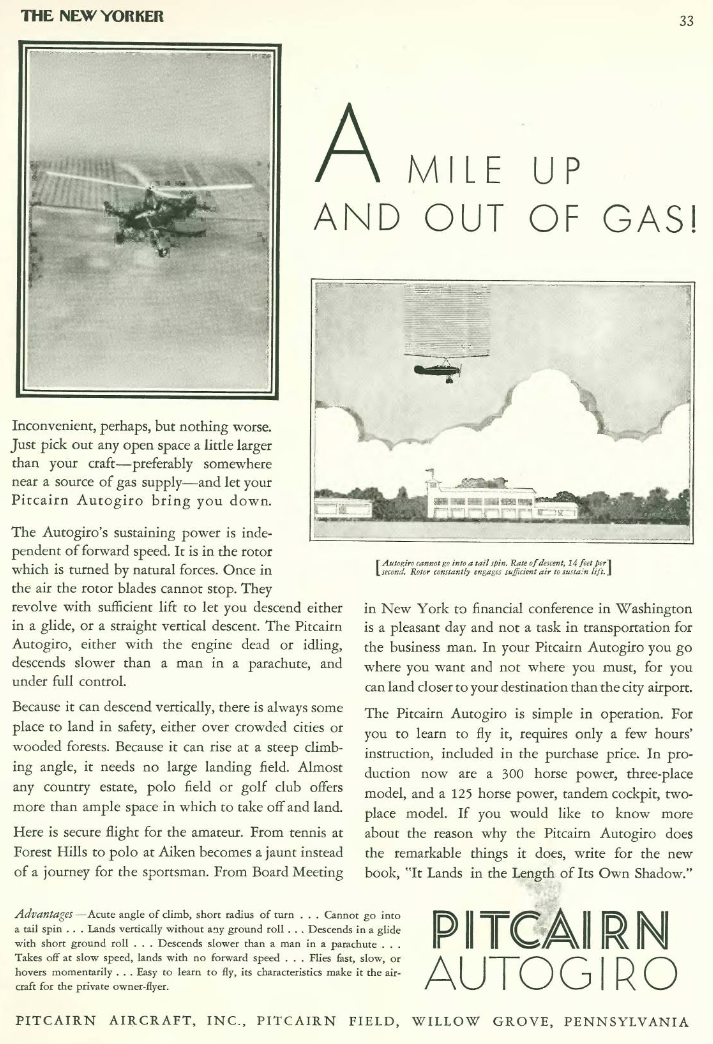
In the article, White referenced this Pitcairn Autogiro ad from the April 25, 1931 issue. No doubt the folks at Pitcairn had the Rockne accident in mind when they touted the safety of their craft, which seemed impossible to crash.
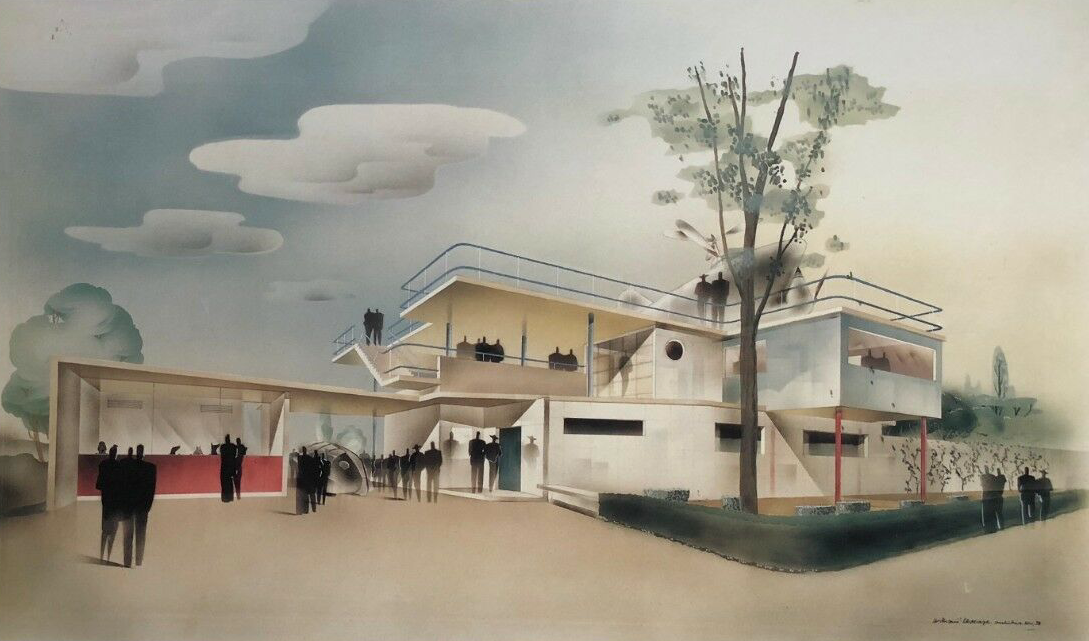
White wasn’t the only one enthused about the autogiro. It was the darling of modernist architects and futurists of 1920s and 30s, who saw the flying machine taking its place alongside the automobile in the house of the future.
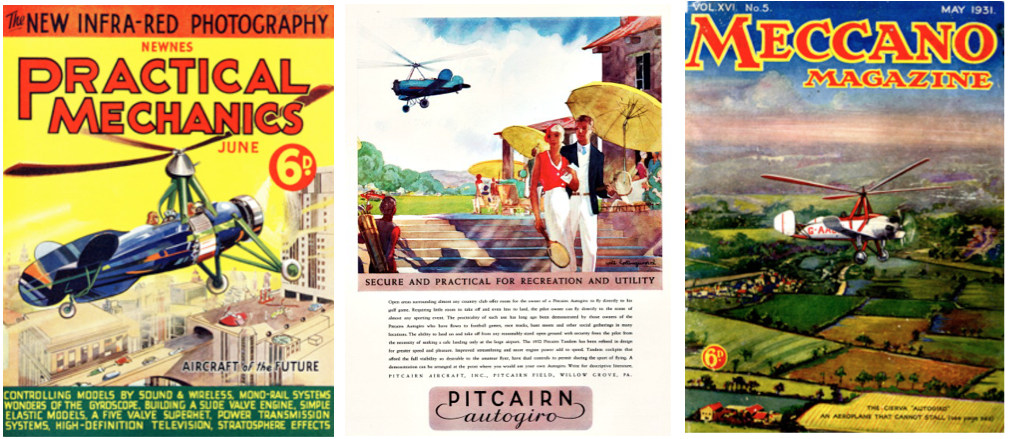
SWEET…The Swiss-born architect and designer William Lescaze rendered this “House of the Future” in the late 1920s with a bullet-shaped motorcar in the carport and an autogiro perched on the roof. (From my print collection)COMMONPLACE, AT LEAST IN THE IMAGINATION…The autogiro appealed to the average Joe or Jill as well, featured in magazines such as the U.K.’s Practical Mechanics (June 1934) and Meccano Magazine (May 1931). At center, a Pitcairn ad from 1930. (vtol.org)WELL, IT WORKED…This two-seat AC-35 Autogiro (left) was developed for a Department of Commerce competition to create an “Aerial Model T.” James G. Ray, vice president and chief pilot of the Autogiro Company of America, landed the AC-35 in a small downtown park in Washington. D.C. on Oct. 2, 1936; at right, a still image from a 1936 film, Things to Come, which showed people of the year 2036 getting around in autogiros while wearing groovy futuristic togas. (Smithsonian/gutenberg.net.au)
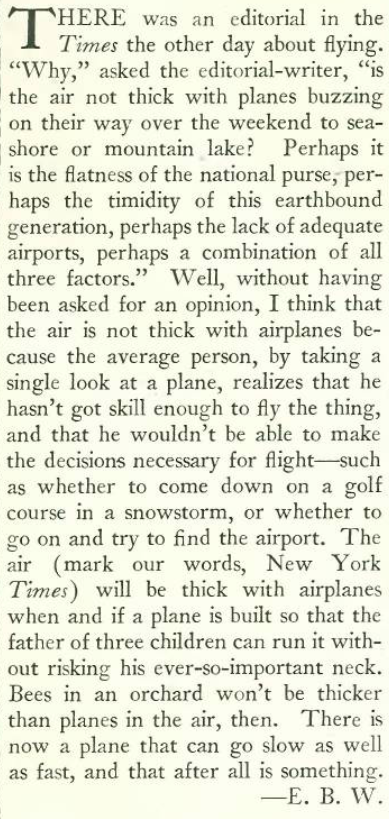
Prompted by a New York Times editorial, White pondered the day when the air would be thick with personal aircraft:
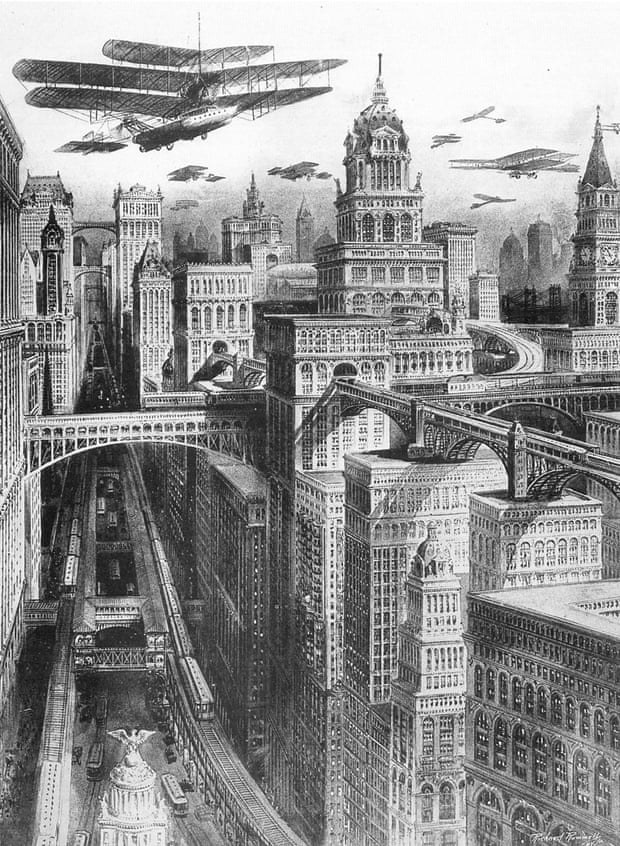
AND THEY LAND WHERE?…The idea of city skies filled with flying commuters is nothing new, as this 1911 illustration by Richard Rummell from King’s Views of New York attests. (The Guardian)
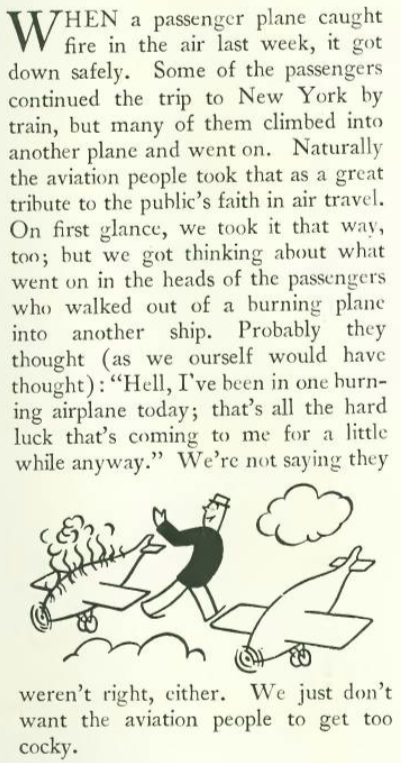
White offered still more observations on aviation safety in his “Notes and Comment” column…
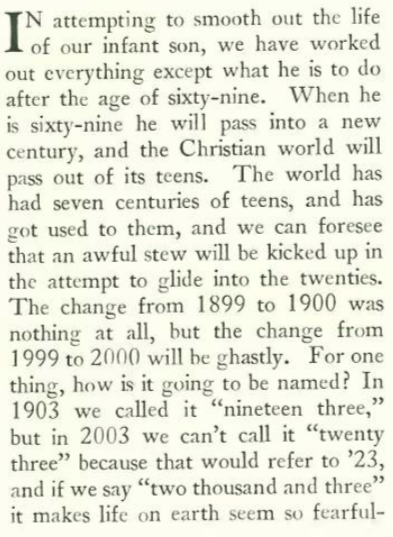
…and in the same column he also pondered the future in terms of his infant son, Joel White:
Sadly, Joel didn’t quite make it to the turn of the century — he died in 1997. He did, however, have a successful life as a noted naval architect and founder of the Brooklin Boat Yard in Brooklin, Maine.
ON GOLDEN POND…Joel White took to the water at a very young age, seen at left rowing a boat in an image from a home movie by E.B. and Katharine White; at right, Joel in his design office at the Brooklin Boat Yard, which he founded in 1960. (E.B. White Collection, Northeast Historic Film/Billy Black)
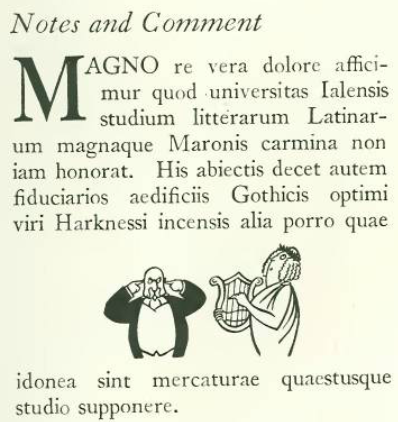
One more from E.B. White, this the lead item for his column which made jest of a debate at Yale over dropping the requirement for Latin. It says something to the effect that “Yale’s lead on the issue frees the rest of us to follow our fiduciary duty, toss tradition into the fire, and focus on practical matters such as traffic studies.”
* * *
From Our Advertisers
The makers of Dawn “Ring-Lit” cigarettes seemed to have a winner on their hands with a smoke you could light like a match, but I can’t find any record of the company. Most likely this was a local brand sold at nightclubs, restaurants and hotels, and not through retail…
…Murad, on the other hand, was widely available, but the brand faded as tastes moved away from Turkish-style cigarettes…Rea Irvin illustrated a long series of ads for the brand, presenting various “embarrassing moments,” including this familiar trope involving office hijinx…
…summer was on the way, and the makers of Jantzen swimwear were establishing their brand as both the choice for athletes as well as the fashion-conscious…
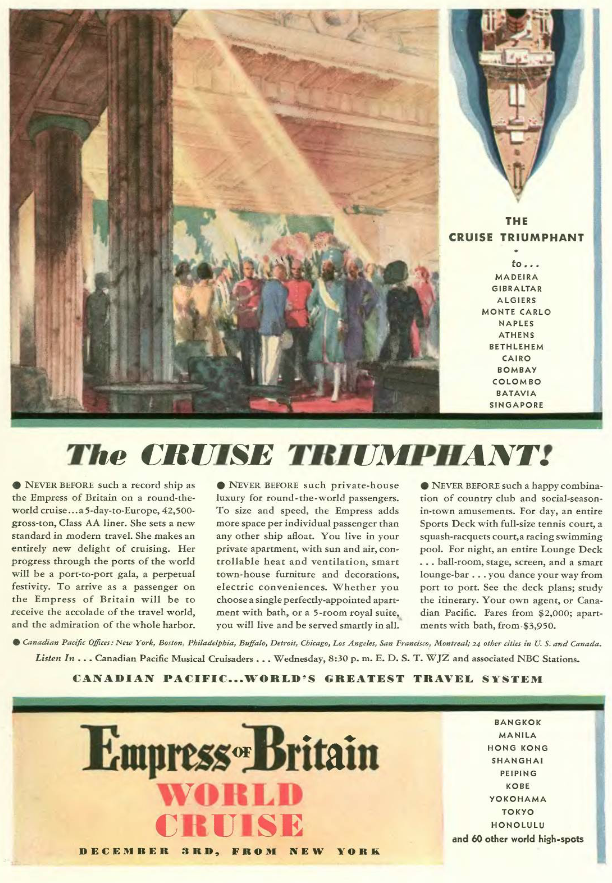
…and you might have packed a Jantzen or two for this around-the-world cruise on the Empress of Britain, arranged through Canadian Pacific. Your fare, if you wanted an “apartment with a bath,” would set you back $3,950, or a cool $63,000 in today’s currency…
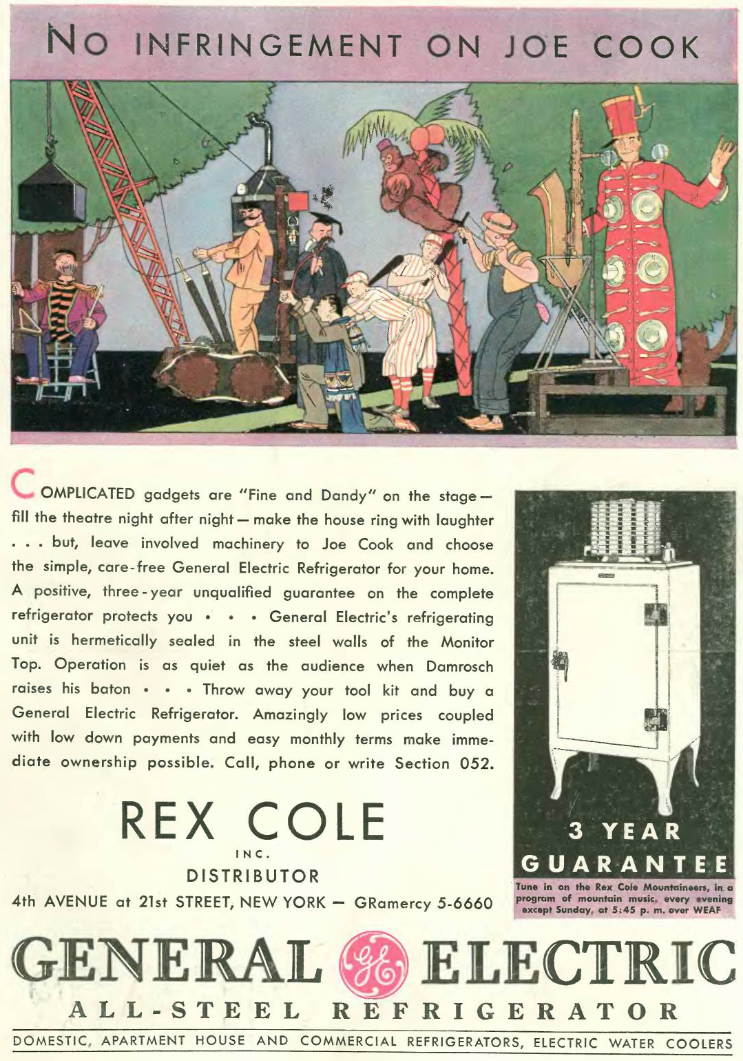
…if the cruise was too rich for your budget, perhaps you could put your money toward a durable good like a GE all-steel refrigerator. Note how GE contrasted its product with the overly complicated gadgets demonstrated on stage by popular vaudeville comedian Joe Cook…
…on to the cartoons, William Steig gave us a glimpse of the important work taking place behind an exec’s closed doors…
…Helen Hokinson eavesdropped on a couple’s travel plans…
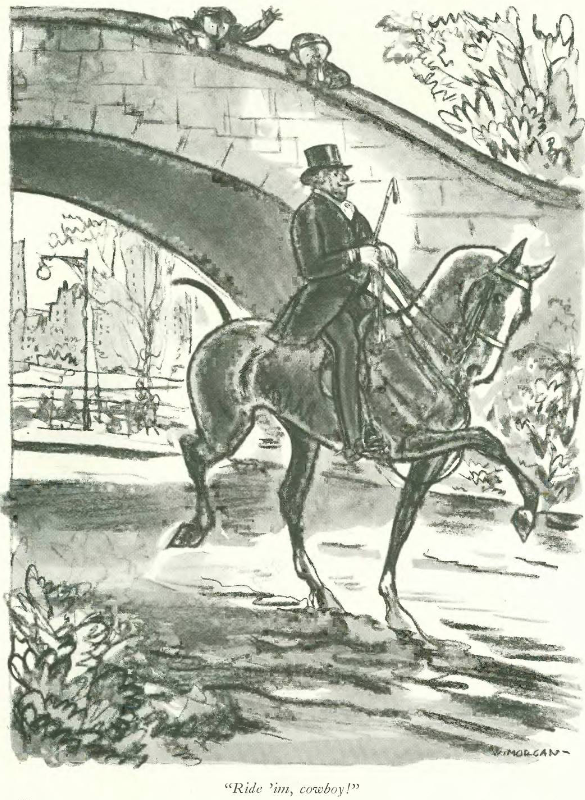
…Wallace Morgan took us on a trot through Central Park…
…Perry Barlow probed labor relations in an estate garden (and a caption with The New Yorker’s signature diaeresis on the word “coöperation”)…
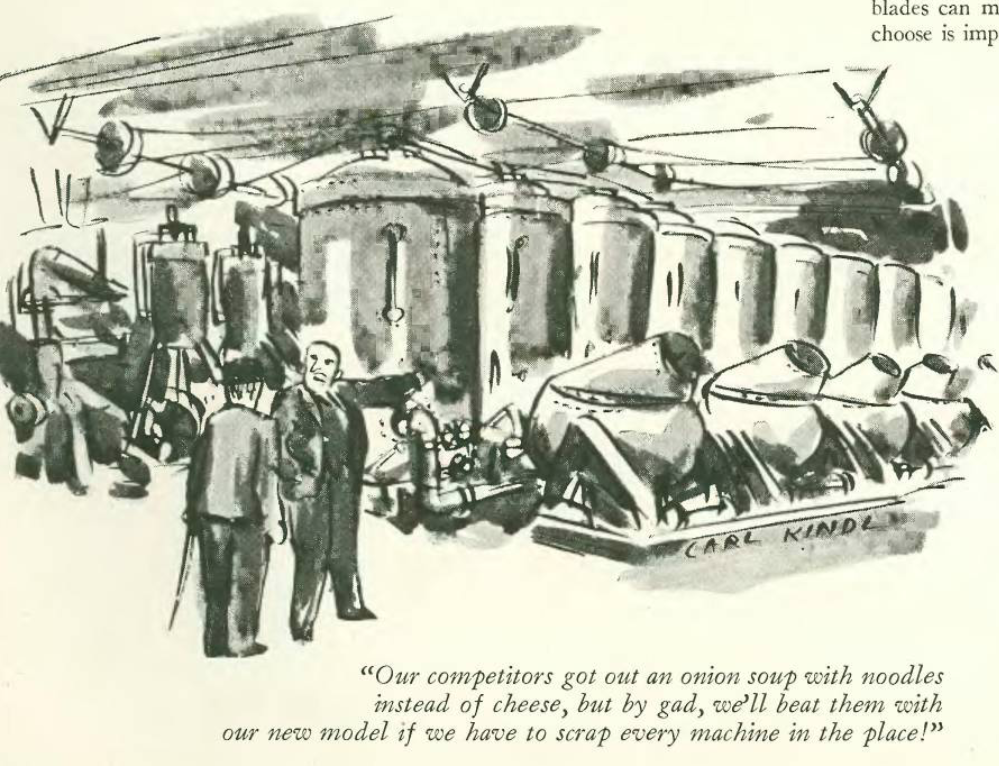
…and Carl Kindl gave a look into the latest maneuvers in the canned soup wars…
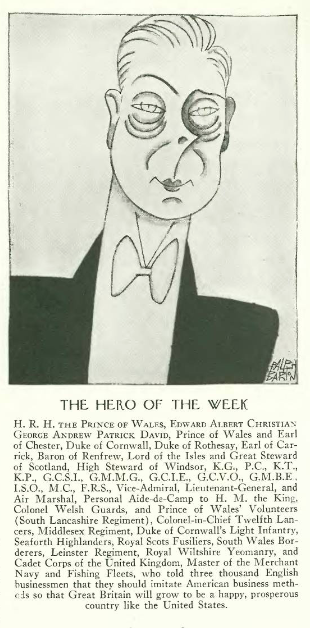
…and we end our May 23 cartoons on a sad note, with Ralph Barton’s final contribution to The New Yorker, a “Hero of the Week” illustration featuring the Prince of Wales:
On May 19, 1931, Ralph Waldo Emerson Barton, who suffered from severe manic-depression, shot himself through the right temple in his East Midtown penthouse. He was 39 years old.
From the outside one would have thought Barton had a wonderful life as a successful artist who lived in style, spent long vacations relaxing in France, and who hobnobbed with celebrities such as his close friend Charlie Chaplin.
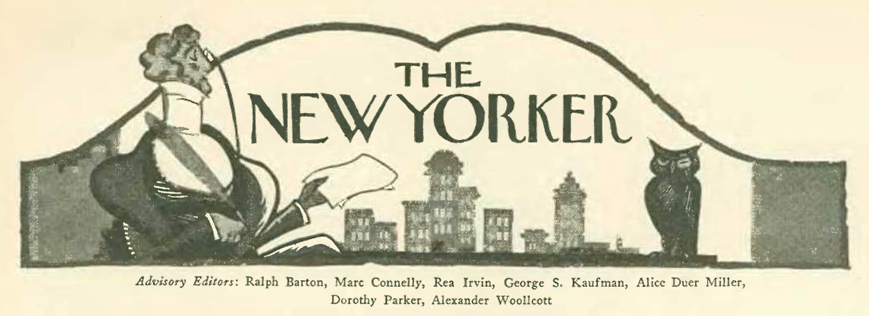
To lose a longtime contributor and friend must have been a real blow to the staff at The New Yorker. Barton had been there from the beginning, his name appearing on the magazine’s first masthead as an honorary advisory editor:
He was a prominent contributor to the magazine, from recurring features like his weekly take on the news—”The Graphic Section”—to theatrical caricatures that included clever caption-length reviews. He was married four times in his short life, most notably to actress Carlotta Monterey, his third (he was also her third marriage). She divorced Barton in 1926 and married playwright Eugene O’Neill in 1929.
In his suicide note, Barton wrote that he had irrevocably lost the only woman he ever loved, referring to Carlotta. But some speculate this claim was a final dramatic flourish, and that the end came because he feared he was on the verge of total insanity. He also wrote in the note: “I have had few difficulties, many friends, great successes; I have gone from wife to wife and house to house, visited great countries of the world—but I am fed up with inventing devices to fill up twenty-four hours of the day.”
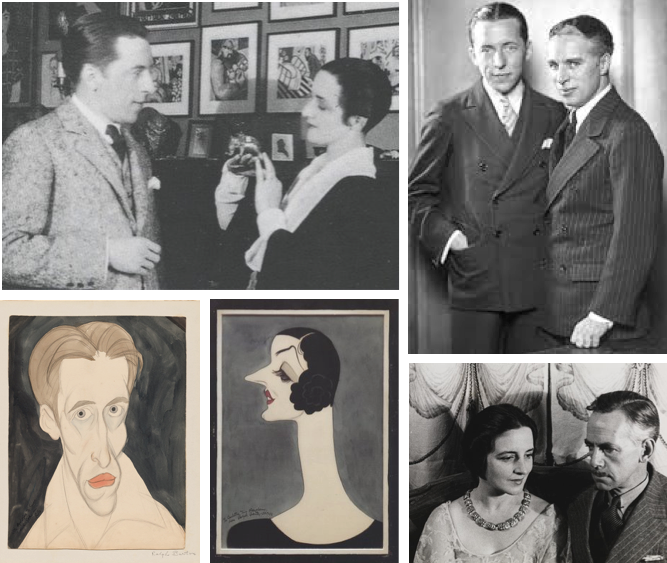
A CHARMED, TROUBLED LIFE…Clockwise, from top left, Ralph Barton with the love of his life, his third wife, actress Carlotta Monterey; Barton with best friend Charlie Chaplin, photographed by Nickolas Muray in 1927; after leaving Barton, Monterey would marry playwright Eugene O’Neill, who in a weird coincidence would become Chaplin’s father-in-law in 1943; a 1922 portrait of Carlotta by Barton; and a self-portrait from 1925, in the style of El Greco. “The human soul would be a hideous object if it were possible to lay it bare,” Barton wrote in 1926. (illustrationart.com/Pinterest/MCNY/curiator.com/npg.si.edu)
The following issue of The New Yorker (May 30, 1931)…
May 30, 1931 cover by Barney Tobey.
…featured this brief obituary on the bottom of page 28. I like the observation on the last line…his work had the rare and discomforting tingle of genius.
* * *
The Gray & The Blue
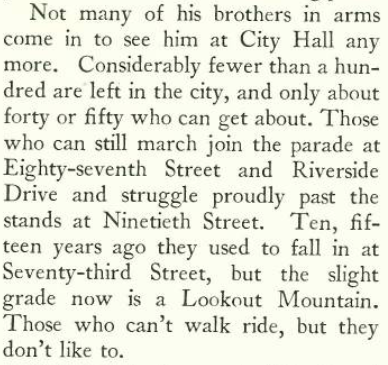
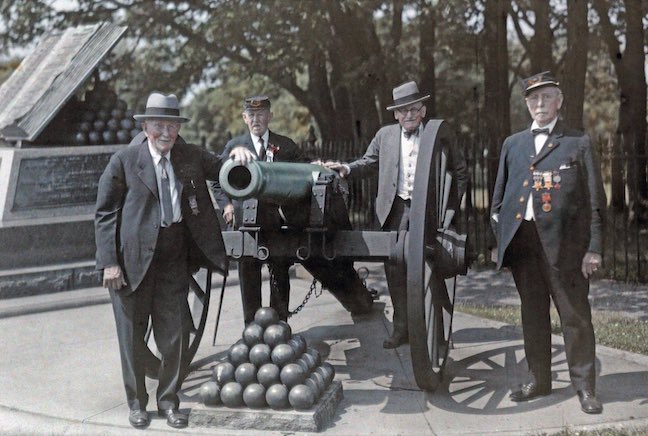
We are reminded of the span of time and history that separate us from 1931 with this small item in “The Talk of the Town” that notes “fewer than a hundred” Civil War veterans were still alive in New York City. We just marked the 76th anniversary of D-Day, an event still 13 years into the future for this New Yorker writer:
OLD WARRIORS…Union Civil War veterans stand in front a monument at Gettysburg, July 12, 1931. (National Geographic)
* * *
From Our Advertisers
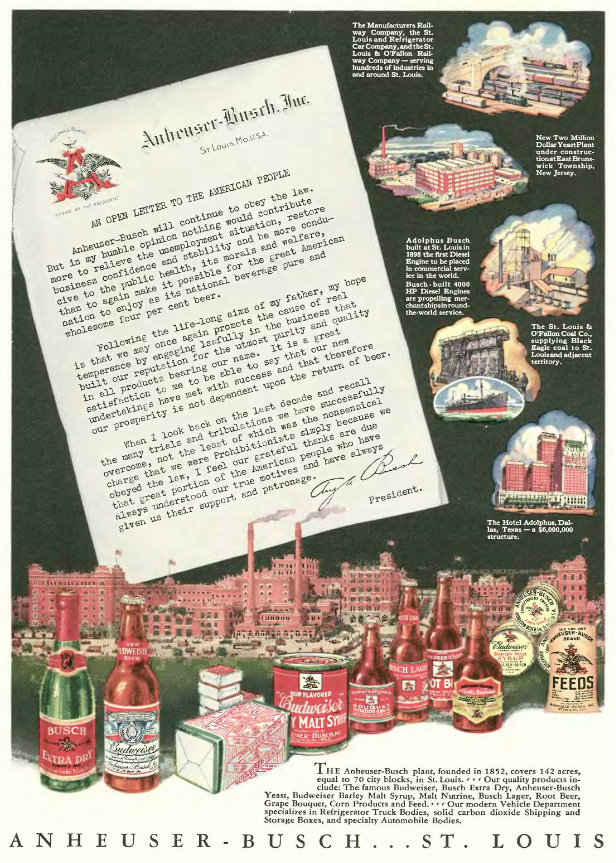
American brewers could sense the tide was turning on Prohibition laws, among them Augustus Busch, who took out a full page ad featuring “An Open Letter to the American People” that suggested a return to beer brewing would help relieve the unemployment situation caused by the Depression — note how the ad featured a variety of non-alcoholic products, but put the alcoholic beer at the head of the line…
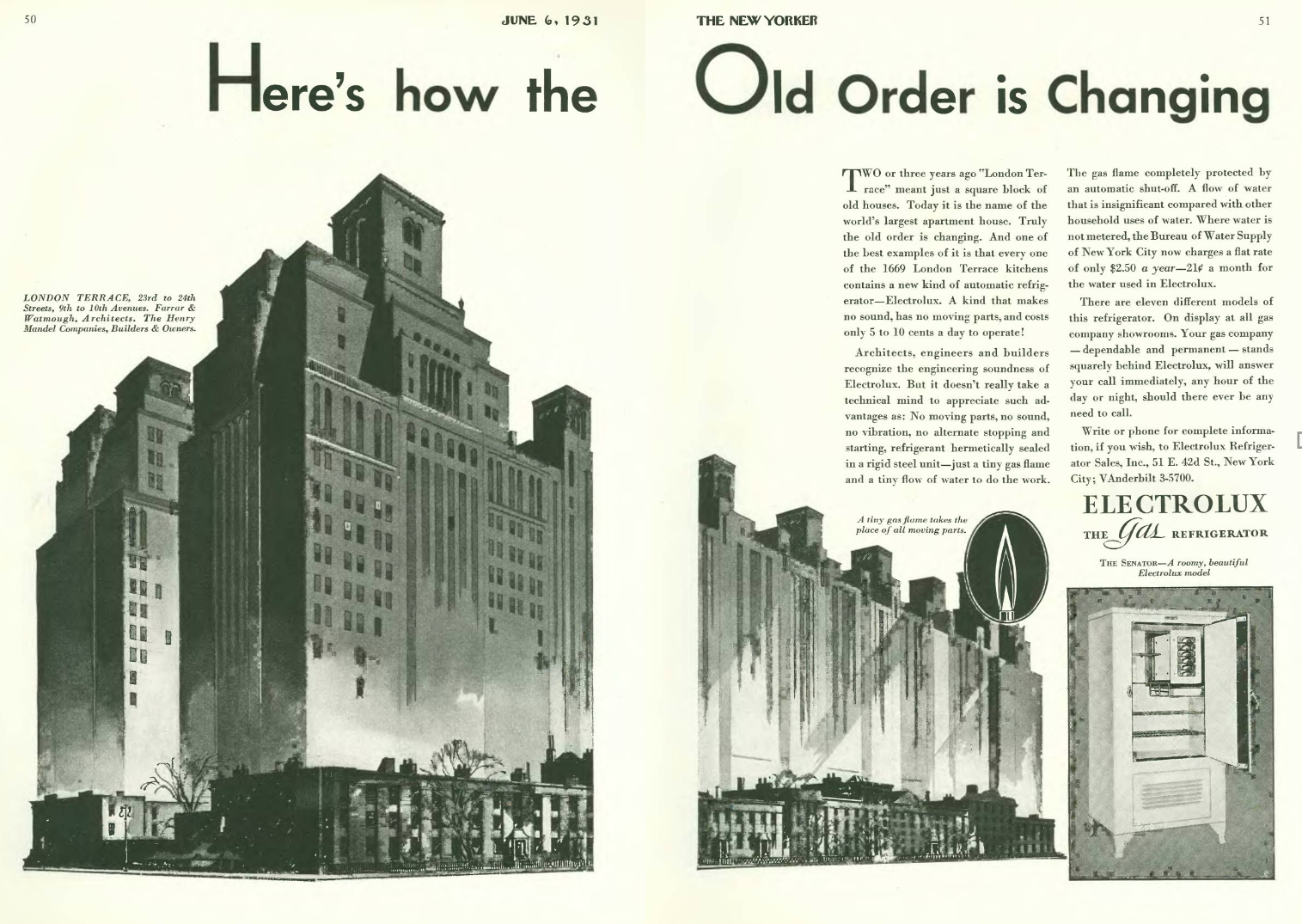
…Walking east on 24th Street past Chelsea’s London Terrace and on to Madison Square Park is one of my favorite strolls in Manhattan…there is something almost cozy about walking by this massive building, once the largest apartment house in the world…Electrolux found it impressive enough to pair it with their latest model refrigerator…
…a photo of London Terrace I took in December…
…on to our cartoons, we begin with Otto Soglow’s Little King…
…Richard Decker gave us another familiar comic trope, the postman and the housewife…
…Helen Hokinson eavesdropped on some small talk…
…Garrett Price explored the joys of parenthood…
…and we close with Peter Arno’s unique take on family life…
Harold Ross founded The New Yorker as a sophisticated humor magazine, so when events in the city or the world took a serious turn, the writers and editors did their best to maintain its waggish tone.
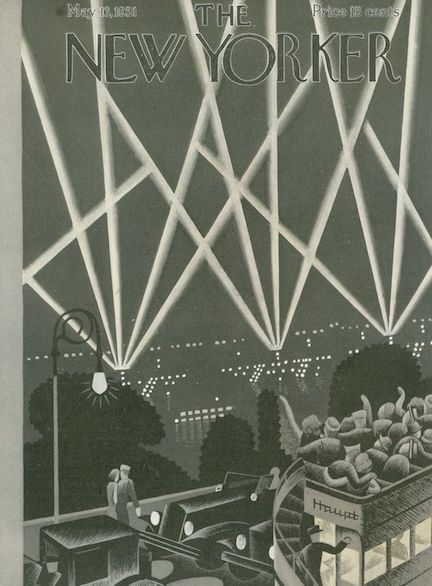
May 16, 1931 cover by Theodore Haupt.
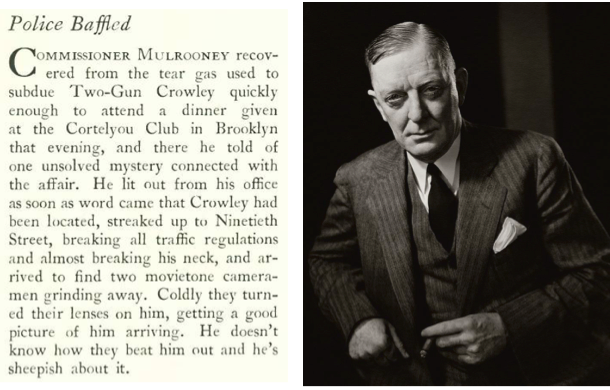
After two cold-blooded killers engaged police in a heated gun battle from a West 91st Street rooming house, the May 16, 1931 “Talk of the Town” had this to say about the incident:
At right, a 1933 portrait of Portrait Of Edward Mulrooney, Police Commissioner of New York City, by Edward Steichen. (Conde Nast)
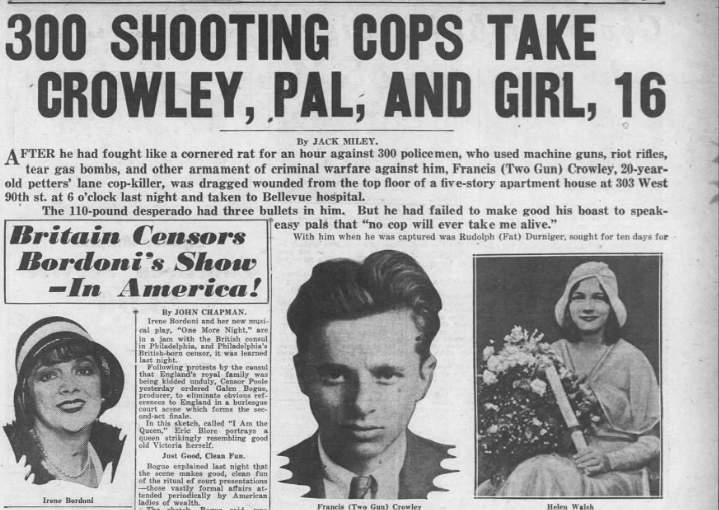
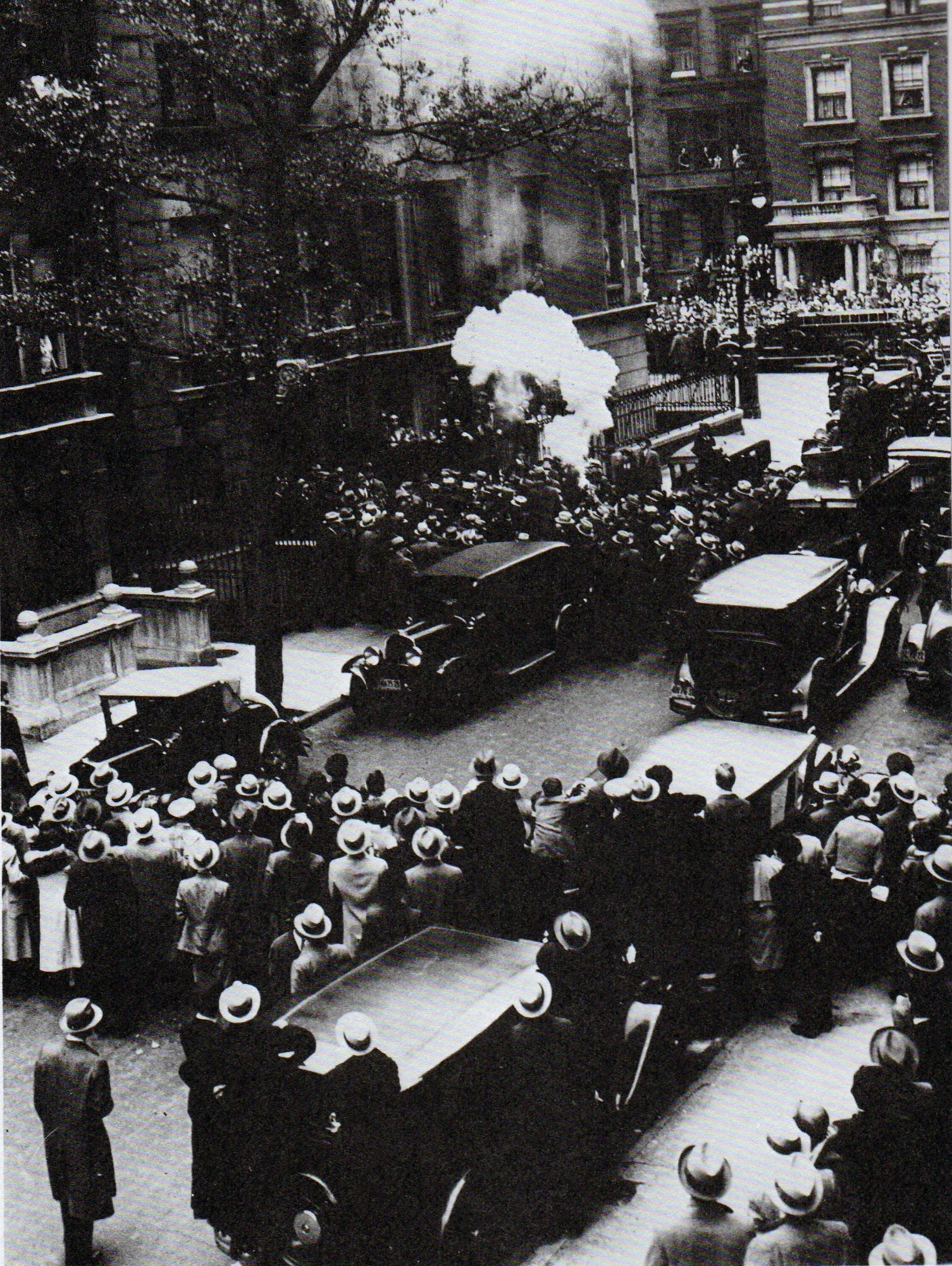
The New Yorker wasn’t alone in finding entertainment value in the gun battle. Safety standards were quite different in the 1930s, so as police exchanged heavy gunfire with 18-year-old Francis “Two Gun” Crowley, a crowd of 15,000 bystanders surrounded the scene, some just yards away from the action as the photo below attests:
THEY NEEDED SOCIAL DISTANCING…On May 7, 1931, Francis “Two Gun” Crowley exchanged gunfire with police for nearly two hours from the fifth floor of a rooming house on West 91st Street. A force of 300 police fired an estimated 700 rounds at Crowley’s apartment while a crowd of 15,000 spectators surrounded the scene. Not sure why the police stood in a huddled mass beneath the window of the shooter. Strength in numbers, perhaps. (ephemeralnewyork.wordpress.com)
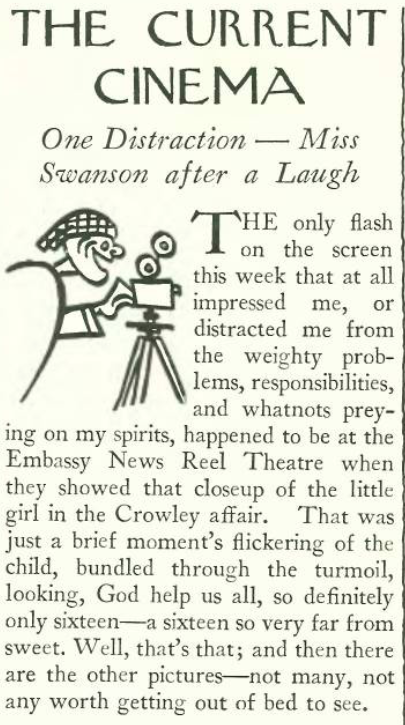
Another mention of the incident was in John Mosher’s film review column. He noted that the newsreel footage of the shoot-out was the best thing on the screen that week, and especially the moment when Crowley’s 16-year-old girlfriend Helen Walsh emerged from the building in the clutches of the police:
DON’T GET TOO COMFORTABLE…18-year-old Francis “Two Gun” Crowley (left) surrendered to police after suffering four gunshot wounds in the West 91st Street shootout, but would recover in time to be executed two months after his 19th birthday. At right, images from the newsreel show Crowley accomplice Fats Durringer being led away from the scene, along with Crowley’s girlfriend (bottom right), 16-year-old Helen Walsh. (Everett/YouTube)
By the end of the month Crowley was tried and convicted of the murder of a police officer, and his partner Fats Durringer was found guilty of brutally killing a dance hall hostess. Justice moved swiftly in those days, especially when the murder of a police officer was involved: On June 1, 1931—just three weeks after the shoot-out with police—Crowley and Durringer were sentenced to death. Only six months would pass before Durringer took a seat in Sing Sing’s electric chair. Crowley would follow his accomplice a few weeks later. As for Helen Walsh, she was released after testifying against Crowley and Durringer.
SHORT LIFE FOR SHORT KILLER…The diminutive Francis “Two Gun”Crowley, top, left, developed a habit of carrying more than one gun at all times, hence the nickname. At right, Crowley with officials at Sing Sing, where both he and partner Fats Durringer would meet their end in the electric chair. Below left, Crowley’s 16-year-old girlfriend Helen Walsh. Crowley was barely 19 years old when he was executed on Jan. 21, 1932. Among his last words, he asked the warden for a rag to wipe off the electric chair before he took his seat. “I want to wipe off the chair after that rat sat in it,” Crowley said, referring to Durringer, who had been executed weeks earlier, on Dec. 10, 1931. His request was denied. (www.swordandscale.com)
One final mention of the incident came from Ralph Barton, who named Police Commissioner Ed Mulrooney his “Hero of the Week”…
* * *
Sub Sandwich
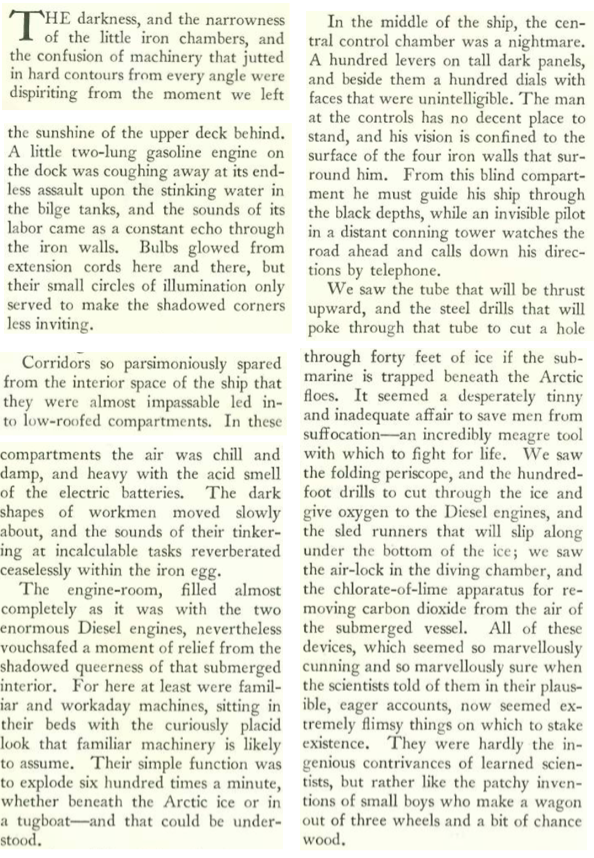
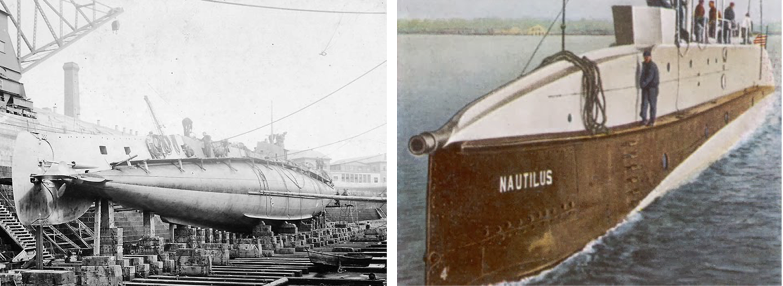
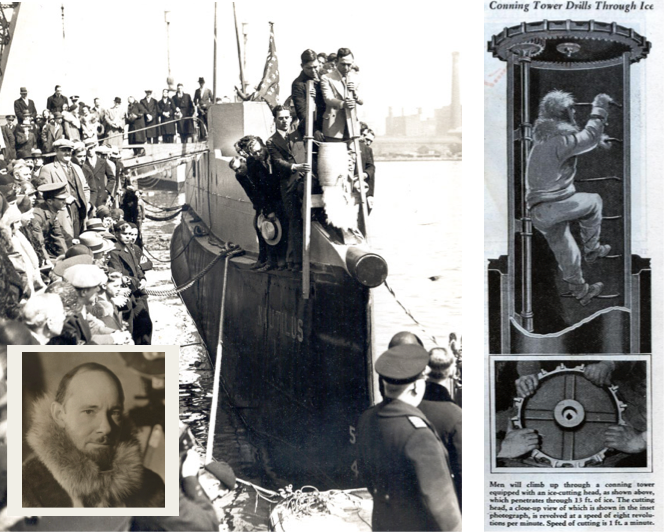
In his “Reporter at Large” column, Morris Markey paid a visit to the Brooklyn Navy Yard where Sir Hubert Wilkins and his crew were busy preparing a narrow, cramped submarine dubbed Nautilus for a trip beneath the ice of the North Pole. Markey marveled at all of the complicated devices crammed into the vessel, but at the same time wondered why anyone would stake their life on “such flimsy things”…
TIGHT QUARTERS…The Nautilus was a refurbished O-class submarine built in 1916 for the U.S. Navy. Somehow a crew of 20 crammed into the thing. (amphilsoc.org)The Nautilus was fitted with ice drills that would allow access to the surface of North Pole ice, as well as provide air to the crew and the vessel’s diesel engines. All this equipment was untested and unproven, since at the time submarines were not able to snorkel and had never broken through ice to reach fresh air. Click to enlarge. (Modern Mechanix)
Markey wasn’t alone in thinking such an expedition was preposterous, and from the very beginning it was beset by problems. On the very first day of preparations, March 23, 1931, a crew member fell overboard and drowned. The next day, Lady Suzanne Bennett Wilkins (Sir Hubert’s wife) christened the submarine with a bottle of ice water rather than Champagne, which was unavailable due to Prohibition.
More on this in another post, but suffice to say Sir Hubert did not succeed in this endeavor, and perhaps should have listened to the advice of the Icelandic American explorer Vilhjalmur Stefansson:
DRY DOCK…Christened with a bottle of ice water rather than Champagne thanks to Prohibition, the Nautilus expedition, led by Sir Hubert Wilkins (inset), had to overcome many obstacles to reach the North Pole, including untested equipment such as a conning tower (right) designed to drill through ice to allow crew members to reach the surface of polar ice. (amphilsoc.org)
* * *
Bright Star on Broadway
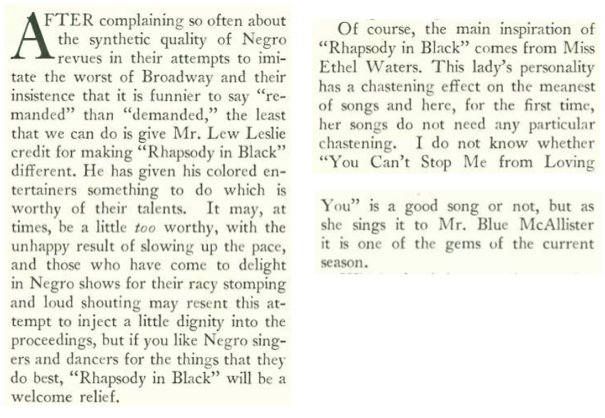
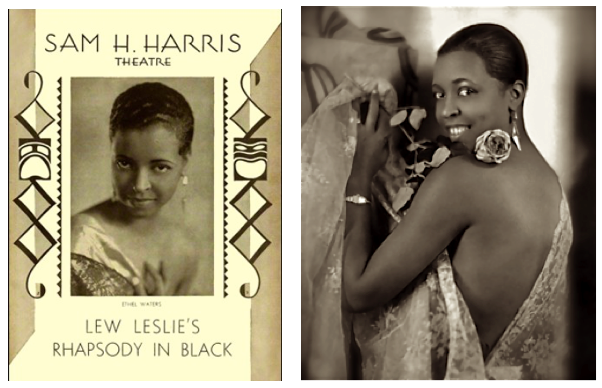
In spring 1931 Dorothy Parker subbed as theatre critic for her friend, Robert Benchley, and was greeted with a remarkably mediocre (or worse) line-up of shows. When Benchley returned to his post, things didn’t get much better until Rhapsody in Black came along with its inspiring star, Ethel Waters.
WELCOME RELIEF…Robert Benchley wrote that singer Ethel Waters had a “chastening effect” on even “the meanest of songs.” (Playbill/Carter Magazine)
* * *
Six – Love
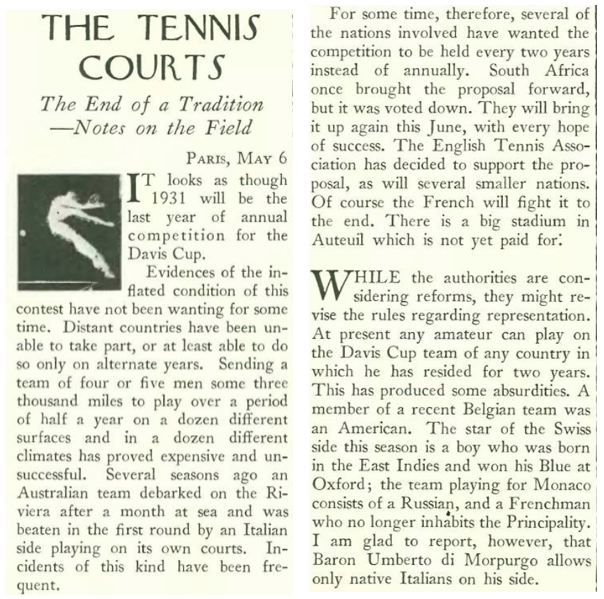
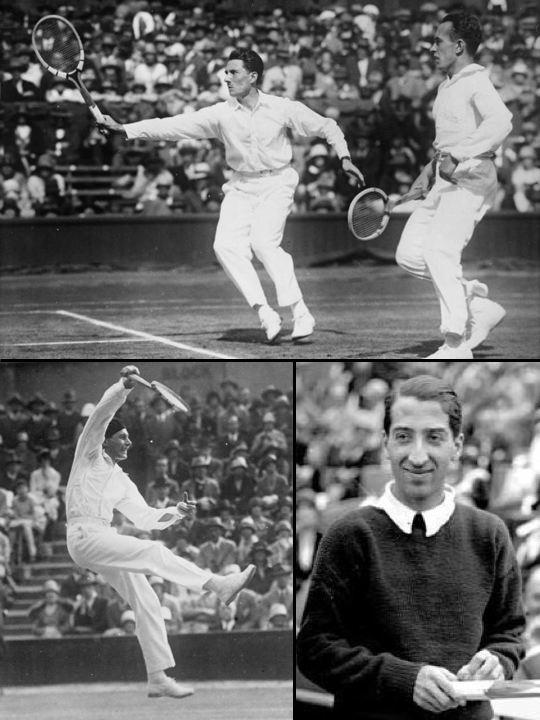
Eighty years ago sportswriter John Tunis declared that the Davis Cup international tennis competition would likely come to an end due to expense and the erosion of amateur play. Well, we know the Davis Cup is still around, and one wonders if Tunis was getting a whiff of sour grapes, since the French had won the cup five years straight, and would win again in 1932.
JEU, SET ET MATCH!…Dubbed Les Quatre Mousquetaires (“The Four Musketeers”), the French team of Jacques Brugnon and Henri Cochet (top), Jean Borotra (bottom left), and René Lacoste (bottom right) led France to six straight Davis Cup wins, 1927–1932. (Wikipedia)
* * *
Old Gloria
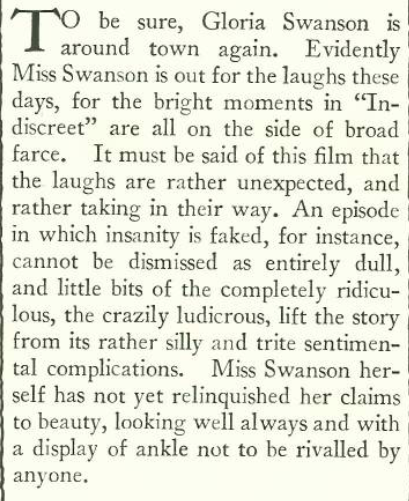
To be fair, Gloria Swanson was only 32 years old in 1931, but she was so deeply associated with the silent era that by the 1930s she seemed positively ancient (a status that she would brilliantly use to her advantage in 1950’s Sunset Boulevard). Mosher offered this “meh” review of her latest work — only her second completely-sound film — Indiscreet.
WHERE’S THE DOOR?…Ben Lyon seems perplexed by Gloria Swanson’s attentions in this theatre lobby card promoting Indiscreet. At right, Swanson delivers her trademark laser stare. (IMDB)
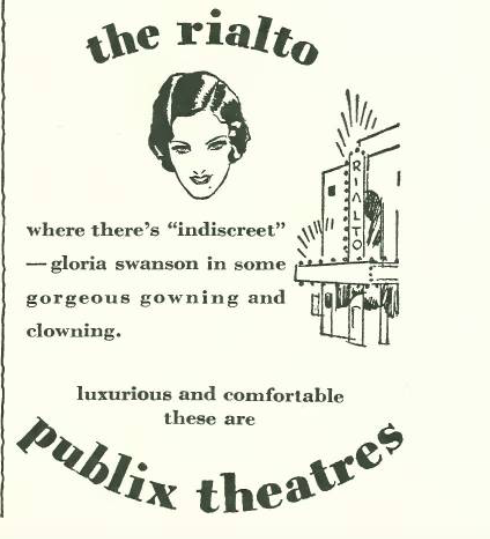
And we move on to our advertisers, with this ad from Publix Theatres (owned by Paramount) promoting Indiscreet…
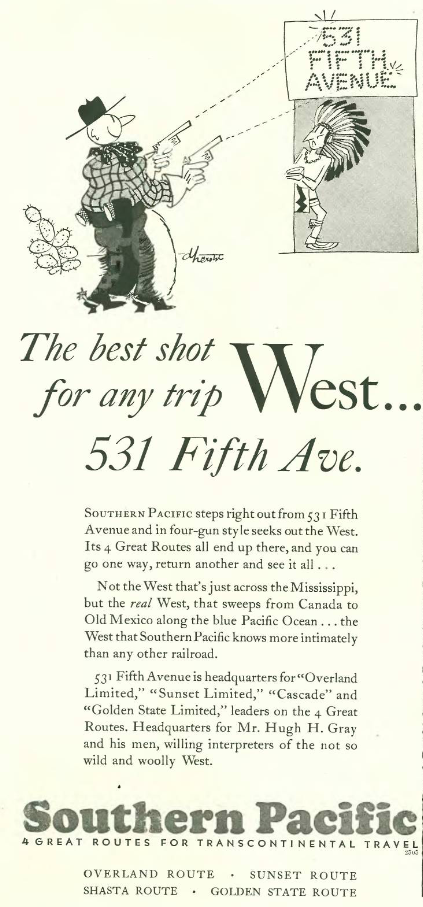
…Southern Pacific used a theme (illustrated by Don Harold) to promote travel on their trains that wouldn’t fly today…
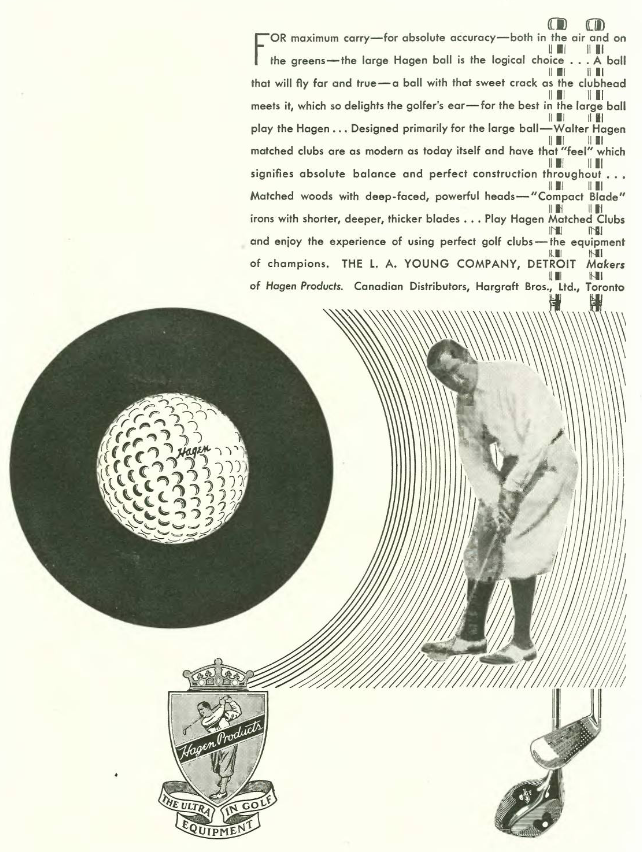
…I include this ad for the design, which seemed to have a little of everything…
…the makers of Camel cigarettes, however, reverted to a somewhat more homespun image, abandoning the stylish, euro-set illustrations of Carl “Eric” Erickson…
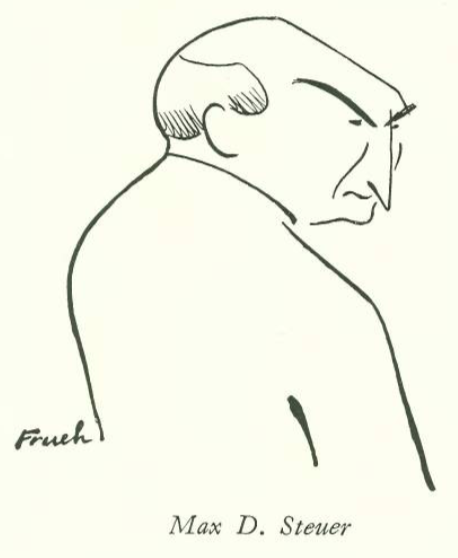
…on to our cartoonists, we have this caricature of Max Steuer by Al Frueh, rendered for a two-part profile…Steuer is perhaps best known for his successful defense of the factory owners after the 1911 Triangle Shirtwaist Factory Fire…
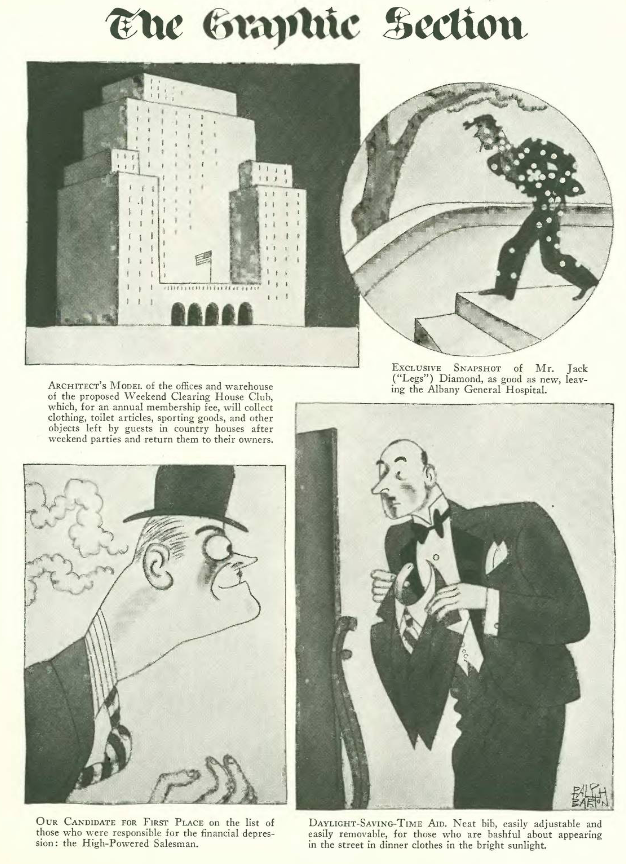
…Ralph Barton again, with his “Graphic Section”…
…Garrett Price weighed the durability of modern decor…
…Barbara Shermund looked at gardening challenges in the ‘burbs…
…Perry Barlow gave us a glimpse of something perhaps inspired by a trip to Europe…
…Richard Decker conjured a boat salesman with a loaded question…
…and we end with the great James Thurber, and a cartoon that might not pass muster today…
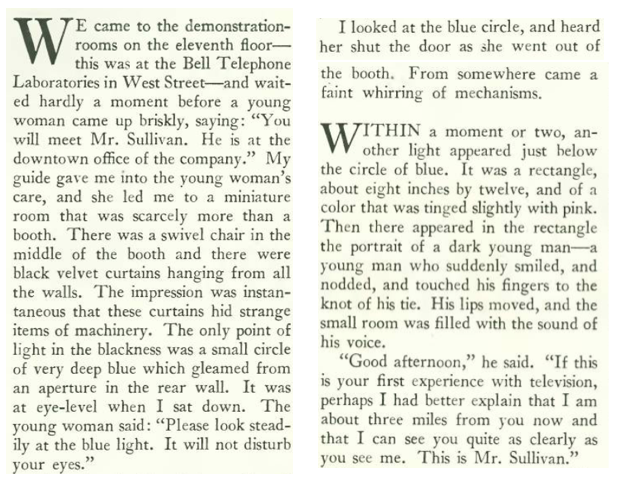
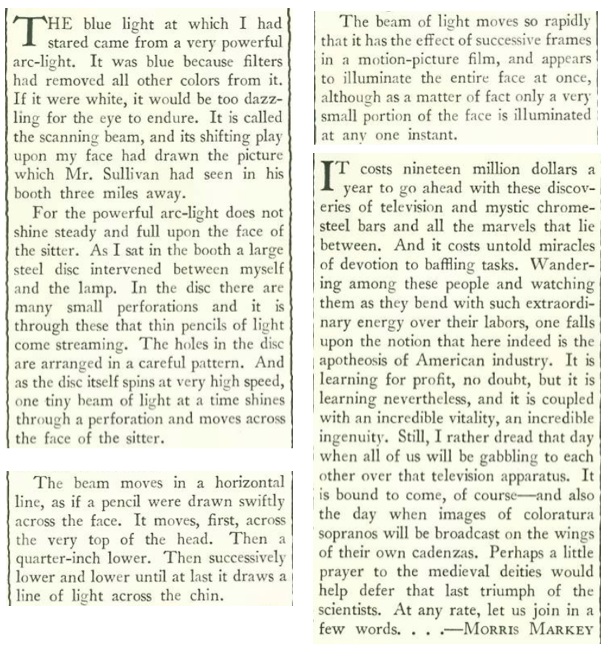
The next time you complain about a boring Zoom meeting, think about Morris Markey’s visit to New York’s Bell Laboratories in the spring of 1931, when he marveled at what was, perhaps, the “apotheosis” of American industry: a two-way video telephone.
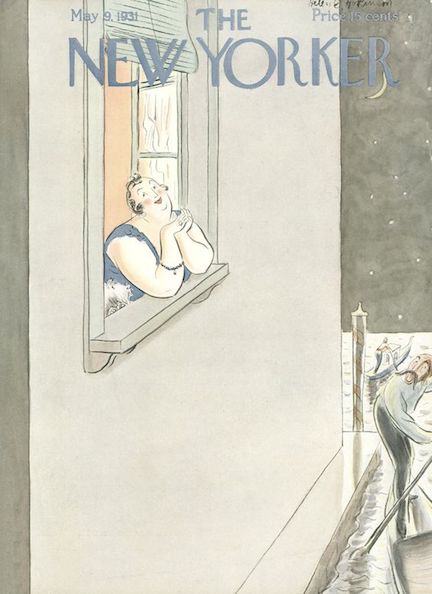
May 9, 1931 cover by Helen Hokinson.
Mass-market television in the U.S. was still two decades away, but what Markey saw demonstrated in 1931 was a glimpse of the future, seeing and conversing with another man three miles away via a long wire that transmitted images from a fantastic array of spinning discs and neon tubes:
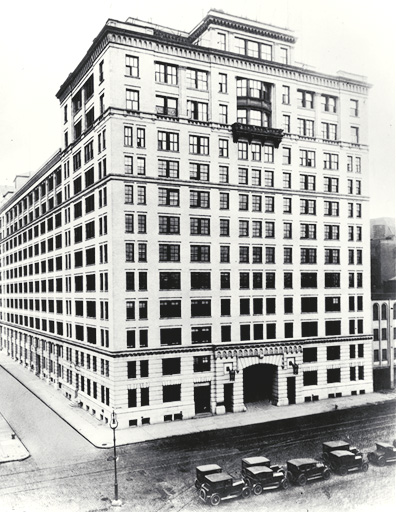
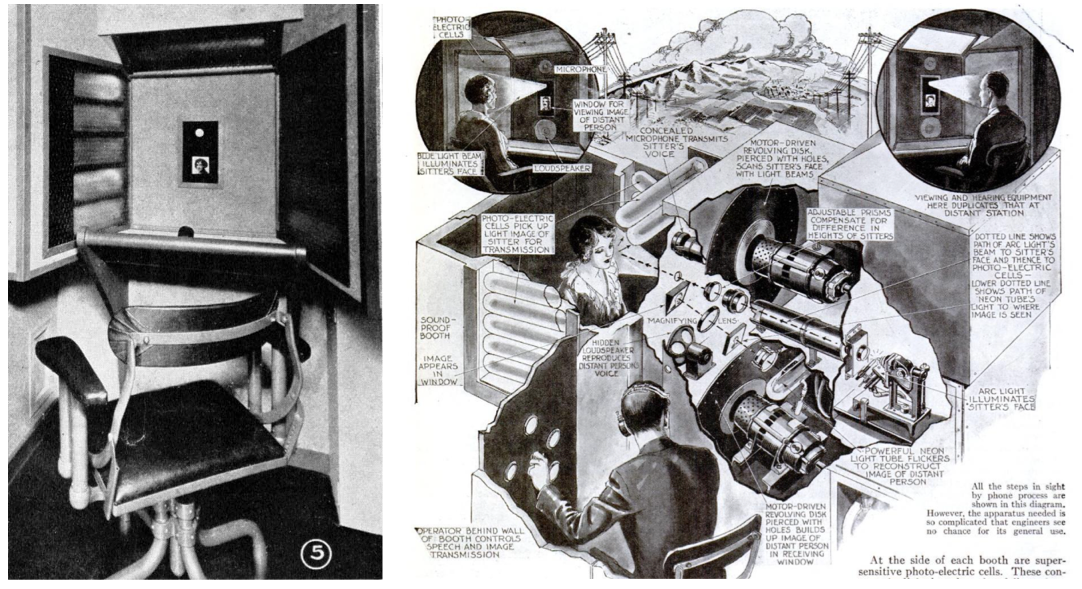
TECHNOLOGY’S MATERNITY WARD…The original Bell Labs building at 463 West Street in New York. It was the birthplace of talking movies, television, radar and the vacuum tube. (att.com)DEFINITELY NOT HI-DEF…At left, this is most likely where Morris Markey sat for the demonstration of early video phone technology. At right (click image to enlarge), a July 1930 article in Popular Science Monthly described how the transmitting apparatus worked. (earlytelevision.org/books.google.com)BUT WILL IT SELL?…Herbert Hoover, then secretary of commerce, became the world’s first television personality in 1927 when his voice and face (inset) were transmitted to an audience at Bell Laboratories in New York City. At the time, AT&T, Bell’s parent company, was doubtful about television’s moneymaking potential. (edn.com)SPINNING WHEELS…Whirling metal discs, pictured at left, perforated with tiny holes, cast a series of horizontal beams of light across a viewer’s face (right), which were then transmitted to a receiver. (earlytelevision.org)
Despite its gee-whiz factor, many, including the folks at Bell Labs, seemed doubtful that the technology would come into wider use or be profitable any time soon, if ever. Markey noted that his little demonstration required many millions of dollars in research and development, but he was prophetic in suggesting that such technology might come to be dreaded if it ever came into common use.
* * *
Uplifting Sight
That a bra and girdle maker should become the topmost tenant at the new Empire State Building was not lost on E.B. White, who commented thusly…
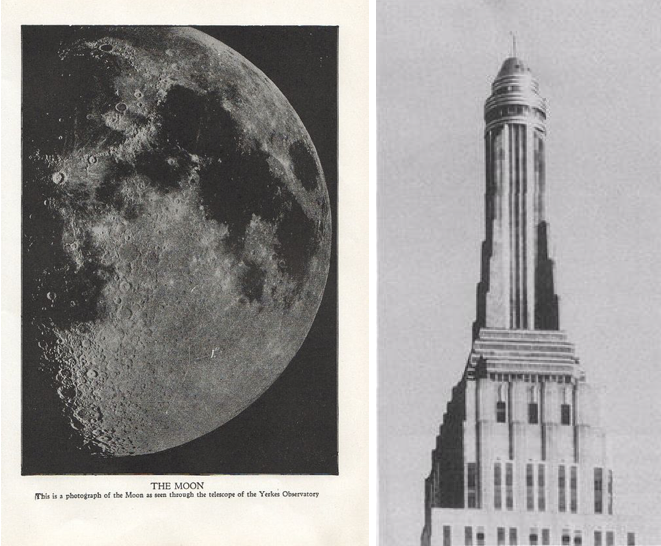
…and while viewers wouldn’t actually see a giant bra atop the skyscraper, many were nevertheless interested in getting a closer look at some of the building’s details, as reported in “The Talk of the Town”…
OVER THE MOON?…The moon gained some keen competition from telescope viewers when the Empire State Building climbed its way into the sky. (Pinterest/tech-notes.tv)
* * *
Channelling Marlene
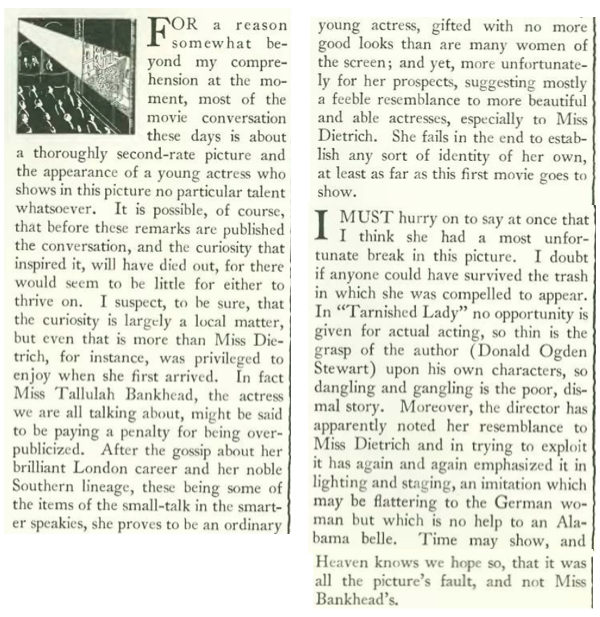
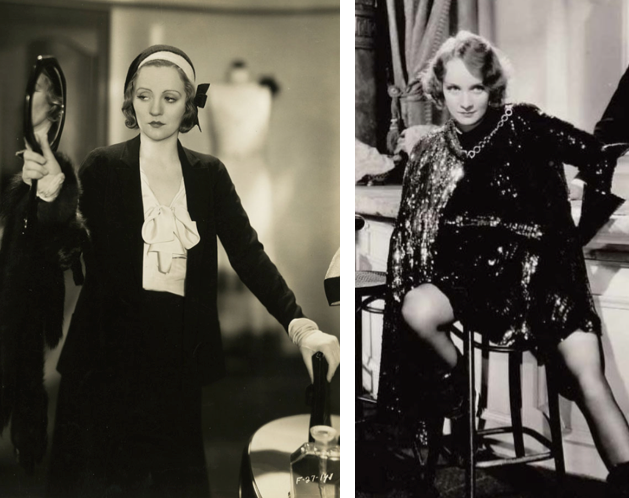
Film critic John Mosher wasn’t over the moon when it came to the acting of Tallulah Bankhead in Tarnished Lady, however he surmised it was likely the director’s fault for trying to exploit Bankhead’s passing resemblance to Marlene Dietrich. Mosher noted that lighting and staging flattering to the German actress just didn’t work with the belle from Alabama.
MIRROR, MIRROR…Tallulah Bankhead (left) might have pondered who was the fairest in the land, but The New Yorker’sJohn Mosher found her to be no match for German actress Marlene Dietrich (right, in 1931’s Dishonored) when it came to screen presence. (IMDB)
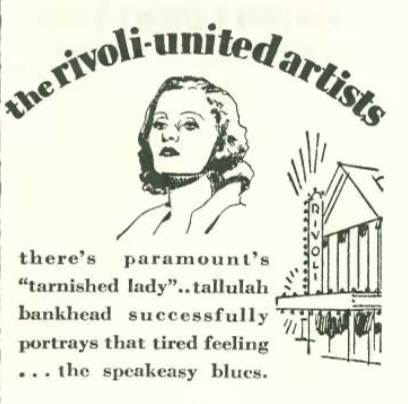
Despite Mosher’s blah review, Paramount touted Bankhead’s portrayal of a “tarnished lady” in this ad from the same issue:
Mosher, however, found redemption in another film making the rounds, Warner Brothers’ Svengali starring John Barrymore:
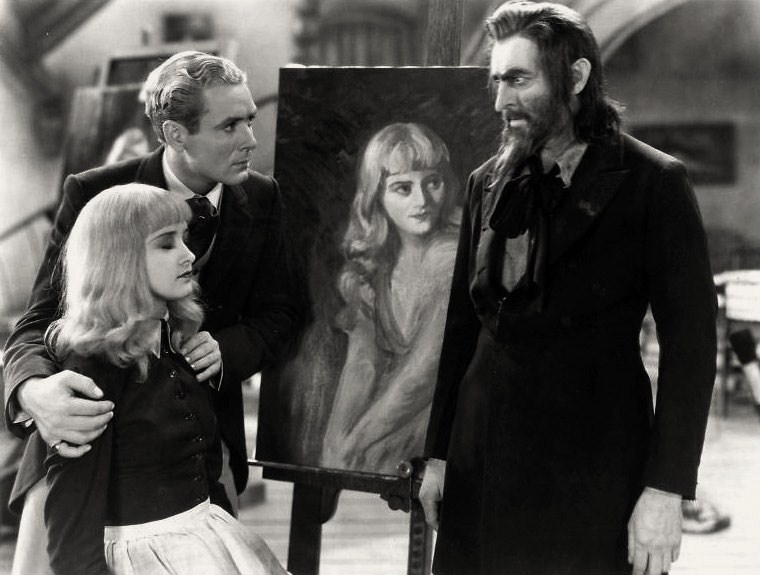
YOU ARE GETTING VERRRY SLEEPY…in 1931’s Svengali, 17-year-old Marian Marsh played the artist’s model Trilby, who is transformed into a great opera star by the sinister hypnotist, Svengali, played by John Barrymore. Also pictured is Bramwell Fletcher, who portrayed Trilby’s love interest, Billee. (Wikipedia)
* * *
From Our Advertisers
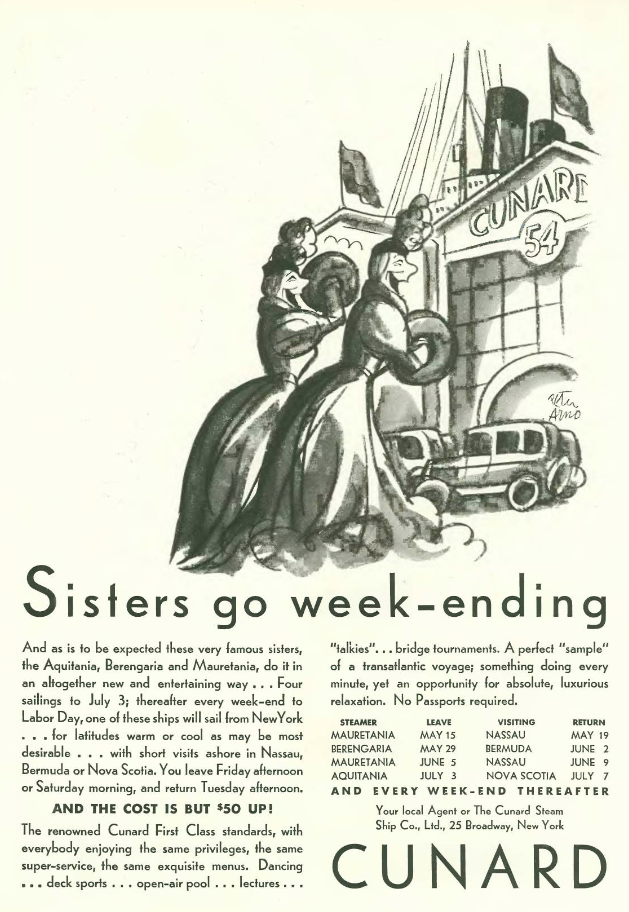
After a long absence, Peter Arno’s Whoops Sisters returned to the pages of The New Yorker, not as a cartoon panel but as shills for the Cunard Line…
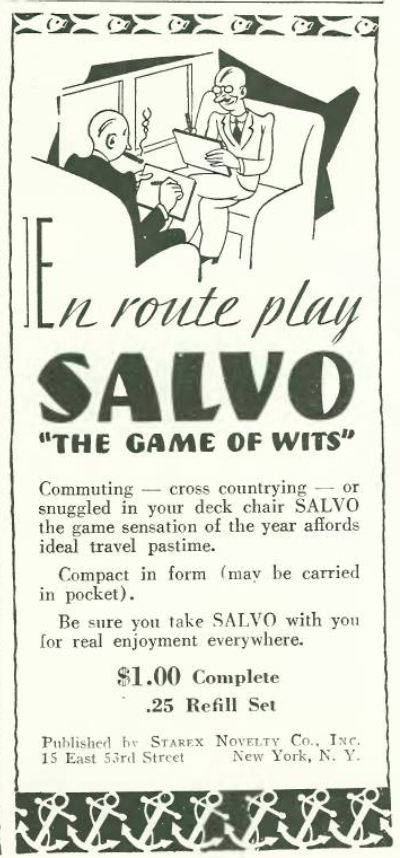
…whether traveling by boat or train, you might have considered bringing along “Salvo,” an early version of a popular game that today we call “Battleship”…
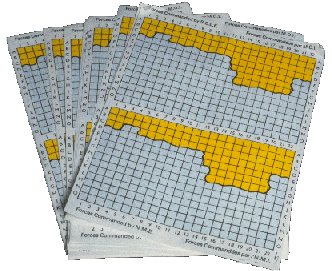
…Salvo and other Battleship-type games were originally played on pieces of paper like this…
…and here’s an ad for ice cube trays that exploited the popularity of the “Ripley’s Believe It or Not” syndicated newspaper feature…
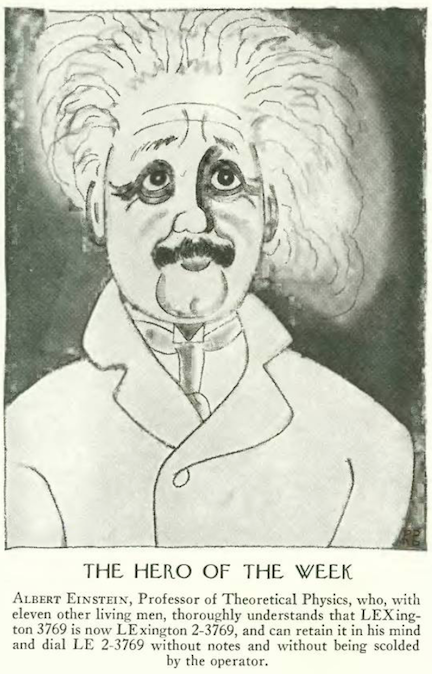
…on to our cartoonists, Ralph Barton rendered Albert Einstein as his latest “Hero”…
…and interpreted the latest headlines in his “Graphic Section”…
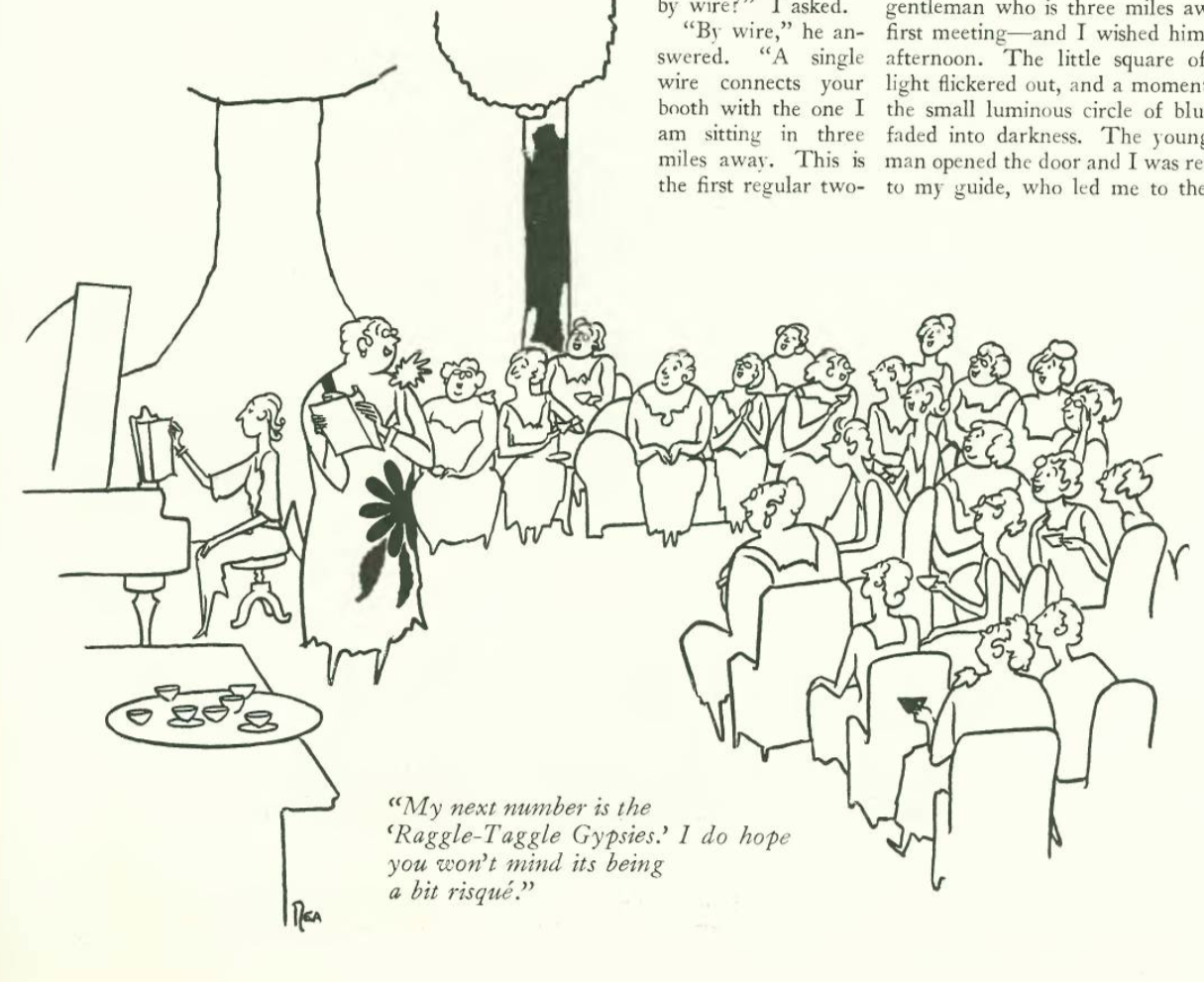
…among the delicate set, we got a bit risqué with Gardner Rea…
…and nearly apoplectic with Gluyas Williams…
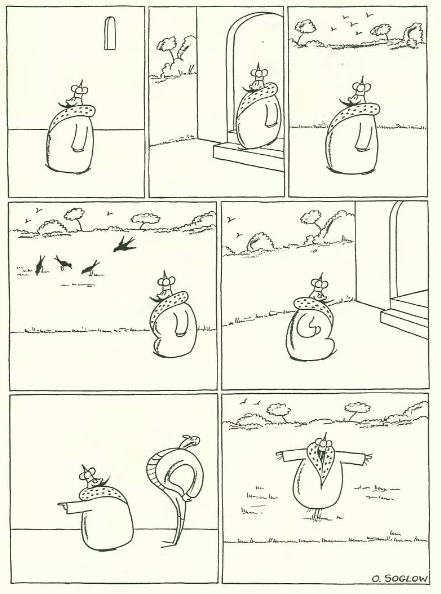
…Otto Soglow’s Little King, on the other hand, reigned with a steady hand…
…and we end with I. Klein, and a little bauble for the Missus…
In the previous issue, New Yorker film critic John Mosher examined the morals of pre-code, “underworld films” such as Edward G. Robinson’sLittle Caesar. Mosher didn’t seem all that impressed with these new gangster films, that is, until James Cagney lent his talents to The Public Enemy.
May 2, 1930 cover by Theodore Haupt.
Despite its violence (by yesterday’s standards), Mosher believed that even the preachers and various women’s committees who decried the sex and violence in pre-code movies would have little to gripe about with The Public Enemy, since it clearly depicted the wages of the sins of Tom Powers, a bootlegger on the rise portrayed by Cagney.
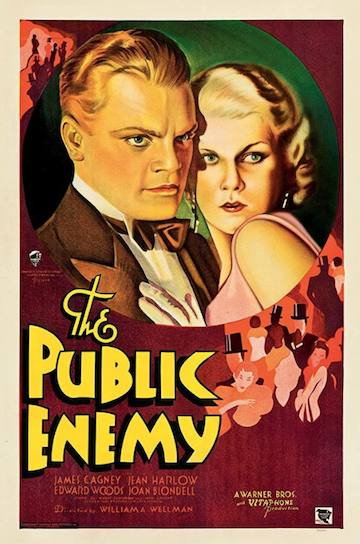
YOU AGAIN?…New Yorker film critic John Mosher thought very little of Jean Harlow’s acting, but Warner Brothers heavily promoted their new sex symbol, giving her equal billing even though she contributed little to the film. In the previous issue, Mosher had reviewed the film Iron Man, which also featured Harlow. He found it distressing that it was her “platinum blonde” status, rather than her acting, that landed her in that picture. (IMDB)
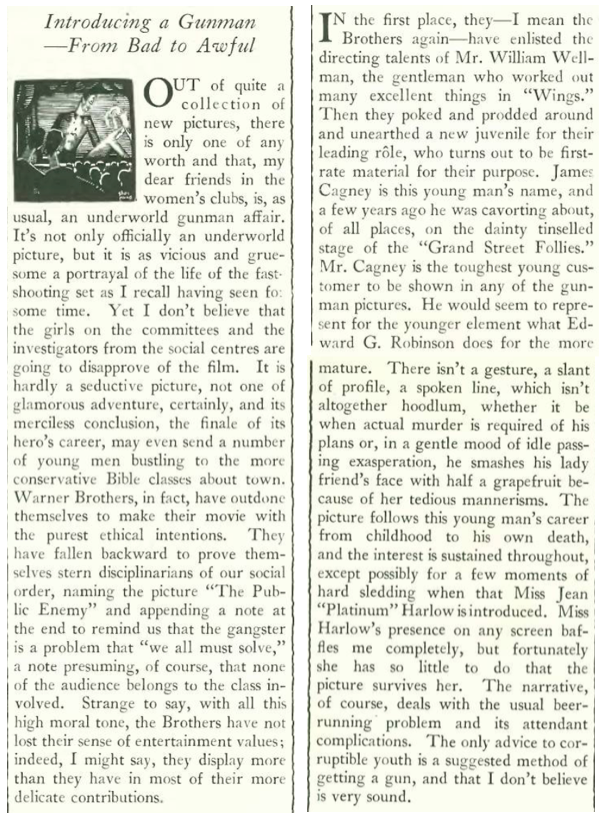
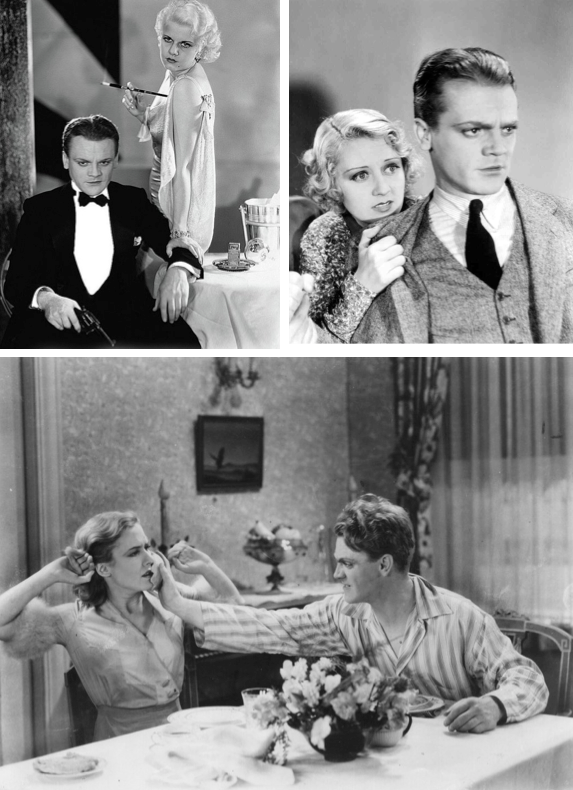
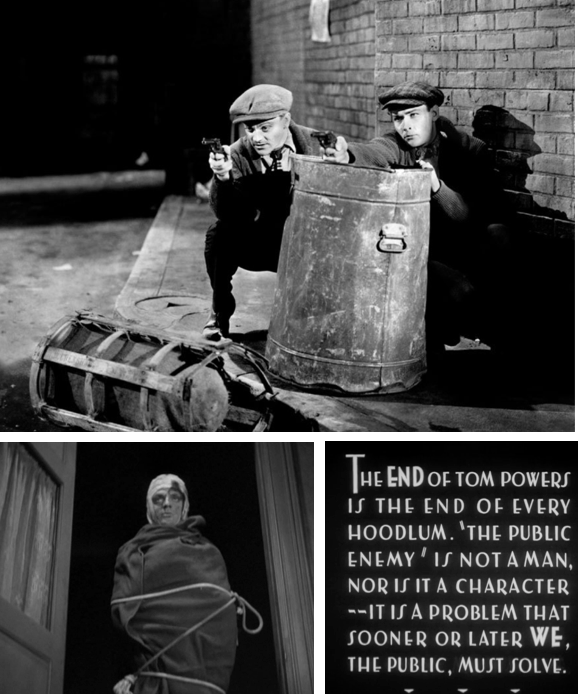
WOMEN IN HIS LIFE…James Cagney played a small-time bootlegger, Tom Powers, who rose in the criminal underworld in Public Enemy.Top left: Powers with Gwen Allen (Jean Harlow), a woman with a weakness for bad men. Top right:Joan Blondell portrayed Mamie, the girlfriend of Powers’ friend, Matt Doyle (Edward Woods). Blondell, one of the biggest stars of the 1930s, worked often with Cagney. In 1930 they were in Penny Arcade on Broadway and co-starred in the film Sinner’s Holiday. They would make several more films together after Public Enemy. Bottom photo: Tom smashes a grapefruit into the face of his first girlfriend, Kitty (Mae Clarke). Although this is one of Public Enemy’s most iconic scenes, Clarke was uncredited in the film. (IMDB)WHAT HAPPENS WHEN YOU’RE NAUGHTY…Top, Tom Powers (Cagney) and his buddy, Matt Doyle (Woods) shoot it out in an alleyway. Bottom, the film ends with one of cinema’s greatest death scenes — awaiting the return of his brother to the family home, Mike Powers (Donald Cook) opens the door to be greeted by Tom’s corpse, which falls over the threshold. Just in case the audience didn’t get the message, Warner Brothers included this epilogue after the death scene. (IMDB/YouTube)
* * *
Flag of a Father
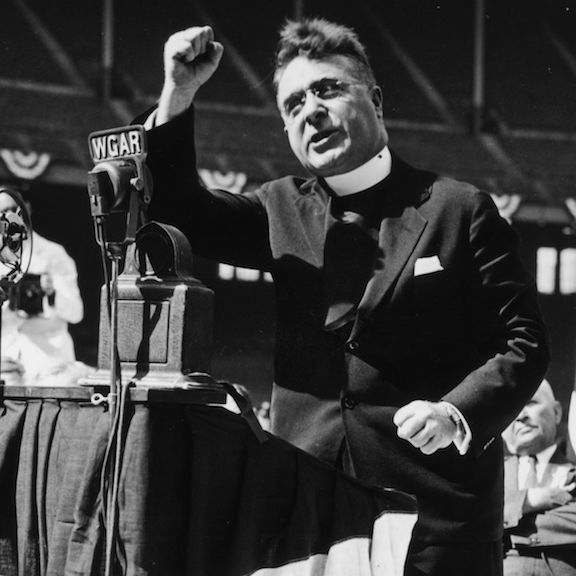
Speaking of morality, no voice was louder, or carried farther, than that of Charles Edward Coughlin (1891-1979), known familiarly as “Father Coughlin,” an enormously popular radio priest who had an estimated following of 30 million listeners in the 1930s. E.B White took notice of this phenomenon, and also the Father’s stand against “internationalism,” which in a few years would morph into a virulent nationalism and anti-semitism that would find the Father finding common cause with Hitler and Mussolini. Yes, those guys. But for now, we are still in 1931…
SAVING SOULS?…Fr. Charles Coughlin preached nationalism and anti-semitism in his widely broadcast radio show in the 1930s. He was one of the first demagogues to effectively use the mass media to his advantage. (Detail of Library of Congress photo)
* * *
Paradise Lost
Far up the Henry Hudson Parkway, just before you cross Spuyten Duyvil Creek (Harlem River) into Younkers, is a park with a history that goes back to a Lenape tribe that occupied the site prior to European settlement. Inwood Hill Park is where, legend has it, Peter Minuit purchased Manhattan from the Lenape on behalf of the Dutch West India Company.
ORIGIN STORY…It was purportedly under this tulip tree that the Lenape tribe sold Manhattan to Peter Minuit in 1626. The tree was felled by a storm in 1933. A large stone (inset) marks the spot today. (Wikipedia)
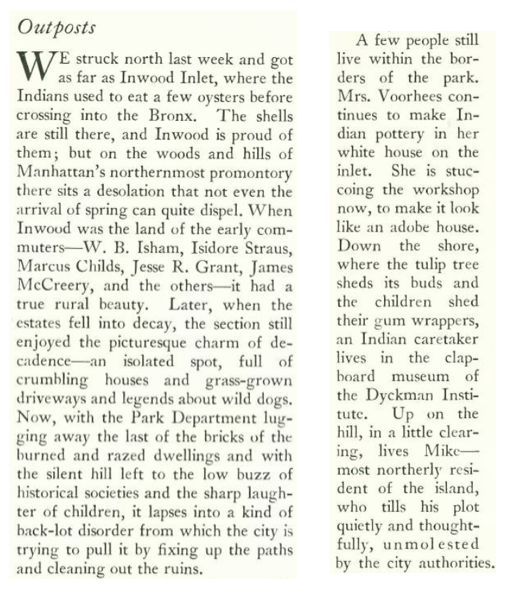
Inwood served as a location for a fort during the Revolutionary War, and was dotted with working farms including one owned by the Jan Dyckman family, established in 1661. In the 19th century a number of wealthy New Yorkers built country retreats around Inwood, which became a park in 1926. Squatters continued to live in abandoned estates around the edge of the park until Robert Moses came along in the 1930s and cleared them out. E.B. White, in “The Talk of the Town,” takes it from there.
WE CALL IT HOME…In 1931, Marie Naomie Boulerease Constantine Kennedy, an American Indian known as Princess Naomie (left) was a caretaker of the old Dyckman farm (below), which had fallen into disrepair by the late 1800s and was restored in 1916. At right, LePrince Voorhees and her husband, Harry Voorhees, at the door of their ramshackle Inwood Hill Pottery. (myinwood.net/MCNY)
The Dyckman farmhouse fell into disrepair by the late 1800s, seen here in 1892…
(myinwood.net)
…but it was restored in 1916, and still stands today at Broadway and 204th Street…
(myinwood.net)
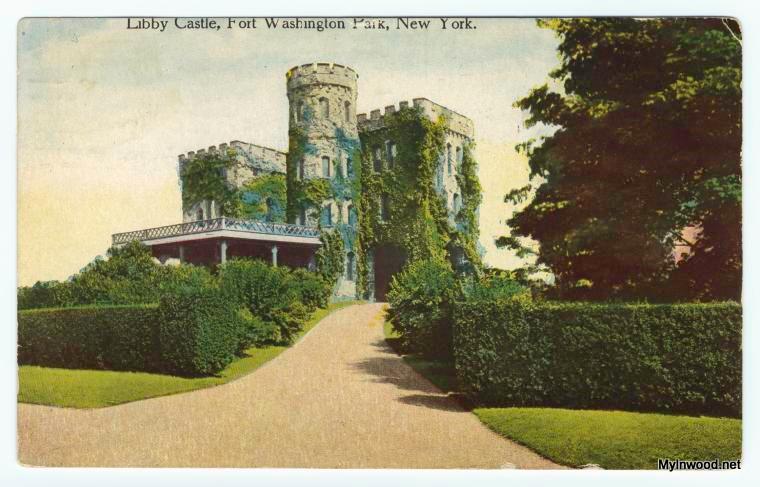
White wondered how Inwood would appear in ten years, now that parks workers were paving over the old Indian trails and landmarks like the Libby Castle were being torn down to make way for John D. Rockefeller’s Cloisters and Fort Tryon Park.
Built around 1855, Libby Castle was home to several New York bigwigs including William “Boss” Tweed of Tammany Hall fame. It was bulldozed in 1930-31 to make way for John D. Rockefeller’s Cloisters.
(myinwood.net)
Inwood contained the last remaining farms in Manhattan — below are cows grazing in 1900 at site today now occupied by Isham Park, located on the southeast edge of Inwood Park. The next photo, from 1895, identifies “the last field of grain on Manhattan Island.” In the background is the Seaman Mansion at Broadway and 216th Street…
(myinwood.net/MCNY)
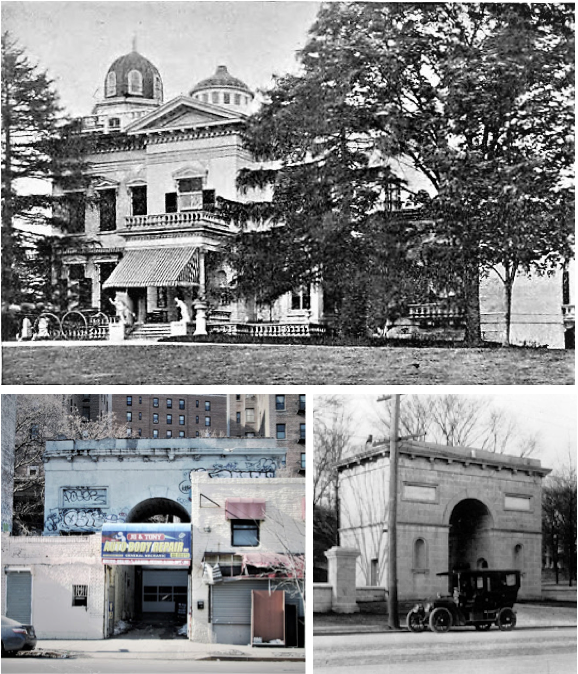
Below is a closer view of Seaman Mansion, a white marble, 30-room pile built around 1852. When this photo was taken in 1895, it had just become the new home of a riding club. Entry to the mansion was through a gatehouse, pictured below at right. The mansion was demolished in 1938 as the area around it filled up with cheap commercial buildings. Only the gatehouse remains, crumbling behind an auto body shop as seen in this 2015 image (bottom left):
(daytoninmanhattan.blogspot.com/Google Maps)
And here’s the latest view from Google maps. Note how the business is now renamed (ironically, yes) after the crumbling arch behind it…
But let’s be fair; there is still much beauty to be had at Inwood. Check out this lovely fall panorama…
(Wikipedia/Barry Solow, November 2010)
* * *
Rub-a-Dub-Dub
One of the great British modernists of the 20th century — perhaps best known for his 1915 novel, The Good Soldier — Ford Madox Ford (1873 – 1939) led a complicated personal life filled with indecision and anxiety. It makes sense that a man, in search of some order in his life, imposed a strict routine on bath time (and also found time for a bit of humor). Here is an excerpt from Ford’s submission to the May 2, 1931 New Yorker:
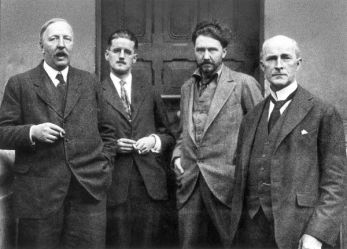
LITERARY LIONS…Ford Madox Ford (left) poses with other literary greats of the 20th century in a photo taken in Paris, November 1923. Next to Ford are James Joyce, Ezra Pound and John Quinn. (justewords.com)
* * *
Tete-a-tete
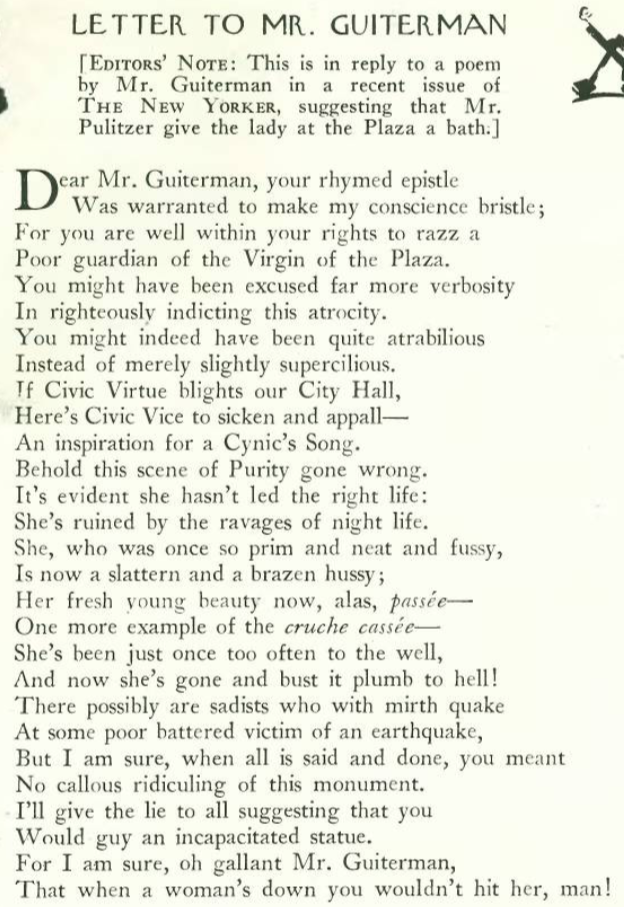
Humorist and poet Arthur Guiterman was a regular contributor of comic verse to The New Yorker from its first days in 1925 until his death in 1943. In the April 18, 1931 issue, he dashed off this poem to Ralph Pulitzer, imploring him to give his family’s namesake Plaza fountain, and its “goddess of abundance,” a much-needed scrubbing…
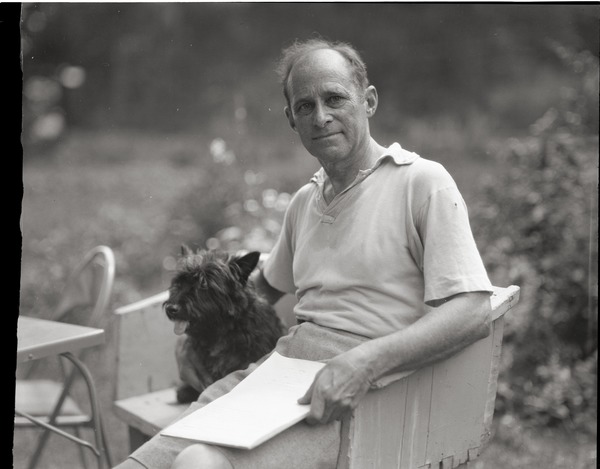
KEEP IT CLEAN, RALPH…Arthur Guiterman, shown here seated with his Scottish terrier in August 1931, asked Ralph Pulitzer to do a bit of scrubbing on the family’s namesake Grand Plaza fountain. (UMassAmherst)
No doubt to Guiterman’s delight, he received a reply in the May 3 issue, also in verse, from Ralph Pulitzer himself…
Well, Pulitizer was good for his word, and the fountain was cleaned and restored in 1933. There have been other restorations in 1971, 1985-90. Here is how it looks today:
(Central Park Conservancy)
* * *
From Our Advertisers
The Empire State Building officially opened its doors for business, and to mark the occasion the building’s promoters ran this full page ad that said it all: we are the biggest. Period.
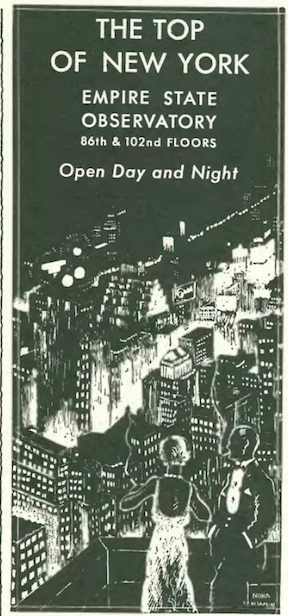
In the back pages another ad touted the amazing views one could afford from the highest spot in the city…note the couple in formal wear having a leisurely smoke as they gaze over the metropolis, their view unobstructed by fencing later added in 1947 to prevent suicidal leaps…
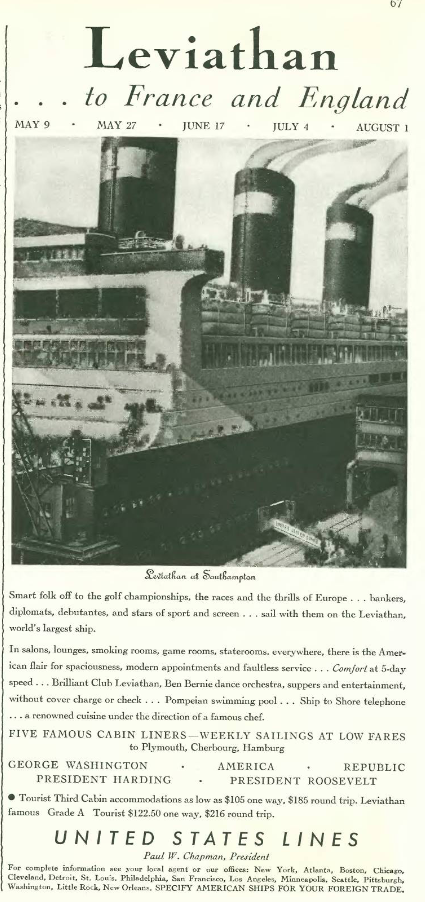
…speaking of large things, folks in the 19th and 20th centuries marveled at the gigantic scale of the man-made world—the Empire State Building, the Hindenburg, Hoover Dam, and ships with names like Titanic and Leviathan, the latter seen below in this ad from the United States Line…
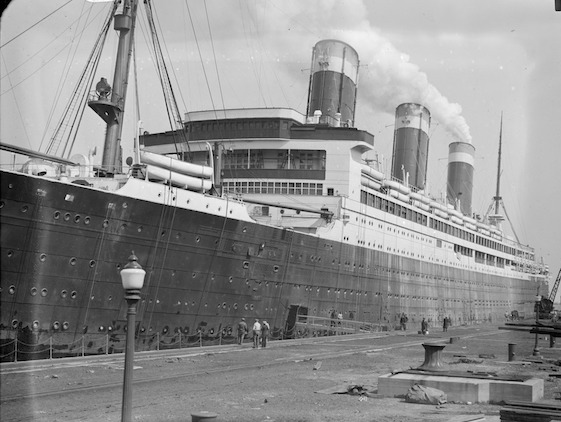
…one of the largest and most popular ocean liners of the 1920s, the U.S.S. Leviathan was actually built in 1914 for Germany’s Hamburg-American Line and christened the Vaterland. During World War I the American government seized the ship while it was docked in Hoboken, New Jersey and used it to transport troops. After the war, it was refurbished and re-christened Leviathan. It was scrapped in 1938…
The U.S.S. Leviathan at dry dock in Boston, 1930. (digitalcommonwealth.org)
…if you took the boat to Paris, you probably had enough money to make an overseas call back home…it would set you back almost $34 for three minutes of static-filled chat, about $550 in today’s dollars…
…and despite the Depression, the thrills of the modern world still abounded, such as GE’s “all-steel” electric refrigerator so artfully depicted in this ad…
…and check out these Chryslers, looking absolutely luxurious…
…as do these Dodge boats, their polished wooden hulls gliding effortlessly through placid waters…
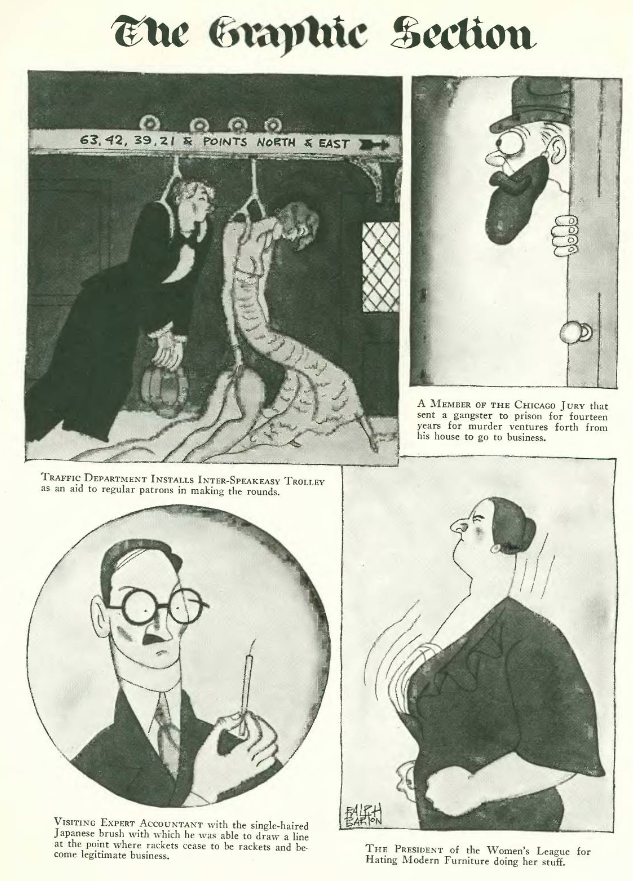
…on to our cartoonists, we begin again with Ralph Barton’s “Hero of the Week”…
…and Barton’s graphic take on the week’s headlines…
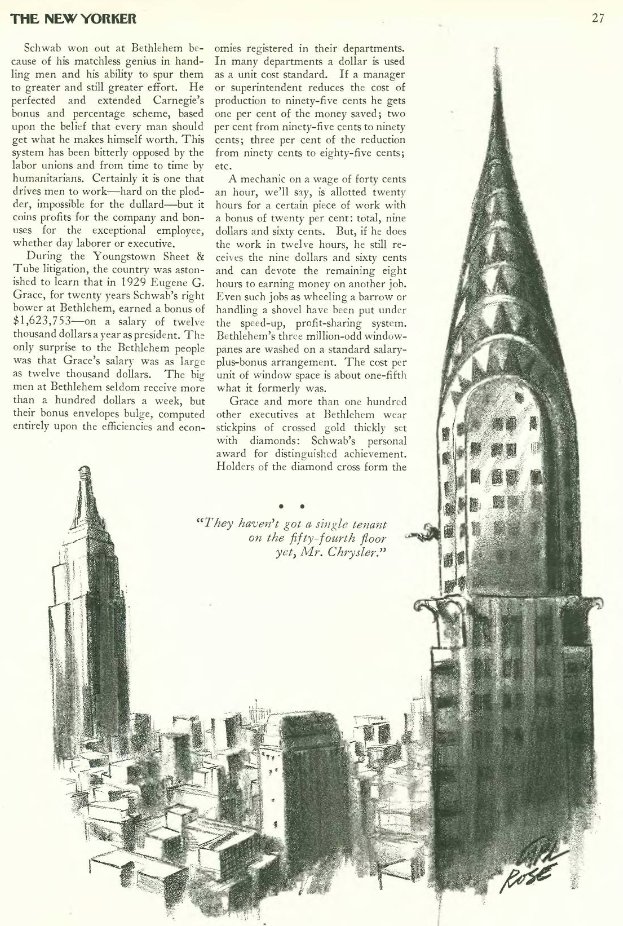
…Carl Rose examined new heights in envy…
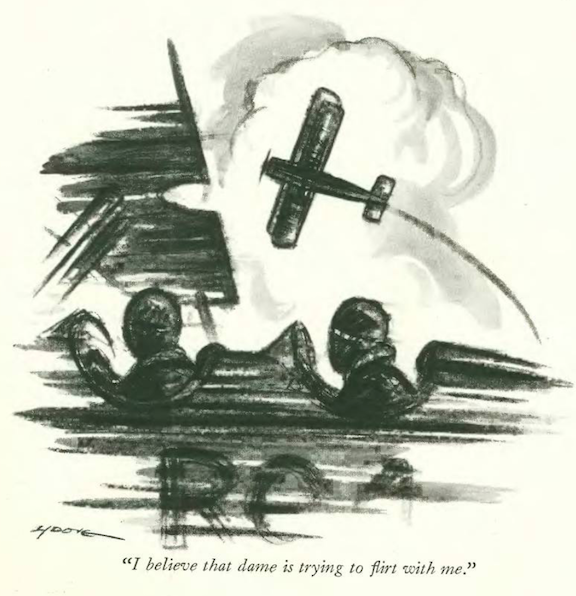
…or in the case of Leonard Dove, romance…
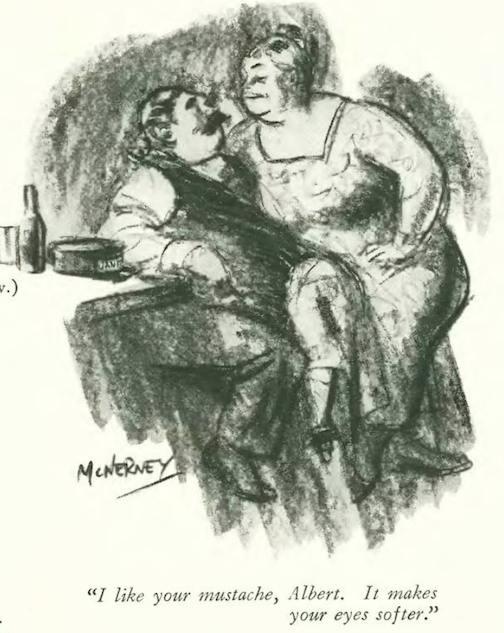
…back to earth, more romance from E. McNerney…
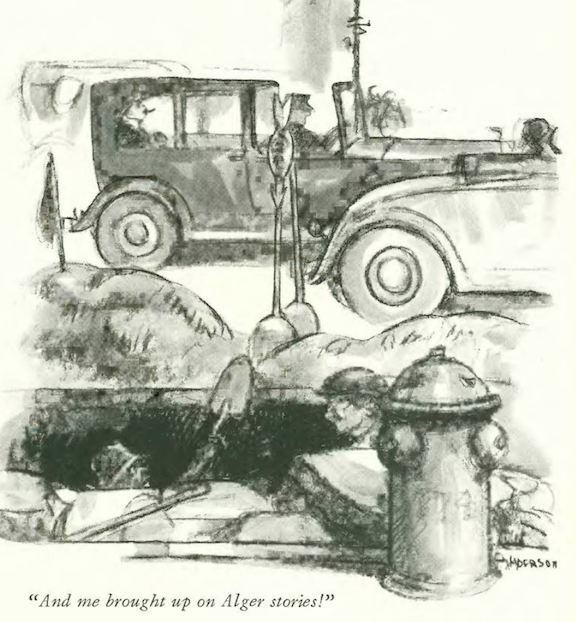
…and below ground, C.W. Anderson showed how romantic notions can go sour, in this case a man who felt duped by those rags-to-riches tales…
…and we end with Alan Dunn, and a little girl getting an education through the pages of a scandal rag…
In some ways, the raucous party of the Roaring Twenties was sublimated in the movies of the late 1920s and early 1930s—a brief period at the beginning of the sound era before censorship guidelines were enforced. During those “Pre-code” times everyone from preachers to publishers decried the sex and violence that washed across the silver screen.
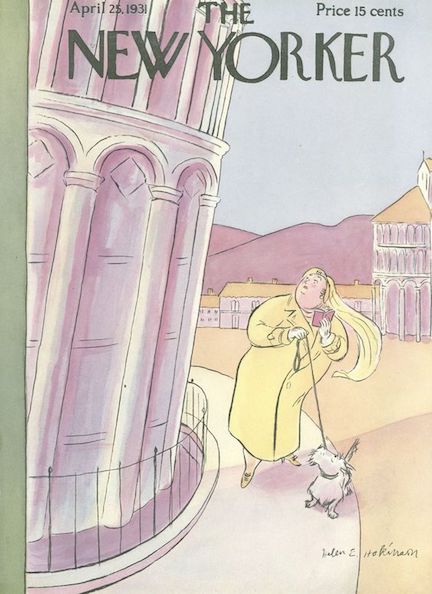
April 25, 1931 cover by Helen Hokinson.
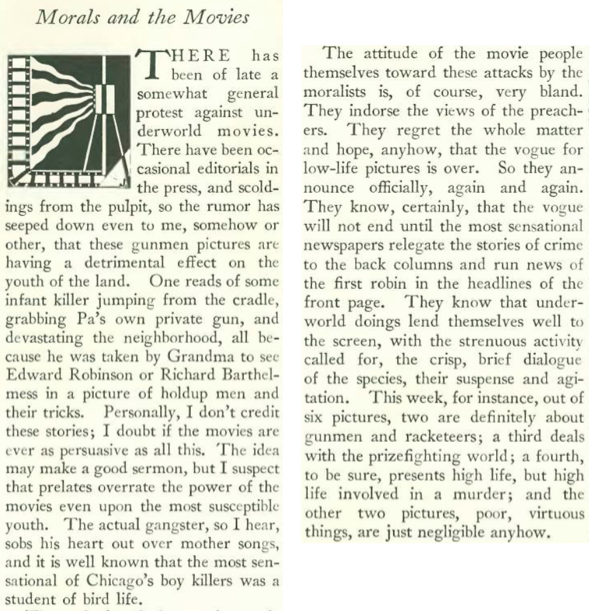
New Yorker film critic John Mosher opened his “Current Cinema” column with some musings about violence and “morals” in underworld films, declaring that until newspapers relegated sensational crime stories to the back pages, the public would be drawn to similar fare at the movies.
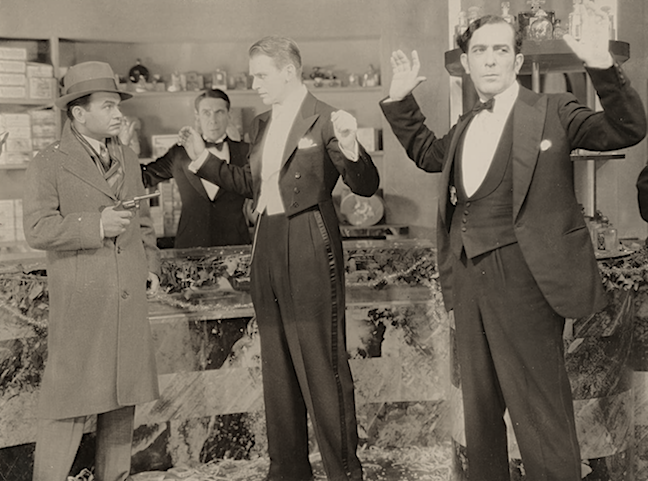
GIVING THE PEOPLE WHAT THEY WANT…Edward G. Robinson (left) played a hoodlum hoping to make the big time in 1931’s Little Caesar, a film that defined the gangster genre for decades to come. (IMDB)
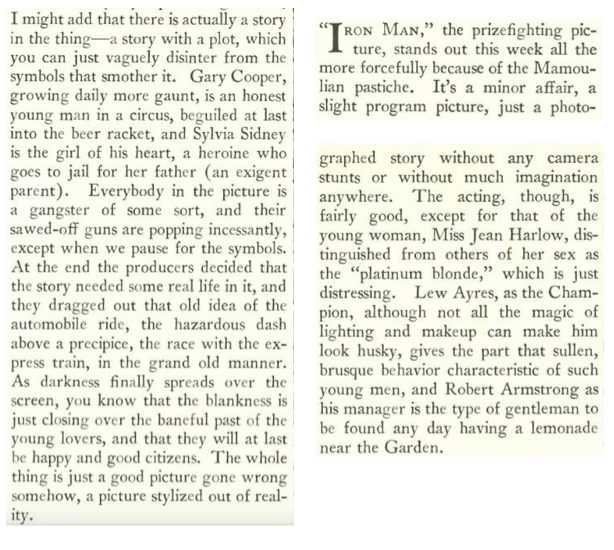
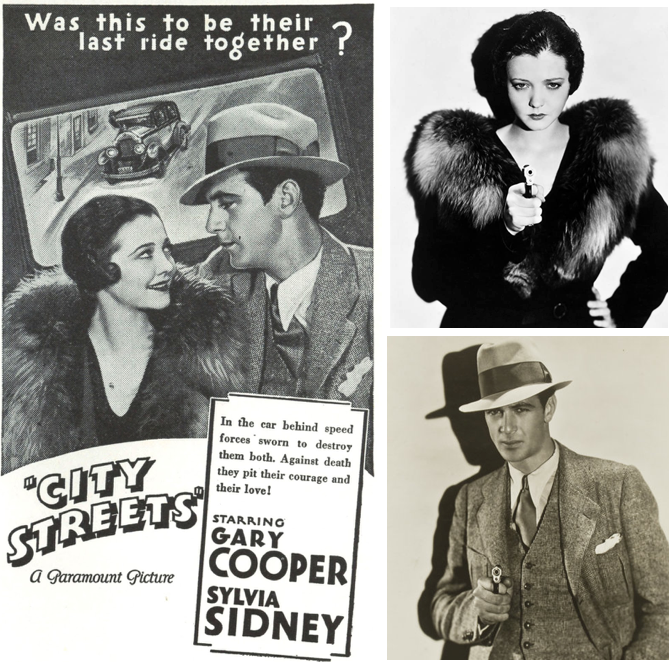
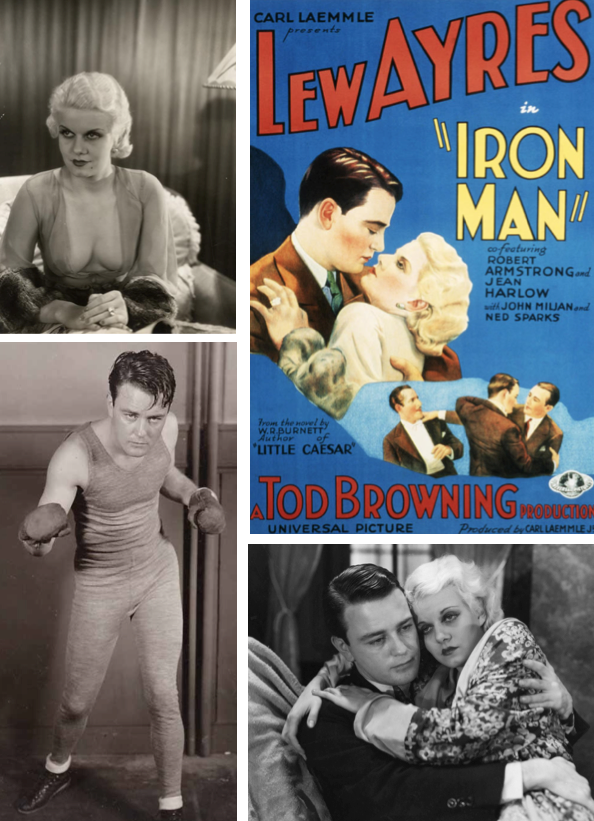
Mosher noted that two of the more prominent gangster films currently making the circuit weren’t much to fuss about—City Streets, the “more pretentious” of the two movies, featured rising stars Gary Cooper and Sylvia Sidney. The prizefighting picture Iron Man featured another popular pair of actors, Lew Ayers and Jean Harlow. Mosher observed that no amount of camera tricks could make the slight Ayers look like a husky fighter. As for Harlow, Mosher found it distressing that it was her “platinum blonde” status, rather than her acting, that landed her in the picture.
WHO CARES?…That was the conclusion of critic John Mosher after sitting through the “pretentious” City Streets. At right, publicity photos for lead actors Sylvia Sidney and Gary Cooper. (IMDB)NO, NOT THAT IRON MAN…Jean Harlow, top, was known for attributes other than her acting, according to critic John Mosher. As for her co-star, Lew Ayers, a few weeks in the gym and some protein shakes might have made for a more plausible prize fighter. (IMDB)
* * *
Fashion of a Different Fashion
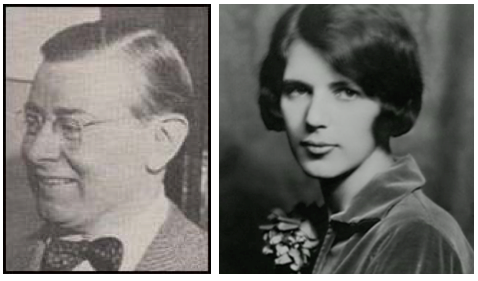
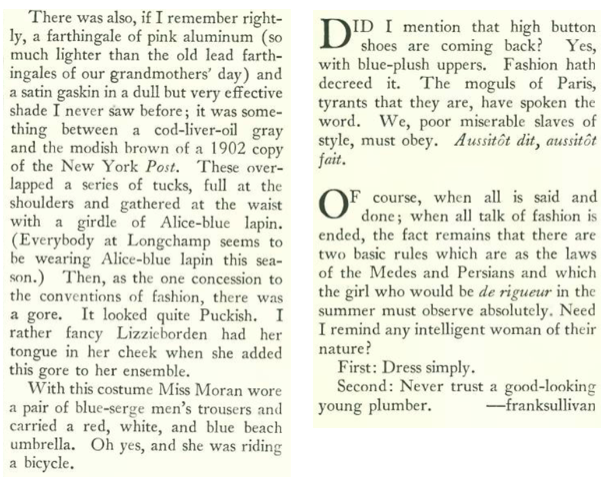
A New Yorker contributor since 1925 and denizen of the Algonquin Round Table, Frank Sullivan was a jolly soul known for his gentle wit and spoofs of cliches. His latest target was Lois Long’s fashion column “On and Off the Avenue,” penning a spoof that was indistinguishable from the original save for the change of one word in the title. Long’s actual column appeared in the magazine a few pages later, so no doubt a few readers started reading Sullivan’s spoof before realizing they had been had. I am among them. Some excerpts:
HE TOOK A FASHION TO FASHION…A wit herself, Lois Long no doubt enjoyed Frank Sullivan’s spoof of her fashion column. (Wikipedia/PBS)
Sullivan probably had a little extra time on his hands after the folding of the New York World newspaper, to which he contributed two or three humor columns a week before the grand old paper folded for good in February 1931. And so we have Sullivan again in the April 25 issue, and his “report” on the annual meeting of the “International Association of Girls Who Have Danced with the Prince of Wales.” Excerpts:
HOOFER…Apparently the Prince of Wales (Edward VIII), shown here in 1924, danced with many a lady before he abdicated the throne and married Wallis Simpson. (Pinterest)
* * *
Getting High in Manhattan
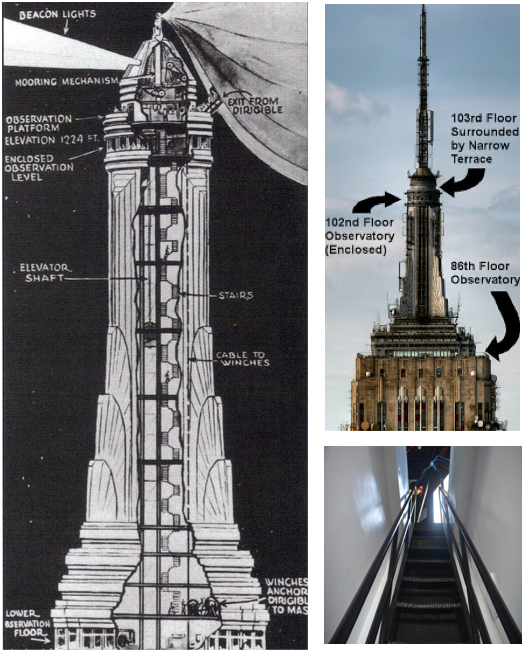
E.B. White enthusiastically embraced many aspects of modern life, from the wonder of air travel to the spectacle of buildings climbing ever higher into the clouds above Manhattan. It seemed whenever someone was needed to report on a flight or check out progress on the latest skyscraper, White was there, eager to climb into cockpits or onto scaffolds to get a better a look at his fair city. In “The Talk of the Town” White recalled his visit to (almost) to the very top of the Empire State Building, which was to open on May 1, 1931.
QUITE A SALTSHAKER…As E.B. White noted, the mooring mast atop the Empire State Building might have looked like a mere “saltcellar” from the ground, but in reality was as tall as a 20-story building, so quite a climb. Image at left shows inner stairwell winding to the top; bottom right, stairs to the 103rd floor of the Empire State Building. (Modern Mechanix/Evan Bindelglass-CBSNewYork)
* * *
From Our Advertisers
With summer on the way B. Altman’s touted its new line of wool bathing suits for the kiddies…I frankly can’t imagine wearing wet wool in the summer, at least not voluntarily…
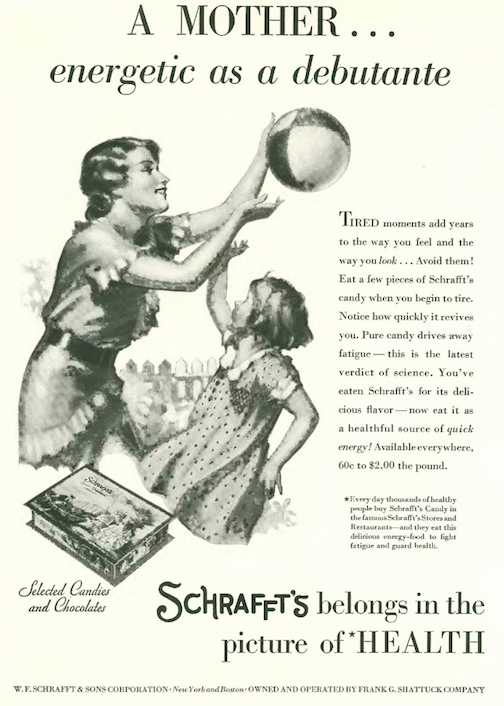
…hey, here’s an idea if you want to keep up with the little brats…eat some candy…according to Schrafft’s, it’s HEALTHY…
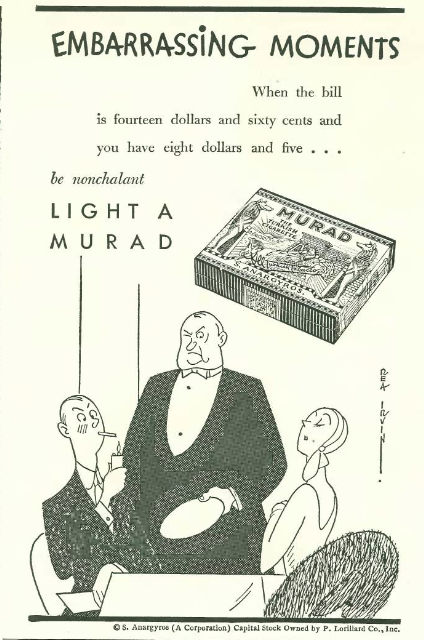
…on to our illustrators and cartoonists, another fine moment in smoking thanks to Rea Irvin…
…Ralph Barton introduced us to his latest “Hero of the Week”…
…and his news summary in graphic form…
…Helen Hokinson observed some subway etiquette…
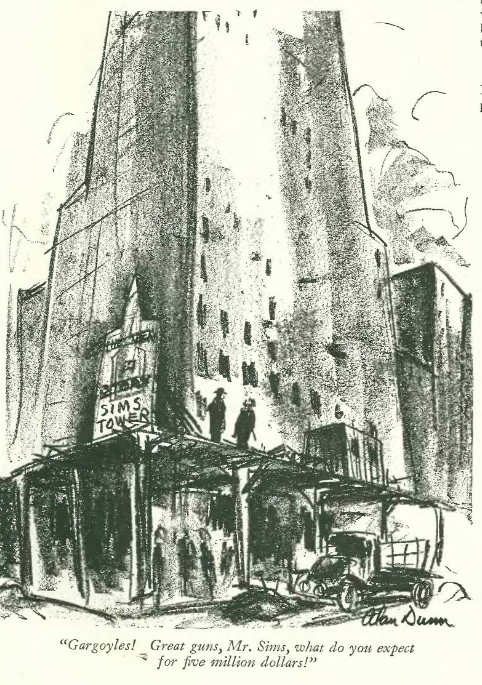
…Alan Dunn found a developer looking for some extras…
…Bruce Bairnsfather offered a study in contrasts…
…C.W. Anderson, and another example of an artist’s struggle…
…and we end with Otto Soglow and his Little King, a strip that would become a nationally syndicated hit…
When New Yorker cartoonist Peter Arno hooked up with his colleague, nightlife columnist Lois Long, it was like twisting together two sticks of dynamite.
April 18, 1930 cover by Charles Donelan, his only cover for The New Yorker. See more about the artist at the end of this post.
Married in 1927, they were the glamour couple at The New Yorker, and each played an outsized role in giving the early magazine a distinctive, cosmopolitan voice and look. Hard-drinking hell raisers, they both loved the Roaring Twenties nightlife in what seemed like an endless party. But when the party ended, so did their brief, volatile marriage.
VOLATILE COMBINATION…Peter Arno and Lois Long were the toast of The New Yorker office and the toast of the town with their office romance, marriage (in 1927), and much-publicized split. The hard-partying couple separated in 1930 and divorced the following year.
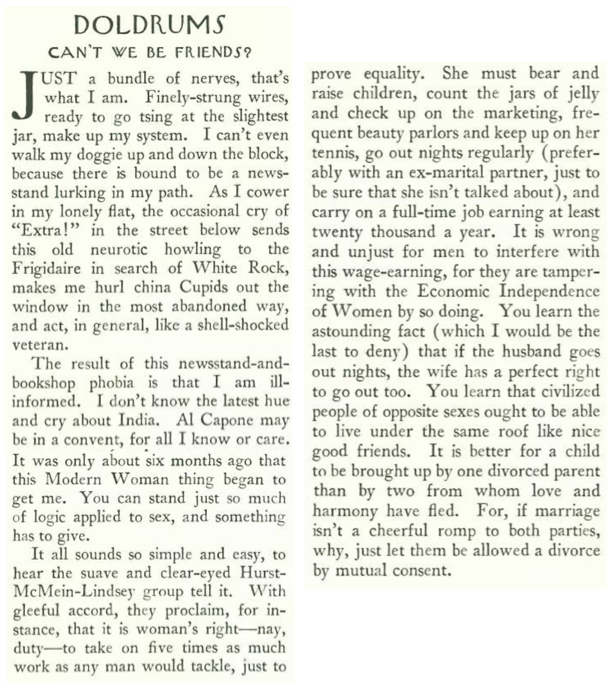
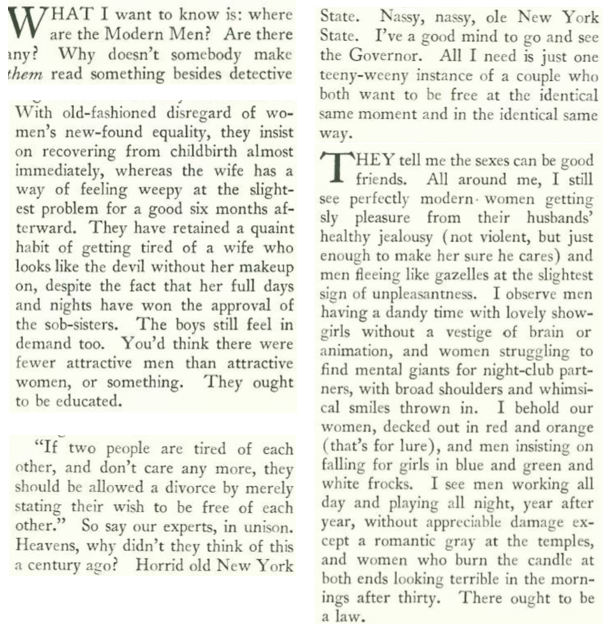
As the end of her marriage neared, the 29-year-old Long had become almost circumspect, and in a series of columns under the title “Doldrums,” she took a skeptical look at the world around her, the sad ways of the younger generation, and in this fifth installment, subtitled “Can’t We Be Friends?”, she probed the inequities of a society that encouraged women to be hard-working, super competent and attractive while men still did as they pleased (the question remains today: recall 2018, when Facebook’s Sheryl Sandberg asked women to “Lean In”).
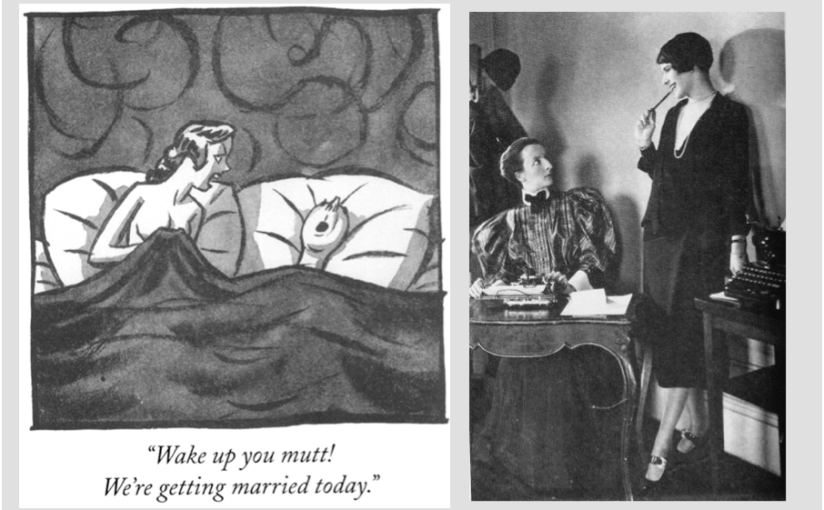
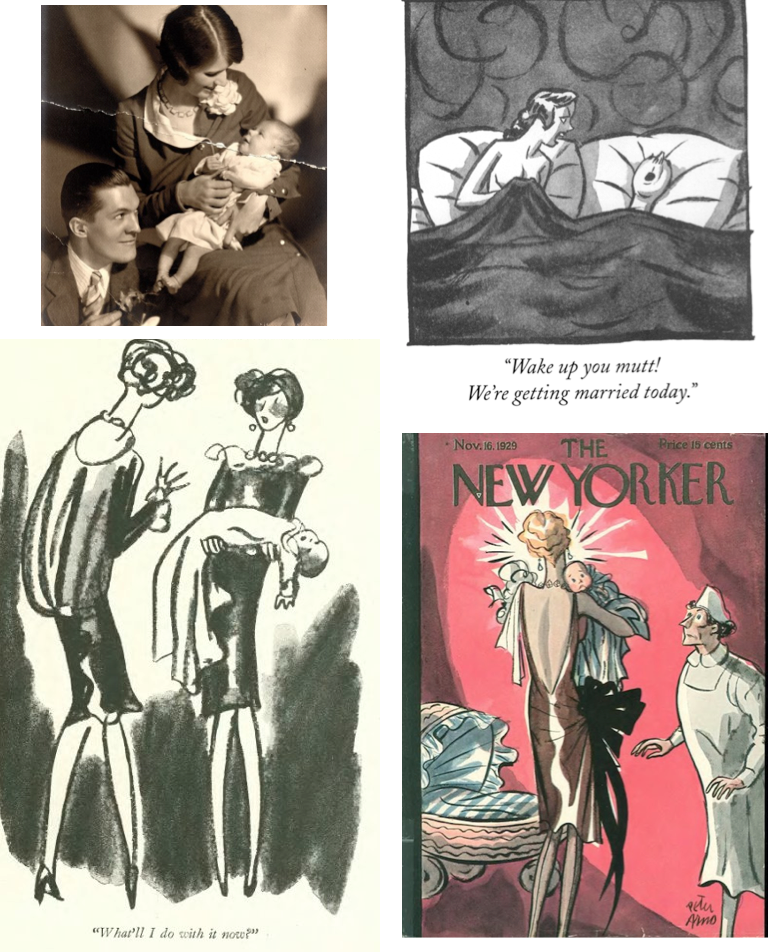
LIFE WITH LOIS…Peter Arno drew on his domestic experiences with wife Lois Long for comic inspiration. Clockwise, top left, Arno and Long with baby daughter Patricia, 1928; a wedding day wakeup call from Arno’s 1930 cartoon collection Hullabaloo; Nov. 18, 1929 cover and a Aug. 24, 1929 cartoon suggesting a lack of maternal instinct. By all accounts Long was a doting mother and grandmother.
In Vanity Fair,Ben Schwartz (“The Double Life of Peter Arno,” April 5, 2016) quotes Arno’s and Long’s daughter, Patricia (Pat) Arno, about her parents’ wild relationship: “There were lots of calls to (gossip columnist Walter) Winchell or some other columnist about nightclub fights…with my mother calling and saying, ‘Oh, please don’t print that about us,’ trying to keep their names out of the papers.”
Here’s another excerpt from Long’s “Doldrums,” asking about the state of Modern Men (apologies for the missing fifth line — “novels”)…
Long had not only given up on marriage—and apparently men for the time being—but she’d also had it with the partying life. She had put her nightlife column, “Tables for Two,” on hiatus, turning her attentions to her popular fashion column, “On and Off the Avenue,” while continuing to contribute unsigned pieces to “The Talk of the Town” and occasional pieces like “Doldrums.”
In early 1931 Arno moved to Reno, Nevada, which granted quick divorces to anyone who took up residency for five months. According to a 2016 book written by New Yorker cartoonist Michael Maslin(Peter Arno: The Mad, Mad World of The New Yorker’s Greatest Cartoonist), Arno found more trouble in Reno when newspaper publisher Neely Vanderbilt accused him of having an affair with his wife, Mary, and threatened violence against Arno. Maslin writes: “Nearly lost in the whole Arno/Vanderbilt dust-up was the end of Arno and Long’s marriage. On June 29th, Lois was granted a Reno divorce on the grounds of intolerable cruelty.” I highly recommend Maslin’s book, filled with anecdotes drawn from a fascinating life lived in some of New York’s headiest times.
Vanderbilt would also divorce his wife in 1931. Mary Weir Logan Vanderbilt was the second of his seven wives.
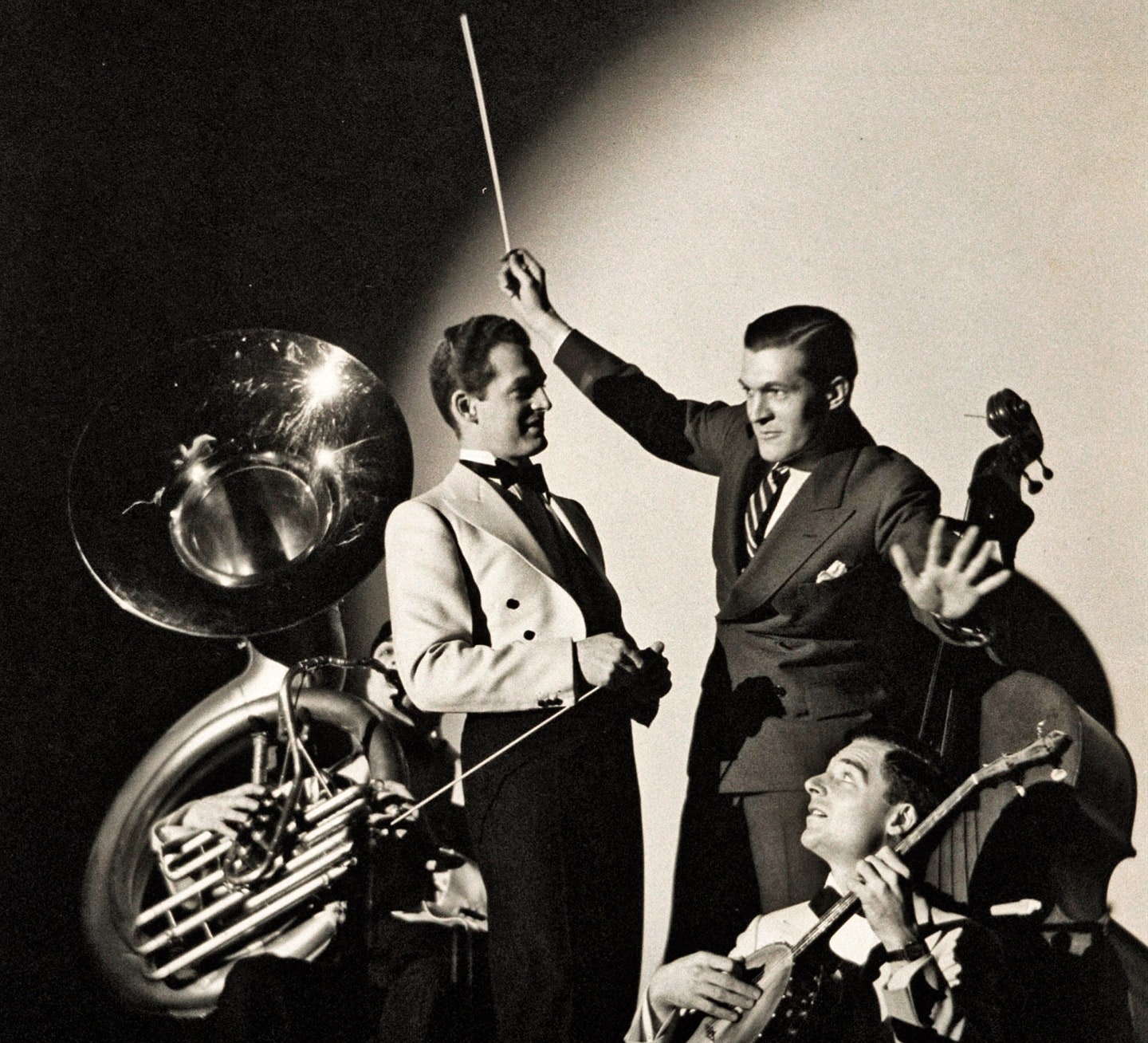
AND THE BAND PLAYED ON…On the same month as his Reno divorce (June 1931), Vanity Fair ran this photo of Arno pretending to conduct bandleader Fred Waring and two of his Pennsylvanians. (CondeNast)
Arno and Long would get joint custody of Patricia, but the child would remain living with her mother. Long had this to say about the future of her “Little Persimmon”…
* * *
A Man’s World?
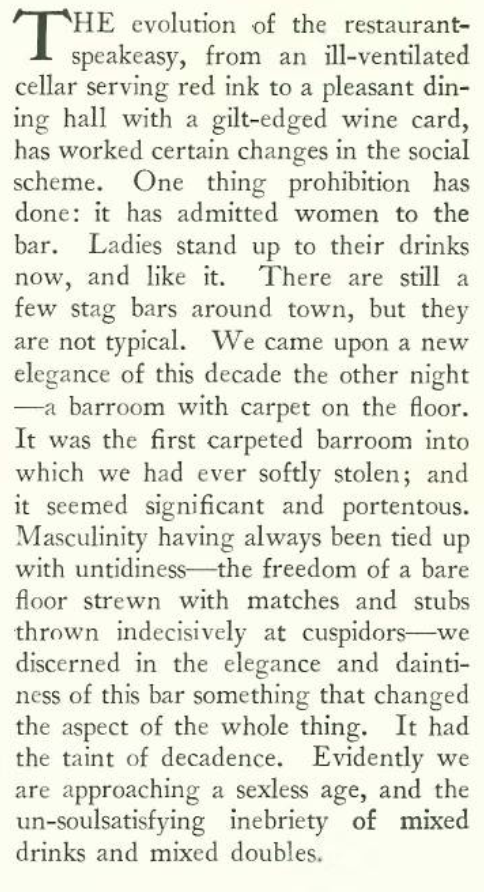
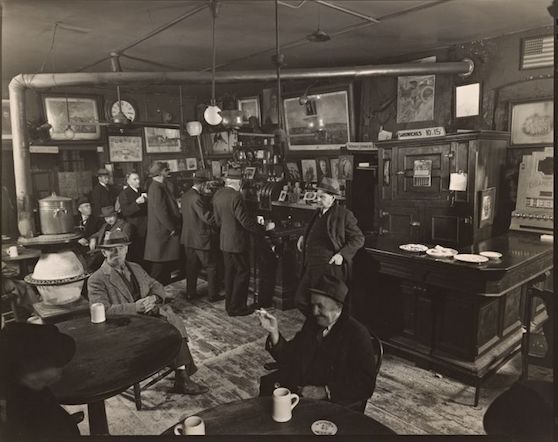
E.B. White wondered in his “Notes and Comment” after encountering a barroom (had to be a speakeasy) with a carpeted floor…
KEEPING IT REAL…Patrons relax at McSorley’s Old Ale House near Cooper Square, circa 1935. (ephemeralnewyork.wordpress.com)
* * *
Long Before Social Distancing
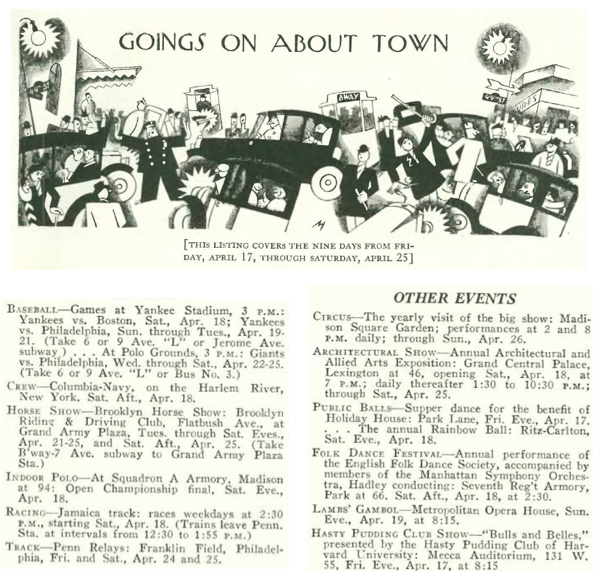
There were many diversions around the old city, including baseball games and the circus at Madison Square Garden…some clips from the “Goings On” section…
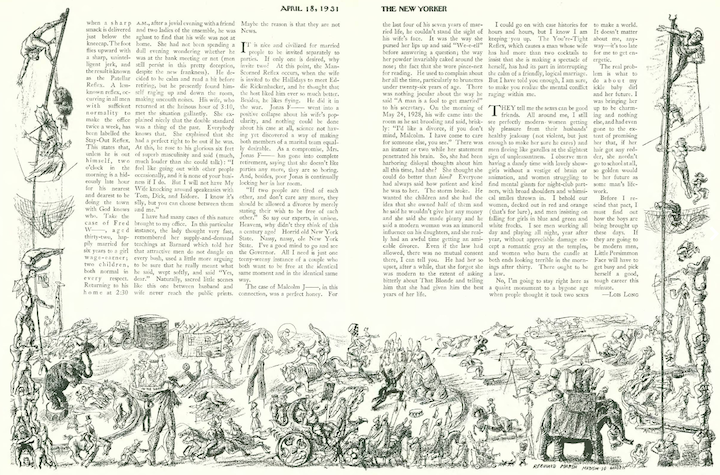
…Reginald Marsh marked the arrival of the circus with a drawing that encircled pages 20-21…here is a detail…
and how the whole thing appeared…
* * *
The Twain Never Met
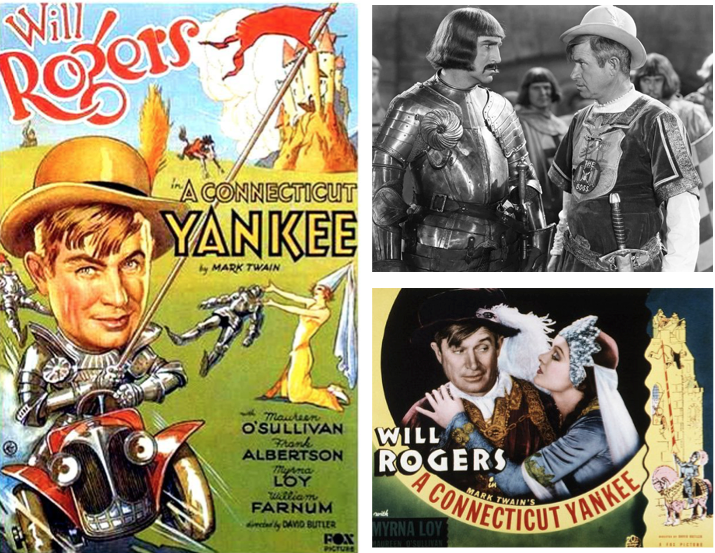
Once a star attraction with the Ziegfeld Follies, comedian Will Rogers was also finding success on radio and in the films. His latest talkie, A Connecticut Yankee, referenced Mark Twain’s 1889 novel, A Connecticut Yankee in King Arthur’s Court, in name only, as noted by reviewer John Mosher. But then again, Rogers himself was not a Yankee, but an Okie.
MARK WHO?…Inspired by a Mark Twain novel, 1931’s A Connecticut Yankee was mostly a Will Rogers vehicle. Top right, Sagramor (Mitchell Harris) confronts the “Connecticut Yankee” Hank Martin (Will Rogers). Below, the queen (Myrna Loy) tries to make nice with Hank. (IMDB)
* * *
From Our Advertisers
If you had the time but not the means to travel to Europe (it was the Depression, after all), you might have considered a trip to “Old Québec,” just 500 miles up the road from New York City, although in those days you likely took the train, or possibly a boat, since routes between cities were still a uneven patchwork of roads…
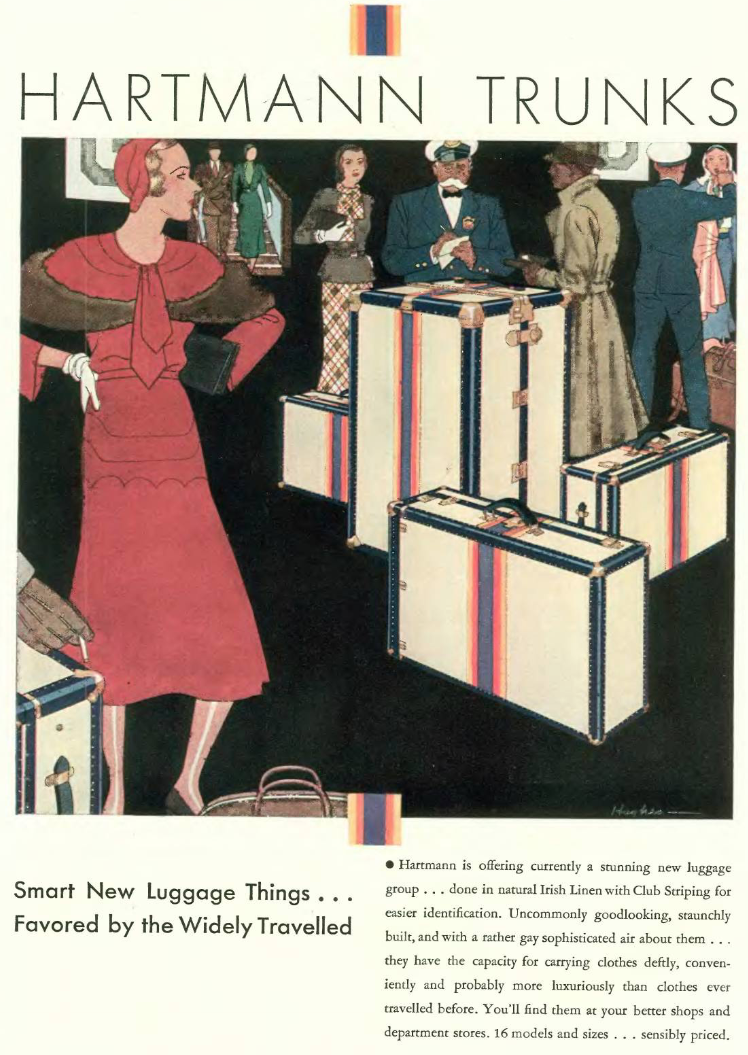
…and you could look stylish at the station or the boat dock with these handsome Hartmann trunks…
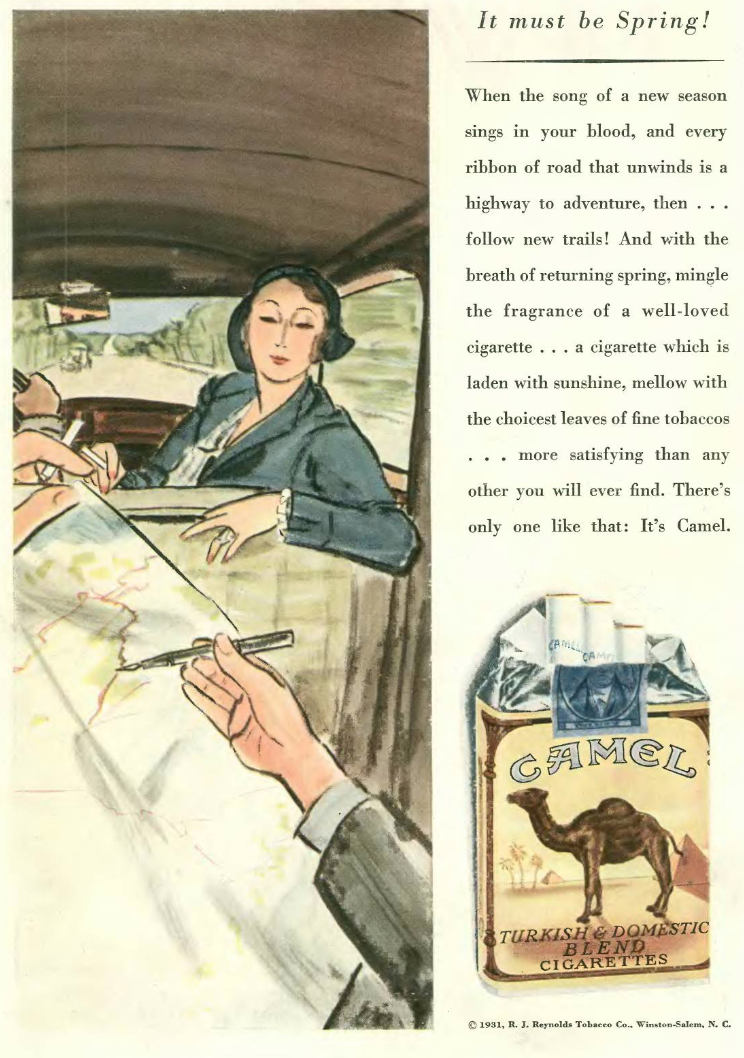
…these spring travelers opted for a car, filled with the aroma of burning tobacco…
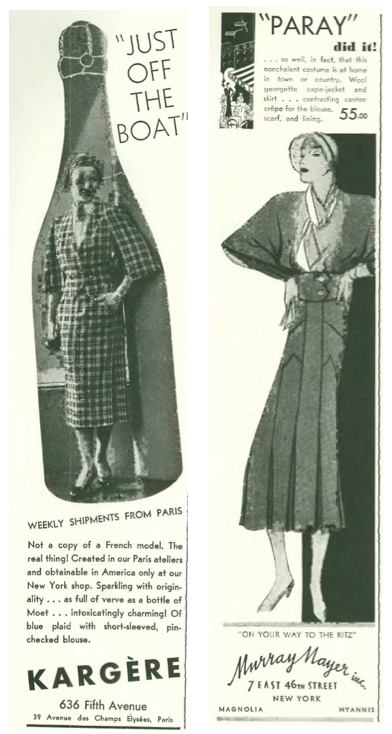
…spring was also time for the latest Paris fashions, and Macy’s suggested you could “put one over on Paris” by donning a garment spun from from DuPont’s miracle fiber, Rayon…
…however, those operating the finer dress shops would never consider letting any synthetic hang in their windows, or touch their skin for that matter, and proudly proclaimed the latest shipments from Paris…
…those shopping for Paris fashions might have consulted Majorie Dork to get slim in all the right places…
…on to our illustrations and cartoons, we have two by Ralph Barton, his “Hero of the Week”…
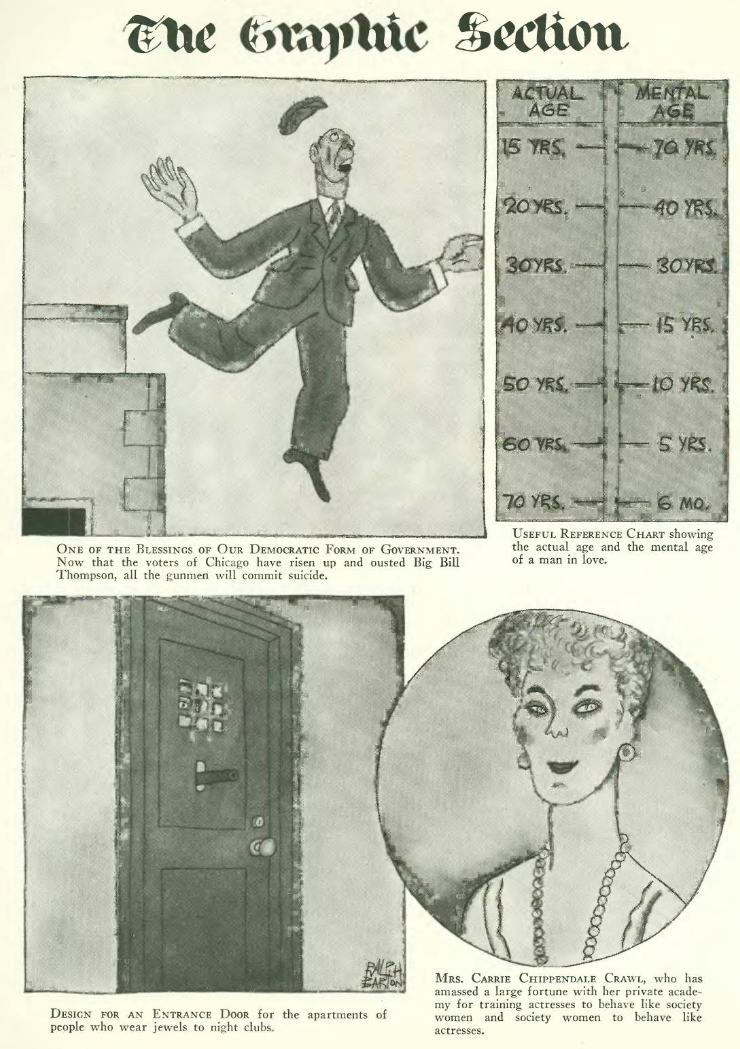
…and his “Graphic Section” take on the week’s news…
…Gardner Rea kicks off our cartoons with a look at the machine age…
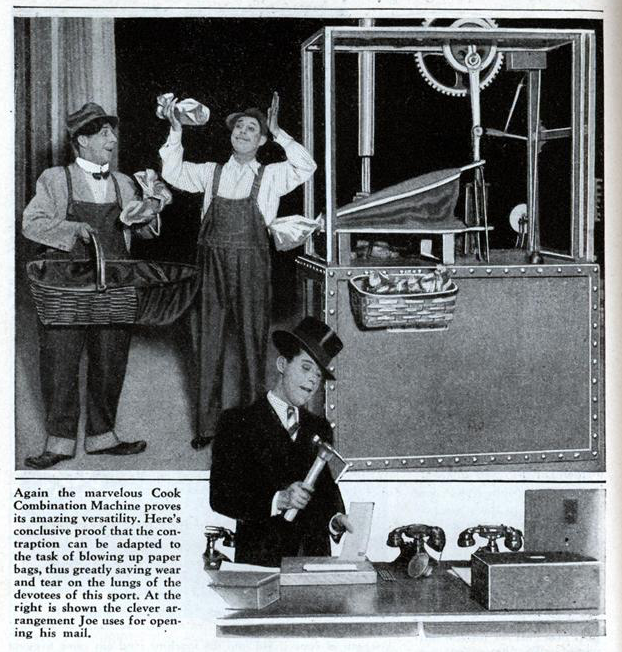
…Rea’s cartoon referred to the popular vaudeville comedian Joe Cook, who was known for his demonstrations of needlessly complex machines…here he is featured in the September 1931 issue of Modern Mechanics magazine…
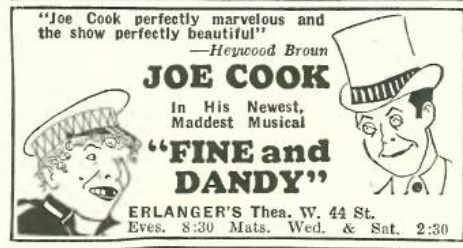
…Erlanger’s Theatre advertised Cook’s “Newest, Maddest Musical” in the back pages of TheNew Yorker…
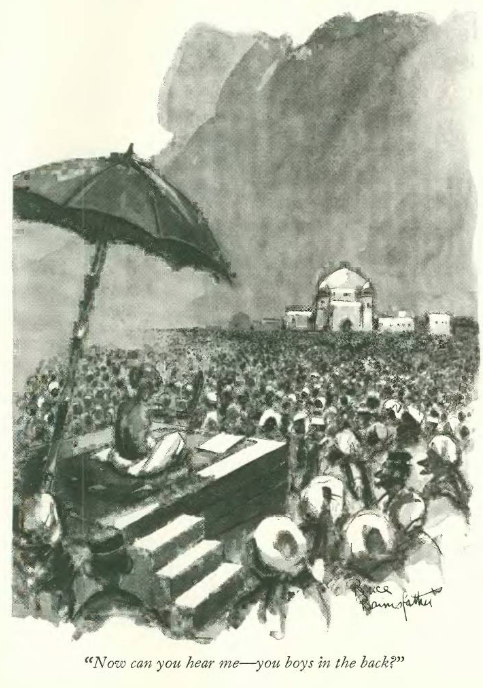
…it’s not often you find Mahatma Gandhi as the subject of a cartoon…this one is by Bruce Bairnsfather…
…a unique form of stage fright was illustrated by John Floherty Jr…
…Jack Markow gave us a little night music…
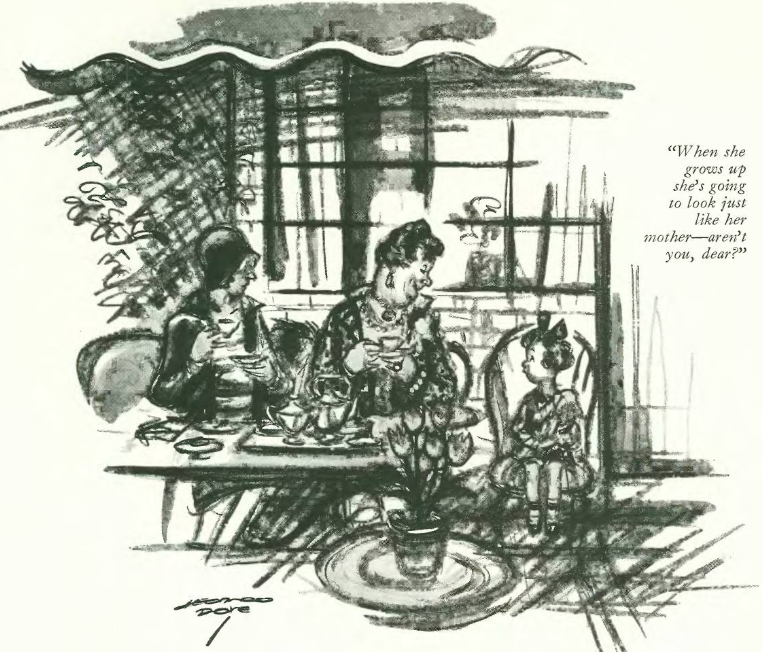
…Leonard Dove and the possibly reluctant apple of someone’s eye…
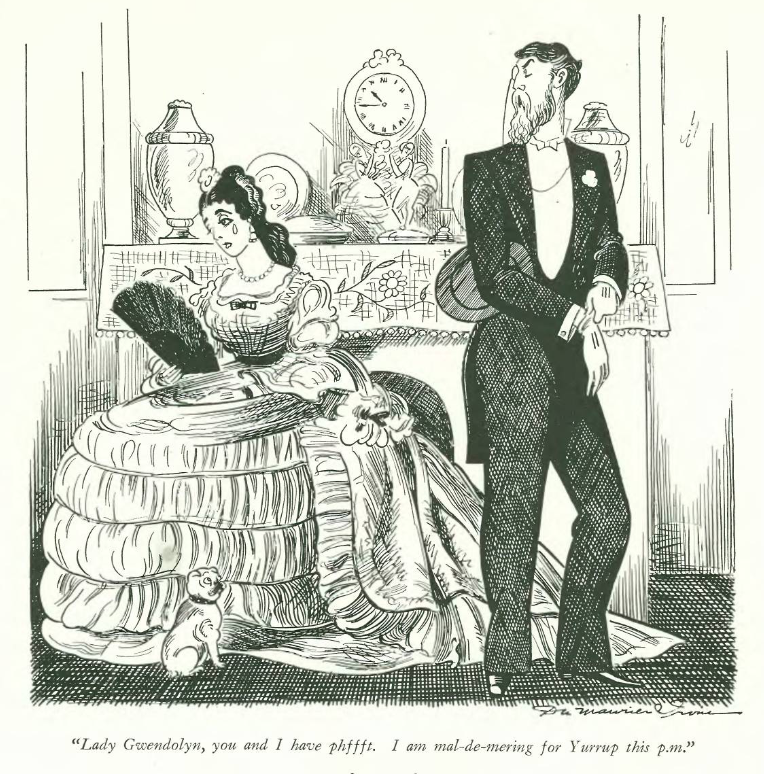
…I would love to know more about this Rea Irvin cartoon, which seems to be a parody of a cartoon from the British Punch…
…John Reehill rendered a portentous moment at the barbershop…
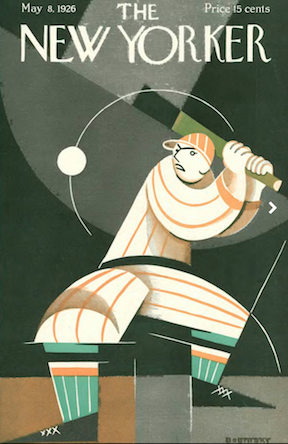
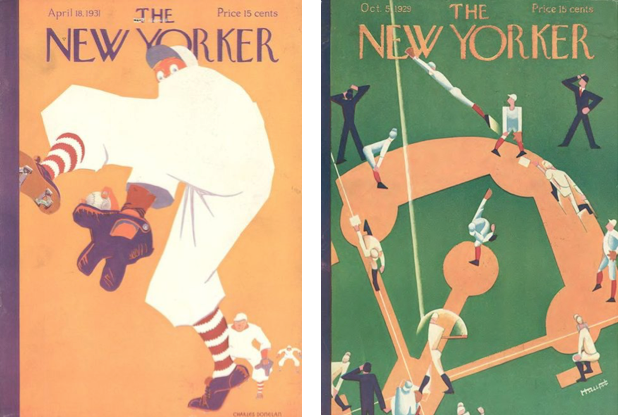
…and finally, today’s cover (bottom left) by Charles Donelan caught my eye because the early New Yorker rarely noted the existence of baseball, except in the events section. Up to this point there had been just two covers featuring baseball: May 8, 1926, by Victor Bobritsky…
…and, at right, the Oct. 5, 1929 cover by Theodore Haupt...
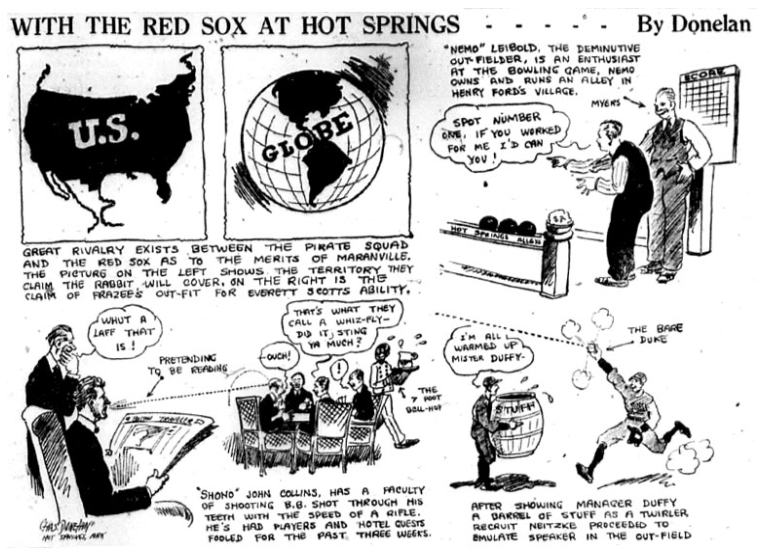
…as for the cover on the left, it would be Charles Donelan’s only New Yorker cover…throughout his career he would illustrate for various publications, including the sports section of the Boston Traveler (this is from the March 21, 1921 edition)…
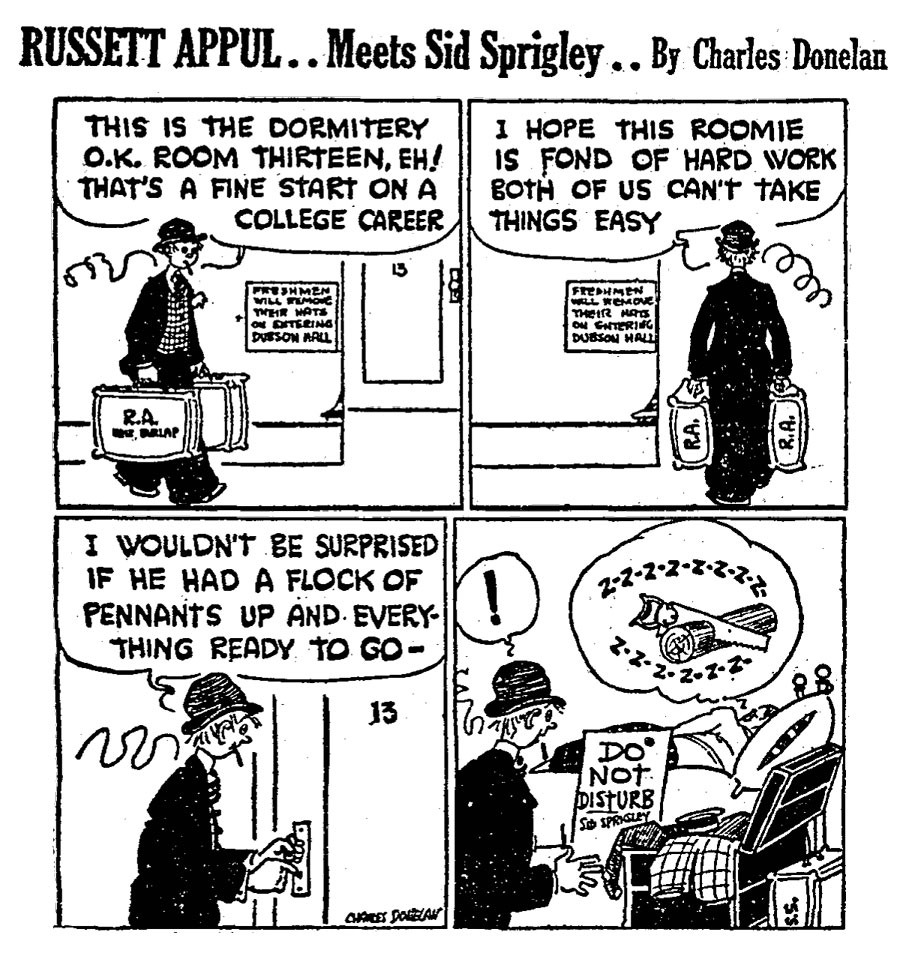
…and a comic strip featured in the Boston Globe called “Russett Appul” (this is from Oct. 11, 1929)…Donelan also performed Russett and other characters on Boston radio stations and stage shows…
The early New Yorker loved two things about modern life — college football and air travel. Tragedy would bring them together on the last day of March 1931.
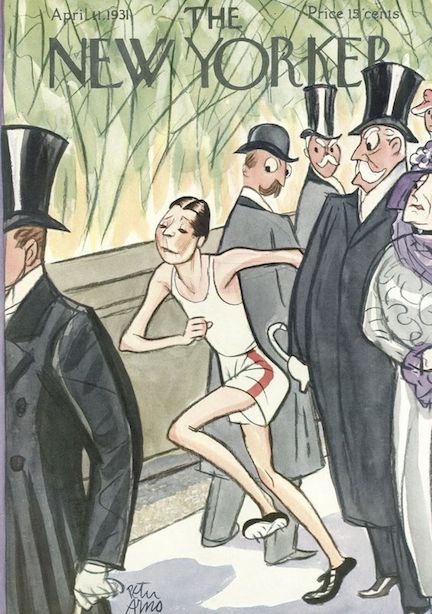
April 11, 1931 cover by Peter Arno. A brilliant cover, contrasting the skinny, lightly clad runner with one of Arno’s stock characters from the Taft era—a millionaire with a walrus mustache.
The New Yorker’s sportswriter John Tunis was especially keen on Knute Rockne’s Notre Dame football team, which played an annual rivalry game against Army at Yankee Stadium. Tunis’s colleague, E.B. White, was the flying enthusiast, never missing a chance to hop aboard a plane and marvel at the scene far below. In the Nov. 30, 1929 issue, White was eager to join passengers on a test of the Fokker F-32, and suggested that flying was becoming so routine that one could be blasé about its risks:
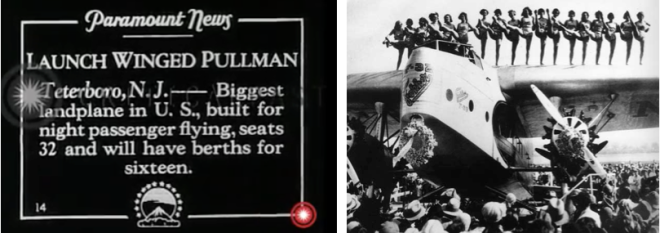
WHAT COULD POSSIBLY GO WRONG?…Title card from a silent Paramount newsreel reporting on a November 1929 test flight of the Fokker F-32 at Teterboro, possibly the same flight enjoyed by E.B. White. At right, a celebration of the plane’s arrival in Los Angeles. (YouTube/petersonfield.org)
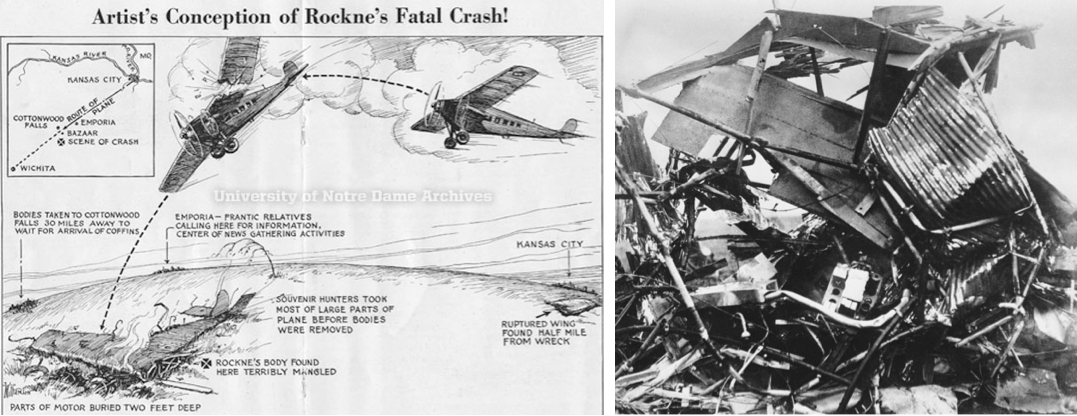
All of that exuberance came crashing down in a Kansas wheat field on March 31, 1931. It was Rockne’s fame—which The New Yorker and countless other magazines and newspapers helped to spread—that put the coach on a TWA flight to Hollywood, where director Russell Mack was filming The Spirit of Notre Dame. Rockne stopped in Kansas City, where he visited his two oldest sons, before boarding a Fokker F-10 destined for Los Angeles. About an hour after takeoff one of the airplane’s wings broke to pieces, sending Rockne and seven others to their deaths.
(University of Notre Dame) click image to enlarge
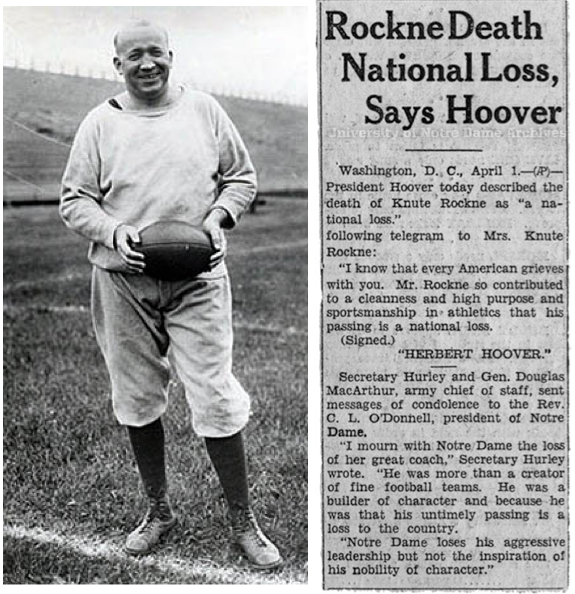
The accident rattled E.B. White. In his April 11, 1931 “Notes and Comment,” White pondered the eulogies Rockne received from President Herbert Hoover and others, calling into question the fame a college football coach could attain while achievements of college faculty go unheralded. White also seemed to have lost some of his faith in the progress of aviation, suggesting that the autogiro (a cross between an airplane and a helicopter) might be the safest way to proceed into the future:
Knute Rockne, in undated photo. (University of Notre Dame)
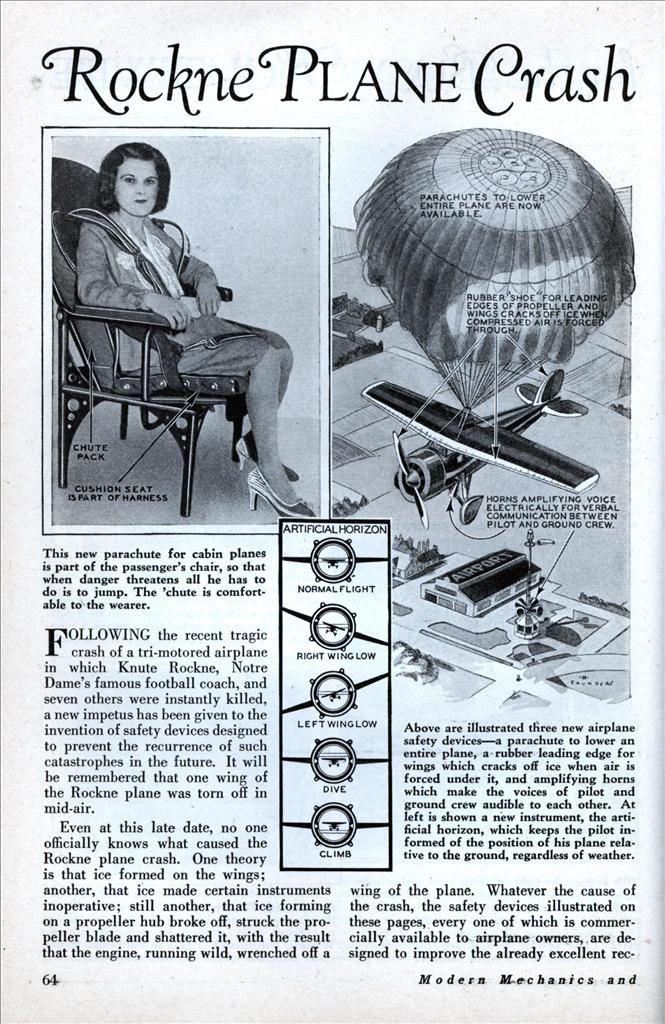
Ironically, it was thanks to Rockne’s fame that the aviation industry began to get serious about safety. A public outcry over the crash led to sweeping changes in everything from design to crash investigation, changes that have helped make flying one of the safest forms of transportation today.
SAFETY FIRST…The crash that claimed the life of Knute Rockne resulted in a public outcry for greater safety in the air. This article in the July 1931 issue of Modern Mechanics suggested parachutes for passengers and for the plane itself. (modernmechanix.com)
As for the cause of crash, it was determined that the plywood covering one of the Fokker F-10’s wings had separated from the wing’s supporting structure — the wing had been bonded together with a water-based glue that likely deteriorated as the result of rainwater seeping into the wing.
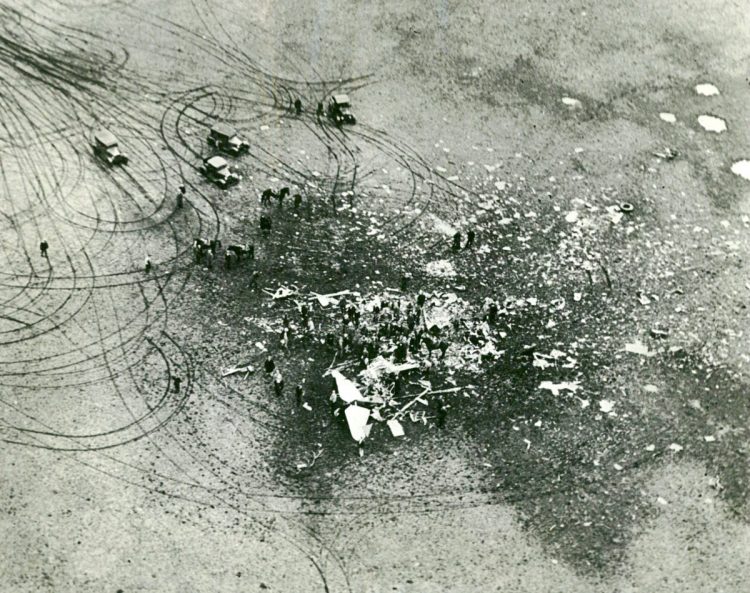
Unfortunately, the investigation into the crash was hampered by souvenir-seekers, who carried away most of the large parts of the plane even before the bodies were removed. So much for honest Midwestern values, at least in this case.
(clickamericana.com)
* * *
Give My Regards
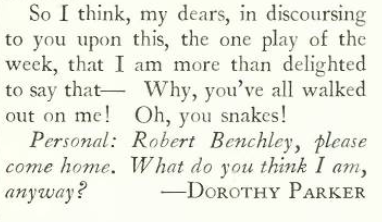
Back in Manhattan, Dorothy Parker was writing a eulogy of her own, bidding farewell to her interim role as theater critic. Parker subbed for Robert Benchley during his extended European vacation, and often noted that it was just her luck to be stuck with a string of plays that likely comprised one of Broadway’s worst spring line-ups.
In an earlier column Parker had alluded to the fact that Benchley was in Europe, no doubt staying part of the time with their mutual friends, Gerald and Sara Murphy, at their fashionable “Villa America” at Cap d’Antibes on the French Riviera.
SIGHT FOR SORE EYES…Dorothy Parker was glad to have her old friend Robert Benchley back at the theater desk, she having endured a “rotten time” reviewing a long string of bad plays. (dorothy parker.com)
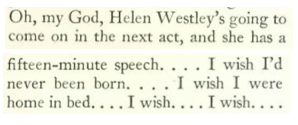
Hopeful to review at least one play of redeeming value before her friend returned, Parker was to be sorely disappointed as evidenced in her final review column. Of the terribly dated Getting Married, a play written by George Barnard Shaw way back in 1908, Parker was more afraid of Getting Bored, especially when Helen Westley (portraying Mrs. George Collins) entered the stage to deliver a 15-minute monologue…
Things got no better with the second play Parker reviewed, Lady Beyond the Moon, a “dull, silly, dirty play” that was frequently interrupted by various sounds from the restless audience — “comments, titters and lip-noises…” The play must have been terrible, because it closed after just fifteen performances.
As for the third play Parker reviewed, the misnamed Right of Happiness, the audience had every excuse “for displayed impatience,” yet conducted itself “like a group of little lambs.” Right of Happiness, observed Parker, “fittingly concluded the horrible little pre-Easter season…” The play closed after just eleven performances.
* * *
Turning Up the Heat
If anyone thought he had a right to happiness it would have been New York Mayor Jimmy Walker, who was preparing to face a grilling from Judge Samuel Seabury. Walker loved the nightlife and left most of his duties to a bunch of Tammany Hall cronies whose activities drew the attention of reformers like Seabury and Gov. Franklin D. Roosevelt. In his “A Reporter at Large” column, Morris Markey observed:
* * *
Walking Tall
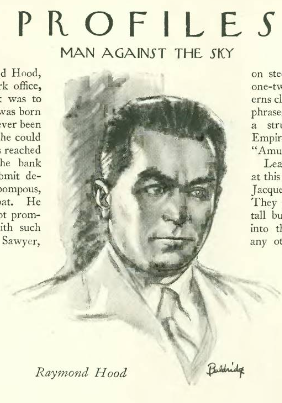
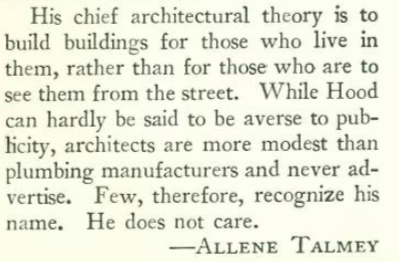
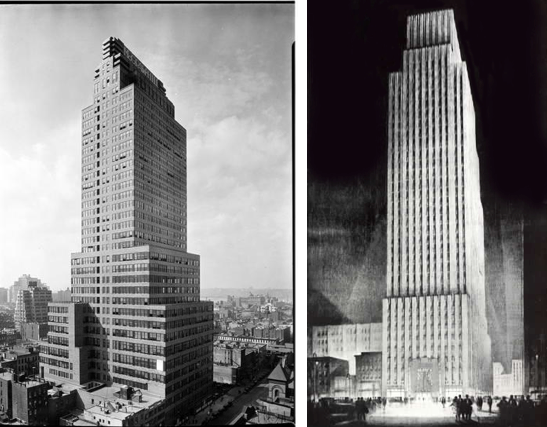
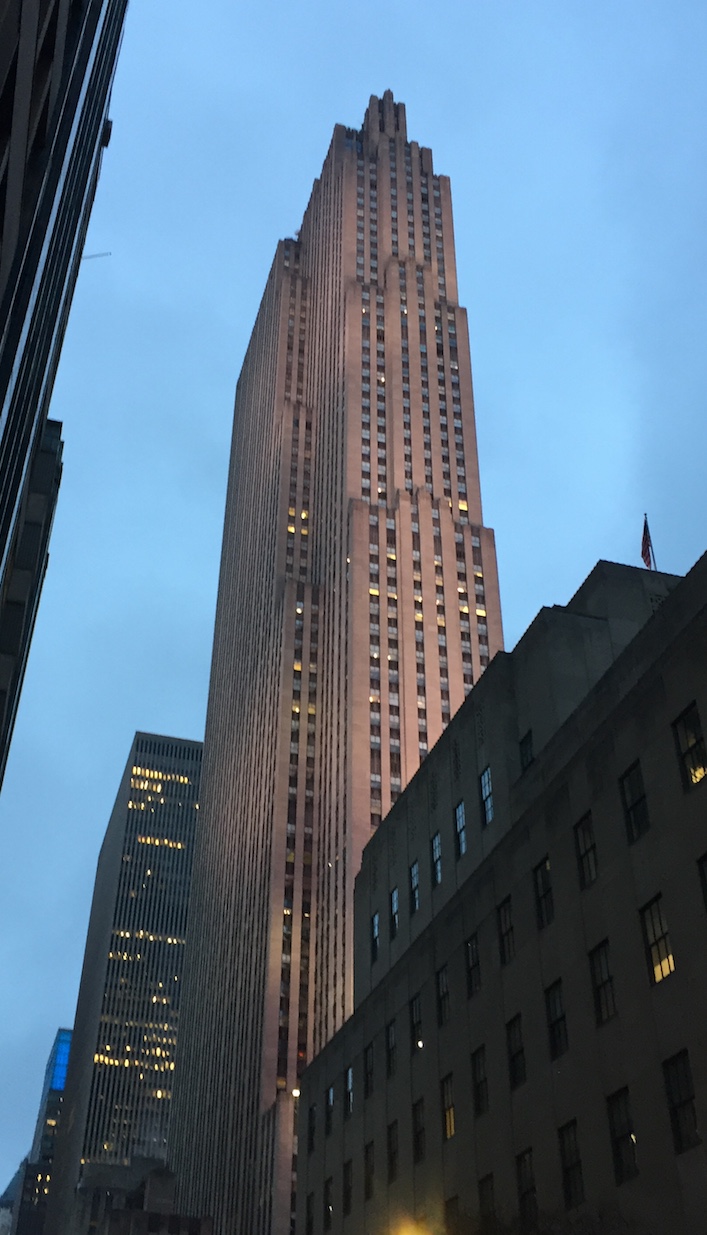
Raymond Hood (1881-1934) might have been short in stature, but he stood tall among the architects of some of New York’s most iconic skyscrapers — Rockefeller Plaza, American Radiator, Daily News, McGraw Hill (Sadly, both his career and his life were cut short when he died in 1934 at age 53 from complications related to rheumatoid arthritis). Allene Talmey, a former reporter for the New York World and managing editor of Conde Naste’s original Vanity Fair, gave Hood his due (see brief excerpt) in a New Yorker profile, with a portrait by Cyrus Baldridge:
LANDMARKS…The 1931 McGraw-Hill Building and the 1929-30 Daily News Building. (MCNY/Wikipedia)And of course, Hood’s 30 Rock. I took this last December before everything shut down.
* * *
From Our Advertisers
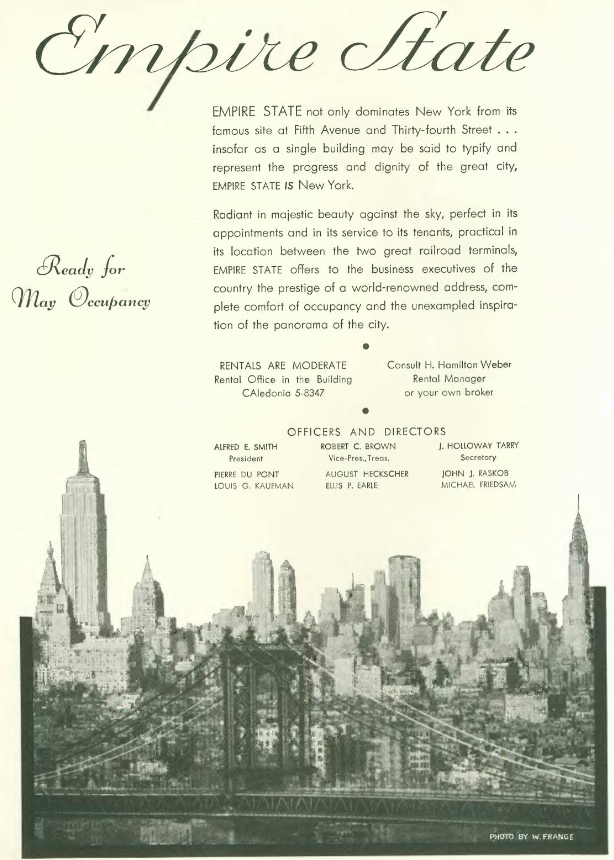
Speaking of big and tall, Al Smith and his gang took out this full page ad to announce the availability of office rentals in the world’s tallest building. Thanks to the Depression, only 23 percent of the available space in the Empire State Building was rented out in its first year. Thankfully, the building was also an instant tourist attraction, with one million people each paying a dollar to ride elevators to the observation decks in 1931, matching what the owners made in rent that year…
…for those who could afford more than a dollar ride up the Empire State’s elevators, the cooling breezes of coastal California beckoned…
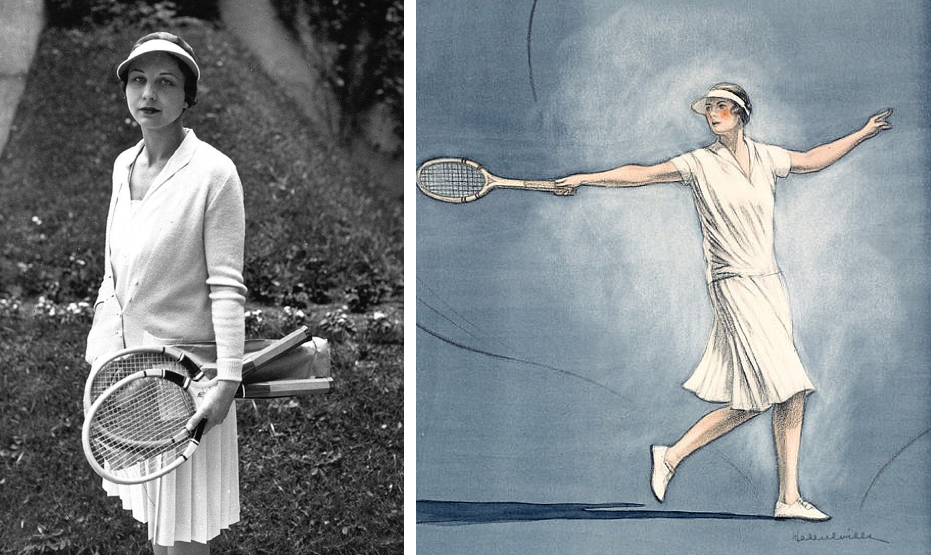
…those with even greater means and leisure time could hop on a boat to Europe…note that you could still cruise on the Olympic, the Titanic’s sister ship…also note that the illustration of the posh couple was rendered by Helen Wills (1905-1998), better known at the time as the top women’s tennis player in the world…
HELEN, MEET HELEN…American tennis star Helen Wills in 1932, and a self-portrait from the same year. Wills was the world’s top women’s tennis player for nine of the years between 1927 and 1938. She played tennis into her 80s, and sketched and painted all of her life. (Wikipedia/invaluable.com)
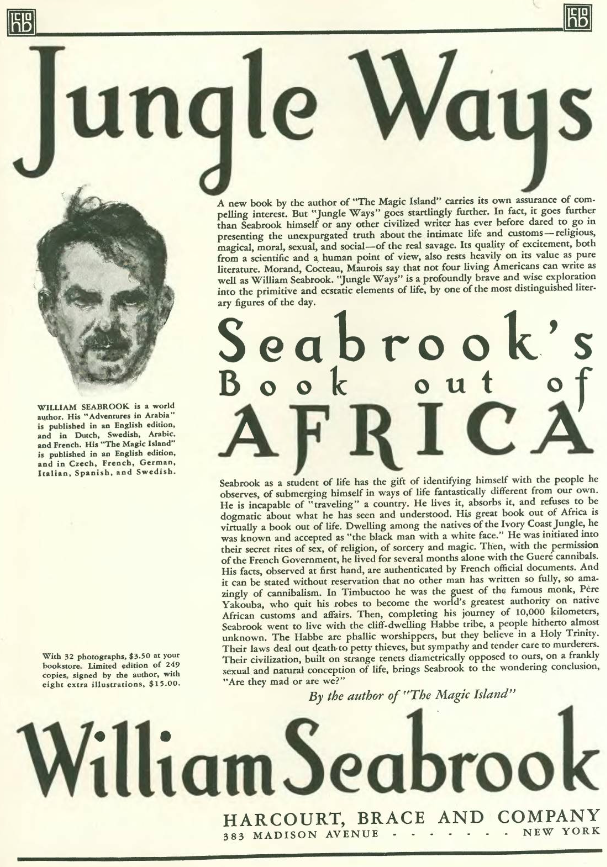
…Guess who’s coming to dinner?…hopefully not William Seabrook, who had just released his latest book on his adventures as an explorer…in Jungle Ways, Seabrook devoted an entire section to cannibalism in the French Sudan and how to cook human flesh; apparently he tried some himself…but then again by most accounts he was a weird dude who dabbled in occultism and possibly believed in zombies…Seabrook’s 1929 book, The Magic Island, is credited with introducing the concept of zombies to popular culture…
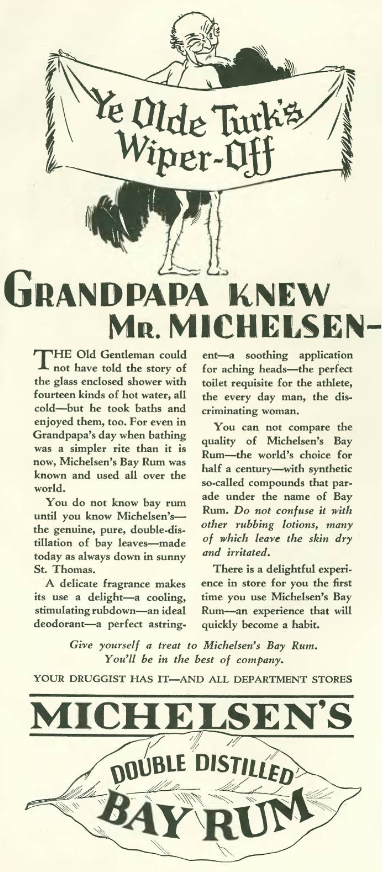
…speaking of weird, an ad for Michelsen’s “Bay Rum” body rub…
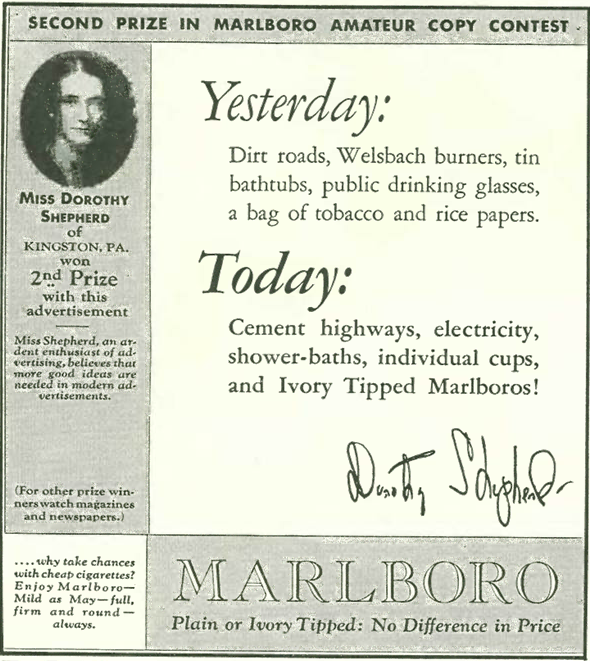
…when Marlboro cigarettes were introduced in the mid-1920s, they were marketed as “luxury” cigarettes and sold mostly at resorts and hotels. In the late 1920s, however, they were marketed as a “lady’s cigarette,” with ads in the New Yorker featuring handwriting and penmanship contests to promote the brand. This ad from November 1930 featured the “second prize” winner of their amateur copywriting contest…
…it appears marketing tactics changed a bit in 1931…still the dopey contest, but instead of real photos of winners, like the schoolmarmish “Miss Dorothy Shepherd” above, this ad featured a rather tawdry image of a model, more gun moll than schoolmarm…
…on to our cartoonists…Ralph Barton, who was with The New Yorker from Day One, had been increasing his contributions to the magazine after a notable absence from spring 1929 to summer 1930…beset by manic-depression, he would take his own life in May 1931, so what we are seeing are Barton’s last bursts of creativity before his tragic end, reviving old favorites like “The Graphic Section”…
…Barbara Shermund entertained with some parlor room chatter…
…Leonard Dove looked in on a couple of frisky old duffers…
…William Crawford Galbraith, and a crashing bore…
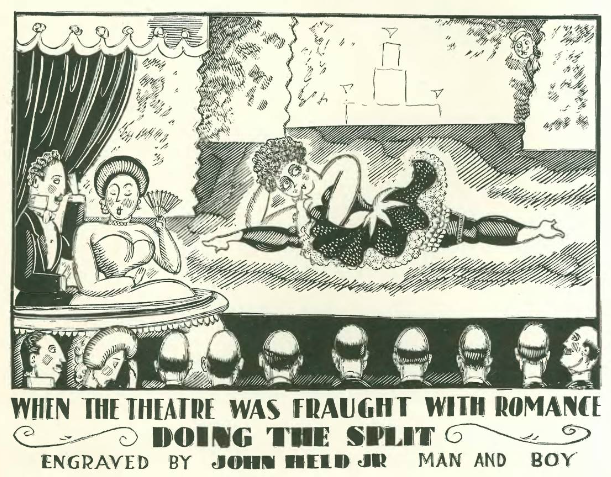
…John Held Jr gave us one of his “naughty” engravings…
…and two by our dear Helen Hokinson, stuck in traffic…
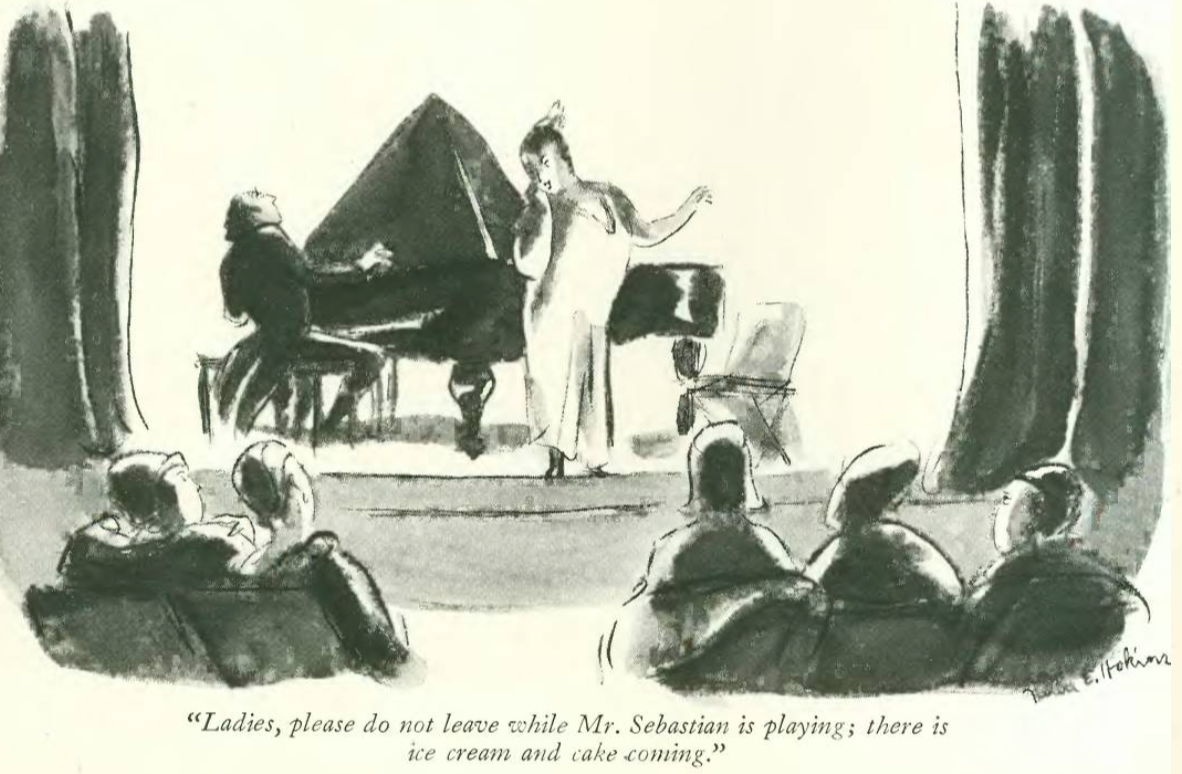
…and enjoying cake and ice cream, with a dab of culture…
“Everyone in this life draws bad cards with the good. The great trouble with most of us is that we do not know when to discard quickly,” observed New York Mayor Jimmy Walker.
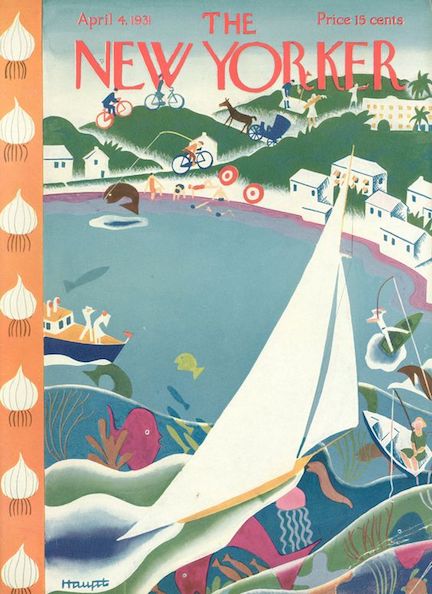
April 4, 1931 cover by Theodore Haupt.
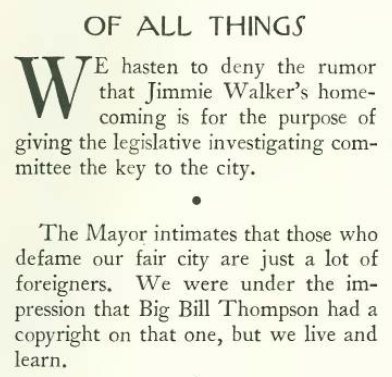
Signs that the first bad card was being turned were apparent in the April 4, 1931 edition of The New Yorker. In his weekly collection of quips — “Of All Things” — Howard Brubaker suggested that Walker — known for his frequent trips and general lack of attention to governance — had a different sort of homecoming awaiting his return from California…
…Walker was no doubt hobnobbing with the Hollywood crowd back in the Golden State…the mayor loved donning fine attire (thus the nickname “Beau James”) and enjoyed throwing lavish events for famous people…
MIGNIGHT MAYOR was one of the many nicknames New Yorkers bestowed on Mayor Jimmy Walker, known for his love of nightlife, fine clothes, and beautiful people (another nickname was “Beau James”). Although he was married at the time, he conducted a very open affair with actress Betty Compton (left), who later became his wife. At right, in his element, Walker (center) accompanies actress Colleen Moore to the October 1928 premiere of her film, Lilac Time. (IMDB/konreioldnewyork.blogspot.com)
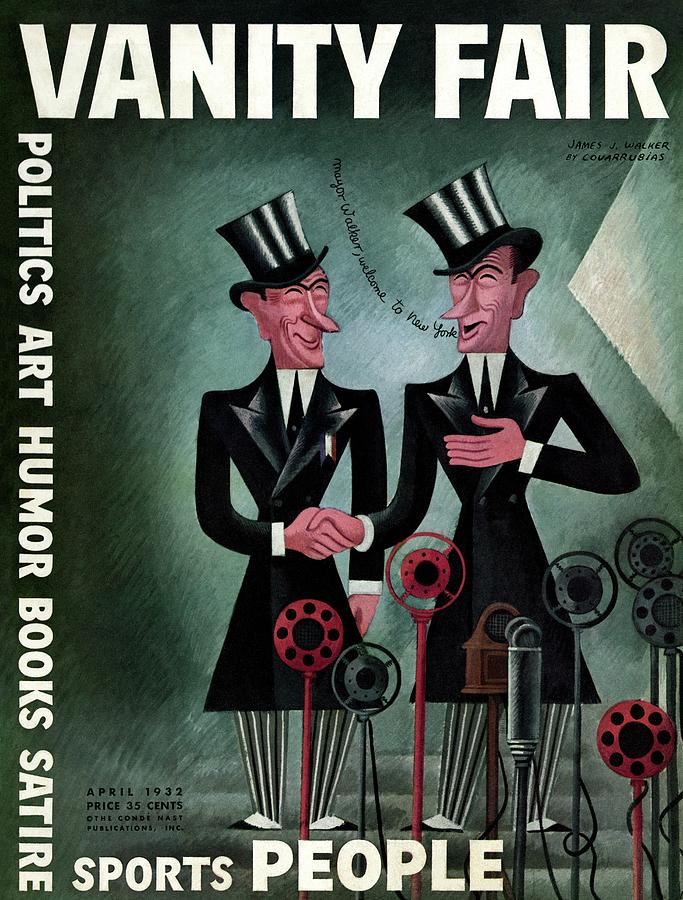
…which made him an easy target for parody, such as this 1932 Vanity Fair cover, where the mayor even welcomes himself to the city…
(Conde Nast)
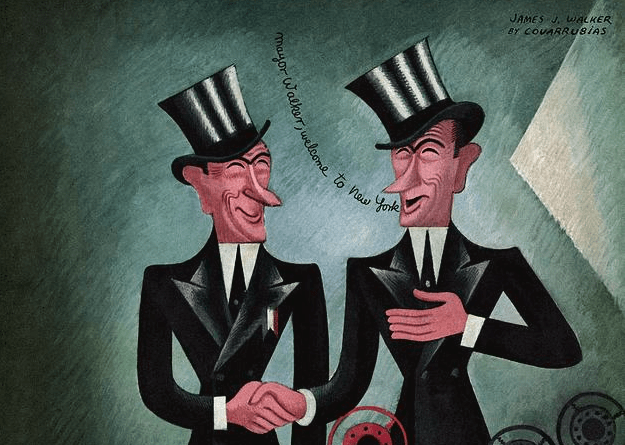
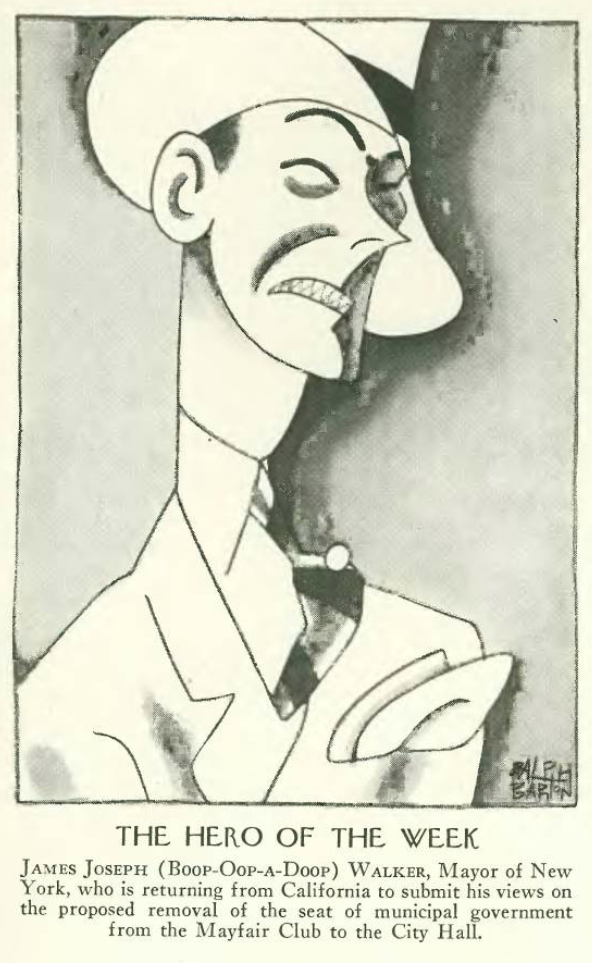
…Ralph Barton revived his “Hero of the Week” feature to welcome the mayor back to the city…Barton alluded to the fact that Walker preferred conducting his office outside of the official confines:
Walker (1881-1946) made a far more interesting personality than an effective mayor. When he took office in 1926 he proved to be a terrible administrator, partying at speakeasies late into night, sleeping till noon, and leaving city matters (except the lavish ceremonies) to Tammany Hall cronies. This didn’t seem to bother voters when the economy boomed in the 1920s, and indeed they re-elected him by an overwhelming margin in 1929.
The 1929 market crash quickly changed things. The Roaring Twenties abruptly ended, and with people losing their jobs (and fortunes), the mayor’s antics didn’t seem so amusing anymore. Reform was in the air, and leading the charge was Gov. Franklin Roosevelt, who was no fan of Walker’s.
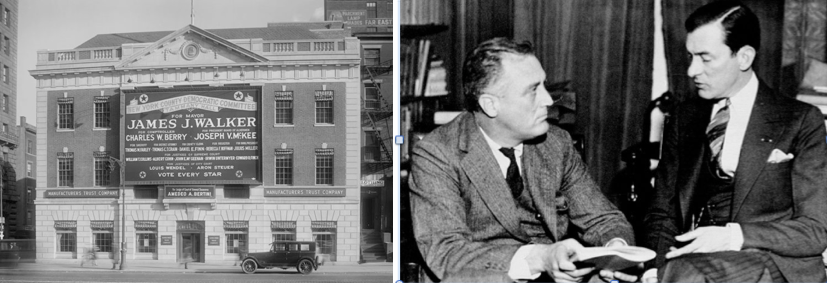
IF LOOKS COULD KILL…Gov. Franklin D. Roosevelt meets with Mayor Jimmy Walker in conference at Roosevelt’s home on E. 65th St. in December 1928; at left, campaign banner for Walker on Tammany Hall, 4th Avenue and 17th Street, Oct. 28, 1929. Walker was a product of the Tammany Hall political machine, and much of the mayor’s backroom dealings were conducted there, as well as at various speakeasies and nightclubs. (NYC Municipal Archives/NY Daily News)
Investigations into corruption in Walker’s administration landed Walker before an investigative committee of led by Judge Samuel Seabury in 1931…
IN THE COLD LIGHT OF DAY…Mayor Jimmy Walker takes the stand in the New York County Courthouse on May 25, 1932, to answer questions from Judge Samuel Seabury (left). Thousands of New Yorkers showed up to cheer the mayor when he entered the courthouse, but those cheers soon became jeers as details of the administration’s corruption were made public. (NY Daily News).
…Mayor Walker resigned the following year and fled to Europe, where he married his mistress, Betty Compton (1904-1944) in Cannes, France, on April 19, 1933. We will revisit this tale in later issues…
SEE YA…
* * *
On the Lighter Side
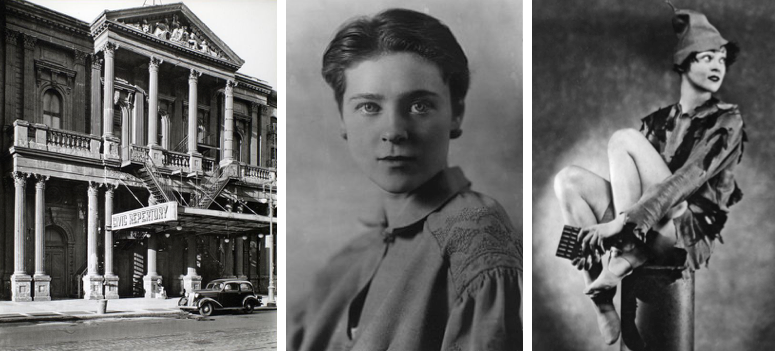
“The Talk of the Town” included this note about the play Peter Pan, which was being staged at the Fourteenth Street Theatre. Much was made of the wizardry that enabled actors to float above the audience.
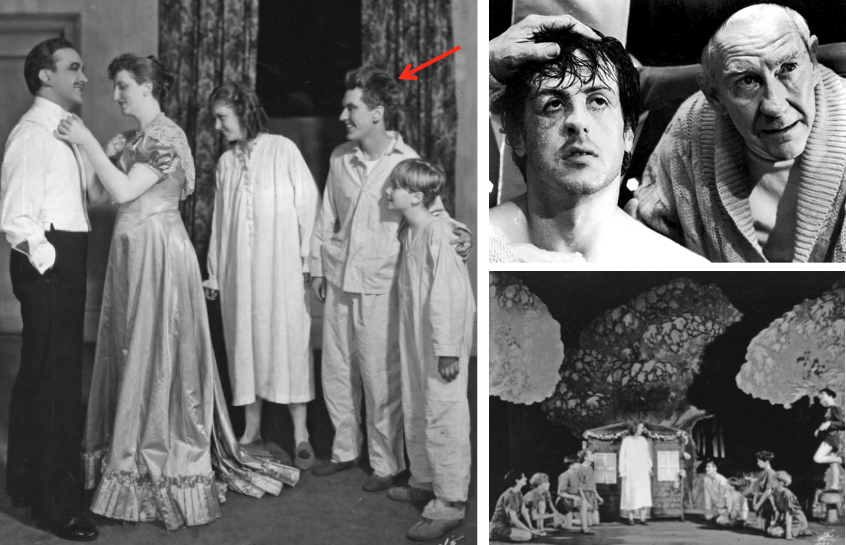
Eva Le Gallienne (1899-1991), who portrayed the title character, made the theatre home of her stage company in 1926, and renamed it the Civic Repertory Theatre. Le Gallienne played the role of Peter Pan 129 times, and although the flying effects were quite hazardous, she said she “took to flying like the proverbial duck to water.”
NO STAGE FRIGHT HERE…The Fourteenth Street Theatre, originally constructed in 1866, was dubbed the Civic Repertory Theatre when Eva Le Gallienne (center) made it the home of her stage company. Le Gallienne played the role of Peter Pan 129 times on the theatre’s stage, and loved performing the dangerous flying stunts. Images of Le Gallienne from Bruce K. Hanson’s book, Peter Pan on Stage and Screen, 1904-2010. (Wikipedia/Bruce K. Hanson).DARLINGS…The Darling family as portrayed in the Civic Repertory Theatre’s production of Peter Pan. At bottom, right, “The Wendy House” as it appeared on stage. And a bit of trivia: the young lad who portrayed John Darling (see arrow) was none other than Burgess Meredith, who would go on to a long and successful career on the stage, television (he played the Penguin in the 1960s Batman TV series), and in film, seen top right as Sylvester Stallone’s trainer Mickey in 1976’s Rocky. (Bruce K. Hanson/IMDB)
Eva Le Gallienne lived 92 years, and Burgess Meredith made it to 89. Such was not the fate of the Civic Repertory Theatre, which closed in 1934 due to the Depression. The 1866 building was demolished in 1938. Not a trace remains.
* * *
Fightin’ Words
It’s really too bad Dorothy Parker didn’t stay on as theatre critic for The New Yorker (she was subbing for her friend, Robert Benchley) because her weekly forays into the middlebrow world of Broadway produced some of her most entertaining writing. For the April 4 issue Parker offered some thoughts about The Silent Witness, which ran from March to June at the Morosco Theatre.
Instead of turning cartwheels, Parker took aim at actress Kay Strozzi, “who had the temerity to wear as truly horrible a gown as ever I have seen on the American stage. … Had she not luckily been strangled by a member of the cast while disporting this garment, I should have fought my way to the stage and done her in, myself.”
She ended the review with another plea to Benchley, who was traveling abroad:
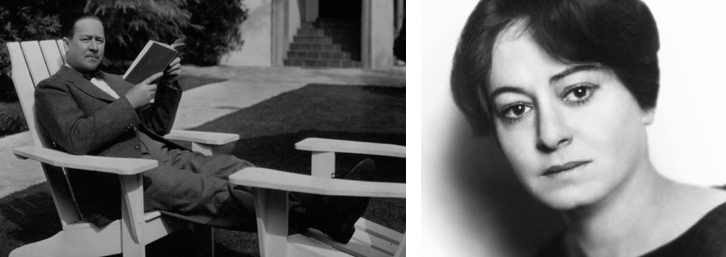
WHAT ABOUT THIS OUTFIT, DOROTHY?…I don’t have a photo of the “horrible” gown worn by Kay Strozzi (left) in The Silent Witness, so you’ll have to settle for this image of Ms. Strozzi from the 1931 film Captain Applejack. At right, and dressed to kill, Dorothy Parker posed for Edward Steichen in this 1931 portrait. (IMDB/Pinterest)
* * *
Tipsy Tots
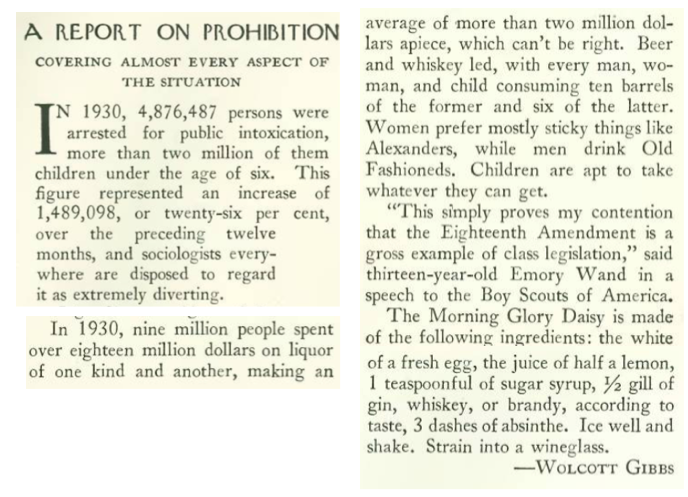
Tired of Prohibition, and its farcical enforcement, Wolcott Gibbs had some fun with the official Wickersham Report’s conclusions regarding the success of the 18th Amendment:
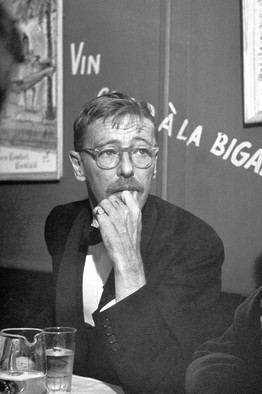
Wolcott Gibbs (wsj.com)
On a loftier note, we have this ode to the new Empire State Building from Price Day, Pulitzer Prize-winning reporter and noted editor of the Baltimore Sun:
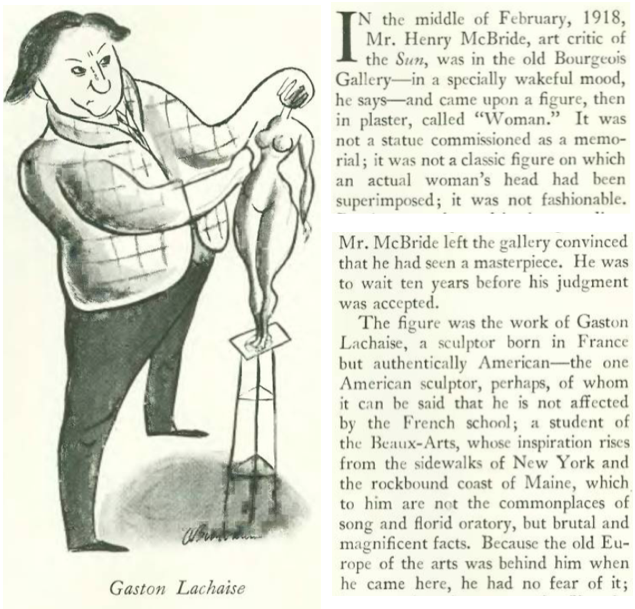
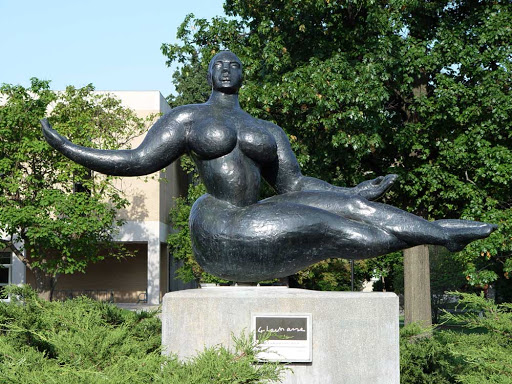
The profile, written by Gilbert Seldes, featured artist Gaston Lachaise…I include a brief excerpt for personal reasons, because I first encountered this artist in the Sheldon Memorial Art Gallery’s sculpture garden in Lincoln, Nebraska (my hometown), many years ago, via his “Floating Figure”…
WEIGHTLESS…”Floating Figure” by Gaston Lachaise was cast in bronze at the end of 1934 after a retrospective held in January 1935 at the Museum of Modern Art, New York. This is one of seven casts, at the University of Nebraska’s Sheldon Memorial Art Gallery. (Lincoln Arts Council)
* * *
From Our Advertisers
Pierce Arrow would struggle to promote its luxury cars in the Great Depression (and they would go under by the mid-1930s) but their advertising still harked back to the carmaker’s early days of refined travel…
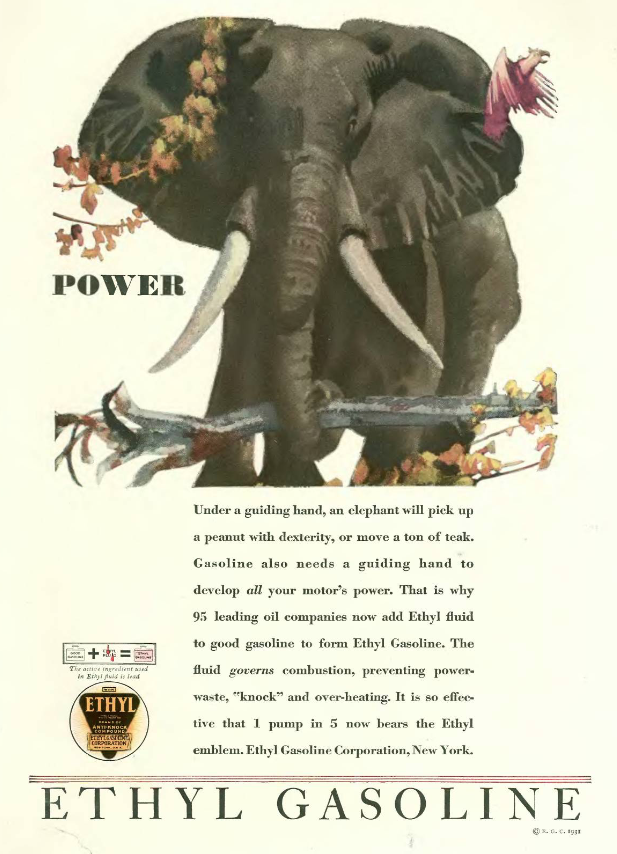
…the folks at Ethyl would make that car run smoother, thanks to the lead they added to gasoline (and to the air folks were breathing)…
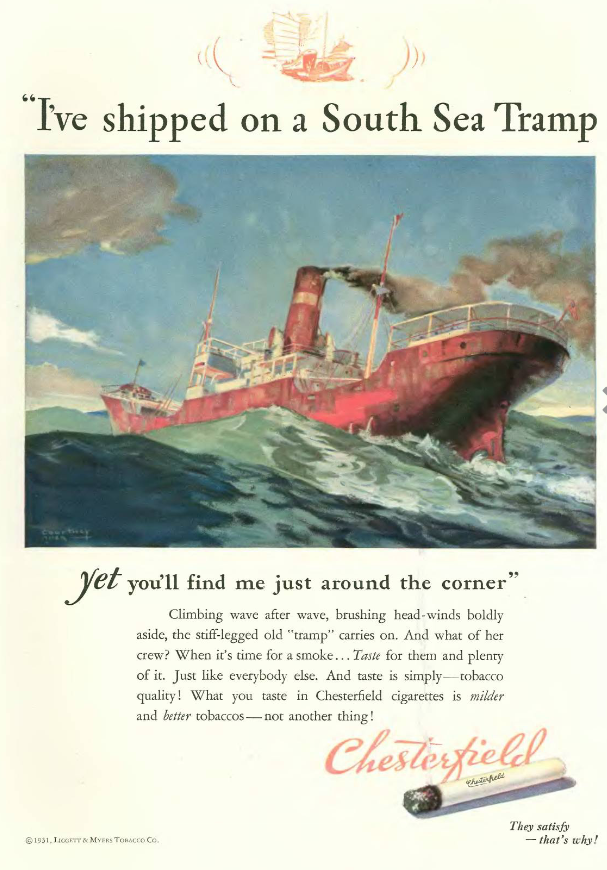
…tired of driving? Then hop a freighter and fire up a Chesterfield…
…or go for a more cushy ride on the French Line…
…we turn to our cartoons, and Ralph Barton’s revival of his old “Graphic Section”…
…Helen Hokinson showed us the nuances of the DMV…
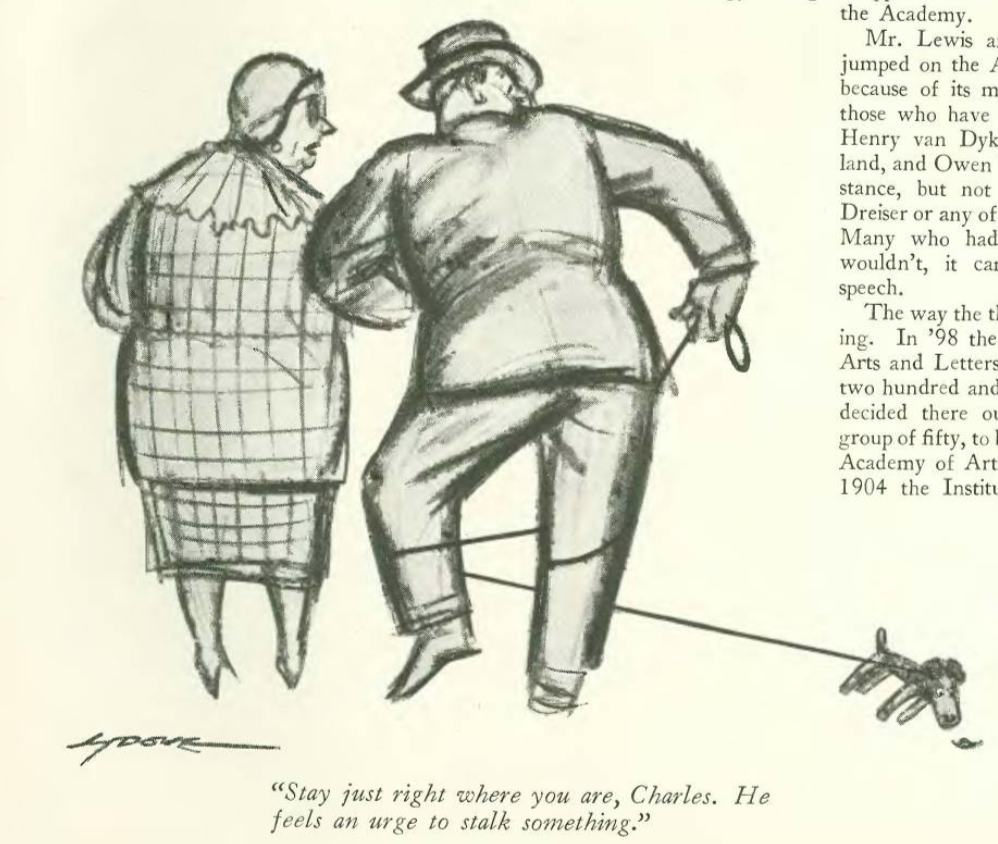
…Leonard Dove showed us a pet on the wild side…
…thanks to the typography skills of The New Yorker’s layout artist Popsy Whitaker, Otto Soglow zigzagged across the pages with his Little King…
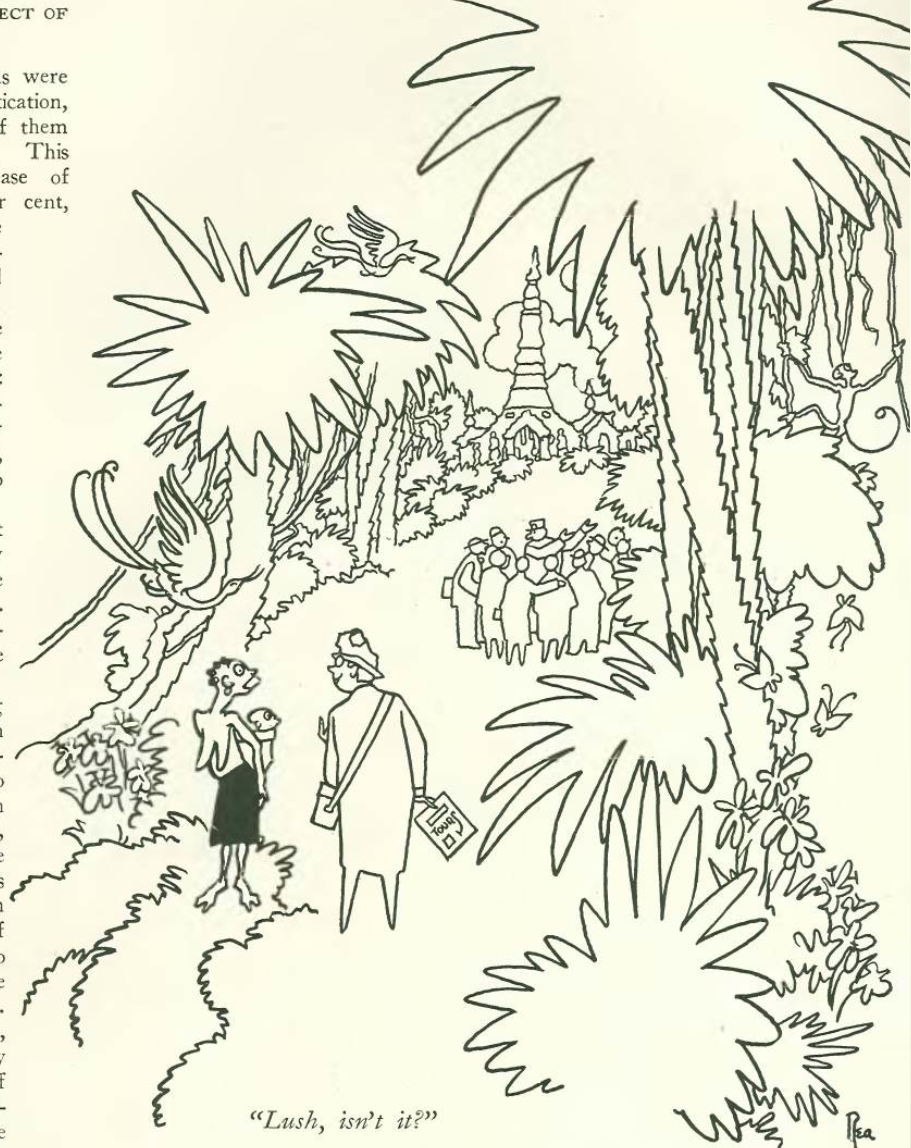
…and Gardner Rea revealed the wonders of world travel…















































































































 A New Yorker State of Mind