Not for the Kiddies

Over the years Tod Browning’s 1932 pre-code film Freaks has been called everything from grotesque and exploitive to sympathetic and compassionate. Now a cult classic, the film’s closing scenes are regarded by some critics as among the most terrifying ever put to film.

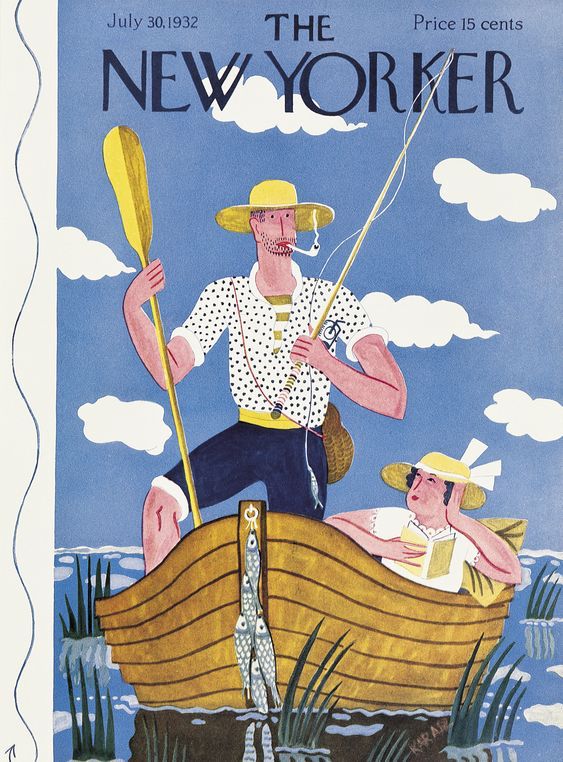
July 16, 1932 cover by Rea Irvin.

What disturbed so many about Freaks was Browning’s use of actual sideshow performers with real disabilities to tell the story of a conniving trapeze artist who plots to seduce and then kill a dwarf performer to gain his inheritance. The film was not well-received by audiences and many critics. The Kansas City Star’s John Moffitt wrote, “There is no excuse for this picture. It took a weak mind to produce it and it takes a strong stomach to look at it.” However, The New Yorker’s John Mosher, along several other New York critics, gave the film a rather favorable review:

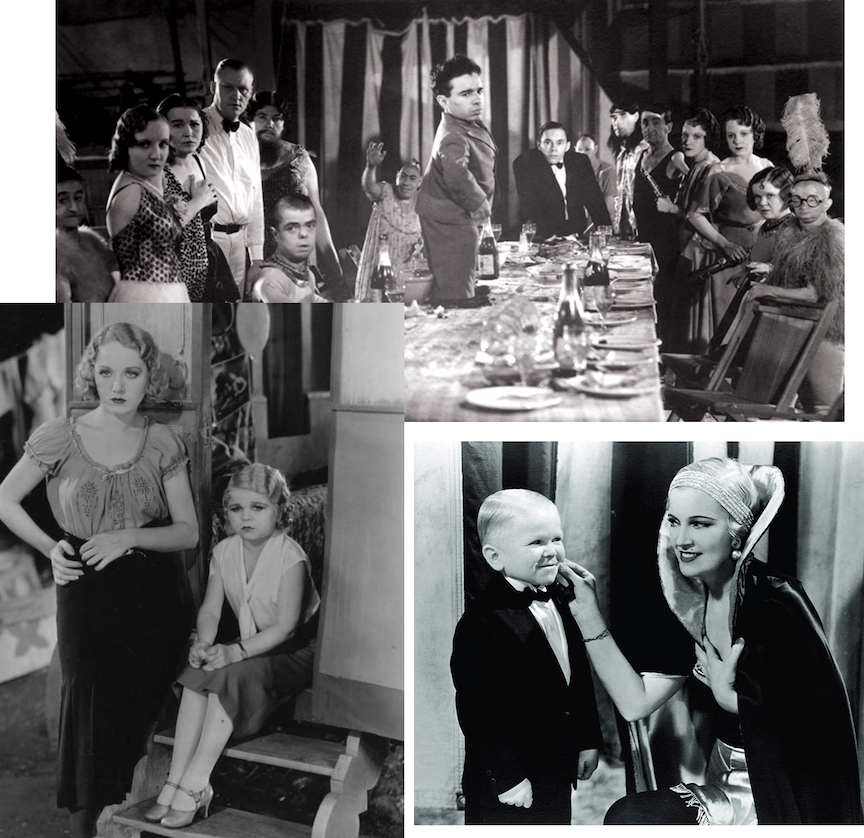
ONE OF US…Although audiences and critics found Tod Browning’s 1932 film Freaks grotesque and exploitive, today many regard the film as a rare (for its time), sympathetic portrayal of persons with disabilities. Clockwise, from top left, Browning with some of the members of his Freaks cast; French-American actress Rose Dione portrayed Madame Tetrallini, operator of the sideshow; Daisy and Violet Hilton with actor Wallace Ford in a scene from Freaks. Born fused at the pelvis, the sisters were joined at their hips and buttocks and shared blood circulation; limbless sideshow performer Prince Randian, who wore a one-piece wool garment over his body, appeared in the film as “The Living Torso.” (IMDB)
IT HAD A PLOT, ACTUALLY…Freaks told the story of a conniving trapeze artist named Cleopatra (portrayed by Russian actress Olga Baclanova, bottom right) who plots to seduce and then kill a dwarf performer, Hans (portrayed by Harry Earles) to gain his inheritance. Top photo: assembled “freaks” chant their acceptance of Cleopatra at the wedding feast of Hans and Cleopatra; bottom left, the kind-hearted seal trainer Venus (portrayed by Leila Hyams) consoles Frieda (Daisy Earles), who worries about Hans (Daisy and Harry Earles were members of a famous quartet of sibling entertainers known as The Doll Family. The quartet also appeared as members of The Munchkins in 1939’s The Wizard of Oz.)(IMDB)
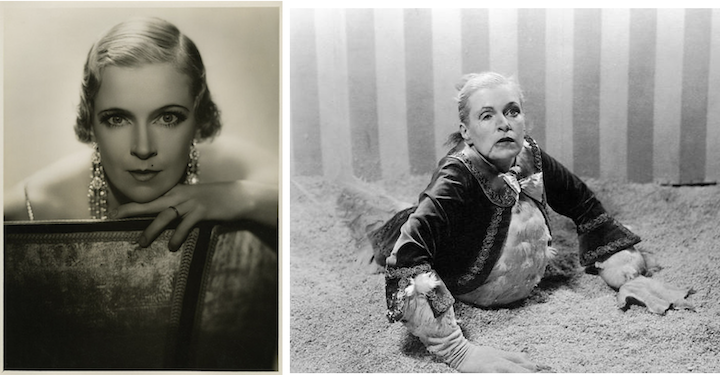
SURPRISE…Leila Hyams (1905–1977) was something of a surprising presence in the controversial film Freaks, given that she was a popular leading lady in the 1920s and 30s. Known for both her comedic and dramatic talents, she retired from films in 1936; another unlikely cast member was Henry Victor (1892–1945) whose physique didn’t necessarily support his role as circus strongman. (dangerousminds.net)
TRUE GRIT…Perhaps only a Russian actress in 1932 had the grit to transform herself from an exotic blonde temptress to a grotesque “human duck” for the movie Freaks. In the film, Olga Baclanova (1893 – 1974) portrayed a conniving trapeze artist named Cleopatra. Near the end of film the “freaks” capture Cleopatra, gouge out her right eye, remove her legs and tongue and melt her hands to look like duck feet. For critics and audiences, the horror was just too much. As for Baclanova — who was a popular silent film actress known as the “Russian Tigress” — her heavy accent did not translate well to talking films, and she left the movie business altogether in 1943. (muni.com/IMDB)

 *  *  *

Tennis Anyone?

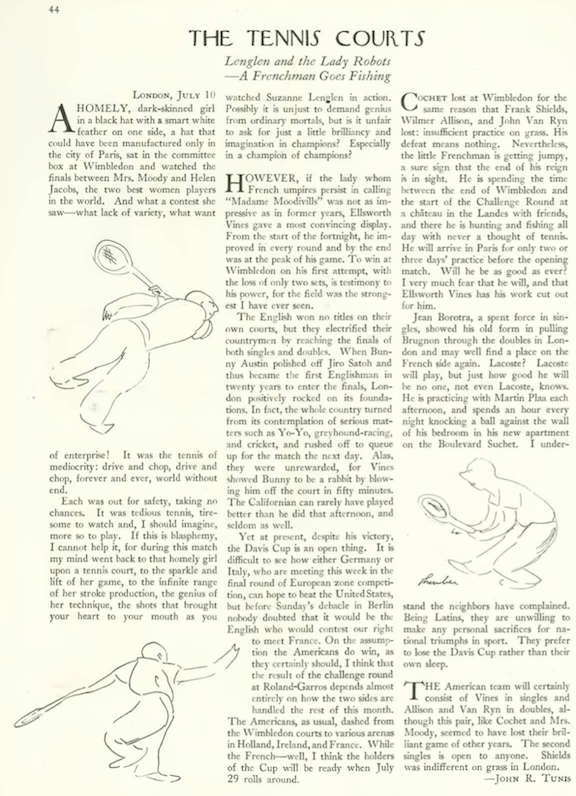
Helen Moody was the top women’s singles tennis player for nearly a decade in the 1920s and 30s, winning Wimbledon eight times, including a match in 1932 against her rival Helen Jacobs. However to sportswriter John Tunis, the women had reached such a level in their play that it had become robotic and tedious to watch. At least James Thurber livened things up with some keen illustrations.
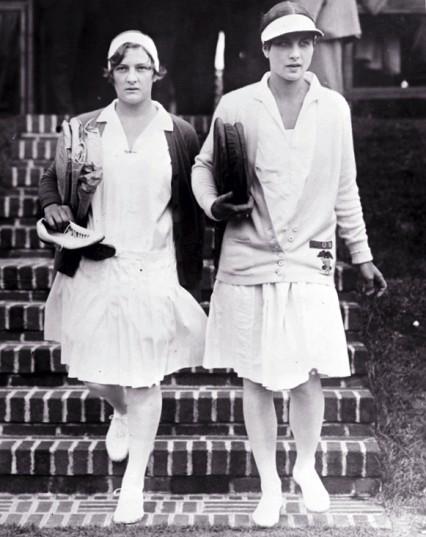
RACKETEERS…Helen Jacobs (left) and Helen Moody (right, in a 1929 photo) were tennis rivals known for their explosive matches. Except, apparently, for the one attended at Wimbeldon in 1932 by John Tunis. (nickelinthemachine.com)

 *  *  *

From Our Advertisers

Sensing that the end of Prohibition was near, the makers of Budweiser reminded readers of the good ol’ days of beer drinking and such…

…if you could afford something better than beer, then you might have contemplated a trip on the SS Manhattan, which along with her sister ship SS Washington were the largest liners ever built in the US…
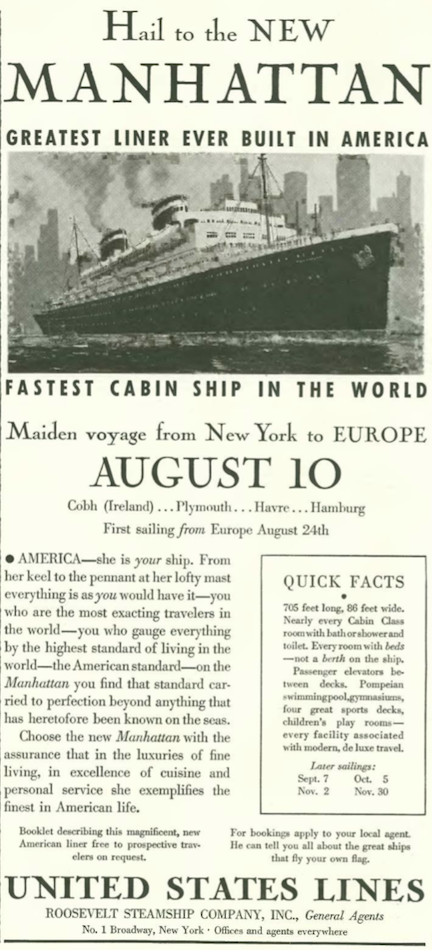
TO AND FRO…Beginning in August 1932 the SS Manhattan operated the New York – Hamburg route until 1939, when instead of taking passengers to Germany the ship began taking Jewish refugees and others away from Nazi-occupied Europe. It was turned into a troopship in 1941 and never returned to commercial service. The SS Manhattan was sold for scrap in 1965. (cruiselinehistory.com)

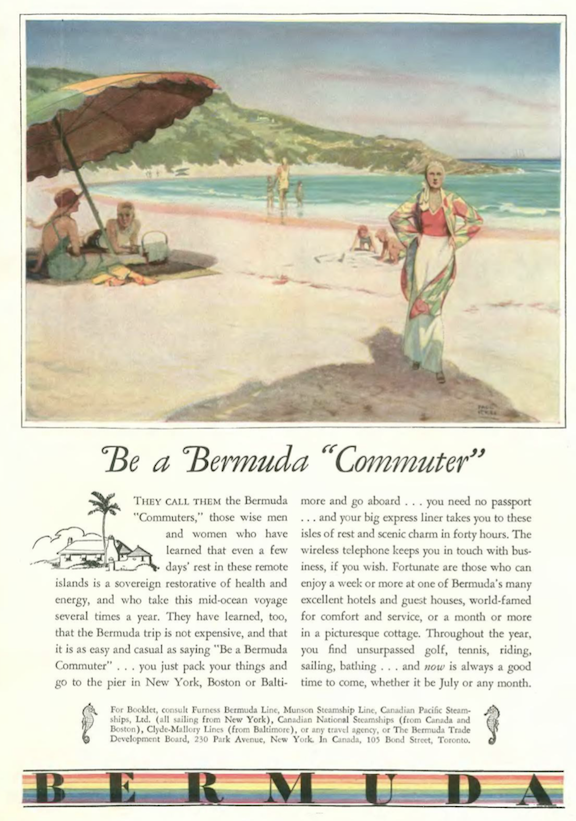
…if your thing wasn’t traveling to Germany to see that country being transformed into the Third Reich, you could instead become a Bermuda “Commuter”…
…back home, William Steig joined other New Yorker cartoonists who earned extra money off of the big tobacco companies…

…which segues into our cartoonists, beginning with Victor Bobritsky’s illustration for “Goings On About Town”…

Otto Soglow offered more Little King adventures…

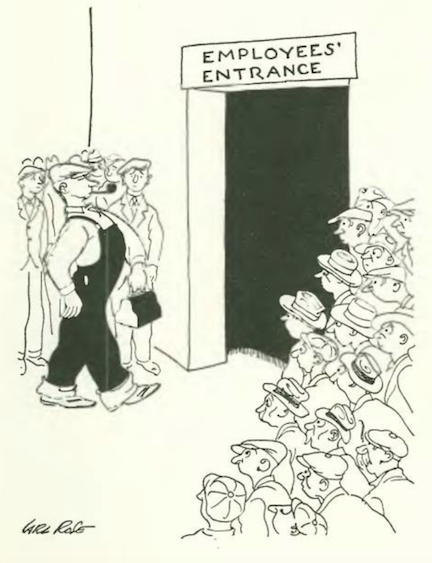
…and Carl Rose gave us a man striding into a factory, apparently a rare sight in 1932…
…on to July 23…

July 23, 1932 cover by Antonio Petruccelli (1907 – 1994). This is the first of six covers Petruccelli created for the New Yorker from 1932 to 1938. He also did numerous covers and illustrations for Fortune, Colliers and other publications.

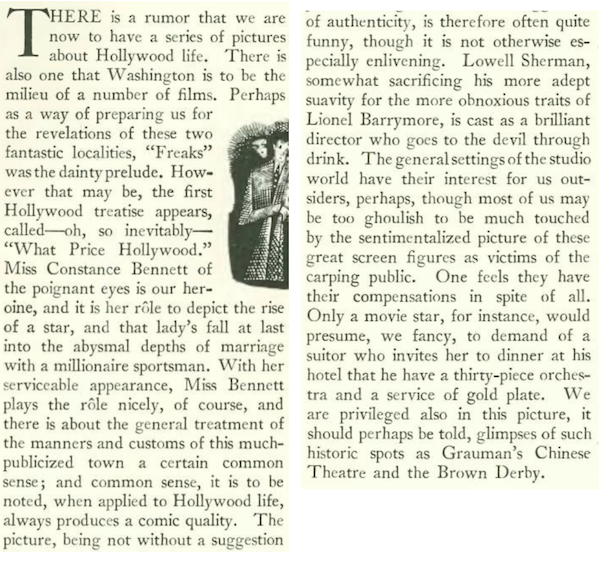
…and we have another John Mosher film review, in which he refers to Freaks as a “dainty prelude” to another film about the lives of entertainers, in this case George Cukor’s What Price Hollywood, a pre-Code drama starring Constance Bennett and Lowell Sherman with a storyline that anticipated 1937’s A Star Is Born—namely, a famous but fading male star who helps an ingénue rise to stardom while he descends into a pit of alcoholic despair.
FUN WHILE IT LASTED…Top image: Waitress and aspiring actress Mary Evans (Constance Bennett) has the good fortune to meet film director Maximillan Carey (Lowell Sherman) when she serves him one night at the Brown Derby. Bottom: Mary and her polo player boyfriend Lonny Borden (Neil Hamilton) look down with pity at the down-on-his-luck Maximillan in What Price Hollywood? (Wikipedia/IMDB)

 *  *  *

From Our Advertisers

Originally published by Adam Budge, Inc. in 1910 and later by Joseph Judd Publishing and others, Arts & Decoration magazine hoped to stay alive in the Depression with a promise that its August 1932 issue would be “compellingly readable”…

…and here is the cover of that issue…Arts & Decoration would hang on for another ten years before folding in 1942…

…one of the stars of Ziegfeld Follies of 1931 was actress and dancer Patricia Boots Mallory (1913 – 1958), who posed for this portrait to demonstrate the wonders of color reproduction…

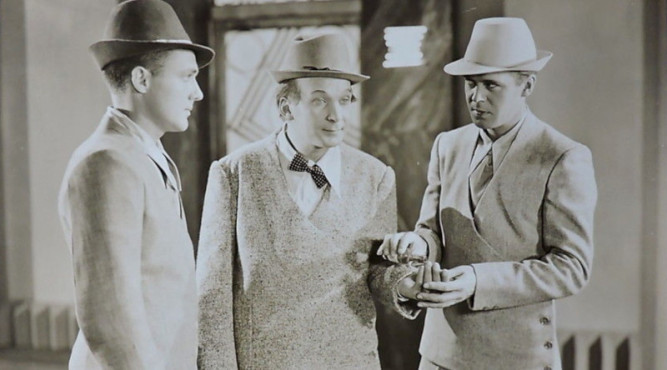
…and here’s Boots Mallory in a scene from the 1932 film Handle With Care with comedian Elmer “El” Brendel (standing) and actor James Dunn

…not everyone could be a movie star, but you could pretend to be one in this swell new (and low-priced) DeSoto…Walter Chrysler must have laid out some big bucks for this two-page color spread…

…for those with greater means you could skip the roads altogether and fly the friendly skies of Ludington Airlines…the airline was founded by wealthy New York socialite Charles Townsend Ludington and his brother Nicholas…
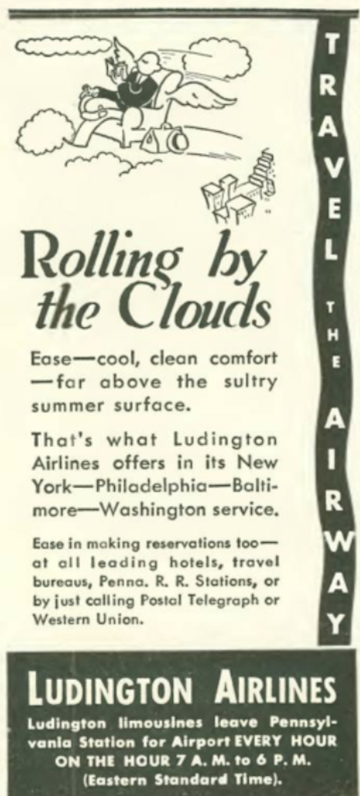
…founded in 1929, Ludington Airlines was the first airline with flights every hour on the hour and the first to carry passengers only (others carried mail, an important source of revenue). The airline offered service between Washington, D.C. and New York City—with stops in Philadelphia, Baltimore, Norfolk, Virginia, Nashville and Knoxville, Tennessee—using seven Stinson tri-motor 6000 aircraft in its fleet, each carrying up to ten passengers…the airline went bankrupt in 1933 (mostly due to the lack of mail revenue) but left behind an astonishing record—in its first two years it flew more than 3.4 million miles and carried 133,000 passengers, a record at the time…

A Stinson SM-6000 airliner similar to the type flown by Ludington Airlines from 1929 to 1933.

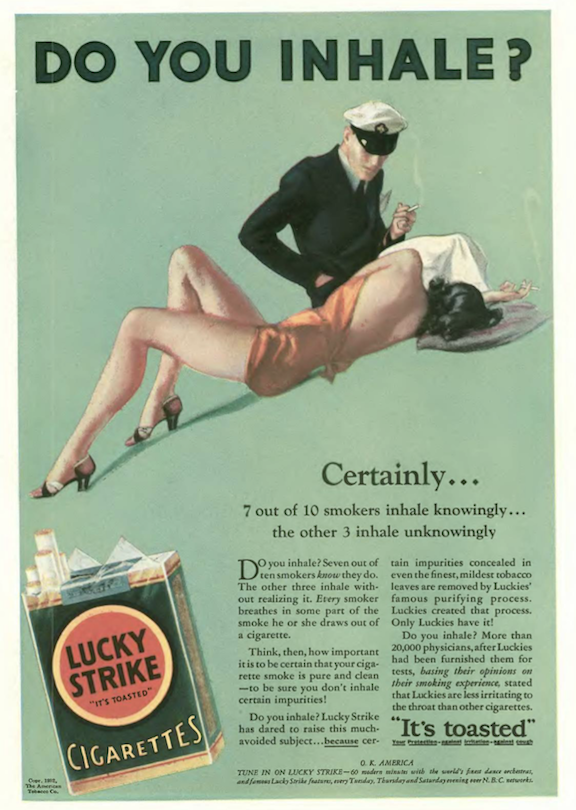
…back to earth, sort of, we have this Lucky Strike ad with the famed “Do You Inhale?” campaign that oozed innuendo and no doubt prompted a few young men to take up the habit posthaste…
…on to cartoons, beginning with this spot art by James Thurber

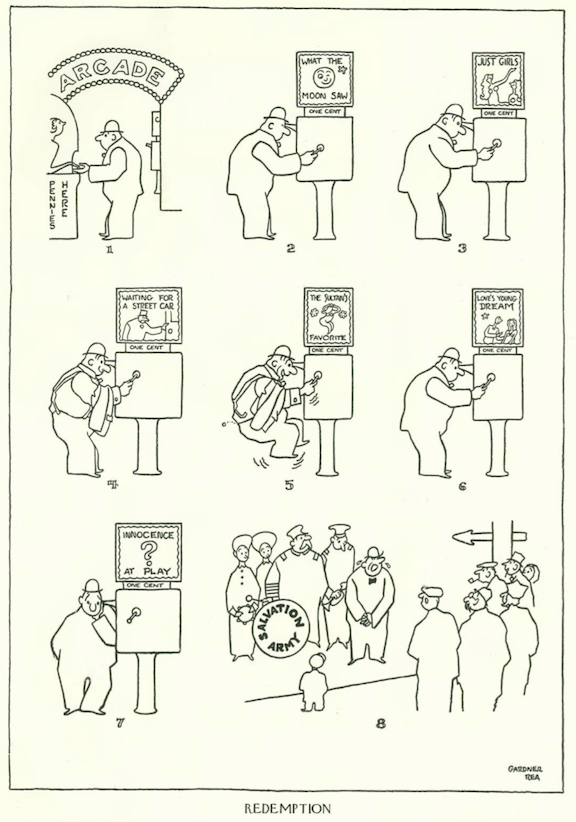
Gardner Rea showed us a man getting his nickel’s worth of sin and repentence…
…and we end with the delightfully unrepentant Peter Arno

Next Time: Rebecca and the Zombies…

An Unmarried Woman

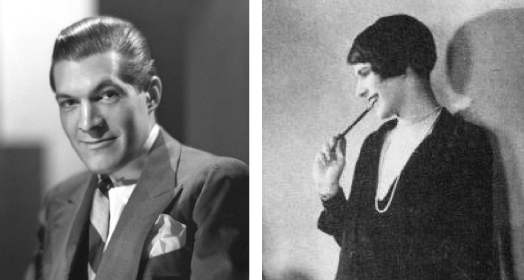
When New Yorker cartoonist Peter Arno hooked up with his colleague, nightlife columnist Lois Long, it was like twisting together two sticks of dynamite.

April 18, 1930 cover by Charles Donelan, his only cover for The New Yorker. See more about the artist at the end of this post.

Married in 1927, they were the glamour couple at The New Yorker, and each played an outsized role in giving the early magazine a distinctive, cosmopolitan voice and look. Hard-drinking hell raisers, they both loved the Roaring Twenties nightlife in what seemed like an endless party. But when the party ended, so did their brief, volatile marriage.

VOLATILE COMBINATION…Peter Arno and Lois Long were the toast of The New Yorker office and the toast of the town with their office romance, marriage (in 1927), and much-publicized split. The hard-partying couple separated in 1930 and divorced the following year.

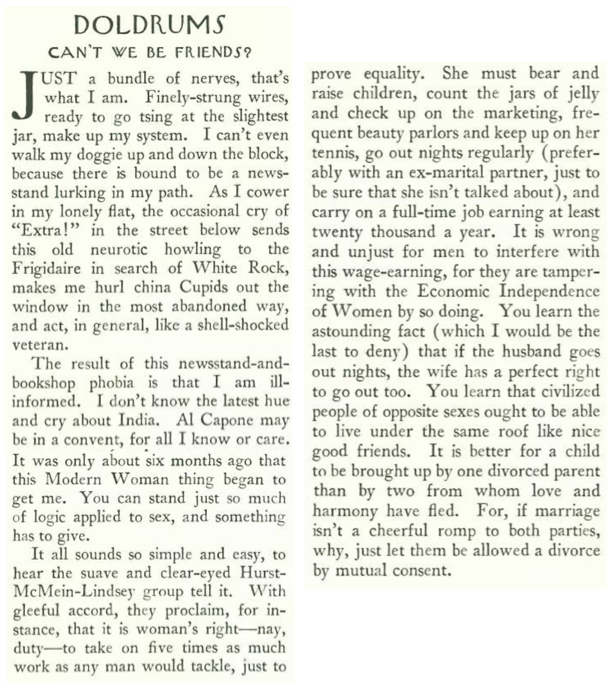
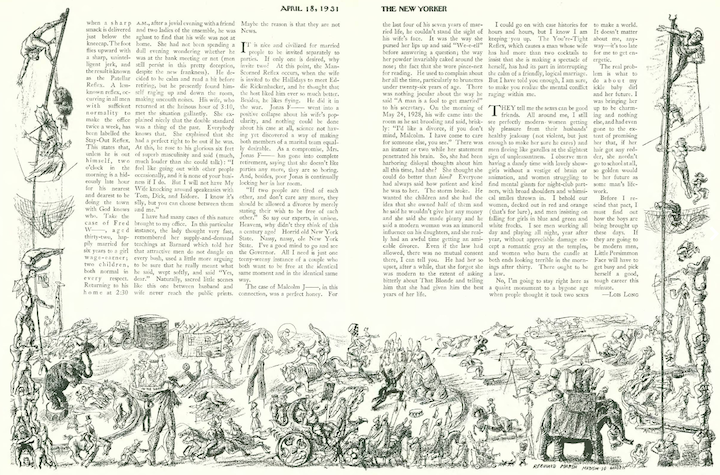
As the end of her marriage neared, the 29-year-old Long had become almost circumspect, and in a series of columns under the title “Doldrums,” she took a skeptical look at the world around her, the sad ways of the younger generation, and in this fifth installment, subtitled “Can’t We Be Friends?”, she probed the inequities of a society that encouraged women to be hard-working, super competent and attractive while men still did as they pleased (the question remains today: recall 2018, when Facebook’s Sheryl Sandberg asked women to “Lean In”).

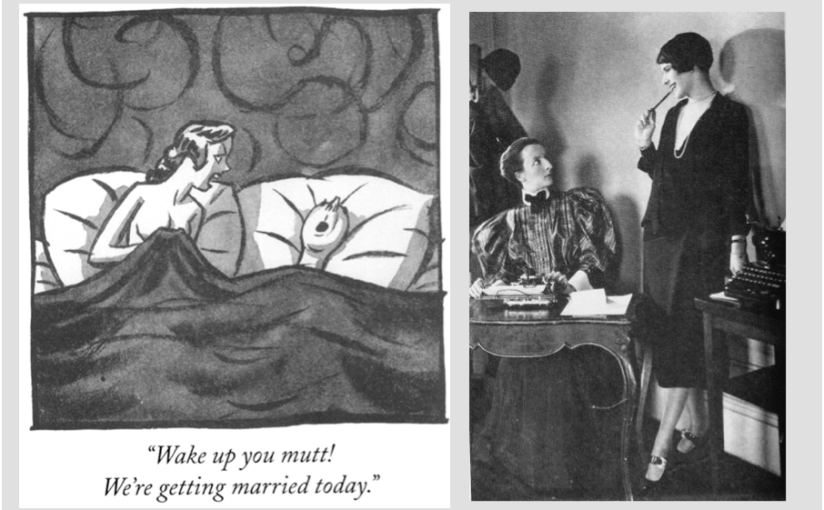
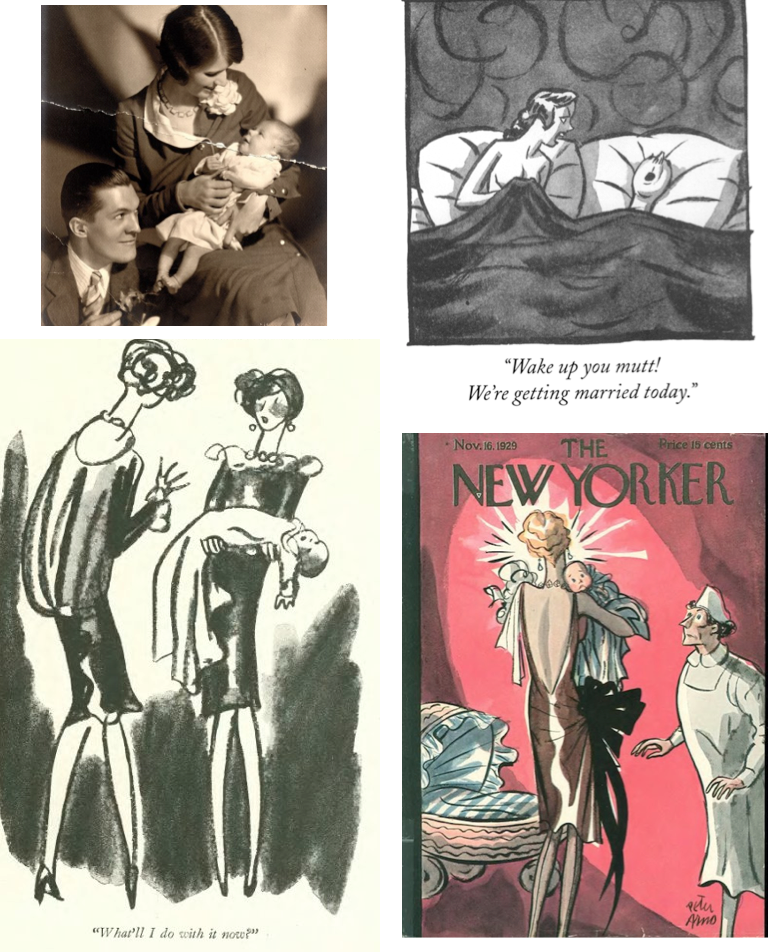
LIFE WITH LOIS…Peter Arno drew on his domestic experiences with wife Lois Long for comic inspiration. Clockwise, top left, Arno and Long with baby daughter Patricia, 1928; a wedding day wakeup call from Arno’s 1930 cartoon collection Hullabaloo; Nov. 18, 1929 cover and a Aug. 24, 1929 cartoon suggesting a lack of maternal instinct. By all accounts Long was a doting mother and grandmother.

In Vanity Fair, Ben Schwartz (“The Double Life of Peter Arno,” April 5, 2016) quotes Arno’s and Long’s daughter, Patricia (Pat) Arno, about her parents’ wild relationship: “There were lots of calls to (gossip columnist Walter) Winchell or some other columnist about nightclub fights…with my mother calling and saying, ‘Oh, please don’t print that about us,’ trying to keep their names out of the papers.”

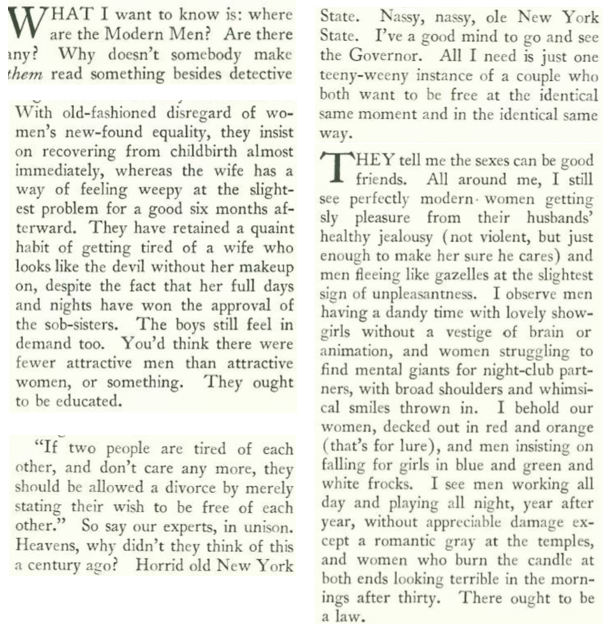
Here’s another excerpt from Long’s “Doldrums,” asking about the state of Modern Men (apologies for the missing fifth line — “novels”)…

Long had not only given up on marriage—and apparently men for the time being—but she’d also had it with the partying life. She had put her nightlife column, “Tables for Two,” on hiatus, turning her attentions to her popular fashion column, “On and Off the Avenue,” while continuing to contribute unsigned pieces to “The Talk of the Town” and occasional pieces like “Doldrums.”

In early 1931 Arno moved to Reno, Nevada, which granted quick divorces to anyone who took up residency for five months. According to a 2016 book written by New Yorker cartoonist Michael Maslin (Peter Arno: The Mad, Mad World of The New Yorker’s Greatest Cartoonist), Arno found more trouble in Reno when newspaper publisher Neely Vanderbilt accused him of having an affair with his wife, Mary, and threatened violence against Arno. Maslin writes: “Nearly lost in the whole Arno/Vanderbilt dust-up was the end of Arno and Long’s marriage. On June 29th, Lois was granted a Reno divorce on the grounds of intolerable cruelty.” I highly recommend Maslin’s book, filled with anecdotes drawn from a fascinating life lived in some of New York’s headiest times.

Vanderbilt would also divorce his wife in 1931. Mary Weir Logan Vanderbilt was the second of his seven wives.

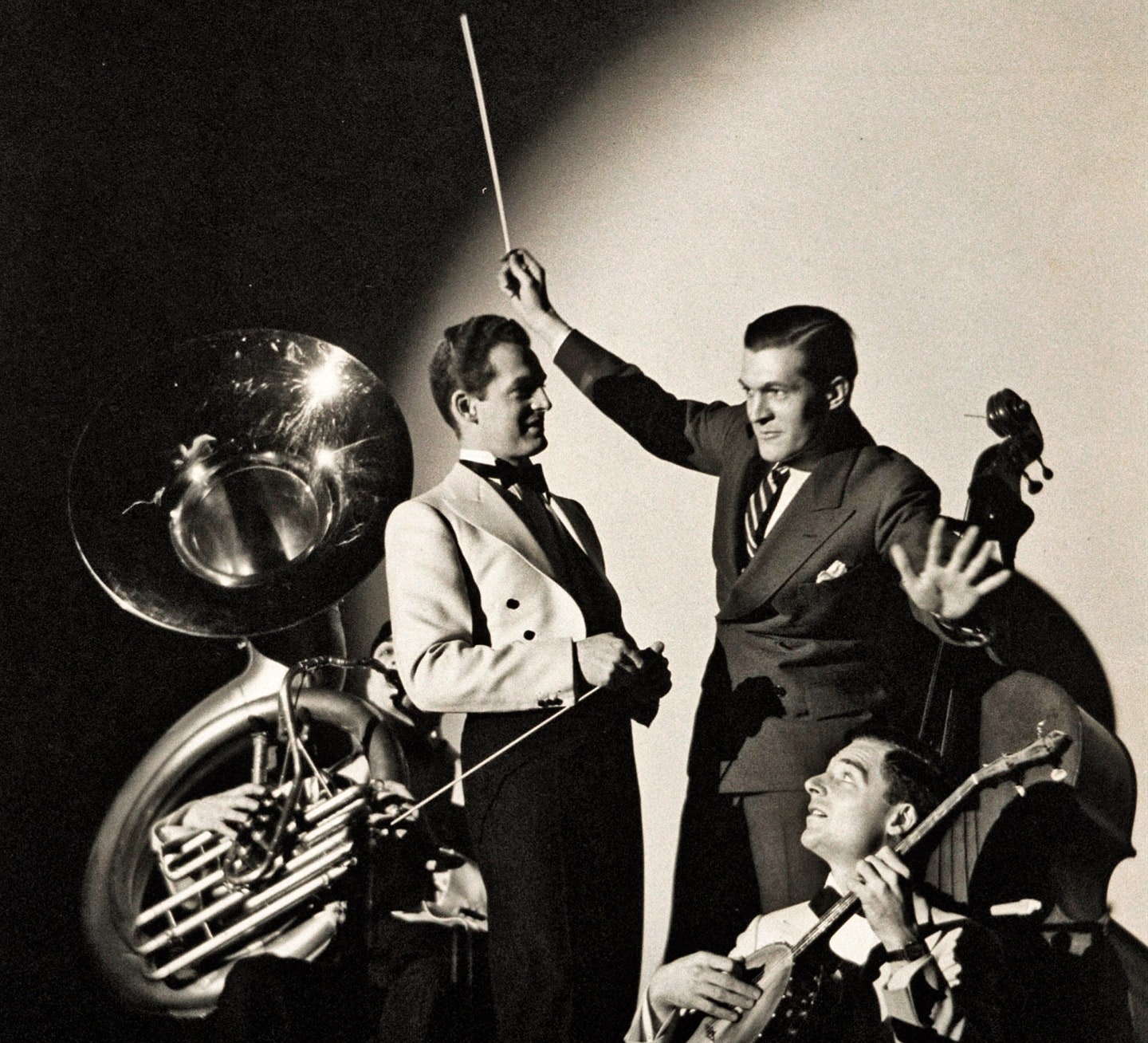
AND THE BAND PLAYED ON…On the same month as his Reno divorce (June 1931), Vanity Fair ran this photo of Arno pretending to conduct bandleader Fred Waring and two of his Pennsylvanians. (CondeNast)

Arno and Long would get joint custody of Patricia, but the child would remain living with her mother. Long had this to say about the future of her “Little Persimmon”…

 *  *  *

A Man’s World?

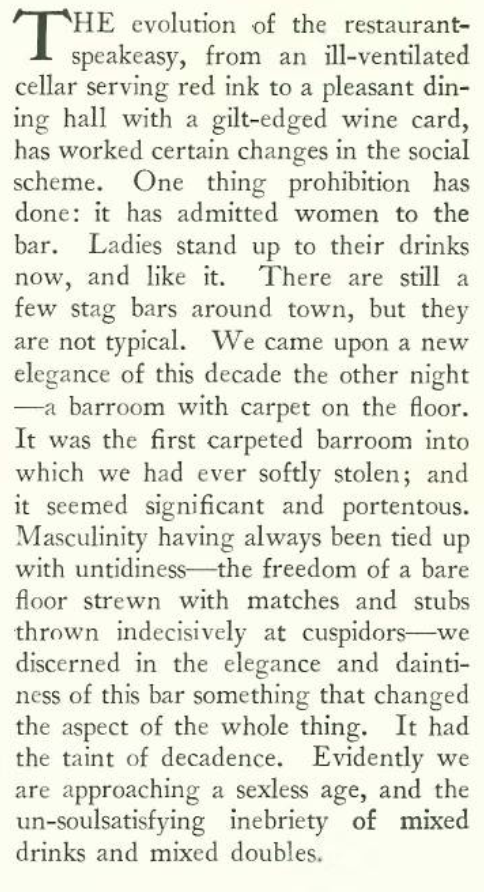
E.B. White wondered in his “Notes and Comment” after encountering a barroom (had to be a speakeasy) with a carpeted floor…

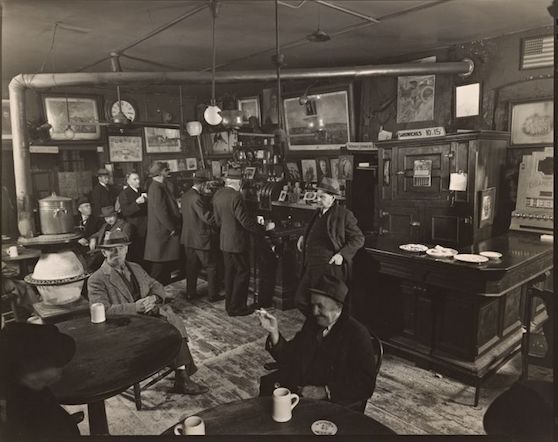
KEEPING IT REAL…Patrons relax at McSorley’s Old Ale House near Cooper Square, circa 1935. (ephemeralnewyork.wordpress.com)

 *  *  *

Long Before Social Distancing

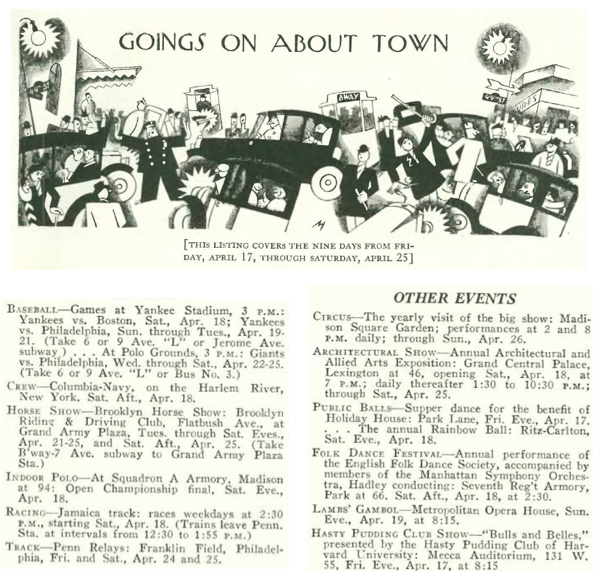
There were many diversions around the old city, including baseball games and the circus at Madison Square Garden…some clips from the “Goings On” section…

Reginald Marsh marked the arrival of the circus with a drawing that encircled pages 20-21…here is a detail…

and how the whole thing appeared…

 *  *  *

The Twain Never Met

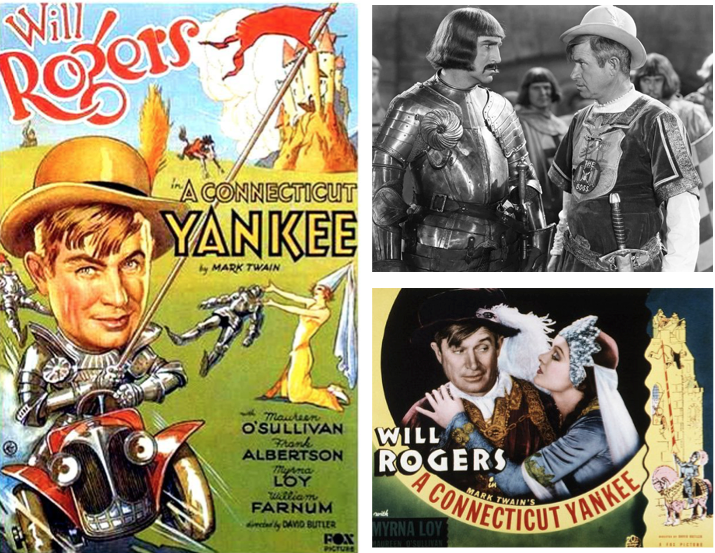
Once a star attraction with the Ziegfeld Follies, comedian Will Rogers was also finding success on radio and in the films. His latest talkie, A Connecticut Yankee, referenced Mark Twain’s 1889 novel, A Connecticut Yankee in King Arthur’s Court, in name only, as noted by reviewer John Mosher. But then again, Rogers himself was not a Yankee, but an Okie.

MARK WHO?…Inspired by a Mark Twain novel, 1931’s A Connecticut Yankee was mostly a Will Rogers vehicle. Top right, Sagramor (Mitchell Harris) confronts the “Connecticut Yankee” Hank Martin (Will Rogers). Below, the queen (Myrna Loy) tries to make nice with Hank. (IMDB)

 *  *  *

From Our Advertisers

If you had the time but not the means to travel to Europe (it was the Depression, after all), you might have considered a trip to “Old Québec,” just 500 miles up the road from New York City, although in those days you likely took the train, or possibly a boat, since routes between cities were still a uneven patchwork of roads…

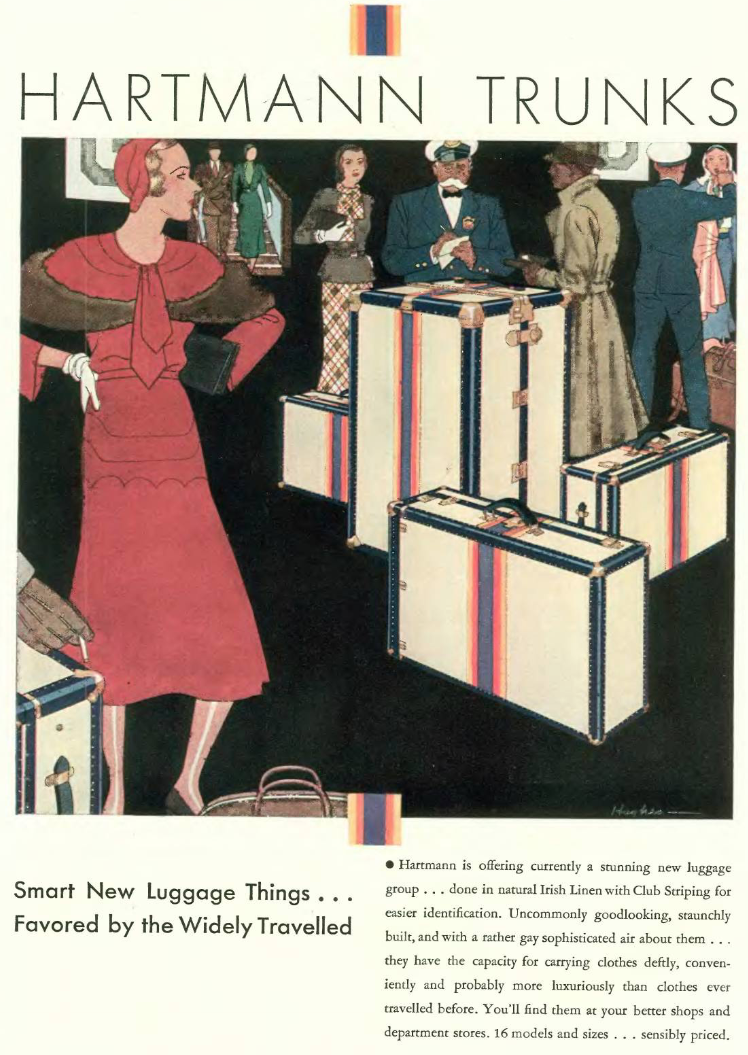
…and you could look stylish at the station or the boat dock with these handsome Hartmann trunks…

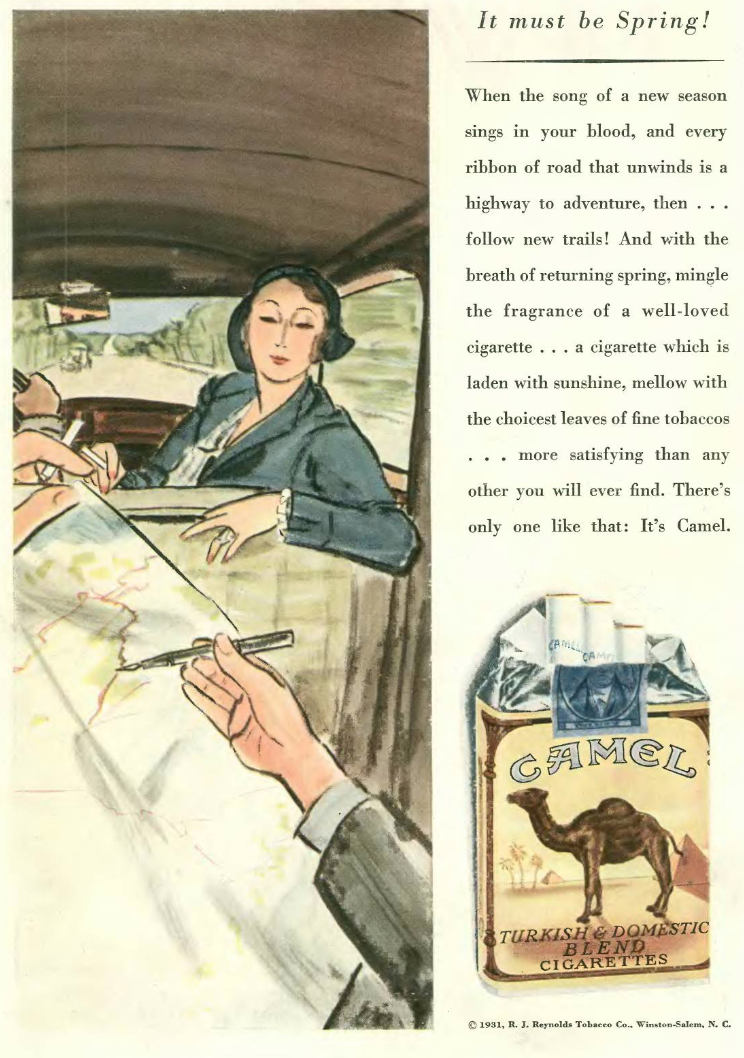
…these spring travelers opted for a car, filled with the aroma of burning tobacco…

…spring was also time for the latest Paris fashions, and Macy’s suggested you could “put one over on Paris” by donning a garment spun from from DuPont’s miracle fiber, Rayon…

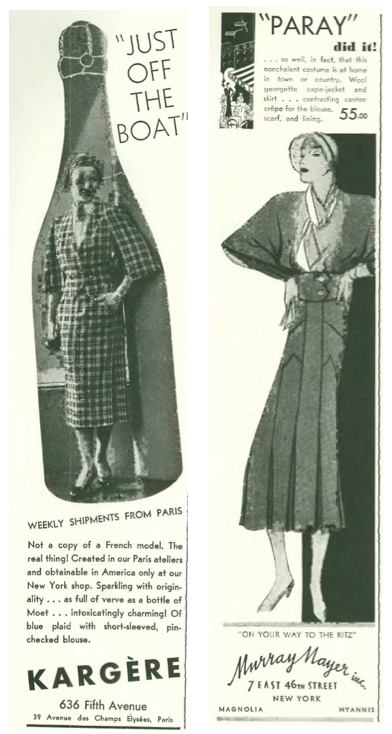
…however, those operating the finer dress shops would never consider letting any synthetic hang in their windows, or touch their skin for that matter, and proudly proclaimed the latest shipments from Paris…

…those shopping for Paris fashions might have consulted Majorie Dork to get slim in all the right places…
…on to our illustrations and cartoons, we have two by Ralph Barton, his “Hero of the Week”…

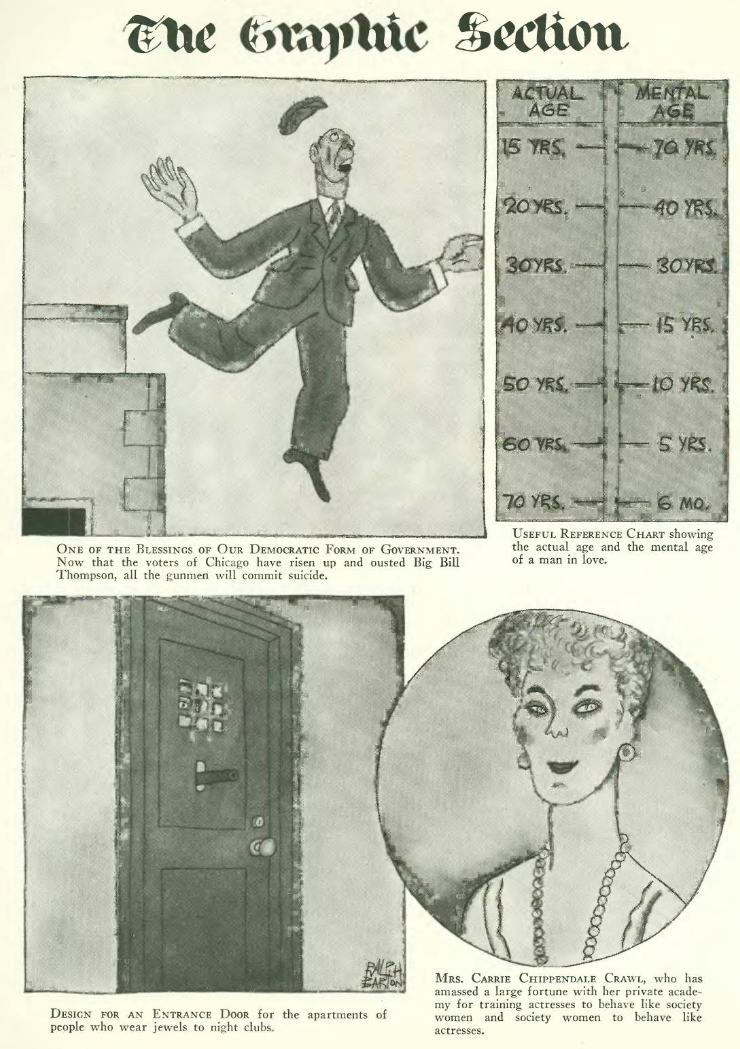
…and his “Graphic Section” take on the week’s news…
Gardner Rea kicks off our cartoons with a look at the machine age…
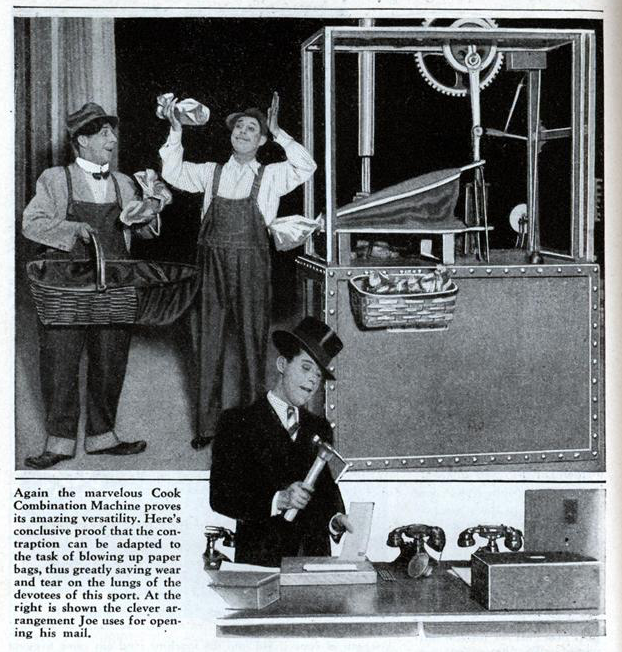
…Rea’s cartoon referred to the popular vaudeville comedian Joe Cook, who was known for his demonstrations of needlessly complex machines…here he is featured in the September 1931 issue of Modern Mechanics magazine…

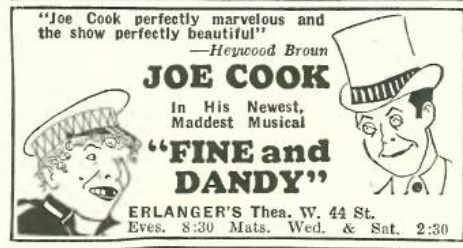
…Erlanger’s Theatre advertised Cook’s “Newest, Maddest Musical” in the back pages of The New Yorker

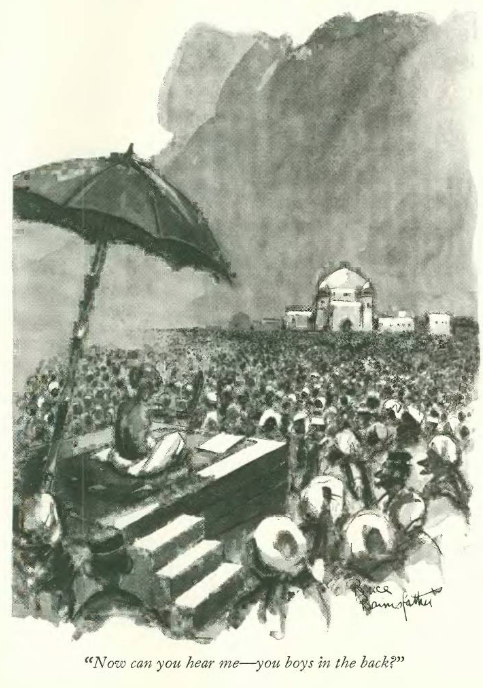
…it’s not often you find Mahatma Gandhi as the subject of a cartoon…this one is by Bruce Bairnsfather

…a unique form of stage fright was illustrated by John Floherty Jr

Jack Markow gave us a little night music…

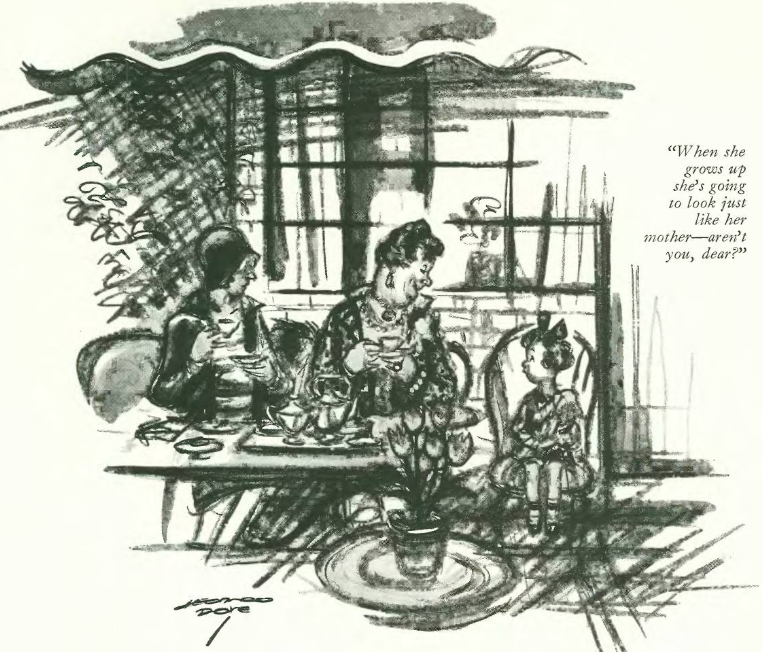
Leonard Dove and the possibly reluctant apple of someone’s eye…

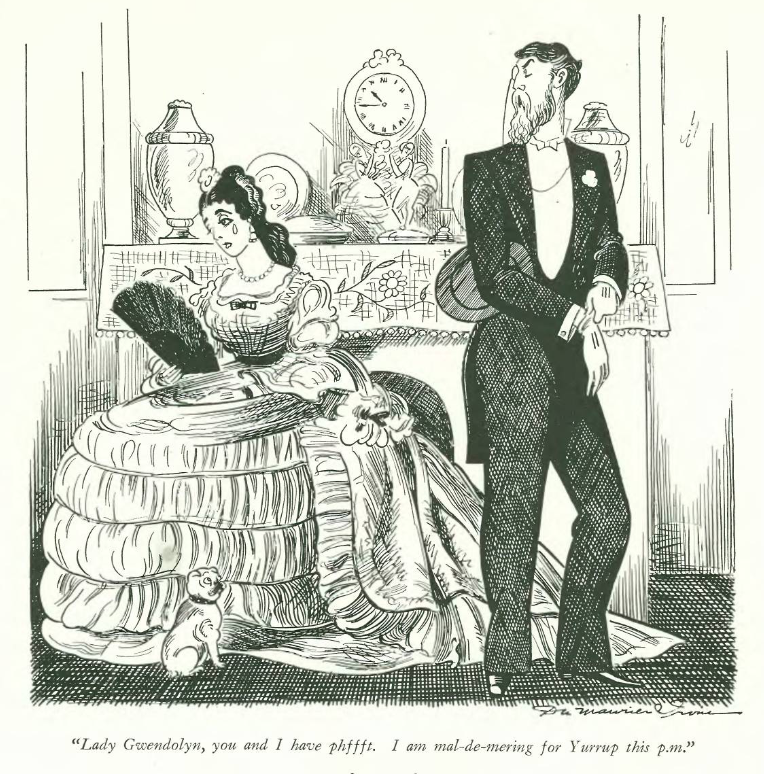
…I would love to know more about this Rea Irvin cartoon, which seems to be a parody of a cartoon from the British Punch…

John Reehill rendered a portentous moment at the barbershop…

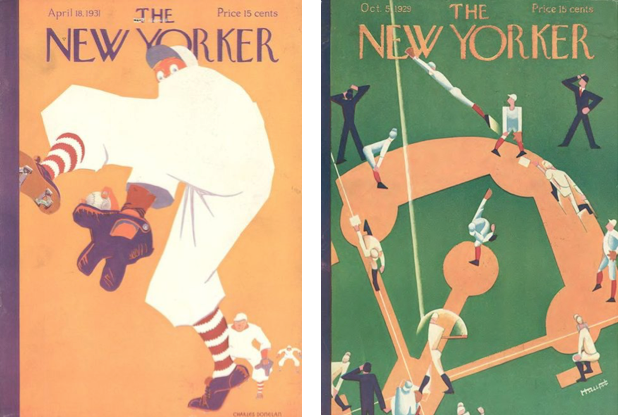
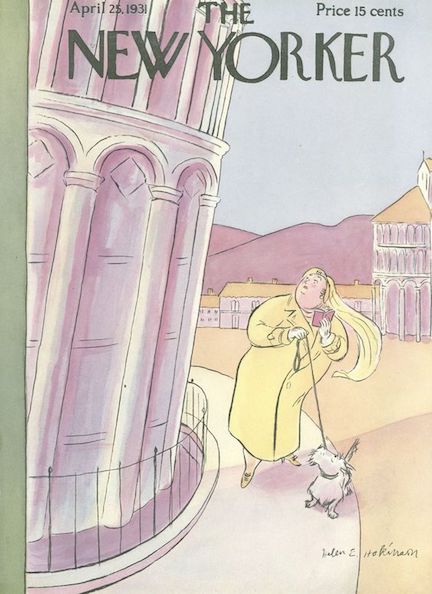
…and finally, today’s cover (bottom left) by Charles Donelan caught my eye because the early New Yorker rarely noted the existence of baseball, except in the events section. Up to this point there had been just two covers featuring baseball: May 8, 1926, by Victor Bobritsky

…and, at right, the Oct. 5, 1929 cover by Theodore Haupt...

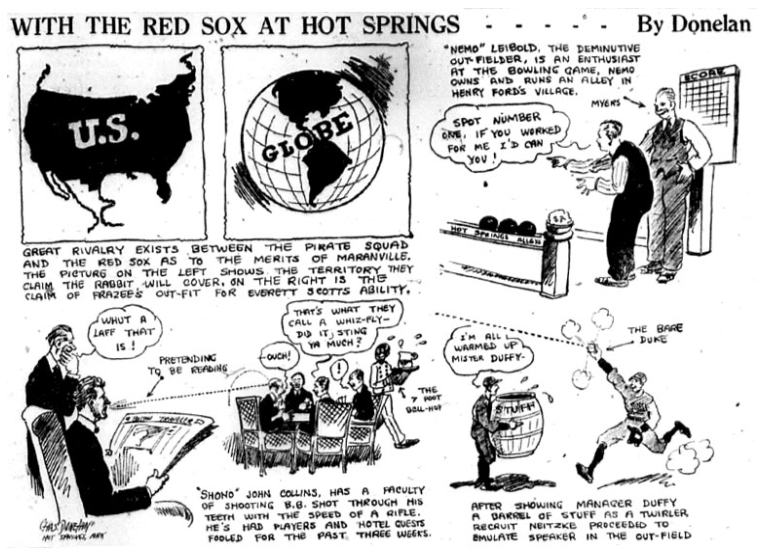
…as for the cover on the left, it would be Charles Donelan’s only New Yorker cover…throughout his career he would illustrate for various publications, including the sports section of the Boston Traveler (this is from the March 21, 1921 edition)…

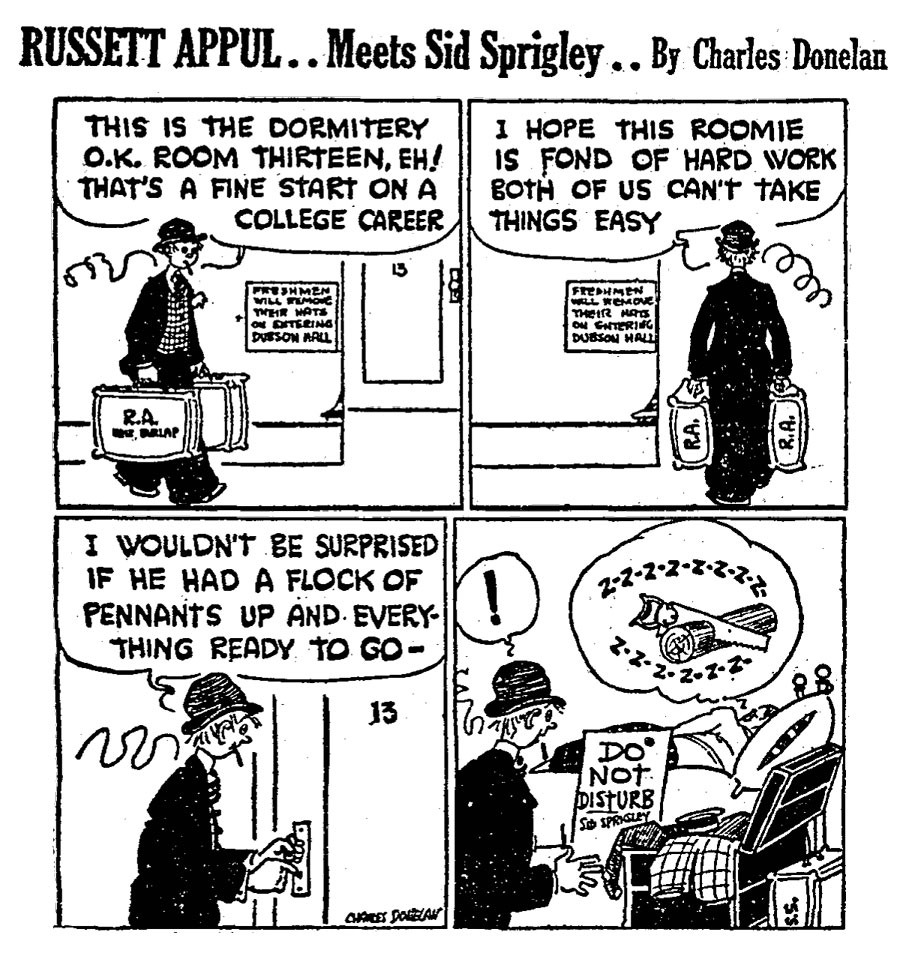
…and a comic strip featured in the Boston Globe called “Russett Appul” (this is from Oct. 11, 1929)…Donelan also performed Russett and other characters on Boston radio stations and stage shows…

Next Time: Cinema’s Underworld…


The Future Was a Silly Place

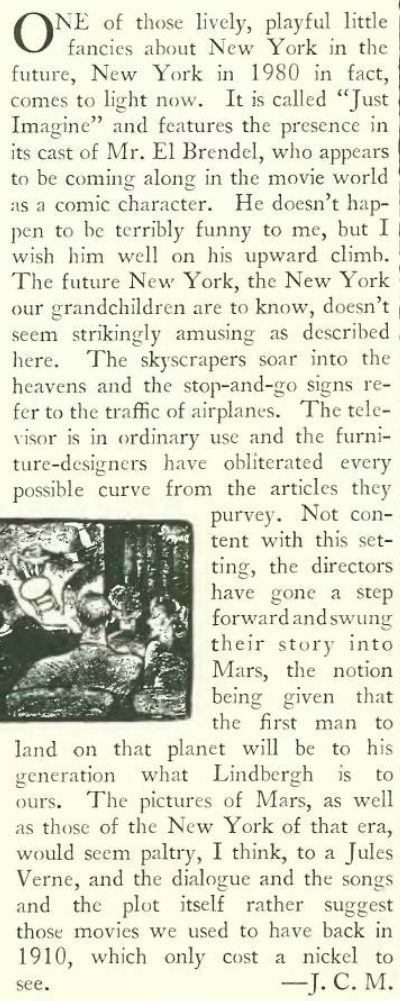
One of the most expensive movies of 1930 was a sci-fi musical comedy titled Just Imagine, a silly mash-up of great sets, terrible acting, and a vision of the future fifty years hence that was way off the mark.

Nov. 29, 1930 cover by Victor Bobritsky.

Not that the film ever set out to be an accurate prediction of the future. Nevertheless, it is instructive (or, at the least, amusing) to look back on “yesterday’s tomorrows” to understand the American mind in the first year of the Great Depression.

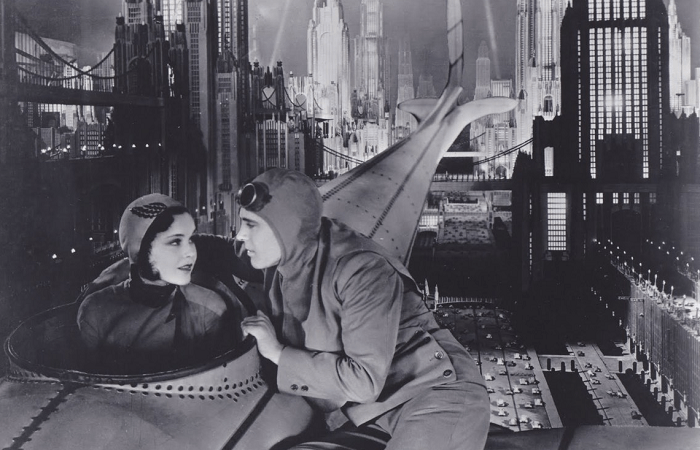
COME FLY WITH ME…Clandestine lovers LN-18 (Maureen O’Sullivan) and J-21 (John Garrick) share a romantic moment high above the streets of 1980 New York City. (scifist.net)

Just Imagine borrowed some of its look from Fritz Lang’s Metropolis (1927), a dystopian vision of the future that reflected the contentious years of Germany’s Weimar Republic. Just Imagine similarly reflected its time and place — the early years of the Depression — Hollywood responding not with gloom and doom but rather with uplifting fare — comedies, musicals, and escapist fantasies (Flash Gordon came along in 1936). The producers of Just Imagine rolled all of it into one film, and The New Yorker’s John Mosher tried to make sense of the mess:

EYE IN THE SKY…In Just Imagine, technology is advanced enough to have a traffic cop floating in the sky, but he still must rely on his arms and mechanical signals to keep the skyways in order. (YouTube clip)

The floating traffic cop is just one example of the film’s attention to set design. The New York skyline, featured in the opening scene, was constructed in a giant hangar at enormous cost…

(IMDB)

In one of the films weirder twists, vaudeville comedian El Brendel is brought back to life with an electric beam…

SMOKED HAM…Vaudeville comedian El Brendel is zapped back to life to provide the world of 1980 with comic relief. Some of the electrical equipment assembled by set designer Kenneth Strickfaden would be seen again in 1931’s Frankenstein. (scifist.net)

…and Brendel (below, center), proceeds to get drunk on booze pills and spew a series of really bad jokes throughout the duration of the film…

WE SHOULD HAVE LEFT HIM DEAD…Frank Albertson, El Brendel and John Garrick in Just Imagine. (scifist.net)
MARS ATTACKS…The film also took audiences to the surface of Mars via a phallus-shaped spaceship that would later be used in Flash Gordon serials. Clockwise, top left, the spaceship blasts off surrounded by a crowd of men in fedoras; aboard the spaceship; landing site on Mars; J-21 (John Garrick) encounters the Martian Queen (Joyzelle Joyner). (YouTube/scifist.net)

The movie flopped at the box office, but producers were able to recoup some of the costs by farming out clips of the futuristic sets, and some of the props, to other sci-fi films of the 1930s including the Flash Gordon and Buck Rogers serials.

 *  *  *

Toys For Tots

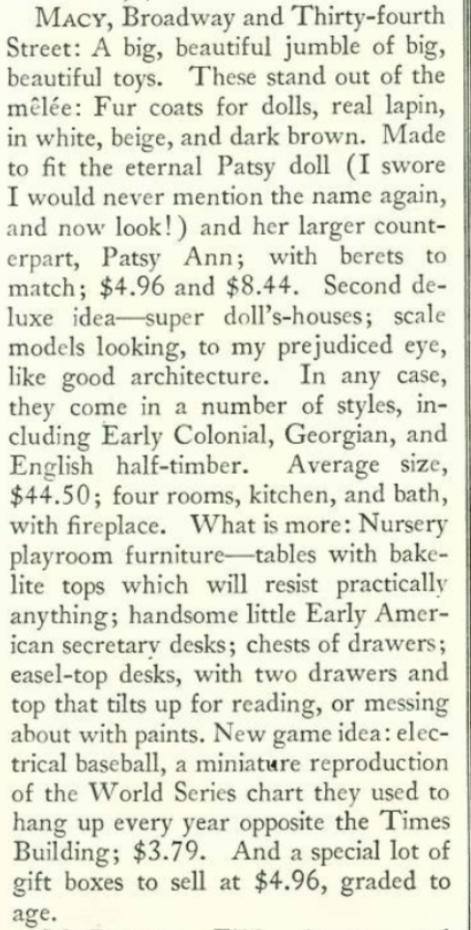
By mid-November The New Yorker’s “On and Off the Avenue” column had lengthened to include ideas for Christmas shoppers. The Nov. 29 issue offered these ideas for children’s toys from Macy’s…

XMAS IS COMING…Patsy Ann dolls in smart berets, and dollhouses in various styles (a 1930 Tudor dollhouse at right) could be had at Macy’s Herald Square flagship store. (Pinterest)

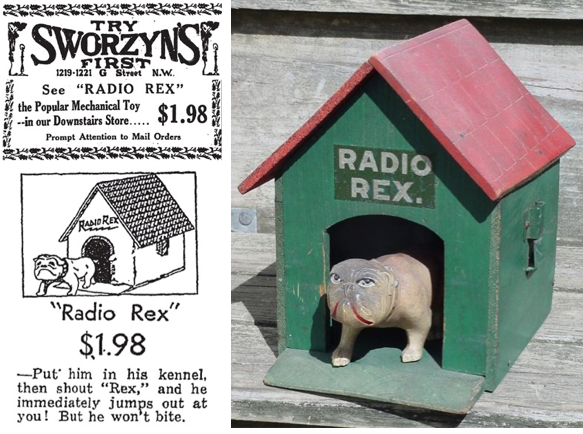
GRRRR…First introduced in 1922, the revival of “Radio Rex” proved popular to the kiddies in 1930. It was the “high tech” toy of its day, the first to respond to voice commands. Rex the dog would spring out of his doghouse at the sound of the word “Rex,” thanks to a sound-sensitive electromagnet. (ctinventor.wordpress.com)

 *  *  *

A Century-old-Problem

Traffic woes have been around almost as long as there have been cars. In an excerpt from “A Reporter at Large,” Morris Markey explained the challenges facing the city’s police department:

IF YOU BUILD IT, THEY WILL COME…Traffic clogs Fifth Avenue near 42nd Street in 1930. (digitalcollections.archives.nysed.gov)

 *  *  *

Speaking of cars, this ad in The New Yorker announced the opening of the annual Automobile Salon at the Commodore Hotel…

…and the magazine was on hand to describe its various wonders. Some excerpts:

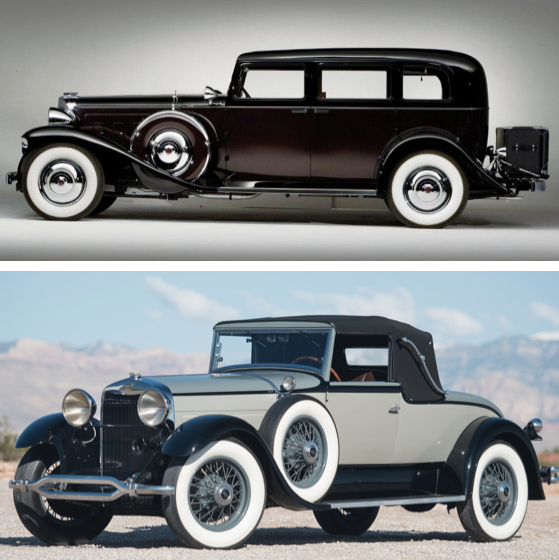
POETRY IN MOTION…Top, the Walter Dorwin Teague-designed Marmon 16-cylinder wowed crowds at the Salon, even if few could afford it. The Great Depression limited the production of the luxury Marmon, and less than 400 were produced. The company abandoned the car business altogether in 1933. Below, the sporty Ford Model L Roadster, designed by Raymond Dietrich. (supercars.net/Sotheby’s)

 *  *  *

Maestro Politician 

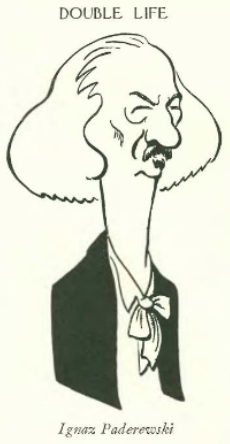
The New Yorker profiled pianist, composer and statesman Ignacy Jan Paderewski (1860-1941). Paderewski served as Poland’s prime minister in 1919, negotiated on behalf of his country at the Treaty of Versailles, and had a 60-year career as a virtuoso pianist. A brief excerpt:

 *  *  *

Not For the Moneychangers

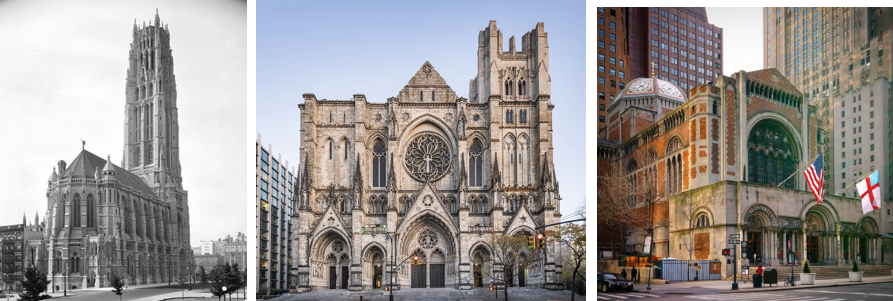
Architecture critic George S. Chappell checked in on the progress of three prominent Manhattan cathedrals in his “Sky Line” column:

LANDMARKS ALL…From left, Riverside Church, the still yet-to-be completed St. John the Divine, and St. Bartholomew’s. (MCNY/masonrymagazine.com/dtjoyce.com)

 *  *  *

The theater review section included this illustration of a new play, Roar China, that opened Oct. 27, 1930 at the Beck Theatre.

The staging of Roar China included this reconstruction of the bow of the H.M.S. Europa on the Beck Theatre stage…

(messynessychic.com)

 *  *  *

From Our Advertisers

The holiday season was in the air, and retailers were taking various approaches to entice Depression-era shoppers to consider their wares. The ads have a more conservative bent, when compared to late 1920s, and in the case of Wanamaker’s and B. Altman’s, an appeal to simpler times…
…Macy’s, on the other hand, looked to sell rather expensive lighters “to arouse the youthful enthusiasm among veteran smokers”…

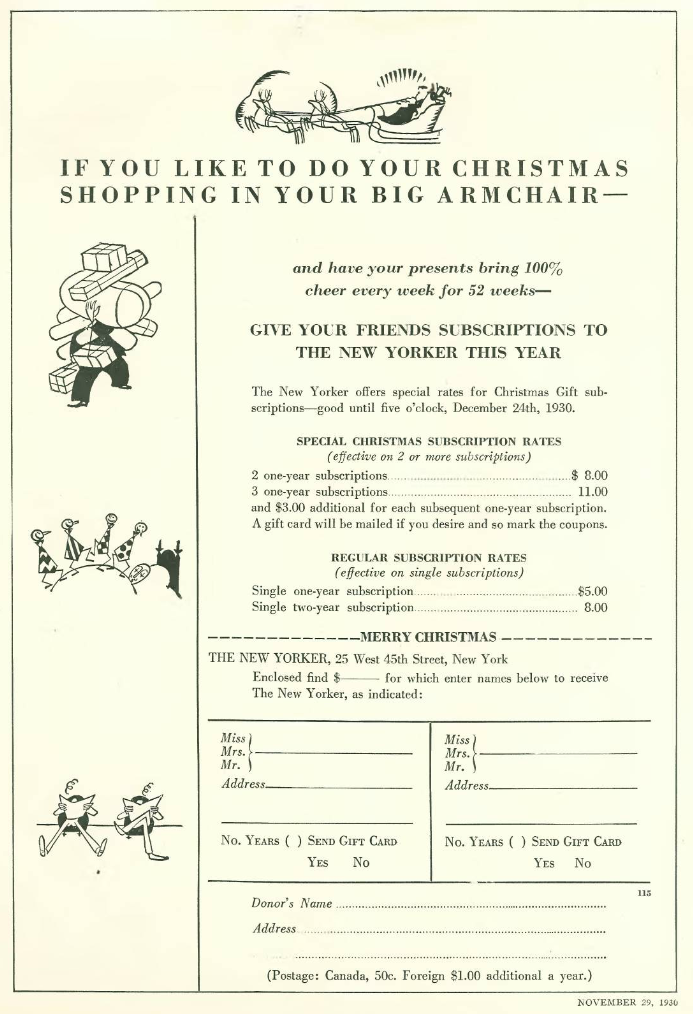
…despite the Depression, New Yorker subscriptions continued to steadily increase — the magazine had nearly 45,000 subscribers in 1930, and by the end of the decade the number would approach 100,000 — below, a house ad designed to entice new subscribers…
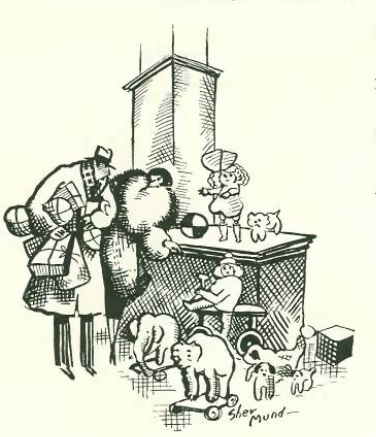
…our cartoons include this holiday spot illustration by Barbara Shermund

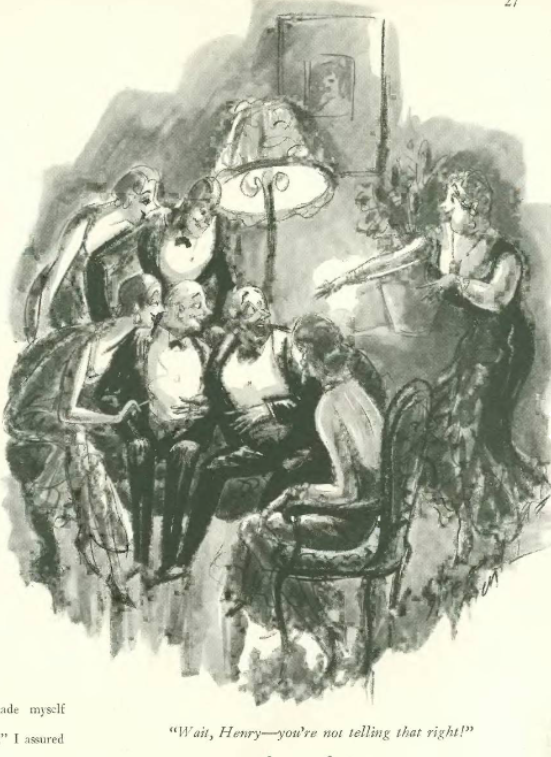
…and another by Shermund of her parlor room crowd…

Otto Soglow amused us with a couple of tots…

Gardner Rea imagined a confrontation between a Macy’s Thanksgiving Day Parade balloon and Italy’s Fascist dictator Benito Mussolini

…the balloon Rea illustrated was “The Captain” from the popular Katzenjammer Kids comic strip. Along with his “family,” the Captain appeared in the parade in 1929 and 1930 (and possibly 1931). They were the first licensed character balloons in the parade’s history…

(The New York Times)

…back to cartoons, book shopping with William Crawford Galbraith

…and some holiday cheer from A.S. Foster

Next Time: Ziegfeld’s Folly…


Fifteen Minutes is Quite Enough

Above image courtesy NASA History Office.

Charles Lindbergh was all over the July 2, 1927 issue of The New Yorker, which reported that Lindy was a better a flier than a writer, and as a celebrity the press had to be inventive with a subject who would rather be alone in a cockpit with a ham sandwich than be feted at countless banquets.

7b096a824e274d6b7b7c5e0f1a3e85e7
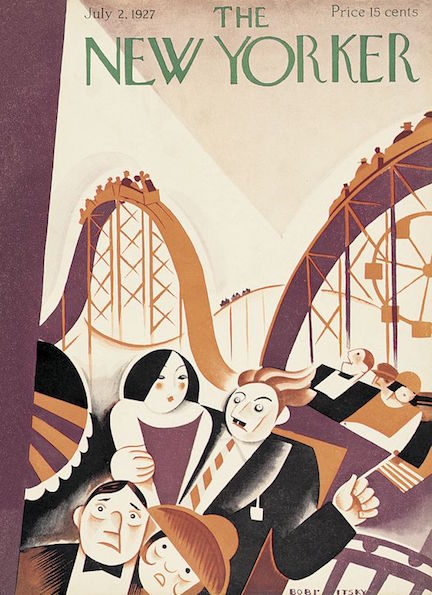
July 2, 1927 cover by Victor Bobritsky.

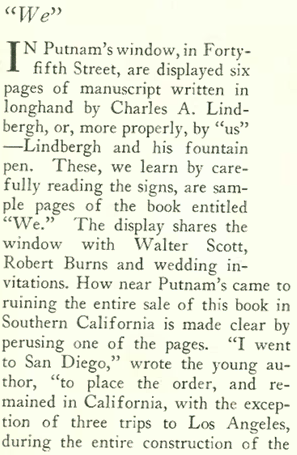
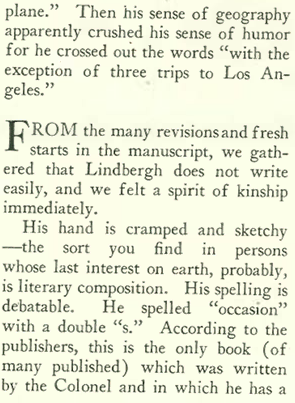
“The Talk of the Town” commented on the display at Putnam Publishing of a few manuscript pages penned by Lindbergh himself for his upcoming book, WE.

A draft of the autobiography had already been ghostwritten by New York Times reporter Carlyle MacDonald, but Lindbergh disliked MacDonald’s “false, fawning tone” and completely rewrote the manuscript himself–in longhand–using MacDonald’s manuscript as a template. Those early results were displayed in Putnam’s 45th Street window to whet the appetites of eager readers:

screen-shot-2016-10-14-at-10-13-58-am

screen-shot-2016-10-14-at-10-14-09-am

screen-shot-2016-10-14-at-10-14-26-am

dustjacket_for_the_book_%22we%22_by_charles_a-_lindbergh_first_edition_published_july_1927
FLYING THE ATLANTIC WAS EASIER…The dust jacket (left) for Charles Lindbergh’s WE. The ghostwritten first draft was disliked by Lindbergh, who in less than three weeks re-wrote the book in longhand. About a week later the book was published (July 27, 1927) and quickly became a bestseller. (Wikipedia)
lindberghs-ticker-tape-parade-1927-science-photo-library
YEAH WHATEVER…Lindbergh appears less than thrilled during his ticker-tape parade in Manhattan on June 13, 1927. (Science Photo Library )

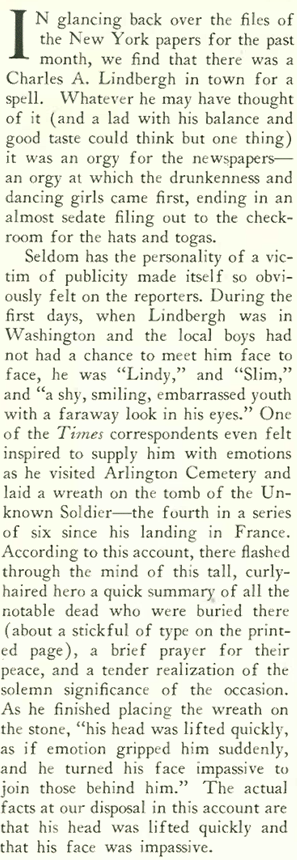
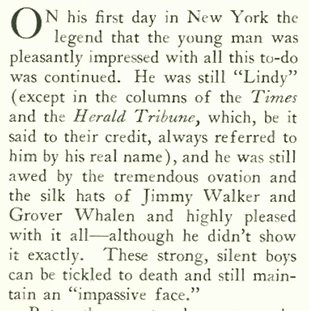
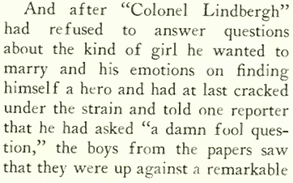
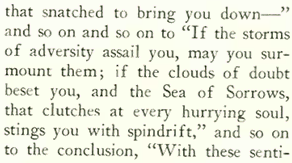
Nonplussed and often annoyed by all of the attention, Lindbergh was less than a colorful subject for the media. Philip Wylie (writing under the pseudonym “Horace Greeley Jr.”) in The New Yorker’s “Press in Review” column observed that reporters, seeking a more conventional image of a sentimental hero, decided to “supply him with emotions” he apparently lacked:

the-press-in-review

screen-shot-2016-10-14-at-10-26-11-am

screen-shot-2016-10-14-at-10-26-24-am

screen-shot-2016-10-14-at-10-26-30-am

Other reporters resorted to treacly tributes…

screen-shot-2016-10-14-at-10-26-38-am

screen-shot-2016-10-27-at-2-56-10-pm

screen-shot-2016-10-14-at-10-27-45-am

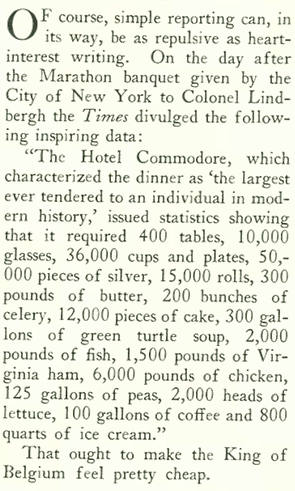
…and if the subject himself wasn’t very interesting, you could always resort to listing quantities of food and drink as a measure of the spectacle…

screen-shot-2016-10-14-at-10-27-57-am

cal_banquet
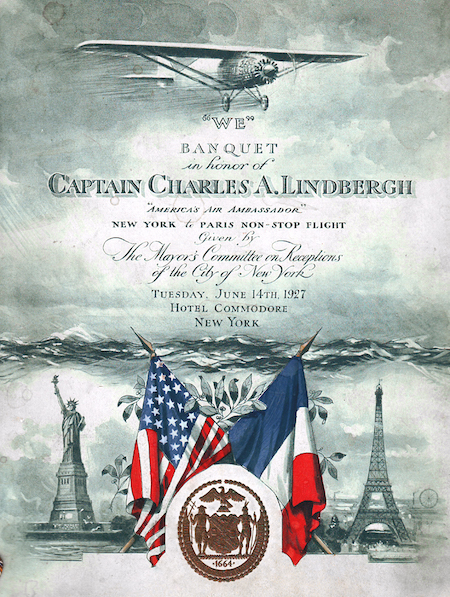
WHERE’S MY HAM SAMMICH?…Invitation to the WE banquet at the Hotel Commodore (Wikipedia).

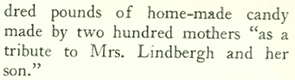
And if the reception at the Hotel Commodore wasn’t to your liking, you could go to the new Roxy Theatre and put in a bid for 300 pounds of home-made candy:

screen-shot-2016-10-14-at-10-28-17-am

screen-shot-2016-10-14-at-10-28-23-am

screen-shot-2016-10-14-at-10-28-57-am

 *  *  *

We’ll give Lindy a break and move on to excerpts from Upton Sinclair’s “How to be Obscene,” in which he tweaks the Boston bluenoses:

how-to-be-obscene

upton-sionclair

screen-shot-2016-10-14-at-10-21-29-am

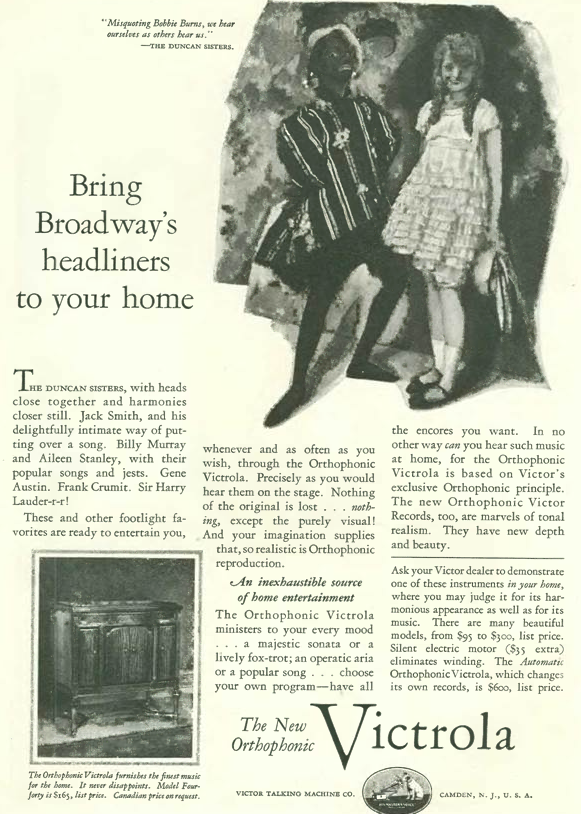
And then we have this advertisement for the Orthophonic Victrola, promising to bring the clear tones of racism into your home courtesy of the Duncan Sisters:

duncan-sisters

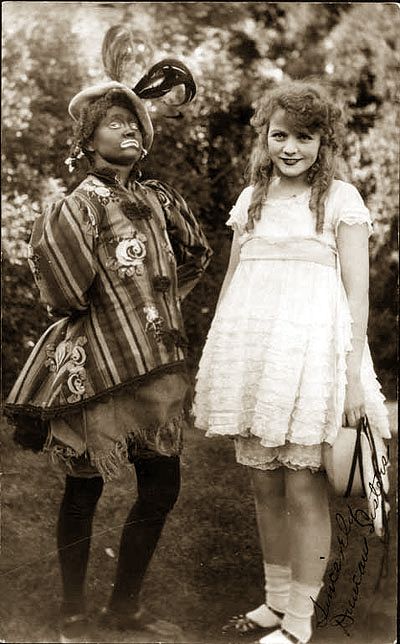
The Duncan Sisters were a vaudeville duo who created their stage identities in the 1923 musical comedy Topsy and Eva, derived from the novel Uncle Tom’s Cabin by Harriet Beecher Stowe. The musical was a big hit.

18bcd1e588bb3456db02bd7de94cba31
THAT WAS ENTERTAINMENT…Sisters Rosetta (left) and Vivian Duncan as Topsy and Eva. (silenceisplatinum.blogspot.com)
9a89aa65126941d43da14c086ed0f22c
Rosetta and Vivian Duncan in a promo photo. (silenceisplatinum.blogspot.com)

After a brief foray into movies in the early 1930s, the duo mostly entertained at night clubs and for many years continued to perform their Topsy and Eva routine even though appearing in blackface was considered impolite or offensive by later audiences. One of their final performances was on Liberace’s television show in 1956. The act ended in 1959 when Rosetta died in a car accident.

screen-shot-2016-10-27-at-4-22-32-pm
STILL TOGETHER…Vivian (left) and Rose Duncan on Liberace’s television show in 1956. They performed their Topsy and Eva routine, without the blackface. (YouTube)

 *  *  *

And to close, a cartoon from the July 2 issue, courtesy of Julian de Miskey:

screen-shot-2016-10-24-at-11-32-18-am

Next Time: Summer in the City…

21b6fac0e9233b827d578cf6175dd79d


A Castle in Air

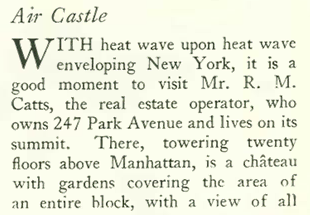
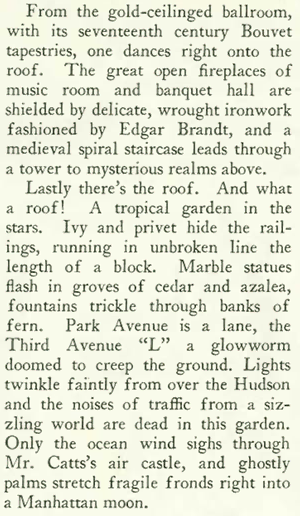
Withering under a July heat wave, The New Yorker editors turned their thoughts to the cooling breezes that could be found blowing across the penthouse garden of real estate developer Robert M. Catts.

Screen Shot 2016-01-26 at 9.24.04 AM
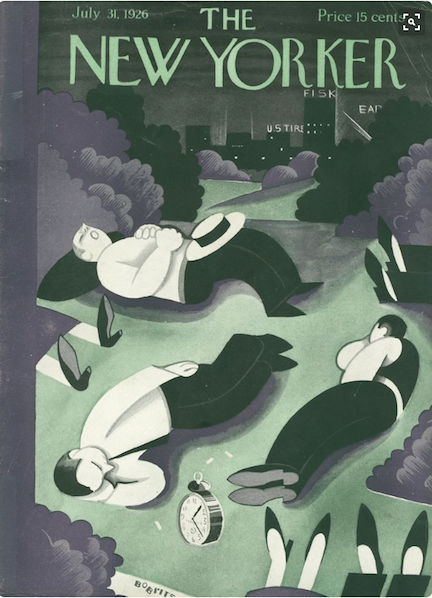
The July 31, 1926 cover by Victor Bobritsky offered its own commentary on the heat wave that gripped the city.
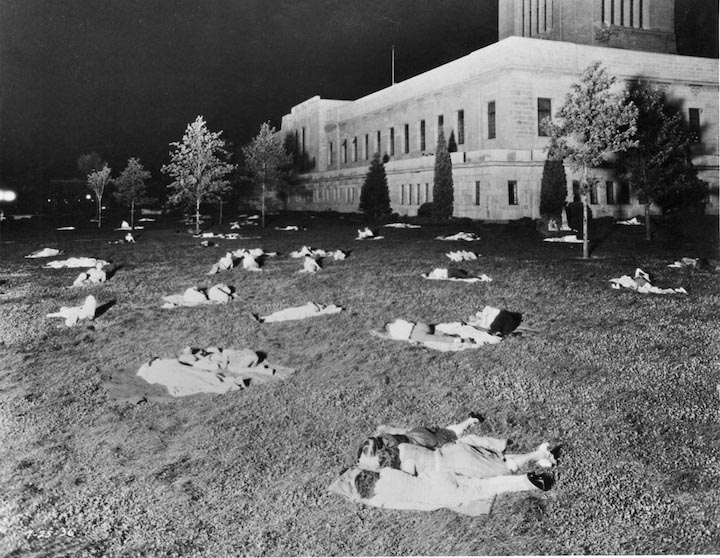
The State Capitol Building, Lincoln, With people in street clothes asleep on the lawn during hot days of the 1930's, Picture July 25, 1936
In case you were wondering, city folk (especially apartment dwellers) actually did sleep on the ground in the days before air conditioning. This photo was taken on July 25, 1936, on the lawn of the Nebraska State Capitol Building in Lincoln. (Nebraska State Historical Society).

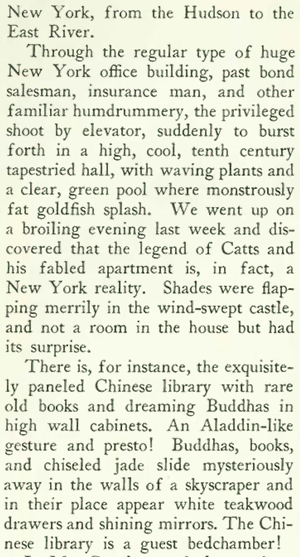
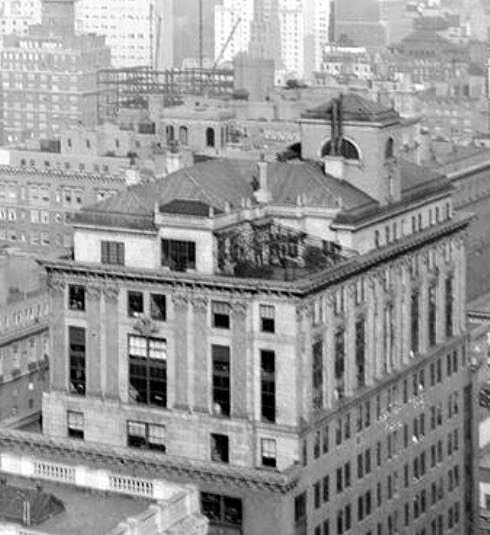
Catts erected the 20-story Park-Lexington office building at 247 Park Avenue in 1922, topping the building with his own penthouse apartment. Located near Grand Central Station, the building was innovative in the way it was built directly over underground railroad tracks leading into the station. The editors of The New Yorker, however, were more impressed by what was on top:

Screen Shot 2016-01-25 at 5.18.08 PM

Screen Shot 2016-01-25 at 5.18.32 PM

CattsNYC50
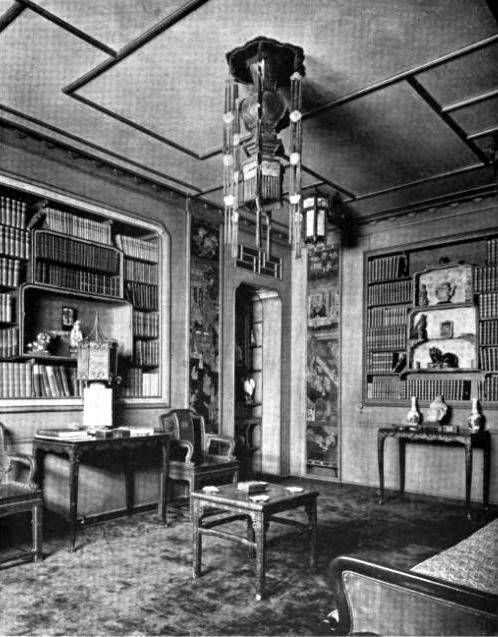
The “Chinese Library” in the apartment of Robert M. Catts atop the Park-Lexington Building. (halfpuddinghalfsauce.blogspot.com)
CattsNYC3
Penthouse apartment of Robert M. Catts atop the Park-Lexington Building. (halfpuddinghalfsauce.blogspot.com)

It was the rooftop garden, however, that sent the editors into a swoon:

Screen Shot 2016-01-25 at 5.19.24 PM

Before World War II the apartment would have other notable tenants who would succeed Catts, including the violinist Jascha Heifitz. The apartment, and the building beneath it, were demolished in 1963 along with the adjoining Grand Central Palace building, which was replaced in 1967 with 245 Park Avenue:

1024px-245parkNYC
245 Park Avenue (Wikipedia)

In other news, Arthur Robinson wrote a somewhat sympathetic profile of Babe Ruth, observing that Ruth’s “thousand and one failings are more than offset by his sheer likableness.”

Screen Shot 2016-01-25 at 5.20.19 PM
Illustration for the “Profile” by Johan Bull.

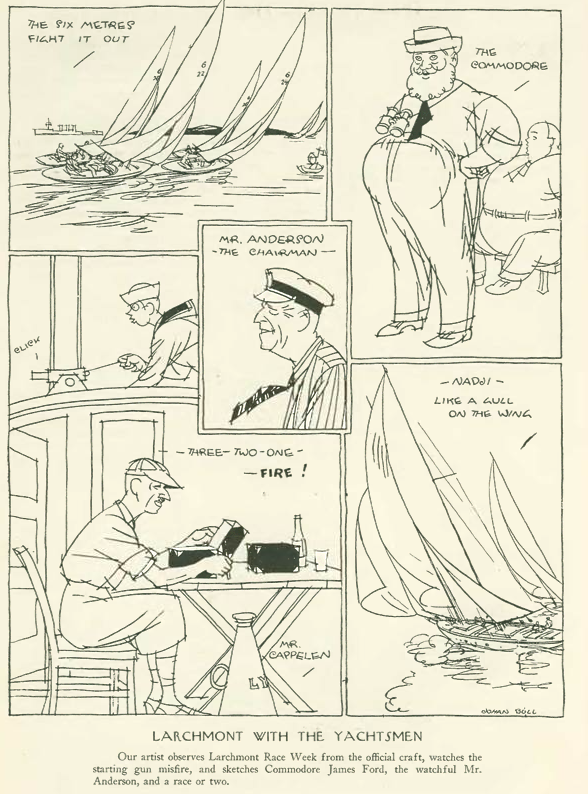
Curiously, the Yankees were having a better year in 1926, but there was scant mention of baseball in the pages of The New Yorker, the magazine preferring to cover classier sports such as golf, polo, tennis and horse racing. Another sport of interest was yacht racing, with Eric Hatch covering the races at Larchmont augmented by Johan Bull’s illustrations:

Screen Shot 2016-01-25 at 5.29.14 PM

The magazine continued to have fun with the androgynous fashion trends of the Roaring Twenties. This appears to be an early Barbara Shermund cartoon:

Screen Shot 2016-01-25 at 5.20.01 PM

Next Time: The Lights of Broadway…

Screen Shot 2016-01-25 at 5.31.10 PM

Batter Up

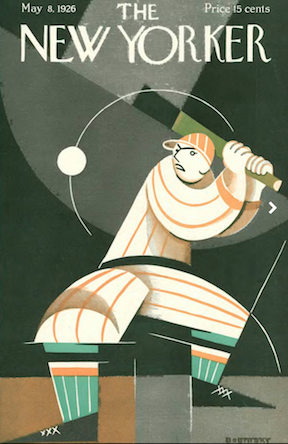
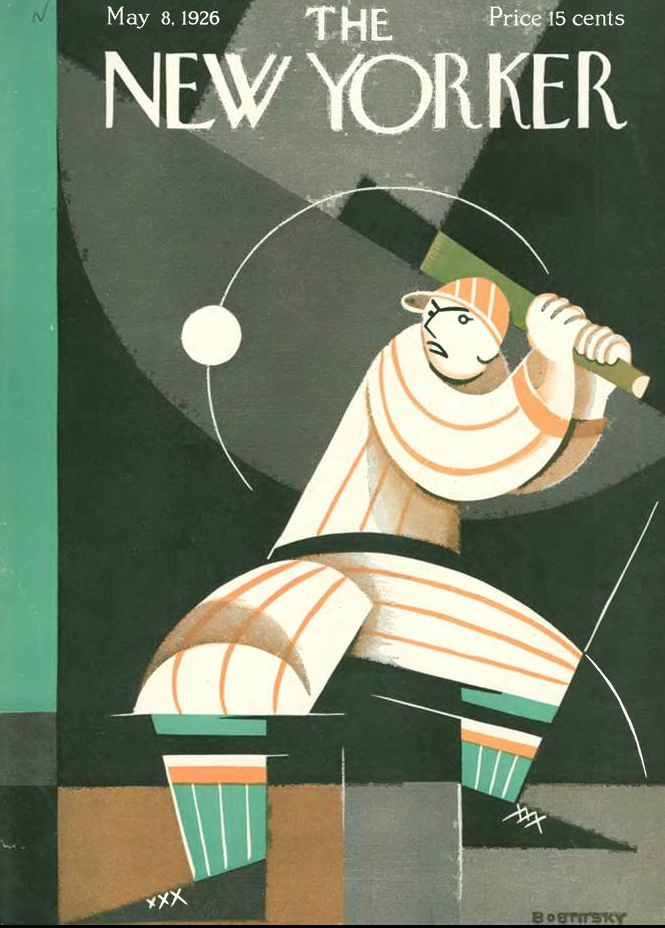
The cover of the May 8, 1926 issue featured this Bauhaus-style rendering of a baseball player by Victor Bobritsky in anticipation of the 1926 season:

Screen Shot 2015-12-11 at 9.24.00 AM
May 8, 1926 cover by Victor Bobritsky.

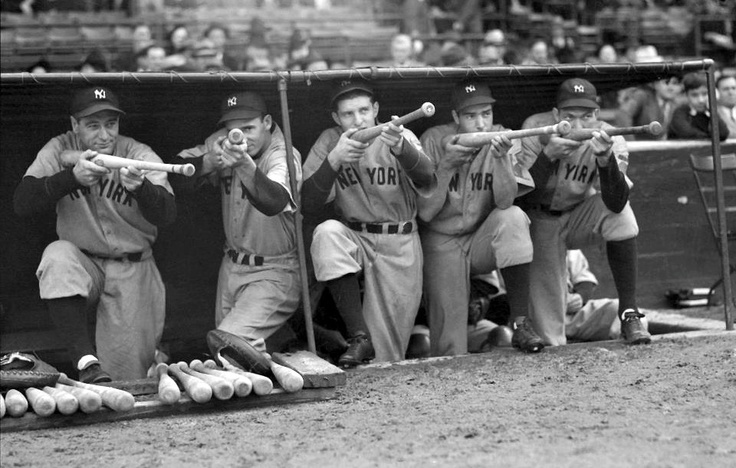
After a terrible 1925 season (and Babe Ruth’s infamous stomach ache), in 1926 the New York Yankees would begin to form a batting lineup that would become known as “Murderers’ Row.” They won the AL pennant in 1926 (losing to the St. Louis Cardinals in a seven-game World Series) and in 1927 they would go 110-44 and sweep the Pittsburgh Pirates in the World Series. More on that when we actually get to 1927.

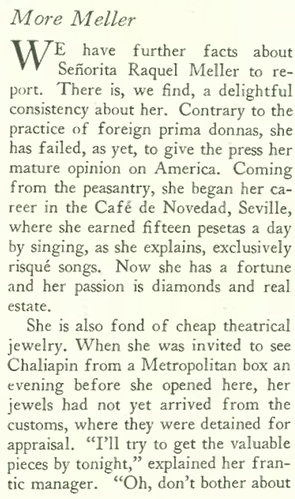
The May 8 issue offered more coverage of Spanish actress-singer Raquel Meller’s first-ever visit to America, which caused quite a sensation:

Screen Shot 2015-12-11 at 9.27.34 AM

Screen Shot 2015-12-11 at 9.28.24 AM

8635eeb0
Raquel Meller

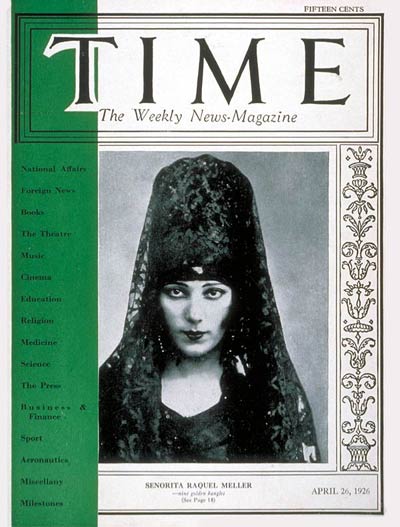
Meller arrived in New York via the SS Leviathan, on which she apparently attempted to book a deluxe suite for her five Pekingese. After New York she also visited Philadelphia, Chicago, Boston, Baltimore and Los Angeles, where she attracted the attention of Charlie Chaplin. Although Chaplin was unsuccessful in landing Meller as a co-star, he did incorporate the melody of her most famous song, La Violetera, as a major theme in his 1931 film City Lights.

Raquel_Meller_Time_magazine_cover_April_26,_1926
Meller’s visit landed her on the cover of the April 26, 1926 Time magazine. (Wikipedia)

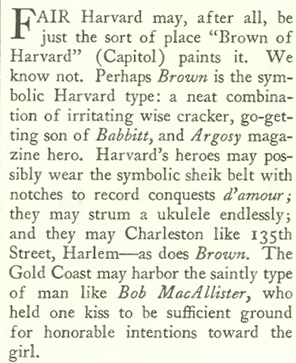
Theodore Shane reviewed the film Brown of Harvard and pondered the accuracy of this portrayal of Harvard student life:

Screen Shot 2015-12-11 at 9.42.48 AM

Screen Shot 2015-12-16 at 11.52.18 AM
(Wikipedia)

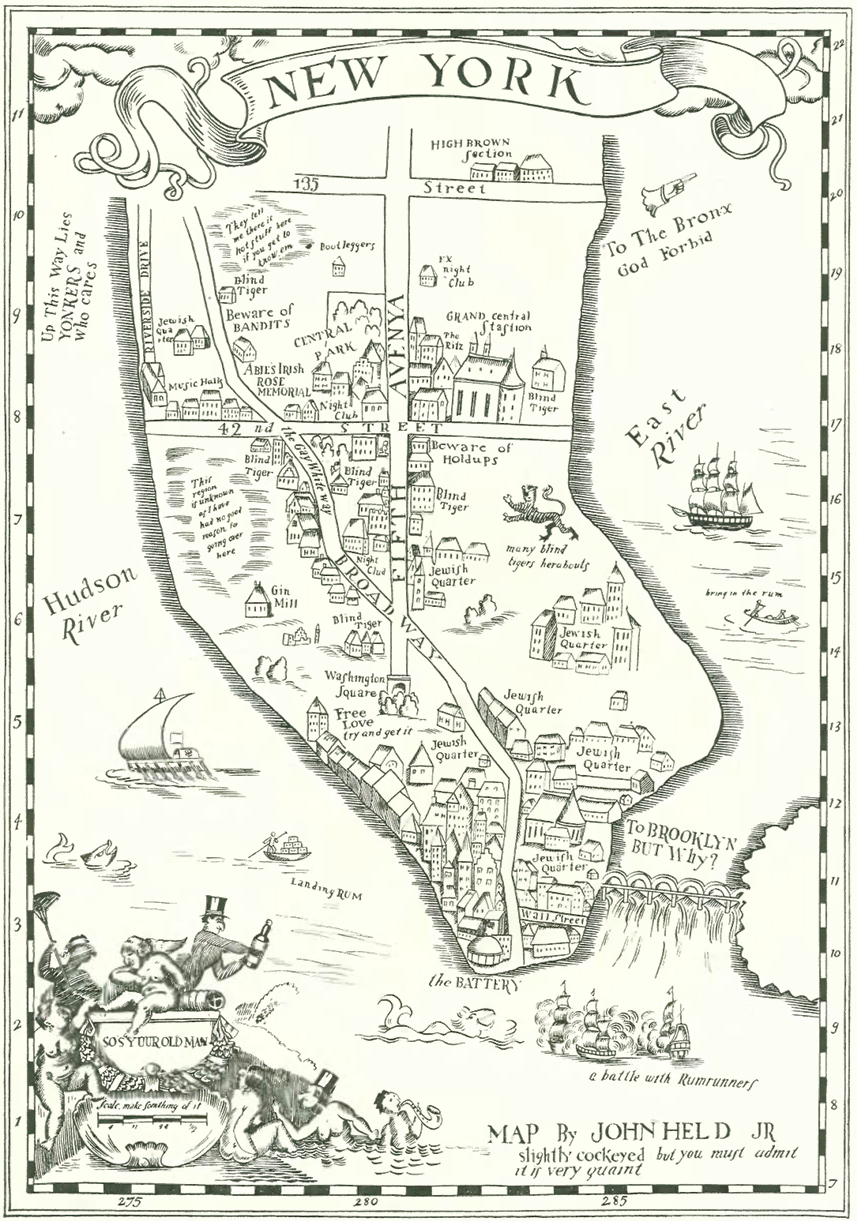
The issue also featured more unique mapmaking by John Held Jr:

Screen Shot 2015-12-11 at 9.31.16 AM

And this W.P. Trent cartoon with a common theme of early New Yorker issues: the comic imbalance of rich old men and their young mistresses:

Screen Shot 2015-12-11 at 9.35.18 AM

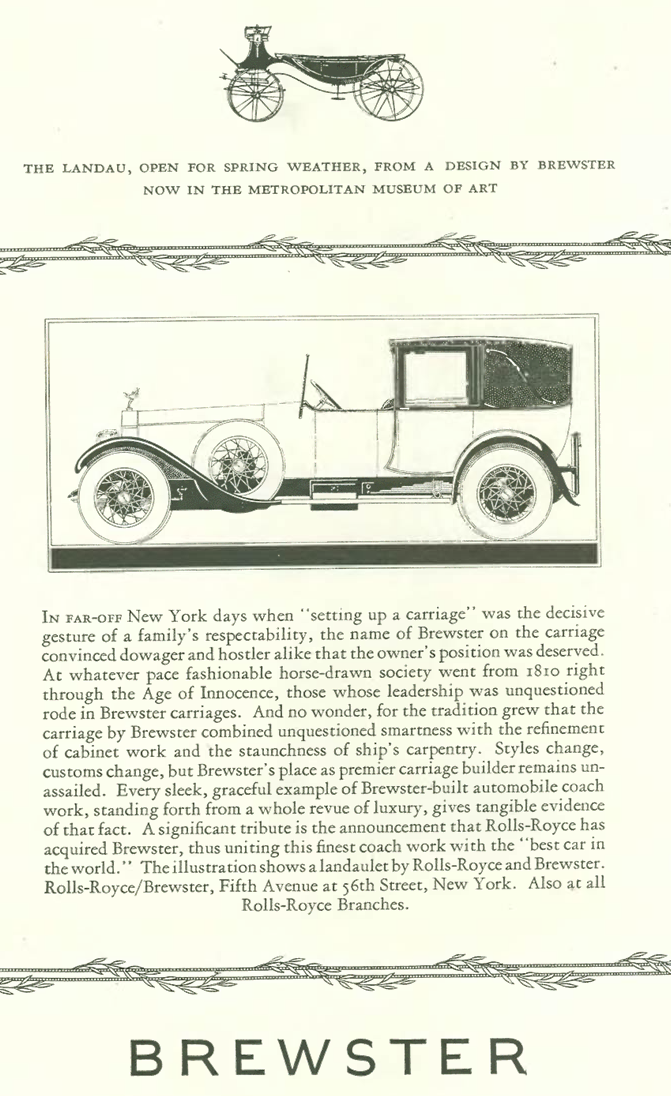
And finally, this advertisement in the May 8 issue caught my eye. Although cars crowded the streets of New York, they were still a recent enough invention to evoke the days of horse-drawn carriages. Even with all of the advances in automobiles in the late 20s, this landau-style Rolls Royce still exposed the driver to the weather, a design feature that signaled class, not practicality.

Screen Shot 2015-12-11 at 9.26.30 AM

Next Time: Nize & Not So Nize…

Screen Shot 2015-12-11 at 9.44.03 AM


Times Square’s Freaks and Fleas

Screen Shot 2015-10-07 at 2.40.38 PM
Feb. 6, 1926 cover by Victor Bobritsky.

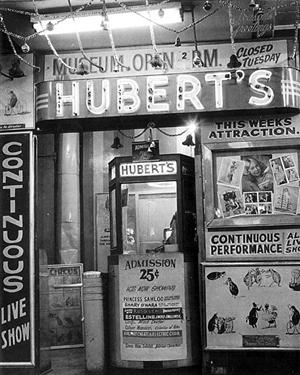
Coney Island was famous for its side-show freak exhibits, but from 1925 to 1969 Hubert’s Dime Museum and Flea Circus in Times Square brought the show to the heart of Manhattan.

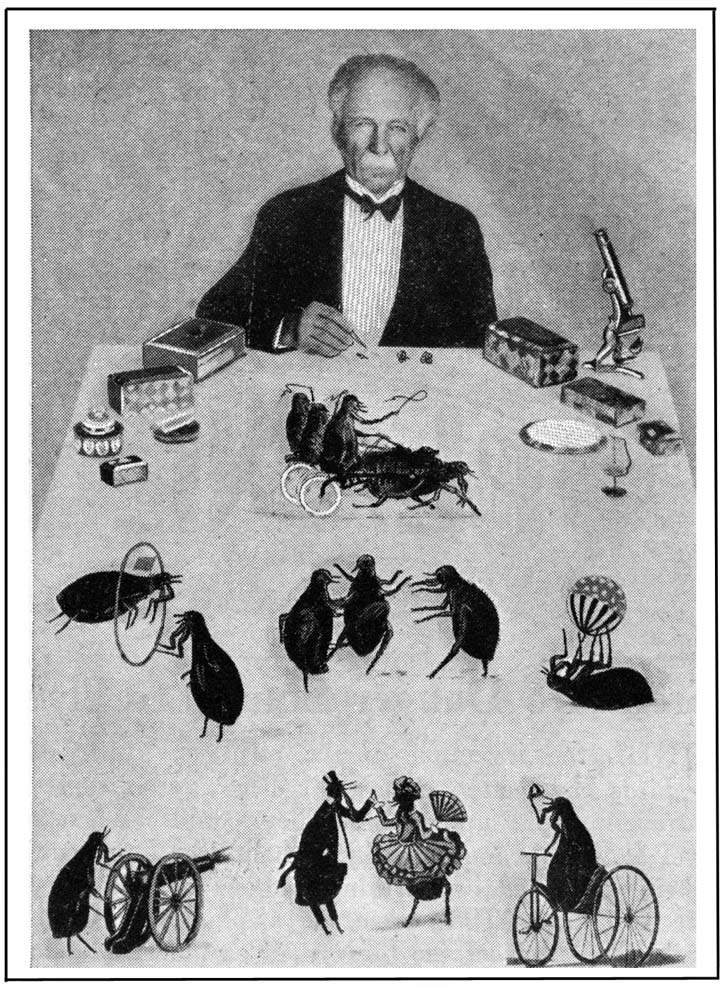
In addition to sword swallowers, tattooed ladies and other human oddities (the famous Zip the Pinhead did a short stint there), there was also Professor Heckler’s Flea Circus, which operated in the basement. It indeed featured real fleas attached by very thin wires to miniature chariots, merry-go-rounds and the like.

The New Yorker mentioned Hubert’s in this brief “Talk of the Town” item:

Screen Shot 2015-10-15 at 10.14.16 AM

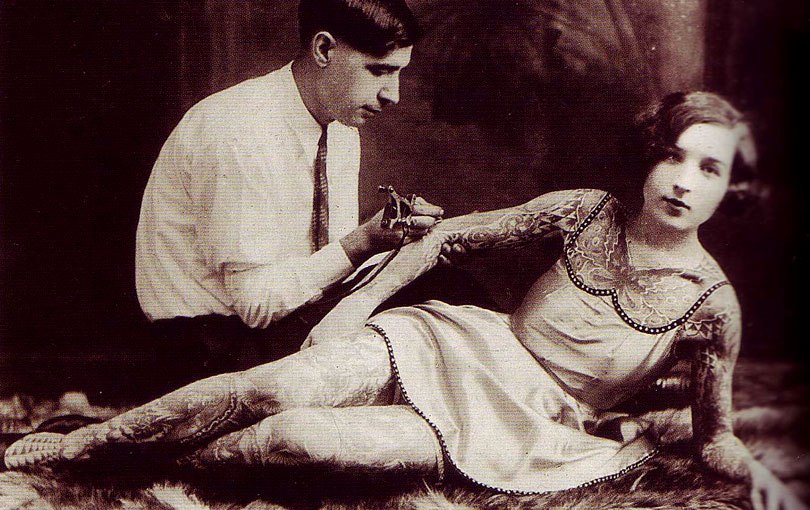
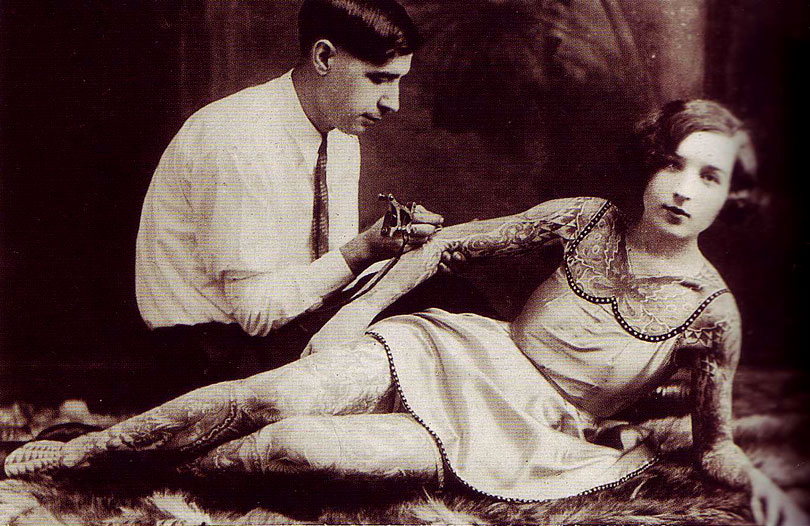
These days it seems a bit strange that women covered in tattoos were once considered sideshow oddities. Among the more famous was Stella Grassman, who worked as a “Tattooed Lady” in the late 1920’s in the Ringling Bros. Barnum & Bailey Circus and also appeared at Hubert’s. Stella and her husband, Deafy (pictured below) owned a tattoo shop on the Bowery.

stella-grassman
Stella Grassman and her husband, Deafy (Tattoo Archive)

And then there was Professor Heckler’s Flea Circus, depicted below (the “fleas” enlarged 700 times, and obviously embellished) in a feature on Prof. Heckler in the March 1930 issue of Modern Mechanics:

SA-Flea-6
(Sideshow World)

The entrance to Hubert’s, photo undated, but probably from the early 1950’s:

hubertsfleacircus
Entrance to Hubert’s Museum (Ephemeral New York)

After Hubert’s closed it became just another porno peep show, a ubiquitous sight on Times Square until the city began a “clean up” of the area in the 1990s.

* * *

Profiles examined the life and work of playwright Eugene O’Neill, and in the “Critique” section Gilbert W. Gabriel (who sometimes wrote under the pseudonym Golly-Wogg) gave a strong review of O’Neill’s The Great God Brown, writing that the play represented “some of the finest writing of his lifetime.”

Screen Shot 2015-10-15 at 10.16.06 AM
Peter Arno’s rendering of Eugene O’Neill for “Profile.”

I should note here that Gabriel had replaced Herman J. Mankiewicz as drama critic following HJM’s firing by editor Harold Ross in January of 1926. Ross, miffed by Mankiewicz’s interest in Hollywood, famously fired “Mank” by telegram (Mankiewicz would go on to a successful career as a screenwriter on such films as Citizen Kane and The Wizard of Oz).

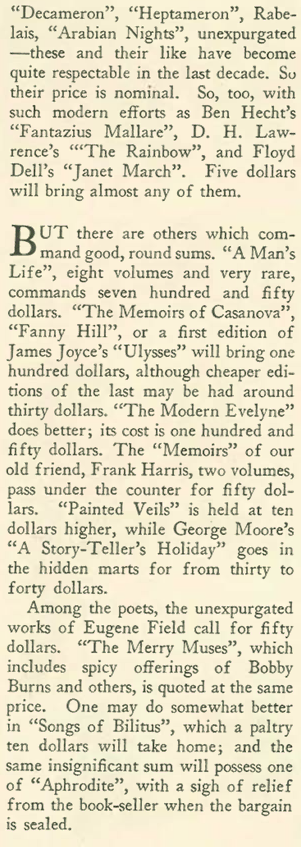
Finally, an interesting take in “Talk of the Town” on book censorship of the day:

Screen Shot 2015-10-15 at 10.02.39 AM

Screen Shot 2015-10-15 at 10.03.30 AM

“Talk” ended with this helpful advice on current cocktail recipes (remember we are in the midst of Prohibition). The “Titantic,” with six parts gin, seems deadly indeed:

Screen Shot 2015-10-15 at 10.14.41 AM

What is “Nuxated Iron” you ask? It was sold as a performing enhancing iron supplement in the early 20th century, endorsed by such athletes as boxer Jack Dempsey and baseball’s Ty Cobb. The blog Peterboriana explains it thus:

“Nuxated Iron” pills, as endorsed by Dempsey, were, obviously, iron supplements.  As for the “nuxated” part of it, that refers to nux vomica, a deadly substance better known as strychnine (i.e. rat poison).  Fortunately, the stuff being hawked…actually contained very little strychnine, and not much iron either.  It was comparatively useless as a performance-enhancing drug, but would not kill you unless you took a lot of it.

So if the Titanic’s six parts gin don’t get you first, maybe the Nuxated Iron will.

Next Time: Stop and Go…

Screen Shot 2015-10-15 at 9.54.27 AM