Perhaps no other hairstyle has a stronger link to a historical period than the “bob cut,” associated not only with the flapper lifestyle in the 1920s but with women in general who wished to signal their independence from old cultural norms that defined femininity.
March 10, 1928 cover by Ilonka Karasz.
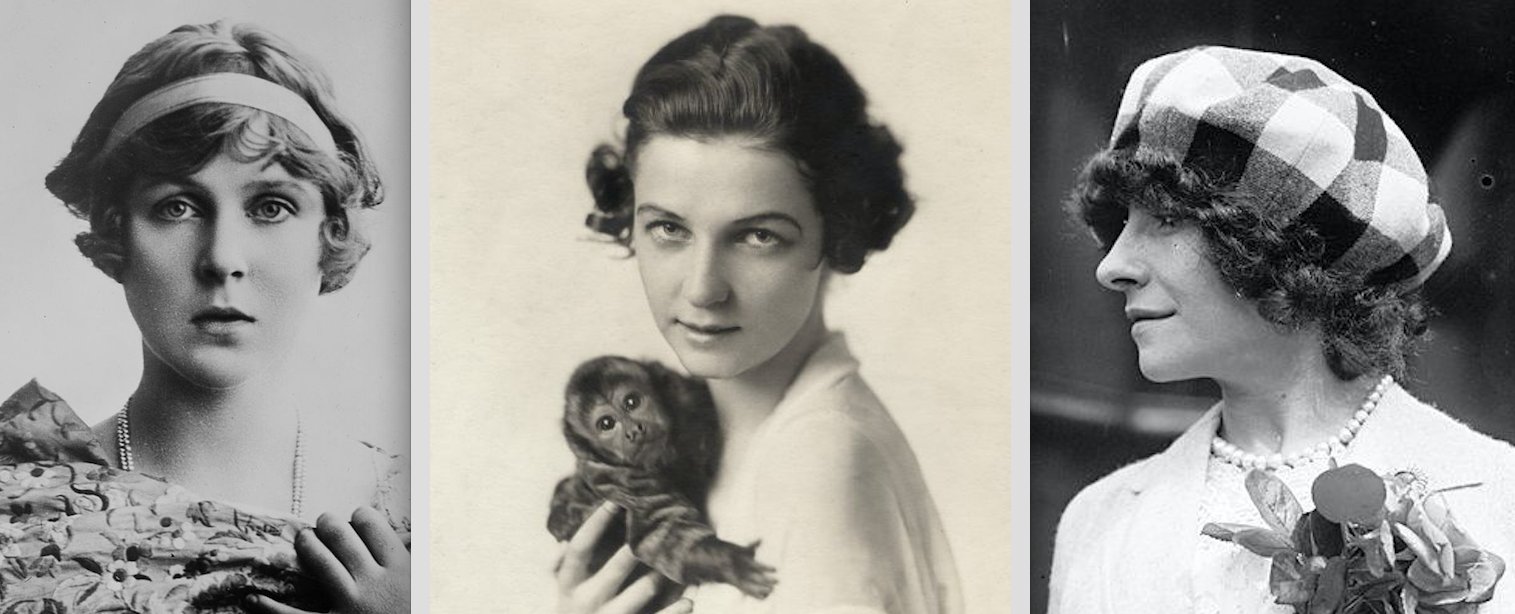
Women in Western cultures typically wore their hair long, but in the early years of the 20th century a few women of prominence began to flout convention and wear their hair in a bobbed style, including French actress Polaire, who began wearing her hair short in the 1890s; English socialite Lady Diana Cooper, who wore her hair short as a child and continued to do so as an adult; and dancer Irene Castle, who unveiled her “Castle Bob” to Americans in 1915. By 1920 the style was all the rage.
EARLY TRENDSETTERS…From left, Lady Diana Cooper in the mid 1920s; dancer Irene Castle with her pet monkey, Rastus, in 1915; and French actress Polaire in 1910. (Cooper & Polaire photos from Library of Congress; Castle photo courtesy Wisconsin Historical Society)AMERICAN BOBS…Perhaps the most famous bob belonged to 1920s silent film star Louise Brooks (at right, wearing the “King Tut” bob, circa 1925), who was considered the very definition of a Roaring Twenties flapper. At left, another version of the bob as worn by Anita Loos, circa 1930. Loos was a screenwriter and author who achieved great fame in the 1920s with her blockbuster comic novel Gentleman Prefer Blondes. (fashion1930s.tumblr.com / Smithsonian)
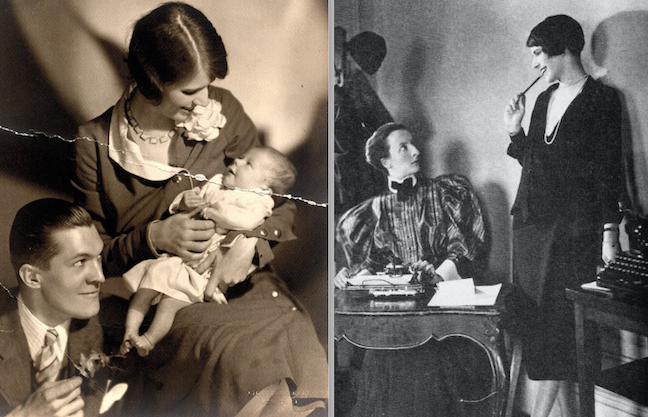
Another famous bobbed flapper of the 1920s was The New Yorker‘s own Lois Long, who wrote under the pseudonym “Lipstick” for her nightlife column “Tables For Two,” but signed her fashion column (“On and Off the Avenue”) with a simple “L.L.” Long was also a regular unsigned contributor to “The Talk of the Town,” and is credited as one The New Yorker’s early writers who gave the magazine its voice.
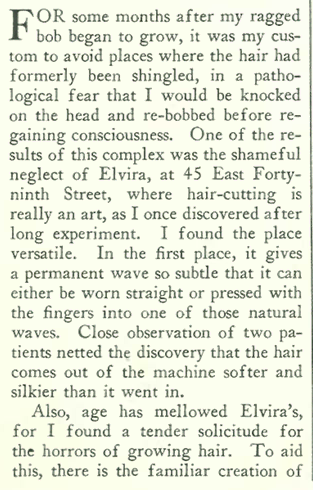
In the March 10, 1928 issue Long wrote in “On and Off the Avenue” about the challenges in maintaining her bobbed hairstyle:
LIFESTYLE CHANGES…Lois Long helped define the flapper lifestyle of the Jazz Age in her writing for The New Yorker. Long’s own bob evolved during the decade, from the straight boyish cut at right, circa 1925, to a “shingle style” bob at left in 1929, where she is pictured with her husband, New Yorker cartoonist Peter Arno, and their newborn daughter, Patricia. (Patricia Arno / Wikipedia)
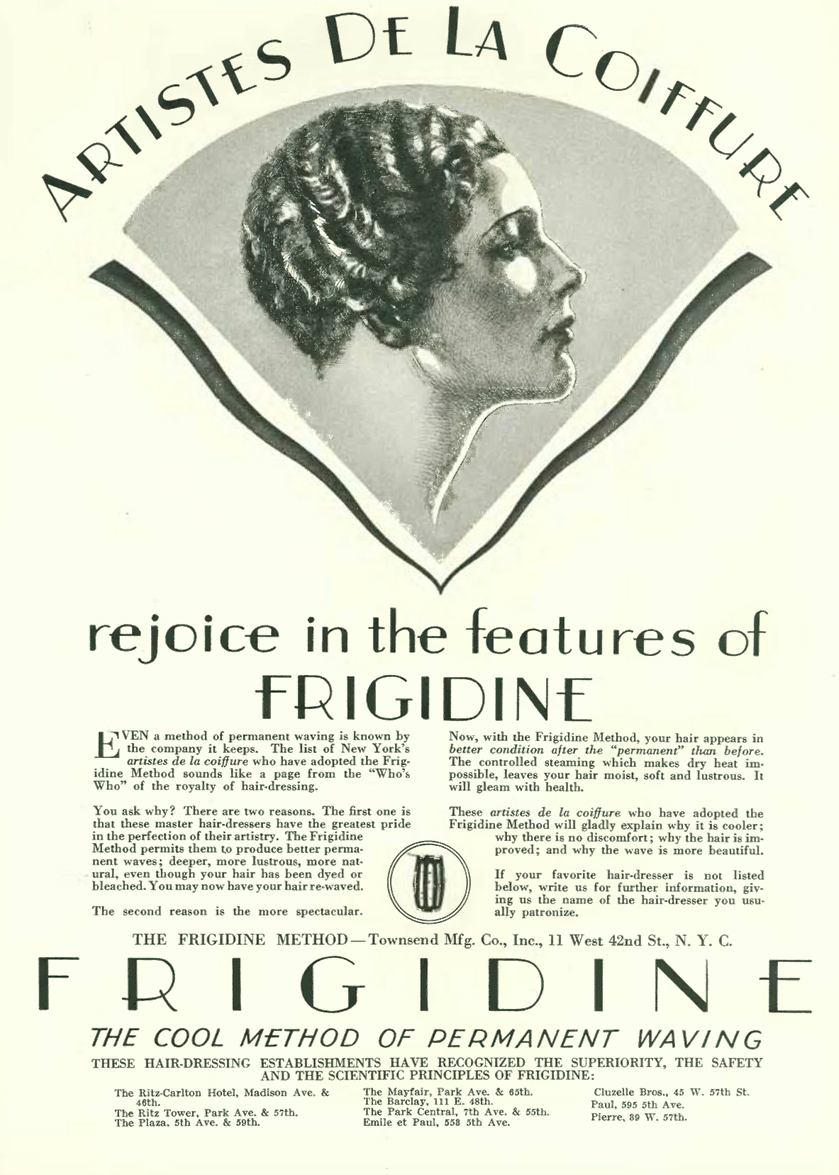
Many women in the 1920s preferred to have a permanent wave treatment applied to their bob, which usually involved the application of high heat via a complex array of wires and hot rollers. In the March 10 issue, this ad promoted an alternative “cool method”…
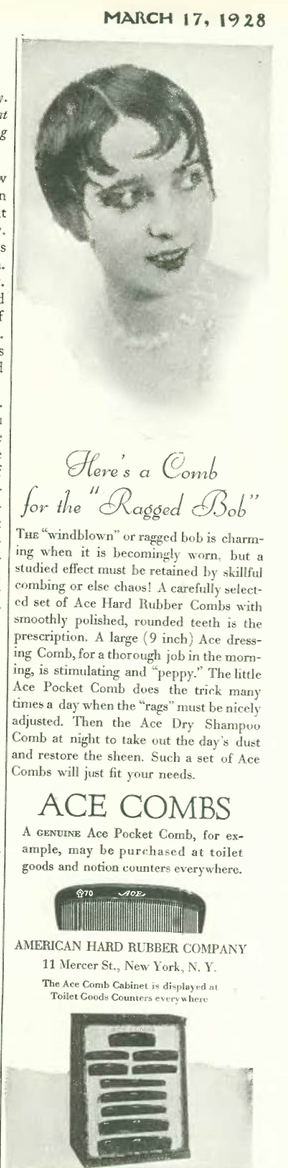
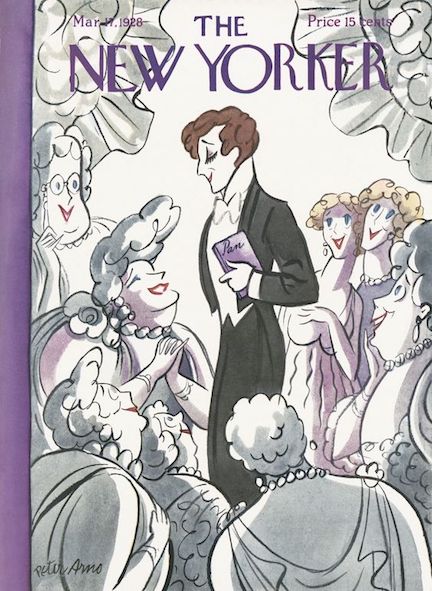
…and in the March 17, 1928 issue, the Ace Comb company made a pitch to improve its market share by touting their hard rubber combs as ideal for the “ragged bob”…
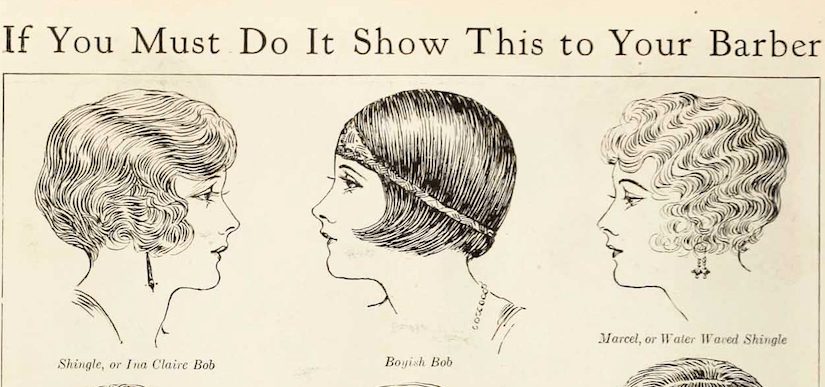
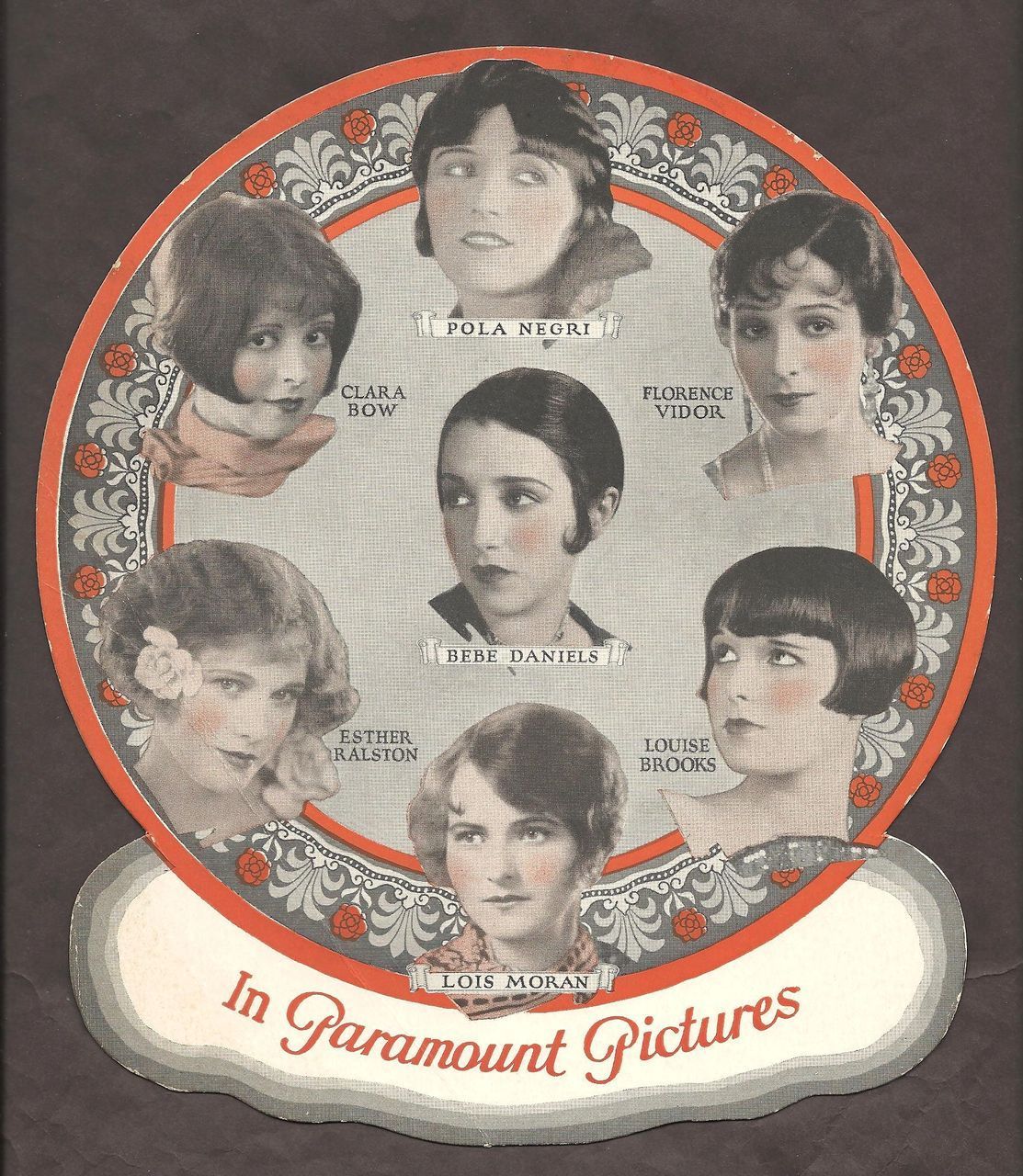
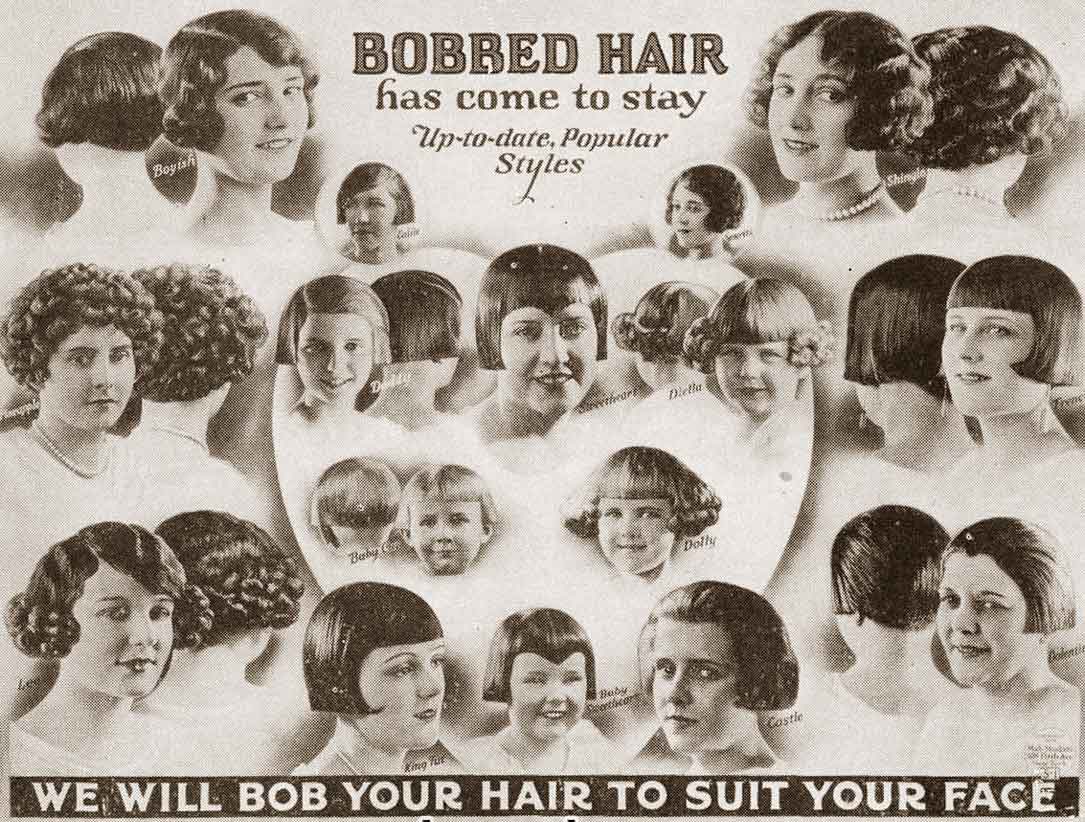
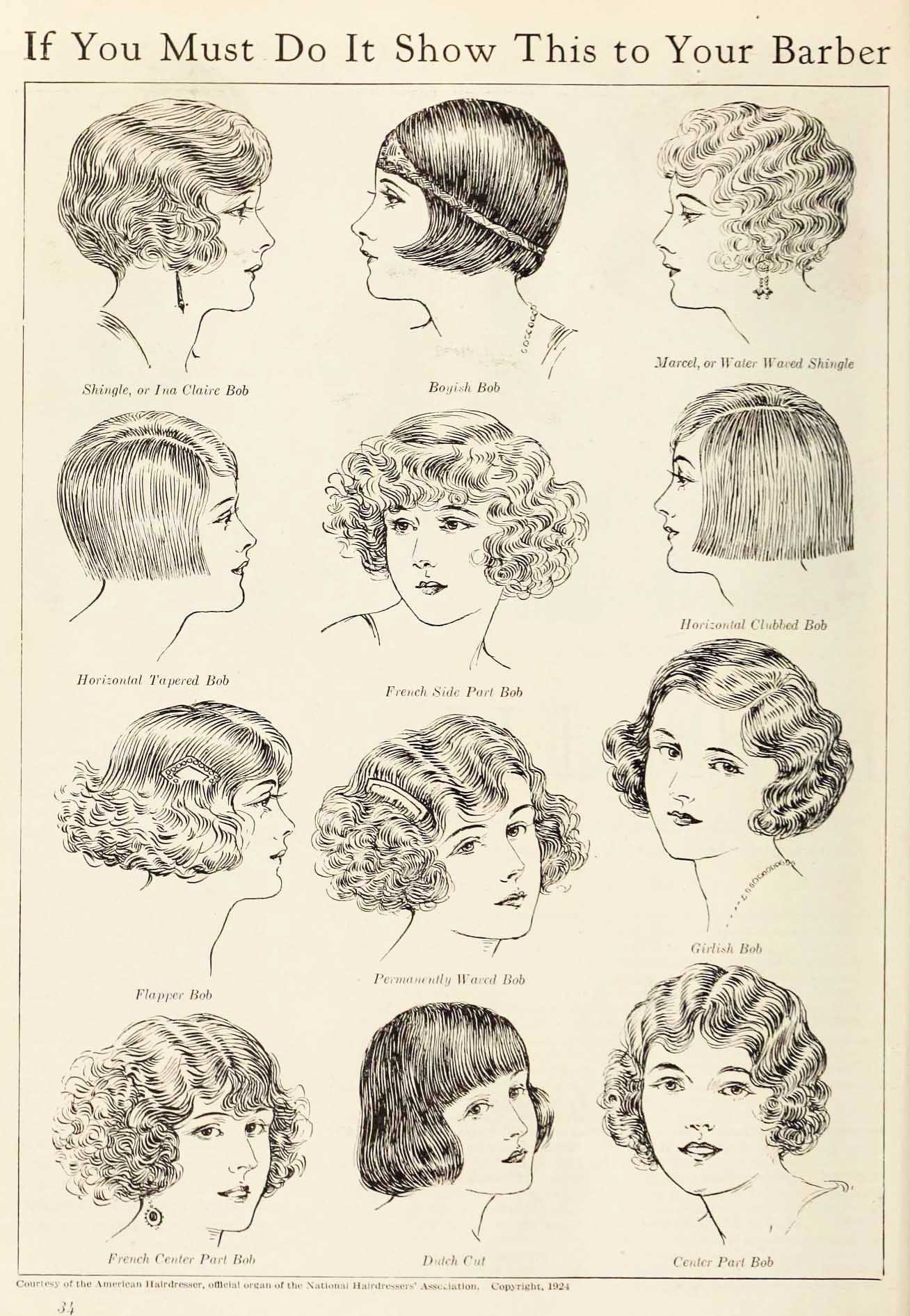
…and for some further context on all things bobbed, following are some images gleaned from glamourdaze.com, including a page from a 1920s movie magazine featuring Paramount’s bobbed stars; a 1920s salon advertisement promoting bobs for all ages; and finally, a helpful reference card from the American Hairdresser, circa 1924…
* * *
A New Plot for Billy Haines
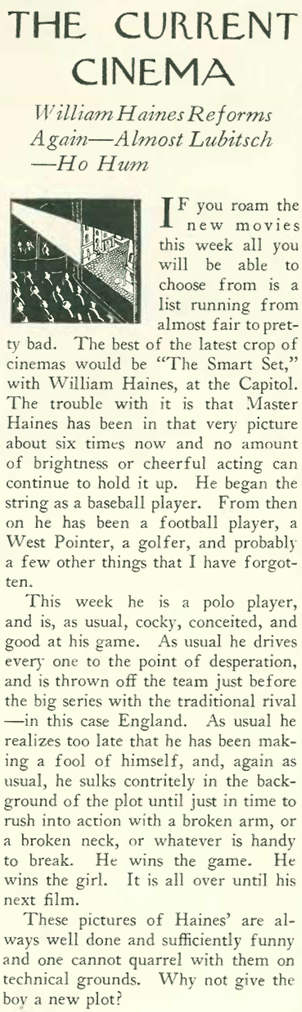
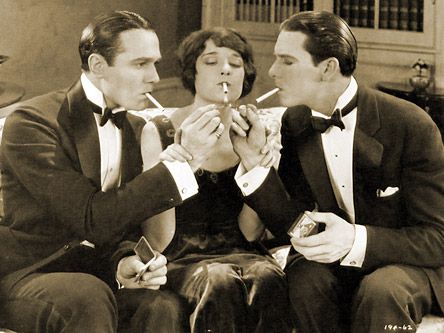
William “Billy” Haines was a top male box office draw in the 1920s, and throughout the decade was typecast in a number of comic roles as a conceited baseball player (Slide, Kelly, Slide), conceited cadet (West Point), conceited football star (Brown of Harvard), conceited golfer (Spring Fever), and conceited polo player (The Smart Set). It was that last picture that left The New Yorker wanting Haines to consider taking a different approach in his next picture:
Haines would eventually escape being typecast as a wisecracking, arrogant leading man, not by choosing different roles but by quitting acting altogether in 1935. The head of MGM, Louis B. Mayer, had demanded Haines deny his gay lifestyle (which he had lived quite openly despite the times) and marry a woman for appearances. Haines went on to become a successful interior designer, with clients ranging from Joan Crawford and Gloria Swanson to Ronald and Nancy Reagan.
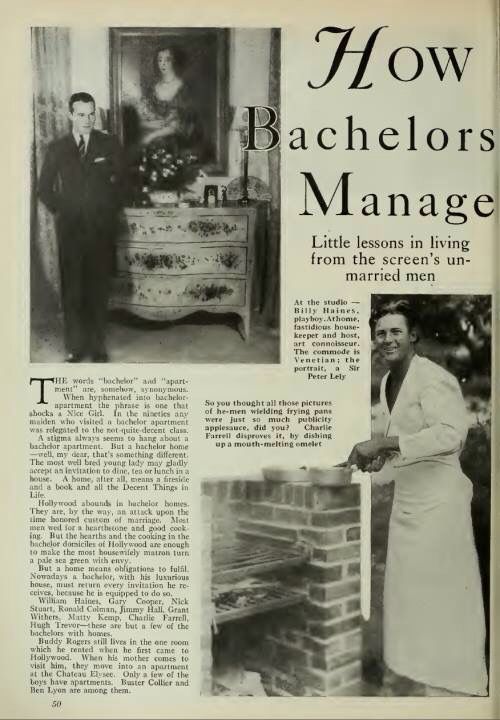
TYPECAST…Billy Haines (left), Eleanor Boardman and Ben Lyon in Wine of Youth, 1924. (whenwewerecool.tumblr.com)FAN FICTION…Movie fan magazines until mid-century were tools of the major studios with portrayals of the “real lives” of stars that were nearly as fictional as their film roles. Billy Haines (upper left) was one of the Hollywood “bachelors” featured in this article from an unidentified fan magazine. (Unknown/Pinterest)
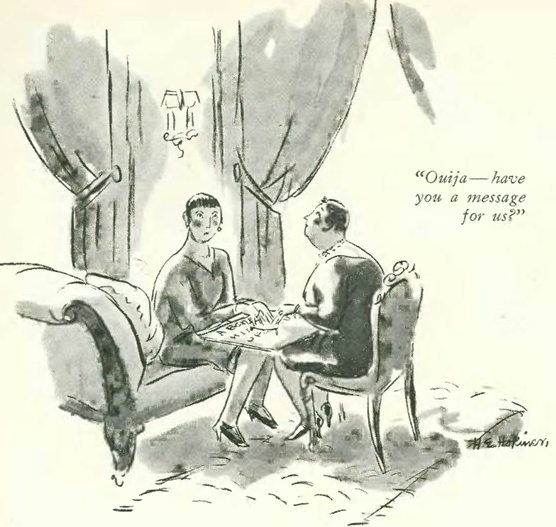
In our featured cartoon from March 10, 1928, Helen Hokinson spied on her famous spinsters passing the time with a Ouija board:
It what would become a longstanding tradition, TheNew Yorker marked its third anniversary by featuring the original Rea Irvin cover illustration from Issue No. 1. The New Yorker was a very different magazine by its third year, fat with advertising and its editorial content bolstered by such talents as Peter Arno, E.B. White and Dorothy Parker.
Feb. 25, 1928 cover by Rea Irvin.
Parker livened up the magazine’s books section, mincing few words as she took on writers both great and not so great.
In the latter category was Aimee Semple McPherson, a 1920s forerunner of today’s glitzy televangelists. In her column “Reading and Writing,” Parker took aim at McPherson — “Our Lady of the Loud-speaker” — who had just published a book titled In the Service of the King.
READY FOR MY CLOSEUP…Although she was an evangelical preacher, Aimee Temple McPherson was also considered one of the most glamorous women in 1920s America. (Foursquare Church)
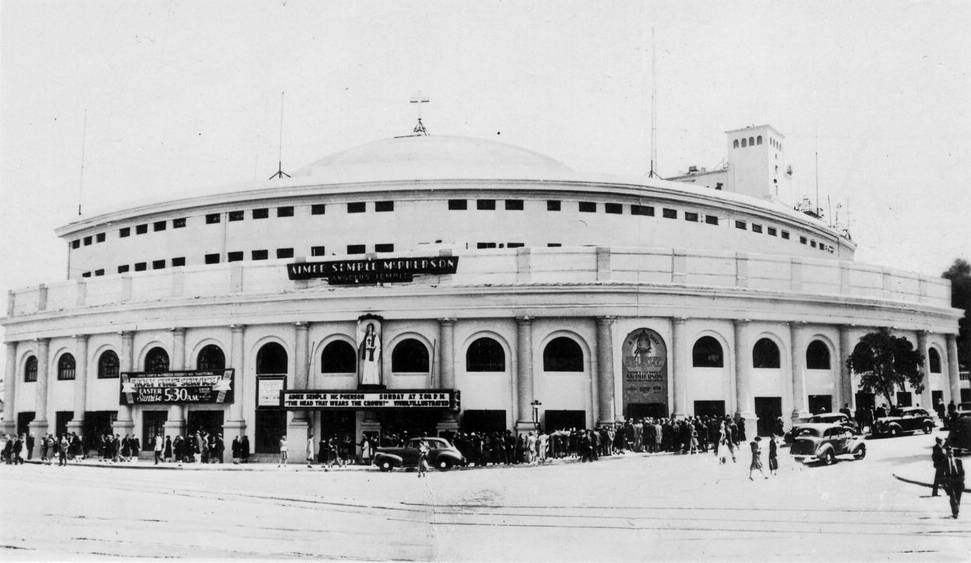
McPherson (1890–1944) was a Pentecostal-style preacher who practiced “speaking in tongues” and faith healing in her services, which drew huge crowds at revival events between 1919 and 1922. She took to the radio in the early 1920s and in 1923 she based her ministry in Los Angeles at her newly completed Angelus Temple, which served as the center of the International Church of the Foursquare Gospel.
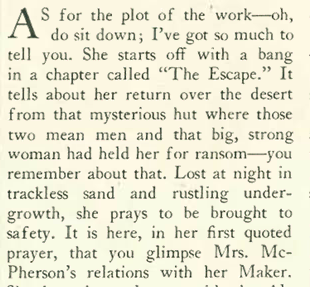
McPherson’s book detailed her conversion and her various hardships, including her mysterious “kidnapping” in 1926. Parker was having none of it:
Parker was referring to events beginning on May 18, 1926, when the evangelist visited Venice Beach for a swim and went missing. Some thought she had drown, others claimed they saw a “sea monster” in the area. McPherson reemerged in June on the Mexico-Arizona border, claiming she had been kidnapped and held captive by three strangers.
Numerous allegations of illicit love affairs targeted McPherson during her years of fame, so some were inclined to believe she went missing in order to engage in a love affair with her sound engineer.
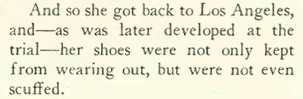
Upon her return to Los Angeles she was greeted by a huge crowd (est. 30,000 to 50,000) that paraded her back to the Angelus Temple. However many others in the city found McPherson’s homecoming gaudy and annoying. A grand jury was subsequently convened to determine if evidence of a kidnapping could be found, but the court soon turned its focus to McPherson herself to determine if she had faked the kidnapping. Parker thought the condition of the preacher’s shoes, after a long trek through the desert, were evidence enough of a sham:
THE MEGACHURCH IS BORN…Angelus Temple, completed in 1923, is the center of the International Church of the Foursquare Gospel founded by McPherson. It is still in active use. (Loyola Marymount University)SPECTACLE…Aimee Semple McPherson surrounded by massed choirs at Angelus Temple for a musical requiem in 1929. (Los Angeles Public Library/Herald Examiner)Aimee Semple McPherson (second from left) joins tambourine players in a service at Angelus Temple. McPherson produced weekly dramas, often major spectacles, illustrating various religious themes. (Los Angeles Public Library/Herald Examiner)
McPherson, who was married three times and twice divorced, died in September 1944 from an apparent overdose of sleeping pills. She was 53. Her son Rolf took over the ministry after her death. Today McPherson’s Foursquare Church has a worldwide membership of about 8 million, and is still based in Los Angeles.
But How Do I Look?
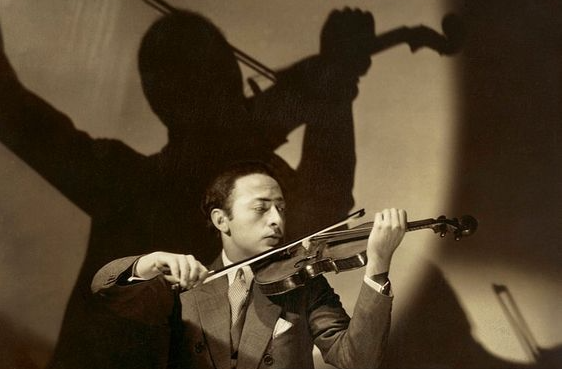
The Feb. 25 issue profiled the young Jascha Heifetz, a Russian-born violin prodigy who seemed more interested in how he looked than in how he performed. An excerpt:
SARTORIAL PERFECTION…Detail of a 1928 photo of 27-year-old Jascha Heifetz, taken by Edward Steichen. (Condé Nast)
* * *
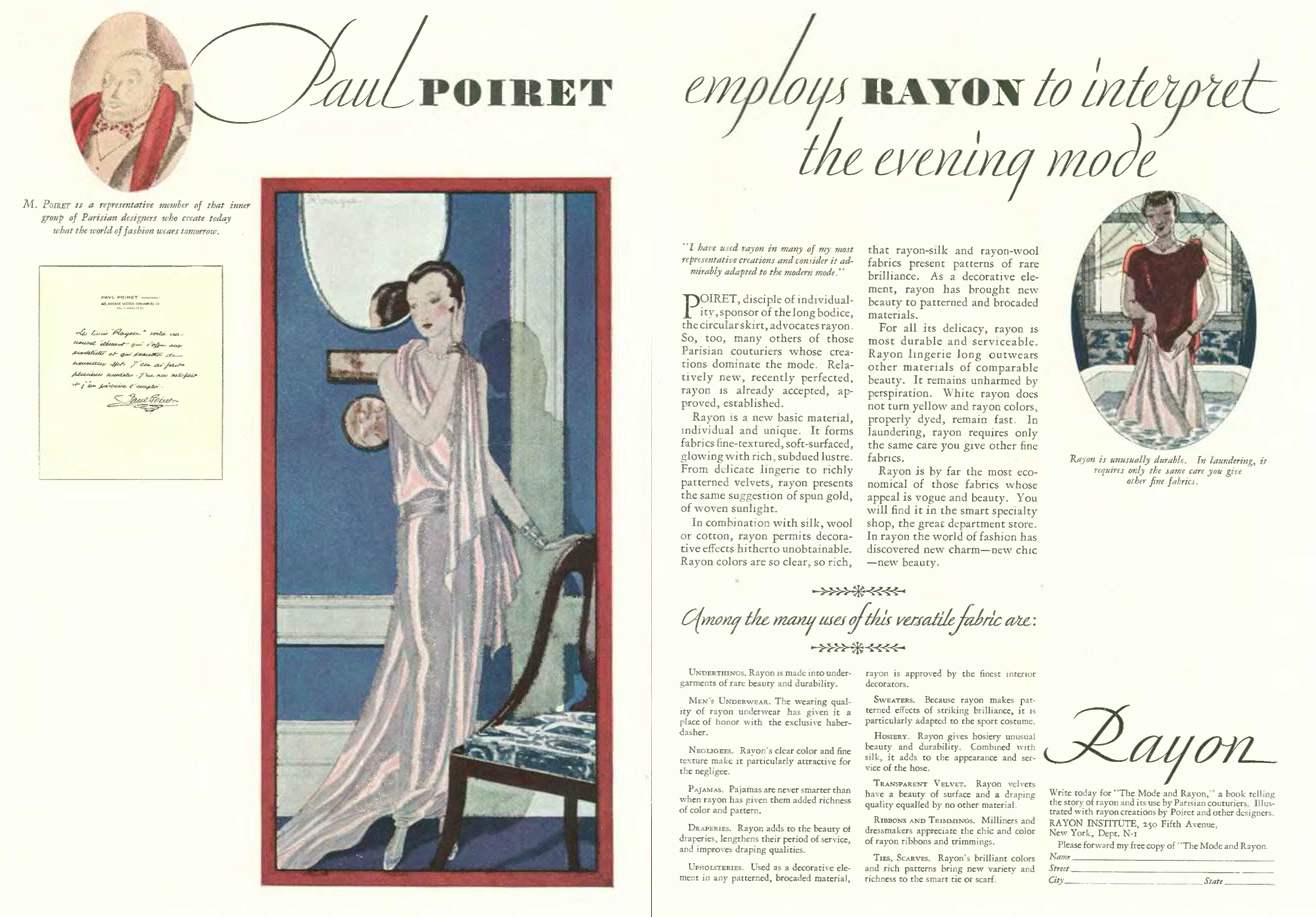
Speaking of fashion, one of the world’s greatest fashion designers, Paul Poiret, was seeing hard times in the late 1920s with his designs losing popularity in his native France and his formidable fashion empire on the brink of collapse. But Francophile New Yorkers, always hungry for French fashion, greeted Poiret with open arms when he arrived in the city in the fall of 1927.
It is something of a surprise, however, to find this advertisement in the Feb. 25 issue in which Poiret endorses Rayon, a man-made substitute for silk. We don’t usually associate synthetics with haute couture, but then again maybe Poiret just needed the money. Better living through chemistry, as they say…
(click to enlarge)
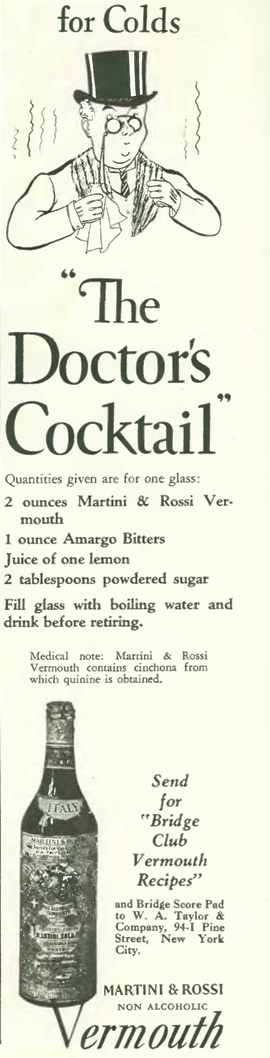
Also in the issue was a sad, Prohibition-era advertisement that extolled the virtues of an oxymoronic “non-alcoholic vermouth”…
And finally from the Feb. 25 issue, a cartoon by Carl Rose…
* * *
One-eyed Monster
In the March 3 issue “The Talk of the Town” discovered the miracle of television during a visit to the Bell Telephone laboratories.
March 3, 1928 cover by Peter Arno.
Lab researchers demonstrated a “receiving grid” with a tiny screen that displayed images broadcast across the expanse of an auditorium:
WE’LL CALL IT THE BOOB TUBE…Engineer and inventor Ernst Alexanderson (right) and the TV projector he used for early public demonstrations of television, circa 1928. (edisontechcenter.org)
Another glimpse into the future in the March 3 issue came courtesy illustrator Al Frueh, who offered this fanciful look at the skyscraper of tomorrow:
(click to enlarge)
* * *
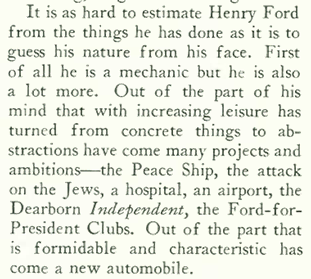
“Profile” featured the first installment of a four-part article (by Niven Busch Jr.) on a man who put America on wheels and into traffic jams. Excerpts:
Profile illustration by Al Frueh.
And finally, from W.P. Trent, an analogy that would take on new meaning after the market crash…
Before screenwriter Niven Busch Jr. headed to Hollywood in 1931, he cut his teeth as writer for The New Yorker, contributing a series of profiles (later compiled in Twenty-one Americans) as well as an intermittent series from May 1927 to Feb. 1930 on New York’s Prohibition-era speakeasies.
February 18, 1928 cover by Theodore G. Haupt.
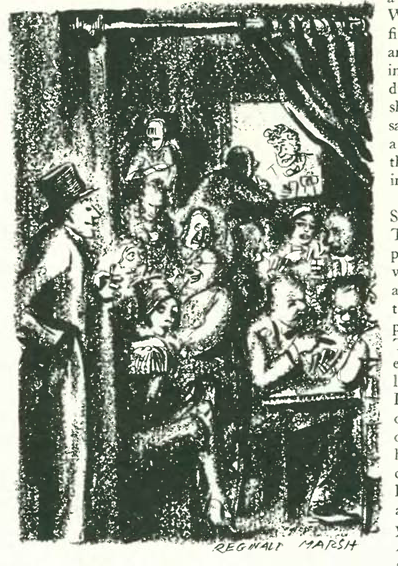
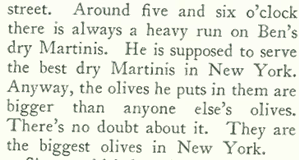
Always careful to shield the identity of speakeasy owners and patrons, Busch described the often less-than-glamorous digs of New York’s illegal watering holes. In a speakeasy called “The No Trump,” two Irish brothers took turns mixing drinks “on a kitchen table in a cubbyhole” while Busch sat in a darkened bar and listened in on a conversation coming from the adjoining “bridge room”…
This illustration by Reginald Marsh accompanied Niven Busch’s article.
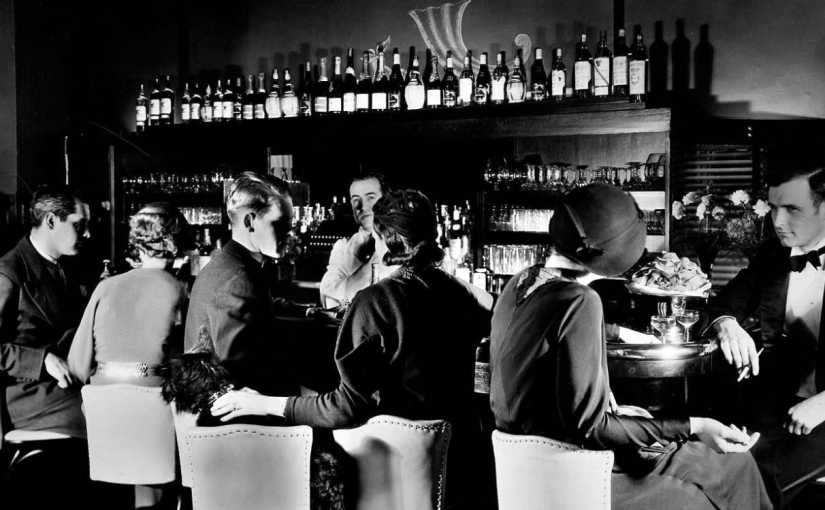
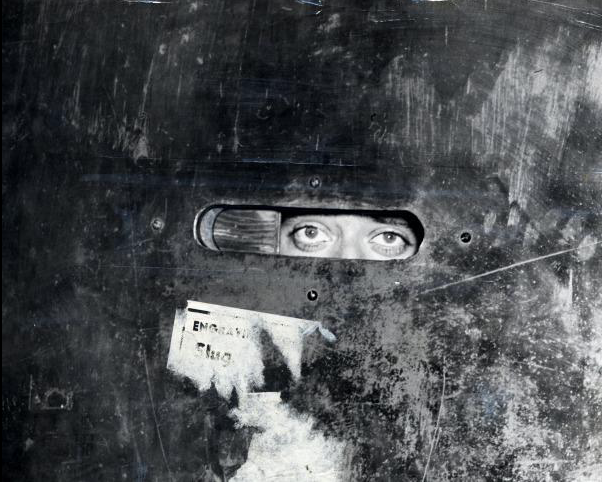
LAST CALL…Images taken by photographer Margaret Bourke-White for Life magazine during the last days of Prohibition. (Time.com)WHO GOES THERE?…The familiar slot in the door came in handy for speakeasy owners wishing to screen clients before allowing entry into their illegal lairs. (Chicago Tribune)BETTER SWILL…The Marlborough House, an East Side speakeasy for socialites during Prohibition, 1933. Photo by Margaret Bourke-White for Fortune. (Time.com)
Busch also described his visit to the “Circus Speakeasy,” operated by a man who “travelled for 21 years with the Ringling Circus”…
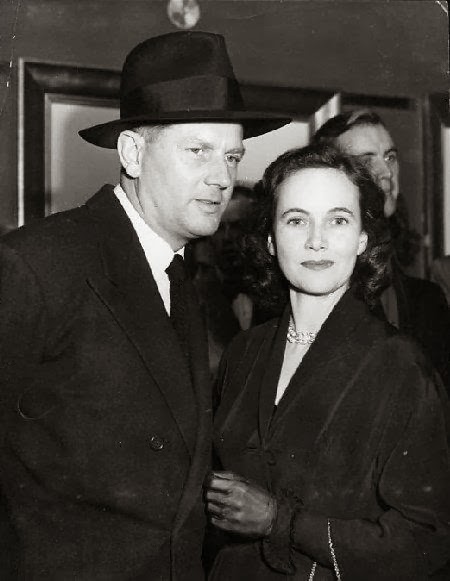
A young Niven Busch Jr., circa 1930. (enetpress.com)Busch and the third of his five wives, the actress Teresa Wright, in the 1940s. (danielmartineckhart.com)
In his later years as a producer and screenwriter in Hollywood, Busch would script movies ranging from The Man With Two Faces (1934) starring Edward G. Robinson, to The Postman Always Rings Twice (1946), with Lana Turner.
All Aboard
One of the prominent voices of the unsigned “Talk of the Town,” E.B. White was also a regular contributor of short pieces in The New Yorker, such as the following which described a mistaken encounter on an overnight train:
* * *
Another way to calm the jitters
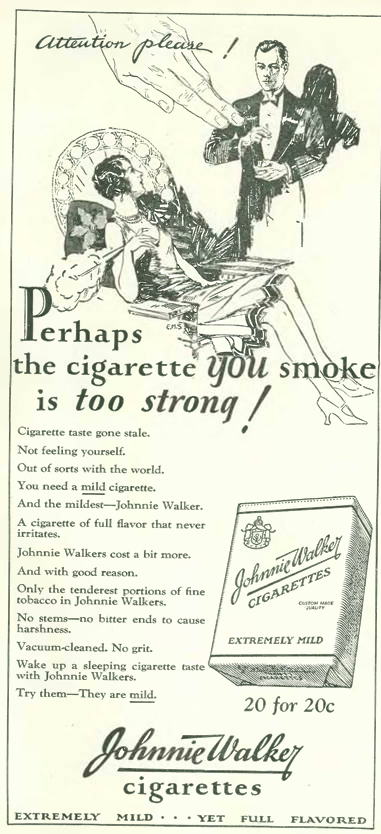
If you couldn’t legally (or illegally) buy Johnny Walker Scotch whisky in 1928, you had to settle for their brand of “vacuumed-cleaned, extremely mild” cigarettes, which were apparently sold as late as the 1950s…
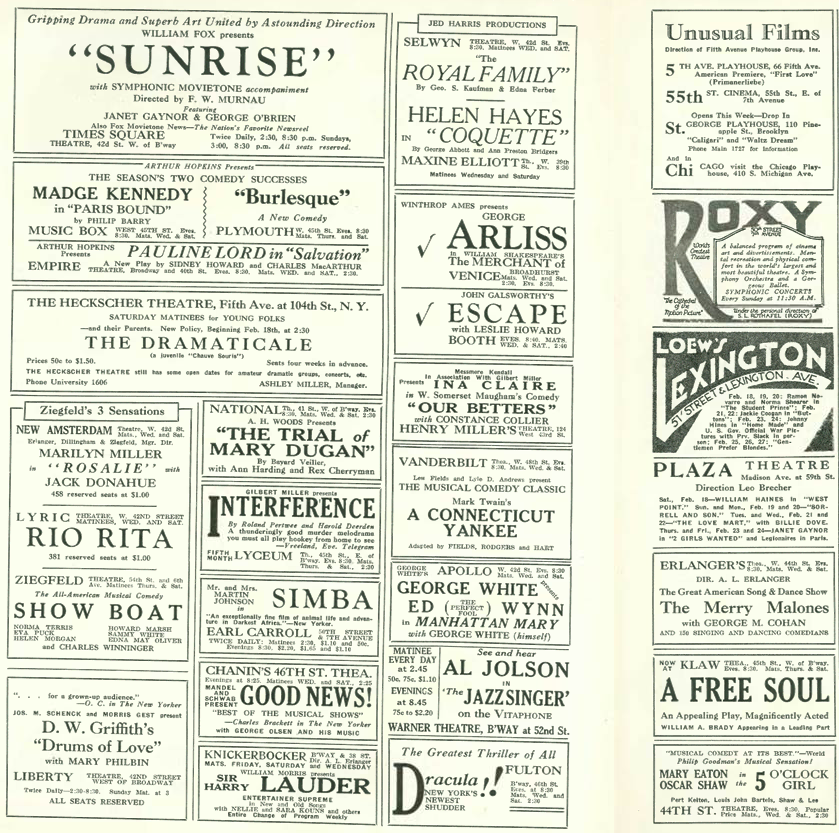
And to get a taste of what was showing at the local cinemas, I’ve included this page-and-third spread of movie and theatre ads from the back pages. Note the film Sunrise featured prominently at the top left-hand corner.
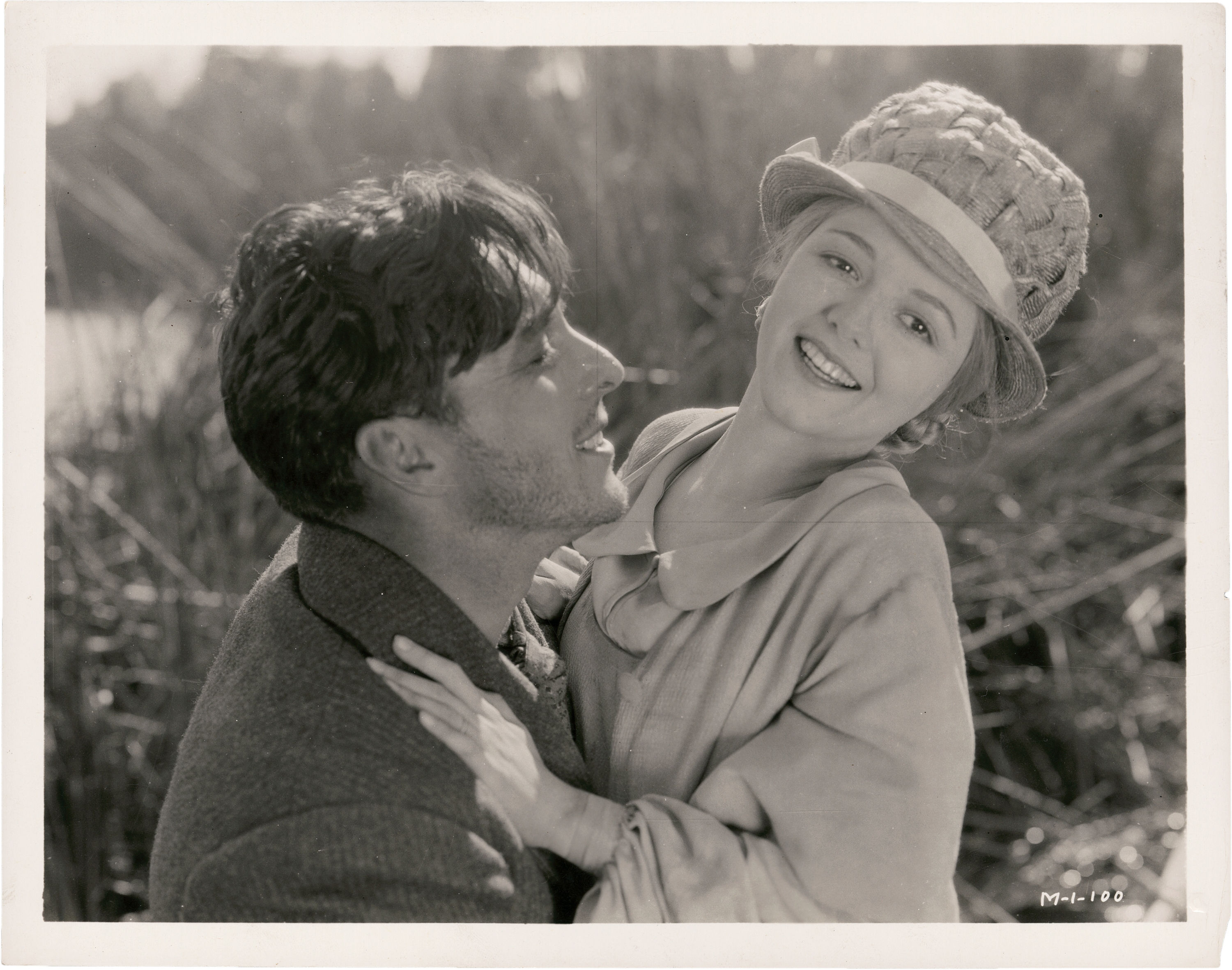
Starring George O’Brien, Janet Gaynor, and Margaret Livingston, this 1927 silent romantic drama, directed by F.W. Murnau, used the new Fox Movietone sound-on-film system, making it one of the first feature films with a synchronized musical score and sound effects soundtrack. Sunrise (full title: The Sunrise: A Song of Two Humans) won the Academy Award in the category “Unique and Artistic Picture” at the 1st Academy Awards in 1929, and Gaynor won the first Academy Award for “Best Actress in a Leading Role.” Sunrise is considered one of the greatest films of the silent era and even today is widely considered a masterpiece.
AWARD-WINNING SMILES…George O’Brien and Janet Gaynor in 1927’s acclaimed The Sunrise: A Song of Two Humans. (The Red List)
* * *
And finally, more hijinks from the moneyed classes, courtesy of Peter Arno:
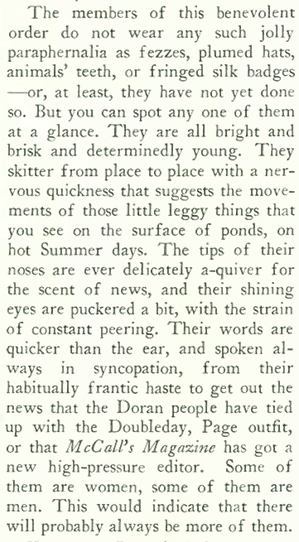
Dorothy Parker had a particular aversion to intellectual snobs, and in the Feb. 11, 1928 issue she wrote that the city had been beset with “Literary Rotarians” in search of bookish gatherings attended by people who, according to Parker, “looked as if they had been scraped out of drains.”
February 11, 1928. The cover is unsigned, but looks like a Rea Irvin.
I would have to say Parker was on firm ground here. Her own writing was clear and unaffected, and her tastes were democratic (she enjoyed and even wrote about comic strips). So when the book dandies crossed her path, there was trouble:
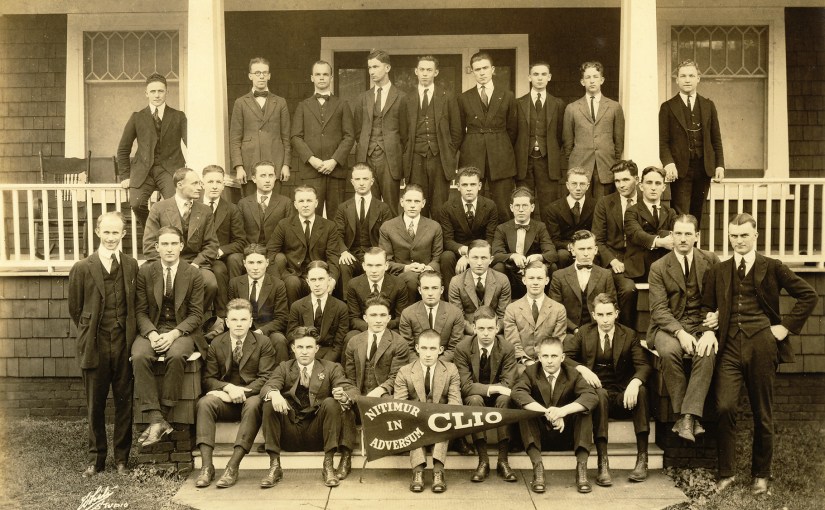
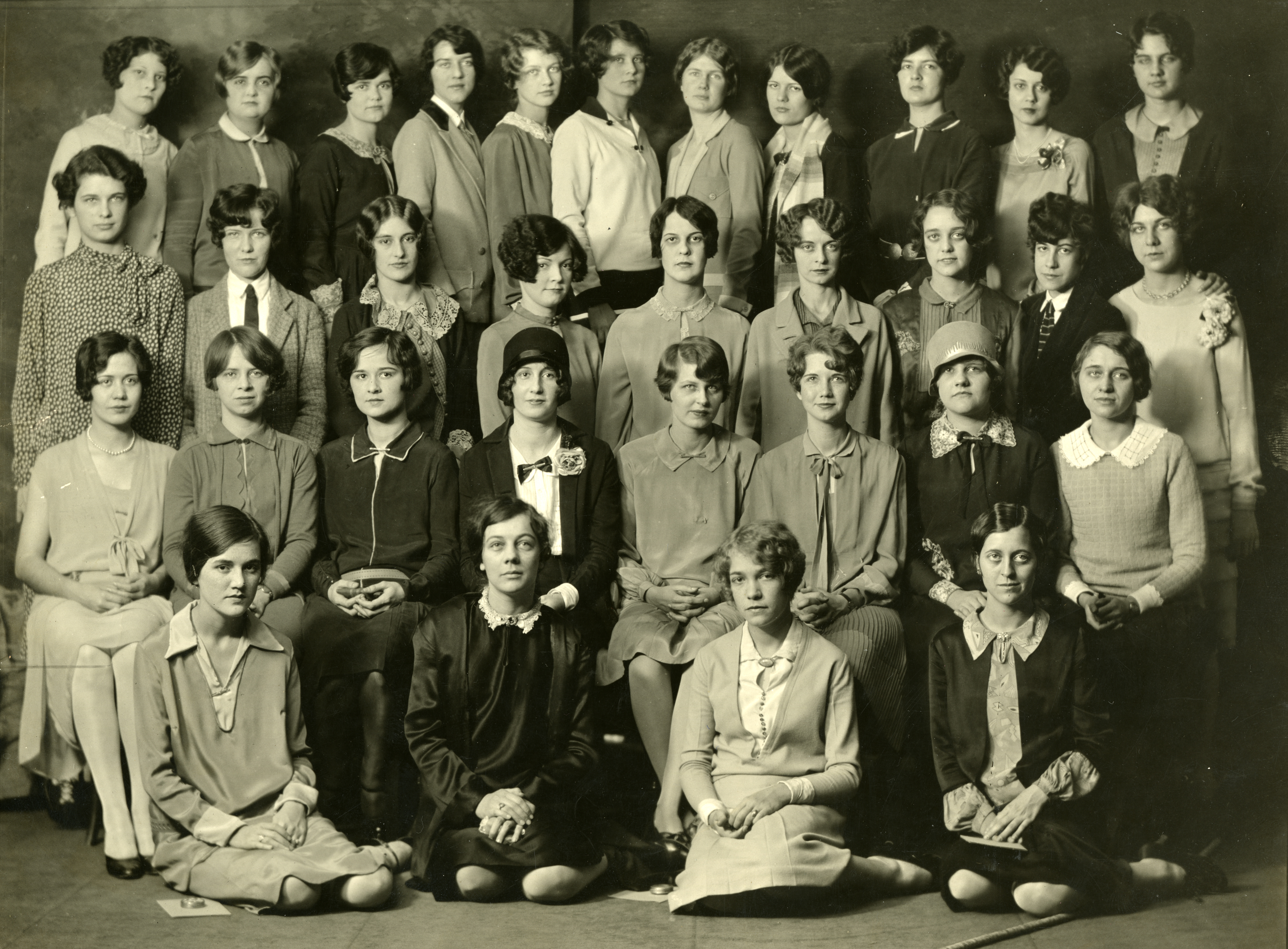
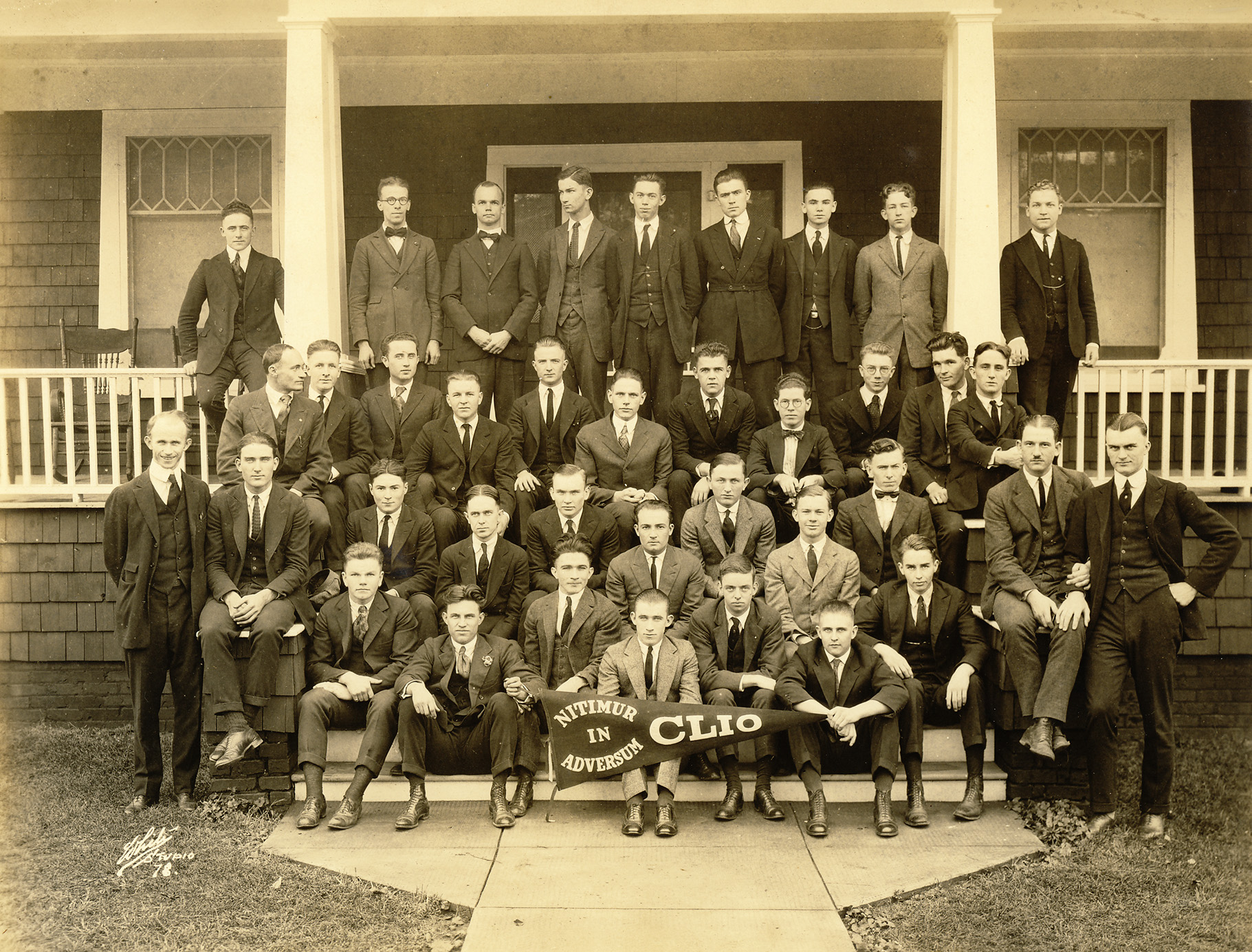
BOOK LOVERS…Rice University’s Pallas Athene literary society in 1927. No doubt most of them were interesting, bright young women. However, can you spot the “Rotarians?” (caralangston.com)AND FROM THE OTHER GENDER…representatives of the Clio literary society at Elon University, circa 1920s. Did one of these lads ever cross Dorothy’s path? (belkarchives.wordpress.com)
* * *
Parker continued, recalling the trauma she once endured at a literary association dinner:
* * *
Thumb on the Scale of Justice
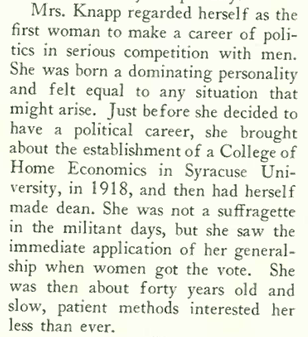
An unfortunate aspect of American life is how the law is selectively applied to favor those in power. Such was the case of Florence Knapp, who was elected as New York’s Secretary of State in 1924. After leaving office in 1926, she was accused of maladministration, and two years later was convicted of grand larceny while in office—Knapp put her stepdaughter’s name on the state payroll during the administration of the 1925 census, then cashed the checks herself, apparently using the funds to purchase clothes.
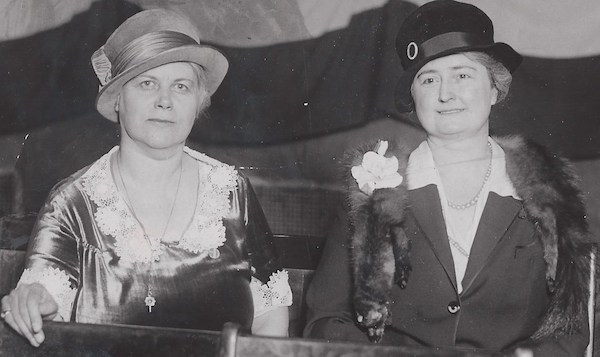
BRIEF CAREER…Florence Knapp (left) and Anna Drury DeWitt at State Republican Convention Sept. 28, 1926. Knapp was Secretary of State and DeWitt was delegate and member of Women’s Republican State Executive Committee. (findagrave.com)
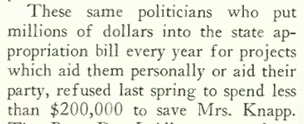
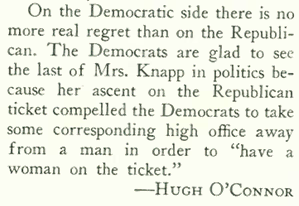
In a special article for The New Yorker, contributing writer Hugh O’Connor did not disagree with Knapp’s guilt, but found the hypocrisy of her accusers hard to stomach. Some excerpts:
Just in case anyone thought this was solely a Republican hit job, O’Connor concluded that the other side was just as complicit in keeping women from high office:
For the record, Knapp was the last Secretary of State elected to that office in New York. After Knapp the office became appointive by the governor, and remains so today. It would be fifty years until another woman would be elected to a statewide office in New York.
Opening Eyes to Red Russia
The New Yorker encouraged open-minded readers to check out a new exhibition on Soviet Russia that offered an alternative vision of a young country beset by famine and political violence:
The exhibition featured hand-carved toys probably similar to these:
SOMETHING FOR THE LITTLE COMMIES…Toy Red Army soldier and sailor from the Zagorsk area. Painted wood, circa 1930. (soviet-art.ru)
Also featured were pieces of “boldly propagandistic china.” Below are some examples of period pieces, not necessarily featured in the exhibition but perhaps give some idea of what New Yorkers were viewing in 1928. They range from kitschy…
The New Yorker’s “Talk of the Town” was abuzz with anticipation for the Westminster Kennel Club show at Madison Square Garden. The article noted that the record price paid for a dog was $9,500 (roughly equivalent to $133,000 today). By comparison, in 2014 a Chinese property developer paid nearly $2 million for a Tibetan mastiff puppy.
Note how the writer of the “Talk” piece already knows that the “wire-haired terrier” has the inside track to victory:
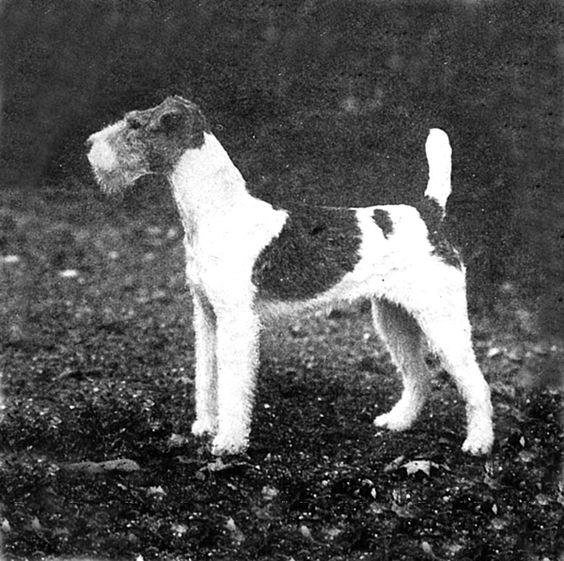
SPOILER ALERT…Talavera Margaret, a Wire Fox Terrier, was named winner (Best of Show) at the 1928 Westminster Kennel Club dog show. The Wire Fox Terrier breed has won Best of Show at Westminster more than any other breed, sweeping the award 13 times between 1915 and 1992. The Terrier Group overall is the most successful group, with 45 wins out of 103 occasions. (westminsterkennelclub.org)
* * *
Advertisers in The New Yorker also had Westminster fever, including sporting goods purveyor Abercrombie & Fitch (note the breed of the tartan-clad dog):
* * *
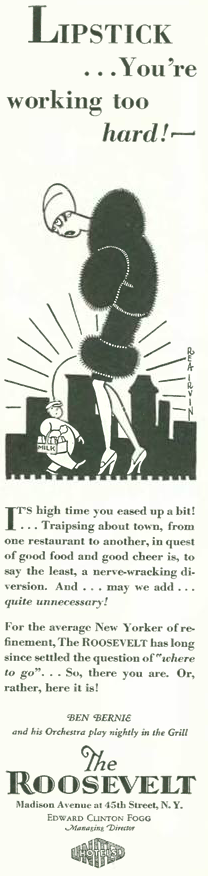
I found this advertisement in the back pages interesting because it called out The New Yorker’s Lois Long, who wrote her nightlife column, “Tables for Two,” under the pseudonym “Lipstick.” The drawing for the ad was provided by Rea Irvin, the artist who gave the magazine its signature look.
In her nightlife column Long played coy with her readers, careful not to reveal her true identity. She teased about being a “short squat maiden of forty,” but when she married cartoonist and fellow New Yorker contributor Peter Arno in August 1927, word was out about her true identity. Irvin’s drawing aptly captures Long in her early years at the New Yorker, on a writer’s salary but nevertheless fashionably dressed, partying all night and heading home with the rising sun.
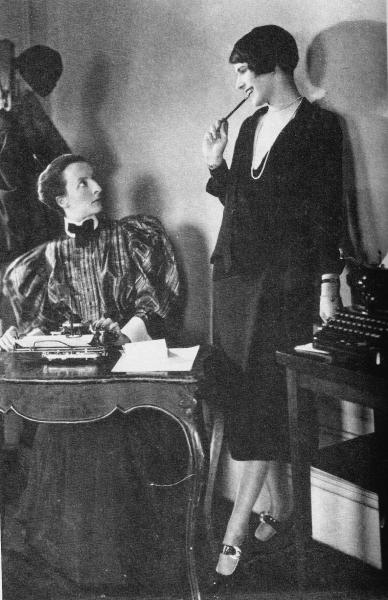
THE REAL LIPSTICK…A staged and posed joke photo of a young lady in prim 1890s clothes (at left) pretending to be startled by a 1920s flapper (Lois Long, at right). Photo taken in the mid to late 1920s. (Wikipedia)
* * *
And finally, a great illustration that graced the bottom of the “Talk” section. If anyone knows the artist, please comment!
A decidedly new sound reverberated in the ears of New Yorkers who attended a Feb. 1928 performance of the New York Philharmonic that featured guest artist Leon Theremin, a Russian inventor who played music by moving his hands through the air, or more accurately, a magnetic field.
February 4, 1928 cover by Gardner Rea.
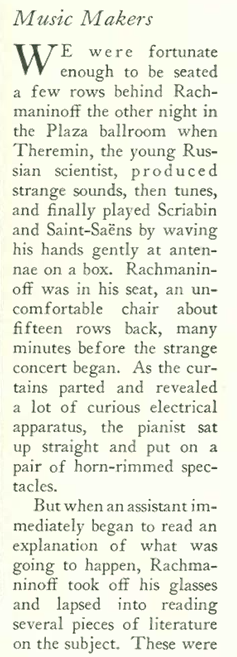
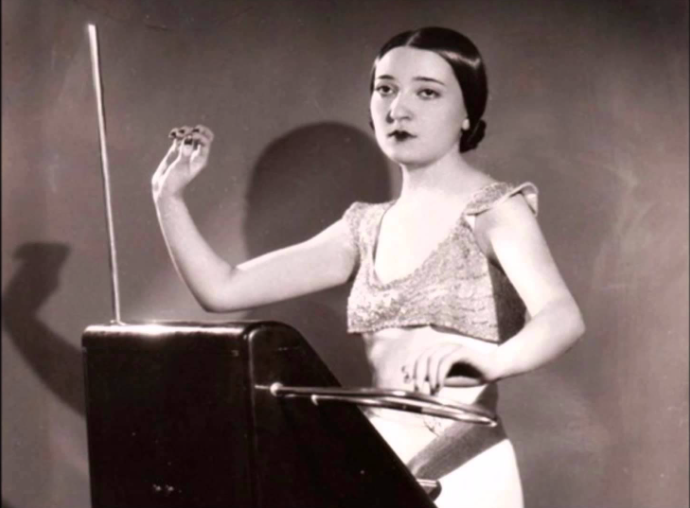
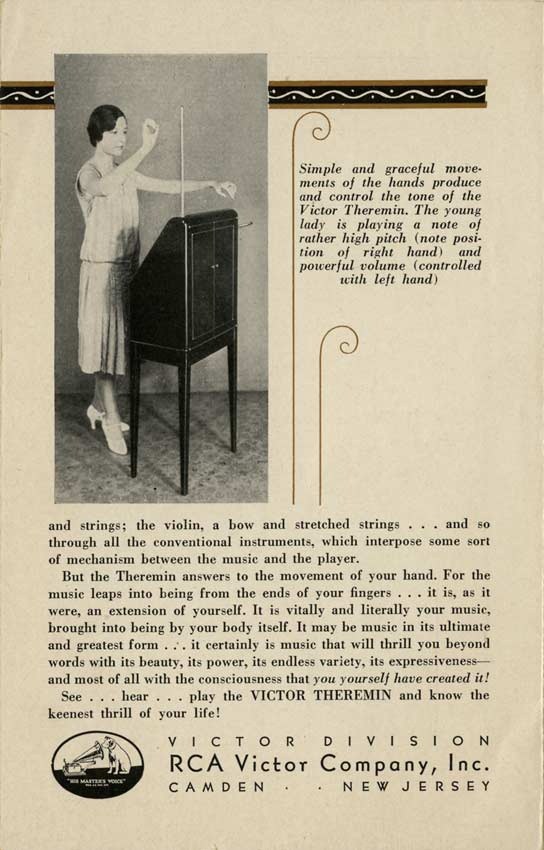
Theremin’s eponymous instrument had neither keys nor strings, but rather two metal antennas attached to an electronic oscillator. Music was produced by moving one’s hands between the antennas, which sensed the relative position of the players hands—one antenna controlled for pitch while the other adjusted the instrument’s volume. The sound produced is best described as “otherworldly.” James Thurber, writing for the “Talk of the Town” (in a piece titled “Music Makers”), found Theremin’s performance intriguing, but of even greater interest was the great Russian pianist and composer Sergei Rachmaninoff—who was in attendance—and his reaction to the strange instrument:
HMMMM…At left, Sergei Rachmaninoff in 1921, as photographed by Kubey Rembrandt. At right, Leon Theremin plays his eponymous instrument at a demonstration concert in Paris on December 8, 1927. (Wikimedia)
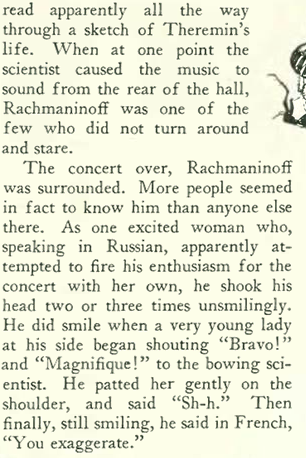
The New Yorker’s voyeuristic account of Rachmaninoff continued, with the great man now becoming more engaged in the performance…
The Theremin would grow in popularity, however more as a novelty than a serious instrument:
ON THE AIR…Alexandra Stepanoff playing the Theremin on NBC Radio in 1930. A Russian immigrant to the U.S., the former concert singer was Theremin’s first student in the United States. (Wikimedia)VIRTUOSO…The Russian-born Clara (Reisenberg) Rockmore holds a unique place in music history as the virtuoso performer of the Theremin. Leon Theremin built a custom version of his instrument for Rockmore, which added greater range and sensitivity. Rockmore would sometimes perform concerts with her sister, accomplished pianist Nadia Reisenberg. Photo circa 1930. (PHOTO BY RENATO TOPPO, COURTESY OF THE NADIA REISENBERG – CLARA ROCKMORE FOUNDATION)
Theremin would be granted a U.S. patent for the instrument in 1928, which was marketed and distributed in the U.S. by RCA during the 1930’s in either DIY kit form or as a finished instrument:
(120years.net)
Interest in the instrument as a novelty continued into the 40’s and 50’s in the DIY market…
(120years.net)
Robert Moog, pioneer of modern electronic music and inventor of the Moog synthesizer, made and sold a transistorized version of the Theremin in the 1950s.
The Theremin would become best known to mass culture through its use in producing “eerie” sound effects in 1940s and 50s films, including Bernard Herrmann’s use of the instrument for the soundtrack to the 1951 sci-fi thriller, The Day The Earth Stood Still. And nearly everyone on the planet has heard the Theremin-inspired sound of the Beach Boy’s song Good Vibrations, created by an electro-Theremin that was developed in the late 1950s to mimic the sound of the original Theremin.
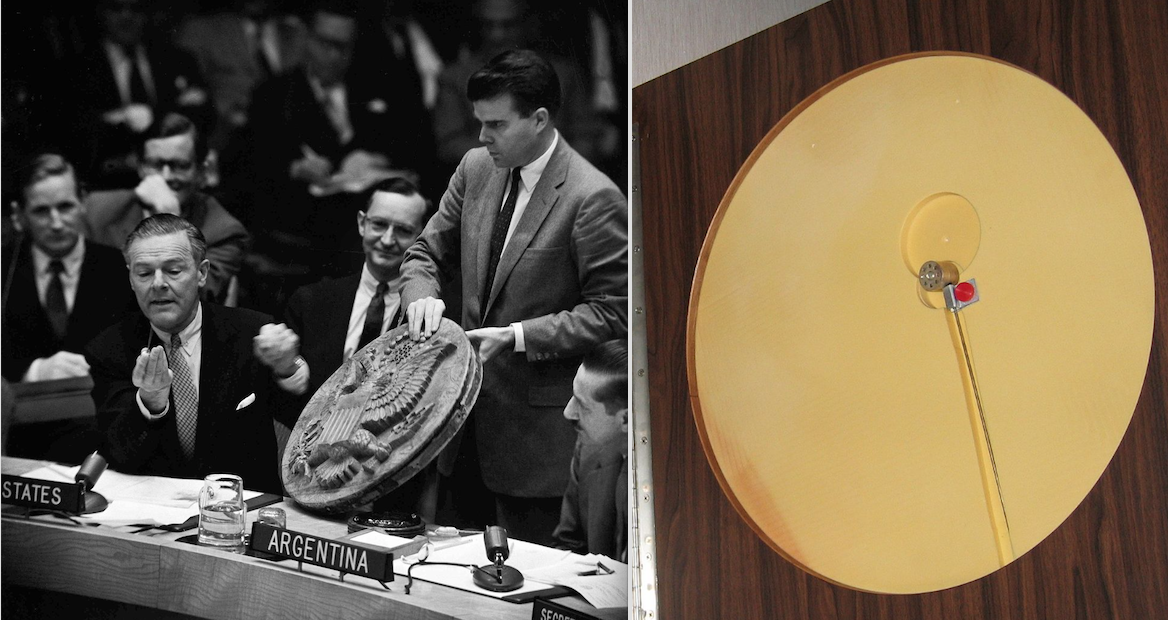
As for Leon Theremin himself, he would also gain notoriety as the inventor of The Thing, a listening device most famously used by the Soviets to bug the U.S. Embassy in Moscow. The device was hidden behind a wood carving of the U.S. Great Seal, which in 1945 was presented by Soviet schoolchildren to the U.S. ambassador, who subsequently hung it in his office.
GOTCHA…American Ambassador to the UN Henry Cabot Lodge displays The Thing before the UN Security Council in 1960. At right, the device which was hidden behind the seal. The Americans discovered the bug in 1952, but didn’t reveal its existence until 1960 in the wake of the U-2 spy plane incident. The Soviet Union had convened the meeting of the United Nations Security Council to accuse the Americans of spying with the U2; in response Cabot displayed The Thing as proof spying between the two countries was a mutual endeavor. (crytomuseum.com/Wikimedia)
The reasons why Theremin developed The Thing for the KGB are a mystery. When he suddenly disappeared from New York in 1938 it was rumored that he had been kidnapped and possibly executed by the KGB. What we do know is that Soviet spooks put him to work in a secret laboratory in the Gulag camp system, where he developed The Thing.
In 1991, filmmaker Steven Martin brought Leon Theremin back to New York to film a documentary about his life. Theremin gave one last performance in 1993, and died that year at age 97.
Wild Kingdom
The New Yorker’s review of the hit film Simba revealed a very different approach to the natural world 89 years ago, when the wilds of Africa were exploited purely for adventure and thrills rather than for any real understanding of natural systems and the animals and humans that inhabited them. Martin and Osa Johnson were celebrated for their filmed exploits in the wilds, including Simba; they touted their movie—shot in Kenya—as being made under the auspices of the American Museum of Natural History, although much of the film was staged or edited in ways to maximize the thrills.
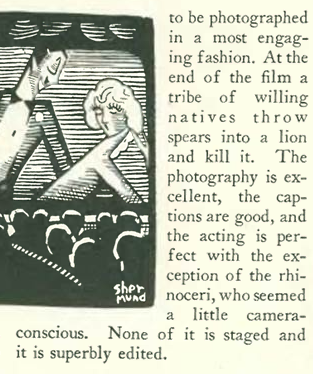
The New Yorker found the film to be “darn good fun”…
Despite its flaws, the film does offer us a glimpse of Africa when wildlife hadn’t been hunted to near extinction, although the Johnsons didn’t hesitate to gun down animals left and right in the course of their movie-making.
According to a 2011 review from Wild Film History, “in stark contrast to the conservation-themed wildlife films of today, the Johnsons approached their subjects armed with both camera and rifle, with the production including provoked behavior, staged confrontations and animals shot to death on film. Relying heavily on cutting in kills from professional marksmen, numerous hunting scenes culminate in a heart-stopping sequence where, with the use of clever editing, the adventurous Mrs Johnson appears to bring down a charging rhinoceros with one well-aimed shot.
A FUN-LOVING NATURE…Osa Johnson saddles up a hapless zebra. (Daily Mail)
* * *
From the Advertising Department
There were three automobile ads in the Feb. 4 issue, all from long-gone companies—Pierce-Arrow, Hudson-Essex, and Nash, which featured this endorsement by the brother-sister dancing duo Fred and Adele Astaire:
This ad for Dynamique showcased the art deco stylings of its furniture line…
And finally, a Peter Arno cartoon of an upper class faux pas…
As I’ve previously noted, reading back issues of periodicals often gives one a feeling of omniscience; as I thumb through week after week of late 1920s New Yorkers, I realize that for all their cleverness and worldly wisdom, even that magazine’s writers and editors could not see with any clarity into the future. But neither can any of us…one wonders what readers 89 years hence will surmise from today’s magazines, that is, if our civilization lasts that long.
January 28, 1928 cover by Theodore G. Haupt.
Howard Brubaker (in his column “Of All Things”) might have spotted something brewing on the horizon, even if it wouldn’t become perfectly clear until Dec. 7, 1941. Here is a clip from his Jan. 28, 1928 column in The New Yorker:
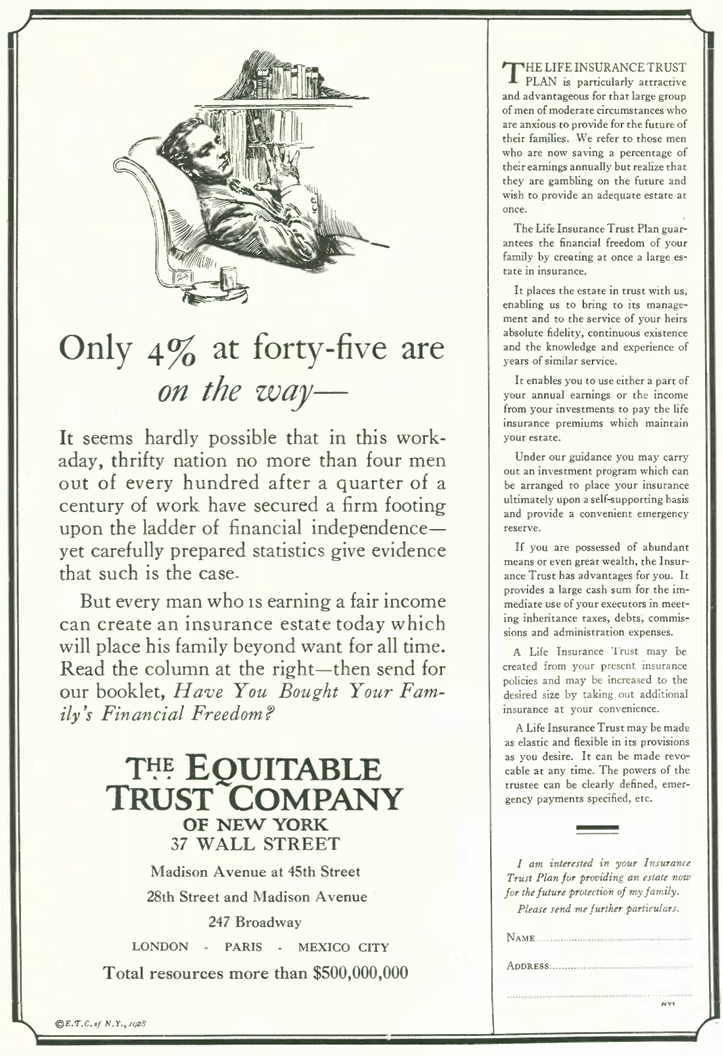
Two other major events in U.S. history, the Stock Market Crash of 1929 and the Great Depression that would follow, were less than two years away. But this was the Roaring Twenties, and some thought the fun would never end…except perhaps Equitable Trust, which placed this advertisement in the Jan. 28 issue:
Apparently the folks at Equitable Trust weren’t assured of their own financial freedom—after the Crash they would be acquired by Chase National Bank, making Chase the largest bank in the world at that time.
Despite the overheated economy of the 1920s, there still were plenty of poor and unemployed people in the city. One man, Urbain Ledoux (known as Mr. Zero in order to hide his identity), often arranged protests and demonstrations to bring attention to the poor and unemployed, and opened a number of bread lines and soup kitchens to feed the hungry, including the “Tub,” depicted in this two-page illustration by Constantin Alajalov along the bottom of the “Talk” section of the Jan. 28 issue (click image to enlarge).
* * *
Not All Gloom and Doom
Hindsight also reveals the trajectory of the 20th century’s great accomplishments. Charles Lindbergh’s transatlantic flight in 1927, for example, fueled the imaginations of those who would usher in the jet age and space travel. Just 31 years after Lindbergh’s flight, the British Overseas Airways Corporation (BOAC) would begin operation of its first transatlantic passenger jet service. And only 42 years would separate Lindbergh’s flight from Neil Armstrong’s moonwalk.
JUST 31 YEARS would separate Lindbergh’s flight from the first transatlantic jet service. At left, the DeHavilland Comet 4 (1958), and at right, Lindbergh’s Spirit of St. Louis (1927). (warthunder.com/howstuffworks.com)
Like the rest of America, The New Yorker was an enthusiastic follower of developments in aviation after Lindbergh (the “aerial ambassador” referred to below). The January 28 “Talk of the Town” led with this item about pilots soaring to ever greater heights.
Consider that a mere 41 years separated this…
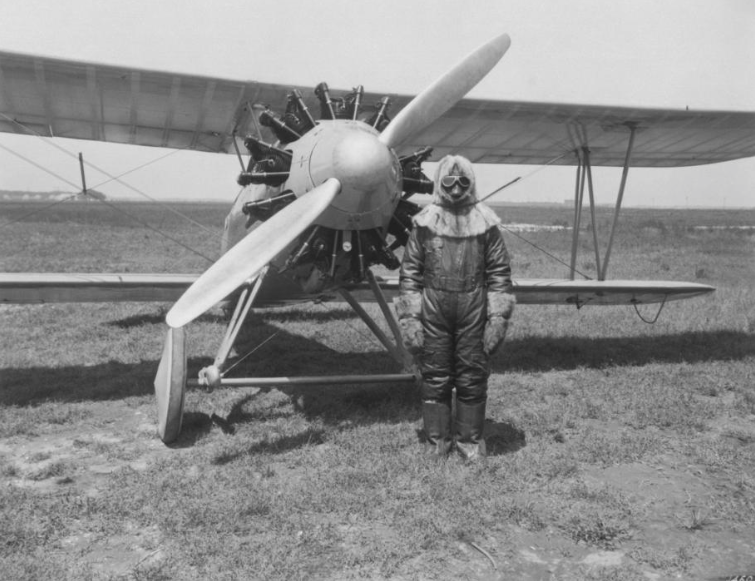
YETI, SET, GO!…A pilot in high altitude flying gear next to a Wright Apache biplane, January 1, 1928. In September 1926 the Apache set the world altitude record for seaplanes (38,500 ft) and in April 1930 it set the land-plane altitude record of 43,166 ft. (NASA)
…from this…
LEAVE THE FUR COAT AT HOME…The second man on the moon, Buzz Aldrin, prepares to step onto the lunar surface, July 20, 1969. (Neil Armstrong/NASA)
* * *
While Back on Earth…
Big events in America always seem to involve the appearance of showgirls, whether it is the introduction of a new car or some techno gadget. As this “Talk” item indicates, much was the same 89 years ago…
* * *
Silent Giant
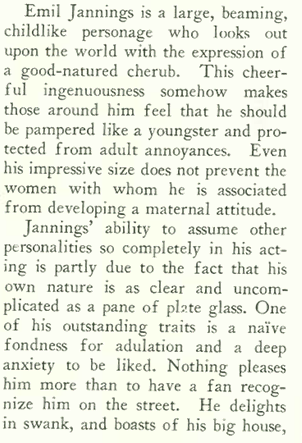
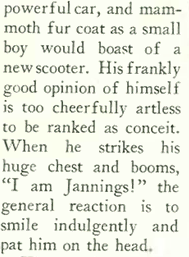
German film actor Emil Jannings was lauded for his performances on the screen in both Germany and America in films, and he was particularly adept at portraying of the pathos of middle-aged men. The New Yorker disliked most of Hollywood’s output (and usually praised the much-artier German films), so when Jannings landed on these shores he was lauded by the magazine, which dedicated a profile (written by Elsie McCormick) to him in the Jan. 28 issue, accompanied by a Hugo Gellert illustration. Some excerpts:
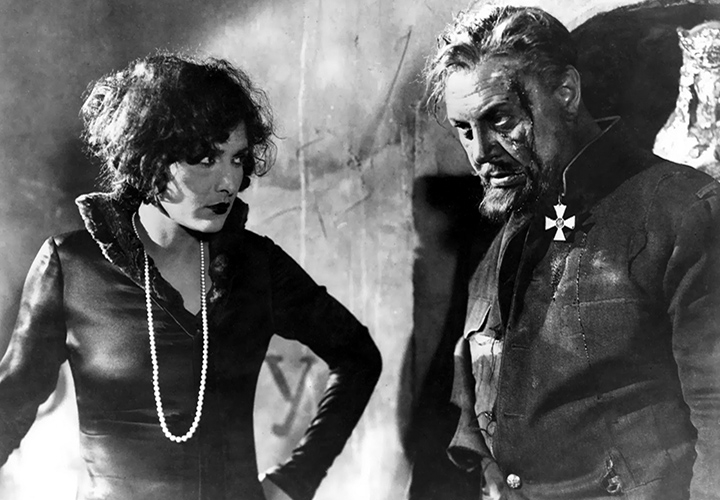
LIFE IS HARD…Evelyn Brent and Emil Jannings star in The Last Command. In the first Academy Awards, Jannings would win best actor for two films, The Last Command and The Way of All Flesh. (silentfilm.org)
At the first Academy Awards in 1929, Jannings would win a Best Actor Oscar for two of his 1928 films, The Last Command and The Way of All Flesh. An interesting side note from writer Susan Orlean: In her 2011 book, Rin Tin Tin: The Life and The Legend, Jannings was not actually the winner of the first best actor vote, but the runner-up. The famous dog actor Rin Tin Tin actually won the vote. The Academy, worried about not being taken seriously, gave the award to the human instead.
Janning’s thick German accent would bring his Hollywood career to an end with sound pictures. He would return to Germany, and during the Third Reich he would star in several films that promoted the Nazis. According to Wikipedia, the shooting of his last film, Wo ist Herr Belling? was aborted when Allied troops entered Germany in Spring 1945. Jannings reportedly carried his Oscar statuette with him as proof of his former association with Hollywood.
From the Advertising Department
This advertisement from the Jan. 28 issue caught my eye because Bergdorf Goodman is one of the few stores in Manhattan still operating at its original site:
Bergdorf Goodman today. (Photo courtesy LPC)
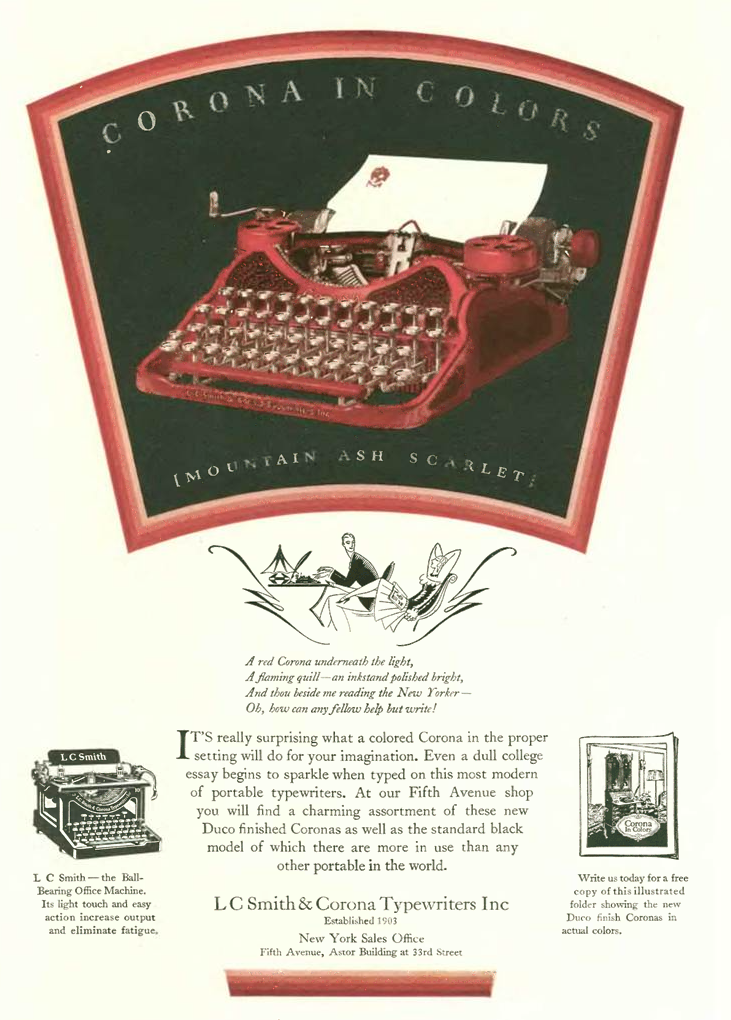
And here we have perhaps the iMac of its day, standing apart from the competition with its colorful, bold new look…
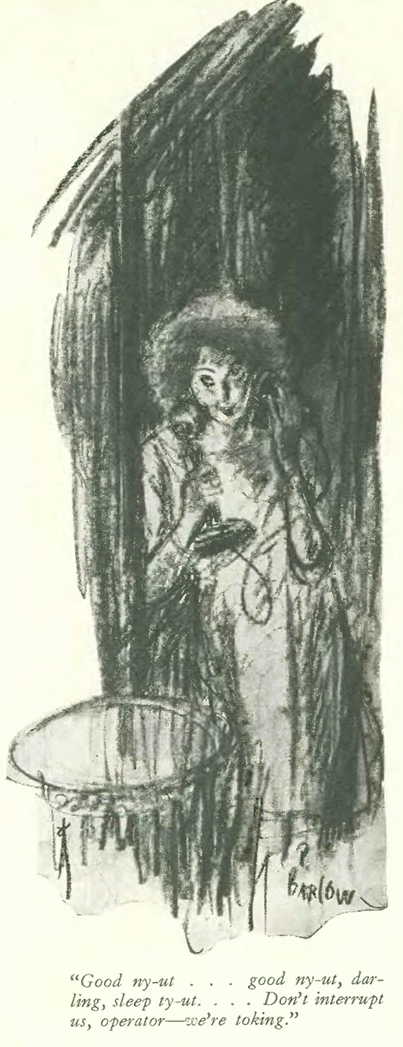
And finally, this early cartoon from longtime New Yorker cartoonist Perry Barlow having some fun at the expense of New York’s working class…
American inventor Thomas Edison was a hero to the young Henry Ford, who grew up to become something of a tinkerer himself with his pioneering development of the assembly line and mass production techniques. Over a matter of decades in the late 19th and early 20th century these two men would play outsized roles in transforming the American landscape and our way of life.
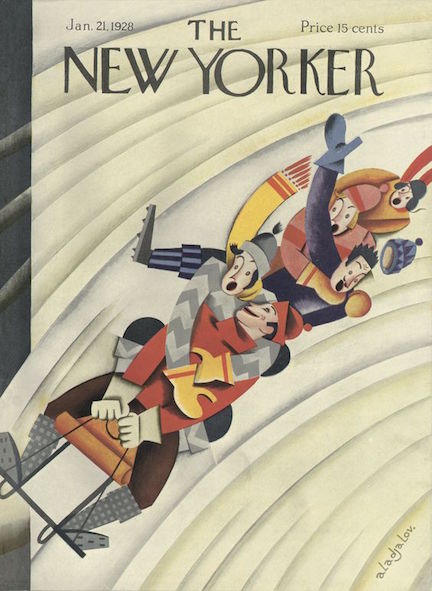
January 21, 1928 cover by Constantin Alajalov.
Ford would first meet Edison in August 1896, at a convention of the Association of Edison Illuminating Companies held at the Oriental Hotel in Brooklyn—it was just two months after the 33-year-old Ford had finished work on his first car—a “quadricycle”—consisting of a simple frame, an ethanol-powered engine and four bicycle wheels. In contrast, by 1896 the 49-year-old Edison was a worldwide celebrity, having already invented the phonograph (1877), the incandescent lamp (1879), public electricity (1883) and motion pictures (1888).
WHAT NEXT, A CAR STEREO?…Thomas Edison (left) with his second phonograph, photographed by Mathew Brady in Washington, D.C., April 1878. At right, Henry Ford sits in his first automobile, the Ford Quadricycle, in 1896. (Wikimedia Commons)
By 1907 the two had forged a close friendship that would endure the rest of their lives. So it was no surprise that these two giants of the machine age would show up together at the New York Auto Show at Madison Square Garden and take a gander at the latest technical marvels, including Ford’s new “Model A.” The New Yorker’s “Talk of the Town” was on hand as witness:
NEAT-O…Thomas Edison and Henry Ford at the 1928 New York Auto Show. (Associated Press)IT SOLD LIKE HOTCAKES…Henry Ford and son Edsel introducing the 1928 Ford Model A at the Ford Industrial Exposition in New York City, January 1928. (thehenryford.org)
* * *
E.B. Drives the ‘A’
In the same issue (Jan. 21, 1928) E.B. White told readers how to drive the new Model A—in his roundabout way. Some excerpts:
No doubt White was feeling a bit wistful with the arrival of the Model A, which supplanted its predecessor, the ubiquitous Model T. White even penned a farewell to the old automobile under a pseudonym that conflated White’s name with Richard Lee Strout’s, whose original submission to The New Yorker inspired White’s book (illustrated by New Yorker cartoonist Daniel ‘Alain’ Brustlein).
FAREWELL TIN LIZZIE…E.B. and Katharine White driving his beloved Model T.
In Farewell to Model T White recalled his days after graduating from college, when in 1922 he set off across America with his typewriter and his Model T. White wrote that “(his) own vision of the land—my own discovery of it—was shaped, more than by any other instrument, by a Model T Ford…a slow-motion roadster of miraculous design—strong, tremulous, and tireless, from sea to shining sea.”
The Eternal Debate
In his “Reporter at Large” column, Morris Markey commented on the execution of former lovers and convicted murderers Ruth Snyder and Judd Gray, noting that once again the debate over the death penalty had been stirred, but as usual there was no resolution in sight. Little could Markey know that we would still be holding the debate 89 years later, with no resolution in sight.
END OF THE LINE…Mugshots of Ruth Snyder and Henry Judd Gray taken at Sing Sing Prison following their conviction for the murder of Snyder’s husband. They were executed Jan. 12, 1928. (Lloyd Sealy Library, CUNY)
* * *
Ahoy there
The New York Boat Show was back in town at the Grand Central Palace, enticing both the rich and the not-so-rich to answer the call of the sea. Correspondent Nicholas Trott observed:
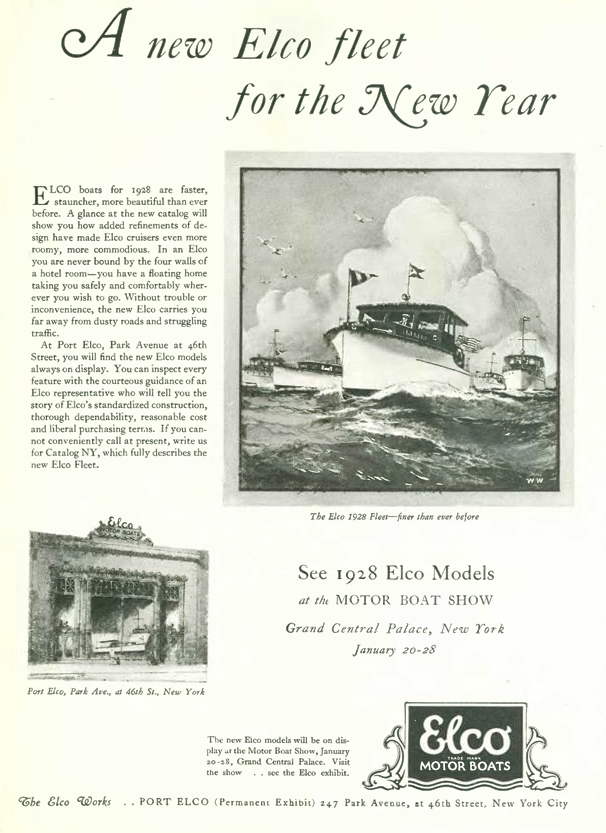
An advertisement in the same issue touted Elco’s “floating home”…
But if you aspired to something larger than a modest cruiser, the Boat Show also featured an 85-foot yacht…
But for the rest of the grasping orders, Chris-Craft offered the Cadet, an affordable 22′ runabout sold on an installment plan. Another ad from the issue asking those of modest means to answer “the call of freedom!”
For an affordable boat, the Chris-Craft was really quite beautiful—its mahogany construction puts today’s fiberglass tubs to shame…
PRETTY SWEET…A 1928 Chris-Craft Cadet. (Click to enlarge)
* * *
Odds & Ends
The boat show was one indication that spring was already in the air. The various ads for clothing in the Jan. 21 issue had also thrown off the woolens, such as this one from Dobbs on Fifth Avenue, which featured a woman with all the lines of a skyscraper.
And to achieve those lines, another advertisement advised young women to visit Marjorie Dork…
…who seemed to do quite well for herself in the early days of fitness training…
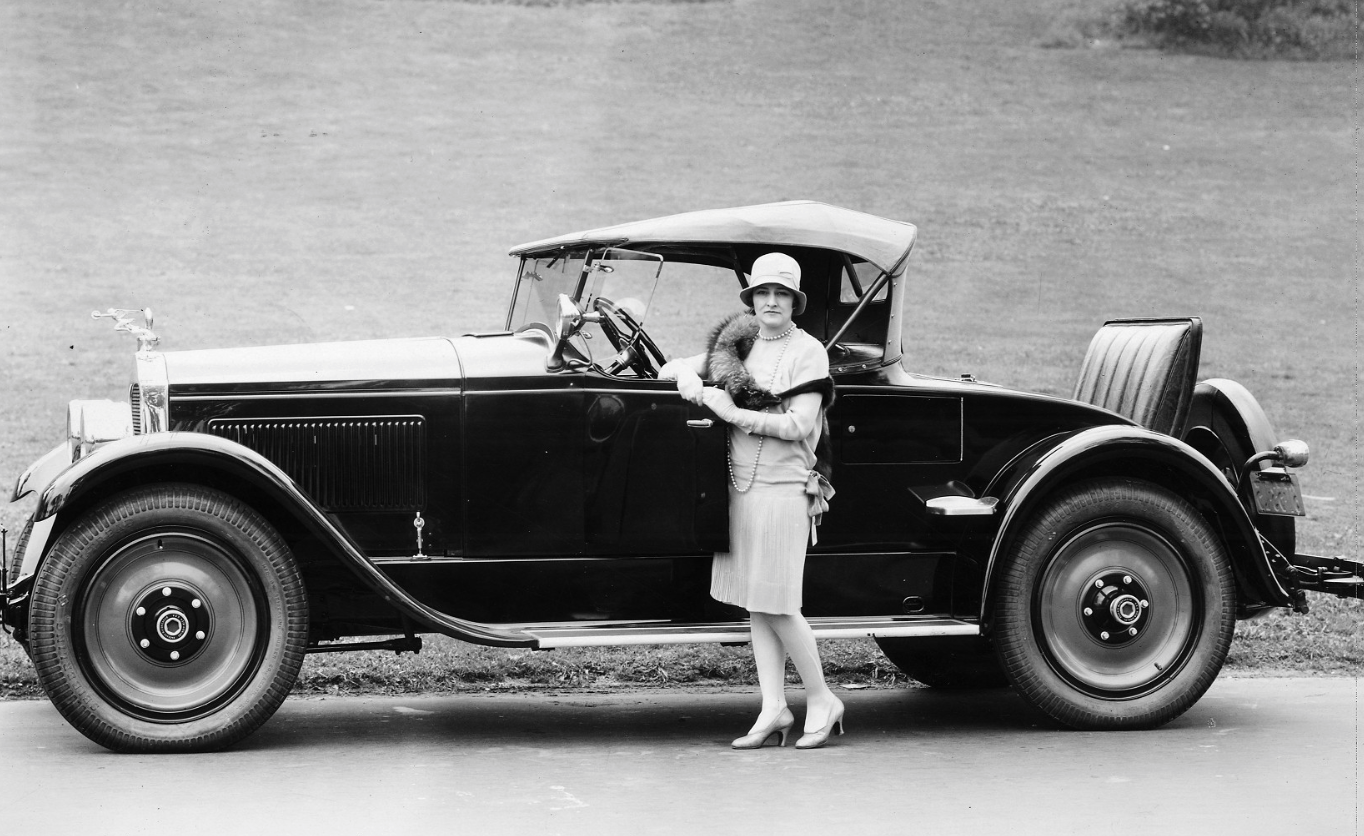
THOROUGHLY MODERN MARJORIE…New York beauty specialist Marjorie Dork, with her Packard, in New York’s Central Park, 1927. Original photo by John Adams Davis, New York. (Detroit Public Library)
And then there was a back page ad that said to hell with healthy living…
The actress featured in the advertisement, Lenore Ulric, was considered one of the American theater’s top stars. Born in 1892 as Lenore Ulrich in New Ulm, Minnesota, she got her start on stage when she was still a teen, a protégé of the famed David Belasco. Though she primarily became a stage actress, she also made the occasional film appearance, portraying fiery, hot-blooded women of the femme fatale variety.
Portrait of Lenore Ulric by New York’s Vandamm Studio. (broadway.cas.sc.edu)
* * *
And we close with this post with a peek into the into upper class social scene, courtesy of Barbara Shermund…
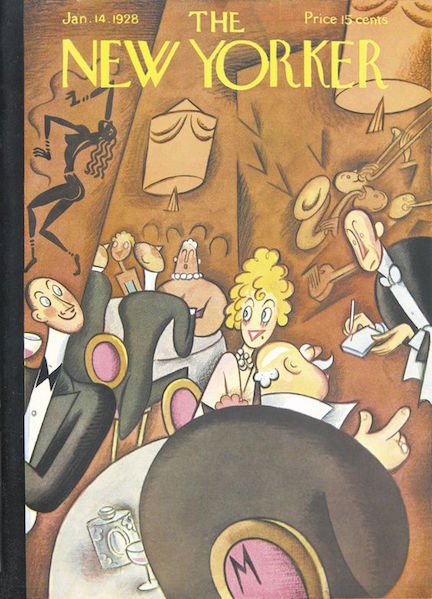
Gene Tunney was not your typical boxer. Holder of the heavyweight title from 1926 to 1928, he defeated his rival Jack Dempsey in 1926 and again in 1927 in the famous “Long Count Fight.” But Tunney was no Palooka—he preferred to be known as a cultured gentleman, and made a number of friends in the literary world including George Bernard Shaw, Ernest Hemingway and Thornton Wilder.
January 14, 1928 cover by Julian de Miskey.
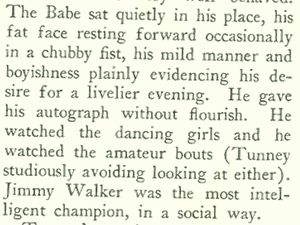
So when given the opportunity to say a few words, Tunney made the most of it, including at a dinner hosted by boxing and hockey promoter Tex Rickard to honor champions in various sports. The New Yorker’sE.B. White was there tell us about it:
FETED FOR FEATS…World champion athletes are shown here from top row, left to right; Babe Ruth (baseball), Gene Tunney (boxing), Johnny Weissmuller (swimming), Bill Cook (hockey). On the bottom row is from left to right, Bill Tilden (tennis), Bobby Jones (golf), Fred Spencer and Charlie Winters (six-day bicycle race).
While Tunney was doubtless composing his thoughts at the banquet table, baseball legend Babe Ruth was wishing he could be someplace else…
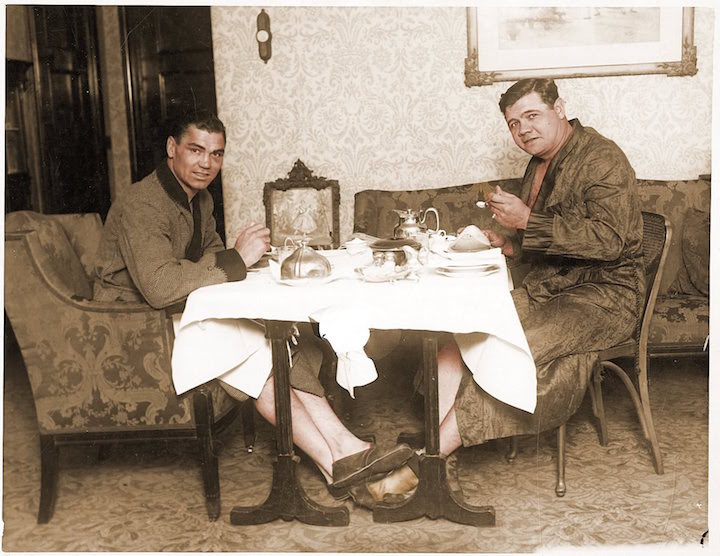
…like hanging out with his old buddy Jack Dempsey…
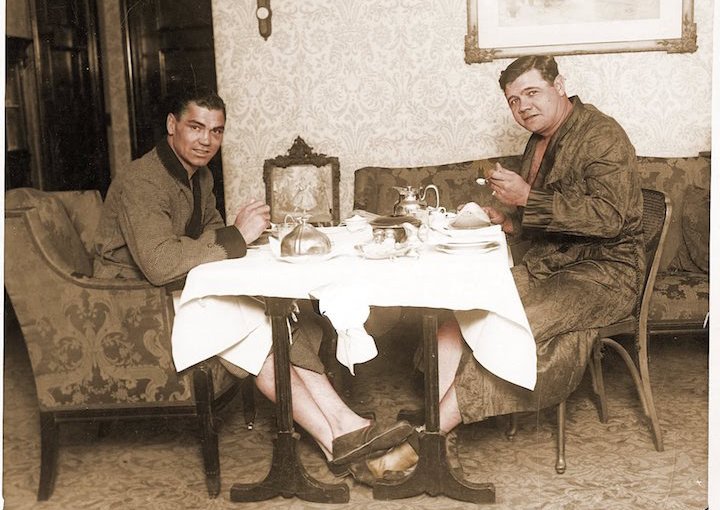
BREAKFAST OF CHAMPIONS…Babe Ruth having breakfast with his friend, heavyweight boxing champion Jack Dempsey, at Ruth’s residence at the Ansonia Hotel in New York City, 1927. Dempsey reigned as the champ from 1919 until 1926, when he was defeated by Gene Tunney. (captainsblog.info)
Instead, the Babe would have to listen to a surprise speech by Tunney, who sought to prove to those in attendance that he had brains to match his brawn. No doubt to the relief of many in attendance, New York City’s flamboyant mayor, Jimmy Walker, was able to return the proceedings to party mode.
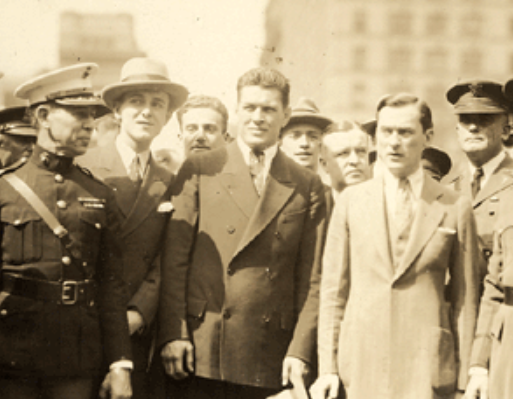
THAT’LL DO, GENE, THAT’LL DO…Newly crowned heavyweight boxing champion Gene Tunney (center) meets with New York City Mayor Jimmy Walker (right) at City Hall, September 1926. (josportsinc.com)
* * *
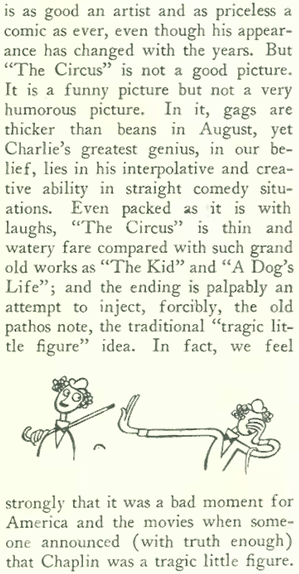
The New Yorker writers found little to like about Hollywood, but Charlie Chaplin could always be counted on to knock out a humorous film. At least most of the time. Here is what “The Talk of the Town” had to say about his latest, The Circus:
LIGHTEN UP, CHARLIE…Merna Kennedy, Charlie Chaplin and Harry Crocker in The Circus. (1928). (Turner Classic Movies)
* * *
Give ‘Em Dirty Laundry
In these days of clickbait and other news designed to attract our prurient interest, we can look back 89 years a see that the tabloids were doing much of the same, particularly in Bernarr Macfadden’s New York Graphic, which was making the most of the final days of death row inmates Ruth Snyder and Judd Gray. “The Talk of the Town” (likely Robert Benchley) made this observation:
TSK, TSK…Evangelist Aimee Semple McPherson (left), received a tidy sum to write about convicted murderer Ruth Snyder for the New York Evening Graphic. (Wikipedia/Murderpedia)
Former lovers Snyder and Gray were sentenced to death in 1927 for the premeditated murder of Snyder’s husband (they went to the electric chair at Sing Sing prison on Jan. 12, 1928). Newspapers across the country sensationalized their trial, but the Graphic went the extra step by paying large sums to celebrity correspondents, including evangelist Aimee Semple McPherson, to write about the sordid case. Sister Aimee used her Graphic column to encourage young men to “want a wife like mother — not a Red Hot cutie.” Semple McPherson herself would later be accused of an affair, but then what else is new in the business of casting stones?
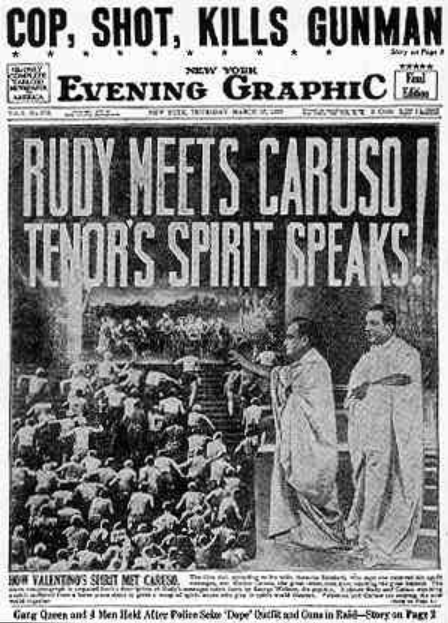
FAKE NEWS…Before the National Enquirer and Weekly World News (and Facebook, Twitter, Instagram etc.), Benarr Mcfadden’sEvening Graphic was the tabloid of choice among the less discerning. This issue from March 17, 1927, depicted silent actor Rudolph Valentino meeting the famed tenor Enrico Caruso in heaven. The Graphic was famous for these “Composographs,” — images cut and pasted together using the heads or faces of current celebrities and glued onto staged images created by employees in Macfadden’s studio. (bernarrmacfadden.com)
* * *
Even His Skivvies?
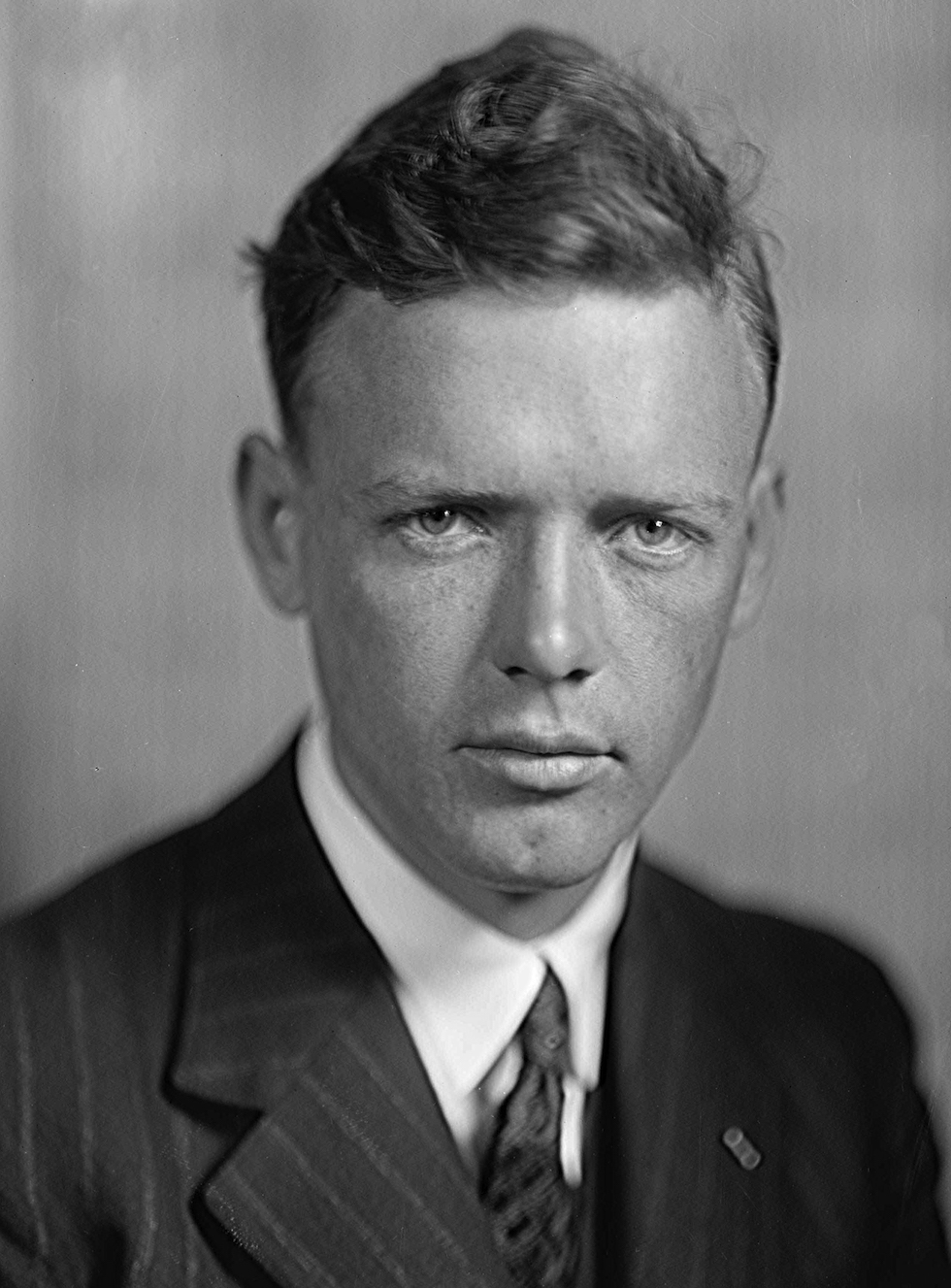
We can also look back 89 years and see that people were just as celebrity-crazed then as they are now. Charles Lindbergh could barely keep the clothes on his back while being pursued by adoring mobs, according to “The Talk of the Town”…
KEEP YOUR HANDS OFF MY BVDS
* * *
Kindred Spirits
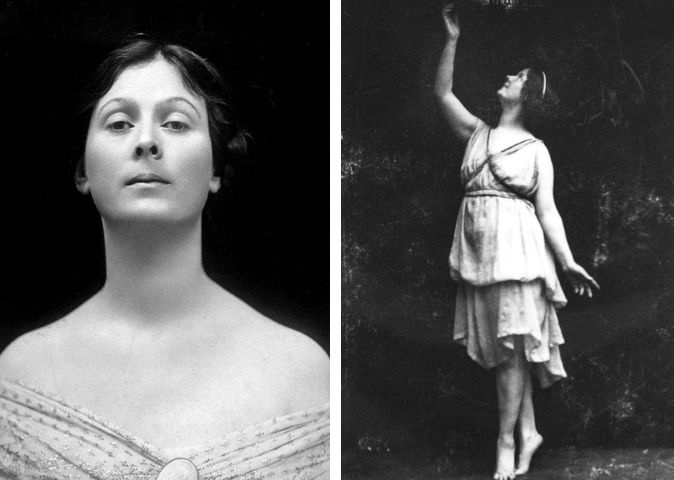
Dorothy Parker wrote a vigorous, even impassioned defense of the late dancer Isadora Duncan in her column, “Reading and Writing.” Parker reviewed Duncan’s posthumously published autobiography, My Life, which she found “interesting and proudly moving” even if the book itself was “abominably written,” filled with passages of “idiotic naïveté” and “horrendously flowery verbiage.” In this “mess of prose” Parker also found passion, suffering and glamour—three words that Parker could have used to describe her own life.
Parker elaborated on the word “glamour,” which she thought had been cheapened in her day to something merely glittery and all surface. True glamour, wrote Parker, was that of Isadora Duncan, coming from her “great, torn, bewildered, foolhardy soul.” Parker concluded with this plea:
Isadora Duncan circa 1910 (left), and Duncan in a publicity photo circa 1903. (Wikipedia)
* * *
New Kid on the Block
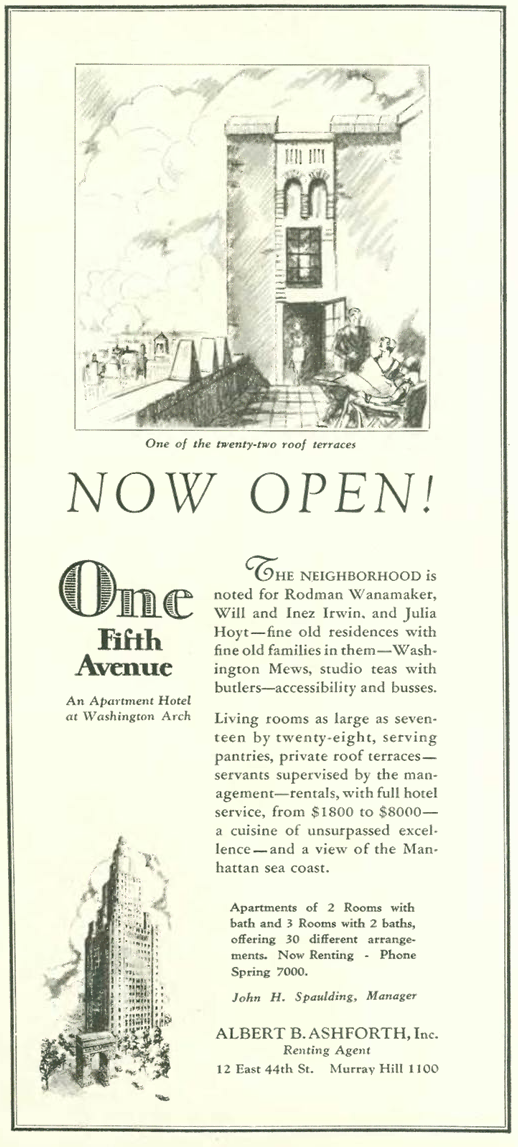
Yet another high-rise dwelling was available to Jazz Age New Yorkers—One Fifth Avenue in Greenwich Village. One Fifth Avenue was an apartment with the word “hotel” attached to justify its 27-story height. To meet zoning requirements, the apartments had “pantries” instead of kitchens. But then again, your “servant” would fetch your dinner anyway…
GOING UP…The art deco landmark One Fifth Avenue signaled a dramatic change from the four-story mansions that once occupied the site. (New York Public Library)
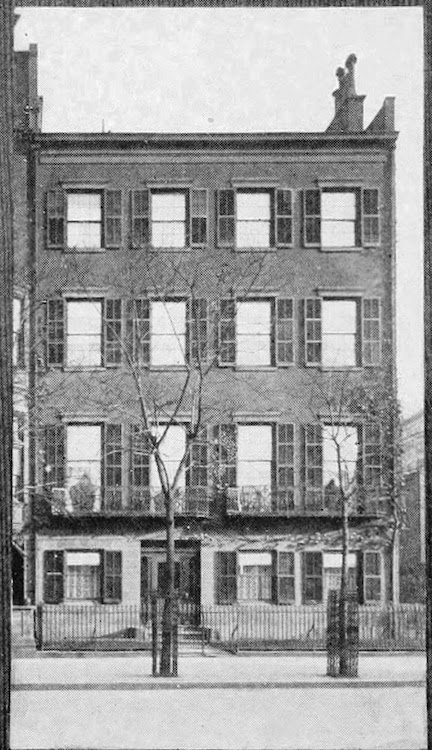
Historical note: One Fifth Avenue marked a dramatic change in the character of Washington Square, one of the most prestigious residential neighborhoods of early New York City. A previous occupant of the One Fifth Avenue site was the brownstone mansion of William Butler Duncan. In addition to One Fifth Avenue, the residences at 3, 5, and 7 Fifth Avenue were also demolished to make way for the new art deco “apartment hotel.”
DUST TO DUST…The William Butler Duncan residence at One Fifth Avenue. (daytoninmanhattan)
* * *
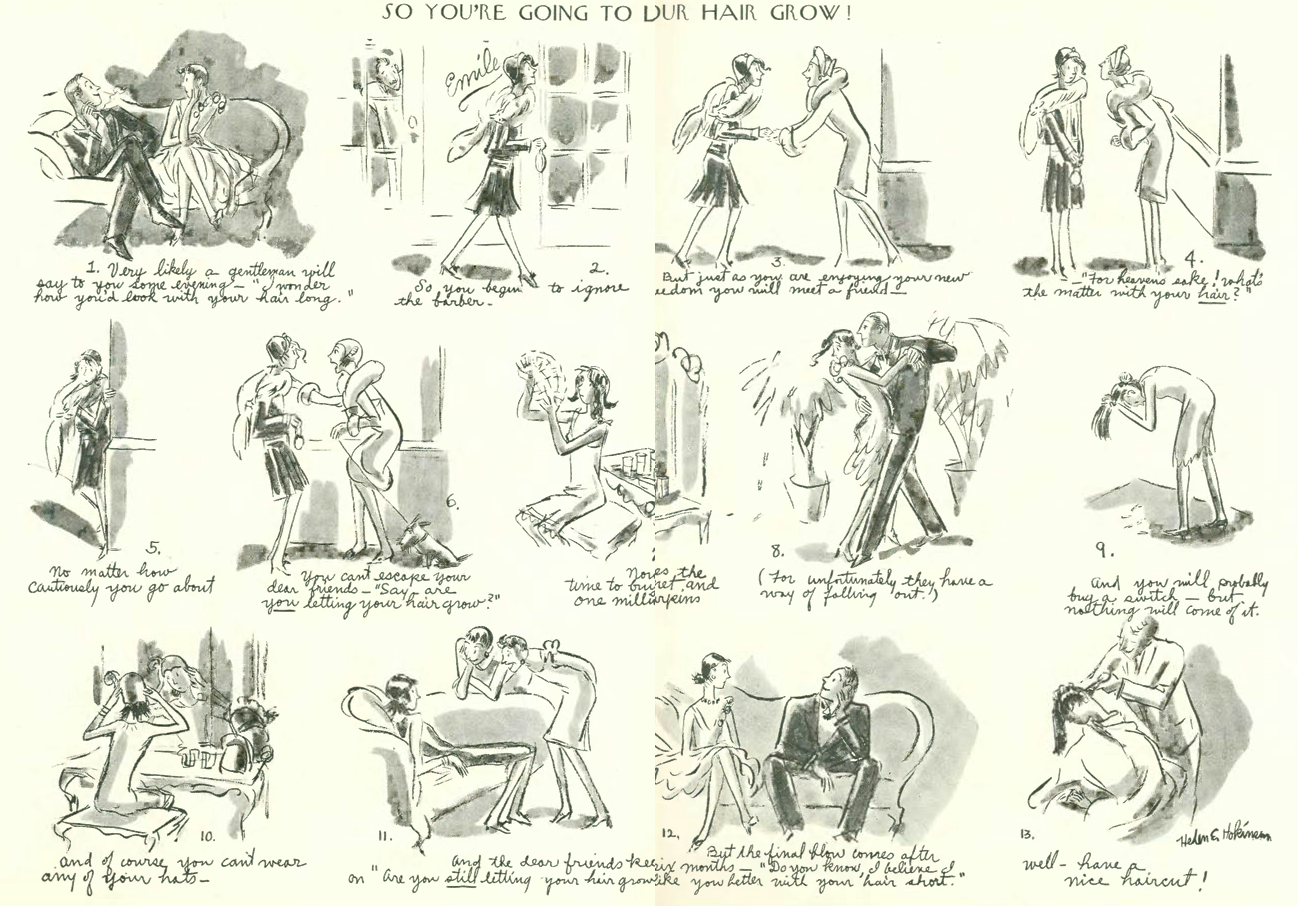
To close, a two-page spread by Helen Hokinson exploring one woman’s challenge with the “flapper bob” (sorry about the crease in the scan–that is how it is reproduced in the online archive). Click the image to enlarge.
And a bit of fun on the streetcar, courtesy of cartoonist Leonard Dove…
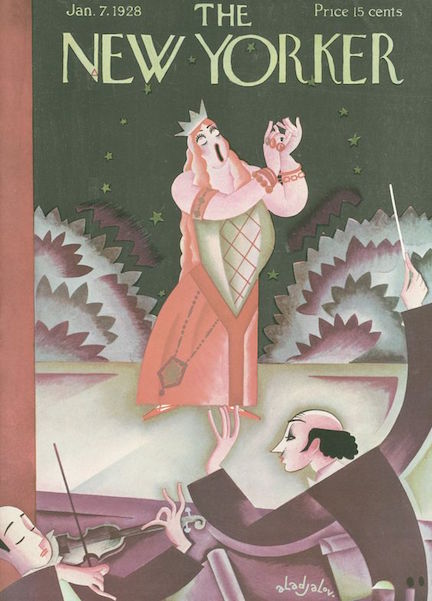
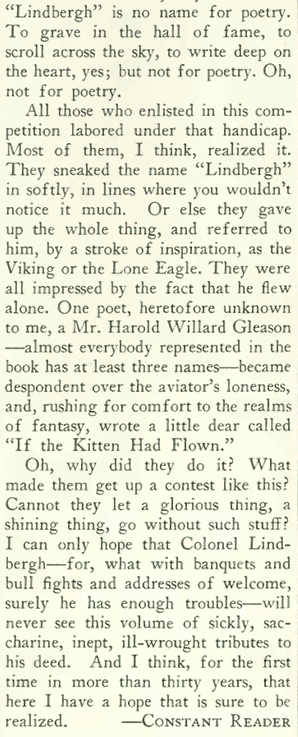
After his famous transatlantic flight, not only did Charles Lindbergh have to endure endless banquets and the sweaty crush of adoring crowds, but he also inspired a lot of kitsch, including some spectacularly bad poetry that Dorothy Parker could’t help but eviscerate in the Jan. 7, 1928 issue.
January 7, 1928 cover by Constantin Alajalov.
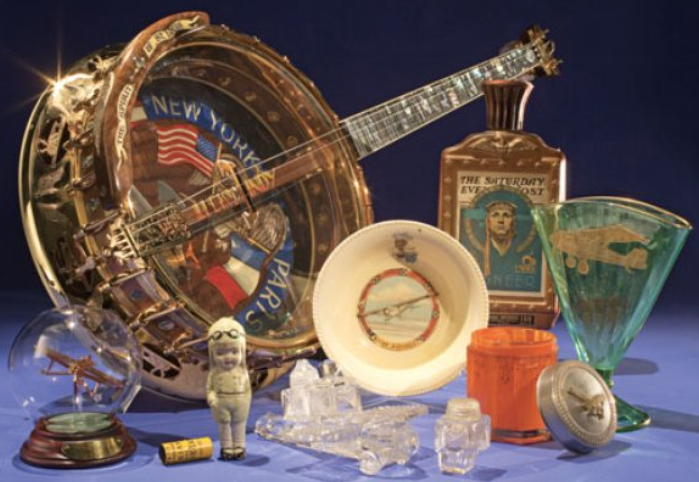
Before we tackle the poetry, here is a sampling of various Lindbergh memorabilia:
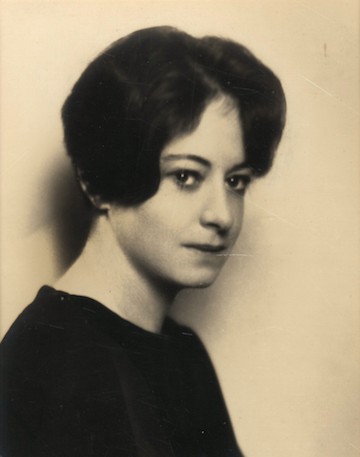
THEY’RE SELLING YOU…Assortment of Lindbergh souvenirs on display at the Smithsonian’s Air & Space Museum. (Eric Long/Smithsonian)SHARPENED TONGUE…Dorothy Parker in 1928. (literaryladiesguide.com)
Parker led off her “Reading & Writing” column with this observation about the collapse of grammar and civilization in general…
…and offered two examples—chocolate-covered olives and a new book of poems dedicated to Charles Lindbergh’s heroic solo crossing of the Atlantic…
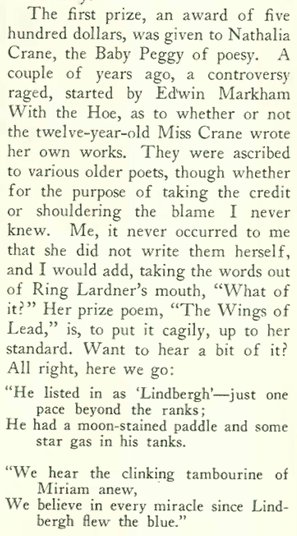
Parker’s comment about guiding a razor across her throat is a bit unnerving, considering she was chronically depressed and occasionally suicidal throughout her life. But then again, Parker didn’t like ugly things, including bad poetry, and especially bad poetry written by a twelve-year-old “prodigy,” in this case a one Nathalia Crane, who claimed the top prize in the Lindbergh collection. Parker observed:
Little Nathalia Crane (1913–1998) gained fame after the publication of her first book of poetry, The Janitor’s Boy, which she wrote at age ten. After her second book of poetry was published in 1925, American poet Edwin Markham suggested the poems were part of a hoax because they exhibited a maturity of thought beyond the reach of a mere child. (A sidebar: Parker referred to Nathalia as a “Baby Peggy of poesy.” Baby Peggy, whose real name was Diana Serra Cary, was a beloved child silent film star. Still alive at this writing, she is 99 years old–the last living film star of the silent era). Update: Diana Serra Cary, considered the last surviving person with a substantial career in silent films, died February 24, 2020, at age 101.
BAD POET’S SOCIETY?…Nathalia Crane in 1925. She would publish ten volumes of poetry and three novels, and would go on to a long career as a professor of English at San Diego State University. (Wikipedia)
Parker observed that “Lindbergh” was not a name well suited to poetry, and concluded with the hope that the aviator would be spared from having to read the “sickly, saccharine, inept, ill-wrought tributes”…
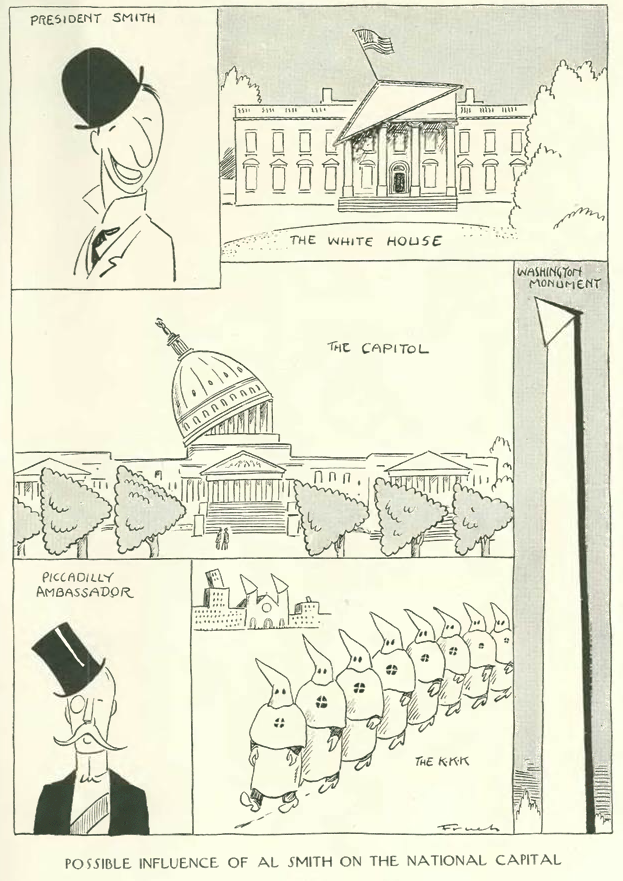
Tilt Your Vote to Al
When New York Governor Al Smith announced his candidacy for U.S. President, New Yorker cartoonist Al Frueh had some fun with the governor’s habit of wearing his ever-present bowler hat at a tilt:
They Dropped Like Flies
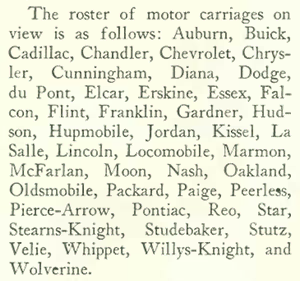
Nicholas Trott visited the 1928 New York Automobile Salon and rattled off this list of 43 car companies that would be displaying their shiny wares:
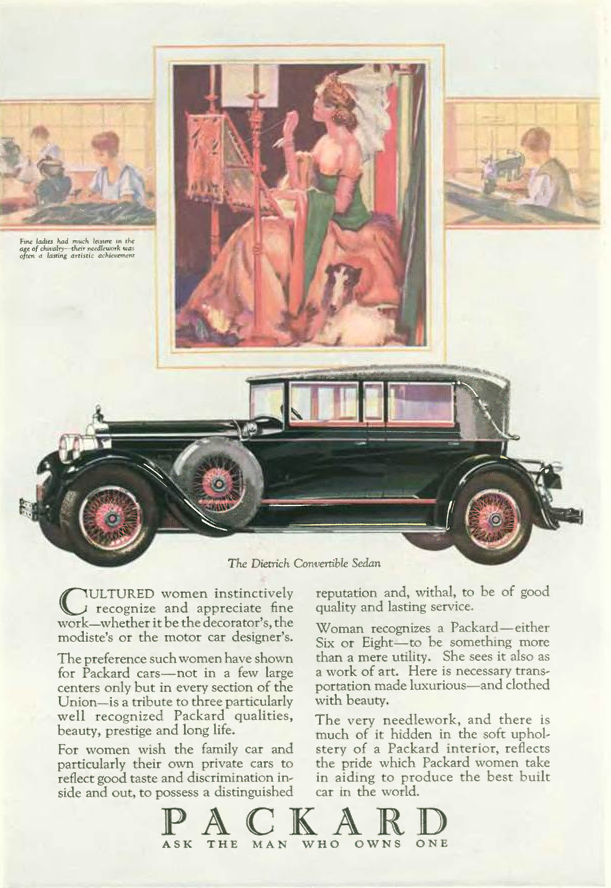
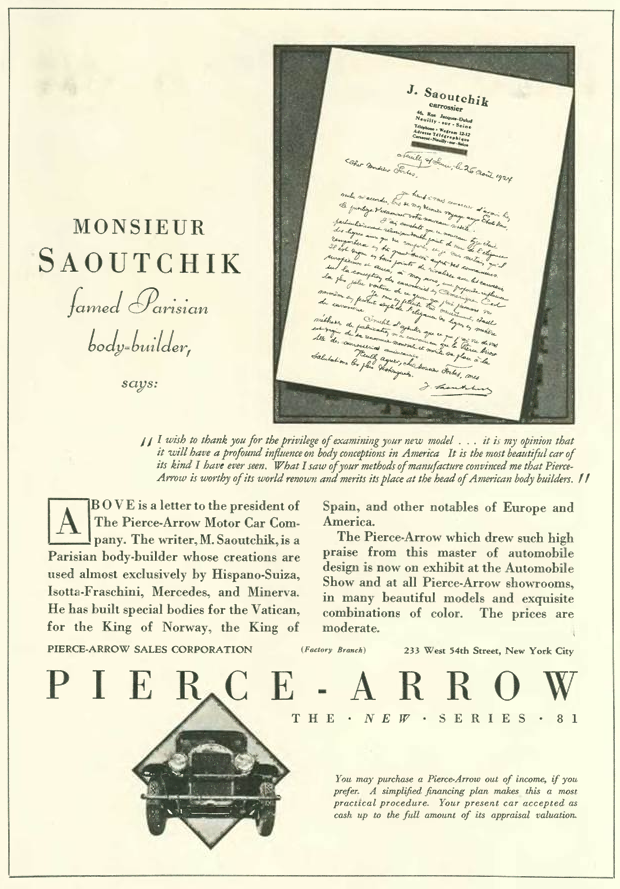
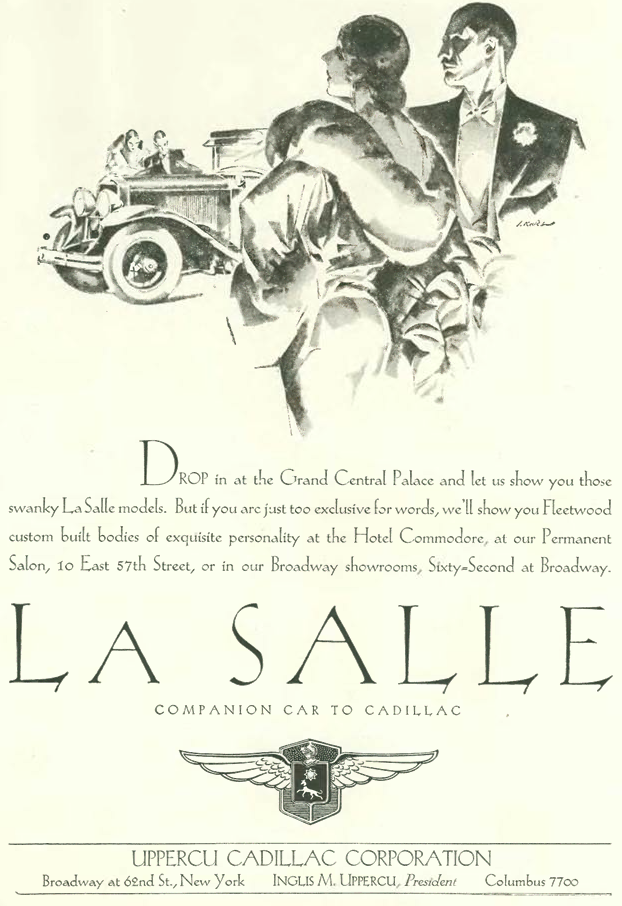
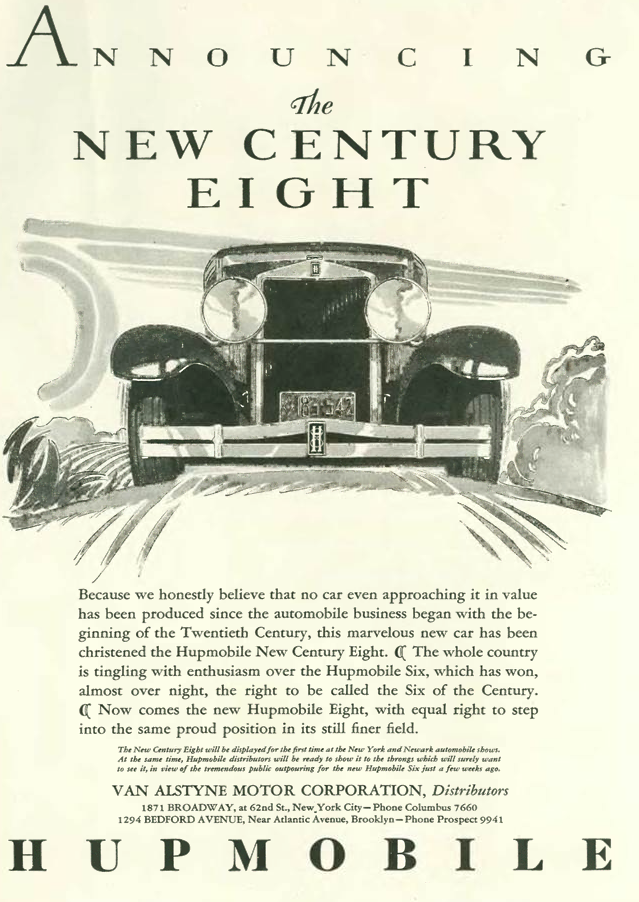
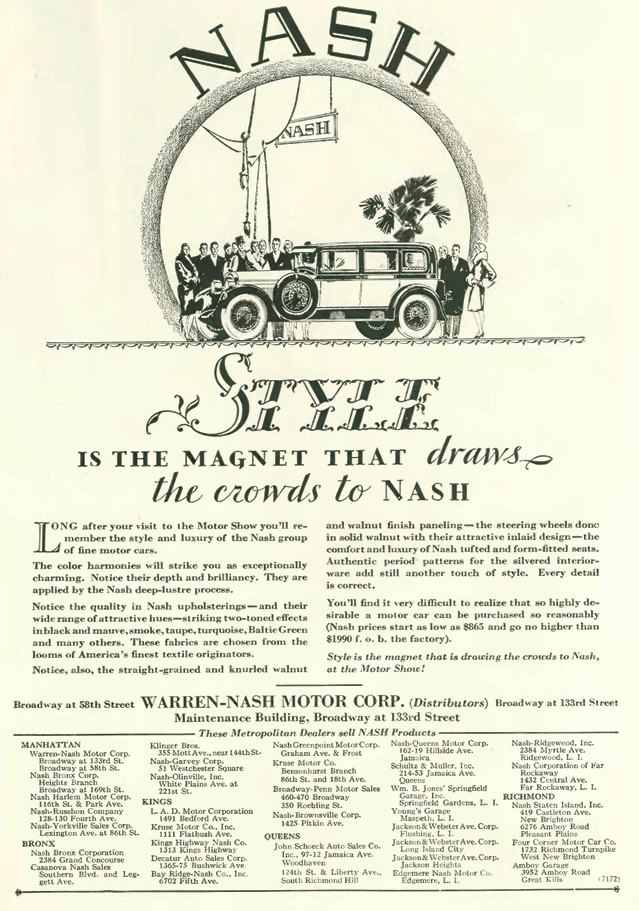
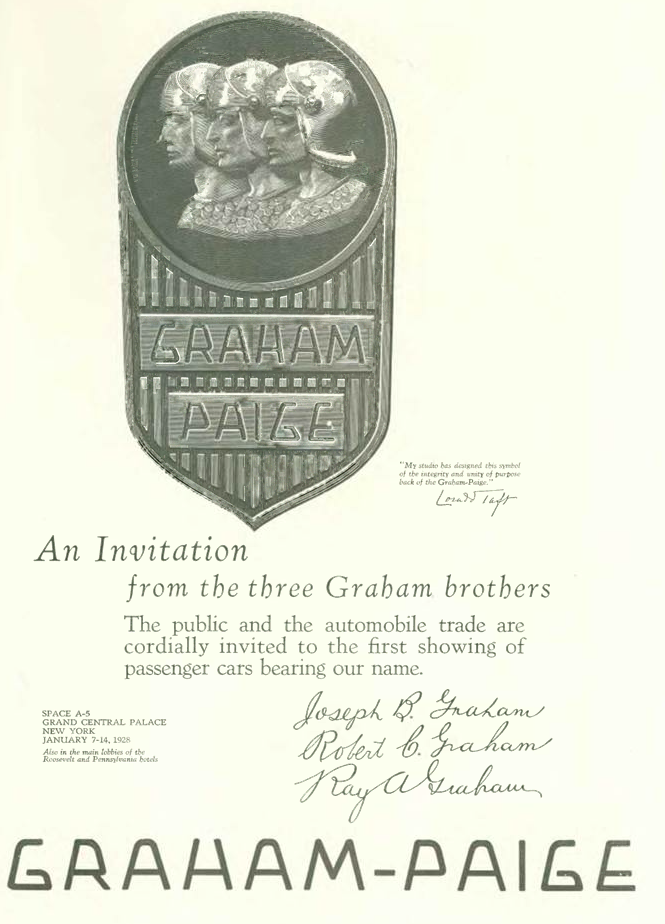
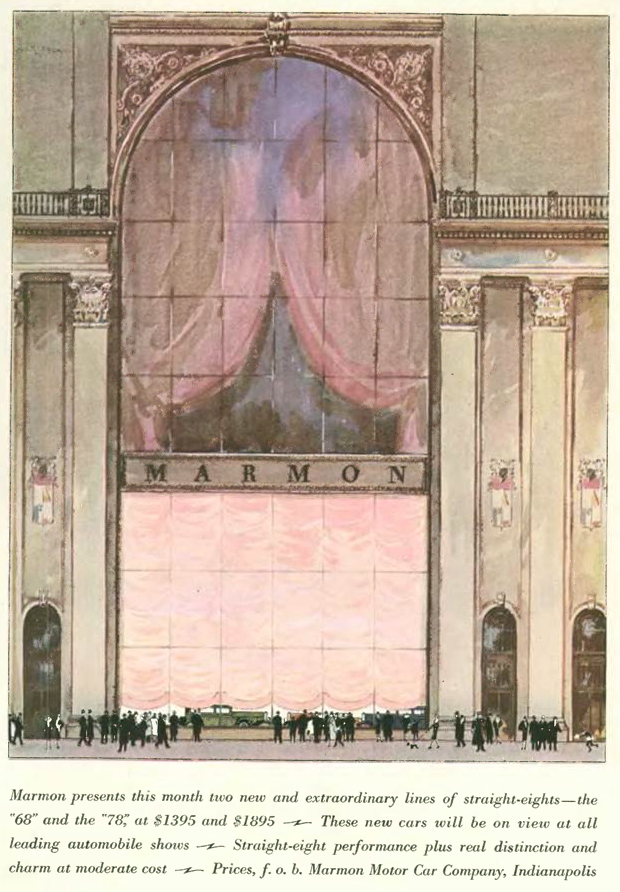
Of those 43 companies, only six are in operation today. Interestingly, the car ads that appeared in the Jan. 7 issue were mostly from companies that are long gone. Here is a sampling:
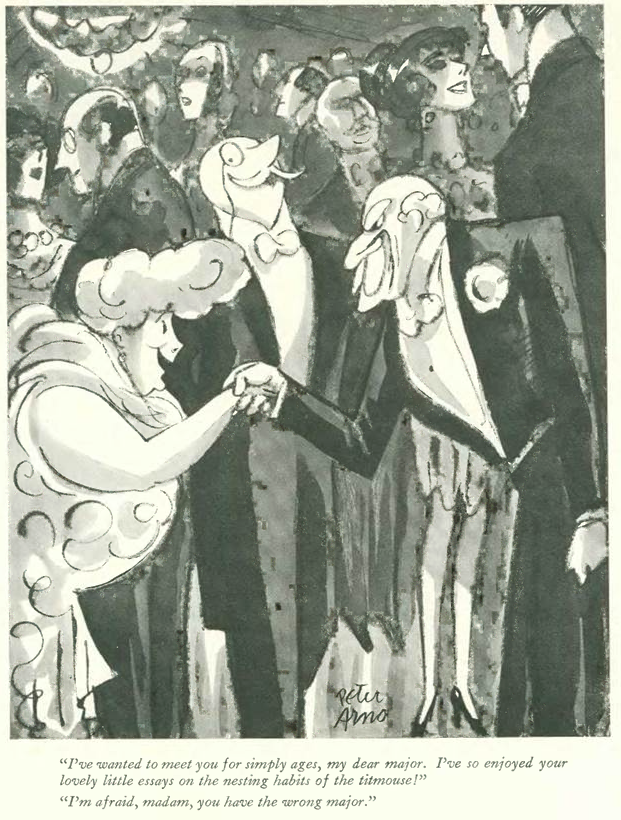
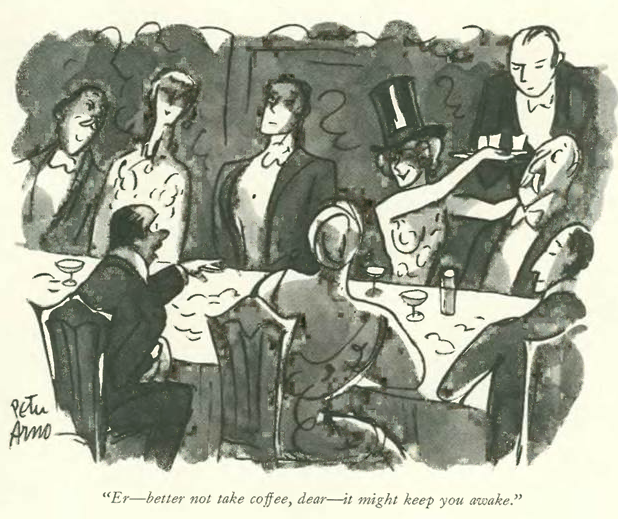
And finally, we close with Peter Arno and some dinner party hijinks…
My last entry featured cartoonist Bud Fisher, inventor of the comic “strip” (Mutt & Jeff) and the subject of The New Yorker’s Nov. 26, 1927 “Profile.” It was something of a surprise, then, to open the next issue, Dec. 3, and find literary critic Dorothy Parker offering her observations on the funny papers, including Sidney Smith’s comic strip, The Gumps.
December 3, 1927 cover by Constantin Alajalov.
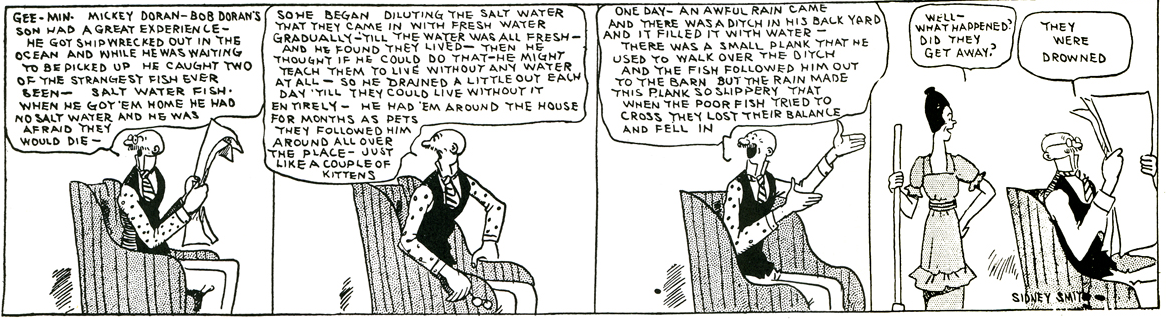
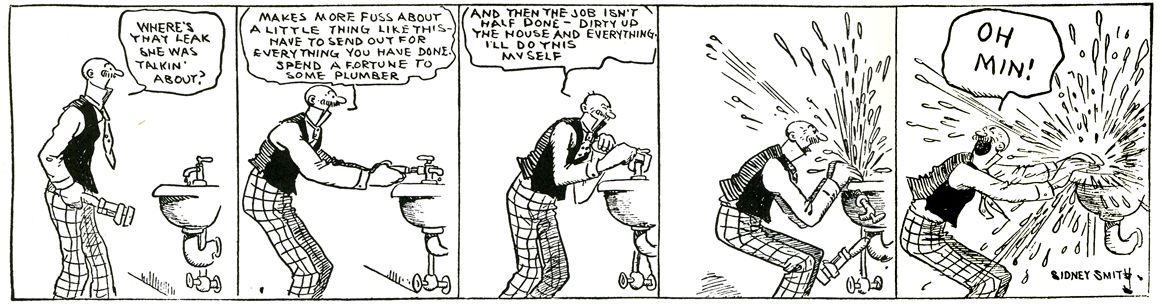
Before we get to Dorothy Parker, let’s have a look at The Gumps, created by Sidney Smith in 1917. Although that strip had plenty of slapstick, it was wordier than Mutt & Jeff and somewhat more realistic (Smith was the first cartoonist to kill off a regular character, in 1929–it caused a national outcry). An example of the strip from around 1920:
(michaelspornanimation.com) Click image to enlarge
Like Bud Fisher, Smith would become wealthy from the merchandising of Gump toys, games, songs, food products, etc…
The image of Andy Gump even graced cigar boxes. (kenlevine.blog)
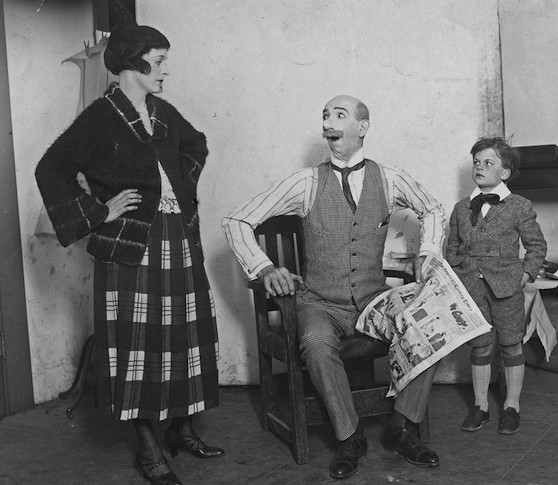
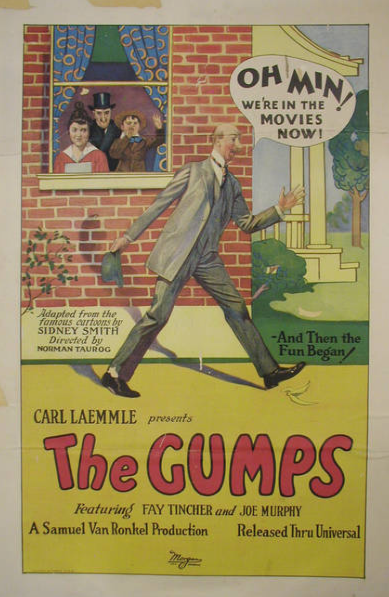
The Gumps were also featured in nearly 50 animated shorts, and between 1923 and 1928 Universal produced dozens of two-reel comedies starring Joe Murphy (one of the original Keystone Cops) as Andy Gump, Fay Tincher as Min and Jack Morgan as Chester (two-reelers were usually comedies, about 20 minutes in length). The director of these short films, Norman Taurog, would go on to become the youngest director to win an Academy Award (Skippy 1931). He would also direct such films as Boy’s Town (1938) and nine Elvis Presley movies from 1960 to 1968.
His comic strip barely five years old, in 1922 Smith famously signed a 10-year, one million-dollar contract. In 1935 he would sign an even more lucrative contract, but on his way home from the signing he would die in a car accident.
OH MIN!…A publicity still from Universal’s two-reel comedy series featuring The Gumps. From left, Fay Tincher (Min), Joe Murphy (Andy Gump) and Jackie Morgan (Chester). The actress Fay Tincher is a bit of a mystery…an enterprising young comedienne who started her own production company in 1918, she dropped from public view by 1930, and little is known of her life since that time, even though she lived to see the year 1983, and died at age 99. (younghollywoodhof.com)Theatre poster announced the coming of what would be dozens of two-reelers produced by Universal between 1923 and 1928 featuring The Gumps.(imdb.com)
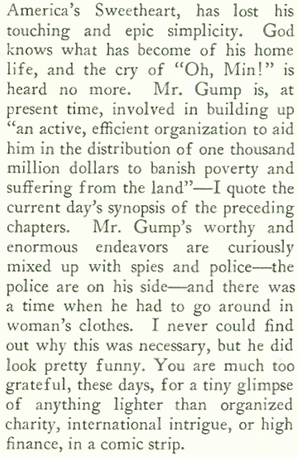
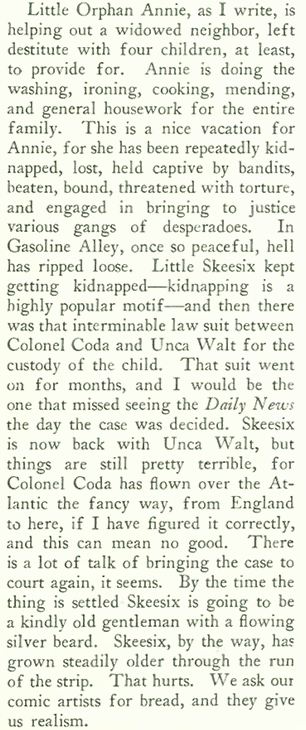
In her column, “Reading and Writing,” Dorothy Parker (writing under the pen name “Constant Reader”) lamented the fact that the comic strips were abandoning simple, light horseplay in favor of “melodramas.” Apparently even Andy Gump wasn’t exempt:
GUMPS IN THE DUMPS…in late 1927 Dorothy Parker longed for the antics of the old, dimwitted Andy Gump and his much-brainier wife, Minerva. Above, the first strip from 1917 that introduced The Gumps. Below, a circa 1920 strip featuring a typical Andy Gump mishap and his trademark “Oh Min!” (newspapers.com) Click images to enlarge.
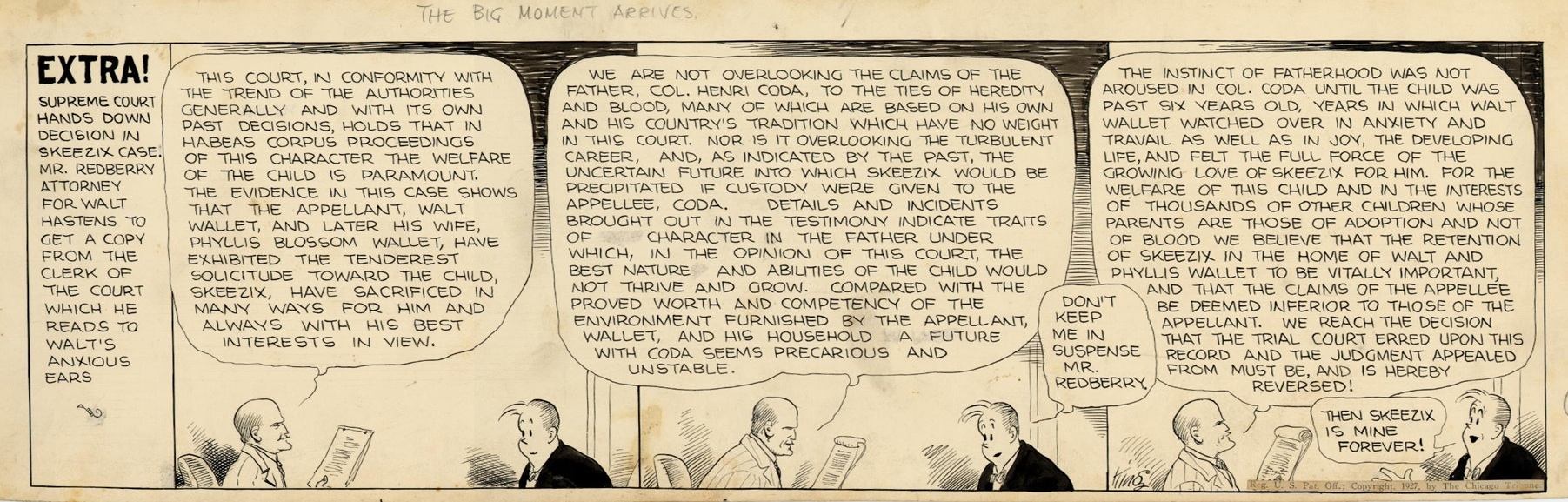
Parker also bemoaned the likes of Little Orphan Annie and the gang from Gasoline Alley, where everyday hijinks were replaced by melodrama:
I LOVE YA, TOMORROW…but I’m gonna kick your ass today! Annie gets rough in this 1927 strip. Hugely popular, the strip (begun in 1924) inspired a ton of merchandise, films, a radio show and the musical Annie. The strip Little Orphan Annie made creator Harold Gray a very rich man. (ha.comics.com) Click image to enlarge.SORRY, NO PIE IN THE FACE HERE…In this series of turgid word balloons, Walt gets full custody of the orphan Skeezix in this Gasoline Alley strip from 1927, ending what Dorothy Parker called “an interminable law suit.” First published November 24, 1918 by Frank King (who drew the strip until 1959), Gasoline Alley is still going and is the second-longest-running comic strip in the U.S. As Parker noted in her column, the characters in Gasoline Alley were allowed to age naturally. Skeezix is currently 97 years old. (hoodedutilitarian.com) Click image to enlarge.
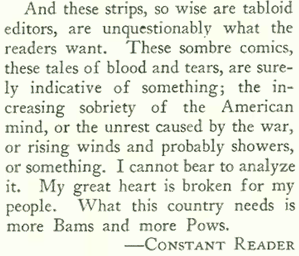
Parker suffered throughout her life from depression, and no doubt turned to the funnies for respite. However, she wrote that she hadn’t “seen a Pow or a Bam in an egg’s age,” and sadly concluded that melodrama was what the readers wanted.
When Minerva Was a Car
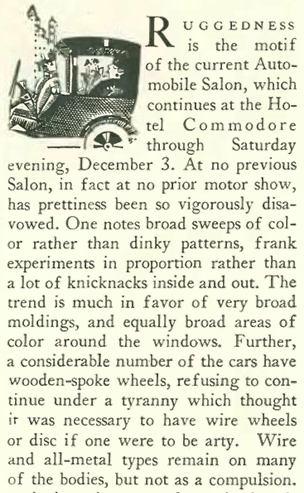
The New Yorker’s Nicholas Trott visited the Automobile Salon at the Hotel Commodore and noted that the latest trend favored an automobile’s “ruggedness” over its “prettiness.” Given the condition of roads in the 1920s, that probably wasn’t a bad thing…
In the early days of the auto industry there were thousands of different manufacturers that eventually went broke or merged with other companies. Trott’s article mentioned new offerings from Chrysler, Mercedes, and Cadillac as well as from such makes as Erskine, Sterns-Knight, Minerva, Holbrook Franklin, Stutz, and Brewster.
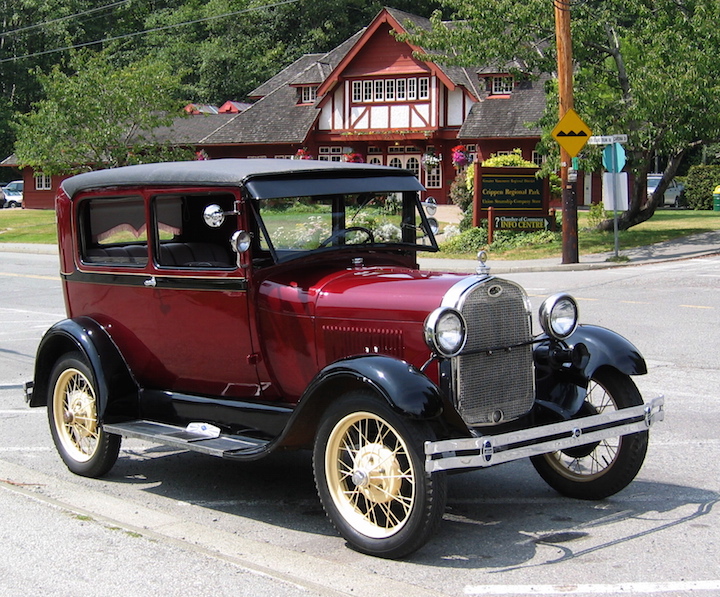
In “The Talk of the Town,” however, the editors wrote about another car with a far less colorful name: The Ford Model A. After 18 years of the ubiquitous black Model T, Ford buyers were ready for something different…
GOOD ENOUGH…The 1928 Ford Model A Tudor Sedan (Wikipedia)
New Yorker editors cautioned, however, that buyers of the Model A should “not expect too much” from a car aimed at more modest pocketbooks. In a little more than a year Ford would sell one million of the things, and by the summer of 1929, more than two million.
When Model A production ended in early 1932, nearly five million of the cars had been produced.
German Atrocities?
It’s seemed a bit of an “about face” for New Yorker architecture critic George S. Chappell to write of the “horrific style of modern Germany” after previously writing admiringly of the Bauhaus movement and “International Style” promulgated by Le Corbusier. Chappell’s column “The Sky Line” included this subhead, “German Atrocities Neatly Escaped.” In a few years “German Atrocities” would refer to something very different…
TEN-HUT!…The New Yorker’sGeorge Chappell liked the Harriman Building at 39 Broadway despite its “militant aspect.” Designed by Cross & Cross, it opened in 1928. (Museum of the City of New York)
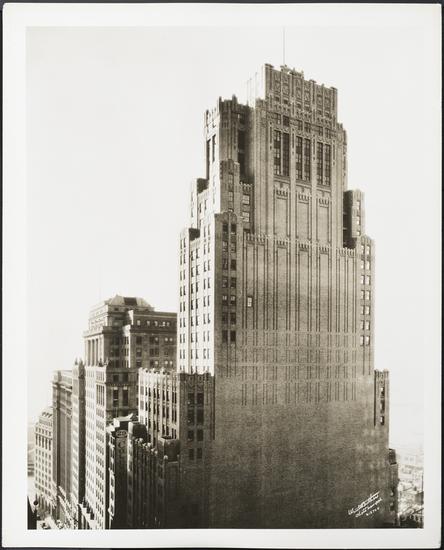
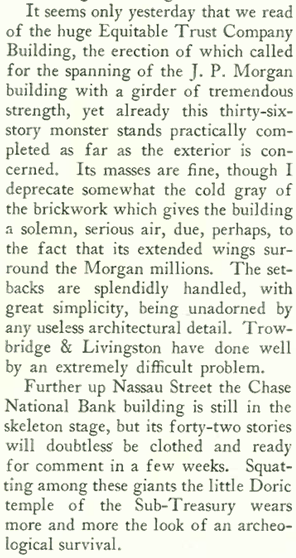
Another monstrous building of note in Chappell’s column was the “huge” Equitable Trust Building at 15 Broad Street…
Equitable Trust Building at 15 Broad Street. Designed by Trowbridge & Livingston, completed in 1928. (Museum of the City of New York)
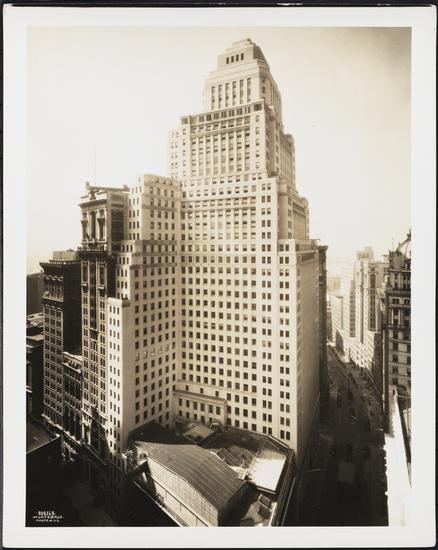
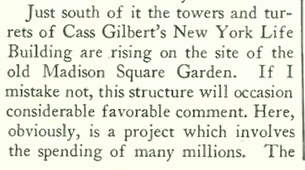
To save the best for last, Chappell also wrote of Cass Gilbert’s landmark New York Life Building, rising on the site of the old Madison Square Garden…
The distinctive pyramidal gilded roof of the New York Life Insurance Building, (Wikipedia)
* * *
She Nearly Made It
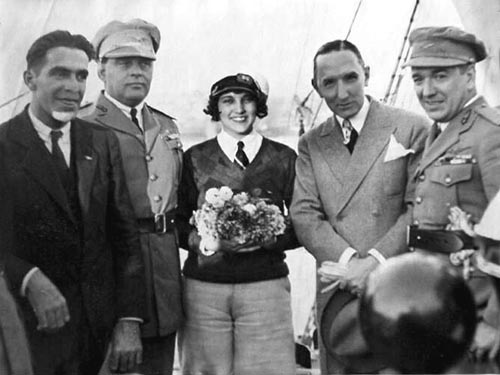
Morris Markey wrote about the exploits of pilot and actress Ruth Elder (1902–1977) in his “Reporter at Large” column. Known as the “Miss America of Aviation,” on Oct. 11, 1927, Elder and her co-pilot, George Haldeman, took off from New York in her attempt to become the first woman to make a transatlantic crossing to Paris. Mechanical problems in their airplane (a Stinson Detroiter dubbed American Girl) caused them to ditch into the ocean 350 miles northeast of the Azores. Fortunately they were rescued by a Dutch oil tanker in the vicinity.
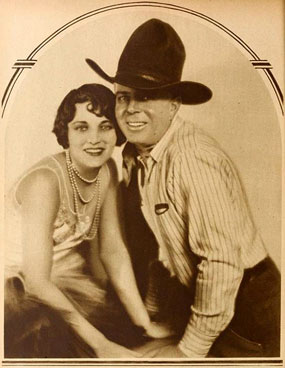
NO WORSE FOR WEAR…Ruth Elder, center, and George Haldeman, far left, on board their rescue ship, the Barendrecht, Oct. 25, 1927. (ctie.monash.edu)WHAT A HOOT…Ruth Elder and Hoot Gibson in a promotional pose for the 1929 film Winged Horseman (usc.edu).
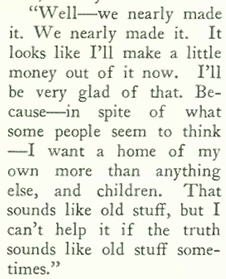
Although they were unable to duplicate Charles Lindbergh’s feat, Elder and Haldeman nevertheless established a new over-water endurance flight record of 2,623 miles–the longest flight ever made by a woman. They were honored with a ticker-tape parade upon their return to New York. Despite her derring-do, Elder suggested that she longed for a simpler, more domestic life…
Whether or not she found the simple life it is hard to say. She married six times, perhaps looking for the right “old stuff” and not quite finding it.
* * *
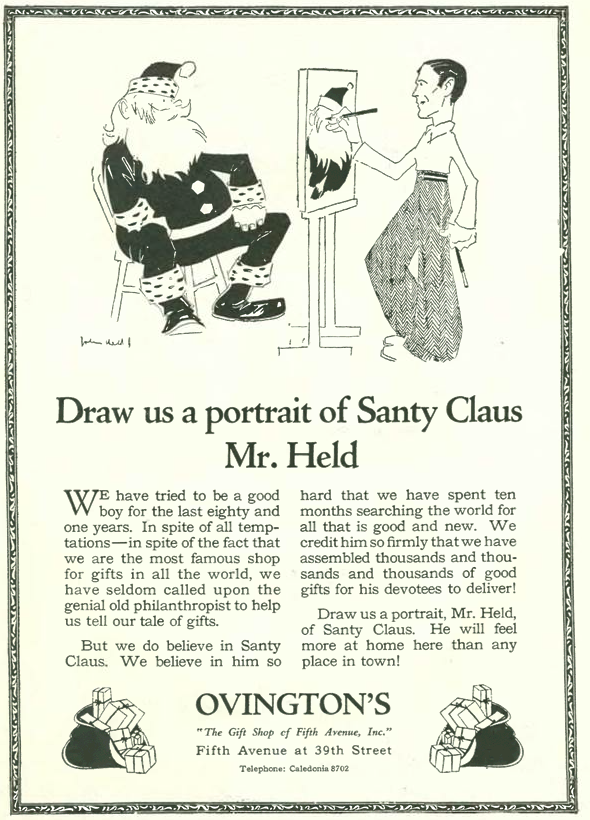
And finally, this ad from the Dec. 3 issue featuring the art of New Yorker contributor John Held Jr…
…and this cartoon by Otto Soglow, depicting how one toff bags his “trophy”…























































































 A New Yorker State of Mind