While You Were Away

During the Roaring Twenties New Yorkers took a wrecking ball to much of their past, and at a breathtaking pace that left many residents little time to ponder what was lost.

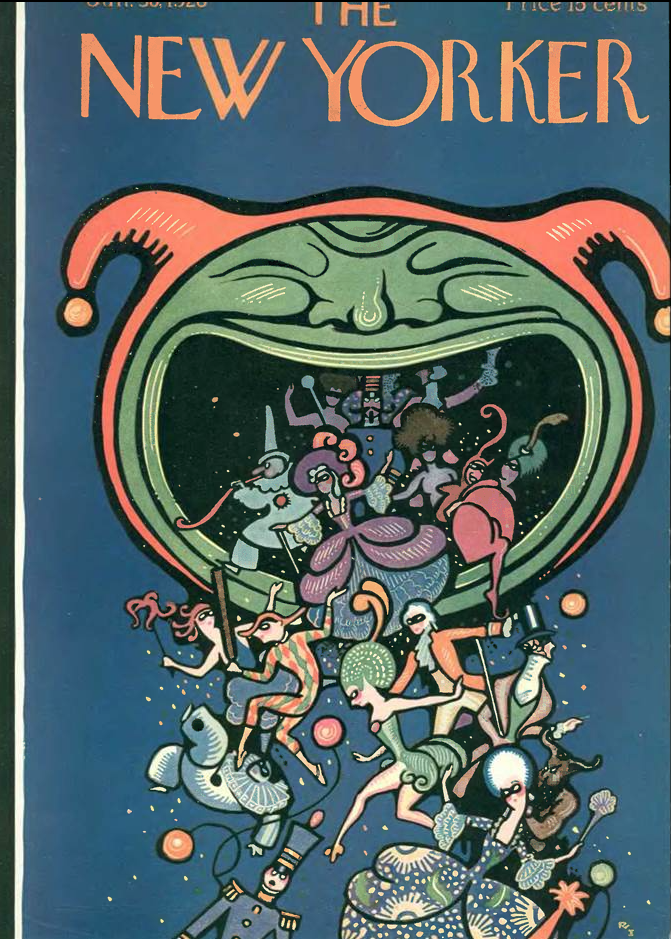
March 30, 1929 cover by Julian de Miskey.

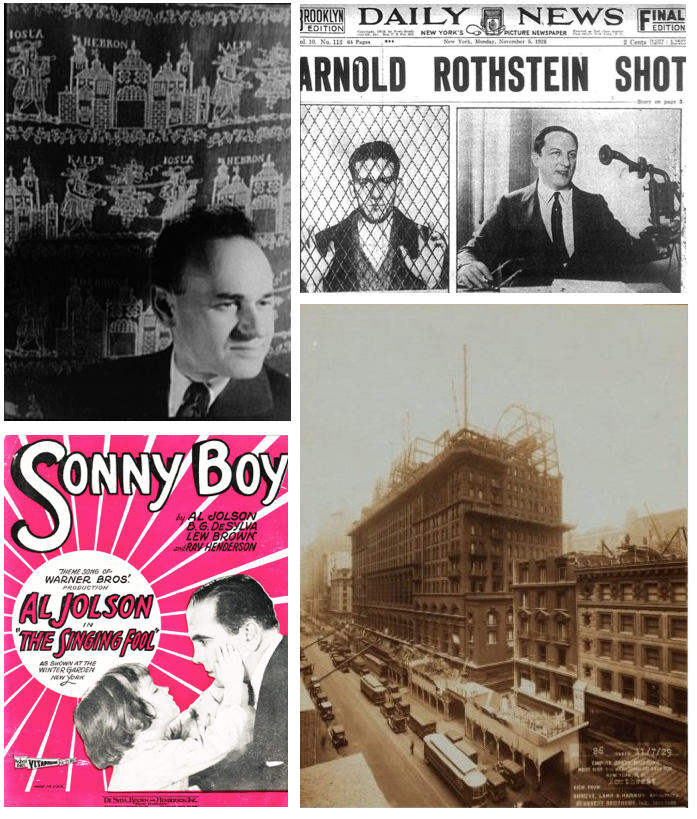
Writer and cultural critic Gilbert Seldes succinctly summed up this spirit of the times in a tongue-in-cheek “reminiscence” of the “old” New York—that is, how the city appeared the previous fall before he left to spend the winter in Bermuda:

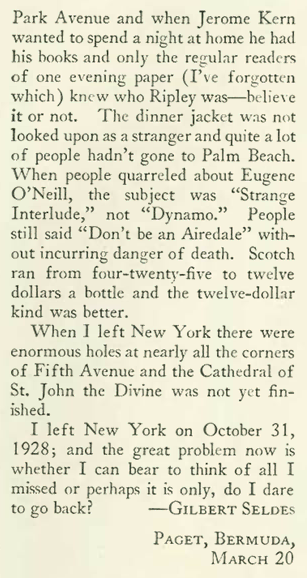
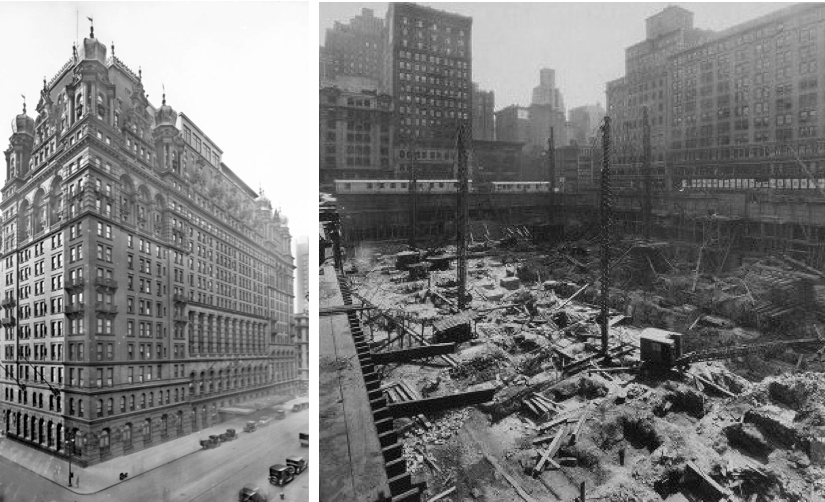
NOW WHERE WILL I GET A WALDORF SALAD? Writer Gilbert Seldes (top left) ticked off some of the many changes to his city while he was away for the winter, including (clockwise, from top right), the murder of racketeer Arnold Rothstein; the planned demolition of the Waldorf Astoria to make room for the Empire State Building (photo of the partially demolished hotel); and perhaps the first song to be overplayed on the radio ad nauseumAl Jolson’s “Sonny Boy.” (Wikipedia, Daily News, New York Public Library, musicals101.com)

A member of the intellectual elite but also a strong advocate for cultural democracy, Seldes began writing for the New Yorker in late 1925 and would be a frequent contributor through 1936. In 1937 he would join CBS as its first director of television programs, and would also become one of television’s first critics thanks to his 1937 Atlantic Monthly article, “The ‘Errors’ of Television.” (Note: There were only 50 experimental TV sets in the New York area in 1937, and the first commercially available sets weren’t sold until 1939). In 1958—when there would be 42 million U.S. households with a television—Seldes would serve as the host of NBC’s The Subject is Jazz.

 *  *  *

Peggy Bacon Did It All

Another early contributor to the New Yorker was Peggy Bacon, who displayed her sharp wit in her nearly 50 articles and poems for the magazine from 1926 to 1950. But Bacon was also well-known for displaying her talent and wit in the many paintings and illustrations she created throughout her long career. The New Yorker’s art critic Murdock Pemberton sang her praises in the March 30, 1929 issue after visiting her show at the Weyhe Gallery.
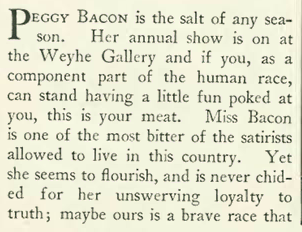
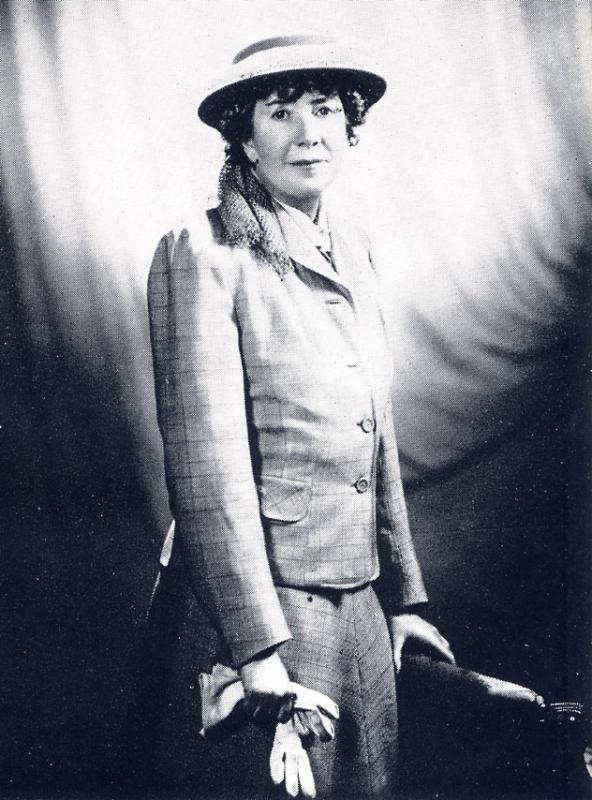
A FEW IDEAS was the title of this 1927 drypoint work featured in Peggy Bacon’s Weyhe Gallery show. At right, Bacon, circa 1920s. (artnet.com/wikipedia)
A sampling of Peggy Bacon drypoint works from the 1920s, clockwise, from top: Frenzied Effort, 1925; Vanity, 1929; Penguin Island, 1926. (Brooklyn Museum/Artnet/1stdibs.com)

 *  *  *

The March 30 profile featured aviation innovator Giuseppe Mario Bellanca, who in 1922 designed the first enclosed-cabin monoplane in the U.S. Perhaps even more significant, his design in 1913 of a plane with a propeller in front, a wing in the middle and tail at the end set the standard for all aircraft built since. (Before 1913 many planes were propelled from the rear, with the “tail” projected in front of the craft). The profile writer, William Weimer (with art by Hugo Gellert) admired Bellanca’s ability to stand toe-to-toe with the mighty du Pont family:

Bellanca founded the Roos-Bellanca Aircraft Company in Omaha in 1927, and was featured on the cover of Time. In 1929 he created the Delaware-based Bellanca Aircraft Corporation of America in a financial partnership with the du Ponts.
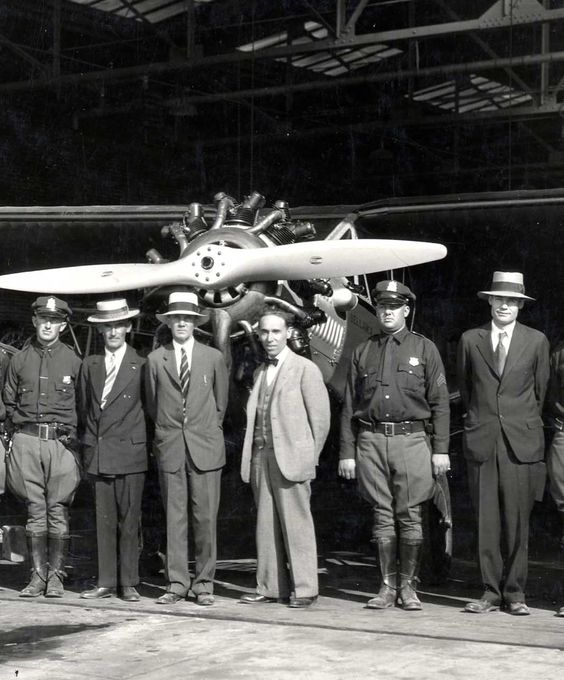
AVIATION PIONEER Giuseppe Mario Bellanca (center) at the new Bellanca Airfield in New Castle, Delaware, 1928. Bellanca’s planes would establish numerous records for altitude, endurance, and speed. (Delaware Public Archives)

 *  *  *

Showing Some Restraint

In his “Sky Line” column, the New Yorker architecture critic George S. Chappell (aka “T-Square”) praised an award-winning 1928 apartment at 3 East 84th Street for its contemporary charm and “fine restraint.” Designed by Raymond Hood and John Mead Howells, the 9-story building was commissioned by Joseph Medill Patterson, owner of the New York Daily News. The design would be influential in Hood’s much more ambitious projects two years later—the Daily News Building (1930) and Rockefeller Center (1931).
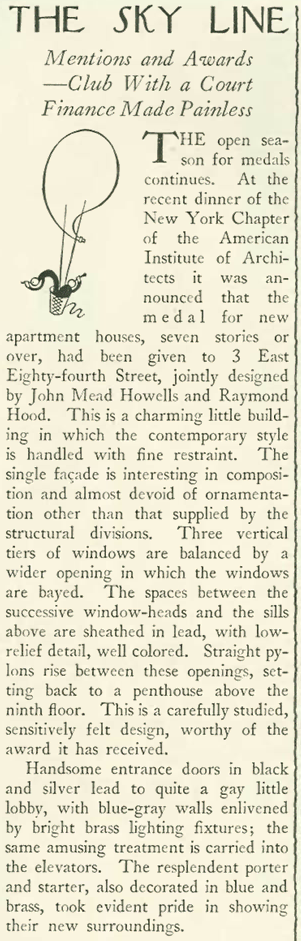
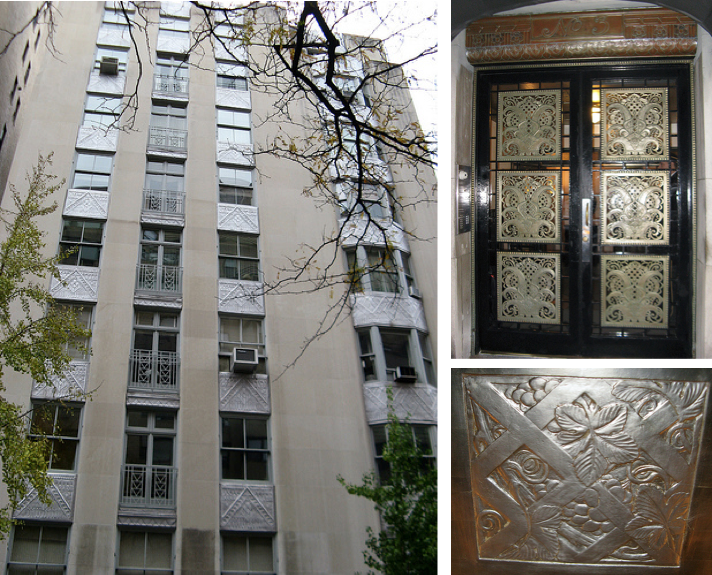
The Raymond Hood– and John Mead Howells-designed 3 East 84th Street. Top right, the front entrance; and bottom right, ceiling’s silver leaf squares. (Susan DeMark–mindfulwalker.com)

 *  *  *

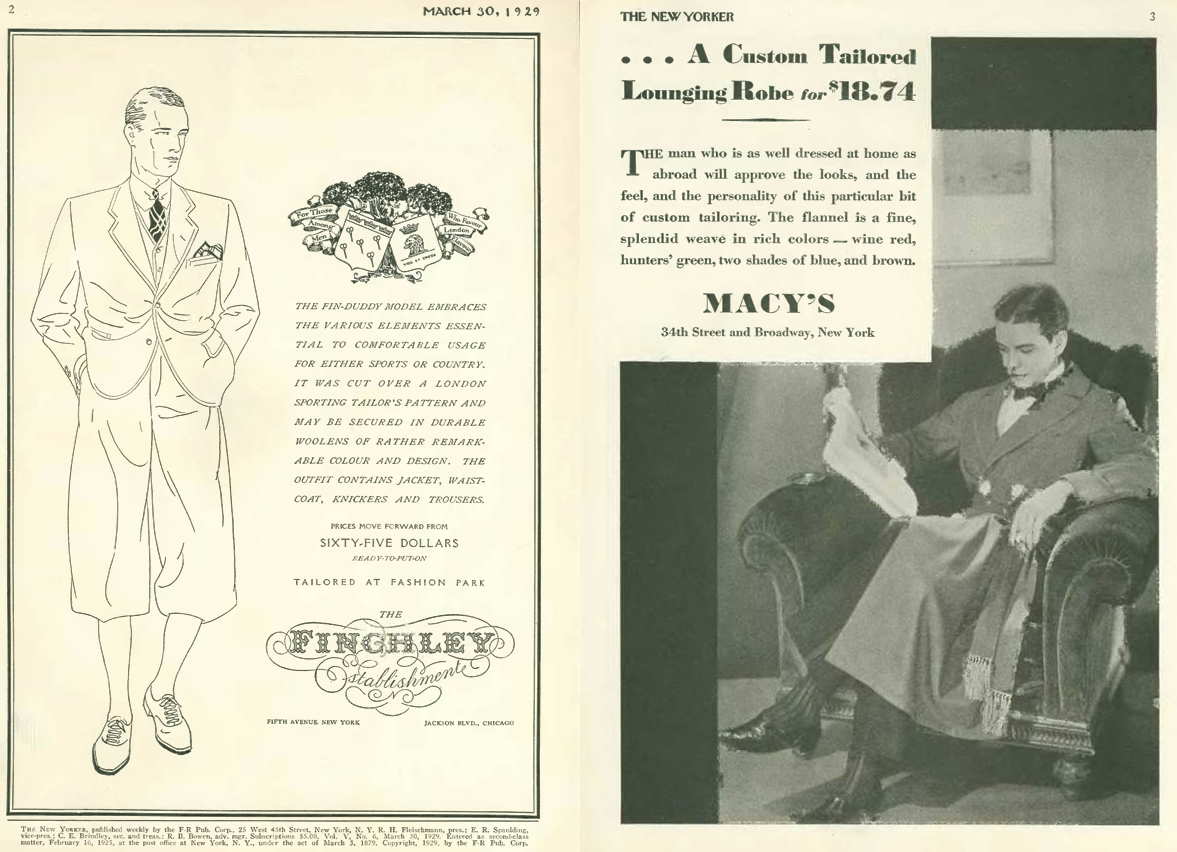
Advertisers in the March 30 issue offered various garments for the gentleman, including this sports-country ensemble at left from Finchley and a custom lounging robe from Macy’s…
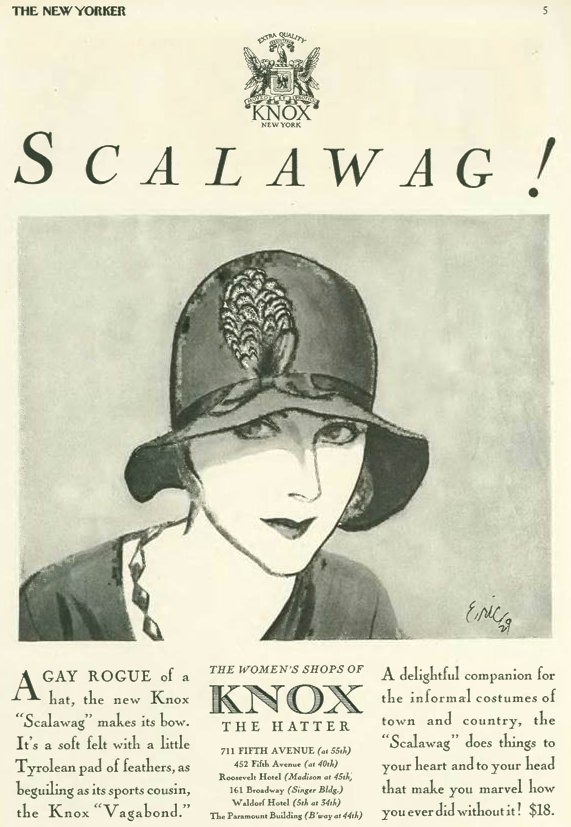
…and for fashionable, amusingly mischievous woman there was the new “Scalawag” hat by Knox (ad illustrated by the great Carl Erickson)

…Blue Moon’s blonde fairy girl was one of the Jazz Age’s most recognizable labels…here she is matched with an Art Deco-inspired spectrum of stocking colors…
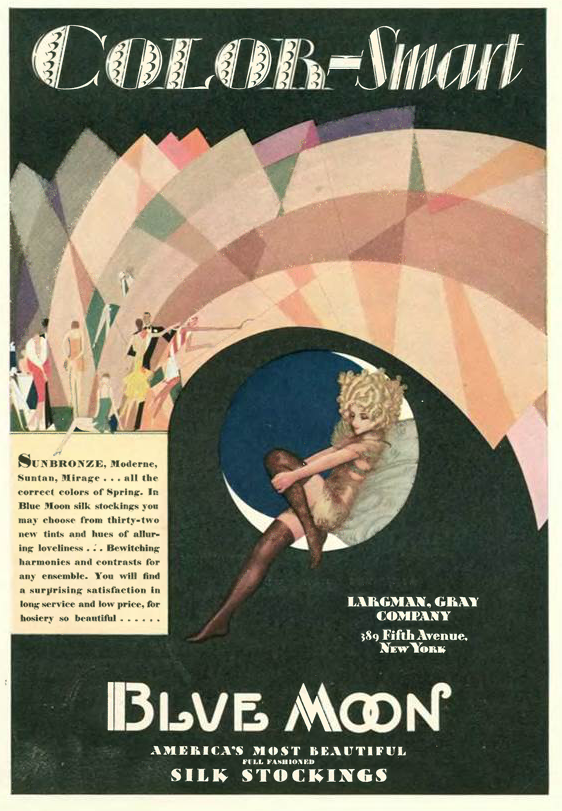
…Ligget & Myers Tobacco Company joined the ranks of sophisticated advertisers who touted a product—in this case Fatima cigarettes—without actually showing the product…

…on the other hand, American Tobacco Company, the makers of Lucky Strike, made doubly sure you wouldn’t forget that bright red bullseye, or Rosalie Adele Nelson, “The Original Lucky Poster Girl”…

Nelson’s image for Lucky Strike was almost as ubiquitous as the fairy in the Blue Moon ads. Apparently she was also a member the Nelson family of circus acrobats and performed her own signature act with baby elephants:
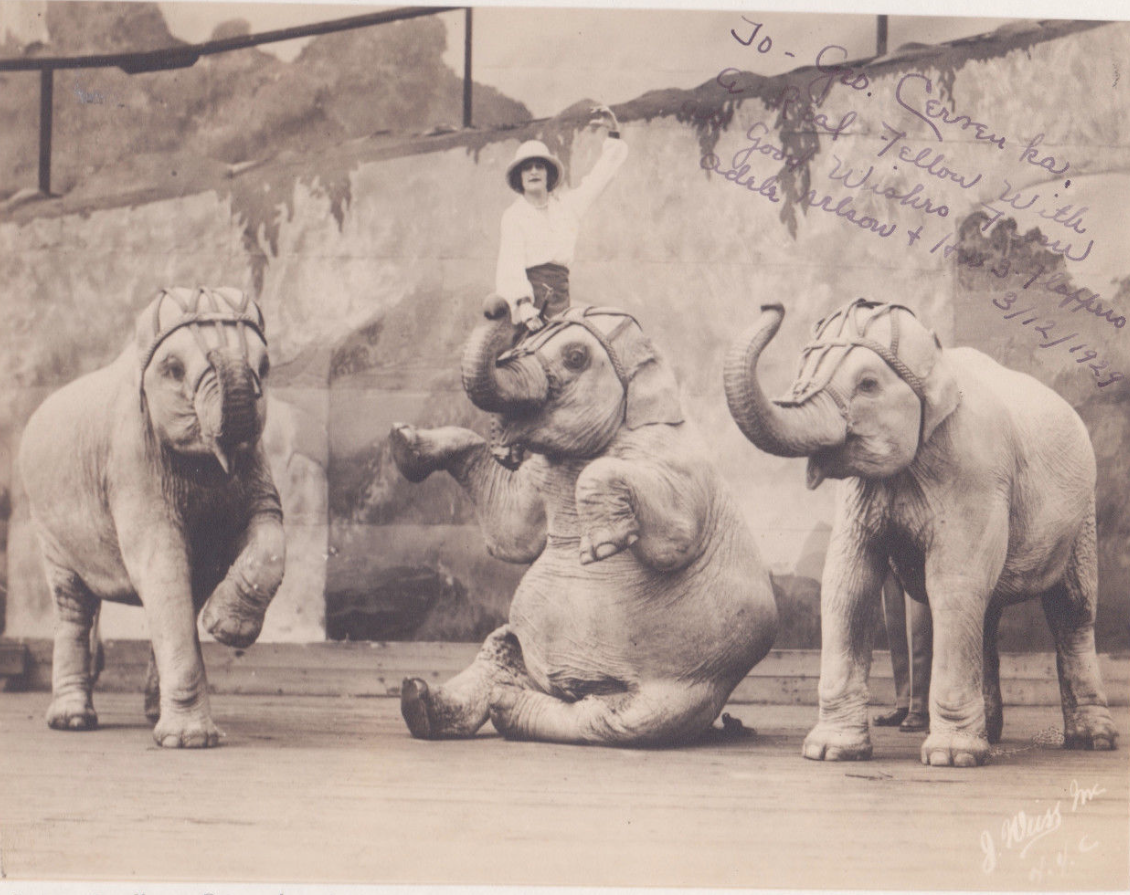
Rosalie Adele Nelson with her baby elephant act, 1929 (eBay)

Philip Morris took an entirely different (and unusual) approach to selling its relatively new brand of Marlboro cigarettes by touting the achievements of Gretchen Colnik, winner of the “1928 Marlboro Contest for Distinguished Handwriting….”

Like Rosalie Adele Nelson, Gretchen Colnik would go on to minor fame of her own. She was managing editor of the Great Neck, NY, newspaper before returning to her hometown—Milwaukee, Wisconsin. From 1952 to 1966 Gretchen was the Martha Stewart of Milwaukee, hosting a TV show that provided advice on interior design, food and crafts. “The Gretchen Colnik Show” was sponsored by Mrs. Karl’s Bread.

Our cartoon is by Leonard Dove, who looks in on an architect at work:

The Cruelest Month

The film reviews for the April 6, 1929 issue found the New Yorker once again at odds with Hollywood and favoring cinematic products from the Old World.
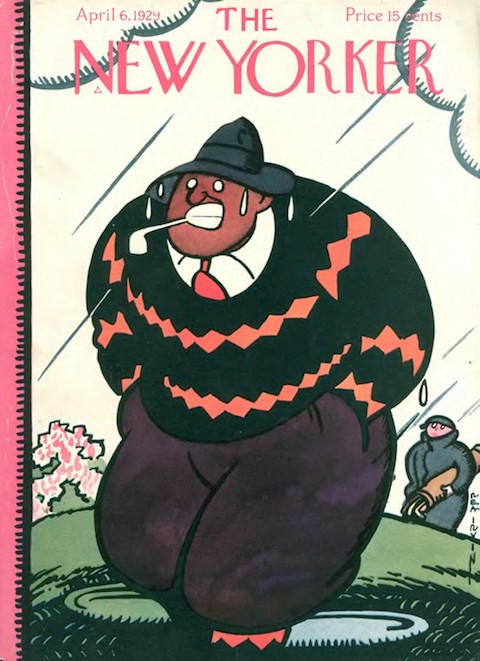
April 6, 1929 cover by Rea Irvin.

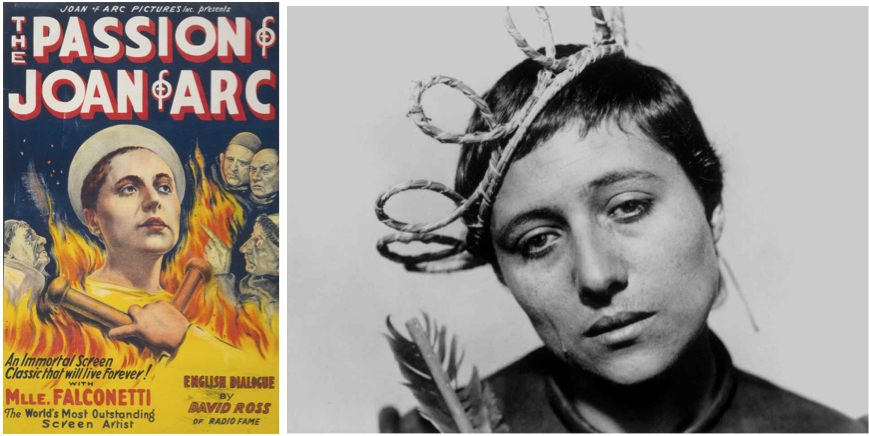
In the case it was a French film, The Passion of Joan of Arc, which even today is regarded as a cinematic landmark.

A LOT AT STAKE…American poster for The Passion of Joan of Arc; at right, Maria Falconetti in the title role. (Wikipedia/Film Forum)

The New Yorker review praised the film as “one of the few of the year which merit serious attention”…

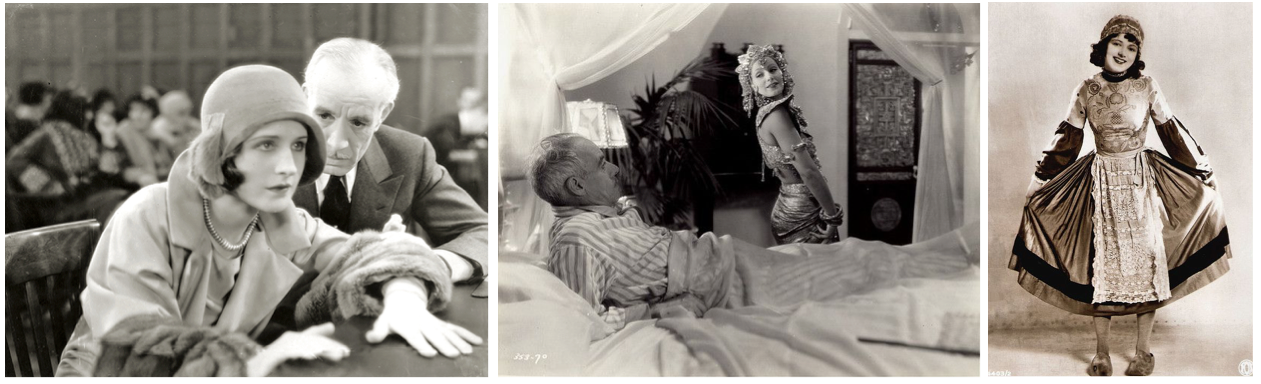
On the other hand, there were the latest products from Hollywood, which stood on the other side of a “vast abyss” from the French film:
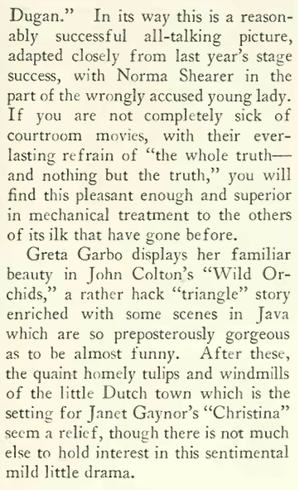
HO HUM FOR HOLLYWOOD…At left, Mary Dugan (Norma Shearer) with her conniving lawyer, Edward West (Lewis Stone) in The Trial of Mary Dugan; Lewis Stone was a apparently a busy man in the late 1920s—here he is again (center image), this time portraying John Sterling, a tea plantation investor lacking the mojo to keep up with his much younger wife, Lillie (Greta Garbo) in Wild Orchids; and at right, Janet Gaynor as a little Dutch girl in Christina, a film now considered lost. Click image to enlarge (normashearer.com/pinterest)

 *  *  *

From Our Advertisers

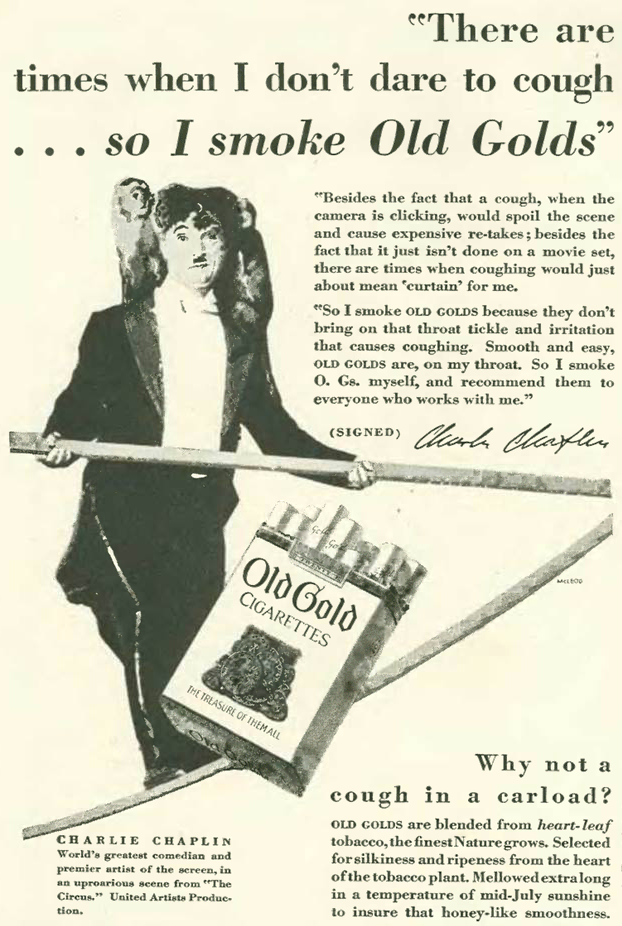
The April 6 issue found Charlie Chaplin getting in on the action of Old Gold cigarette endorsements…
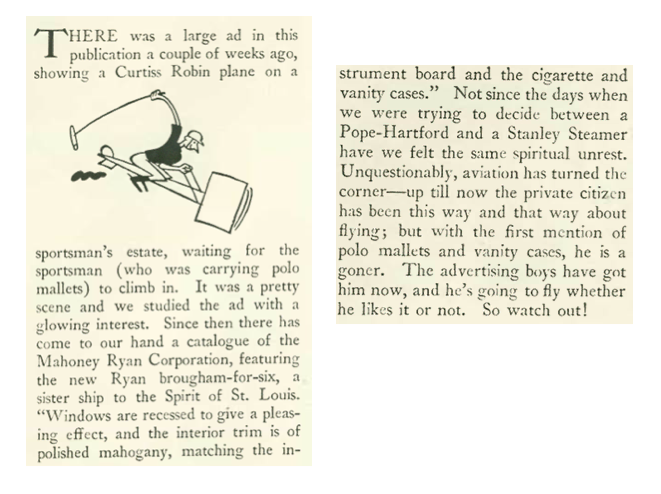
…while Curtiss Flying Service thought it might interest some of the more well-heeled New Yorker readers in the purchase of an airplane…

…a couple weeks later, in the April 20 issue, the New Yorker would make this observation about the ad in “The Talk of the Town”…
…and finally, our cartoon by R. Van Buren, looking in on yet another sugar daddy and his much younger companion on a night out…

Next Time: Generation of Vipers…
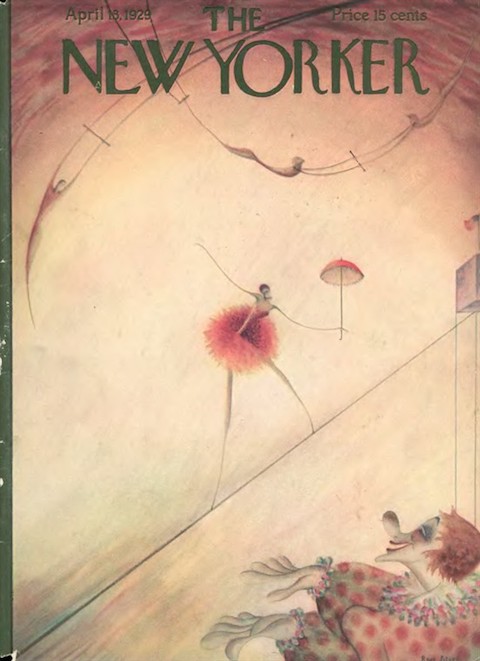
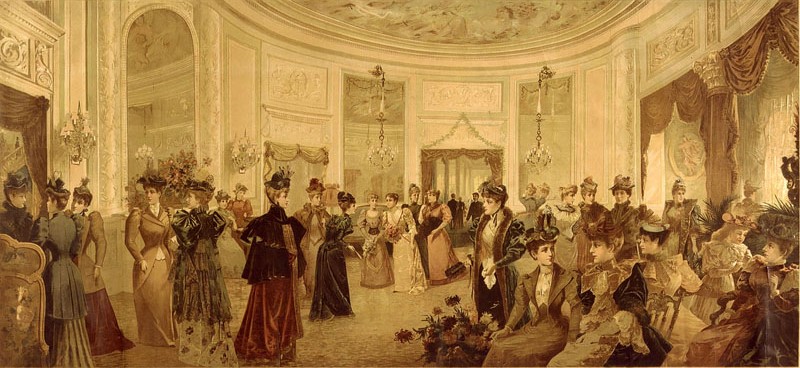
Out With the Old

Perhaps no decade was more transformative to New York City than the 1920s. From the loosening of social mores to countless technological advances, the city was a very different place as it entered the last year of the Roaring Twenties.

Jan. 5, 1929 cover by Sue Williams. Opening image depicts the original Waldorf Hotel’s Octagon Room in 1893.

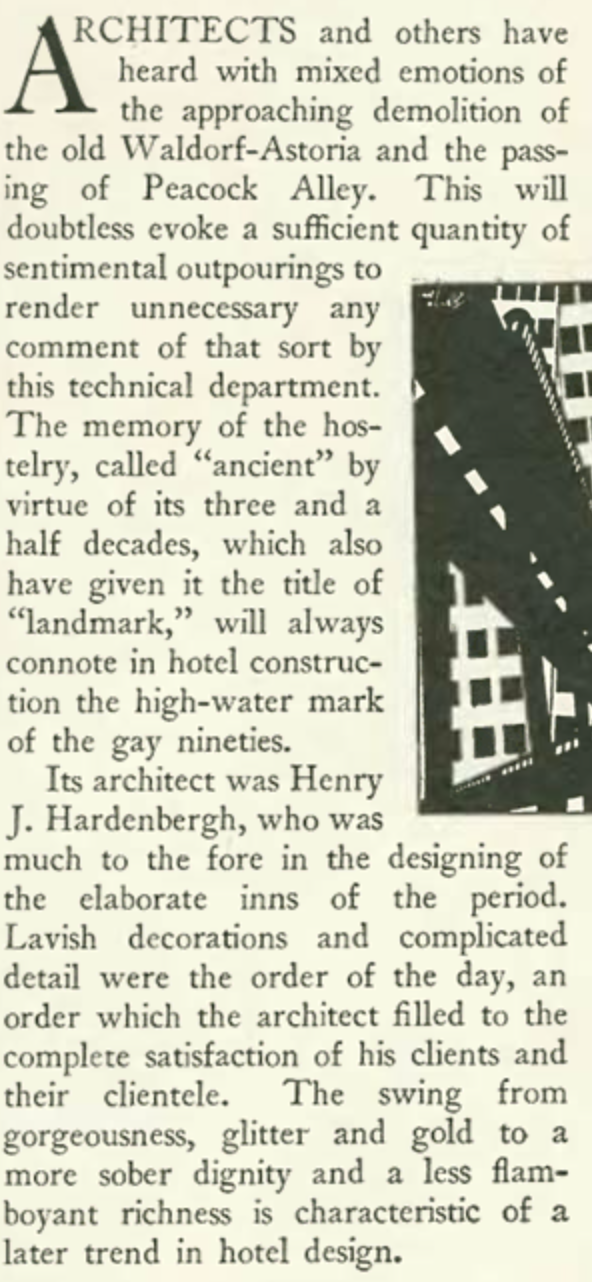
Vestiges of the 19th century were quickly erased during the decade as old neighborhoods and stately mansions gave way to massive apartment blocks and towering skyscrapers. Such was the fate of the original Waldorf-Astoria Hotel, its Victorian lavishness out of style in a streamlined age. Writing under the pen name T-Square, New Yorker architecture critic George S. Chappell commented on the planned demolition of the old* Waldorf-Astoria Hotel:

*Although outdated in appearance, the hotel was little more than 30 years old in 1929.

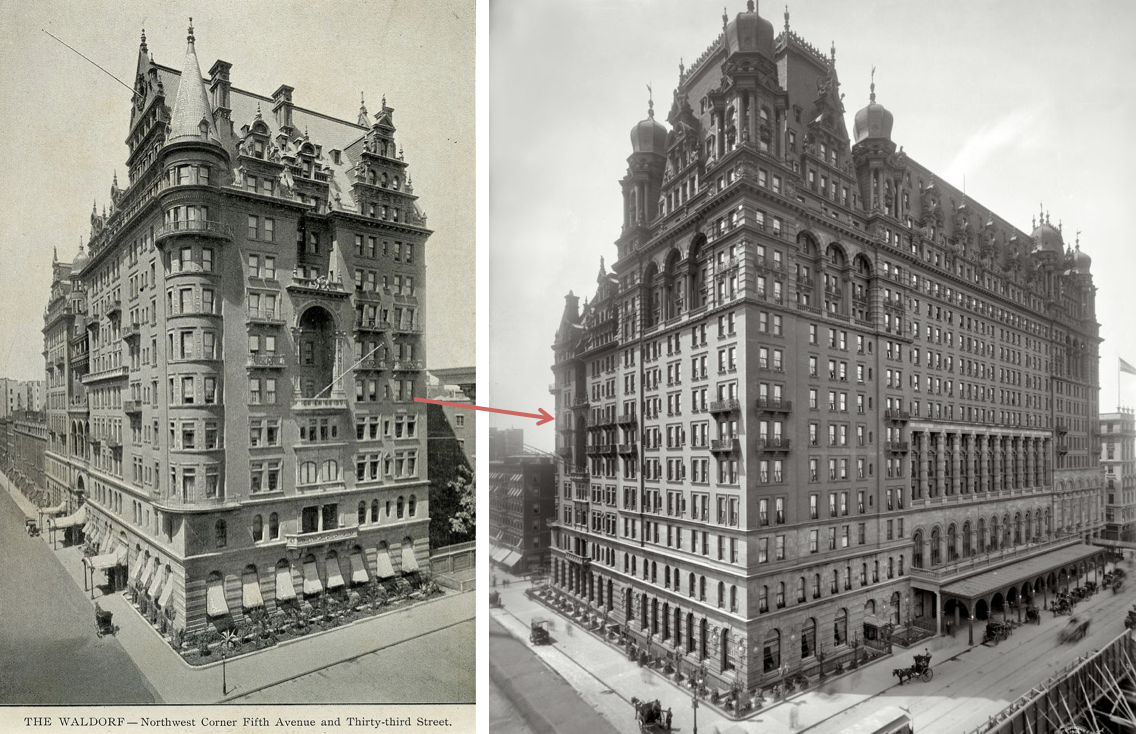
TALE OF TWO HOTELS…The Waldorf-Astoria was actually two hotels joined together. The Waldorf, at left, was built in 1893. The much larger Astoria (right) was constructed in 1897. Note the arrow indicating the original Waldorf in relation to the Astoria. (Wikipedia/Detroit Photography Archive)
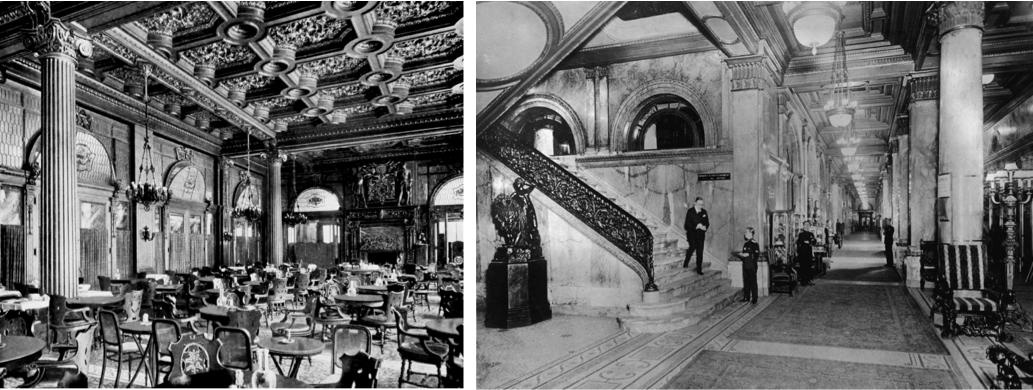
PLACES TO SEE AND BE SEEN…At left, the “Gentleman’s Cafe” in the Waldorf Hotel. At right, lobby entrance to the marble-lined “Peacock Alley” that connected the two hotels. (Wikipedia/justcocktails.com)
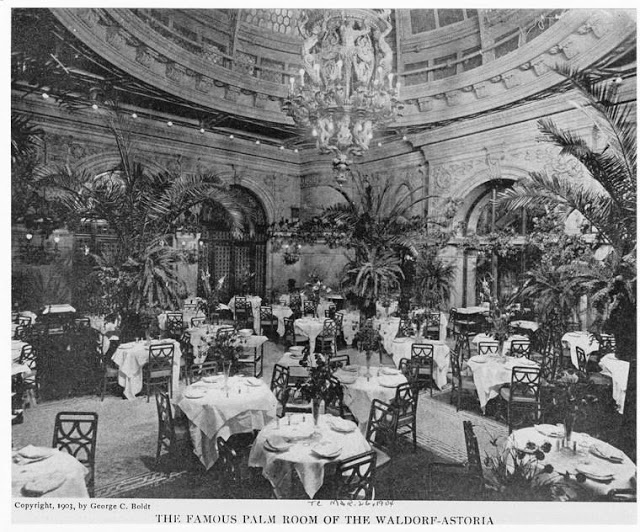
DINE IN STYLE…The Palm Room in the Astoria section of the original Waldorf-Astoria Hotel. (New York Public Library)

Chappell wrote that the prime building site was slated to be occupied by a 50-story office building…

…but as it turned out, Floyd Brown was unable to make the final payments on the property, so he sold his claim to the bank. John J. Raskob, a wealthy finance executive and chair of the National Democratic Committee, joined with entrepreneur Pierre du Pont and former New York Governor Al Smith (who lost his bid for the U.S. Presidency in 1928) to buy the property. They had much bigger plans than Floyd Brown: In August 1929 they announced their plan to build the tallest building in the world — what would become the Empire State Building.

TRY, TRY AGAIN…The architecture firm Shreve & Lamb developed this concept (left) for Floyd Brown’s proposed 50-story office building on the site of the old Waldorf-Astoria. At right, what occupies the site today: the Empire State Building, also designed by Shreve & Lamb. (Pinterest/oldstructures.com)

 * * *

Car Culture

The Jan. 5 issue featured a lengthy review of the 29th Annual National Automobile Show at Grand Central Palace, as well as numerous advertisements by auto manufacturers hoping to entice New Yorker readers with their latest models.

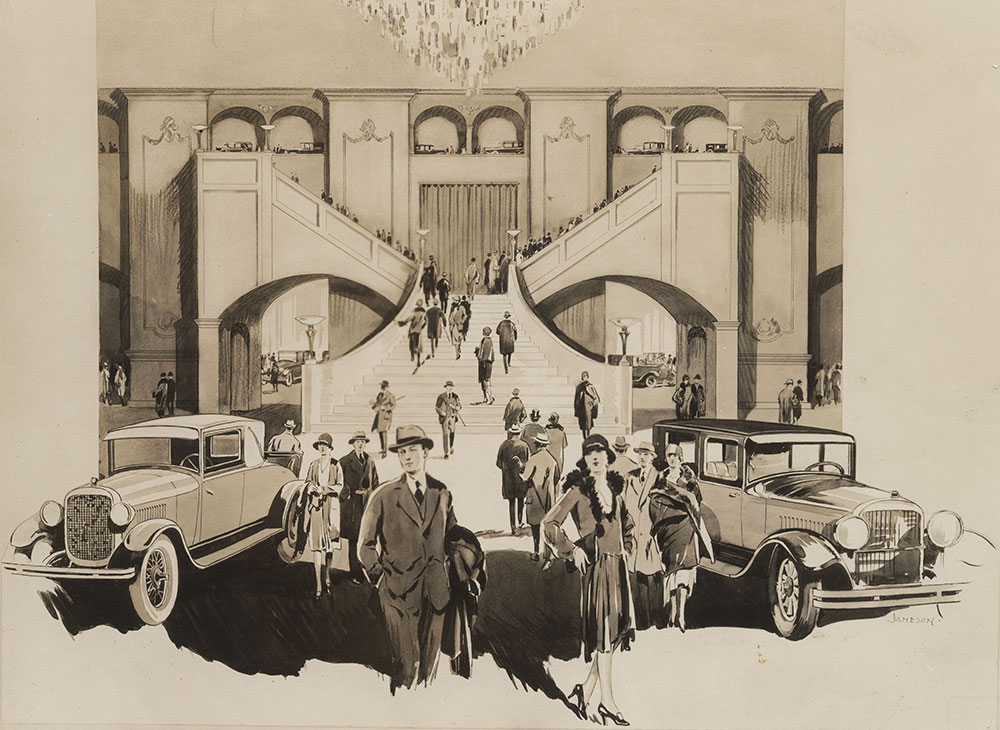
Promoters of the event touted the addition of a grand staircase to Grand Central’s mezzanine level that would ease access to both levels of the show:

AIN’T IT GRAND?…Design drawing created for the 1929 National Automobile Show at Grand Central Palace touting the addition of an equally grand new staircase. (Free Library of Philadelphia)
How the new staircase actually appeared at the 1929 show. Note the background where the movement of workmen on ladders lends a ghostly appearance. (Free Library of Philadelphia)
A view of the 1929 National Automobile Show from the mezzanine of the Grand Central Palace. (Free Library of Philadelphia)

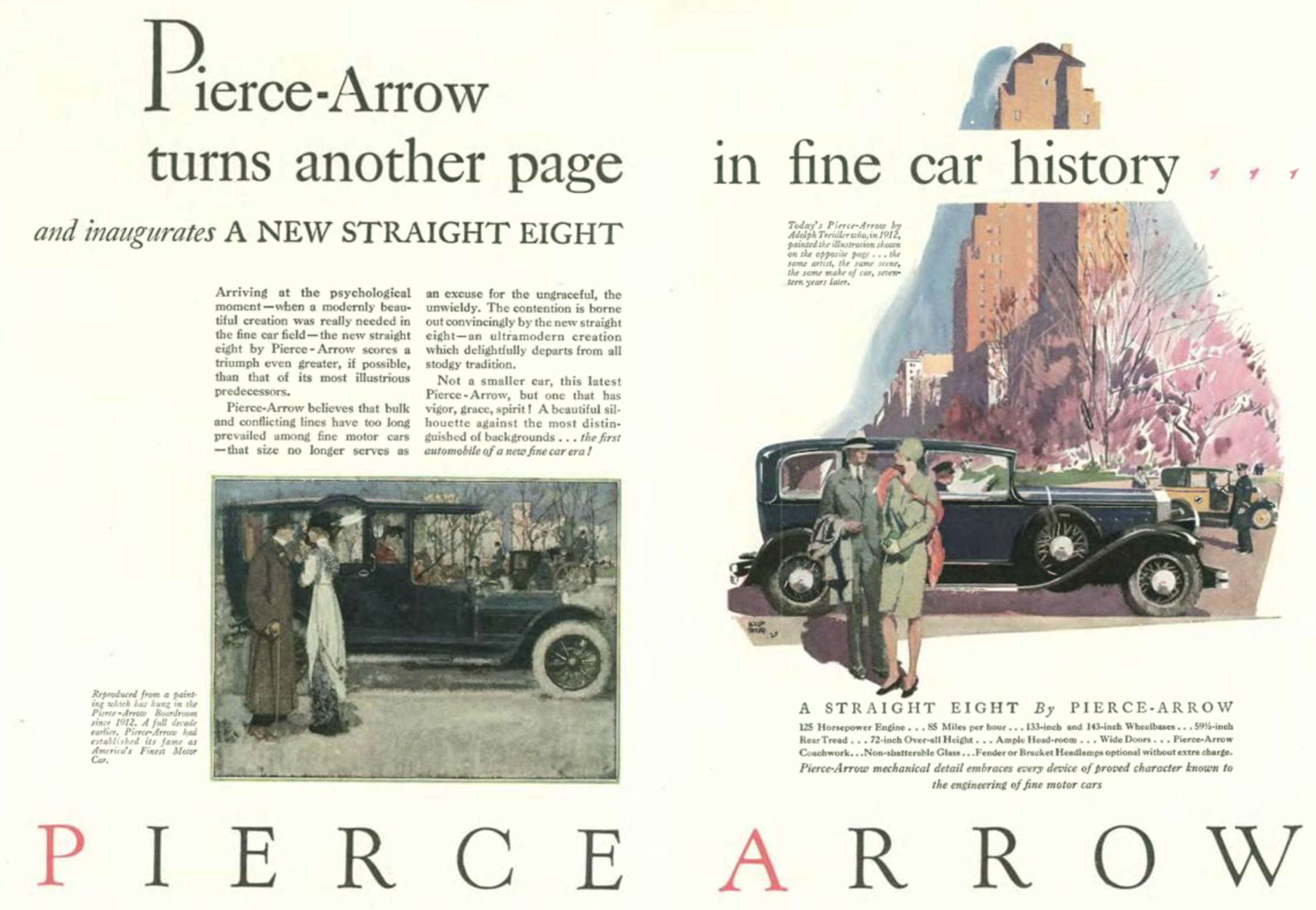
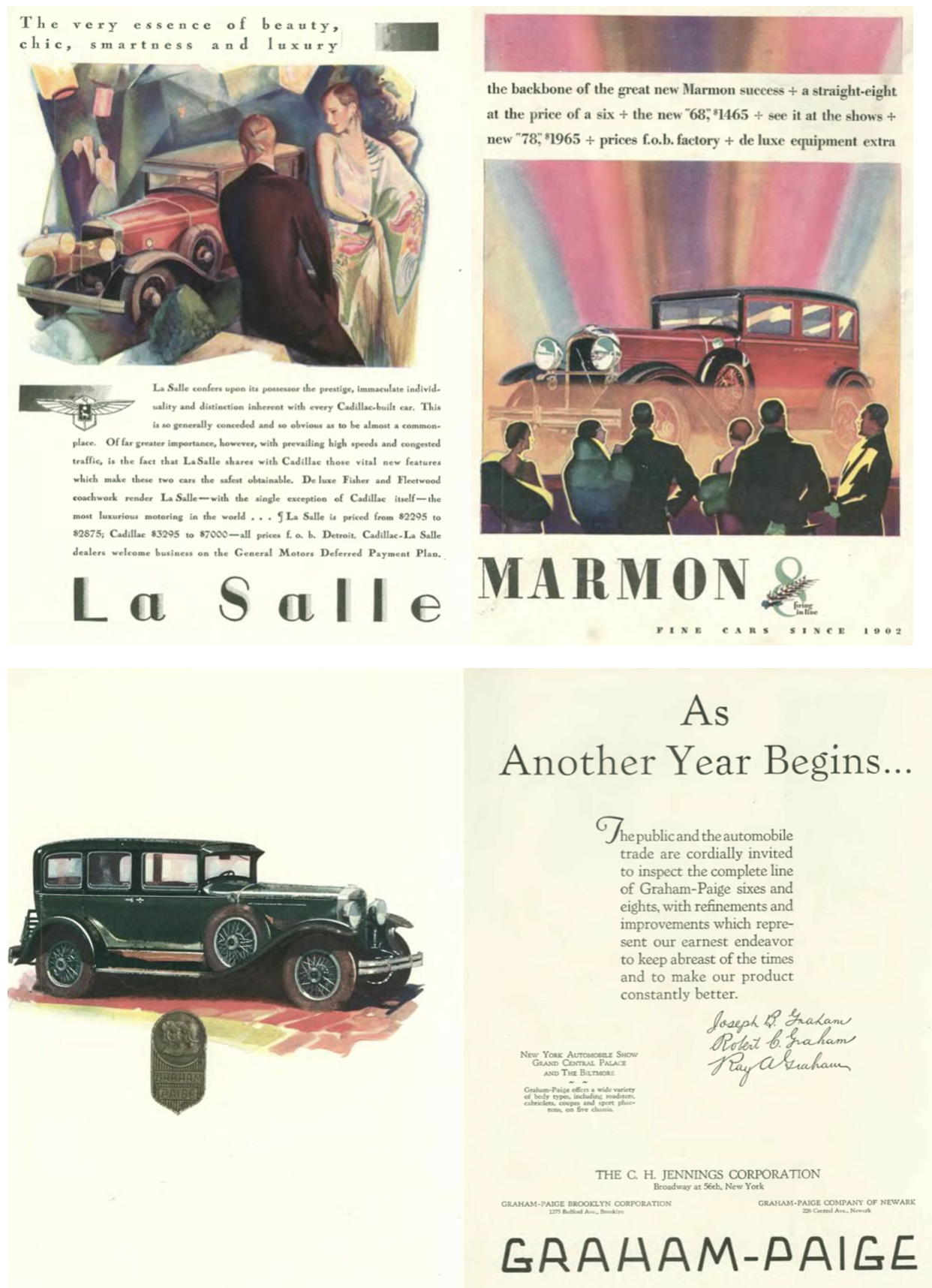
As I mentioned, the Jan. 5 issue was filled with car ads, mostly from long-gone automobile manufacturers. A constant in all of these ads is their appeal to New  York’s chic, smart set. Here’s a sampling of a few of them: (click ads to enlarge):

Hupmobile was a successful car company that began its decline in the late 1920s  precisely because it turned its back on buyers of medium-priced cars and went after what it perceived to be the more lucrative luxury buyer (see ad above). Hupmobile went out of business in 1939 (after briefly joining forces with Graham-Paige, which also went under that year).

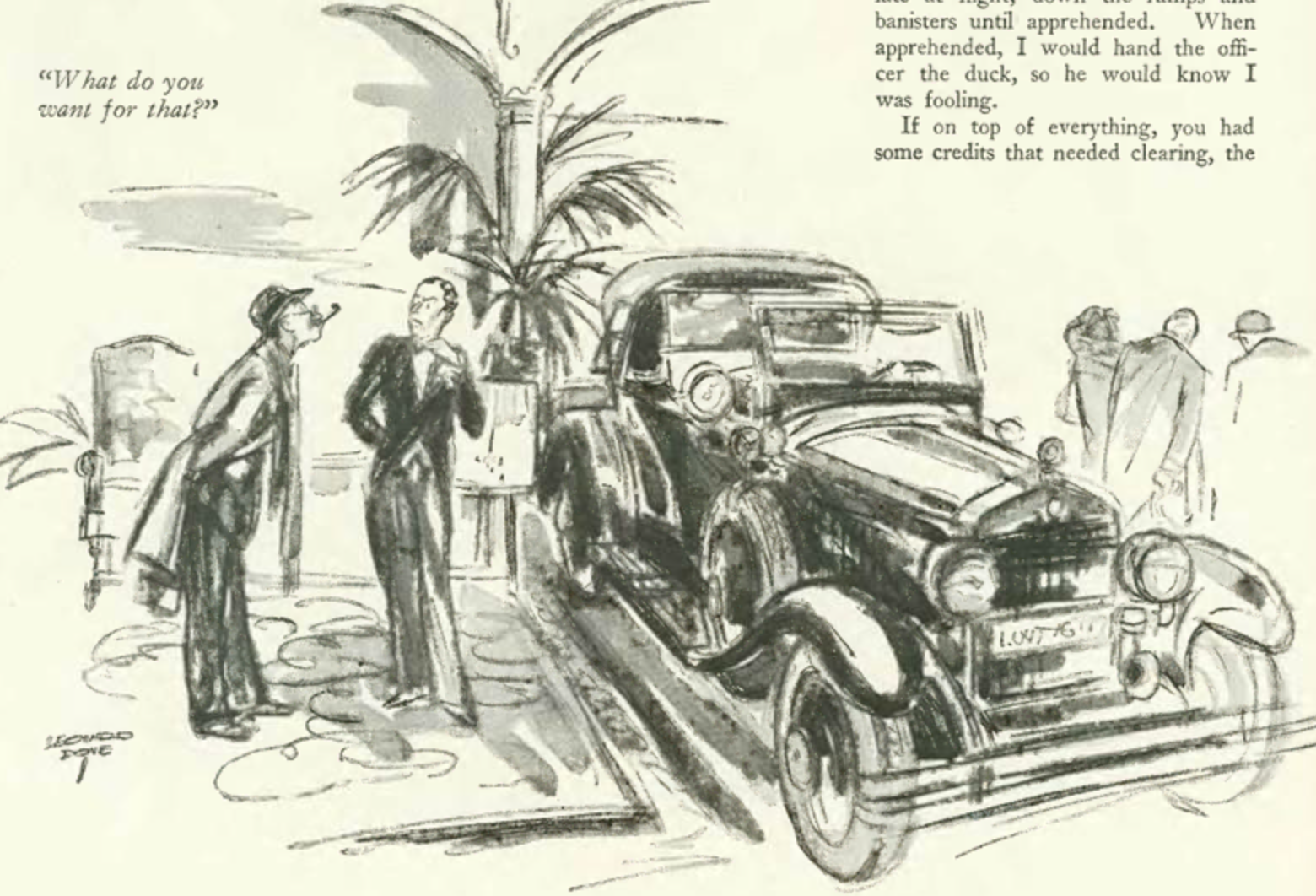
Cartoonist Leonard Dove found humor derived from these very class distinctions when he visited the auto show:

 * * *

The Game, Served Up Cold

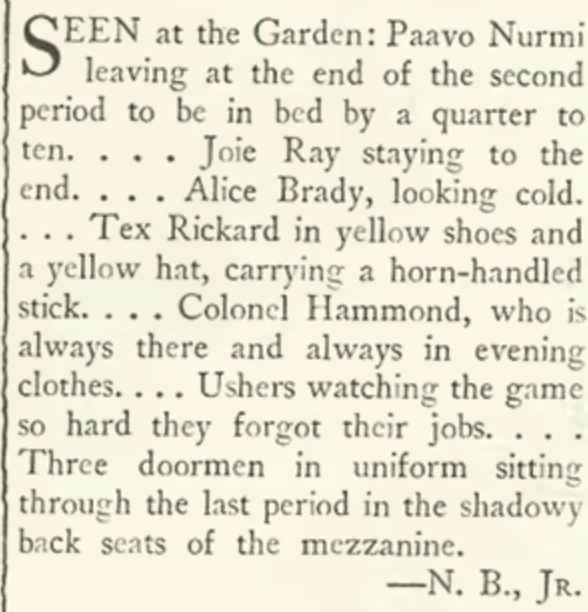
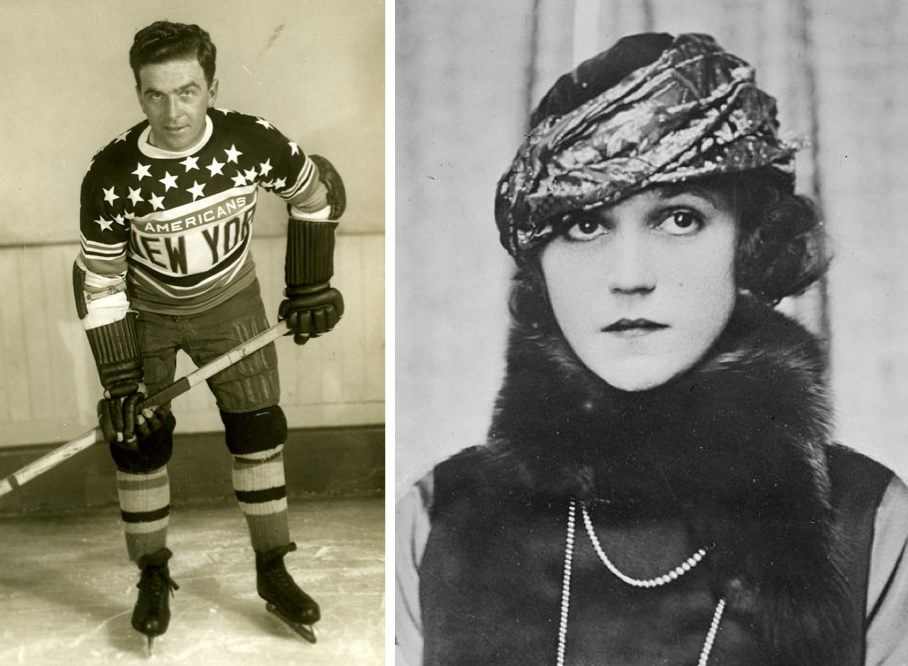
In other diversions from the Jan. 5 issue, Niven Busch Jr. attended the hockey game between the New York Rangers and the New York Americans at Madison Square Garden, noting famous faces in the crowd including Finnish track star Paavo Nurmi and American track star Joie Ray. Also noted were Tex Rickard, builder of Madison Square and founder of the Rangers, ex-football star and businessman Col. Harry Hammond, and film star Alice Brady.

AT THE GARDEN…Not even the exciting hockey play of Billy Boyd (left) and his fellow New York Americans could keep actress Alice Brady warm. (Pinterest/Alchetron)

 * * *

From our non-automobile advertisers, another installment of a Theodore Geisel (Dr. Seuss) ad for Flit insecticide (this is the first instance — at least in the Flit ads— in which Geisel signs his art as “Dr. S” instead of “Seuss”).

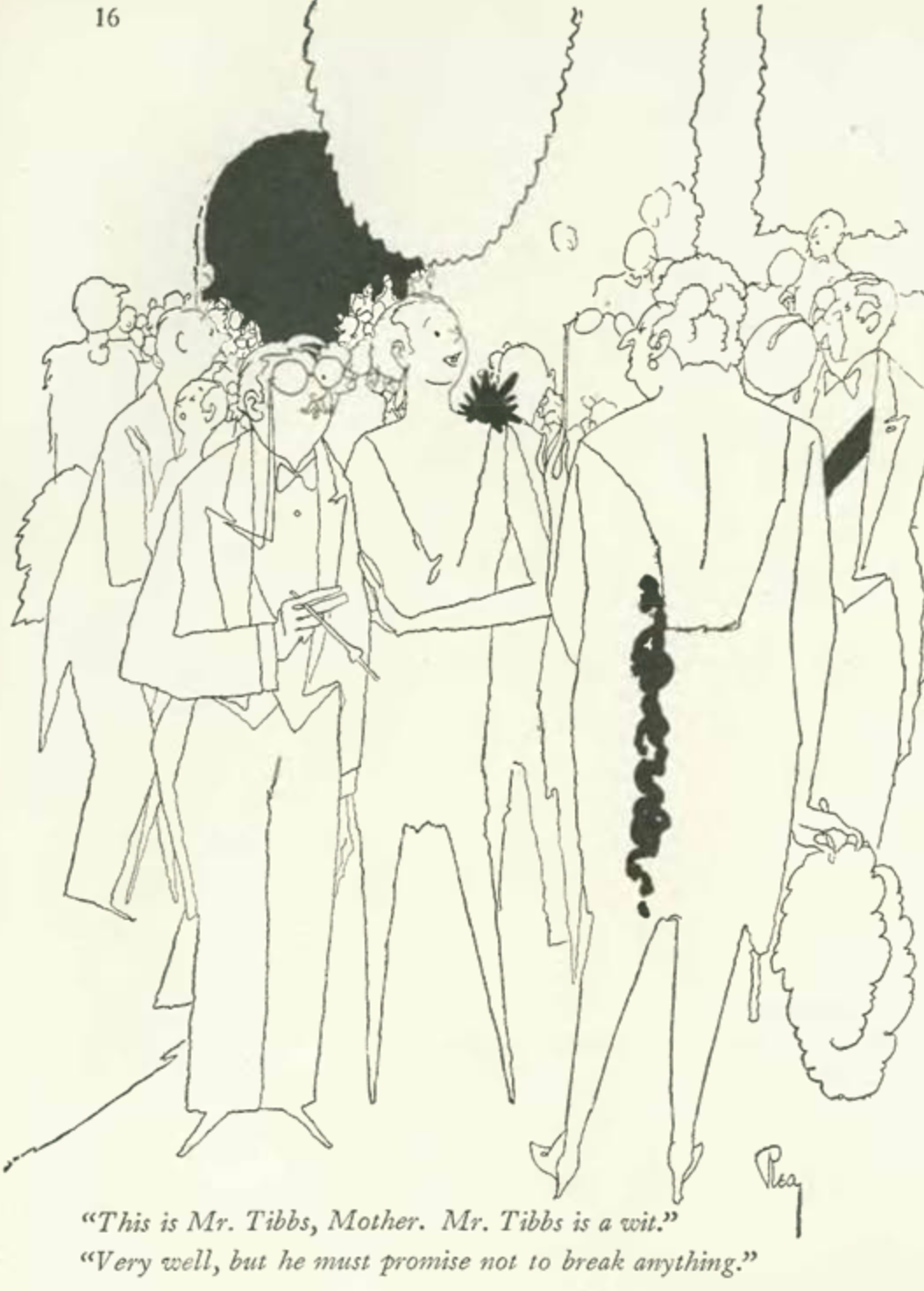
And another cartoon from the Jan. 5 issue, courtesy Gardner Rea:

 * * *

Arno Addendum

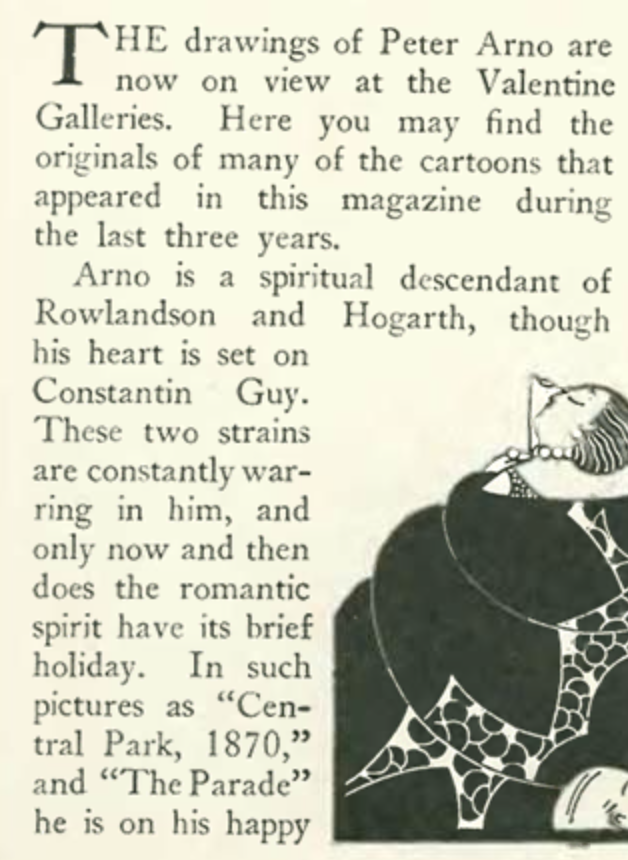
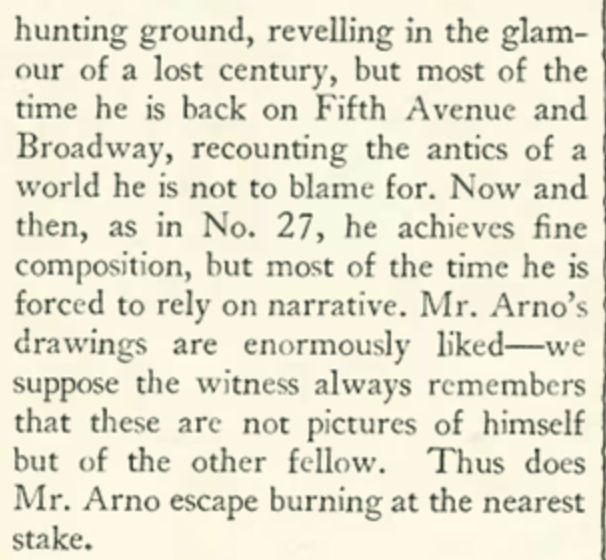
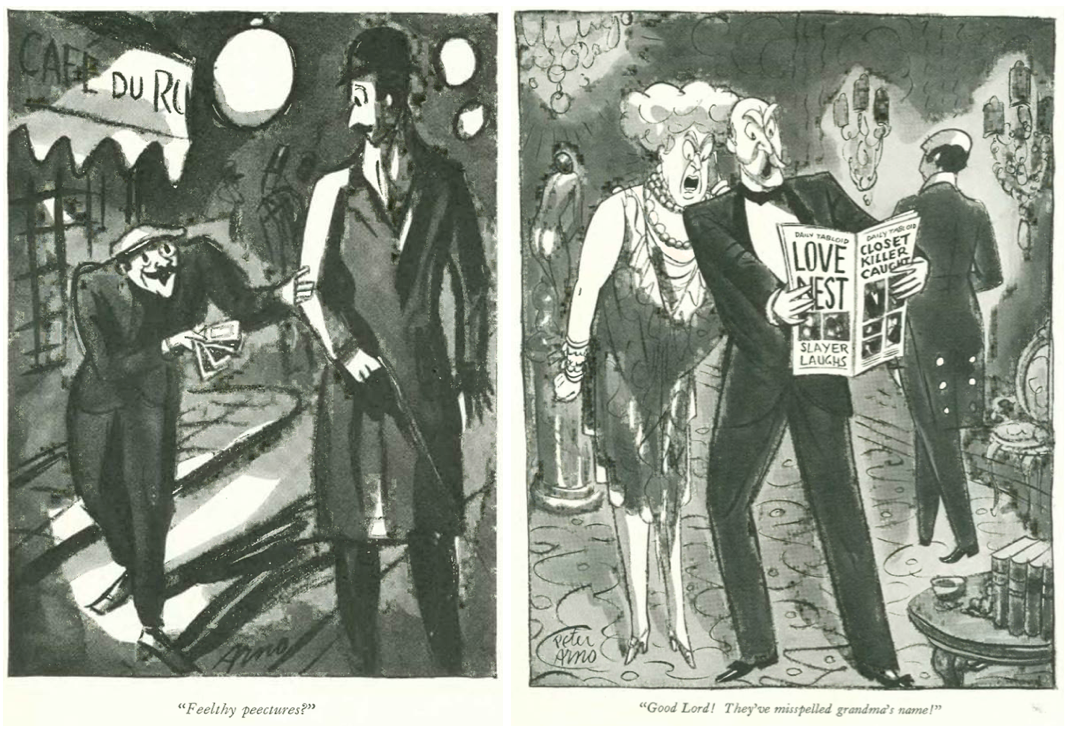
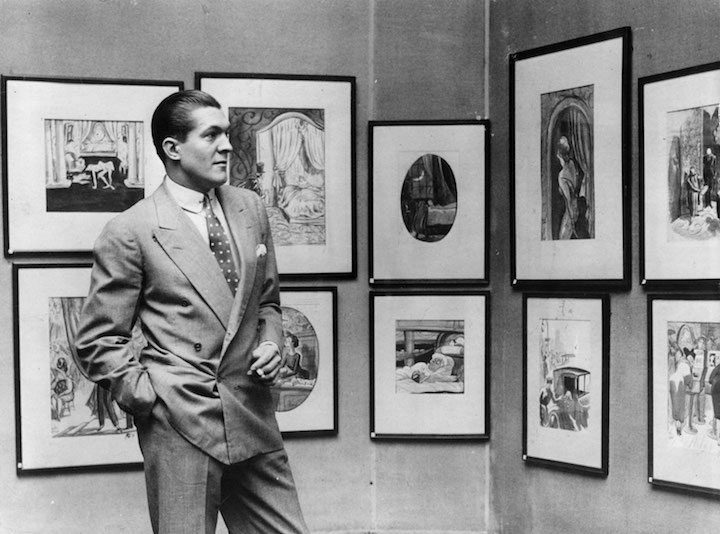
In the rush of the recent holidays I missed an item from the Dec. 22, 1928 issue — namely, art critic Murdock Pemberton’s tongue cheek review (in “The Art Galleries” column) of cartoonist Peter Arno’s December 1928 exhibition of drawings at the Valentine Gallery:

Here are two Arno drawings that were featured in the Valentine exhibition (click to enlarge):

INTERNATIONAL APPEAL…less than four years after his Valentine Galleries debut, Peter Arno exhibited his drawings to great acclaim at the Leicester Galleries in London, October 1932. (Encyclopædia Britannica)

Next Time: Midnight Frolic…

A Bird’s Eye View

The New Yorker’s E.B. White was an aviation enthusiast who rhapsodized about his flights into the clouds, but also had prescience to see the darker side of this modern thrill ride.

October 6, 1928 cover by Ilonka Karasz.

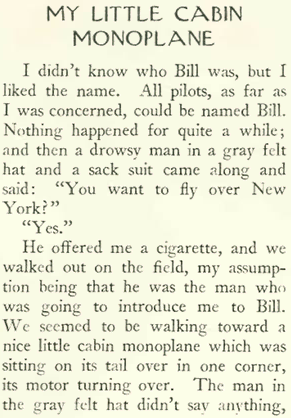
Writing in the “Reporter at Large” column for the Oct. 6, 1928 issue, White described his visit to Curtiss Field, where he inquired about a pilot who could fly him over New York City. He was told someone named Bill would take him up.

EARLY BIRD…This Fairchild FC-2 Cabin Monoplane, with strut-supported wing, was probably similar to the plane E.B. White rode in his flight over New York City. (Quora)

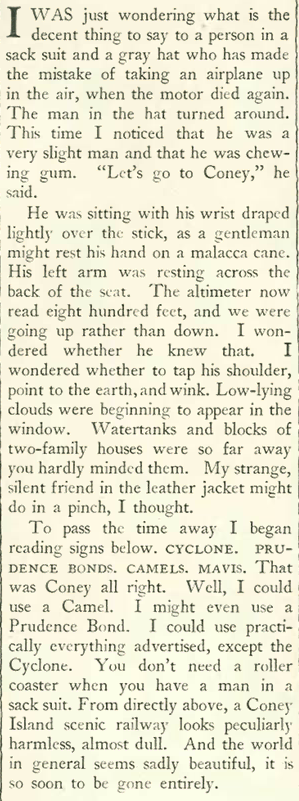
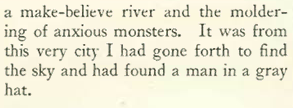
After a half hour wait, a man in a gray felt hat and sack suit offered White a cigarette and said, “You want to fly over New York?” Although the man didn’t look like a pilot, White followed him to a “little cabin monoplane.” Without saying another word the man took the plane up into the air, much to White’s surprise:

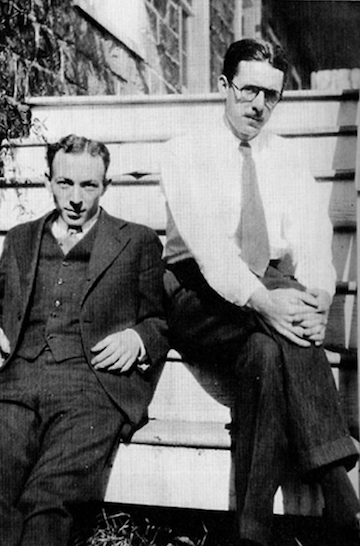
FLYBOY…E.B. White (left) with friend and New Yorker colleague James Thurber in 1929. (University of Virginia)

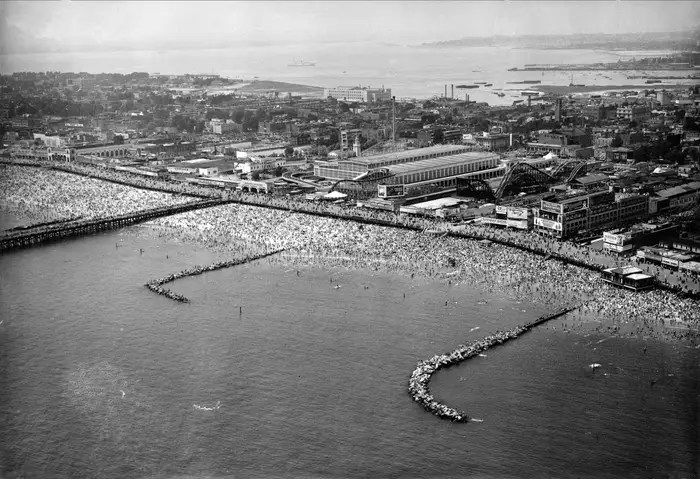
White described the various sites from 800 feet up, including Coney Island, a view at once beautiful and foreboding…

Aerial view of Coney Island, 1937. (AP/lunaparknyc.com)

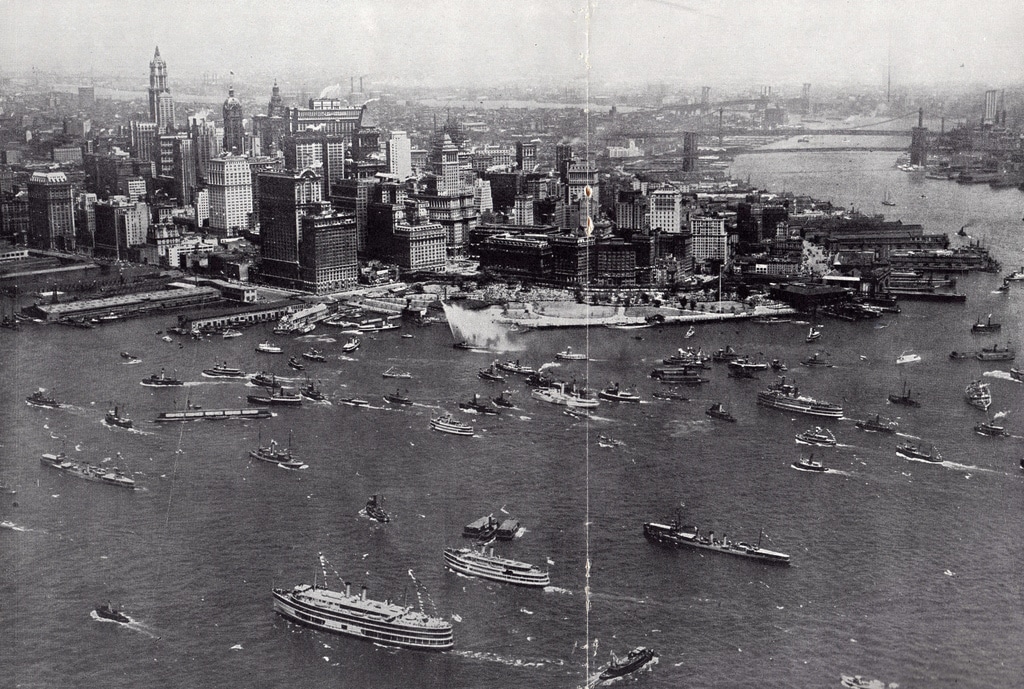
…and the thrill of the approaching city skyline as his plane soared up the Bay toward Manhattan:

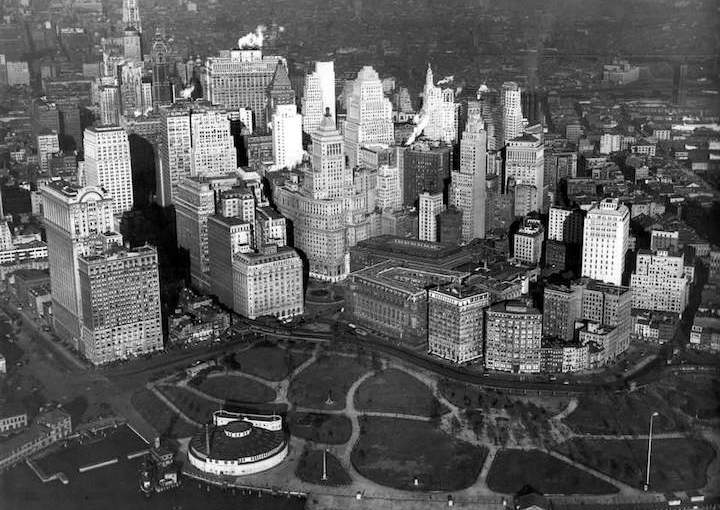
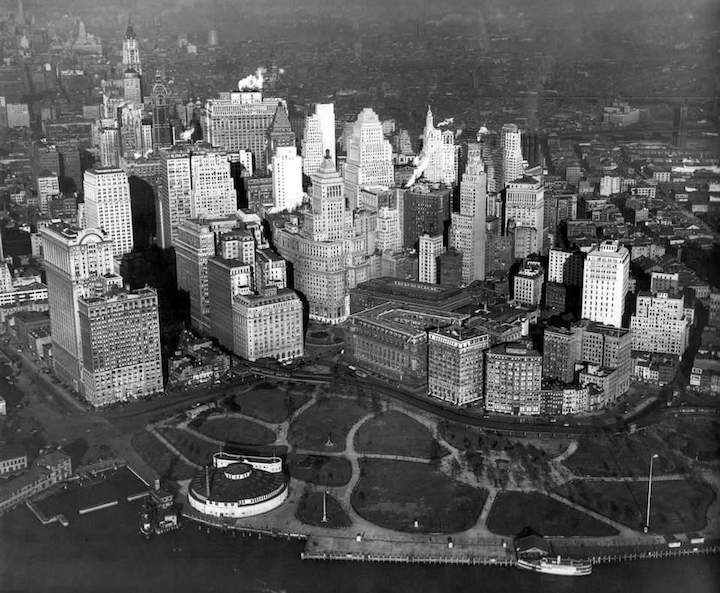
Lower Manhattan looking northeast from the Bay in July 1927. This is approximately the view described by E.B. White as his plane approached Manhattan. (Favrify.com)
A closer view of lower Manhattan as it would have appeared to E.B. White on his 1928 flight over New York City. (Fairchild Aerial Survey photo, 1928)

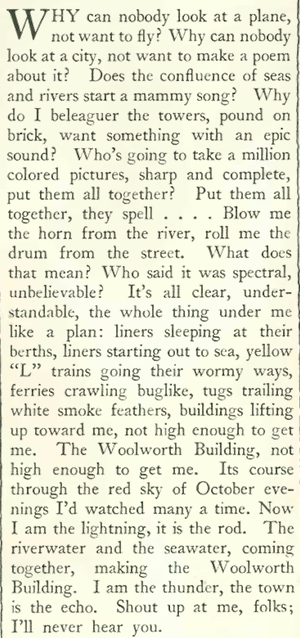
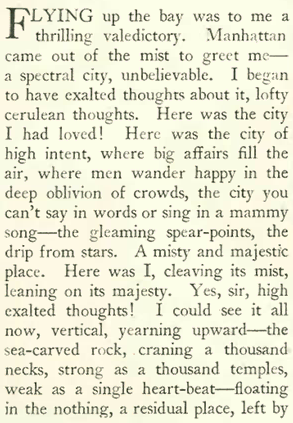
Once over the city, White could not help but contain his exuberance, soaring high above the towering spires and teeming crowds below:

And yet as I noted earlier, his observations were tinged with melancholy and foreboding. In describing his flight over Coney Island, for example, White concluded that “the world in general seems sadly beautiful, it is so soon to be gone entirely.”

Perhaps he referred to the rapid changes seen daily in the city during the 1920s, when nothing seemed permanent. Or did this bird’s eye view suggest something else to White? Twenty years later, in his 1948 essay “Here is New York,” White would write:

A single flight of planes no bigger than a wedge of geese can quickly end this island fantasy, burn the towers, crumble the bridges, turn the underground passages into lethal chambers. The intimation of mortality is part of New York now: in the sound of jets overhead, in the black headlines of the latest edition.

Unlike 1928, White had the hindsight of World War II, of entire cities leveled by waves of heavy bombers, or in the case of Hiroshima and Nagasaki, just a single bomb. The foreshadowing of 9/11 is contained in his words as well.

Back on the ground at Curtiss Field, White would finally learn the identity of the man who didn’t look like a pilot, but had just flown him over the city:

Another Vantage Point

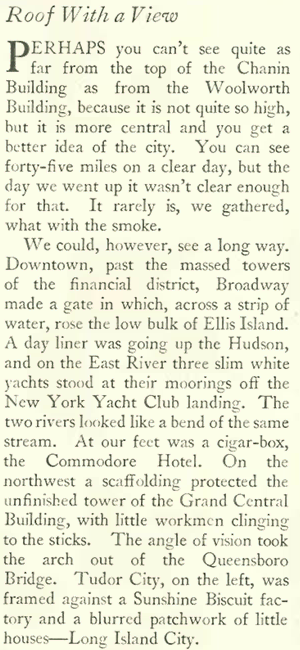
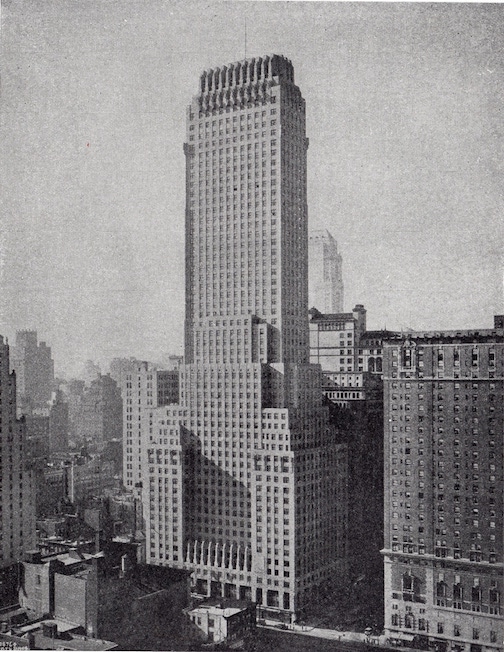
With buildings rising ever higher in Manhattan, you could get a pretty good view of the surrounding city by taking an elevator to the rooftop of the latest skyscraper. The Oct. 6 “Talk of the Town” found a good perch atop the 680-foot-tall Chanin building on the southwestern corner of Lexington Avenue and 42nd Street.

THINGS ARE LOOKING UP…The Chanin Building at Lexington and 42nd. Sloan & Robertson Architects, 1928. (New York Public Library)

 *  *  *

From Our Advertisers

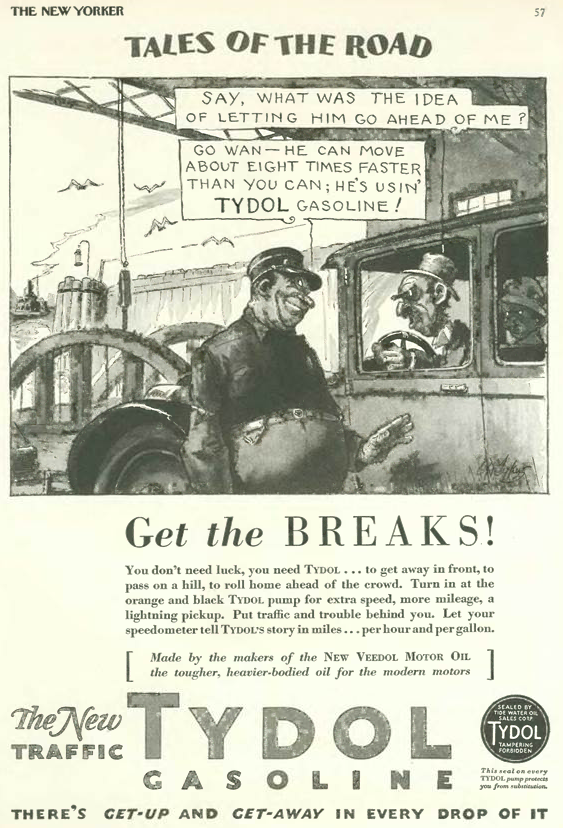
Something you never see in The New Yorker anymore, or in most magazines for that matter, are ads promoting various brands of gasoline. This one touts the benefits of Tydol, produced by the (now defunct) Tide Water Oil Company of New York:

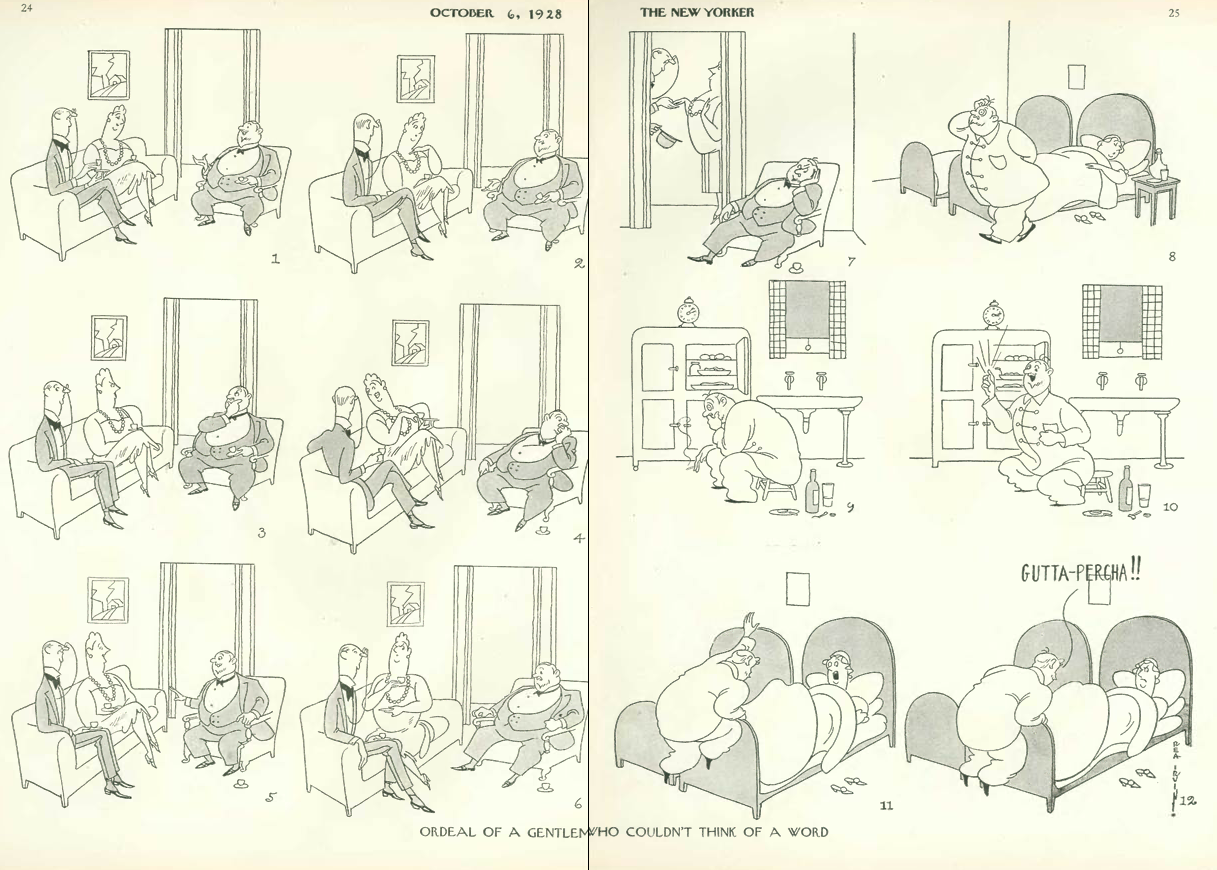
For our Oct. 6 cartoon, here is one of Rea Irvin’s occasional multi-panel, two-page comic spreads, this one exploring the ordeal of a man who couldn’t think of the word for a type of natural plastic used in the 1920s (click to enlarge image):

 *  *  *

The Oct. 13, 1928 issue featured a notable short story by Thyra Samter Winslow, a writer who contributed nearly a dozen pieces to The New Yorker in 1927 and 1928.

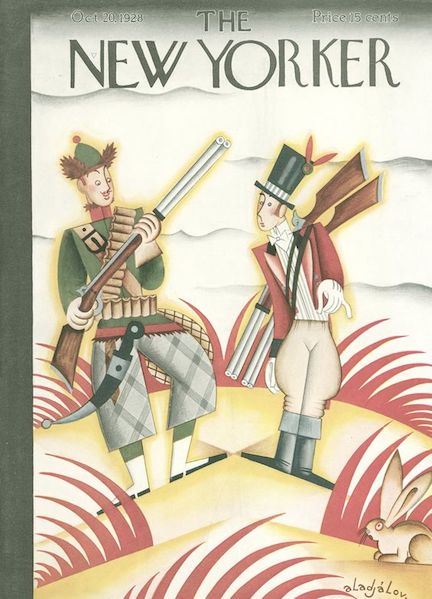
October 13, 1928 cover by Julian de Miskey.

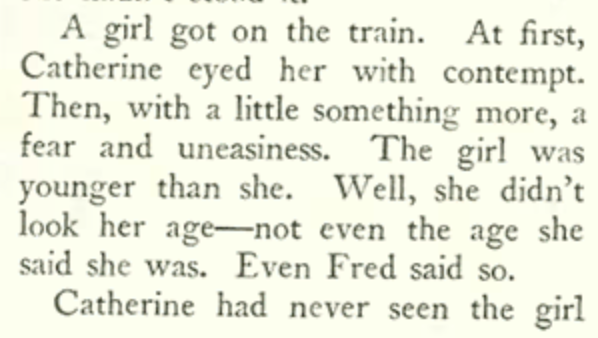
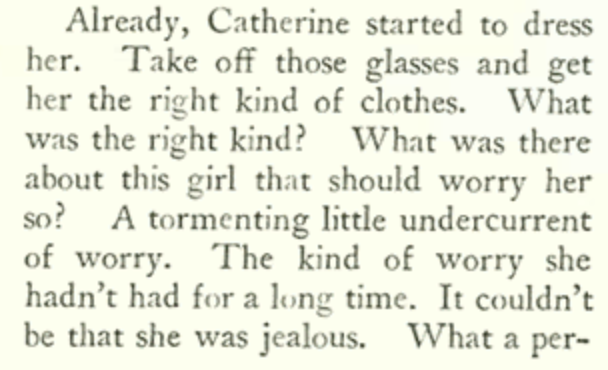
Her short story on page 25, “But for the Grace of God,” was a “key transitional work” for the magazine, according to Ben Yagoda in his book About Town: The New Yorker and the World It Made. He writes: “Realistic fiction thrives in periods of social ambiguity and flux, and the attention to class was on of the factors working to propel New Yorker writing from two-dimensional sketches to fleshed out short stories.” Yagoda observes that Winslow’s story, “in its carefully selected details, its mild epiphany, and its attention to the potency of class…is an accomplished and poignant piece of short fiction.” Excerpts:

Thyra Samter Winslow, in 1936. (findagrave.com)

* * *

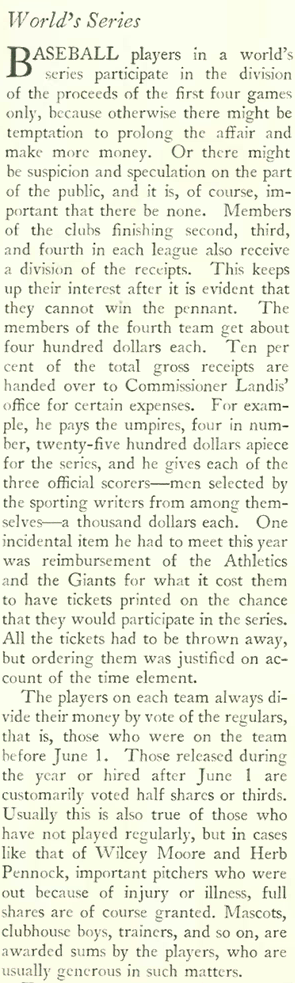
The New Yorker continued its stubborn refusal to report on baseball in its sports section, even though the Yankees were in the process of taking their second consecutive World Series title with a 4-0 sweep over the favored St. Louis Cardinals. The magazine did, however, mention the game in the Oct. 13, 1928 “Talk of the Town” — not on how it was played, but rather on how the championship money was distributed among players and assistants:

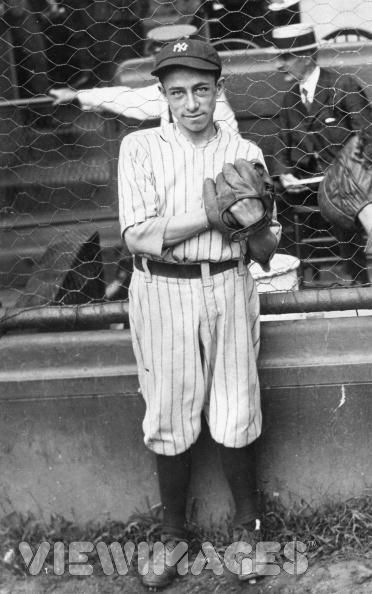
Money matters in the game of sport were more informal 90 years ago, with players themselves divvying up money to other players, trainers, mascots and batboys. For example, in 1927 Yankees batboy Eddie Bennett received $700 for the one-eighth World Series share voted him by the team. This sum earned over the four days of the series nearly equalled a batboy’s pay for a full year.

GOOD LUCK CHARM…Yankee batboy Eddie Bennett in the 1920s. Although a spinal injury as an infant left him hunchbacked, Bennett would serve as Yankee batboy for 12 years — a period that would include seven pennants and four World Series titles. (sabr.org)

 *  *  *

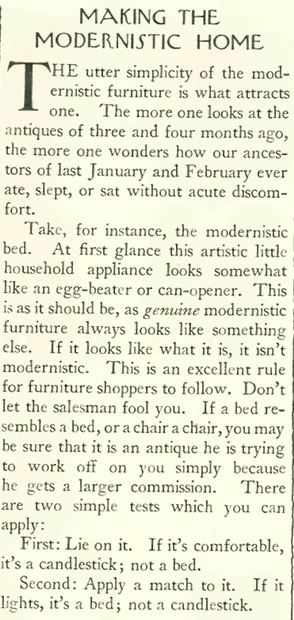
Although European-inspired modern furniture was all the rage among certain members of the New York smart set, writer Joseph Fulling Fishman (best known for his writing on contemporary prison conditions) offered a dissenting view in the Oct. 13 edition. An excerpt:

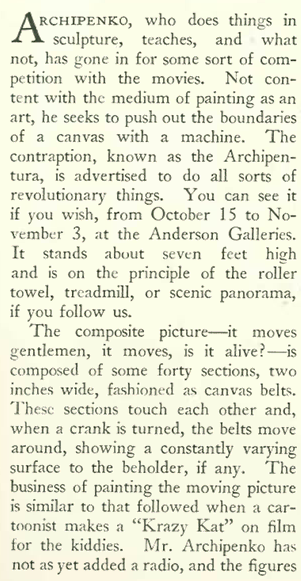
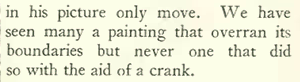
In the art review section, critic Murdock Pemberton also seemed a bit perplexed by modern design, in this case by the work of Ukrainian-born avant-garde artist Alexander Archipenko. His Archipentura was an electronic machine that displayed pre-loaded images of a female undressing by rolling painted canvas through a complex system of sprockets and belts. He intended the machine “to do for painting what the motion picture did for photography.” Pemberton observed:

THINK DIFFERENTLY…Alexander Archipenko (right, circa 1920), intended his intended his Archipentura machine (pictured in front and side views) “to do for painting what the motion picture did for photography.” (Wikipedia/Archipenko Foundation)

*  *  *

From Our Oct. 13 Advertisers

Yet another endorsement for cigarettes from the posh set. This time Melachrino Cigarettes got in on the action with this endorsement by Augusta Barney Harriman.

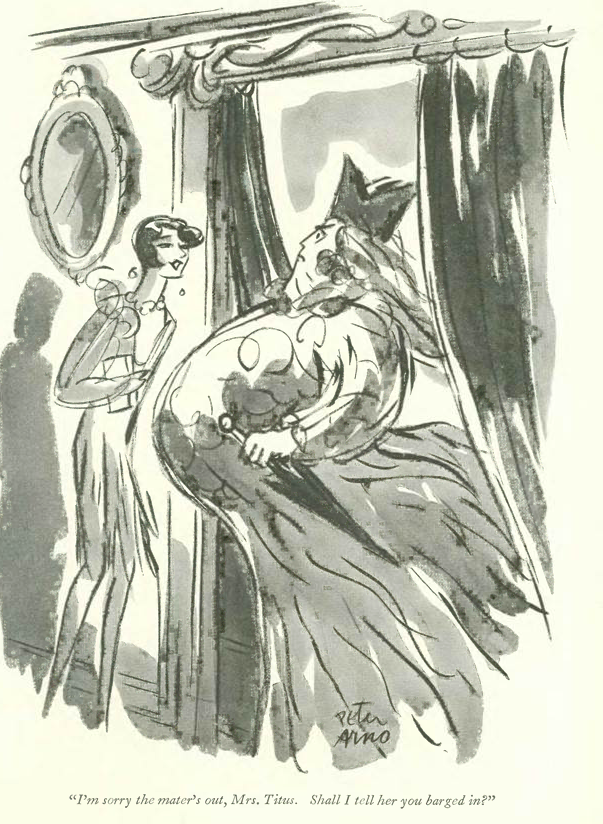
For our cartoon, Peter Arno once again looked in on the mannerisms of the upper class, contrasting a lithe young flapper with the imposing presence of a battle-axe. Note how the young woman uses the archaic British “mater” in reference to her mother…

Next Time: The Prohibition Portia…

Down to Coney

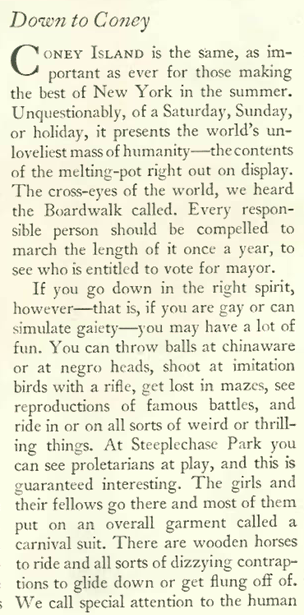
The New Yorker kicked off the summer season with a trip down to Coney Island. “The Talk of the Town” took in the various sights and amusements at the famed Steeplechase and Luna parks.

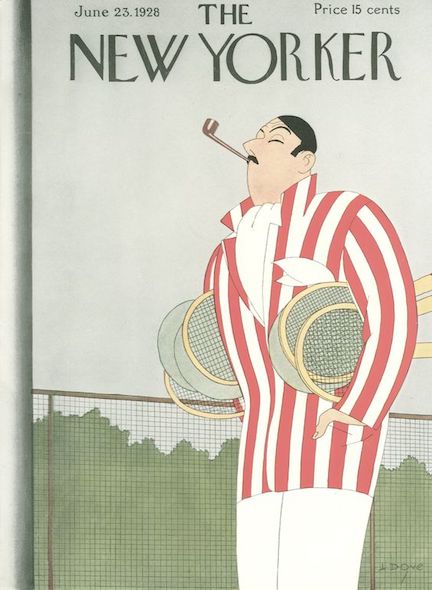
June 23, 1928 cover by Leonard Dove.

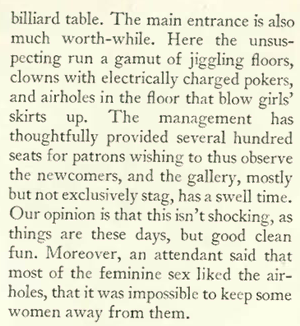
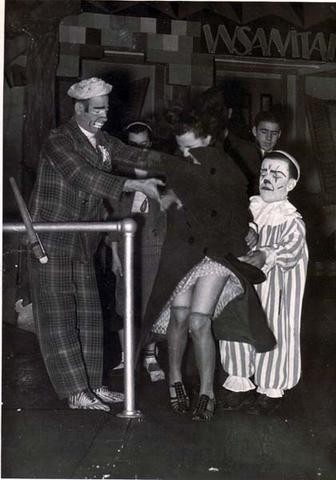
Attractions at Steeplechase Park included everything from racing wooden horses to a “human billiard table.” Less jolly diversions included air jets that blew up  women’s skirts and clowns who administered electric shocks to unsuspecting visitors (one more reason to fear them). And there was at least one racist game of skill…

FEAR THE CLOWN…A photo from the 1940s shows a pair of clowns “help” a woman through the entrance to Steeplechase Park’s Insanitarium and Blowhole Theatre. Located in the Pavilion of Fun, visitors were led through Comedy Lane, which featured jets of compressed air intended to lift skirts. Clowns spanked patrons and even zapped them with a cattle prod. (Worthpoint.com)
Clockwise, from upper left: A Steeplechase rider passes in front of the massive Pavilion of Fun; interior of the Pavilion of Fun; young women preparing to be spun around on the Human Billiard Table; scene from the 1928 Harold Lloyd movie Speedy filmed in the Pavilion of Fun (westland.net, CardCow, houseoftoomuchtrouble.tumblr.com, safetylast.tumblr.com) click to enlarge
OUT FOR A SPIN…Harold Lloyd and Ann Christy take a spin on the Pavilion of Fun’s Human Roulette Wheel in the 1928 film Speedy. (spellboundbymovies.com)
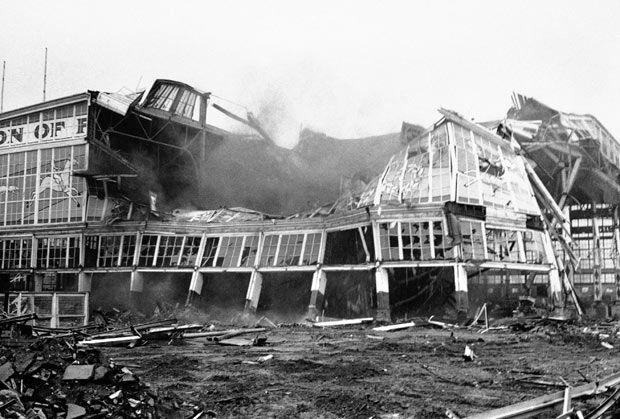
TRUMPED…Coney Island’s landmark Pavilion of Fun at Steeplechase Park was demolished in 1966 by developer Fred Trump, father of Donald Trump. The young Donald (19 at the time) was on hand for his father’s “Demolition Party,” which featured scantily clad models who paraded in front of the park and encouraged guests to throw bricks at the stained glass windows of the historic pavilion. Later that night Trump bulldozed the amusement park to the ground, thereby limiting any pending proceedings to declare the property a historic landmark. (Daily Telegraph/Untapped Cities)

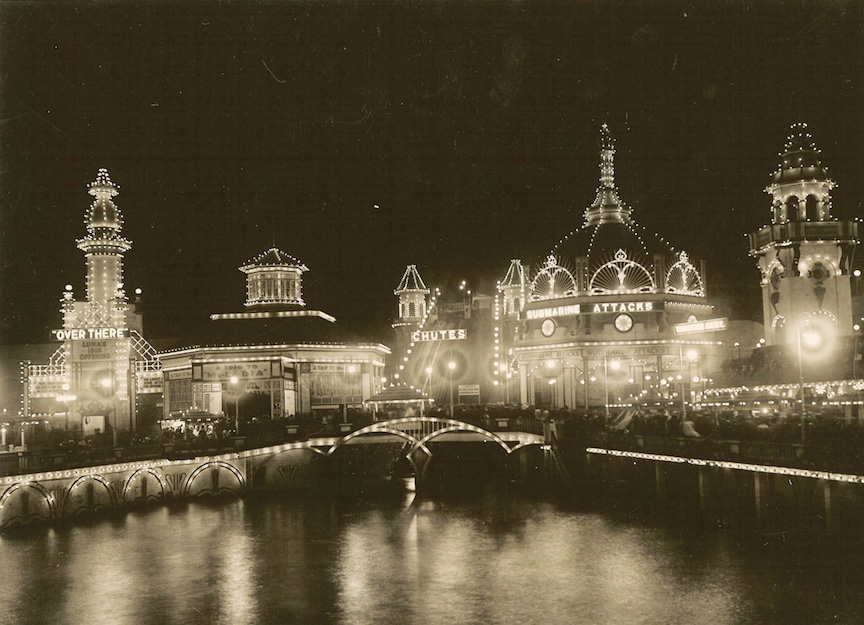
Over at Luna Park there were more air holes to blow up women’s skirts and assorted freak shows. More wholesome entertainments included the famed Cyclone rollercoaster, which celebrated its 90th year of operation in 2017.

DREAMLAND…Luna Park at night in the 1920s. (carouselhistory.com)

 *  *  *

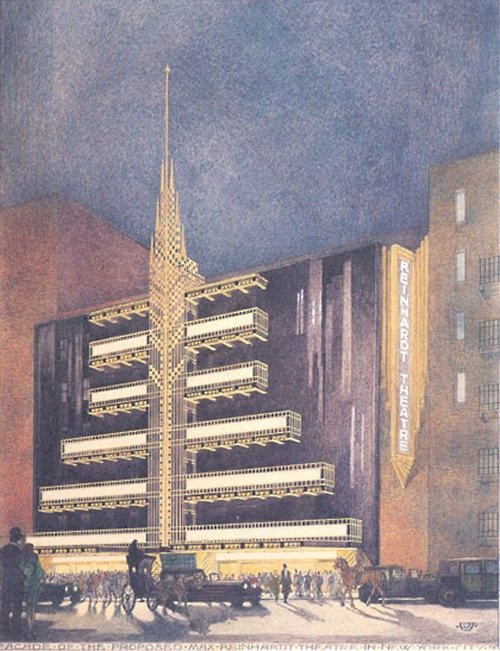
Writing for the June 23 “Talk of the Town,” Murdock Pemberton anticipated the construction of a new theatre to be developed by famed Austrian director/producer Max Reinhardt and designed by Austrian-American architect, illustrator and scenic designer Joseph Urban:

Unfortunately the market crash of 1929 put an end to the project, which would have looked like this had it been constructed:

DREAMLAND…Joseph Urban’s unbuilt Reinhardt Theatre. The innovative design incorporated the building’s fire escapes into its glimmering facade. (Columbia University)

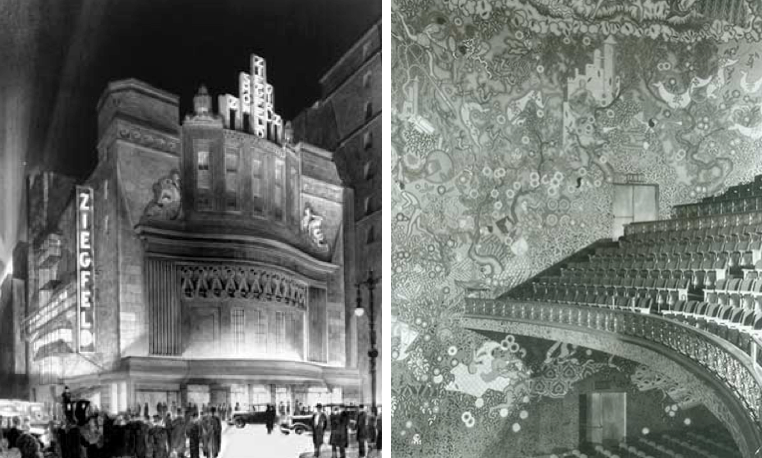
Urban designed innovative sets for clients ranging from the Metropolitan Opera to the Ziegfeld Follies (he also designed a theatre for Ziegfeld in 1927, see below). Although he is noted as one of the originators of American Art Deco, most of his architectural work in the United States has been demolished.

RARE REMNANT…Little remains of the work of Joseph Urban, one of the originators of American Art Deco. Fortunately the Tishman Auditorium at the New School still stands. (nycarchitecture.com)
ONLY A MEMORY…Most of Joseph Urban’s American work has been demolished, including his Ziegfield Theatre from 1927. (nyc-architecture.com)
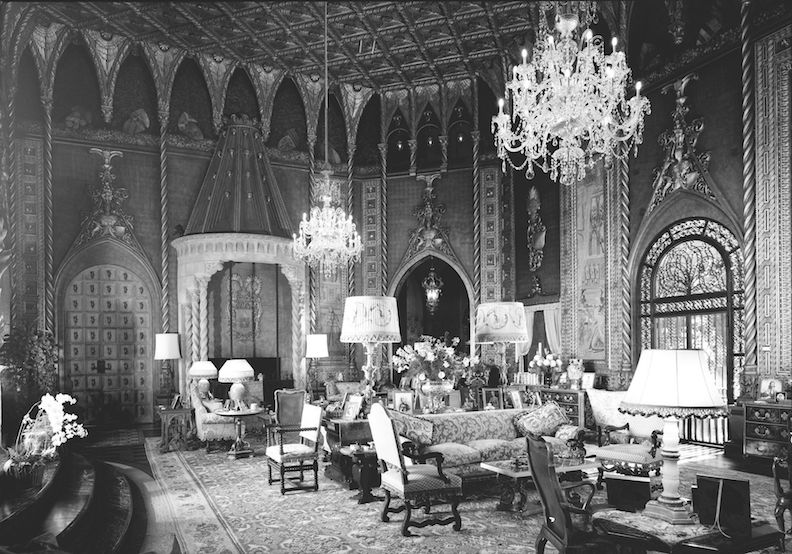
MAR-A-LAGO…Joseph Urban designed the interiors of one of America’s most famous mansions—Mar-a-Lago. Built from 1924 to 1927 by cereal heiress Marjorie Merriweather Post, it is now owned by Donald Trump and operated as a members-only club. (Wikipedia)

 *  *  *

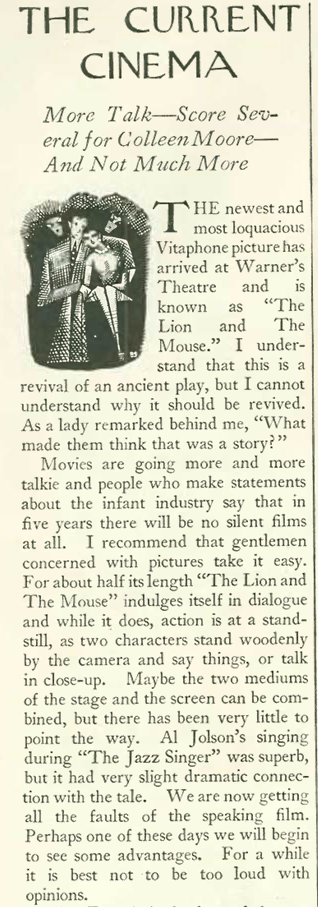
The New Yorker continued to struggle with the emergence of “talking pictures.” The critic “O.C.” found that the sound dialogue in The Lion and the Mouse did little to improve the picture:

The critic seemed to believe that sound pictures would take some time to catch on. Little did he know that Warner Brothers would announce later that summer (August 1928) that all of its films for the 1928-29 fiscal year would have sound. United Artists would make the same announcement in November 1928. In February 1929 Twentieth-Century Fox would make its final silent movie, and Columbia would release its last silent movie on April 1, 1929.

OH SHUT UP…Theatre card for The Lion and the Mouse. (Wikipedia)

The New Yorker still found happiness at the movies through the likes of actress Colleen Moore, who made a sweet little film called Happiness Ahead. 

A CASE OF THE HAPPIES…Colleen Moore strikes a contemplative pose in Happiness Ahead. (IMDB)

Colleen Moore was one of the most famous stars of the silent era who popularized the bobbed haircut and flapper style. Moore presented a more wholesome version of the flapper, in contrast to the more worldly Louise Brooks, another flapper icon of the Twenties.

VARIATIONS ON A THEME…Actresses Colleen Moore (left) and Louise Brooks defined flapper style in the 1920s. (dorineenvrac.wordpress.com / corvusnoir.com)

 *  *  *

From Our Advertisers

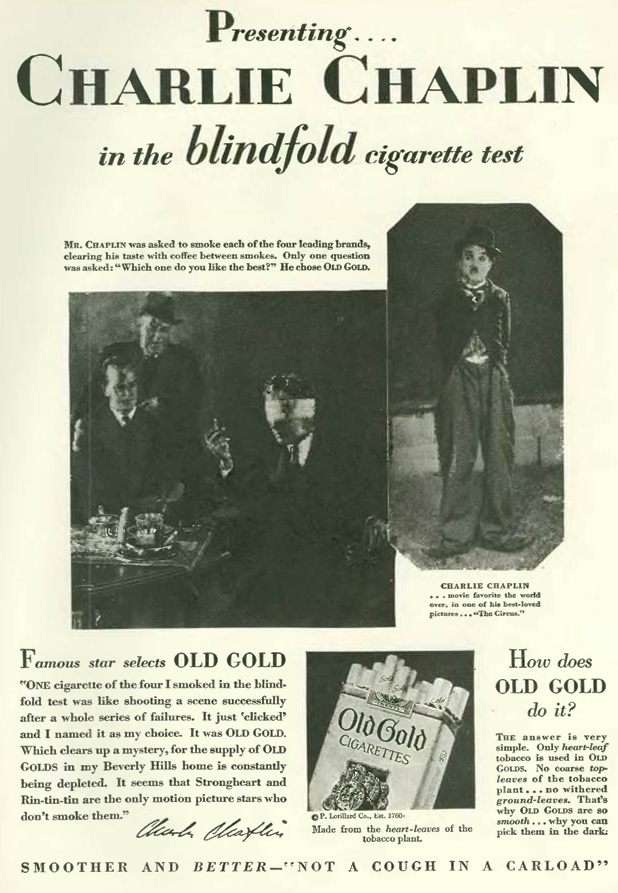
Continuing our series on celebrity endorsements of Old Gold cigarettes, none other than the Little Tramp stepped up to take the blindfold test (along with a pile of cash, no doubt):

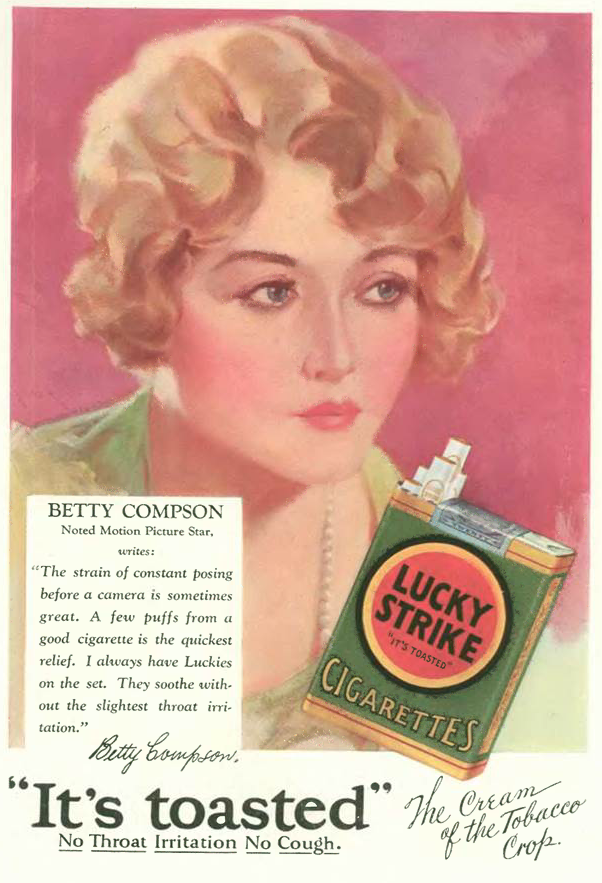
And if Old Gold is not to your taste, then why not enjoy the “toasted” pleasures of Lucky Strike? Actress Betty Compson found them indispensable when preparing for a big scene:

 *  *  *

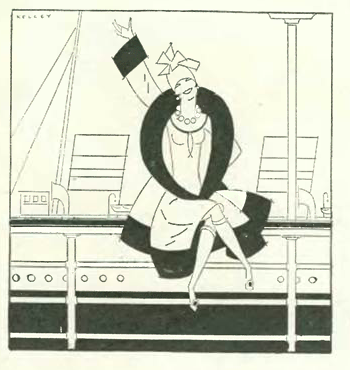
And now for something that caught my eye in the June 23 issue…a bit of filler art by Eldon Kelley that broke up some copy on page 34:

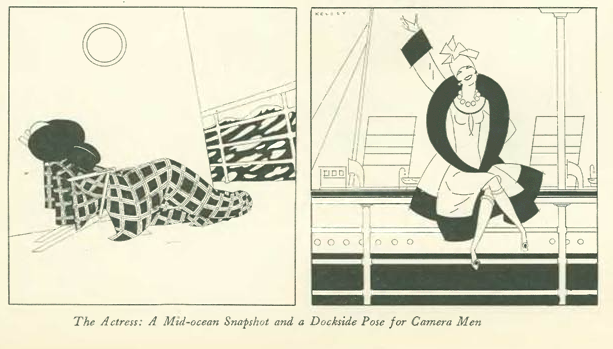
This particular illustration was also featured in one of The New Yorker’s earliest issues—March 21, 1925—in a two-part comic panel (below). I am puzzled why the magazine, flush with artistic talent by 1928, reused this Kelley illustration. Perhaps the layout editors figured since the readership was so small in March 1925, no one would notice.

Here’s an early contribution by Otto Soglow that is a far cry from his later minimalist cartoons…

And we leave with yet another look at some Jazz Age shenanigans, courtesy cartoonist Peter Arno:

Next Time: Summer Breeze…

Mutt & Jeff

We close out November 1927 by looking at a hugely popular comic strip—Mutt & Jeff—that made cartoonist Bud Fisher both famous and wealthy.

screen-shot-2017-01-26-at-10-05-52-am
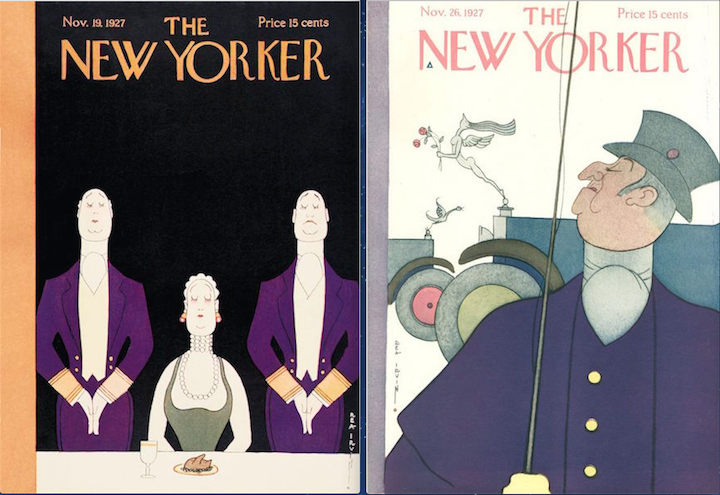
Nov. 19 and Nov. 26, 1927 covers by Rea Irvin.

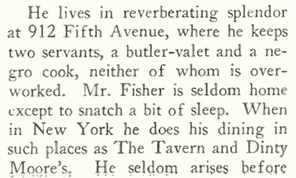
The editors of the Nov. 26, 1927 issue of The New Yorker thought Fisher interesting enough to feature in a lengthy “Profile,” written by Kelly Coombs. A brief excerpt:

screen-shot-2017-01-24-at-1-50-02-pm

screen-shot-2017-01-24-at-1-50-10-pm

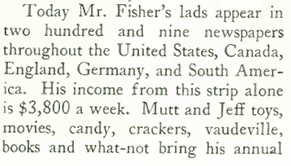
According to John Adcock’s terrific Yesterday’s Papers blog, by 1916 Bud Fisher was the highest paid cartoonist on earth. The New Yorker suggested his annual income was $300,000 (roughly equivalent to more than $4 million today). In addition to the strips, created by Fisher and a team of ghost illustrators/writers, Mutt & Jeff were featured in vaudeville engagements, theatrical shows, animated cartoons, comic books and toys.

muttmagicdark1380
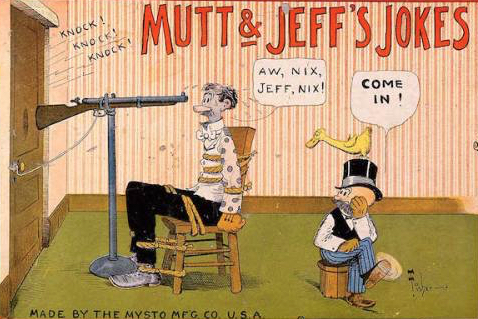
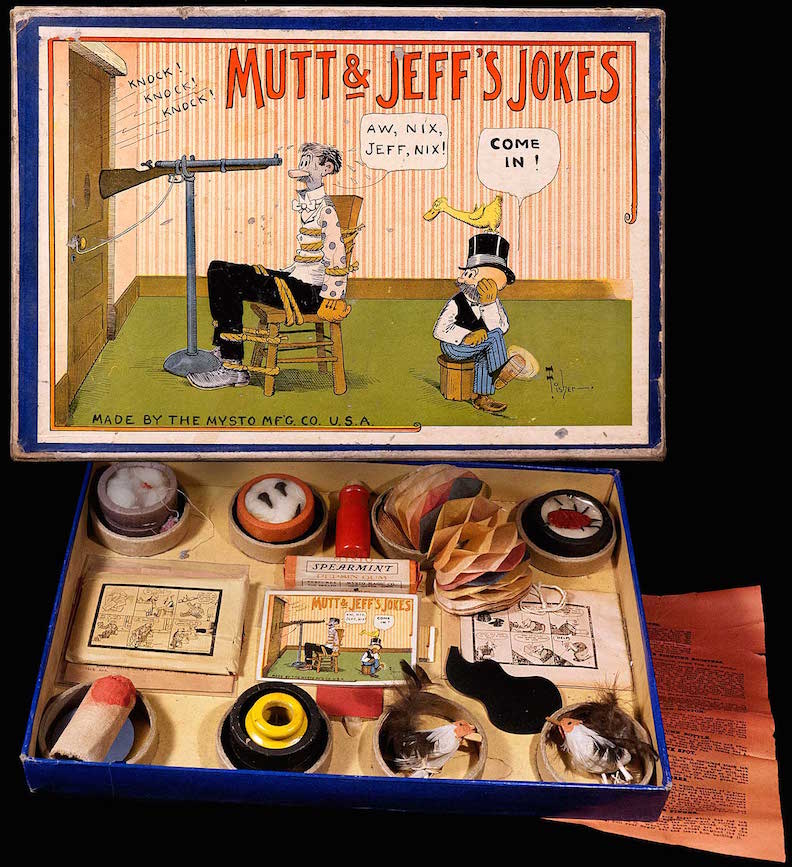
DIE LAUGHING…Mutt & Jeff themed toys included this joke kit from Mysto Manufacturing. I don’t quite get the joke featured on the cover, depicting Jeff’s casually twisted approach to murdering poor Mutt. (Copyright MEL BIRNKRANT via melbirnkrant.com—a truly amazing collection)
m902d5g
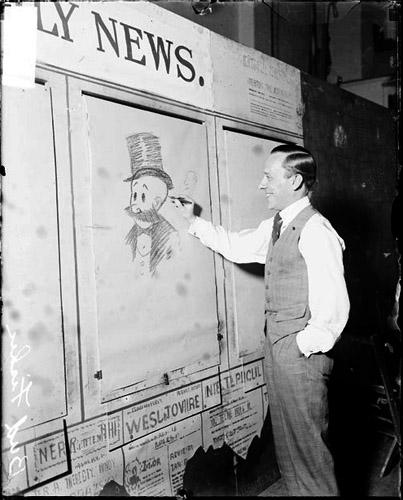
IT’S A LIVING…Harry Conway (Bud) Fisher, drawing a likeness of the character “Jeff” at a Chicago Daily News event in 1915. (Chicago History Museum)

Fisher began his career as a sports cartoonist for the San Francisco Chronicle and started his strip about “two mismatched tinhorns” in 1907. It went into syndication the following year. Mutt and Jeff, originally titled A. Mutt, is regarded as the first American newspaper cartoon published as a strip of panels, making it the first “comic strip.”

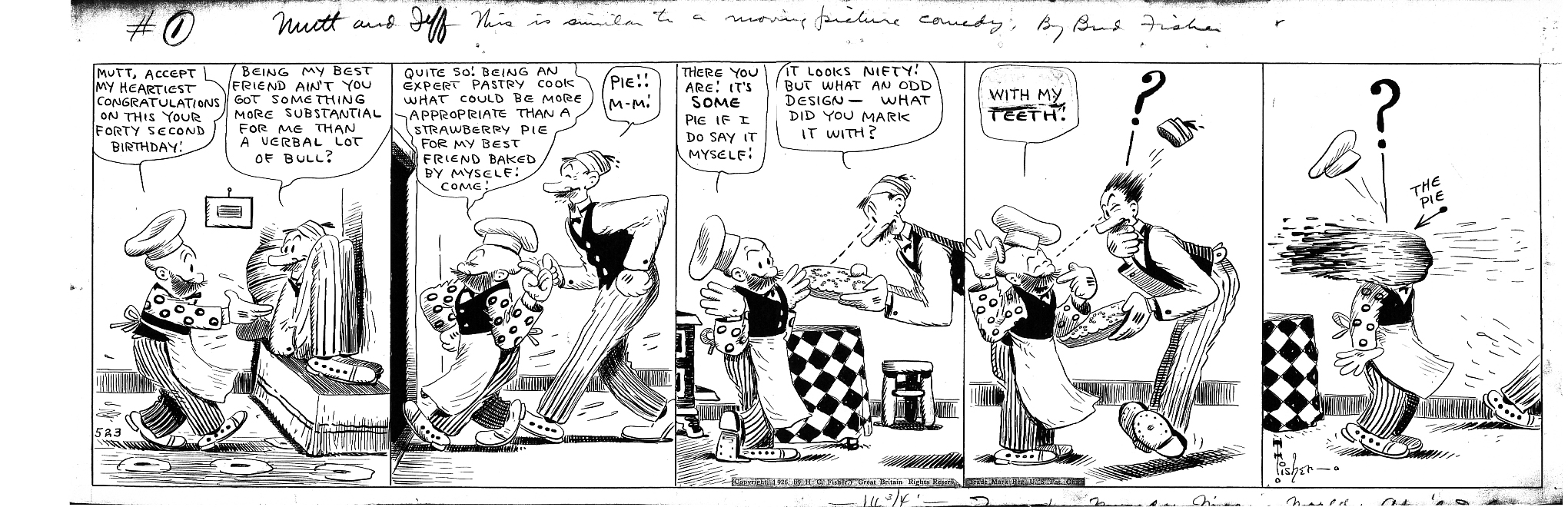
There was obviously a time when American readers thought Mutt & Jeff hilarious, but I don’t quite get its appeal. In this strip from 1926, Jeff gets a pie in the face. The giant question mark was frequently employed by Fisher, as were the dotted eye lines and explanatory arrows like the one in the last panel. No, Jeff didn’t get his brains blown out by Mutt. It is only a pie! Hah!

muttjeff052326b
Click on image to enlarge

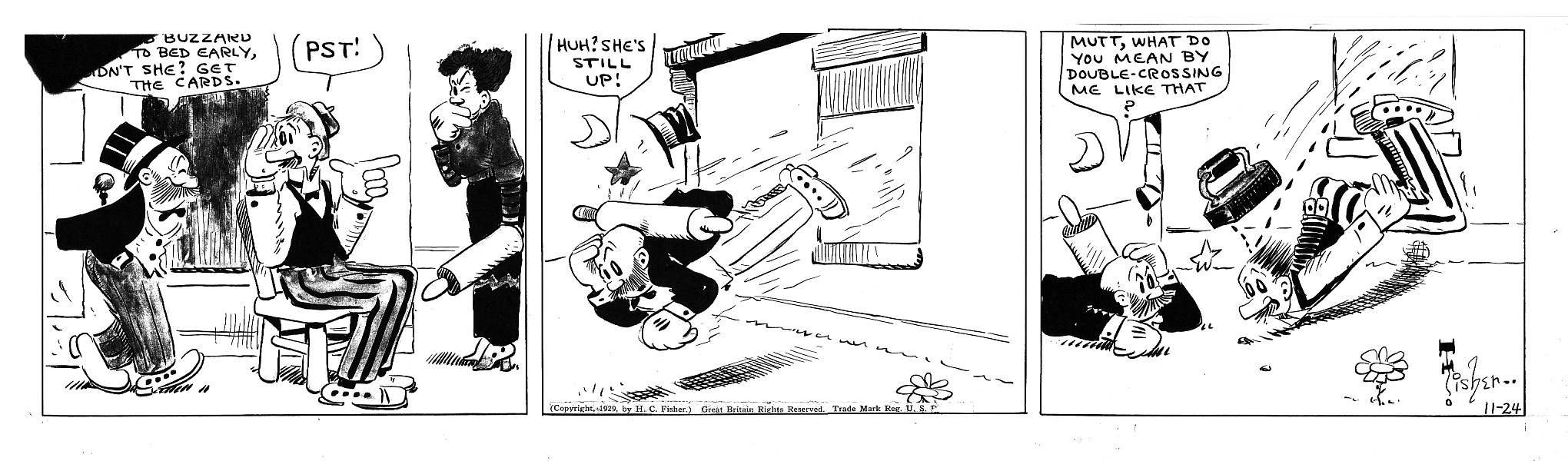
Another visual cliché from comics of yore was the angry wife wielding a rolling pin. Apparently Jeff refers to Mutt’s wife as an “Old Buzzard” and assumes she is already in bed (sorry about the poor quality of the reproduction). Jeff subsequently gets whacked with the rolling pin, and Mutt takes it on the bean with a flatiron. That is quite a feat, throwing a grown man through a window while simultaneously hitting him on the head with a flatiron…

muttjeff112429a
Click on image to enlarge (Both strips courtesy University of Michigan)

The duo were also featured in more than 300 animated “half-reelers” produced between 1913 and 1926, including Mutt and Jeff: On Strike from 1920. The short film (which can be viewed here) even includes rare footage of Bud Fisher himself, since the story–sort of a film within a film–involves the penniless Mutt and Jeff going on strike after they see a movie featuring Fisher’s lavish home.

screen-shot-2017-01-26-at-12-50-34-pm
STRIKEBREAKER…Still images from the silent half-reeler, Mutt and Jeff: On Strike. Bud Fisher is shown at home discussing terms over the phone with his striking characters. They lose. (www.filmpreservation.org)

Coombs concluded the profile with these observations concerning Fisher’s personal habits:

screen-shot-2017-01-24-at-1-50-19-pm

screen-shot-2017-01-24-at-1-50-30-pm

Fisher employed a number of assistants on the strip, including George Herriman (Krazy Kat) and a high-school boy named Maurice Sendak (Where the Wild Things Are). When Fisher appeared to lose interest in the strip in the 1930s, assistant Al Smith took over and drew the strip for nearly fifty years (but Smith didn’t sign his own name on the strip until after Fisher’s death in 1954).

In Yesterday’s Papers, Adcock notes that Fisher “was the unlikeliest person you could think of to draw Mutt and Jeff…along with most of his contemporary cartoonist-journalists pals, (he) enjoyed fights, chorus girls, gambling, and saloons. Fisher liked to shoot up hotel rooms with his pistols, one of which was a gift from Pancho Villa, indoors when he was drunk.”

Heads in the Clouds

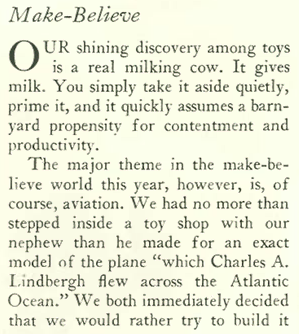
Thanks to the race to fly across the Atlantic, toy models of Charles Lindbergh’s Spirit of St. Louis and other planes were in high demand for the Christmas season, according to this item in the Nov. 26, 1927, “Talk of the Town:”

screen-shot-2017-01-24-at-1-42-51-pm

screen-shot-2017-01-24-at-1-42-56-pm

screen-shot-2017-01-27-at-9-48-40-am
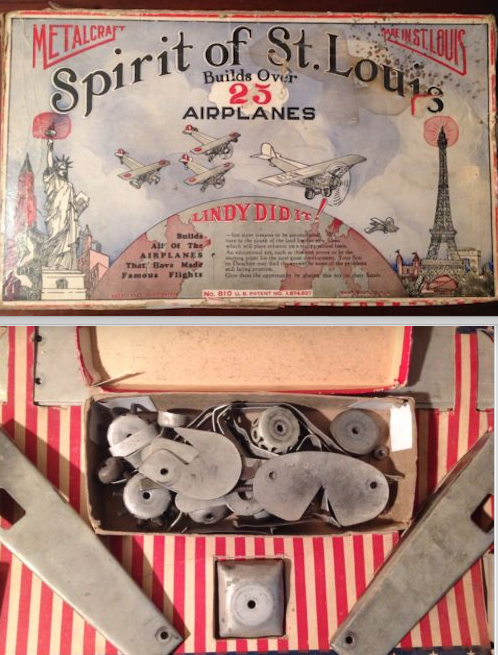
BUILT TO LAST…A Metalcraft model kit (box, upper image, contents below) from the late 1920s. It was all metal in the days before plastic model kits. (eBay)

 *  *  *

At a Loss For Words

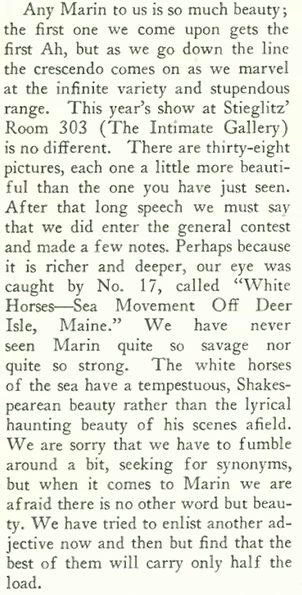
Jumping back to the Nov. 19, 1927 issue, we go from the low art of Bud Fisher to the high art of John Marin featured in “The Art Galleries” section. Art critic Murdock Pemberton wrote:

the-art-galleries-marin-1

screen-shot-2017-01-27-at-10-01-51-am
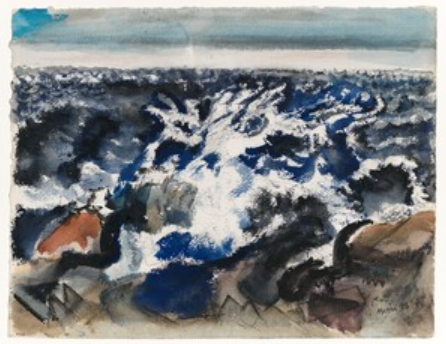
SAVAGE WORK…John Marin, White Horses – Sea Movement off Deer Isle, Maine, 1926. (Whitney Museum of American Art)

But perhaps “high art” is not an accurate description of Marin’s paintings, since Marin himself wasn’t into “highfalutin words” to describe his work…

marin-2-signed-mp

12032401444_4bb042eb04_b
HAUNTING BEAUTY…John Marin, Echo Lake Franconia Range White Mountain Country, 1927 (National Gallery of Art, Washington DC.)

 *  *  *

In the previous week’s issue (Nov. 12) the Marmon 8 was advertised as an ideal car for women. Not to be outdone, the folks at Buick shot back with this colorful ad in the Nov. 19 issue:

screen-shot-2017-01-24-at-1-19-18-pm

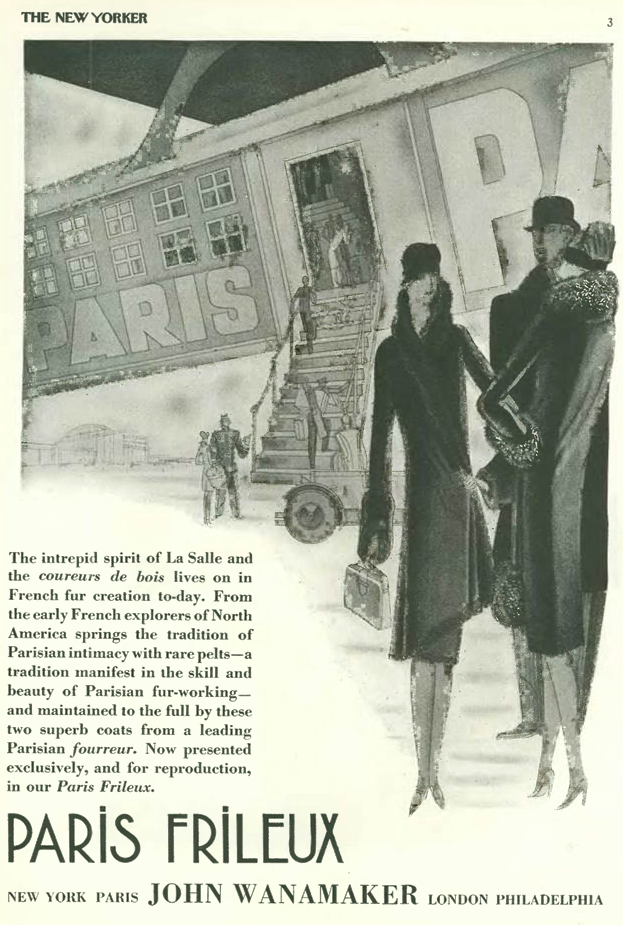
The Nov. 19 issue also featured this strange advertisement from the famed Wanamaker department store. Strange mainly because of the illustration, which features a fashionable woman departing a fanciful aircraft studded with mullioned windows(!) and a stairway that stretches to improbable depths…oh, and in case the reader might miss the snob appeal associated with French furs, the words Paris, Parisian or French are featured ten times…

screen-shot-2017-01-24-at-1-20-53-pm

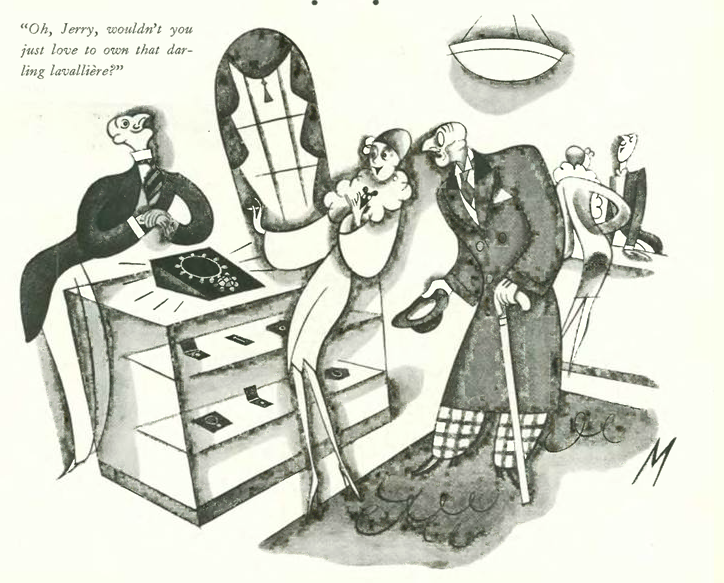
And finally, the ubiquitous New Yorker cartoon featuring the humorous mismatch of rich old sugar daddy and ditzy young mistress, courtesy of Julian de Miskey

screen-shot-2017-01-24-at-1-25-20-pm

Next Time: More Funny Business…

dec-3


Car Talk: 1926

Screen Shot 2015-09-28 at 4.36.32 PM
Jan. 23, 1926 cover by James Daugherty.

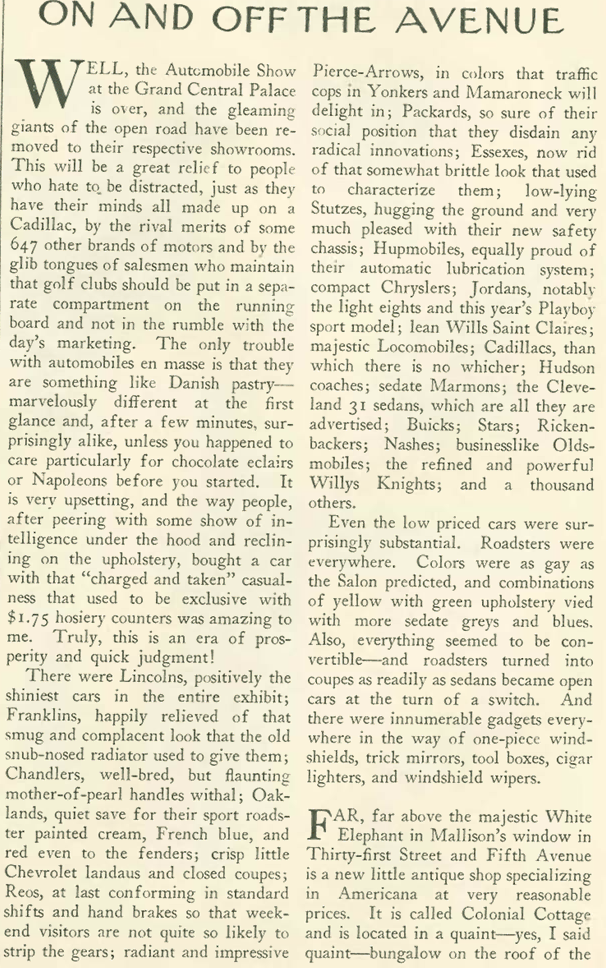
As if covering the nightclub scene and the fashion set wasn’t enough, Lois Long found the time to attend the National Automobile Show at the Grand Central Palace and offer her insights and criticisms on the latest in automotive design.

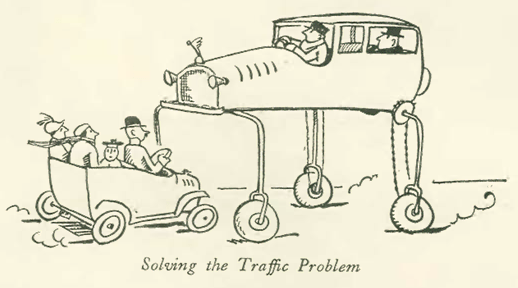
The show featured more than 500 new models, bigger and more powerful cars mounted on new-fangled balloon tires. There were also cheaper cars available–GM introduced the Pontiac line to appeal to the mass market, and other manufacturers lowered their prices in an effort to lure customers. Visitors packed the show despite the fact that the city streets were already hopelessly clogged with traffic and navigating them was difficult and often perilous. Al Frueh offered his take on the traffic situation with a little doodle in “The Talk of the Town” section (featured above).

Long gave readers her usual straightforward assessment of the show (her Danish pastry metaphor in the first paragraph is spot on). Note her list of American car companies, many of which are long gone:

Screen Shot 2015-10-05 at 10.05.54 AM

EB01d259_PREVIEW
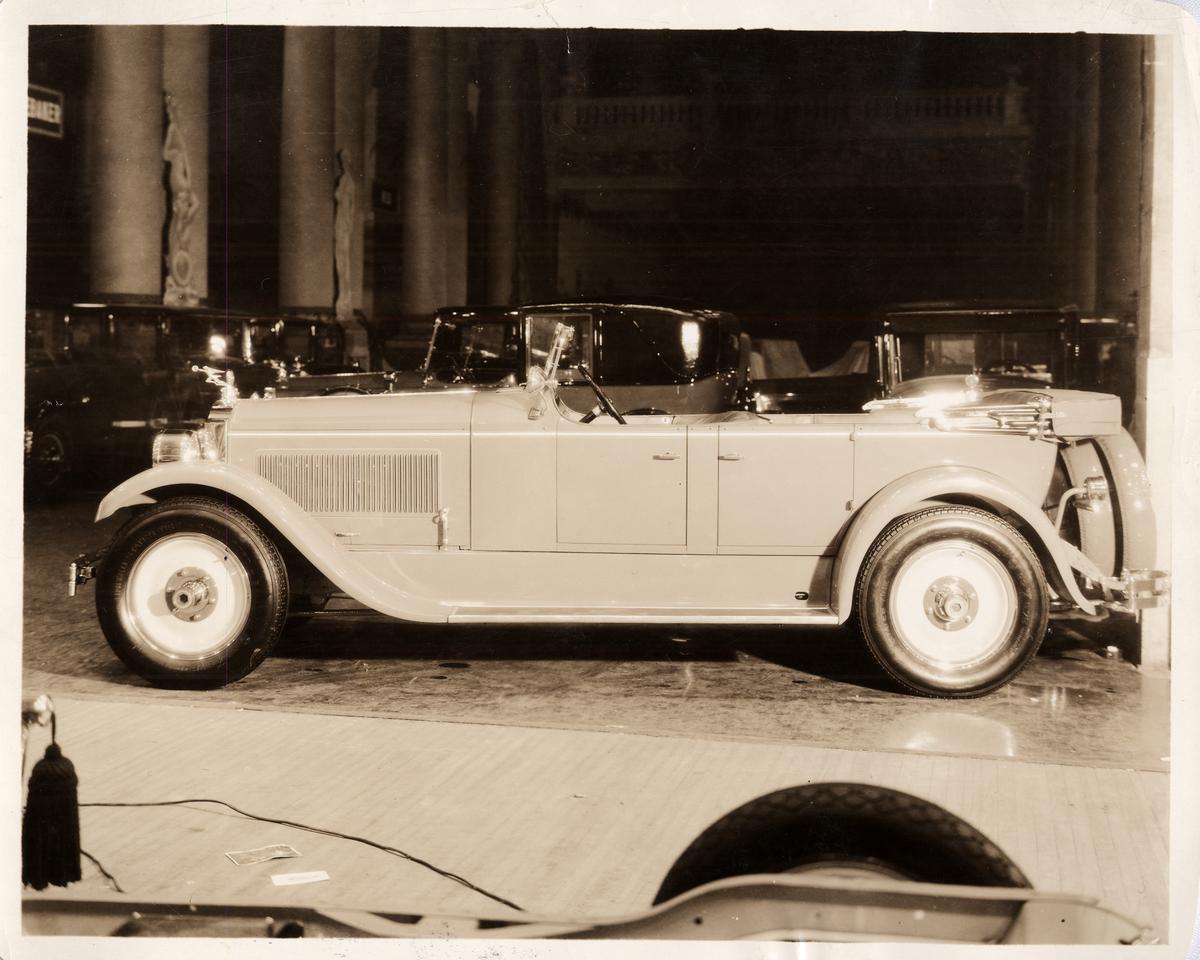
LOOK AT ME…No doubt Lois Long walked by this Packard special sport phaeton, prominently displayed at the 26th National Automobile show. (Wayne State University)
20121219PalaceEmbed3-blog480
GRAND INDEED…The 26th National Automobile Show was at the Grand Central Palace, which occupied the block of Lexington Avenue between 46th and 47th Streets. It was razed in 1963. A 44-story office tower, 245 Park Avenue, took its place. (New York Times)
Screen Shot 2015-10-02 at 10.28.49 AM
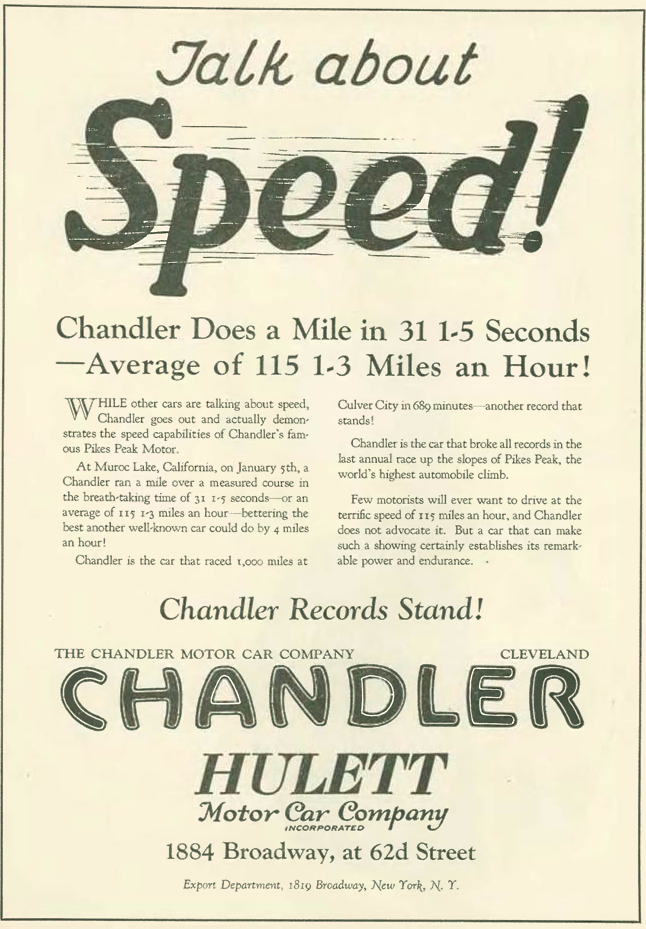
A Cleveland auto manufacturer, Chandler, took advantage of the moment by placing this ad in the Jan. 23 issue of The New Yorker.

***

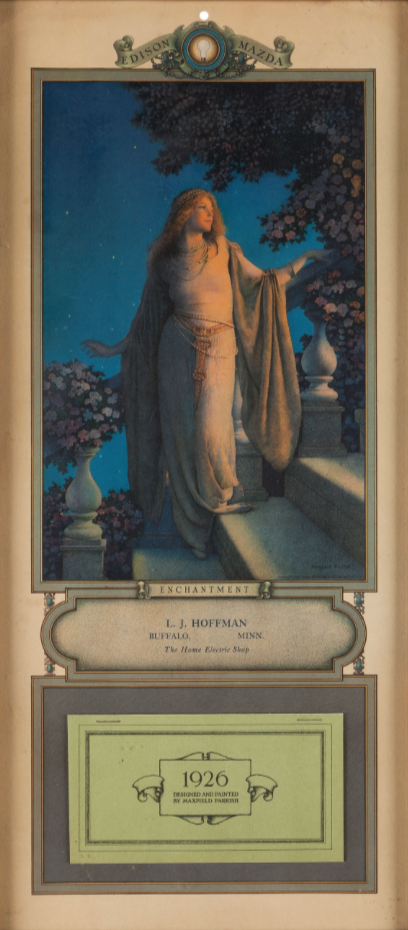
“The Talk of Town” editors were bemused over the news that artist Maxfield Parrish had received “a check in six figures” following his first-ever exhibition. It was reported that Parrish received $80,000 (roughly equivalent to $1 million today) for a single painting, which the editors suggested made him “the highest paid artist living.” They also wondered “if he gets amusement out of being the highest paid painter,” since Parrish was known for wanting to be left alone, and until recently was “not well off” because no one “could persuade him to the sell the pictures with which he lined his house.”

Screen Shot 2015-10-05 at 11.56.06 AM
A 1926 Edison MAZDA calendar featuring artwork by Maxfield Parrish. (icollector.com)

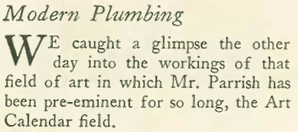
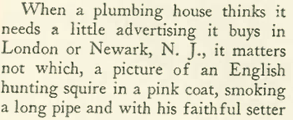
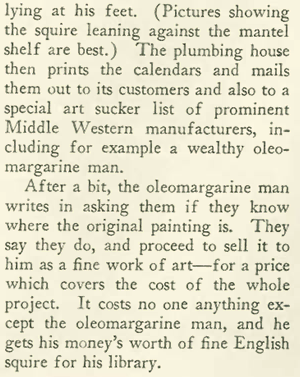
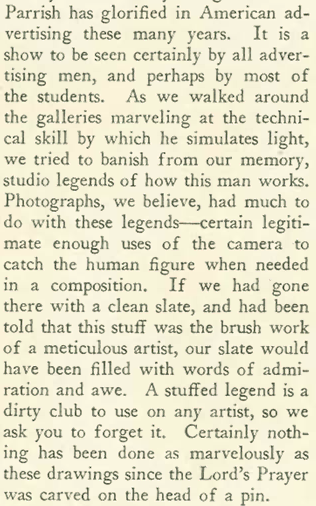
In a previous issue (Dec. 12, 1925), New Yorker art critic Murdock Pemberton wrote a dismissive critique of the young Parrish’s work and noted that the artist was largely glorified in American advertising and not in serious art circles. This was followed by another “Talk” item in which the editors sneered at the trade calendar market that fed the popularity of artists like Parrish:

Screen Shot 2015-10-02 at 10.18.03 AM

Screen Shot 2015-10-02 at 10.18.15 AM

Screen Shot 2015-10-02 at 10.18.26 AM

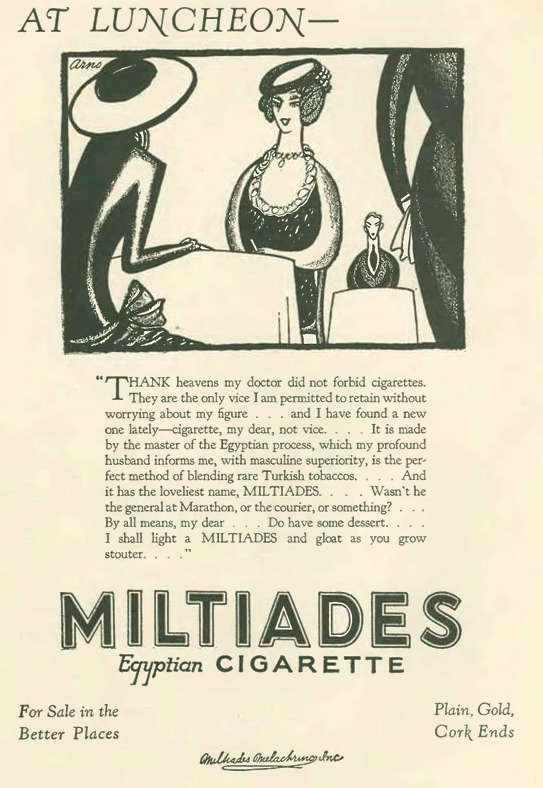
And to close, this message (illustrated by Peter Arno) from Miltiades Egyptian cigarettes. Apparently they empower you to call your non-smoking friend “fatso.”

Screen Shot 2015-10-05 at 10.10.09 AM

On the subject of Arno, there was only one drawing with a caption…by Arno…

Next Time: Cuban Idyll…

Screen Shot 2015-10-05 at 5.07.09 PM

Beloved Aunt Helen

Screen Shot 2015-08-13 at 1.28.18 PM
Dec. 12, 1925 cover by Rea Irvin

Last time we looked at one of The New Yorker’s most prolific artists, Peter Arno. Equally prolific was Helen E. Hokinson, who preceded Arno at the magazine by several months as one of the magazine’s first regular artists.

Hokinson’s signature cartoons of often plump society women engaged in their various activities–clubs, shopping, dining out and gardening–were hugely influential in giving The New Yorker a distinct look and style.

In all she contributed 68 covers to the magazine and more than 1,800 cartoons (including the one that heads this blog entry). So strong was Hokinson’s identity with the magazine, a number of her cartoons were published after her death in 1949.

38159549.HelenHokinson
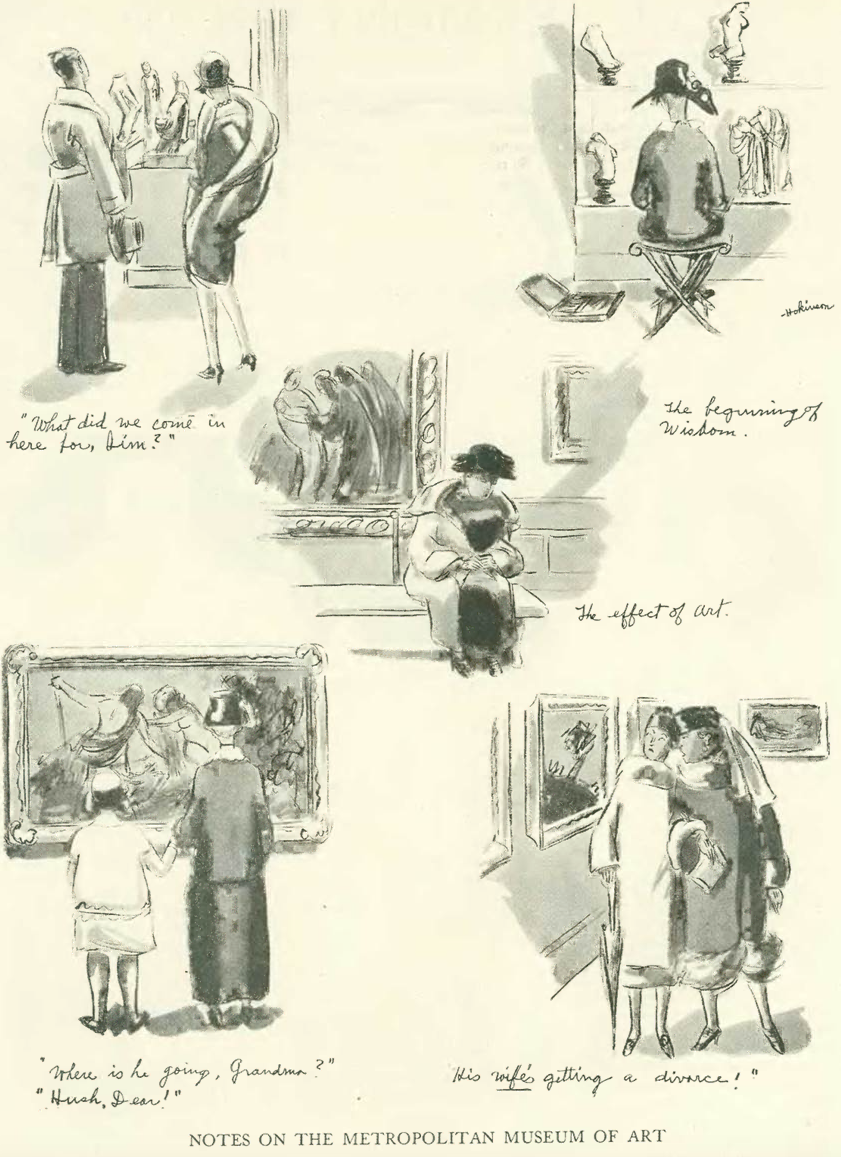
Helen Hokinson (pbase.com)

New Yorker artist Richard Merkin later wrote (The New Yorker, Feb. 14, 1994) that Hokinson was “something of a stay-at-home, preferring the rewards and routines of her work and of an apartment near Gramercy Park and a cottage in Connecticut.” He observed that it was a “dismal irony” when this homebody died in a plane crash en route to a speaking engagement in Washington, D.C.

But let us remember the joys she brought to so many through her work. Merkin wrote that Hokinson was “a beloved aunt among the family of New Yorker artists…(she) created a type that will forever bear her name–the Hokinson Woman.” Here is Hokinson’s contribution to the Dec. 12, 1925 issue:

Screen Shot 2015-08-24 at 5.17.25 PM

The reluctant debutante Ellin Mackay was back for the Dec. 12 issue with a follow-up piece, “The Declining Function: A Post-Debutante Rejoices.” It would be her final word on the topic. As I reported earlier, Mackay went on to marry famed songwriter Irving Berlin, but would continue writing, most notably a number of short stories for the Saturday Evening Post and other publications.

889666834-ellin-mackay-irving-berlin-atlantic-city-honeymoon-with-modern-concept-and-atlantic-city-honeymoon
FREE AT LAST…Newlyweds Ellin Mackay and Irving Berlin on their honeymoon in Atlantic City. They were married on Jan. 4, 1926. (www.kuaike.co)

In this her second and final New Yorker piece, Mackay drove the final nail into her past debutante life, writing that balls and other society events were “no longer a recognition of any kind of distinction.” She concluded:

People are bored, at least for a while, with being sheep; they are weary of filling their hours of ease with tiresome duties; they have learned to go where they want to go, not where they want to be seen.

* * *

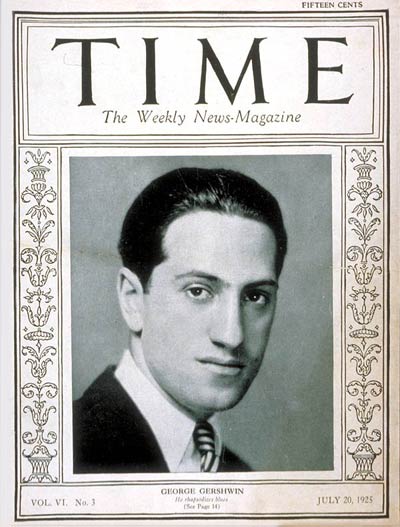
“The Talk of the Town “ reported on George Gershwin’s latest work of “ambitious jazz,” his Concerto in F, which premiered at Carnegie Hall with Walter Damrosch conducting.

1101250720_400
George Gershwin on the cover of the July 20, 1925, issue of Time magazine. (Time.com)

It was noted that Gershwin’s new work had the “beat of the Charleston stirring it.” Later in the “Critique” section, the work was applauded as an “advance on Rhapsody in Blue” and “sharply effective.”

“Profiles” featured Tex Rickard, proprietor of the new Madison Square Garden. The profile’s writer, W. O. McGeehan, suggested that Rickard had assumed the mantle of P. T. Barnum, and although he had given up his saloon-dealing days (promoting gambling and boxing) and now feigned “respectability and elegance,” his primary talent remained in rounding up the gullible masses for popular entertainments:

He will promote anything that will gather a sufficient number of Rubes for profit or for prestige…Behind his guileless exterior, there is a deep guile that is half benevolent and half Satanic…

1024px-Tex_Rickard
Tex Rickard (Library of Congress)

The following year (1926) Rickard would be awarded an NHL franchise to compete with the (now defunct) New York Americans hockey team. Rickard’s team would immediately be nicknamed ‘Tex’s Rangers,” a moniker that remains to this day.

Daybreak_by_Parrish_(1922)
Maxfield Parrish’s Daybreak (1922) is regarded as the most popular art print of the 20th century, based on number of prints made: one for every four American homes. The original sold in 2010 for $5.2 million. (artsycraftsy.com)

In “Art,” Murdock Pemberton wrote a dismissive critique of the young Maxfield Parrish’s work, which was on display at Scott & Fowles gallery. It was Parrish’s first exhibition. Pemberton took pains to point out that although the work had technical merit, it was by an artist largely glorified in American advertising and not in serious art circles:

Screen Shot 2015-08-24 at 9.58.20 AM

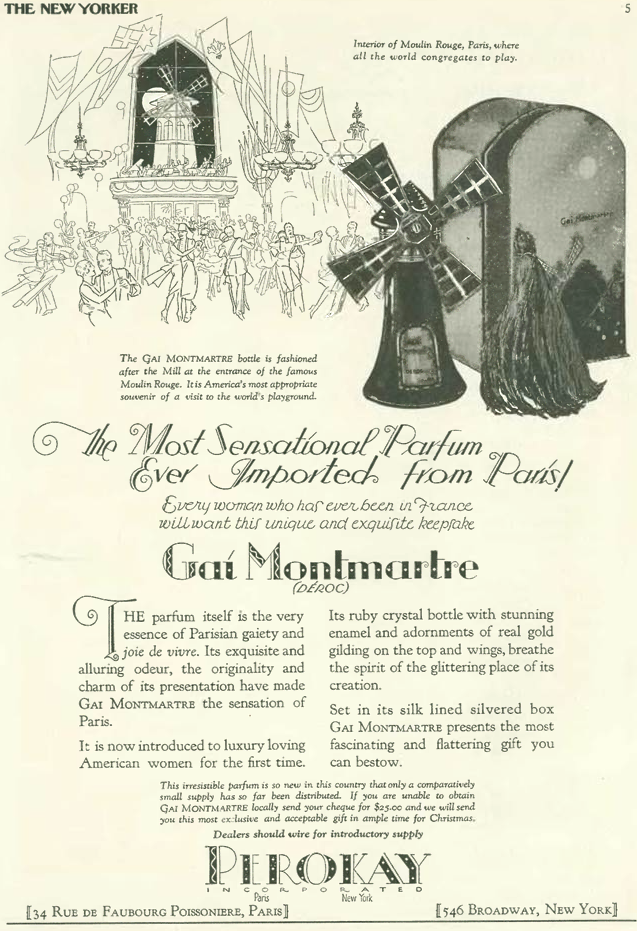
The Dec. 12 issue was filled with Christmas advertisements, including this one that suggests even “sophisticated” readers of the magazine had a taste for kitsch:

Screen Shot 2015-08-24 at 9.06.31 AM

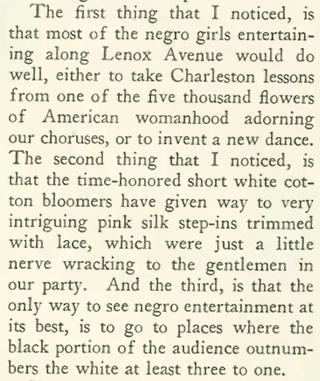
Included in the back pages was an extensive list of “Christmas Shopping Suggestions” compiled by Lois Long (who noted that the list was “not compiled for the benefit of the Old Lady from Dubuque”), while in “Tables for Two” she confessed something akin to horror that she had not yet visited Harlem in the fall season. Among her observations:

Screen Shot 2015-08-24 at 10.11.28 AM

And in the spirit of the season, the “Old Lady from Dubuque” made an appearance in the magazine courtesy of cartoonist Ralph Barton:

Screen Shot 2015-08-24 at 9.46.33 AM

Next Time: Social Errors…
Screen Shot 2015-08-24 at 10.15.29 AM


Fighting For Respect

Screenshot 2015-07-09 11.55.39
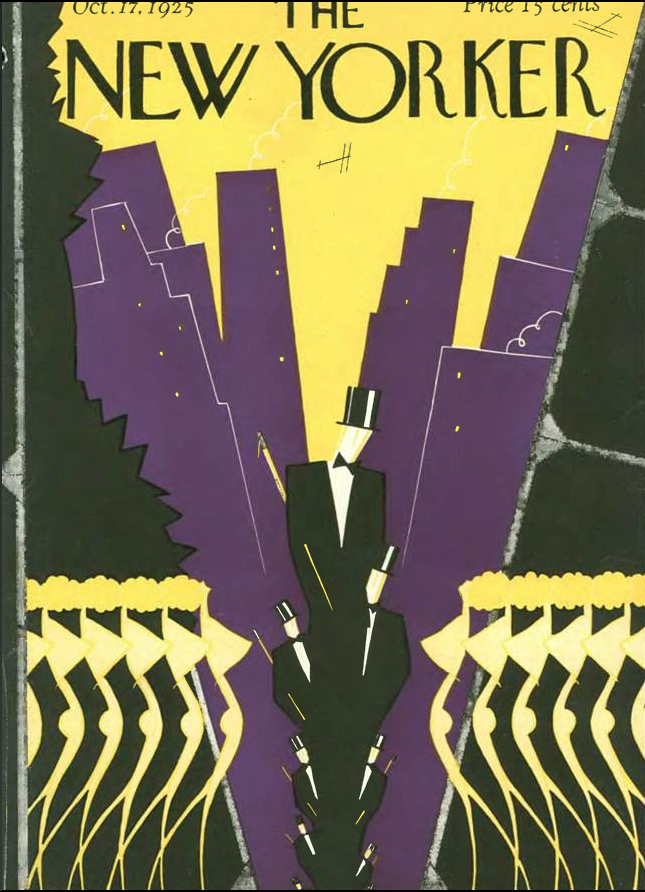
Oct. 17, 1925 cover by Max Ree.

The New Yorker catered to both Anglo- and Francophile readers in its early issues, especially in advertisements, although such pretensions were also satirized in its pages. The fledgling magazine, however, took great pains to show that it was something new, modern and very American.

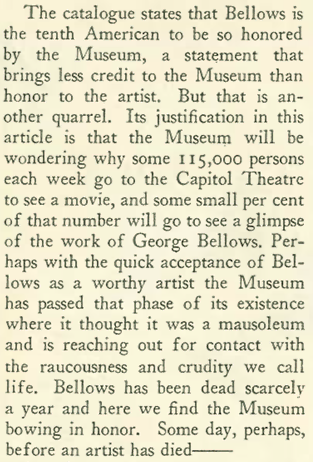
A case in point is the treatment of artist George Bellows, whose untimely death from appendicitis earlier that year, at the age of 43, was followed by a memorial exhibition of his work at the Metropolitan Museum of Art.

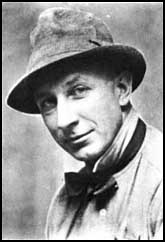
George_bellows
George Bellows. (Wikipedia)

Bellows was from Columbus, Ohio, and was a pupil of fellow Midwesterner Robert Henri (Nebraska) at the New York School of Art. There Bellows became closely associated with Henri’s Ashcan School, a group of artists who advocated painting contemporary American society in all its grittiness.

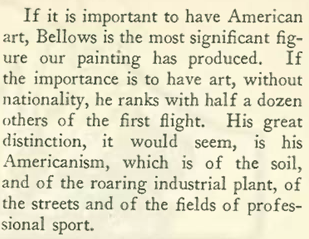
In Bellows The New Yorker saw a fresh voice that gave form to the roiling life of a great city (Joseph Mitchell would later do the same with words for the magazine). The magazine also used the memorial exhibit as an opportunity to chide the Metropolitan Museum and its old-fashioned, Euro-centric tastes in art.

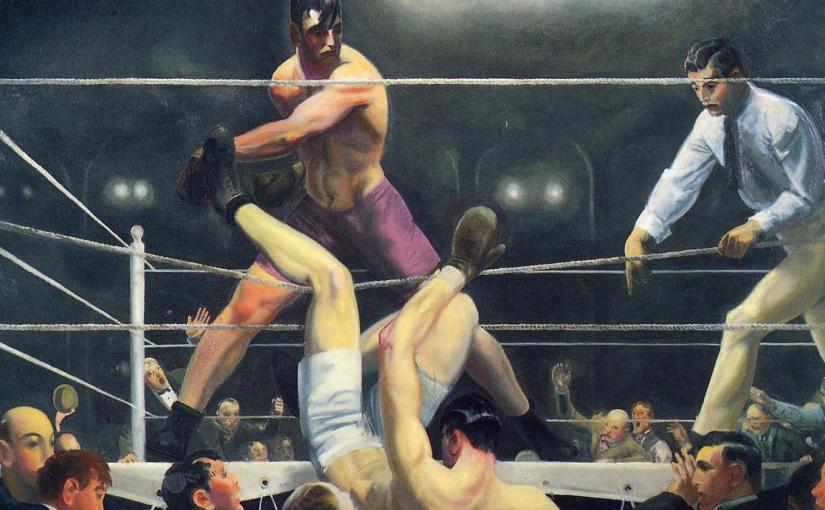
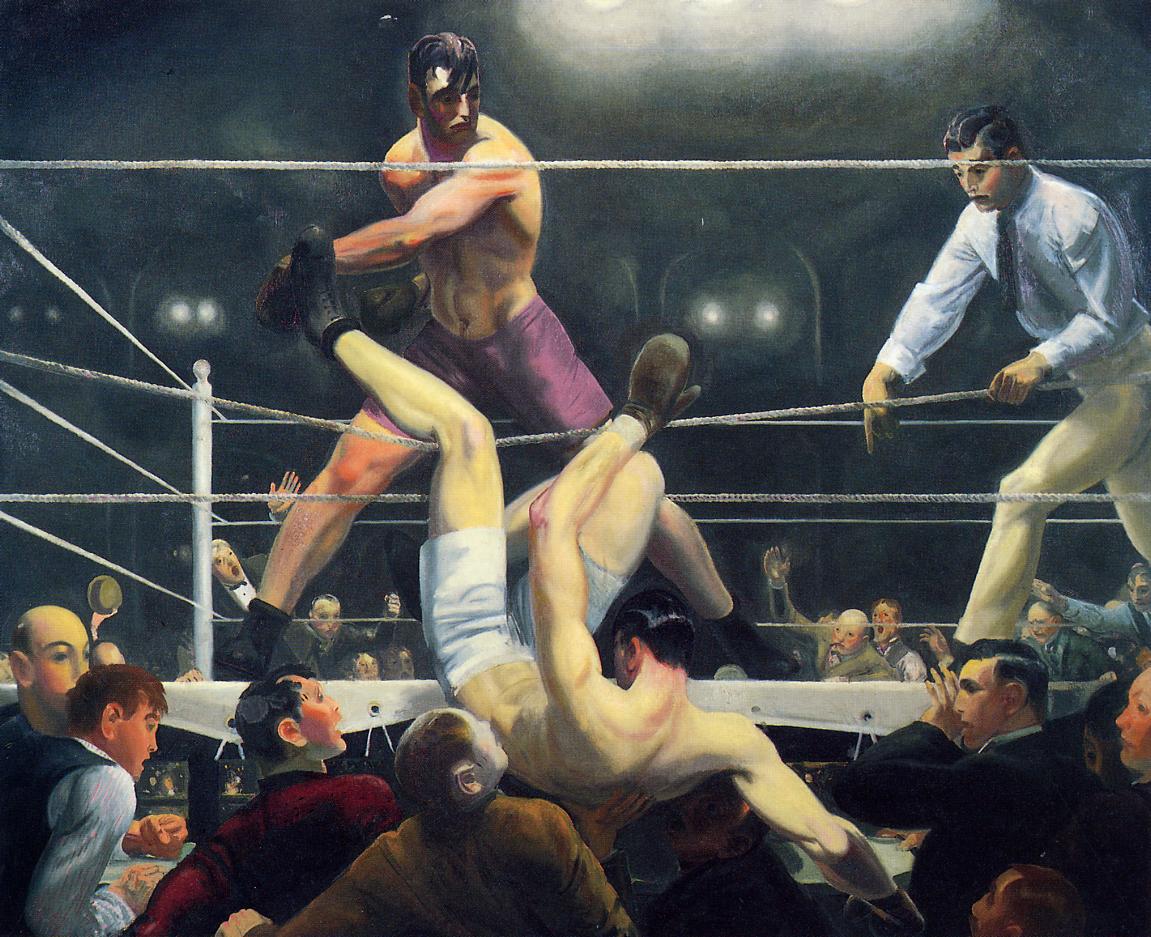
Bellows_George_Dempsey_and_Firpo_1924
One of George Bellow’s last and perhaps most famous paintings from 1924 depicted the famous 1923 Dempsey-Firpo fight at the Polo Grounds (Wikipedia)

In the previous week’s issue (Oct. 10), “The Talk of the Town” noted that the upcoming memorial exhibition was “not quite the usual thing” for the Met (that is, to accord such recognition to an American artist). The “lanky Midwesterner” Bellows offered something unique:

Screenshot 2015-07-09 12.07.44

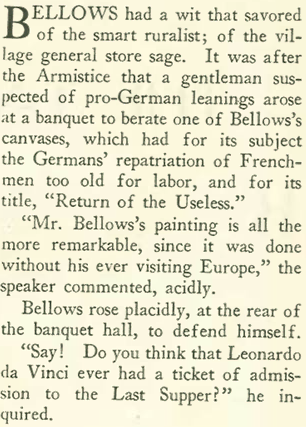
The same column noted that Bellows possessed something of a wit:

Screenshot 2015-07-09 12.08.12

In the Oct. 17 issue, art critic Murdock Pemberton offered these pointed observations of the opening of the memorial exhibition:

Screenshot 2015-07-10 16.24.53

murdock1
Murdock Pemberton (New York Observer)

Murdock Pemberton himself is something of an interesting story. He co-hosted the luncheon that started the Algonquin Round Table, and was art critic at The New Yorker for more than seven years. The dismissal of this gifted and influential writer was probably one of Harold Ross’s biggest screw-ups as editor. You can read more about Pemberton in this Jan. 24, 2012, New Yorker article by Andrea Scott, who wrote that Pemberton “may be the most interesting person you’ve never heard of.”

Screenshot 2015-07-10 16.14.58
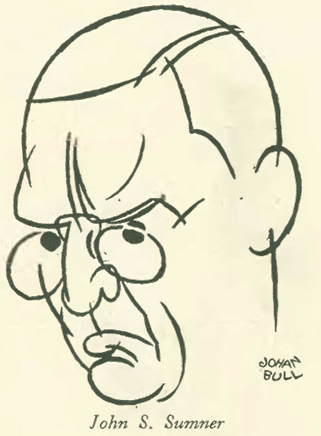
Sumner, by Johan Bull

The Oct. 17 issue also included an interview with John Saxton Sumner, who headed the New York Society for the Suppression of Vice, a state censorship body empowered to recommend obscenity cases to prosecutors.

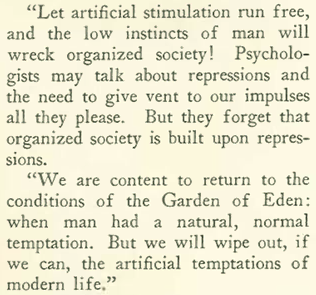
Sumner was quoted as saying it “may be impossible to legislate morals into humanity. But we can legislate decent conduct into humanity.” He also offered these insights:

Screenshot 2015-07-10 16.14.44

As I mentioned in my last post, thanks to an ailing Babe Ruth and the slumping Yankees, college football took center stage in “Sports of the Week,” especially with “rivalry” games that drew crowds (and revenue) to Yankee Stadium. John R. Tunis continued his coverage of the sport with an account of a game between the North and the South (Penn State and Georgia Tech) in Yankee Stadium. Georgia Tech prevailed 16-7.

“Profiles” examined the life of Dr. Abraham Arden Brill, an Austrian-born psychiatrist who was the first psychoanalyst to practice in the United States and the first translator of Freud into English. It was no surprise that Brill found America ripe for this new type of therapy.

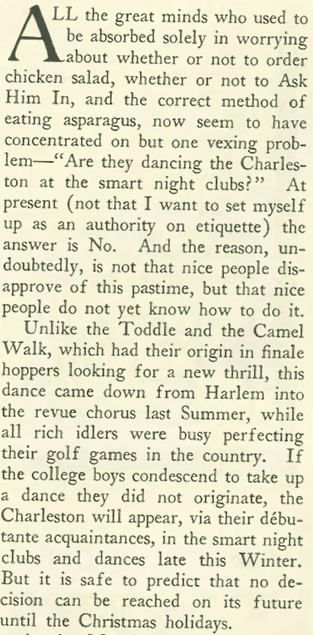
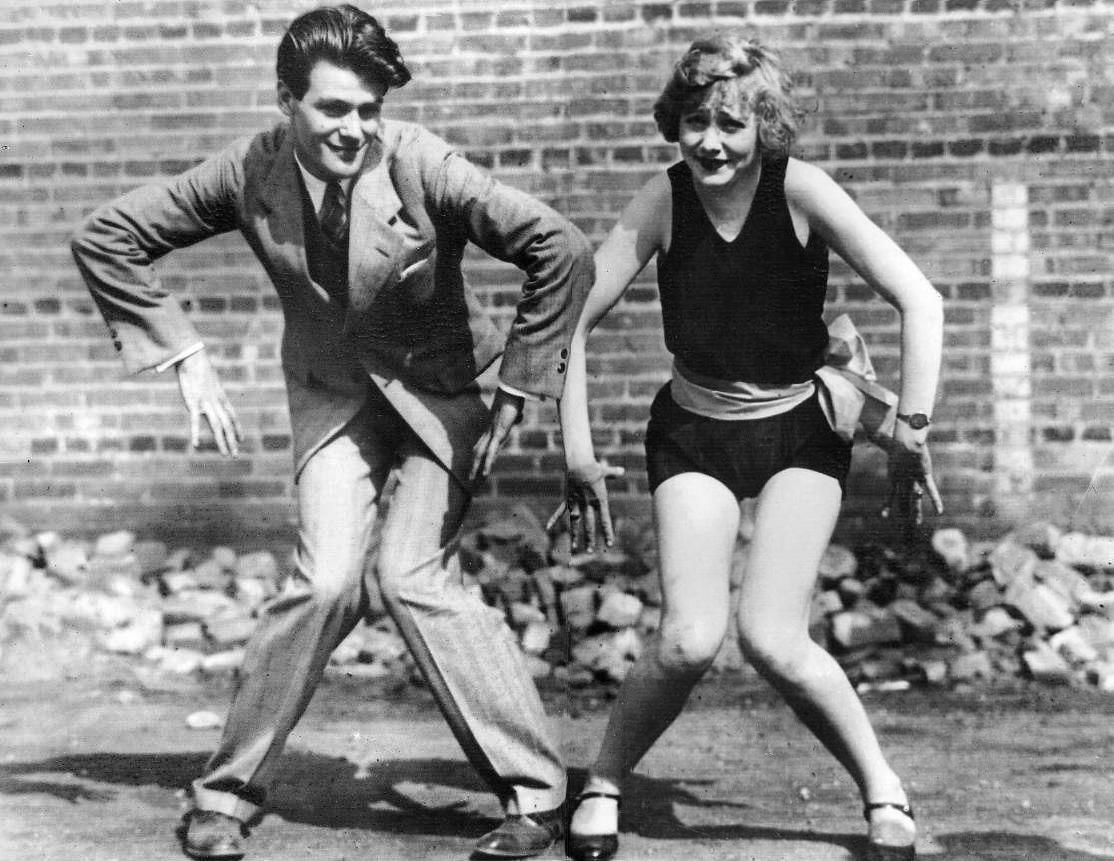
In “Tables for Two,” Lois Long pondered the popularity of “the Charleston” at smart night clubs:

Screenshot 2015-07-10 16.30.17

C’MON…Teens dancing the Charleston in the 1920s. (flavorwire.com)

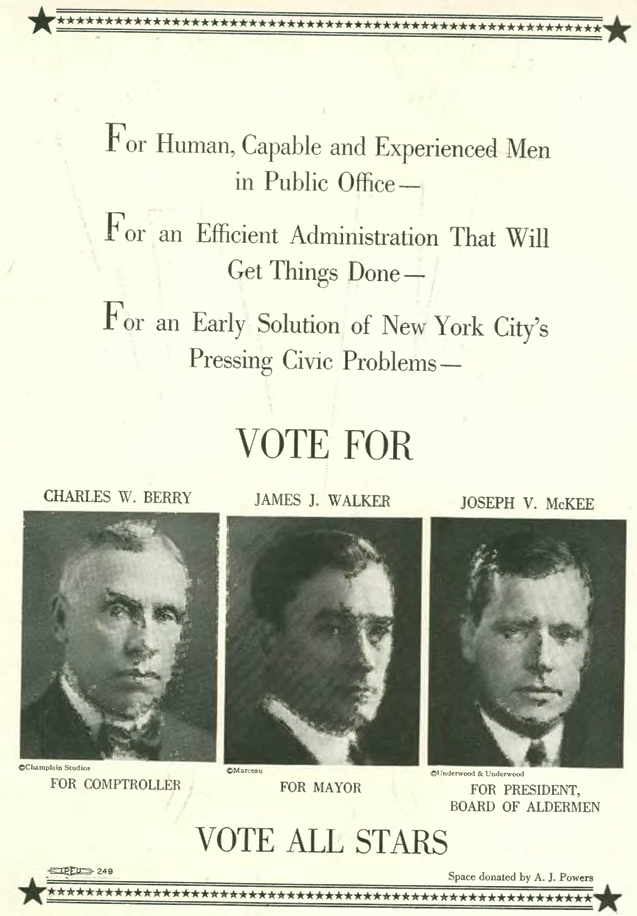
And to close, another political ad that seems out of place in The New Yorker:

Screenshot 2015-07-10 16.05.39

There’s something sobering about the ad. Perhaps it’s because the unsmiling faces of Tammany Hall suggest more a rogue’s gallery than a political line-up. As we know, Walker will get elected and go down in scandal in 1932, with McKee then serving as acting mayor for remainder of Walker’s term–just three months.

Next Time: A French Twist.

Screenshot 2015-07-10 16.32.07