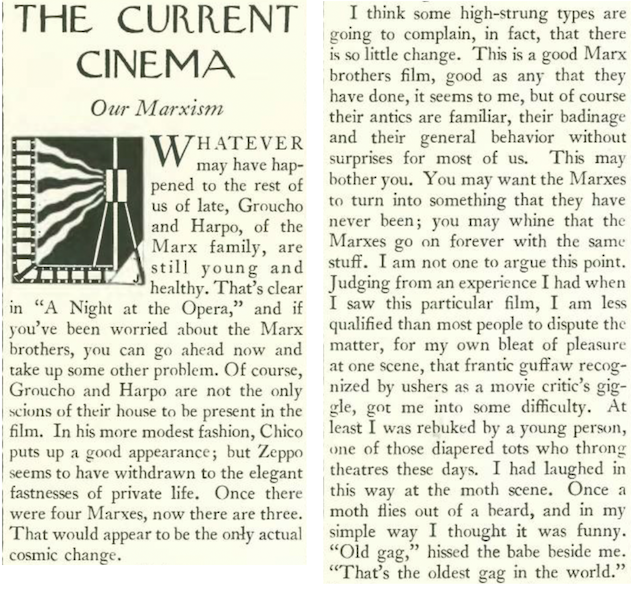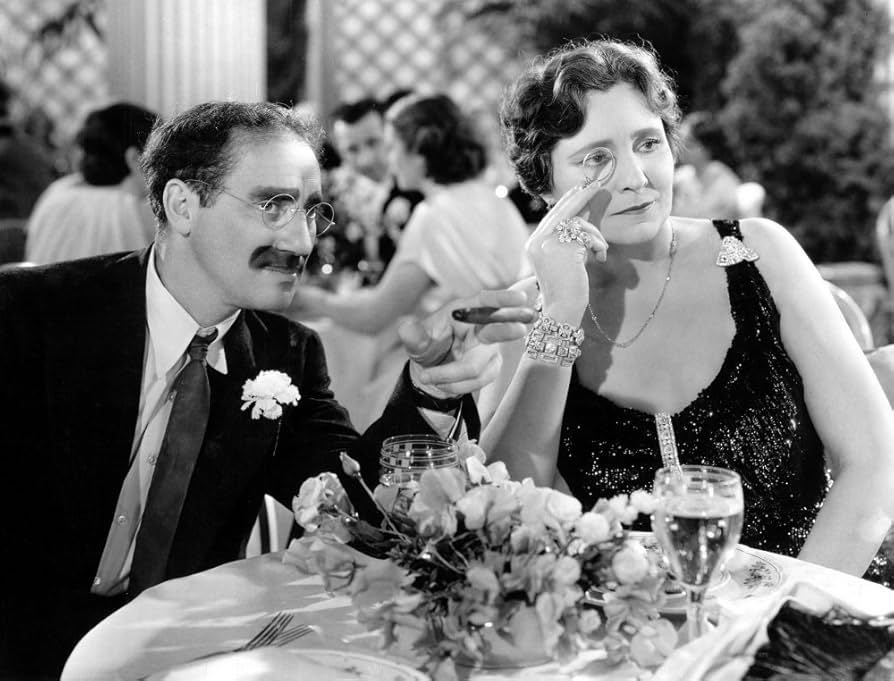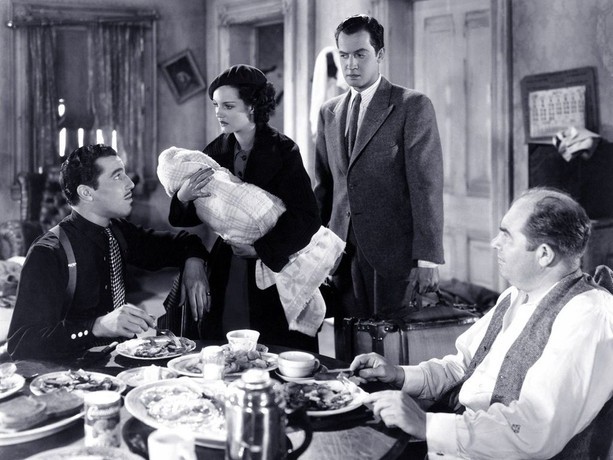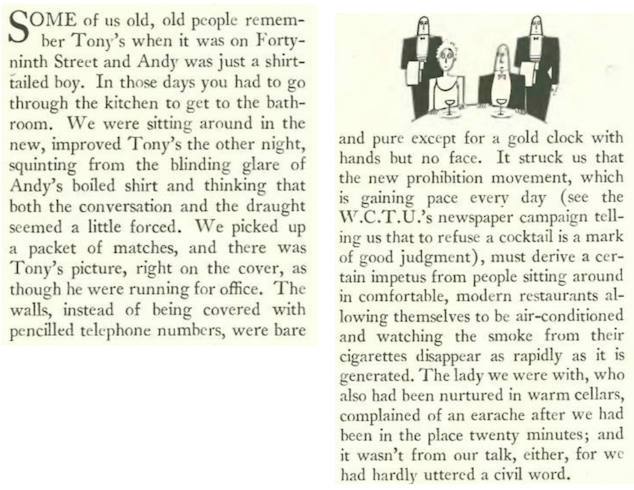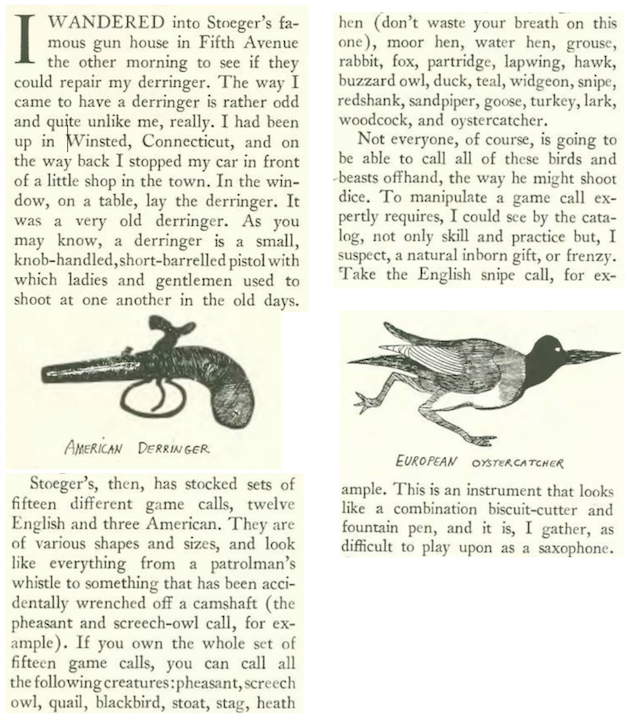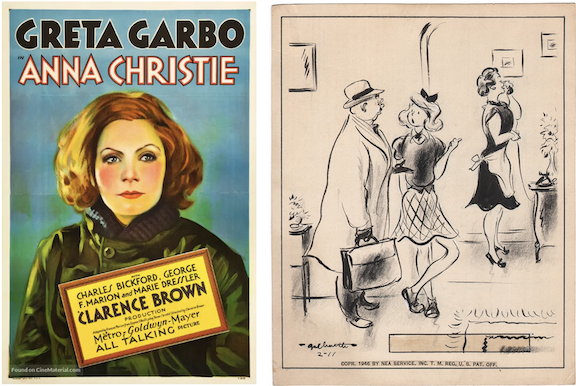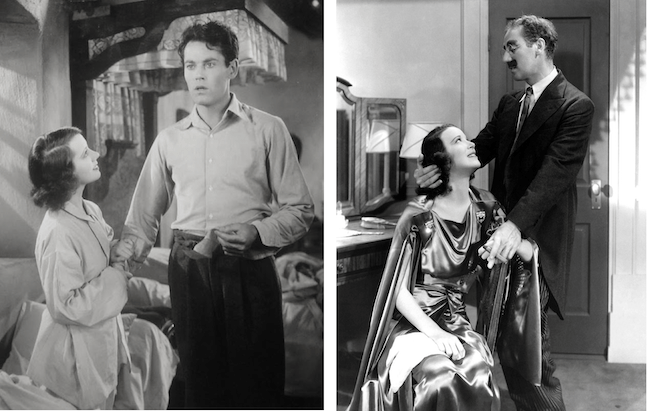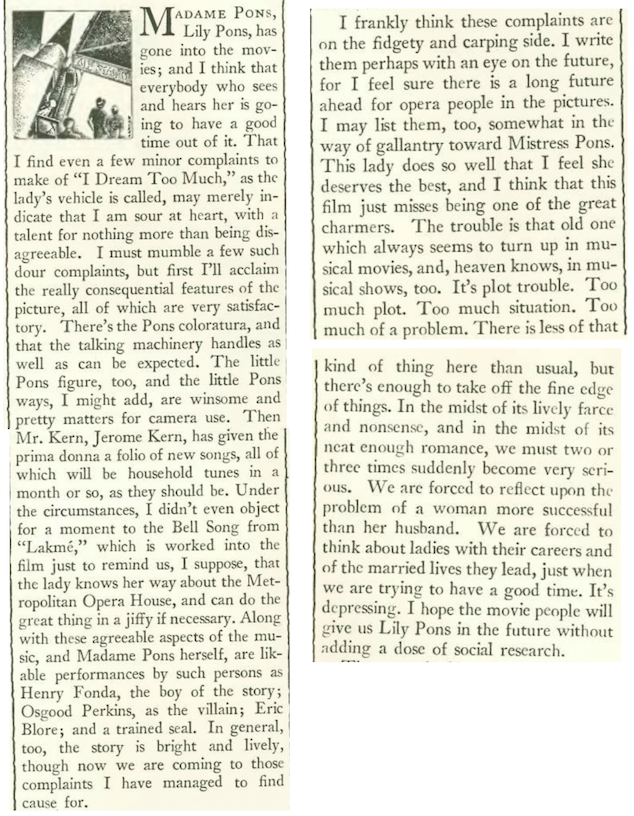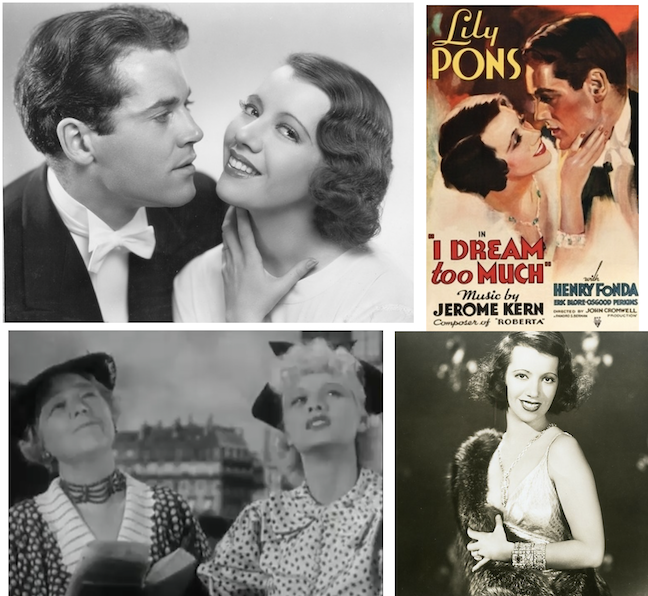
Above: Left image, coloratura soprano Lily Pons with Henry Fonda in I Dream Too Much;at right, Kitty Carlisle and Groucho Marx in A Night at the Opera. (rottentomatoes.com/IMDB)
The title of this post refers to two items below, which you’ll discover as we make our way through the December 7, 1935 issue of The New Yorker.
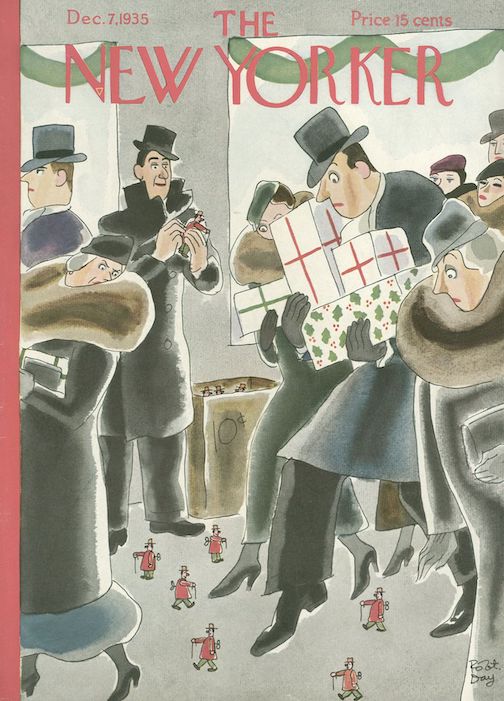
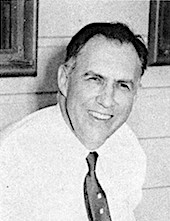
December 7, 1935 cover by Robert Day. A longtime contributor to The New Yorker, Day (1900-1985) contributed hundreds of cartoons as well as eight covers from 1931 to 1976.Robert Day (photo from This Week anthology via Ink Spill.)
*
Our first night at the opera comes courtesy of RKO Pictures, which presented French-American coloratura soprano Lily Pons as the star of the musical rom-com I Dream Too Much. Critic John Mosher found the film enjoyable, singling out Pons for praise while chastising the screenwriters for interrupting the lively farce with some “social research.”
DREAM DATE…Clockwise, from top left: Henry Fonda in his third screen appearance as Lily Pons’ love interest in RKO’s I Dream Too Much; movie poster and publicity photo of Pons from the film; Lucille Ball (seen here with actress Esther Dale), appeared in a bit part as a gawky American teenage tourist in Paris (which was actually an RKO studio lot)…little did Ball know that one day she would own that RKO studio lot with husband Desi Arnaz as home to their Desilu Productions facility. (IMDB/Wikipedia/TCM)
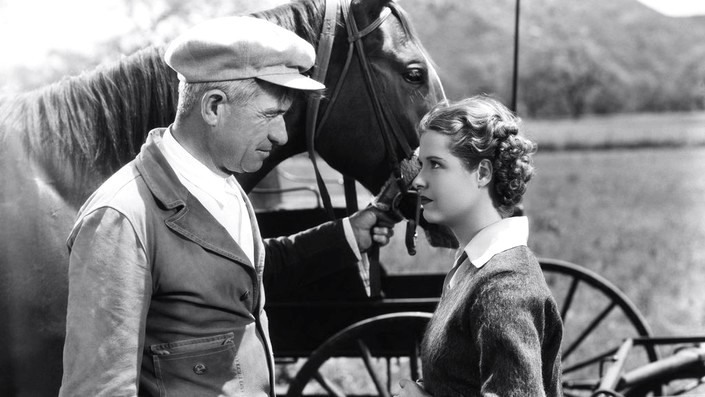
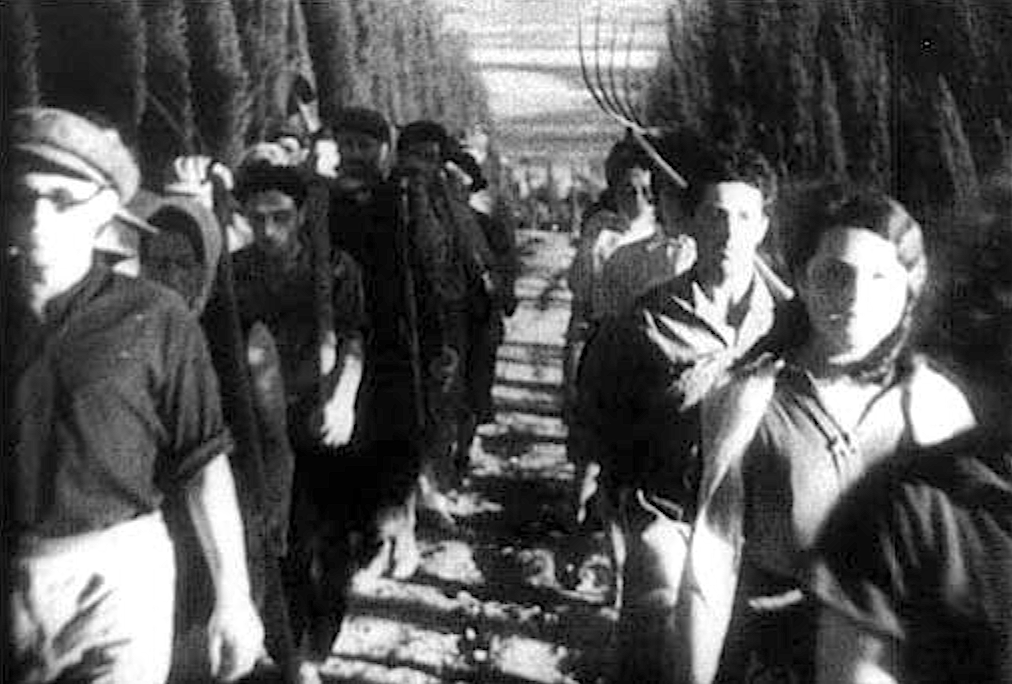
Mosher also said farewell to Will Rogers in his final film, In Old Kentucky, which he found to be a “minor affair.” He also reviewed The Land of Promise, a film about Palestine that indicated to Mosher that “life there is highly successful for all present.”
THIS IS GOODBYE…Will Rogers in a scene with Dorothy Wilson in Rogers’ final film appearance, In Old Kentucky. (rotten tomatoes.com)ORIGIN STORY…According to the Israel Film Archive, Judah Leman’sThe Land of Promise “laid the cinematic groundwork for all subsequent Zionist propaganda films that would follow.” (IMDB)
* * *
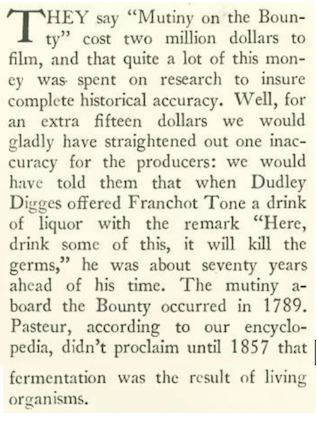
E.B. White keeps us on the cinema trail with some thoughts on the film, Mutiny on the Bounty, namely a certain historical inaccuracy:
AHEAD OF HIS TIME…E.B. White noted that Roger Byam (Franchot Tone) would have to wait seventy years to learn about germ theory. In addition, the trailer for Mutiny on the Bounty (above) incorrectly referred to Tone’s character as an ensign, when in fact Tone’s role was as a midshipman. (Wikipedia)
* * *
They Had It First
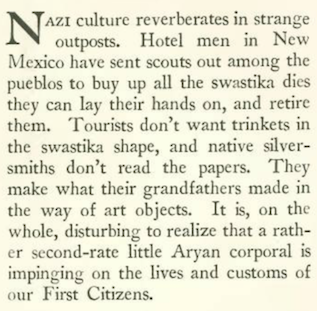
The swastika was among the more popular designs incorporated into southwestern tribal art during the American tourist era (roughly 1890 to the 1930s). For the Navajo, the symbol represented humanity and life, and was used in healing rituals (it was also widely used by tribal peoples across Europe and Asia). Tourism promoters (called “hotel men” here) encouraged the symbol’s use until the 1930s, when it was increasingly associated with Germany’s Nazi Party. E.B. White explained:
TOURIST FAVORITE…Navajo blankets such as this example, made from 1864 to 1910, were popular with tourists. (Wichita State University)
* * *
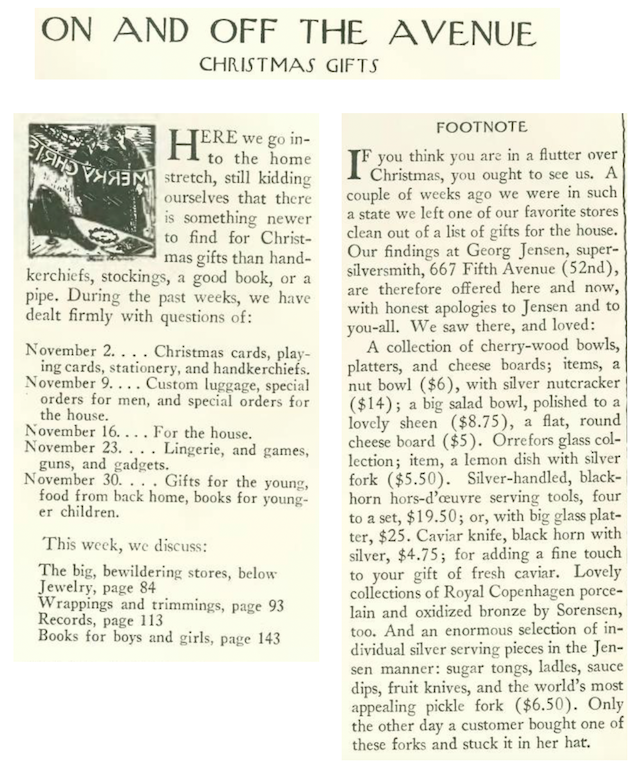
Lois Long’s fashion column continued to be dominated by exhaustive Christmas shopping lists, in this issue stretching from pages 58 to 97…here are the first and last paragraphs of the column…
* * *
A Woolly Read
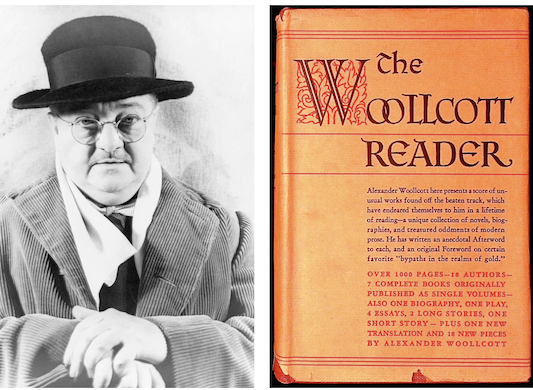
Perhaps your special someone was hoping for a thousand-page book under the tree; then look no further than The Woollcott Reader, a collection of stories, essays and other literary gems by New Yorker personality and former “Shouts and Murmurs” columnist Alexander Woollcott. In this excerpt, book critic Clifton Fadiman noted that a signed copy could be had for $7.50.
MY GIFT TO THE WORLD…Alexander Woollcott in 1939, as photographed by Carl Van Vechten, and the $3 brown cloth edition. (Wikipedia/Abebooks.com)
* * *
From Our Advertisers
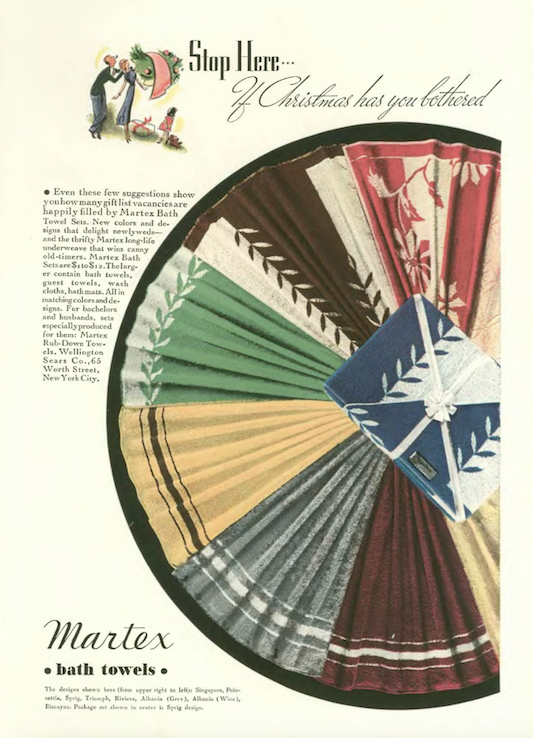
Colorful advertisements brightened the 149 pages of the Dec. 7 issue…we begin with this colorful array from Martex…
…the women’s specialty shop Jane Engel commissioned one of the best-known commercial photographers of the day, Ruzzie Green, to capture this glamorous image…
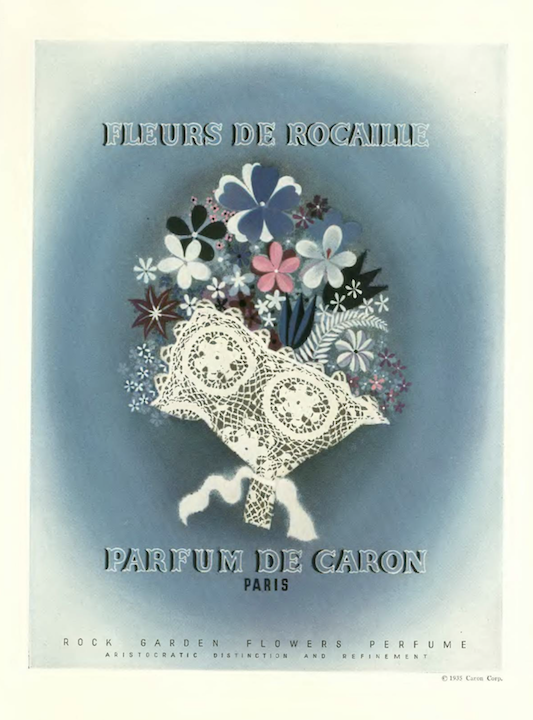
…Caron Paris offered up this cheerful bouquet…
…the makers of White Rock were enjoying the fruits of post-Prohibition days…
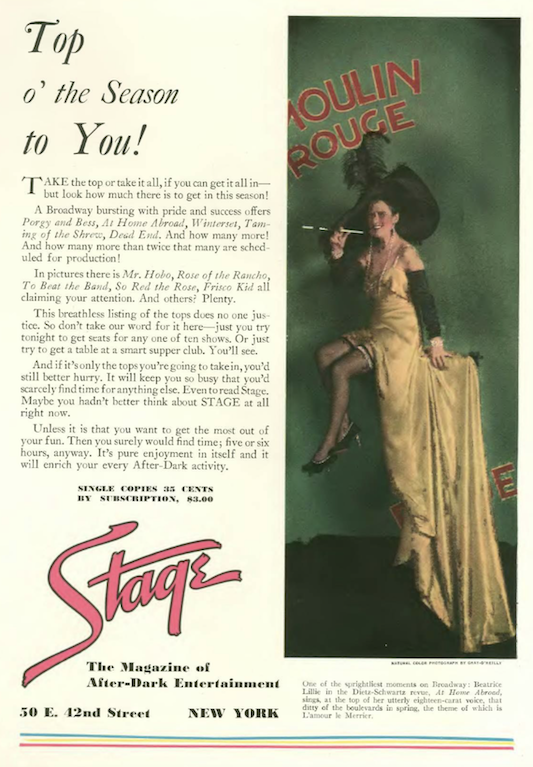
…the publishers of Stage magazine highlighted Beatrice Lillie’s Broadway revue, At Home Abroad…
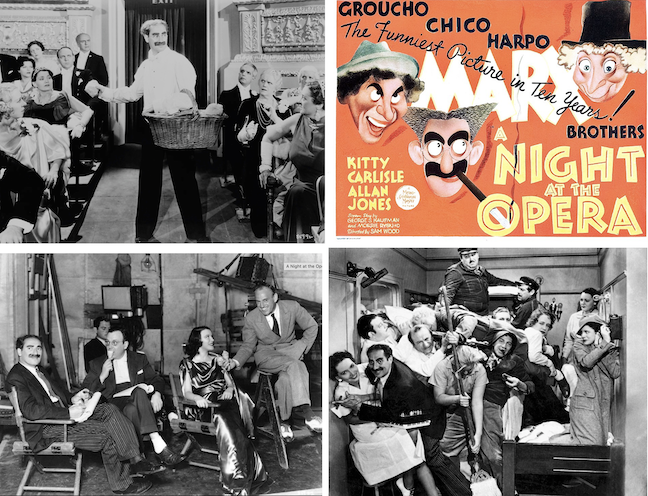
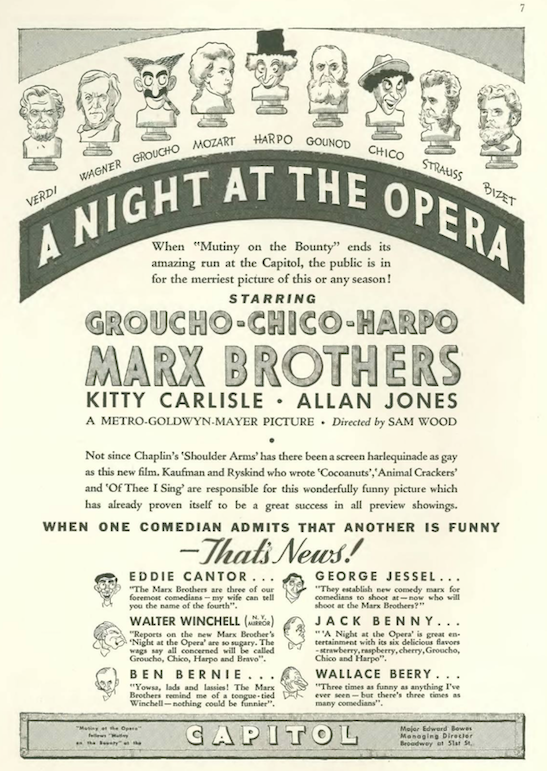
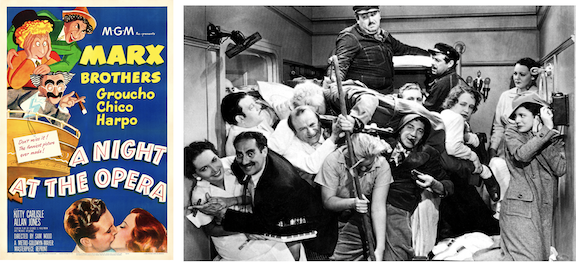
…the Capitol Theatre took out this full-page advertisement to tout the opening of the latest Marx Brothers film…
…here is a close-up of the ad’s “testimonials”…
…and what awaited audiences…
(Wikipedia/thedissolve.com)
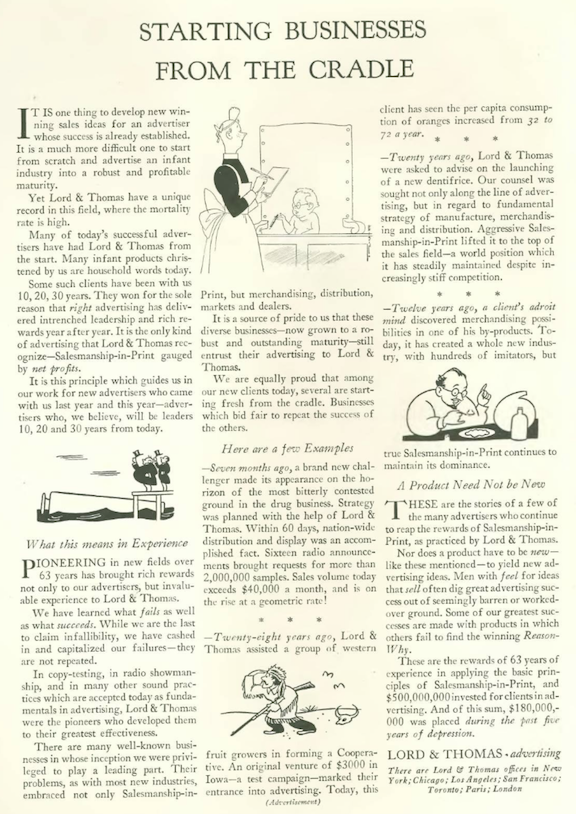
…the Lord & Thomas advertising firm imitated the New Yorker style in this full-page promotion…
…now who wouldn’t want a Philco “Radiobar” for the holidays?…
…found this one on 1stdibs.com…pretty cool…
…or you could get a little something for every one of your smoking friends (likely everyone)…
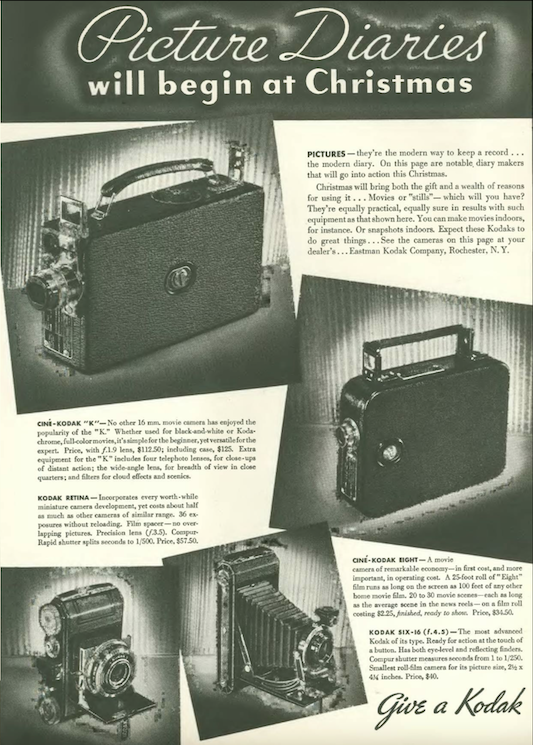
…and you could keep those holiday memories alive with a swell Kodak movie camera…
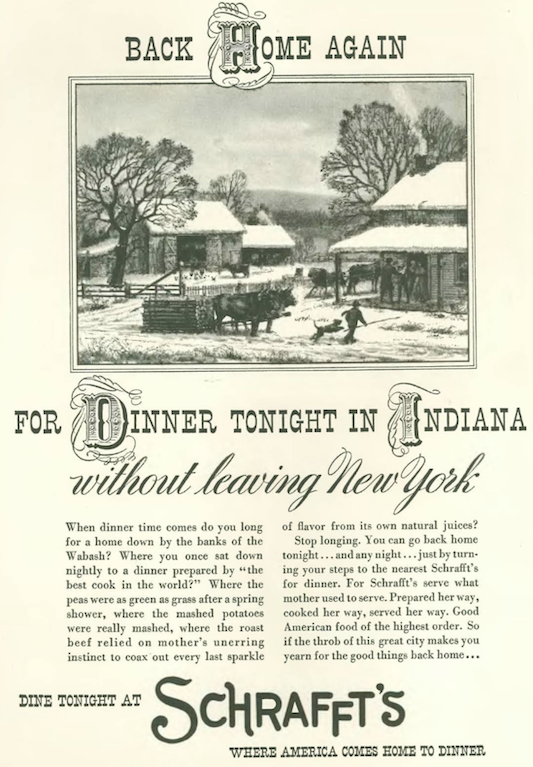
…Schrafft’s must have been something like an upscale Cracker Barrel…
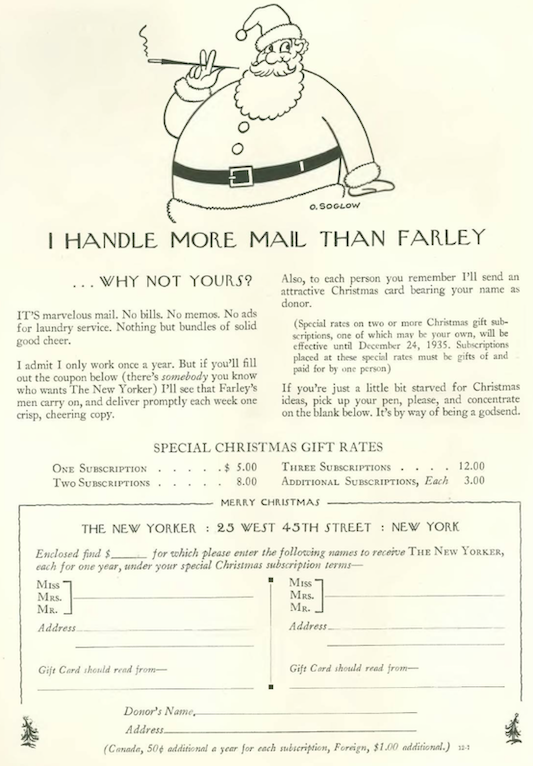
…house ads from The New Yorker included this Otto Soglow-illustrated full pager…
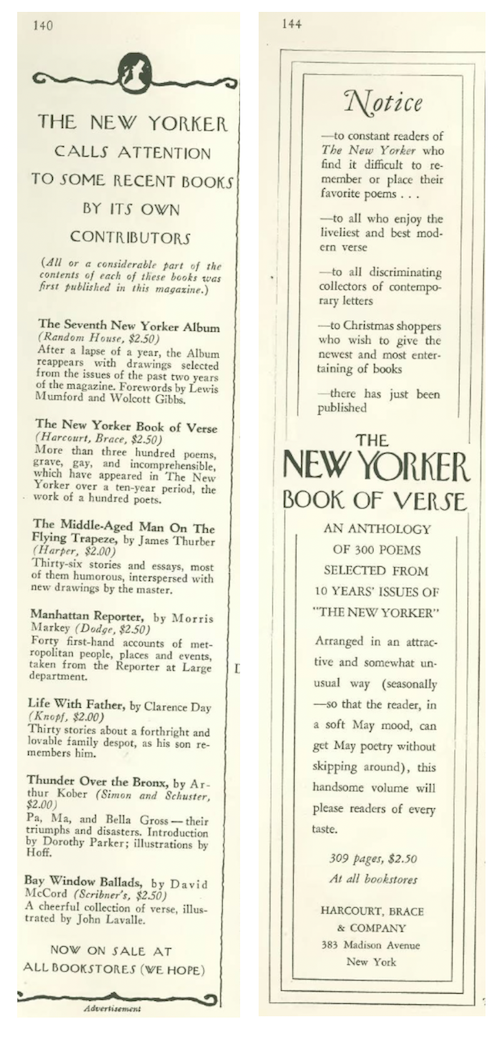
…the magazine also touted books and poems by its contributors…
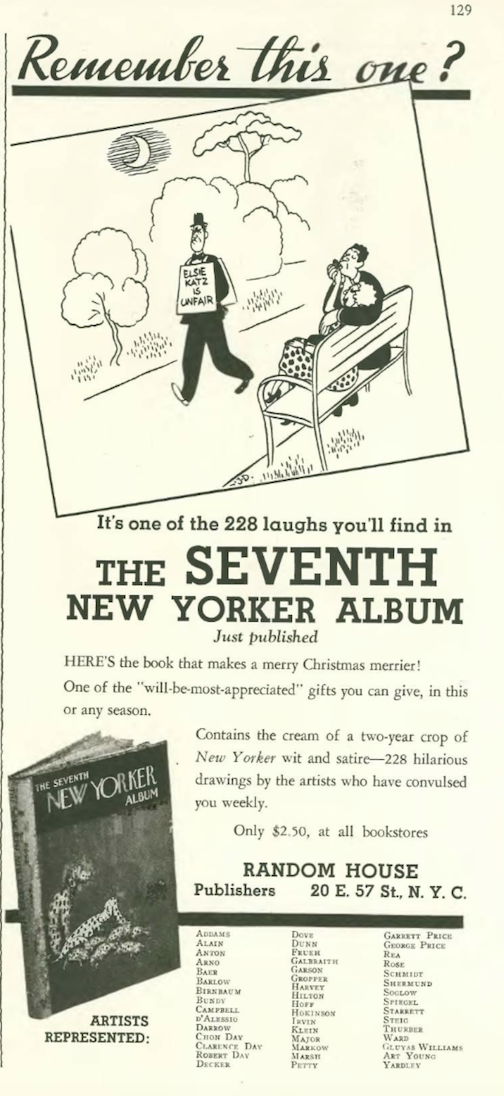
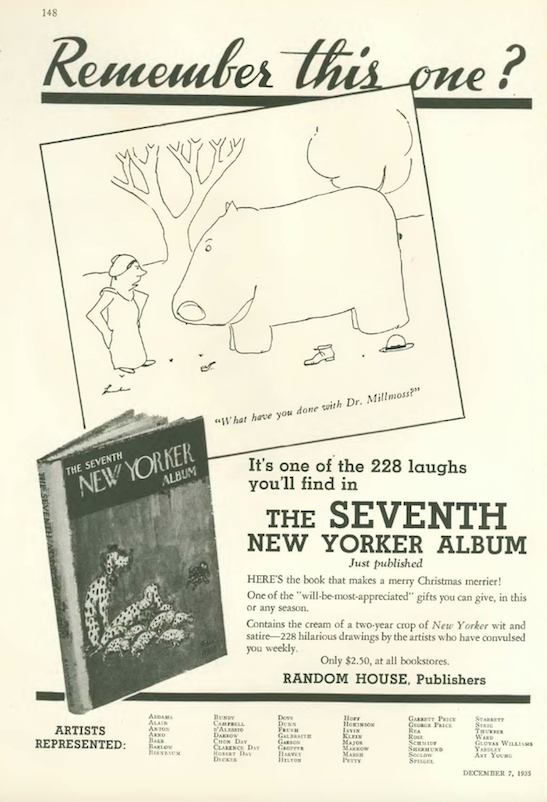
…and the Seventh New Yorker Album…
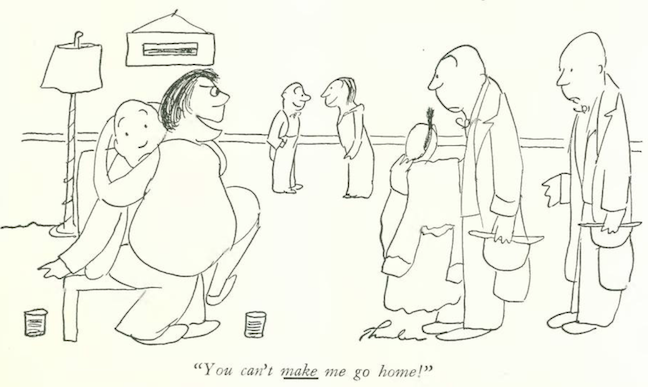
…more James Thurber here in this spot drawing for the “Books” section…
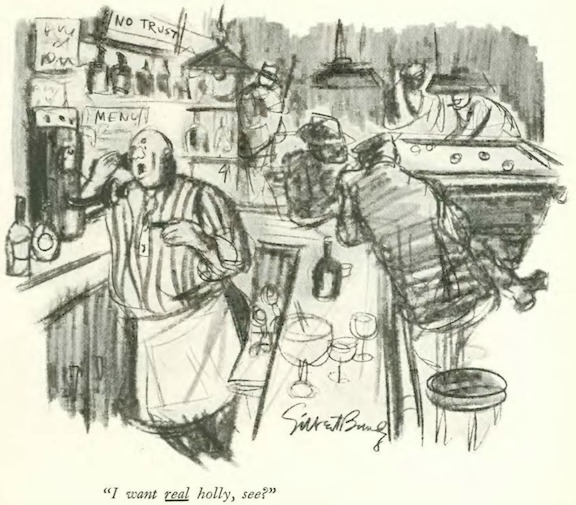
…and in this cartoon filled with holiday hijinks…
…Ilonka Karasz gave us a hockey goalie to open the calendar listings…
…George Price drew up this Depression-themed drawing at the bottom of the “Goings On” section…
…a great spot drawing by Aaron Sopher (1905–1972), who is perhaps best known for his depictions of everyday life in Baltimore…it was oddly placed amidst the “Christmas Gifts” section…
…according to Michael Maslin’sInk Spill, Sopher contributed just two cartoons to the magazine, in the issues of June 15, 1929, and December 6, 1930 (pictured below)…
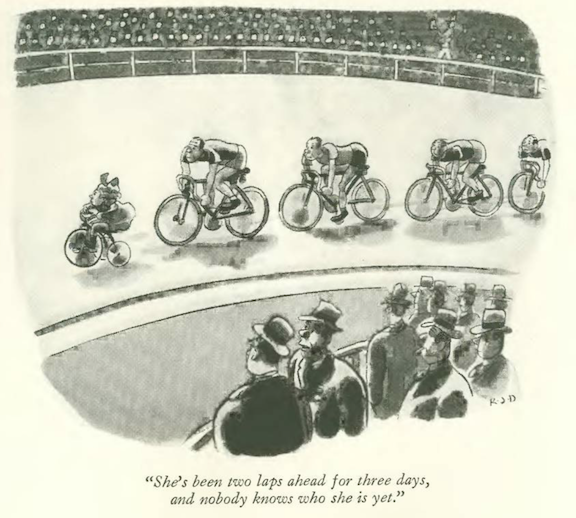
…back to the Dec. 7 issue, and at the Velodrome with Robert Day…
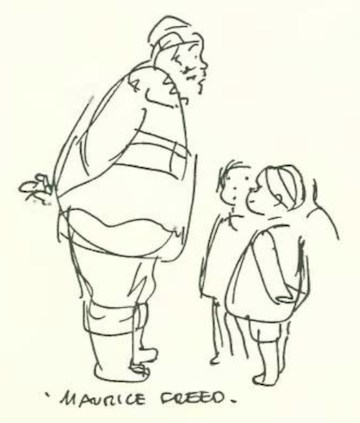
…who also visited an ill-suited Santa…
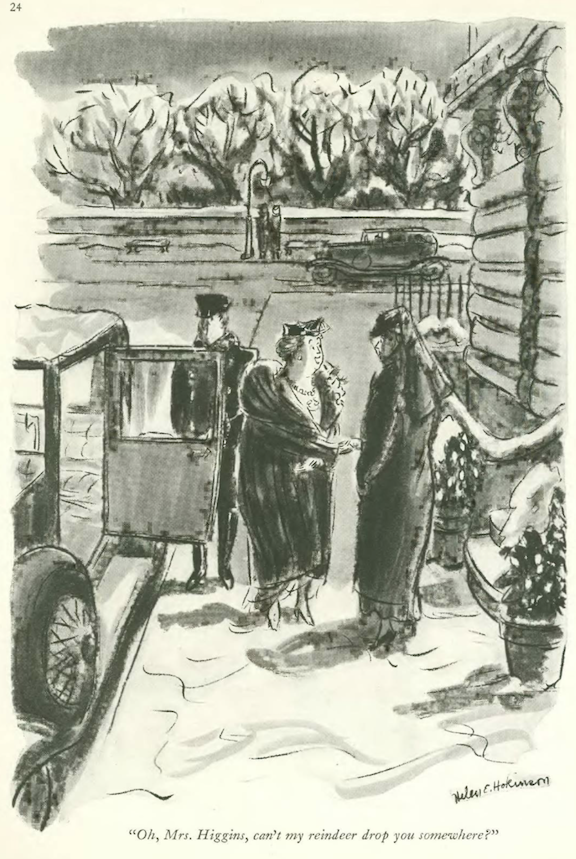
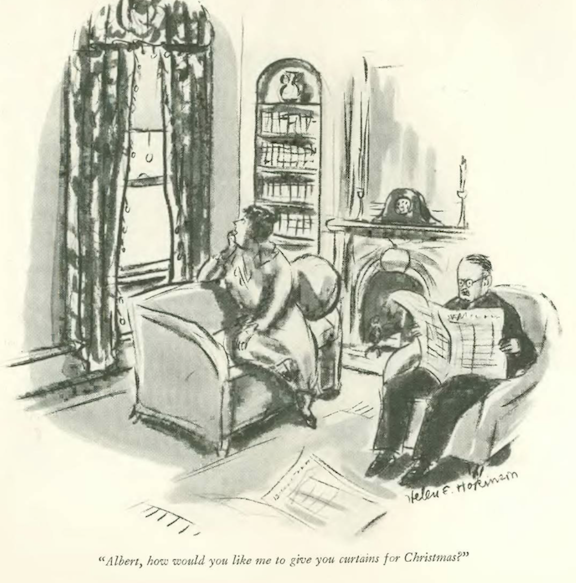
…Helen Hokinson pondered gift ideas…
…Carl Rose illustrated an unspeakable act at a progressive school…
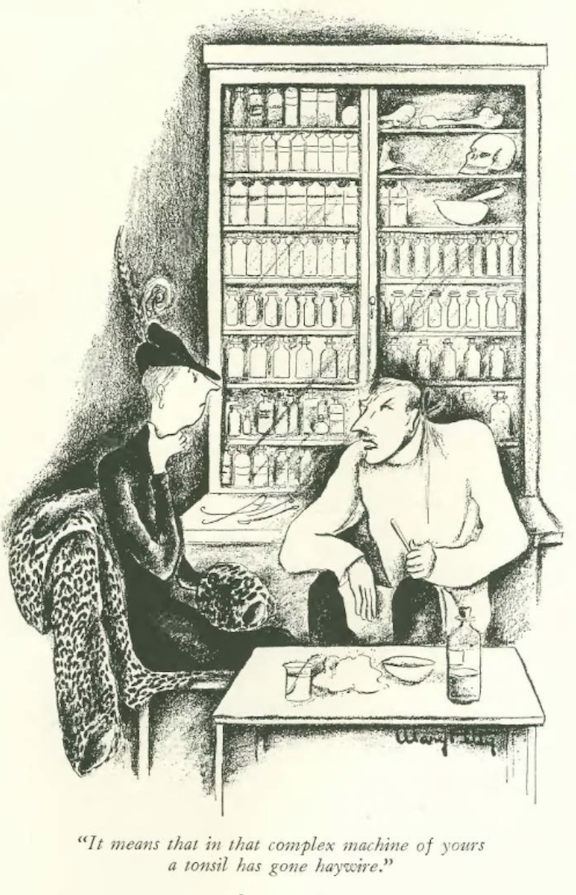
…Mary Petty gave us a straightforward diagnosis…
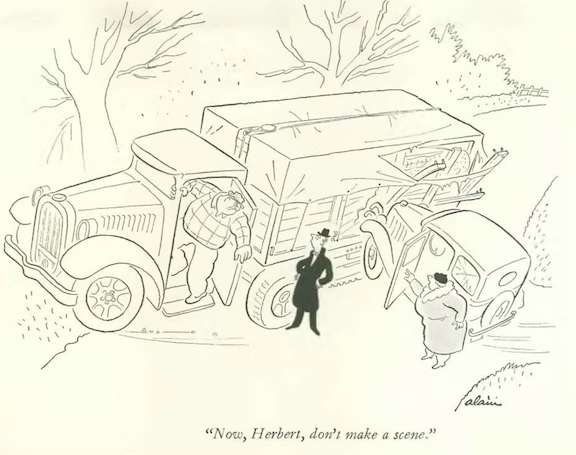
…Alain asked us to ponder the fate of one man…
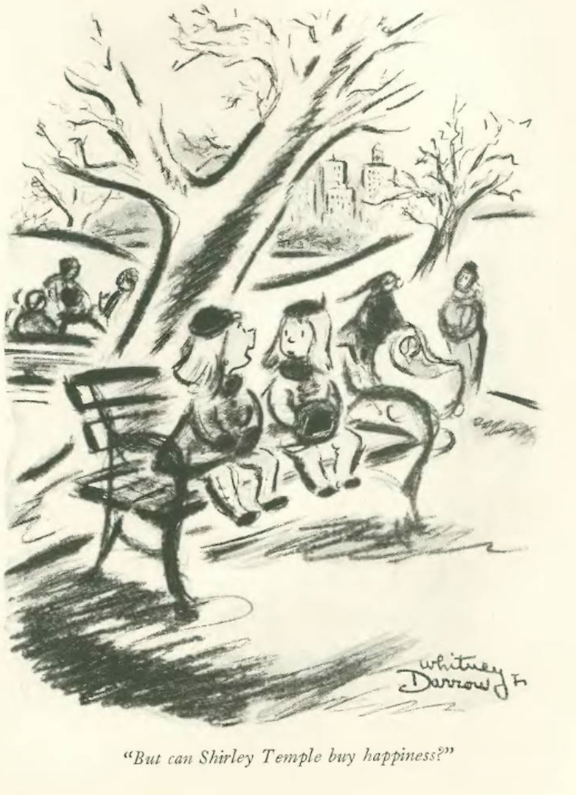
…Whitney Darrow Jr eavesdropped on some child philosophy…
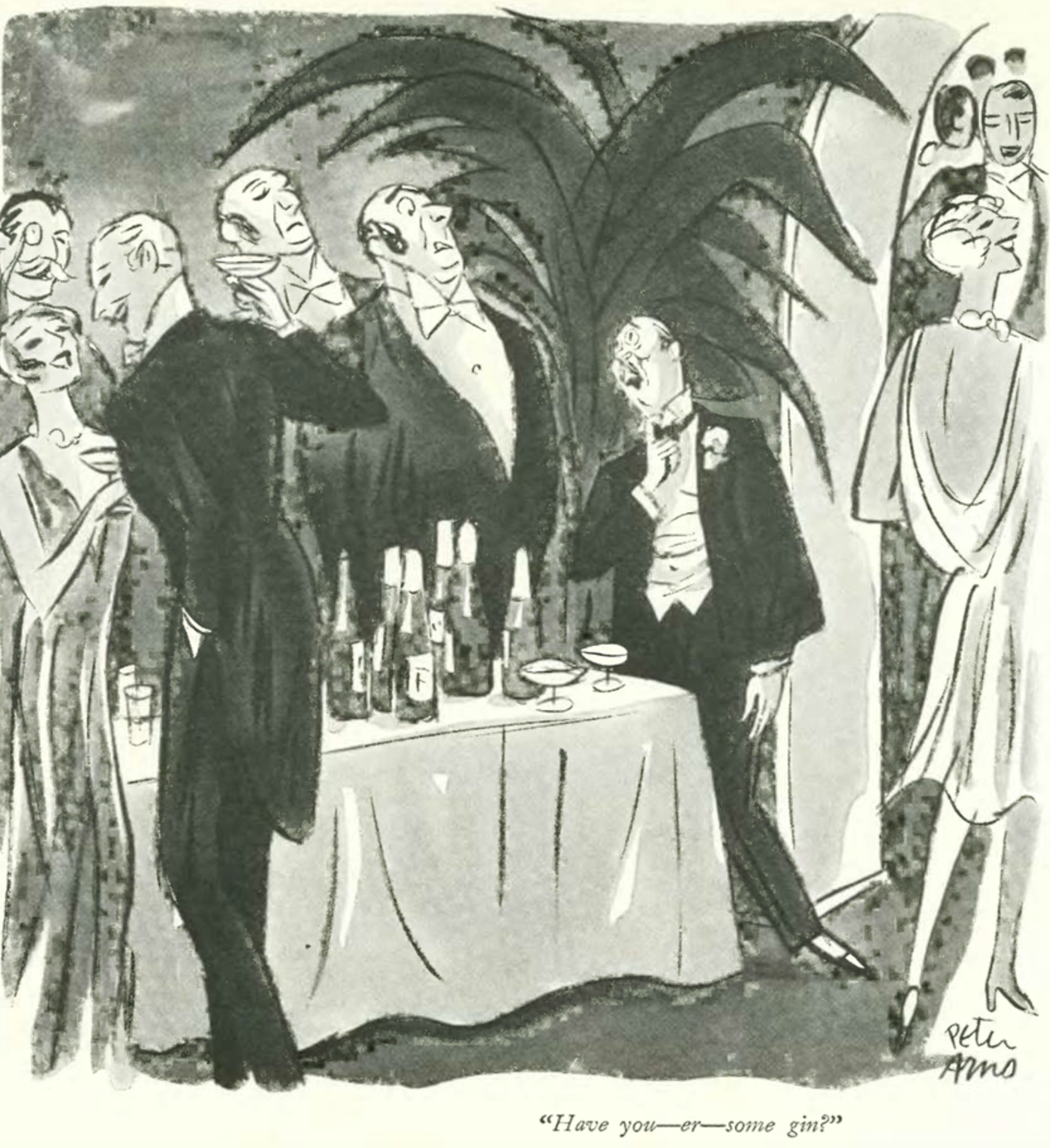
…and we close with Peter Arno, and a groom’s surprise at the altar…
In 1928 both sound and silent films appeared on screens across America, but by 1929 sound was ascendent, and in 1932 silents were mostly a distant memory.
August 13, 1932 cover by Rea Irvin.
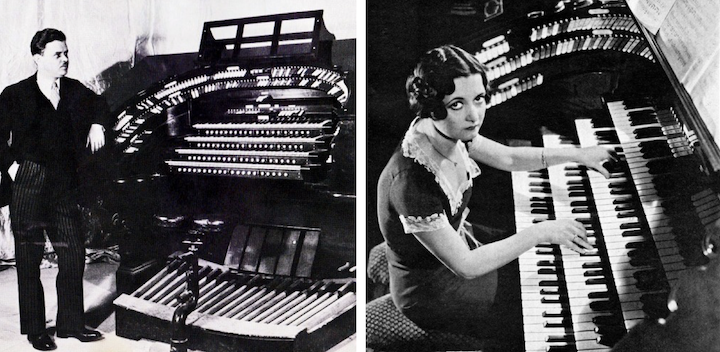
The New Yorker was slow to embrace sound—in reviews of early talkies, critic John Mosher found the technology stultifying in both dialogue and action, but as equipment and techniques improved he came to embrace the new medium. E.B. White, however, still missed the silent theatre, and the strains of its pipe organ…
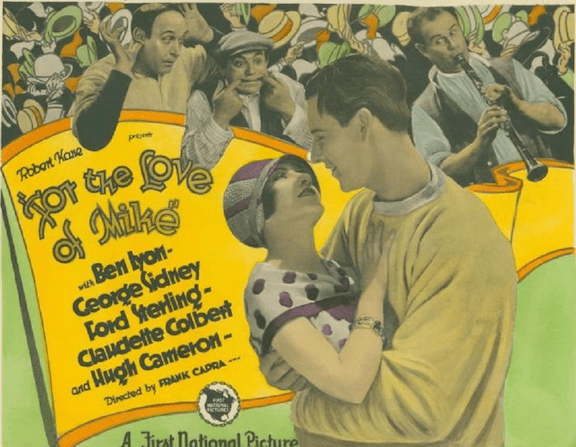
SILENCE IS GOLDEN…E.B. White was likely attending a late evening showing of For the Love of Mike,Claudette Colbert’s only silent film. After the Frank Capra-directed film received poor reviews, the 24-year-old Colbert vowed she would never make another movie. Fortunately for her fans, she changed her mind and signed with Paramount in 1929. At right, promotional photograph of Colbert for the 1928 Broadway production La Gringa. (IMDB/Wikipedia)VITAL ORGANISTS…Jesse and Helen Crawford both recorded music on Paramount’s mighty Wurlitzer, sounds that were music to the ears of E.B. White. (theatreorgans.com)
* * *
World’s Fastest Man
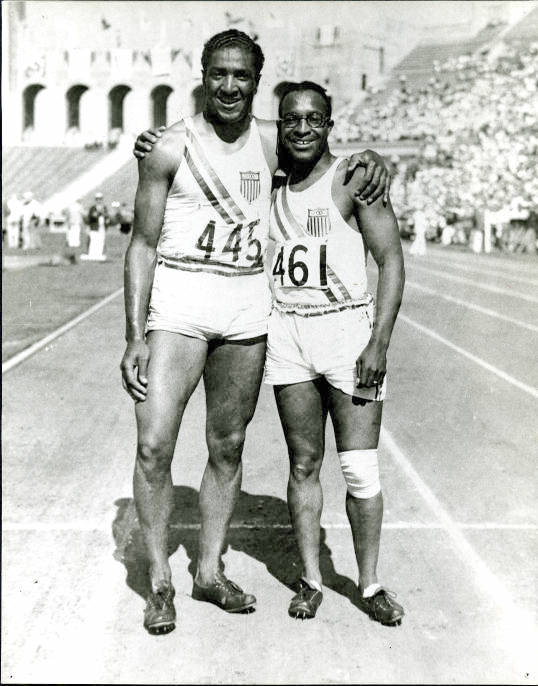
That title went to Eddie Tolan after the 1932 Summer Olympic Games, and his fame won him a long entry in the “The Talk of the Town,” although the column (excerpted) took a patronizing tone toward the athlete:
FASTEST IN THE WORLD…U.S. sprinters Ralph Metcalfe (left) and Eddie Tolan pose on the track at 1932 Los Angeles Olympics. Tolan would receive the title of the “world’s fastest human” after winning gold medals in the 100- and 200- meter events. Metcalfe, who be elected to the U.S. Congress in the 1970s, was considered the world’s fastest human in 1934-35. (Marquette University)
* * *
From Our Advertisers
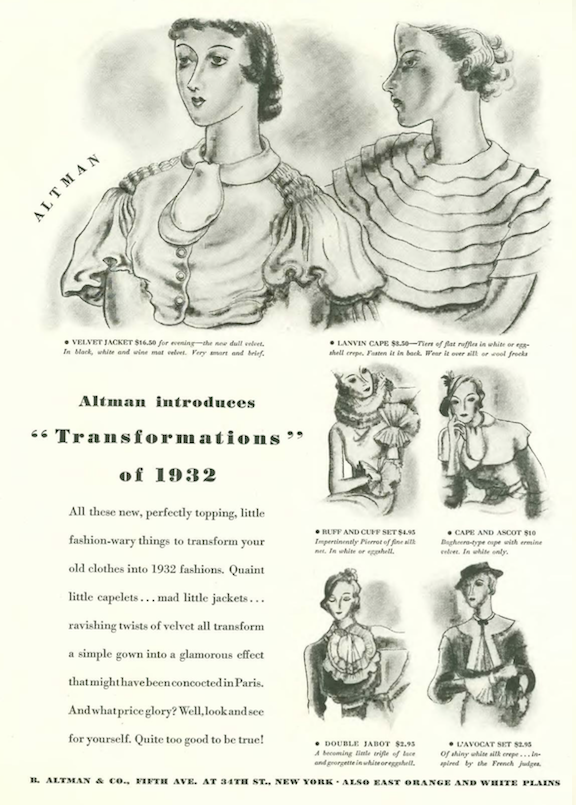
You could tell times were tough when a luxury department store felt the need to sell capes and cuffs designed to “transform” old clothes in to 1932 fashions…
…however, things seemed to be looking up for the folks at Powers Reproduction, who touted the naturalness of their DeSoto ads…
…such as this two-pager that appeared in The New Yorker’s July 23 issue…
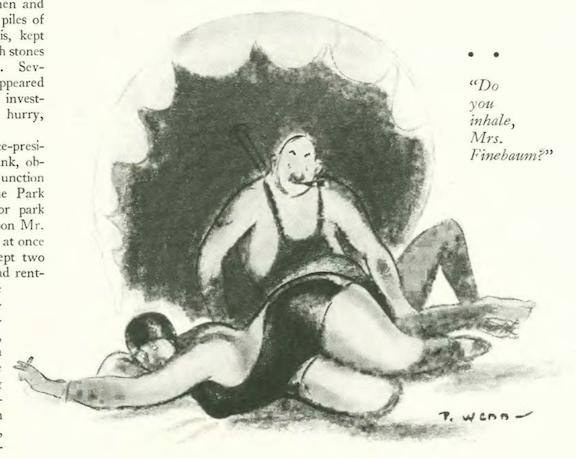
…we move on to our cartoonists, beginning with Paul Webb…
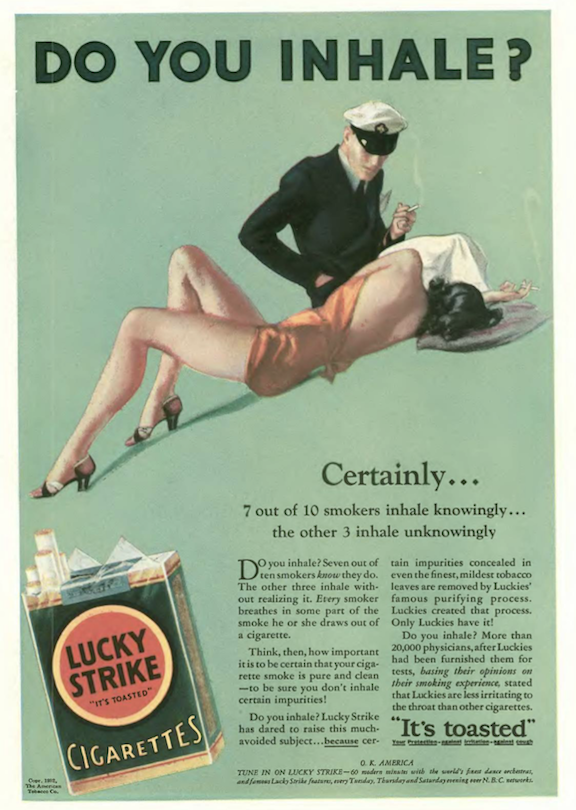
…who referenced a recent New Yorker ad (also from the July 23 issue)…
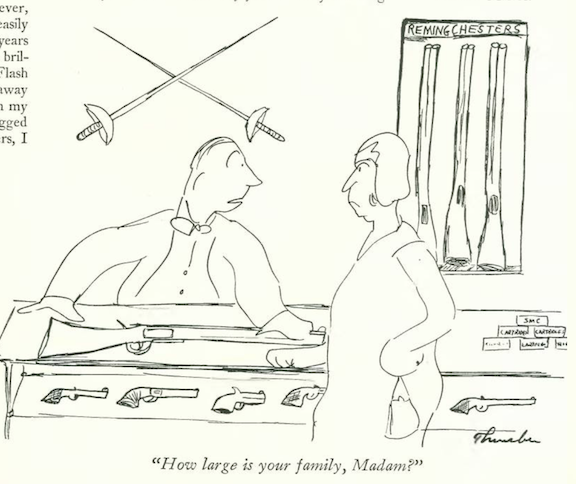
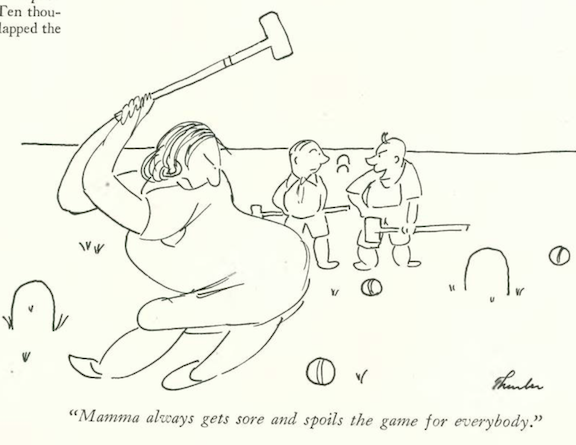
…James Thurber gave us two examples of female aggression…
…this one a bit less deadly…
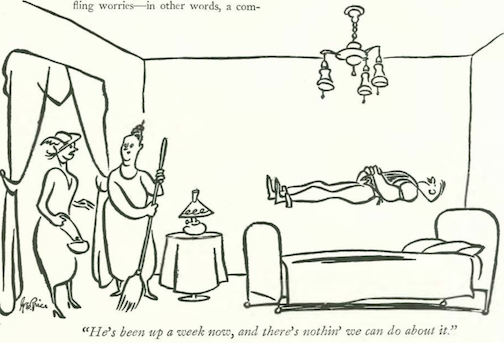
…here’s an early work by the great George Price (1901-1995), who beginning in 1929 contributed New Yorker cartoons for almost six decades…
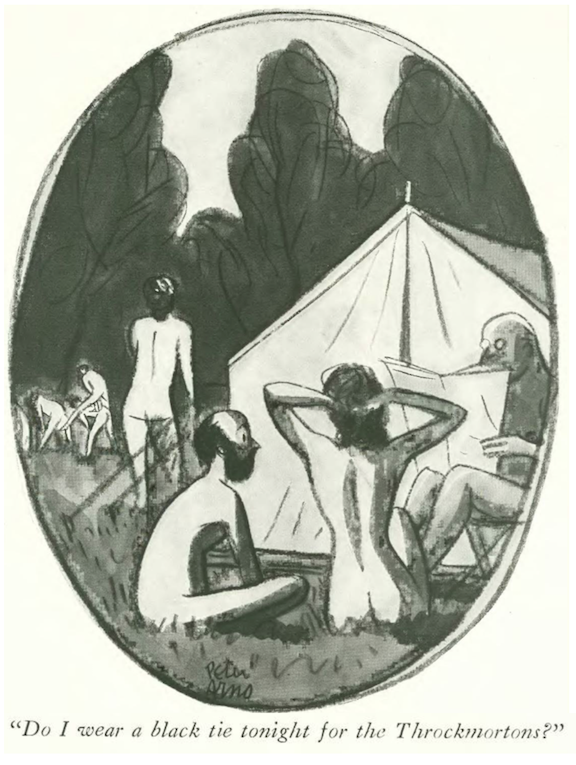
…Peter Arno showed us that among the uppers, even nudism had its class distinctions…
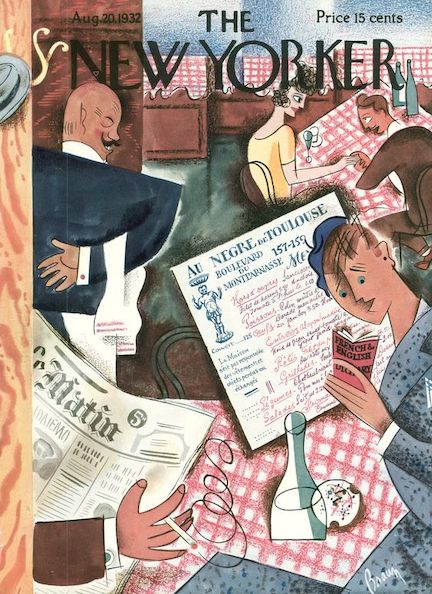
…on to our August 20, 1932 issue, and this terrific cover by Harry Brown. With a style reminiscent of the French artist Raoul Dufy, Brown illustrated a number of memorable New Yorker covers during the 1930s…
August 20, 1932 cover by Harry Brown.
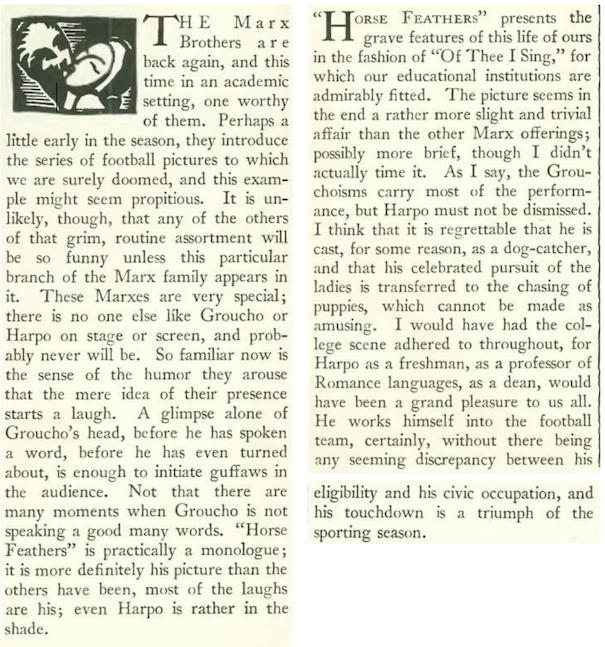
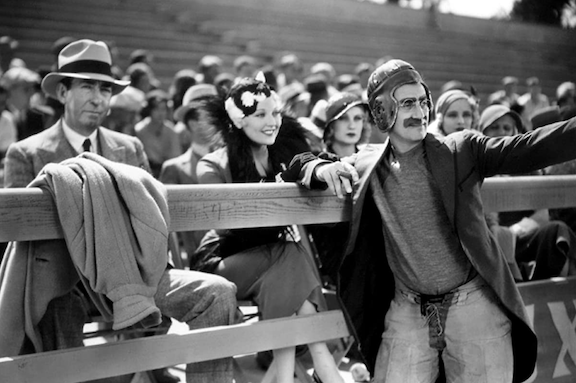
…the Marx Brothers were back in cinemas with Horse Feathers, and, according to critic John Mosher, delivered the comic goods…
Xs AND Os…Groucho Marx shows David Landau and Thelma Todd how the game of football is really played in Horse Feathers (1932). (IMDB)
* * *
Author, Author
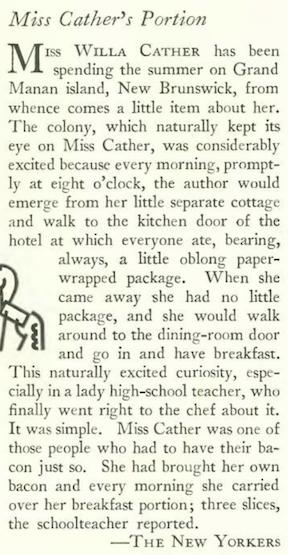
“The Talk of the Town” included this bit of news regarding the Pulitzer Prize-winning author Willa Cather. Beginning in the early 1920s, Cather and her partner, Edith Lewis, spent summers at Manan Island in New Brunswick, Canada:
THESE NEED SOME EDITING…Willa Cather pruning her roses on Manon Island. (University of Nebraska-Lincoln)
* * *
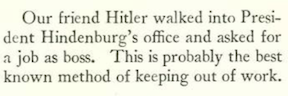
While Cather was enjoying the peace of island life, there were disturbing rumblings on the other side of the ocean, even if Howard Brubaker (writing in his column “Of All Things”) found humor in them…
…the result, however was no laughing matter…
NOT HIS USUAL STYLE…After being appointed as German chancellor, Adolf Hitler greets President Paul von Hindenburg in Potsdam, Germany, on March 21, 1933. This image, intended to project an image of Hitler as non-threatening, was made into a popular postcard. The photo also appeared widely in the international press. (www.ushmm.org)
…Brubaker also commented on the upcoming U.S. presidential elections, and, more importantly, the absence of Greta Garbo, who returned to Sweden after her MGM contract expired…
NOT FEELIN’ IT, PAL…Melvyn Douglas romances Greta Garbo in 1932’s As You Desire Me. Garbo would leave for Sweden after the film wrapped. She would return after a nearly a year of contract negotiations. (IMDB)
* * *
From Our Advertisers
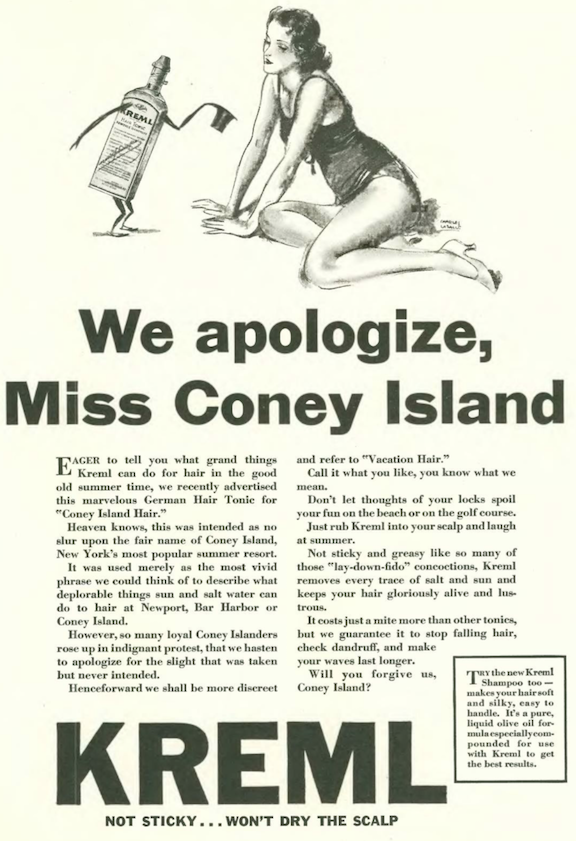
Illustrator Charles LaSalle, who would later be known for his Western-themed art, provided this odd bit of art for the makers of a German hair tonic…
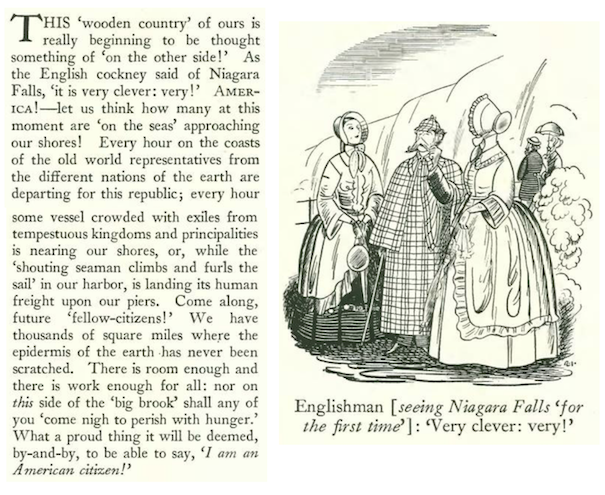
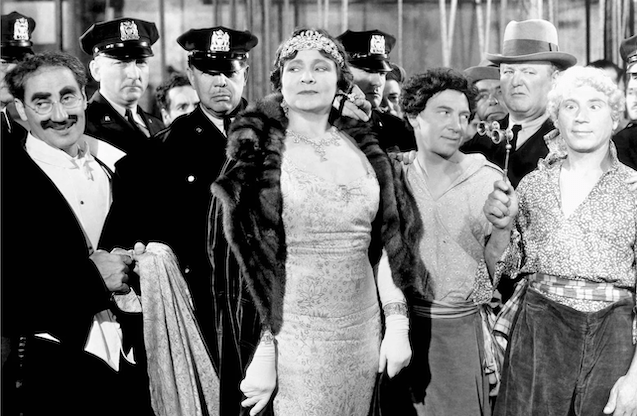
…on to our cartoons, Rea Irvin continued his travelogue of famed tourist destinations…
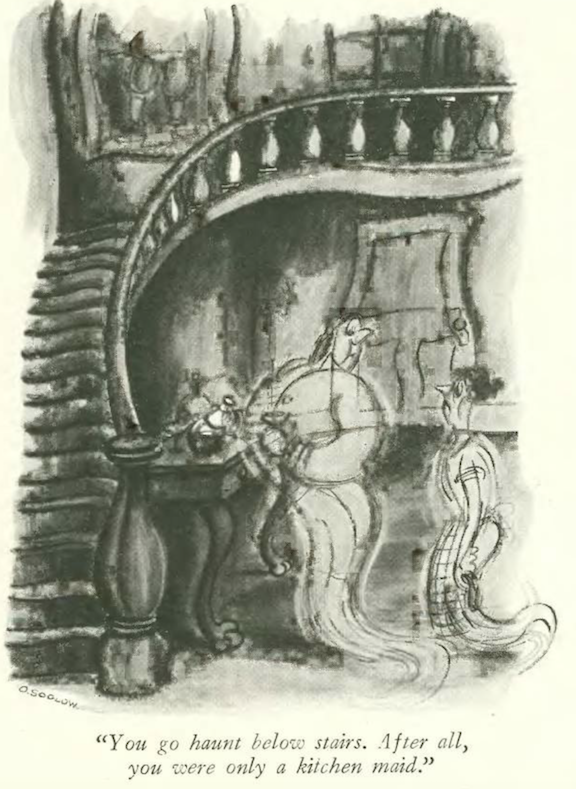
…Otto Soglow showed us that even the spirit world has its version of Upstairs, Downstairs…
…Carl Rose rendered a cow and a calf made homeless for art’s sake…
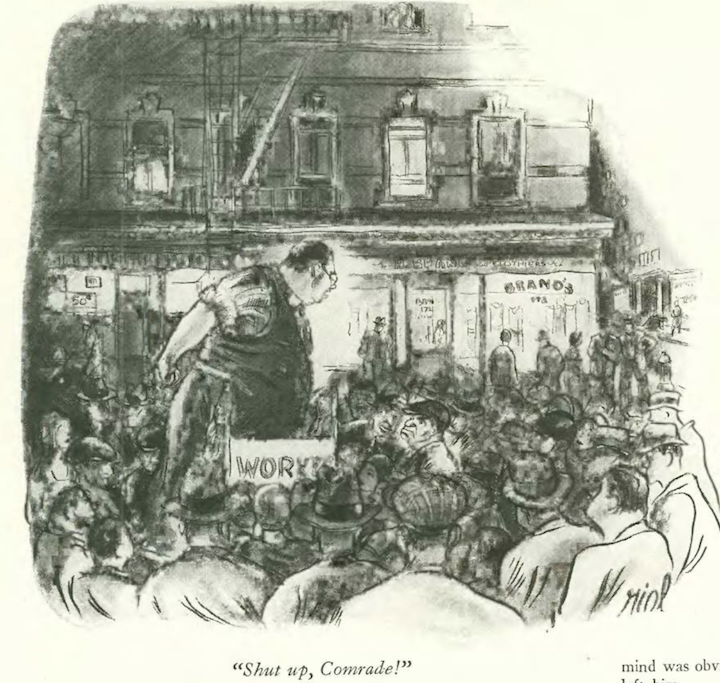
…Leo Soretsky contributed only one cartoon to The New Yorker, but it was a doozy…
…on to August 27, 1932…
August 27, 1932 cover by S. Liam Dunne.
…in which the “Talk of the Town” contributors decided to pay homage to Lewis Gaylord Clark (1808–1873), who was editor and publisher of the old The Knickerbocker magazine (1833 – 1865)…
…here is one of the entries, with accompanying artwork, written in the style of the old magazine…
* * *
From Our Advertisers
William Steig had illustrated several ads for Old Gold, and now it was Peter Arno’s turn to entice readers to the national habit…
…Lucky Strike, on the other hand, preferred these illustrations of young women, who also happened to be their biggest growth market…by the way, this is not an official “Miss America”—there was no pageant in 1932…
…and we end with cartoons that ponder the female form by Daniel Brustlein (1904–1996), who contributed cartoons and covers to The New Yorker from the 1930s to the 1950s under the pen name Alain…
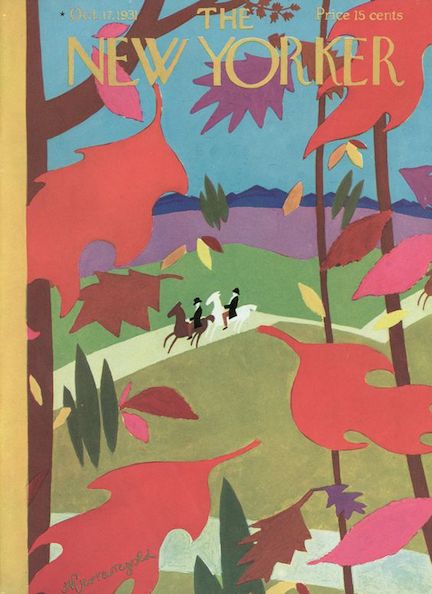
From the Upper East Side and the vaudeville stage to the shining lights of Hollywood went the Marx Brothers in 1931, starring in their first movie written especially for screen rather than adapted from one of their stage shows.
Oct. 17, 1931 cover by Adolph K. Kronengold.
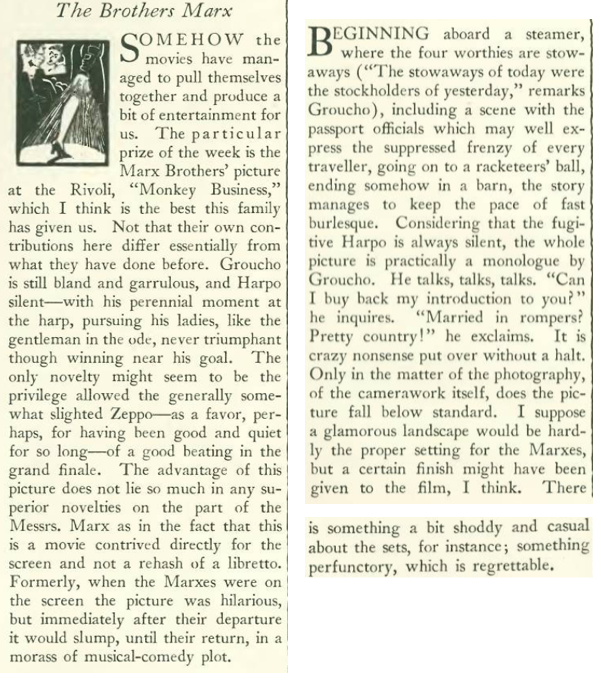
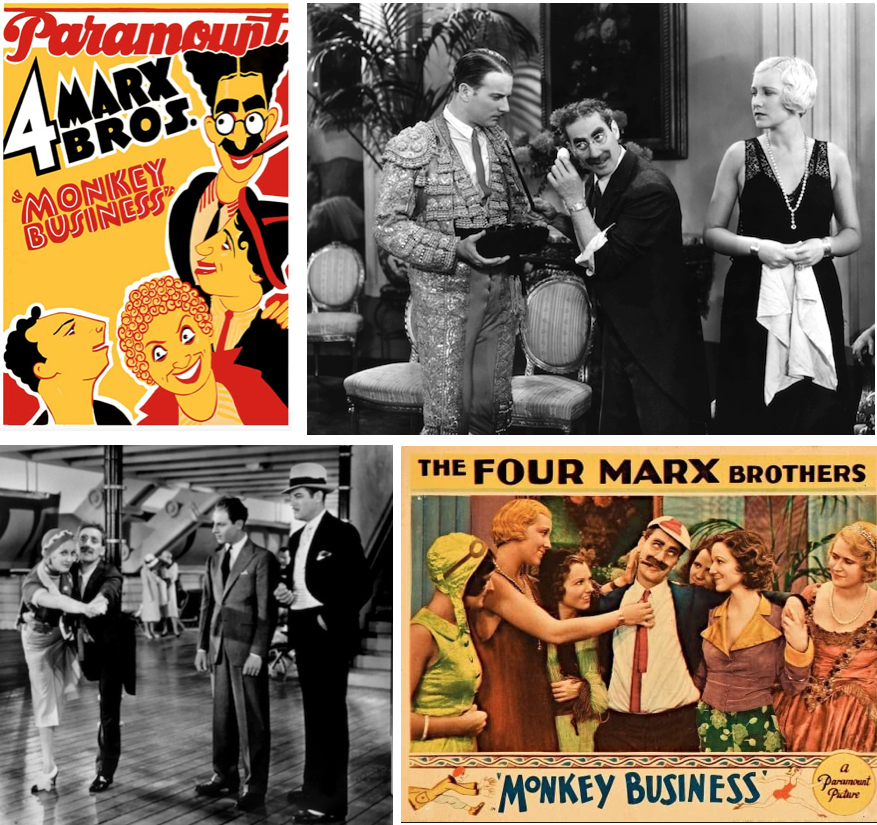
Monkey Business also their first film to be shot outside of New York. The brothers’ first two pictures—The Cocoanuts (1929) and Animal Crackers (1930)—were filmed at Paramount’s Astoria Studios in Queens. Film critic John Mosher found their latest movie to be a “particular prize” among the somewhat ordinary fare being cranked out of Hollywood. It featured the four as stowaways on an ocean liner bound for America, and that’s all you really need to know, because like most of their films it cut quickly to the chase…
Monkey Business was the first film to label the troupe the “Four Marx Brothers” (a billing that would continue through their Paramount years). A fifth brother, Gummo, left the team early and went on to launch a successful raincoat business.
NEVER A DULL MOMENT…The Marx Brothers were up to their usual antics in their first Hollywood-made film, Monkey Business. At top, Groucho performs an egg trick on a society couple; at bottom, he does a bit of hoofing with comedian Thelma Todd. (IMDB)
* * *
Monkey’s Uncles
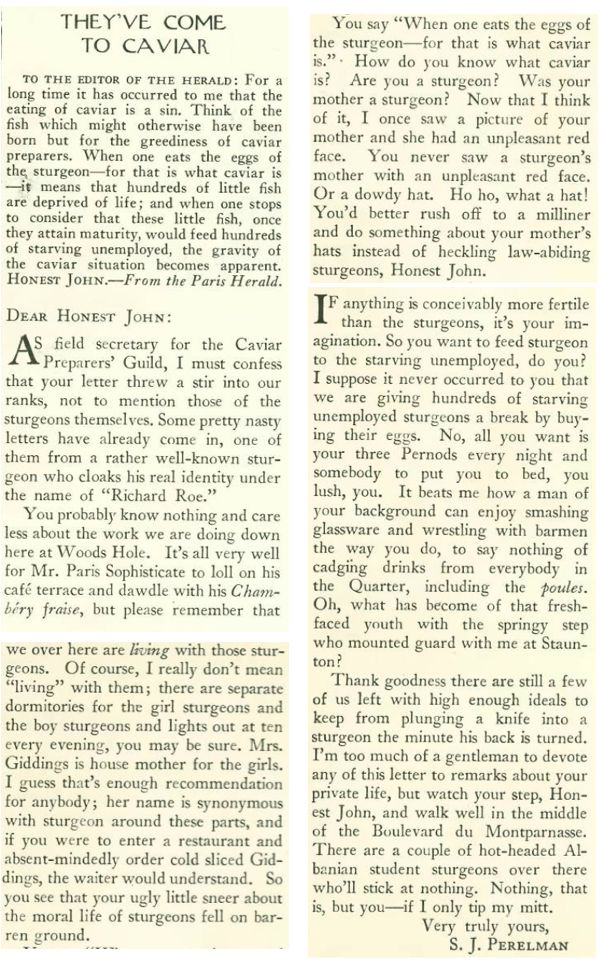
There was a New Yorker connection to Monkey Business — S. J. Perelman‚ a frequent contributor of humorous shorts to the magazine, was one of the screenwriters for the film. And it just so happens that one of Perelman’s shorts was in the Oct. 17 issue, and it was a doozy…
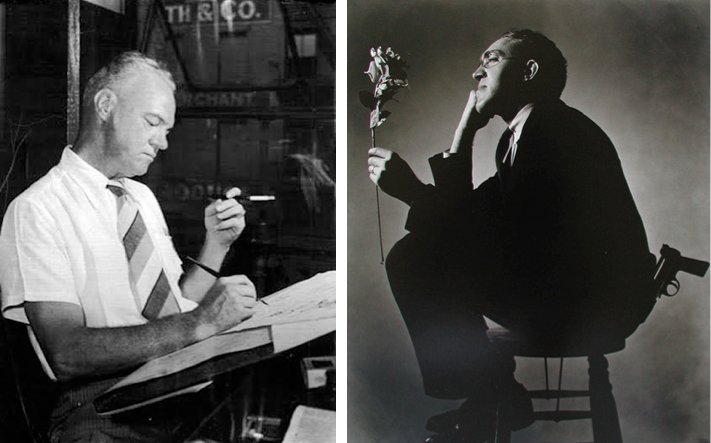
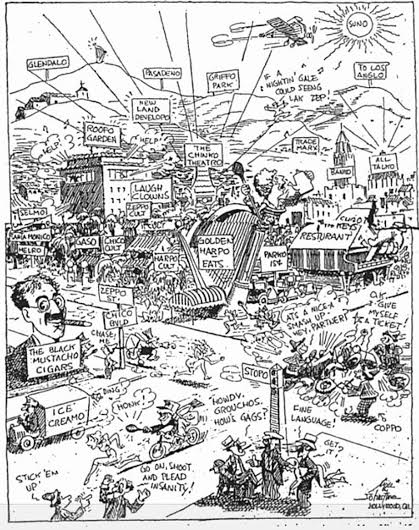
MAKE ‘EM LAUGH…Writer and cartoonist Will B. Johnstone (left) wrote the screenplay for Monkey Business with S. J. Perelman, right, in a 1935 portrait by Ralph Steiner. (Meg Farrell/Yale University)A promotional cartoon for Monkey Business by Will B. Johnstone. He also created the cartoon character of The Tax Payer wearing only a barrel held up by suspenders. It was a regular feature in the New York World-Telegram. (Meg Farrell via travsd.wordpress.com)
* * *
Office Chatter
E.B. White called out a couple of his New Yorker colleagues in “Notes and Comment” as he mused about “lady poets” and their disillusionment with the menfolk. The “Selma Robinson” he mentions was a young writer who had just published her first collection of poems titled City Child…
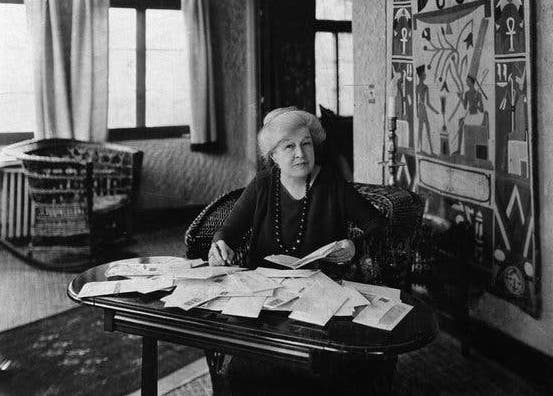
…White then moved on the subject of matrimony and advice columns, zeroing in on Dorothy Dix, the most widely read woman journalist of her time with an estimated 60 million readers turning daily to her syndicated column…
LIGHTEN UP ON THE LOVEBIRDS, DOROTHY, E.B. White seemed to suggest in his “Notes and Comment” item about syndicated advice columnist Dorothy Dix. (Associated Press/The New York Times)
* * *
So Much for Prognosticators
The New Yorker ran an amusing two-page spread that contained the quotes of prominent writers, politicians, businessmen and economists—month by month since the October 1929 market crash—who predicted a swift end to the Depression and better times just around the corner. An except below (note the reprise of Otto Soglow’s manhole cartoon).
* * *
It Pays to be Funny
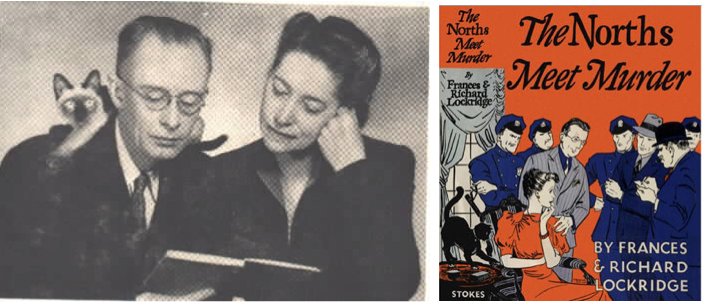
Richard Lockridge (1898–1982) was a reporter for The New York Sun when he began submitting comic sketches to The New Yorker such the one excerpted below. Later sketches would include the characters Mr. and Mrs. North. In the late 1930s Lockridge would collaborate with his wife, Frances Louise Davis, on a detective novel, combining her plot with his Mr. and Mrs. North characters to launch a series of 26 novels that would be adapted for stage, film, radio and television.
PARTNERS IN CRIME…Richard and Frances Lockridge examine one of their mystery novels in this undated book jacket photo. At right, the cover of their second “North” book, with cover illustration by Helen Hokinson (note the similarities of the Mr. and Mrs. North characters to Richard and Frances).
* * *
Land Barge
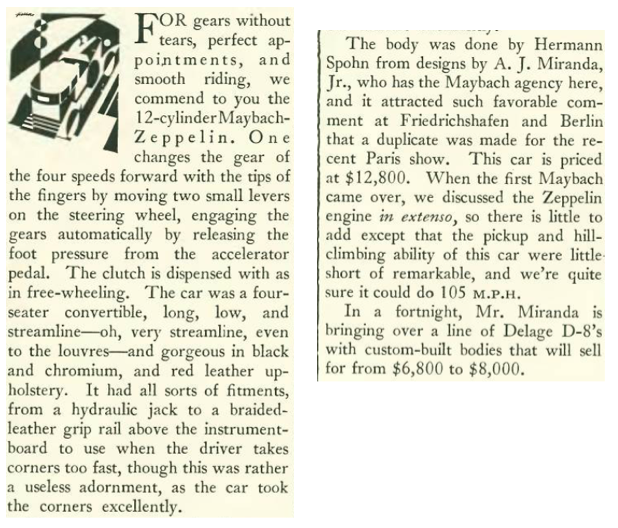
The “Motors” column featured the latest luxury offering from Germany, the massive 12-cylinder Maybach Zeppelin, which would set you back a cool $12,800 in 1931 (roughly $200,000 in today’s currency). Named for the company’s production of Zeppelin engines in the World War I era, the car weighed 6,600 pounds (3,000 kg).
THE 12-CYLINDER Maybach Zeppelin was not known for its economy. (Wikipedia/Alf van Beem)
* * *
From Our Advertisers
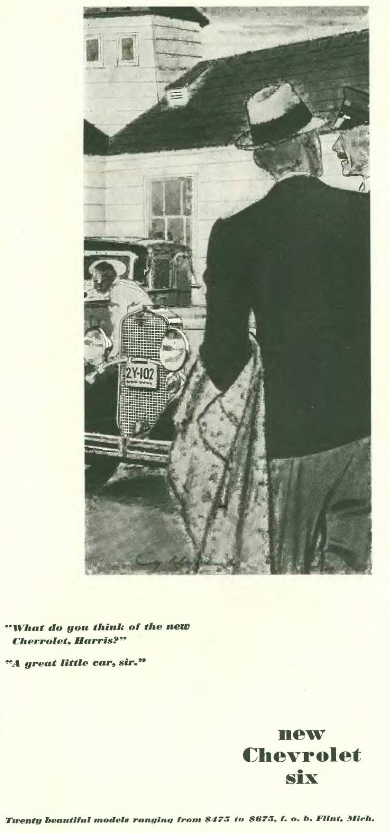
The new Chevrolet Six was no Maybach, but the folks at GM nevertheless tried to suggest it was a car for the posh set…
…when Kleenex was first introduced to American consumers in 1924 it was marketed as a tissue for removing cold cream, and wasn’t sold as a disposable handkerchief until the 1930s…
…and contrary to the wisdom of the ages, the makers of Old Gold cigarettes tried to convince us that their cigarettes would not leave smokers with bad breath or yellowed teeth…
…Winnie-the-Pooh, or here referred to as “Winnie, The Pooh,” was only five years old when this ad was created for Macy’s, and even before Disney got his hands on him the bear was being turned into various consumer products including baby bowls, handkerchiefs and lamps…
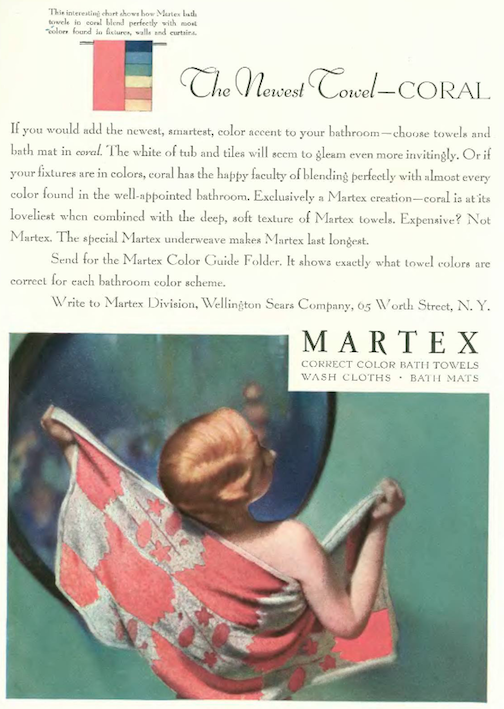
…the color ads in the early New Yorker were quite striking, such as this full-pager for Martex towels…
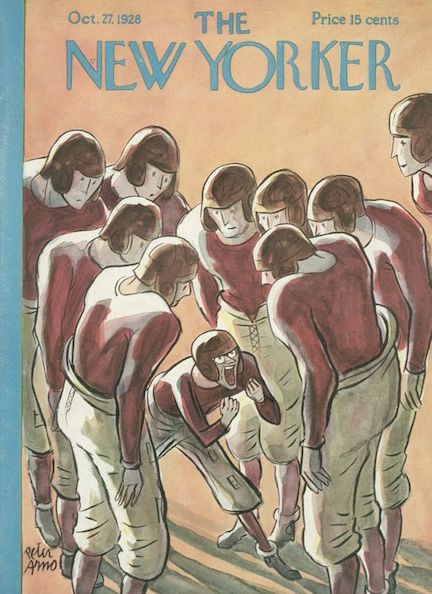
…or this one for Arrow shirts, featuring a determined coach making an important point to his leatherheads before the big game…
…on to our cartoons, we have Otto Soglow’s Little King engaging in some sport of his own…
…Alan Dunn showed us a meter reader who probably needed to come up for some fresh air…
…William Crawford Galbraith gave us a sugar daddy without a clue…
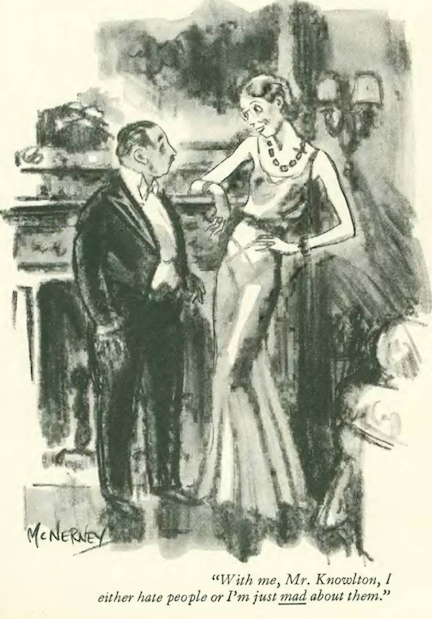
…E. McNerney showed us another pair that begged the question “what comes next?”…
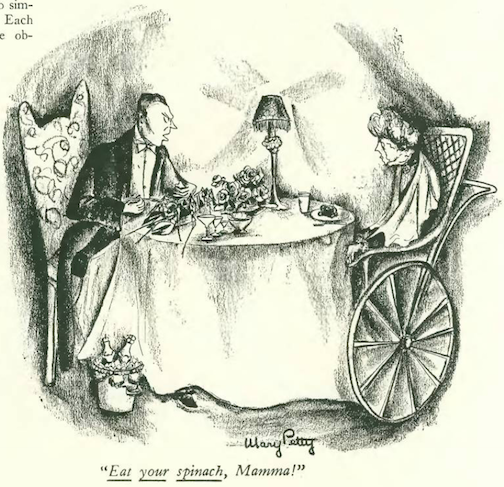
…this Mary Petty cartoon recalls Carl Rose’s famous “I say its spinach” cartoon—and Mamma has every right to say “the hell with it” in this case…
…in this William Stieg entry, a father teaches his young charge the art of rubbernecking…
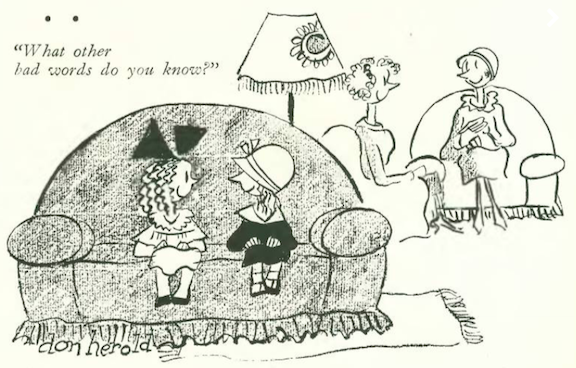
…and Don Herold gave us a peek at what the little dears really talk about while their parents exchange the latest gossip…
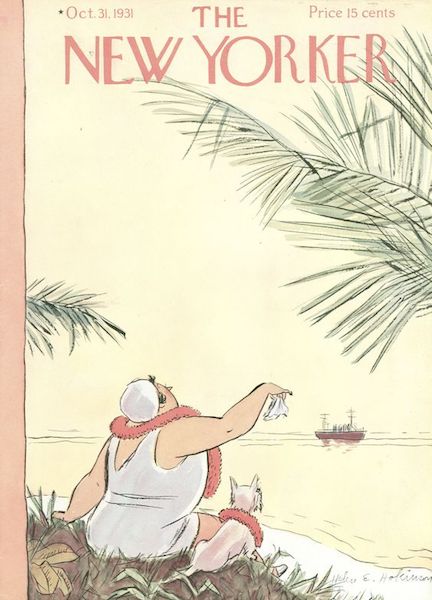
…on to the Oct. 24, 1931 issue…
Oct. 24, 1931 cover by Rose Silver.
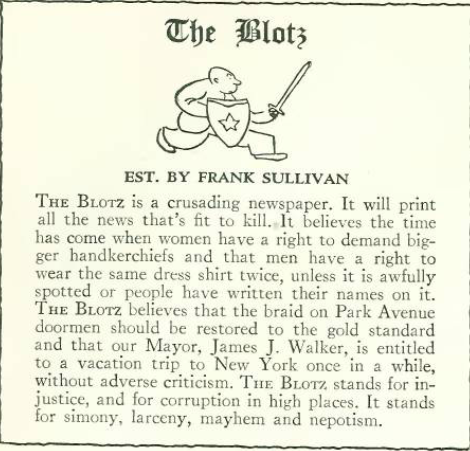
…where we find the latest edition of Frank Sullivan’s satirical newspaper, The Blotz, which occupied a two-page spread (excerpt below)…
…and featured this masthead of sorts (with James Thurber art)…
…and another Thurber contribution as The Blotz’s political cartoonist…
…more colorful ads to enjoy, including this nighthawk view of an apartment house…
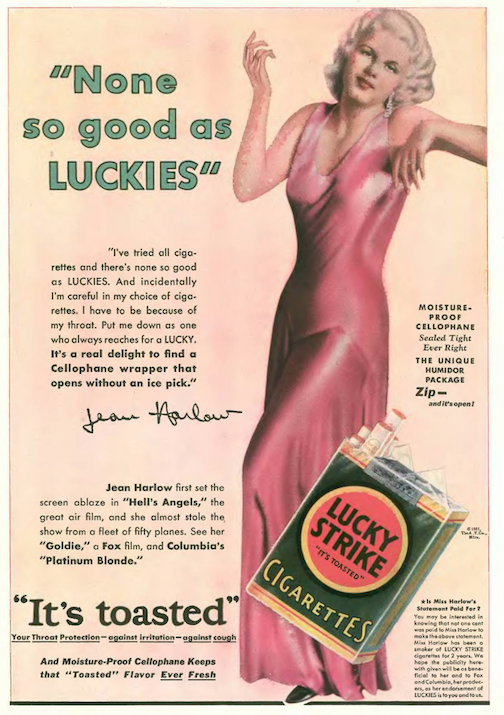
…and this ad for Lucky Strike cigarettes, featuring 20-year-old Platinum Blonde star Jean Harlow (what is she leaning on?) who probably shouldn’t have smoked because her health was always a bit fragile—she would be dead in less than six years…
…ands then we have our latest high society shill for cold cream, Marchioness of Milford Haven, aka Nadejda Mikhailovna Mountbatten, aka Countess Nadejda de Torby, aka Princess George of Battenberg…she was probably best known for her part in the 1934 Gloria Vanderbilt custody trial, when a a former maid of Vanderbilt’s mother, Gloria Morgan, testified that the Marchioness had a lesbian relationship with Morgan…
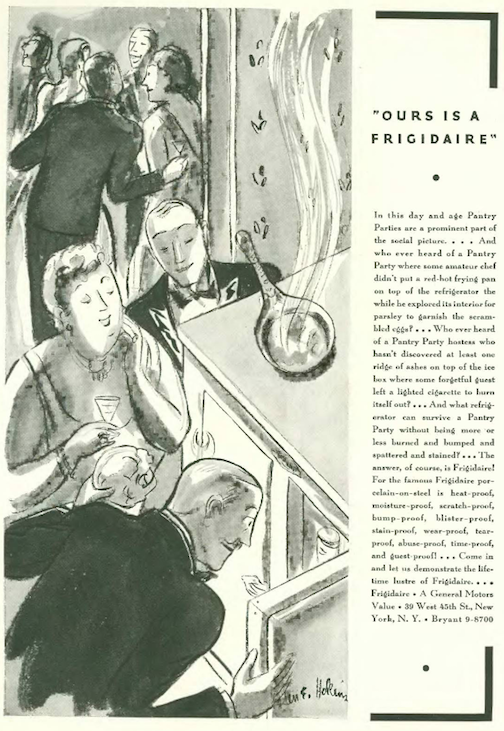
…Helen Hokinson continued loaning one of her “girls” to Frigidaire to extol the wonders of their seemingly indestructible refrigerators…
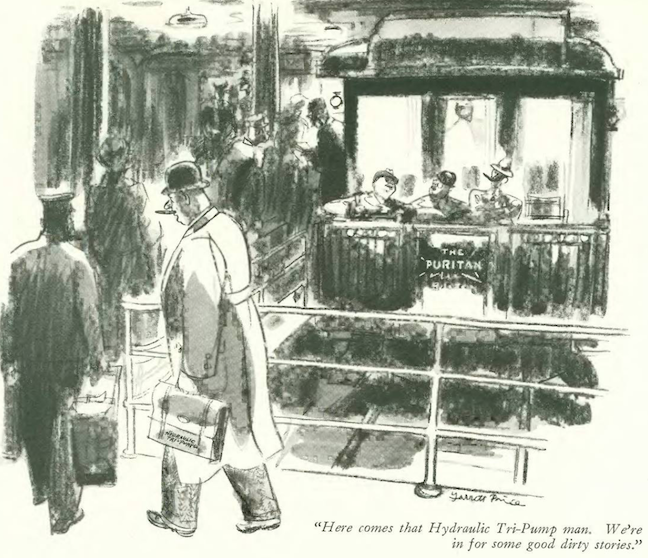
…our Oct. 24 cartoons feature Garrett Price, who brought us the exciting world of the traveling salesman…
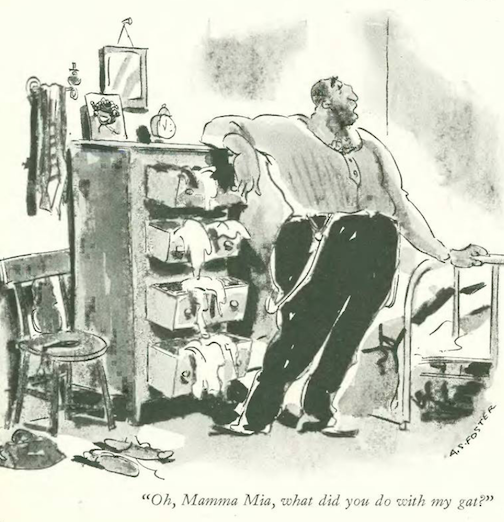
…A. S. Foster served up an Italian stereotype…
…Isadore Klein, on the other hand, turned a stereotype on its head…
…and we end with Rea Irvin, who gave us what I believe was a first in The New Yorker—a cartoon character breaking the fourth wall…
…by the way, M.F.H. stands for Master of Fox Hounds…I had to look it up.
For all its embrace of the modern city and its technological wonders, The New Yorker mostly despaired of the changes wrought by the introduction of sound to motion pictures.
June 1, 1929 cover by Rea Irvin.
Granted, early sound technology was primitive, with directors, actors and crew members adapting on the fly to the demands of a new medium that required absolute silence on film sets and cumbersome microphones that severely limited the movements of actors. Screenwriters, accustomed to writing brief intertitles in silent films, now had to write expository dialogue, and actors had to rely less on exaggerated facial expressions and body movements and more on the spoken word. And it helped if you didn’t have a speech impediment or heavy accent.
Writing for “The Reporter at Large” column (titled “The Unspeakables”), Hollywood correspondent Jean-Jacques lamented that the talkies were “here to stay”…
BARNLIKE STAGES were erected on both coasts to produce early silent films. Clockwise, from top left, Fox’s World Paragon Studios in Ft. Lee, NJ, circa 1917; interior of the studio; several films in production, side-by-side, at Edison’s Bronx studio, circa 1915; Fox studios in Los Angeles, 1920s. (moviemice.com/Wikipedia)
Jean-Jacques recalled the professions that would now be lost to the talkies, including the “mood musicians” who played their instruments on silent film sets in order to evoke emotions from the actors…
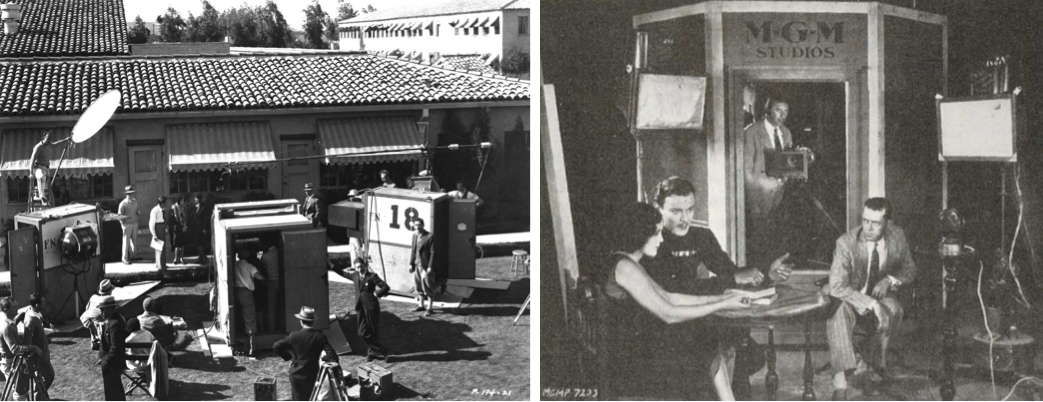
IN THE MOOD…During the silent era “mood musicians” were hired to play their instruments on film sets in order to evoke emotions from the actors. (Pinterest)THE SILENCE OF SOUNDS…In the early days of the talkies the entire set had to be silent, and special care had to be taken to ensure loud cameras were housed in soundproof boxes such as those pictured above. Instead of the introduction of sound expanding the capabilities of filmmaking, it was often limited by the bulky gear used to capture that sound. Therefore, many films consisted of “stage” musical numbers that were static shots. (Caption and image at left courtesy Colorado College. Image at right from cinecollage.net)
The writer also noted the challenges that faced “the old scenario writer…hemmed in by a multitude of new rivals…
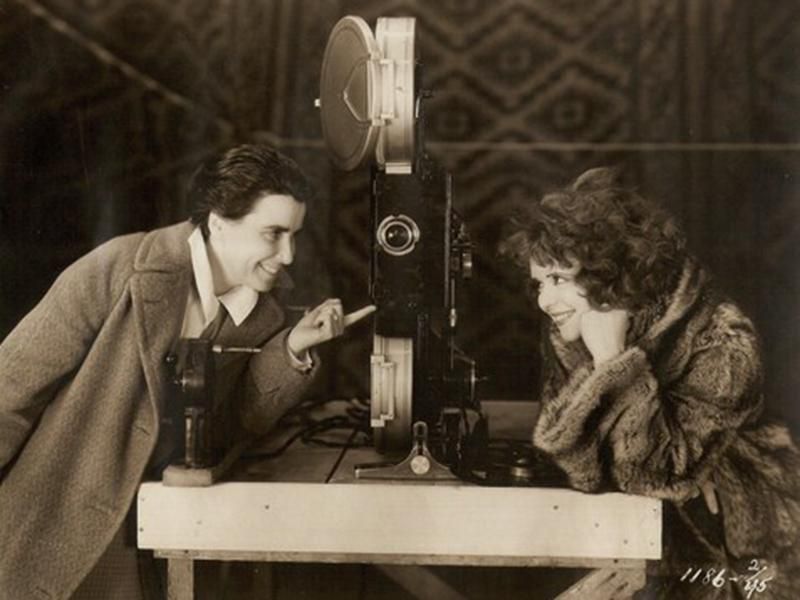
WE HAVE WAYS OF MAKING YOU TALK…Dorothy Arzner (left) poses with “It Girl” Clara Bow in a publicity shot for The Wild Party, Bow’s first talking picture. Bow is famously quoted as saying (in 1930) “I hate talkies. They’re stiff and limiting. You lose a lot of your cuteness, because there’s no chance for action.” Arzner tried to remedy that problem: she is credited with inventing the boom mike, which allowed for greater movement by the actor. (Paramount Pictures/Wikimedia Commons)
Jean-Jacques recounted the frustrations experienced by one old-time actor dealing with the limitations of bulky sound equipment…
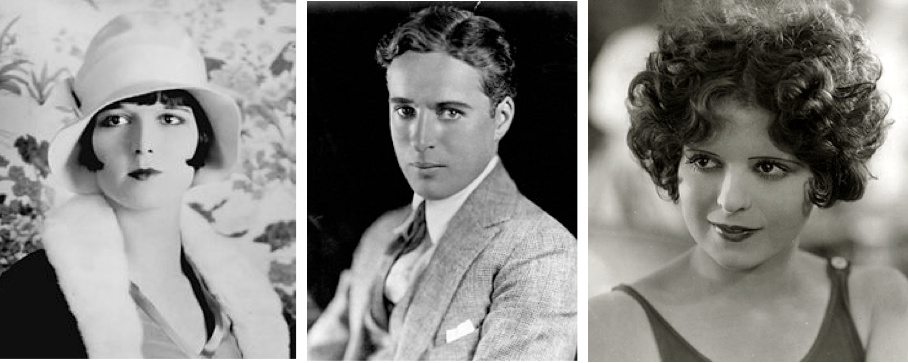
This actor was not alone. A number of major silent film stars including Charlie Chaplin, Louise Brooks, and Clara Bow did not embrace the novelty of sound pictures. Motion Picture Classic magazine (September 1930) quoted Bow as saying, “I hate talkies … they’re stiff and limiting. You lose a lot of your cuteness, because there’s no chance for action, and action is the most important thing to me.” According to the article, a visibly nervous Bow had to do a number of retakes in The Wild Party because her eyes kept wandering up to the microphone overhead.
SILENCE IS GOLDEN…A number of major silent film stars including (from left) Louise Brooks, Charlie Chaplin and Clara Bow did not embrace the novelty of sound pictures. (Wikipedia)
Jean-Jacques signed off his New Yorker piece with the hope that someday pictures and sound would be combined into a worthy new art form…
Perhaps he had to look no further than Manhattan’s Rialto Theatre to find that first glimmer of hope, for it was there that the Marx Brothers were tearing up the screen in their first talking picture, The Cocoanuts, reviewed in the magazine’s “The Current Cinema” column…
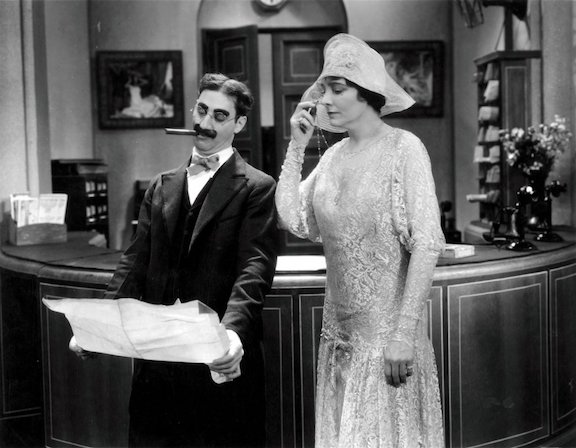
If The New Yorker was looking for snappy dialogue in motion pictures, there was plenty of it in The Cocoanuts, including this snippet between Groucho Marx, playing Mr. Hammer—an unscrupulous manager of a bankrupt Florida hotel—and wealthy hotel guest Mrs. Potter, played by Margaret Dumont…
Hammer: Do you know that property values have increased since 1929 one thousand per cent? Do you know that this is the biggest development since Sophie Tucker? Do you know that Florida is the show spot of America and Cocoanut Manor the black spot of Florida?
Mrs. Potter: You told me that yesterday.
Hammer: I know but I left out a comma.
Or this gem…
Hammer, to Mrs. Potter: Just think – tonight, tonight when the moon is sneaking around the clouds I’ll be sneaking around you. I’ll meet you tonight under the moon. Oh, I can see it now – you and the moon. Wear a neck-tie so I’ll know you.
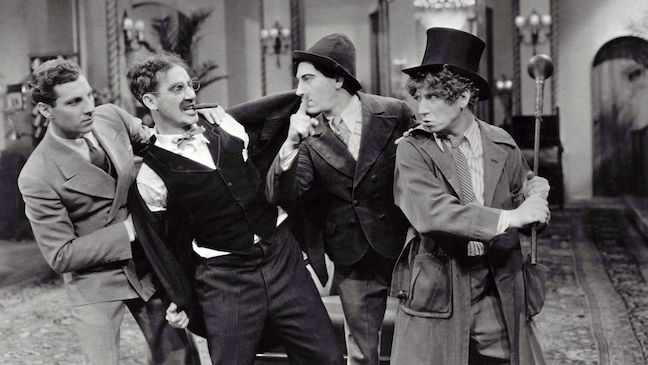
SHOW ‘EM HOW IT’S DONE…Zeppo, Groucho, Chico and Harpo Marx in their first sound movie, The Cocoanuts, 1929. (vitaphonedreamer.wordpress.com)BAMBOOZLER… Mrs Potter (Margaret Dumont), inspects Mr Hammer’s (Groucho Marx) Florida property “deals” in The Cocoanuts. (British Film Institute)
* * *
For Sentimental Reasons
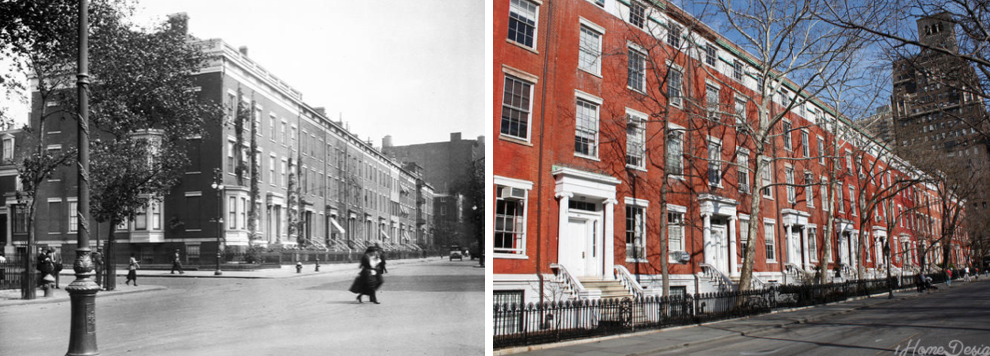
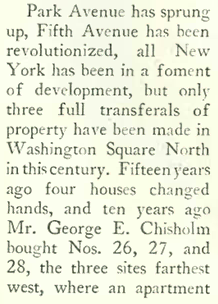
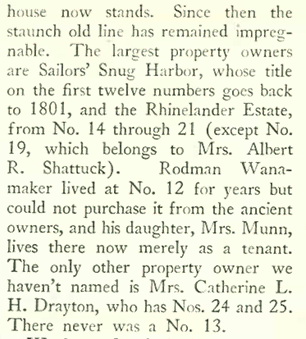
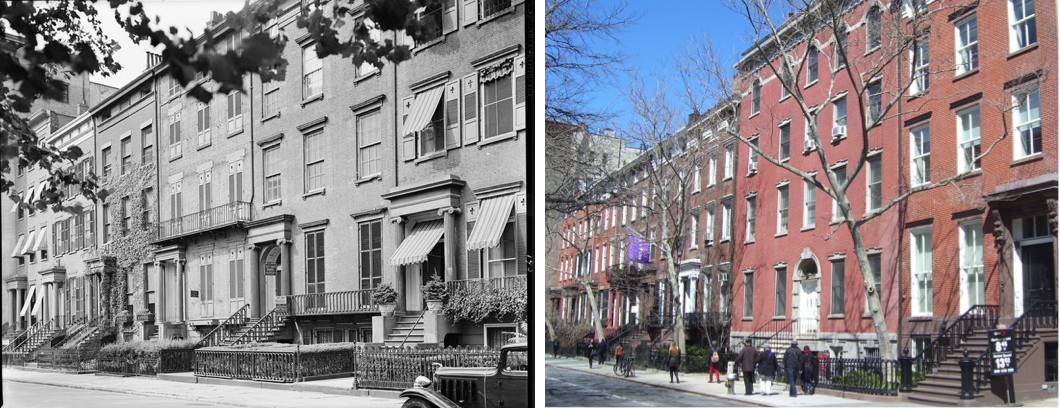
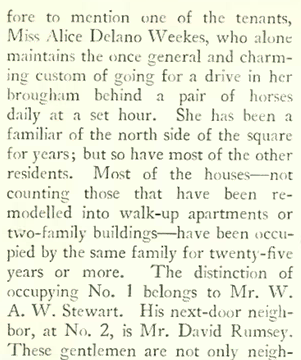
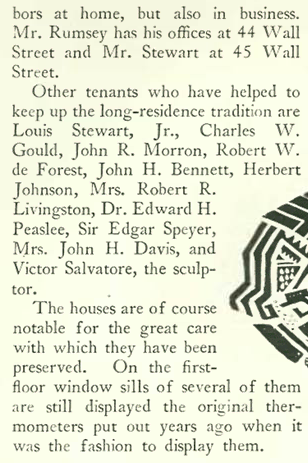
Additional evidence that The New Yorker was not always ready to embrace change came from its many articles, particularly in “The Talk of the Town,” that seemed to favor the preservation of buildings that defined the character of certain neighborhoods, including the early 19th century row houses that lined Washington Square North…
THEN AND NOW…At left, photo dated 1921 of Washington Square, north side of square looking east from 5th Avenue. Corner house in foreground is No. 12. The far end at right shows Nos. 3, 2, 1. At right, roughly the same block today. (Museum of the City of New York/1homedesigns.com)
At left, photo dated 1936 (by Berenice Abbott) of Washington Square North, nos. 21-25, between Fifth Avenue and MacDougal Street. At right, nos. 19-26 today. (Museum of the City of New York/Wikimedia Commons)
* * *
The Wittier Kaufman
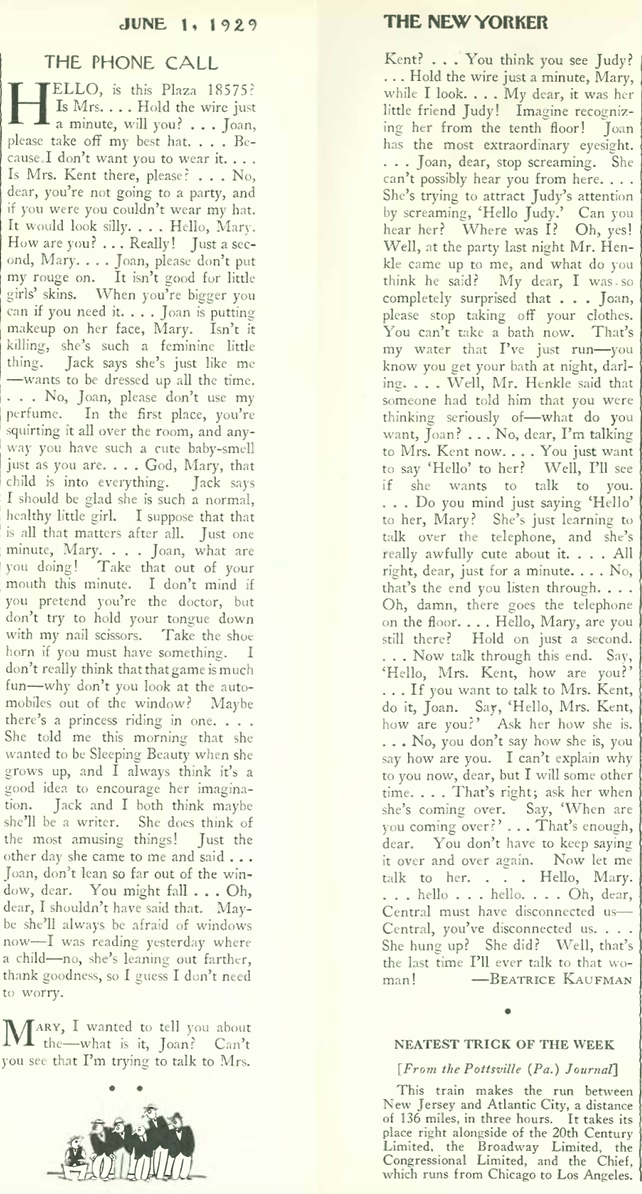
Editor and playwright Beatrice Kaufman worked and played within the orbit of the famed wits of the Algonquin Round Table, but was not a regular member like her husband, playwright and director George S. Kaufman. But Beatrice Kaufman didn’t the need the Algonquin to display her wit. Indeed, according to Michael Galchinsky (writing for the Jewish Women’s Archive), she was regarded as one of the wittiest women in New York in the 1930s and 40s. Here is an example of her work in the June 1 issue of The New Yorker:
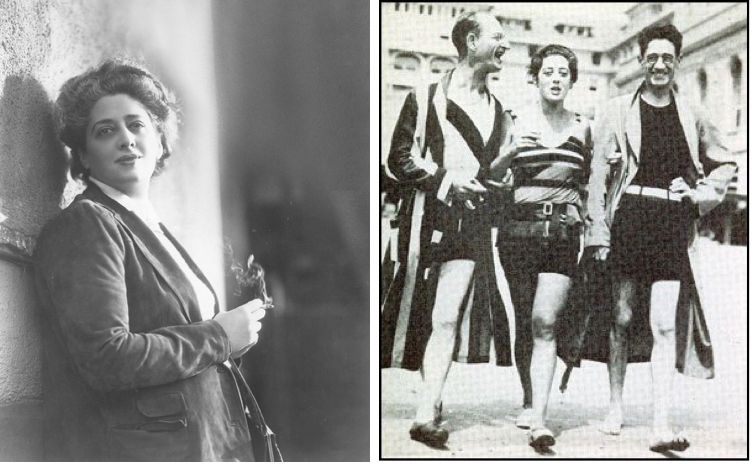
THE WITTIEST OF THEM ALL…Editor, writer and playwright Beatrice Kaufman (left, in undated photo). At right, comedian Julius Tannen (left) frolics with Beatrice and her husband, Broadway playwright/producer George S. Kaufman in Atlantic City in the 1920s. (thepurplediaries.com/spartacus-educational.com)
* * *
Rags to Riches
The life of Fred F. French was something out of dime novel; born in dire poverty, he became a self-made real estate tycoon and a shrewd builder of some of Manhattan’s biggest land developments. French was the subject of a profile written by Robert M. Coates, an art critic who would be a longtime contributor to The New Yorker. An excerpt, with illustration by Al Frueh:
MONUMENTS TO FRED…Fred French’s New York City buildings included, clockwise from left, the 38-story Fred F. French Building (1927) at 45th Street and 551 Fifth Avenue (designated a National Landmark); Knickerbocker Village (1934) on the Lower East Side; and the East Side’s Tudor City apartment complex (1927-1932). (Pinterest/thelodownny.com/Wikipedia)
* * *
From Our Advertisers
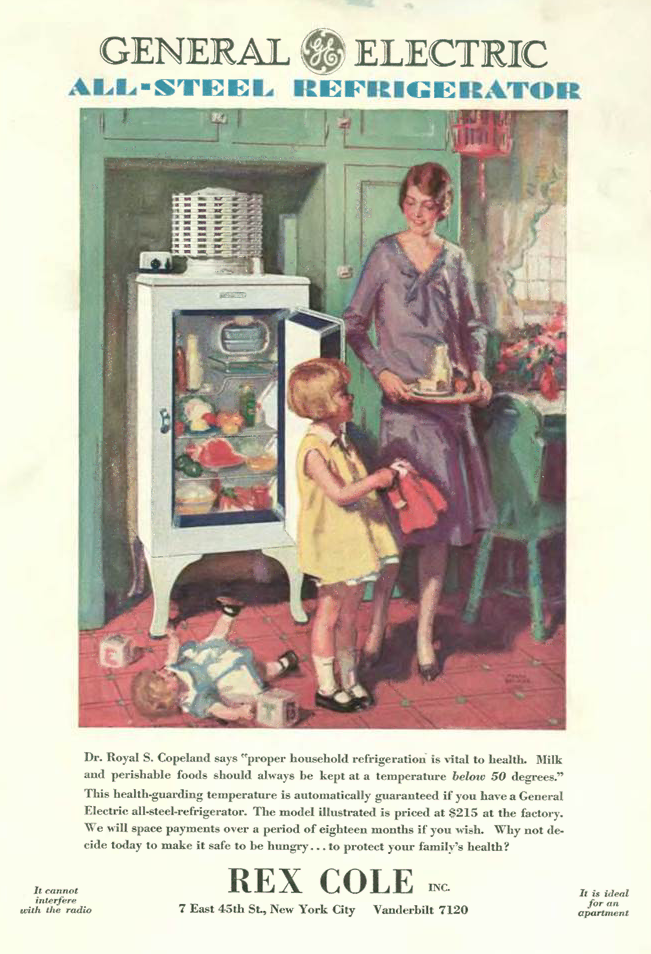
Let’s start with a couple of lovely color ads, which appeared with greater frequency in the magazine…here we have a snatch of the good life, courtesy General Electric…
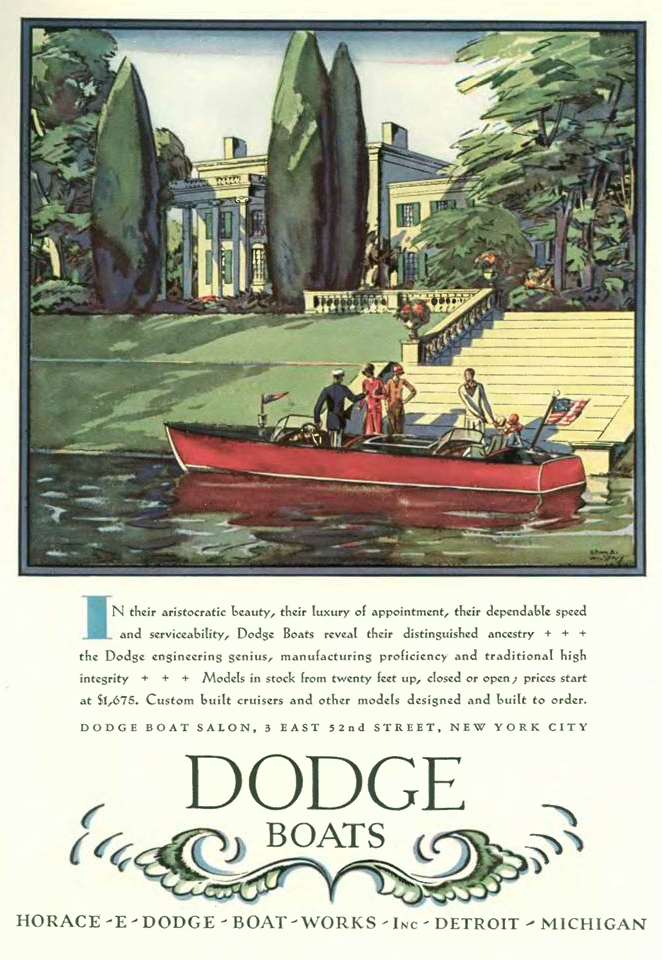
…and perhaps a less homespun image of the good life, from the makers of Dodge boats…
…and here we have another example of the modern world rushing in, this time in the form of instant coffee crystals…
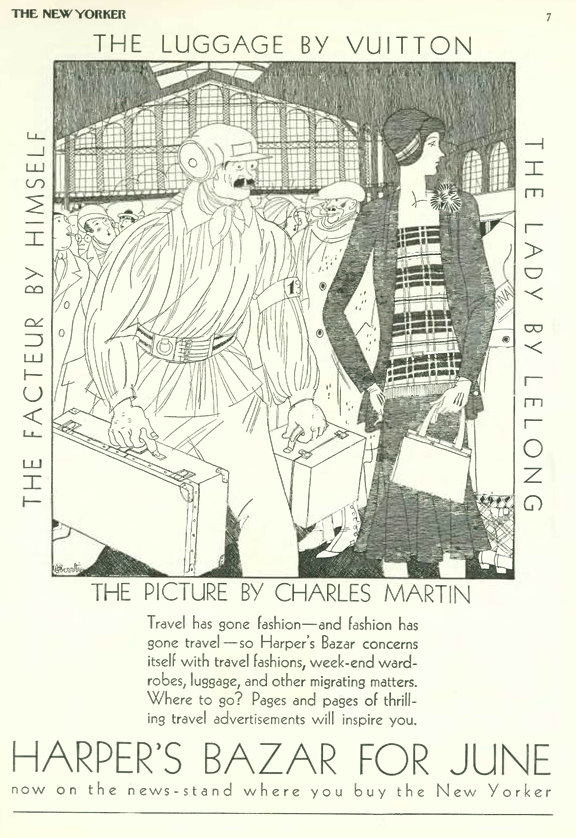
…and another taste of the modern from Harper’s Bazar magazine, featuring an illustration by French artist and illustrator Charles Martin…
…and just for kicks, another example of Martin’s work from an earlier time…
Image from Sports et Divertissements by Charles Martin, 1914. (Wikipedia)
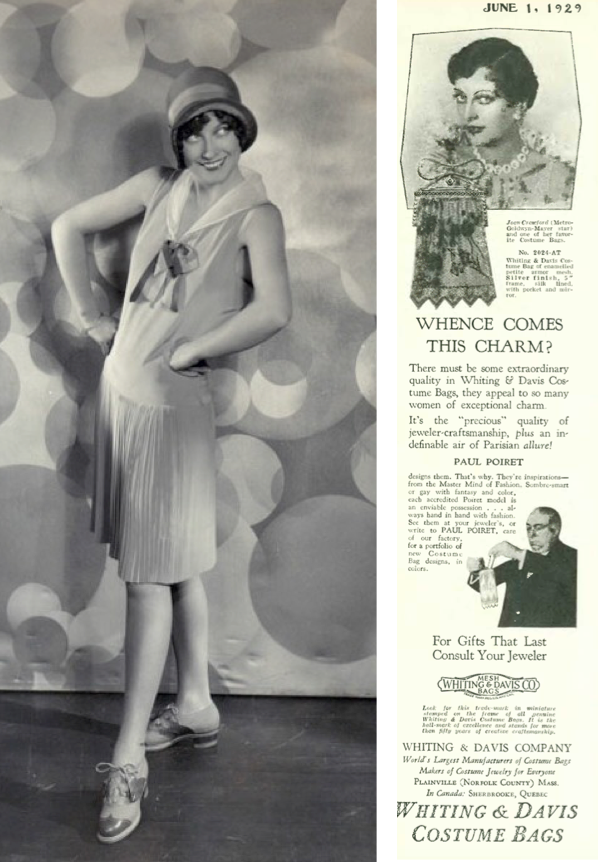
…and here is a back page ad for costume bag maker Whiting & Davis, with an endorsement by Joan Crawford, who was already a pretty big star by 1929. My guess is that Whiting & Davis paid more for the endorsement than they did for the ad…I included a photo of Crawford (at left) from 1929 just to show that she did have a lighter side…
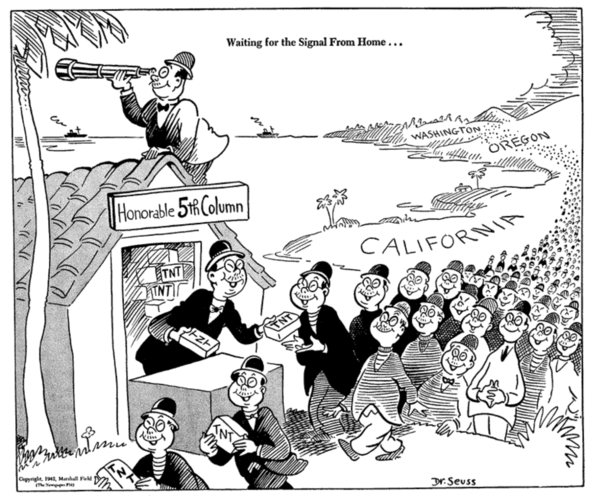
…this ad from the makers of Flit insecticide begs the question: was our beloved Dr. Seuss (aka Theodore Geisel) once a racist? Well…
…although Geisel was a liberal Democrat and a supporter of the New Deal, during World War II he also supported the internment of Japanese Americans, as is evident from this unfortunate 1942 cartoon…
Dr. Seuss 1942 cartoon with the caption ‘Waiting for the Signal from Home’ (slideshare.net)
…later in life Geisel became a staunch environmentalist and anti-war protestor. In 1961 he wrote The Sneetches, which promoted racial equality. Perhaps Geisel lived to regret those earlier drawings…
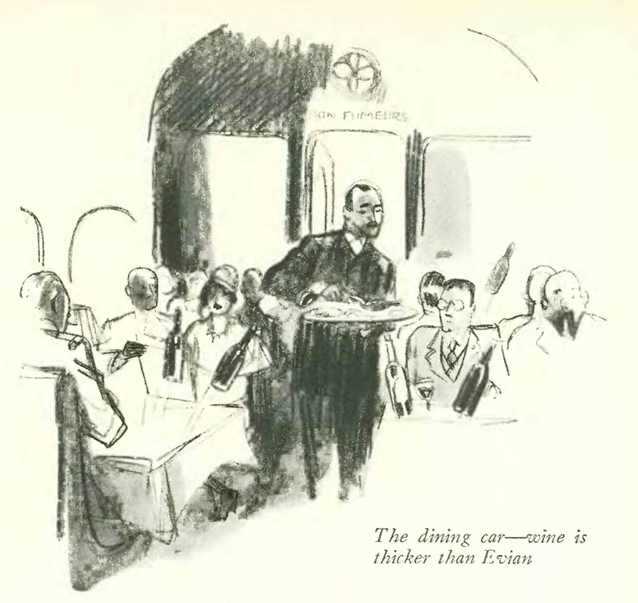
…and on to our illustrators and cartoonists, beginning with this sketch by Garrett Price, apparently inspired from a recent trip to France (it was featured along with several other small sketches in the “Profile” section)…
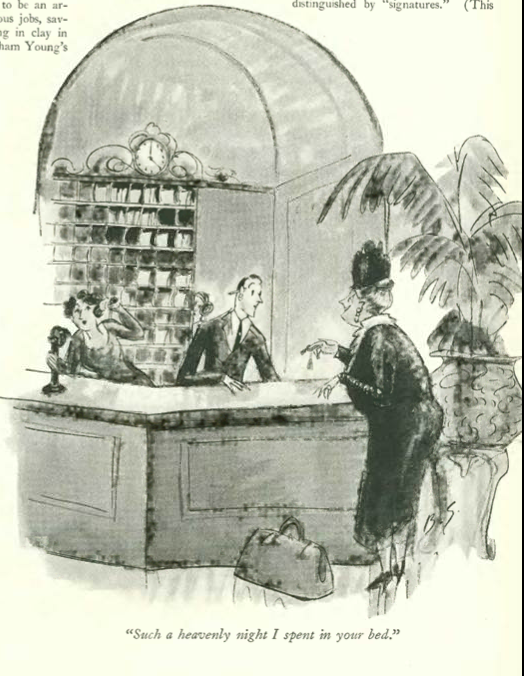
…Barbara Shermund had some fun with a double entendre…
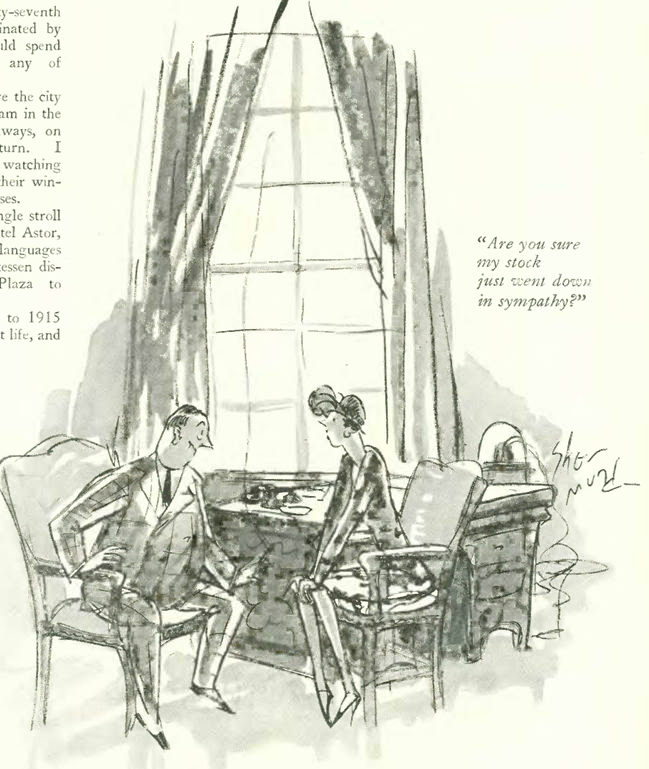
…and popped up again with this look at the stock market…
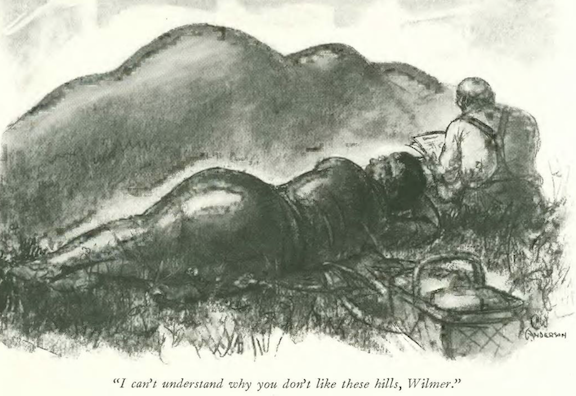
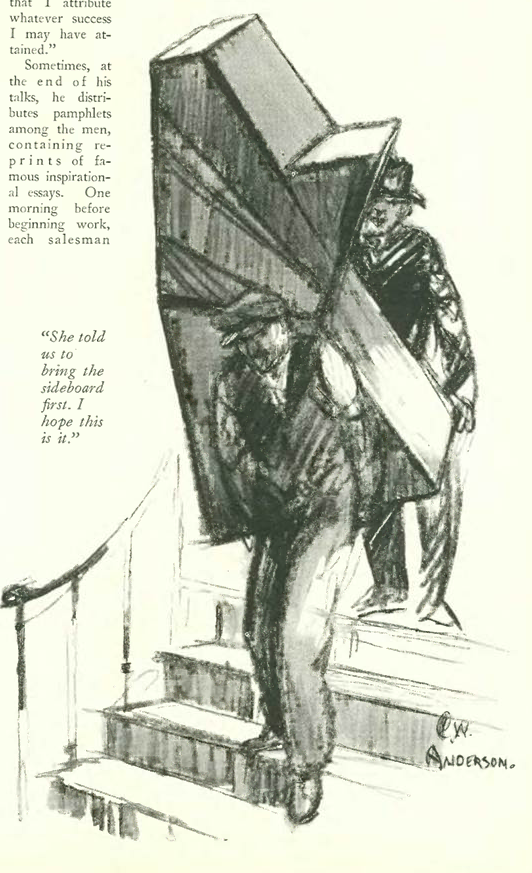
…C.W. Anderson found humor in the strange shapes of modernist furniture…
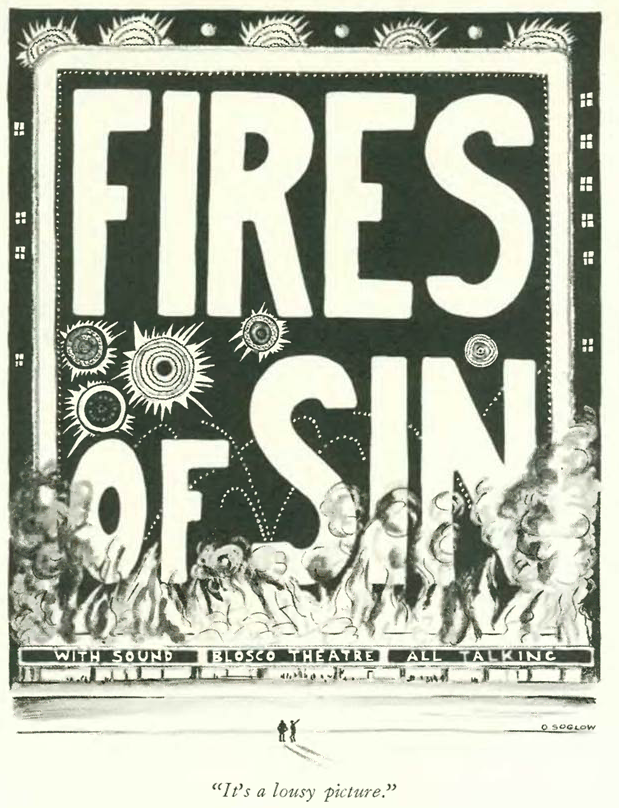
…Otto Soglow commented on the glitzy hype of Broadway…
…and cartoonist/humorist Don Herold made his comics debut in The New Yorker with this entry…
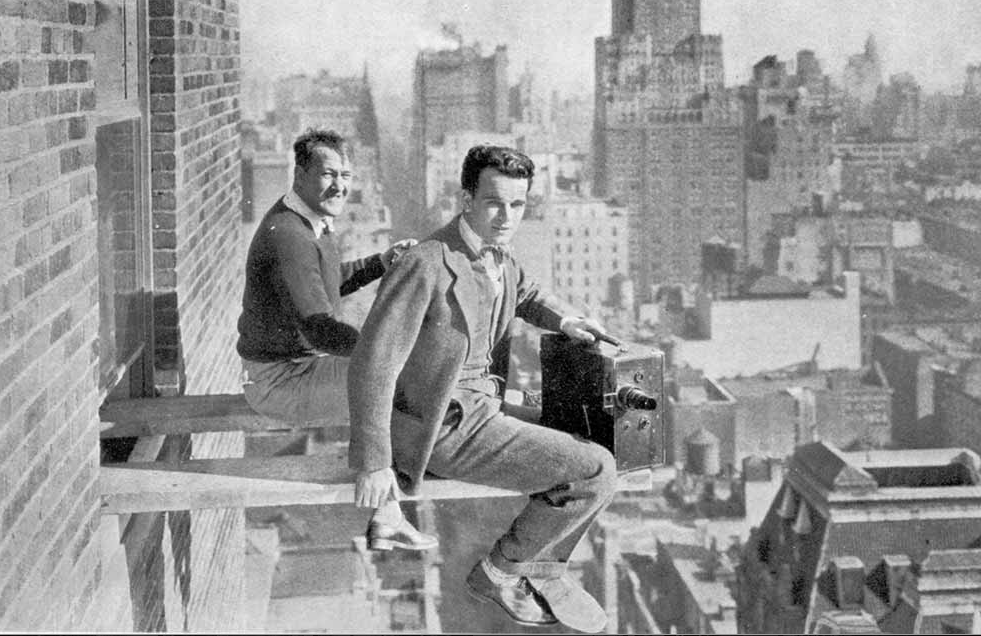
…and finally, a bonus image I came across while researching the advent of sound motion pictures. The photo, from the silent era, shows two cameramen shooting a parade, possibly for a newsreel. Note how their only support consists of two wooden planks wedged into an open window…
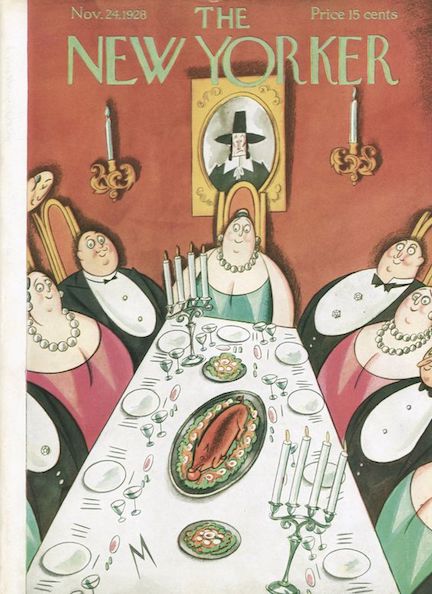
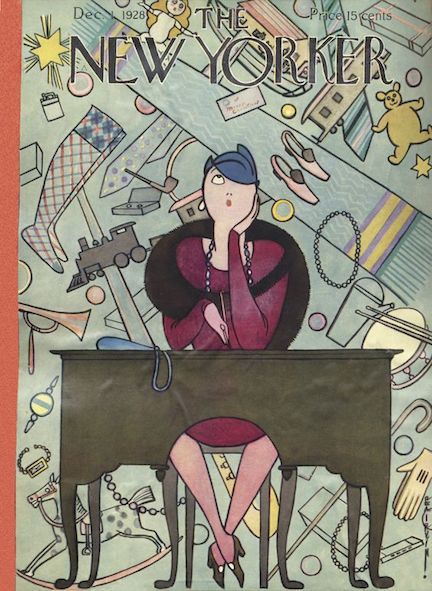
As we sweep up the tinsel and wrappings from another holiday season, let’s take a look back at 1928 and see what the New York “smart set” wished for under the Christmas tree.
Nov. 24, 1928 cover by Julian de Miskey.
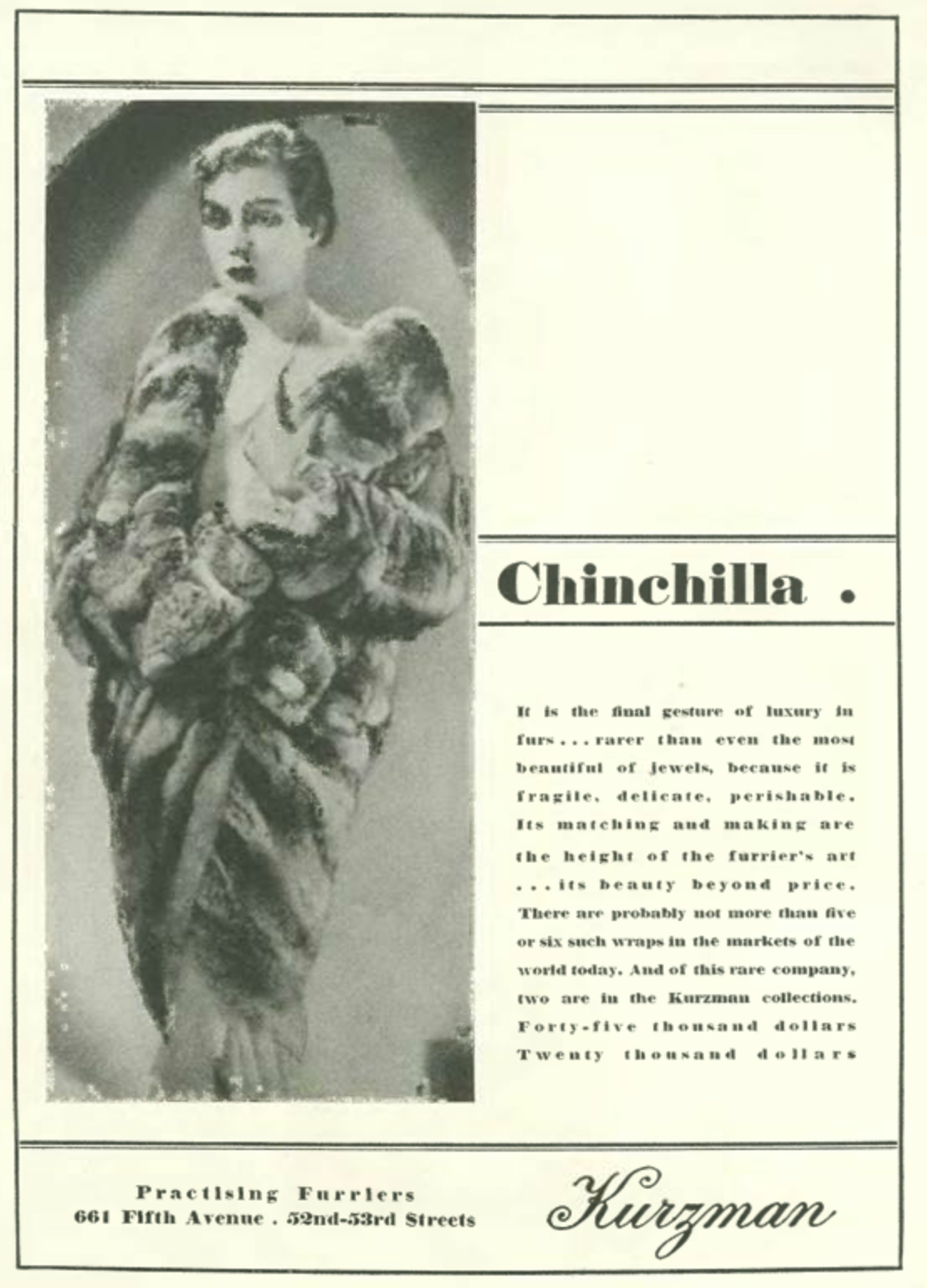
We’ll start with the outlandish, namely this advertisement from Kurzman furriers on Fifth Avenue, which offered just two rare chinchilla coats for sale, one for $45K and the other for a mere $20K. That would be roughly equivalent to $630K and $280K in 2017 dollars. Oh Santa baby…
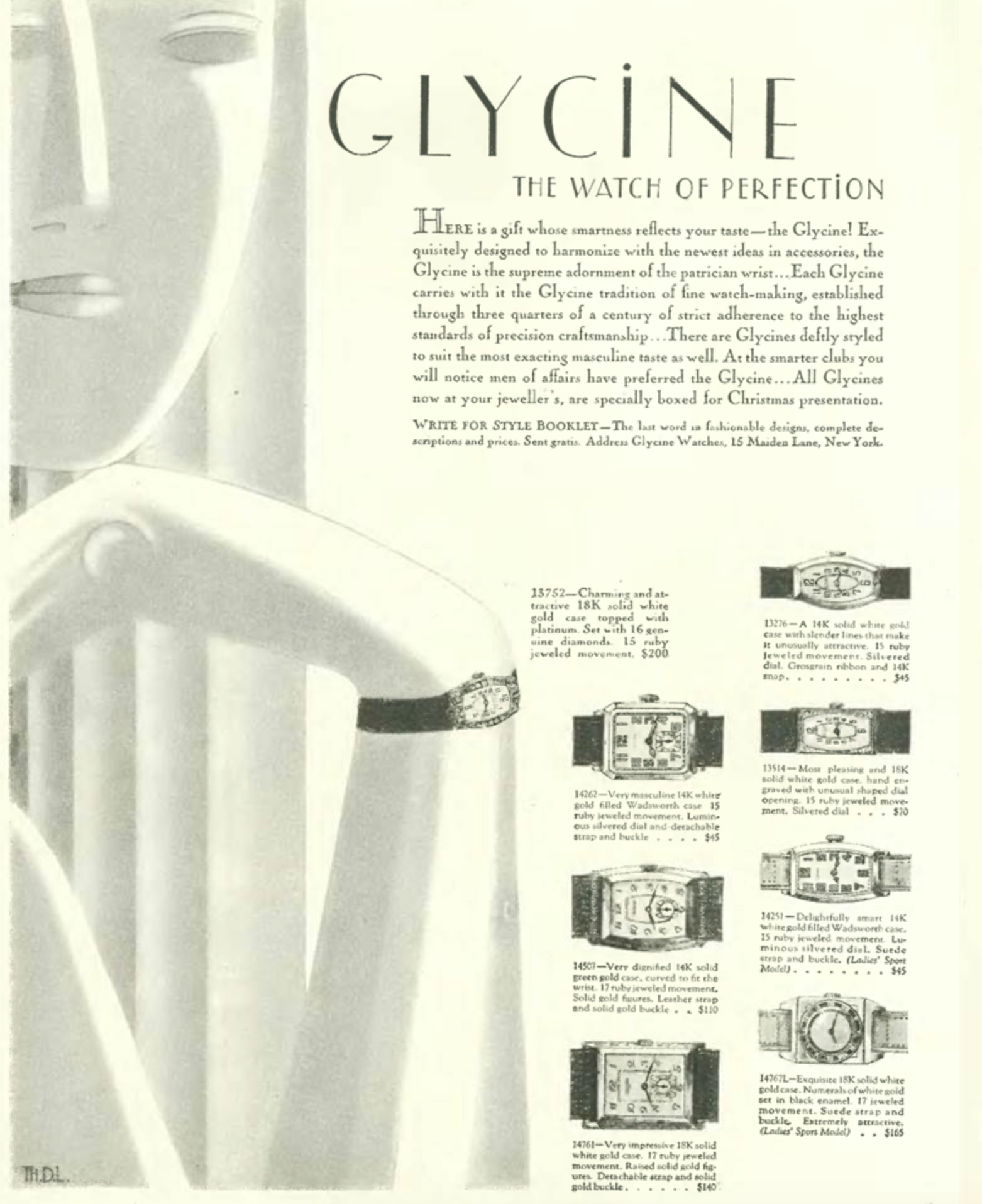
If you didn’t get the chinchilla, you could have asked for a Glycine Swiss watch, a gift “whose smartness reflects your taste”… and is “the supreme adornment of the patrician wrist.”
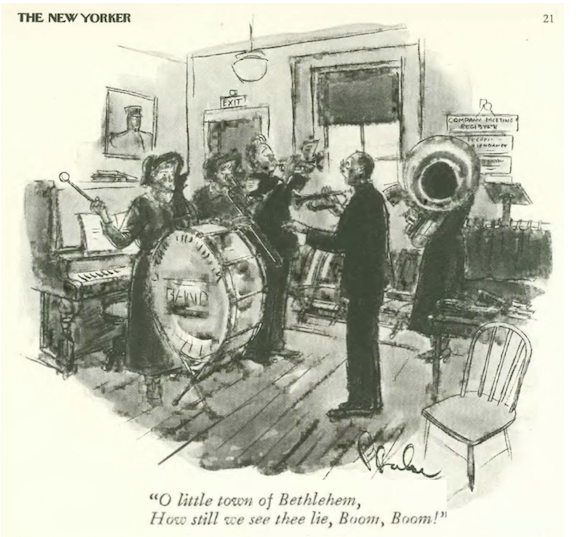
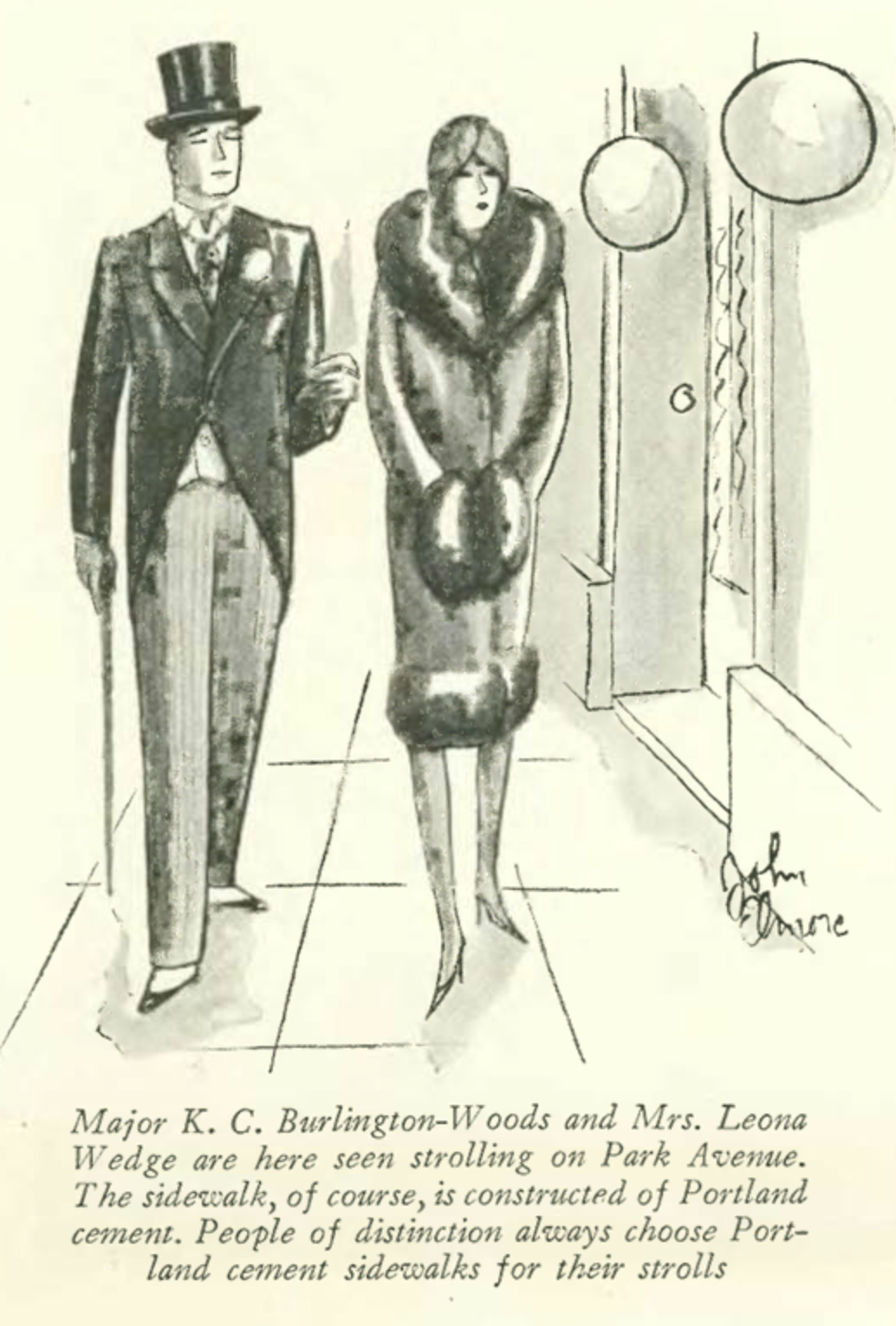
The New Yorker was filled with such ads that appealed to class pretensions, but thankfully the editorial side of the magazine mostly tweaked those pretensions, including this Nov. 24 cartoon by John Elmore:
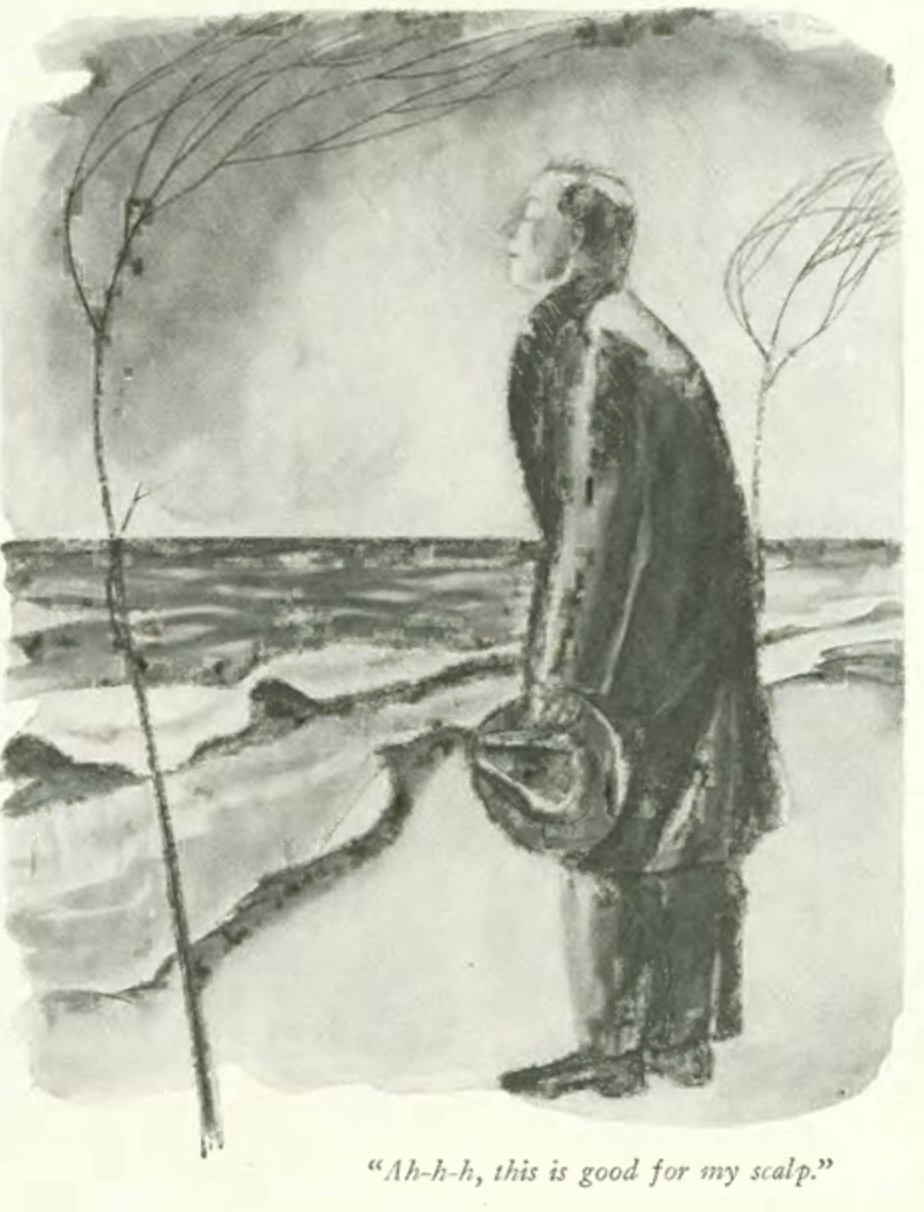
In the following issue (Dec. 1), Elmore also contributed this unsigned cartoon (thanks to Michael Maslin’s invaluable Ink Spill blog for the identification):
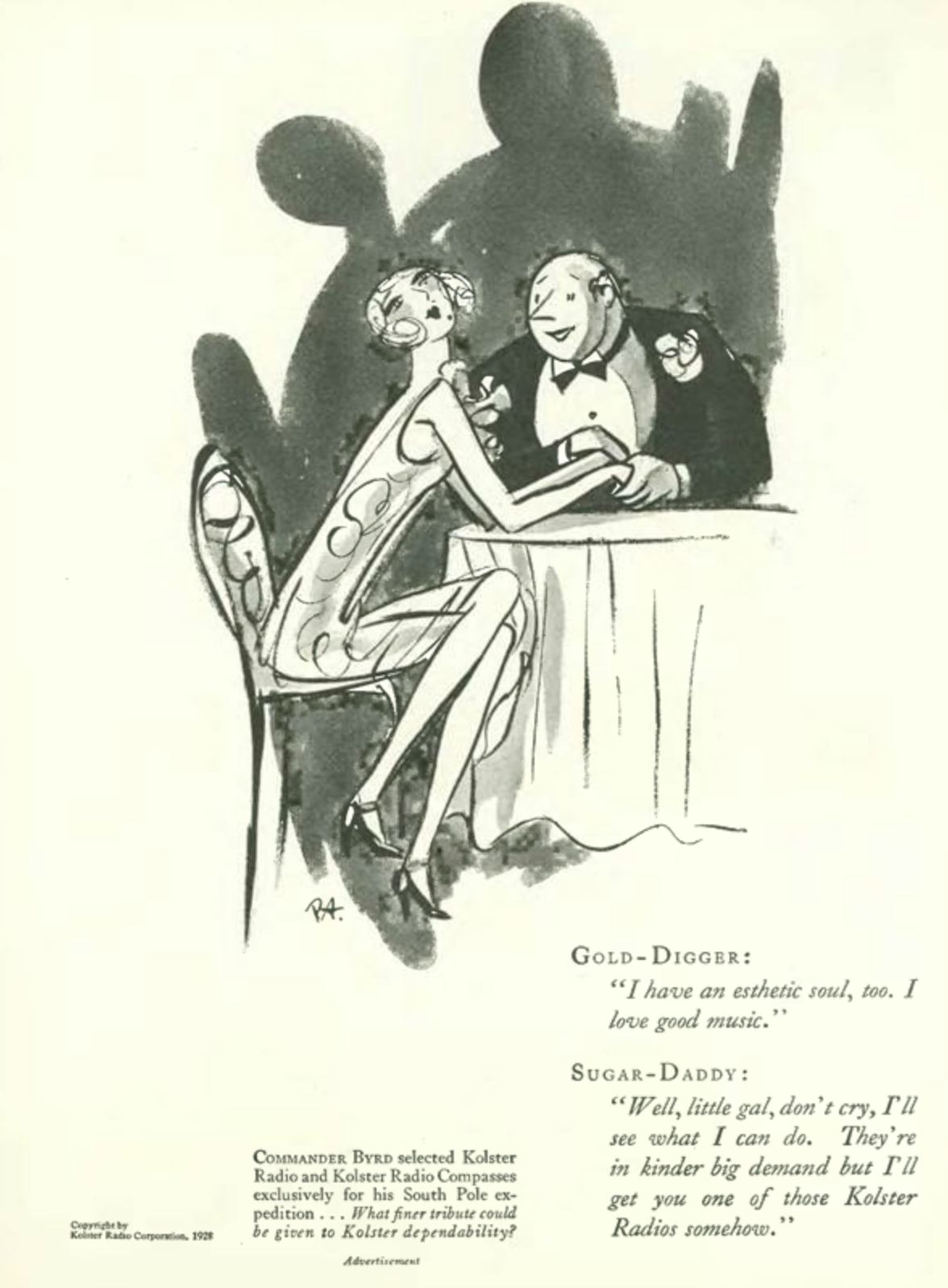
Back to the ads for Nov. 24, Kolster Radio continued its series featuring illustrations by New Yorker cartoonist Peter Arno, this one borrowing from his familiar themes featuring gold-diggers and sugar daddies…
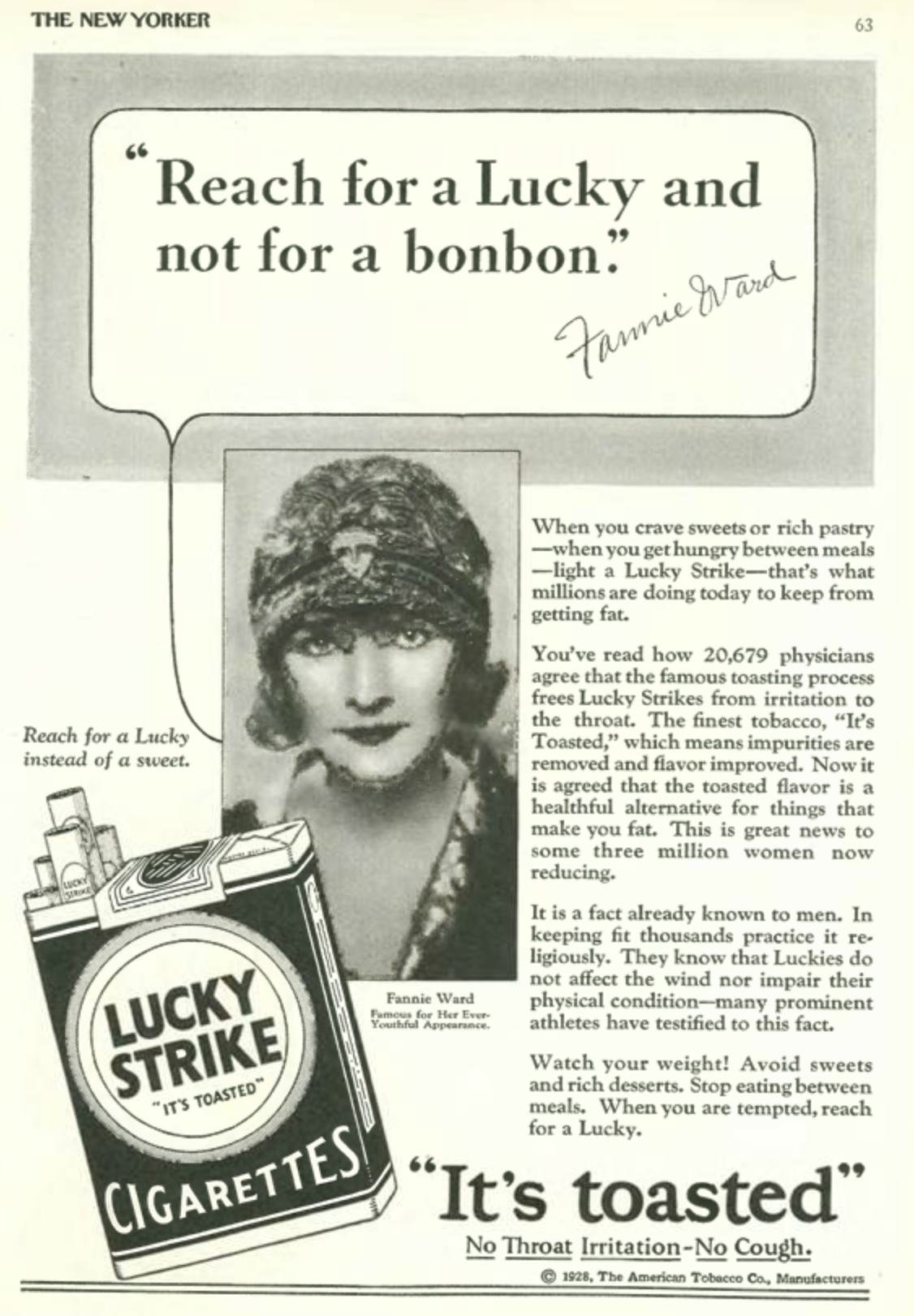
…and 56-year-old stage and silent film actress Fannie Ward offered proof that lighting up a Lucky could keep you slim and youthful. Whether or not she actually smoked the things, Ward was indeed best known for her seemingly ageless appearance.
Our cartoons from Nov. 24 issue are courtesy of Arno…
…and Helen Hokinson…
We continue our Christmas wish list with the Dec. 1, 1928 issue…
Dec. 1, 1928 cover by Rea Irvin.
Regarding gifts for her, how about some fine French perfume, “originally created for the exclusive use of one of the present Nobility of France” (apparently a person descended from the line that managed to keep their heads attached to their necks)…
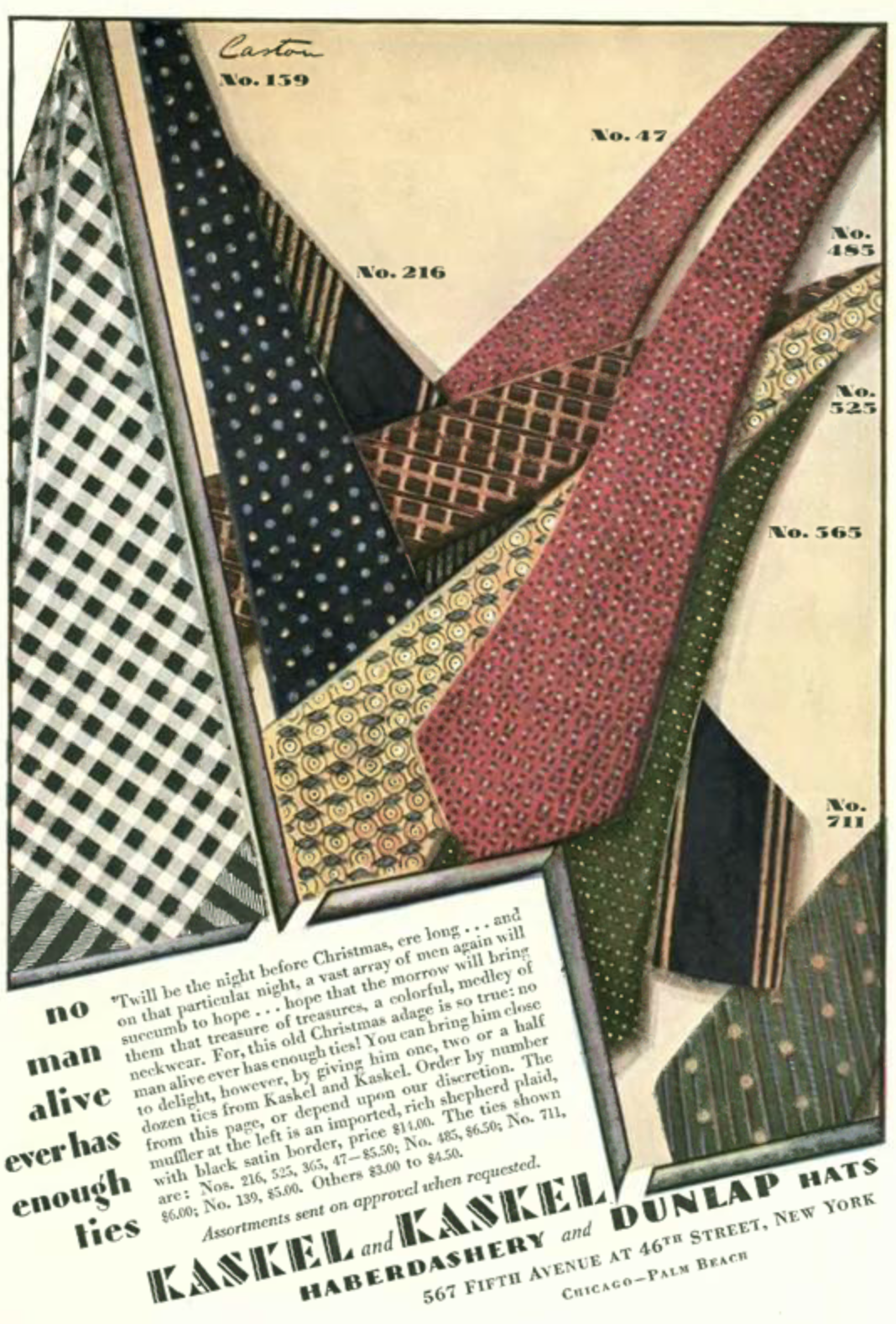
…and for him, the ubiquitous Christmas necktie, with a choice of patterns that would still serve him well in 2018…
Your “smoking friends” would doubtless have appreciated a rum-infused rumidor, available in a variety of finishes and sizes…
…or you could choose from the sundries offered up by Abercrombie & Fitch (bookends appeared to be a popular item)…
…and finally, for that special, anal-retentive someone on your list, “Fabrikoid” covers would keep his or her periodicals neat and tidy (note the New Yorker is conspicuously missing here).
Note: Fabrikoid “was one of DuPont’s first non-explosives products. Produced by coating fabric with nitrocellulose (yep, basically the same flammable stuff silent films were printed on) and marketed as artificial leather, Fabrikoid was widely used in upholstery, luggage and bookbindings during the early 20th century. In the 1920s, Fabrikoid became the preferred material for automobile convertible tops and seat covers” (text from www2.dupont.com).
* * *
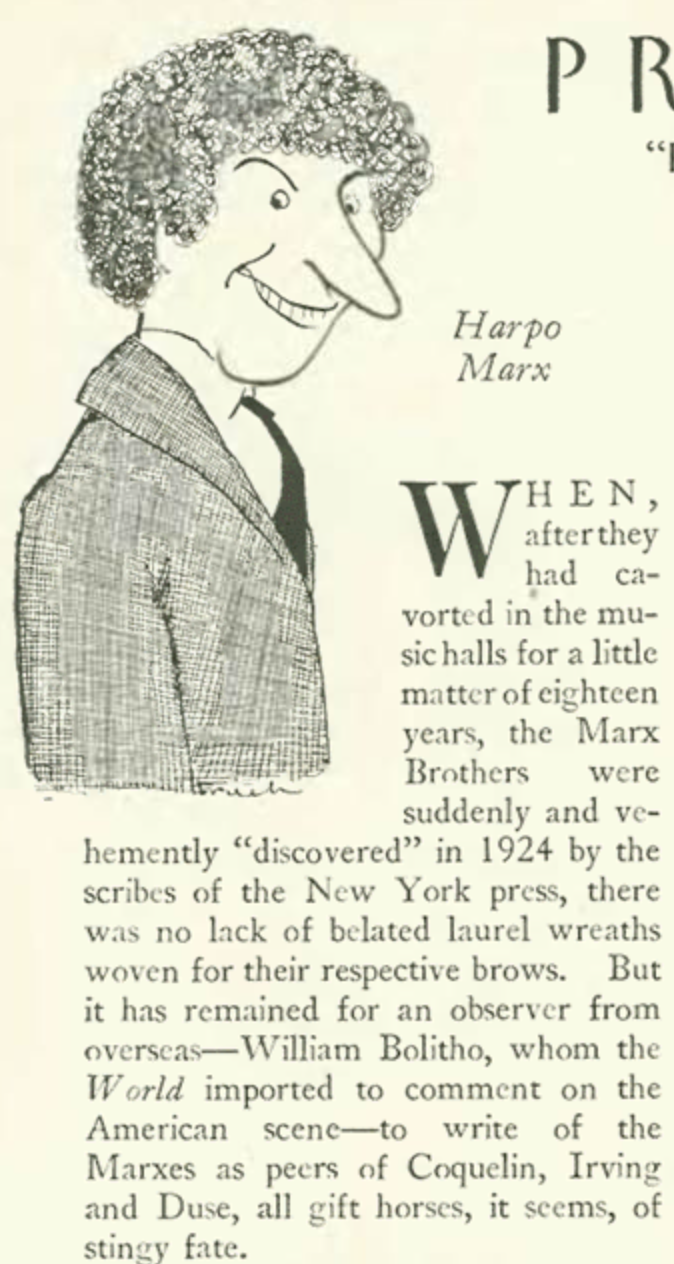
Despite the holidays, there was still news to be reported. The Nov. 24 issue profiled violinist Fritz Kreisler, while the Dec. 1 edition featured a profile of Harpo Marx, written by his fellow Algonquin Round Tabler Alexander Woollcott. Two brief excerpts:
In this next excerpt, it is interesting to note that Woollcott couldn’t see ahead to the huge success in film that awaited Harpo Marx and his brothers. Just eight months after Woollcott’s profile, the Marx Brothers would premiere their first film, The Cocoanuts, and continue to draw on material from their vaudeville and Broadway days to produce a string a comedy hits throughout the 1930s and 40s.
In other news from the Dec. 1 issue, Frank Sullivan grumbled about the recent election of President Herbert Hoover and the state of politics in general, echoing the general sentiment of his New Yorker colleagues in dismissing the national elections as little more than silly sideshow. Two excerpts:
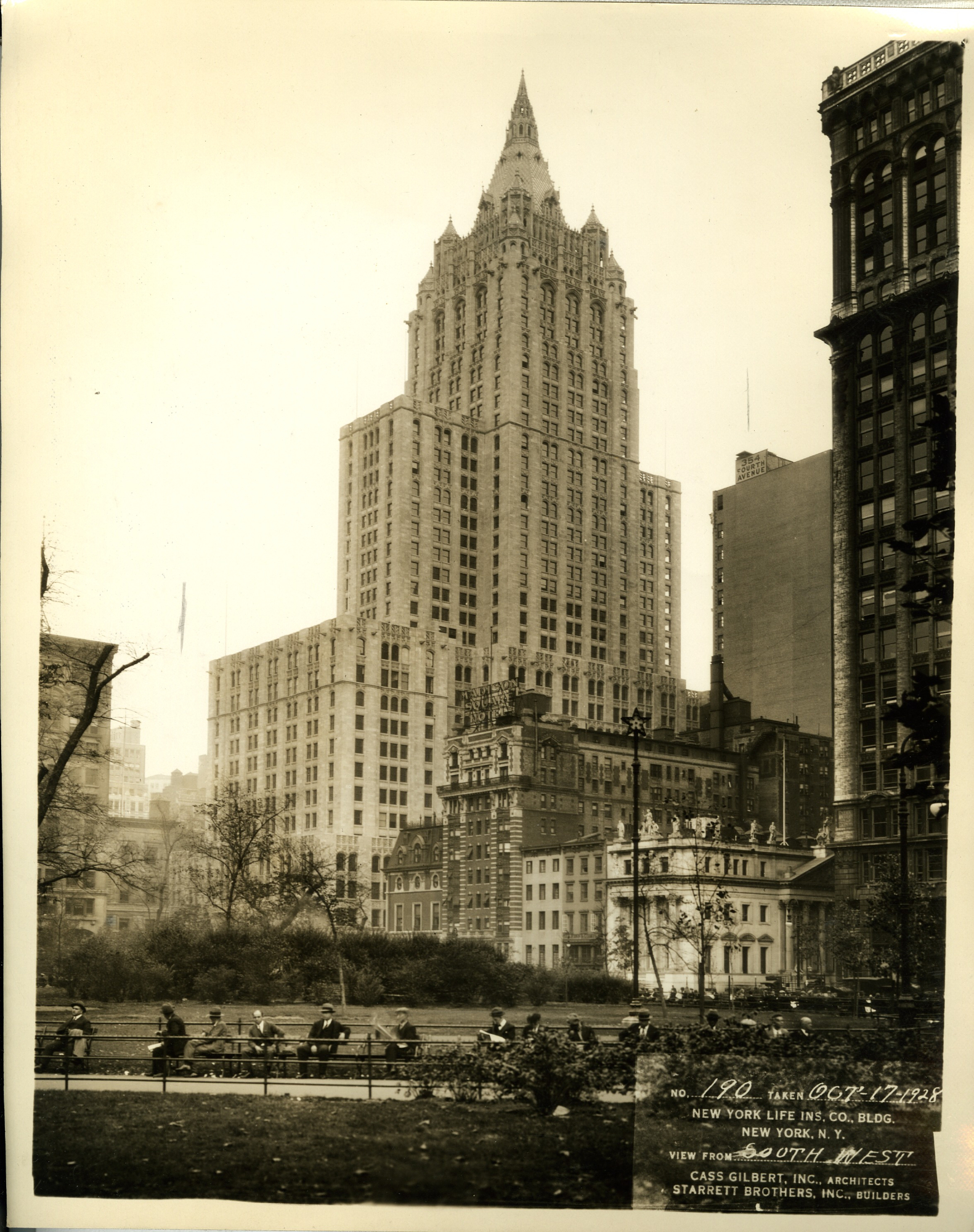
TheNew Yorker was less pessimistic when it came to the changing skyline, and was almost giddy at times about the latest technology seemingly transforming the city overnight. This time it was the gilded New York Life Insurance tower, and its impressive pneumatic tube system:
THINGS ARE LOOKING UP…Cass Gilbert’s newly completed New York Life Insurance Building in 1928. (Smithsonian)
* * *
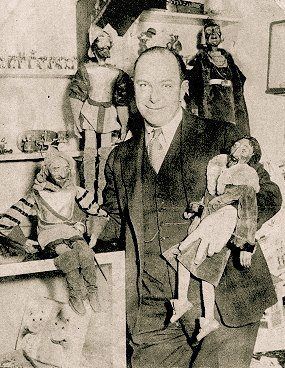
And to close, some more holiday offerings, this time for the kiddies, from Macy’s Department Store, as reported by writer Bertram Bloch:
The Macy’s Christmas window display in 1928 featured the Tony Sarg marionettes in a tableau based on The Adventures of Christopher Columbus. (Pinterest)SUPER SOAKER…With this 1928 sit ‘n ride toy, junior could hose down the living room thanks to its large water tank and hand crank-operated water tower. (collector.com)
Despite Prohibition, booze flowed freely in 1928 New York thanks to bootleggers and lax enforcement by everyone from cops to judges. One major exception was Mabel Walker Willebrandt, a U.S. Assistant Attorney General from 1921 to 1929 who among other things handled cases concerning violations of the Volstead Act.
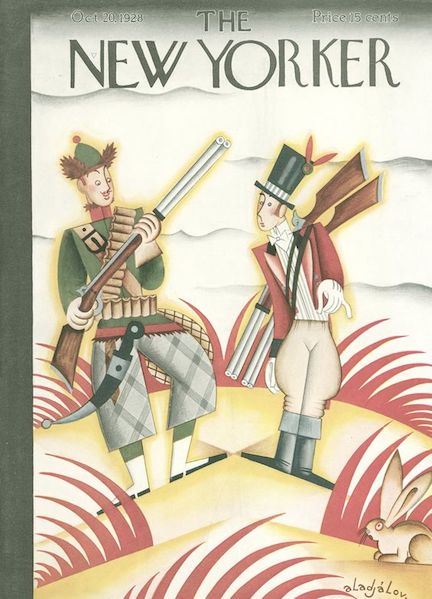
Oct. 20, 1928 cover by Constantin Alajálov.
Although Willebrandt herself enjoyed the occasional drink (she was personally opposed to prohibition), she was nevertheless serious about enforcing the law, and rather than chasing small-time bootleggers or padlocking speakeasies, she targeted the big-time operators.
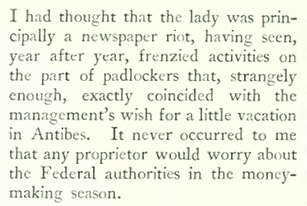
How Willebrandt fits into this blog entry can be found in Lois Long’s “Table for Two” column in the Oct. 20, 1928 issue, in which Long described the current state of affairs of Manhattan’s nightlife, including the departure of boozy torch singer Helen Morgan from the speakeasy scene for Flo Ziegfeld’s late-night Broadway revue, the Ziegfeld Midnight Frolic:
WELL-KNOWN TO THE POLICE…Helen Morgan started singing in Chicago speakeasies in the early 1920s, where she defined the look of the torch singer, including the draped-over-the-piano pose, which was her signature. (amanandamouse.blogspot.com)
Morgan, who at the time was also starring in Broadway’s Show Boat, had been arrested the previous December for violation of liquor laws at her own popular nightclub, Chez Morgan. She would not return to performing in nightclubs until after the repeal of Prohibition.
Long also looked in on the popular Harlem nightclubs, where the dance music was “throbbier than ever.”
HOPPING IN HARLEM…Lois Long wrote that you couldn’t get near the popular Small’s (left) on a Saturday night, while Connie’s Inn (right) offered a new show that was “as torrid as ever.” (harlemworldmag.com, New York Public Library)
There was a sober undercurrent to all of this merry-making, namely Willebrandt’s determined efforts to go after the big bootlegging operations that were fueling all of this mirth. Long wrote:
PROHIBITION PORTIA…At left, Mabel Walker Willebrandt being sworn in as U.S. Assistant Attorney General in 1921. At right, Willebrandt on the cover of Time magazine, August 26, 1929. (legallegacy.wordpress.com/Time)
Willebrandt decried the political interference and the incompetence (or corruption) of public officials who undermined the enforcement of the Volstead Act, and even fired a number of prosecutors. As her office also oversaw the enforcement of tax laws, she developed the strategy for prosecuting major crime bosses for income tax evasion. It was an approach that would finally put the famed Chicago gangster Al Capone behind bars in 1931.
Lois Long’s mention of Willebrandt was doubtless due to the 1928 presidential campaign, during which Willebrandt openly campaigned for the “dry” candidate, Republican Herbert Hoover, over the “wet” Al Smith, who referred to Willebrandt as “The Prohibition Portia.” Smith was referencing Shakespeare’s The Merchant of Venice, in which the play’s heroine, Portia, outwits the merchant Shylock in a court case by referring to the exact language of the law.
Jim Dandy
New York Mayor Jimmy Walker was well-known for his taste in clothes (as well as for the nightlife), so E.B. White (writing in “The Talk of the Town”) decided to pay a visit to the mayor’s personal tailor to see how the “royal garments” were created. Excerpts:
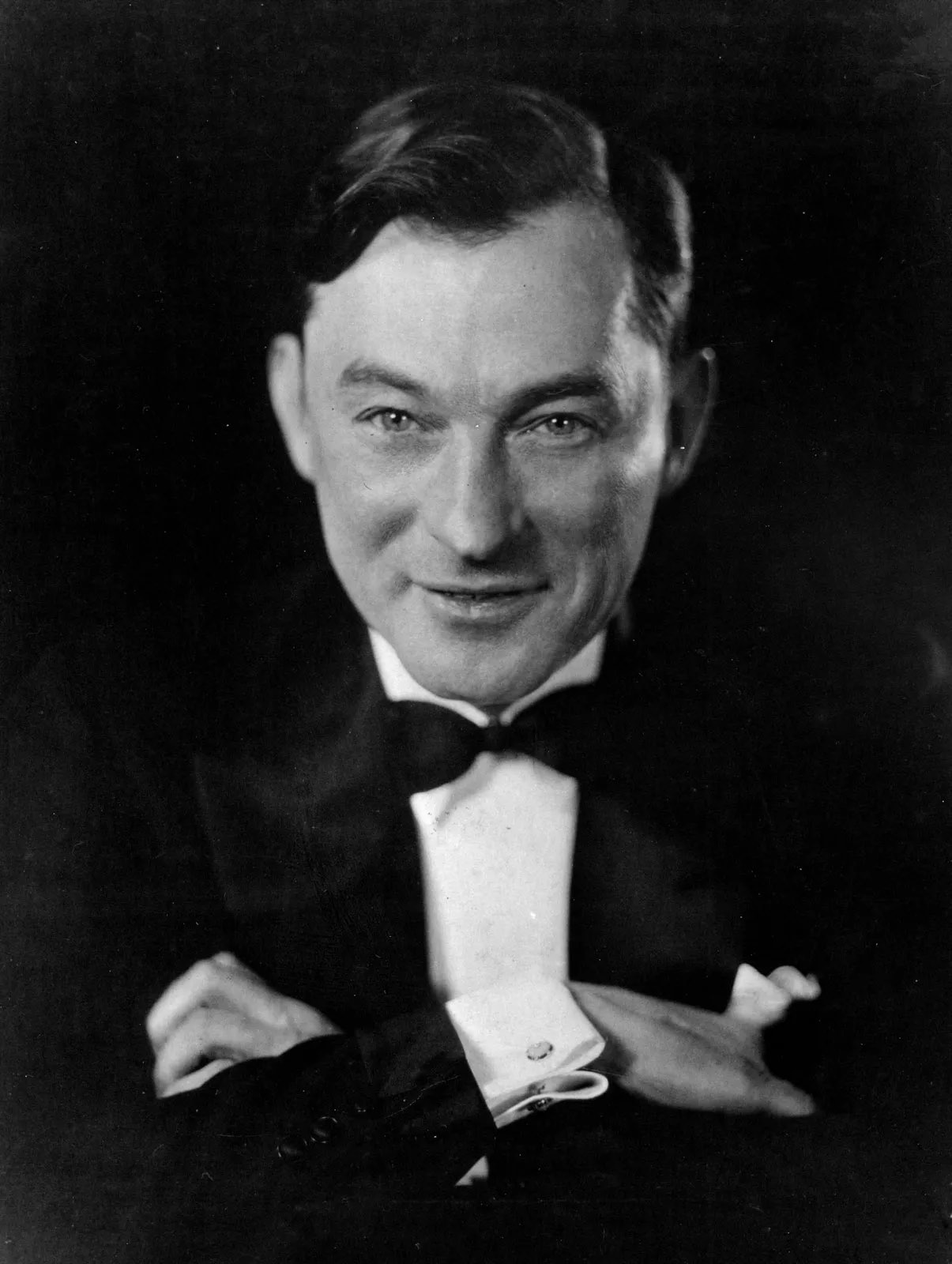
JIM DANDY…New York Mayor Jimmy Walker was a well-known dandy and a familiar face at Manhattan nightclubs. Rarely seen at City Hall, Walker used the lavish Casino nightclub in Central Park as his unofficial headquarters. (Encyclopedia Britannica)
* * *
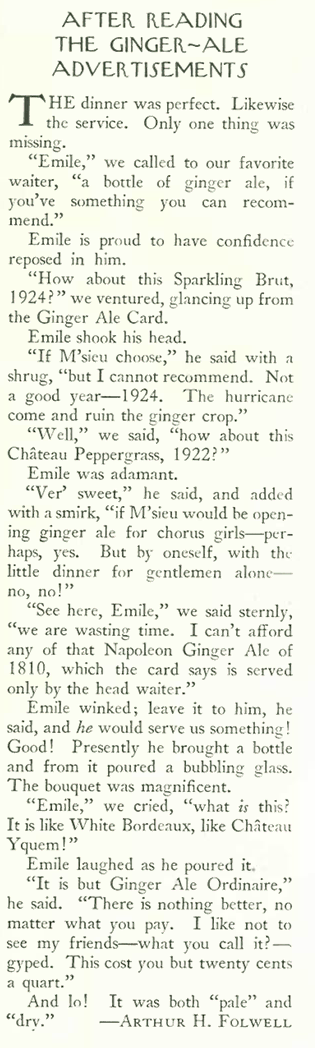
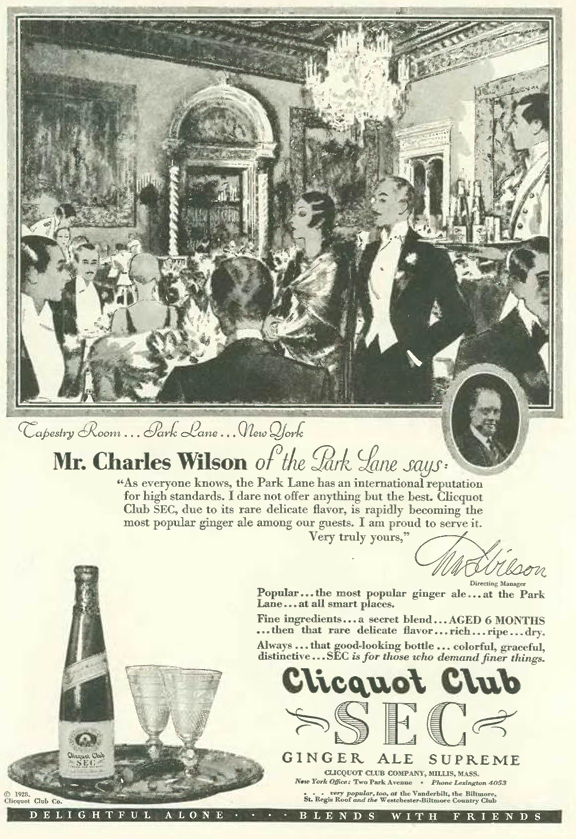
In one of my recent entries (The Tastemakers, posted Nov. 28) I noted how Prohibition had driven some advertisers to absurd lengths, including manufacturers of non-alcoholic beverages who appealed to the refined tastes (and snobbishness) usually associated with fine wines (see Clicquot Club ad below). Gag writer Arthur H. Folwell had some fun with such pretensions:
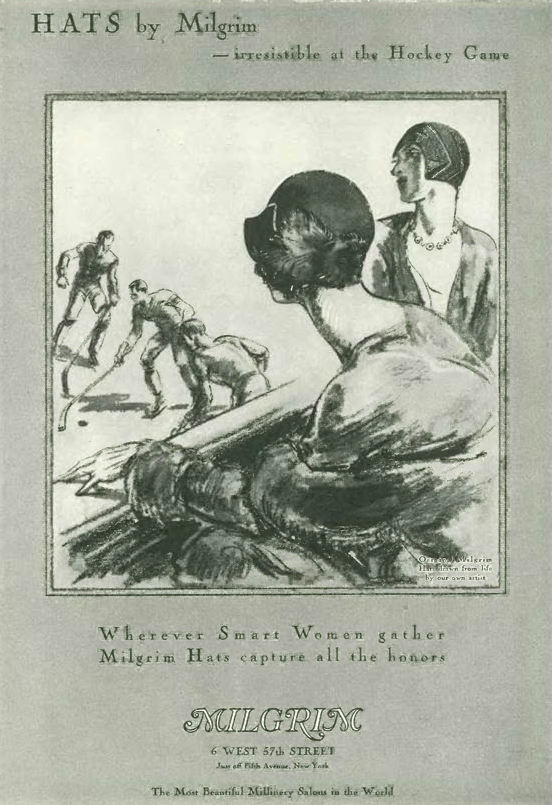
Speaking of refinement, when was the last time you saw someone dressed like this at a hockey game?
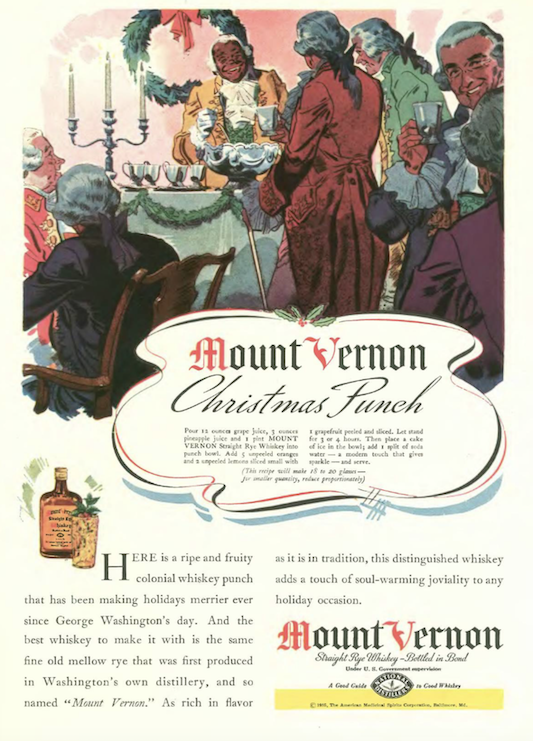
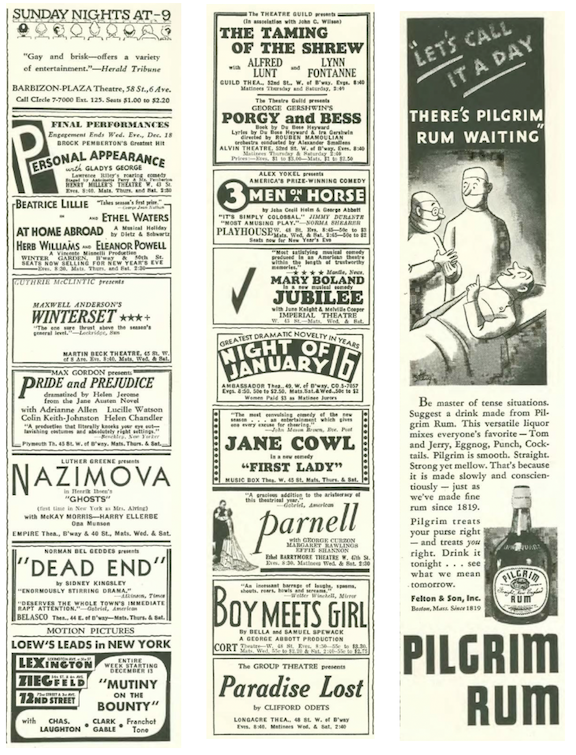
Before they graced the silver screen, the Marx Brothers were one of Broadway’s biggest draws, including their 1928 hit “Animal Crackers,” advertised in the back pages of the Oct. 20 New Yorker.
Our cartoons are courtesy Peter Arno, who looked in on a Hollywood movie set…
…and Gardner Rea, who rendered a scenario for an upper class emergency…