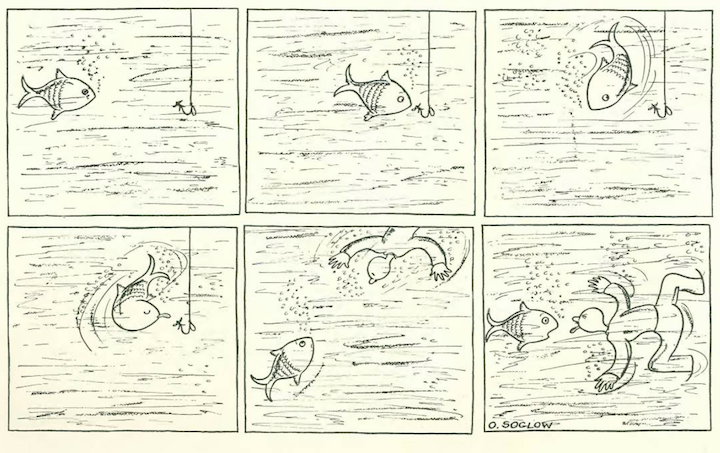
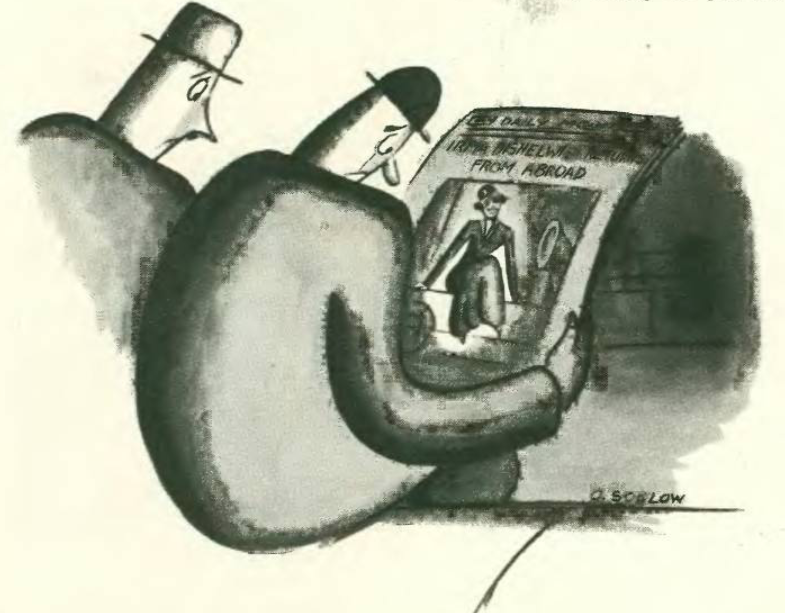
The zoos of yesteryear were joyless places, that is, if you were one of the animals. Children squealed with fear and delight at the sight of a caged lion, and many an adult had fun tossing peanuts at elephants or teasing enraged gorillas locked behind bars; but if you were a zoo animal in 1931, life was endless hours of boredom, sprinkled with moments of terror and humiliation.
Aug. 15, 1931 cover by Theodore Haupt.
It is instructive to look back 89 years and see how far we’ve come, and how far we still have to go, to see our fellow creatures as more than curiosities and amusements to be captured and gawked at, and to see their environments as something to be preserved, not only for their survival but for ours as well.
LIFE BEHIND BARS…Left, a zookeeper with chimps at the Central Park Zoo, 1936. Right, a rhino paces in a barred enclosure, 1937. (nycgovparks.org)
E.B. White paid a visit to the Central Park Zoo, and found it wanting in a number of respects:
Many zoos back then were more collections of curiosities than places where you could learn about various habitats. So when David Sarnoff, president of RCA, bagged a live opossum in the South, the critter was given a new home in an antelope enclosure, per this item in the Dec. 20, 1931 New York Times:
The Central Park Zoo was established in the 1860s as a “menagerie” behind the Arsenal, and by the turn of the century attracted millions of visitors to its displays of exotic animals.
GETTING AWAY FROM IT ALL…Postcard image of the Menagerie in Central Park, New York, 1905. (Museum of the City of New York—MCNY)ANIMAL ATTRACTION…Postcard image of folks enjoying caged birds at the Menagerie, 1905. (MCNY)O GIVE ME A HOME…In the early days of zoos, animals were presented in cages and fenced enclosures with no hint as to what their natural habitat might look like. Clockwise, from top left, “Fatima” the hippo, image from an 1896 stereograph card; a 1911 photo of a trainer and a dog perched on top of a hapless elephant; a bull bison around the turn of the century; a group of people observe animals in cages at the Central Park Menagerie, 1895. (Library of Congress/nycgovparks.org/MCNY)
* * *
He’s Your Future
The New Yorker featured two-part profile of the governor of New York, Franklin D. Roosevelt, who unbeknownst to writer Milton MacKaye would soon become the next president of the United States. Two excerpts (not continuous)…
* * *
From Our Advertisers
Ah yes, the first time I visited the Empire State Building’s observation deck (in the 1970s) a heavy smog enveloped the city (the air is much cleaner today). I like how the promoters spin disappointment into an opportunity — “The mysterious beauty of the city has a million constantly changing aspects”…
…if you were looking for bluer skies, Bermuda could have been an option if you had the means…
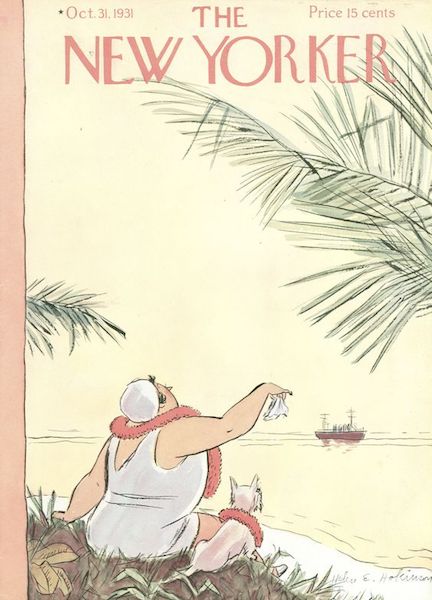
…or you could have stayed closer to home at a Long Island beach resort, as Helen Hokinson illustrated, and as we segue into our cartoons…
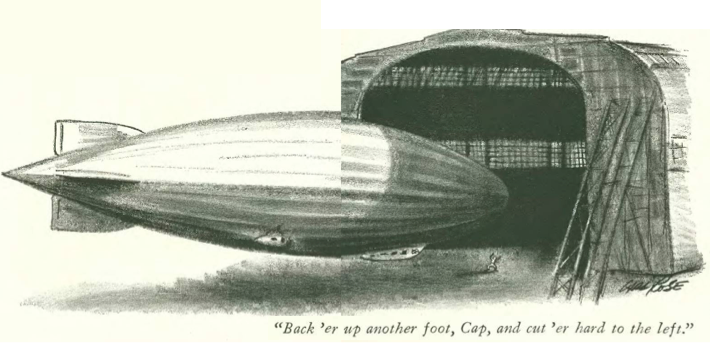
…Isadore Klein gave us a very unscientific, albeit humorous view of genetics…
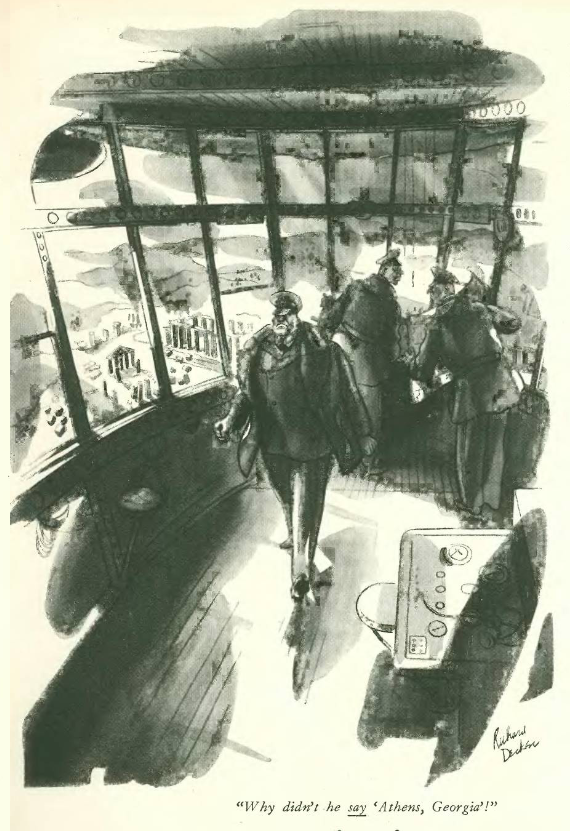
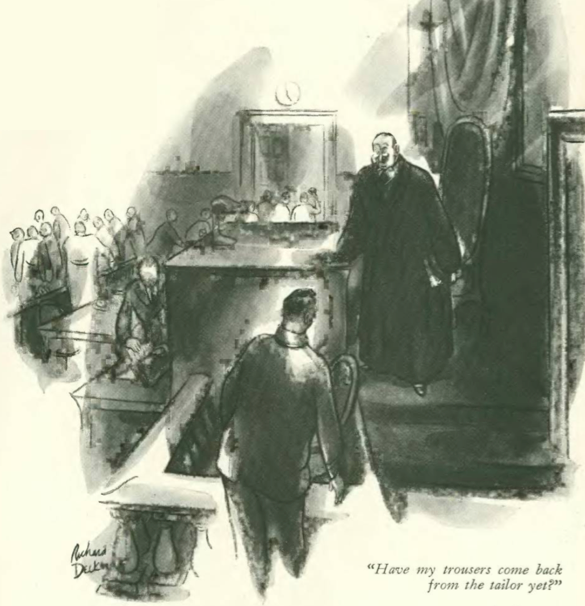
…Richard Decker redefined the meaning of “volunteers”…
…and William Steig summoned the advice of Dorothy Dix, a forerunner of “Dear Abby” who was the most widely read female journalist of her time…
We move on to the Aug. 22, 1931 issue…
Aug. 22, 1931 cover by Helen Hokinson.
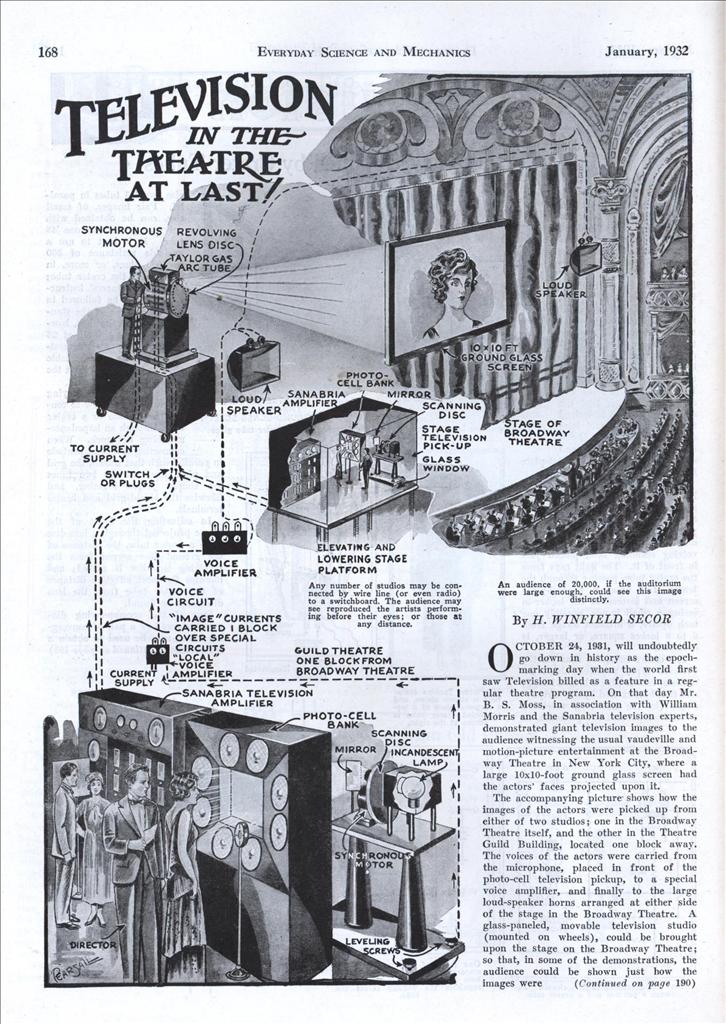
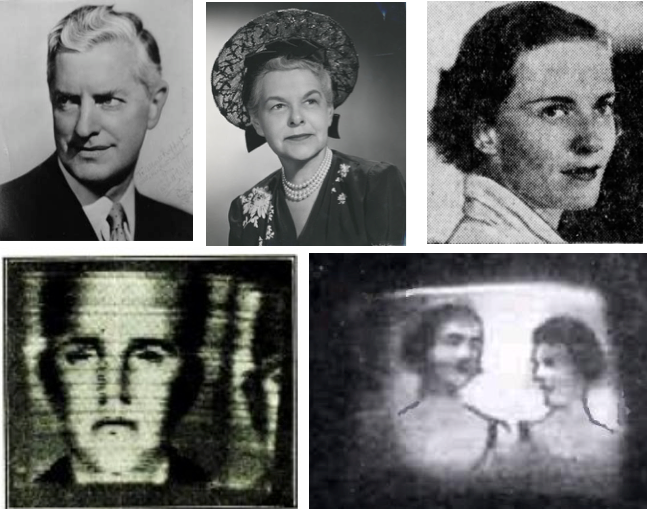
…in which James Thurber wrote about his experience with early television in “The Talk of the Town”…
NO CABLE BILL, YET…Charles Francis Jenkins demonstrates his “Radiovisor” console television in 1929. At right, the inner workings featured a rotating disc punctured with tiny holes, each projecting a line across the glass screen to compose an image. As Thurber noted, the pictures commonly were too dark for viewers to see anything more than silhouettes. Not to mention Thurber’s eyesight was also terrible. (earlytelevision.org)
* * *
The Other Moving Pictures
The movies still had nothing to fear from television in 1931, and Hollywood continued to draw large audiences to “Pre-Code” films that featured doses of sex and violence. Novelist Viña Delmar gained famed in 1928 with her suggestively titled book Bad Girl, so when it was adapted into a film, audiences came running—even if the screen adaptation proved to be a bit tamer than the novel that inspired it. Critic John Mosher observed:
I’M JUST A LITTLE BAD…Sally Eilers played the title character in Bad Girl with co-star James Dunn. The film won two Oscars in 1932 for Best Director (Frank Borzage) and Best Writing, Adaptation (Edwin J. Burke). (IMDB)
* * *
Chic Chapeau
The Empress Eugénie hat was named for 19th century French empress Eugénie de Montijo, who was known as a fashion trendsetter. The hat was revived in 1930 after Greta Garbo was seen wearing a version of one in the popular film Romance. E.B. White was not exaggerating when he noted (in his “Notes and Comment”) that the jaunty hat was seen on “every other head” in the city.
LOOK WHAT YOU STARTED…Greta Garbo sported an Empress Eugénie hat in the 1930 film Romance, setting off a fashion craze that persisted through much of the decade. At right, Kemp Starrett referenced the trend in this Aug. 8, 1931 cartoon in The New Yorker. (Pinterest)
* * *
From Our Advertisers
Speaking of trends, these “roughies” were all the rage among the young folks, in the dorms and on the beach…
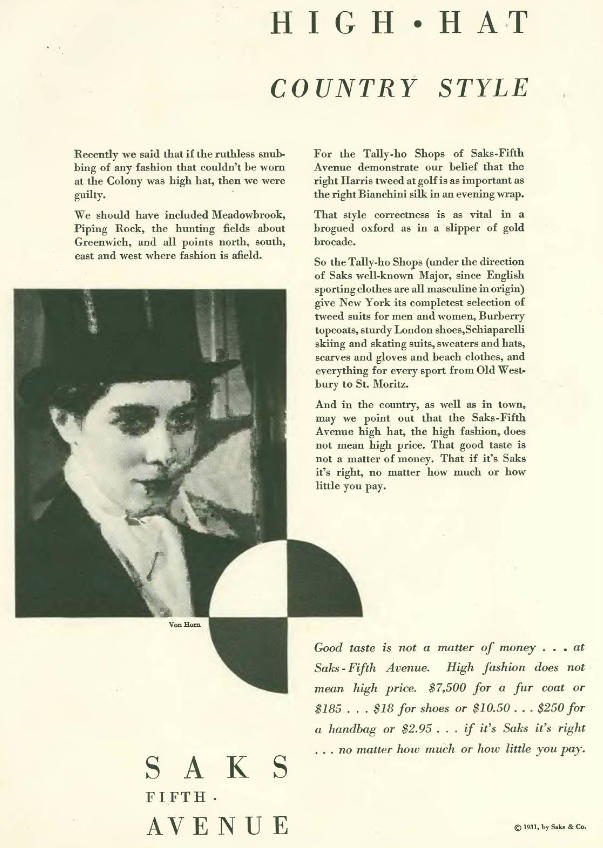
…one trend I wasn’t aware still persisted in 1931 was a top hat and tails for an evening out among the smart set…
…according to this ad, if you were a “smart” and fashionable New Yorker, then you needed an “Inebriates” themed cocktail set…
…examples of the glassware for sale on Worthpoint…
…Dr. Seuss was still busy selling pesticide with this four-panel ad…
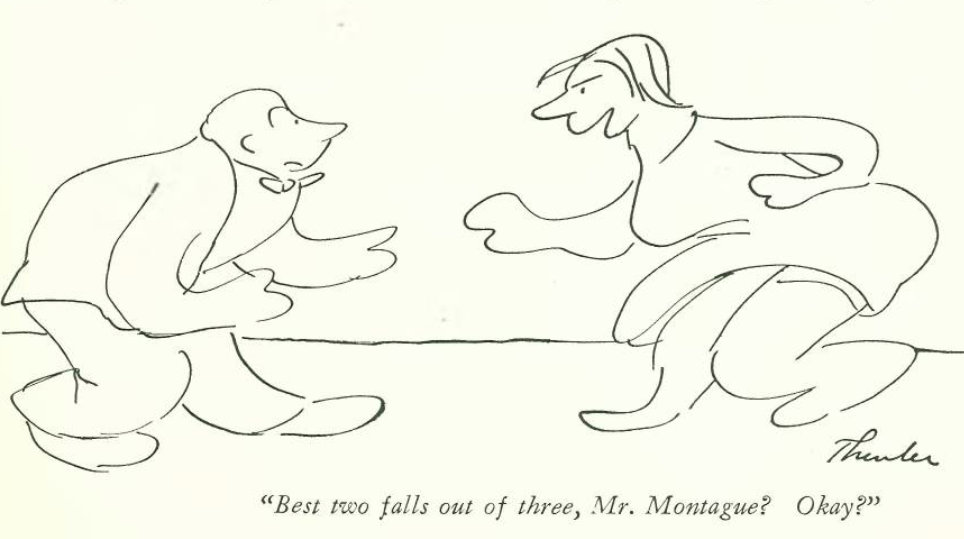
…on to the cartoons, we start with James Thurber…
…and Rea Irvin continued to experiment with various motifs, this time an Egyptian-themed cartoon referencing the “wine bricks” sold by enterprising vineyards during Prohibition…
…Peter Arno found a big surprise during a mansion tour…
…and we end with Otto Soglow…
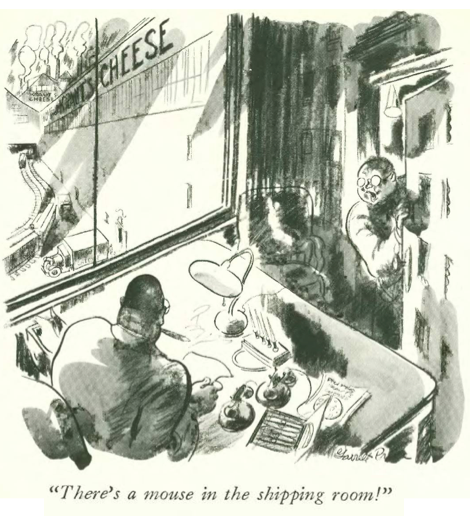
…and Richard Decker…both cartoons reminded me of Al Jaffee’sSnappy Answers to Stupid Questions…
…I grew up reading Mad magazine, and always looked forward to Jaffee’s fold-ins…he just retired from Mad at the young age of 99, so we conclude with one of his Snappy Answers panels from Mad #98, Oct. 1965…
With the explosion of car ownership in the 1920s and 30s came improved highways across America, but if one were to undertake a long-distance journey, like TheNew Yorker’s Morris Markey, you were bound to find a wide range of conditions, from concrete highways to muddy dirt roads.
July 25, 1931 cover by Gardner Rea.
Markey wrote about his experience of driving from New York City to Atlanta for his “Reporter at Large” column, noting that stops at filling stations also offered opportunities to fill up on bootleg gin. Drunk driving, it seems, wasn’t a big concern in the early 1930s.
BLUE HIGHWAYS…Although the U.S. launched into major roadbuilding projects in the 1920s and 30s, rutted and muddy roads were still common in many areas of the country. Clockwise, from top left, Route 1 winds through Maryland in the 1920s; marker indicating the Mason and Dixon Line dividing Pennsylvania from Maryland, circa 1930; a 1930s dirt road in the Eastern U.S.; a policeman directs traffic in Richmond, Va., in the 1930s. (Library of Congress/fhwa.dot.gov/theshockoeexaminer.blogspot.com)TIME TO GIN UP…James H. Brown (left), at the first of his four service stations in Richmond, Va., circa 1930. Some service stations offered Morris Markey bootleg gin during his journey to Atlanta. My use of this photo, however, does not imply that Mr. Brown offered the same service. (vintagerva.blogspot.com)
Unfortunately, Markey shared the sensibilities of many of his fellow Americans 89 years ago, and made this observation about drivers below the Mason and Dixon Line:
* * *
Pale Riders
Since the mid-19th century Chelsea’s Tenth Avenue was known as “Death Avenue” due to the killing and maiming of hundreds who got in the way of freight trains that plowed through 10th and 11th Avenues in the service of warehouses and factories in the district. In the 1850s the freight line hired horsemen known as “West Side Cowboys” to warn wagons and pedestrians of oncoming trains, but even with this precaution nearly 450 people were killed by trains between 1852 and 1908, with almost 200 deaths occurring in the decade preceding 1908. Calls for an elevated railroad were finally answered with the opening of the High Line in 1934. “The Talk of the Town” looked in on the last of these urban cowboys:
WESTSIDE COWBOYS…Clockwise, from top left, a steam locomotive rumbles down 11th Avenue in the 1920s; a West Side Cowboy William Connolly rides ahead of a train to warn pedestrians in 1932; George Hayde led the final ride of the West Side cowboys up 10th Avenue on March 24, 1941; aerial view of the High Line from 18th Street heading north. Opened in 1934, the High Line lifted most train traffic 30 feet above the street. Today it serves only pedestrians, and is one of New York’s biggest tourist draws. (Forgotten NY/AP/NY Times/thehighline.org)
* * *
Guys and Dolls
“The Talk of the Town” had some fun with a little-known aspect of a notorious gangster’s life; namely, the doll-filled house belonging to Jack “Legs” Diamond:
DOLL HOUSE…This house on Route 23 near Cairo, New York, once sheltered gangster Jack “Legs” Diamond, his wife, Alice, and her extensive collection of dolls and other knick-knacks. (nydailynews.com/Zillow)
“Talk” also made joking reference to the number of times Diamond had been shot and survived to tell about it.
Diamond’s luck would run out at the end of 1931 — Dec. 18, to be exact — when gunmen would break into his hotel room in Troy, NY, and put three bullets into his head.
* * *
Ziggy’s Stardust
Florenz Ziegfeld (1867-1932) had a knack for show business, launching the careers of many entertainers through his Ziegfeld Follies, which got its start in 1907 during vaudeville’s heyday. The advent of sound movies signaled the end of the vaudeville era and of Ziegfeld himself, who would stage one final Follies before his death in 1932. Gilbert Seldes penned a two-part profile of Ziegfeld under the title “Glorifier” (caricature by the great Abe Birnbaum). An excerpt:
GO WITH THE FLO…Broadway impresario Florenz “Flo” Ziegfeld Jr with his Follies cast, 1931. It would prove to be his last Follies show. Revivals following his death in 1932 would prove to be much less successful. (Wall Street Journal)
* * *
If Looks Could Kill
The New Yorker’s film critic John Mosher had a difficult time making sense of Murder by the Clock and its lead actress, Lilyan Tashman, who gave a tongue-in-cheek performance as the film’s femme fatale.
ARE YOU NUTS?…Irving Pichel and Lilyan Tashman in Murder by the Clock (1931). Tashman was known for her tongue-in-cheek portrayals of villainesses in films she made before her untimely death in 1934. (IMDB)
* * *
Eine Kleine Nachtmusik
Open-air performances of classical music and opera were popular summertime diversions in the days before air-conditioning. In 1931 crowds gathered in Lewisohn Stadium to hear the New York Philharmonic perform under the direction of Willem van Hoogstraten, who conducted the Lewisohn summer concert series from 1922 to 1939. Here is a listing in The New Yorker’s “Goings On About Town” section:
MUSIC IN THE AIR…Cover of the 1931 program for concerts at Lewisohn Stadium, College of the City of New York. Bottom right, signed photo of Willem van Hoogstraten from 1930. (digitalcollections.nypl.org/ebay.com)
* * *
From Our Advertisers
Flo Ziegfeld’s 1931 Follies were lavish productions, but his advertising in The New Yorker was anything but as evidenced in this tiny ad that appeared at the bottom of page 52…
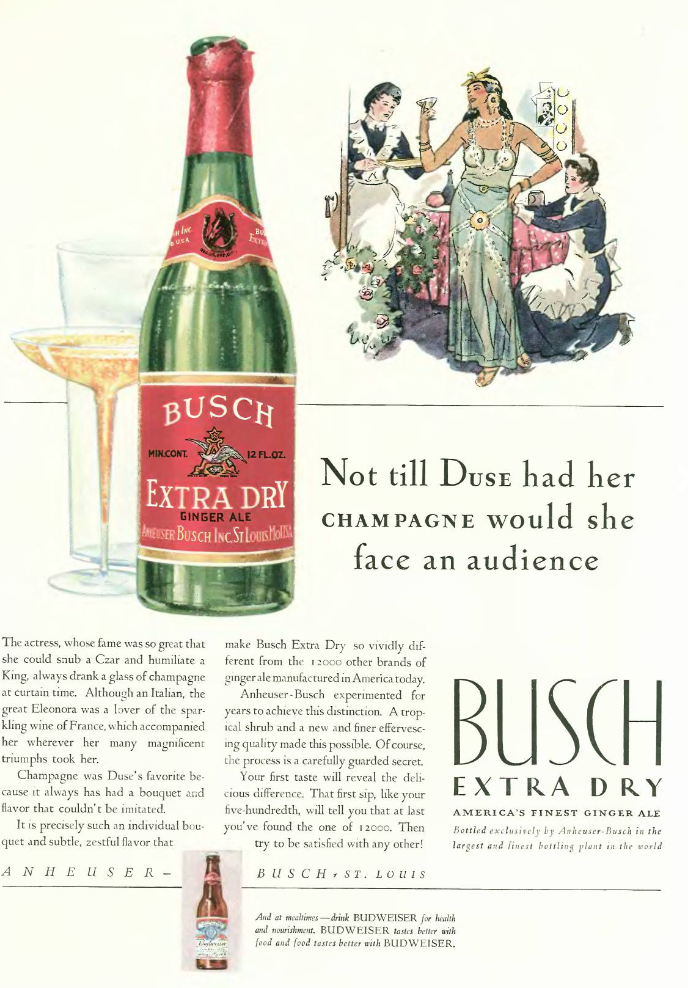
…no doubt anticipating the demise of Prohibition, the makers of Anheuser-Busch beverages ramped up the promotion of their non-alcoholic products to create associations with pre-Prohibition times…
…not to be outdone by the East Coast chocolates giant Schrafft’s, Whitman’s took out this full page ad to suggest how you might enjoy their product…
…which was in sharp contrast to the approach Schrafft’s took in this full-page ad featured in the April 25, 1931 New Yorker, which touted the health benefits of its candy…
…on to our cartoons, Richard Decker took us swimming with a middle-aged man who was anything but bored…
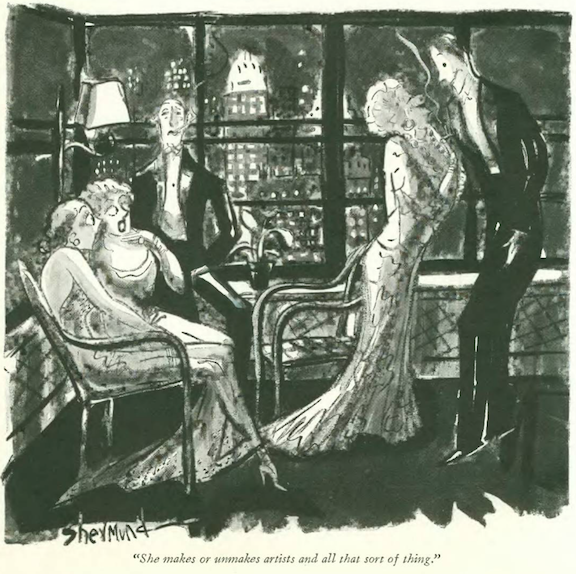
…Barbara Shermund went en plein air with a couple of her ditzy debs…
…Garrett Price also went to the country to find a bit of humor…
…Helen Hokinson found a home away from home for a couple looking to take the sea air…
…James Thurber continued to explore his brewing war between the sexes…
…Harry Haenigsen gave us a novel approach to landing a trophy fish…
…William Steig illustrated the wonders of the tailoring profession…
…and Alan Dunn aptly summed up the generation gap of the 1930s…
…on to the Aug. 1, 1931 issue…
August 1, 1931 cover by Rose Silver.
…”The Talk of the Town” mused about the advertising jingles made famous by the makers of Sapolio soap…
…Bret Harte actually did write jingles for the brand, once described by Time magazine as “probably the world’s best-advertised product” in its heyday. With a huge market share, Sapolio was so well known in the early 20th century that its owners decided they no longer needed to spend money on advertising. It was a poor decision, and by 1940 the product disappeared from the marketplace.
SEEING THE LIGHT OF DAY…A 19th century Sapolio sign on Broadway and Morris Street revealed after an adjoining building was demolished in 1930. (Museum of the City of New York)MONEY WELL SPENT…Sapolio ad from its heyday in the early 20th century. (Pinterest)
* * *
Tough Love
As a charter member of the famed Algonquin Round Table, Heywood Broun was a friend to many of the founding writers and editors of The New Yorker. And so it must have been quite a task to review his play, Shoot the Works, which The New Yorker found wanting in a number of aspects. And because he was so close to Broun himself, Robert Benchley left the review writing to someone who signed the column “S. Finny.” I can’t find any record of an S. Finny at The New Yorker, and I don’t believe this is a Benchley pseudonym (he used “Guy Fawkes” in The New Yorker). At any rate, here is an excerpt:
SHOOT GETS SHOT…The New Yorker wasn’t crazy about Heywood Broun’s play, which ran for 87 performances at George M. Cohan’s Theatre. (Playbill)
* * *
From Our Advertisers
The makers of the “Flexo” ice cube tray continued to tout the wonders of their product with these Ripley-themed ads. This might appear rather mundane to modern eyes, but electric refrigerators with built-in freezers were still rather novel in 1931…
…another way to stay cool in the summer of 1931 was to take an excursion to the Northern climes…
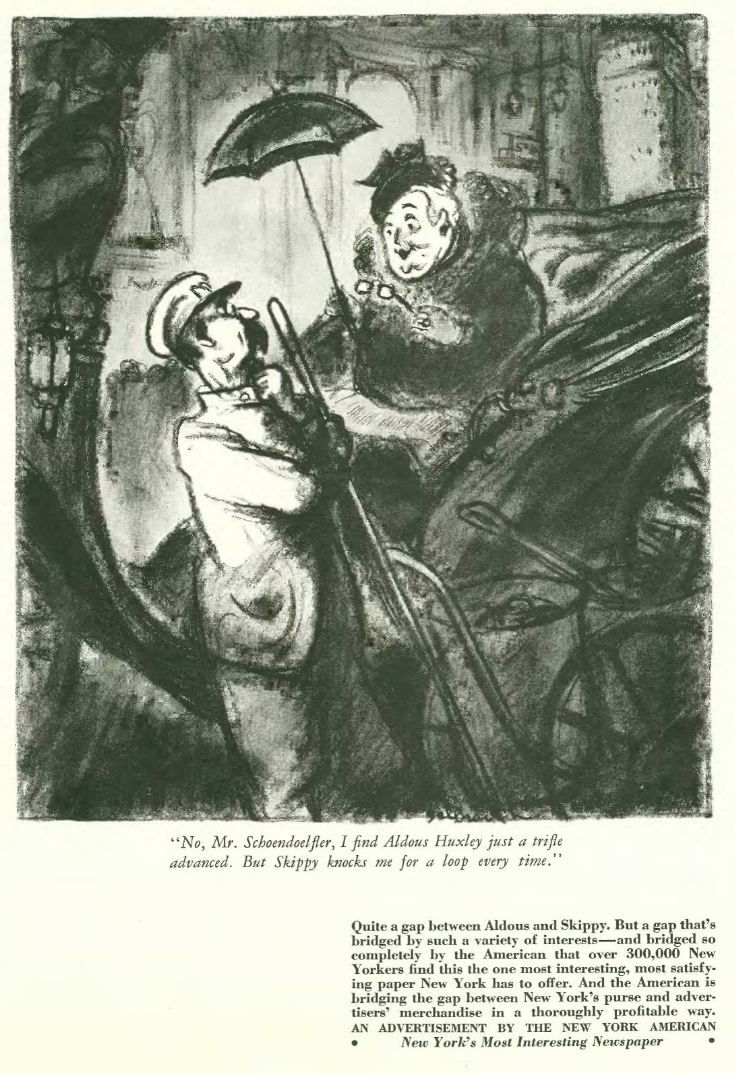
…this ad for the New York American featured an illustration by Herbert Roese, whose early work strongly resembled that of Peter Arno’s…
…on to our cartoons, we have the latest antics of the Little King courtesy Otto Soglow…
…William Steig added levity to a heavy moment…
…Barbara Shermund found humor at an antiques shop…
...John Held Jr continued his revels into our “naughty” Victorian past…
…and we end with Garrett Price, and a look at the ways of the modern family…
When fireworks were still allowed on the streets of New York City, Firecracker Lane was the place to go for all your pyrotechnic needs.
Theodore Haupt illustrated holiday travelers for the Fourth of July issue in 1931.
By 1931, however, fireworks had been banned across the greater New York City area, so customers visiting Firecracker Lane—a short row of sellers on Park Place between Broadway and Church Street—had to find a friendly burg beyond the metropolis to shoot off their Independence Day arsenals.
Before the city clamped down on the fun, Firecracker Lane did a bustling trade, and fireworks were even manufactured at sites around the metro area. But after a number of explosions and fires, the city closed down the fireworks factories, and by 1931 Fireworks Lane itself was on its last leg. “The Talk of the Town” visited what remained, and reminisced about the glory days.
A STREET WITH SOME SIZZLE…The famed Pain’s Fireworks company occupied this building on Firecracker Lane, photo circa 1903. At right, a young woman promoting Pain’s latest novelty, the “Chinese Dragon,” in the 1920s. (Museum of the City of New York)HAVING A BLAST…In the 19th and early 20th centuries, Pain’s staged massive themed fireworks displays, including the incredible The Last Days of Pompeii show on Manhattan Beach, seen here during its 1903 Season. (heartofconeyisland.com)BEFORE THERE WERE MOVIES, entertainment companies were fond of putting on spectacular shows like The Last Days of Pompeii on Manhattan Beach. Illustration from an 1885 edition of Harper’s Weekly. (heartofconeyisland.com)LOCATION, LOCATION…Explosions at fireworks factories in New York and New Jersey put an end to the manufacture of fireworks in the area by 1930. Above, a July 1901 explosion of a fireworks factory in a Paterson, N.J. tenement resulted in the deaths of 17 people who lived above factory. The New York Times reported “So great was the force of the blast, that a boy playing in the street a half a block away was lifted from his feet and hurled against an iron fence, and had one of his legs broken.” (Courtesy Paterson Fire History, via boweryboyshistory.com)
* * *
Not Mum on Mumford
In the previous post we were introduced to critic Lewis Mumford, who excoriated plans for the new Radio City, now known as Rockefeller Center. In his “Notes and Comment,” E.B. White added his own two cents:
PERHAPS IT SHOULD HAVE BEEN A CAKE…Even the promoters of the Radio City project looked uncertain of their scheme in this March 1931 photo. (drivingfordeco.com)
* * *
From Our Advertisers
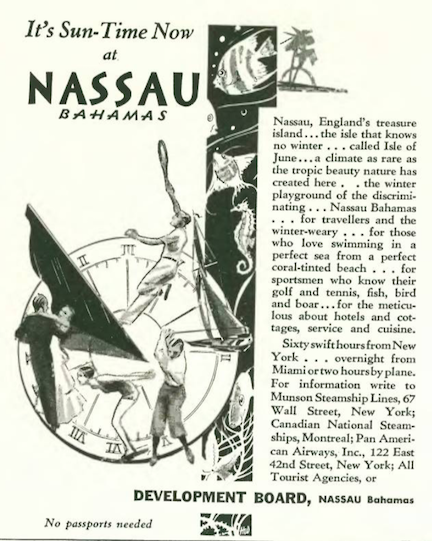
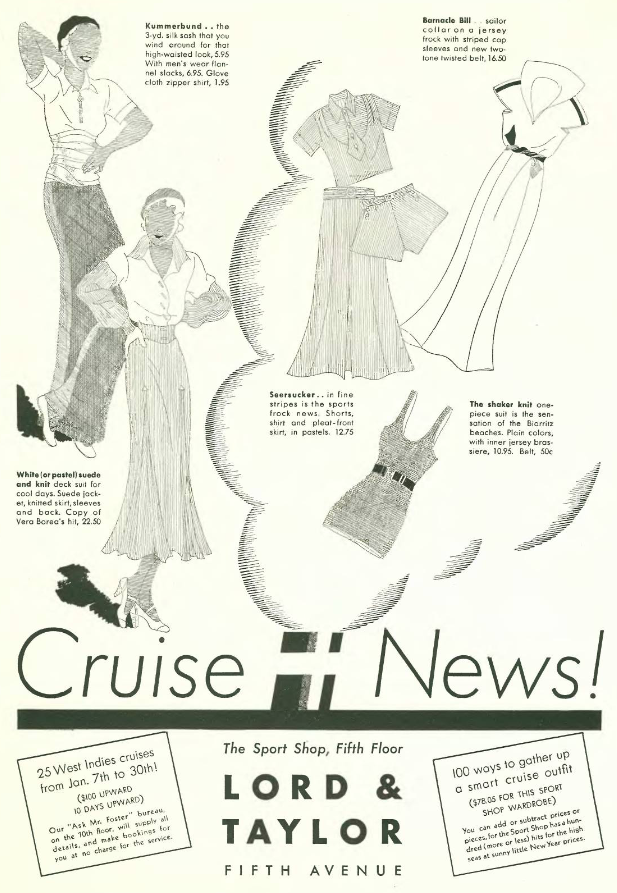
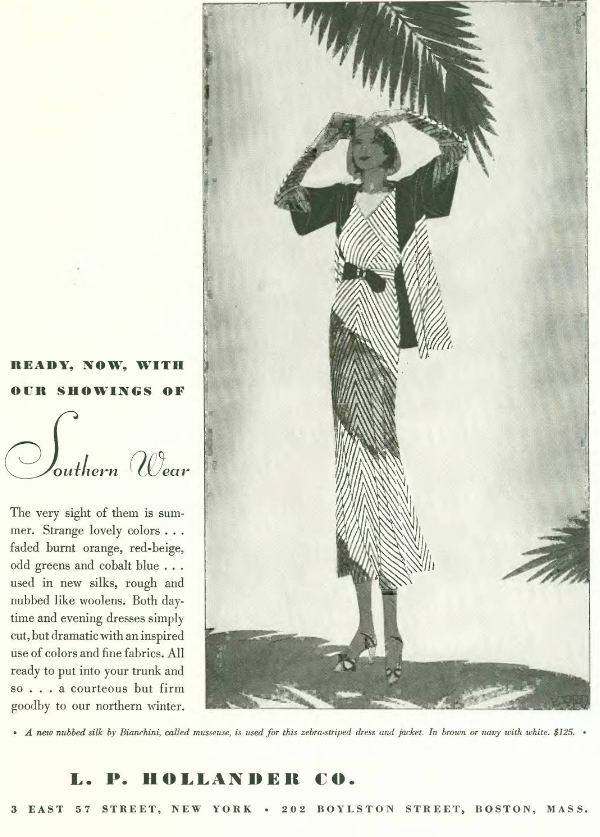
New Yorkers who wanted to get away from the steamy streets of Manhattan (almost no one had air conditioning in 1931) could catch the cooling breezes of the Atlantic on any number of cruise lines that plied the Eastern Seaboard and Canadian Maritimes during the summer…here the French Line offered a six-day “Triangle Cruise”…
…while Cunard offered a similar excursion (employing the cartooning skills of H.O. Hofman) that allowed passengers to “do the ocean” in just four days…
…to earn the ever-shrinking travel dollar during the Depression, both the Red Star and White Star lines offered their giant ocean liners for half- and full-week cruises to the Maritimes, Red Star even throwing in some on-board entertainment, claiming to be the first to do so “on any ocean”…
A SCRAPPED LOT…From top, the Belgenland, Majestic and Olympic. These great ships that once ferried passengers in high style between Europe and the States had been reduced to taking folks on short cruises and even one-day excursions due to the Depression. By the mid-1930s the Belgenland and Olympic (once the world’s largest ship) were sold for scrap. The Majestic was scuttled a few years later. (Wikipeda)
…I’m not sure where this pair is headed, but the angle suggests they just drove off a cliff…
…if cliff diving wasn’t your thing, you could tool around in a bright red Dodge boat…
…or be easily amused like this guy on the right, who gets his jollies from the abundance of ice cubes in his fridge…
…over at Essex House we find a more reserved scene, the “well-born” father and son gloating over their Central Park view…
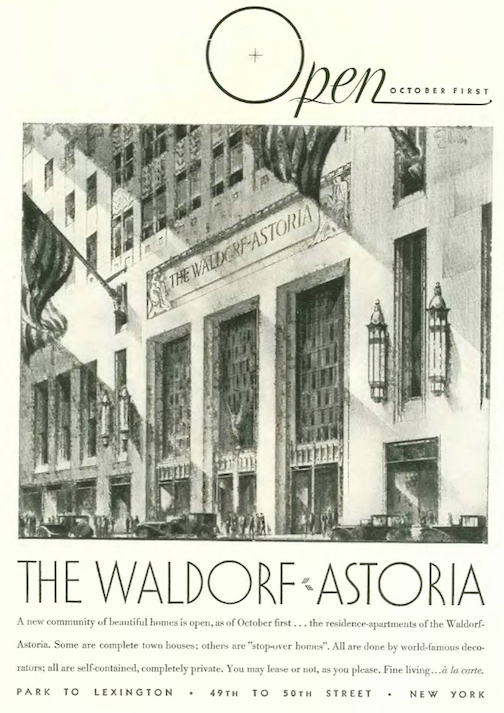
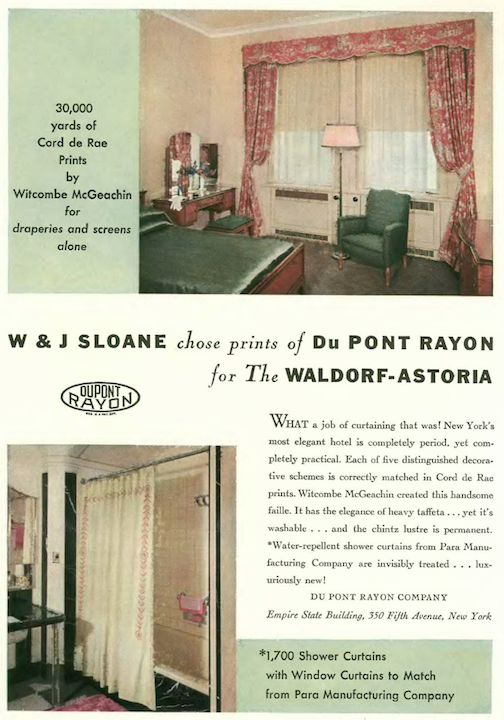
…the Essex House might have been “all that,” but Dad and Junior would have to reconsider their social rank against a newcomer — the Waldorf-Astoria, reborn on Park Avenue…
…on to our cartoons, this couple illustrated by Garrett Price might consider something with a larger balcony…
…Otto Soglow’s Little King took his Little Prince out for some air…
…Kemp Starrett showed us a chap who contemplated the passing of time along with the passing of his timepiece…
…Isadore Klein updated the theme of a damsel in distress…
…the growing popularity of Ping-Pong gave James Thurber some material to explore the battle of the sexes…
…and Barbara Shermund left us poolside with a couple of eggheads…
…on to our July 11, 1931 issue…
July 11, 1931 cover by Rose Silver.
…we find E.B. White taking his sweetheart, Katharine Angell White (referred to here as his “best girl”) out for a date at Coney Island…
A PLACE FOR ROMANCE…It’s not them, but this couple visiting Coney Island in 1928 (photo by Walker Evans) will serve well as our stand-ins for E.B. and Katharine White on their date to Coney. At right, the famous “Tunnels of Love.” (Metropolitan Museum of Art/Pinterest)AND OTHER DIVERSIONS…Another famous and rather lurid Coney attraction was the wax museum, which featured dioramas based on headlines of the day. The biggest attractions were those featuring famous crime scenes, gruesome effects included. (Museum of the City of New York)IT WAS A LIVING…Among other big attractions at Coney were the sideshow “freaks” White mentioned in his article. The photo above, from 1929, is by Edward J. Kelty. (artblart.com)
* * *
On the Waterfront
The 1954 film by the same name featured the murderous mob boss Johnny Friendly (Lee J. Cobb) who ruled the waterfront’s stevedores with an iron fist. The reality was just as brutal, if not more so along the Brooklyn waterfront in the early 20th century, where the reign of a crime boss was as short as his life span. Alva Johnston reports:
TOUGH NEIGHBORHOOD…Midcentury view of the Brooklyn waterfront. (thenewyorkmafia.com)
Dinnie Meehan’s widow, Anna Lonergan, had the distinction of being shot at the side of two successive husbands; after Meehan was murdered, Anna married “White Hand” gangster Harry Reynolds. Johnston, who referred to Anna Lonergan as “the Brunhild of the longshore cycle,” concluded his piece with a look at the “last of the great leaders,” Red Donnelly, also known as “Cute Charlie”…
HARD KNOCKS…“Peg Leg” Lonergan was the final leader of the waterfront’s “White Hand Gang.” He was gunned down on Dec. 26, 1925, after a short reign as boss. He was just 25 years old when he died. (Pinterest)
* * *
The Show Must Go On
With the glory days of vaudeville quickly receding into the past, Flo Ziegfeld was nevertheless determined to keep his “Follies” alive at his eponymous theatre. Robert Benchley stopped by for a look at the Ziegfeld Follies of 1931.
CARE FOR A SMOKE?…Program cover for the Ziegfeld Follies of 1931. At right, Ziegfeld star Ruth Etting, who portrayed a cigarette girl in the show’s “Club Piccadilly” skit. A note of trivia: Etting and I attended the same high school (but not at the same time!). (Playbill/Wikimedia Commons)GLORY BE…Inside pages of the program featured some of the “Ziegfeld Beauties” appearing in the show. (Playbill)
* * *
Gross
Back in the day some entrepreneurial types would kill a large whale, stuff it full of sawdust and formaldehyde, and then take it on the road to parade in front of gawkers with spare nickels in their pockets. E.B. White observed the fate of one such specimen:
YES, THIS WAS A THING…Before the days of Jacques Cousteau and Animal Planet, this is how some folks got their first and likely only look at a real whale, even if it was pumped full of sawdust and formaldehyde.
* * *
From Our Advertisers
This small back page ad invited New Yorkers to the cooling breezes atop the Hotel Bossert in Brooklyn Heights, once referred to as the “Waldorf-Astoria of Brooklyn”…
Its rooftop restaurant — the Marine Roof — was a famous hangout. When the Brooklyn Dodgers won the World Series in 1955, this is where they celebrated…
(brownstoner.com)
…Dr. Seuss was still making a living illustrating advertisements for Flit insecticide…
…”my eyes are up here”…says the woman who uses Coty brand lipstick…
…on to our cartoonists, we have Garrett Price also examining the challenges of playing Ping-Pong…
…Perry Barlow was at the seaside with a precocious beach-goer…
…Carl Rose showed us a Boy Scout after his encounter with the Red Menace…
…Kemp Starrett weighed the advantages of air travel…
…Otto Soglow surprised us with this undercover operation…
…and we end with James Thurber, and the price of literary fame…
To call Lewis Mumford an architecture critic would do him a disservice. He was indeed an outspoken voice on New York’s changing skyline, informed by a keen understanding of history and aesthetics, but his criticisms were also those of a philosopher, a political commentator, a city planner, and an authority on matters concerning art, literature, society and culture.
June 20, 1931 cover by S. Liam Dunne.
The June 20, 1931 issue marks the entrance of Mumford (1895-1990) to our New Yorker story, and just in time to offer his perspectives on the Rockefeller Center project, which was about to commence.
THERE GOES THE NEIGHBORHOOD…This Midtown neighborhood was torn down shortly after the photo was taken to make room for the massive Rockefeller Center project. The view is from the corner of 6th Avenue and 51st Street looking to the southeast. One of the spires of St. Patrick’s is visible at far left, and the Chrysler Building can be glimpsed in the distant center. Lewis Mumford was no fan of giant skyscrapers or other “mega” building projects, and would have preferred something more on this smaller scale for Rockefeller Center. (Museum of the City of New York)
The proposed project — then referred to as “Radio City” — received negative reviews from a number of critics, although the most pointed came from Mumford, who disliked “mega” building projects such as Rockefeller’s, labeling it as “weakly conceived, reckless, romantic chaos.”
RECKLESS, ROMANTIC CHAOS is how Lewis Mumford, left, described plans for Rockefeller Center. At right, the May 1931 issue of Popular Science featured the project’s plans. (Pinterest/Google Books)
Mumford’s Emersonian temperament favored simplicity, self-sufficiency and community; he believed skyscrapers and other “megamachines” were dehumanizing and even dishonest. In this next excerpt he poses a question about the so-called pragmatic “money men” behind the project: “Are the practical men practical?” We read on…
WELCOME TO CLOUDCUCKOOLAND…That was Mumford’s own term to describe plans for Rockefeller’s “Radio City.” An early rendering from 1928 (left) referred to the project as “Metropolitan Square,” and for a time it was slated to include a new Metropolitan Opera house. Joseph Urban proposed this Fifth Avenue-facing design (right) in 1927, but plans were waylaid by the Great Depression. (ephemeralnewyork)BLANK SLATE…With the site mostly cleared, construction commenced in the fall of 1931. This image is from December 16, 1931. (Museum of the City of New York)
Mumford concluded that the opportunity to create a restful respite from the clamor of the city had been lost on the project, which just promised more “razzle-dazzle” and “incongruous jangle,” an interesting observation given that other New Yorker writers were generally dazzled by the skyscrapers and other gigantic projects that were rapidly erasing the old city.
True to his beliefs, Mumford lived a simple life in an old country house in Amenia, New York, a small town in the northern reaches of the Hudson Valley region.
FAR FROM THE RAZZLE-DAZZLE…Mumford house in Amenia, NY. (Wikipedia)
Historian Daniel Okrent, author of Great Fortune, The Epic of Rockefeller Center, notes that Mumford was eventually won over by Rockefeller Center in the end, calling it “a serene eyeful” and “the most exciting mass of buildings in the city.” I have to agree.
SERENE EYEFUL…Images of Rockefeller Center from 1939 (left) and 1935. (flickr.com/(Museum of the City of New York)
* * *
Summertime Reads
A quick glance at the new books listed at the end of the New Yorker’s book review column shows us a nice variety of summertime diversions, including a book about Josef Stalin written before his Great Purge that murdered a million of his own citizens…then there was the memoir Blood on the Moon written by Jim Tully, “America’s most famous hobo author”…the book Life Among the Lowbrows by Eleanor Rowland Wembridge also caught my eye…I believe I’m almost set for the summer…
A STUDY IN CONTRASTS…Misfits and lowlifes peppered the books of both “hobo writer” Jim Tully (left) and psychologist Eleanor Rowland Wembridge, although from very different perspectives. While Wembridge took a more clinical approach to the underclasses, Tully used them for material in his hardscrabble stories. Guess which one ended up in Hollywood. (scpr.org/apadivisions.org)
* * *
From Our Advertisers
The makers of Jantzen swimwear took a slightly risqué approach in advertising their latest women’s line…
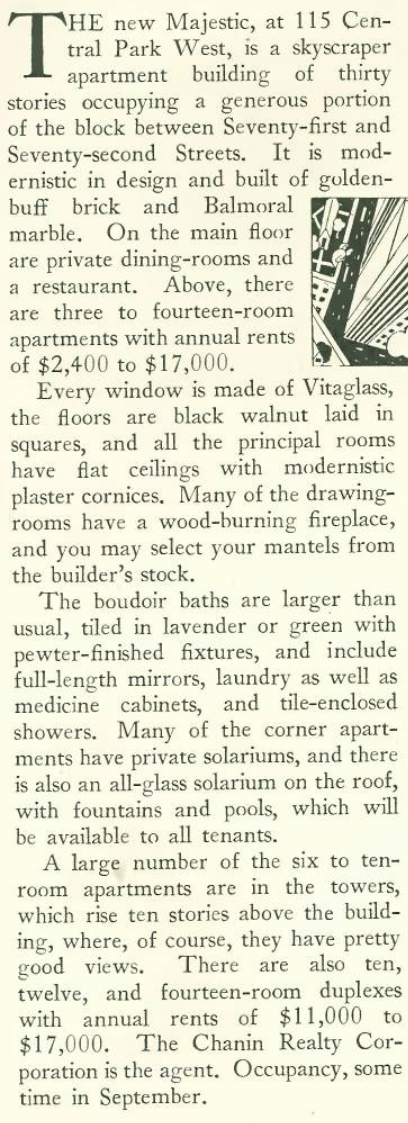
…the owners of the Majestic, on the other hand, used snob appeal and a sense of heightened grandeur to promote their Central Park West apartments…
…advertisers of non-alcoholic drinks tried their best to capture the allure of cocktails, and I imagine much of their product was mixed with something a bit more interesting…
…William Steig was hitting his stride as one of the newer cartoon contributors to The New Yorker…
…with two of his entries featured in the June 20 issue…Steig would live 95 years and be productive throughout his life…nearly 60 years after these cartoons appeared in The New Yorker he would publish the children’s book Shrek!, the basis for the popular movie series…
…earlier in his career, Steig would also find fame for his series of Small Fry cartoons featuring children in adult situations, anticipating Charles Schulz’sPeanuts…this next cartoon, however, is not by Steig but by Alan Dunn, perhaps anticipating Steig…
…Gardner Rea continued to explore the foibles of the well-heeled…
…John Held Jr amused us with another of his rustic “woodcuts”…
…Garrett Price shot the rapids with a hapless suitor…
…here is one the six cartoons Crawford Young contributed to The New Yorker in 1931-32, capturing a moment in which the chicken-egg question is largely moot…
…and another look into the leisure classes courtesy Barbara Shermund…
…and we close the June 20 issue with James Thurber, who showed us a fellow who probably regretted his evening out…
…Thurber also brings into the next issue, June 27…
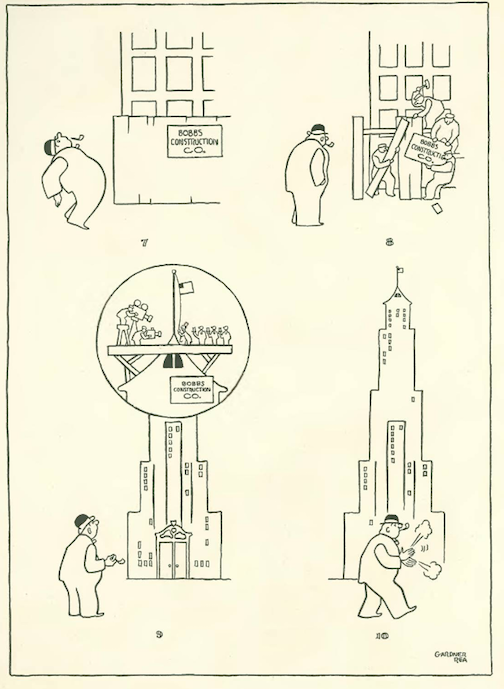
June 27, 1931 cover by Gardner Rea…
…in which he recounted his adventures in bird-watching and the mating habits of crows…
* * *
A Falling (Lone) Star
In her “Letter From Paris,” Janet Flanner reported that the allure of the “Queen of the Nightclubs,” Texas Guinan, did not extend to French shores, where among other things she ran afoul of labor laws that dissuaded non-citizens from working in France.
BEGINNING OF THE END…Associated with risqué entertainments in various speakeasies during the Roaring Twenties, the Great Depression prompted Texas Guinan to take to the road with her show. After attempting (and failing) to make a tour of Europe, she returned to the States for one final road trip. Above left, Guinan in the 1933 film Broadway Through a Keyhole, which would open just three days before her death. At right, headline from the Rochester Democrat and Chronicle trumpeting Guinan’s French debacle. (pre-code.com/
Upon her return to the States, Guinan took advantage of her well-publicized dismissal from France and launched the satirical revue Too Hot for Paris. This traveling show would also mark the beginning of the end for Guinan, who would contract amoebic dysentery during a run of the show at the Chicago World’s Fair. It would claim her life on Nov. 5, 1933, at age 49.
* * *
They Put the Ping Into Pong
“They” being the Parker Brothers, who took umbrage at anyone who questioned their sole right to market genuine “Ping-Pong” balls. “The Talk of the Town” explained:
The “Talk” item ended with a little surprise about Mr. George Parker himself:
VINTAGE…A 1902 ping-pong set from Parker Brothers. (Worthpoint)
* * *
From Our Advertisers
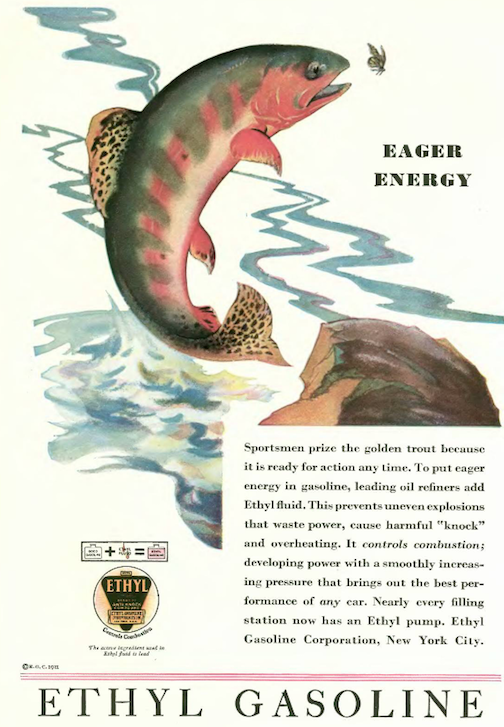
Some lovely color ads, including this message that paired playful porpoises with leaded gasoline…
…this ad was about color itself, and how Powers Reproduction Corporation could make your images pop…
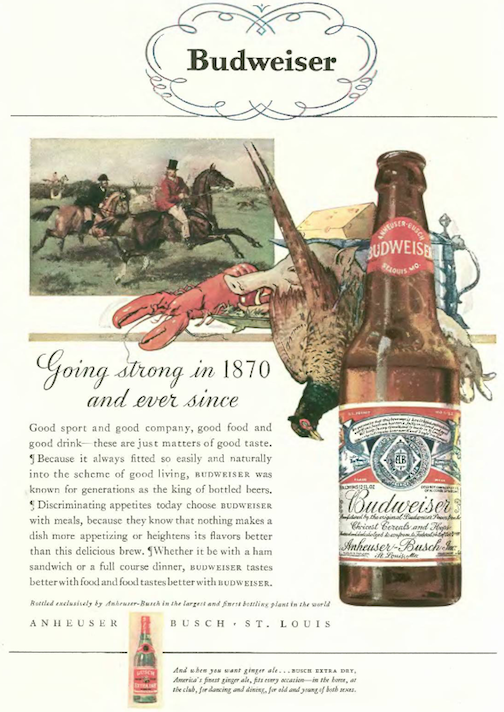
…and another sad Prohibition-era ad from the makers of Budweiser, in this case, a non-alcoholic version that looks like the real thing…of course what is even sadder about this ad is the suggestion that plantation life was something one should fondly hearken back to…
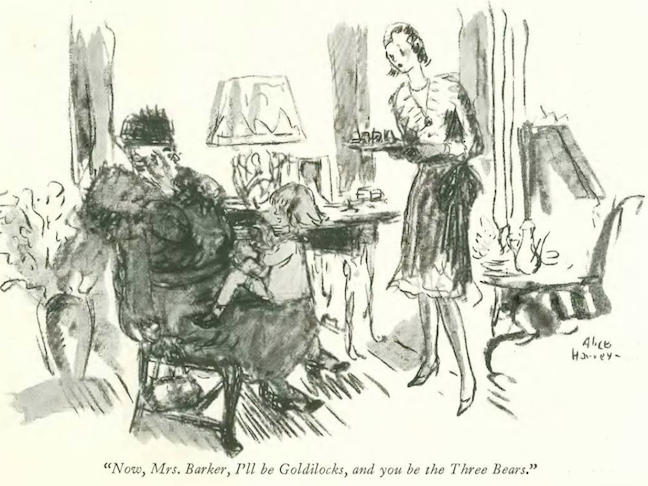
…on to our cartoons, and another terrific illustration from Barbara Shermund…
…and we have Otto Soglow’s Little King, who temporarily lost his crown…
…and another from Soglow, at the men’s store…
…Carl Rose gave us a chap contemplating the burdens of a Guggenheim “genius” grant…
…Peter Arno revealed that his Major had two left feet…
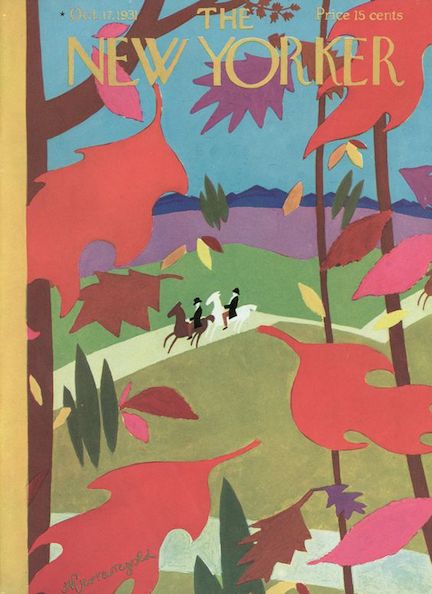
…and in anticipation of the Fourth of July, we end as we began, with Gardner Rea…
Harold Ross founded The New Yorker as a sophisticated humor magazine, so when events in the city or the world took a serious turn, the writers and editors did their best to maintain its waggish tone.
May 16, 1931 cover by Theodore Haupt.
After two cold-blooded killers engaged police in a heated gun battle from a West 91st Street rooming house, the May 16, 1931 “Talk of the Town” had this to say about the incident:
At right, a 1933 portrait of Portrait Of Edward Mulrooney, Police Commissioner of New York City, by Edward Steichen. (Conde Nast)
The New Yorker wasn’t alone in finding entertainment value in the gun battle. Safety standards were quite different in the 1930s, so as police exchanged heavy gunfire with 18-year-old Francis “Two Gun” Crowley, a crowd of 15,000 bystanders surrounded the scene, some just yards away from the action as the photo below attests:
THEY NEEDED SOCIAL DISTANCING…On May 7, 1931, Francis “Two Gun” Crowley exchanged gunfire with police for nearly two hours from the fifth floor of a rooming house on West 91st Street. A force of 300 police fired an estimated 700 rounds at Crowley’s apartment while a crowd of 15,000 spectators surrounded the scene. Not sure why the police stood in a huddled mass beneath the window of the shooter. Strength in numbers, perhaps. (ephemeralnewyork.wordpress.com)
Another mention of the incident was in John Mosher’s film review column. He noted that the newsreel footage of the shoot-out was the best thing on the screen that week, and especially the moment when Crowley’s 16-year-old girlfriend Helen Walsh emerged from the building in the clutches of the police:
DON’T GET TOO COMFORTABLE…18-year-old Francis “Two Gun” Crowley (left) surrendered to police after suffering four gunshot wounds in the West 91st Street shootout, but would recover in time to be executed two months after his 19th birthday. At right, images from the newsreel show Crowley accomplice Fats Durringer being led away from the scene, along with Crowley’s girlfriend (bottom right), 16-year-old Helen Walsh. (Everett/YouTube)
By the end of the month Crowley was tried and convicted of the murder of a police officer, and his partner Fats Durringer was found guilty of brutally killing a dance hall hostess. Justice moved swiftly in those days, especially when the murder of a police officer was involved: On June 1, 1931—just three weeks after the shoot-out with police—Crowley and Durringer were sentenced to death. Only six months would pass before Durringer took a seat in Sing Sing’s electric chair. Crowley would follow his accomplice a few weeks later. As for Helen Walsh, she was released after testifying against Crowley and Durringer.
SHORT LIFE FOR SHORT KILLER…The diminutive Francis “Two Gun”Crowley, top, left, developed a habit of carrying more than one gun at all times, hence the nickname. At right, Crowley with officials at Sing Sing, where both he and partner Fats Durringer would meet their end in the electric chair. Below left, Crowley’s 16-year-old girlfriend Helen Walsh. Crowley was barely 19 years old when he was executed on Jan. 21, 1932. Among his last words, he asked the warden for a rag to wipe off the electric chair before he took his seat. “I want to wipe off the chair after that rat sat in it,” Crowley said, referring to Durringer, who had been executed weeks earlier, on Dec. 10, 1931. His request was denied. (www.swordandscale.com)
One final mention of the incident came from Ralph Barton, who named Police Commissioner Ed Mulrooney his “Hero of the Week”…
* * *
Sub Sandwich
In his “Reporter at Large” column, Morris Markey paid a visit to the Brooklyn Navy Yard where Sir Hubert Wilkins and his crew were busy preparing a narrow, cramped submarine dubbed Nautilus for a trip beneath the ice of the North Pole. Markey marveled at all of the complicated devices crammed into the vessel, but at the same time wondered why anyone would stake their life on “such flimsy things”…
TIGHT QUARTERS…The Nautilus was a refurbished O-class submarine built in 1916 for the U.S. Navy. Somehow a crew of 20 crammed into the thing. (amphilsoc.org)The Nautilus was fitted with ice drills that would allow access to the surface of North Pole ice, as well as provide air to the crew and the vessel’s diesel engines. All this equipment was untested and unproven, since at the time submarines were not able to snorkel and had never broken through ice to reach fresh air. Click to enlarge. (Modern Mechanix)
Markey wasn’t alone in thinking such an expedition was preposterous, and from the very beginning it was beset by problems. On the very first day of preparations, March 23, 1931, a crew member fell overboard and drowned. The next day, Lady Suzanne Bennett Wilkins (Sir Hubert’s wife) christened the submarine with a bottle of ice water rather than Champagne, which was unavailable due to Prohibition.
More on this in another post, but suffice to say Sir Hubert did not succeed in this endeavor, and perhaps should have listened to the advice of the Icelandic American explorer Vilhjalmur Stefansson:
DRY DOCK…Christened with a bottle of ice water rather than Champagne thanks to Prohibition, the Nautilus expedition, led by Sir Hubert Wilkins (inset), had to overcome many obstacles to reach the North Pole, including untested equipment such as a conning tower (right) designed to drill through ice to allow crew members to reach the surface of polar ice. (amphilsoc.org)
* * *
Bright Star on Broadway
In spring 1931 Dorothy Parker subbed as theatre critic for her friend, Robert Benchley, and was greeted with a remarkably mediocre (or worse) line-up of shows. When Benchley returned to his post, things didn’t get much better until Rhapsody in Black came along with its inspiring star, Ethel Waters.
WELCOME RELIEF…Robert Benchley wrote that singer Ethel Waters had a “chastening effect” on even “the meanest of songs.” (Playbill/Carter Magazine)
* * *
Six – Love
Eighty years ago sportswriter John Tunis declared that the Davis Cup international tennis competition would likely come to an end due to expense and the erosion of amateur play. Well, we know the Davis Cup is still around, and one wonders if Tunis was getting a whiff of sour grapes, since the French had won the cup five years straight, and would win again in 1932.
JEU, SET ET MATCH!…Dubbed Les Quatre Mousquetaires (“The Four Musketeers”), the French team of Jacques Brugnon and Henri Cochet (top), Jean Borotra (bottom left), and René Lacoste (bottom right) led France to six straight Davis Cup wins, 1927–1932. (Wikipedia)
* * *
Old Gloria
To be fair, Gloria Swanson was only 32 years old in 1931, but she was so deeply associated with the silent era that by the 1930s she seemed positively ancient (a status that she would brilliantly use to her advantage in 1950’s Sunset Boulevard). Mosher offered this “meh” review of her latest work — only her second completely-sound film — Indiscreet.
WHERE’S THE DOOR?…Ben Lyon seems perplexed by Gloria Swanson’s attentions in this theatre lobby card promoting Indiscreet. At right, Swanson delivers her trademark laser stare. (IMDB)
And we move on to our advertisers, with this ad from Publix Theatres (owned by Paramount) promoting Indiscreet…
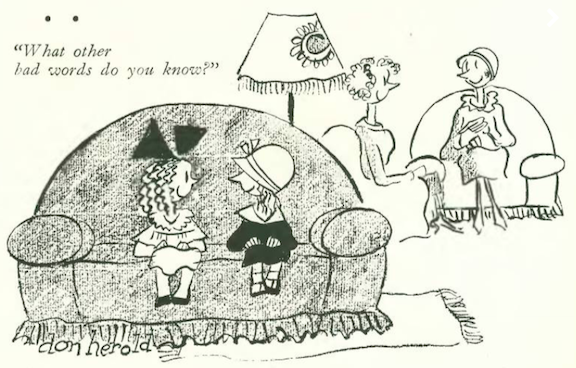
…Southern Pacific used a theme (illustrated by Don Harold) to promote travel on their trains that wouldn’t fly today…
…I include this ad for the design, which seemed to have a little of everything…
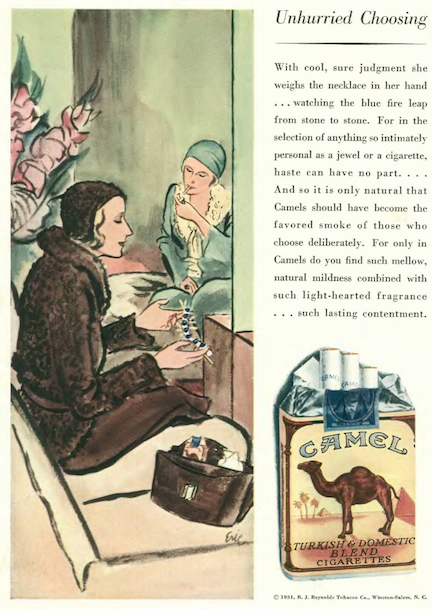
…the makers of Camel cigarettes, however, reverted to a somewhat more homespun image, abandoning the stylish, euro-set illustrations of Carl “Eric” Erickson…
…on to our cartoonists, we have this caricature of Max Steuer by Al Frueh, rendered for a two-part profile…Steuer is perhaps best known for his successful defense of the factory owners after the 1911 Triangle Shirtwaist Factory Fire…
…Ralph Barton again, with his “Graphic Section”…
…Garrett Price weighed the durability of modern decor…
…Barbara Shermund looked at gardening challenges in the ‘burbs…
…Perry Barlow gave us a glimpse of something perhaps inspired by a trip to Europe…
…Richard Decker conjured a boat salesman with a loaded question…
…and we end with the great James Thurber, and a cartoon that might not pass muster today…
Despite the deepening economic depression, work continued apace on a number of large building projects that were transforming the Manhattan skyline, including the Empire State Building, which was being readied for its May grand opening.
March 14, 1931 cover by Rea Irvin.
Developers also looked to the future, including the Rockefeller family, who commissioned a massive project in Midtown — 14 buildings on 22 acres — that would be one of the greatest building projects in the Depression era…
SAY ‘CHEESE’…A group of dour-looking developers unveil an early model for Rockefeller Center, March, 1931. (drivingfordeco.com)
…so great that even E.B. White found the proposed Rockefeller Center difficult to fathom:
DECO DREAM…Conceptual rendering of the Rockefeller Center complex by architectural illustrator John C. Wenrich. (beyondarchitecturalillustration.blogspot.com)
* * *
Star Power
The Depression years also offered lesser diversions, and there’s nothing like celebrity culture to distract one’s mind from daily woes. For our amusement, E.B. White offered up the recent nuptials of Olympic swimmer (and future Tarzan movie star) Johnny Weissmuller and Ziegfeld singer/showgirl Bobbe Arnst…
MONKEY’S UNCLE…Newlyweds Johnny Weissmuller and Bobbe Arnst pose for photographers in 1931. The marriage would last two years. In 1932 Weissmuller would appear in his first “Tarzan” movie, Tarzan the Ape Man, and after divorcing Arnst would marry four more times. (Pinterest)
…of course there’s no better place to find celebrities than Hollywood, where Marlene Dietrich was collecting good reviews for her latest film, Dishonored. Critic John Mosher was absolutely gah gah over the German actress…
COME HITHER IF YOU DARE…Marlene Dietrich portrayed Agent X-27 in Josef Von Sternberg’s 1931 spy film Dishonored. (IMDB)
…if you preferred the stage to the screen, you could check out a show on Broadway, but if you were Dorothy Parker (subbing as theater critic for her pal Robert Benchley), you’d have trouble finding anything worth watching. Her latest review was something of a double-whammy: not only was the play a stinker, but it was written by one of Parker’s least-favorite authors, A. A. Milne…
…AND MY MONEY BACK, TOO…
* * *
Cinéma Vérité
However, Dorothy Parker could have found consolation in the fact that someone, somewhere, had it a lot worse. For example, the eight defendants in a Soviet show trial, filmed for the edification of the masses and as a warning to opponents of the Bolshevik Revolution. In this warm-up for the Great Terror to come, five of the eight were condemned to death after making what were obviously forced confessions. John Mosher had this to say about the real-life horror film:
PRELUDE TO MADNESS…Scenes from the Treason Trial of the Industrial Party of Moscow. Above, filming the proceedings; below, one of the accused scientists confessing his “crimes” against the state. (moderntimes.review/YouTube)
* * *
End of the World, Part II
In my last post we saw how E. B. White mourned the end of The New York World newspaper in a lengthy “Notes and Comment” entry. By contrast, White’s colleague Morris Markey wasn’t shedding any tears for a newspaper he believed had seen its better days. Markey shared his observations in his March 14 “Reporter at Large” column…
AFRAID OF THE DENTIST? Murder suspect Arthur Warren Waite, a dentist from Grand Rapids, Michigan, appeared at Criminal Courts in New York City on May 22, 1916, to face double murder charges (he poisoned his in-laws). He was sent to the electric chair at Sing Sing on May 24, 1917. According to Morris Markey, the World’s coverage of the story was the newspaper’s swan song. (Criminal Encyclopedia)
…Markey described the newspaper’s final day with veteran rewrite man Martin Green quietly typing his last story amid the tears and wisecracks of reporters suddenly out of work…
LONG GONE…Veteran rewrite man Martin Green (inset) filed his last story for The New York World on Feb. 27, 1931. Above, the New York World building was located on Manhattan’s “Newspaper Row” near City Hall. Commissioned by the newspaper’s owner, Joseph Pulitzer, the 20-story building was the world’s tallest office building when in was completed in 1890. It was demolished in 1955 to make way for an expanded car ramp entrance to the Brooklyn Bridge. (New York Times/Library of Congress)
…the end of the World was also on the mind of Gardner Rea, who contributed this cartoon to the March 21 issue:
* * *
The State of Modern Man
Lois Long continued her “Doldrums” series by looking at the condition of bachelor life in the city, and like everything else among the younger generation she found it wanting. Lois was a ripe old 29 when she wrote this, but given how radically life had changed since the Roaring Twenties, a wide gulf now separated those days from the more somber Thirties. Note how Long, who embodied flapper life in her defunct “Tables for Two” column, described herself as a “modest, retiring type” who knew nothing about men. Around this time Long was preparing to divorce husband (and New Yorker cartoonist) Peter Arno after a brief, tempestuous marriage…
* * *
From Our Advertisers
In those depressed days the makers of Buick automobiles decided to look to a brighter future, imaging how the boys of the present would be drivers of Buicks in the future…this kid probably ended up driving a tank or a Jeep rather than a Buick when 1942 rolled around…
…Adele Morel also wanted you to think about the future, and how to hold off those inevitable wrinkles…note the message near the bottom: “Do you realize that a youthful appearance means happiness?”…
…I included this ad for River House because of its sumptuous detail…it rather resembles a 17th century European silk tapestry, and the people depicted look like they could be from that time as well…
…speaking of another age, we have this Murad ad by Rea Irvin, illustrating office behavior that was quite common in the 20th century…
…on a related note, in the cartoons E. McNerney illustrated a “Me Too” moment…
…when Otto Soglow published his first Little King strip in the June 7, 1930 issue, it caught the eye of Harold Ross (New Yorker founding editor), who asked Soglow to produce more. After building up an inventory over nearly 10 months, Ross finally published a second Little King strip, which you see below. The strip would become a hit, and would launch Soglow into cartoon stardom…
…William Dwyer offered a dim view of a man’s stages of life in the first of two cartoons he contributed to The New Yorker…
…James Thurber shared tears with some sad sacks…
…in a few years Leonard Dove’s housewife would see her fears realized as another world war would loom on the horizon…
…and we end with Garrett Price, and an appreciation for fine art…
In the 1920s and 30s the concept of the documentary film was still in its infancy, and beginning with the silent Nanook of the North (1922), the idea that a documentary and a drama were separate things was unknown to filmmakers.
Feb. 28, 1930 cover by Theodore Haupt.
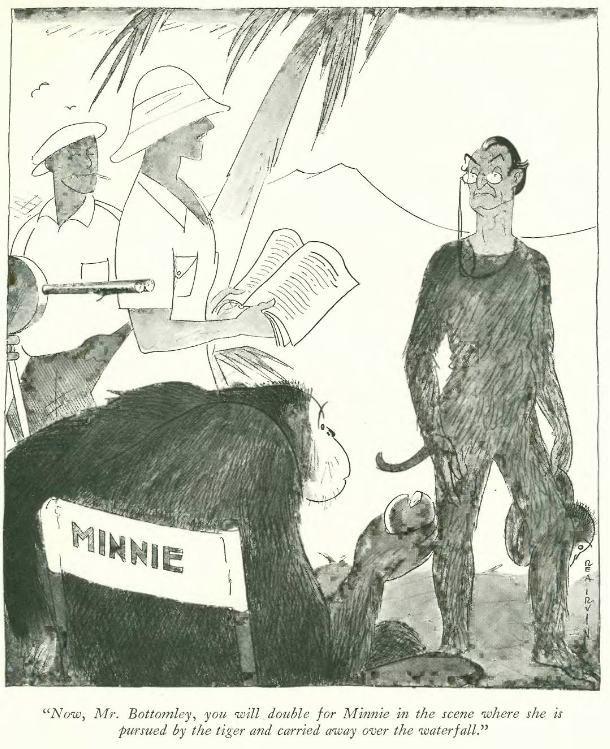
What was known, however, was the box office appeal of films that explored unknown and exotic lands, like Ernest B. Schoedsack’s 1927 blockbuster Chang, which featured a mix of staged events as well as the actual slaughter of wild animals. Audiences (and most critics) seemed little troubled that these films were a mix of fact and fiction. It was a movie, after all, and movies followed a story arc, and they had drama, and sometimes comedy. And so when Schoedsack (1893-1979) introduced audiences to an orangutan named Rango, publicists described the simian star as the “Charlie Chaplin of the Jungle.” The New Yorker’sJohn Mosher found the performances of the various apes “astonishingly adept”…
MONKEY BUSINESS…Clockwise, from top left, the Iowa-born Ernest B. Schoedsack cut his filmmaking teeth as a producer/director of quasi-documentaries, beginning with 1925’s Grass, which followed a caravan from Angora to Persia; a young Sumatran boy, Bin, bonds with the orangutan Rango; promotional theater card for the film. (filmaffinity.com)NOT SO CUDDLY…Two years after Rango,Ernest B. Schoedsack would co-produce and co-direct 1933’s King Kong, with Merian C. Cooper. (Britannica)
If interpretations of tropical life weren’t accurate in 1931, it wasn’t completely due to filmmakers taking dramatic license. Attitudes toward “exotic” lands and people commonly ranged from naively paternalistic to downright racist. In a letter to The New Yorker, Patrick T.L. Putnam (1904-1953) is decidedly of the former, portraying Congo pygmies as clever, amusing children who hoodwink unsuspecting “explorers”…
To Putnam’s credit, he showed a genuine interest (and respect for) in the lives of tribal peoples, and particularly the Mbuti of the Congo’s Ituri Forest. He remained in the Congo for the rest of his life. This thumbnail is the only photo I could find of Putnam:
(geni.com)
* * *
Big Bill Turns Pro
In first decades of the 20th century it was still widely believed that athletic competition should be for its own sake rather than as a means for making money, so many top stars competed as amateurs. Professional golf wasn’t established until 1916, and professional leagues in basketball and football first formed in the 1920s. Amateur status was especially prized in tennis — before the “Open Era” began in 1968, only amateurs were allowed to compete in Grand Slam tournaments.
Sports promoter C. C. Pyle established the first professional tennis tour in 1926 with American and French stars playing exhibition matches in front of paying audiences. According to The New Yorker’sJohn Tunis, many in the crowd were finely dressed, with men in top hats and women turned out in the latest high fashion.
America’s top draw was “Big Bill” Tilden, the world’s number one player from 1920 to 1925 and the first American to win Wimbledon. It caused quite a stir when Tilden went pro on Dec. 31, 1930. He barnstormed across the country, playing one-night stands with a small group of professionals including the top Czech player Karel Koželuh. “The Talk of the Town” had this to say about the fledging game of professional tennis:
BARNSTORMERS…Bill Tilden (left) and Karel Koželuh toured America and Europe with a handful of other players in a series of exhibition matches in the fledgling professional tennis circuit. (Britannica/cyranos.ch)
In his sports column, John Tunis offered this description of the competitors:
NOW AND THEN…At left, you can still spot a few neckties at Wimbledon as the audience watches Roger Federer and Andy Roddick enter Centre Court in 2009; at right, Wimbledon crowd in 1925. (BBC/Vintage Every Day)
* * *
Triple Tripe
Dorothy Parker continued to sub in the theater column for her friend Robert Benchley, who was traveling abroad. She found little to like on the Great White Way, including three forgettable plays she reviewed in the Feb. 28 issue:
Apparently audiences agreed with Parker’s assessment. The Gang’s All Here closed after just 23 performances, The Great Barrington, after just 16. And Heat Wave was not so hot, closing after a mere 15 performances.
NOT SO GREAT…Program for 1931’s The Great Barrington. It lasted 16 performances. (IBDB)
Parker once again closed the column with a plea to her dear friend:
* * *
To Swash No More
In his “Notes and Comment,” E.B. White lamented the end of Douglas Fairbanks as the swashbuckler of the silents, and rejected the talkie version of the actor in Reaching for the Moon, a film in which Fairbanks portrayed Larry Day, a Wall Street millionaire who later loses his fortune in the 1929 stock market crash.
KEEP YOUR SHIRT ON, DOUG…From left, Douglas Fairbanks in the silent era’s The Thief of Bagdad (1924); Fairbanks on an ocean cruise with Bebe Daniels in Reaching for the Moon. The 47-year-old Fairbanks was still fit enough to pose shirtless, but E.B. White wasn’t having any of it. Despite his fit appearance, Fairbanks would die of a heart attack at the end of the decade. (IMDB)
The film today is perhaps best known for its sumptuous Art Deco sets…
(IMDB)
…and for one of Bing Crosby’s earliest film appearances. Reaching for the Moon was originally intended to be a musical featuring numbers by Irving Berlin, however Berlin found director Edmund Goulding difficult to work with, so only one of the original five songs recorded for the film was used, “When the Folks High Up Do the Mean Low Down,” sung by Crosby. It was filmed late at night after he had completed his gig at the Cocoanut Grove.
SINGING WITH BA-BA-BEBE…A young Bing Crosby sings “When the Folks High Up Do the Mean Low Down” with Bebe Daniels in Reaching for the Moon. (IMDB)
* * *
Modern Living
E.B. White also commented on the modern world’s reliance on electric appliances, a habit a mere decade in the making since the gadgets he lists below did not exist before the 1920s:
ELECTRIC SURGE…Prior to the 1920s none of these electric appliances existed. By 1931 many homes were dependent upon them — although many country houses would have to wait for the Rural Electrification Administration (1935) and other New Deal programs get electrical service. (Pinterest)
* * *
From Our Advertisers
I’ve written before about Lux Toilet Soap’s celebrity-studded ad campaigns, but this two-page ad in the Feb. 28 issue caught my eye because it featured one of my favorite actresses, Jessie Royce Landis…
…who appeared in two of my favorite films, both by Alfred Hitchcock: To Catch a Thief (1955) and North by Northwest (1959).
MATERNAL ROLES…Jessie Royce Landis usually played older than she was in real life. Clockwise, from top left, detail of Lux ad; Landis circa 1930; opposite Cary Grant in 1955’s To Catch a Thief; and again with Grant in 1959’s North by Northwest. In the latter film she played Grant’s mother, but in reality she was only seven years older than Grant. (IMDB)
…much of the Douglas Fairbanks/Bebe Daniels film Reaching for the Moon was set on a luxury ocean liner…if the stock market didn’t get you down, you could also afford to travel in style with the Empress of Britain…
…or on one of the fine ships of the French Line fleet…
…the Imperial was one of the luxury cars that could get you to the docks…
…among the stranger ads to appear in The New Yorker was this one by the maker of clay plumbing fixtures…
…on to our cartoonists, Ralph Barton returned with this illustration for the theater section…
…Rea Irvin brought us another of his two-page series cartoons…
…Gardner Rea commented on the state of the art world…
…Peter Arno peered in on an unfortunate infant…
…Helen Hokinson gave us this exchange along a city street…
…Garrett Price illustrated a tall order for a blues musician…
…Carl Kindl found clashing styles in the shoe department…
…and James Thurber returned with a prelude to his battle of the sexes…
We lead off with a couple of winners from the Feb. 7, 1931 issue, beginning with a cover by Rea Irvin that takes measure of a lighter moment at the Westminster Kennel Club Dog Show.
Feb. 7, 1931 cover by Rea Irvin.
The 1930 Best of Show winner Pendley Calling of Blarney also took the top honor in 1931, giving the wire fox terrier back-to-back Westminster wins. Overall, terriers have dominated Westminster — wire fox terriers have won Best of Show fifteen times, with Scottish terriers a distant second, with eight wins.
TOP DOG…Pendley Calling of Blarney won back-to-back crowns in 1930-31 at Westminster Kennel Club Dog Show at Madison Square Garden. The dog’s owner, John Grenville Bates, mercifully retired the pooch after the ’31 win. (Westminster Kennel Club)STANDARD? WHO ARE YOU KIDDING?…Standard poodle Siba won Best in Show at the 144th annual Westminster Kennel Club Dog Show on Feb. 11, 2020, at Madison Square Garden. (Reuters)
The other winner was Cimarron, the first film to receive more than six Academy Award nominations, winning three including Best Picture (then called Best Production). It was the first Western to win Best Picture, and it would be nearly sixty years until another Western, Dances with Wolves, would take the top honor.
HE LOST HIS SHIRT, TOO…
Despite some “sagging moments,” John Mosher mostly lavished praise on the film, which was showing at the Globe Theatre:
THAT’S NO WELCOME WAGON…Clockwise, from top left, Yancey and Sabra Cravat (Richard Dix and Irene Dunn) join the 1889 Oklahoma Land Rush with their son, Cim (Junior Johnston); a less-than-friendly greeting at a boomer town; wagons line up for the big land grab; a young prostitute, Dixie Lee (Estelle Taylor), outwits Yancey for a piece of prime property. (IMDB)OH DEAR, THERE’S THAT LOOK AGAIN…Yancey (Richard Dix) takes it upon himself to establish order in the boomer town of Osage. On the bed are Yancey’s son, Cim (Junior Johnston) and wife Sabra (Irene Dunn). (IMDB)
* * *
Handy Painter
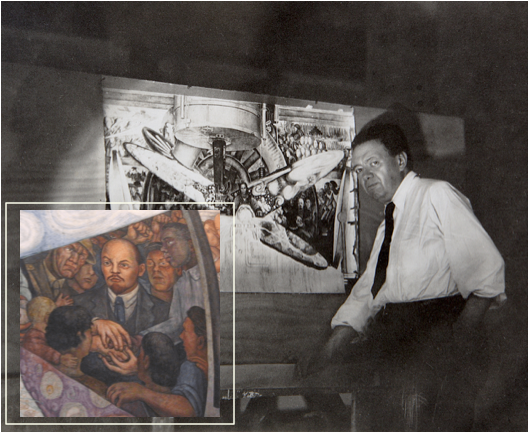
It is hard to imagine the struggles of one-handed painter José Clemente Orozco (1883-1949), who despite his handicap was able to complete huge murals in true fresco style (paint applied quickly on fresh, wet plaster), including five socially-themed frescoes at the Joseph Urban-designed New School. The murals included controversial depictions of Lenin and Stalin, but it wasn’t until the 1950s — during the McCarthy era — that school officials felt compelled to cover the images with a curtain. More protests followed, this time from faculty and students, and the curtains fell along with Joe McCarthy. “The Talk of the Town” looked in on the artist at work:
HE LOOKS FAMILIAR…José Clemente Orozco’s “The Struggle in The Occident”, 1930-1931, one of five frescoes at the New School. (Pinterest)
* * *
Prescience of Mind
News reporter and author Elmer Davis submitted this humorous piece to The New Yorker doubtless thinking how preposterous, and therefore humorous, the following notion would be (a brief excerpt):
* * *
Funny Cigarettes
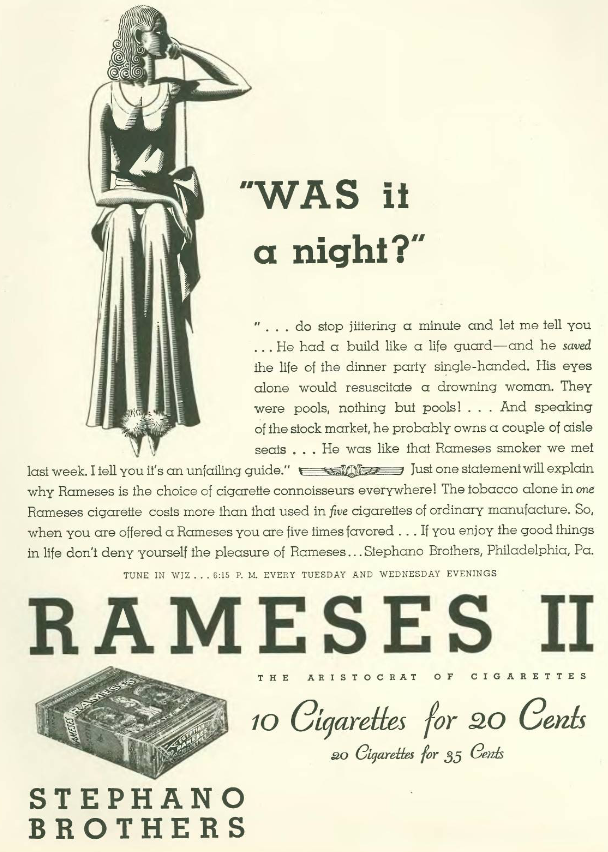
In the early years of broadcast radio (and later TV) tobacco companies rightly saw a huge gold mine in radio show sponsorships. So when CBS radio executives accepted a sponsorship from Lorillard (the makers of Old Gold), they realized they had a challenge on their hands. “Talk” explained:
COUGH ME A MELODY…The makers of Old Gold cigarettes had CBS in their clutches in this September 1933 ad featuring bandleader Fred Waring and singer Babsie. (period paper.com)
…The above “Talk of the Town” item referred to the famous Murad ads illustrated by The New Yorker’s own Rea Irvin…
…while other advertisers were scaling back a bit due to the Depression, lovely full-color ads continued to flow from tobacco companies (and oil companies)…
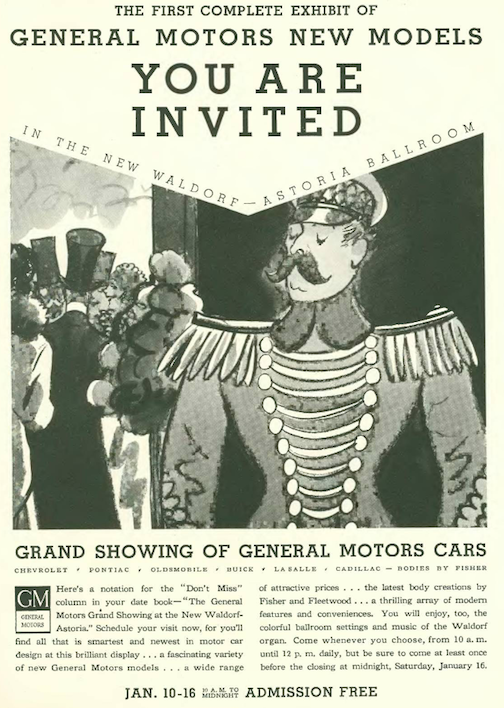
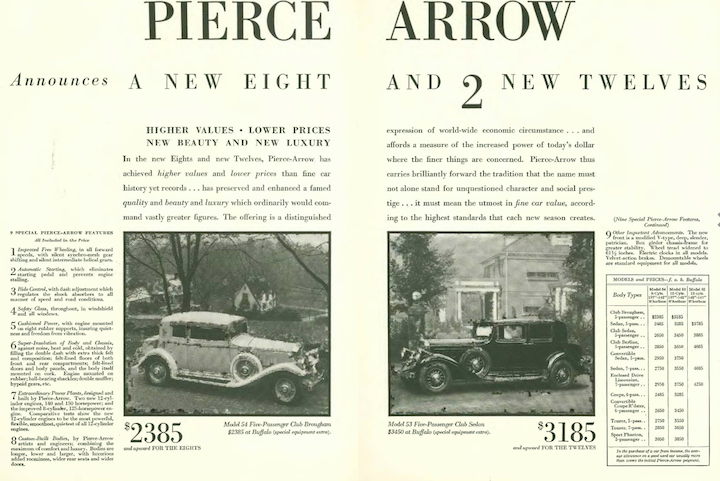
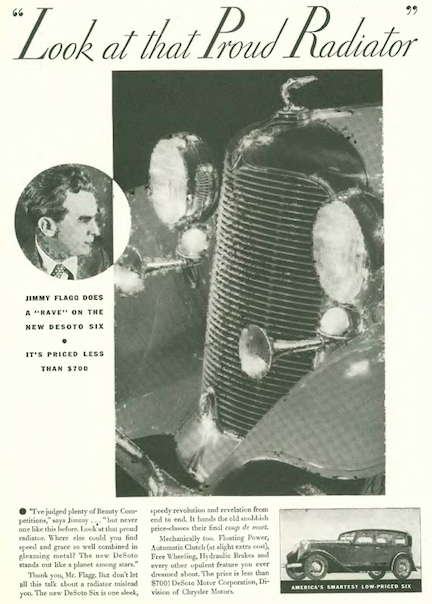
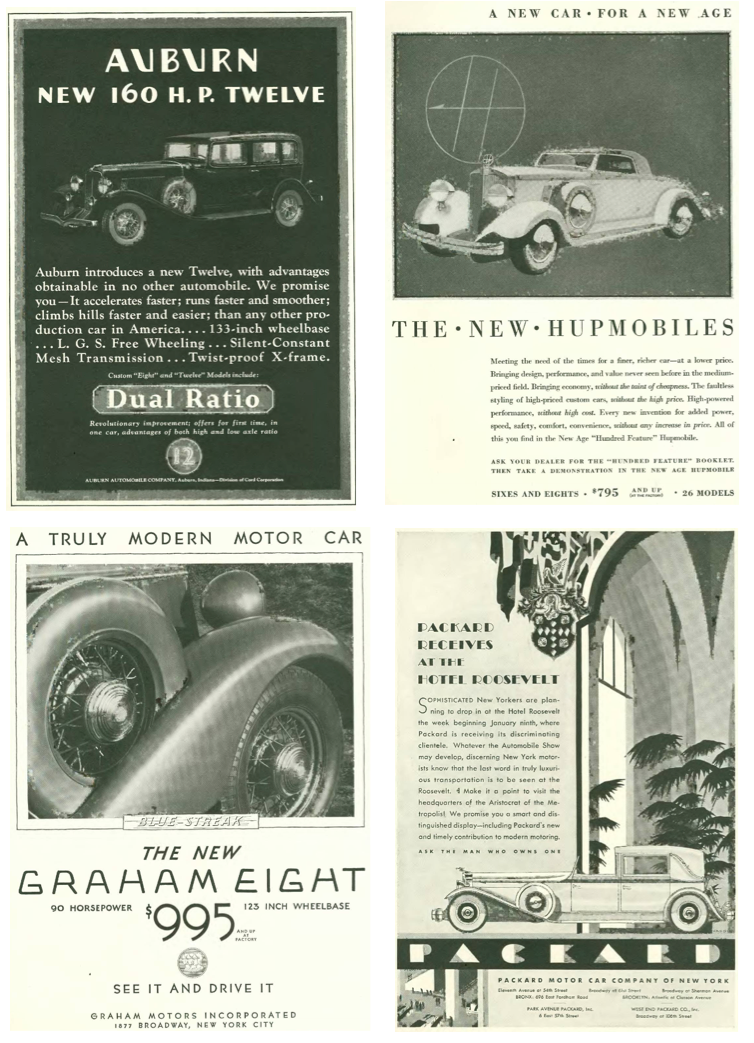
…Pierce-Arrow was also known for its sumptuous ads, but they wouldn’t save the luxury car maker from going under by the mid-1930s…
…Some less expensive black and white ads, such as this hand-lettered ad from Stein & Blaine, could be quite charming…
…speaking of charm, this ad from Arthur Murray could have used a little of it…note the stern visage of the woman, described as “typical of Arthur Murray’s staff of expert teachers”…
…on to our Feb. 7 cartoons, we have one of Peter Arno’s stock characters, the Sugar Daddy, in an awkward moment at a costume party…
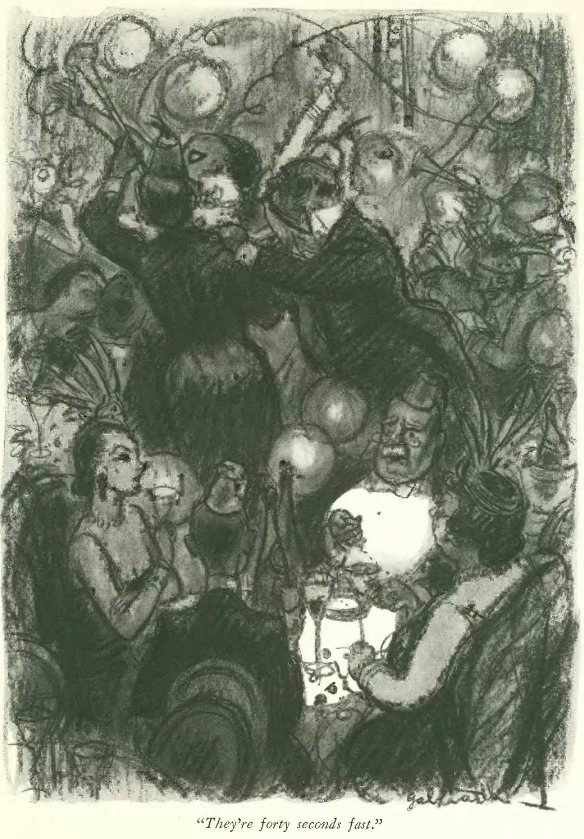
…Arno’s party looked a lot more lively than this affair, illustrated by William Crawford Galbraith...
…and Carl Rose gave us this pair, who seem to having the best time of all…
…Mary Petty eavesdropped on a guileless young woman…
…and Gardner Rea paid a visit to the Met…
* * *
On to our Feb. 14 issue, and Gardner Rea once more…
Feb. 14, 1931 cover by Gardner Rea.
The Feb. 14 issue featured a profile of actress Katharine Cornell (1893-1974), written by cultural critic Gilbert Seldes. The caricature of Cornell is by Al Frueh. Excerpts:
Promotional photograph of Katharine Cornell as Elizabeth Barrett in the original 1931 Broadway production of The Barretts of Wimpole Street. It was her most famous role. (Theatre Magazine, March 1931)
Cornell is considered one of the greatest actors of American theater, known for her eloquence and romantic stage presence. Seldes concluded:
* * *
Strange Bedfellows
In his column “Of All Things,” Howard Brubaker referred to an exchange between American capitalists and Soviet Russians that resulted in the rapid industrialization of the Soviet Union. That actual story behind this effort is pretty amazing.
* * *
Sneak Peek
Film critic John Mosher was so excited about Charlie Chaplin’s latest film that he offered this teaser to readers…
* * *
From Our Advertisers
We have this ad from the developers of the Empire State Building, which was being readied for a May 1931 opening…
…the Empire State Building was erected on the site of the old Waldorf-Astoria Hotel. The new Waldorf-Astoria, also completed in 1931, was located more than 15 blocks away from its original site. Both the Empire State Building and the Waldorf Astoria would become Art Deco landmarks, and both shared the distinction of holding world records: the Empire State was the world’s tallest building (a record it would keep until 1970), and the Waldorf would claim the title of the world’s tallest hotel (until 1963)…
…on to our cartoonists, we have Ralph Barton contributing one of his last illustrations to the theater review section…
…Richard Decker references a recent change in New York telephone numbers with this prison scene…
…Decker was referring to this bit of news, here interpreted by E.B. White in his Feb. 14 “Notes and Comment.”
…James Thurber returned with his second-ever stand-alone cartoon for the New Yorker…
…Garrett Price mined a theme that would become common in New Yorker cartoons: the tycoon vs. meek employee…
…Nancy Fay gave us a glimpse of the seamier side of family life…
Introduce the topic of the Wickersham Commission at your next dinner party and you will most likely be answered with a puzzled silence.
January 31, 1931 cover by Constantin Alajalov.
However, in January 1931 it was THE topic of the month, especially among New Yorkers keen to see the end of Prohibition, which was the focus of the commission.
Established by President Herbert Hoover, the 11-member Wickersham Commission (officially, the National Commission on Law Observance and Enforcement) was not seeking to repeal the 18th Amendment, but rather to examine the criminal justice system under Prohibition, everything from police brutality and graft to the rapid rise of organized crime.
SOBER UNDERTAKING…George Wickersham was featured on Time’s Feb. 2, 1931 cover for his leadership on the National Commission on Law Observance and Enforcement, better known as the Wickersham Commission. (Time Inc.)
To the chagrin of many New Yorkers, the report (released on Jan. 7, 1931) called for even more aggressive enforcement of anti-alcohol laws.
This caused such a stir that The New Yorker dedicated the entire first page of “The Talk of the Town” to a satirical commentary furnished by E.B. White. An excerpt:
LEAVE MY NAME OUT OF IT…Former US Attorney General George Woodward Wickersham, left, was tapped by President Herbert Hoover to lead the National Commission on Law Observance and Enforcement. Humorist Will Rogers weighed in on the likely outcome of the Commission’s report. (Wikipedia/PBS)
Humorist Will Rogers also commented on the report in this letter published on page 19 of the Jan. 26, 1931 edition of The New York Times…
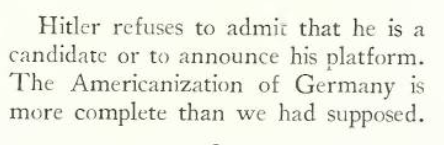
…Algonquin Round Table co-founder Franklin P. Adams, on the other hand, summed up the Commission’s report with a poem:
Prohibition is an awful flop. We like it. It can’t stop what it’s meant to stop. We like it. It’s left a trail of graft and slime It don’t prohibit worth a dime It’s filled our land with vice and crime, Nevertheless, we’re for it.
Back to The New Yorker,Howard Brubaker weighed in with his column, “Of All Things,” correctly noting that the majority of Americans wanted an end to Prohibition laws despite the Commission’s recommendations…
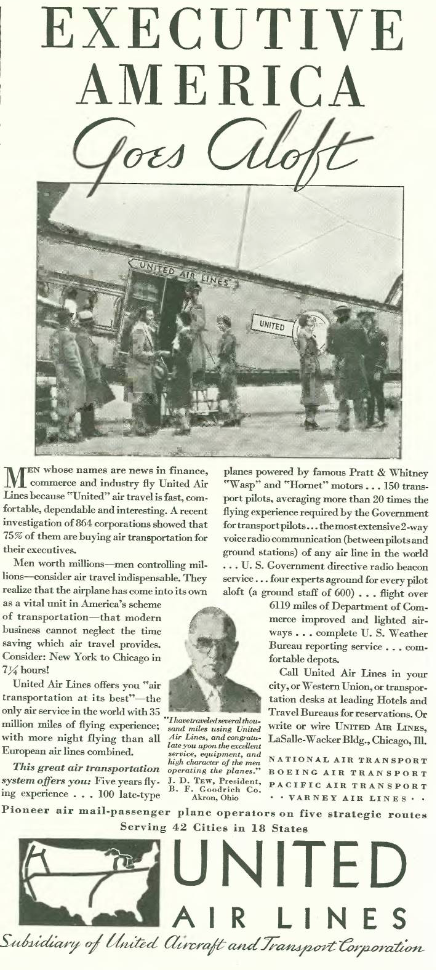
…and Rea Irvin gauged the mood of the parlor crowd in light of the report:
* * *
Polar Plunge
On to happier news, “The Talk of the Town” looked in on preparations for a North Pole trip by a refitted and renamed military submarine, Nautilus. An excerpt:
POLAR OBSESSED…Above, the Nautilus arrives at Plymouth, England, on June 26, 1931. It left New York City on June 4 on the first leg of a voyage that was to continue on to Spitsbergen, Norway and ultimately to the North Pole and a rendezvous with Germany’s Graf Zeppelin. At right, crew members Cornelius P. Royster, John R. Janson, and Harry Zoeller dine in the Nautilus galley, April 20, 1931. (amphilsoc.org)HOW IT WORKED…The June 1931 issue of Modern Mechanics asked the question, “Will the Nautilus Freeze Under the North Pole?” Stay tuned. (Modern Mechanix)
* * *
Dorothy, Abridged
Laid up with the flu, Dorothy Parker turned to some reading during her convalescence, only to find that the books provided to her (for review) were far from uplifting. One in particular, a censored version of D.H. Lawrence’sLady Chatterley’s Lover, was downright galling. Excerpts:
FIFTY SHADES OF EMBARRASSMENT…D.H. Lawrence’sLady Chatterley’s Lover was published privately in 1928 and swiftly banned by the United States the following year. Amazingly, the first unexpurgated edition would not be published in the U.S. until 1959, in the edition pictured above issued by the fledgling Grove Press. (mhpbooks.com/orbooks.com)
* * *
Old Before Her Time
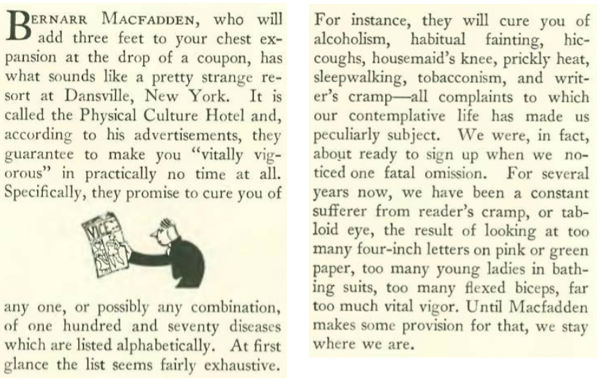
Lois Long was only 29 years old when she wrote her “Doldrums” series for The New Yorker, but the chronicler of Jazz Age nightlife who once epitomized the flapper lifestyle felt much older given how much the world had changed in just a few short years. She was particularly appalled by the younger generation’s embrace of “health and vitality” over her own generation’s lust for the party life…
GETTING THEIR KICKS…Lois Long was appalled by the new generation’s healthier pursuits, left, contrasted with the flapper lifestyle Long embodied in the 1920s. (Pinterest)
…Long was mother to a toddler at the time, and would divorce husband and New Yorker colleague Peter Arno in the spring. This, no doubt, contributed to her feeling of estrangement from the younger generation:
Endnote: Bernarr MacFadden (1868-1955), referred to above, was an early proponent of body building and healthy diets that anticipated the rise of physical culture icons such as Charles Atlas and Jack LaLanne.
* * *
The Last Warrior
Paris correspondent Janet Flanner noted the passing of 78-year-old French Field Marshal Joseph Joffre, the last of the great World War I military leaders. Note that Flanner referred to Joffre’s war as “the world war,” since the next world war was still on the horizon.
AU REVOIR…French Field Marshal Joseph Joffre (saluting) in 1922. (Library of Congress)
* * *
From Our Advertisers
We have two of New York’s finest hotels advertised along with the newly opened National Hotel in Havana, Cuba. All three were under the same management at the time. The Cuban hotel would be heavily damaged two years later in a coup led by Fulgencio Batista. It would be restored, and eventually nationalized by Fidel Castro. The Savoy-Plaza would not be so lucky, demolished in 1965 to make way for the General Motors Building…
NOW YOU SEE IT, NOW YOU DON’T…The elegant Savoy-Plaza (left) was razed in 1965 to make way for the General Motors Building. (Wikipedia)
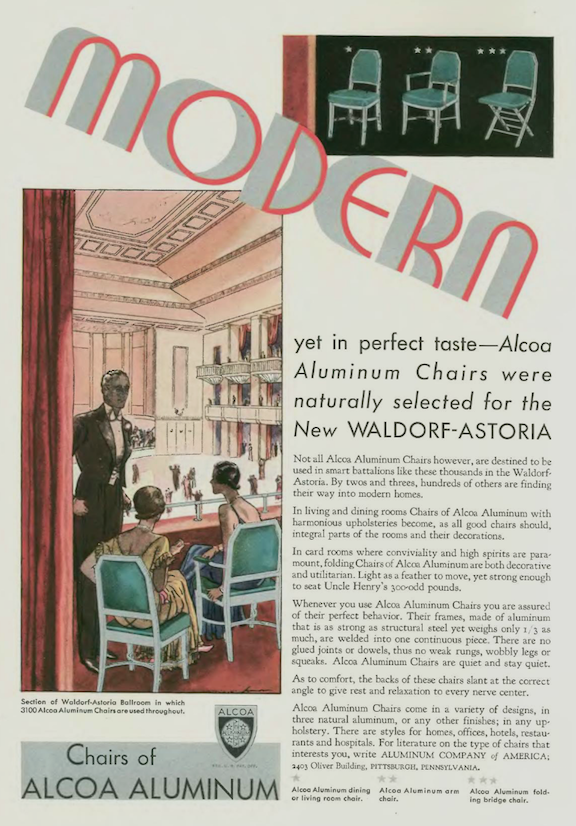
…and we have this lovely color ad from the makers of Alcoa aluminum chairs, which bespoke “the new vogue.” Alcoa created the market for aluminum furniture in the 1920s in an effort to increase demand for its aluminum products. It obviously worked, as all kinds of aluminum chairs and desks became ubiquitous by mid-century, especially in the workplace…
…on to our cartoonists…the Jan. 31, 1931 issue marked a big moment in New Yorker cartoons, as it featured James Thurber’s very first…
…Alan Dunn showed us a man who could not be distracted from financial woes…
…William Steig settled in as a New Yorker regular…
…Carl Rose gave us a lot of sour faces in a bank lobby…
…and Gluyas Williams demonstrated the effects of decaf coffee…
…and before I go, here is a scene from the Third Academy Awards, which are referred to as the 1931 awards, although they were actually held on Nov. 5, 1930 in the Fiesta Room of the Ambassador Hotel in Los Angeles….
Broadway impresario Florenz Ziegfeld Jr knew how to pack a Broadway theater, and from 1907 to 1932 he staged a number of revues and plays (most notably Showboat) that featured lavish costumes and a bevy of chorus girls.
Dec. 6, 1930 cover by Rea Irvin, depicting a peephole view of a speakeasy during the holidays.
When his latest show, Smiles, hit the stage of the Ziegfeld Theatre on Nov. 18, 1930, it was greeted by an audience that had endured the first year of the Great Depression. Ziegfeld’s entertainments, on the other hand, were more associated with the high times of the Roaring Twenties. So even the popular brother-sister dance team from Omaha — Fred and Adele Astaire — seemed a bit old hat.
GO WITH THE FLO…Broadway impresario Florenz “Flo” Ziegfeld Jr with his Follies cast, 1931. (Wall Street Journal)
Or so it seemed to Robert Benchley, who observed in “The Wayward Press” that most of his readers could draw pictures of the Astaires from memory. But what really irked Benchley was the way William Randolph Hearst manipulated his mighty newspaper empire to promote Ziegfeld’s Smiles in a way that made the show appear to be the biggest hit of the year.
Ziegfeld Theatre was built with Hearst’s financial backing, so the media mogul was determined that the show would be a success, commanding his editors and writers to lavish praise on the tepid production, which would close in less than two months as a box office failure.
SAY CHEESE…Program for Smiles featuring Fred Astaire, Marilyn Miller and Adele Astaire. At right, publicity photo for Smiles featuring Fred and Marilyn. (Playbill/Pinterest)
For the Astaires, they were nearing the end of their 27-year collaboration — Adele would retire from the stage in 1932 to marry Lord Charles Cavendish, and in 1934 Fred would pair up with Ginger Rogers for the first of nine films they would make together for RKO. Marilyn Miller, one of the most popular Broadway stars of the 1920s and early 1930s, would also seek her fortune in films, but would only make three. Alcoholism and persistent sinus infections would cut her life short in 1936 — she would die at age 37 from complications following nasal surgery.
BRIEF CAREER…Marilyn Miller in 1931’s Her Majesty, Love, one of just three films she would make before her death in 1936. (IMDB)
Benchley revealed how some of Hearst’s reporters responded to the edict from their boss:
TWEAKING HIS NOSE…Walter Winchell, left, registered his protest against his boss, William Randolph Hearst, by laying it on thick in his column. (IMDB/BBC)THE FOLLY OF FOLLIES…Robert Benchley (left) cried foul regarding Hearst’s attempt to prop up a lousy show; Ogden Nash (right) found humor in the “immorality” of Ziegfeld’s productions. (Wikipedia/Notable Biographies)
On a related note, Ogden Nash also zeroed in on Ziegfeld’s latest show, turning the tables on religious zealots who found the Follies immoral. An excerpt:
And finally, one more theater-related item: a drawing by Al Frueh highlighting the melodrama On The Spot, which ran from Oct. 29, 1930 through March 1931 at the Forrest Theatre.
BETTER THAN ZIEGFELD, THIS…At right, Crane Wilbur and Anna May Wong in the melodrama On The Spot, which opened Oct. 29, 1930 at the Forrest Theatre. (New Yorker/Pinterest)
* * *
In the Dec. 6, 1930 “Notes and Comment,” E.B. White shared his observations on a new type of chair that doubled as a dog house…
…and he wasn’t making it up, because the chair he described was featured in this ad from the same issue…
* * *
Drunk History
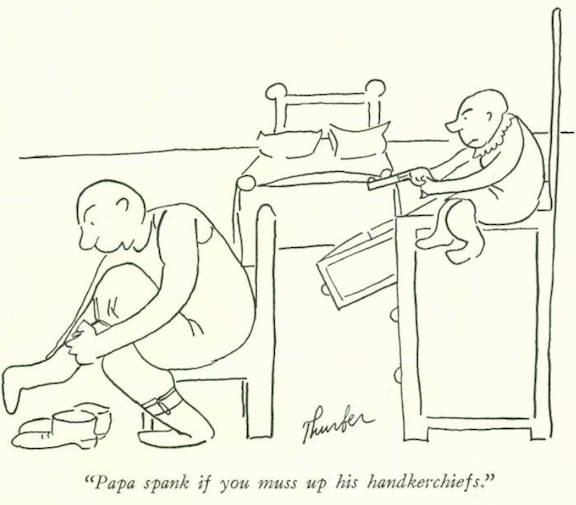
In the fall of 1930 Scribner’s magazine published a series of three articles titled “If Booth Had Missed Lincoln,” If Lee Had Not Won the Battle of Gettysburg,” and “If Napoleon Had Escaped to America.” The New Yorker’sJames Thurber claimed to be the author of a fourth article, “If Grant Had Been Drinking At Appomattox.” An excerpt:
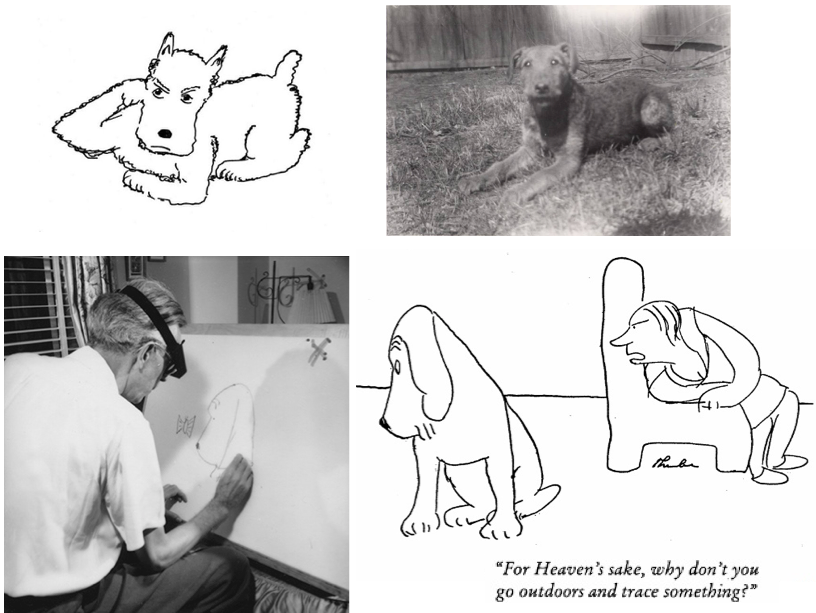
REVISIONIST…James Thurber circa 1930. (thurberhouse.org)
* * *
From Our Advertisers
The rolling pin was often deployed as a prop — especially in the comics — to illustrate marital discord; the makers of Hoffman ginger ale used the common trope to sell their fizzy drink…
…for reference, Maggie gives it to Jiggs in this comic book cover from 1953…
(Good Girl Comics)
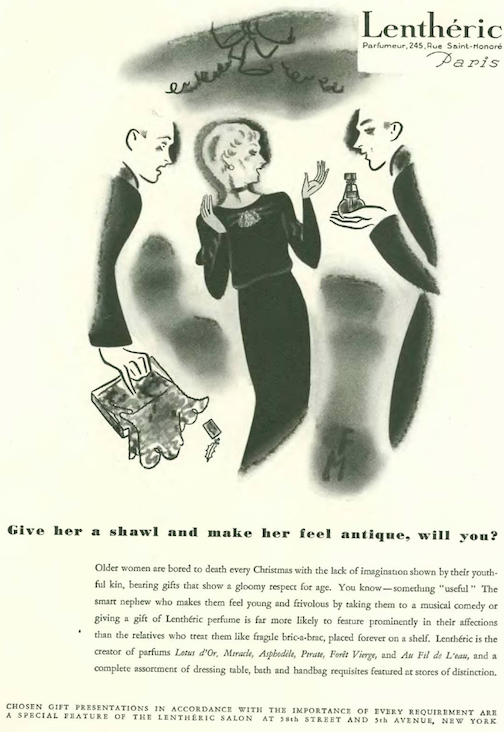
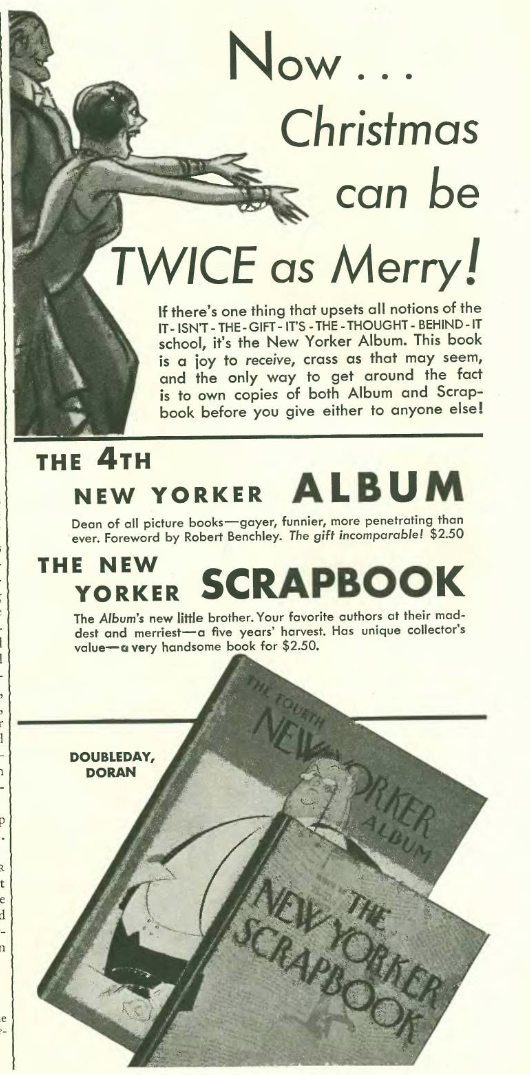
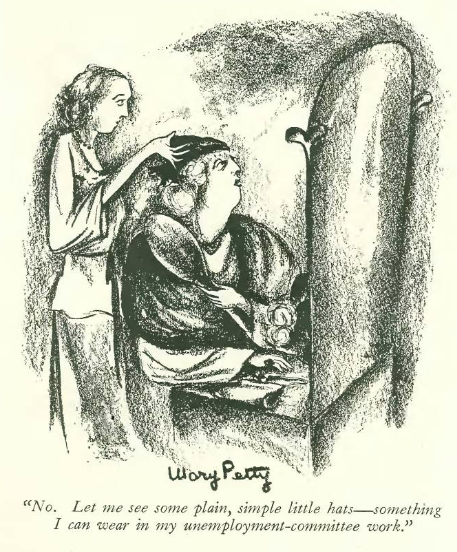
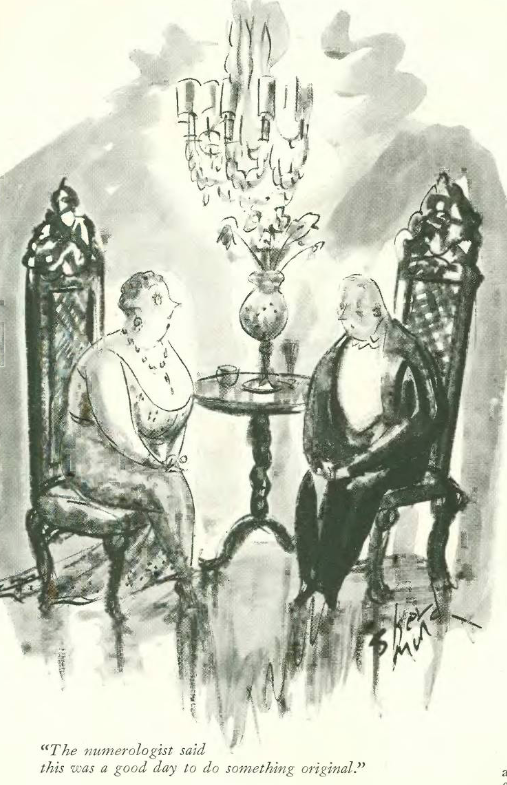
…the issue was stuffed with ads for Christmas shoppers, ranging from colorful plastic tumblers…
…to “unforgettable” appliances…
…to a variety of accessories at Wanamaker’s…
…Macy’s offered this pajama and robe combination for (insufferable) little boys who “strive for sartorial effect”…
…while Burdine’s of Miami urged snowbirds to purchase multiple wardrobes to remain fashionable throughout the winter season…
…and in stark contrast, this ad appealed for donations to help the jobless…