Rebecca and the Zombies

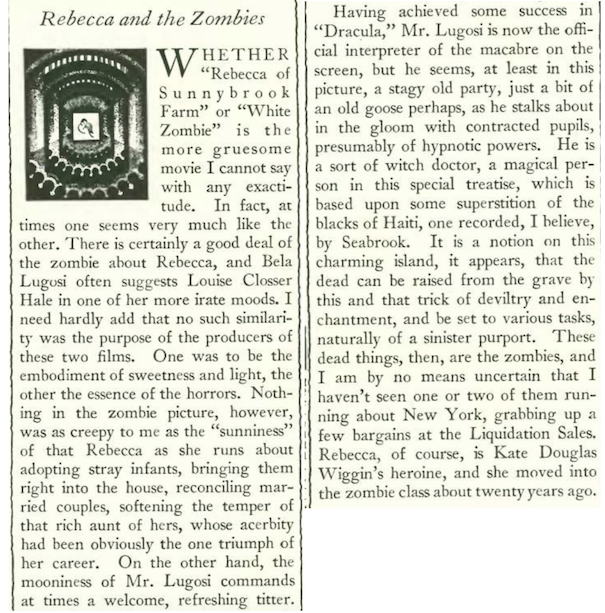
As we recently saw in the 1932 film Freaks, there were some truly weird motion pictures produced in Hollywood during the pre-Code era, including four that were reviewed in the July 30 and August 6 editions of The New Yorker.
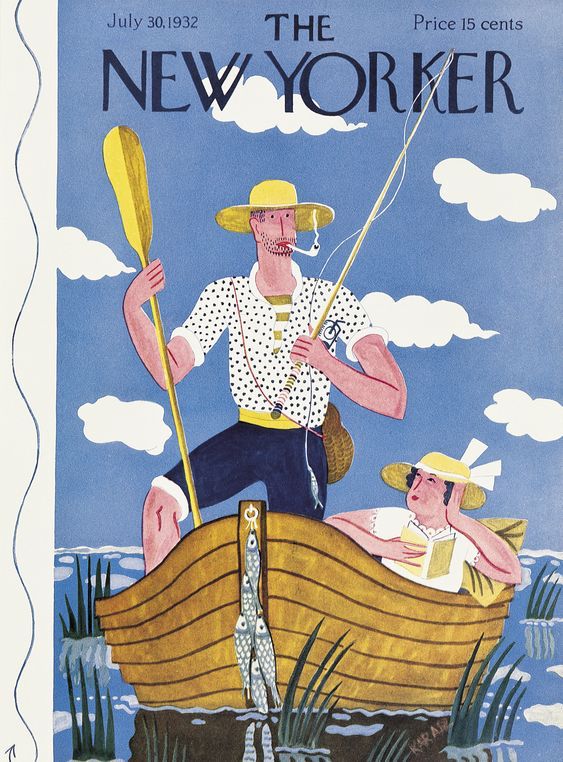
July 30, 1932 cover by Ilonka Karasz.

According to critic John Mosher, some of those films were not intended to be viewed as such, including Rebecca of Sunnybrook Farm (reviewed in the Aug. 6 issue), which Mosher found more gruesome than the Bela Lugosi vehicle White Zombie:
THE HORROR…After seeing Rebecca of Sunnybrook Farm, critic John Mosher concluded that too much sweetness and sunniness could be creepier than a bunch of zombies. Pictured above is Marian Nixon as Rebecca and Ralph Bellamy as her suitor, Dr. Ladd. (IMDB)
THE BELA BUNCH…Following up on his 1931 hit Dracula, Bela Lugosi inexplicably chose to star in the low-budget horror film White Zombie. Considered to be the first feature-length zombie movie, it served as a model for subsequent zombie pictures. Clockwise, from top left, white Haitian voodoo master “Murder” Legendre (Lugosi) leads his crew of zombies; Legendre toasting his evil intentions; coach driver (Clarence Muse), warns his passengers about zombies on the highway (although the film is set in Haiti — actually a Hollywood studio lot — Muse was the only Black actor with a speaking part, albeit quite brief); as was common in those days, John T. Printz, a white actor, portrayed the Black character Ledot, a former witch doctor; Legendre (Lugosi) transforms Madeleine Short (Madge Bellamy) into a zombie and orders her to kill her fiancé. Also pictured is Robert Frazer, who portrayed a plantation owner. Filmed in just eleven days, the majority of the cast in White Zombie were actors whose careers had waned since the silent era. (IMDB)

In the July 30 issue Mosher had another encounter with the strange, this time two documentaries that were very much products of their time.

In case a film about the hardships on the Alaskan tundra wasn’t enough to entice moviegoers, Universal Pictures served up this lobby card featuring a topless Nuwuk woman to promote Igloo…

Igloo lobby card. (Pinterest)

…in a similar vein, husband and wife filmmakers Martin E. and Osa Johnson offered up some topless images to accompany the action promised in Congorilla. It’s a familiar National Geographic-style trope—an over-the-counter magazine or film in the 1930s wouldn’t dare show a European woman topless (there were decency laws after all!) but these folks were “primitive,” and therefore weren’t subject to the Hays Code or other “decency standards.”
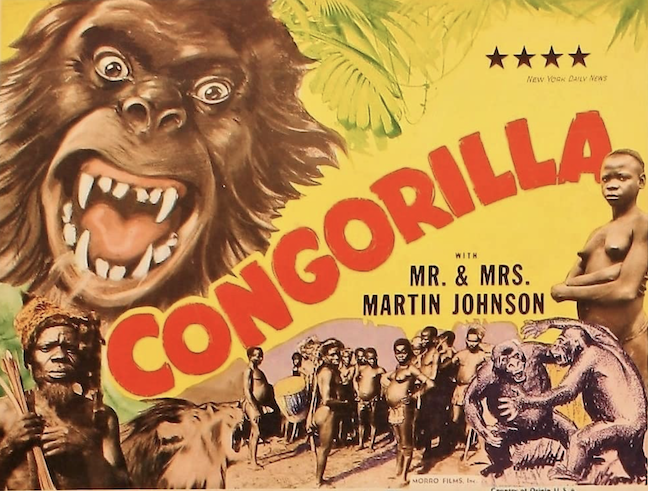
Congorilla lobby card. (IMDB)

The Johnson’s documentary was partly staged, including this scene with “child-like pygmies” that is just plain weird (um, didn’t “modern” jazz have its roots in Africa?):

 *  *  *

Life of the Party

James Thurber penned this unusual July 30 profile, a parody of artistic genius- types who are loved and admired despite also being a drunken assholes. I include the opening paragraph, and the concluding paragraph, which follows a decision by Elliot Vereker’s literary friends to put him on a boat to France; during a farewell party he roundly insults them all.
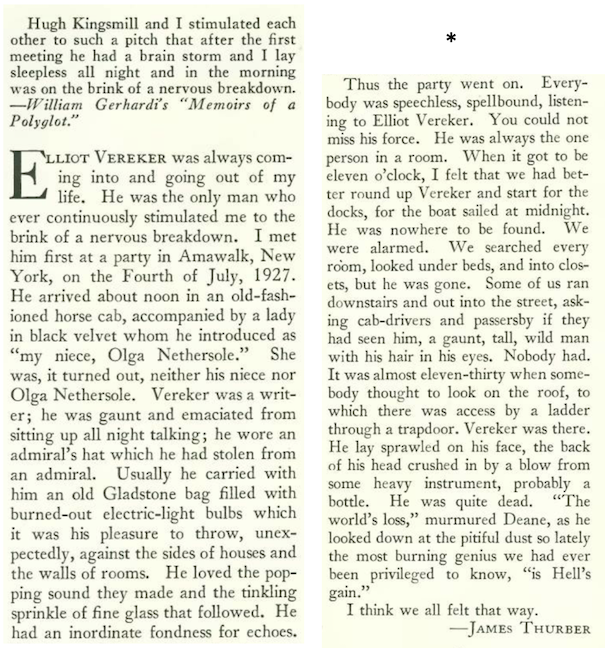
MIRROR, MIRROR…James Thurber and his “Profile” subject, Elliot Vereker. Some critics suggest Vereker’s character was the result of some self-reflection on Thurber’s part. (thurberhouse.org/The New Yorker)

*  *  *

From Our Advertisers

William Steig continued illustrating these full-page ads for Old Gold (no surprise that tobacco companies were doing quite well during the Depression)…

…as we’ve seen, a number of New Yorker cartoonists earned extra money illustrating ads for a variety of companies, but one cartoonist, Peter Arno, also collaborated with artists, playwrights and musicians including Paul Whiteman…no doubt this collaboration was inspired in Arno’s youth, as noted New Yorker cartoonist Michael Maslin explains in this Inkspill entry

…and we have another in the continuing series of Lucky Strike ads encouraging smokers to inhale its “pure” tobacco, the better to draw in all that addictive nicotine…

…on to our cartoons…William Steig got a clever two-page layout with the caption, “Tell him to put plenty of sauerkraut on it”…
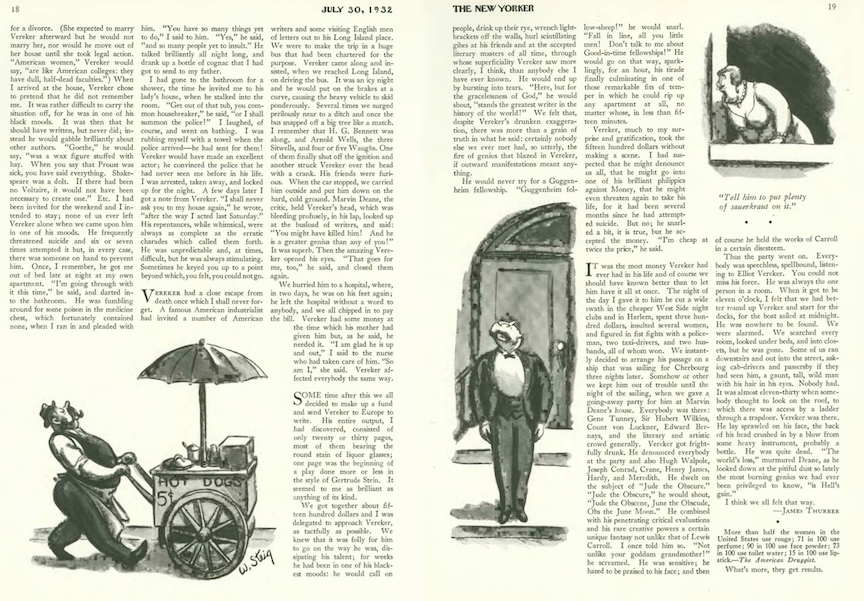
Carl Rose offered his thoughts on the slate of wishy-washy candidates in the upcoming 1932 elections…

Helen Hokinson explored the simple ways of rural living…
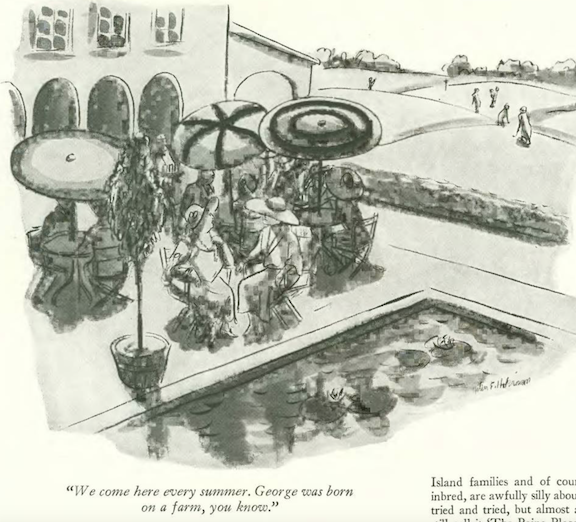
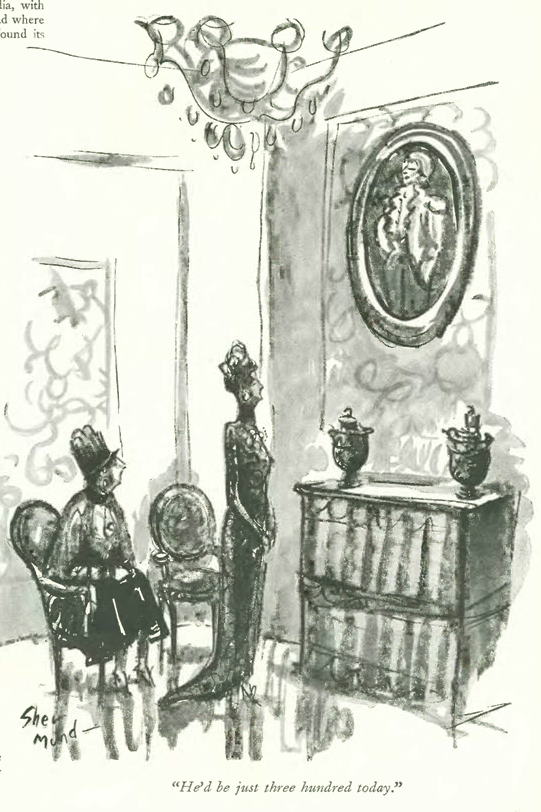
Barbara Shermund looked in on the charmed lives of her modern women…

Robert Day gave us an athlete with a big surprise ahead (and not a happy one…I made this same mistake years ago in a junior high track meet)…
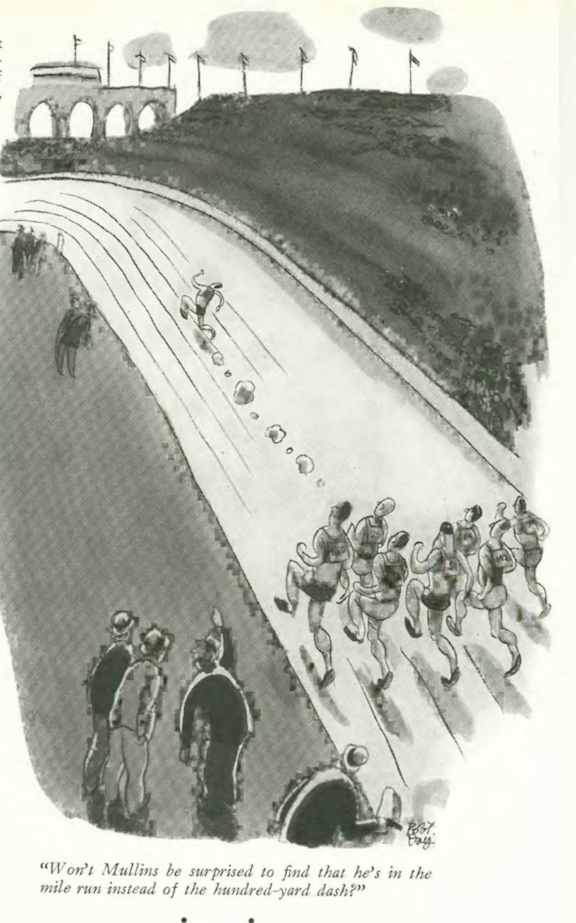
...James Thurber explored the junior edition of his “War Between Men and Women”…
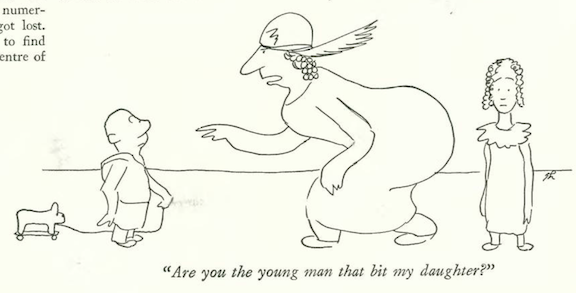
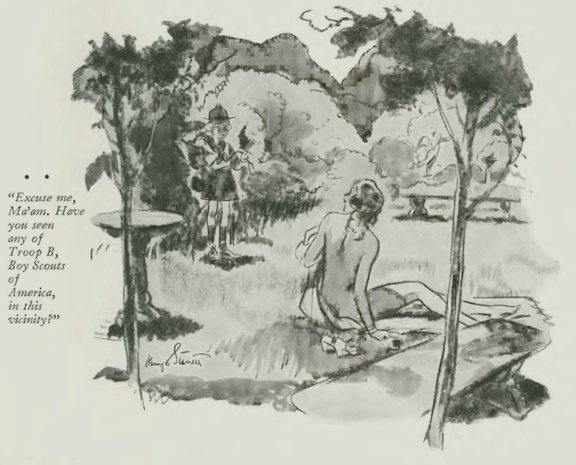
…and Kemp Starrett illustrated a Boy Scout who lost his troop along with some of his innocence…
…and we continue with the Aug. 6 issue, cover artist Constantin Alajalov choosing the 1932 Summer Olympics as his theme:
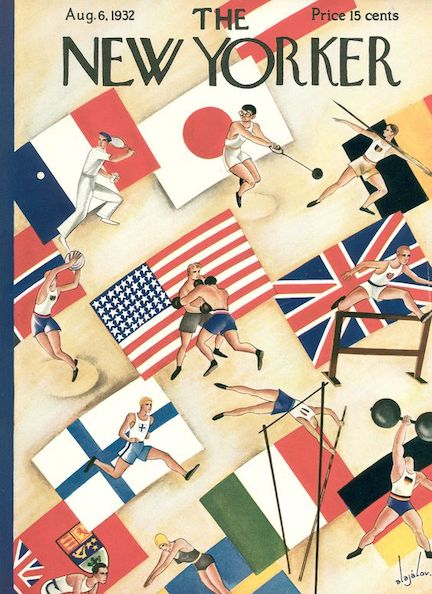
August 6, 1932 cover by Constantin Alajalov.

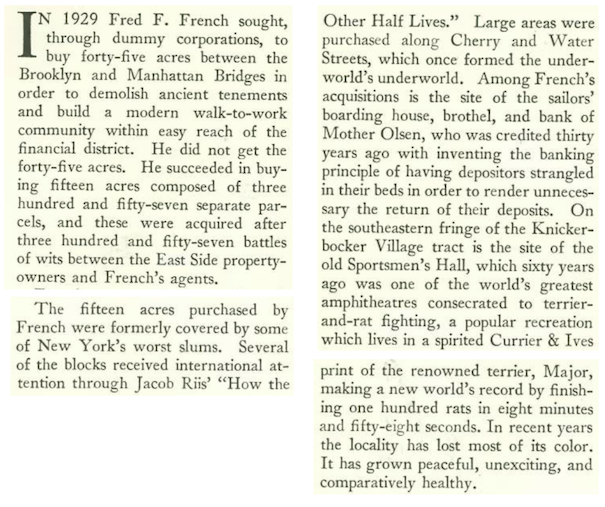
Alva Johnston penned the first part of a two-part “A Reporter At Large” feature on Knickerbocker Village. Yet to be built when this article was written (construction began in 1933 and was completed in 1934), Knickerbocker Village was the first apartment development in the U.S. to receive federal funding. It came from the Congress-authorized Reconstruction Finance Corporation (RFC), which gave loans to private developers like Fred French for the construction of low-income housing in slum-clearance areas.
CLEARANCE SALE…Tenements in Lower East Side were razed in 1933 to make way for Knickerbocker Village. The site was known as “Lung Block,” because of its high tuberculosis mortality rate. Developer Fred French, who also created Manhattan’s Tudor City, received federal funding to replace slums with more healthful housing. However, the 1,590 small apartments in Knickerbocker Village were eventually occupied by white collar, middle-income residents. Rather than provide better housing for former tenement dwellers, the project displaced them to other slum areas in the city. (Ewing Galloway/NYT)
STILL STANDING…Knickerbocker Village today. The complex was severely damaged during Hurricane Sandy in 2012. In 2019, the City Council passed a bill that keeps Knickerbocker Village relatively affordable for the next 50 years in exchange for a $3 million annual tax abatement. (Wikipedia)

*  *  *

From Our Advertisers

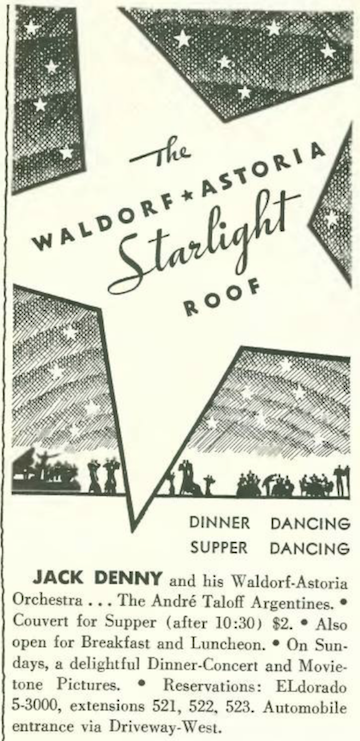
The new Waldorf-Astoria touted its Starlight Roof’s many attractions, including, no doubt, escape from the heat and dust of the city streets…
ON TOP OF THE WORLD…View of the Waldorf-Astoria’s famed Starlight Roof and the cover of its wine list, circa 1934. (Waldorf Astoria)

…I find these Ethyl ads endlessly fascinating, not only for pushing leaded gasoline on the public, but for class-shaming them into using their product…

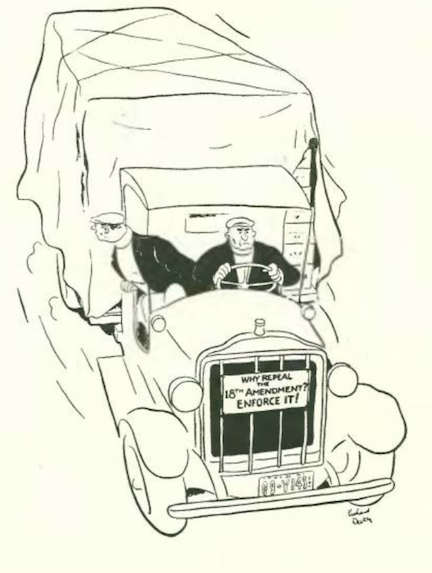
…on to our cartoons, Richard Decker showed how not all Prohibition supporters were teetotalers…
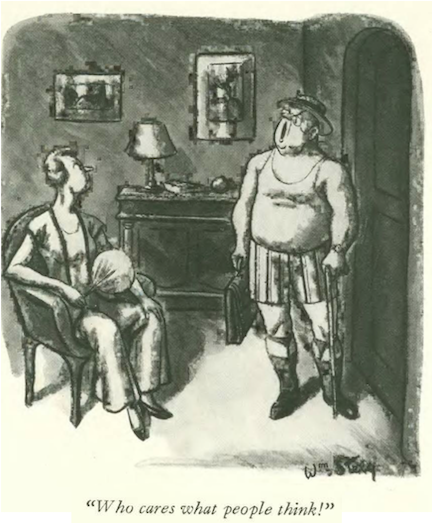
William Steig gave us one man’s reaction to August weather…
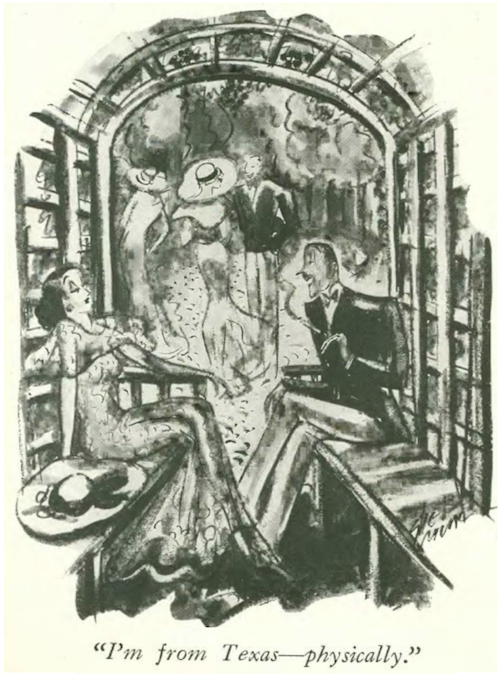
Barbara Shermund drew a man drawing a line on his place of birth…
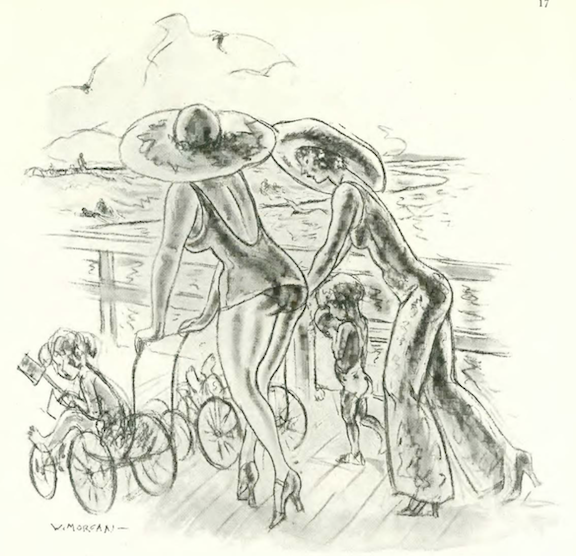
…and we end with a cartoon by Wallace Morgan…there is a joke here related to the attire of the two women, but I am at a loss (any suggestions?)…
Next Time: Silence is Golden…


The Non-linear Man

As Ernest Hemingway and F. Scott Fitzgerald spoke to the “Lost Generation” of writers and artists in the 1920s, John Dos Passos (1896-1970) drew upon the ethos of that period to usher in a new style of writing for the 1930s — modern, experimental, and deeply pessimistic.

March 8, 1930 cover by Ilonka Karasz.

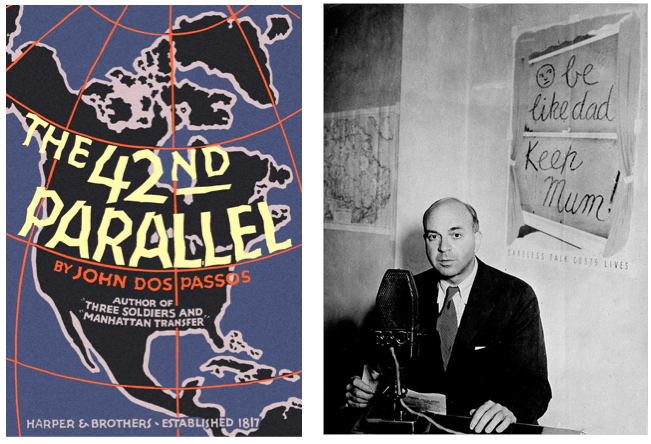
Dos Passos’ book The 42nd Parallel would be the first of three books from 1930 to 1936 that would comprise his landmark U.S.A. Trilogy. The book critic for the New Yorker (identified as “A.W.S.”) sensed that this work of avant-garde historical fiction represented a significant marker in the modernist movement, likening it to the work of the great 20th century composer Igor Stravinsky:

A WRITER FOR DEPRESSING TIMES…The 42nd Parallel was the first book in a trilogy published by John Dos Passos between 1930 and 1936. At right, Dos Passos in the early 1940s. (22.hc.com/hilobrow.com)

Dos Passos also painted throughout his life, nearly 600 canvases including this early work from his days in Spain in the 1920s…

John Dos Passos’ watercolor painting of the the Spanish countryside, circa 1922. A modernist writer, Dos Passos also painted in the style of the avant-garde. His nearly 600 paintings throughout his lifetime show influences of Impressionism, Expressionism and Cubism. (johndospassos.com)

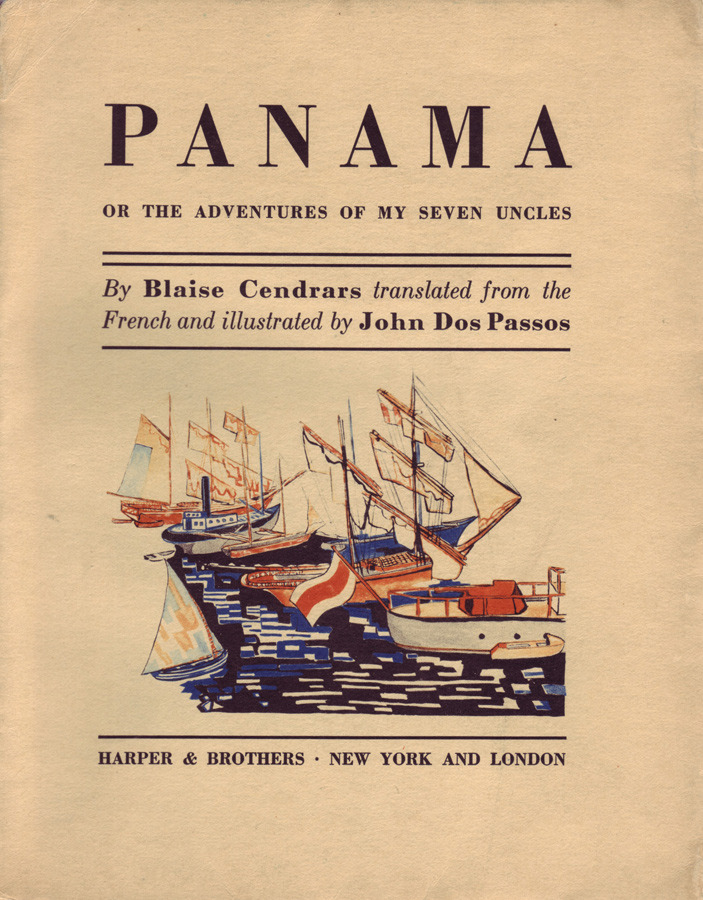
…and he joined his literary and artistic talents in 1931 when he translated and illustrated Blaise Cendrars’ long poem Le Panama et Mes Sept Oncles. Dos Passos became good friends with Cendrars, and in the book’s foreword acknowledged his debt as a writer to the French poet…

(johndospassos.com)

 *  *  *

Don Could Also Write And Draw

Like Dos Passos, Don Herold (1889-1966) could express himself through both words and pictures, albeit in a much less serious vein. In the March 8 issue Herold wrote about the indignity of having to disrobe for a medical examination. An excerpt:

Also an illustrator and cartoonist, Herold made his debut in The New Yorker with this cartoon in the June 1, 1929 issue:

Herold began working as an illustrator around 1910, and enjoyed a long career with a number of publications, including the humor magazine Judge:

 *  *  *

Measuring Up

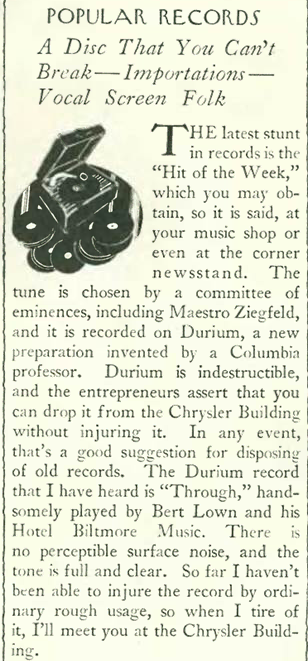
When the Chrysler Building was completed in May 1930, it officially became the world’s tallest building (a record it ceded 11 months later to the Empire State Building). Being the tallest gave the building the distinction of being something to be measured against, including the durability of a musical recording pressed into a material called “Durium”…

…and when advertisers were in need of something large for comparison, they also turned to the new skyscraper to drive home their selling point…

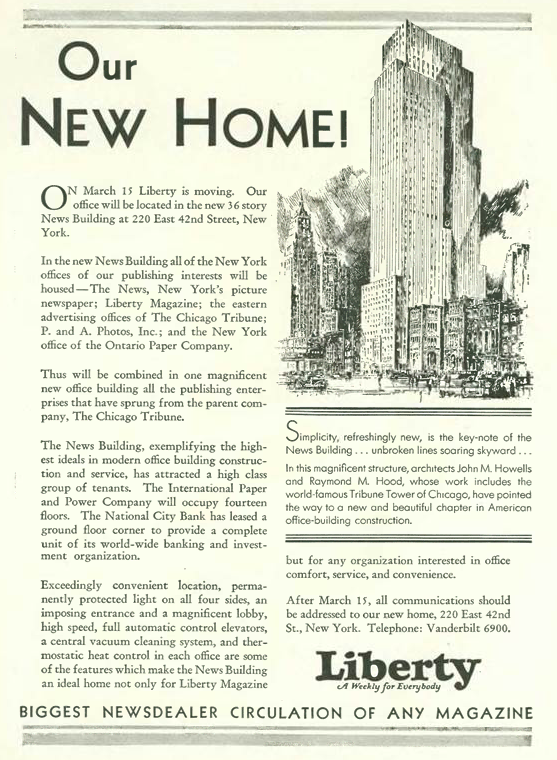
…new skyscrapers also were used to lend distinction to their tenants, such as Liberty Magazine in the new Daily News Building…

…below a 1940 postcard image of the Daily News Building, then known simply as “The News Building,” and a view of the lobby’s famous globe in 1941…

(Wikipedia)

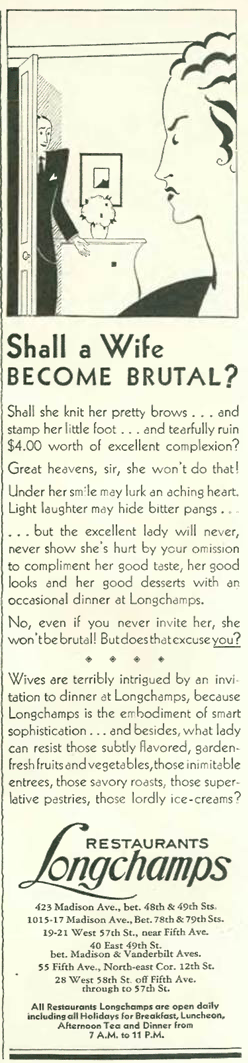
…on to the rest of our ads, here’s a baldly misogynistic one from Longchamps restaurants…

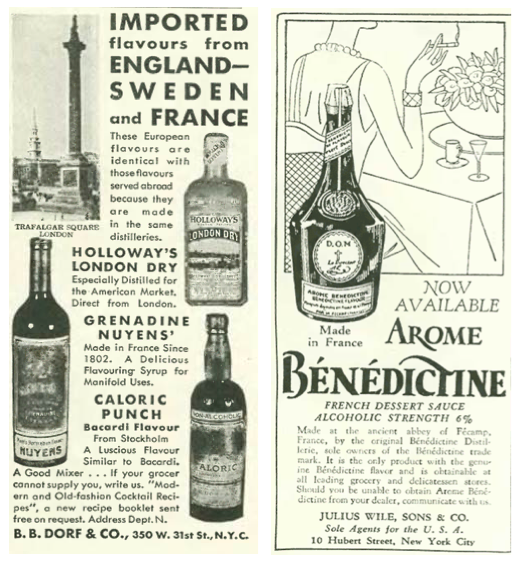
…and as Prohibition wore on into the Thirties, we have sad little back page ads for cocktail “flavours” and Benedictine “Dessert Sauce”…

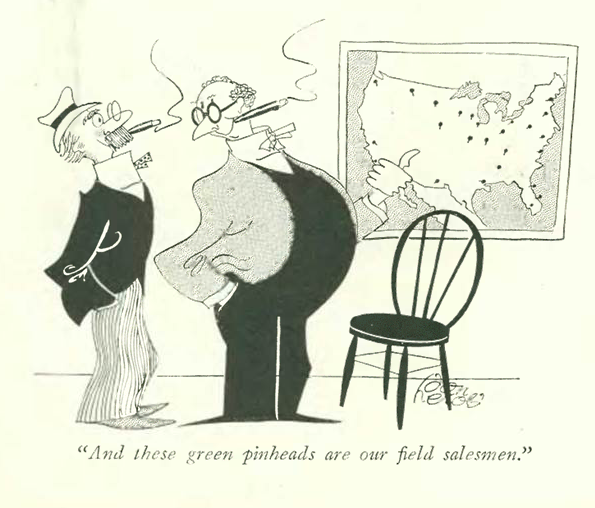
…on to our cartoons, Gardner Rea explored the subject of family planning…

Art Young illustrated the perils of modern art…

Otto Soglow took a stroll with a somnambulist…

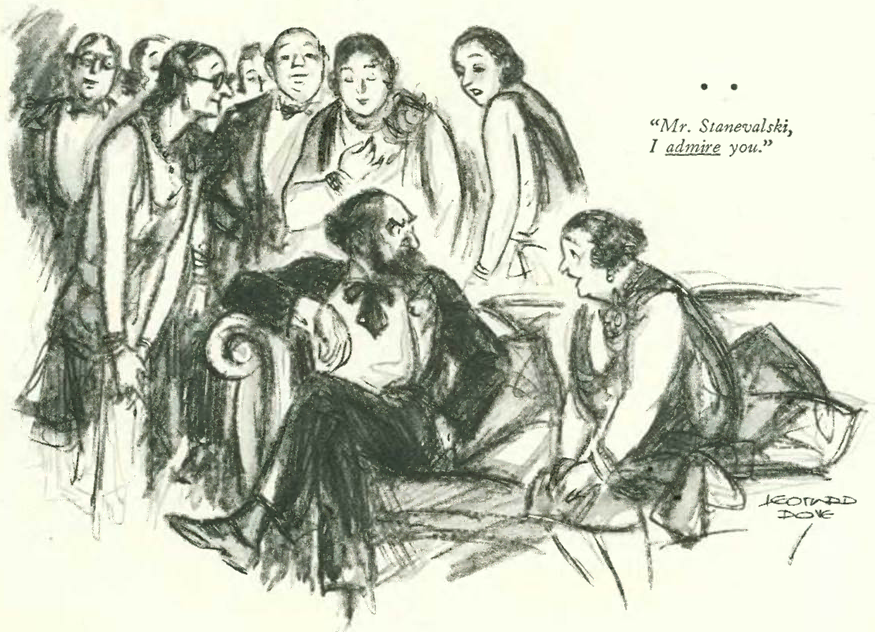
Leonard Dove inked this awkward moment between the Old and New Worlds…

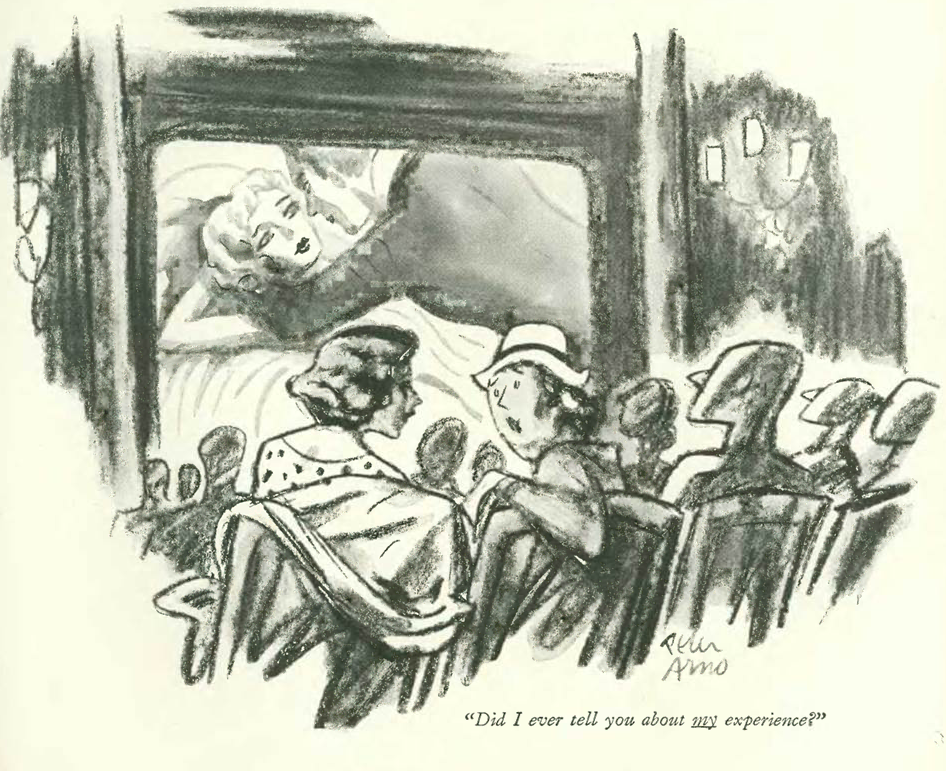
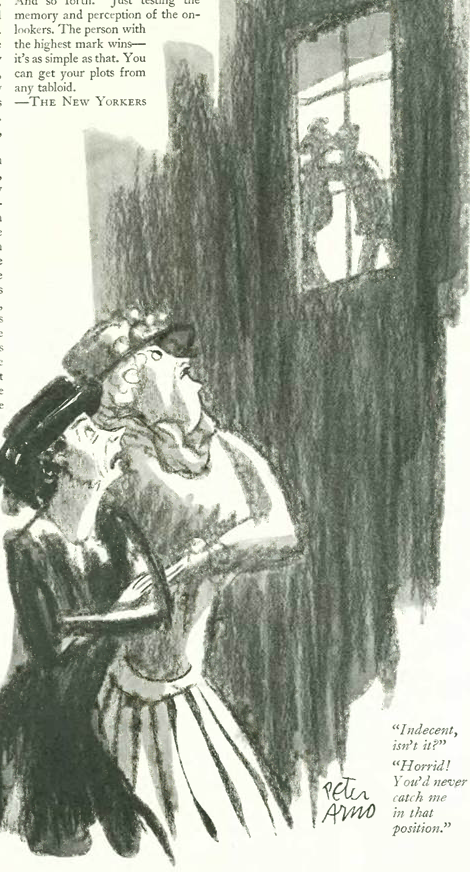
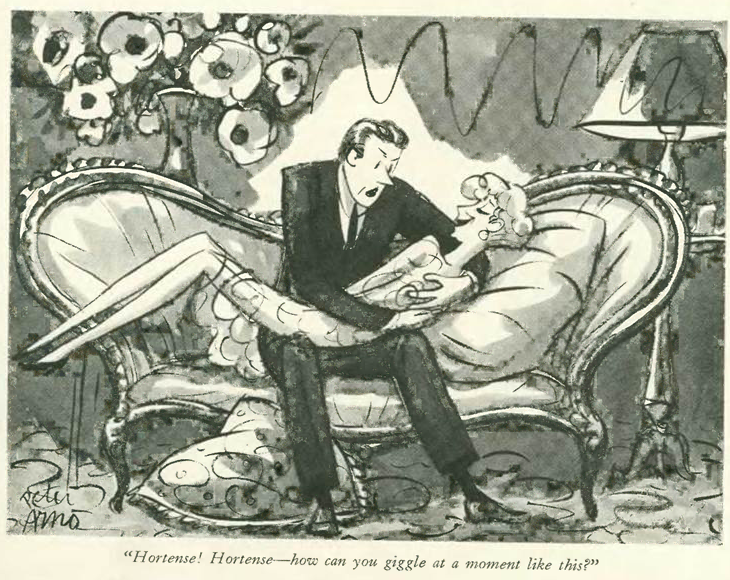
…and Peter Arno went to the movies…

Next Time: The Lion Roars…


From Broadway to Babylon

While the introduction of sound to motion pictures ended the careers of some silent film stars in the late 1920s, Hollywood’s “talkies” offered new opportunities for Broadway stage actors who could now take their vocal talents to the screen and to audiences nationwide.

May 4, 1929 cover by Ilonka Karasz.

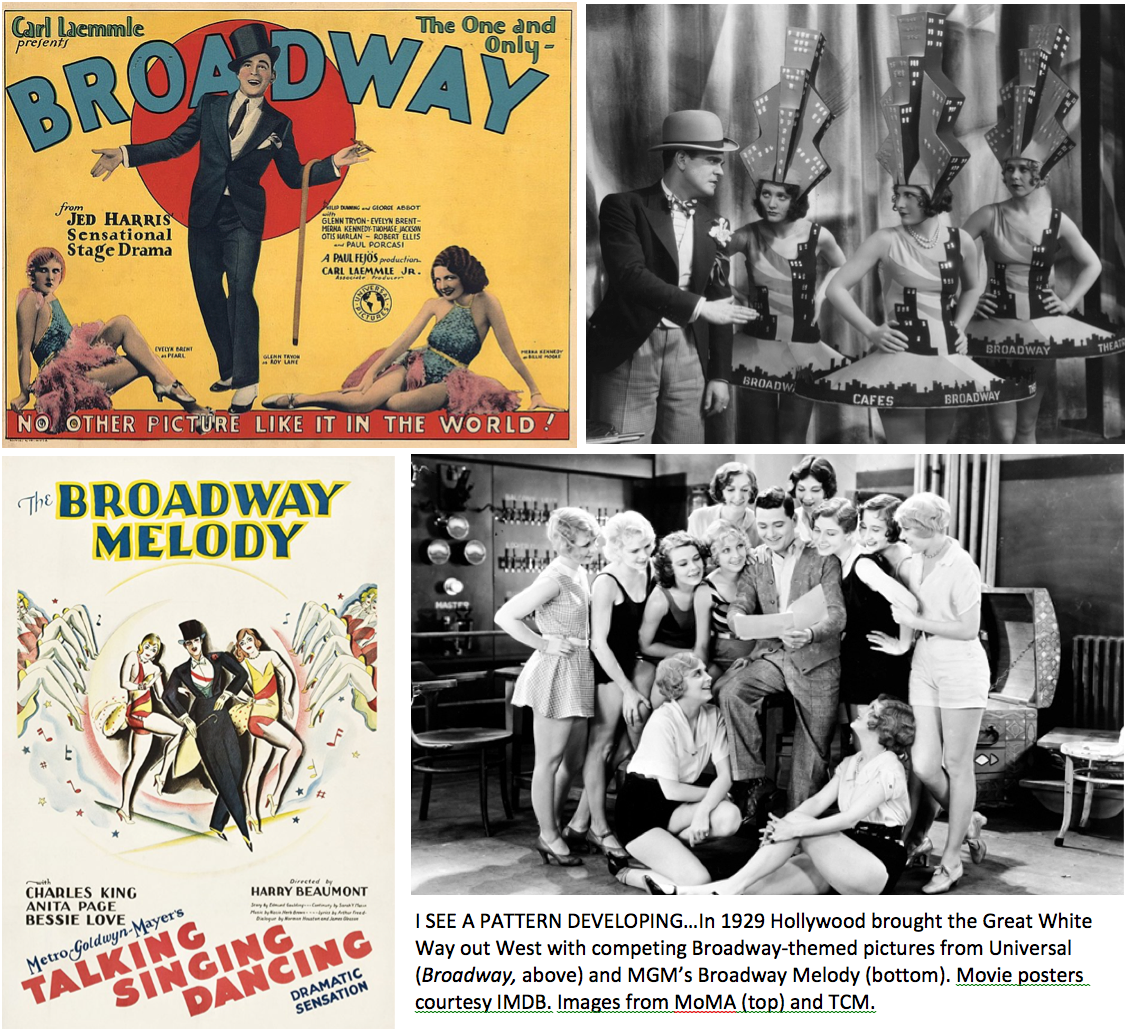
And so began the so-called “Broadway Exodus.” Robert Benchley offered his wry observations on the phenomenon in the May 4, 1929 “A Reporter at Large” column:

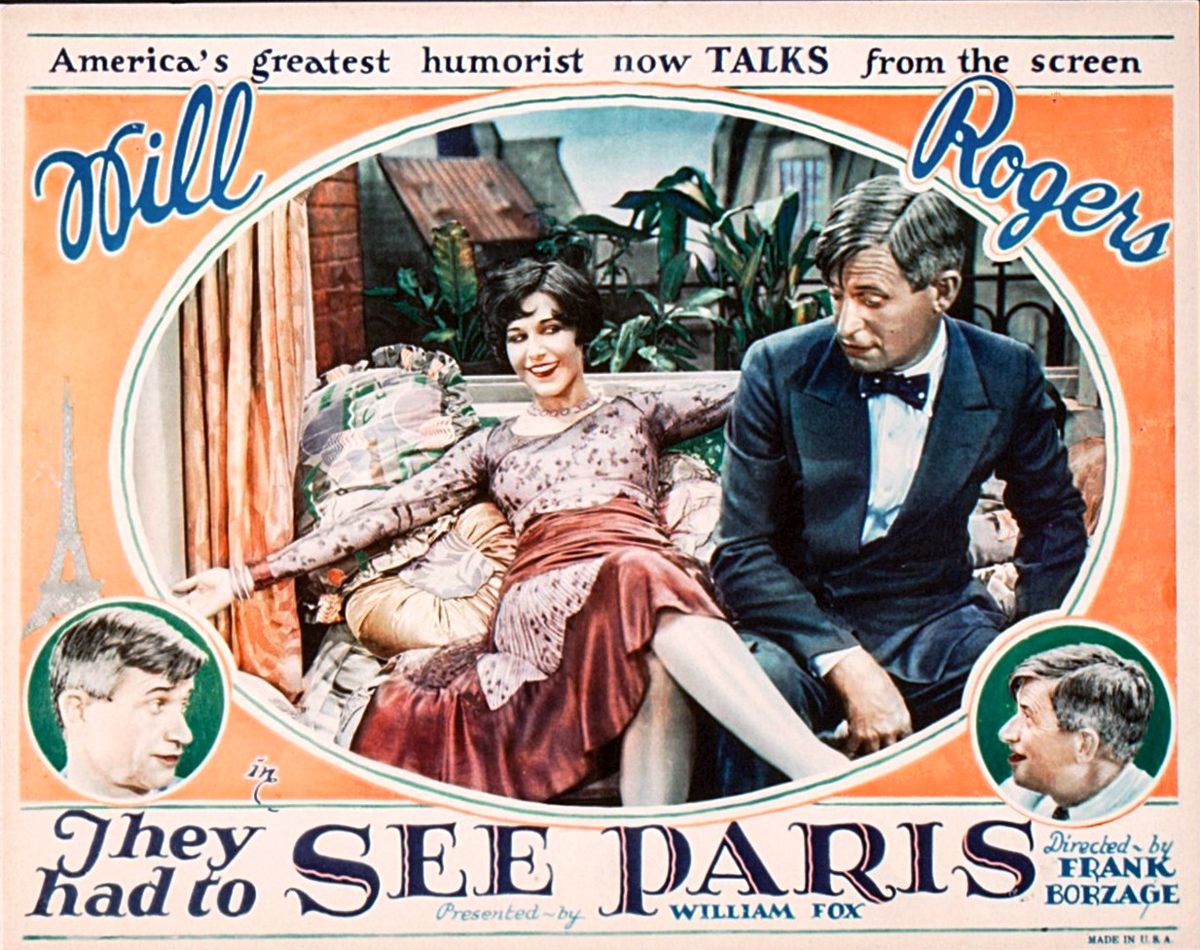
AW SHUCKS…Broadway mainstay and a perennial performer with the Ziegfeld Follies, humorist Will Rogers found his element in Hollywood’s new talkies, appearing here with Fifi D’Orsay in 1929’s They Had to See Paris. (Wikipedia)
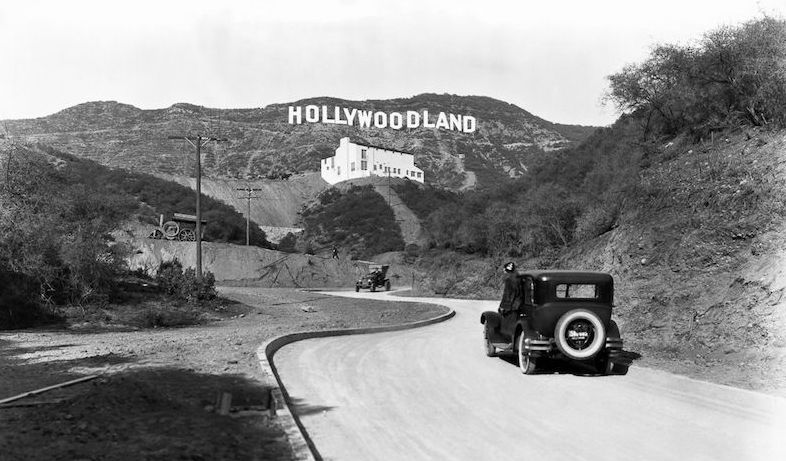
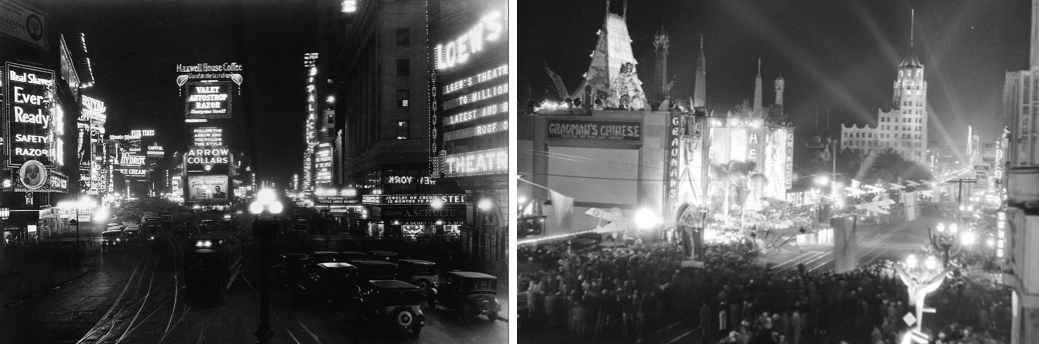
TALE OF TWO CITIES…Broadway in 1925 (left) and Hollywood Boulevard in 1929. (Daily Mail/USC Digital Library)

Benchley observed that regardless how many Broadway stars moved west, Hollywood Boulevard would never be mistaken for Broadway. However, Benchley himself would catch the bug and head to Tinseltown, appearing in dozens of feature films and shorts including How to Sleep, which would win an Academy Award for “Best Short Subject, Comedy,” in 1935.

NICE WORK IF YOU CAN GET IT…Robert Benchley in the 1935 Oscar-winning short, How to Sleep. (YouTube)

 *  *  *

One Who Stayed on Broadway

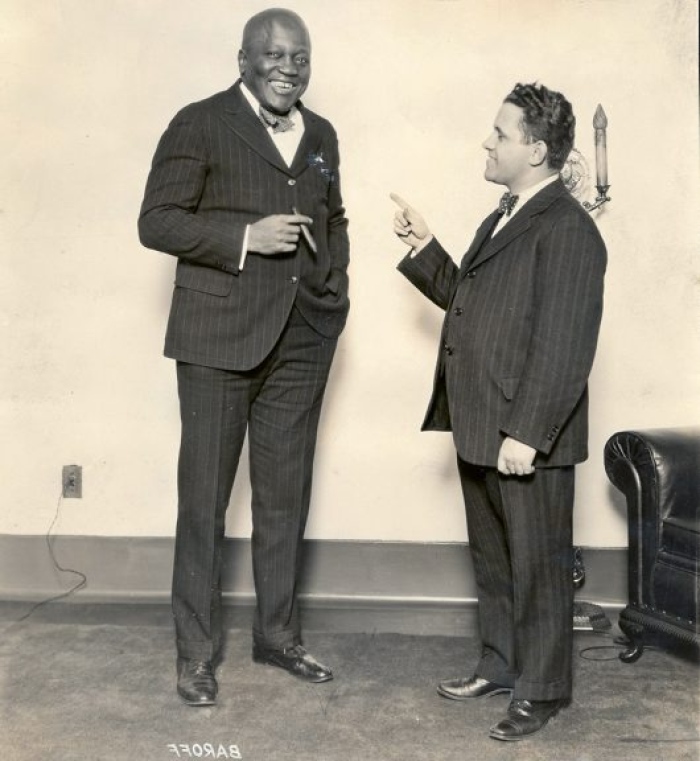
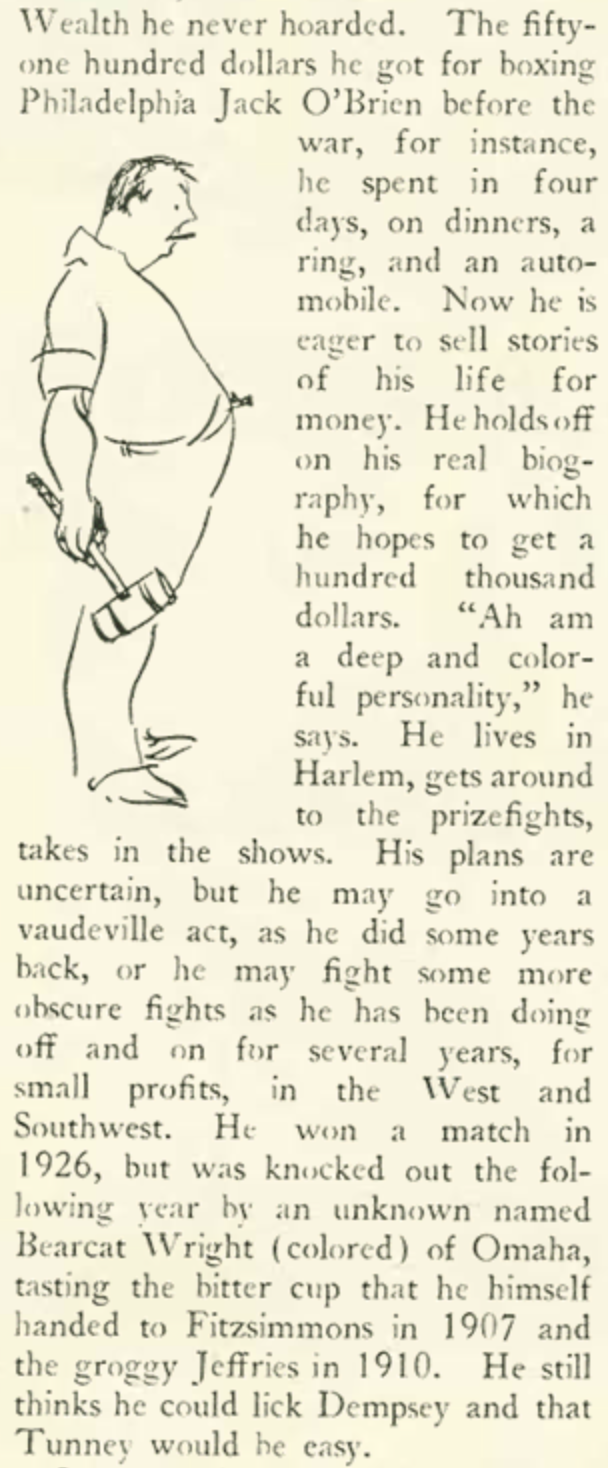
James Thurber reported in “The Talk of the Town” that famed boxing champion Jack Johnson was a common sight on the sidewalks of Broadway. Thurber noted that Johnson, the first African American world heavyweight boxing champion (1908–1915), had fallen on less glamorous days, but still appeared fit at age 51.

IN FIGHTING FORM…Jack Johnson visits with writer Joe Butler at the Scranton Times-Tribune offices on Nov. 30, 1929. (Scranton Times-Tribune)

Thurber noted that Johnson was planning to sell stories of his life, and possibly get into vaudeville. The boxer also mused that who could lick either of the heavyweight champs of the 1920s, Gene Tunney and Jack Dempsey

CREAMPUFFS…The 51-year-old Jack Johnson claimed he could defeat either of the famed heavyweight champions of the 1920s, Gene Tunney (left) or Jack Dempsey. (Reemus Boxing)

…and Thurber shared a strange account regarding the thickness of Johnson’s skull, which apparently bested that of an ox…

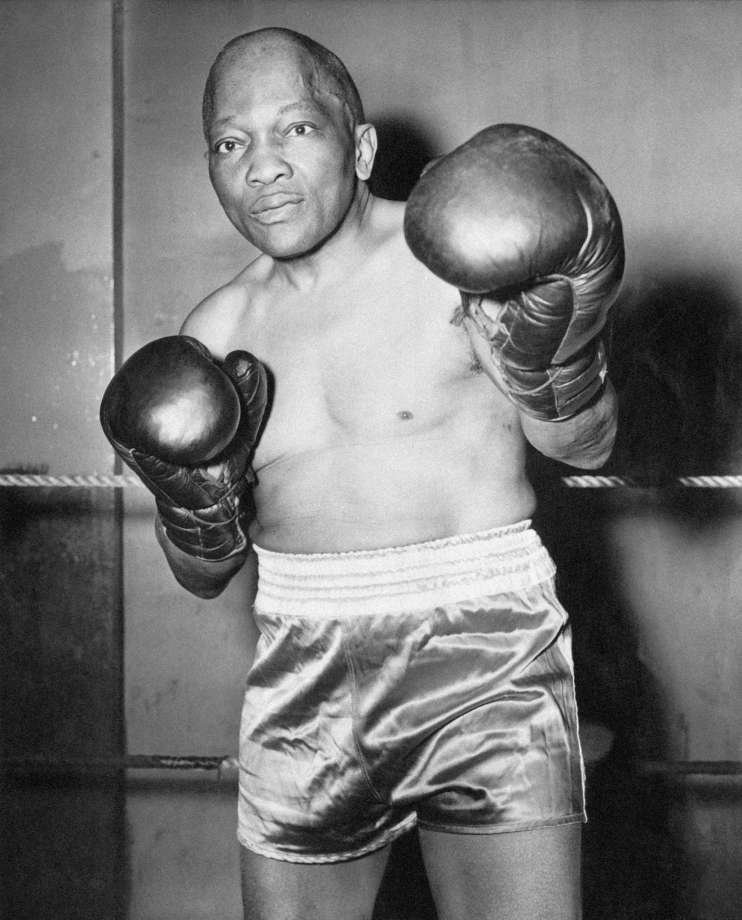
FIGHT TO THE LAST…The 67-year-old Jack Johnson prepares for an exhibition boxing match at a war bond show in New York City on May 1945. Along with making public appearances, Johnson also performed on Broadway during his retirement. (Houston Chronicle)

Johnson continued professional boxing until age 60, and thereafter participated in boxing exhibitions in various venues until his death at age 68 in a car crash near Raleigh, NC. It was reported that Johnson was racing angrily from a nearby diner that had refused to serve him when he lost control and hit a light pole.

 *  *  *

Don’t Ask, Don’t Tell

Anyone who thinks the recent squabbles over Planned Parenthood are anything new might do a little reading on the life of Margaret Sanger, who opened the first birth control clinic in the U.S. in 1916 (in Brooklyn) and was subsequently arrested for distributing information on contraception. In 1929 she was again arrested for operating a “secret” birth control clinic in the basement of a Manhattan brownstone. On March 22, 1929, the New York Police Department sent an undercover female detective, Anna McNamara, to Sanger’s clinic. Posing as a patient who wished to avoid another pregnancy, McNamara was advised on various forms of contraception. She later returned to the clinic as part of the police raid, during which she seized a number of confidential patient files. At Sanger’s subsequent court hearing, McNamara learned first-hand about the importance of patient confidentiality. From the May 4 “Talk of the Town”…

Recalling her arrest in a 1944 article, “Birth Control: Then and Now,” Sanger wrote that McNamara taunted her during the raid when she was told that she had no right to touch private medical files. Sanger wrote “I shall never forget the color of Mrs. McNamara’s face when she heard this medical testimony recited several days later in Magistrates’ Court at the hearing. She was totally unprepared for this embarrassing revelation of her own organs.” The New Yorker made note of this…

Sanger would continue to work for birth control until her death in 1966. Although her name is still invoked in debates over abortion, Sanger herself was generally opposed to abortion, maintaining that contraception was the only practical way to avoid it.

GAG ORDER…In April 1929 Margaret Sanger planned to speak at Boston’s Ford Hall Forum on Free Speech. Ironically, the topic of birth control was banned in Boston at the time, so Sanger appeared onstage with a gag over her mouth while historian Arthur M. Schlesinger read her remarks on free speech to the assembly. At right, the February 1926 issue of Birth Control Review. Founded by Sanger in 1917, she served as editor until 1928. It ceased publication in 1940. (womensstatus.weebly.com/sangerpapers.wordpress.com)

 *  *  *

Please Sit Still

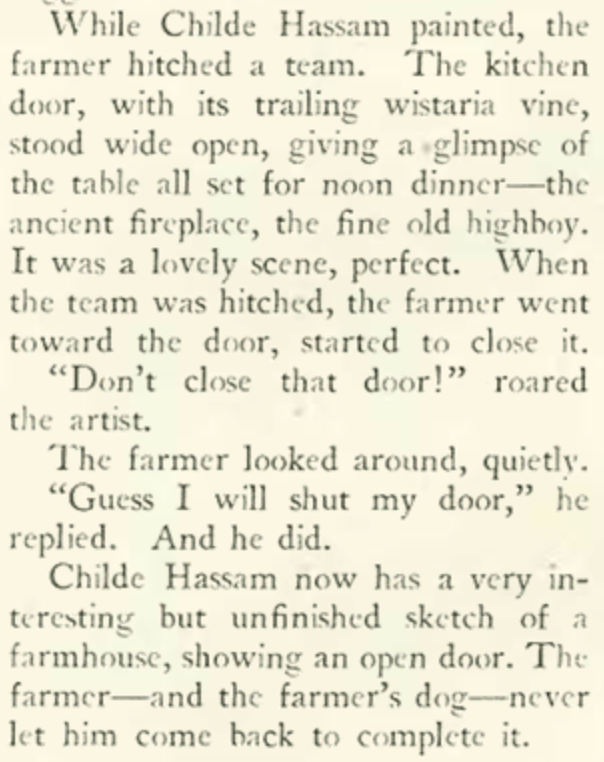
The “Talk of the Town” also looked on American Impressionist painter Childe Hassam, who demonstrated the challenges of painting en plein air…

LOVELY SCENE…Childe Hassam’s Landscape at Newfields, New Hampshire, oil on canvas, 1909. Hassam in his studio circa 1920. (Wikimedia Commons/Wikipedia)

…and found it difficult to finish a farmhouse sketch when a door was unexpectedly closed on his subject…

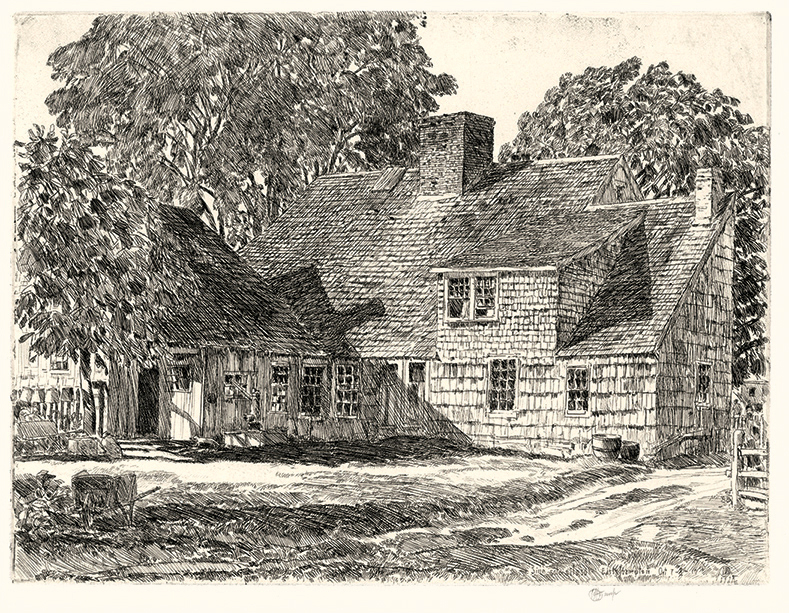
THIS ONE HE FINISHED…Childe Hassam’s etching, The Old Dominy House (East Hampton), 1928. This work was probably created during Hassam’s visits to East Hampton described in “The Talk of the Town.”(Smithsonian)

 *  *  *

All That Jazz

As Lois Long’s contributions to her “Tables for Two” column grew ever more infrequent, it was clear that she was wearying of the nightlife scene. Now 28 and a young mother, “Lipstick” was shedding her image as a fun-loving flapper and devoting more time and energy to her fashion column, “On and Off the Avenue.” Nevertheless, she still found the time to visit the Cotton Club and proclaim Duke Ellington’s jazz orchestra as “the greatest of all time”…

…although her other observations of the New York nightclub scene appear to have been hastily dashed off…

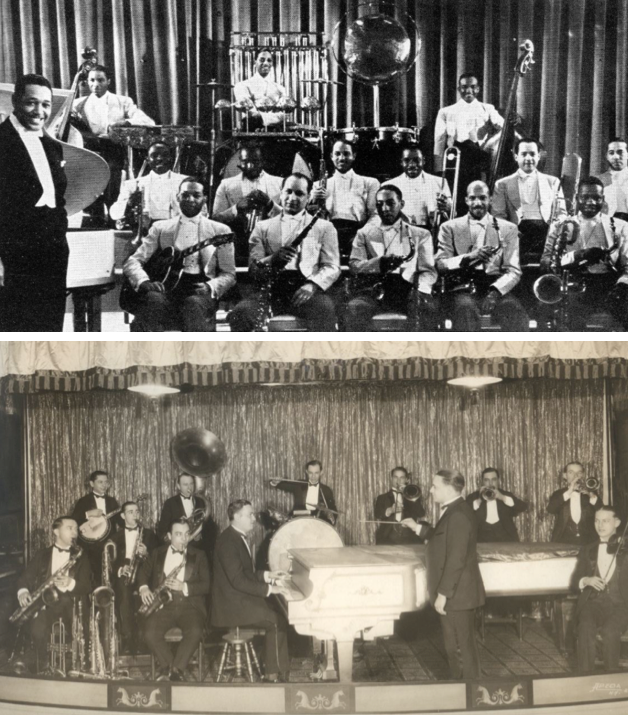
THE BEST…Duke Ellington and his orchestra (top), circa 1930. Below, Vincent Lopez conducts his orchestra in 1923. (oldtimeblues.net / www.jazzhound.net © Mark Berresford)

 *  *  *

Electric Wonders

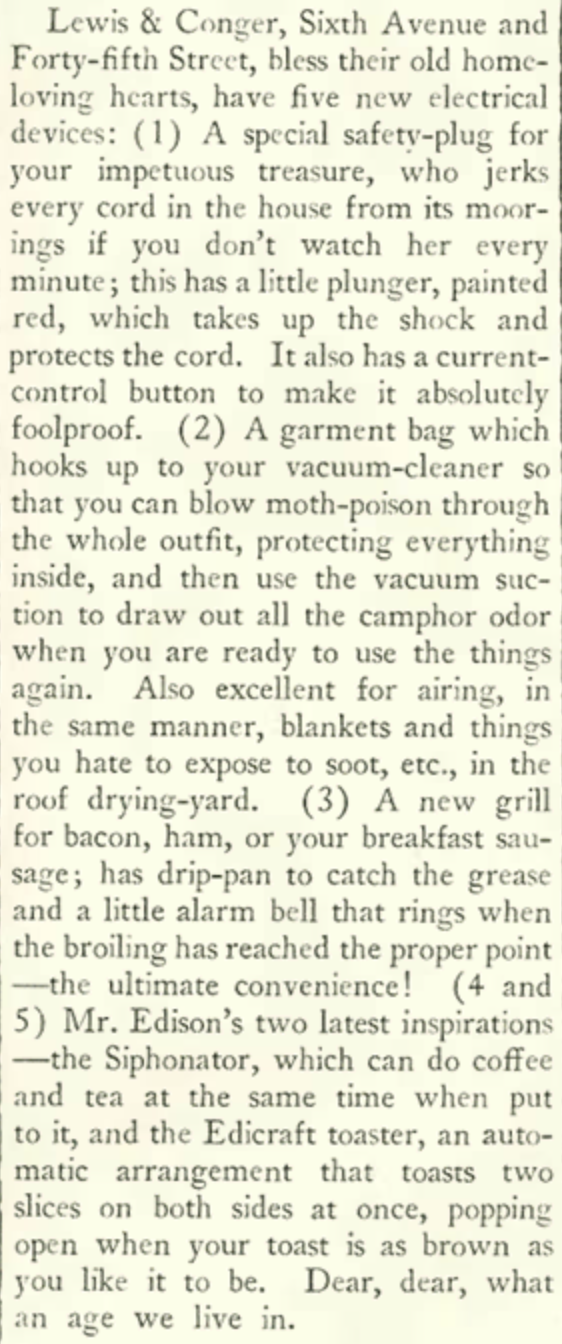
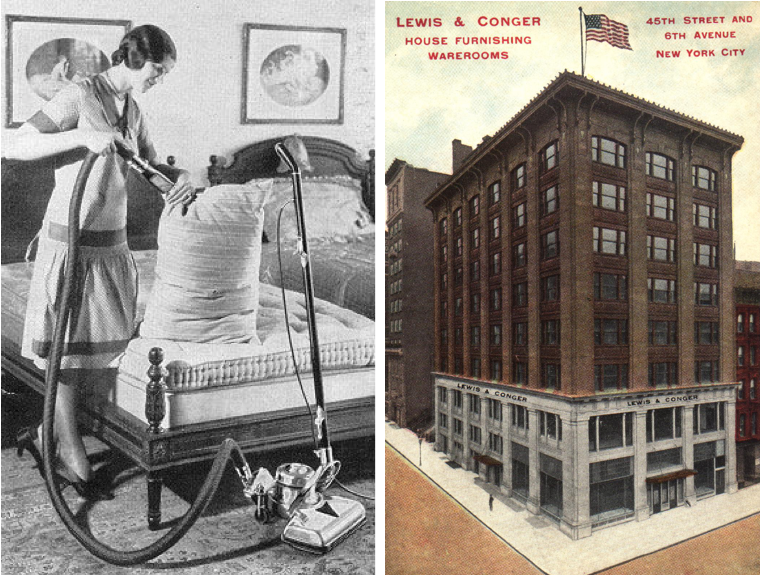
The May 4 issue updated readers on some of the latest gadgets available to modern households in 1929. I particularly like the device that allowed your vacuum to blow “moth poison” into your garments…

NOW THIS DOES NOT SUCK…Garments and other household items could be fumigated against moths using a new reverse vacuum attachment, available at Lewis & Conger. (Cyberspace Vacuum Cleaner Museum / Columbia University)

*  *  *

From Our Advertisers

One thing you notice about 1920s advertising is the amount of turgid copy they contain…I suppose without distractions such as TV and iPhones people actually took the time to read all of these bloated messages, such as this one from Whitman’s that suggested a box of candy is more than a box of candy…

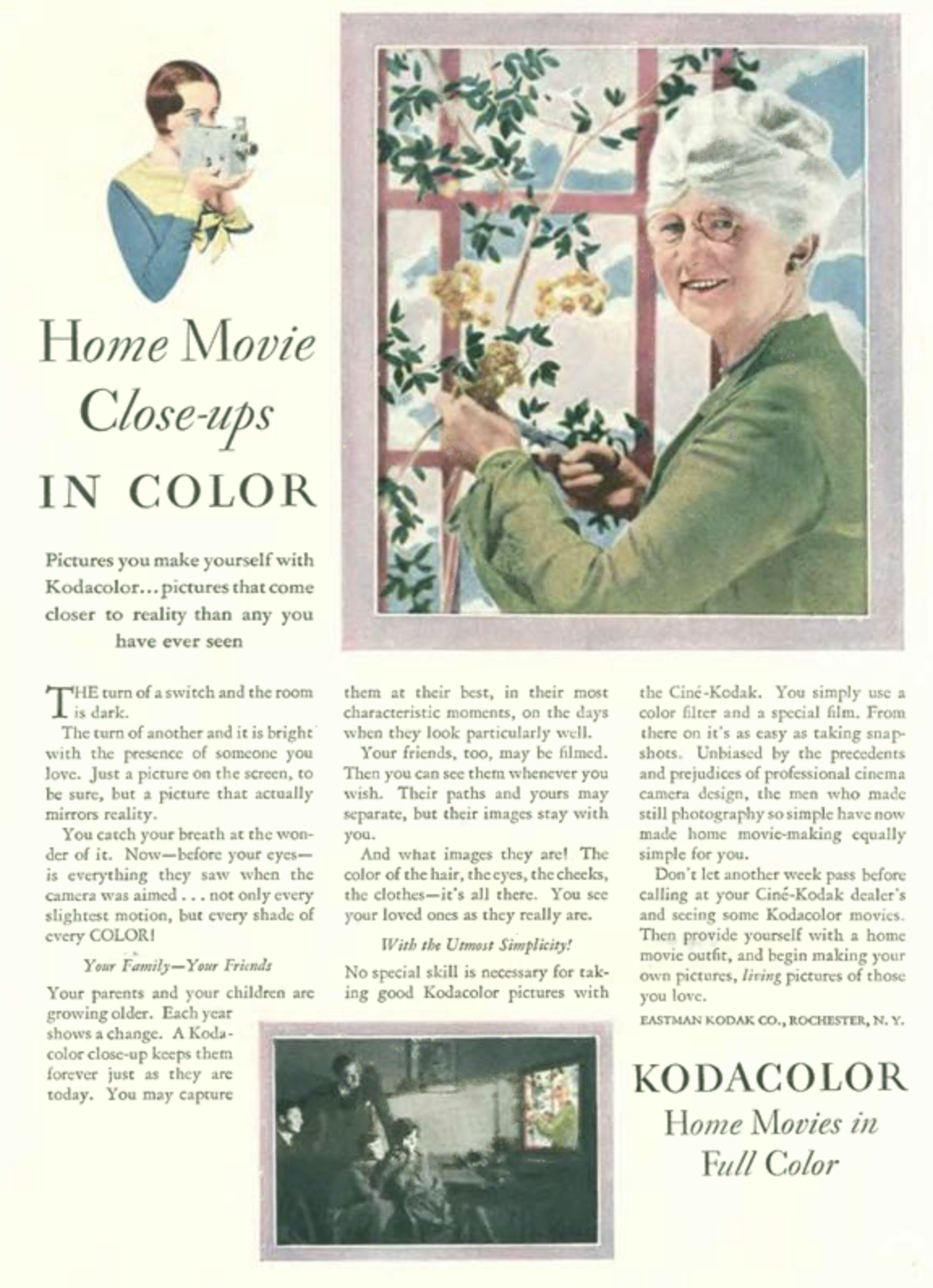
…or how about this lengthy appeal from Kodak, which used guilt to convince you to get some film of grandma while she was still “at her best…”

…the makers of Spud promised a “new freedom” and a “16% cooler smoke” to the users of its menthol-laced cigarettes. Spuds were the first menthol cigarettes, developed in 1924 by Ohioan Lloyd “Spud” Hughes, who sold them out of his car until the brand was acquired in 1926 by The Axton-Fisher Tobacco Company. By 1932 Spud was the fifth-most popular brand in the U.S., and had no competitors in the menthol market until Brown & Williamson launched their Kool brand in 1933. The Spud brand died out by 1963 (along with, presumably, many of its customers)…

…leveraging the popularity in the 1920s of knights and fairies, as well as the Anglo- and Francophila of New Yorker readers, “Mrs. Marie D. Kling” hoped to entice city dwellers up to the burbs in Scarsdale…

…our cartoons are courtesy of Barbara Shermund, who looked in on a couple of debs performing their daily exercises…

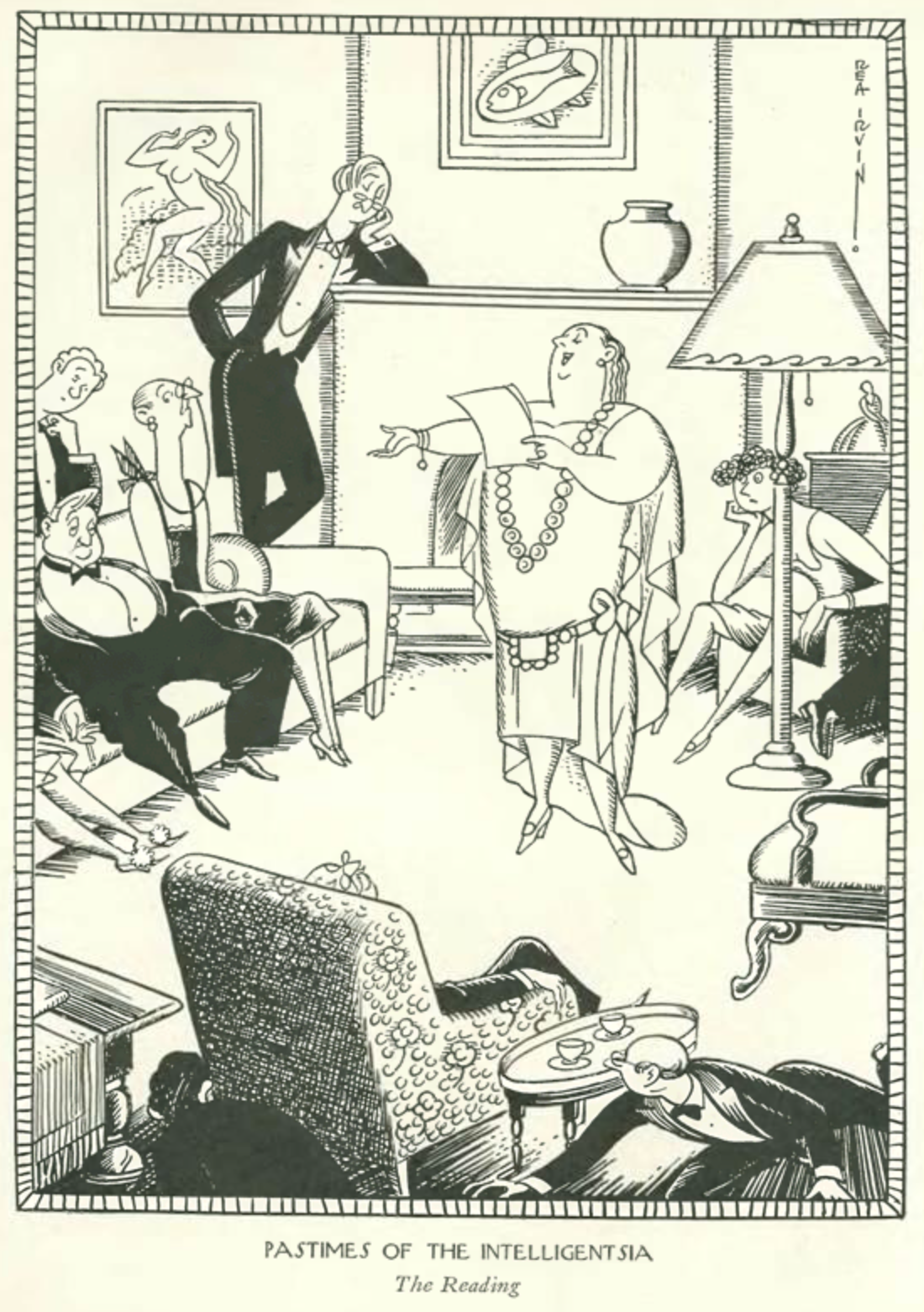
…while down in the parlor, Rea Irvin captured the horrors inflicted by an author’s tedious reading…

…and finally, Peter Arno probed the depths of sanctimony…

Next Time: Waldorf’s Salad Days…

A Bird’s Eye View

The New Yorker’s E.B. White was an aviation enthusiast who rhapsodized about his flights into the clouds, but also had prescience to see the darker side of this modern thrill ride.

October 6, 1928 cover by Ilonka Karasz.

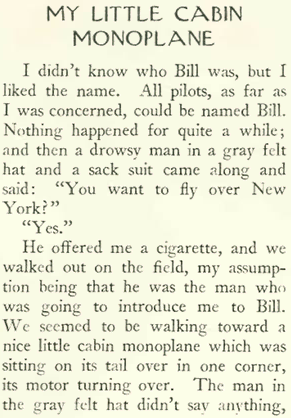
Writing in the “Reporter at Large” column for the Oct. 6, 1928 issue, White described his visit to Curtiss Field, where he inquired about a pilot who could fly him over New York City. He was told someone named Bill would take him up.

EARLY BIRD…This Fairchild FC-2 Cabin Monoplane, with strut-supported wing, was probably similar to the plane E.B. White rode in his flight over New York City. (Quora)

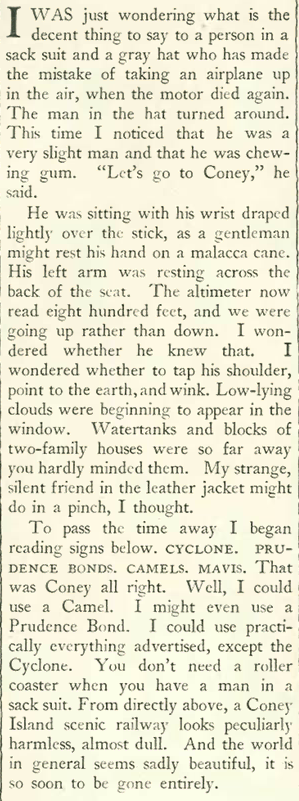
After a half hour wait, a man in a gray felt hat and sack suit offered White a cigarette and said, “You want to fly over New York?” Although the man didn’t look like a pilot, White followed him to a “little cabin monoplane.” Without saying another word the man took the plane up into the air, much to White’s surprise:

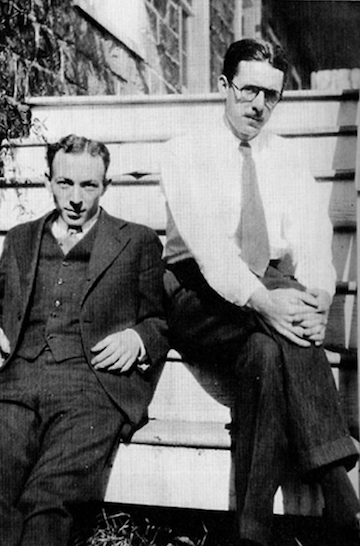
FLYBOY…E.B. White (left) with friend and New Yorker colleague James Thurber in 1929. (University of Virginia)

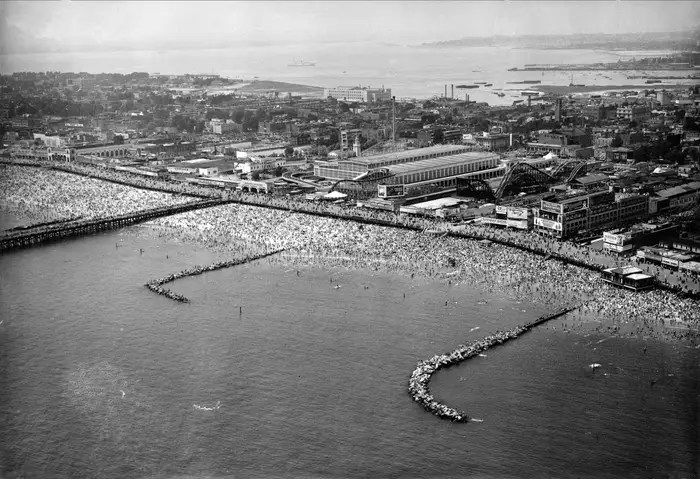
White described the various sites from 800 feet up, including Coney Island, a view at once beautiful and foreboding…

Aerial view of Coney Island, 1937. (AP/lunaparknyc.com)

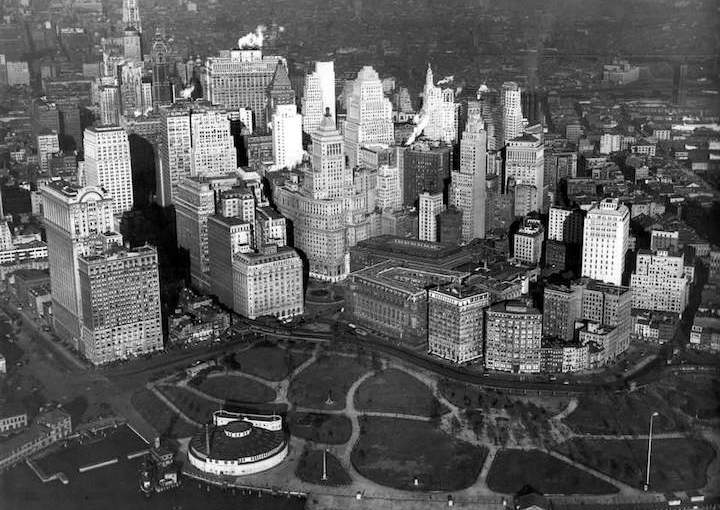
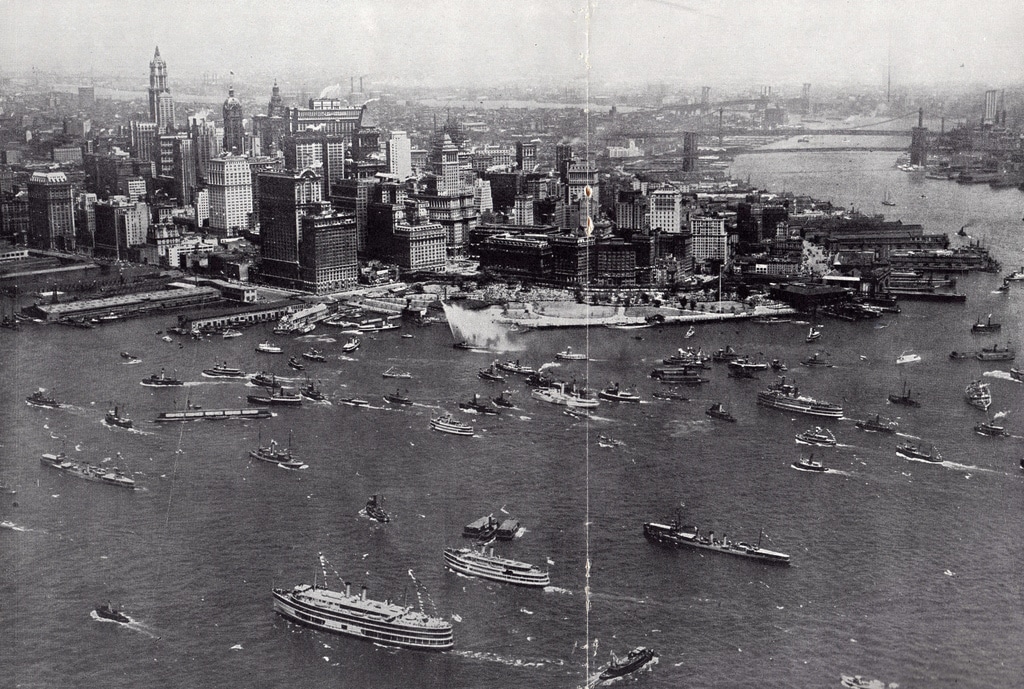
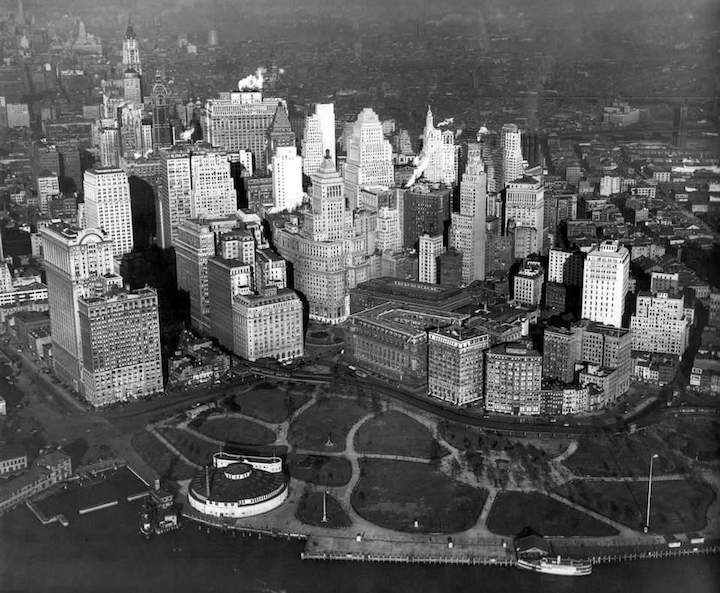
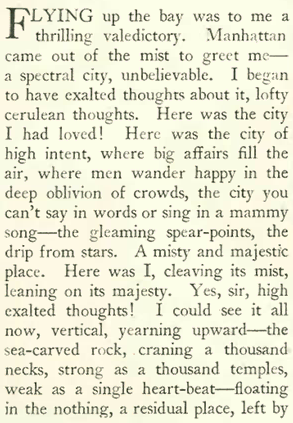
…and the thrill of the approaching city skyline as his plane soared up the Bay toward Manhattan:

Lower Manhattan looking northeast from the Bay in July 1927. This is approximately the view described by E.B. White as his plane approached Manhattan. (Favrify.com)
A closer view of lower Manhattan as it would have appeared to E.B. White on his 1928 flight over New York City. (Fairchild Aerial Survey photo, 1928)

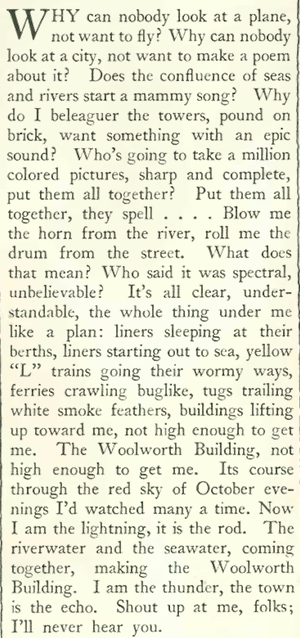
Once over the city, White could not help but contain his exuberance, soaring high above the towering spires and teeming crowds below:

And yet as I noted earlier, his observations were tinged with melancholy and foreboding. In describing his flight over Coney Island, for example, White concluded that “the world in general seems sadly beautiful, it is so soon to be gone entirely.”

Perhaps he referred to the rapid changes seen daily in the city during the 1920s, when nothing seemed permanent. Or did this bird’s eye view suggest something else to White? Twenty years later, in his 1948 essay “Here is New York,” White would write:

A single flight of planes no bigger than a wedge of geese can quickly end this island fantasy, burn the towers, crumble the bridges, turn the underground passages into lethal chambers. The intimation of mortality is part of New York now: in the sound of jets overhead, in the black headlines of the latest edition.

Unlike 1928, White had the hindsight of World War II, of entire cities leveled by waves of heavy bombers, or in the case of Hiroshima and Nagasaki, just a single bomb. The foreshadowing of 9/11 is contained in his words as well.

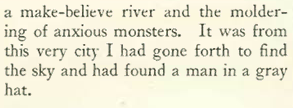
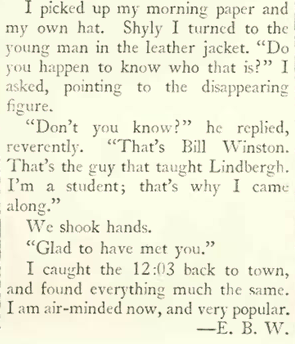
Back on the ground at Curtiss Field, White would finally learn the identity of the man who didn’t look like a pilot, but had just flown him over the city:

Another Vantage Point

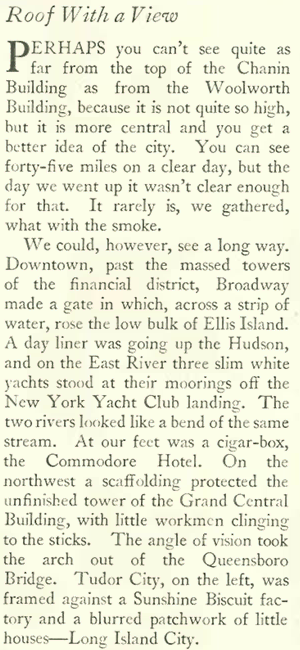
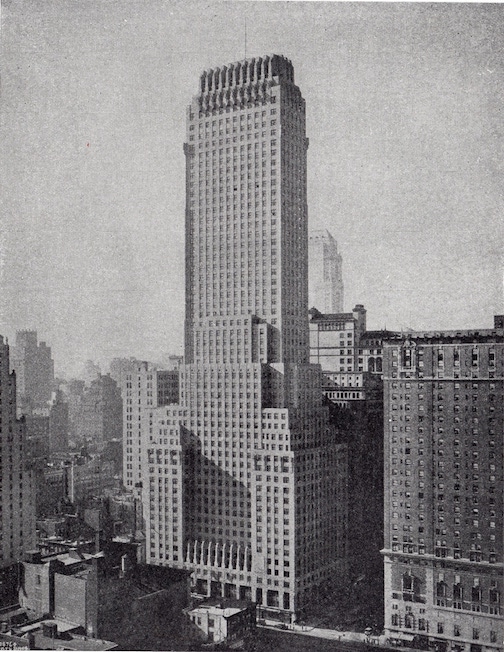
With buildings rising ever higher in Manhattan, you could get a pretty good view of the surrounding city by taking an elevator to the rooftop of the latest skyscraper. The Oct. 6 “Talk of the Town” found a good perch atop the 680-foot-tall Chanin building on the southwestern corner of Lexington Avenue and 42nd Street.

THINGS ARE LOOKING UP…The Chanin Building at Lexington and 42nd. Sloan & Robertson Architects, 1928. (New York Public Library)

 *  *  *

From Our Advertisers

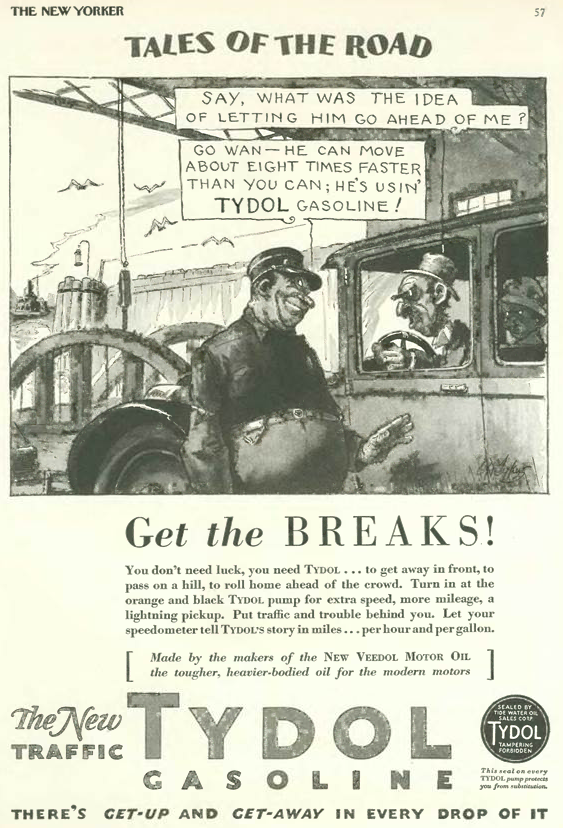
Something you never see in The New Yorker anymore, or in most magazines for that matter, are ads promoting various brands of gasoline. This one touts the benefits of Tydol, produced by the (now defunct) Tide Water Oil Company of New York:

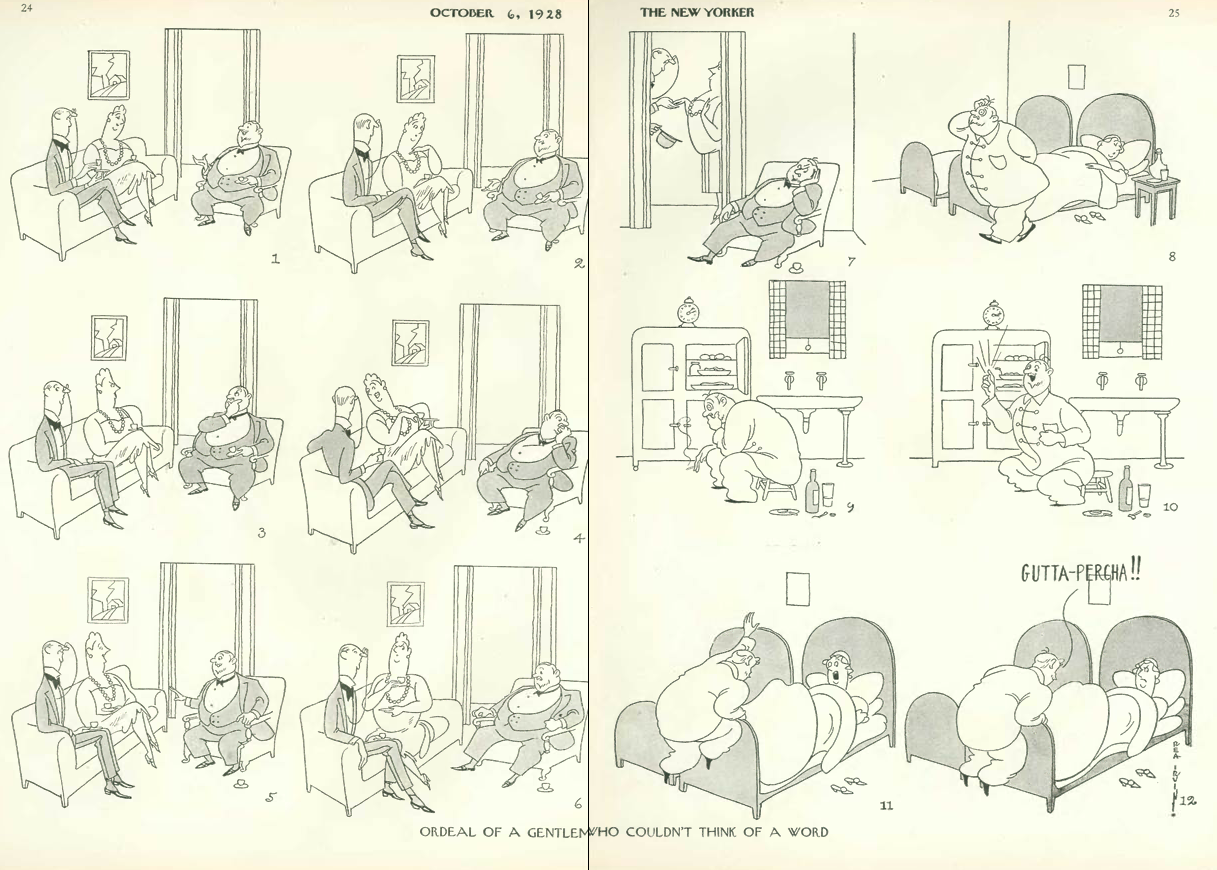
For our Oct. 6 cartoon, here is one of Rea Irvin’s occasional multi-panel, two-page comic spreads, this one exploring the ordeal of a man who couldn’t think of the word for a type of natural plastic used in the 1920s (click to enlarge image):

 *  *  *

The Oct. 13, 1928 issue featured a notable short story by Thyra Samter Winslow, a writer who contributed nearly a dozen pieces to The New Yorker in 1927 and 1928.

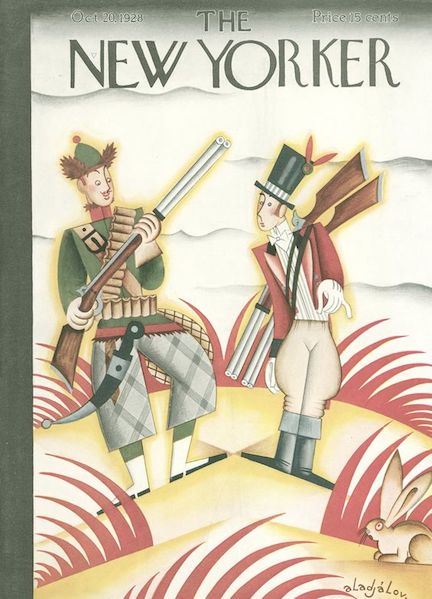
October 13, 1928 cover by Julian de Miskey.

Her short story on page 25, “But for the Grace of God,” was a “key transitional work” for the magazine, according to Ben Yagoda in his book About Town: The New Yorker and the World It Made. He writes: “Realistic fiction thrives in periods of social ambiguity and flux, and the attention to class was on of the factors working to propel New Yorker writing from two-dimensional sketches to fleshed out short stories.” Yagoda observes that Winslow’s story, “in its carefully selected details, its mild epiphany, and its attention to the potency of class…is an accomplished and poignant piece of short fiction.” Excerpts:

Thyra Samter Winslow, in 1936. (findagrave.com)

* * *

The New Yorker continued its stubborn refusal to report on baseball in its sports section, even though the Yankees were in the process of taking their second consecutive World Series title with a 4-0 sweep over the favored St. Louis Cardinals. The magazine did, however, mention the game in the Oct. 13, 1928 “Talk of the Town” — not on how it was played, but rather on how the championship money was distributed among players and assistants:

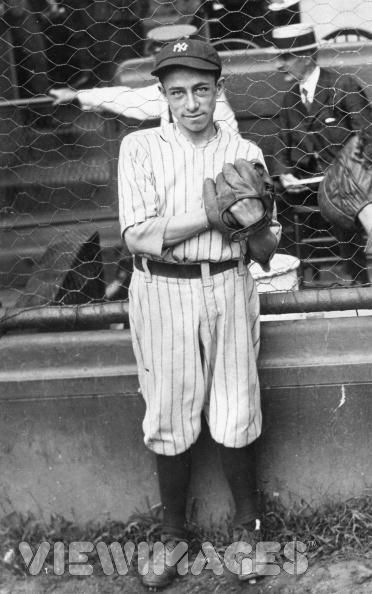
Money matters in the game of sport were more informal 90 years ago, with players themselves divvying up money to other players, trainers, mascots and batboys. For example, in 1927 Yankees batboy Eddie Bennett received $700 for the one-eighth World Series share voted him by the team. This sum earned over the four days of the series nearly equalled a batboy’s pay for a full year.

GOOD LUCK CHARM…Yankee batboy Eddie Bennett in the 1920s. Although a spinal injury as an infant left him hunchbacked, Bennett would serve as Yankee batboy for 12 years — a period that would include seven pennants and four World Series titles. (sabr.org)

 *  *  *

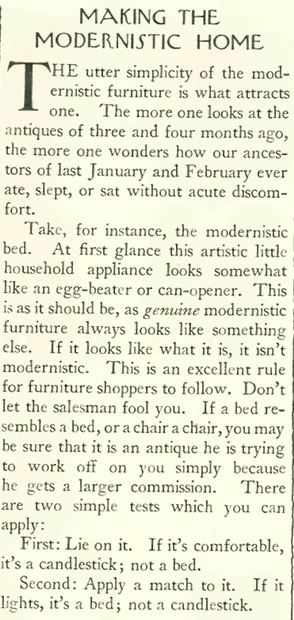
Although European-inspired modern furniture was all the rage among certain members of the New York smart set, writer Joseph Fulling Fishman (best known for his writing on contemporary prison conditions) offered a dissenting view in the Oct. 13 edition. An excerpt:

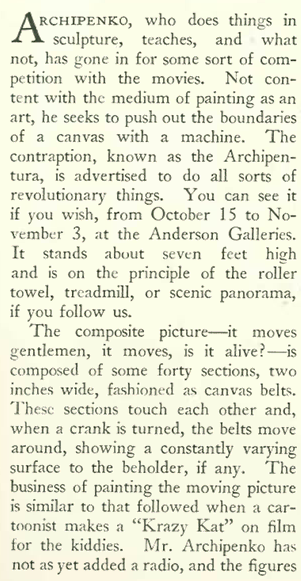
In the art review section, critic Murdock Pemberton also seemed a bit perplexed by modern design, in this case by the work of Ukrainian-born avant-garde artist Alexander Archipenko. His Archipentura was an electronic machine that displayed pre-loaded images of a female undressing by rolling painted canvas through a complex system of sprockets and belts. He intended the machine “to do for painting what the motion picture did for photography.” Pemberton observed:

THINK DIFFERENTLY…Alexander Archipenko (right, circa 1920), intended his intended his Archipentura machine (pictured in front and side views) “to do for painting what the motion picture did for photography.” (Wikipedia/Archipenko Foundation)

*  *  *

From Our Oct. 13 Advertisers

Yet another endorsement for cigarettes from the posh set. This time Melachrino Cigarettes got in on the action with this endorsement by Augusta Barney Harriman.

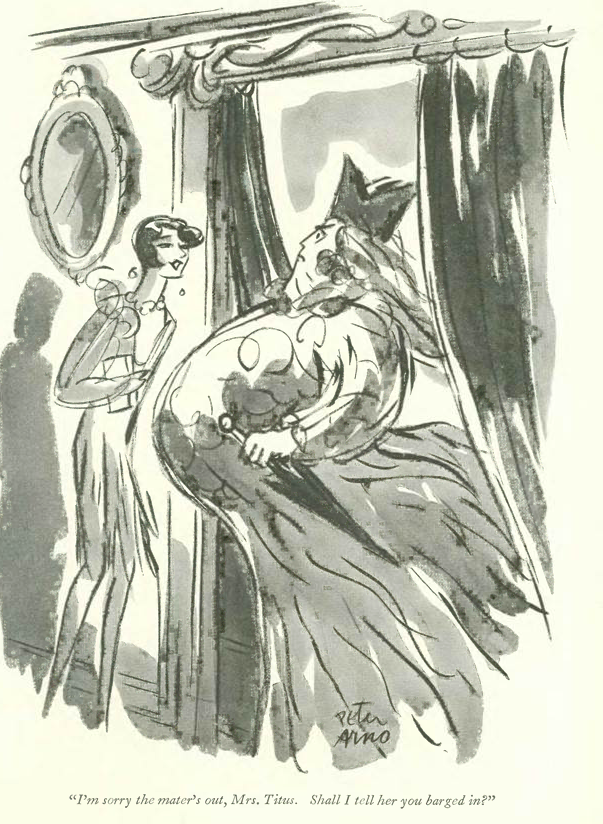
For our cartoon, Peter Arno once again looked in on the mannerisms of the upper class, contrasting a lithe young flapper with the imposing presence of a battle-axe. Note how the young woman uses the archaic British “mater” in reference to her mother…

Next Time: The Prohibition Portia…

The Tastemakers

Modernism in interior design gained a wider audience in the 1920s thanks in part to a series of major exhibitions sponsored by some of New York City’s leading department stores.

Sept. 29, 1928 cover by Rea Irvin.

Although The New Yorker continued to feature advertisements for traditional styles of furniture, such as this one from the Sept. 22, 1928 issue…

…it was clear that the appetites of the city’s younger “smart set” were being whetted by retailers such as Macy’s, who in May 1927 hosted an “Exposition of Art in Trade” that included 100 exhibitors of modern European and American silver, pottery, books, textiles and furniture. The following spring Macy’s hosted the “International Exposition of Art in Industry,” where more than 250,000 visitors saw the work of more than 300 exhibitors from six countries. (This blog’s opening photo features a 1928 sideboard by Kem Weber, one of the exhibitors at Macy’s 1928 show. Photo courtesy Cooper Hewitt Collection).

TRENDSETTERS…R. H. Macy & Co. hosted the International Exposition of Art in Industry in the spring of 1928. At right, an interior scene at the exposition, with a chair designed by Walter Von Nessen. (socalarchhistory.blogspot.com/wright20.com)

Macy’s inspired other exhibitions by such retailers as Wanamaker’s, Abraham & Straus, Frederick Loeser, Lord & Taylor, and B. Altman & Co., which advertised its “20th Century Taste in the New Expression of the Arts in Home Furnishings” in the Sept. 29, 1928 issue of The New Yorker:

Writer Bertram Bloch reviewed the exhibit in the Oct. 6 issue. Although he suggested that he had some “hard, cruel things” to say about the show, overall he believed it something not to be missed. Excerpts:

THE SMART LOOK…B. Altman & Company showcased designs including, clockwise, from upper left, a dining room by Charles B. Falls; a conversation room by Steele Savage; a bedroom by Charles B. Falls; and a salon section by Dominique. (Art Institute of Chicago)
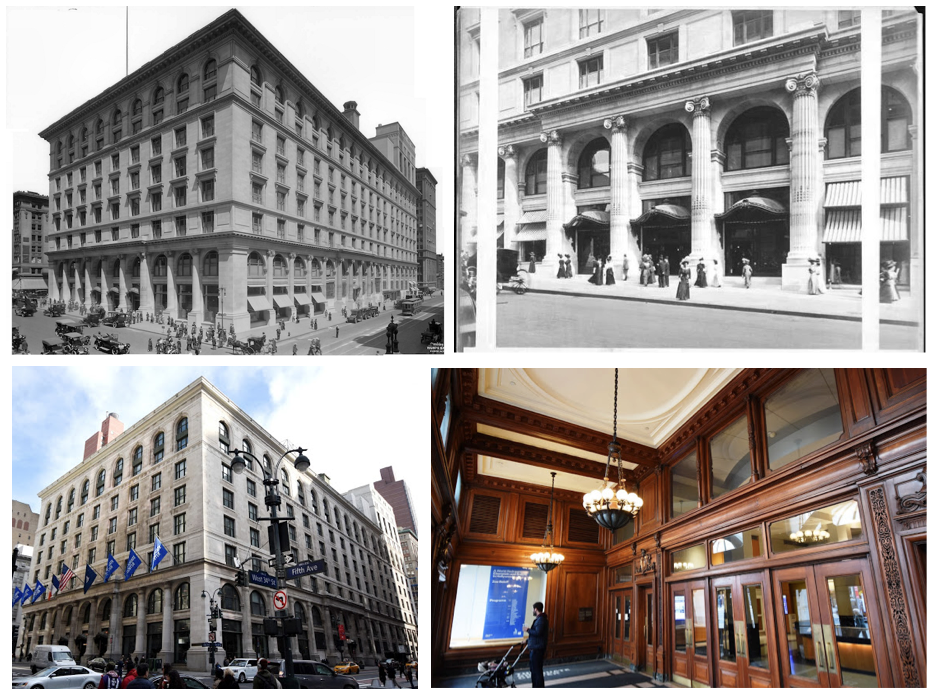
FADED GLORY…Clockwise, from upper left, The B. Altman flagship store at 34th Street and 5th Avenue and a closer view of the front entrance in 1915; closed in 1989, the flagship store is now used by the Graduate Center of the City University of New York, among other tenants. The mahogany-paneled Fifth Avenue foyer survives intact, however the exterior looks a bit hosed-down, with the Ionic capitals removed from the columns as well as the lintels that banded the windows and the cornice on top. (Museum of the City of New York/daytonianinmanhattan)

While on the topic of modern furniture, Ilonka Karasz, who painted a total of 186 New Yorker covers from 1924 to 1973, showcased her own furniture designs (along with other artists from the American Designers’ Gallery), at an exhibition the following month.

NEW YORKER COVER ARTIST Ilonka Karasz designed this dining room for the American Designers Gallery Exhibition in October 1928.  (Art Institute of Chicago)

 *  *  *

The Singing Fool

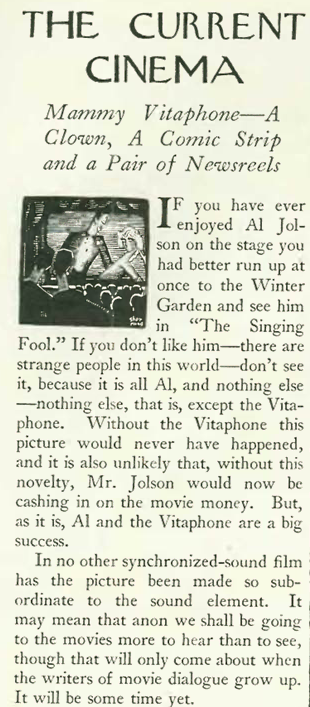
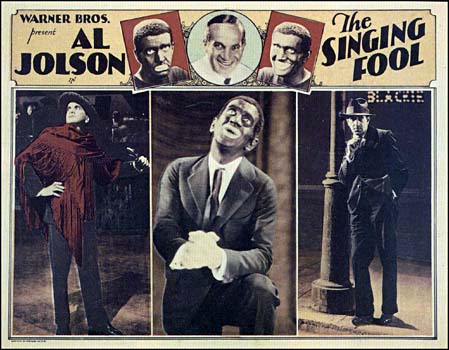
The New Yorker generally detested the introduction of sound in motion pictures, but for some reason didn’t mind it so much when Al Jolson opened his mouth. This time he followed up his blackface performance in The Jazz Singer with another blackface routine in The Singing Fool. E.B. White wrote about the film’s big opening in “The Talk of the Town”…

…and in the magazine’s film review section, yet more praise for Jolson, whose singing apparently compensated for the mediocre dialogue:

SERVED WITH A SIDE OF HAM…One of a series of promo slides for The Singing Fool, featuring Al Jolson, child actor Davey Lee, and the saccharine lyrics for Sonny Boy, said to be the first pop record to sell more than million copies. (nitrateville.com)
THAT WAS ENTERTAINMENT…Theatre lobby card for 1928’s The Singing Fool. (IMDB)

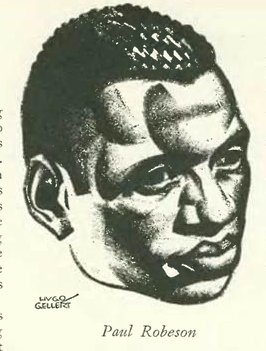
The Sept. 29 issue illustrates the dichotomy in how The New Yorker depicted African Americans in the 1920s. Blacks in the magazine’s cartoons and illustrations were often portrayed as exaggerated characters from minstrel shows. However, a serious artist like Paul Robeson received a much different treatment. Indeed, the magazine shamed the racism of a fictional character in Dorothy Parker’s short story “Arrangement in Black and White” (Oct. 8, 1927), in which a wealthy, white woman condescends to a black singer who might well have been modeled after Robeson. The journalist and author Mildred Gilman profiled Robeson in the very same issue that praised Jolson’s tired blackface routine. An excerpt, accompanied by a Hugo Gellert illustration:

*  *  *

Next Time Wear a Disguise

The newlywed Gene Tunney, newly retired from boxing, was spending some time in Europe, probably hoping to get a break from the adoring crowds back in the States. Upon entering a French café with his friend, the author Thornton Wilder, he soon discovered that adoring crowds awaited him on the other side of the pond, as related by The New Yorker’s Paris correspondent Janet “Genêt” Flanner:

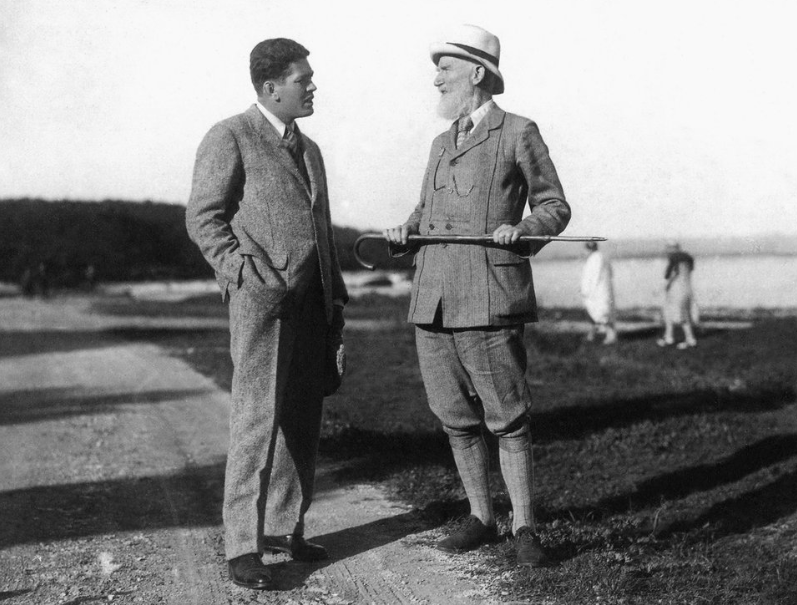
ENJOYING SOME DOWN TIME…The boxer Gene Tunney, left, and the writer George Bernard Shaw on a 1929 vacation to Brioni. (Associated Press)

 *  *  *

From Our Advertisers

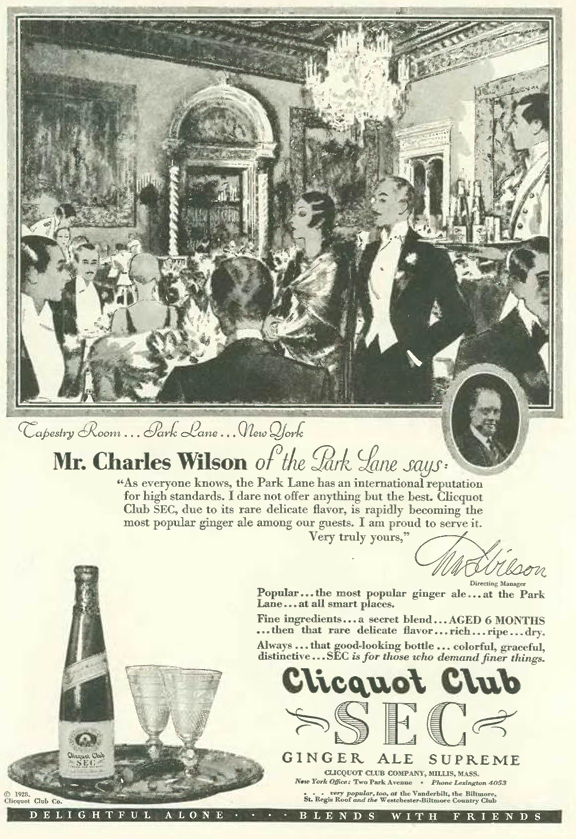
Although by 1928 Americans (and particularly New Yorkers) were flouting Prohibition laws, alcoholic beverages still could not be legally produced or marketed (except for “religious” or “medicinal” purposes). Advertisers, however, found clever ways to market non-alcoholic beverages like ginger ale with the allure of liquor or fine wine. But then again, few were actually drinking straight ginger ale…

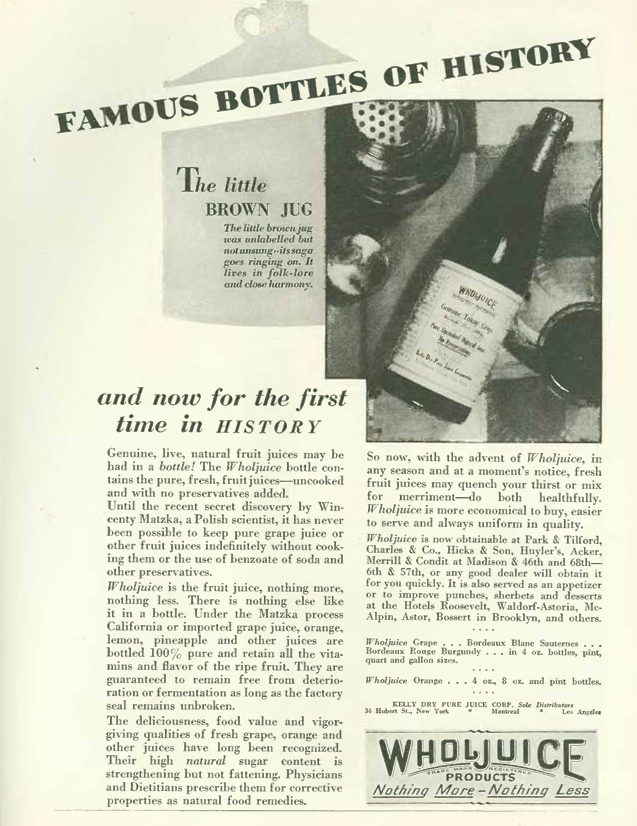
And if you formerly grew grapes for winemaking, what’s preventing you from selling unpasteurized grape juice that remains free from fermentation “as long as the factory seal remains unbroken”…? Also, note the not-so-subtle cocktail shaker at the top left of the photo:

And for our cartoons, Barbara Shermund explored the modern ways of love…

…while Peter Arno continued probing the comic imbalance of rich old men and their young mistresses…

Next Time: A Bird’s Eye View…


White Shadows of the South Seas

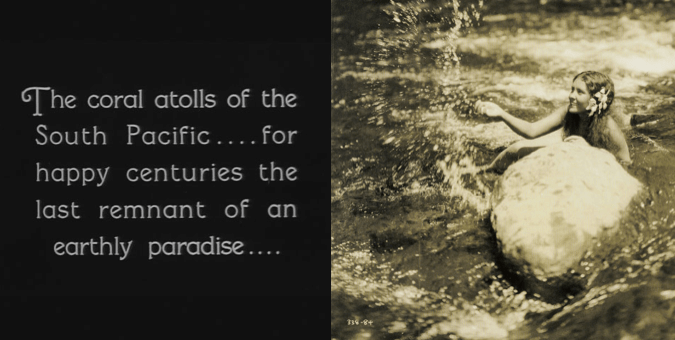
Thirty years before South Pacific would grace the silver screen, an earlier film that also explored the clash of civilizations in Polynesia, White Shadows of the South Seas, wowed audiences with its cinematography and, like South Pacific, a melodramatic love story between an American and a beautiful Polynesian girl, Fayaway, played by Mexico-born actress Raquel Torres.

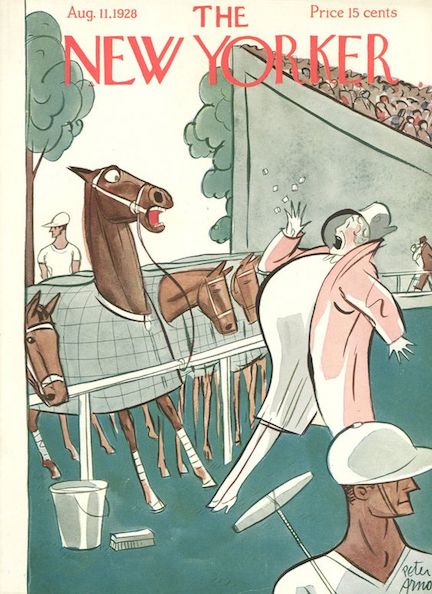
August 11, 1928 cover by Peter Arno.

Inspired by a 1919 travel book of the same name (by Frederick O’Brien), what is significant about the film is that it was shot in Tahiti, featured a supporting cast of Tahitian islanders, and was the first MGM picture to be released with a pre-recorded soundtrack, which consisted of a musical score and a few effects. It was also the first film in which the MGM Lion (known then as “Jackie”), roared during the introduction.

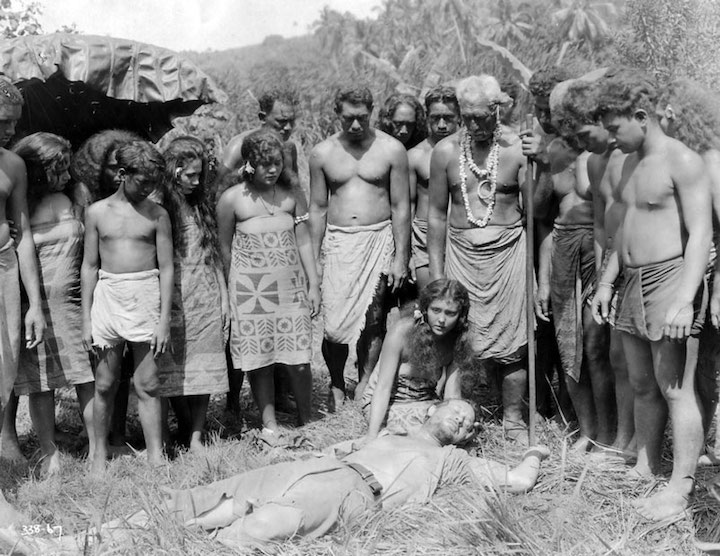
TROUBLE IN PARADISE…Raquel Torres and Monte Blue in White Shadows in the South Seas. (cinemasojourns.com)

Leonard Maltin writes the film “features stunning, Oscar-winning cinematography of the Marquesas Islands welded to a story about the corrupting influence of Western civilization, with Blue as an alcoholic doctor who falls in love with native Torres and clashes with an exploitative (pearl) trader…Portions of the beautiful, documentary-style footage were shot under the supervision of Robert Flaherty, who fought with the studio over its emphasis on a melodramatic plot and left the production.”

The film also caused David O. Selznick, one of the top executives at MGM, to quit the studio over a dispute with fellow MGM exec Hunt Stromberg. According to the 1990 book The Dame in the Kimono by Leonard Left and Jerold Simmons, David (Selznick) thought it an idyllic story, Hunt wanted more sex.

Here’s what the Aug. 11, 1928 New Yorker had to say about the film:

GOING NATIVE…Raquel Torres as Fayaway in White Shadows in the South Seas. (torontofilmsociety.org)
HE ROARS AT LAST…A cameraman and a sound technician record Jackie’s roar for MGM’s famous logo in 1928. The footage was first used on MGM’s first talking picture, White Shadows in the South Seas, as seen at right. (MGM)
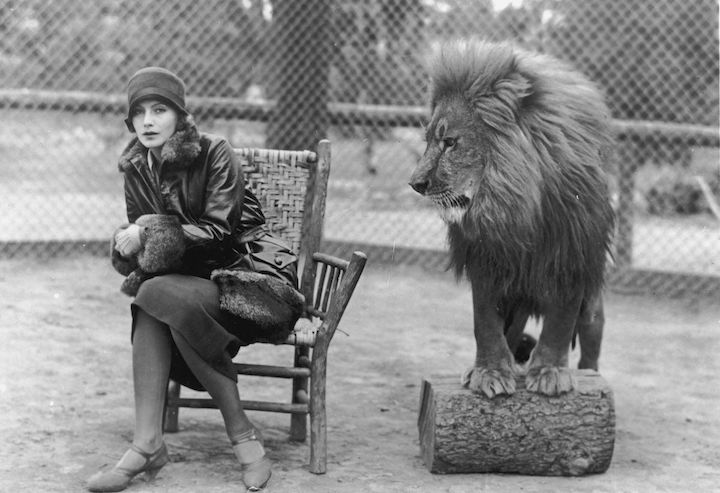
WHILE WE ARE ON THE SUBJECT…Five different lions have been used for the MGM logo. Pictured above is Lion #1, named “Slats,” seated next to a less than enthusiastic Greta Garbo in this publicity photo from 1925. Slats was never heard, his career limited to the silent era. Slats was followed by Jackie, the first lion to roar on film (through the use of a gramophone synched to the movie). Jackie was followed by Tanner, George, and finally, Leo. (martinturnbull.com)

Speaking of Garbo, The New Yorker’s film critic “O.C.” was one of the few moviegoers in the world not bewitched by the Swedish actress. In the same issue this is what he had to say about her latest film, The Mysterious Lady:

CHANNELING HER INNER WALLOP…Greta Garbo in The Mysterious Lady, 1928. (Pinterest, uncredited)

 *  *  *

Revisiting Race

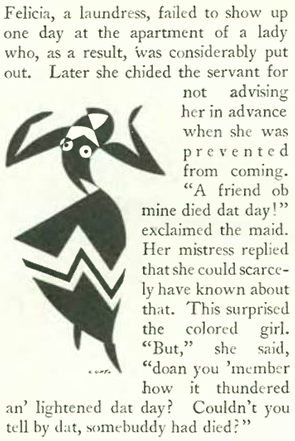
As I’ve noted before, The New Yorker of the 1920s was decidedly mainstream in its treatment of blacks and other minorities as racial “others.” Here is an example (from the Aug. 11 issue) of the casual bigotry that occasionally could be found in “The Talk of the Town.”

…and a few pages on in the same issue, this filler art by Julian de Miskey:

 *  *  *

And to close out the Aug. 11 issue, Barbara Shermund looked in on the Uppers during a moment of contemplation:

 *  *  *

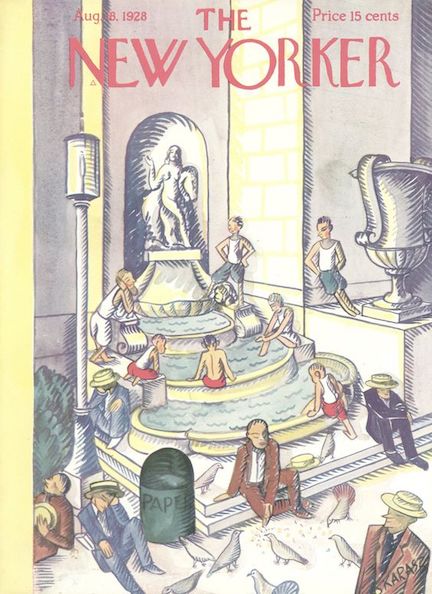
The Aug. 18, 1928 issue featured an interesting dispatch from the magazine’s Paris correspondent, Janet “Genêt” Flanner.

August 18, 1928 cover by Ilonka Karasz.

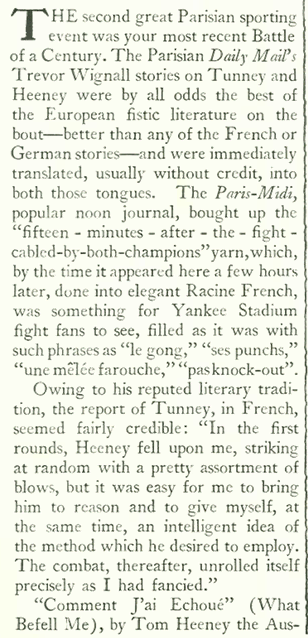
Flanner gave us a taste of how the French regarded the recent “Battle of the Century” between heavyweight boxers Gene Tunney and Tom Heeney:

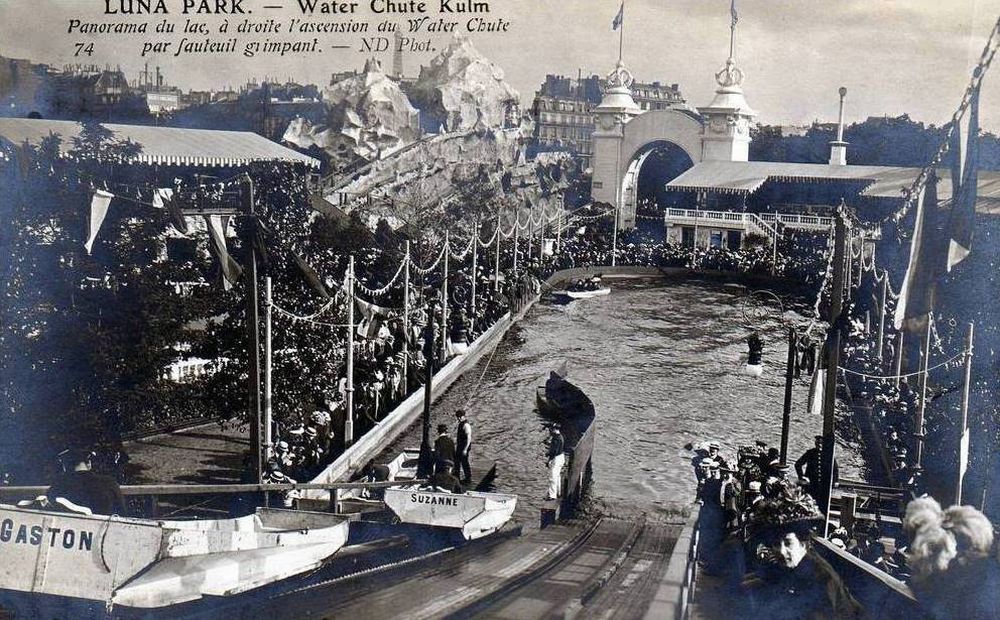
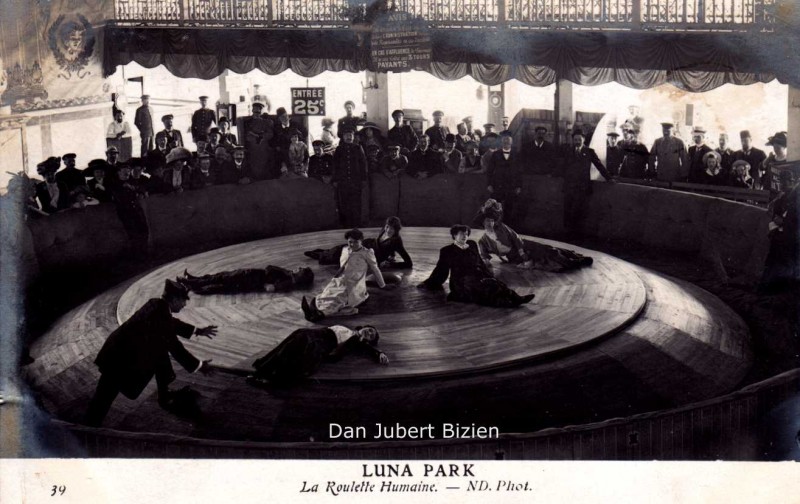
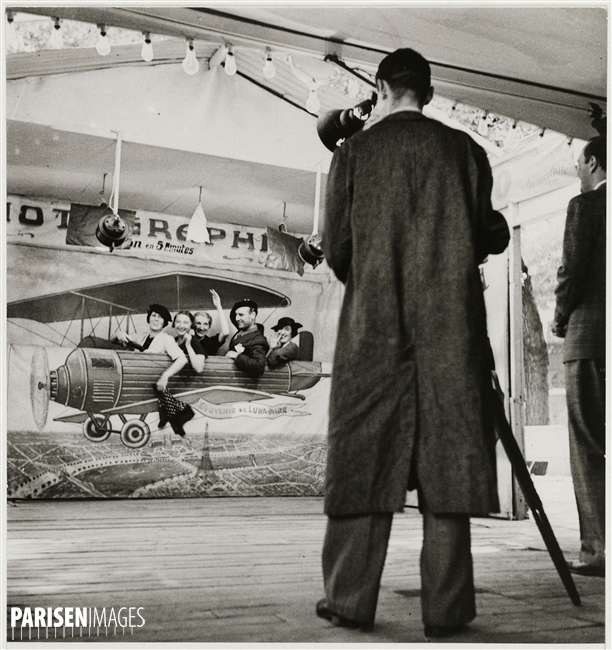
Flanner also wrote about an amusement park near the Porte Maillot in Paris called Luna Park:

WITH A FRENCH ACCENT…Entrance to Luna Park near the Porte Maillot, circa 1922. (Wikipedia)

Postcard image of the French Luna Park’s river ride, circa 1910. (paris-unplugged.fr )
Postcard image of Luna’s Roulette Wheel ride, recalling similar ride at Coney Island’s Pavilion of Fun. (paris-unplugged.fr )
Photographer snaps a photo of visitors to Porte Maillot in 1935. Although the banner on plane reads “Souvenir de Luna Park,” the park itself closed in 1931. (parisenimages.fr )

 *  *  *

From Our Advertisers

Another sports celebrity who didn’t mind relieving Old Gold of some extra cash was Babe Ruth, who was next in line to submit to the blindfold test:

I include this ad for Proctor & Gamble’s Ivory Soap (from a 1928 issue of The Saturday Evening Post) as an explanatory note for The New Yorker cartoon that follows, by Gluyas Williams

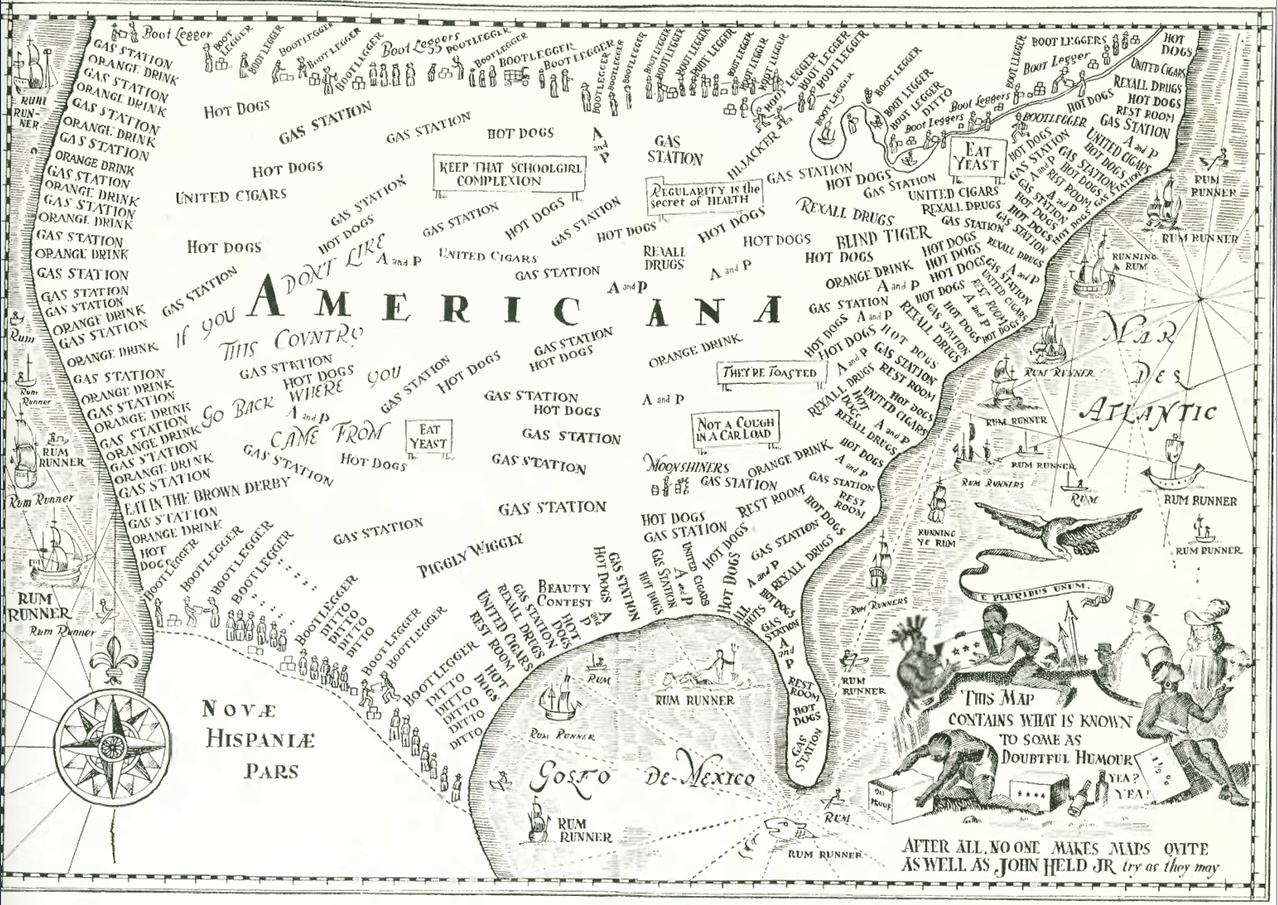
Also in the issue, John Held Jr. contributed one of his famous maps, displayed sideways, full-page (click to enlarge):

And finally, we close with Peter Arno, and two outraged spinsters:

Next Time: Hit of the Century…


The Russians Are Coming

Compared to Hollywood, cinema as an art form in the 1920s was more advanced in Europe, where filmmakers took a more mature, nuanced approach to movies; they focused less on money and more on exploring difficult social and historical issues. Trench warfare, genocide and famine have a way of doing that to you.

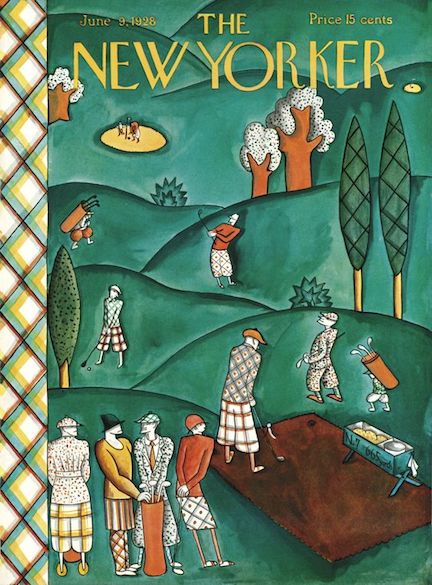
June 9, 1928 cover by Ilonka Karasz.

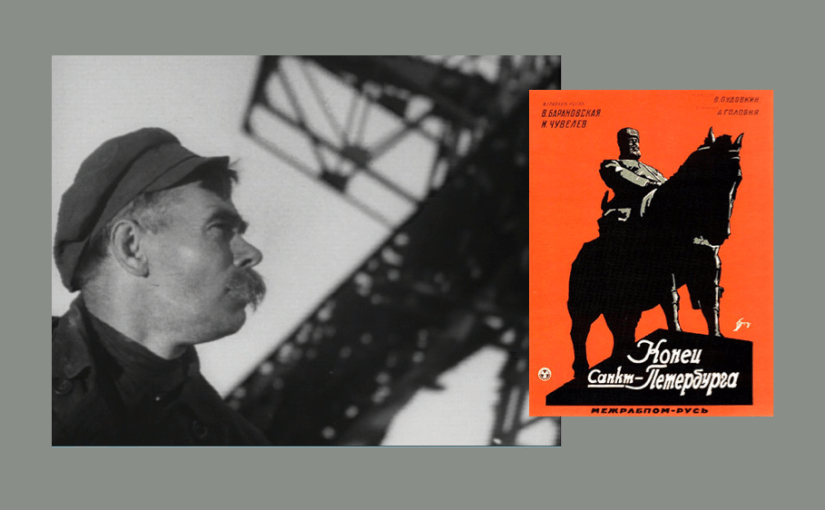
The contrast between the European avant-garde and Hollywood’s Tinseltown was not lost on The New Yorker’s film critics, who consistently lambasted American cinema while applauding nearly everything coming out of Europe, and especially the films produced by German and Russian directors. The critic “O.C.” used the Russians latest American release, The End of St. Petersburg, to drive home the point. He also chided those who dismissed the film as propaganda, a stance much in line with leftist intellectuals of the day who found inspiration in the Russian Revolution (and sometimes they looked the other way when things didn’t go so well in the Soviet experiment—1928 marked the beginning of the Soviet Union’s first Five-Year Plan. By 1934 it was estimated that almost 15 million people died from forced collectivization and famine).

The End of St. Petersburg was blatant propaganda, to be sure, but to this day it has been widely praised for its cinematic innovations. The story itself was fairly straightforward: A peasant goes to St. Petersburg looking for work, gets arrested for his involvement in a labor union and is subsequently sent to fight in the trenches of World War I. His experiences in the war solidify his commitment to revolution and the overthrow of the capitalist overlords. The New Yorker review:

OPPRESSORS & OPPRESSED…The shareholders of a steel mill (top) demand longer hours from workers who already suffer from hellish conditions at the factory in The End of St. Petersburg. (Stills from the film, available on YouTube)

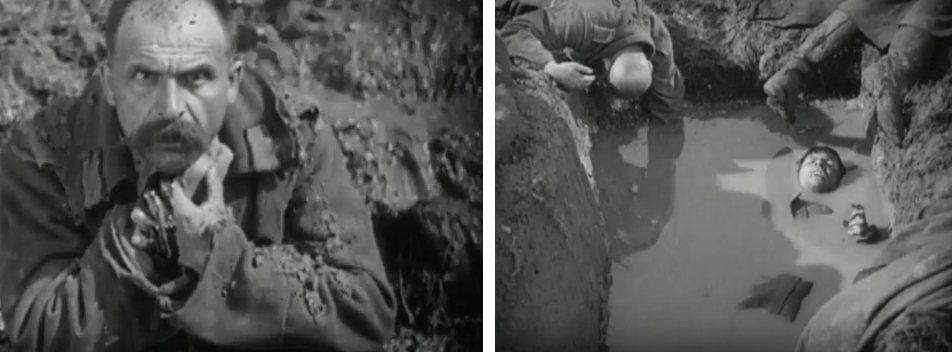
The New Yorker reviewer suggested that a story used primarily to influence an audience—propaganda—was not necessarily a bad thing:

ALL CHOKED UP…The horrors of trench warfare were graphically depicted in The End of St. Petersburg. (stills from film)

 *  *  *

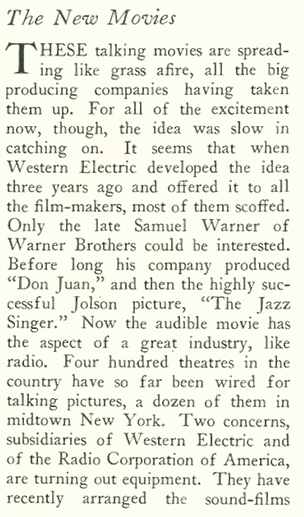
Back in the New World, most of the talk in cinematic circles revolved around the excitement of “talking pictures.”

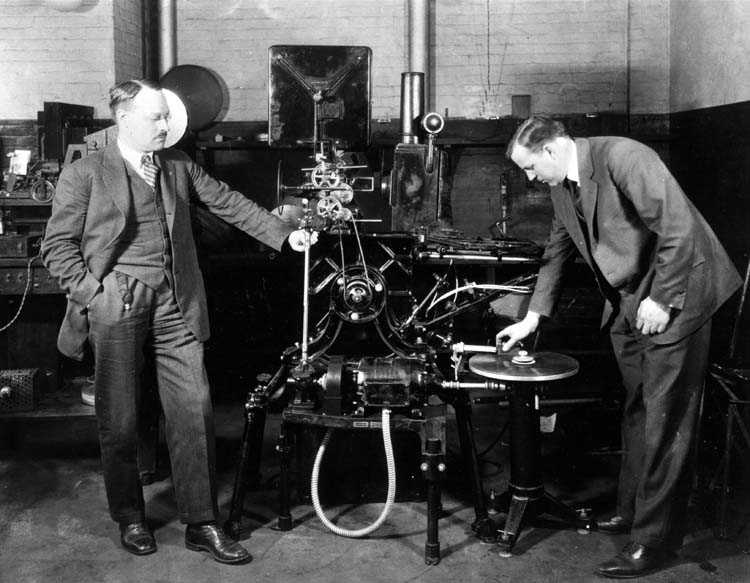
FORERUNNER…The Vitaphone system was the most successful of early attempts at sound movies. It synchronized a large recorded disc (seen at lower right) with the film. The Jazz Singer, often heralded as the movie that marked the commercial ascendance of sound films, used Vitaphone technology. (Audio Engineering Society)
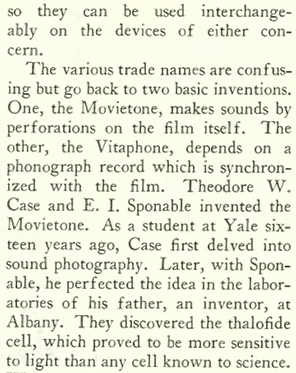
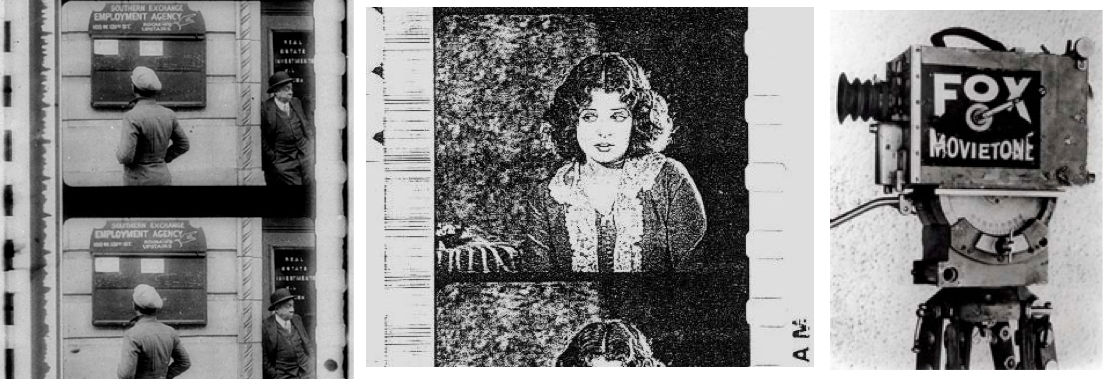
BETTER YET…Sound movies took off with the invention of a soundtrack that could be printed directly onto the film. Filmmakers either used Variable Area (left) or Variable Density (center) mono optical soundtracks located between the film’s picture frame and sprocket holes. The tracks could be read by a newly developed photocell (a light source also known as Aeo-light) that could be modulated by audio signals and was used to expose the soundtrack in sound cameras such as the one at right. (Images 1 & 2, Audio Engineering Society/ Image 3, Wikipedia)

It seems that Fox Movietone newsreels really got things going with sound and whetted audience appetites for more:

TELLING US A THING OR TWO…Irish playwright and critic George Bernard Shaw’s first visit to America, recorded for posterity in this 1928 Fox Movietone Newsreel. (YouTube still from film)

*  *  *

Then There Was The Other Playwright…

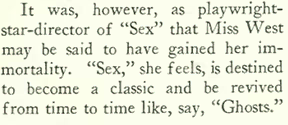
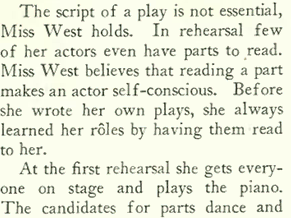
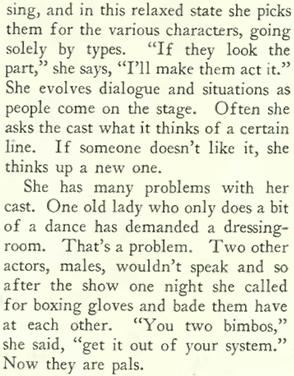
Mae West, to be exact. My guess is her approach to the craft was a bit different than G.B. Shaw’s, and we can gather as much from these excerpts from the June 9 “Talk of the Town.” The piece discusses West’s rise to fame as the creator and star of the scandalous play Sex, and her unorthodox approach to rehearsals.

DEMURE SHE’S NOT…Mae West in 1928’s Diamond Lil. (doctormacro.com)

 *  *  *

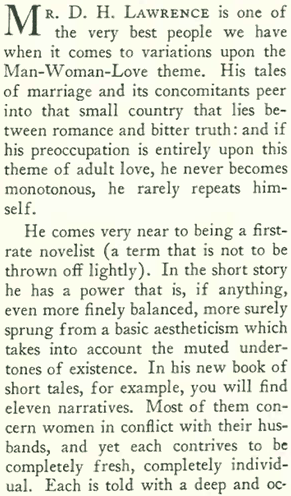
Although many today would identify D.H. Lawrence as one of great English novelists of the 20th century, eighty-some years ago New Yorker book critic Dorothy Parker described him as “very near to being first rate.”

A BARDIC QUALITY…D.H. Lawrence with wife Frieda Weekley in Chapala, Mexico in 1923. (tanvirdhaka.blogspot.com)

 *  *  *

Blind Justice

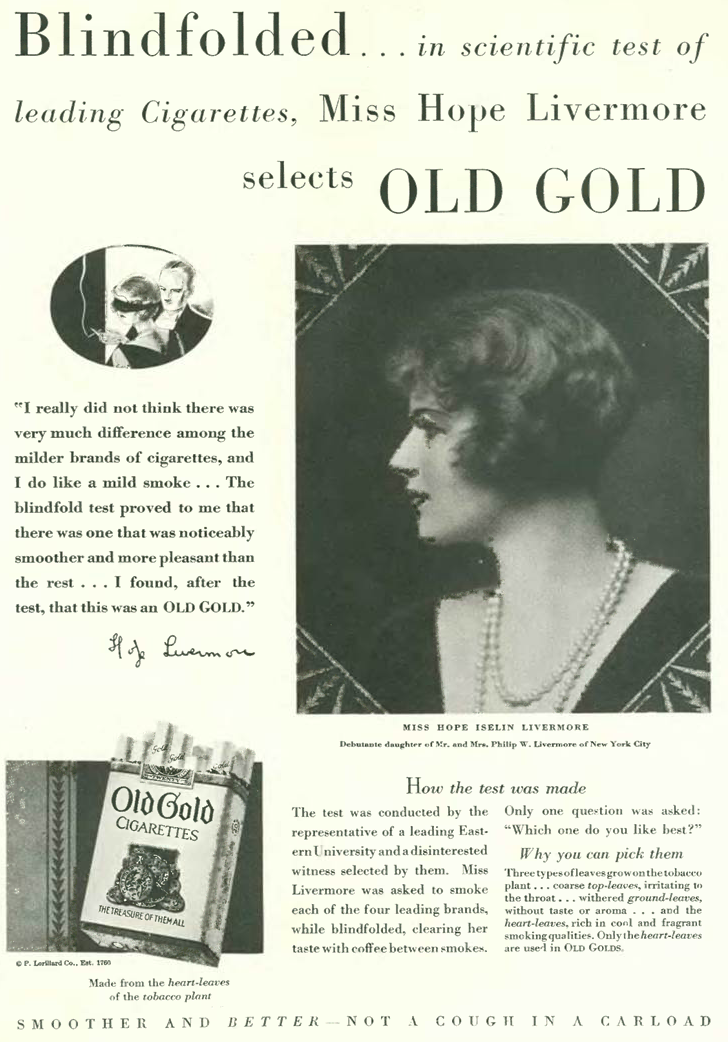
The makers of Old Gold cigarettes claimed to have scientific proof on their side with a series of ads featuring endorsements by the rich and famous. This ad ran in the June 9 issue:

In the same issue was this cartoon by Al Frueh that took a poke at Old Gold’s marketing strategy…

…and Peter Arno offered this unique take on human vanity…

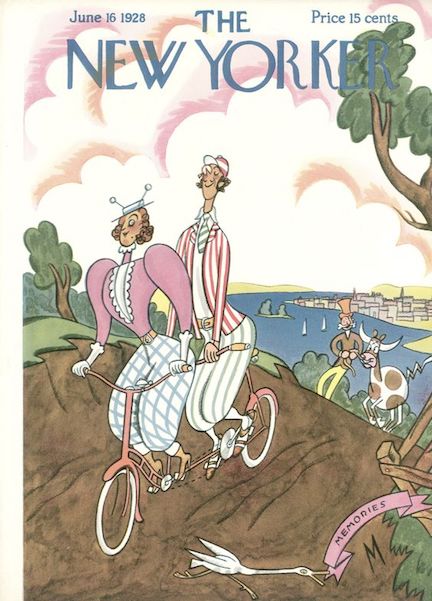
Talking pictures continued to be a theme in the June 16, 1928, issue…

June 18, 1928 cover by Julian de Miskey.

In his “Of All Things Column,” Howard Brubaker suggested that sound movies would spell the end of careers for some silent stars:

Although some actors struggled with the transition to sound, the reasons why some major stars faded with the advent of “talkies” are far more varied and nuanced. In many cases, some stars packed it in because their careers had already peaked during the silent era, and both studios and audiences were looking for some fresh faces.

HAS BEENS?…It is a common assumption that sound motion pictures killed the careers of many silent stars, including big names like John Gilbert (left) and Clara Bow. The reality is far more nuanced. (Wikipedia)

 *  *  *

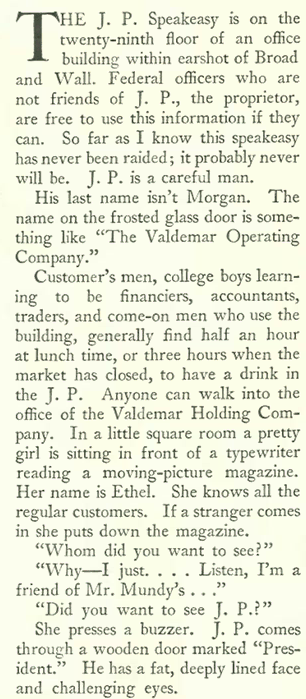
Niven Busch, Jr. continued to explore the illicit bar scene in his recurring feature “Speakeasy Nights.” I include this excerpt because it described a rather clever facade devised by the owner of the “J.P. Speakeasy.”

WORK/LIFE BALANCE…What might appear to be a typical business office might conceal an even more lucrative business in the back rooms. (Musée McCord/americanhistoryusa.com)
Busch observed an interesting protocol for admittance into the speakeasy, including a typewritten message devised to throw off any would-be Prohibition officers:

From Our Advertisers…

This ad leaves a bad taste in your mouth no matter how you look at. Nothing like coating your mouth with Milk of Magnesia before lighting up that first fag of the day…

…and here we have another ad for Flit insecticide, courtesy of Theodore “Dr. Seuss” Geisel.

And finally, a look at a Roaring Twenties wedding reception, courtesy cartoonist Garrett Price:

Next Time: Down to Coney Island…

Man About Town

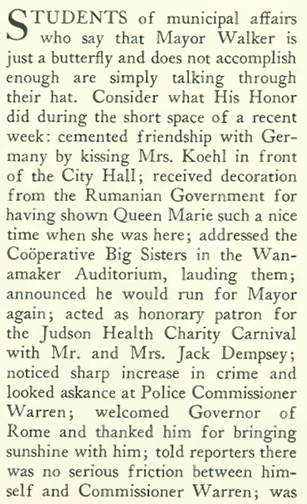
When Jimmy Walker was elected mayor of New York City in 1926, the city finally had a leader that matched the mood of the times. A dapper lover of music and nightlife, he openly took a Ziegfield dancer as his mistress, often fled the city for European vacations, and was known to begin meetings with the pop of a Champagne cork.

May 19, 1928 cover by Ilonka Karasz.

No doubt many New Yorker readers liked the Jazz Age spirit of their mayor, and who really cared about his “accomplishments” as long as the city continued to boom and its smart set continued to prosper? E.B. White, writing for the magazine’s “The Talk of the Town,” concluded as much:

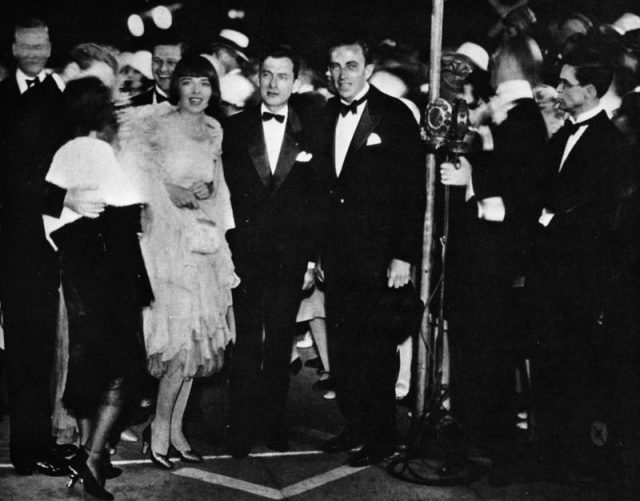
LIGHTS, CAMERA, ACTION!…Mayor Jimmy Walker accompanies actress Colleen Moore to the October 1928 premiere of her latest film, Lilac Time. (konreioldnewyork.blogspot.com)
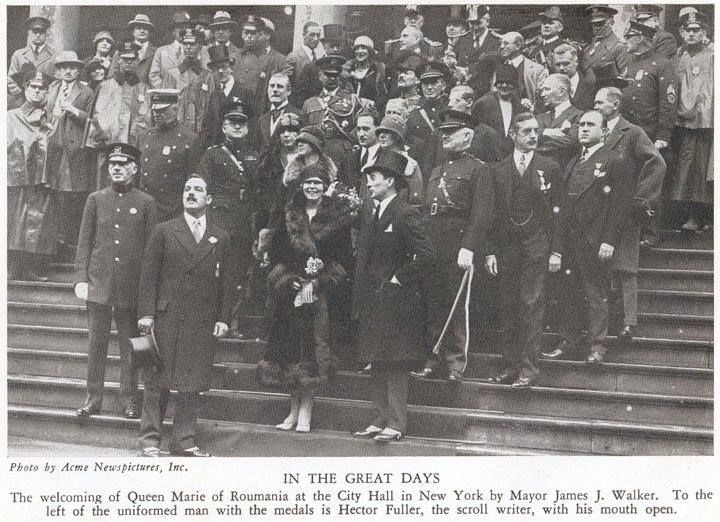
QUEEN FOR A DAY…Mayor Walker (in top hat) welcomes Queen Marie of Romania on the steps of City Hall in October 1926. Huge and enthusiastic crowds braved the rain to welcome the queen to the city. (Acme Newspapers)
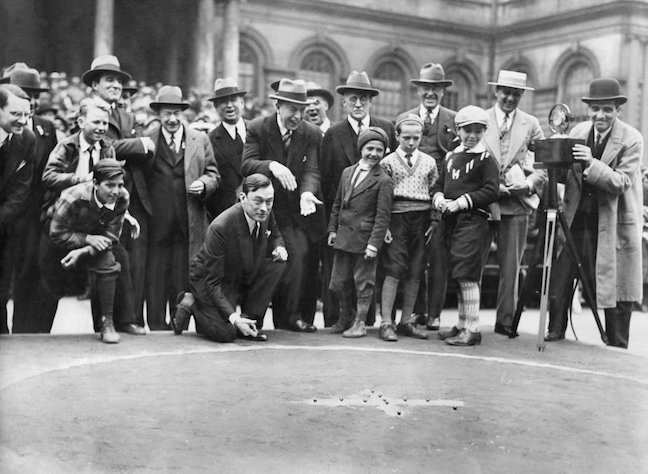
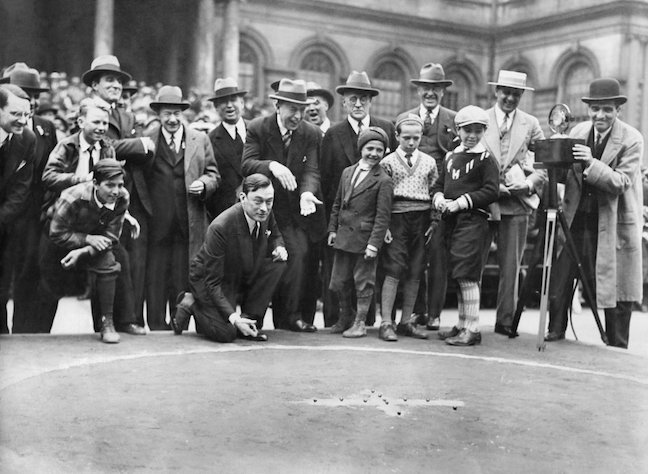
GOOD SPORT…Mayor Walker presides over the first shot in the city’s annual marble tournament on June 3, 1928. (New York Times)

 *  *  *

Remembrance of Things Past

Although The New Yorker embraced the spirit imbued in the city’s rapidly changing skyline, there was always a tinge of regret when landmarks fell to wrecking balls and the city erased its past faster than one could comprehend. And so the magazine was a strong and early supporter of the establishment of the Museum of the City of New York, founded in 1923 and housed in Gracie Mansion (now the mayor’s official residence) until a permanent, neo-Georgian-style museum was finally erected in 1929-30 on Fifth Avenue between 103rd and 104th streets.

KEEPING TIME…Museum of the City of New York. (Wikipedia)

 *  *  *

No Beer Left to Cry In

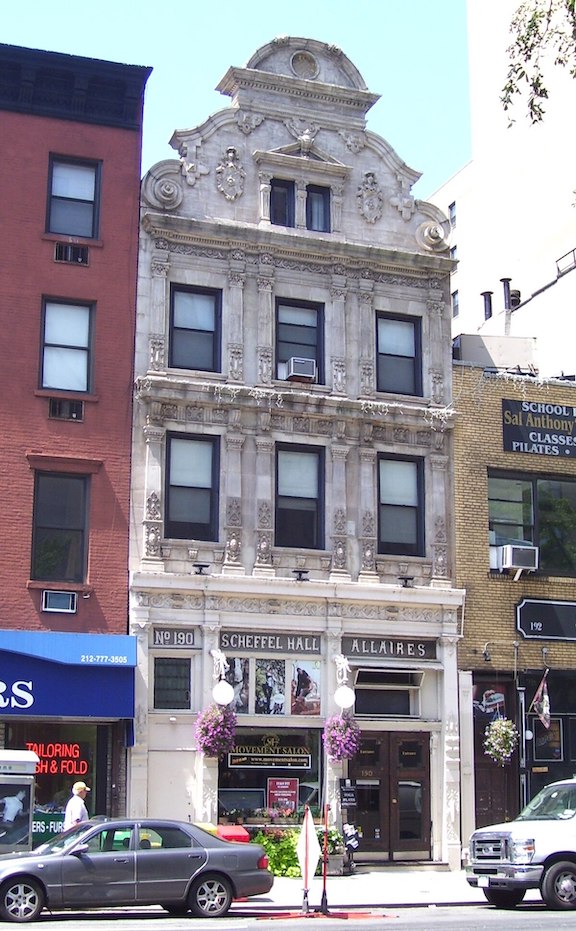
As the Museum of the City of New York scrambled to preserve a past that was quickly being erased across Manhattan, another venerable institution prepared to close its doors for good—Allaire’s Scheffel Hall—which in its heyday was a favorite watering hole of artists, musicians, and writers including Stephen Crane. Allaire’s, located in a Gramercy Park neighborhood known as Kleindeutschland, or “Little Germany,” was the latest victim of Prohibition; it was, after all, hard to run a beer hall without the beer.

SIGN OF THE TIMES…Scheffel Hall at 190 Third Avenue. It was designated a New York City landmark in 1997. (Wikipedia)

 *  *  *

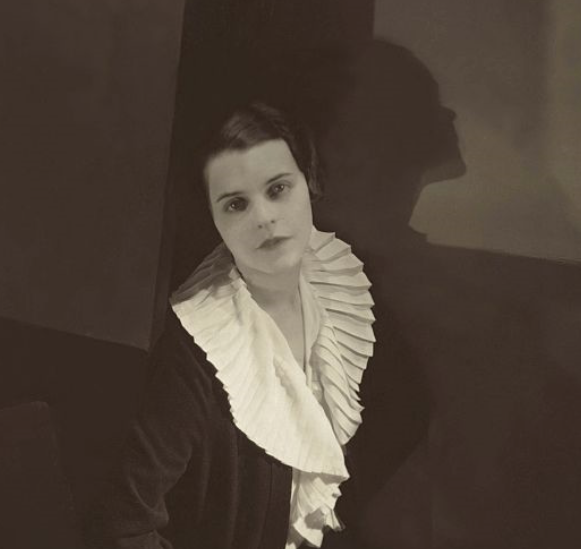
The “Talk of the Town” had its usual bits and pieces of happenings in the city, including this mild jab at the rather staid New York Times:

KEEPING IT DECENT…The actress Betty Starbuck, detail of a photo by Edward Steichen, circa 1930. (CondeNast)

 *  *  *

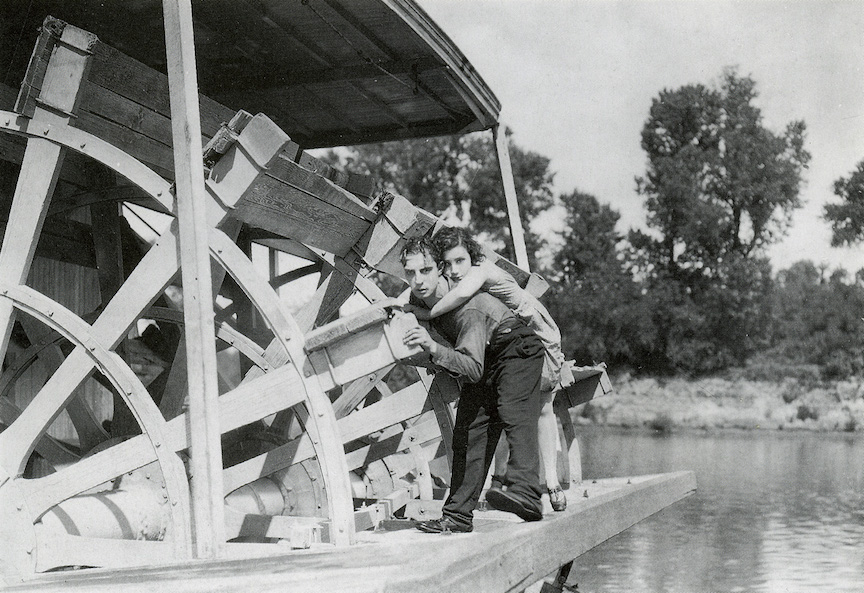
Silent film star Buster Keaton’s latest picture, Steamboat Bill, Jr., won the approval of New Yorker film critic O.C., and Keaton’s co-star Marion Byron received extra props for her “gusto”…

HANGING IN THERE…Marion Byron and Buster Keaton in 1928’s Steamboat Bill Jr. (Virtual History)

 *  *  *

Truth in Advertising

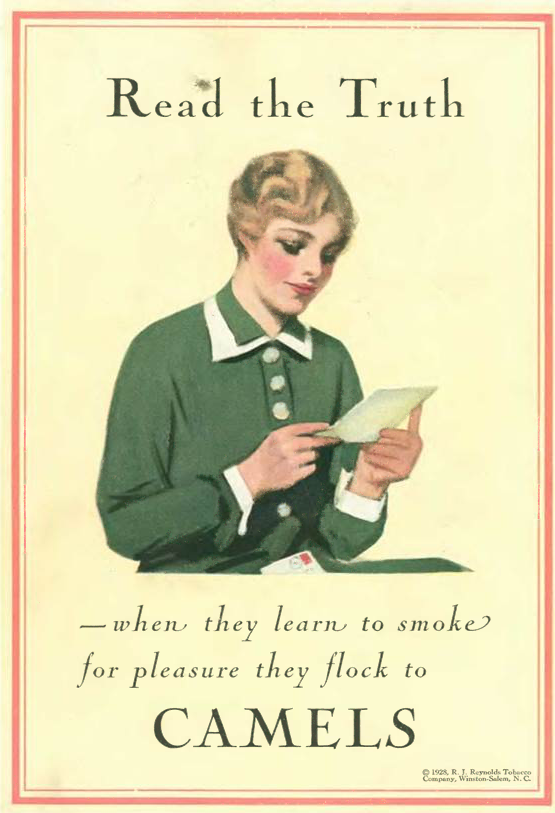
Outside of politics this is one of the most cynical uses of the word “truth” I’ve ever seen. Since the woman isn’t smoking herself, I’m guessing she is reading a letter from someone (son, daughter, boyfriend) who has learned the truth about Camels and has decided to share it in a letter. How sweet.

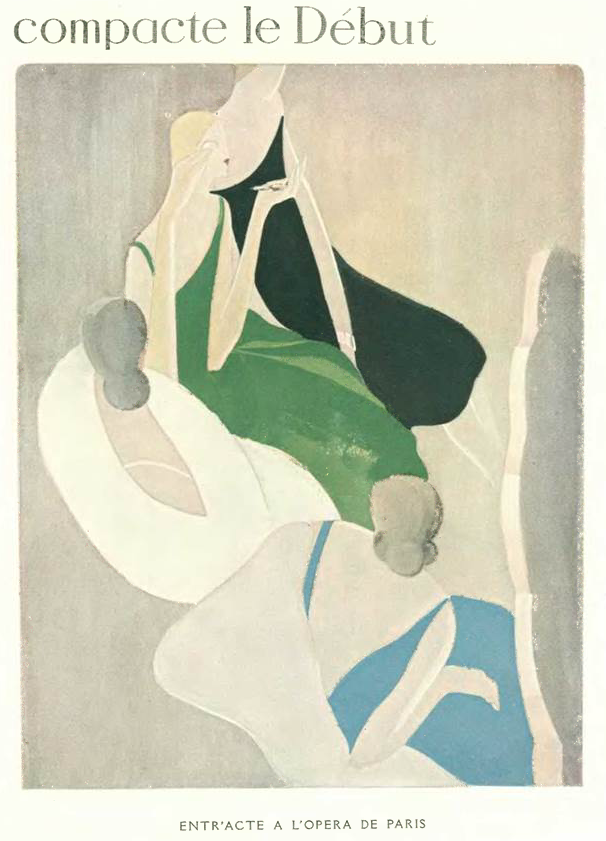
In 1928 color images such as the Camel ad above brightened an increasing number of New Yorker ads. Color was artfully used in a number of spots, including the left panel of this two-page ad for a new cosmetic compact…

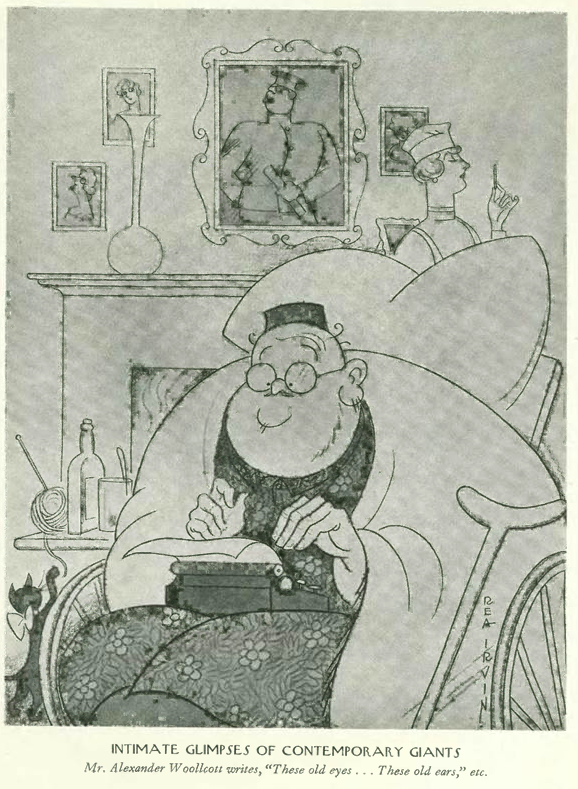
The issue also featured this cartoon by Rea Irvin of New Yorker critic (and hypochondriac) Alexander Woollcott…

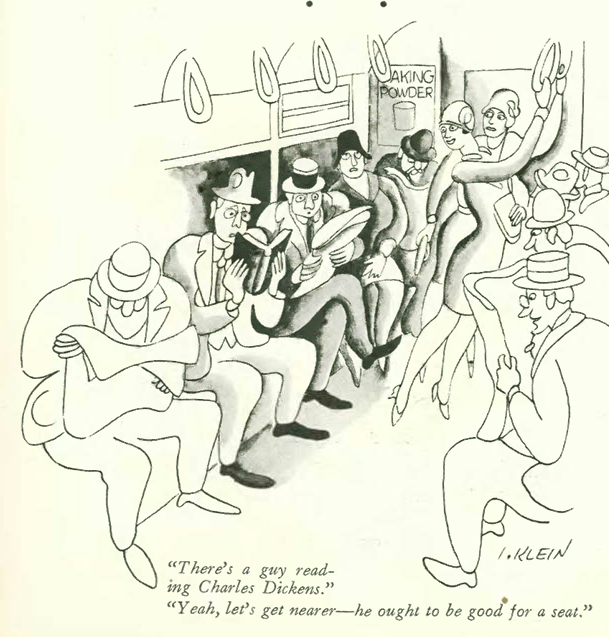
…and keeping on the literary side, this cartoon by Isadore Klein

 *  *  *

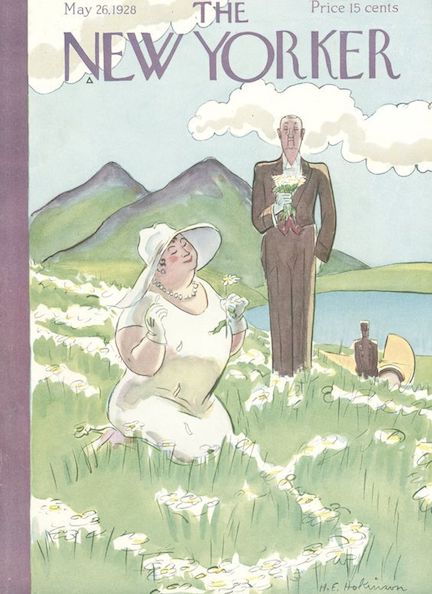
The May 26, 1928 issue the “The Talk of the Town” turned its attention to sound in motion pictures, or rather, turned its ears away from the “movie tone” sound effects becoming common in the waning days of the Silent Era.

May 26, 1928 cover by Helen Hokinson.

Everyday sounds, in particular, proved jarring to the ears of those who were accustomed to the relative quiet of silent movies:

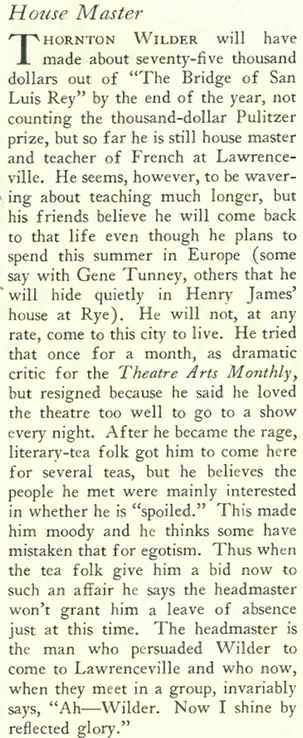
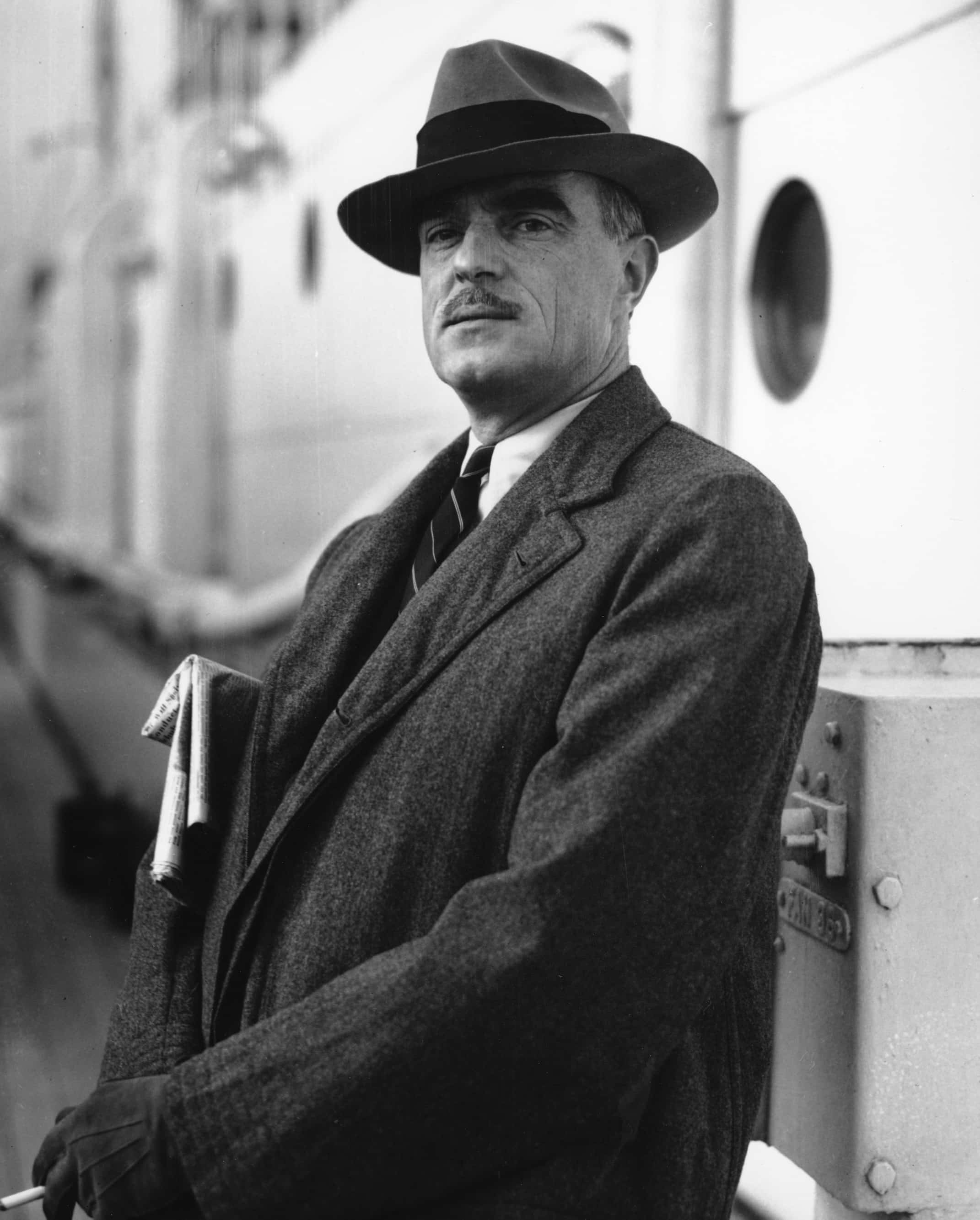
“Talk” also looked in on the writer Thornton Wilder, who was planning to summer in Europe with his friend, the literary-minded boxer Gene Tunney.

REFLECTING GLORY…Thornton Wilder returning to the U.S. on the S.S. Britannic, 1935. (thorntonwilder.com)

 *  *  *

More Truth in Advertising

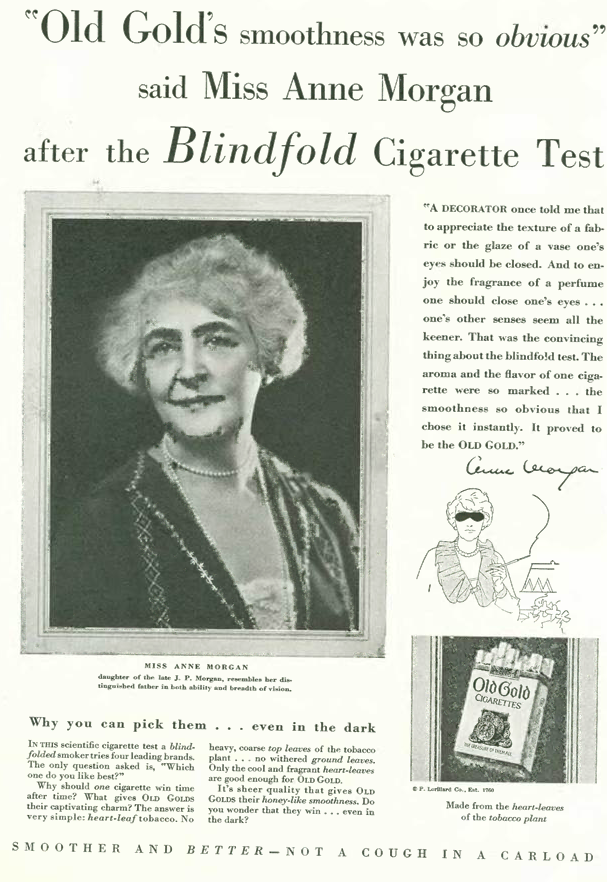
The manufacturers of Old Gold cigarettes were also in pursuit of the truth in this ad featured in the May 26 issue, backing up the claim with a “blindfold test” on none other than the daughter of J. P. Morgan…

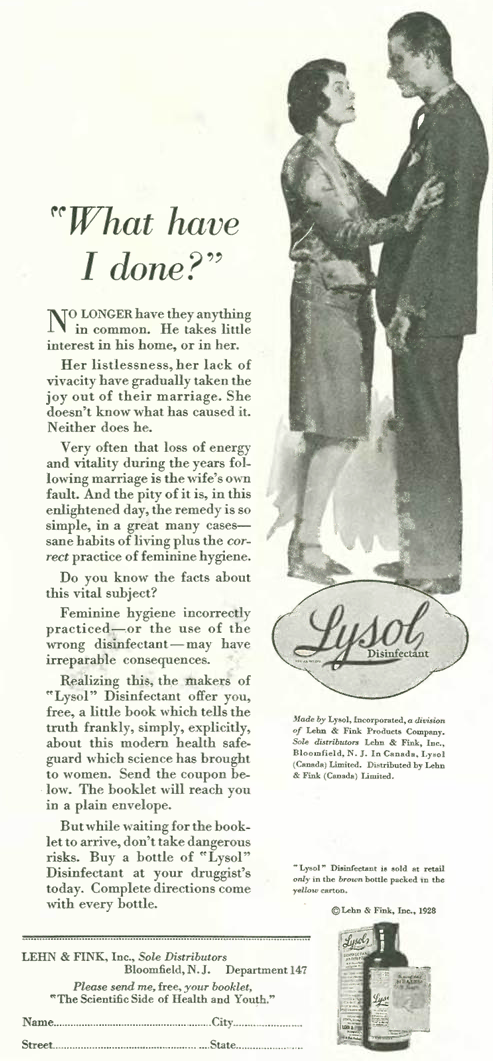
Deception in advertising wasn’t limited to cigarettes, however. The makers of Lysol had their own nefarious scheme that shamed women into using their product as a form of birth control (referred to in the ad below with the euphemism “feminine hygiene”). Not only was it ineffective as a contraceptive, it was also corrosive to one’s privates.

The ad is also appalling for casting the responsibility for birth control entirely on the woman. But then again, where are we today?

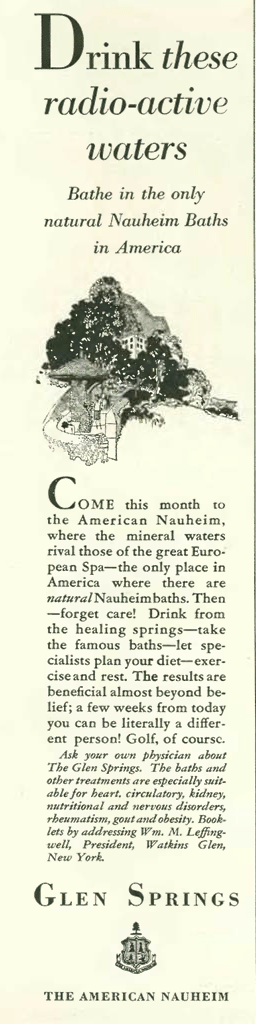
On to other questionable health pursuits, this ad in the May 26 issue touted the “radio-active waters” of Glen Springs, a hotel and sanatorium located above Seneca Lake in New York. Searching for oil on the site in late 19th century, the owners struck not black gold but rather a black, briny water that they claimed had greater curative powers than those found in Germany’s famed Nauheim Springs.

Why they called the waters “radio-active” escapes me. There were a lot of quack medical cures floating around in the 1920s—some of them quite dangerous—so I’m guessing that the proprietors of Glen Springs were adding radium to the water in some of their treatments, or maybe just claiming that radium was present in the water. Although Marie Curie (a pioneering researcher on radioactivity) and others protested against radiation therapies, a number of corporations and physicians marketed radioactive substances as miracle cure-alls, including radium enema treatments and radium-containing water tonics.

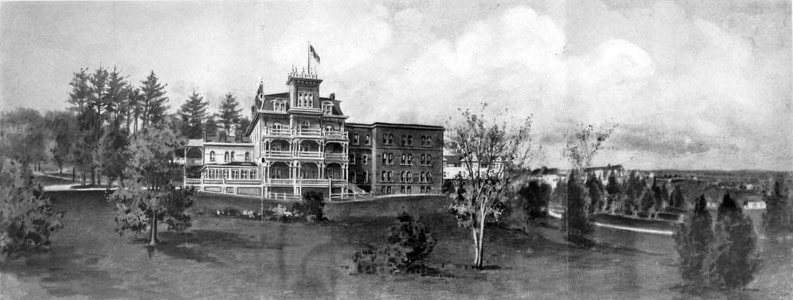
The Glen Springs Hotel at Watkins Glen, NY. It remained a noted landmark of the area until it was demolished in 1996. (nyfalls.com)

 *  *  *

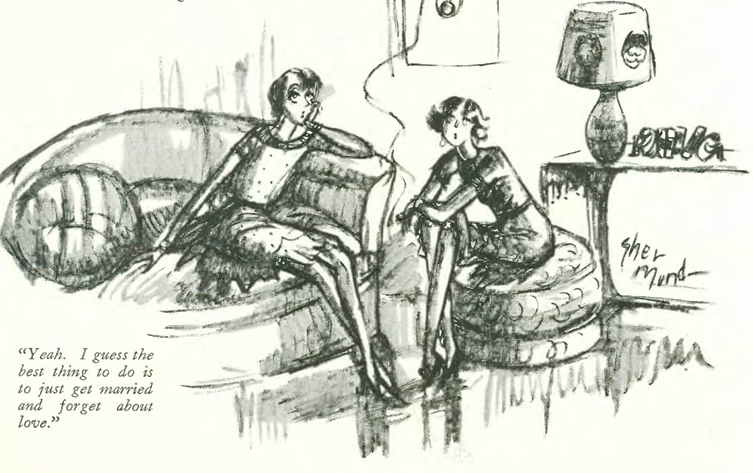
And finally, our cartoons for the May 26 issue, in which Barbara Shermund and Peter Arno explore the ups and downs of courtship…

Next Time: Toward the Air…


The Last Dance?

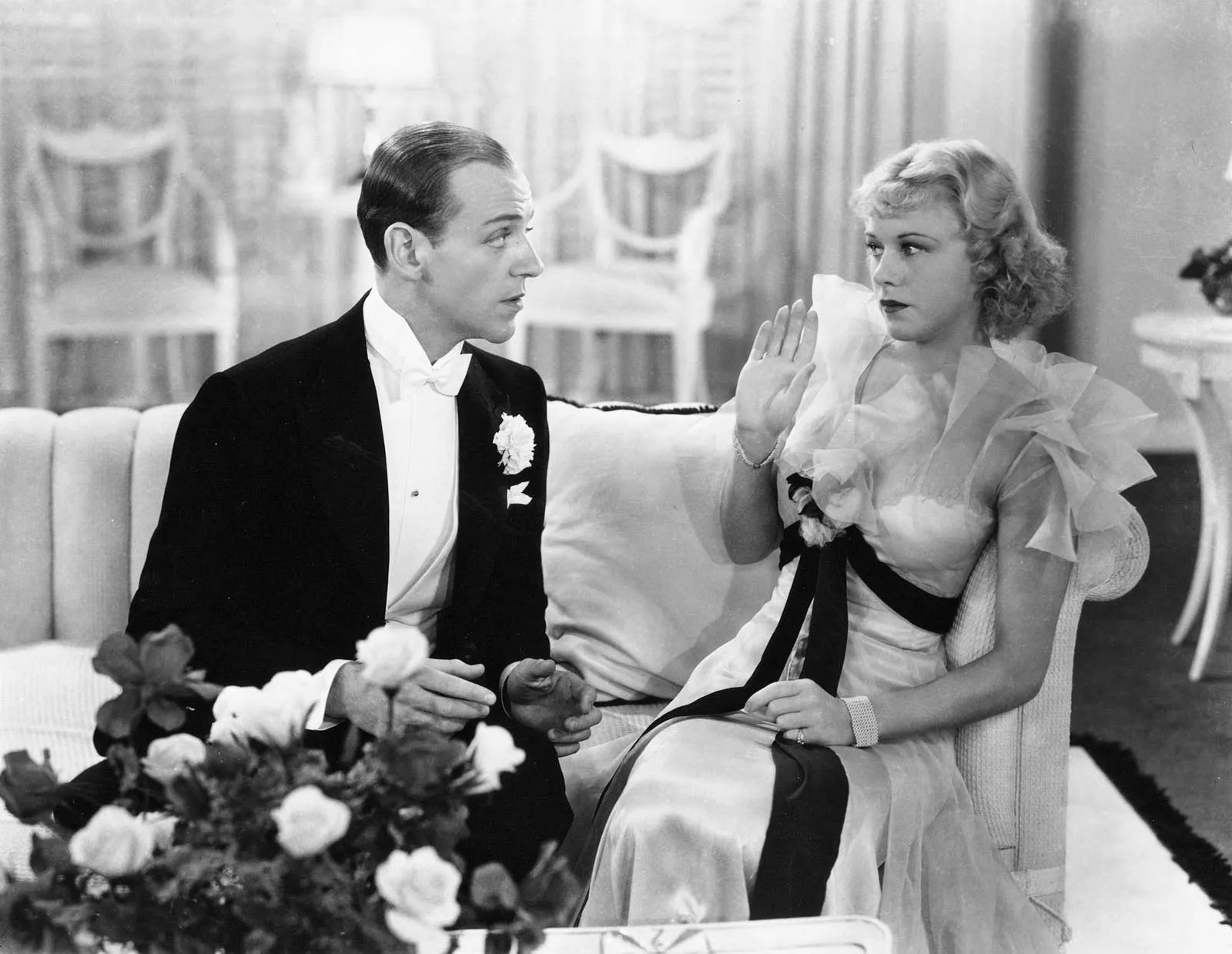
Before there was Fred and Ginger, there was Fred and Adele, and during the 1920s and early 30s Fred and Adele Astaire were brother-sister dancing royalty and the toast of Broadway.

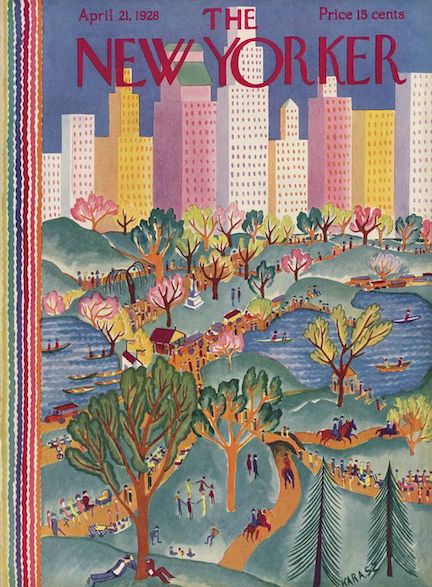
April 21, 1928 cover by Ilonka Karasz.


Fred and Adele Astaire were born a year apart in Omaha (she the eldest, born in 1898). Their mother wanted the siblings to learn professional dance at an early age, so in 1903 she moved with the children to New York City, leaving their Austrian-born father in Nebraska to work at the Storz brewery. By 1905 the brother-sister act were already popular on the vaudeville circuit, making their way to the Broadway stage by 1917.

EARLY BLOOMERS…Left, Fred and Adele Astaire in a photo taken around 1906, three years after they left Omaha and began their vaudeville career. At right, Fred and Adele in 1911. (dailytelegraph.com.au/Courtesy Antoine Dutot Museum & Gallery)

Fred became friends with composer George Gershwin, and in December 1924 the Astaires headlined George and Ira Gershwin’s first full-length New York musical, Lady, Be Good!, in which Fred and Adele played a brother-and-sister dance team down on their luck. In real life, however, their star soared above Jazz Age New York. So when rumor had it that the duo was on the verge of a break-up, “The Talk of the Town” weighed in:

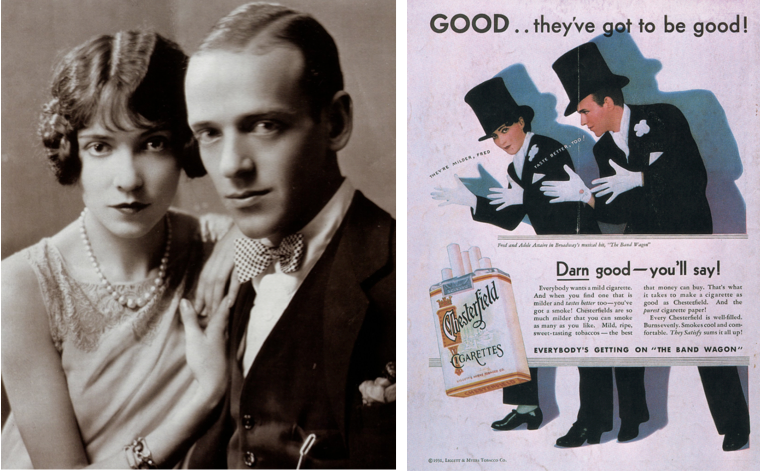
NO, THE OTHER ASTAIRE…At left, Adele and Fred Astaire in the 1920s. At the time the gamine Adele was considered the undisputed star of the duo. At right, the pair in a 1931 ad for Chesterfield cigarettes that also promoted The Band Wagon, their last Broadway revue together. (From The Astaires by historian Kathleen Riley/atticpaper.com)
Today you would be hard pressed to find anyone young or old who hasn’t heard of Fred Astaire, his legend so firmly attached to our cultural memory. But at the time it was Adele’s fun-loving ways and mischievous charm that captured the hearts of reviewers and fans alike. Brother Fred, on the other hand, was more interested in devising the duo’s clever routines.

The April 21, 1928 New Yorker was correct in noting that Adele had plans to marry and leave the country, but happily the magazine was wrong on the timing; Adele and Fred would perform together nearly four more years, capping their 27-year partnership with the successful run of The Band Wagon on Broadway.

In 1932 Adele would marry Lord Charles Cavendish and move to Ireland, not England. Home would be Lismore Castle in County Waterford. The end of the partnership with Adele was traumatic for Fred, who was indeed interested in producing and race horses, but that was not his immediate future as The New Yorker suggested. Instead, his movie career would take off like a rocket in 1933 in a string of hits with Ginger Rodgers including The Gay Divorcee (1934), Top Hat (1935) and Swing Time (1936).

Fred Astaire briefly turned his focus to horse-racing when he announced his early retirement in 1946, but he would soon return to the screen with Easter Parade in 1948 and enjoy another string of hits in the 1950s. Though separated by an ocean, the brother and sister remained close through the years.

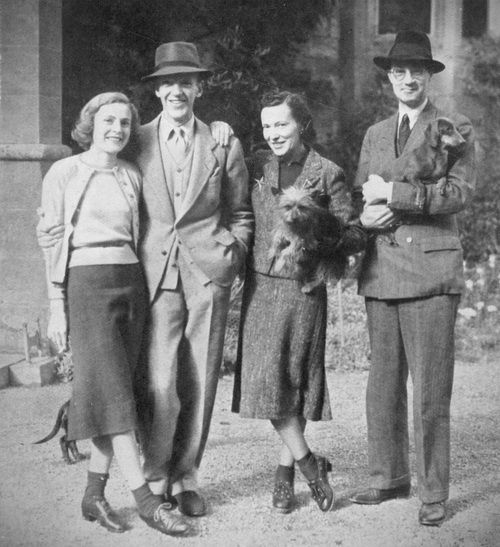
MY SIS IS A LADY…A reunion of Astaires in Ireland, 1939. Fred Astaire and his wife, Phyllis Livingston Potter, with Lord and Lady Charles Cavendish photographed on the day brother Fred and wife arrived at Lismore Castle from America to stay with sister Adele and her husband at their home in County Waterford. (Press image via Pinterest)
Fred Astaire and Ginger Rogers in The Gay Divorcee (1934). (RKO Radio Pictures via Encyclopedia Britannica)
TOGETHER AFTER ALL THESE YEARS…Left, Fred and Adele honored by the American Theater Hall of Fame in 1972 (celebrity promotor Earl Blackwell is in the center). Right, Fred and Adele at Chatsworth House in Derbyshire, England, circa 1980. Chatsworth had been in the Cavendish family since the 17th century, so Adele, as Lady Cavendish, was a frequent visitor. In a recent article in The Cheshire Magazine (April 11, 2017) Duchess Mary recalled the family’s first meeting with Adele in 1932: “All gathered, like stone pillars, in the library… the heavy doors opened and there stood this tiny girl, beautifully dressed. We waited for her to approach us, but instead of walking, she suddenly began turning cartwheels. Everyone loved it.”(American Theater Hall of Fame/thecheshiremagazine.co.uk)

 *  *  *

Not So Happy Feet

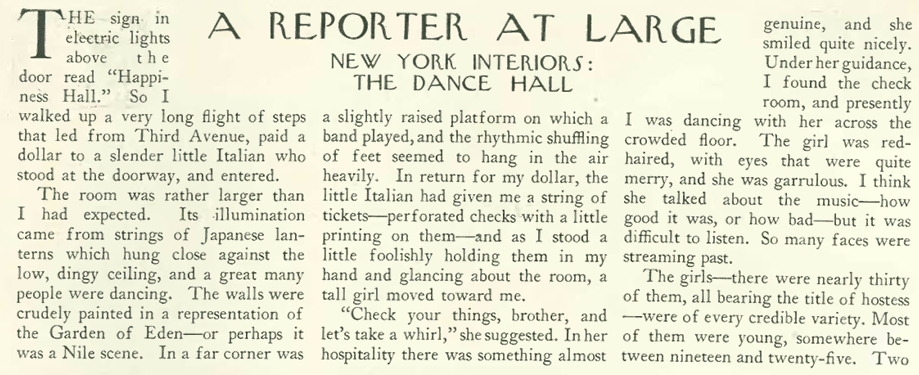
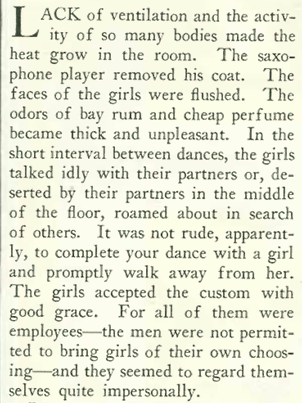
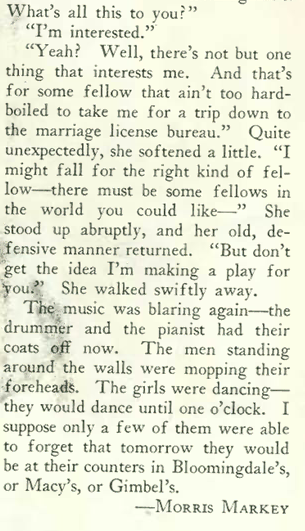
Morris Markey wrote several articles under the heading, “New York Interiors” (the last post featured his look at radio broadcasting). In the April 21 issue Markey took a look at the sad world of the “taxi dancers” in the ironically named “Happiness Hall.” This was the second time The New Yorker delved into the taxi-dancing world—Maxwell Bodenheim visited a Broadway dance hall in the June 12, 1926 edition of the magazine.

In both cases, the writers described a pathetic ritual for dancers and patrons alike, and both underscored a cruel illusion we still have today that the Roaring Twenties was an age of prosperity and good times for all. Excerpts:

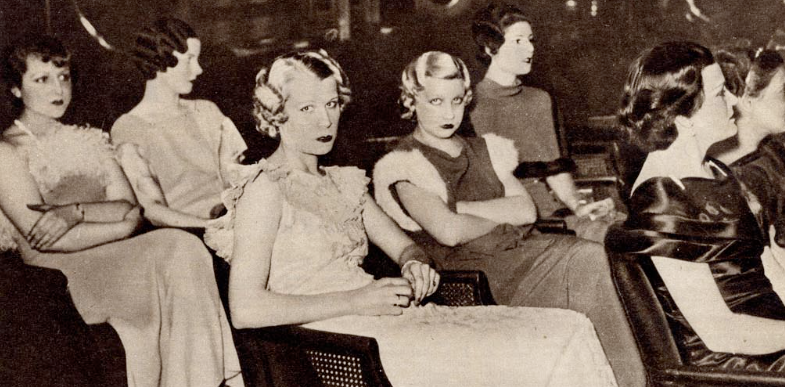
NO FREDS OR GINGERS HERE…Taxi-dancers awaiting customers at a Broadway dance hall in the early 1930s. The image was scanned from an article in Weekly Illustrated (Oct. 6, 1934) that described new regulations banning the vocation.

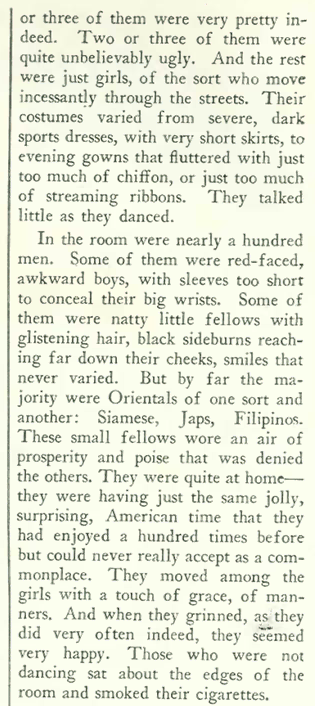
Later in the article, Markey described a dance with a red-haired girl who showed him the ropes…

…and described the less than elegant environment of “Happiness Hall”…

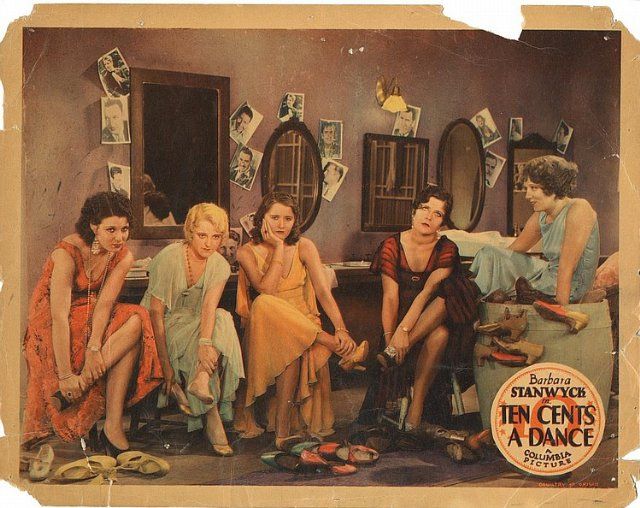
NO FUN IN THE MOVIES EITHER…Footsore taxi-dancers including Barbara Stanwyck, third from left, in 1931’s Ten Cents a Dance. (IMDB)

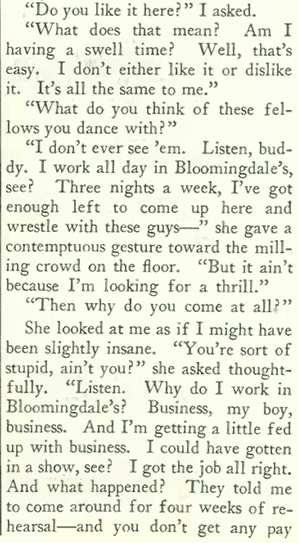
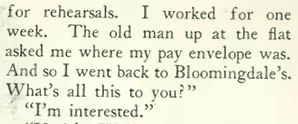
Markey concluded his visit by attempting to talk, rather than dance, with a graceful, yet hardboiled dancer:

In the 1920s Americans in general were poorer than they are today (money-wise) and lacked the safety nets that we have come to depend on in modern life. In 1929 economists considered $2,500 the income necessary to support a family. In that year, more than 60 percent of the nation’s families earned less than $2,000 a year—an income necessary for basic necessities—and more than 40 percent earned less than $1,500 annually.

For single women, such as the taxi dancers, the situation was just as bad or worse. Retail workers in U.S. faced long hours, poor working conditions and low pay, especially before the passage of the Fair Labor Standards Act in 1938. A clerk selling those beautiful clothes at Bloomingdale’s couldn’t afford those clothes herself, let alone make a living wage from the job. As Markey’s article made clear, taxi dancing was nothing but additional toil, 10 cents a pop.

From Our Advertisers…

We’ve seen cigarette advertisements featuring celebrity endorsements, but how about this one for Marlboro that suggested Christopher Columbus would have preferred their smokes…

…and then there were the ads for Fleischmann Yeast featured in nearly every issue of the early New Yorker magazine. According to Thomas Kunkel’s book, Genius in Disguise, Raoul Fleischmann was the wealthy scion of a New York yeast and baking family and a frequent guest of the Algonquin Round Table. He hated the baking business, so when founding editor Harold Ross pitched the idea of investing in his new magazine, Fleischmann obliged with $25,000. Ross and his wife, Jane Grant, together put up the other $25,000 (which included some IOU’s), but after the magazine was launched and struggled during its first months, Fleischmann was further obliged to pour in many hundreds of thousands of dollars to keep the magazine afloat (and in spite teasing from his friends that he might as well dump the money in the river).

The magazine was actually killed as early as May 8, 1925, when Fleischmann called Ross and other magazine directors together after Ross lost a large amount of money in a poker game (money he’d plan to invest in the magazine). Fortunately, the following day was fellow Round Tabler Franklin P. Adams’ wedding, and in the convivial atmosphere Ross and Fleischmann agreed to give the magazine another go. If Fleischmann was going to pour money into the magazine, he might as well get a little “free” advertising for his product. Hence the ads in The New Yorker promoting the generous consumption of fresh yeast cakes as a laxative and health tonic…

…and with that background information, this cartoon in the April 21 issue by Peter Arno makes a lot more sense

And finally, Leonard Dove takes a look at life in a growing metropolis…

Next Time: Back to Broadway…


Broadway Soap Stars

Lux Toilet Soap was launched in the United States in 1925 by its British parent company, Lever Brothers, which had been making soap since 1899. To capture the hearts and pocketbooks of American women, the company launched an advertising blitz that featured advertisements in a number of magazines including The New Yorker.

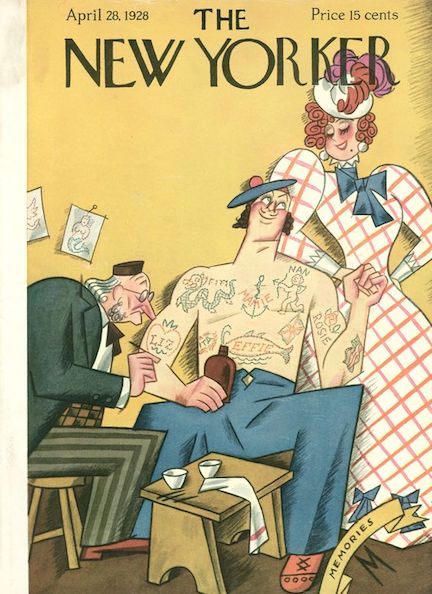
We look at two issues this week: March 17, 1928 cover by Peter Arno / March 24, 1928 cover unsigned, probably by Ilonka Karasz.

The earliest ads appealed to upscale women who saw the French as arbiters of taste and style. In the following Lux ad (from the Feb. 5, 1927 New Yorker), note that every paragraph and headline includes the words France or French:

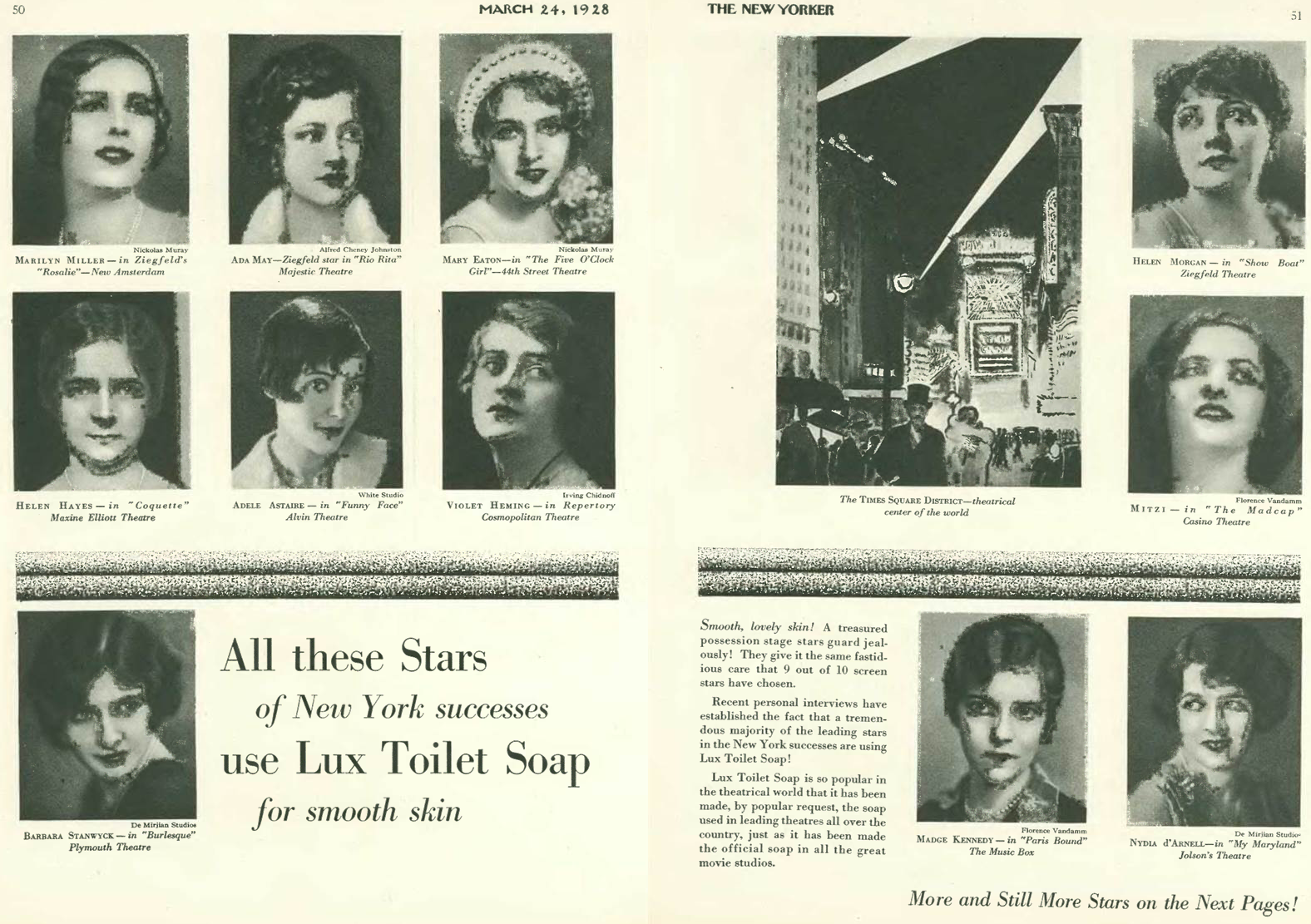
The big blitz came in 1928, when Lux pioneered the use of female celebrity endorsements on a mass scale. The campaign focused more on the roles played by Broadway and movie stars than on the product itself. The March 24, 1928 issue of The New Yorker featured these ads splashed across two center spreads.

The captions I have provided below the ads give brief information on each actress. Note that many of these actresses did stints with Broadway’s popular Ziegfeld Follies. Most also had long lives, including Mary Ellis, who lived in three centuries, sang with Enrico Caruso, and died at age 105.

Click Images to Enlarge

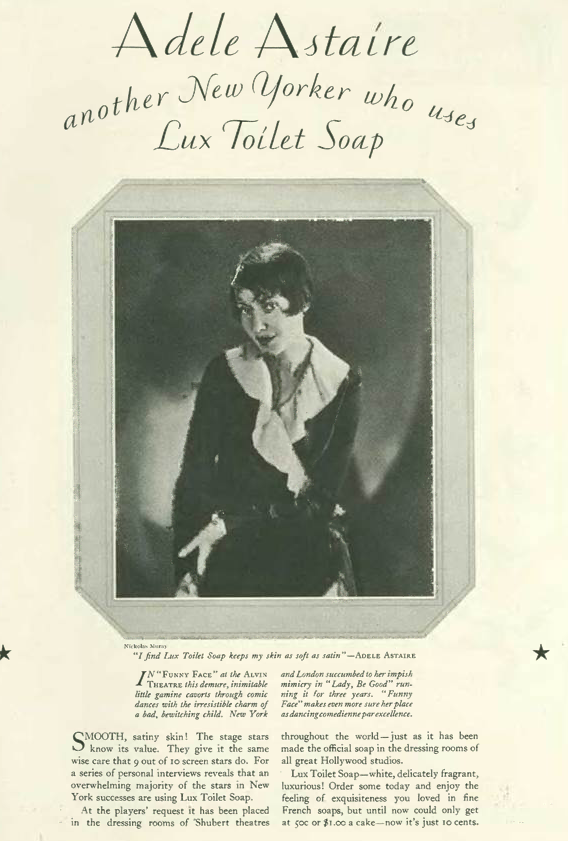
LEFT TO RIGHT, TOP TO BOTTOM: Marilyn Miller (1898-1936) was one of Flo Ziegfeld’s top talents and one of the most popular Broadway musical stars of the 1920s and 30s; Ada May (1896-1978), a theater actress most of her career, in 1927 played a lead role in Ziegfeld’s Rio Rita; Mary Eaton (1901-1948) was a leading stage actress, singer and dancer in the 1910s and 20s. She was featured in three editions of the Ziegfeld Follies; Helen Morgan (1900-1941) was considered the quintessential torch singer. A draped-over-the-piano look became her signature while performing at Billy Rose’s Backstage Club in 1925. She performed with Ziegfeld Follies in 1931; Helen Hayes (1900-1993) was called “the First Lady of American Theater.” Her awards included the EGOT– an Emmy, Grammy, Oscar and a Tony; Adele Astaire (1896-1981) was part of popular act with her brother, Fred. After the 1931 Broadway revue The Band Wagon she retired to marry Lord Charles Cavendish and moved to Ireland’s Lismore Castle; Violet Heming (1895-1981) was a dependable Broadway star with many theatrical credits; Hungarian-born Mitzi Hajos (1889-1970) specialized in musical comedy but faded from acting in midlife; Barbara Stanwyck (1907-1990) got her start as a model and “Ziegfeld Girl” before going on to become one of Hollywood’s biggest stars. She made 85 films in 38 years before turning to TV; Madge Kennedy (1891-1987) appeared in dozens of films from Baby Mine (1917) to Marathon Man (1976). She had a recurring role on TV’s Leave it to Beaver as Aunt Martha; Nydia d’Arnell was a musical comedy actress. Almost no record of her after 1928. She died in 1970.
FROM LEFT TO RIGHT, TOP TO BOTTOM: June Walker (1900-1966) was the first actress to portray Lorelei Lee in 1926’s Gentlemen Prefer Blondes. Mostly stuck to the stage; Mary Lawlor, (1907-1977) was active on Broadway 1922-32; Judith Anderson (1897-1992), later awarded British title of Dame, was considered one of the world’s greatest classical stage actors; Mary Ellis (1897-2003) was star of the stage (including opera with Caruso) as well as radio, TV and film. Best known for musical theater, she performed into the 1990s and died at age 105; Wilda Bennett (1894-1967) was a Broadway musical comedy star in the 1920s whose career quickly faded. Appeared in 9 films between 1914 and 1941, mostly uncredited; Polly Walker (1904-1983) also faded quickly from the stage in the early 1930s, appearing in just 2 films; Mary Nash, (1884-1976) was a noted stage actress best known for two Shirley Temple films. Played Katharine Hepburn’s mother in 1940’s The Philadelphia Story; Norma Terris (1904-1989) had a long career as a performer and musical theater supporter. Last surviving adult actor from original 1927 production of Show Boat; Vivienne Segal’s (1897-1992) career was mostly in musical theater, including the 1924-25 Ziegfeld Follies. She appeared in a few films in the 1930s, as well as on TV in the 50s and 60s. Claudette Colbert (1903-1996) was a Hollywood leading lady for more than two decades. Won an Oscar for 1934’s It Happened One Night; Vivian Martin (1893-1987) appeared in 44 silent films in the teens and twenties before returning to the stage; Dorothy Peterson (1897-1979) made her screen debut in Mothers Cry (1930), a drama that required the 29-year-old to age three decades. She was typecast in careworn maternal roles for the rest of her career; Sylvia Field (1901-1998) enjoyed a long career on stage, screen, and TV. Best known for playing Martha Wilson on TV’s Dennis the Menace; Jeanette MacDonald (1903-1965), an influential soprano best remembered for 1930s musical films with Maurice Chevalier and Nelson Eddy.
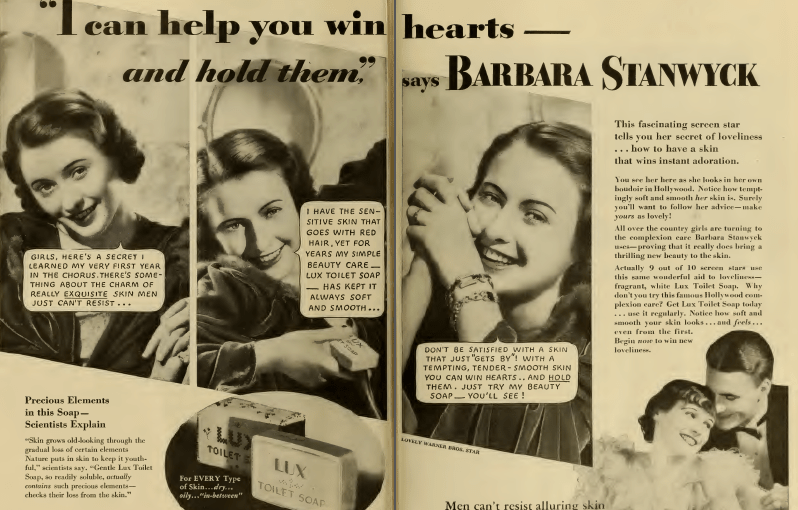
ADELE AGAIN…In the March 31 issue of The New Yorker Lux followed up with this ad featuring Adele Astaire all by herself.

Over the years dozens of famous actresses would appear in colorful ads singing the praises of Lux soap…

STAR POWER…Lux ads from 1954, 1956 and 1959 featuring, respectively, Audrey Hepburn, Debbie Reynolds and Sophia Loren. (Pinterest)

A final note. Lever Brothers began selling Lux soap in India in 1909, years before it was introduced in the U.S., and through the decades Bollywood actresses were prominently featured in their advertising…

NEW AGE…Bollywood Star Katrina Kaif in a 2010 Lux advertisement. (afaqs.com)

*  *  *

Meanwhile, back on earth…

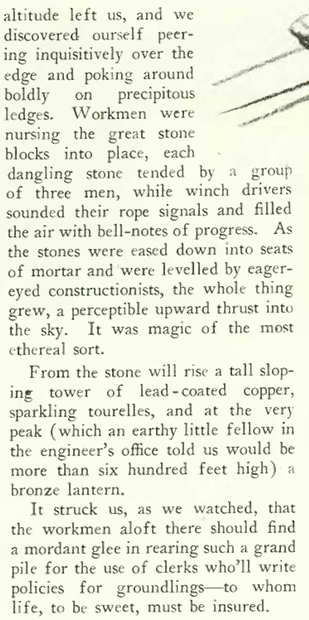
The March 17, 1928 “Talk of the Town” marveled at the rising structure between Madison and Park avenues that would become the New York Life Building. Designed by Cass Gilbert, who also designed the Woolworth Building, its gilded roof, consisting of 25,000 gold-leaf tiles, remains an iconic Manhattan landmark.

From 1837–1889, the site was occupied by the Union Depot, a concert garden, and P.T Barnum’s Hippodrome. Until 1925, the site housed the first two Madison Square Gardens, a memory that lingered amidst the city’s rapidly changing skyline…

ETHEREAL…The New York Life Building shortly after its completion in 1928. (Museum of the City of New York)

 *  *  *

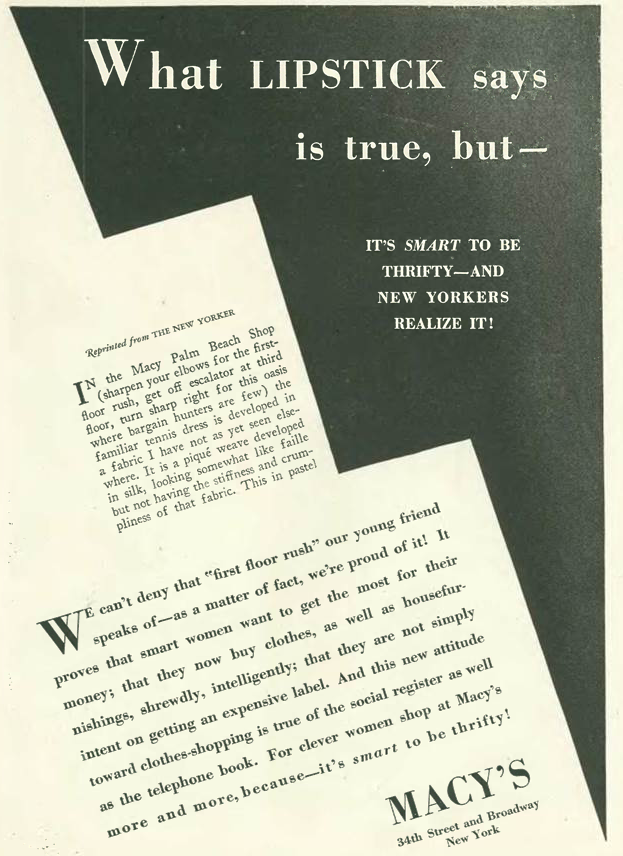
Following the lead of a Roosevelt Hotel advertisement in a previous issue, Macy’s Department Store also called out The New Yorker’s popular nightlife columnist “Lipstick” (Lois Long) in this ad featured in the March 17 issue…

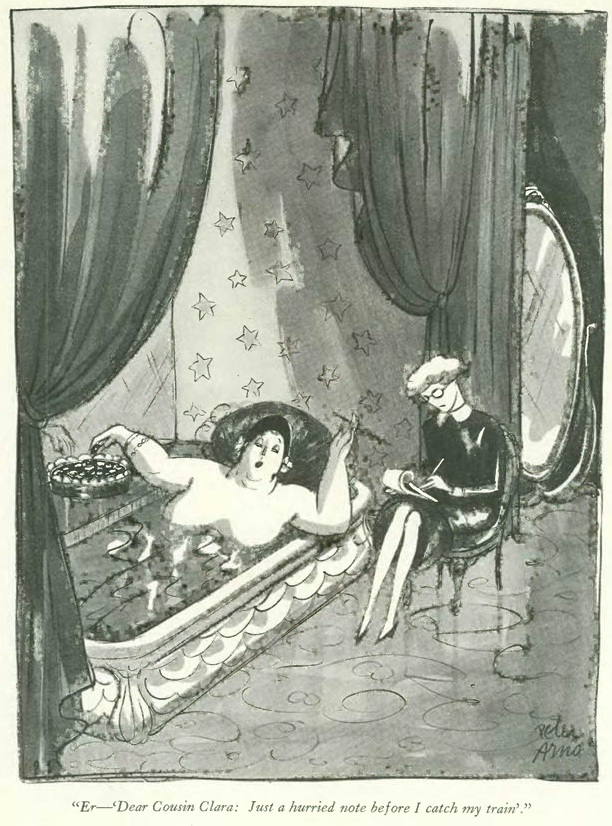
Our cartoon from the March 17 issue explored the hurried life of the idle rich, as depicted by Long’s husband, Peter Arno

Landmark in Name Only

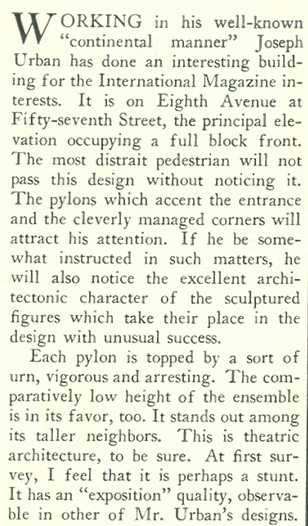
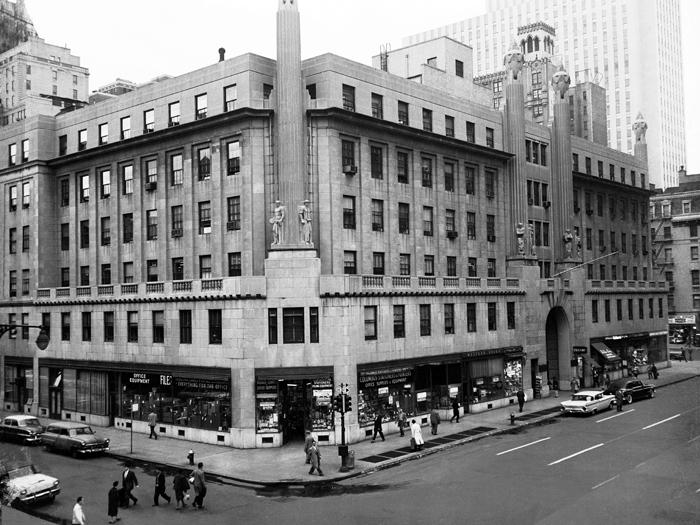
In the March 24, 1928 issue another building caught the attention of the magazine–a six-story structure designed by theatrical scenic artist and architect Joseph Urban for William Randolph Hearst. The International Magazine Building was completed in 1928 to house the twelve magazines Hearst owned at the time.

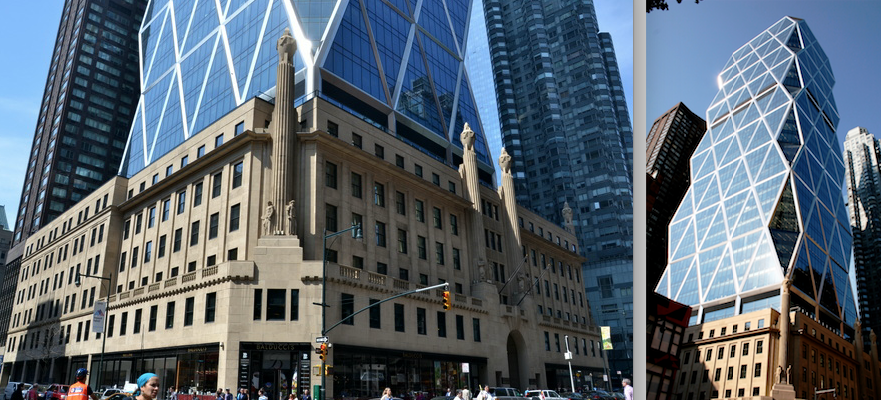
An important monument in the architectural heritage of New York, the building was designated as a Landmark Site by the Landmarks Preservation Commission in 1988. The six-story International Magazine Building was originally built to serve as the base for a proposed skyscraper, but the construction of the tower was postponed due to the Great Depression. The new tower addition by Norman Foster was finally completed nearly eighty years later, in 2006. It is probably not what either Hearst or Urban had in mind in 1928:

START OF A BIG IDEA…The International Magazine Building circa 1960. (Hearst)
ALIEN INVASION…The 2006 Norman Foster tower rises from the hollowed-out shell of the International Magazine Building. (Benjamin Waldman / Wikipedia)

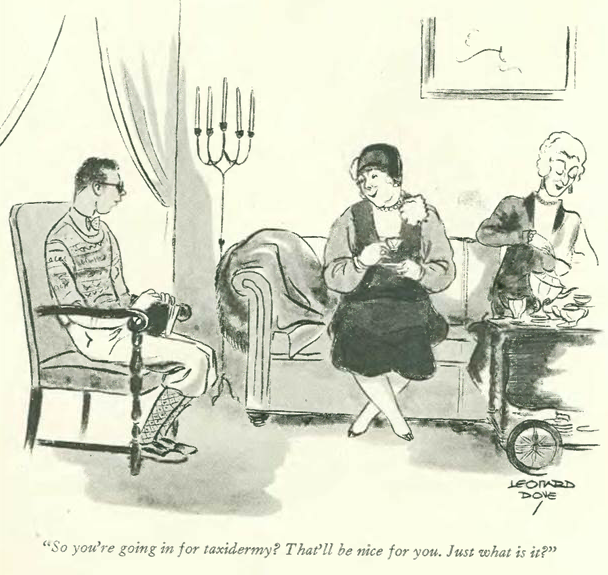
And finally, cartoonist Leonard Dove listens in on some tea time chatter…

Next Time: Conventional Follies of ’28…