The Banqueting Wars

“The Talk of the Town” opened with musings on the “banqueting” ritual practiced by various celebrities in Manhattan, in this case the silent film stars Gloria Swanson, Pola Negri, and Tom Mix.

Screenshot 2015-03-31 09.25.17
April 25, 1925 cover by Ilonka Karasz (New Yorker Digital Archive)

The magazine noted that “Banquets are given upon a star’s departure and upon return, and each succeeding one must be bigger and better than ever.” Even the star of silent Westerns, Tom Mix, had a dinner in his honor when he visited the city with his fourth wife, Victoria Forde. “Talk” made this observation:

True, this cowpuncher, who sets fashion by wearing wine-colored evening clothes and with overcoats rimmed with brown leather for morning wear, did not elect to outdo Pola Negri. His was a modest affair held in the Hotel Astor, at which, however, Mrs. Mix was able to display the discomforts of being wealthy by having such an armful of glistening bracelets as made necessary treatment by a masseuse of muscles lamed by bearing such weight of jewels.

835347cefb4e83ae37999b0e617f442b
Tom Mix and Victoria Forde (Wikipedia)
image
Pola Negri

In Pola Negri’s case, a bon voyage banquet was given at the Ritz-Carlton (she was headed to Europe) and among the guests were the familiar faces of writer Michael Arlen and movie producer Jesse Lasky, who announced that Arlen would be writing “special stories” to be used as screen vehicles for Negri.

As for Gloria Swanson (returned from France, more on that below) she was “in the happy position of having a contract for one more year with the Famous Players-Lasky Corporation, whose officials are greatly concerned lest Cecil B. DeMille wean from them their popular actress.” To ensure Swanson’s happiness, Lasky and Adolph Zukor hosted a banquet and dance in her honor at Park Lane. It was reported that Swanson “was signally honored” when she entered the room to greet her 300 guests:

gloria-640x861
Gloria Swanson (United Artists)

The lights were turned off as she took her seat; a spotlight was thrown on her shingled head, and the orchestra struck up her new national anthem, “La Marseillaise”…Girls in Marie Antoinette costumes wended their way among the tables, passing around Napoleonic paper hats, singularly appropriate for the gentlemen who wore them.

“Talk” also offered the latest observations from the magazine’s “Prohibition Authority” regarding the Coast Guard’s inability to stem the flow of Scotch whisky into the city: “Human nature is frail and large operators can afford to offer rewards far above Government pay, all for a little blindness.” Despite a Coast Guard effort to stop smugglers, Scotch remained “plentiful and reasonably priced.”

April 8, 1925 NYT
April 8, 1925, New York Times

Other “Talk” items of note: “King” Babe Ruth, after eating his “fourth breakfast porterhouse and a rough train ride,” fell ill in Asheville, N.C. (he was taken to the hotel on a stretcher, clad in pink pajamas he insisted on wearing)…The Bronxville Golf Club “decided to go stag,” and bar women from membership…Noting that New Yorkers treat their city’s landmarks with amazing indifference, it was announced that the Brevoort Mansion was to be torn down. It was described as “a huge brownstone pile, of stern aspect. It looks like a mausoleum.”

When Henry Breevort Jr. built the mansion at Fifth Avenue and Ninth Street in 1834, it marked the beginning of the transformation of Fifth Avenue from a rutted road into the destination for old and new money alike. According to the excellent blog No Place For Normal: New York, in the 1860s Fifth Avenue’s growing renown as the “axis of elegance” was enhanced by the opening of Central Park in 1859 and by fortunes fattened by Civil War contracts.

Cornelius-Vanderbilt-II-House-Fifth-Avenue-NYC
Cornelius Vanderbilt II House on “Millionaires Row” (nyc-architecture.com)

Then during the last several decades of the 19th century, known as the “Gilded Age,” brownstone mansions like Breevort’s were supplanted by ornate French chateau-style mansions, and “a flocking of Old and New Money alike to the Upper Avenue,” which came to be known as “Millionaires Row” (and famously known for the social wars between the Astors and Vanderbilts among others).

The early 20th century saw Fifth Avenue transformed from a place of elegant mansions to a place of elegant hotels and stores. The first years of The New Yorker would witness this transformation as one mansion after another fell to the commercial interests of the booming 1920s.

Screenshot 2015-03-31 13.15.23
“Profile” illustration

“Profile” examined the life of Samuel Goldwyn, “The Celluloid Prince,” whose rule of life was that “in order to live, is not to let live…(this) means outstripping the other fellow by any means possible that does not land one in jail.” His rise from a glove maker to fame and fortune began around 1915 after he “saw a picture show and saw himself a millionaire simultaneously. He took his vision to Jesse Lasky, his brother-in-law, who was a vaudeville man at the time.” In ten years time “a man without background, without education…by sheer urge of some divine spark within him, he was able to build up that colossal enterprise at Culver City.”

astaire-fredadele-1924-ladybegood-1a-e1-426x548
Adele and Fred Astaire in Lady Be Good (nickelinthemachine)

Listings in the “Goings On” section (subtitled The New Yorker’s conscientious calendar of events worth while) included George Gershwin’s Lady Be Good at the Liberty Theatre, with the brother-sister dancing team Fred and Adele Astaire. Movies playing included Grass at the Criterion (“Remarkable film panorama of a primitive Persian tribe on its migration in search of food”).

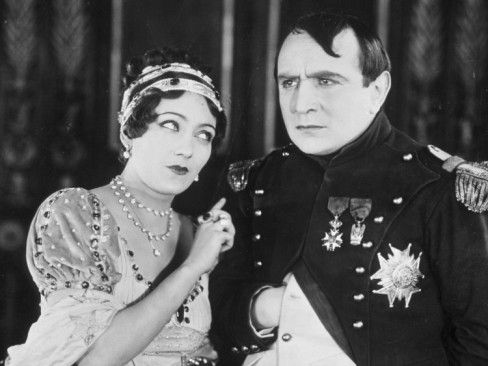
And in continuing Gloria Swanson news, it was noted that Swanson was appearing in a new moving picture, Madame Sans-Gêne, playing the role of  “the Napoleonic lady of historical romance. Color—and real Parisian backgrounds.”
aa4f799de1c27a6a0485d03ccee69ed5
Gloria Swanson and Émile Drain (as Napoleon) in Madame Sans-Gêne (1925). (A Lost Film)

According to the site A Lost Film, Swanson took the role to “get away from Hollywood’s frivolous roles in which she felt her talent was under-used and she was little else than a clothes horse.” The lavish production, filmed at various French locations including Fontainebleau and Compiègne, was said to be Swanson’s favorite film. Although the film was released in both the U.S. and France, it is now lost, save for a snippet from the film’s trailer.
Screenshot 2015-03-31 13.06.43
(New Yorker Digital Archive)

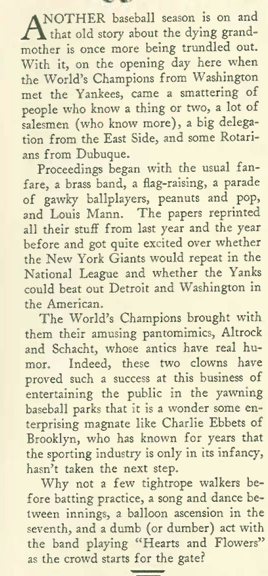
“Sports” offered this observation about the pantomime routine of Altrock and Schacht at a baseball game between Washington and New York (see clip at right).

Al Schacht’s ability to mimic other players from the coaching lines, and his comedy routines with fellow Washington coach Nick Altrock, earned him the nickname of “The Clown Prince of Baseball.”

If only the writer knew the extent to which his absurd suggestions would one day come true (and then some) in today’s jumbotron-dominated ballparks.

Ruth, as we know, did not play. By the Babe’s standards, it would prove to be a bad year for him, appearing in fewer than 100 games and batting .290. Somehow, though, this overweight wreck of a man still managed to score 25 home runs that year.

14459v
Al Schacht and Nick Altrock in 1925 (Library of Congress)


The Ordeal of Michael Arlen

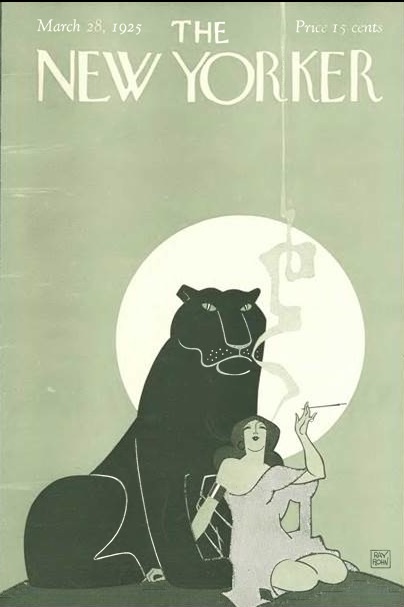
The March 28 “Talk of the Town” ponders “what sort of paces a visiting literary lion may be expected to put through.”

The “literary lion” in question was writer Michael Arlen, who was planning his escape from New York by reserving a cabin on the Olympic for its April 18 sailing: “It is expected that very few of his writing compatriots in London will venture America-wards after he reports on the ritual to which he was subjected.” The “ritual,” it seems, was Arlen’s constant exposure to various literary hangers-on and assorted socialites.

image
March 28, 1925 cover by Ray Rohn (New Yorker Digital Archive)

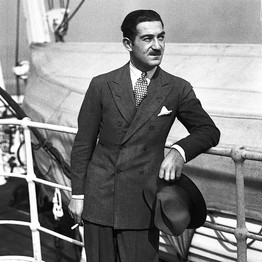
Arlen’s real name was Dikran Kouyoumdjian, an Armenian writer transplanted to England who was most famous for his satirical romances set in English smart society. He also wrote psychological thrillers, including The Gentleman from America, filmed in 1956 (the year Arlen died) as a television episode for Alfred Hitchcock Presents. He was well known in New York and London society, a dandy who resembled many of the characters he portrayed in his novels.

RV-AA996_ARLEN_DV_20101210165837
Arlen in 1925 (Wall Street Journal)

Returning to the “ritual,” Arlen received “the reasonably constant chaperonage, at tea time, of John Farrar” (editor of the literary magazine The Bookman) who took it upon himself to add Arlen’s publishing interests to his duties (Farrar would go on to found the publishing house of Farrar & Rinehart, and later Farrar, Straus and Giroux).

“Talk” also noted that Arlen was “admitted into the game known as meeting Miss Elsie de Wolfe.”

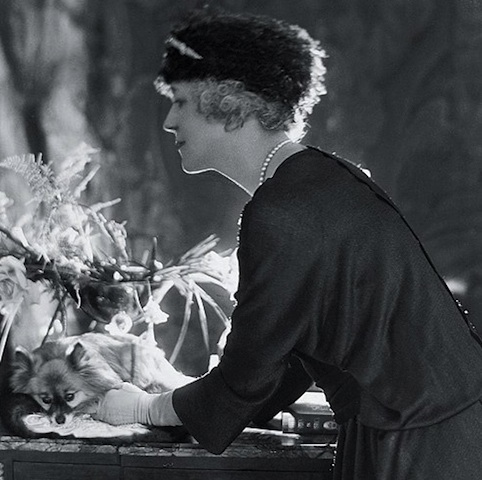
A bit more about Miss de Wolfe: In the September 14, 2009 issue of The New Yorker, Dana Goodyear observed that “Interior design as a profession was invented by Elsie de Wolfe.” A prominent figure in New York, Paris, and London society, de Wolfe was also an American stage actress and author of the bestselling 1913 book, The House in Good Taste.

elsie-de-wolfe-1925-20th-century-interior-designer-innovative-female-interior-designer-pioneer-women-interior-designers-style-blog-interiors-blog-alison-cosier-www.greychic-grey-chic
Elsie de Wolfe in 1925 (Architectural Digest)

During Arlen’s first two weeks in America, de Wolfe arranged no less than three formal gatherings, each with the purpose of introducing the author to herself. “Talk” also reported that Arlen was invited to a costume party given by Mrs. William Randolph Hearst, for which Paramount Studios producer Jesse Lasky “gracefully supplied (Arlen) with a gypsy costume.” It was noted that Lasky was there to arrange some movie work with Arlen to occur later in the fall, when the author would return to New York to attend the opening of the Broadway play The Green Hat, based on the 1924 book that made him famous.

image
Pola Negri in the 1920s 

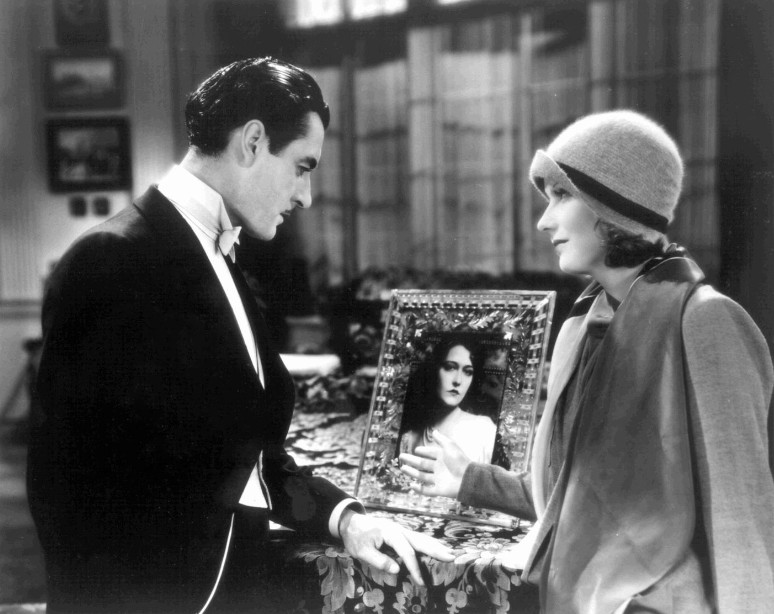
Arlen was then to depart for Hollywood to “adjust his ideas into adequate scenario form for Miss Pola Negri.” Negri was a Polish stage and screen star world famous for her roles as a femme fatale. Her personal life often made headlines in the gossip magazines of the day, fueled by a series of love affairs that included Charlie Chaplin and Rudolph Valentino. Negri would not land the female lead for The Green Hat; it would eventually go to Greta Garbo in a 1928 film titled A Woman of Affairs.

5230312_orig
Greta Garbo and John Gilbert in A Woman of Affairs (1928), a silent film based on The Green Hat. (ggarbo.weebly.com)

“Talk” reported that “Mr. Arlen, early in his American visit learned a piece of social usage that has stood him in good stead. This has involved, upon introduction to any stranger, his saying rapidly “Didn’t I meet you at tea?” whereupon the gratified stranger murmurs yes and has become a friend for life. This stratagem is said to have suggested itself to Mr. Arlen when he noticed that the average number of guests at teas in his honor was around two hundred.” The columnist noted that “that this business of becoming a friend for life” was a bit of literary exaggeration, and in reality the magazine:

has seldom seen such atrocious behavior and lack of fundamental good manners as has characterized a large proportion of the people who have been brought forward to met Mr. Arlen. Seemingly ignoring the fact that there was no law compelling their attendance at a function in Mr. Arlen’s honor, ever so many persons have come to his parties with an axe rather awkwardly concealed behind them.

image
John McGraw (howstuffworks)

The “Profile” in issue featured John McGraw and proclaimed that he “is baseball…the incarnation of the national sport.” The piece was titled “Mr. Muggsy,” a nickname reportedly detested by McGraw because, as the magazine observed, “it is so perfectly descriptive.”

At the time of the writing, McGraw was manager and part-owner of the New York (baseball) Giants. He still holds the record for the most wins of a manager in the National League.

The issue also featured a humorous column by Frank Sullivan, which took aim at the complexity (and likely graft) of taxicab fares. The caption reads: The Taxicab System is Simple to Any Man with a Master’s Degree.

image

The April 4 Issue, the “gypsy-themed party” continues…

image
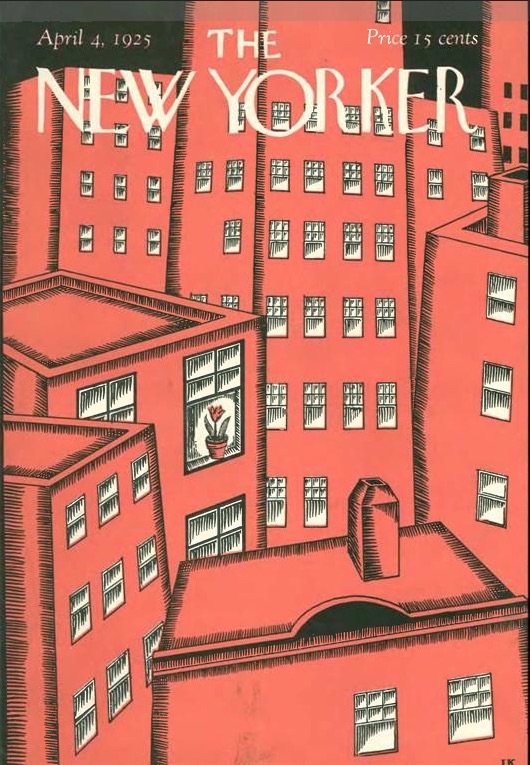
April 4, 1925, cover by Ilonka Karasz (New Yorker Digital Archive)

The following week’s issue of “The Talk of Town” (April 4) offered more details regarding the “gypsy-themed costume party” given by Mrs. William Randolph Hearst at the Hotel Ritz-Carlton and attended by Michael Arlen.

The party was in honor of Ambassador Alexander Pollock Moore’s departure to his Spanish post (he left the post later that year and served as ambassador to Peru in 1928-29. He died at age 63 in 1930).

The item noted that the widower Moore (his wife, famed stage actress Lillian Russell, died in 1922) during an earlier Condé Nast event for the “theatrical and literary world,” never rose from his chair without scattering to the winds a dozen or more ingénues who had been draping themselves around him…”

Screenshot 2015-03-24 09.05.56
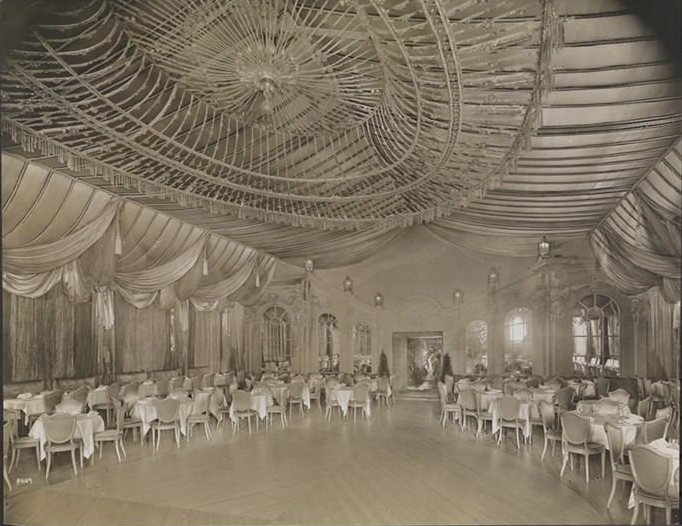
The tented ceiling and glittering chandeliers of the Ritz-Carlton’s Crystal Room. The hotel at 46th and Madison opened in 1911 and was torn down just 40 years later, in 1951.

“Talk” shared accounts from the New York American and the New York Mirror that described the Ritz’s famous Crystal Room as decorated to resemble a “gypsy camp,” complete with organ grinder and monkey wandering through the crowd.

image
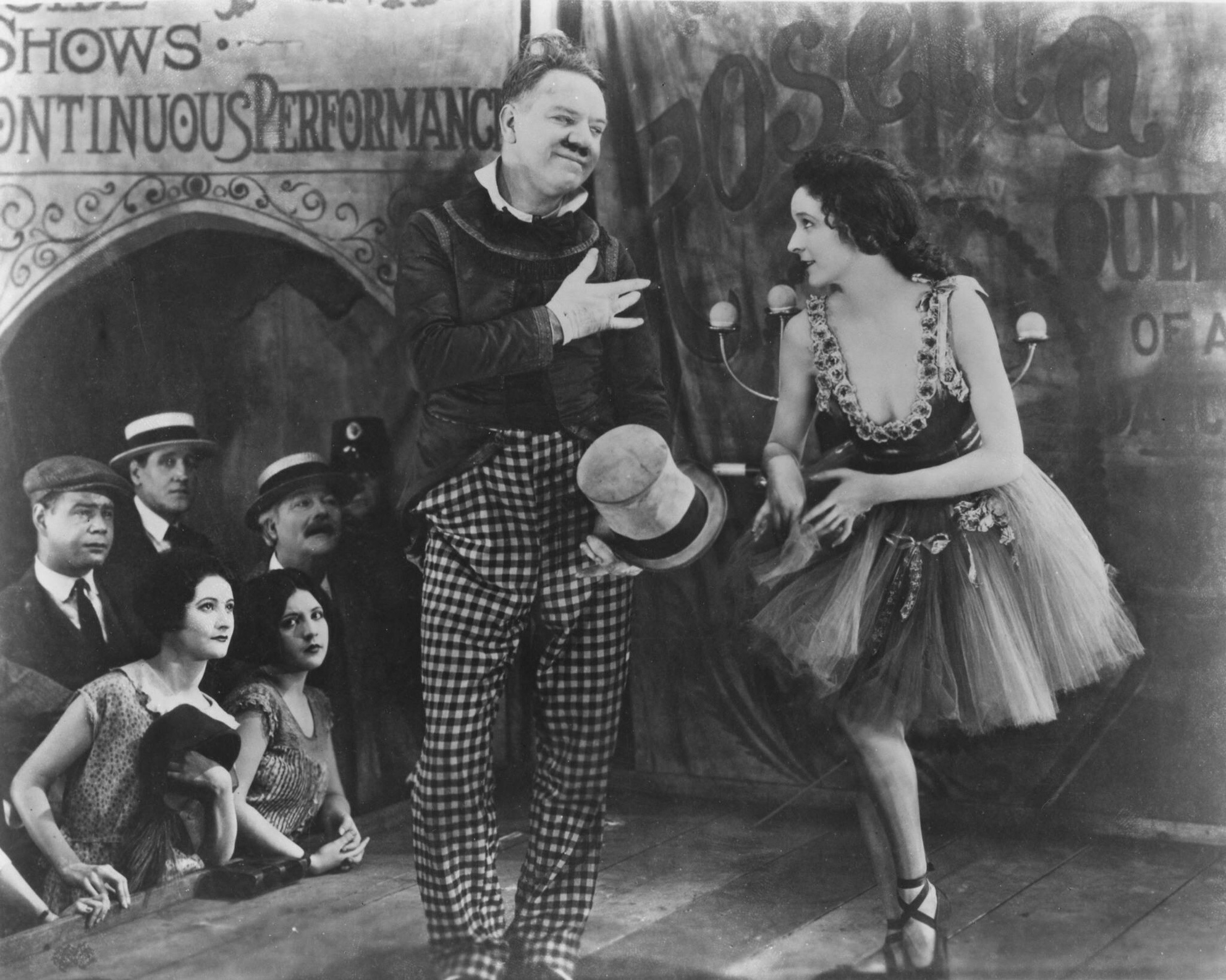
A much thinner W.C. Fields of the vaudeville circuit, here in a still from the movie Sally of the Sawdust (1925) (Film Forum)

Entertainment at the event featured a cabaret with vaudevillian W.C. Fields, who apparently “gazed at his distinguished audience and allowed his thoughts to play with the wealth of juggleable material that confronted him.”

Finally, “Of All Things” noted that “The Turks are said to be mobilizing a hundred thousand men in an effort to affect the Mosul boundary decision but, despite this display of force, we have every confidence that right and justice and Christian civilization will prevail and the British will get their oil.”

The League of Nations awarded Mosul to Iraq, and to the British a 25-year mandate over Iraq (at this writing Mosul is firmly under the control of the Islamic State).

“Books” looked at Somerset Maugham’s The Painted Veil and suggested that it is not “A-One Maugham.” It also mentioned the New Yorker’s own Alexander Woollcott and his The Story of Irving Berlin, described as “uncommonly pleasant reading.”

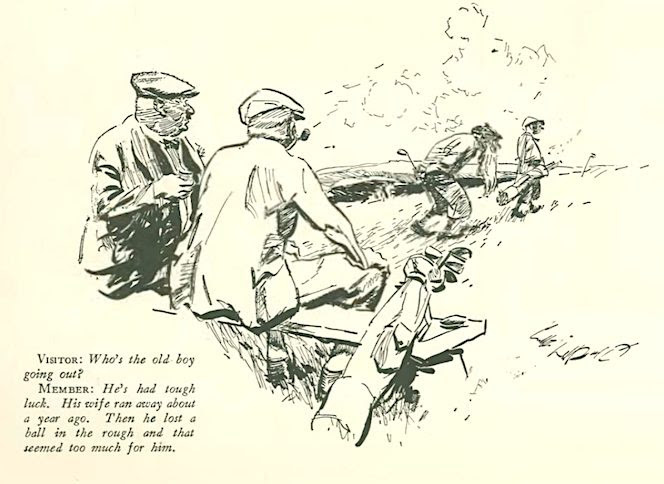
In cartoons, Gilbert Wilkinson published the first of four cartoons he would contribute to The New Yorker in 1929, still very much in the style of Judge or Punch humor magazines.

Next Time: Slices of 1920s New York…