Let Them Eat Cake

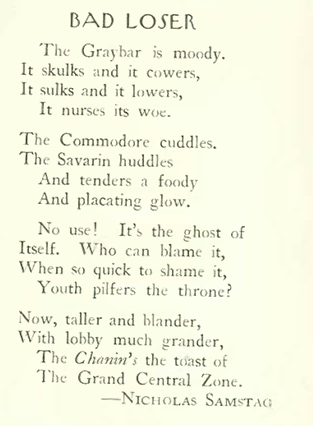
The re-opening of New York’s Central Park Casino in 1929 was in many ways the city’s last big party before the economy came crashing down, along with the exhuberance and frivolity of the Jazz Age.

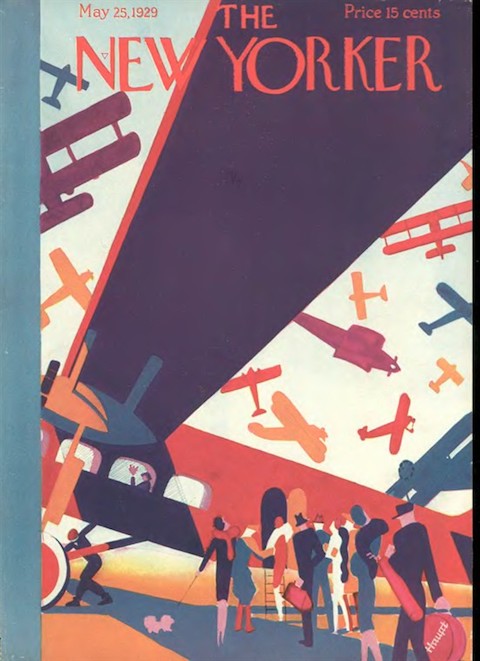
May 25, 1929 cover by Theodore Haupt.

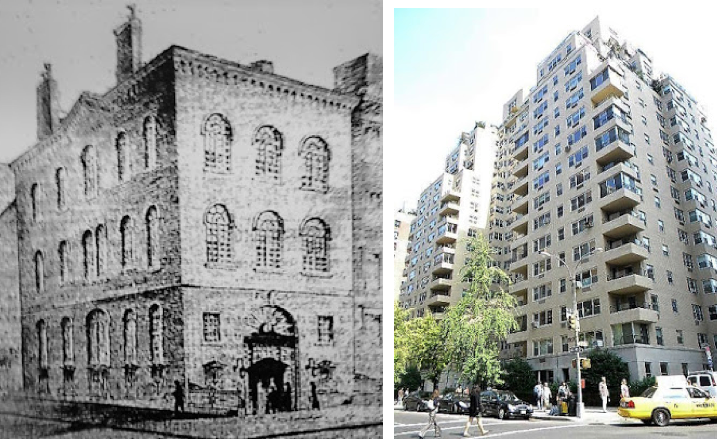
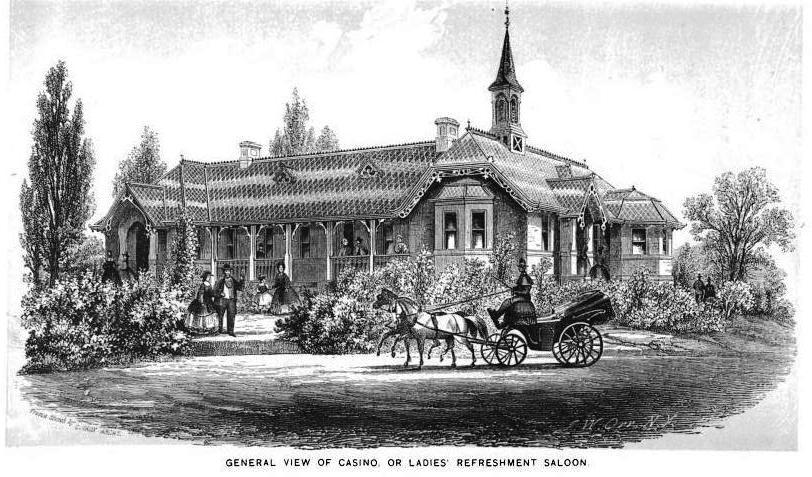
The Casino itself wasn’t new–it opened in 1864 as the Ladies’ Refreshment Salon (sometimes spelled “saloon”), a two-room stone cottage designed by Calvert Vaux. As Susannah Broyles writes in her excellent blog post for the Museum of the City of New York, the Victorian cottage was a place where “unaccompanied ladies could relax during their excursions around the park and enjoy refreshments at decent prices, free of any threat to their propriety.”

Central Park’s Ladies’ Refreshment Saloon opened in 1864. (daytoninmanhattan.blogspot.com)

Broyles writes that by the 1880s the salon had morphed into a far pricier destination, a restaurant called The Casino, open to both sexes. With the rare attraction of outdoor seating, “it was the place to see and be seen.”

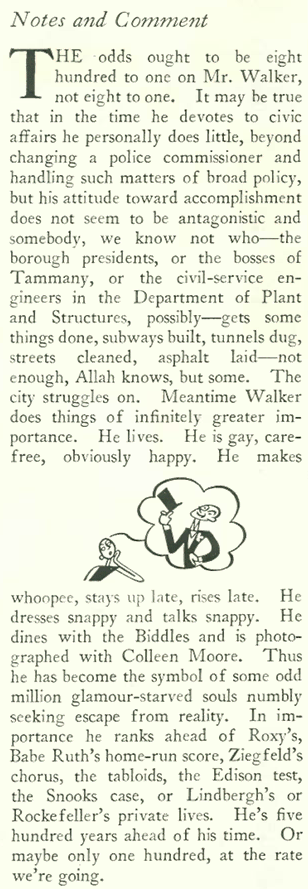
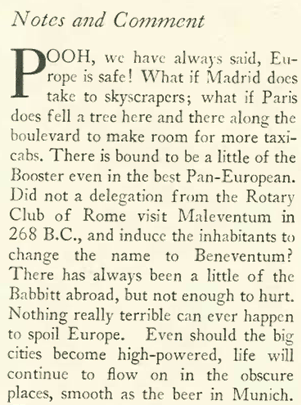
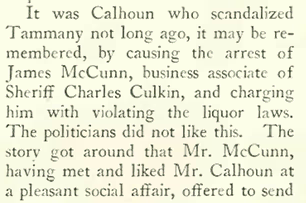
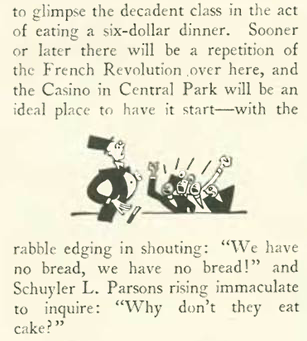
By the 1920s the restaurant had grown a bit shabby. Then along came the city’s flamboyant mayor, Jimmy Walker (1881-1946), who saw the potential of the property as a place where he could hob-nob with wealthy and fashionable New Yorkers and openly flaunt Prohibition laws. There were others, however, who found the idea of an exclusive playground for the rich in a public park distasteful. The New Yorker observed as much in the “Notes and Comment” opening of “The Talk of the Town”…

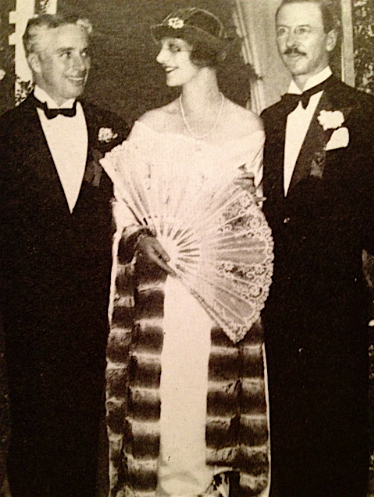
…the “Schuyler L. Parsons” referred to above was a tireless host, prominent decorator, and a society A-lister. He is pictured here (circa 1930) with two of his closest friends, actor Charlie Chaplin and the actress, singer and dancer Gertrude Lawrence

(Tyler Hughes Collections)

The Central Park Casino reopened its doors on June 4, 1929 at an invitation-only event. The following day it would open to the public, but as New York’s newest and most expensive restaurant it would remain closed to all but the wealthiest. As The New Yorker observed, the city was, after all, a “plutarchy,” and the populace passing by the Casino would at least be allowed “to glimpse the decadent class in the act of eating a six-dollar dinner” (nearly $90 today).

This formal announcement of the opening appeared in the May 6, 1929 issue of The New Yorker, including the time of the event—I suppose for the benefit of the 600 who actually had an invitation, or perhaps to tantalize those without such credentials…
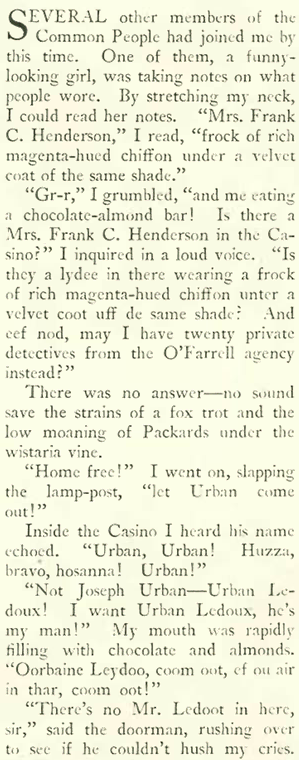
The Casino was a playground for the rich by design, conceived in the image of the flamboyant Mayor Walker—himself a product of the Tammany Hall political machine—and executed by hotelier Sidney Solomon, who obtained the building’s lease via some Tammany-style subterfuge. Solomon hired architect and theatrical set designer Joseph Urban to transform the Casino into a glittering showpiece of Jazz Age nightlife.

Clockwise, from top left, the Central Park Casino; architect Joseph Urban; his Casino ballroom design with black-mirrored ceiling; the Casino lobby. (acontinuouslean.com/Columbia University/centralpark.com/drivingfordeco.com)

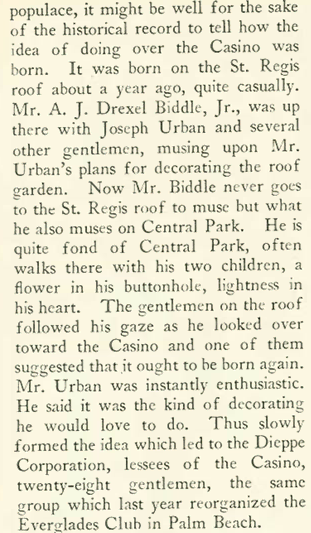
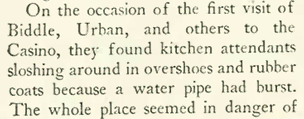
The New Yorker continued its observations on the Casino in another “The Talk of the Town” piece titled “Historical Note,” attributing the inspiration for the Casino not to Walker or Solomon, but to socialite Anthony Joseph Drexel Biddle Jr…

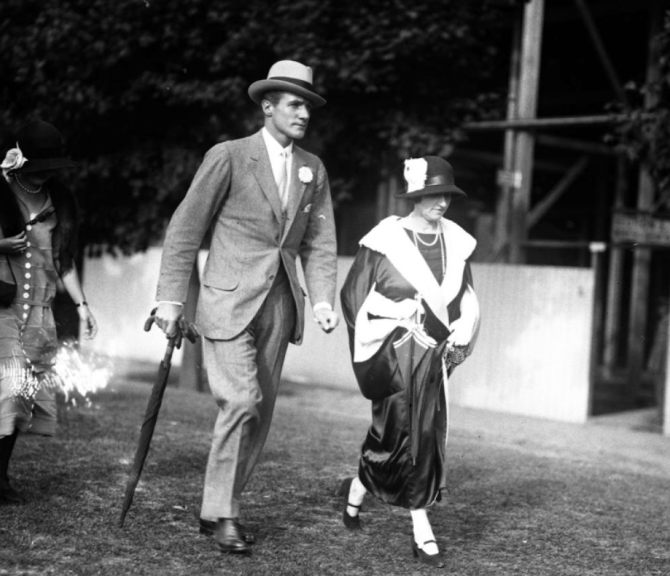
AN EYE FOR THE FINER THINGS…The wealthy socialite A.J. Biddle (pictured here with his first wife, Mary Lillian Duke, in 1924) trained his eye on the Central Park Casino while on the rooftop of the St. Regis Hotel pondering another Joseph Urban project. (voxsartoria.com)
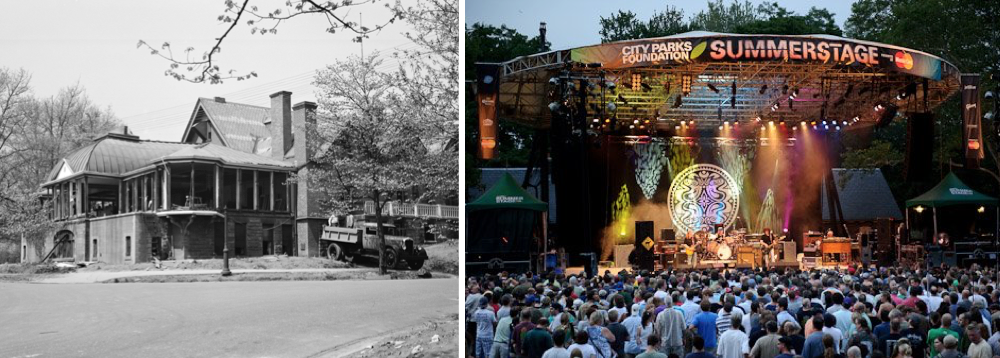
PARTY BOY…New York Mayor Jimmy Walker and his nighttime playground, the Central Park Casino, show here on September 10, 1935. (Britannica/ New York City Department of Parks & Recreation)

Well, as you’ve probably guessed, the party didn’t last forever. After the October 1929 stock market crash, the sight of rich folks stuffing their faces and drinking fine wines in a public park looked even more unseemly. Soon the Casino found itself in the crosshairs of Parks Commissioner Robert Moses, who detested Mayor Walker.

As for Walker himself, a growing financial scandal prompted him to resign from office on Sept. 1, 1932. He promptly fled to Europe with his mistress, Ziegfeld girl Betty Compton, and stayed overseas until the threat of criminal prosecution had passed. For Moses, it wasn’t satisfaction enough to see Walker driven from office. In 1936, despite protests from preservationists, Moses had Urban’s lovely restaurant demolished. It was replaced by a children’s playground the following year.

THE PARTY’S OVER…Crews dismantling the Central Park Casino in 1936. In 1937, the Rumsey Playground was built on the site of the Casino, and in the 1980’s the site was razed again and converted into Rumsey Playfield, where the city’s SummerStage events are now held. (Museum of the City of New York/centralpark.com)

*  *  *

A Drinking Life

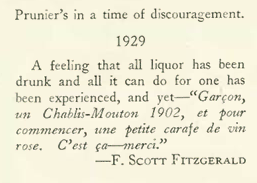
As the Jazz Age was winding down, one of its greatest chroniclers began a brief relationship with The New Yorker. In the March 12, 2017 issue of the magazine, Erin Overbey and Joshua Rothman wrote “There’s a doomed, romantic quality to the relationship between F. Scott Fitzgerald and The New Yorker; they were perfect for each other but never quite got together.” In total, Fitzgerald published just two poems and three humorous shorts for the magazine, beginning with this piece in the May 25, 1929 issue:

Fitzgerald’s last contribution to the New Yorker would appear in the Aug. 21, 1937 issue (“A Book of One’s Own”). Following the author’s death in 1940 the magazine would feature various articles on his life and work, and in 2017—77 years after Fitzgerald’s death—the New Yorker would publish a long lost short story, “The IOU.” A fitting title for an author who sadly did not get his due while he was alive.

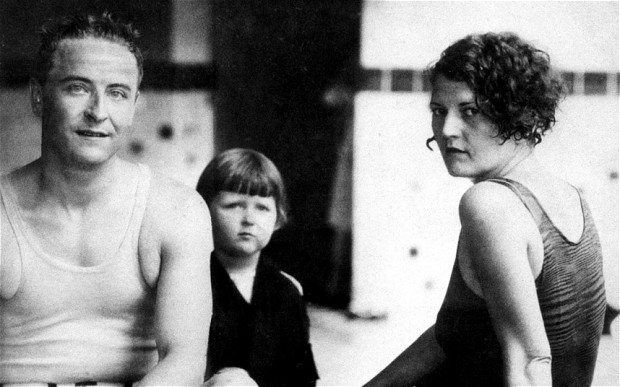
IOU…F. Scott Fitzgerald with daughter “Scottie” and wife Zelda, circa 1927. (The Telegraph)

 *  *  *

One of the Gang

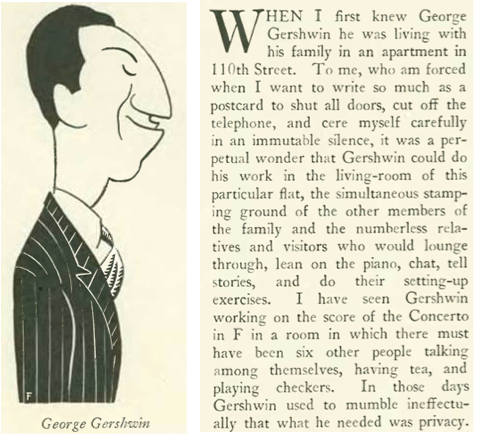
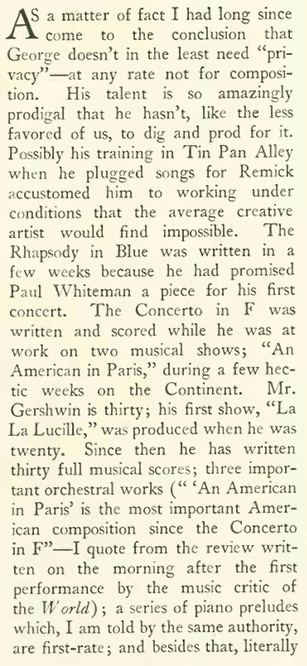
Among the Jazz Age artists and writers who orbited around the Algonquin Round Table (and the Central Park Casino) and chummed with the writers of the New Yorker was musician and composer George Gershwin (1898-1937) who was profiled in the May 25 issue by his friend and longtime New Yorker writer Samuel N. Behrman. The opening paragraph (with caricature by Al Frueh):

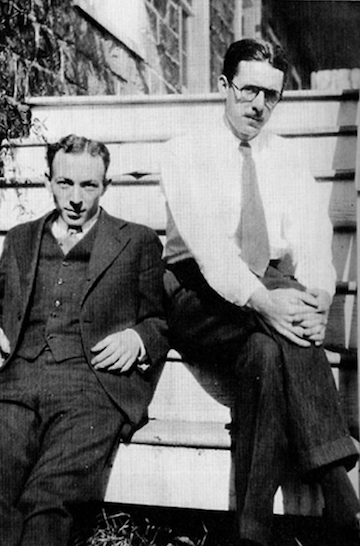
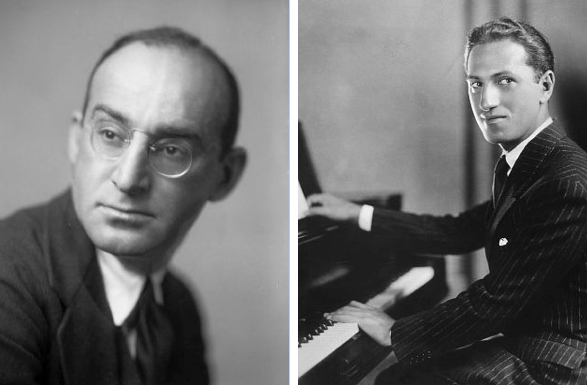
IN THE SAME ORBIT…Samuel Nathaniel Behrman (left), was an American playwright, screenwriter, biographer, and longtime writer for The New Yorker. From the late 1920s through the 1940s, he was considered one of Broadway’s leading authors of “high comedy,”His son is the composer David Behrman. At right, George Gershwin at the piano, 1929. (prabook.com/IMDB)

In the profile, Behrman observed that although Gershwin expressed a desire for privacy, he was quite capable of dashing off major works in practically any setting:

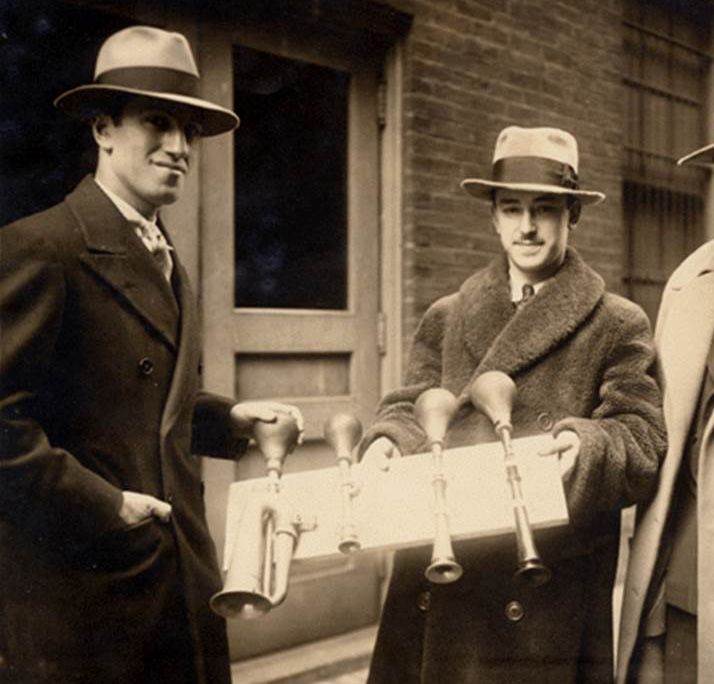
TOOTING HIS OWN HORN…Composer George Gershwin and Cincinnati Symphony Orchestra percussionist James Rosenberg holding four taxi horns used in the orchestra’s performance of An American in Paris, on Feb. 28, 1929. (Photo courtesy of Ira and Leonore Gershwin Trusts)

 *  *  *

Scratching the Surface

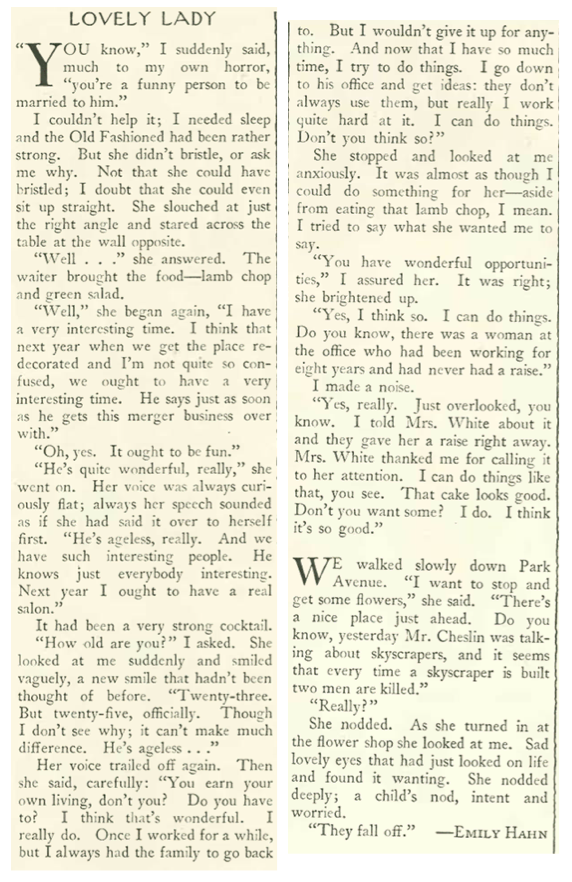
Emily Hahn (1905-1997) was a prolific journalist and author who contributed at least 200 poems, articles and works of fiction to The New Yorker over an astonishing 68-year span—from 1928 to 1996. As the title suggests, I am merely scratching surface, and will devote a post to her in the near future. Here is her contribution to the May 25, 1929 issue:

PROLIFIC…A 1937 portrait of Emily Hahn taken in Shanghai, China, by Sir Victor Sassoon. The author of 54 books, Hahn is credited with playing a significant role in opening up Asia and Africa to the West through her many novels. (DeGolyer Library, SMU)

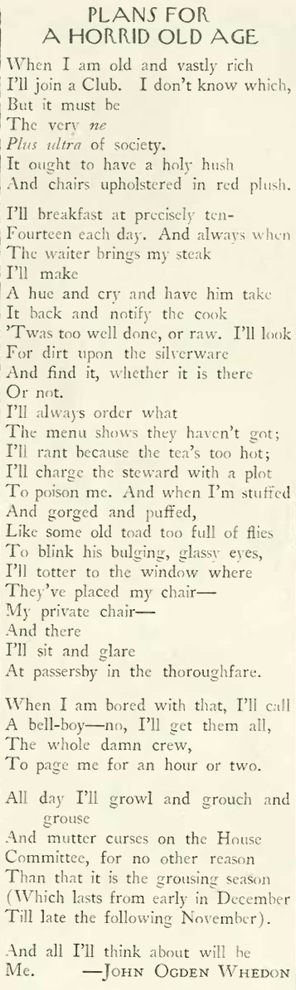
Another frequent contributor to The New Yorker was screenwriter John Ogden Whedon (1905-1991), who offered up mostly shorts from 1928 to 1938. He is best known as a television writer for such shows as The Andy Griffith Show, The Dick Van Dyke Show and Leave It to Beaver. Whedon and his wife, Louise Carroll Angell, were parents and grandparents to a number of screenwriters, including grandson Joss Whedon, creator of Buffy the Vampire Slayer and writer/director of The Avengers (2012) and its sequel Avengers: Age of Ultron (2015). An excerpt of grandpa’s writing from the May 25 issue:

 *  *  *

From Our Advertisers

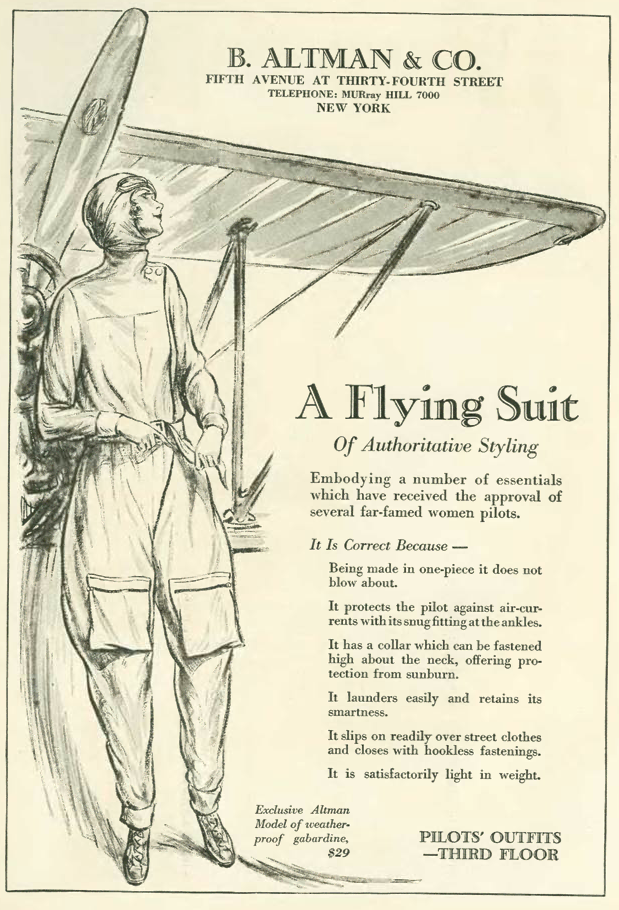
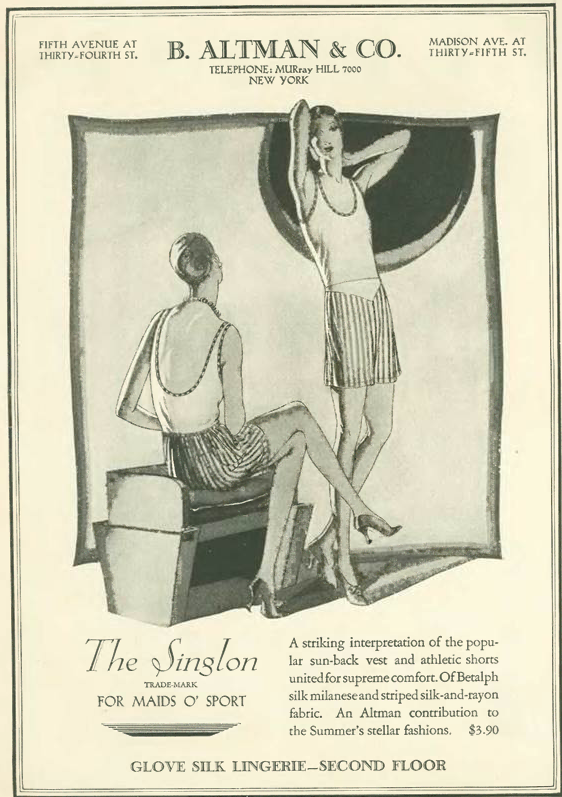
In a recent post (Waldorf’s Salad Days) I noted an ad from Lily of France that proclaimed the straight flapper figure was out, and it was now the “season of curves.” This ad from B. Altman begs to differ…

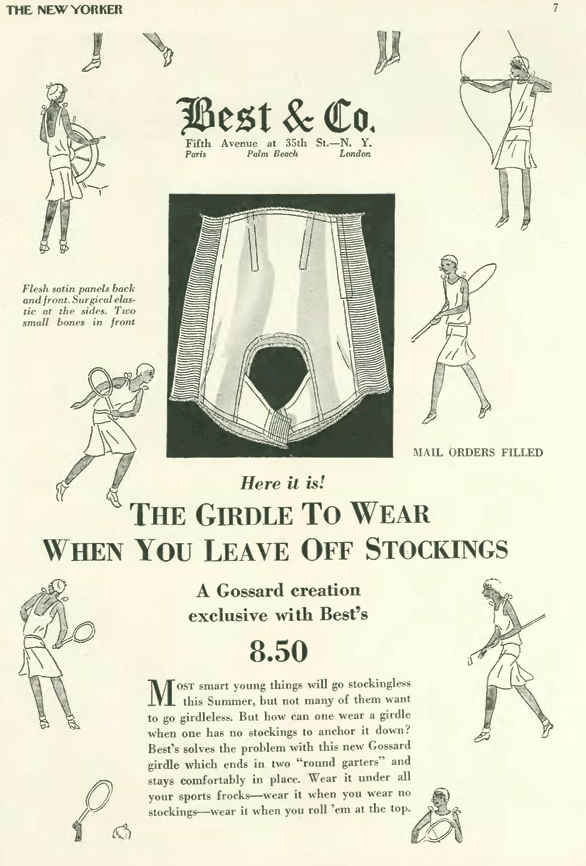
…one way to keep that straight figure was to pull on a girdle, which I’m sure felt great while one played tennis…

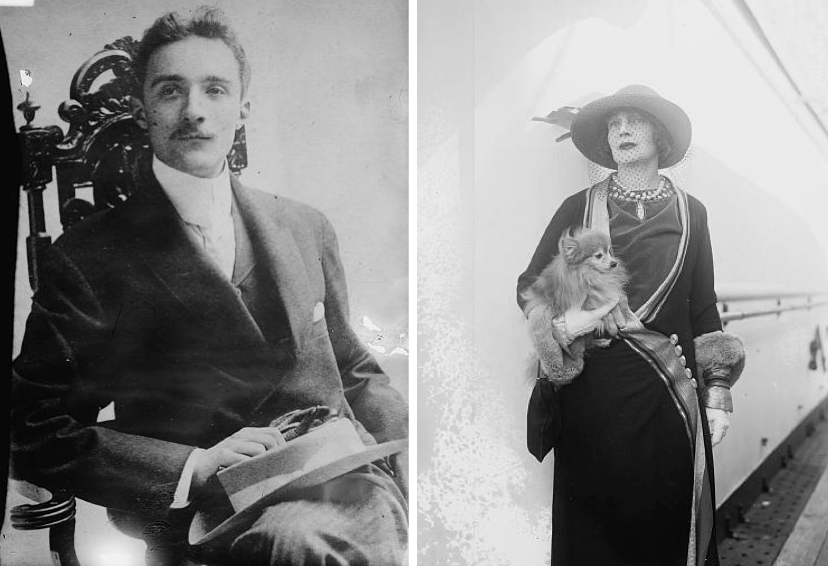
…our latest Lucky Strike endorser is…Mrs. Jerome Napoleon Bonaparte. Never heard of her? Well, “Mrs. Jerome” was actually a one Blanche Pierce (1872-1950) of Rochester, NY. Her second husband, Jerome Napoleon Bonaparte (the great-grandnephew of Emperor Napoleon) was something of a wastrel, having inherited a fortune and never worked at a job or profession. Blanche herself was known as a social climber…

THEY EXISTED…Jerome Napoleon Charles Bonaparte (pictured here circa 1915) was the great-grandnephew of Emperor Napoleon and a man of extreme leisure. His wife, Blanche Pierce Bonaparte (right, in a photo circa 1925), was known as a dog lover, a passion that indirectly led to her second husband’s demise. Jerome died while walking his wife’s dog in Central Park—he apparently stumbled over the dog’s leash and broke his neck. (Library of Congress)

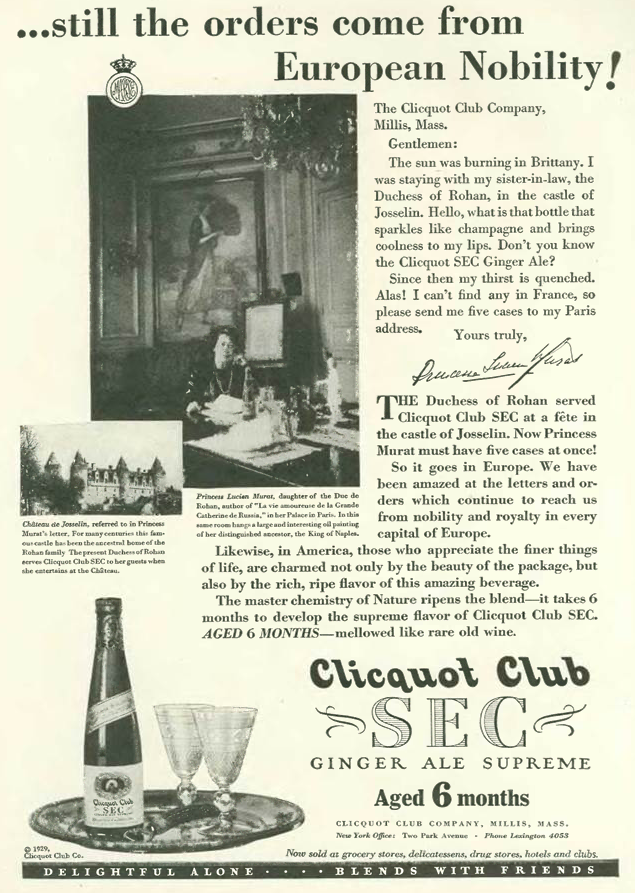
…speaking of European nobility, here is another sad endorsement from a French noble touting the wonders of Clicquot Club ginger ale to Prohibition-strapped Americans…

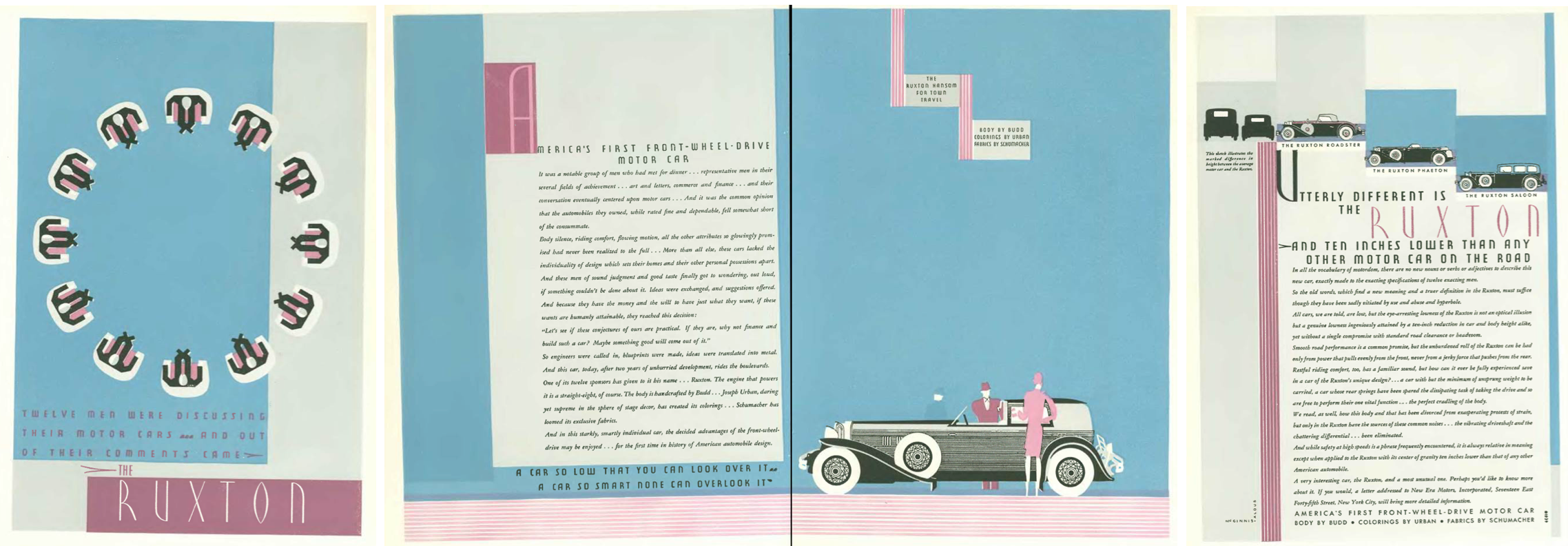
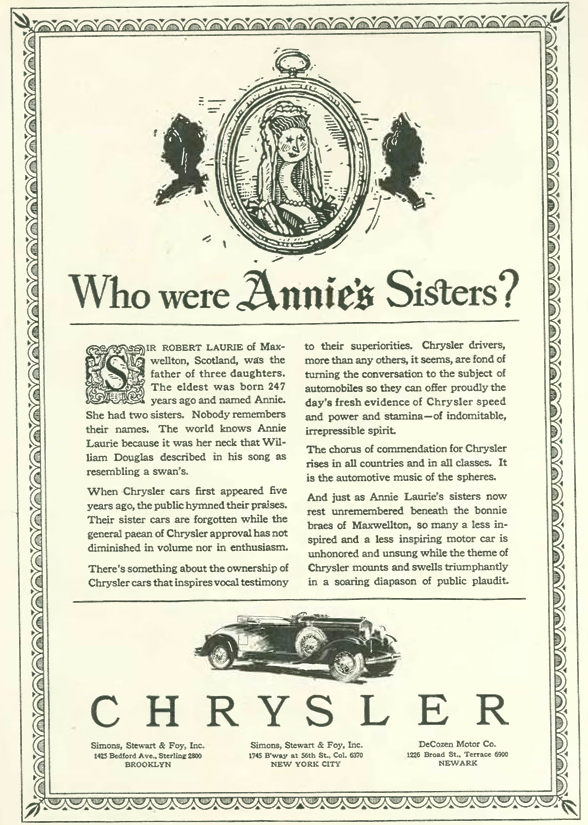
…and then we have this weird “Annie Laurie” analogy used by Chrysler to sell its line of automobiles…

…the manufacturers of Studebaker, on the other hand, opted for a more direct approach, equating its automobiles with the speed and modernity of airplane flight…note how in both ads the cars are pictured with the windshields folded down to emphasize sleekness…

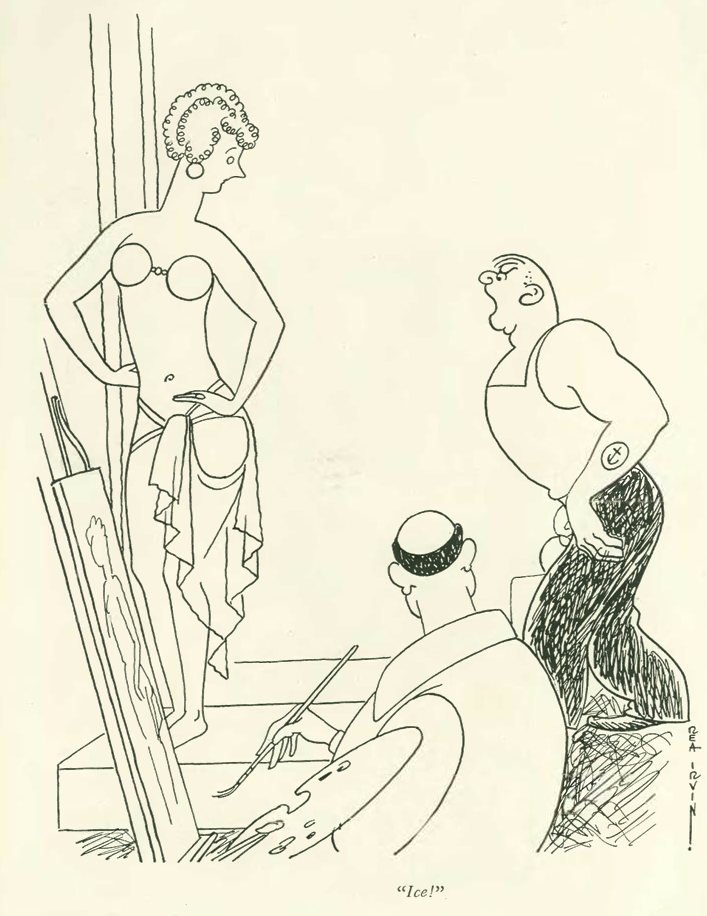
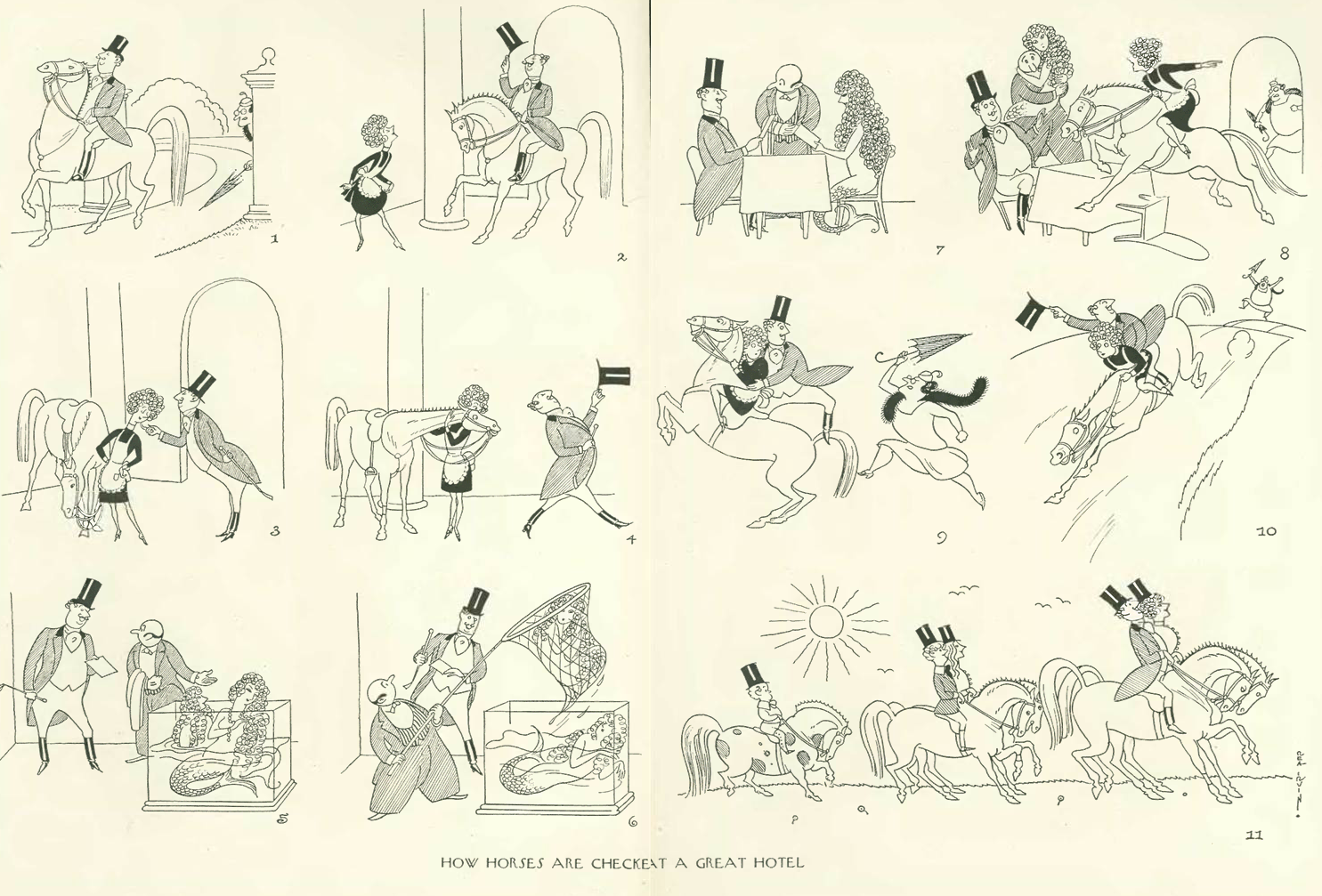
…on to the cartoons: we begin with this two-page entry by Rea Irvin, which makes very little sense…I get the part where the rich old man (stalked by his fearsome wife) finds a mistress (and a new wife) through the process of “checking his horse,” but the whole mermaid thing is lost on me…please click to enlarge—I’d love to have this one explained…

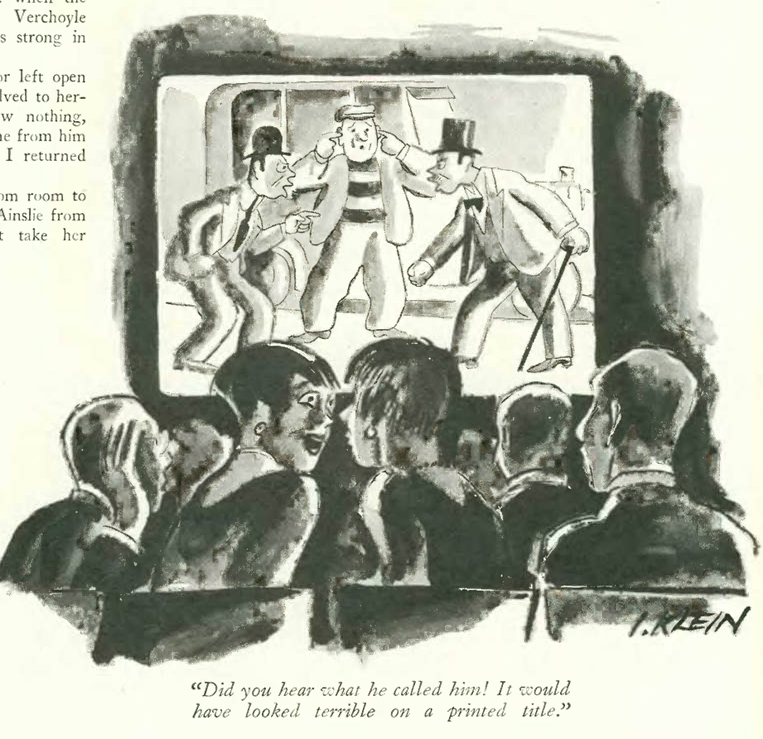
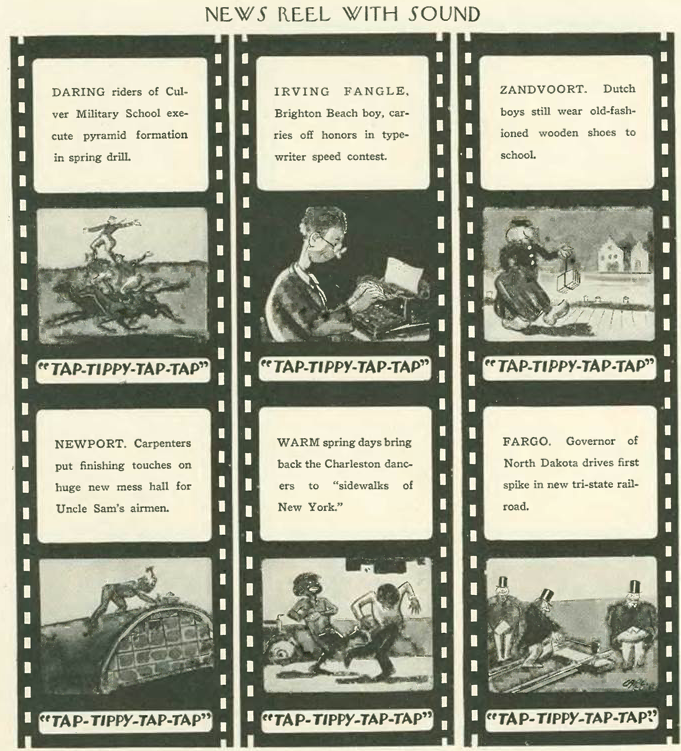
Carl Rose had some fun with newfangled sound effects in the dawning age of the talkies…

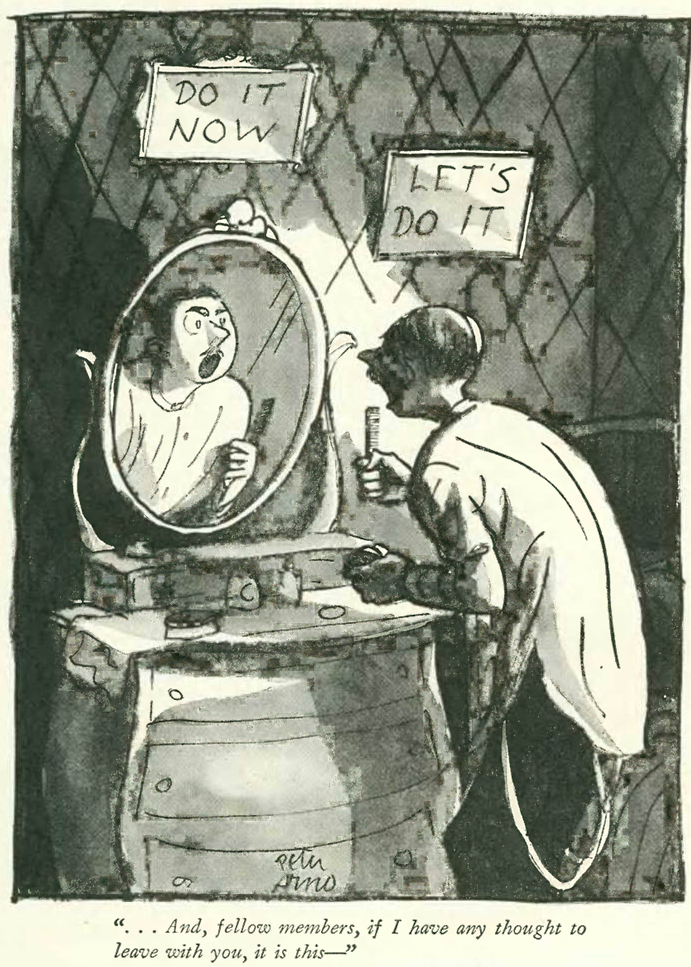
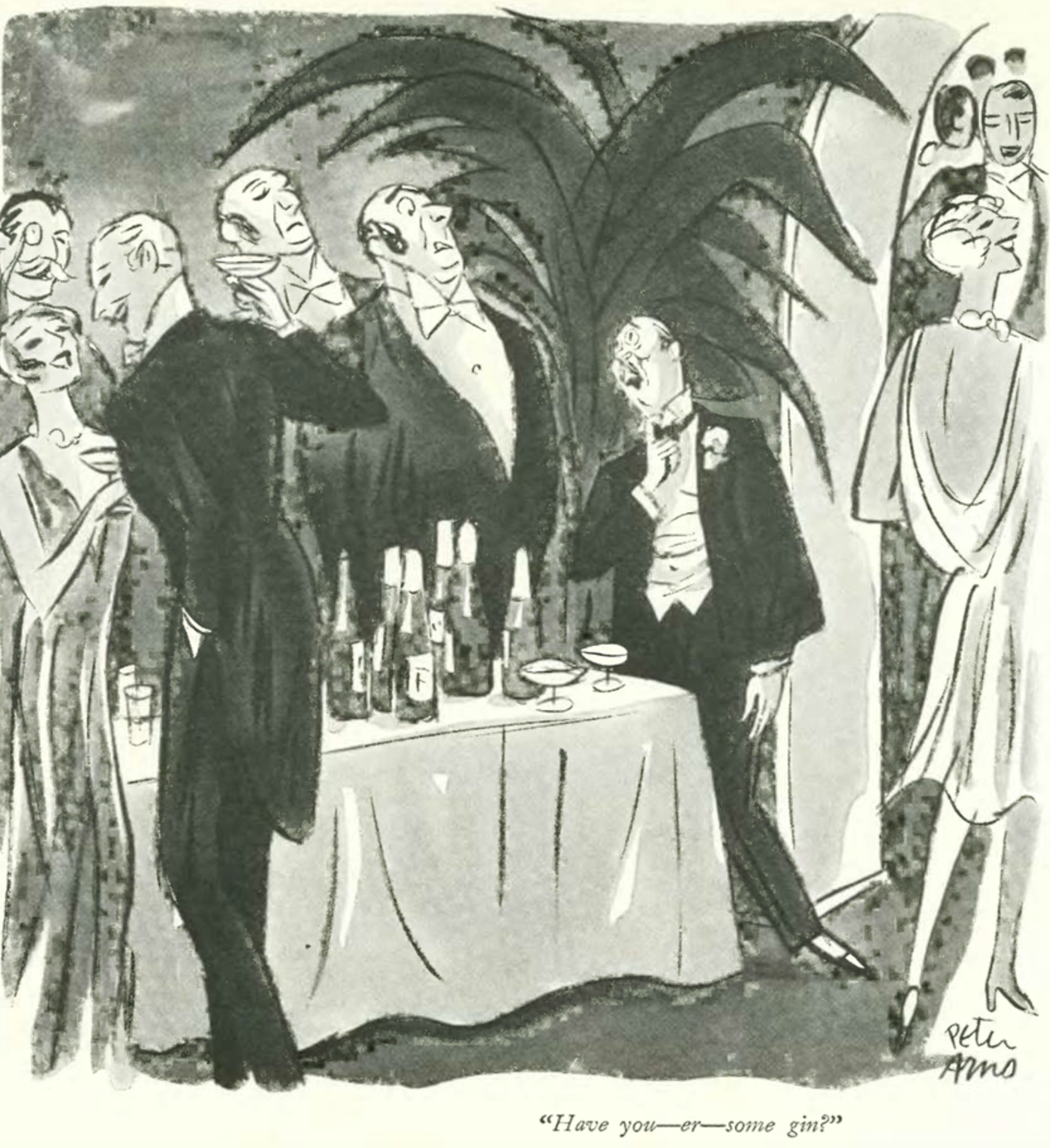
Peter Arno sketched up the cynicism of one New York dowager…

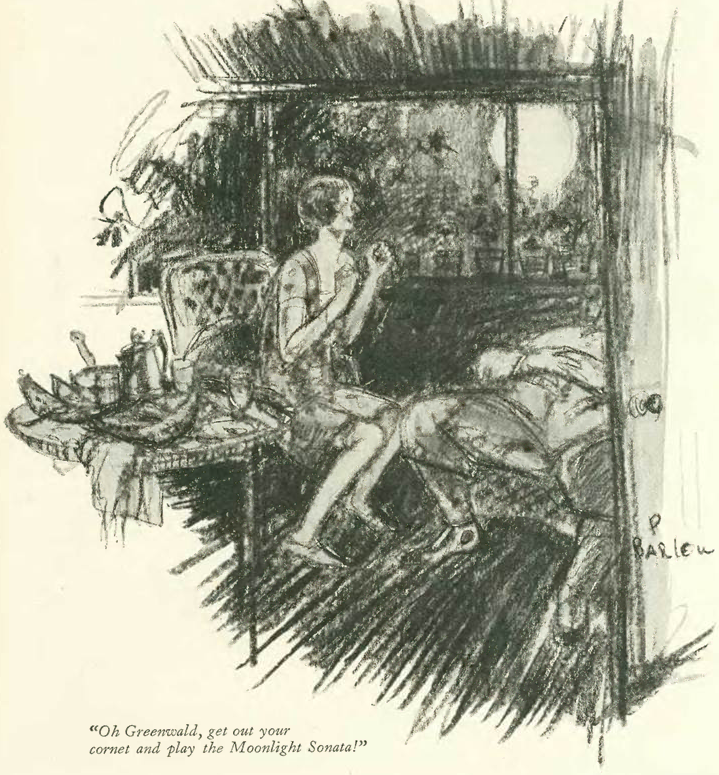
Perry Barlow captured two women who might have been driving home from an auction at the old Waldorf-Astoria Hotel…

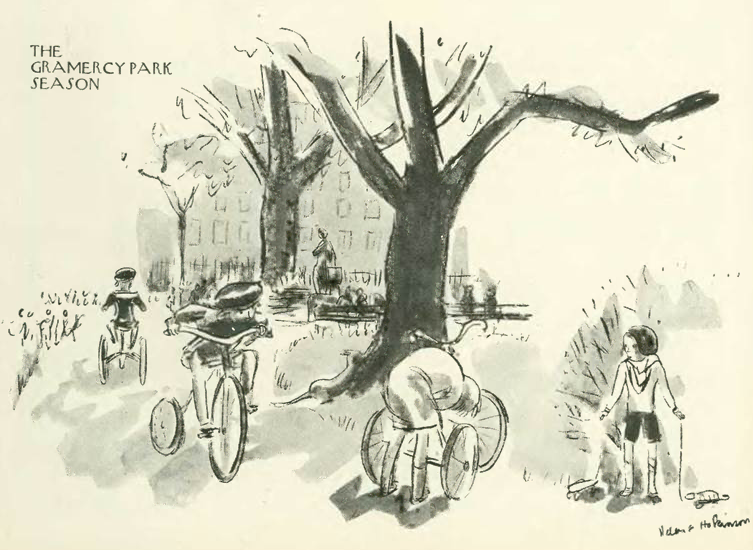
…and finally, a lovely illustration by Helen Hokinson of children at play…

Next Time: The Unspeakables…


That Moderne Feeling

A defining moment for Art Deco design in America occurred at New York’s Metropolitan Museum of Art during a 1929 exhibition that showcased everything from household furnishings to garden design.

March 9, 1929 cover by Theodore Haupt. Between 1927 and 1933, Haupt would illustrate 45 covers for the New Yorker.

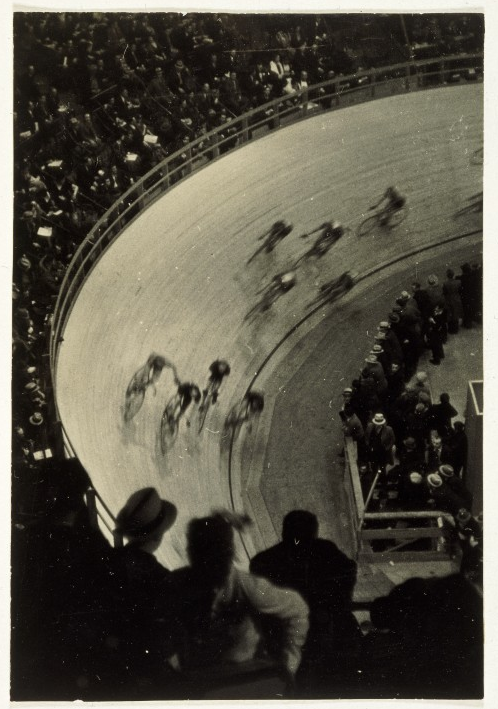
Before we delve into the Met’s exhibition, The Architect and the Industrial Arts, a quick note about the New Yorker’s Theodore Haupt-illustrated cover, which referenced the annual Six-Day Cycling Race that was taking place at the Madison Square Garden Velodrome. The event, which began at the old Madison Square Garden in 1891 and lasted until 1950, featured a beer garden (after Prohibition) in the center of the oval and drew such celebrities as Bing Crosby, Barbara Stanwyck and Peggy Joyce. It was said that Crosby even paid the hospital bills of riders who fell during the race.

THIS MIGHT TAKE AWHILE…The Six-Day Cycling Race at the Madison Square Garden Velodrome, 1932. (Victoria & Albert Museum)

The March 9 issue was lively with another contribution from Groucho Marx (“Press Agents I Have Known”) and an Alexander Woollcott-penned profile of playwright and screenwriter Charles Gordon MacArthur (husband of stage actress Helen Hayes and father of James “Book ’em Danno” MacArthur).

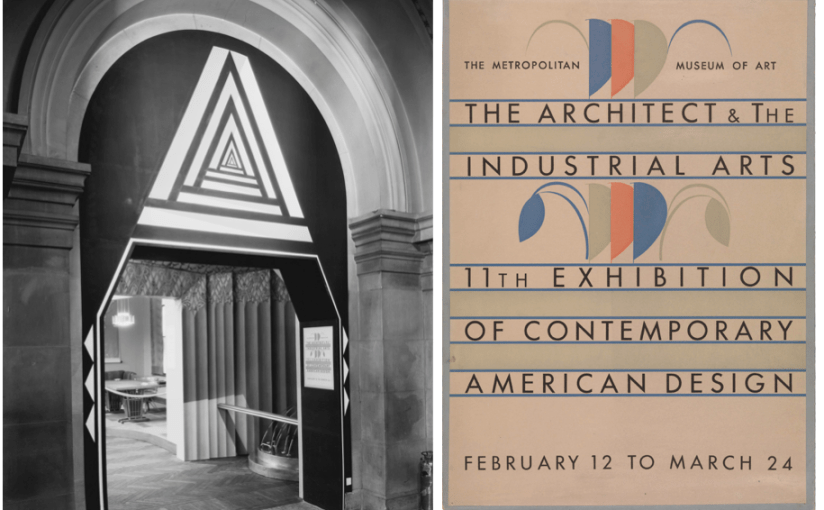
But as the blog title suggests, it was also filled with articles and ads that told of a city embracing all things new and modern, including a piece by architecture critic George S. Chappell on the Metropolitan Museum of Art’s eleventh Exhibition of Contemporary American Design, titled The Architect and the Industrial Arts. It was curated by the Met’s Richard F. Bach, who organized 15 annual exhibitions of contemporary industrial art at the museum between 1917 and 1940.

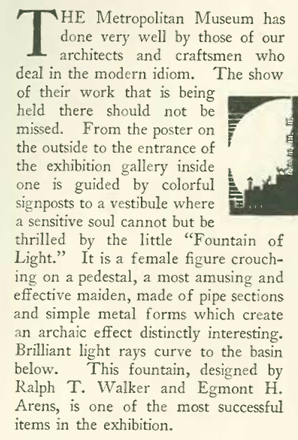
The 1929 exhibition of Art Deco works was the biggest yet, inspired by the Art Moderne movement in Europe and particularly the 1925 Paris Exposition International des Arts Decoratifs et Industriels). The Met exhibition, wrote Chappell, “should not be missed”…

PORTAL TO THE FUTURE…Entrance to The Architect & the Industrial Arts exhibition at The Metropolitan Museum of Art, designed by Joseph Urban. The above exhibition poster (seen mounted on the doorway in the photo) was by W.A. Dwiggins. (Metropolitan Museum of Art)
Ornaments created by W.A. Diggins for the exhibition catalogue included, from left, “Conservatory,” for a section on  Joseph Urban; ornament on a page devoted to curator Richard F. Bach; “Backyard Garden” for a section on Ely Jacques Kahn; and an ornament that graced the acknowledgements page. (Metropolitan Museum of Art, via paulshawletterdesign.com)
NOT YOUR GRANDMOTHER’S GARDEN…Mosaic semi-circular bench designed by Austin Purves, Jr. was featured in architect Ely Jacques Kahn’s “Backyard Garden” display by at the The Architect & the Industrial Arts exhibition at the Metropolitan Museum of Art. (Pencil Points Magazine, January 1929)

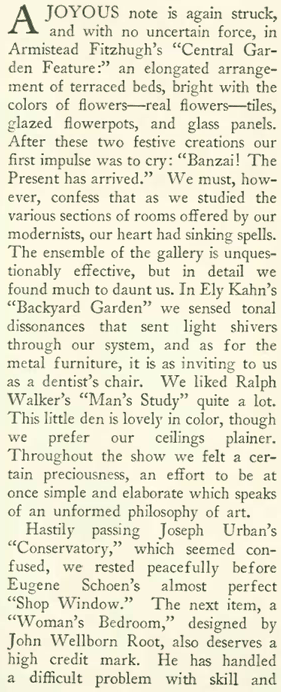
Chappell found the exhibit to be “stimulating,” although he hoped designers in the future would “curb cleverness” and focus more on fundamentals:

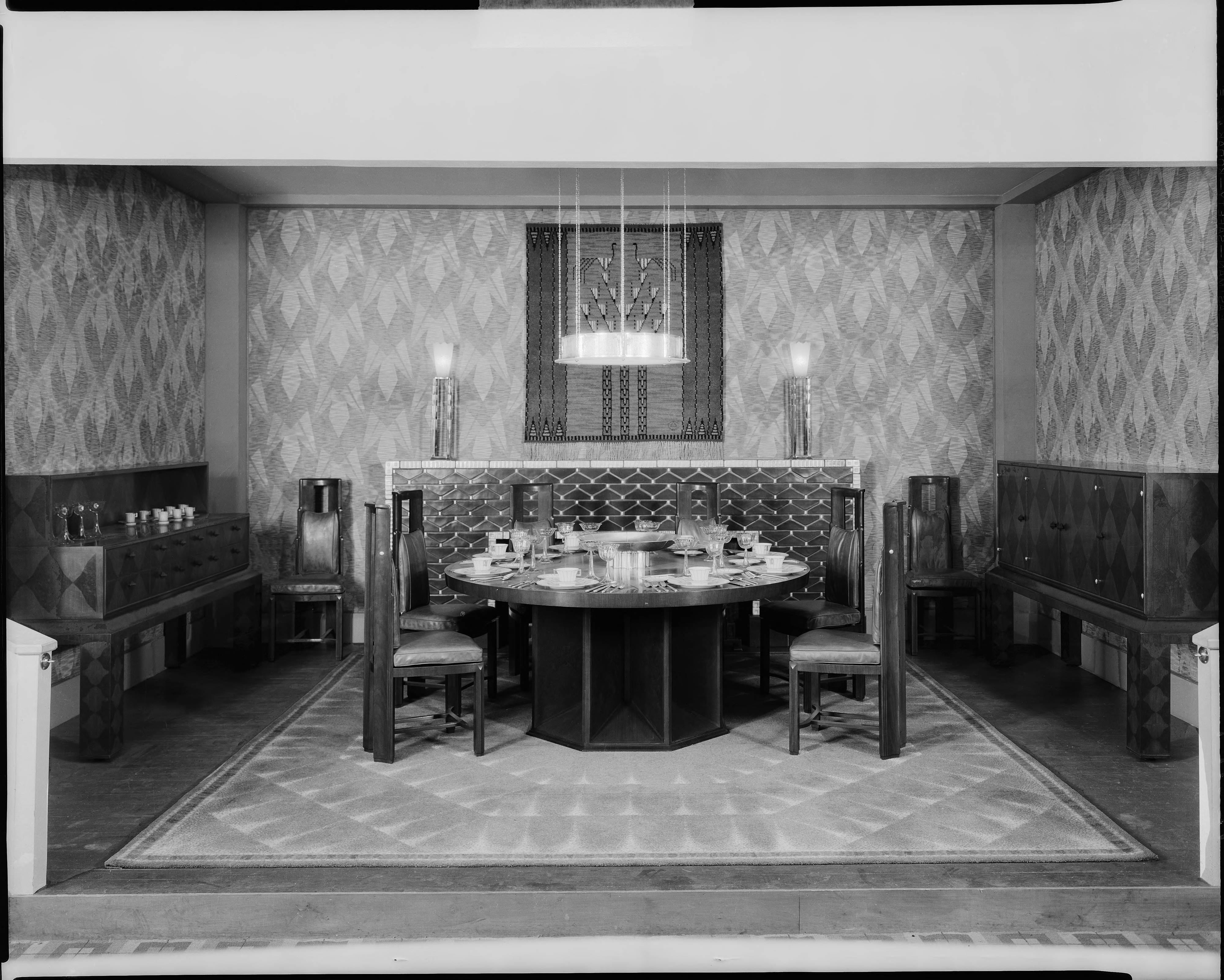
DINING IN STYLE…A dining room designed by Finnish architect Eliel Saarinen for The Architect and the Industrial Arts exhibition at the Metropolitan Museum of Art. (Metropolitan Museum of Art)
VISIONARIES…The Cooperating Committee for 1929 The Architect and the Industrial Arts exhibition were, standing, left to right, architects Raymond Hood, Eugene Schoen and Ely Jacques Kahn. Seated, left to right, architects Ralph T. Walker, John Wellborn Root, Jr. and Eliel Saarinen; ceramist, painter and graphic artist Leon V. Solon; and architect, illustrator and scenic designer Joseph Urban. (Metropolitan Museum of Art)
COZY…Ralph Walker’s “Man’s Study for a Country House” at the The Architect and the Industrial Arts exhibition. (architectsandartisans.com)
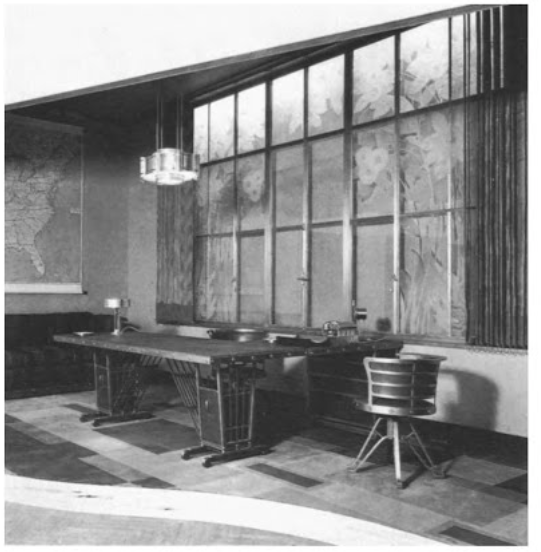
ALL BUSINESS…Raymond Hood’s “Business Executive’s Office” featured at The Architect and the Industrial Arts exhibition. (Metropolitan Museum of Art)

Writing in the February 1929 Bulletin of the Metropolitan Museum of Art, curator Richard S. Bach posed bold questions for this new age: “What is the tempo of our day? What are the dominant elements of our culture, our activities, our thinking? Is this a speed age or are we sedate? Have we time to be dignified and stately about frills or are we air-minded? Do we wait for months, as once all did, for the silkworm to complete his labors before beginning to make thread from his cocoon…or (do we) make a few bales of vegetable silk out of chemically treated wood fiber between breakfast and lunch as a regular chore of a business week-day? And is this the mechanistic millennium which shrivels the soul and makes mockery of imagination, or are these fabulous industries, these automatic instruments of production, the means of bringing within range of vision the real potentialities of our crowded lives and of interpreting our aspirations and achievements?

Pumping Iron Into the Sky

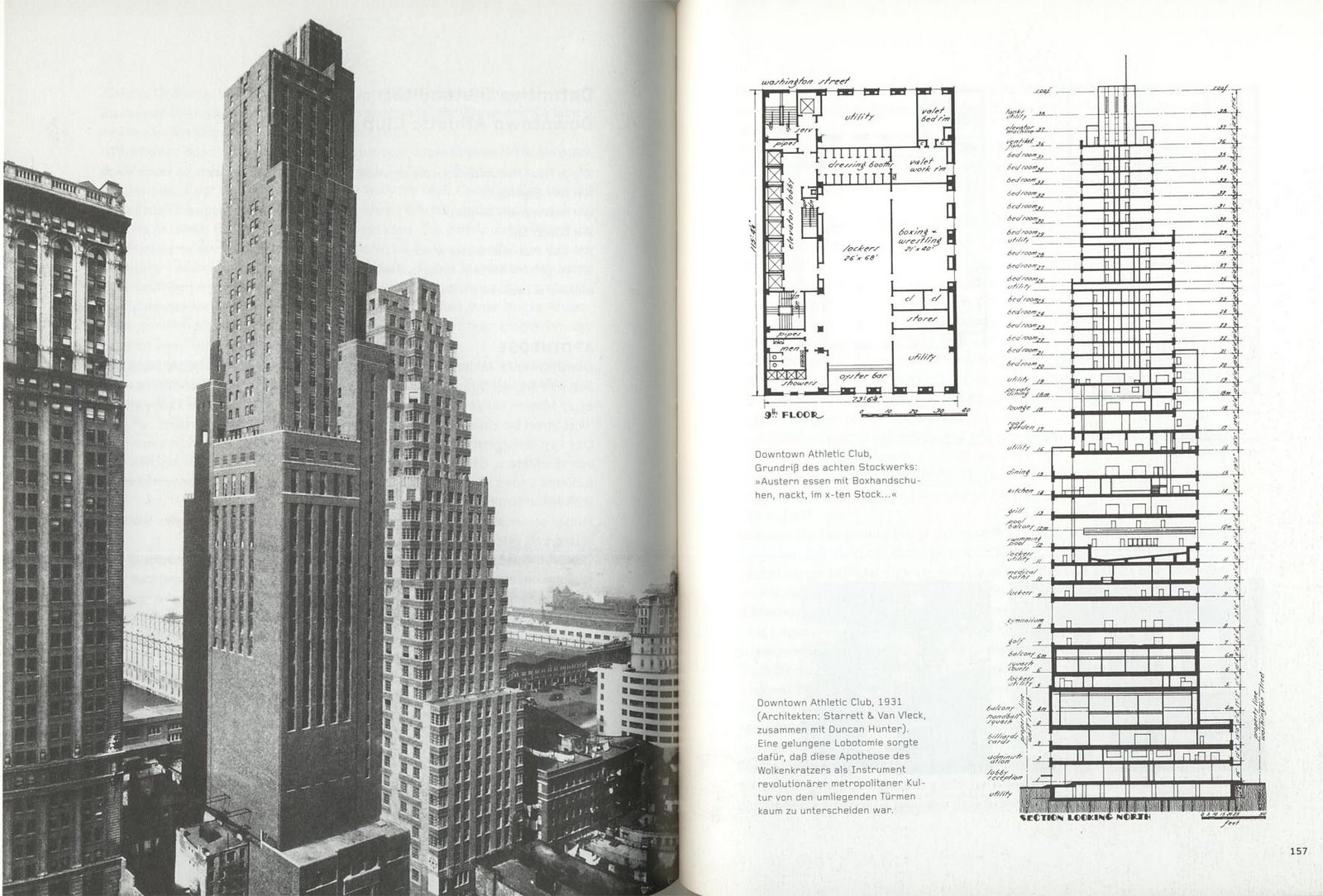
The architecture firm Starrett & van Vleck saw the “real potentialities of our crowded lives” when they designed a new Art Deco skyscraper to house the Downtown Athletic Club. Writing in Lost City NewsMary Hohlt cites the architect Rem Koolhaas, who sees the Downtown Athletic Club as “the ideal of a hyper-reality in the burgeoning urban form of hyper-density and congestion.” The Club is “the everything-at-your-fingertips self-improvement incubator for men…It is a place for men to indulge on self-improvement; to better themselves in a place only the constructed, hyper-reality of Manhattan can provide.”

SELF-IMPROVEMENT INCUBATOR…the Downtown Athletic Club by Starrett & van Vleck, 1930. (4.bp.blogspot.com) click to enlarge

Hohlt writes that Koolhaas sees the Downtown Athletic Club as a sterile place: “Towering in the sky, the Club removes men from the rest of the world and allows them a kind of aesthetic improvement that cannot be passed on.” E.B. White took a less jaded view in this “Talk of the Town” segment:

STILL A WINNER…Famous for serving as the site of the annual awarding of the Heisman Trophy, the Downtown Athletic Club closed in 2001 following the 9/11 attacks. The club was within a “frozen zone” closed to the public during the long clean-up that followed, and could not withstand the financial impact of such a long closure. It reopened in 2005 as a residential tower. (newyorkitecture.com)

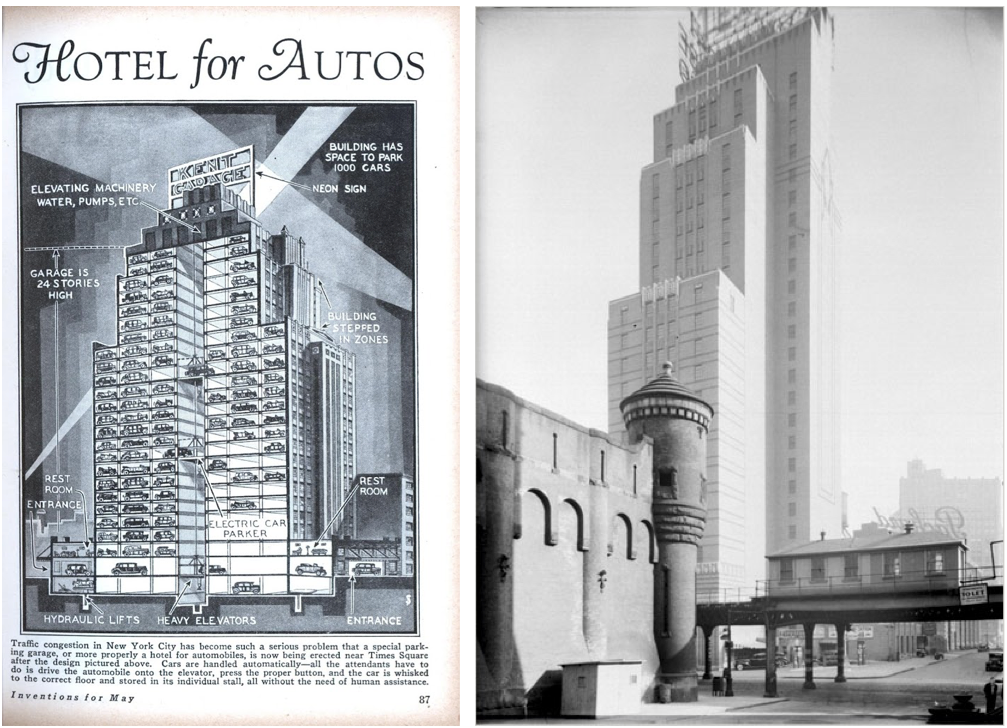
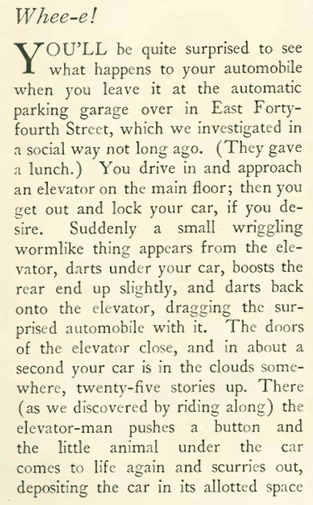
Another New Yorker who saw the “real potentialities of our crowded lives” was insurance salesman Milton A. Kent, who in 1928-29 erected a brick and terra-cotta Art Deco tower that could park 1,000 cars using an automatic elevator system.

MONUMENT TO THE CAR…The May 1928 issue of Modern Mechanix featured this cutaway illustration of Milton Kent’s high-rise, automated parking garage. (boweryboyshistory.com) click image to enlarge

Once again E.B. White was on hand to render this observation for “Talk”…

HUMAN SCALE…Kent’s fantastic garage still stands at West 61st Street, but today it serves as—you guessed it—an apartment building. (boweryboyshistory.com)

 *  *  *

Death of a Can-Can Dancer

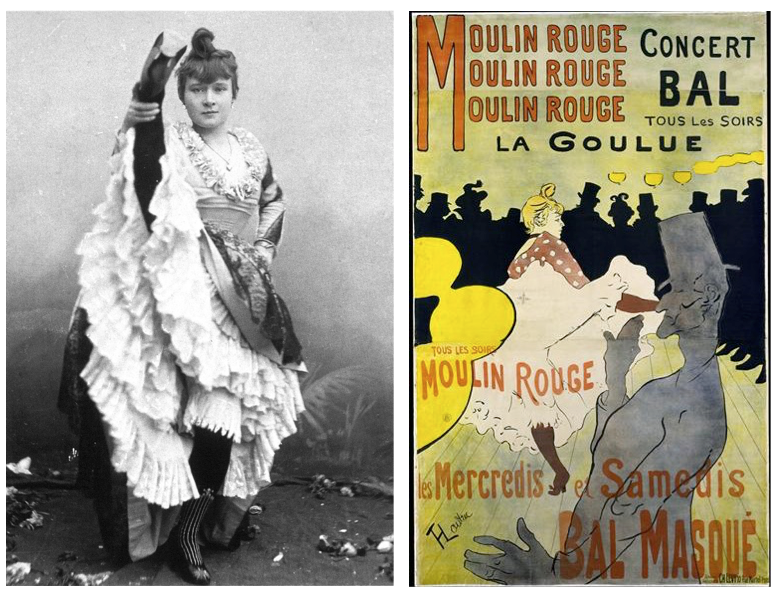
The sad death of Louise Weber, aka La Goulue, was announced in Janet Flanner’s “Letter from Paris” column. Weber was a can-can dancer at the Moulin Rouge in Paris and a model for some of Henri de Toulouse-Lautrec’s most famous cabaret paintings. Flanner wrote of La Goulue’s rise to fame…

JUST FOR KICKS… Louise Weber, aka La Goulue, circa 1890, and an 1891 poster by Toulouse-Lautrec advertising the performers La Goulue and “No-Bones” Valentin at the new Paris dance hall Moulin Rouge. (Wikipedia)

…and her sad downfall into a life of poverty among the rag-pickers:

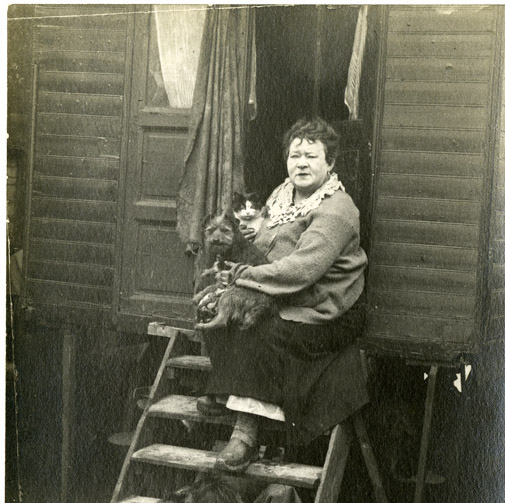
SAD DECLINE…La Goulue, her face freshly powdered, sat on the steps of her small trailer for an unknown postcard photographer in the 1920s. This image is a detail of the original photograph, held at the Wheaton College Permanent Collection.

 *  *  *

From Our Advertisers

An advertisement on page 45 for Mohawk carpets featured two Cockney charwomen admiring the new carpets at the General Motors headquarters:

A corresponding note: Shreve & Lamb’s 1927 General Motors Building was the hub of Columbus Circle’s Automobile Row. A hideous 2012 remodel, which clad the entire structure in reflective glass, has rendered the former landmark unrecognizable:

Museum of the City of New York/nyc-architecture.com

Getting back to all things “moderne,” these facing ads on pages 8-9 offered some new looks for spring…

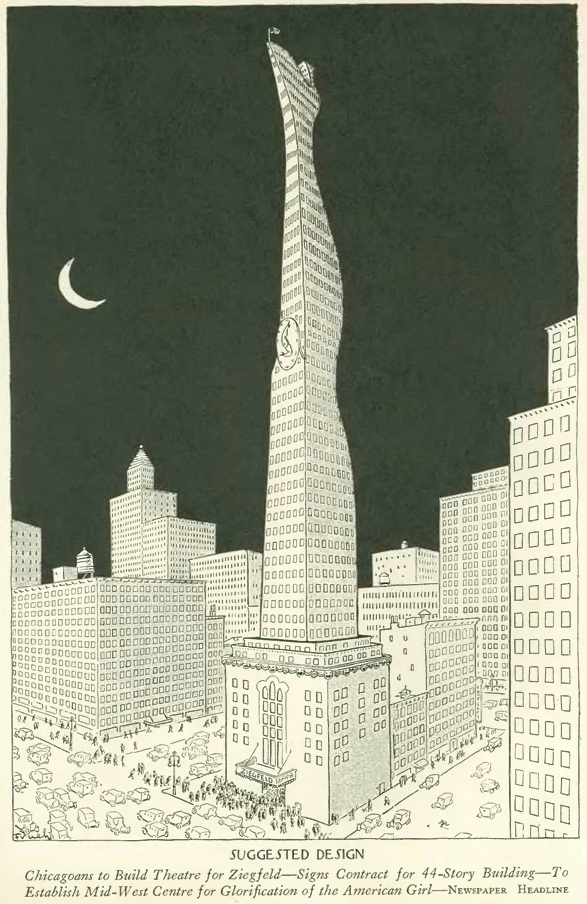
…and in the cartoons, a tongue-in-cheek vision of a modern high-rise by Al Frueh, prompted by the news that Florenz Ziegfeld planned to build a 44-story building in his native Chicago. Thanks to the market crash later in the year, it was never realized.

In drawings sprinkled across pages 24-25, Helen Hokinson examined various approaches to tax season, including these two examples…

…and finally, Peter Arno caught a theatre performer with his pants down…

Next Time: Babbitt Babble…


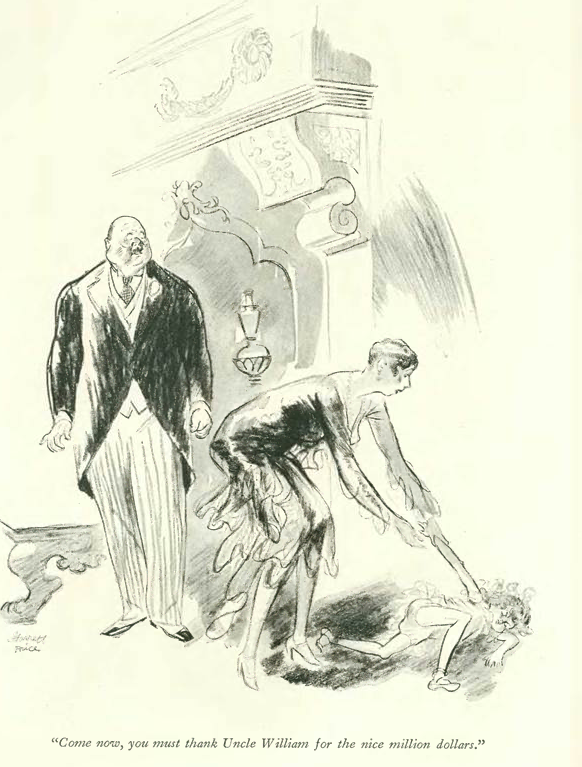
Million Dollar Mermaid

Our sense of what is old and what it is new becomes skewed during periods of rapid change, and such was the case in 1920s New York when large swaths of the old city were swept away and replaced by massive towers that seemingly rose overnight. Places like the Hippodrome Theatre, a 1905 Beaux-Arts confection barely 24 years old, seemed positively ancient in those heady times.

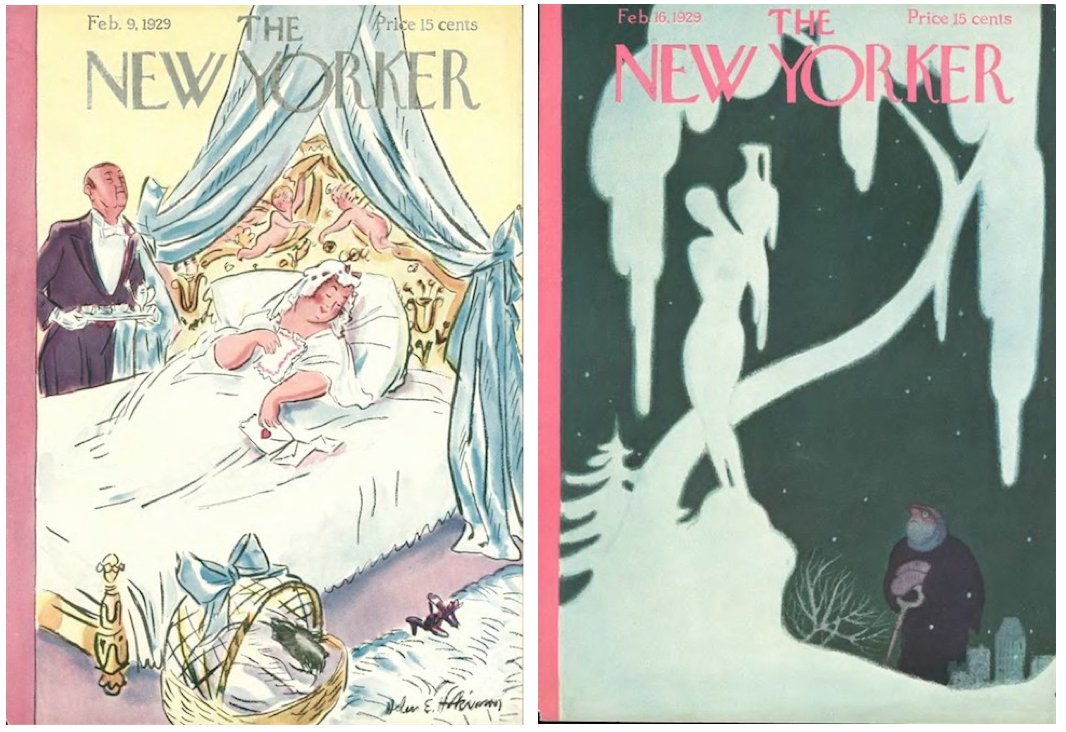
Feb. 9, 1929 cover by Helen Hokinson. Feb. 16, 1929 cover by Rea Irvin.

For the most part the New Yorker was enthusiastic about the changing skyline, as its namesake was claiming the crown as America’s premier city; but occasionally a melancholy note would be struck when a familiar institution appeared in decline or fated for the wrecking ball. In the Feb. 9, 1929 “Talk of the Town,” E.B. White wistfully recalled the old days of the Hippodrome, once the largest theatre in the world and the pride of turn-of-the-century New York:

FOR THE MASSES…The Hippodrome, built in 1905, provided entertainment to millions of New Yorkers who couldn’t afford a ticket to a Broadway play. The brainchild of Frederick Thompson and Elmer S. Dundy, entrepreneurs of Coney Island’s Luna Park, the Hippodrome was torn down in 1939 after more than a decade of decline. (1905 photo courtesy Library of Congress)
A REALLY BIG SHOOO…One of the first performances at the Hippodrome was a four-hour spectacle: A Yankee Circus on Mars (advertised on the theatre’s marquee in photo above). The 1905 production included 280 chorus girls, 480 soldiers, a parade of cars driven by elephants, an equestrienne ballet, acrobats, and a cavalry charge through a lake. (Image from Harper’s Weekly via daytoninmanhattan.blogspot.com)
The Hippodrome’s main theatre could accommodate 5,300 patrons in seats that were four inches wider than normal theatre seats. The dome over the “Roman style” auditorium encompassed an acre. (Broadway Magazine 1905 via daytoninmanhattan.blogspot.com)

The Hippodrome held such a place in the heart of the New Yorker that the magazine offered further reminiscences in the Feb. 16 issue, this time penned by managing editor Harold Ross:

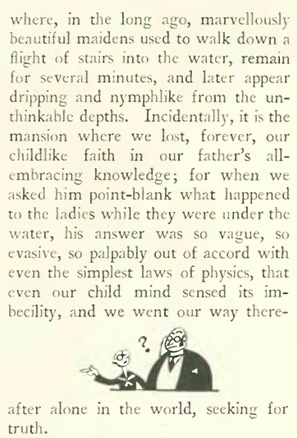
For demonstrations of diving and “mermaid spectacles,” the Hippodrome stage featured an eight-foot high steel tank in four sections, with a front of plate glass. Manned diving bells were also used to raise and lower “mermaids” during performances.

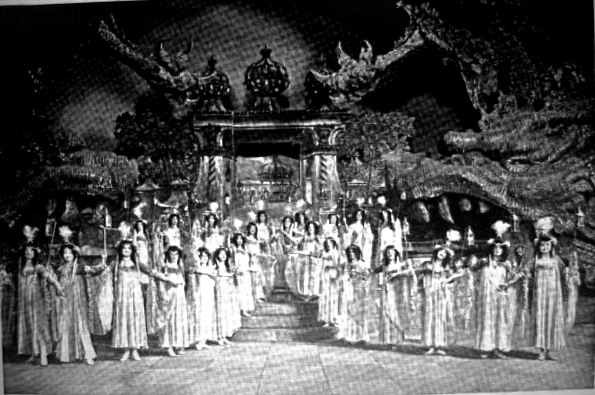
OLD TIMEY FX…Illustration from Nature magazine (left) depicts a diving bell used in the Hippodrome’s swimming and diving tank to raise and lower performers. At top, circa 1910 advertisement; at bottom, the “Court of the Golden Fountain” in the the theatre’s 1905-06 presentation of A Society Circus. (les-sources-du-nil.tumblr.com/flickr/NYC Architecture)

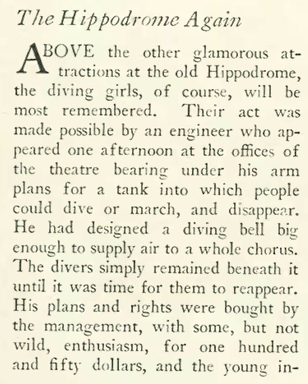
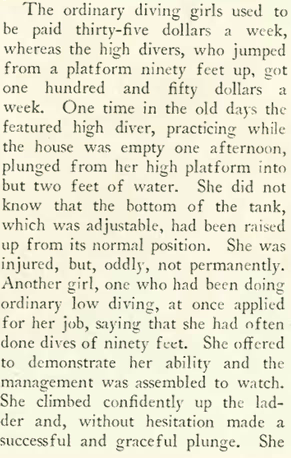
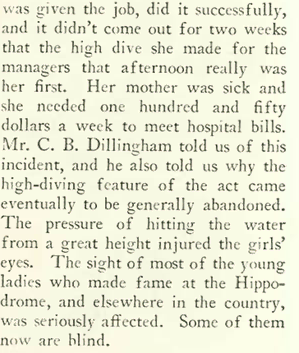
Ross wrote about the Hippodrome’s “diving girls,” who would dive into a tank of water from a height of 90 feet, sometimes at a serious cost to their health:

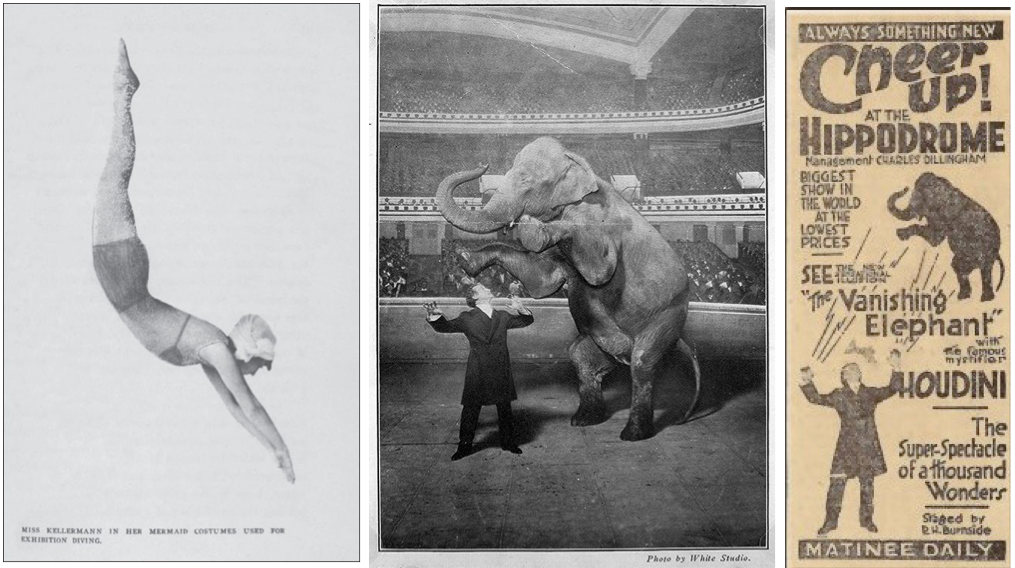
HIPPODROME’S HEYDAYS…In the early 1900s Australian swimmer and diver Annette Kellerman (left, in an image from her 1918 book, How to Swim) was a famed performer at the Hippodrome, as was illusionist and stunt performer Harry Houdini, shown here in 1918  with Jennie the Elephant in a performance of the vanishing elephant trick. (Monash University/americaslibrary.gov/wildabouthoudini.com)
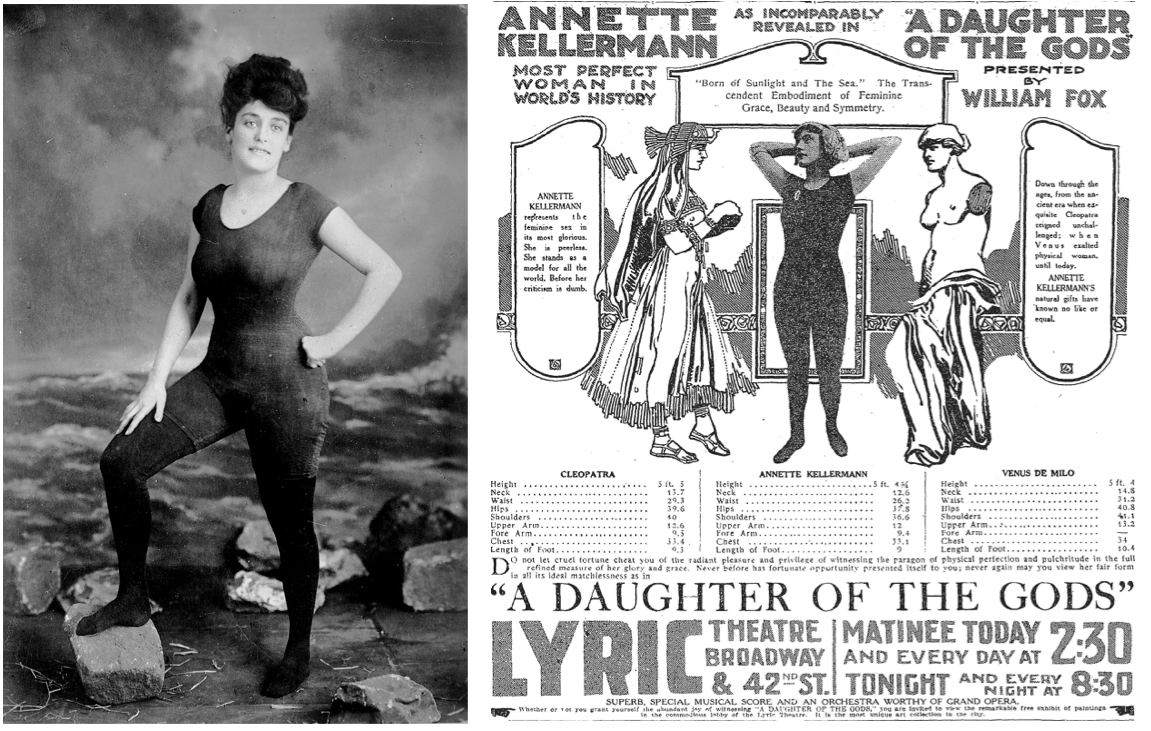
MILLION DOLLAR MERMAID…famed around the world by that moniker, swimmer and later actress Annette Kellerman is considered the originator of the one‐piece bathing suit, which she models at left in a photo taken around 1907. At right, advertisement for Kellerman’s 1916 film A Daughter of the Gods (now lost), in which Kellerman achieved another first: the first complete nude scene by a major star. The William Fox Studio made much of Kellerman’s figure, promoting her as the perfect woman by “comparing” her measurements to the likes of Cleopatra and Venus de Milo. (Wikipedia/consumingcultures.net)

Australian swimmer Annette Kellerman was a big draw at the Hippodrome, and helped popularize the sport of synchronised swimming after her 1907 performance of the first water ballet in theatre’s giant plate glass tank. In that same year she shocked Bostonians by appearing on a local beach in a “daring” one‐piece bathing suit (shown above), and was arrested for indecency. This was at a time when a woman’s standard bathing apparel consisted of a blouse, skirt, stockings and swimming shoes.

Unlike some of the unfortunate Hippodrome divers who later lost their eyesight due to cranial pressure from high dives, Kellerman went on to a long and active life (she died in 1975, at age 88). Known throughout the world as Australia’s “Million Dollar Mermaid” (and portrayed by Esther Williams in a 1952 movie by the same name), Kellerman appeared in more than a dozen films between 1909 and 1924. She also launched her own line of swimwear and wrote several books on swimming, beauty and fitness.

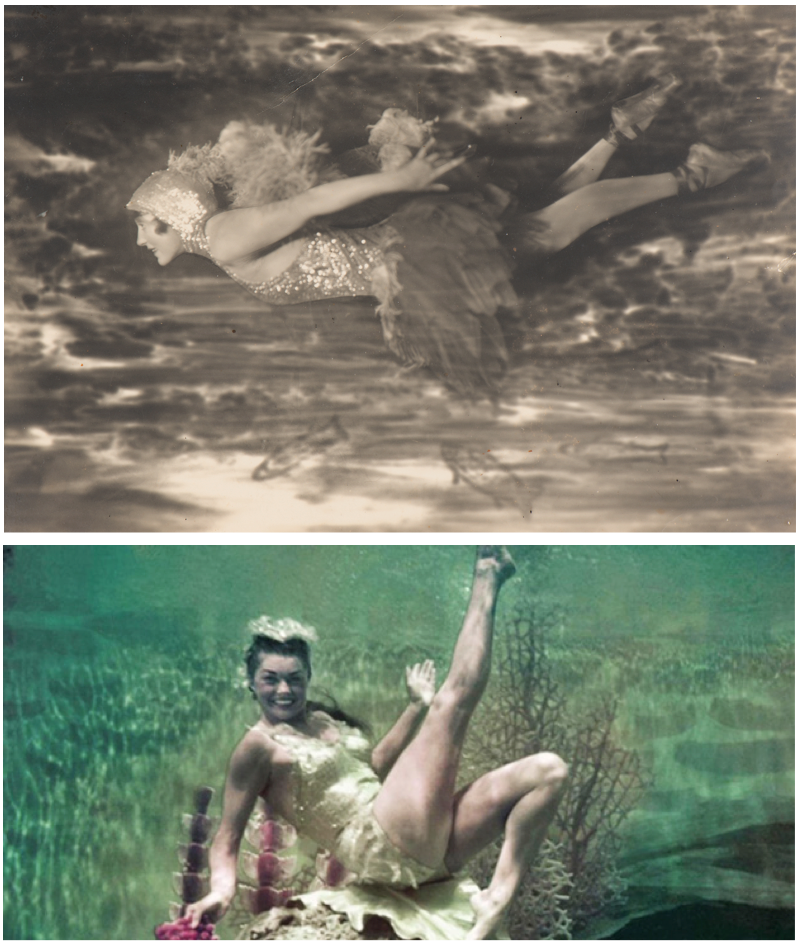
ALL WET…At top, Annette Kellerman swimming underwater in a gold sequined dress, possibly from  Queen of the Sea (1918, now lost). Thirty-four years later Esther Williams (below) would portray Kellerman in Million Dollar Mermaid. (historycouncilnsw.org.au/gsgs/movieactors.com)

*  *  *

City of Lights

While E.B. White got misty-eyed about the old Hippodrome in the Feb. 9 issue, his fellow New Yorker writer and friend James Thurber was thrilling on the new skyscrapers lighting the city’s skyline:

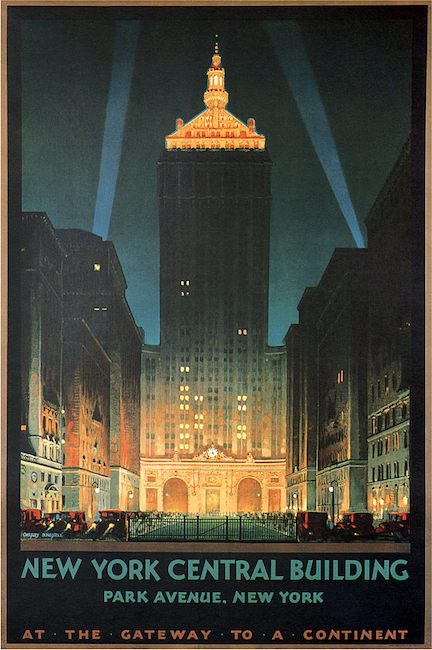
BEJEWELED CROWN…The New York Central Building depicted in a 1929 promotional painting by Chesley Bonestell. (albanyinstitute.org)

Thurber noted that “100,000 candlepower” would light the golden crown of the New York Central Building, the tallest structure in the Grand Central complex. Over at the new Chanin Building, a whopping 25 million candle-power would be trained on its art deco crown.

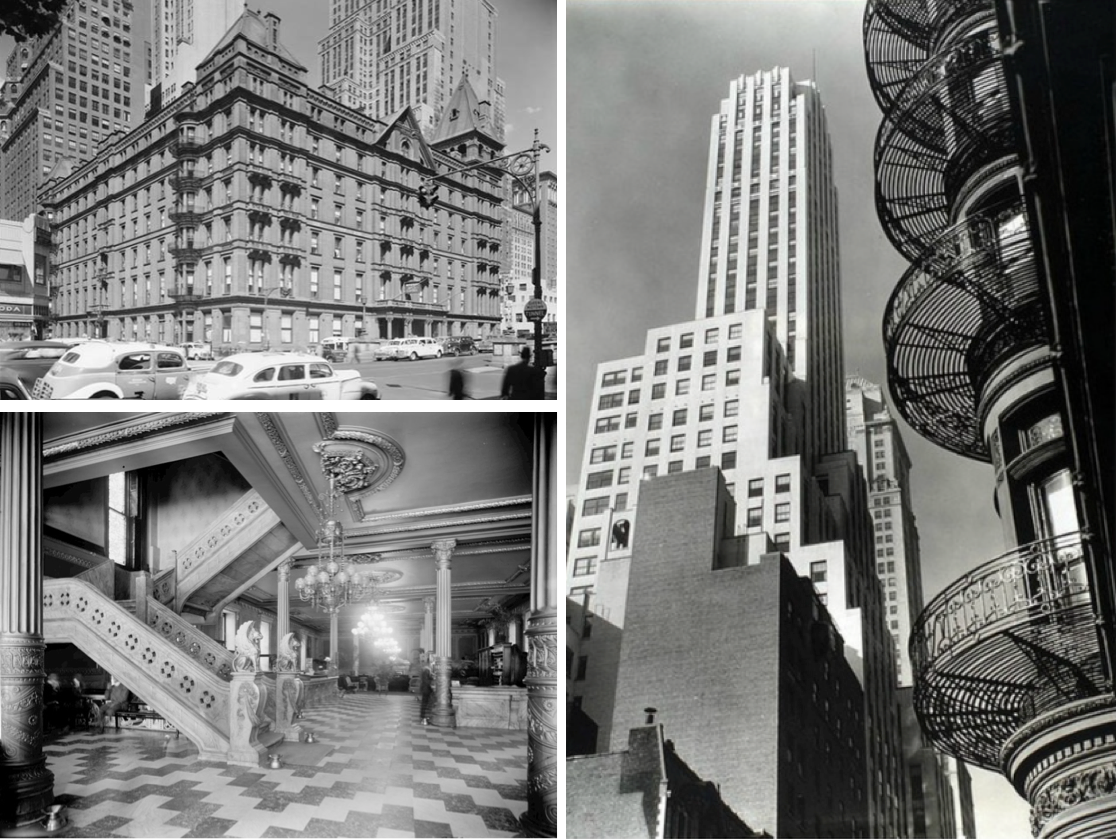
YOU CAN’T MISS IT…At left, the nearly 700-foot-tall Chanin Building joined the race for the sky in 1928-29. At right, a 1929 drypoint etching by Australian-born artist Martin Lewis depicted the magical glow of the Chanin Building from the viewpoint of a tenement dweller on a fire escape. (NYPL/ephemeralnewyork.wordpress.com)

Advertisers in the New Yorker reflected the mood of this new city of skyscraper canyons. From the Feb. 16 issue:

Ralph Ingersoll and Thurber also wrote in the Feb. 16 “Talk” about plans for “Rockefeller City…”

…and as we know, this was to become the famed Rockefeller Center, a complex of 19 buildings covering 22 acres between 48th and 51st streets. Led by by John D. Rockefeller Jr., the complex was conceived as an urban renewal project to revitalize Midtown (hard to imagine today). The land was originally envisioned as a site for a new Metropolitan Opera house, but when financing fell through the land’s owner, Columbia University, leased it to Rockefeller. Of the anticipated effect of the project, Ingersoll and Thurber wrote:

And for the record, the Feb. 9 issue featured another name that would shape the future of the city—J. Pierpont Morgan was the subject of a lengthy two-part profile penned by John K. Winkler.

 * * *

Shouts & Murmurs

The Feb. 16 marks a significant date on the New Yorker calendar—the first appearance of Alexander Woollcott’s famed “Shouts & Murmurs” column:

Writing in the “Double Take” section in the July 18, 2012 issue of the New Yorker, Jon Michaud notes that “Shouts & Murmurs” was Woollcott’s personal column, appearing weekly in the magazine for five years. Perhaps no person other Harold Ross himself could be more associated with the earliest origins of the magazine —  Woollcott was a colleague of Ross’s at Stars and Stripes during the First World War, and introduced Ross to his first wife, Jane Grant, who was also a considerable influence on the early magazine.

Michaud writes that Woollcott used the column “to opine on, lampoon, and attack the culture and society of the day. In his distinct and at times excessive style, he reviewed books, wrote spoofs, distributed gossip, and generally rankled as many people as he could.” Woollcott ended the column in December 1934, but it was revived in 1992 as a regular venue for many notable humorists, and continues to this day.

A REAL CHARACTER…Alexander Woollcott, in his idea of casual wear. He once informed his friend and New Yorker colleague Corey Ford: “Ford, I plan to spend three days at your house in New Hampshire next week.” Not overly pleased to be hosting such a demanding guest, Ford uttered a meek “That will be swell.” “I’ll be the judge of that,” Woolcott warned him. (From Elizabeth Olliff, “An Evening at the Algonquin.”)

* * *

Up In Smoke

Jumping back to the Feb. 9 “Talk of the Town,” we have this complaint from the magazine regarding celebrity cigarette endorsements. Although the magazine derived a lot of revenue from cigarette ads, Harold Ross insisted on a strict separation between editorial and advertising, allowing his writers free reign to bite the hands that fed them, if they so wished:

Here’s the offending ad, which was featured in the Feb. 23 issue:

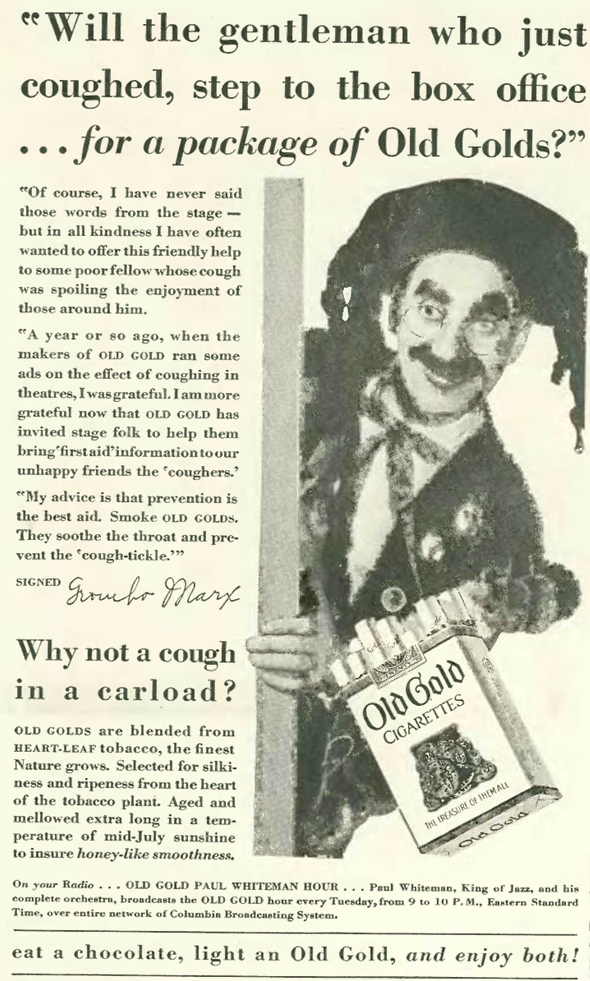
In the Feb. 9 issue, Groucho Marx couldn’t resist getting in on the endorsement action…

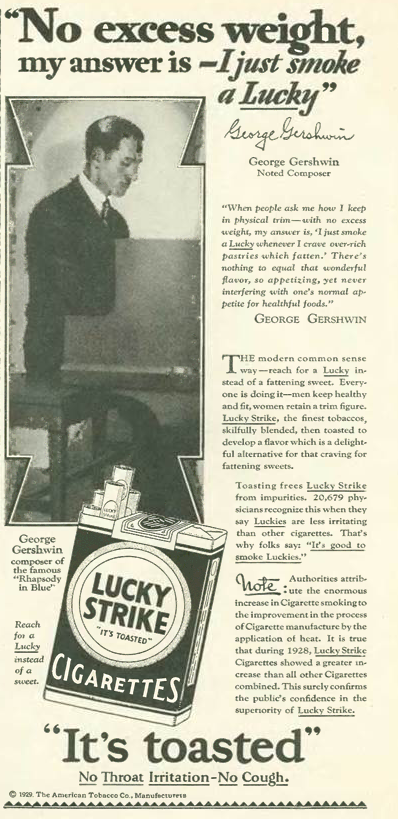
…nor could Ross’s old friend George Gershwin, who touted the health benefits of Lucky Strikes in the Feb. 16 issue…

In other ads from the Feb. 16 issue, we find that for all of the technological advances in the 1920s, a decent car heater still eluded automakers. Hence…

…on the other hand, we also have this very up-to-date product—the forerunner of today’s rolling airplane luggage…

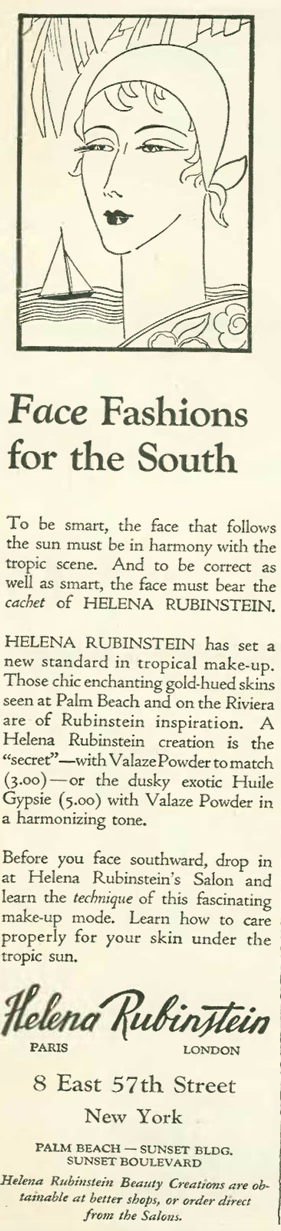
…and if you happened to be flying south, you might have first checked in with Helena Rubinstein to make sure you had the right “face fashions”…

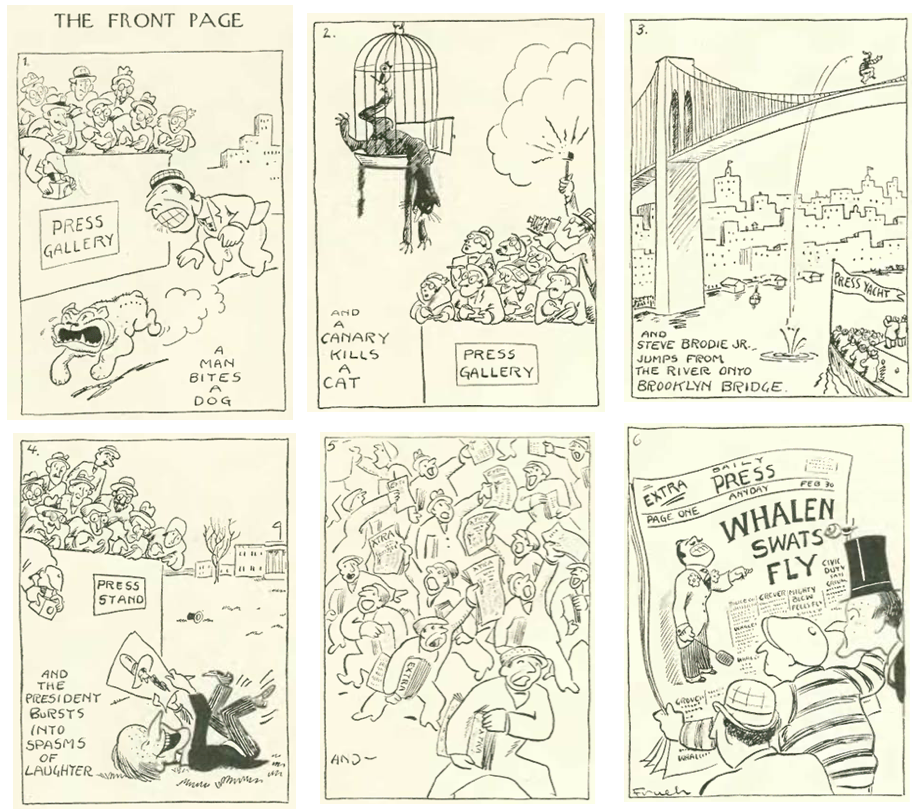
And finally our cartoons, all from the Feb. 9 issue. This first is a six-panel series by Al Frueh that originally ran diagonally, top to bottom, across a two-page spread. It took a shot at the self-promoting police commissioner, Grover Whalen, who was not a friend to the New Yorker due to his ham-fisted approach to Prohibition enforcement…

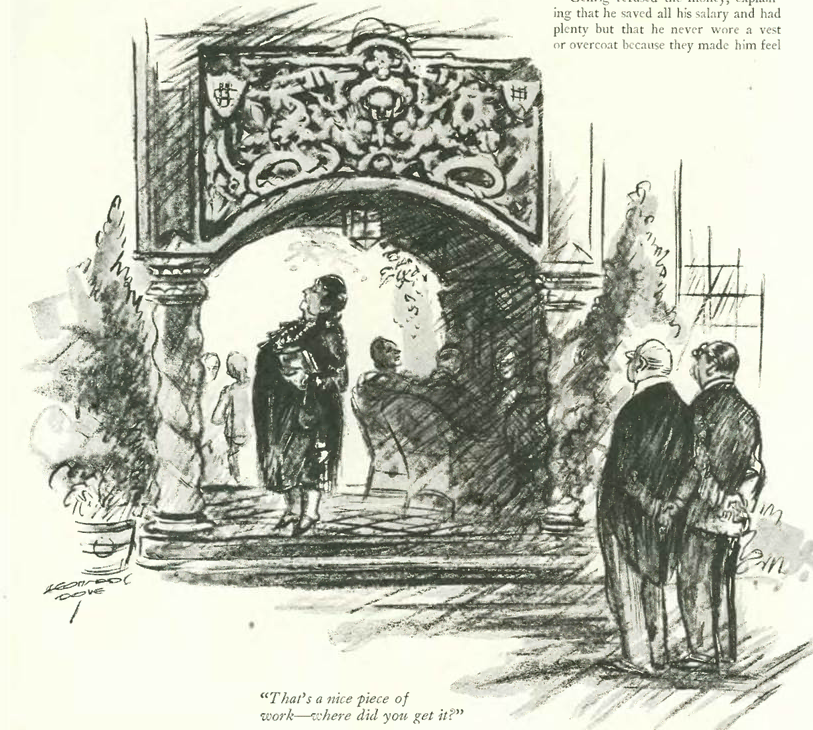
…and Leonard Dove took a shot at some posh folks outside of their urban element…

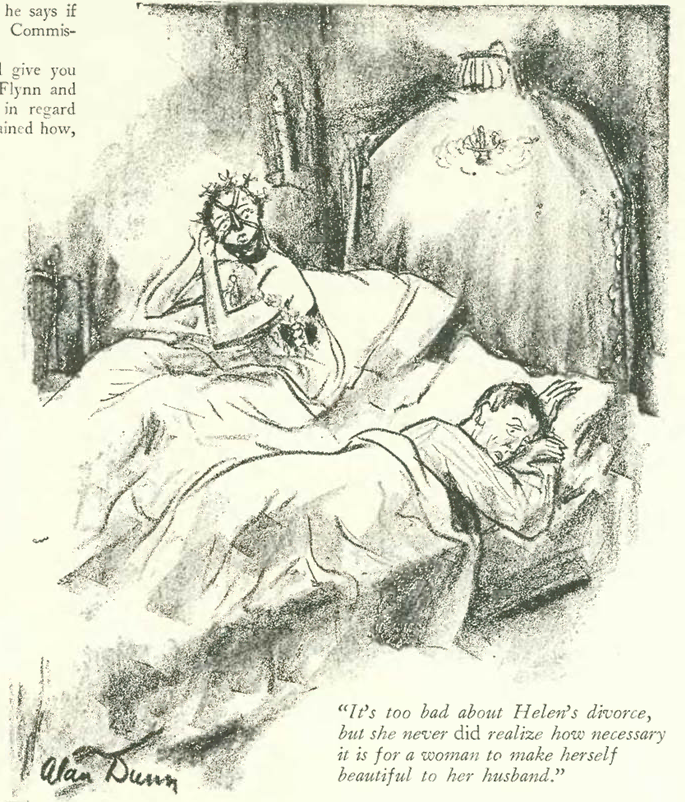
…and finally, Alan Dunn examined the wages of beauty…

Next Time: Modern English Usage…

What Santa Brought in 1928

As we sweep up the tinsel and wrappings from another holiday season, let’s take a look back at 1928 and see what the New York “smart set” wished for under the Christmas tree.

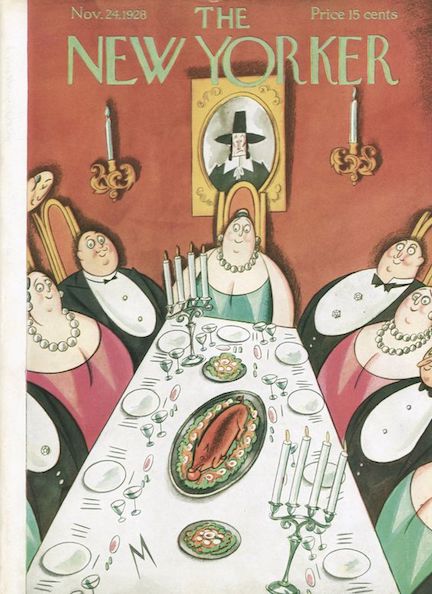
Nov. 24, 1928 cover by Julian de Miskey.

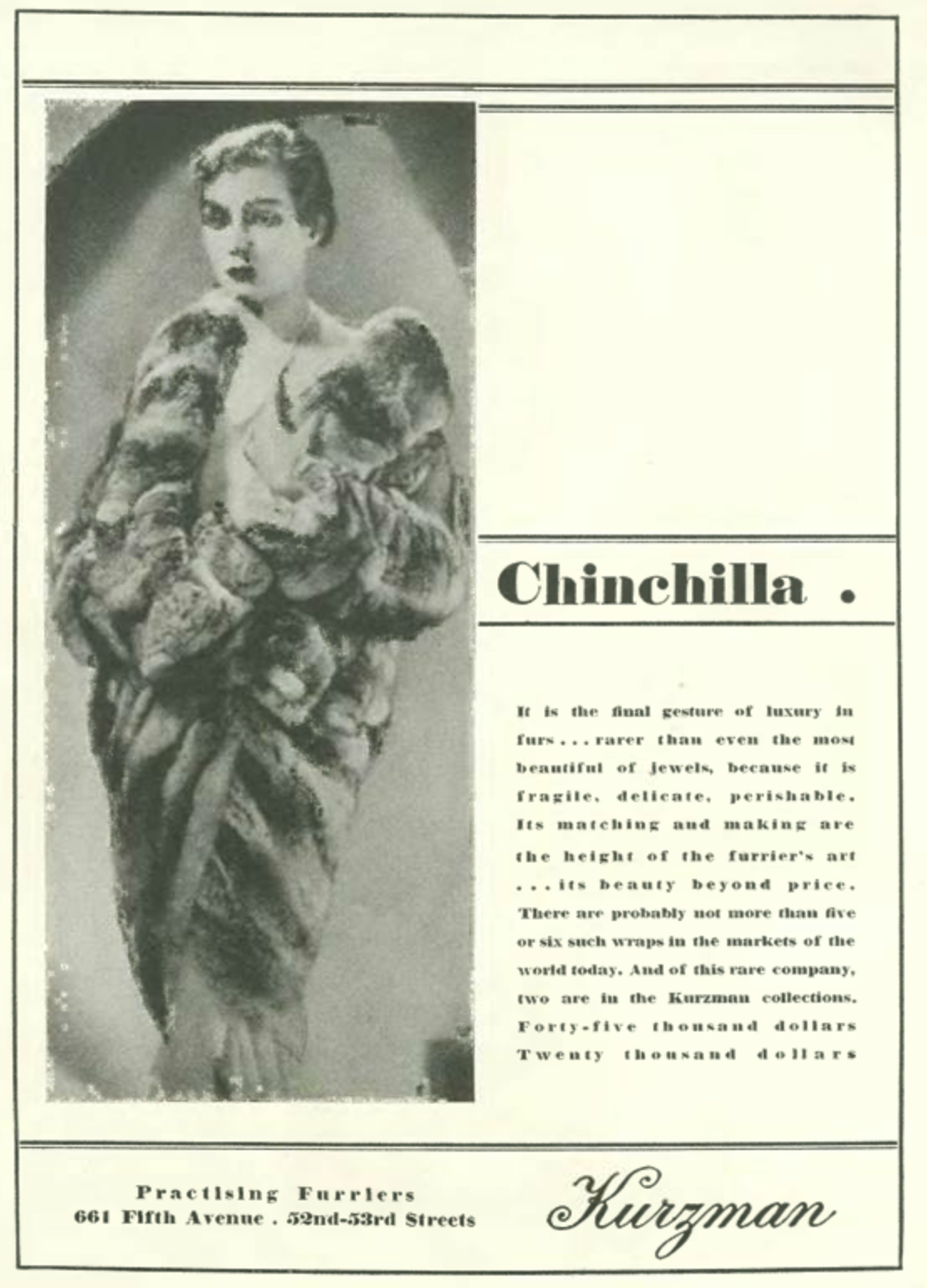
We’ll start with the outlandish, namely this advertisement from Kurzman furriers on Fifth Avenue, which offered just two rare chinchilla coats for sale, one for $45K and the other for a mere $20K. That would be roughly equivalent to $630K and $280K in 2017 dollars. Oh Santa baby…

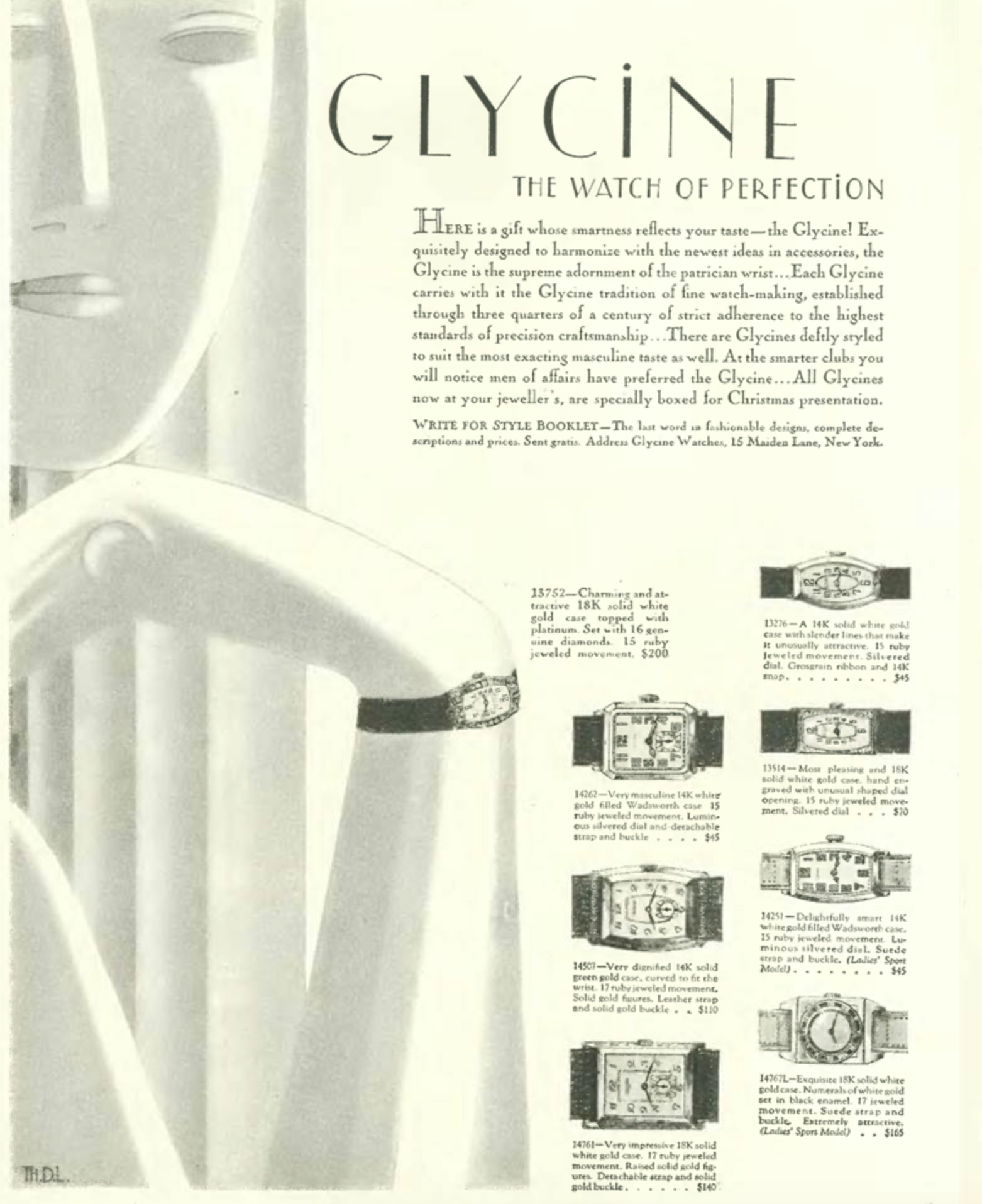
If you didn’t get the chinchilla, you could have asked for a Glycine Swiss watch, a gift “whose smartness reflects your taste”… and is “the supreme adornment of the patrician wrist.”

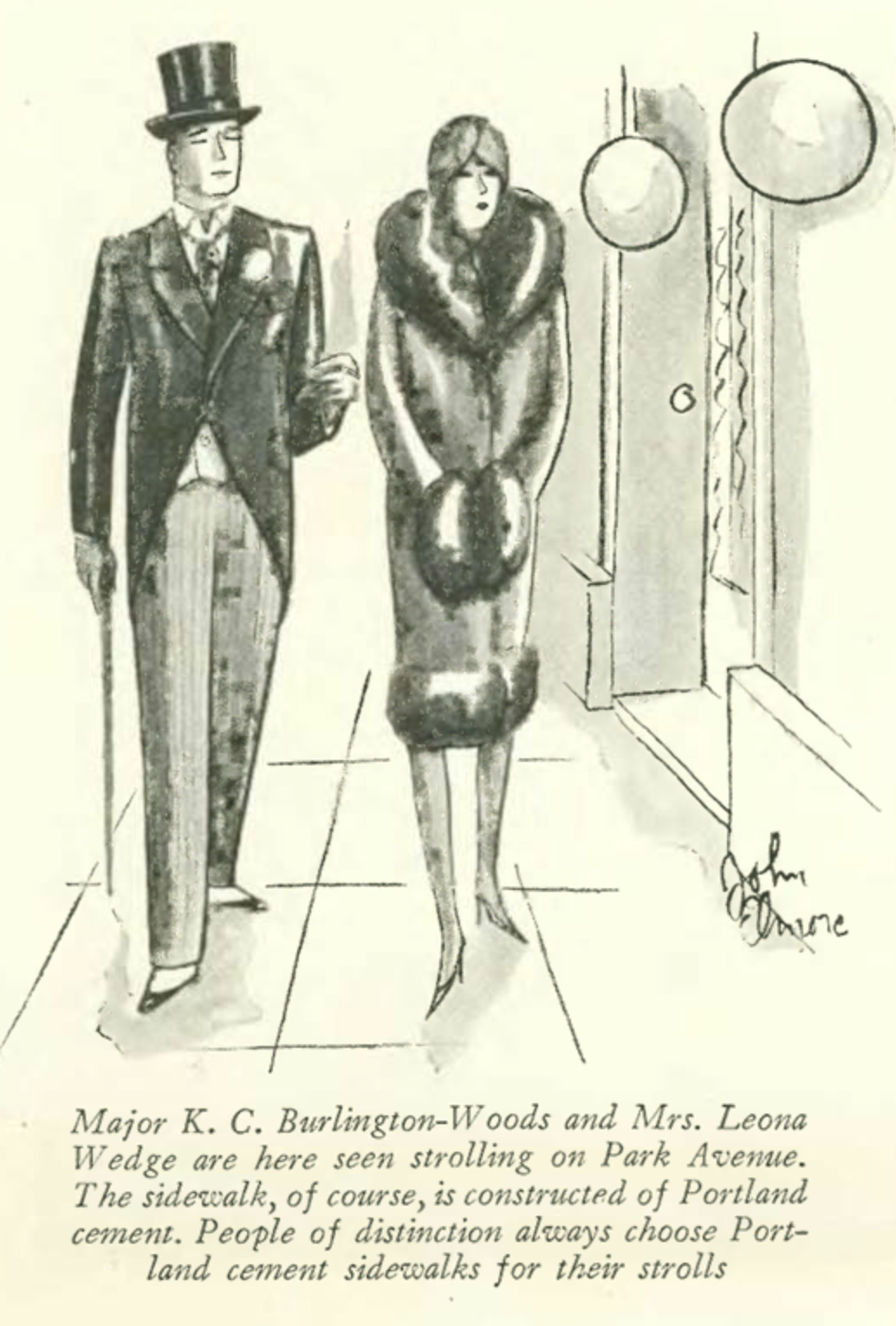
The New Yorker was filled with such ads that appealed to class pretensions, but thankfully the editorial side of the magazine mostly tweaked those pretensions, including this Nov. 24 cartoon by John Elmore:

In the following issue (Dec. 1), Elmore also contributed this unsigned cartoon (thanks to Michael Maslin’s invaluable Ink Spill blog for the identification):

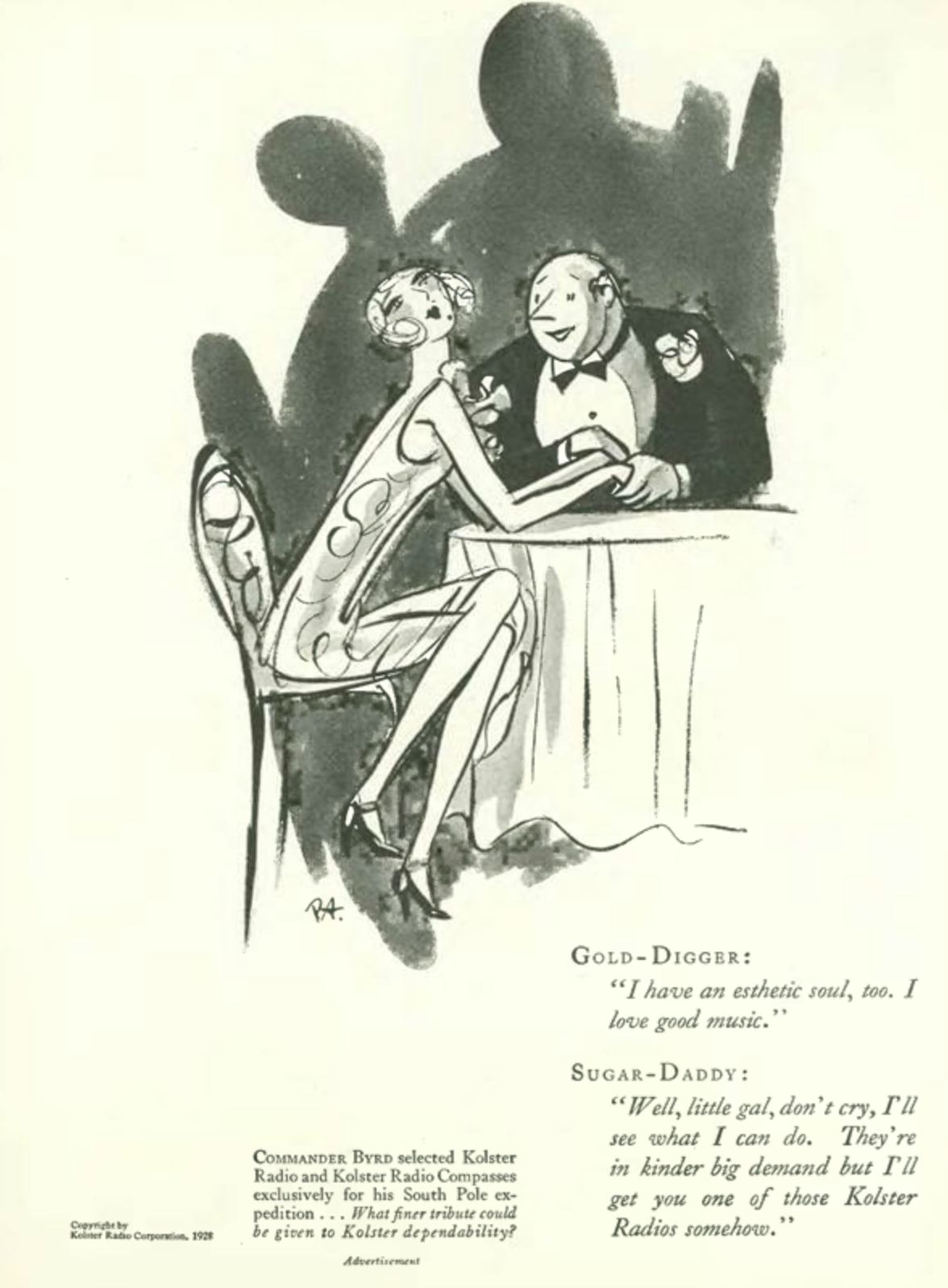
Back to the ads for Nov. 24, Kolster Radio continued its series featuring illustrations by New Yorker cartoonist Peter Arno, this one borrowing from his familiar themes featuring gold-diggers and sugar daddies…

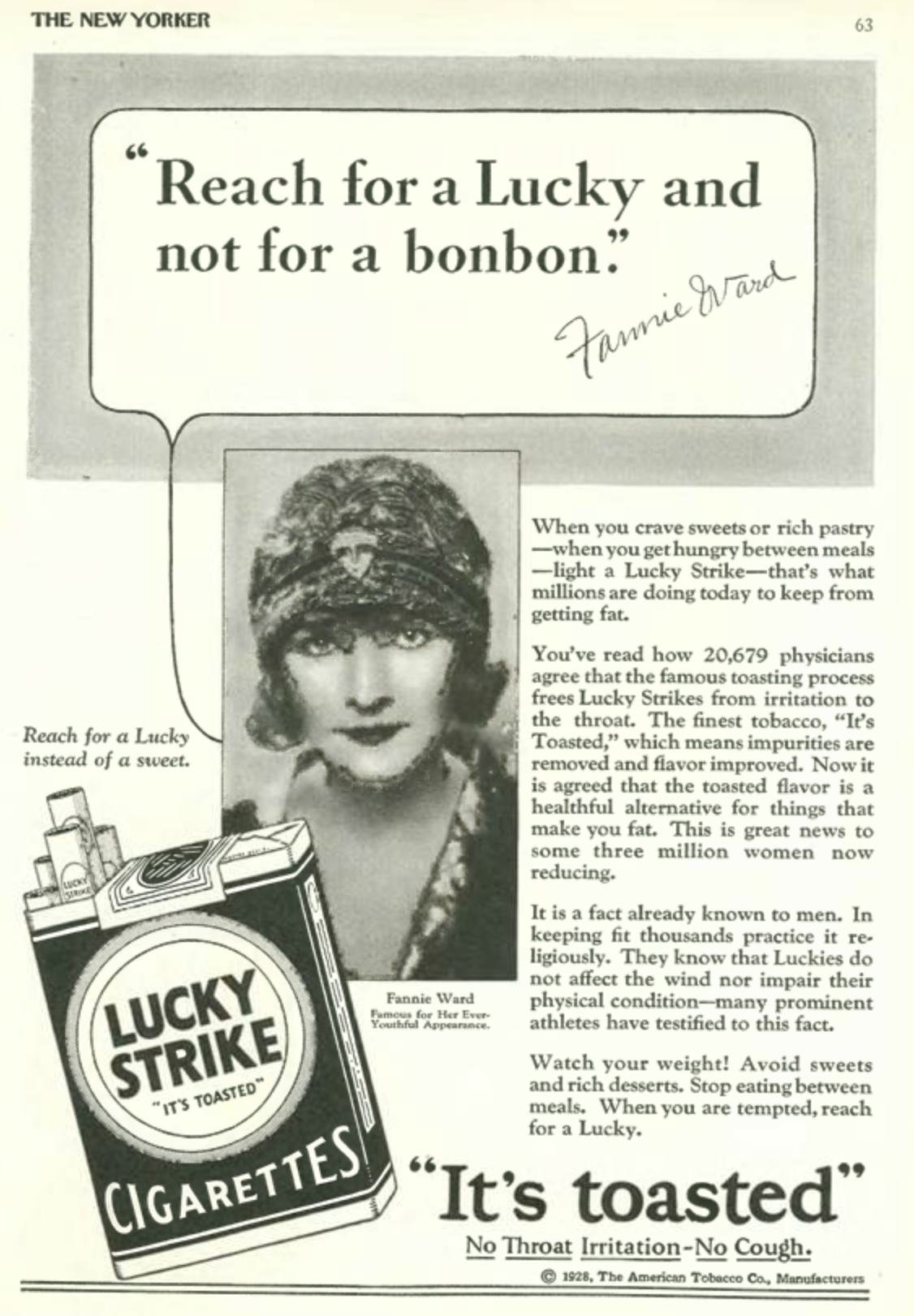
…and 56-year-old stage and silent film actress Fannie Ward offered proof that lighting up a Lucky could keep you slim and youthful. Whether or not she actually smoked the things, Ward was indeed best known for her seemingly ageless appearance.

Our cartoons from Nov. 24 issue are courtesy of Arno…

…and Helen Hokinson

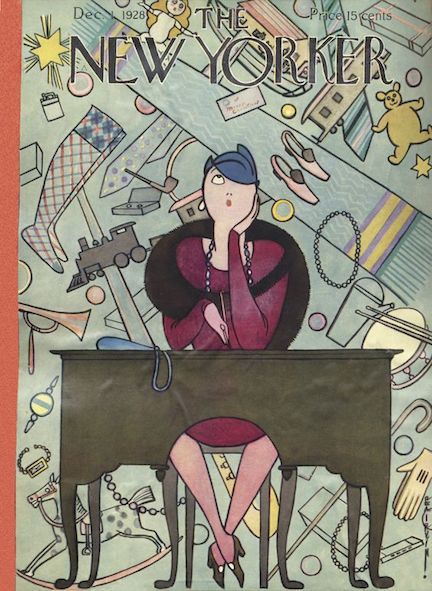
We continue our Christmas wish list with the Dec. 1, 1928 issue…

Dec. 1, 1928 cover by Rea Irvin.

Regarding gifts for her, how about some fine French perfume, “originally created for the exclusive use of one of the present Nobility of France” (apparently a person descended from the line that managed to keep their heads attached to their necks)…

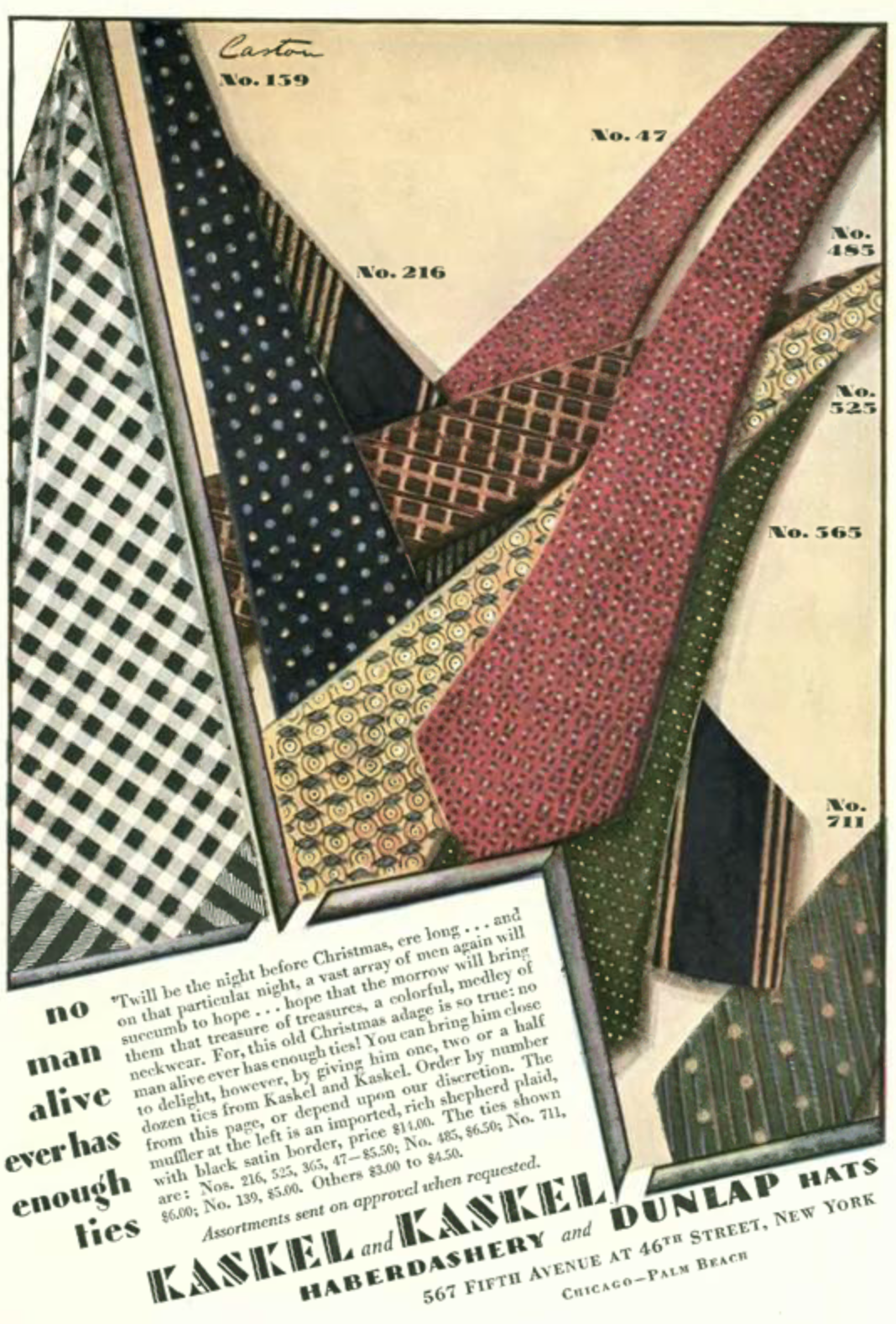
…and for him, the ubiquitous Christmas necktie, with a choice of patterns that would still serve him well in 2018…

Your “smoking friends” would doubtless have appreciated a rum-infused rumidor, available in a variety of finishes and sizes…

…or you could choose from the sundries offered up by Abercrombie & Fitch (bookends appeared to be a popular item)…

…and finally, for that special, anal-retentive someone on your list, “Fabrikoid” covers would keep his or her periodicals neat and tidy (note the New Yorker is conspicuously missing here).

Note: Fabrikoid “was one of DuPont’s first non-explosives products. Produced by coating fabric with nitrocellulose (yep, basically the same flammable stuff silent films were printed on) and marketed as artificial leather, Fabrikoid was widely used in upholstery, luggage and bookbindings during the early 20th century. In the 1920s, Fabrikoid became the preferred material for automobile convertible tops and seat covers” (text from www2.dupont.com).

 * * *

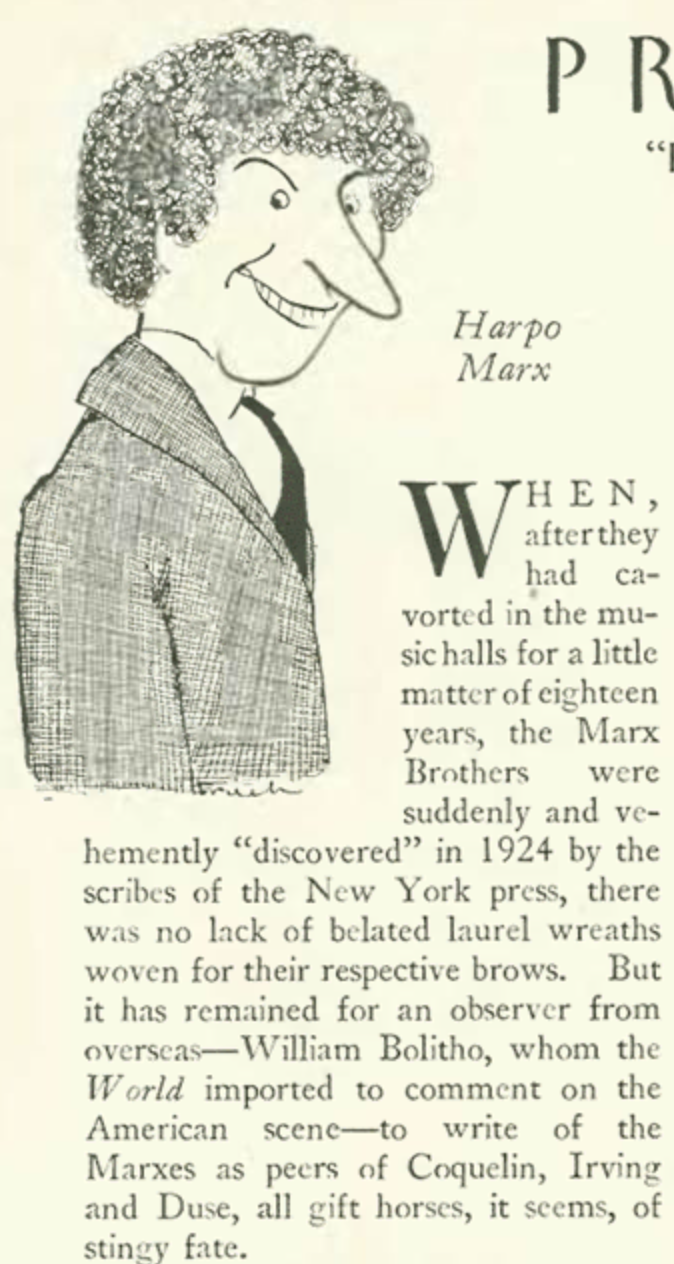
Despite the holidays, there was still news to be reported. The Nov. 24 issue profiled violinist Fritz Kreisler, while the Dec. 1 edition featured a profile of Harpo Marx, written by his fellow Algonquin Round Tabler Alexander Woollcott. Two brief excerpts:

In this next excerpt, it is interesting to note that Woollcott couldn’t see ahead to the huge success in film that awaited Harpo Marx and his brothers. Just eight months after Woollcott’s profile, the Marx Brothers would premiere their first film, The Cocoanuts, and continue to draw on material from their vaudeville and Broadway days to produce a string a comedy hits throughout the 1930s and 40s.

In other news from the Dec. 1 issue, Frank Sullivan grumbled about the recent election of President Herbert Hoover and the state of politics in general, echoing the general sentiment of his New Yorker colleagues in dismissing the national elections as little more than silly sideshow. Two excerpts:

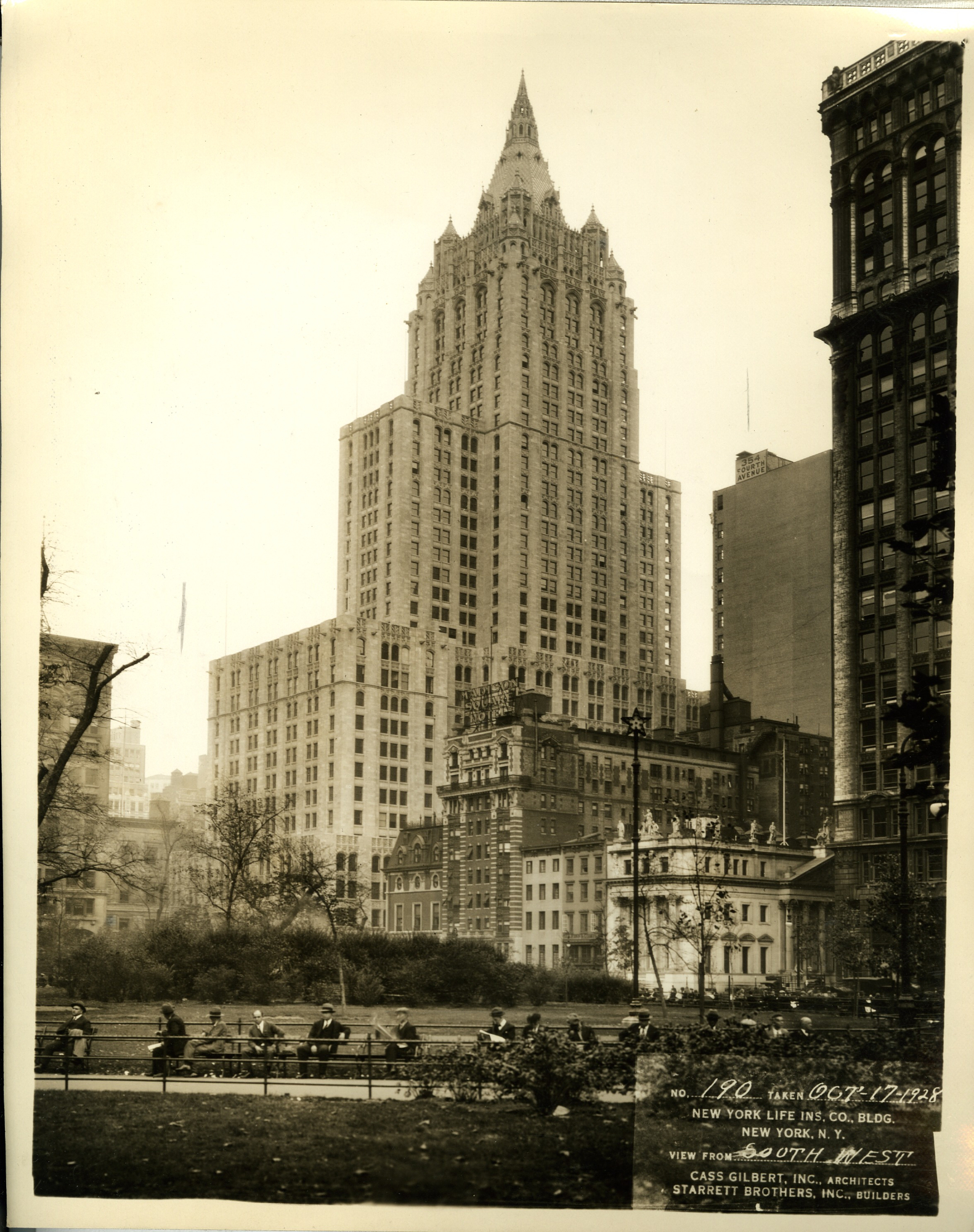
The New Yorker was less pessimistic when it came to the changing skyline, and was almost giddy at times about the latest technology seemingly transforming the city overnight. This time it was the gilded New York Life Insurance tower, and its impressive pneumatic tube system:

THINGS ARE LOOKING UP…Cass Gilbert’s newly completed New York Life Insurance Building in 1928. (Smithsonian)

 *  *  *

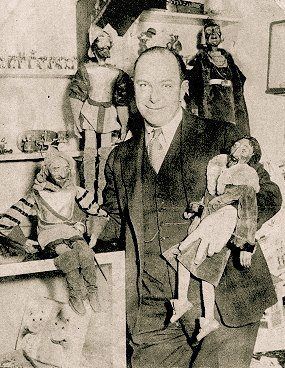
And to close, some more holiday offerings, this time for the kiddies, from Macy’s Department Store, as reported by writer Bertram Bloch:

The Macy’s Christmas window display in 1928 featured the Tony Sarg marionettes in a tableau based on The Adventures of Christopher Columbus. (Pinterest)
SUPER SOAKER…With this 1928 sit ‘n ride toy, junior could hose down the living room thanks to its large water tank and hand crank-operated water tower. (collector.com)

Next Time: Out of the Mouth of Babes…

Dorothy Parker Goes to the Movies

Dorothy Parker turned her jaded eye to the latest big thing — talking pictures — and in the Sept. 1, 1928 issue she joined her New Yorker colleagues in a collective yawn at the technology that was dramatically transforming cinema.

Sept. 1, 1928 cover by Helen Hokinson.

In a feature titled “Out of the Silence,” Parker mused about the changes facing former silent stars…

…and seemed unconvinced that the talking pictures, at least to date, were any real improvement over the silents, including a performance by her Algonquin Round Table pal and New Yorker colleague Robert Benchley, who seemed but a talking simulacrum:

HIS SCREEN VERSION…Robert Benchley delivers his comedy sketch The Treasurer’s Report in a short 1928 Movietone film. Benchley portrayed a nervous assistant treasurer struggling to present an organization’s yearly report. (YouTube screen shot)

Parker attended a matinee at a jam-packed Warner Theatre, where folks paid a dollar apiece for standing room only to witness a series of shorts and a feature-length film, all presented with sound:


One of the shorts featured a performance by female impersonator George Francis Peduzzi, known professionally as Karyl Norman, “The Creole Fashion Plate,” followed by a performance from violinist Albert Spaulding:

WHAT A DRAG…Dorothy Parker was underwhelmed by Karyl Norman’s performance in a Vitaphone short. He is pictured here in a 1924 publicity photo, dressed as “The Creole Fashion Plate.” (queermusicheritage.com)

What Parker was subjecting herself to was the Vitaphone Varieties, described by North Carolina Museum of Art film curator Laura Boyes as “the last gasps of vaudeville.”

Boyes writes that many vaudevillians stepped off the stage to immortalize their acts on film in the early days of the talkies. They were produced in Brooklyn between 1927 and 1929 using the Vitaphone method (large recorded discs synchronized with the film) “at a time when the major studios hoped that the talkies were just a passing fad.” She notes that “talkies would eventually put this style of theater completely out of business, and Vitaphone shorts literally became the place where Vaudeville went to die. Many of the people in these short films were obscure at the time, and they are doubly obscure now.”

As for the main feature, The Terror, the only terror Parker felt was the fear of being bored to death:

SOUND AND FURY, SIGNIFYING NOTHING…Dorothy Parker found The Terror to be unexciting, its sound effects a “racket.” But for the record, it was the first all-talking horror film. (IMDB)

Parker concluded that “talking pictures are marvels of invention,” but “a bad show is a bad show, synchronize it how you will.”

Coming of Age in Samoa

Social critic and humorist Baird Leonard took the honors as book reviewer for the Sept. 1 issue, offering a brief, humorous endorsement of Margaret Mead’s landmark Coming of Age in Samoa, in which the famed anthropologist explored the link between culture and psychosexual development among the island’s adolescents. Leonard found much to like about the book, and particularly Mead’s observations on the separation of youth from adult activities in Samoan culture (it would enhance his bridge-playing enjoyment):

GOING NATIVE…Margaret Mead sitting between two Samoan girls, ca. 1926. (Library of Congress).

 *  *  *

Writer Cameron Rogers profiled American sculptor Paul Manship, who was an important contributor to Art Deco style, and is perhaps best known for his iconic Prometheus sculpture at Rockefeller Center in New York. Rogers made these closing observations about Manship, noting that the artist’s success netted him about $60,000 a year — close to $850,000 today (These days, someone like showman/artist Jeff Koons, who makes giant shiny balloon animal sculptures, among other things, has a net worth of at least $100 million).

PROMETHEUS, gilded cast bronze by Paul Manship, 1934, at Rockefeller Center. (Encyclopedia Britannica)

 *  *  *

From Our Advertisers

I find it interesting when one magazine advertises in another, especially when an older magazine like the Outlook (founded in 1893) advertises in an upstart like The New Yorker. But then again, the publishers of the Outlook were looking to breathe new life into their stodgy journal, and what better way than to announce that their “conservative girl” was now a modern, grown-up woman with a new Jazz Age look and an attitude to match. And it was no coincidence that they hired The New Yorker’s Rea Irvin to illustrate their point.

OUTLOOK magazine was first published as The Christian Union in 1870, changing its name to Outlook in 1893 when it shifted its focus from religious subjects to social and political issues. The magazine folded in 1935. (Pinterest)

 *  *  *

Our cartoon is by Peter Arno, who continued to explore the lighter moments of New York night life…

Next Time: Mussolini’s Romance Novel…


Beyond 96th Street

The New Yorker stepped out of its Manhattan offices at 25 West 45th Street and headed north to see what lay beyond 96th Street and Park Avenue, to “a land on to which realtors may not push.”

July 21, 1928 cover by Julian de Miskey; July 28, 1928 cover by Helen Hokinson.

In the early to mid 20th century, 96th street represented a real dividing line across Park Avenue, separating Manhattan from the “frontier” to the north. Although developers have since breached this line (particularly beginning in the 1980s), back in 1928 it truly marked an end of sorts to Park Avenue—even the paving ran out by 102nd Street. The July 28, 1928 “Talk of the Town” observed:

FRONTIER NO MORE…Aerial view of Park Avenue from 96th Street (the X at bottom left) all the way past 132nd Street, where Park Avenue joins Harlem River Drive. The ‘X’ at the upper right hand corner marks the former location of Gus Hill’s Minstrels (mentioned in the article) at 129th and Park Avenue. (Google Maps) Click on image to enlarge

Beyond 96th a vast pushcart market was discovered to be operating under the elevated railroad tracks, while further on toward the Harlem River there were factories, coal yards, and a shuttered theatre:

NEAR THE END OF THE LINE…The Gus Hill’s Minstrels building at the corner at East 129th and Park Avenue, facing the elevated train tracks. There was an auto garage at the lower floor. The “Minstrels” were long gone by the time the photo was taken, in 1935, by Berenice Abbott. (Museum of the City of New York)
ONLY A GHOST…The former site of Gus Hill’s Minstrels, at the corner at East 129th and Park Avenue, now occupied by a filling station. (Google Maps)
SOARING…The Park Avenue elevated railroad tracks in Harlem east of 96th Street created vast covered spaces frequented by pushcart vendors. (nyc-architecture)
UP THE RIVER…A houseboat colony near a coal yard at 208th Street by the Harlem River, 1933. (myinwood.net)

 *  *  *

Sport of Lords and Ladies

The New Yorker’s sportswriter John Tunis paid a visit to the 1928 Wimbledon tennis tournament, where he took in a scene that included several celebrities:

FACES IN THE CROWD at the 1928 Wimbledon included clockwise, from top left, the tournament’s singles champions Helen Wills Moody and René LaCoste; and spectators such as actress Tallulah Bankhead and Lady Diana Duff Cooper. (Wills Moody image from 1928 courtesy National Portrait Gallery, London; circa 1930 Bankhead image, Alchetron; Lady Diana image dated 1931, (UK National Portrait Gallery); and LaCoste photo taken after he won the men’s singles title at the 1928 Wimbledon, bltimes.com)

*  *  *

From Our Advertisers

The July 28 issue included yet another Dr. Seuss-illustrated ad for Flit insecticide. No doubt Seuss would later regret such an illustration, as later in life he strongly opposed racism and supported environmental causes.

Also from the July 28 issue, a detail from a two-page illustration of baseball fans at the Polo Grounds by Constantin Alajalov, which appeared in “The Talk of the Town” section:

 *  *  *

From Our Advertisers, Part II:

Jumping back an issue, to July 21, 1928, we find tennis great (and sometime film actor) Big Bill Tilden hawking the toasted pleasures of Lucky Strike cigarettes on the magazine’s back cover:

As I’ve noted before, many New Yorker ads appealed to the Anglophilic pretensions of its striving readershship. This one below from Saks is a particularly egregious example…

…other social strivers could look to the example of these society matrons who picked up some spare cash shilling for Old Gold cigarettes…

I close with a couple of cartoons from the July 21 issue by Barbara Shermund and Peter Arno:

Next Time: (Another) Fight of the Century…

A 100 Percent Talker

Lights of New York would be a forgettable film if not for the fact it was the world’s first 100 percent talking motion picture. Yes, it was a bad film, but…

July 14, 1928 cover by Leonard Dove.

…even the July 14, 1928 New Yorker had the foresight to note that the film was destined to be a “museum piece.” Despite the corny plot and bad acting, the magazine’s critic “O.C.” had to concede that the film offered proof that sound would improve the motion picture experience.

Theatre Card for Lights of New York. (untappedcities.com)
MAKING SOME NOISE…Helene Costello with a cast of nightclub dancers in Lights of New York. (vintage45.wordpress.com)

The Jazz Singer (1927) launched a “talkie revolution” that would culminate nine months later in Lights of New York, and by the end of 1929 Hollywood was almost exclusively making sound films. But studios still released silent films into the 1930s, since not every theatre in the country was wired for sound.

The New Yorker had been slow to embrace sound in motion pictures (see my previous posts). What helped to win them over was the further refinement of the Movietone process, in which the sound track was printed directly onto the film strip (The Jazz Singer used Vitaphone, which essentially synched a record player with a film and provided a sporadic rather than continuous sound track).

In the same issue, writer Robert Benchley also predicted (in “The Talk of the Town”) that sound in movies would challenge actors whose voices weren’t as attractive as their screen images:

IT’S COMPLICATED…It is a common assumption that sound motion pictures killed the careers of many silent stars, however big names like John Gilbert (left) and Clara Bow left the pictures for other reasons. Studio politics ended Gilbert’s career, and he drank himself to death by 1936. Bow—famously known as the “It Girl,”—made a few sound pictures, but retired from acting in 1931 to become a Nevada rancher. (Wikipedia)
SILENCED…Some silent actors such as Wallace Beery (left), were sidelined not because of their voices but because of their high salaries. On the other hand Raymond Griffith (right), who made only one sound movie, spoke with a hoarse whisper not suited for the talkies. (Wikipedia / silentfilmstillarchive.com)

The New Yorker also noted that sound pictures would prove to a great “bonanza” to voice teachers:

Transition to sound in the late 1920s would later provide the theme for the 1952 musical Singin’ In The Rain, in which Jean Hagen portrayed silent film star Lina Lamont, whose voice was ill-suited for talking pictures. 

SAY WHAT?…Actress Lina Lamont (Jean Hagen) tries the patience of her director (Chet Brandenburg) while her co-star (Gene Kelly) looks on. The scene demonstrated the challenges of acclimating former silent stars (like Lina Lamont, whose voice sounded like squeaky hinge) to “talking pictures.” (MGM/YouTube Movieclips)

The New Yorker also noted that the advent of sound in motion pictures would put an end to many theatres operating on the vaudeville  circuit:

In his regular column, “Of All Things,” Howard Brubaker gave his two cents about the new world of talking movies:

Paving Over Paradise

The July 14 “Talk of the Town” offered more bittersweet commentary on the city’s rapidly changing landscape. This time it was a famous stretch of lawns on West 23rd Street—London Terrace— that were being uprooted to make way for a massive new apartment block:

According to Tom Miller (writing for his blog Daytonian in Manhattan), Clement Moore, the writer to whom “A Visit from St. Nicholas” (“The Night Before Christmas”) “had developed the block when he divided up his family estate, ‘Chelsea.’ On the 23rd Street block, in 1845, he commissioned Alexander Jackson Davis to design 36 elegant Greek Revival brownstone townhouses. The row was designed to appear as a single, uniform structure or ‘terrace’ (a design not lost on The New Yorker). Unusual for Manhattan, each had deep front yards planted with shrubbery and trees. He called his development ‘London Terrace.'”

A BIT O’ GREEN…London Terrace, circa 1920. (ephemeralnewyork)

By October 1929, writes Miller, “a few weeks before the collapse of the stock market and the onset of the Great Depression, (developer Henry Mandel) had acquired and demolished all the structures on the enormous block of land. All except for Tillie Hart’s house. Hart leased 429 West 23rd Street and, although her lease had legally expired, she refused to leave, firing a barrage of bricks and rocks at anyone who approached the sole-surviving house. A court battle ensued while she barricaded herself inside. Finally, just four days before Black Tuesday, sheriffs gained entry and moved all of Hart’s things onto the street. She held out one more night, sleeping on newspapers in her once-grand bedroom, then gave up. The following day her house was destroyed.”

IT’S YUGE…Farrar & Watmough designed this massive, Tuscan-inspired apartment block, completed during 1930-31. The developer Henry Mandel, kept the site’s original name, London Terrace. (ephemeralnewyork)

Miller writes, “to describe the new London Terrace was to use superlatives. Consuming the entire city block, it was the largest apartment building in the world with 1,665 apartments. It boasted the largest swimming pool in the city – 75 feet by 35 feet, with mosaic walls and viewing balconies. Twenty-one stories above the street a “marine deck” was designed to mimic that of a luxury ocean liner. It had a fully-equipped gymnasium, a recreation club, a rooftop children’s play yard with professional supervisors, and a large dining room. The doormen were dressed as London bobbies.”

STILL THERE…London Terrace today. (Brick Underground)

 *  *  *

In other diversions, Isadore Klein looked askew at the latest headlines, namely the big fight between Gene Tunney and Tom Heeney, one of the 20th century’s many “battles of the century”…

…while Helen Hokinson, on the other hand, offered some sketches of seafaring life…

…and looked in on the challenges of buying a hat…


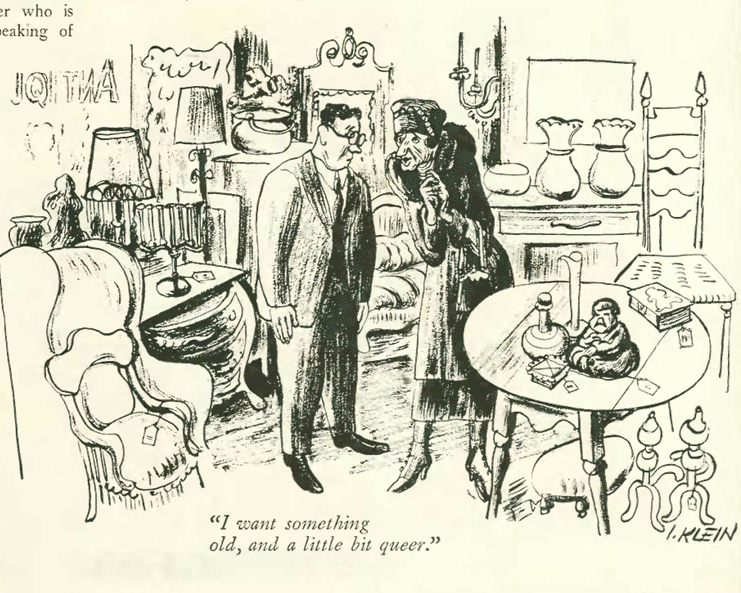
And to close, a cartoon by Leonard Dove

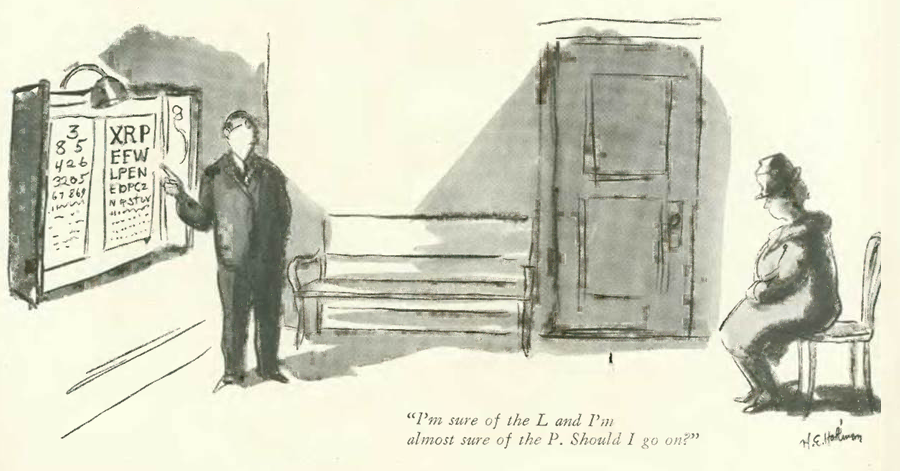
…that referenced ads such as this one from the June 2, 1928 issue…

…and a comedy of manners, courtesy Peter Arno

Next Time: Beyond 96th Street…

Summer Breeze

In the days before air conditioning, summertime city dwellers escaped the heat by fleeing to the countryside or the coast, or, if they lacked the time or the means, by taking their dining and dancing to one of Gotham’s breezy rooftop nightclubs.

June 30, 1928 cover by Helen Hokinson.

In her column “Tables for Two,” nightlife correspondent Lois Long welcomed the addition of rooftop dining atop the St. Regis Hotel, which featured decor by the famed theatrical set designer and architect Joseph Urban:

The St. Regis Hotel in New York City. (StreetEasy)

Illustrations by Alice Harvey (in the July 7, 1928 issue) depicted diners and dancers on the St. Regis rooftop…

“DISDAINFUL ROOSTERS” looked down upon diners from Joseph Urban’s roof garden murals at the St. Regis. At right, Urban in 1920. Urban was right at home at the St. Regis, and even died there in 1933 after suffering a heart attack in his apartment. (artcontrarian.blogspot.com / Columbia University, Butler Rare Book and Manuscript Library)
CONTINENTAL INSPIRATION…Joseph Urban’s 1928 design for the Roof Garden at the Hotel Gibson in Cincinnati, Ohio, was inspired by 19th century European pleasure gardens. (Cooper Hewitt)

Long also fondly recalled a “comic waiter” who entertained patrons of another popular rooftop destination, The Cascades atop the Strand:

CASCADES…A 1920s postcard image of the Strand’s rooftop dining room, known as “The Cascades.” The room once featured a comical waiter who entertained diners with various gags and pratfalls. (thejumpingfrog.com)

 *  *  *

The June 30 issue featured a Profile of cosmetics entrepreneur Helena Rubinstein, who began her cosmetics empire with a dozen jars of face cream. Writer Jo Sterling described a businesswoman of limitless energy whose habits could be described as restless and haphazard but also revealed a woman of great generosity. Sterling noted that this woman of great wealth and a renowned collector of fine art and other rare objects preferred riding the bus to owning an automobile (illustration by Hugo Gellert).

IT STARTED WITH A DOZEN JARS OF FACE CREAM…Polish American businesswoman, art collector, and philanthropist Helena Rubenstein in the 1920s. (Womanology)

*  *  *

Portents of War (to be continued…)

In the Roaring Twenties most believed the Great War was indeed the “War to End All Wars,” so when militarism was clearly on the rise in Shōwa Japan few took it seriously, including New Yorker cartoonist Al Fruh:

On the lighter side, Peter Arno offered up his take on a cinematic love scene:

Next Time: A Familiar Ring…

Man About Town

When Jimmy Walker was elected mayor of New York City in 1926, the city finally had a leader that matched the mood of the times. A dapper lover of music and nightlife, he openly took a Ziegfield dancer as his mistress, often fled the city for European vacations, and was known to begin meetings with the pop of a Champagne cork.

May 19, 1928 cover by Ilonka Karasz.

No doubt many New Yorker readers liked the Jazz Age spirit of their mayor, and who really cared about his “accomplishments” as long as the city continued to boom and its smart set continued to prosper? E.B. White, writing for the magazine’s “The Talk of the Town,” concluded as much:

LIGHTS, CAMERA, ACTION!…Mayor Jimmy Walker accompanies actress Colleen Moore to the October 1928 premiere of her latest film, Lilac Time. (konreioldnewyork.blogspot.com)
QUEEN FOR A DAY…Mayor Walker (in top hat) welcomes Queen Marie of Romania on the steps of City Hall in October 1926. Huge and enthusiastic crowds braved the rain to welcome the queen to the city. (Acme Newspapers)
GOOD SPORT…Mayor Walker presides over the first shot in the city’s annual marble tournament on June 3, 1928. (New York Times)

 *  *  *

Remembrance of Things Past

Although The New Yorker embraced the spirit imbued in the city’s rapidly changing skyline, there was always a tinge of regret when landmarks fell to wrecking balls and the city erased its past faster than one could comprehend. And so the magazine was a strong and early supporter of the establishment of the Museum of the City of New York, founded in 1923 and housed in Gracie Mansion (now the mayor’s official residence) until a permanent, neo-Georgian-style museum was finally erected in 1929-30 on Fifth Avenue between 103rd and 104th streets.

KEEPING TIME…Museum of the City of New York. (Wikipedia)

 *  *  *

No Beer Left to Cry In

As the Museum of the City of New York scrambled to preserve a past that was quickly being erased across Manhattan, another venerable institution prepared to close its doors for good—Allaire’s Scheffel Hall—which in its heyday was a favorite watering hole of artists, musicians, and writers including Stephen Crane. Allaire’s, located in a Gramercy Park neighborhood known as Kleindeutschland, or “Little Germany,” was the latest victim of Prohibition; it was, after all, hard to run a beer hall without the beer.

SIGN OF THE TIMES…Scheffel Hall at 190 Third Avenue. It was designated a New York City landmark in 1997. (Wikipedia)

 *  *  *

The “Talk of the Town” had its usual bits and pieces of happenings in the city, including this mild jab at the rather staid New York Times:

KEEPING IT DECENT…The actress Betty Starbuck, detail of a photo by Edward Steichen, circa 1930. (CondeNast)

 *  *  *

Silent film star Buster Keaton’s latest picture, Steamboat Bill, Jr., won the approval of New Yorker film critic O.C., and Keaton’s co-star Marion Byron received extra props for her “gusto”…

HANGING IN THERE…Marion Byron and Buster Keaton in 1928’s Steamboat Bill Jr. (Virtual History)

 *  *  *

Truth in Advertising

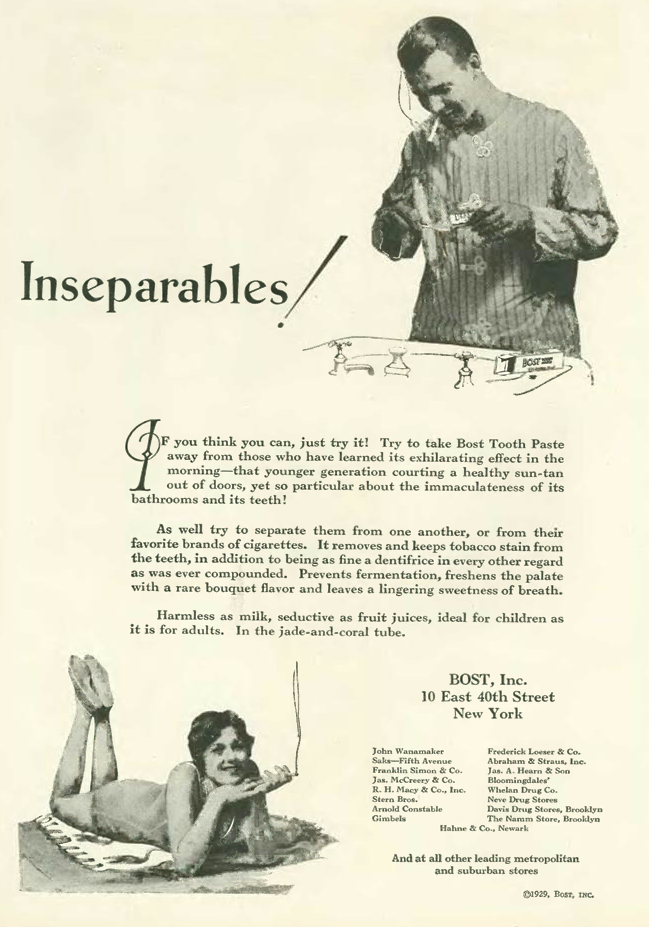
Outside of politics this is one of the most cynical uses of the word “truth” I’ve ever seen. Since the woman isn’t smoking herself, I’m guessing she is reading a letter from someone (son, daughter, boyfriend) who has learned the truth about Camels and has decided to share it in a letter. How sweet.

In 1928 color images such as the Camel ad above brightened an increasing number of New Yorker ads. Color was artfully used in a number of spots, including the left panel of this two-page ad for a new cosmetic compact…

The issue also featured this cartoon by Rea Irvin of New Yorker critic (and hypochondriac) Alexander Woollcott…

…and keeping on the literary side, this cartoon by Isadore Klein

 *  *  *

The May 26, 1928 issue the “The Talk of the Town” turned its attention to sound in motion pictures, or rather, turned its ears away from the “movie tone” sound effects becoming common in the waning days of the Silent Era.

May 26, 1928 cover by Helen Hokinson.

Everyday sounds, in particular, proved jarring to the ears of those who were accustomed to the relative quiet of silent movies:

“Talk” also looked in on the writer Thornton Wilder, who was planning to summer in Europe with his friend, the literary-minded boxer Gene Tunney.

REFLECTING GLORY…Thornton Wilder returning to the U.S. on the S.S. Britannic, 1935. (thorntonwilder.com)

 *  *  *

More Truth in Advertising

The manufacturers of Old Gold cigarettes were also in pursuit of the truth in this ad featured in the May 26 issue, backing up the claim with a “blindfold test” on none other than the daughter of J. P. Morgan…

Deception in advertising wasn’t limited to cigarettes, however. The makers of Lysol had their own nefarious scheme that shamed women into using their product as a form of birth control (referred to in the ad below with the euphemism “feminine hygiene”). Not only was it ineffective as a contraceptive, it was also corrosive to one’s privates.

The ad is also appalling for casting the responsibility for birth control entirely on the woman. But then again, where are we today?

On to other questionable health pursuits, this ad in the May 26 issue touted the “radio-active waters” of Glen Springs, a hotel and sanatorium located above Seneca Lake in New York. Searching for oil on the site in late 19th century, the owners struck not black gold but rather a black, briny water that they claimed had greater curative powers than those found in Germany’s famed Nauheim Springs.

Why they called the waters “radio-active” escapes me. There were a lot of quack medical cures floating around in the 1920s—some of them quite dangerous—so I’m guessing that the proprietors of Glen Springs were adding radium to the water in some of their treatments, or maybe just claiming that radium was present in the water. Although Marie Curie (a pioneering researcher on radioactivity) and others protested against radiation therapies, a number of corporations and physicians marketed radioactive substances as miracle cure-alls, including radium enema treatments and radium-containing water tonics.

The Glen Springs Hotel at Watkins Glen, NY. It remained a noted landmark of the area until it was demolished in 1996. (nyfalls.com)

 *  *  *

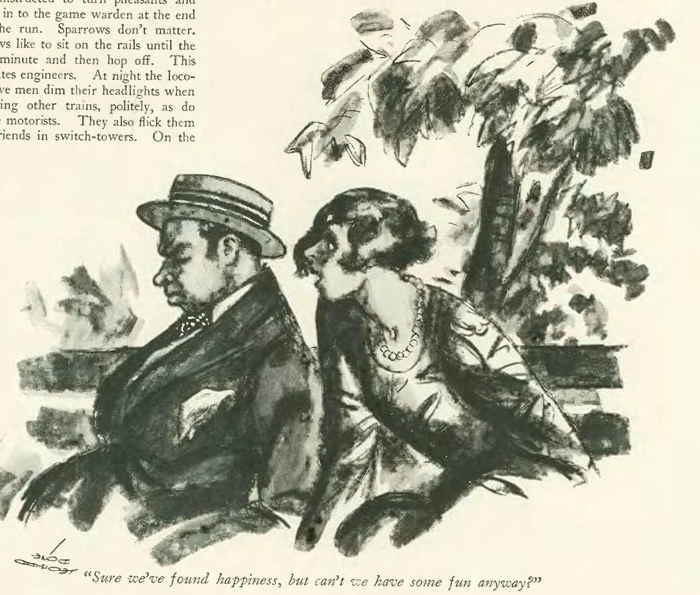
And finally, our cartoons for the May 26 issue, in which Barbara Shermund and Peter Arno explore the ups and downs of courtship…

Next Time: Toward the Air…


To Bob, or Not to Bob

Perhaps no other hairstyle has a stronger link to a historical period than the “bob cut,” associated not only with the flapper lifestyle in the 1920s but with women in general who wished to signal their independence from old cultural norms that defined femininity.

March 10, 1928 cover by Ilonka Karasz.

Women in Western cultures typically wore their hair long, but in the early years of the 20th century a few women of prominence began to flout convention and wear their hair in a bobbed style, including French actress Polaire, who began wearing her hair short in the 1890s; English socialite Lady Diana Cooper, who wore her hair short as a child and continued to do so as an adult; and dancer Irene Castle, who unveiled her “Castle Bob” to Americans in 1915. By 1920 the style was all the rage.

EARLY TRENDSETTERS…From left, Lady Diana Cooper in the mid 1920s; dancer Irene Castle with her pet monkey, Rastus, in 1915; and French actress Polaire in 1910. (Cooper & Polaire photos from Library of Congress; Castle photo courtesy Wisconsin Historical Society)
AMERICAN BOBS…Perhaps the most famous bob belonged to 1920s silent film star Louise Brooks (at right, wearing the “King Tut” bob, circa 1925), who was considered the very definition of a Roaring Twenties flapper. At left, another version of the bob as worn by Anita Loos, circa 1930. Loos was a screenwriter and author who achieved great fame in the 1920s with her blockbuster comic novel Gentleman Prefer Blondes. (fashion1930s.tumblr.com / Smithsonian)

Another famous bobbed flapper of the 1920s was The New Yorker‘s own Lois Long, who wrote under the pseudonym “Lipstick” for her nightlife column “Tables For Two,” but signed her fashion column (“On and Off the Avenue”) with a simple “L.L.” Long was also a regular unsigned contributor to “The Talk of the Town,” and is credited as one The New Yorker’s early writers who gave the magazine its voice.

In the March 10, 1928 issue Long wrote in “On and Off the Avenue” about the challenges in maintaining her bobbed hairstyle:

LIFESTYLE CHANGES…Lois Long helped define the flapper lifestyle of the Jazz Age in her writing for The New Yorker. Long’s own bob evolved during the decade, from the straight boyish cut at right, circa 1925, to a “shingle style” bob at left in 1929, where she is pictured with her husband, New Yorker cartoonist Peter Arno, and their newborn daughter, Patricia. (Patricia Arno / Wikipedia)

Many women in the 1920s preferred to have a permanent wave treatment applied to their bob, which usually involved the application of high heat via a complex array of wires and hot rollers. In the March 10 issue, this ad promoted an alternative “cool method”…

…and in the March 17, 1928 issue, the Ace Comb company made a pitch to improve its market share by touting their hard rubber combs as ideal for the “ragged bob”…

…and for some further context on all things bobbed, following are some images gleaned from glamourdaze.com, including a page from a 1920s movie magazine featuring Paramount’s bobbed stars; a 1920s salon advertisement promoting bobs for all ages; and finally, a helpful reference card from the American Hairdresser, circa 1924…

 *  *  *

A New Plot for Billy Haines

William “Billy” Haines was a top male box office draw in the 1920s, and throughout the decade was typecast in a number of comic roles as a conceited baseball player (Slide, Kelly, Slide), conceited cadet (West Point), conceited football star (Brown of Harvard), conceited golfer (Spring Fever), and conceited polo player (The Smart Set). It was that last picture that left The New Yorker wanting Haines to consider taking a different approach in his next picture:

Haines would eventually escape being typecast as a wisecracking, arrogant leading man, not by choosing different roles but by quitting acting altogether in 1935. The head of MGM, Louis B. Mayer, had demanded Haines deny his gay lifestyle (which he had lived quite openly despite the times) and marry a woman for appearances. Haines went on to become a successful interior designer, with clients ranging from Joan Crawford and Gloria Swanson to Ronald and Nancy Reagan.

TYPECAST…Billy Haines (left), Eleanor Boardman and Ben Lyon in Wine of Youth, 1924. (whenwewerecool.tumblr.com)
FAN FICTION…Movie fan magazines until mid-century were tools of the major studios with portrayals of the “real lives” of stars that were nearly as fictional as their film roles. Billy Haines (upper left) was one of the Hollywood “bachelors” featured in this article from an unidentified fan magazine. (Unknown/Pinterest)

In our featured cartoon from March 10, 1928, Helen Hokinson spied on her famous spinsters passing the time with a Ouija board:

Next Time: Broadway’s Soap Stars…