As in her other films, Mae West’s character in I’m No Angel was sexually independent and unapologetically so. (Kino Lorber)
We first encountered Mae West back in 1926 when The New Yorker commented on her risqué Broadway play, Sex. Although the play was the biggest ticket in town, it eventually attracted a police raid that landed West in jail on morals charges. Sentenced to ten days for “corrupting the morals of youth,” she could have paid a fine, but for West a short stint on Welfare Island was worth its weight in publicity gold.
Oct. 14, 1933 cover by Rea Irvin.
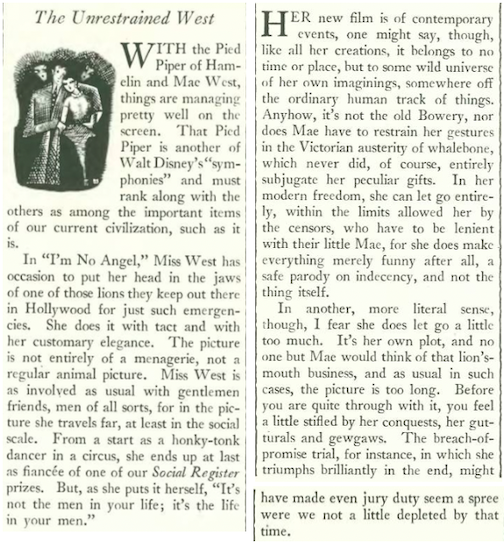
Fast forward seven years, and West is one of the nation’s biggest box office attractions and starring in her third film, I’m No Angel. Depression-era audiences responded enthusiastically to West’s portrayals of a woman from the wrong side of the tracks who in the end gains both fortune and social acceptance. Although puritanical forces continued to be outraged by West’s antics, New Yorker film critic John Mosher found her act to be “a safe parody on indecency.”
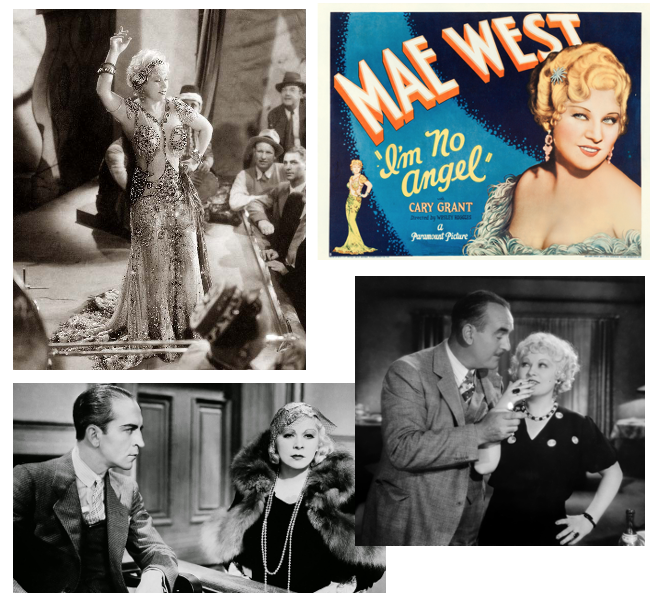
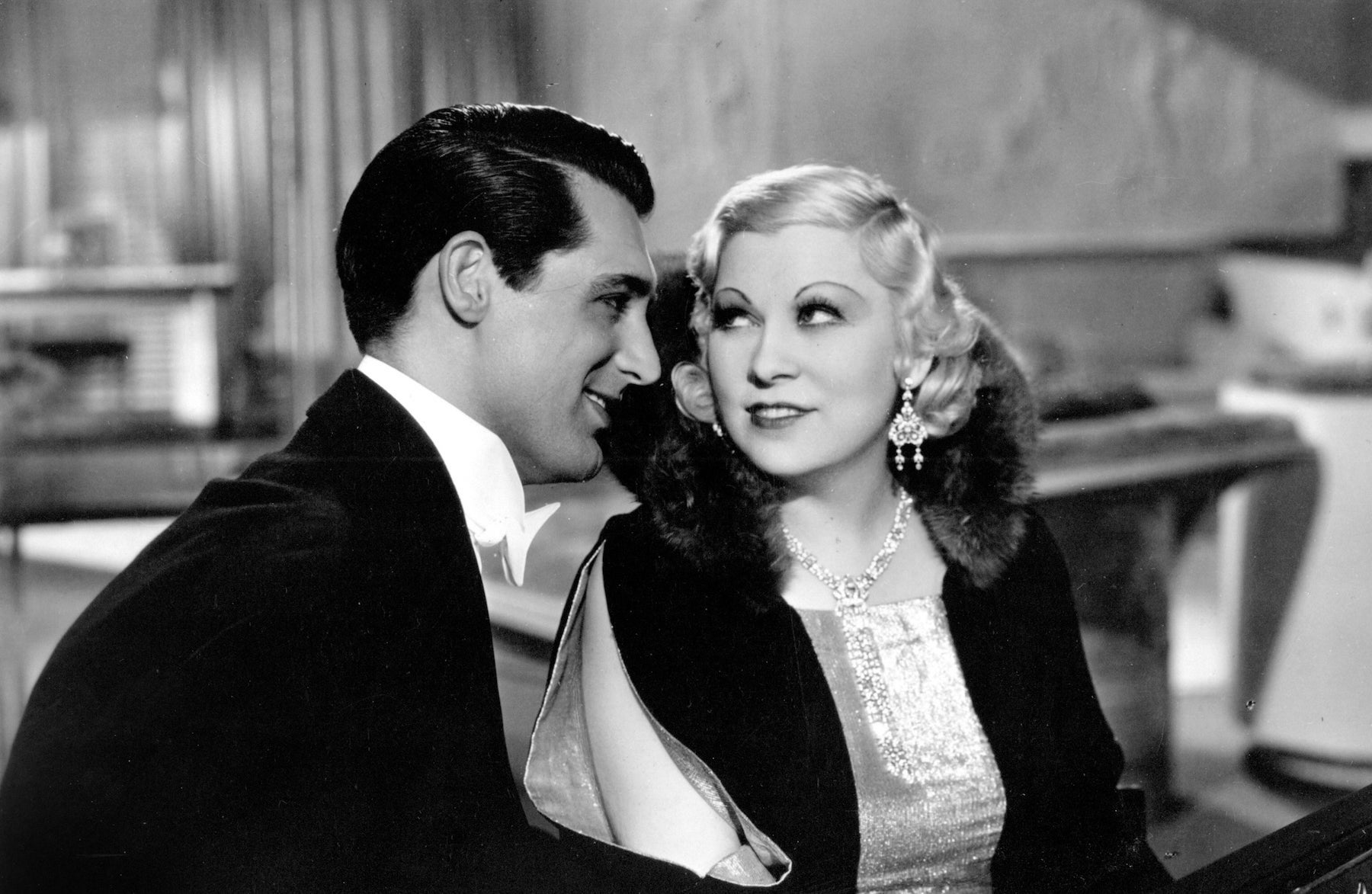
SHIMMY TO SUCCESS…Clockwise, from top left: At the beginning of I’m No Angel, Tira (Mae West) shimmies and sings in a circus sideshow; studio poster for the film— In the early 1930s, West’s films were key in saving Paramount Pictures from bankruptcy; a wealthy sideshow customer (William B. Davidson) arranges a private rendezvous; Tira has her day in court despite attempts by her ex-boyfriend, Slick Wiley (Ralf Harolde), to discredit her. (IMDB)SHE GETS HER MAN…Cary Grant starred opposite Mae West for the second and final time in I’m No Angel. Eleven years junior to West, Grant portrayed Tira’s fiancé, Jack Clayton. (TCM)
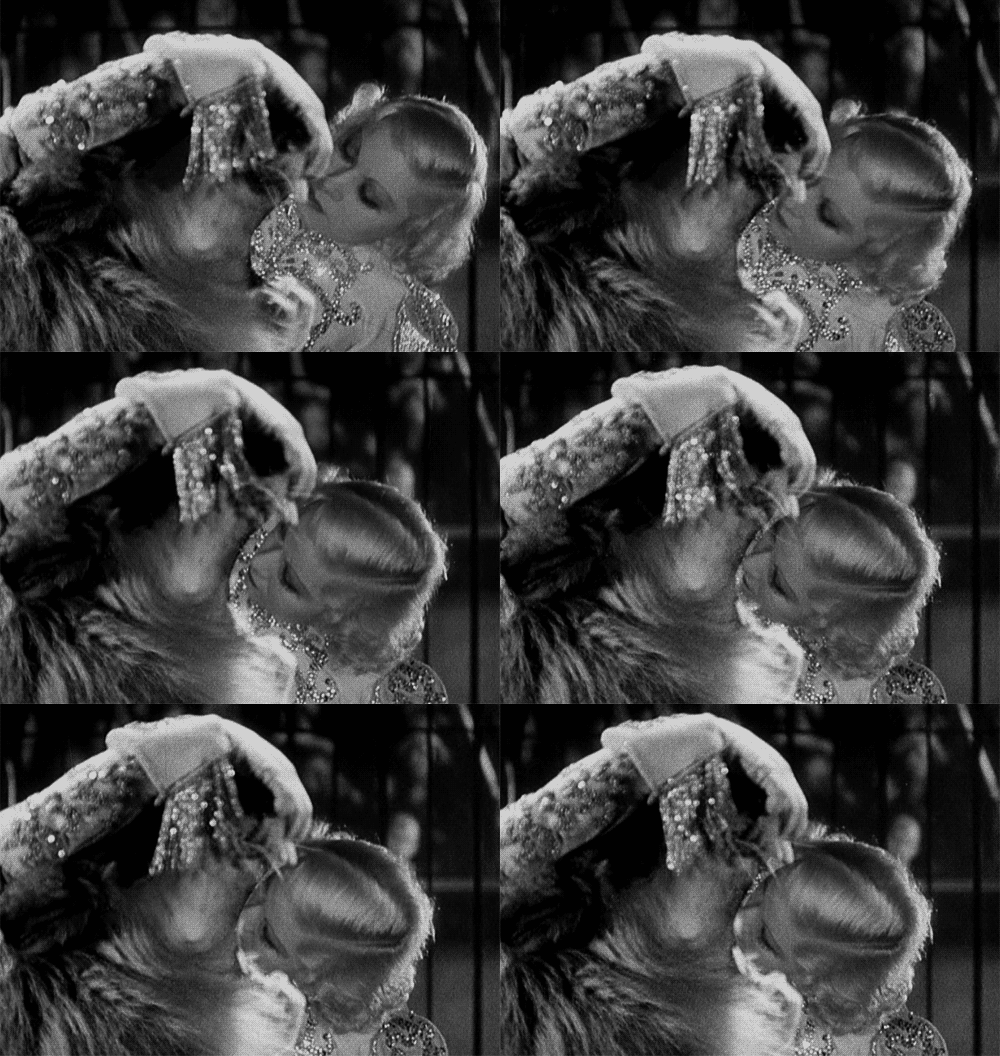
And finally, a much-talked about scene from the movie featured West putting her head (rather sensually) into the mouth of a lion. In reality it appears to be a camera trick: West was actually placing her head to the side of the lion’s mouth. Still, a gutsy move by West. As for the lion, it was no picnic either.
* * *
Comic Relief
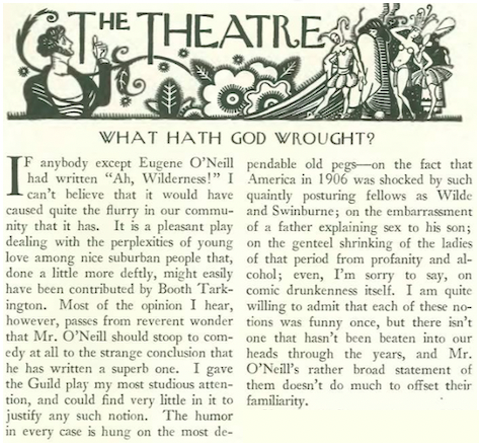
Eugene O’Neill surprised critics and audiences alike when he premiered Ah, Wilderness! at Broadway’s Guild Theatre on October 2, 1933. Among the critics was Wolcott Gibbs, who concluded that O’Neill should stick to his usual themes of disillusion and despair. An excerpt:
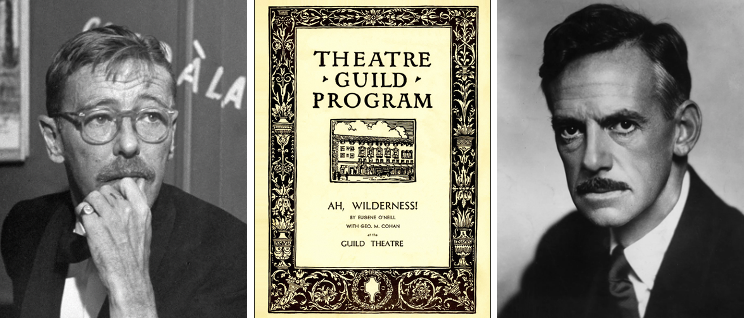
PASS THE CORN, PLEASE…Around the table in the original 1933 Broadway production of Ah, Wilderness! are (from left) George M. Cohan (Nat Miller), Eda Heinemann (Lily), Elisha Cook, Jr. (Richard), Gene Lockhart (Sid), Marjorie Marquis (Mrs. Nat Miller), Walter Vonnegut, Jr. (Tommy) and Adelaide Bean (Mildred). (Photograph by Vandamm for Stage magazine, November 1933)ERRORS OF COMEDY…Wolcott Gibbs (left) found Eugene O’Neill’s attempt at comedy to be nothing more than a recycling of corny old saws. However, Ah, Wilderness! proved successful in its first Broadway production and in the touring company that followed. It remains to this day a staple of community repertory. (The New Yorker/Playbill/Encyclopedia Britannica)
* * *
Hell in a Handbasket
If Eugene O’Neill couldn’t offer up some woe, then leave it to E.B. White of all people to supply reason for despair. In his 1982 review of a collection of White’s poems and sketches, Timothy Foote observed that White occasionally assumed the guise of Pessimist, “a desperate fellow who served as a one-man distant-early-warning system…”
For the Oct. 14 issue White bemoaned the loss of the American elm (of the 77 million elms in North America in 1930, more than 75 percent were lost to Dutch elm disease by 1989), the dangers of pesticide use, and other maladies. Excerpts:
APPLE OF HIS EYE…E.B. White had reason to be concerned about the widespread practice of spraying lead arsenic on fruit trees. This 1930 photograph shows an Oregon orchardist and his child spraying apple trees with the stuff. (oregonhistoryproject.org)
White’s New Yorker colleague John O’Hara raised some concerns of his own, namely the likelihood of another world war in this prescient piece titled “Dynamite is Like a Mill Pond.” Excerpts:
FROM RUSSIA WITH LOVE…John O’Hara pondered the likelihood of another world war and an unlikely bedfellow: Soviet Russia. Photo circa 1938. (AP via loa.org)
* * *
Pooh-Poohing Mr. Milne
In his review of A.A. Milne’s latest novel, The Red House Mystery, Clifton Fadiman seemed to recall Dorothy Parker’s own revulsion to Milne’s juvenile style (“Tonstant Weader Fwowed Up” Parker once wrote of The House at Pooh Corner). Excerpts:
* * *
From Our Advertisers
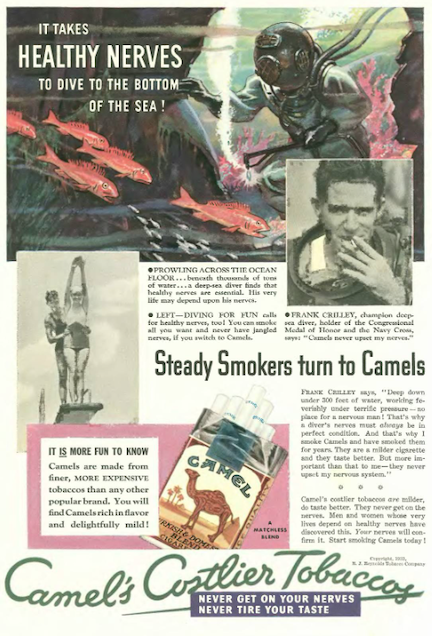
The makers of Camels took to the water to prove how their cigarettes supported “healthy nerves,” whether in the deep sea or on the high dive…
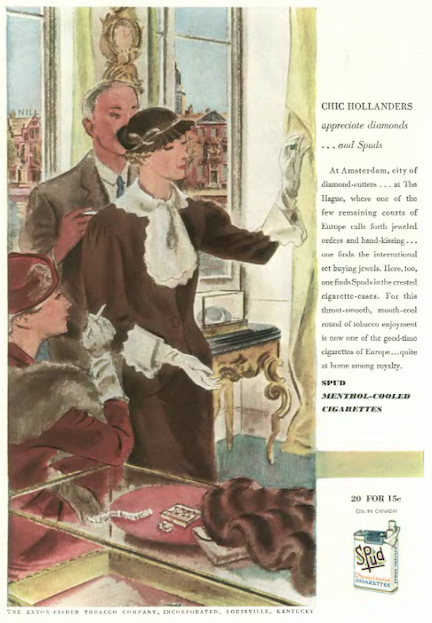
…with a name like “Spud” you really had to stretch to prove you were a choice of the smart set…here they claimed their product was “quite at home among royalty”…
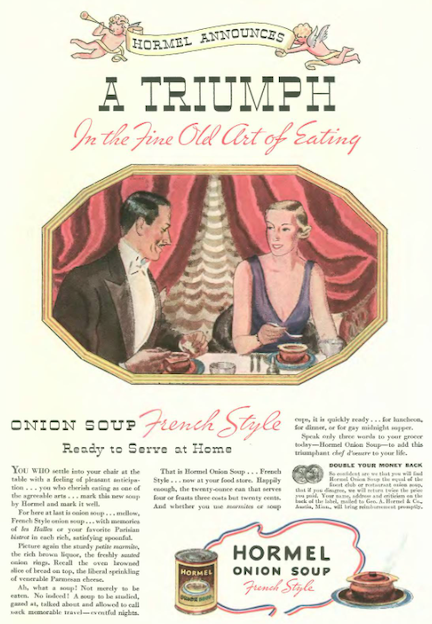
…here’s another great example of class appropriation, a white-tie dinner featuring a couple of toffs eating canned soup…
…and we give our eyes a break with a bit of elegance from Lord & Taylor, featuring the art of modern living…
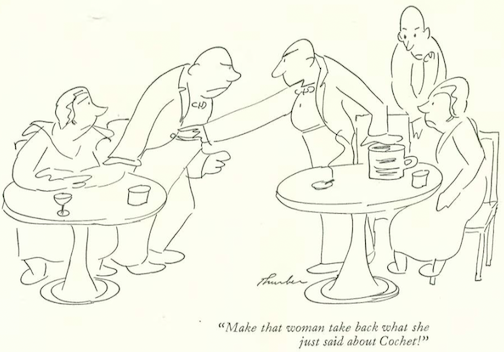
…on to our cartoons, we begin with James Thurber…
…curious to know Thurber’s favorite songs?—then check out this Thurber Thursday post from Michael Maslin’sInkspill...
…we continue with William Steig’s look at a “Lady With Mirror”…
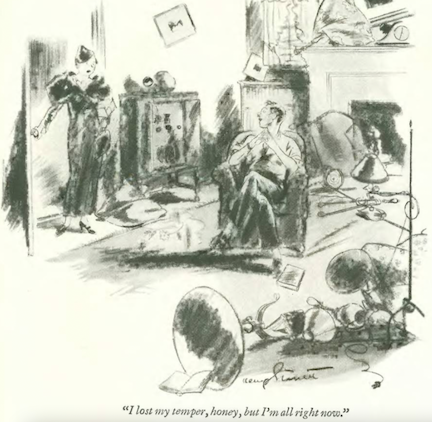
…and discover the calm after a storm in this domestic scene by Kemp Starrett…
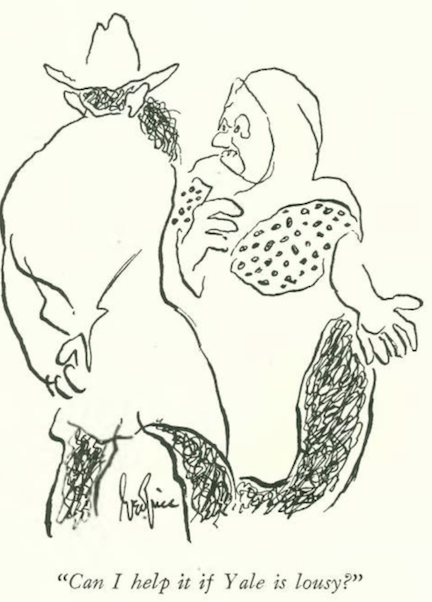
…visit the Century of Progress World’s Fair in Chicago, with George Price…
…for reference, Price’s cartoon depicted the Federal Building at the Century of Progress…
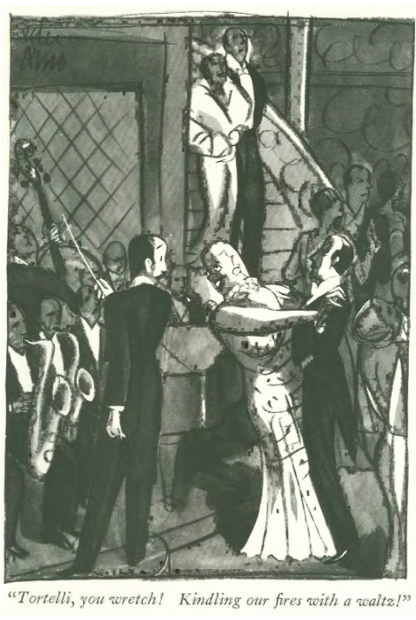
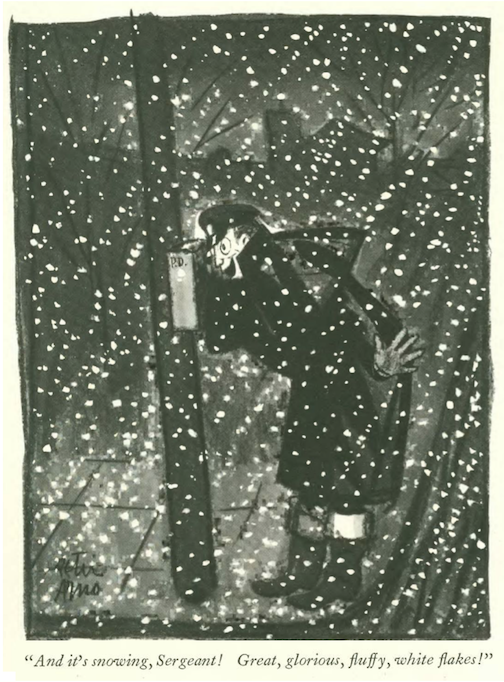
…and is often the case with this blog, we give Peter Arno the last word…
Above: Maurice Passworthy (Kenneth Villiers) and Catherine Cabel (Pearl Argyle) prepare for a trip to the moon in Things to Come. (IMDB)
In his 1933 science fiction novel The Shape of Things to Come,H.G. Wells foresaw how an international economic depression could eventually lead to world war.
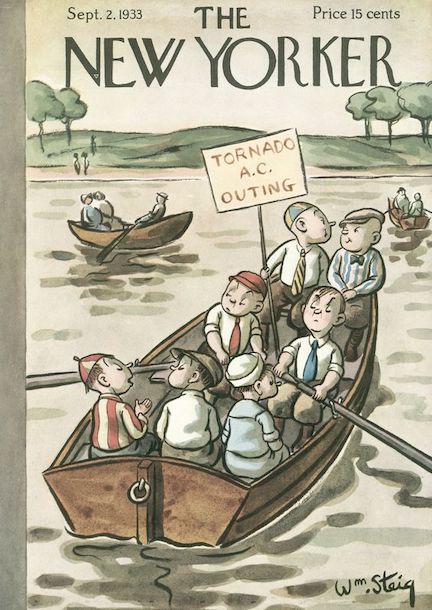
Sept. 2, 1933 cover by William Steig.
The book also predicted that such a war would feature whole cities destroyed by aerial bombing and the eventual development of weapons of mass destruction. However, New Yorker book critic Clifton Fadiman found Wells’ other predictions to be fanciful, “scientific-romantic” notions, such as a post-war Utopia (headquartered in Basra, Iraq, of all places) ruled by super-talents that would advance scientific learning in a world without nation-states or religion. And naturally everyone would speak English.
YOU MAY SAY I’M A DREAMER…H.G. Wells envisioned a world of war, pestilence and economic collapse that would eventually give way to an English-speaking Utopia free of nation-states and religion. (Wikipedia)
Three years later Wells would adapt his book to the screen in 1936’s Things to Come, produced by Alexander Korda and starring Raymond Massey as a heroic RAF pilot John Cabal and Ralph Richardson as “The Boss,” a man who stands in the way of Cabal’s utopian dreams.
FUTURE TENSE…Clockwise, from top left, H.G. Wells visits with actors Pearl Argyle and Raymond Massey on the set of Things to Come—Swiss designer René Hubert created the futuristic costumes; in the year 1970 RAF pilot John Cabal (Massey) lands his sleek monoplane in Everytown, England, proclaiming a new civilization run by a band of enlightened mechanics and engineers; city of the future as depicted in Things to Come; poster for the film’s release. (IMDB)
An afternote: A 1979 Canadian science fiction film titled The Shape of Things to Come was supposedly based on Wells’ novel but bore little resemblance to the book. The film is a considered a turkey, lovingly mocked by the same audiences that gave Plan 9 from Outer Space a second life.
WE MEAN YOU NO HARM…Actor Jack Palance—wearing what appears to be the top from a water cooler— headed a cast that included Barry Morse and Carol Lynley in 1979’s The Shape of Things to Come.
* * *
Fine Dining
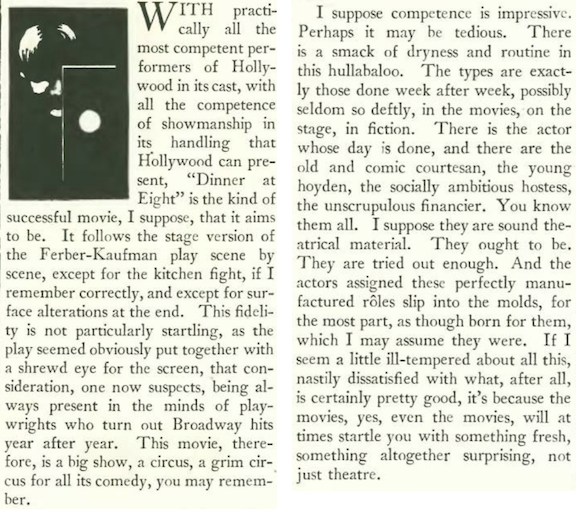
Director George Cukor turned a hit Ferber-Kaufman Broadway play into a hit movie by the same title when Dinner at Eight premiered in September 1933. While the film received high marks from leading critics, New Yorker film reviewer John Mosher found it a bit routine, if well-crafted:
BLONDE ON BLONDE…Judith Wood (left) portrayed the character Kitty Packard in the 1932 stage production of Dinner at Eight; Jean Harlow took on the role for the 1933 film version. (IMDB)
Mosher, however, continued to admire the acting chops of veteran Marie Dressler…
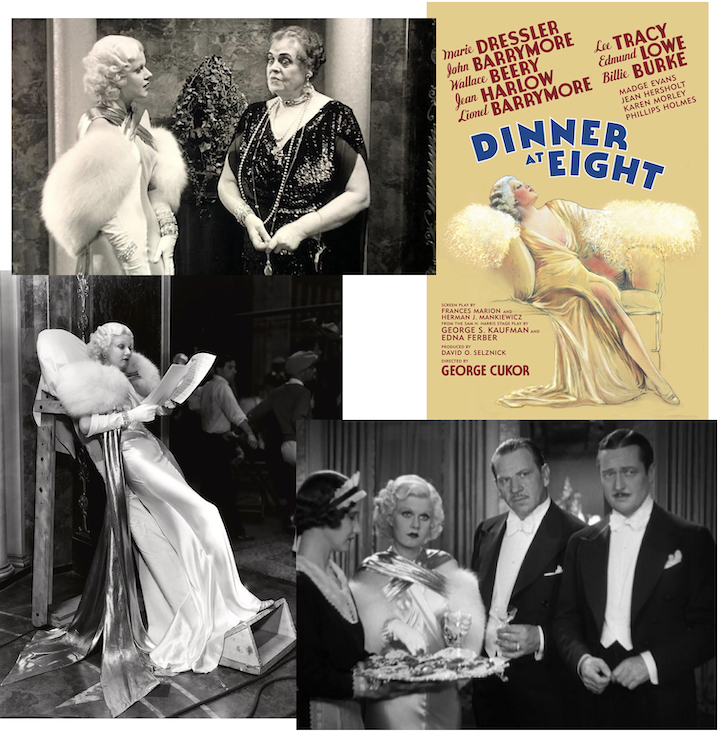
FUNNY LADIES…Clockwise, from top left: Jean Harlow and Marie Dressler square off in Dinner at Eight; movie poster highlights the “Blonde Bombshell” Harlow along with a star-studded cast; a scene with Harlow, Wallace Beery and Edmund Lowe; to avoid wrinkling her gown between takes, Harlow reviewed her lines in a special stand-up chair. (IMDB/pre-code.com)
* * *
Madame Secretary
Secretary of Labor Frances Perkins was the first woman in the U.S. to serve as a cabinet secretary, but she was a lot more that—she was the driving force behind FDR’s New Deal. Here are excerpts from a two-part profile written by Russell Lord, with illustration by Hugo Gellert.
TRIAL BY FIRE…Frances Perkins watched in horror as young women leapt to their deaths in the 1911 Triangle Shirtwaist Factory fire—146 perished on that day Perkins recalled as the moment the New Deal was born her mind. In the wake of the fire Perkins, an established expert on worker health and safety, was named executive secretary of the NYC Committee on Safety. (trianglememorial.org/francesperkinscenter.org)
Even if some men couldn’t come around to a woman moving through the circles of power, Perkins had many admirers including prominent Tammany Hall leader “Big Tim” Sullivan.
Perkins’ appointment to FDR’s cabinet made the Aug. 14, 1933 cover of TIME magazine. (TIME/thoughtco.com)
* * *
From Our Advertisers
Even the staid executives at Packard were getting into the modern advertising game, where sometimes the product itself was not even pictured…
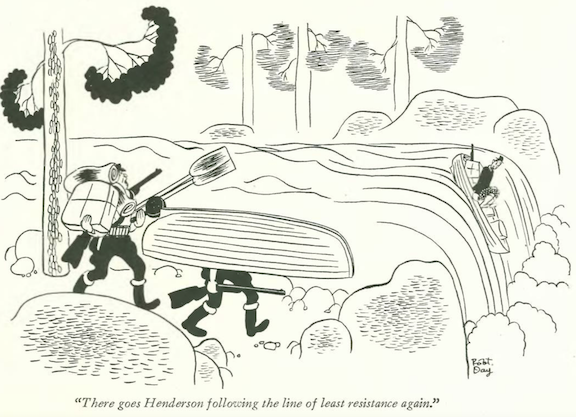
…our cartoonists include Robert Day…
…George Price…
…and baring it all, Peter Arno…
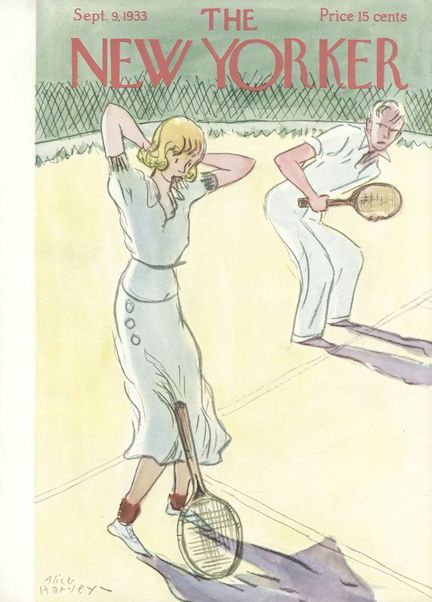
…on to Sept. 9, and what I believe is Alice Harvey’s first New Yorker cover…
Sept. 9, 1933 cover by Alice Harvey.
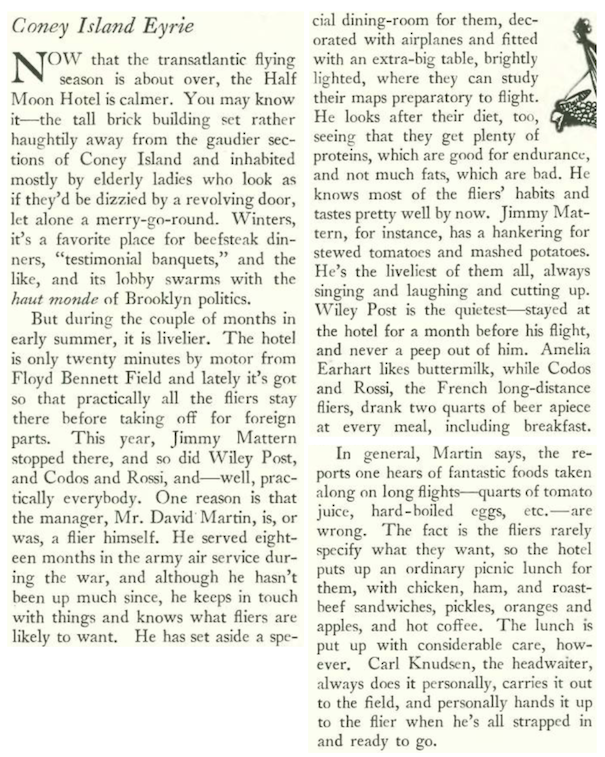
…and where “The Talk of the Town” paid a visit to the Half Moon Hotel on Coney Island, a favorite haunt of those magnificent men and women and their flying machines:
SHIFTING SANDS…Opened in 1927 to attract upscale crowds to Coney Island away from the rabble of the Midway, the elegant Half Moon Hotel started strong but teetered on the doorstep of bankruptcy during the Depression; it gained notoriety in 1941 when mob turncoat Abe Reles fell to his death from a sixth floor window while under police protection. The hotel was demolished in 1996. (Pinterest)
* * *
Huey In The News
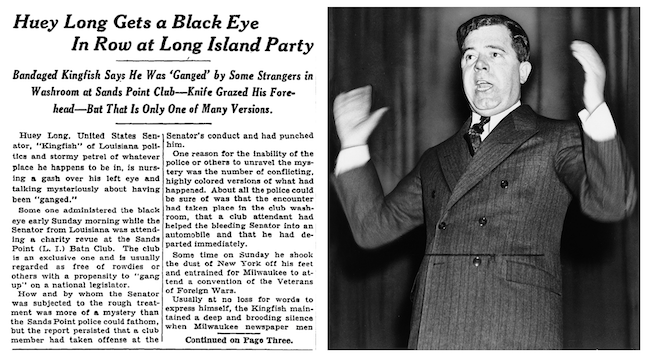
In his column “Of All Things,” Howard Brubaker offered this brief take on Huey Long’s visit to a Long Island party, where one guest apparently socked the controversial “Kingfish,” giving the former Louisiana governor (and then senator) a shiner.
A CHIP ON HIS SHOULDER?…Controversy followed Huey Long wherever he went. At left is a New York Times account of Long’s alleged black eye incident on Long Island. He would be assassinated two years later at the Louisiana State Capitol; Long circa 1933. (NYT/Wikipedia)
* * *
More From Our Advertisers
As a follow-up from the previous issue’s Packard ad, this two-page spread showed us what those 1200 men were gawking at…check out that 12-cylinder model on the left, which appears to be better than 20 feet long…
…according to this ad, you could thank Camel cigarettes for getting the mail through the gloom of night…
…if you needed a cigarette to steady your nerves, you also needed fresh coffee to avoid being ostracized by your friends…
…summer-stock barn theatres were popular across America in the 1930s…this ad (illustrated by Wallace Morgan) hailed the end of the summer season and the return of “Winter Broadway”…
…on to our cartoons, out in the countryside we also find William Crawford Galbraith, here continuing to ply one of his favorite themes, namely pairing shapely seductresses and showgirls with clueless suitors…
…Helen Hokinson gave us one woman who believed “what happens in the Riviera, stays in the Riviera”…
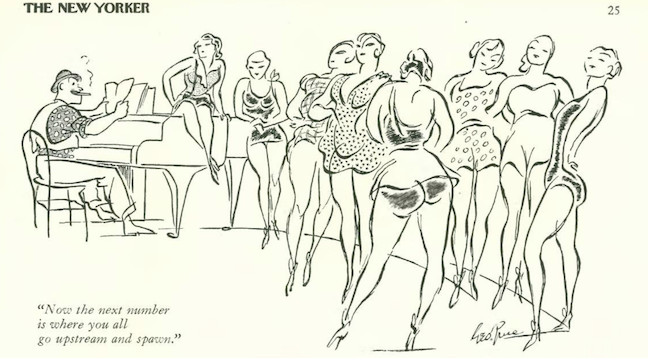
…and we close with Gardner Rea, and a scout troop on a mission…
It’s hard to fathom that a woman wearing trousers used to cause such a stir, but for international film star Marlene Dietrich it was an opportunity for the publicity that invariably came with defying the norms of fashion and sexuality in 1930s.
July 22, 1933 cover by Constantin Alajalov.
In May 1933 Dietrich was headed to Paris on a steamer, relaxing on the deck in a white pantsuit. Prior to her arrival, the Paris chief of police announced she would be arrested if she showed up in pants. However when Dietrich arrived at the Gare Saint Lazare wearing a man’s suit and overcoat, she stepped off the train, grabbed the chief of police by his arm, and walked him off the platform.
The New Yorker’sJanet Flanner reported on Dietrich’s comings and goings in her regular column “Letter From Paris”…
TAKING PARIS BY STORM…Clockwise, from top left: Marlene Dietrich in Paris, 1933, accompanied by her husband, Rudolf Sieber; Dietrich on the SS Europa, Cherbourg, France, May 1933; Dietrich arriving at the Gare Saint Lazare station, May 20, 1933 (this photo is often paired with an erroneous caption claiming that Dietrich is being arrested by French authorities. On the contrary, she owned them the moment she stepped onto the platform); Dietrich signing autographs in Paris, 1933. (bygonely.com/Smithsonian/Twitter/Pinterest)
* * *
Bullish On Office Space
Despite the Depression, millions of square feet of office space were being added to the massive Rockefeller Center complex, including the Palazzo d’Italia at 626 Fifth Avenue. “The Talk of the Town” reported:
THE BIG SHORT…Attached to the International Building at its northwest corner, the Palazzo d’Italia was originally planned as a nine-story building, a fact that impressed the fascist Italian leader Benito Mussolini because it beat the six-story height of the French and British Buildings. In the end Benito only got six as well. (Wikipedia/Pinterest)
* * *
Urban Jungle
Astoria Studios in Queens was built in 1920 for Famous Players-Lasky and is still home to New York City’s only studio backlot. In 1933 it served as a tropical setting for The Emperor Jones, featuring Paul Robeson in the title role. “The Talk of the Town” looked in on the movie’s faux jungle:
35TH STREET JUNGLE…Paul Robeson in a scene from The Emperor Jones. (flickr.com)
Loosely based on a Eugene O’Neill play and financed with private money, the film was made outside of the Hollywood studio system and distributed by United Artists.
EMPEROR’S NEW CLOTHES…Brutus Jones (Robeson) schemes with colonial trader Smithers (Dudley Digges) on his plan to become emperor in The Emperor Jones. (moma.org)
* * *
From Our Advertisers
Yes, it’s advertising so we don’t expect it to be realistic, but I can guarantee no one is going to look like that after a ride to the beach in a rumble seat…also the woman behind the car is either floating or has exceedingly long legs…
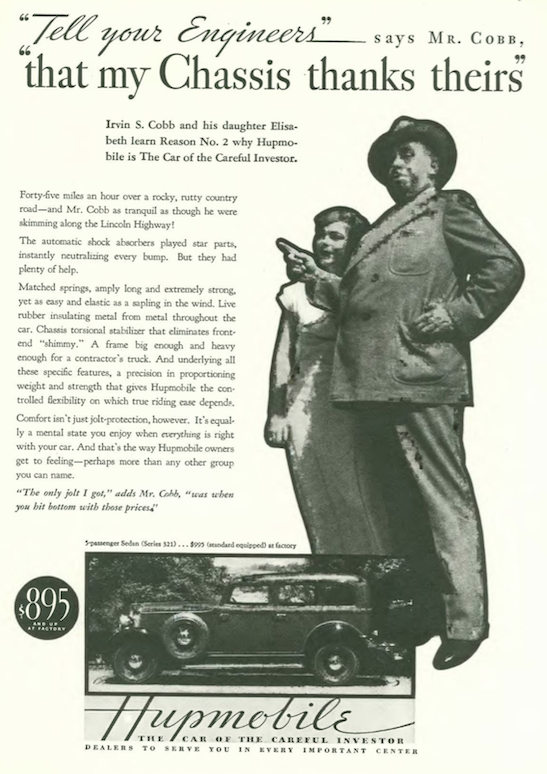
…Hupmobile enlisted humorist Irvin S. Cobb to help boost its sagging sales…
Irvin S. Cobb (1876–1944) wrote for Joseph Pulitzer’s New York World, and was once the highest paid staff reporter in the United States. (carnegiecenterlex.org)
…with the return of legal beer the makers of Budweiser struck a patriotic note in promoting their “King of Bottled Beer” to thirsty New Yorkers…
…the makers of Pabst Blue Ribbon claimed the title of “Best of the Better Beers” with this ad featuring a woman who appeared on the verge of going overboard…
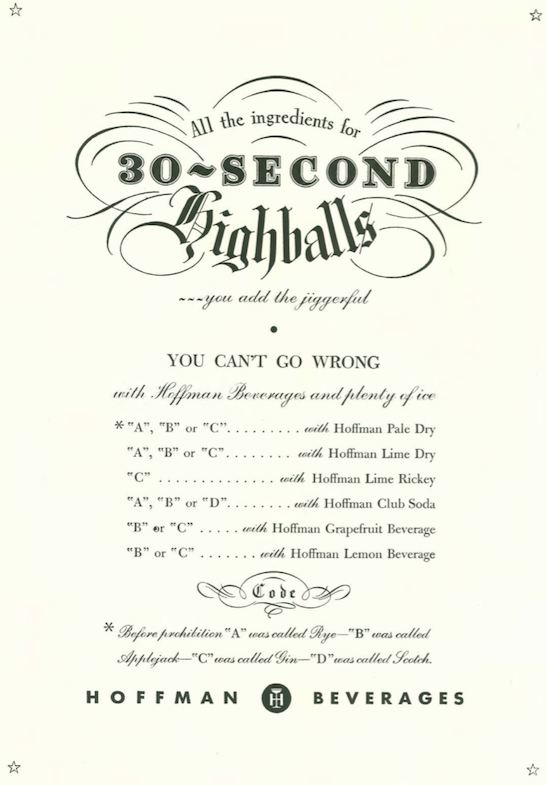
…if beer wasn’t your thing, you could try your hand at mixing a “30-Second Highball” per this Prohibition-themed ad…
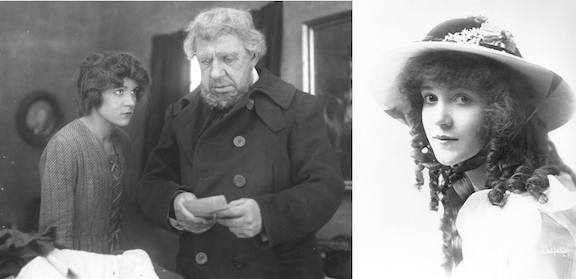
…delving into the back pages one finds all sorts of curiosities, including this mail-order “charm school” operated by Margery Wilson…
…Wilson (1896–1986) acted in numerous silent pictures (including the 1916 D. W. Griffith epic Intolerance) and in the early 1920s was a writer, director and producer…
Margery Wilson in Eye of the Night (1916). She was among pioneering women filmmakers of the 1920s. (columbia.edu))
…it must have been a hot summer in New York with the abundance of air-conditioner ads…here’s one from Frigidaire for a unit that despite its size (and enormous cost) could cool only one room…
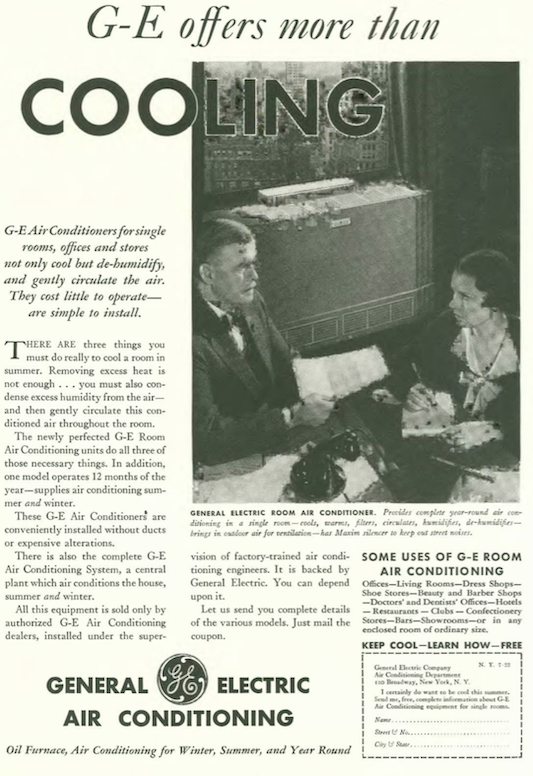
…this next air-conditioner ad from G-E seems poorly conceived…you would think an air-conditioned office would make the boss and his secretary a bit happier than they appear here…maybe they just got the bill from General Electric…
…we begin our cartoons with another pair of sourpusses, courtesy Mary Petty…
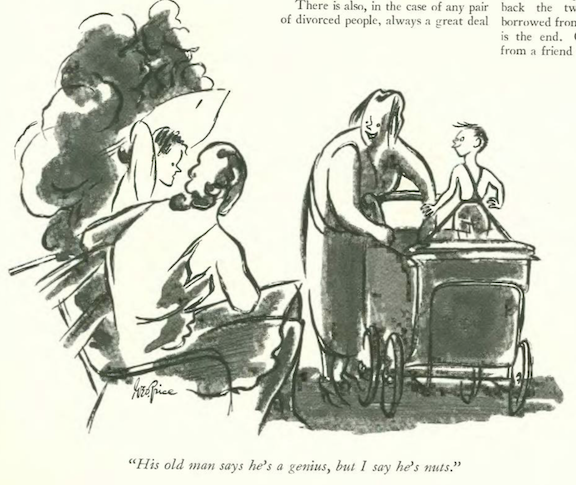
…George Price offered up this bit of art for the opening pages…
…William Steig headed to the country to escape summer in the city…
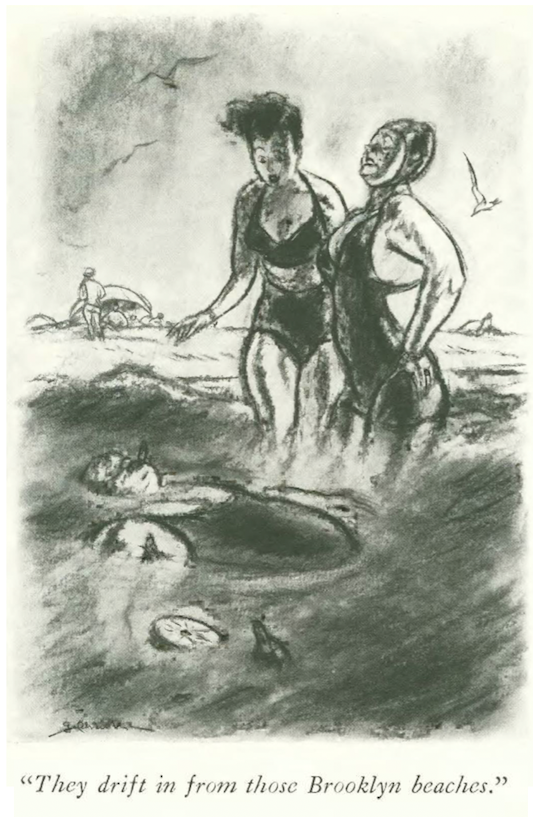
…William Crawford Galbraith’s bathers kept cool by examining the flotsam from distant shores…
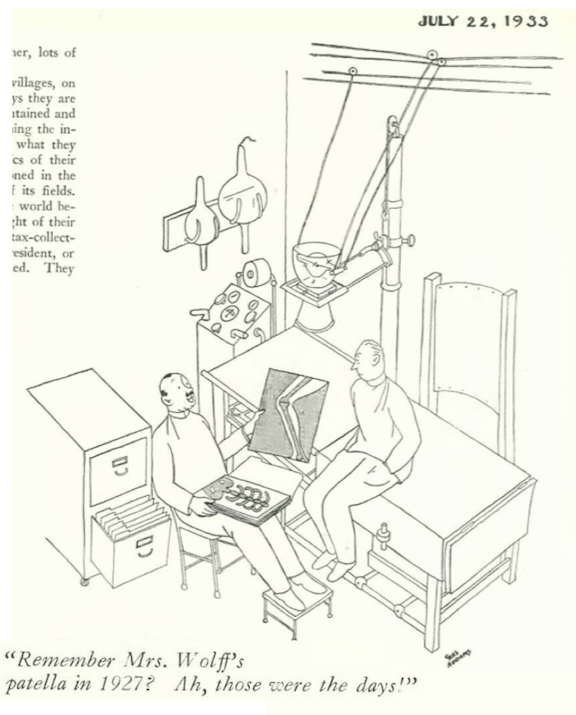
…Charles Addams explored various themes before he launched his “Addams Family” in 1938…
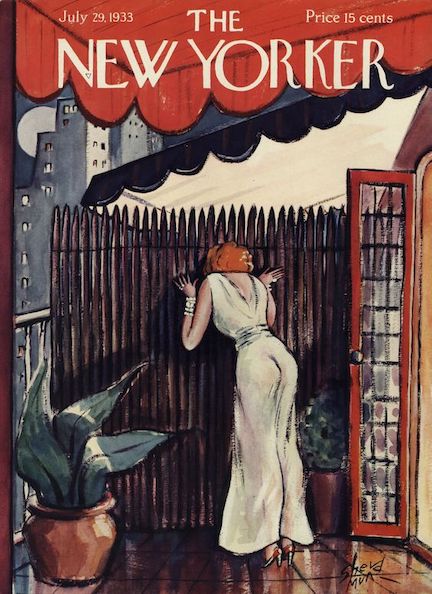
…and we move on to July 29 with a terrific cover by Barbara Shermund…
July 29, 1933 cover by Barbara Shermund.
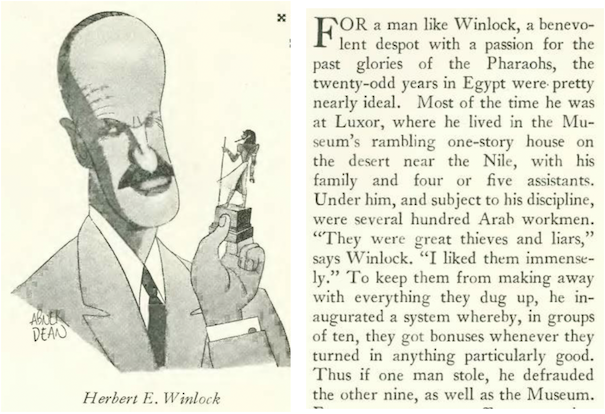
…in this issue Geoffrey T. Hellman penned a profile of Egyptologist Herbert E. Winlock, who made key discoveries about the Middle Kingdom of Egypt and served as director of the Metropolitan Museum from 1932 to 1939, where he was employed his entire career. Excerpt:
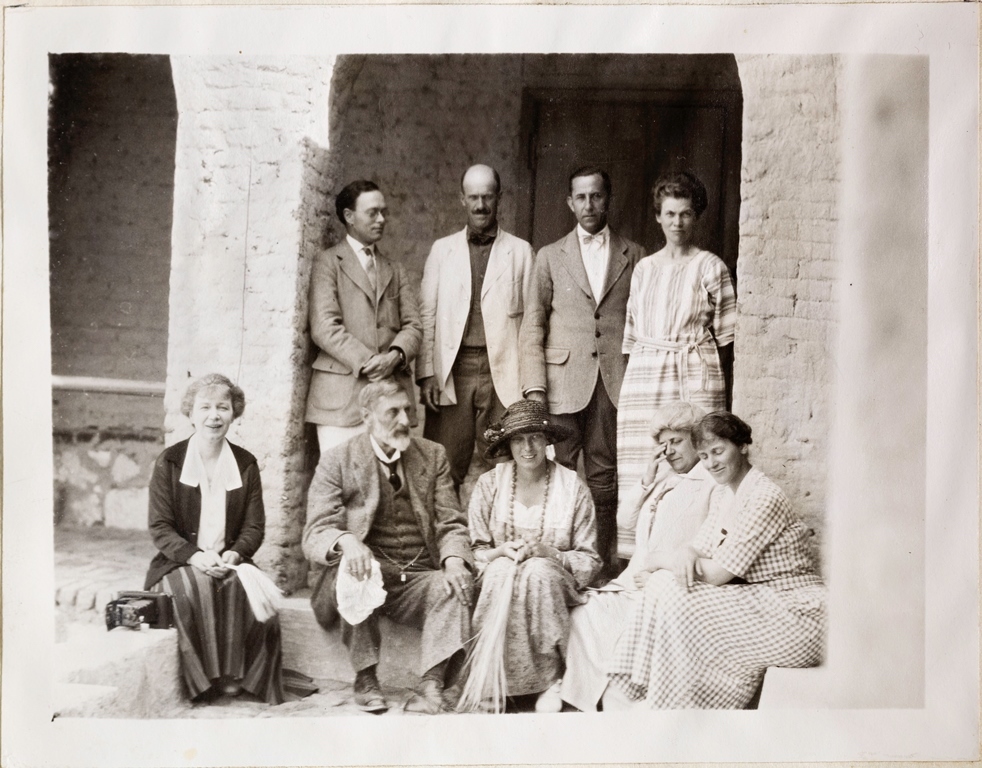
CAN YOU DIG IT…Early 1920s photo of the Metropolitan Museum’s Theban expedition team. Herbert E. Winlock is in the back row, second from left. His wife, Helen Chandler Winlock, is in the front row, far right. (Metropolitan Museum of Art)
* * *
Chilling With U.S. Grant
In those days before air-conditioning was widely available or used, “The Talk of the Town” dispatched an investigator to sample indoor temperatures at various public places, finding the coolest spot at Grant’s Tomb:
WHERE THE COOL PEOPLE HANG OUT…Clockwise, from top left: The tomb of Per-neb at the Metropolitan Museum registered a cozy 80 degrees, while in the same museum it was a balmy 84 by Emanuel Leutze’s famed painting Washington Crossing the Delaware; the New York Aquarium in Battery Park was a bit cooler at 79 (pictured is the Sea Lion Pool); while Grant’s Tomb was downright chilly at 70. (Met Museum/Wildlife Conservation Society/grantstomb.org)
* * *
Node of Gold
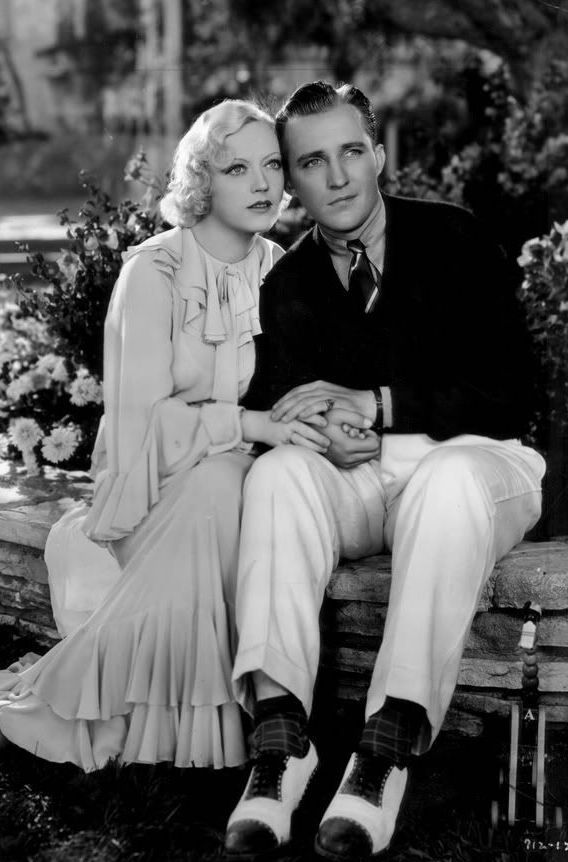
Apparently the famed crooner Bing Crosby had a minor node on one of his vocal cords, and when he consulted a specialist he was advised against removing it, lest he alter his voice in a way that would affect his career. Indeed, the node seemed to add an “appealing timbre” to his signature sound, so Crosby had his voice insured by Lloyd’s of London for $100,000 with a proviso that the node could not be removed. Howard Brubaker made this observation in “Of All Things”…
LUMP IN HIS THROAT…Bing Crosby with Marion Davies in the 1933 film Going Hollywood. (IMDB)
…Brubaker also shared this prescient observation from American astronomer Vesto Slipher…
…Slipher (1875–1969) would live long enough to confirm his statement…the first full-disk “true color” picture of the Earth was captured by a U.S. Department of Defense satellite in September 1967:
(USAF/Johns Hopkins University)
* * *
More From Our Advertisers
This ad was on the inside front cover of the July 29 issue, a rather jarring image following that lovely Barbara Shermund cover…
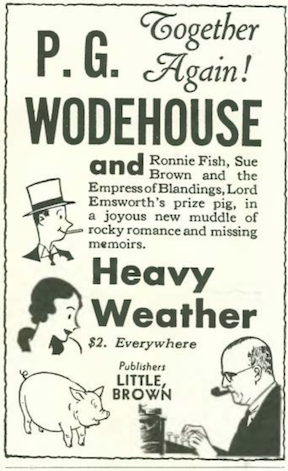
…the hugely popular P.G. Wodehouse was back with more silly antics from the British upper classes…
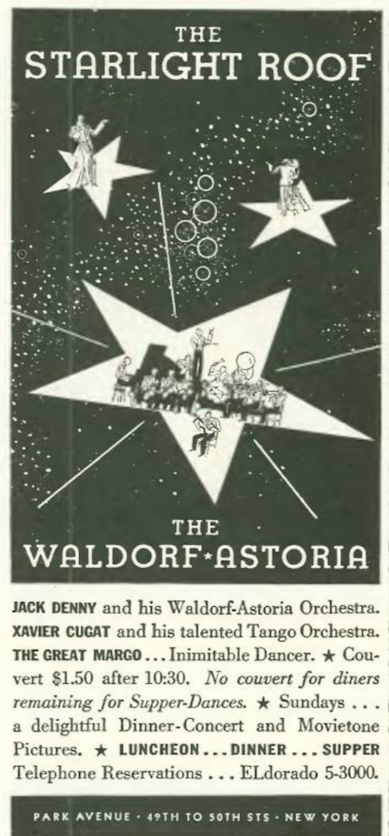
…while some New Yorkers could take a break from their reading and hit the dance floor atop the Waldorf-Astoria…
…and tango to the stylings of bandleader Xavier Cugat…
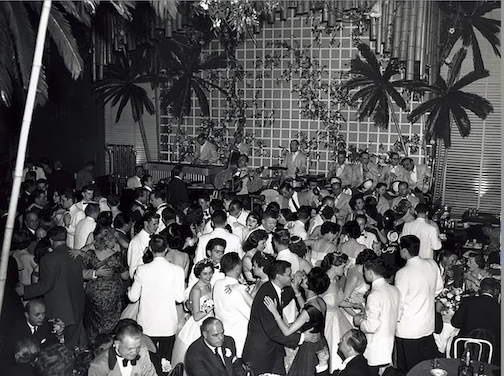
Xavier Cugat and band atop the Waldorf-Astoria. (cntraveler.com)
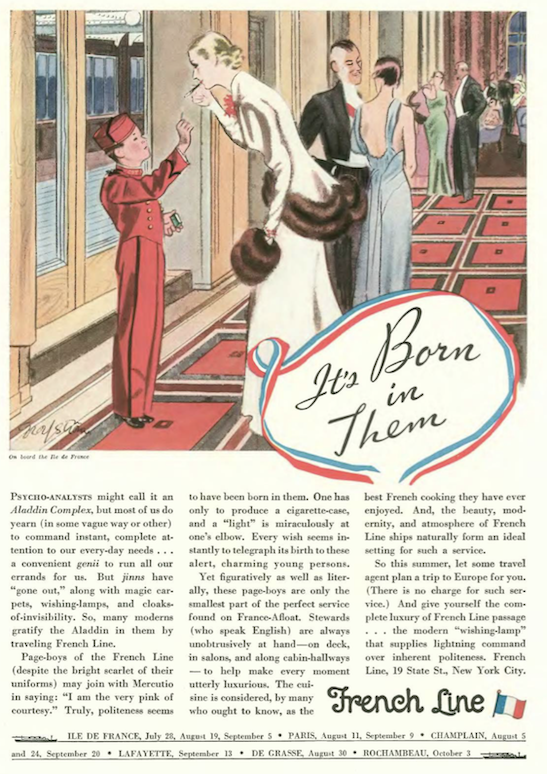
…this ad for the French Line, illustrated by Ruth Sigrid Grafstrom, offered a precious scene of a page-boy lighting a woman’s cigarette, a sight unimaginable today…
…and we close with a cartoon by Gardner Rea, doggone it…
The heat came early to New York in June 1933, so folks flocked to air-conditioned cinemas or sought the cooling breezes of rooftop cafes and dance floors. And thanks to FDR, there was legal beer to be quaffed at various beer gardens popping up all over town.
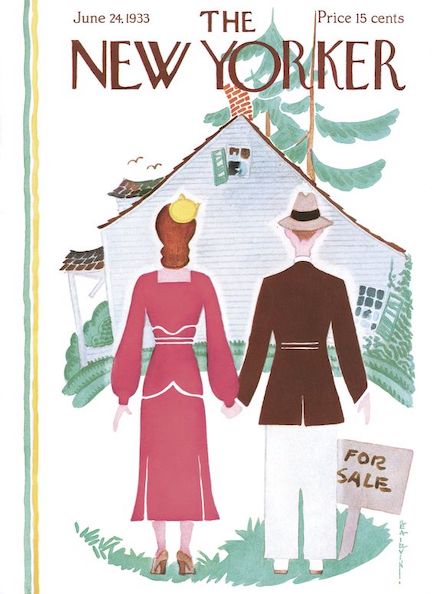
June 24, 1933 cover by Rea Irvin. Providing a bookend to Constantin Alajalov’s June bride cover (May 27), Irvin gave us the newlyweds now contemplating a fixer-upper.
Lois Long kept her cool on the beach or at home with a cold Planters’ Punch, but one gets restless, and Ethel Waters was at the Cotton Club, so Long headed out into the night; an excerpt from her column “Tables for Two”…
STORMY WEATHER AHEAD…Ethel Waters was “tops” during a June 1933 performance at the Cotton Club, according to nightlife correspondent Lois Long. Left, Waters circa 1930. At right, the Cotton Club in the early 1930s. (IMDB/Britannica)SHOWER THE PEOPLE…Children gather around a center stand sprinkler (connected to a fire hydrant) on a Harlem street in 1933. (stuffnobodycaresabout.com)POP-UP PLAYGROUND…Play street and street shower alongside the Queensboro Bridge, June 22, 1934. (NYC Municipal Archives)
* * *
From Our Advertisers
Legal beer and hot summer days combined to bring some much-needed advertising revenue to The New Yorker…
…here we have dear old dad telling the young ‘uns (all in formal wear, mind you) about the good old days before Prohibition took away his favorite tipple…
…notable about the magazine’s first beer ads was the target market…this is akin to the cigarette manufacturers, who were also targeting women as a new growth market for their products…curious how this PBR ad is illustrated…is she getting ready to drink the beer, or serve it?…
…also joining the party were the folks who made mixers like White Rock mineral water…note the reference at bottom right to the anticipated repeal of the 18th Amendment…
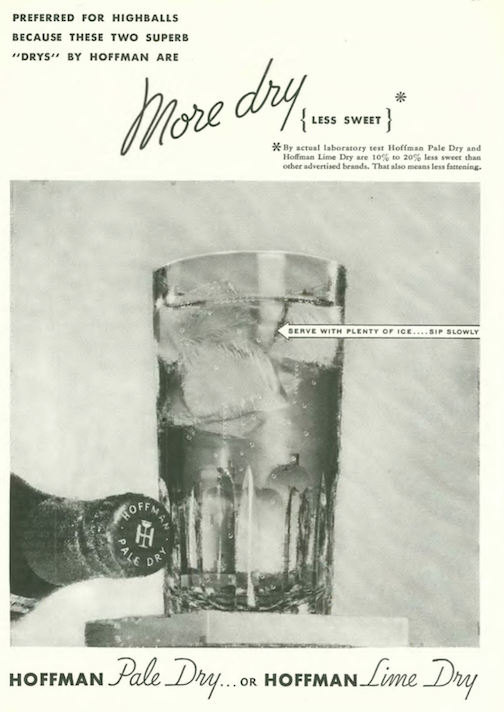
…the purveyors of Hoffman’s ginger ale were less subtle, encouraging drinkers to mix those highballs right now…
…you could enjoy that cool one while sitting in front of a Klenzair electric fan, which was probably nothing like riding a dolphin—a strange visual metaphor, but then again perhaps something else is being suggested here besides electric fans…
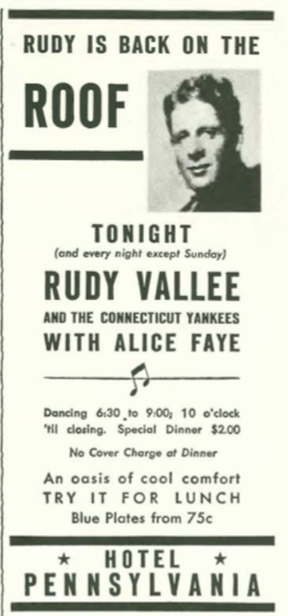
…no doubt Lois Long took in one of these breezy performances on the rooftop of the Hotel Pennsylvania…
…an evening with Rudy Vallée would have been a lot cheaper than one of these “compact” air conditioners, available to only the very wealthy…
…but you didn’t need to be J.P. Morgan to own a Lektrolite lighter, which was kind of clever…this flameless lighter contained a platinum filament that would glow hot after being lowered into reactive chemicals in the lighter’s base…
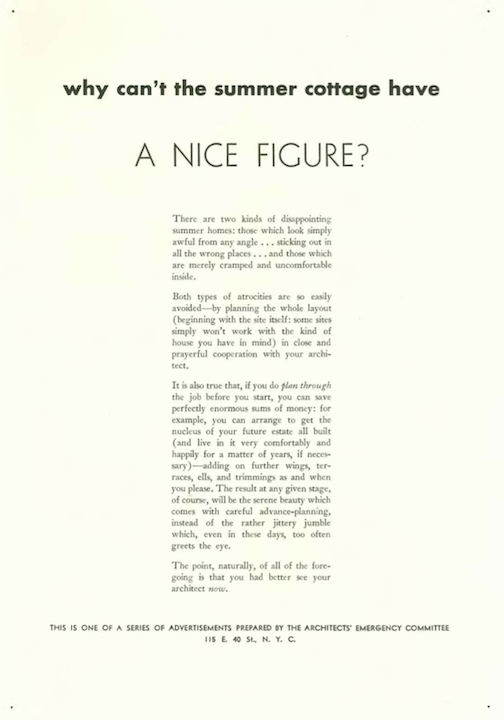
…another ad from the Architects’ Emergency Committee, which looked like something an architect would design…
…our final June 24 ad told readers about the miracle of Sanforizing, which was basically a pre-shrinking technique, like pre-washed jeans…
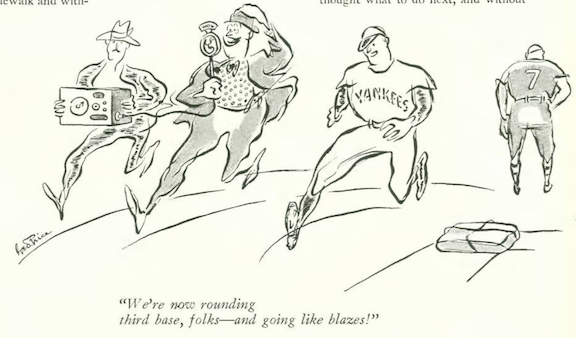
…we kick off our cartoons with George Price at the ball game…
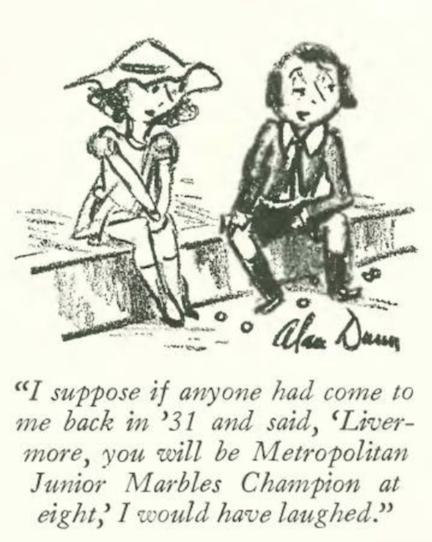
…Alan Dunn was in William Steig’s “Small Fry” territory with this precocious pair…
…James Thurber brought us back to his delightfully strange world…
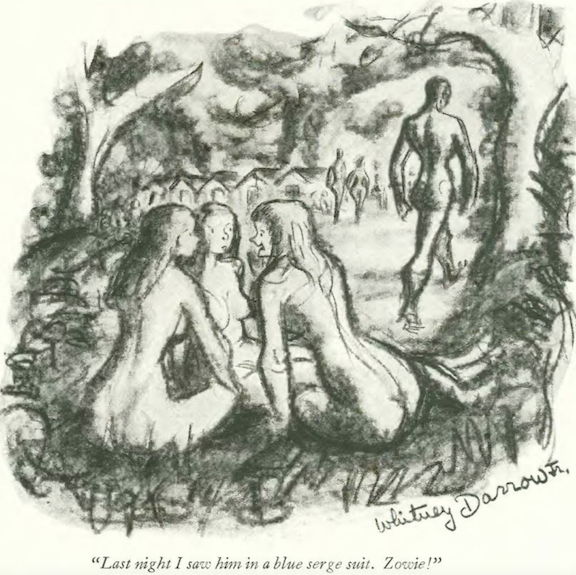
…and Whitney Darrow Jr gave us a trio at a nudist colony dressing a man with their eyes…
…we move along to July 1, 1933…
July 1, 1933 cover by Helen Hokinson.
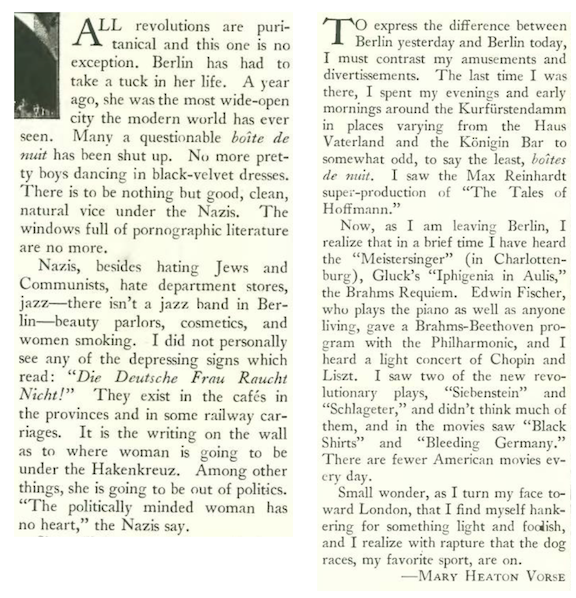
Where in this issue we find the Nazis not keeping their cool. In an article titled “Unter Dem Hakenkreuz” (“Under the Swastika”) American journalist and activist Mary Heaton Vorse commented on the changes taking place in Berlin, where the vice, decadence and other freedoms of the Weimar years had been swept away, including women’s rights…an excerpt:
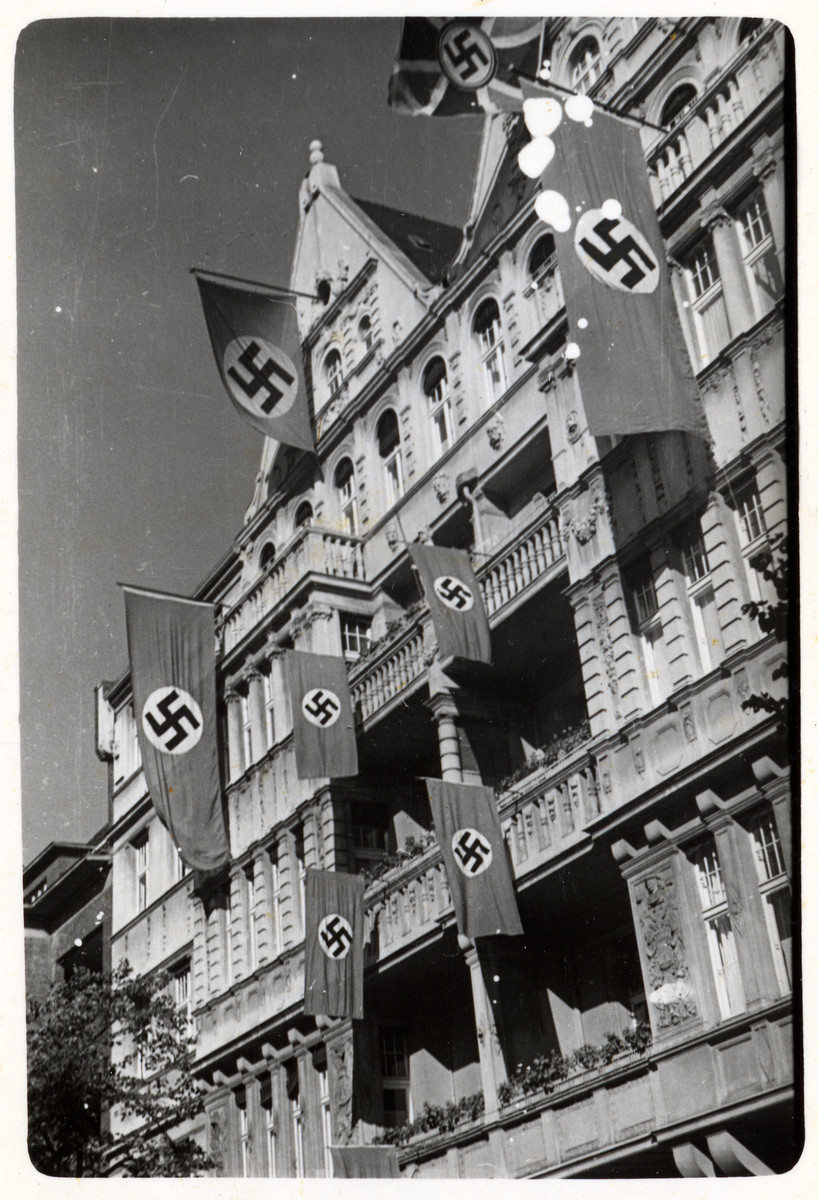
SIT UP STRAIGHT AND PROCREATE…Swastika flags hang from a Berlin building in the 1930s. In Hitler’s Germany, women of child-bearing age were expected to produce lots of babies and not much else. (collections.ushmm.org)
* * *
Some Strings Attached
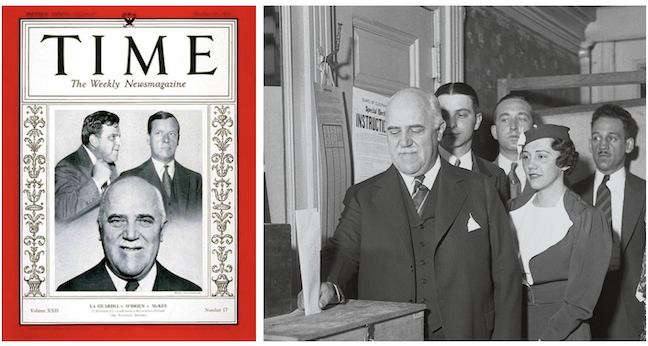
Back in the states, Alvin Johnston published the first installment of a two-part profile on John P. O’Brien (1873–1951) who served as mayor of New York from January to December 1933, the second of two short-term mayors to serve between the disgraced and deposed Jimmy Walker and the reformer Fiorello LaGuardia. Considered the last of the mayoral puppets of Tammany Hall, he was known for his brief, heartless, and clueless reign during one of the worst years of the Depression; while unemployment was at 25 percent, O’Brien was doling out relief funds to Tammany cronies. A brief excerpt (with Abe Birnbaum illustration):
A PIOUS, LABORIOUS DULLARD and “a hack given to malapropisms” is how writer George Lankevich describes John P. O’Brien. According to Lankevich, to a crowd in Harlem O’Brien proudly proclaimed, “I may be white but my heart is as black as yours.” (TIME)
* * *
That Pepsodent Smile
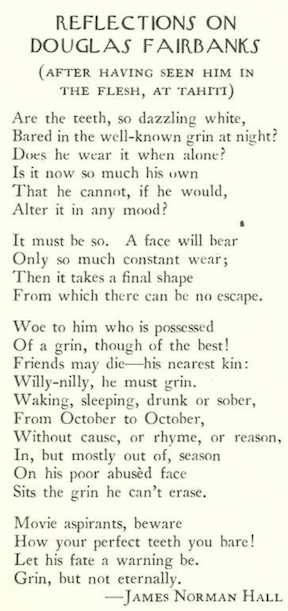
The author James Norman Hall (1887–1951), known for the trilogy of novels that included Mutiny on the Bounty, offered these sobering thoughts about a famed actor he spotted on a South Pacific holiday:
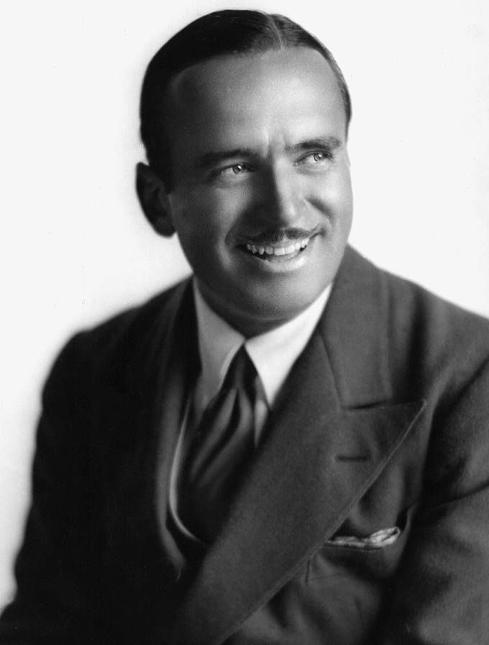
IT ISN’T EASY BEING ME…Fifty-year-old Douglas Fairbanks Sr, teeth and all, was apparently looking worse for the wear when he was spotted by writer James Norman Hall in Tahiti. His glory days of the Silent Era behind him, Fairbanks would die in 1939 at age 56. (fineartamerica.com)
* * *
More From Our Advertisers
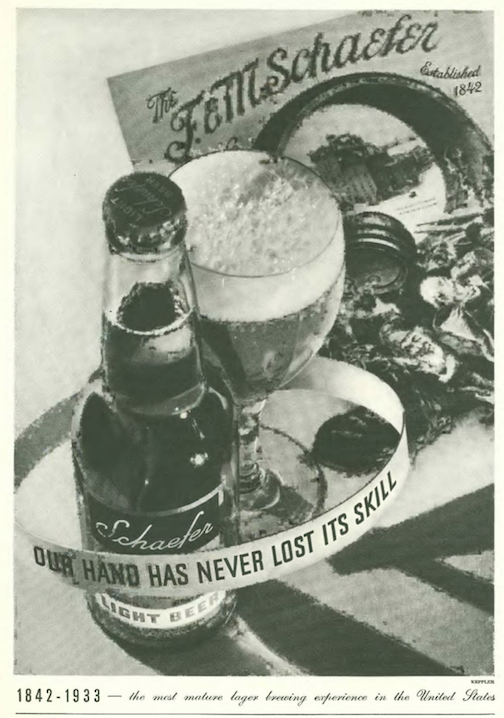
More cool ones for those hot summer days courtesy of Schaefer…
…and Rheingold, here served by a sheepish-looking woman who doubtless wished that the tray supported champagne or cocktail glasses…and leave it to the Dutch to be one of the first countries to get their foot into the import market…when I was in college this was as good as it got, beer-wise…
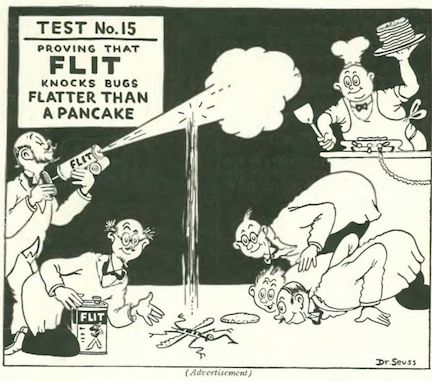
…Dr. Seuss again for Flit, and even though this is a cartoon, it demonstrates how in those days no one really cared if you sprayed pesticides near your breakfast, or pets, or kids…
…here’s one of just four cartoons contributed to The New Yorker in the early 1930s by Walter Schmidt…
…Otto Soglow’s Little King found an opportunity to stop and smell the flowers…
…Mary Petty gave us two examples of fashion-conscious women…
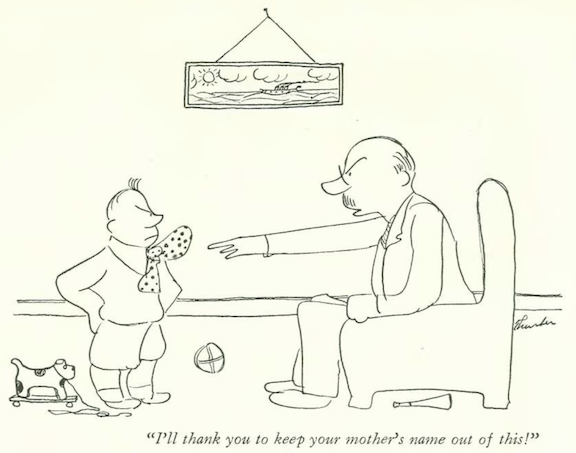
…James Thurber explored the nuances of parenting…
…and we close with George Price, master of oddities…
The name Will Hays will always be linked to the Motion Picture Production Code, a set of guidelines for self-censorship that studios adopted to avoid government intervention.
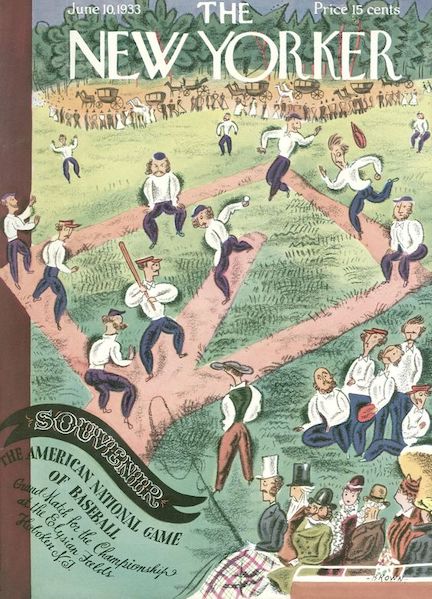
June 10, 1933 cover by Harry Brown.
Hays, however, played both sides in the culture wars. A Republican politician, Hays (1879–1954) managed the 1920 election of Warren G. Harding before moving on to Postmaster General and then chairman of the Motion Picture Producers and Distributors of America. During the so-called pre-Code era, roughly 1930 to 1934, the Production Code was barely enforced, giving filmmakers the freedom to explore themes ranging from prostitution to gangster violence. When Alva Johnston wrote a two-part profile on Hays for The New Yorker, pressure from Catholic Church and other morality groups was building for Hays to strictly enforce the Code, or else. An excerpt:
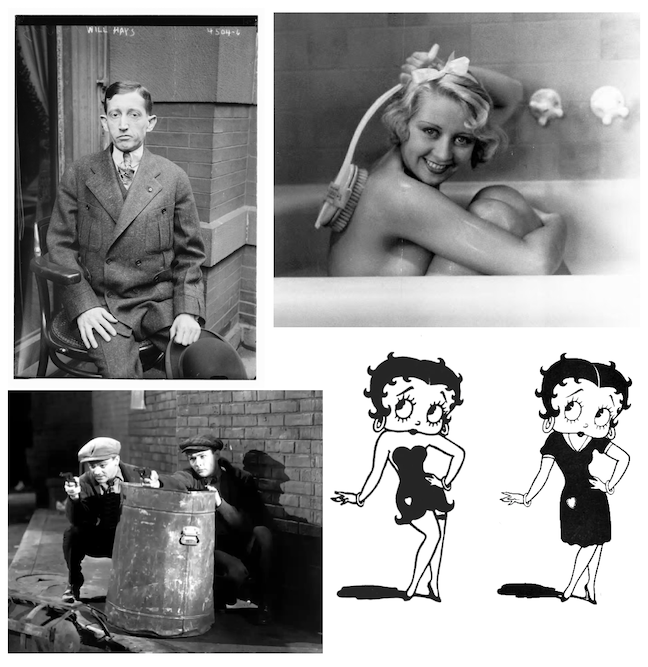
CLEAN IT UP, JOAN…Will Hays (top left) felt pressure in 1933 to start seriously enforcing the Production Code, and scenes such as the one at top right from Blonde Crazy (1931) with Joan Blondell would probably not pass muster after 1934; the Hays Code would also lengthen the animated Betty Boop’s skirts, and tone down gratuitous violence (James Cagney and Edward Woods in 1931’s Public Enemy). (Wikimedia/pre-code.com/Warner Brothers)
* * *
The Trouble With Money
In their investigation of the probable causes of the 1929 market crash, the Senate Banking and Currency Committee summoned J.P. Morgan Jr (1867–1943) on June 1, 1933, to testify on questionable banking practices. Committee counsel Ferdinand Pecora (1882–1971) set out to prove, among other things, that Morgan sold stock below market price to some of his cronies. Pecora also learned that Morgan and many of his partners paid no income tax in 1931 and 1932, big news to Americans still suffering from the effects of the Great Depression. E.B. White made these observations:
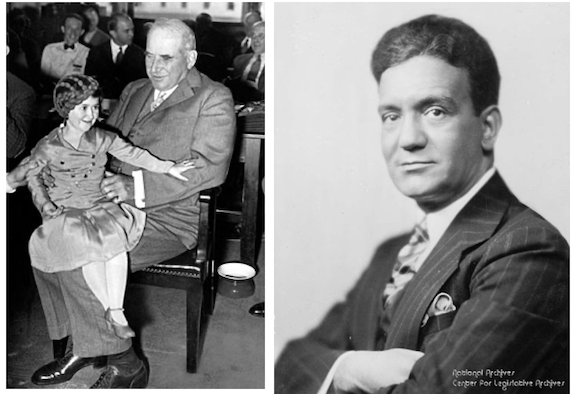
Although not mentioned by White, the hearing began with an odd little sideshow. Writing for the U.S. Capitol Historical Society blog, Joanna Hallac notes that because the hearings were slow to get started, newspaper reporters grew desperate to get something for the evening papers. Then one enterprising reporter, Ray Tucker, spotted circus dwarf Lya Graf with her agent, Charles Leef, outside of the hearing room (the Barnum & Bailey Circus was in town) and suggested Graf meet the famed banker. Hallac writes: “Although he was initially startled, Morgan was genial and rose and shook her hand. Naturally, the photographers were stepping all over each other to get a picture of the exchange. Leef, seeing a perfect press opportunity for himself and the circus, waited for Morgan to sit down and then scooped up Graf and placed her in J.P. Morgan’s lap. Morgan apparently laughed and had a brief exchange with the demure lady, in which he told her he had a grandchild bigger than her.”
THE LIGHTER SIDE OF FINANCE…Before being grilled by Senate counsel Ferdinand Pecora at a June 1, 1933 banking hearing, J.P. Morgan Jr was paid a surprise visit by Lya Graf, a Barnum & Bailey circus dwarf. At right, Pecora, circa 1933. Sadly, Graf, who was German, perished in a concentration camp after she returned to her homeland in 1935. She was condemned to death in 1937 for being half Jewish and “abnormal.” (New York Magazine/Wikipedia)
* * *
Single Member Plurality
Among other attributes, E.B. White was known for his use of the first person plural, the editorial or clinical “we.” White himself offered this insight:
I, ME, MINE…E.B. White at work in 1945. (Britannica.com)
* * *
Uncle Tom, Revived
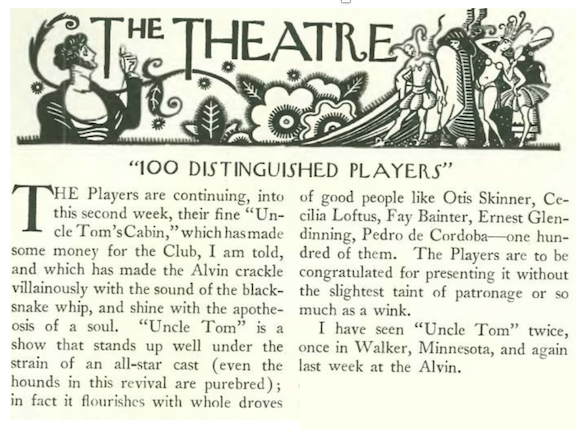
Plays based on Harriet Beecher Stowe’s 1852 novel Uncle Tom’s Cabin were wildly popular throughout the late 19th and early 20th centuries, but by the 1930s the story seemed antiquated and no longer relevant. That didn’t stop the Players (a Gramercy park actors club) from mounting a 1933 Broadway revival that proved popular with audiences and a New Yorker stage critic, namely E.B. White, sitting in for Robert Benchley…an excerpt…
SAY UNCLE…Otis Skinner (1858–1942), a beloved broadway actor, portrayed Uncle Tom in the 1933 Broadway revival. The all-white cast performed in blackface.
…on the other hand, White found the Frank Faye/Barbara Stanwyck play Tattle Tales tedious, a thin veneer over the stars’ crumbling marriage off-stage…
THAT’S ALL, FOLKS…Publicity photo of Barbara Stanwyck and Frank Faye for the Broadway production of Tattle Tales at the Broadhurst Theatre. The co-stars’ real-life marriage supposedly inspired the 1937 film A Star is Born (as well as subsequent remakes). As Stanwyck’s star rose, Faye’s faded—his heavy drinking and abuse led to their 1935 divorce. The play itself closed after 28 performances. (IBDB)
* * *
Frothy Air
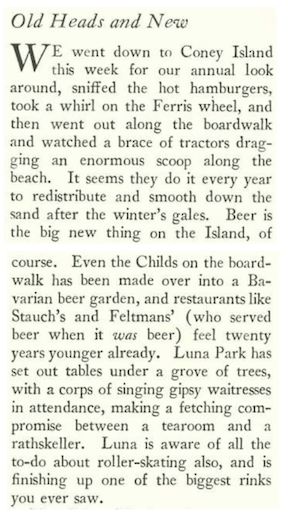
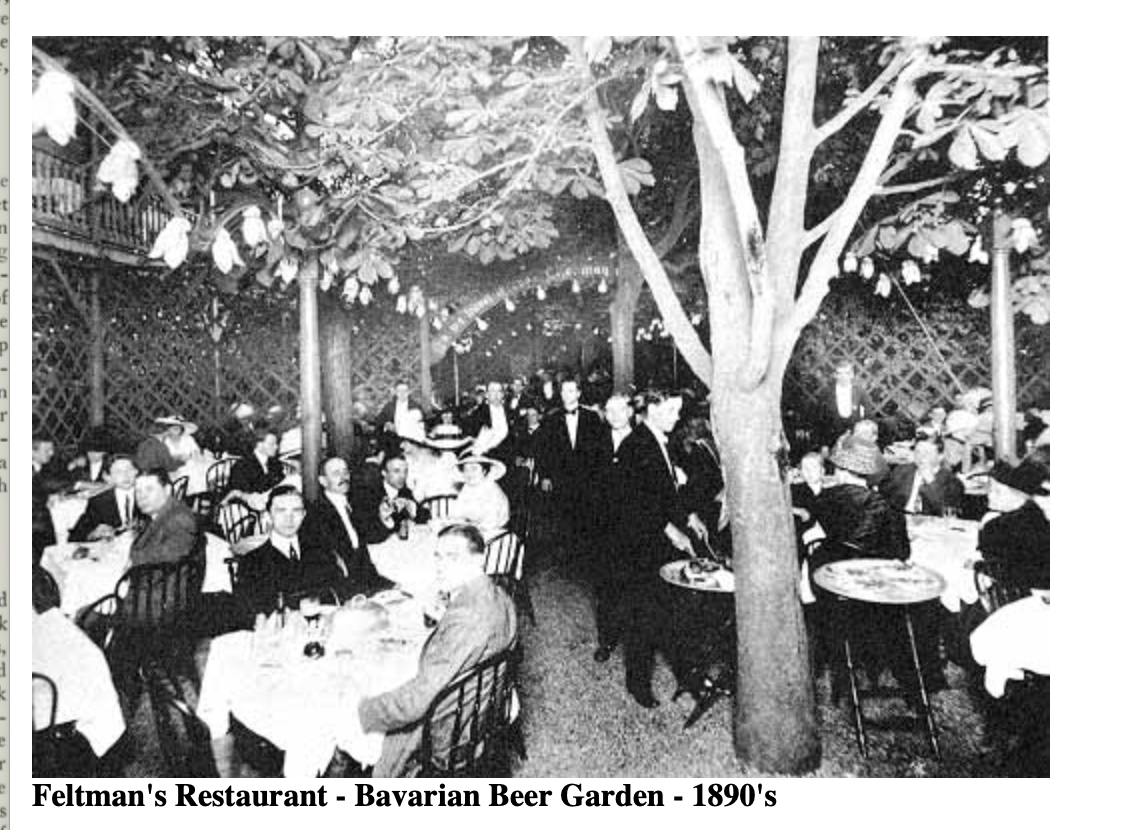
E.B. White (via “The Talk of the Town”) took a stroll through Coney Island and found the place somewhat revived, perhaps thanks to the return of legal beer and Bavarian-style beer gardens…
RECALLING THE GOOD OLD DAYS…Feltman’s Restaurant on Coney Island operated this popular Bavarian Beer Garden in 1890s. (Westland.net)
* * *
Peace, He Said
Adolf Hitler was talking peace, but the French weren’t buying it according to The New Yorker’s Paris correspondent Janet Flanner—in just seven years her beloved City of Light would fall to the Nazis…
IF YOU CAN’T SAY SOMETHING NICE…Adolf Hitler makes his first radio broadcast as German Chancellor, February 1933. Hitler spoke of peace in Europe while preparing his country for war. (Detail of image courtesy Bundesarchiv)
…speaking of Janet Flanner, apparently her “Paris Letter” implied that the author Edna Ferber had married. Ferber offered this correction, in good humor:
* * *
From Our Advertisers
Class anxieties were (and still are) gold to Madison Avenue—look at this poor woman, pondering her very existence, lacking as she did the horsepower to lay some rubber at a green light…
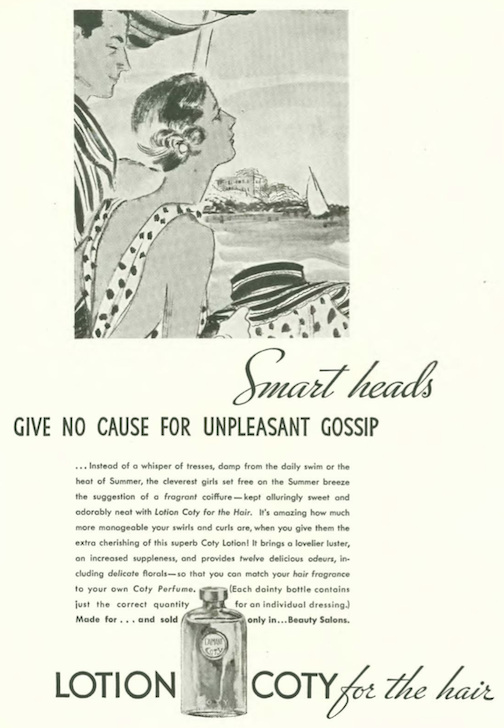
…or this woman, who thought ahead and made sure she had some hair lotion to ward off cackles from the beach harpies…
…on the other hand, this cyclist seems to care less about appearances as she races toward us with a crazed smile, half-human, half-illustration…
…and then there’s this fellow, playing it cool in a white linen suit, which for a sawbuck seems like a bargain, even in 1933…
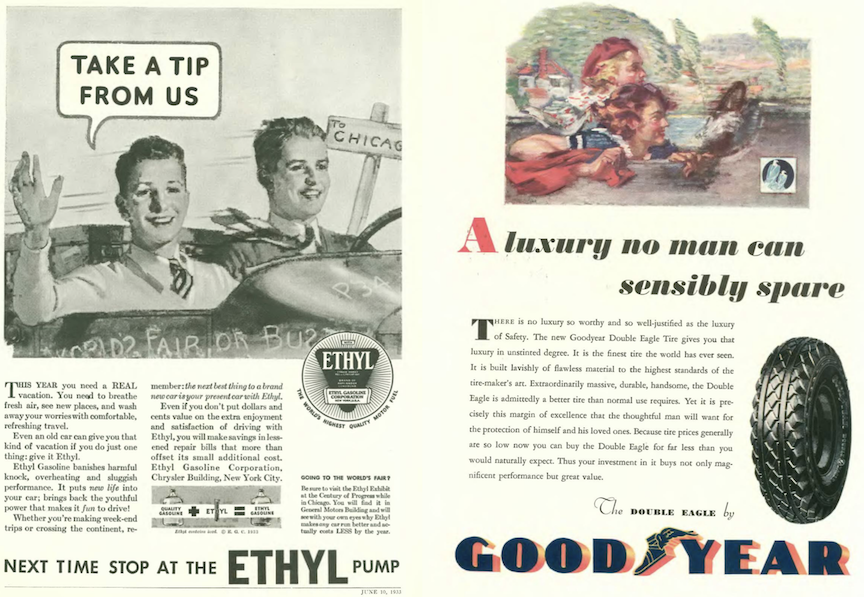
…the last two pages of the magazine featured friends racing to some swell destination…the lads at left are being propelled to the 1933 Chicago World’s Fair thanks to the wonders of leaded gasoline, while the women at right seem to be doing at least eighty…note neither car has a windshield, so you wonder how many bugs they will pick out of their teeth…
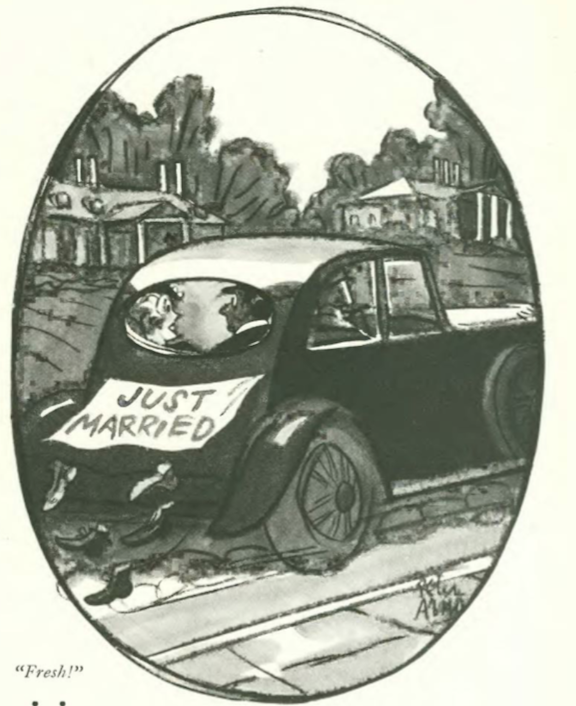
…an apt segue to our cartoons, where Peter Arno showed us a couple going nowhere fast…
…Otto Soglow’s Little King had his own marital situation to ponder after a visit from a sultan…
…a very unusual cartoon from Helen Hokinson, who rarely delved into serious socio-political issues (although her captions were often provided by others at The New Yorker)…this cartoon referred to a cause célèbre of the 1930s, the case of the prejudicial sentences of the Scottsboro boys that recalled the Tom Mooney frame-up two decades earlier…
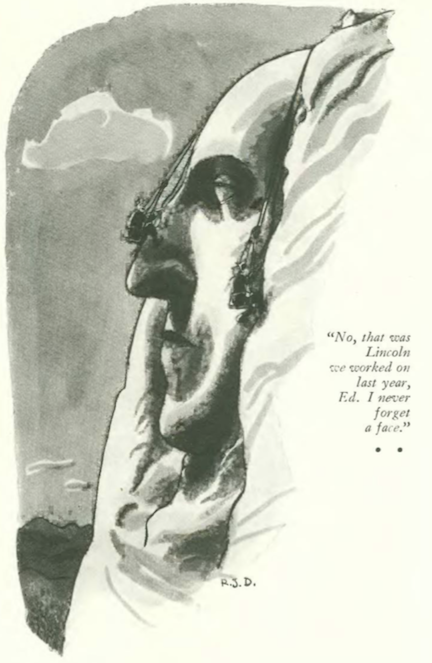
…on to lighter topics, Robert Day checked in on the progress at Mt. Rushmore…
…George Price also went aloft for a challenge…
…and Carl Rose found this dichotomy in the conquest of nature…
…on to June 17, 1933…
June 17, 1933 cover by Perry Barlow.
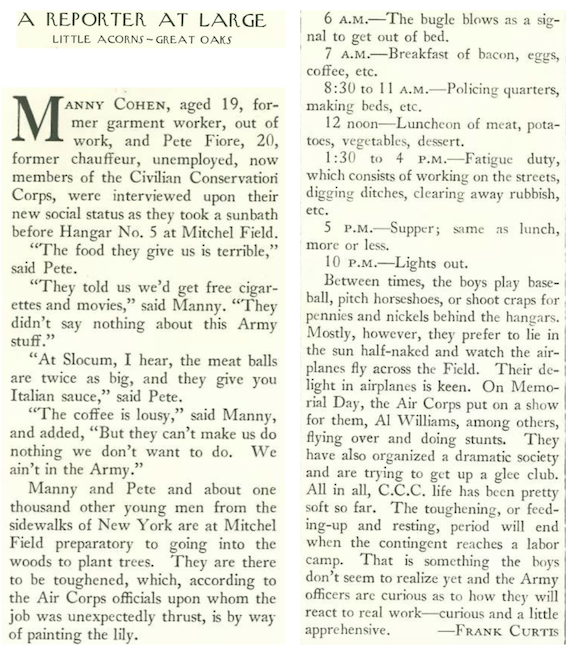
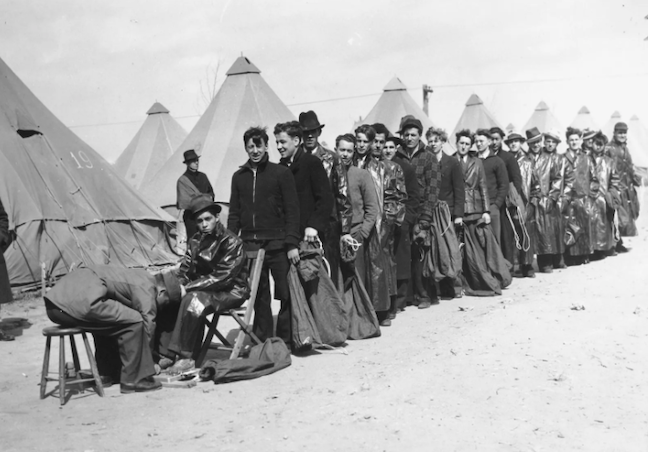
…where Frank Curtis reported on the military-style schedule that put young men to work for the Civilian Conservation Corps…excerpts:
MARCHING ORDERS…New members of the Civilian Conservation Corps waiting to be fitted for shoes at Camp Dix, New Jersey, 1935. (Encyclopædia Britannica, Inc.)
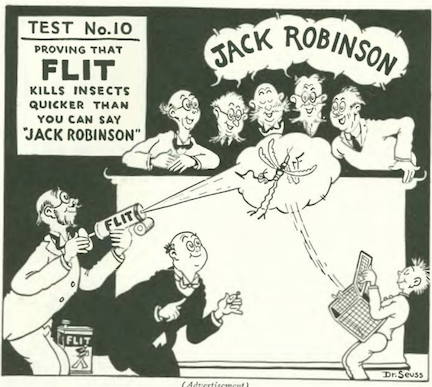
…just one ad from this issue, another Flit entry from Dr. Seuss, who wouldn’t publish his first book until 1937…
…our cartoons are courtesy Otto Soglow, with some bedside manner…
…Kemp Starrett set up what should prove to be an interesting evening…
…Gluyas Williams considered the woes of J.P. Morgan Jr…
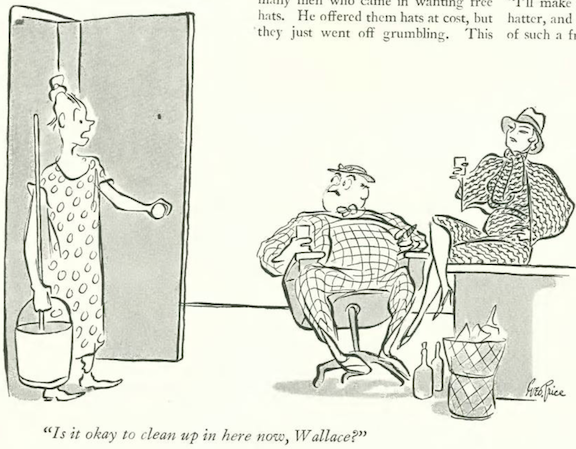
…and we close with another from George Price, doing some tidying up…
As we enter the summer months we find the recurring themes of June brides…and German Nazis…
May 27, 1933 cover by Constantin Alajalov.
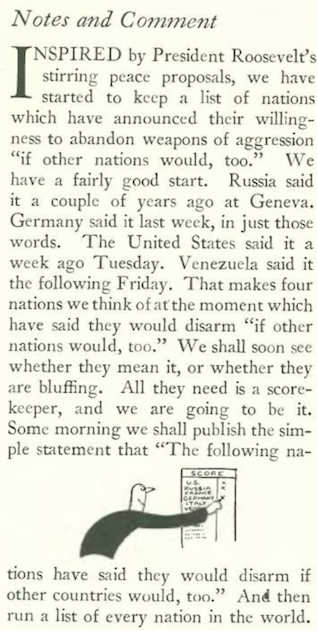
Those Nazis were on the mind of U.S. President Franklin D. Roosevelt when he wrote to the sixty participating nations at the Geneva Disarmament Conference, imploring them to eliminate all weapons of offensive warfare. As we now know, it was a plea that mostly fell on deaf ears, notably those of the leaders of Japan and Germany. E.B. White offered this observation:
GIVE PEACE A CHANCE?…Sixty countries sent delegates to the Geneva Disarmament Conference in 1932–33. Germany was represented by Nazi Minister of Public Enlightenment and Propaganda Joseph Goebbels (front row, center), that is until his country pulled out of the conference and continued its massive arms buildup. (Library of Congress)
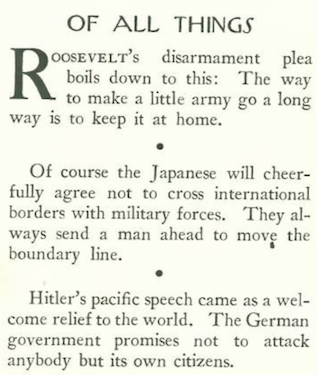
Howard Brubaker was also keeping an eye on FDR’s efforts to hold off the rising powers in Europe and Asia…
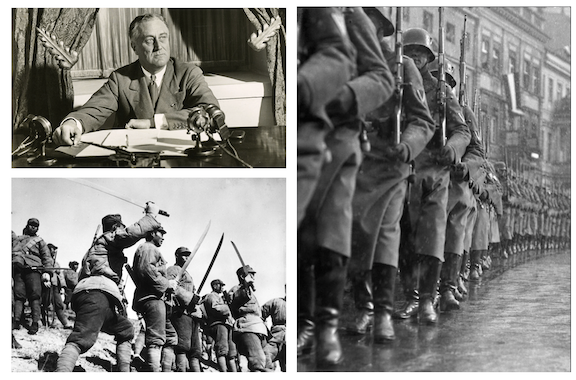
WAR AND PEACE…On May 16, 1933, Franklin D. Roosevelt pleaded with the world’s nations to consider total disarmament of all offensive weapons. In the meantime, Adolf Hitler led the rapid rearmament of Germany (right) while Chinese soldiers (below) did what they could to counter the latest Japanese offensive—the invasion of Jehol Province. (Wikimedia/Pinterest)
* * *
Writer of Lost Causes
The short story “Pop” would be Sherwood Anderson’s first contribution to The New Yorker. Anderson was known for his stories about loners and losers in American life, including Pop Porter, whose sad, drunken death is described in the closing lines:
NO EXIT…Best known for his 1919 novel Winesburg, Ohio,Sherwood Anderson (1876–1941) took an unsentimental view of American life. He would contribute six short stories to The New Yorker from 1933 to 1936. Photo above by Edward Steichen, circa 1926. (The New York Times)
* * *
From Our Advertisers
The German Tourist Information Office welcomed visitors to “witness the rebirth of a nation,” promising a land of “new ideas and broader visions” that would bestow on travelers “undying memories endlessly renewed”…
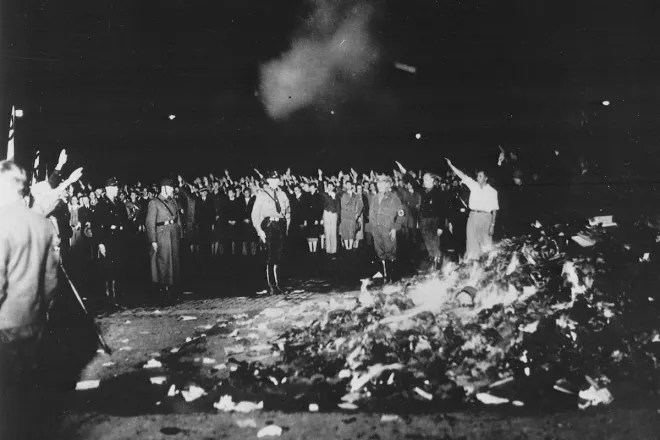
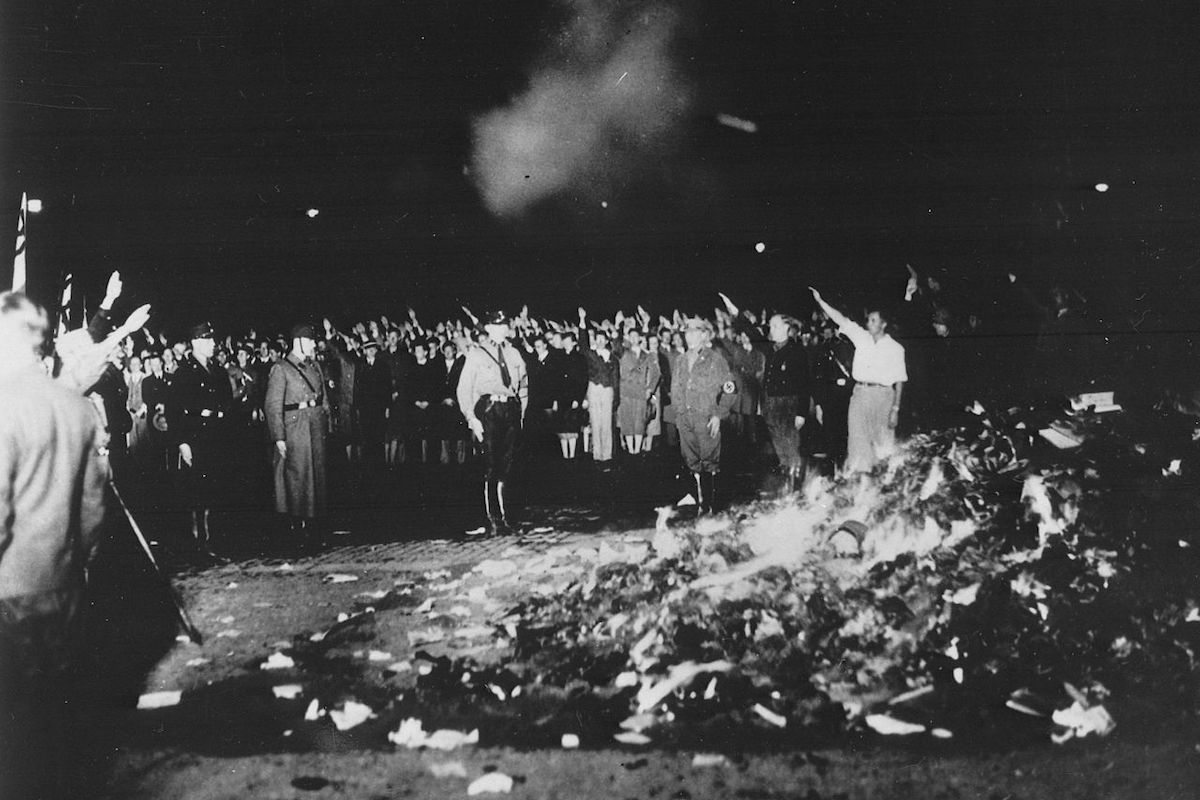
…Those “undying memories” might have included massive, country-wide book burnings that took place on May 10, 1933, when students in 34 university towns across Germany burned more than 25,000 “un-German” books…
FANNING FLAMES OF HATE…On May 10, 1933, student supporters of the Nazi Party burned thousands of volumes of “un-German” books in the square in front of the Berlin State Opera. (Bundesarchiv)
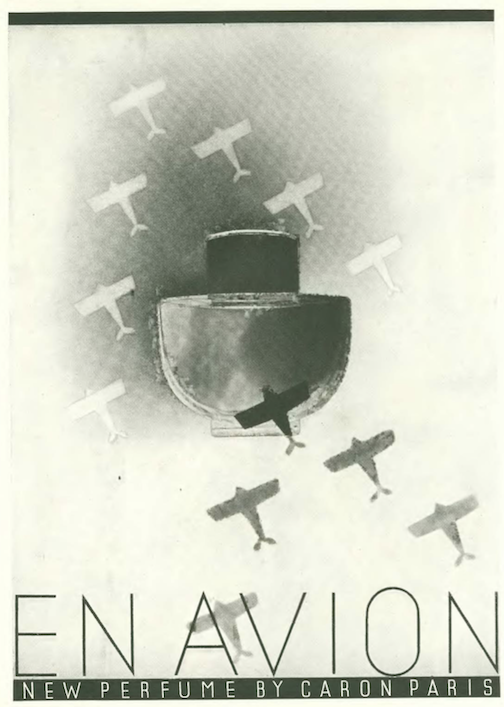
…knowing where all of this would lead, it is hard to look at this next ad and not think of the Luftwaffe raining death from the skies later in that decade…
…so for the time being we’ll turn to something less menacing, like checkered stockings, here resembling one of John Held Jr’s woodcuts…
…and this crudely illustrated ad (which originally appeared in one column)…call your buddy a fatso and the next thing you know he’s moving to Tudor City…
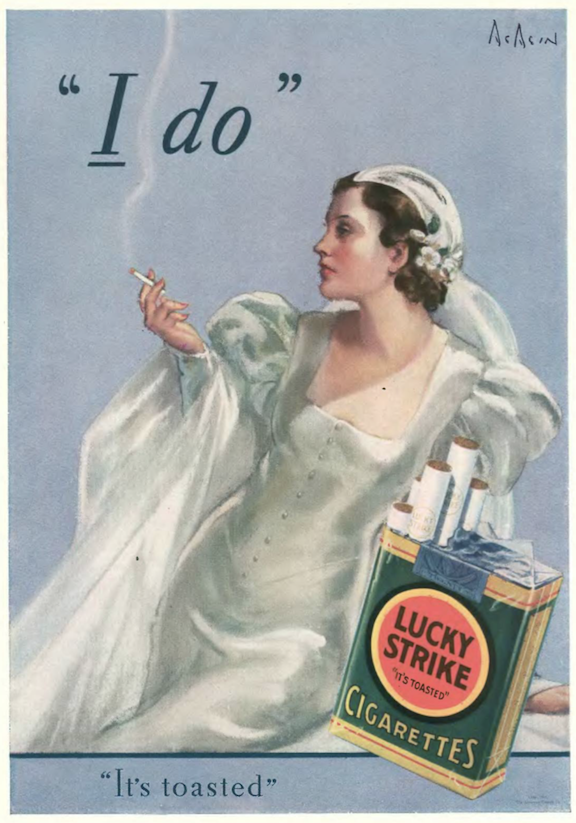
…and from the makers of Lucky Strikes, a back cover ad that provided a thematic bookend to Constantin Alajalov’s cover art…
…James Thurber kicks off the cartoons with this sad clown…
…atop the Empire State Building, Daniel ‘Alain’ Brustlein found more than just a view of the city (it’s former governor Al Smith!)…
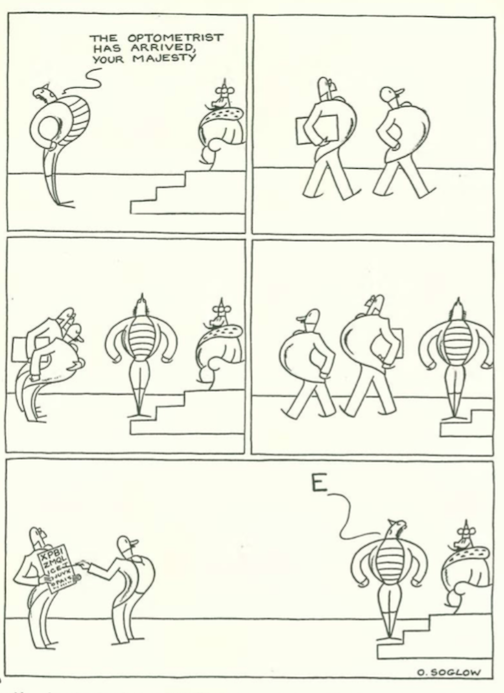
…Otto Soglow’s Little King got his vision checked, in his own way…
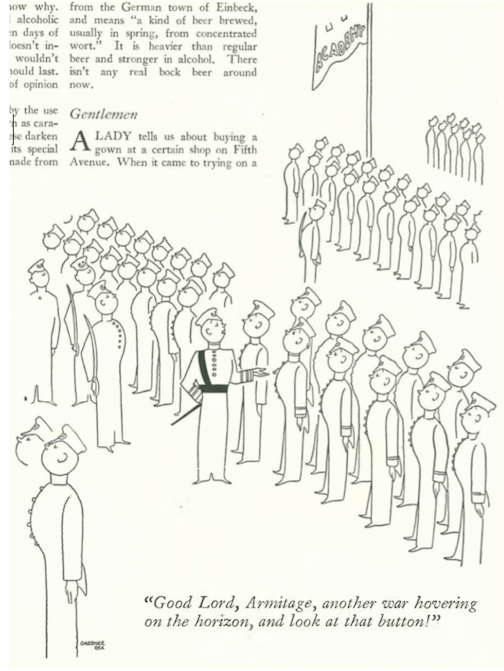
…a loose button threatened to bring down a nation…per Gardner Rea…
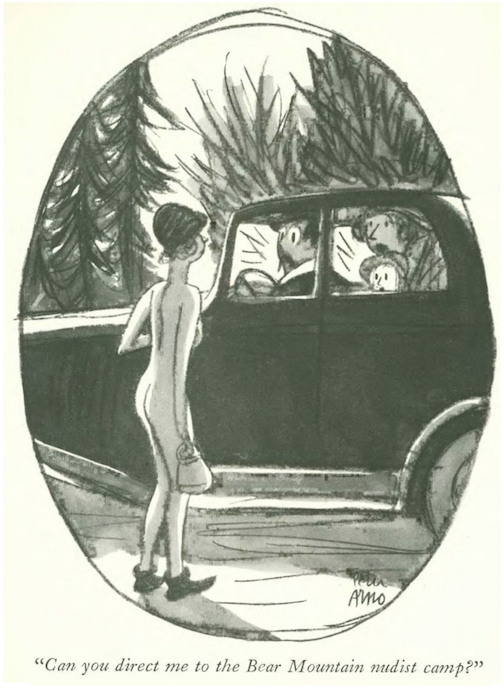
…and we take a leisurely Sunday drive, Peter Arno style…
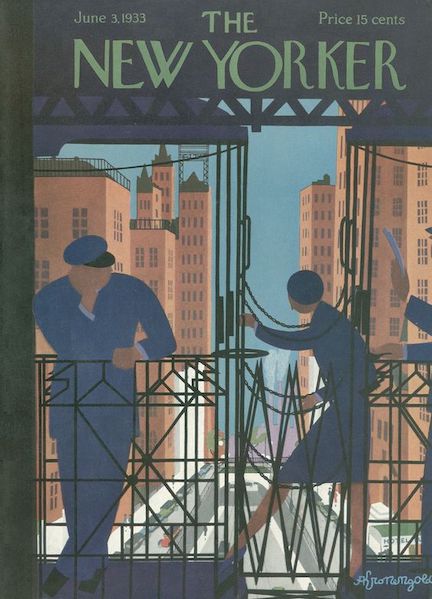
…on to the June 3, 1933 issue…
June 3, 1933 cover by Adolph K. Kronengold.
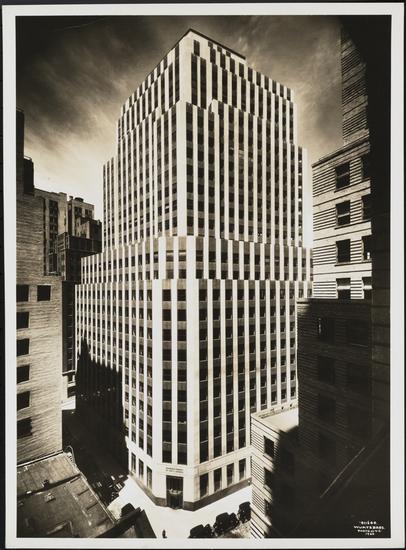
…where we appropriately look to the skyline, which was giving Lewis Mumford a crick in the neck…
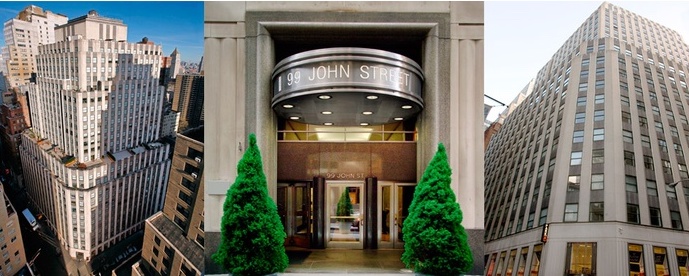
THAT’LL DO…Lewis Mumford was not a fan of giant skyscrapers, but when the architects of the Empire State Building turned their attention to the Insurance Company of North America building at 99 John Street, Mumford found a design that could serve as a model for future business buildings. (Museum of the City of New York)CONVERSION THERAPY…the Insurance Company of North America building now houses modern loft condominiums known as 99 John Deco Lofts. (nest seekers.com).
Later in the column Mumford called skyscrapers “insupportable” luxuries, arguing instead for long, shallow buildings rising no more than ten stories.
* * *
The Stars Align
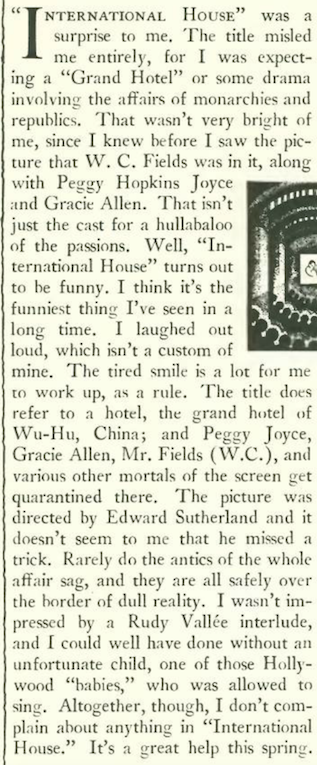
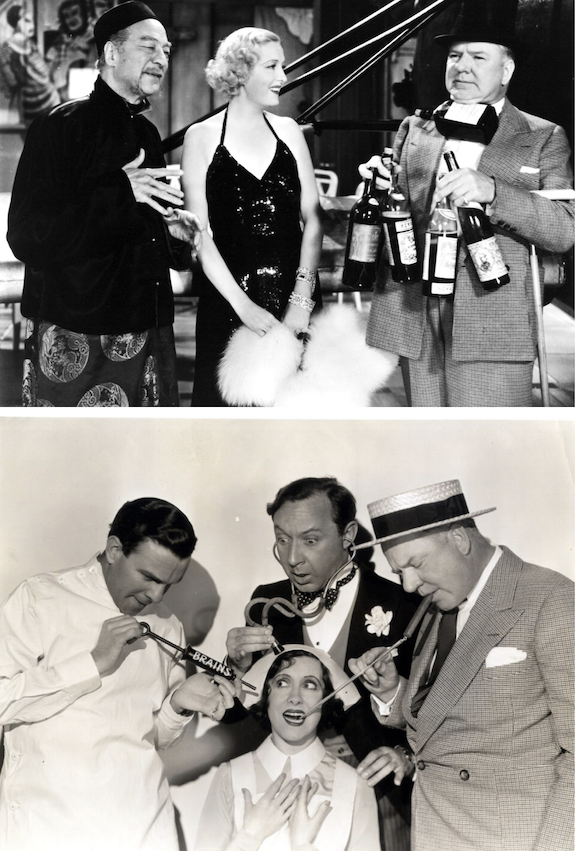
Film critic John Mosher was delightfully surprised by International House, a film loaded with some of the era’s top comedic stars along with other entertainers.
CLUTCH THOSE PEARLS…The risqué subject matter of International House had the Legion of Decency up in arms, but it left critic John Mosher in stitches thanks to the antics of Edmund Breese, Peggy Hopkins and W.C. Fields (top photo). Below, a publicity photo for International House with George Burns, Gracie Allen, Franklin Pangborn and W.C. Fields. (IMDB)
The film featured an array of entertainers including Peggy Hopkins (more famous as a real-life golddigger than an actress), the comedy duo Burns and Allen, W.C. Fields, Bela Lugosi, Cab Calloway, Rudy Valley and Baby Rose Marie.
ALL THE WORLD’S A STAGE…Ten-year-old Rose Marie Mazzetta, known in 1933 as the child performer Baby Rose Marie, sings a number atop a piano in a scene from International House. Thirty years later Rose Marie would appear on The Dick Van Dyke Show as television comedy writer Sally Rogers, pictured here with co-stars Dick Van Dyke and Morey Amsterdam. (WSJ/LA Times)
* * *
The New Germany, Part II
The June 3 “Out of Town” column took a look at life in Berlin as well as the 1933 Chicago World’s Fair. The piece is signed “A.L.”, leading me to believe it might be A.J. Liebling (author of the terrific Between Meals), but he didn’t start at The New Yorker until 1935. At any rate the article seems to dismiss the crackdown on Berlin’s cultural life as a mere inconvenience.
NEW THEME, NEW OWNERSHIP…The article mentions the closing of the Eldorado night club in Berlin, famed for its drag shows and other naughty diversions. Images above show the before and after the Nazis redecorated. (lonesomereader.com)
* * *
From Our Advertisers
More propaganda from Germany, where everything is sweet and bright away from the din of the city and the sound of marching jackboots and the crash of broken glass…
…an unusual ad from Cadillac, which barely mentions the automobile but goes full bore on the June bride theme…
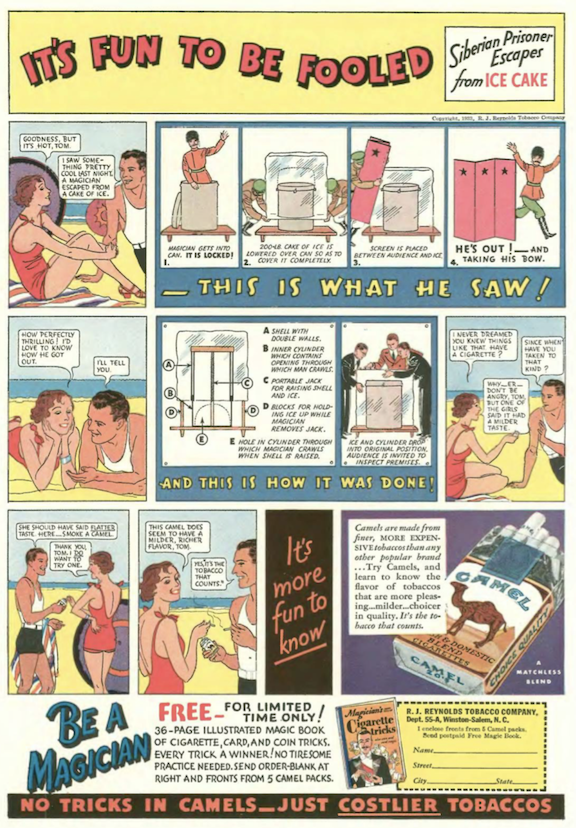
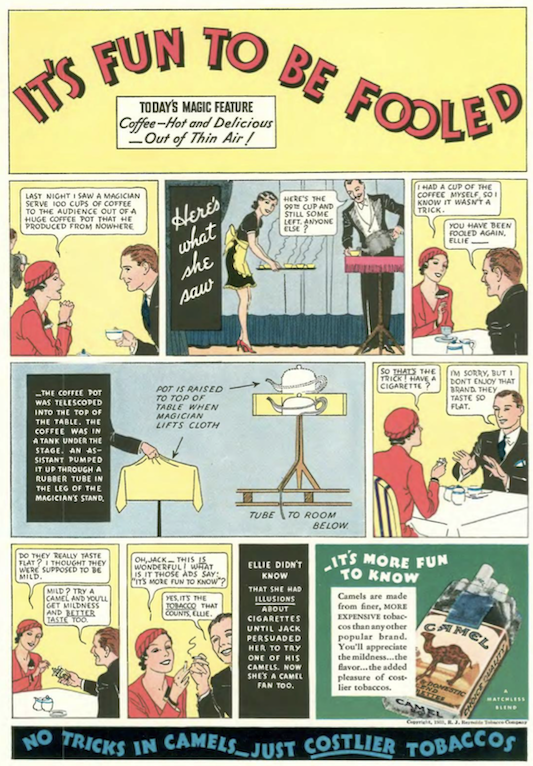
…the folks at Camel went full color in their latest installment of “It’s Fun to be Fooled”…in this strip Jack gets his friend Ellie hooked on his cigarette brand…
…looking for fresher air, well you could get a window air conditioner from the folks at Campbell Metal Window Corporation…however, these units were only available to the very wealthy, roughly costing more than $25,000 apiece (more than half a million today)…
…better to take a drive a catch the breeze with this smart pair…
…and fight off those pesky bugs with a blast of Flit, as illustrated by Dr. Seuss before he became a children’s author…
…Richard Decker picked up some extra cash illustrating this ad for Arrow shirts…
…which segues to our other New Yorker cartoonists, such as H.O. Hoffman…
…and yet another bride, with sugar daddy, courtesy of Whitney Darrow Jr…
…William Crawford Galbraith continued his exploration into the lives of showgirls…
…Gardner Rea gave us this helpful switchboard operator…
…Carl Rose showed us how the posh set got into the spirit of the Depression-era farm program…
…George Price was getting into familiar domestic territory…
…and on this Father’s Day, we close with some fatherly advice from James Thurber…
James Cagney began his entertainment career singing and dancing in various vaudeville and Broadway acts, but when he was cast in his first film as a tough guy, the die was cast…at least for one New Yorker critic.
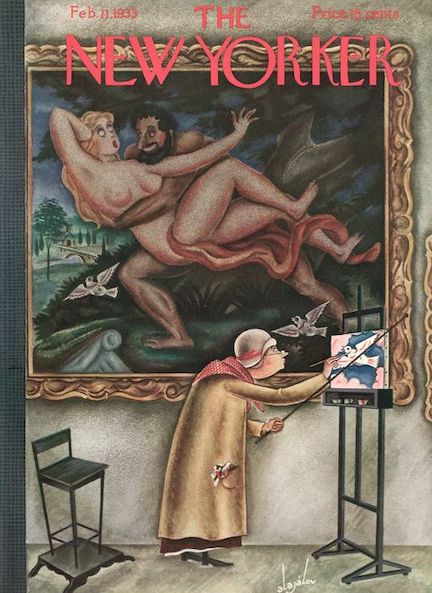
Feb. 11, 1933 cover by Constantin Alajalov.
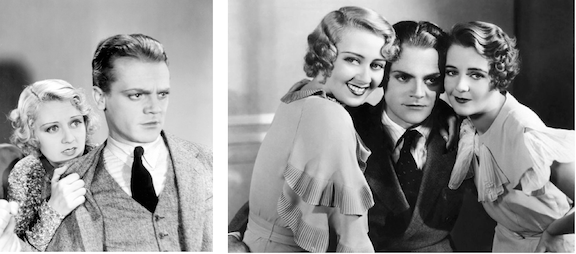
Cagney’s first film role came after he starred along with Joan Blondell in Broadway’s Penny Arcade. However when the play was made into the 1930 movie Sinners’ Holiday, execs at Warner Brothers opted to put Grant Withers and Evalyn Knapp into the lead roles, believing they were destined for stardom; Cagney and Blondell were relegated to supporting parts. As fate often has it, Withers and Knapp ended up in B-movie obscurity, while Cagney and Blondell went on to become two of the biggest stars of the 1930s. The pair would appear in six more films together, including the gangster film The Public Enemy (1931) and the musical Footlight Parade (1933).
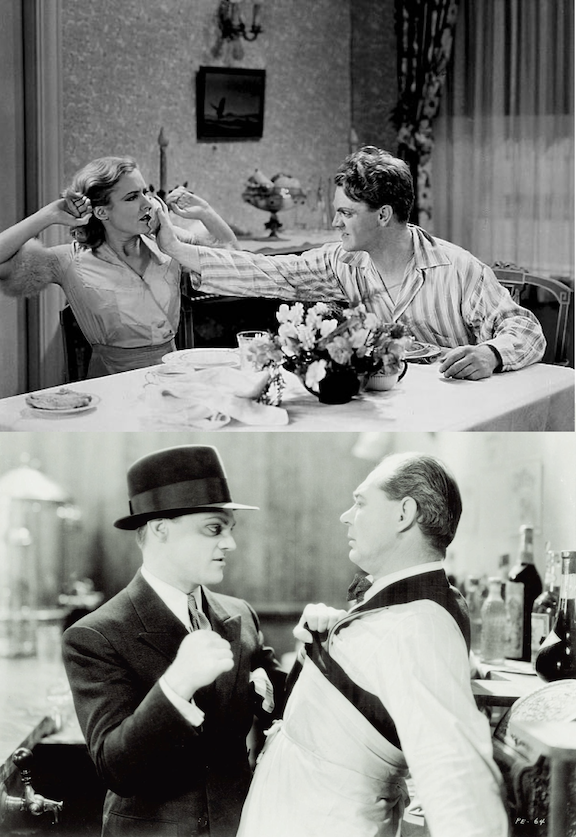
TWO-FACED…James Cagney would be paired with Joan Blondell in seven films during the 1930s including the gangster film The Public Enemy (1931, left) and the musical Footlight Parade (1933, also with Ruby Keeler). (IMDB)THE ONE I USED TO KNOW…Top, Cagney mashes a grapefruit half into Mae Clarke’s face in a famous scene from Cagney’s breakthrough film, 1931’s The Public Enemy; below, Cagney gets acquainted with a bartender (Lee Phelps) in The Public Enemy. (IMDB)
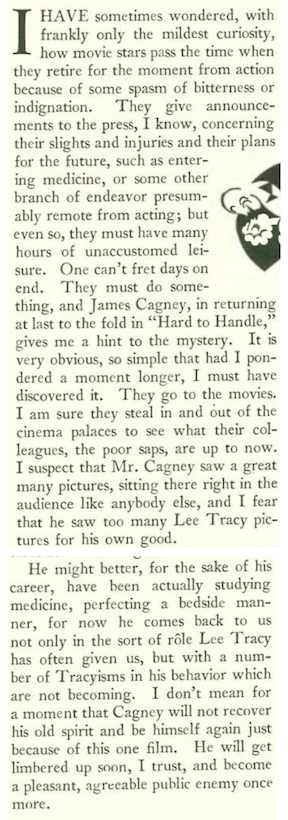
New Yorker film critic John Mosher preferred the tough guy Cagney to the toe-tapping version, and was anticipating Cagney’s return to pictures after a contact dispute with Warner in which he threatened to quit the business and follow his brothers into the medical profession…
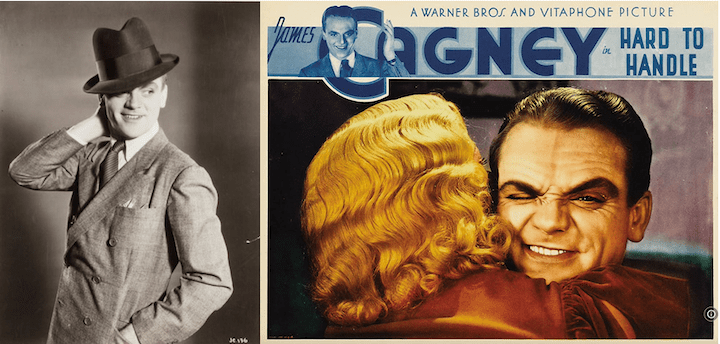
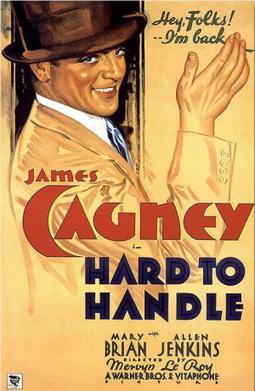
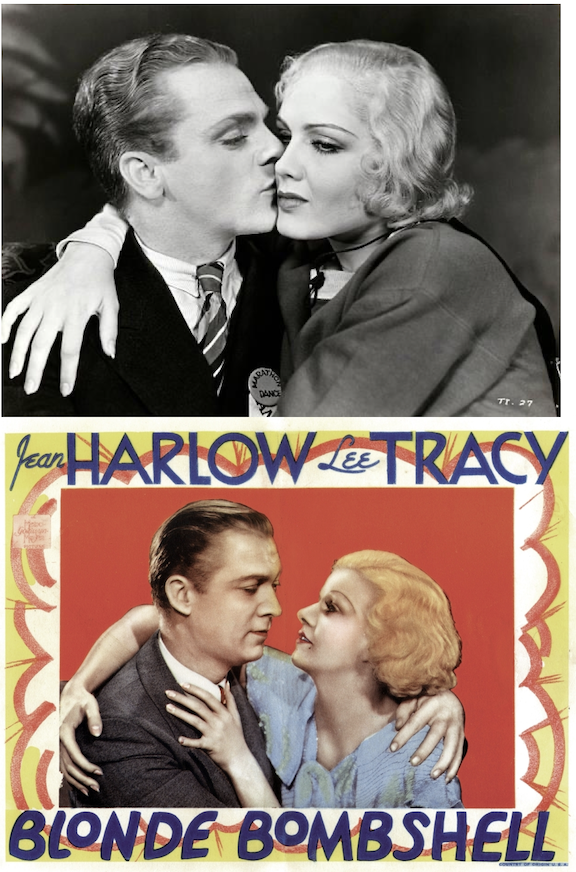
When Cagney finally announced his return in Hard to Handle, Mosher found he had taken on the guise of actor Lee Tracy, who was best known for his comic portrayals of wisecracking salesmen and reporters…
MY SOFTER SIDE…James Cagney and Mae Clark (top) in 1933’s pre-Code comedy Hard to Handle — Cagney played a clowning con artist who organizes a dance marathon. Below, critic John Mosher thought Cagney was channelling the comic actor Lee Tracy, seen here with Jean Harlow in 1933’s Blonde Bombshell. (IMDB)
* * *
Slippery Slope
Located on Lexington between 102nd and 103rd streets, Duffy’s Hill was once famous for being the steepest hill in Manhattan and the scourge of street cars that had to quickly accelerate and decelerate at that point, leading to numerous accidents. An excerpt from “The Talk of the Town”…
LOOK OUT BELOW…Duffy’s hill played merry hell with New York’s streetcars more than a century ago. (New York Social Diary via Facebook)
* * *
Getting High
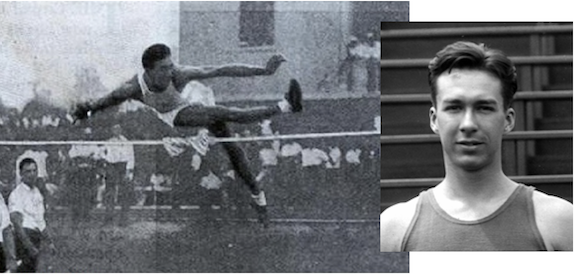
George Spitz Jr was an AAU high jump champion when he participated in the 1932 Summer Olympics in Los Angeles. In 1933 he made a personal best leap of 6 feet, 8¼ inches using scissors-style leap with elements of the Western roll. “The Talk of the Town” marveled at Spitz’s feat, giving him an extra quarter inch for his record leap:
MILLION-DOLLAR LEGS…In 1933 George Spitz Jr made his personal best leap of 6 feet, 8¼ inches using a scissors-style jump with elements of the Western roll. With the introduction of the Fosbury Flop in 1968, today’s men’s record stands at 8 feet, ¼ inches. The current women’s record is 6 feet, 10¼ inches. (Olympedia)
* * *
This Guy Again
As we move into the 1930s we will be seeing more references to Adolf Hitler, who seized power in Germany on January 30, 1933. At this point “The Talk of the Town” wasn’t taking him seriously…
…and neither was Howard Brubaker in his regular column of short quips…
* * *
From Our Advertisers
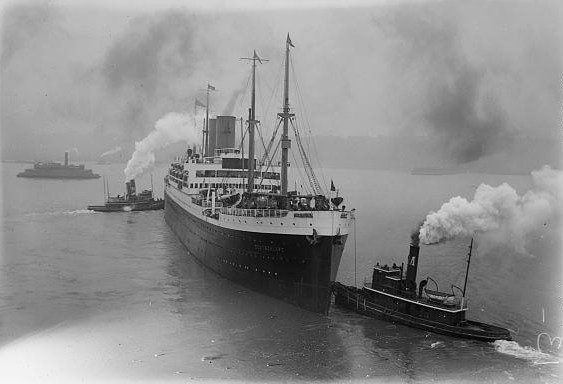
Hitler aside, the German-owned Hamburg-American Line was still serving peaceful purposes when it advertised the comfort of its “stabilized ships” on transatlantic voyages…these sister ships of the Hamburg-American Line were all destroyed during World War II…the SS New York and the SS Deutschland were both sunk by the British RAF in 1945…The SS Albert Ballin and the SS Hamburg sank after hitting Allied mines…
THE BIG BANG…the RAF sent the S.S. Deutschland to the bottom of the Bay of Lübeck on May 3, 1945. (Wikipedia)
…if travel wasn’t your thing, you could escape the winter blahs in the comfort of your home thanks to the GE Mazda Sunlight Lamp…
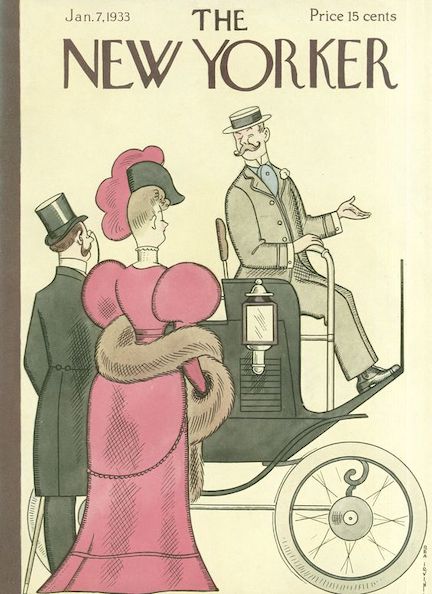
…and Dad, when you were her age you called these things “horseless carriages”…
…the folks at luxury carmaker Packard answered the splashy color ad from Cadillac in the Jan. 7 issue…
…with a colorful show-stopper of their own…
…if the Packard was too pricy, you could have checked out this lower-priced Cadillac, marketed as the LaSalle…
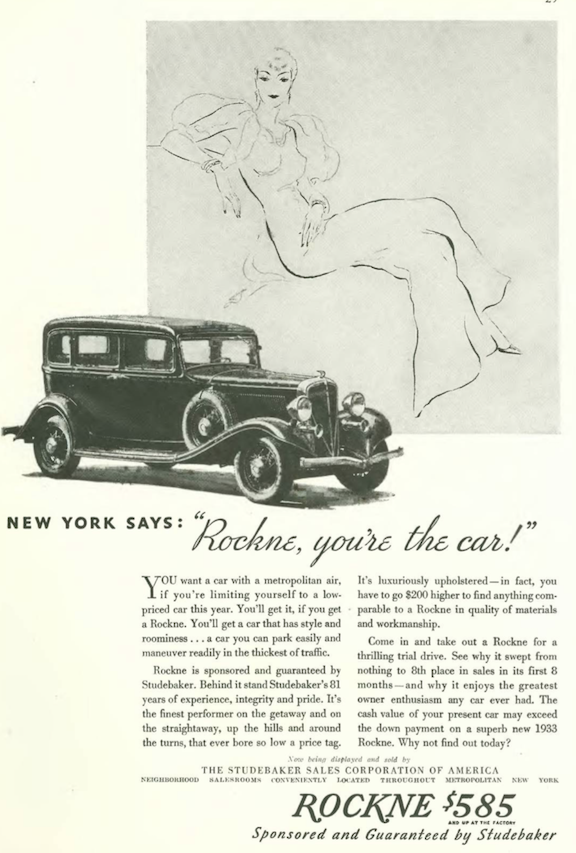
…no, New York did not say “Rockne, you’re the car!”, even if it was juxtaposed with a giant woman…the car was named for famed football coach Knute Rockne, and the Depression was not a good time to promote a new car line…it was produced from 1932 to 1933, when Studebaker pulled the plug and sold the remaining inventory (about 90 cars, packaged in kits) to a Norwegian railroad car manufacturer…
…a couple of posts ago (“Life With Father”) we were accosted by a three-page Camel ad featuring a Q&A stating the facts about its product…here they are back with two more pages of irrefutable evidence…
…what I read in their eyes is that none of them, including the woman, gives a damn about the others…if anything, the fellow at left is checking out the other guy…
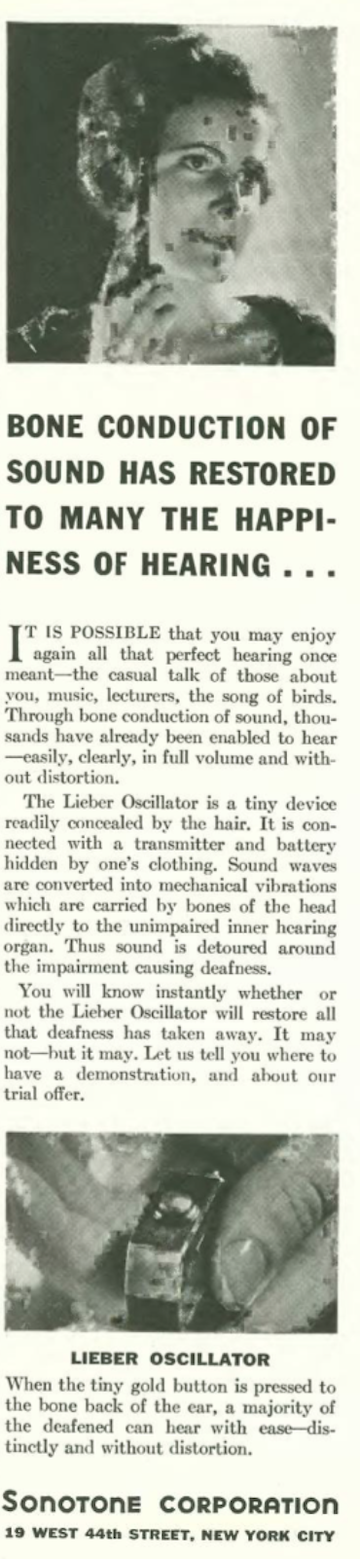
…this ad from Sonotone Corporation promoted a new hearing aid developed by Hugo Lieber…this revolutionary bone conduction receiver enabled the deaf to hear through bones in their head…
…a 1939 Sonotone catalog demonstrated how the hearing aid could be worn inconspicuously…
(abebooks.com)
…on to our cartoonists, Al Frueh illustrated the drama on board Broadway’s Twentieth Century Limited…note vaudevillian William Frawley’s caricature in the bottom right hand corner…although he appeared in more than 100 films, Frawley is best known today for his role as Fred Mertz on TV’s I Love Lucy…
…here’s a great caricature by Rea Irvin of New York’s new mayor John P. O’Brien, using his new broom to sweep away the corruption of the deposed Jimmy Walker and his Tammany Hall cronies…
…here’s another early work by George Price, who would be a cartoonist at The New Yorker for nearly six decades…
…and here we have the other Price…Garrett Price gave us a fellow who made some changes in his life à la Paul Gauguin…
…I like this Perry Barlow cartoon because it reminds me of the patient-in-traction trope commonly seen in comedies of the 1960s and 70s…
…such as this Paul Coker Jr. illustration from the June 1970 issue of MAD magazine…
(MAD Magazine)
…and Terry-Thomas and Spencer Tracy in 1963’s It’s a Mad Mad Mad Mad World…
(IMDB)
…William Steig assured readers there was nothing sweet about his “Small Fry”…
…once again Helen Hokinson offered her impressions of the annual Westminster Kennel Club show at Madison Square Garden…
…Peter Arno’s Lake Placid would never be the same for his mustachioed millionaire “walruses” after the previous year’s Winter Olympic Games…
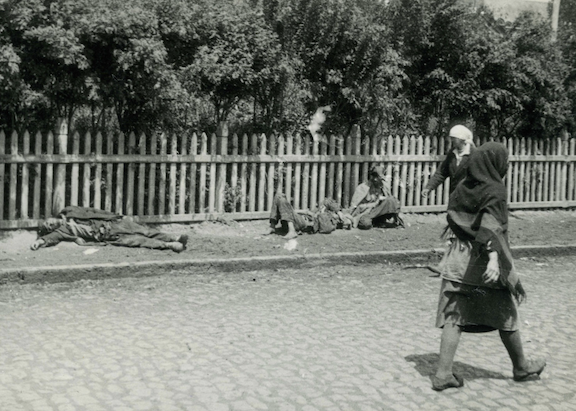
If folks thought things were bad in Depression-era America, they could ponder the famine-ravaged masses in the Soviet Union…
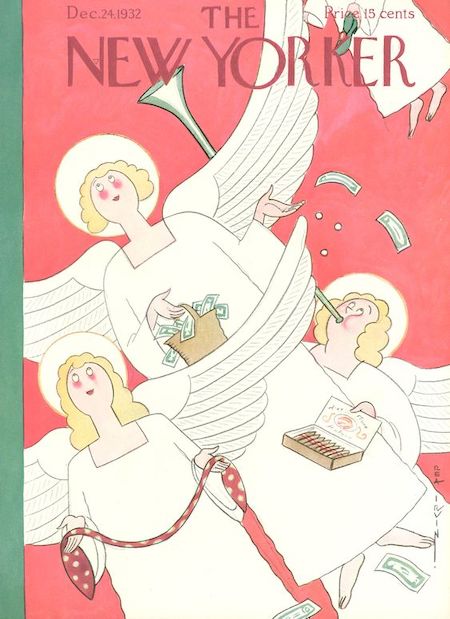
Dec. 24, 1932 cover by Rea Irvin.
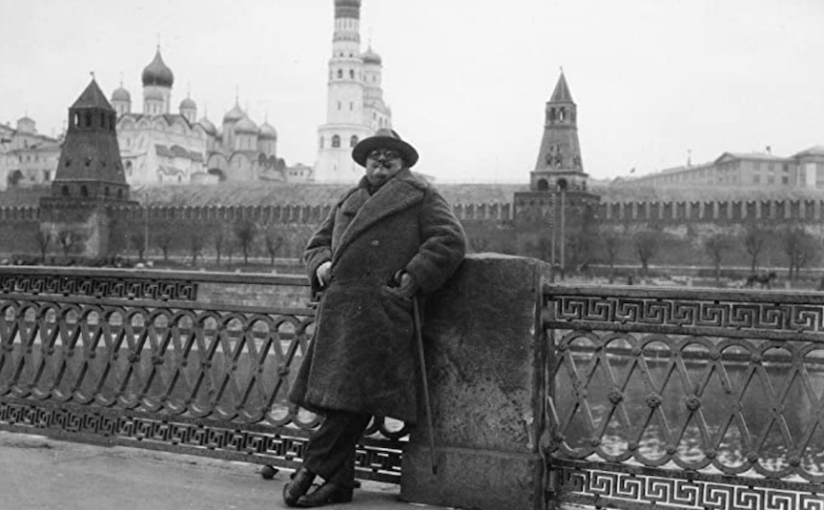
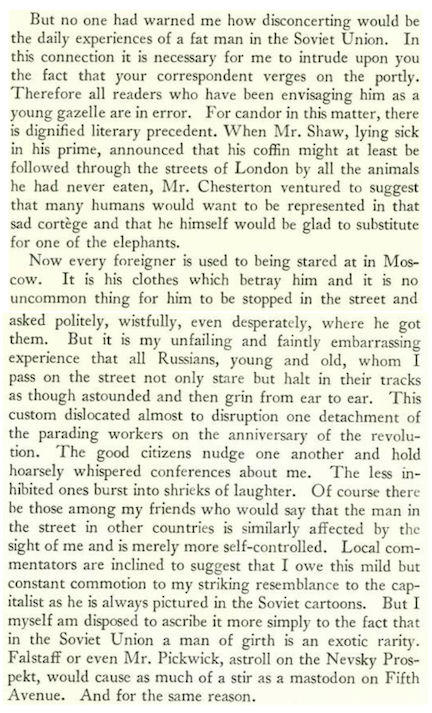
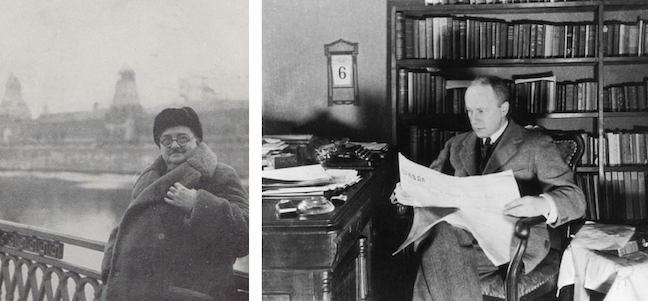
…not that Alexander Woollcott seemed to notice or care all that much. In the autumn of 1932 he traveled to Moscow to check out some Russian theater and enjoy the fine food and drink provided by his friend Walter Duranty, Moscow bureau chief for The New York Times. In his “Shouts and Murmurs” column…
…Woollcott reflected on his Moscow visit, his humor at odds with the stark reality all around him…
ELEPHANT IN THE ROOM…Alexander Woollcott (left) was amused by the stares of starving Russians he encountered with his substantial bulk on the streets on Moscow; Walter Duranty (1884–1957), Moscow bureau chief for The New York Times, played host to his old friend Woollcott. (Pinterest/Daily Mail)
Woollcott wrote of “spindle-shanked kids” singing cheerless songs about tractor production, recounted a conversation with a hungry moppet at a boot factory, and noted the “appreciative grin” he received from a teenager who both envied and admired his girth:
PERHAPS A SIDE TRIP TO UKRAINE?…Starved peasants on a street inKharkiv, 1933. Millions of Ukrainians died during Stalin’s enforced famine. (Wikipedia)
* * *
Happier Thoughts
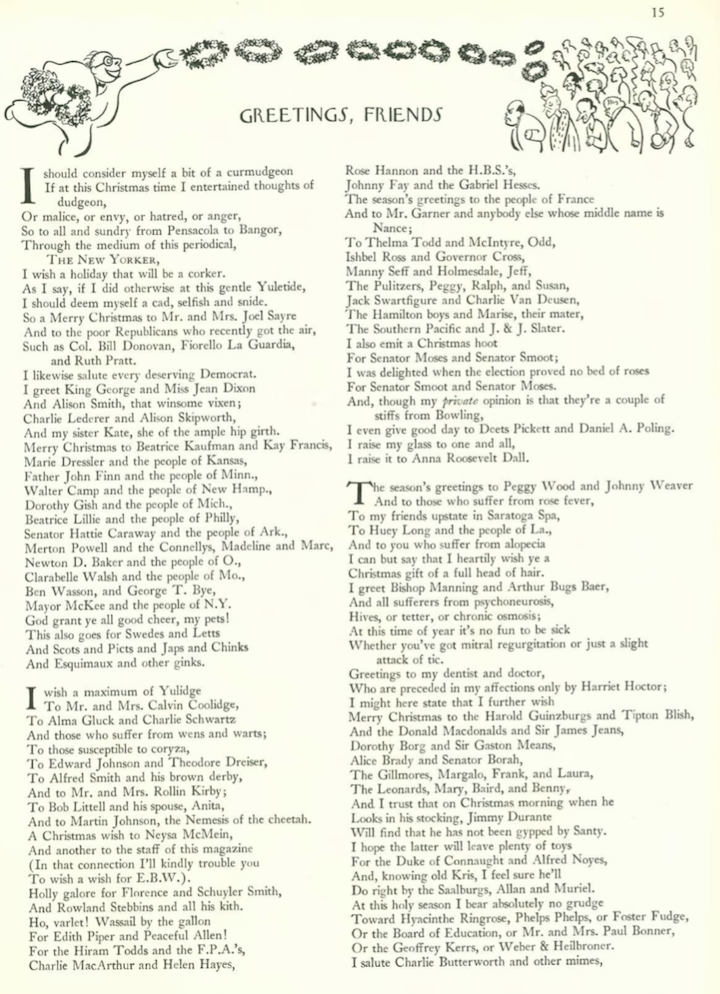
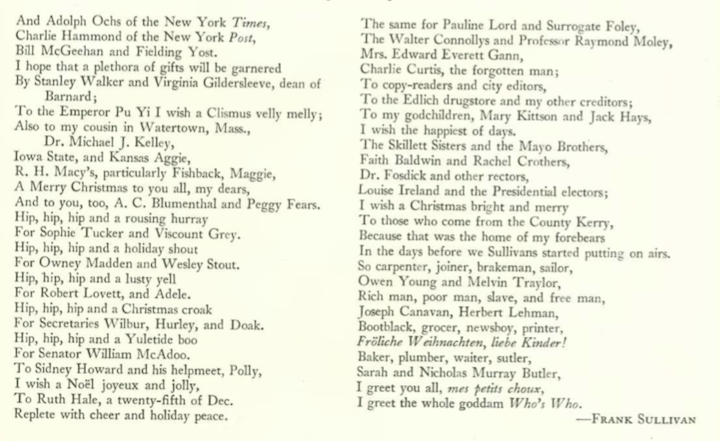
The Dec. 24 issue marked the beginning of a New Yorker tradition: Frank Sullivan’s annual holiday poem, “Greetings, Friends!” Writing for the Dec. 17, 2009 issue of The New Yorker (“Behind the Writing: “Greetings, Friends!”) Jenna Krajeski observes that “as far as holiday poems go, ‘Greetings, Friends!’…is as much an acknowledgment of the season as a noting of the times.” Frank Sullivan faithfully continued the tradition until 1974; after his death in 1976, New Yorker editor William Shawn asked Roger Angell to take over the writing of the poem. In 2012 Angell passed the duty along to Ian Frazier, the magazine’s current Yuletide bard.
CHEERFUL BUNCH…The holiday poem “Greetings, Friends!” has been a New Yorker tradition since 1932. It was originated by Frank Sullivan (left) and carried on by Roger Angell (center) and Ian Frazier. (hillcountryobserver.com/latimes.com/gf.org)
* * *
Waxing Poetic, Part II
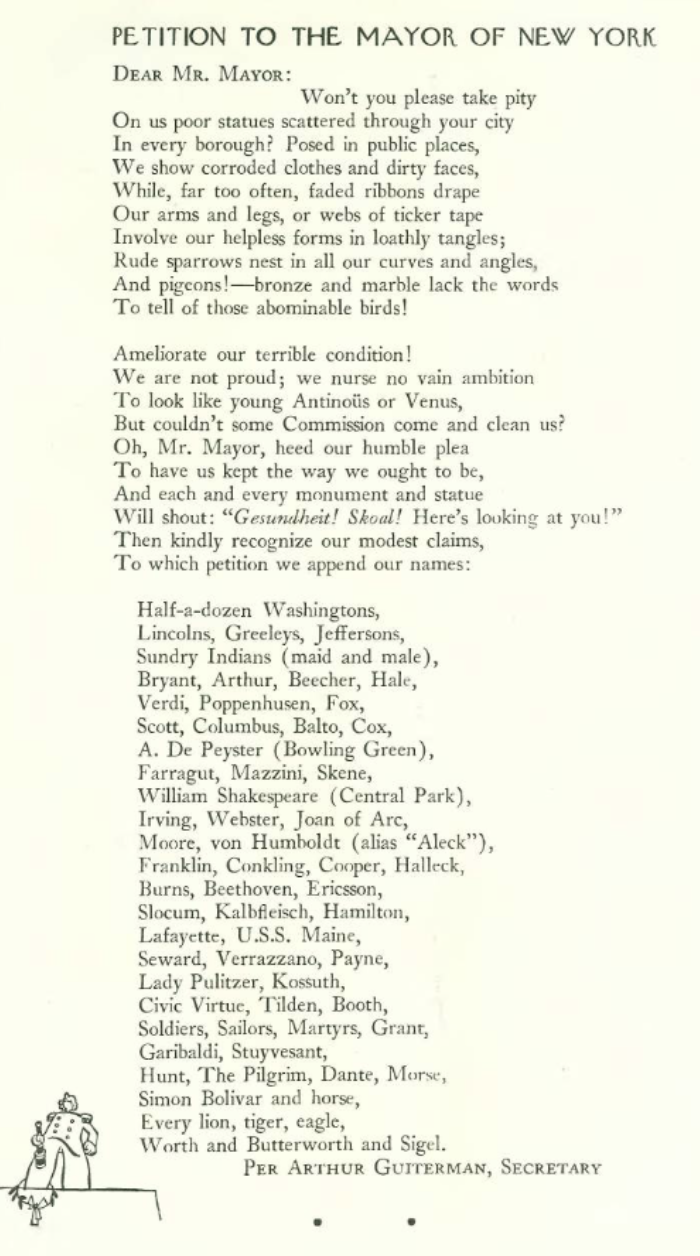
In the Dec. 17, 1932 issue humorist and poet Arthur Guiterman penned this petition to Acting Mayor Joseph McKee on behalf of the city’s statues…
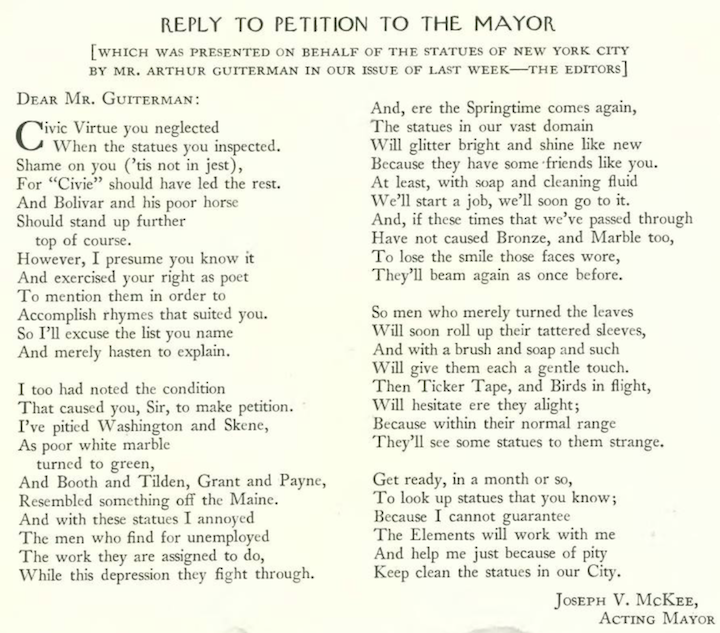
…to which Mayor McKee replied in the Dec. 24 issue:
DUELING POETS…Acting New York Mayor Joseph McKee (left) rarely smiled in photographs, but he seems to have been a person of good humor in his poetic reply to Arthur Guiterman. Both photos are from 1932. (Wikipedia/credo.library.umass.edu)
* * *
From Our Advertisers
New York’s fashion merchandisers continued to tout their latest copies of Paris styles such as this “Poppy Dress” from Lord & Taylor (illustration by Mildred “Melisse” Oppenheim)…
…Radio City Music Hall and the RKO Roxy Theatre announced their grand openings…
…Radio City featuring a cavalcade of stars along with the “Roxyettes” (soon to be renamed “Rockettes”) while the RKO Roxy presented the pre-Code romantic comedy The Animal Kingdom…
LIGHT IN THE DARKNESS…It was winter, and the Depression was still on, but there were bright spots to be found on the stage at the opening of Radio City Music Hall and on the screen at the RKO Roxy; at right, Ann Harding, Leslie Howard and Myrna Loy in The Animal Kingdom. (Pinterest/IMDB)
…the folks at R.J. Reynolds challenged smokers to “leave” their product, if they cared to, knowing full well they were hooking new smokers by the thousands every day…
…we ring in the New Year with some hijinks from James Thurber…
…and this unlikely dispatch from a New York police officer via Peter Arno…
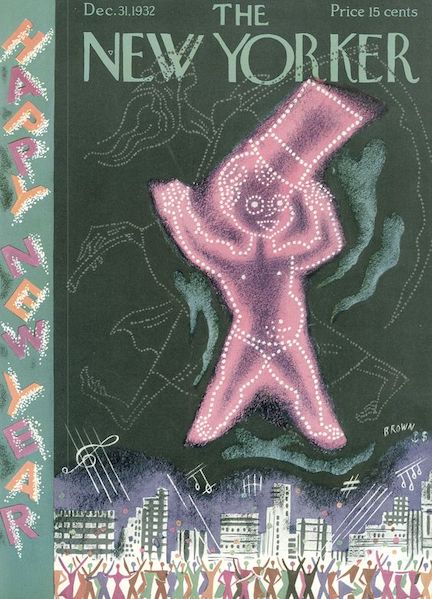
…ringing in the year with Harry Brown’s Dec. 31 cover…
Dec. 31, 1932 cover by Harry Brown.
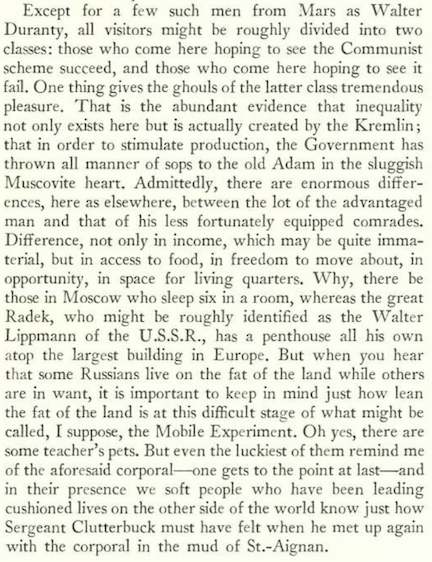
…and Alexander Woollcott’s continuing account of his visit to Moscow, where he was shown the town by his friend Walter Duranty. In this excerpt, Woollcott makes a rare political observation regarding his friend: “Except for a few such men from Mars as Walter Duranty, all visitors might be roughly divided into two classes: those who come here hoping to see the Communist scheme succeed, and those who come here hoping to see it fail.”
For the record, Duranty has been widely criticized, especially since the 1950s, for his failure to report on the 1932-33 famine (which claimed as many as 7 million lives) and for covering up other atrocities of the Stalin regime. In the 1990s there were even calls to revoke Duranty’s 1932 Pulitzer Prize, which was awarded for his reporting on the Soviet Union.
GOOD & PLENTY…Walter Duranty (center, seated) at a dinner party in his Moscow apartment. (spartacus-educational.com)
* * *
Rocky Theme
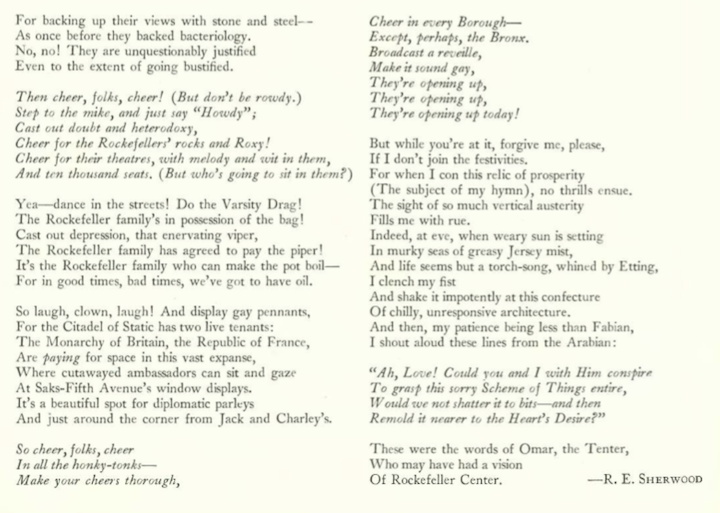
As Rockefeller Center prepared to open its doors to its first buildings (there would be fourteen in all) American playwright and screenwriter Robert E. Sherwood penned this hymn to the “Citadel of Static”…
STANDING TALL…American playwright and screenwriter Robert E. Sherwood, one of the original members of the Algonquin Round Table, was moved to verse by the opening of Rockefeller Center’s first buildings. At left, Rockefeller Center in 1933. (Wikipedia)
* * *
Oh Chute
In 1929 Geoffrey Hellman secured a position with The New Yorker as a writer for “The Talk of Town” and also contributed a number of profiles, including this one about a parachute stunt-jumper named Joe Crane. Here is the opening paragraph and an illustation by Abe Birnbaum:
On Feb. 18, 1932, Joe Crane amazed crowds at Roosevelt Field with double parachute descent, in which he opened a second parachute through the first. If you are wondering, Crane died in 1968…of natural causes. (Pinterest)
* * *
From Our Advertisers
Illustrator Howard Chandler Christy (1872-1952) is best remembered for his patriotic poster designs of World War I, which might explain why this fellow looks a bit outdated…
…Christy also originated the popular “Christy Girl,” the embodiment of the ideal American woman in the early 1900s (note the Christy Girl’s resemblance to the woman in the ad above)…
A “Christy Girl,” from 1906. (Internet Archive)
…speaking of ideal, imagine a movie featuring this trinity of actors: John, Ethel and Lionel Barrymore…John Mosher will give us his review in Jan. 7 issue…
…the Lyric Theatre saw its glory years during the 1920s when it hosted stage shows featuring such talents as The Marx Brothers,Fred and Adele Astaire and a young Cole Porter, who hit it big in 1929 with Fifty Million Frenchmen…the 1930s, however, saw the Lyric’s fortunes diminish and in another year it would be converted into a movie house…also note the influence of Italian Futurists in this ad for an Italian theater troupe…
…and there’s also a futuristic bent to this Garrett Price cartoon, which steers more in a Kandinsky direction…
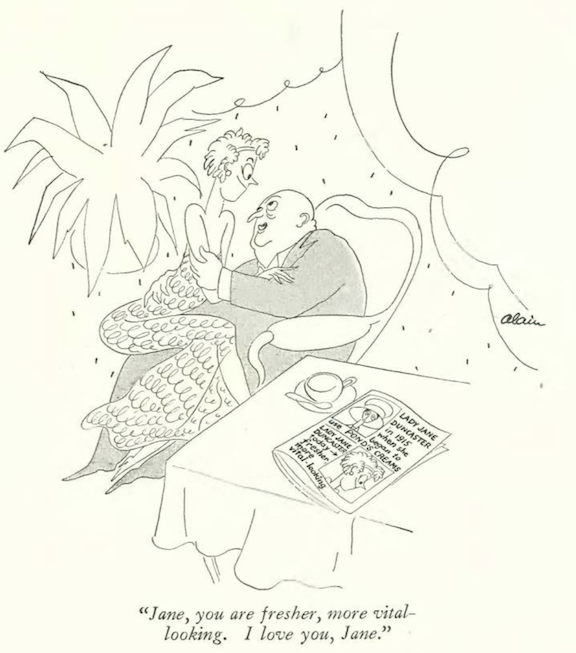
…cartoonists were also finding inspiration in the magazine’s advertising, Pond’s cold cream providing the spark for Alain (aka Daniel Brustlein)…
…for reference, a Pond’s ad from 1933 comparing Lady Diana Manners complexion to her former visage, circa 1924…
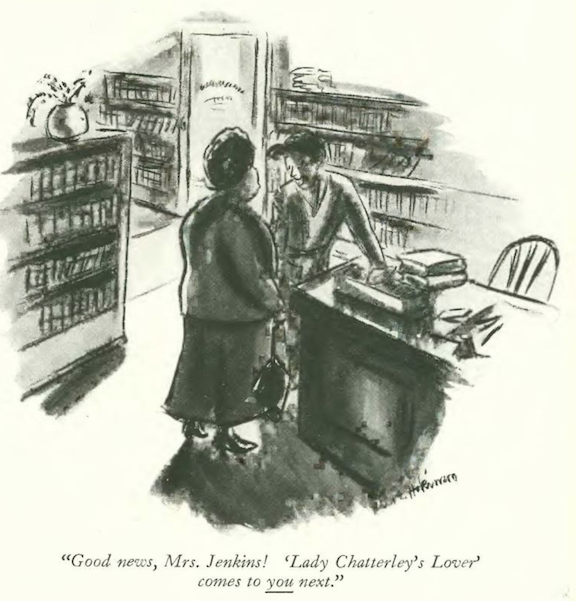
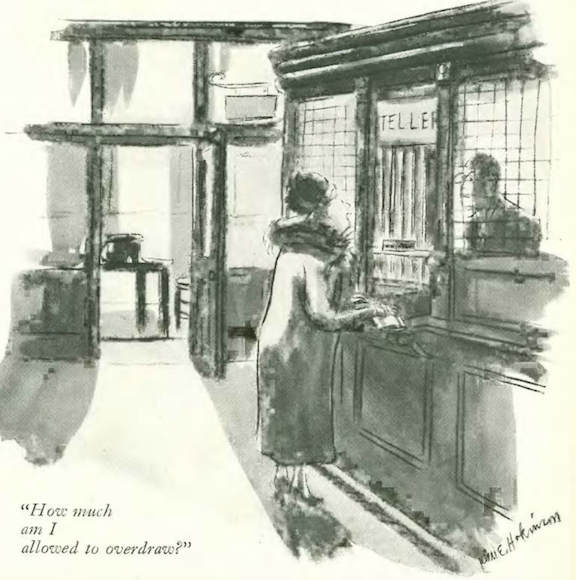
…Lady Chatterley’s Lover, by D. H. Lawrence, was banned for obscenity in the United States in 1929, but Helen Hokinson’s enterprising librarian was still able to deliver the goods…
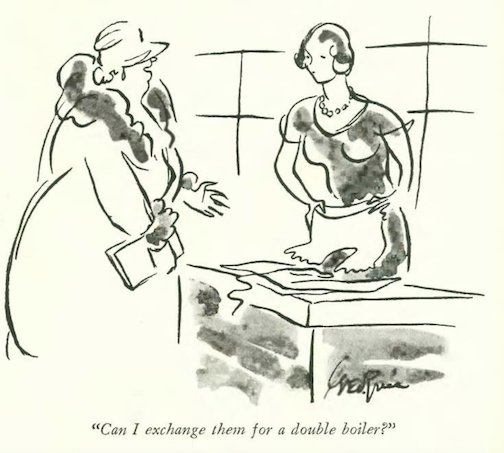
…on the other hand, it is doubtful George Price’s sales clerk will also deliver…
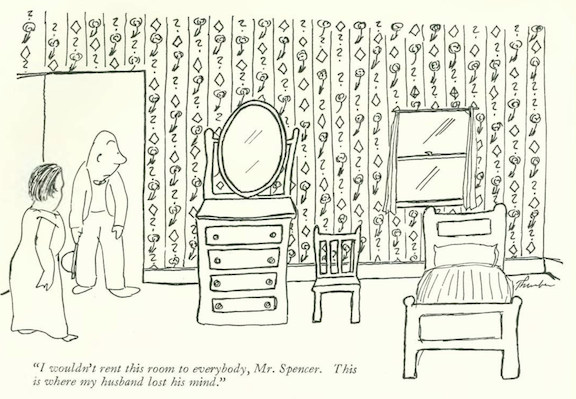
…a great one by James Thurber, with more detail than his usual spare line…
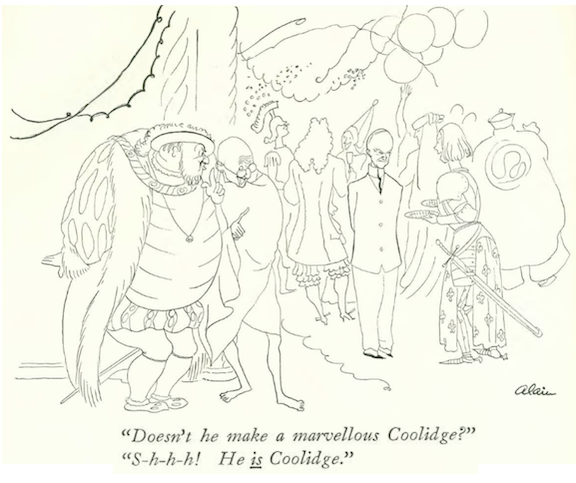
…and we say goodbye to 1932 with Alain, and a New Year’s Eve party with some familiar faces…
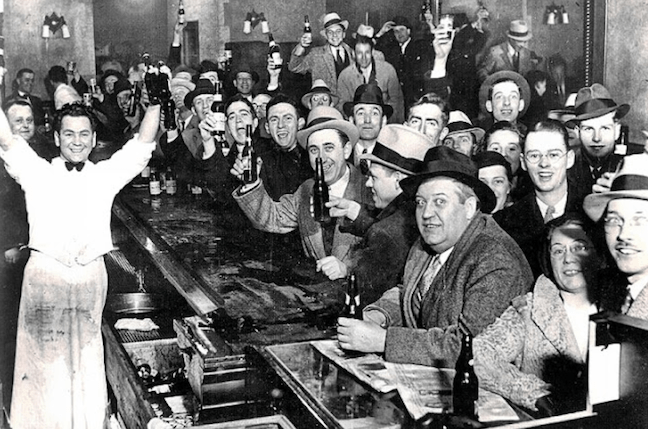
Good cheer was in short supply during the worst year of the Depression, but as 1933 approached many New Yorkers could at least look forward to legal beer in the New Year.
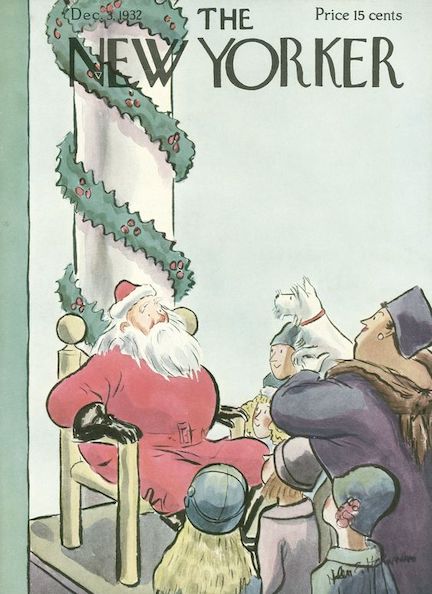
Dec. 3, 1932 cover by Helen Hokinson.
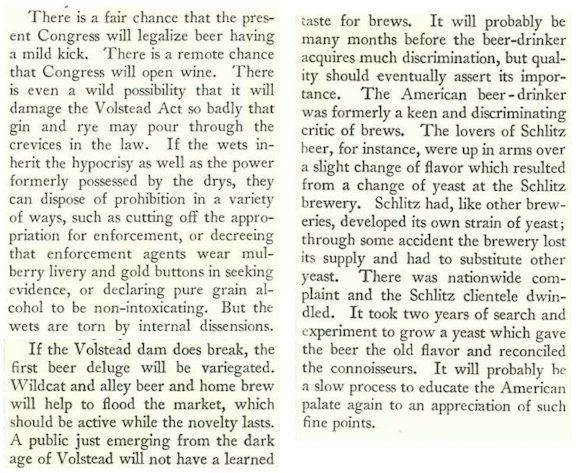
But as with all things political, new rules and regulations would need to be hashed out before the taps could flow, and both brewers and beer drinkers would have to recalibrate a relationship that had been suspended for nearly 13 years. Alva Johnston gave this (excerpted) report in “A Reporter at Large”…
WHILE YOU WERE AWAY…Vaudeville star Rae Samuels holds what was purportedly the last bottle of beer (a Schlitz) distilled before Prohibition went into effect in Chicago on Dec. 29, 1930. The bottle was insured for $25,000. After Prohibition ended in late 1933, Schlitz reappeared with gusto and quickly became the world’s top-selling brewery. (vintag.es)
* * *
National Treasure
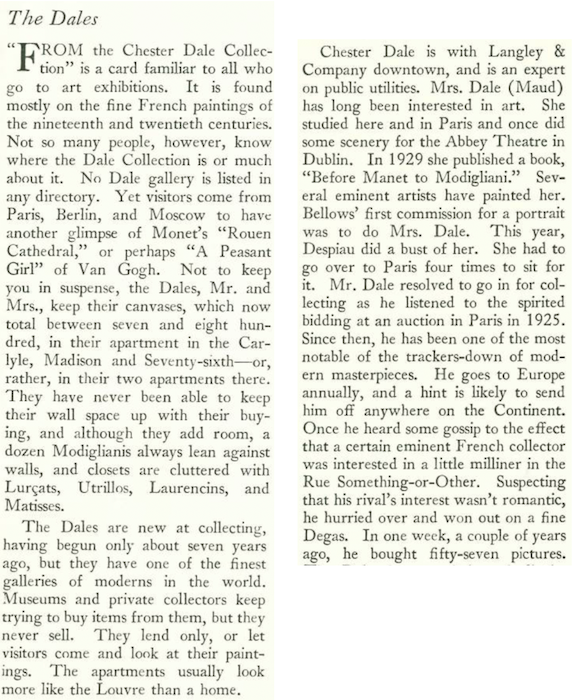
Chester Dale (1883–1962) began his career in finance at age fifteen, working as a runner for the New York Stock Exchange. Just twelve years later he would marry painter and art critic Maud Murray Dale, and together they would amass an art collection that would include significant works by Claude Monet, Paul Cézanne, Amedeo Modigliani, Henri Matisse and Pablo Picasso. In 1932 the Dales were well on their way to building a collection that would eventually end up in the National Gallery of Art in Washington, D.C. “The Talk of the Town” featured the Dales in this except:
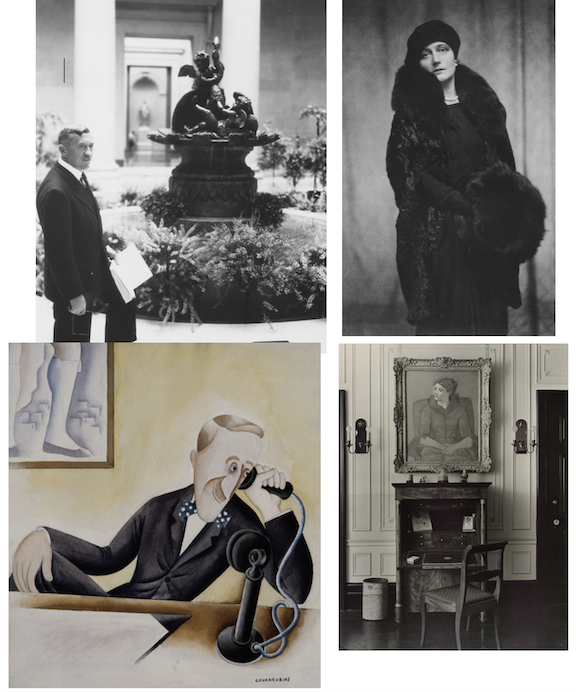
WAYS OF SEEING…Maud Dale was a staunch supporter of artist Amedeo Modigliani, whose 1919 painting Gypsy Woman with Baby (top left) was among 21 of his works collected by the Dales. Maud also commissioned a number of her own portraits, including (clockwise, from top center) ones rendered by George Bellows in 1919, by Jean-Gabriel Domergue in 1923, and by Fernand Léger in 1935. At bottom left is a 1945 portrait of Chester Dale by Diego Rivera. (National Gallery of Art)SAINTED PATRONS…Clockwise, from top left, a 1943 photo of Chester Dale in the West Garden Court of the National Gallery of Art, which today holds the Chester Dale Collection of 240 paintings among other items; Maud Dale, c. 1926; Madame Picasso (1923) by Pablo Picasso on view in the Dale residence, c. 1935; a 1926 caricature of Chester by Mexican artist Miguel Covarrubias, a close friend of the Dales and early New Yorker contributor. (National Gallery of Art)
* * *
Smoke Screen
E.B. White noted the historic meeting of outgoing U.S. President Herbert Hoover and his successor, Franklin D. Roosevelt. White speculated on at least one topic of discussion:
DO YOU INHALE?…Outgoing President Herbert Hoover (left) and President-elect Franklin D. Roosevelt on their way to the inauguration ceremonies, 1933. (National Archives)
* * *
No Longer “It”
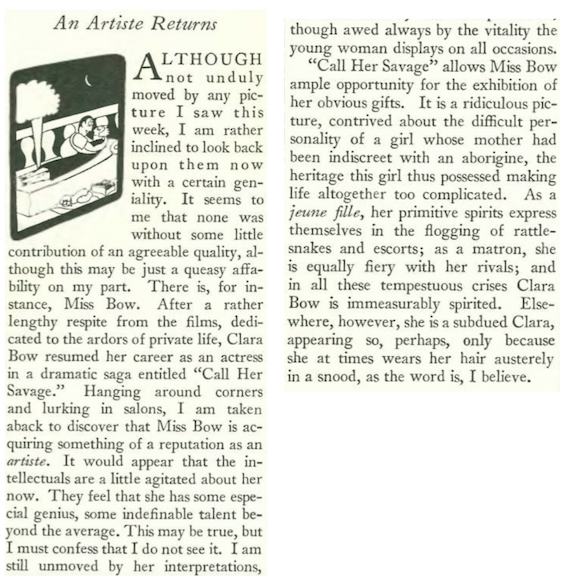
Here is how IMDB describes the 1932 pre-Code drama Call Her Savage: “Sexy Texas gal storms her way through life, brawling and boozing until her luck runs out, forcing her to learn the errors of her ways.” The actress who portrayed that “Texas Gal,” Clara Bow, was getting sick of Hollywood and would make just one more film before retiring at age 28. Although in some circles the silent era’s “It Girl” sex symbol was finally beginning to earn some credit as an “artiste,” critic John Mosher was reserving judgment:
WHIP IT GOOD…Clara Bow brawls her way through life in her second-to-last film role, Call Her Savage. (IMDB)
* * *
From Our Advertisers
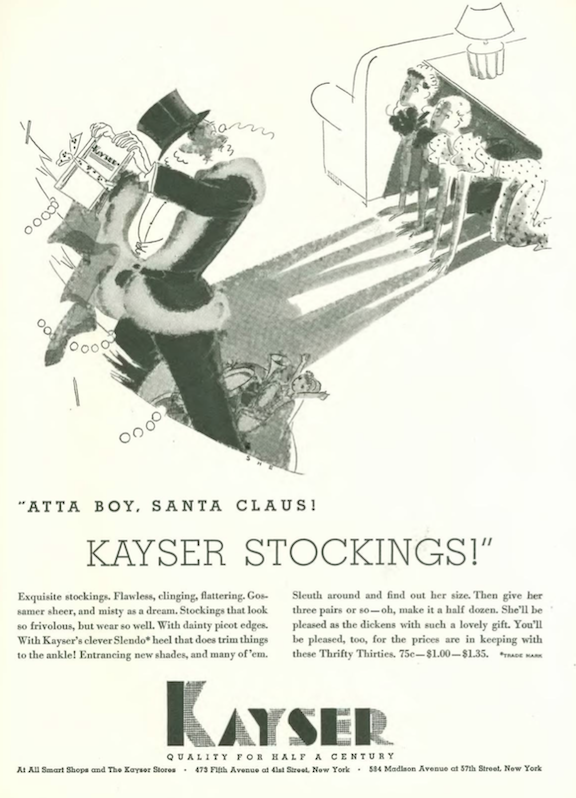
Is this really how the smart set lived in 1932 Manhattan? Here we have an old toff dressed like Santa (in a top hat) sneaking presents onto the Christmas tree…and caught in the act by, I presume, his wife and a chambermaid?…
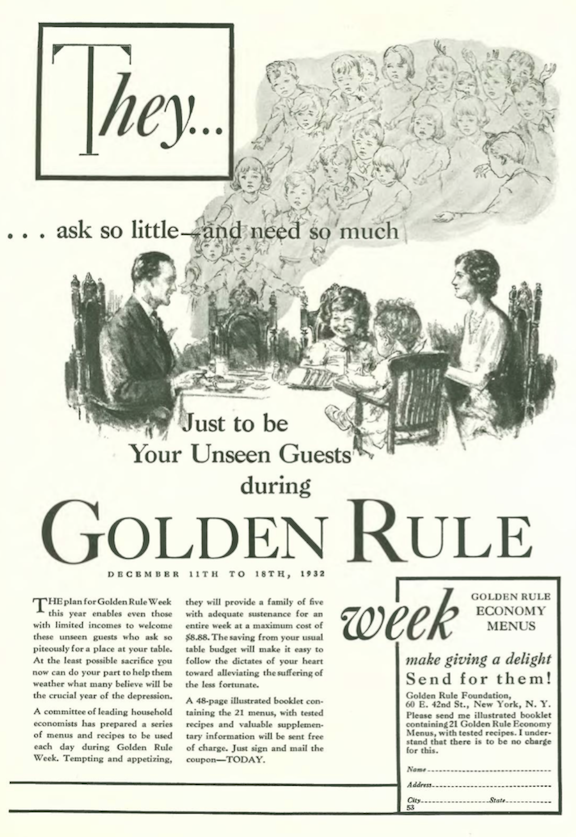
…in sharp contrast, here is an ad from the Golden Rule Foundation, which annually designated the second week in December as “Golden Rule Week”…the foundation raised funds to help needy children throughout the world…
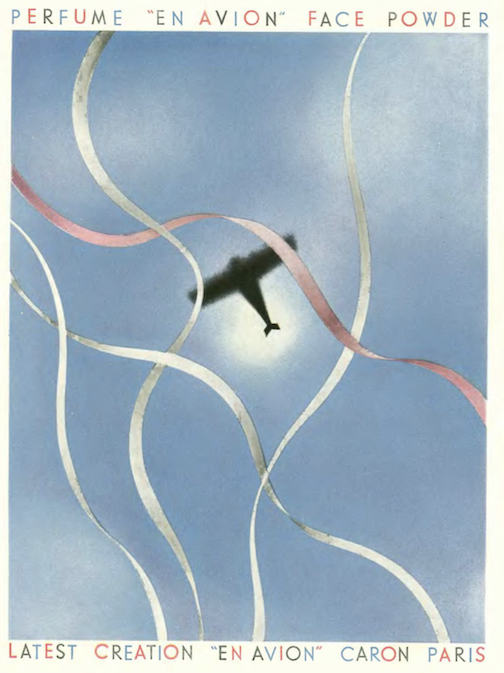
…and here’s a bright, back cover ad from Caron Paris…apparently the face powder industry had been good to them in 1932…
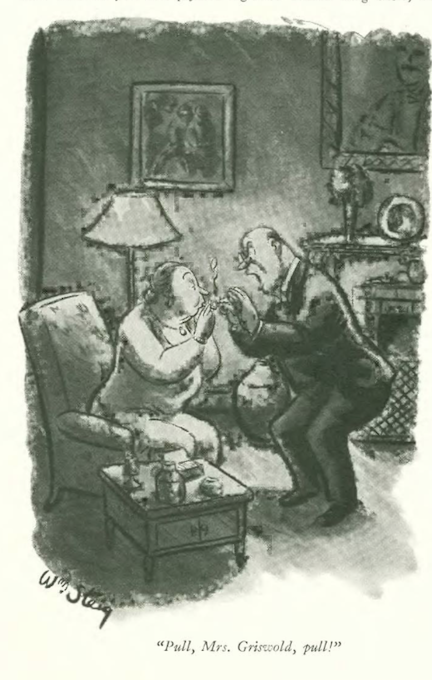
…on to our cartoons, we start with a smoking tutorial from William Steig…
…some sunny optimism from one of Helen Hokinson’s “girls”…
…in this two-pager by Garrett Price, an artist asks his patron: All right then, what was your conception of the Awakening of Intelligence through Literature and Music?…
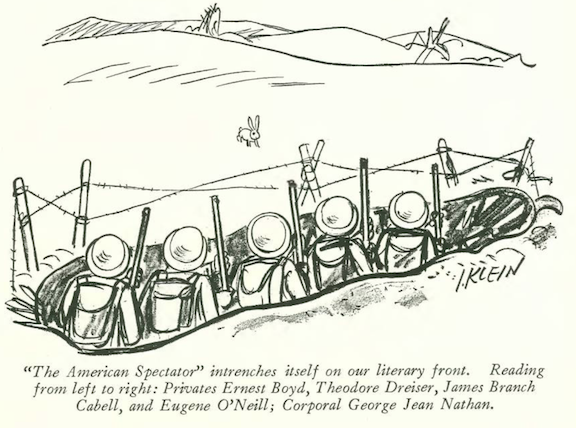
…Isadore Klein dedicated this cartoon to the much-anticipated launch of a new literary magazine, The American Spectator (not to be confused with today’s conservative political publication by the same name) and its illustrious line-up of joint editors…
…Crawford Young’s caption recalled the precocious child in Carl Rose’s 1928 cartoon caption, a collaboration with E.B. White — “I say it’s spinach, and I say the hell with it”…
…and speaking of Carl Rose, this next cartoon by James Thurber has an interesting history…New Yorker cartoonist Michael Maslin explains in this Carl Rose Inkspill bio: In 1932, Rose submitted a drawing captioned, “Touche!” of two fencers, one of whom has just cut off the head of the other. Harold Ross (according to Thurber in The Years With Ross) thinking the Rose version “too bloody” suggested Thurber do the drawing because “Thurber’s people have no blood. You can put their heads back on and they’re as good as new”…
…as we close out December 2021 (which I am dutifully trying to do the same in 1932), we move on to the Dec. 10 issue…
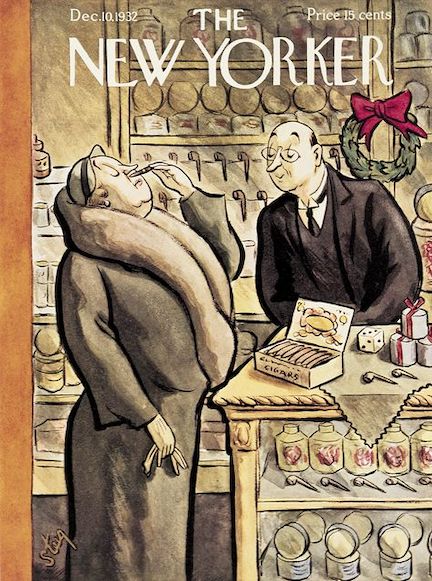
Dec. 10, 1932 cover by William Steig.
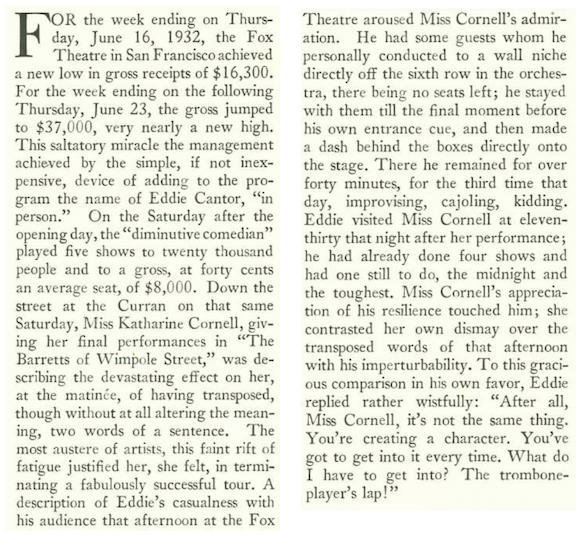
…and Samuel N. Behrman’s profile (titled “Chutspo”) of comedian Eddie Cantor, who made his way from vaudeville and the Ziegfeld Follies to fame on the radio, in film and on early television. Theater great Katherine Cornell certainly appreciated Cantor’s gift for making his routine look easy: Here’s an excerpt:
AH, IT WAS NOTHIN’…Comedian Eddie Cantor was adored by millions of radio listeners as the “Apostle of Pep.” At right, caricature for the profile by Al Frueh. (bizarrela.com)
* * *
Christmess
Lois Long’s “On and Off the Avenue” column was thus titled to reflect the annual challenge of buying that special something for that special someone. Here is the opening paragraph:
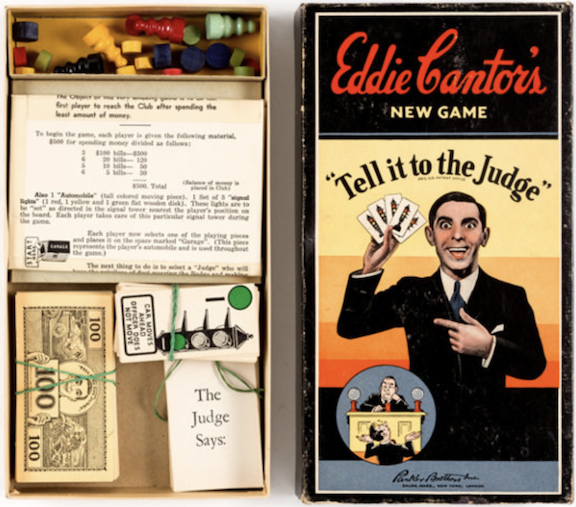
One of the items suggested in Long’s column was a game named for our friend Eddie Cantor called “Tell it to the Judge”…
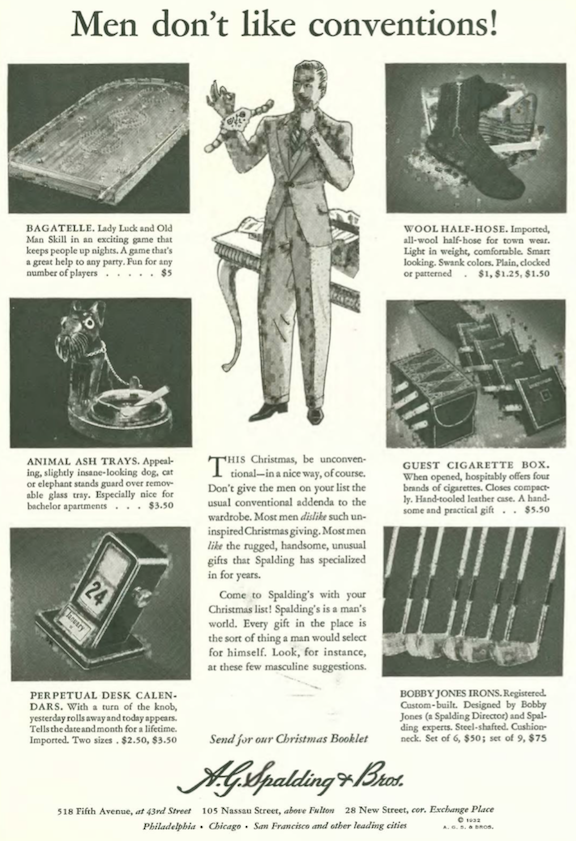
…or you could select one of these gifts from A.G. Spaulding…my grandfather had one of those perpetual desk calendars…I would stave off boredom by endlessly flipping those numbers while the adults conversed in German…
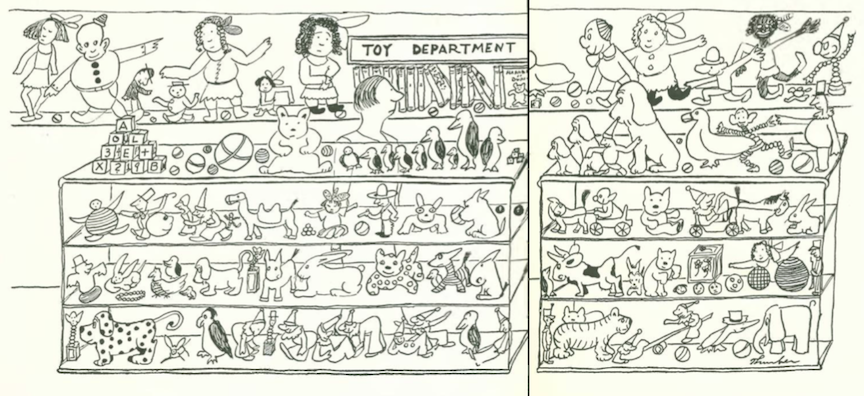
…on to our cartoonists, James Thurber provided this nice bit of art for a two-page spread…
…Kemp Starrett gave us some biscuit (cookie) execs contemplating a new, streamlined design for their product…
…Norman Bel Geddes is perhaps best known for designing the “Futurama” display at the 1939 New York World’s Fair…here is Bel Geddes’ “Cobra Lamp”…
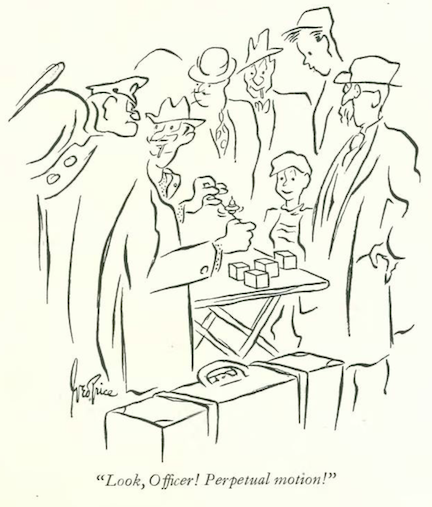
…George Price gave us a fellow peddling more than a simple top…
…and with Peter Arno, the party never ends…
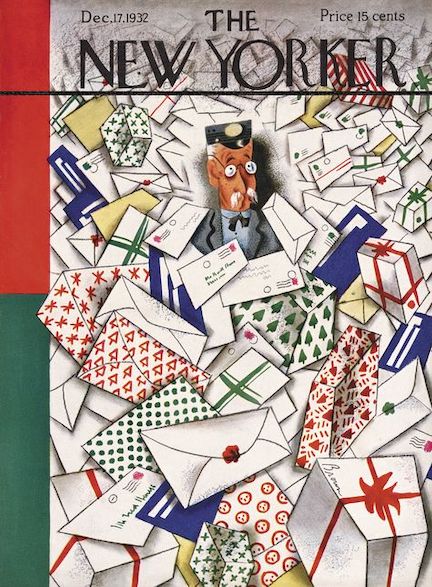
…on to Dec. 17, 1932…
Dec. 17, 1932 cover by Harry Brown.
…and Arno’s ex Lois Long was back with another “Tables for Two,” still feigning the old spinster (see “shawl and slippers” reference in first graf) when in fact she was an attractive, 31-year-old divorcee who apparently still had plenty of fire for late night revelry…
According to the Jeremiah Moss blog Vanishing New York, Long was likely describing 52nd Street between Fifth and Sixth avenues that “began as a row of speakeasies, which turned into jazz clubs that then evolved into burlesque houses.” The speakeasies got their start when the city lifted residential restrictions on the brownstones and businesses moved in, including Tony’s, the Trocadero and later Place Pigalle…
(vanishingnewyork.blogspot.com via NYPL)
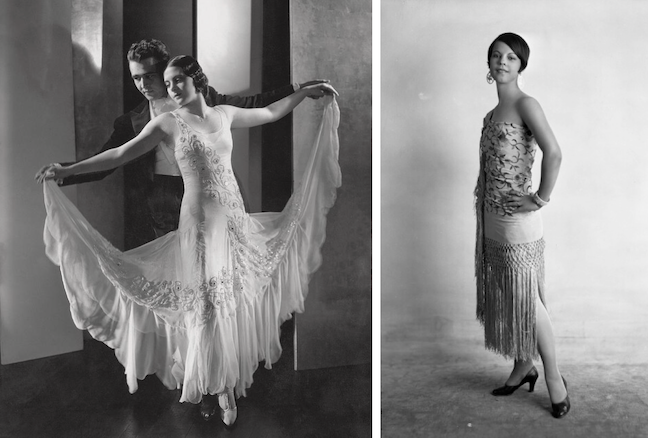
…it was at the new Place Pigalle that Long enjoyed the “knockout” after-midnight show featuring ballroom dancers Frank Veloz and Yolanda Casazza and the diminutive singer Reva Reyes…
AFTER HOURS entertainment at the Place Pigalle included Frank Veloz and Yolanda Casazza (left, in a 1930 portrait by Edward Steichen) and Mexican singer Reva Reyes. (Vanity Fair/El Paso Museum of History)
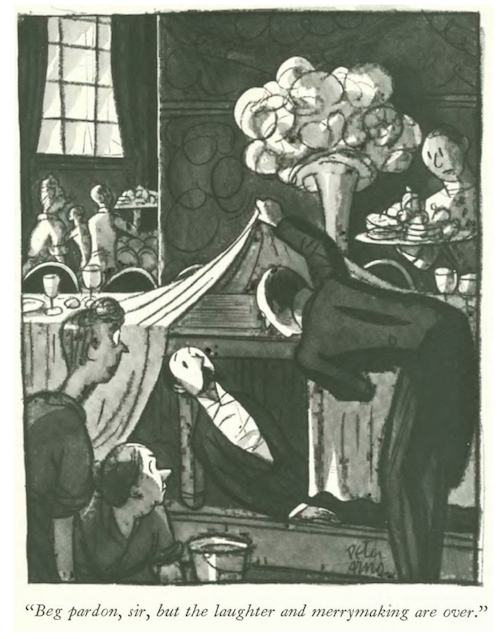
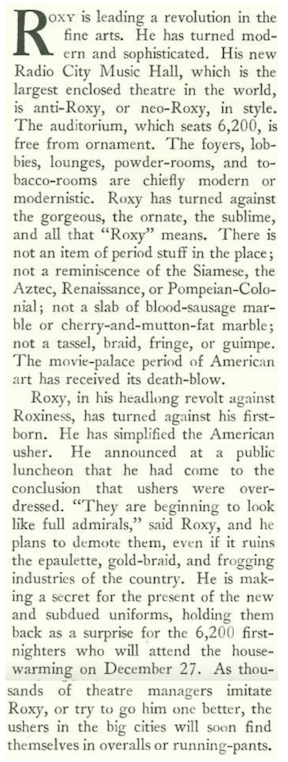
…and there was more entertainment to be had in Midtown with the upcoming opening (Dec. 27, 1932) of Radio City Music Hall, a dream project of Samuel “Roxy” Rothafel. Hugh Blake had the scoop for the New Yorker in the “A Reporter at Large” column…an excerpt:
AIN’T IT GRAND?..of Radio City Music Hall would open its doors on Dec. 27, 1932, fulfilling a dream of theater owner Samuel “Roxy” Rothafel. (nypap.org/Wikipedia/dobywood.com)
…Radio City Music Hall was built to host stage shows only, but within a year of its opening it was converted into a movie venue…and speaking of movies, we have film critic John Mosher finally finding a movie to his liking, and a novel-to-film adaptation to boot…
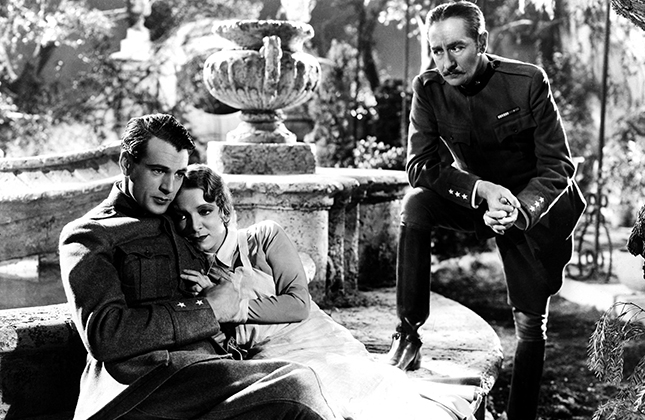
FAREWELL TO ALL OF THOSE ARMS…Gary Cooper, Helen Hayes and Adolphe Menjou in Paramount’s A Farewell to Arms, directed by Frank Borzage. The film received Academy Awards for Best Cinematography and Best Sound. (buffalo.edu)
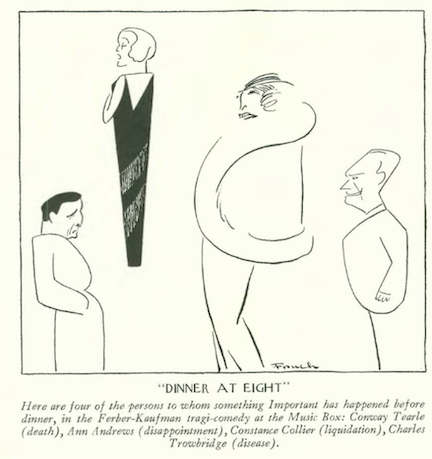
…and back to the stage, Al Frueh lent his artistry to the play Dinner At Eight, which opened October 22, 1932, at the Music Box Theatre, and would close May 6, 1933, after 232 performances. The popular play had revivals in 1933, 1966 and 2002 as well as a George Cukor film adaptation in 1933 with an all-star cast.
* * *
From Our Advertisers
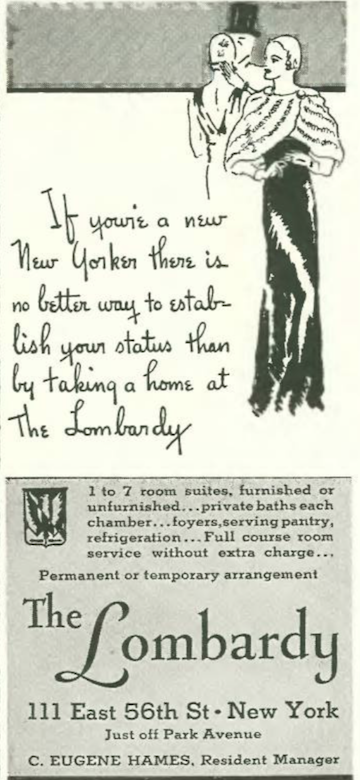
We begin with this helpful advice from the folks at the Lombardy…
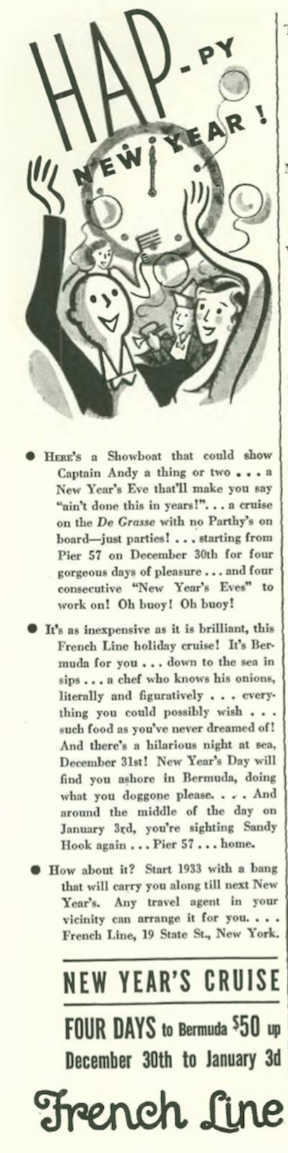
…while we have a much less stuffy invitation from the French Line…
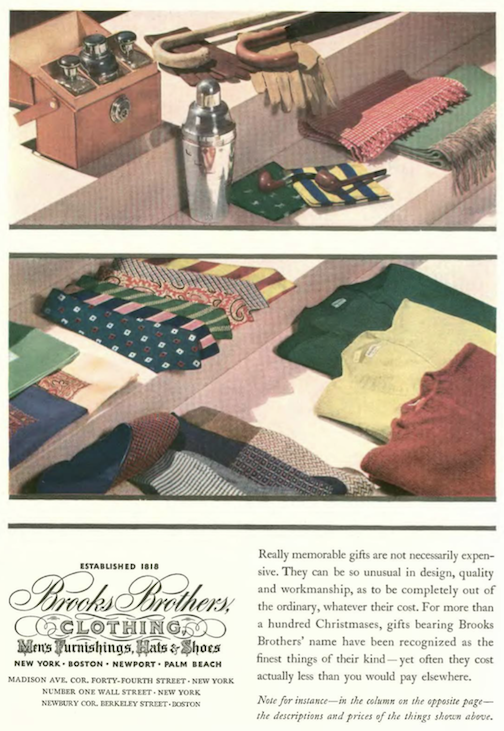
…the usually staid Brooks Brothers sprung for an all-color Christmas ad, featuring items that would suit any aspiring Bertie Wooster…
…and what would be the holidays without canned meat…
…and we end with James Thurber, who gets us into the proper mood for the New Year…
In 1922, a young Cornell graduate named E.B. White set off across America in a Model T with a typewriter and a sense of adventure.
Nov. 12, 1932 cover by Constantin Alajalov.
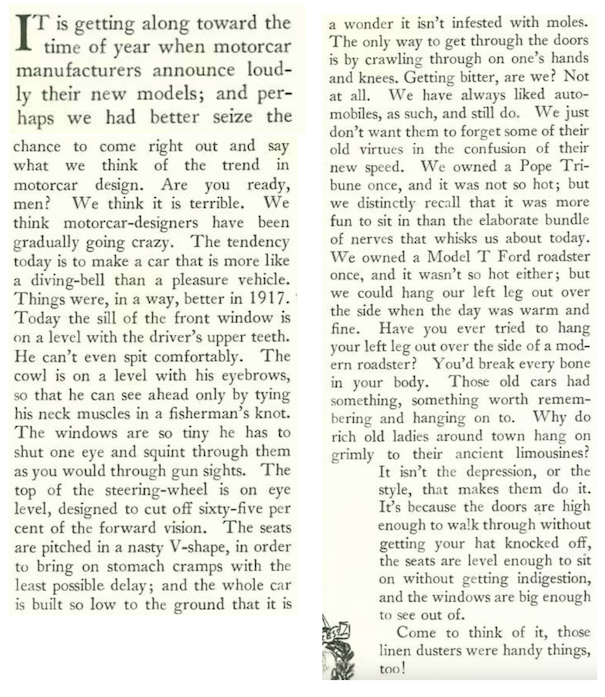
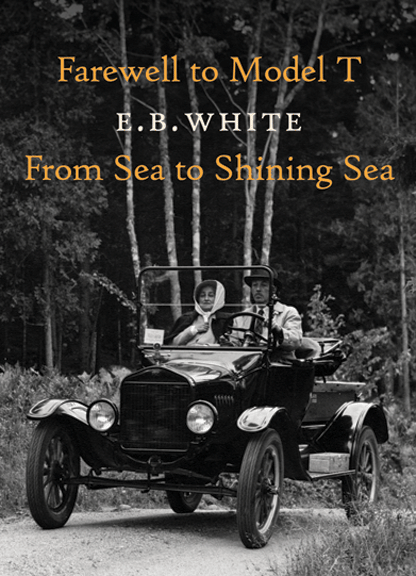
Years later, 1936 exactly, White would recall the America he had discovered as a 22-year old in his book From Sea to Shining Sea, which would include an essay “Farewell to Model T” that first appeared in TheNew Yorker as “Farewell My Lovely.” For this Nov. 12, 1932 “Notes and Comment” column, it appears White is already pondering his paean to the Model T, contrasting its freedom with the glassed-in claustrophobia of modern cars:
OUT WITH THE NEW, IN WITH THE OLD…Despite their many shortcomings, E.B. White seemed to prefer the cars of yesteryear, including (above) the 1904 Pope Tribune and 1917 Ford Model T Roadster; White likened modern cars, such as the 1932 Ford and Chevrolet sedans (bottom, left and right) to riding in a “diving bell.”(Wikimedia/vintagecarcollector.com/Pinterest)
Here’s the cover of From Sea to Shining Sea, which features a photo of White and his wife, Katharine, in a Model T Roadster…
* * *
An Appreciation
Mary Cassatt (1844-1926) was an American painter who for most of her adult life lived in France among fellow Impressionists. Like her friend Edgar Degas, Cassatt excelled in pastels, works that were admired by critic Lewis Mumford in an exhibition at New York’s Durand-Ruel Galleries:
TRY A LITTLE TENDERNESS…Mothers and children were Mary Cassatt’s favorite subjects. Among the examples shown in 1932 at the Durand-Ruel Galleries’ Exhibition of Pastels were Cassatt’s A Goodnight Hug (1880) and Françoise, Holding a Little Dog, Looking Far to the Right (1909). (Sotheby’s/Christie’s)
* * *
Hollywood Slump
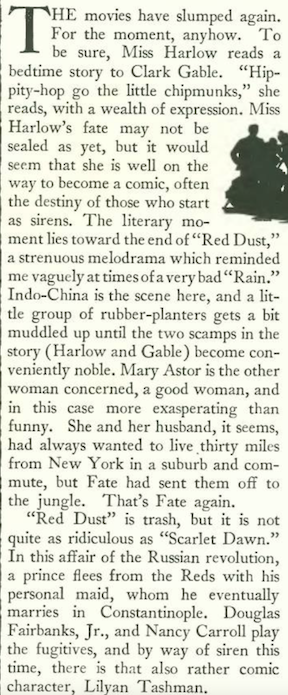
We go from treasure to trash with John Mosher’s latest cinema dispatch, in which he recounts his experience watching the “strenuous melodrama” Red Dust, starring Clark Gable and Jean Harlow. Mosher assured readers that the film is trash, but better trash than Scarlet Dawn with Douglas Fairbanks Jr. and Nancy Carroll.
DUMB AND DUMBER…Jean Harlow attempts to distract Clark Gable from his work in Red Dust; at right, Douglas Fairbanks Jr. is tempted by a servant girl’s affection (Nancy Carroll) in Scarlet Dawn. (IMDB)
* * *
From Our Advertisers
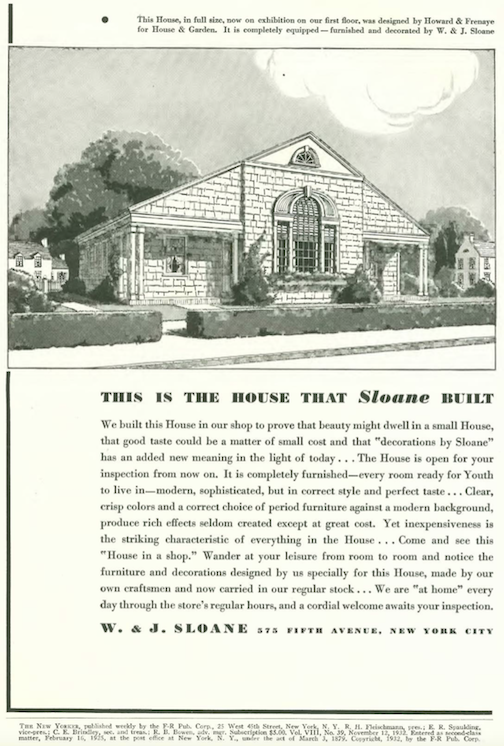
The folks at W.J. Sloane decided that the best way to sell their housewares would be to build an actual house in their Fifth Avenue store…
…do you really want to buy Kraft cheese after looking at this ad? From the look on the woman’s face, that tiresome old wheeze-bag probably smells like aged cheese, and not in a good way…
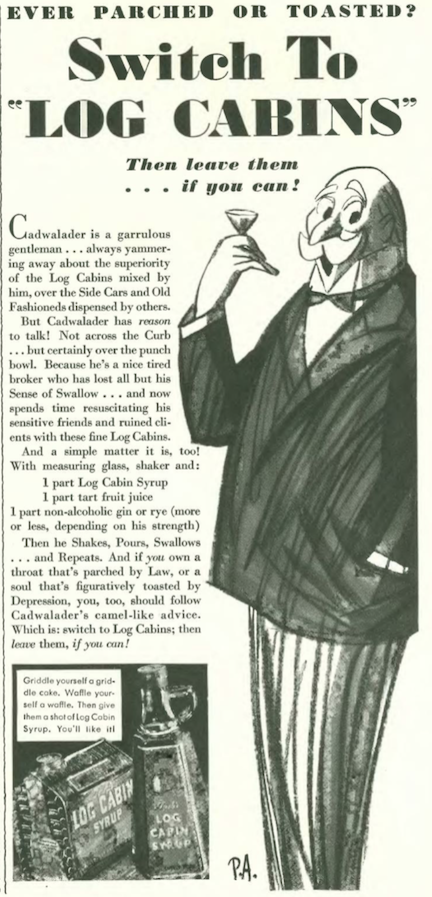
…The makers of Log Cabin syrup continued to parody the popular taglines of tobacco companies with ads featuring a several New Yorker cartoonists, here Peter Arno…
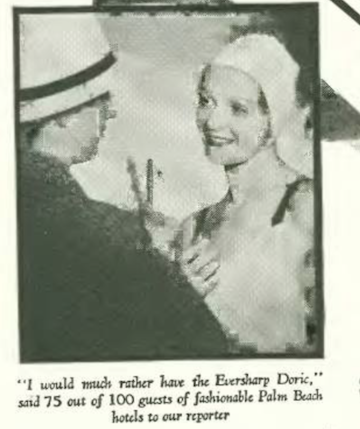
…yep, when I’m relaxing on the beach I like to talk about ink pens, especially those Eversharp ones…
…nor do I mind some weirdo in a dark coat seeking my opinion of said pen while I frolic near my fashionable Palm Beach hotel…
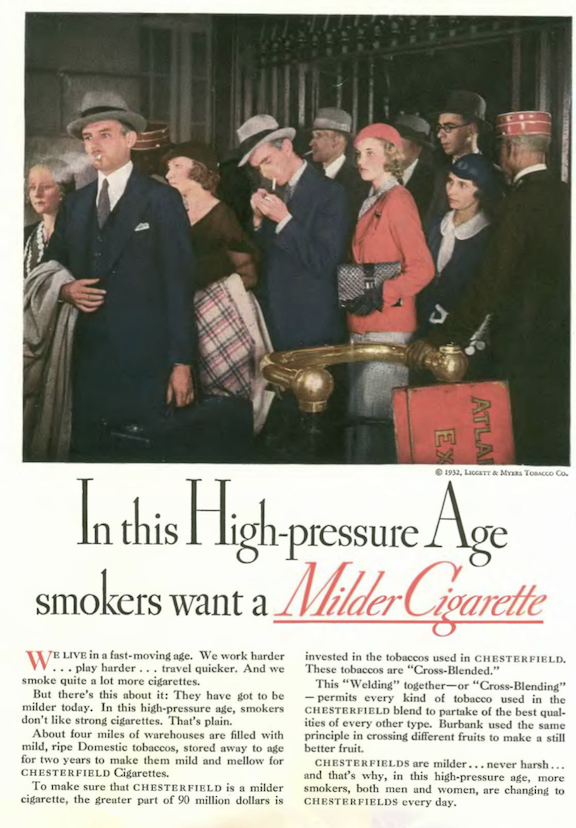
…yes, we all know that Chesterfields are milder, but will someone help that poor man on the left who appears to be blowing out his aorta…
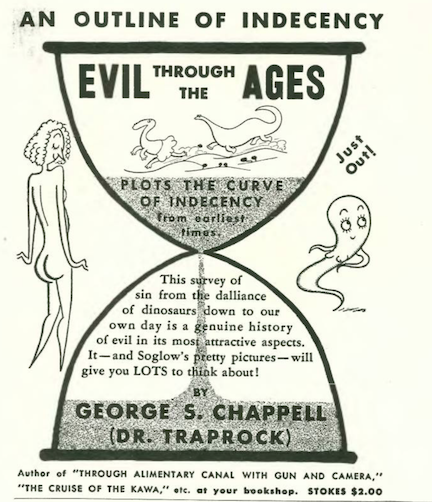
…TheNew Yorker’s former architecture critic George S. Chappell (who wrote under the pen-name T-Square) had moved on to other things, namely parodies of societal mores, including this new book written under his other pen-name, Walter E. Traprock, with illustrations by Otto Soglow…
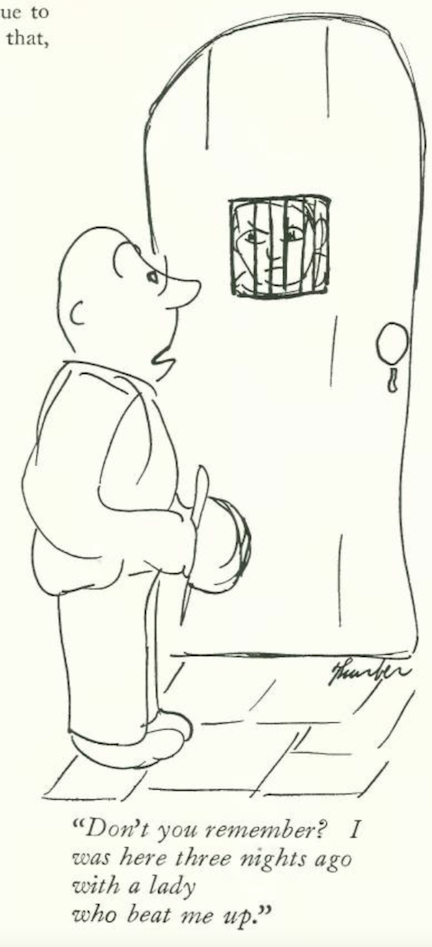
…on to our cartoons, we begin with James Thurber and the travails of menfolk…
…Richard Decker gave us the prelude to one man’s nightmare…
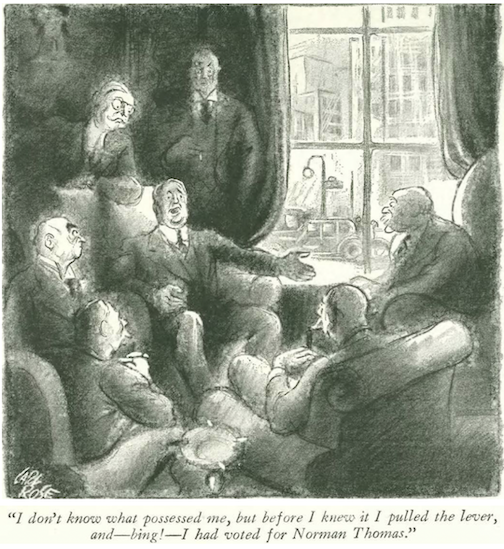
…Carl Rose found a titan of industry puzzling over his vote for a socialist candidate…
…and we move on to Nov. 19, 1932…
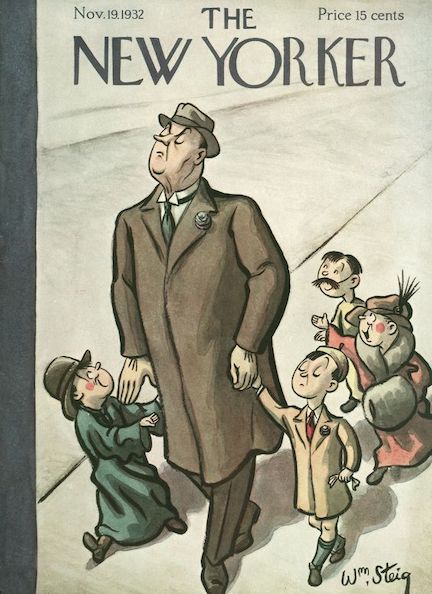
Nov. 19, 1932 cover by William Steig.
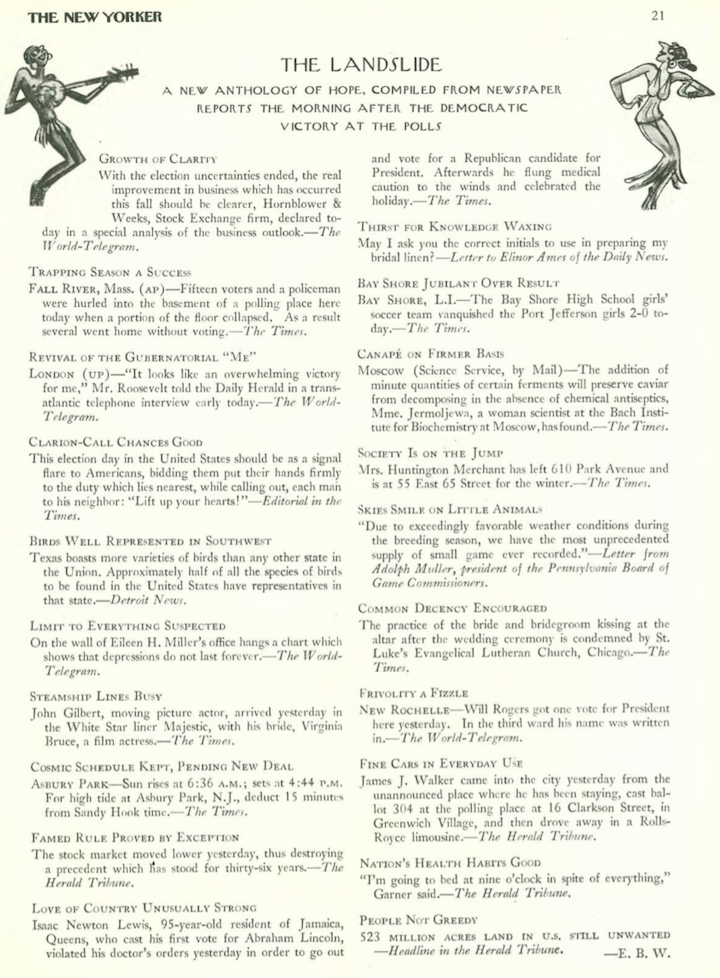
…and this compendium of election highlights by E.B. White…
…and Howard Brubaker’s wry observation of the same…
BUSY DAYS AHEAD…Franklin D. Roosevelt celebrates his landslide victory over Herbert Hoover in the 1932 presidential elections. (Associated Press)
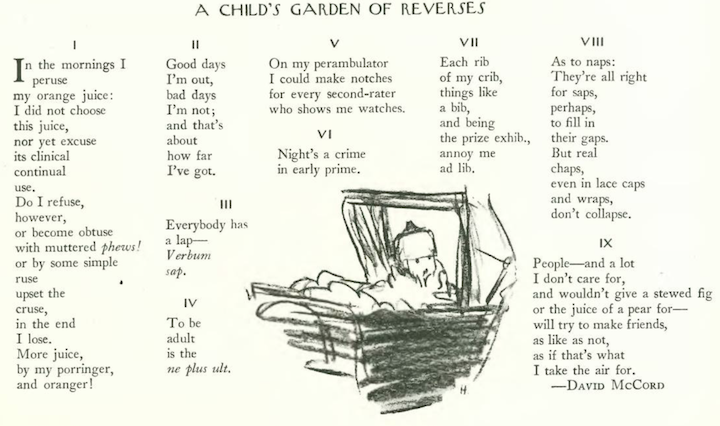
…and on an even lighter side, poet David McCord’s take on a Robert Louis Stevenson classic…
…speaking of children, the New Yorker was looking ahead to Christmas, and what the little ones might be hoping for under the tree…
ALL HUNG UP ON MICKEY…Mickey Mouse puppet was popular with the kiddies in 1932. (Ebay)
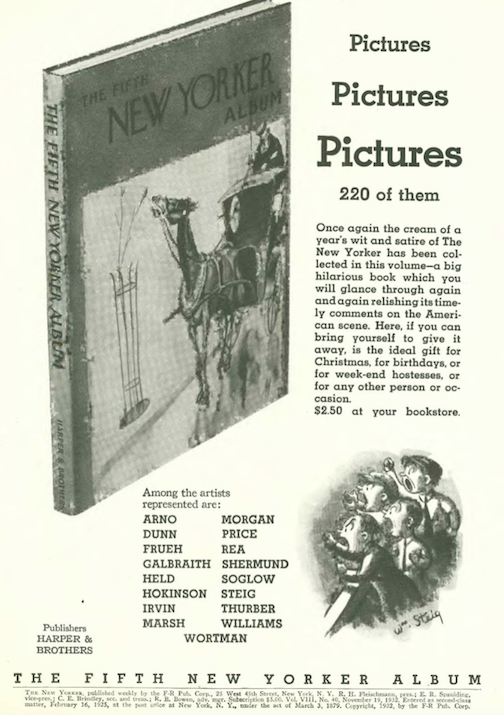
…if Mickey Mouse wasn’t your thing, you could spring for The Fifth New Yorker Album…
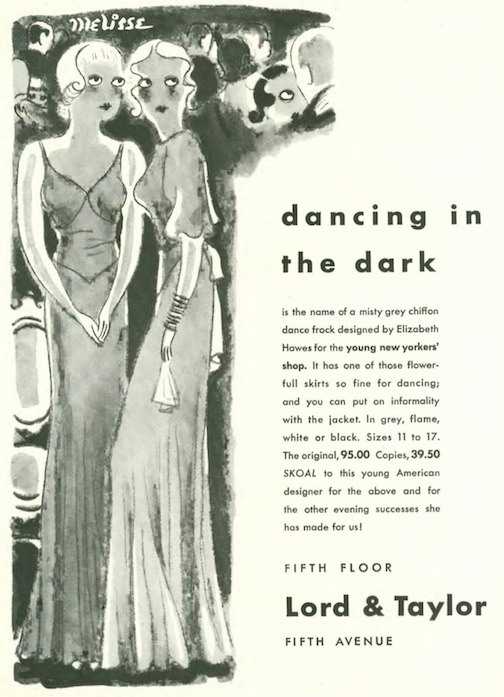
…on to our other Nov. 19 advertisements, Mildred Oppenheim (aka Melisse) illustrated another whimsical Lord & Taylor ad…
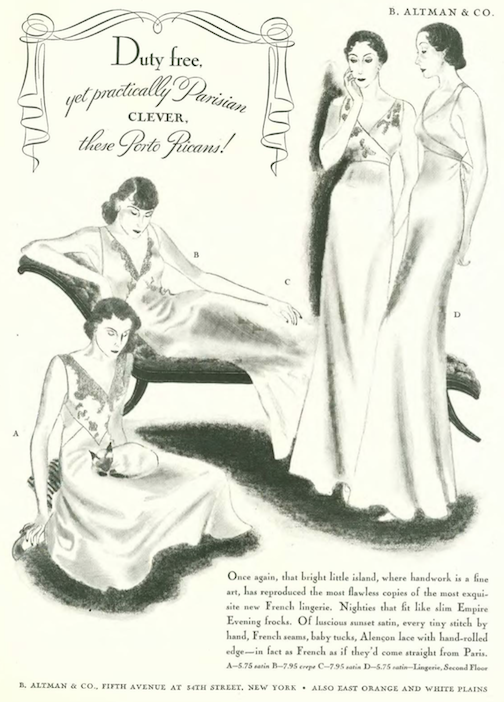
…while B. Altman maintained its staid approach to fashion to tout these duty-free, “practically Parisian” nighties created by “clever Porto Ricans”…
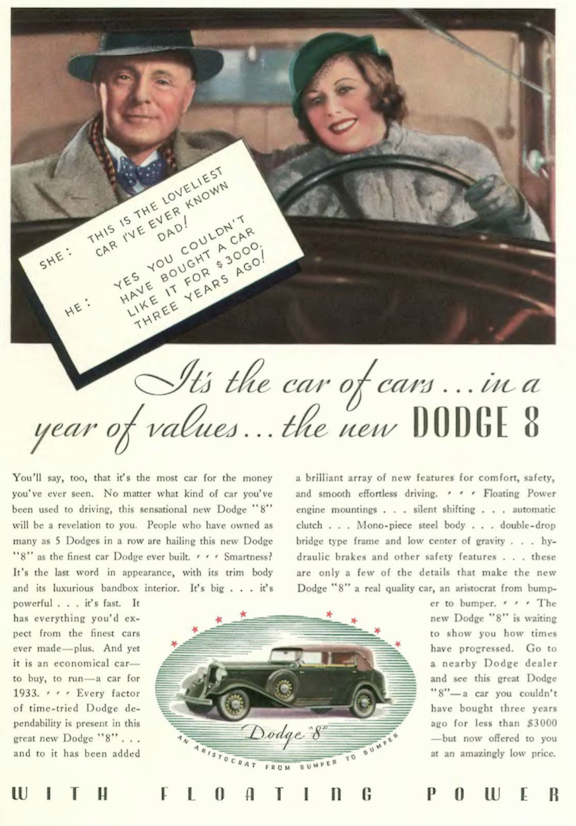
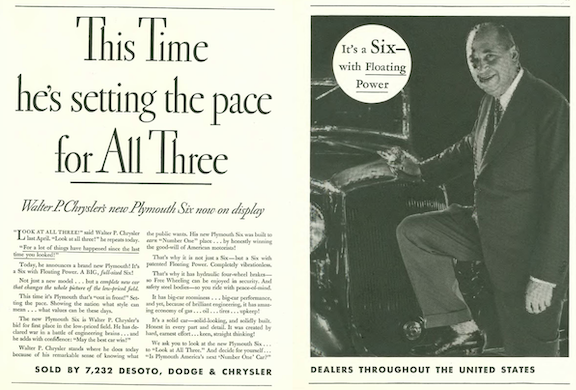
…Walter Chrysler continued to spend big advertising bucks to promote his company’s “floating power”…
…in my last entry I noted E.B. White’s musings regarding Lucky Strike’s new “raw” campaign…this appeared on the Nov. 19th issue’s back cover…
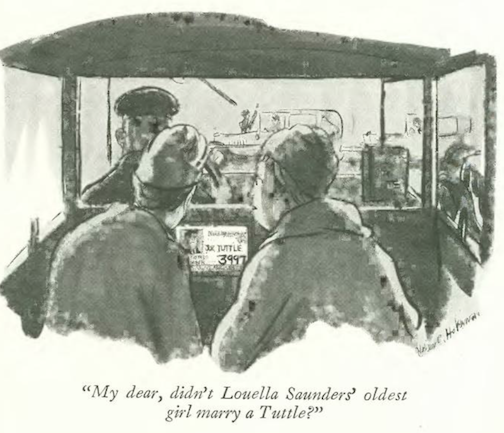
…on to our cartoons, we have Helen Hokinson’s girls pondering the social implications of a cabbie’s identity…
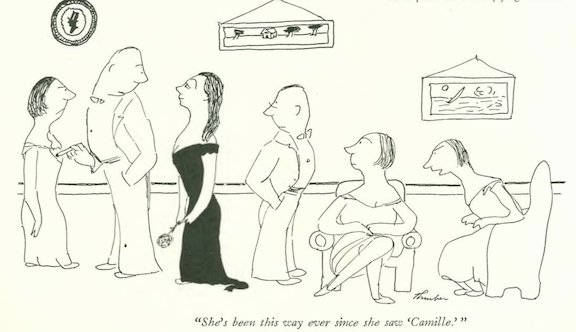
…James Thurber explored the dynamic tension provided by passion dropped into mixed company…
…Carl Rose offered a bird’s eye view of the 1932 election…
…William Crawford Galbraith showed us one woman’s idea of sage advice…
…and George Price continued to introduce his strange cast of characters to The New Yorker in a career that would span six decades…
…on to our Nov. 26 issue, and a cover by William Crawford Galbraith that recalled the post-impressionist poster designs of Toulouse-Lautrec…
Nov. 26, 1932 cover by William Crawford Galbraith.
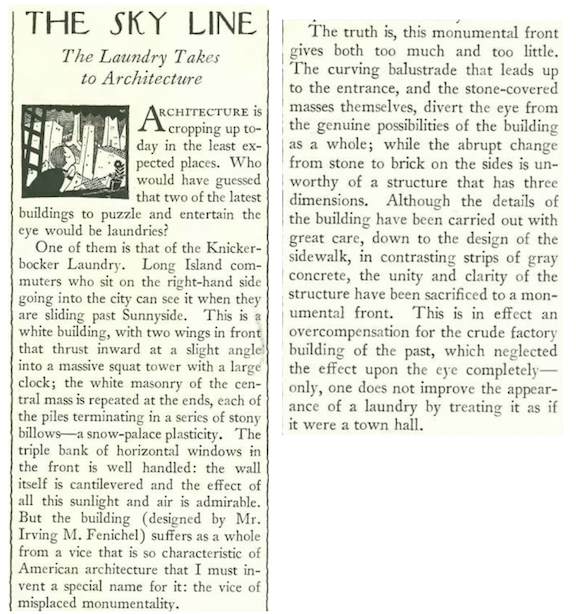
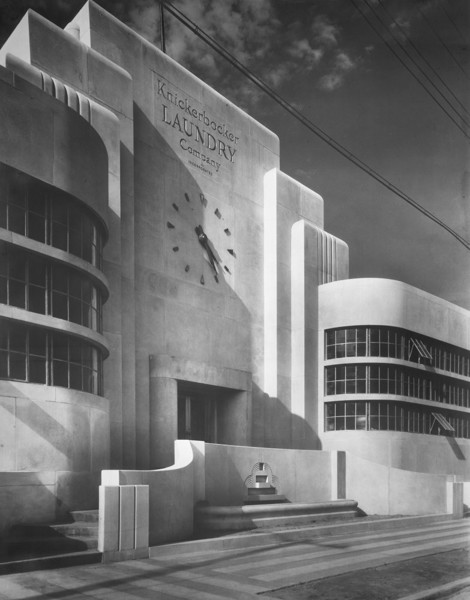
…and in this issue we have Lewis Mumford back on the streets assessing New York’s ever-changing landscape, including an unexpectedly “monumental” design for a Laundry company:
ALL WASHED UP?…Irving M. Fenichel’s Knickerbocker Laundry Building seemed a bit too monumental for Lewis Mumford. (ribapix.com)
…the building still stands, but is substantially altered (now used as a church)…
* * *
Wie Bitte?
Attributed to E.B. White, this “Talk of the Town” item, “Besichtigung” (sightseeing) told readers — in pidgen German — about a visit to the German Cruiser Karlsruhe docked in the New York harbor.
…I try my best to avoid contemporary political commentary (this blog should be a respite from all that!), so I will let Howard Brubaker (in “Of All Things”) speak for himself regarding the outcome of the 1932 presidential election:
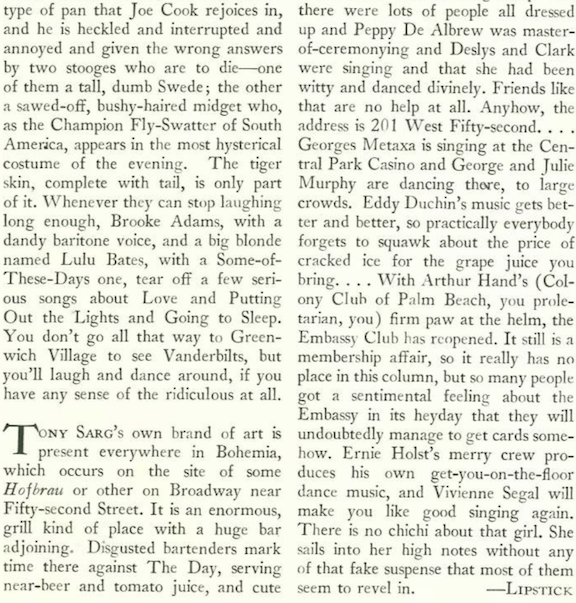
…in researching the life and work of Lois Long, there seems to be a consensus out there in the interwebs that her “Tables for Two” column ended in June 1930, however she continued the write the column from time to time, including this entry for Nov. 26 with a bonus illustration by James Thurber…
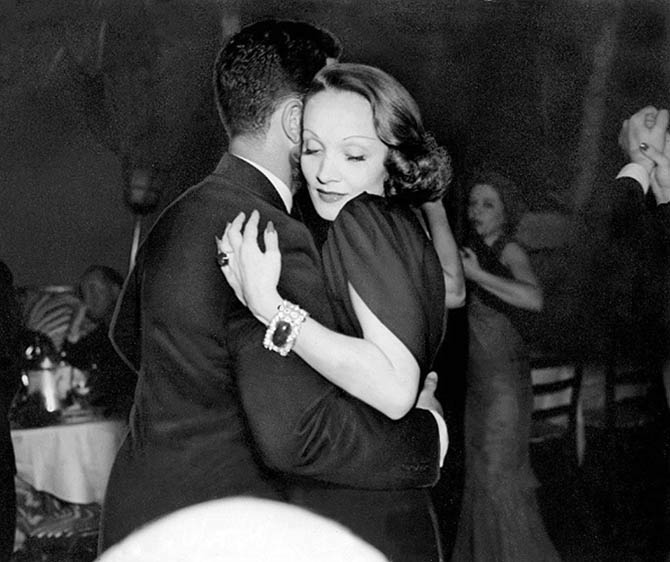
MARLENE DIETRICHING…was how Lois Long described the star’s appearance at the Bohemia club. Above is a photo of Marlene Dietrich and Cornelius Vanderbilt Whitney dancing at the New York club El Morocco in 1938. (Beinecke Rare Book and Manuscript Library)
* * *
From Our Advertisers
More Christmas ideas from the folks at Rogers Peet…hey, I could use a new opera hat!…and look at all those swell ash trays…
…yes, Prohibition is still around for another year, but the wets are ascendent, FDR is in office, so let’s get the party started…
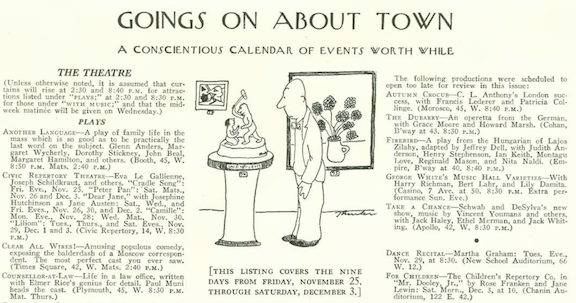
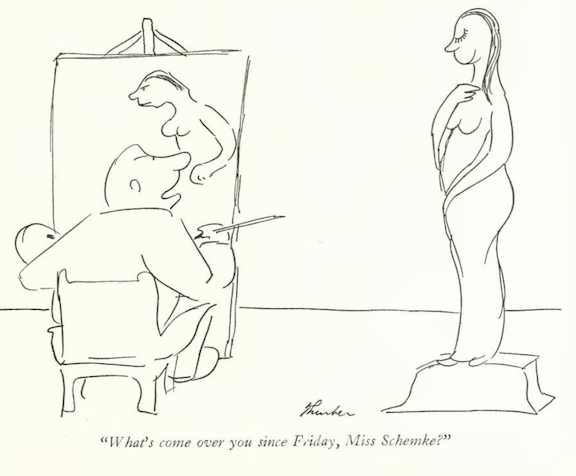
…on to our cartoonists, we begin with this illustration by James Thurber for the magazine’s events section…note the familiar theme of the sculpture, pondered by the young man…
…we are off to the races with William Steig, and some news that should kick this fella into high gear…
…and we close, with all due modesty, via the great James Thurber…




































































































































































 A New Yorker State of Mind