Making of a Madman

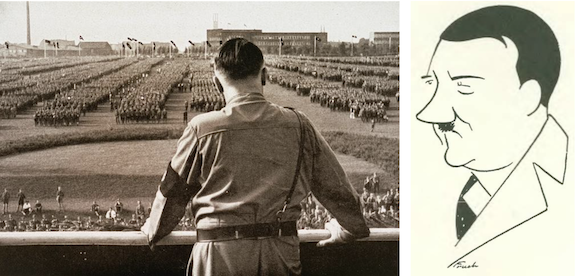
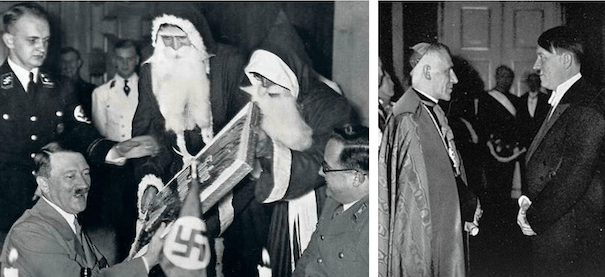
Above: At left, the Nazi Party sought to remake Christian holidays such as Christmas into Nazi-themed, pagan events, even trying to redefine St. Nicholas as Wotan, the ancient Germanic deity; at right, Adolf Hitler rejected Christianity, calling it a Jewish plot to undermine the heroic ideals of the Aryan-dominated Roman Empire. Here he is seen meeting the nuncio to Germany, Cesare Orsenigo, on January 1, 1935. (reddit.com/Wikipedia)

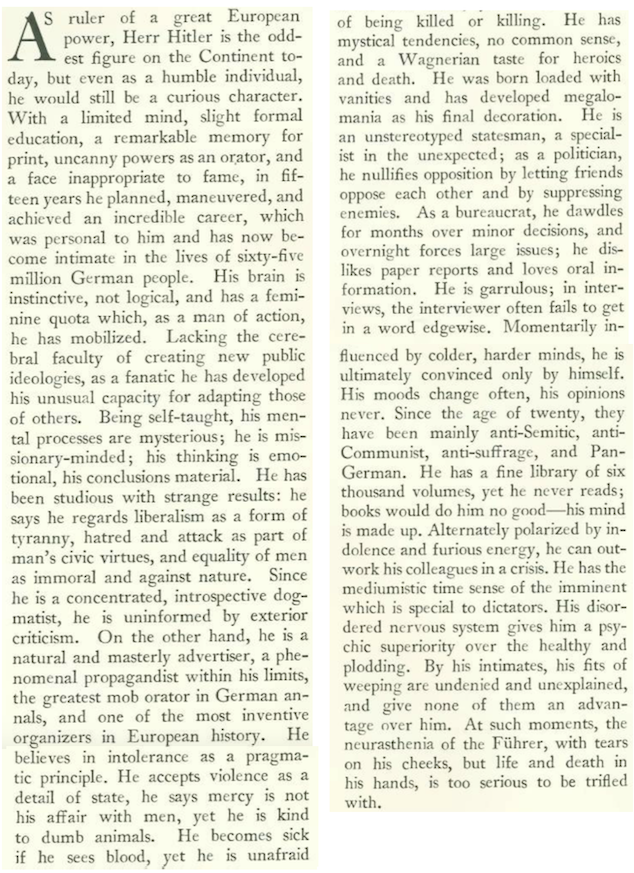
For the March 7 issue we look at the second part of Janet Flanner’s profile of German dictator Adolf Hitler, in which she attempted to identify the social and political influences that led to his peculiar vision of the world.

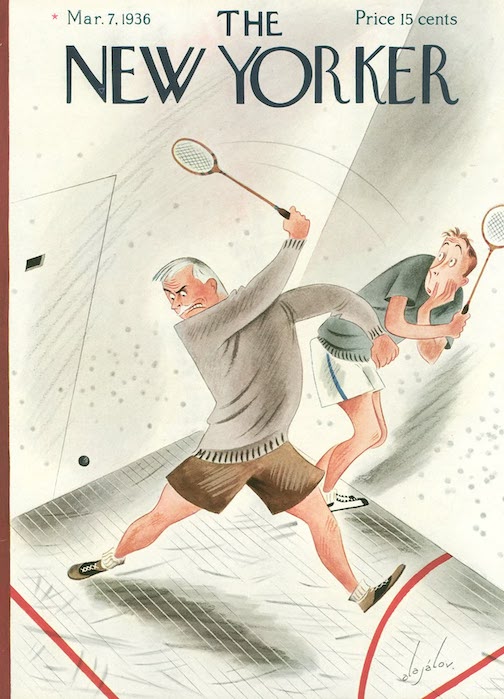
March 7, 1936 cover by Constantin Alajalov.
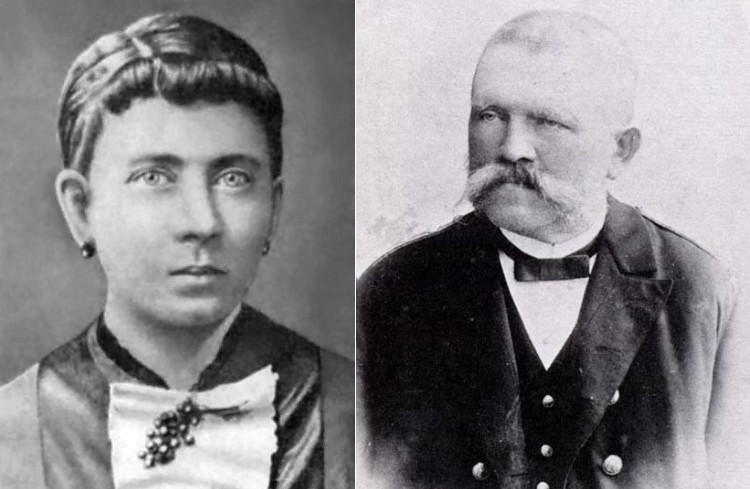
Flanner noted that Hitler’s ancestors were intermarrying, pious Roman Catholic peasants, including his parents, second cousins Klara Pölzl and Alois Hitler. While Klara was a doting parent, Alois was often abusive and distant. And so it began.

MOM AND DAD…Adolf Hitler’s parents were second cousins Klara Pölzl (1860–1907) and Alois Hitler (1837–1903). Pölzl was the third wife of the much older Hitler, who was a stern, mid-level Austrian customs official. (Wikipedia)

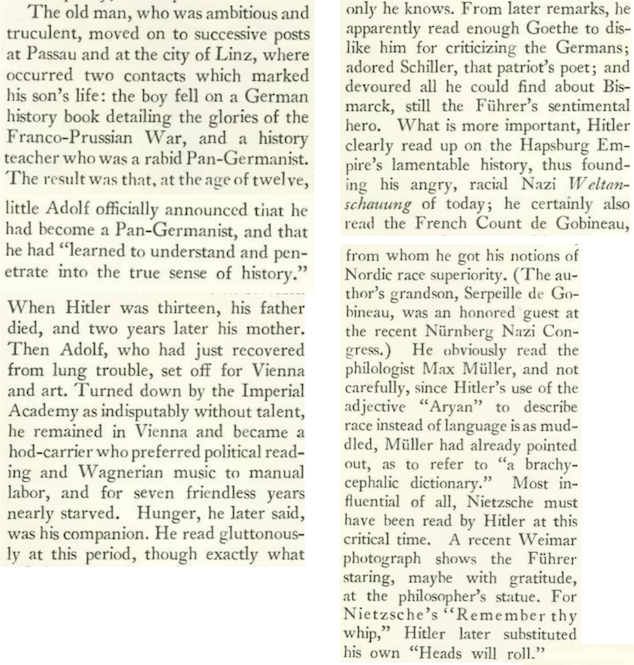
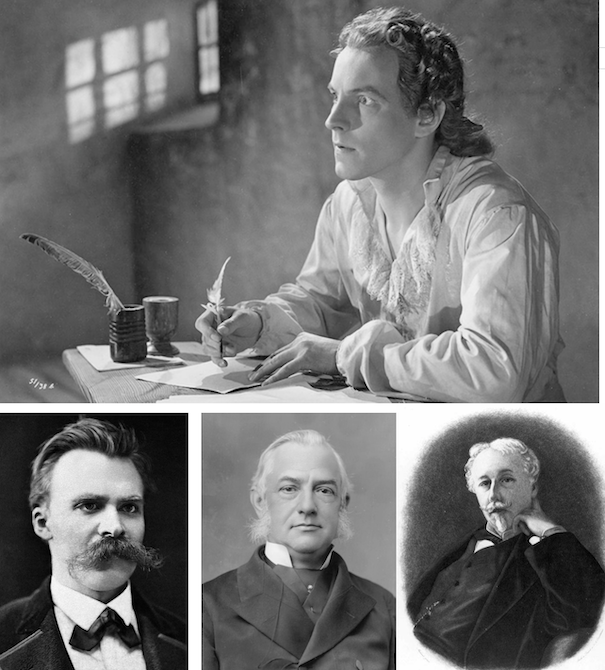
Flanner described Hitler’s struggles as an artist (rejected twice by the Vienna Academy of Fine Arts), however his real disappointment was nationalistic; serving as a courier (and wounded) in World War I, he blamed internal traitors for Germany’s defeat. To bolster his patriotic ideals, Hitler turned to books, and particularly to poet and dramatist Friedrich Schiller (1759–1805)—the Nazis would later manipulate Schiller’s works to fit the Party’s themes of nationalism, struggle, and obedience. Hitler would further hone his world view through the works of white supremacist Count de Gobineau (1816–1882), nihilist philosopher Friedrich Nietzsche (1844–1900), and philologist Max Müller (1823–1900), whose work inadvertently contributed to the idea of a superior “Aryan” race.

REWRITING HISTORY…Clockwise, from top, a 1940 Nazi propaganda film, Friedrich Schiller— Der Triumph eines Genies, portrayed Schiller (played by actor Horst Caspar) as an idealistic Übermensch; Hitler and the Nazis were also influenced by white supremacist Count de Gobineau; philologist Max Müller; and the nihilist philosopher Friedrich Nietzsche. (film portal.de/Wikipedia)

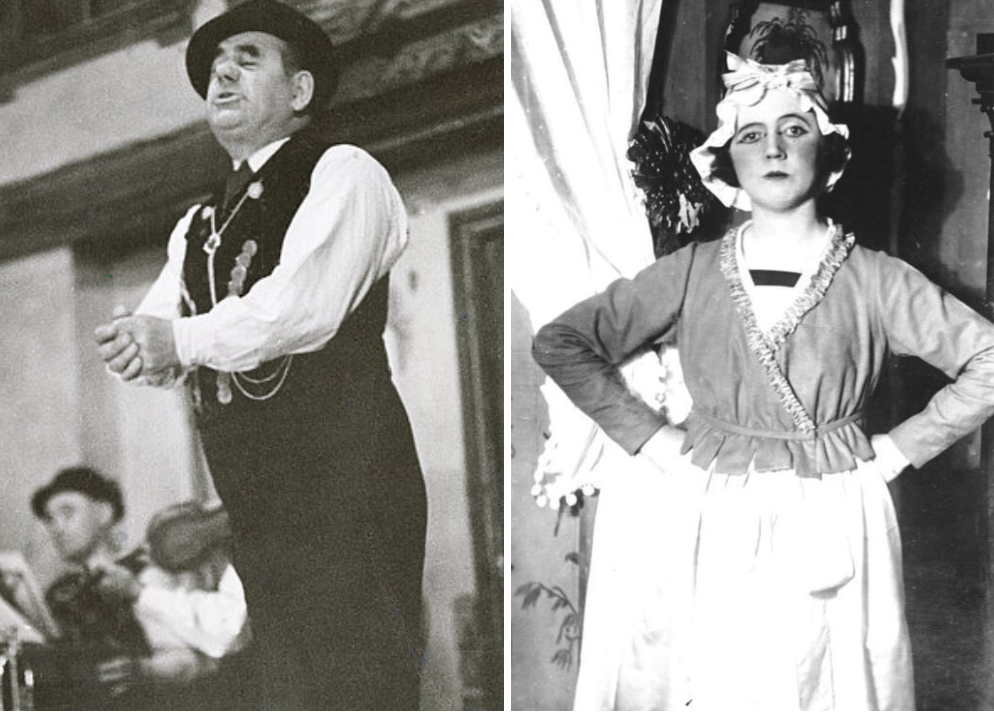
In her conclusion, Flanner noted Hitler’s dislike of jokes at his own expense, and she was surprised that German comedian Weiss Ferdl, known for his “Führer gibes,” wasn’t in a concentration camp with cabaret singer Claire Waldorff (somehow both survived the regime and the war). Flanner also touched on Hitler’s antipathy toward Christianity.

SURVIVORS…At left, Weiss Ferdl (1883-1949) was a German actor, humorous folksinger known for his jibes at Hitler; at right, Claire Waldorff (1884-1957) was a famous cabaret singer and entertainer in Berlin, known for performing ironic songs with lesbian undertones. (Wikimedia Commons)
I’LL TRY TO KILL YOU LATER…German Chancellor Adolf Hitler greets (l to r) Roman Catholic Abbot Albanus Schachleiter and Protestant Reichsbischof Ludwig Müller, outside the Frauenkirche in Nuremberg, September 1934. (Wikipedia)

 * * *

Thrill Ride

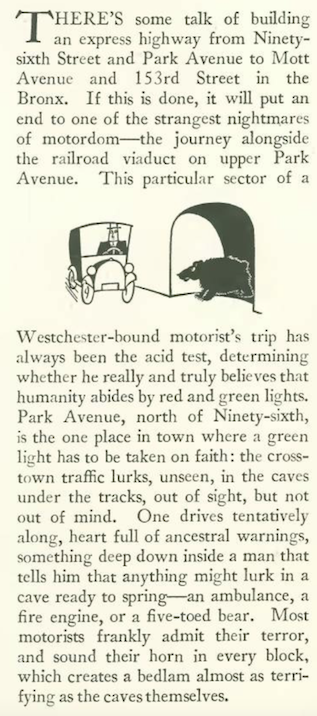
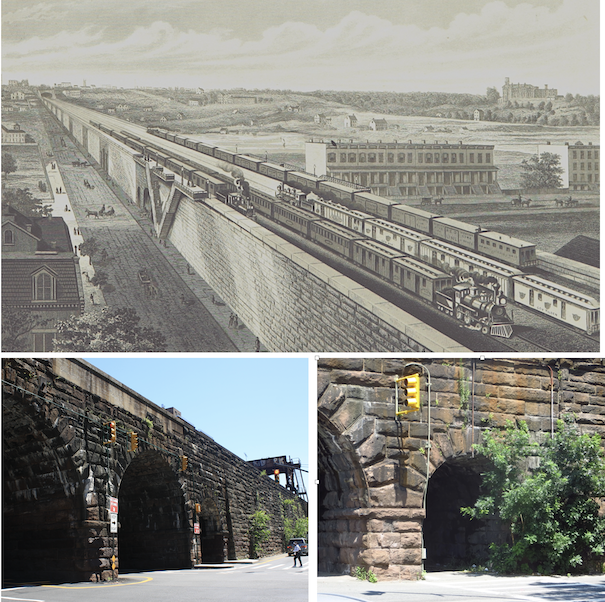
In his “Notes and Comment,” E.B. White described “one of the strangest nightmares of motordom”…

THE GREAT WALL…E.B. White feared whatever might pop out of the dark tunnels on the northern stretches of Park Avenue. Clockwise, from top, an 1876 illustration of the new viaduct through the Harlem Flats; E. 108th Street pedestrian tunnel between Lexington and Park; Park Avenue Viaduct–La Marqueta. (Wikipedia/manhattanwalkblog.com/6tocelebrate.org)

* * *

Ding-dong

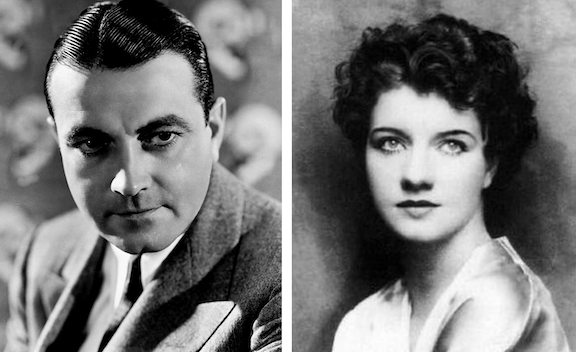
Robert Benchley filed a brief review of The Postman Always Rings Twice, a stage adaptation at the Lyceum Theatre of James M. Cain’s acclaimed novel. Although the play was well received by audiences, many reviewers found the subject matter distasteful. Cain would later describe the 1936 production as “a dreadful experience from beginning to end.”

SCHEMERS AND DREAMERS…Richard Barthelmess and Mary Philips portrayed star-crossed lovers in the 1936 stage production of The Postman Always Rings Twice. Philips was a noted Broadway performer and Humphey Bogart’s first wife. (Wikipedia/imdb.com)

 * * *

At the Movies

Critic John Mosher commented on familiar Hollywood tropes (doctors chasing nurses, execs pursuing secretaries etc.) and offered up the “tepid” example of Wife vs. Secretary, which featured three of Tinseltown’s top stars.

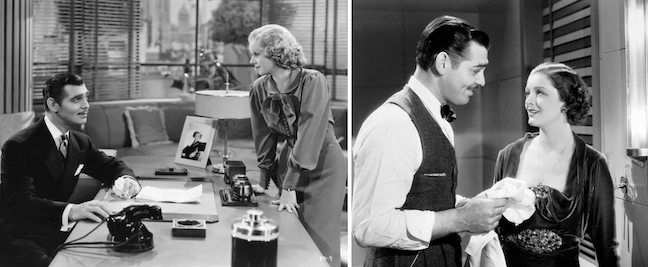
MILD HIJINKS…At left, Clark Gable and Jean Harlow in a scene from Wife vs. Secretary; at right, Gable with Myrna Loy. (faintlyfamiliar.com/facebook.com)

Mosher didn’t find much excitement in the dog-themed picture The Voice of Bugle Ann, and was left flat after seeing Road Gang and the German film Liebelei.

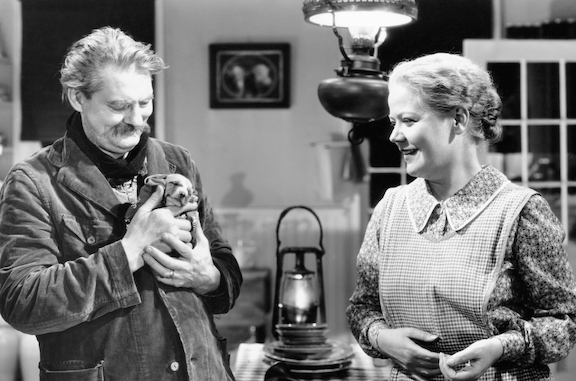
SWEET AND SOUR…Lionel Barrymore and Spring Byington were on one side of a feud over a special dog in The Voice of Bugle Ann. (tcm.com)
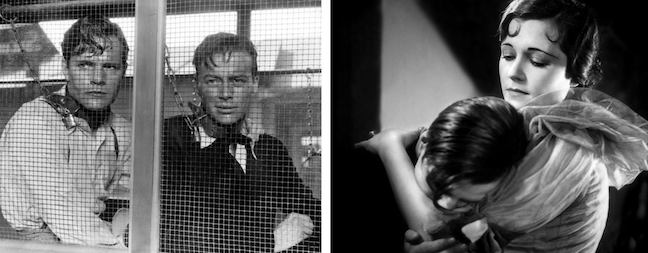
WELL THIS SUCKS…At left, Donald Woods and Carlyle Moore Jr. find themselves behind bars in Road Gang; at right, Paul Hörbiger and Olga Tschechowa in 1933’s Liebelei (aka Playing at Love). (rotten tomatoes.com/screenslate.com)

 * * *

Language Arts

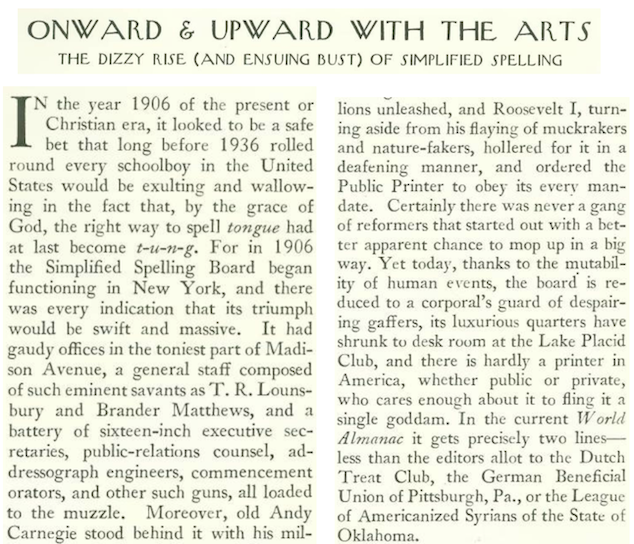
H.L. Mencken continued his exploration of American English by taking a look at past attempts to simplify spelling—most of them unsuccessful. Excerpts:

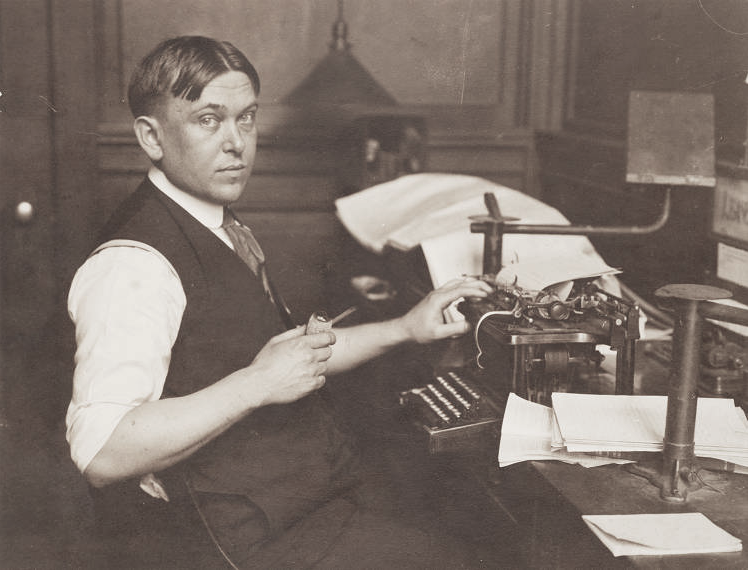
NOT ONE FOR GIMMICKS…H.L. Mencken at his desk at the Baltimore Sun. (Paris Review)

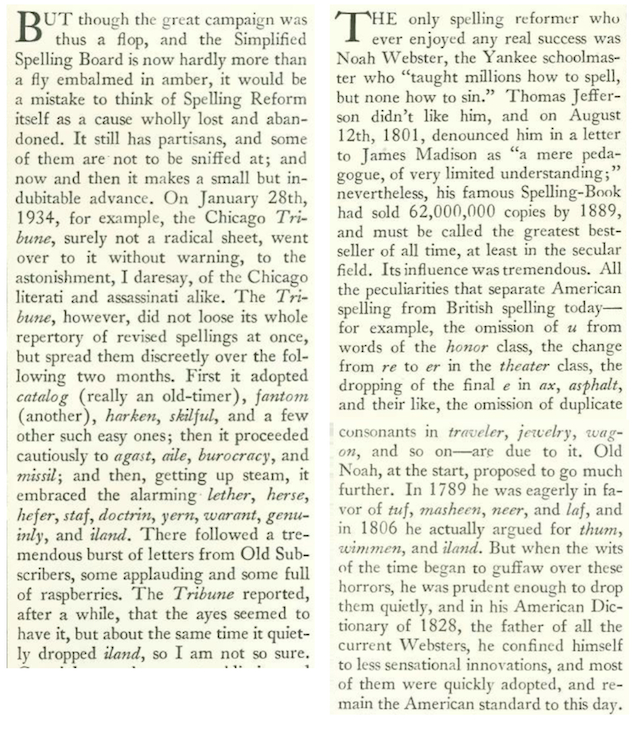
Mencken noted the Chicago Tribune’s radical approach to simplified spelling in 1934, and the lasting effects of Noah Webster’s American dictionary.

“PEDAGOGUE” was one of the milder insults cast at Noah Webster by his peers. (National Portrait Gallery)

 * * *

First World Problem

Food critic Sheila Hibben looked into the complexities of tea-drinking during the cocktail hour, and vice-versa.

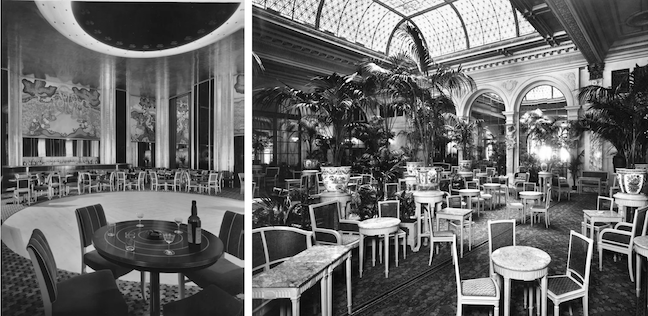
CHOOSE YOUR MOOD…The Plaza Hotel offered the ideal setting for whatever libation one chose at tea time. At left, the Plaza’s Persian Room, 1934, and the Palm Court, undated photo. (cooperhewitt.org/mcny.org)

 * * *

Finer Things

Rebecca West was a brilliant journalist and gifted prose writer, and when she published something people took notice, including critic Clifton Fadiman, who noted her return with The Thinking Reed. A brief excerpt:

A MIGHTY PEN…Rebecca West (1892-1983) was considered one of the finest prose writers of twentieth-century England. This 1934 photograph was produced by Howard Coster. (National Portrait Gallery)

 * * *

From Our Advertisers

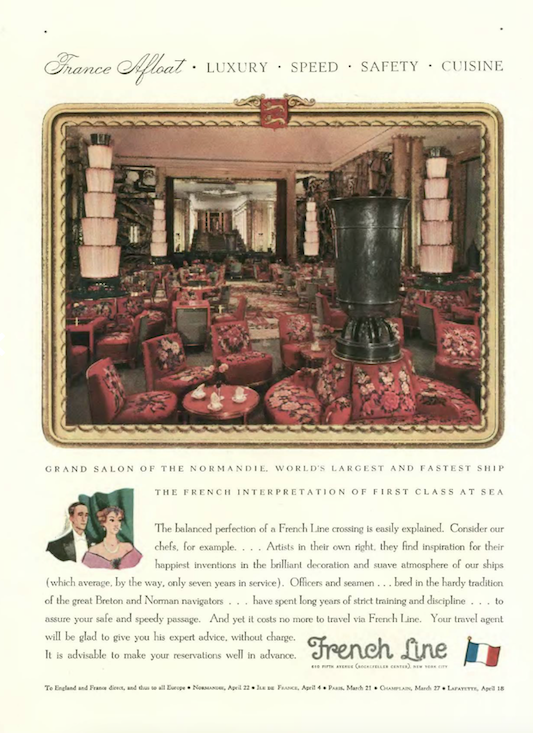
The March 7 issue opened to this sumptuous image of luxury travel aboard the Normandie

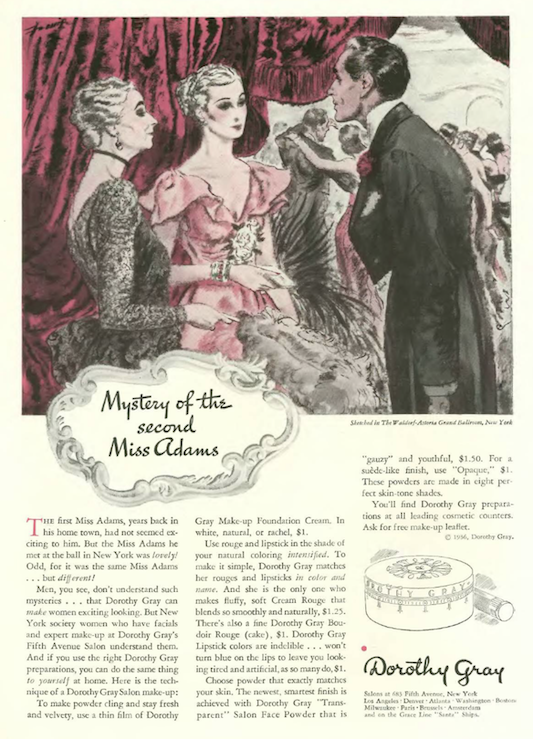
…the salons of Dorothy Gray returned with another tale of a magical transformation, here the plain “Miss Adams” suddenly becomes lovely and exciting thanks to the illusion of cosmetics…

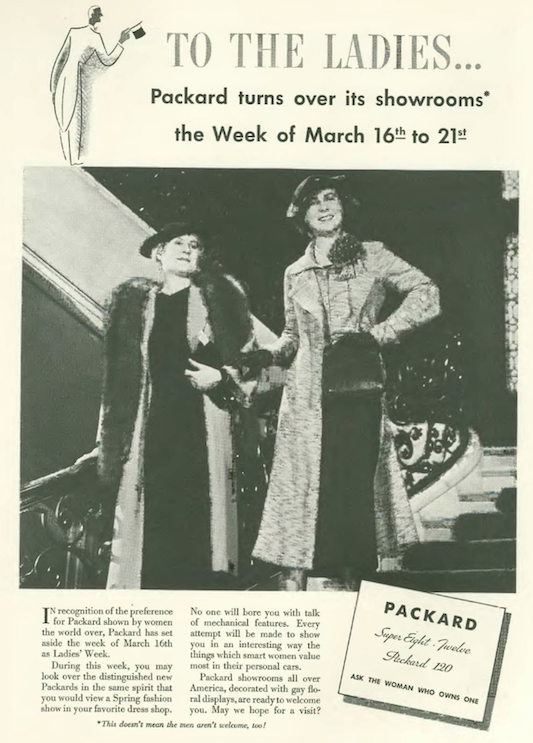
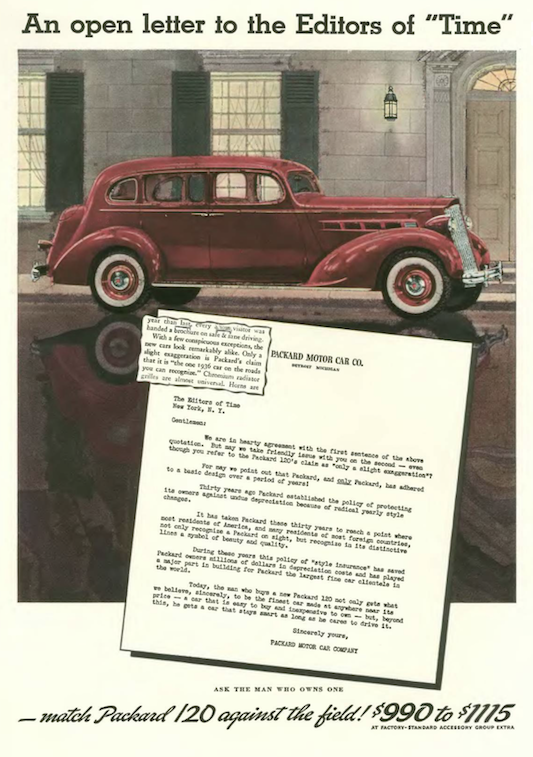
…the makers of Packard automobiles took out this full page ad to gently chastise Time magazine for questioning the carmaker’s adherence to a timeless, “basic design”…

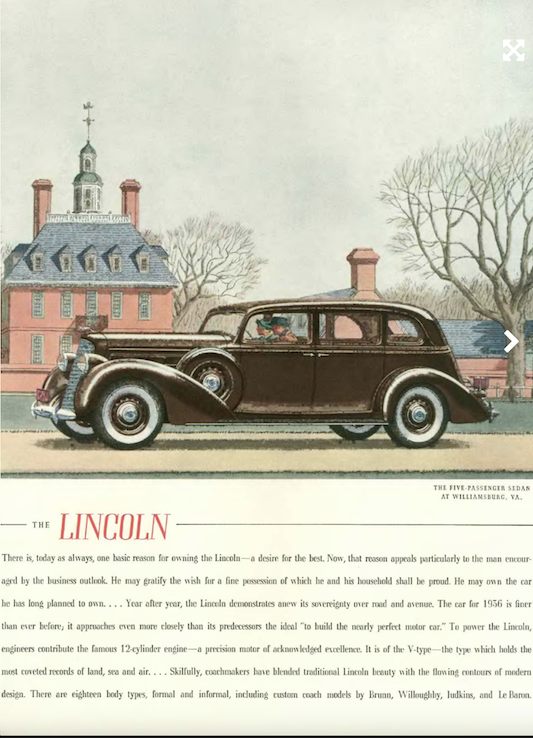
…although in Time’s defense the Packard didn’t look much different from this Lincoln…

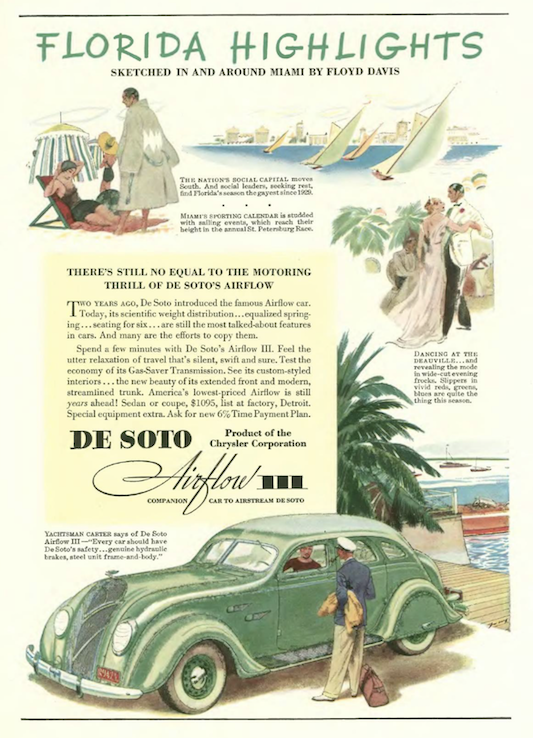
…what did look different was the Chrysler/DeSoto Airflow, which had disappointing sales due to a streamlined design that was a bit too radical for consumers…

…actress and costume designer Kate Lawson (1894-1977) made her image available to promote washable wallpaper…

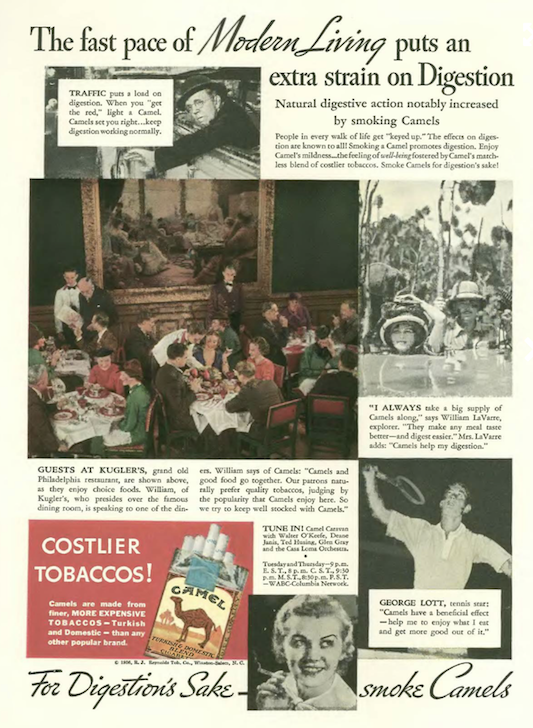
…in addition to calming nerves and boosting energy, Camels apparently aided one’s digestion, or so this ad claimed…

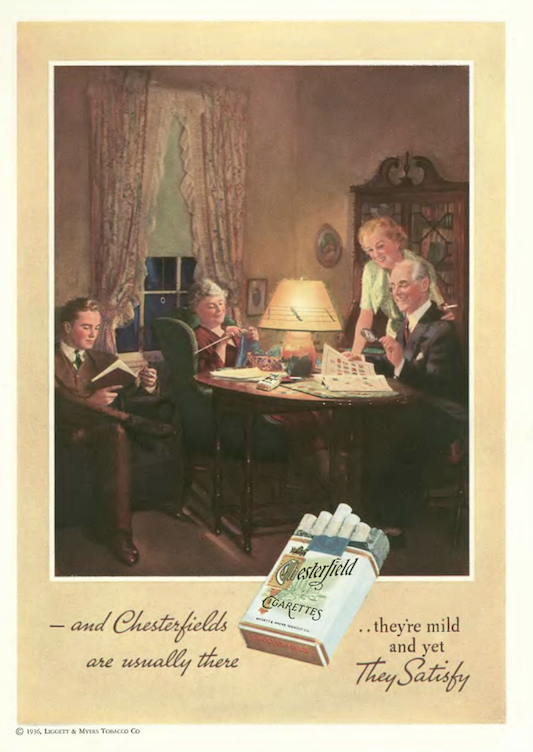
…Liggett & Myers stuck with the homespun approach, here three generations light up Chesterfields in the warm glow of the parlor…

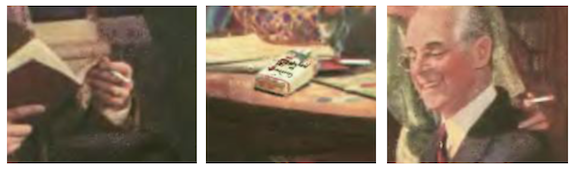
…did you spot the cigarettes in the ad?…

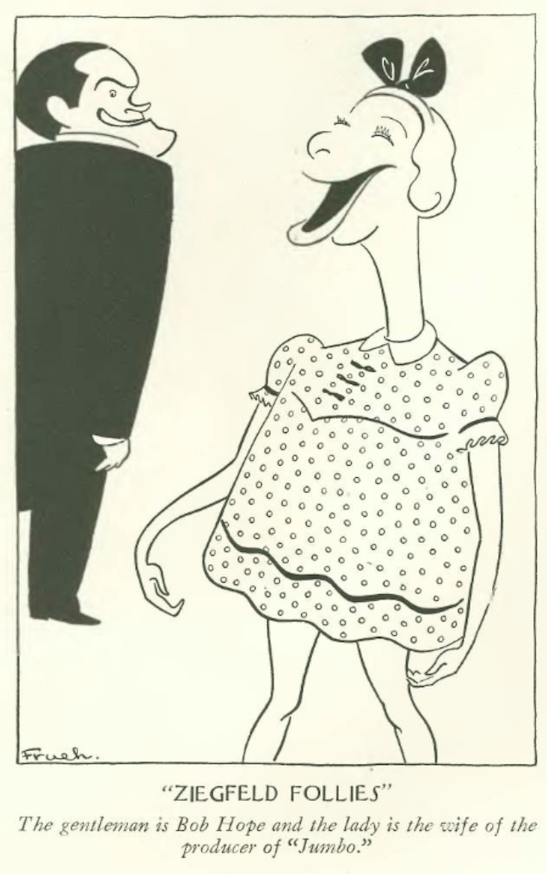
…on to the cartoons, we have Al Frueh’s take on the Ziegfeld Follies…

James Thurber contributed this to the calendar section…

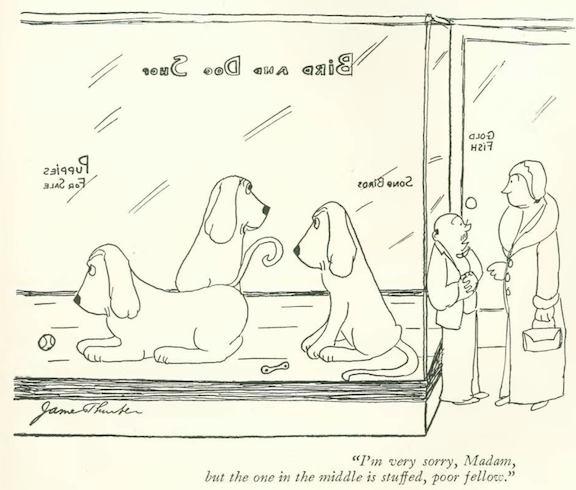
…and Thurber again with his beloved dogs…

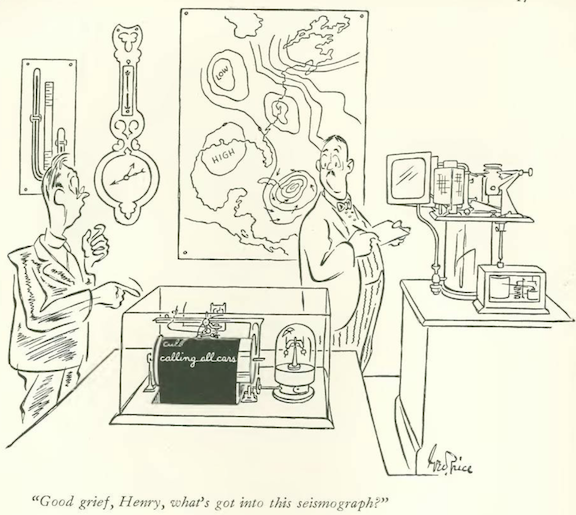
George Price found a glitch at the weather bureau…

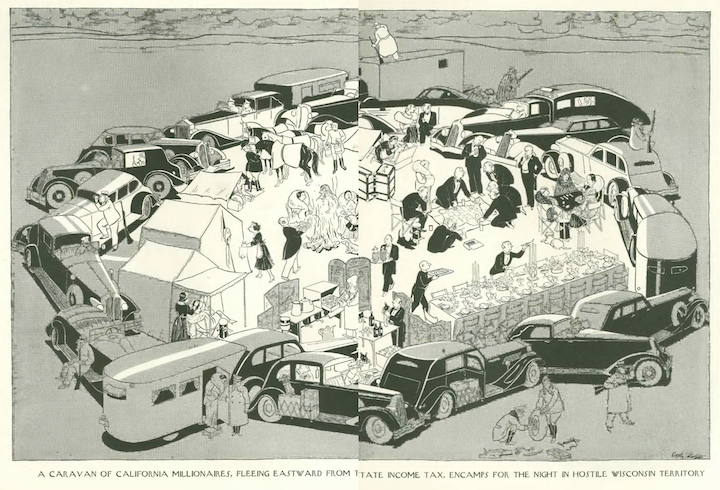
…Californians circled their wagons in the hostile Midwest, per Carl Rose

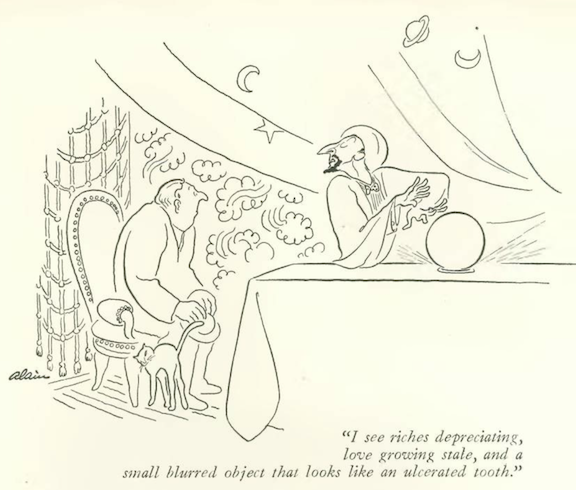
Alain saw a trip to the dentist in this man’s future…
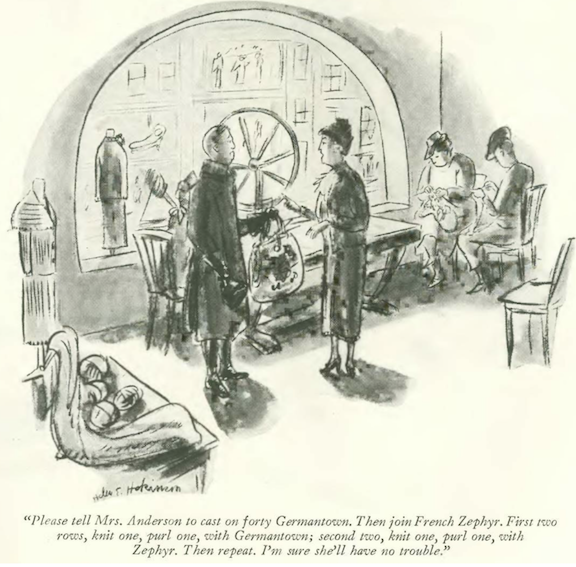
Helen Hokinson lost us in the peculiarities of needlepoint…
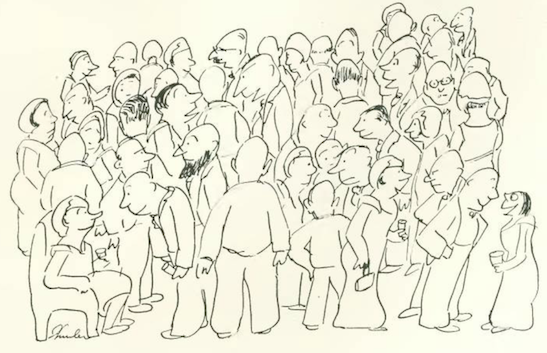
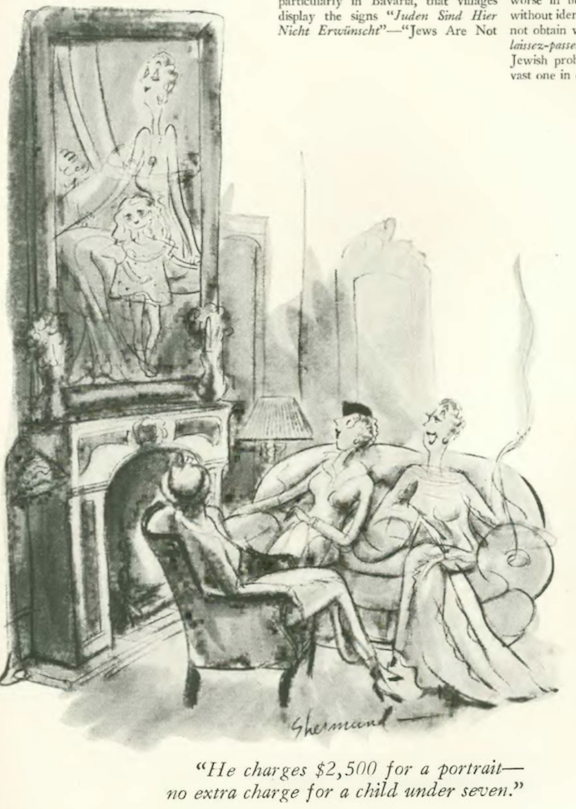
Barbara Shermund found a bargain in portraiture…

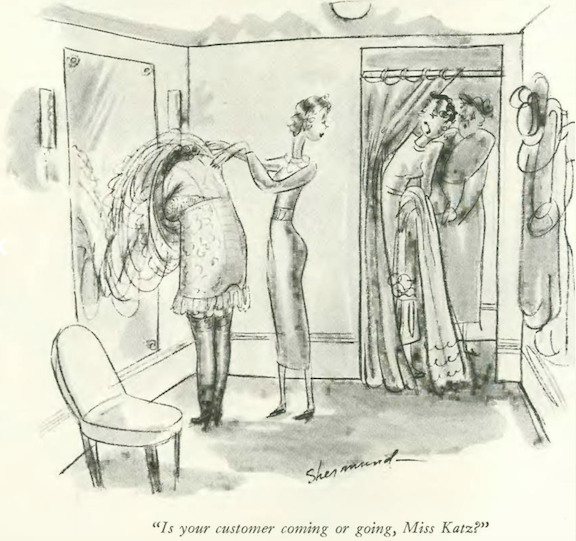
…and Shermund again, in the dress department…
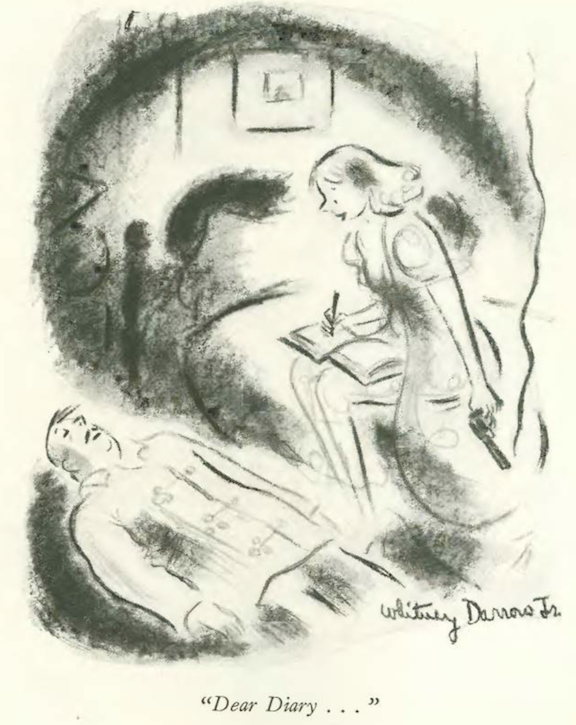
…and we close with Whitney Darrow Jr, and something to write about…

Next Time: Nostalgic Notes…


Führer Furor

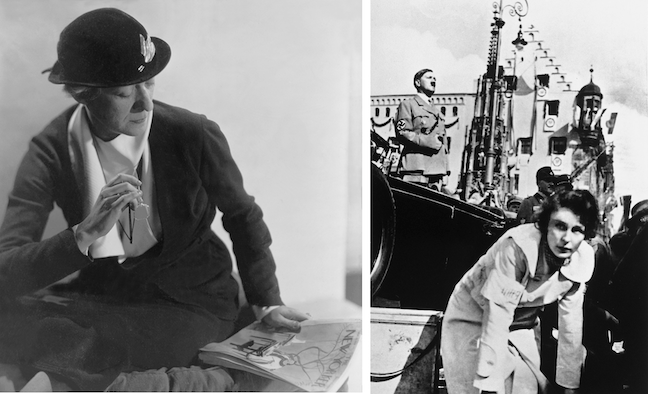
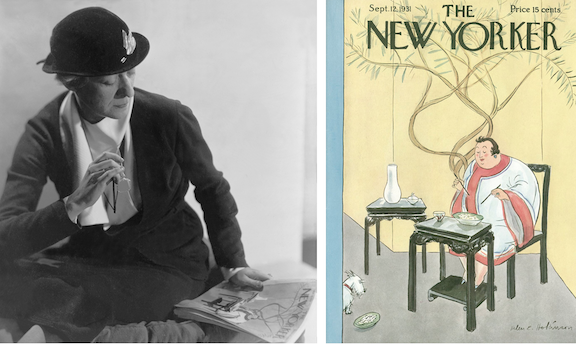
Above, left, Janet Flanner regards the cover of the Sept. 13, 1931 issue of The New Yorker; at right, Adolf Hitler's chosen filmmaker Leni Riefenstahl at Nuremberg's "Shovel Day" parade, 1936. (Library of Congress/Sueddeutscher Verlag)

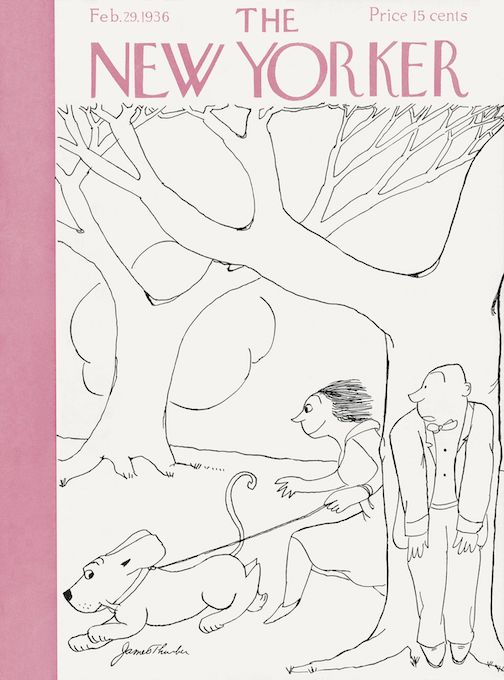
The February 29, 1936 issue stands out from pack not only for its cover—James Thurber’s first—but also for the magazine’s first in-depth look at a man who would spark the deadliest conflict in human history.

February 29, 1936 cover by James Thurber. This was the first of six covers Thurber contributed to The New Yorker. You can see all six covers at Michael Maslin’s Ink Spill, the go-to site for all things Thurber and so much more. UPDATE: Also check Maslin’s post regarding the repeat of this cover on Sept. 4, 2023. Fascinating read!

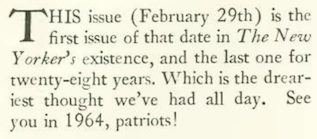
Before we jump in…Thurber’s close friend E.B. White noted another unusual fact about this issue…

…twenty-eight years later, and a dime extra (cover by Garrett Price)…

 * * *

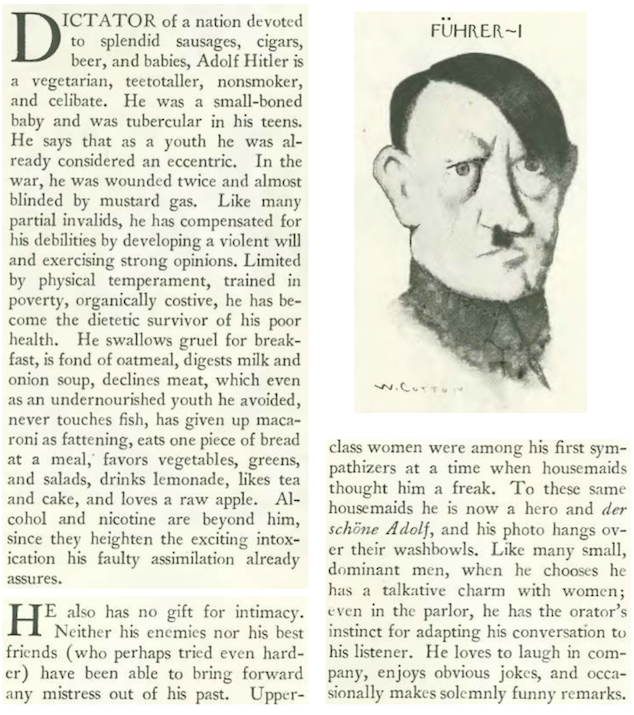
Inside the Feb. 29 issue, The New Yorker’s Paris correspondent Janet Flanner published the first part of a three-part profile on German dictator Adolf Hitler. In this first excerpt she described the Führer’s ascetic diet and personality (caricature by William Cotton).

NAZI NUM NUMS….Adolf Hitler with one of his official food tasters, Margot Woelk, during World War II. Woelk later claimed she was the sole survivor from a group of food tasters who were summarily executed by the Red Army after the fall of Berlin. (warfarehistorynetwork.com)

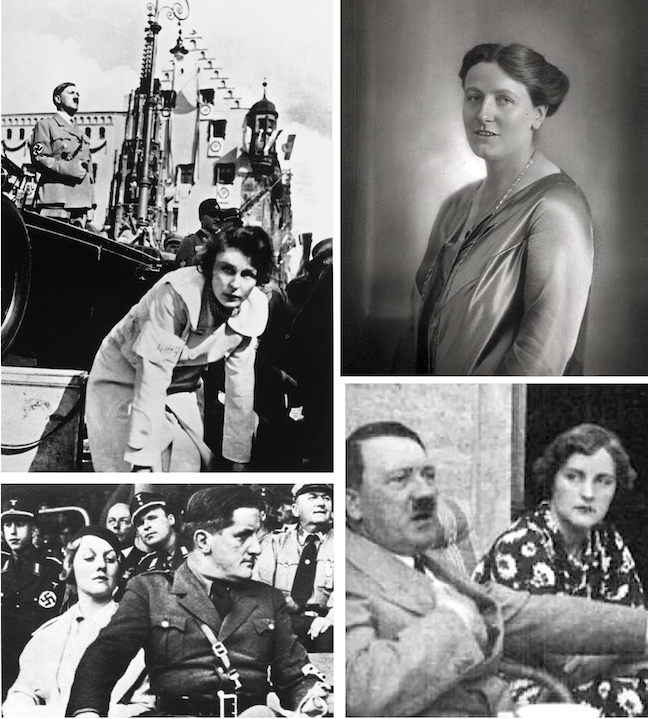
Flanner described Hitler’s relationships with influential women, particularly filmmaker Leni Riefenstahl.

FRIENDS WITH BENEFITS…Adolf Hitler had influential admirers both in and outside of Germany, including, clockwise, from top left, filmmaker Leni Riefenstahl (in the white skirt described by Flanner) at the 1936 “Shovel Day” in Nuremburg; Winifred Wagner, daughter-in-law of composer Richard Wagner, in 1925; Hitler with Unity Mitford, one of six aristocratic Mitford sisters and a fanatical Nazi; Ernst Franz Sedgwick Hanfstaengl with another Mitford sister, Diana Mitford, at a 1934 Nuremberg rally. Diana as married to Oswald Mosley, leader of the British Union of Fascists, and Hanfstaengl was the son of Katharina Wilhelmina Hanfstaengl, a prominent Munich art publisher who helped finance Hitler’s rise to power. (Sueddeutscher Verlag/Wikipedia/historyreader.com)

Flanner concluded the piece with a look at Hitler’s sexuality, which seemed non-existent, and drew an ominous conclusion about his personality type.

EXPENDABLE…Ernst Röhm with Adolf Hitler in 1933. Although Hitler knew Röhm was gay, he also valued Röhm’s leadership and organizational skills, that is until his presence proved a liability. Röhm was murdered by the SS in 1934 during the “Night of the Long Knives.” (Wikipedia)

As part of a centenary series, The New Yorker’s Andrew Marantz recently looked at Flanner’s profile of Hitler, noting that she was “neither an antifascist, like her friend Dorothy Parker, nor a Fascist, like her friend Ezra Pound; she was against crude bigotry, but she was not the world’s greatest philo-Semite.”

 * * *

Lamour Amour

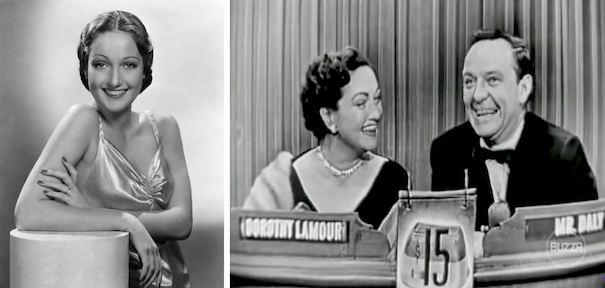
In his “Notes and Comment,” E.B. White pointed out the challenges of expressing physical beauty over a non-visual medium like radio:

TELEGENIC…Hopefully E.B. White managed to see Dorothy Lamour on the “television waves… bumping along over the Alleghenies.” At left, publicity photo of Lamour from 1937; at right, Lamour appeared as a mystery guest on What’s My Line?, Feb. 20, 1955, seen here with host John Daly. In later years Lamour was a guest on a number of television shows, ranging from Marcus Welby, M.D. to Remington Steele. (Wikipedia/YouTube.com)

 * * *

Shadow Plays

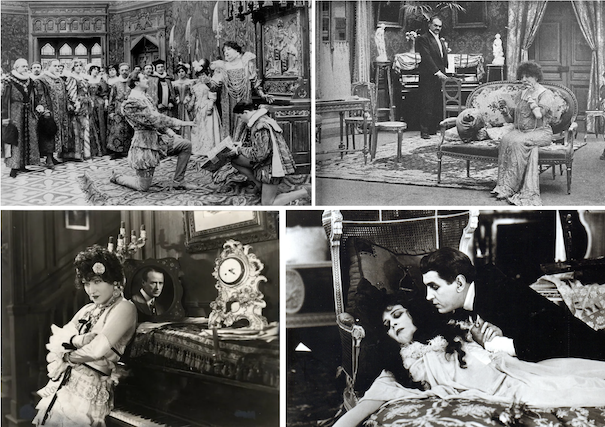
Morris Bishop (1893-1973), a noted scholar of the Middle Ages as well as a writer of light verse, offered up these lines after screening early silent films at the Museum of Modern Art. The screenings were curated by Iris Barry to showcase MoMA’s new film library and to advance the study of film as a serious art form.

TIME CAPSULES…The Museum of Modern Art was a pioneer in the study of film as a modern art form. Among the films screened at MoMA in 1936 (clockwise, from top left): famed stage actress Sarah Bernhardt as Queen Elizabeth in the Les Amours de la reine Élisabeth (The Loves of Queen Elizabeth) with Lou Tellegen, 1912; Bernhardt in the film Camille (La Dame aux camélias) with André Calmettes, 1911; Theda Bara’s 1917 take on Camille, in a scene with Alan Roscoe; Gloria Swanson in Zaza, 1923. (Wikipedia/imdb.com/YouTube.com)

 * * *

A Reporter’s Chops

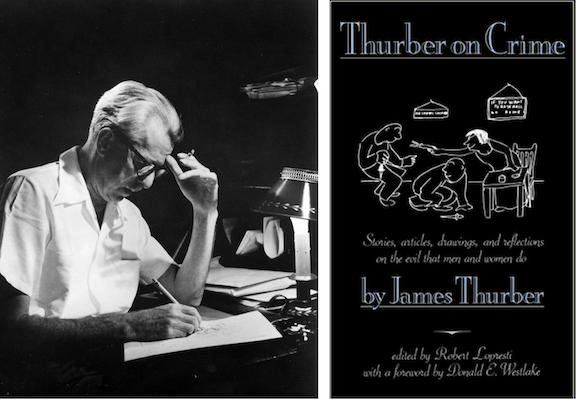
With so much attention given to James Thurber as a humorist, it is easy to forget that he was an experienced journalist, and that he could apply his considerable gifts as a writer to narrative non-fiction. For the Feb. 29 “A Reporter at Large” column, Thurber penned “Crime in the Cumberlands.” I can’t do it justice through excerpts, but I highly recommend giving it a read as a prime example of Thurber’s skills as a reporter.

SERIOUSLY SERIOUS WRITER…You can find both humorous and not-so-humorous crime stories (and drawings, of course) in 1991’s Thurber on Crime, edited by Robert Lopresti. “Crime in the Cumberlands” is included in the collection. (jamesthurber.org/barnesandnoble.com)

 * * *

At the Movies

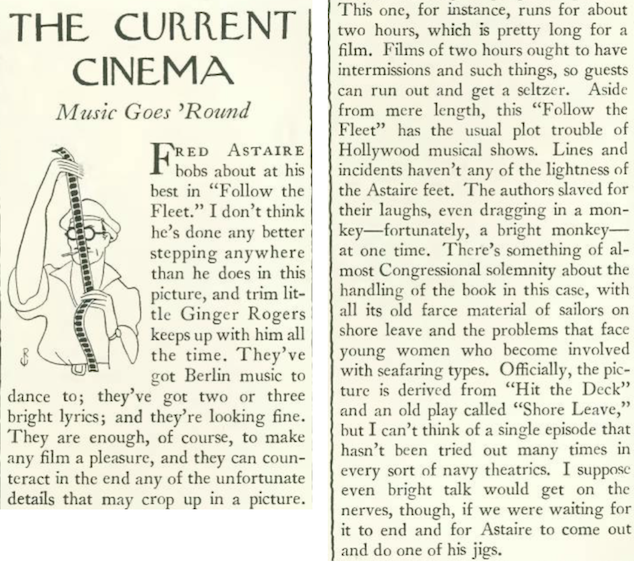
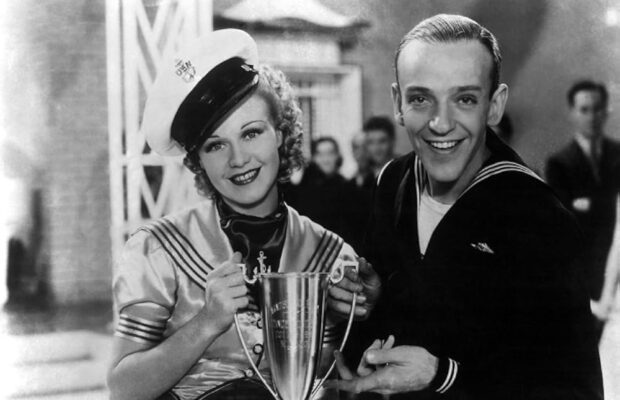
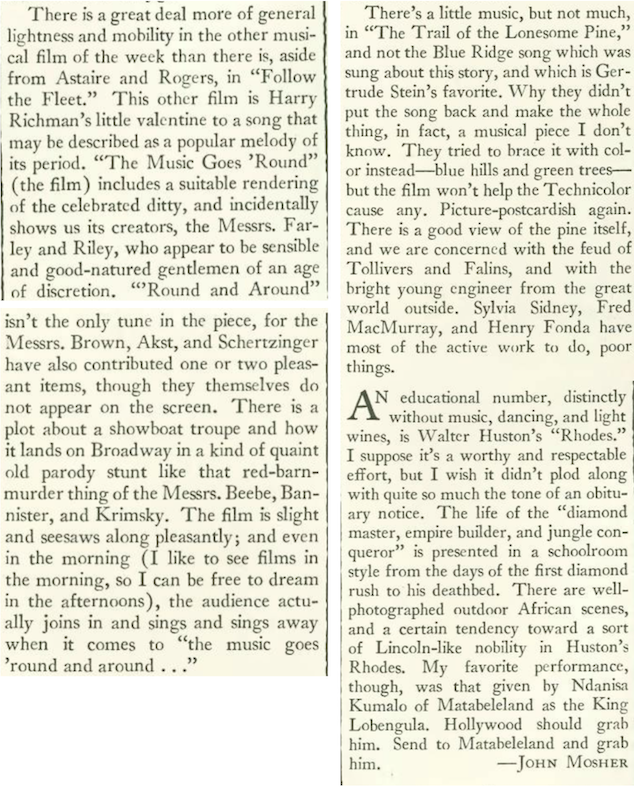
Not so serious were the films being churned out by Hollywood, including the Fred Astaire/Ginger Rogers toe-tapper Follow the Fleet, set to an Irving Berlin score that featured the hit “Let’s Face the Music and Dance.” Critic John Mosher was on board for the ride.

GOOD CLEAN FUN…Dance partners “Bake” Baker (Fred Astaire) and Sherry Martin (Ginger Rogers) find love during shore leave in Follow the Fleet. (Toronto Film Society)

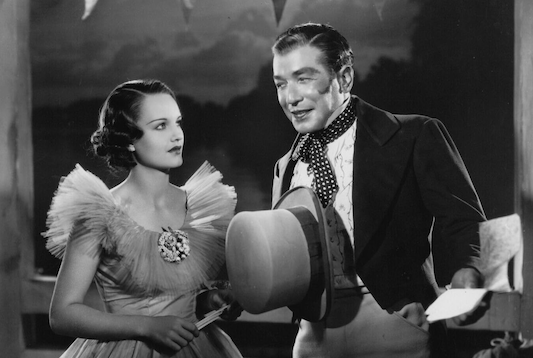
Bandleader Harry Richman, well known in the New York nightlife scene of the 1920s and 30s, showed his acting chops in The Music Goes ‘Round…

I CAN SING TOO…Rochelle Hudson and Harry Richman in The Music Goes ‘Round. (imdb.com)

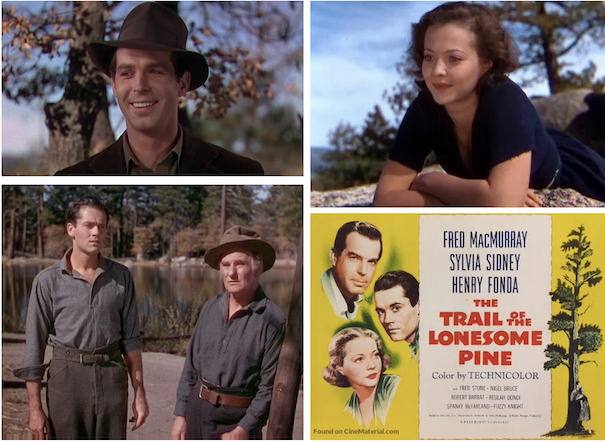
Fred MacMurray, Sylvia Sydney, Henry Fonda and Fred Stone appeared in living color in The Trail of the Lonesome Pine–it was just the second full-length feature to be shot in three-strip Technicolor and the first to be shot outdoors in Technicolor…

LIFELIKE…Clockwise, from top left: Fred MacMurray; Sylvia Sydney; a Paramount movie poster; Henry Fonda and Fred Stone. (moviesalamark.com/imdb.com)

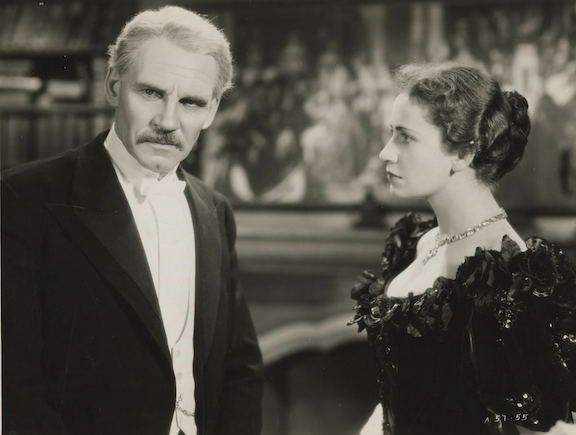
…the 1936 film Rhodes (aka Rhodes of Africa) featured the massive acting talents of Walter Huston and Peggy Ashcroft; not surprisingly, the subject matter of the film has not aged well…a 2015 review in The Guardian is headlined: “Rhodes of Africa: only slightly less offensive than the man himself”…

COLONIAL KLINK…Walter Huston and Peggy Ashcroft in Rhodes. (imdb.com)

 * * *

From Our Advertisers

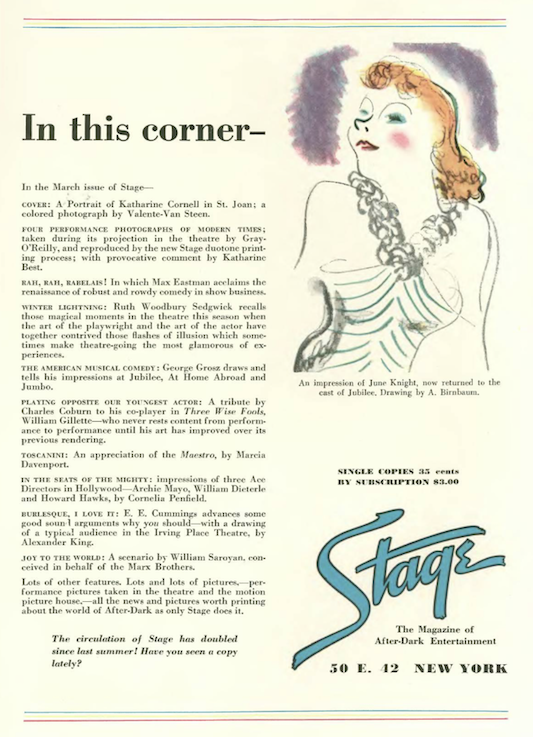
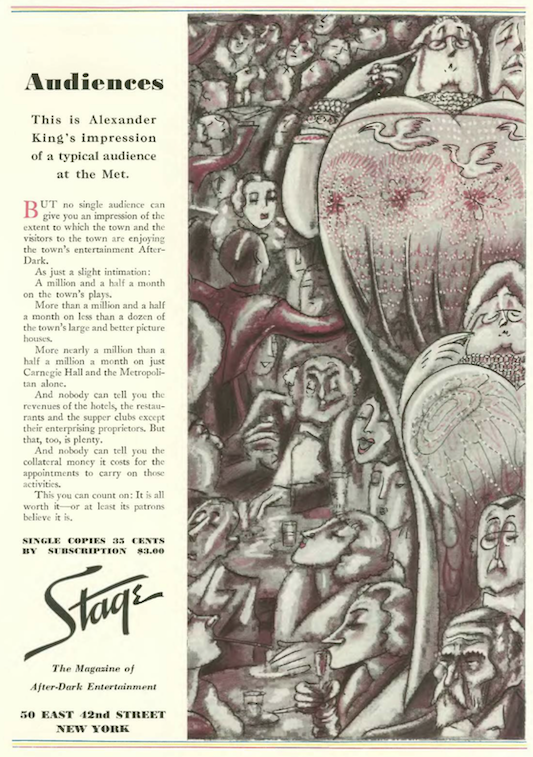
We begin with a Stage magazine ad from the inside front cover, featuring an illustration by Alexander King

…only new-money swells would be seen doing this…old money wouldn’t dare enter the kitchen, unless they needed to sack the cook…

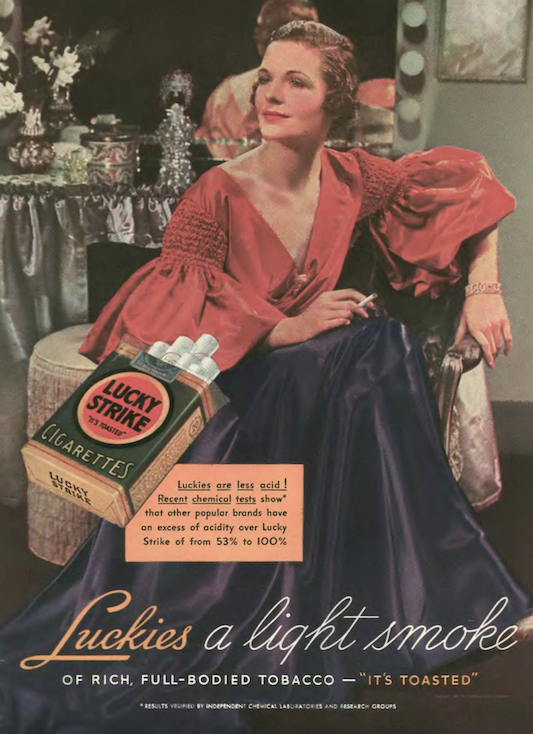
…on the back cover of the Feb. 29 issue you would find this elegant woman taking a break from her vanity to enjoy a “toasted” Lucky…

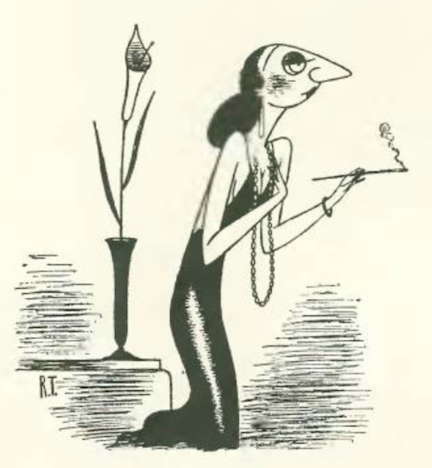
…we join our cartoonists, starting with this spot by Richard Taylor

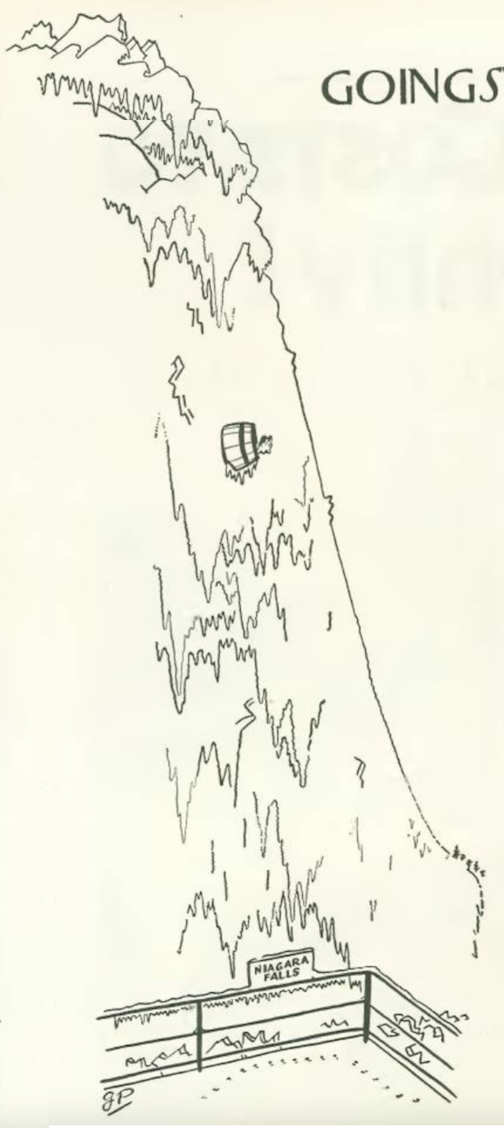
Garrett Price got stuck over the frozen falls…

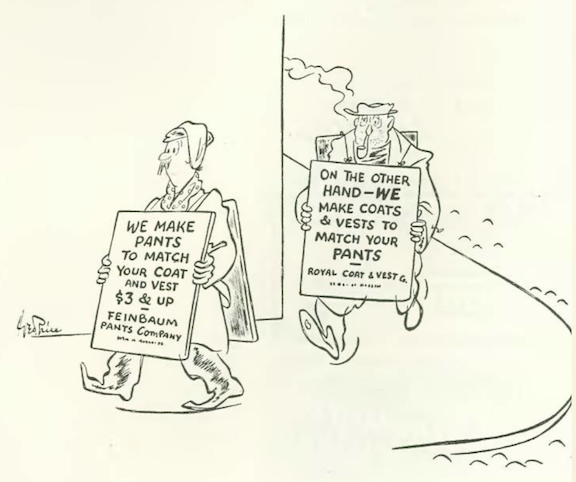
George Price drew up a sandwich board competition…

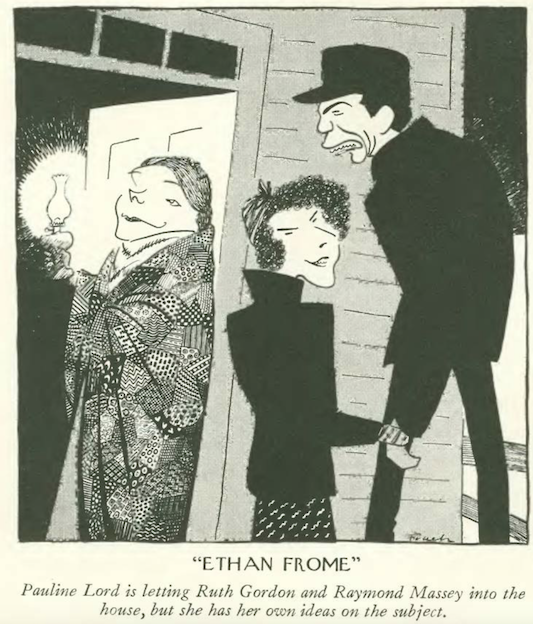
Al Frueh continued to illuminate “The Theatre” section…

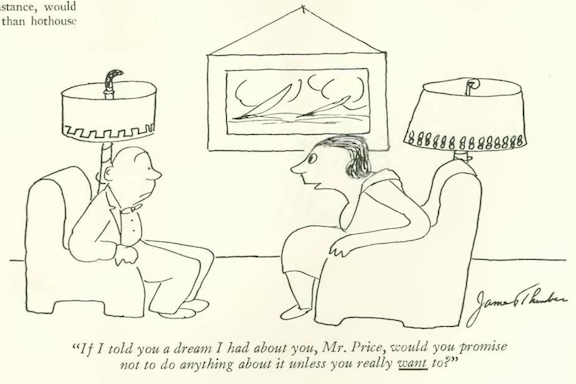
James Thurber posed a loaded question…

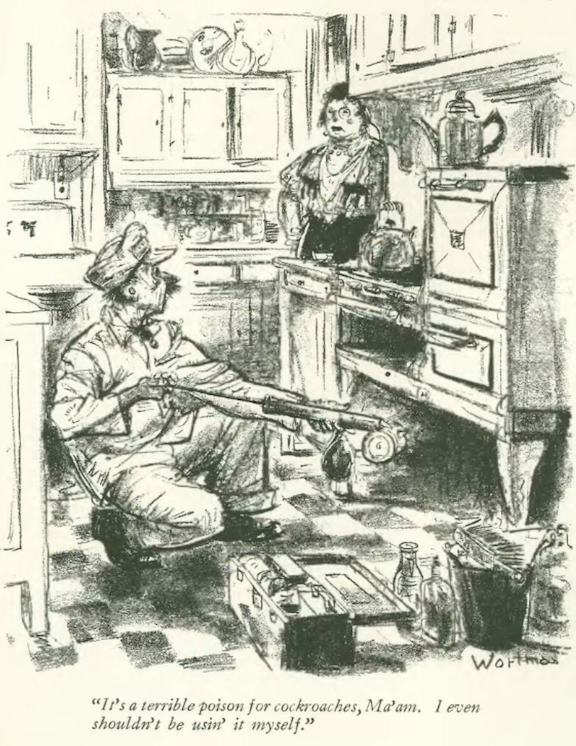
Denys Wortman got down to some debugging…

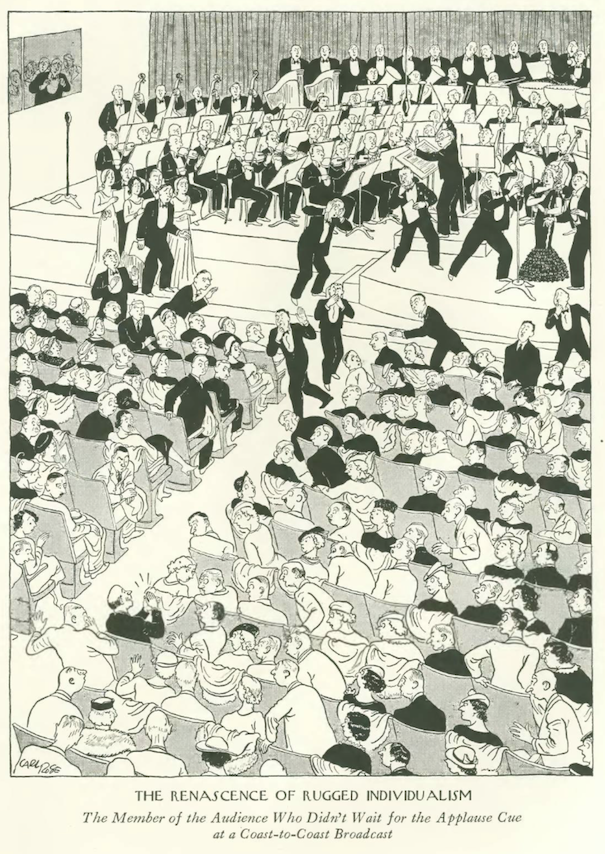
Carl Rose offered up another example of rugged individualism…

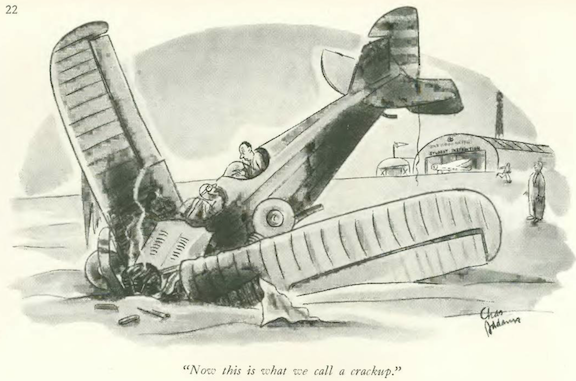
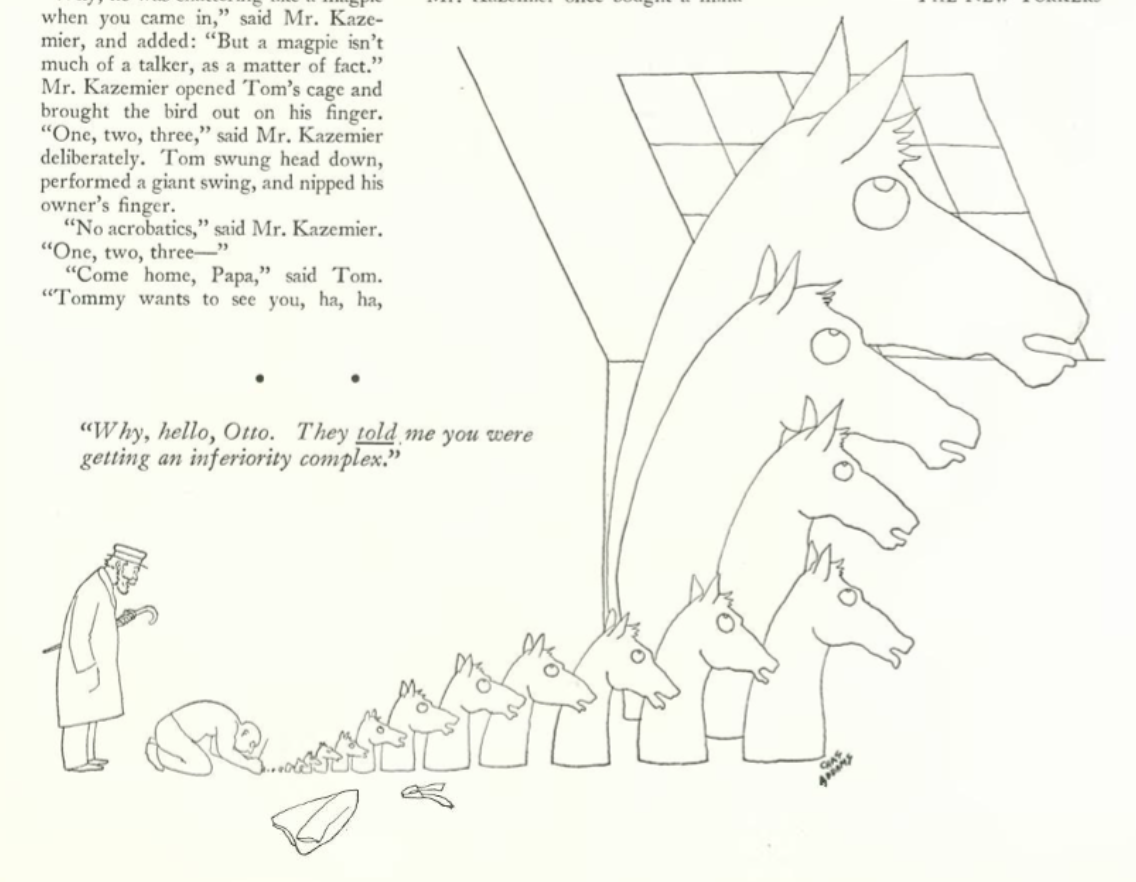
Charles Addams came down to earth…

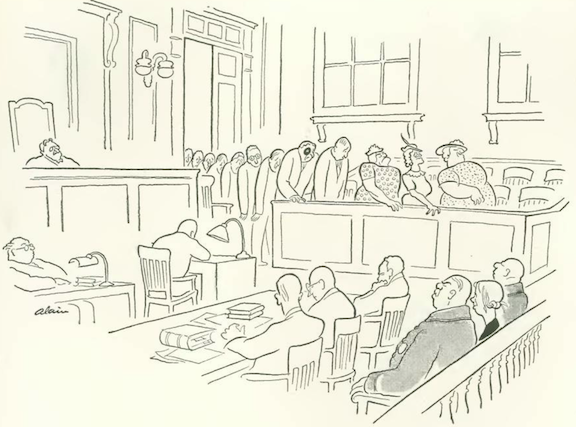
Alain illustrated a case of jury tampering…

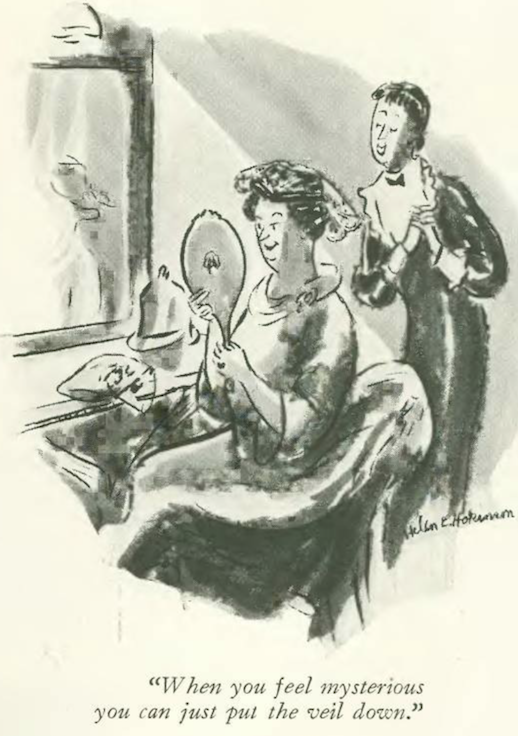
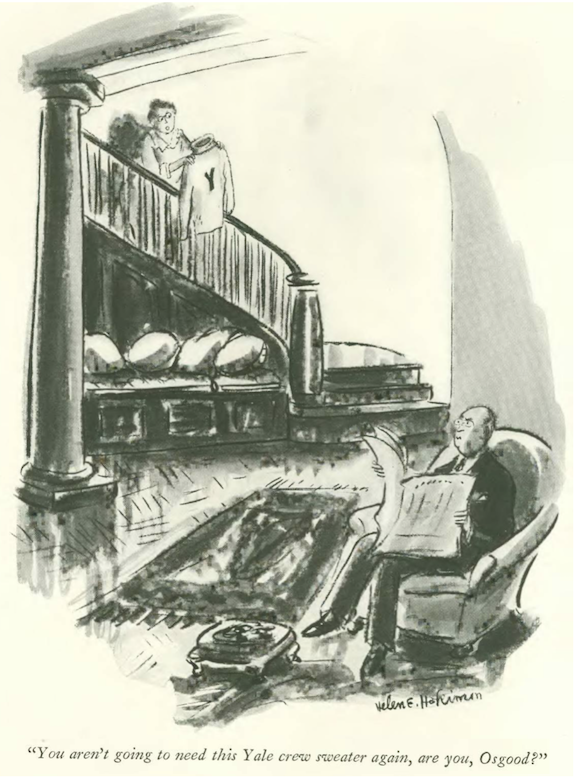
Helen Hokinson demonstrated the allure of a netted hat…

…and Hokinson again, doing some early spring cleaning…

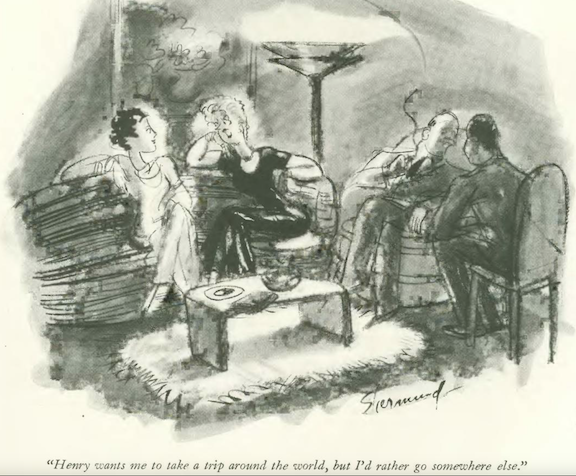
…and Barbara Shermund explored the idyll of wanderlust…

…and before we go, here is the New Yorker cover—by Helen Hokinson, Sept. 12, 1931—that was the object of Janet Flanner’s attention…

Next Time: Making of a Madman…


Not Even Funny

There were a number of people Dorothy Parker couldn’t abide. That included gifted writers who not only eschewed serious literature, but who instead chose to crank out a lot of mass-market trash.

March 18, 1933 cover by William Steig.

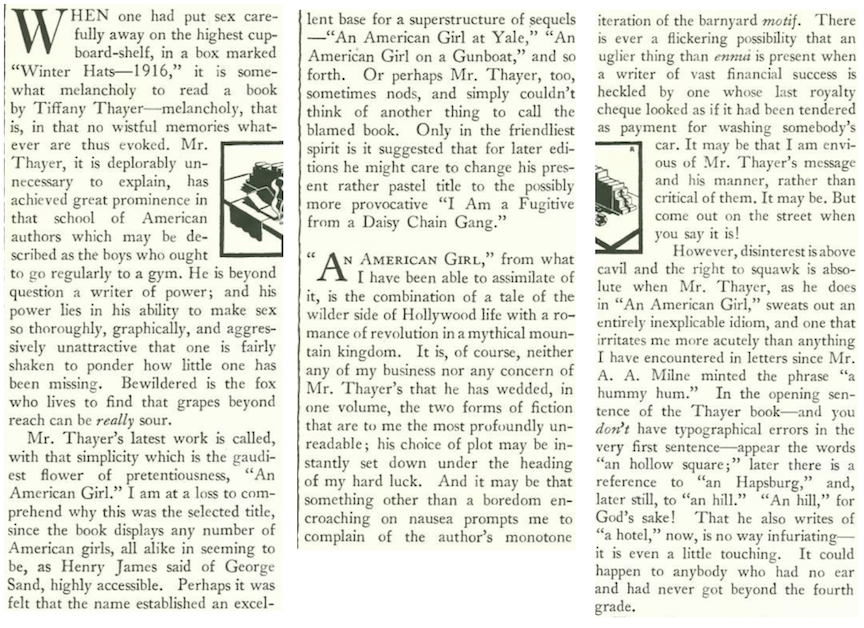
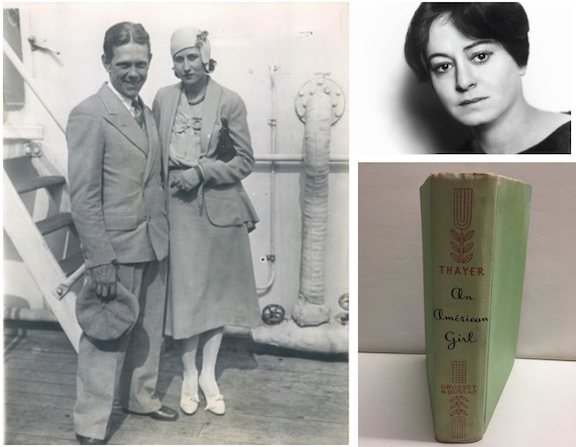
Parker was well acquainted with Tiffany Ellsworth Thayer (1902–1959), and for a time she even associated with the Fortean Society, which Thayer founded in 1931. Inspired by writer Charles Fort, the Forteans promoted the use of scientific methods to evaluate unexplained phenomena such as UFOs, spontaneous human combustion, and other oddities. Parker and fellow New Yorker writers Ben Hecht and Alexander Woollcott were among founding members, doubtless drawn to Fort’s reputation as a skeptic; however one famous skeptic, journalist H.L. Mencken, called Fort’s ideas “Bohemian mush.” It’s hard to say how long Parker stayed connected to the Society, but by 1933 she was fed up with Thayer’s novels, including his latest, An American Girl, which she found to be “the gaudiest flower of pretentiousness.” Here is an excerpt from Parker’s sometime column, “Reading and Writing,” subtitled Not Even Funny…

TIFF WITH TIFFANY…At left, Tiffany Thayer aboard a cruise ship with an unidentified woman, most likely his first wife, a dancer named Tanagra, early 1930s; at right, Dorothy Parker and a first edition of the offending volume. In her review, Parker observed that Taylor “is beyond question a writer of power; and his power lies in his ability to make sex so thoroughly, graphically, and aggressively unattractive that one is fairly shaken to ponder how little one has been missing.” (IMDB/Worthpoint)

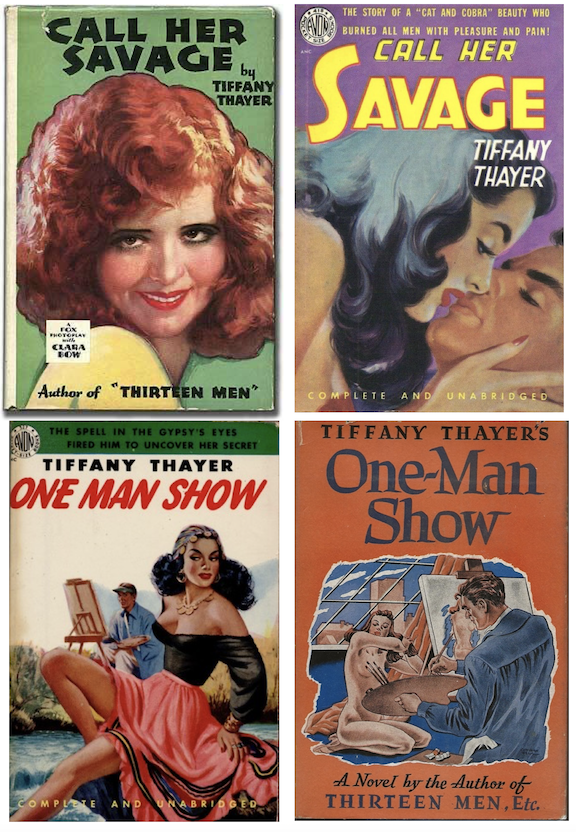
Although Thayer founded a society based on scientific reason, his pulp novels were filled with fantasy and prurient imagery. F. Scott Fitzgerald once observed that “curious children nosed at the slime of Mr. Tiffany Thayer in the drug-store libraries.”

BELIED LETTRES…Clockwise from top left, Thayer’s 1931 novel Call Her Savage was made into a 1932 film starring Clara Bow, here featured on the book’s dustcover; the same novel repackaged in 1952 for the pulp trade; a 1943 edition of Thayer’s One-Man Show, and a 1951 Avon reprint that toned down the nudity but upped the creep factor. (facebook.com/biblio.com)

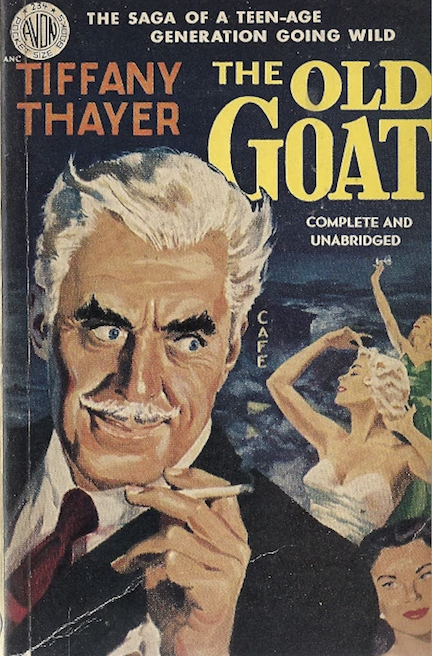
…and speaking of creep factor, check out Avon’s 1950 re-issue of Thayer’s 1937 novel The Old Goat, illustration attributed to Edgar Lyle Justis

(biblio.com)

Artists like Justis must have had a ball doing these illustrations, creating images to lure the unsuspecting into purchasing these old titles. Note how the coked-up old man sports not-so-subtle devil horns.

*  *  *

They Called It a Holiday

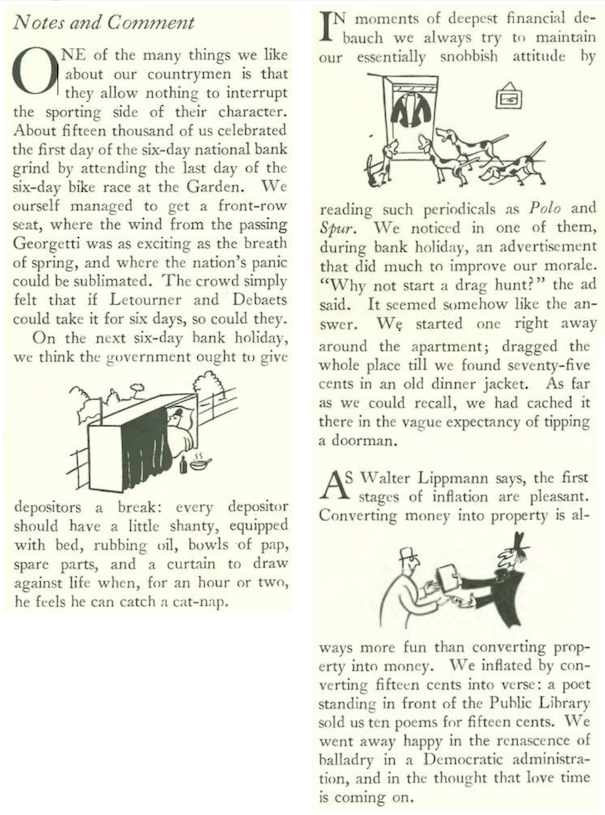
E.B. White, James Thurber (see below) and others in the March 18 issue commented on the national banking “holiday” declared by President Franklin D. Roosevelt in an effort to stabilize America’s banking system and rebuild public confidence. This led to the Glass-Steagall Act, signed three months later by FDR. Some observations in “Notes and Comment” by E.B. White, with the usual great spot illustrations by Otto Soglow

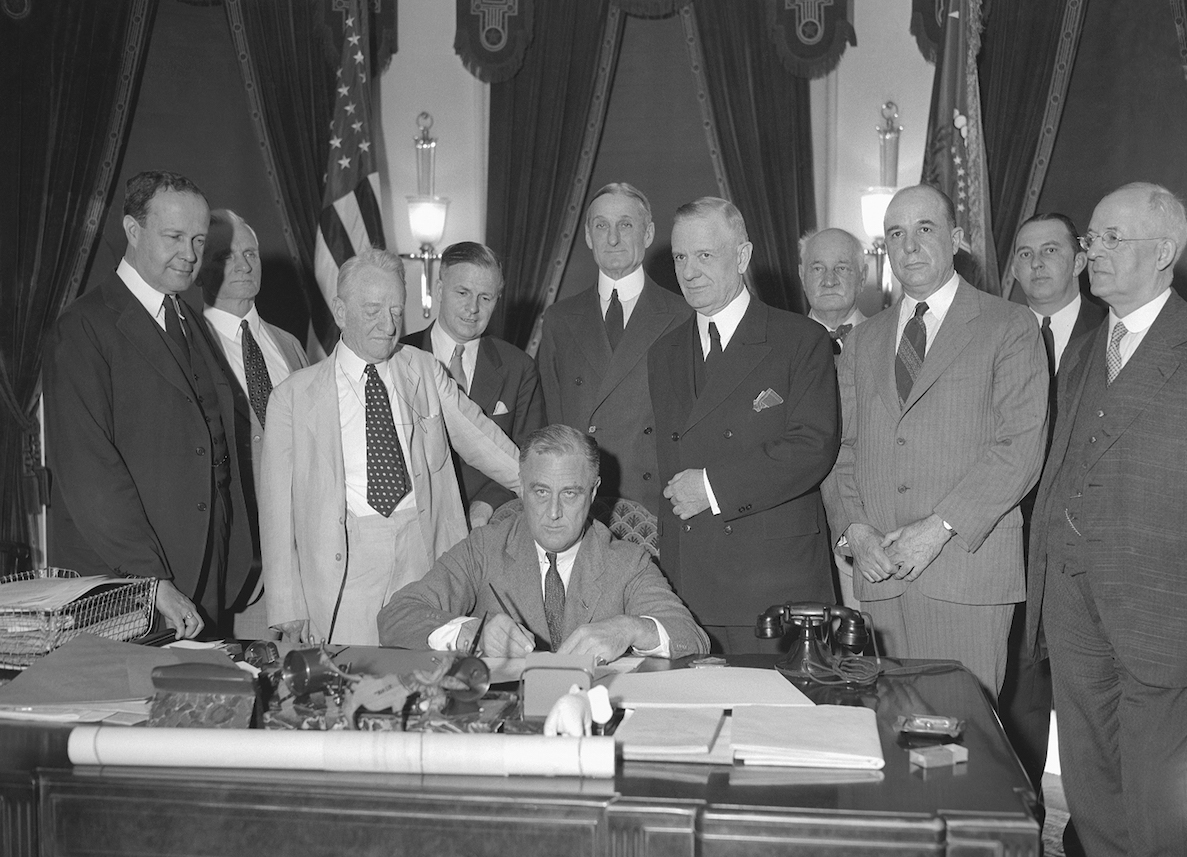
SAY CHEESE!…President Franklin D. Roosevelt signs the Glass-Steagall Act on June 16, 1933, effectively separating commercial banking from investment banking and creating the Federal Deposit Insurance Corporation (FDIC), among other things. (Associated Press)

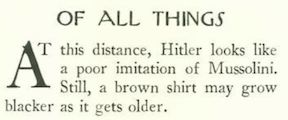
…meanwhile, Germany’s new chancellor, Adolf Hitler, was busy abolishing civil liberties while pretending to be distressed by the behavior of his brownshirt thugs…an excerpt from Howard Brubaker’s “Of All Things”…

*  *  *

A Familiar Ring

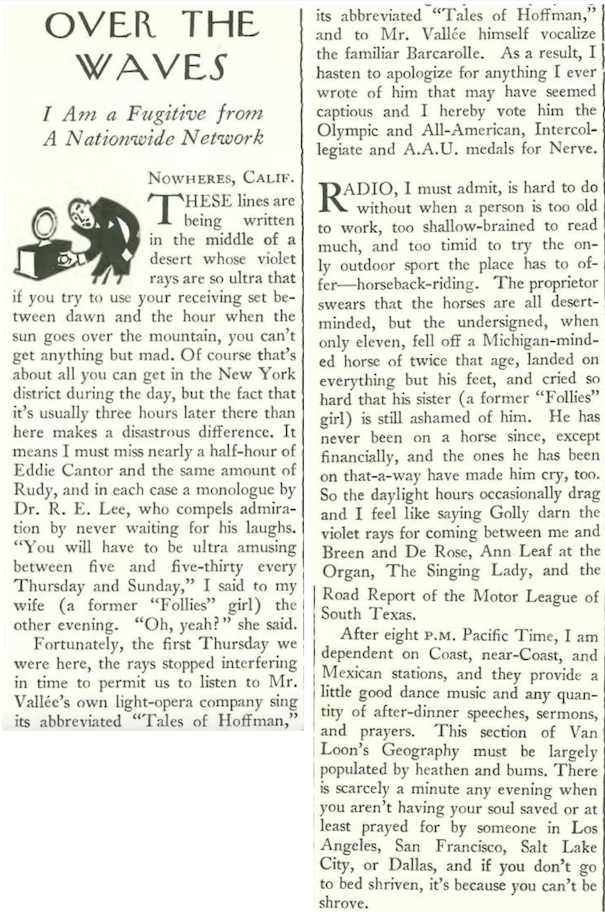
For the second week in a row Ring Lardner lent his wit to The New Yorker’s “Over the Waves,” column, which typically reviewed the latest news and entertainment beamed from the radio tower atop the Empire State Building. Lardner, however, was in California, lamenting the challenges of the time lag. An excerpt:

AND NO WI-FI, EITHER…Ring Lardner (center) detailed the frustrations of listening to New York-based radio entertainers like Eddie Cantor (left) and Rudy Vallée during his stay in California. (Pinterest/The Classic Archives/The New York Times)

 *  *  *

Dance Away Those Blues

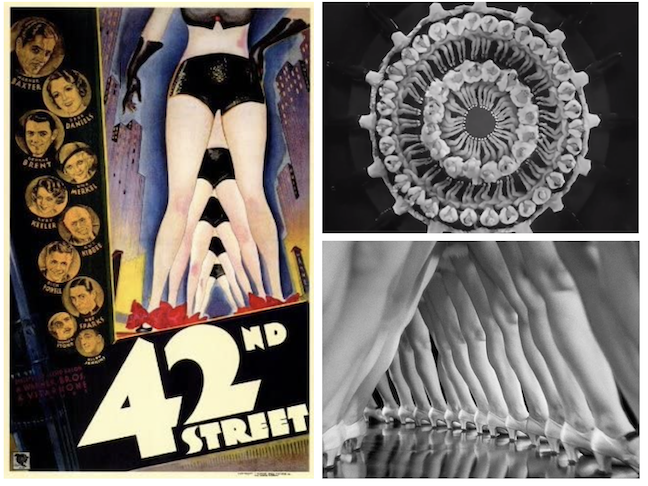
The pre-Code musical 42nd Street received a brief, albeit mostly positive review from critic John Mosher, who along with the producers of the film knew Depression-weary Americans needed such distractions. Nearly 90 years later (April 10, 2020), another New Yorker film critic, Richard Brody, suggested 42nd Street as one of the best films to stream during the Covid-19 pandemic: “Modern musicals start here, and Busby Berkeley’s genius bursts into full flower,” he wrote.

DANCE ‘TIL YOU DROP…Under pressure to produce a hit after losing his lead dancer (Bebe Daniels) to a broken ankle, Broadway musical director Julian Marsh (Warner Baxter, center) mercilessly rehearses her replacement, Peggy Sawyer (Ruby Keeler, in her film debut) before the premiere, vowing “I’ll either have a live leading lady or a dead chorus girl.” Looking on (to the right of Baxter) is Ginger Rogers, who portrayed “Anytime Annie.” (tcm.com)
A LEG UP ON HIS CAREER…42nd Street was a breakthrough film for choreographer Busby Berkeley, who would direct and choreograph a long string of musicals until the 1960s. The film is now considered a classic, preserved in the United States National Film Registry. (IMDB)

…and for trivia buffs, during an opening scene Bebe Daniels is shown reading the February 20, 1932 (anniversary) issue of The New Yorker…

*  *  *

From Our Advertisers

A convertible LaSalle (a downscale Cadillac brand) looks like a great way to enjoy a drive along the beach…let’s hope it has enough acceleration to outrun the tsunami apparently heading its way…

Walter Chrysler continued to dig into his deep pockets for two-page color spreads, including this one that placed his humble DeSoto in St. Moritz, of all places…

…not to be outdone, the folks at Nash found another exotic locale for their budget-priced sedan…Chicago, that is, at the 1933 Century of Progress Exhibition…and for an extra touch of class, we have what appears to be a chauffeur attending to this modest motorcar…

…America’s top luxury car maker, Pierce Arrow — a regular advertiser in The New Yorker — decided a quarter-page ad was sufficient to keep their name before the eyes of the well-heeled…at right, an ad from another back page featured cartoonist Don Herold shilling for the makers of imitation liquor flavors…according to the ad, one bottle, obtainable from your druggist, “flavors a gallon” of whatever forsaken hootch you are consuming…

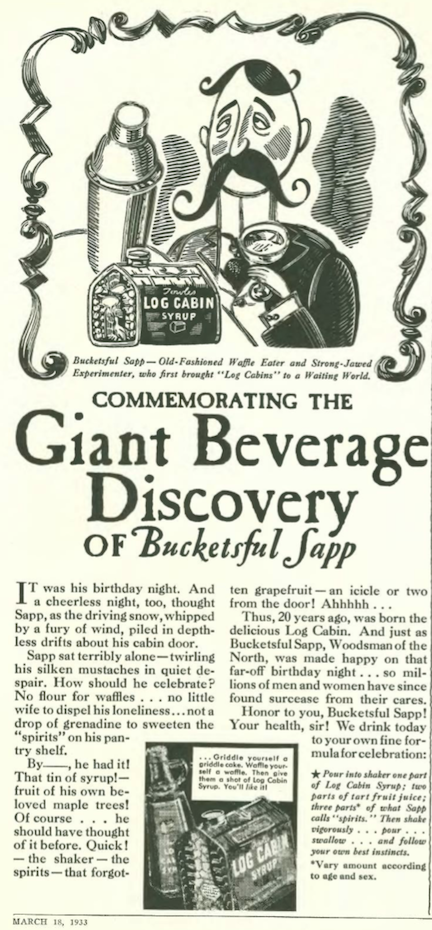
…the folks at Log Cabin relied on the talents of another New Yorker cartoonist, John Held Jr., to make both their product and a signature cocktail a more palatable experience…

…I have to hand it to the folks at Heinz for signing off on an advertisement only a vampire would find appealing…

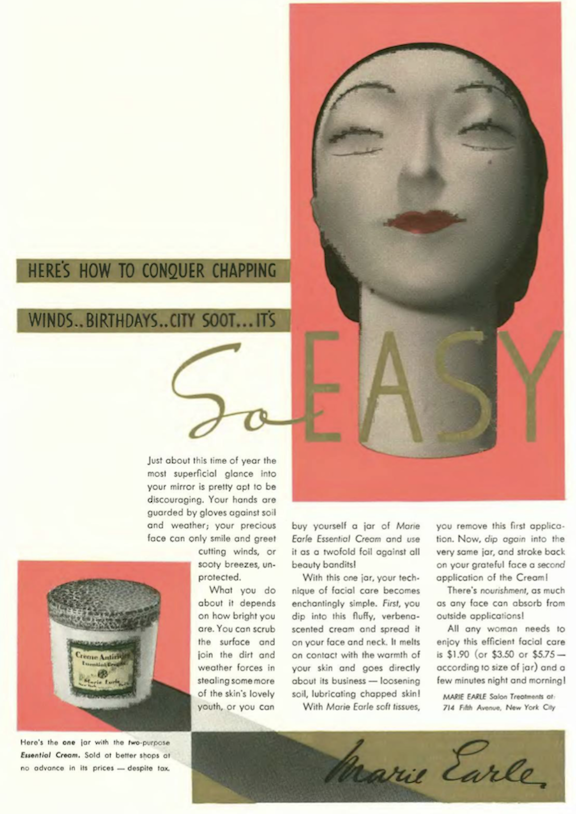
…the purveyors of Marie Earle beauty products rolled out this modern ad to promote their “Essential Cream”…

…while staid Brooks Brothers remained true to form — no flashy colors or advertising jargon — just straight talk about price increases….

…and then there’s the upmarket Fortnum & Mason, appealing to America’s Anglophiles with one of their famed wicker hampers filled with various goodies selected for “charming and greedy people”…

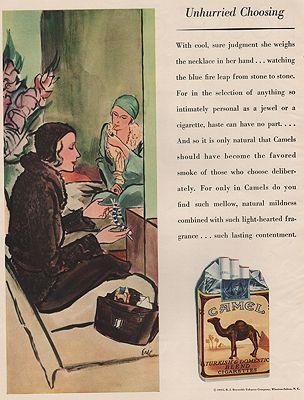
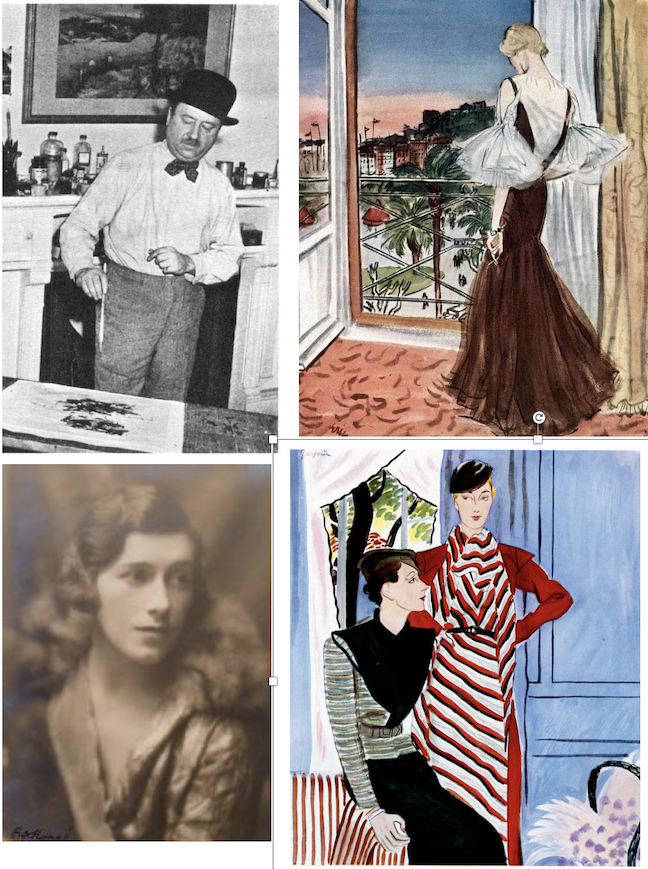
….for several years R.J. Reynolds employed the services of Carl “Eric” Erickson (1891–1958) to illustrate a series of ads featuring classy, disinterested, continental types smoking their Camel brand cigarettes…despite their less-than-exotic name, the makers of Spud menthol cigarettes hired Ruth Sigrid Grafstrom (1905–1986) to create their own smart set of smokers…

…ads that bore a striking resemblance to Erickson’s Camel work (this example from 1931)…

…and for your consideration, works from 1933 by Carl Erickson and Ruth Sigrid Grafstrom…both were noted fashion illustrators…

…on to our cartoonists, we begin with Charles Addams, who’d just published his first New Yorker cartoon the previous month, in the Feb. 4, 1933 issue

…that first cartoon was simply signed “Addams”…here he used the familiar “Chas Addams”…a close-up of the signature…

…we continue with a great caricature by Al Frueh to accompany a profile of Rudolf Kommer (as told by Alexander Woollcott)…

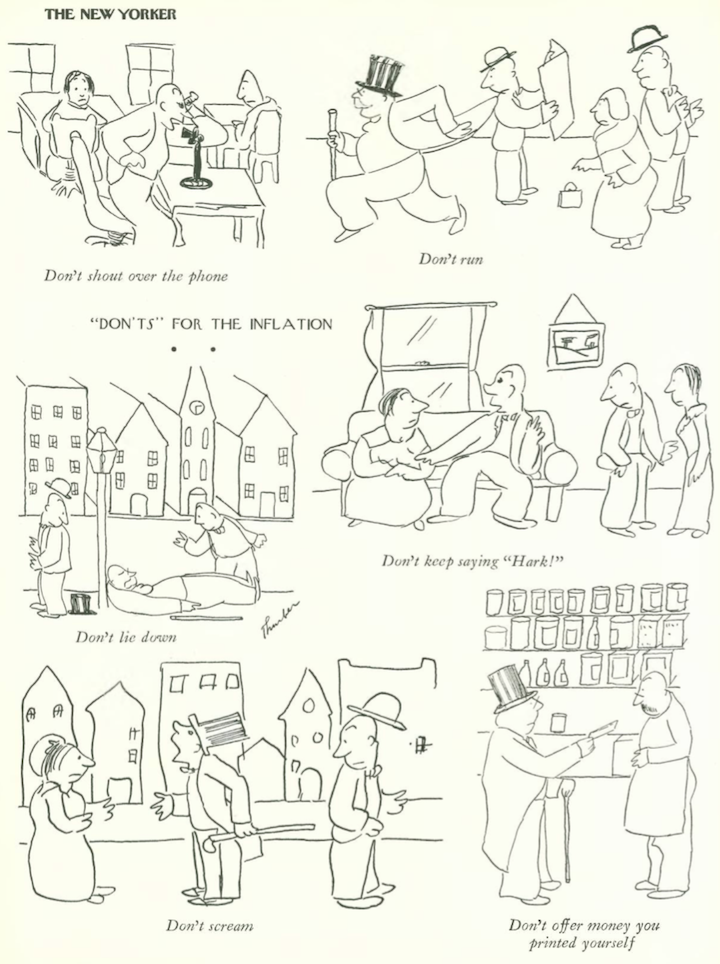
…a delightful full page of bank holiday-themed cartoons by James Thurber

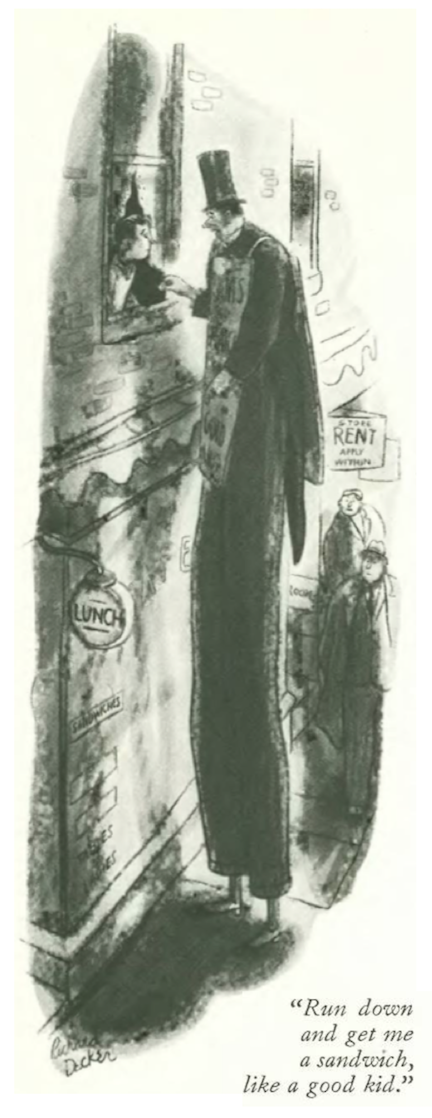
Richard Decker offered up a tall tale…

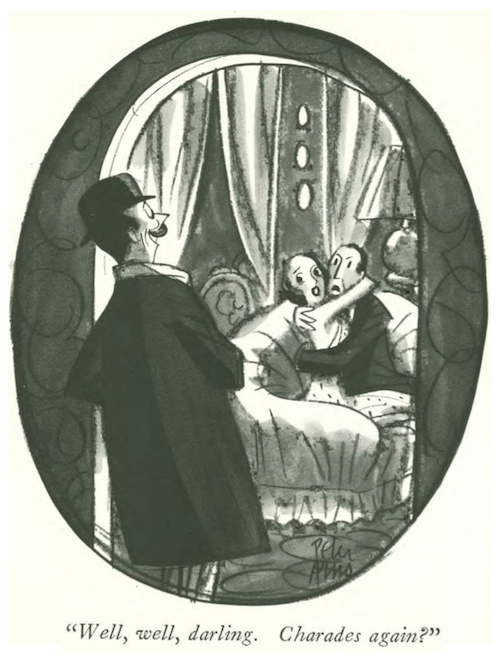
…and we close with Peter Arno, who served up one of his clueless cuckolds…

Next Time: Diary of a Lady…


Role Reversal

James Cagney began his entertainment career singing and dancing in various vaudeville and Broadway acts, but when he was cast in his first film as a tough guy, the die was cast…at least for one New Yorker critic.

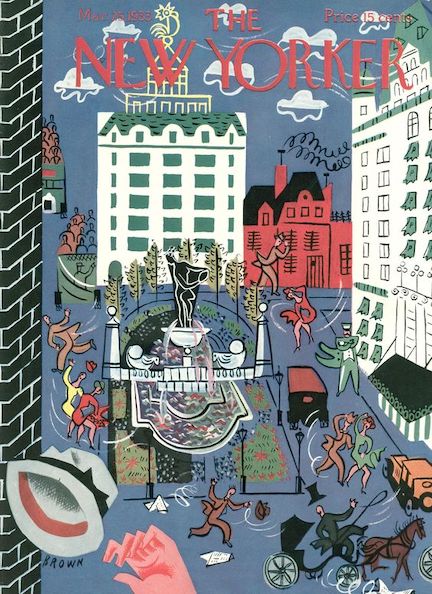
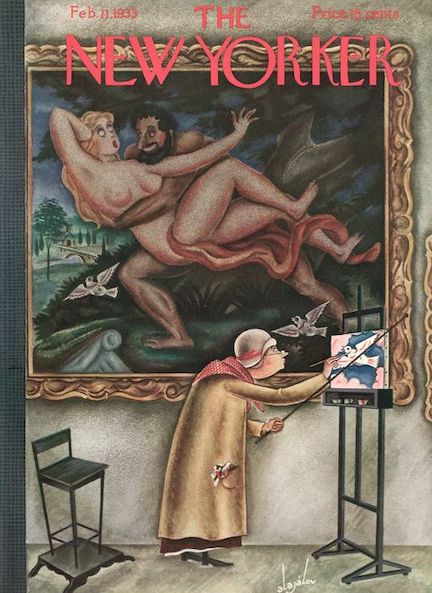
Feb. 11, 1933 cover by Constantin Alajalov.

Cagney’s first film role came after he starred along with Joan Blondell in Broadway’s Penny Arcade. However when the play was made into the 1930 movie Sinners’ Holiday, execs at Warner Brothers opted to put Grant Withers and Evalyn Knapp into the lead roles, believing they were destined for stardom; Cagney and Blondell were relegated to supporting parts. As fate often has it, Withers and Knapp ended up in B-movie obscurity, while Cagney and Blondell went on to become two of the biggest stars of the 1930s. The pair would appear in six more films together, including the gangster film The Public Enemy (1931) and the musical Footlight Parade (1933).

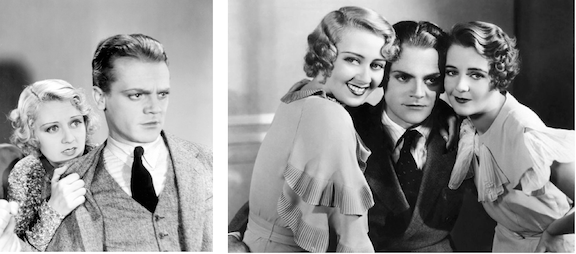
TWO-FACED…James Cagney would be paired with Joan Blondell in seven films during the 1930s including the gangster film The Public Enemy (1931, left) and the musical Footlight Parade (1933, also with Ruby Keeler). (IMDB)
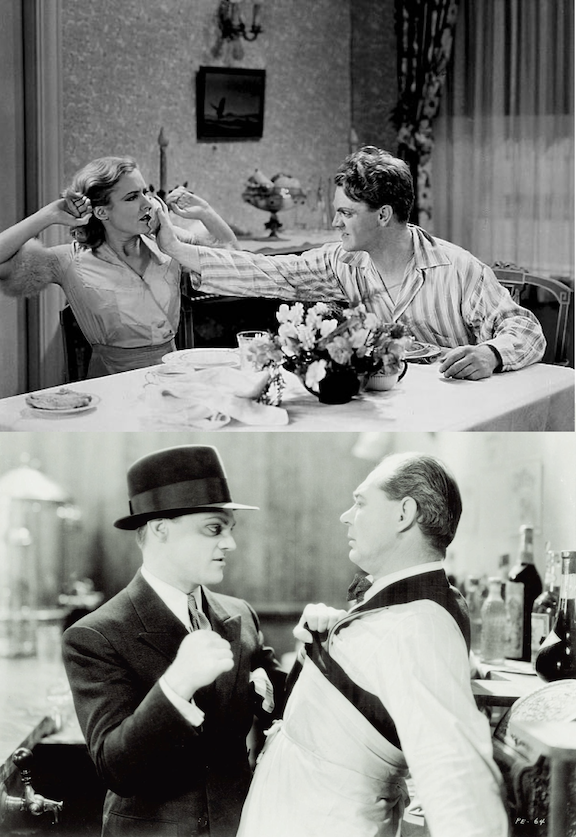
THE ONE I USED TO KNOW…Top, Cagney mashes a grapefruit half into Mae Clarke’s face in a famous scene from Cagney’s breakthrough film, 1931’s The Public Enemy; below, Cagney gets acquainted with a bartender (Lee Phelps) in The Public Enemy. (IMDB)

New Yorker film critic John Mosher preferred the tough guy Cagney to the toe-tapping version, and was anticipating Cagney’s return to pictures after a contact dispute with Warner in which he threatened to quit the business and follow his brothers into the medical profession…

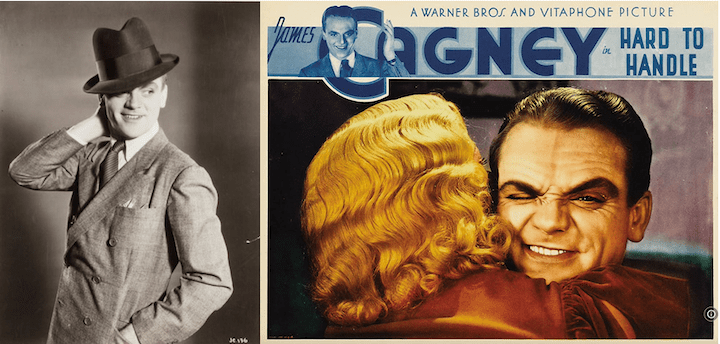
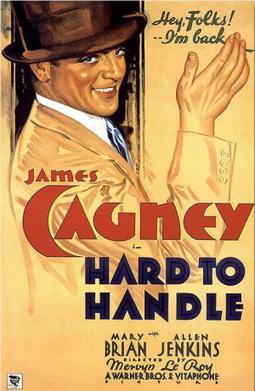
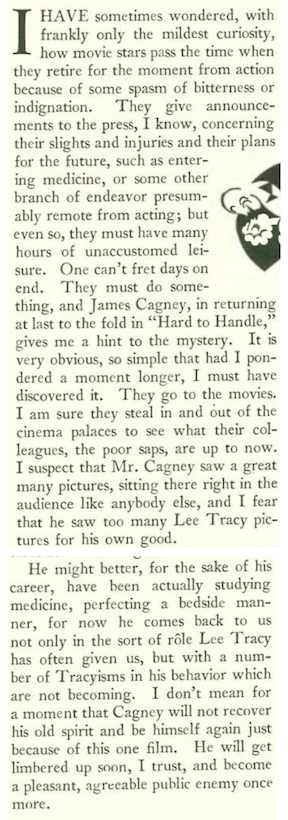
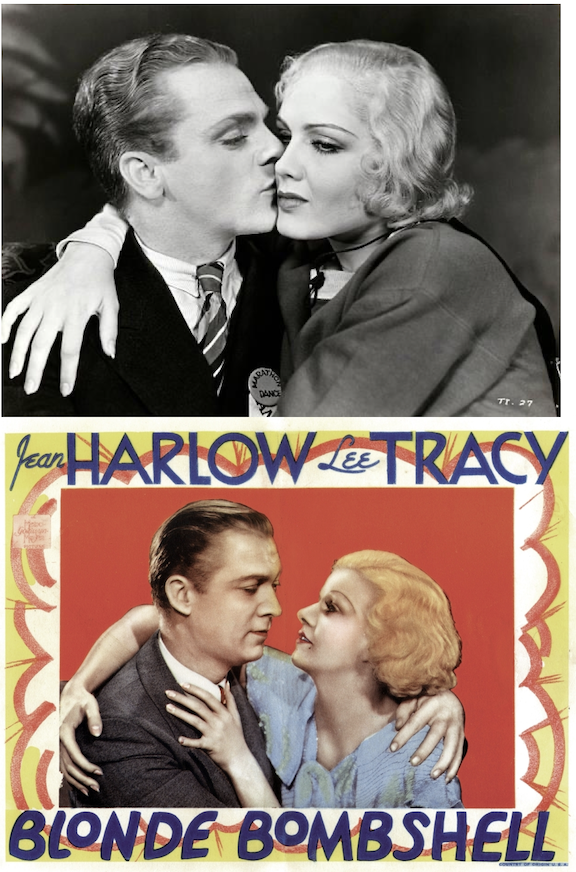
When Cagney finally announced his return in Hard to Handle, Mosher found he had taken on the guise of actor Lee Tracy, who was best known for his comic portrayals of wisecracking salesmen and reporters…

MY SOFTER SIDE…James Cagney and Mae Clark (top) in 1933’s pre-Code comedy Hard to Handle — Cagney played a clowning con artist who organizes a dance marathon. Below, critic John Mosher thought Cagney was channelling the comic actor Lee Tracy, seen here with Jean Harlow in 1933’s Blonde Bombshell. (IMDB)

 *   *   *

Slippery Slope

Located on Lexington between 102nd and 103rd streets, Duffy’s Hill was once famous for being the steepest hill in Manhattan and the scourge of street cars that had to quickly accelerate and decelerate at that point, leading to numerous accidents. An excerpt from “The Talk of the Town”…

LOOK OUT BELOW…Duffy’s hill played merry hell with New York’s streetcars more than a century ago. (New York Social Diary via Facebook)

 *   *   *

Getting High

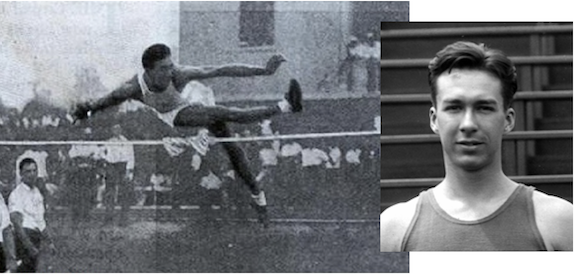
George Spitz Jr was an AAU high jump champion when he participated in the 1932 Summer Olympics in Los Angeles. In 1933 he made a personal best leap of  6 feet, 8¼ inches using scissors-style leap with elements of the Western roll. “The Talk of the Town” marveled at Spitz’s feat, giving him an extra quarter inch for his record leap:

MILLION-DOLLAR LEGS…In 1933 George Spitz Jr made his personal best leap of 6 feet, 8¼ inches using a scissors-style jump with elements of the Western roll. With the introduction of the Fosbury Flop in 1968, today’s men’s record stands at 8 feet, ¼ inches. The current women’s record is 6 feet, 10¼ inches. (Olympedia)

 *   *   *

This Guy Again

As we move into the 1930s we will be seeing more references to Adolf Hitler, who seized power in Germany on January 30, 1933. At this point “The Talk of the Town” wasn’t taking him seriously…

…and neither was Howard Brubaker in his regular column of short quips…

 *   *   *

From Our Advertisers

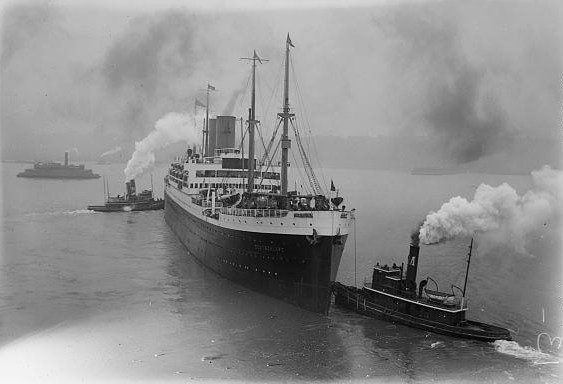
Hitler aside, the German-owned Hamburg-American Line was still serving peaceful purposes when it advertised the comfort of its “stabilized ships” on transatlantic voyages…these sister ships of the Hamburg-American Line were all destroyed during World War II…the SS New York and the SS Deutschland were both sunk by the British RAF in 1945…The SS Albert Ballin and the SS Hamburg sank after hitting Allied mines…

THE BIG BANG…the RAF sent the S.S. Deutschland to the bottom of the Bay of Lübeck  on May 3, 1945. (Wikipedia)

…if travel wasn’t your thing, you could escape the winter blahs in the comfort of your home thanks to the GE Mazda Sunlight Lamp…

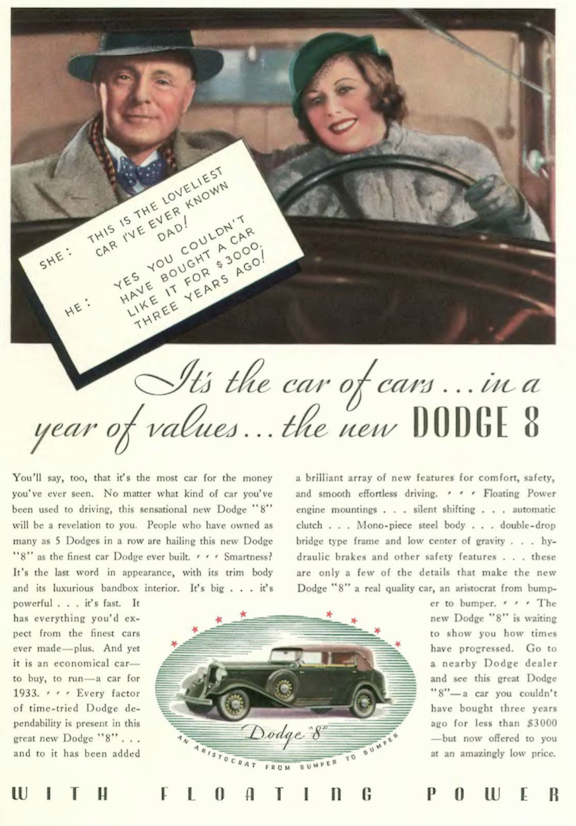
…and Dad, when you were her age you called these things “horseless carriages”…

…the folks at luxury carmaker Packard answered the splashy color ad from Cadillac in the Jan. 7 issue…

…with a colorful show-stopper of their own…

…if the Packard was too pricy, you could have checked out this lower-priced Cadillac, marketed as the LaSalle…

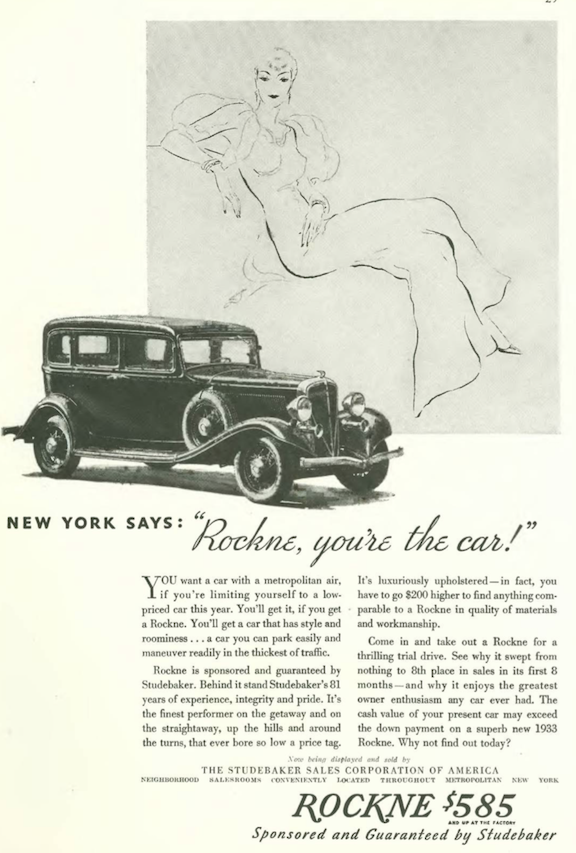
…no, New York did not say “Rockne, you’re the car!”, even if it was juxtaposed with a giant woman…the car was named for famed football coach Knute Rockne, and the Depression was not a good time to promote a new car line…it was produced from 1932 to 1933, when Studebaker pulled the plug and sold the remaining inventory (about 90 cars, packaged in kits) to a Norwegian railroad car manufacturer…

…a couple of posts ago (“Life With Father”) we were accosted by a three-page Camel ad featuring a Q&A stating the facts about its product…here they are back with two more pages of irrefutable evidence…

…what I read in their eyes is that none of them, including the woman, gives a damn about the others…if anything, the fellow at left is checking out the other guy…

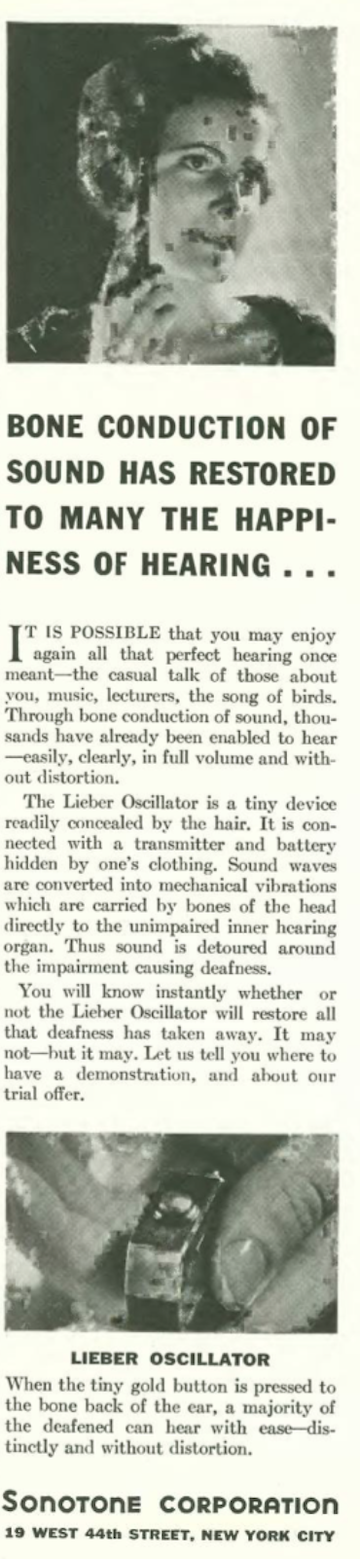
…this ad from Sonotone Corporation promoted a new hearing aid developed by Hugo Lieber…this revolutionary bone conduction receiver enabled the deaf to hear through bones in their head…

…a 1939 Sonotone catalog demonstrated how the hearing aid could be worn inconspicuously…

(abebooks.com)

…on to our cartoonists, Al Frueh illustrated the drama on board Broadway’s Twentieth Century Limited…note vaudevillian William Frawley’s caricature in the bottom right hand corner…although he appeared in more than 100 films, Frawley is best known today for his role as Fred Mertz on TV’s I Love Lucy

…here’s a great caricature by Rea Irvin of New York’s new mayor John P. O’Brien, using his new broom to sweep away the corruption of the deposed Jimmy Walker and his Tammany Hall cronies…

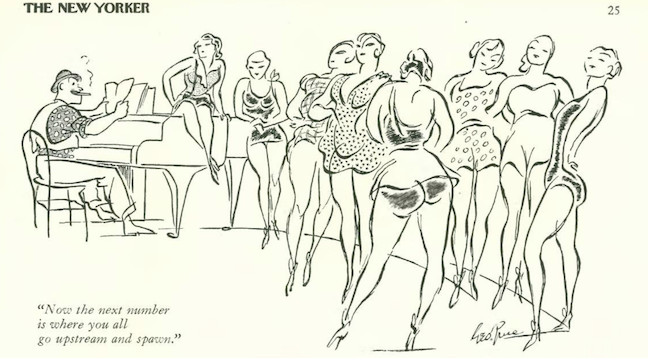
…here’s another early work by George Price, who would be a cartoonist at The New Yorker for nearly six decades…

…and here we have the other Price…Garrett Price gave us a fellow who made some changes in his life à la Paul Gauguin

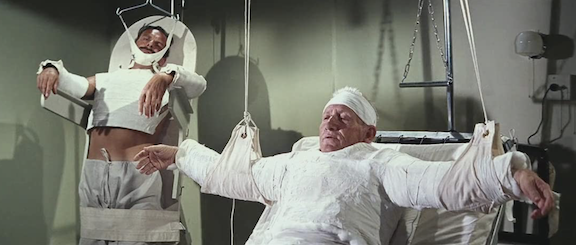
…I like this Perry Barlow cartoon because it reminds me of the patient-in-traction trope commonly seen in comedies of the 1960s and 70s…

…such as this Paul Coker Jr. illustration from the June 1970 issue of MAD magazine…

(MAD Magazine)

…and Terry-Thomas and Spencer Tracy in 1963’s It’s a Mad Mad Mad Mad World

(IMDB)

William Steig assured readers there was nothing sweet about his “Small Fry”…

…once again Helen Hokinson offered her impressions of the annual Westminster Kennel Club show at Madison Square Garden…

Peter Arno’s Lake Placid would never be the same for his mustachioed millionaire “walruses” after the previous year’s Winter Olympic Games…

Next Time: One Perfect Night…