Above: Nightlife correspondent Lois Long checked out the latest clubs as well as old-time favorites in her column "Tables for Two." From left, advertisement for Restaurant Larue; Josephine Baker in 1937; and the entrance to Monte Proser's Beachcomber, an early iteration of the tiki bar that would become ubiquitous in midcentury America. (eBay.com/Wikipedia/mytiki.life)
Part three of Janet Flanner’s profile of Adolf Hitler can be found below, but it’s time to lead with something more pleasant, namely Manhattan nightlife through the eyes of Lois Long.
March 14, 1936 cover by Rea Irvin.
In her “Tables for Two” column headlined “Nostalgic Notes,” Long checked out the new Chez Josephine Baker, the garden-like delights of Restauarnt Larue, and the French-themed Le Coq Rouge.
NEW NIGHTLIFE…Clockwise from top left, ad for Restaurant Larue; 1930s postcard showing interior of Larue; Josephine Baker, proprietor of Chez Josephine Baker; ad for Le Coq Rouge; interior of Le Coq Rouge, 1930s. (eBay/Wikipedia)
Long also noted the Beachcomber Bar, which originated in the basement of an old church, and actor Dan Healy’sBroadway Room.
MAN ABOUT TOWN…Dan Healy was a well-known master of ceremonies in the Manhattan nightlife scene. He married the famed “boop-boop-a-doop” singer (and possible Betty Boop inspiration) Helen Kane in 1939—they later opened a New York restaurant together called Healy’s Grill. (whosdatedwho.com/Facebook)
* * *
Bummed Out
E.B. White (in “Notes and Comment”) referred to confessional essays published in Esquire magazine by F. Scott Fitzgerald that frankly described his struggles with alcoholism and the decline of his literary reputation. The confessional tone of the essays (three in all, published in February, March and April 1936) proved controversial at the time.
In his first essay, “The Crack-Up,” Fitzgerald famously observed that “the test of a first-rate intelligence is the ability to hold two opposed ideas in the mind at the same time, and still retain the ability to function.”
A CRY FOR HELP?…At left, F. Scott Fitzgerald in the 1930s (top), and, apparently during happier days (below, with wife Zelda); at right, the opening page of “The Crack-Up.” (esquire.com/pbs.org)
* * *
Say What?
New Yorker writers rarely missed an opportunity to poke fun of Time magazine’s unique ways with the English language. E.B. White again, in an excerpt:
TIMEWORDS…The March 16, 1936 issue of Time, and E.B. White. (time.com/imdb.com)
* * *
Dying to Know
“The Talk of the Town” made brief mention of a rumor regarding Woolworth heiress Barbara Hutton’s health. Reports of her demise were premature; she died in 1979.
HANGING IN THERE…Barbara Hutton with husband no. 2, Count Kurt von Haugwitz-Reventlow, circa 1936. Hutton married seven times, including a brief marriage to actor Cary Grant, who was husband no. 3. (whosdatedwho.com)
* * *
Part Three
Janet Flanner completed her three-part profile of Adolf Hitler by looking into the man’s mind, if that was even possible.
OBEDIENT MASSES…Nazi dictator Adolf Hitler addresses soldiers at a rally in Dortmund, Germany, 1933. (encyclopedia.ushmm.org)
Flanner also noted the Führer’s early days as an unsuccessful painter, and an odd wedding gift to his buddy Hermann Göring:
GOOSED…Top, Adolf Hitler presented a specially painted copy of Correggio’s Leda with the Swan as a wedding gift to Hermann Göring and actress Emmy Sonnemann on April 10, 1935; below, Hitler painted this watercolor during his pre-WWI time in Munich, from May 1913 to August 1914. (Wikipedia)
* * *
China Syndrome
Supporting herself as a writer for The New Yorker, Emily Hahn’s years in Shanghai, China (1935 to 1941) were tumultuous. Living in the city’s red light district, she became romantically involved with the Chinese poet and publisher Shao Xunmei (aka Sinmay Zau) and became addicted to opium. In this excerpted short essay, Hahn described her literary encounters with Shao Xunmei (here referred to as “Pan Heh-ven”) and a passel of translators.
ENOUGH OF THAT…Emily Hahn became romantically involved with the Chinese poet and publisher Shao Xunmei (aka Sinmay Zau), but ultimately left him in order to break her opium addiction. (Wikipedia)
* * *
At the Movies
Critic John Mosher did his best to stay awake during the latest fare from Hollywood…
SPECIOUS SPECTACLE…Top, from left, Louise Fazenda, Paul Draper, Ruby Keeler, Dick Powell and Hugh Herbert in Colleen; below, Wendy Barrie and Gene Raymond in Love on a Bet. (cometoverhollywood.com/imdb.com)
Mosher also commented on a film he walked out on (The Farmer in the Dell), and considered the twentieth anniversary of Intolerance, a 1916 drama that had become a “cheap amusement.”
HO HUM…Critic John Mosher walked out of The Farmer in the Dell, mostly due to boredom—above, Frank Albertson, Jean Parker, Fred Stone and Esther Dale in the romcom The Farmer in the Dell; below, scene from D.W. Griffith’s epic silent film from 1916, Intolerance. (imdb.com/cinemafromthespectrum.com)
* * *
From Our Advertisers
The folks at Hormel once again claimed the inside front cover with this array of soups featured sideways, in full color…
…the illustrator of this Lord & Taylor advertisement hoped to superimpose a pair of shoes over a woman’s face, with less than convincing results…
…the makers of Packard automobiles sent a condescending message “To The Ladies,” promising not to “bore them” with talk of mechanical features…
…a sampling of one-column ads featured, from left, the renowned Russian Eagle cafe-bar at the Sherry-Netherland, the Modernage furniture store on East 33rd, and the Milwaukee Road railroad, which offered adventure at such places as a Montana dude ranch…
…the inside back cover featured this drawing of actress/dancer/singer June Knight by Abe Birnbaum…
…Birnbaum was a terrific artist, but his portrait of Knight was not terribly flattering…this is what she looked like in the 1930s…
June Knight (1913–1987) circa 1930s. (reddit.com)
…on to the cartoons, we kick off the issue with Canadian cartoonist Richard Taylor…
…and Taylor again, striking a pose…
…Arnold Hall contributed an example of floral marketing…
…Al Frueh contributed to “The Theatre” section…
…Jack Markow did some rubbernecking…
…Howard Baer welcomed a new tax deduction to the world…
…Perry Barlow drew up impressions of a field trip to the Hayden Planetarium…
…Barlow again…
…one of Helen Hokinson’s “girls” explained herself…
…Barbara Shermund interpreted modern dance…
…Alain sought some dish over tea with the vicar…
…and we close with James Thurber, and a penny for her thoughts…
Above: Eddie Cantor (left) consulting his "confidence book" in Strike Me Pink; at right, Dona Drake and the “Goldwyn Girls” performing “The Lady Dances." (cometoverhollywood.com)
You don’t hear much about him today, but in 1936 Eddie Cantor was a household name, an entertainer who seemed to do it all—comedian, actor, dancer, singer, and songwriter were just a few of his trades.
January 25, 1936 cover by Constantin Alajálov.
Critic John Mosher marveled at the energy Cantor (1892–1964) brought to his latest film, Strike Me Pink, in which Cantor played a mild-mannered manager of an amusement park infested with mobsters. The film was a “convulsion,” Mosher wrote, packed with action on “the grand scale” with occasional interludes by co-star Ethel Merman, who portrayed Cantor’s love interest.
FINDING HIS MOJO…top and below left, Eddie Cantor and Ethel Merman in Strike Me Pink. Bottom right, Cantor, Sally Eilers and Helen Lowell in a scene from the film. (Wikipedia/tcm.com/imdb.com)
Bette Davis wasn’t the only Hollywood celeb known for her peepers. After artist Frederick J. Garner published a big-eyed caricature of Cantor in 1933, those “Banjo Eyes” became Cantor’s trademark.
BANJO EYES…at left, Frederick J. Garner’s caricature of Cantor. After he published the drawing in 1933, other artists followed suit with their own interpretations of the “Banjo Eyes.” At right, movie poster for 1934’s Kid Millions. (npg.si.edu/laughterlog.com/imdb.com)
Cantor would pack a lot into his seventy-two years, a regular with the Ziegfeld Follies (he would repeat his routines in numerous films), he would also appear in other stage productions, on the radio, on television (hosting The Colgate Comedy Hour) and recording hit songs like “Makin’ Whoopee.” He wrote or co-wrote seven books, was the second president of the Screen Actors Guild, and a co-founder of the March of Dimes (Cantor came up with the name as well). He also appeared in numerous cartoons, and even wrote the Merrie Melodies/LooneyTunes theme song, “Merrily We Roll Along.”
DOWN AND OUT…Eddie Cantor was caricatured along with, from left, Al Jolson, Jack Benny and Bing Crosby in the 1950 Looney Toons short “What’s Up, Doc?” The scene depicts a low point in Bugs Bunny’s career when he spends the winter with fellow struggling actors in Central Park. (Warner Brothers)
In 1934 Cantor was depicted as a balloon in the Macy’s Thanksgiving Day Parade, the only full-size balloon to represent a real person.
MY, WHAT BIG EYES YOU HAVE…Eddie Cantor looms over the Macy’s Thanksgiving Day Parade in 1934. (Ephemeral New York)
* * *
Fishing For Buyers
The Thirty-first annual Motor Boat Show was on at the Grand Central Palace, featuring everything from yachts to tiny sailboats. Excerpts from a report by a correspondent who wrote under the name “Bosun.”
FOR LANDLUBBERS TOO…The New York Motor Boat Show began in 1905 at Madison Square Garden before moving to the resplendent surroundings of the Grand Central Palace. Clockwise from top left, undated photo from the Grand Central Palace; advertisement in Yachting magazine; a 1935 Elco Cruisette. (offthehookyachts.com/antiqueboatamerica.com)
* * *
Cultured Congress
Hard to believe that ninety years ago the U.S. House of Representatives devoted considerable time and attention to a proposed bill for a “Department of Science, Art and Literature.” E.B. White covered the hearings in an extensive two-part report for “Onward & Upward With the Arts.” Here is a brief excerpt from part one.
ARTS FANATIC is how E.B. White characterized New York Congressman William I. Sirovich (1882–1939), who proposed the establishment of a Department of Science, Art and Literature. (findagrave.com)
* * *
A Really Big Show
“The Talk of the Town” paid a visit to the Adelphi Theatre to see how preparations were going for opera-oratorio The Eternal Road. Conceived by journalist and playwright Meyer Weisgal to alert the public to the persecution of Jews in Nazi Germany, it featured a score by Kurt Weill with libretto by Franz Werfel (translated into English by Ludwig Lewisohn).
Directed by Max Reinhardt on an imposing set designed by Norman Bel Geddes, The Eternal Road would take time to produce, finally premiering at the Manhattan Opera House on Jan. 7, 1937. It ran for 153 performances.
ON THE ROAD…Key figures in the production of The Eternal Road included, from left, director Max Reinhardt, composer Kurt Weill, and set designer Norman Bel Geddes (who here bears an uncanny resemblance to New Yorker founding editor Harold Ross). (weillproject.com)DRAMA QUEEN…Among the 245 actors in the production was Lotte Lenya, who portrayed Miriam. An acclaimed Austrian singer and actress, Lenya was also Kurt Weill’s ex-wife, and is probably best known today for her role as the sadistic Rosa Klebb in the 1963 James Bond film From Russia with Love.MAKE NO LITTLE PLANS…At left, a sketch by Harry Horner of the The Eternal Road’s five-level set designed by Norman Bel Geddes for the Manhattan Opera House; at right, massive set piece from the production. (Kurt Weill Foundation kwf.org)
* * *
Location, Location, Location
“Talk” also looked at property values in the city, noting that the site occupied by the Hell Gate power plant was assessed at nearly $57 million (roughly $1.3 billion today). Excerpt:
PRIME REAL ESTATE…Artist’s rendering of the Hell Gate generating station, circa 1922. (T.E. Murray, Power Stations 1922)
* * *
A New, Improved Carmen
Music critic Robert Simon (writing for “Musical Events”) was delightfully surprised by the Met’s latest production of Carmen, and namely by the performance of Swedish mezzo-soprano Gertrud Pålson-Wettergren:
HUMOROUS AND HEROIC were just two for the adjectives Robert Simon used to describe an interpretation of Carmen by Swedish mezzo-soprano Gertrud Pålson-Wettergren (1897–1991). She made her Metropolitan Opera debut in December 1935. (Wikipedia)
* * *
At the Movies
We rejoin critic John Mosher for a look at the rest of the cinema lineup, beginning with King of Burlesque, which featured Alice Faye and “everything but the kitchen stove.”
FACES IN THE CROWD…Mosher found a film crowded with talents in King of Burlesque, including Fats Waller (performing “I’ve Got My Fingers Crossed”), Warner Baxter, and Alice Faye. (YouTube.com/IMDb.com)
Mosher found a “stimulating” gangster flick in Exclusive Story…
DRESSED TO THE NINES…Franchot Tone was clad in his usual Sunday best, here flanked by Madge Evans (left) and Louise Henry. (themovied.org)
…and a “trifling” horror movie, The Crime of Dr. Crespi…
I’M NOT DEAD YET…Evil Dr. Crespi (Erich Von Stroheim) gives fellow doctor Stephen Ross (John Bohn) a drug that induces a state of apparent death in The Crime of Doctor Crespi. (moma.org)
* * *
A Hot Hobby
St. Clair McKelway filed the second of a two-part profile on New York’s Chief Fire Marshal Thomas P. Brophy (1880-1962). McKelway wrote, “How to stop a fire is the fire chief’s problem; how it got started, that of the fire marshal, Thomas Brophy…Brophy’s specialty, however, is pyromaniacs— it is almost his hobby.” Hugo Gellert supplied the drawing.
* * *
From Our Advertisers
We begin with the inside front cover, and this colorful illustration of Fanny Brice by Abe Birnbaum for Stage magazine…
…the makers of budget automobiles such as Nash, Plymouth and Hudson were all on the same page when it came to marketing their automobiles, namely, that their products suggested luxury despite the bargain price…a “Motor Car by Hudson,” the ad proclaimed, is “worthy of its place in the New York style ensemble”…
…the makers of Pierce Arrow had a solid reputation as the Rolls-Royce of American automobiles, so they took the safety angle in this understated, hyperbole-free advertisement…(however, cheaper cars like Hudson would survive the Depression, Pierce-Arrow would not)…
…this Scotch whisky ad recalled the days when “rolled hose” could create a scandal, underscoring how things can mellow after ten years, including whisky…
…in this back cover advertisement, Vivian Dixon (apparently just eighteen years old) was the latest New York debutante to invite young women to join her in smoking Camels…
Vivian Dixon (1918-1974) circa 1940. You can read more about her here. (stoningtonboroughct.com)
…the Major continued his quest for fresh peas in this ad from the Minnesota Valley Canning Company (aka Green Giant)…
…on to our cartoonists, beginning with this spot drawing for the boat show by Constantin Alajálov…
…this spot by Abe Birnbaum broke up the text for James Thurber’s “Nine Needles” short story…
…Perry Barlow gave us a gentleman attempting to explain the subtleties of ice hockey…
…Barlow again, where seeing is not necessarily believing…
…James Thurber contributed a serenade, accompanied by dog…
…Peter Arno bid farewell to honeymooners destined for Niagara Falls and the Shredded Wheat factory…
…besides the falls, the Shredded Wheat factory was a big attraction in the early 20th century…
A 1905 postcard touting “One of the Wonders of Niagara.” (Niagara Falls Public Library)
…George Price illustrated the hazards of bargain shopping…
…and Price again, with a lucky streak in Atlantic City…
…Carl Rose continued to offer examples of rugged individualism…
…Charles Addams explored some exotic thrills…
…Mary Petty found nuance among youthful suitors…
…and Petty again, and the complexities of hat shopping…
…Alain paid a visit to the boat show…
…Ned Hilton drew up a mail-order mix-up…
…and we close with Alan Dunn, and a matter of the heart…
Above: At left, Adolphe Cassandre's famed 1935 depiction of the S.S. Normandie; right, image from a 1935 promotional booklet published by the French Line.
When the S.S. Normandie entered service in 1935, she was the largest and fastest passenger ship afloat, crossing the Atlantic in a little over four days. The ship was so impressive that even the imperturbable Janet Flanner expressed enthusiasm over its launch.
May 25, 1935 cover by Constantin Alajalov.
As Paris correspondent, Flanner was giving New Yorker readers a preview of Normandie‘s May 29 maiden voyage from Le Havre to New York City.
HER ENTOURAGE…The S.S. Normandie was welcomed into New York Harbor on June 3, 1935. (Wikipedia)IMAGINE THAT…An S.S. Normandie promotional poster from 1935 depicts the ocean liner making an unlikely entrance into Manhattan. The sleek ship measured 1,029 feet (313.6m) in length and carried nearly 2,000 passengers plus 1,345 crew. It was the first ocean liner to exceed 1,000 feet in length. (Museum of the City of New York–MCNY)
To give New Yorkers some idea of the liner’s size, Flanner noted that the Normandie would stretch from 43rd to 47th Street, and if stood on her stern, would stand nearly 180 feet above the RCA Building at Rockefeller Center.
FRENCH TOAST…Top, a crowd cheers the S.S. Normandie as it arrives at New York’s Pier 88 on June 3, 1935; below, the first class dining hall was 305 feet long, 46 feet wide and three decks high. (drivingfordeco.com/MCNY)IN, AND ON THE WATER…Passengers take a plunge in the Normandie’s swimming pool, which included a bar at the far end. (MCNY)EYE-POPPING…Colorized image of the first-class lounge. (Pinterest)BARGAIN…Accommodations for weren’t too bad, either, for the other classes. Here is the 3rd class salon. (drivingfordeco.com)TAKE YOUR PICK…Clockwise from top left, elevators decorated in sea shells; the rear of the Grand Salon; a first class suite; view of the swimming pool. An incredible scale model of the S.S. Normandie is displayed on the Queen Mary, which is permanently docked at Long Beach, CA. (MCNY)
World War II would cut short the Normandie’s life. Seized in New York and renamed USS Lafayette in 1942, she was being converted to a troopship when she caught fire, capsized onto the port side, and came to rest half submerged on the bottom of the Hudson at Pier 88, the same pier where she was welcomed in 1935. She was scrapped in 1946.
THE WAGES OF STUPIDITY…The Normandie after a fire brought her glory days to an end. (Reddit)
* * *
A Critic Is Born
It turns out that Wolcott Gibbs (1902–1958) cut his teeth as The New Yorker’s theatre critic while he was still in short pants. Gibbs recalled his five-year-old self in an essay that described his first experience with the theatre—a play based on the New York Herald’s popular comic strip, Little Nemo in Slumberland, by Winsor McCay. In parallel with Gibbs’ childhood, the strip ran from 1905 to 1911.
As a child, Gibbs was wild about Little Nemo’s adventures, but the stage adaptation left the child disillusioned (and feeling “tricked and furious”). The New York Public Library’s Douglas Reside wrote (in 2015) that the producers, seeking to draw as wide an audience as possible, presented Little Nemo “as a bloated mixture of theatrical styles, including the minstrel show, pantomime, operetta, farce-comedy, vaudeville, revue, and ballet,” featuring three comedians “mostly superfluous to Nemo’s story.” The part of Nemo was played by a 25-year-old actor with dwarfism.
DREAMLAND…The Little Nemo strip from Dec. 17, 1905 depicted the boy’s dream of a visit to Santa’s magical city at the North Pole. (Wikipedia)THAT’S SHOWBIZ…As a boy, Wolcott Gibbs (left) was disillusioned by a 1907 theatre adaptation of his favorite comic strip, Little Nemo in Slumberland. The play was dominated by three comedians including Joseph Cawthorn, right, who burlesqued German linguistic and cultural mannerisms for comic effect. He played Dr. Pill, the quack doctor of Slumberland’s royal court. The “boy” in the bed portraying Nemo was 25-year-old “Master” Gabriel Weigel. (Wikipedia/New York Public Library)
* * *
Humorous Humors
Clarence Day, best known for his Life with Father stories, wrote humorously about his physical ailments and contributed a number of cartoons to The New Yorker that were accompanied by satirical poems. Day would be dead by December—after a bout with pneumonia—however, despite his ailments he would spend his last months arranging publication of his Life with Father book, which was published posthumously.
* * *
Frankie Got Hitched
Film critic John Mosher still wasn’t finding much to rave about at the cinema, getting more chuckles from the monster mash-up of Boris Karloff and Elsa Lanchester in The Bride of Frankenstein than he did from the Dolores Del Rio vehicle Caliente.
DATE NIGHT…Top, Elsa Lanchester and Boris Karloff let the sparks fly in The Bride of Frankenstein, while Dolores Del Rio danced and chatted her way through the unfunny musical comedy Caliente. (Wikipedia/TCM)
* * *
Other features in the May 25 issue included H. L. Mencken’s continuing exploration into the origins of American names…
…and The New Yorker published its first John Cheever story, “Brooklyn Rooming House.” Of Cheever’s 180 short stories, the magazine would publish 121 of them.
A NEW FACE…In spring 1935 The New Yorker bought two John Cheever stories, paying $90 for “The Brooklyn Rooming House” and $45 for “Buffalo.” Fiction editor Katharine White urged the purchase of the stories. Above, Walker Evan’s photo of Cheever, circa 1940s. (metmuseum.org)
* * *
From Our Advertisers
We start with some one-column gems from the back of the book including the latest innovation in electric refrigerators…a shelf in the door!…apparently Crosley was the first to invent this “Shelvador”…the ad to the right is interesting in that it advertises honey-filled golf balls…in the early 20th century some golf balls did contain real honey…apparently it was chosen for its consistent viscosity (or maybe for a quick snack on the ninth hole)…
…and from General Tire, we have another ominous warning from Dad as the teens head out for another night of crooning, or whatever they are dressed for…
…last week Chrysler was offering its sedans for $745, and this week you could have one of their Plymouths for just 510 bucks…the message: you would be admired by your polo buddies for your smart, thrifty choice…
…where the above ad crammed every square inch with information, the folks at Pierce Arrow offered a restrained, minimal message (suggesting “we can afford to buy a full-page ad and leave much of it blank”)…another class signifier was the absence of a price tag (about $150k in today’s dollars)…but Chrysler-Plymouth would survive the Depression because it sold affordable cars, while Pierce Arrow was on its last legs…
…here’s a couple of Pierce Arrow owners toasting the return of the Manhattan…
…Moët & Chandon offered up this whimsical tableau from the youth of Bacchus…
…Ethel Merman popped through a curtain on the inside back cover to invite readers to subscribe to The Stage magazine…
…and Lucky Strike claimed the back cover with another stylish woman and a talking cigarette bent on mind control…
…the Ritz-Carlton announced the spring re-opening of its famed Japanese Garden…
The Japanese Garden in 1924. (clickamericana)
…and we kick off our cartoonists with this “Goings On” topper by D. Krán…
…followed by this visit to the zoo by Abe Birnbaum…
…James Thurber was up for some fashion criticism…
…Helen Hokinson found a surprise in a paint-by-numbers kit..
…Peter Arno was up for some late night nuptials…
…Gluyas Williams continued to examine club life…
...George Price was back in the air…
…Alan Dunn gave us some men on a mission…
…and we close with Charles Addams, and some dam trouble…
Above: Walter Dorwin Teague's design for Kodak's "Brownie" camera, circa 1930. (Milwaukee Art Museum)
Walter Dorwin Teague pioneered industrial design as a profession, firmly believing that great, heirloom-quality design could be available to all, and that even mass-produced objects could be beautiful if they possessed “visible rightness.”
Dec. 15, 1934 cover by William Cotton.
Cultural critic Gilbert Seldes profiled Teague (1883–1960) in the Dec. 15 issue, and in this excerpt he examined the designer’s role in the streamlining craze that emphasized movement and speed in everything from locomotives and automobiles to radios and pencil sharpeners.
GOING WITH THE FLOW…Top left, early applications of streamlining in the 1931 Marmon 16, designed by Walter Dorwin Teague; at right, Teague at work in an undated photo; below, wooden model of Teague’s Marmon 12, 1932. (drivingfordeco.com/North Carolina State University/Smithsonian Design Museum)GEE WHIZ…Henry Ford called on Teague to design an exhibit hall like no other for the 1934 re-opening of the Chicago World’s Fair. The exhibit featured an automobile cut lengthwise, and explained how various materials were extracted to create the final product. Teague helped usher in the era when world’s fairs served as arenas for the advancement of corporate identities. (Hemmings Daily)WHAT A GAS…Teague created this ubiquitous streamlined design for Texaco’s service stations in the late 1930s. (encyclopedia.design)
In this next excerpt, Seldes noted that Teague shared the thinking of other modernists of the time, namely that people could be herded into towers, even in rural landscapes. At any rate, Teague’s ultimate objective, according to Seldes, was to make everyday living more attractive to the masses.
CHROME-PLATED WORLD…Teague designed the Kodak Baby Brownie Camera (top left) and its packaging. It sold for just one dollar; at right, Teague’s console radio design Nocturne, 1935, which featured glass and chrome-plated metal; at bottom, Kodak gift camera, ca.1930. (Cooper Hewitt/design-is-fine.org/Brooklyn Museum)
* * *
Art Depreciation
Lewis Mumford did a bit of hate-viewing during a visit to the Whitney Museum, which hosted the Second Biennial of Contemporary American Painting. Mumford found a few works he genuinely liked, but had to admit he also enjoyed the ones he hated. Excerpts:
MYSTERY WOMAN…at left, Lewis Mumford was at a loss regarding the meaning, if any, of Walt Kuhn’s latest circus painting, Sibyl, 1932; at top, Mumford found Grant Wood’sArbor Day (1932) perfectly suited to the Cedar Raids art scene, while he derived great pleasure in his dislike of Eugene Speicher’s Red Moore: The Blacksmith, 1933-34. (americangallery.wordpress.com/Wikiart/lacma.org)
* * *
The Swash Buckles
Film critic John Mosher checked out Douglas Fairbanks Sr’s latest movie, The Private Life of Don Juan, which would prove to be the old swashbuckler’s last hurrah.
FINAL BOW…Douglas Fairbanks and Merle Oberon in Alexander Korda’s comedy-drama The Private Life of Don Juan (1934). It was the final role for the 51-year-old Fairbanks, who died five years later. (TCM)
* * *
Toyland 1934
The New Yorker continued its seasonal tradition of offering exhaustive descriptions of various wares around the city, including the many new toys that would be available to children whose parents could afford them. An excerpt:
XMAS JOYS…According to The New Yorker, the Union Pacific Streamline Train was a big hit with the kiddos, as were the dolls and other items created to exploit the hapless Dionne Quintuplets. And then there was a Buck Rogers rocket ship that shot real sparks from its tail.(airandspace.si.edu/PBS/Paleofuture)
“Patsy” dolls and doctor/nurse kits were also popular sellers in 1934…
THEY’RE AFTER YOU…The much sought-after Patsy doll and the Patsy Nurse Outfit graced many a Christmas morning in 1934. (eBay)
The article was followed by detailed listings of department stores and select toys. Here are excerpts featuring two of the toy biggies: Macy’s and F.A.O. Schwarz:
THROUGH THE LOOKING GLASS…Top, children peering into a Macy’s window circa 1930; below, F.A.O. Schwarz display window at its Fifth Avenue location in 1935. (Library of Congress/MCNY)
* * *
From Our Advertisers
We kick off the holiday season with Santa bringing cheer to the world, his bag laden with tobacco products from the jolly elves at R.J. Reynolds…
…along with your cigarette you could enjoy a cup of this frothy eggnog spiked with a generous shot of Paul Jones…
…and I pity the poor soul who was hoping for a toaster from Santa…perhaps the companion “Hospitality Tray” will add an extra dose of good cheer…
…however some may have wished for a revolutionary Parker “vacumatic” pen…no more dipping into the old ink-well…
…I include this ad simply for the terrific Abe Birnbaum caricature of Broadway producer Sam Harris…
Image at right is of Harris in 1928. (Wikipedia)
…on to our cartoonists, we begin with this merry spot by George Price…
…William Crawford Galbraith gave us another person in the spirit of the season…
…as did Daniel ‘Alain’ Brustlein…
…a less cheery note comes to us from James Thurber, who gave us a patron unhappy with changes to his familiar watering hole…
…and we have Alain again, and a spirited salesperson…
…Barbara Shermund gave us a glimpse of the awkward courtship rituals of the male peacock…
…and we close with Jack Markow, and the demands of Hollywood life…
Above, Stewart's Cafeteria in Greenwich Village, May 1933. (New York Public Library)
Although Sherwood Anderson is mostly known for his short story collections and novels, in the 1930s he also worked as a journalist, and for the June 9, 1934 issue of the New Yorker he explored the “centre of proletarian high life,” Stewart’s Cafeteria in Greenwich Village.
June 9, 1934 cover by Helen Hokinson.
What is particularly interesting about Anderson’s page 77 article for the “A Reporter at Large” column is what it doesn’t report, namely, that Stewart’s Cafeteria (later the Life Cafeteria) was known as a popular gay and lesbian hangout in addition to being a place for gawkers, assorted bohemians, and bohemian wannabes.
Anderson was a man of the world, so he knew exactly what Stewart’s was all about. But even the New Yorker wasn’t in the business of outing anyone, and editor Harold Ross, whose eccentricities included a puritanical strain, would not have allowed anything associated with “sexual deviance” to be printed in his magazine. Here is an excerpt from Anderson’s article, “Stewart’s, On the Square,” in which he subtly hints at the cafeteria’s “third life.”
NIGHT LIFE…Paul Cadmus depicted Stewart’s in this sexually charged painting, Greenwich Village Cafeteria, 1934, oil on canvas,Museum of Modern Art. (All archival images for this entry were obtained via nyclgbtsites.org/site/stewarts-cafeteria)
While Anderson tiptoed around the topic of homosexuality, gossip rags such as Stephen Clow’sBroadway Brevities put it front and center. Described as one of the most vicious show business gossip magazines ever published, Brevities also provided Clow with some side income: Clow and his collaborators often threatened to blackmail wealthy businesspeople and show business figures who frequented places like Stewart’s—outing them in his tabloid unless payment was made.
(McGill Institute via HuffPost.com)
Naturally such reporting helped attract gawkers to Stewart’s and its successor, Life Cafeteria. According to the NYC LGBT Historic Sites Project, “Stewart’s closed in the mid-1930s and was subsequently reopened as the equally popular Life Cafeteria. Regulars included a young Tennessee Williams and Marlon Brando (though they didn’t meet each other until years later on a beach in Provincetown). Of the space, Brando later recalled, ‘The rednecks [on the street] were pointing at the diners like animals in a zoo. I was immediately intrigued and ventured in. Before I left that afternoon, I discovered that many of the homosexual men were actually putting on a show for the jam .'”
ON DISPLAY...According to the NYC LGBT Historic Sites Project, the large plate glass windows at Stewart's (later renamed Life Cafeteria) put gay life on full display to the late-night crowds who frequented the busy intersection. Artist Vincent La Gambina depicted one scene that gawkers might have taken in: Life Cafeteria, Greenwich Village, 1936. (Museum of the City of New York)TODAY, the building still stands, although it is a bit less lively as a home for a CVS store and a Bank of America branch. Just around the corner is the famed Stonewall Inn. (Google Maps Image)
According to the NYC LGBT Historic Sites Project:
...in 1935 the manager of Stewart’s was convicted of operating a “public nuisance” and “disorderly house” and “openly outraging public decency” by allowing objectionable behavior in the interior and large crowds to gather outside. Specifically, the district attorney’s complaint cited “certain persons of the homosexual type and certain persons of the Lesbian type, to remain therein and engage in acts of sapphism and divers [sic] other lewd, obscene, indecent and disgusting acts” and that the cafeteria was “used as a rendezvous for perverts, degenerates, homosexuals and other evil-disposed persons.” Much of the testimony centered on the gender non-conforming dress and behavior of the patrons.
Here is another excerpt from Anderson's article, where he delves into the nighttime scene at Stewart's:
* * *
Nightlife, Part II
In my previous post E.B. White pondered the fate of the Central Park Casino, a favorite haunt of deposed Mayor Jimmy Walker and other members of the smart set who openly flouted Prohibition laws. In "Tables for Two," Lois Long made this observation (below) at the conclusion of her nightlife column, believing that Parks Commissioner Robert Moses would give the management a chance to lower food prices and allow common folks to enjoy its sumptuous atmosphere. Little did she know that Moses was feasting on a diet of revenge rather than food, and had plans to tear the place down, regardless of its lower prices.
* * *
From Our Advertisers
We kick off the ads with another Ponds celebrity endorsement from dancer and actress Francesca Braggiotti (1902-1998), who was married to actor, politician, and diplomat John Davis Lodge...
POWER COUPLE...John Davis Lodge and Francesca Braggiotti in 1932. They were married for 56 years. (Pinterest)
...Dr. Seuss was back with more ads for Flit insecticide...he was still two years away from his first children's book: And to Think That I Saw It on Mulberry Street...
...and with a splash of color, Bermuda beckoned New Yorkers to a "Real Vacation"...
...however, before you headed to Bermuda, you'd needed to do something with the kids...
...on to our cartoonists, we start with spot art from Abe Birnbaum...
...Birnbaum again with an illustration of boxer Max Baer for the profile section...
...more spot art from James Thurber in the "Goings On About Town" section...
...and Thurber again with some alarming news for a potential suitor...
...Rea Irvin kicked off his series, "Our Native Birds"...
...a famed advertising agency launched a new door-to-door survey, per Perry Barlow...
...Helen Hokinson gave us a hopeful gardener...
...Barbara Shermund looked in on the "modern girl" scene...
...and Peter Arno examined a sad medical case...
...and we close the June 9 issue with this item from E.B. White, who commented on a recent rally of American Nazis and some fighting Irish...
...the Nazi rally was also alluded to in the June 2 issue (I have the issues reversed this time to support the narrative)...
June 2, 1934 cover by Harry Brown.
...where Howard Brubaker was keeping things light in his column "Of All Things." I was surprised how little was mentioned in either issue about the meeting of 20,000 Nazi sympathizers on May 17, 1934, at Madison Square Garden.
Let's explore further: According to the Jewish Virtual Library, America's first established anti-Nazi boycott group was the Jewish War Veterans (March 19, 1933), followed by the American League for the Defense of Jewish Rights (ALDJR), which was founded by the Yiddish journalist Abraham Coralnik in May 1933. By 1934 the ALDJR was led by Samuel Untermyer, who changed the organization's name to the "Non-Sectarian Anti-Nazi League to Champion Human Rights." Nazi sympathizers targeted Untermyer as the face of boycott efforts, and at the May 17 rally the mere mention of his name prompted shouts of "Hang him!"
AMERIKA...The site for hockey games and dog shows became a site for ugliness on May 17, 1934, when 20,000 Nazi sympathizers gathered in Madison Square Garden to denounce boycotts against Adolf Hitler's regime. (The Archive Project)
This excerpt from the May 18, 1934 edition of The New York Times gives some idea of what transpired at the rally:
REALLY? Americans gathered at Madison Square Garden on May 17, 1934 to show their support for Nazi Germany and denounce American boycotts. (The Archive Project)
* * *
Dueling Muses
Film critic John Mosher always seemed upbeat about anything involving Disney, but given that animation was still in its infancy (its plastic trickery still rather novel), it didn't take much to outshine the otherwise drab fare (the "Grim") being coughed up by Tinseltown.
MAN OR MOUSE? The star-studded cast of Hollywood Party included Jimmy Durante, seen here duking it out with Mickey Mouse. (IMDB)
The grim included the Pre-Code drama, Upper World, about a rich, married man who falls to his ruin via a romance with a stripper (don't they always?), and Now I'll Tell, another Pre-Code drama, this one loosely based on the doings of racketeer and crime boss Arnold Rothstein.
SHAKE IT WHILE YOU CAN...Ginger Rogers performs “Shake Your Powder Puff” in a burlesque show in the film Upper World, one of the last of the Pre-Code dramas. It featured Warren William as a wealthy married railroad tycoon whose friendship with a showgirl (Rogers) leads to blackmail and murder; at right, five-year-old future child star Shirley Temple with Spencer Tracy in Now I'll Tell, which was loosely based on the autobiography of Carolyn Green Rothstein, wife of New York gambler Arnold Rothstein. Temple's role was a minor one, however her appearance in the musical Stand Up and Cheer!, which was released a month earlier, would make her a star. (IMDB)
* * *
More From Our Advertisers
We cool off by a taking a dip in the pool...er, rather by enjoying the "No Draft Ventilation" of a car body by Fisher...the model might want to stay in the pool, since air-conditioning in cars was still a good twenty years away...
...and yes, this is also a car-related ad, if you can believe it, the bride looking forward not to years of wedded bliss but rather her new La Salle (a Cadillac product)...
...another bride, and a car...is that a car body by Fisher? Who cares, the wedding is over and its time to fire one up...
...this woman seems to have it all thanks to Daggett & Ramsdell of Park Avenue, who are prepared to coat her in a "complete range of all the essential creams, lotions, face powder...cold cream soap, dusting powder" etc. etc....
...Dr. Seuss again for Flit, with baby in tow...
...on to our cartoons, we have Robert Day checking on the progress at Mt. Rushmore...
...Alan Dunn reveals pandemic worries of a different nature...
...and we close with Helen Hokinson, and a sudden change of mood...
Above, from left: When Teddy Roosevelt announced in 1912 that he would run for president against his former VP, William Howard Taft, Brown Brothers sent photographer Charles Duprez to Oyster Bay to take this famous photo; President Taft and his wife, Helen “Nellie” Taft, in 1909; famed New York Giants pitcher Christy Mathewson warms up before a game, circa 1912. (liveauctioneers.com/cabinetcardgallery.com/psacard.com)
Before there were photo agencies like Magnum or archives such as Getty Images there was a company named Brown Brothers, the world’s first stock photo agency founded by Arthur and Charles Brown in New York City in 1904.
March 24, 1934 cover by Garrett Price.
“The Talk of the Town” looked in on Brown Brothers, “the largest collection of photographs in the world—more than a million,” including a famous image of Teddy Roosevelt and the first photographic portrait of a woman’s face.
Brown Brothers photos could be seen everywhere in the early 20th century—their staff of twelve photographers provided images to New York newspapers at a time when the technology for publishing photos in the dailies was in its infancy and most papers didn’t employ staff photographers. Even the venerable New York Times hired the Browns to cover news events until they established their own team of photographers.
LITTLE DID DOROTHY DRAPER KNOW that she would become world famous when she sat for this photo (left) taken by her brother Dr. John W. Draper in his Washington Square studio at NYU in 1839 or 1840. Dorothy had to sit unblinking for the 65-second exposure—apparently her brother dusted her face with white flour to enhance the contrast. The Drapers still go down in history as creators of the oldest photo of a woman; at right, Dorothy Draper in the 1890s, in a photograph taken by her nephew. (boweryboyshistory.com/MCNY)ONE IN A MILLION…The early 20th century image at left is just one of as many as three million images amassed in the Brown Brothers archive; at right, a Brown Brothers archivist at work. (Pinterest/sportscollectorsdigest.com)
Note: The Brown Brothers’ archive of photos and negatives went up for sale in 2014, and was ultimately acquired by Leland’s in 2020.
* * *
De Terraplane!
E.B. White (in “Notes and Comment”) was also looking at a photo, or rather scrutinizing one that was featured in a Saturday Evening Post advertisement for Hudson’s Terraplane:
…here is the ad from the Post…
…and a closer look at the image, which had White seeing double.
(Both images courtesy The Saturday Evening Post)
* * *
Escape Artist
In his “Of All Things” column, Howard Brubaker included the following item about a new telescope, ostensibly to set up a quip about John Dillinger’s recent prison break (his second):
YOUR DAYS ARE NUMBERED…The FBI issued this “Wanted” poster of gangster John Dillinger— “Public Enemy No. 1″—in June 1934. The Feds gunned him down a month later. (AP Photo)
* * *
Playing Nice
The New Yorker commented on the trend toward fewer fights in the world of hockey, and although fighting in general ebbed a bit through mid-century, it nevertheless remained a staple of the game. Indeed the New York Rangers founder, Tex Rickard, who also promoted boxing at Madison Square Garden, knew quite well that hockey fights were one reason folks attended the games.
FACE OFF?…At left, goaltender Andy Aitkenhead of the New York Rangers padded his legs and arms but put his clean-shaven mug on the line in December 1934— it wasn’t until 1959, 42 years into the NHL’s existence, that a league goalie wore a mask on the ice. At right, New York Rangers captain Bill Cook (right) flanks coach and manager Lester Patrick alongside Frank Boucher on the ice at the Chicago Stadium in November of 1934. (Pinterest)
* * *
From Our Advertisers
We begin with this sumptuous ad from Packard, appealing to those who could afford to own this luxury brand…
…if you couldn’t afford a Packard, you could rest assured that even a well-heeled deb could be happy with a Chevy…
…the folks at Powers Reproduction continued to tout the wonders of their color photography, even if their cake looked less than appetizing…
…Fanny Brice was appearing with the 1934 Ziegfeld Follies on Broadway, so the folks at Spud jumped on her celebrity bandwagon…
…while R.J. Reynolds was suggesting we replace our chewed up pencils with a nice Camel cigarette…now, don’t you feel better?…
…the Canadian distillery giant Gooderham & Worts offered all sorts of options to calm our jangled nerves in this two-page spread…
…while the Germans continued to entice us onto their cruise ships perfected by science and featuring “the strapping sons of sailor families”…hmmm…
…in 1934 the New Yorker began featuring mostly wordless cartoons on the opening page of “The Talk of the Town,” including this one by Robert Day featuring Mayor Fiorello LaGuardia checking up on city employees…
…Richard Decker gave us an Irish Sweepstakes winner from Brooklyn who displayed some modesty and media savvy…
…Decker again, with the latest in perambulators…
…Otto Soglow’s Little King put his back into a ceremonial groundbreaking…
…Peter Arno’s sugar daddy received some not-so-happy returns…
…one of William Steig’s “Small Fry” was doing some serious reading…
…and James Thurber’s war continued from the rooftops…
…on to March 31, 1934…
March 31, 1934 cover by Rea Irvin.
…where we find Alice Frankforter covering an exhibition dubbed “A Mile of Art.” I’m guessing critic Lewis Mumford passed on this opportunity to offer some blistering commentary. As for Frankforter, she found the spectacle puzzling, if not irritating. An excerpt:
Constantin Alajalov offered his perspective on the art world stunt with this bit of spot art…
…and more from Frankforter, now reaching a state of exhaustion and near-delirium as she approached the end of the exhibit:
* * *
Biblical Babbitts
Frank Buchman’s First Century Christian Fellowship (aka the Oxford Group) meeting in New York featured a lot of people chuckling and bubbling, but all that forced conviviality left critic Edmund Wilson feeling “quite morose.” Writing for the “A Reporter at Large” column, Wilson looked in on the group as they awaited Buchman’s arrival at a preliminary rally. The column was subtitled, “Saving the Better Classes and Their Butlers.” An excerpt:
Like other critics at the time, Wilson saw “Buchmanism” as bourgeois optimism and boosterism, interested more in converting the souls of the wealthy and celebrated rather than serving the needs of poor.
ODD COUPLE…Frank Buchman liked to be seen with the rich and famous. In 1939 he asked for a half hour of Mae West’s time, ostensibly to get this photo of him sharing some wisdom from his “Moral Re-assessment” booklet. West seems less than enamored by the encounter, regarding Buchman as some sort of alien creature; right, Buchman on the cover of April 20, 1936 edition of Time, which identified him as “Cultist Buchman.” (maewest.blogspot.com/Time)
* * *
Carnegie’s Couture
Vogue magazine fashion editor Nancy Hardin and the New Yorker’s fashion editor Lois Long teamed up on a profile about Hattie Carnegie (1889 -1956) titled “Luxury, Inc.” Born Henrietta Kanengeiser in Vienna, Carnegie immigrated with her family to New York in 1900; nine years later she adopted the name “Carnegie” after Andrew Carnegie, the richest person in America. Through hard work and an inherent instinct for what American women desired, she built a fashion design business that thrived in Depression and catered to stars and celebrities including Tallulah Bankhead, Joan Fontaine, Lucille Ball, and Joan Crawford. An excerpt, with illustration by Hugo Gellert:
FUR SURE…Hattie Carnegie posing for a 1951 Vogue magazine photo. (Vogue)
* * *
Steampunk Dream
In my previous entry I featured Robert Coates’s observations on the new Machine Art exhibition at the Museum of Modern Art. For the March 31 issue critic Lewis Mumford, celebrant of the simple and unpretentious, waxed nostalgic over the novel exhibit:
I’M A LITTLE TEAPOT that made a big advance in the design world, according to critic Lewis Mumford. (MoMA)
Alan Dunn was also inspired by the exhibit, as evidenced in this cartoon from the April 7 issue…
* * *
More From Our Advertisers
Founded in October 1933, the men’s magazine Esquire took off with a bang, and the publishers were not shy about boasting of its early success…
…cover of the April 1934 issue, featuring the mustachioed mascot Esky…based on a drawing by cartoonist E. Simms Campbell, Esky was featured on the cover in various situations until 1961…
…Peter Arno’s “Whoops Sisters” appeared sixty-three times in the New Yorker between 1926 and 1927 before Arno retired them (they occasionally popped up in other publications, and in a 1931 Cunard ad)…it seems odd that they would make an appearance in a cheap thermometer ad in 1934…at any rate, it is difficult to tell if this is by Arno or by a clever forger…
…there’s no mistaking the cartoonist behind this ad…
…and this one by Otto Soglow…
…and we close our advertising section by raising a glass to Frankfort Distilleries…
…on to our March 31 cartoons, and a lineup of New Yorker regulars Abe Birnbaum…
ABOVE: Broadway's As Thousands Cheer (1933) featured evangelist Aimee Semple McPherson (Helen Broderick) trying to persuade Mahatma Gandhi (Clifton Webb) to end his hunger strike and join her act. (NYPL)
Broadway gave Depression audiences a lift with As Thousands Cheer, a revue featuring satirical sketches that skewered the lives and affairs of the rich and famous and served as a precursor to sketch shows like Saturday Night Live.
Oct. 7, 1933 cover by Peter Arno.
With a book by Moss Hart and music and lyrics by Irving Berlin, the revue was a big hit, playing for nearly a year on Broadway in its initial run.
TOON TIME…Marilyn Miller led a chorus of cartoon characters in a sketch titled “The Funnies” in As Thousands Cheer; leading the revue were Miller, Clifton Webb and Helen Broderick, here featured on the cover of the Playbill. The production would be Marilyn Miller’s last—one of Broadway’s biggest stars known for playing sunny characters, her personal life was filled with illness and tragedy, and she would go to an early death in 1936. (playbill.com)
Wolcott Gibbs took his turn as Broadway reviewer, and pronounced As Thousands Cheer “the funniest thing in town.”
Not everything was roses in As Thousands Cheer: In a poignant star turn, Ethel Waters sang—at Irving Berlin’s request—his famous tune “Supper Time,” a Black woman’s lament for her lynched husband. The revue was the first Broadway show to give an African-American star (Waters) equal billing with whites, however she was segregated from her co-stars and did not appear in any sketches with them. Her co-stars even refused to bow with her at the curtain call until Berlin intervened. According to the James Kaplan biography Irving Berlin, “The show had a successful tryout at Philadelphia’s Forrest Theatre in early September, although opening night was marred by an ugly incident all too in tune with the times: the stars Clifton Webb, Marilyn Miller, and Helen Broderick refused to take a bow with Ethel Waters. To his everlasting credit, Berlin told the three that of course he would respect their feelings—only in that case there needn’t be any bows at all.
“They took their bows with Waters at the next show.”
NEWSMAKERS…Each sketch in As Thousands Cheer was preceded with a newspaper headline. Clockwise, from top left, in the sketch headlined JOAN CRAWFORD TO DIVORCE DOUGLAS FAIRBANKS, JR, Marilyn Miller and Clifton Webb portrayed the stars arguing over publicity rights to their divorce; Webb as 94-year-old John D. Rockefeller; the headline FRANKLIN D. ROOSEVELT INAUGURATED TOMORROW featured Mr. and Mrs. Herbert Hoover on their last day in the White House, portrayed by Leslie Adams and Helen Broderick; Ethel Waters singing Irving Berlin’s “Supper Time.” (New York Public Library)
* * *
A Final Byline
E.B. White opened his column with a tribute to Ring Lardner, who died at age 48 of a heart attack and other complications. In the months before his death Lardner had contributed a number of comical “Over the Waves” radio reviews.
JOURNALIST AT HEART…Ring Lardner (1885-1933) worked for several newspapers before settling at the Chicago Tribune in 1913—it became the home newspaper for his syndicated column, In the Wake of the News. (Chicago Tribune)
Lardner’s first contribution to The New Yorker came shortly after the magazine’s founding. “The Constant Jay” was published in the April 18, 1925 issue: Readers appreciated his subtle wit, including this oft-quoted gem:
“The race is not always to the swift nor the battle to the strong—but that’s the way to bet.”
Lardner also liked to poke fun at himself and his aw-shucks view of things. Here are the opening and closing paragraphs of his final New Yorker contribution, “Odd’s Bodkins:”
* * *
Macy Modernism
As Lewis Mumford observed in his “Skyline” column, Macy’s was the first department store to embrace a modern approach to interior design, but as Marilyn Friedman notes in her book, Making America Modern: Interior Design in the 1930s, Macy’s modernism was a bit toned down to blend into more traditional settings. A case in point was Macy’s 1933 Forward House exhibition, which Mumford described as “a brilliant piece of modern showmanship.”
EASY ON THE EYES…”Living room in the Suburban House of Forward House” at R.H. Macy & Co., New York, 1933, from The Upholsterer and Interior Decorator, October 15, 1933. (artdeco.org)
* * *
Fishing for Commies
Geoffrey Hellman profiled New York House Rep. Hamilton Fish Jr (1888–1991), a staunch anti-communist perhaps best known for establishing the Tomb of the Unknown Soldier at Arlington National Cemetery. I feature this brief excerpt mainly for the great caricature by Abe Birnbaum.
MINDING THE HOME FRONT…Hamilton Fish, Jr making a speech in Los Angeles, 1935. Fish served in the U.S. House of Representatives from 1920 to 1945 and during that time was a prominent opponent of intervention into foreign affairs. (UCLA Special Collections)
* * *
All Wet
Eleven years before Esther Williams made her first aqua-musical, Ruby Keeler took the dive under Busby Berkeley’s direction in Footlight Parade. E.B. White served as film critic for the Oct. 7 issue, and found Footlight to be a feast for the male gaze, as well as mindless entertainment.
TAKING THE PLUNGE…Clockwise, from top left: According to E.B. White, there was no gainsaying “the general aahhhhh” of the semi-nude waterfall scene in Footlight Parade; promotional poster left no doubt as to what audiences might expect from the film; Busby Berkeley displayed his craft in water-based choreography; Ruby Keeler portrayed a dancer turned secretary who is transformed back into a dancer—just add water. (IMDB)
* * *
A Dog’s Life
Doubtless drained from writing The Waves, Virginia Woolf followed up with some historical fiction, namely Flush: A Biography, a book about Elizabeth Barrett Browning’s cocker spaniel. Clifton Fadiman had this to say about the unusual biography:
VIRGINIA WOOF…Frontispiece for Flush: A Biography. Virginia Woolf used the tale of a dog to explore social themes ranging from feminism to class conflict. (Heritage Auctions)
* * *
From Our Advertisers
When you market a car for only $445 you aren’t going after the luxury market, but hey, drop a ten-truck truck on this baby and you can live to tell about it…
…with legal beer flooding the market brewers were particularly keen to attract female drinkers of all ages…and apparently social classes…
…a couple of ads from the back pages, the first touting the smart-set writing of columnist and foreign correspondent Alice Hughes for the New York American, and the second an advertisement for Chase & Sanborn coffee, which relayed the story of a marriage on the brink due to stale coffee…
…I include this ad for the heroic scale of the ocean liner, particularly as depicted by the people in the background…
…we bounce on to our cartoons with Otto Soglow’s Little King…
…James Thurber continued to explore the unrest among our domestic youth…
…speaking of America’s youth, this gathering (courtesy Gardner Rea) appeared to have trouble finding some…
…Helen Hokinson found fun with flounder…
…Rea Irvin turned the tables on a life-drawing class…
…and we close with Richard Decker, over the moon with a stranded chorine…
…and in a nod to the approaching holiday, imagery from a 1933 Fleischer Studios animated short film, Betty Boop’s Hallowe’en Party…
The heat came early to New York in June 1933, so folks flocked to air-conditioned cinemas or sought the cooling breezes of rooftop cafes and dance floors. And thanks to FDR, there was legal beer to be quaffed at various beer gardens popping up all over town.
June 24, 1933 cover by Rea Irvin. Providing a bookend to Constantin Alajalov’s June bride cover (May 27), Irvin gave us the newlyweds now contemplating a fixer-upper.
Lois Long kept her cool on the beach or at home with a cold Planters’ Punch, but one gets restless, and Ethel Waters was at the Cotton Club, so Long headed out into the night; an excerpt from her column “Tables for Two”…
STORMY WEATHER AHEAD…Ethel Waters was “tops” during a June 1933 performance at the Cotton Club, according to nightlife correspondent Lois Long. Left, Waters circa 1930. At right, the Cotton Club in the early 1930s. (IMDB/Britannica)SHOWER THE PEOPLE…Children gather around a center stand sprinkler (connected to a fire hydrant) on a Harlem street in 1933. (stuffnobodycaresabout.com)POP-UP PLAYGROUND…Play street and street shower alongside the Queensboro Bridge, June 22, 1934. (NYC Municipal Archives)
* * *
From Our Advertisers
Legal beer and hot summer days combined to bring some much-needed advertising revenue to The New Yorker…
…here we have dear old dad telling the young ‘uns (all in formal wear, mind you) about the good old days before Prohibition took away his favorite tipple…
…notable about the magazine’s first beer ads was the target market…this is akin to the cigarette manufacturers, who were also targeting women as a new growth market for their products…curious how this PBR ad is illustrated…is she getting ready to drink the beer, or serve it?…
…also joining the party were the folks who made mixers like White Rock mineral water…note the reference at bottom right to the anticipated repeal of the 18th Amendment…
…the purveyors of Hoffman’s ginger ale were less subtle, encouraging drinkers to mix those highballs right now…
…you could enjoy that cool one while sitting in front of a Klenzair electric fan, which was probably nothing like riding a dolphin—a strange visual metaphor, but then again perhaps something else is being suggested here besides electric fans…
…no doubt Lois Long took in one of these breezy performances on the rooftop of the Hotel Pennsylvania…
…an evening with Rudy Vallée would have been a lot cheaper than one of these “compact” air conditioners, available to only the very wealthy…
…but you didn’t need to be J.P. Morgan to own a Lektrolite lighter, which was kind of clever…this flameless lighter contained a platinum filament that would glow hot after being lowered into reactive chemicals in the lighter’s base…
…another ad from the Architects’ Emergency Committee, which looked like something an architect would design…
…our final June 24 ad told readers about the miracle of Sanforizing, which was basically a pre-shrinking technique, like pre-washed jeans…
…we kick off our cartoons with George Price at the ball game…
…Alan Dunn was in William Steig’s “Small Fry” territory with this precocious pair…
…James Thurber brought us back to his delightfully strange world…
…and Whitney Darrow Jr gave us a trio at a nudist colony dressing a man with their eyes…
…we move along to July 1, 1933…
July 1, 1933 cover by Helen Hokinson.
Where in this issue we find the Nazis not keeping their cool. In an article titled “Unter Dem Hakenkreuz” (“Under the Swastika”) American journalist and activist Mary Heaton Vorse commented on the changes taking place in Berlin, where the vice, decadence and other freedoms of the Weimar years had been swept away, including women’s rights…an excerpt:
SIT UP STRAIGHT AND PROCREATE…Swastika flags hang from a Berlin building in the 1930s. In Hitler’s Germany, women of child-bearing age were expected to produce lots of babies and not much else. (collections.ushmm.org)
* * *
Some Strings Attached
Back in the states, Alvin Johnston published the first installment of a two-part profile on John P. O’Brien (1873–1951) who served as mayor of New York from January to December 1933, the second of two short-term mayors to serve between the disgraced and deposed Jimmy Walker and the reformer Fiorello LaGuardia. Considered the last of the mayoral puppets of Tammany Hall, he was known for his brief, heartless, and clueless reign during one of the worst years of the Depression; while unemployment was at 25 percent, O’Brien was doling out relief funds to Tammany cronies. A brief excerpt (with Abe Birnbaum illustration):
A PIOUS, LABORIOUS DULLARD and “a hack given to malapropisms” is how writer George Lankevich describes John P. O’Brien. According to Lankevich, to a crowd in Harlem O’Brien proudly proclaimed, “I may be white but my heart is as black as yours.” (TIME)
* * *
That Pepsodent Smile
The author James Norman Hall (1887–1951), known for the trilogy of novels that included Mutiny on the Bounty, offered these sobering thoughts about a famed actor he spotted on a South Pacific holiday:
IT ISN’T EASY BEING ME…Fifty-year-old Douglas Fairbanks Sr, teeth and all, was apparently looking worse for the wear when he was spotted by writer James Norman Hall in Tahiti. His glory days of the Silent Era behind him, Fairbanks would die in 1939 at age 56. (fineartamerica.com)
* * *
More From Our Advertisers
More cool ones for those hot summer days courtesy of Schaefer…
…and Rheingold, here served by a sheepish-looking woman who doubtless wished that the tray supported champagne or cocktail glasses…and leave it to the Dutch to be one of the first countries to get their foot into the import market…when I was in college this was as good as it got, beer-wise…
…Dr. Seuss again for Flit, and even though this is a cartoon, it demonstrates how in those days no one really cared if you sprayed pesticides near your breakfast, or pets, or kids…
…here’s one of just four cartoons contributed to The New Yorker in the early 1930s by Walter Schmidt…
…Otto Soglow’s Little King found an opportunity to stop and smell the flowers…
…Mary Petty gave us two examples of fashion-conscious women…
…James Thurber explored the nuances of parenting…
…and we close with George Price, master of oddities…
If folks thought things were bad in Depression-era America, they could ponder the famine-ravaged masses in the Soviet Union…
Dec. 24, 1932 cover by Rea Irvin.
…not that Alexander Woollcott seemed to notice or care all that much. In the autumn of 1932 he traveled to Moscow to check out some Russian theater and enjoy the fine food and drink provided by his friend Walter Duranty, Moscow bureau chief for The New York Times. In his “Shouts and Murmurs” column…
…Woollcott reflected on his Moscow visit, his humor at odds with the stark reality all around him…
ELEPHANT IN THE ROOM…Alexander Woollcott (left) was amused by the stares of starving Russians he encountered with his substantial bulk on the streets on Moscow; Walter Duranty (1884–1957), Moscow bureau chief for The New York Times, played host to his old friend Woollcott. (Pinterest/Daily Mail)
Woollcott wrote of “spindle-shanked kids” singing cheerless songs about tractor production, recounted a conversation with a hungry moppet at a boot factory, and noted the “appreciative grin” he received from a teenager who both envied and admired his girth:
PERHAPS A SIDE TRIP TO UKRAINE?…Starved peasants on a street inKharkiv, 1933. Millions of Ukrainians died during Stalin’s enforced famine. (Wikipedia)
* * *
Happier Thoughts
The Dec. 24 issue marked the beginning of a New Yorker tradition: Frank Sullivan’s annual holiday poem, “Greetings, Friends!” Writing for the Dec. 17, 2009 issue of The New Yorker (“Behind the Writing: “Greetings, Friends!”) Jenna Krajeski observes that “as far as holiday poems go, ‘Greetings, Friends!’…is as much an acknowledgment of the season as a noting of the times.” Frank Sullivan faithfully continued the tradition until 1974; after his death in 1976, New Yorker editor William Shawn asked Roger Angell to take over the writing of the poem. In 2012 Angell passed the duty along to Ian Frazier, the magazine’s current Yuletide bard.
CHEERFUL BUNCH…The holiday poem “Greetings, Friends!” has been a New Yorker tradition since 1932. It was originated by Frank Sullivan (left) and carried on by Roger Angell (center) and Ian Frazier. (hillcountryobserver.com/latimes.com/gf.org)
* * *
Waxing Poetic, Part II
In the Dec. 17, 1932 issue humorist and poet Arthur Guiterman penned this petition to Acting Mayor Joseph McKee on behalf of the city’s statues…
…to which Mayor McKee replied in the Dec. 24 issue:
DUELING POETS…Acting New York Mayor Joseph McKee (left) rarely smiled in photographs, but he seems to have been a person of good humor in his poetic reply to Arthur Guiterman. Both photos are from 1932. (Wikipedia/credo.library.umass.edu)
* * *
From Our Advertisers
New York’s fashion merchandisers continued to tout their latest copies of Paris styles such as this “Poppy Dress” from Lord & Taylor (illustration by Mildred “Melisse” Oppenheim)…
…Radio City Music Hall and the RKO Roxy Theatre announced their grand openings…
…Radio City featuring a cavalcade of stars along with the “Roxyettes” (soon to be renamed “Rockettes”) while the RKO Roxy presented the pre-Code romantic comedy The Animal Kingdom…
LIGHT IN THE DARKNESS…It was winter, and the Depression was still on, but there were bright spots to be found on the stage at the opening of Radio City Music Hall and on the screen at the RKO Roxy; at right, Ann Harding, Leslie Howard and Myrna Loy in The Animal Kingdom. (Pinterest/IMDB)
…the folks at R.J. Reynolds challenged smokers to “leave” their product, if they cared to, knowing full well they were hooking new smokers by the thousands every day…
…we ring in the New Year with some hijinks from James Thurber…
…and this unlikely dispatch from a New York police officer via Peter Arno…
…ringing in the year with Harry Brown’s Dec. 31 cover…
Dec. 31, 1932 cover by Harry Brown.
…and Alexander Woollcott’s continuing account of his visit to Moscow, where he was shown the town by his friend Walter Duranty. In this excerpt, Woollcott makes a rare political observation regarding his friend: “Except for a few such men from Mars as Walter Duranty, all visitors might be roughly divided into two classes: those who come here hoping to see the Communist scheme succeed, and those who come here hoping to see it fail.”
For the record, Duranty has been widely criticized, especially since the 1950s, for his failure to report on the 1932-33 famine (which claimed as many as 7 million lives) and for covering up other atrocities of the Stalin regime. In the 1990s there were even calls to revoke Duranty’s 1932 Pulitzer Prize, which was awarded for his reporting on the Soviet Union.
GOOD & PLENTY…Walter Duranty (center, seated) at a dinner party in his Moscow apartment. (spartacus-educational.com)
* * *
Rocky Theme
As Rockefeller Center prepared to open its doors to its first buildings (there would be fourteen in all) American playwright and screenwriter Robert E. Sherwood penned this hymn to the “Citadel of Static”…
STANDING TALL…American playwright and screenwriter Robert E. Sherwood, one of the original members of the Algonquin Round Table, was moved to verse by the opening of Rockefeller Center’s first buildings. At left, Rockefeller Center in 1933. (Wikipedia)
* * *
Oh Chute
In 1929 Geoffrey Hellman secured a position with The New Yorker as a writer for “The Talk of Town” and also contributed a number of profiles, including this one about a parachute stunt-jumper named Joe Crane. Here is the opening paragraph and an illustation by Abe Birnbaum:
On Feb. 18, 1932, Joe Crane amazed crowds at Roosevelt Field with double parachute descent, in which he opened a second parachute through the first. If you are wondering, Crane died in 1968…of natural causes. (Pinterest)
* * *
From Our Advertisers
Illustrator Howard Chandler Christy (1872-1952) is best remembered for his patriotic poster designs of World War I, which might explain why this fellow looks a bit outdated…
…Christy also originated the popular “Christy Girl,” the embodiment of the ideal American woman in the early 1900s (note the Christy Girl’s resemblance to the woman in the ad above)…
A “Christy Girl,” from 1906. (Internet Archive)
…speaking of ideal, imagine a movie featuring this trinity of actors: John, Ethel and Lionel Barrymore…John Mosher will give us his review in Jan. 7 issue…
…the Lyric Theatre saw its glory years during the 1920s when it hosted stage shows featuring such talents as The Marx Brothers,Fred and Adele Astaire and a young Cole Porter, who hit it big in 1929 with Fifty Million Frenchmen…the 1930s, however, saw the Lyric’s fortunes diminish and in another year it would be converted into a movie house…also note the influence of Italian Futurists in this ad for an Italian theater troupe…
…and there’s also a futuristic bent to this Garrett Price cartoon, which steers more in a Kandinsky direction…
…cartoonists were also finding inspiration in the magazine’s advertising, Pond’s cold cream providing the spark for Alain (aka Daniel Brustlein)…
…for reference, a Pond’s ad from 1933 comparing Lady Diana Manners complexion to her former visage, circa 1924…
…Lady Chatterley’s Lover, by D. H. Lawrence, was banned for obscenity in the United States in 1929, but Helen Hokinson’s enterprising librarian was still able to deliver the goods…
…on the other hand, it is doubtful George Price’s sales clerk will also deliver…
…a great one by James Thurber, with more detail than his usual spare line…
…and we say goodbye to 1932 with Alain, and a New Year’s Eve party with some familiar faces…
From the 1930s until the 1950s, New York City was the one place where American communists almost became a mass movement.
Sept. 10, 1932 cover by Theodore Haupt.
Writing in The New York Times opinion section (Oct. 20, 2017), Maurice Isserman observed how in those days New York party members “could live in a milieu where co-workers, neighbors and the family dentist were fellow Communists; they bought life insurance policies from party-controlled fraternal organizations; they could even spend their evenings out in night clubs run by Communist sympathizers…” we skip to the Sept . 17 issue in which journalist Matthew Josephson penned a report on the movement for the “Reporter at Large” column titled “The Red House”…excerpts:
According to Isserman (a professor of history at Hamilton College), in 1938 the Communist Party of America counted 38,000 members in New York State alone, most of them living in New York City. A Communist candidate for president of the board of aldermen received nearly 100,000 votes that same year, with party members playing a central role in promoting trade unions.
BOSS’S DAY…Communists march at Union Square against “the boss class” at a 1930 rally in New York City. (Oxford Research Encyclopedias)PARTY INVITATION…William Z. Foster and James W. Ford were on the Communist ticket in the 1932 U.S. presidential elections. Ford (1893–1957) was also on the 1936 and 1940 tickets as a vice-presidential candidate. (peoplesworld.org)
Josephson commented on the candidates appearing on the Communist ticket in the 1932 U.S. presidential elections, finding James W. Ford to be “much more intellectual” than his running mate:
THE HQ…Communist Party of America headquarters, 13th St., New York City, 1934; a close-up view of the Workers’ Bookshop display window in 1942. (USC Libraries/Library of Congress)A regular New Yorker contributor, journalist Matthew Josephson (1899–1978) popularized the term “robber baron” with the publication of his 1934 book, The Robber Barons: The Great American Capitalists. (nationalbook.org)
Josephson concluded his article with observation of a party protest event, and one unmoved police officer…
Postscript: The Cold War in the 1950s and a renewed Red Scare spelled the end of the party’s heyday, as did Nikita Khrushchev’s 1956 speech that denounced the murderous legacy of his predecessor, Josef Stalin.
* * *
Très Chic
For those with means, the idea of living in the same building with other non-family humans seemed unseemly, but in 1870 Rutherford Stuyvesant hired Richard Morris Hunt to design a five-story apartment building for middle-class folks that had a decidedly Parisian flair. The Sept. 10 “Talk of the Town” explained:
According to Ephemeral New York, the apartments were initially dubbed a “folly,” but the building’s 16 apartments and four artists’ studios—located near chic Union Square—were quickly snapped up, creating a demand for more apartments. The building remained fully occupied until it was demolished in 1958. According to another favorite blog—Daytonian in Manhattan—demolition of Morris Hunt’s soundly built, sound-proof building was a challenge.
IT DIDN’T GO QUIETLY…Stuyvesant Flats at 142 East 18th Street, 1935, in a photo by Berenice Abbott. It was demolished in 1958. (New York Public Library)
* * *
Some Characters
I include this brief snippet of the Sept. 10 “Profile” for the jolly illustration by Abe Birnbaum of Al Smith, Jimmy Hayes and the Prince of Wales…
* * *
Down In Front
E.B. White was always on the lookout for the newfangled in the world of transportation, but this latest development by the Long Island Railroad was not a breath of fresh air…
STACK ‘EM UP…A woman wears a bemused expression (left) as she takes in her surroundings on one of the Long Island Railroad’s new double-decked cars in 1932. (trainsarefun.com)
White also looked in on the latest news from the world of genetics—with hindsight we can read about these developments with a degree of alarm, since Hitler was months away from taking control of Germany…
* * *
Showing His Colors
On to lighter matters, critic John Mosher enjoyed an eight-minute animated Walt Disney short, Flowers and Trees—the first commercially released film made in full-color Technicolor…
SEEING GREEN…Walt Disney’sFlowers and Trees won the very first Academy Award for Best Animated Short Film in 1932. (intanibase.com)
…Mosher also took in light entertainment of the live-action variety with Marion Davies and Billie Dove providing some amusement in Blonde of the Follies, although the picture could have used a bit more Jimmy Durante, billed as a co-star but making an all-too-brief appearance…
WHERE’S THE DUDE WITH THE SCHNOZ?…Billie Dove (left) starred with headliner Marion Davies in Blondie of the Follies, but another co-star, comedian Jimmy Durante, was mostly absent from the picture. (IMDB)
* * *
From Our Advertisers
Lord & Taylor announced the return of Edwardian styles as the latest in fashion among the younger set, once again proving what goes around comes around, ad infinitum…
…except when it comes to “college styles”…I don’t see this look returning to our campuses anytime soon…
…the end of Prohibition was still a year away, but at least in New York it was all but over…I like the Hoffman ad and its winking line “with or without”…
…as a courtesy to readers (and to fill a blank space) the New Yorker “presented” a full page of signature ads touting a variety of specialty schools and courses…the Carson Long Military Academy (right hand column) closed in 2018 after 182 years of “making men”…
…on to our cartoonists and illustrators, we begin with this Isadore Klein illustration in the opening pages…
…Rea Irvin gave us a nervous moment at the altar…
…and Richard Decker showed us one groovy grandma…
…on to the Sept. 17 issue (which we dipped into at the start)…and what a way to begin with this terrific cover by Peter Arno…
Sept. 17, 1932 cover by Peter Arno.
…in his “Notes and Comments,” E.B. White offered some parting words for the departing (and scandal-ridden) Mayor Jimmy Walker…
THAT’S ALL FOLKS…Deposed New York Mayor Jimmy Walker skipped town shortly after he left office and caught a boat to Europe. He is seen here at his wedding to Betty Compton in Cannes, April 1933. (Library of Congress)
…and Howard Brubaker added his two cents regarding Walker and his replacement, Joseph McKee, who served as acting mayor until Dec. 31, 1932…
* * *
Heady Role
The British actor Claude Rains earned his acting chops on the London Stage before coming to Broadway, where in 1932 he appeared in The Man Who Reclaimed His Head — E.B. White was subbing for regular critic Robert Benchley, and concluded that Rains should have used his own head before agreeing to appear in such silly stuff…
NO MORE HEAD JOKES, PLEASE…Although he got a late start on his Hollywood career, Claude Rains (1889—1967) became one of the silver screen’s great character stars. (Playbill)
…and speaking of the silver screen, we turn to critic John Mosher and his review of the 1931 German film Mädchen in Uniform. It is interesting to see how Mosher (who was gay) carefully chose his words to describe this lesbian coming of age film…
WOMEN IN REVOLT…The New York Times (in 2020) describes 1931’s Mädchen in Uniform as an “expression of anti-fascism and a lesbian coming-out story.” The film was a success throughout Europe, but was later banned as “decadent” by the Nazi regime. Above, Ellen Schwanneke, left, and Hertha Thiele in Mädchen in Uniform. (Kino Lorber)
Mädchen in Uniform was almost banned in the U.S., but Eleanor Roosevelt spoke highly of the film, resulting in a limited US release (albeit a heavily-cut version) in 1932–33.
* * *
From Our Advertisers
I’m featuring this detail from an Elizabeth Arden ad because the illustrator’s style is so distinct…if someone knows the identity of the artist, please let us know (on other drawings I’ve seen a signature that looks like “coco”)…
…invented in 1918, this “cheese food” made from milk, water, whey, milk protein concentrate, milkfat, whey protein concentrate and sodium phosphates—among other things—was acquired by Kraft in 1927 and marketed in the 1930s as a nutritious health food…I have to say I haven’t seen any Velveeta ads in The New Yorker as of late…
…”Pier 57, North River!” barks the successful-looking man to the admiring cabby who’s thinking “lucky dog!”…
…on the other hand, Peter Arno (kicking off our Sept. 17 cartoons) gave us a Milquetoast who wasn’t getting anywhere near the French Line, or First Base…
…and speaking of the mild-mannered, James Thurber offered up this fellow…
…Helen Hokinson’s “girls” were perhaps wondering if their driver was among the Commies at Union Square…
…John Held Jr. entertained with another “naughty” Victorian portrait…
…Robert Day, and wish unfulfilled at the zoo…
…and we close with Richard Decker, and trouble in the Yankee dugout…
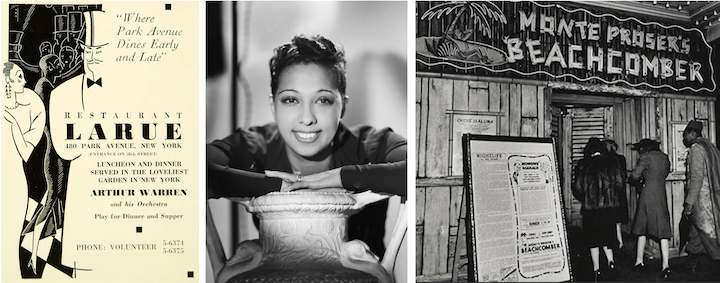
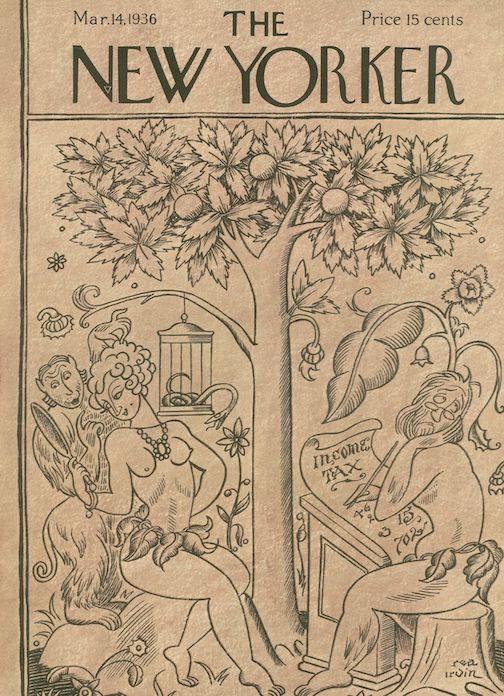
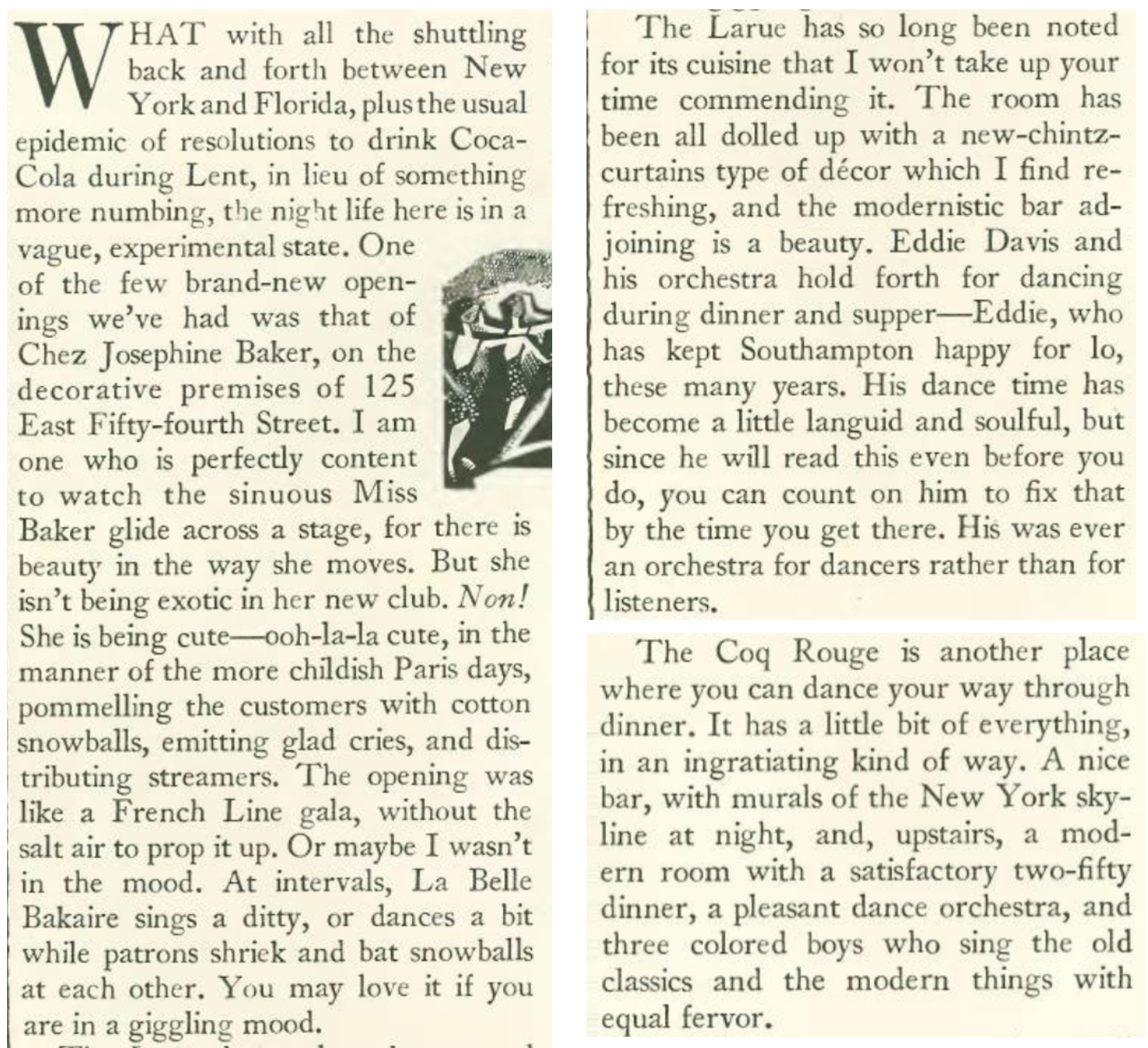
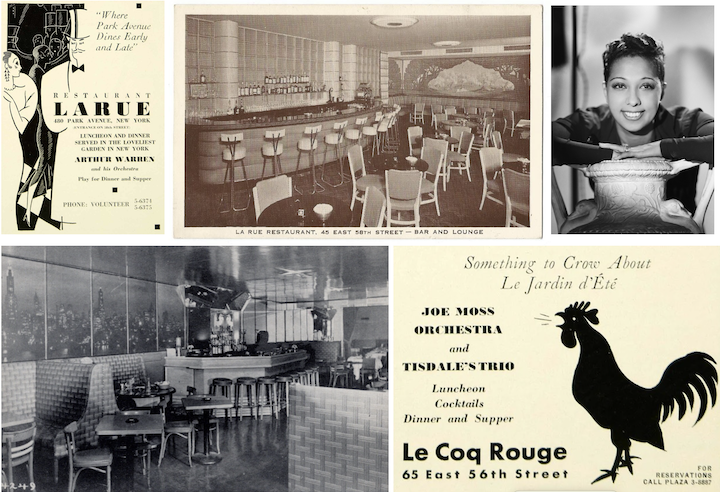
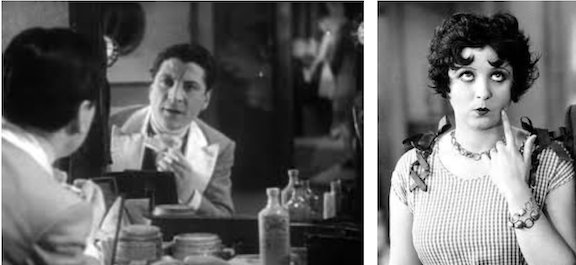
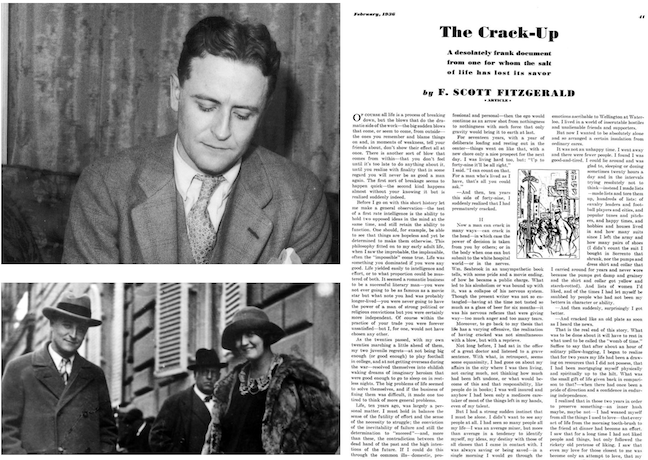
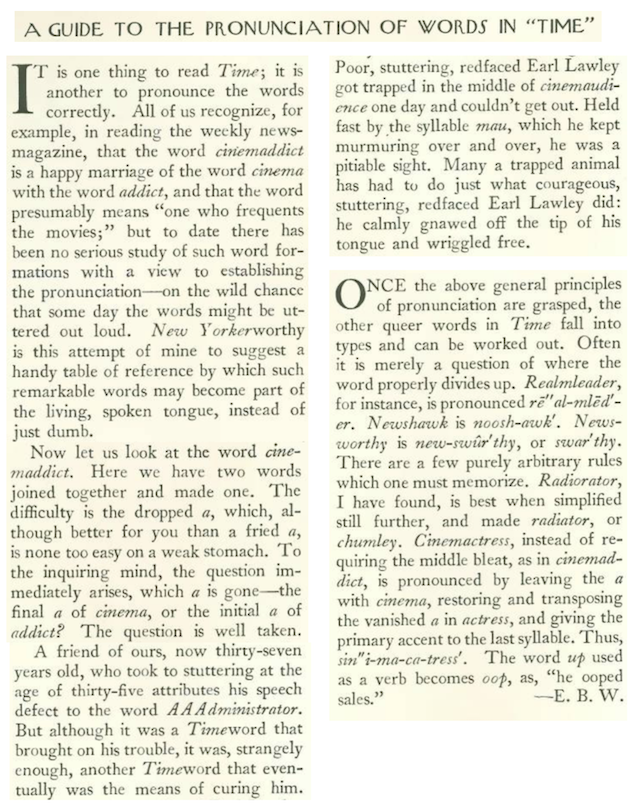
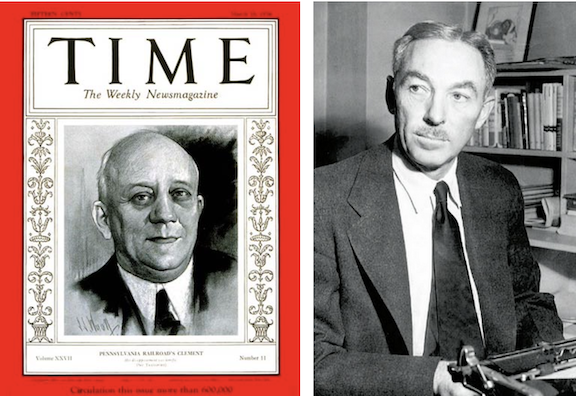
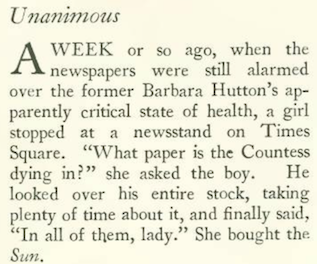
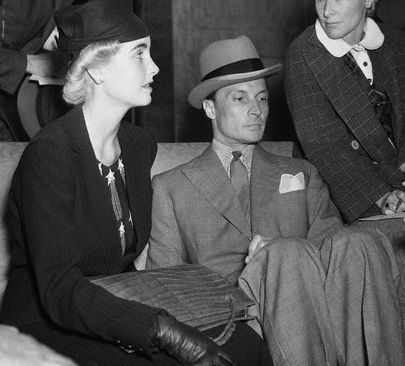
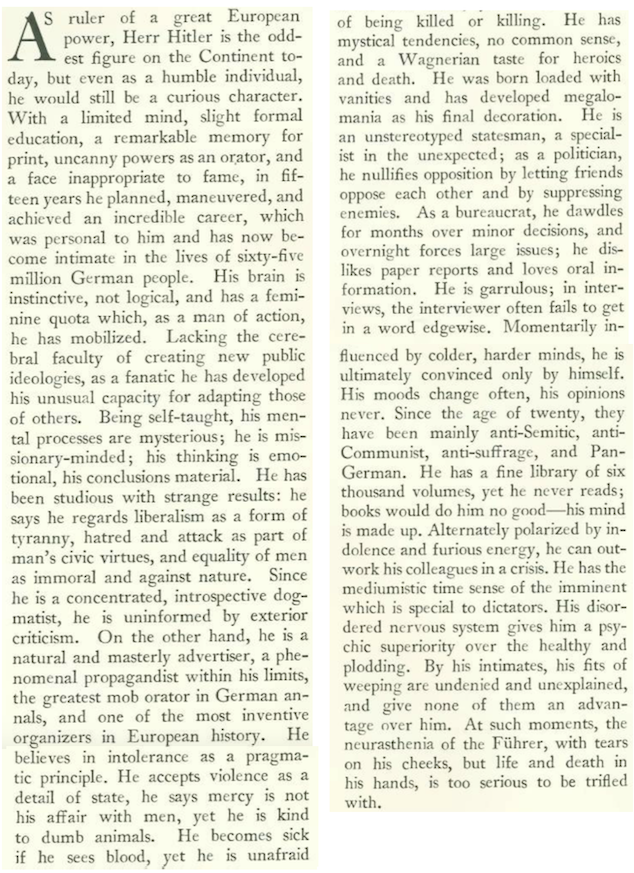
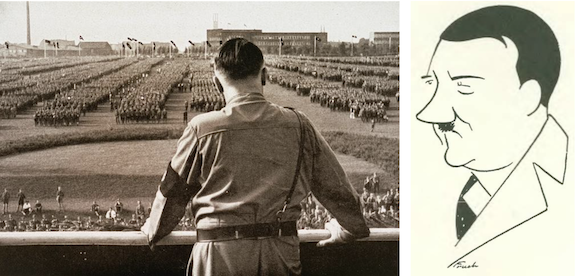

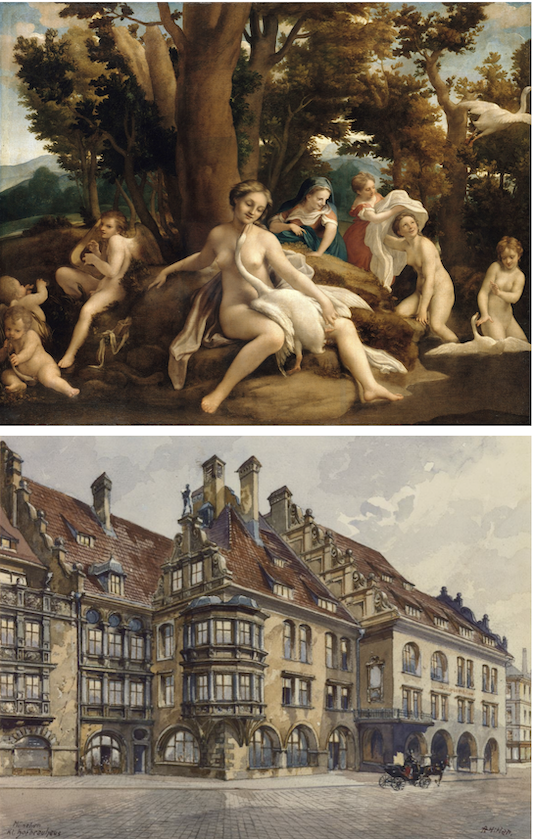
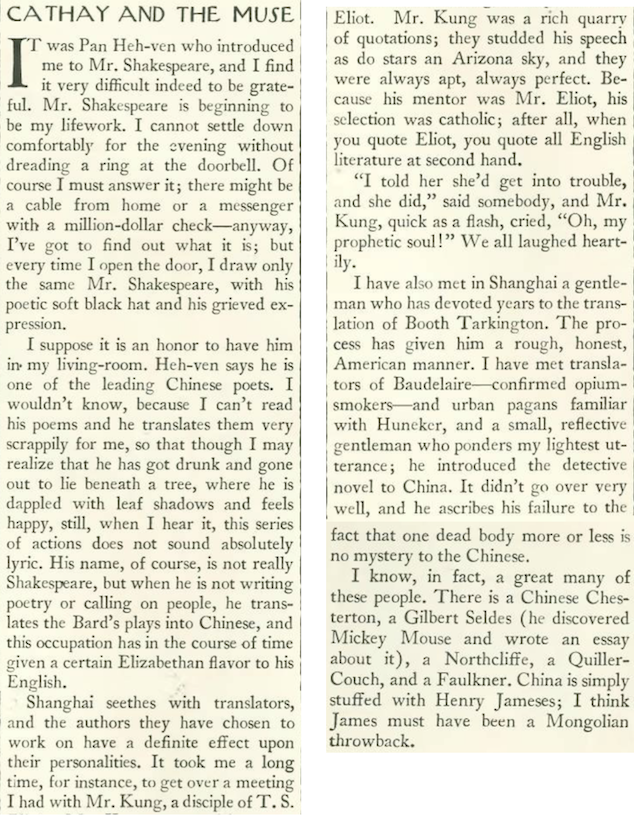
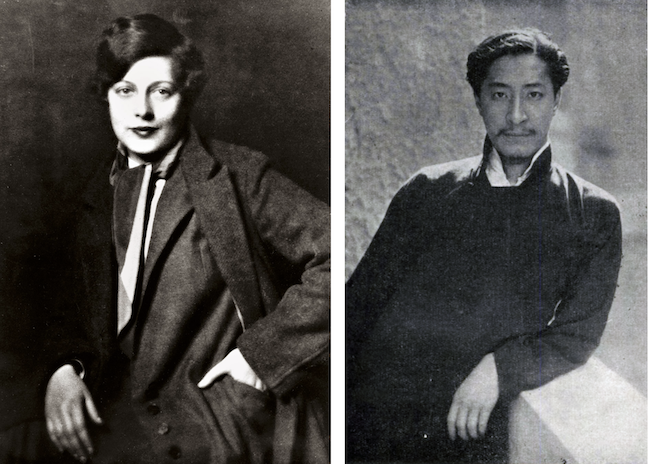
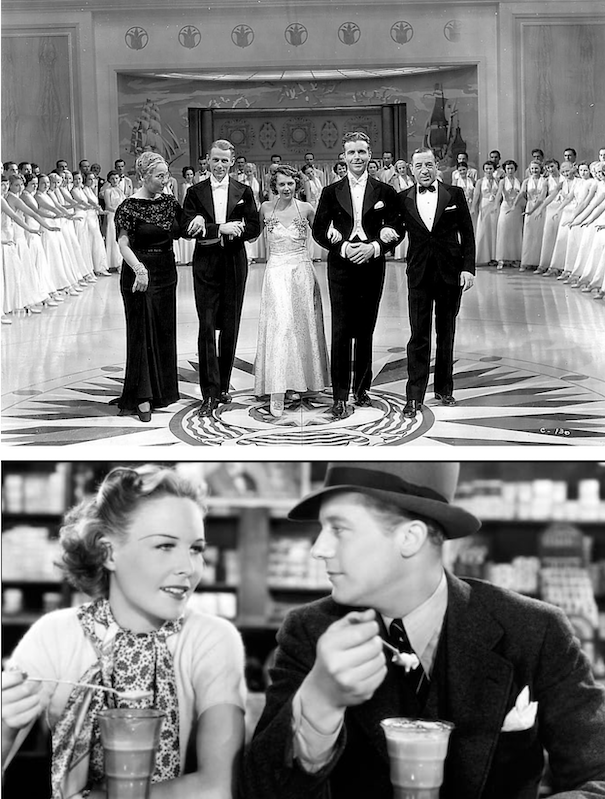
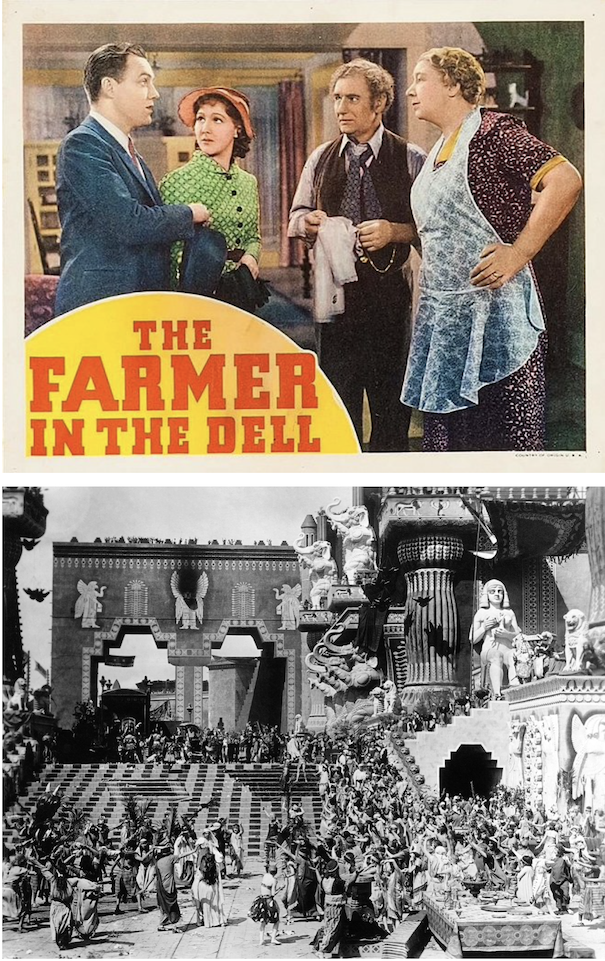

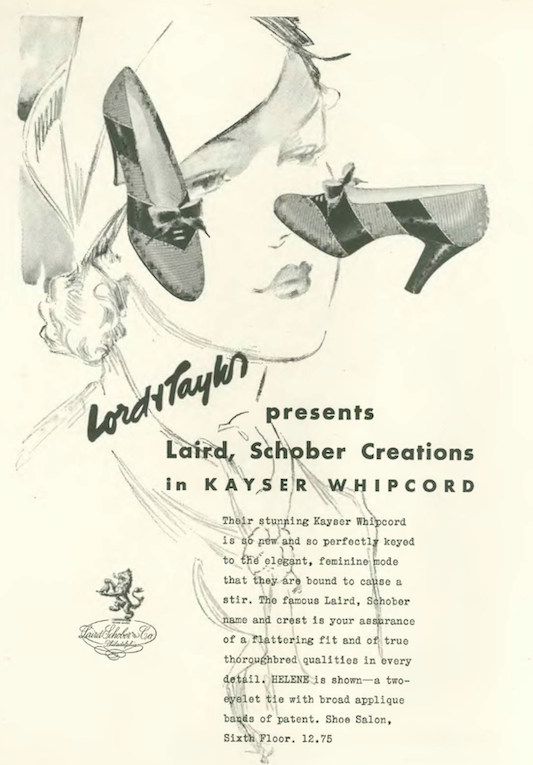
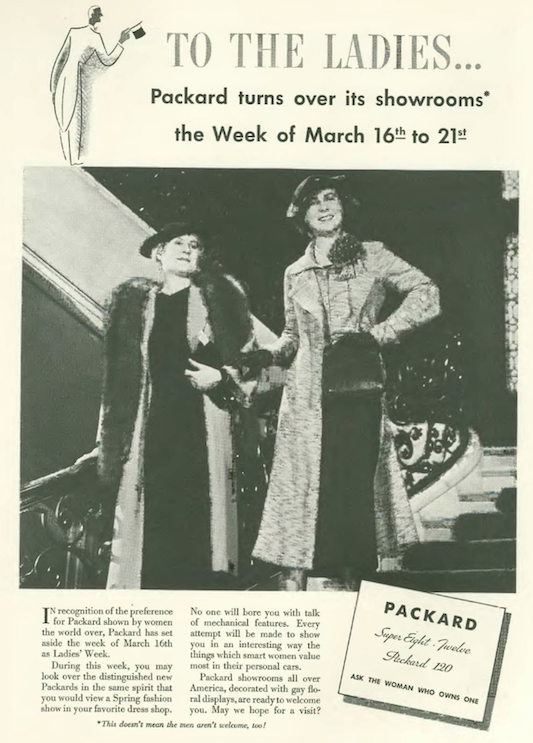
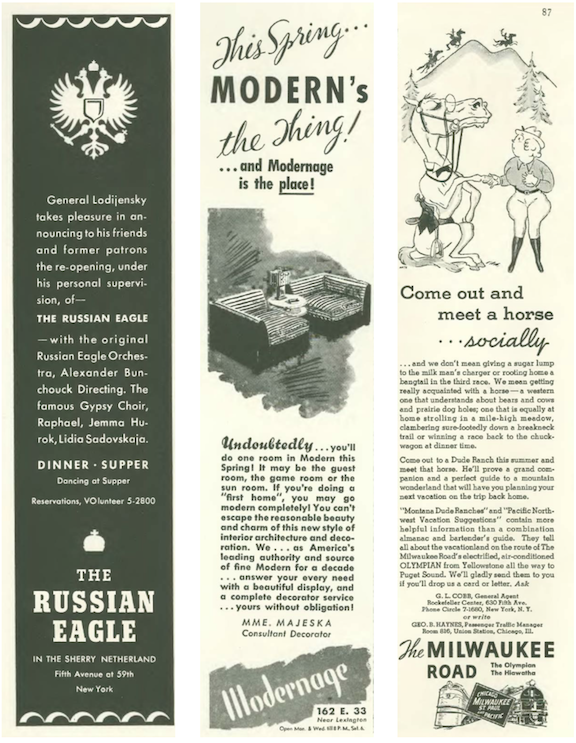
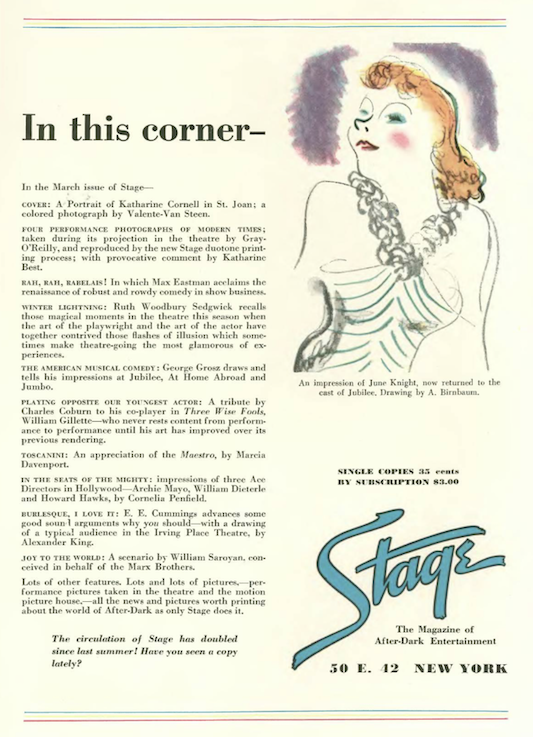

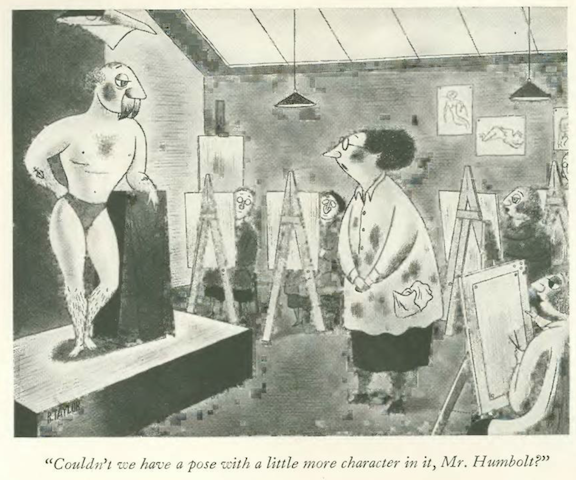
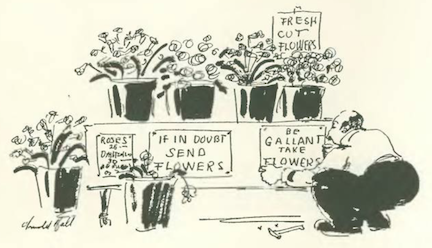
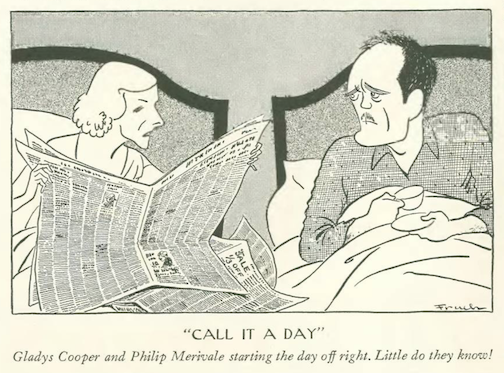
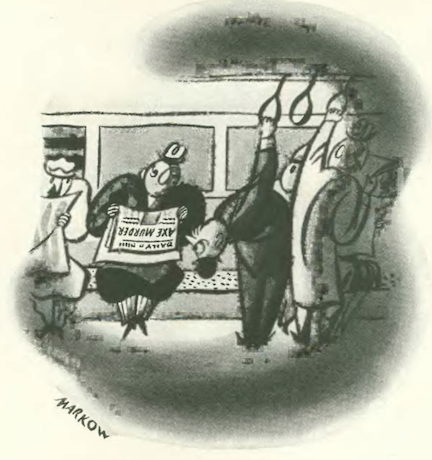
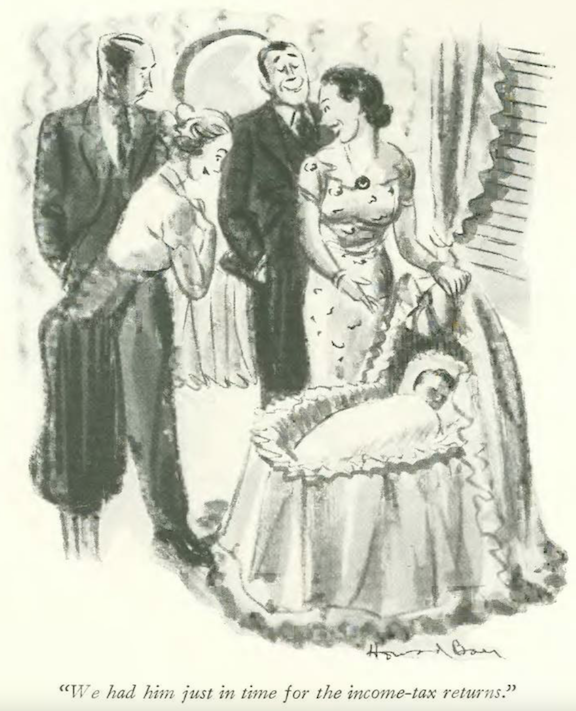
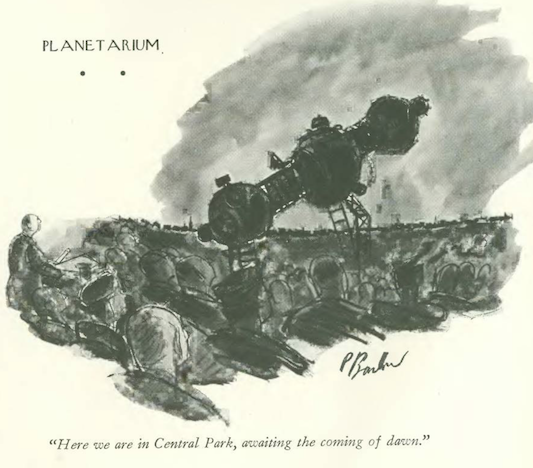
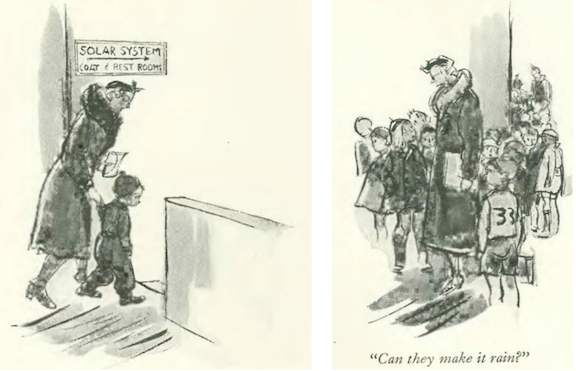
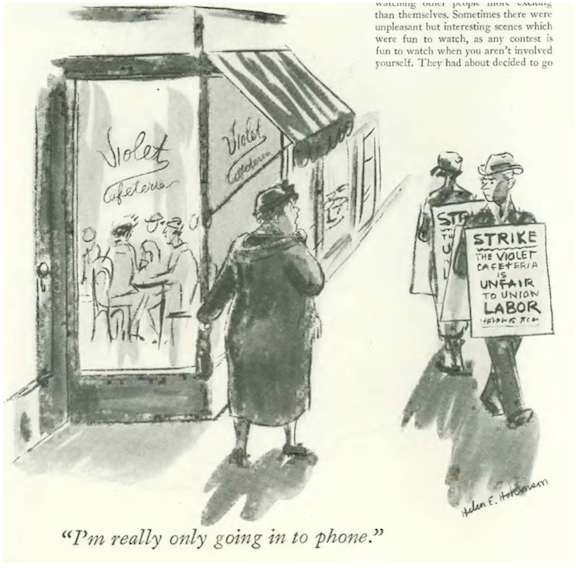
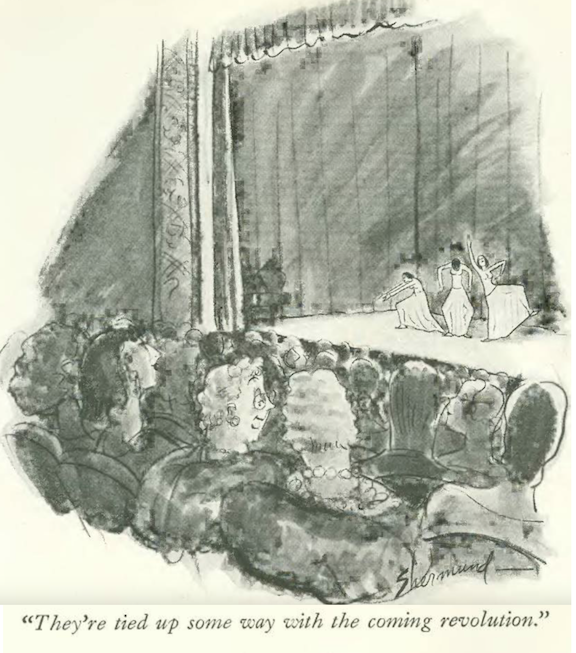
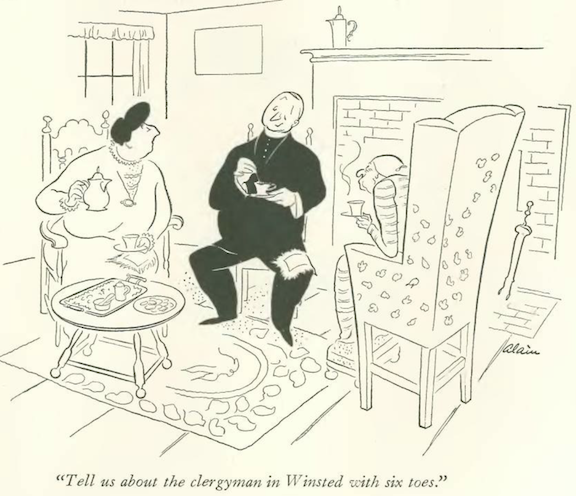
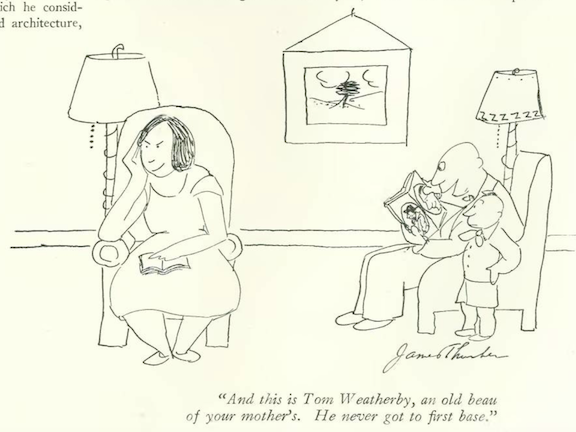
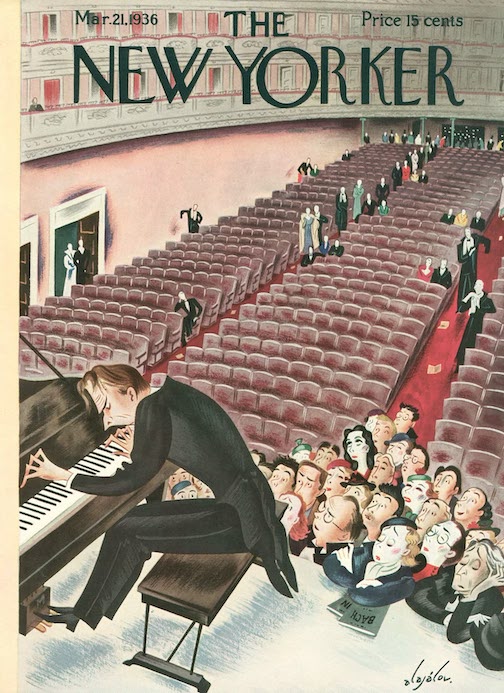
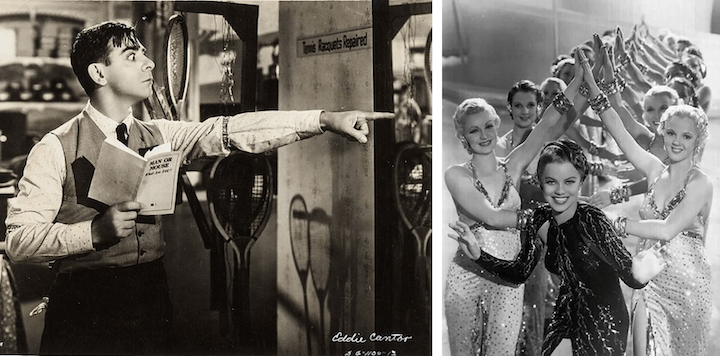
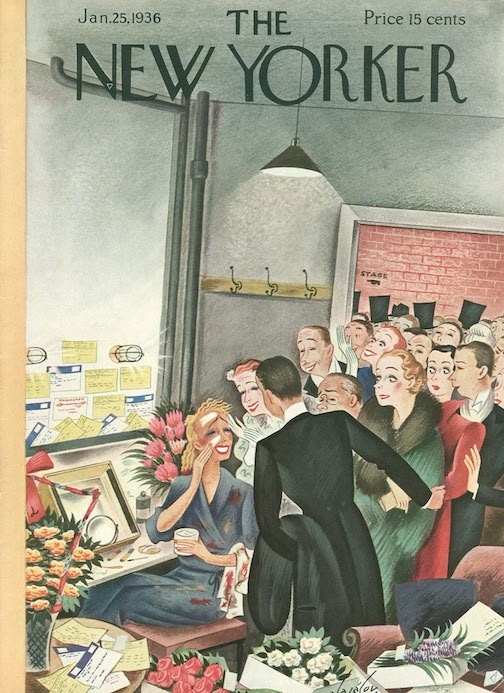
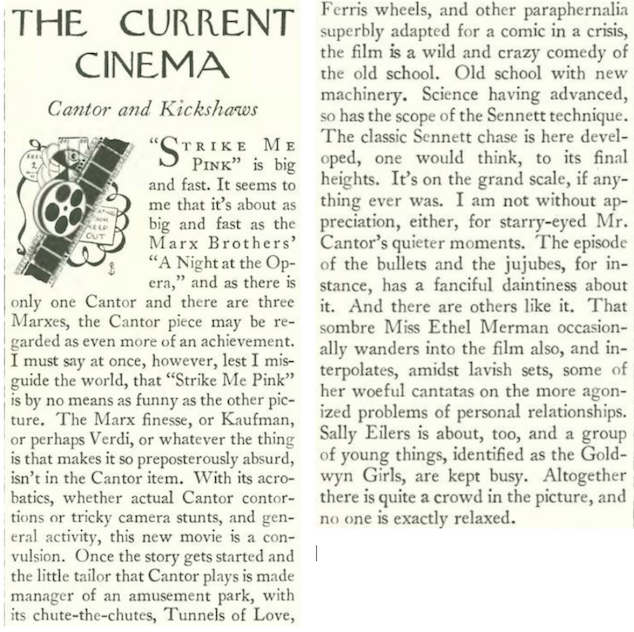
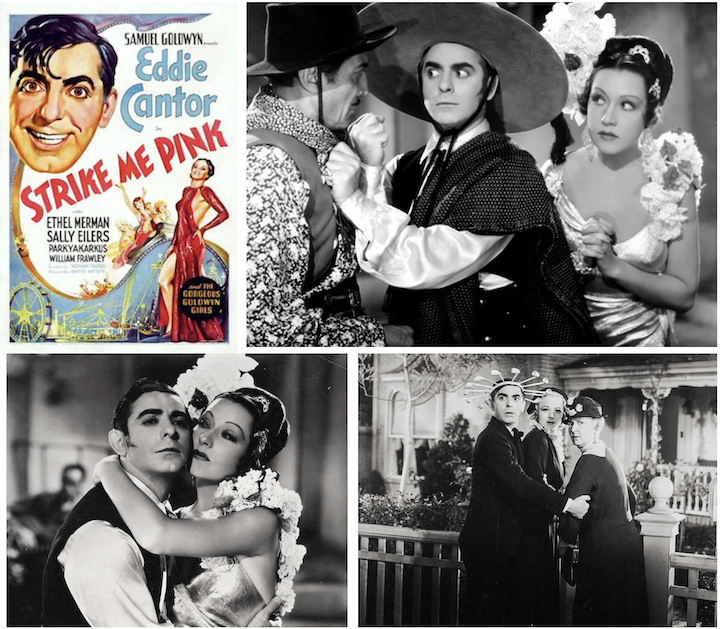
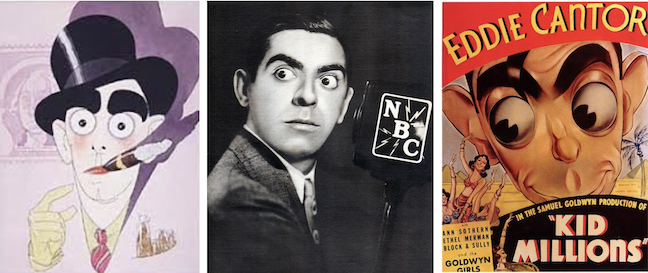

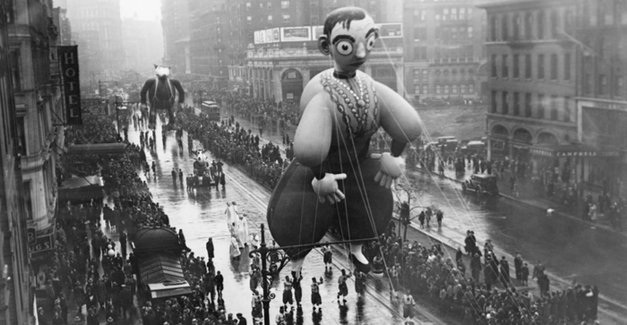
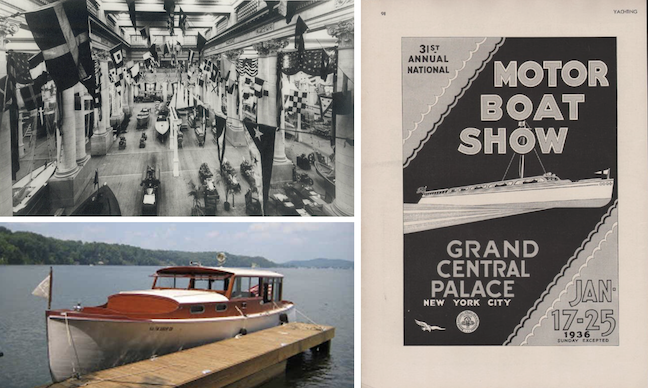
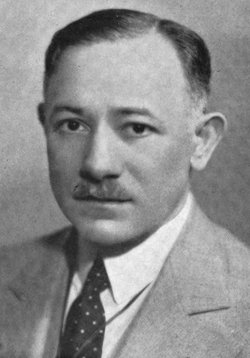
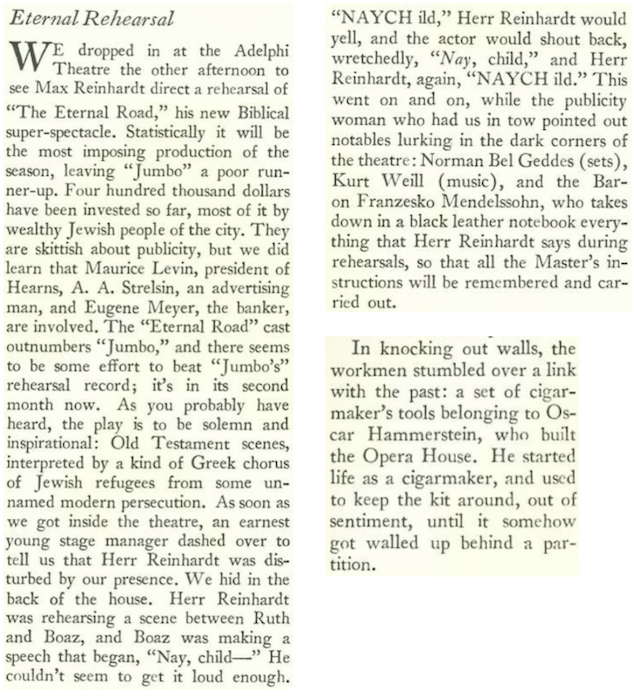
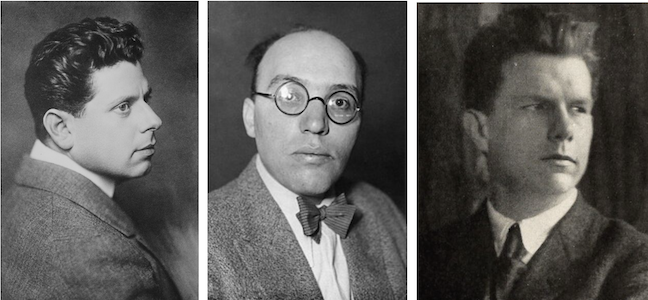
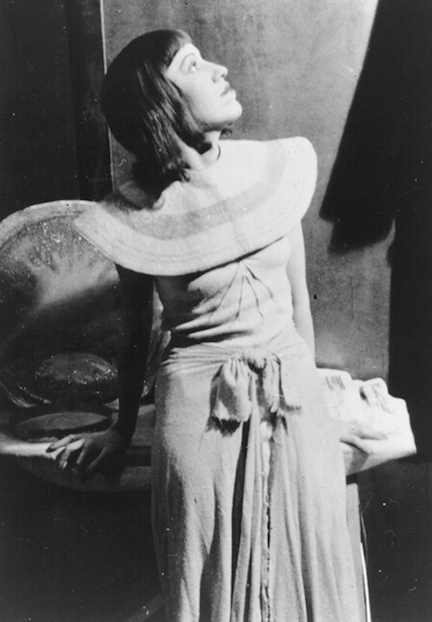
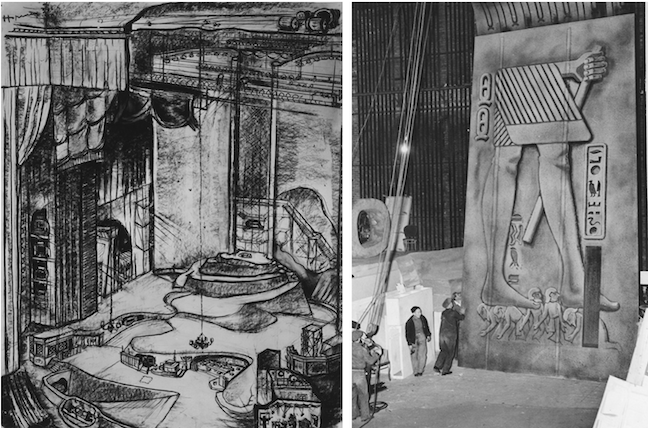
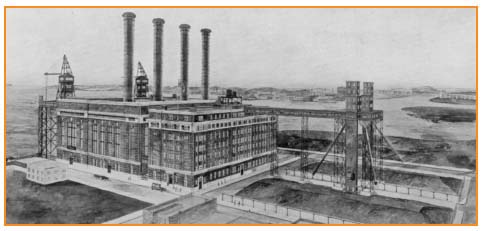
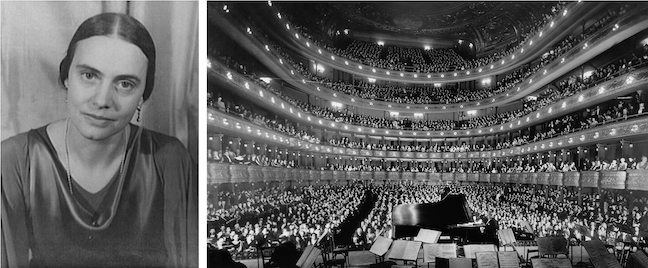
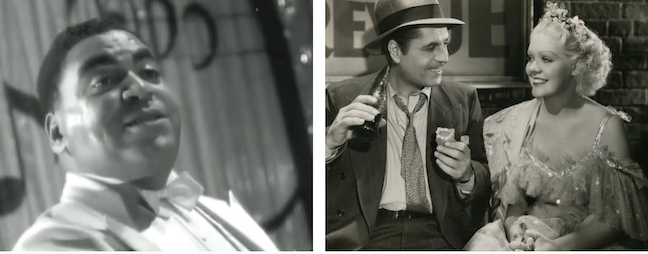
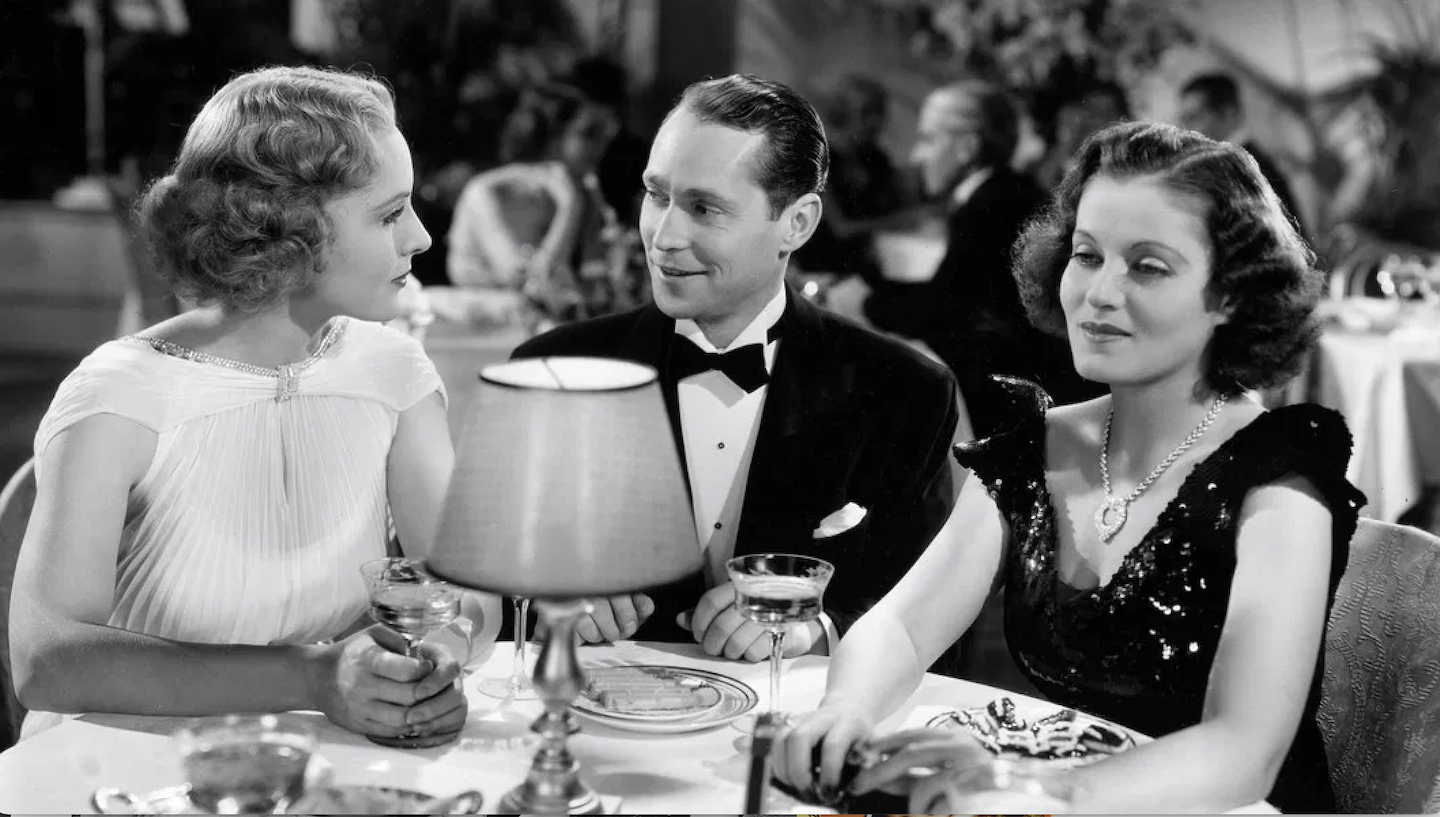
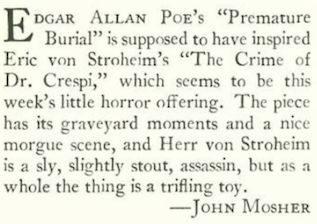
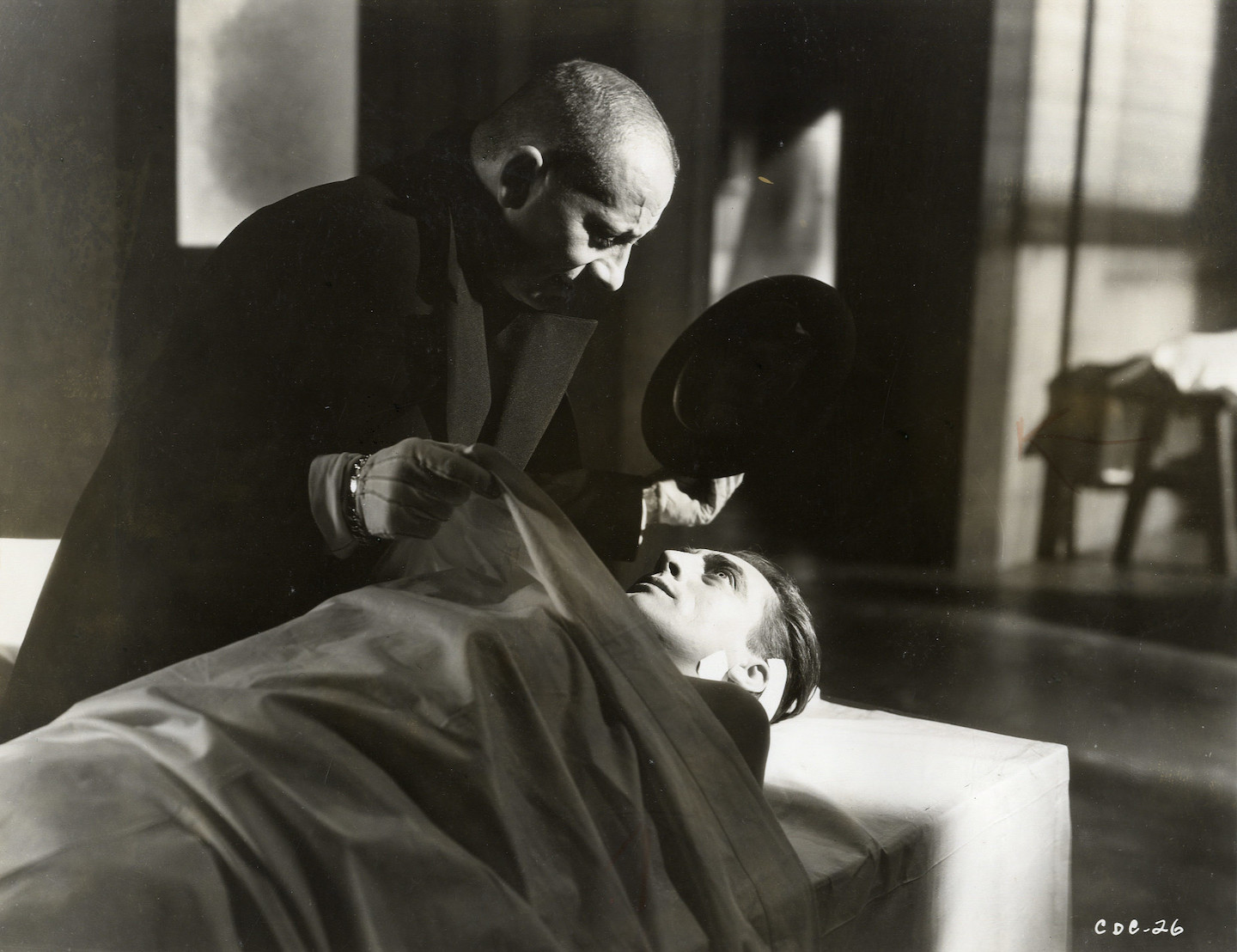
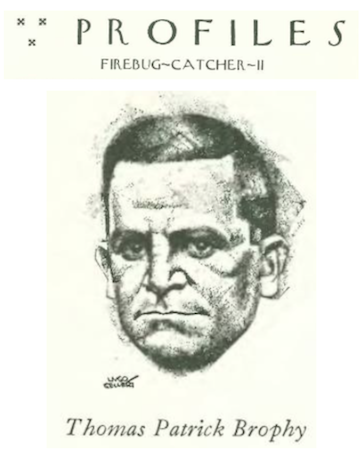
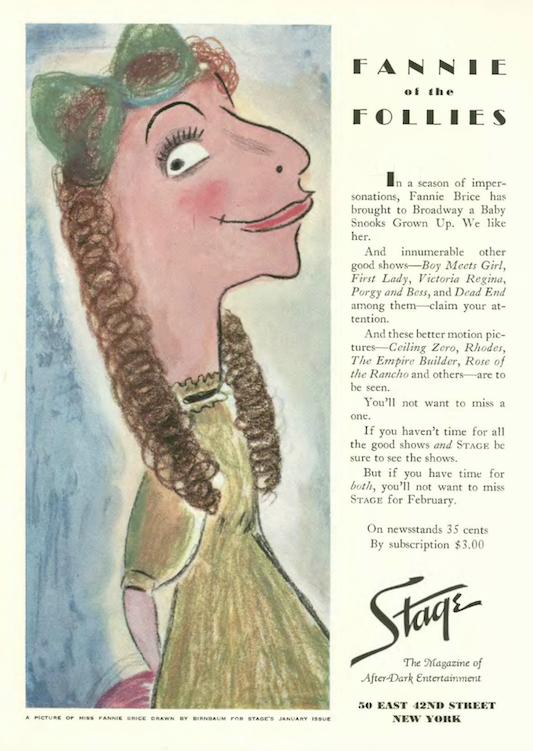
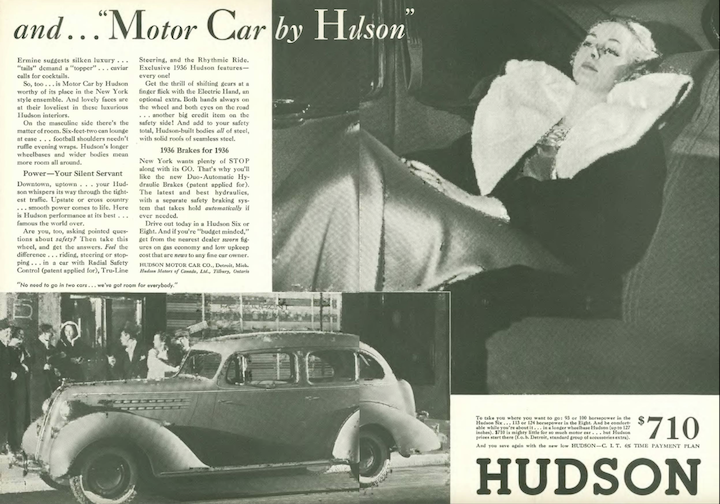
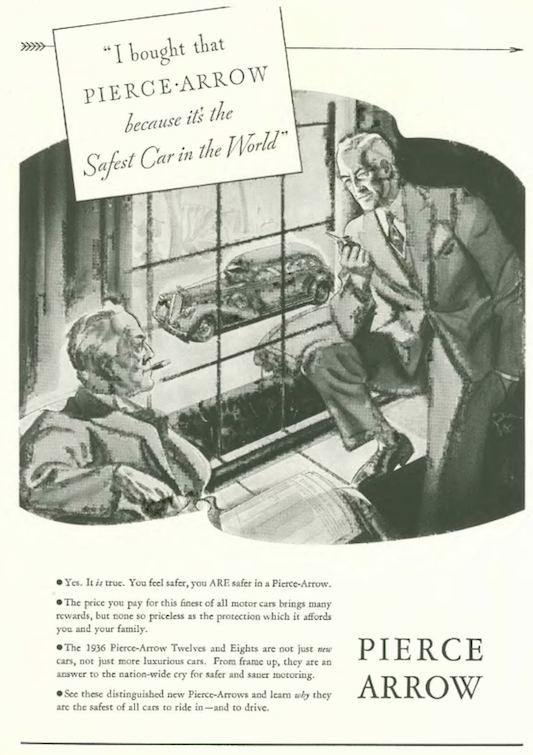
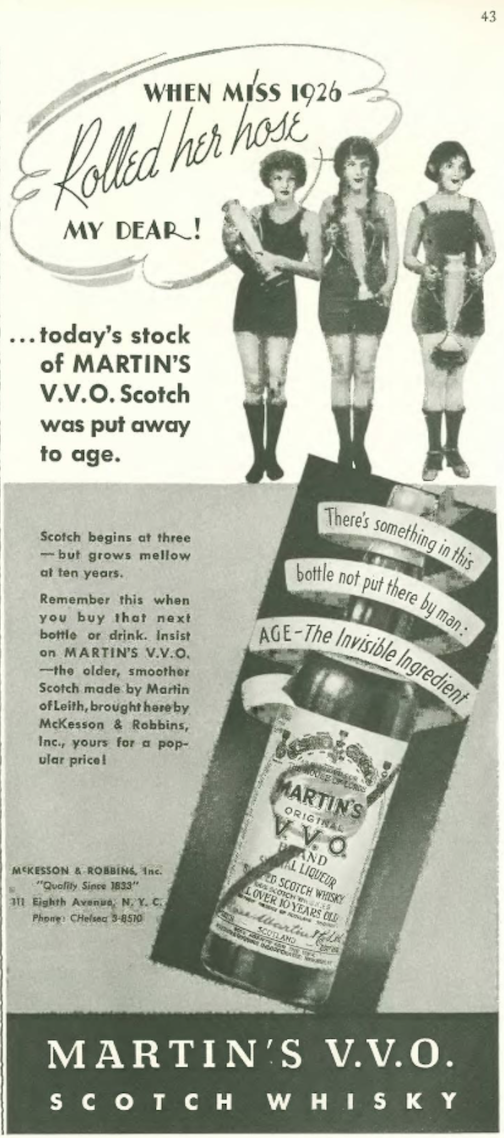
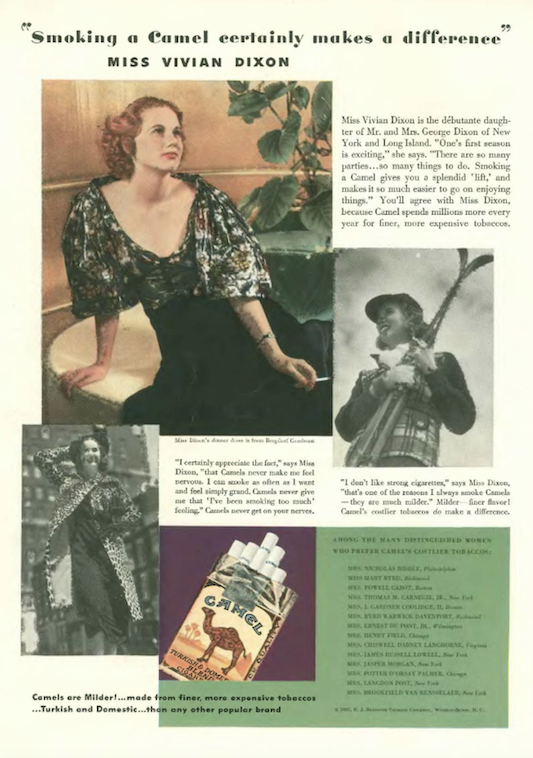
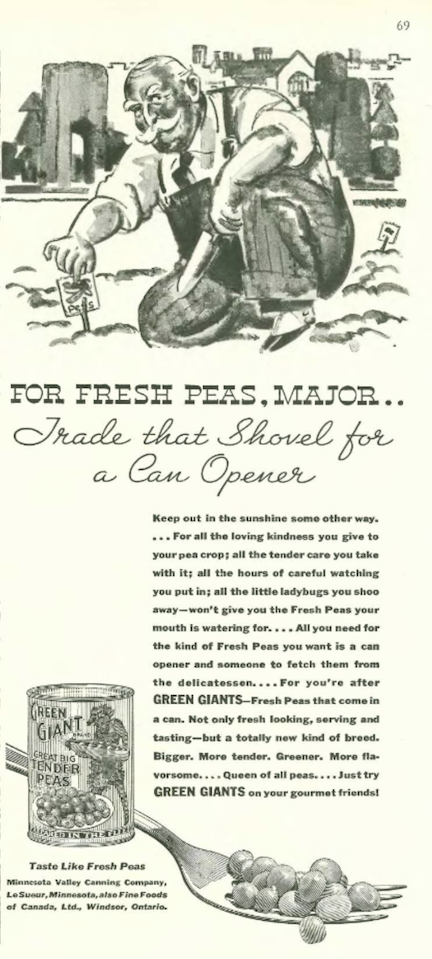
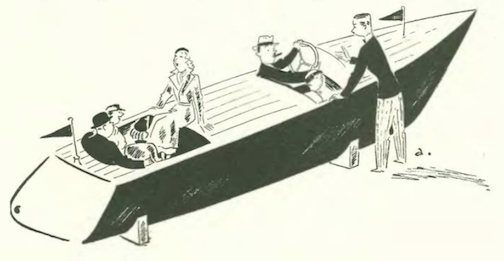

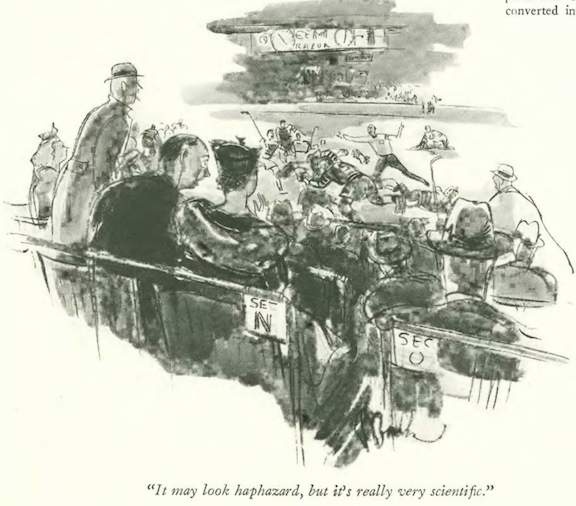
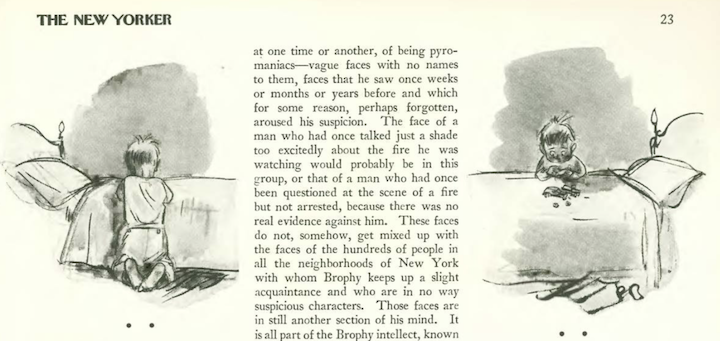
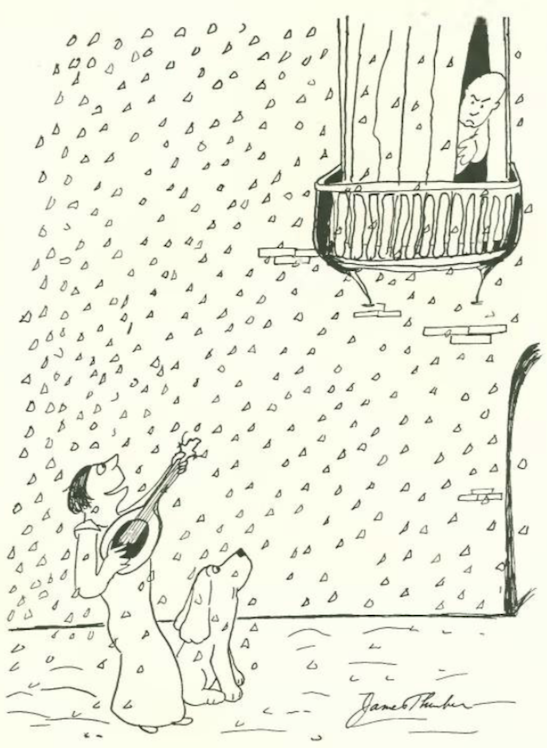

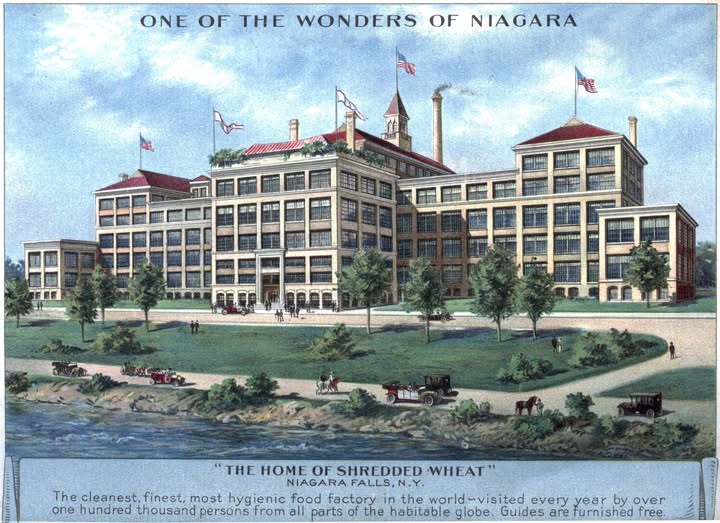
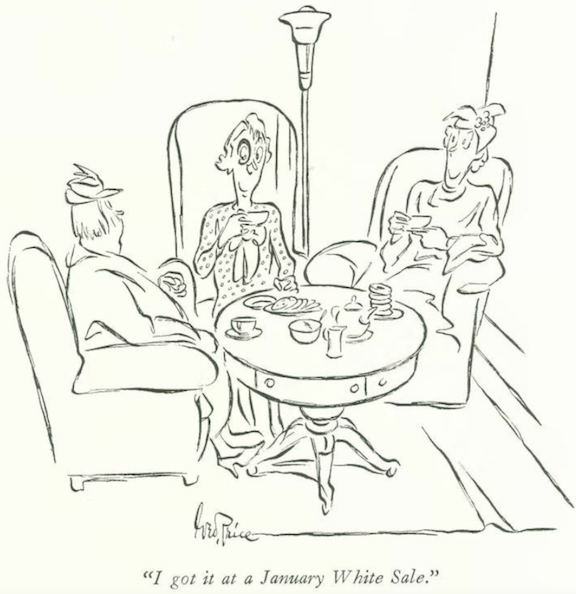
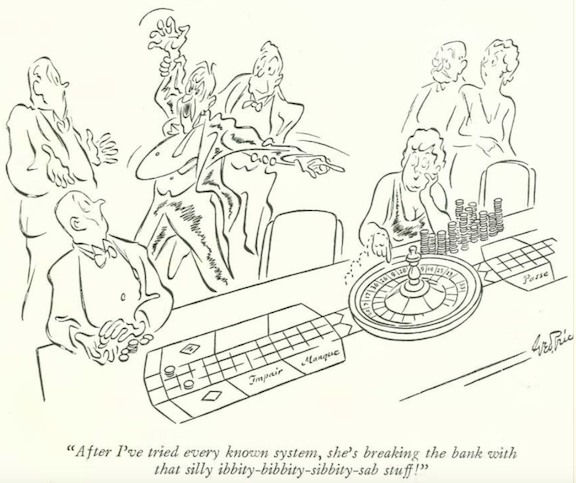
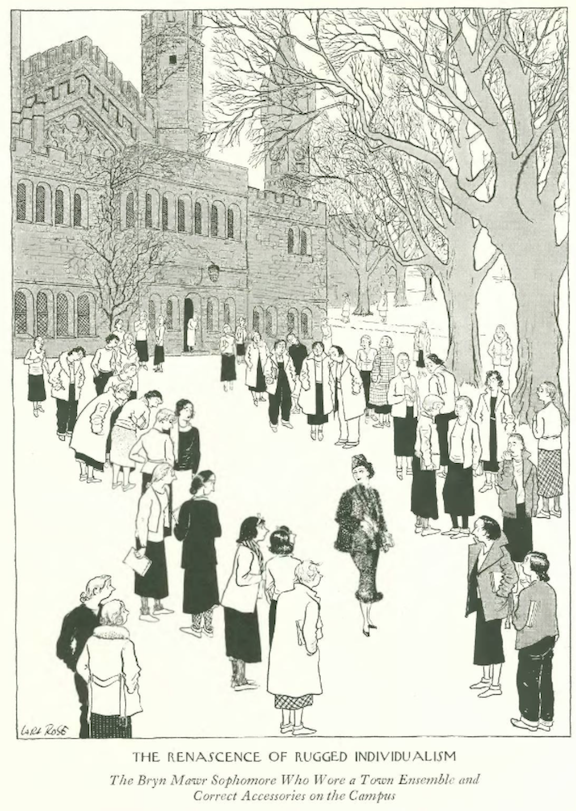
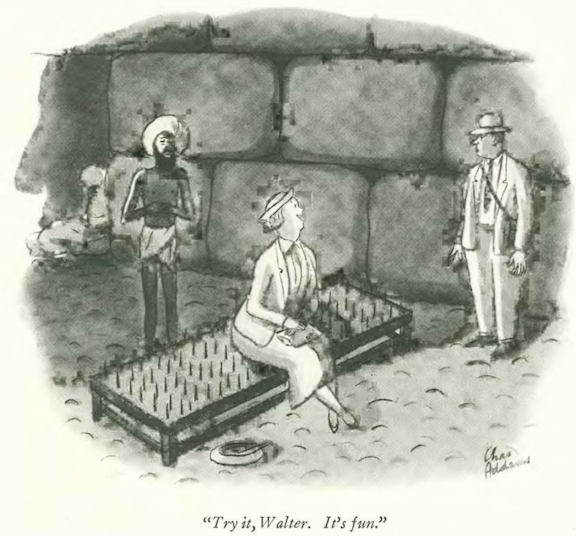
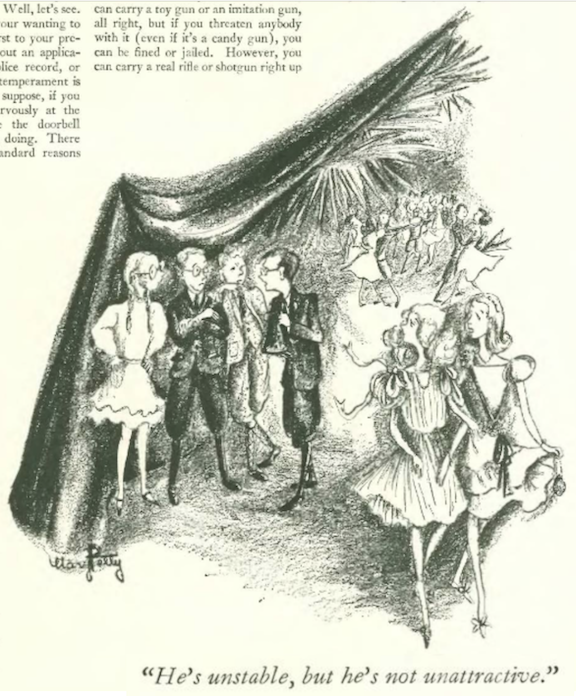
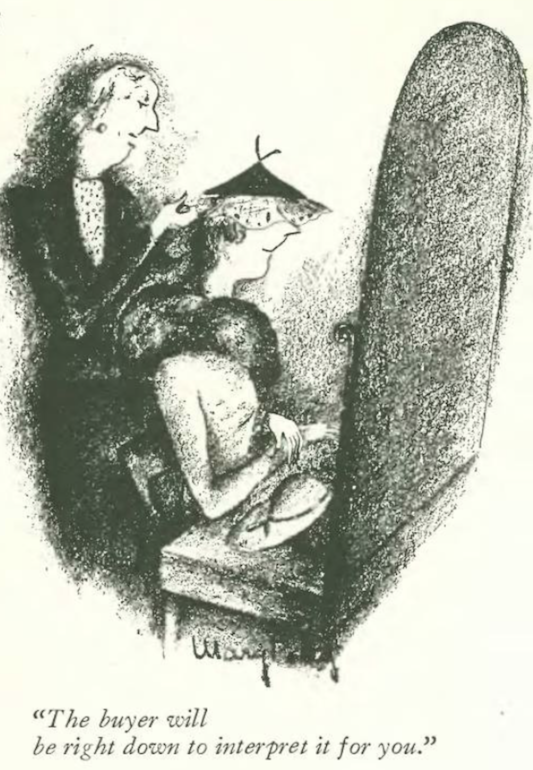
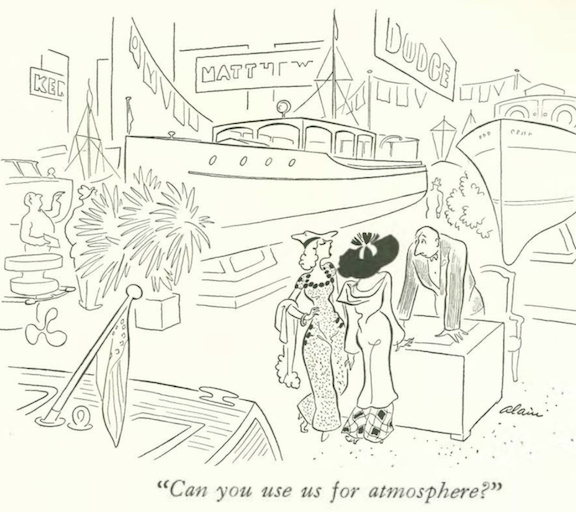
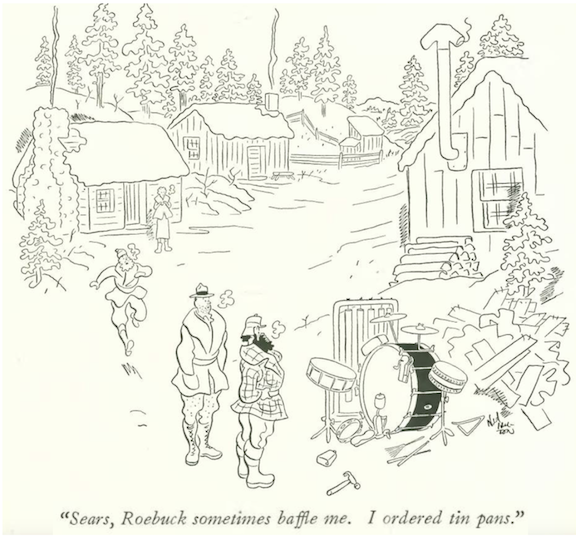
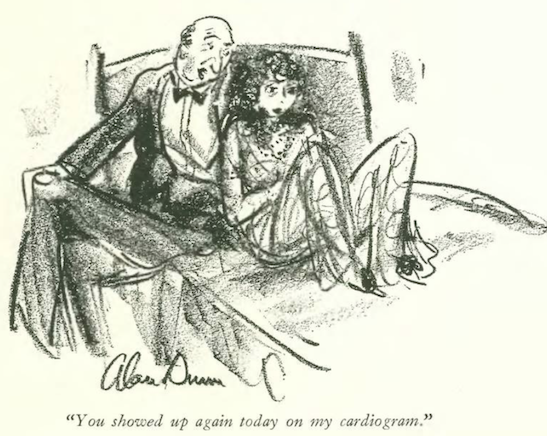

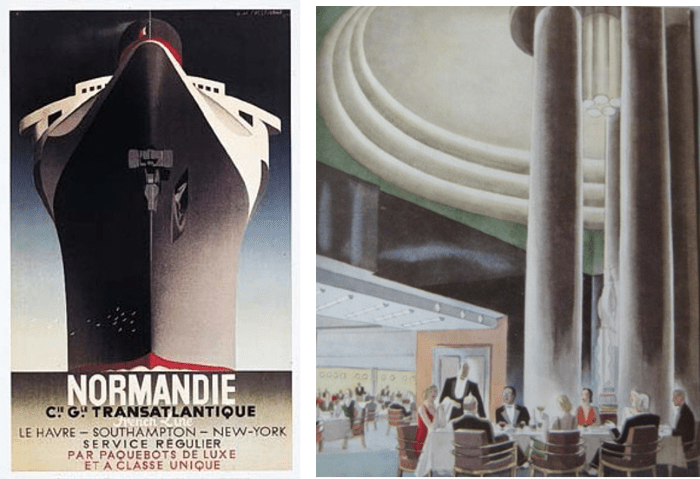

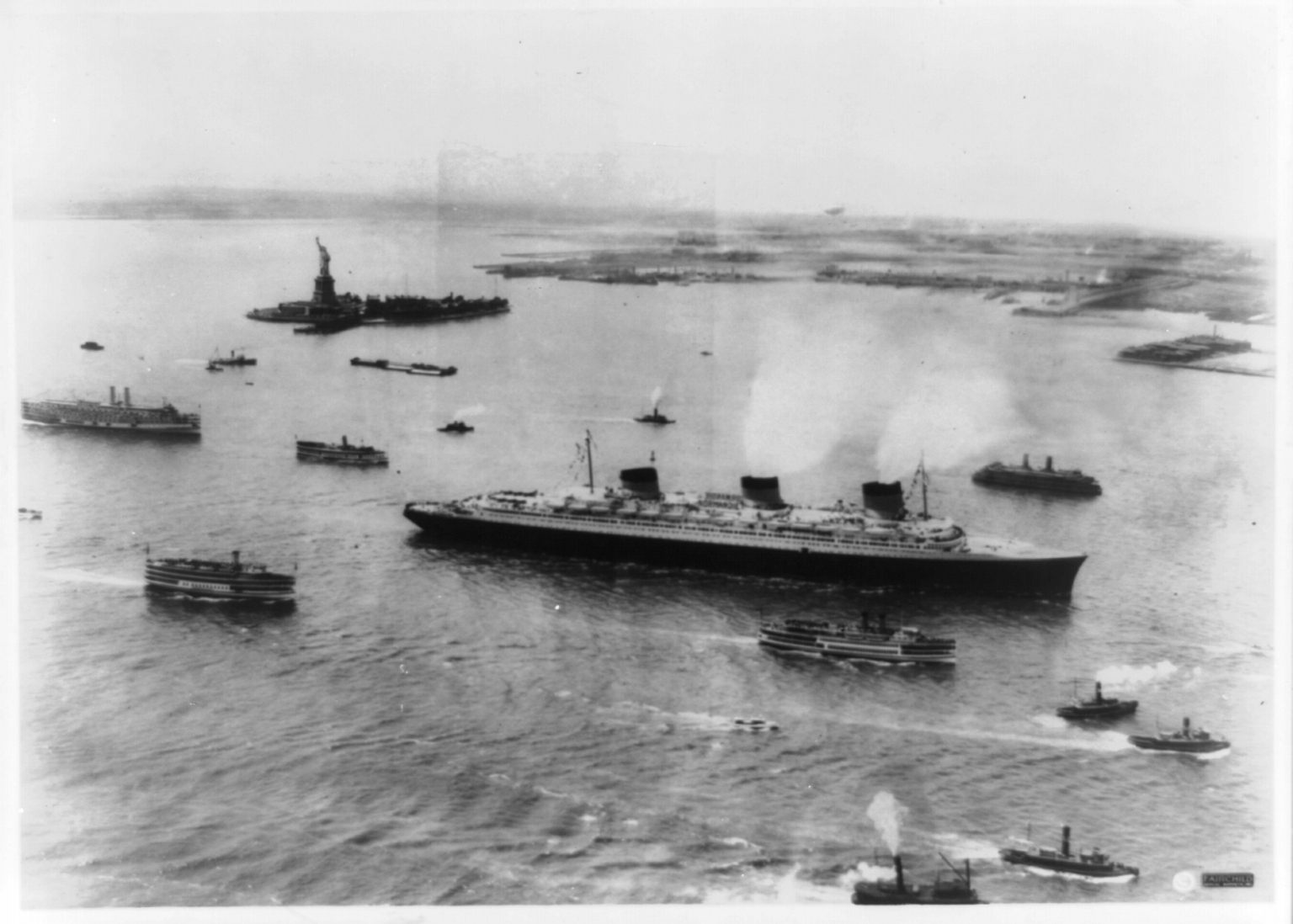


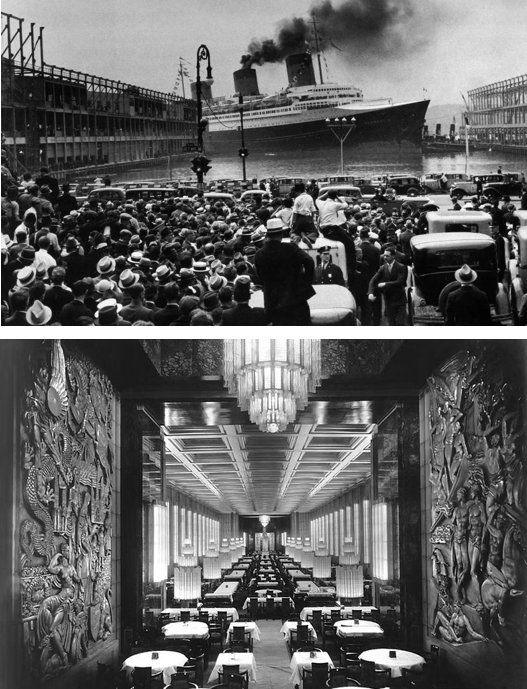
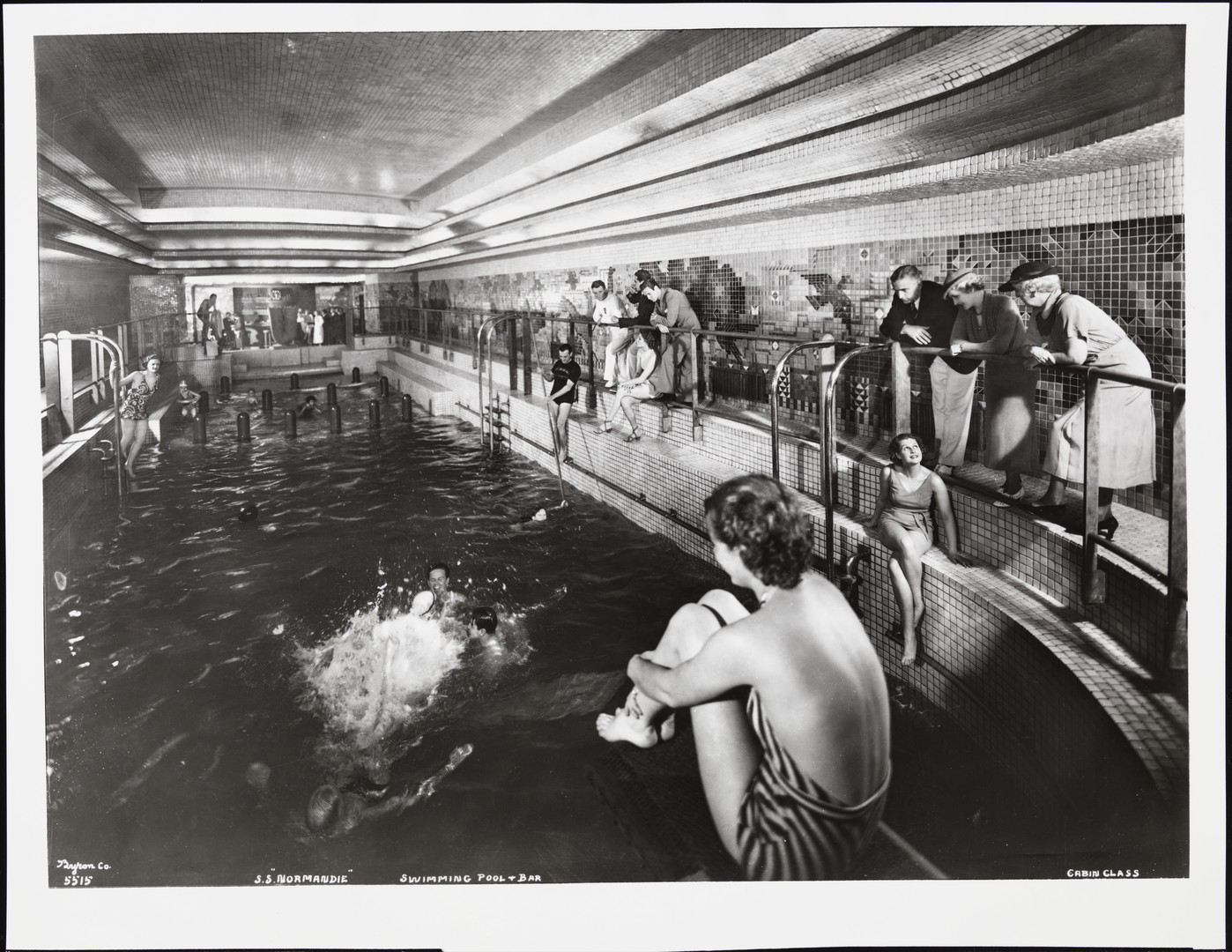
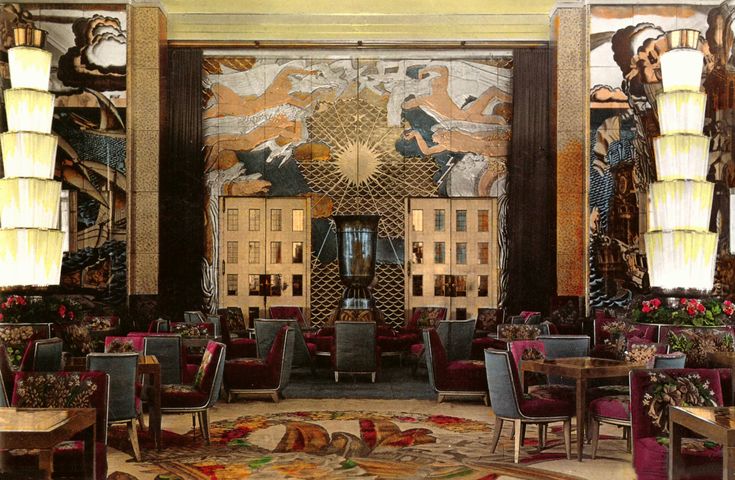
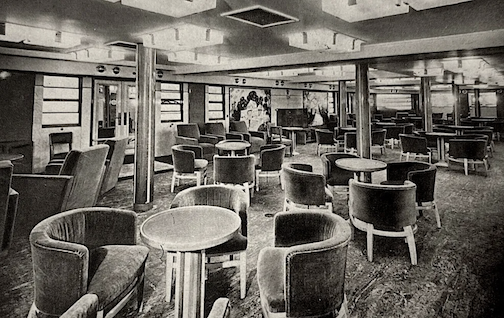
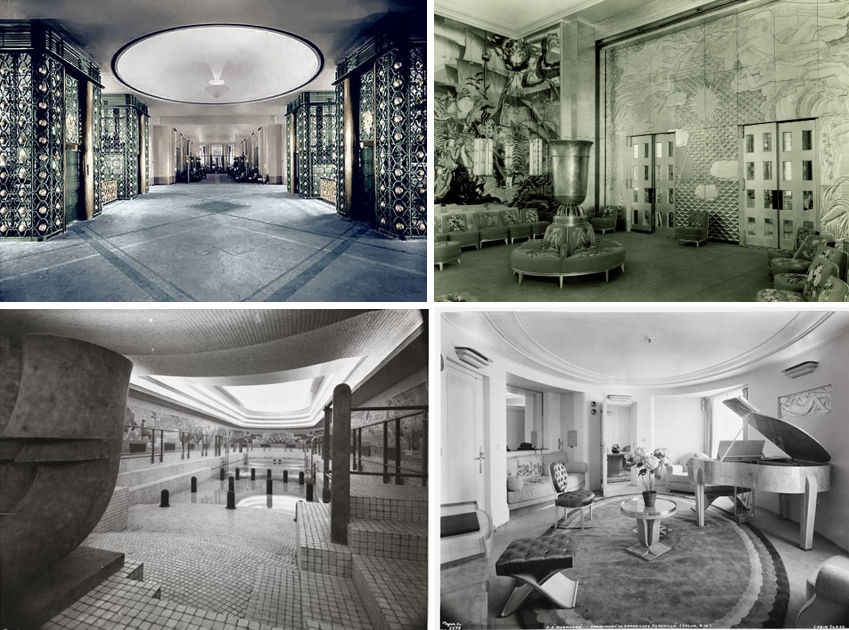

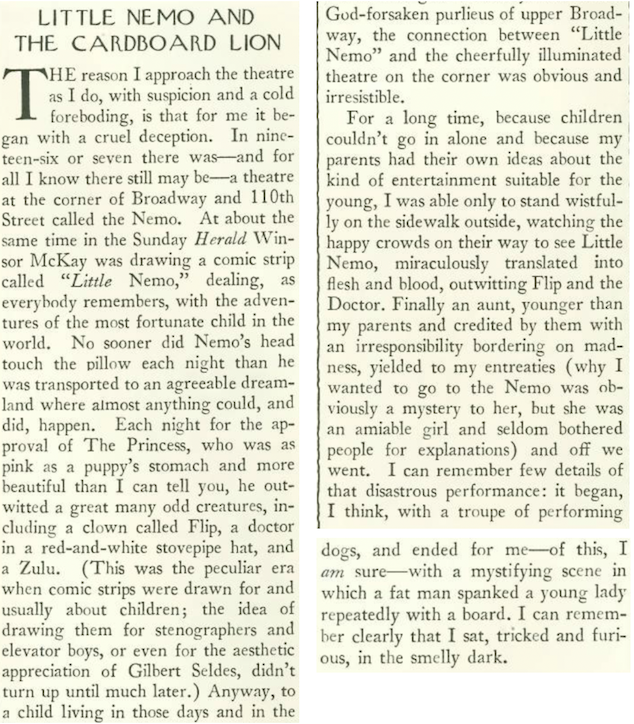
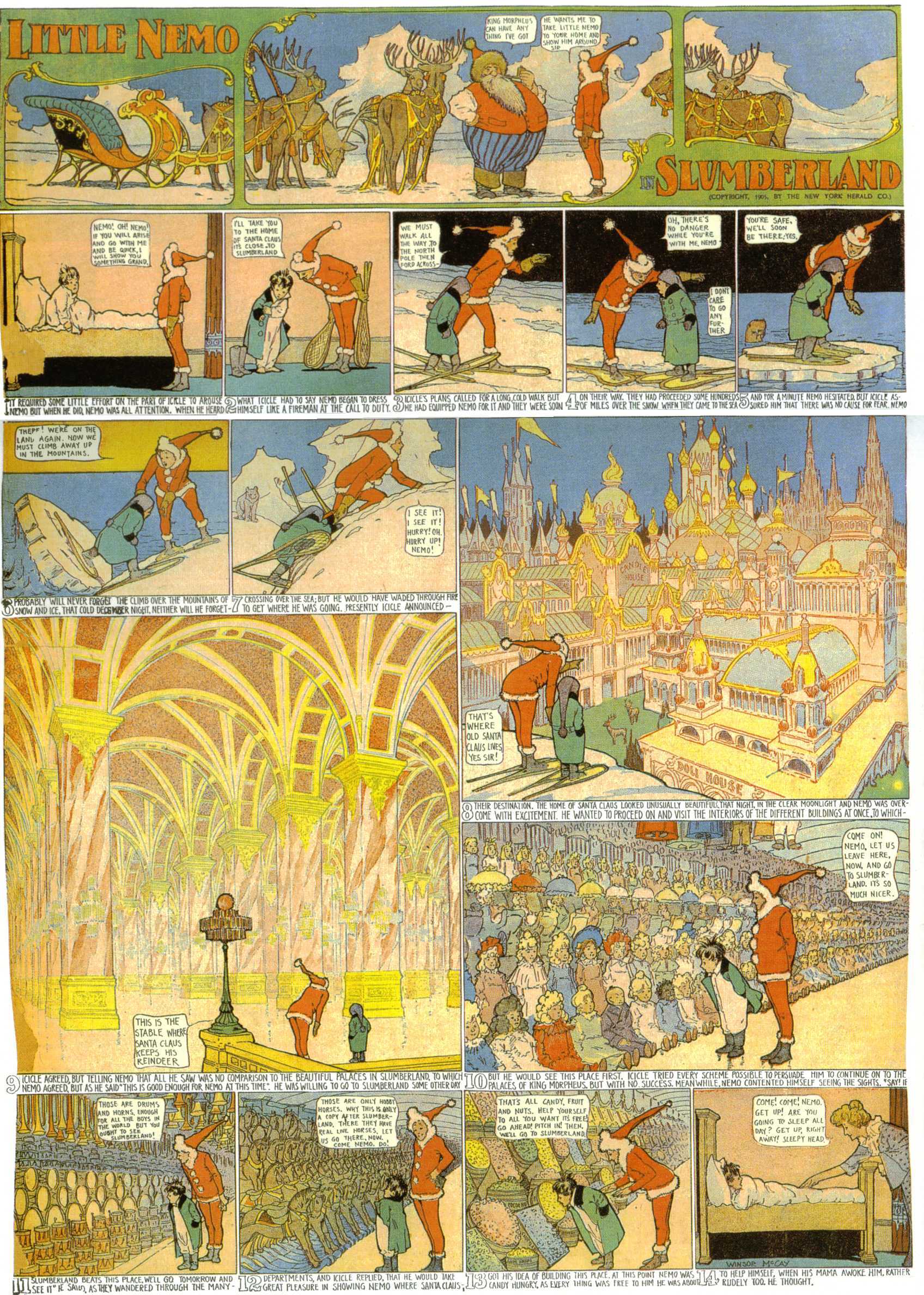
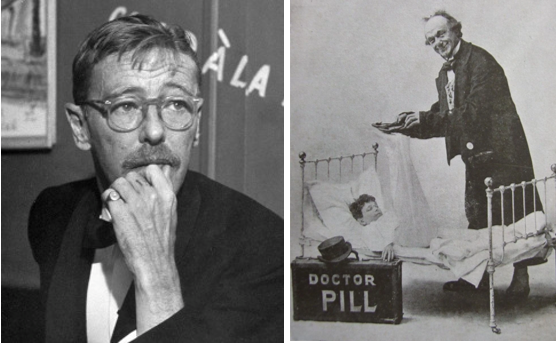

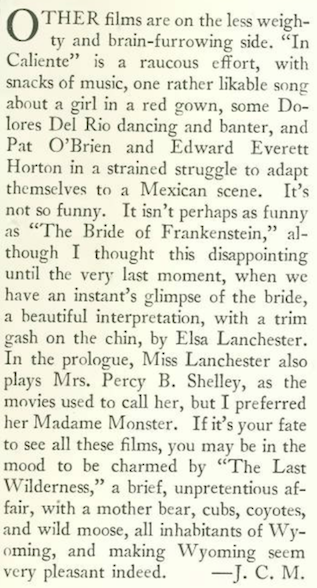


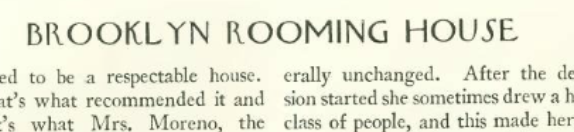

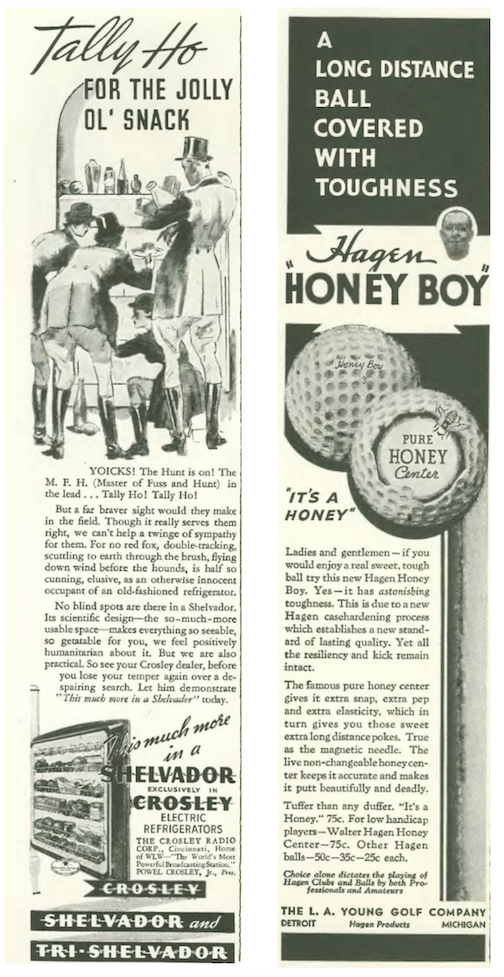

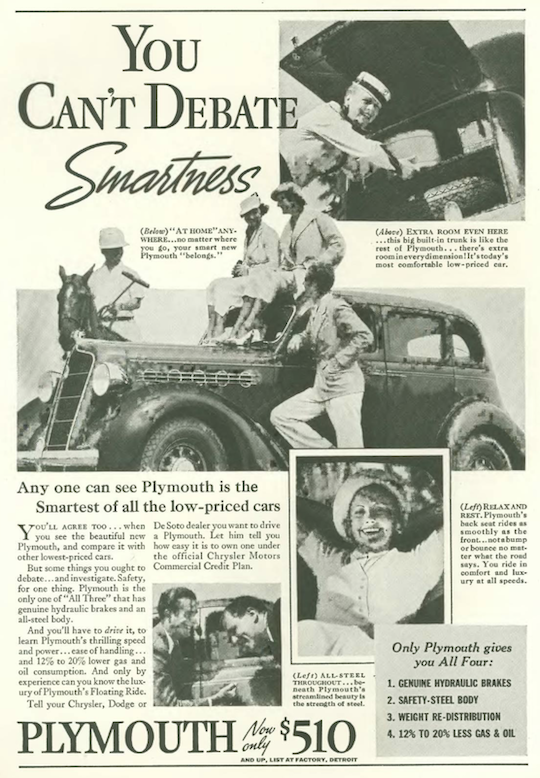

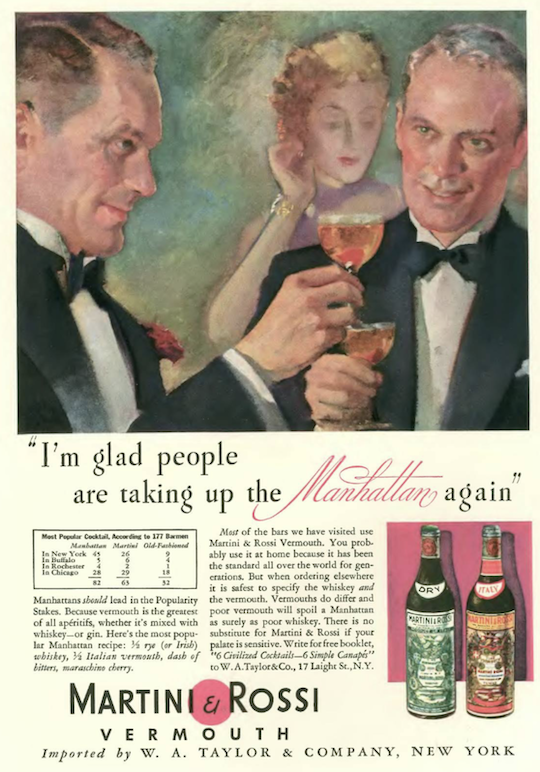
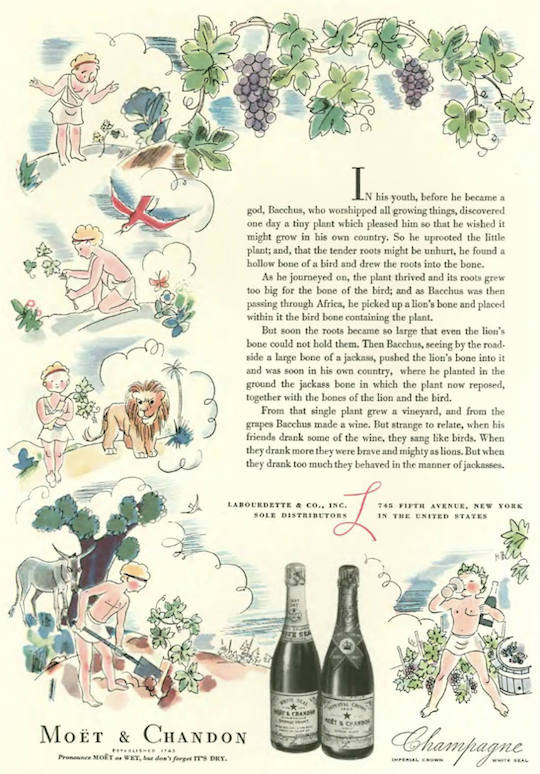
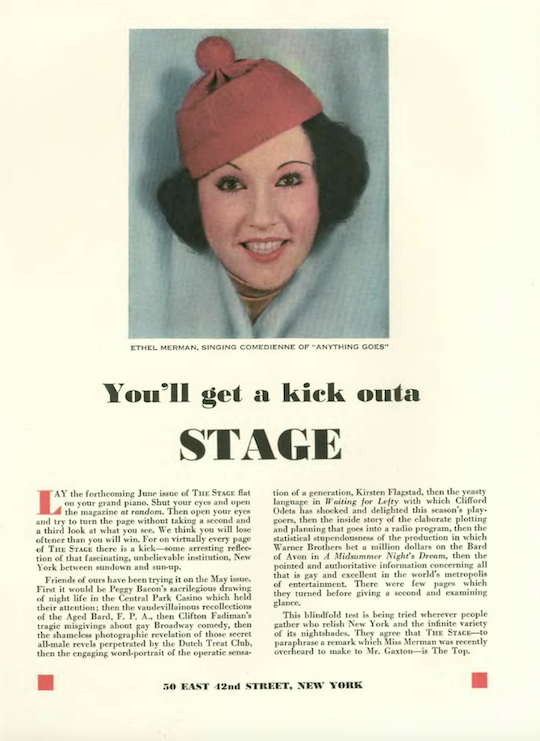
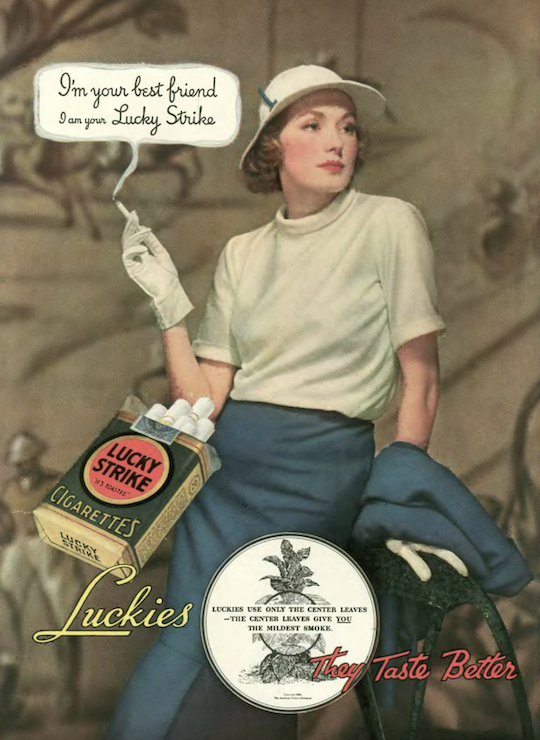
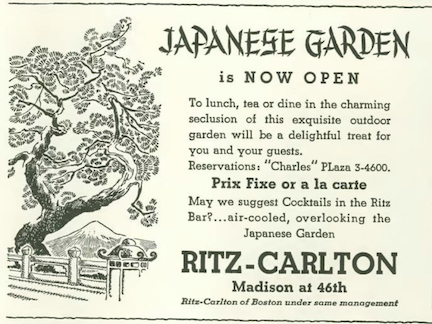
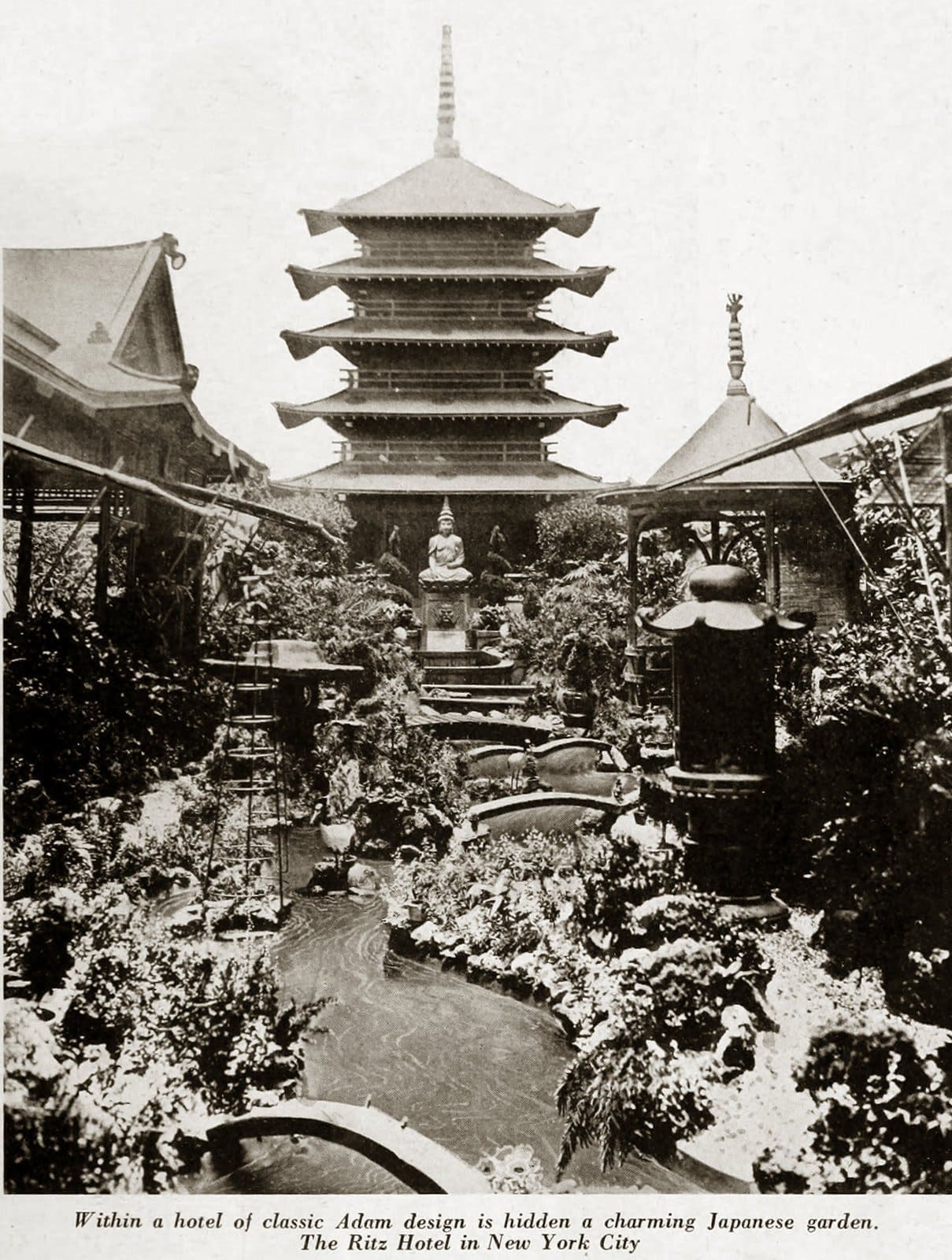

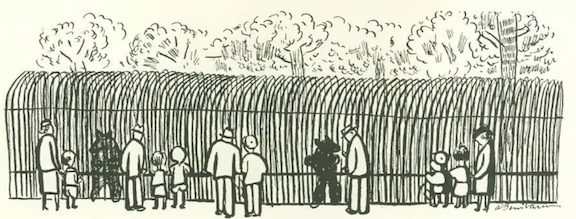

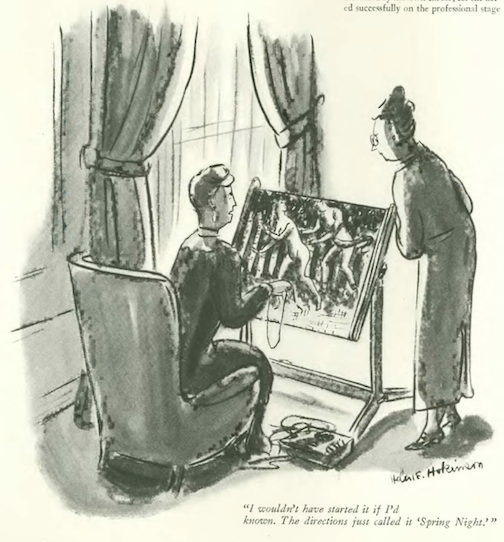
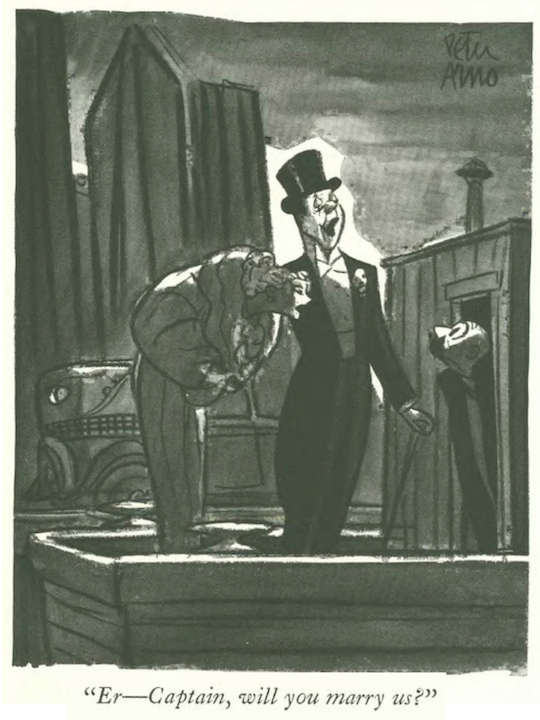
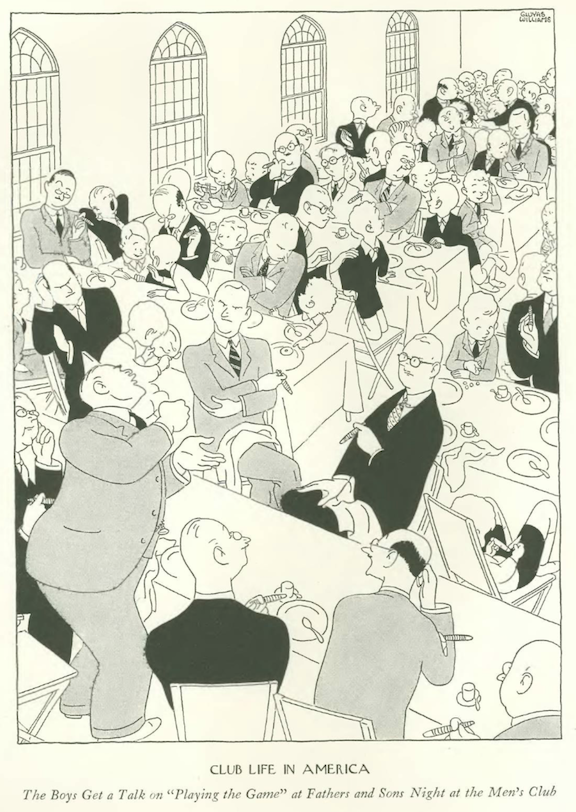
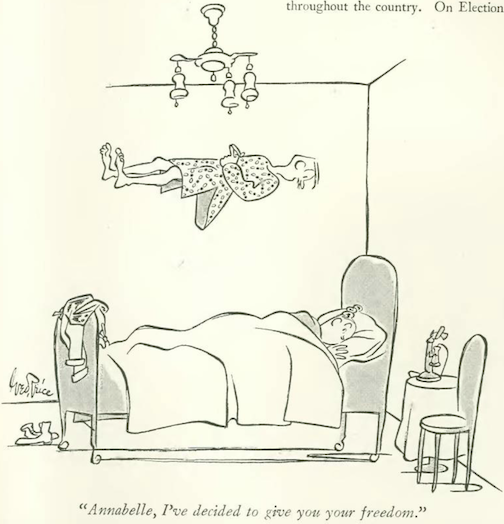
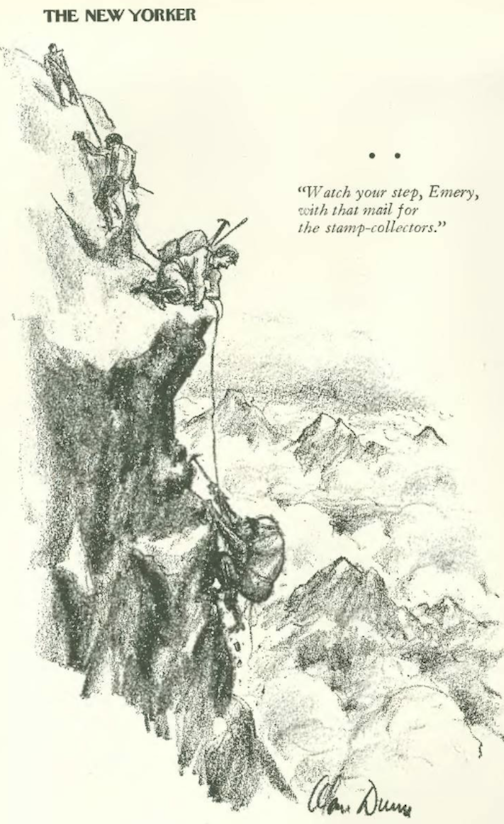




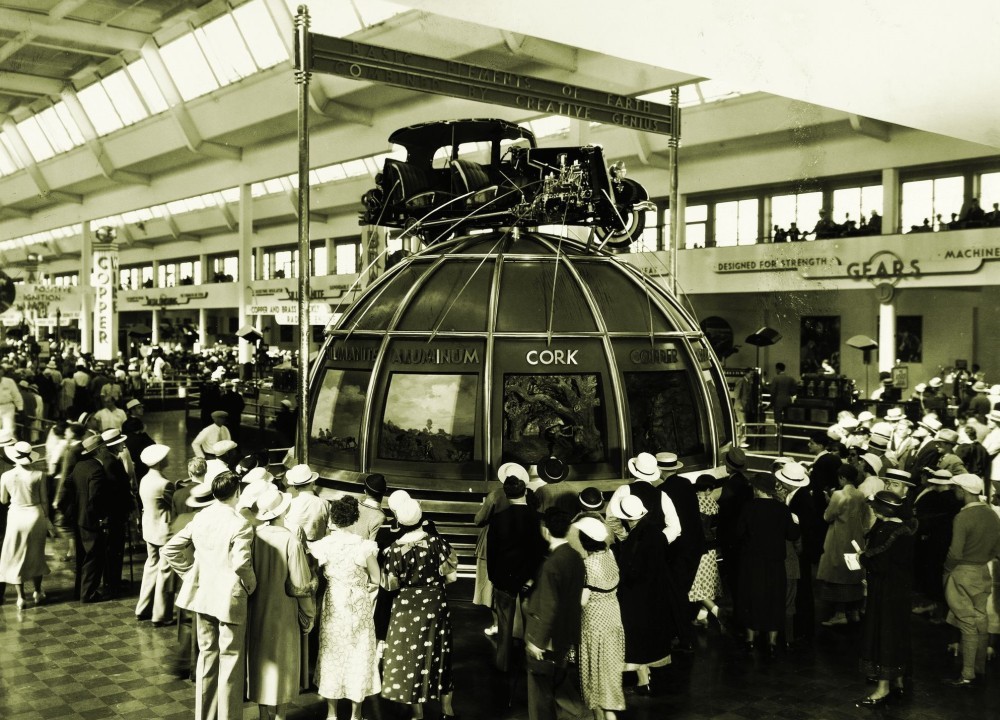
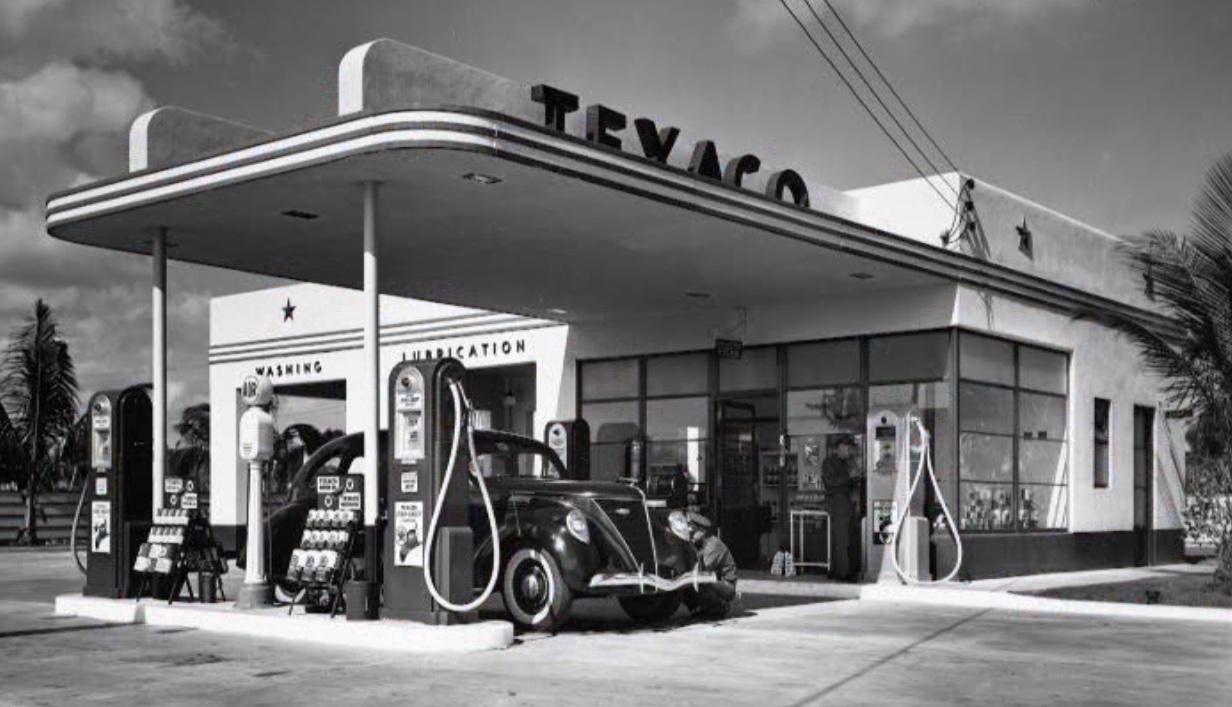




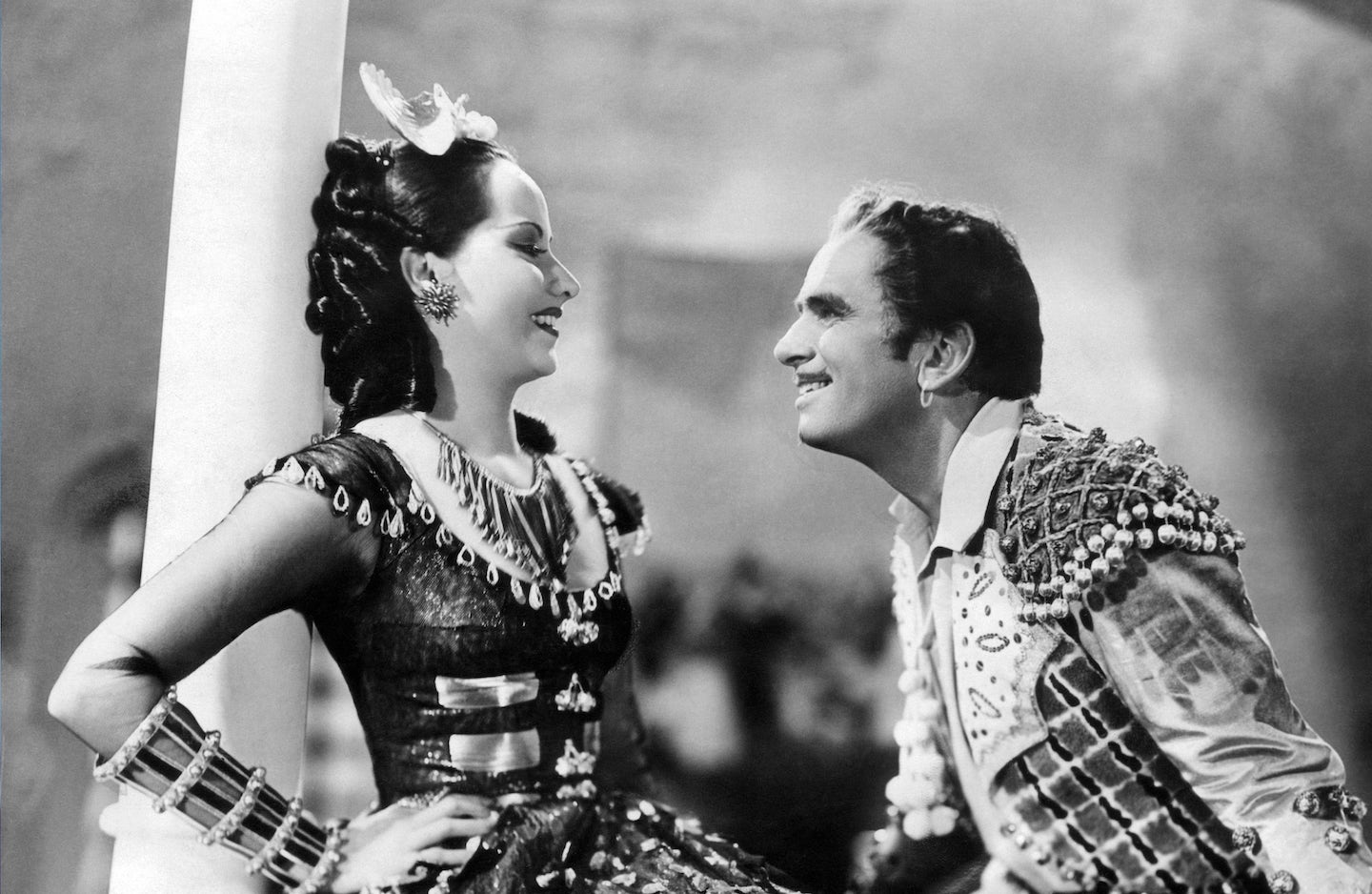


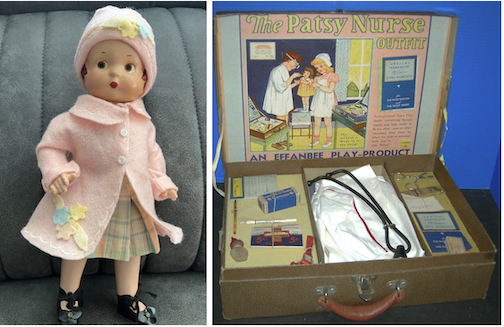
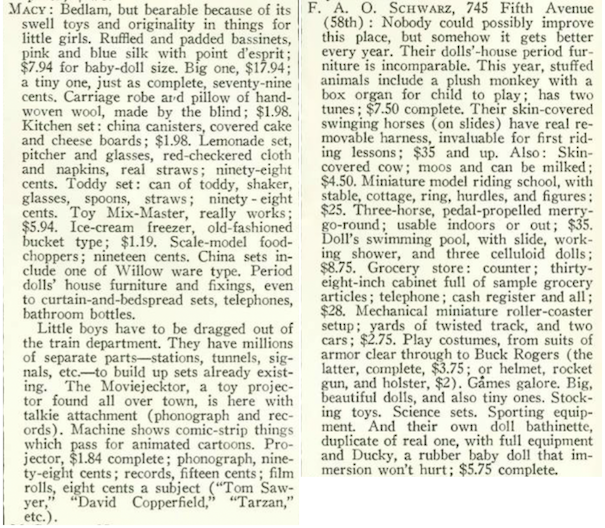
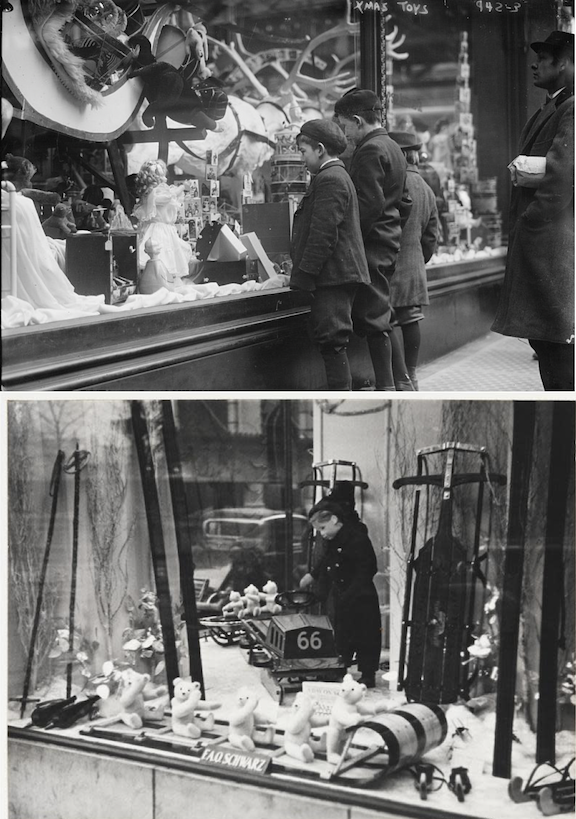


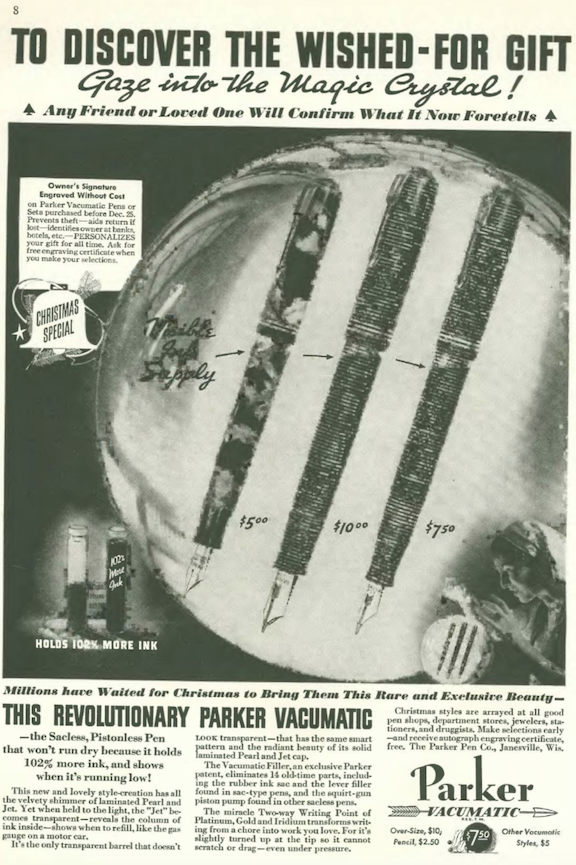
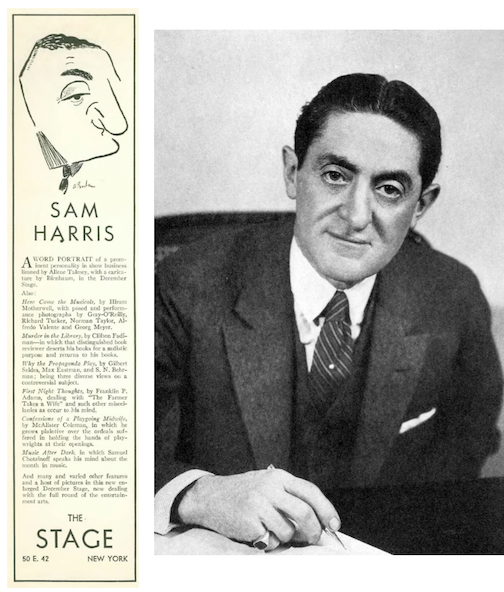
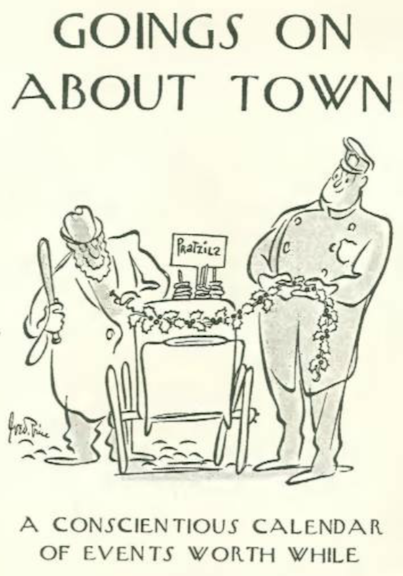


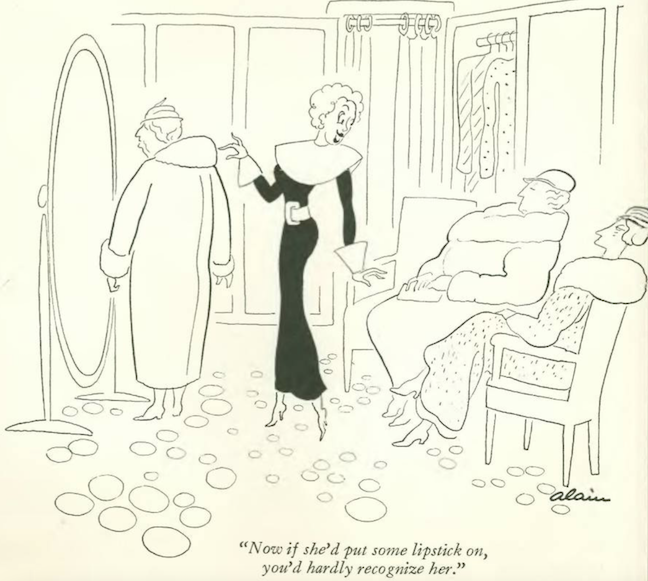


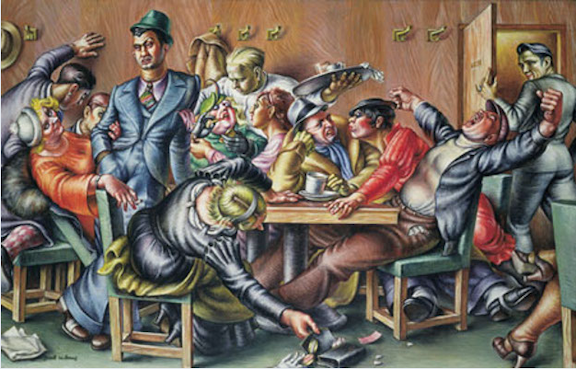


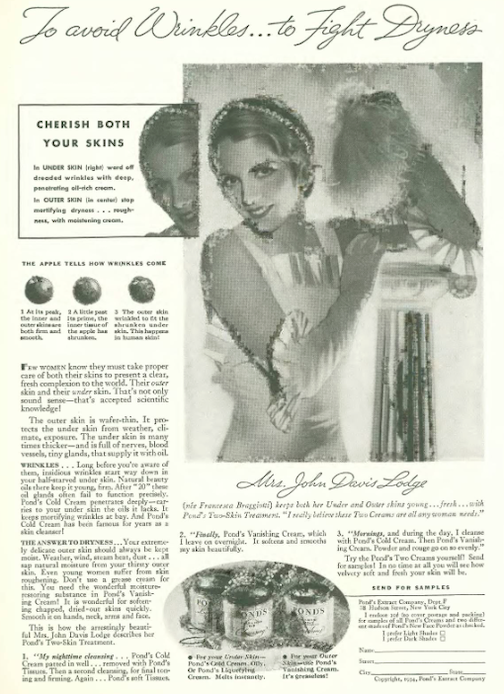
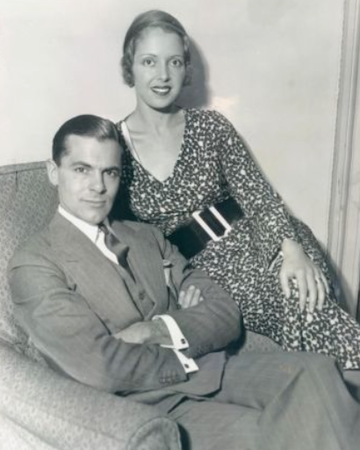
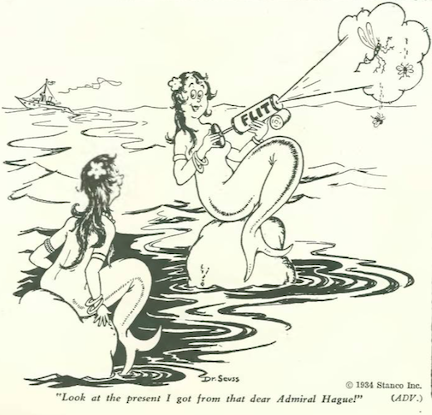
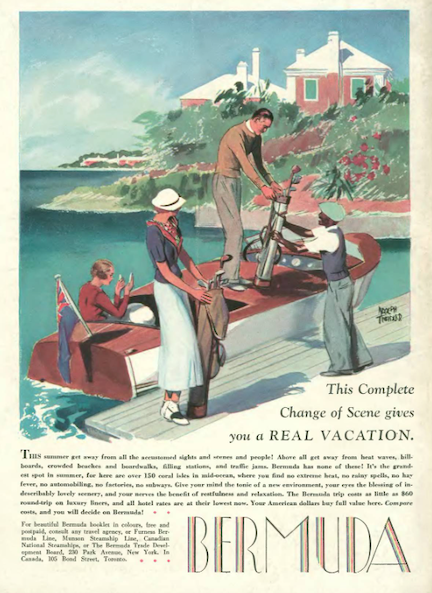
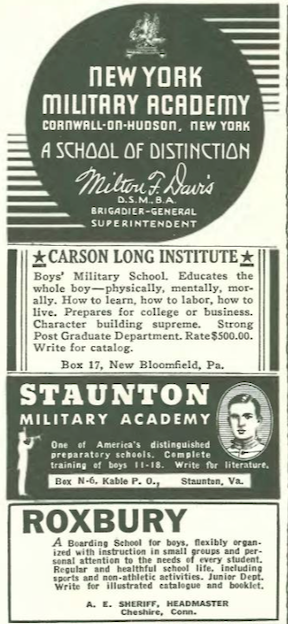
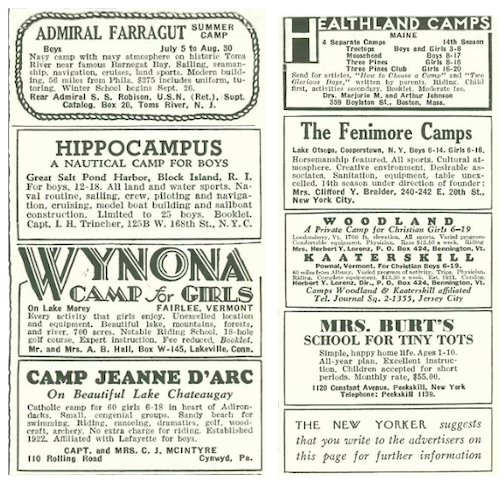
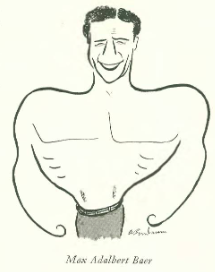





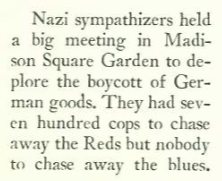
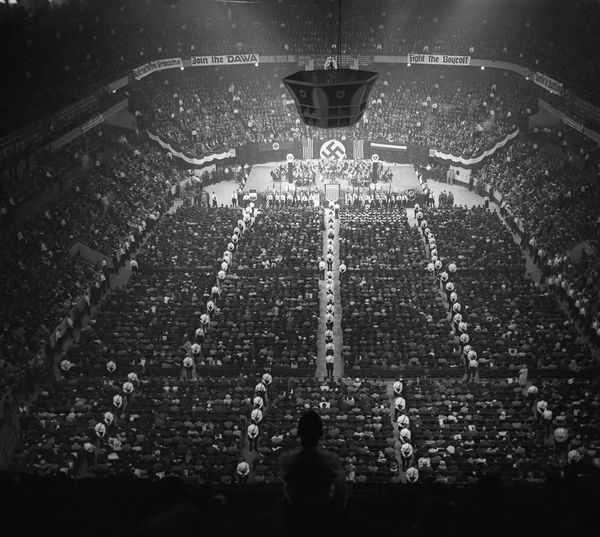
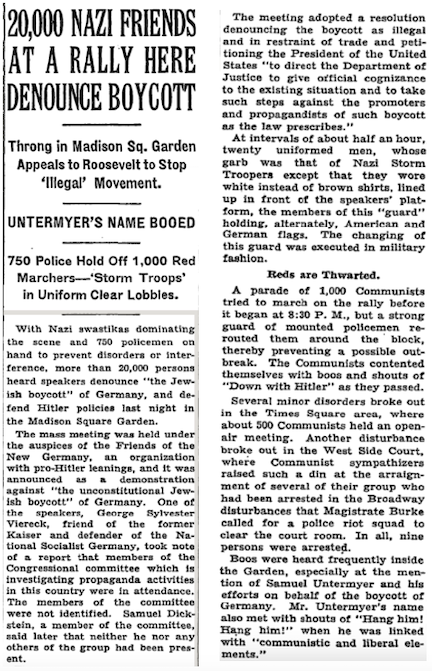


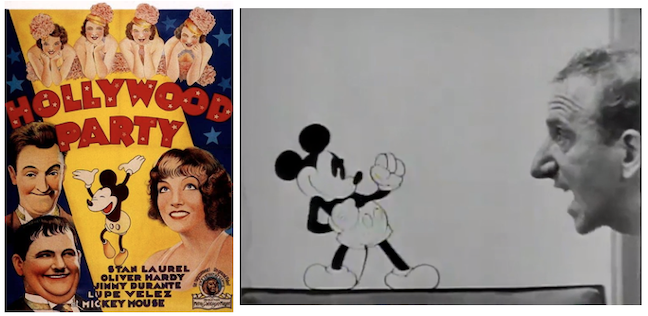

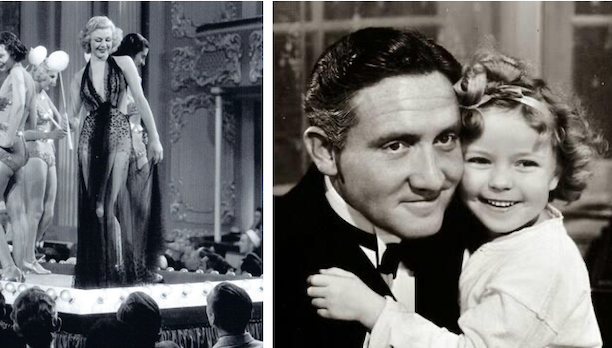



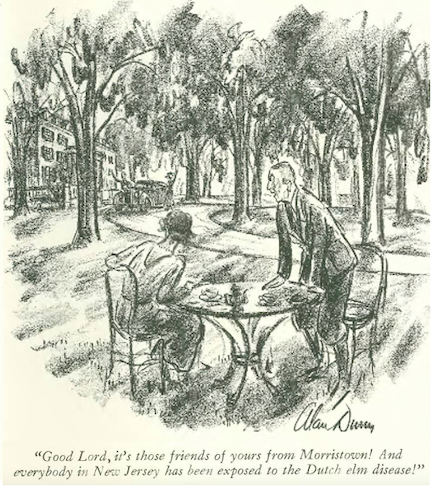
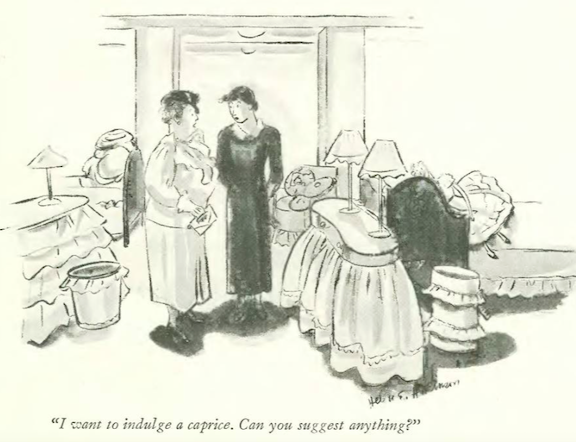

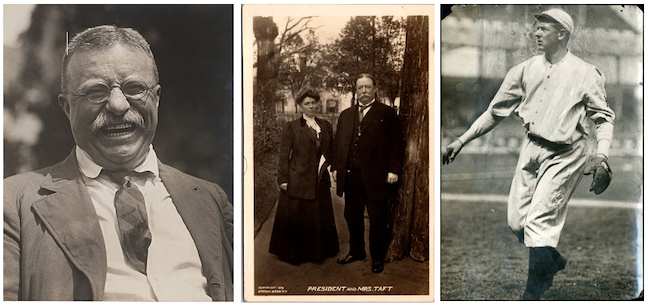
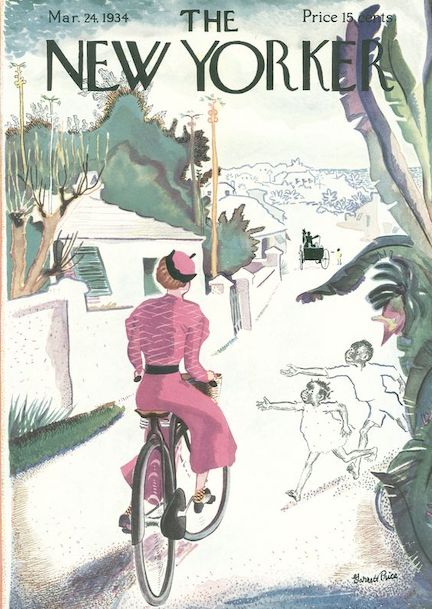
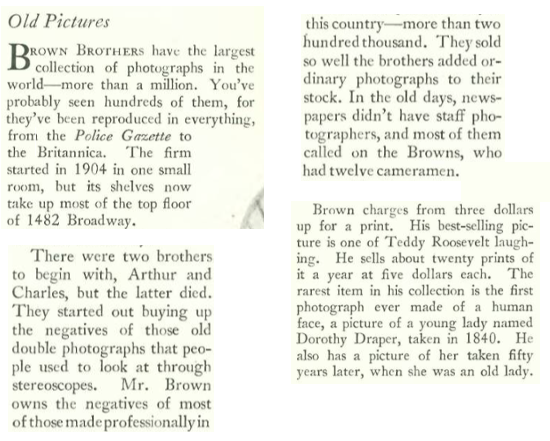
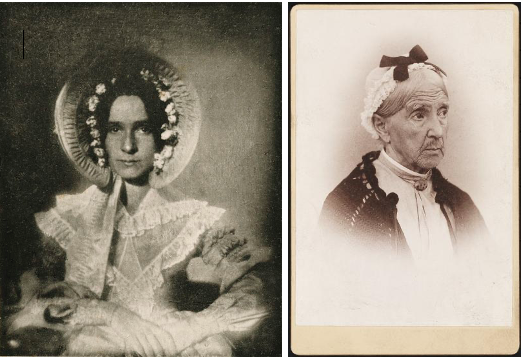
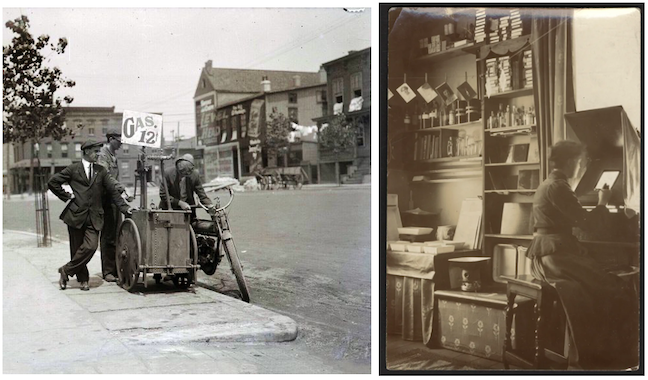
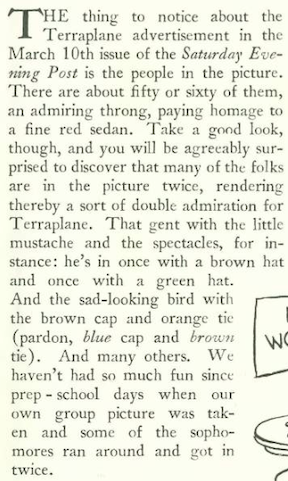
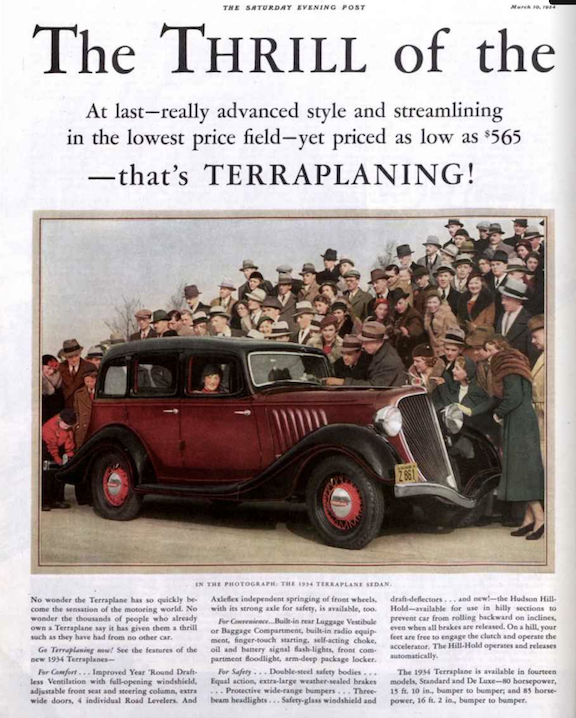
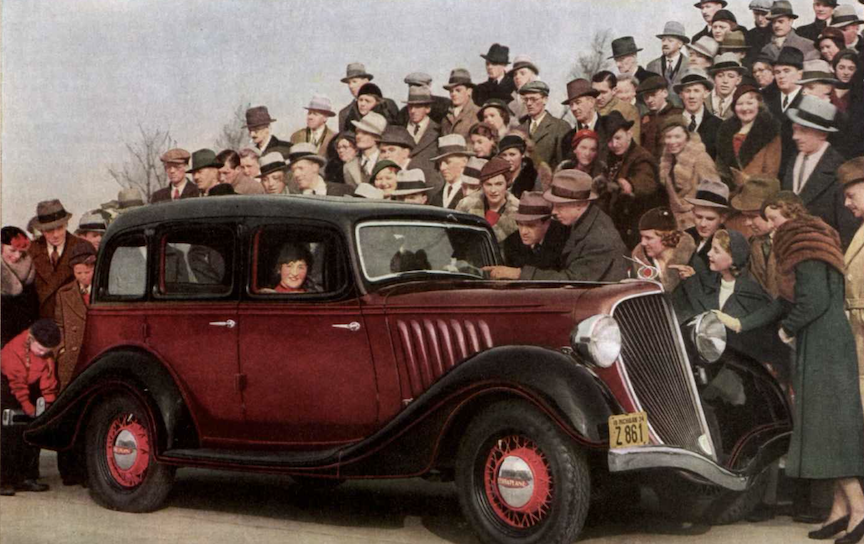
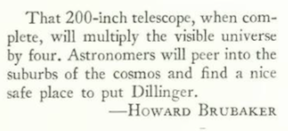
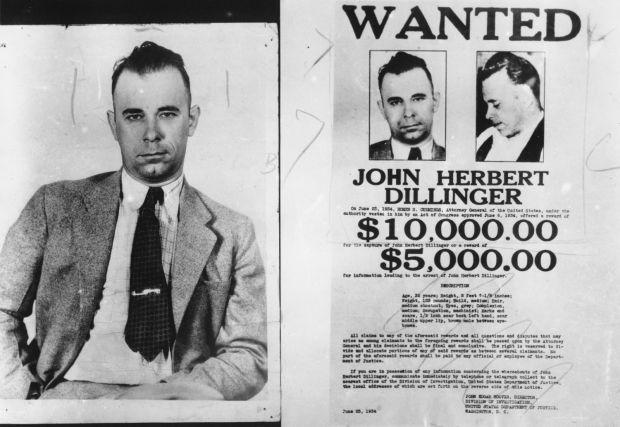
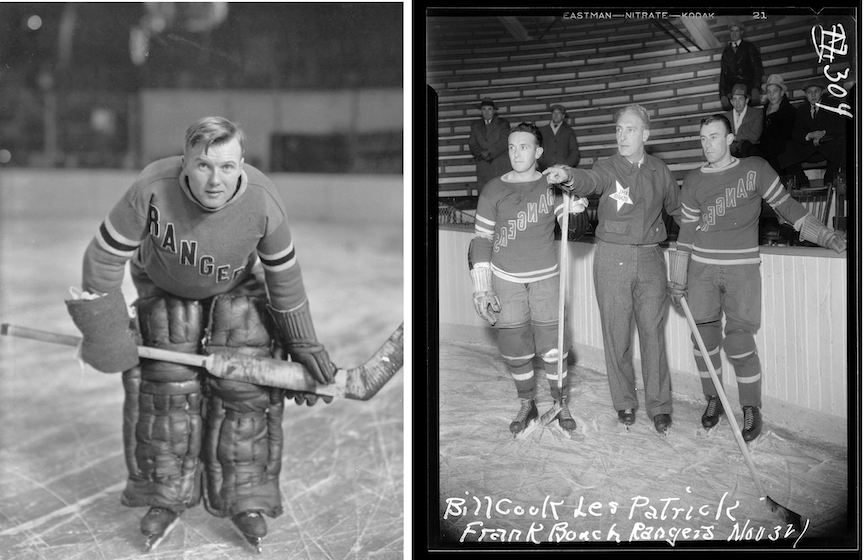
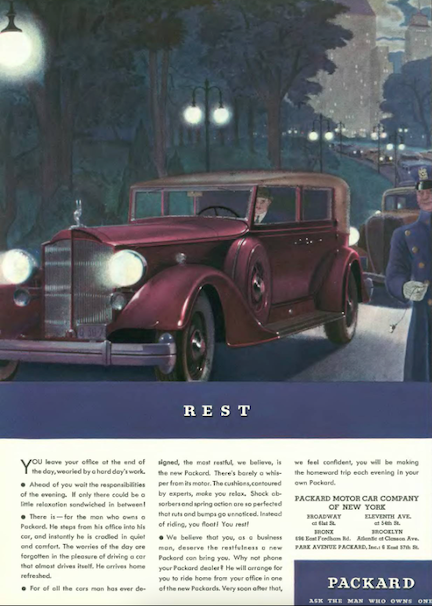
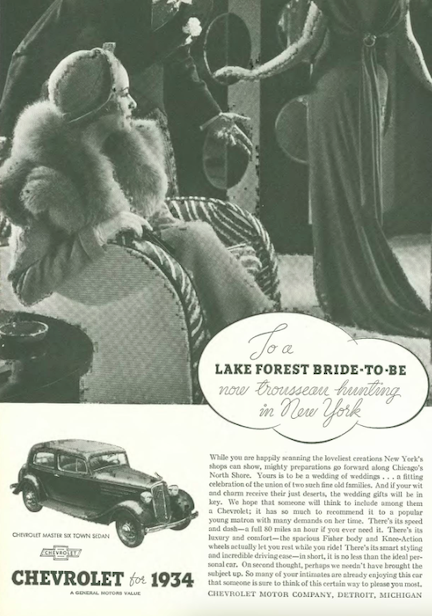
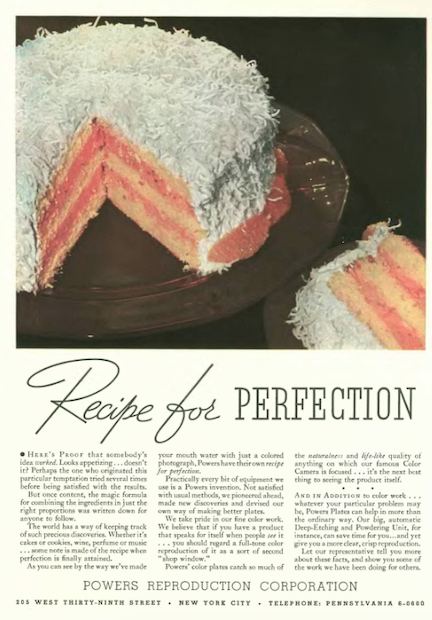
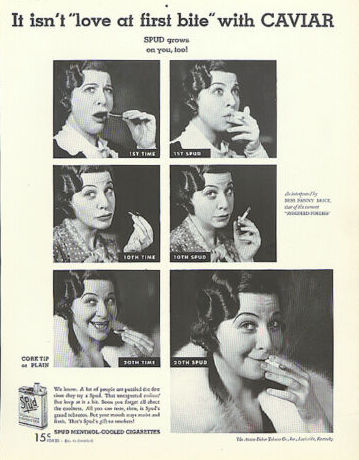
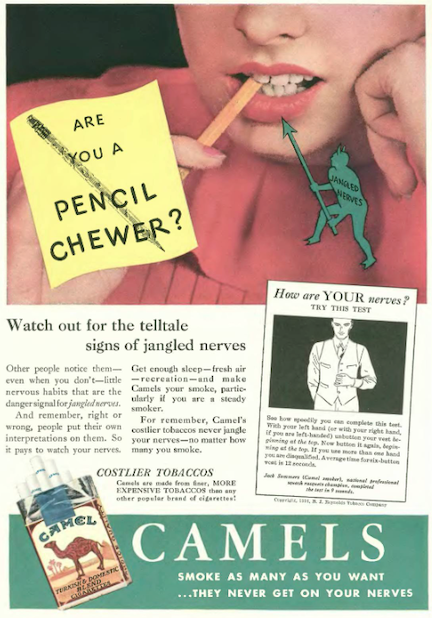
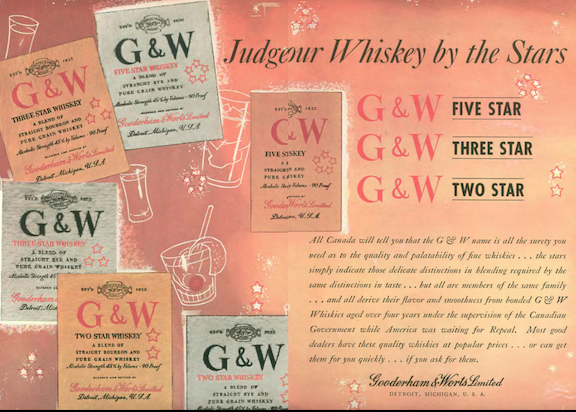
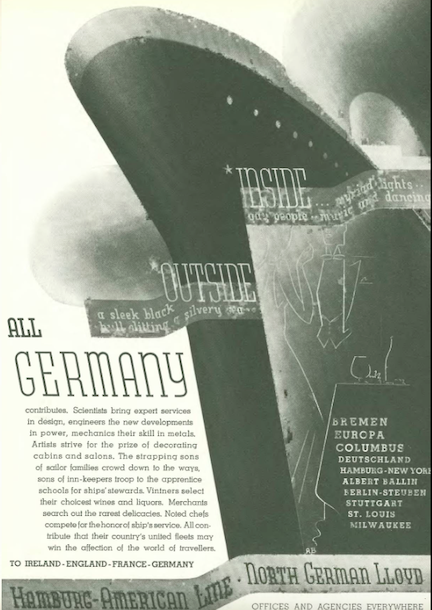
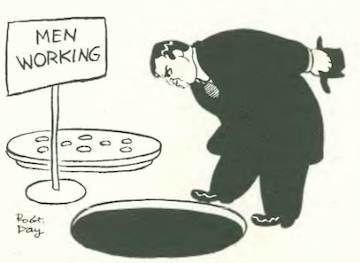
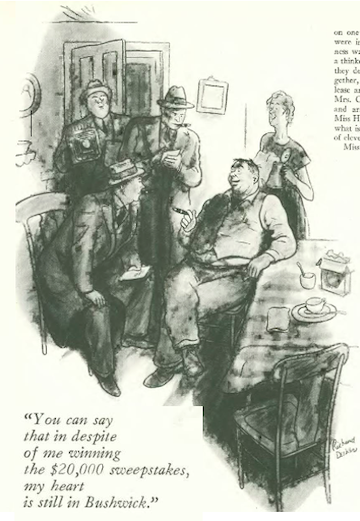
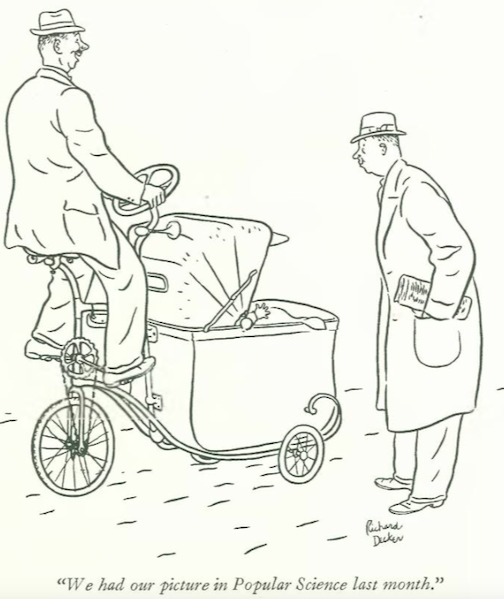
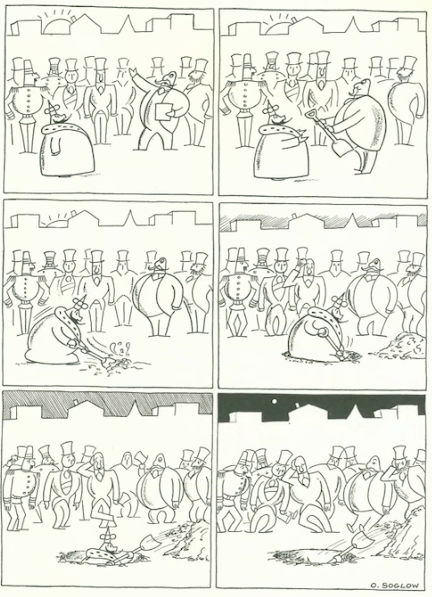
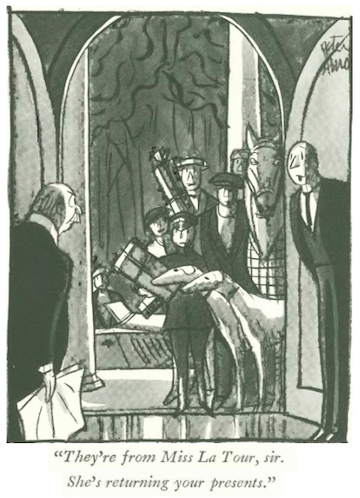
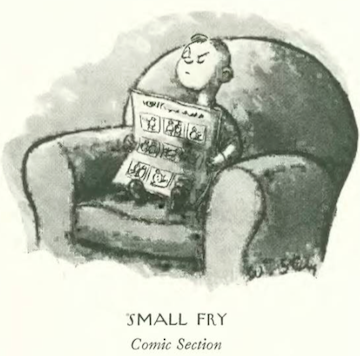
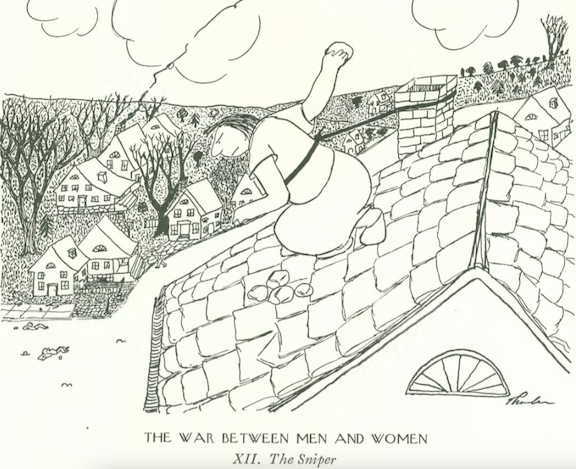
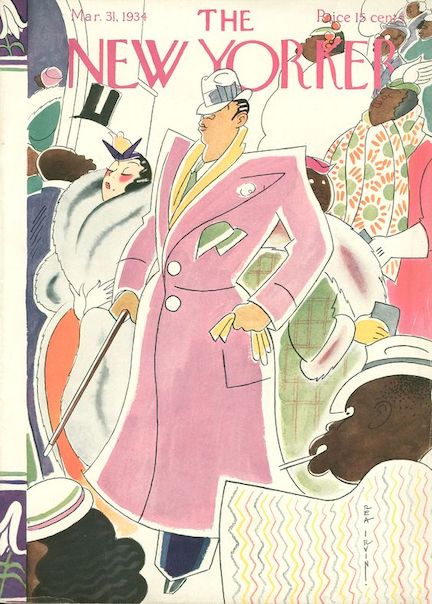
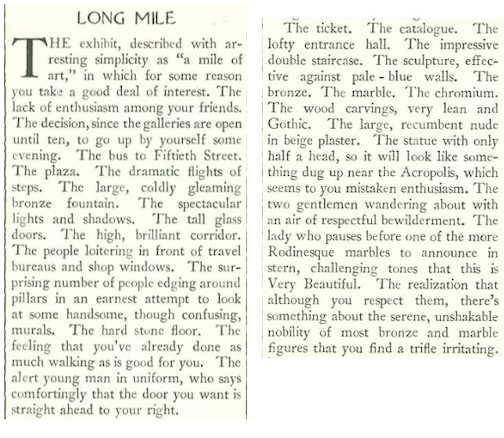
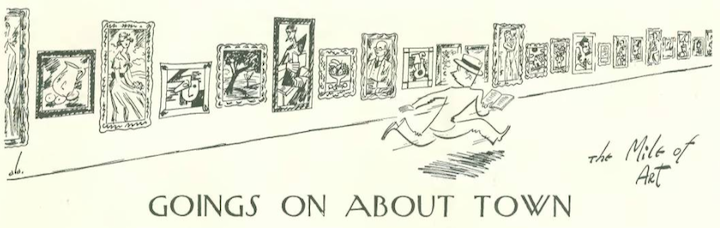
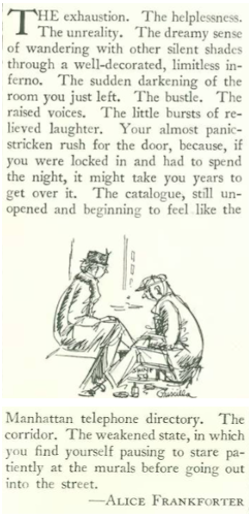
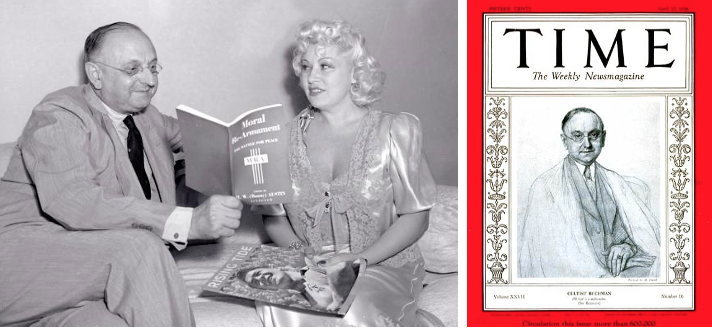
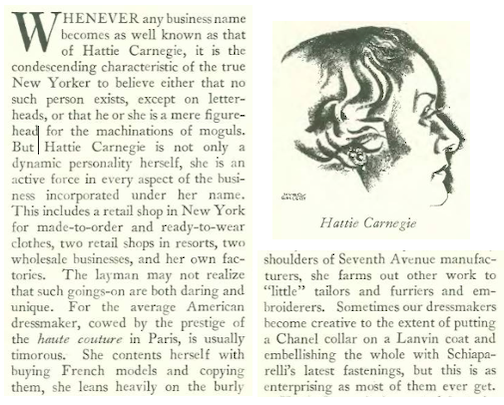
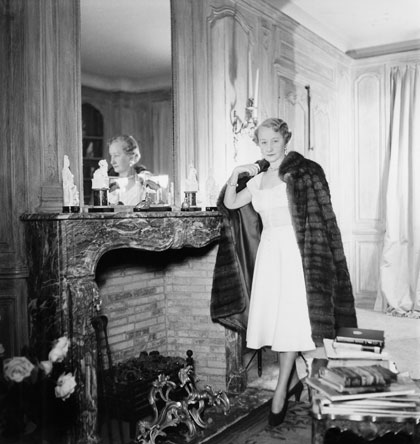
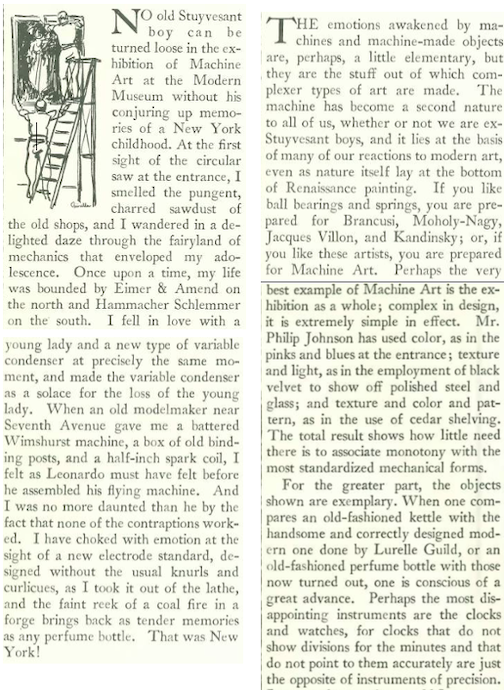
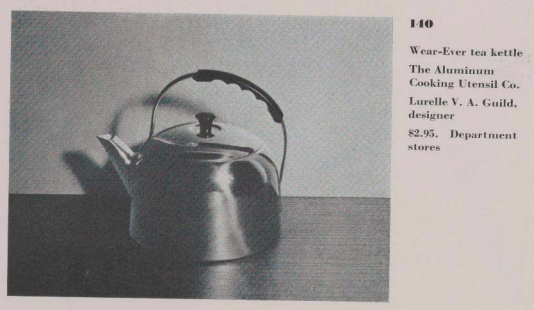
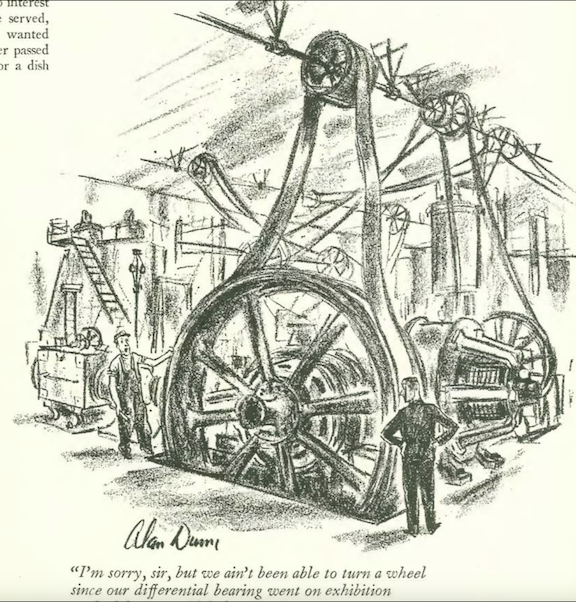
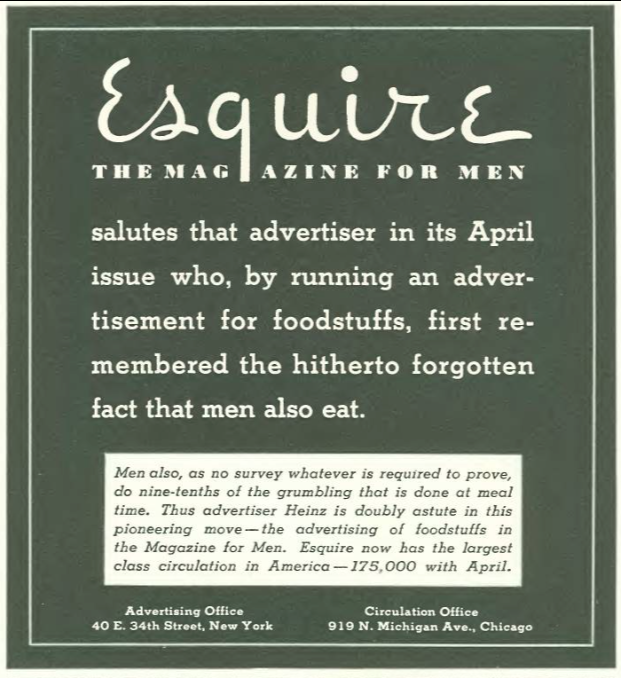
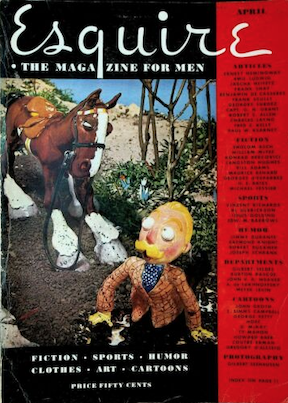
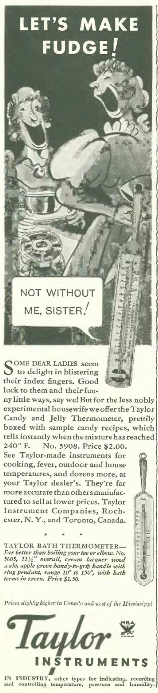
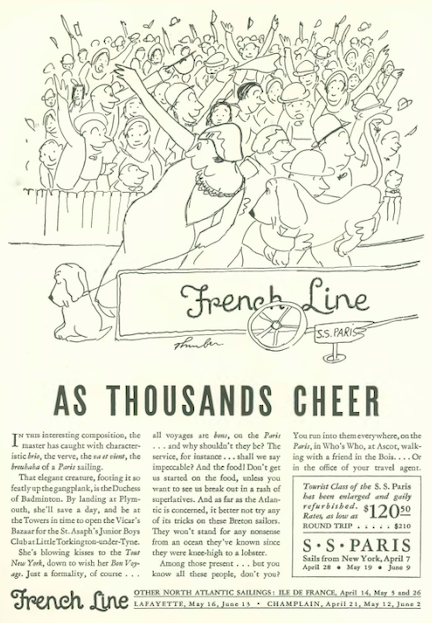
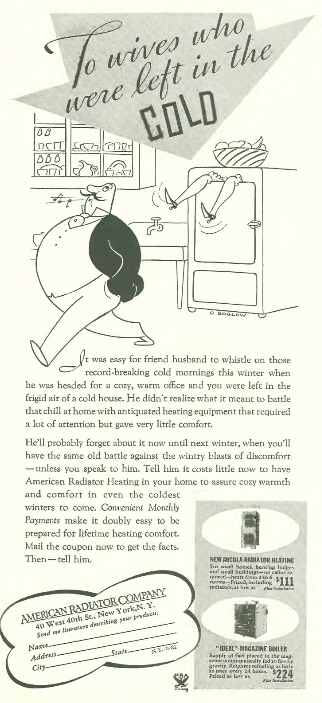
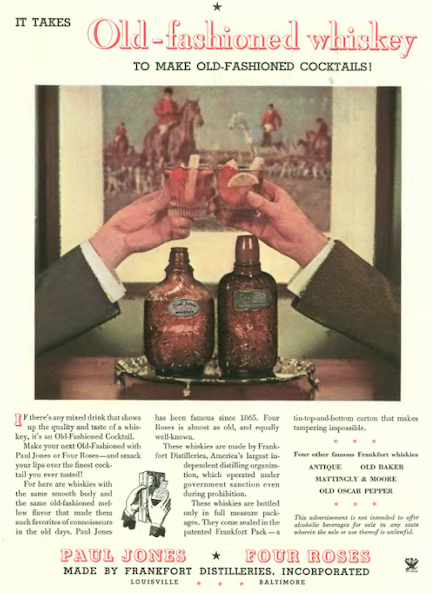
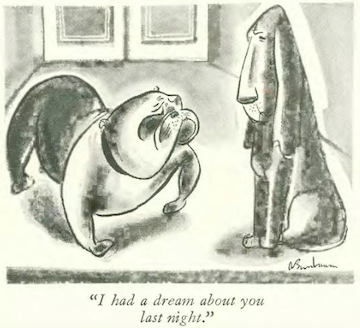
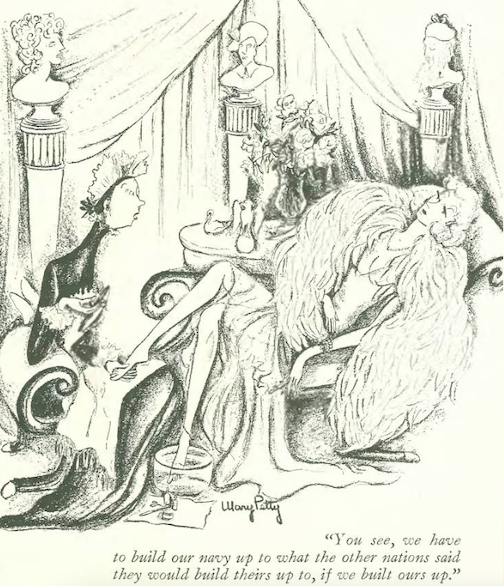
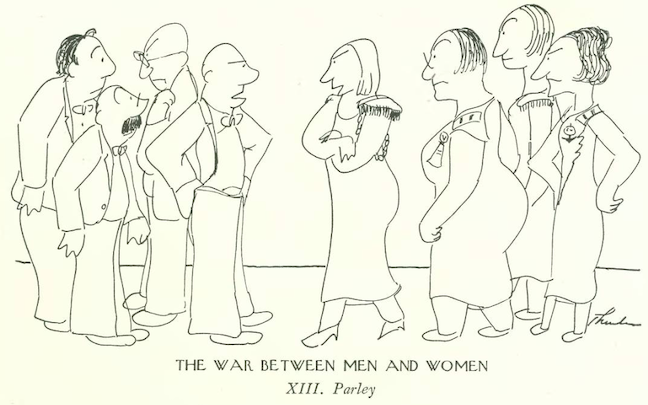

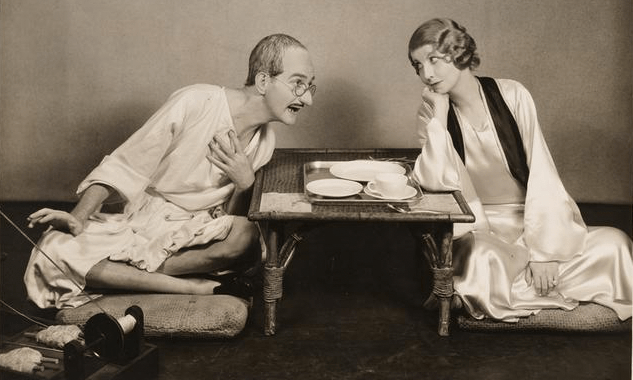
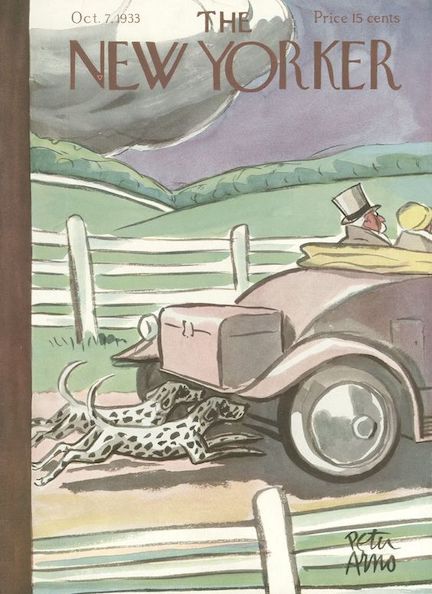


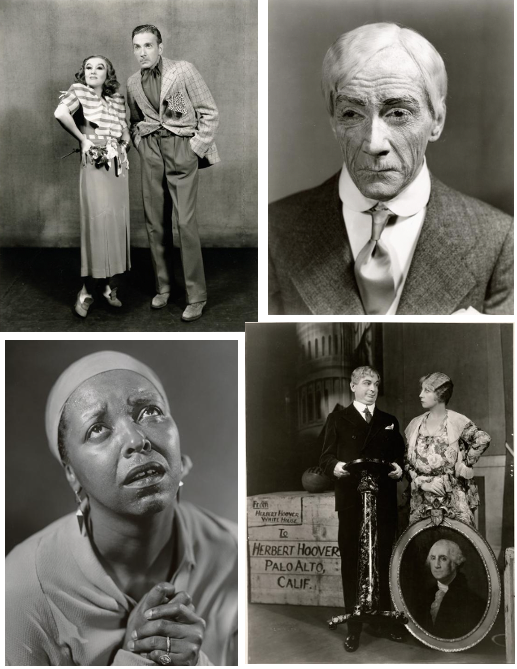


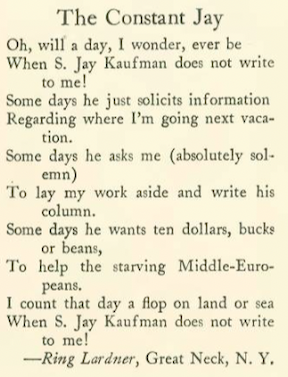
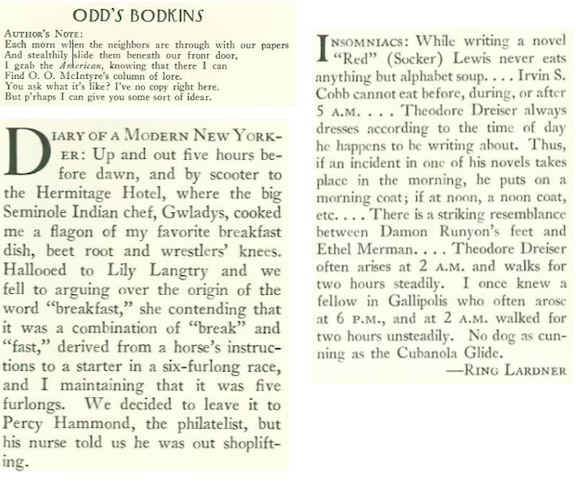


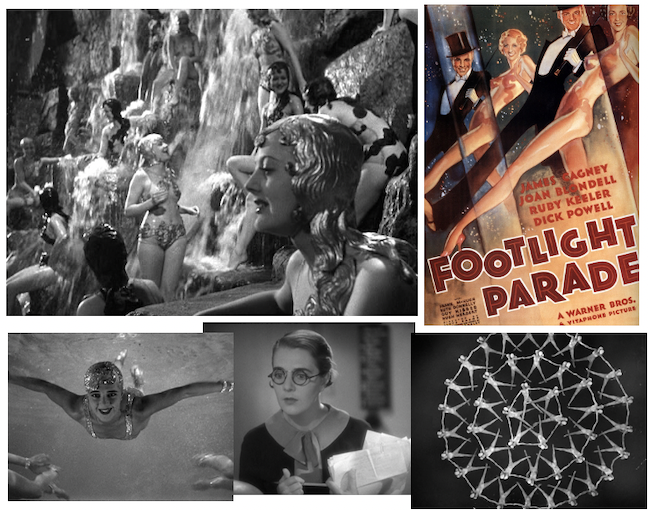
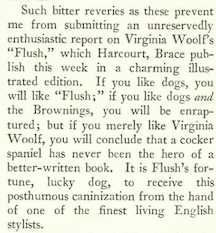

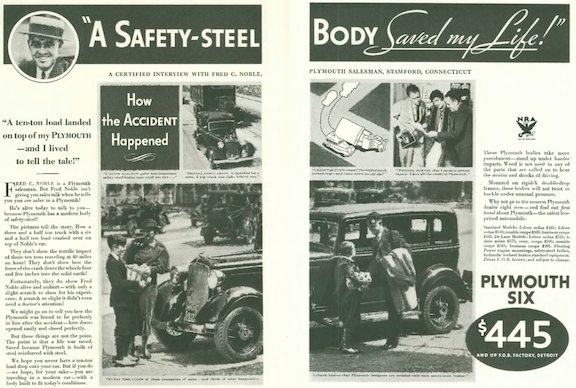

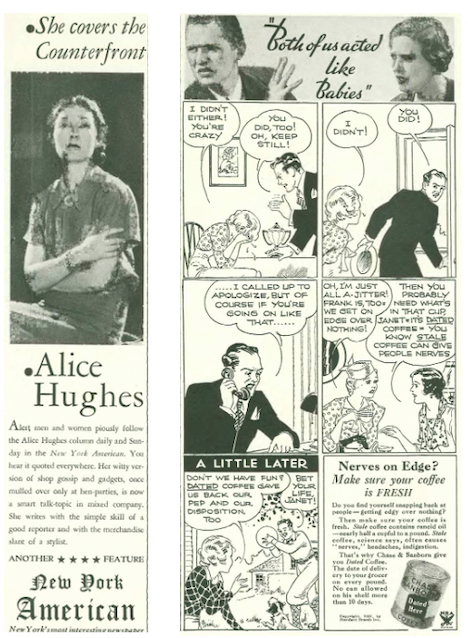
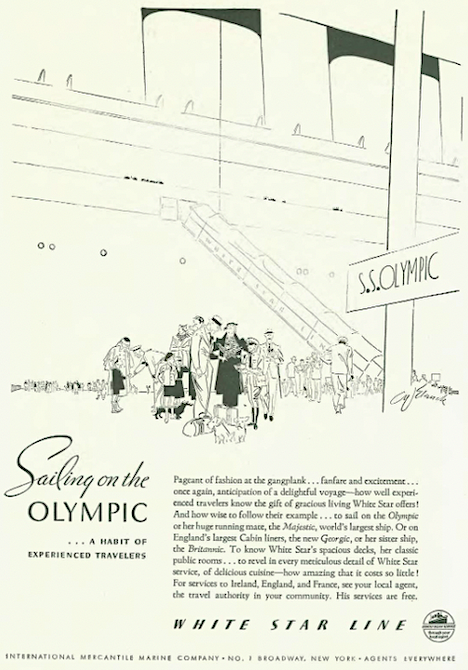


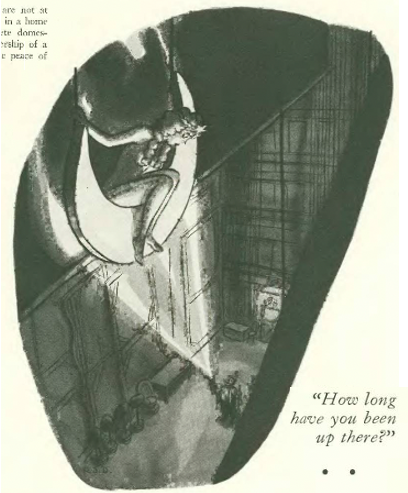


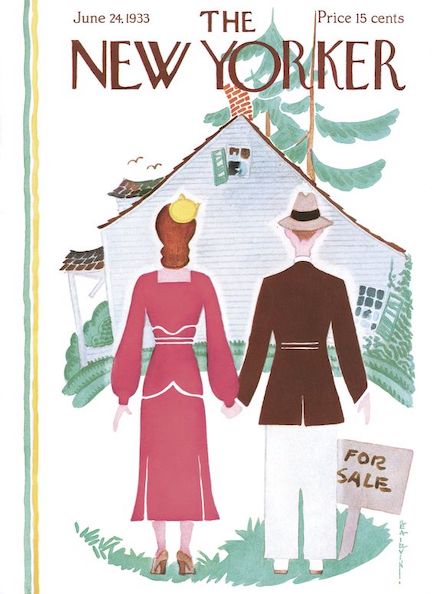


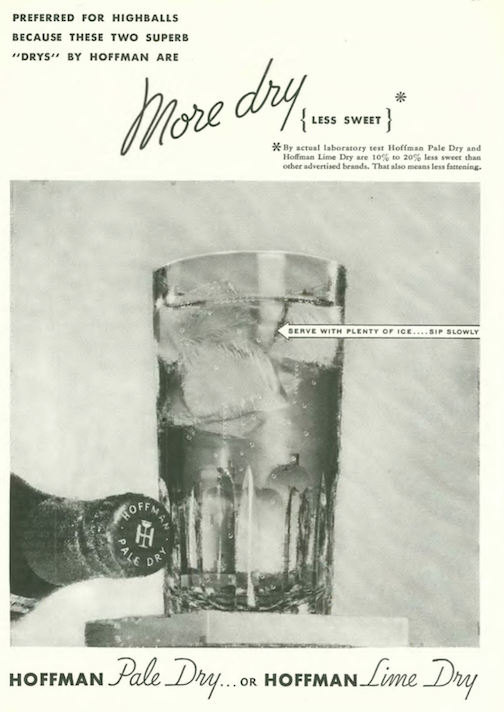

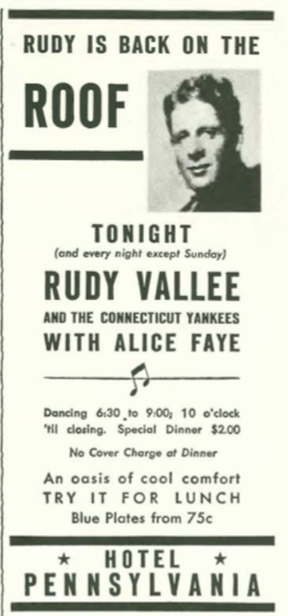
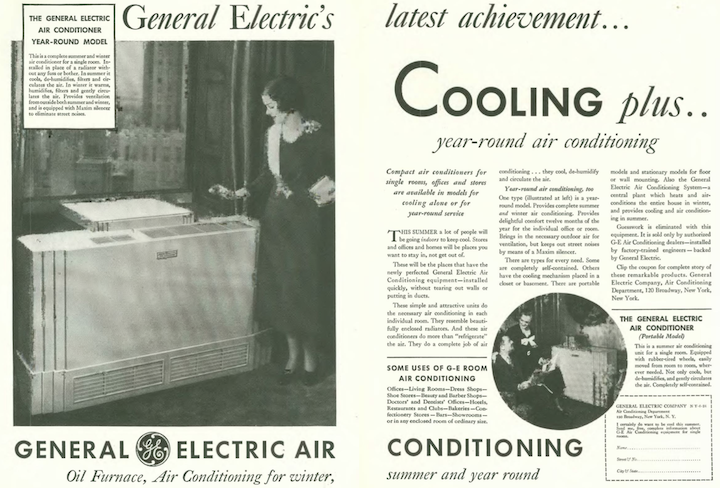

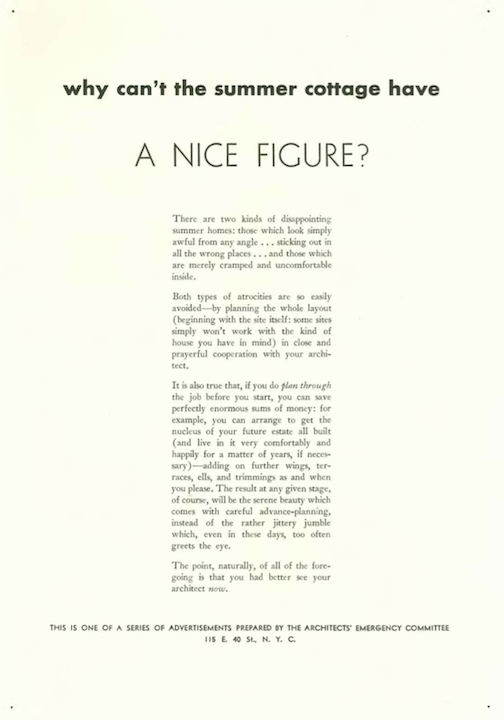

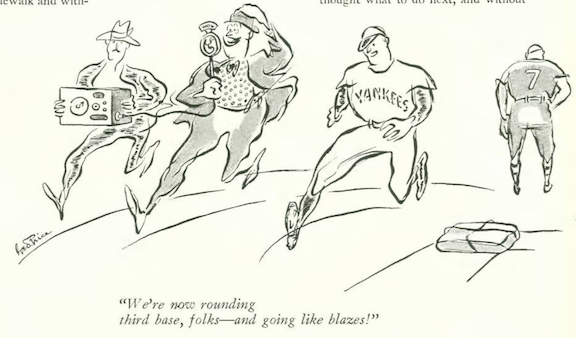
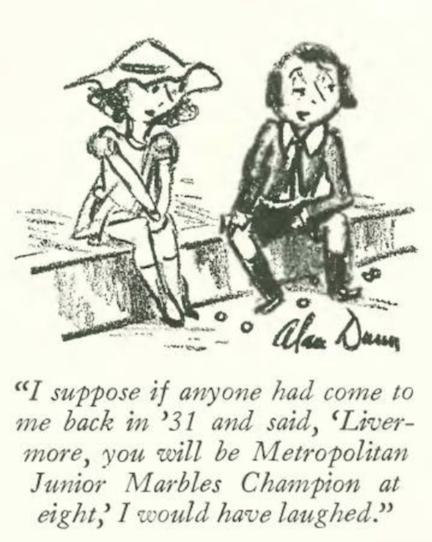

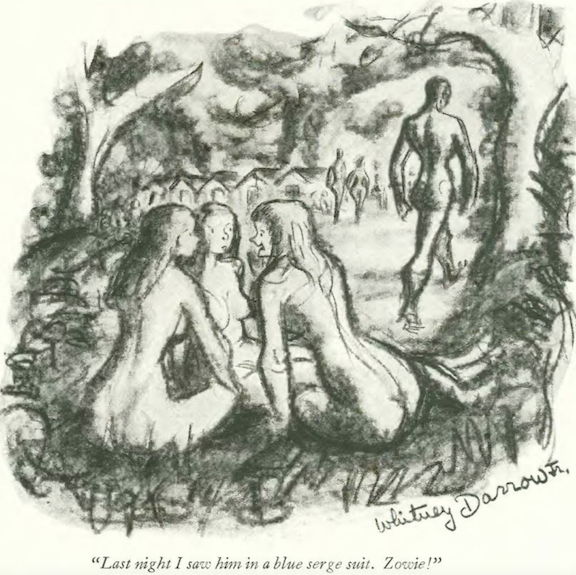

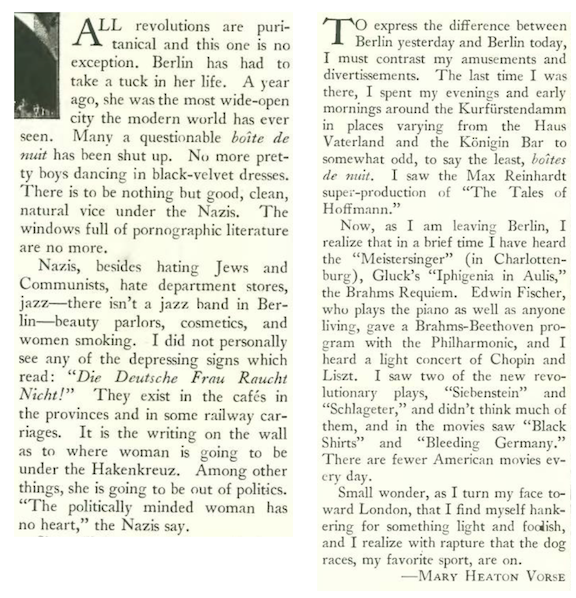
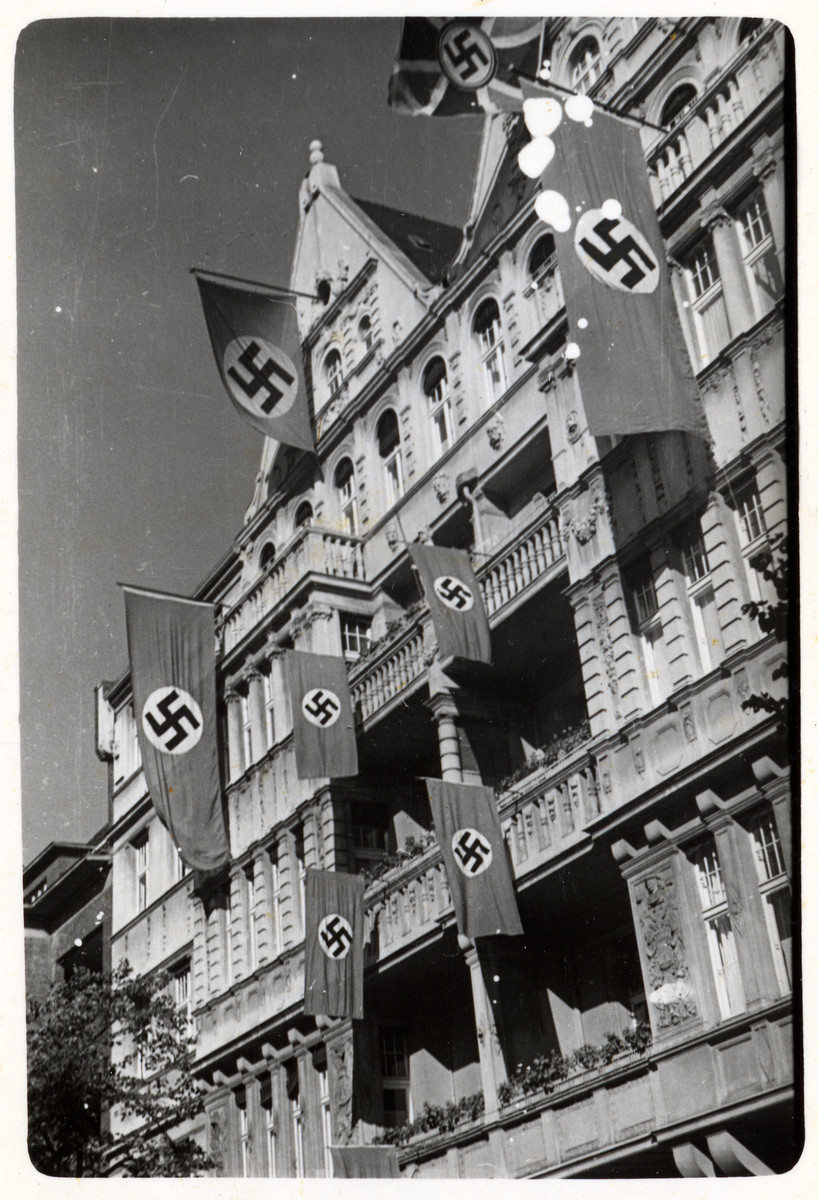

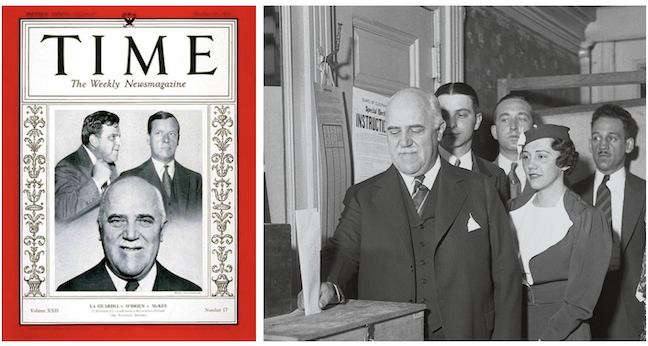
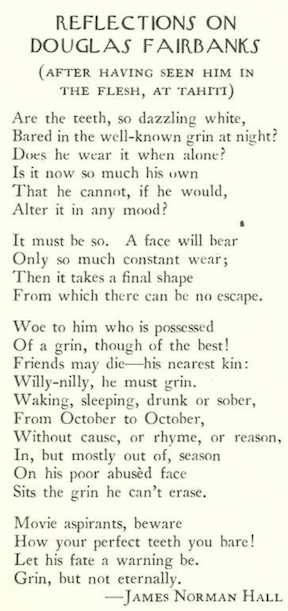
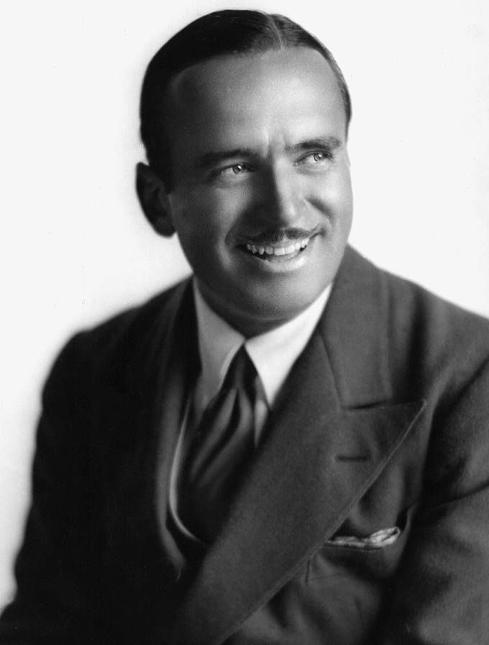
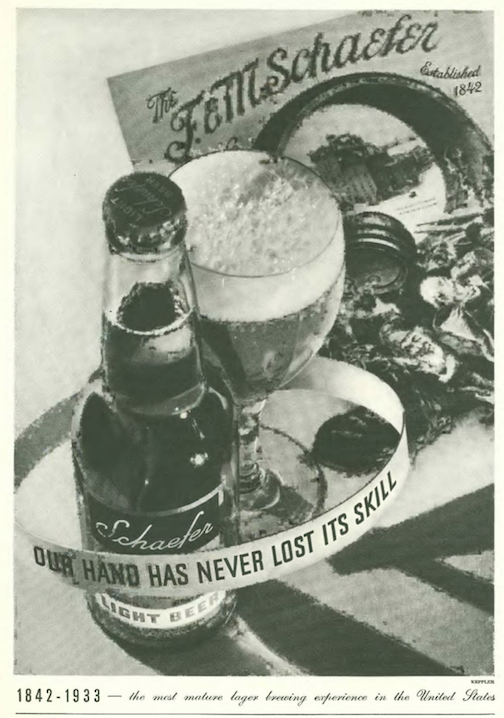

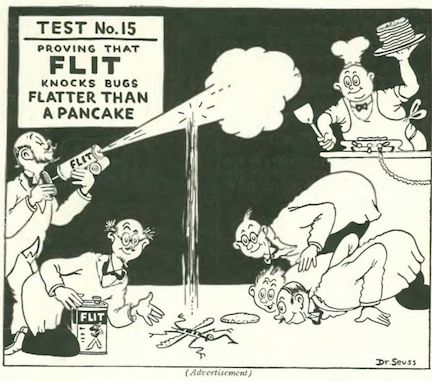


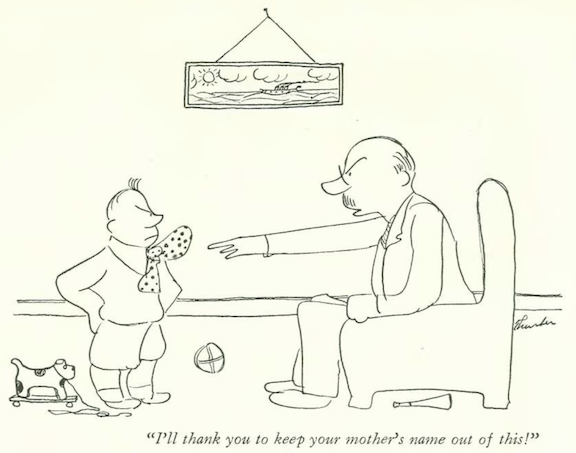
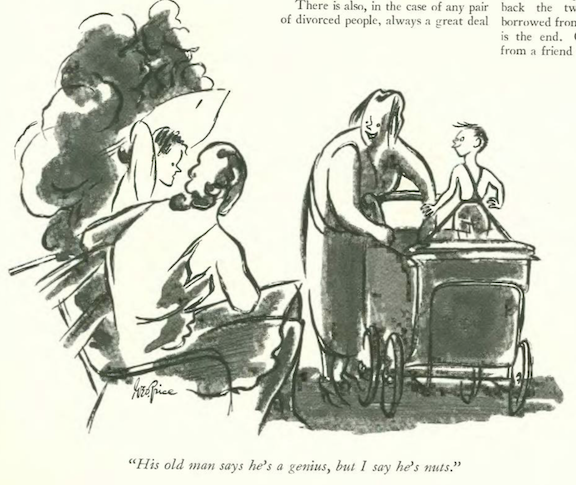
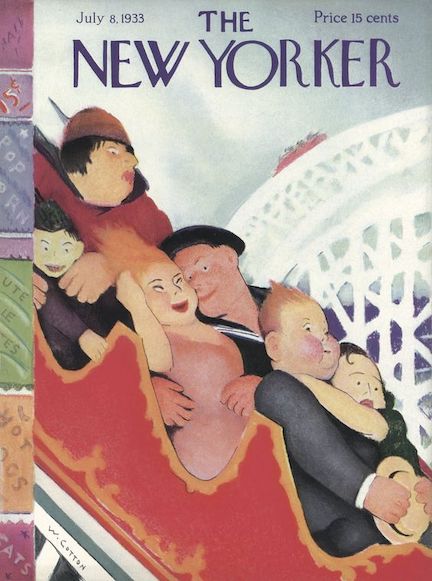
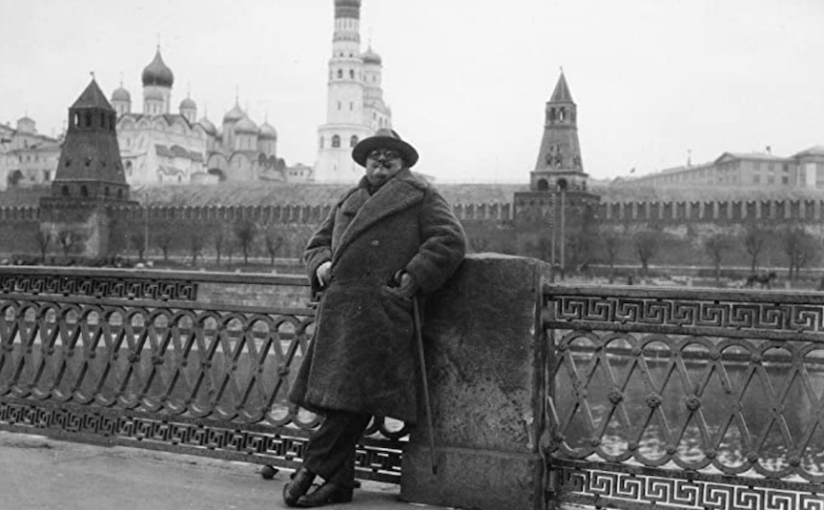
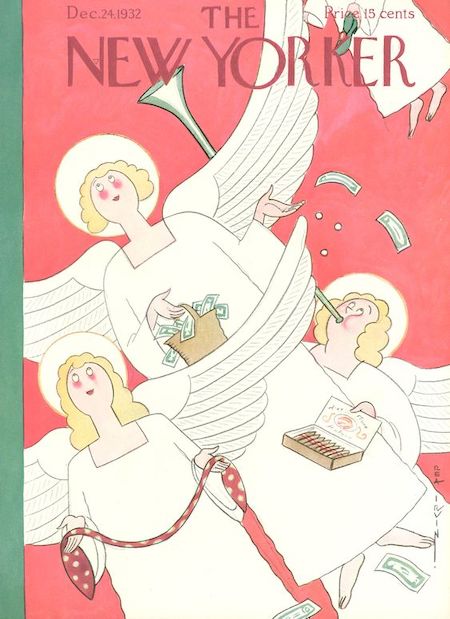

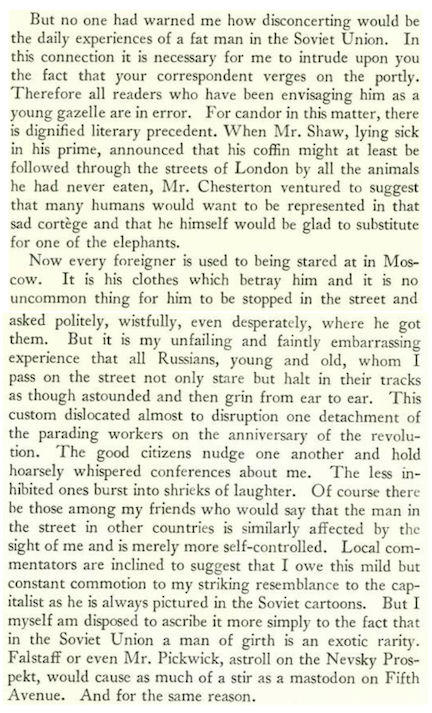
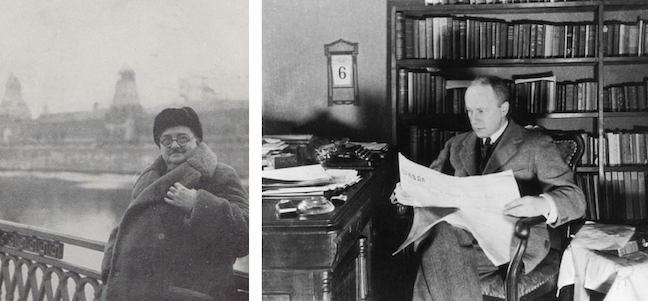

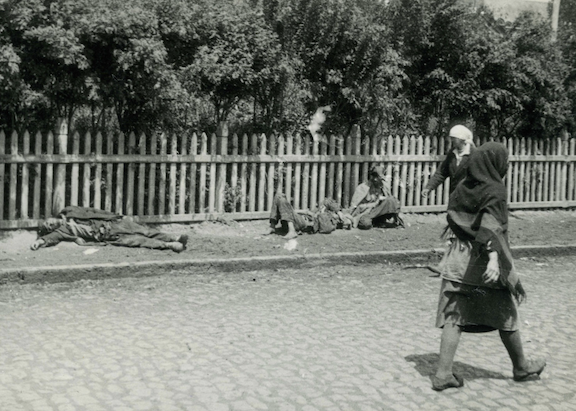

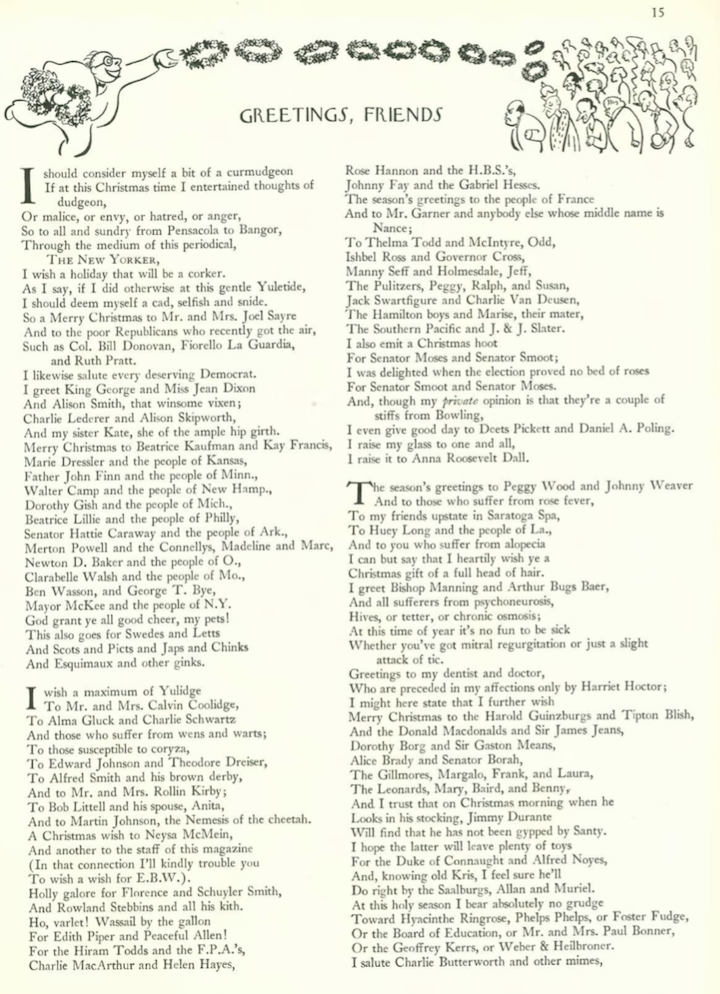
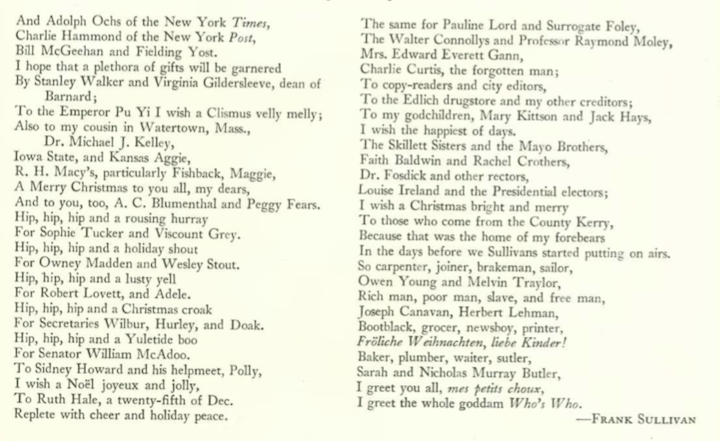
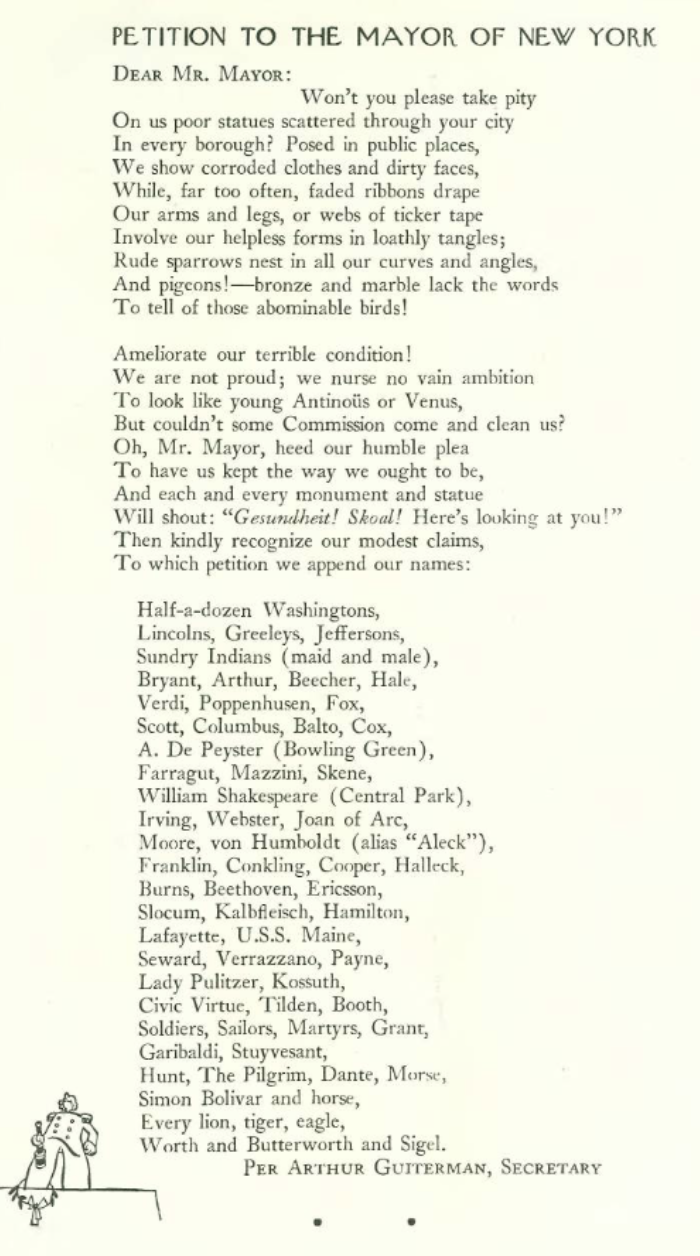
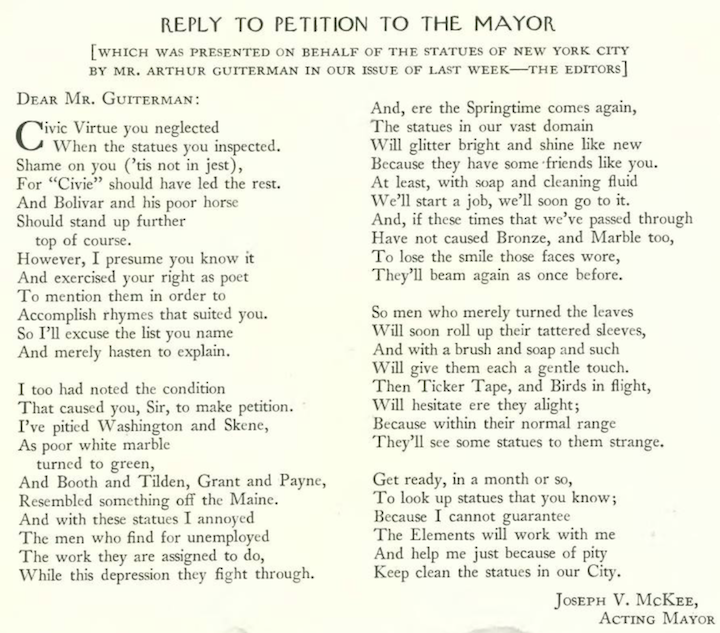




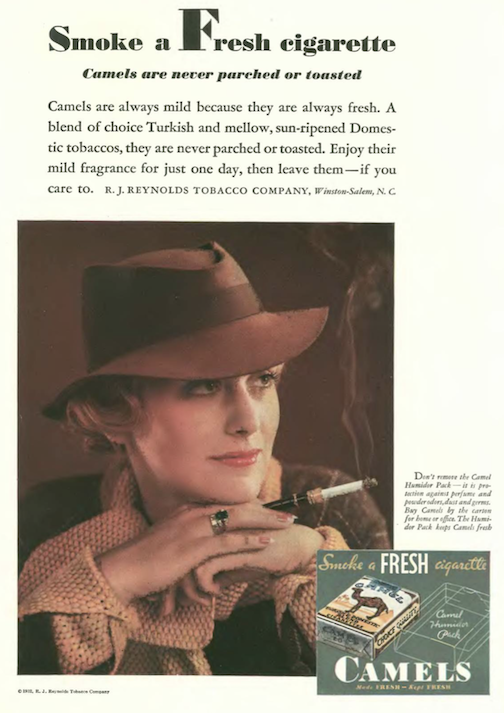
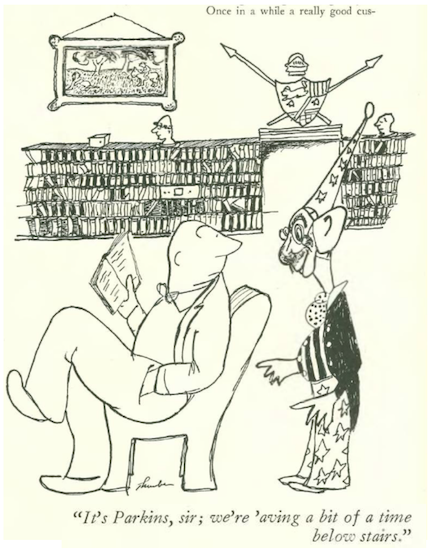
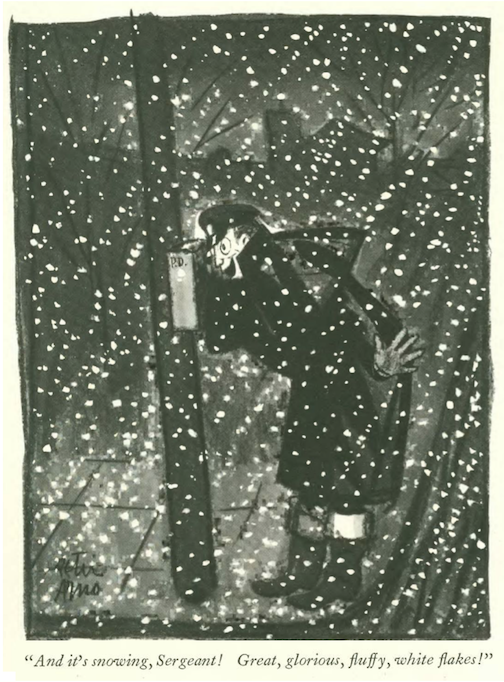
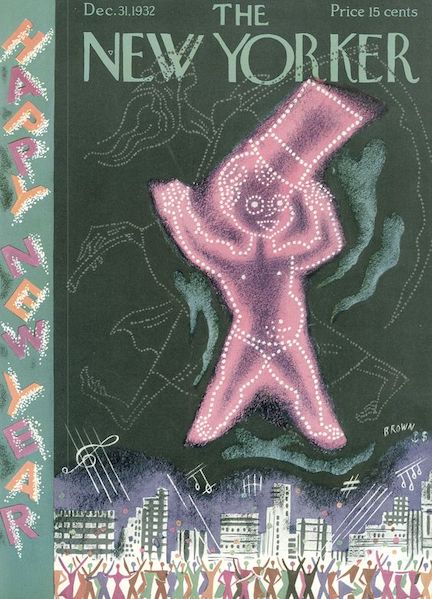
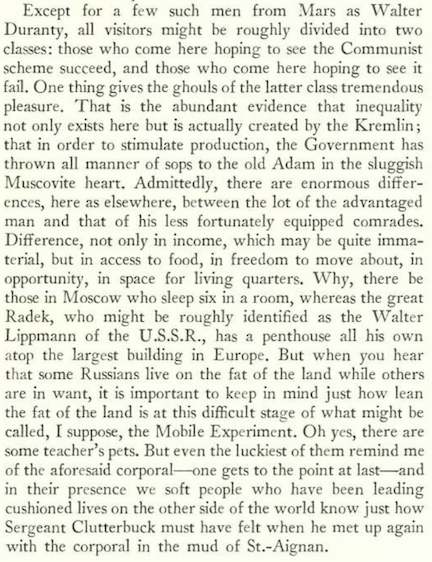


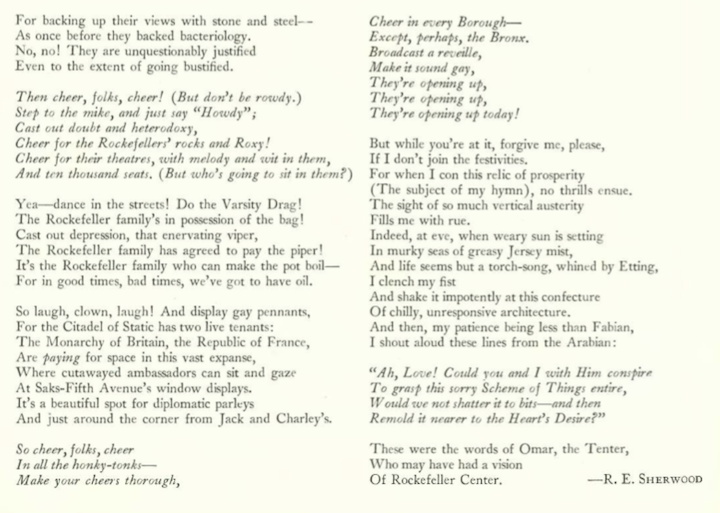


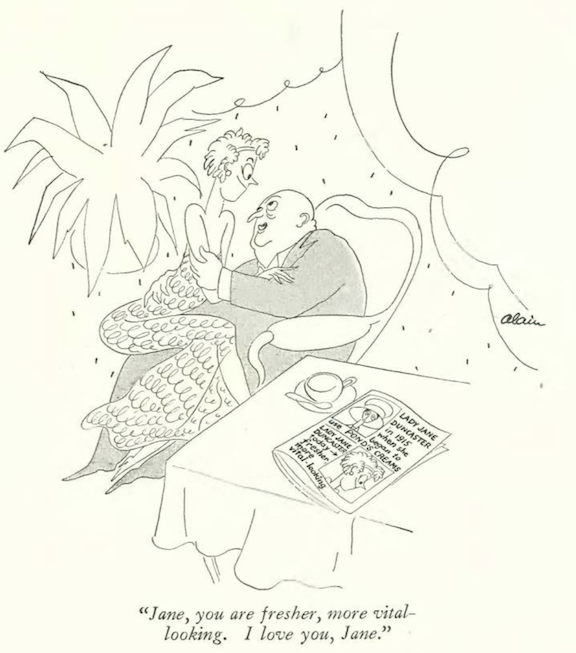

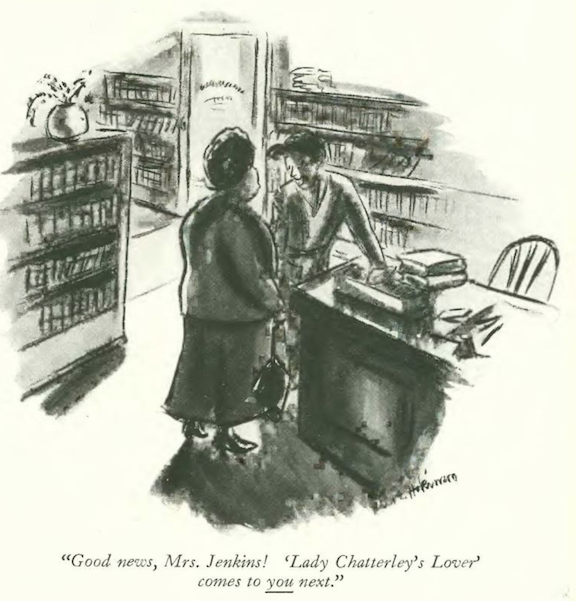
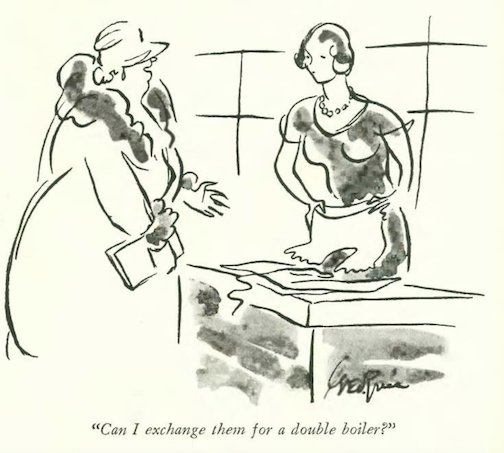
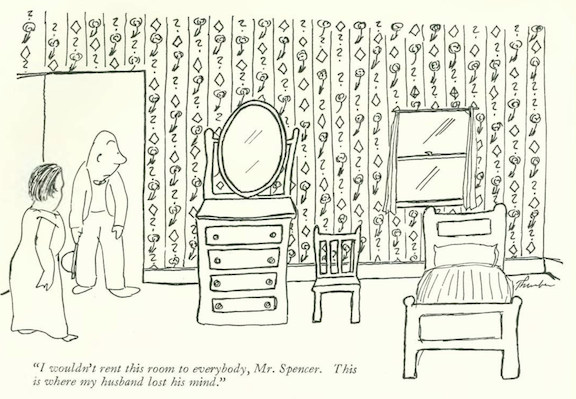
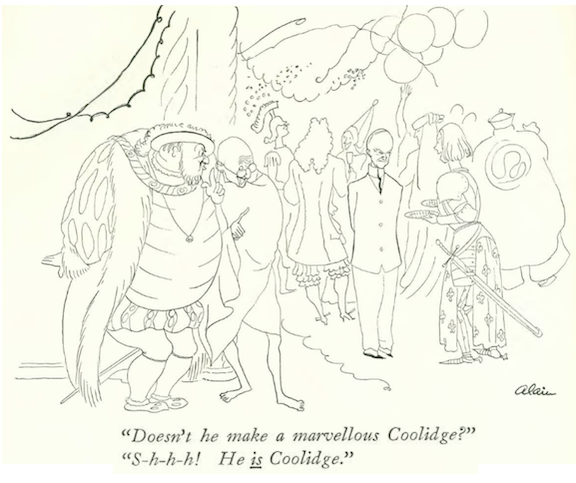
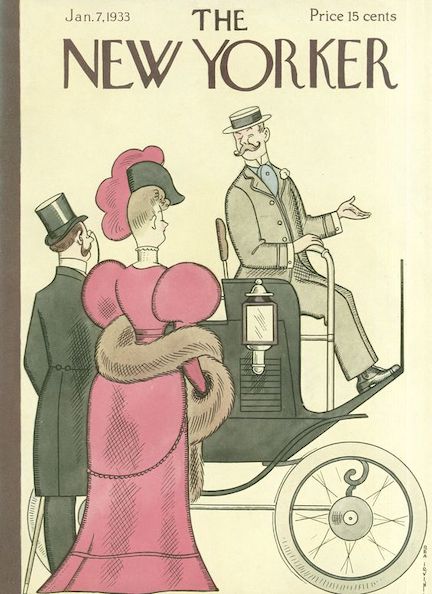
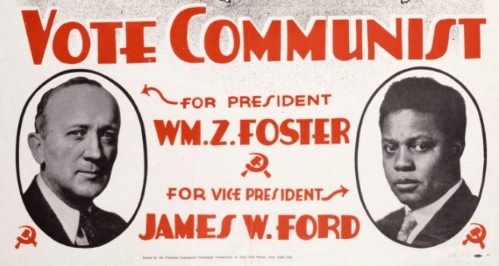
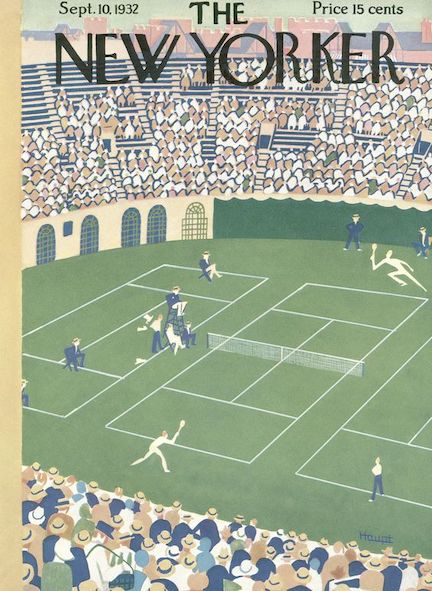

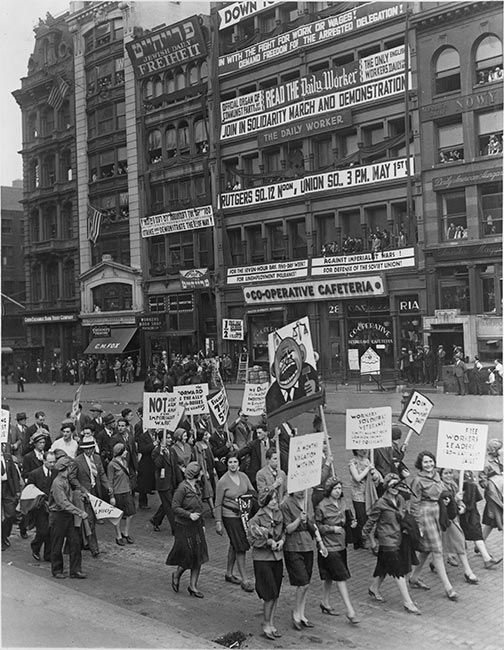
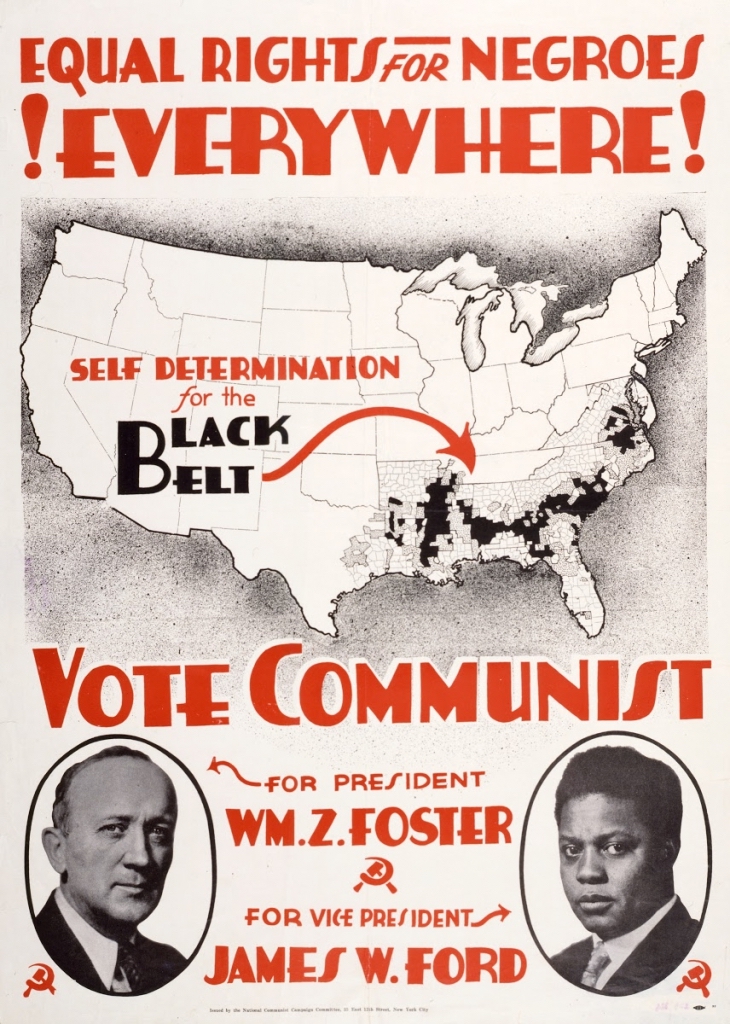


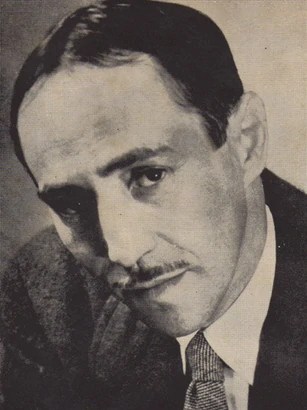
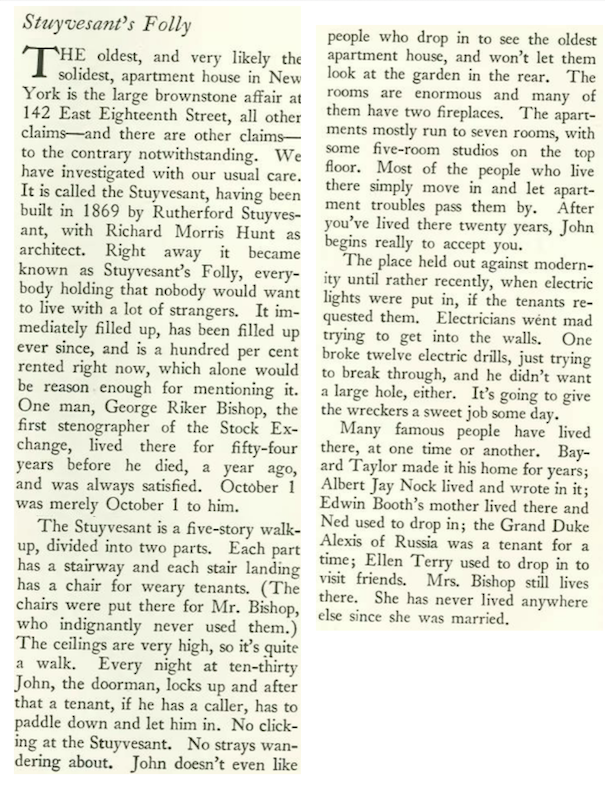
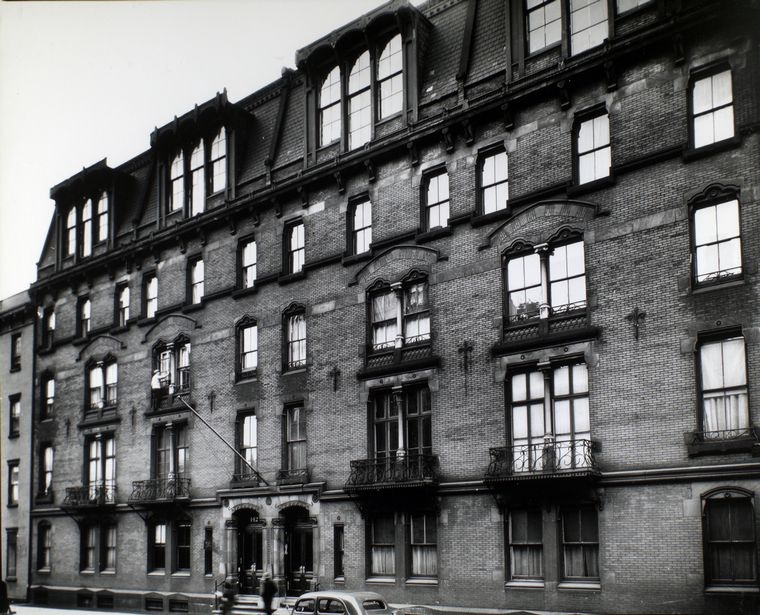

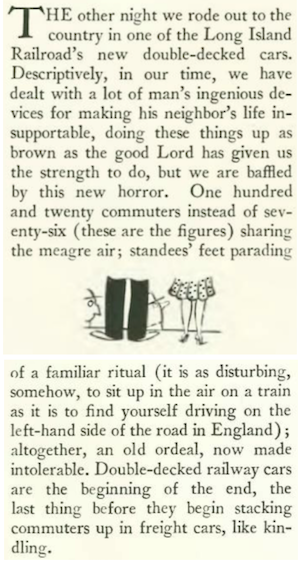
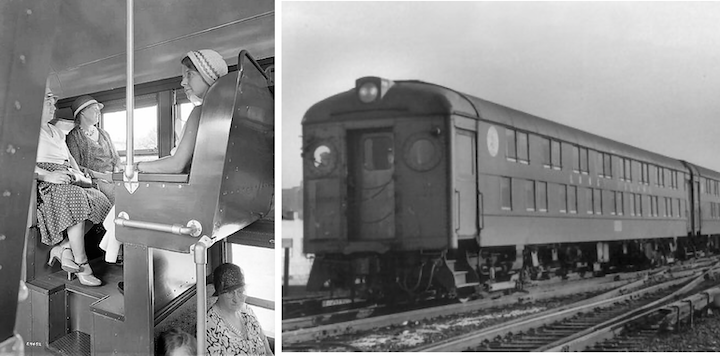
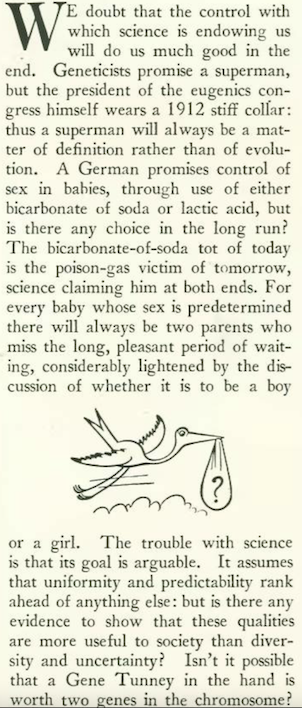
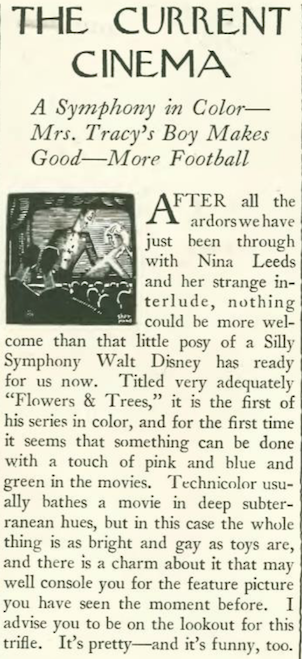


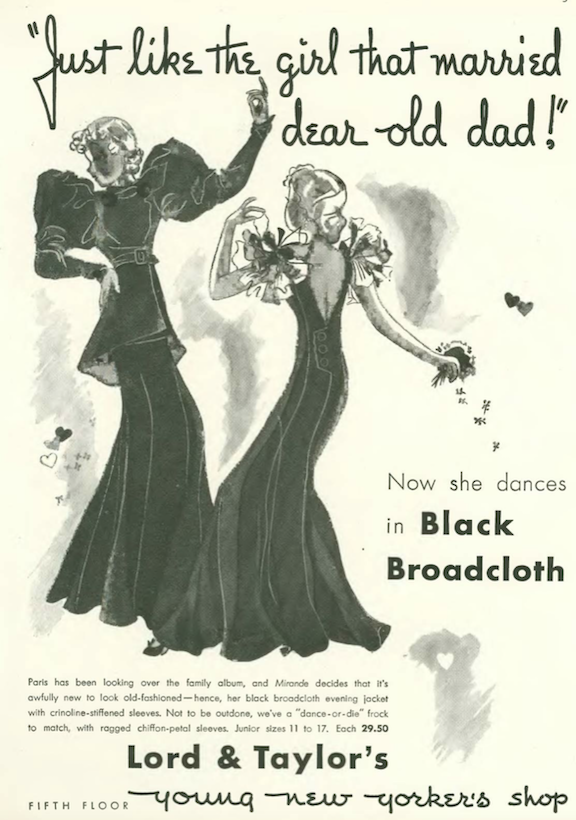
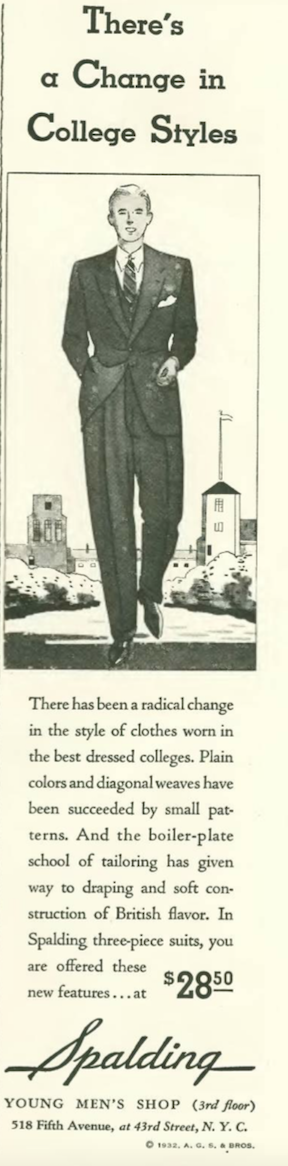

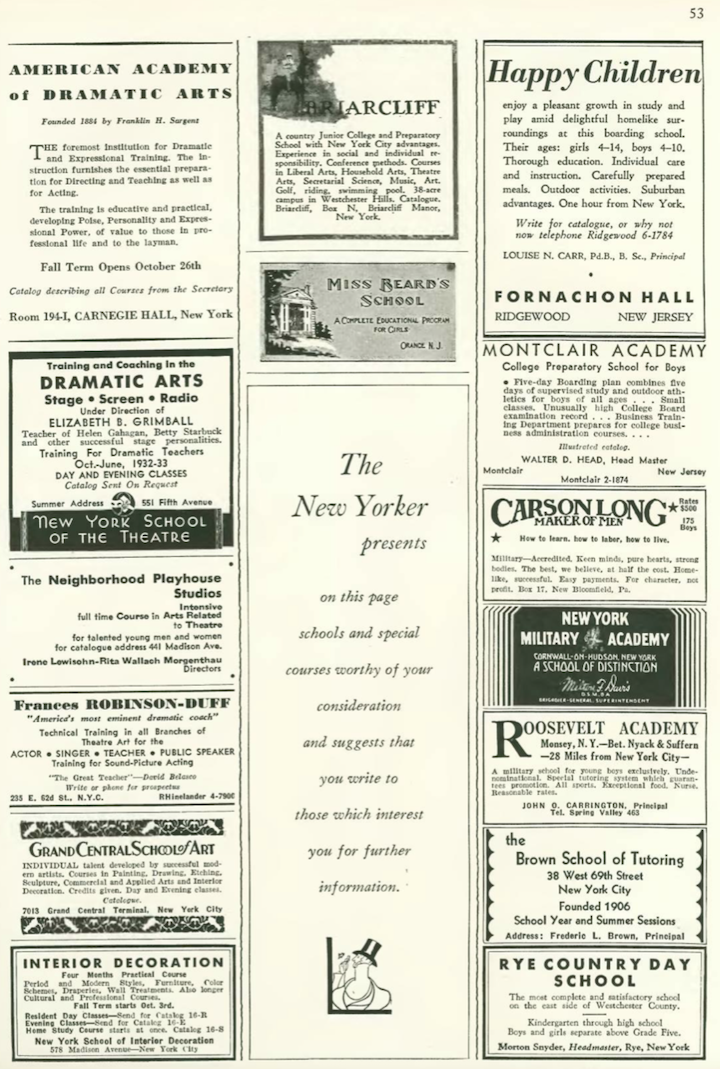
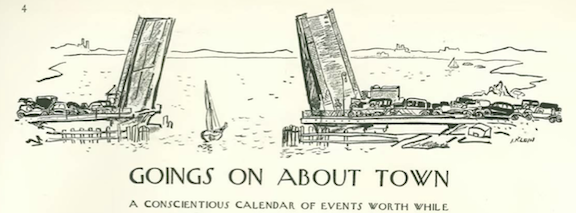
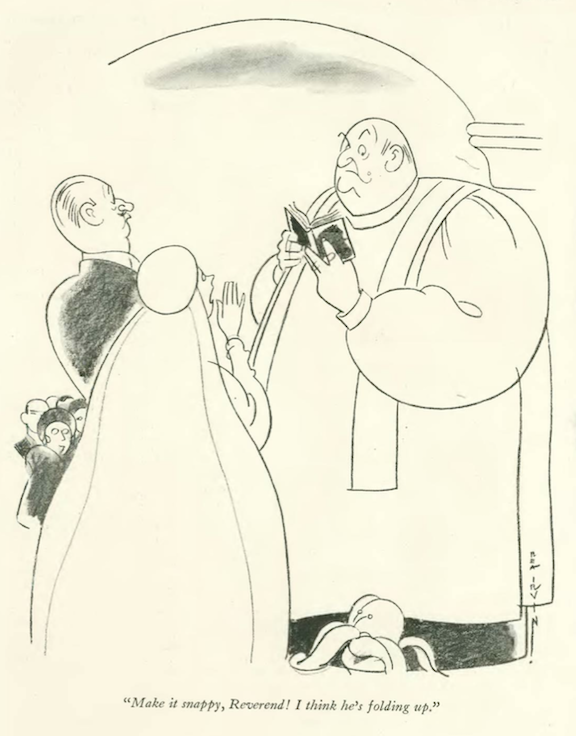
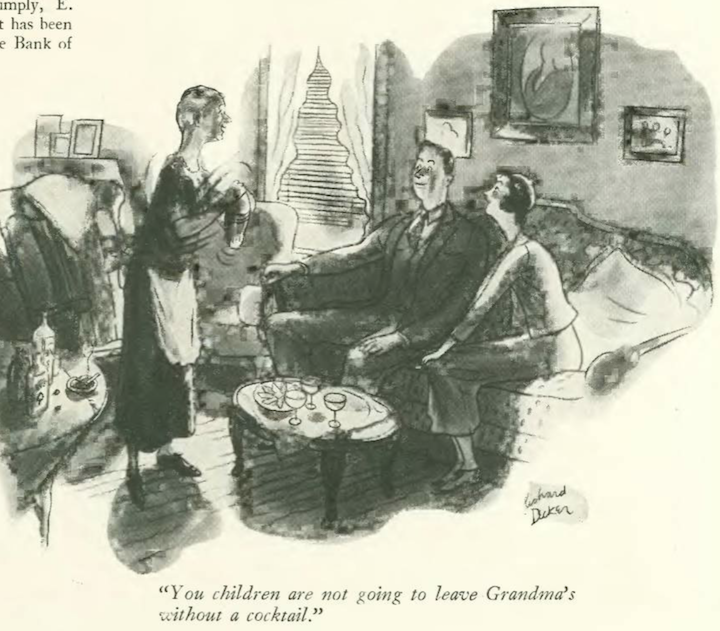

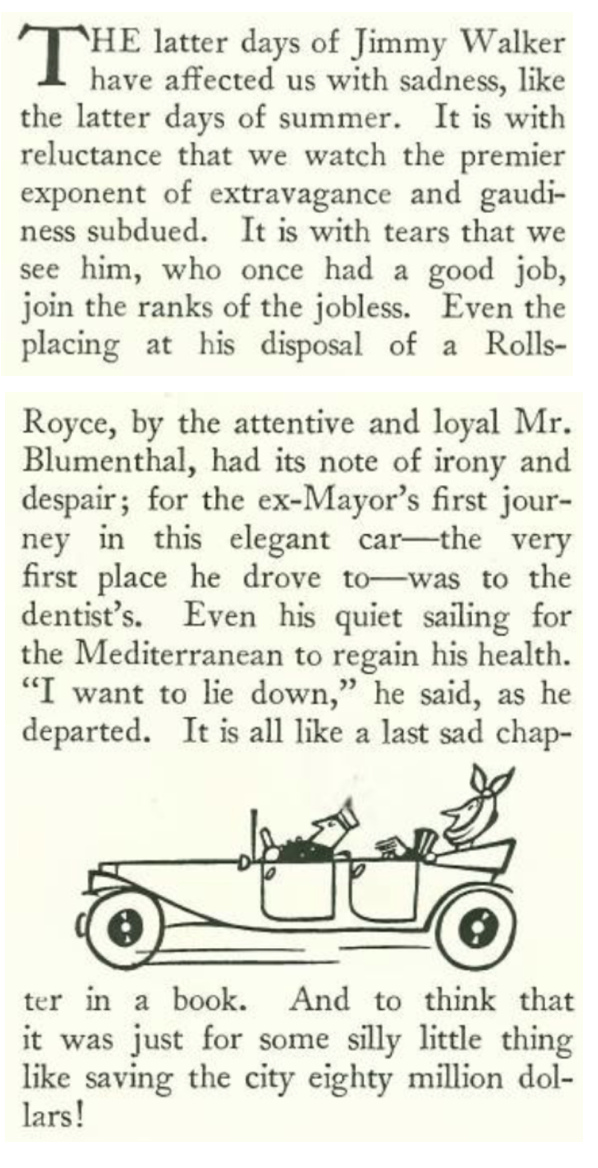


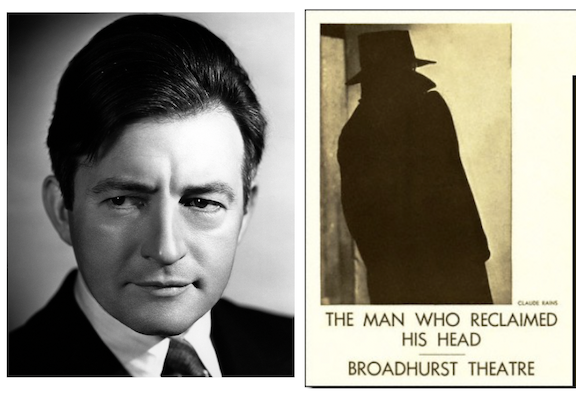
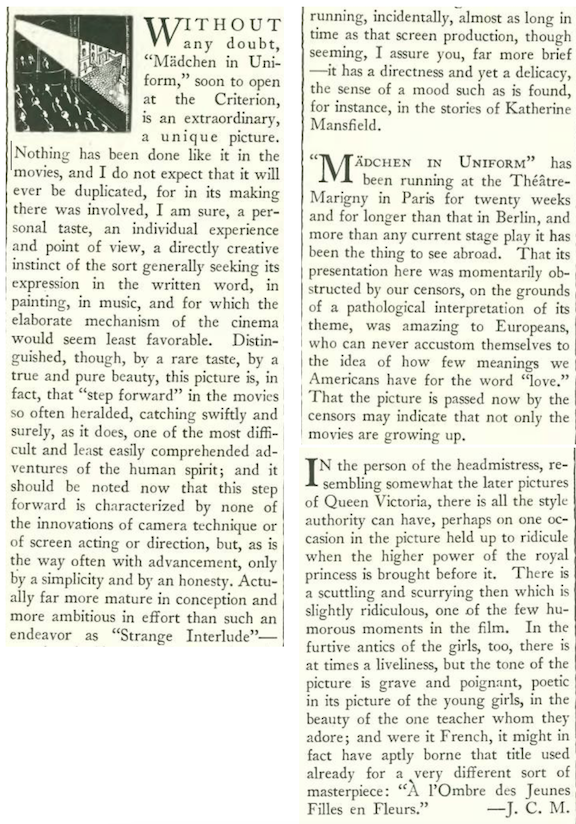
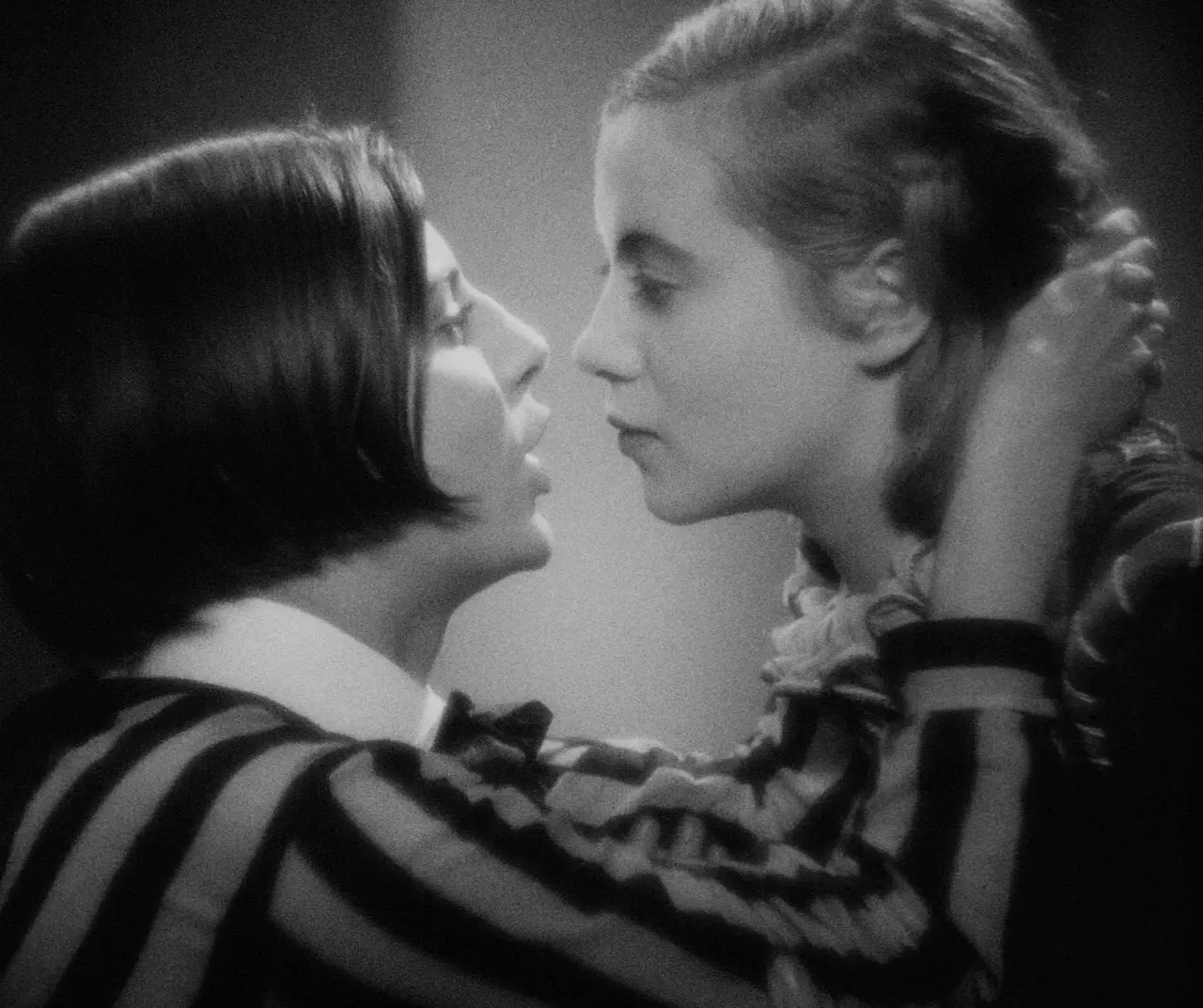

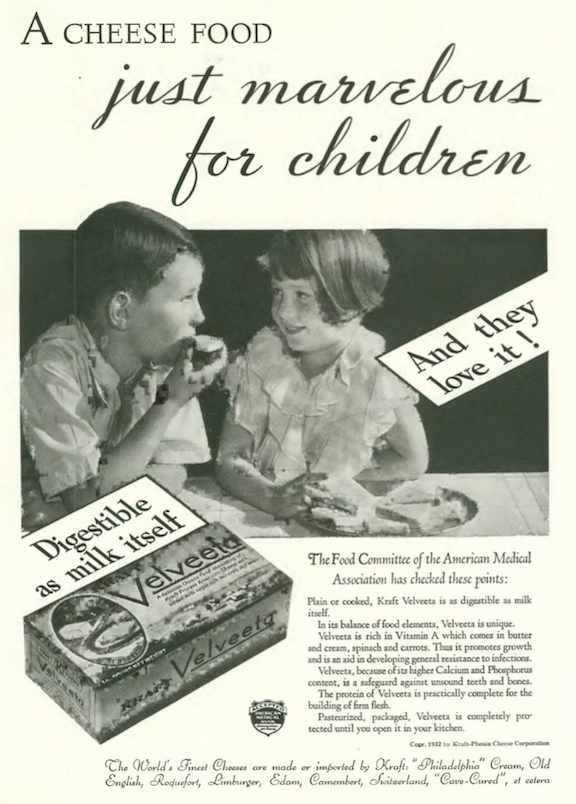
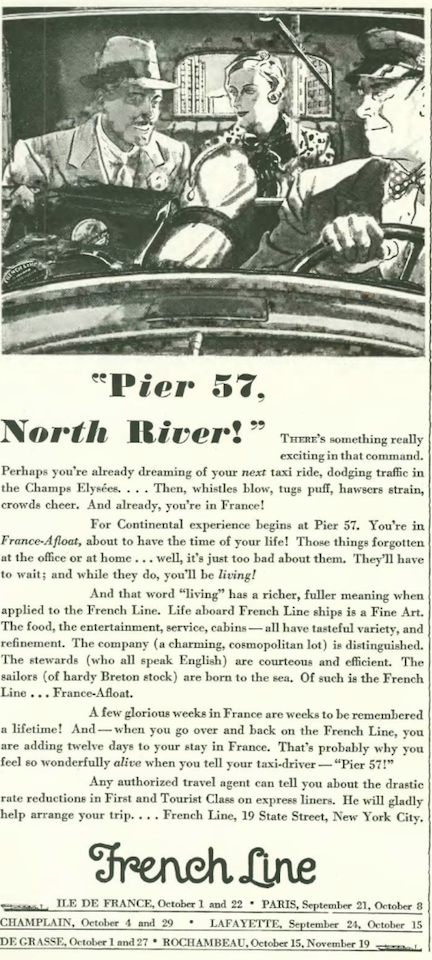
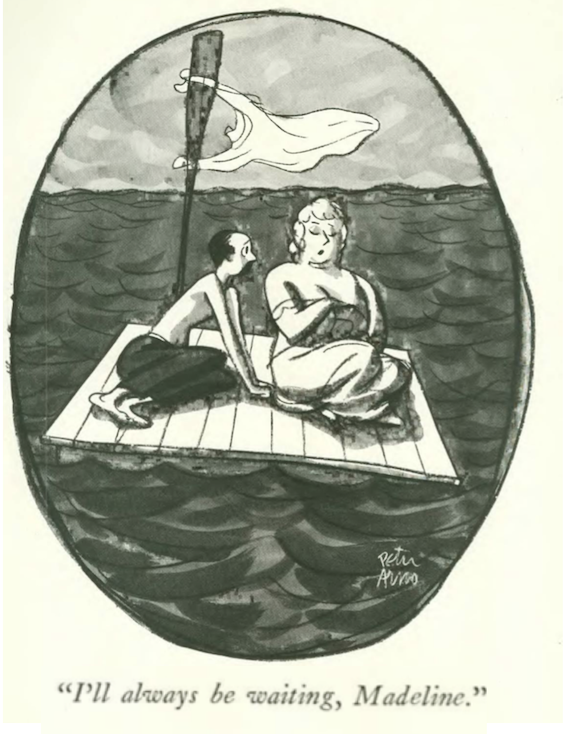

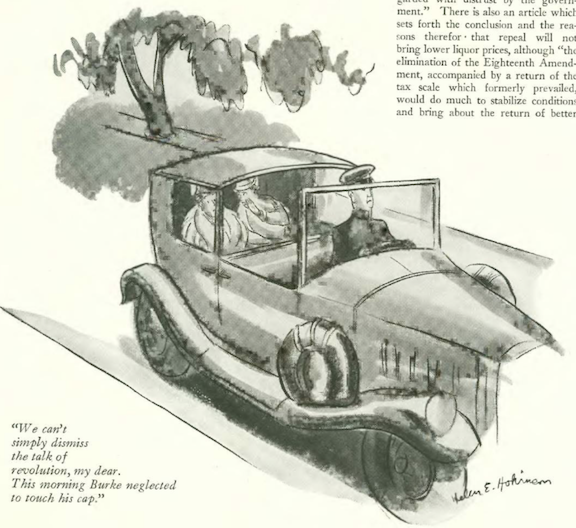
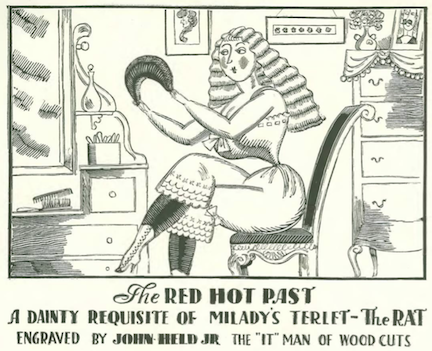

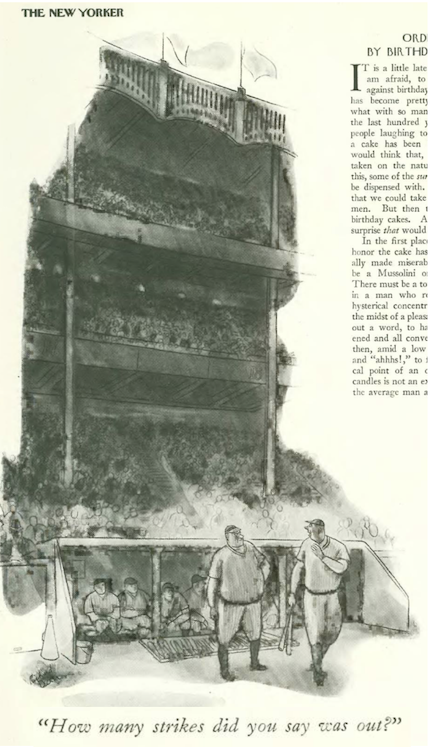
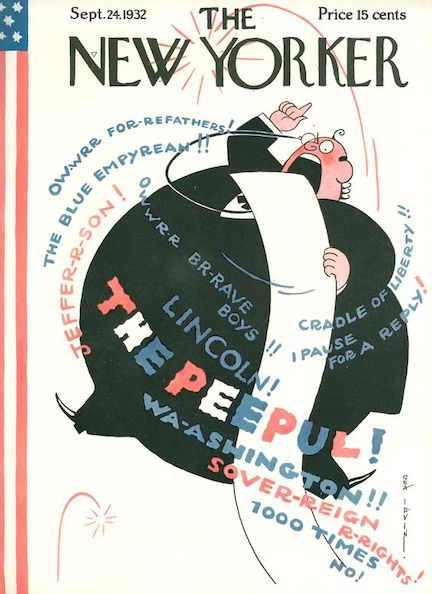
 A New Yorker State of Mind