Holiday Shopping

Photo above via themindcircle.com

With Christmas fast approaching, The New Yorker was getting into the spirit of holidays, especially with all of the advertising revenue it gained from merchants who targeted its well-heeled readership.
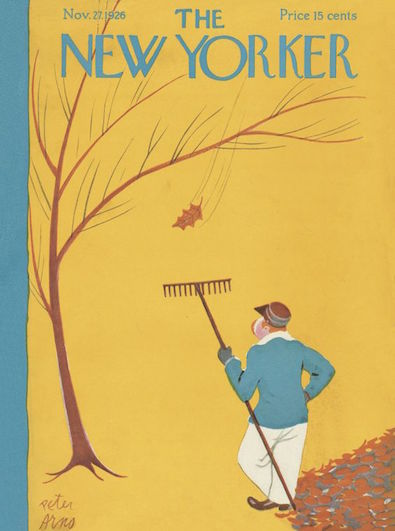
8912823cfdc5626785b13a431ae590de
November 27, 1926—Peter Arno’s first cover for the New Yorker. He would do 98 more.

Lois Long continued to write both of her weekly columns for the magazine–her observations on fashion along with ideas for Christmas shoppers in “On and Off the Avenue” (“Saks’ toy department has some of the loveliest French notepaper for tiny children…”) and her musings on nightlife in “Tables for Two.”

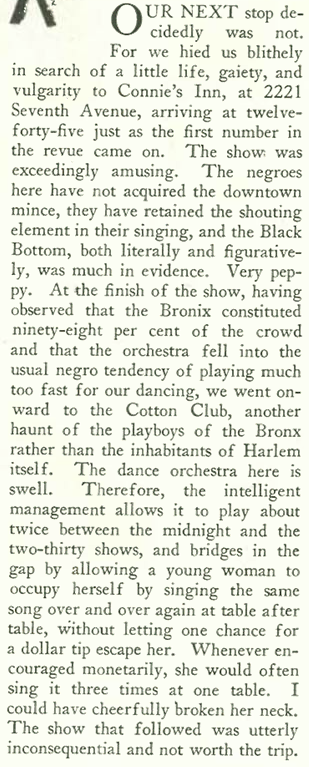
In contrast to her rather light mood expressed in the fashion column, Long was feeling far from jolly in her “Tables” observations of New York’s nightlife:
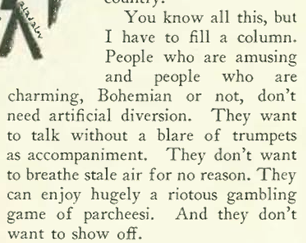
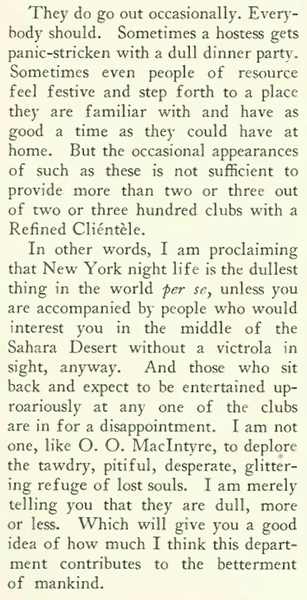
Screen Shot 2016-04-25 at 5.01.46 PM

Screen Shot 2016-04-25 at 5.02.43 PM

As you might recall, in a previous column Long tossed a “ho-hum” in the direction of the famed Cotton Club. Perhaps Prohibition was taking its toll on the hard-partying columnist.

Nevertheless, the holiday spirit was upon with The New Yorker, in the cartoons (this one by Helen Hokinson)…
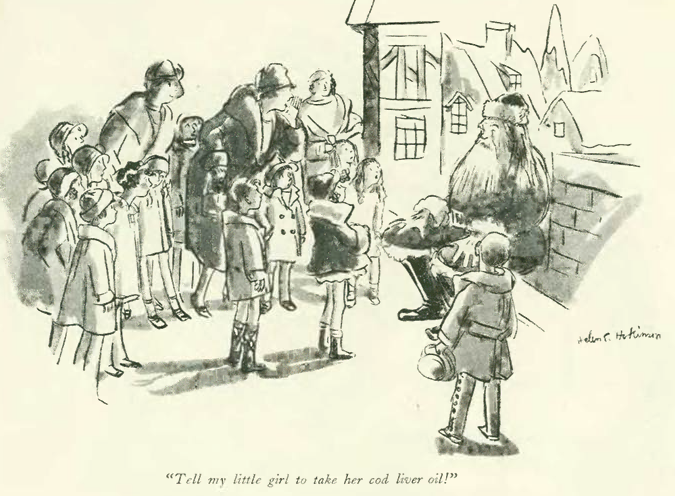
Screen Shot 2016-04-25 at 4.54.16 PM

…and in various advertisements.

Screen Shot 2016-04-25 at 4.50.49 PM

Note this advertisement (below) from Russeks. The comics in The New Yorker famously poked fun at the comic pairings of rich old men and their young mistresses, but this ad seemed to glorify such a pairing while suggesting that an older man of means must invest in fine furs if he is going to hang on to his trophy wife or mistress, in this case a young woman who appears to be nearly eight feet tall…
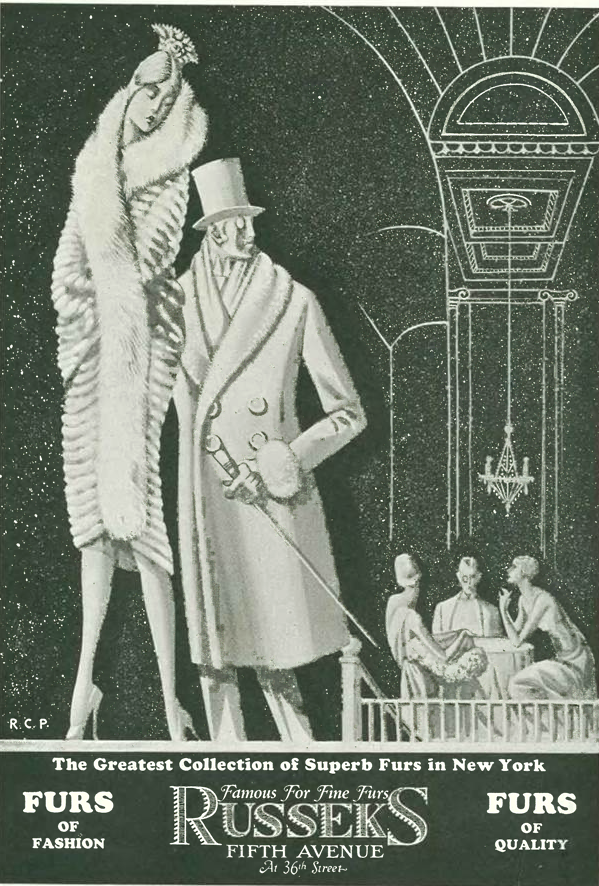
Screen Shot 2016-04-25 at 4.51.10 PM

I liked this ad from Nat Lewis for the simple line drawing…
Screen Shot 2016-04-25 at 4.57.27 PM

…but the ads for Elizabeth Arden, which for years featured this “Vienna Youth Mask” image, always creep me out.
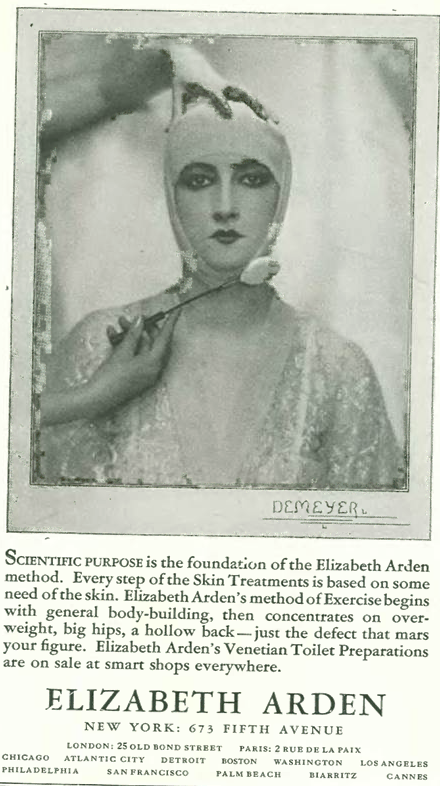
Screen Shot 2016-04-25 at 4.56.41 PM

The mask was made of papier-mâché lined with tinfoil. Although not pictured in the ad, it was also fitted to the client’s face. The Vienna Youth Mask used diathermy to warm up the facial tissues and stimulate blood circulation.

1937-arden-vienna
SLEEP TIGHT…The full “Youth Mask” applied to an Elizabeth Arden client in the mid 1930s. (cosmeticsandskin.com)

In a 1930 advertisement, Elizabeth Arden claimed that “The Vienna Youth Mask stimulates the circulation, producing health as Nature herself does, through a constantly renewed blood supply. The amazing value of this treatment lies in the depth to which it penetrates, causing the blood to flow in a rich purifying stream to underlying tissues and muscles…charging them with new youth and vigor. It stirs the circulation as no external friction or massage can possible do.”

I don’t believe this claim was backed up by medical research, but as we all know, Elizabeth Arden made a bundle from these treatments and the various creams and potions that came with it.

Next Time: Race Matters…
e0fa6079facd04a1d0611e2da7cd2519

The Sporting Life

One of the strangest things about the fall 1926 issues of The New Yorker is the almost complete absence of baseball coverage, even though the 1926 Yankees had turned things around from an abysmal 1925 season and found themselves in the 1926 World Series against the St. Louis Cardinals.

cb57ca46d50ab47f3acf02be954149b6
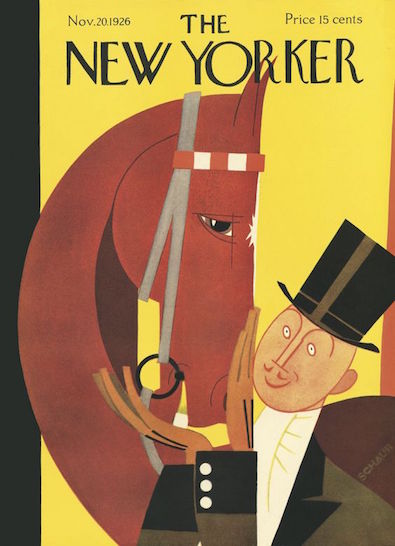
November 20, 1926 cover by Andre De Schaub.

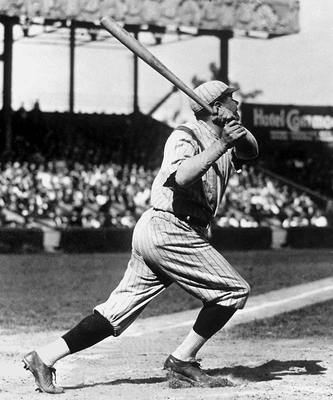
The Yankee’s star Babe Ruth had recovered his health from the previous season and played exceptional all-around baseball in 1926, even setting a World Series record of three homers in the fourth game. According to (now disputed) newspaper reports at the time, Ruth had promised a sickly boy named Johnny Sylvester that he would hit a home run for him in Game 4. The papers reported that after Ruth’s three-homers, the boy’s condition miraculously improved.

babe-ruth2_display_image1
SNUBBED…Babe Ruth knocked in three homers during Game 4 of the exciting 1926 World Series, an event completely ignored by the football-crazed New Yorker. (Bronx Banter)

The Yankees would lose the series in seven games (it would be the first of the Cardinals’ 11 WS championships), but nevertheless the season represented a dramatic turnaround for the team.

But The New Yorker was obsessed with college football, mostly Ivy League contests and the exploits of Knute Rockne and his Notre Dame Fighting Irish.

Screen Shot 2016-04-22 at 9.59.31 AM
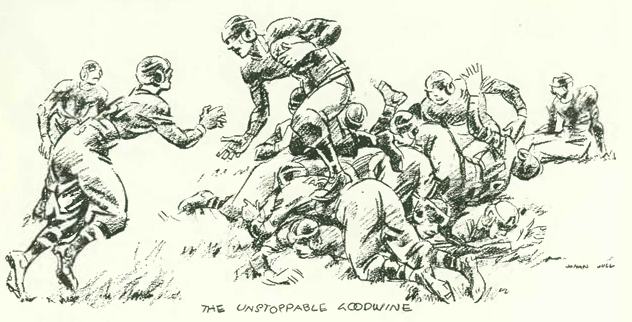
Johan Bull provided lively illustrations for John Tunis’s columns.

Sportswriter John Tunis cranked out lengthy accounts of football games, including the Princeton-Yale contest covered in the Nov. 20, 1926 issue.

The same issue also included an article by Herbert Reed, who wrote about Notre Dame’s victory over Army at Yankee Stadium and proclaimed the Fighting Irish to be the greatest team in the country.

The New Yorker caught the Notre Dame bug the previous season. When attendance dropped at Yankee Stadium due to an ailing Babe Ruth and his team’s losing record, college football took center stage at the stadium that fall, with the fiercely competitive Notre Dame–Army game the marquee match-up (the rivals would continue their annual meeting at Yankee Stadium until 1947).

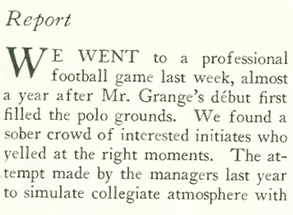
The “other” game–professional football–was still in its infancy, and the editors of “The Talk of Town” made it clear that the college atmosphere was more to their liking. It is interesting that even today when fans compare college to pro football, the same observations are made:

Screen Shot 2016-04-22 at 9.53.30 AM

Screen Shot 2016-04-22 at 9.53.39 AM

226e0194353a39b57345ede7deaf7634
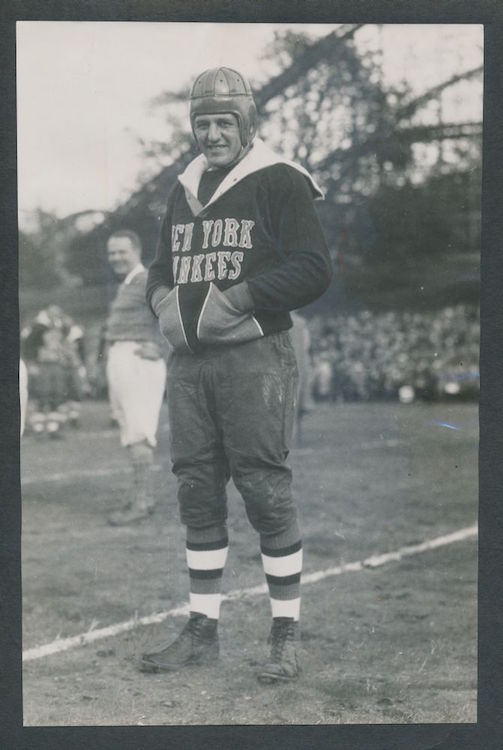
STAR ATTRACTION…After playing his first professional season with the Chicago Bears, in 1926 Red Grange joined the short-lived New York Yankees professional football team. (ourgame.mlb)

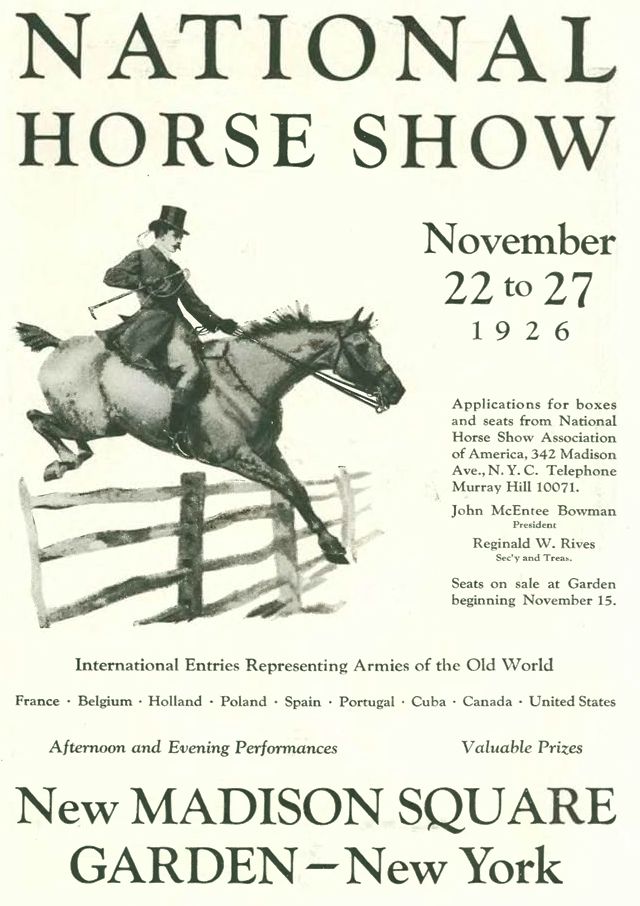
As for other sports, The New Yorker also offered extensive coverage of tennis, golf, and polo in its issues. And there would also be rowing, boat and auto racing, and steeplechase events such as National Horse Show at Madison Square Garden. An advertisement promoting that event appeared on the inside back cover:

Screen Shot 2016-04-22 at 10.06.11 AM

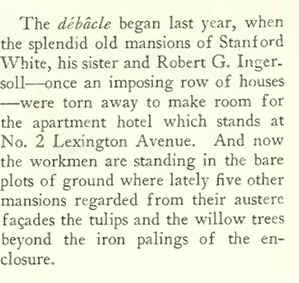
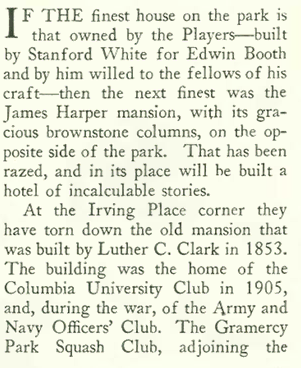
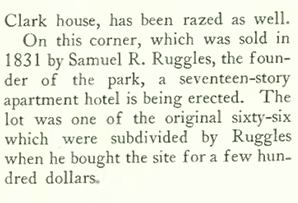
The editors of “Talk of the Town” continued their sad refrain on the city’s changing landscape, the wrecking ball this visiting Gramercy Park:

Screen Shot 2016-04-22 at 9.55.34 AM

Screen Shot 2016-04-22 at 9.55.42 AM

Screen Shot 2016-04-22 at 9.55.48 AM

Screen Shot 2016-04-22 at 9.55.53 AM

white house
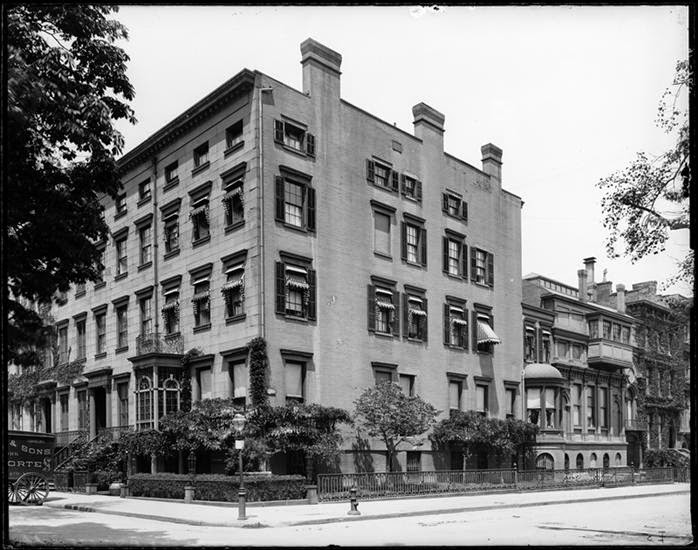
The Stanford White house referred to in “The Talk of the Town.” ( Museum of the City of New York)
white dining room ceiling
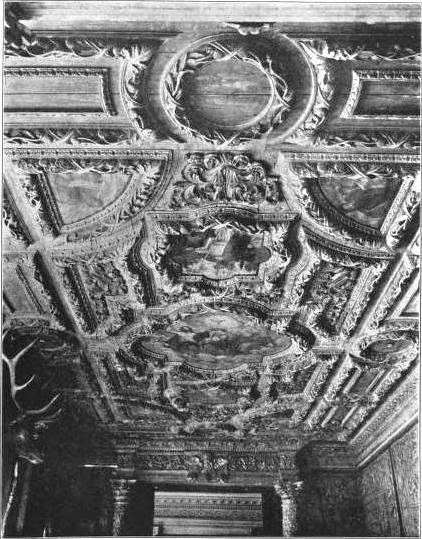
The Dining Room ceiling in the Stanford White House came from a 16th century chapel in Florence. (From the Illustrated Catalogue of the Artistic Furnishings and Interior Decorations of the Residence at No. 121 East Twenty-first Street, New York City, April 1907 (copyright expired)
gramercy park hotel
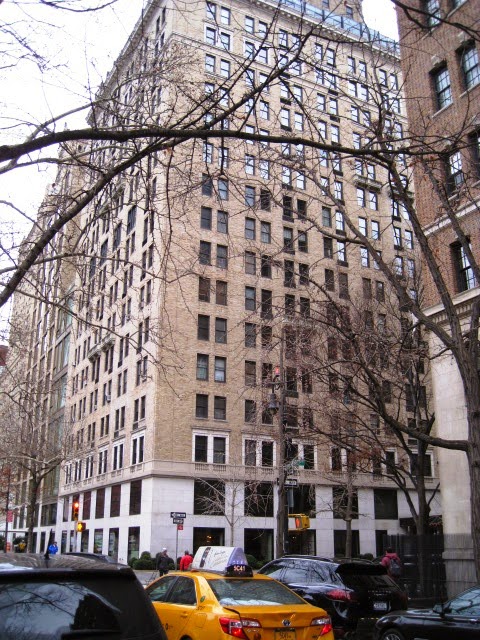
Gramercy Park Hotel on the site today. (A Daytonian in Manhattan)

And to close, this terrific advertisment for the Greenwich Village Inn, illustrated by Hans Flato:

Screen Shot 2016-04-22 at 9.59.10 AM

Next Time: Holiday Shopping…

8912823cfdc5626785b13a431ae590de

The Cotton Club & Other Distractions

Of all the nightclubs made famous in the Roaring Twenties, none were quite so famous as Harlem’s Cotton Club. Frequented by many celebrities, the club was a whites-only establishment even though it featured many of the most popular black entertainers of the day including Fletcher Henderson, Duke Ellington and Cab Calloway.

8a3e8956e7cf51e58975801865fdce55
November 13, 1926, Issue # 91, cover by Julian de Miskey.

So leave it to The New Yorker, and specifically its nightlife correspondent, Lois Long, to take a blasé view of the famed hot spot. Perhaps she was just tired, having already visited three other nightclubs that evening—the Montmartre, the Yacht Club, and Connie’s Inn—before seeking out the Cotton Club:

Screen Shot 2016-04-14 at 6.16.45 PM

Screen Shot 2016-04-14 at 6.49.42 PM
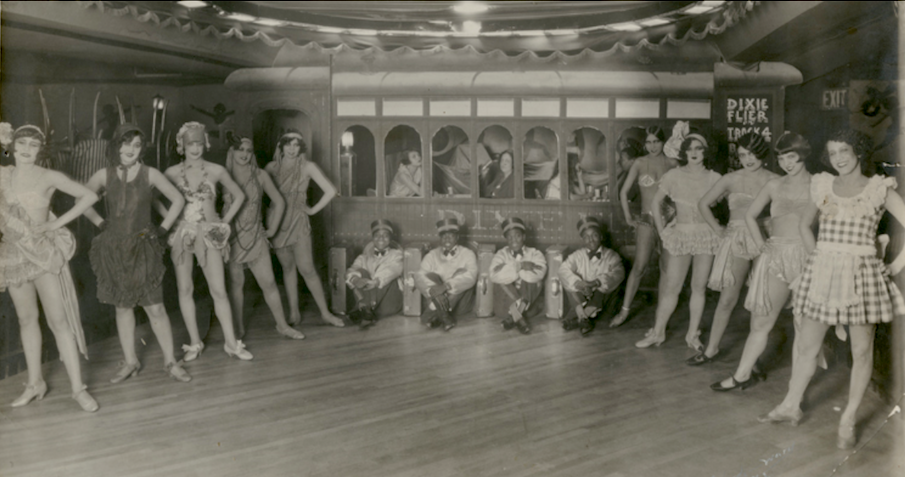
Performers on stage at Connie’s Inn, Harlem, 1920s. (New York Public Library)
Duke-Ellington-band-Cotton-Club-NYC-New-York-Untapped-Cities
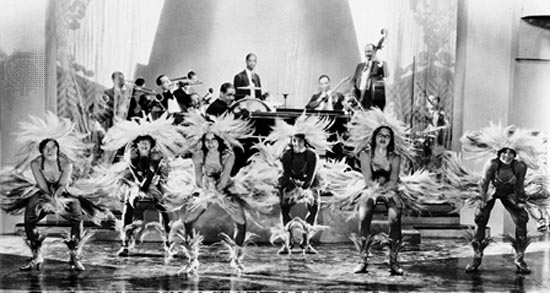
Duke Ellington and dancers at the Cotton Club in the late 1920s. (Untapped-Cities)
dadanycottonclubflyer
Program from the 1920s designed to attract white patrons to the Cotton Club. (Women of the Harlem Renaissance)

* * *

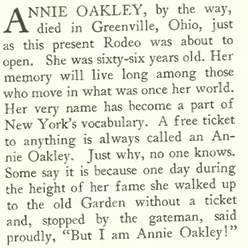
“The Talk of the Town” noted the passing of rodeo star and sharp-shooter Annie Oakley (next time you get a free ticket with a hole punched in it, you’ll know what to call it):

Screen Shot 2016-04-13 at 4.54.06 PMScreen Shot 2016-04-13 at 4.54.49 PM

If nightclubs weren’t your thing, there were plenty of movie houses screening the latest offerings from Tinseltown. The opening pages of the magazine featured this advertisement for the new 3,664-seat Paramount Theatre, located at 43rd Street and Broadway in the Times Square.

Screen Shot 2016-04-13 at 4.52.30 PM

It’s a reminder that Paramount, a venerable old Hollywood studio (which these days is owned by Viacom) had its origins in New York as the Famous Players-Lasky Corporation. Founded in 1916, Famous Players-Lasky was primarily located at the Kaufman Astoria Studios in Queens (after 1920). It would eventually become Paramount Pictures and relocate to Hollywood in 1932.

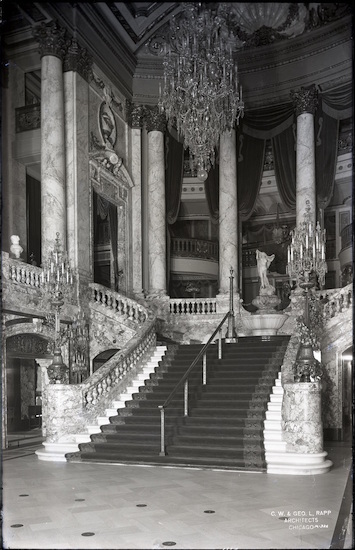
The Paramount Theatre was closed in 1964. Sadly, the interior was gutted and converted to office and retail use. Here are a couple of interior shots of the theatre’s Grand Hall as it appeared following its opening:

NY-NYC-MAN-Paramount-CAPC-M0316

NY-NYC-MAN-Paramount-CAPC-M0326
NOT YOUR LOCAL CINEPLEX…Grand Hall of the Paramount Theatre, featuring imported Italian marble columns. (American Theatre Architecture Archive)

The theatre’s huge pipe organ, one of the largest and most admired theatre organs ever built by the Wurlitzer company, was removed and later installed in a convention hall in Wichita, Kansas.

ParamountThCon
Keyboard array of the Paramount Theatre’s huge pipe organ, one of the largest theatre organs ever built by the Wurlitzer company. (nycago)

Paramount would open theatres around the country (in the chain of Publix Theatres), and a number of them survive today. The original Paramount Building in New York is still there, but all that’s left of the theatre is the marquee.

The marquee in 1927:

Copy of New York's Paramount Theater - 1930s
(nyc.gov)

And today:

(Wikipedia)

Next Time: The Sporting Life…

cb57ca46d50ab47f3acf02be954149b6


Fun With Harold

The Nov. 6, 1926 issue of The New Yorker was actually two issues, one for the newsstands and subscribers and the other a rare parody issue privately published and presented to founding editor Harold Ross on his 34th birthday.

Screen Shot 2016-04-01 at 3.03.49 PM
The cover of the “official” issue (left) for November 6, 1926, was illustrated by William Troy, the parody issue by Rea Irvin.

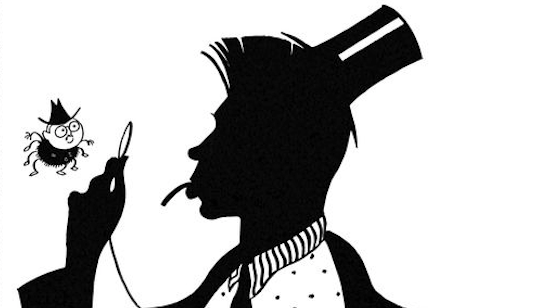
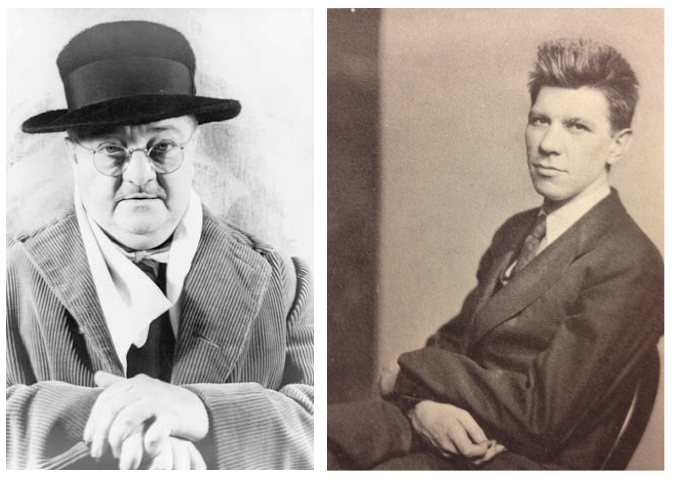
The parody issue’s cover featured a silhouette of Ross (drawn by Rea Irvin, as “Penaninsky”) in the pose of dandy Eustace Tilley, looking at spider bearing a strong resemblance to Alexander Woollcott, critic and commentator for The New Yorker who first met Ross overseas when the two worked on the fledgling Stars and Stripes newspaper.

Screen Shot 2016-04-07 at 3.16.19 PM
OLD PALS…Alexander Woollcott and Harold Ross (Britannica; Jane Grant Collection, University of Oregon)

Ralph Barton’s contribution to the parody issue…

Screen Shot 2016-04-07 at 2.44.38 PM
(From About Town: The New Yorker and the World It Made, By Ben Yagoda)

…and an unsigned contribution that took a poke at Ross’s efforts to create efficient procedures at the magazine’s office:

Screen Shot 2016-04-07 at 3.32.46 PM
Excerpt from Defining New Yorker Humor, by Judith Yaross Lee

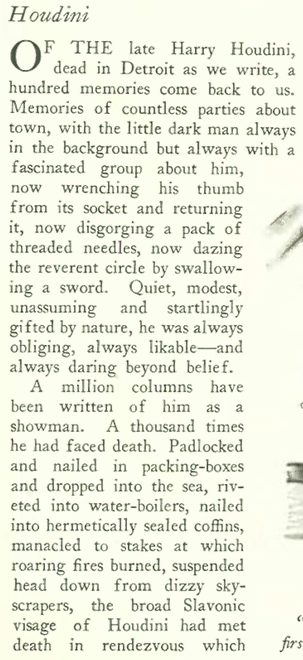
In the other Nov. 6 issue, “The Talk of the Town” editors commented on the death of the famed magician Harry Houdini:

Screen Shot 2016-04-07 at 3.43.59 PM

Screen Shot 2016-04-07 at 3.44.26 PM

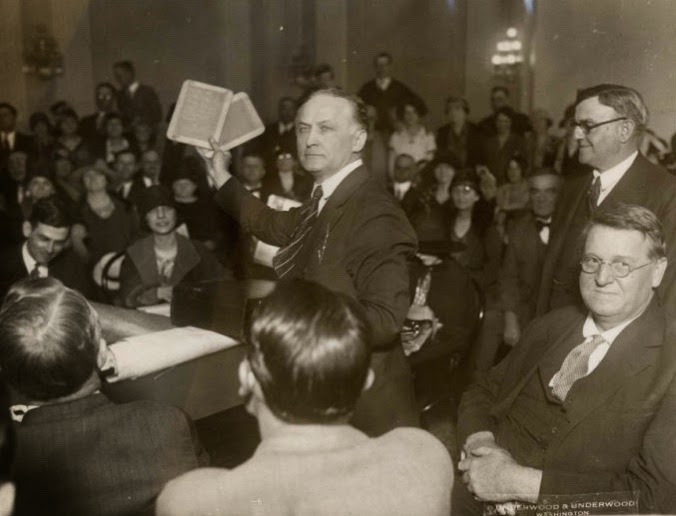
ONE OF HIS FINAL ACTS…Harry Houdini appearing before a Senate committee to expose fake spiritualists in February 1926. (wildabouthoudini.com)

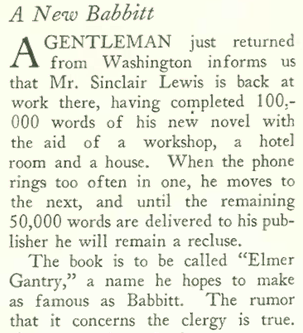
“Talk” also noted a new book called Elmer Gantry was being penned by Sinclair Lewis:

Screen Shot 2016-04-07 at 3.45.20 PM

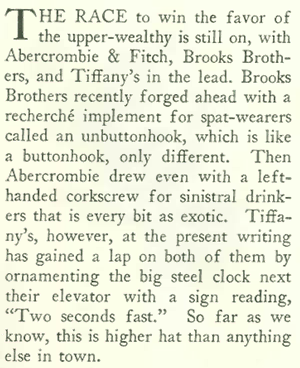
The book was a biting satire of the hypocrisy of fanatical preachers during the 1920s. It created a public furor when it was published in 1927. Another “Talk” item mocked the taste of wealthy New Yorkers for the latest exotic gadgets…
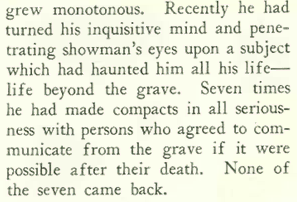
Screen Shot 2016-04-07 at 3.40.08 PM

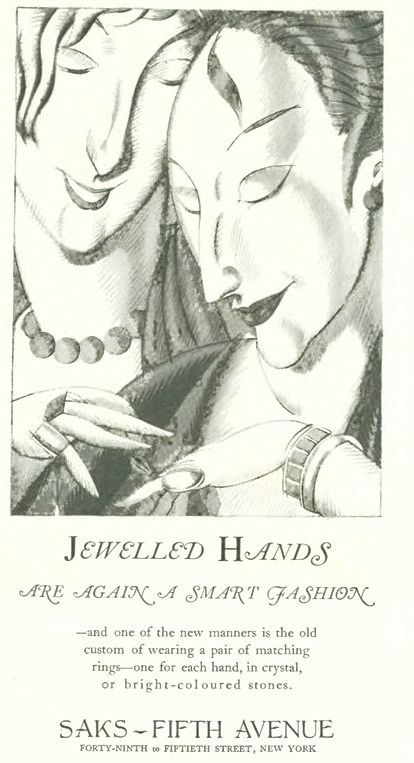
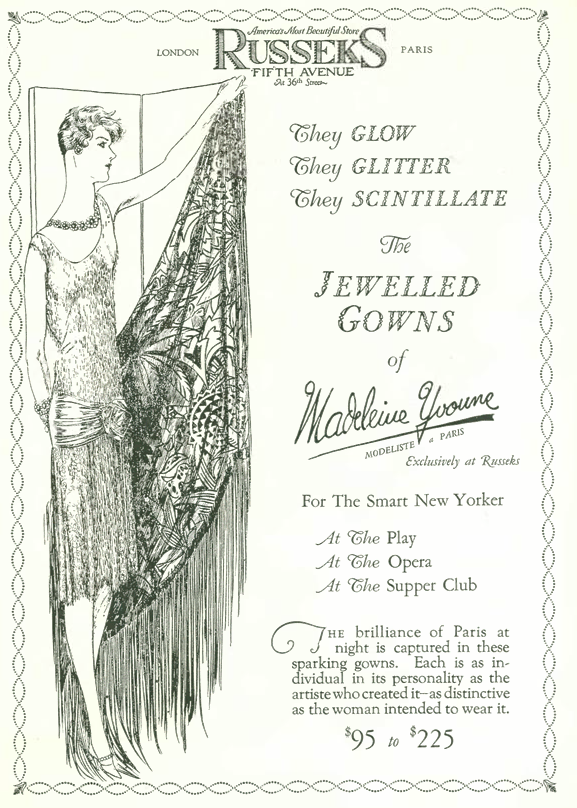
…but the same issue was also filled with the usual advertisements appealing to those very same desires of the Smart Set. Here’s a couple of gems, so to speak…
Screen Shot 2016-04-07 at 3.37.43 PM

Screen Shot 2016-04-07 at 3.38.34 PM

Next Time: The Cotton Club & Other Distractions…
8a3e8956e7cf51e58975801865fdce55

A Changing Sky Line

Although architectural criticism was practiced by a rare few in 1926 (and even fewer today), it was prominent in the pages of The New YorkerLewis Mumford famously served as the magazine’s critic from the 1930s to the 1950s, and longtime critic Paul Goldberger took over the magazine’s “Sky Line” column from the mid-90s to 2011.

c37832e544c79a83494d91ea68c0329b
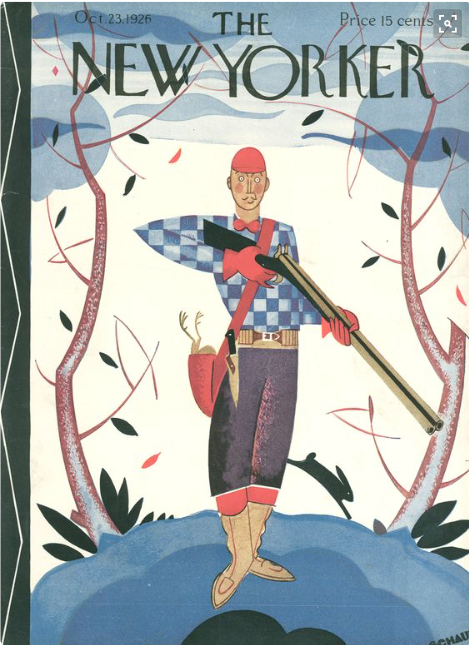
October 16, 1926 cover by Constantin Alajalov.

In 1926 George S. Chappell served the magazine as architecture critic under the pseudonym “T-Square.” A rare combination of architect, parodist, and journalist, he was perhaps best known for his travel series parody published under the pseudonym “Walter E. Traprock.”

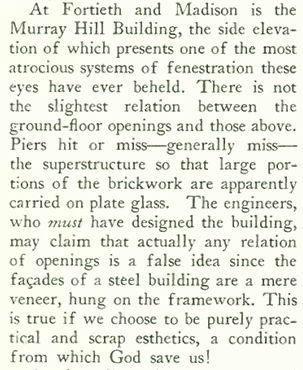
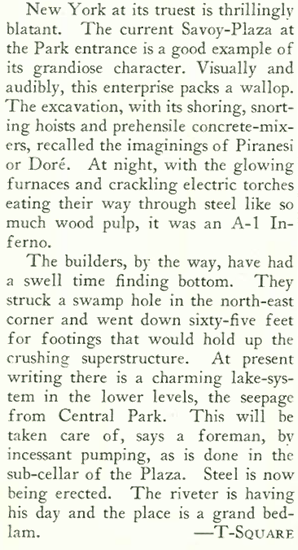
In the Oct. 16, 1926 issue, Chappell took critical aim at the “cheap architecture” sprouting amidst the clamor of a rapidly changing landscape…
1

…and referred to the fenestration (the arrangement of windows and doors) of the Murray Hill Building as “atrocious.”

2

MNY329523
The Murray Hill Building. (Museum of the City of New York)
01_big
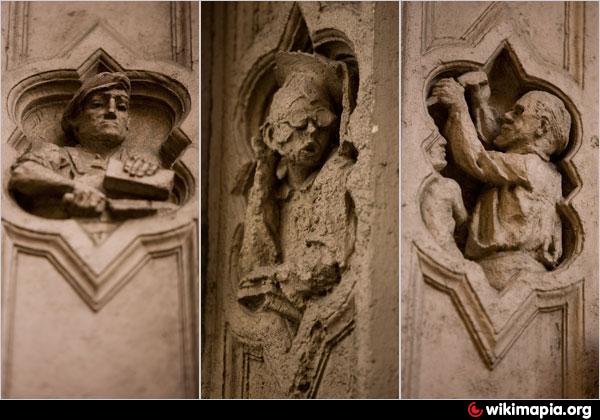
The ground-floor show windows of Murray Hill feature free-hand carvings depicting people in various trades. (Wikimapia)

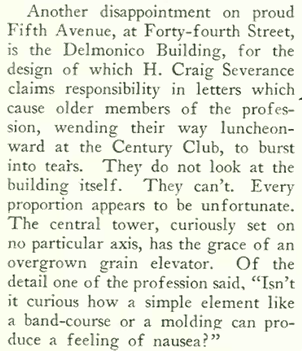
Chappell then set his sights on “another disappointment,” the Delmonico Building, which he said possessed “the grace of an overgrown grain elevator…”

3

Screenshot 2015-05-18 13.19.10
Part of Chappell’s disgust is no doubt attributable to the fact that the beloved old Delmonico Building at Fifth Avenue and 44th Street (left, photo from The Brickbuilder, 1899), was razed in 1925 and replaced by the “overgrown grain elevator” at right. (Google Maps screen image)

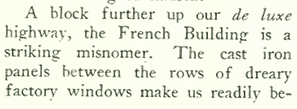
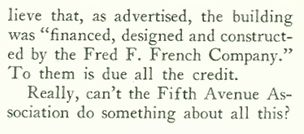
He then moves on to the landmark French Building with its “dreary factory windows”…

4

4.1

The French Building. (Google Maps)
Fred_French_building_entrance
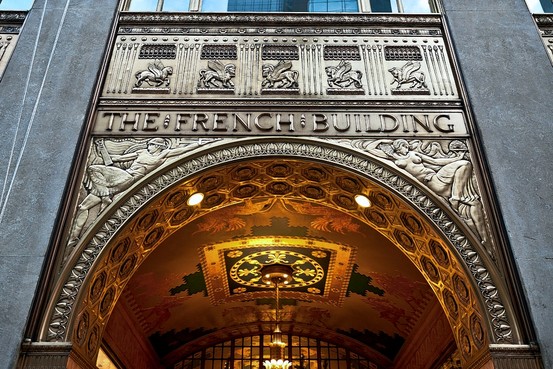
The 5th Avenue entrance to the French Building. (omnidisc)

So what did Chappell prefer? Read on…

5

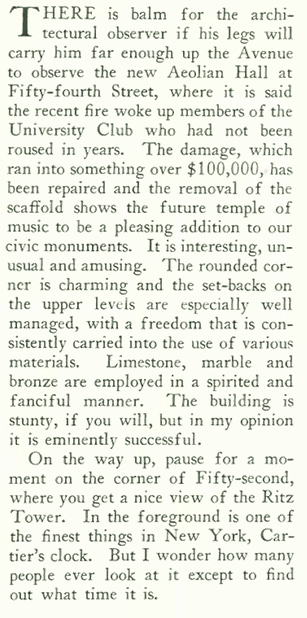
aeoliean 1-13-1927
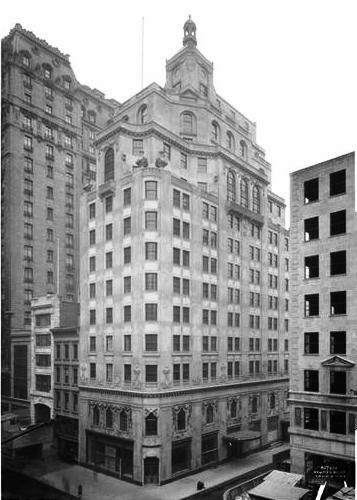
Aeolian Hall on Fifth Avenue, constructed on a site formerly occupied by the William Rockefeller mansion. (Museum of the City of New York)
P2810035
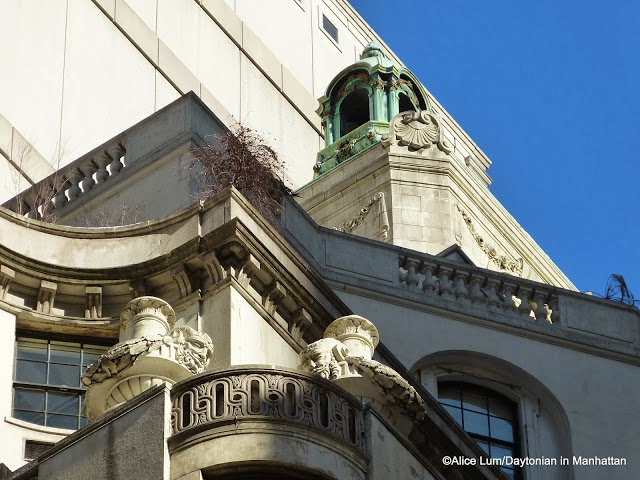
Detail of the upper stories of Aeolian Hall. (Daytonian in Manhattan)
20512108023_f7771faf39_b
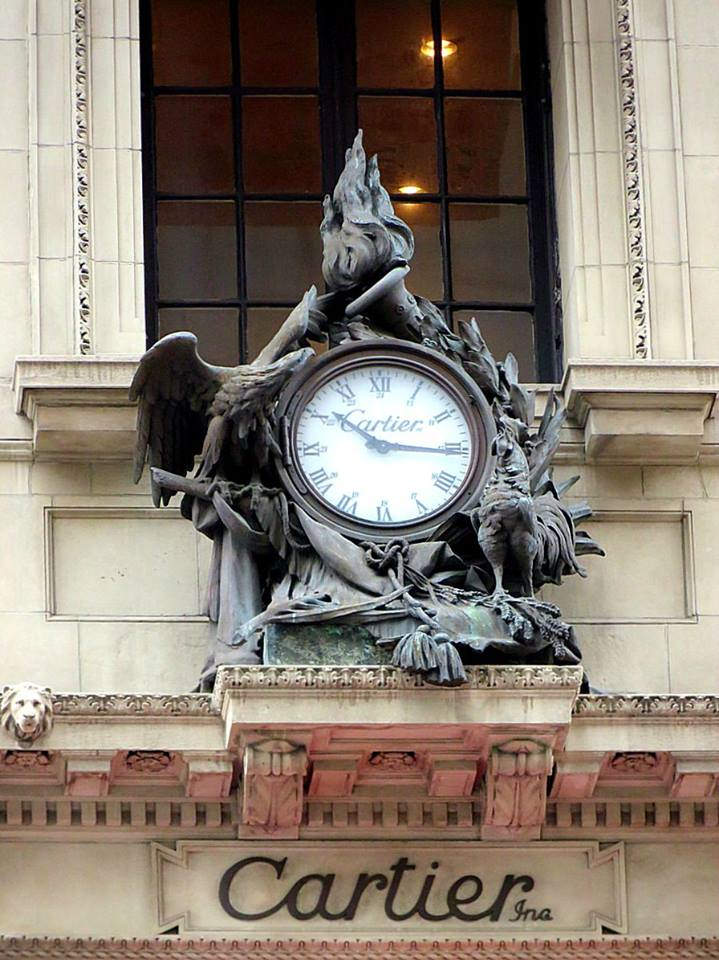
Cartier’s clock on Fifth Avenue (Pinterest)

Despite Chappell’s oft disapproving gaze, in the end he (along with other editors and writers at The New Yorker) could not help but be caught up in the thrill of one of the city’s grandest building booms…

7

Other items of note in the Oct. 16 issue, this ad promoting the first-ever “New Yorker book,” a collection of “Profiles” by Waldo Frank, who wrote under the pen name “Search-light”…

Screen Shot 2016-03-31 at 9.55.06 AM

And finally this picturesque ad for Marmon automobiles. The company was defunct by 1933.

Screen Shot 2016-03-31 at 9.55.42 AM

Next time: A Royal Flush…

Screen Shot 2016-03-31 at 9.58.22 AM


Fight Night in Philly

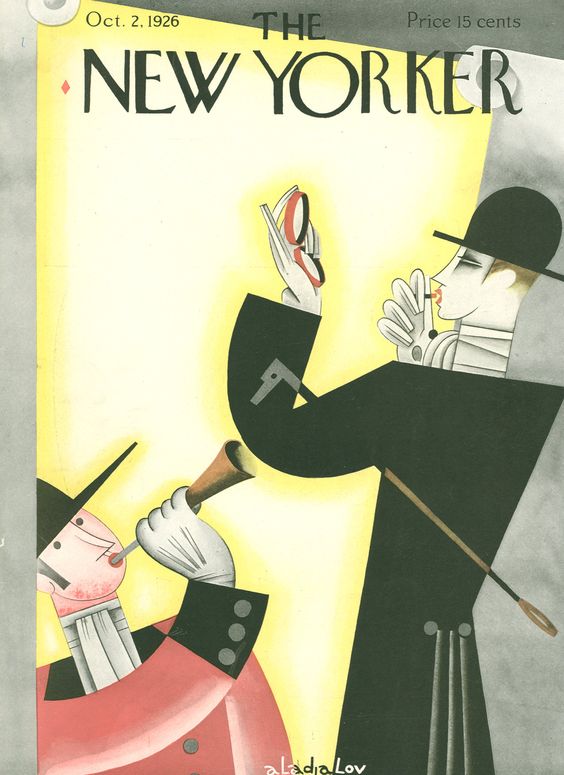
We skip ahead to the Oct. 2, 1926 issue to look at one of the big events of that year–the Dempsey-Tunney heavyweight prize fight (I’m not skipping issues…Sept. 25 appears later in this blog).
652f917918402a71eb86f6671c9f228a
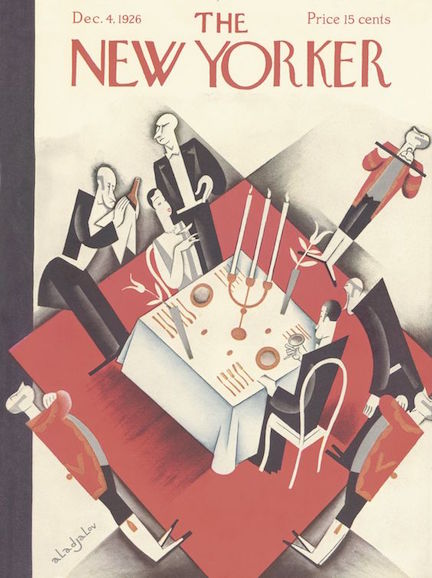
Oct. 2, 1926 – Issue # 85 – Cover by Constantin Alajalov. (Once again, note the ongoing comic reference to androgyny in 20’s fashion)
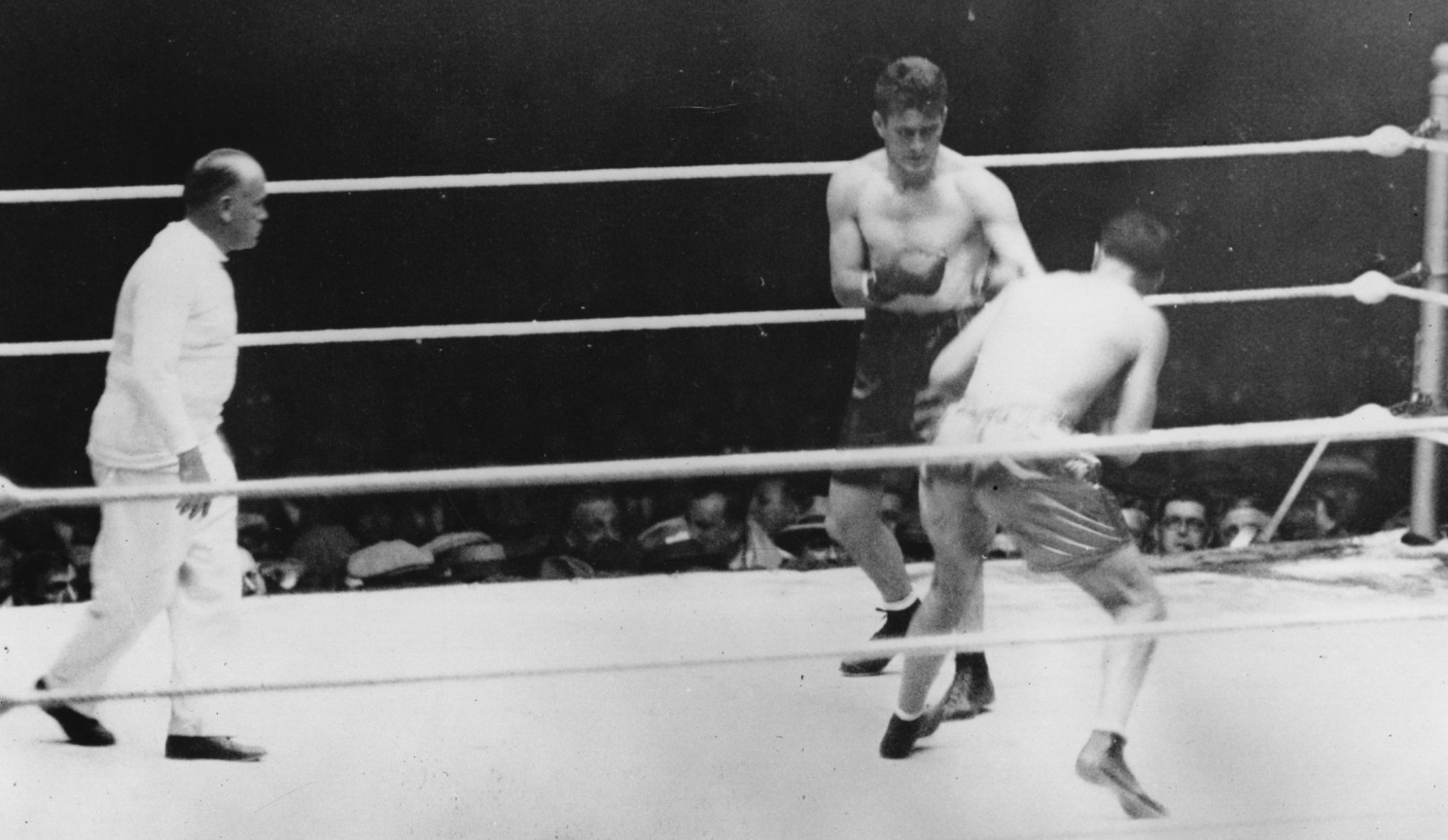
Heavyweight boxing was a big part of the American sports scene in the 1920s, and two giants of the sport, Jack Dempsey and Gene Tunney, dominated the headlines in the late 1920s thanks to much-heralded bouts in Philadelphia in 1926 and a rematch in Chicago the following year (which would include the famous “long count” incident).
Screen Shot 2016-02-26 at 12.30.40 PM
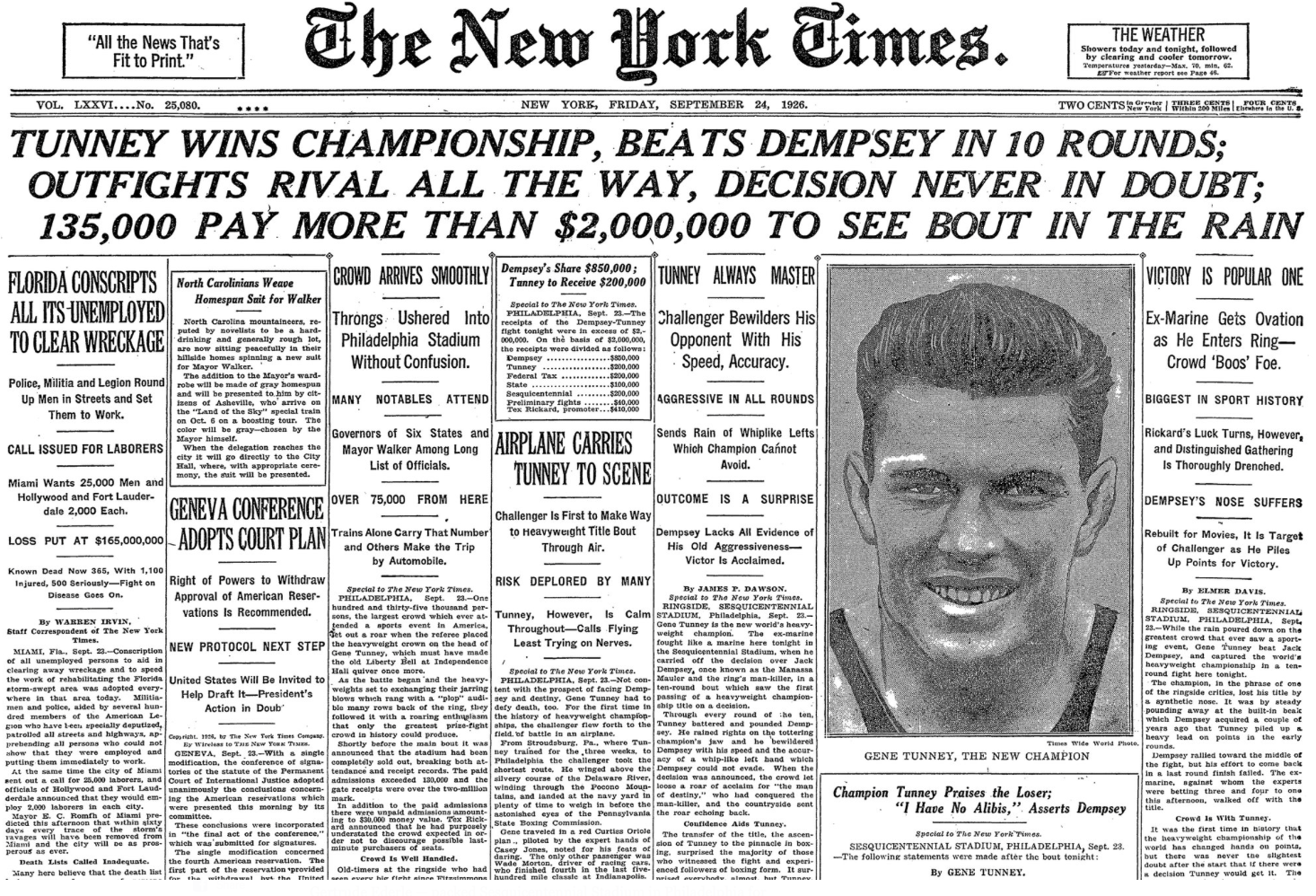
An estimated 135,000 fans packed Sesquicentennial Stadium in Philadelphia for the Dempsey-Tunney bout. (NYTimes)
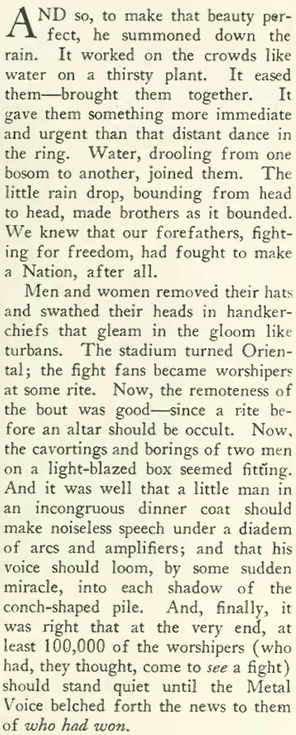
The New Yorker joined in on the hoopla, publishing a lengthy account of the match by Waldo Frank (aka “Search-light”), who trained his jaded eye on the whole affair:
Screen Shot 2016-02-25 at 4.28.32 PMScreen Shot 2016-02-25 at 4.28.39 PM
MediaStream.ashx
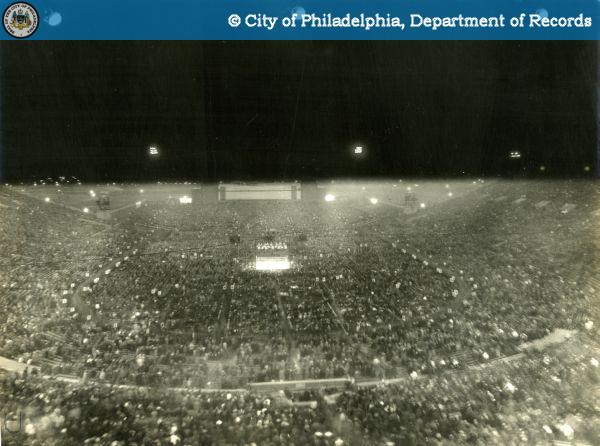
VIEW FROM THE CHEAP SEATS…a rain-soaked throng at the Dempsey-Tunney fight in Philadelphia. (City of Philadelphia)
According to the New York Times, the crowd included such notables as Charlie Chaplin, cowboy movie star Tom Mix and the English Channel swimmer Gertrude Ederle.
Screen Shot 2016-02-26 at 12.13.08 PM
Coverage of Tunney’s victory by unanimous decision took up three-quarters of the front page of The New York Times, and also filled most of pages 2 through 7. (The New York Times)
But in typical fashion, Waldo was less than dazzled, finding the rain an apt metaphor for a spectacle mostly unseen by those in attendance:
Screen Shot 2016-02-25 at 4.27.50 PM
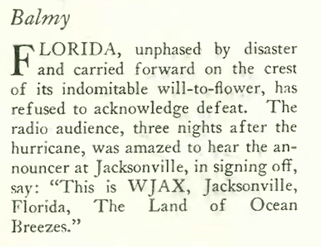
Never one to wallow in tragedy, the magazine made a brief (and oddly droll) reference in “The Talk of the Town” to a hurricane that hit Miami and its environs (it killed 372 people and injured more than 6,000):
Screen Shot 2016-02-25 at 4.16.52 PM
Other items of note in the issue included this examination of country vs. city life by cartoonist Barbara Shermund
Screen Shot 2016-02-25 at 4.21.56 PM
…and this cartoon by Al Frueh commenting on the challenges of Manhattan’s rapidly changing cityscape:
Screen Shot 2016-02-25 at 4.18.53 PM
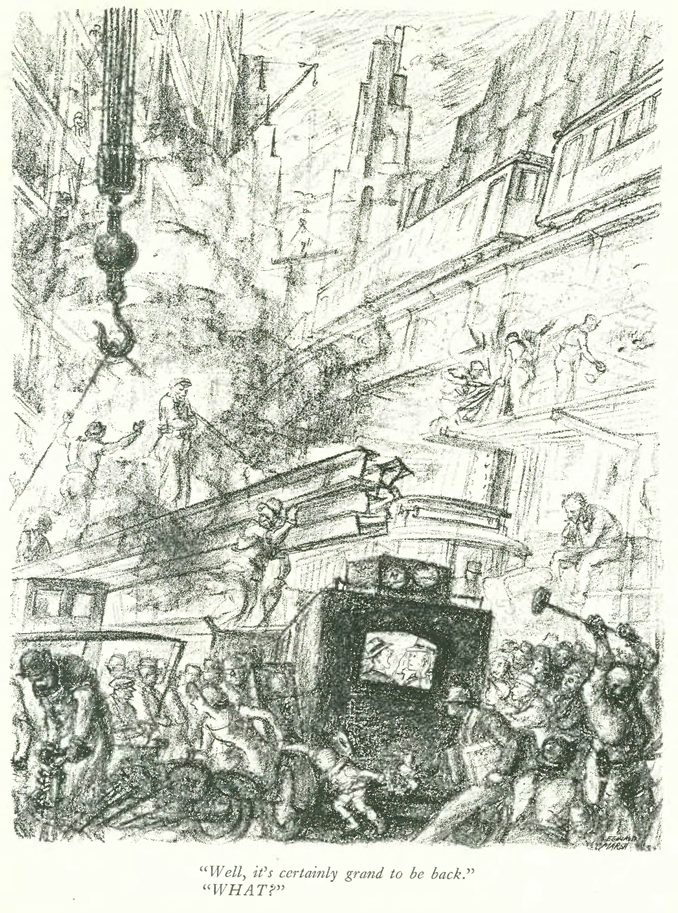
The changing city was also on the mind of Reginald Marsh in this illustration he contributed to the Sept. 25, 1926 issue of the magazine:
Screen Shot 2016-02-25 at 4.02.32 PM
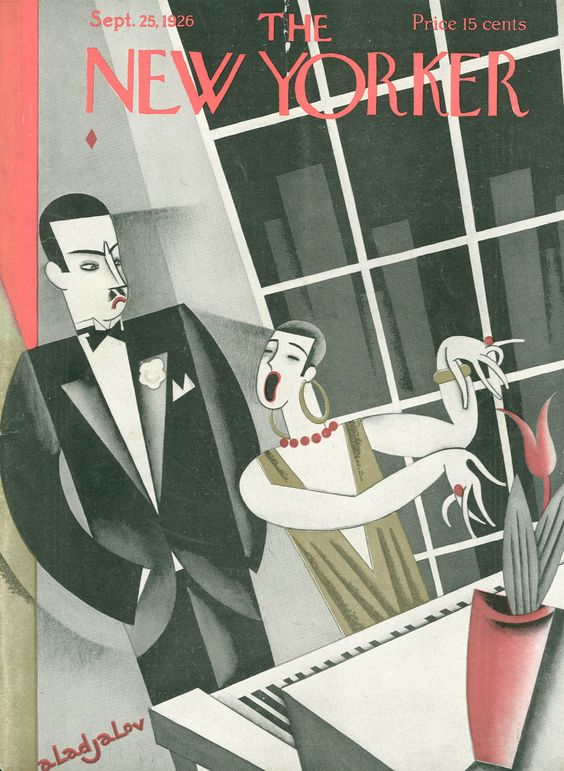
Back to the Sept. 25 issue, which featured an update from Paris correspondent Janet Flanner
d9f3d5507a7bade4fc28276d12a63260
Sept. 25, 1926 – Issue # 84 – Cover by Constantin Alajalov.
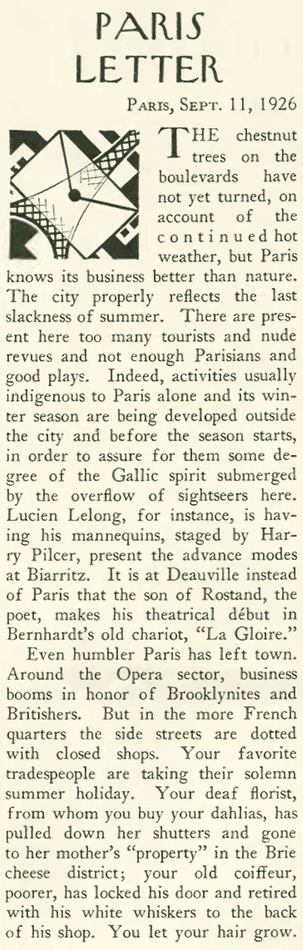
…who commented on the large number of American tourists crowding the city just as the locals were fleeing for their long, late summer holidays:
Screen Shot 2016-02-25 at 4.07.13 PM
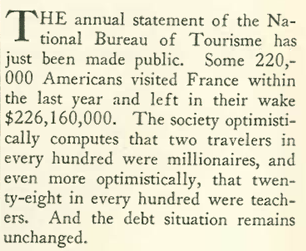
She offered some numbers to back up her observations:
Screen Shot 2016-02-25 at 4.07.43 PM
3333095832_f6a6fd78cb_o
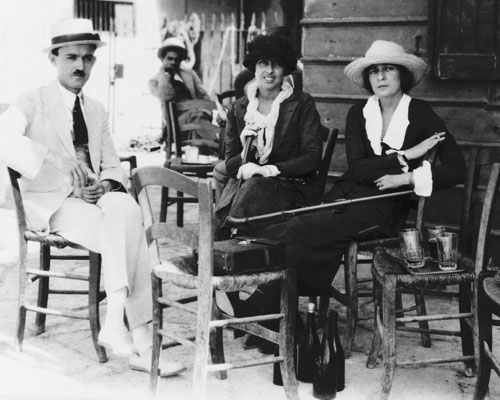
Janet “Genêt” Flanner (right) and longtime companion Solita Solano (center) in Paris, 1921. Solano was a well-known writer and drama critic for the New York Tribune. (Vintage Everyday)

And finally, a cartoon by Rea Irvin exploring the trials of the idle rich:

Screen Shot 2016-02-25 at 4.01.32 PM
 Next Time: Do Gentlemen Prefer Blondes?
848d031119e0d470956ce963e6e7fb62

Battleship Potemkin

American cinema did little to excite the writers or critics of The New Yorker, who considered European films, and particularly German ones, to be far superior to the glitzy and sentimental fare produced in Hollywood.

c294d1a8fc43b2b1097b9686637a1c6f
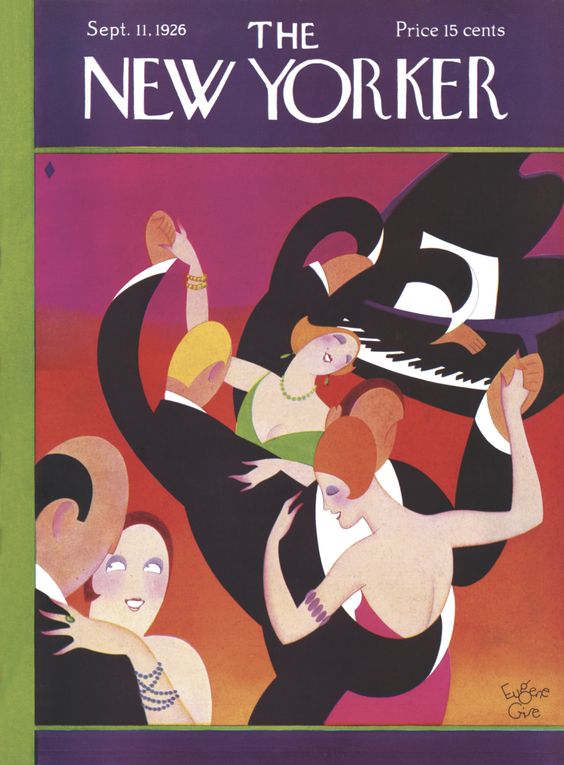
Sept. 11, 1926 cover by Eugene Gise.

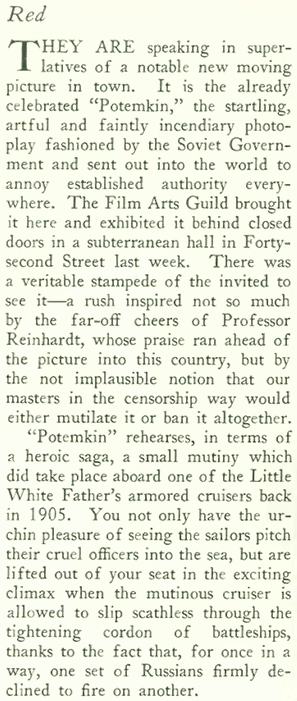
So when it was announced that Russian/Soviet filmmaker Sergei Eisenstein would be releasing Battleship Potemkin in New York City, the magazine’s editors in “The Talk of the Town” expressed both anticipation for the masterpiece as well as worries that American censors would slice the film to bits or even ban it outright.

Screen Shot 2016-02-12 at 10.05.10 AM

The magazine’s film critic “OC” also expressed his concerns regarding censors:

Screen Shot 2016-02-12 at 10.11.37 AM

the-battleship-potemkin-2
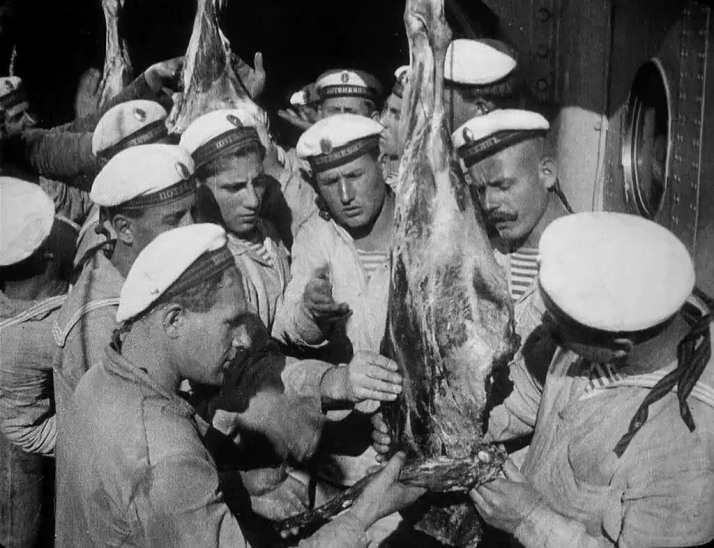
IT’S NOT WHAT’S FOR DINNER…Sailors examine maggot-infested meat in the film Battleship Potemkin. (themoviesnob)

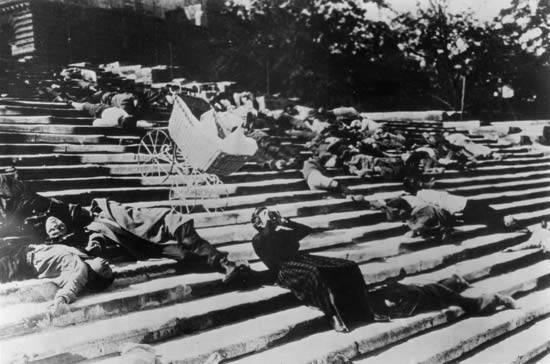
The film was based on an historical event–a mutiny on the battleship Potemkin that occurred after the crew was served rotten meat for dinner. The sailors rebelled, seized the ship, and then attempted to ignite a revolution in their home port of Odessa, which in turn led to a massacre of citizens by Cossack soldiers on the city’s famed Potemkin Stairs.

OB-LS523_potemk_G_20110110122410
Mutineers revel in a scene from Battleship Potemkin. (Wall Street Journal)
94572-004-3C44F252
A still from a classic scene in Battleship Potemkin that depicts Odessa citizens being massacred by Cossacks on the city’s famous Potemkin Stairs. The image of the unattended baby carriage tumbling down the staircase has been re-created in a number of films, including Brian De Palma’s 1987 The Untouchables. (Film 4)

The film would ultimately be released in December of 1926. Perhaps more on that in a later post.

The Sept. 11, 1926 issue also noted the passing of famed silent film star Rudolph Valentino, who died at age 31 of peritonitis and other complications. The “Talk” editors suggested that if anything, it was good for newspaper sales:

Screen Shot 2016-02-12 at 10.02.09 AM

Rudolph_Valentino_funeral_2_1926
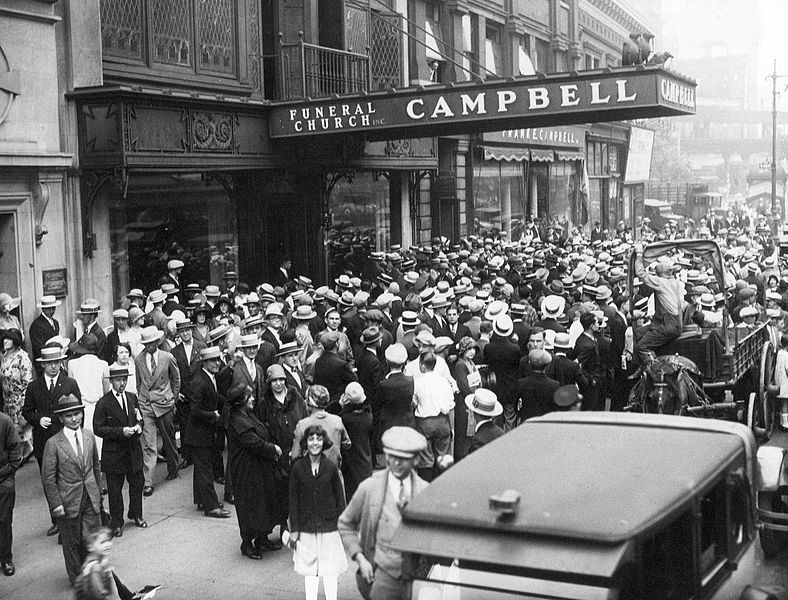
FUNERAL FUN…Rudolph Valentino’s first funeral in New York (the second was in Beverly Hills) drew a huge crowd of in what was described as a “carnival setting”. More than 100,000 fans filed past his open casket at the Frank E. Campbell funeral home. Windows were smashed as fans tried to get in and an all-day riot erupted on August 24. More than a hundred mounted officers and NYPD’s Police Reserve were deployed to restore order. A phalanx of officers would line the streets for the remainder of the viewing. Some media reports claimed the body on display was a wax dummy, and not “The Sheik” himself. (Wikipedia)
Screen Shot 2016-02-17 at 10.36.41 AM
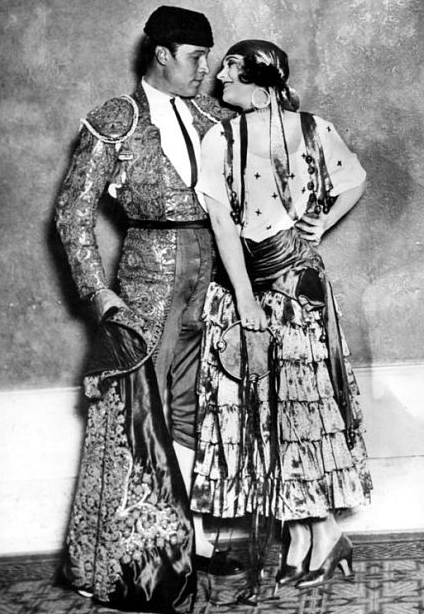
SWEETHEARTS? Rudolph Valentino and Pola Negri met in early 1926 at a costume party thrown by Marion Davies. Negri claimed she was engaged to be married to the actor at the time of his death. (Wikimedia Commons)
Screen Shot 2016-02-17 at 10.35.37 AM
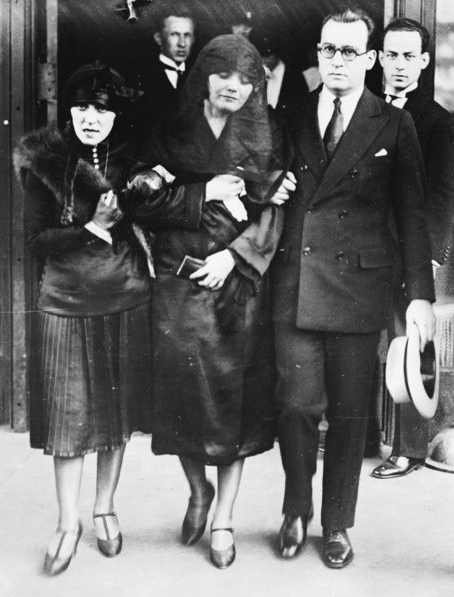
DIVA MOMENT…Pola Negri’s grief-stricken performance at Valentino’s New York funeral was considered by most to be over-the-top, even for a famous diva. Supported by a secretary and press agent (photo above), Pola declared to reporters that she and Valentino were secretly engaged to be married. She posed in dramatic fashion for the reporters and then threw herself, weeping and fainting, on Valentino’s open casket. (flickchick1953)

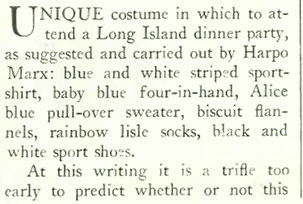
On the lighter side, The New Yorker men’s fashion columnist “Bowler” offered this observation of a new style suggested by Harpo Marx:

Screen Shot 2016-02-12 at 10.09.38 AM

Screen Shot 2016-02-12 at 10.09.46 AM

harpo-marx
Vaudeville star Harpo Marx in 1926. The first Marx Brothers movie was still three years away. (Wikipedia)

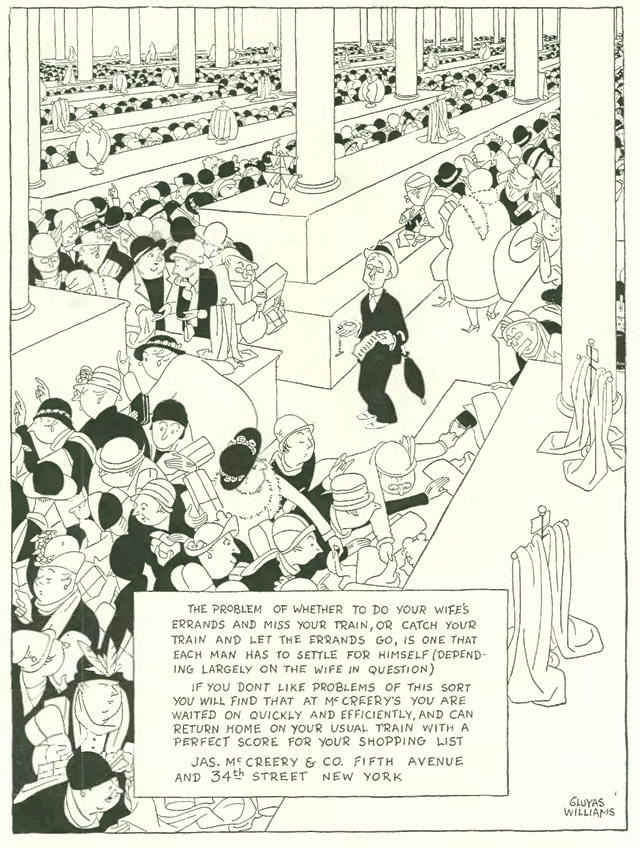
And to close, a couple of advertisements from the Sept. 11 issue…the first is a McCreery & Company ad illustrated by Gluyas Williams. These would become a series, featuring a milquetoast husband facing the daunting task of shopping for his wife, among other challenges…

Screen Shot 2016-02-12 at 10.01.12 AM

…and this ad from Park Central Motors, depicting a child who’s all too aware of her standing in society…

Screen Shot 2016-02-12 at 10.08.13 AM

Next Time: On the Airwaves…

9d9134fa5d5971983bdff56839082757


Come Fly With Me

Since most of us complain about the sad state of air travel these days, it’s nice to get a little historical perspective on this mode of transportation.

60050ce935d82b28520c52109cd715ce
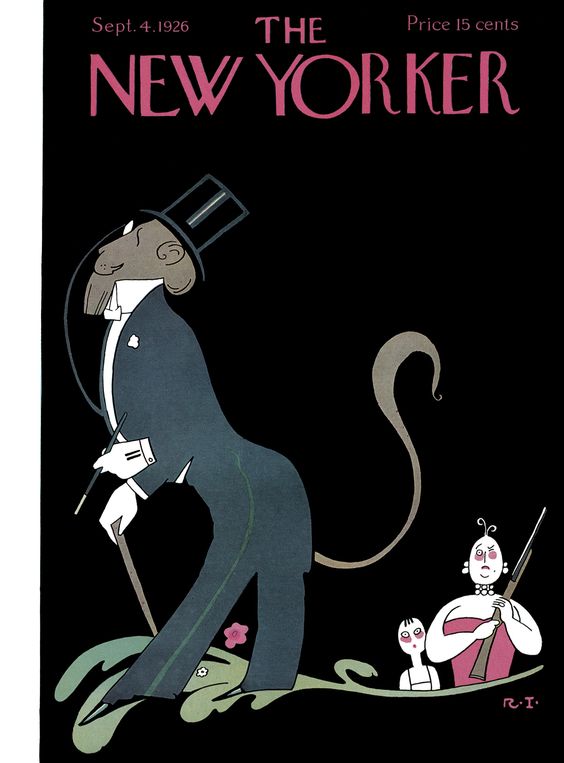
Sept. 4, 1926 cover by Rea Irvin.

Ninety years ago the editors of The New Yorker were enamored with passenger air service, even though it was only available to those who were wealthy and had the stomach to actually fly in one of these things:

3987535508_ecfa3ffa6a_b
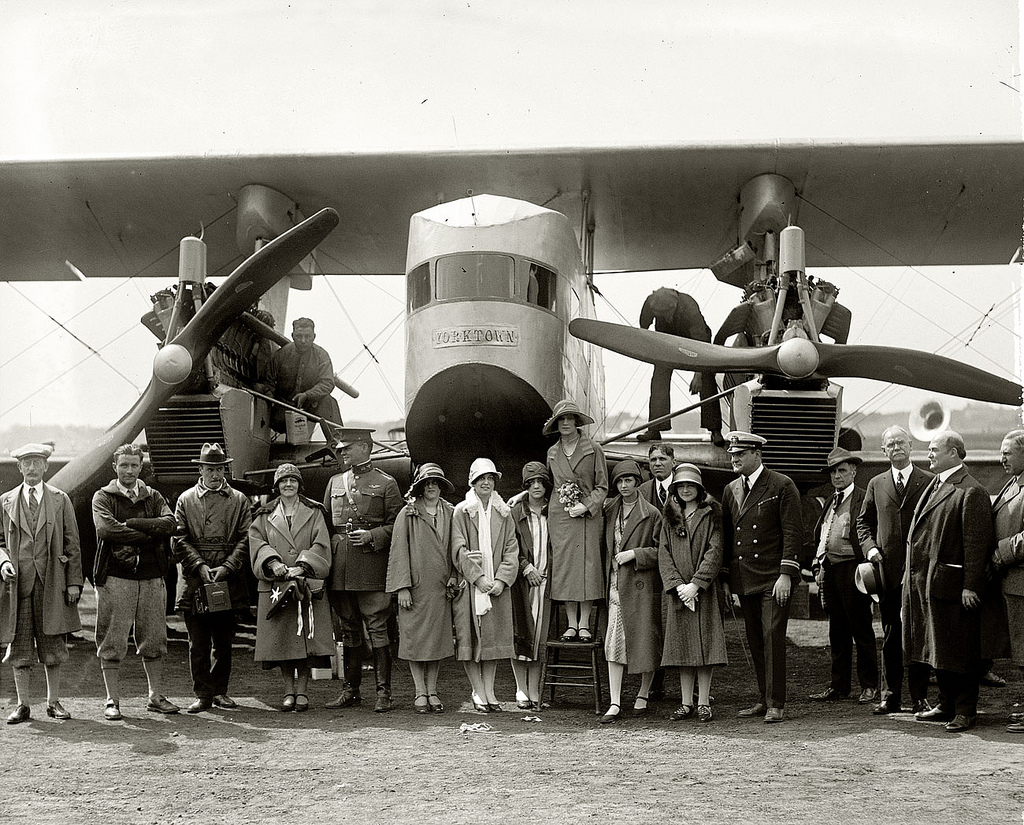
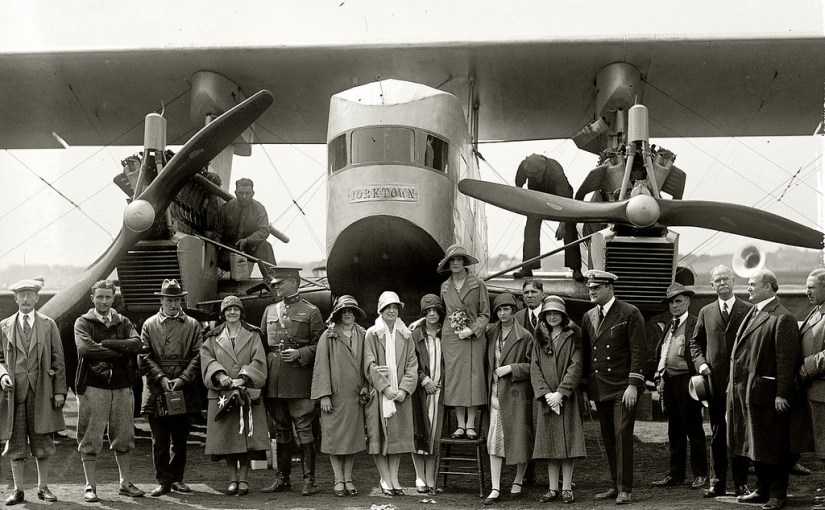
The May 8, 1925 christening of the Sikorsky “Yorktown.” The “huge” plane is referred to in the Sept. 4, 1926 “Talk of the Town.” (Library of Congress)

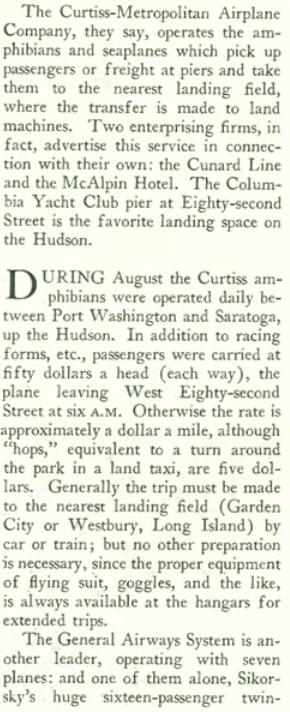
In the “Talk of the Town” section, The New Yorker editors marveled at the regular air taxi service available to Manhattanites:

Screen Shot 2016-02-10 at 11.50.30 AM

Screen Shot 2016-02-10 at 11.50.38 AM

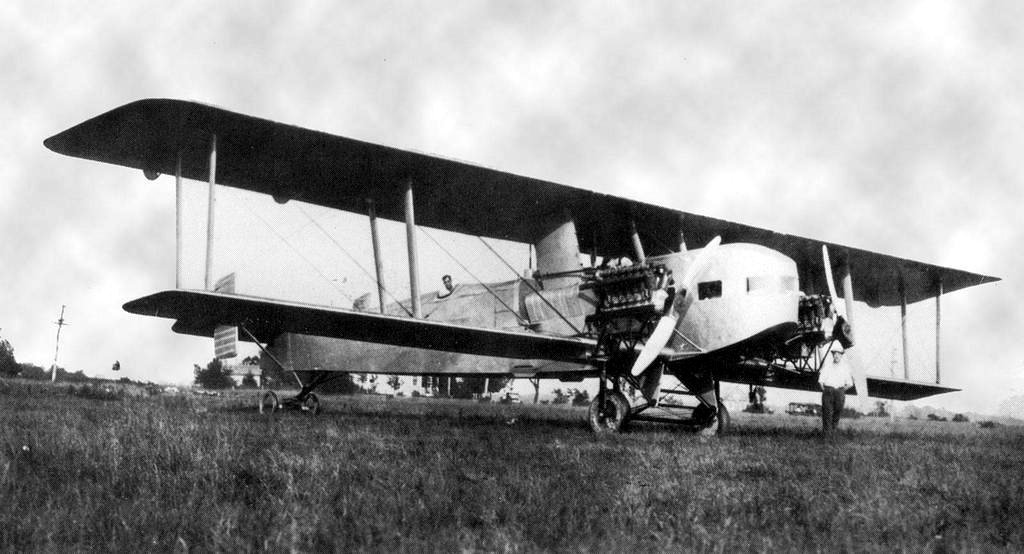
The “huge” Yorktown might look crude to a traveler in 2016, but this was advanced stuff considering the Wright Brothers had made their first flight less than 23 years earlier. Planes like the Yorktown looked less like aircraft we know today and more like a trolley car with wings attached. And that window in the front wasn’t for the pilot. He sat up top in the open air:

5919269221_8df4563424_b
Side view of the Sikorsky “Yorktown.” Note the pilot seated aft of the wings. (Flickr)

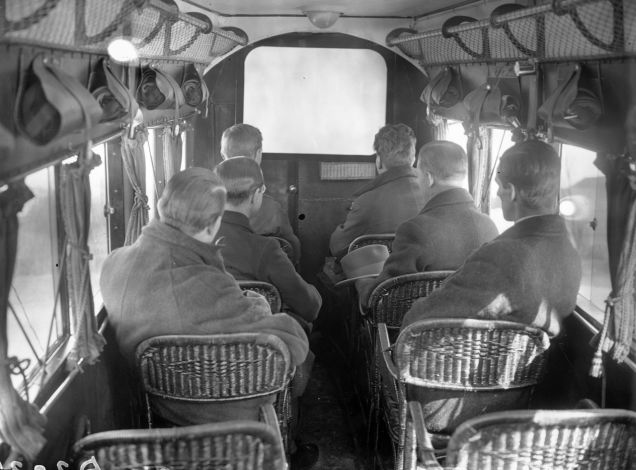
But then again, the interiors of these planes were no picnic, either. Imagine sitting in this while crashing through a storm:

HighFlight-Goliath4
Interior of a Farman Goliath, which would have been similar to the Sikorsky, if not a little nicer. (Historic Wings)
onzaslyyjim7xrzditoc
Another photo of a 1920s passenger flight. As in the preceding photo, note the wicker chairs. And no leg room. These fellows appear to awaiting the showing of an early in-flight movie. At least movies were silent then, because with giant piston engines flanking the cabin you weren’t going hear anything anyway. (Paleofuture)

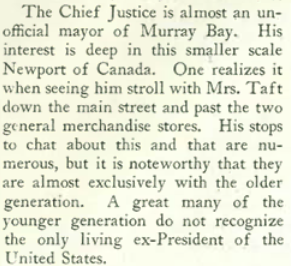
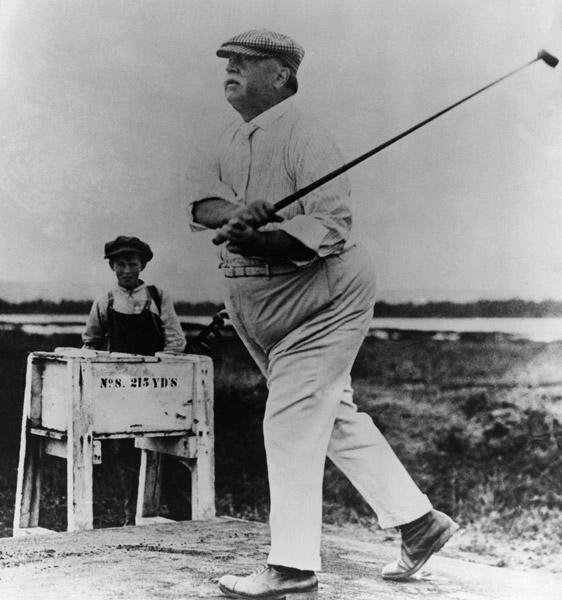
Other items from the Sept. 4, 1926 “Talk” section included a bit about the former president and then Supreme Court Justice William Howard Taft, and his rather ordinary life in Murray Bay. An excerpt:

Screen Shot 2016-02-10 at 11.50.50 AM

1268484_600
Ex-President, Supreme Court Justice and avid golfer William Howard Taft follows through on the links in this undated photo (jmarkpowell.com)

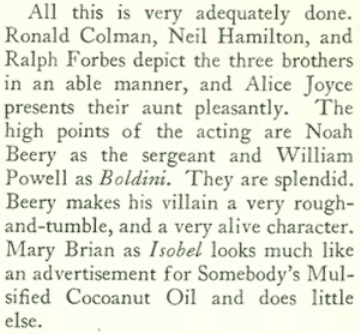
At the movies, The New Yorker gave a lukewarm review of the much-ballyhooed film Beau Geste:

Screen Shot 2016-02-10 at 12.01.07 PM

Mary-Brian-with-Neil-Hamilton-in-Beau-Geste-1926
AT LEAST SHE HAD A NICE COMPLEXION…Mary Brian (dubbed “The Sweetest Girl in Pictures”) with Neil Hamilton in Beau Geste, 1926 (classiccinemaimages)

And although Gloria Swanson was one of the biggest stars in the Silent Era, The New Yorker was never a big fan of her films:

Screen Shot 2016-02-10 at 12.01.20 PM

MV5BMTk2ODkxOTcxMl5BMl5BanBnXkFtZTYwMjcxMTU2._V1_SX640_SY720_
Gloria Swanson in Fine Manners, 1926 (IMDB)

And finally, this advertisement from Houbigant, featuring a drawing of an elegant woman with an impossibly long neck. I wouldn’t want her sitting in front of me at the movies…

Screen Shot 2016-02-10 at 11.56.17 AM

Another ad (from the Sept. 11 issue) also depicted this ridiculously giraffe-like neckline:

Screen Shot 2016-02-12 at 10.12.30 AMNext Time…Battleship Potemkin…

c294d1a8fc43b2b1097b9686637a1c6f


Time for a Facelift

It’s the dog days of summer, and the editors of The New Yorker are seeking various distractions to take their minds off of the broiling late season heat.

db2311e2a9fcb89fc253615846207b55
August 21, 1926 cover by H.O. Hofman.

In the Aug. 21, 1926 issue (bearing an appropriate cover image by H.O. Hofman of bathers taking a refreshing dip), “The Talk of the Town” suggested that it was a good time for even the natives to take a boat tour of their beloved island:

Screen Shot 2016-02-09 at 12.35.36 PM

Screen Shot 2016-02-09 at 12.35.46 PM

enhanced-buzz-27796-1367872781-0
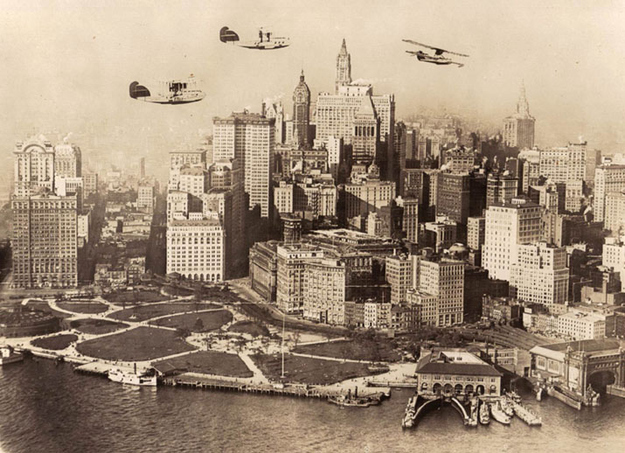
Aerial view of Battery Park Wharf in the early 1920s (Buzzfeed)

In the following Aug. 28 issue, the “Talk” editors ducked out of the sun to visit the American Museum of Natural History.

b3166409b2ab1ea1369e857d009d9b30
Aug. 28, 1926 cover by H.O. Hofman.

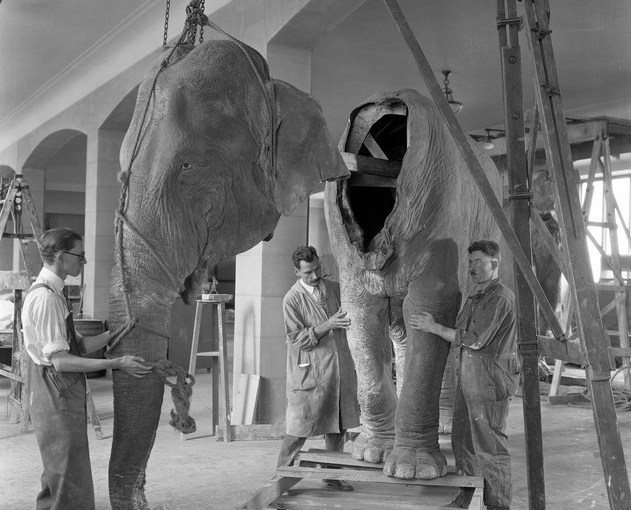
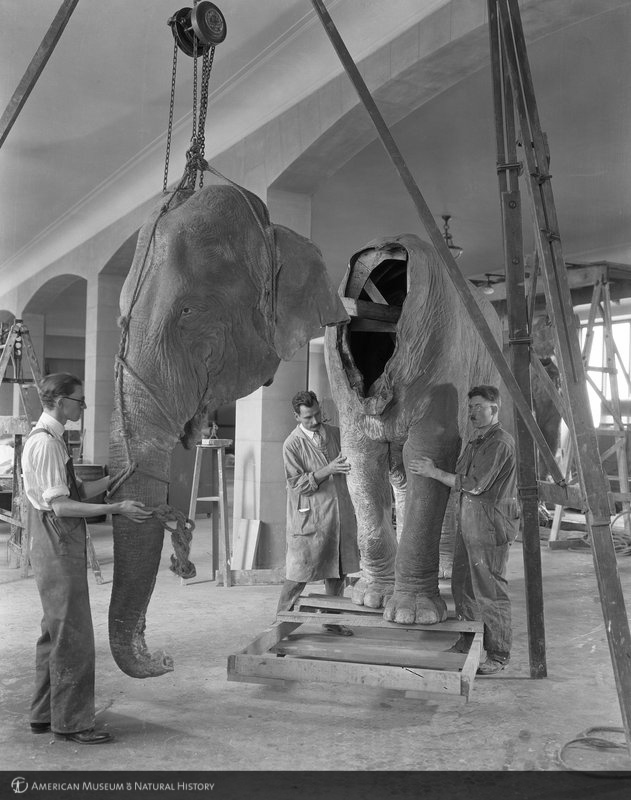
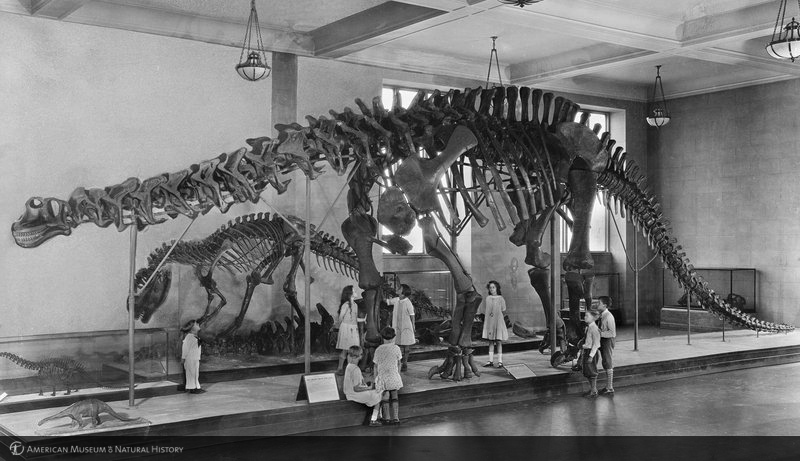
There they found curators busy reorganizing displays of dinosaurs and various stuffed beasts of the wild:

Screen Shot 2016-02-09 at 12.14.22 PM

Screen Shot 2016-02-09 at 12.14.28 PM

311585.tif
AMNH staff joining head to body of female elephant in Indian Elephant Group, 1926. (AMNH Digital Special Collections)
2007 METRO Project | ImageDigitizationSpecifications v1.0 | Epson Perfection V750 Pro
The end result of the 1926 reorganization of displays at the AMNH—children viewing Brontosaurus exhibit in 1927. (AMNH Digital Special Collections)

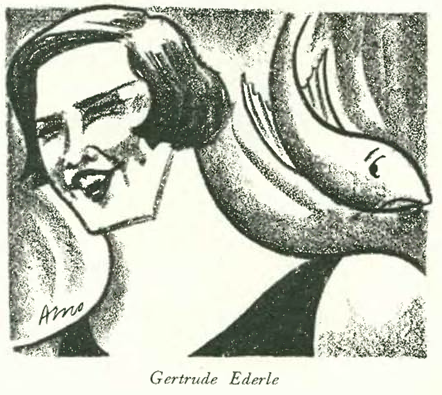
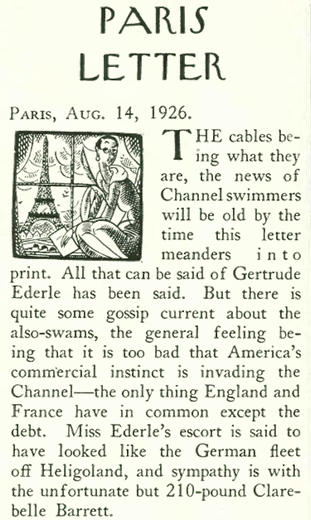
The magazine also profiled New York City native Gertrude Ederle, who became the first woman to swim across the English Channel in August of 1926:

Screen Shot 2016-02-09 at 12.16.16 PM
Gertrude Ederle, as rendered by Peter Arno for the “Profile.”

Even Janet Flanner, the magazine’s Paris correspondent, commented on the event, noting Europe’s jealous reaction to an American’s seizing of the record:

Screen Shot 2016-02-09 at 12.28.51 PM

Ederle would return home to a ticker tape parade along the Canyon of Heroes in the Financial District, and would also be feted by 5,000 people who turned out on West 65th Street for a block party in her honor.

getrudeedlerlecrown
WHAT FOLKS DID BEFORE TELEVISION…Block party celebrates Gertrude Ederle as “Queen of the Waves.” (Ephemeral New York)

According to the excellent blog Ephemeral New York, Ederle received offers from Hollywood and Broadway and was deluged by marriage proposals. But she returned to a quiet life, moving to Queens and working as a swimming instructor for deaf children–Ederle’s hearing was seriously damaged in the water of the Channel, but otherwise swimming must have been good for her health. She died at age 98 in 2003.

Keeping with the summertime theme, the magazine covered the Gold Cup Regatta, complete with illustrations by Johan Bull:

Screen Shot 2016-02-09 at 12.19.14 PM

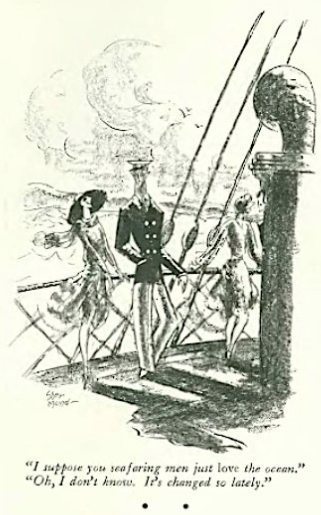
An early Barbara Shermund cartoon, always a delight…

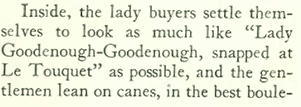
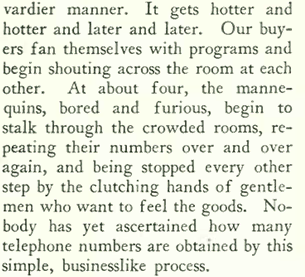
Lois Long took her “On and Off the Avenue” column to Paris, where she cast a jaded eye at the behavior of American buyers of French fashion:

Screen Shot 2016-02-09 at 12.26.32 PM

Screen Shot 2016-02-09 at 12.26.50 PM

Screen Shot 2016-02-09 at 12.27.00 PM

chanel-LBD
Coco Chanel’s “Little Black Dress” debuted in 1926. (homeecologist.com)

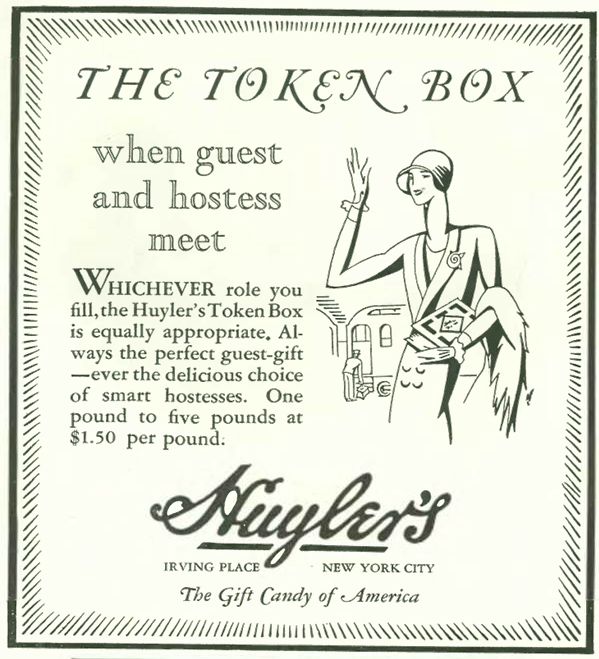
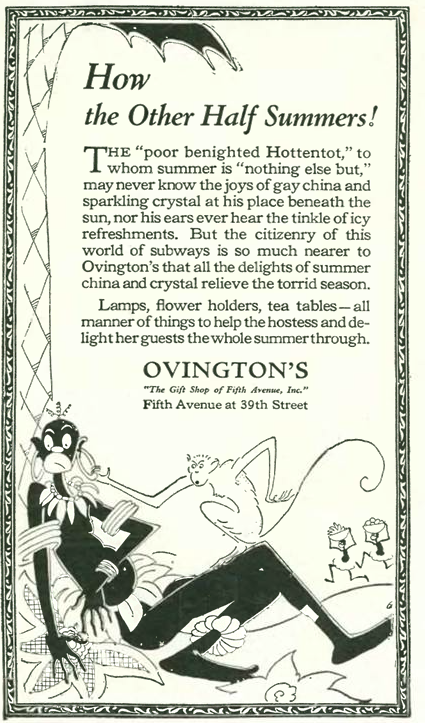
And finally, from the advertising department, this strange ad from Ovington’s, which seemed to be more concerned with promoting racial stereotypes than in selling dinnerware:

Screen Shot 2016-02-09 at 12.27.16 PM

Next Time: Come Fly With Me…

60050ce935d82b28520c52109cd715ce


Talking Pictures

It was 1926 and another marvel of science—talking pictures—was unveiled to audiences at Broadway’s Warners’ Theatre. It was here that the Warner Brothers launched their ‘Vitaphone’ talkies including The Jazz Singer, which would premiere the following year.

Screen Shot 2016-01-28 at 4.34.57 PM
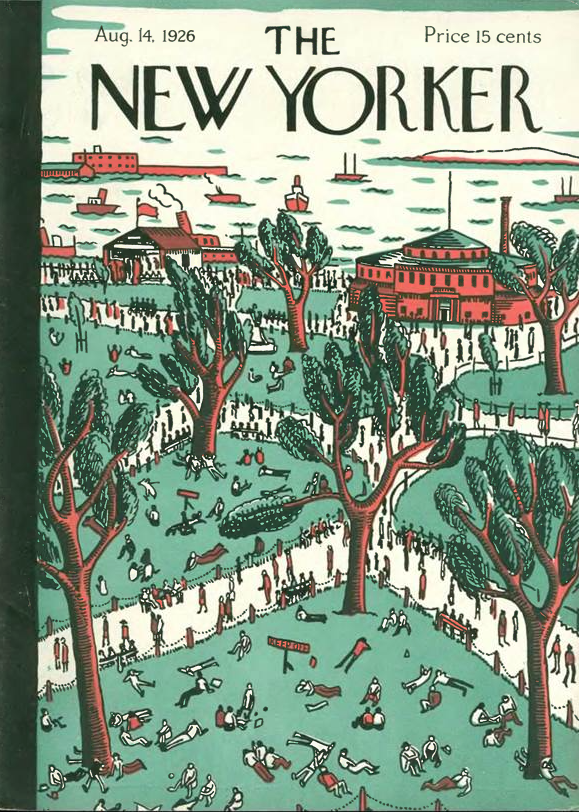
Aug. 14, 1926 cover by Ilonka Karasz.

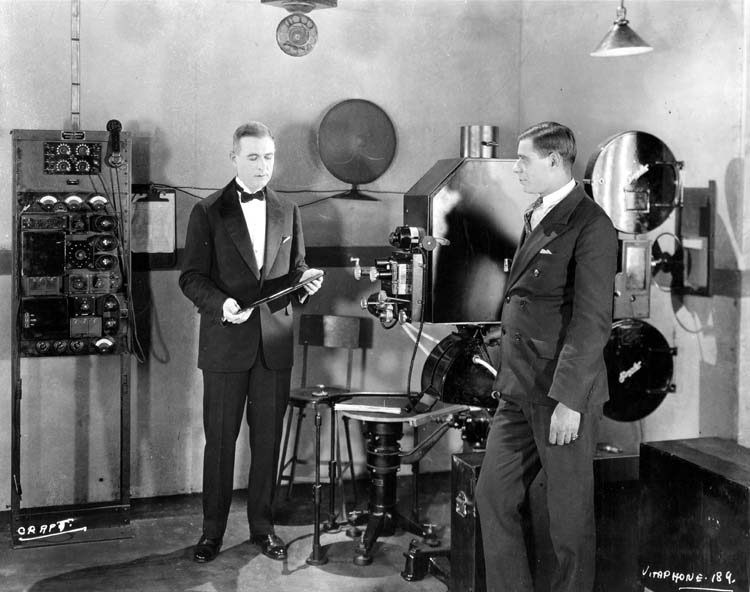
The Vitaphone soundtrack was not printed on the film itself, but rather recorded separately on phonograph record, the sound synchronized by physically coupling the record turntable to the film projection motor.

VitaphoneDemo
A Vitaphone projection setup at a 1926 demonstration. Engineer E. B. Craft is holding a soundtrack disc. The turntable, on a massive tripod base, is at lower center. (University of San Diego History Department)

Don Juan was the first feature-length film to use the Vitaphone system, which was not a continuous soundtrack but rather a sprinkling of sound shorts (the musical score, performed by the New York Philharmonic, and various sound effects) throughout the film. No spoken dialogue was recorded.

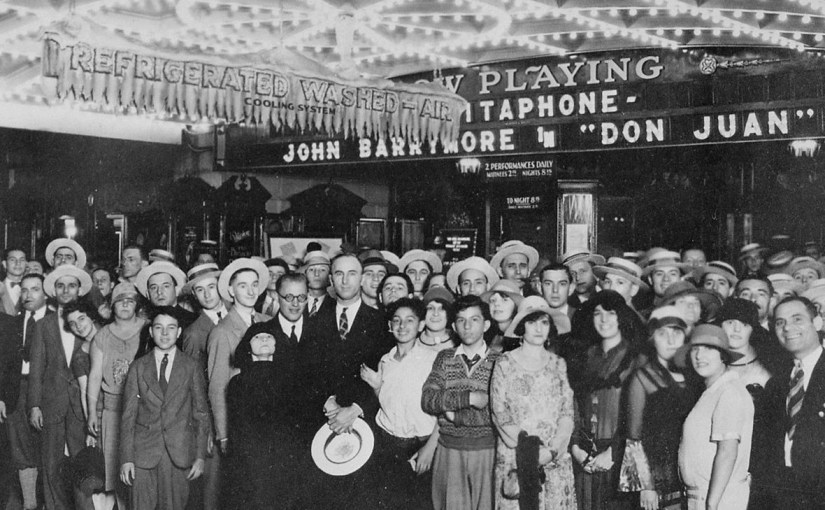
First-nighters_posing_for_the_camera_outside_the_Warners'_Theater_before_the_premiere_of_%22Don_Juan%22_with_John_Barrymore,_-_NARA_-_535750
First-nighters pose outside Warners’ Theatre before the premiere of Don Juan, August 6, 1926 (US National Archives)

Produced at a cost of $789,963 (the largest budget of any Warner film up to that point), the film was critically acclaimed and a box-office success. However, and predictably, The New Yorker was not so impressed with Vitaphone…

Screen Shot 2016-02-03 at 1.08.42 PM

…or the acting of John Barrymore

Screen Shot 2016-02-03 at 1.09.03 PM

I have to agree with the critic, identified only as O.C., after viewing this TCM clip of the film on YouTube. Lacking a voice, silent actors had to exaggerate emotions onscreen, but Barrymore here is every bit the ham. This screen grab from the clip says it all:

Screen Shot 2016-02-04 at 12.54.50 PM

The object of his gaze, Adriana della Varnese (played here by a young Mary Astor), reacts rather dramatically to his advances…can’t say I blame her…(however, the 44-year-old Barrymore and the 20-year-old Astor were having an affair at the time…)

Adriana della Varnese (played here by a young Mary Astor), reacts rather dramatically to Don Juan’s advances.

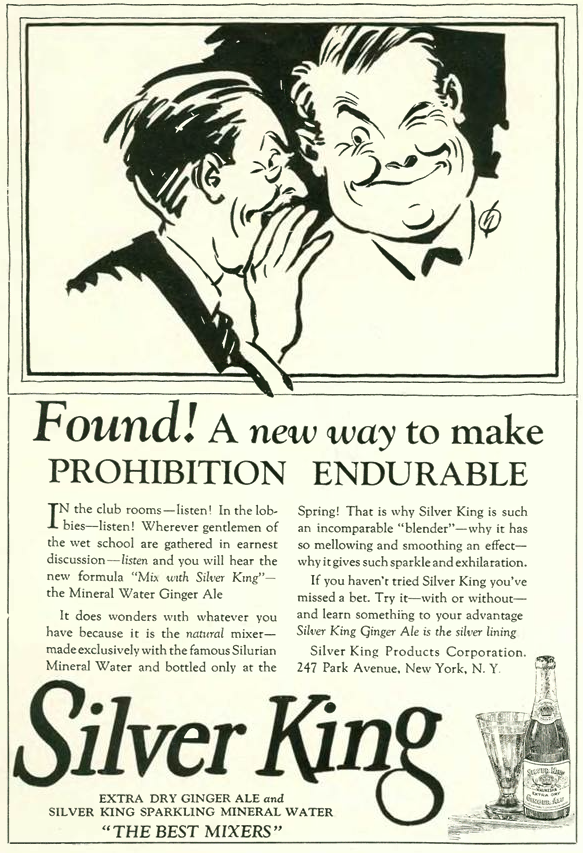
A couple of interesting ads in the Aug. 14, 1926 issue, including this one featuring a couple of sneaky gents who’ve found a solution to life in dry America…Screen Shot 2016-02-03 at 1.11.20 PM

…and this not-too-subtle message from a swanky shop on Fifth Avenue:

Screen Shot 2016-02-03 at 1.10.54 PM

Next Time: Time for a Facelift…

db2311e2a9fcb89fc253615846207b55