Papa Pens a Parody

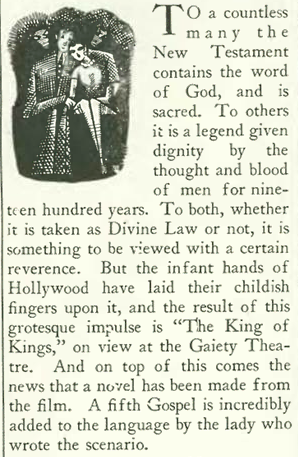
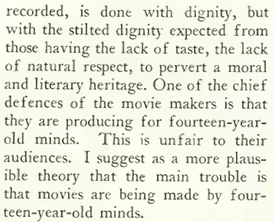
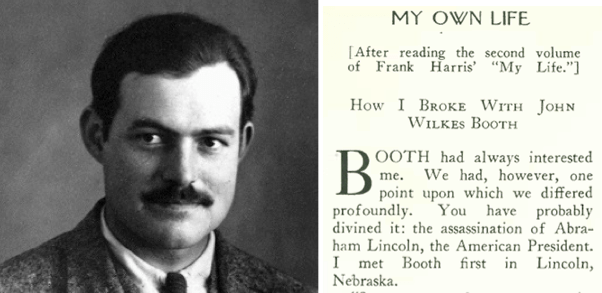
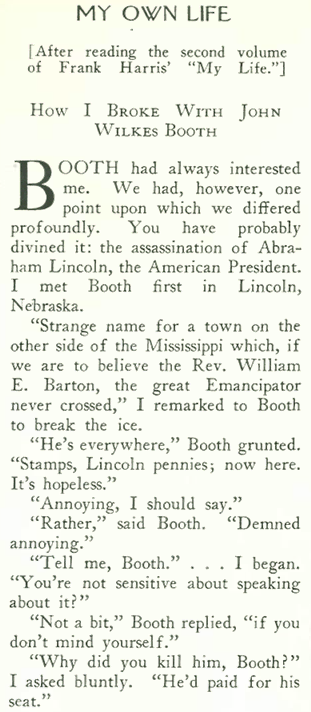
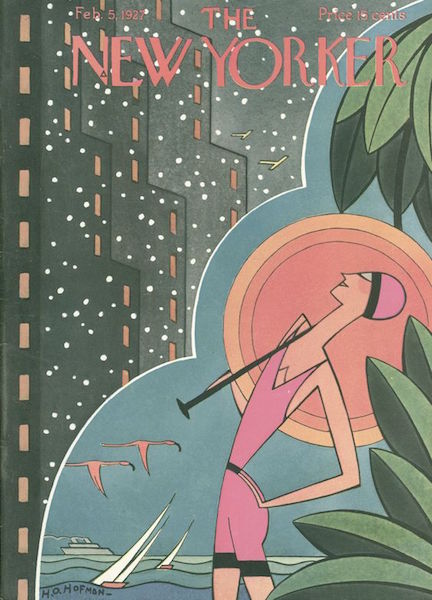
Ernest Hemingway wrote his lone New Yorker piece for the Feb. 5, 1927 issue. Titled “My Own Life,” it was a short parody of the 3-volume My Life and Loves by Irish writer Frank Harris.

7532b3c65dcb4c041db31d7c0c75b4c4
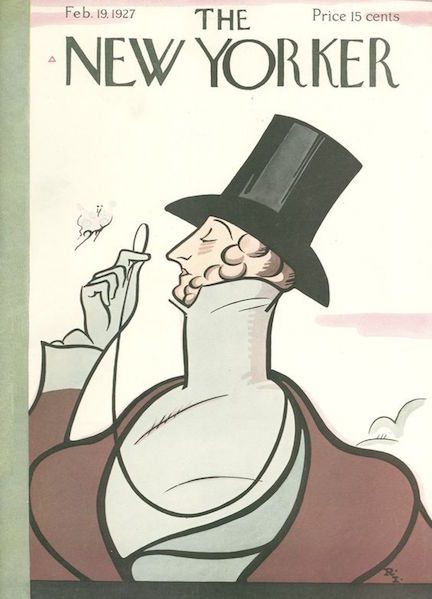
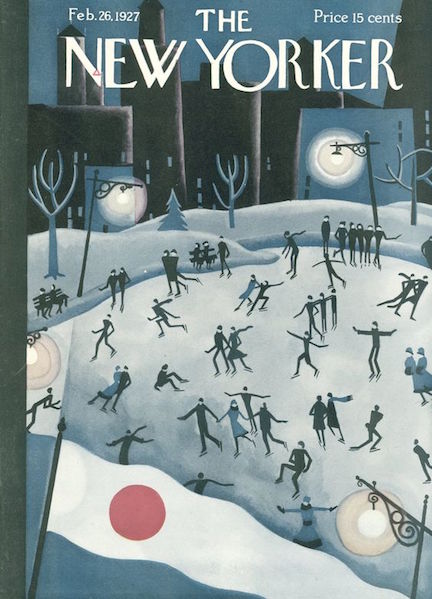
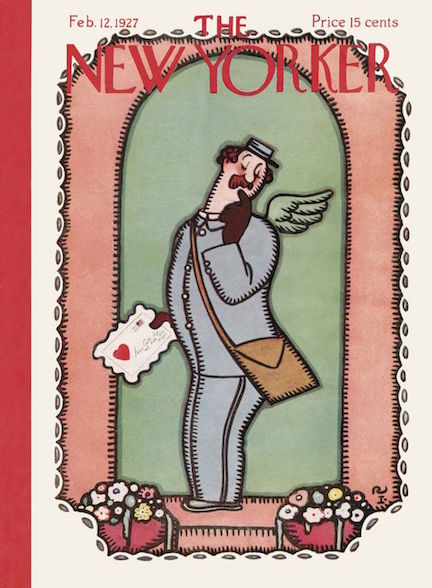
February 12, 1927 cover by Rea Irvin.

Writing for The Hemingway Review (Fall 2001), Francis Bosha notes in “The Harold Ross Files” that Hemingway’s sole contribution to the New Yorker is striking given that the magazine was such a major influence on fiction in the 20th century.

Money, or the shortage thereof, appears to be the main reason why Hemingway was not a regular contributor. Although the young magazine was doing well, Bosha writes that it was not yet ready to compete financially with more established mass market magazines. Indeed, Hemingway’s “My Own Life” landed in the New Yorker because it had already been rejected by both Scribner’s and The New Republic.

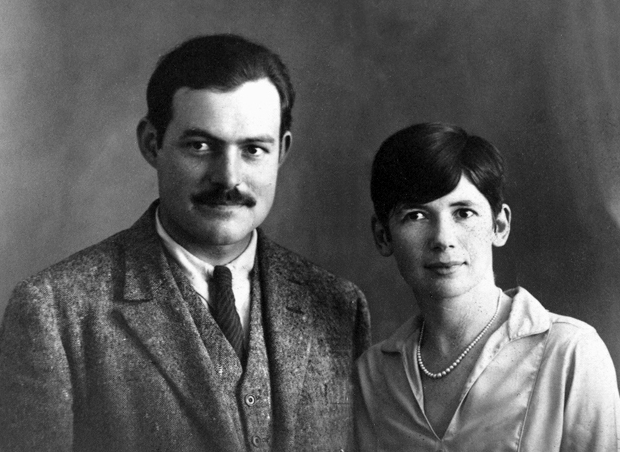
Ernest_and_Pauline_Hemingway,_Paris,_1927
Ernest Hemingway and his second wife, Pauline Pfeiffer, in Paris, 1927. (Wikipedia)

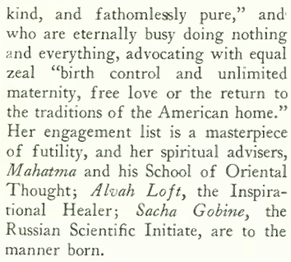
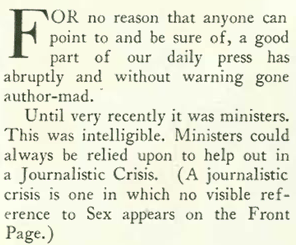
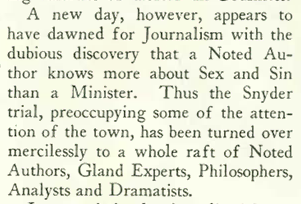
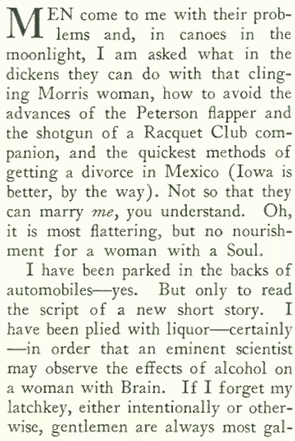
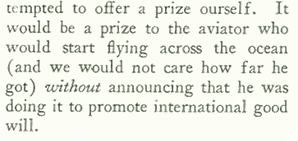
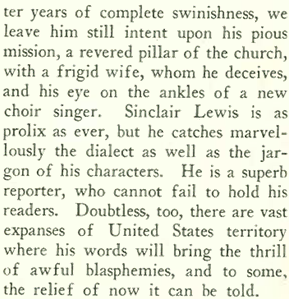
If you read the piece you can see why it was rejected. The famed fiction writer, hot off the success of The Sun Also Rises, was not a great parodist. An excerpt:

Screen Shot 2016-07-20 at 3.24.37 PM

And so on. Hemingway wisely stuck with serious fiction, which might explain his fleeting association with The New Yorker, which in its first years was bent toward humor in the Punch or Judge vein and not toward serious writing.

Nevertheless, the New Yorker’s founding editor, Harold Ross, maintained a friendship and a regular correspondence with Hemingway during the writer’s years in Cuba in the 1940s. On several occasions Ross invited Hemingway to submit something to the magazine, but nothing came of it. It didn’t help that Hemingway publicly stated in 1942 that he “was out of business as a writer,” and was suffering from depression, weight gain, and bouts of heavy drinking.

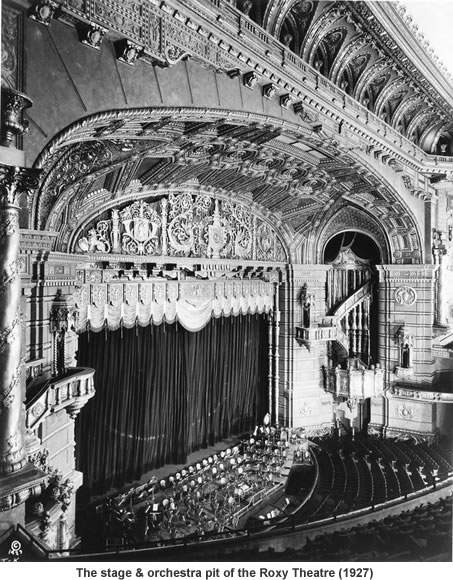
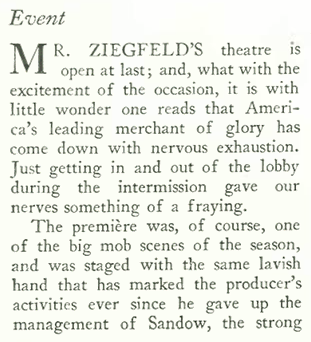
The Great Ziegfeld Finally Opens His New Theatre

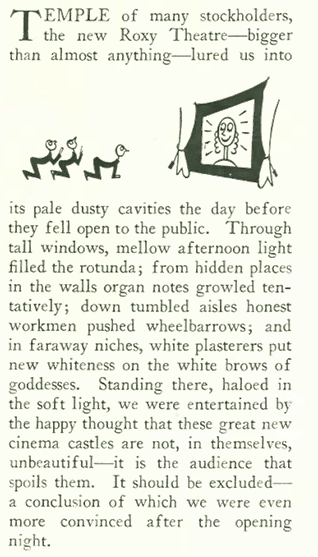
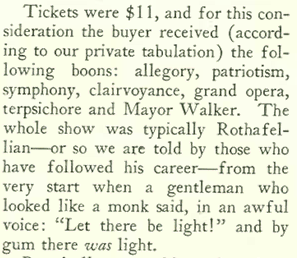
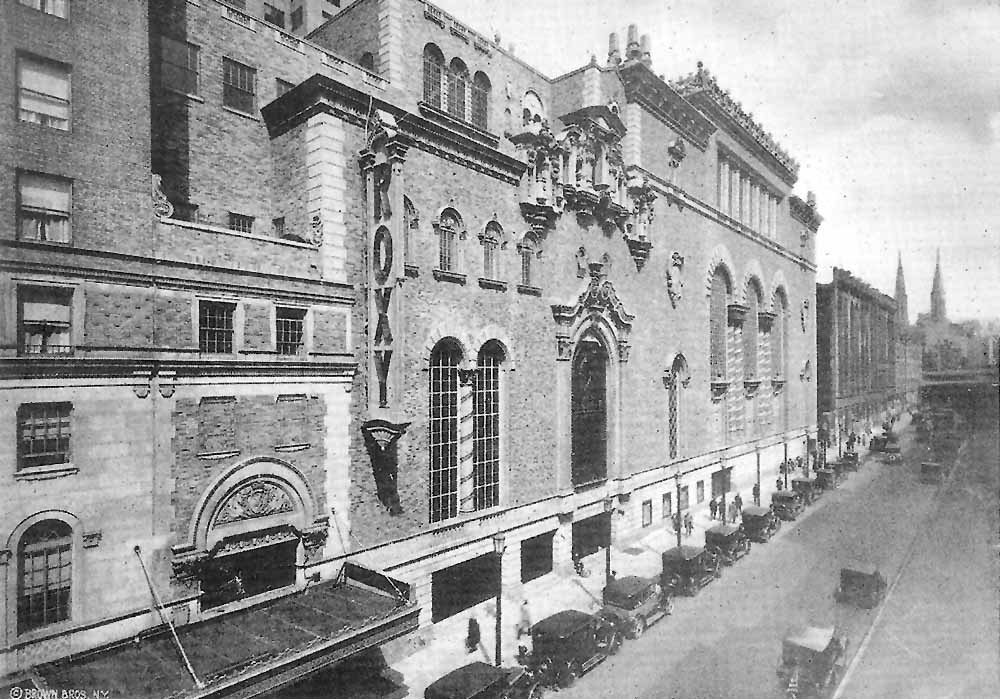
“The Talk of the Town” reported the premiere of Florenz Ziegfeld’s new art deco theatre was “one of the big mob scenes of the season,” attracting celebrities and celebrity-gawkers alike:

110927-GON066-04
Opening Night…
Screen Shot 2016-07-19 at 3.48.51 PM

Screen Shot 2016-07-19 at 3.49.09 PM

wurts_A0810_808013 001
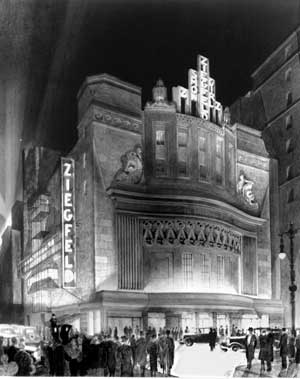
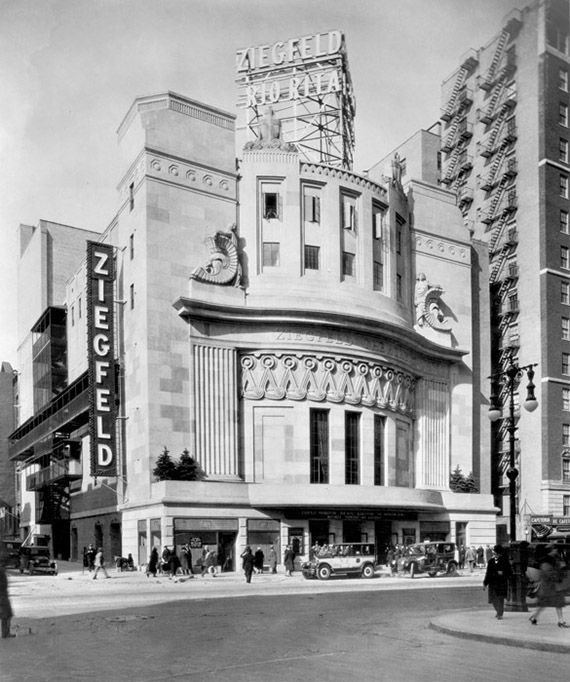
DECKED IN DECO…The Ziegfeld Theatre at Sixth Avenue and 54th Street, 1927. Joseph Urban’s design of the facade suggests open curtains flanking a stage. (nyc-architecture.com)
Screen Shot 2016-07-20 at 4.11.16 PM
HELLO DOLLY…On the Ziegfeld Theatre’s opening night Ada May played Dolly in Rio Rita (Museum of the City of New York)

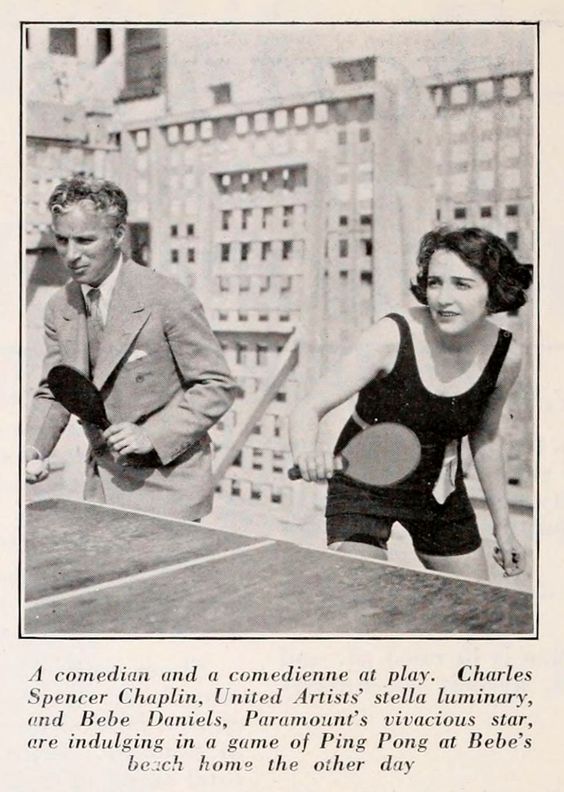
The opening drew the likes of Charlie Chaplin and polar explorer Roald Amundsen, who perhaps found a line of chorus girls a welcome sight after years of trekking through frozen landscapes.

Screen Shot 2016-07-19 at 3.49.28 PM

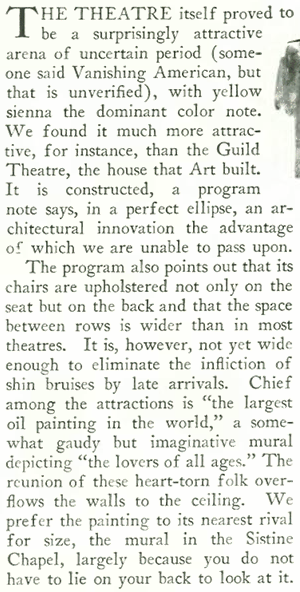
Among the attractions of the new theatre was what was claimed to be the largest oil painting in the world:

Screen Shot 2016-07-19 at 3.50.12 PM

110927-GON066-02
AN EYEFUL…A section of the interior wall of the Ziegfeld Theatre, decorated with “the largest oil painting in the world.” (nyc-architecture.com)

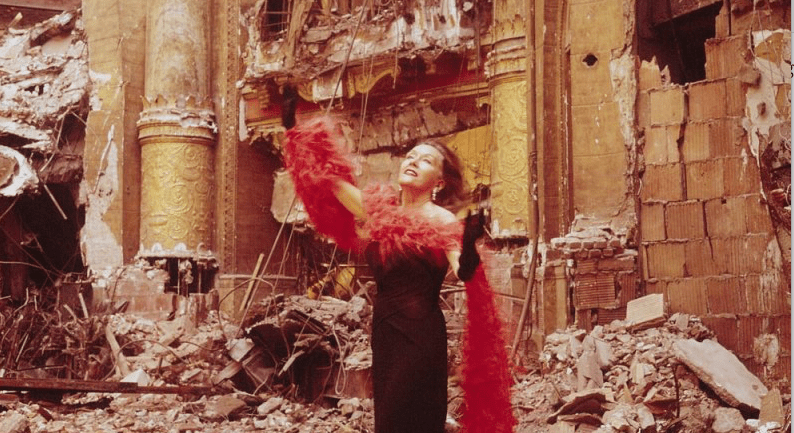
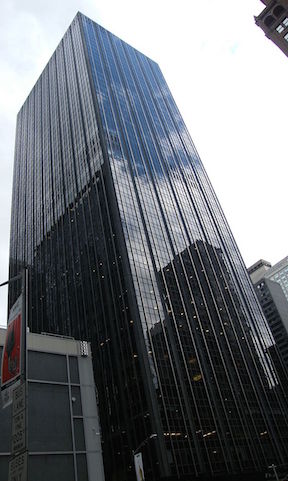
Sadly, despite public protests, the theatre was razed in 1966, bulldozed into rubble. The Burlington House stands on the site today:

800px-Burlington-house-nyc
Burlington House. (Wikipedia)

But we will end on a happier note, a cartoon by Barbara Shermund:

Screen Shot 2016-07-19 at 3.52.59 PM

Next Time: Two Years Young…
e5c3fabc5f1612a71442c78a3c71d654

All That Jazz

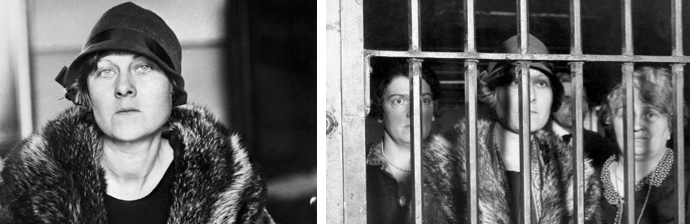
The New Yorker’s “Talk of the Town” editors were always in search of something to amuse, and in the Jan. 29, 1927 issue they found it in one Maurine Watkins, who wrote the Broadway hit musical Chicago (yes, THAT one) while still enrolled in her drama class at Yale:

Screen Shot 2016-06-21 at 12.08.32 PM

ct-flashback-chicago-murder-roxie-hart-fosse-yale-per-0315-jm-20150312
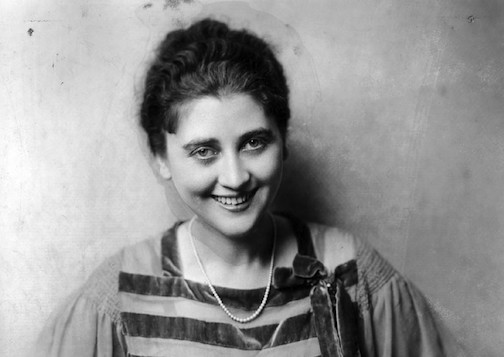
Maurine Watkins (Chicago Tribune)

Watkins transformed a brief career as a Chicago Tribune crime reporter into her Broadway success, thanks to her fondness for writing about murderers:

Screen Shot 2016-06-21 at 12.09.22 PM

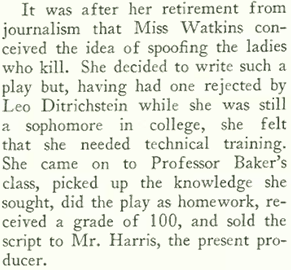
Chicago opened on Broadway in late December 1926 at the Sam Harris Theatre, where it ran for 172 performances. Watkins wrote the play as “homework” for her Yale drama class:

Screen Shot 2016-06-21 at 12.09.30 PM

It didn’t take long for Hollywood to come calling, with Cecil B. DeMille producing a silent film version (directed by Frank Urson) in 1927.

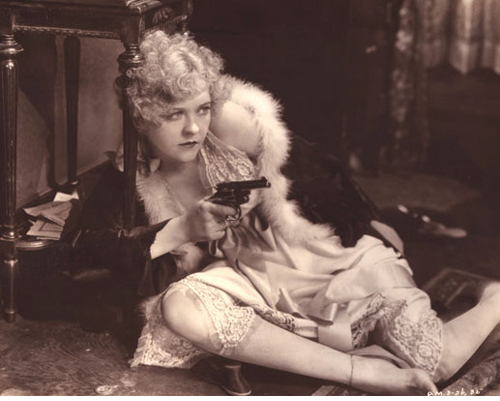
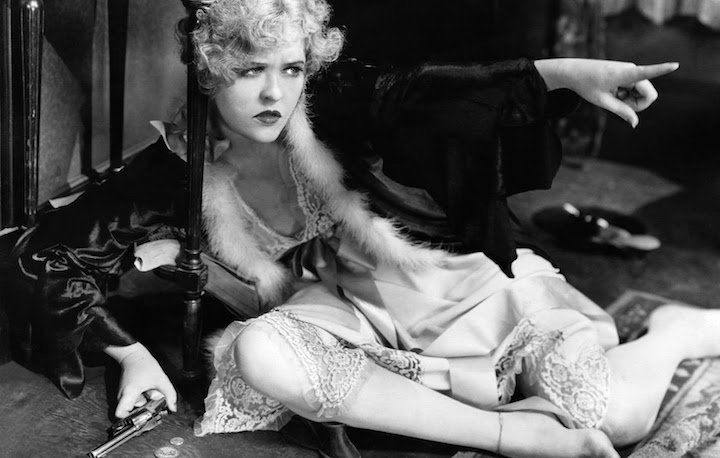
phyllishaverroxie
Phyllis Haver as Roxie Hart from the 1927 film, Chicago. Ginger Rogers would play the role in the 1942 movie Roxie Hart, and Renée Zellweger would play the part in the 2002 film, Chicago. (chicagology)

Watkins would go on to write about twenty plays, moving on to Hollywood to write screenplays including the 1936 comedy Libeled Lady. She left Hollywood in the 1940s to be close to her parents in Florida. A lifelong Christian, Watkins spent much of her fortune funding the study of Greek and the Bible at some twenty universities, including Princeton. Following her death in 1969, her estate sold the rights to Chicago to famed choreographer and director Bob Fosse. Fosse would go on to develop Chicago: A Musical Vaudeville in 1975, which was revived in 1997 and turned into an Academy Award-winning film in 2002.

*   *   *

Winter doldrums had set into city, which was digging out of the latest snowstorm and leaving the “Talk” editors pining for spring.

b8a47deb10bba89d024899c9500bba81
January 29, 1927 cover by Ilonka Karasz.

So it was unwelcome news that the green lawns along Cottage Row were to become the latest casualties of the booming city:

Screen Shot 2016-06-21 at 12.06.43 PM

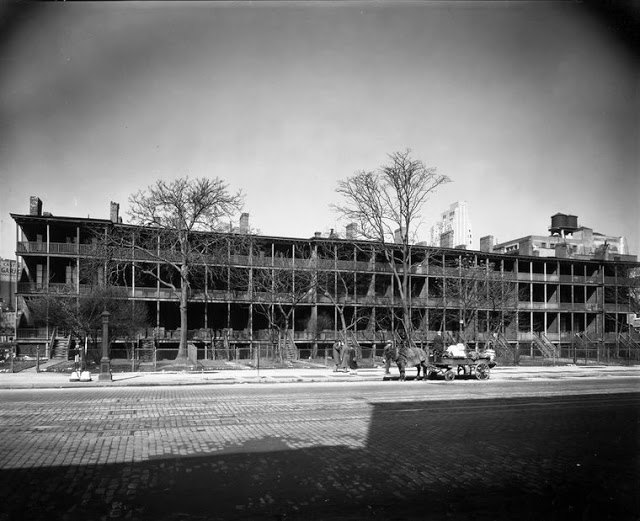
According to the excellent blog Daytonian in Manhattan, around 1848 William Rhinelander filled the 7th Avenue block between 12th and 13th Streets with eleven three-story homes above “English basements.” The simple residences were intended for middle-class families and sat more than twenty feet back from the street, providing grassy lawns and garden space. During summer weather each floor had a deep veranda that provided shade and caught cooling breezes.

rhinelander row abbott March 30 1936
This 1936 photograph by Berenice Abbott shows the abandoned “Cottage Row.” (Library of Congress)

As it turned out, the green lawns won a brief reprieve: By the time developers got around to building an apartment on the site, the Depression hit and left Cottage Row standing for another ten years. It was demolished in 1937, replaced not by an apartment building but rather by a gas station and used car lot, which were replaced in 1964 by the Joseph Curran Building (now the Lenox Hill Healthplex):

Lenox-Hill-Exterior-1000x600
Today the Cottage Row site is occupied by the 1964 Joseph Curran Building (now the Lenox Hill Healthplex). Albert C. Ledner, a New Orleans architect, fancifully evoked seafaring themes in his design of the Curran Building, which originally housed the headquarters of the National Maritime Union. (MCD Magazine)

* * *

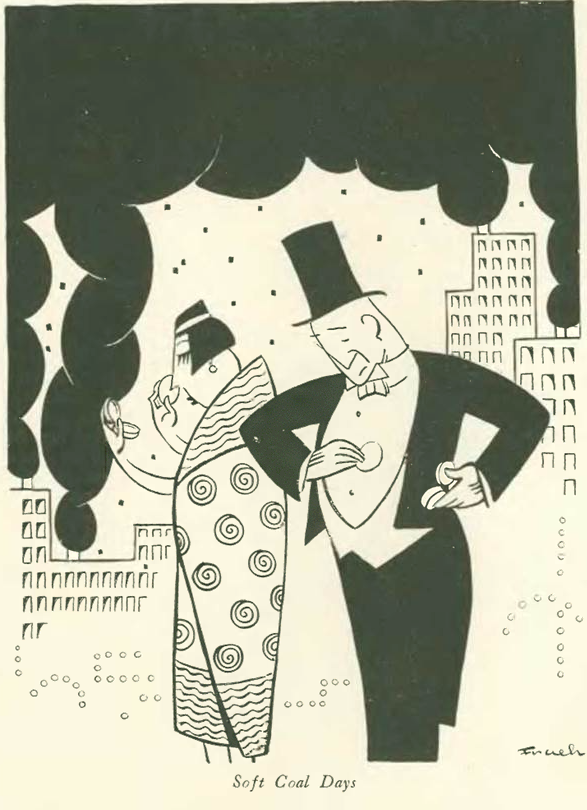
The winter drear was further compounded by the sooty smog that lingered over the city, fed by so many coal-fired furnaces. The “Talk” editors noted:

Screen Shot 2016-06-21 at 12.07.00 PM

Screen Shot 2016-06-21 at 12.06.53 PM

Screen Shot 2015-10-30 at 9.52.10 AM
A PERENNIAL NUISANCE…This Al Frueh drawing originally appeared in the Feb. 27, 1926 issue of the magazine.

To read more about “soft coal days,” see my previous post, “A Fine Mess.”

* * *


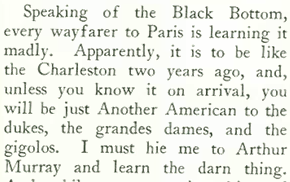
Columnist Lois Long (“Tables for Two”) was contemplating dance lessons to learn the “Black Bottom,” the dance craze that supplanted “The Charleston” in 1926.

Screen Shot 2016-06-21 at 12.17.23 PM

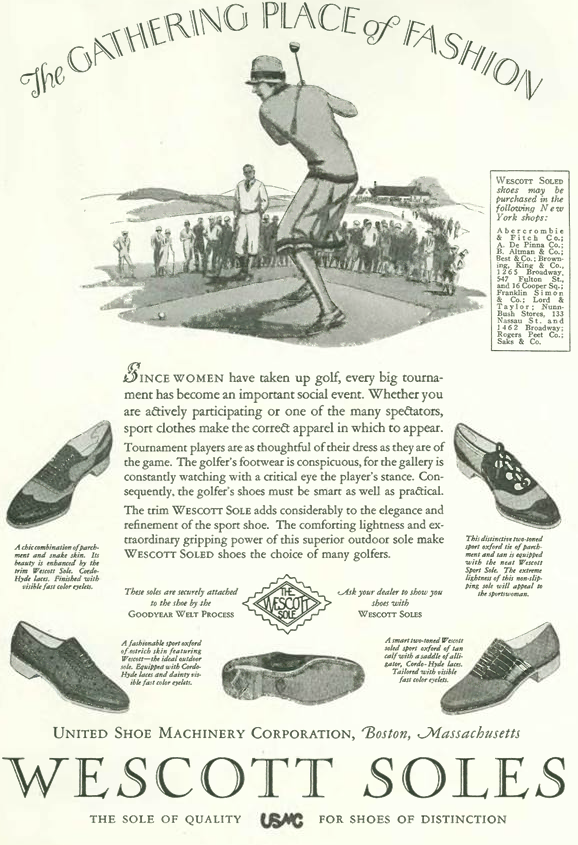
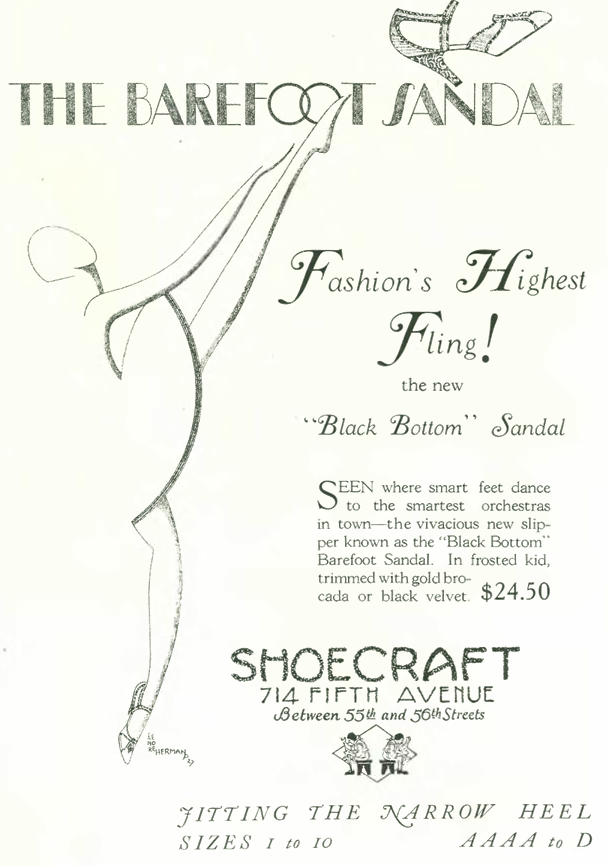
Apparently the dance called for special shoes, per this advertisement from the same issue:

Screen Shot 2016-06-21 at 11.53.19 AM

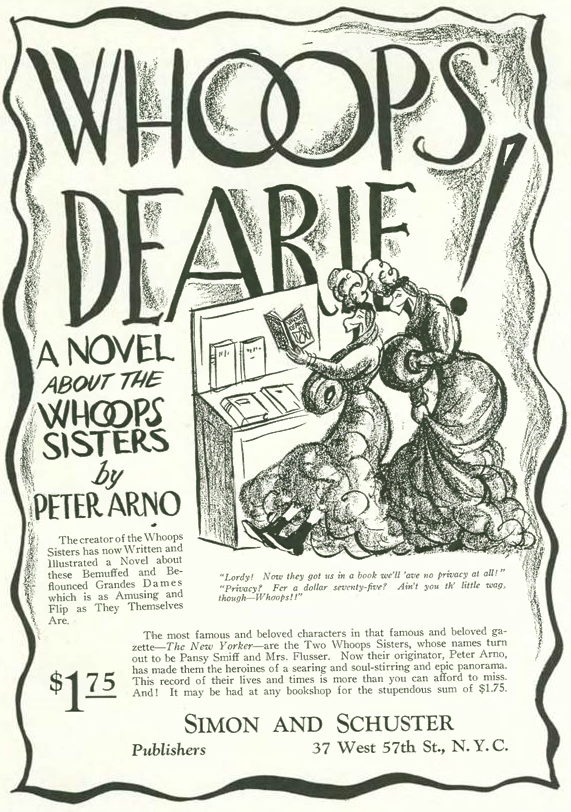
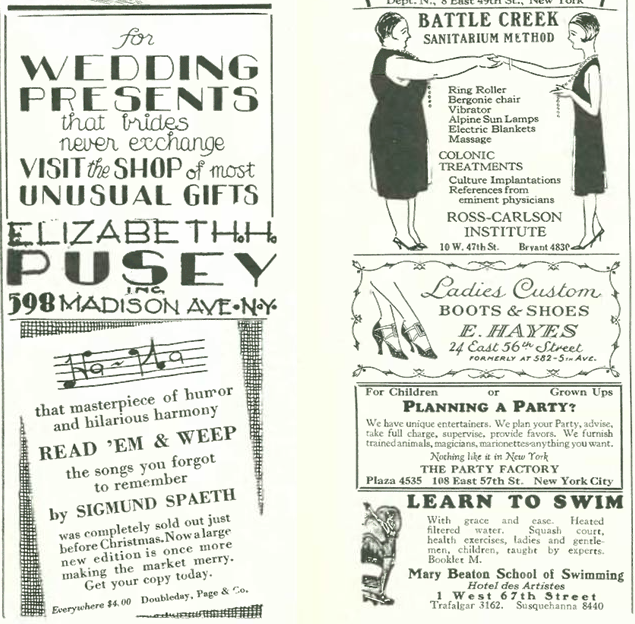
Up to now I’ve been posting images of often lavish ads featured mostly in the first sections of the magazine and on the front and back inside covers, but there were other, less expensive (and less artful) ads sprinkled in the back pages of the magazine, a tradition that continues to this day:

Screen Shot 2016-06-21 at 12.27.14 PM

Next Time: Spring Fever…

e4051b8c99ab27eb2272f12bb1634373


Those Jaunty Jalopies

The January 8, 1927 issue of the New Yorker was all over the 27th Annual Motor Show at the Grand Central Palace, both in its lengthy review of the show and the many automobile ads throughout its pages.

02a20a11df95c233092dc64bfc8f2b3c
January 8, 1927 (Issue # 99) cover by Ilonka Karasz.

Auto manufacturers discovered early on that cars didn’t need to advance technologically from year to year as long as there were superficial changes–trimmings and such–to dazzle the consumer:

Screen Shot 2016-06-02 at 3.29.54 PM

Screen Shot 2016-06-02 at 3.29.13 PM
Helen Hokinson added this touch to the issue devoted to the auto show.
1927_Roadster_Model-90
A 1927 Gardner Model 90 Roadster on display at the 27th Annual New York Motor Show at Grand Central Palace. (gardnermotorcars.com)

Advertisements in the New Yorker ranged from snobbish appeals to Francophiles…

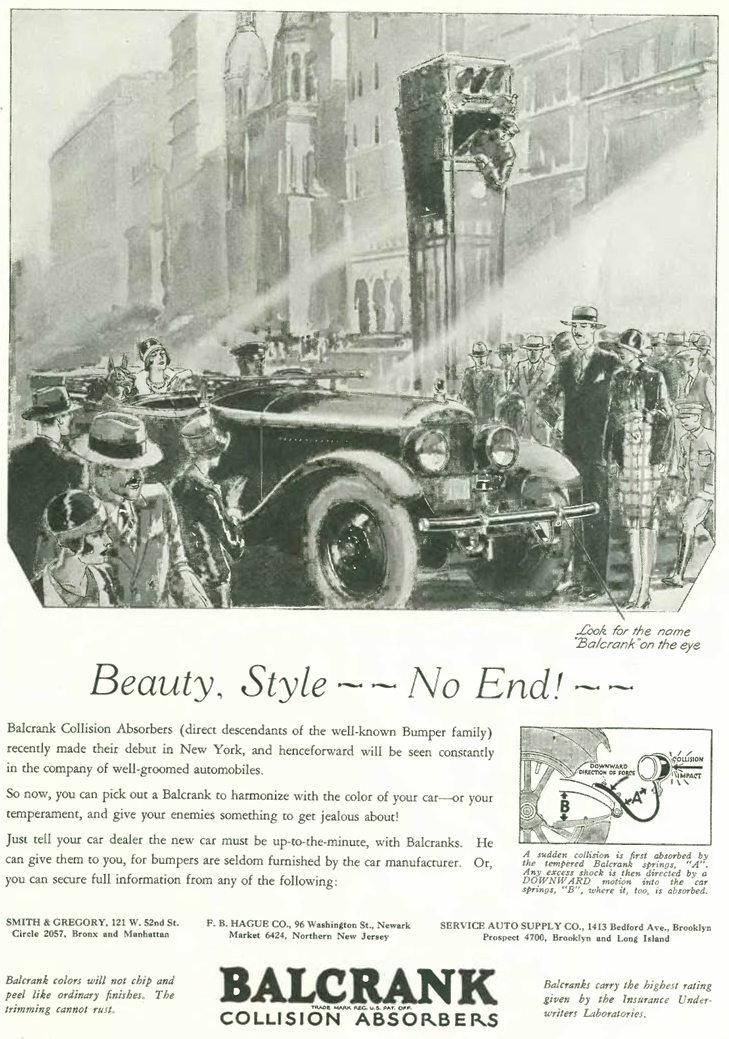
Screen Shot 2016-06-02 at 3.32.48 PM…to those who might be concerned about safety. Although cars weren’t very fast, they were fast enough to kill, and their plentiful numbers often overwhelmed a city with rudimentary traffic control.

Screen Shot 2016-06-02 at 3.32.07 PM

In his book, One Summer: America, 1927, Bill Bryson writes that New York in 1927 was the most congested city on earth. It contained more cars than the whole country of Germany, while at the same 50,000 horses (and wagons) still clogged the streets. More than a thousand people died in traffic accidents in the city in 1927, four times the number today.

slowupbrooklyn
THE DEATH-O-METER … was a 20-foot sign installed near Grand Army Plaza in 1927. It tallied traffic accidents and fatalities in the borough and reminded motorists to slow down at the traffic circle. (Ephemeral New York)

Traffic control was still in its infancy in the 1920s. Seven ornate bronze towers, 23 feet high, were placed at intersections along Fifth Avenue from 14th to 57th Streets starting in 1922. By 1927 smaller, simpler lights were mounted on street corners and the system of green, yellow and red was generally adopted.

491px-62646_253114161496208_2059581299_n_zpsf6a62b6c
Bronze traffic signal tower designed by Joseph H. Freedlander at 42nd Street and Fifth Avenue, 1922. (stuffnobodycaresabout.com)

Keeping with the motorcar theme, the issue also featured a profile (written by Lurton Blassingame) of Walter P. Chrysler, founder of the new car company that bore his name (Chrysler founded his company in June 1925 after acquiring and reorganizing the old Maxwell Motor Company). In just three years a famous New York City landmark bearing his name would pierce the skyline.

I recently noted that the fall 1926 editions of the New Yorker barely mentioned baseball, even though the Yankees made it to the World Series that year. No doubt the Black Sox scandal of 1919 still lingered in the minds of many fans. Morris Markey’s “Reporter at Large” column in the Jan. 8, 1927 issue suggested that the game, “no more important than the circus,” was still dishonest, thanks in part to its collusion with the newspapers:

Screen Shot 2016-06-02 at 3.27.58 PM

Baseball might have been down and out, but actress Pola Negri still maintained her place in the spotlight with her latest film, Hotel Imperial.

Screen Shot 2016-06-02 at 3.36.15 PM

zoom_1418768545_hotel_imperial@2x
Actress Pola Negri consults on a script with director Mauritz Stiller (left) on the set of Hotel Imperial. (MOMA)

Next Time: Bad Hootch…

8d2aebbb715d1dad58142be9b1bce88f

Living High in ’27

It’s 1927 and the New Yorker is almost two years old. After a shaky start the magazine found its voice (and a lot of advertising revenue) and moved forward with a solid stable of contributors that would give the magazine a style that persists to this day.

3d2b321563197a6b5234717d2c47259b
Jan. 1, 1927 cover by Rea Irvin.

Before I dive in, let’s get a snapshot of the country in 1927, courtesy of Bill Bryson’s terrific book, One Summer: America, 1927.

Bryson describes America as “staggeringly well-off in 1927,” with homes (especially in urban areas) shining with sleek appliances—refrigerators, radios, telephones, electric fans and razors—“that would not become standard in other countries for a generation or more.”

He writes that “of the nation’s 26.8 million households, 11 million had a phonograph, 10 million had a car, 17.5 million had a phone…42 percent of all that was produced in the world was produced in the United States.” Bryson also notes that in 1927 the U.S. made 80 percent of the world’s movies and 85 percent of the world’s cars, and that the state of Kansas alone had more cars than France.

It was also the year Babe Ruth would hit a record 60 home runs, and Charles Lindbergh would fly the Spirit of St. Louis across the Atlantic.

* * *

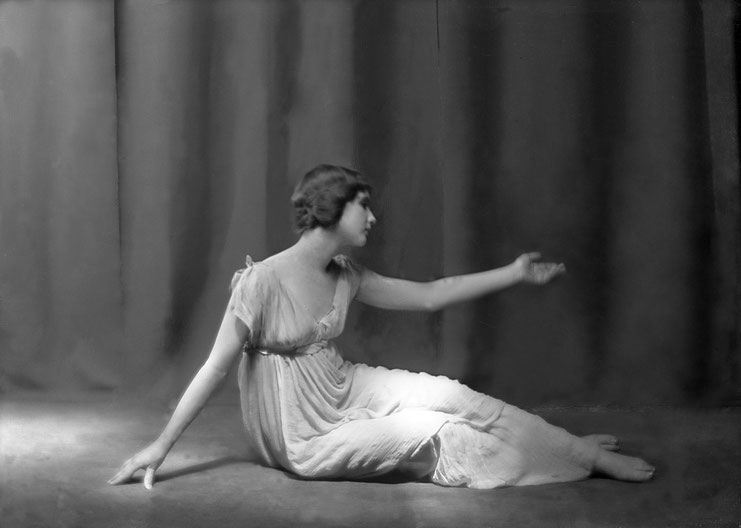
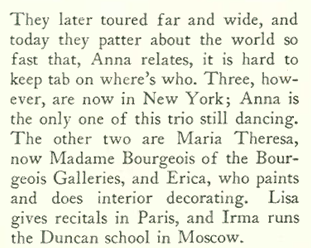
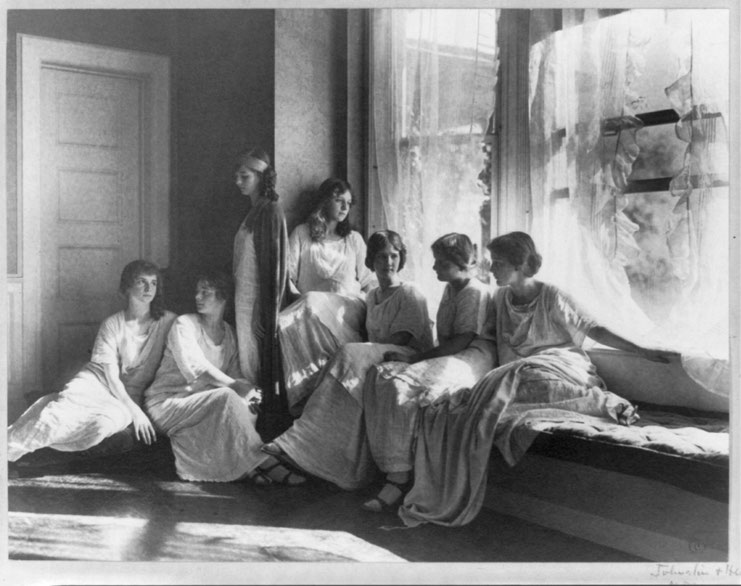
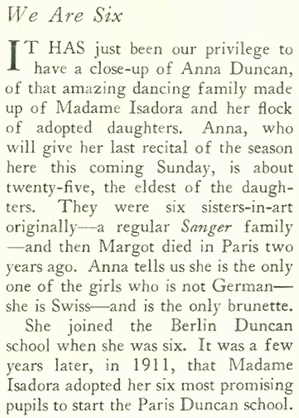
The Jan. 1 issue featured a profile of world-famous dancer Isadora Duncan, who was living in sad decline in Paris. Particularly acclaimed in Europe for her free dance style, the California-born Duncan also gained notoriety (mostly in puritanical America) for her flouting of traditional mores and morality. Today, she is mostly known for the freak accident that killed her. More on that below.

Screen Shot 2016-06-02 at 3.01.43 PM
“Profiles” illustration of Isadora Duncan by Hugo Gellert.

The profile, written by Paris correspondent Janet Flanner under the pen name “Hippolyta,” noted that Duncan was “the last of the trilogy of great female personalities our century produced. Two of them, [Eleanora] Duse and [Sarah] Bernhardt, have gone to their elaborate national tombs. Only Isadora Duncan, the youngest, the American, remains wandering the European earth.”

WANDERING THE EARTH…At left, portrait of Isadora Duncan, circa 1910. At right, a 1904 photograph Photograph by Hof-Atelier Elvira shows Duncan in her favored costume, which was inspired by classical drapery. The look was considered shocking at the time for the way it showed off her legs. (Wikipedia/New York Public Library)

Little did Flanner know that Duncan would also be dead before the year was over. Here is how the Wikipedia entry on Duncan describes her death:

On the night of September 14, 1927 in Nice, France, Duncan was a passenger in an Amilcar automobile owned by Benoît Falchetto, a French-Italian mechanic. She wore a long, flowing, hand-painted silk scarf, a gift from her friend Mary Desti, the mother of American film director Preston Sturges. Desti, who saw Duncan off, had asked Duncan to wear a cape in the open-air vehicle because of the cold weather, but Duncan would only agree to wear the scarf.

As they departed, Duncan reportedly said to Desti and some companions, “Adieu, mes amis. Je vais à la gloire!” (“Farewell, my friends. I go to glory!”); but according to American novelist Glenway Wescott, Desti later told him that Duncan’s actual last words were, “Je vais à l’amour” (“I am off to love”). Desti considered this embarrassing, as it suggested that she and Falchetto were going to her hotel for a tryst.

Her silk scarf, draped around her neck, became entangled around the open-spoked wheels and rear axle, hurling her from the open car and breaking her neck. Desti said she called out to warn Duncan about the shawl almost immediately after the car left.

1927-amilcar
NO SEAT BELTS, EITHER…A 1927 Italian Amilcar, similar to the one in which Duncan met her end. (irrational geographic)

Referring to Duncan’s demise, the writer Gertrude Stein remarked: “Affectations can be dangerous.”

Next Time: Those Jaunty Jalopies…

02a20a11df95c233092dc64bfc8f2b3c


The Last Impressionist

The death of artist Claude Monet prompted the editors of the New Yorker’s “Talk of the Town” to speculate on the true origins of the “Impressionist” movement of the late 19th century.

586fbe11df96b63350793a3341bc3dcf
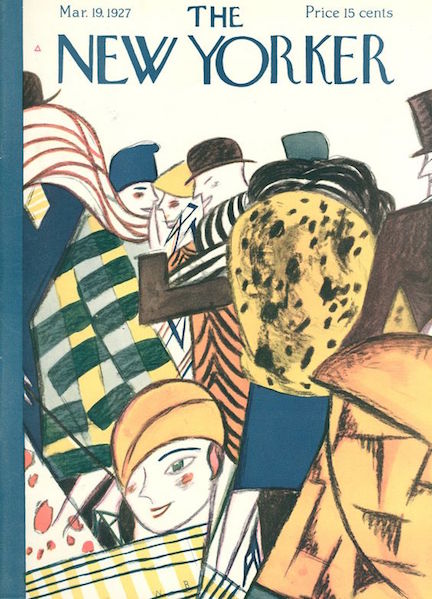
December 18, 1926 cover by Ottar Gaul. Once again, the theme of the doddering sugar daddy out on the town with his young mistress.

Note how the “Talk” editors lightly regarded the artist’s late period, during which he painted his famous “Water Lilies” series:

Screen Shot 2016-05-25 at 9.11.05 AM

Screen Shot 2016-05-25 at 9.11.30 AM

The editors also used the occasion to clear up the confusion (in the lay mind) between Édouard Manet and Monet, identifying them not only as two distinct persons but also crediting the former with the founding of the Impressionism technique while giving Claude his due for actually giving it a name:

Screen Shot 2016-05-25 at 9.12.03 AM

Claude_Monet,_Water_Lilies,_ca._1915-1926
Water Lilies, a late period painting by Claude Monet, circa 1915-26. (Nelson-Atkins Museum of Art)
Monet_in_Garden,_New_York_Times,_1922
Monet, right, in his garden at Giverny, 1922. (New York Times)

Another much younger notable of the age, Ernest Hemingway, was the talk of literary society on both sides of the Atlantic with the publication of his latest novel, The Sun Also Rises. According to the New Yorker’s Paris correspondent Janet “Genêt” Flanner, the novel was creating a buzz in Montparnasse over the origins of the book’s colorful characters:

Screen Shot 2016-05-25 at 9.36.54 AM

Screen Shot 2016-05-25 at 9.37.08 AM

Keeping in mind that the Christmas shopping season was still in full swing, Frigidaire thought it the perfect time for New Yorker readers to buy a newfangled electric refrigerator:

Screen Shot 2016-05-25 at 9.09.03 AM

And we ring out the year with the final issue of 1926:

a891b86b245caf69b30eda2d09544bba
December 25, 1926 cover by Rea Irvin.

It was a tough year for New Yorker film critic “OC”, who summed up his  disappointment with the movies by offering a Top Ten list that included only two films:

Screen Shot 2016-05-25 at 9.46.08 AM

Variety_(1925_film)
The 1925 German film Variety (released in the U.S. in 1926) was one of only two films worth watching in 1926, according to the New Yorker’s film critic. (Wikipedia)

And to close, this cartoon by Helen Hokinson, which in the original magazine filled all of page 14 and therefore had to be printed sideways:

Screen Shot 2016-05-25 at 9.48.28 AM

Next Time: 1927-A Year to Remember…

3d2b321563197a6b5234717d2c47259b


What Price Glory

The silent comedy-drama What Price Glory was a popular film during the final weeks of 1926. Directed by Raoul Walsh, it was based on a popular 1924 play by Maxwell Anderson and Laurence Stallings.

9ce9dbbb683b23ca1336748460e4d7ac
December 11, 1926 cover by Rea Irvin.

The film about World War I Marines who are rivals for the affections of a daughter of the local innkeeper proved to be a rare winner with the New Yorker film critic “OC” (anyone know his/her identity?), in a review published in the magazine’s previous issue (Dec. 4, 1926).

Screen Shot 2016-05-24 at 11.45.18 AM

The film also gained fame from the fact that although it was silent, the characters could be seen speaking profanities that were not reflected in the title cards. The studio was flooded with calls and letters from enraged lip readers, including the deaf and hearing impaired, who found the profanity between Sergeant Quirt and Captain Flagg offensive.

WhatPriceGlory
Edmund Lowe, Delores del Rio and Victor McLaglen in a publicity photo for What Price Glory? Lowe and McLaglen portrayed Sgt. Quirt and Cpt. Flagg, rivals for the affections of Charmaine de la Cognac (del Rio). (Fox Film Corporation)

In the Dec. 11 issue, The New Yorker continued its publicity of the film with this drawing in the arts section by Reginald Marsh:

Screen Shot 2016-05-24 at 11.28.43 AM

I like the curious little bubble image the artist included in his illustration (above), just in case we aren’t sure what the gentlemen are fighting over.

tumblr_ky2zdm2fB81qa6tny
Delores del Rio’s Charmaine character on sheet music featuring the film’s theme song. The film would be rereleased in 1927 with synchronized Movietone sound effects and music. (Brooksies Silent Film Collection)

Other items in the Dec. 11 issue included Morris Markey’s “A Reporter at Large” piece on the newly crowned prizefighter Gene Tunney, who apparently was struggling with fame and wanted to be known for his smarts rather than his fists. Markey wasn’t buying it:

Screen Shot 2016-05-24 at 11.33.02 AM

After a number of verbal jabs throughout the piece, Markey included this knockout punch:

Screen Shot 2016-05-24 at 11.33.15 AM

jp-TUNNEY1-jumbo
I COULDA BEEN A WRITER…Gene Tunney, left, and the writer George Bernard Shaw on a 1929 vacation to Brioni, Italy. (Associated Press)

Next Time: The Last Impressionist…

586fbe11df96b63350793a3341bc3dcf

The Sporting Life

One of the strangest things about the fall 1926 issues of The New Yorker is the almost complete absence of baseball coverage, even though the 1926 Yankees had turned things around from an abysmal 1925 season and found themselves in the 1926 World Series against the St. Louis Cardinals.

cb57ca46d50ab47f3acf02be954149b6
November 20, 1926 cover by Andre De Schaub.

The Yankee’s star Babe Ruth had recovered his health from the previous season and played exceptional all-around baseball in 1926, even setting a World Series record of three homers in the fourth game. According to (now disputed) newspaper reports at the time, Ruth had promised a sickly boy named Johnny Sylvester that he would hit a home run for him in Game 4. The papers reported that after Ruth’s three-homers, the boy’s condition miraculously improved.

babe-ruth2_display_image1
SNUBBED…Babe Ruth knocked in three homers during Game 4 of the exciting 1926 World Series, an event completely ignored by the football-crazed New Yorker. (Bronx Banter)

The Yankees would lose the series in seven games (it would be the first of the Cardinals’ 11 WS championships), but nevertheless the season represented a dramatic turnaround for the team.

But The New Yorker was obsessed with college football, mostly Ivy League contests and the exploits of Knute Rockne and his Notre Dame Fighting Irish.

Screen Shot 2016-04-22 at 9.59.31 AM
Johan Bull provided lively illustrations for John Tunis’s columns.

Sportswriter John Tunis cranked out lengthy accounts of football games, including the Princeton-Yale contest covered in the Nov. 20, 1926 issue.

The same issue also included an article by Herbert Reed, who wrote about Notre Dame’s victory over Army at Yankee Stadium and proclaimed the Fighting Irish to be the greatest team in the country.

The New Yorker caught the Notre Dame bug the previous season. When attendance dropped at Yankee Stadium due to an ailing Babe Ruth and his team’s losing record, college football took center stage at the stadium that fall, with the fiercely competitive Notre Dame–Army game the marquee match-up (the rivals would continue their annual meeting at Yankee Stadium until 1947).

The “other” game–professional football–was still in its infancy, and the editors of “The Talk of Town” made it clear that the college atmosphere was more to their liking. It is interesting that even today when fans compare college to pro football, the same observations are made:

Screen Shot 2016-04-22 at 9.53.30 AM

Screen Shot 2016-04-22 at 9.53.39 AM

226e0194353a39b57345ede7deaf7634
STAR ATTRACTION…After playing his first professional season with the Chicago Bears, in 1926 Red Grange joined the short-lived New York Yankees professional football team. (ourgame.mlb)

As for other sports, The New Yorker also offered extensive coverage of tennis, golf, and polo in its issues. And there would also be rowing, boat and auto racing, and steeplechase events such as National Horse Show at Madison Square Garden. An advertisement promoting that event appeared on the inside back cover:

Screen Shot 2016-04-22 at 10.06.11 AM

The editors of “Talk of the Town” continued their sad refrain on the city’s changing landscape, the wrecking ball this visiting Gramercy Park:

Screen Shot 2016-04-22 at 9.55.34 AM

Screen Shot 2016-04-22 at 9.55.42 AM

Screen Shot 2016-04-22 at 9.55.48 AM

Screen Shot 2016-04-22 at 9.55.53 AM

white house
The Stanford White house referred to in “The Talk of the Town.” ( Museum of the City of New York)
white dining room ceiling
The Dining Room ceiling in the Stanford White House came from a 16th century chapel in Florence. (From the Illustrated Catalogue of the Artistic Furnishings and Interior Decorations of the Residence at No. 121 East Twenty-first Street, New York City, April 1907 (copyright expired)
gramercy park hotel
Gramercy Park Hotel on the site today. (A Daytonian in Manhattan)

And to close, this terrific advertisment for the Greenwich Village Inn, illustrated by Hans Flato:

Screen Shot 2016-04-22 at 9.59.10 AM

Next Time: Holiday Shopping…

8912823cfdc5626785b13a431ae590de

Fun With Harold

The Nov. 6, 1926 issue of The New Yorker was actually two issues, one for the newsstands and subscribers and the other a rare parody issue privately published and presented to founding editor Harold Ross on his 34th birthday.

Screen Shot 2016-04-01 at 3.03.49 PM
The cover of the “official” issue (left) for November 6, 1926, was illustrated by William Troy, the parody issue by Rea Irvin.

The parody issue’s cover featured a silhouette of Ross (drawn by Rea Irvin, as “Penaninsky”) in the pose of dandy Eustace Tilley, looking at a spider bearing a strong resemblance to Alexander Woollcott, critic and commentator for The New Yorker who first met Ross overseas when the two worked on the fledgling Stars and Stripes newspaper.

Screen Shot 2016-04-07 at 3.16.19 PM
OLD PALS…Alexander Woollcott and Harold Ross. (Britannica; Jane Grant Collection, University of Oregon)

Ralph Barton’s contribution to the parody issue…

Screen Shot 2016-04-07 at 2.44.38 PM
(From About Town: The New Yorker and the World It Made, By Ben Yagoda)

…and an unsigned contribution that took a poke at Ross’s efforts to create efficient procedures at the magazine’s office:

Screen Shot 2016-04-07 at 3.32.46 PM
Excerpt from Defining New Yorker Humor, by Judith Yaross Lee

In the other Nov. 6 issue, “The Talk of the Town” editors commented on the death of the famed magician Harry Houdini:

Screen Shot 2016-04-07 at 3.43.59 PM

Screen Shot 2016-04-07 at 3.44.26 PM

ONE OF HIS FINAL ACTS…Harry Houdini appearing before a Senate committee to expose fake spiritualists in February 1926. (wildabouthoudini.com)

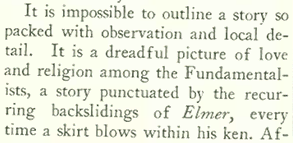
“Talk” also noted a new book called Elmer Gantry was being penned by Sinclair Lewis:

Screen Shot 2016-04-07 at 3.45.20 PM

The book was a biting satire of the hypocrisy of fanatical preachers during the 1920s. It created a public furor when it was published in 1927. Another “Talk” item mocked the taste of wealthy New Yorkers for the latest exotic gadgets…

Screen Shot 2016-04-07 at 3.40.08 PM

…but the same issue was also filled with the usual advertisements appealing to those very same desires of the Smart Set. Here’s a couple of gems, so to speak…

Screen Shot 2016-04-07 at 3.37.43 PM

Screen Shot 2016-04-07 at 3.38.34 PM

Next Time: The Cotton Club & Other Distractions…

8a3e8956e7cf51e58975801865fdce55

A Royal Flush

Perhaps because they’ve never had a monarchy, Americans have always been a little nuts over European royalty, even the lesser kings and queens.

Screen Shot 2016-03-31 at 9.58.22 AM
October 23, 1926 cover by Andre De Schaub.

In the lesser category was the Queen Marie of Romania, whose name and exploits appeared frequently in the pages of the early New Yorker. As early as Issue #4 (March 14, 1925), the magazine was reporting that New Yorkers were “agog” about a possible visit from Her Majesty, and that the North American Newspaper Alliance had offered her a contract to write her impressions of the United States.

queen-marie-of-romania-photo-232
Queen Marie of Romania (Library of Congress)

The Queen filled the pages of both the Oct. 23 and Oct. 30 issues as she finally made her way to the American shores. “Of All Things” observed…

1
“Trudy” referred to above was New Yorker Gertrude Ederley, still basking in her fame as the first woman to swim the English Channel.

Now some background on The Queen: She born into the British royal family, titled Princess Marie of Edinburgh at birth. After refusing a proposal from her cousin (the future King George V), she was chosen as the future wife of Crown Prince Ferdinand of Romania, the heir apparent of King Carol I, in 1892. She was the last Queen consort of Romania, and her trip to the U.S. would prove to be the last months of her reign (her husband, Crown Prince Ferdinand, would die shortly after her return). Her 5-year-old grandson, Michael, the son of Prince Carol, would ascend to the throne, only to be usurped by his father in 1930 (at this writing Michael is still living. He is currently 94 years old).

Things seemed fairly rosy in October 1926, as Americans awaited the queen and two of her children, Prince Nicholas and Princess Ileana, who were said to be seeking matrimonial matches in the States.

1926-1
Queen Marie, Princess Ileana, and Prince Nicholas of Romania on their American tour, 1926. (Henley Hamilton)

The issue’s “Profile” by John Winkler featured a mostly glowing account of Queen Marie…

2

3

…although it was noted that Queen has to stoop to writing articles and endorsing products for a little extra cash…

4

5

Screenshot 2015-04-21 13.18.41
The “Queen of Roumania” and her Pond’s Cold Cream endorsement were featured in this April 1925 ad in Motion Picture magazine. (Image scan)

And the Queen would also be seeking a few bucks from Uncle Sam…

6

The Queen’s visit was even on the mind of one cartoonist (still trying ID):

Screen Shot 2016-04-01 at 1.27.00 PM

The following week, in the Oct. 30, 1926 issue…

a3dbcac2108e4dce47a2ca56e55b1e62
October 30, 1926 cover by Stanley W. Reynolds.

…the magazine offered an account of the Queen’s arrival, courtesy of writer Morris Markey:

1

Note the observation about the “sorry trick” played on the Queen’s son, Carol. Markey is referring the fact that Carol had waived his rights to succession. Little did anyone know that “her boy” would one day seize the throne and work to discredit her name.

Markey also wryly noted the Queen’s objective to gain financial support from the U.S., even if her outstretched hand was covered in jewels:

S2

3

No Movie Queen, but she did have a flair for theatrics…

qmf20
(Kent State University)

Next Time: Fun With Harold…

Screen Shot 2016-04-01 at 3.03.49 PM

Gentlemen Prefer Blondes?

Despite The New Yorker’s taste for the finer things–polo, opera, classical music–its editors couldn’t resist the pull of popular culture as both spectacle and fodder for mockery of the hoi polloi.

848d031119e0d470956ce963e6e7fb62
Oct. 9, 1926 cover by Julian de Miskey.

And so we have the Oct. 9, 1926 issue with a review of the much-anticipated Broadway play Gentlemen Prefer Blondes, which was based on a surprise bestselling novel by Anita Loos (and illustrated by The New Yorker’s own Ralph Barton). Despite garnering lukewarm reviews from critics, the public loved the adventures of gold-digging flapper Lorelei Lee.

GentlemenPreferBlondes
First edition of Gentlemen Prefer Blondes, by Anita Loos, illustrated by Ralph Barton (Wikipedia)
tumblr_l7eu7x4QVv1qcl8ymo1_500
Edward Steichen portrait of Anita Loos, 1926. The New Yorker would feature a lengthy, admiring “Profile” of Loos in its Nov. 6, 1926 issue. (Minneapolis Institute of Art)

According to Wikipedia, the book was one of several famous novels published in 1925 to chronicle the Jazz Age, including F. Scott Fitzgerald’s The Great Gatsby (which ironically didn’t do so well) and Carl Van Vechten’s Firecrackers. Loos was inspired to write the book after watching a sexy blonde “turn intellectual H. L. Mencken into a lovestruck schoolboy.” Mencken, a close friend of Loos, actually enjoyed the work and saw to it that it was published.

nypl.digitalcollections.ab6c9cc0-81c6-da79-e040-e00a1806702e.001.w
Gold-digging flapper Lorelei Lee (June Walker, second from left), Henry Spofford (Frank Morgan, second from right), and the rest of the cast tussle in the stage production Gentlemen Prefer Blondes, Times Square Theatre, 1926. Another “blonde,” Marilyn Monroe, would famously portray Lorelei Lee in the 1953 Howard Hawks film. (New York Public Library)

Ralph Barton contributed this drawing of June Walker for the magazine’s review:

Screen Shot 2016-02-29 at 9.26.56 AM

And a bit of the review itself…

Screen Shot 2016-02-29 at 9.28.33 AM

In other items, Lois Long paid a visit to Texas Guinan’s 300 Club on 54th Street, which apparently was still the place to go for a roaring good time:

Screen Shot 2016-02-29 at 9.30.16 AM

Screen Shot 2016-02-29 at 9.30.33 AM

texasguinanpolice
JUST HAVING FUN…According to the blog Ephemeral New York, Texas Guinan’s 300 Club at 151 West 54th Street hosted the likes of John Barrymore, George Gershwin, and Clara Bow. The club was targeted by prohibition officials, who were constantly padlocking the door and arresting Texas. Guinan’s clever rejoinder to the officials: The 300 Club’s patrons brought liquor with them, and because the place was so small, the showgirls were forced to dance close to customers. (Ephemeral New York)

The magazine’s cartoons continued to mine the humor of rich old men out on the town with their young flapper mistresses. The one below was a center spread illustration by Wallace Morgan with the caption: “Poor little girl–to think you’ve never had anyone to protect you.”

Screen Shot 2016-02-29 at 9.21.32 AM

Finally, a look back at one of my earlier blog posts (Cuban Idyll) that featured Americans in Havana. I recently traveled to Cuba and visited some of the old haunts, including the famed Sloppy Joe’s:

IMG_1549
(Photo by David Ochsner)

Next Time: The Changing Skyline…

c37832e544c79a83494d91ea68c0329b