Planes, Trains and Automobiles

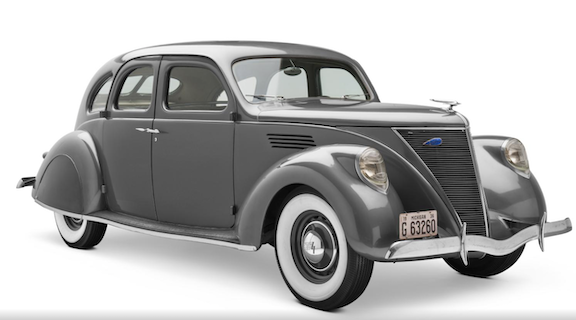
Above: Clockwise from top left—the Douglas DC-3 was introduced to airlines in 1935; Seaboard streamlined locomotive, c. 1930s; 1936 Lincoln-Zephyr; 1936 Pierce Arrow. (hushkit.net/Wikimedia/classicautomall.com)

As we’ve seen in previous issues, E.B. White often served as The New Yorker’s unofficial aviation correspondent; despite his sometimes anachronistic views on progress, he never missed a chance to hop aboard an airplane and marvel at the scene far below.

November 2, 1935 cover by Constantin Alajalov.

White’s enthusiasm, however, was tempered with doubts about air safety, including observations he made in an August 31, 1935 column following the deaths of Wiley Post and Will Rogers in an Alaska plane crash. Here is what he wrote then:
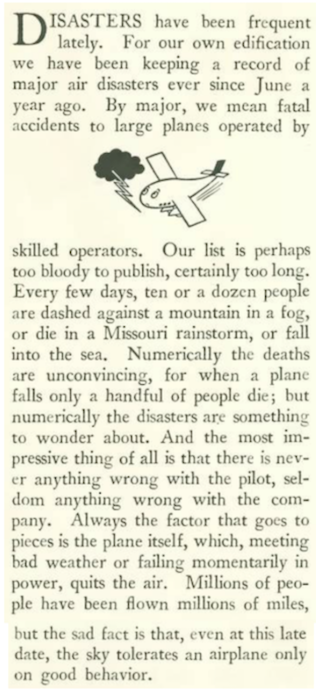
The aviation industry’s strong reaction to that “noisy little paragraph” apparently led to a number of subscription cancellations, prompting White to return to the topic in his Nov. 2 “Notes and Comment” column:
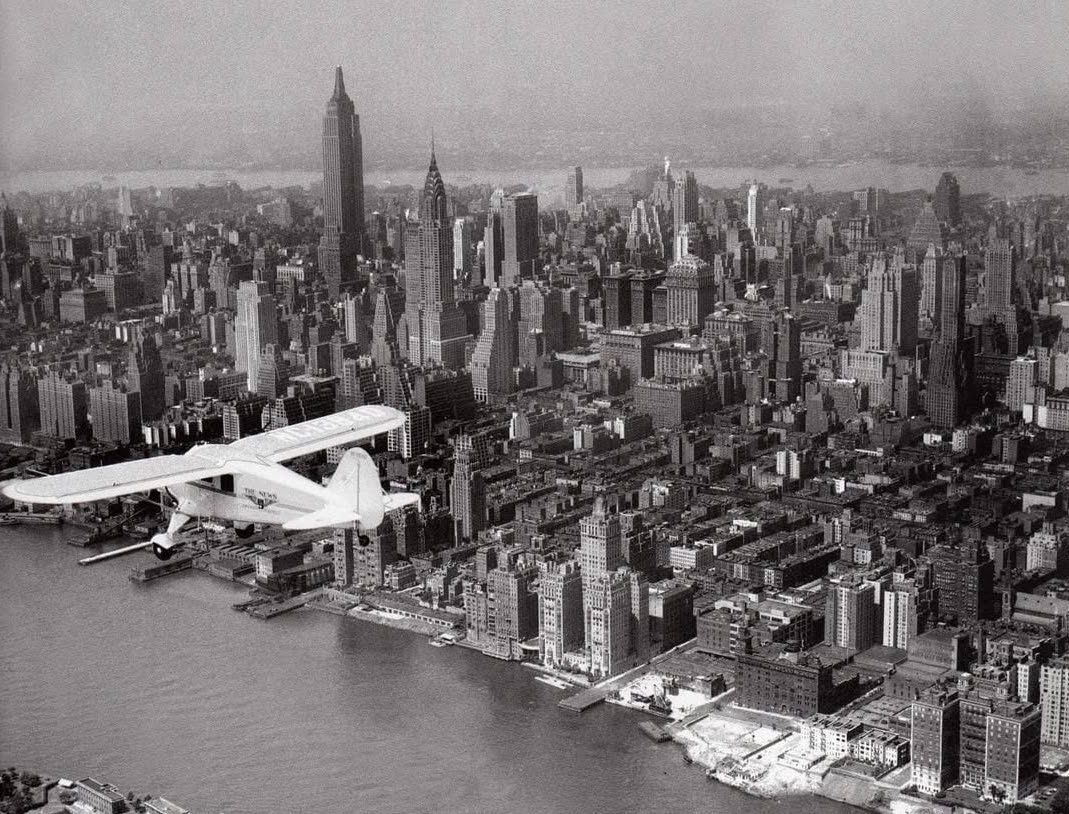
HE’D BEEN AROUND…E.B. White supported his comments on air safety by citing his many flying experiences, including soaring around the Empire State Building “on a blithe morning.” Pictured above is a New York Daily News plane flying over Manhattan in 1934. (NY Daily News)

White also turned to statistics for his defense, finding that per passenger mile, railroads were still the safest mode of transportation in the country.
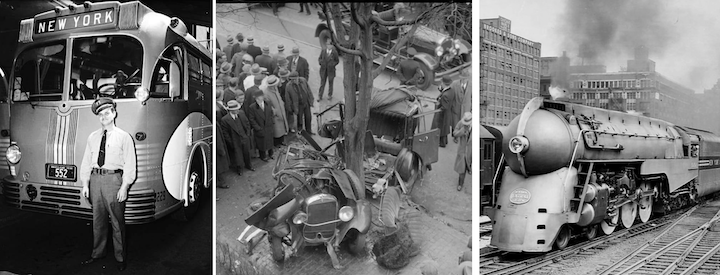
HOP ABOARD…According to 1933 statistics shared by E.B. White, trains were the safest mode of transportation per passenger mile, followed by buses. Automobiles were the least safe, a fact that still holds true today. From left, Greyhound bus and driver, 1937; automobile wreck, 1930s; New York Central’s 20th Century Limited leaving Chicago’s LaSalle Street station in 1938. (Facebook/Reddit/Wikipedia)

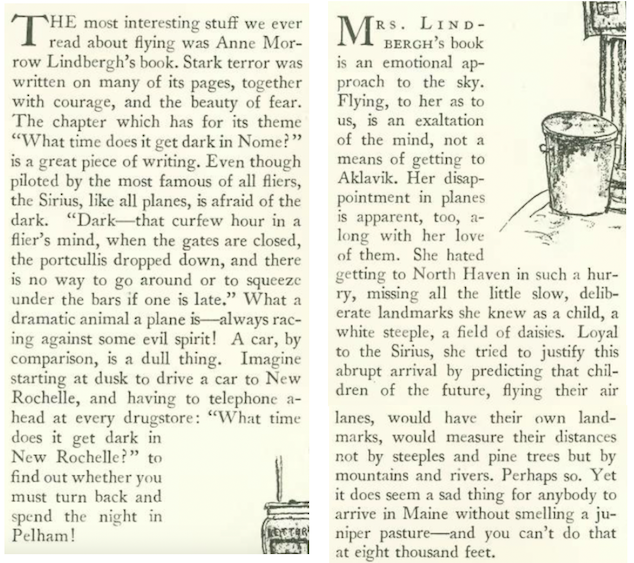
With that, White still wasn’t done with the topic, turning to none other than Anne Morrow Lindbergh for her thoughts on flying, which she shared in her latest book, North to the Orient. White noted Lindbergh’s mixed feelings about flying, about getting to places quickly and missing familiar landmarks. He also suggested that someday airline passengers would use mountains and rivers as landmarks…(I still try to do that when I fly, but at 35,000 feet it is a challenge). Today most folks are content with plugging in their earbuds and tuning out completely.
NOT YOUR EVERYDAY OUTING…In July 1931 Charles and Anne Morrow Lindbergh embarked in their Lockheed Model 8 Sirius on an often treacherous 7,100-mile journey across Canada, Alaska, Siberia and Japan in an attempt to find a commercial route to Asia for Pan American Airways. Top photo, Charles (standing on pontoon) and Anne (in the cockpit) make final preparations before the flight; bottom photo, enthusiastic crowds greet the Lindberghs upon their arrival in Japan. The Siberia-to-Japan leg was the most dangerous due to heavy fog. (historynet.com)

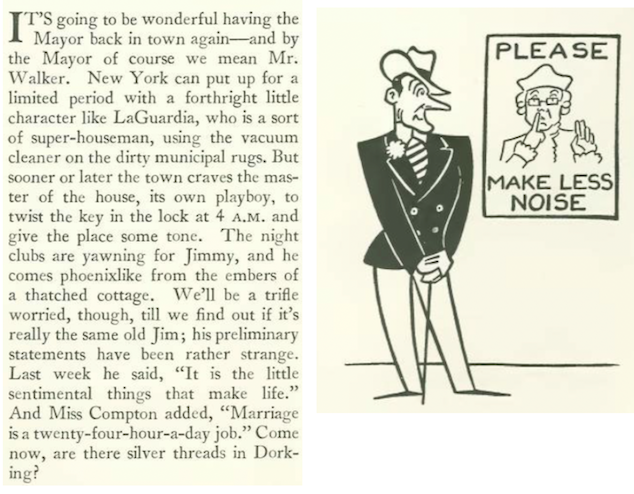
E.B. White also announced the return to the city of former Mayor Jimmy Walker, who had fled to Europe in 1932 amid corruption charges. White noted that New York’s nightclubs were eager to welcome the fun-loving Walker back to town.
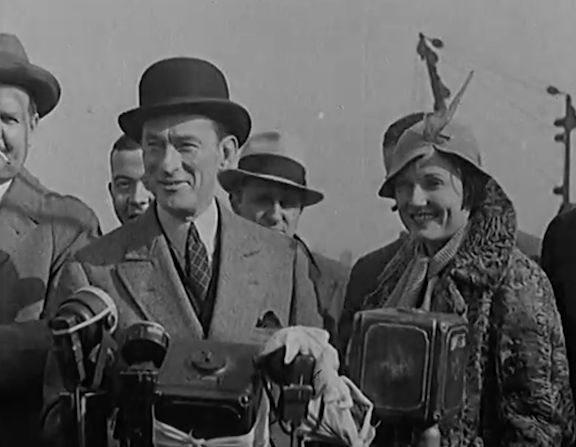
SECOND ACT…Still image from a 1935 British Pathé newsreel shows the triumphant return from Europe of former Mayor Jimmy Walker and his wife, Betty Compton. (YouTube)

 * * *

A Zephyr Blows In

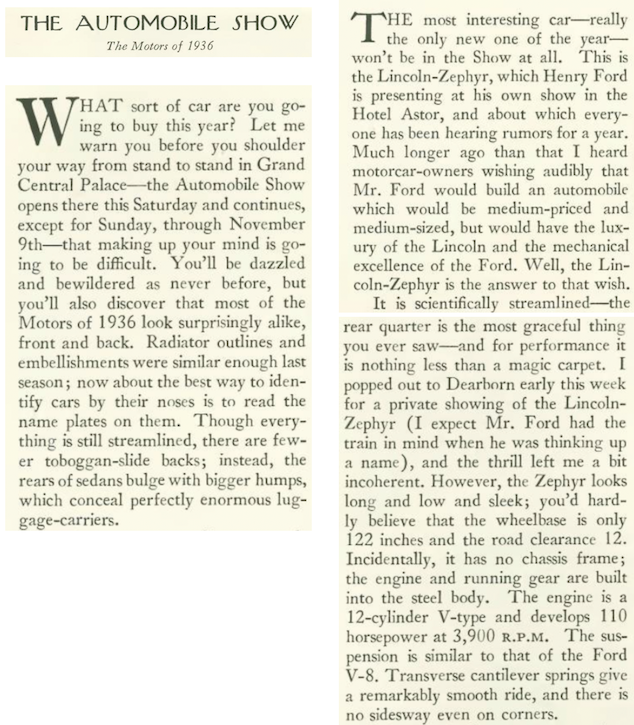
The magazine’s “Motors” correspondent (pen name “Speed”) noted the dazzling display of 1936 models at the New York Automobile Show, singling out the Lincoln-Zephyr as the year’s biggest innovation.
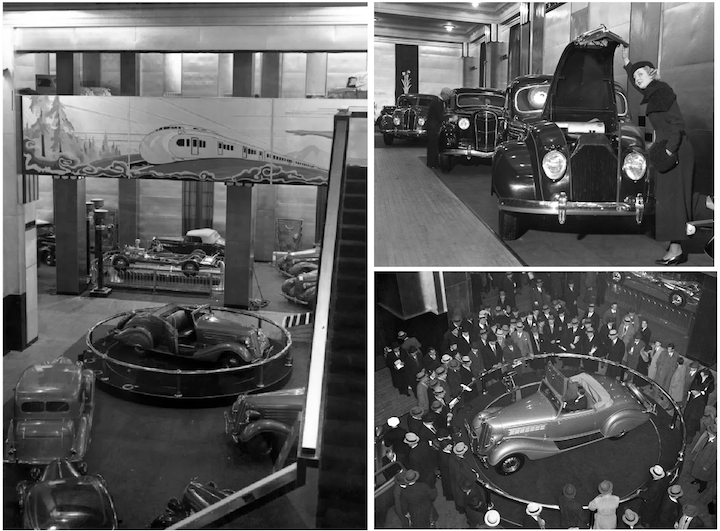
DECO DREAMSCAPE…Streamlining was all the rage at the 1935 New York Automobile Show at Grand Central Palace. Upper right, a woman opens the hood of a streamlining pioneer, the Chrysler Airflow. (New York Daily News)
LEADER OF THE PACK…The 1936 Lincoln-Zephyr had tongues wagging at the New York Automobile Show.  (thehenryford.org)

 * * *

At the Movies

William Powell and Hollywood newcomer Rosalind Russell blessed film critic John Mosher with their spy caper, Rendezvous, while Pauline Lord got lost in the London fog with Basil Rathbone in A Feather in Her Hat.
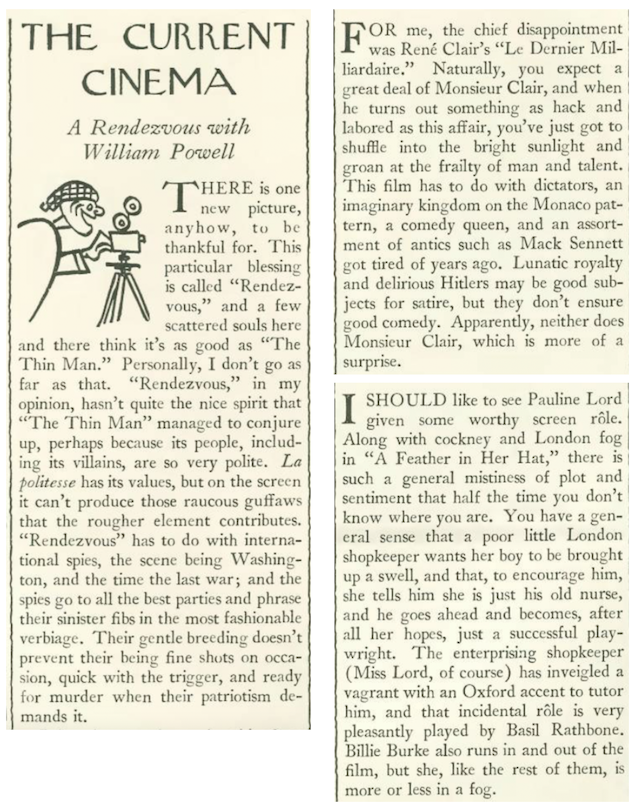
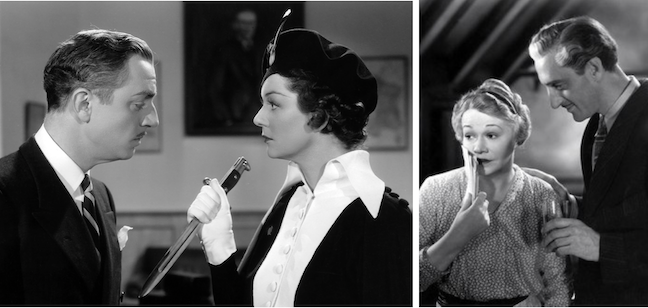
A CAPER AND A WEEPER…At left, William Powell starred with Hollywood newcomer Rosalind Russell in Rendezvous; at right, Broadway stage actress Pauline Lord appeared opposite Basil Rathbone in A Feather in Her Hat. (1935)

Mosher also screened a French comedy, René Clair’s Le Dernier Milliardaire (The Last Billionaire), finding its slapstick approach to satire a bit dated.

DURABLE AND ADORABLE…Renée Saint-Cyr as Princess Isabelle in the French comedy Le Dernier Milliardaire (The Last Billionaire). Known for her chic comedies, Saint-Cyr (1904–2004) was a major French film star for seven decades. (Film Forum)

Finally, Mosher turned his critical eye toward a British sci-fi film, Transatlantic Tunnel. Looking forward to seeing a gee-whiz Jules Verne-type story, what Mosher found instead was a lot of sentimental “padding” and very little gee-whiz.

UNDERWATER…John Mosher looked forward to an undersea adventure, but instead got a lot of sentimental fluff in the British sci-fi film, Transatlantic Tunnel. Clockwise, from top left, movie poster for the American release; scene from the film depicting the tunnel entrance; the film showcased such futuristic conveniences as video phones (called “televisors”); a group of wealthy industrialists gather at the home of a Mr. Lloyd, a millionaire investor who used a motorized wheelchair. (Wikipedia/Reddit/cinemasojourns.com)

 * * *

No Thanks, Ernie

Clifton Fadiman had an armload of books to review, including an autobiography by Andre Gide (If I Die), novels by Mikhail Sholokhov (Seeds of Tomorrow) and Mari Sandoz (Old Jules), and an Ernest Hemingway tale about big game hunting (Green Hills of Africa) that Fadiman did not care for at all. Here are excerpts from a couple of the reviews:
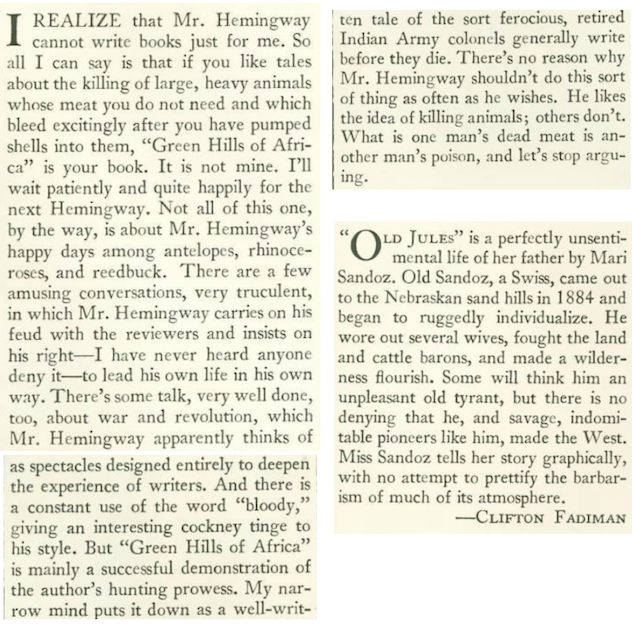
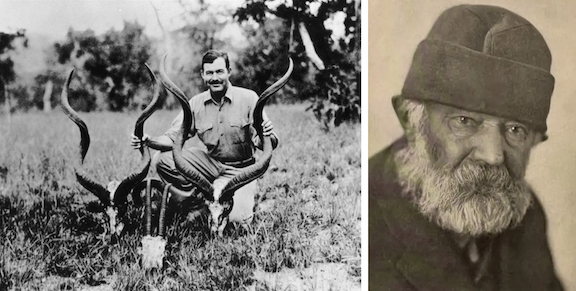
RUGGED TYPES…At left, Ernest Hemingway poses with skulls of kudu and female of sable antelope in East Africa, 1934, part of his hunting trip described in Green Hills of Africa; at right, photo of Jules Sandoz from the frontispiece of Old Jules, a biography written by his daughter Mari Sandoz. (JFK Library/U of Nebraska)

 * * *

From Our Advertisers

With the National Automobile Show in full swing at the Grand Central Palace, the issue was jammed with ads for every type and price range…the Chrysler Corporation took out this full-page spot on the opening spread to promote one of the lowest priced cars on the market…

…Chrysler/DeSoto continued to tout its streamlined Airflow models…introduced in 1934, the Airflow was the first full-size American production car to use streamlining, and it featured a number of other innovations, but consumers just weren’t ready for something this radical…even with the streamlining toned down after its first year, only 55,000 units were produced during the model’s four-year run…
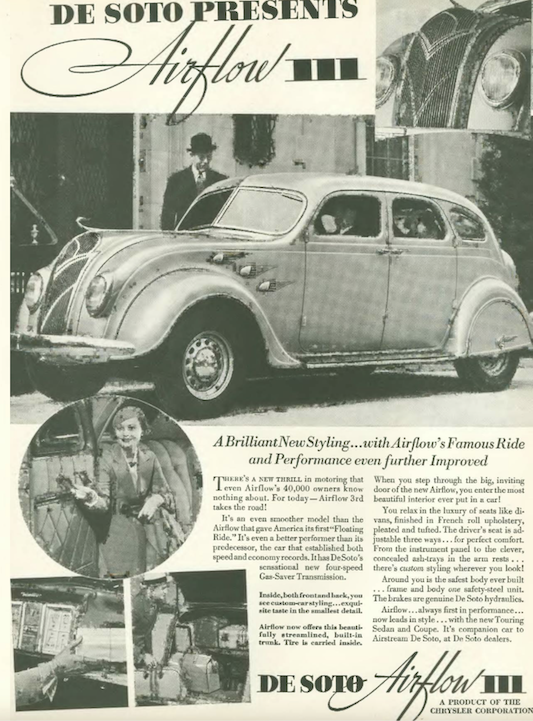
…on a side note, Chrysler has revived the Airflow nameplate for an electric car concept due to the marketplace in 2028…

…mentioned in Speed’s review of the Automobile Show, the Lincoln-Zephyr would find success with its aerodynamic design…
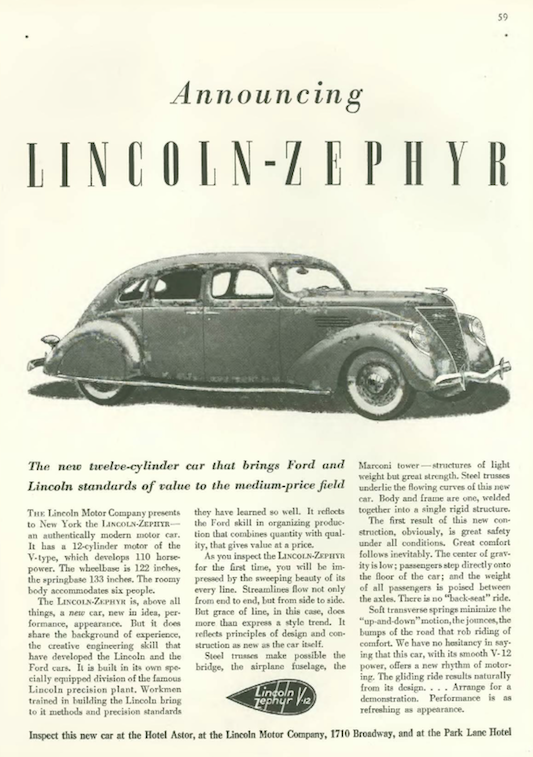
…most manufacturers were in on the streamlining trend, noticeable in the tilted grilles, low rooflines, and sweeping fenders…
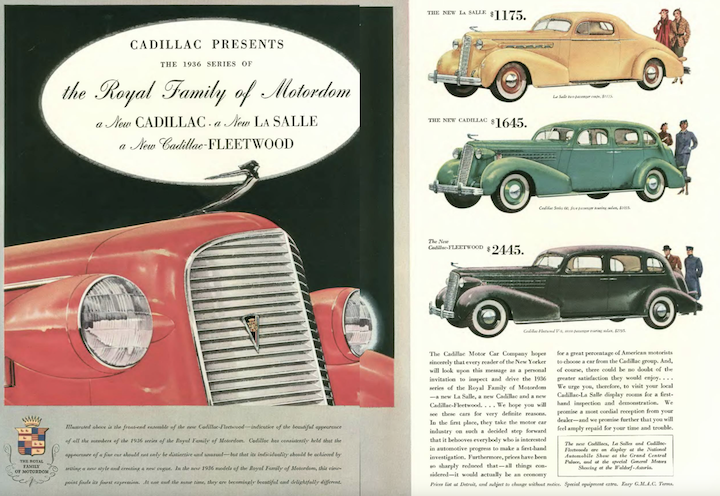
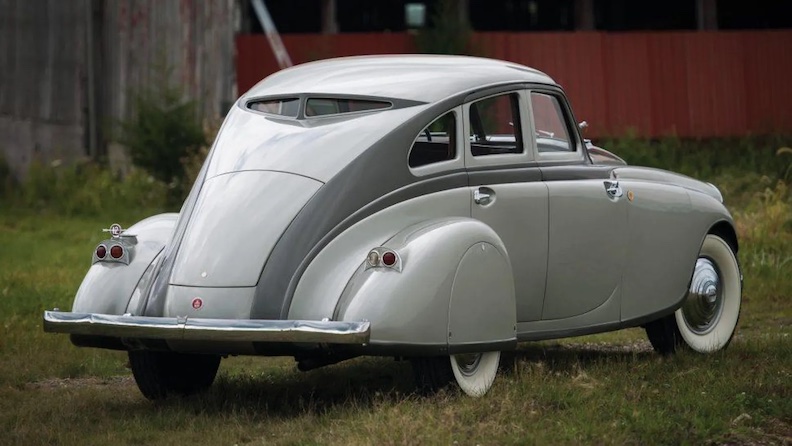
…unlike the other car companies, Pierce Arrow did not produce an economy model to keep its luxury line afloat during the Depression…emphasizing its handmade quality, this American rival to Rolls-Royce went out of business by 1938…

…Goodyear got in on the Auto Show action promoting its tires for the “new and faster cars”…

…the folks at Campbell’s continued their ad series featuring upper-class women covertly serving canned soup to their society friends…in this ad, however, the hostess reveals her secret…

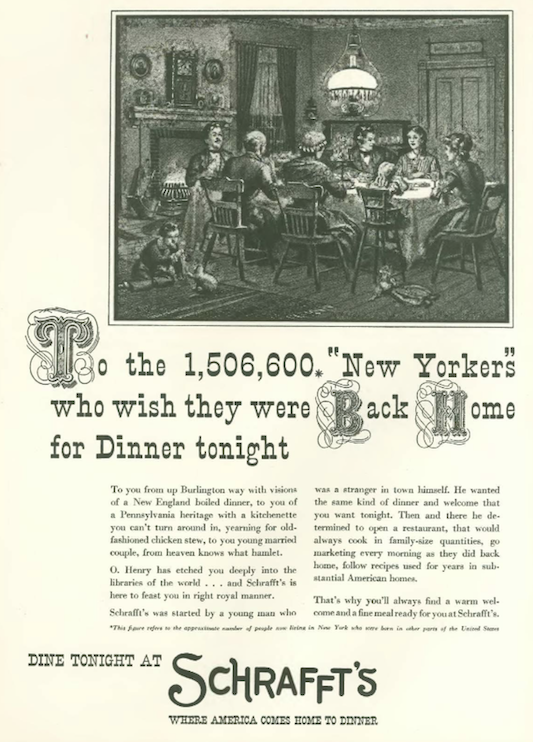
…there were no secrets to be found at Schrafft’s—its popularity increased during the Depression, when more than forty locations in the New York metro offered moderately priced “home-style” meals in an atmosphere that suggested upper-middle-class gentility…
…Long Island’s Lido Country Club tried to drum up some autumn business by promoting the “warm and lazy” sunshine of “Indian Summer”…

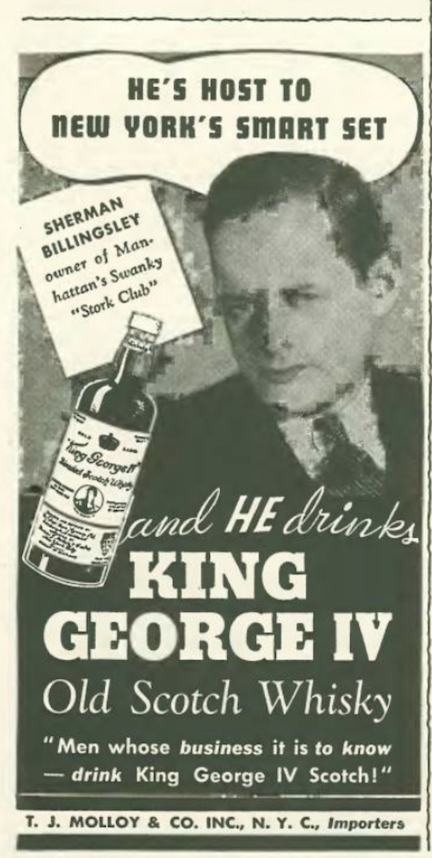
…the makers of King George IV Scotch used the face of Stork Club owner Sherman Billingsley to lend some nightlife cachet to their product…here’s an odd little fact: his nephew, Glenn Billingsley, was married to Leave It to Beaver actress Barbara Billingsley, who played June Cleaver on the TV series…
…this week the back cover belonged to R.J. Reynolds, with various aviators testifying to the calming effects of Camel cigarettes…the lead endorser in the ad, Frank Hawks, was famous for breaking aviation speed records until he perished in the crash of an experimental plane in 1938…

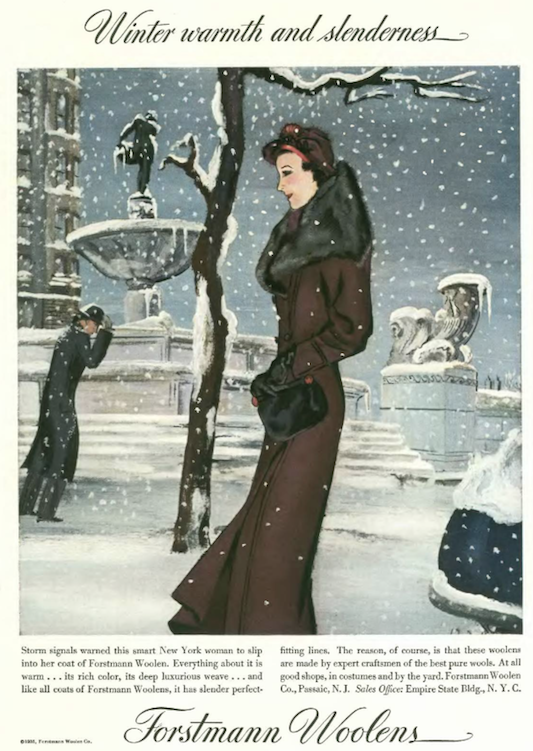
…Forstmann ads were a regular feature on the inside front cover during the fall/winter fashion season, rendered in a style made popular by illustrator Carl “Eric” Erickson

…on to our cartoonists, we open the magazine with Maurice Freed

James Thurber was busy in this issue, writing a touching character sketch of a medicine show man he greatly admired (“Doc Marlowe”)…and contributing this spot art for “Goings On About Town”…
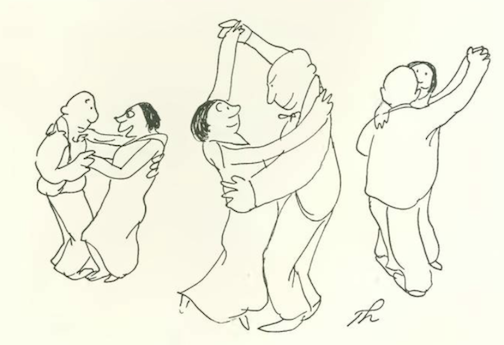
…he also turned in this terrific cartoon…

Christina Malman livened up the Auto Show review with this spot art…

Carl Rose also paid tribute to the annual event…

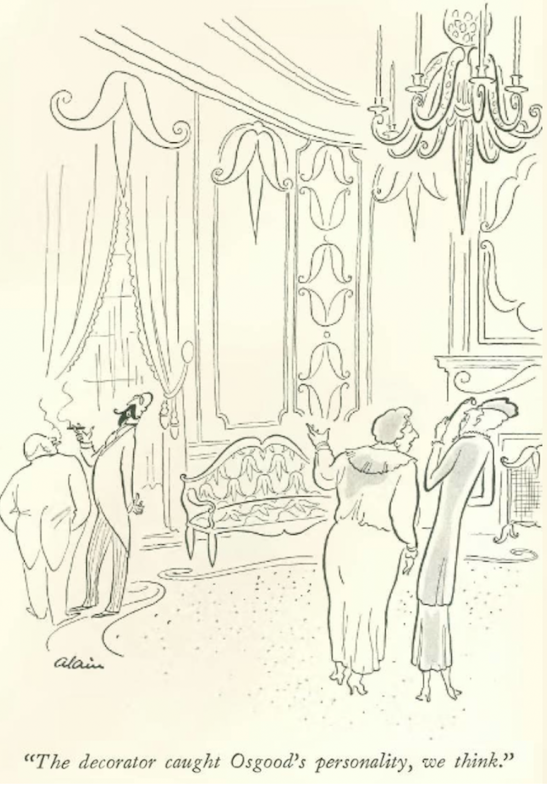
Daniel ‘Alain’ Brustlein did a bit of home decorating…
Robert Day was ready to call it a night…

Helen Hokinson contributed two cartoons, shopping for a pet fish…
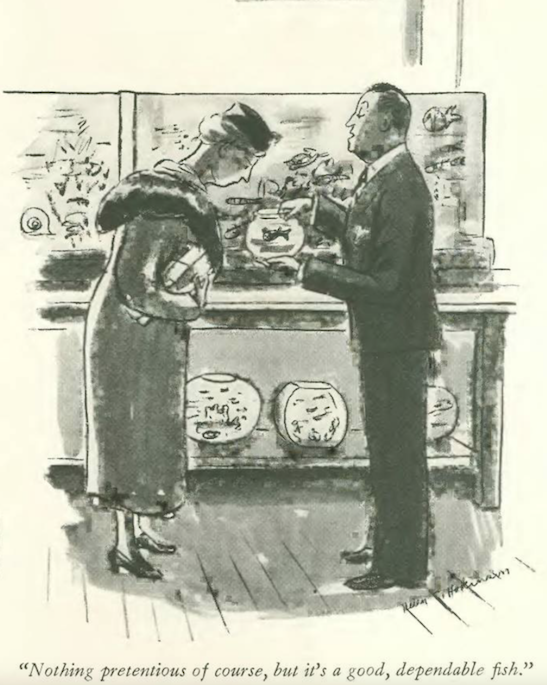
and taking in a Dolores Del Rio picture…
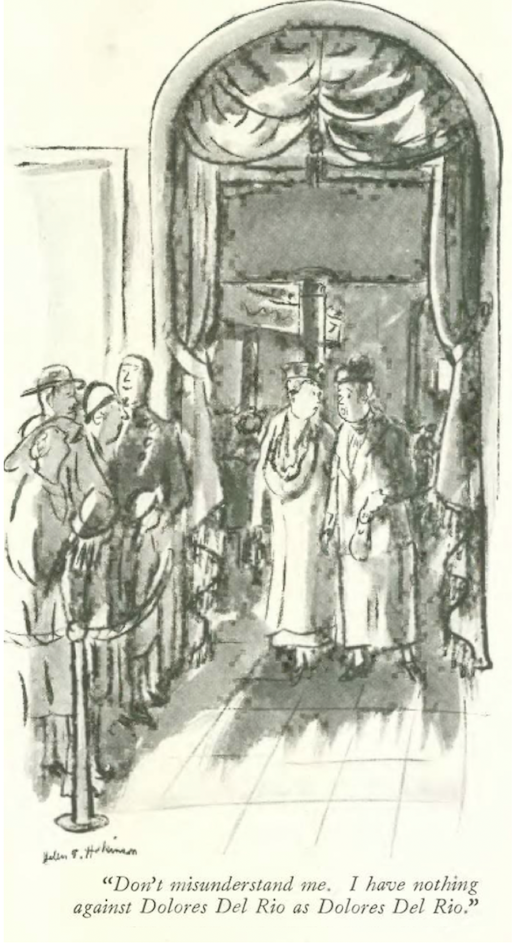
…no doubt Hokinson’s “girls” were commenting on the 1935 musical comedy In Caliente, featuring Mexican actress Dolores Del Rio (1904–1983)…Del Rio was the first Mexican actress to achieve mainstream success in Hollywood…

Dolores Del Rio in a scene from In Caliente. (Reddit)

…we continue with George Price, and a dedicated lumberjack…

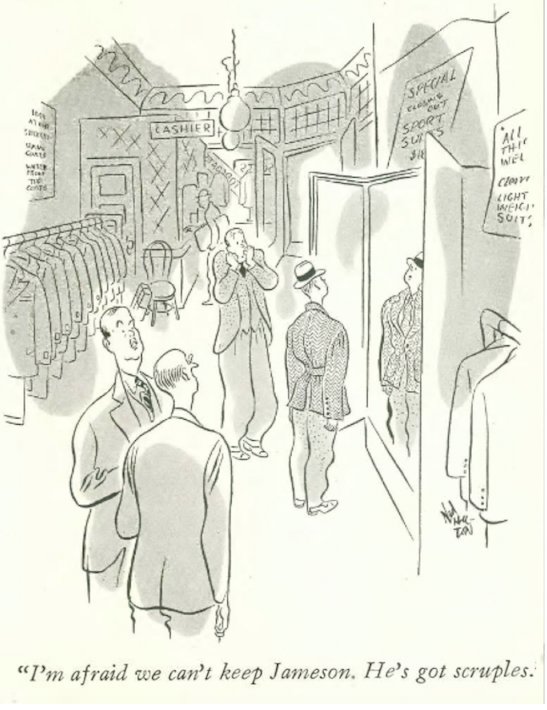
Ned Hilton discovered some honesty in the Men’s Department…
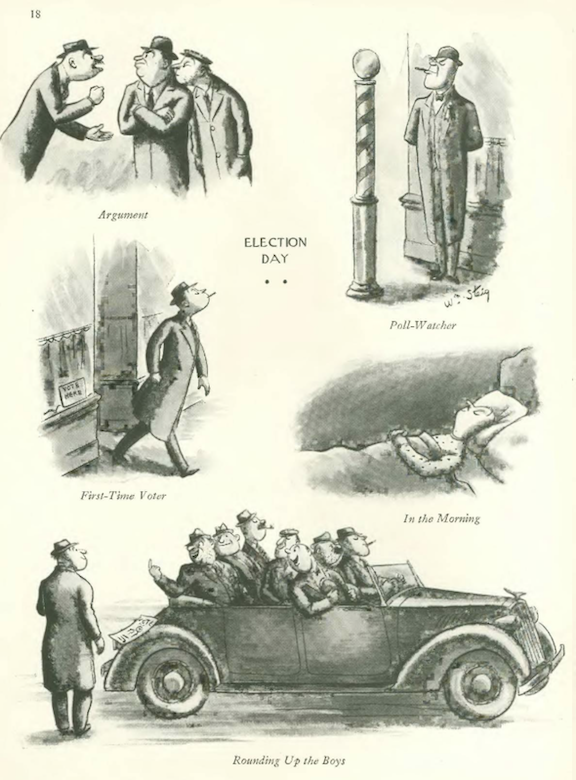
William Steig took a look around on Election Day…
Richard Decker took the pulse of the medical profession…
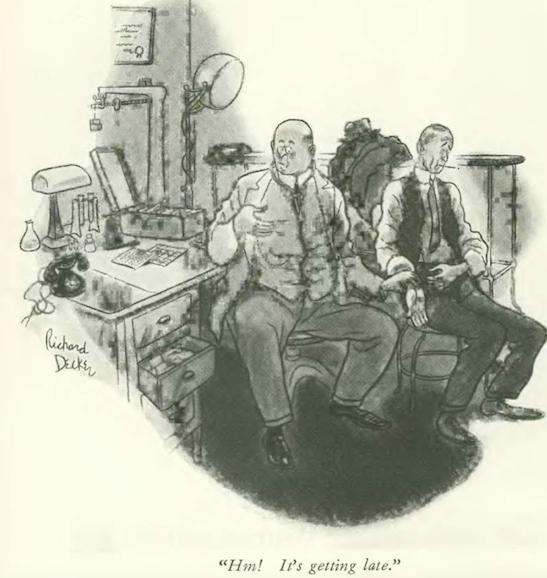
…and we close with another by Decker, where seeing is not believing…

Next Time: Jimmy Comes Home…


London Calling

Above: Illustration of the Dorchester Hotel’s ballroom in the 1930s. (dorchestercollection.com)

Lois Long took her nightlife column, “Tables for Two,” to London and its famed nightclub scene, where everyone from British royalty to gangsters reveled in a boozy, bohemian scene.

July 7, 1934 cover by Ilonka Karasz.

Prince Edward, a well-known party animal (who would serve as king for less than a year and abdicate in 1936) was known to get up on the stage of the Embassy Club and perform drum solos, while at the Savoy his fellow toffs would sip Champagne and glide in elegant dress across the dance floor. London nightlife included a lively jazz scene in edgy Soho basement clubs, featuring such greats as Duke Ellington, Louis Armstrong and Dizzy Gillespie.

Long hoped that the visit to London, her first in eight years, would give her some much-needed rest and a change of scene. What she found instead was a red-hot, all-night party, where the smart set took dinner near midnight and danced until dawn.

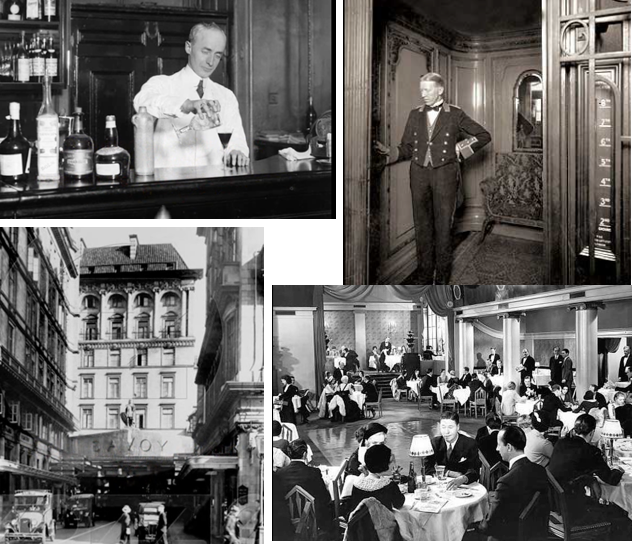
SAVVY SAVOY….Clockwise from top left, the famed Savoy bartender Harry Craddock, credited with inventing the White Lady and the Corpse Reviver, at the Savoy’s American Bar in the 1930s; a Savoy elevator operator in 1926; diners at the Savoy circa 1930s; Savoy entrance. (madamgenevaandgent.co.uk/The Savoy/YouTube)
LONDON SWINGS…More Lois Long haunts in London included, clockwise from top left, the Dorchester Hotel; the crowded dance floor at the Monseigneur with Roy Fox and his Orchestra (photo from 1932); patrons kicking up their heels at the Embassy Club on Old Bond Street; the Café de Paris, where American actress Louise Brooks demonstrated a new dance craze, The Charleston, in 1924. (dorchestercollection.com/albowlly.club/lucyjanesantos.com/Wikipedia)

 * * *

Misery Loves Company

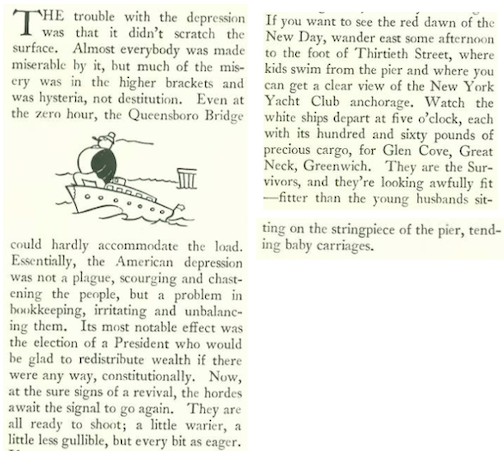
In his “Notes and Comment,” E.B. White observed that almost everyone was “made miserable” by the Depression, but if one looked around there were signs that things weren’t so bad after all.

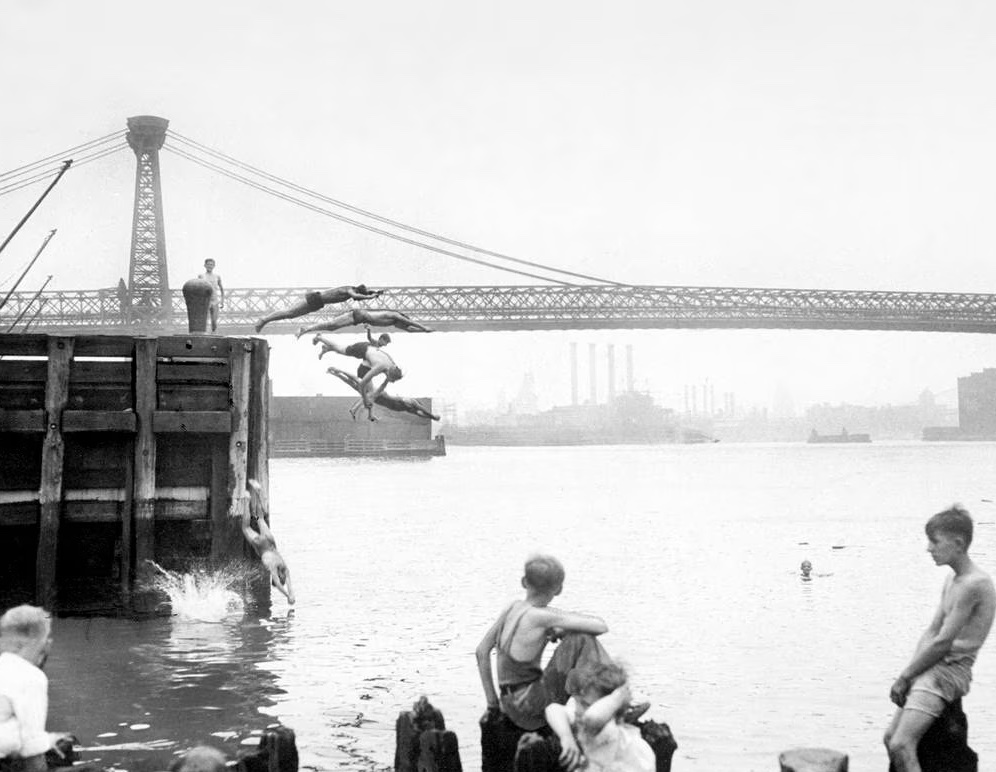
REASON FOR CHEER…For those still feeling blue about the Depression, E.B. White suggested watching kids cool off at a pier, such as these lads seen diving into the East River on the Lower East Side on July 3, 1935. (Jack Gordon/New York Daily News)

 * * *

He Came Up a Bit Short

Howard Brubaker, in his column “Of All Things,” made this observation about Adolf Hitler’s prediction that Nazism would endure a thousand years.

And now a retreat into the cool darkness of the cinema, where John Mosher singled out Bette Davis’s performance in Of Human Bondage…Mosher’s instincts were correct—the film proved to be Davis’s breakout role on her road to major stardom.

ROAD TO RUIN…Bette Davis wowed the critics with her portrayal of a tearoom waitress who seduces a young medical student (Leslie Howard) and leads him down a path of self-destruction. The film was based on the 1915 novel by W. Somerset Maugham. (IMDB)

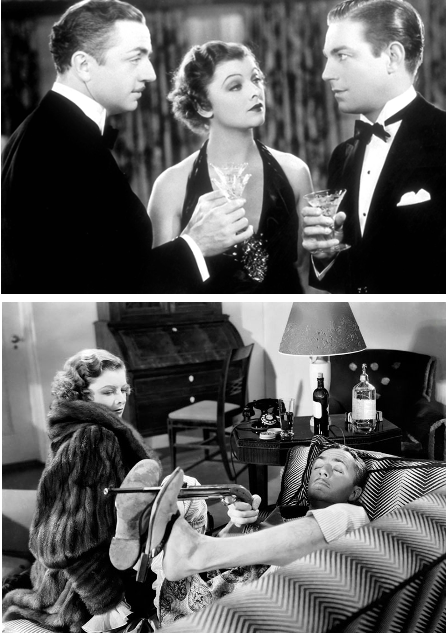
Mosher also took in the “bright” performances of William Powell and Myrna Loy in The Thin Man, a pre-Code comedy-mystery based on the Dashiell Hammett novel by the same name. Powell and Loy portrayed Nick and Nora Charles, who added spice to their leisurely lives through numerous cocktails, flirtatious banter, and crime-solving. Critics loved the film, as did audiences, spawning five sequels from 1936 to 1947.

CHEERS…Top photo: Nick and Nora Charles (William Powell and Myrna Loy) enjoy a drink with their client’s fiancee (Henry Wadsworth) in The Thin Man (1934); Bottom photo: Charles takes aim at a Christmas ornament (with a BB gun) while Nora enjoys the comforts of her new fur coat in a scene from The Thin Man. (Daily Beast/Austin Chronicle)

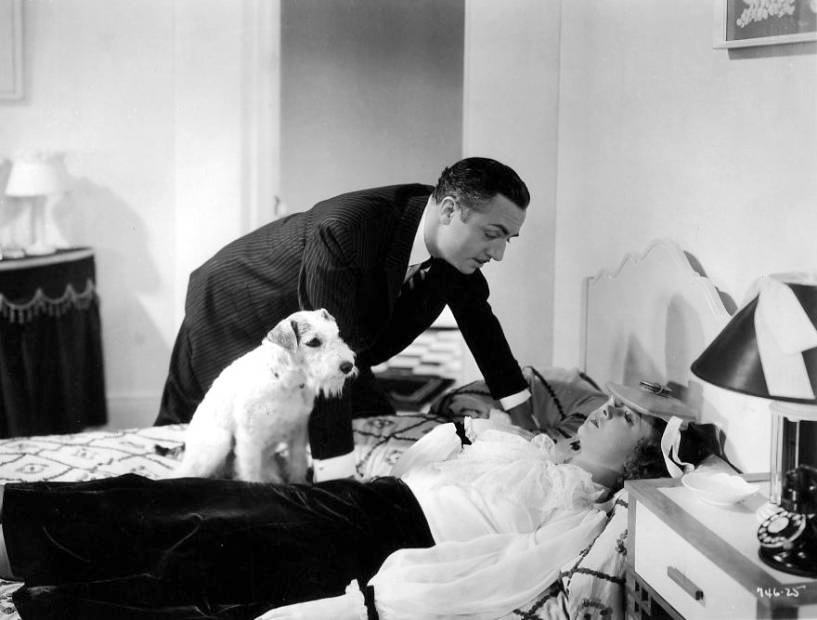
Another star of the show was Asta, the Charles’s wire fox terrier. Asta was portrayed by Skippy, a dog actor who not only appeared in The Thin Man films but also acted alongside Cary Grant in 1937’s The Awful Truth and in 1938’s Bringing Up Baby. Skippy appeared in three Thin Man movies and in more than twenty films altogether between 1932 and 1941. Being an actor in the film must have been good for one’s health: Powell lived 91 years, Loy 88 years, and Skippy, 20 years—a good long life for any pooch.

ROUGH NIGHT…Nick (William Powell) and Asta (Skippy) tend to Nora (Myrna Loy), who nurses a hangover in The Thin Man. (Wikipedia)

 * * *

From Our Advertisers

While Chrysler’s styling of their streamlined Airflow proved to be too far advanced for the buying public (the Depression didn’t help), Studebaker’s own foray into the streamlined future caused a sensation…

…thanks to Studebaker’s brief merger with Pierce-Arrow (1928–33), Studebaker’s designers took cues from Pierce’s streamlined 1933 Silver Arrow and created more than 800 cars with “Year-Ahead” design features—the positive reception convinced the company to continue the style in 1935…here is a top-of-the-line 1934 President Land Cruiser…

1934 Studebaker President Land Cruiser with “Year-Ahead” design features, yet not as radical as Chrysler’s Airflow. (hemmings.com)

and the car that inspired it…

1933 Pierce-Arrow Silver Arrow. Photo copyright Darin Schnabel, courtesy RM Sotheby’s, via hemming.com.

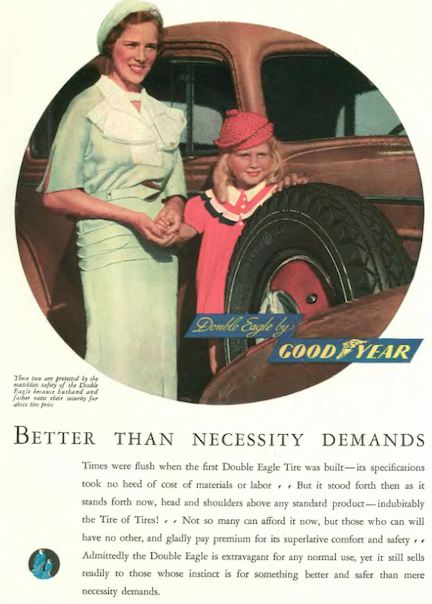
…we continue with those round rubber things that held the cars up…a lot of tire ads in the 1930s emphasized safety—blowouts were common back then…funny how it took nearly four decades to add seat belts to cars…those tires wouldn’t help much in a head-on collision, especially with your kid standing on the from seat…

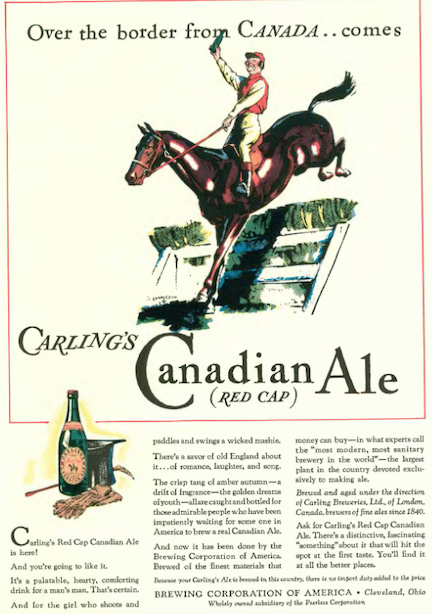
…now let’s cool off with crisp Canadian Ale, thanks to Carling’s entry into the American market…

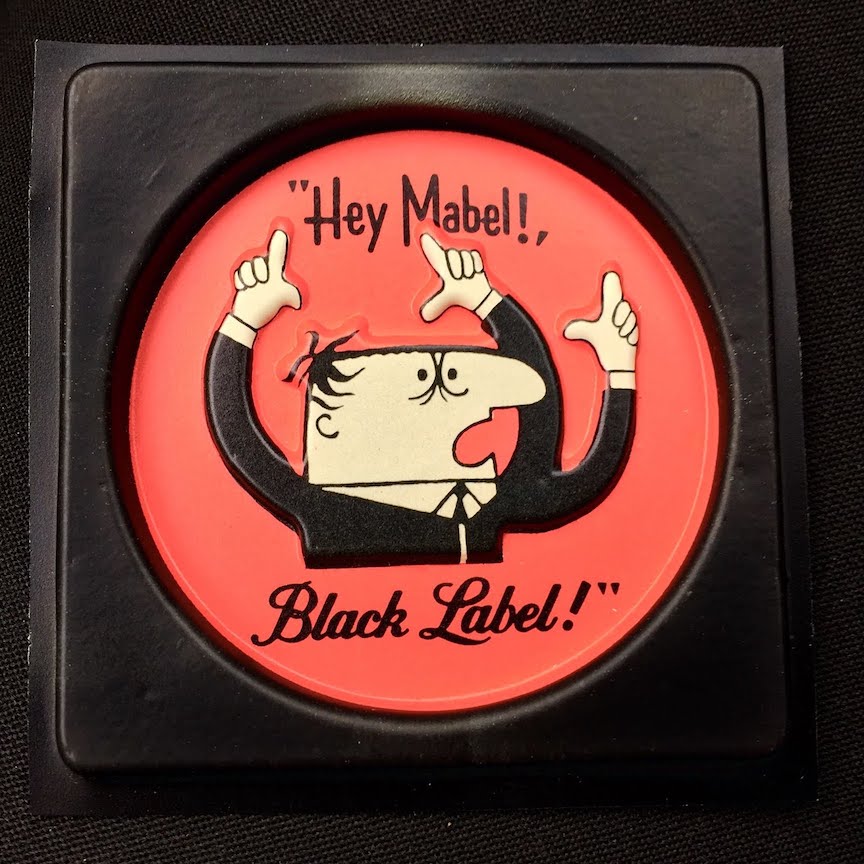
…Carling’s Black Label beer was popular in the states…my parents had a set of these coasters with the Black Label tagline…

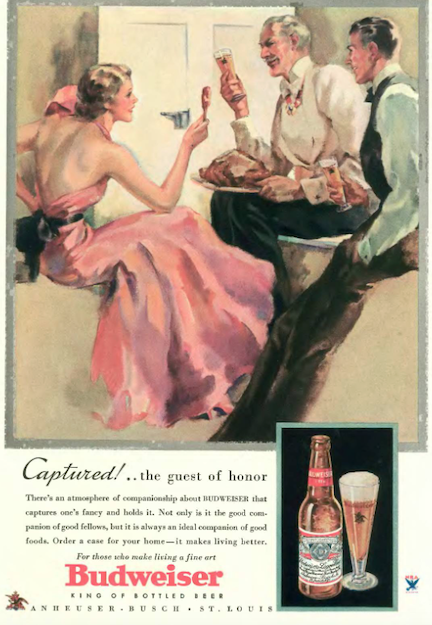
…Budweiser continued its artful series of ads featuring the well-heeled enjoying its product…here it appears old dad (wearing some kind of medal) is getting to know his daughter-in-law over some cold chicken…”hey boy, she’s one of us!”…

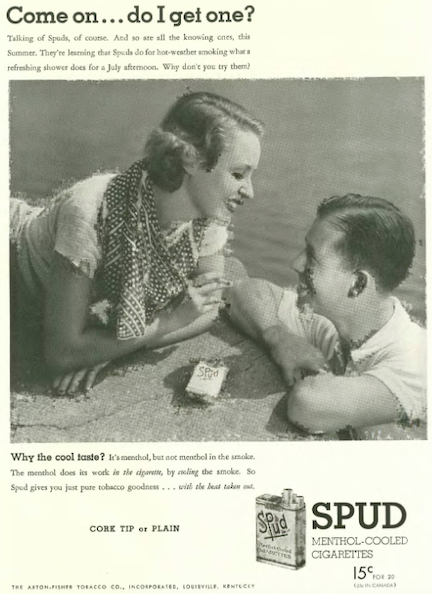
…and we move on to three very different approaches to selling cigarettes, beginning with Spud, continuing its message that menthol cigarettes are as refreshing as a shower on a July afternoon…

…a close up of the message…

…Camel, on the other hand, continued its campaign against irritability…it apparently did wonders for this woman, who seems to be on something more than nicotine…

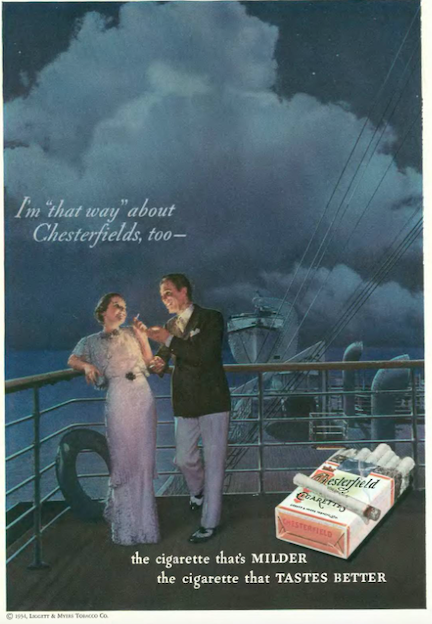
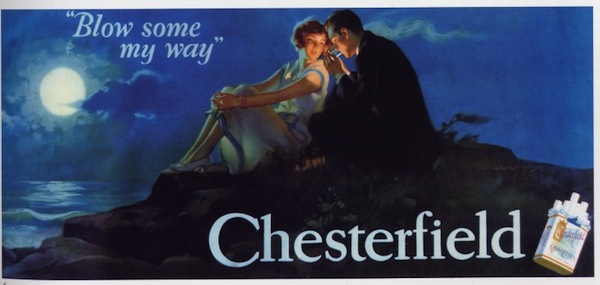
…and from the people who brought us the tagline “blow some my way” in 1928 (as a way to encourage women to take up the habit), by 1934 she is owning that cigarette, and apparently setting some ground rules with the gentleman…

…contrast with the more submissive pose in the Chesterfield ad from the late 1920s…

…on to our cartoons, we begin with spot art by Alan Dunn, which appears to have originated as a captioned cartoon…

William Steig offered up this bit of art for a profile of an “insurance man” by St. Clair McKelway

Helen Hokinson drew up a full page of cartoons along the theme of outdoor dining…

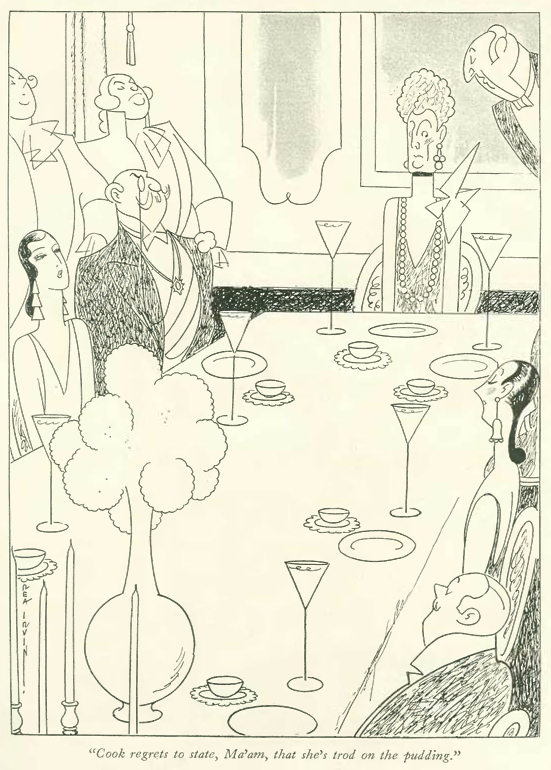
…we continue Rea Irvin’s series on native birds…

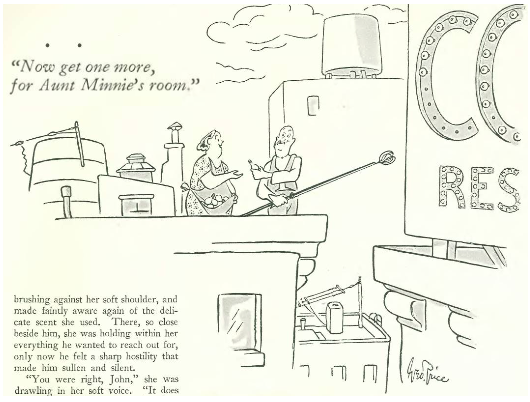
George Price found a way to save on the cost of light bulbs…

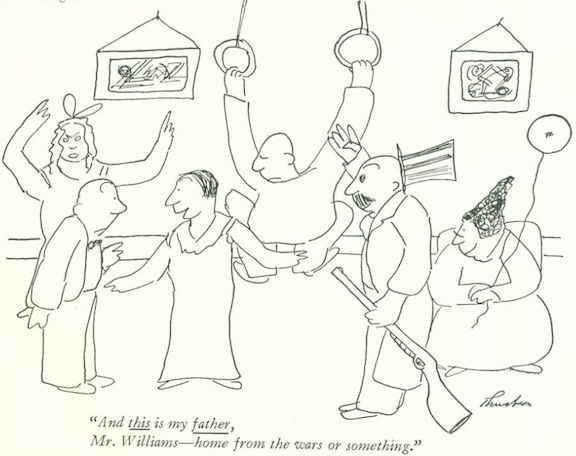
…and we close with James Thurber, and a welcome to the family…

Next Time: The Happy Warrior…

For the Byrds

Since time immemorial human beings have clung to the idea that unknown lands must surely contain vast mineral treasures.

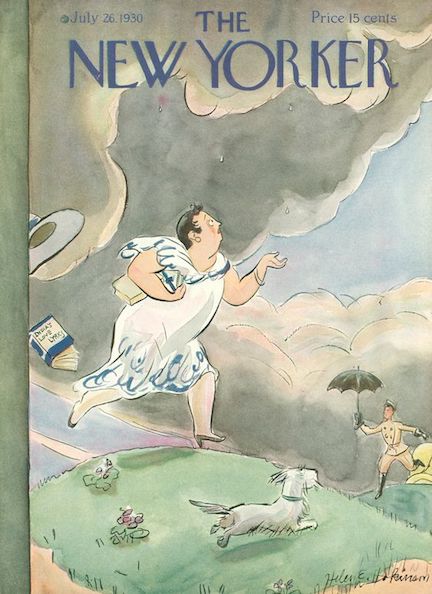
July 26, 1930 cover by Helen Hokinson.

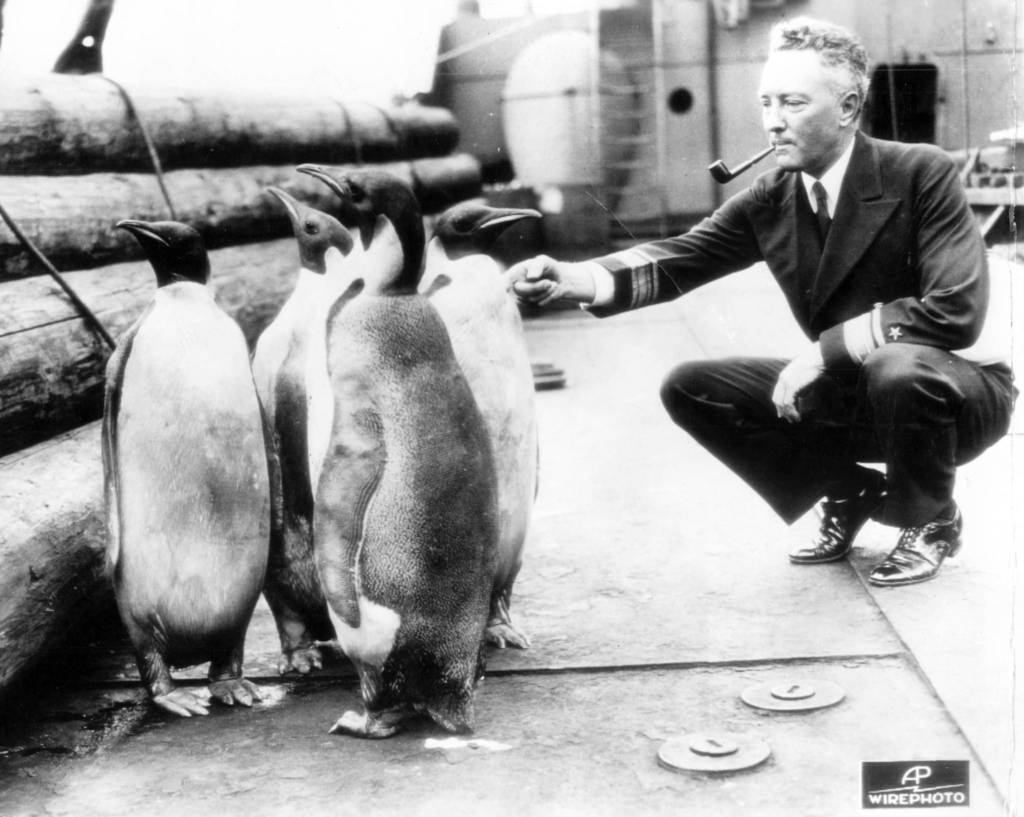
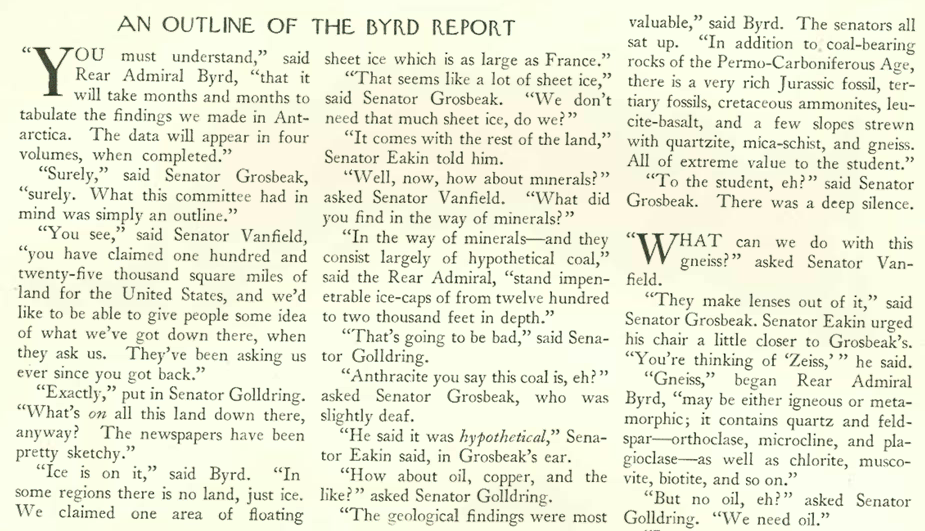
Such was the case when Admiral Richard Byrd returned from his Antarctic expedition, during which he conducted a number of geological studies. Ever ready to tweak a senator’s nose, The New Yorker’s James Thurber imagined an exchange between Byrd and a U.S. Senate subcommittee that was more interested in exploitable commodities than in scientific discoveries:

HMMM, NO OIL HERE…Richard Byrd’s expedition building their “Little America” encampment at the South Pole in 1928. (osu.edu)

One passage of particular interest in this imagined exchange dealt with the speed of climate change in relation to potential mineral extraction…

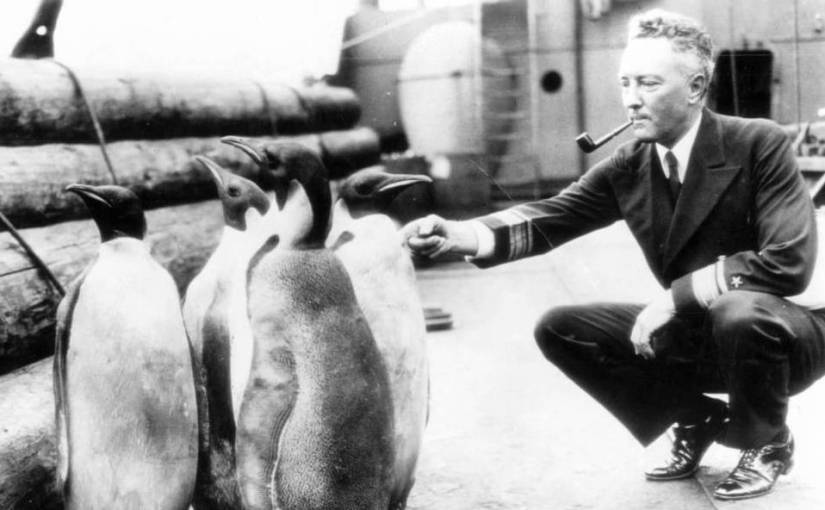
BIRDS MEET BYRD…Admiral Richard Byrd onboard the USS Bear during his second expedition to the South Pole. (Wikipedia)

 *  *  *

Before CNN

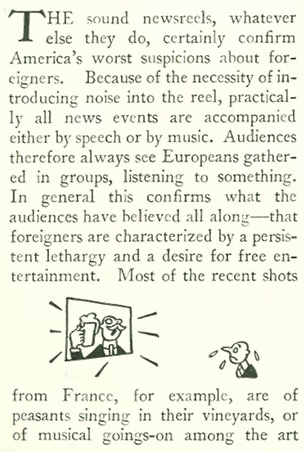
Newsreels came into their own with the advent of sound, offering moviegoers a selection of news stories from the around the world. In his “Notes and Comment,” E.B. White observed that newsreels depicted foreigners as people who just liked to hang out (note the racial slur directed at Latin Americans). White’s characterization of Germans as an indolent lot is also noteworthy, given the country was just two and half years away from Nazi takeover.

TANZEN UND TRINKEN…Kroll’s Biergarten in Berlin in September 1928; English visitors raise a glass at a beer hall in Hesse, 1929. (YouTube)

 *  *  *

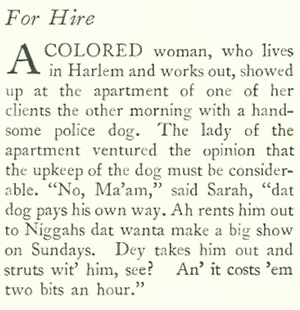
Speaking of Slurs

Here is what passed for a humorous anecdote in the July 26, 1930 “Talk of the Town”…

 *  *  *

Star Power

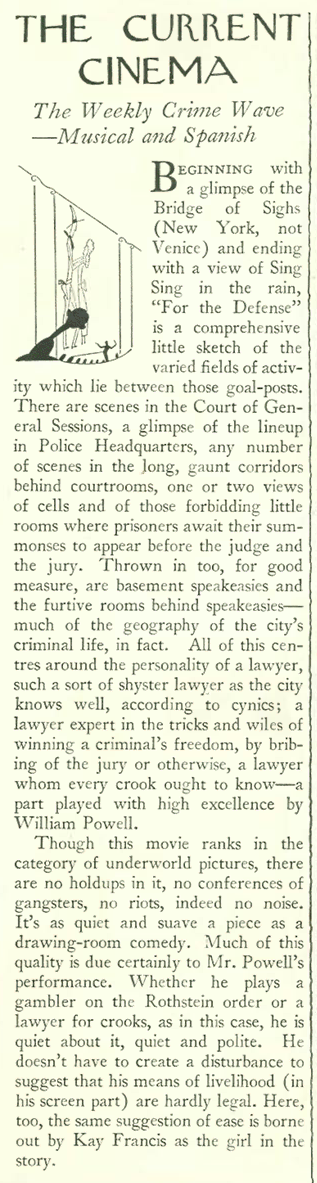
William Powell and Kay Francis were frequent co-stars, and would team up for the 1930 courtroom drama For the Defense. Powell and Francis would be two of Hollywood’s biggest stars in the 1930s.

LET’S MAKE A PICTURE…Frequent co-stars William Powell and Kay Francis in a publicity photo for 1930’s For the Defense. Francis was a longtime friend of The New Yorker’s Lois Long. (IMDB)

 *  *  *

From Our Advertisers

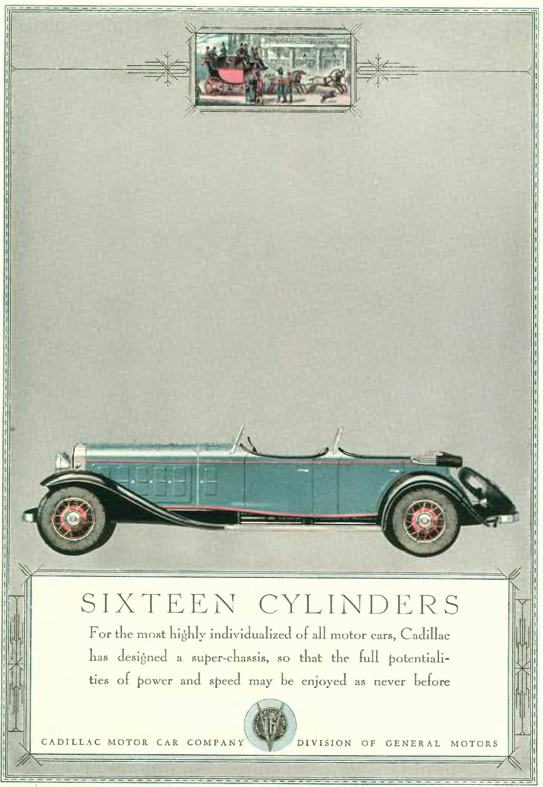
What Depression? As bread lines lengthened so did the “super-chassis” of this monster Cadillac…

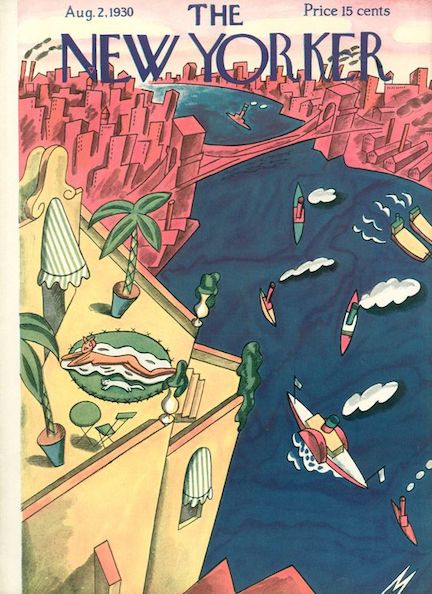
…in contrast, this ad in the Aug. 2 issue questioned the necessity of a 4,000-pound car (or in the case of the 16-cylinder Cadillac, 6,500 pounds), and touted this “common sense” British import…imagine the America of today if this idea would have taken hold in the 1930s…

…we return to the June 26 issue to find an ad that would likely not appear in today’s New Yorker

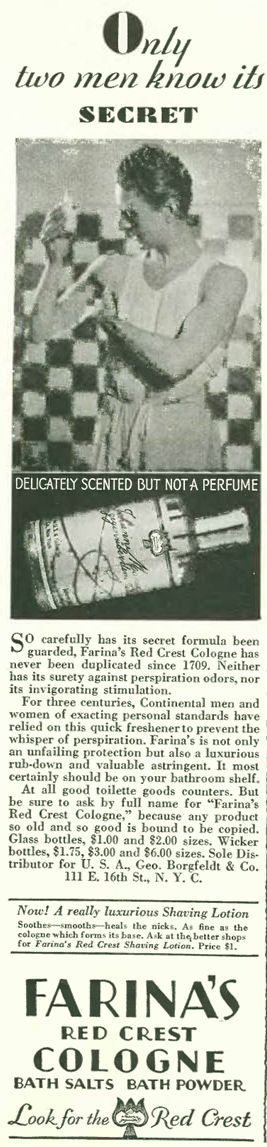
…another unlikely ad is this spot from the makers of Farina cologne featuring a skinflint applying the stuff to his armpit…yeah, I’ll take a bottle…

…and Rea Irvin continued his series of illustrations for Murad cigarettes…

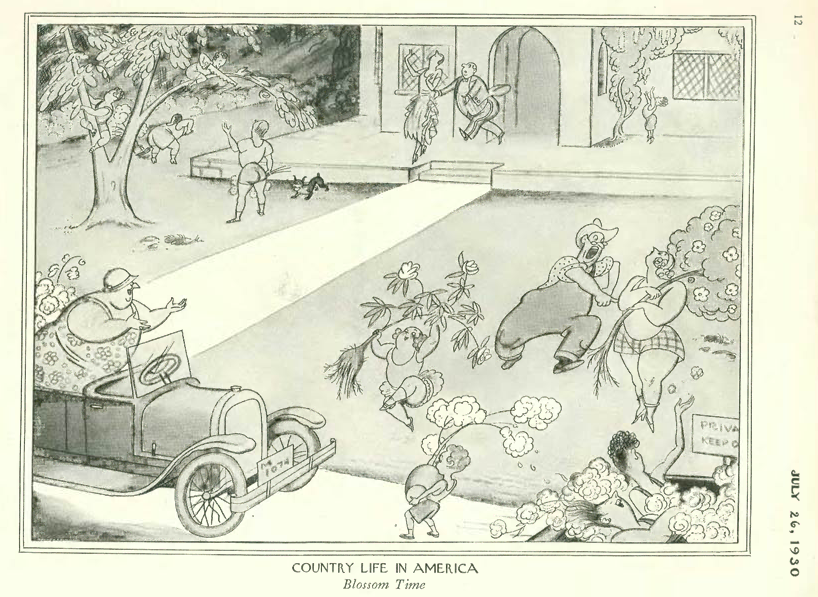
…in cartoons, Irvin gave us this interpretation of country life in a full-page panel originally featured sideways…these “Country Life in America,” scenes depicted common folks enjoying the outdoors at the expense of country squires…

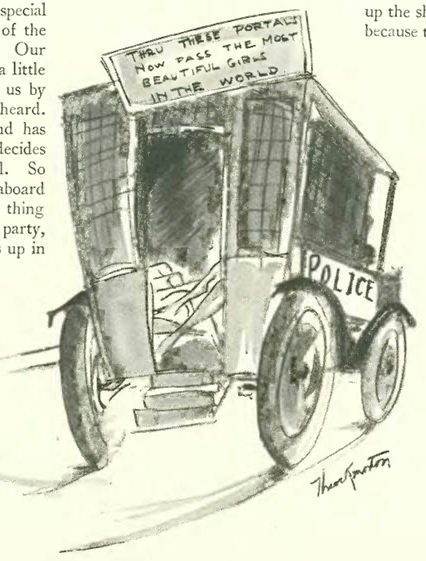
…and then we have the bohemian artist and set designer Cleon Throckmorton (1897-1965), with his one and only contribution to The New Yorker

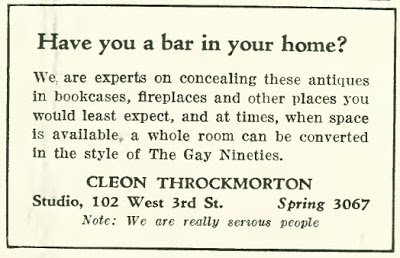
…in a previous issue (May 31, 1930) Throckmorton had placed this tiny, curious ad in a corner on page 46…

…and in the June 7, 1930 issue, he placed another ad in the bottom corner of page 94…

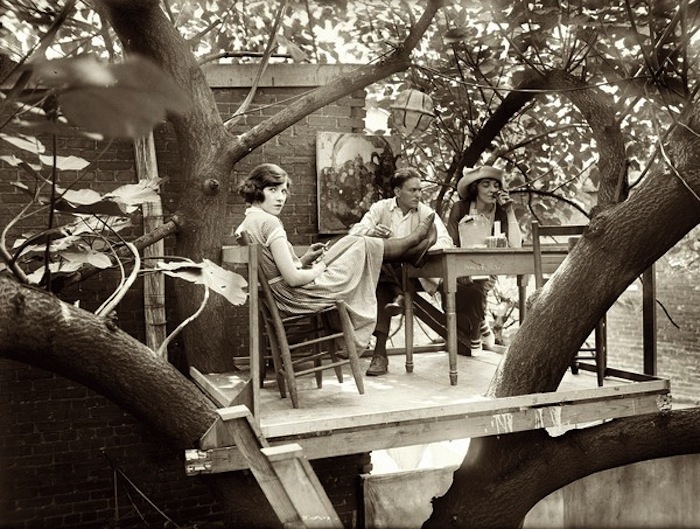
Cleon Throckmorton, well-known for his bohemian lifestyle, operated a backyard speakeasy called the Krazy Kat Club in Washington DC. He is pictured here (center) with a couple of “Klub” members in 1921. He was no slouch, however, designing 149 New York theatrical productions between 1920 and 1934. (messynessychic.com)

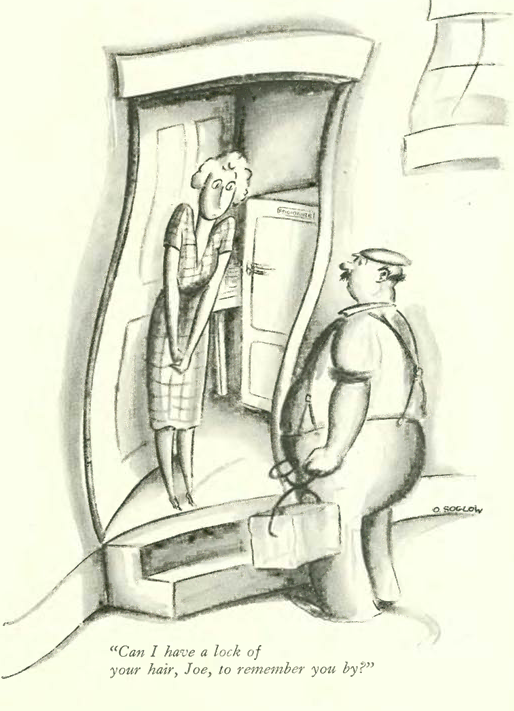
…back to our cartoons, we have Otto Soglow, who was going through a wavy period in his illustrations…

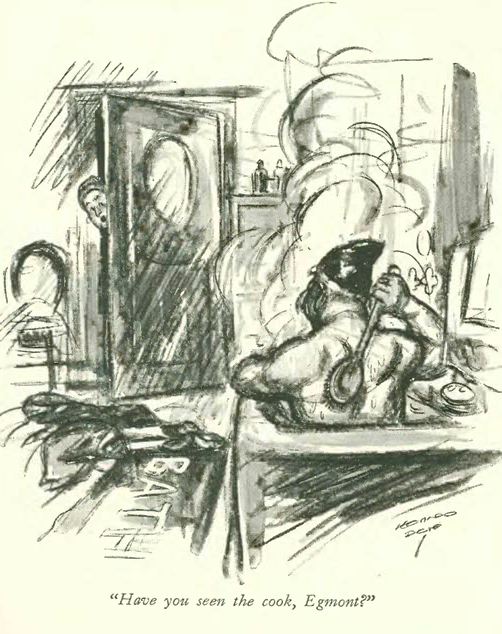
…Soglow would soon become famous for his Little King strip, but for now we’ll leave the king jokes to Peter Arno

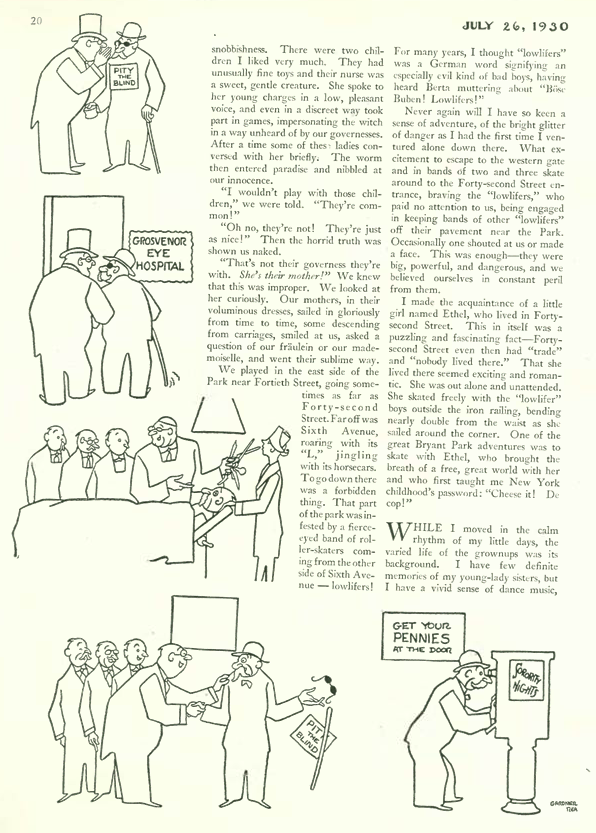
Gardner Rea contributed this series cartoon that slid around page 20…

Leonard Dove looked in on a domestic scene…

…and John Reehill contributed this weird little cartoon that reminded me a bit of the humor of Gahan Wilson

Next Time: The Drys Are All Wet…


We Smiled As We Danced

In his 2006 book, Flapper, Joshua Zeitz refers to The New Yorker’s Lois Long as the epitome of the 1920s flapper, an “absolutely a wild woman” who wrote about Jazz Age nightlife “with a wicked sort of sexual sense of humor.”

Feb. 8, 1930 cover by Theodore Haupt (the annual Westminster Kennel Club dog show was in town…)

This Vassar-educated daughter of a Congregational minister began her New Yorker career in the summer of 1925, at age 23. She took over Charles Baskerville’s rather dry column, “When Nights are Bold,” renamed it “Tables for Two,” and using the pen name “Lipstick” plunged into the nightlife scene with considerable brio.

TIMES CHANGE…At left, in a still image from a 1920s home movie, Lois Long relaxes on a beach; at right, Long with newborn daughter Patricia Arno in 1929. (PBS/Patricia Arno)

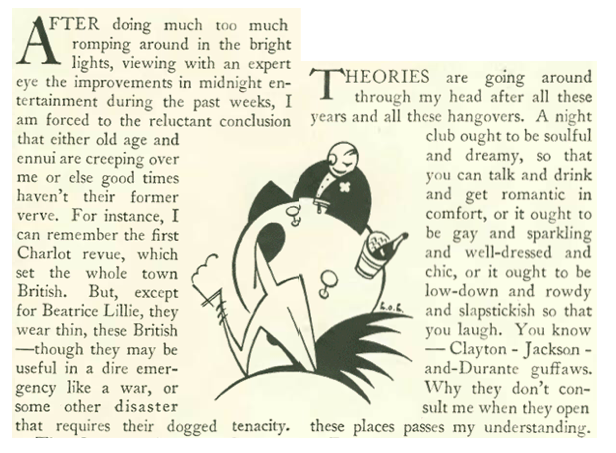
Two years later she would marry cartoonist Peter Arno, and in 1929 would give birth to a daughter, Patricia. During this time the almost weekly “Tables” column would appear infrequently as Long turned her attentions to her family and her fashion column, “On and Off the Avenue.” But as I’ve noted before, Long, along with many of her New Yorker colleagues, had grown weary of the Roaring Twenties many months before they were over. She would put an end (for awhile) to the “Tables” column in June 1930; the good times, as Long noted in her Feb. 8 column, had lost their “verve”…

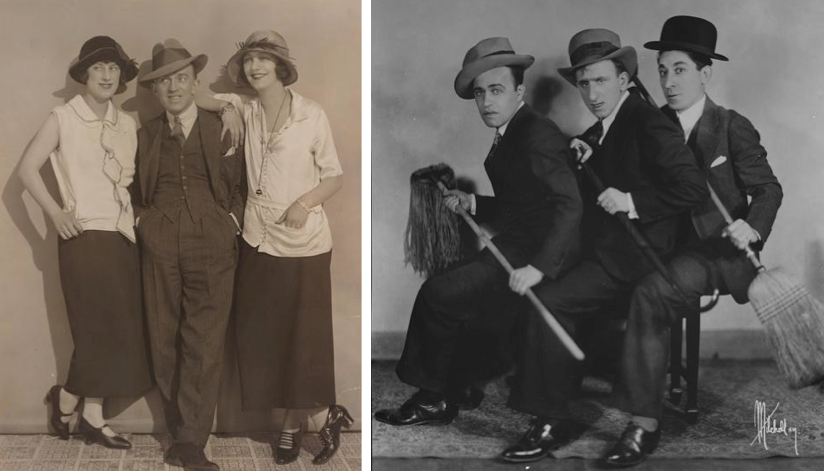
BRITS AND TWITS…Lois Long recalled the nightlife entertainments of the past and present in one of her last “Tables for Two” columns. Photo at left (from left to right), Beatrice Lillie, Nelson Keys, and Gertrude Lawrence in Andre Charlot’s Revue of 1924. At right, the comedy trio Eddie Jackson, Jimmy Durante and Lou Clayton. (Museum of the City of New York/Herbert Mitchell Collection)

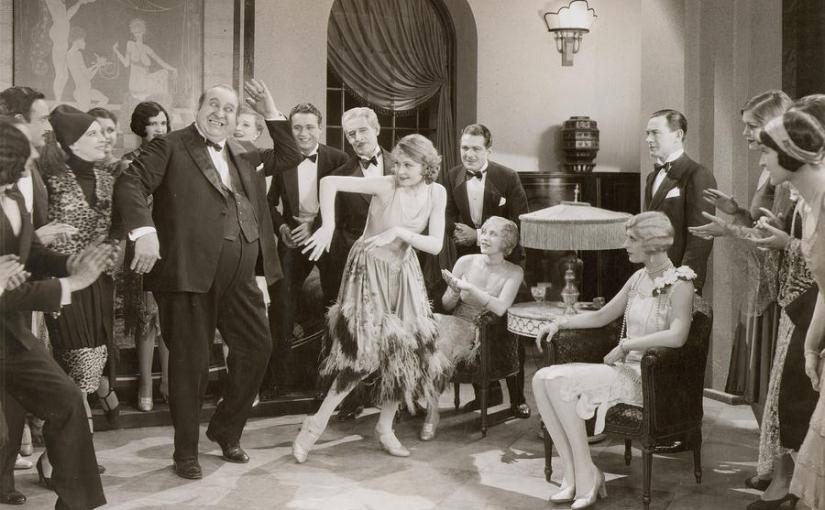
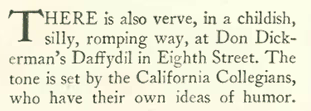
…Long found Don Dickerman’s latest themed restaurant, the Daffydil, to be a mildly amusing distraction…

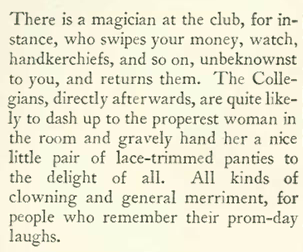
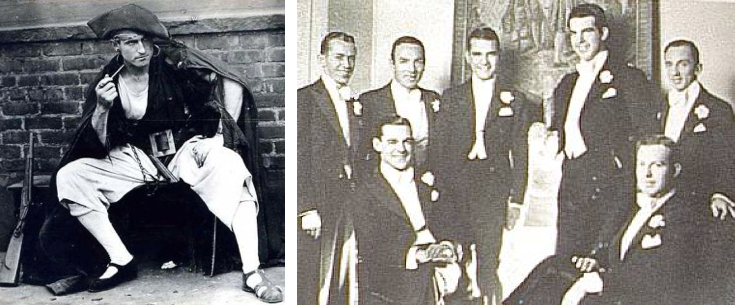
HE WAS AN ARRRTIST…Greenwich Village personality and pirate aficionado Don Dickerman (left) failed to make a living as an artist, but found success with his various themed restaurants including the Pirate’s Cove, the Blue Horse, the Heigh-Ho (where Rudy Vallee started out), the County Fair and the Daffydil (which was financed by Vallee). At right, singing at the Daffydil were the California Collegians, a group that included actor Fred MacMurray (tallest in the photo). (Restaurant-ing through history)

…and she also looked to Harlem for some nighttime diversions, but the ex-flapper just wasn’t up for a rowdy scene…

FOR THE YOUNG AT HEART…Dancing the Lindy Hop at the Savoy in Harlem, circa 1930. (Pinterest)

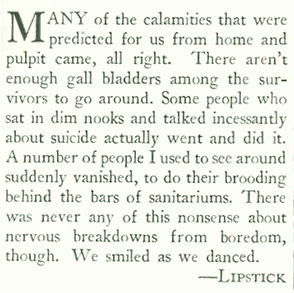
…ten years later, in The New Yorker’s fifteenth anniversary issue (Feb. 17, 1940), the 38-year-old Long would look back to the Roaring Twenties in the column “That Was New York,” reprising her signature “Lipstick” as she recalled the days when “Harlem was a thrill” and “we smiled when we went dancing in 1925 even though there wasn’t a candid camera within miles. In those days people frequently laughed out loud in public.” She concluded the piece with this observation:

 *  *  *

Rise of the Débutantes

New York’s débutantes and The New Yorker had something of a symbiotic relationship during the magazine’s early days, beginning with a piece written by 22-year-old Ellin Mackay for the Nov. 28, 1925 issue that served as a manifesto of sorts for a new kind of débutante. Mackay’s essay explained why modern women were abandoning the forced social matchmaking of débutante balls in favor of the more egalitarian (and fun) night club scene.

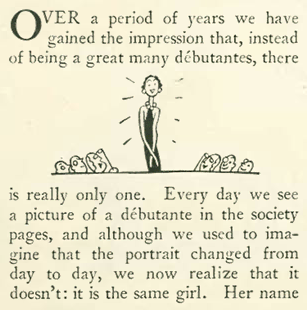
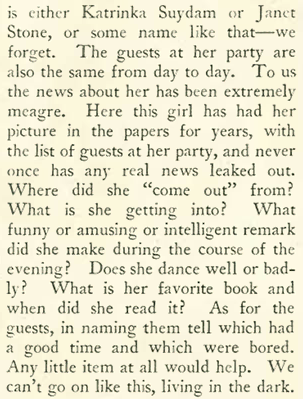
Mackay’s piece provided a huge boost to The New Yorker’s circulation, the magazine barely staying afloat at the time. Nevertheless, its writers couldn’t resist taking occasional shots at the seemingly frivolous existence of debs, including E.B. White, who called out a one Katrinka Suydam in his “Notes and Comment” column for Jan. 4, 1930:

Perhaps White came across Suydam’s name in the Sept. 7, 1929 New York Times:

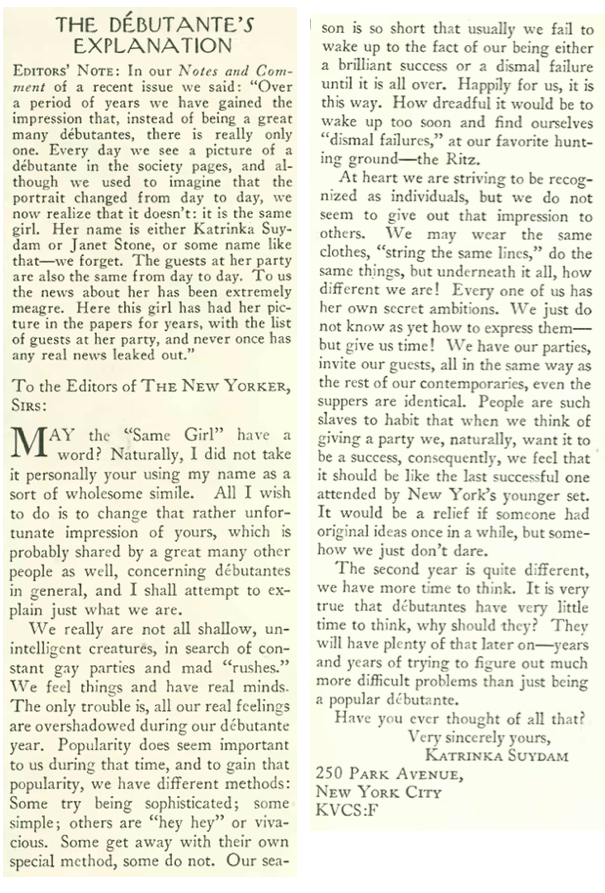
What he probably didn’t expect was a reply from Suydam herself, an act that seemed to impress the magazine’s editors, who printed the proud débutante’s letter in full on page 32:

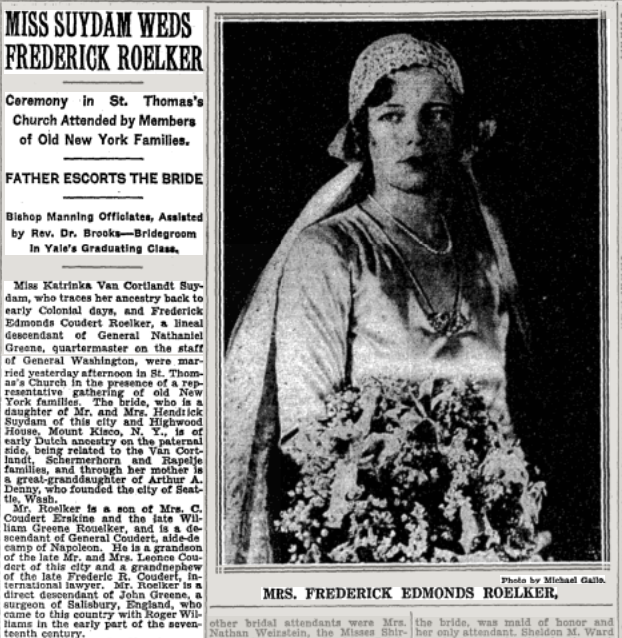
Suydam would go on to marry Frederick Roelker later that June. Note in this excerpted wedding write-up how the couples’ European and colonial pedigrees were carefully detailed in the first paragraphs, distinguishing their union from couplings enjoyed by the unwashed masses…

Katrinka Suydam’s wedding as reported in the June 12, 1930 issue of The New York Times.

 *  *  *

Skirt Stakes

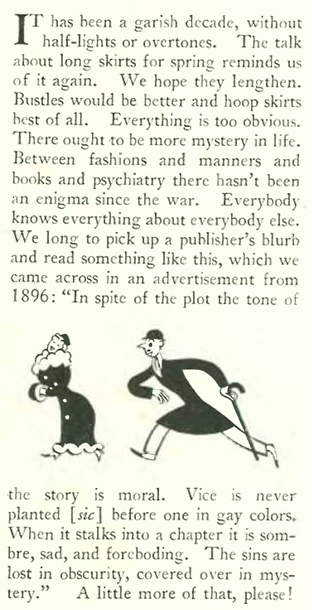
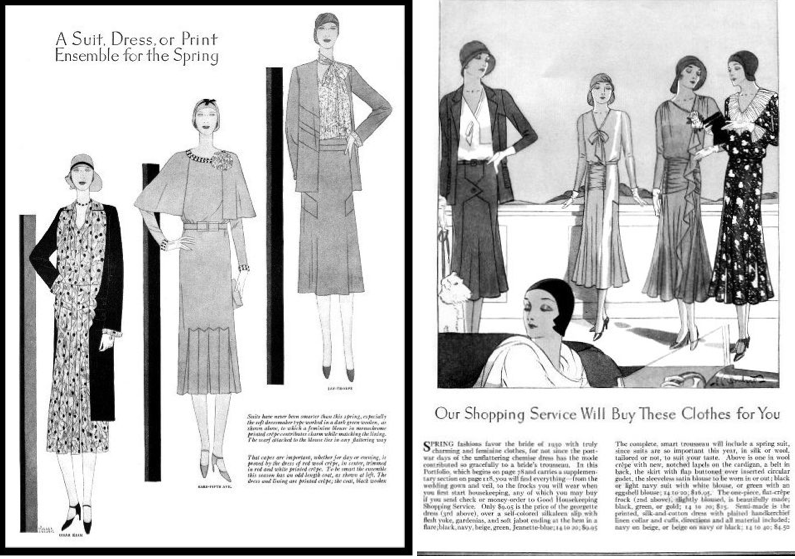
In 1930 hemlines plummeted along with the stock market. E.B. White, in “Notes,” welcomed the return of “mystery” to women’s fashions:

THEY DROPPED WITH THE MARKET…Women’s spring fashions with lowered hemlines on display in the April 1930 issue of Good Housekeeping. (fashion-era.com)

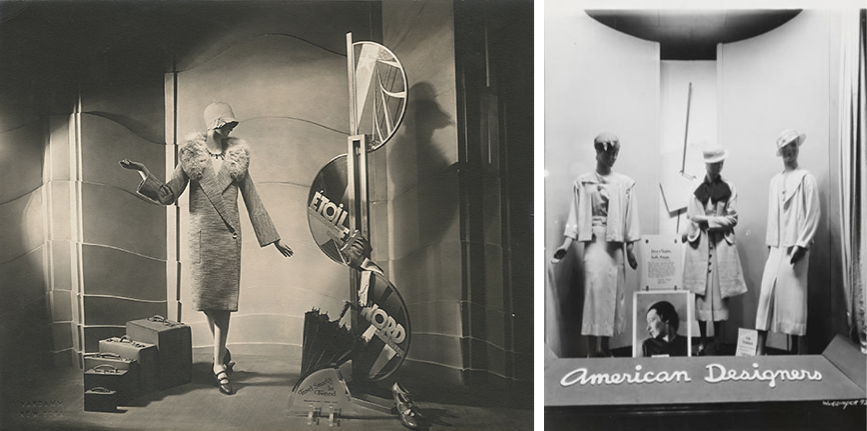
Frederick Lewis Allen, on the other hand, was having difficulty understanding the modern woman, circa 1930, based on what he was seeing in the display windows along Fifth Avenue. Excerpts:

NO NONSENSE WOMEN…Window displays on Fifth Avenue included (left) this “Travel Smartly in Tweed” window display for Franklin Simon (1929-30); and right, a window at Lord & Taylor, 1933. (Harry Ransom Center/Museum of the City of New York)

Allen noted that the “snooty” mannequins on display along Fifth Avenue represented a certain type who wouldn’t be caught dead riding a bus…

Whether or not he liked the Altman girls, the 39-year-old Allen felt like an “old fogey” in the presence of these “no nonsense” women:

 *  *  *

Get A Room

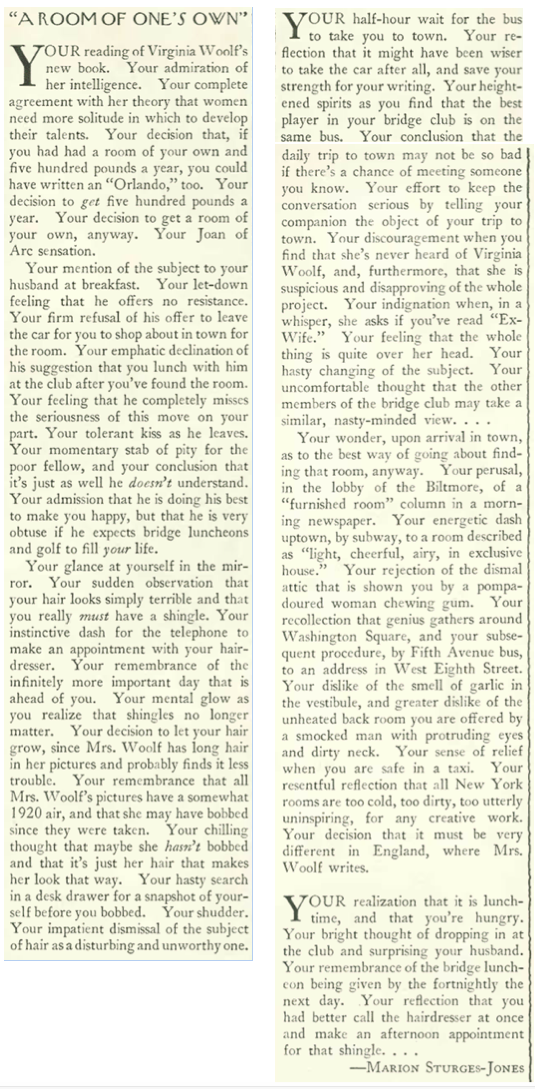
Marion Sturges Jones pondered the life of another kind of modern woman, namely that of Virginia Woolf, who had recently published the extended essay A Room of One’s Own. Jones discovered that finding such a room was easier said than done…

IN HER ROOM…Virginia Woolf at Monk’s House in East Sussex, 1932; dust jacket of the first edition of A Room of One’s Own. (kaykeys.net/Beinecke Library, Yale)

 *  *  *

The Way You Really Look

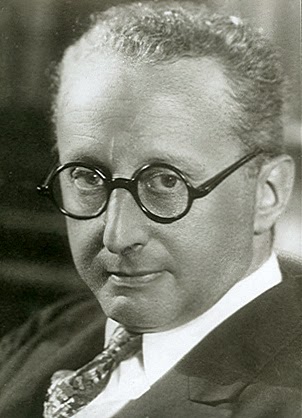
Franklin P. Adams penned a profile of the legendary songwriter and stage producer Jerome Kern, who created dozens of Broadway musicals and Hollywood films and wrote a substantial chunk of the American songbook (more than 700 songs) with such hits as “Ol’ Man River”, “A Fine Romance”, “Smoke Gets in Your Eyes”, and “The Way You Look Tonight.” Peter Arno provided this less-than-flattering caricature of the man…

…and this is how Kern actually looked, circa 1930…

(bloggingtonybennett.com)

 *  *  *

At the Talkies

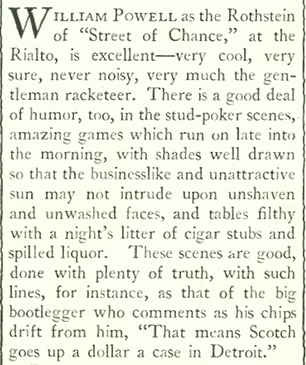
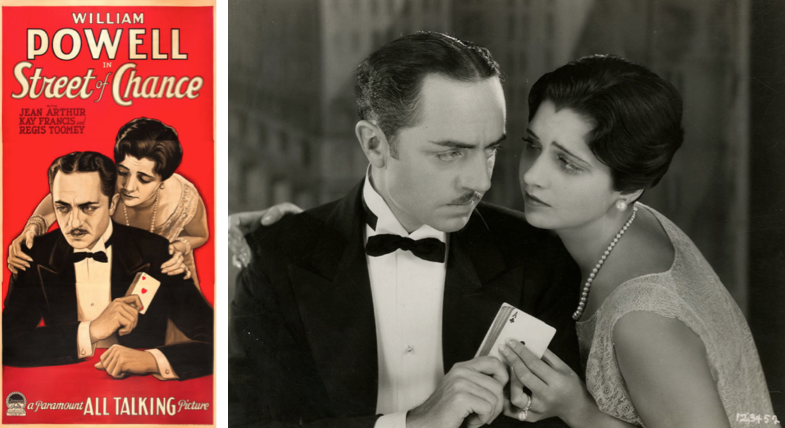
Speaking of showbiz, New Yorker film critic John Mosher offered high praise for William Powell’s latest film, Street of Chance. Although Powell is often linked professionally to actress Myrna Loy thanks to their six Thin Man films (1934 – 1947), from 1930 to 1932 he also appeared with Kay Francis in six films, including Street of Chance. Both Powell and Francis would become major stars of the 1930s, and between 1930 and 1936 Francis would be the number one female star at Warner Brothers and the highest-paid American film actress. Francis was no stranger to wild living — she was a longtime friend of Lois Long’s (see above) and also shared an apartment with her at 381 Park Avenue before Long married Peter Arno. Mosher’s review:

TOUGH ODDS…William Powell and Kay Francis in Street of Chance (1930). Francis was a longtime friend of New Yorker columnist Lois Long. (IMDB)

 *  *  *

From Our Advertisers

We have an advertisement from the aforementioned County Fair, one of the themed restaurants operated by Greenwich village artist and personality Don Dickerman, who illustrated his own ads…

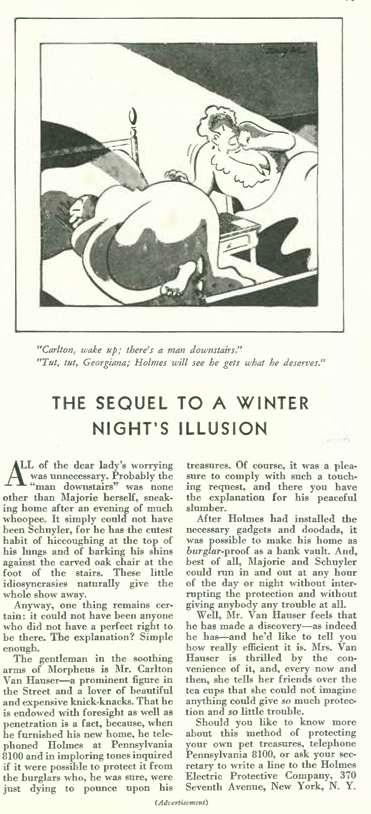
…I’m not sure who drew this Arno-esque illustration below for the Holmes Electric Protective Company, but I can tell you that the name Holmes was synonymous with home security in 1930…in 1857 Edwin Holmes bought a patent for an electric burglar alarm (invented in 1853 by Augustus Pope) and went on to successfully commercialize and popularize the electromagnetic burglar alarm. Holmes is also credited with creating the first large-scale alarm network in the United States…

…but I do know that Abe Birnbaum contributed this drawing (in “Talk of the Town”) of the beloved Colony restaurant owner Eugene Cavallero

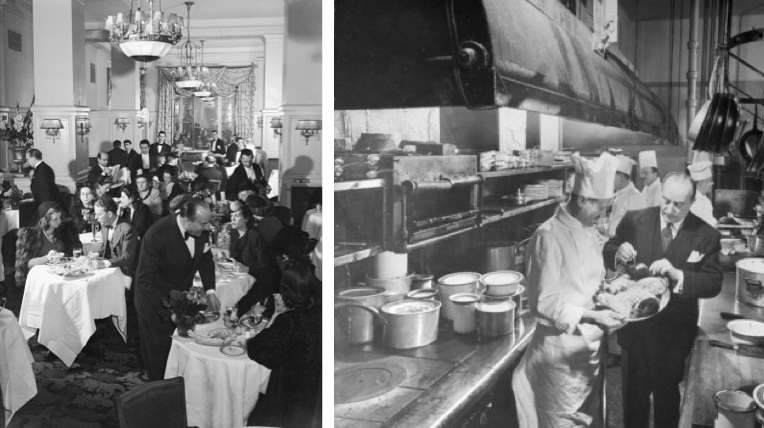
A PLACE TO SEE AND BE SEEN…From the 1920s to the 1960s New York’s smart set dined at the Colony. Rian James, in Dining In New York (1930) wrote “the Colony is the restaurant of the cosmopolite and the connoisseur; the rendezvous of the social register; the retreat of the Four Hundred.” Critic George Jean Nathan said the Colony was one of “civilization’s last strongholds in the department of cuisine.” Photo at left of the dining room around 1940; at right, owner Eugene Cavallero consults with a chef. (lostpastremembered.blogspot.com)

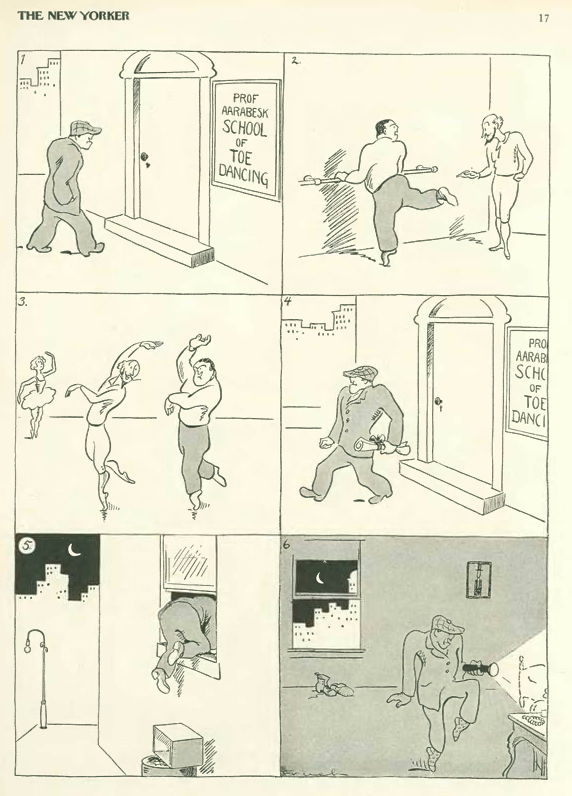
…on to our cartoons, we have a full page from Al Frueh

…and another full-page from Rea Irvin

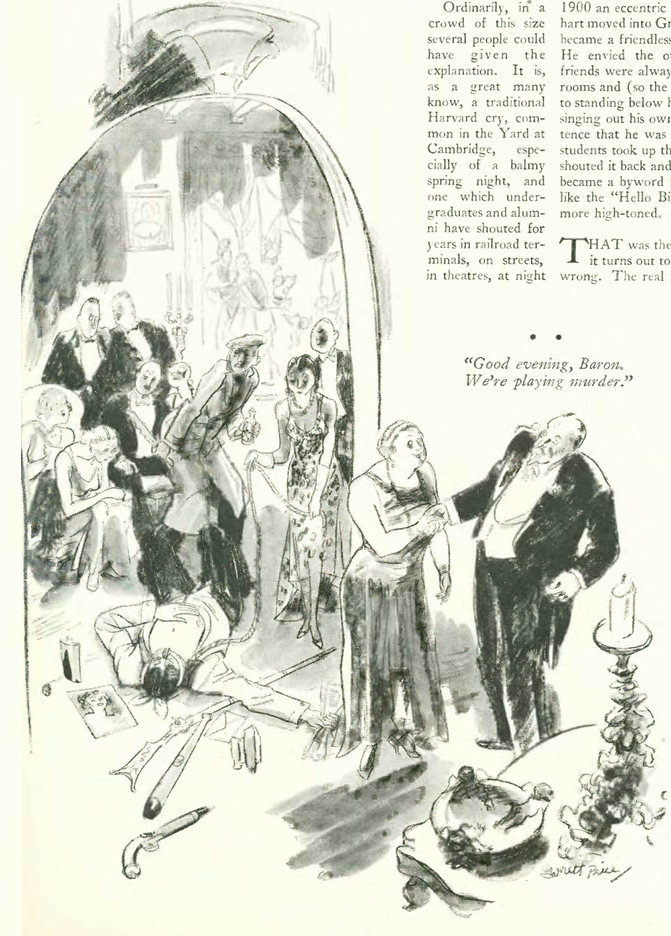
…this terrific party scene courtesy Garrett Price

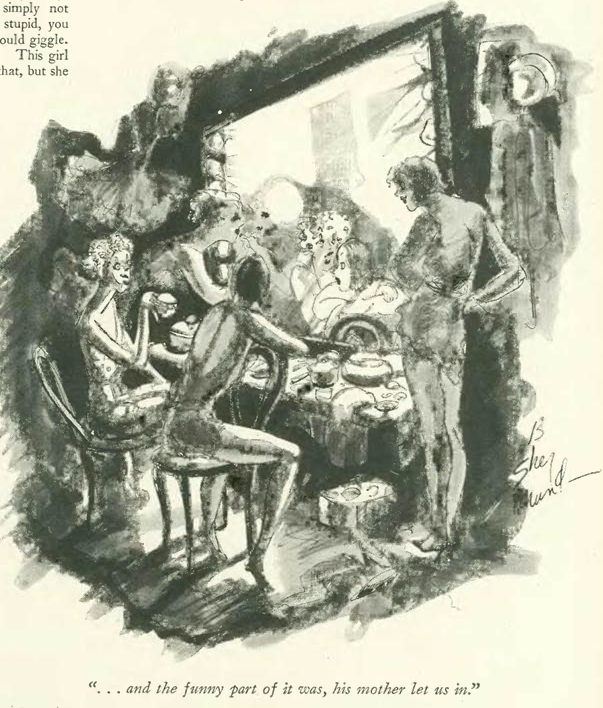
…two by the marvelous Barbara Shermund (check out Michael Maslin’s latest post on Shermund)…

and we sign off with the inimitable Peter Arno

Next Time: Prophet of Doom…


The Last Summer

Winding down the last summer of the 1920s — an unusually hot one — one detects subtle changes in The New Yorker’s mood; weary from the decade-long party known as the Roaring Twenties, a bit more mature, and more confident in its voice thanks to the regular writings of James Thurber, E.B. White and Lois Long and copious cartoons and illustrations by such notables as Peter Arno, Barbara Shermund and Helen Hokinson that gave the magazine a distinctively modern feel as it headed into the 1930s.

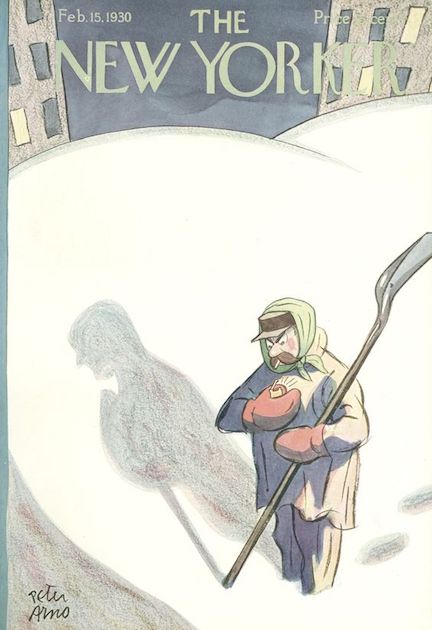
Aug. 10, 1929 cover by Theodore Haupt; Aug. 17 cover by Peter Arno.

The exuberance associated with the rapidly changing skyline was still there, however, as the Aug. 17 “Talk of the Town” speculated on the race for the world’s tallest building. The article not only anticipated an architect’s sleight of hand, but also a Zeppelin docking station that in the end would top the world’s tallest building:

As it turned out, William Van Alen did not have to compete against himself, the commission for One Wall Street instead going to Ralph Walker, who would design a beautiful art deco landmark that, at 50 stories, would not vie for the title of the world’s tallest building. Unbeknownst to The New Yorker, and perhaps Van Alen, the challenger would instead be 40 Wall Street, which would hold the crown as world’s tallest for about a month. Thanks to some sleight of hand (see caption below) the Chrysler building would quickly surpass 40 Wall Street and hold the title for just eleven months, bested in the end by the Empire State Building (which would sport a “Zeppelin superstructure”).

DECO DELIGHTS…40 Wall Street (left) vied with the Chrysler Building for the title of the world’s tallest building. The 927-foot 40 Wall Street would claim the title in late April 1930. One month later, the Chrysler building would sprout a needle-like spire (secretly constructed inside the building) bringing its total height to 1,046 feet. The builders of 40 Wall Street cried foul and claimed that their building contained the world’s highest usable floor, whereas the Chrysler’s spire was strictly ornamental and inaccessible. Less than a year later the point was made moot when the Empire State Building soared above them both. (Wikipedia/The Skyscraper Museum)
ERECTILE DYSFUNCTION…Clockwise, from top left, progression of designs for the Chrysler Building; the building’s architect, William Van Alen; drawing from Popular Science Monthly (Aug. 1930) revealed the inner workings of the spire’s clandestine construction; Zeppelin docking station for the Empire State Building as imagined in a composite (faked) photograph. At 1,250 feet, the wind-whipped mooring mast proved not only impractical, but downright dangerous. In September 1931 a dirigible briefly lashed itself to the mast in 40 mph winds, and two weeks later the Goodyear Blimp Columbia managed to deliver a stack of Evening Journals to a man stationed on the tower. Contrary to the faked photograph, no passengers ever transferred from the tower to a Zeppelin. (Skyscraper City/Wikipedia/NY Times)

*  *  *

What, Me Worry?

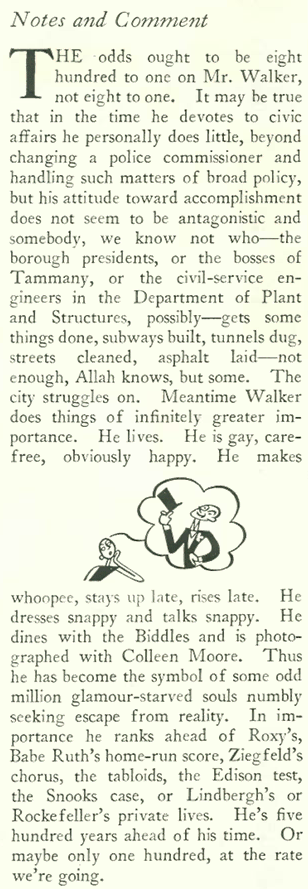
The famously flamboyant New York City Mayor Jimmy Walker lived the easy life during his initial years as Hizzonner, riding a booming economy, partying with the rich and famous (while flaunting Prohibition laws), carousing with his mistress (Ziegfield dancer Betty Compton) and sleeping until noon. When reform-minded Fiorello La Guardia challenged Walker’s reelection bid in 1929, Walker left the dirty work to his Tammany Hall cronies and continued to charm the public, and The New Yorker. The Aug. 17 “Talk of the Town” observed:

IT’S EASY BEING ME…Mayor Jimmy Walker accompanied actress Colleen Moore to the October 1928 premiere of her latest film, Lilac Time. (konreioldnewyork.blogspot.com)
I HAVE MY EYE ON YOU…Reform-minded Fiorello La Guardia (right) detested Jimmy Walker and his Tammany cronies, but that wasn’t enough to get him elected in 1929. The Great Depression would soon turn the tables. (Wikipedia)

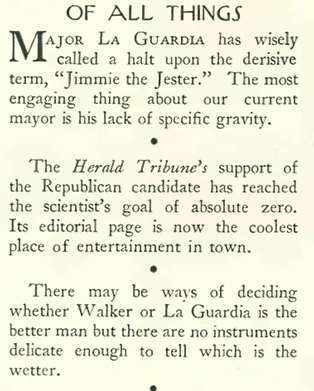
Howard Brubaker, in his Aug. 17 “Of All Things” column, suggested that La Guardia had a zero chance of getting elected. Just three years later, Walker would resign amid scandal and flee to Europe. La Guardia, on the other hand, would be elected to the first of his three terms as mayor in 1933, riding the wave of the New Deal.

 *  *  *

Peek-A-Boo

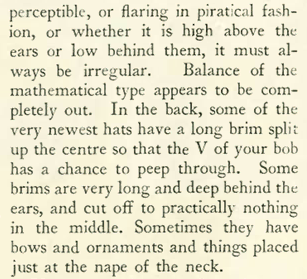
Politics might have been business as usual, but in the world of fashion the vampish hat styles associated with flappers were giving way to a new rolled-brim look that seemed to suggest an aviator’s helmet. In her Aug. 17 fashion column “On and Off the Avenue,” Lois Long reported:

FACING THE FUTURE…Vampish hats of 1928, pictured at top, gave way to the rolled-brim or flare look of 1929. (Images gleaned from magazine/catalog images posted on Pinterest)

Long seemed to welcome the idea that women should once again bare their foreheads…

 *  *  *

Twain Wreck

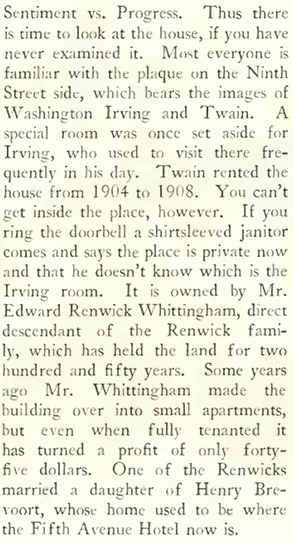
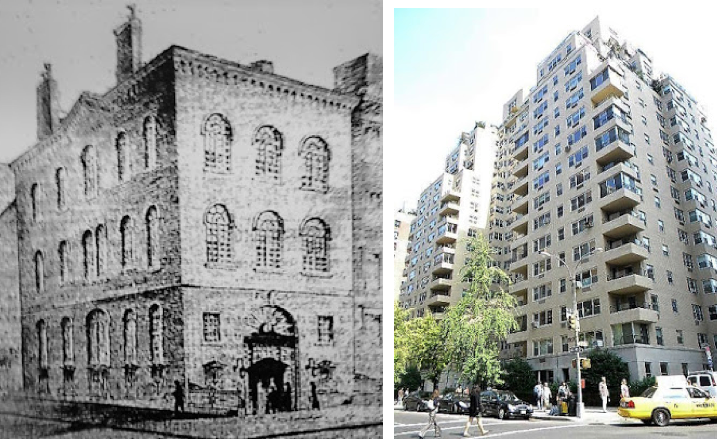
Jumping back to the Aug. 10 issue, “The Talk of the Town” reported on the possible remodeling or demolition of a house once occupied by Samuel Clemens, aka Mark Twain. The house in question was a lavish old mansion built by Henry Brevoort, Jr. in 1834, at the northwest corner of Fifth Avenue and 9th Street. Twain lived in the house from 1905 to 1908, and it was there that Twain’s biographer Albert Paine conducted interviews with the author and wrote the four-volume Mark Twain, a Biography; The Personal and Literary Life of Samuel Langhorne Clemens. When millionaires abandoned their Fifth Avenue mansions in the 1920s and high-rise apartments took their place, there was pressure to either convert an old mansion like the Breevoort house at 21 Fifth Avenue to apartments or demolish it altogether.

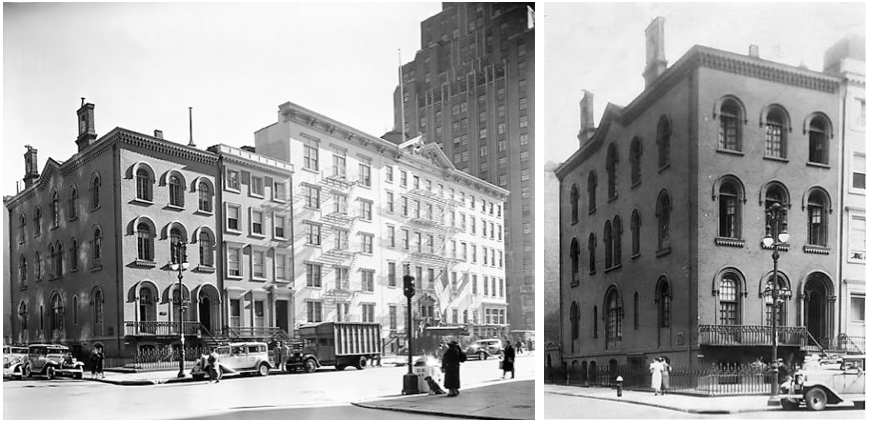
LOOKING GOOD AFTER A CENTURY…At left, Berenice Abbott took this photograph of No. 21 Fifth Avenue in 1935. At right, in a close-up shot from the same period, the 1924 plaque from the Greenwich Village Historical Society is visible on the side of the house. (Museum of the City of New York/Greenwich Village Historical Society)
A NOW FOR SOMETHING COMPLETELY DIFFERENT…A proposed 1929 remodeling (left) moved the front door of the old Brevoort mansion to the center and lowered it to street level. At right, today the 1955 Brevoort apartment house occupies the site. (daytoninmanhattan.blogspot.com)

The Greenwich Village Historical Society did what it could to save the house, and in 1924 affixed a bronze plaque to a side wall noting that both Twain and Washington Irving were once occupants. When the house was slated for demolition in 1954, the Society appealed to New Yorkers to raise the $70,000 needed to move the building, but only a fraction of that amount was secured. No. 21 was demolished in 1954 along with the rest of the houses on that block.

 *  *  *

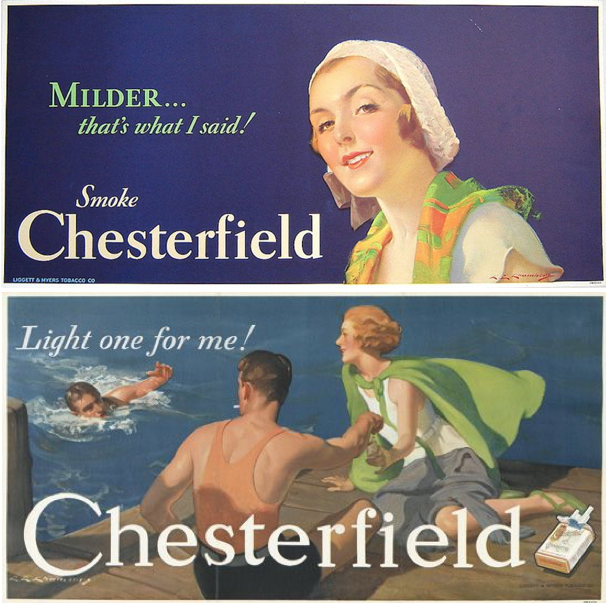
Charles Edward Chambers was an American illustrator probably best known for his Chesterfield ads, although he also illustrated stories for a number of popular magazines from the early 1900s until his death in 1941. The Aug. 10 “Talk of the Town” looked in on his work with model Virginia Maurice:

QUICK…THROW THAT MAN A CIGARETTE!…Examples of Charles Edward Chambers’ Chesterfield ads from 1929 featuring model Virginia Maurice. Note that Maurice is wearing the latest “rolled brim” hat style in the upper image. (Pinterest)
HIS NONSMOKING SECTION…A 1919 Harper’s cover illustration by Charles Edward Chambers. (Wikipedia)

*  *  *

Mama’s Boy

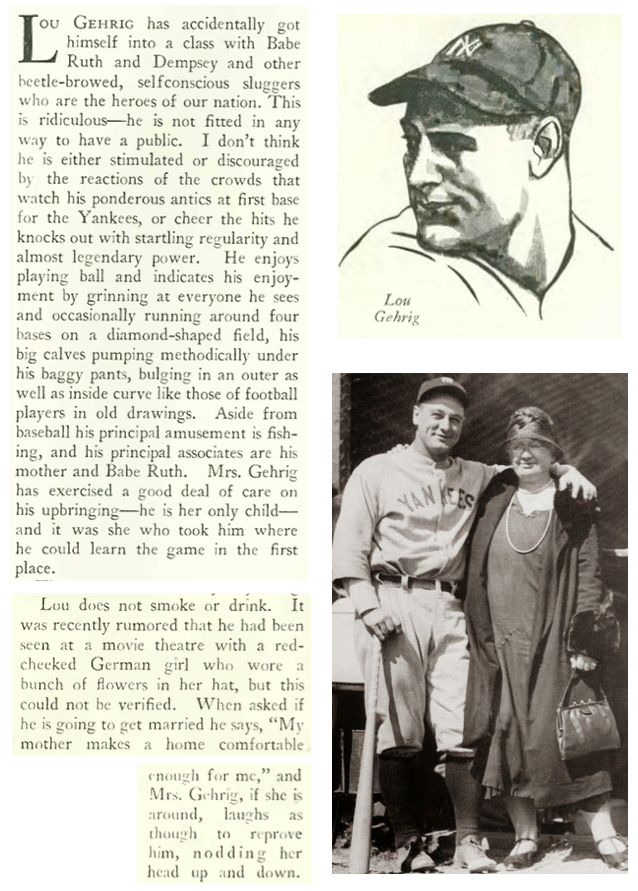
Lou Gehrig rivaled Babe Ruth as a top Murderer’s Row slugger for the 1929 Yankees, yet he couldn’t be more opposite in his lifestyle. A teetotaler and nonsmoker, Gehrig was completely devoted to mom (pictured below in 1927). Niven Busch Jr. submitted this profile of Gehrig for the Aug. 10 issue. Excerpts:

 *  *  *

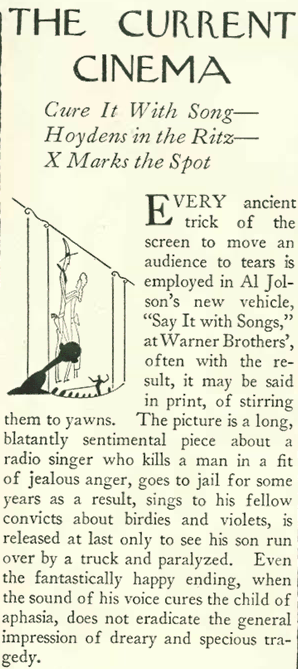
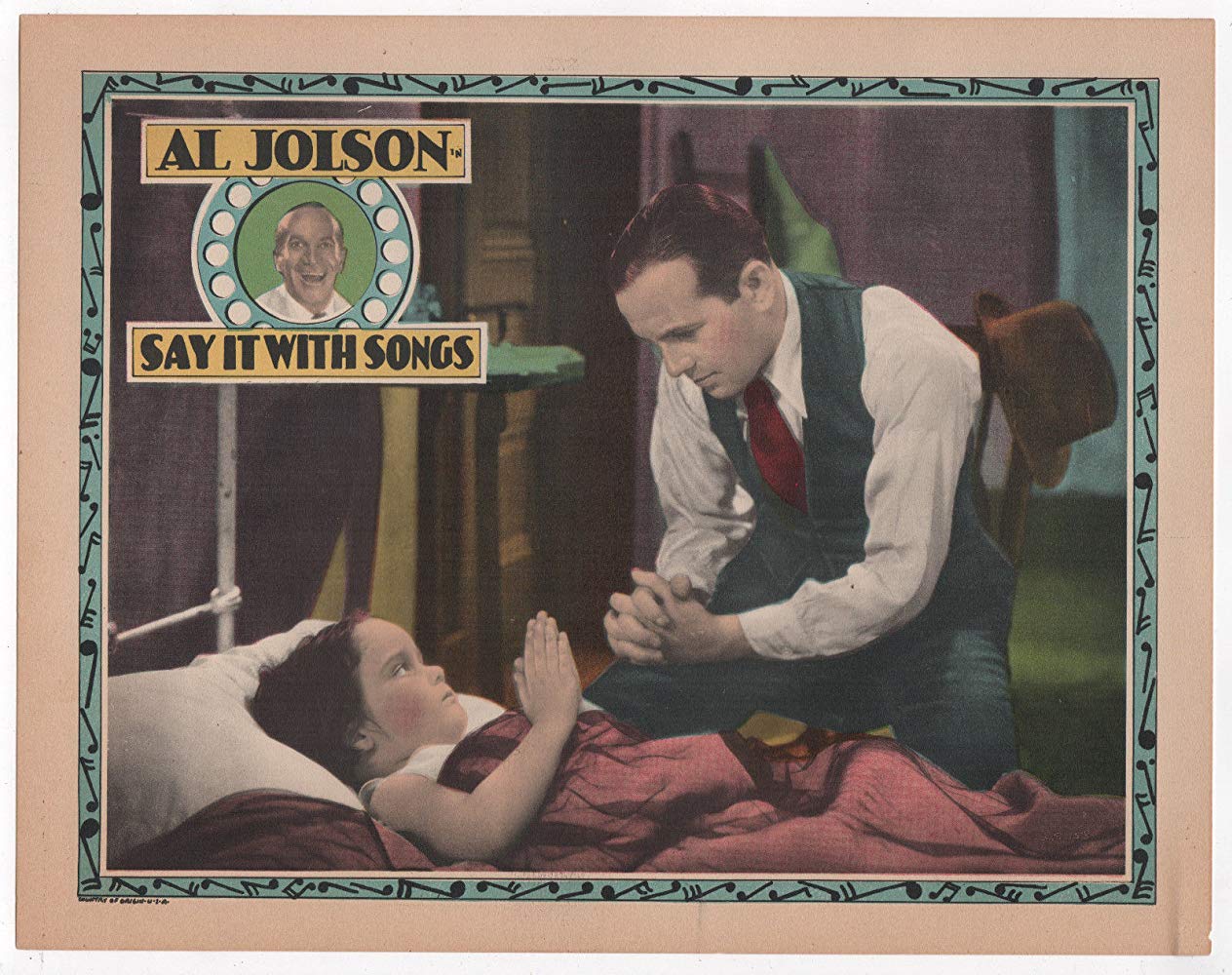
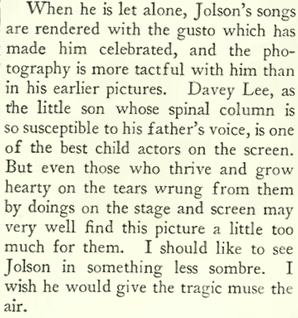
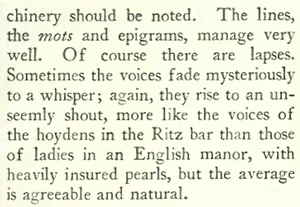
After appearing as Al Jolson’s dying son in The Singing Fool (1928), the child actor Davey Lee returned to the screen for yet another Jolson weeper, 1929’s Say It With Songs. Once again portraying Jolson’s son—this time crippled and rendered dumb after being hit by a truck—he miraculously recovers at the end of the film. The New Yorker wasn’t having any of this sentimental treacle, especially served up for a second time…
LET’S PRAY FOR A BIG BOX OFFICE…Davey Lee and Al Jolson in Say It With Songs. (IMDB)

…and the magazine hoped for something a bit less somber from Jolson in the future, suggesting that he “give the tragic muse the air”…

In the same issue of The New Yorker, this advertisement touted Jolson’s recording of “Little Pal” from Say It With Songs (note the blackface image of Jolson—his unfortunate trademark back in the day)…

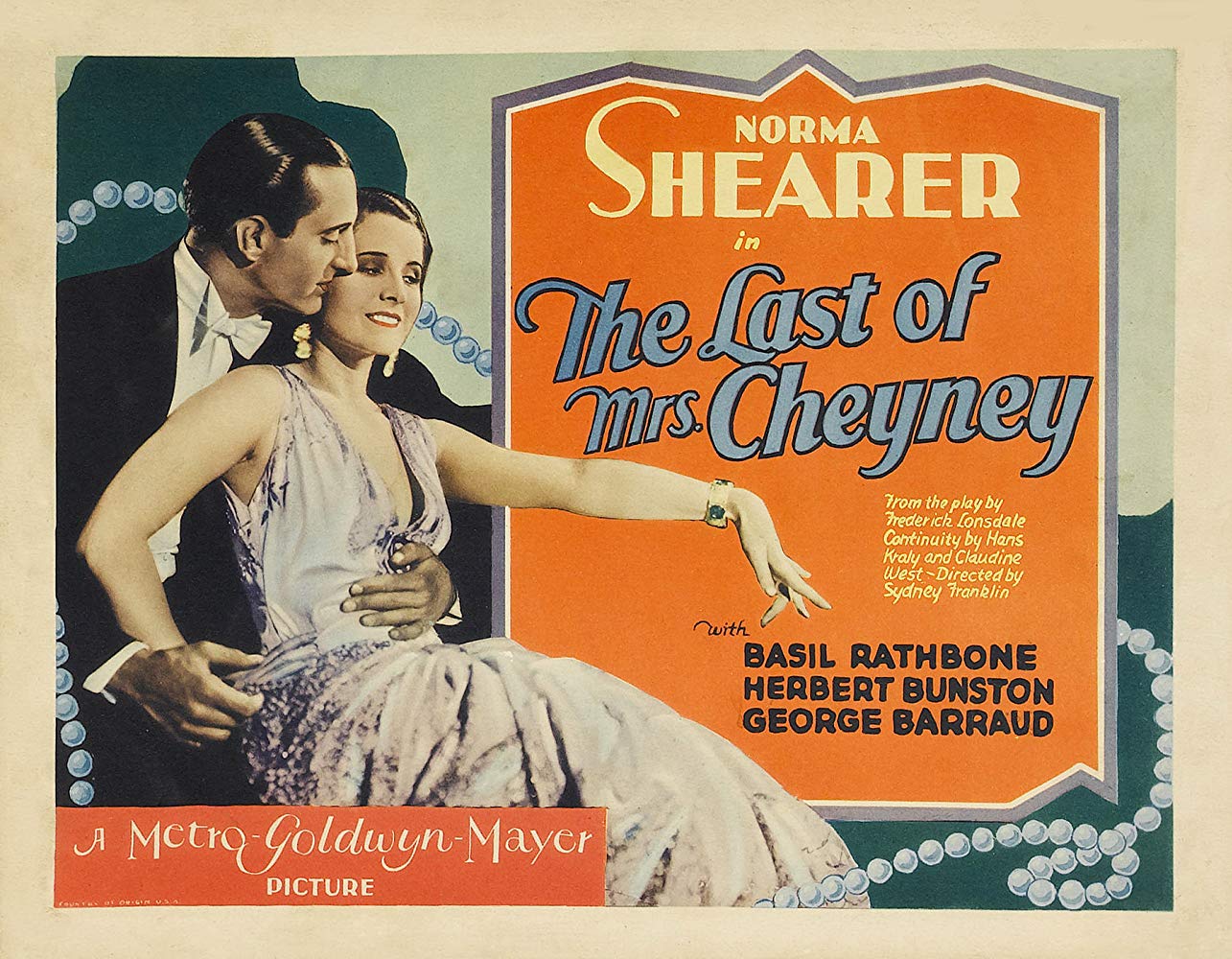
…happily, there were other movies that offered less schmaltzy diversions, including Norma Shearer’s comedy-drama The Last of Mrs. Cheyney, in which Shearer portrayed the jewel thief Fay Cheyney…

OH BASIL YOU ANIMAL…Theatre card for The Last of Mrs. Cheyney. (IMDB)

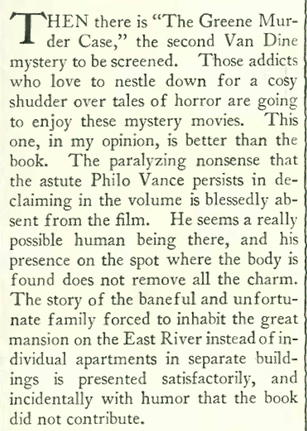
…often cast as a heavy in silent films, it was the “talkies” that made William Powell a star, his pleasant voice more suited to a hero or leading man than a villain. In The Greene Murder Case, Powell portrayed amateur detective Philo Vance, a role that he played in another 1929 release, The Canary Murder Case (originally filmed as a silent in 1928), both based on mystery novels by S.S. Van Dine. Powell would portray Philo Vance in three more films from 1930 to 1933 until he took on the role of another amateur detective, Nick Charles, in 1934’s The Thin Man (a role he would reprise five times from 1936 to 1947)…

WHODUNNIT? YOUDUNNIT!…William Powell as detective Philo Vance, Florence Eldridge as Sibella Greene, and Jean Arthur as Ada Greene in 1929’s The Greene Murder Case. (IMDB)
KEEPING IT QUIET…William Powell as Philo Vance and Louise Brooks as “the Canary,” a scheming nightclub singer, in The Canary Murder Case. Brooks was a huge star in the silent era and the iconic flapper. According to IMDB, the film was shot as a silent in 1928, but producers decided to rework it as a more profitable “talkie.” When Brooks refused to return from Germany (where she was filming Pandora’s Box) to dub the movie, Paramount spread the word that Brooks’ voice was not suited to sound film, although later productions made by Brooks proved this to be wrong. Actress Margaret Livingston ultimately supplied Brooks’ voice for Canary. (IMDB)

*  *  *

From Our Advertisers

We look at some advertisements from the August 17 issue, including this one from Past Blue Ribbon. Note that nowhere in the ad is the word “beer” used, this being a “near-beer” with less than 1% alcohol content by volume. In addition to making cheese (a Velveeta-like product), Pabst hoped to keep its company alive by selling this “brew” during the unusually hot summer of 1929…

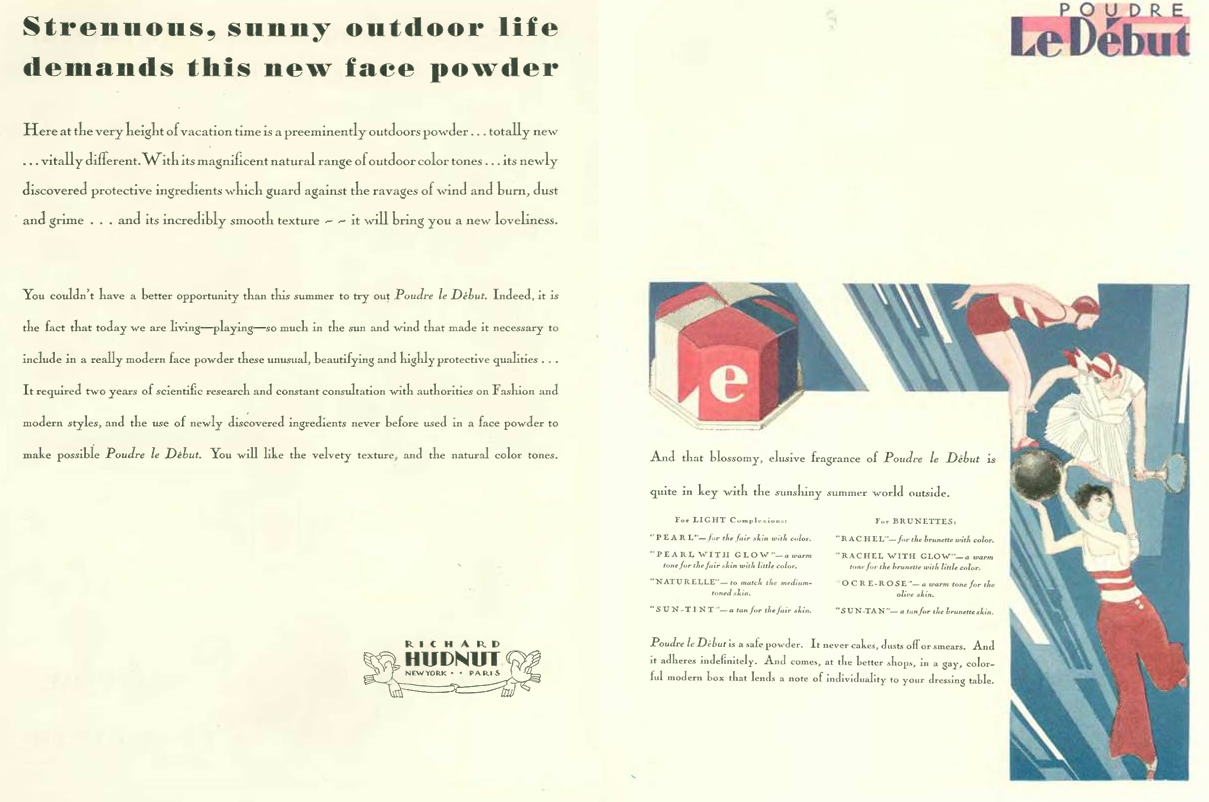
…and with that blazing sun advertisers also promoted a number of face creams and powders to those “enjoying the sunny outdoor life,” including this two-page spread from Richard Hudnut and Poudre Le Début

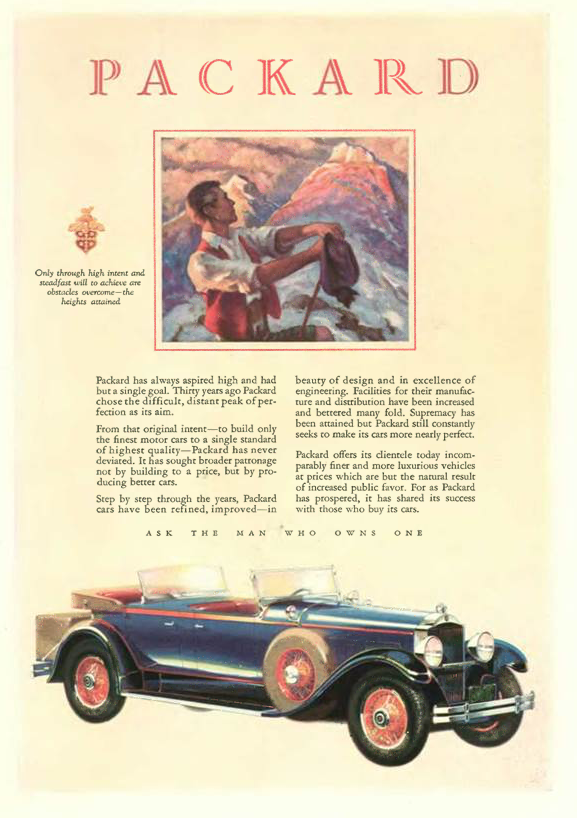
…the outdoor life could also be enjoyed in a convertible Packard 640, a car that was a cut above a Lincoln or Cadillac, and was considered by some to be America’s answer to the Rolls Royce…

A 1929 Packard 640 Convertible. This particular model can be had today for about $130,000. (Hemmings Motor News)

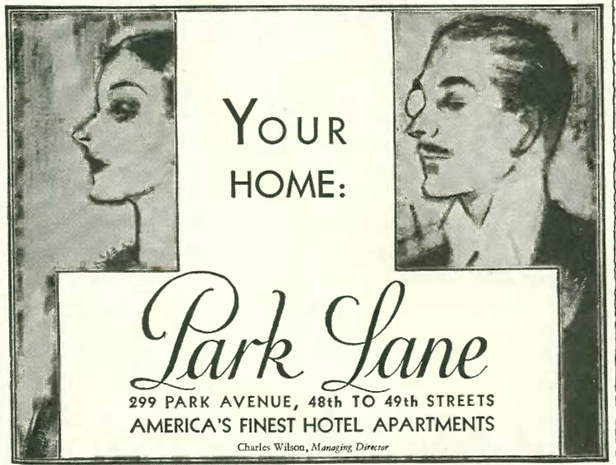
…I found this ad in the back pages interesting for its crude design yet overt appeal to snobbishness with this haughty pair…

…and here is what the Park Lane looked like when it opened in 1924…

Circa 1924 advertisement from the Sargent lock and hardware company touting its fixtures in the new Park Lane hotel apartments. At right, circa 1924 image from The American Architect depicting the Park Lane’s dining room. The building is long gone, razed some time in the 1960s to make way for an office tower. (Pinterest)

 *  *  *

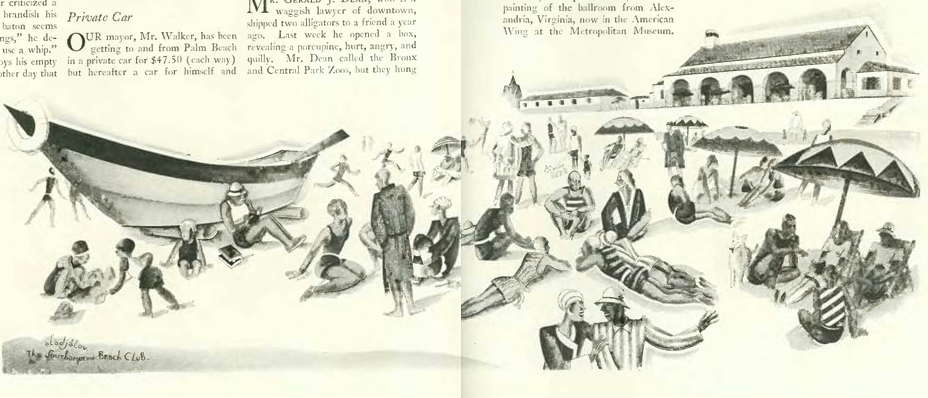
This week’s featured illustration is by Constantin Alajalov, who depicted a summer scene from the Southampton Beach Club…click to enlarge…
…our cartoonists from the Aug. 10 issue include Helen Hokinson, who looked at the challenges of Americans abroad…
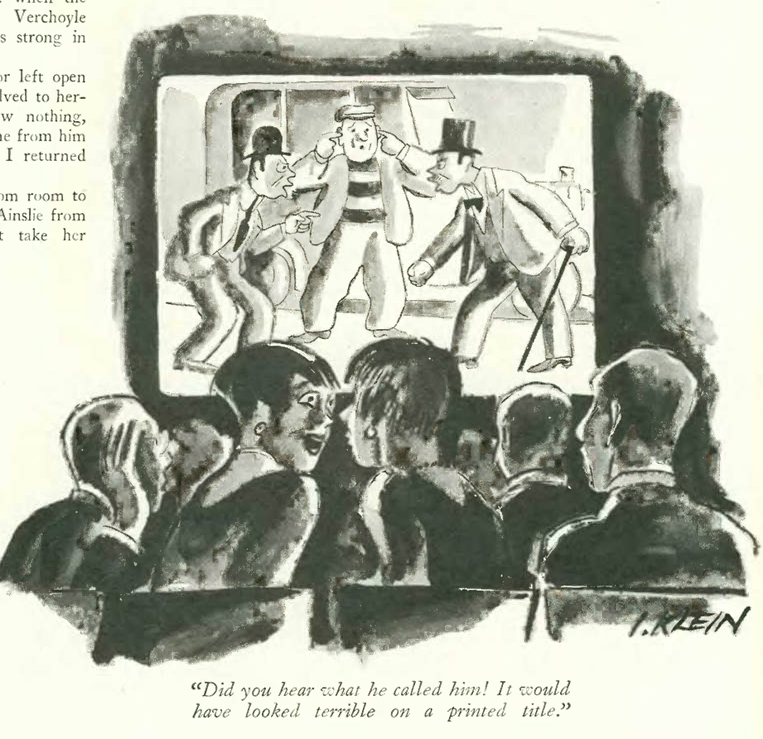
Isadore Klein observed the changing mores of movie houses (a couple of “damns” were apparently uttered in the talking pictures of 1929)…

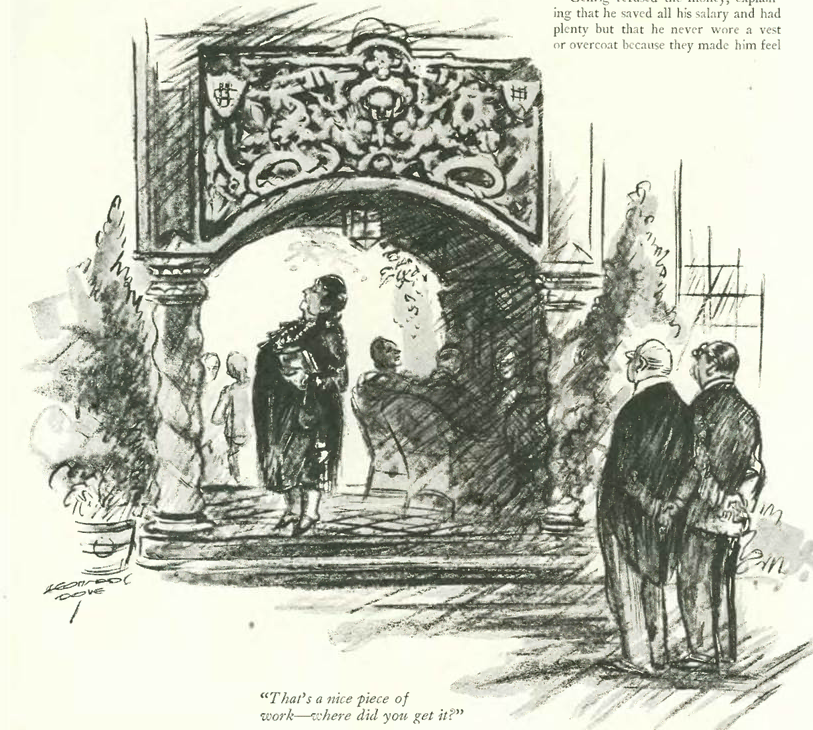
…and Leonard Dove offered up a double entendre of sorts…

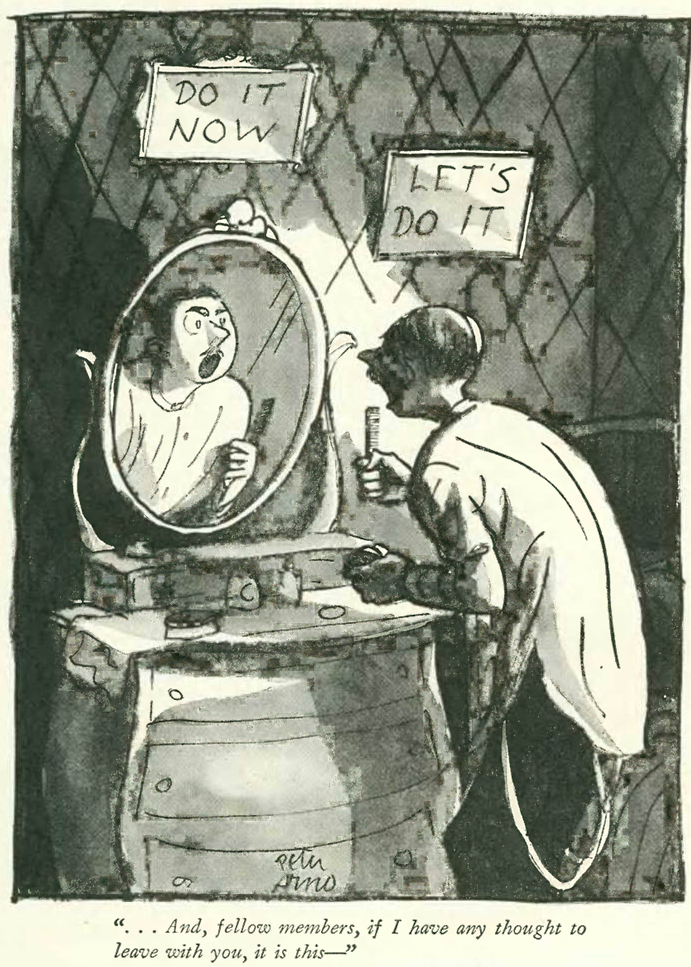
…cartoons for the Aug. 17 issue included a peek behind the scenes at a motivational speaker courtesy Peter Arno

Carl Kindl had some fun with the juxtaposition of a matron and a flapper hat…

…and for reference, the cloche hat called a “Scalawag” was featured in this ad by Knox in the March 30, 1929 New Yorker…drawing by Carl “Eric” Erickson

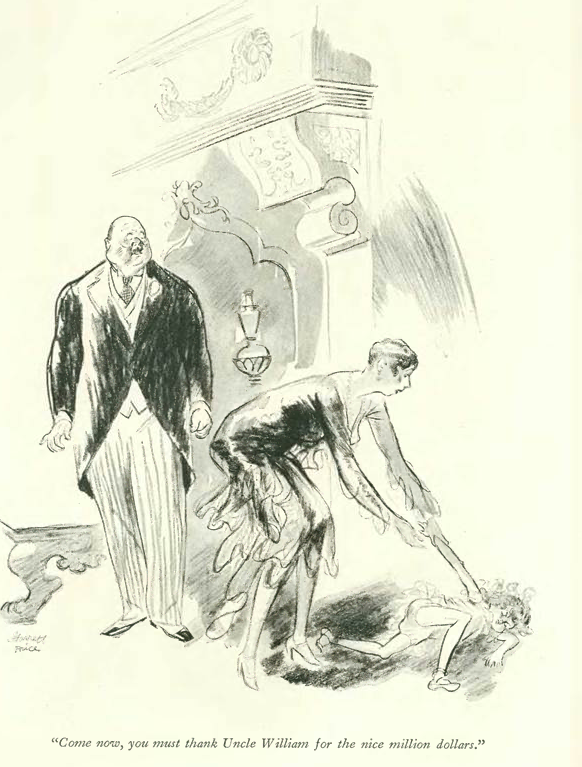
Garrett Price portrayed the antics of an ungrateful trust fund brat, who probably did not have that million dollars after the market crash…

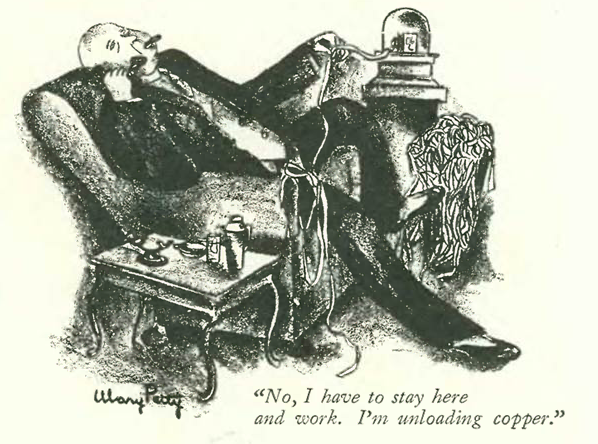
…and this fellow, depicted by Mary Petty, who doubtless would be less nonchalant come Oct. 28, or what we know as “Black Monday”…

Next Time: Hooray for Hollywood…